What’s inside?
What’s inside?
By Olivia Young o oun @riverdalepress.com
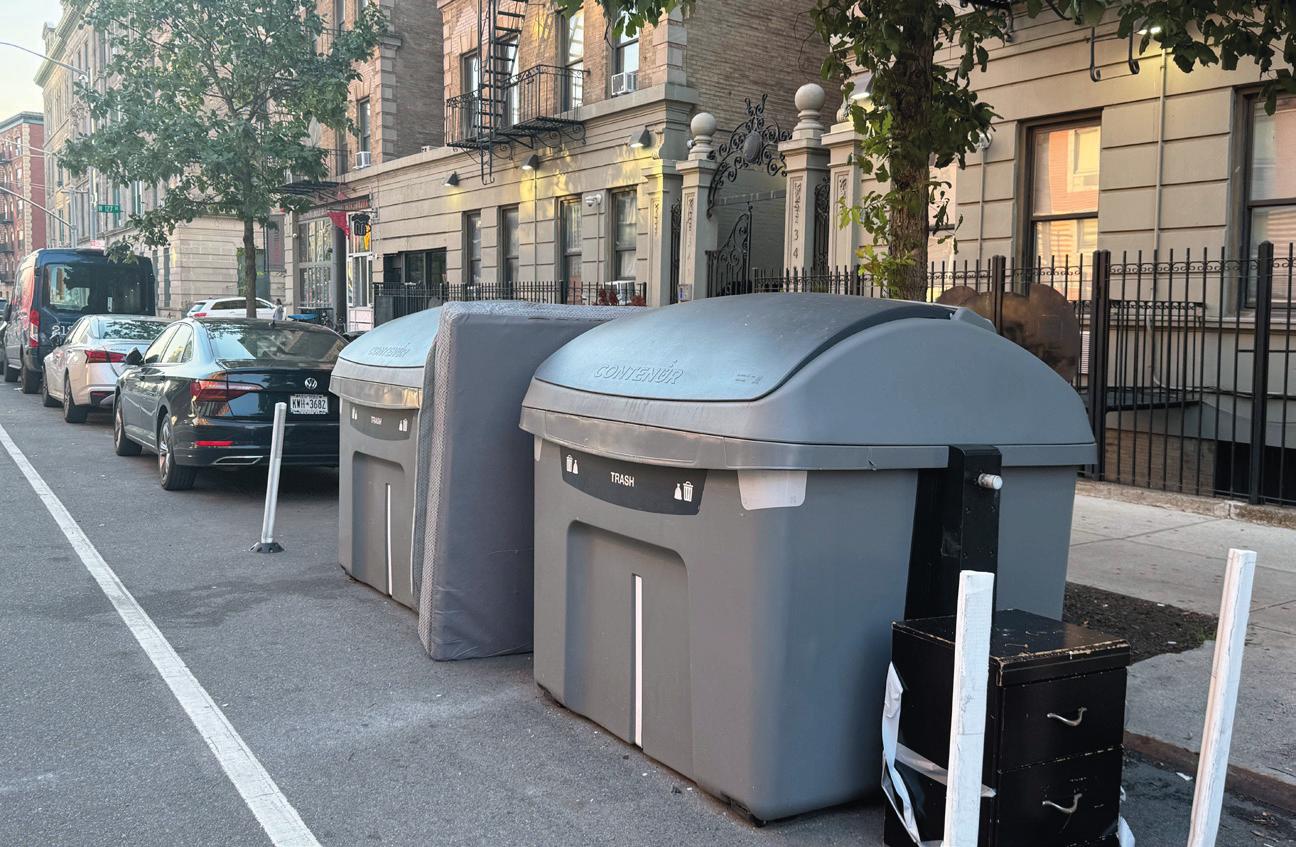
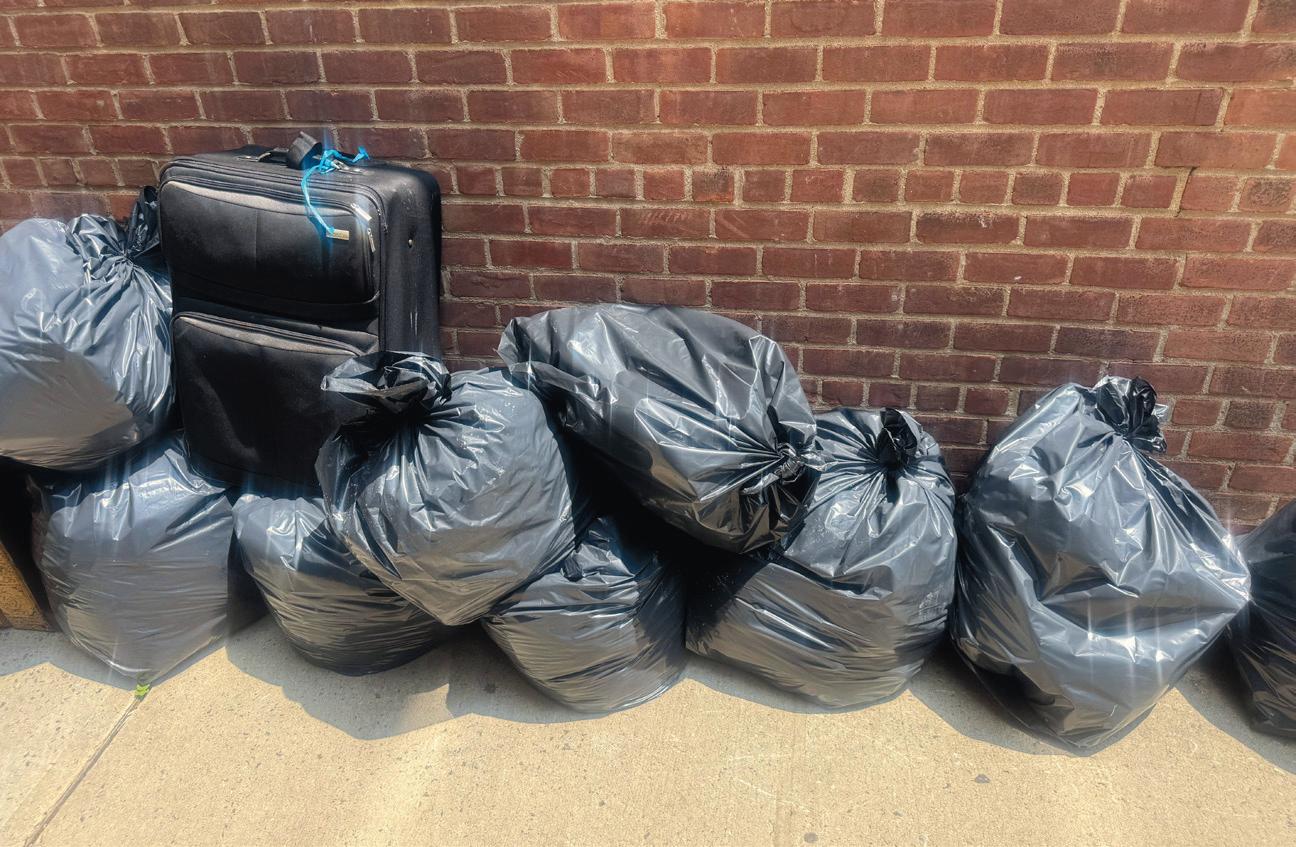
New York City recently released plans to replace at least 543 parking spaces in greater Riverdale with 1,272 new “Empire Bins,” or on-street, sealed trash containers.
The plan is part of the New York City Department of Sanitation’s efforts to improve quality of life by reducing the amount of plastic-bagged trash that piles on the sidewalk, often spilling into the street and attracting rats, the plan said. The announcement comes as some Riverdale residents express frustration over the shrinking number of available parking spots in the neigh-
borhood, particularly amid the addition of new Citi Bike stations and ongoing Metropolitan Transportation Authority construction along Broadway.
The “Citywide Containerization Program” is a draft environmental study by the department released July 1. The plan still needs approval from city and state agencies, and to undergo a public hearing July 28. If approved, the changes would roll out over the next six years.
A pilot of the program launched in West Harlem last June, and has been successful, according to the mayor’s office.
The city is focused on schools and residential buildings with more than 30
units, and Empire Bins would be mandatory for them, the report said. Buildings with 10 to 30 units can choose between Empire Bins or single, official city bins, the report added. The department also said it would avoid putting bins in spots like bus stops, hydrants, bike lanes or intersections.
In total, Bronx Community District 8 — which includes Riverdale, Kingsbridge, Spuyten Duyvil, Marble Hill, Van Cortlandt Village and part of Kingsbridge Heights — has 21,732 legal on-street parking spaces, the report found. At most, the neighborhood would lose 597 spots for 1,390 bins, or about 2.8 percent, according to the study.
Community in concert
Neighbors gather for concert series Page A5
By Michelle Mullen mmullen@riverdalepress.com
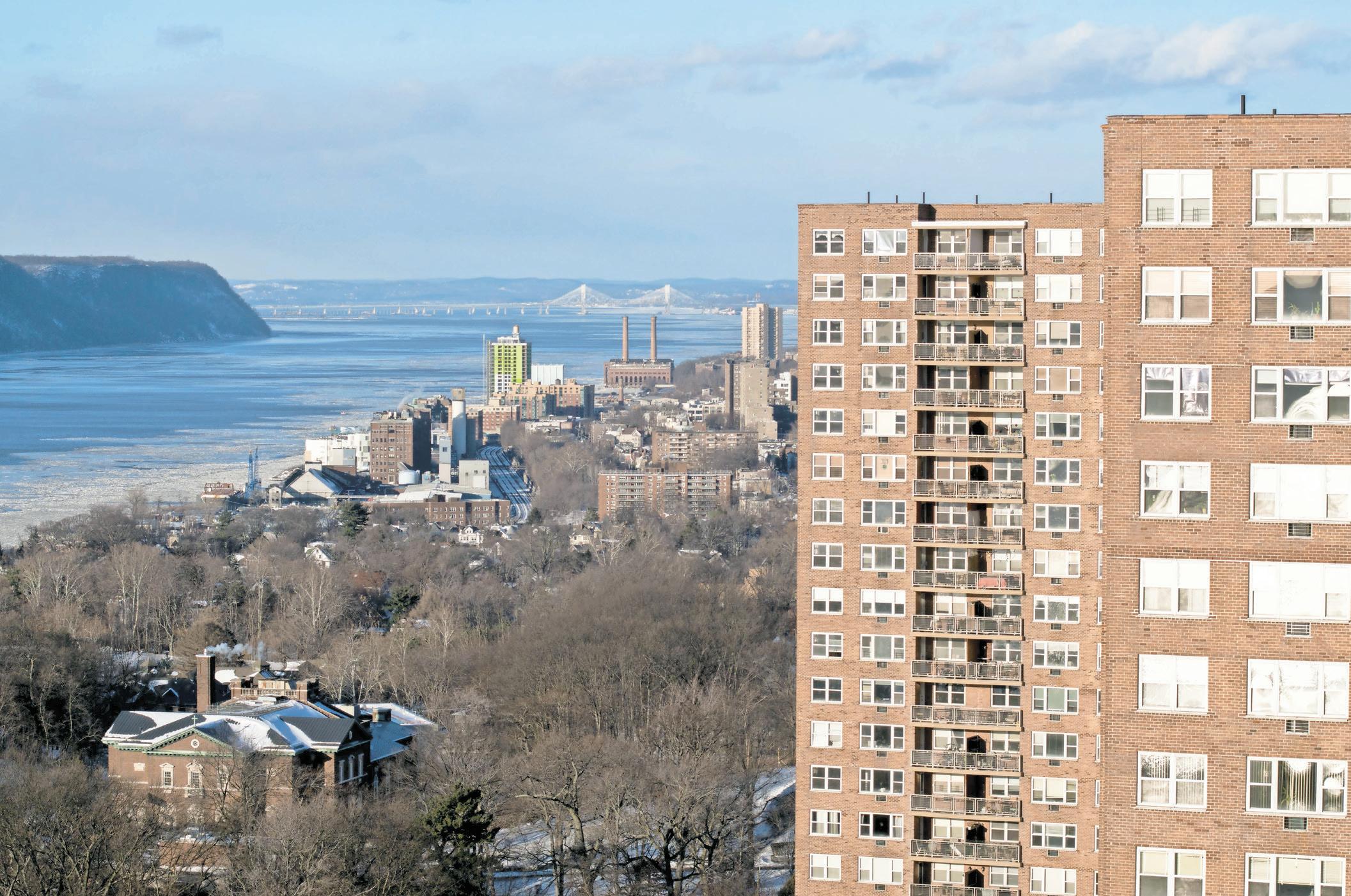
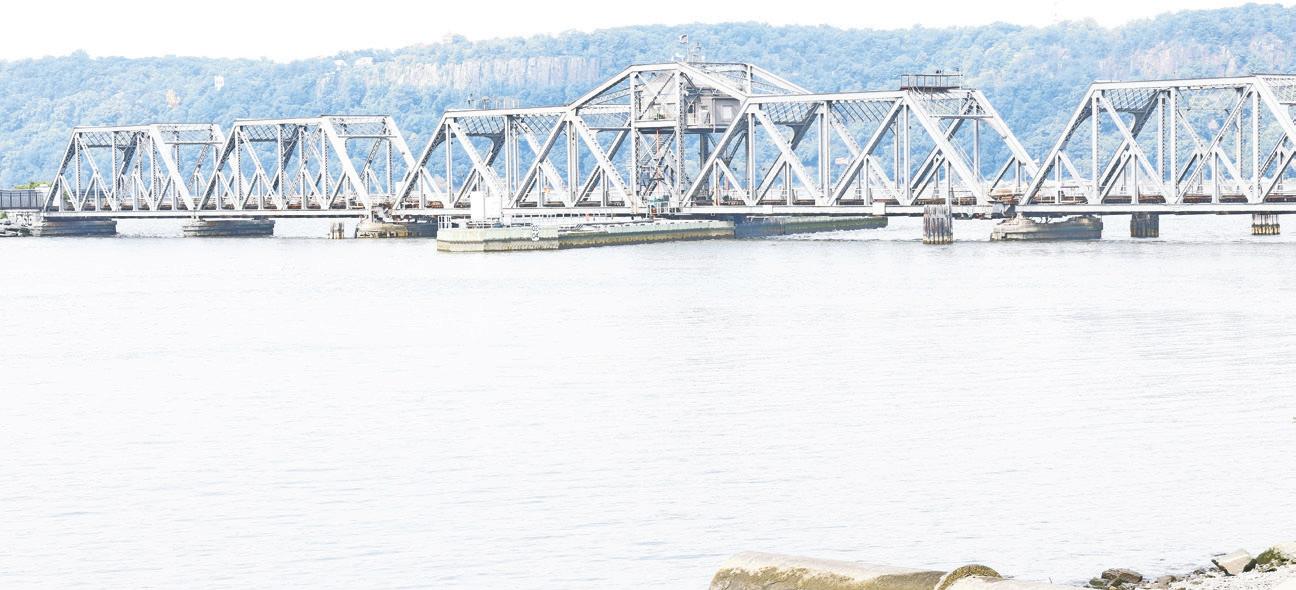
A sewage spill sent millions of gallons of partially treated wastewater into the Hudson River over the Fourth of July weekend, according to Westchester County. The Yonkers Joint Wastewater Treatment Plant sits less than a mile from Riverdale, where experts say water and any contaminants it carries moves beyond municipal boundaries.
The county-owned facility at 1 Fernbrook St. is just north of the intersection of Riverdale Avenue and West 261st Street at the BronxWestchester border. Westchester County warned residents to avoid contact with the Hudson River, and New York City issued an advisory due to the plant’s close proximity to the Bronx.
The Riverdale Press asked the New York City Department of Environmental Protection whether the city conducted water quality testing. The department referred questions to the city’s department of health and mental
hygiene, which did not respond before press time.
Riverkeeper, a nonprofit organization that advocates for the protection of the Hudson River and monitors water quality, said the river’s tidal nature means pollution is not confined to one location.
“The Hudson River is an estuary,” said Dan Shapely, senior director of advocacy, policy and planning at Riverkeeper. “It flows north with the tides, it flows south with the tides. A discharge like this is going to affect both upstream and downstream because of the tidal nature of the river.”
Westchester County spokesperson Catherine Cioffi said the spill began shortly after midnight July 4, after Con Edison implemented a system-wide voltage reduction because of high electricity demand in a heatwave, causing the treatment plant to lose power. The lower voltage placed significant strain on critical treatment equipment, causing the backup system to fail, according to Cioffi.
“The on-site generators require a 30-sec-
By Olivia Young oyoung@riverdalepress.com
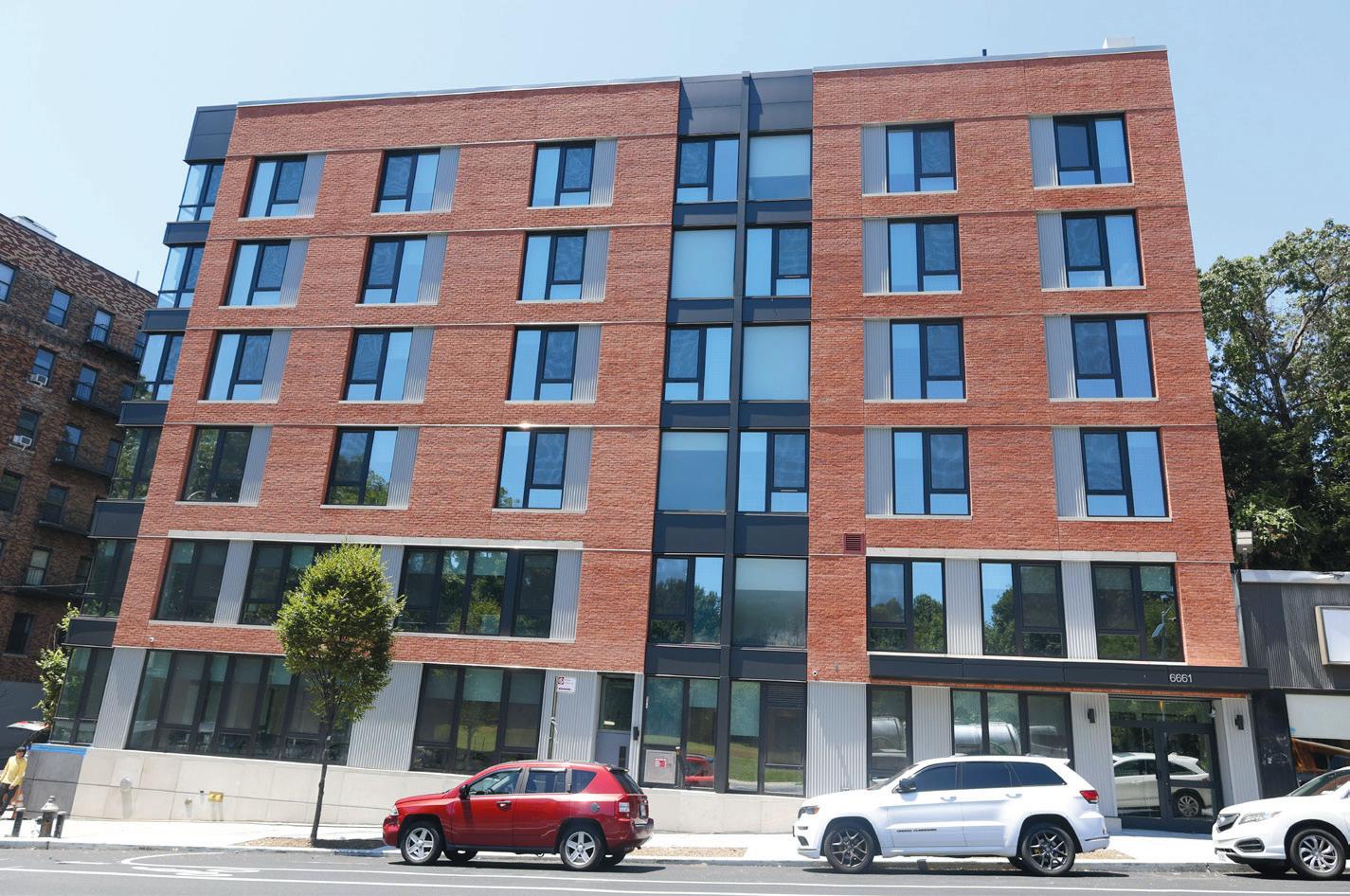
The men’s homeless shelter on West 262nd Street and Broadway, or the Van Cortlandt Rapid Rehousing Center, is near completion and expected to open Sept. 1.
Up to 130 men will stay at the shelter, where staff will provide job training, life skills development and educational support, among other services, according to Westhab, a Westchester and New York City-based nonprofit that owns and runs the site. Westhab President and CEO Richard Nightingale said the custom-made shelter will serve as transitional housing.
“Our approach to shelter is, ‘This isn’t forever,’” Nightingale said. “Get up and
look for work, get up and look for housing … We have all the resources here to support you, but we don’t just sit around.”
Reducing homelessness starts with a dignified shelter system, Nightingale said. The idea that a shelter is “good enough for homeless people,” isn’t right, he said, and those experiencing homelessness are neighbors and human beings.
At the entryway, residents pass through a metal detector and run their belongings through an X-ray conveyor belt. There will be 24-hour security inside the building, Nightingale said. If residents are congregating outside, they will be asked to clear, he said, assuaging a worry Riverdale com-
ond power outage before they engage and power the plant,” Cioffi said. “As the power was reduced and not terminated, the generators did not engage. “
Cioffi also said operators first tried switching to the plant’s second utility feeder — one of two separate power lines serving the facility — but the ongoing voltage issues prevented that fix from working. Power was eventually restored to the plant’s primary treatment system, but attempting to bring secondary treatment equipment online triggered another outage.
Crews ultimately restored operations by dividing the electrical load between utility power and three mobile generators already on site for a construction project. Primary and secondary treatment returned to service by approximately 1:45 p.m., while full utility power from both Con Edison feeders was not restored until July 6, according to Cioffi.
“The reason this work took the time re-
Community members The Press spoke to had mixed reactions on the proposal.
Orlando Peña, a professional driver in the area for more than 10 years that routinely parks by the West 231st Street 1 train stop, said he supports the plan as long as it doesn’t impact his spot. Residents getting off the train rely on drivers to make it back to their homes in North Riverdale, he said. “It’s good to keep the rats away because it’s very non-hygienic,” Peña said, but, he added, “the people, the community of Riverdale, they need us.”
Another longtime professional driv-
By Michelle Mullen
mmullen@riverdalepress.com
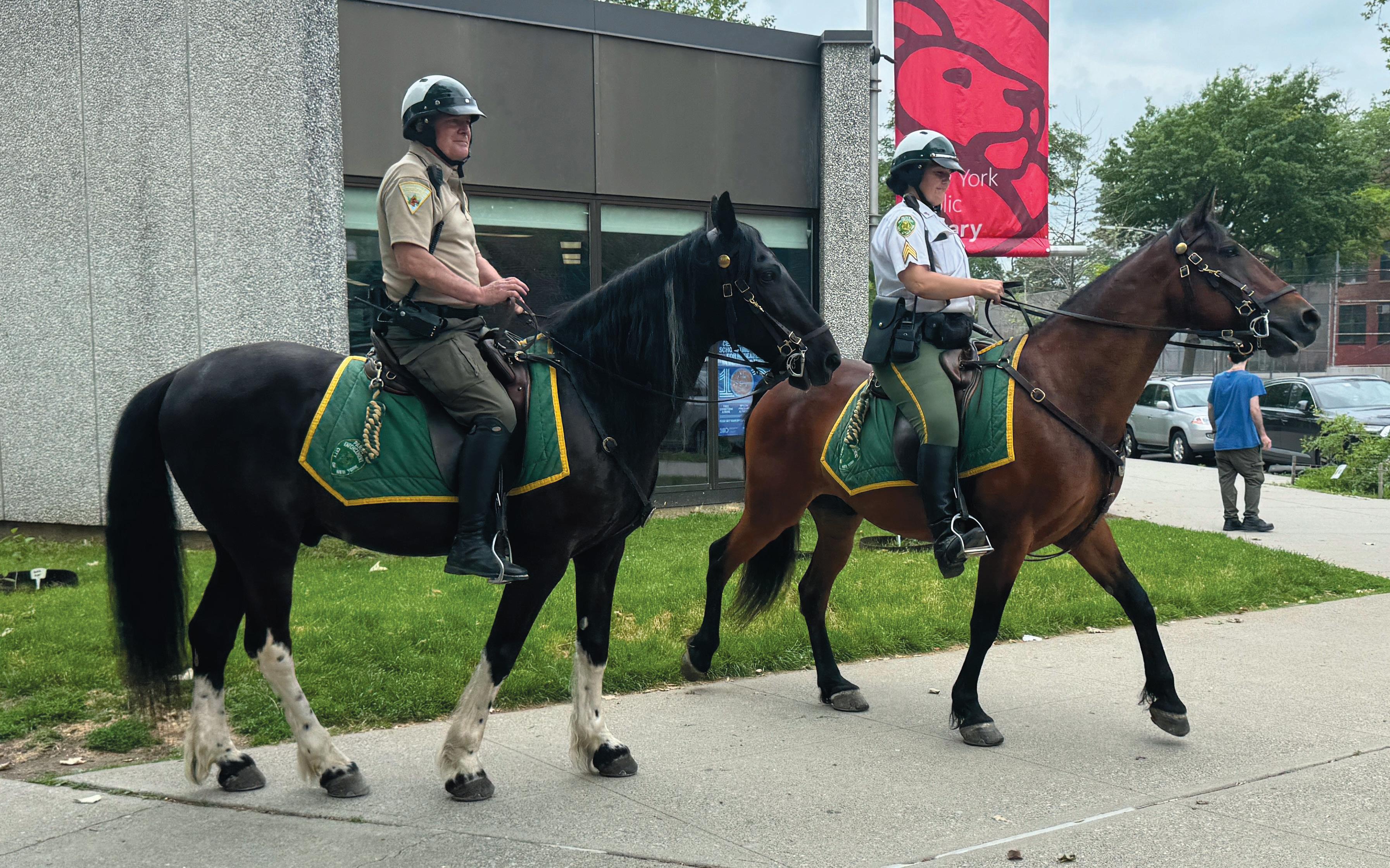
Park advocates are celebrating the city’s decision to baseline funding for existing Parks Enforcement Patrol, or PEP, in New York City’s 2026 to 2030 Financial Plan — locking in jobs that had previously relied on year-to-year funding, rather than adding new ones. Still, many say it falls short of addressing staffing shortages across the city’s green spaces.
For fiscal year 2027, $709 million of the adopted $125.8 billion budget was allocated to the New York City Parks and Recreation Department, according to the city. Of that, $14.4 million was baselined for parks department initiatives, including the annual addition of 100 PEP officers, 15 staff positions, GreenThumb community gardens and tree stump removal that were all previously restored one year at a time. PEP officers are uniformed civilian peace officers employed by the city’s parks department. They patrol parks, enforce park rules, respond to quality-of-life complaints and address issues ranging from illegal barbecues and off-road vehicles to vandalism, permit violations and after-hours park use. A parks department spokesperson said $6.4 million of the baselined funding is dedicated specifically to PEP.
For years, said Christina Taylor, executive director of the Van Cortlandt Park Alliance, advocates have argued the annual budget process made it difficult to recruit and retain officers.
“The baselining was a huge win, but it’s a very small drop in the bucket of what we need,” Taylor said. “This now means that instead of these PEP officers losing their jobs every year, we don’t have to go through this never-ending cycle of recruiting, training, getting people started and then starting all over again.”
Jodie Colón, founder of Stewards of Henry Hudson Park and a fervent parkland advocate, said although the baselined funding makes PEP positions more secure, it doesn’t address understaffing. Rather, it maintains the existing staff already stretched thin.
“It’s like if you sign a one-year lease, you have to keep renewing it every year,” Colón said. “Instead of it being something that has to be renewed every year, that has to be discussed, baselining puts it in automatically.


Evelyn Beldegreen, née Weingarten, 89, of Riverdale, passed away peacefully on July 1. She was the mother of Lynne Julianna Beldegreen who passed away in January. Evelyn was a doting mother, wonderful sister and friend, brilliant seamstress and founder of Pillows by Evelyn, and a Holocaust survivor from Vienna. Her funeral was July 12, at Cedar Park Cemetery in Paramus, NJ. In lieu of flowers, donations may be made to support Holocaust survivors: The Blue Card 171 Madison Avenue, Suite #1405 New York, NY 10016
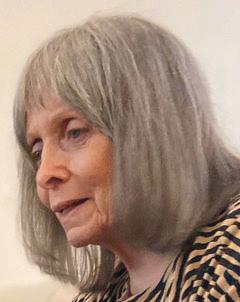

State Sen. Gustavo Rivera called on Gov. Kathy Hochul to pass a package of food reform legislation July 9, according to a release from state Sen. Brian Kavanagh’s office.
Rivera was joined by health advocates and several other state legislature leaders in a virtual webinar, where supporters celebrated the bills that will “strengthen consumer transparency and clean up New York’s food supply,” the release said, adding it was “amid longstanding food safety gaps and a weakened [U.S. Food and Drug Administration.]”
Rivera’s bill, the Sodium Warning Bill, will require clear sodium warning icons on chain restaurant menus to ensure transparency, the release said. The package includes four other bills, including one that mandates the testing of baby food and formula for toxic heavy metals, and another that will ban harmful additives and mandate transpar-
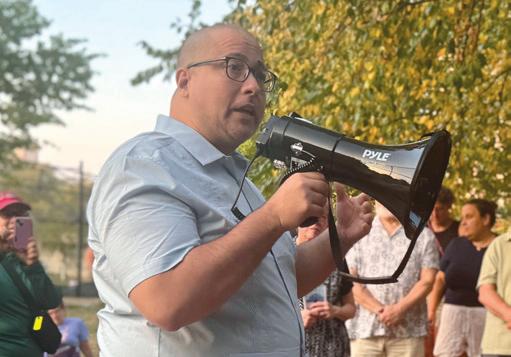
ency requirements for chemicals used in foods, according to the release.
In a statement included in the release, Rivera said he was proud his bill finally passed both chambers.
“When dining out, families are too often exposed to excessive sodium without even knowing it,” Rivera said. “New Yorkers deserve clear information about the food they are purchasing and consuming, so they can make healthy choices for themselves.”




U.S. Rep. Ritchie Torres denounced the Supreme Court’s ruling on the Temporary Protected Status Program, or TPS, and called on Congress to pass legislation guaranteeing lasting protections for TPS holders, according to a July 8 release.
The ruling leaves TPS holders in the Bronx and nationwide facing the loss of their legal status and the threat of deportation, the release said.
Torres joined healthcare union 1199SEIU, faith leaders and community members at St. Luke’s Episcopal Church in Wakefield July 8 to discuss the broader impact of the court’s ruling on healthcare workers and immigrant communities, the release said. The ruling will strain hospitals, nursing
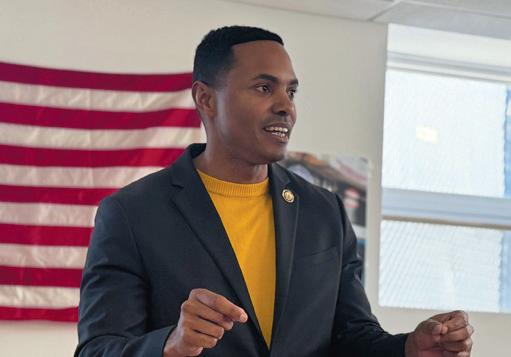
homes and home care agencies that rely heavily on immigrant workers, according to the release.
Torres and 1199SEIU urged Congress to act swiftly, the release added, in order to prevent the disruption of families, communities and the healthcare workforce.
Mayor Zohran Mamdani announced July 13 he and the New York City Mayor’s Office of Community Safety released the city’s “Summer Safety Plan,” which outlines a “whole-of-government” strategy to keep New Yorkers safe during a summer of major events, according to a release from the mayor’s office.
The plan prioritizes safe summer gatherings, supporting young people and preventing violence, the release said.
The Mamdani administration is expanding evidence-based violence prevention efforts through the city’s Crisis Management System, the release said. The Crisis Management System is a network of nonprofits that work to reduce gun violence by deploying teams of credible messengers, or those that have previously been involved in gun violence and turned their lives around, according to the Mayor’s Office to Prevent Gun Violence.
Providers are increasing outreach, the release said, and also activating a 72-hour shooting response protocol to support victims, families and communities in the aftermath of gun violence.
The release added that the Mayor’s Office of Community Safety launched a “Youth Listening Tour” before the summer started, and also recently launched an interactive “Summer Activities” website where users can search free and low-cost events near them.
“New York City government is working across agencies and around the clock to deliver the safe summer that New Yorkers de-
serve,” Mamdani said. “Whether you’re heading to a World Cup match, taking your kids to a block party or just enjoying some time in the sun, our administration is bringing every part of city government together to help keep New Yorkers safe.
Also July 13, Mamdani announced the launch of the New York City Department of Parks and Recreation’s first-ever “Parents’ Night Out,” according to a release from the mayor’s office.
This is a free, one-night dropoff program where parents and caregivers have an evening off, and kids do games, sports, arts and crafts, media education programs, and nature exploration with the Urban Park Rangers, the release said.
The experience aims to showcase the wide range of programs the city’s parks department offers year-round, the release said.
“Every parent knows that a few hours to yourself can feel like a luxury,” Mamdani said. “Parents can get a little time on their own to catch a movie, run errands or go on a date without worrying about who will take care of the kids — or how much it will cost.”
Families can register online through July 20, the release said. The Bronx location will be at Kwame Ture Recreation Center at 1527 Jesup




By Olivia Young oyoung@riverdalepress.com
A once-gray wall lining
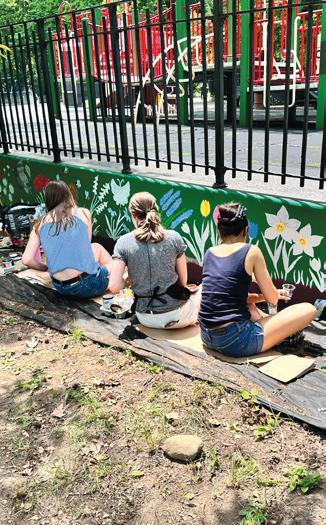
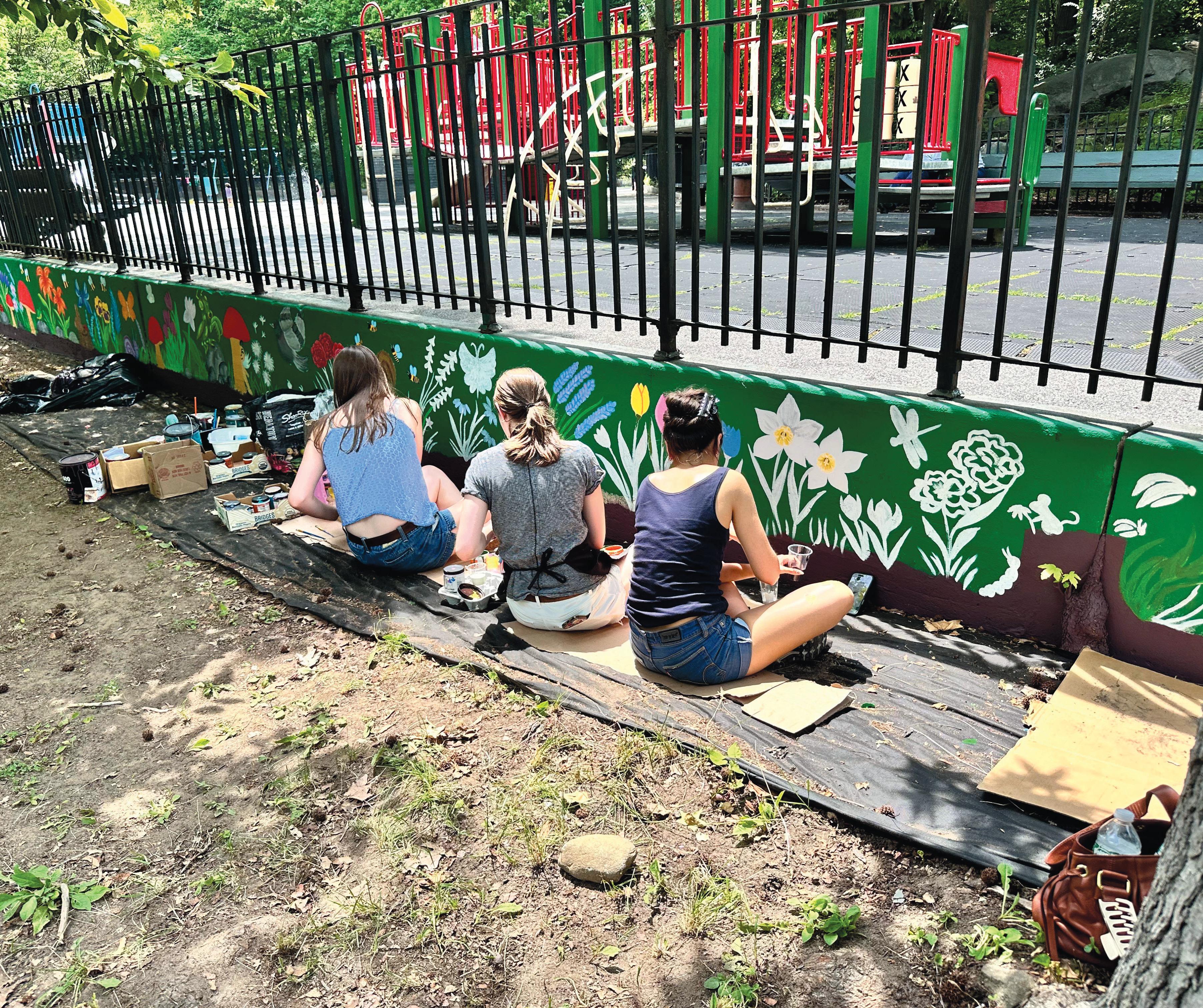
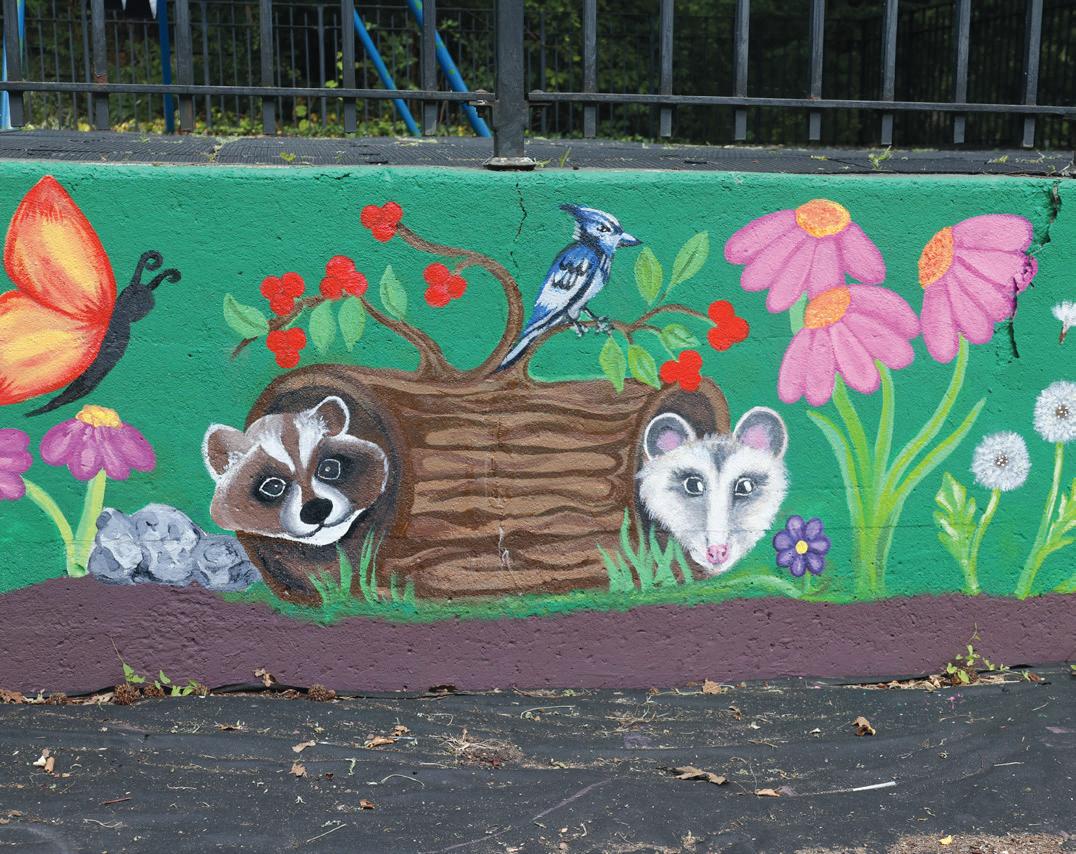
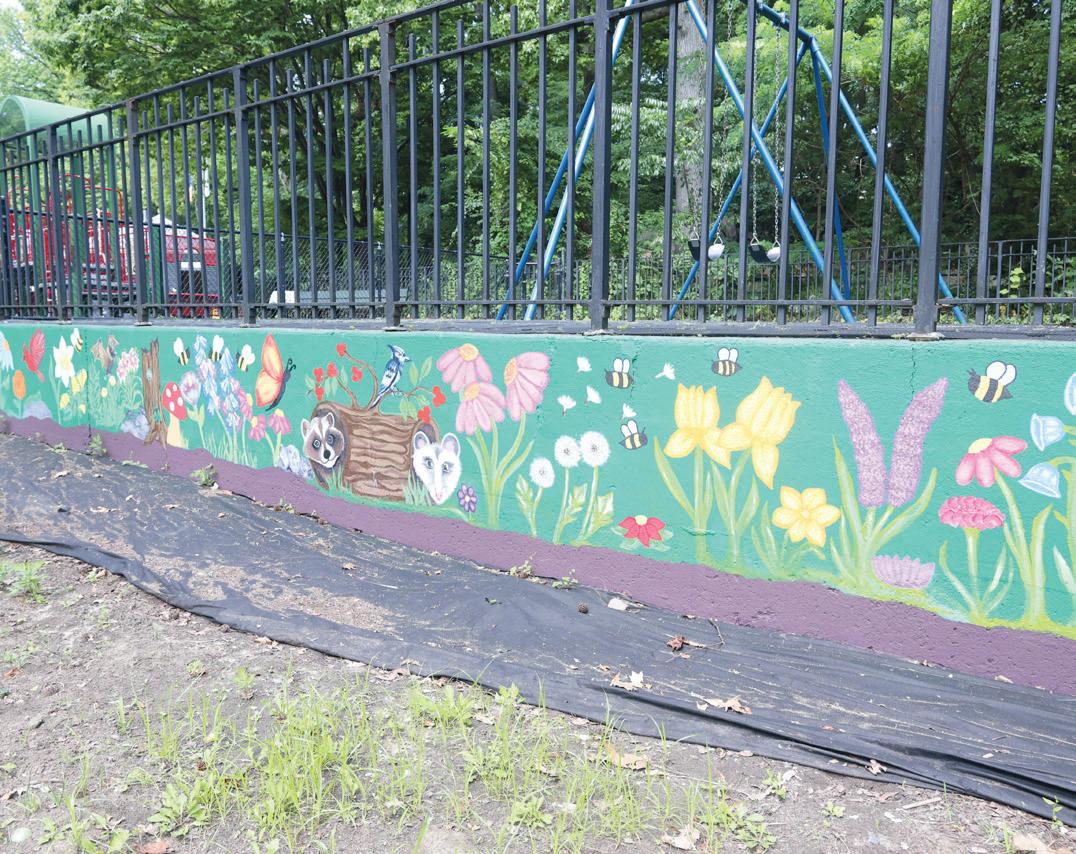
V inmont Veteran Park was transformed into a vibrant mural of blossoming plants and lively animals, painted by Bronx artist Diana Capasso in collaboration with the nonprofit Riverdale Main Streets Alliance.
The mural, titled “Pollinators Spread Love,” will be accompanied by a pollinator garden, where Wave Hill will help plant native blooms and grasses that appeal to insects, spiders and birds throughout the year, Cathy Deutsch, Wave Hill’s director of horticulture, said. The alliance said it hopes the project encourages residents to connect with the beauty in nature, and admire an artistic addition to their community.
Riverdale Main Streets
Alliance is a volunteer-based network of community members, civic organizations and local businesses that work to expand the neighborhood’s vitality through street cleanups and other initiatives.
Near Mosholu Avenue and West 254th Street, the concrete bordering Vinmont’s playground shows a verdant garden with various flower species — deep red roses, bold tulips, plump, polka-dotted mushrooms and trumpet daffodils, to name a few — accompanied by buzzing bees, orange monarch butterflies, a smiling snail and a wide-eyed racoon peeking its head out from a log.
Capasso, who grew up in Riverdale and now lives in Yonkers, owns Artistic Elements Studio, a mobile art studio offering classes, face painting and paint-and-sips.
In addition to the new pollinator mural, she is the creative behind “The Rose of Kingsbridge” mural on Bailey Avenue and West 238th Street, and helped another artist make “Broadway Tropics” on West 231st Street and Broadway.
When the alliance pitched the mural idea to Capasso, she enthusiastically accepted, recalling the days when she would walk her daughter through Vinmont and
think the “blah” wall “needed something bright.” The pencil sketches Capasso gave to the alliance closely mirror the realized design.
Capasso started painting the mural in the fall of last year, and added to the mural when weather allowed, a process she described as a “labor of love.” Before the piece was even finished, parents would pass by, hand-in-hand with their kids, and point to colors or other things they observed, she said. Capasso added sparking that connection made the undertaking well worth it.
“It’s definitely not only engaging the community, it created engagement between the parent and child,” Capasso explained.
Capasso had some help along the way from Riverdale Country School students, an effort led by board member Dr. James Duval, who is the associate head of school and head of lower school. For the group of 11 year olds, it was meaningful for them to know they could play a part in improving their neighborhood, Duval said.
“It’s just a good reminder for everyone in the community about what it means to take pride in the place where you live,” he said. At the helm of “Pollinators Spread Love” was Giordana Avila, an optometrist and 20year Riverdale resident who is board vice chair of the alliance. Each time she passed the Vinmont wall over the years, Avila would think, “‘We could really do something great here.’”
She started to brainstorm.
The weeds should be pulled, the wall needs some color, a garden could be planted, she thought. More than a year ago, Avila started working to get permission for the project from the city. Now, as the project gets closer to completion — ideally done around September, she said — Avila hopes the project inspires the same inspired feeling she experienced in other people.
“If we want to keep where we live a nice place to live,” she said, “We have to take care of it.”



CONTINUED from page A1
er, Raed Khalil, said being able to park on a corridor where drivers can rest, eat and use the bathroom is also a priority.
For Victor Casanova, who owns and runs Nueva Moda Fajas at 5561 Broadway, the damage from lack of parking has already been done, he said. Casanova said he plans to close in a few weeks, citing a steep drop in revenue due to ongoing construction.
“If you’re a customer, you have to double park just to get one [pair of] jeans or one bra,” Casanova said. “You got to spend more for the ticket than buying the jeans.”
But others, like Sierra Jordan, a regular at hair braiding salon CFC African Boutique at 5616 Broadway, believe the plan is important to cleaning up a historically underserved borough. But, only as long as the city is committed to emptying the bins on a consistent basis, she said.
Jordan doesn’t drive, and usually takes an Uber from the west Bronx to get her hair done.
Areas in the Bronx near transit
or highways, or near public housing and apartment buildings, are neglected when it comes to reporting quality of life issues to the city, Jordan said. It’s escalating, she added, as rodents are “going through evolutionary states like Pokemon.”
“It just diminishes the faith that
we have in our community officials, in our building officials that are supposed to represent our communities,” Jordan said. “But I wish it would be better.”
Vincent Gragani, press secretary for the city’s department of sanitation, said the plan is not nec
to finally stop forcing us to live around piles of smelly, disgusting trash bags,” is small, especially in Bronx Community District 8, he said. “This is an extremely worth-
CONTINUED from page A1
quired to complete it was that this is the first time this type of event occurred at our facility and it had to be thoroughly investigated before bringing back our equipment on-line,” Cioffi said, adding it required hazardous work with high voltage equipment.
A spokesperson for Con Edison said there had been an 8 percent voltage reduction in the area because of increased power use.
Electricians have since reconfigured the plant’s power supply to better handle voltage fluctuations and are reviewing the incident with Con Edison. Cioffi also noted the county is moving forward with a longplanned overhaul of the plant’s electrical system, much of which dates to 1972.
For Robert Fanuzzi, president of the Bronx Council for Environmental Quality, the spill exposed a different consequence of increasingly frequent extreme heat.
“This is a wake-up call for one of the
unexpected impacts of climate change.
It’s the failure of critical infrastructure,” Fanuzzi said. “This was a case in which our energy resources met the increased temperatures caused by climate change, and we didn’t make the grade. We weren’t ready, and the water suffered.”
He said the nearly 14-hour disruption raised questions about whether the plant was adequately prepared for a prolonged electrical emergency.
The Center for the Urban River at Beczak, an environmental research center operated by Sarah Lawrence College in Yonkers, said the incident highlighted the need for greater transparency about water quality in the Hudson.
Researchers at the organization began sampling the river July 6 at several locations, including near the former Domino Sugar property, located less than a mile north of the wastewater treatment plant.
Ryan Palmer, the center’s director, said the sample collected near that site measured 183 colony-forming units of bacteria
per 100 milliliters of water. The Environmental Protection Agency recommends levels remain below 60 colony-forming units per 100 milliliters for a single recreational water sample. By later in the week, however, all of the group’s sampling sites had fallen below that threshold.
“The Hudson is a super dynamic system,” Palmer said. “The tides, the wind and the sunlight all affect how long bacteria persist and how far they travel.”
Although Westchester County described the release as “partially treated” wastewater, Palmer said that does not eliminate the health risks. Contact with contaminated water can expose swimmers to disease-causing bacteria and other pathogens, particularly if water is swallowed or enters cuts or the eyes, he said.
Riverkeeper did not collect samples during the spill itself, but Shapley said years of monitoring combined sewer overflows have shown bacteria levels typically spike after sewage discharges before declining within several days.
To Fanuzzi, the July 4 failure serves as a prompt for agencies to look beyond repairing the plant itself and consider how extreme heat from climate change is testing infrastructure across the region.
“We absolutely need to think about cre-
ating reliable and overly-redundant energy sources for critical infrastructure, especially those that are on the waterfront,” he said. “We can’t allow the water to become the dumping ground for failures on land.”
But we don’t have enough officers, and it’s not adding any new positions.”
Colón also cautioned the change is not permanent protection against future cuts, noting that the administration can still reduce funding during difficult budget years. While both Colón and Taylor welcomed the funding, they said the Bronx still lacks the capacity to adequately patrol its parks.
“The fewer officers you have, and the farther away they are, quality-of-life things become triaged at a lower level,” Colón said, noting a spike in vandalism in Henry Hudson Park. “That’s really what people’s everyday experiences are.” Bronx Community Board 8 and the Van Cortlandt Park Alliance have repeatedly called for a dedicated PEP command in Van Cortlandt Park, the third-largest park in the city at roughly 1,100 acres. A North Bronx command is currently based in Pelham Bay Park, the largest park in New York City, leaving officers to travel across the borough before responding to calls.
According to the parks department, there are currently four officers assigned to Van Cortlandt and Henry Hudson Parks, however they are also tasked with patrolling parkland across the board’s district and part of Bronx Community Board 7’s district.
CONTINUED from page A1
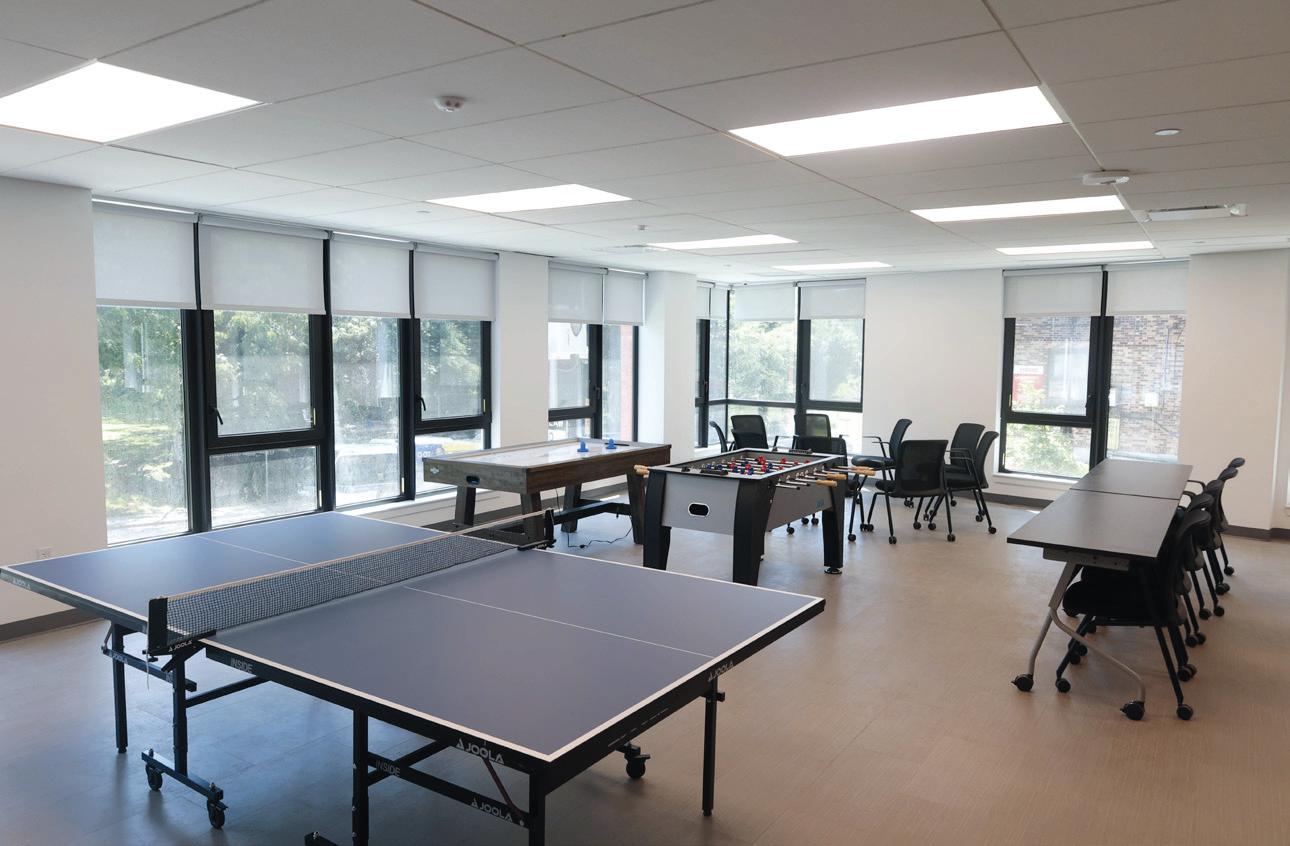
a recreation room with foosball, air hockey and ping-pong tables. There will also be a library and computer room, and several other multipurpose rooms. Floors three through six are for bedrooms. Depending on the size of the unit, there are three or five twin beds, each with their own locked storage cabinet and dividing privacy wall. On the roof is an outdoor terrace, decorated with vibrant greenery and picnic tables. The shelter mirrors the design of any other modern residential building — an intentional detail, Nightingale said, achieved with help from New York City-based firm RKTB Architects. In some rooms, teal walls meet cool gray molding, while others are a crisp white, all brightened by streams of light flowing in through floor-to-ceil-
“A lot of times when I call PEP, it takes them a good half an hour to get here,” Taylor said. “By the time they get here, whatever issue I was having and needed them to address is long gone.”
Deb Travis, chair of Bronx Community Board 8’s Parks and Recreation Committee, said PEP officers handle problems that often fall between routine park maintenance and police work.
“The thing that PEP does is that PEP enforces the park’s rules,” Travis said. “When you don’t have PEP enforcement, then you start to see negative use.”
She said additional officers and a west Bronx command would allow faster responses, while freeing the police department to focus on higher-priority calls.
“The idea of actually having the command in Van Cortlandt Park was simply to have basically an east-side Bronx command and a west-side Bronx command,” Travis said. “Certain parks like Henry Hudson Park are 45 minutes to an hour from Pelham Bay.”
That travel delay often leaves volunteers serving as the first line of defense against vandalism and other violations, according to Colón, who relies on volunteers to help care for Henry Hudson Park.
Taylor said making the PEP positions permanent is meaningful progress, but she will continue pushing the
ing windows. All the furniture — from dark-wood desks to white dining tables — is new, Westhab said. There used to be a belief when designing shelters that a developer shouldn’t make it too nice, or people won’t want to leave, Nightingale said.
But he believes that’s not true.
“The reality is, the better environment you create, the better culture you run in your building, the more it motivates people to do the things they need to do,” he said.
Nightingale also pointed out a misconception about New Yorkers experiencing homelessness. The leading cause is that rent is too high for working people, he said, not substance abuse or mental health issues.
According to advocacy organization Coalition for the Homeless, an estimated 96,500 people slept in city shelters in May, and thousands more in unsheltered public spaces. Sixty five percent of those in shelters were families, including 30,955 children, the coalition said.
The shelter was proposed five years ago, originally intended for development by another nonprofit, the African American Planning Commission, until
city to devote more resources to its parks.
“Having more PEP officers is not going to solve all of our problems, but it will definitely help things,” she said.
Westhab bought the property in 2023. All the while, Riverdale community members have consistently raised concerns about public safety.
Nightingale believes the shelter will not lead to any increase in crime. In an average Westhab shelter, half of the residents are employed and just unable to keep up with the cost of living, Nightingale said. He expects the Van Cortlandt Rapid Rehousing Center to be the same.
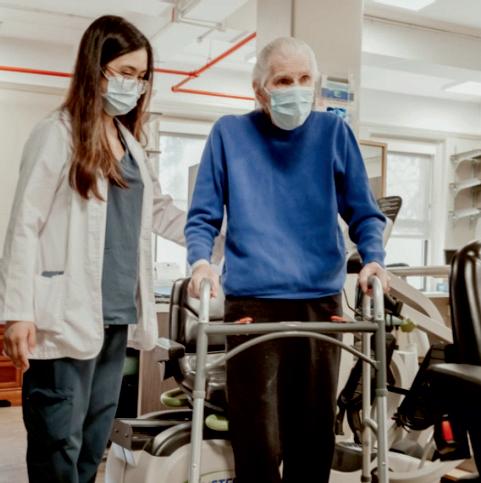
Men with severe mental illnesses — defined by the city as a depression, schizophrenia or bipolar diagnosis that substantially interferes with major life activities — would go to a specialized mental health shelter, not Westhab’s, Nightingale said. On accepting residents with serious criminal records, Nightingale said placements are up to the city.
A spokesperson for the New York City Department of Social Services told The
The parks department told The Press it is planning to add two additional officers to the North Bronx command, although there is currently no timeline. There is also a task force with additional
staff that can be deployed when needed, according to a spokesperson for the agency, The mayor’s office did not respond for comment by press time.
By Olivia Young oyoung@riverdalepress.com
On a warm Friday evening
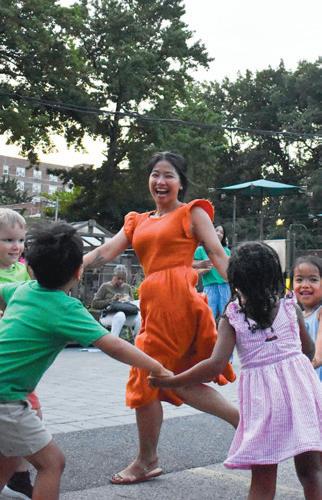
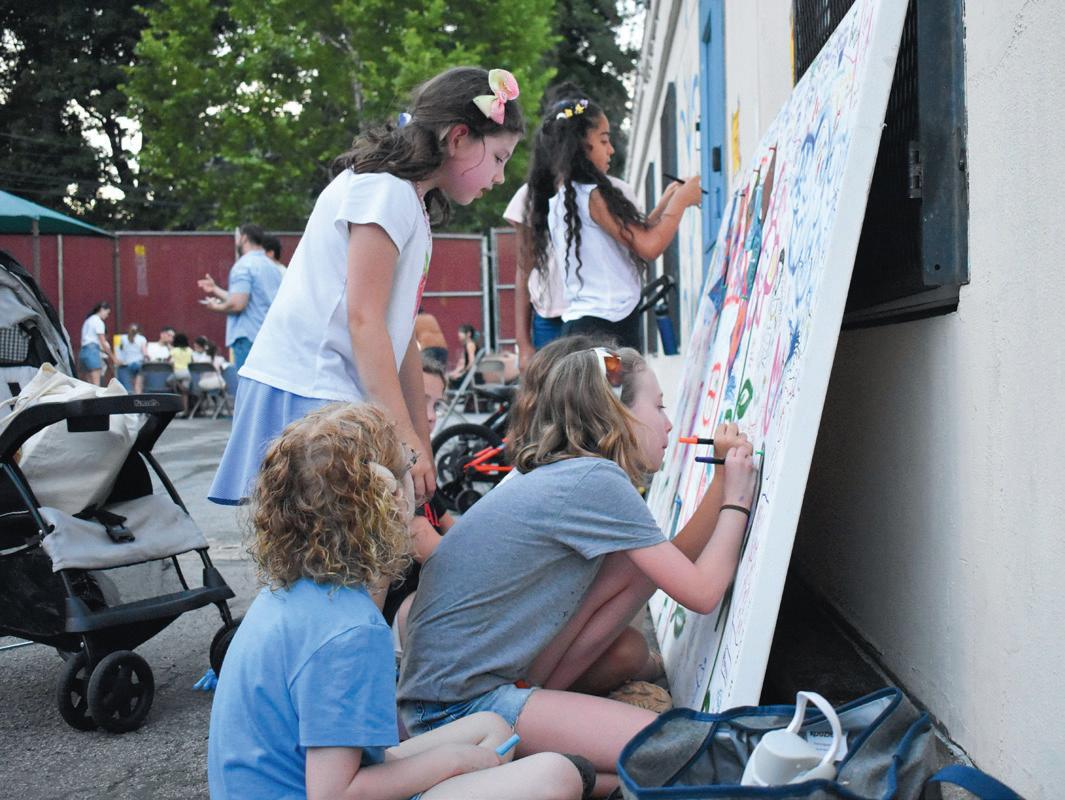
July 10, dozens of families gathered in the courtyard of Riverdale Neighborhood House for Dash’s Block Party, the sixth installation of this summer’s Music in the Garden series.
Emma Pollack, Riverdale Neighborhood House’s director of community engagement, spearheaded Music in the Garden four years ago in order to bring residents together after the Covid-19 pandemic kept them apart. It was also a way to highlight local and Bronx-based artists, she said.
“This is like a sort of old school way of hanging out,” Pollack said. “Listening to music, eating some food and just being in the community.”
Andrew Belton, Riverdale Neighborhood House’s executive director, had the same aspirations for the program, which occurs once a week from May 21 through Sept. 10.
“I love it when people come and they see someone they already know, they meet someone they haven’t seen for a while, they meet someone new,” Belton said. “It’s all about making connections and bringing people
together.”
Some community members savored juicy burgers and flavorful potato salad, while others moved their feet to the rhythmic sounds of Riverdale resident and DJ Dashiell Brody, or Dash. His set fused funk and soul — inspired by Dash’s New York roots — as well as African, Latin and Caribbean music.
For attendees The Press spoke to, Music in the Garden served as a space to bond with their neighbors.
Lucinda Alonso, a lifetime Riverdale resident who has been going to the neighborhood house for 24 years, described the courtyard as an enjoyable atmosphere.
“It’s nice to be out with the community, people from the neighborhood, listening to some music, watching the sunset,” Alonso, who was at the event with her 26-yearold son Joseph, said. “It’s just a lovely evening.”
Maria Braeckel, whose husband is on Riverdale Neighborhood House’s board and whose 5-year-old son Dominic attended its early childhood program, moved from Crown Heights to Riverdale five years ago. Braeckel said the event always reinforces the family’s decision to leave Brooklyn, describing the energy as “cozy” and “the stuff of dreams.”
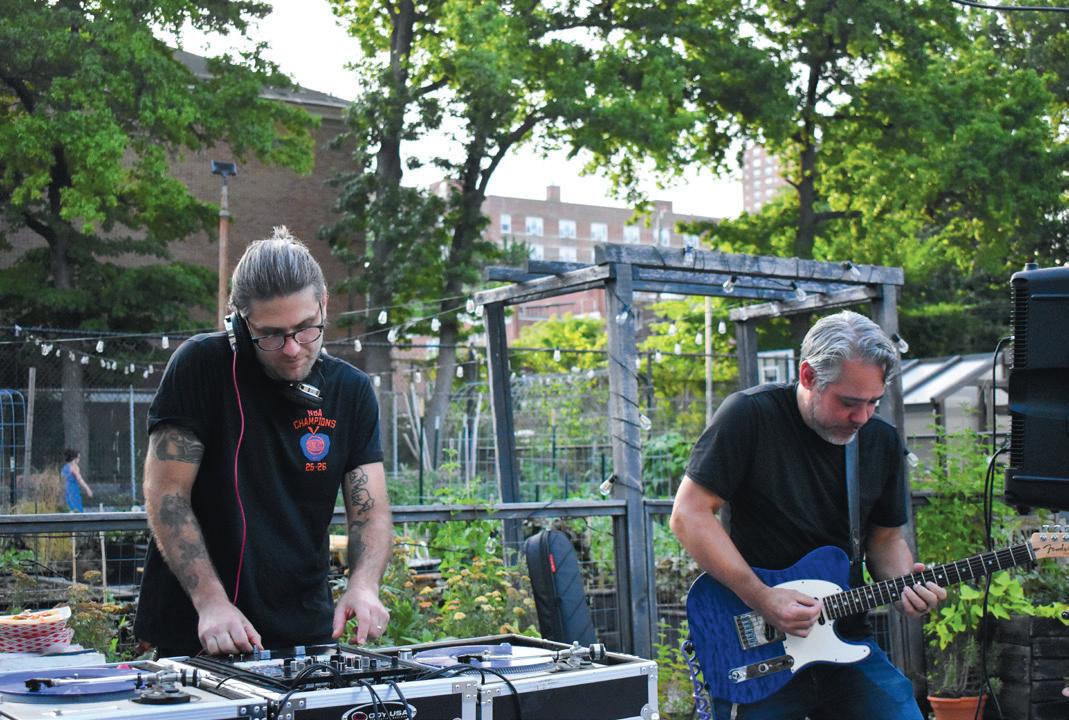
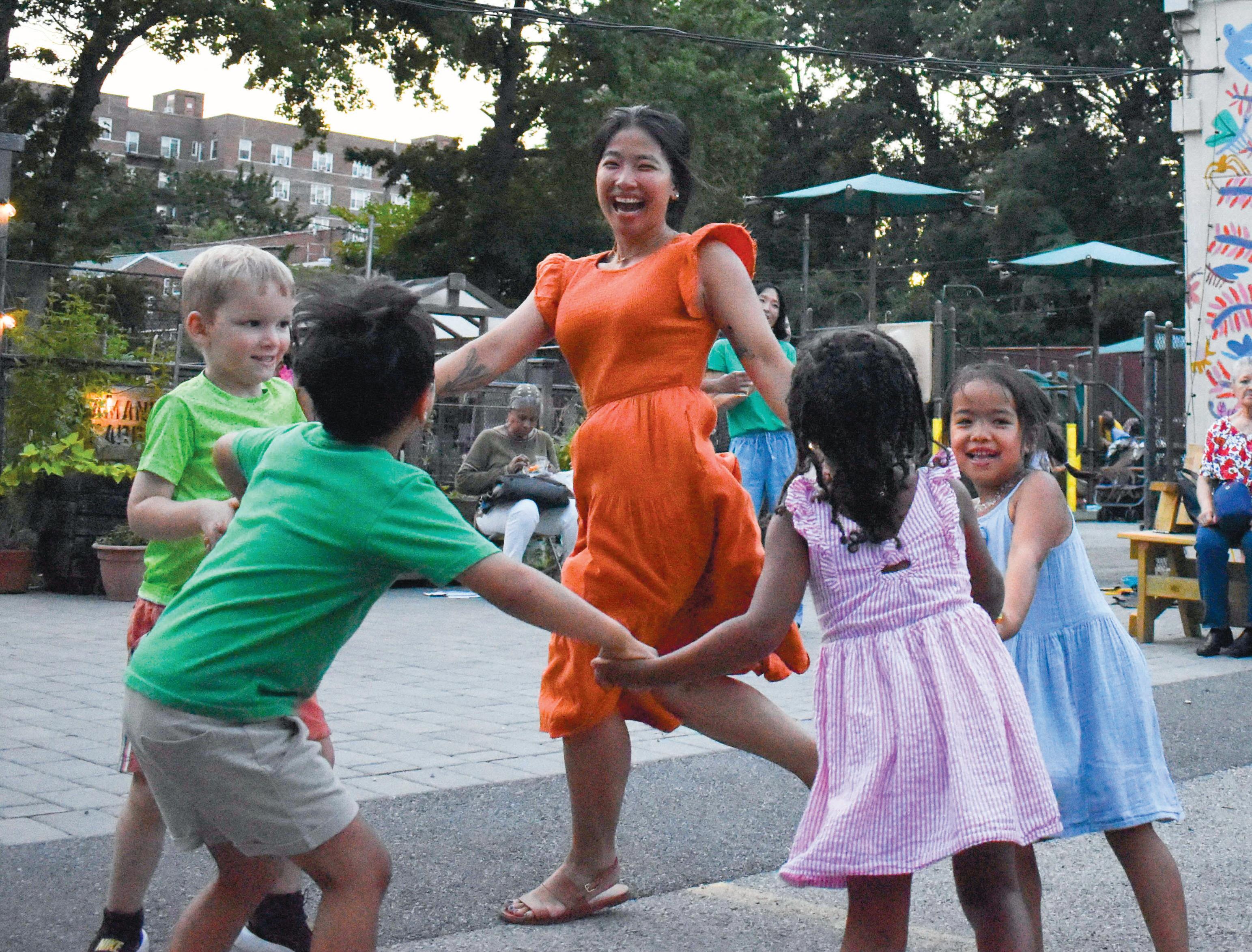

the
moved to Riverdale in 2020, and his daughter, Maddie, is in Riverdale Neighborhood House’s early childhood program. One of the things he admires most about the community is its diversity. He said his set aimed to speak to other residents of various ages and backgrounds. There are two sides to the music, Dash explained. “One is having fun with stuff that people don’t know and exploring new sounds and things … The other side is I’m trying to hit some nostalgia tonight.” Dash was accompanied by guitarist Emil McGloin, whose 5-year-old daughter also attends
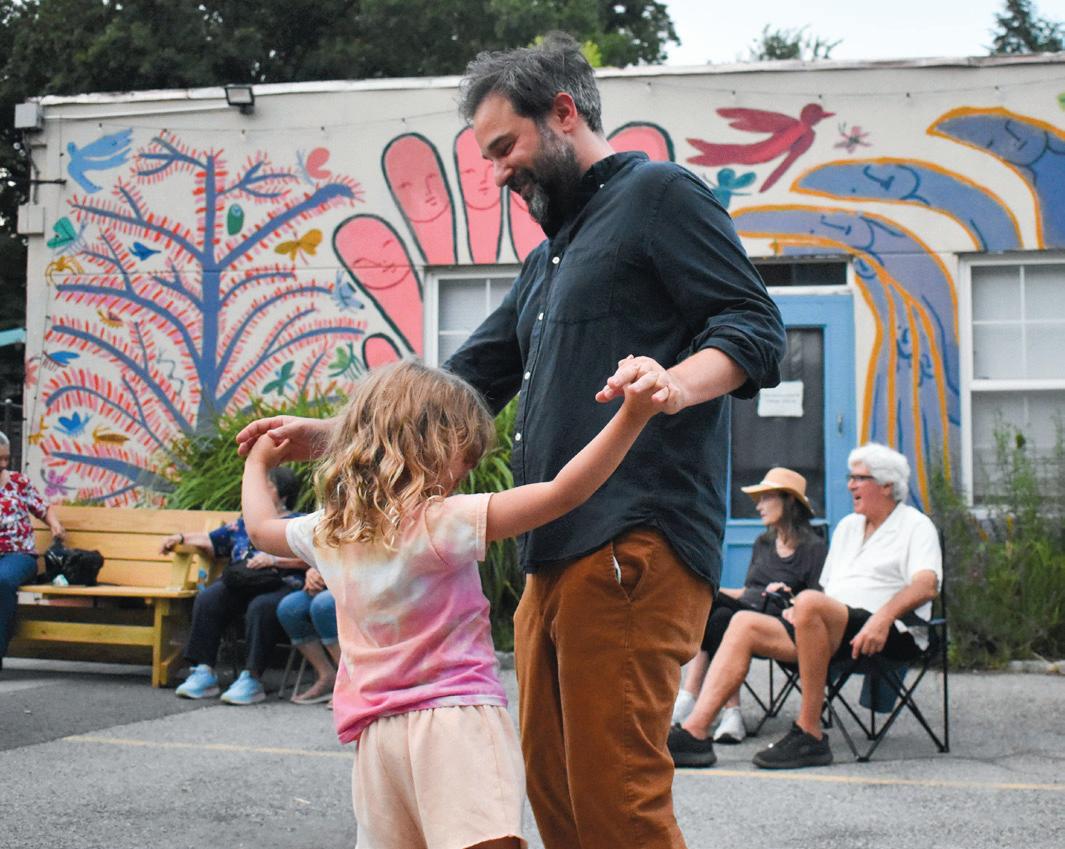

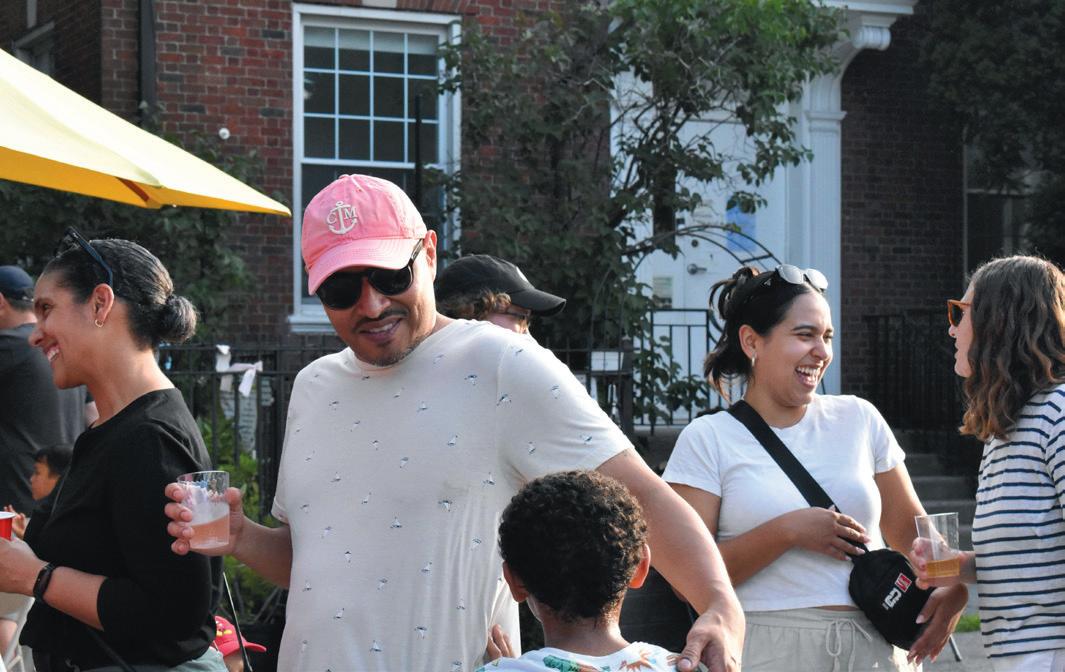
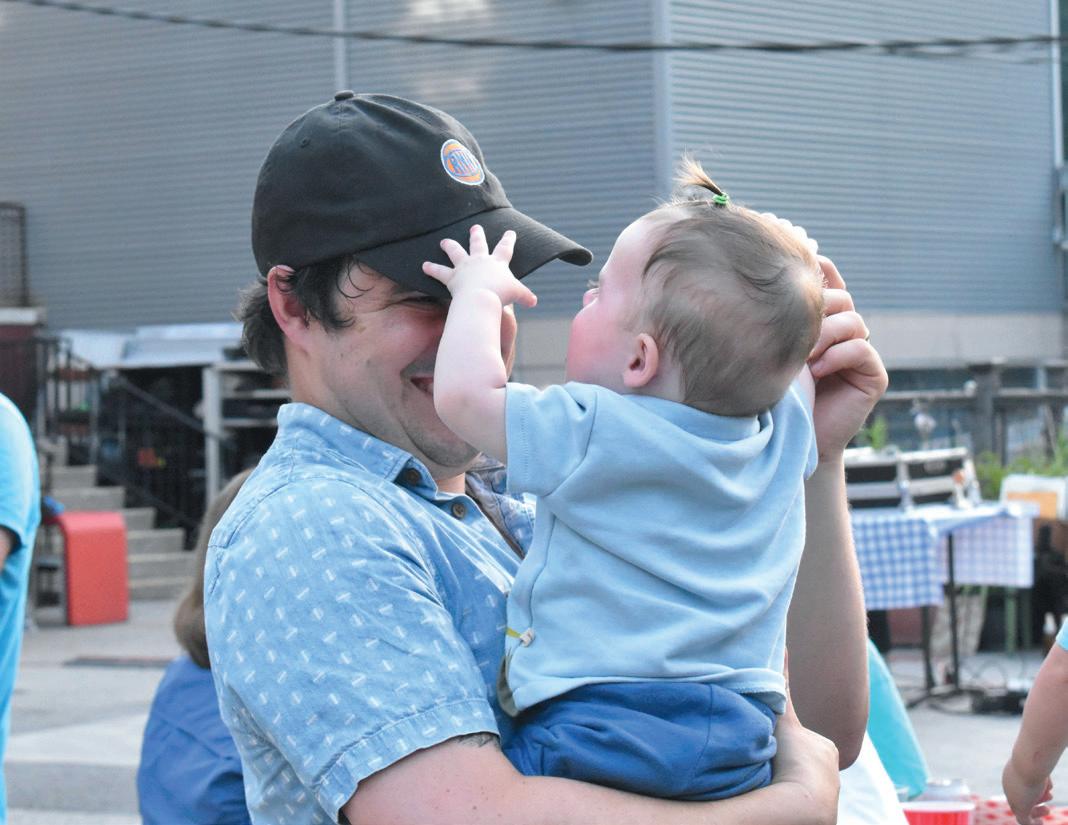
Remy Edwards pulls his son Ryan in for a hug. Edwards and his wife, Amarilis Falcedl, his daughter, Lily, and Ryan have taken part in the Music in the Garden series for years. Edwards said his family was enjoying the coolness after the city’s heat wave, as well as a chance to get together with neighbors. Falcedl said Riverdale residents are very involved and engaged with one another, and are always searching for family-friendly events that encourage socialization as opposed to being home on electronics. “What we love about our community is that it’s very close knit,” Edwards said. “It’s all about family. Events like this are a great example of what the community is about.”






John McCarthy attended with his son Jamie, who is not old enough for preschool yet but will likely attend Riverdale Neighborhood House when the time comes. McCarthy described the event as a fun, summertime thing to do. His daughter, Charlotte, “loves nothing more than to run around a little bit unhinged,” and Music in the Garden lets her do that, McCarthy said. “It’s nice to have an event where you can feel very much with your community, but also our children can run off and be with their little community and groups of friends here as well,” McCarthy said.

















By Michelle Mullen mmullen@riverdalepress.com
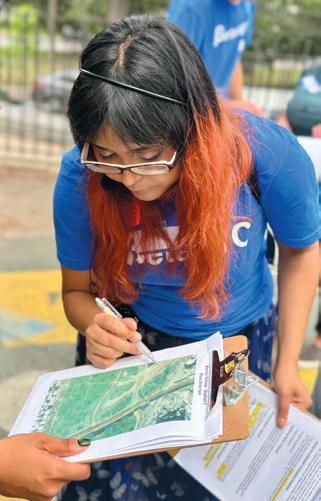
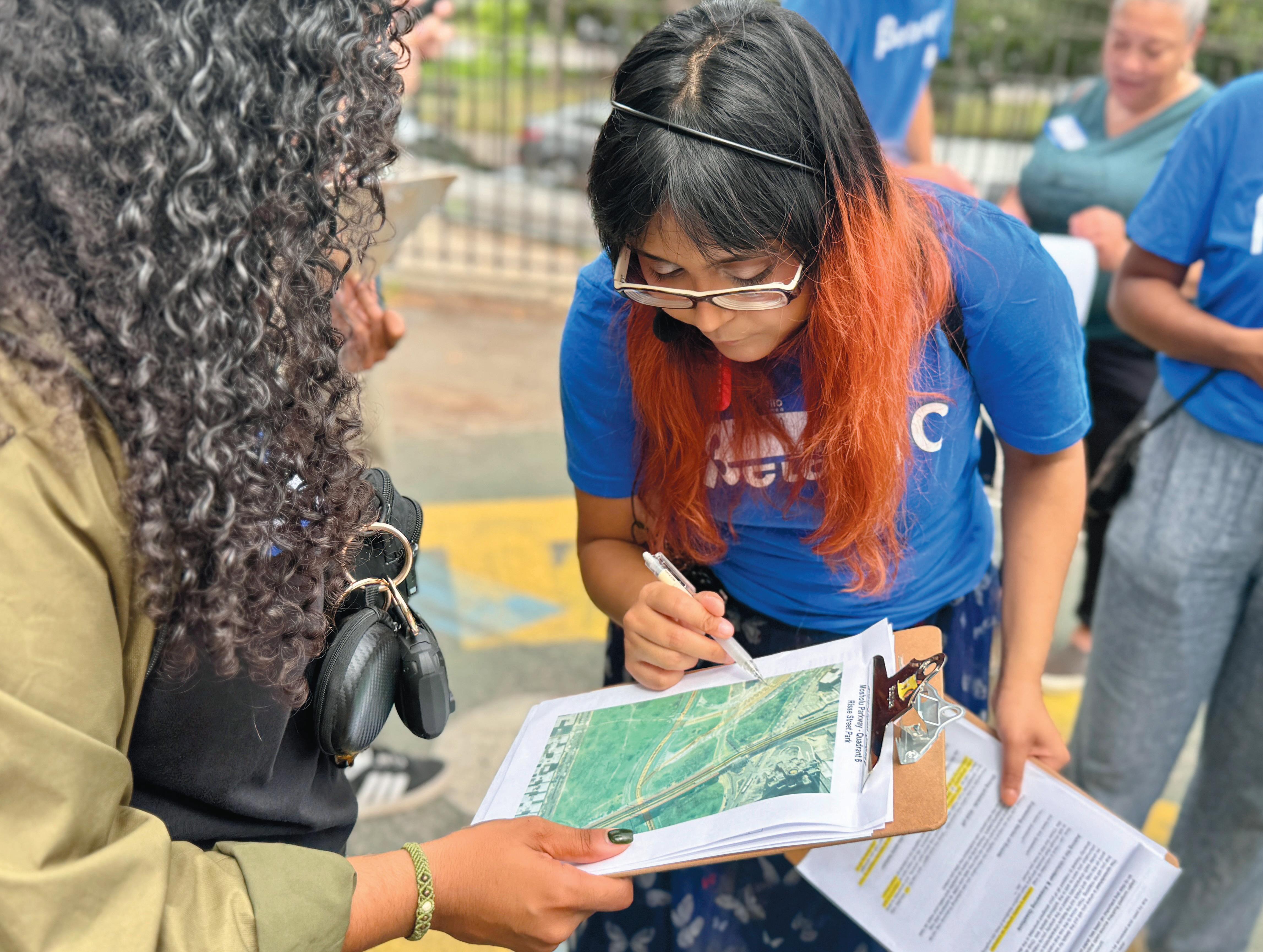
On July 10, volunteers armed with clipboards, printed maps and pencils fanned out across Mosholu Parkway in small groups. One volunteer counted benches, while another noted whether drinking fountains worked. Others logged amenities like trash cans and lighting, stopping to mark each feature on paper maps that divided the neighborhood in quadrants.
The fieldwork was part of Mapping for Equity, an initiative by civics and tech literacy nonprofit Beta NYC, in partnership with Council member Eric Dinowitz. Mapping for Equity aims to train the public to document amenities and services in under-mapped areas before uploading the information to OpenStreetMap — a free, crowdsourced map used by governments, researchers, nonprofits and websites around the world.
“We really just try to get people to be thinking about the parks that they’re in and the amenities that are there,” said Duncan Ballentine, Beta NYC’s director of public programs. “What’s there, what isn’t, and what is being logged and not being logged. It’s all part of that exercise of digital literacy.”
Ballentine, who was among those leading the Bronx event, said OpenStreetMap could be best equated to “the Wikipedia” of maps, explaining it relies on public contributors to stay accurate and up to date. These maps, he said, often help guide public investment, a sentiment Dinowitz echoed.
“Open data allows for better oversight of our city, for community members to hold government agencies accountable for making sure we’re receiving the services that we deserve,” the council member said. Projects like Mapping for Equity give residents another way to advocate for their neighborhoods, Dinowitz said. If benches, drinking fountains or accessible pathways aren’t documented, communities might be overlooked by government agencies and elected officials looking to identify gaps for improvement.
Residents in the greater Riverdale area and beyond have been contributing to OpenStreetMap for years, whether correcting information about neighborhood businesses from their phones or improving the accuracy of New York City’s subway system from hundreds of miles away.
One of those contributors is Riverdale resident Rose Hall, who began editing the digital map a few years ago after noticing small inaccuracies while using it in everyday life. Rather than setting out specifically to map her neighborhood, Hall said she updates information whenever she spots something that no longer matches reality.
“If I’m going out on a walk and [OpenStreeMap] is claiming this thing, and that just isn’t true, I use this little app to help me contribute that from my phone,” she said.
Most of Hall’s edits are modest, such as updating storefront hours or fixing other details she encounters during routine errands. She said those small changes help improve a resource used by thousands of people every day.
“I think it’s like we all use and benefit from this data a little bit,” Hall said. “So I think it makes sense to, in little ways, contribute back.”
However, not every volunteer has to live in the neighborhood they help map. Clay Smalley, a student teacher in Chicago, has spent years improving the accuracy of New York City’s subway infrastructure in the map without leaving Illinois, including the 1 train line in Kingsbridge and the Metro North line that runs along Riverdale’s outer edge. Using satellite imagery, railroad diagrams and public records, he and other volunteers have refined the locations of underground tracks that cannot be seen from above.
“It was me and another person,” Smalley said. “He did a deep dive on the New York tax database and found where there were tunnel easements under buildings so that he could accurately map the routes of subway lines. Now the New York subway routes are, for the most part, pretty accurate.”
Smalley said contributors
often build on one another’s work, continuing to refine and update information and gradually creating datasets that become valuable far beyond the OpenStreetMap community. Anyone can use that data to build seperate maps focused on a particular purpose, whether helping wheelchair users find accessible routes or assisting city planners in identifying gaps in public amenities.
“The more I take in from other sources and contribute and make the map complete, the more people will end up using it and learning things from it,” Smalley said. “I’ve already seen the OpenRailwayMap app get used in a lot of news articles.”
The Mosholu Parkway workshop focused on a much smaller scale, said Beta NYC Development and Strategy Manager Naeema Haque, who joined Ballentine in leading the event.
“We’re trying to help advocate for people to collect this data on their own and learn how to put their perspective on the map,” Haque said.
Mosholu Parkway resident Maite Duquela said she was drawn to the event because it offered an opportunity to improve her own neighborhood through data.
“What gets recorded gets maintained, gets funded, gets improved,” Duquela said.
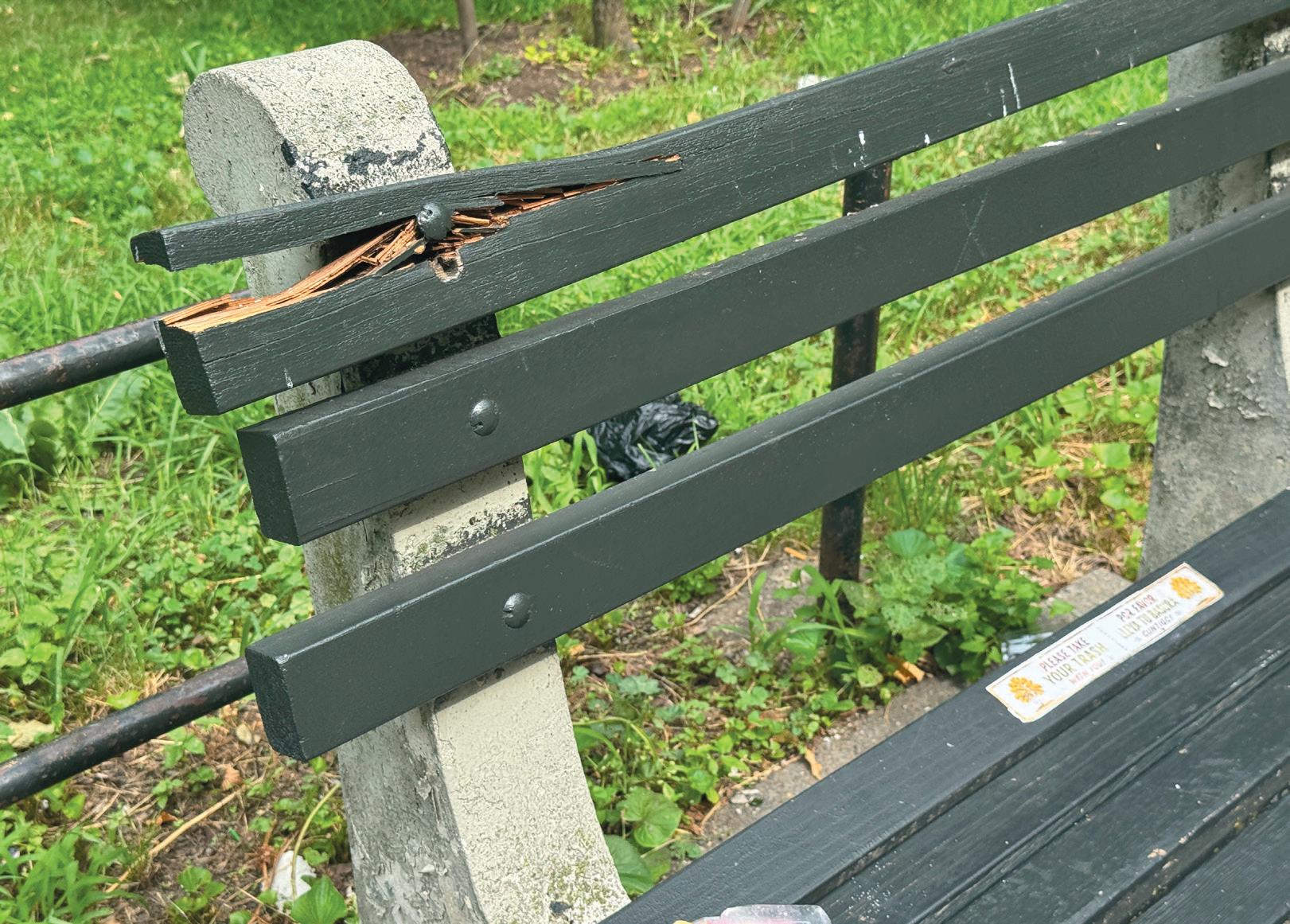
“What doesn’t is just insignificant. So we need to know that here there aren’t trash cans, and that’s why there’s more littering. We need to know that the benches are in good condition so people can use the park better.”
Rather than uploading the information immediately, participants will return later this
month for a second workshop, where Beta NYC organizers will teach them how to create OpenStreetMap accounts and transfer each handwritten observation into the online map. Organizers also recorded 360-degree video throughout the park using GoPro cameras, allowing volunteers to verify locations before publishing the data.
The goal, Haque said, ultimately extends beyond creating more accurate maps.
“We think the government makes these maps or someone else makes these maps,” she recalled one participant saying.
“But we can also put our own thoughts and our community expertise there.”
By Michelle Mullen mmullen@riverdalepress.com
Performing artists Katie Zaffrann and Esmé Boyce have taken to some of New York’s most prominent stages. After settling in Riverdale, however, they found few opportunities to create close to home. Now, they are inviting fellow creatives to help transform Spuyten Duyvil into a home for vibrant performances and community arts programming.
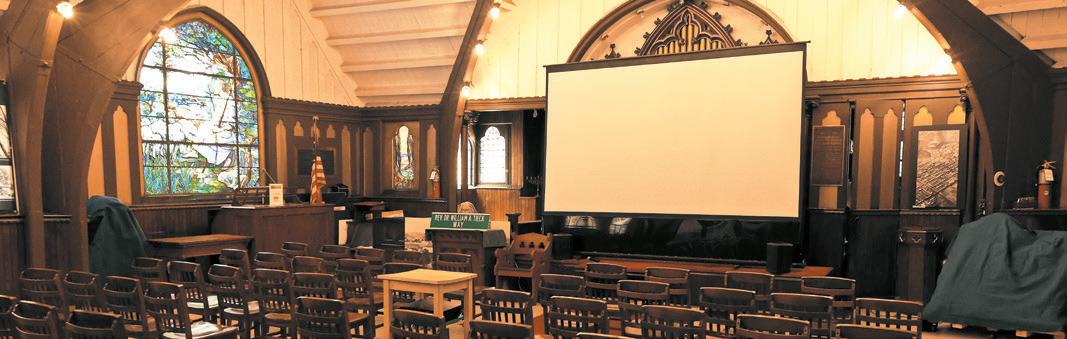
The two Riverdale moms are partnering with the Kingsbridge Historical Society to launch Arts at the Edge, a new performing arts organization in residency at Edgehill, 2570 Independence Ave. Once a functioning church, the nearly 140-year-old building has served as the historical society’s headquarters since 2022.
The collaboration grew from what the pair described as a gap they saw in the neighborhood’s arts scene. While many professional artists and performers call greater Riverdale home, they said, there are few local spaces for them to create or collaborate.
“There’s a need in the neighborhood, there’s a hunger for it, and there’s so many people here who want to be working and want to be practicing your art,” said Zaffrann, who has lived in the neighborhood for a decade.
Zaffrann herself is an actor, singer and producer who co-founded the award-winning chamber ensemble Choral Chameleon, performed on stage with Shakespeare & Company and created original productions, like “Marry Me a Little: a cold feet cabaret,” a one-woman show she wrote and starred in.
She and Boyce met through their children’s preschool at Riverdale Presbyterian Church, both having worked professionally in New York City’s performing arts community for years.
Boyce, who moved to Riverdale three years ago, is a choreographer and dancer who directs her own project-based dance company while continuing to perform with other artists across New York. Her work has been presented at theatres such as Lincoln Center and Baryshnikov Arts Center, among others — including a curated presentation for MoMA’s “Judson Dance Theater: The Work is Never Done.” As they became friends the
pair realized many of the parents around them were also professional artists.
“We know all these parents are artists, and this neighborhood is full of artists, but there’s not really anywhere to do anything,” Boyce said.
Their first effort to change that came through fundraising galas and community performances at the preschool, bringing together neighborhood artists. The turnout convinced the pair that the Riverdale area could support something bigger.
“We wanted a space to have shows that we prepare, and then also as a kind of community center for people to have access to an artistic experience without it being super formal,” Zaffrann said. “People crave that now.”
Their search for a venue led them to Edgehill, where Kingsbridge Historical Society President Nick Dembowski saw an opportunity to expand the building’s role in the community.
“We have our mission, the historical society, dealing with the uplifting of local history,” he said. “But not everybody’s into that, so there are a whole lot of people that are into art, and I think there’s certainly room in that building for more to happen.”
Dembowski added the partnership could also introduce new audiences to the historic building.
“We tend to draw sort of an older crowd,” he said. “It wouldn’t be bad for the future of the building, and maybe even for the historical society, just to get some younger people in there to see the building, see what we do in addition to the art.”
Zaffrann and Boyce said their first priority is creating a permanent home base for local artists. Over time, they envision Edgehill evolving into a year-round arts center, while also serving as what Zaffrann describes as a “third space” where neighbors can gather, discover local artists and build com-
munity outside of home and work.
Boyce emphasized the importance of asking artists what their needs are rather than assuming, noting that she and Zaffrann are striving to make the space as inclusive as possible for all in the neighborhood.
Before scheduling performances, Arts at the Edge is surveying local artists to better understand what resources they need. Its questionnaire asks about interests ranging from rehearsal space and workshops to exhibitions, performances and open mic nights.
Zaffrann said the survey responses will give the group hard numbers to bring to funders and local officials.
“We have this many people who need x, y and z — subsidized rehearsal space, whatever it is that people are needing,” she said, adding that respondents’ zip codes and other demographic details will be anonymized before being shared.
The needs vary by discipline, they explained. Boyce said she’d eventually like to see a sprung or “Marley” floor installed, a cushioned surface that reduces impact on performers’ joints. She and Dembowski said the addition wouldn’t require any permanent alteration to the historic, landmarked building.
The Kingsbridge Historical Society is serving as Arts at the Edge’s fiscal sponsor while the organization develops and pursues funding. It does not plan to become registered as a 501(c)(3). Zaffrann said the group has held off on filing for its own nonprofit status, opting to build momentum first, and is looking into grants and a possible fall gala to gauge community support.
The organizers said they are also eyeing a longer-term goal, describing their hope for an annual neighborhood “art walk” featuring open gallery spaces and public performances throughout the Riverdale area.



























By Michelle Mullen mmullen@riverdalepress.com
After weeks of negotiations, New York City Mayor Zohran Mamdani and City Council Speaker Julie Menin reached a handshake agreement June 30 on a $125.8 billion city budget for fiscal year 2027. According to the city, the FY27 budget is the largest expense budget and capital commitment in council history and funds several previously temporary investments.
Many of the initiatives mirror priorities that local elected officials and Bronx Community Board 8 have identified for years, including in the board’s annual Statement of Community District Needs and Budget Requests —- making housing more affordable, improving conditions in public housing, preserving library services and reducing transportation costs for working families among them.
Here’s a peek at what the budget could mean for greater Riverdale.
Affordable housing remained Bronx Community Board 8’s top priority in this year’s statement of needs, which reports 45 percent of district residents are rent burdened. Households are considered rent burdened when they spend more than 30 percent of their income on rent, mortgage payments and other housing costs, according to the United States Department of Housing and Urban Development. In an effort to address the city’s housing crisis, the city committed $300 million across FY27 and FY28 to a new rental assistance program administered by the Department of Housing Preservation and Development. The city said the initiative, which expands eligibility for the city’s main housing voucher program, CityFHEPS, could assist 30,000 New Yorkers facing eviction or homelessness.
The spending plan secured $31.7 million in baseline funding for New York City’s three public libraries: The New York Public Library, The Brooklyn Public Library and The Queens Public Library. In its budget requests, Bronx Community Board 8 described libraries as essential educational, cultural and social resources for residents and consistently advocated for keeping the district’s New York Public Library branches open six days a week, this year requesting the seven-day service launched at the Kingsbridge Library last year be maintained. The Kingsbridge location was part of an expansion of Sunday service across the five boroughs, funded through a $2 million
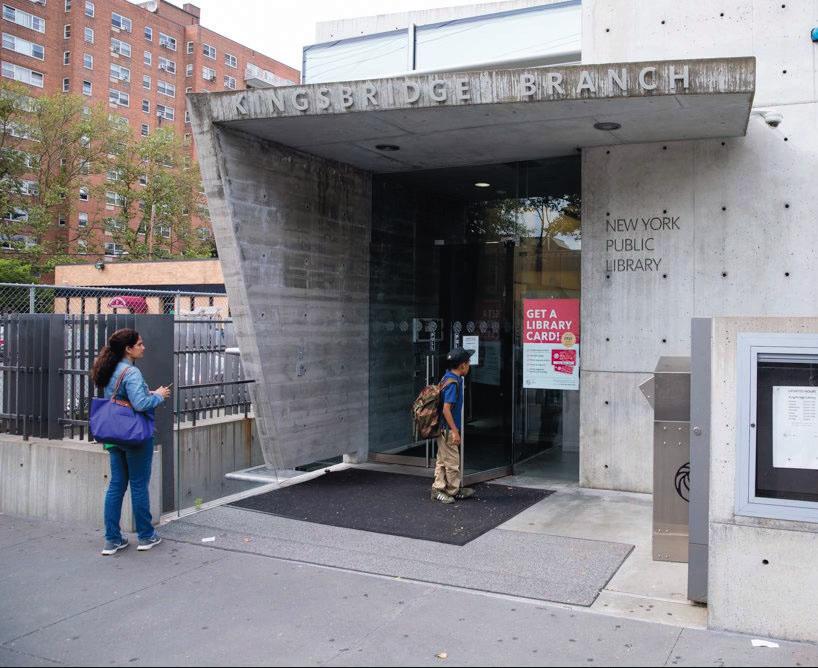
investment in the city’s 2026 fiscal year budget.
Bronx Community Board 8 has repeatedly identified transportation costs as a significant financial burden for low-income residents that exacerbates barriers to adequate housing, food access and affordability, including in its FY27 statement of needs.
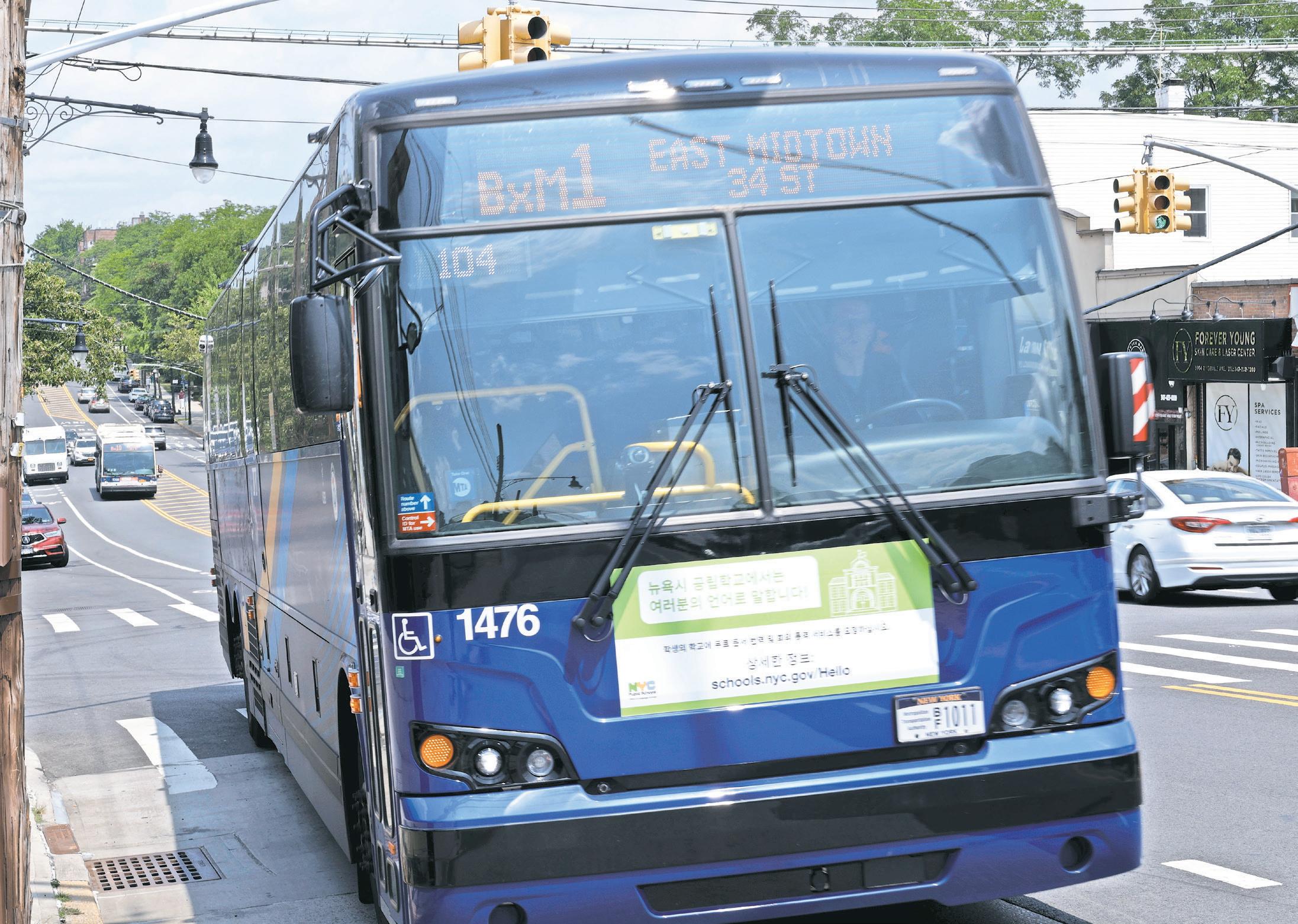
The adopted budget adds $54 million to expand Fair Fares NYC eligibility, a city program providing half-price subway, bus and Access-ARide fares to low-income New Yorkers ages 18 to 64. According to the city, the investment would allow an estimated 340,000 people to qualify.
Previously, residents’ maximum income would need to be up to 150 percent of the federal poverty level to qualify, or roughly $49,000 for a four-person household. The new budget would bring the threshold to up to 200 percent, bumping maximum qualifying income to $31,920 for a one-person household and about $66,000 for four.
Watercolor with April
Join Riverdale Senior Services’ weekly online class covering watercolor techniques, drawing, color, design and art history. Every lesson is designed to accommodate the beginner through the advanced watercolor artist by offering different levels of approach.
The online zoom platform allows for a large group of participants to clearly see the slide presentation of art examples and the watercolor lesson demonstration. Participants are invited to show their works in progress and receive individualized feedback to encourage the development of a personal style.
The course is free and open to anyone 60 and up. It runs every Thursday, 2:30 to 4 p.m. For more information visit rssny.org.
Weekly Mahjong or Leisure Bridge Riverdale Senior Services, 2600 Netherland Ave., is looking for people aged 60 and up interested in coming to RSS for weekly games of Mahjong or Leisure Bridge. It is fun and non-competitive. Some experience playing is a must.
Mahjong is held Mondays from 10 a.m. to noon. Leisure Bridge is held Fridays from 1:15 to 4 p.m. Those interested in joining should email info@rssny.org.
Poetry group
Robert Ackerman returns to lead poetry group at Riverdale Senior Services, 2600 Netherland Ave. Open to anyone who loves to write and listen to poetry.
This class is about reading, writing and discussing poetry. It is an open class, as less structure allows for more creativity. The class is open for all members. For more information visit rssny.org.
At Riverdale Neighborhood House
Ballet Fit
The Riverdale Neighborhood House invites you to join its Ballet Fit class on Tuesdays at 6:30 p.m.
The class is a training program that combines ballet exercises with fitness exercises. Open to ages 13 and up, it is designed for individuals of all movement abilities. Participants will work on toning and strengthening, coordination, balance and flexibility.
Taught by Azucena Rollan Mas, dancer, performer and certified American Ballet Theatre and Ballet Fit instructor, at 5521 Mosholu Ave. Register at riverdaleonline.org.
Breadmaking
Join “The Bread Baker of Riverdale,” Arnie Adler, in his class on sourdough bread baking at The Riverdale Neighborhood House, 5521 Mosholu Ave. Adler will walk you through the 36 hour process of making a loaf of bread in just 2 hours. Runs on Thursday, July 16 from 6:30 to 8:30 p.m. Register at riverdaleonline.org.
Youth Market Stop by the Riverdale Neighborhood House’s Youth Market every Thursday from 2:30 to 6:16 p.m. Takes place at 5521 Mosholu Ave. Find fresh produce grown on local farms, including in the RNH garden, as well as other goods from local restaurants
and partners. The market accepts SNAP-EBT, Health Bucks, FMNP checks, credit, cash and Venmo.
At Van Cortlandt Park
Caribbean Dancing in the Park Hostos Center for the Arts, Juan Usera and the Sambuco Tribe are offering an interactive Caribbean music and dance workshop in Van Cortlandt Park on July 18 at 3 to 5 p.m.
The Caribeando Community Music and Dance Workshop provides an opportunity to learn and practice Caribbean musical and dance traditions rooted in African heritage. Participants will learn Bomba, Plena, Guaracha, Cha-cha-cha, Merengue and more. All ages, abilities and skill levels are welcome to explore the basic rhythms, steps, call-and-response interactions and shared community joy.
To RSVP for the event and for more information visit vancortlandt. org.
Van Cortlandt House Museum
In June, the Van Cortlandt House Museum opened its first site-wide solo exhibition by artist Samantha Box. The exhibition, “Overlapping Empires,” features still-life photography, sound and installation elements, and brings contemporary art into direct dialogue with one of New York City’s earliest colonial sites.
The exhibition is accompanied by an ongoing series of free public events, including artist-led walkthroughs, online and in-person talks, and panel discussions. Events will continue through Aug. 30.
To register for events and for more information visit vchm.org.
Yoga Muse Chair Yoga
Yoga Muse invites you to a Chair Yoga class based on the Lakshmi Voelker Chair Yoga Method, and offers an accessible yoga practice done fully seated and using a chair for support. The class focuses on alignment, gentle strength-building, mobility and posture through mindful movement.
Suitable for all ages and levels, and especially supportive for those with osteoporosis, osteopenia, arthritis, balance concerns or anyone looking for a more accessible approach to yoga.
The 45 minute class is held every other Thursday at 10:30 a.m. Classes begin July 16 and end on Aug. 27. To register for classes and for more information visit yogamuse.co.
Breath Workshop
At Yoga Muse on July 20, Meli and Jesus Rios will lead a yoga and breathwork experience to release stored tension and restore a sense of inner ease. Through meridian-based movement from Traditional Chinese Medicine they aim to soften the areas where stress and emotion often settle. This practice supports nervous system regulation, emotional release, and mental clarity.
The class begins at 6:30 pm and lasts an hour and a half. To register and for more information visit yogamuse.co.
Association
Reduce, Renew and Recycle
The Riverdale Art Association invites you to its exhibit, “Reduce, Renew and Recycle.” Member artists

used recycled materials to create unusual artworks that challenge how you see the environment, as well as mixed media, photography, acrylics, watercolor and oils.
The show takes place at the parish hall of Christ Church Riverdale, 5040 Henry Hudson Parkway, and is open Monday through Thursday, 10 a.m. to noon. It runs until the end of August.
Riverdale Y hosts its Sunday Market every Sunday from 9 a.m. to 2 p.m. at St. Gabriel’s, 3407 Netherland Avenue. New and returning vendors will be selling at the market. For more information visit RiverdaleY. org.
Disability Community workshop
The New York Botanical Garden, 2900 Southern Blvd., presents, “Disability Pride, Disability Joy Exists: A Community Art Making Workshop.” Hosted by Accessible Travel NYC, the interactive program welcomes disabled people, families, friends and allies to explore disability as identity, expression and empowerment through art. Participants will create pieces that reflect emotions like pride, joy and hope with colorful materials.
The program takes place in the Perennial Garden, on Sunday, July 19 at 10:30 a.m. until noon. For more information visit nybg.org.
‘Flower Power’
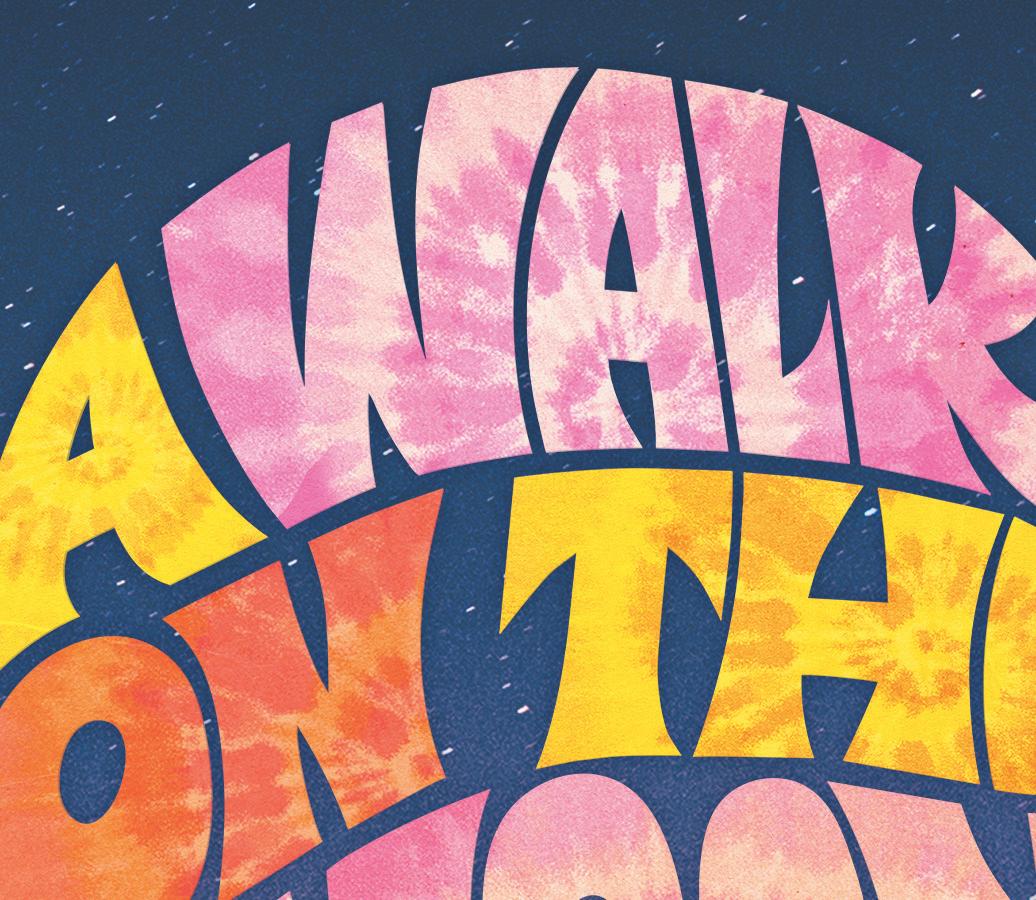
The New York Botanical Garden, located at 2900 Southern Blvd., invites you to immerse yourself in a
groovy and colorful flower show spotlighting the ways in which hippie culture advanced closer relationships with the natural world in the “Flower Power” exhibition. The exhibit runs until Oct. 18. To get tickets visit nybg.org.
At Wave Hill
Afternoon Tea Wave Hill invites you to enjoy tea sandwiches and pastries with a specialty tea selection every Tuesday and Thursday with seatings at 11 a.m. or 2 p.m. Served on the Kate French Terrace or in their Tea Room at historic Wave Hill House. “Afternoon teas” are provided by Wave Hill partner Great Performances, whose menu uses local and seasonal ingredients. The program is available every Tuesday and Thursday until Aug. 4. Tickets cost $50 for adults and $30 for children with an adult. Registration is required seven days in advance. To register and for more information visit wavehill.org.
Inner Space Modern Dance Inner Space Yoga invites you to an hour-long workshop that follows the format of a traditional modern dance technique class, led by a former member of the world-renowned Paul Taylor Dance Company, Annmaria Mazzini. The workshop takes place Friday, July 10, at 6:30 p.m. Tickets cost $35 per person. For more information visit innerspaceyoga.com.
Join Roger McCormack, director
of education at The Bronx County Historical Society, in partnership with From the Bronx to explore the significance of the Bronx in the American Revolution. This virtual lecture will highlight the general history o f the American Revolution in the area.
The presentation begins at 7 p.m. on Zoom, Monday, July 20. To register and for more information visi t bronxhistoricalsociety.org.
“It’s my Park” at Ewen
The Stewards of Ewen Park invite you to join a general cleanup where you will plant, weed, water, spread mulch, and much more at Ewen Park. Participants will meet at the Ewen Park Dog Run on July 19, at 9:30 a.m. The program lasts until noon. For more information contact masonjenkins100@yahoo.com.
Hudson River Museum invites you to join featured artists Rober t Peterson and Ron Tarver for a special talk and gallery tour exploring the history and cultural impact of Black cowboys across the United States in their respective exhibitions. Hear personal perspectives from these Oklahoma-born artists on identity, storytelling, and their creative practices through painting and photography.
The event takes place on July 19, at 2 p.m. free of cost with purchase of tickets to the museum. For more information visit hrm.org.
ColumbiaDoctors
Talitha Bruney,
Reyna Payero,
Shinelle
Doreen
Alison Gruber,
ColumbiaDoctors
Gerald Neuberg, MD,
For
Kung-Ming Jan,
For
David I. Sahar, MD
For
Ronald Weissman, MD
Dylan Marshall, MD
For
3050
We each fight our own battles every day. This is a truth acknowledged so widely, it’s become a cliche, something we impart on young children as they begin to explore the world. We’ve all heard some version of “Treat people with kindness, you never know what they’re going through.” But still, for people living with disabilities, there is often a stigma that is faced when those battles present barriers in daily life.
It has now been several decades since the Americans with Disabilities Act was signed into law. Now, each July, we commemorate that landmark legislation with Disability Pride Month, recognizing our community members and loved ones for whom living with a disability is a fact of life. The act recognizes a wide array of disabilities, from physiological differences to mental health struggles to chronic pain. Supporting those who live with such disabilities not only means continuing to uphold and strengthen the resources and protections that make life more manageable, but also going back to that grade-school adage — we never know what others are going through, but approaching them with empathy will never be the wrong response.
A disability of any kind should not have any impact on assessments of a person’s skills or competence. In addition, it is important to note that being disabled looks completely different from person to person. There is no “right” way to navigate a disability, just as disabilities might often look different than stereotyping might try to program us into thinking they are “supposed” to.
The best thing a person can do to support another person with a disability is to listen. Listen without judgement and without scrutiny. Because not only do disabilities vary from person to person — within one person, limitations or difficulties can vary from day to day, hour to hour. Someone who is too exhausted or in too much pain to get up one morning may be completely mobile the next, and vice versa. The bad moments are not proof of “laziness” or “sickliness” any more than the good moments are proof of perfect health. One cannot interpret or prescribe another’s experience of a particular disability or chronic illness, but what we can do is hear one another and lift one another up. When someone says they are too sick to do something, we must listen. When someone says they are perfectly capable, we must listen.
Because living with a disability is
difficult enough without the judgement and expectations of others. For some, a disability means frequent appointments and treatments, hours spent on the phone haggling with insurance companies for life-saving or life-altering medications they are reluctant to cover. Sometimes it means years spent knowing something is wrong but being unable to find clear answers, let alone relief. For many, grappling with a newly diagnosed disability can create a mental paradox between what one thinks they should be able to accomplish, and what their body allows them to. The mental toll is just as real as the physical.
At the same time, while living with a disability may mean changing expectations of oneself and learning to advocate for oneself, it can also be a journey in discovering just how much a person is truly capable of. When we make assumptions about what a person can or cannot do based on their given situation, we, consciously or not, place certain limitations on them. Those often unintentional limitations can begin to shrink the world in which people with disabilities operate, pre-emptively casting them aside rather than allowing every person’s unique abilities to shine and develop equally.
Aside from practicing empathy and understanding in our daily lives, it is also important that we all keep a close watch on how our country as a whole, through its policies and priorities, treats those with disabilities. As history has shown us time and again, any rollback in civil rights protections for one group is a dangerous thing for everyone, whether they identify as a part of that group or not. Maintaining protections for Americans with disabilities is especially crucial, as most individuals, even those who have no history of disabilities, begin to face new limitations and health struggles as they age.
Disabilities exist on an ever-fluctuating spectrum. Instead of trying to place them, or the people managing them, into boxes, this Disability Pride Month is a chance to seek understanding and uplift those who deal with disabilities, visible or invisible, every day. Because protections such as the Americans with Disabilities Act, as important as they are, can only do so much without our daily efforts and support. As a community, we must commit ourselves to challenging our own implicit biases and choosing compassion for our neighbors over the stigmas we may have unwittingly absorbed.
Protecting
To the editor,
An increasing number of our neighbors are struggling to put food on the table as costs continue to rise. The budget reconciliation law, H.R. 1, passed in July 2025, will only make matters worse. H.R.1 slashes $187 billion over the next decade from the Supplemental Nutrition Assistance Program, SNAP, our nation’s first line of defense against hunger, in exchange for permanent tax breaks for the wealthy and big corporations. Many of our neighbors — including children, veterans, people with disabilities and older adults — will lose access
To the editor, JD Vance touts his Christianity in his latest book, “Communion.” I see a disconnect between his actions as well as him being Donald Trump’s vice president and what he claims to be his faith. Christ is all about love and caring for your neighbor. His teachings are clear, have compassion for the poor. Jesus would not have wanted to see men dressed like the Gestapo chasing down people on the street, kill-
to SNAP, putting their health and wellbeing at risk. And charity can’t fill the gap — for every meal provided by a food bank, SNAP provides nine. SNAP does more than keep hunger at bay. It reduces childhood poverty, helps children excel in the classroom, lowers hospital visits, supports farmers and local retailers, and stimulates our local economy. Every SNAP dollar generates up to $1.80 in local economic activity during downturns. Our policymakers need to understand that SNAP matters. Three quarters of Americans, nationally
ing some in cold blood. And most egregious of all, keeping children and toddlers locked up in reportedly awful conditions. Also no one who claims to be a Christian could have made up that vicious lie that Haitians were stealing and eating cats and dogs, people’s pets, in Springfield, Illinois in 2024. The administration in which he serves killed USAID which provided food and medical aid to Africa and other places where the poor desperately need it. It is report-
and across partisanship, say they could not support an elected official who voted to cut SNAP and Medicaid to give tax breaks to the rich and big corporations, according to a Navigator Research poll. Join me in telling Sen. Chuck Schumer and Sen. Kristin Gillibrand that they must use any legislative vehicle to reverse the cruel and harmful SNAP cuts. Together, our policymakers can ensure everyone in the city and the country has access to the nutrition they need to thrive.
DONNA JACKSON
ed that since USAID’s demise, thousands of people, mostly children, have died from starvation and disease. This compassionate program has been in existence since the Kennedy administration and no other president had sought to end it. There will be no forgiveness for Donald J. Trump nor JD Vance for all the cruelty and hate they have inflicted on so many.
PAULINE GRAHAM BINDER
To the editor,
Two undeniable truths emerge regarding the president’s intervention to reverse the American soccer player Folarin Balogun’s suspension from one game during the FIFA World Cup competition after he was given a red card, and the American men’s soccer team’s subsequent loss to Belgium on July 6 despite Balogun’s participation. First, although Trump said that he knows soccer “really well” and thus could see that Balogun did not deserve to be penalized, he said that he did not know what a red card meant — a
basic fact about soccer. In 2018 in the White House, FIFA president Gianni Infantino, showed him a red card and explained what it meant, and Trump tossed the card to the reporters present. So he ought to be ashamed that he forgot, but needless to say, Trump knows no shame about anything.
Second, in 2001 Balogun’s mother had traveled to the U.S. from her native Nigeria while pregnant, and the airline for which she held a ticket deemed her condition to be too precarious for her to fly back to her country. So Balogun was born on American soil — in
Brooklyn — and, thanks to the Fourteenth Amendment, gained birthright citizenship. He grew up in London and it was only in 2018 that he set foot on U.S. soil again. I eagerly await the reactions of the Supreme Court justices — and the president’s execrable adviser Stephen Miller — who assert that the Fourteenth Amendment applied only to people who were slaves when the amendment became part of the U.S. Constitution, in 1868.
MIRIAM LEVINE HELBOK

Call: 718 543 6200
Fax: 718 548 4038































































































NOTE: Each week’s featured home is chosen at random from among houses and apartments offered by Riverdale Press advertisers. The opinions expressed are those of the advertiser and not The Riverdale Press news department. For further information, write to advertising@riverdalepress.com.
Sandhya “Sanjya” Tidke & Brian Beaudry of the Sanjya Tidke Team of Brown Harris Stevens Riveredge
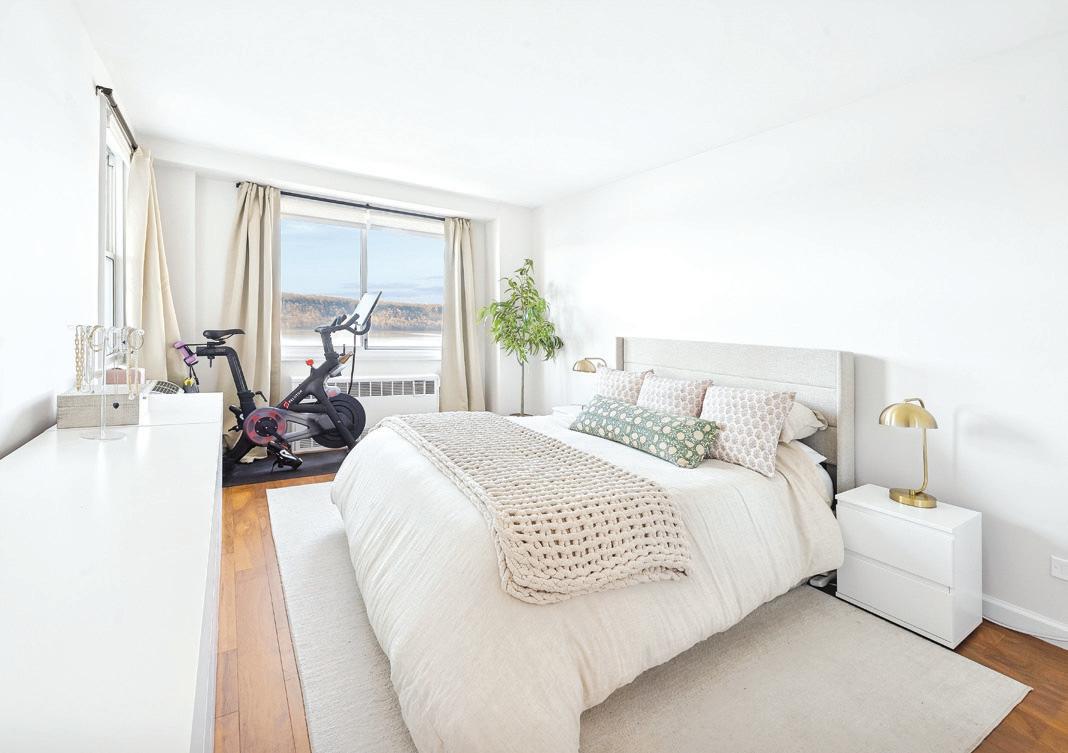
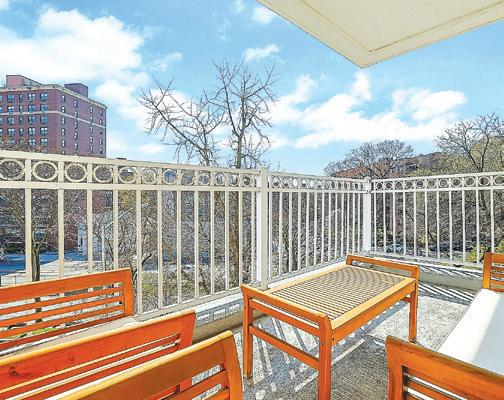
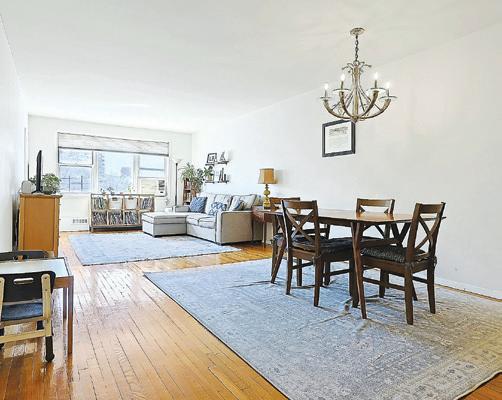
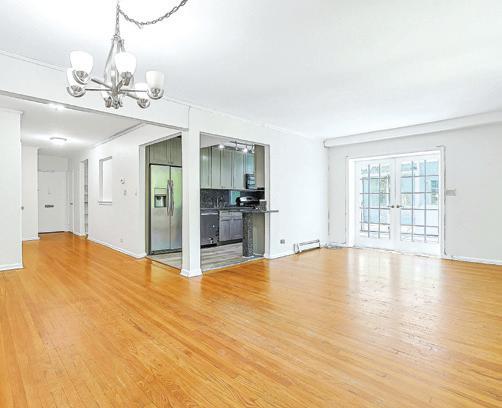
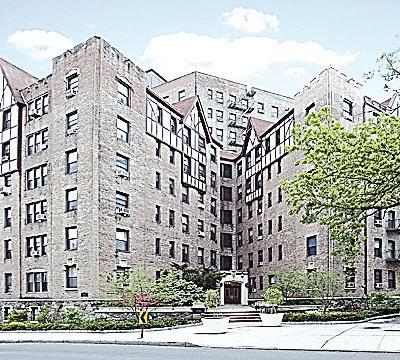
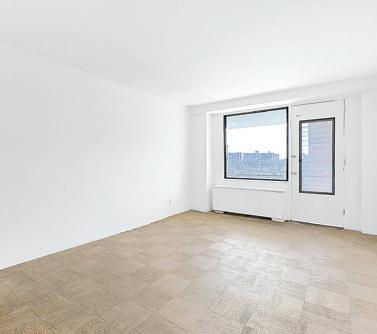
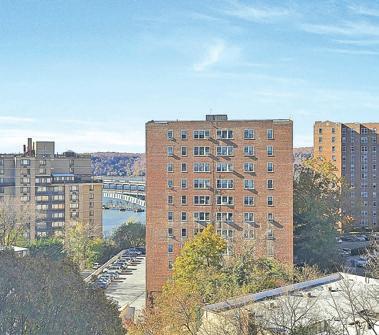
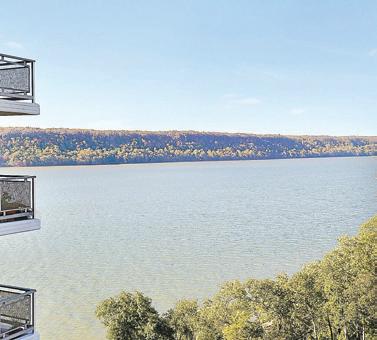
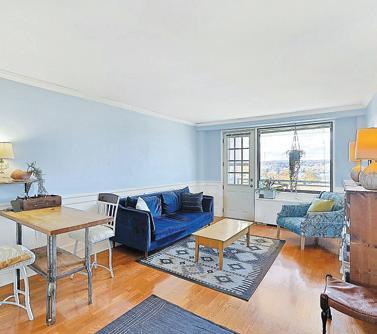
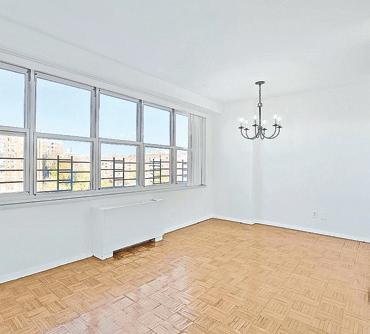
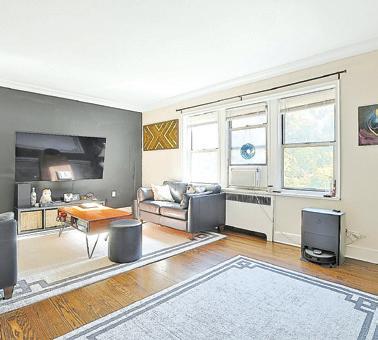
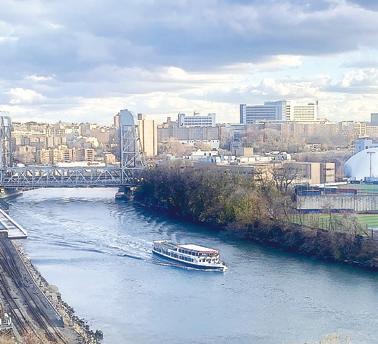
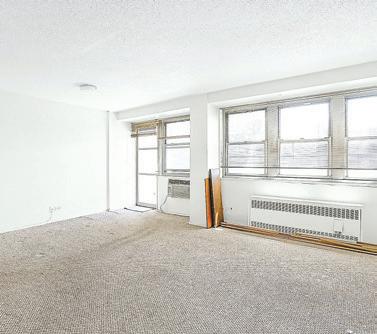
renovated co-op at 2575 Palisade Avenue, 9F is offering buyers an opportunity to enjoy modern living with expansive Hudson River views in one of Riverdale’s wellknown full-service buildings. Priced at $525,000, the two-bedroom residence combines updated finishes, flexible living space, and convenient access to neighborhood amenities.
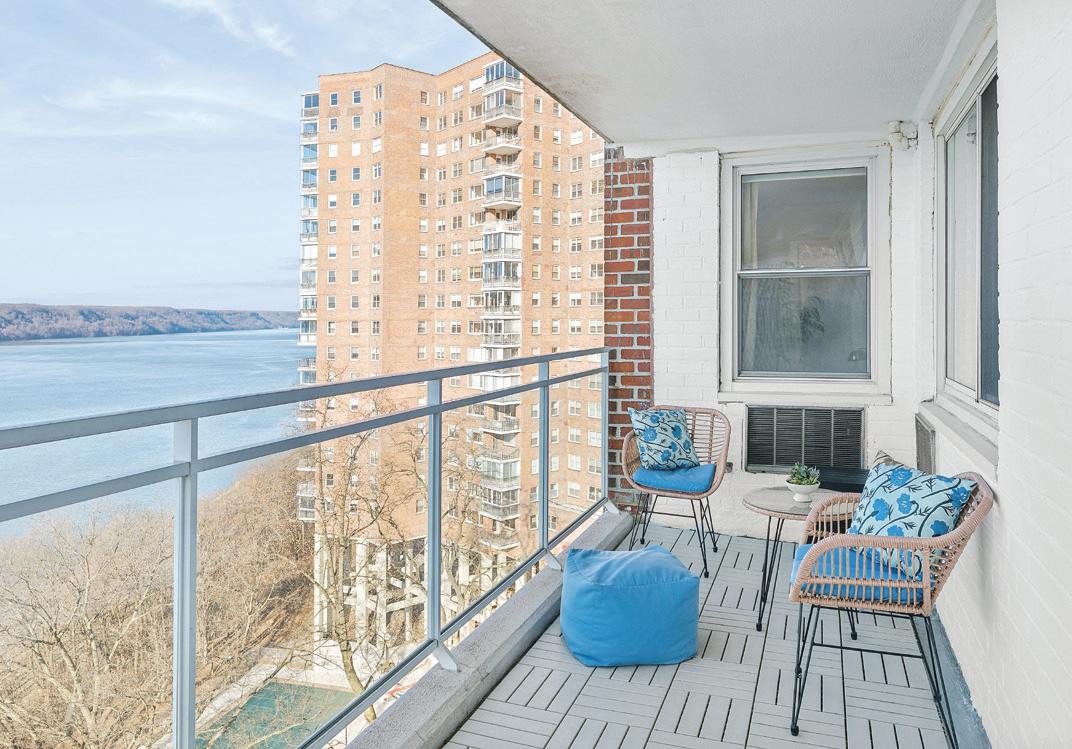
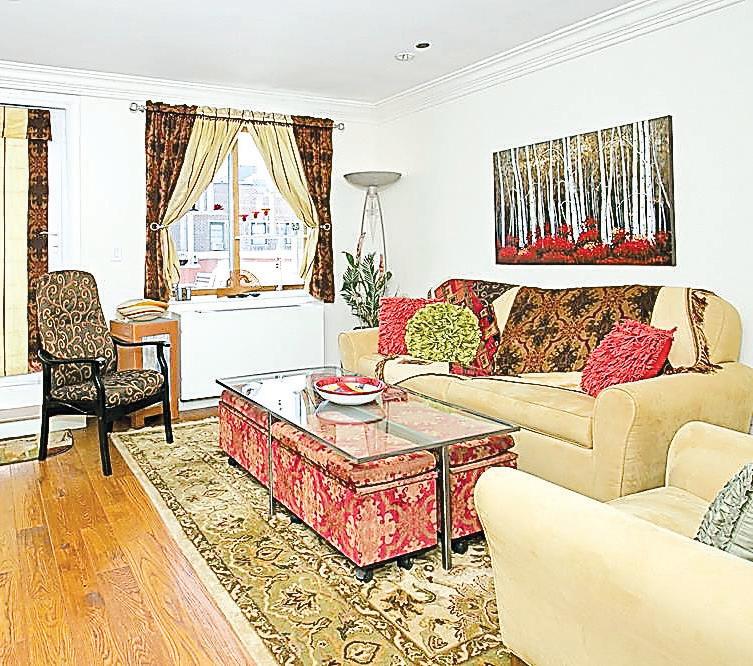
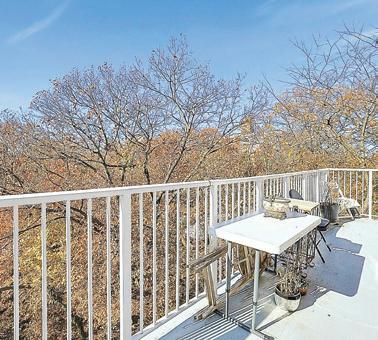
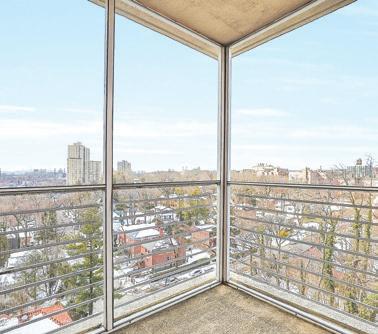
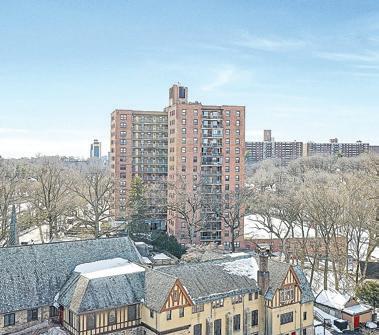
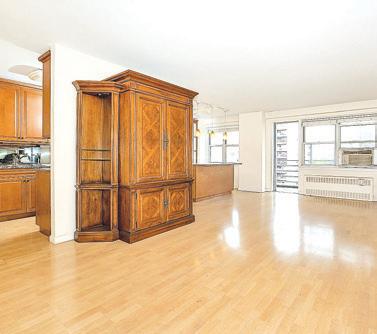
The home features two bedrooms, one bath, and a bonus room currently used as a home office that could also serve as a nursery or potentially be converted into a second full bathroom. East and west exposures fill the apartment with natural light throughout the day, while an oversized balcony overlooks the Hudson River, providing a front-row seat to colorful sunsets and sweeping views of the Palisades.
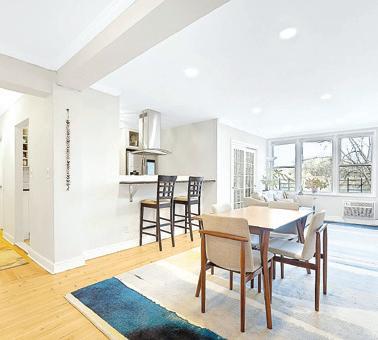
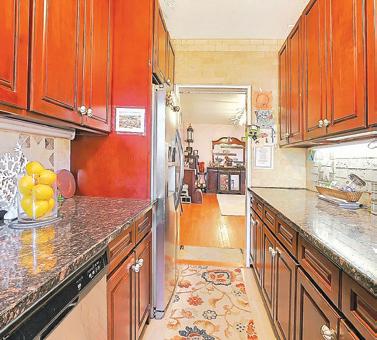
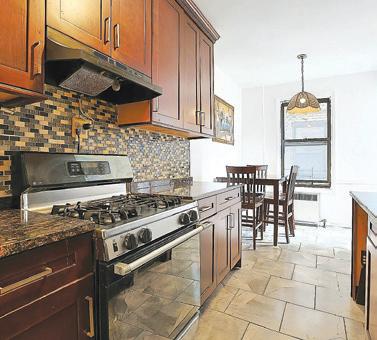
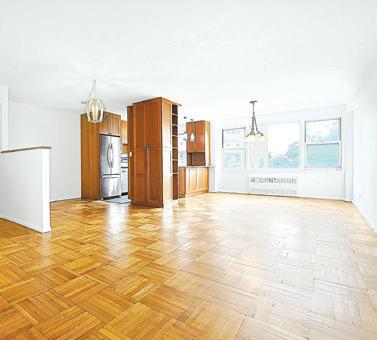
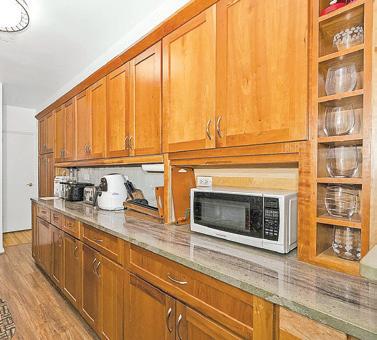
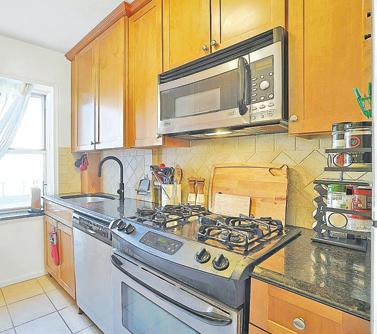
Wide-plank wood flooring extends throughout the apartment, complementing its contemporary design. The kitchen has been updated with quartz countertops, soft-close cabinetry, and high-end appliances, offering both style and functionality for everyday cooking and entertaining. Soft-close cabinets and generous counter space provide ample room for meal preparation,

while the window allows natural light and neighborhood views to brighten the space. Storage is plentiful, with five closets, including a spacious walk-in closet in the primary bedroom. Both bedrooms enjoy western exposure, while the living room opens directly onto the balcony. The adjacent bonus room faces east, creating a bright and versatile space for working from home or accommodating changing household needs.
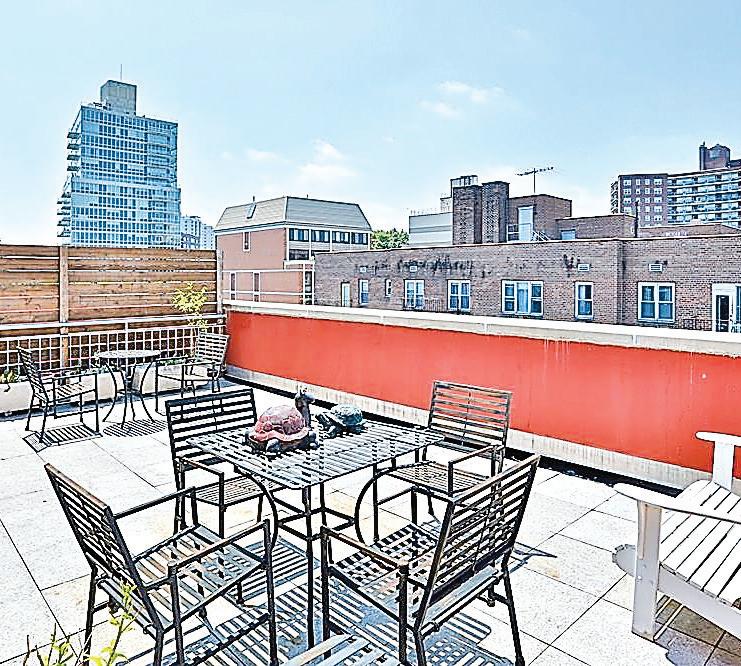
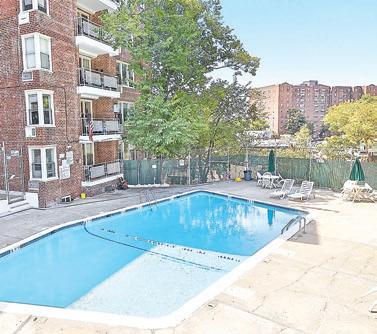
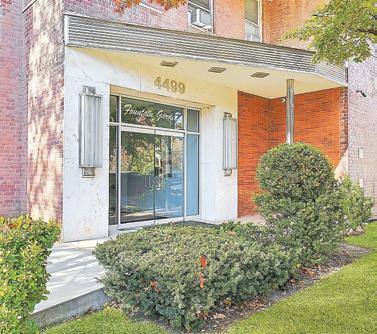
Residents of Riveredge have access to a range of amenities, including a resident superintendent, doorman service from 7 a.m. until midnight, an outdoor swimming pool, fitness center, and multi-level garage parking, when available. The pet-friendly building is also close to neighborhood parks, playgrounds, schools, local restaurants, shopping, Metro-North, and express and local bus service. With its updated interior, flexible floor plan, and panoramic river views, the residence at 2575 Palisade Avenue, 9F reflects the combination of comfort, convenience, and scenic surroundings that continues to make Riverdale an attractive place to call home.