In Iceland, Chabad spreads Hashem’s light at top of world
Whether or not the new Jewish Center of Iceland is the world’s northernmost Chabad house (Fairbanks, Alaska, may edge it out by 47 miles), its opening last week was an awesome achievement, an inspiring northern star for Jewish travelers. The colorful building in Reykjavik is a 9,000-square-foot, 3-story gem — and plans call for it to be joined soon by a geothermal mikvah. See story on page 18.
Finding faith and song in a house of grief
The message read, “Call me when you can, I have bad news.”
I hadn’t heard from this colleague since I performed her grandson’s bris six months earlier. I called right away.
“The beautiful boy you were the mohel for passed away — sudden infant death syndrome,” she told me.
It was the last day of shiva, so I grabbed my coat and headed out.
The 50-minute drive was eerie. At this point in the season, Israel should have felt like summer — not a cloud in the sky, no wind, and warm
temperatures. But the wind howled, clouds blanketed the sky, and even a light rain began to fall.
I crossed paths with the family’s rabbi in the parking lot. “There are no words,” he said as he shook his head, looking at the ground. Having spent most of my career helping families welcome their newest members into the covenant, I had never sat with one mourning a loss. I wasn’t sure what I had to offer.
On my ascent to the parents’ apartment, I wondered what the atmosphere would be like. My mind wandered to condolence calls where — since
the mourner is meant to initiate conversation — not a word was spoken.
Then I heard it.
As the elevator doors creaked open, the sounds of song drifted down the hallway. All the other doors on the floor were closed. It was coming from the family’s home. The parents and visitors were singing niggunim.
The tune ended as I took a seat beside the mother.“When our hearts are broken and there are no words, we can cry out in tears or in song,” the father said. He began another melody. We all joined in.
The mother leaned over and whispered to me, “This was the lullaby I would sing to him.”
The baby survived for just one day in the hospital. “What organs can we donate?” the father had asked the staff.
But since his body had been deprived of oxygen, their only option was his corneas. They found consolation in knowing that someone in Israel now sees the world through his “beautiful blue eyes.”
The father then charged us all to look at others in a more favorable light.
“Perhaps we see them as selfish, unpleasant, or offputting in some way. My request is to make the effort to look upon that person with a good eye — to give them the benefit of the doubt.”
Another rabbi who visited earlier in the week had shared a story. In his hometown, there were two headstones. One read, “This person lived many years but only lived until 20”; the other read, “This person died young
While or Hashem may have always been visible in the northern lights, Chabad’s brought it closer to traveling Jews, opening Iceland’s first Jewish center. Javen, Adobe
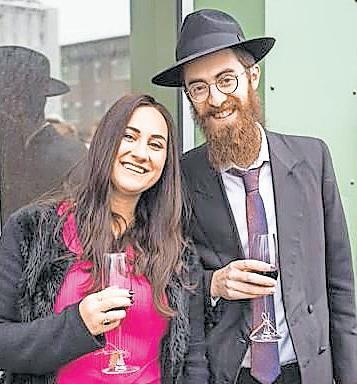
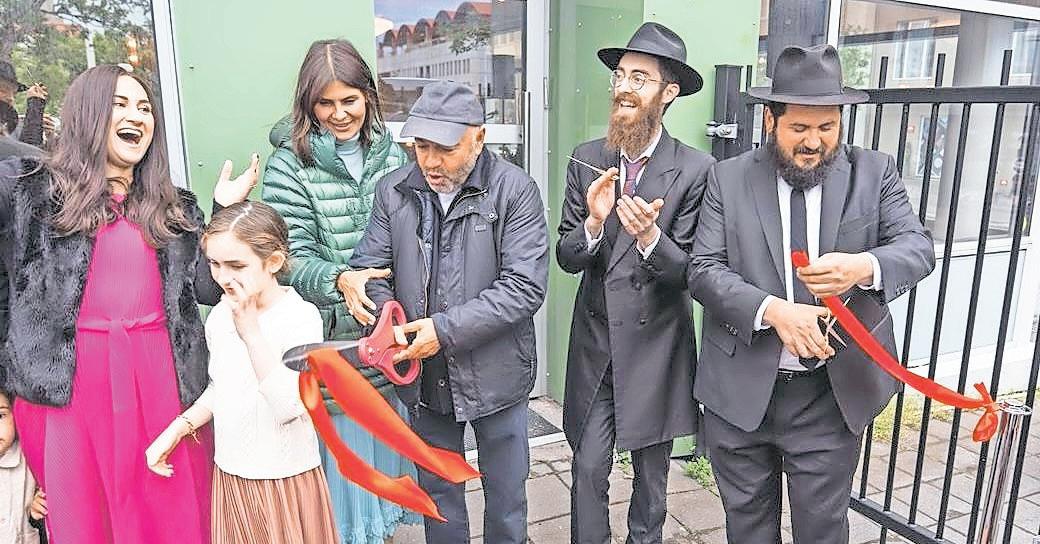
Rabbi Avraham and Mushky Feldman toast the opening of Iceland’s first Jewish center. Israel Sudry
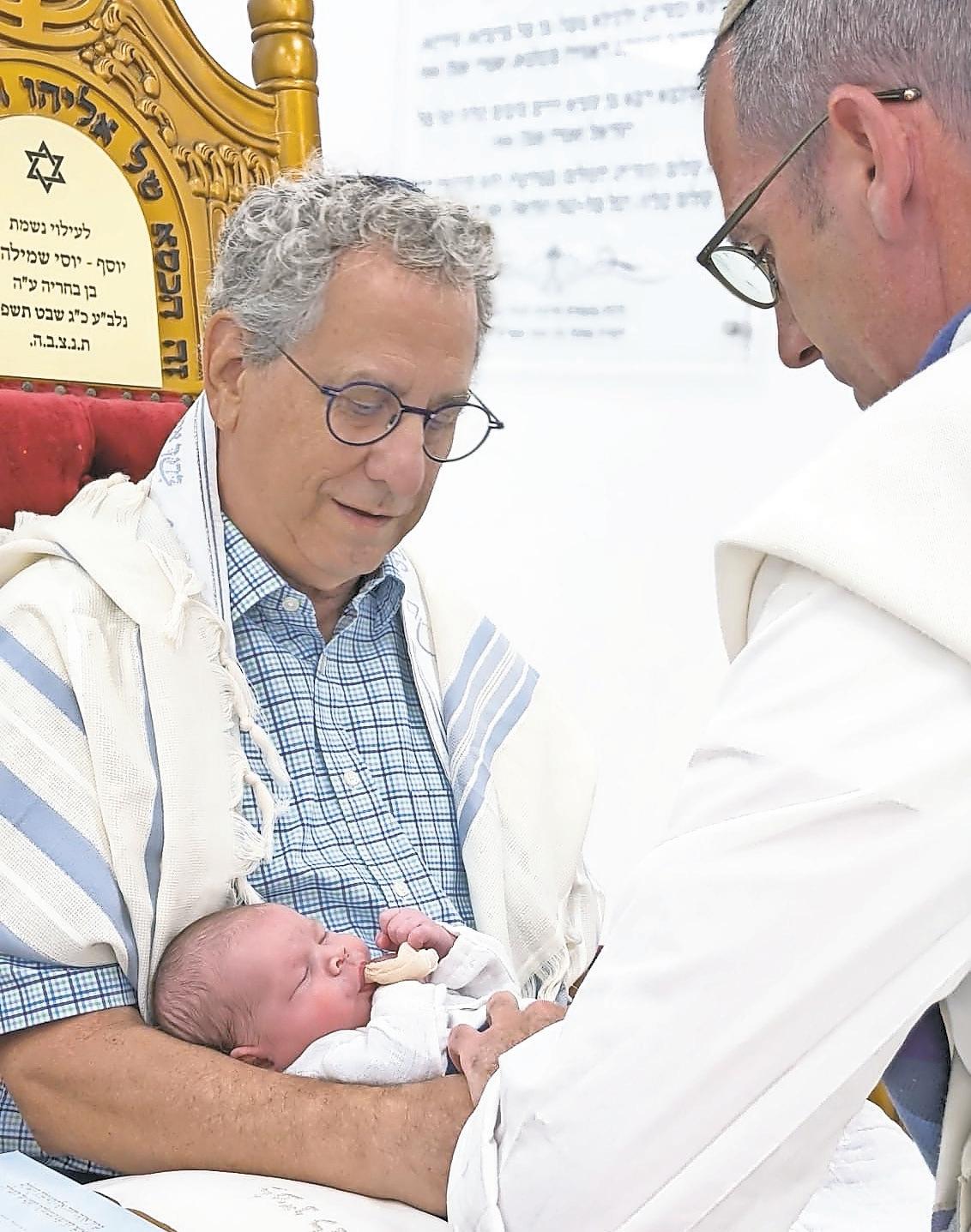
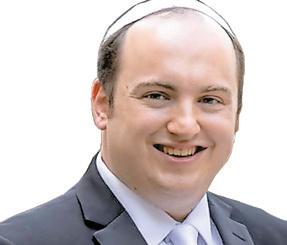
Rabbi Hayim Leiter performs the bris for the baby for whom he later had to make a shiva call. Family photo
RABBI
HAYIM LEITER
Letter from Efrat
How artificial intelligence is erasing religion
By Shachar Shapiro, Israel Hayom
As artificial intelligence becomes one of the world’s primary sources of information, advice and guidance, millions of people are turning to it every day with questions concerning not only facts, but also personal, moral and family dilemmas.
A new study led by Brigham Young University, in collaboration with researchers from Yeshiva University, Baylor University and the University of Notre Dame, points to a significant gap in the way AI models address religion and faith.
The study examined responses generated by leading large language models and identified a consistent pattern:
Religious and spiritual perspectives were almost entirely absent from their answers, even in situations in which religious people
Leiter……
Continued from page 1 but lived until 120.”
“Please don’t feel sorry for us,” the father said to those gathered. “We are not a pity case. Our son, in his short time with us, gave us a life’s worth.”
I rose and recited the traditional condolence: “May G-d comfort you along with all the mourners of Zion and Jerusalem.”
The mother explained why they waited so long to be in touch. “We didn’t want to burden you,” she said. “It’s the exact opposite,” I told her. “I would have been disappointed not to have the opportunity to provide comfort in your time of need.”
As I prepared to leave, my colleague pulled me aside. “The mother didn’t want a big brit milah,” she told me. “After the birth, she just wanted something small.” But the father insisted otherwise, pressing for a fitting celebration.
“They were so happy they did,” she said. It was his only simcha.
Rabbi Hayim Leiter is a mohel and founder of Magen HaBrit, an organization that protects the ceremony of brit milah and the children who undergo it.
Write: Columnist@TheJewishStar.com
commonly rely on their faith.
The researchers called the phenomenon “omissive bias,” a form of bias in which a system does not express opposition to religion but simply fails to include it among the range of options presented to users.
The study also found that, in some cases, the models displayed an implicit preference for certain religions and reservations about others, potentially shaping users’ perceptions without their awareness. The omission was not uniform, the study found.
While AI models tended to mention religion when asked abstract questions about the meaning of life, they rarely raised religious perspectives in the everyday situations in which many people rely on their faith, including coping with grief, relationships, family conflicts and addiction.
This gap is not accidental. Language models primarily identify religion as a system of beliefs and ideas, rather than as a system of practices, obligations and community. As a result, they mention religion when answering abstract questions about the meaning of life, but rarely do so in response to questions about grief, family crises or addiction.
Yet it is precisely in those situations that many traditions provide a practical structure through rituals, schedules and communal frameworks. The Jewish practices of shiva, the seven-day mourning period, reciting Kaddish and following a daily schedule of religious obligations are not merely expressions of belief. They are also a way of getting through the day.
The result is that traditions organized around religious law and practice disappear from digital discourse more frequently than traditions centered on abstract belief. In other words, the omission is not equal.
The researchers stressed that the study was not intended to make artificial intelligence religious or promote any particular religious position. Rather, it sought to examine whether AI fairly reflects the range of perspectives that exist in the world.
Although bias in artificial intelligence has been extensively studied in recent years, the issue of religion has received almost no attention. How overlooked is the phenomenon? Of more than 12,000 studies examining bias in AI systems, only about 0.2% addressed bias involving religion and faith.
Comments by Yeshiva U’s Rabbi Dr. Ari Berman
Rabbi Dr. Ari Berman, president of Yeshiva University, which participated in the research, said the issue extended far beyond technology. “Humanity is at a historic turning point,” Rabbi Berman said. “In the past, education was based on knowledge that was received, transmitted and developed from generation to generation. Today, an increasing number of young people are shaping their worldview through large language models.
“Broader access to knowledge on an unprecedented scale offers significant benefits, but it also presents profound challenges. Religion and faith are the foundations that have enabled human beings to live lives of meaning and purpose,” he added. “For the sake of humanity’s future, it is essential that we demand that technology companies not ignore religious perspectives, but present them faithfully, respectfully and fairly.”
Rabbi Berman warned that one of the most significant dangers lies not necessarily in what artificial intelligence systems say, but in what they do not say.
“When religious identities and entire communities are barely represented, or are presented only superficially, ignorance forms,” he said. “Ignorance has always been fertile ground for prejudice.
“At a time when antisemitism is once again on the rise, we have a responsibility to ensure that the digital world reflects the richness of Jewish tradition alongside other religious traditions. When an entire tradition is absent from the conversation, it becomes easier to distort the reality surrounding it and more difficult to truly understand it. Fair representation is therefore a powerful tool for building trust among individuals and communities.”
Rabbi Berman said artificial intelligence must be used critically. “We must be careful not to transform AI from a search engine into a source for finding meaning,” he said. “Technology can provide extraordinary information, but genuine meaning is built through family, community, tradition and faith.
The rise of artificial intelligence has only highlighted how important these sources of purpose and meaning are. The real question is not, ‘What kind of artificial intelligence are we capable of building?’ but, ‘What kind of society do we want artificial intelligence to help us build? Ultimately, artificial intelligence should serve humanity, not replace what makes us human.”
Rabbi Berman said academic institutions also had a central role to play in shaping the digital environment of the future. “This is one of the defining challenges of our generation,” he said.
“For thousands of years, the Jewish people have contributed important ideas about human dignity, responsibility, justice, lifelong learning and the sanctity of life. If the next generation increasingly learns about the world through digital platforms and artificial intelligence, it is our duty to ensure that Jewish wisdom is present there as well, not as a historical relic, but as a living, relevant and influential voice.”
Referring to the institution he leads, Berman said Yeshiva University did not view technology as a threat to tradition, but as an opportunity to bring tradition into the conversation shaping the future. “Our mission is to educate students who will be capable of developing the world’s most advanced technologies, while also equipping them with a strong moral compass,” he said.
Rabbi Berman also stressed that even in the age of artificial intelligence, human connection remained irreplaceable. “The relationship between a teacher and a student is about far more than the transmission of knowledge,” he said. “It is a way of teaching how to live and how to be. “It is a relationship whose value extends far beyond the years spent in the classroom, reaching into the heart of how people make decisions in their lives and shape their character.
“Particularly when it comes to passing Jewish knowledge on to the next generation, education has always been based on personal connection and direct guidance. These roots, which provide both an anchor and a source of growth, create stability, resilience and self-confidence that cannot be replaced by information transmitted through technology alone.”
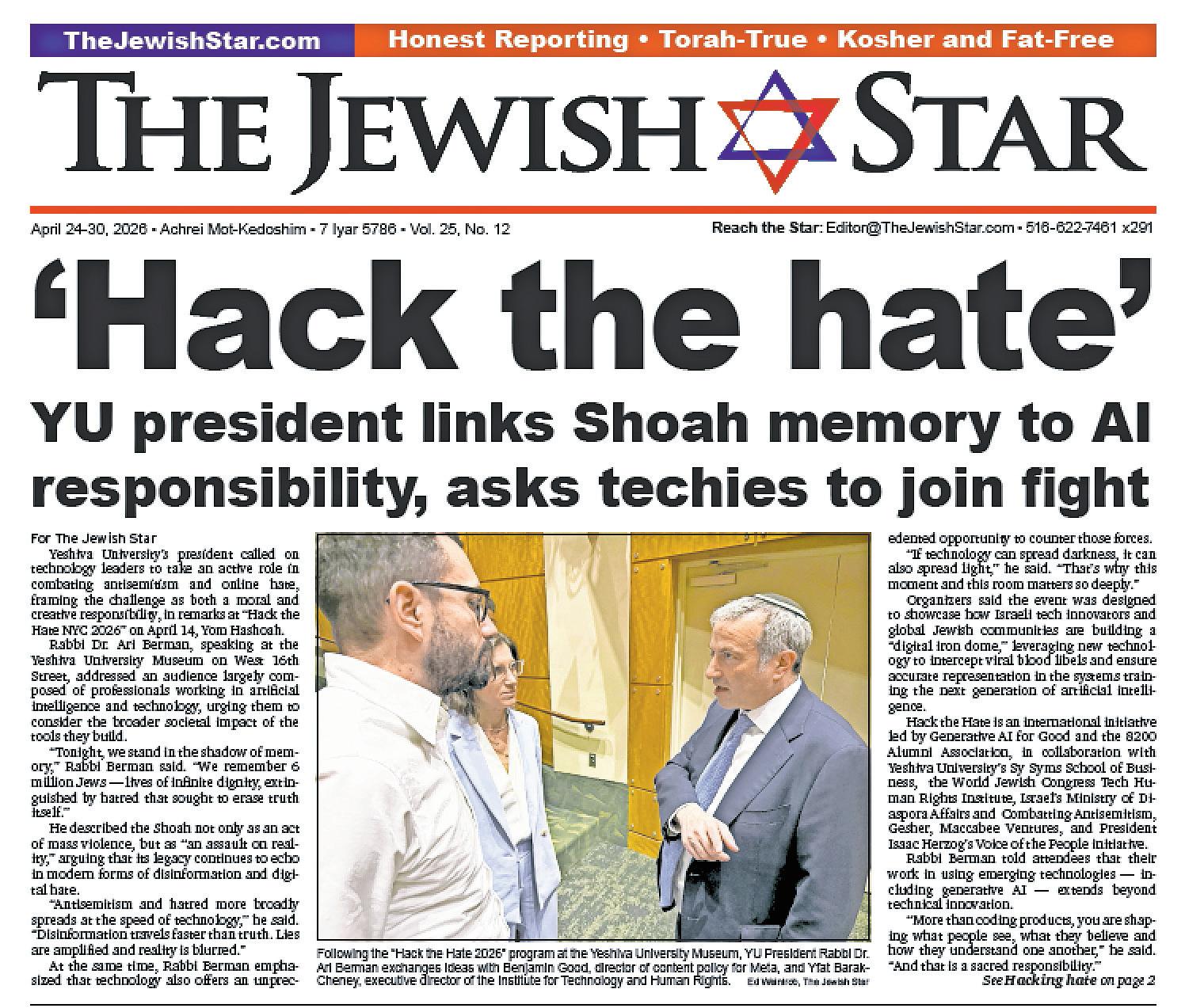
Rabbi Dr. Ari Berman, president of Yeshiva University. YU The Jewish Star reported in April on “Hack the Hate,” a Yeshiva University-sponsored conference.
Dems split on Israel aid vote
The Congressional Progressive Caucus broke with House Democratic leadership on Tuesday in the latest example of support for Israel dividing the Democratic Party.
Hours after House Minority Leader Hakeem Jeffries of Brooklyn sent a letter to colleagues saying that he would oppose an amendment to end $3.3 billion in US aid to Israel, Rep. Greg Casar (D-Texas), chair of the Progressive Caucus, sent a competing letter urging House Democrats to reject the aid to Israel.
“The Democratic Party needs a new approach to Israel and Palestine,” Casar wrote. “The American people are crying out for an end to US tax dollars subsidizing Israel’s military.”
“After the Israeli government has killed more than 70,000 people in Gaza and helped lead the United States into a destabilizing, deadly war with Iran, we are called to act,” he stated.
The House is expected to vote later this week on an amendment from Rep. Thomas Massie (R-Ky.) to strip funding for Israel from the 2027 national security and State Department appropriations bill.
Massie lost his primary in May, in an election that focused in large part on his opposition to US aid to Israel. He has used much of his remaining time in the House to pursue antiIsrael measures, including calling to re-investigate the 1967 Israeli attack on the USS Liberty and amendments to strip out Israel-related provisions from annual appropriations bills.
The Jewish state receives about $3.8 billion annually in US aid, including $3.3 billion in foreign military funding to purchase arms and $500 million for cooperative missile defense programs. —JNS
Frum US Jews and Israeli Judaism
By Steve Linde, JNS
Prof. Adam Ferziger, a historian in Bar-Ilan University’s Israel and Golda Koschitzky Department of Jewish History and Contemporary Jewry, has been named co-winner of the 2026 Shapiro Award for Best Book in Israel Studies for his book “Agents of Change: American Jews and the Transformation of Israeli Judaism” (NYU Press, 2025).
Presented annually by the Association for Israel Studies, the award recognizes the best book in the field published during the previous calendar year.
While much public discussion has focused on growing divisions between American and Israeli Jews, Ferziger’s award-winning book offers a different perspective, arguing that a relatively small group of American Orthodox rabbis and educators who immigrated to Israel quietly helped reshape the country’s religious landscape over several decades.
Rather than emphasizing ideological rifts between the world’s two largest Jewish communities, Ferziger examines how these immigrants helped shape what he describes as Israeli Moderate Orthodoxy.
The book traces how they established institutions and advanced religious approaches that offered alternatives to both ultra-Orthodox and hardline Religious Zionist models, addressing issues including women’s leadership, pluralism, LGBTQ engagement and academic Jewish studies.
According to Ferziger, the movement’s broader influence became fully apparent only in the 21st century, when Israeli-born students and protégés of those American immigrants emerged as leaders in their own right.
“I am grateful and honored by the recognition that the book has received,” Ferziger said. “The rich and mutually beneficial interfaces be-
tween American and Israeli Jewries chronicled in the work offer novel insights that move beyond divisive political and ideological binaries.”
In an interview with JNS in November 2025, after the publication of Agents of Change, he said, “The key to my book is not that the American immigrants transformed Israeli society immediately or directly … The phenomenon I observed is how their impact emerged from an indirect path.
“First, they attracted Israelis to the institutions that they established or led. The Israeli students, in turn, internalized the novel ‘imported’ ideas but then reformulated them, considering their local sensibilities.”
In announcing the award, Association for Israel Studies officials praised the book’s broad historical perspective.
“By following individuals from their educational and religious background and upbringing in the United States through their re-settlement and activities in Israel, as well as placing a plethora of cases and a polyphony of voices, [Prof. Ferziger] provides a persuasive account of a broad, nuanced and multifaceted set of influences over several decades,” the judges wrote.
“This all leads to a convincing case with
much potential for further exploring and understanding various long-standing undercurrents in Israeli society, culture and Jewish identity, topics that any student of Israel Studies might find relevant.”
Ferziger is a social and intellectual historian whose research focuses on Jewish religious movements and religious responses to secularization and assimilation in modern and contemporary North America, Europe and Israel. He holds the Samson Raphael Hirsch Chair for Research of the Torah with Derekh Erez Movement at Bar-Ilan University. He is also a senior associate at the Oxford Centre for Hebrew and Jewish Studies and co-convener of the annual Oxford Summer Institute for Modern and Contemporary Judaism.
The 2026 Shapiro Award was shared with Dr. Elizabeth Imber of Clark University for her book “Uncertain Empire: Jews, Nationalism, and the Fate of British Imperialism” (Stanford University Press, 2025).
The Shapiro Award honors the memory of Israeli sociologist Yonathan Shapiro (1929–1997), one of Israel’s most influential scholars of Israeli society.
DESK of RABBI S.M. LEINER-
Note the ACCOLADES from our CLIENTS
RE: SYNAGOGUES and YESHIVOS
Dear Rabbi Leiner, Thank you for replacing the Insurance for our Synagogue, with a Savings of almost 50%.
B.F. Executive Director
RE: REAL ESTATE CORPORATION
Dear Rabbi Leiner, You and Your Experts, have saved our Corp. Very Substantial Sums, with your Quality Insurance Replacement on our Real Estate Buildings. Thank you, M.B. Pres.
RE: HOMEOWNERS INSURANCE
Dear Rabbi Leiner, Our Insurance Company Refused to renew our Insurance Homeowners Policy. However, You and Your Experts were able to Secure for us other Insurance Coverage, even at a much lower Premium, than the Prior Canceled Insurance Policy. Thank You So Much. Mrs. D.S.
Adam S. Ferziger at the National Library of Israel, Jerusalem.
Muslim anti-Jew pol mum on LGBTQ+ support
By Jessica RussakHoffman, JNS
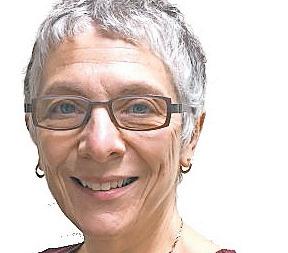
Melissa Chaudhry, a Muslim who wears a headscarf, has said that she is running against Washington state Democratic Rep. Adam Smith, who has been in office for almost 30 years, in part because he is too pro-Israel.
“Your congressman takes money from AIPAC, Boeing and Raytheon, then calls you a totalitarian for protesting,” she said. “His biggest funders are the Israel lobby and the defense industry.”
But Chaudhry, who has said that she supports gay rights, is drawing criticism from the Washington state Democratic Party for neglecting to mention that support on her website — a decision that she says she made to avoid alienating Muslim voters.
Jonathan Choe, a senior fellow at the Discovery Institute, told JNS that Chaudhry’s remarks show that she “will say anything to get elected to office, but what it really exposes is the bizarre alliance between Islam and the radical left.”
“When Chaudhry says she supports the LGBTQ+ community, I believe she’s lying” and “will pretend to do so in order to gain votes by any means necessary,” Choe said.
“Who knows what she’ll actually do to the LGBTQ+ com-
munity once she gets into office,” he told JNS. “My advice to the LGBTQ+ community is to start reading the Quran and secondary texts like the Hadith to really know what Chaudhry follows and believes.”
JNS asked Chaudhry if she believes Islam supports either gay people or gay rights.
She responded that she was “forced into a corner by an aggressive and dishonest political opponent and an interview panel, who shamelessly followed her lead.”
She was referring to Kshama Sawant, a socialist and former member of the Seattle City Council who was seated next to Chaudhry at the meeting with the election control board of the Stranger, a progressive Seattle newspaper, on July 13.
Chaudhry said that her experiences resemble those of the victims of the Spanish Inquisition.
“At some Inquisition trials, the subject confessed under pressure simply to escape the pain and suffering and move on,” she said. “Thank you for blaming the victim.”
“If someone would rather not just follow accusations blindly, some very basic reading will demonstrate those policies present on my platform, under pillars two and five,” she said, of references on her campaign
TheStranger.com reports that a Washington state gay Democratic club wants to “revisit” its endorsement of anti-Israel candidate Melissa Chaudhry, a Muslim woman, because she’s afraid to publicly endorse LBGTQ+ rights out of fear of offending Muslim voters.
website to her support for LGBT people.
As of early June, there were no such references, according to an archived version of her campaign website.
A Stranger article states that “Chaudhry did not have anything on her website about LGBTQ+ rights because, as she told the Stranger election control board, she ‘was careful about her Muslim constituents’.”
After telling the Stranger
board that she supports LGBTQ+ rights, she was asked explicitly, “Then why is that not on your website?”
“Because a lot of Muslims do not feel that way, unfortunately,” she responded, according to the paper.
Chaudhry told JNS that “Islam teaches justice, mercy and protection for everyone suffering oppression” and that “my basic human decency leads me, as I’m sure yours does you, to broaden empathy and respect
until they include all people.”
“I stand for dignity, safety and opportunity for all, including every marginalized community,” she added.
Chaudhry then accused Israel of destroying holy sites.
She said that Israel, “has actively destroyed sites sacred to others, including Christians and Muslims, without basic regard for the sanctity of human life or the fair treatment of prisoners.”
Chaudhry said that she would be “unequivocal” that “antisemitism is wrong. Full stop.”
“We should enforce hate crime laws vigorously, improve reporting and tracking, support security grants for synagogues and Jewish community institutions and ensure law enforcement takes threats seriously,” she said.
She told JNS that data from the Anti-Defamation League indicates that antisemitic attacks “come from the far Right and Christian nationalists.”
“We need to be clear about where the threat really is,” she said.
In recent years, the ADL has focused on Jew-hatred both on the Right and the Left.
Stonewall Democrats, the official LGBT caucus in the Washington State Democratic Party, urged organizations to withdraw endorsements of
Chaudhry.
Chaudhry accused the Stonewall Democrats of lying, refusing her application for endorsement and blocking her from introducing herself to its caucus.
“Their position is not well informed, by their own choice,” she told JNS.
Andrew Ashiofu, chair of the Stonewall Democrats, told JNS that Chaudhry did not contact the group or submit a questionnaire, and that only candidates who submit questionnaires are invited to speak to the caucus.
Chaudhry wrote on social media that she was a founding member of a Gay-Straight Alliance in high school and that her sister is “in a homosexual relationship, happily and committedly so” and that her friends include a “disabled lesbian woman, her partner and their autistic son.”
Ashiofu, of Stonewall Democrats, wrote that “our community is not optional” and that gay rights “cannot be sidelined for political convenience.”
The 33rd Legislative District Democrats called an emergency executive board meeting on July 9 to discuss options for rescinding its endorsement of Chaudhry but couldn’t find one, because its bylaws prohibit such reversals. It stated that it’s probing how to do so in the future.
Primary Care and Pediatric Services
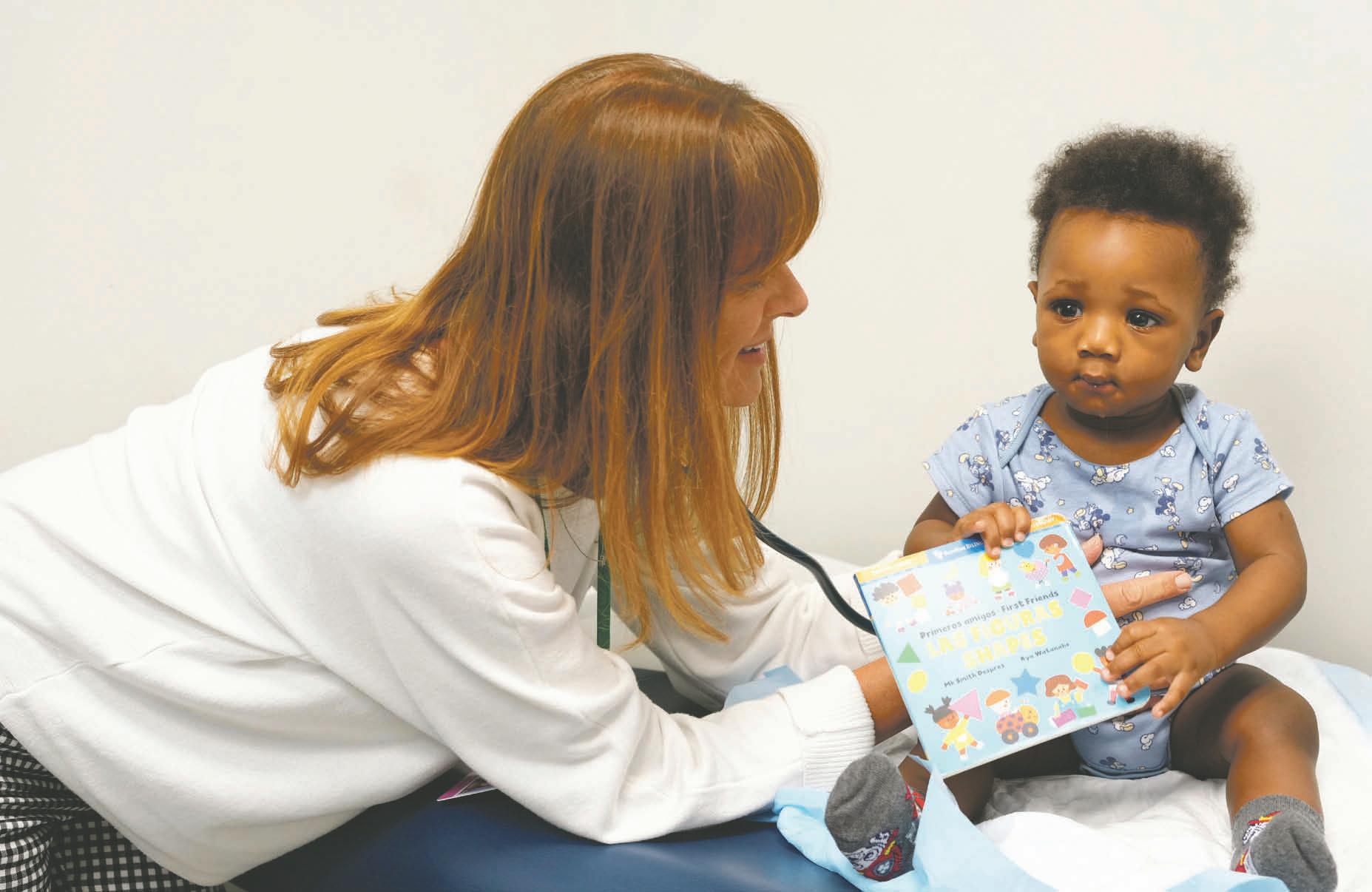
Do you have a healthcare manager? You may have a financial manager, and someone who oversees your insurance policies, but who is monitoring your health? The EHS Primary Care and Pediatrics Teams provide exceptional, person-centered care at all stages of life. They are not just physicians you and your family see once a year; they are partners in your health journey, who manage your next steps toward long-term wellness.
Why Choose EHS?
• New patients welcome
• Easy scheduling
• Same-day appointments available
• Convenient access with locations in Far Rockaway and Rockaway Beach
• Comprehensive care for adults, children, and families
• Coordinated specialty referrals
• Multilingual support Our Programs
• Preventive Care and Annual Checkups
• Pediatric Care
• Women’s Health Services
• Chronic Disease, Diabetes and Blood Pressure Monitoring and Management
• Acute Illness Treatment, Sick Visits and Ongoing Care
• Men’s Health Services
The Walsh Ambulatory Pavilion, 19-20 Brookhaven Avenue, Far Rockaway, NY 11691
EHS Primary Care at Rockaway Beach, 105-38 Rockaway Beach Blvd, 2nd Floor, Rockaway Park, NY 11694
EHS Pediatrics, 495 Beach 20th Street, Far Rockaway, NY 11691 Call 718-EHS-DOCS (347-3627) or visit ehs.org/primarycare to schedule an appointment and experience the difference.
‘It doesn’t impact my life if someone sits in their basement hating me,’ says NYC firebrand
By Rikki Zagelbaum, JNS
Inna Vernikov, 41, had been speaking with JNS for about an hour when she delivered one of her characteristically blunt verdicts on Mayor Zohran Mamdani.
“He’s a liar,” the New York City Council member said matter-of-factly. “He’s a fake.”
The statement was natural coming from the Ukrainian-born Jewish Republican, who has built a reputation for being one of the mayor’s most fiery, out-spoken opponents within the City Council.
“It’s very clear to us who this guy is and what exactly he’s here for,” Vernikov told JNS. “It’s not for affordability, because he knows he can’t accomplish the majority of the things he’s promising.”
Vernikov spoke with JNS outside her synagogue, Ohel David and Shlomo, an Orthodox Sephardic congregation in Manhattan Beach.
She has represented Brooklyn’s 48th district, which includes several Orthodox Jewish and Russian-speaking enclaves, including Manhattan Beach, Sheepshead Bay and Brighton Beach, since 2021.
The mayor, of whom she is so critical, has said that he would have the Israeli prime minister arrested in New York City, and his spokeswoman said that synagogues violate international law when they host pro-Israel events.
Mamdani’s primary concern has “always been” opposing the Jewish state, and he “ran on ‘free buses to free Palestine’,” she said. “You can quote me on that.”
She grew up in Chernivtsi, in western Ukraine, when it was part of the Soviet Union, which, she said, means that she recognized the dangers of socialism taking hold in the United States before many others did.
“Free stuff is very attractive to young people, who didn’t grow up in communism and don’t understand what it is,” she said. “They don’t understand that the government will just lie to you and tell you, ‘Oh, free, free everything,’ and then they’ll steal your money, because somebody has to pay for it.”
Vernikov, who co-chairs the City Council’s bipartisan task force on Jew-hatred, doesn’t recall experiencing Jew-hatred in Chernivtsi, a city near the Romanian border that was home to a large Jewish population before the Holocaust.
She remembers cobblestone streets, her mother playing piano, communal Passover Seders and a culture that placed a premium on education.
“There were no snow days,” she said. “Everybody went to school.”
Her family was not observant, and her grandfather was a fervent communist, but Vernikov enrolled in Chernivtsi’s first Jewish school after the Soviet Union’s collapse. It was around that time that she remembers one of the earliest conversations about Israel taking place in her home.
“A lot of Jewish families were having the same conversation, which was, ‘OK. We need to leave this place. Where are we going? Are we going to Israel, or are we going to America’?” she said. “I was little, but I remember it very well. We sat around the table and they were deciding, and they decided, ‘We’re going to America’.”
I knew I was gonna be fighting antisemitism. I didn’t see politicians doing that on a big scale. I just saw a lot of pandering on both sides.
At 12, Vernikov arrived in Brooklyn with her parents and two siblings. She learned English within five months and was soon the family’s designated negotiator. She was sent often to make phone calls, challenge an agency or solve issues when something went wrong.
“My mom would tell you that anything they wanted, they would always push me to do it,” Vernikov said. “Any phone calls, any way we had to fight to get through.”
Even at restaurants, her parents would turn to her when there was a problem. “They would say, ‘Oh, she will take care of it’,” Vernikov recalled.
The role suited the self-declared “bit of a troublemaker,” she said with a smile.
“Every time I saw something wrong, I always wanted to fix it,” she said. “I always wanted to say something, do something. I never wanted to stand by or stay on the sidelines.”
Jew-hatred was the first issue she felt compelled to confront herself. The 2012 attack on the US diplomatic compound in Benghazi, Libya, was another turning point, she said.
“When we were in the Soviet Union, this country was painted as such an amazing place, where the government doesn’t lie and there’s no corruption,” she said, of the United States.
Watching then US Secretary of State Hillary Clinton testify before Congress about the terrorist attack, which killed four Americans, made Vernikov think that “they didn’t protect their own people, and then they lied about it and Americans died.”
“I felt like that was horrible,” she said.
That impatience with inaction, in particular when it came to Jew-hatred, drew her to law and later to leave a successful legal practice for politics. At the time, the seat that she now holds had not gone to a Republican nominee for 100 years, she said.
“It was probably one of the hardest things I’ve ever done,” she said. “Law school was tough but this was very stressful, very tough, very challenging. It involved so many moving parts, so many people.”
“It was a reflection of how angry this community was at the Democratic Party, to the point where I flipped this district, which was two-toone Democrat,” she said.
She campaigned tirelessly, forging relationships with constituents across religious, cultural and political lines.
“If you want to win, if you want to flip a seat,
and you’re in a political environment where nobody from the establishment is backing you and everyone is against you — all I had was the people,” she said. “That’s actually all you need.”
Vernikov said that although she now earns far less than she did as an attorney, she does not view her City Council position as just a job.
“I’ve had to give up to do this, because I just felt like it’s so important for my future family, my future kids, the community here and the broader Jewish community, because I knew I was gonna be fighting antisemitism,” she said. “I didn’t see politicians doing that on a big scale. I just saw a lot of pandering on both sides.”
She also doesn’t shy away from what she sees as misogyny at times.
“If somebody is biased or whatever because I’m a woman, too bad,” she said. “I feel like I’ve proven myself, and so many successful women do so many amazing things, especially today. I’m very grateful that we have so many opportunities.”
And to antisemites, she said, “I don’t care that people hate me.”
“I’m serious. I don’t think it’s important,” she said. “What I care about is when that antisemitism is emboldened, then when it comes out, and when there’s action — when they act upon it.”
“I don’t care how people feel,” she added. “It just doesn’t impact my life in any way if somebody’s sitting in their house or in their basement and hating on me.”
Since taking office and winning reelection in last year’s primary against former City Council member Ari Kagan, who is also Jewish, by more than 32 percentage points, Vernikov has worked hard to advance legislation in response to rising Jew-hatred in New York City.
One such bill would have made it a misdemeanor to block access to an educational facility or prevent students, staff members or university employees from attending classes, meetings or events.
Violations would be punishable by up to six months in jail, a fine of up to $1,000 or both.
“The bill had consequences,” she said. “At the end of the day, if we don’t have consequences, what are we doing?”
Vernikov said that she modeled the proposal on an existing law protecting access to abortion clinics, the Freedom of Access to Clinic Entrances Act (FACE) law. Her legislation never made it through a vote.
Vernikov
“That was the funny part,” she said. “It’s ironic that the abortion clinics we can protect, but educational facilities and houses of worship, when we’re talking about Jews, that’s a problem.”
The City Council later advanced separate legislation requiring the police commissioner to develop plans for addressing obstruction, intimidation and physical interference at educational facilities. It did not create the misdemeanor offense that Vernikov proposed in her bill.
Though she voted for the other version of the bill, Vernikov said that she would have preferred a stronger bill with a specific buffer zone and criminal penalties for blocking an entrance. (Mamdani nixed the bill after it passed the City Council without a veto-proof majority.)
“The better bill would be, ‘Create a buffer zone with a specific parameter’,” she said. “But I also would have preferred that the bill actually included consequences, like making it a misdemeanor to block educational facilities.”
Still, “the choice was no bill or some bill, and it’s obviously better to have some bill,” she said.
Vernikov doesn’t hold the mayor to the same standard. Asked what Mamdani can do better to fight Jew-hatred, she said that she would prefer he do “nothing.”
“If I had a choice between the mayor doing anything on antisemitism and doing nothing, I’ll choose nothing,” she said. “Every time he claims to stand up against antisemitism or the Jewish community, he’s actually making it a lot worse for us.”
Vernikov said that she recently confronted the Mayor’s Office to Combat Antisemitism, inperson, for “operating in secret.” She said she told the office, “You’re afraid to get pushback from certain communities, or whatever the excuse is, but your boss, the mayor, is not secretive about his opinions on Israel and Zionists and Zionists are the majority of Jews.”
Former Mayor Eric Adams created the office. Mamdani has drawn widespread criticism for his appointment to run the office, Phylisa Wisdom.
Legislation, or “politics,” as Vernikov put it, is only half of her job as a member of the City Council.
She drew the attention of JNS to flaking paint on railings along the Sheepshead Bay canal. That is one of many more mundane, “quality-of-life issues,” that fill her time.
“This is gonna be completely renovated,” she said. “It costs a lot of money. I had to work with the borough president and senator to fix it.”
She repeated several times throughout the conversation that she refuses to pander to any political party and is “not here to make friends.”
The Democratic party is “a horrible place for Jews,” she said. “Everybody should exit the Democratic Party.”
“That’s not to say that the Republican Party is perfect either,” she said. “But the Jewish community, in particular, shouldn’t be taken for granted. We’re not tied to a party.”
“We’re facing an existential threat right now, and politicians should know that we will exit any party that’s going to be very hostile to the Jewish community, because we know our history,” she said.
Vernikov is willing even to criticize President Donald Trump on how he handled the war with Iran, she said.
“I’ve met Trump and I supported him, because I liked a lot of his policies,” she said. “Nobody’s perfect, but I’m not in a cult. I am very grateful to him for a lot of his stances, especially when it comes to Israel and the Jewish people. But no administration is perfect.”
“I think it’s important to call them out when I feel like they’re wrong,” she told JNS.
Inna Vernikov, a member of the New York City Council and co-chair of its task force on fighting Jewhatred.
Your Health. Your Culture. Your Parker.
HEALTH, MIND & BODY
Jew-hate runs rampant in Australian medicine
By David Isaac, JNS
Israel’s Foreign Ministry on Sunday spotlighted a report describing a pandemic of antisemitic behavior by Australian healthcare workers against Jewish patients. It called the investigation by the Australian a “deeply troubling picture and should serve as a wake-up call.”
“We call upon The Australian government to confront antisemitism forcefully,” Israel’s Foreign Ministry posted to social media. “No Jew should ever feel compelled to hide their identity to receive medical care in an Australian hospital.”
The ministry included a link to the Wentworth Report, which quoted large sections of an article by Megan Goldin in the Australian detailing numerous examples of antisemitic behavior by staff toward Jewish patients in Australia’s medical facilities.
The article interviewed 30 doctors, nurses, midwives and health professionals who said that since the Oct. 7, 2023, Hamas massacre, anti-Israel activist healthcare workers were “turning hospitals and medical clinics into ideological war zones instead of safe spaces.”
Those interviewed by The Australian cited the case of Elon Glassberg, former surgeon general of the Israel Defense Forces (IDF), whose scheduled appearance at a medical conference in Perth last year was canceled after anti-Israel doctors and nurses groups threatened to protest. They said it was just one high-profile example.
“Anti-Israel activism began almost immediately after the Oct. 7 massacre when the protests that unfolded in Australian cities spilled into the wards and staff rooms of hospitals in Melbourne, Sydney and other capital cities,” Goldin reported.
Medical staff wore protest symbols to work right after the attack. They covered bathroom stalls and hallways with stickers, including a Star of David with a red line through it.
“At the Alfred Hospital in Melbourne, which has received tens of millions of dollars from Jewish philanthropists, such stickers were stuck to the bedside wall of an elderly Jewish patient in the hours before he died,” she reported.
They also spouted antisemitism and support for terror groups online.
“Doctors and nurses were posting Nazi symbols and little caricatures of Jewish people but using the word ‘Zionist’ instead of ‘Jews’,” Jewish pediatric neurologist Carly Debinski told the Australian. “They were so virtuous and obsessive about vilifying Jewish people.”
Debinski has since moved to Israel.
Nearly three years later, the online hate continues. Jewish members of Facebook groups are ejected or vilified if they speak about Israeli hostages or the horrors perpetrated by Hamas on Oct. 7.
At a Melbourne hospital, a Jewish intensive care unit nurse, who requested to remain anonymous, resigned despite more than 10 years on the job because management refused to address the staff’s online hate speech.
“If these people are willing to share these things on social media, imagine how they treat a [Jewish] patient faceto-face,” she said.
A Jewish healthcare worker at a Melbourne teaching hospital was physically accosted by a colleague from Ireland, demanding she apologize for the Gaza war. When a complaint was made, the hospital’s human resources department refused to take action. That same HR department had weeks earlier transferred a staff member in the same unit for mimicking a foreign accent.
No action was taken in a complaint against a doctor who described Jews as “loathed slime” online and posted a Hitler quote. Complaints about numerous other doctors who posted antisemitic, pro-Hamas content were also closed.
“That pattern was repeated across the country as hospitals and healthcare regulators tolerated conduct against Jews that would have triggered disciplinary action if the conduct had targeted any other minority group, say numerous medical professionals who experienced this double standard,” the Australian reported.
Midwife Sharon Stoliar told The Australian that the same Australian Health Practitioner Regulation Agency (AHPRA) staff, which ignored complaints about blatantly antisemitic and pro-terror posts by pro-Palestinian healthcare workers, acted against Jewish staff targeted by “baseless complaints.”
Charlotte Frajman, 64, daughter of an Auschwitz survivor, said that a Muslim nurse lost his kind demeanor when he saw on her hospital records that she was Jewish.
“When it came to putting in the cannula [IV], he took four attempts. It was incredibly painful,” Frajman said. “I was bruised for weeks. You would have thought he was a trainee nurse, not the senior nurse in charge.”
When the same nurse again took four attempts to insert cannulas during subsequent visits, Frajman didn’t know what to think. “Then the Bankstown nurses thing came out, and my husband and I looked at each other and we said: ‘Oh my G-d.’ ”
Frajman referred to a Feb. 2025 incident in which two Muslim nurses who worked at Bankstown-Lidcombe Hospital in Sydney were arrested after threatening Israeli patients in an antisemitic rant online. Charges were brought against them but in June, the judge ruled the video inadmissible, making a conviction unlikely.
“If I can’t have my Jewish religion on my medical records then it’s time to leave Australia because we are no longer safe here,” said Frajman.
“The needles, it is a story that keeps repeating,” says Nurit Hadad, a New South Wales-based mental health nurse counseling victims of antisemitism. “This is the easiest way to hurt people. They say: ‘I’ve done my best but I just couldn’t find a vein.’”
Orit Brand pleaded with a hijabwearing radiographer to stop after failing eight times to insert an IV into her vein at a Melbourne hospital. Another staff member who was called inserted the IV at the first attempt “with no pain and no bruising.”
While malice is difficult to prove, in the case of Brand and Frajman, hospital protocol called for a maximum of two attempts by the same staffer.
Jewish medical students describe being ostracized by fellow students. Many of those interviewed withheld their names because they worried about their safety and future job prospects.
Mental health is the medical field with the most antisemitism, the Australian reported. A Queensland-based psychotherapist called on Israelis to kill themselves in one post. A psychiatry department academic at a Australian university compared lines at food distribution centers in Gaza to Holocaust gas chambers.
Mental health nurse Hadad panicked when a colleague draped a keffiyeh over an adjacent desk after Oct. 7.
“If someone is coming with a keffiyeh to a workplace, Australian people who have nothing to do with Middle Eastern culture ... it’s a statement of violence,” said Hadad. “It represents the people trying to kill me.”
Hadad asked her managers to ban protest symbols in the workplace. After months of feeling unsafe at work, she quit her job.
Episcopal Health shares summer safety tips
By Episcopal Health Services
Episcopal Health
Services
— which operates St. John’s Hospital in Far Rockaway — is encouraging parents and caregivers to take proactive steps to protect children from common summer health and safety risks, including dehydration, sunburn, drowning, insectborne illnesses, and heat-related illness. According to the Centers for Disease Control and Prevention, drowning remains one of the leading causes of death for children ages 1 to 14, while excessive sun exposure during child-
hood can significantly increase the risk of skin cancer later in life. The American Academy of Pediatrics also warns that children are particularly vulnerable to heat-related illness because their bodies do not regulate temperature as efficiently as adults.
“Summer camp is a wonderful opportunity for children to stay active, build confidence, and make lasting memories, but safety should always come first,” said Lesly Michel, MD, pediatric endocrinologist and primary care physician at Episcopal Health Services.
“Parents can help prepare their children by ensuring they are up to date on vaccinations, stay hydrated, wear sunscreen, and understand basic safety rules. It’s also important for parents to honestly assess their child’s swimming abilities and make sure children always follow water-safety guidelines. A little preparation can go a long way toward ensuring a fun, healthy, and safe summer camp experience.”
●Stay Hydrated: Drink water or preferably a drink with electrolytes regularly throughout the day. Pack a reus-
able water bottle and refill it frequently.
●Protect Against Sun Exposure: Apply broad-spectrum sunscreen with an SPF of 30 or higher and reapply every two hours. Wear hats, sunglasses, and protective clothing. Seek shade during peak sun hours.
●Practice Water Safety: Ensure your child is comfortable in the water and has swimming skills appropriate for the activities offered at camp. Encourage a buddy system in the water; never swim alone and wear properly fitted life jackets
● Avoid Tick and Insect Bites: Use EPA-approved insect repellents, wear long sleeves and pants in wooded areas and perform daily tick checks after outdoor activities.
● Promote Good Hygiene: Wash hands frequently and cover coughs and sneezes. Avoid sharing water bottles and personal items.
To learn more about Pediatric services available through Episcopal Health Services or to schedule an appointment, call (347) 619 5950 or visit ehs.org/pediatrics.
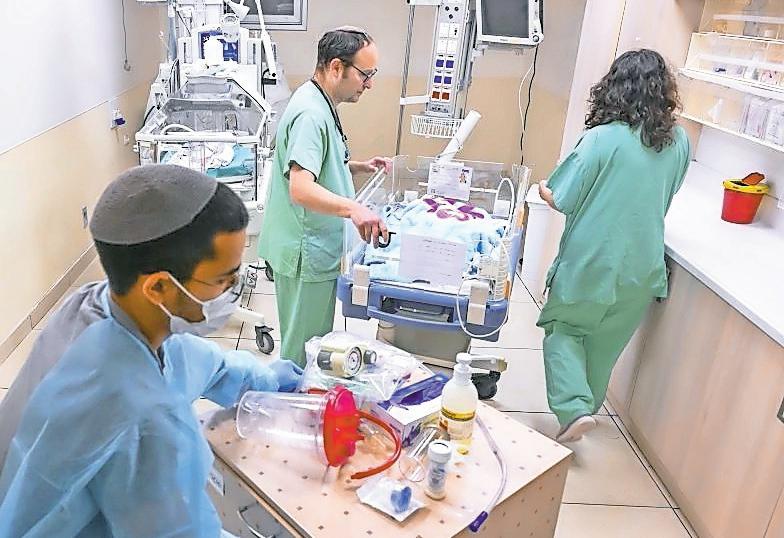
Patients and medical staff are seen in an underground parking area converted into a treatment ward at Ichilov Hospital in Tel Aviv, after patients were relocated following the outbreak of war and missile fire from Iran toward Israel, on June 8. Avshalom Sassoni, Flash90
Your Safety is Our #1 Concern—
And the Experts Agree
At Mount Sinai South Nassau, patient safety isn’t just a priority— it’s a standard, one we work on every day. And the experts agree.
We’ve earned national recognition for patient safety, including an “A” Hospital Safety Grade from The Leapfrog Group and the Healthgrades Patient Safety Excellence Award.
That means better outcomes for our patients with lower risk of infections or hospital acquired conditions.
When it comes to your health, nothing matters more than knowing you’re in a place where patient safety matters most.
Learn more at mountsinai.org/southnassau
NEWS BRIEFS
Teachers union weighs an anti-Israel blitz
By The Jewish Star From JNS
Delegates to the American Federation of Teachers’ national convention will weigh a raft of anti-Israel resolutions when they gather in Washington starting July 16.
Proposals call for an end to Israeli and U.S. military action involving Iran and Lebanon, $50,000 for UNICEF’s Gaza relief program and a campaign urging members to donate.
Another resolution, titled “No Endorsement for Genocide Enablers,” calls for withholding political endorsements from elected officials who support military aid to Israel.
The convention agenda cautions that including a resolution does not mean the union endorses it or that delegates will debate or adopt it.
The AFT represents about 1.8 million members, but elected delegates — not the full membership — will vote on resolutions, constitutional amendments and union leadership.
Macron salutes Dreyfus, blasts antisemitism
French President Emmanuel Macron marked the country’s first national commemoration of Alfred Dreyfus’s exoneration with a warning that antisemitism remains an enemy of the French Republic.
Dreyfus, a Jewish army officer falsely convicted of spying for Germany in 1894, became the center of a scandal that exposed deep antisemitism in French society. He was finally exonerated in 1906.
Macron commemorated that victory 120 years later, declaring that justice and truth ultimately defeated hatred and lies.
The ceremony came as France continues to grapple with a surge in antisemitic incidents and strained relations with Israel.
Poland remembers massacre amid denial push
Jewish leaders, Polish officials and international representatives marked the 85th anniversary of the Jedwabne massacre as far-right activists challenged the established history of the atrocity nearby.
At least 340 Jews were murdered in Jedwabne on July 10, 1941, after being rounded up and burned alive in a barn by Polish neighbors under Nazi German occupation, according to Poland’s Institute of National Remembrance.
The massacre became the subject of renewed national debate after historian Jan Tomasz Gross published “Neighbors” in 2000. A Polish investigation later concluded that local residents carried out the killings with German instigation.
Gibraltar puts Jewish icon on map
Gibraltar is renaming its international airport for Sir Joshua Hassan, the territory’s first chief minister and one of the Commonwealth’s most prominent Jewish public servants.
Chief Minister Fabian Picardo announced that the airport will become Sir Joshua Hassan Gibraltar International Airport, honoring the statesman widely regarded as an architect of modern Gibraltar.
Hassan, who lived from 1915 to 1997, helped advance the British territory’s democratic institutions and constitutional status while remaining deeply connected to its centuries-old Jewish community.
His daughter Fleur Hassan-Nahoum, a former deputy mayor of Jerusalem, said the honor carries meaning for Jewish communities worldwide.
’Frisco Giants swing big for Jewish pride
The San Francisco Giants put Jewish pride center field during Jewish Heritage Night at Oracle Park.
Rabbi Yosef Langer, founder of Chabad of San Francisco, blew the shofar before more than 32,000 fans watched the Giants face the Toronto Blue Jays.
Fans received black jerseys featuring “Giants” in Hebrew, “l’chaim” on the back and the number 18, symbolizing life in Jewish tradition. The ballpark even served pizza topped with latkes.
Israeli folk dancers performed, while the Chabad Giving Kitchen — which provides meals and care packages to people in need — was featured as the night’s beneficiary.
Fiji boosts Israel ties with caucus
Fiji is launching an Israel Allies Caucus in its Parliament, another sign of fast-growing ties between the South Pacific nation and the Jewish state.
The move comes a year after Fiji opened an embassy in Jerusalem and Israel later opened an embassy in Fiji.
Fijian Prime Minister Sitiveni Rabuka will lead the launch of what organizers say will be the 65th Israel Allies Caucus worldwide.
The two countries established diplomatic relations in 1970 and have expanded cooperation involving technology, cybersecurity and agriculture.
Fiji’s support for Israel also has a strong faithbased component among the country’s Christian leaders.
Bernard-Henri Lévy blasts West’s ‘moral failure’
French philosopher Bernard-Henri Lévy says the West’s failure to stand by Israel after the Oct. 7 Hamas massacre will be remembered as a historic disgrace.
Lévy, widely known as BHL, spoke in Tel Aviv while attending a University of Haifa conference on contemporary antisemitism.
The 77-year-old intellectual rushed to Israel the day after the Oct. 7 attacks and later wrote “Israel Alone” about what he sees as the Jewish state’s diplomatic abandonment.
He also warned of an unprecedented surge in antisemitism, saying security concerns have sharply limited where he can speak publicly in Europe.
Lévy opposes both France’s antisemitic far left and its pro-Israel far right.
Despite the worsening climate, he said Jews must resist intimidation and remain proud, strong and engaged in European life.
Summer 2026 Starts Here.
2026 Summer Bucket List
❑ See a real Lunar Module
❑ Watch a Giant-Screen Movie
❑ Walk the Air & Space Trail
❑ Discover Aviation History
❑ Sit in an Airplane Cockpit
❑ Eat Astronaut Ice Cream
This year, skip the airport lines, expensive hotels, and rising travel costs. America’s 250th anniversary is happening right here in your own backyard.
Join us for a summer-long celebration of aviation, innovation, exploration, and discover with special exhibits, family events, and full-dome films on Long Island’s largest screen!
From early air fields to the Moon, Long Island helped shape America’s story. Come celebrate where history took flight.
Scan the QR code or visit www.cradleofaviation.org/celebrate250 for a complete list of ongoing celebrations and special events.
AND DINE
Summer cooking teaches kids healthy habits
loved having my kids home in the summer. It was the perfect time to get them involved in the kitchen and get them interested in food — from growing it in the garden to preparing it in the kitchen — so they could see that a fair amount of work went in to planning and cooking meals.
They also had the leisure to practice simple, age-appropriate, kitchen skills so they could prepare their own snacks and make their own sandwiches at an early age.
I also found that summer was the perfect time to get my kids to eat more fruits and veggies. We often used the alphabet to explore foods — artichokes were a bust, but avocados were OK, and Japanese eggplant and zucchini still remain favorites.
I remember how surprised they were when they were very little and they watched me make zucchini bread — who put vegetables in a dessert? And I got them to eat baby spinach, Chinese pea pods and sugar snap peas, and raw broccoli as we picked it from the garden and ate it right there.
Tomatoes were also introduced in the summer (there is NO sense in trying to get anyone to love tomatoes if you give them one in December!) my daughter ate her first tomato as a toddler while she was “helping” my dad pick some from his garden. We often went berry picking and one (enthusiastic) summer made about 40 jars of raspberry and strawberry jam. I finally got rid of those jars last year!
If your kids are home, even if they are in day camp, you can take the longer hours to explore foods and learn about how fruits and vegetables grow and also learn to love the fresh fruits and veggies of summer. If you don’t have your own garden, farm stands are open in many communities. Visit one with your kids, if you can. Visit one even if you DON’T have kids; the produce is so fresh and delicious it’s a shame to miss the very short opportunity of summer produce.
Salad Kids Love (Pareve)
Kids can make this with any fruits they like. Older kids may like grape tomatoes, cucumber or other veggies including avocado. The sweet dressing is a nice introduction to salads for younger children.
• 1/2 lb. baby spinach leaves
• 1/4 lb. other lettuces such as baby romaine, etc.
• 1 cup, strawberries
• 1 cup blueberries
• 1/2 cup raspberries
• 1 to 2 peaches, seeded and diced
• 1 carrot, peeled and shredded
• 1/4 cup raisins or dried cranberries
DRESSING:
• 2 Tbsp. all-fruit seedless raspberry jam
• 1/2 cup orange juice
• 1/4 cup mild olive oil
• 2 Tbsp. raspberry vinegar
Wash and dry the spinach and lettuces and place in a large bowl. Toss with the shredded carrots. Add the blueberries and raspberries and toss gently with the lettuces. Mix the dressing ingredients together and adjust to taste.
Cut up the peaches and add to the bowl. Add
as much dressing as you like and toss. Place some on plates and add some sliced strawberries to each plate. Serves 5 to 8.
Cheesy Muffins (Dairy)
• 2 cups flour, you can use half whole wheat and half unbleached
• 3 Tbsp. toasted wheat germ
• 3 tsp. baking powder
• Pinch salt
• 2 Tbsp. Sugar
• 1/2 to 2/3 cup grated cheese, Cheddar, Monterey Jack, or American or a mix
• 1 extra-large egg
• 1 cup milk (2% is fine)
• 3 Tbsp. Canola oil
Sift the dry ingredients (except the wheat
germ) into a large bowl. Add the wheat germ and the cheese (either grate it yourself or buy already shredded), mix well and set aside. Beat the milk and the egg together with a fork. Add the oil and mix well. Add the liquid to the dry ingredients and mix just until well moistened. Grease a muffin pan and spoon into the pan, filling each muffin 2/3 full. Bake at 400 degrees for about 15 minutes. Serve warm. Great alone or with strawberry jam.
• 1-1/2 cups cornflake crumbs, Panko or other bread crumbs
Preheat the oven to 350 degrees. Line a large, rimmed baking sheet with foil and spray with non-stick spray. Set aside.
Have a grown-up cut the chicken into finger size strips. It is easier when the chicken is slightly frozen. Pour the oil into a small saucepan. Crush the garlic into the oil and add the paprika and salt. Heat the oil for just a minute on a low heat and stir to mix all the flavors. Turn off the heat and remove the pan from the stove. Pour the cornflake crumbs into a zipper type plastic bag. Dip each piece of chicken into the oil, let the excess drip off, and drop the chicken into the bag of crumbs. When there are several pieces in the bag, close the bag and shake it gently to cover the chicken pieces completely. Carefully remove the chicken and place on the pre-
Muffins.
Salad Kids Love. kiltedchef.ca
Better Than Restaurant Chicken Fingers. saltedmint.com
Simple Lemon Ice with Fresh Berries and Chocolate Curls. annikaeats.com
JONI: Summer cooking sparks healthy habits…
Continued from page 14
pared baking pan. Repeat until all the chicken is on the pan. Bake in a 350-degree oven for about 20 to 30 minutes until a thermometer registers 165 degrees. Makes about 16 to 20 fingers.
Peanut Butter Spread with Fruit and Berries (Pareve)
We came up with this one spring when I ran out of strawberry jam. After this, we gave up jams and jellies and the sugar they contain. You can use any berries and any fruit to create a new treat.
• 1/4 cup Natural Style peanut butter
• 3 to 6 thinly sliced strawberries
• 1/2 thinly sliced peach, cut into bite sized pieces
• 1/2 thinly sliced banana, cut slices in half
• OPTIONAL: 1 tsp. honey
Mix the peanut butter and two or three different fruits together. Add the honey, if you need a sweeter spread, and spread over whole wheat toast for a great breakfast treat or as filling for a sandwich. Adjust sweetness and fruit amounts as you like. Makes about 1/3 to 1/2 cup.
Sorbet and Frozen Yogurt Terrine with Fresh Berries (Dairy)
This is a beautiful dessert that kids can help design and create. It’s great to make while the kids are also busy with something else so that they can make each layer as needed. You can also make this with several flavors of ice cream, dairy-free ice cream, frozen yogurt, or sherbet. You can even add fudge sauce drizzled over the berries! Choose your favorite flavors and get creative.
Choose 3 of the sorbet/ice creams or use 4 of your own favorites
• 1 pint raspberry (or other flavor) sorbet
• 1 pint frozen fat-free vanilla yogurt
• 1 pint strawberry sorbet
• 1 pint boysenberry sorbet
• 1 pint frozen strawberry yogurt
• 1 pint fresh raspberries
• 1 pint fresh blueberries
• 1 pint fresh strawberries
• 1/3 cup sugar, more or less, to taste
• 2 tsp. fresh lemon juice
• 1/3 cup seedless all-fruit raspberry jam
Line a bread loaf pan with two layers of plastic wrap which extend over the four edges. Set aside.
Let the sorbets and yogurts soften. Place the boysenberry sorbet in a bowl and stir to soften. When spreadable, spread the boysenberry sorbet over the bottom and place in the freezer for 20 minutes.
Follow the above directions with the vanilla yogurt, then the strawberry sorbet, the strawberry yogurt, and finally the raspberry yogurt. Cover with plastic wrap and then aluminum foil and freeze for several hours or overnight.
Slice the strawberries and add the raspberries and blueberries. Add the sugar and lemon juice and let sit for about 30 minutes to macerate. Add the jam, mix and serve over slices of the terrine. Serves 6 to 10.
Homemade Deep Chocolate Ice Cream (Dairy)
There is nothing like deep, dark chocolate. Summer is a time to combine the two — at least once! There is nothing like homemade ice cream. So get an ice cream machine and have lots of fun.
• 1 square unsweetened chocolate (1 oz.
— more if you like it really dark)
• 2 squares (2 oz.) semi-sweet chocolate grated, set aside
• 2/3 cup sugar
• 2 Tbsp. water
• 2 cups whipping cream or heavy cream
• 2/3 tsp. pure vanilla extract
• 1/8 tsp. salt
OPTIONAL: Add bits of refrigerator chocolate chip cookie dough for an additional decadent treat.
Place the bitter chocolate, sugar and water in a small saucepan and melt over very low flame. Stir constantly until smooth and shiny. Remove from the heat and let cool for 10 minutes, stirring frequently.
Add the vanilla, the cream and salt and mix. Cool in the refrigerator. Pour into the ice cream machine and begin to freeze. When at the soft serve stage, add the grated chocolate. Freeze completely and serve with Hot Fudgey Peanut Butter Sauce.
Melt all ingredients together in a small pan, stirring constantly. Serve over ice cream. When the chocolate is melted, remove from the heat and whisk to blend completely. Serve warm.
PS: This is also delicious for dipping strawberries and drizzling over assorted fruits.
Simple Lemon Ice with Fresh Berries and Chocolate Curls (Dairy or Pareve)
Kids like the scraping part of this process to make the slush-like dish
• 1 cup freshly squeezed lemon juice
• 1 cup superfine sugar
• Tiny pinch salt
• 2-1/4 cups cold water
• Fresh berries; strawberries, blackberries, raspberries or blueberries
Mix the first four ingredients in a large glass or stainless steel bowl. Whisk to dissolve sugar. Let stand for about 15 minutes, stirring occasionally to make sure sugar is completely dissolved. Place in a flat Pyrex dish and freeze on a flat surface in the freezer for about 1 hour. Mix with a fork and freeze again mixing every 30 minutes until mixture id granular and slushy. This can take up to 5 hours. You can process in a food processor for smoothness, by pulsing only once or twice.
• Fresh strawberries or raspberries
• Fresh black or blueberries
• Fresh peeled and cut peaches, nectarines or apricots
• Red Currant Jelly
• Preheat the oven to 375 degrees
chelseasmessyapron.com
Make chocolate curls by using a vegetable peeler on the room temperature chocolate. If it is too hard, place it near a warm stove or toaster oven to soften a bit. Serve the lemon ice with berries and chocolate curls in a tall cup and garnish wth whipped cream and chocolate curls.
Cream Cheese Tarts (Dairy)
You need cupcake papers for this recipe which is easy for kids to make and delicious for everyone to eat. Kids need help with the mixer.
CRUST:
• 1-1/2 cups graham cracker crumbs
• 1/2 cup butter melted
FILLING:
• 2 eggs slightly beaten
• 1/2 cup sugar
• 2 tsp. vanilla
• 1 lb. cream cheese or low-fat cream cheese
TOPPING:
CRUST: Line two muffin tins with the cupcake papers using two papers per cup. Melt the butter in a microwave-proof dish, 10 or 15 seconds at a time until melted. Combine the crumbs with the melted butter and mix with a fork. Press some crumbs into each cup and press down with clean fingers or a spoon.
FILLING: Beat the cream cheese in a mixer until smooth. Add the sugar and the eggs and vanilla and blend until smooth, scraping down the sides as needed. Fill each cup 2/3 full. Bake at 375 degrees for 10 minutes. Remove from oven to cool. Wash the strawberries and cut the stem off enough to allow one for each tart. Melt the jelly in a small pan on low heat just until melted. Cool for a few minutes. Place a berry on each tart. Spoon a little of the jelly over each berry and refrigerate. Follow the same directions for the other fruit. Use more currant jelly if needed. Remove the tarts from the pan before serving. Makes 12 tarts.
Write: Columnist@TheJewishStar.com
Sorbet and Frozen Yogurt Terrine with Fresh Berries.
Homemade Deep Chocolate Ice Cream. aboutamom.com
Drink up! Joseph’s Coffee opens in Atlantic B
’Side Dishes NATI BURNSIDE
For The Jewish Star
The Five Towns area continues to see growth in its kosher coffee scene with the opening of Joseph’s Coffee at 2041 Park Street #7 in Atlantic Beach, the former location of Gelato by Maya.
The new takeout coffee shop comes from the owner of Cafe Chocolat and brings a similar focus on quality food and lighter options. In addition to coffee and specialty drinks, the shop features pastries and packaged salads and wraps from Cafe Chocolat, along with frozen yogurt and other grab-and-go items.
With an emphasis on healthier choices, Joseph’s Coffee provides another option for local residents looking for a quick breakfast, lunch or a late-day snack. The shop is scheduled to be open Sunday through Thursday from 9 am to 9 pm and Fridays from 9 am to 6 pm.
It is supervised by the Vaad Hakashrus of the Five Towns & Far Rockaway.
Cho-Sen leaves ’Neck, Sauteed Chinese coming
After more than 20 years in Great Neck, ChoSen Village has closed its doors.
The Chinese restaurant opened in 2004 and became a longtime fixture of the North Shore kosher dining scene, serving generations of local families.
The space will soon take on a new identity as Sauteed, another kosher Chinese concept restaurant with existing locations in Boro Park and Flatbush.
While Cho-Sen Village is closing, other restaurants under the Cho-Sen name will continue operating, including Cho-Sen Garden in Queens and Cho-Sen Island in the Five Towns.
Wicked Wiches pauses Operations in Hewlett
Wicked Wiches, a counter-service sandwich shop with lots of seating that opened only four months ago in Hewlett, has temporarily closed.
The restaurant, supervised by the Vaad Hakashrus of the Five Towns & Far Rockaway, has indicated that there is a possibility of reopening in the future. Customers can follow the restaurant’s social media pages for updates regarding any plans to resume service.
Final Cattle call after 8 months in Times Sq.
The Times Square-area kosher dining scene has seen another change with the closing of Cattle, a ghost kitchen concept that specialized in smokehouse-style cuisine. The restaurant had been open for only approximately eight months before shutting down.
Cattle was the only kosher establishment that operated out of Picnic, a ghost kitchen facility that houses approximately 30 different food
concepts. Cattle featured a takeout-focused menu featuring smoked meats and barbecue-inspired dishes. The space will be occupied by Holy Schnitzel, a popular kosher fast-casual chain that already operates nine other locations across New York, New Jersey and Florida.
Viva La Dough opens 4th Manhattan location
Brooklyn-based bakery Viva La Dough continues its expansion with the opening of a new Financial District location at 160 Broadway, marking the company’s fourth storefront. The new bakery joins existing locations in Midwood, Boro Park and Lakewood, with another location already announced for New Jersey’s American Dream Mall.
Known for French-inspired pastries, artisan breads, sandwiches, coffee and desserts, Viva La Dough has quickly built a loyal following. The new location is open Sunday through Thursday from 8 am to 6 pm and Fridays until 4 pm under Orthodox Union supervision.
Kosher Grill adds summer dining to Jackson Hole
Summer visitors to Jackson Hole, Wyoming, have a new kosher dining option with the opening of The Kosher Grill, a seasonal pop-up American grill located at 265 East Broadway Avenue. The restaurant was created to provide kosher food options for Jewish travelers visiting one of the country’s most popular vacation destinations.
The menu focuses on American grill favorites including burgers, grilled chicken and other comfort food dishes.
The restaurant is open Sunday, Monday, Wednesday and Thursday from 12 to 8 pm, with Friday and Saturday night service available by pre-order only. On Tuesday, when the restaurant is closed, its operators, three New York Chabadniks, travel through Yellowstone National Park and surrounding areas to connect with Jewish visitors.
The Kosher Grill is supervised by Chabad of Wyoming and can be reached at (917) 6352047.
Iceland welcomes Kosher food in new Jewish center
Jewish travelers have a new reason to add Reykjavik, Iceland, to their itinerary, with the opening of the country’s first permanent Jewish center. The new Chabad facility provides a home for Iceland’s small but growing Jewish community and includes space for prayer services, com-
munity gatherings and kosher hospitality.
One of the most significant additions is the ability for travelers to access kosher food in a country where options have historically been extremely limited. The center plans to provide kosher meals and Shabbat hospitality, allowing Jewish tourists exploring Iceland’s waterfalls, glaciers, volcanoes and famous Blue Lagoon to visit with greater ease.
A geothermal mikvah is coming soon, making it one of the most unique Jewish facilities in Europe and adding another layer of infrastructure for Jewish visitors.
See travel story on page 18.
Dave Portnoy stops by and cheers Zevy’s Pizza
Fair Lawn’s Zevy’s Pizza found itself in the national spotlight when Dave Portnoy, founder of Barstool Sports and creator of the popular “One Bite” pizza reviews, stopped in to sample one of Bergen County’s kosher pizzerias. While kosher pizza has occasionally appeared on Portnoy’s radar, visits remain relatively uncommon, making the stop noteworthy for the kosher dining scene.
Zevy’s, at 10-16 River Road in Fair Lawn under RCBC supervision, serves pizza, pasta, salads and specialty slices. The restaurant is open Sunday and Thursday from 11 am to 8 pm, Monday through Wednesday from 11 am to 7:30 pm and Friday 11 am to 1:30 pm; it’s open motzei until midnight.
The review earned Zevy’s a very respectable 7.5 on Portnoy’s scoring scale. Considering that the “One Bite” social media channels reach approximately 1.5 million followers, the exposure is significant for a neighborhood kosher pizzeria and introduces Zevy’s to an audience far beyond North Jersey.
Teaneck pizza, bagels in temporary site after fire
Just days after a fire forced the closure of Fialkoff’s Pizza and Poppy’s Bagels on West Englewood Avenue, the restaurant has reopened in a temporary location at 465 Cedar Lane in Teaneck.
The space was vacated only about six weeks ago by Seasons Express, allowing Fialkoff’s to resume serving customers while repairs continue at its original location.
The fire reportedly spread from one of the apartments above the restaurant, with most of the damage occurring toward the rear of the building where the bagel oven is located. Fortunately, no injuries were reported.
While the future of the original location is still being determined, customers can once again enjoy Fialkoff’s pizza and other favorites at the Cedar Lane storefront.
The restaurant remains under the Rabbinical Council of Bergen County (RCBC) and can be reached at 201-862-0800 for updates.
Reykjavik Jewish Center is an Icelandic first
By Shloimy Galperin, Chabad.org
Jews have lived in Iceland for more than a century, but the community spent most of that time without a permanent rabbi or a synagogue, an absence that set Reykjavik apart from every other capital in Europe.
That gap was filled on July 7, when the 9,000-square-foot Beit Shvidler Jewish Center of Iceland opened. Three stories tall, its distinctive color and design makes the building an instantly recognizable landmark.
“We dreamed of this moment for years,” Rabbi Avraham Feldman told about 100 people celebrating the event. “And now we are sitting in this dream that has become reality.”
Rabbi and Mushky Feldman moved to Reykjavik, Iceland’s capital, in 2018 as ChabadLubavitch emissaries and opened the country’s first Jewish center. For the past eight years, the Jewish Community Iceland — Beit Tovah Chabad — operated out of the Feldman’s home and temporary spaces.
The new venue is “a place where you can walk through the door and feel comfortable,” Rabbi Feldman said in his remarks. “Where you can simply be Jewish.”
In addition to visiting Iceland for its Northern Lights, colorful capital and Blue Lagoon, wandering Jews may also want to check off from their bucket list a visit to the world’s northernmost (or almost northernmost) Chabad house.
While both Reykjavik and Fairbank may be laying claim to that distinction, Fairbanks (at latitude 64.83-degrees) is about 47 miles further north than Reykjavik (at 64.15-degrees).
Serving both Iceland’s local Jewish community and the Jewish travelers who pass through the country, the center will also have space for programming that the community’s previous more limited quarters could not accommodate. It will house a Judaica and kosher store, as well as a stunning social hall for community events.
Construction of a geothermal mikvah is expected to begin soon.
The center will host the Gallery of Jewish Life in Iceland, a new permanent exhibit that traces more than 100 years of the island’s Jewish history through photographs and documents that, until now, had nowhere to be shown.
Any Icelander curious about Jewish life can walk in and encounter it directly.
“This is exactly the kind of place the Rebbe [Rabbi Menachem M. Schneerson, of righteous memory] envisioned when he spoke of ahavat yisrael, giving every Jew the chance to connect with and celebrate their Judaism,” Rabbi Feldman said.
Jón Gnarr, Reykjavik’s former mayor and now a member of the Icelandic Parliament, used his remarks to talk about the country’s
debts to its Jewish community, and the Jewish authors he has been influenced by. He described the new center as “a living bridge, connecting cultures, dispelling ignorance, and fostering dialogue and understanding.”
“Many Jews in Iceland have felt hesitant to say out loud that they’re Jewish,” Gnarr said. “That’s why education and dialogue are key.”
Acting US Ambassador Joanie Simon, Rabbi Mendy Kotlarsky, community member Patrick Sulem and Mushky Feldman also addressed the gathering, while cantor Aryeh Leib Hurwitz brought the sound of traditional chazzanut into a room that had never held it before.
The opening drew recognition from the highest levels of Icelandic government.
Prime Minister Kristrún Frostadóttir, a guest of Jewish community events in the past, sent a letter describing the center as “an important milestone for the Jewish community and for Icelandic society,” and expressed hope for “continued cooperation between the Jewish community and the Government of Iceland.”
Þórunn Sveinbjarnardóttir, Speaker of Althingi (parliament), wrote separately to recognize the occasion.
The evening closed with thanks to the donors whose generosity built the center, among them Eugene Shvidler, whose vision and generosity helped propel the center from an idea into a building people could actually walk into and celebrate Jewish life, philanthropists Isaac and Tovah Cohen, George and Pamela Rohr, The Shmuel Isaac and Miriam Popack Foundation and Dovid and Rivka Feldman.
“Together, we are writing the Icelandic chapter in the story of the Jewish people,” Rabbi Feldman told the room.
The Jewish Star contributed to this report.
Rabbi Avraham and Mushky Feldman, alongide Eugene and Naomi Shvidler and Rabbi Mendy Kotlarsky, celebrate at the ribbon cutting of the Beit Shvidler Jewish Center of Iceland, the country’s first Jewish center and Jewish culture house, on July 7. Israel Sudry
More than 100 guests, including dignitaries and rabbis from surrounding Nordic countries, attended the opening of the Beit Shvidler Jewish Center of Iceland, in Reykjavik, on July 7. Israel Sudry
This distinctive 3-story structure is home to the new Beit Shvidler Jewish Center of Iceland. Israel Sudry
Colorful houses in Reykjavik, Iceland.
Bill Perry, Adobe The Sun Voyager sculture by Jón Gunnar Árnason, in Reykjavik. Brad Pict, Adobe
We are Zionists.
The 9th day of the Hebrew month of Av (Wed. night and Thurs., July 22-23) is the saddest in Jewish history, commemorating the destruction of our Temples on Har HaBait in Jerusalem (now occupied by the Dome of the Rock). The Kotel (the Temple’s Western retaining Wall), is the Temple’s remnant and the holiest place accessible to Jews today. Through the millennia, Jews have recited Psalm 137: ‘If I forget you, O Jerusalem, let my right hand forget its skill. May my tongue cleave to my palate if I cease to think of you, if I set not Jerusalem (Zion) above my highest joy.’
We are not ‘settler colonial’ interlopers in the Land of Israel — we are the indigenous nation of the Land, having returned home to the Jewish state of Israel and to Zion (Jerusalem). Even as we pray for the ultimate Redemption after nearly 2,000 years of exile, we thank G-d for bringing us home to Zion.
Jewish Star Torah columnists: Rabbi Benny Berlin, spiritual leader of BACH Jewish Center in Long Beach; Rabbi Avi Billet of Anshei Chesed, Boynton Beach, FL, mohel and Five Towns native; Rabbi Binny Freedman, rosh yeshiva of Orayta, Jerusalem; Dr. Alan A. Mazurek, former ZOA chair, retired neurologist, living in Great Neck, Jerusalem and Florida.
Contributing writers: Rabbi Sir Jonathan Sacks zt”l, former chief rabbi of United Hebrew Congregations of British Commonwealth; Rabbi Yossy Goldman, president South African Rabbinical Association; Rabbi Dr. Tzvi Hersh Weinreb, OU executive VP emeritus.
Five Towns Candlelighting: From the White Shul, Far Rockaway, NY
Scarsdale Candlelighting: From the Young Israel of Scarsdale, Scarsdale, NY
Finding true tzedek: Justice and compassion
rabbi Sir JonaThan SaCkS zt”l
As Moses begins his great closing addresses to the next generation, he turns to a subject that dominates the last of the Mosaic books, namely justice: I instructed your judges at that time as follows: “Listen to your fellow men and decide justly [tzedek] between each man and his brother or a stranger. You shall not be partial in judgment. Listen to great and small alike. Fear no one, for judgment belongs to G-d. Any matter that is too difficult for you, bring to me and I will hear it.”
Tzedek is a key word in the book of Devarim — most famously in the verse: Justice, justice you shall pursue, so that you may thrive and occupy the land that the L-rd your G-d is giving you. (Deut. 16:20)
The distribution of the word tzedek and its derivate tzedakah in the Five Books of Moses is anything but random. It is overwhelmingly concentrated on the first and last books — in Genesis (where it appears 16 times) and Deuteronomy (18 times). In Exodus it occurs only four times and in Leviticus five. All but one of these are concentrated in two chapters — Exodus 23 (where 3 of the 4 occurrences are in two verses, 23:7-8) and Leviticus 19 (where all 5 incidences are in chapter 19). In Numbers, the word does not appear at all.
This distribution is one of many indications that the Chumash is constructed as a chiasmus (a literary unit of the form ABCBA). The structure is this:
A: Genesis — the prehistory of Israel (the distant past)
B: Exodus — the journey from Egypt to Mount Sinai
C: Leviticus — the code of holiness
B: Numbers — the journey from Mount Sinai to the banks of the Jordan
A: Deuteronomy — the post-history of Israel (the distant future)
The leitmotiv of tzedek/tzedakah appears at the key points of this structure — the two outer books of Genesis and Deuteronomy, and the central chapter of the work as a whole, Leviticus 19. Clearly the word is a dominant theme of the Mosaic books as a whole.
What does it mean? Tzedek/tzedakah is almost impossible to translate, because of its many shadings of meaning: justice, charity, righteousness, integrity, equity, fair-
Justice, justice you shall pursue.
ness and innocence. It certainly means more than strictly legal justice, for which the Bible uses words like mishpat and din
One example illustrates the point: If a man is poor, you may not go to sleep holding his security. Return it to him at sun-down, so that he will be able to sleep in his garment and bless you. To you it will be reckoned as tzedakah before the L-rd your G-d. (Deut. 24:12-13)
Tzedakah cannot mean legal justice in this verse. It speaks of a situation in which a poor person has only a single cloak or covering, which he has handed over to the lender as security against a loan. The lender has a legal right to keep the cloak until the loan has been repaid. However, acting on the basis of this right is simply not the right thing to do. It ignores the human situation of the poor person, who has nothing else with which to keep warm on a cold night. The point becomes even clearer when we examine the parallel passage in Exodus 22, which states:
If you take your neighbor’s cloak as a pledge, return it to him by sunset, because his cloak is the only covering he has for his body. What else will he sleep in? When he cries out to Me, I will hear, for I am compassionate. (Ex. 22:25-26)
The same situation which in Deuteronomy is described as tzedakah, in Exodus is termed compassion or grace (chanun). The late Aryeh Kaplan translated tzedakah in Deut. 24 as “charitable merit”. It is best rendered as “the right and decent thing to do” or “justice tempered by compassion.”
In Judaism, justice — tzedek as opposed to mishpat — must be tempered by compassion
Hence the terrible, tragic irony of Portia’s speech in “The Merchant of Venice”: The quality of mercy is not strain’d, It droppeth as the gentle rain from heaven Upon the place beneath: it is twice blest; It blesseth him that gives and him that takes: ’Tis mightiest in the mightiest: it becomes The throned monarch better than his crown; His sceptre shows the force of temporal power,
The attribute to awe and majesty, Wherein doth sit the dread and fear of kings; But mercy is above this sceptred sway; It is enthroned in the hearts of kings, It is an attribute to G-d himself; And earthly power doth then show likest G-d’s When mercy seasons justice. Therefore, Jew, Though justice be thy plea, consider this, That, in the course of justice, none of us Should see salvation: we do pray for mercy; And that same prayer doth teach us all to render The deeds of mercy. I have spoke thus much
To mitigate the justice of thy plea… Shakespeare is here expressing the medieval stereotype of Christian mercy (Portia) as against Jewish justice (Shylock). He entirely fails to realize — how could he, given the prevailing culture — that “justice” and “mercy” are not opposites in Hebrew but are bonded together in a single word, tzedek ortzedakah. To add to the irony, the very language and imagery of Portia’s speech (“It droppeth as the gentle rain from heaven”) is taken from Deuteronomy: May my teaching drop as the rain, my speech distill as the dew, like gentle rain upon the tender grass, and like showers upon the herb… The Rock, his work is perfect, for all his ways are justice.
A G-d of faithfulness and without iniquity, just and upright is he.
(Deut. 32:2-4)
The false contrast between Jew and Christian in “The Merchant of Venice” is eloquent testimony to the cruel misrepresentation of Judaism in Christian theology until recent times. Why then is justice so central to Judaism? Because it is impartial. Law as envisaged by the Torah makes no distinction between rich and poor, powerful and powerless, home born or stranger. Equality before the law is the translation into human terms of equality before G-d. Time and again the Torah insists that justice is not a human artefact: “Fear no one, for judgment belongs to G-d.” Because it belongs to G-d, it must never be compromised — by fear, bribery, or favoritism. It is an inescapable duty, an inalienable right.
Judaism is a religion of love: You shall love the L-rd your G-d; you shall love your neighbor as yourself; you shall love the stranger. But it is also a religion of justice, for without justice, love corrupts (who would not bend the rules, if he could, to favor those he loves?). It is also a religion of compassion, for without compassion law itself can generate inequity. Justice plus compassion equals tzedek, the first precondition of a decent society.
When the tears don’t come naturally
Iwant to start with a confession that I suspect many of us share, whether or not we would readily admit it. I have a hard time crying for the destruction of the Beis Hamikdash.
This phenomenon is not unique to our generation. The Midrash (Eicha Rabbah, Petichta 24; see also Sanhedrin 104b) relates that Rabban Gamliel once heard the anguished cries of a mother in his neighborhood whose son had died. He could not help but weep with her. Who
wouldn’t? He was deeply moved by her pain. Then, says the Midrash, he also began to cry over the Churban Beis Hamikdash. Perhaps Rabban Gamliel also struggled to connect to the Churban Beis Hamikdash, and he was wise enough to channel his way in through pain that seemed more relatable. This is not a “Tisha B’av hack” and not disingenuous because perhaps every pain we experience can be traced back to the Churban Beis Hamikdash. Here we are in the Nine Days, approaching Shabbos Chazon, and if I am honest, I am thinking more about missing meat and my itchy beard from not shaving than I am about the Churban. I am not there yet.
Even on Tisha B’Av itself, we find that genuine mourning for the Churban does not always come naturally. In Yirmiyahu 9:16,
the Navi calls for the professional mourners, “Hisbonenu v’kir’u la-mekonenos v’savo’enah,” urging them to come and awaken the people to cry, to feel, and to mourn. Even Yirmiyahu understood that sometimes our hearts need help. He called upon professional mourners to awaken the nation’s tears.
Another tangible pathway is through the Kinos we recite on Tisha B’Av. One of the most elegant explanations comes from Rabbi Soloveitchik, who says that the Kinos comprise the diary
of the Jewish people. I don’t know how many of you have had the zechus, though at times it can be awkward and even painful, to read a diary that has been entrusted to you or letters exchanged between grandparents through both good times and bad.
I think most of us would agree that there is something deeply powerful about that experience. In many cases, those pages are the closest we will ever come to truly knowing the people who wrote them.
Through the Kinos, we are reading the diary of our people, what they lived through, what they suffered through, and what they died through. Holding that diary in our hands, we remember that we belong to a people who refuses to forget.
Setting aside an appropriate time and place
We have all heard this phrase, “He was in the wrong place at the wrong time,” and many of us have used it. It is especially apt when it is used to describe a person with many virtues and talents who just can’t use them because of the social or physical circumstances in which he finds himself. That such a person faces profound frustration is, to say the least, obvious. Many Jewish immigrants came to the United
States blessed with spiritual gifts and intellectual skills but found themselves in the wrong place at the wrong time. For you see, America was viewed in two very different ways by the Jews back in the shtetl of the old country. On the one hand, it was seen as the goldene medina, the golden country, the land of material opportunity. But on the other hand, it was also viewed as the treifene medina, the non-kosher country, the lands of insurmountable religious challenges. The usual “success stories” of Jewish immigration to the United States in the late 19th and early 20th centuries are narratives of «making it» financially, but utterly «losing it» from the point of view of traditional Jewish culture. American Jewish fiction, and even American Jewish his-
We are now in the middle of the Nine Days, the saddest period of the year which ends on Tisha B’Av, a national day of mourning commemorating the date when both Holy Temples in Jerusalem were destroyed.
The First Temple, built by King Solomon, was destroyed by Nebuchadnezzar, king of Babylon, in 586 BCE. The Second Temple was destroyed in 70 C.E. by the Roman Empire under Titus, hence the Arch of Titus in Rome celebrating his victory and the expulsion of the Jews from Jerusalem.
Many people ask a seemingly legitimate question. Why are we still crying over events that occurred some 2,000 years ago? “Get over it” or “Let it lie,” they say. “Why keep remembering forever? Enough already!”
It’s a fair question.
Here is a story from a more recent period of destruction, the Holocaust.
While in the concentration camp, a Torah scholar was studying Talmud with his nephew, quite a heroic feat during those horrific circumstances. When the uncle felt that his end was near, he said to his nephew: “Promise me that if you survive, you will finish the book of Gemorrah we are studying, Moed Katan.” (Interestingly, my own decades-old weekly Talmud class is currently halfway through the tractate of Moed Katan.)
There, in the camp — amid the pain, hunger,
The title of this column refers, of course, to the famous opening of the yud gimmel midot, the 13 Attributes of G-d given by HaKadosh Baruch Hu to Moshe Rabenu after the chet ha’egel and Moshe’s destruction of the two tablets of the Aseret Hadibrot given at Sinai. We recite them when we take out the Torah on yomim tovim, on fast days and, most famously, during Selichot and the 10-day period from Rosh Hashana through Yom Kippur. Chazal tell us that this prayer, recited with a minyan, is the “ultimate weapon” of prayer,
and that one does not go away “empty handed” (Rosh Hashanah 17b).
But how many are aware that this gift from Hashem, this prayer of such magnitude and power, was given to us at this time of year, after the smashing of the first Luchot on the 17th of Tammuz?
This is an auspicious time to note that as we are bein ha’metzarim (between the straits), the most difficult period of the Jewish year, between the fasts of the 17th of Tammuz and Tisha b’Av.
The Mishnah in Ta’anit (4:6) tells us that five fateful things occurred on the 17th of Tammuz. The first was the smashing of the original Luchot, shattered by Moshe in anger over B’nei Yisrael’s chet ha’egel, the Golden Calf.
After Hashem informed Moshe of Israel’s grave sin while he was still on Har Sinai, Moshe pleaded for the people. He then de-
None of us are in the wrong place or wrong time.
tory, know these narratives well and relate them in graphic detail.
What is largely missing from this body of literature are the stories of those who came to these shores imbued with religious fervor, committed to traditional observance. Lacking are the stories of men and women who found it difficult, if not impossible, to live out their faith convictions in this new place and time.
Particularly lacking are the narratives of the
struggles that rabbinic leaders had in coping with the treif, albeit golden, American environment. One such rabbinic leader was Rabbi Jacob Joseph, the first and only Chief Rabbi in the history of New York City, who died 108 years ago, and whose yahrzeit was last week week, the 24th of Tammuz. How ironic it is that his yahrzeit fell only a few days after the ultimate American holiday, July 4th.
Rabbi Jacob Joseph, a disciple of the master moralist Israel Salanter, was a rising star in the Lithuanian rabbinic constellation, a gifted orator, a noted pedagogue, and an ardent proponent of meticulous ethical behavior. He accepted a call to the New York Chief Rabbinate,
Passing our heritage and values to the next generation.
misery and desolation, while looking death in the eye — what preoccupied that man’s mind? What was his heart’s last desire? That his student should finish the book of Talmud they were studying.
He had no other worries? No other concerns? It sounds unbelievable!
On second thought, maybe it’s not so crazy after all. Perhaps that is, in fact, the secret of our survival. That in the fires of hell, we
were still dreaming of heaven. That we weren’t only thinking about life and survival, but the deeper reason for living and the purpose of our survival.
When the Jews were banished from Jerusalem by the Babylonians over 2,000 years ago, they famously sat by the river and wept, saying: “By the rivers of Babylon, there we sat and wept as we remembered Zion” (Psalm 137). What could have been on their minds? How would they survive in those desperate circumstances? How to make a living, feed their children?
No. They were remembering Zion, Jerusalem and the Holy Temple. That’s what they were weeping and mourning for more than for themselves: “If I forget thee O’ Jerusalem, let my right
scended, smashed the tablets, punished those involved and continued to seek forgiveness for the Children of Israel.
But Moshe did not stop there. He asked Hashem two things.
First: “Hodieni na et derachecha (show me please, Your ways)” (Shemot 33:13).
Second: “Hareni na et kevodecha (show me please, Your Glory)” (33:17).
The Gemara in Berachot (7a) understands the first request as Moshe’s desire to compre-
hend one of the most vexing questions of human existence: Why do the righteous suffer while the wicked flourish (tzaddik v’ra lo and rasha v’tov lo)?
The second request, “show me your glory,” cannot simply refer to physically seeing Hashem. Rather, it can be understood as a request to comprehend retrospectively, as Hashem tells Moshe, “v’ra-ita et achorai, u’fanai lo yeirau (you will see My back, but My face will not be seen).”
Now move forward more than 800 years, to the era associated with Ezra and Nehemiah and the building of the second Beit HaMikdash In Psalm 85, the psalmist writes that Hashem has forgiven the sin of His people. Then comes language remarkably similar to Moshe’s: “Harenu Hashem Chasdecha (Show us Hashem, Your Kindness).”
Published weekly except during certain religious and civil holidays by The Jewish Star LLC New York City office: 5676 Riverdale Ave Suite 311, Bronx NY 10471 • LI office: 2 Endo Blvd, Garden City NY 11530 Here’s how to reach The Jewish Star — Write: Editor@TheJewishStar.com. Call: 516-622-7461 ext 291
Editor & Publisher: Ed Weintrob
516-622-7461 ext 291
Jewish Star Associate: Nechama Bluth
516-622-7461 ext 241
Content: The Publisher endeavors to ensure that our content is within the bounds of normative halachah and hashkafah. Anyone who feels anything we publish may be inappropriate in this regard is urged to bring the item in question to the attention of the Publisher. Advertising is accepted at the sole discretion of the Publisher and should conform to standards appropriate for distribution in an Orthodox community. Send us your news! Editor@TheJewishStar.com
Advertising: Publisher@TheJewishStar.com
Kashrut: The Jewish Star is not responsible for the
kashrut of any product or establishment featured in its pages. If you have questions regarding any establishment or product, including its supervision, please consult your rabbi for guidance.
Submissions: All submissions become the property of The Jewish Star and may be edited and used by the Publisher, its licensees and affiliates, in print, on the web and/or in any media that now exists or will exist in the future in any form, including derivative works, throughout the world in perpetuity, without additional authorization or compensation. The individual or entity submitting material affirms that it holds the copyright or otherwise has the right to authorize its use in accordance with The Jewish Star’s terms for submissions.
Opinions: Views expressed by columnists and other writers do not necessarily reflect the position of the Publisher or of The Jewish Star LLC.
Distribution: The Jewish Star is available free in kosher food establishments, stores, synagogues, and curb-side newsboxes on Long Island, in New York City and elsewhere. To request free delivery to your location, write Publisher@TheJewishStar.com.
Copyright: All content is copyright and may not be republished or otherwise reproduced without written permission by The Jewish Star; to do so without permission is against the law and halacha. For content reproduction write to Publisher@TheJewishStar.com.
The Jewish Star subscribes to JNS. It, or its contributors, own the copyrights on material attributed to them. The length and content of JNS material and all other submitted material may be edited by The Jewish Star.
Member: American Jewish Press Association. This newspaper contains words of Torah. While it is not considered shaimos, please dispose properly.
OPINION COLUMNISTS
Mitchell Bard, foreign policy analyst, authority on USIsreal relations; Ben Cohen, senior analyst, Foundation for Defense of Democracies; Stephen Flatow, president, Religious Zionists of America-Mizrachi and father of Alisa Flatow, murdered in an Iranian-sponsored Palestinian terrorist attack in 1995; Yisrael Medad, Americanborn Israeli journalist and political commentator; Rafael Medoff, founding director of David S. Wyman Institute for Holocaust Studies; Fiamma Nirenstein, Italian-Israeli journalist, author of 13 books, leading voice on Israeli affairs, Middle Eastern politics and antisemitism; Melanie Phillips, British journalist; Moshe Phillips, national chairman, Americans for a Safe Israel; Thane Rosenbaum, Distinguished University Professor at Touro University (published by Jewish Journal); Jonathan S. Tobin, editor-in-chief, Jewish News Syndicate.
El-Sayed’s conspiracies are winning votes
Last week, the Maine campaign of the Nazi-tattooed Graham Platner crashed and burned in the wake of new sexual-assault allegations. But his exit from the midterms doesn’t eliminate the most dangerous Democrat currently running for the US Senate — left-wing Abdul El-Sayed, the current favorite to win the Democratic nomination for a Michigan Senate seat.
Indeed, El-Sayed’s performance in a debate against his last remaining opponent, Rep. Haley Stevens, deserved a lot more attention than it got. He didn’t just pummel his opponent as a creature of the party establishment but depicted her campaign as solely a manifestation of a Jewish plot to buy American elections for the sake of Israel.
As far as El-Sayed is concerned, the main issue in 2026 isn’t the usual Democratic talking points about affordability, the economy or even their laundry list of complaints about President Donald Trump. It’s AIPAC, and he is seeking to make this primary matchup a referendum on its legitimacy and that of the entire pro-Israel community.
Crossing a line
Although he claims that he is opposed to antisemitism, his obsessive focus on the pro-Israel lobby isn’t really rooted in a concern about campaign finance laws. It’s about labeling support for the Jewish state — expressed in the same manner that Americans do on every con-
The Michigan Senate race tells us more about the centrality of antisemitism in our public discourse than the demise of the disgraced Graham Platner in Maine.
ceivable issue — as an evil foreign plot. Combined with his trafficking in blood libels about Israel committing “genocide” in Gaza and his opposition to the existence of the one Jewish state on the planet, the El-Sayed campaign has crossed a line that few, if any, mainstream major party Senate candidacies have even approached in living memory.
As he reaches the home stretch of a bitter primary battle, he has now dropped any pretense that what he is doing is anything other than a war on the Jewish presence in the American public square. And if the polls are accurate, he’s likely to be the Democratic nominee in a race that will garner the lion’s share of the attention this fall.
If he goes on to defeat the Republican nominee, former Rep. Mike Rogers, he will be more than a prominent member of a Senate version of the far-left “Squad.” He’ll be using the US Senate as a platform to mainstream the demonization of Israel and Jews.
Until now, El-Sayed was largely in the shadow of Platner in terms of national media coverage. Platner’s ability not only to garner attention, but to generate a wave of support, from liberals around the country who seemed to think that a former Marine and Oyster fisherman (albeit from an upper-class background) with a Nazi-symbol tattooed on his chest and a checkered past filled with abusive relationships
and comments was the Democrats’ perfect answer to Trump and the Republicans.
Though more of a Washington insider’s idea of a working-class American than a real one, he attracted a following around a nation willing to rationalize and excuse everything he had done or said, no matter how outrageous. That Platner combined edgy faux outsider appeal with Israelbashing made him the ideal standard-bearer for progressives in 2026 and helped him win the Democratic primary in Maine. Democratic stalwarts were ready to stand by him, despite the obvious evidence of not only antisemitism but also violent misanthropy (they dismissed allegations of sexual violence until a victim who was a liberal activist came forward), says a lot about their cynicism, insincerity and tolerance for Jew-hatred.
The son of Egyptian immigrants, El-Sayed is more polished, with none of Platner’s personal baggage. Yet he is even more ideologically committed to the war on the Jewish state. What’s more, his rise in the polls to his current position over Stevens speaks volumes not only about what appeals to Michigan Democrats, but to the rapid sea change in the party around the country.
Obsession with AIPAC
It isn’t exaggerating to say that, like Platner was doing before the Democratic establishment embraced him, El-Sayed has been running against his own party as much as Trump and the
GOP. He has attacked Senate Minority Leader Chuck Schumer as often as the president. Using rhetoric that was even more pointed than the antisemitic smears uttered by House “Squad” members, Reps. Ilan Omar and Rashida Tlaib, he has denounced Schumer as part of an establishment that has sold America to Israel and AIPAC. That may be ironic, given the fact that the New York Democrat has largely betrayed his pledges about being the shomer, or “guardian” of Israel and the Jews in the Senate. But El-Sayed’s war on Jews who speak up for their community doesn’t spare those who merely pay lip service to support for Israel against its genocidal foes. This has led to awkward moments for him, such as his attempt to rationalize the actions of the Muslim terrorist who attempted to slaughter Jewish children in a failed attack in mid-March on a synagogue in West Bloomfield, Mich. By blaming the crime on Israel’s war against Hezbollah terrorists in Lebanon, El-Sayed seemingly stumbled. But rather than hurting his candidacy, his willingness to brazenly justify domestic terrorism solidified his hold on the Democratic base beyond the Arab-American strongholds in cities like Dearborn.
Indeed, the debate about the post-Oct. 7 surge of antisemitism across the globe has materially aided his candidacy.
McMorrow’s principled blunder
Throughout the previous six months, the Michigan Democratic Senate race was a threeway battle, with State Sen. Mallory McMorrow neck and neck with El Sayed and Stevens. McMorrow burst upon the scene in 2022 with a viral video attacking Republicans for their opposition to the imposition of gender ideology in schools. That, along with the same sort of Israel-bashing that became fashionable for Democrats, made her a liberal heroine. In the intervening years, her reputation grew (she had a prime-time speaking slot at the 2024 Democratic National Convention), and she was seen as the likely standard-bearer for the left against the more moderate Stevens in 2026.
But McMorrow’s campaign never recovered from what turned out to be a principled stand that was political poison for Democrats. When El-Sayed stumped with antisemitic podcast host Hasan Piker, McMorrow denounced him
Abdul El-Sayed, a US Senate candidate from Michigan, at a campaign event at Michigan Technological University on Oct. 22, 2025. Conlan Houston, Flickr via WikiCommons and JNS
JONATHAN S. TObIN JNS Editor-in-Chief
The trillion-dollar campaign to conquer the West
mELANiE
pHiLLipS British journalist
New information continues to surface that reveals the Islamic holy war against the West isn’t just being waged on the battleground of the Middle East.
In addition to acts of terror perpetrated in the West itself, it is also being waged through a trillion-dollar influence campaign to colonize and subvert the Western mind, organized by extremists from the Islamic world.
These have tunneled into the West through a vast civic infrastructure whose real purpose and sources of funding have been as well concealed, and in their own way are just as deadly as the subterranean genocide factories in Gaza and Lebanon.
To those with eyes to see, it was obvious from the start that the hate marches springing into existence after Oct. 7, 2023 — even while the Hamas-led atrocities were still going on — weren’t spontaneous protests against Israel.
They were instead a globally coordinated campaign to turn gullible Westerners into the unwitting army of Islamic jihad through support for the Palestinian cause.
cutors indicted eight current and former students at the University of Michigan for conspiring to threaten university leaders, law enforcement, businesses and the Jewish Federation.
The indictment stated that one of the internet websites used by the defendants to spread their demands belonged to Palestine Action, the UK group that continues to attract passionate support from otherwise respectable, middle-class Brits, despite having been proscribed by the government as a terrorist outfit.
Well-meaning, if ignorant, people continue to support such organizations on the naive assumption that they help the oppressed.
The Islamist program to subvert the Western mind has relentlessly focused for years on universities and schools. The Institute for the Study of Global Antisemitism and Policy has just published another vitally important report, “Institutional Capture,” which documents how anti-West, Islamist Qatar has reshaped American education in a devastating program of cultural infiltration.
An important new report by NGO Monitor shows that this post-Oct. 7 protest infrastructure in Britain has used the signature liberal causes of humanitarianism and human rights to launder the Islamic jihad against the West.
The Islamists are playing the longest civilizational war game.
The report found that, through a series of concentric circles, just six groups have been involved in more than 80% of the major protests.
In the innermost circle sit the states hostile to the West: Iran, China, Russia and Qatar; terrorist organizations, such as Hamas, Hezbollah and Al-Qaeda; and extremist religious-political movements like the Muslim Brotherhood. Lapping around them are charities, campaign groups, protest movements and advocacy organizations that provide legitimacy for these hostile forces, amplify their propaganda and transmit
extremism to society.
Out of 40 organizations mapped in the report, at least 11 have links to extremist groups or officials who have cooperated with Hamas, Hezbollah, Iran’s Islamic Revolutionary Guards Corps (IRGC), the Popular Front for the Liberation of Palestine and the Muslim Brotherhood.
US-based progressive foundations and far-left activist groups, such as the Open Society Foundation, Action Network, Cultures of Resistance and the Rockefeller Brothers Fund, are providing significant funding and support, facilitating donations and strengthening the British protests.
Some of these groups have helped inspire violence in the United States. Last month, US prose-
Over the past 16 years, according to the report, Qatar Foundation International (QFI), the US member of the Doha-based Qatar Foundation for Education, Science and Community Development, has conducted a systematic campaign to embed itself within American educational institutions.
Deploying at least $65.3 million across 220 documented initiatives between 2009 and 2025, it has been a “manipulator of thought” in social studies, science, technology, engineering, arts and mathematics, as well as in youth engagement, professional development and social activism initiatives.
Through corporate restructuring and strategic partnerships, it has leveraged the reputation of host organizations to embed the Qatari view-
Appropriation: Second-tier Ireland does it best
Nearly every country in the world now has a vocal, energetic movement pushing the cause of “Palestine” in terms indistinguishable from those deployed by the terrorist organization Hamas — denouncing Israel as a “genocidal” state that practices “apartheid” and advocating a unitary Palestine, in which Jews would be fortunate to achieve the status of a subjugated minority, as the only solution that can deliver justice.
The list of countries includes the United Kingdom, Spain, Canada, France, Germany, Ireland, Italy and Australia, among many others. In the United States, the Palestinian issue has never enjoyed the degree of media exposure and public sympathy that it has until now.
However, there are distinctions among these nations. In all except one, there are elected politicians who regularly voice solidarity with Israel and media outlets that favor Israel, along with a more even split, even if it’s weighted towards the
The Irish construct their history in much the same way as the Palestinians: noble victims cheated and persecuted by those in power.
Palestinians, within public opinion.
But not in Ireland.
There, where a large proportion of the population has embraced the self-parodying tag “Paddystinian,” you can barely find a single politician willing to break with the consensus that there is no more pressing, no more just, cause in the world than Palestine. It’s the same story in their media.
Ukrainian children kidnapped by Russia? Druze children in Syria murdered by government forces? Sudanese children starving amid an atrocious genocide? They’re not interested.
But say the word “Gaza,” and the tear ducts open, the performative rhetoric flares, and the increasingly ugly attacks on Jews — who are largely a figment of the Irish imagination, given that not more than 3,000 Jews live there out of a total population of more than 5 million — are unleashed. Indeed, the only good Jews in Ireland now are the ones prepared to denounce not just Israel but their entire religion and history, as evidenced by the grotesque speeches last month in Dublin at a Jewish anti-Zionist conference that was largely attended by non-Jews. Meanwhile, the Irish government has redoubled its efforts to isolate Israel, last week passing a bill banning the import of goods produced in eastern Jerusalem, and Judea and Samaria.
Put another way, Ireland has truly swallowed the Hamas Kool-Aid. No other democratic country is in thrall to the cult of Palestinianism — with its keffiyehs, its flags, its mob formations, its casually antisemitic slogans urging the destruction of the Jewish state — in the manner that Ireland is.
That this is the case tells you much more about Irish society, its hang-ups and its crisis of identity than it does about the Middle East.
The reason Cape Verde was so appealing was because the Irish saw (or thought they saw) a re-
flection of themselves in the team.
Ironically, it took a news story that had absolutely nothing to do with the Palestinians to drive home that last observation to me.
Unless you’ve been living under a rock, you will know that for most of this month, the FIFA World Cup has thrilled audiences with some astonishing soccer on the field, and some entertaining disputes and controversies off it.
One of the most heartwarming stories was the success of ultimate underdogs Cape Verde — playing in the World Cup finals for the first time and representing a nation of just 600,000 people — who defied expectations by qualifying for the elimination stage of the competition. In their final match, they came tantalizingly close to defeating mighty Argentina, losing 3-2 after the tied game spilled into extra time. Cape Verde’s esprit de corps, hard work and technical ability excited soccer fans the world over.
But in Ireland, which last competed in a World Cup in 2002, the appreciation quickly morphed into something else.
The core reason for Ireland’s wholehearted embrace of Cape Verde as a surrogate team wasn’t entirely without foundation. Cape Verde’s captain, Roberto Carlos (“Pico”) Lopes, was born in Dublin to an Irish mother and a Cape Verdean father, and plays his soccer in Ireland’s underwhelming domestic league. In various media interviews, the 34-year-old took care to pay tribute to his Irish roots.
So far, harmless. If you look carefully, however, you can detect the same impulses that drive support for Hamas present in the Irish love affair with Cape Verde.
One thing the Irish have in common with the Jews is a large diaspora. In soccer teams in England and in baseball teams in America, you will
AI-generated illustration features elements of the flags of four countries that columnist Melanie Phillips describes as among US enemies behind an anti-West propaganda war: Russia, China, Iran and Qatar.
An anti-Israel rally in Dublin on Nov. 18, 2023. Sinn
If identity is the shield, then advocacy is the sword
Apost recently appeared in a parents’ group called “Mothers Against College Antisemitism.” Every Jewish parent should read it. A mother wrote that her 17-year-old daughter is starting college this fall. One of her assigned roommates dropped out at the last minute, and the housing office filled the empty bed with a student whose social media is an open archive of antisemitism — not a stray comment, but a collection.
The parents asked the administration to reconsider. Via email, they were given three options:
1. The daughter could break her own housing contract and find off-campus housing, which is more expensive and, for an incoming freshman, barely realistic.
2. She could apply for a room swap and hope that a stranger would agree to trade, surrendering the friendships she had already begun to build.
3. She could file a formal complaint, which the school would then forward to the roommate herself.
Three bad answers. And every one of them puts the full weight of the problem on a 17-yearold girl who had not yet attended a single class. The easy response to this is outrage, followed by a demand that the university do better: Protect students, screen roommates and enforce the school’s own policies.
Iunderstand the instinct. Still, I grew up in the Soviet Union and recognize this kind of institution. It is very good at saying the correct
thing and very skilled at quietly moving the risk onto the individual. The university’s response was not a failure of the system. It was the system working exactly as designed: the appearance of concern, the reality of abdication.
So let me say plainly what most of us already sense: The universities are not going to protect our children. Not because every administrator is hostile, but because individuals cannot and increasingly choose not to protect our children. If our entire strategy for raising Jewish teenagers rests on institutions behaving honorably at the moment of truth, we have already lost. We are asking the wrong question.
Identity comes first because everything else — every argument, every rebuttal, every stand — draws its strength from it.
It’s not about how we can protect our children on campus. The honest answer is that we largely cannot. The real question is: What tools did this 17-year-old girl arrive on campus with?
Two teens can open that same email and have entirely different experiences of it. For one, it is a private catastrophe. It is proof that she is unwanted, unsafe and alone, with no language for what is happening and no ground to stand on.
For the other, it is ugly and wrong, but it does not touch who she is. She knows what she is part of. She has a people, a history and a reason. She has friends who understand exactly what she is facing. She meets that antisemitic roommate as an insult from the outside, not a verdict from
within.
That difference is not luck or temperament. It points to something our community has always known and somehow keeps forgetting: Jewish identity is not something a child simply has because she was born to us.
It is transmitted — deliberately and patiently, from generation to generation. It is the oldest work parents, grandparents, teachers and Jewish communities do. We do not leave the transmission of Torah, peoplehood or belonging to the goodwill of strangers. And we certainly cannot leave it to a university that has told us, in writing, that a student’s safety is her problem to solve.
Solving this problem is the work of Club Z. We build Jewish identity in teenagers before they ever reach a college campus. Not
identity as a slogan or a set of talking points, but as a grounded, durable sense of who they are: their history, their peoplehood and their unbroken connection to Israel and to one another. We do it in the years that count — the years when a young person decides what she is willing to stand for and whether she is willing to stand alone.
None of this means that advocacy doesn’t matter. Our teens need it. They need the sharper arguments, the facts, the confidence to answer a hostile classroom rather than sink into their seats. If identity is the shield, then advocacy is the sword. A Jewish teenager on campus needs both.
But the order of priorities is not arbitrary.
Report from the battlefield: Losing their religion?
Oct. 7 did not create a crisis of Jewish identity in America. It exposed one that had been growing for decades.
As anti-Israel demonstrations swept across college campuses and Jewish students were harassed, intimidated and forced to defend their very existence, many Americans asked a difficult question: Why are so many young liberal Jews uncomfortable defending Israel?
The answer did not begin on campus. It began at home.
For too long, much of the American Jewish community was convinced that Jewish identity would somehow sustain itself. We assumed that celebrating Chanukah, attending a Passover seder, having a bar or bat mitzvah, and showing up at synagogue a few times a year would be enough. It wasn’t.
We devoted extraordinary energy to helping our children succeed academically and professionally but neglected to ensure that they understood who they were as Jews.
Many graduated high school knowing more about every major social-justice movement than about Jewish history. They could discuss colonialism, privilege, oppression, and yet had never seriously studied Zionism, the biblical connection of the Jewish people to the land of
Israel, the expulsion of nearly 1 million Jews from Arab countries or the countless wars Israel fought simply to survive.
That educational vacuum has consequences.
Astudent who has never learned why Israel exists is far more likely to believe someone who claims Zionism is nothing more than colonialism. A young Jew who has never studied Jewish history cannot recognize when that history is being rewritten. Someone who has never developed a meaningful connection to Israel will struggle to defend Israel when doing so comes at a social cost.
None of this means that Jewish education should produce unquestioning supporters of every Israeli government or military decision. Judaism has never been built on blind obedience. Our tradition celebrates debate, disagreement and moral inquiry. But an enormous difference exists between informed criticism and inherited ignorance.
Criticizing Israel because you understand its history, challenges and complexities is healthy. Rejecting Israel because you’ve absorbed slogans from social media or a campus protest is something entirely different.
For too long, much of American Jewry was convinced that Jewish identity would somehow sustain itself.
Today, too many liberal American Jews feel they must choose between their progressive values and their Jewish identity. That is a false choice.
Judaism has always championed justice, compassion, human dignity and moral responsibility. Those values are woven into our tradition. But they do not require Jews to deny their own history, abandon their peoplehood or apologize for believing the Jewish people deserve the same right to self-determination afforded to every other nation.
The deeper problem is that politics has become a stronger identity than Judaism itself.
When our children can recite every criticism of the one Jewish state on the planet but cannot explain why it was created, something has gone terribly wrong.
When they know the language of every political movement but not the language of their own heritage, we have failed them. When “Zionist” has become a label they fear because no one ever taught them what Zionism actually means, that failure belongs to us, not to them.
The solution is not another public relations campaign or another round of social-media hashtags. The solution is education.
Jewish day schools must become more affordable. Synagogues must once again place education at the center of communal life. Families cannot outsource Jewish identity to Hebrew school once a week. Jewish organizations should invest less in temporary political campaigns and
more in raising a generation that understands Jewish history, Hebrew, Zionism, Israel and our shared heritage.
This education must begin long before students arrive on campus. Our children should understand Jewish history before activists distort it. They should know Israel’s story before someone else rewrites it. They should be equipped to defend Israel’s legitimacy while acknowledging the humanity and suffering of Palestinians. They should be able to criticize Israeli leaders without questioning Israel’s right to exist. Above all, they should understand that being Jewish is not something to hide, dilute or apologize for.
This is not simply a liberal Jewish problem. It is an American Jewish problem. A people cannot survive on memory alone. Identity must be taught; belonging must be cultivated; and pride must be earned through knowledge. None of that happens by accident.
Anti-Israel protesters set up a Gaza solidarity encampment on the campus of Columbia University on April, 21, 2024. WikiCommons via JNS
Pro-Palestinian students rally at San Francisco State’s Malcolm X Plaza on Oct. 25, 2023, three weeks after the Hamas-led terrorist attacks in southern Israel. Mariwlqs, Creative Commons via WikiCommons
Khamenei funeral delivers propaganda, not clarity
For last week’s funeral procession for former Supreme Leader Ayatollah Ali Khamenei, the Islamic Republic of Iran permitted several hundred journalists to come and cover the event. They were promptly used as regime pawns, ensuring the Western world’s trusted news organizations pumped out their propaganda.
News consumers deserve honesty from media organizations, including, or maybe especially, when they cover regimes like the Islamic Republic. The lack of transparency was noteworthy, as the press coverage did not match Iranian social-media accounts of how few came to mourn Khamenei from July 5 to July 9.
Iran expert Beni Sabti at the Institute for National Strategic Studies (INSS) told CAMERA that the funeral procession was an opportunity for the new regime, under Khamenei’s son, Mojtaba, to project strength.
Mojtaba Khamenei has so far only appeared in the form of a cardboard ayatollah due to reports of him sustaining injuries from the same attack that killed his father. Despite this, or perhaps because he has not been seen since Feb. 28, Iran
News consumers should demand that their providers refuse to spread unverified claims.
desperately wants to exhibit fortitude following its claimed defeat of the United States and Israel.
The appearance of unprecedented numbers of funeral-goers would convey national unity, a regime talking point, according to Sabti. It is a key component of the regime’s strategy.
The Western media obliged.
The Associated Press, Wall Street Journal and the Guardian all relied on propagandized images or numbers in their reporting. The AP reported that images aired on Iranian state television showed a massive crowd “that appeared to be larger than the one for … Gen. Qassem Soleimani, which drew over 1 million people,” though it qualified that authorities provided no “immediate crowd count.”
The Journal reported that “Iranian authorities sa[id] 11 million people took public transport to attend the memorial that began Saturday to honor Khamenei.”
The Guardian was less polite, placing quotation marks around “millions,” reporting the “scale and depth of the march” was “engineered,” and later revealing the number of mourners was a state media estimate.
Only 21% of the Iranian population trusts the regime’s broadcaster. Repeating propaganda, with little to no identification of it as such, means Western audiences are being fed information that most Iranians disbelieve.
Why would the regime need to lie about numbers or entice and pressure people to come?
Both CNN and the BBC acknowledged that they were operating in Iran only with governmental permission. CNN claimed to “[maintain] full editorial control of its reports,” while the BBC said its journalist, Lyse Doucet, was “reporting from Tehran on condition that none of her material is used on the BBC’s Persian Service.” Neither qualifier made their reports trustworthy. CNN’s coverage was confusing. A blurb de-
scribed “thousands” that flocked to Tehran for funeral processions, but the video’s voiceover said there were “millions of Iranians.”
Frederik Pleitgen, who previously allowed for the unchecked spread of Iranian propaganda, reported from a crowd that could have easily numbered 1,000 or 1 million people.
The BBC’s Doucet reported amid a sparser crowd than Pleitgen’s. While she described the public mourning as carefully choreographed and a “major political spectacle the men now in charge wanted the world to see,” she still contributed to unsubstantiated numbers, documenting “millions of mourners.” Doucet was previously criticized for her positive coverage of an Islamic Revolution anniversary celebration in February, shortly after thousands were massacred by the regime.
Should readers believe CNN and the BBC can count millions? Neither gave a source for their numbers. Perhaps they were from fixers.
The New York Times, on July 6, likewise reported “millions of people” mourned Khamenei in Tehran. (Two days later, though, it reported “hundreds of thousands.”)
The reporters did not reveal a source for the numbers; yet mid-article, the paper acknowledged that it “was granted access to the funeral ceremonies by Iran’s government, which determined the events the reporters, accompanied by a government-provided translator and a guide, could attend.” It also qualified the views expressed by people interviewed as potentially not “representative of many Iranians.”
One Times reporter, Abdi Latif Dahir, whose fixer controlled which ceremonies he attended, was reportedly overwhelmed with kindness. People gave him water, cool drinks and a dinner so delicious that he wished he could take it home.
While acknowledging a fixer “shapes what you see and who you speak to,” he reported — exactly as the regime would have hoped — that nationalist sentiment appeared strengthened. Sabti explained the regime accomplishes its goals through “lies, manipulation and propaganda,” and he implored that “this should be emphasized and discussed.”
Yet it was either under-discussed or ignored completely by the mainstream media. He revealed that the procession organizers changed the funeral routes in both Tehran and Qom to suit their photo and video preferences. Rather than use long, wide streets, they selected narrow ones to make the crowds look larger than they really were.
Sabti also pointed to Iranian social-media accounts that contradicted the regime and Western
See Kouzi on page 27
Here’s why Israel helped a country that hates it
Venezuela has not had diplomatic relations with Israel for more than 15 years. There is no embassy. There hasn’t been one since Hugo Chávez expelled the Israeli ambassador in 2006 and accused Israel of committing something worse than the Holocaust.
Venezuelan state radio recommended reading the antisemitic screed “The Protocols of the Elders of Zion.” Swastikas went up next to Stars of David in Caracas. Synagogues were attacked. Venezuelan Jews were pressured to publicly renounce Israel or be treated as suspect.
Over the past 20 years, the Venezuelan government has helped write the modern script for demonizing the Jewish state, the same script recycled today at the United Nations and on college campuses.
However, within hours of the earthquake that devastated large parts of the country on June 24, Israel sent help to Venezuela anyway. Numerous Israeli NGOs were on the ground within hours, including Magen David Adom, IsraAID, ZAKA, SmartAID and Natan. These NGOs are providing medical and psychological first aid, search-andrescue expertise, basic hygiene supplies, estab-
The Torah commands that Venezuela, despite its antisemitic government, deserves our assistance.
lished off-grid clean energy, water purification and Starlink communication systems.
Israeli Prime Minister Benjamin Netanyahu dispatched official delegations from the Foreign Ministry and the Israel Defense Forces searchand-rescue units.
Other Jewish groups sent aid and offered financial and other support.
None of these organizations, nor the government of Israel, played politics or used diplomatic machinations when deciding to send relief. No one asked what Venezuela’s government had said about Israel last year or the year before that or for the last 20 years. They went and provided the help regardless.
Israel and the Jewish people do this because it is who we are. Assistance in times of need is not given only to friends but to anyone who
needs it, as we are all G-d’s creation, even those who hate us.
Exodus 23:5 tells us that if you see your enemy’s donkey collapsing under its load, you do not walk past it. You stop and help him lift it up.
Not your friend’s donkey. Your enemy’s. The Babylonian Talmud pushes it further. If your friend’s animal and your enemy’s animal both need help at the same moment, you help the enemy first. The sages say this is deliberate. It is there to break the grip of grudges before they take hold of you. Proverbs 25:21 reinforces this.
This lesson is in our genes and stems all the way from Abraham, who lived it out long before it was written down.
The city of Sodom stood for everything Abraham opposed: cruelty to the poor, contempt for strangers. When four invading kings captured
the city and dragged off his nephew Lot along with everyone else, Abraham owed Sodom nothing. But he raised a militia, went to war and freed every captive, not just his own family members. When the king of Sodom offered him spoils in Genesis 14, Abraham refused to take so much as a sandal strap.
Later, in Genesis 18, when G-d told Abraham that he was going to destroy the city, Abraham stood before G-d and argued that it should be spared if even a handful of decent people could be found inside it.
He went to war and prayed for those who were anathema to him.
Hold on to the gratitude; remember you are brothers.
Isaac and Ishmael were rivals as children, and the Torah doesn’t hide it. Ishmael mocked Isaac, and the sages read that mockery as something far darker. He was expelled from Abraham’s house. Years later, it is Isaac himself, the one who was wronged, who goes back into the wilderness to bring Ishmael and his mother home.
Abraham never gave up on Ishmael either. To Abraham, Ishmael was still a son; to Isaac, he was still a brother; to both, he was still a human being. When Abraham dies, the two brothers bury him side by side, and Rashi points out that the text uses a word normally reserved for the righteous to describe the reunion.
Later in the Bible, in Deuteronomy 23:8, G-d commands something almost impossible: Don’t despise the Egyptian, the very nation that enslaved you and drowned your infants in the Nile, because once during a famine they gave you shelter. Don’t despise the Edomite either, ancestor of the empire that would one day burn the Temple to the ground and send the Israelites into 2,000 years of exile. Hold on to the gratitude; remember that you are brothers.
See Rowe on page 27
Rabbi Daniel Rowe AISH
Iran’s Supreme Leader Ayatollah Ali Khamenei on Dec. 27, 2017. WikiCommons via JNS
A NATAN team provides support for victims of the deadly earthquakes in Venezuela in June. NATAN Worldwide Disaster Relief
TOBIN: El-Sayed’s Jew-hating wins votes…
Continued from page 20
for legitimizing “a provocateur, to put it lightly, who says things that are misogynistic and antisemitic, and said that the United States deserved 9/11.”
In doing so, she likely thought she could help marginalize El-Sayed and turn the primary into a two-woman race between herself and Stevens. In an earlier era of American politics, that might have been the result. But in 2026, in a Democratic Primary where Jew-hatred is no longer beyond the pale, it had the opposite effect.
Rather than strip El-Sayed of support, her own support from the liberal base she had counted on began to evaporate. In the eyes of Michigan progressives, she had betrayed them by denouncing the way El-Sayed and Piker trafficked in antisemitism. By the time she finally withdrew from the race in late June, her support had dwindled to the point where her exit was largely meaningless.
El-Sayed says that as a religious Muslim, he’s not a socialist. But his campaign has highlighted much of the same Democratic Socialist econom-
Berlin…
Continued from page 21
Iremember years ago hearing Rabbi Pesach Krohn tell a story about the Six-Day War.
When the Kotel and Har HaBayis were returned to Jewish hands, one of the greatest moments not only in modern Jewish history but in all of Jewish history, soldiers from every level of religious observance stood together before those ancient stones.
The Kotel did not look as it does today. The broad plaza had not yet been built, and the area surrounding the Wall was neglected and strewn with debris after years under Jordanian rule. It was far from the inspiring sight we know today.
One of the secular soldiers suddenly began to cry, and his friend asked him why.
“You don’t get it,” he replied. “I’m crying because I don’t know what there is to cry about.”
Each of us has to find our own tunnel into the Churban.
Perhaps it is through the Kinos. Perhaps through another person’s pain. Perhaps through the realization that we no longer know what there is to cry about. Maybe we will not cry this year because we fully understand the Churban. Maybe we will cry because we have finally begun to understand how much we have forgotten. And maybe that first honest tear is where the rebuilding begins.
Rabbi Benny Berlin is spiritual leader of BACH in Long Beach. www.bachlongbeach.com. Write: Columnist@TheJewishStar.com
ic agenda and its hostility to immigration law enforcement that propelled Zohran Mamdani to victory in the New York City Mayor’s race in 2025, as well as other triumphs for leftist candidates in New York and Colorado. But in the July 6 debate and throughout the campaign, his primary focus has been to label anyone who isn’t ready to falsely accuse Israel of “genocide” or to foreswear support from AIPAC as beyond the pale.
A moderate falters
In the face of this assault, Stevens has clearly faltered. A genuine moderate who has benefited from pro-Israel support throughout her career, she has struggled to distance herself from the Jewish state during the campaign in a vain effort to stay within her party’s mainstream. She even garnered some pushback from Israeli Prime Minister Benjamin Netanyahu who, when asked on CNN to respond to Steven’s criticism that he had “put Jews in an uncomfortable position across the country,” said her remarks showed that she “can’t stand up for the truth” and accused her of
experienced by one who has encountered G-d face to face, but who cannot convey His message to his audience. And hence we have verses such as, “I cannot bear the burden of you by myself” (Deuteronomy 1:9). Or, and this the reader intones with the classic melody of lament, “How can I bear unaided the trouble of you, and the burden, and the bickering!” (Deuteronomy 1:12)
Moses had a unique set of personal experiences, unprecedented visions of the divine, natural tendencies toward all that is just and right, and above all, unparalleled humility. And he was predestined to live in a specific time and place. But how often he must have felt that this was the “wrong time at the wrong place,” and certainly, “the wrong people.”
Millennia after Moses came Rabbi Jacob Joseph. He was born in Eastern Europe, educated in its old-fashioned yet positively formative schools, and began a successful rabbinic career. He spoke widely and wrote prolifically. His themes were the importance of ethical behavior and the need to be considerate of other human beings. He was, by nature, meditative and would often take his young students into the fields and forests for their lessons. He was an expert in halacha and meticulous in its observance.
And then he was thrown into the American fray. He encountered fraud where he expected honesty, and violence when he was accustomed to gentleness. He found a land where materialism and profit were primary values, and where spirituality and charity were scoffed at and mocked.
He suffered a stroke at an early age, and he died in anonymity and neglect. His funeral was attended by thousands, but it became the scene of a vicious anti-Semitic riot which made the front page of the newspapers of the time. He was indeed a great man in the “wrong place at the wrong time.”
trying to excuse antisemitism.
That exchange illustrated the impossible position the dwindling band of at least nominally pro-Israel Democrats now find themselves in.
Like Rep. Dan Goldman, who was recently defeated in a Manhattan-Brooklyn primary because of his unwillingness to denounce Israel, the attempt to chart a middle course between promoting blood libels about “genocide” and unabashed support for the Jewish state is a fool’s errand. It has exposed the way their party’s voters now view anything other than open hostility to Zionism as unacceptable.
El-Sayed’s constant invocation of AIPAC is fundamentally dishonest. The pro-Israel group is merely one among many Washington advocacy organizations. It spends far less money lobbying and supporting candidates than many other groups representing more powerful constituencies like the oil, insurance, pharmaceutical and health-care industries. And leftist funds like the Soros family’s Open Society Foundations spend far more money on candidates and elections.
Like the lie about Israel committing “geno-
of American Jewish history and into the history of the Mussar Movement, which tried so valiantly to emphasize the importance of ethical behavior in our religious tradition.
Like many others who experienced the frustration of being in “the wrong place at the wrong time,” he left a lasting impact on our place and our time. And so did his predecessor, Moses our teacher, so very long ago.
Although in Moses’ case we can only conjecture about his inner feelings, in the case of Rabbi Joseph, we know from records of his final sermons that he indeed believed he “was in the wrong place at the wrong time.”
Our tradition, however, teaches us a contrary lesson, namely that none of us are in the wrong place or wrong time. Each of us has a mission in life, and the Almighty Himself chooses the time in history and the place in the world where that mission is to be accomplished. Moses was the right man at the right time. That is apparent. And even Rabbi Joseph, although he could not realize it in his lifetime, served a specific purpose as a transitional figure in American Jewish history, helping to bridge the divide between the doomed shtetls of Eastern Europe and the traif but changing New World.
That we all ultimately are in the “right place at the right time” is the deeper meaning of teaching of our sages: “Despise no one and disdain nothing, for there is no one who does not have his hour, and there is nothing that does not have its place.” (Avot 4:3)
Write: Columnist@TheJewishStar.com
cide” or “apartheid,” the attacks on AIPAC as a uniquely evil force undermining America are an expression of Jew-hatred. It’s merely shorthand for traditional antisemitic tropes about Jews and money. El-Sayed isn’t just an anti-Israel candidate; he’s someone who seeks to throw Jews out of the public square unless they bend their knees to leftist doctrines that label their people and the Jewish state as “white” oppressors.
Democrats need to hold the Michigan seat that Democratic Senator Gary Peters is vacating this year if they have any hope of flipping the Senate. To do so, that may involve their embracing a candidate who may wind up being the country’s most prominent antisemite by November.
If they could hold their noses and back Platner up until a woman accusing him of rape came forward, they’ll have no trouble finding a way to stick with El-Sayed. That will demonstrate more than their cynicism. It will be confirmation that they are ready to embrace Jew-hatred in exchange for power.
Write: Columnist@TheJewshStar
In 2015, I was invited to deliver an address at the Cardinal Bea Center for Judaic Studies at the Pontifical Gregorian University in Rome. (When I told my father, the sole Holocaust survivor of his family from Poland, he was absolutely stunned. He said it must be Moshiach’s tzeiten,” Messianic times.”)
Before we left Rome, I made a deliberate point of asking my hosts to take me to the Arch of Titus. I needed to have a few words with old Titus. Indeed, I told him in no uncertain terms that all that was left of him was an arch, but the Jewish people are alive and well in Jerusalem— and throughout the world.
What is left of the Third Reich? Perhaps a handful of old unrepentant Nazis here and there. Fortunately, today’s Germany is most repentant and has become very supportive of Israel. Just the other day, its parliament—the Bundestag— advanced new legislation that would make denying Israel’s right to exist a criminal offense punishable by a fine or up to five years in prison. Because we never forgot Jerusalem, we passed our heritage and values on to the next generation. And if the uncle didn’t finish Moed Katan, then I hope the nephew did. Because we continue to remember who we are, where we come from and what we’ve gone through. And that’s exactly why we’re still here.
“Whoever mourns for Jerusalem will merit to see her joy,” says the Talmud in Taanit (30b). You want to see Jerusalem rebuilt to all her former glory? Don’t forget her! If Jerusalem and our Holy Temple stay important in our lives, then we will be privileged to celebrate her revival and renaissance in our own times.
So, no, we do not forget historical events, even if they happened well over 2,000 years ago. We continue to remember and commemorate these crucial days in the lives of the Jewish people.
and he soon found himself “in the wrong place at the wrong time.”
Rabbi Joseph was certainly not the first great man to find himself in a human context in which he was misunderstood, and in which he was beset by deep disappointment, nay disillusionment. I have long insisted that the first such individual was Moses himself, which brings us to this week’s Torah portion, Devarim.
This week, we begin not only a new portion but an entirely new book, the book of Deuteronomy. This book, Sefer Devarim, can be read as a personal retrospective of Moses as he reviews the highlights of his life, and particularly of his relationship with the Jewish people. Time and again he expresses the frustrations he experienced in trying to bring his followers to the ideas and practices which he espoused. There can be no greater frustration than that
One can only speculate about what Rabbi Joseph’s accomplishments would have been had he lived in a different place and a different time. For the United States of America is still a goldene medina for the Jewish people, a land of religious freedom unprecedented in our history. But it is no longer a treifene medina, for it has been transformed into a land of spiritual opportunity and religious accomplishment for our people.
hand lose its cunning. Let my tongue cleave to the roof of my mouth unless I place Jerusalem above my greatest joy.”
Write: Columnist@TheJewishStar.com
Continued from page 21 Continued from page 21
Rabbi Jacob Joseph would have been proud of the “yeshiva constructed upon his grave.”
The Rabbi Jacob Joseph School was known as the mother of all yeshivot when it was situated on the Lower East Side of Manhattan, and when I was a student there. It has since been transplanted to a new locale and continues to educate hundreds of Jewish children.
His writings have now been compiled and are available for all to see and study. And his biography is incorporated into numerous anthologies
Amid the bondage, they aspired to freedom. Amid the ruins, they dreamed of returning and rebuilding. Precisely because we refused to forget Jerusalem, we come back. And because we never accepted defeat as final, we have built proud Jewish communities the world over.
So many of our victors have vanished or been vanquished and Am Yisrael survives and thrives.
Tell me, have you bumped into any Babylonians lately? Have you rubbed shoulders with any Romans? Today’s Italians are not the descendants of the Romans of old.
Babylonians can only be found in museums or in archaeological digs. The Arch of Titus was built to commemorate General Titus’ conquest of Jerusalem. Indeed, the engravings there show the Jews being expelled from Jerusalem.
The psalmist uses the plural harenu (show us) rather than Moshe’s singular hareni (show me) — including all of Klal Yisrael And he goes further, begging: “v’yesh’acha titen lanu (and grant us Your salvation)!”
The language continues in the next chapter, 86:11: “horeni Hashem darkecha (teach me, Hashem your way).”
Moshe said hodieni (show or inform me) and derachecha (Your ways, plural). The psalmist says horeni (teach me) and darkecha (Your way, singular). Subtle differences in similar prayers, speaking to different times.
Continued on next page
PHILLIPS: Massive campaign to conquer West…
Continued from page 23
point on the Middle East in educational materials served up to students in both universities and K-12 schools.
At national conferences for social studies educators, it has stacked the proceedings with presenters trained by QFI to present Qatari talking points.
The result has been an educational echo chamber that “casts doubt on Israel’s very existence, rejects curriculum that teaches students about the efforts to normalize relations between Israel and Arab states, and normalizes and relativizes terrorism.”
This is the template for the Muslim Brotherhood’s long-term strategy for civilizational jihad against Western society, turning educational institutions into a weapon of war by shaping, producing and normalizing ideological positions that fit the agenda of conquering the West for Islam.
It’s scant wonder, therefore, that the West has fallen victim to a psychotic madness about Israel’s fictitious perfidies — a malevolent narrative of demonization that is in turn a Trojan horse for suicidal anti-Western loathing and contempt
Continued from previous page
Moshe spoke for a people who had only recently received the Torah and left slavery in Egypt. The psalmist spoke for a people who had lived for centuries in their land, known judges, kings, prophets and priests, built the Beit HaMikdash and experienced victory, defeat, unity, division and exile.
Yet on the threshold of rebirth and return, the psalmist turns again to Moshe’s tried-and-true formula.
In Psalm 86:15: “V’Ata Adoshem, Kel Rachum, v’Chanun, Erech Apayim v’Rav Chesed v’Emet (but you my Lord are Merciful G-d and Compassionate, Slow to Anger, Abundant in Kindness and Truth).”
These are the words taught by Hashem to Moshe in Parshat Ki Tisa (Shemot 34:6), after the chet ha’egel, when he returned to receive the second set of Luchot: our yud gimmel midot. What an incredible lesson for us.
We sadly lost two Batei Mikdash and suffered 2,000 years of exile, persecution and indescribable suffering. Yet, through Hashem’s chesed and rachamim, we returned to our homeland, and today a near majority of the world’s Jews live in Eretz Yisrael
Despite our challenges, we look toward the geulah shelaima and binyan Bayit Shlishi (the building of the Third Temple). We must return to the “playbook” of Moshe and the psalmist of Tehillim:
•Hashem, Harenu et Chasdecha, v’yesh’acha titen lanu!
For those who say daily Tehillim, these very kapitlach, chapters, are recited during this period as part of the 30-day cycle.
As we approach Tisha b’Av, we recall the words we will soon read in Sefer Eicha: “Kol rodfeha hisiguha bein ha’metzarim (all her pursuers overtook her in dire straits).”
So whether you are worried about the Straits of Tammuz or the Straits of Hormuz, start saying Tehillim now!
Shabbat Shalom.
Write: Columnist@TheJewishStar.com
Continued from page 23
among the elites. Millions of people are being manipulated on a staggering scale.
America is beginning to grapple with this. In March, the House Committee on Education and the Workforce released nearly 900 pages of documents detailing two major American university partnerships in Qatar.
As the Jewish Institute for National Security of America observed in its own analysis of these documents last month, they showed that Qatar has “used complex funding contracts with American universities to acquire access to intellectual property, governance deliberation, academic credentialing and institutional reputation, which it has used to help support Islamist movements hostile to the United States and its allies.”
The release of those documents galvanized the introduction last month of legislation to ban federal funding to colleges that operate branch campuses in adversarial countries, or accept research funding for sensitive fields like artificial intelligence, biotech and quantum computing.
That’s a welcome development, but acute concerns still remain. This process of jihadi infiltration has been going on for decades. Successive British governments and US administrations
If ethnic or national ties were all that counted, the Irish could have found a surrogate side in the England team they so detest. The two leading stars of the England side at this World Cup — Harry Kane and Jude Bellingham — are also of Irish origin and would have been eligible under FIFA rules to play for the Irish team had they chosen to do so.
The reason Cape Verde was so appealing was that the Irish saw (or thought they saw) a reflection of themselves in the team. Underdogs, like us, battling the odds. Underdogs, like us, with pride in their identity. Most importantly, underdogs, like us, untainted by a history of imperialism. That Lopes has Irish ancestry was simply a bonus, insofar as they could claim him as one of their own.
The same thinking informs Ireland’s attitude toward the Palestinians. Natives, like us, fighting off colonial interlopers. Natives, like us, forced to endure racism and oppression. Natives, like us, battling political solutions imposed from above by the “genocidal” rulers occupying our lands.
The Irish doubtless see all this as evidence of their charm and openness to others, as well as a willingness to discern parallels between their own history and those of other nations, invariably expressed in the irritating tones of moral superiority.
Yet there is another, far less generous way to understand the mass psychology here.
The Irish construct their history in much the same way as the Palestinians: noble victims cheated and persecuted by those in power. What this airbrushed version of the past reveals is not historical truth in all its complexity, but a perverse form of nostalgia.
The Irish are no longer persecuted by their British neighbors. As a nation, they are mediocre in their collective achievements, respectable but not especially memorable. To gain the recognition they crave and to truly stand out on the world stage, they graft their own self-image onto others, reliving their heavily edited version of their own history through the experiences of others.
There’s a word for that. It’s “appropriation.”
Some may say that I am being harsh and unfair. Harsh, certainly. After all the garbage and downright filth leveled at my people for nearly three years from the ranks of the Irish and their government, I have no problem admitting that my dominant emotion in this case is contempt.
Unfair? I’d prefer to say that there is a truth out there that the Irish are too afraid to recognize, because then their construction of reality would come tumbling down.
You don’t see yourselves, Ireland. And you most likely won’t. But we see you. And it’s not a pretty picture.
Write: Columnist@TheJewishStar.com
have refused to acknowledge the civilizational threat that it poses.
Much of this stems from the West’s failure to understand Islamic religious fanaticism. Assuming that everyone is driven, as it is, by selfinterest, the West cannot grasp that Islamists are apocalyptic and messianic, convinced they have a divine mandate to conquer Israel, America and the West for Islam.
President Donald Trump seems to make the same mistake. True, none of us can know what’s in his mind. Maybe he really does understand the Islamists’ mindset and is playing a long game to reel them in.
But maybe he believes that the Iranian regime and other Islamists are driven by the same selfinterest as in his own world, and that therefore he can end all such conflict through his supposedly unmatched art of the deal.
Such concerns are exacerbated by the extremely troubling financial links between members of Trump’s circle and Qatar. Rather than treating it as the enemy of the civilization that it is, Trump has used Qatar as a trusted interlocutor in talks with Hamas, the Taliban and Iran. His apparently unshakeable belief in the universality of
venal self-interest presumably explains his disbelief that the Iranian regime won’t accept that its devastating military losses mean it’s lost the war. It explains his view that Gaza’s Islamist lions would obviously be turned into lambs by the prospect of the Strip’s transformation into a property developer’s Riviera paradise. And it may explain his support for Turkey’s menacing Islamist president, Recep Tayyip Erdoğan. According to Trump, Erdoğan almost entered the war in support of Iran and against America, but the US president talked him out of it. Now, Trump reportedly intends to reward him for this by selling him F-35 warplanes.
Taking his words at their face value (which may always be a mistake), this suggests that narcissistic fantasies prevent this American president from understanding what being an Islamist means.
So as Trump continues to give us all political whiplash by his on-off-on Iran war, and as the West allows its mouth to be stuffed with Qatari gold, the Islamists fight on — as they’ve done ever since the seventh century — playing the longest civilizational war game in the world.
Write: Columnist@TheJewishStar.com
organizations mentioned how attendees were enticed by offers of transport, food and lodging.
Continued from page 24
A sword in the hands of someone who doesn’t know what to defend is worthless and dangerous to the one grasping it.
Identity comes first because everything else — every argument, every rebuttal, every stand — draws its strength from it. Give a teenager the arguments before you have given her a sense of who she is, and you have armed her for a fight she has no reason to join.
We cannot childproof the campus. We were never going to. What we can do is prepare the child. That is the whole of it, and it is everything.
Masha Merkulova is executive director of Club Z.
Write: Columnist@TheJewishStar.com
The real question is no longer why so many young American Jews feel disconnected from Judaism and Israel. The real question is whether we are finally prepared to do something about it.
•Before universities, activists and social media tell our children what it means to be Jewish, we must teach them ourselves.
•Before our children are pressured to abandon Israel, we must explain why Israel matters.
•Before they are told they must choose between justice and Jewish identity, we must remind them that Judaism has always demanded both.
If we fail to educate the next generation, then someone else will; in fact, they are already trying. We can no longer afford to leave that lesson to others.
Rachel Sapoznik is the founder of the Jewish Shield Action Alliance.
Write: Columnist@TheJewishStar.com
media reports, including regime supporters lamenting how the sparse attendance meant that Khamenei had been abandoned and explaining why areas weren’t crowded.
There was also little coverage of the regime’s efforts to encourage high attendance, including reports of pressuring civil servants, soldiers, students and workers to participate. Very few news
Why would the regime need to lie about numbers or entice and pressure people to come? Perhaps, as Sabti explains, it is because a secret government poll conducted in October 2025 revealed that 92% of Iranians are dissatisfied with the regime.
While no one, except maybe the government, knows how many mourners attended Khamenei’s funeral procession, the media coverage reveals one stark truth: Many Western journalists are not reporting reality. Transparency requires more than the acknowledgment of a fixer. News consumers should demand that their providers refuse to spread unverified claims.
Blasting the Iranian regime’s propaganda not only misleads those who rely on long-standing news organizations to report accurately, but it hurts the Iranian people, who deserve for the truth to be told.
Jennifer Kouzi is a US Media Research Analyst at CAMERA.
Write: Columnist@TheJewishStar.com
Rowe…
Continued from page 25
Obviously, if they are trying to kill you, then defend yourself, but one must see the humanity even in those who hurt you the most. This is a powerful concept. Hold onto the gratitude. Remember the family tie. Let go of the hatred, even while remembering the harm.
None of this means Judaism asks us not to defend ourselves. When someone is actively trying to kill you, Jewish law is unambiguous. You defend yourself, without apology and without hesitation. Judaism was never a suicide pact.
But a government not currently pointing a weapon at you, however vicious its rhetoric has been, however much they have worked to undermine you in the past, is not that. A child pinned under concrete is not a threat. He is a human being, and Jewish law does not let us forget that distinction, even regarding our worst enemies. When they raise a hand against us, we fight. When they don’t, we do everything we can to save them in their time of need.
That’s a commandment from G-d that 4,000plus years of history have etched onto the souls of Jews all over the globe and, of course, onto the State of Israel, which is doing what it was built to do.
Rabbi Daniel Rowe is an educational leader at Aish in Jerusalem.