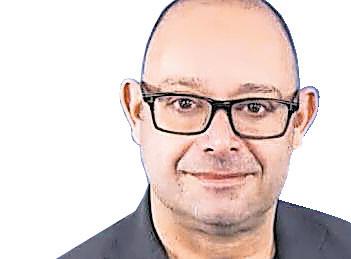
Bill Maher marked Israel’s 78th birthday by accusing Democrats of ducking a moral test.
In a blistering May 15 monologue, the host of “Real Time” on HBO observed that antisemitism has become fashionable on both the far right and the progressive left — but aimed his sharpest criticism at Democrats, whom he accused of indulging anti-Israel voters instead of correcting them.
“There is a frothing anxiousness for the literal extermination of this one group — and Democrats, where are you?” Maher said.
“If any other minority group was being talked about this way, you’d break out the Kente cloth and have ten benefit concerts,” he said. “But because you see that so many of your brainwashed-by-TikTok constituents now have an unfavorable view of Israel, you indulge them — when you should be correcting them.”
Maher, who has long identified as a liberal but has increasingly hammered progressives over Israel and antisemitism, said Democratic
‘Jews
Cedarhurst pre-med a Touro valedictorian
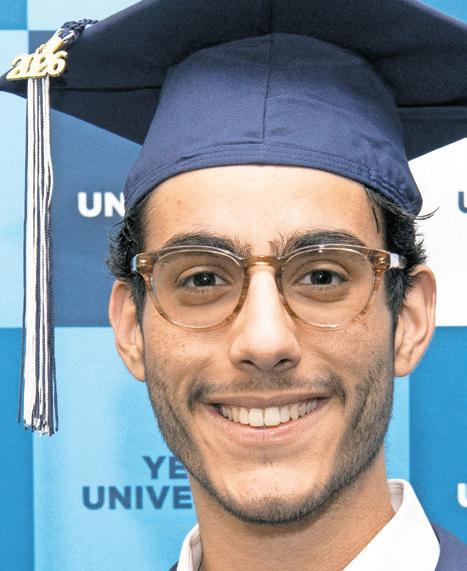
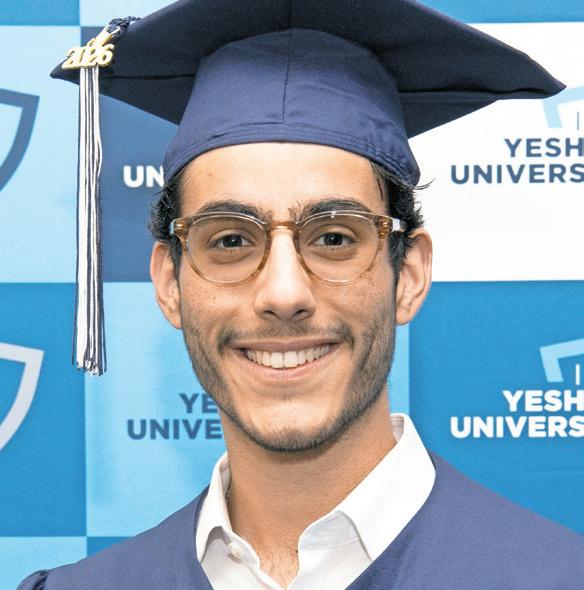
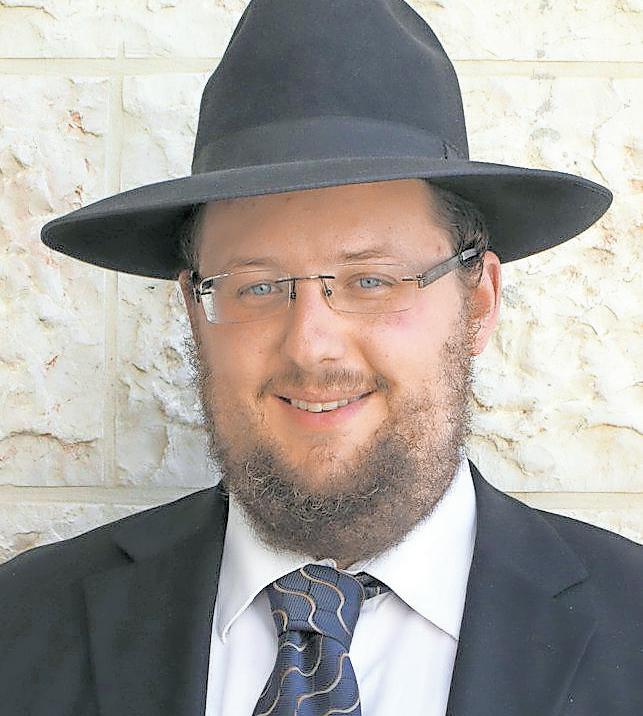
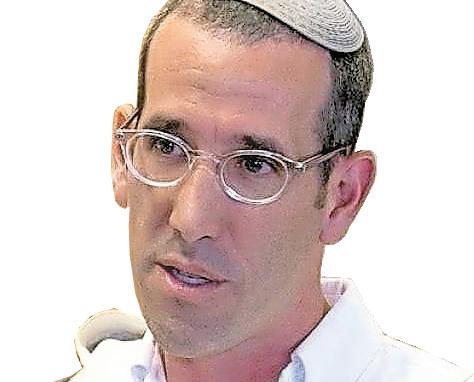
Moshe Ostreicher, of Cedarhurst, has been named the 2026 valedictorian of Touro University’s Lander College for Men.
An honors biology major, he plans to apply to medical school in the upcoming cycle.
Ostreicher said that responding to emergencies and caring for patients in critical moments while working for more than two years as a volunteer emergency medical technician with the Woodmere Fire Department gave him a clearer understanding of the responsibility that comes with medicine.
Read more about Ostreicher, Touro’s three other 2026 valedictorians, on page 13.
leaders should be telling young voters that “Israel isn’t a colonizer, or an apartheid state, or committing genocide,” and that if they had to spend a week anywhere in the Middle East other than Israel, “you would understand what liberalism is not.”
He closed the segment by mocking Democratic presidential hopefuls who advertise that they do not take money from AIPAC, the pro-Israel lobby.
“All the people likely running for president now, on the Democratic side, want it known: they don’t take money from AIPAC,” Maher said. That posture gives “permission to actual antisemites to say, ‘See, we’re right about Israel — that’s dirty money from a dirty country’,” Maher said.
“Oh, please,” he mocked. “You take money from crypto, and factory farmers, and big tech, from Diddy, and Weinstein and Epstein — but AIPAC is too far?”
He closed his “New Rules” segment by addressing “all who ask me, ‘Why are you harder on the Democrats than you used to be?’:
See Maher mauls Democrats on page 4
taps grads from Far Rock, Great Neck
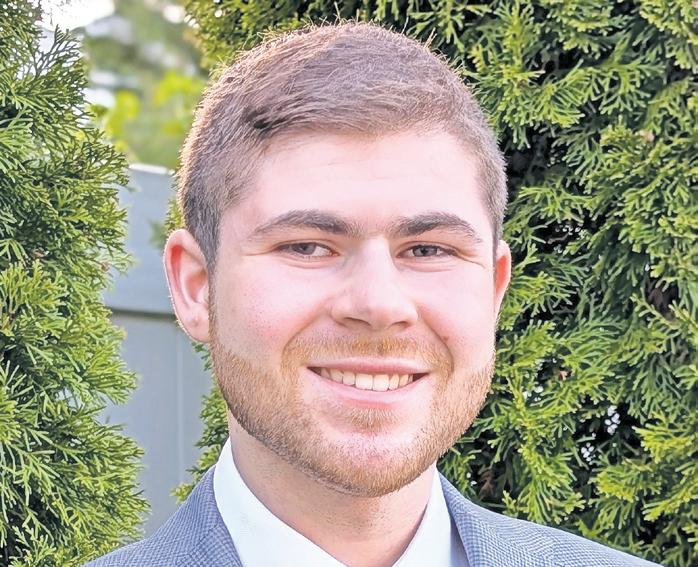
University selected Bryna “Breindy” Berger of Far Rockaway and Jordan Nazar of Great Neck as two of the valedictorians who will be acknowledged at the school’s 95th annual commencement exercises on May 28 at the USTA Billie Jean King National Tennis Center in Queens.
A full report on nine of YU’s valedictorians, who represent several undergraduate schools and Jewish studies programs, is on page 12.
Bill Maher told his “Real Time” audience on HBO that “we really could, someday soon, have the tiki torch
will not replace us’ crowd and the queers for Palestine people working together to elect the next Hitler.”
Yeshiva
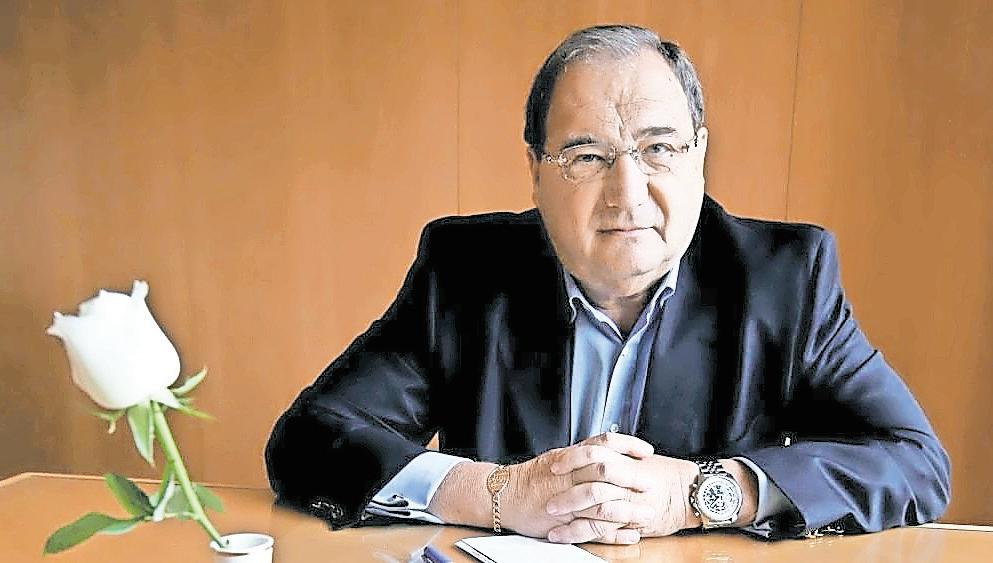
This is the eulogy for Abraham Foxman delivered by Elliot Cosgrove, spiritual leader of the Park Avenue Synagogue. The text, provided to JNS, has been lightly edited for style.
In considering the life and legacy of Abe Foxman, I find myself drawn to an enigmatic and much-debated midrash, a parable told about Abe’s namesake, the biblical Abraham.
The rabbis imagine Abraham as a man who comes upon a birah doleket (a house either filled with fire or light). Startled by what he sees, Abraham asks: “Is it possible that this house has no owner?” In response, the owner peers out and declares: “I am the owner of the house.”
What Abraham saw — and what the parable means — has been the subject of debate across the generations.
Most understand the house to be burning; our patriarch looked out at a world on the brink of ruin, violence and moral collapse, and his greatness lay in refusing to stand idly by. He ran into the flames. He took responsibility for G-d’s world.
Others, most famously Rabbi Abraham Joshua Heschel, understood the image differently. The house was not aflame but illuminated. Abraham was thunderstruck by the radiance and wonder of creation itself. Abraham’s greatness lay in recognizing what others could not see, the beauty and mystery of existence, the presence of a Creator and the possibility of hope, and human partnership with the Divine.
To capture the life of Abraham Foxman through a single piece of Torah is an impossible task. But if I had to choose one text through which to understand Abe, it would be this one, because Abe’s life embodied both readings at once.
Abe Foxman ran into the fire. He confronted hatred, antisemitism, tyranny and indifference with unmatched courage and moral clarity. He was also a man animated by light — by the dignity of every human being, by the promise of America, by the beauty of Jewish life, friendship, family and hope itself. His greatness was not that he chose between the fire and the light. It was that he spent his life carrying both.
When we sat together and spoke about Abe’s life, I asked Golda, Michelle and Ariel [his wife and children] how his personal biography shaped his public moral vision. Almost in unison, [they] spoke about the woman into whose care Abe was entrusted as a baby during the Shoah, the Polish Catholic nanny who sheltered him, baptized him and saved his life while the world around was aflame in hatred.
For Abe, the significance was not just the story itself, but what Abe chose to take away from it. He was never particularly interested in the transactional details — whether the nanny was paid, the logistics of how he was returned to his family, the mechanics of survival. Abe’s focus was
always on the singular moral act itself: that in a world consumed by fire, one human being chose courage. One person chose decency. One person chose light.
As is well known, Abe developed a close and meaningful relationship with Pope John Paul II. In their meetings, the pope would invariably ask Abe what he could do for him. Abe’s recurring request was that the pope bless the memory of the woman who saved him. Abe knew the darkness intimately. But he insisted on blessing the light.
Acase can be made that few people in modern Jewish history devoted more of their lives to studying and confronting the pathology of hatred than Abraham Foxman. An equal case must be made that few people believed
Abe saw the fire. But he never stopped believing in the light.
This was Abe — never defined by optimism or pessimism alone, but by the difficult discipline of holding both at once. Ever cautious of the dangers of too much hate or too much love.As he would say: “I don’t have the luxury of being a pessimist.”
It was a balancing act that was Abe’s moral posture toward the world: vigilance joined with hope; idealism tempered by hard-earned realism; fierce particularism alongside expansive human concern. A statesman and a mensch. Someone equally comfortable standing with presidents and prime ministers, yet utterly without pretension — living out Rudyard Kipling’s charge “to walk with Kings — nor lose the common touch.”
And his common touch was extraordinary. Abe’s love language was helping people. Picking up the phone on someone’s behalf. Making the introduction. Taking in a young colleague. Offering encouragement, counsel, protection, opportunity. Abe carried his enormous moral authority lightly, always understanding that influence mattered only insofar as it could be used in the service of others.
held between those poles — that was the breath that animated Abraham Foxman’s life.
And at the very center of that life, his greatest blessing and deepest joy: his family. Golda, you were his partner in every sense of the word: the ballast and the fuel, the protector and the protector’s protector. You paced him, steadied him, sustained him, and together, you built not only a marriage of nearly six decades, but a home filled with devotion, resilience, laughter and abiding love.
Michelle and Ariel: Your father’s reach was global. He traversed continents, crises and causes — all before Zoom, FaceTime or texting. And yet somehow, you always felt his presence. He gave you one of the greatest gifts a parent can give: he taught you how to think. And because of that, even now, in his absence, the cadence of his voice, the clarity of his values and the gentleness of his guidance will continue to accompany you.
And to the grandchildren — how deeply he loved each of you. To his very last breath, he never stopped showing up: birthdays, milestones, conversations, encouragements, small gestures of connection that became sacred rituals of family life.
The way you care for one another, stay connected, reach out with a “Shabbat shalom,” “Gut voch,” as he did — that is not incidental to his legacy. That is his legacy. To keep the family together. To carry the light forward. That is how you honor him.
At the end of Mishnah Sotah, the rabbis teach that when certain great leaders died, something essential departed from the world. “Wisdom ceased. Humility faded. Reverence diminished.” The rabbis understood that there are rare human beings who do not merely inhabit virtues but carry them for an entire generation. It is tempting, with Abe’s passing, to feel that something irreplaceable has gone out of the world: a certain moral clarity, a certain courage, a certain refusal to surrender either to hatred or despair. But Judaism does not permit us to end there.
more deeply in the possibility of human transformation, forgiveness and redemption.
Public figures who had stumbled into hatred or ignorance turned to Abe seeking another chance. Why? Because Abe believed that hearts could change. He never understood cancel culture, the idea that people can be irretrievably reduced to their worst moments. He believed that if hatred hardens your own heart beyond repair, then the hatred has already won.
These last years since Oct. 7 were so hard for him. Israel was always in his heart, and the eruption of hatred against the Jewish people shook him deeply. But even so, Abe believed in the joy of Jewish life.
It was, and always would be, a privilege to be a Jew — a people living not just by the watchword: “If I am not for myself, who will be for me?” or “If I am only for myself, then what am I” — but both or more precisely the breath we take between. The universal and the particular. The fear and the hope. The fire and the light. The moral breath
When the leader dies, the work does not disappear. The mantle descends upon the living. What once rested on one extraordinary pair of shoulders must now be carried, however imperfectly, by the rest of us.
“It is not,” as Rabbi Tarfon taught, “incumbent on you to complete the work, but neither are you free to desist from it.”
G-d’s house is still aflame. G-d’s house is filled with light. Abe carried the work farther than most people could ever dream. May we honor him by carrying it forward.
May the soul of Abraham Foxman, Abraham Hanoch Henach ben Yosef Moshe v’Haya Rivka, be bound up in the bond of life eternal. Amen.
Abraham Foxman, national director of the Anti-Defamation League, in 2009. Miriam Alster, Flash90
Maher mauls Democrats on Jewish problem…
Until you fix this whole issue, stop asking me,” he said.
The monologue began with a mordant birthday greeting to Israel, which became a nation on May 14, 1948.
“Since yesterday was Israel’s birthday, having become a nation on May 14, 78 years ago, everyone must either wish her a happy birthday or admit they’re antisemitic,” Maher said.
Then he turned serious.
“Now, it’s everyone’s right in a free country to be antisemitic,” he said, “but enough with hiding behind Israel or Zionism or Netanyahu.”
Maher’s argument was not that Israel should be immune from criticism. It was that the world’s obsession with Israel — and the ferocity of the language aimed at Jews and Zionists — reveals a double standard.
“If you think, as so many do now, that when it comes to human rights, Israel is the monster country of all time, you either don’t read or you don’t care about your own hypocrisy, because there are so many worse places,” Maher said.
“But that’s where we are these days — no Jews, no news.”
Maher listed China, Russia, Sudan, Iran, Myanmar, Haiti, Congo and North Korea as “all way worse,” then delivered a line at the heart of the segment: “And that’s how you know it’s antisemitism. It’s the inconsistency.”
The comic said Jew-hatred has moved from the fever swamps into respectable spaces.
“People talk about Jews these days like something out of Stormfront,” Maher said, referring to the neo-Nazi online forum, “except it’s not Stormfront, it’s an editor from the American Prospect.”
He cited a comment from an editor at the liberal publication calling Israel “a brainwashed psychopathic death cult that might need to be nuked to save the human race.”
“People say the left and the right can’t agree on anything these days,” Maher observed. “Well, [this is] one thing they agree on.”
Maher then took aim at right-wing commentator Tucker Carlson for hosting Nick Fuentes and Holocaust deniers, and at the New York Times for featuring left-wing streamer Hasan Piker, who has compared Zionists to Nazis.
school in America, and they don’t know anything.”
“So we really could, someday soon, have the tiki torch ‘Jews will not replace us’ crowd and the queers for Palestine people working together to elect the next Hitler.”
Maher pointed to a North Carolina teenager charged with plotting to drive through a synagogue “to fulfill her life goal of killing as many Jews as possible.”
“Why in the world would this be the dream of some kid in North Carolina?” Maher asked.
He then pivoted to Dan Bilzerian, the social media celebrity and Republican congressional candidate in Florida, whom Maher called “a professional douchebag who’s attracted 30 million followers.”
Maher quoted Bilzerian saying, “The only real battle in the world today that I see worth fighting is, [expletive], you know, exterminating Israel. I mean, I would sign up tomorrow to go [expletive] put boots on the ground and go [expletive] kill Israelis.”
That, Maher said, proves the original logic of Zionism.
UC Irvine, as having called Zionists “bloodthirsty animals,” and quoted Candace Owens saying of Jews, “wherever they go, they bring their filth with them.”
Maher also cited Hamid Dabashi, a professor, as saying Israelis have “a vulgarity of character that is bone-deep and structural to the skeletal vertebrae of its culture.”
Maher acknowledged that anti-Muslim rhetoric exists and should be condemned. He quoted Republican Congressman Randy Fine as saying, “If they force us to choose, the choice between dogs and Muslims is not a difficult one.”
“That’s awful,” Maher said. “But it’s not the same as they need to be nuked, and let’s exterminate them.”
Maher said Jewish people in the United States and Europe now sometimes hide their identity, afraid that a Star of David could make them a target.
“Leave your Star of David at home,” he said. “But the Kafaya? You can wear that anywhere; you can wear it to ‘Fiddler on the Roof’ and you’ll get applause.”
“That’s what progressive is now?” Maher asked. “I guess so.”
He also ripped the Irish rap group Kneecap, saying young people “went nuts” for the group at Coachella last year.
“Their stage set is a sign that says [expletive] Israel,” Maher said. “Because, again, Israel is the only country in the world doing anything bad.”
Maher’s darkest riff imagined the far right and anti-Israel left joining forces.
“I see why the meathead manosphere and the Code Pink people are on the same page,” he said, “because they both went to high
“Israel was founded on the idea that antisemitism made a Jewish state necessary because Jews would never be safe without one,” Maher said. “Can you honestly listen to this rhetoric and not see why that turned out to be true?”
Maher said Jews have lost allies across the political spectrum.
“If you don’t have the right-wingers on your side and you don’t have the progressives, what do you have?” he asked.
He then turned to college campuses.
“What’s more progressive than college?” Maher said. “Where professors now say things that would make Kanye wince?”
He cited Osman Umarji, a professor at
“Jew hatred isn’t just acceptable now,” Maher said. “It’s cool. Celebrities love it and make it trendy. It’s the new Che Guevara Tshirt.”
Maher rejected what he called the “Islamophobia is just as bad argument,” calling it “a false equivalency.”
“Can you name a Jewish professor who talks about Muslims the way they get talked about?” he asked. “No.”
He said anti-Jewish hate crimes now outpace anti-Muslim hate crimes “nine to one.”
“It’s not a contest, and I’m certainly not saying do more of the other,” Maher said. “I’m just saying, these are the numbers, the facts, the reality.”
EARLY REGISTRATION
Skin cancer risks rise with summer sun exposure HEALTH, MIND & BODY
Skin cancer is the most commonly diagnosed cancer in the United States, but doctors say consistent sun protection and routine skin checks can sharply reduce the risk.
According to the American Academy of Dermatology, 1 in 5 Americans will develop skin cancer by age 70. Melanoma, the deadliest form, accounts for only about 1 percent of cases but causes most skin cancer-related deaths when not caught early. When detected and treated in its earliest stages, melanoma has a fiveyear survival rate of about 99 percent.
Non-melanoma skin cancers, including basal cell carcinoma and squamous cell carcinoma, are more common. Basal cell carcinoma usually grows slowly, but can cause tissue damage and disfigurement if untreat-
ed. Squamous cell carcinoma can grow more aggressively and, in some cases, may spread if not treated promptly.
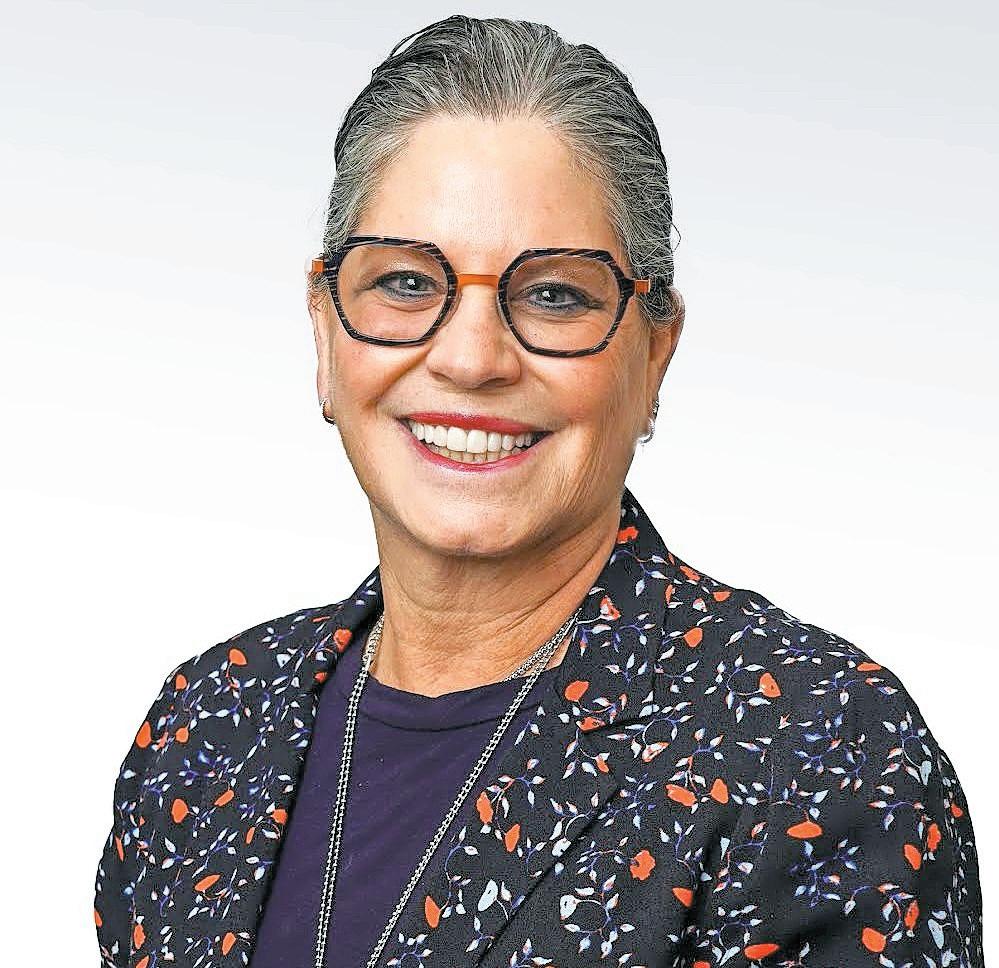
Dr. Suzanne Sirota Rozenberg, chief of dermatology at Episcopal Health
Services, said ultraviolet radiation from the sun and indoor tanning beds are the primary causes of skin cancer, including melanoma, basal cell carcinoma and squamous cell carcinoma.
Scientists target spinal trauma
Tel Aviv University scientists say they may have found a way to limit the damage that spreads through the nervous system after spinal cord injuries.
The treatment, tested in animals, removes excess glutamate from the bloodstream in the first hours after injury. Too much glutamate can over-
stimulate nerve cells, trigger inflammation and worsen damage.
Researchers said treated animals recovered up to 80 percent of motor function after two months, compared with about 30 percent in untreated animals. The findings were published in “Inflammation and Regeneration.”
Scientists cautioned that the results are still preclinical and have not been tested in humans.
“If we are able to confirm our results in humans, the new approach will represent a true paradigmatic shift,” said Dr. Angela Ruban, one of the study’s co-leaders.
“People who are exposed to high levels of UV rays are at a greater risk for skin cancer,” Rozenberg said. “UV damage is cumulative over time, which means even everyday exposure adds up. That’s why prevention needs to start early and continue throughout life.”
Rozenberg said regular skin exams and attention to changes in the skin can help catch cancer early, when it is often highly treatable.
“Skin cancer is one of the most preventable cancers, and when caught early, it is often highly treatable,” she said. “Regular skin exams and attention to changes in your skin are essential— they can help detect issues at their earliest and most manageable stage.”
Doctors recommend several steps to reduce skin cancer risk:
•Wear broad-spectrum sunscreen with an SPF of 30 or higher every day, even when it is cloudy.
•Reapply sunscreen every two hours, and after swimming or sweating.
•Wear protective clothing, including long-sleeved shirts, pants, widebrimmed hats and sunglasses that block UVA and UVB rays.
•Seek shade and limit sun exposure between 10 a.m. and 4 p.m., when UV radiation is strongest.
•Avoid indoor tanning beds. The
BELMONT PARK VILLAGE
World Health Organization classifies indoor tanning as carcinogenic to humans, and even occasional use increases long-term skin cancer risk.
•Perform regular skin self-exams, watching for new or changing spots, sores that do not heal, or lesions that bleed or crust.
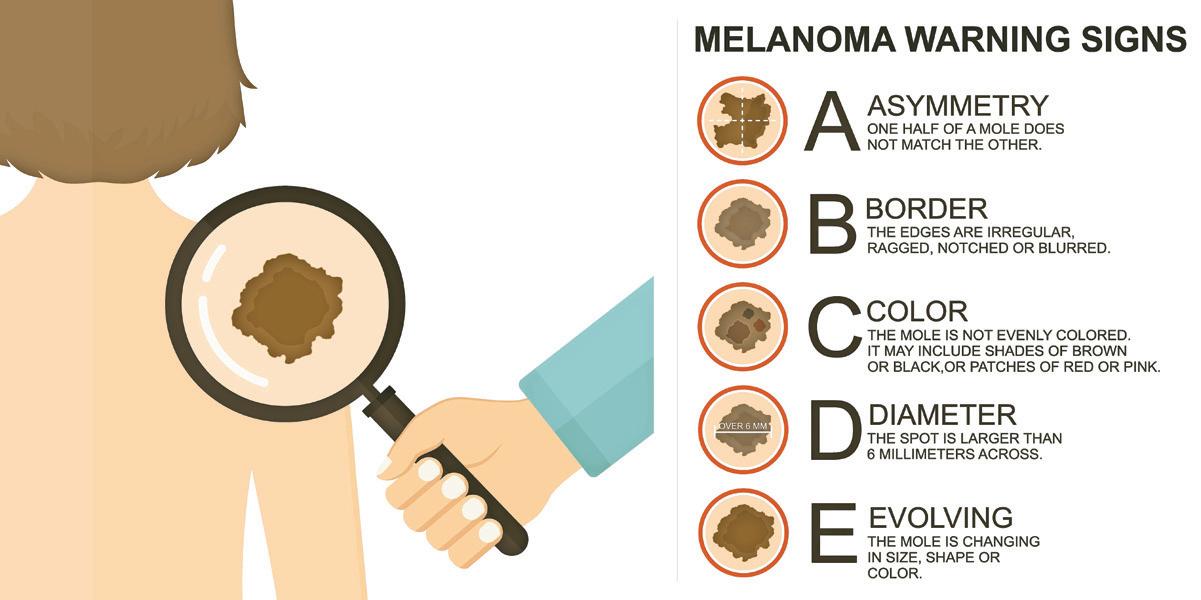
Dermatologists also recommend using the ABCDE guide to identify possible melanoma:
A: Asymmetry
B: Border irregularity
C: Color variation
D: Diameter greater than 6 mm.
E: Evolving in size, shape or color
Suzanne Sirota Rozenberg, DO, Chair, Department of Dermatology at Episcopal Health Services.
Episcopal Health Services Cancer Center
Now open at the Walsh Ambulatory Pavilion
EHS is proud to introduce the EHS Cancer Center at the new Walsh Ambulatory Pavilion, bringing together leading oncologists, comprehensive treatments, state-of-the-art technology (PET/CT, TrueBeam linear accelerator) and coordinated support services in a serene, streamlined setting. Radiation oncology is now available on the Rockaway Peninsula ������������������������������������������������������������ space, new physicians and new era of cancer care at EHS.
Comprehensive Treatments and Services
• Medical Oncology
• Radiation Oncology
• Surgical Oncology
• Immunotherapy
• Access to Clinical Trials
• Cancer Navigation Program
• Inpatient Physical Rehabilitation
• Social Work and Counseling
• EHS Specialty Pharmacy
• Pastoral and Spiritual Support
19-20 Brookhaven Avenue, Far Rockaway, NY 11691
For more information, visit ehs.org/oncology or call:
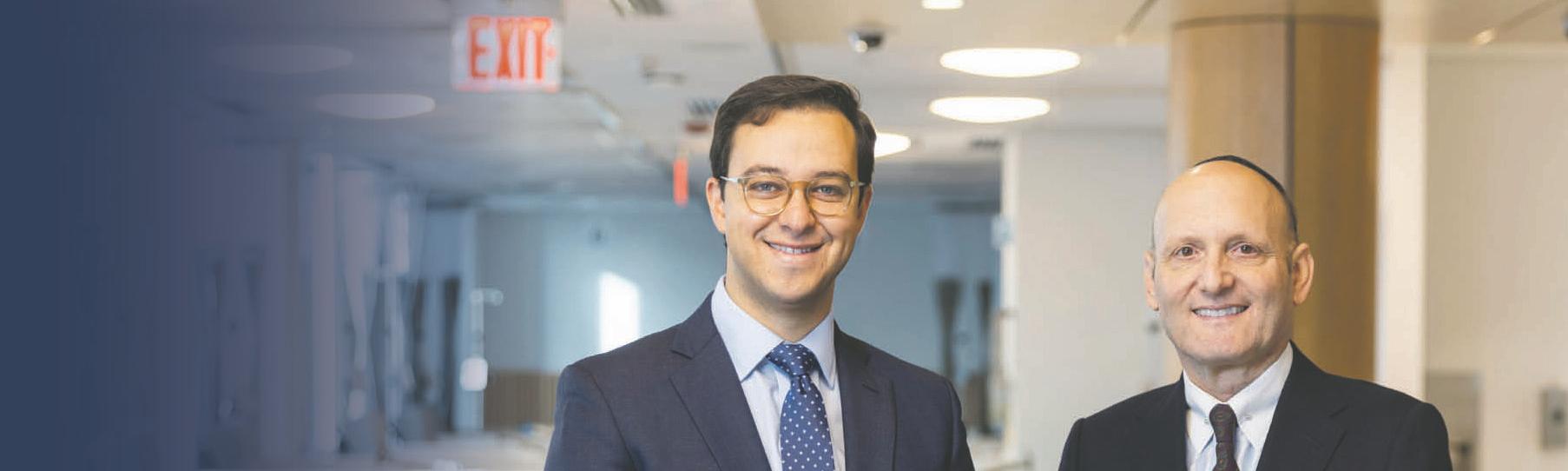
Mark Ashamalla, MDChief of Radiation Oncology (left) and Marc Warshawsky, MDChief of Hematology/Oncology (right)
Jewish leaders boycott Zo’s Jewish celebration
Mayor Zohran Mamdani said at a Jewish American Heritage Month reception at Gracie Mansion — which most Jewish leaders boycotted — that he planned to add $26 million in funding to prevent hate crimes to his proposed budget for the 2027 fiscal year.
Few Jewish government officials or nonprofit leaders attended the reception on Monday, which came on the heels of a video that the mayor posted shortly before Shabbat began marking “Nakba” day, which Palestinians say commemorates what they define as the “catastrophe” of the founding of modern Israeli.
The mayor’s office refused to allow JNS, one of two major Jewish news services in the United States, to cover the event in person.
The annual event is usually full of elected and organizational representatives shmoozing and networking. This year, every major Jewish organization in the city, from the Anti-Defamation League to the Jewish Community Relations Council-NY to the UJA-Federation of NY, declined to attend the reception, which doubled as a dairy-filled gathering ahead of Shavuot.
Hate crimes targeting Jews were up 182% in the city in Mamdani’s first month in office. Since then, the New York City Police Department has twice changed the way that it reports hate crimes and has said that such crimes are dropping. The NYPD and the mayor’s office have denied that Mamdani directed the police to change the way it reports such statistics.
Prior to the event, the UJA-Federation of NY said its leaders would not “be attending the Jewish Heritage Month celebration at Gracie Mansion being hosted by a mayor who denies a core pillar of our heritage — the State of Israel as the homeland of the Jewish people.”
Among those noshing on blintzes and minicheesecakes with the mayor this year were representatives of the anti-Zionist groups Jewish
Voice for Peace and Jews for Racial and Economic Justice, as well as the liberal group New York New Jewish Agenda, which says that it supports “a democratic vision of Israel.”
Rabbi Moishe Indig, a leader of the Satmar Chassidic community of Williamsburg and Rabbi David Niederman, president and executive director of the United Jewish Organization of Williamsburg, were also among the 150 attendees.
Satmar is anti-Zionist as a matter of religious principle, it says.
The few Jewish elected officials in at-
tendance were former city comptroller Brad Lander, the virulently anti-Israel candidate for Congress who partnered with Mamdani during the closing weeks of the mayoral election, and two City Council members: Lincoln Restler, who represents downtown Brooklyn and Brooklyn Heights, and Harvey Epstein, who represents Greenwich Village and the Lower East Side.
Irwin Kula, president emeritus of CLAL (the National Jewish Center for Learning and Leadership), gave the evening’s invocation.
“When the Torah was given at Sinai, the rabbis insist not just the generation of the desert,
but every generation across all of time stood at that mountain,” Kula said. “Every age. Every class. Every persuasion. In other words, the tradition insists — even those who would one day deeply disagree with one another, who would one day be almost impossible to reach across the divide to, who would wound each other — all stood together at Sinai.”
“So we are all, even now, standing at Sinai. Together. Receiving the same revelation,” he said at the invocation. “Hearing it differently.”
Mark Treyger, CEO of the Jewish Community Relations Council-NY, which hosts the Israel parade in Manhattan, in which Mamdani, breaking with decades of mayoral tradition, has said he will not march, did not attend the Gracie Mansion reception. He told the New York Post prior to the event that “it’s a really telling and concerning sign of where things stand in New York City right now.”
Kula told JNS after the event that he was cheered by a room filled is “liberal-progressive folks rather than mainstream, legacy institutional leadership.”
He said the absence of legacy leaders “highlights the ongoing collapse of the mainstream, liberal Zionist consensus around which legacy leadership and institutions organized for the past 50 years.”
He closed his invocation with a blessing for the mayor.
“May you be given the continued strength, the emotional depth and the wisdom to hold the complexity of this city, to parse and nuance, with care and precision, the meanings of Zionism, of antisemitism and the inextricable connection of Jewish identity and Palestinian dignity, in ways that open new possibilities of solidarity among all New Yorkers who believe in the infinite value of every human being,” he said.
Reported by JNS
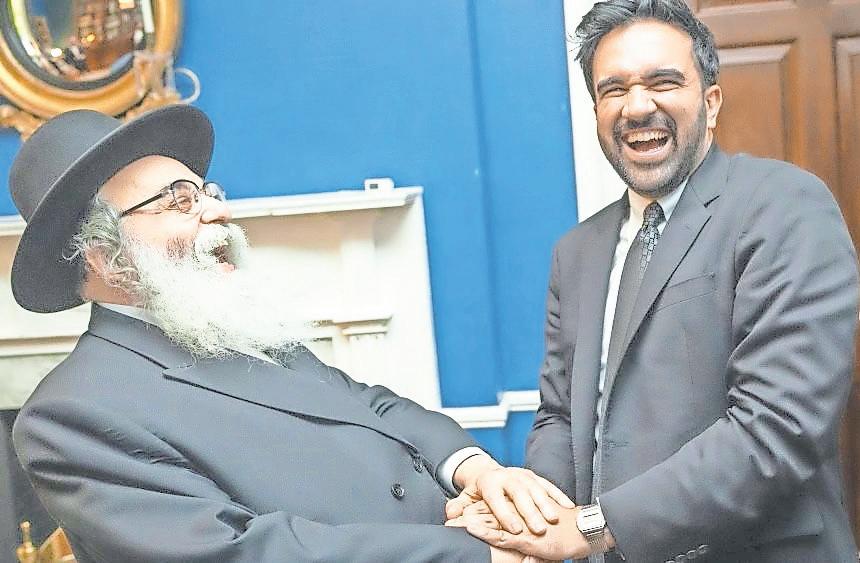
Rabbi David Niederman, president and executive director of the United Jewish Organization of Williamsburg, shares a laugh with Mayor Zohran Mamdani at Gracie Mansion during the mayor’s Jewish American Heritage Month celebration on Monday. Michael Appleton, Mayoral Photography Office
Dem hopeful’s Zionist rants roil Texas race
A Texan within striking distance of winning a Democratic Congressional nomination is under fire after promising to convert an ICE detention center into a prison for “American Zionists” — and suggesting many would be pedophiles.
Maureen Galindo is drawing national condemnation after a series of inflammatory comments about Jews, Zionists and her runoff opponent.
Galindo, a housing activist, sex and family therapist and single mother, is running in Texas’ newly redrawn 35th Congressional District, a San Antonio-area seat Democrats hope to flip after Republican-led redistricting, according to reporting by the Jewish Telegraphic Agency. She finished first in the March Democratic primary with 29.2 percent of the vote, ahead of sheriff’s deputy Johnny Garcia, who received 27 percent. The runoff is May 26.
The San Antonio Current reported that Galindo wrote in an Instagram post over the weekend that she would turn the Karnes ICE Detention Center, south of San Antonio, “into a prison for American Zionists and former ICE officers for human trafficking.”
“It will also be a castration processing center for pedophiles, which will probably be most of the Zionists,” Galindo wrote, according to the Current.
The remarks are the latest in a string of antisemitic and conspiratorial comments.
According to JTA, Galindo has said it is her “perception that Zionist billionaires run the world,” and singled out “Israeli, Jewish billionaire Zionists” as disproportionately owning Hollywood studios, media companies and banks.
On Texas Public Radio, Galindo denied being antisemitic while repeating claims about “Zionist Jews,” JTA reported.
“I’m not antisemitic. In fact, my last serious relationship was with a Jewish man,” Galindo said. “I’m against Zionist Jews. When I said that the Jews who own Hollywood are doing this, do all Jews own Hollywood? No. The Zionist Jews do. The Zionist Jews own our media, our banks and all of our politicians.”
She added, “There’s plenty of evidence for what I’m saying in the Epstein files.”
The controversy has prompted pushback from leading Democrats and Jewish groups.
James Talarico, a Democratic Texas state representative and US Senate candidate whose campaign has drawn national attention, told JTA he would not campaign with Galindo if she wins the runoff.
“This antisemitic rhetoric has no place in our politics,” Talarico told JTA. “We need
leadership in both parties willing to stand up and call out hate wherever it rears its ugly head.”
The San Antonio Jewish Federation said it “strongly condemns the spread of antisemitic tropes and conspiracy theories in public discourse.”
The San Antonio Jewish Community Relations Council told JTA that it “condemns any and all hateful speech, including the use of antisemitic tropes, in public discourse,” though it did not name Galindo.
Galindo has also attacked her Israel-supporting Democratic primary rival, Johnny Garcia, accusing him of participating in a human-trafficking conspiracy orchestrated by billionaire Zionist Jews.
She pledged during a Texas Public Radio interview to put him on trial for treason, according to the Current.
On social media, JTA reported, Galindo depicted Garcia standing in front of US and Israeli flags and claimed he “took money from Israel to get into Congress & fund Israeli wars.”
Democratic Majority for Israel, which endorsed Garcia early in the race, is mounting a late six-figure ad campaign for him, JTA reported.
“Maureen Galindo espouses vile, hateful views,” Brian Romick, the group’s head, told JTA. “She has claimed Jews ‘own Hollywood,’ that they ‘worship the synagogue of Satan,’ and accused Zionists of running human trafficking networks. Antisemitic conspiracy theories like these are disqualifying and have no place in either Party or in Congress.”
Galindo has rejected criticism of her comments, telling JTA that “coordinated media attacks declaring my anti-Zionist rhetoric as antisemitic” were “causing more harm to the Jews of San Antonio by playing into all the stigmas that they own the media.”
“Zionists want us to blame all Jews to shield them from the violence they perpetrate on Semites across the Middle East,” Galindo told JTA. “I’m not falling for it and will continue to protect all Jews from their corrupted leaders by constantly reminding folks that it’s not all Jews. We need to be loud about our anti-Zionism in these times to protect our neighbors.”
One former primary opponent, John Lira, has rescinded his endorsement of Galindo, saying he had become “increasingly troubled by a series of derogatory, inflammatory and conspiratorial statements directed toward Jewish people and others,” JTA reported. Lira did not endorse Garcia, saying he would remain neutral in the runoff.
Campaign poster for Maureen Galindo.
A top House Dem blasts threats by Israel foes
A top House Democrat is blasting anti-Israel activists for a “campaign of intimidation” outside his home.
Rep. Adam Smith, the ranking member of the House Armed Services Committee, condemned activists who planned to demonstrate outside his private residence in Bellevue, Wash.
“There are no circumstances that anyone should be allowed to show up at elected officials’ private residences or anyone’s private residences to try to pressure them and intimidate them and threaten them into doing something,” Smith told JNS on Monday.
The group Seattle Against War said a rally outside Smith’s home would call on the congressman to “stop arming Israel.”
“They don’t want to meet and discuss,” Smith told JNS. “They want to use threats and intimidation to try to silence people who disagree with them.”
He said activists have repeatedly targeted his neighborhood, distributed leaflets to his neighbors accusing him of murder, and burned Israeli and American flags in his driveway. Protesters once arrived at 5 am,“banging on drums and screaming through a bullhorn,” he said.
“Coming to someone’s personal residence is a threat,” Smith said. “It’s well understood when someone says to you, ‘I know where you live,’ that is meant to be a threat, and that is exactly what this is.”
“We we have an election process,” Smith said. “I’m up every two years. They’re not happy with that, recruit a candidate, support that candidate and the election.”
He also accused two challengers in Washington’s 9th Congressional District — nonprofit consultant Melissa Chaudhry and former Seattle City Council member Kshama Sawant — of joining protests outside his home.
He called their actions “unethical and a bas-
tardization of the democratic process.”
“Both Kshama Sawant and Melissa Chaudhry have decided that intimidating elected officials in their homes is a legitimate way to campaign,” Smith said.
JNS reported that Sawant’s husband, Calvin Priest, 54, was charged after he allegedly assaulted a 22-year-old woman who works as a staffer for Smith at one of the congressman’s town hall meetings in August 2025. Priest appeared to lead a group of protesters into the meeting at Renton Technical College.
At a recent Bellevue City Council meeting, where an ordinance protecting private residences from protests was passed, a member of
Seattle Against War testified that Smith would not meet with the group, leaving disruptive protests as its last resort.
Smith rejected that claim.
“I have listened to them. I have met with various different groups. I’ve met with these people a couple of times,” he told JNS. “But they always just take out their phones and start reading preprepared scripts, which insult me and tell me how awful and terrible and horrible I am. It’s not a dialogue.”
Smith said extremists on both sides of the political spectrum increasingly use harassment to target public officials.
“The far-right and the far-left have decided
that threats and intimidation are another way to try to either drive people out or make them so scared that they acquiesce,” he said.
The tactics have not changed his views on Israel, he said.
“I’ve been outspoken in opposition to the Iran war, but really the activists want Israel to cease to exist as a country,” Smith said. “They certainly want the United States to stop supporting them in any way.”
He said Israel’s actions cannot be judged without considering the country’s history and the threats it faces.
“People have been trying to eliminate Israel from the day it was created,” he said. “To judge Israel’s actions outside of that context, which they want to do, whitewashes all of the history to act like Israel’s persecuting Palestinians for the fun of it as opposed to actually fighting a conflict for survival.”
Smith called Hamas, Hezbollah and the Houthis “bat-sh** crazy people.”
“Once they’re done with Israel, they’re going to move on to other folks, too,” he said. “They are homicidal, suicidal religious fanatics who are a danger to civilized society.”
Still, Smith said his support for Israel is not unconditional.
“I’m not in love with everything Israel does,” he told JNS. “In fact, I’ve been critical of them on a number of fronts, particularly when it comes to what’s going on in the West Bank.”
Smith said he hopes Israeli Prime Minister Benjamin Netanyahu will try harder to find Palestinians who can serve as an alternative to Hamas, and Lebanese people who can combat Hezbollah.
Regarding the protests, “If this becomes the acceptable way of getting your point across, then we’re in a downward spiral,” Smith said. —JNS
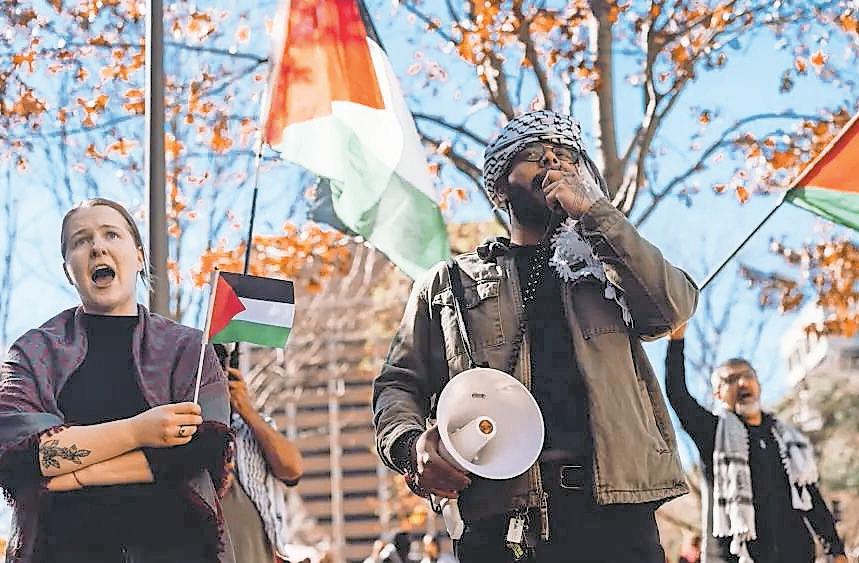
A pro-Palestinian protest.
Alfo Medeiras, Pexels
Among YU valedictorians: Far Rock, Great Neck
Yeshiva University has named nine undergraduate valedictorians for its Class of 2026, including students from Great Neck, Far Rockaway and Brooklyn.
The students are scheduled to graduate with their classmates at the university’s 95th annual commencement ceremony on May 28 in the Louis Armstrong Stadium at the USTA Billie Jean King National Tennis Center in Queens.
The valedictorians represent several of YU’s undergraduate schools and Jewish studies programs, with academic interests ranging from finance and business analytics to biology, mathematics, political science and Jewish studies.
Jordan Nazar, of Great Neck, was named valedictorian of the James Striar School of General Jewish Studies. A finance major, Nazar plans to pursue a career in wealth management after graduation. At YU, he participated in TAMID, the Finance Club and the YU Stock Exchange Club.
“I think the best thing about YU is that since coming here, the number of people that I can now call family has increased significantly,” Nazar said.
Nazar said Rabbi Yonasan Shippel, his shiur and friends he made at YU helped shape his college experience and that one lesson he will carry forward is a phrase he heard often from Rabbi Shippel: “Rejection is redirection.”
“No matter how unfavorable a situation is — like an application rejection or a phone call ended with no result or follow up — it was just another step in the process to get me where I need to be and where Hashem wants me to be,” Nazar said.
Bryna “Breindy” Berger, of Far Rockaway, was named valedictorian of the Rebecca Ivry Department of
Jewish Studies. She majored in mathematics and Jewish studies, with a minor in philosophy, was an editor for The Commentator and a member of the women’s cross-country team.
Berger said she chose YU because of its focus on Jewish studies and the opportunities available to women at Stern College for Women.
“I’m grateful to YU for investing in women’s Talmud Torah on a broad scale and for listening attentively to student feedback,” Berger said.
Brooklyn native Moselle Goldstein, a biology major with a minor in business analytics, was named a Stern College for Women valedictorian.
After graduation, she plans to work full time at Cabrio Group, a consulting firm that works with nonprofits, where she worked part time during the school year.
Goldstein was a member of YU’s cross-country team, a features writer for “The Commentator,” a student ambassador, campus tour guide and resident assistant. She was also involved with TAMID, worked as a teaching assistant for statistics and tutored for Project GED.
Daniel Schmidt-Pines, of Los Angeles, was named valedictorian of Yeshiva College. A biology major, he plans to spend a year gaining clinical experience before applying to medical school in the summer of 2027.
Schmidt-Pines worked with Dr. Molly Fox at UCLA on the Alzheimer’s Life History Project and assists Dr. Josefa Steinhauer, a professor of biology at Yeshiva College, with research on neurodegeneration using Drosophila as a model organism. He also volunteers at NYC Health + Hospitals/ Queens.
At YU, Schmidt-Pines was active in START Science, which brings handson science lessons to public school students in Washington Heights, and Food 4 Thought, which collects excess campus food and distributes it to people in need.
Alexandra “Titi” Cohen, of Boca Raton, was named valedictorian of the Sy Syms School of Business. She is majoring in strategy and entrepreneurship, with minors in finance and biology, and plans to pursue an MBA before attending medical school.
Cohen is the founder and chief
executive of Mister Brush, and was involved with the YU Entrepreneurial Society, START Science, Chai Lifeline, biology peer tutoring and the Ping Pong Club.
“What makes Sy Syms especially iBoaz Kapitanker, of Fair Lawn, was also named a Sy Syms School of Business valedictorian. He is majoring in business analytics and accounting and plans to start a full-time position this summer as a business analyst at Pharm3r.
At YU, Kapitanker was a head waiter, peer tutor and head of the backend for the Seforim Sale.
Moshe Davidovics, of Memphis, was named valedictorian of the Mazer Yeshiva Program. A biology major, he plans to learn for the next two years in semicha while studying for the MCAT.
Davidovics was vice president of the Student Organization of Yeshiva, an assistant for Rabbi Yaakov Werblowsky’s shiur, a Yeshivat Kerem B’Yavneh madrich, a START Science leader, a member of the EMT Society board and president of YU’s Semitic Languages Society.
Jaden Jubas, of Southfield, Michigan, was named valedictorian of Isaac Breuer College of Hebraic Studies. He is majoring in biochemistry, with a minor in psychology, and plans to apply to medical school this summer.
Jubas completed an honors thesis, “Designing Probes for Sensitive mRNA Variant-Specific Detection and Visualization,” under the mentorship of Dr. Irina E. Catrina, a professor of chemistry. He also co-presented a research poster at the American Society of Biochemistry and Molecular Biology annual conference in March.
Aiden Harow, of Boca Raton, was named valedictorian of the Irving I. Stone Beis Medrash Program. He majored in political science, with a minor in business, and plans to learn at YU next year before applying to law school.
Harow was president of the Yeshiva Student Union, managing editor of the Yeshiva University Undergraduate Law Review, co-president of Y-Studs A Cappella, co-head of education for the YU Political Action Committee and a committee chair of the YU National Model United Nations.
Reported by YU
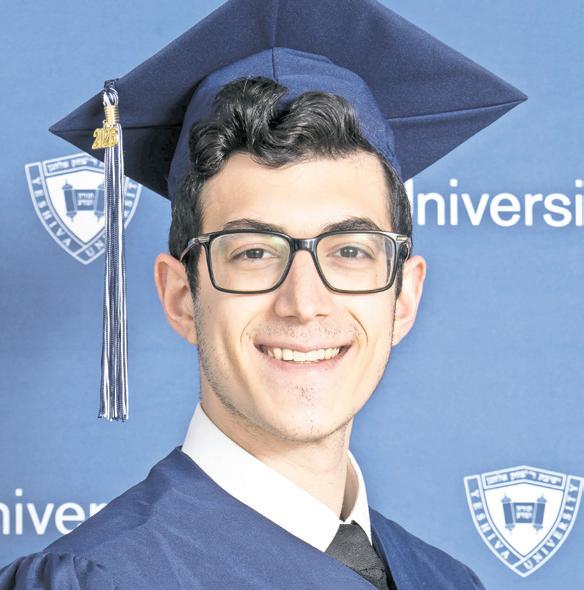
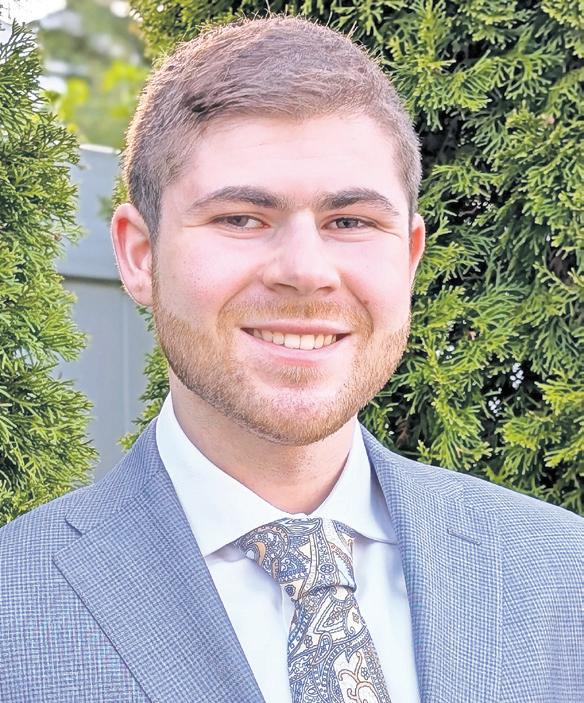
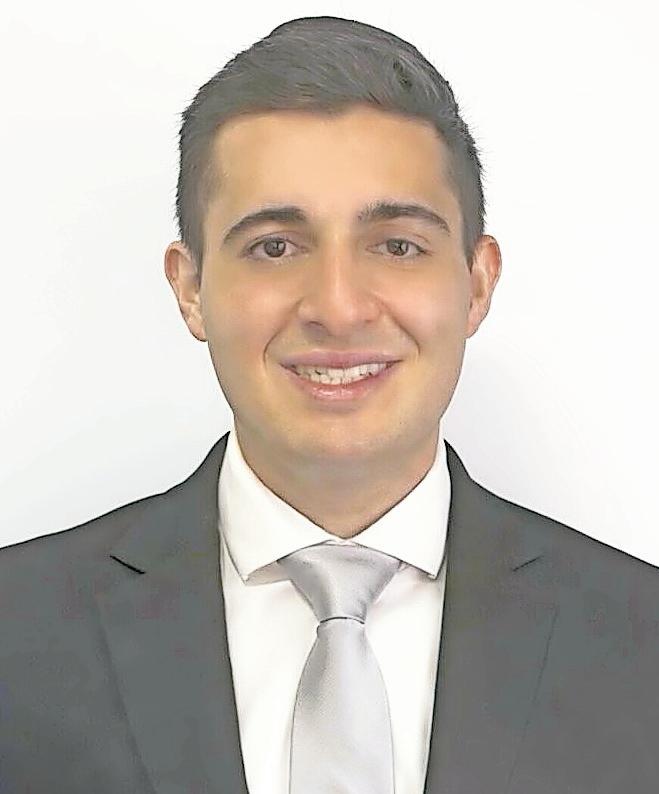
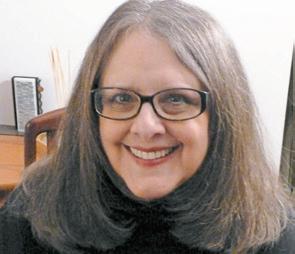
Valedictorian Jordan Nazar, James Striar School of General Jewish Studies.
Valedictorian Bryna “Breindy” Berger, Rebecca Ivry Department of Jewish Studies.
Valedictorian Boaz Kapitanker, Sy Syms School of Business.
Valedictorian Moselle Goldstein, Stern College for Women.
Valedictorian Daniel Schmidt-Pines, of Los Angeles, Yeshiva College.
Valedictorian Jaden Jubas, Isaac Breuer College of Hebraic Studies.
Valedictorian Alexandra “Titi” Cohen, Sy Syms School of Business.
Valedictorian Aiden Harow, Irving I. Stone Beis Medrash Program.
Ostreicher, Cedarhurst scholar, tops Touro class
Moshe Ostreicher, of Cedarhurst, has been named the 2026 valedictorian of Touro University’s Lander College for Men.
An honors biology major, he plans to apply to medical school in the upcoming cycle.
“For as long as I can remember, I’ve wanted to be a physician,” he said. “Over time, that childhood aspiration has only grown stronger.”
That sense of direction was reinforced through hands-on experience, including his work as a volunteer emergency medical technician with the Woodmere Fire Department, a role he has held for more than two years. Responding to emergencies and caring for patients in critical moments, he said, gave him a clearer understanding of the responsibility that comes with medicine. His work with the department earned him its 2025 EMS Provider of the Year award.
“I chose Touro for the academic pathways it offered, the Jewish environment, and, perhaps most importantly, the small class sizes,” he said. “That personal connection is invaluable.”
“Moshe Ostreicher is a great example of the academic values we seek to inculcate in our students,” said Dr. Henry Abramson, dean of Touro’s Lander College for Men. “Not only did he earn a perfect score of 528 on his MCAT — an achievement that is met by only 0.01 to 0.02 percent of students who take this rigorous standardized test for admission to medical school — he also volunteered many hours to tutoring his peers in orga-
nized study groups, bringing the rest of the class closer to its potential. He’s a remarkable young man.”
Ostreicher’s academic interests led him to research projects with Northwell Health and the Feinstein Institutes for Medical Research. One project earned him an invitation to present his findings at the American College of Emergency Physicians’ 2025 Scientific Convention in Salt Lake City.
Ostreicher’s path to Lander College for Men included studies at Yeshiva Darchei Torah in high school, followed by time learning in Israel at Toras Moshe and Sh’or Yoshuv.
Before entering medical school, he will continue his work as an EMT and return to the Feinstein Institutes to continue research involving mitochondrial transplantation and critical care physiology.
“My goal is to have a career that combines scientific knowledge with meaningful patient care and makes a real difference in people’s lives.”
Touro University also named three other 2026 valedictorians.
Nini Schulman is the valedictorian for Touro’s Lander College for Women.
An accounting major, Schulman served as chair of the Honors Board before becoming its chair, and had internships at EisnerAmper, Deloitte and PwC, where she will begin working full time as a tax associate after graduation. She plans to become a CPA before eventually attending law school.
“My ultimate goal is to work at the intersection of business and law,” Schulman said.
Batya Zitron was named valedic-
torian of Touro’s Lander College of Arts & Sciences Women’s Division.
A psychology honors major, Zitron works at the Albert Einstein College of Medicine as a clinical interviewer in the neurology department and is a research assistant at the Arts and Development Lab at Brooklyn College.
She plans to apply to clinical psychology Ph.D. programs.
“My career goal is to become a neuropsychologist,” Zitron said. “I’ve always been fascinated by science and particularly interested in understanding the brain and how it shapes our sense of self and the way we experience the world. My hope is to combine my passion for science with the opportunity to work closely with people and make a positive impact in their lives.”
Joseph Levy was named valedic-
torian of Touro’s Lander College of Arts & Sciences Men’s Division.
An honors biology and psychology major on the pre-med track, Levy was executive editor of Touro’s Science Journal. He participated in Memorial Sloan Kettering’s Clinical Oncology Open Learning program, where he observed oncologists across specialties and gained exposure to patient care, physician-patient communication and clinical decision-making.
“My ultimate goal is to become a physician who combines strong clinical knowledge with humility, compassion, and a commitment to lifelong learning.”
Commencement ceremonies for Touro’s Lander Colleges will take place at Lincoln Center on May 31. Reported by Touro University
DO YOU HAVE WHAT IT TAKES TO SUCCEED IN MULTIMEDIA SALES?
At The Jewish Star, selling advertising for the newspaper is just part of the job.
Our staff’s toolkit includes an exceptionally broad range of useful products (including both religious and secular publications and websites; digital, email, radio and social media marketing; in-person events; direct mail; commercial printing, and more) — whatever it takes to build business and raise revenue for our commercial and non-profit partners.
Employees are trained by the best in the business, in a supportive, collegial and kosher environment.
These F/T positions (P/T schedules may be arranged) offer competitive compensation ($40k-$90k) with excellent commission and bonus opportunities, paid holidays (including Jewish holidays), time off, medical and 401(k).
Valedictorian Nini Schulman: Touro Lander College, Women
Valedictorian Batya Zitron: Touro Arts & Sciences Women
Valedictorian: Joseph Levy: Touro Arts & Sciences Men
Valedictorian Moshe Ostreicher: Touro Lander College, Men
WINE AND
DINE
Savoring cooking outdoors on Memorial Day
Kosher Kitchen
JONI SCHOCKEtt
Jewish Star columnist
It is Memorial Day weekend, time to take the barbecues out of hiding, cleaned and scrubbed and readied for the summer months of outdoor eating.
I love grilling. I love the smoky flavors the perfume of chicken or meat sizzling away and the sweet smell of grilled pineapple, a family favorite. It seems that backyard barbecues have been around forever.
For millions of years, our cave men ancestors ate their food raw until our more intelligent cave relatives discovered that taking the raw meat and placing it in recently discovered fire resulted in food that was easier to chew and tasted really good. Backyard cooking began!
Fast forward to post WWII when young families moved out of the cities into the ’burbs. They worked hard all week and on the weekends they wanted to relax and get to know their next- door neighbors.
Picnics were the rage until, in 1951, a young man named George Stevens, controlling owner of a little company in Chicago that made harbor buoys, took one of those round metal buoys, cut it across the middle, added a wire grate to hold the food and created (drum roll please!) the Weber Kettle. His friends called the domed grill “sputnik” and George could not keep up with the requests for these uniquely shaped outdoor “stoves.”
Within ten years, Weber had become the gold standard for backyard barbecues and the kettle shape became the iconic symbol of suburban summer living. The rest is history and that little company that made round metal buoys is now the nation’s leading maker of all kinds of barbecues and smokers.
Today Americans grill on everything from small grills that use briquets to elaborate builtin pits that rival our indoor kitchens. However, whether you grill on a $40 kettle or $40,000 outdoor kitchen, the recipe is still key, so enjoy the summer and let’s hope for lots of grillin’ weather in the next few months.
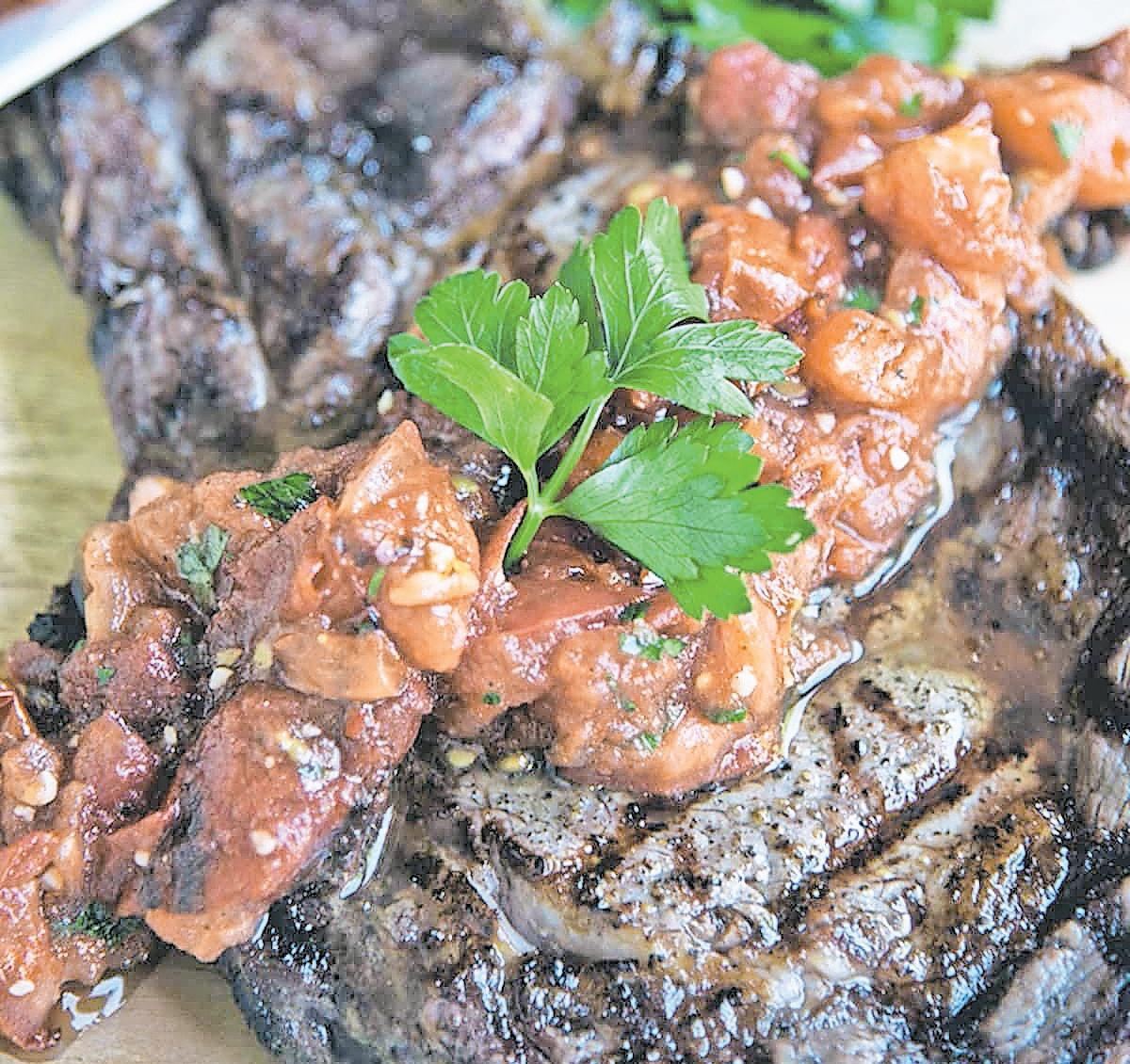
Grilled Steak with Bloody Mary Salsa (Meat)
The hint of vodka in this amazing steak recipe adds just the right touch to an adult late night barbecue. Leave out the vodka for a kid-friendly version.
• 4 boneless rib steaks, each about 3/4 to 1-inch thick
MARINADE:
• 2 Tbsp. Tamari sauce
• 2 cloves garlic, finely minced
• 1 Tbsp. balsamic vinegar
• 1 tsp. dark brown sugar
• 2 Tbsp. Extra Virgin Olive Oil
• Salt and pepper to taste
BLOODY MARY SALSA:
• 2 lbs. very ripe tomatoes (plum work best)
• 2 Tbsp. tomato paste
• 1/2 cup onion, finely chopped
• 1 Tbsp. cilantro, minced (leave it out if you don’t like cilantro)
• 2 scallions, minced
• 1 clove garlic, minced
• 1 Tbsp. freshly squeezed lime juice
• 1/2 cup beef consommé or broth or
bouillon
• 1 Tbsp. Worcestershire Sauce
• 1/4 cup, more or less, to taste) vodka
• Salt and Pepper to taste
• OPTIONALS: 1 tsp. ground cumin 1/4 to 1 tsp. cayenne pepper to taste for heat
Place the steaks on a flat plate. Place the marinade ingredients in a blender or food processor and process until the garlic is finely minced. Pour over the meat and turn the steaks so both sides are covered with the marinade. Cover with plastic and refrigerate for about 2 to 3 hours. Bring to room temperature before grilling.
SALSA:
Bring a large saucepan of water to a boil. Cut a shallow X in each tomato and place a few tomatoes at a time in the water. Cook just until the skins split. Remove to a bowl of cold water and then peel the tomatoes. Chop them coarsely and place them in the bowl of a food processor. Repeat until all the tomatoes are used. Add the rest of the ingredients to the food processor and process until as smooth or chunky as you like. Place the sauce in a sauce pan, bring to a boil and then simmer for about 5 to 7 minutes. Turn off the heat, taste, and adjust seasonings. Remove the steaks from the refrigerator. Place them on a grill over medium heat. Discard the rest of the marinade. Cooke to desired doneness. Serve with the salsa. Serves 4.
Great Grilled Steak with Easy Hot Chili ‘Mop’ (Meat)
A “Mop” is a spicy liquid that is literally mopped or brushed onto grilling meat.
• 4 steaks, your choice with or without bone
• 1 stick pareve, trans-fat free margarine
• 2 Tbsp. Canola oil
• 2 to 4 large cloves garlic, pressed
• 1 Tbsp. chili powder
• 1 small chili pepper, seeded and finely minced
• Pinch cayenne pepper, more or less, to taste
• 1 tsp. paprika
• Salt and pepper to taste
• OPTIONAL: 1 to 2 tsp. molasses
Melt the margarine and add the pressed garlic. Add the Canola oil and the remaining ingredients. Whisk and set aside until needed.
Brush the grill with Canola oil and heat to high.
Place about two-thirds of the marinade into a shallow flat bowl and retain the rest. Using a grilling “mop” or a long handled grilling brush, brush the meat with the marinade and place it brushed side down on the grill. Brush the other side and sear the steaks, about 2 to 4 minutes.
Brush the top again and turn the steaks. Mop the grilled side 4 or 5 times while the other side cooks. Discard the marinade used to “mop” the meat.
Remove the steaks to a plate and, using a clean brush, brush the reserved marinade once across the top of the steak. Serves 4.
Beef Burgers with Red Onion Sauce (Meat)
• 1-1/2 to 2 lbs. hamburger meat
• 1 onion
• 1/2 to 3/4 cup bread crumbs
• 2 cloves garlic
• 1 Tbsp. tamari sauce
• 1 tsp. dark brown sugar
• Salt and pepper to taste
• RED ONION SAUCE:
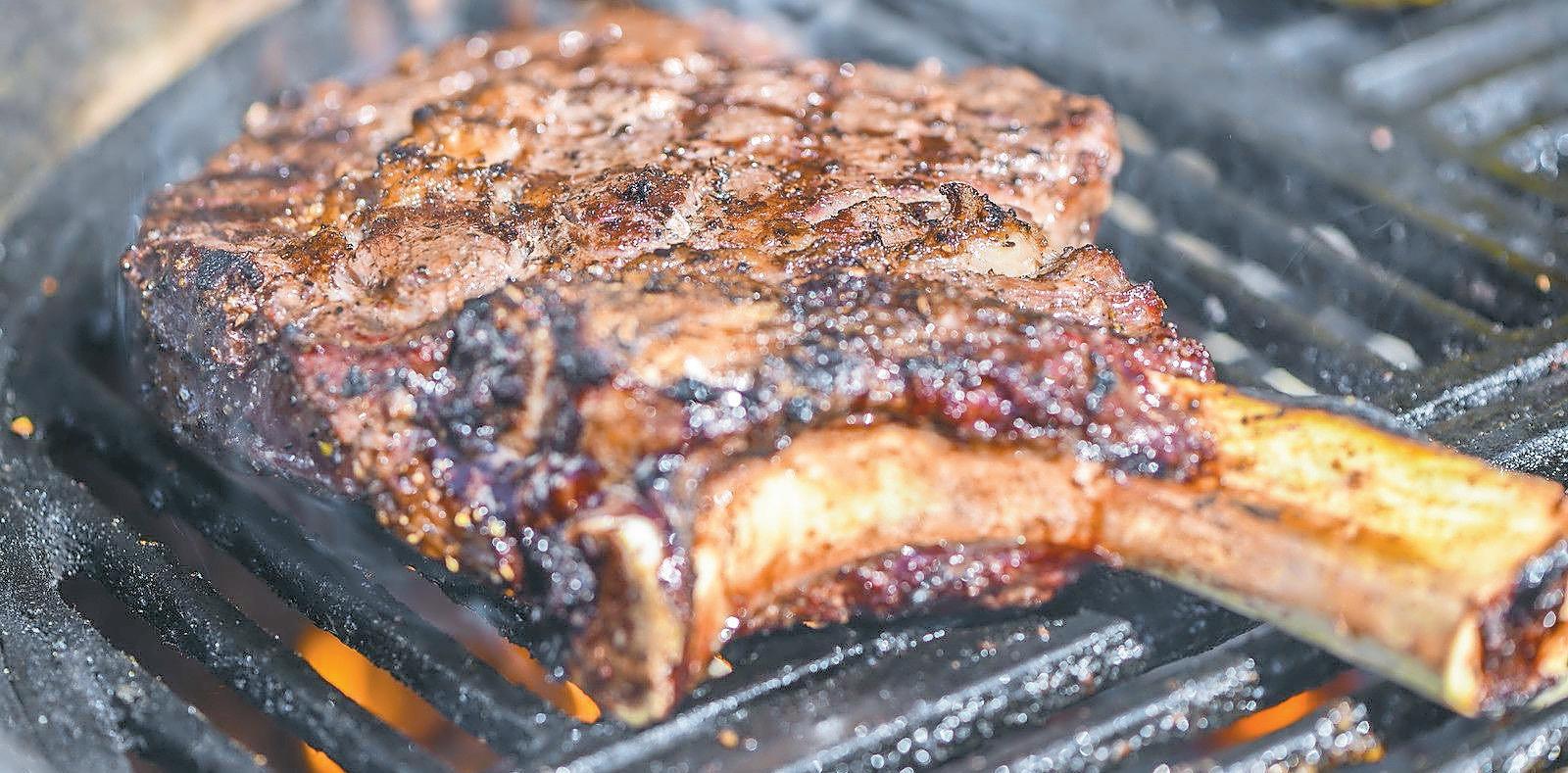
Grilled Steak with Bloody Mary Salsa. paleoleap.com
JONI: Savoring Memorial Day outdoor-cooking…
Continued from page 14
• 3 large red onions
• 10 large shallots
• 1 cup beef stock
• 1/4 to 1/2 cup dry red wine
• 1 to 2 Tbsp red currant jelly
• 1/4 cup extra virgin olive oil
• Salt and pepper to taste
BURGERS:
Peel the onion and garlic and chop the onion into several pieces. Place into the bowl of a food processor. Add the garlic, bread crumbs, tamari sauce and sugar and process until finely chopped and well blended. Mix with the meat and form 4 to 6 patties. Place on a plate, cover with plastic wrap and refrigerate.
RED ONION SAUCE:
Peel and slice the red onions and the shallots. Heat a large deep sided skillet and add the olive oil. Add the onions and shallots and cook over low heat until they begin to turn golden brown. Turn and gently break apart the rings.
When evenly golden, but not caramelized, add the stock and the wine and reduce the heat. Add the jelly and simmer until the liquid is reduced by about half, 20 to 35 minutes. Season with salt and pepper and a bit more jelly for sweetness, if you like.
Meanwhile, grill the burgers to desired doneness and serve with the hot onion sauce. Serves 4 to 6.
Citrus Pineapple Chicken Kabobs (Meat)
The marinade is all about tasting and adjusting flavors to get the one you like. You can add sweetness or heat, some middle-eastern flavor or even a hint of mint. Your choice!!
• 4 skinless, boneless chicken breasts cut into bite-sized pieces for skewering
• 1 fresh, very ripe pineapple, peeled and cut into inch-thick rings, each ring cut into 4 to 6 pieces
• 2 oranges cut in half, each half cut into 3 wedges
• 2 Red Bell peppers
MARINADE:
• Juice of one orange
• 1 to 2 tsp. freshly grated orange zest
• Juice of 1/2 lemon
• Freshly grated zest of 1/2 lemon
• Juice of 1/2 lime
• Freshly grated zest of 1/2 lime
• 2 to 3 Tbsp. Extra Virgin Olive Oil
• 2 to 3 Tbsp. Pure Cane Sugar Syrup OR Pure Maple Syrup OR Honey (more to taste)
• 1 tsp. Tamari Sauce
• OPTIONALS: 1/4 tsp. ground cumin
1/4 tsp. cayenne pepper or red pepper flakes
1/4 cup pineapple juice
1 to 2 tsp. finely minced fresh mint leaves
Mix all the marinade ingredients together in a small bowl and mix well. Taste and adjust
seasonings. Add any of the optional ingredients, taste and adjust.
Cut the chicken into large chunks and place in a shallow glass baking dish. Cut the peppers in half, remove the seeds and cut into uniform pieces. Set aside in a small bowl. Peel and slice the pineapple. Cut into pieces and set aside in a small bowl.
Pour about 2/3 of the marinade over the chicken, cover with plastic wrap and refrigerate for 3 hours or overnight. Store the rest of the marinade, covered, in the refrigerator Cover the pineapple and peppers and refrigerate. Place the pepper pieces in a bowl and refrigerate. Remove the chicken, peppers and pineapple from the refrigerator.
Cut the oranges into 6 wedges each and place one wedge at the beginning and ending of each skewer. Divide the chicken, peppers and pineapple pieces evenly among 4 to 6 skewers, threading them carefully. Discard the marinade in which the chicken soaked.
Place the skewers on a hot grill and baste with the reserved marinade. Cook until the chicken juices run clear and the peppers are a bit charred at the edges. Serves 4 to 6.
Grilled Salmon with Rhubarb Salsa (Pareve)
The sweetness of the salmon blends nicely with the sweet and sour rhubarb, which is in abundance this time of year. Use on any other firm-fleshed fish you like. Great over tuna or Halibut.
• 4 salmon fillets or steaks, about 6 to 8 oz each
• 1 Tbsp. canola oil
• 1 tsp. Extra Virgin Olive oil
• 1 small red onion, chopped
• 1 to 2 small shallots, minced
• 4 to 6 stalks rhubarb, cut into 1/2 inch pieces
• 2 Tbsp. sugar
• 1 to 2 Tbsp. dark brown sugar (to taste)
• 1/4 cup water
• 1 Tbsp. balsamic vinegar
• 1 Tbsp. garlic wine vinegar
• 1 Tbsp. chopped fresh thyme
• 1 tsp. chopped fresh parsley
• 1/3 cup raisins
• OPTIONAL: Add 1/4 cup drained crushed pineapple.
Heat a small saucepan and add the oil. Add the chopped onion and shallots and stir over medium heat. Cook until translucent and soft,
about 5 to 10 minutes. Add the rhubarb, water, and sugars, using half the brown sugar. Stir well. Add the raisins and bring to a boil. Reduce the heat, cover and simmer for 10 minutes, stirring often, until the rhubarb is very soft. Add the vinegars, parsley and thyme. Cook for 2 minutes. Remove from heat and add salt, pepper and more brown sugar, if needed, to taste.
Meanwhile, broil or grill salmon steaks as desired. Place a piece of fish on each plate and top with sauce or place sauce on the side. Serves 4.
Write: Columnist@TheJewishStar.com
Grilled Salmon with Rhubarb Salsa. farmtojar.com
Great Grilled Steak With Easy Hot Chili “Mop”. meatwave.com
A Muslim women’s group is expected to march in Manhattan’s Israel parade on May 31, believed to be a first in the event’s 61-year history.
Anila Ali, president of the American Muslim & Multifaith Women’s Empowerment Council, told JNS she expects to lead about 30 people in the Fifth Avenue parade.
Ali said anti-Israel protesters do not represent all Muslims, and that her group supports Israel’s right to exist. She recalled Jewish support for Muslims after 9/11 and said she wants to return that solidarity now, as Jews face rising antisemitism.
“A lot of people are afraid, but we are not,” Ali said.
Meanwhile, for the first time in memory, New York’s mayor is not expected to march in the annual Israel parade. Zohran Mamdani, the city’s first Muslim chief executive, has long opposed Israel’s existence as a Jewish state and has said he would have Israel’s prime minister arrested in New York City.
Sources at the Jewish Community Relations Council of New York, which runs the parade, were unable to confirm that no other Muslim groups have participated in years past, adding that, for security reasons, the organization does not comment on participating groups.
Swiss to open
Mengele files
Switzerland’s intelligence service will open files on Nazi war criminal Josef Mengele, ending years of refusals to historians.
Mengele, the Auschwitz doctor known as the “Angel of Death,” fled to South America after World War
II but returned to Europe at least once, visiting Switzerland for a ski vacation in 1956.
Historians have long suspected he returned after West Germany issued an arrest warrant in 1959.
Researchers found his wife rented an apartment in Zurich near the airport, where police saw an unidentified man enter.
Mengele sent about 400,000 people to their deaths at Auschwitz, according to Yad Vashem. He died in Brazil in 1979 without being prosecuted.
Talmud study reaches Everest heights
An Israeli man completed a Talmudic tractate at Mount Everest Base Camp — but missed out on a world record.
Moshe Frei, 56, of Petach Tikvah, was trekking with three friends when he finished studying the Menachot tractate Monday at 17,598 feet.
“The timing was right, and it was a great place,” Frei said.
His friends filmed the moment and posted the nearly four-minute video on social media.
Frei, an attorney, said he has studied a daily page of Talmud for 20 years. A Chabad emissary told him someone else had completed a similar feat at a higher elevation.
“It’s OK it wasn’t me,” Frei said.
Envoy rips J Street as ‘cancer’
Israeli Ambassador to Washington Yechiel Leiter called J Street a “cancer within the Jewish community” on Monday, accusing the liberal Jewish group of being “du-
Somaliland envoy makes Israel history
Somaliland’s first ambassador to Israel, Mohamed Hagi, presented his credentials to Israeli President Isaac Herzog in Jerusalem on Monday, marking a first for the self-declared state. Somaliland declared independence from Somalia in 1991 but lacks broad international recognition. Somalia has rejected Israel’s move, saying it opposes recognition of what it considers part of Somalia. Herzog said Israel seeks cooperation with Somaliland in food security, energy and science. Hagi called the relationship “strong” and said it would “pave the way” for cooperation in development, politics, security and peopleto-people ties.
Rabbi honored for holy stubbornness
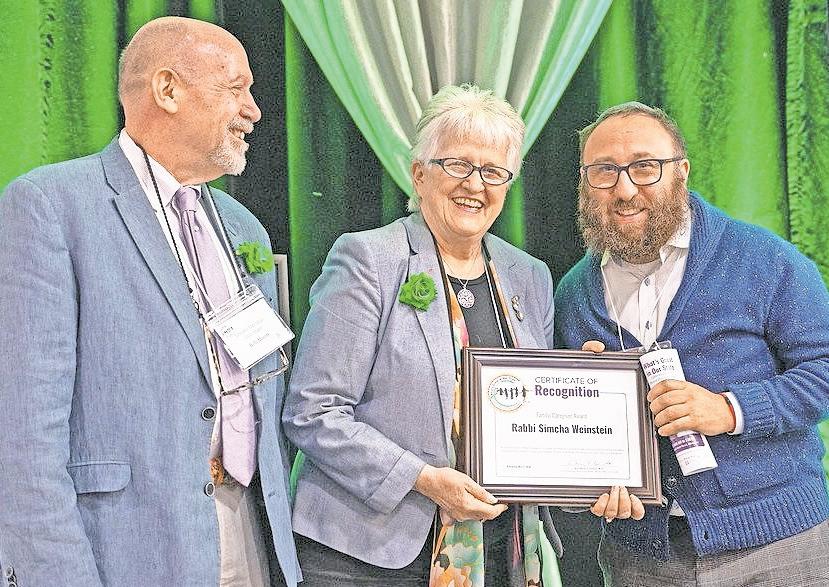
Brooklyn Rabbi Simcha Weinstein, a disability rights advocate, was honored as Family/ Caregiver Advocate of the Year at New York’s annual “What’s Great in Our State” event in Albany. He received the award from state Office of Mental Health Commissioner Dr. Ann Sullivan and Deputy Commissioner Bob Moon. Rabbi Weinstein serves on the NYS Council on Developmental Disabilities through an appointment by Gov. Kathy Hochul and has been nominated to the Developmental Disabilities Advisory Council. Through trainings, peer leadership work and his “Dadvocating Podcast,” Rabbi Weinstein pushes for families to help shape disability policy. “I’ve been the dad in crisis,” he said.
plicitous” for calling itself pro-Israel while opposing US aid to Israel.
Speaking at a National Task Force to Combat Antisemitism meeting at the Museum of the Bible in Washington, Leiter criticized J Street’s opposition to Prime Minister Benjamin Netanyahu’s government and its support for lawmakers who have voted to block arms sales to Israel.
J Street President Jeremy BenAmi told JNS the ambassador should engage with the group “instead of calling us names,” saying J Street represents Jews who support Israel but oppose policies they believe make it less secure.
Terrorist death penalty takes effect
A law allowing capital punishment for convicted terrorist murderers took effect Sunday in Judea and Samaria after IDF Central Command chief Maj. Gen. Avi Bluth signed a military order implementing the measure.
The order followed the Knesset’s March 30 approval of legislation mandating the death penalty for non-Israeli residents of Judea and Samaria convicted of deadly terrorist attacks, unless a military court finds special circumstances warrant life imprisonment.
National Security Minister Itamar Ben-Gvir said:
“We promised and we delivered,” adding that terrorists who murder Jews should not expect prisoner-release deals.Defense Minister Israel Katz said terrorists “will pay the heaviest price.” Israel has used the death penalty only twice.
Torah lesson powers broadband pitch
Arielle Roth, US assistant secretary of commerce for communications and information, cited the weekly Torah portion during a May 14 speech in Ogallala, Nebraska, celebrating the state’s first household connected through the Broadband Equity, Access and Deployment program.
Roth, who also leads the National Telecommunications and Information Administration, connected the opening of Numbers, Bamidbar, to broadband policy. She said the Torah portion’s lesson — that a shared mission does not require uniform roles — applies to internet deployment.
“Different terrains and communities require different solutions,” Roth said, arguing that technologyneutral policy helped Nebraska move quickly to connect rural Americans. She told JNS the parsha offered a natural framework for explaining the program’s approach.
Synagogue assault suspect faces decade
A California man faces up to 10 years in federal prison after being indicted on a hate-crime charge in connection with the 2024 assault of a Jewish man outside Adas Torah Synagogue in Los Angeles.
Federal prosecutors said Zaid Gitesatani, 28, of Carlsbad, punched the victim near the Orthodox synagogue in the Pico-Robertson neighborhood on June 23, 2024, during a protest against an Israeli real estate event.
Authorities said Gitesatani later posted a screenshot of the assault
on Instagram, along with antisemitic comments and photos of his bruised knuckles. The FBI is investigating. Assistant US Attorney General Harmeet Dhillon said the Justice Department would vigorously prosecute “crimes of hate and violence.”
Teens restore graves, honor memory
Jewish teens in Lausanne, Switzerland, recently cleaned and restored 16 graves in a Jewish cemetery as part of a community project focused on memory, responsibility and Jewish continuity.
The project, supported by the Yael Foundation, stood in contrast to recurring vandalism of Jewish cemeteries across Europe. Simon Bismuth, director of the Youth Department at the Jewish Community of Lausanne and the Canton of Vaud, said the effort grew partly from his own experience cleaning the grave of his daughter, Tsofia.
Bismuth said the teens restored dignity to graves “that had sometimes been a little forgotten,” calling the work a quiet but powerful form of leadership. Lausanne’s Jewish community includes about 2,500 people.
Eiffel Tower flag stunt brings arrests
French police arrested six people suspected of unfurling a large Palestinian flag from the Eiffel Tower without permission, a police source said Saturday.
Extinction Rebellion France said it hung the flag from the Paris landmark’s first floor Friday to support Palestinians and accuse Israel of “massacres” in Gaza and “ecocide crimes,” including the uprooting of olive trees in Judea and Samaria, AFP reported.
The stunt was timed for “Nakba Day,” observed annually on May 15 to mark Arab rejection of the 1947 UN Partition Plan and the 1948-49 war launched by Arab states against the newly revived State of Israel.
Israel races into AI future
Israel’s government has approved an initial work plan for its new National Artificial Intelligence Directorate, a move Prime Minister Benjamin Netanyahu said will help make Israel a global AI leader.
The directorate, led by Brig. Gen. (res.) Erez Askal, was created to boost Israel’s technological edge and national security.
The plan focuses on three areas: expanding AI talent, building computing power and creating acceleration centers for AI applications.
The government plans to make 5,000 advanced GPUs available each year from 2027 to 2032 for academia and the public sector.
“Israel is going to be a world leader in the field,” Netanyahu said.
Northern Israel gets $93M rebuilding boost
Keren Kayemeth LeIsrael-Jewish National Fund has approved a $93 million development package for northern Israeli communities battered by war with Hezbollah.
The package includes money for infrastructure, security upgrades, housing initiatives and projects to strengthen border communities.
About $49.7 million will go to towns along the Lebanon border, including Misgav Am, Malkia, Margaliot, Kfar Yuval, Dovev, Avivim, Shtula, Zar’it, Hanita, Adamit and Arab al-Aramshe.
Another $6.9 million will upgrade security roads in coordination with Israel’s Defense Ministry.
KKL-JNF also approved $44 million in assistance for the Golan Heights, including projects in Katzrin.
‘Fauda’ is back with Oct. 7 trauma
The new season of the Israeli action series “Fauda” premiered in Israel on Monday, with an 11-episode plot focused on the aftermath of the Oct. 7, 2023, Hamas-led invasion of the northwestern Negev.
The season, featuring French actress Mélanie Laurent of “Inglourious Basterds,” will air weekly on Israel’s Yes satellite television provider and stream internationally on Netflix later this year.
“This is not just another season or script,” co-creator Avi Issacharoff posted on X. “We are proud of this season perhaps more than its predecessors, because of its importance, the touching of the raw nerve and the very fact that it will bring to every point in the world the story of our personal and national trauma.”
Israeli actor Idan Amedi, injured while fighting Hamas in Gaza, does not appear this season.
Jerusalem tops
1 million residents
Jerusalem is now home to an estimated 1.063 million residents, making it Israel’s largest city, according to Central Bureau of Statistics figures released ahead of Jerusalem Day.
At the end of 2025, 56.6 percent of Jerusalem’s residents were Jews and others, 38.4 percent were Arabs and 4.9 percent were foreigners. About 29.2 percent of residents were Haredi — roughly half of the city’s Jews and others.
The city added about 13,100 residents in 2025, driven mostly by natural growth, even as more Israelis left Jerusalem for other communities than moved in.
Jerusalem’s fertility rate was 3.68 per woman, well above Israel’s national rate of 2.89.
Smart homes meet Shabbat laws
Can a smart home keep Shabbat?
That question brought researchers, rabbis and scientists to Herzog Academic College on May 10 for a symposium on Jewish law, artificial intelligence and smart technology.
Speakers discussed robotic vacuums, voice assistants, autonomous vehicles, humanoid coffee makers and AI-powered homes — and whether automated actions differ halachically from human acts of melakha.
The discussion focused not only on technical workarounds, but on preserving the spirit and sanctity of Shabbat as technology becomes more independent, “intelligent” and woven into daily life.
Israel: Rights group tied to Hamas
Israel’s Diaspora Affairs Ministry released a report alleging that the Geneva-based EuroMed Human Rights Monitor has ties to Hamas and helps drive anti-Israel legal and media campaigns.
EDITOR WANTED
The Jewish Star is seeking a new editor who will be responsible for expanding local news coverage, recruiting and managing staff and freelance contributors, and editing and enhancing material from The Star’s wire services.
Candidates should have news reporting and editing experience, an understanding of what interests Modern Orthodox Jewish communities, and a drive to excel in a professional, collegial environment.
While our primary competitors emphasize one-dimensional and biased political coverage, The Jewish Star’s team of veteran journalists is committed to the highest professional standards — insisting on journalistic and commecial integrity and a pursuit of truth that’s grounded in an adherence to Torah values and a love of Israel.
Serving diverse Modern Orthodox communities on Long Island, in Queens, Riverdale, Upper Manhatan and Westchester, The Jewish Star is an independent newspaper produced by Richner Communications, a 100 employee family-owned company that publishes the Pulitzer Prize winning Riverdale Press and dozens of community newspapers, websites and shopping guides.
This full-time in-person or hybrid position (starting at $50,024-$60,320) offers Jewish holidays, vacation, health insurance, and 401k.
Join The Jewish Star … and help make Jewish journalism great again.
The report says Euro-Med founder and chairman Ramy Abdu was the subject of a 2020 Israeli administrative detention order under Israel’s Counter-Terrorism Law because of alleged activity with “IPalestine,” which Israel says is affiliated with Hamas.
The ministry said Euro-Med provided material used in South Africa’s case against Israel at the International Court of Justice.
Diaspora Affairs Minister Amichai Chikli accused The New York Times of citing an organization “headed by none other than a Hamas member and terrorist.”
Argentina takes Holocaust remembrance helm
Argentina has formally taken over the rotating chairmanship of the International Holocaust Remembrance Alliance, as global antisemitism surges.
The handoff from Israel took place at the United Nations in Geneva, two months after Argentina became the first South American country to lead the organization.
Marcelo Mindlin, president of the Holocaust Museum of Argentina, will chair the IHRA for one year.
Israel’s ambassador to the UN in Geneva, Daniel Meron, warned that the hatred that fueled the Holocaust has not disappeared.
“We have seen it all before,” Meron said.
France is scheduled to assume the IHRA presidency next year.
Musk: Israel tops world in innovation
Elon Musk hailed Israel as the world’s top innovation engine, telling a Tel Aviv summit that the Jewish state “punches high above its weight.”
“I’m a huge admirer of the innovation coming out of Israel,” Musk said Monday by video at the Samson International Smart Mobility Summit at Expo Tel Aviv. “I’d say innovation per capita, Israel must be number one in the world.”
Prime Minister Benjamin Netanyahu shared the remarks on X, thanking “the world’s leading man in innovation.”
Musk, who owns Tesla and SpaceX, spoke from Texas after the conference was delayed from March because of the war with Iran. He last visited Israel in November 2023, touring Kibbutz Kfar Aza after the Oct. 7 massacre.
Philly break-in suspect shot dead
A man who allegedly broke into a Jewish family’s Philadelphia home was shot dead by a neighbor after entering a child’s bedroom, police said. Officers responded to a 911 call at a Griffith Street home at 1:10 a.m. Monday, Philadelphia police spokesman Officer Miguel Torres told JNS. “A male suspect forcibly entered the property, where eventually a struggle ensued, and the suspect was shot,” Torres said.
Torres said a neighbor came to help the family and shot the intruder, who suffered a gunshot wound to the chest and was pronounced dead at Jefferson-Torresdale Hospital at 1:39 a.m. Police said the investigation is ongoing. There was no indication the family was targeted because it is Jewish.
RFK Jr. revives religious-rights unit
The U.S. Department of Health and Human Services plans to revive a conscience and religious freedom division as part of a civil-rights office shakeup aimed at fighting Jew-hatred and protecting religious liberty.
Robert F. Kennedy Jr., the agency’s secretary, said Monday the department would restore the division first created under President Donald Trump in 2018 and dissolved by the Biden administration in 2023.
The new structure will prioritize civil rights, conscience and religious freedom, and health information privacy and security, said Paula Stannard, director of the agency’s civil rights office.
REPORTER WANTED
is looking to add a full-time reporter to our team as we expand our coverage of local news that’s important to Modern Orthodox communities on LI and in Queens, Riverdale and Westchester.
is looking to add a full-time reporter to our team as we expand our coverage of local news that’s important to Modern Orthodox communities on LI and in Queens, Riverdale and Westchester.
Position offers expert mentoring, a starting salary of $36,400 to $39,520, and a menu of benefits including all Jewish holidays.
Salary ($35,000–$38,000) offers a menu of benefits including all Jewish holidays.
Candidates who have reporting and news-writing experience (professional or collegiate) are invited to email a resume with clips or links to Jobs@TheJewishStar.com.
Candidates who have reporting and news-writing experience (professional or collegitate) are invited to email a resume with clips or links to Jobs@TheJewishStar.com
Jewish Star Torah columnists: Rabbi Benny Berlin, spiritual leader of BACH Jewish Center in Long Beach; Rabbi Avi Billet of Anshei Chesed, Boynton Beach, FL, mohel and Five Towns native; Rabbi Binny Freedman, rosh yeshiva of Orayta, Jerusalem; Dr. Alan A. Mazurek, former ZOA chair, retired neurologist, living in Great Neck, Jerusalem and Florida.
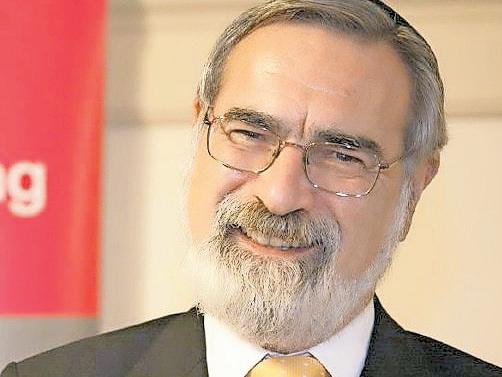
Contributing writers: Rabbi Sir Jonathan Sacks zt”l, former chief rabbi of United Hebrew Congregations of British Commonwealth; Rabbi Yossy Goldman, president South African Rabbinical Association; Rabbi Dr. Tzvi Hersh Weinreb, OU executive VP emeritus.
Five Towns Candlelighting: From the White Shul, Far Rockaway, NY
Scarsdale Candlelighting: From the Young Israel of Scarsdale, Scarsdale, NY
Double celebration: Thinking about Shavuot
The festival of Shavuot is a mystery wrapped in an enigma. Here is how Shavuot is described and defined in parshat Emor:
From the day after the Sabbath, the day you brought the sheaf of the wave offering, count off seven full weeks. Count off 50 days up to the day after the seventh Sabbath, and then present an offering of new grain to the L-rd. … On that same day you are to proclaim a sacred assembly and do no regular work. This is to be a lasting ordinance for the generations to come, wherever you live. (Leviticus 23:15-21)
These are the difficulties. In the first place, Shavuot, “the feast of weeks,” is given no calendrical date. All the other festivals are — Pesach, for example is “on the 15th day” of the “first month.” Shavuot is calculated by counting “seven full weeks” from a particular starting time. Secondly, as long as the New Moon was determined on the basis of eyewitness testimony (until the fourth century of the Common Era), Shavuot could have no fixed date. In the Jewish calendar a month can be long (30 days) or short (29). If Nissan and Iyar were both long months, Shavuot would fall on 5 Sivan. If both were short, it would fall on 7 Sivan. And if one were long and the other short, it would fall on 6 Sivan. Unlike other festivals, Shavuot is (or was) a moveable feast.
Thirdly, the point at which the counting of days and weeks begins is signaled in a profoundly ambiguous phrase: “From the day after the Sabbath.” But which Sabbath? And what is the reference to a Sabbath doing here at all? The previous passage has talked about Pesach, not the Sabbath.
This led to one of the great controversies in Second Temple Judaism. The Pharisees, who believed in the Oral Law as well as the Written one, understood “the Sabbath” to mean, here, the first day of Pesach (15 Nissan). The Sadducees, who believed in the Written Law only, took the text literally. The day after the Sabbath is Sunday. Thus the count always begins on a Sunday, and Shavuot, 50 days later, also always falls on a Sunday.
The fourth mystery, though, is the deepest: what is Shavuot about? What does it commemorate?
About Pesach and Succot, we have no doubt. Pesach is a commemoration of the exodus. Suc-
cot is a reminder of the 40 years in the wilderness so that, as our sedra says, “your descendants will know that I had the Israelites live in booths when I brought them out of Egypt. I am the L-rd your G-d.”
In the case of Shavuot, all the Torah says is that it is the “Feast of the Harvest” and the “Day of First-fruits.” These are agricultural descriptions, not historical ones. Pesach and Succot have both: an agricultural aspect (spring/ autumn) and a historical one (exodus/wilderness).
This is not a marginal phenomenon, but of the essence. Other religions of the ancient world celebrated seasons. They recognized cyclical time. Only Israel observed historical time, time as a journey, a story, an evolving narrative. The historical dimension of the Jewish festivals was unique. All the more, then, is it strange that Shavuot is not biblically linked to a historical event.
What happened on Shavuot ensured Jewish survival through nearly 20 centuries of exile and dispersion.
Jewish tradition identified Shavuot as “the time of the giving of the Torah,” the anniversary of the Divine revelation at Sinai when the Israelites heard the voice of G-d and made a covenant with Him. But that connection is not made in the Torah itself. To be sure, the Torah says that “in the third month after the Israelites had gone forth from the land of Egypt, on that very day, they entered the wilderness of Sinai” (Ex. 19:1), and Shavuot is the only festival in the third month.
So the connection is implicit, but it is not explicit. For this, as for the festival’s date, we need the Oral tradition.
What then was the view of the Sadducees? It is unlikely that they linked Shavuot with the giving of the Torah. For that event had a date, and for the Sadducees Shavuot did not have a date. They kept it on a Sunday, they observed it on a specific day of the week, not on a specific date in the year.
How did the Sadducees view Shavuot?
There is a fascinating episode recorded in the Rabbinic literature (Menachot 65a) in which a Sadducee explains to R. Yochanan ben Zakkai why, according to them, Shavuot is al-
ways on a Sunday: “Moses our teacher was a great lover of Israel. Knowing that Shavuot lasted only one day, he therefore fixed it on the day after the Sabbath so that Israel might enjoy themselves for two successive days.” Shavuot gave the Israelites a long weekend!
From this starting point we can begin to speculate what Shavuot might have meant for the Sadducees. The late Louis Finkelstein argued that they were landowners and farmers. In general, they were wealthier than the Pharisees, and more closely attached to the State and its institutions (the Temple and the political elite.) They were as near as Judaism came to a governing class.
For farmers, the agricultural significance of Shavuot would have been clear and primary. It was “the festival of the harvest, of the first-fruits of your work, of what you sow in the field” (Ex. 23: 16). It came at the end of a seven-week process that began with the bringing of the Omer — “a sheaf of the first grain of your harvest,” the first of the barley crop” (Lev. 23: 10).
This was the busy time of gathering in the grain (this is the setting of the Book of Ruth,
rabbi Sir JonaThan
Sacks
Torah in Israel: Surround sound, Sensurround
When I was younger, and movies were an event people enjoyed going to — “Come on, let’s go, I don’t want to come in late after the movie has started!” — I remember the introduction of multi-sensory technologies that theaters and moviemakers were developing to enhance the visual and auditory experience. The most prominent were surround sound and Sensurround, which gave a distinctive sound and feel to the action on the screen.
These were eventually incorporated into attractions in amusement parks such as Disney World and Universal Studios. Audiences could then experience high-fidelity audio, along with tactile and visual effects, such as the rumble of an earthquake, the heat of a fire or even a splash of liquid. (Please don’t even mention “Smell-OVision,” a short-lived olfactory experience from the 1960s that never really worked.)
When I trained to become a neurologist, one of the disciplines we studied was the understanding of different sensory experiences — visual, auditory, tactile, olfactory and taste — and how their disruption could affect patients. Some were associated with specific diseases such as stroke, diabetes, multiple sclerosis or brain tumors.
It was then that I became aware of a neurological curiosity known as synesthesia This is the condition whereby the stimulation of one sense automatically and involuntarily stimulates another.
For example, certain affected individuals can hear music and see distinct colors or see a number or read a word and associate it with a particular color, taste or feel. It is a genetically determined curiosity, relatively rare, occurring in 2 to 5 percent of the population and not as-
sociated with any specific diseases or disorders. At the time, it occurred to me that I’d heard of this before my medical training, which leads us unpredictably to Chag Shavuot. For as has often been said, “Everything is in the Torah,” and synesthesia is no exception.
Turning to Shemot 20:15, part of the Torah reading on Shavuot — after the extraordinary experience of hearing the delivery of the Aseret HaDibrot (at least the first two from G-d Himself) the Torah recounts, “V’chol ha’am roim et hakolot v’et halapidim v’et kol hashofar v’et ha-har ashein — the entire people saw the thunder and the flames, the sound of the shofar and the smoking mountain.”
They saw the thunder. They saw the sound
Jerusalem: It’s the only place I can think about
It was Erev Shavuos, 1960, and the Boyaner Rebbe was in Yerushalayim. Word had spread quickly that the Rebbe had come from America to spend Yom Tov in the holy city, and talmidei chachamim came from across Eretz Yisrael to spend time with him. Among them were a group of his followers from Tel Aviv who had traveled specifically to see him. They knew he would be leaving after Yom Tov, and they wanted more
time. So on Erev Shavuos they approached him with a request.
“Rebbe,” they said, “we know you are busy. We know Shavuos is almost here. But can we reserve you for the Shabbos after Yom Tov? Can you come to Tel Aviv and spend Shabbos with our community? We so rarely have you with us.”
“Right now,” he told them, “there is only one place I can think about traveling. Only one destination on my mind. After Shavuos we can talk. But right now, the only place I can think about is Har Sinai.”
He was not speaking about geography. He was speaking about a state of mind that Shavuos demands of us. Not a commemoration of something that happened long ago, but a return.
On Shavuot, we commemorate the pact of spiritual loyalty that G-d and the Jewish people pledged to each other at Mount Sinai. Yet a plain reading of the biblical text shows us that not long after the Jews committed their loyalty to G-d, many abrogated their sacred promise and worshipped something else: the Golden Calf.
While still encamped at Mount Sinai, the Jews — or at least some Jews — violated their commitment and ended up worshiping an idol in
the image of a Golden Calf. These sinners were duly punished and their cult was swiftly repressed … or was it?
Centuries passed, and following the death of King Shlomo, the cult of worship of the Golden Calf was revived with the erection by King Yeravam of Golden Calves at Beth El and Dan.
Rabbi Reuven Chaim Klein, author of G-d Versus Gods: Judaism in the Age of Idolatry (Mosaica Press, 2018), deals in some depth with this issue in the following manner: Are these outbursts of bovine adoration to be understood as isolated incidents or as part of a larger, deviant stream of Judaism? Is there any
The Ten Commandments and the Book of Ruth are each as important to the intellectual appreciation and religious experience of Shavuot as blintzes and cheesecake are to the culinary celebration of this beautiful holiday. Yet they are strikingly different from each other, and we are puzzled to find them sharing center stage.
What connects the Book of Ruth, a simple pastoral tale, to the central theme of this festival, “the time of the giving of the Torah”? Why commemorate the momentous occasion of G-d’s
The Conductor does not miss a note.
A journey back to the foot of the mountain, to stand there and receive what was given then. What is given now.
The Or HaChaim HaKadosh offers a doorway into this mindset, and it is hiding in plain sight in the opening pesukim of Parshas Yisro.
Perek yud tes of Shemos begins with something strange. Pasuk alef says that the Jewish people arrived at Midbar Sinai. Then pasuk beis says they traveled from Rephidim and came to
significance to the Jews choosing a cow to worship as opposed to any other animal or element of nature? Do these cases of cow worship have anything to do with the Apis Bull or the Osiris cult in Egyptian worship, which also venerated the beast?
Rabbi Klein addresses these issues and much more. He traces the history of avodah zarah as it appears throughout the Bible’s narratives utilizing up-to-date research and traditional rabbinic sources that will give you an informed yet understandable approach to this era of our people’s history, all stemming from the experience of the giving of the Torah at Mount Sinai.
the wilderness of Sinai. Any reader notices immediately that the order is backwards. First tell me where they came from, then tell me where they arrived. Why does the Torah announce the arrival before describing the journey?
The Or HaChaim explains that the arrival of Bnei Yisrael at Har Sinai was so saturated with excitement, so charged with anticipation after millennia of the world waiting for this moment, that the Torah itself could not speak straight. Hashem, so to speak, describing the approach to Matan Torah, was so overcome with joy that the words themselves tumbled out of order. They are here. They finally arrived. Wait, where did they come from? It does not matter. They are here.
This historical narrative takes us through the entire Biblical account, spanning the period of the judges, kings and their priests, detailing the idol worship that swept these eras that included the worship of Baal and Asherah.
This first section of the book concludes with a chapter dedicated to explaining the rabbinic legend of “slaughtering” the inclination for avodah zarah and what that means for us to this very day. One fascinating chapter deals with Rav Yitzchok Hutner’s teaching on “Idolatry’s Strangeness,” and warrants your attention. The footnoting here should be of particular interest. Other idol worship traditions dealt with in this book include those of Molech, Baal Peor and Dagon.
Rabbi Klein’s teachings are staunchly tradi-
Revelation on Mount Sinai with this charming, but surely not momentous story?
To answer this, let us ponder the plot of the Book of Ruth. A careful reading of the book reveals that this is by no means merely an idyllic morality tale.
Its characters suffer almost every conceivable human tragedy: famine, betrayal, exile, sudden death, bereavement, widowhood, loneliness, poverty and shame. The book begins with the depiction of a demoralized nation of Israel, devastated by famine.
One noble family deserts its brethren and betrays its homeland. The family soon experiences the pangs of exile. Its sons marry women of an alien culture, further betraying their heritage. Death strikes swiftly, leaving three widows, and one bereaved mother. Two of the women return home in shame and loneli-
ness, with a life of poverty in store for them.
Both women, mother-in-law Naomi and daughter-in-law Ruth, return home with hope. Naomi’s is the hope of desperation; she has no choice but to hope. But Ruth’s is the hope of courage and commitment: “Wherever you go, I will go; wherever you dwell, I will dwell; your people shall be my people and your G-d my G-d” (Ruth 1:16).
This makes for a stirring and inspirational narrative. But the question remains: What does this drama have to do with zman matan Torateinu, the “time of the giving of the Torah?”
Does this tale match up to the majesty and power of the Ten Commandments? What connection is there between G-d’s Universal Laws, His do’s and don’ts for the human race, and this sad tale? How does this story, in which G-d barely plays a role, find its way into the liturgy of a day which celebrates the most foundational religious experience?
For me, the answer is apparent.
Two texts are chosen for Shavuot. The Ten Commandments incorporate the Torah’s highest values: compassion, generosity, loyalty and responsibility for each other — the laws, standards and requirements of a just and successful society. The Book of Ruth proffers but one example of a society which defies those values with disastrous consequences but achieves inspiring results when it abides by them.
Rabbi Reuven Chaim Klein.
Published weekly except during certain religious and civil holidays by The Jewish Star LLC New York City office: 5676 Riverdale Ave Suite 311, Bronx NY 10471 • LI office: 2 Endo Blvd, Garden City NY 11530 Here’s how to reach The Jewish Star — Write: Editor@TheJewishStar.com. Call: 516-622-7461 ext 291
Editor & Publisher: Ed Weintrob
516-622-7461 ext 291
Jewish Star Associate: Nechama Bluth
516-622-7461 ext 241
Content: The Publisher endeavors to ensure that our content is within the bounds of normative halachah and hashkafah. Anyone who feels anything we publish may be inappropriate in this regard is urged to bring the item in question to the attention of the Publisher.
Advertising is accepted at the sole discretion of the Publisher and should conform to standards appropriate for distribution in an Orthodox community. Send us your news! Editor@TheJewishStar.com
Advertising: Publisher@TheJewishStar.com
Kashrut: The Jewish Star is not responsible for the
kashrut of any product or establishment featured in its pages. If you have questions regarding any establishment or product, including its supervision, please consult your rabbi for guidance.
Submissions: All submissions become the property of The Jewish Star and may be edited and used by the Publisher, its licensees and affiliates, in print, on the web and/or in any media that now exists or will exist in the future in any form, including derivative works, throughout the world in perpetuity, without additional authorization or compensation. The individual or entity submitting material affirms that it holds the copyright or otherwise has the right to authorize its use in accordance with The Jewish Star’s terms for submissions.
Opinions: Views expressed by columnists and other writers do not necessarily reflect the position of the Publisher or of The Jewish Star LLC.
Distribution: The Jewish Star is available free in kosher food establishments, stores, synagogues, and curb-side newsboxes on Long Island, in New York City and elsewhere. To request free delivery to your location, write Publisher@TheJewishStar.com.
Copyright: All content is copyright and may not be republished or otherwise reproduced without written permission by The Jewish Star; to do so without permission is against the law and halacha. For content reproduction write to Publisher@TheJewishStar.com.
The Jewish Star subscribes to JNS. It, or its contributors, own the copyrights on material attributed to them. The length and content of JNS material and all other submitted material may be edited by The Jewish Star.
Member: American Jewish Press Association. This newspaper contains words of Torah. While it is not considered shaimos, please dispose properly.
OPINION COLUMNISTS
Mitchell Bard, foreign policy analyst, authority on USIsreal relations; Ben Cohen, senior analyst, Foundation for Defense of Democracies; Stephen Flatow, president, Religious Zionists of America-Mizrachi and father of Alisa Flatow, murdered in an Iranian-sponsored Palestinian terrorist attack in 1995; Yisrael Medad, Americanborn Israeli journalist and political commentator; Rafael Medoff, founding director of David S. Wyman Institute for Holocaust Studies; Fiamma Nirenstein, Italian-Israeli journalist, author of 13 books, leading voice on Israeli affairs, Middle Eastern politics and antisemitism; Melanie Phillips, British journalist; Moshe Phillips, national chairman, Americans for a Safe Israel; Thane Rosenbaum, Distinguished University Professor at Touro University (published by Jewish Journal); Jonathan S. Tobin, editor-in-chief, Jewish News Syndicate.
Anti-Jewish fever dream at the New York Times
It’s now clear that we are living through a civilizational emergency. Just as the Palestinian Arabs tried to bring about the destruction of Israel in the attacks on Oct. 7, 2023, so the Islamic world has deployed the cultural apparatus of the West to destroy the Jews.
The spurious distinction between anti-Zionism and antisemitism is no longer even being deployed as a fig-leaf. Attacks on Jews are out of control in both Britain and America.
In London, such attacks are now taking place almost daily. In New York last week, a mob of Islamists and leftists besieged Park East synagogue on Manhattan’s Upper East Side; a few days later, another such mob set upon Jews outside a synagogue in Brooklyn.
Anti-Zionism, with its incendiary lies about Israel’s behavior designed to paint it as a unique menace and turn it into the pariah of the world, has been further weaponized to unleash something even darker.
We are witnessing a reversion to primitive, pre-modern forms of Jew-hatred.
The New York Times this week published a 4,000-word article by Nicholas Kristof headlined “The Silence That Meets the Rape of Palestinians,” in which Kristof accused Israel of training dogs to rape Palestinian Arab prisoners.
This grotesque assertion was used to exemplify Kristof’s claim of systematic sexual violence “against men, women and even children by soldiers, settlers, interrogators in the Shin Bet internal security agency and, above all, prison guards.”
The allegation that dogs were used to rape prisoners, said by experts to be anatomically
No other country is treated like this. Only Israelis are to be denied the unique reality of their suffering.
impossible, is as ridiculous as it is obscene.
Tellingly, it combines certain hallmarks of the Palestinian Arab mindset — the belief that dogs are filthy, that Jews are also filthy, and the habitual and false projection onto the Israelis of crimes that the Palestinian Arabs themselves commit against them
Indeed, Kristof has drawn upon precisely this poisonous Palestinian thinking.
The “dog rape” claim has been pushed since 2024 by the Geneva-based Euro-Med Human Rights Monitor. Kristof treats this source as credible. It’s anything but.
It’s previously claimed that the Israel Defense Forces harvested the organs of Palestinian corpses, another disgusting fantasy drawn from the depths of the deranged Palestinian mind.
The Israelis have listed the group’s founder, Ramy Abdu, as a Hamas operative. The day after the Oct. 7 slaughter and kidnapping of 1,200 Israeli innocents, Abdu posted on X that the perpetrators were “knightly heroes who forged for us a pure glory untainted by the mud.”
Kristof produced not one shred of evidence for his claims. His sources were either anonymous or belonged to the echo chamber advocating the mass murder of Jews and the destruction of Israel.
He quoted terrorism supporters whose own claims of abuse had changed over time. Hon-
est Reporting noted that Sami alSai, introduced by Kristof as a “freelance journalist,” has a long record of celebrating terrorists on social media and was jailed twice for incitement. The claims he made to Kristof about his alleged abuse differed in key details from the story he fed the Israeli “human rights” group B’Tselem last year.
More seriously still, former Israeli Prime Minister Ehud Olmert has accused Kristof of misrepresenting his words so that he was made to appear falsely as validating these allegations.
In short, the article was a nauseating travesty. But this wasn’t merely recycled Hamas propaganda demonizing Israel. The “dog rape” allegation was a psychotic fever dream straight out of medieval, Nazi and Soviet anti-Jewish demonology.
Kristof wrote that although some may wonder whether Palestinian witnesses might fabricate accusations to smear Israel, this struck him as “far-fetched.”
Just think about that. To Kristof, it wasn’t “farfetched” that a dog could be trained to rape a man. What was instead “far-fetched” to him was the suggestion that the Palestinians might be lying to harm Israel.
But that’s exactly what they do all the time. Kristof, his editors and other Israel-haters believe Palestinian lies — however absurd and impossible — because they want to believe them.
They regard the Palestinians as the wretched and oppressed victims of the Israelis. That’s why it’s considered as “far-fetched” to believe that the Palestinians could do anything monstrous to the Israelis, as to believe that the Israelis could be the Palestinians’ victims.
That’s also why so many of the Israel-haters have denied the sexual violence done to the Israelis on Oct. 7.
The day after Kristof’s travesty, the results were published of a two-year Israeli commission of inquiry into the gender-based atrocities committed during the Oct. 7 massacre and subsequent captivity of some 251 people, even young children, dragged that day into the Gaza Strip. The commission, founded by legal scholar Cochav Elkayam-Levy, drew upon more than 10,000 photographs and video segments; more than 1,800 hours of visual material; and more than 430 testimonies and interviews with survivors, witnesses, released hostages, experts and family members.
Its findings are very hard to read. The victims were tortured, mutilated and decapitated; a breast was cut off and tossed around; women were shot in the course of being raped and raped after they were murdered.
They were shot in the face to annihilate their beauty and their humanity; nails and other objects were found in their intimate areas; relatives were forced to perform sexual acts on each other. And it was all filmed by Palestinian savages who proudly carried out these depraved acts with delirious glee.
This report constitutes meticulously sourced, authoritative research that throws an even more shocking light on Kristof’s warped and malevolently sourced message.
The New York Times has been accused of running the Kristof article the day before in order to diminish the Israeli report. Kristof himself suggested that his aim was to diminish what happened on Oct. 7.
His article, he said, showed that “the horrific abuse inflicted on Israeli women on Oct. 7 now happens to Palestinians day after day.”
No other country is treated like this. Only Israelis are to be denied the unique reality of their suffering. Abuse happens in all prisons, and Israel is surely no different. But only Israel is subjected to psychotic lies about it.
That’s because Israel is the world’s only Jewish country, and the way Israel is being abused is
An fresco of a blood libel painted by the monk Adam Swach (1668-1747) at the cathedral basilica in Sandomierz, Poland. WikiCommons
MELANIE PHILLIPS
British journalist
The NY Times’ antisemitic war crosses a line
Jonathan S. tobin
JnS Editor-in-Chief
The pro-Israel community has been complaining about the New York Times since the 1970s. Indeed, anger about the attitude of the so-called “newspaper of record” toward Jews can be traced back to long before that — to the way it silenced coverage of the Holocaust because its assimilated Jewish owners didn’t wish to shine a spotlight on the specifically anti-Jewish crimes committed by the German Nazis and their collaborators.
The problems with the Times’ reporting about the State of Israel and the war being waged against it — or even its efforts to whitewash the Jew-hatred of some of its foes, like Iran — in past decades are well-documented. But now these issues fade almost into insignificance when compared to its current endeavors. Simply put, the newspaper, which remains among the most important in the world due to its reputation, vast readership and enormous journalistic resources that dwarf those of most of its significant competitors, has now crossed the line between biased coverage and outright antisemitic incitement.
Debunked and discredited
The publication of columnist Nicholas Kristof’s article “The Silence That Meets the Rape of Palestinians,” wasn’t merely a disgraceful example of bad reporting. Almost as soon as it was published on May 11, it was debunked by numerous media monitoring organizations and commentators as relying almost completely on sources associated with Hamas terrorists and containing little or no evidence that stands up to scrutiny.
Israelis have been subjected to false accusations before and, no doubt, will continue to be singled out for biased coverage. And that includes the work of some left-wing Jewish and Israeli publications that will put out just about any unfounded claim to bolster the anti-Zionist cause or merely because they hope it will discredit the current government, which they oppose.
But by lending credence to the ridiculous and undocumented accusation that Israelis trained dogs to rape Palestinian Arab prisoners, they published something that is not merely unproven even by the “evidence” which Kristof subsequently claimed exists, but which most experts about dogs believe to be impossible. By running that along with other horrible stories about sexual violence for which he provided no credible proof, Kristof left the realm of merely disputed or dubious claims and crossed over into the realm of open Jew-hatred.
This isn’t merely a controversial accusation that can be debated. It is a blood libel, pure and simple. Indeed, it is not going too far to say that the Times’ decision to publish, promote and defend the piece warrants comparison to the same sort of vicious Nazi
Publication of absurd blood libels and conspiracies requires more than polite protests. No decent person should accept the newspaper as a legitimate news source.
The NY Times rushed its blood libel online on Monday, May 11, apparently determined to detract from a report about Hamas sexual violence that was scheduled to be released the next day. For print publication, it held the story a full week so it would appear in its most-widely read print edition, the Sunday Times on May 17 where it filled two full pages.
propaganda published in Der Stürmer by the regime of Adolf Hitler.
That the article was published on the eve of the release of a well-documented and detailed report about the atrocious sexual violence committed by Palestinian Arabs, led by Hamas, on Oct. 7 makes the paper’s decision even more outrageous. The Times knew about the report. It was approached by its authors and offered its findings months in advance. But they were rebuffed. Instead, the paper went ahead and ran Kristof’s dubious compendium of Hamas accusations first, so as to try to overshadow the truthful story about actual crimes committed by Palestinians against their Israeli victims.
That makes it clear that the Kristof piece is a classic case of “mirroring” in which criminal regimes and movements attempt to falsely claim that their opponents are committing the very crimes of which they themselves are guilty.
The rape accusations lodged against Israel are similar to the ones about “genocide” that are ubiquitous in the Times and uttered throughout the liberal media, as well as leftwing academics and politicians, as if they are documented truth. Hamas is a genocidal movement whose purpose is the destruction of Israel and the mass murder of its population. The attacks that occurred on Oct. 7, 2023, were not merely an actual attempt at genocide. They were a trailer for what the Palestinian Arabs — and by that, I mean Hamas and other Islamist groups, as well as its supposedly more “moderate” rivals — wish to do to the rest of Israel if given the opportunity.
Yet Kristof is standing by his story. And his publishers are brandishing his reputation and Pulitzer Prizes as an all-purpose answer to their critics.
a discredited reputation
That Kristof has been guilty of journalistic malpractice in the past and used his perch to defend con men is a matter of record.
That the Pulitzers are something of a joke has long been known to journalists, reaffirmed this year with the awarding of one to a Times photographer for a picture that accompanied an article about the alleged starvation of Palestinians. But the picture that won the award turned out to be of a child suffering from cerebral palsy, not a starvation victim, thus making it yet another example of journalistic fraud.
Sadly, the Pulitzers and the Times are no more willing to rescind or return this prize than they are of another one rooted in fraud that the paper won in 1932 by Times writer Walter Duranty for lying articles that denied the truth of Soviet dictator Josef Stalin’s mass murder of Ukrainians in the terror famine.
Still, the paper’s self-serving claims of accuracy will probably be more than enough for the now overwhelming liberal audience that reads the Times these days. If the comments posted to the article on the Times’ website mean anything, they are more than ready to believe a story as fantastic as the one about rape and dogs, as long as the accusations were lodged against Israel, and to cheer Kristof for his “courage” in spreading such obvious Hamas propaganda.
Woke ideology, journalism’s end
A generation of journalists who were indoctrinated in the toxic leftist myths of critical race theory, intersectionality and settlercolonialism takes it as a given that the world is divided into two immutable classes of persons. On the one side are “people of color,”
who are always victims, no matter what they do. On the other hand are “white” oppressors, who are always in the wrong, regardless of the evidence about their actions or those who seek their destruction.
The neo-Marxist intersectional mindset labels Israelis and Jews as the latter. That’s despite the fact that they form the most persecuted minority group in history and that the majority of Israelis are not “white.” But a press that doesn’t think evidence or facts matter as much as their assumptions rooted in their racialist politics doesn’t care about that.
To deem Kristof and the Times guilty of blood libels doesn’t mean that Israelis commit no crimes or that the Jewish state is perfect. It is no more perfect than any other nation, though compared to the rest of the region, its imperfect democracy stands out as an exception to the authoritarian and lawless standards of the Middle East.
Still, it needs to be reiterated that there is no evidence that there is anything like the systematic criminal abuse of Palestinian prisoners (some of whom are guilty of taking part in the crimes of Oct. 7). And Kristof gives us none that any editor or publisher with a shred of integrity would accept as enough to justify running his story.
What then is the proper response to the Times?
Suffice it to say that we are past the point where polite, factual letters-to-the-editor or even the most scathing report by media monitoring organizations can serve as a sufficient response.
There needs to be a concerted effort to hold the paper accountable, but we already know what won’t work. Boycotts by pro-Israel and Jewish readers will be of little use because few who care if the Jewish state survives still pay for subscriptions to it. Demonstrations outside its offices on Manhattan’s 42nd Street are a good idea. But one-off events aren’t enough.
isolate hate-mongers
The paper needs to be given the same treatment that some of its readers think should be accorded to Israel. No one in public life — be they Jewish or not — should treat its employees as if they are credible journalists or answer their queries.
The paper deserves to be shamed and shunned at least until the unlikely event of its retracting Kristof’s article. And anyone who doesn’t — whether out of concern for the freedom of the press that the newspaper mocks or because they think it appropriate to publish such absurd and unproven lies — is just as guilty as Kristof, and his editors and publishers.
Perhaps the New York Times is too big to fail or to be isolated. But that should not discourage those who understand that Kristof’s article is a crossing of the Rubicon when it comes to the paper’s credibility.
No decent person should accept the newspaper as a legitimate source so long as it is willing to traffic in blood libels against Jews. And we should be confident that — as with its past crimes against journalism, such as those committed in the 1930s and 1940s — the verdict of history will judge all those associated with the newspaper and those who support it as knowingly guilty of spreading falsehoods, misinformation and antisemitism.
Write: Columnist@TheJewishStar.com
Antisemitism unmasked in ‘Giant’ on Broadway
Antisemitism is everywhere nowadays — on college campuses and inside city halls; on podcasts and red carpets; spoken by celebrities and spewed by masked thugs. No matter where one looks, “Nakbas” are concocted and “genocides” are falsified.
Each shares a common purpose: ridding the Middle East of Israel and the world of its Jews.
Until now these grotesque spectacles took place entirely off-Broadway. It was only a matter of time before antisemitism finally had its name up in lights, a marquee moment for the world’s oldest prejudice.
Jew-hatred got itself spiffed up and is making an elegant stage entrance on the Great White Way in “Giant,” starring John Lithgow as legendary children’s author Roald Dahl.
After an immensely successful run on the West End of London (in a city that is having even worse problems with antisemitism), where the play received three Olivier Awards (one for Best New Play), it is now, deservedly, the odds-on favorite to take home multiple Tonys for its American premier.
For those who didn’t already know, Dahl, the author of such titles as “James and the Giant Peach,” “Charlie and the Chocolate Factory,” “Matilda,” and “Fantastic Mr Fox,” was an unrepentant antisemite who would have made other notable literary Jew-haters like Voltaire, TS Eliot and Ezra Pound feel inferior in his company.
The play takes place in a country house undergoing renovation on a summer afternoon in 1983. Dahl’s British and American publishers —
who both happen to be Jewish, albeit with varying degrees of tribal identification — try to convince him to issue a public apology for a grossly antisemitic article he published in the Literary Review.
He reviewed a book about Israel’s 1982 invasion in Lebanon, a campaign to quell the PLO’s rocket fire into Israel. (Does this broken record from Beirut sound familiar?) In his scathing criticism of Israel. Dahl referred to all Jewish people
Today a dandy like Dahl is not the problem, as lowclass thuggery prowls city streets.
as a race of “barbarous murderers.”
The timing for his tirade was terrible. His novel “The Witches” was due out soon, and bookstores around the world were threatening to withhold orders. Shelves would suddenly be empty of a bestselling author. Was Dahl the sort of petulant writer inclined to scoff at the retail side of his vocation, refusing to concede to damage control?
Yes, that’s exactly who he was. Dahl is adamant in his bigotry — especially when it involves his indictments against the international Jew. He believes his prejudice to be justifiable; any scorn that Jewry receives is deserved.
Dahl can’t seem to get out of his own antisemitic way. He calls his British publisher a “house Jew,” a former Kindertransport Holocaust survivor who managed to elevate himself into England’s posh upper crust, a Brit-
ish accent conveniently obscuring any nostalgia for his Ashkenazi origins.
It also makes him more forgiving of Dahl’s insults, which is more than can be said of his American counterpart — a young sales director straight from Barnard College’s central casting — who is emotionally invested in her tribe and the horrors they have experienced.
The crusty, intellectually combative Dahl perks up with each provocative utterance. He serves as his very own antisemitic cheerleader. Act II finds him on a phone interview with a Jewish writer from the New Statesmen. Here is an opportunity to clarify his words and mitigate the damage he caused to his career.
Instead, he shocks both the interviewer — and the audience — by stating, “There is a trait in the Jewish character that does provoke animosity.”
Today a dandy like Dahl is not the problem. What we are all witnessing now is low-class thuggery prowling city streets. Islamists wearing masks with keffiyeh collars. Qatar-financed pogroms, reminiscent of the Cossacks who chased Jews from those reimagined shtetls in “Fiddler on the Roof.”
The main difference is that Cossacks took their marching orders from Czar Nicholas II, while Islamists deploy the freedoms of Western democracy against itself. The delusional misreading of the First Amendment is only one of many examples. There is no “context” in which “Globalize the Intifada!” is protected free speech — and the literary Dahl would never be found chanting in unison with uncouth morons.
What is being showcased in “Giant” is something equally pernicious but deceptively patrician. Dahl was a practitioner of refined antisemitism — old-school, well-bred, the cultivated elite who happened to hate. They wouldn’t be caught dead marching down the
See Rosenbaum on page 26
Nicholas Kristof’s words at war with his work
Nicholas Kristof’s May 11 New York Times column, “The Silence That Meets the Rape of Palestinians,” charging Israel with systematic sexual abuse and rape of Palestinian prisoners, including the use of trained dogs in rapes, has ignited a firestorm. His critics have charged him with bad journalism and fomenting antisemitism.
Others, including media watchdog CAMERA, accused Kristof of timing and designing the column to distract from a comprehensive Israeli report detailing Hamas’ widespread weaponization of rape and sexual violence on and after Oct. 7, 2023.
But the worst enemy of Kristof’s column is arguably Nicholas Kristof himself. Indeed, his pilloried piece betrays some of the most important lessons he himself claimed to have learned during his long career.
In his 2024 memoir, “Chasing Hope: A Reporter’s Life,” Kristof maintained that experience taught him to be cautious about interviewees’ accounts and warned that even stories from sympathetic speakers can be lies. A good journalist must be highly critical of personal accounts, he wrote:
When we try to inject purpose into our journalism … it’s easy for things to go wrong. It’s difficult to write objectively about people who shoot at you and who outrage you, but taking sides can be like putting on blinders. One of the most important lessons I learned from my Tiananmen reporting
is that victims lie, too. (“Chasing Hope,” p. 177)
And:
The episode taught me a lesson that has been useful in my coverage of genocide, wars and atrocities: Be as skeptical of the victims as of perpetrators. It’s human nature that when people have suffered terribly, they exaggerate. They make things up. It’s a way of fighting back. It may also be human nature for journalists to defer to victims of atrocities, but we do a disservice to our audience when we lose our skepticism. (p. 178)
In his May 11 column, however, Kristof opts for speculation over skepticism. He writes that “some may wonder” if Palestinians lied about rape and sexual assaults only to smear Israel. But he dismisses this viable concern, deeming that possibility “far-fetched” because none of them sought him out and some were reluctant to speak.
Thus, Kristof was skeptical of pro-democracy protesters in Tiananmen Square, China — factchecking what he described as their “lurid ‘eyewitness reports’” and writing “we were instinctively sympathetic to the protestors, and this risked making us gullible when they lied.” (p. 177)
But he was not at all skeptical of the lurid reports of his Palestinian interviewees. Suddenly, he forgets that victims lie, that they exaggerate when they suffer, that it’s a way to fight back and that he is susceptible to it. By Kristof’s own standards, his column does a disservice to his audience.
His pilloried piece betrays important lessons he himself claimed to have learned during his long career.
Kristof also knows that some journalists, especially those writing “opinion journalism” like himself, can disseminate weaponized, unsubstantiated stories. He reflected in his memoir:
Journalism is wildly inconsistent: Good journalism has never been better, yet much punditry has rarely been so reckless. Many people who call themselves journalists — especially in the opinion world — seem to have no standards whatsoever. They hear it and they broadcast it, write it or tweet it, without any serious effort to verify the information or to be fair. Journalists have power, and some simply enjoy wielding it as a weapon.
Bullying shames our profession, and so does the rush to judgement and excoriation that often characterizes opinion journalism. Readers and listeners, you deserve better. (p. 425)
So said the man whose explosive column appears in the opinion section. In his piece on sexual abuse, Kristof is the epitome of the reckless pundit who simply reports what he hears, weaponizing the unverified account. On one thing, he is right: Readers and listeners deserve better. In his memoir, Kristof admitted he made many grave mistakes during his career and that he otherwise produced not-so-great reporting. Especially notorious is the 2014 Somaly Mam controversy, when he vigorously promoted a Cambodian woman he presented as an anti-sextrafficking activist and described as “the Harriet Tubman of Southeast Asia’s brothels.”
It later emerged that Mam apparently fabricated parts of her story, and Kristof was forced to apologize to readers, publishing a mea culpa column titled, “When Sources May Have Lied.”
Addressing the fiasco, Kristof defended journalists’ mistakes:
We journalists write while hunched over our laptops of deadline with incomplete information while battered by salvos of lies. We must be comfortable with imperfection, because our work is full of it. Myriad mistakes punctuate my career. I stumbled badly in my column by writing about the FBI “person of interest” who some agents suspected of involvement in the anthrax attacks; he was later declared innocent. Likewise, I wrote about a Cambodian woman, Somaly Mam, whose claims of having been a sex slave are now suspect. In other columns, I was too credulous, or too glib, or too simplistic. (p. 422)
John Lithgow as Roald Dahl, in the Broadway production of “Giant.”
Joan Marcus, Giant on Broadway
Omri Tubi
CAMERA
THANE rOSENbAum Distinguished University Professor Touro College
The cover of Nicholas Kristof’s 2024 memoir.
Abe Foxman didn’t enjoy the luxury of pessimism
GLOBAL FOCUS
BEN COHEN
The veteran British broadcaster Trevor Phillips began a recent Sunday-morning program by telling his audience that he had been distressed to learn of a conversation that is increasingly common around Shabbat dinner tables in the United Kingdom. The question being asked is: Who among our non-Jewish neighbors would try to rescue us should we find ourselves being rounded up for the second time in less than a century?
I thought of Phillips’s monologue last Tuesday, when I attended the funeral in Manhattan of my former boss, the legendary national director of the Anti-Defamation League, Abe Foxman. As the rabbi pointed out, among the many anecdotes, maxims and bon mots that distinguished Abe’s career was his occasional reminder to his interlocutors that he “couldn’t afford to be pessimistic.”
Abe, of course, was famously rescued as a Jewish infant in Nazi-occupied Poland by his devoutly Catholic nanny, who raised him as her own child, despite the profound risk to her own life. For Abe, this salvation was cheering evidence of the capacity of ordinary human beings to do extraordinary good. His notion of pessimism as a luxury was perhaps based on this experience.
Carrying out the research, crafting the messages, building the alliances.
Consequently, he believed that undiluted pessimism was an abdication of personal responsibility. Instead of turning to action, human beings lose themselves in the notion that the world is going mad and that nothing will arrest that process.
That doesn’t mean we shouldn’t feel pessimistic, or wary, or scared — all emotions that have shaken Jews the world over in the wake of the Oct. 7, 2023 Hamas pogrom in Israel and the global wave of antisemitism, unprecedented since the Shoah, it unleashed. It simply means that we shouldn’t give in to them.
One might argue that the environment in which Abe operated was more benign than the one we are confronted with now, and therefore, that it was easier for him to reach that conclusion. I have to think, based on my private exchanges with him following Oct. 7, that this was something he’d realized. At the same time, and admirably, he never threw up his hands in irredeemable despair.
That left me wondering whether Abe’s basic stance — never sugar-coating the world but not abandoning our moral duties and obligations in the face of despair either — is something we can carry over into the decidedly new era of politics that has been taking shape over the past decade and a half.
For both the State of Israel and the Jewish people, it has been a profoundly traumatic period.
Four wars in Gaza — all launched by Hamas — yet all of them bringing cacophonic shrieks of “genocide” in the direction of Israel that grew louder each time. A fanatical regime in Iran that, for now, still survives despite the punishing airstrikes of June 2025 and the full-scale war carried out by the United States and Israel this year. The rehabilitation of antisemitism on the political left and, more recently, ever-larger swaths of the conservative movement.
The accumulating antisemitic violence that was already in evidence before Oct. 7 — arguably at its worst in France, where the fatalities included, but were by no means restricted to, an 8-year-old Jewish girl in Toulouse; a small group of shoppers in a kosher supermarket in Paris; and two elderly Jewish women, one a survivor of the Shoah, also in Paris — and which has escalated to sickening levels since.
As I’ve argued in his column on previous occasions, while Jews are the sole targets and victims of antisemitic agitation, there is a ripple effect that extends into non-Jewish communities.
I am not speaking of our immediate neighbors — the recipients of warnings, issued mainly by Jews, that what starts with us won’t end with us. I am speaking of the silent masses who are largely invisible to us, whose daily struggles and
trials fail to move a world in thrall to the cult of Palestinianism.
I work for a think tank focused on national security and international relations, so it should perhaps be expected that the issue of the abduction of more than 20,000 Ukrainian children by the Russian invaders is one that crosses my desk on a regular basis. But how many people beyond the world of policy are given the opportunity to study or raise awareness of this issue in a sustained manner?
The same can be said for the plight of the Kurds, especially in Turkey, Syria and Iran; or the fate of migrant workers in Qatar and other countries in the Arab Gulf; or the torture and executions meted out to anti-regime protestors in Iran detained by the authorities.
See Cohen on page 27
Impact of Belgian indictment, with more to come
RABBI
HAYIM LEITER
Letter from Efrat
Two summers ago, during the initial Iran conflict, I turned down an international bris for the first time. This is uncharacteristic of a mohel. However, the war was not the reason I declined to go. At the time, my wife was also traveling, and there was an issue of who would watch the children for the 36 hours I was meant to be gone. But that’s also not what stopped me.
I turned it down because I didn’t want to get arrested.
A London-based mohel had been detained in Ireland for practicing his craft. The news shocked the Jewish community because it was a first of its kind since the era of Nazi Germany. The research I did into where I was headed gave me no comfort that I wouldn’t end up with the same fate. No one had ever been arrested there, but that was no guarantee it couldn’t happen. I wasn’t sure I’d travel to perform a brit milah again.
Things subsequently calmed down, and I agreed to travel for work once again. When families in Europe were in touch, I heeded the call,
although with a bit of unease. At present, the case in Ireland has not gone to trial, and it was the hope of many that the delay was an indication that it would never occur. It seemed like the worst was behind us.
Belgium changed all that.
The case began in May of 2025 when Moshe
A country that struggles with the intersection of religious practice in a secular society needs to develop protections for the Jewish practice of brit milah.
(“Aryeh”) Friedman, a controversial figure in the area, reported six mohalim, claiming that they were endangering the lives of newborns by performing metzitzah b’peh (direct oral suction), a contentious practice even in the Jewish community. However, both Rabbi Aaron Eckstein (one of the named mohalim) and several families he worked with all confirm that he does not perform the custom.
Friedman has been stirring up controversy in the community for years. Belgian Parliament member Michael Freilich described him as “a known Holocaust denier, a serial liar and a close associate of former Iranian President Mahmoud Ahmadinejad, who openly called for Israel’s era-
sure from the map.” Friedman’s “whistle-blowing” prompted the police to raid the homes of the practitioners, confiscate their tools and demand a list of the babies they circumcised in the previous year.
The fallout has been a political firestorm.
The American ambassador to Belgium, Bill White, publicly criticized the actions as antisemitic, demanding that the charges be dropped.
More recently, the Federal Ethics Committee censured Freilich, the lone Jewish Parliament member, for his role in working to secure legal protection for the rite. All of this culminated in the recent indictment of three of the mohalim on charges of “intentional assault or bodily harm with premeditation against minors, as well as the illegal practice of medicine.”
Leaders, both Jewish and non-Jewish, have roundly condemned the indictments as an attack on basic Jewish practice and freedom of religion.
Rabbi Menachem Margolin, chairman of the European Jewish Association, also labeled the prosecution antisemitic in nature and warned that Jews should prepare to leave Belgium.
Although Belgium’s Prime Minister Bart de Wever voiced his support of the Jewish community, saying “if there’s no space for Jews in Antwerp, there is no space for me, either,” he stopped short of criticizing the indictments. His attempts at formulating a legislative compromise have been blocked by members of his own party and coalition partners alike.
The Belgian officials pressing forward, despite international pressure, contend that they are merely responding to a complaint from within the Jewish community, while ignoring the controversial nature of the instigator and the fact that his claims seem to be unfounded.
Many are concerned that this case will lead
See Leiter on page 27
Abraham Foxman, national director of the Anti-Defamation League, at the Menahem Begin Heritage Foundation in Jerusalem to accept the annual Begin award on June 11, 2014. Yonatan Sindel, Flash90
The Cathedral of St. Michael and St. Gudula in Brussels, Belgium, considered one of the finest examples of Brabantine Gothic architecture. Diego Delso via Wiki Commons
PHILLIPS: NY Times anti-Jewish fever dream…
Continued from page 22
the way Jews have always been abused. The claim that dogs are trained to rape Palestinian Arab men is merely a modern version of ancient blood libels that the Jews were poisoning the wells or murdering Christian children to bake their blood into Passover matzah.
Today’s starvation libel, the genocide libel, the baby-killers libel, the harvested organs libel — and now, the “rape dogs” libel — all transmit the same message as the murder-
Mazurek…
Continued from page 21
of the shofar. That’s synesthesia. You don’t see sound, you hear it.
As Rashi says, as a result of Gilui Shechina (Divine Revelation), Hashem raised Am Yisrael to such a level that they were able to see what is normally heard.
Living in Israel, this extraordinary, all-encompassing, multi-sensory Torah experience has been brought home to me on an even more profound level.
I wake up in the morning in my Jerusalem apartment on Gidon Street. That’s Gidon, the famous biblical judge mentioned in Judges, Shoftim 6-8. An unlikely hero, he was ultimately so righteous and successful that he was begged by the people to become their king, but turned it down, like an ancient George Washington, stating, “Hashem Yimshol Bachem (Hashem will rule over you).”
As I proceed, I turn down Naftali and then Asher streets, named for two of Yaakov’s sons. Sometimes I take a shortcut through Ben Azzai Street, named after the Talmudic scholar, the Tanna Shimon Ben Azzai. He was both extremely pious and brilliant, including both megillot, Shir Hashirim and Kohelet, to complete the final canon of Tanach.
Tragically, he was one of the four who entered Pardes, the unfathomable study of Kabbalah and the mysteries of the Divine, which only Rabbi Akiva was able to enter and emerge from unscathed.
Ben Azzai died, but not before he, as the Midrash tells us, was able to connect Torah to Neviim and to Ketuvim in his understanding of Maaseh Merkavah, the Divine Chariot, “with flames dancing around him and his words of Torah rejoicing, as the words in the Torah rejoiced on the day the Torah was given in the flames of Har Sinai.”
This connects him to Shavuot, the day of Matan Torah, with Maaseh Merkavah being the haftara for the first day of Shavuot.
I have touched on Torah, Navi, Ketuvim, Mishnah, Gemara, Aggadata and Zohar, just by encountering some street signs, in under five minutes, and I haven’t even gotten to shul yet.
In Israel, Torah learning surrounds you, envelops you, seeks you out. You just have to let it in. As the Kotzker Rebbe famously answered, when asked, “Where is G-d?”: Wherever you let Him in.”
It can happen at the most unlikely places and times, sometimes quite humorously. For example, at Shabbat Kiddush they served a delicacy that can best be described as a small hot dog in filo dough, what in the States are commonly called “franks in a blanket,” or what non-Jews call “pigs in a blanket.” In Israel, they are called Moshe ba’Teva (Moses in the basket), recalling the biblical story of Moshe Rabenu as a baby placed by his mother in the basket to save him from the murderous designs of the evil Pharaoh. Years ago, while viewing television in my Israel apartment, I watched some American sitcoms with Hebrew subtitles so I could learn Hebrew expressions, bituyim
On the sitcom “Frasier,” one character says to the other, “What’s that got to do with it?” and the Hebrew subtitle is “ma inyan shmita etzel
ous blood libels of old: that the Jews are evil, demonic, inhuman. They are therefore to be excluded from the field of human empathy. They are to be branded as monsters and their suffering is to be denied. The combined effect of Kristof, the New York Times and all the other media outlets and redcarpet celebrities and university professors and social media influencers who present the Jews as devils incarnate is that they set the mob on them.
Har Sinai” (literally, what’s shmita got to do with Mount Sinai, a Jewish version of “What’s that got to do with the price of tea in China”)?
But what’s most striking is that this is a quote from the first Rashi in Parshat Behar. I’m watching a silly sitcom in Jerusalem and I’m learning Torah with Rashi. I laughed, and then I literally cried tears of joy.
You can learn Torah anywhere, anytime, easily in Israel. Just walking down the street or watching television. You’ve just got to let it in.
Chag Shavuot Sameach v’Shabbat Shalom!
Write: Columnist@TheJewishStar.com
Berlin…
Continued from page 21
The Torah’s heart was racing.
The blueprint of creation itself could barely contain its excitement at this instant. Not at the splitting of the sea, not at the plagues, not at any of the miracles that preceded it. Here. At the moment the Jewish people arrived at the foot of the mountain, ready to receive. That is what our arrival meant to Him. And so the journey back to Har Sinai is not an exercise in historical imagination. It is an attempt to recover the feeling that something is about to happen that the whole world has been waiting for, and that you are standing right at the center of it. If a person can feel even a fraction of that anticipation, that quickening inside at the approach of Shavuos night, that person is already on the way.
If Hashem’s joy at our arrival was so overwhelming that the words themselves tumbled out of order, then that same Hashem is still listening for our return with that same intensity. The Conductor who could not contain His excitement when we arrived at the mountain is the same Conductor who does not miss a single note.
There is a story about the great conductor Arturo Toscanini. A biographer once sat with him as he listened over the radio to an orchestra performing a symphony he had conducted himself. When the performance ended the biographer said it was magnificent. Toscanini shook his head. It was not perfect, he said. There were supposed to be 14 violins tonight. There were only 13.
The biographer thought he must be joking. But the next day he called the orchestra and asked. One violinist had come down with the flu. There had been only thirteen.
“How,” the biographer asked Toscanini afterward, “is it possible to hear one missing violin in an orchestra of a 120 instruments over the radio?”
“Because,” Toscanini said, “I am the conductor. The conductor does not miss a note.”
On Shavuos we stand before the Conductor of the greatest symphony ever performed. Every word of Torah learned, every mitzvah done, He hears it all. Not as one voice lost among many, but as a distinct and irreplaceable note that He has been waiting to hear.
The Boyaner Rebbe knew that Shavuos is not a date on a calendar. It is a mountain you can stand at, and a Conductor who hears you the moment you arrive.
Rabbi Benny Berlin is spiritual leader of BACH in Long Beach www.bachlongbeach.com.
Write: Columnist@TheJewishStar.com
“You rape men, you rape children,” screamed the mob outside Park East synagogue. “You [expletive] sociopath, I see it in your eyes.”
Jews are being hunted down on the streets of Western cities just as they were once hunted down in medieval Christian towns. Rampaging mobs were driven by bloodlust, inflamed by the Catholic Church, which told them that the Jews were the devil.
Astoundingly, Jews are now facing the same kind of religious mania — this time driven by Is-
Gerber…
Continued from page 21
tional, coupled with a full appreciation for modern scholarship. As in his previous works, he carefully footnotes his sources, giving the reader a chance to research everything cited in this valued work.
Rabbi Klein is a longtime member of the Kollel of Yeshivas Mir in Jerusalem and lives with his family in Beitar Illit. He received his rabbinic semicha from Rav Moshe Sternbuch, Rav Zalman Nechemiah Goldberg, Rav Yosef Yitzchak Lerner, and Dayan Chanoch Sanhedrai. He is a member of the Rabbinical Council of America.
Previously published.
Write: Columnist@TheJewishStar.com
Weinreb…
Continued from page 21
The Rabbis (Yalkut Ruth, 594) tell us that the Book of Ruth is read on Shavuot, the anniversary of the giving of the Torah, to teach us that one must be prepared for suffering and poverty in one’s search to master Torah. Mastery of Torah does not come easy, and a life led according to the Torah’s precepts calls for significant sacrifice. But eventually, the difficulties entailed by a total commitment to the Torah’s demands prove to be the very sources of a life of happiness and fulfillment.
The tragic circumstances of the Book of Ruth gradually recede. The loneliness is overcome by a caring community, the shame is lifted by understanding and forgiveness, the poverty is ended by charity, and the widowhood is overcome by love. Even the bereavement is eventually softened by rebirth.
Rabbi Zeira in the Midrash (Ruth Rabbah 2:15) wonders: “This scroll teaches us nothing about ritual purity or impurity, nor does it inform us about what is forbidden and what is permissible. Why then was it given a place in the Biblical canon?” To which he answers, “It is in order to teach us about the benefits which ensue from a life lived with compassion and lovingkindness.”
Our sages teach us that the Book of Ruth was written by the Prophet Samuel. In it he tells us a story which is but an illustration of the lesson that our father Abraham taught us by his example centuries before Samuel: “Loving-kindness, exemplified by simple hospitality, pre-empts even the direct experience of the Almighty’s Presence!”
The Ten Commandments describe the ultimate encounter of Man with G-d and declare G-d’s expectations of His people. The tale of Ruth and Naomi epitomizes His people’s history.
Our people have known all of the tragedies described in the story, and more. But as we persisted through those tragedies we came to glimpse what a truly benevolent society can resemble. We have experienced, albeit thus far never yet completely, the blessings of redemption.
Those blessings result from our adherence to the values of the Ten Commandments. One
lam and left-wing ideology. What we’re looking at is a throwback to a primitive set of murderous beliefs from before the Enlightenment, before modernity and before the age of reason. We are realizing to our horror that the skin of civilization is extremely thin, and that it’s now been torn off altogether. We’re living through a spiritual plague. Barbarism is in the ascendant, and its super-spreader is the New York Times. Write: Columnist@TheJewishStar.com
example of those blessings is described in the exquisitely uplifting Book of Ruth, which culminates in the birth of King David, the symbol and progenitor of the Messiah, with whom will come the final redemption.
Write: Columnist@TheJewishStar.com
Continued from page 24
middle of the street, fists pumping, screaming about some imaginary country called “Palestine.” These were cocktail party antisemites, baptized in social niceties and the finest of etiquette.
“Giant” is reminiscent of the antisemitism of the film “Gentlemen’s Agreement” (1947), where the exclusion of Jews was handled with a lighter touch — whispered boycotts from boarding schools and country clubs; restricted hotels that always managed to turn away those with Jewish-sounding names or stereotypical faces.
Lithgow plays Dahl as a bookish Archie Bunker, a benevolently avuncular antisemite — wellmannered, silver-tonged, hateful and hospitable all at the same time.
Dahl believes in the dark arts of the Jewish people, their secret, clannish cabal, their agile lever-pulling manipulations. He is quite certain that he is not alone in his convictions; he simply is blessed with a better pulpit and a warrior mindset. What he wrote and says about Jews he believes to be true. He’s merely stating the obvious.
Two hours of repulsive bigotry is almost too much to bear. But the audience sticks with it. Many perhaps are hoping for a happy ending. Perhaps Dahl is playfully standing in for any one of the creepy, sinister characters that inhabit his children’s books. Surely an educated, civilized man of his stature can’t believe in such depraved racialist nonsense.
But then again, this week the two-time Pulitzer Prize-winning New York Times columnist, Nicholas Kristof, dropped a bomb of a blood libel that is truly medieval in origins and artifice. This was his scoop: Israeli prison guards train dogs to rape Palestinian prisoners.
Dog trainers the world over are all shaking their heads in laughing disbelief. Sounds like the absurd claims contained in a 2018 book titled “The Right to Maim,” which was honored with three book awards for alleging, without sources or citations, that the Israeli Defense Forces deliberately fire bullets to maim Palestinian children and then harvest the organs of any Palestinian they kill.
Perhaps by comparison, Dahl is actually less dangerous.
If the global eruption of antisemitism these past several years bothers you, then go see the play. If you are, instead, delighted by what has been happening to your Jewish neighbors and classmates, you have even more reasons to sit through “Giant” before it closes.
It holds up a mirror so you can see what you look and sound like — with far less intellectual gravitas and blue-blood breeding, of course. But when the audience rises in thunderous handclapping at the final curtain, don’t fool yourself. The applause is most definitely not for you.
Published in JewishJournal.com. Write: Columnist@TheJewishStar.com
SACKS: The double celebration of Shavuot…
Continued from page 20
and one of the reasons why we read it on Shavuot). Farmers would have a specific reason to give thanks to G-d who “brings forth bread from the ground.” They would also, by the end of harvesting, be exhausted. Hence the Sadducee’s remark about needing a long weekend.
We can now see the outline of a possible Sadducean argument. Pesach represents the beginning of the Israelites’ journey to freedom. Sukkot recalls the 40 years of wandering in the desert. But where in the Jewish year do we recall and celebrate the end of the journey: the entry into the promised land? When, in fact, did it take place? The Book of Joshua (5: 10-12) states:
On the evening of the 14th day of the month, while camped at Gilgal on the plains of Jericho, the Israelites celebrated the Passover. The day after the Passover, that very day,
Tubi…
Continued from page 24
Kristof owned his own record of being abjectly false and producing subpar reporting. He does not have a choice. But he also comes up with a poor excuse regarding why journalists (read: him) make mistakes.
He previously brushed off allegations of double standards in his coverage of Israel, saying that applying higher standards to Israel’s actions is justified since the country receives substantial U.S. aid. But in a 2024 interview about his book, Kristof conceded that double standards and antisemitism exist in “people’s narratives” at least “in some cases.”
Abuse of prisoners undoubtedly exists in Israel, as in most Western countries. This we know from other sources, including Israeli analysts and the country’s Public Defender’s Office, which Kristof could have used to write a wellsourced, credible article.
But this fact does not make Kristof’s explosive claims correct, nor does it mean that we should believe him.
Omri Tubi is a US media research analyst for CAMERA. Write: Columnist@TheJewishStar.com
Cohen…
Continued from page 25
The list is almost endless, in fact. And yes, while it’s true that the issues I mentioned do occasionally attract media coverage, expressions of concern and the odd protest rally, that is never sustained on anything like the scale reserved for the Palestinians. One might point out, in that regard, that this observation extends to episodes of anti-Palestinian persecution that can’t be pinned on Israel — like the mass expulsions from Kuwait and Libya, or the appalling massacres in Yarmouk and other areas during the Syrian civil war.
The moral selectivity of Palestinianism, rooted in a classically antisemitic conception of Jews as the bearers of original sin, loyal only to themselves, bears much of the responsibility for this sorry state of affairs. At best, these other instances of suffering are ignored; at worst, they are regarded with contempt or even justified.
Some readers will have seen the recent video shared on social media of a young Iranian woman who lost her eye to a bullet fired into a protest by regime security forces. She was mocked and abused on the streets of Berlin by a teenage leftist who had peeled off from a demonstration littered with Palestinian flags. That encounter is emblematic of what I am talking about.
Even so, it tells us something else: that those who are disdained or overlooked by the present guardians of public discourse — from Haredi Jews facing harassment in Brooklyn to the Christian worshippers arrested by the Chinese author-
they ate some of the produce of the land: unleavened bread and roasted grain. The manna stopped the day after they ate this food from the land; there was no longer any manna for the Israelites, but that year they ate of the produce of Canaan. It is this text that Maimonides takes as proof that “the day after the Sabbath” in fact means, as the text states here, “the day after the Passover.” Seen through Sadducean eyes, however, this text might have held a quite different significance. The Omer recalls the day the Israelites first ate the produce of the promised land. It was the end of the wilderness years, the day they stopped eating manna (“bread from heaven,” Exodus 16:4) and started eating bread from the land to which they had been traveling for 40 years.
The reason Shavuot is given only agricultural, not historical, content in the Torah is that
ities for attending unregistered churches — are actually the majority.
Pregnant within this realization is Abe Foxman’s refusal to surrender wholesale to unbridled pessimism. The responsibility now falls on us and future generations to carry out the research, craft the messages and build the alliances that will overcome this current, terrible moment. I hope with every fiber of my being that we are up to the task.
Write: Columnist@TheJewishStar.com
Leiter…
Continued from page 25
to a blanket prohibition of brit milah in Belgium, which could easily spread to other parts of Europe. Places like Iceland, Norway, Denmark and even England have had attempted bans on the ballot in the recent past.
And now, none of this is theoretical. Follow-
in this case agriculture was history. The 50 day count from the first time they ate food grown in Israel to the end of the grain harvest represents the end of the journey of which Pesach was the beginning and Succot the middle. Shavuot is a festival of the land and its produce because it commemorates the entry into the land in the days of Joshua. So the Sadducees may have argued. It was Israel’s first Yom ha-Atzma’ut, Independence Day. It was the festival of entry into the promised land.
It is, perhaps, not surprising that after the destruction of the Second Temple, the Sadducees rapidly disappeared. How do you celebrate a festival of the land when you have lost the land?
How do you predicate your religious identity on the State and its institutions (Temple, priests, kings) when you have lost those institutions? Only a movement (the Pharisees) and
ing Belgium’s precedent, both Austria and Switzerland have opened probes into brit milah. This atmosphere mirrors the lead-up to bans on the ritual kosher slaughter of animals, which have long been on the books in the region.
No matter the excuse for the present situation, what’s certain is that Europe is ignoring its history. Just one week before the indictment announcement, four plaques were unveiled at the Cathedral of St. Michael and St. Gudula in Brussels, apologizing for the execution and expulsion of the Brussels Jewish community on false antisemitic accusations 650 years beforehand. The plaques were installed below the stained-glass windows depicting the violence that occurred.
It is a staggering irony: the church apologizing for past expulsions while the state lays the groundwork for a new one.
The answer to this problem requires a recognition of the past while planning for the future.
Belgium, a country that struggles with the intersection of religious practice in a secular society, needs to develop protections for brit milah Other areas in Europe with a similar dynamic
a festival (Shavuot) based on the giving of the Torah, could survive. For the Torah was not completely dependent on the land. It had been given “in the wilderness.” It applied anywhere and everywhere.
To be sure, the Pharisees, no less than the Sadducees, loved the land. They knew the Torah in its entirety could only be kept there. They longed for it, prayed for it, lived there whenever they could. But even in exile, they still had the Torah and the promise it contained that one day Jews would return, and recover their sovereignty, and rebuild what they had lost.
The argument about Shavuot turned out to be fateful for Jewish history. Those who celebrated it as “the time of the giving of the Torah” ensured Jewish survival through nearly 20 centuries of exile and dispersion. And we, who live in the era of the return, can rejoice in a double celebration: of the Torah and of the land.
have adopted either the German or Nordic Method to preserve the rite in the safest way possible. The German model requires that a trained mohel perform the ritual according to medical standards. The Nordic model additionally requires the presence of a medical practitioner during the procedure. Both are compromises, preserving the ritual without criminalizing the act. The result of these indictments, if taken to trial, will stretch far beyond halting traveling mohalim like me from visiting Europe to help those in need. This case could change the Jewish landscape in the region.
Whatever excuses officials hide behind, an attack on the core tenets of Judaism is once again a call for expulsion. Just as Belgium initiated this trend, it must now lead the way in rectifying it, swiftly reversing course before Europe becomes Judenrein
Rabbi Hayim Leiter is a mohel and founder of Magen HaBrit, an organization that protects the ceremony of brit milahand the children who undergo it.