QUEENS HATE Fresh outrage as vandals hit shuls, homes
By Jessica Russak-Hoffman, JNS
Police are searching for four suspects accused of vandalizing Jewish institutions and residences in Queens with Nazi symbols and other antisemitic graffiti early on Monday morning.
“Multiple locations had been spraypainted with black and red paint with swastikas,” an NYPD spokesman said.
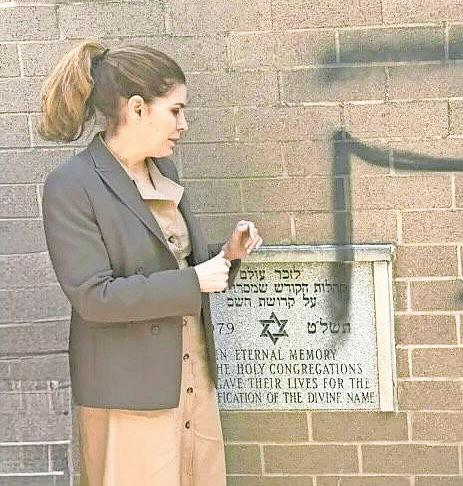
Mayor Zohran Mamdani, whose spokeswoman has said that synagogues violate international law when they host pro-Israel events, said on Tuesday that he is “horrified and angered by the swastikas painted on homes and synagogues in Queens, including on a plaque honoring survivors of Kristallnacht.”
“This is not just vandalism. It is a deliberate act of antisemitic hatred meant to instill fear,” he said. “There is no place for antisemitism in Queens or anywhere in our city. I stand in solidarity with our Jewish neighbors. Their safety, dignity and belonging are non-negotiable.”
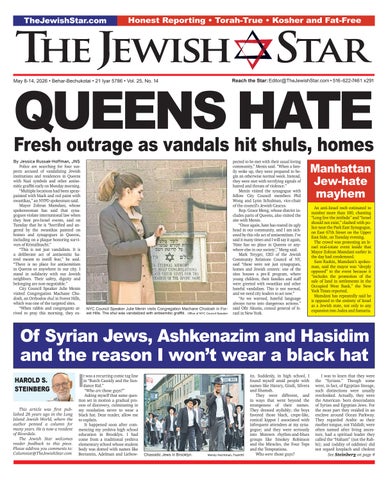
City Council Speaker Julie Menin visited Congregation Machane Chodosh, an Orthodox shul in Forest Hills, which was one of the targeted sites.
“When rabbis and congregants arrived to pray this morning, they ex-
pected to be met with their usual loving community,” Menin said. “When a family woke up, they were prepared to begin an otherwise normal week. Instead, they were met with terrifying signals of hatred and threats of violence.”
Menin visited the synagogue with fellow City Council members Phil Wong and Lynn Schulman, vice-chair of the council’s Jewish Caucus.
Rep. Grace Meng, whose district includes parts of Queens, also visited the site with Menin.
“Once again, hate has reared its ugly head in our community, and I am sickened by this vile act of antisemitism. I’ve said it many times and I will say it again, ‘Hate has no place in Queens or anywhere else in our society’,” Meng said.
Mark Treyger, CEO of the Jewish Community Relations Council of NY, said “these were not just synagogues, homes and Jewish centers: one of the sites houses a pre-K program, where young children, their families and staff were greeted with swastikas and other hateful vandalism. This is not normal, and we need city leaders to act now.”
“As we warned, hateful language always turns into dangerous actions.” said Ofir Akunis, consul general of Israel in New York.
Of Syrian Jews, Ashkenazim
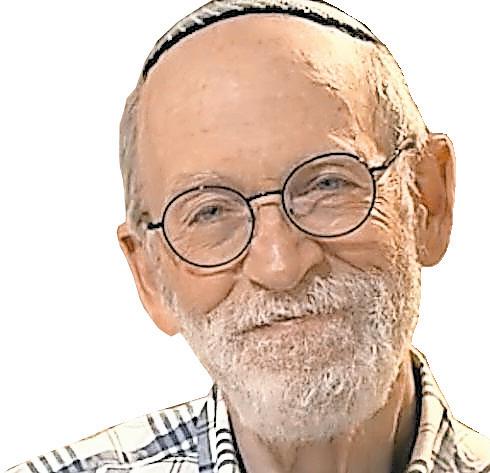
This article was first published 26 years ago in the Long Island Jewish World, where the author penned a column for many years. He is now a resident of Riverdale.
The Jewish Star welcomes reader feedback to this piece. Please address you comments to: Columnist@TheJewishStar.com
It was a recurring comic tag line in “Butch Cassidy and the Sundance Kid.”
“Who are those guys?”
Asking myself that same question set in motion a gradual process of discovery, culminating in my resolution never to wear a black hat. Dear reader, allow me to explain.
It happened soon after commencing my yeshiva high school education in Brooklyn. I had come from a traditional yeshiva elementary school whose student body was dotted with names like Bernstein, Adelman and Liebow-
itz. Suddenly, in high school, I found myself amid people with names like Harary, Gindi, Silvera and Shamah.
They were different, and in ways that went beyond the strangeness of their names. They dressed stylishly; the boys favored those black, crepe-like, conical kippot I associated with infrequent attendees at my synagogue; and they were seriously into Motown rhythm-and-blues groups like Smokey Robinson and the Miracles, the Four Tops and the Temptations.
Who were those guys?
Manhattan Jew-hate mayhem
An anti-Israel mob estimated to number more than 100, chanting “Long live the intifada” and “Israel should not exist,” clashed with police near the Park East Synagogue, on East 67th Street on the Upper East Side, on Tuesday evening. The crowd was protesting an Israel real-estate event inside that Mayor Zohran Mamdani earlier in the day had condemned.
Sam Raskin, Mamdani’s spokesman, said the mayor was “deeply opposed” to the event because it “includes the promotion of the sale of land in settlements in the Occupied West Bank,” the New York Times reported.
Mamdani has repeatedly said he is opposed to the entirety of Israel as a Jewish state, not only to any expansion into Judea and Samaria.
I was to learn that they were the “Syrians.” Though some were, in fact, of Egyptian lineage, such distinctions were usually overlooked. Actually, they were the American- born descendants of Syrian and Egyptian Jews. For the most part they resided in an enclave around Ocean Parkway. They regarded Arabic as their mother tongue, not Yiddish; were often named after living ancestors; had a spiritual leader they called the “Haham” (not the Rabbi); and (oddity of oddities) did not regard kreplach and cholent
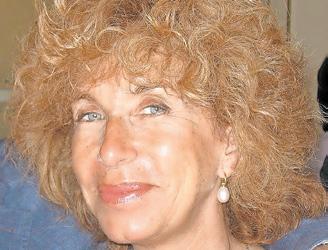
Council Speaker Julie Menin
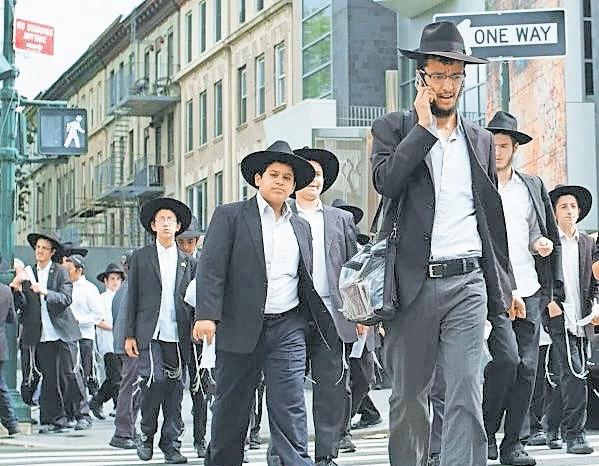
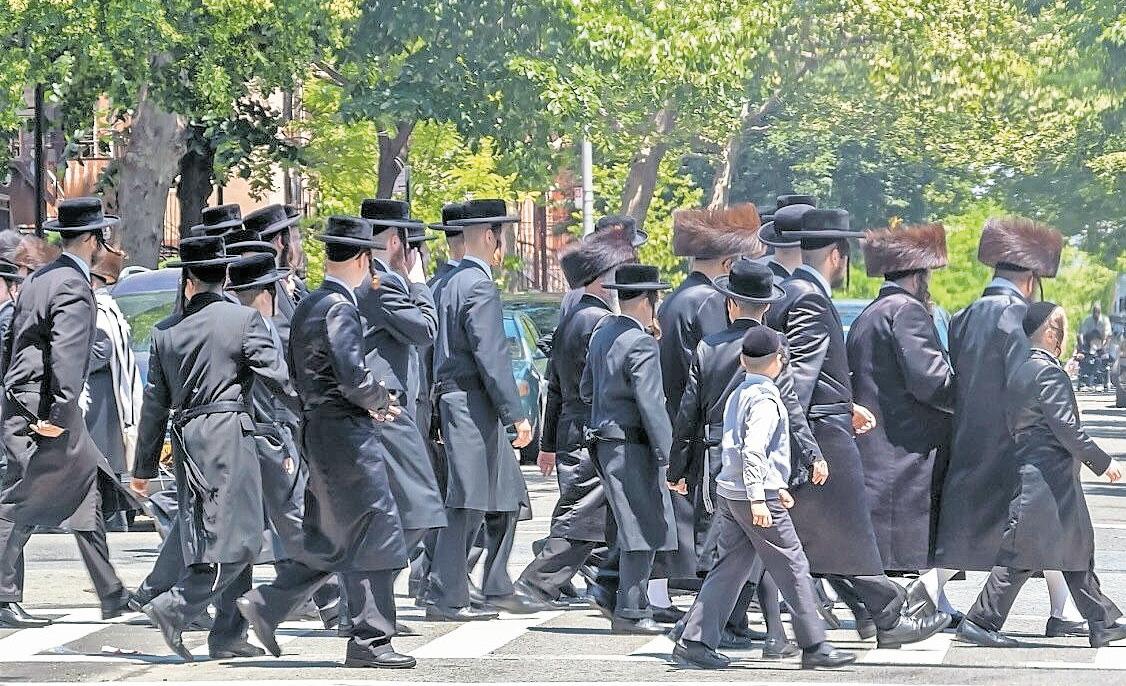
Chassidic Jews in Brooklyn. Mendy Hechtman, Flash90
See Steinberg on page 4
HAROLD S. STEINBERG
Walsh Ambulatory Pavilion opens in Far Rock
EHS cheers major expansion of medical services for Rockaways and 5 Towns
By Ed Weintrob, The Jewish Star
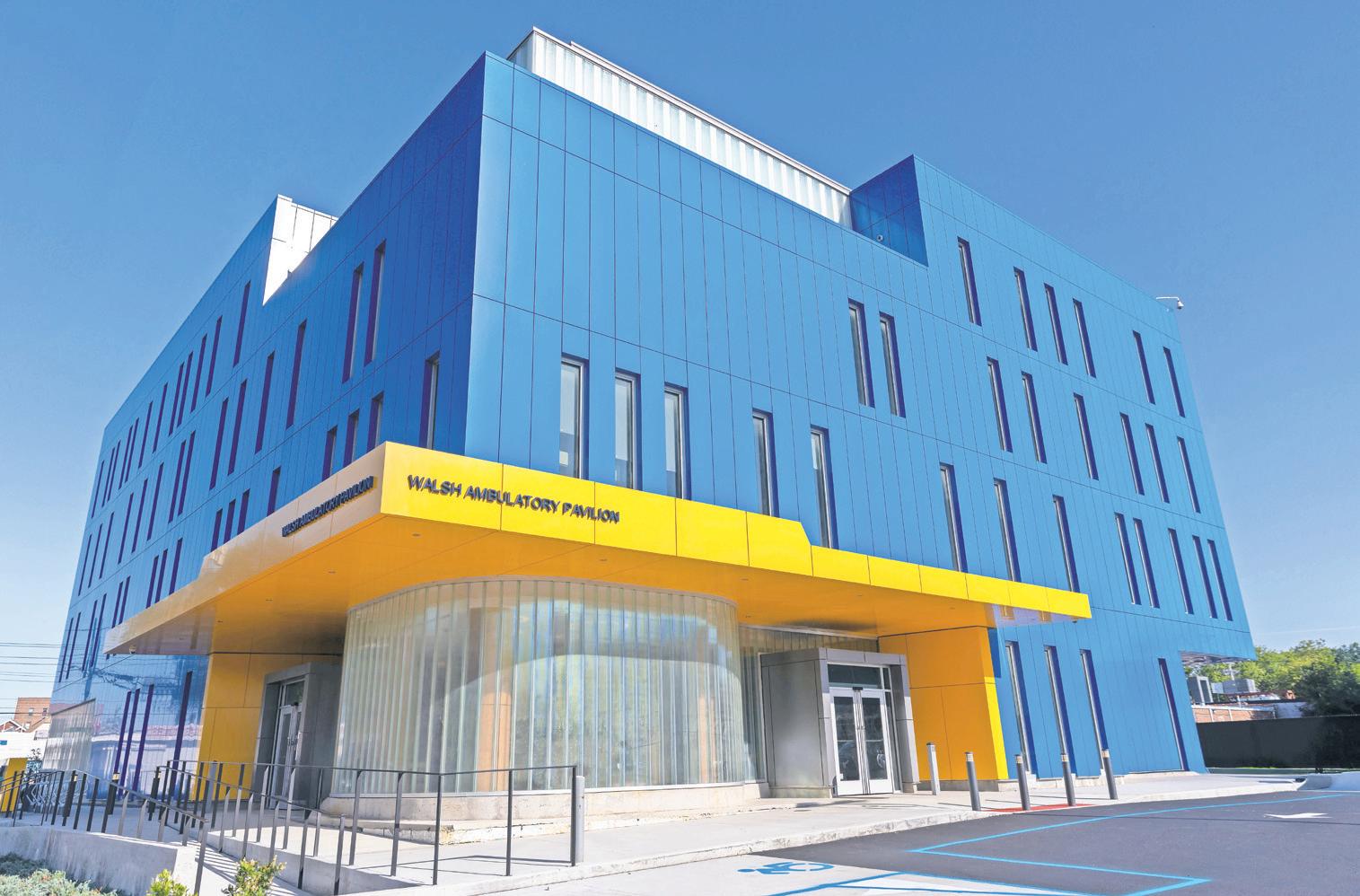
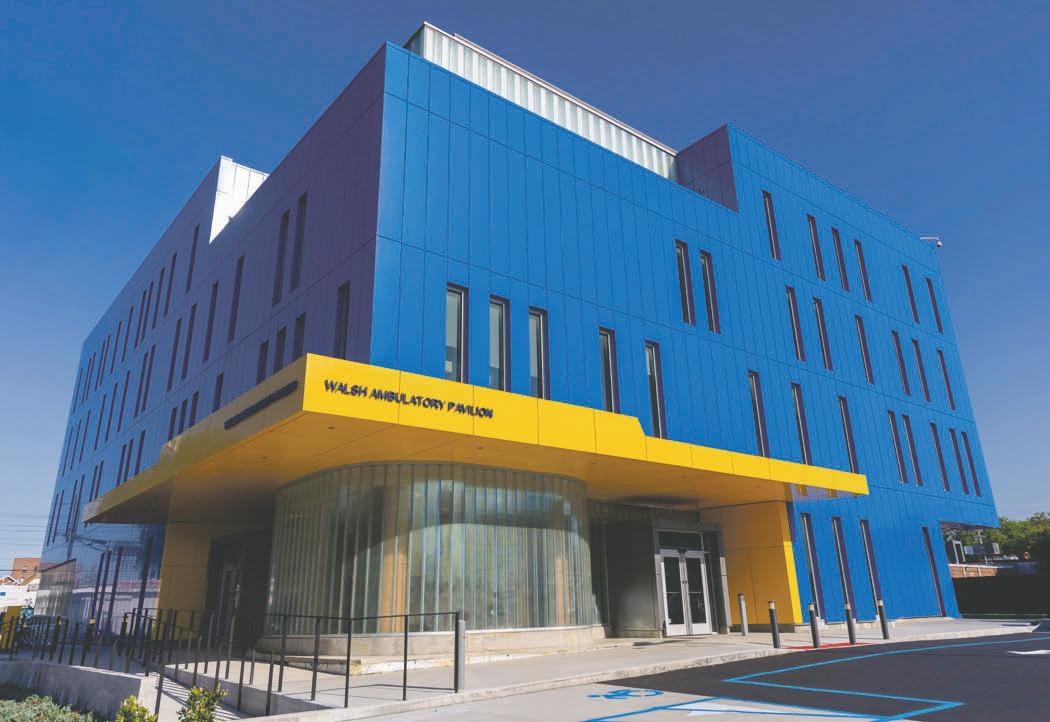
Far Rockaway welcomed a major expansion of outpatient medical services on Friday as Episcopal Health Services cut the ribbon on its new Walsh Ambulatory Pavilion, a 65,000-squarefoot facility designed to bring cancer treatment, women’s health, behavioral health and other specialty care closer to patients who for years often had to leave their communities for treatment.
The new pavilion, adjacent to St. John’s Episcopal Hospital on Beach 20th Street (an extension Central Avenue), marks one of the most significant health care investments in the region since Peninsula Hospital Center closed in 2012 and left St. John’s as the only full-service hospital on the 11-mile-long Rockaway peninsula.
For residents of the Rockaways — and for nearby Five Towns families for whom St. John’s is the closest hospital — the building represents a substantial increase in local access to advanced care.
“For far too long, the residents of the Rockaways have had to leave the peninsula to get ambulatory care they deserve,” said Dr. Donald Morrish, chief executive officer of Episcopal Health Services, at the ribbon-cutting ceremony. “That day ends today.”
The pavilion is named for Gerald M. Walsh, Morrish’s predecessor as EHS chief executive officer and now a board member, whose decadelong tenure helped shape the project’s planning and development.
“This is not just about a naming, it’s not just about a building,” said Lisa Chase-Hernandez, EHS vice president of marketing, in introducing Walsh. “It’s about the impact he’s left us, which is everlasting. He has been a tremendous champion of this community, of EHS and of every patient that we serve.”
Named for a leader — but built for the community
Episcopal Diocese of Long Island Bishop Lawrence C. Provenzano, who chairs the EHS board, said naming the facility after Walsh was meant not simply as a retirement tribute, but as recognition of a long-range vision for transforming health care delivery in one of New York City’s most medically underserved communities.
“When you walk through it, when you understand all that is happening in this place, you recognize that the continuation of that vision and care for the people of the Rockaways is solid, as solid as the building,” he said.
But Provenzano stressed that Friday’s celebration should not be seen as the conclusion of EHS’ work.
“This is not the endpoint of a long journey. It is midpoint,” he said.
Provenzano said the need for expanded medical services on the peninsula is only intensifying as the region’s population grows older and patients struggle with the burden of traveling long distances for specialized care.
“When people are ill, when families are vulnerable, the last thing they need is a long trip away from home just to receive treatment,” he said. “This building answers that in a very practical way.”
“No one else is providing care for this community,” Provenzano told The Jewish Star after the event. “It became very clear to me, 17 years ago, that as the old Peninsula Hospital was getting ready to close, we were it, and we had to provide not just good care but the best care possible.”
When The Jewish Star asked the bishop what in his faith drove him to pursue a mission of healing, he responded that “the Episcopal churches stand for the dignity of every human being. We care for all of G-d’s people regardless of faith background.” Their commitment is to “support the dignity of every person made in the image and likeness of G-d,” he said.
Bringing cancer care back to the peninsula
Karen Paige, EHS executive vice president and chief operating officer, detailed the array of services now housed in the pavilion: primary care, obstetrics and gynecology, behavioral health, endoscopy and, most notably, a comprehensive cancer center that includes medical oncology, radiation oncology, infusion therapy, PET-CT scanning and a linear accelerator.
“For the first time in more than a decade, residents of the Rockaway peninsula, the Five Towns and the surrounding communities now have access to best-in-class, comprehensive cancer care right here at EHS,” Paige said.
She called the project “the realization of a vision,” adding that consolidating major outpatient specialties in one modern building allows EHS to remove long-standing barriers to treatment.
“No longer do our patients and families need to travel far from home during some of the most difficult moments of their lives,” Paige said.
The return of full-service oncology care to the peninsula is particularly significant. Since the loss of prior hospital services in the area, many patients needing radiation or infusion treatments had been forced to make frequent trips into Nassau County, Brooklyn or Manhattan — a burden especially acute for elderly patients and those dependent on public transportation.
Walsh said restoring those services had been one of his core goals from the moment he arrived at EHS in 2015.
“I heard, ‘There’s no cancer care here,’” Walsh recalled. “People who need radiation need to leave the peninsula to get their care. We have brought that back right here, right at home.”
While the pavilion was conceived primarily to serve Rockaway residents, EHS officials repeatedly noted that its reach extends beyond the peninsula.
St. John’s Episcopal Hospital sits only minutes from the Nassau border, making it the closest hospital for many residents of Lawrence, Cedarhurst, Inwood, Woodmere and Hewlett — communities with large Jewish populations that to varying degrees have relied on St. John’s emergency room and maternity services.
Paige explicitly cited the Five Towns among the beneficiary communities in her remarks, underscoring that the new cancer and specialty offerings are expected to draw patients not only from Queens but from southwestern Nassau as well.
That geographic advantage was echoed by Provenzano when he noted that the institution increasingly serves as a regional access point, not merely a neighborhood hospital.
“This isn’t just a Rockaway story,” Provenzano said. “This becomes part of the larger health care network for communities immediately adjacent to us that need quality, dependable care close to home.”
Access to care where you live
Walsh, visibly emotional as he accepted the honor of having the pavilion bear his name, returned repeatedly to what he called the central principle of his nearly five decades in hospital leadership: access.
“In my 47 years of working in hospitals and health systems, the main purpose has always been access,” he said. “Access to care where you live, exceptional care every single day. Nothing is worse than when you are not well and you have to travel.”
He described the facility as the culmination of an idea first discussed more than a decade ago and said the project was always intended to create “world-class care in your backyard.”
Walsh also emphasized that, despite the new building’s technology and modernity, the institution’s mission remains rooted in service to every patient regardless of means.
“It’s a sacred trust,” he said. “Regardless of who walks through those doors, we have a commitment, we have an obligation to take care of everyone … not only with machinery and technology, but with kindness and empathy.”
Morrish struck a similar note, describing the pavilion as both a physical structure and a statement of institutional confidence.
“A hospital is built of concrete and steel,” he said. “But what it really runs on is the belief held quietly across generations that this community is worth fighting for.”
More than a ribbon cutting Friday’s ceremony celebrated a completed building, but EHS leadership made clear they view it as part of a broader campaign to expand health infrastructure in a community long defined by limited options.
Since Peninsula Hospital’s closure in 2012, concerns about hospital overcrowding, transportation burdens and medical inequities have lingered throughout the Rockaways. The Walsh Ambulatory Pavilion does not solve every one of those challenges, EHS officials acknowledged, but it substantially changes the treatment landscape for thousands of families.
“We are closing the gap in care,” Paige said, “and transforming how our community receives care.”
And Provenzano offered a final challenge to EHS leadership and supporters: “Let’s keep dreaming big. Let’s imagine where else we can be, where else we are to set a place that we care for G-d’s people.”
With Friday’s ribbon officially cut, Episcopal Health Services is betting that for the Rockaways — and increasingly for neighboring Five Towns patients — the next chapter of local medicine begins
just across the street from St. John’s.
The new Walsh Ambulatory Pavilion on Beach 20th Street in Far Rockaway, opposite St. John’s Episcopal Hospital. EHS
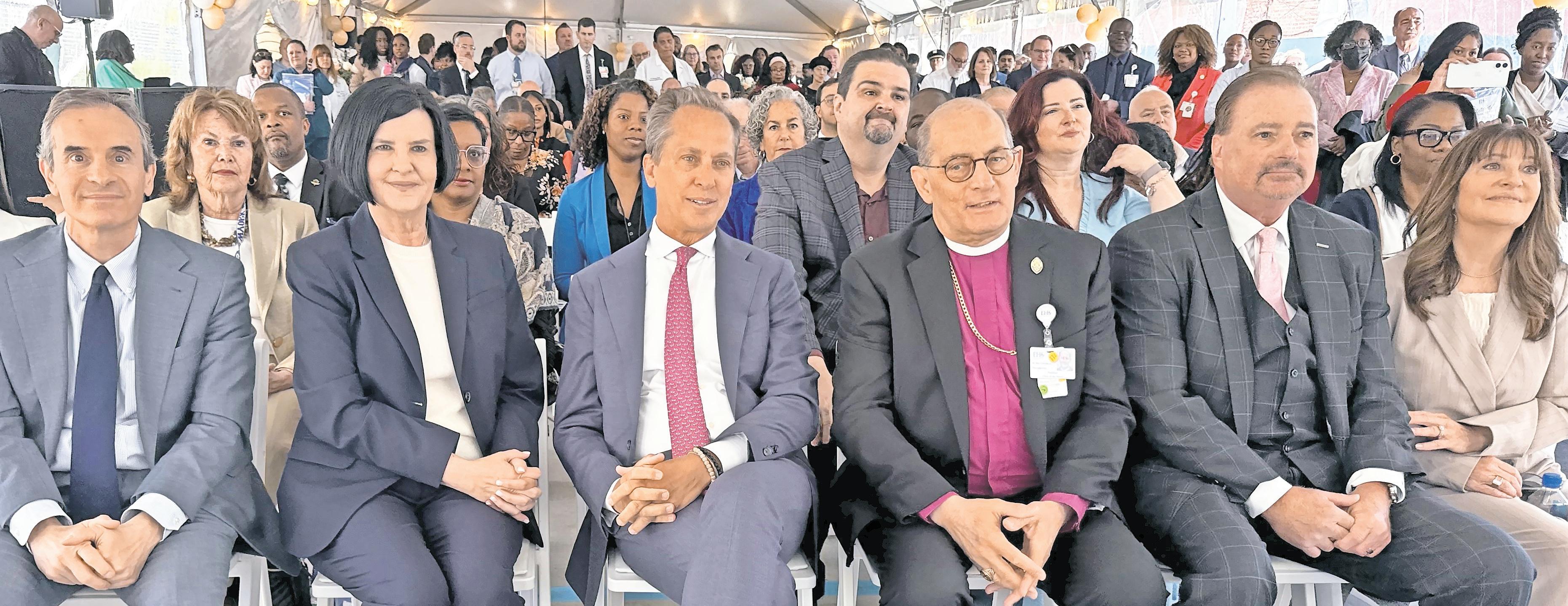
Leaders of Episcopal Health Services at the opening of the Walsh Ambulatory Pavilion in Far Rockaway on May 1, from left: Executive Vice President and CFO Steven Guido; Executive Vice President and COO Karen Paige; CEO Dr. Donald T. Morrish; The Rt. Rev. Lawrence Provenzano, Bishop of the Episcopal Diocese of Long Island and president and board chair of EHS; former CEO Gerard M. Walsh, for whom to pavilion is named, and his wife Karen Walsh.
Ed Weintrob, The Jewish Star
BELMONT PARK VILLAGE
STEPS FROM UBS ARENA
Belmont Park Village turns the gift into a full day out.
Discover designer fashion finds from Valentino, Missoni, Longchamp, lululemon and more, at up to 65% off, plus delicious dining and special Mother’s Day experiences worth sharing.
Give her the gift of Belmont Park Village
STEINBERG: Here’s why I won’t wear a black hat…
Continued from page 1
as the highest expressions of culinary art.
The ‘Real’ Jews
They referred to themselves as “SYs”; we were “J-Dubs,” short for “JWs” (Jews). This nickname indicated that they were fully aware of their position outside the stereotypical Jewish mainstream, and that they were not bothered by that fact one bit.
The process of this part of my education was slow but steady. It was, I must now admit, retarded by cultural prejudice. Though never articulated, those of us of Eastern European ancestry tacitly assumed that we were the “real” Jews and they were impostors whom we might, through our patience and indulgence and their malleability, eventually strip of their alien ways and shape into genuine Jews. Like us. Oy.
Iwas to learn a great deal in high school, much of which, of course, I have since forgotten. One principle taught to me by the Syrians that I did manage to retain was that the terms “Jewish” and “Eastern European” were not synonymous. This seems self-evident, but dear (Ashkenazic) reader, can you truthfully claim that you have not, at some time, shared such a benighted attitude yourself?
To be fair, I knew better in the abstract. I knew that a large portion of Israel’s Jewish population originated from places like Morocco and Yemen. I had been taught that two of the greatest halachic decisors in our history, Maimonides and Rabbi Yosef Caro, were Sephardic. I had, in fact, been duly instructed that a Jew, whatever his or her country of origin, was a Jew. Period.
Nevertheless, because the overwhelming portion of American Jewry traces its lineage to places like Minsk, Pinsk and Bialystock and not to Aleppo, Cairo or Salonika, there had been insinuated into my consciousness the sense that the strength of one’s Jewish identity was measured by the degree to which one adopted the cultural affectations of 19th century Eastern Europe.
Even secular American culture adopted this point of view. Taking a cue from influential American Jewish writers (of European ancestry) such as the Roths (Henry and Philip), Budd Schulberg and Saul Bellow, Americans in general invariably associated Jewishness with Eastern and Central European manners. Jews were all supposed to speak Yiddish, answer questions with other questions (“Do you like this Mr. Goldberg?” “So, what’s not to like?”) and sway and moan in prayer in musty store-front synagogues.
Even those rebellious Jews who broke away and disassociated themselves from the old culture retained images of the Lower East Side of Manhattan or the Williamsburg section of
I won’t endorse the notion that the great Jewish parade began in Central Europe a mere 200 years ago.
Brooklyn as their frame of reference for Jewishness. Visions of bearded men clothed in black coats and women who kept their hair covered in kerchiefs animated the mindsets of Jews and nonJews and were given wide expression in literature, theater and film.
Far fewer in number than their European counterparts and outside the cultural mainstream, Jews from Arab lands who immigrated here in the early part of the 20th century were hardly noticed. These first immigrants found business the most direct route to gain a foothold in a new society.
Unlike their Ashkenazic brethren, they did not feel compelled to guide their children into high-status occupations in medicine, law and academia
Rashi Didn’t Speak Yiddish
We know that one’s appearance, the image one projects, functions as a kind of non-verbal language or code that suggests who we are (or, perhaps, who we would like people to think we are). Our clothes, our mannerisms, even the inflection of our speech, project to others something about our general orientation. This is true no less of our Orthodox Jews (of whom I suppose I am one) than of any other group.
Hasidim dress in a distinctive way both to show disdain for a popular culture prone to fad and excess and to affirm their focus on the spiritual. It is hard to quarrel with these motives; it is the symbolism that is faulty. And mischievous.
such external standards is used as a gauge by which to measure other Jews’ religious commitment. The analysis infrequently penetrates any deeper than that.
Ostensibly, these Jews dress and conduct themselves this way because their fathers dressed and conducted themselves this way, as did their fathers before them. It feels authentic. Maintaining behavioral habits and serving G-d are inextricably linked. It is as if clinging to the one is a kind of insurance policy against offending the other. Any departure from accepted outward standards is viewed suspiciously as an indication of an ominous inner shift in values. The beginning of a rejection of Tradition.
One wonders: If authenticity is re-
to gain security and acceptance. The male offspring of these immigrants were expected to follow their fathers’ footsteps in business, which was considered a high calling. In this endeavor, they generally met with success, although it did little to raise their profile.
They may well have preferred it that way. It afforded these Jews from Arab lands the opportunity to preserve a heritage that was doubly at risk from both secular and EuropeanJewish society.
They flocked to the synagogue on Shabbat, young and old, more observant and less observant, as much to affirm their cultural identity as to discharge a religious obligation. To an Ashkenazi accustomed to relatively homogeneous congregations, the teeming Syrian mix of religious and less religious, and the evident respect and sensitivity that each accorded the other, was refreshing. Interestingly, there was also no way of detecting from their appearance who among them was more observant and who was less. Belief was where the heart was. Inside.
Clearly, to the Syrians, the rigor of one’s observance was not something that lent itself to, or cried out for, public display.
“But what,” you may be asking yourself just about now, “What about that black hat?” Patience, dear reader, patience.
In their fervent dedication to emulate their ancestors, they ignore the likelihood that those same ancestors were perfectly indifferent to what they wore. No one seriously thinks that the rabbis of the Talmud dressed like the Satmar Rebbe. And Rashi didn’t speak Yiddish.
It seems reasonable to assume that when Jews first began to wear long coats and fur-trimmed hats, they were simply reflecting the customs of their times and never imagined that someday their descendants would transform that clothing into a religious imperative.
Though Hasidim stand out in bold relief, these observations are not confined to them alone. Other Orthodox Jews, no less zealous than the Hasidim in their religious practice, attach similar value to certain Old World conventions.
Found in large numbers in the Borough Park and Flatbush sections of Brooklyn, the men favor dark business suits and fedoras and white-onwhite shirts. A few hours spent with them drops one into a time warp: people in their 20s, 30s and 40s, all certifiably “Born in the USA,” acting as if it’s 1949 and they just got off the boat. It is evident in the tone of voice, the gestures and the Yiddish that is sprinkled liberally into their conversation.
All this might be perfectly benign but for the fact that adherence to
When Jews first began to wear long coats and fur-trimmed hats, they were simply reflecting the customs of their times, not a religious imperative.
ties. We risk trivializing that which we set out to venerate.
The hard fact is that the Eastern Europe that my parents and their parents knew is no more. It is ashes and ghosts and deserted graveyards. To draw from that glorious era everything of value that it has to offer, to savor the fruit of its inspiration and reflect on the puzzle of its many agonies, is a worthy endeavor. But our attraction to the past must be tempered by an appreciation of a cold and sober truth concerning that world.
It is over. And we ought to be mature enough to recognize that the sum total of our inheritance is older, more varied and more encompassing than the world so lovingly memorialized by Sholem Aleichem, Peretz, Agnon and Grade.
To persist in acting out a lifestyle that has vanished, as if time has stood still, arbitrarily elevates one part of our history over others and renders sacred that which has no inherent sanctity.
ally the point, why go back only 100 or 200 years? Go all the way. Dress like Rabbi Akiva and converse in Hebrew (or at least Aramaic). If dress and manners are not critical enough to go that far, then why assign so much importance to the indicia of one certain era to the exclusion of others? Why indeed insist on those … black hats?
Well, there you have it. I won’t wear one of those black hats because to do so would be an endorsement of the myopic notion that the great Jewish parade began in Central Europe a mere 200 years ago and because it implies that our European experience is somehow at the core of our beliefs.
It didn’t and it isn’t.
Something is askew when places like Bobov, Lubavitch and Mir are accorded near-mythical status and regarded almost as shrines.
The Holocaust raises many unanswerable questions and teaches many lessons. Perhaps one such lesson has to do with the futility of identifying too strongly with any of the hundreds of places we have sojourned in exile, whether it be Babylon, Barcelona or Lublin. Or Brooklyn.
Confusing the superficial, outward manners that our ancestors absorbed from the alien culture that surrounded them with the essence of the legacy they bequeathed to us makes it too easy to misplace priori-
There was never anything holy about the bricks and cobblestones of Vilna. It was the Gaon and his followers who imparted their holiness to it. Now it is virtually devoid of Jews; it is just Vilnius, another Lithuanian town. Does this sound harsh? Does it sound blasphemous? It shouldn’t. The unintended consequence of worshiping a phantom culture is a kind of bogus, pre-Copernican Jewish theology that has faith revolving around Europe rather than the other way around.
My old Syrian friends understand the inherent fallacy quite well.
So you see, the Syrians opened my eyes to something that should have been perfectly obvious: Judaism transcends time and place. If our hearts are to be drawn anywhere it should be to Safed and Jerusalem rather than Warsaw and Berlin.
Aping the language, clothing and manners of old Eastern Europe has more to do with nostalgia than with faith and is a faulty barometer of the strength of one’s identification with Judaism. Some even derive from these habits a kind of Cartesian logic: I look the part, therefore I am.
The essence of Judaism was born thousands of years ago in the land of Israel. It has been refined, as a diamond, since then. The settings for our gem have been changed — against our will — over time. While of interest, those settings are necessarily secondary. The diamond itself is all.
Judaism is bigger than a black hat.
Excellence in All You Do! Thank You, Nurses.
At Mount Sinai, we proudly honor the strength, compassion, and expertise of our nurses, and recognize the essential role they play in caring for our patients and supporting the communities we serve.
Mount Sinai’s nursing team creates excellence together every day. Mount Sinai South Nassau in Oceanside and Mount Sinai Queens have each earned the prestigious Magnet® Recognition three times consecutively, while The Mount Sinai Hospital in Manhattan has received this distinction five times in succession—an honor achieved by less than 3 percent of hospitals in the United States. This recognition reflects an unwavering commitment to exceptional patient care and consistently better outcomes.
As we celebrate Nurses Week, we proudly recognize the dedication and excellence of the nurses who make this achievement possible every day. mountsinai.org
Poll: Jewish New Yorkers oppose Mamdani policies
By Debra Nussbaum Cohen, JNS
Most Jewish New Yorkers — 58% — think Mayor Zohran Mamdani is doing a poor job, while 32% approve of his job performance and 10% weren’t sure, according to a survey from the Jewish Majority.
Mercury Group, which conducted the poll and surveyed 664 Jewish adults who voted in the November in mayoral election, found that 84% of respondents support the city passing a law creating barrier zones around the doors of houses of worship to prevent harassment and intimidation of worshipers.
The zones would allow protests 25 feet away from entrances and exits. Just 7% of those surveyed oppose the idea. Mamdani signed the bill, which passed the New York City Council with a veto-proof majority, into law in late April. He nixed an almost identical law about schools.
Each of the 664 respondents selfidentifies as Jewish. The survey was conducted between Feb. 17 and 28, about six weeks into Mamdani’s mayoralty.
The city’s first Muslim mayor, Mamdani is a longtime anti-Israel activist, who has proven a divisive figure in the city with 1 million Jews — the largest Jewish population of any American city.
The mayor has said that he would have the Israeli prime minister arrested in the Big Apple, and his spokeswoman said that synagogues violate international law when they host proIsrael events.
Hours into moving into Gracie Mansion, Mamdani dispensed with his predecessor’s executive orders, including those designed to protect Jews, and he appointed a leader of the mayoral office to fight Jew-hatred that has drawn extensive criticism from many Jewish leaders.
Jewish New Yorkers have a range of opinions on almost every topic, including the mayor, but the new survey of voters shows consensus on some things.
From revoking the city’s policy against boycotting Israeli products to vetoing the City Council “buffer zone” bill around schools to, last week, posting a city public service announcement video with a city official wearing a keffiyeh, the mayor’s decisions have drawn criticism from many mainstream Jewish leaders.
In an unusual rebuke, 11 Jewish groups, including some of the nation’s largest, said that they were “deeply disappointed” that he vetoed the school buffer bill.
The new survey states that its findings are “very clear.”
“Even among critics of the Israeli government, there is overwhelming support for Israel’s existence as a Jewish state, and even among the Jewish voters who supported Mamdani in the general election, the majority do not stand with him on the more extreme positions related to Israel and Palestine,” the survey team stated.
An election day CNN exit poll suggested that 32% of Jewish voters chose Mamdani. The new survey paints a dif-
ferent picture, according to Jonathan Schulman, executive director of Jewish Majority, which he launched in 2024.
“We found that 26% voted for him, not 32 %. That’s a quarter, not a third,” Schulman told JNS. Those who voted for Mamdani did so “in spite of his anti-Zionism, not because of it,” he added.
Schulman, who created Jewish Majority after 18 years at AIPAC, sought to launch a counterweight to views, which had been marginal but appeared to gain traction, with Mamdani inviting members of Jews for Racial and Economic Justice and Jewish Voice for Peace into his administration.
Mamdani has said that he opposed Israel’s existence as a Jewish state.
Mark Treyger, CEO of the Jewish Community Relations Council of New
York, which co-sponsored the study, told JNS that “at a moment of heightened division and rising antisemitism, our political leaders should foster thoughtful dialogue that recognizes the broad diversity of Jewish perspectives.”
It should do so “while reaffirming the dignity and belonging of Jewish New Yorkers in our civic life,” he said.
Even many of those who voted for the mayor disagree with him, per the poll, which suggests that 60% of respondents support the idea of a two-state solution if it would end the Israel-Palestinian conflict, while 26% oppose the concept.
Fifty-eight percent of respondents believe that the recent rise in Jewhatred is linked to the normalization of anti-Zionism, while 25% don’t see such a link.
Some have said that the term “intifada” is innocuous when used in protests, but 60% of respondents said that it calls for violent destruction of Israel, and the same percentage said that Mamdani’s refusal to decry the phrase “globalize the intifada” has emboldened pro-Hamas protesters. Some 19% disagreed that Madmani’ was encouraging terror supporters, and 15% think that “intifada” refers to civil disobedience.
“The most telling thing is how few Jews voted for the Democratic candidate, which is unprecedented in the history of New York City elections,” Schulman told JNS.
“Yes, 26% voted for him, but on a whole host of other issues unrelated to Zionism or Israel,” he said. “We’re not seeing any indication that a large part of the Jewish community supports anti-Zionism.”
Pollsters asked respondents about their religious identification, frequency of engaging in Shabbat-related practices and adherence to kosher laws but the survey writers opted not to ask outright if people identify as “Zionist” or “anti-Zionist.”
“We didn’t want to get into those semantics,” Schulman told JNS.
Survey results suggest that some think that being critical of Israeli policies defines them as “anti-Zionist,” which it does not, according to Schulman.
Earlier recent studies have put that figure nationally at about 5% of American Jews, he told JNS.
Mayor Zohran Mamdani at City Winery Passover seder on March 30, seated next to antiIsrael congressional candidate Brad Lander. Michael Appleton, Mayoral Photography Office
Episcopal Health Services Cancer Center
Now open at the Walsh Ambulatory Pavilion
EHS is proud to introduce the EHS Cancer Center at the new Walsh Ambulatory Pavilion, bringing together leading oncologists, comprehensive treatments, state-of-the-art technology (PET/CT, TrueBeam linear accelerator) and coordinated support services in a serene, streamlined setting. Radiation oncology is now available on the Rockaway Peninsula ������������������������������������������������������������ space, new physicians and new era of cancer care at EHS.
Comprehensive Treatments and Services
• Medical Oncology
• Radiation Oncology
• Surgical Oncology
• Immunotherapy
• Access to Clinical Trials
• Cancer Navigation Program
• Inpatient Physical Rehabilitation
• Social Work and Counseling
• EHS Specialty Pharmacy
• Pastoral and Spiritual Support
19-20 Brookhaven Avenue, Far Rockaway, NY 11691
For more information, visit ehs.org/oncology or call:
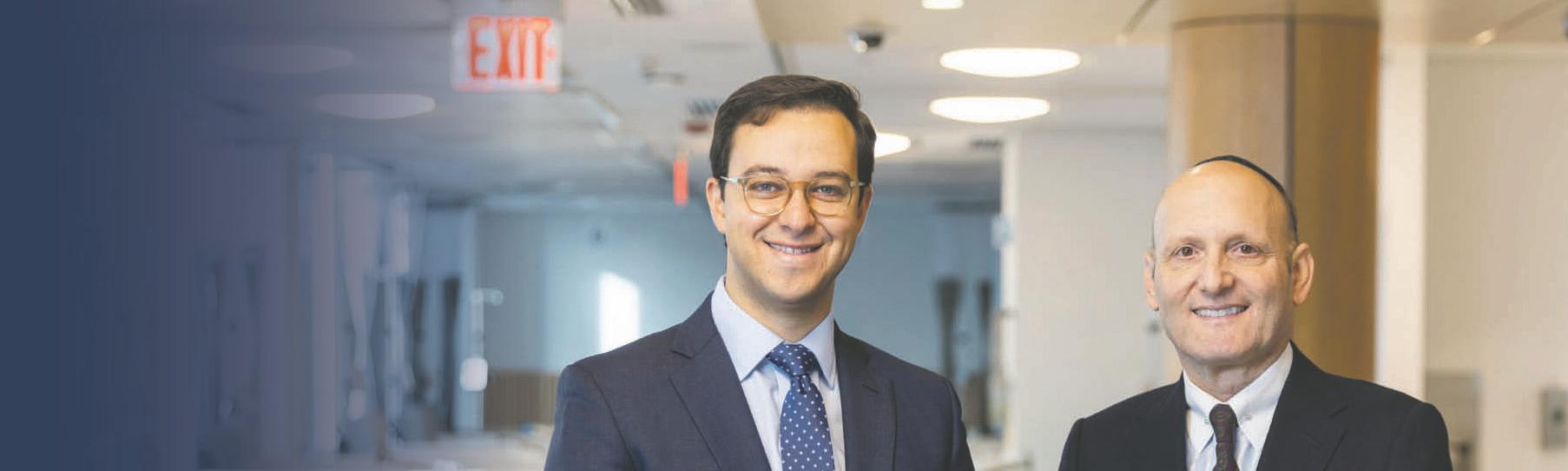
Mark Ashamalla, MDChief of Radiation Oncology (left) and Marc Warshawsky, MDChief of Hematology/Oncology (right)
Jews still #1 NY target even as hate-crime falls
Hate crimes overall, and antisemitism in particular, was down in April compared to prior years, even though Jew-hatred rose in the earlier part of the year, Jessica Tisch, commissioner of the New York City Police Department, told attendees of the Crown Heights Jewish Community Council annual legislative brunch at Congregation Anshei Lubavitch in Brooklyn on Sunday.
“Since Oct. 7, 2023, the NYPD has dealt with thousands of protests, many of them aimed at our Jewish community,” Tisch said. “You have been the target of some of the most vile and detestable rhetoric that I have heard. Under the First Amendment, we cannot and we don’t police speech, no matter how offensive, but we will never tolerate threats, harassment or violence.”
Jews make up some 10% of city residents, face more than half of all hate crimes, according to Tisch.
“We understand what that means for families, for houses of worship and for communities like this one,” she said. “That’s why the NYPD is relentless in investigating every complaint and confronting hate in any form, led by our hate crimes task force, the premier unit of
Avivi visit
May
founder and chair of Israel’s Defense and Security Forum (IDSF), describe the group’s goal of advancing security policies and programs within Israel. Avivi, who retired from the IDF in 2017 with over 30 years of military, counterterrorism and national defense experience, also spoke after Mussaf at the Great Neck Synagogue, and again at seudah shlishit there.
its kind in the nation.”
“After a rise to start 2026, we are now down this year, so far, in both antisemitic and overall hate crimes year-to-date,” she said. “These crimes tear the fabric of society through both the acts themselves and the underlying hatred that seeks to divide us.”
Jewish New Yorkers were targeted in 59% of the total hate crimes reported and confirmed in the city in April, including 60% of confirmed incidents and 58% of reported ones, according to New York City Police Department data. In April, the city recorded 30 confirmed antiJewish hate crimes and no confirmed anti-Muslim hate crimes, out of a total 50 confirmed hate crimes, NYPD said.
Those anti-Jewish hate crimes (30) were down more than 30% from confirmed anti-Jewish hate incidents (43) in April 2025. Anti-Muslim hate crimes were also down — to zero, from two such confirmed incidents in April 2025.
Mayor Zohran Mamdani has often highlighted what he says is rising Islamophobia in the city, including appearing to emphasize it more than Jewhatred.
DESK of RABBI S.M. LEINER- INSURANCE BROKER 917-543-0497
Note the ACCOLADES from our CLIENTS
RE: SYNAGOGUES and YESHIVOS
Dear Rabbi Leiner, Thank you for replacing the Insurance for our Synagogue, with a Savings of almost 50%.
B.F. Executive Director
RE: REAL ESTATE CORPORATION
Dear Rabbi Leiner, You and Your Experts, have saved our Corp. Very Substantial Sums, with your Quality Insurance Replacement on our Real Estate Buildings. Thank you, M.B. Pres.
RE: HOMEOWNERS INSURANCE
Dear Rabbi Leiner, Our Insurance Company Refused to renew our Insurance Homeowners Policy. However, You and Your Experts were able to Secure for us other Insurance Coverage, even at a much lower Premium, than the Prior Canceled Insurance Policy. Thank You So Much. Mrs. D.S.
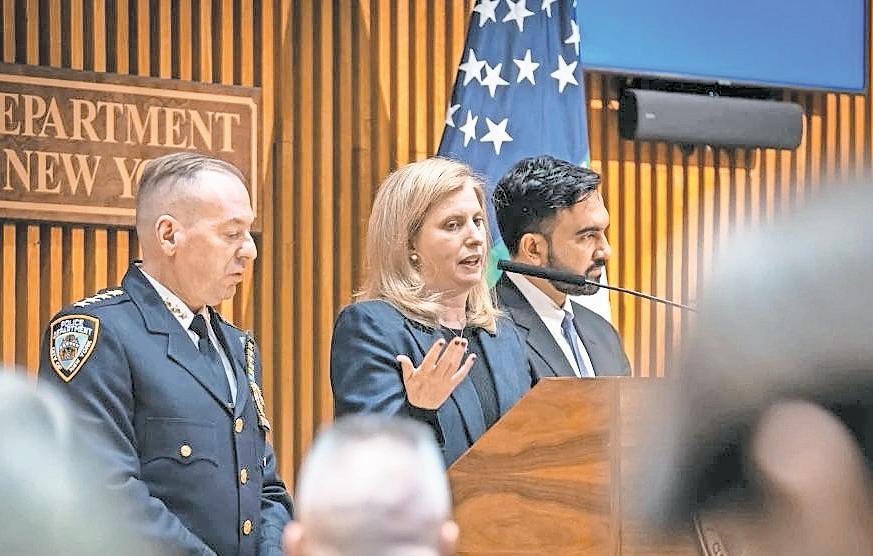
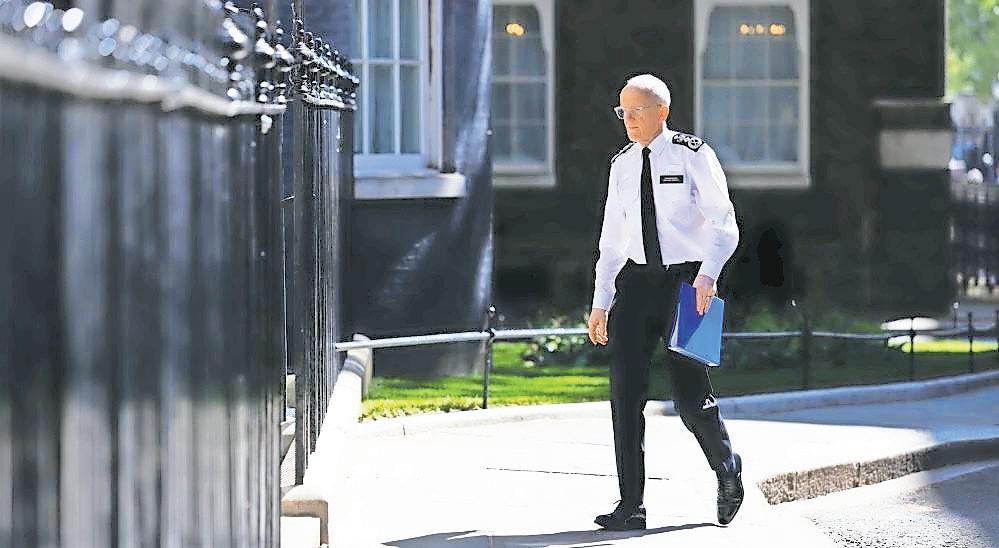
Mayor Zohran Mamdani and NYPD Commissioner Jessica Tisch at One Police Plaza in Manhattan on April 2. Ed Reed, Mayoral Photography Office
At a Great Neck melave malke featuring Brigadier General (Res.) Amir Avivi, from left: Dr. Leon Schwechter; Bart Baum, First VP Great Neck Synagogue (GNS); Dr. Meyer Abittan; Dr. Robbie Herman, GNS President-designee; host Dr. Paul Brody; Elie Cohen, current GNS President; Gen. Amir Avivi; Mark Gold; host Drora Brody; James Frisch, GNS Associate Executive Director; Phil Hanfling; Jeffrey Goldfarb, and IDSF Director of Development.
Activists Dr. Paul and Drora Brody hosted Brigadier General (Res.) Amir Avivi at a melave malke in their Great Neck home on
2. Visitors heard Avivi,
‘No future’ for French Jews triggers aliyah
By Etgar Lefkovits, JNS
A couple of hundred French Jewish doctors interested in moving to Israel gathered in Paris on Sunday in a major immigration fair for medical professionals.
The event was held during a time of global turbulence in the Jewish Diaspora, which is especially noticeable in the 450,000-strong community in France that is also home to the largest Muslim population in Europe, and where a recent survey showed that nearly four of five French Jews feel unsafe.
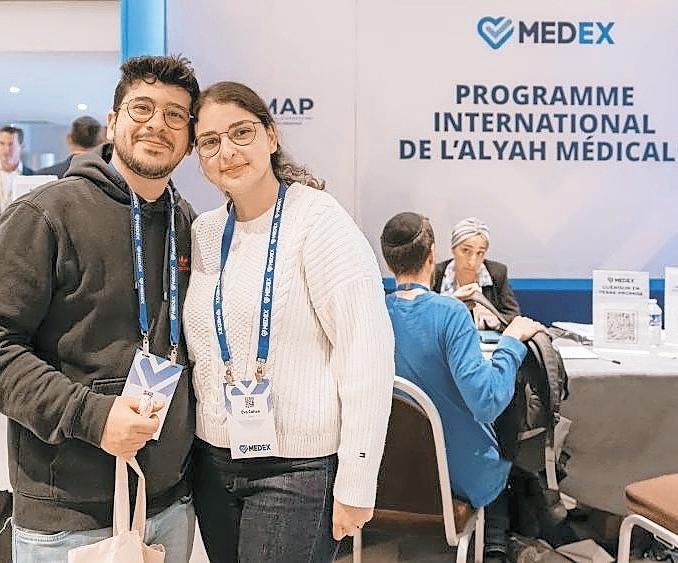
“It is becoming more and more difficult to live here because of antisemitism,” said Raphael Mimoun, 26, a general practitioner in Paris who attended the event with his wife, who is a surgeon.
“The majority of young people are thinking a lot about how they can live in Israel before it is too late,” said Eva Cohen, 30.
The third MedEx Paris event, which seeks to concomitantly address the shortage of physicians in Israel, was organized by the nonprofit Nefesh B’Nefesh in partnership with Israel’s ministries of aliyah and integration, health, and the Negev and the Galilee, along with the quasigovernmental Jewish Agency for Israel.
Similar events geared exclusively for medical professionals have been held over the last two and a half years in Paris, Buenos Aires, London, Los Angeles, Sydney, Melbourne, Toronto and Montreal.
During the gathering, the aim of which was to streamline government bureaucracy for physicians, more than 50 applications for medical license conversions were submitted to the Israeli Health Ministry.
Still, with war raging in Israel since the Oct. 7, 2023, Hamas-led attack on the country’s south, immigration has been a challenge.
Last year, 558 French Jews immigrated to Israel, compared to 519 the year before, according to figures from Israel’s Aliyah and Integration Ministry.
The number of French doctors who moved to Israel jumped from 25 in 2004 to 57 last year.
“Our challenge is that Israel should be the top priority for those who decide to leave, and that means we do everything we can to facilitate
a smooth absorption,” Israeli Minister of Aliyah and Integration, Ofir Sofer, said.
He noted that the program has reached over a third of its goal to bring 2,000 doctors to Israel from around the world over five years, with their impact on the nation’s healthcare system making a mark in periphery areas such as the Negev and the Galilee.
“There is always antisemitism, but I am a proud Jew,” said Eitan, a general practitioner and a 37-year-old father of three who said he is planning to move to Jerusalem within the decade for the benefit of his children. “There is no future in France.”
“People here are on the edge of their seats and have to make a hard decision, co-founder and chairman of Nefesh B’Nefesh Tony Gelbart said. “There has always been antisemitism around the world, but when it comes straight in your face and not just behind your back, you get concerned.”
“We always used to say not running away from something but running to something, but now running away in several countries has become the reality,” he said.
Over the last quarter century, the group originally became a household name in promoting immigration from the United States and Canada.
“This is the first time in 25 years where we are seeing here a concern expressed by so many of not seeing a stable future here for themselves and future generations,” said Rabbi Yehoshua Fass, the organization’s co-founder and executive director.
“I want to help Israel as it will be the only country that will be there for me if I need help,” said Melvin, 35, from Brussels, who is doing his residency in plastic surgery and hopes to move in about five years. “Here, I’m afraid to show I am Jewish because there is a lot of antisemitism. If you want to be successful, you need to hide your Judaism.”
“With all the events that have happened over the last couple of years, we feel very connected to Israel,” said Laurent Bonnamy, 57, a gynecologist from the French Polynesian island of Tahiti who began the process of notarizing his medical documents. “Over here, we feel useless for the
and for Israel.”
Jewish nation
Raphael Mimoun and his wife, Eva Cohen, at a Paris event for medical professionals eyeing a move to Israel. Thierry Van Biesen
Anti-Israel activists accused of sexual blinders
By Jessica Russak-Hoffman, JNS
Groups ostensibly devoted to protecting women have been accused since Oct. 7 of prioritizing attacks on Israel over that mission.
UN Women took nearly eight weeks to note “numerous accounts” of Hamas gender-based violence. Amnesty International did not fully acknowledge such violence until December 2025. Feminist and human rights activists wrote in February 2024 of Israel “weaponizing the issue of rape” after Oct. 7.
Meanwhile, anti-Israel organizations have been accused of overlooking sexual misconduct in their own ranks.
David Azerrad, assistant professor and research fellow at Hillsdale College’s graduate government school, told JNS that people who claim to care about women show their true priorities when they focus instead on attacking Israel.
“The cause is so important to them that they will overlook injustices for fear that drawing attention to them would hurt said cause,” he said. “More importantly, it reveals what bad people they are.”
“They hector and claim the mantle of justice while committing vicious acts and preying upon others,” Azerrad added.
Mika Hackner, research director at the North American Values Institute, said that anti-Israel activists overlook sexual misconduct accusations because they have “a necessary and willing blindness, so that they can continue to believe that the cause is just.”
“Any action in its service must be just, too,” she told JNS. “They have fully accepted the idea that it is not for the privileged or the oppressors to question how the oppressed ‘resist’.”
Taryn Thomas said that she joined an encampment at Stanford University but changed the way she viewed Israel and Hamas after seeing an exhibit in Los Angeles about the Nova
music festival massacre.
“There is no propaganda in a half-finished text message from a dying girl,” she told JNS. “It forced me to acknowledge the suffering on the other side that the movement required me to ignore.”
Thomas said that at the Stanford encampment, “there was certainly a willingness to look away from various forms of misconduct.”
She experienced racism and saw “blatant antisemitism,” where “physical or verbal abuses could be sidelined if addressing them threatened the group’s cohesion,” she said.
“This environment was undoubtedly influenced by the broader denial of sexual violence occurring on Oct. 7,” she said. “When leaders publicly rationalize, victim-blame or dismiss such violence, it sets a dangerous precedent.”
Thomas shared screenshots of what she said
was a conversation with an encampment leader, who allegedly suggested Hamas attackers may have thought the Nova festival was a “sex cult.”
After Thomas shared verified reports of sexual assault against Oct. 7 victims, she said the leader responded that “there may have been certain cases. Those need to be fact checked. The official Hamas stance is that committing such acts is prohibited.”
“When the people in charge hold these views, it creates an environment where sexual misconduct within their own ranks is far more likely to go unchecked,” she said.
James Lindsay, a political commentator and author, told JNS that anti-Israel groups “don’t have any interest in anything except advancing their revolutionary activism.”
“It’s a common mistake people make expect-
ing radical leftists to be consistent with their stated values and causes,” he said. “They never are.”
A series of since-deleted Instagram posts alleged anonymously that a member of the steering committee of the 2025 Gaza flotilla engaged in “sexual relations with multiple activists” while aboard the vessel. Organizers failed to act, according to the posts.
The Global Sumud Flotilla denied receiving such complaints and said that it investigated the matter, later stating that “no evidence has been found, and the case is formally closed.”
Anonymous accusers have also alleged sexual misconduct at an anti-Israel encampment at the University of Birmingham in the United Kingdom and within a pro-Palestinian group in Australia.
Jacqueline Carroll, a former sexual crimes prosecutor in Cook County, Illinois, and founder of an extremism consulting group, told JNS that fear often silences victims.
“There’s shame involved, but there’s also a belief that they might not be believed. There’s also fear of retaliation,” she said. “You’re going to be called a ‘liar’.”
“You’re going to be called a ‘Zionist’,” she added.
Students abused at anti-Israel encampments might not report misconduct because authority figures were “very much in alignment with the pro-Palestinian cause,” she said.
Miri Bar-Halpern, a clinical psychologist in Boston and Harvard Medical School instructor, told JNS that victims may stay anonymous out of trauma, fear and dependence on the group.
“If the group has become their source of belonging, identity, purpose or protection, speaking up can feel terrifying,” she said.
“When a protest space starts to function like a high-control group, abuse gets hidden, because the cause becomes more important than the person,” she added.
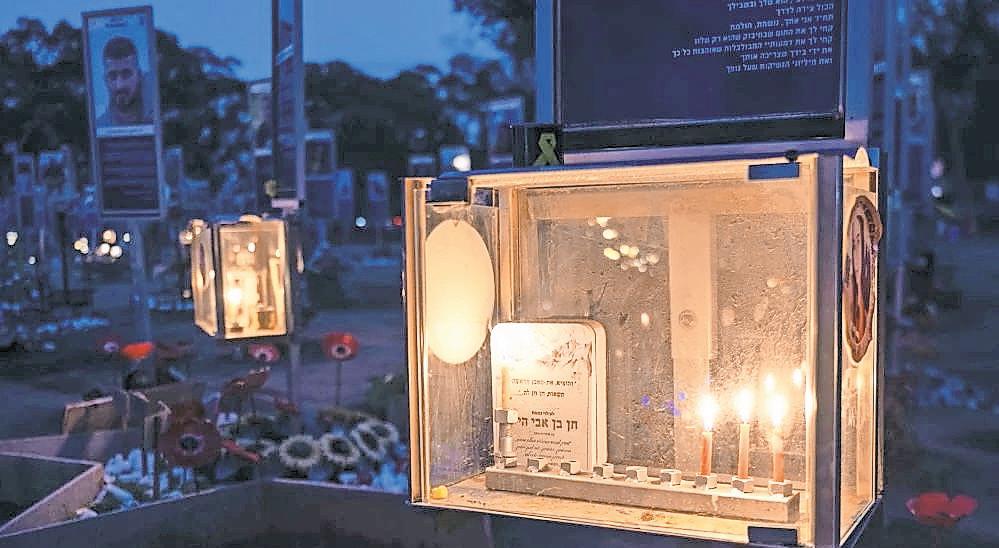
Menorahs built in memory of those killed in the Oct. 7 Hamas attack are displayed at the Nova Festival memorial site, on Dec. 16, 2025. Matt Kaminsky, JNS
Your Safety is Our #1 Concern—
And the Experts Agree
At Mount Sinai South Nassau, patient safety isn’t just a priority— it’s a standard, one we work on every day. And the experts agree.
We’ve earned national recognition for patient safety, including an “A” Hospital Safety Grade from The Leapfrog Group and the Healthgrades Patient Safety Excellence Award.
That means better outcomes for our patients with lower risk of infections or hospital acquired conditions.
When it comes to your health, nothing matters more than knowing you’re in a place where patient safety matters most.
Learn more at mountsinai.org/southnassau
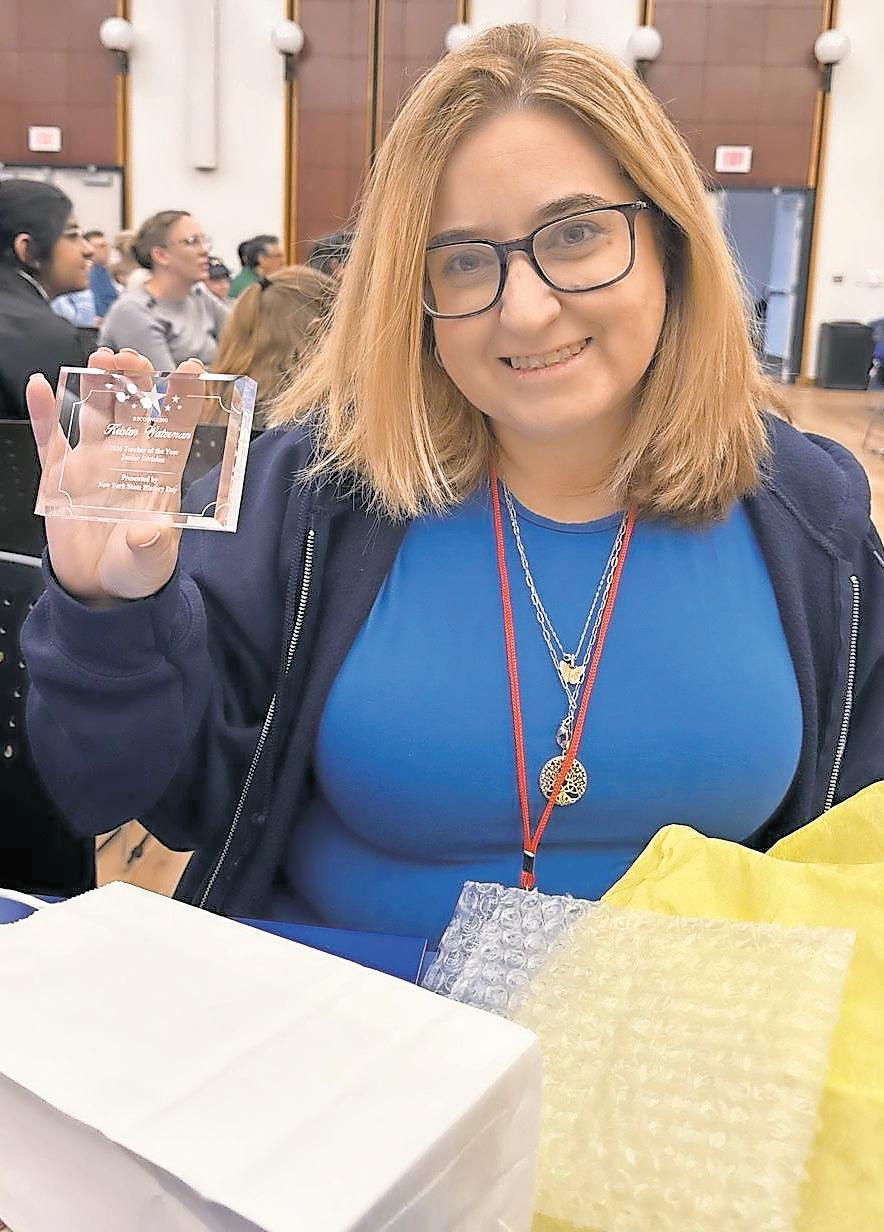
HALBers take wins at ‘NYS History Day’
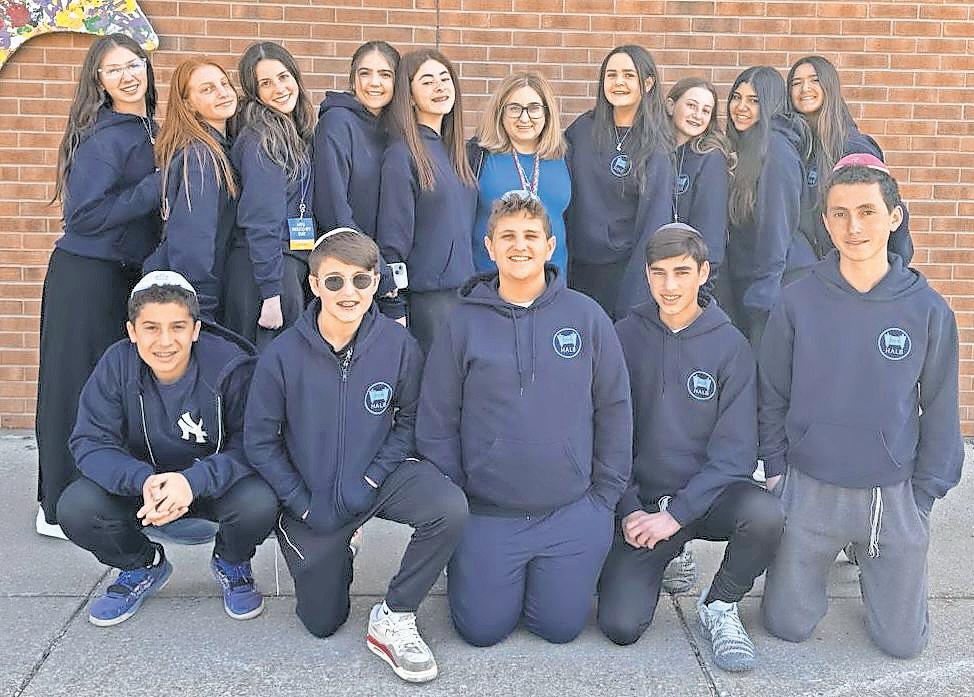
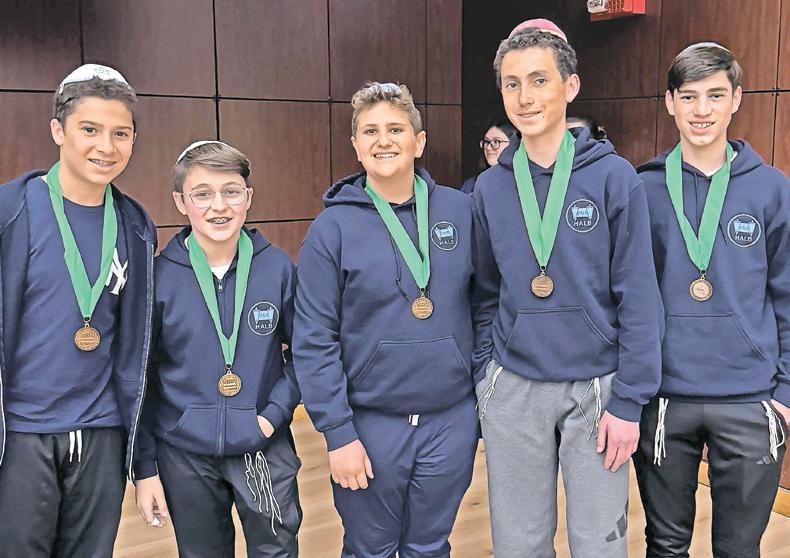
Kristen Waterman of HALB was named the NYS Junior Division Teacher of the Year for National History Day, in recognition of her outstanding commitment to historical research, student achievement and excellence in the classroom. She joined HALB students who traveled to SUNY Oneonta to compete in NYS History Day, bringing three projects to the competition centered around this year’s theme, “Revolution, Reaction, and Reform.”
HALBers won: 1st Place, Junior Group Website: “A Declaration of Her Own: A Revolution in Seneca Falls,” by Isabella Deutsch, Tamar Oppenheimer, Leanne Perry and Lilly Rattner. 3rd Place, Junior Group Website: “Building Talent, Breaking Barriers: Branch Rickey’s Revolution in Baseball,” by Sam Medetsky, Kobe Stern, Yoni Fischbein, Daniel Sacks and Rafi Levine.
AJC wins for Schechter LI SCHOOLS
Rabbi from HANC HS visits
7th graders in West Hemp
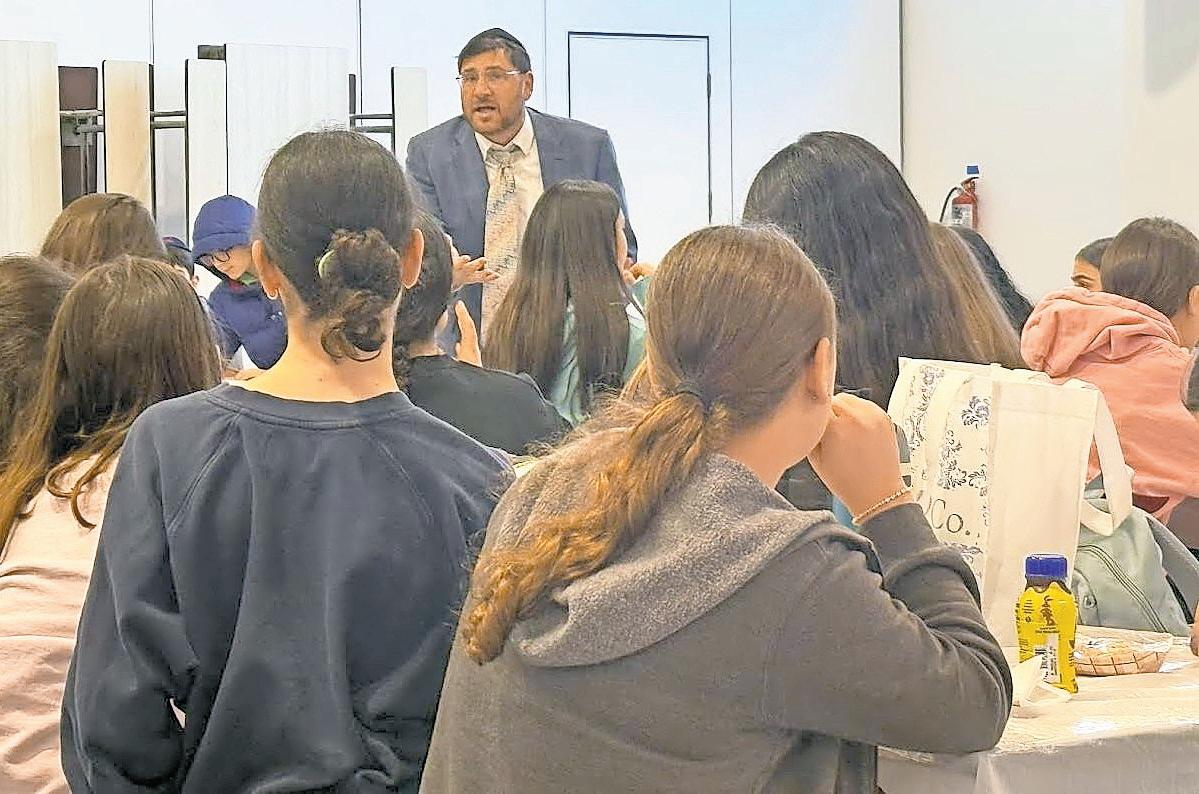
On Pesach Sheini, HANC HS Menahel, Rabbi Eli Slomnicki, visited the Reinstein Family Campus in West Hempstead for an inspiring morning with HANC’s seventh-grade students.
Rabbi Slomnicki joined the Middle School for tefillah in the Rabbi Moshe Gottesman Beit Midrash. Students then gathered in the lunchroom, where Middle School Principal Rabbi Elliot Hecht welcomes Rabbi
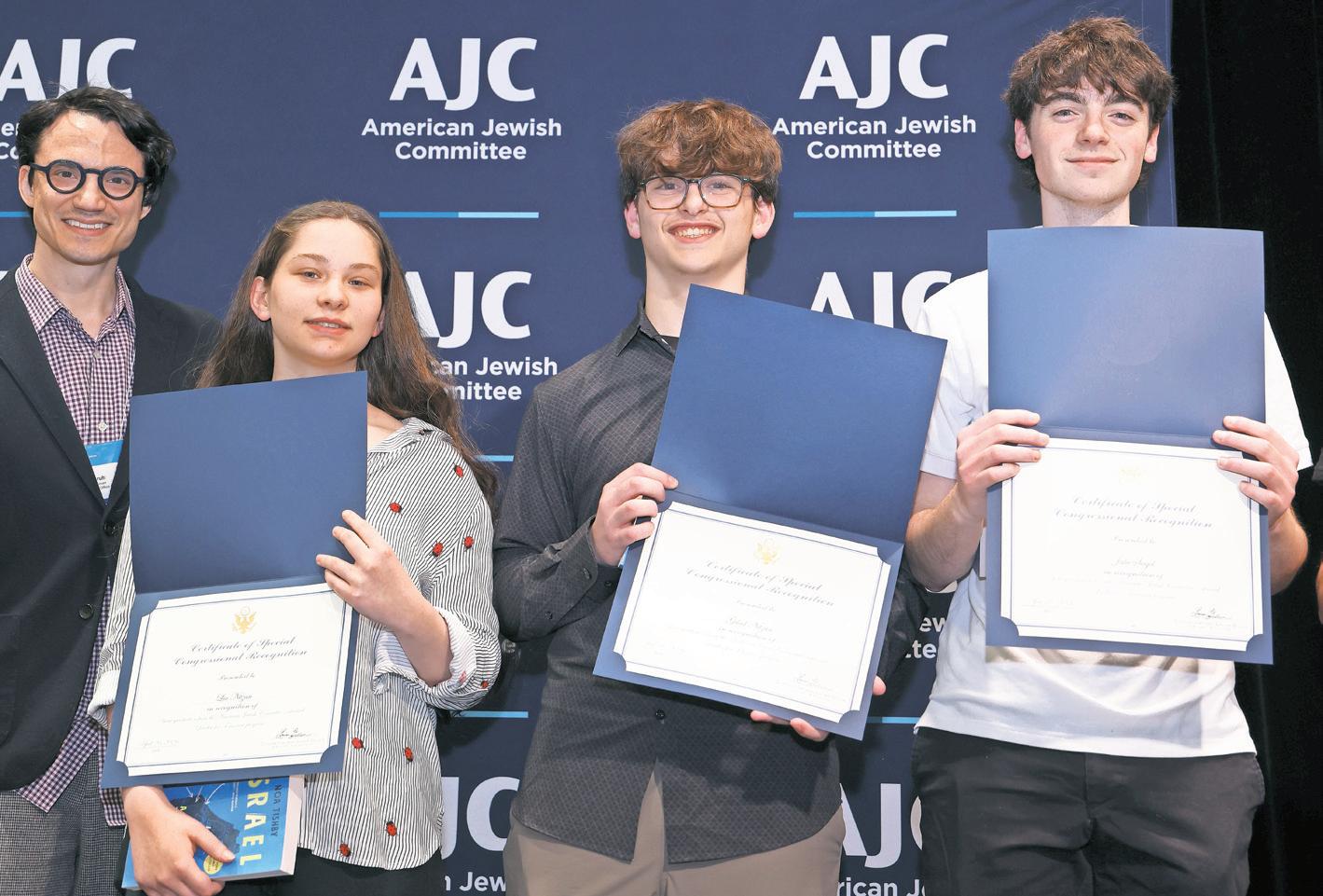
Five students from the Schechter School of Long Island, in Willison Park, were recognized for completing AJC Long Island’s Leaders for Tomorrow program. Another two were recognized for completing LFT Next, the second- and thirdyear program.
The school congratulates Jordan Bitton, Jake Siegel, Gilad Nitzan, Lia Nitzan, Josh Jurmann, Yoni Pedram, and Elan Golan.
Slomnicki and Elynn Rosenberg, director of admissions at HANC HS.
Over a light breakfast of donuts and chocolate milk, Rabbi Slomnicki shared an engaging Dvar Torah connected to Pesach Sheini and the power of second chances. Through a memorable and relatable story about “Harry,” an unaffiliated Jew who experienced both embarrassment and compassion in a synagogue setting, students were encouraged to reflect
on how their actions impact others. The story highlighted the importance of sensitivity and the courage it takes to give and accept second chances.
Rabbi Slomnicki emphasized that while people may sometimes feel hurt or embarrassed, it’s essential to believe in the good in others and remain open to rebuilding connections with friends, family and teachers alike.
Zucker cheers
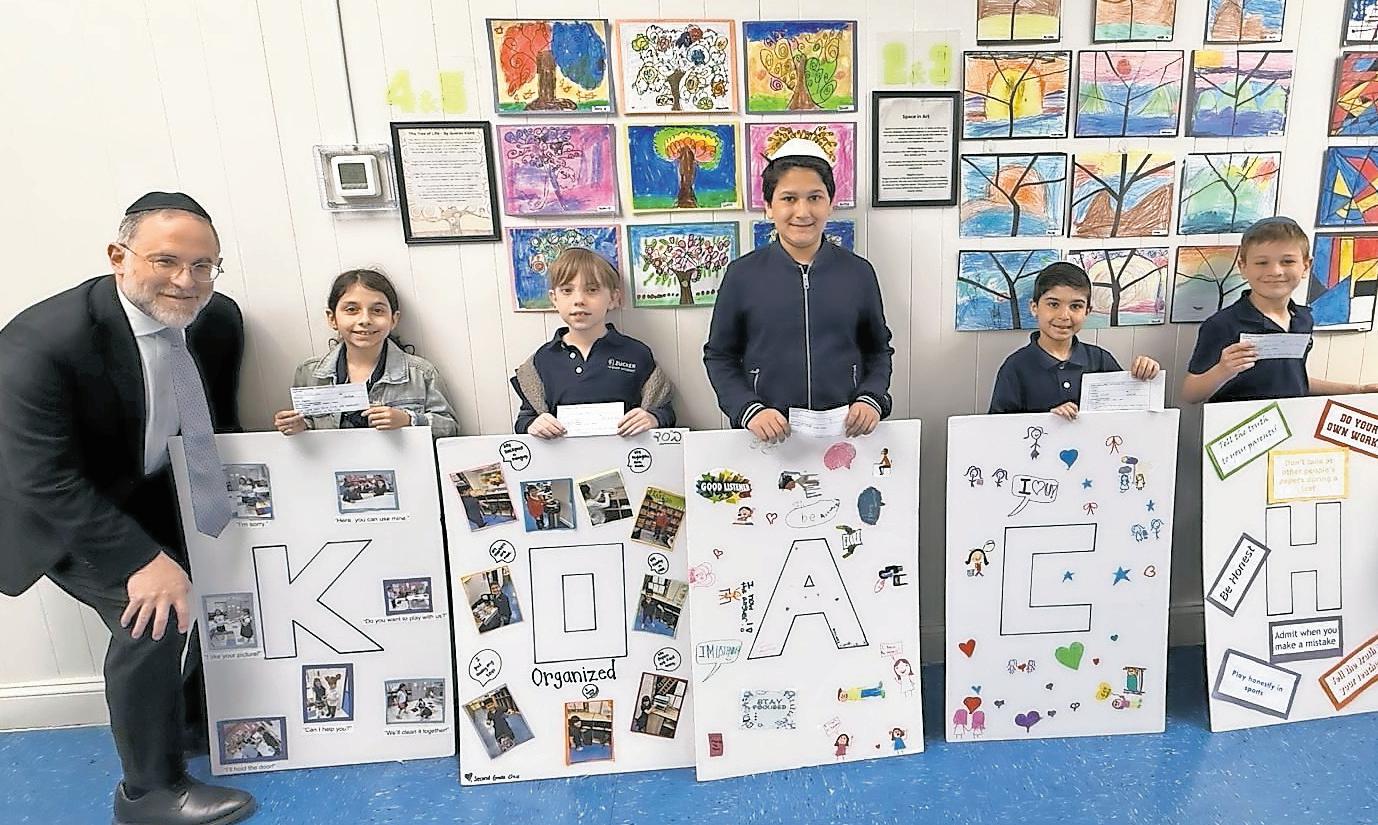
Students at the Zucker Jewish Academy in the Five Towns celebrated the winners of their PBIS (Positive Behavioral Interventions and Supports) initiative, recognizing those who exemplified the school’s “Built With KOACH” values. Students demonstrated kindness, organization, attentiveness, caring, and honesty received “KOACH shout-outs,” which were displayed on a school board.
Proudly Jewish. Proudly Zionist.
Sourcing wheat and grains for Shavuot fest
We all know that Shavuot is about eating rich cheesecake and delicious dairy meals and dairy foods. We all know that this is because of the holiday’s association with the land of milk and honey. But there is also an association with dairy foods for a very practical reason. It was spring.
The goats and sheep and cows were filled with milk, having given birth to the spring babies. The people were very busy because Shavuot is a pilgrimage festival and because the holiday also marked the spring wheat harvest. Therefore, the people had no time to roast meats and prepare traditional feast foods. So, they made foods that took less time to prepare, and those were dairy foods.
The Temple offerings made on Shavuot consisted of wheat, dates and olives. The first things to be placed on the altar were two loaves of bread made with the wheat of that first harvest. There is no mention of dairy foods except that the land of Israel that was promised to the Jews was called the “land of milk and honey.”
So, while the offerings had nothing to do with the cheesecake we have associated with this holiday, it does have a lot to do with wheat and dates and olives and, through custom, easy to prepare dairy.
Wheat is a staple of life for a large part of the planet. Our ancestors would harvest the wheat and eat the entire grain. Then someone discovered how to separate the grain from the bran, or the covering of the kernel. That led to white wheat without any fiber content, a decrease in the nutritional value of the wheat and, some believe, the beginnings of wheat allergies and wheat problems.
Whole wheat, as was brought to the altar thousands of years ago was nothing like the wheat we eat today. Whole grains like Faro and wheat berries are closest to what was eaten then. We should eat these whole grains, but we are accustomed to the white wheat products we eat so often. These recipes can help you transition to more whole wheat flour for your family. And, in keeping with making quick dairy dishes, some of them are just that, quick and easy.
Chag sameach!
Olive Oil Apple Cake with Maple Cream Cheese Frosting (Dairy or Pareve)
This uses wheat, and olive oil and adds some dairy to boot. Delicious cake for all year dining and great after a grilled salmon barbecue. Adapted from Yotam Ottolenghi’s book, “Ottolenghi.”
CAKE:
• 1/2 cup golden raisins (heaping)
• 4 Tbsp. water
• 2 1/4 cups unbleached flour
• 1/2 tsp. ground cinnamon
• 1/4 tsp. salt
• 1/2 tsp. baking powder
• 1-1/4 tsp. baking soda
• 1/2 cup extra virgin olive oil
• 3/4 cup superfine sugar
• 1/2 vanilla bean
• 2 free-range large eggs, lightly beaten
• 3 large Granny Smith apples, peeled, cored, and cut into 3/8-inch dice
• Grated zest of 1 lemon
• 2 free-range egg whites
• Confectioners’ sugar, for dusting (optional)
ICING:
• 1/2 cup Muscovado sugar (raw sugar)
• 7 Tbsp. unsalted butter, at room temperature
• 6 Tbsp. pure maple syrup
• 8 oz cream cheese, at room temperature
Preheat the oven to 325 degrees. Grease an 8-inch spring form cake pan. Line the bottom and sides with parchment paper.
Place the raisins and water in a medium saucepan and simmer over low heat until all of the water has been absorbed. Set aside to cool.
Sift together the flour, cinnamon, salt, baking powder, and baking soda and set aside.
Put the oil and superfine sugar in the bowl of an electric mixer fitted with a paddle mixer.
Using a sharp knife, slice the vanilla bean in half lengthwise. Use the edge of a sharp knife and scrape out the seeds from both sides. Scrape into the bowl. Beat the oil, sugar, and vanilla together, then gradually add the eggs. Mix until thick and smooth.
Remove the bowl from the stand and add the apples, raisins, and lemon zest and mix. Fold in the sifted dry ingredients. Set aside.
Wash out the bowl and replace the paddle with the wire whisk attachment.
Add the egg whites and beat until they have a soft meringue consistency.
Gently fold half into the apple batter and then
fold in the other half. Be gentle so as to maintain as much air as possible.
Pour the batter into the lined pan, level it, and place in the oven. Bake for 1-1/2 hours, until a skewer inserted into the center comes out clean.
Remove from the oven and let cool in the pan. Once the cake is completely cold, remove it from the pan and use a large serrated knife to cut it in half horizontally.
Place one disc on a serving platter. If the cake is very domed, you need to shave a bit off the top half to level it.
Low-Fat Cottage Cheese Pancakes.
Olive Oil Apple Cake with Maple Cream Cheese Frosting. eattherightstuff.com
Whole Wheat and Oat Bread.
JONI: Wheat and grains for Shavuot festival…
Place the Muscovado sugar, butter and maple syrup until light and fluffy. Add the softened cream cheese and beat until very smooth and creamy.
Using the icing spatula, spread a layer of icing 3/8 inch thick over the bottom half of the cake. Carefully place the top half on it. Spoon the rest of the icing on top and use the icing spatula to create a pretty top.
Dust with confectioners’ sugar, if you like. Serves 10 to 12.
Very Easy Cheesy Muffins (Dairy)
• 1-1/2 cups unbleached flour
• 1/2 cup whole wheat flour
• OPTIONAL: 2 tbsp. wheat germ or chia seeds
• 3 tsp. baking powder
• 1/2 tsp. salt
• 2 Tbsp. Sugar
• 3/4 cup grated cheese, Cheddar, Monterey Jack , Gouda or a mix
• 1 extra-large egg
• 1 cup whole milk
• 3-1/2 Tbsp. Canola oil
• OPTIONAL: 2 to 3 Tbsp. snipped fresh chives
Preheat oven to 400 degrees. Line a muffin tin with cupcake liners and spray with non-stick spray.
Sift the dry ingredients into a large bowl. Add the cheese, mix well and set aside. Beat the milk and the egg together with a fork. Add the oil and mix well. Add the liquid to the dry ingredients and mix just until well moistened. Add the chives and mix. Spoon the batter into the tin, filling each muffin 2/3 full.
Bake at 400 degrees for about 15 to 20 minutes. Serve warm. Great alone or with strawberry jam. Makes 12 muffins.
Low-Fat Cottage Cheese Pancakes (Dairy)
My kids loved these. They were so easy to make, I often made them for school morning breakfasts and my kids would take the remaining ones for lunch or snack the next day.
• 3/4 cup low-fat, small curd or whipped cottage cheese
Combine the cottage cheese, eggs, flour, baking powder and vanilla. Mix well. Add the sugar and mix thoroughly. Add any optional fruit (about 1/2 cup) and mix well. Place butter in a frying pan
and add spoonfuls of the batter. Let cook through and then flip to brown the second side. Cook until golden. Repeat until batter is used up. Makes about 1 dozen. This can easily be doubled.
Whole Wheat and Oat Bread (Pareve)
Making bread is a wonderful experience. Kneading and watching the dough rise and noticing that, suddenly in your house is filled with the most wonderful aroma is all part of the process of making wonderful, healthy bread for your family.
• 2 packages active dry yeast
• 3 cups warm water (103 to 107 degrees)
• 1/3 cup unsulphured molasses
• 1/4 cup canola oil
• 3 Tbsp. pure maple syrup
• 1-1/2 Tbsp. salt
• 2/3 cup rolled oats
• 7-1/2 to 8 cups whole wheat flour or white and wheat mixed for lighter bread
• OPTIONAL: Add some toasted wheat germ, sesame seeds, sunflower seeds, anything you find in your cabinet that you think will work. A couple of tablespoons or more of one or several will add nutrition and texture to your bread.
Place the yeast in a warmed bowl (swirl some hot water in the bowl and discard) and add the warm water. Mix until the yeast is dissolved. Add the molasses and maple syrup and stir. Let proof for 15 minutes until bubbly. Stir oil, salt, oats, and 4 cups of flour into the yeast mixture. Beat
until smooth. Add 3 more cups of flour and mix to make a stiff dough.
Turn the dough onto a floured surface and knead for about 10 to 15 minutes, until dough is smooth and elastic. If the dough is too sticky, sprinkle some flour over the sough and knead it into the dough until the dough is no longer sticky, but smooth and elastic. Place in a greased bowl and turn to cover all sides. Cover and let rise in a warm place for 1 hour, 15 minutes.
Punch down, and turn onto floured surface. Knead a few times and divide dough in half. Cover and let rise 15 minutes. Shape into 2 loaves, about 8x3 and put into 2 greased loaf pans. Let rise about 1 hour. If you like, you can press some oatmeal into the top of the loaves.
Bake at 350 degrees for 1 hour and 10 minutes. Let cool on wire racks. Makes 2 loaves.
NOTE: You can add some chopped dried fruit or nuts to this. I like cashews or pecans, they are a bit sweet.
Middle Eastern Sweet Wheat Berries and Barley (Pareve)
Wheat berries are unprocessed whole wheat grains. They are extremely high in fiber and their nutty, chewy texture and mild flavor blends well with either sweet or savory additions. Wheat berries must be soaked overnight prior to cooking.
• 1 cup whole wheat berries
• 1 cup pearled barley
• 8 cups water
• 1/4 to 1/3 cup sugar or honey
• 1/4 to 1/3 cup pure maple syrup
• 1 cup raisins
• 1/4 cup dried cranberries or fresh, chopped cranberries to for a tart flavor
• 1/4 cup dried fruit such as cut up dates, figs, cherries, or currants
• 1-1/2 cups mixed nuts such as almonds, walnuts, pistachios, pine nuts
• Pomegranate seeds for garnish, if desired
• OPTIONAL: cinnamon, to taste
A friend added chopped olives and dried mango to this. They loved it.
Bring the water to a boil and add the wheat berries. Simmer for about 20 to 30 minutes (until they just begin to soften). Add the barley and simmer for another 30 to 40 minutes until the barley and berries are chewy. Drain. Add the sugar or honey and maple syrup and stir over low heat 4 to 5 minutes.
Remove from heat and add the fruit and nuts. Serve warm or chilled.
NOTE: If this seems too sweet for you, substitute some pomegranate syrup for the maple syrup for a less sweet flavor. You can also add some lemon juice or season with cinnamon.
NOTE: You can make this savory with caramelized onions, garlic, celery, leeks, chopped carrots, chopped sun dried tomatoes – really any veggies you like. Season with herbs and spices and add a touch of honey if you like.
Write: Columnist@TheJewishStar.com
Middle Eastern Sweet Wheat Berries and Barley.
Very Easy Cheesy Muffins. Adobe
WORLD BRIEFS
Trump calls on Jews to stage ‘Shabbos 250’
By Comined Sources including JNS
President Trump wants America to unplug — and light candles.
In a surprise Jewish American Heritage Month proclamation, Trump called on Jews nationwide to observe a “national Sabbath” from sundown May 15 to nightfall May 16 as part of the country’s 250th anniversary celebration.
The president framed the initiative as a moment of prayer, gratitude and national reflection, inviting Americans “of all backgrounds” to join in honoring the Jewish tradition of Shabbat.
Jewish leaders quickly embraced the unusual gesture.
Aish chief Rabbi Steven Burg said the call shifts attention away from nonstop antisemitism and toward Jewish spiritual pride.
Agudath Israel’s Rabbi A.D. Motzen dubbed it “Shabbos 250,” calling it a powerful reminder of the religious freedom Jews enjoy in America.
Others called the proclamation historic, noting that earlier generations of observant Jews were often forced to choose between Sabbath observance and keeping their jobs.
Now a US president is publicly urging the opposite.
In a year filled with anti-Jewish tension, Trump is betting one weekend of rest can send a louder message.
Israelis brace for Shavuot price hike
Just in time for cheesecake season, Israel’s dairy giants are jacking up prices.
Food giant Tnuva announced hikes on key staples ahead of Shavuot — the dairy-heavy Jewish holiday — sending supermarket chain Shufersal into open revolt and triggering fresh anger over Israel’s soaring cost of living.
Butter will jump 4.8 percent, while long-life milk and popular white cheeses are also climbing.
Shufersal says it asked Tnuva to wait until after the holiday and, when rebuffed, threatened to yank some products from shelves.
Lawmakers blasted the move as classic monopoly muscle.
“These companies raise prices whenever it suits them,” Yesh Atid legislator Simon Davidson charged, noting Tnuva reportedly handed shareholders a 200 million shekel dividend earlier this year.
Israel’s dairy market is dominated by just three firms — Tnuva, Tara and Strauss — which critics say keep prices far above those abroad while consumers have few alternatives.
Strauss is expected to follow with its own increase next month.
For Israeli families already squeezed by war costs and inflation, Shavuot may taste a lot more expensive this year.
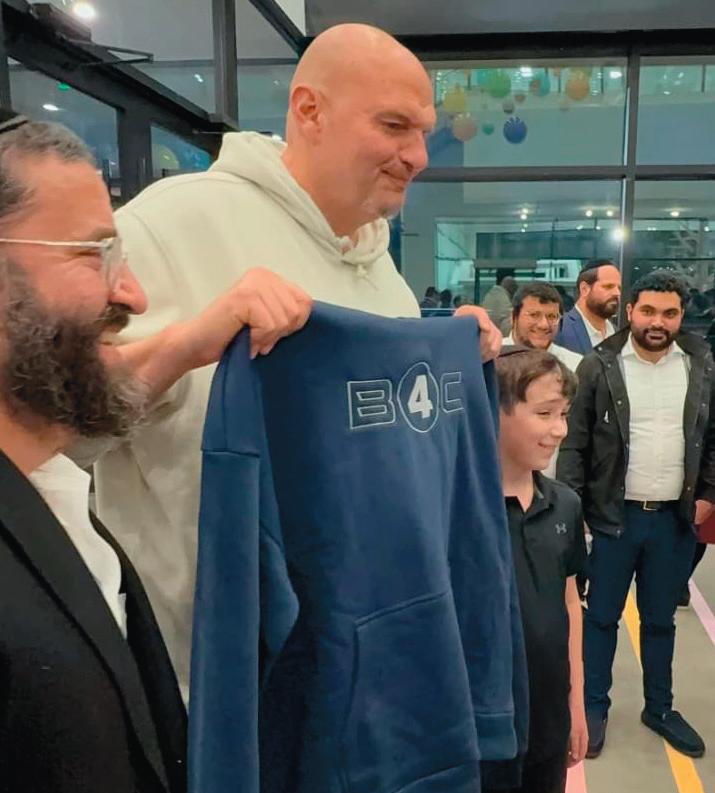
Fetterman drops in on Chai Lifeline in NJ
Sen. John Fetterman made an unmistakable show of solidarity with the Jewish community Friday — hoodie and all.
The Pennsylvania Democrat toured Chai Lifeline’s new regional center in Jackson, N.J., meeting with staff, volunteers and families served by the crisissupport organization, which helps children battling illness, trauma and family emergencies.
Fetterman has emerged as one of the loudest pro-Israel Democrats in Washington and one of his party’s bluntest critics of antisemitism since Oct. 7.
Subway scrawl sparks alarm
New York’s antisemitism crisis just rolled underground again.
A chilling message — “The only good Zionist is a dead one” — was discovered scrawled in red inside the city subway system, according to the Combat Antisemitism Movement, which blasted the graffiti as a warning sign that violent rhetoric is getting bolder.
The watchdog group said the threat was submitted through its incident-reporting app and urged police to move fast “before words turn into action.”
That fear is hardly abstract.
NYPD data show antisemitic incidents now make up the majority of reported hate crimes citywide, despite Jews accounting for only a fraction of the population. Police Commissioner Jessica Tisch said more than half of all confirmed hate crimes this year have targeted Jews.
The attacks range from swastikas and slurs to physical assaults.
For Jewish New Yorkers already navigating a city where anti-Israel venom often spills into open Jew-hatred, the message was brutally simple: You are being hunted.
Boulder firebomb suspect folds
The man accused of murdering an elderly Jewish woman in Colorado’s horrific anti-Israel firebombing attack is preparing to plead guilty.
Mohamed Sabry Soliman, 46, is expected to admit to murder and a stack of additional state charges tied to the June 1, 2025 Molotov cocktail assault on a weekly Boulder hostage solidarity gathering.
Authorities say Soliman spent a year plotting the ambush before lobbing incendiary devices into the crowd on Pearl Street.
Karen Diamond, 82, died from her injuries. More than a dozen others were wounded.
Investigators say Soliman told them he wanted “to kill all Zionist people.”
If the plea is accepted, the Egyptian national — whom federal officials say was living in the United States illegally — faces life behind bars without parole.
For Boulder’s Jewish community, the guilty plea will not erase the horror. It simply locks in what many already knew:
This was not protest.
It was attempted mass murder.
Prison killer mauls Jewish chaplain
A convicted murderer screaming “Allah Akbar” shattered a Jewish prison chaplain’s jaw in what a British judge called a “despicable antiSemitic attack.”
Joseph Gynane, 41, launched the assault inside HMP Whitemoor prison in Cambridgeshire, England, as the chaplain made a pastoral visit last September.
The rabbi also suffered a broken thumb.
On Friday, a court tacked 11 more years onto Gynane’s existing life sentence, ruling that the inmate poses an extreme continuing danger.
The judge said Gynane harbors “florid and ideologically disturbing” antisemitic beliefs and warned of a “very high risk” of future attacks.
Authorities said the killer — already jailed for a brutal 2019 murder and separate stabbing — had plastered his segregation cell with “free Palestine” slogans and “Death to the IDF” graffiti before the beating.
The attack has renewed fears over radical Islamist hatred inside Britain’s prison system, where Jewish clergy now face the same threat confronting Jews outside prison walls.
Even behind bars, the poison is spreading.
Anti-Israel bloc spills secrets
A top anti-Israel international coalition official accidentally said the quiet part out loud — on a webinar packed with UN insiders.
Varsha Gandikota-Nellutla, executive secretary of the Hague Group, openly admitted that the alliance of anti-Israel states has been secretly coordinating with Palestinian activist organizations, including Al Haq, a group now sanctioned by the United States.
Her comments came during what she apparently believed was a private online strategy session with current and former UN staffers.
“There has been a very careful dynamic” with Palestinian civil society advisers present at every ministerial meeting, she said — before awkwardly being warned by another speaker that more than 100 people were on the call and nothing was confidential.
Too late.
The slip offered a rare glimpse into the machinery behind the Hague Group, a diplomatic bloc led by South Africa, Colombia and other Israel-hostile governments pushing coordinated legal warfare against the Jewish state.
Critics have long argued the coalition presents itself as neutral diplomacy while operating as something far more ideological.
This time, one of its own said so.
Jewish teachers accuse union
America’s biggest teachers union is now facing a federal antisemitism complaint.
Jewish members of the National Education Association say the 3-millionmember labor giant allowed — and in some cases fostered — a deeply hostile environment in which Jews were shouted down, intimidated and pushed out of leadership opportunities.
The complaint, filed with the Equal Employment Opportunity Commission by the Louis D. Brandeis Center coalition, accuses the union of “sustained” discrimination in violation of federal civil rights law.
Among the allegations: Jewish delegates were physically crowded and silenced during debates over anti-Israel measures, Holocaust references were watered down in union materials, and an NEA map reportedly labeled all of Israel as “Palestine.”
Complainants also argue the union’s racial quota policies classify Jews as “white,” effectively shutting many out of minority-designated advancement tracks.
Brandeis Center attorney Marci Lerner Miller said the message from union leadership was unmistakable: antisemitism would be tolerated.
The NEA insists it does not permit anti-Jewish bias.
Its Jewish members say they’ve been living with exactly that.
Brooklyn coop in anti-Jew rant
A Park Slope Food Coop meeting exploded into fresh antisemitism fury after one member declared that “Jewish supremacism is a problem in this country” — and drew applause.
The outburst came during a heated debate over whether the famously leftwing Brooklyn grocery should adopt a Boycott, Divestment and Sanctions policy targeting Israel.
Attendees said the comment stunned Jewish members already bracing for another ugly BDS showdown. Instead, they got cheers.
Ramon Maislen, a Jewish coop member active in anti-BDS efforts, described the room as openly hostile and said the rhetoric crossed far beyond criticism of Israel into outright demonization of Jews.
Now the Jewish Community Relations Council of New York wants city and state human rights officials to investigate.
JCRC chief Mark Treyger called the remarks “textbook antisemitism” and warned they reflect a broader disinformation campaign brewing inside the member-owned store.
The Park Slope Food Coop has spent years as a progressive battleground over Israel.
This week, critics say, the mask slipped.
100 Chevra Kadisha leaders at OU-NASCK confab
For The Jewish Star
The sacred work of Chevros Kadisha is among the most humble and quietly performed mitzvos, carried out by individuals for whom this final act of kindness is its own reward.
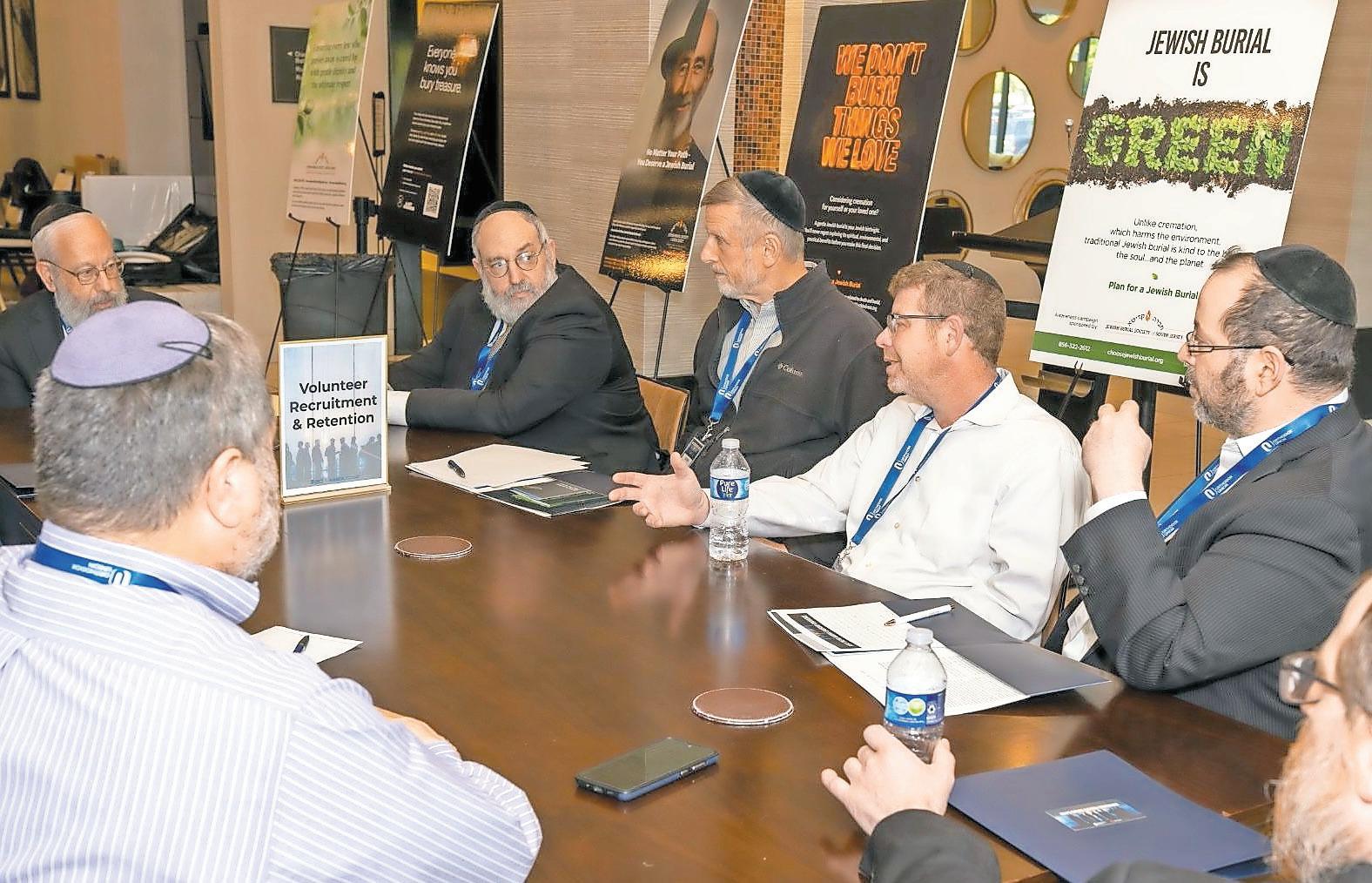
Recently, however, more than 100 men devoted to this ultimate chessed shel emes stepped out from behind the scenes and joined together for chizuk, networking and practical guidance at the Men’s Chevra Kadisha Leadership Conference.
Hosted by the Orthodox Union and NASCK (National Association of Chevra Kadisha), the event brought together administrators and active tahara leaders from more than 50 cities across 17 US states, as well as Canada. Representing Chasidish, Yeshivish, Chabad, Sefardi and Modern Orthodox communities, participants were united in their avodas hakodesh.
“The people who devote the most time and energy to serve Klal Yisrael often go unrecognized, by choice,” says OU Director of Torah and Halacha Initiatives Rabbi Ezra Sarna, who organized the conference together with NASCK Director of Chevra Relations Rabbi Shmuel Fromowitz.
“They do their chessed quietly. Yet to be in a room with others who understand their expertise and who are similarly carrying Klal Yisrael on their shoulders gives them strength.”
Rabbi Elchonon Zohn, founder and president of NASCK and a world-renowned halachic expert in afterlife care, reflect on the achdus cultivated by the diverse community representatives.
“From smaller communities in Seattle and San Francisco to the major Torah centers of Brooklyn, Monsey and Lakewood, the energy and synergy were palpable,” Rabbi Zohn says. “Everyone was engaged — learning, growing, sharing, and united by a common sense of purpose, mission, and the goal to emulate Hashem and His chesed shel emes, as defined by His Toras emes.”
In his keynote address, Rabbi Zohn, who is the director of the Chevra Kadisha, Vaad Harabonim of Queens, underscored the basic precepts of chesed shel emes: to treat each tahara as a singular moment of loss for that specific family and neshama, to perform this selfless mitzvah in the spirit of Hashem’s boundless kindness, and to ensure that every act of chesed is guided by the halachos and minhagim passed down through generations.
Throughout the day, participants attended sessions exploring both halacha and best practices, covering topics such as rechitzah, tahara, tachrichim, and complications that arise in the tahara room.
“The tahara process is not very complicated, but it is highly detailed,” says NASCK Associate Director Rabbi Yaakov Lyons, who coordinates the men’s division of the Boca Raton Chevra Kadisha and presented at the conference. “Every
step carries significance, and our goal is to ensure that each individual is treated with the utmost dignity. Modern medical interventions often introduce complexity to the tahara process, so this leadership conference focused on some of those complex scenarios.”
One panel discussion offered insights into how Chevros Kadisha can cultivate positive relationships with funeral homes. Topics included how to communicate the standards of the Chevra Kadisha, and how to encourage funeral homes to promote traditional burial and tahara to the broader Jewish community.
share this with anyone you feel may be an appropriate
Renewal, the organization guiding this process, works specifically with Jewish patients need a live kidney donor and prepared the flyer, Thank you so much for taking a moment help with this lifesaving effort. Even simply forwarding it to someone who might know can truly make a difference.
Renewal also suggests that when you pass it along, you can simply say, “Connie is my friend” or “Connie is my neighbor,” whichever feels natural.
“This is a very important topic because, in most communities, Chevros Kadisha operate independently of funeral homes yet rely heavily on them, making the relationship both essential and delicate,” says Rabbi Fromowitz. “There is also a responsibility to educate and sensitize funeral home staff to the needs of the traditional Jewish community, ensuring that families are cared for in accordance with their minhagim and values. Clear communication is critical.”
For Ari Wartelsky, who oversees the Bergen County Chevra Kadisha, the open exchange of ideas sparked by the networking sessions stood out as particularly valuable.
“While funeral home costs can be challenging, Chevros Kadisha depend on them to serve kehillos with dignity and care,” says Wartelsky, who presented on transporting the deceased in Bergen County.
A conference highlight was the informal networking that took place between sessions and over lunch, where participants exchanged experiences and practical approaches.
“I met a Chevra Kadisha volunteer from New York whose team carries out taharos and related protocols with remarkable care, precision, and efficiency,” says Yisroel Salamon, who oversees Chesed Shel Emes of Connecticut. “I plan to send members of my Chevra to observe how they operate so we can learn from their approach.”
Equally meaningful were two roundtable sessions in which participants divided into small groups, each focusing on a specific area such as meis mitzvah, tahara team organization, volunteer recruitment and retention, shmira, coordination with medical examiners, community education, and cemetery relations.
What stood out most for Salamon was how each Chevra navigates the unique regulations of its state while addressing the needs of its community.
“I moderated one of the discussions where we compared approaches in Connecticut, New Jersey, Ohio, upstate New York, Indiana, and Texas, each with its own challenges and community dynamics,” he says. “While every group brought different practical wisdom and creative solutions, the shared values, goals, and sense of purpose were the same.”
Rabbi Fromowitz reflects that partnering with the OU helped bring valuable experience and a strong understanding of communal needs to the event.
There will be no out-of-pocket cost to the donor for doing this lifesaving act.
“The OU’s involvement reinforces that this is a national priority for Klal Yisrael,” he says.
“Beyond that, there is tremendous value in organizations working together to strengthen and elevate communal infrastructure. We hope this marks the beginning of continued partnerships that will further support these vital efforts.”
Reported by the OU
Conference participants at a breakout session on volunteer recruitment and retention.
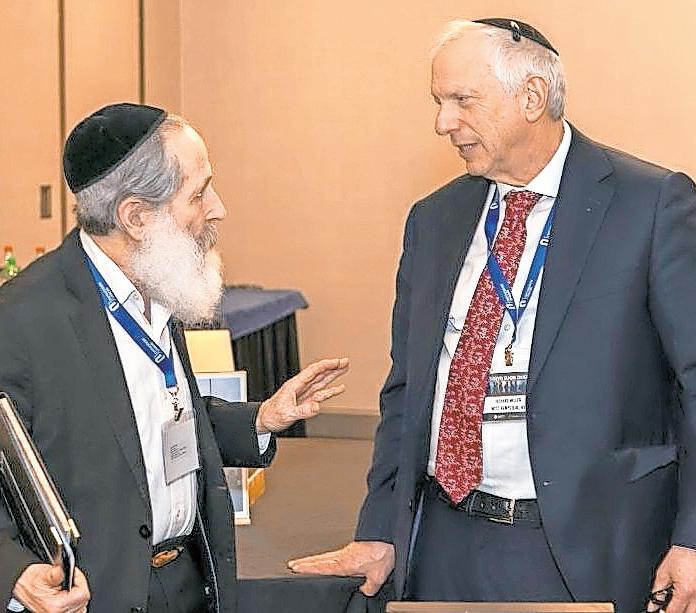
Richard Miller (right), president of the Chevra Kadisha of West Hempstead, with Fishel Bresler, an active rosh at the Chevra Kadisha of Rhode Island, at the Men’s Chevra Kadisha Leadership Conference.
Kidney Transplant Flyer – Please
to pass it along to.
Jewish Star Torah columnists: Rabbi Benny Berlin, spiritual leader of BACH Jewish Center in Long Beach; Rabbi Avi Billet of Anshei Chesed, Boynton Beach, FL, mohel and Five Towns native; Rabbi Binny Freedman, rosh yeshiva of Orayta, Jerusalem; Dr. Alan A. Mazurek, former ZOA chair, retired neurologist, living in Great Neck, Jerusalem and Florida.
Contributing writers: Rabbi Sir Jonathan Sacks zt”l, former chief rabbi of United Hebrew Congregations of British Commonwealth; Rabbi Yossy Goldman, president South African Rabbinical Association; Rabbi Dr. Tzvi Hersh Weinreb, OU executive VP emeritus.
Five Towns Candlelighting: From the White Shul, Far Rockaway, NY
Scarsdale Candlelighting: From the Young Israel of Scarsdale, Scarsdale, NY rabbi Sir
The importance of chronological imagination
want, in this study, to look at one of Judaism’s most distinctive and least understood characteristics — the chronological imagination. Sometimes a modern discovery so changes our ways of looking at things that it allows us to revisit ancient truths that have become deeply obscured and see them with pristine clarity as if for the first time. That is surely the case with quantum physics. What it allows us to do is to understand afresh a biblical way of thinking about truth that is profoundly different from the way we have been accustomed to think in the West. I call the Greek approach the logical imagination, and the Jewish approach, the chronological imagination.
Niels Bohr famously said about quantum mechanics that if it hasn’t profoundly shocked you, you haven’t understood it yet. Without entering the details of this tangled territory, the most profoundly shocking thing about the subatomic reality it exposed is that it does not fit our standard logical categories. Is light a wave or a particle? Do subatomic particles have position or momentum? Is Schrödinger’s cat alive or dead?
The answer to each of these questions reminds us of the story about the rabbi who listens to a husband’s account of an unhappy marriage and says, “You’re right.” He then listens to the wife’s conflicting account and says, “You’re right.” His disciple, who has been present at both meetings, says to the rabbi, “But they can’t both be right,” to which the rabbi replies, “You’re also right.”
There are phenomena, from subatomic particles to domestic disputes, to which the standard rules of Aristotelian logic do not apply. Chief of these is the principle of contradiction that states that a proposition and its negation cannot both be true. Two contradictory statements cannot be true at the same time. Bohr’s complementarity theory, Heisenberg’s uncertainty principle, and other counterintuitive ideas, challenge this head-on. Light is both a wave and a particle. Schrödinger’s cat is both dead and alive. There are phenomena that bear contradictory characteristics until we, the observer, enter the scene, at which point the contradiction is resolved retroactively.
Bohr tells the story of how he came to his theory. It happened after his young son was caught stealing sweets from a local
store. Niels experienced mixed emotions towards his son and was conflicted as to the best way to approach him in light of this event.
First he found himself thinking about this as a judge would. His son was guilty of a crime and justice must be done. But he also felt parental emotions of love and compassion. He realized that he could not hold both thoughts equally in his mind at the same time, and this led to his research on complementarity theory. As a fair judge of the situation, he had to think impartially. As a father he could not help but have compassion for his son, who had made a mistake. One way of thinking leads to justice, the other to mercy, but these are conflicting perspectives and involve different kinds of relationships.
The same is true about the well-known drawing that can be seen as a duck or a rabbit, but not both at the same time. The multi-dimensionality of reality may simply be too complex for us to grasp it all at one time. But what we cannot think simultaneously we can often think sequentially. That is what I mean by the chronological imagination.
We owe our concepts of logic to the ancient Greeks. The Greeks thought of knowledge as a special kind of seeing. We still, in Western languages, preserve this visual metaphor. We speak of foresight and insight, of people of vision, and of “making an observation.”
WThe worldview of the Torah is quite different. True knowledge is acquired less though seeing (G-d is not visible, and throughout the Hebrew Bible appearances deceive) than through listening. The keyword is shema, meaning, “listen, hear, understand, respond.”
Knowledge, daat, is not detached observation but intimate personal engagement: “And Adam knew his wife and she conceived.” G-d in the Torah is not a detached observer of the affairs of humankind, but an active participant. In Judaism, words are not just pictures of reality, the “forms” of things. They affect relationships.
Words can injure and inspire. Words can bless or curse. Words can create new moral facts, such as when we make a promise. Words shape the reality they describe. This is more like Heisenberg’s uncertainty principle, in which the observer affects the reality he observes, than like Greek-inspired theories of knowledge in which a sentence can be true or false but not both.
Tonly time in the whole of Tanach in which a human being is invited to see the world from the vantage point of G-d occurs in the last four chapters of the book of Job, when Job finally understands that the universe is not anthropocentric. Not everything exists for the benefit of humankind. G-d is at the centre, not us.
No less significantly, though the Torah has a single Author, it does not speak in a single voice. I have argued throughout these studies that there are at least three discernible voices — a wisdom voice, a priestly voice, and a prophetic voice — corresponding to the three modes in which G-d discloses Himself: through creation, revelation, and redemption. Each captures something of reality but none, on its own, portrays it all.
That is why the Torah is such a complex interplay of different genres and tones of voice. The book of Numbers, for example, is structured as a fugue between law and narrative. There is no other book in the whole of literature that is quite like it. Throughout Numbers we see the interplay between prophetic and priestly sensibilities, and we begin to understand how law — the “ought-ness” of things — grows out of, and in turn influences, history, the “is — or was-ness” of things.
How then do you represent the three-dimensional nature of reality with its conflicting perspectives and multifaceted truths? One way in which the Torah does it is through what I call the dialogical imagination. We are shown a situation from two radically opposed viewpoints at the same time.
Two powerful examples occur in Genesis 21 and 27. In Genesis 21, first we see Sarah and her joy as at last she holds her long-awaited son. Then we see the pathos of Hagar and Ishmael, dismissed from the household and on the brink of death under the heartless desert sky. In Genesis 27, first we see Rebecca arrange for her beloved son Jacob to be blessed, then we see Isaac and Esau, bound together in shock and dismay, as they realize what has happened.
These narratives subvert any simplistic tendency to moralize, to divide reality into black and white. They force us to see the world from more than one point of view. The only way of bridging these perspectives is through conversation. Hence the idea of truth as dialogue. In Genesis, when speech breaks down, violence — the attempt to impose my version of the truth on you by force — is often waiting in the wings.
cat is both dead and alive.
hen we understand something we say, “I see.” For Plato, knowledge was deep insight into a world beyond the senses, where you see not the physical embodiments but the true form of things. The guiding metaphor for Greek epistemology, buried deep in the culture, was the image of Zeus, chief of the gods, looking down on the affairs of human beings from his lofty perch on Mount Olympus.
he psychotherapist Viktor Frankl pointed out that what can be a contradiction in two-dimensional space need not be when we add a third dimension. So a square cannot be a circle, and a circle cannot be a square. But they can both be shadows cast by a single object, a canister, lit first from the side, then from above. Add the third dimension and the contradiction disappears. Nor is this a mere mathematical curiosity. As Niels Bohr, one of the masters of quantum physics put it, “The opposite of a trivial true is a falsehood, but the opposite of a profound true may well be another profound truth.”
The other way is through the chronological imagination. Conflicting propositions may both be valid — the opposite of a profound truth may be another profound truth — but not at the same time. A classic example of this is the interpretation by Rabbi Joseph Soloveitchik in The Lonely Man of Faith of the two Creation accounts in Genesis 1, and in chapters 2-3. In the first, man is created in the image of G-d and given dominSchrödinger’s
This is absolutely fundamental to Judaism. There is more than one valid way of looking at the universe. Minimally, there is the point of view of G-d and there is the point of view of humankind, and they are radically distinct. The
Is it OK to teach the fiery secrets of Kabbalah?
Hey, why is the rabbi teaching Kabbalah? Isn’t it forbidden?”
Over the years, I have taught many classes on Jewish mysticism, often through the prism of Chabad Chassidic philosophy. But if I used the word “Kabbalah” in the advertising, I received the above question on more than one occasion.
A long time ago, I gave a lecture called “Why is Madonna Studying Kabbalah?” In traditional
Jewish fashion, I was trying to answer one question with another.
Remember Golda Meir’s answer when she was once asked, “Why do Jews always answer a question with a question?” She replied, “Why not?”
Lag B’Omer was celebrated this week. Literally, it means the 33rd day of counting the Omer, but it recalls the cessation of a plague that took the lives of some 24,000 students of the legendary Rabbi Akiva. It also commemorates the yahrzeit of one of his most famous surviving students: Rabbi Shimon Bar Yochai.
The custom of Lag B’Omer bonfires is mainly attributed to the circumstances surrounding Rabbi Shimon’s passing. His house was filled with a fiery light from the deep secrets of Kab-
balah that he was sharing with his disciples as his final teachings in this earthly world. No wonder that he is known as the father of Kabbalah. And, although this is argued by certain scholars, the traditionally accepted view is that he was the author of the Zohar, the bible of Kabbalah.
Let me try to answer the question of why rabbis like me may be teaching Kabbalah, seeing that historically, one was supposed to be over 40 years old and learned in classic Torah before being allowed to embark on mystical studies.
Firstly, I am not revealing any “state secrets.” My classes are more of an introduction to Jewish mysticism, and I share basic information and insights that every Jew should know. So many people out there today, especially young people, are searching for spirituality.
How many millions of Jews have disengaged with their Jewish birthright and heritage because it didn’t do anything for them, complaining that they weren’t stimulated by dry, lifeless teachings devoid of spiritual meaning or deeper content? How many tens of thousands of young Israelis and others have we lost because they embraced the religions of the Far East when they discovered some spirituality for the very first time in their lives? Do you have any idea how many Jew-
The tochacha: We have already lived the curses
On May 8, 1945, Nazi Germany surrendered. The Holocaust was over, with six million Jews murdered.
When the news came, the overwhelming feeling was not celebration, but something quieter and heavier — relief mixed with mourning. There was an attempt to make sense of devastation too enormous to comprehend.
And yet we celebrate on Lag BaOmer. We
dance around bonfires and sing, although the most well-known reason for the commemoration is that a plague killing the students of Rabbi Akiva stopped on that day (Yevamos 62b).
By the time Lag BaOmer arrived, 24,000 Jews had already died. A seudas hodaah might have made sense. But dancing? Bonfires? It feels almost callous in the face of such loss.
To understand what we celebrate, we need to understand who Rabbi Akiva was and what he lost. He was a baal teshuvah who began learning at 40, whose wife Rachel sacrificed everything, enduring poverty and years of separation so that he could learn (Kesubos 62b–63a). For 24 years he was away. He built an empire of Torah, amassing 24,000 students, one of the most extraordi-
nary legacies in Jewish history.
And then, in just over four weeks, it was gone.
At that moment, Rabbi Akiva had 24 thousand reasons to go home. He had given everything. He had earned the right to say, “I did what I could.” No one would have blamed him.
And yet, the Gemara tells us that after his students died, Rabbi Akiva began again. He chose five students and transmitted everything
he knew to them. What we call the Mishnah, the Tosefta, the Sifra, and the Sifre all trace back to those five students and the teacher who refused to stop (Sanhedrin 86a). The Torah we learn today exists because a man who had lost everything chose to begin again. That is what Lag BaOmer celebrates, not that the dying stopped, but how to respond after everything is lost. That response did not end with Rabbi Akiva. It became the Jewish response to devastation across generations.
Rabbi Shlomo Riskin once described making his way one Shabbos morning as a child in Brooklyn to Beth Moses Hospital in BedfordStuyvesant, where the Klausenberger Rebbe was
In it together: ‘Kulanu Areivim Zeh La’Zeh’
The title above refers, of course, to the wellknown dictum, “all of Israel, all of the Jewish people are responsible for one another.” This is probably our greatest strength as a people, one that even non-Jews recognize. How many have heard the admiration from some that “you Jews always take care of one another,” or the rebuke from others, “you Jews are so clannish”? But what is the source?
Many are familiar with the expression of Chazal describing Am Yisrael at Har Sinai, “k’ish
echad b’lev echad (as one man, with one heart),” cited by Rashi in Parshat Yitro (19:2) on the pasuk “vayichan sham Yisrael neged ha’Har (and Israel encamped there opposite the mountain).”
This is due to the change in the pasuk from plural to singular, where the people stood united, in contrast to the other encampments, which were marked, unfortunately, by disagreements. But that is not the source.
It is in fact found in our parsha, B’Chukotai, smack-dab in the middle of the tochacha, the klalah (the rebuke or curse), hardly the place you’d expect it. “V’chashlu ish b’achiv k’mipnei cherev v’rodef ayin; v’lo tihiyeh lachem tekumah lifnei oiyvechem (they will stumble, one over his brother as in flight from the sword, but there is no pursuer; you will not have the power to withstand your foes” (Vayikra 26:37).
Rashi there quotes the Midrash and Gemara (Sanhedrin 27b): “bishvil achiv, they will slip and fall because of their brother; one will fall because of the sin of his brother, sheh’Kol Yisrael areivim zeh la’zeh (for all of Israel are connected to one another.” While we usually refer to this in the positive way, that our connectedness leads to positive outcomes for each, Rashi is reminding us that it also refers to the negative — that the sins of our fellow Jew can result in detriment to other Jews.
This is profoundly brought home to us all in the wake of recent and not-so-recent events.
In 2021 on Lag BaOmer, 45 people lost their lives and 150 were severely injured in the deadliest civilian disaster in Israel’s history. The victims, almost all religious, mostly Charedi, young and old, literally “stumbled and fell over one another,” just as the pasuk horrifically predicted, resulting in a massive, fatal crowd crush. Can the warnings of our Torah get any more explicit than that? We Jews are responsible for one another and will suffer even if we haven’t personally sinned.
To their credit, immediately afterward, in cooperation with the government, the mostly Charedi authorities responsible for the annual event
Wild Animals: Annihilate them or tame them?
To clearly convey my comments this week, I must introduce you to my “secondary” and “primary” sources and to a fascinating cast of prestigious characters. My “secondary” source, which first put me on track, is the commentary on Chumash authored by Ramban, Rabbi Moshe ben Nachman. Ramban’s commentary is second only to Rashi’s, and I try to at least sample some of his work every week.
This week Ramban led me to my “primary” source, a passage in the Midrash Halacha
(known as Sifra or Torat Kohanim) on the book of Leviticus, Sefer Vayikra.
This passage, of which Ramban gives us only a taste, contains a fascinating debate between two early Talmudic sages, Rabbi Yehuda and Rabbi Shimon ben Yochai.
Once I noted Rabbi Shimon ben Yochai’s name, I had what we psychologists call an “aha experience.” For just several days before we read this week’s Torah portion, we celebrated Lag B’Omer, a day devoted to the memory of this very fascinating sage.
I immediately felt blessed by the opportunity to connect Lag B’Omer to this week’s double parsha, Behar/BeChukotai (Leviticus 25:1-27:4).
But before sharing the passage in Torat Kohanim with you, I’d like to give you some background on the two wise opponents, Rab-
bi Yehuda and Rabbi Shimon. For this I draw upon a fateful debate between Rabbi Shimon and some of his colleagues, Rabbi Yehuda in particular. The debate is recorded in Tractate Shabbat, page 33b. (Is it just a coincidence that this story of the hero of Lag B’Omer, the 33rd day of the Omer, is preserved on page 33 of the second tractate of the Babylonian Talmud?)
These rabbis, all students of Rabbi Akiva’s later years, survived to dwell under Roman rule. Rabbi Yehuda, who generally opened such discussions, began the conversation by praising the Romans: “How magnificent are
their accomplishments! They’ve built marketplaces, bridges, bathhouses!”
Some of those present simply remained silent. But not Rabbi Shimon ben Yochai. He thundered: “Everything they’ve built has been for their own benefit. They built the marketplaces for sinful purposes, the bathhouses for their own pleasures, and the bridges to charge exorbitant tolls!”
The Romans soon learned about this conversation. They acknowledged Rabbi Yehuda as the primary speaker for all public occasions. But they condemned Rabbi Shimon to death, a fate he narrowly escaped by hiding in a cave for many years, a major formative event in his role as a spiritual guide to future Jewish generations.
Now let’s examine an entirely different de-
Published weekly except during certain religious and civil holidays by The Jewish Star LLC New York City office: 5676 Riverdale Ave Suite 311, Bronx NY 10471 • LI office: 2 Endo Blvd, Garden City NY 11530
Here’s how to reach The Jewish Star — Write: Editor@TheJewishStar.com. Call: 516-622-7461 ext 291
Editor & Publisher: Ed Weintrob
516-622-7461 ext 291
Jewish Star Associate: Nechama Bluth
516-622-7461 ext 241
Content: The Publisher endeavors to ensure that our content is within the bounds of normative halachah and hashkafah. Anyone who feels anything we publish may be inappropriate in this regard is urged to bring the item in question to the attention of the Publisher.
Advertising is accepted at the sole discretion of the Publisher and should conform to standards appropriate for distribution in an Orthodox community. Send us your news! Editor@TheJewishStar.com
Advertising: Publisher@TheJewishStar.com
Kashrut: The Jewish Star is not responsible for the
kashrut of any product or establishment featured in its pages. If you have questions regarding any establishment or product, including its supervision, please consult your rabbi for guidance.
Submissions: All submissions become the property of The Jewish Star and may be edited and used by the Publisher, its licensees and affiliates, in print, on the web and/or in any media that now exists or will exist in the future in any form, including derivative works, throughout the world in perpetuity, without additional authorization or compensation. The individual or entity submitting material affirms that it holds the copyright or otherwise has the right to authorize its use in accordance with The Jewish Star’s terms for submissions.
Opinions: Views expressed by columnists and other writers do not necessarily reflect the position of the Publisher or of The Jewish Star LLC.
Distribution: The Jewish Star is available free in kosher food establishments, stores, synagogues, and curb-side newsboxes on Long Island, in New York City and elsewhere. To request free delivery to your location, write Publisher@TheJewishStar.com.
Copyright: All content is copyright and may not be republished or otherwise reproduced without written permission by The Jewish Star; to do so without permission is against the law and halacha. For content reproduction write to Publisher@TheJewishStar.com.
The Jewish Star subscribes to JNS. It, or its contributors, own the copyrights on material attributed to them. The length and content of JNS material and all other submitted material may be edited by The Jewish Star.
Member: American Jewish Press Association. This newspaper contains words of Torah. While it is not considered shaimos, please dispose properly.
OPINION COLUMNISTS
Mitchell Bard, foreign policy analyst, authority on USIsreal relations; Ben Cohen, senior analyst, Foundation for Defense of Democracies; Stephen Flatow, president, Religious Zionists of America-Mizrachi and father of Alisa Flatow, murdered in an Iranian-sponsored Palestinian terrorist attack in 1995; Yisrael Medad, Americanborn Israeli journalist and political commentator; Rafael Medoff, founding director of David S. Wyman Institute for Holocaust Studies; Fiamma Nirenstein, Italian-Israeli journalist, author of 13 books, leading voice on Israeli affairs, Middle Eastern politics and antisemitism; Melanie Phillips, British journalist; Moshe Phillips, national chairman, Americans for a Safe Israel; Thane Rosenbaum, Distinguished University Professor at Touro University (published by Jewish Journal); Jonathan S. Tobin, editor-in-chief, Jewish News Syndicate.
A message to hypocritical war-scolding Pope Leo
EDWIN bLACK Jewish Star contributor
During the final ceremony of the most recent March of the Living at Auschwitz, Israel Defense Forces Chief Cantor LTC Shai Abramson sang the song of the fighting partisans who waged war from the forests. He sang it in Yiddish — just like my father and mother sang it when they were partisans fighting in the Polish woods.
My parents told me that every day, they prayed to G-d to deliver them just one more day. As the cantor’s voice pierced the air, I recalled the men who stormed the beaches of Normandy, men who prayed to the heavens as they did. The speakers on stage reminded us as well that every day the men and women of the IDF also pray to G-d as they fight to preserve life and the nation.
We are reminded of the Talmudic injunctions for self-defense and warfare to save lives. It is the principle of self-defense, and the mandate to preserve life, the principle of Pikuach Nefesh, which overrules all other religious tenets in Judaism — Save Life.
And then my mind went to Pope Leo XIV, who on Palm Sunday declared that G-d “does not listen to the prayers of those who wage war, but rejects them.”
Pope Leo says this about men who stormed Normandy, about every Jew in the IDF, about my parents who fought as partisans. At the same time, he condemned President Trump’s war to save humanity from nuclear conflagration by re-
As head of a blooddrenched, mobbed-up Church, the Pope has no standing to declare on behalf of G-d that my father’s prayers and the prayers of the IDF won’t be heard.
ligious fanatics in Iran.
Pope Leo, who are you to tell us whose prayers G-d hears?
I know the world sees you as a great Holy Man. But I see you as just another product of the Catholic Church in Chicago, one of the most criminal and corrupt organizations in American history. I’m from Chicago; I know about Chicago.
Ispent some of my early professional years investigating the Catholic Church in Chicago, as did a cadre of Catholic reformers and Catholic journalists. Fact: The Catholic Church in Chicago completely partnered with the corrupt Democratic political machine and the Chicago Mob’s worst gangsters to make millions of dollars and accrue power.
Let’s go back a few decades.
The Chicago Archdiocese was led by Cardinal John P. Cody. He lived in a mansion and had a mistress — effectively a wife — Helen Dolan Wilson, who he benefited from a missing million dollars of church money that funded a Boca Raton vacation home and other benefits. The Chicago Sun-Times was among the leaders in exposing this. A federal grand jury was close to indicting Cardinal Cody for embezzlement when he died in April 1982.
The Chicago Archdiocese was also loaded with child predator priests. Scores of priests assaulted young boys and girls, and when these priests were exposed, the archdiocese transferred them to out-of-the-way parishes, such as in Arizona, where they often remained in teach-
ing, counseling, and coaching roles — and could and did repeat offend.
Around Thanksgiving of 2025, the Chicago archdiocese was hit with the so-called “Predator Pipeline” lawsuit, accusing the Church of reassigning pervert priests, enabling them to re-offend against new child victims. Lawyers for the plaintiffs said, “This wasn’t just a series of bad decisions — it was a system. … For decades, the Archdiocese relied on secrecy and reassignment … putting children in harm’s way.”
The Church was partners with the Daley political machine, participating in its power and control schemes. In 2021, the archdiocese listed $1 billion in cash and assets.
Since the days of Al Capone, the Catholic Church has partnered with the mob. America’s most famous gangster was regularly given communion at a South Side church, St. Columbanus, now known as St. Moses the Black, located on 71st Street near the highway — and there were lots of mob church weddings in and around Chicago.
Capone was so comfortable operating in the church, he ordered two murders on the church steps of Chicago’s biggest cathedral, Holy Name. Capone’s favorite assassin, Jack “Machine Gun” McGurn, shot Dion O’Banion and later Hymie Weiss. The bullet holes are still visible on at the cathedral entrance.
A stronghold of the Chicago mob was the suburb of Cicero. One of the local enforcers was a big guy who later became known as “The Gorilla.” The Gorilla was Paul Marcinkus. Eventu-
ally, Marcinkus became an archbishop — and the bodyguard for Pope Paul VI. Despite zero experience in banking, Pope Paul appointed Marcinkus secretary and then chairman of the Vatican Bank. The Vatican Bank was a mob front. In the 1970s, for example, it held the funds of Michele Sindona, who was heavily involved in money laundering heroin profits from both the Italian and American mobs. When Sindona’s personal investment portfolio collapsed, the Vatican Bank reportedly lost some $80 million. The Vatican Bank set up Banco Ambrosiano, which collapsed after $1.3 billion was discovered missing.
In 1973, the heads of the organized crime and racketeering section of the US Department of Justice, William Aronwald and Bill Lynch, questioned Marcinkus in his Vatican office. Topic: his alleged delivery of $14.5 million in counterfeit bonds to the Vatican years earlier. Italian grand juries wanted to indict Marcinkus, but he was shielded by Vatican immunity. Eventually, Marcinkus was given a remote church post in Sun City, Arizona, where he died, leaving a halfmillion dollar home and estate.
His partner in crime, Robert Calvi, general manager of Banco Ambrosiana, was not so lucky. He lost the mob’s money, and in 1982 the mob rubbed him out. The day after he was fired, Calvi’s body was found hanging from scaffolding beneath a bridge in London. He had five bricks in his pockets. Calvi’s secretary, Teresa Corrocher, jumped — or was pushed — to her death out of a five-story window. Chief suspect in these deaths was fascist gangster Licio Gelli, who ran the secretive Italian Blackfriars terror society known as Propaganda 2 (P2). Gelli lost a lot of money when Banco Ambrosiana collapsed. He was arrested and escaped more than once and ultimately died peaceably in his home in Italy.
At all times, the Chicago mob had a direct link to Pope Paul through their Cicero gangland stooge, Marcinkus the Gorilla.
When Hitler came to power, Pope Pius XI wasted no time. On July 20, 1933, the pope sealed “The Concordat with the Third Reich.” Article 16 binds Catholic bishops to swear allegiance to the German Reich before assuming their Church offices — and to not interfere with Reich policies.
That’s why the Church said nothing when the camps were set up, when the Nuremberg
London stabbings shine light on Hamas’ success
It’s past time to acknowledge that for Hamas and its allies, the pogrom in southern Israel on Oct. 7, 2023, yielded one enduring, transformational success.
To find it, don’t look to Gaza, most of which has been reduced to rubble as a result of the twoyear Israeli war to defeat Hamas in the coastal enclave.
Look instead to those Western countries that are home to significant Jewish communities: to the United States, to Canada, to Australia, to France, to Germany, and especially, given the terrible events of the past week, to the United Kingdom.
In all these countries, Jews have been seized by a fear and an uncertainty they haven’t known since the Shoah. At least three generations of Jews, my own included, grew up regarding Jewhatred in the democratic West as largely a historical relic, even if we did on occasion encounter antisemitic barbs.
Now we are faced with arson attacks on synagogues, day-care centers and kosher restaurants. The “visibly Jewish” among us — those who wear traditional clothing, kippahs, tzitzit, Star of David necklaces — are the subjects of assaults and insults on a near-daily
The British public has been quiet as Jew-hatred surges.
basis. Social media has become the nerve center of antisemitic propaganda. Politicians now toy with antisemitic tropes in the expectation that it will win them votes.
All of these developments can ultimately be credited to Hamas. Whether or not its leaders, many of whom were subsequently eliminated, realized it at the time, the international impact of the pogrom was to affect a sea change in public opinion. Almost three years on, the world contains far more believers in the libel that Israel committed “genocide” than there are actual Jews on the planet. Not a few of those believers are convinced that the Jews in their midst are legitimate targets for revenge.
Thus do we come to a corner of northwest London, no more than a few square miles, where perhaps 40% of the United Kingdom’s 250,000 Jews reside. This month alone, seven attacks have been recorded here, including the April 29 stabbing in Golders Green — long the heart of Jewish London — in which two Jews were badly wounded in a terrorist attack executed by a knife-wielding Islamist, Essa Suleiman.
That attack, which generated predictable and increasingly tiresome reassurances from Prime Minister Keir Starmer and other politicians that antisemitism has “no place” in British society, occurred less than a week after a Pakistani immigrant viciously assaulted a Haredi Jew who was carrying out his job as a building inspector in the satellite town of Slough, west of London. That episode generated similar hand-wringing statements but no concrete action.
Kemi Badenoch, the leader of the opposition Conservative Party, was absolutely correct when she said, while visiting the scene of the assault in Golders Green, that there is now “an epidemic of violence against Jewish people.” She went on to define it as a “national emergency” that needs “to be treated as such by the government and public authorities.”
The problem is that, for all the good intentions that get articulated in the immediate aftermath of one of these attacks, there are no votes to be won by politicians who pledge to fight antisemitism unless they are competing in the handful of districts with a sizable Jewish electorate.
Sadly, but in common with other countries where anti-Jewish and anti-Israel outrages can also be said to have reached epidemic proportions, the British public has remained pretty much silent in the face of the upsurge. This is perhaps why those politicians, like Badenoch, who want to address the problem, describe it as a “national” crisis, asserting that attacks on Jews are attacks on the very fabric of British society. But the brutal truth is that this message has failed to move the mass of Britons or dislodge
the widely held opinion that, as reprehensible as these attacks are, they can ultimately be blamed on Israel’s actions in the Gaza Strip. There is much that could be done in practical terms.
The British government could finally designate the Iranian regime’s Islamic Revolutionary Guard Corps, which has directed terrorist attacks against Jews, Iranian dissidents and critics of the Islamic Republic both in the United Kingdom and across Europe.
It could ban the pro-Hamas hate marches that have been staged in towns and cities across the country, where blatantly antisemitic slogans about Jewish wealth and influence nestle comfortably among more established forms of incitement, such as the call to “globalize the
See Cohen on page 27
The never-ending trope of Jews’ dual-loyalty
Even before Israel’s modern-day rebirth in 1948, Jews routinely stood accused of not possessing sufficient loyalty to the nations where they resided.
One of the earliest examples of this libel was the suspicion in parts of medieval Christian Europe that Jews were in league with some Muslim powers.
The charge of dual loyalty could be seen in the 1894 Dreyfus Affair in France through the Nazis’ rise to power; indeed, this notion in large measure underlays the failure of Jewish emancipation in Europe. In the United States in the 1920s, Henry Ford published “The International Jew,” which alleged, along with other calumnies, that Jews were pushing America toward war for financial gain and world domination.
Its contemporary manifestation almost always centers on the charge that Jews are more beholden to Israel than their own nation. Often, the dual-loyalty charge is infused with a narrative imputing enormous power to Jews and Jewish communities, which typically represent a tiny fraction of the overall population.
Christian Europe believed Jews were in league with Muslim powers.
Such a synthesis of disloyalty on one hand and exaggerated power on the other allows the accuser to charge Jews of working to undermine their nation from within, alleging that Jews are dangerous aliens who represent nothing short of a fifth column.
In the early to mid-2000s, this toxic calumny about Jews pushing Washington to launch foreign wars for Israel’s interest manifested itself in spurious accusations — largely, but not exclusively, within the left — that Jewish officials within George W. Bush’s White House were responsible for the US war against Iraq.
A cabal of Jewish “neoconservatives” in the Bush White House — Paul Wolfowitz, Scooter Libby, Elliott Abrams, Douglas Feith and Richard Perle — had, the narrative went, hijacked US foreign policy in the service of Israel, even though none were top-tier members of the administration.
Most recently, the spurious charge that Israeli Prime Minister Benjamin Netanyahu pushed a reluctant US President Donald Trump to attack Iran has been common. Some have specifically pushed the dual-loyalty charge, accusing Jews qua Jews of having orchestrated the war.
Though most who have leveled this explicit antisemitic accusation were extremists, including Hitler enthusiast Nick Fuentes, at least one putatively mainstream outlet legitimized this toxic trope.
An article in The Guardian on March 17, “UK security adviser ‘attended’ US-Iran talks and judged deal was within reach,” included the following about Jared Kushner, son-in-law of the president, and Steve Witkoff, both Jewish, who were Trump’s special envoys at talks in Geneva with Iran in late February.
One Gulf diplomat with knowledge of the negotiations said: “We regarded Witkoff and Kush-
ner as Israeli assets that dragged a president into a war he wants to get out of.”
The term “foreign asset” insinuates that the person is serving the interests of a foreign power, often at the expense of their own country’s security.
So, it’s telling that the co-authors of The Guardian piece, diplomatic editor Patrick Wintour and international correspondent Julian Borger, decided to promote this toxic accusation about Witkoff and Kushner, particularly given that it was entirely unevidenced and based on one anonymous Gulf diplomat.
Sadly, the dual-loyalty trope has been mainstreamed at other British outlets over the years, including after the Hamas-led terrorist attacks in southern Israel on Oct. 7, 2023, when one
might expect heightened sensitivity about the use of language and ideas evoking classic antisemitism.
In October, the BBC legitimized the dualloyalty trope by uncritically quoting a spokesperson for the pro-Hamas group, the Council on American-Israeli Relations (CAIR), who referred to Jews as “Israel firsters.”
In 2024, former Conservative minister Sir Alan Duncan hurled the dual-loyaltycharge during an interview at the British news outlet LBC. He charged that Stuart Polak, a Jewish Peer, should be removed from the House of Lords because “he is exercising the interests of another country.” The LBC presenter failed to challenge Duncan’s racism.
British Prime Minister Keir Starmer speaks after a stabbing attack against Jews in Golders Green, on April 29. Lauren Hurley, No. 10 Downing Street
The ‘anyone but Netanyahu’ fallacy of ‘unity’
In an attempt to repackage their “anybody but Bibi” brand, Naftali Bennett and opposition leader Yair Lapid—rotating heads of the previous government—have joined forces once again. This time, their ploy is an actual merger of their parties, Bennett’s newfangled eponymous entity and Lapid’s Yesh Atid.
The name of this more comical than unholy alliance is “Together.” To be more precise, it’s called “Together, Led by Bennett.” You know, just to make the hierarchy clear and establish from the outset who’s the boss.
Pretty ironic for an entity whose banner is “unity.” But there’s method to the madness of making Bennett the face of the bloc whose main aim is to oust Prime Minister Benjamin Netanyahu at the ballot box.
Lapid is labeled as a “centrist,” yet he’s really to the left of the Israeli populace. Bennett used to be on the right side of the spectrum and hopes his reputation as such will attract disgruntled conservatives in search of an alternative to the current coalition.
“Unity” has nothing to do with it—other than a shared aversion to nemesis Netanyahu, that is.
Contention isn’t a bug in Israel. It’s the operating system.
Oh, and wishful thinking about the nature and direction of the electorate.
“Lapid and I have different opinions on a range of issues, and we’re not hiding that,” Bennett said at the press conference held to announce the fusion. “On the contrary, we’re proud of it. I’m proud of the fact that two leaders with different opinions can fight together for the good of the people of Israel, just as our soldiers fight shoulder-to-shoulder.”
Never mind the disingenuous comparison; what’s a poor metaphor among friends?
The point, he said, is that “our unity is a message to the entire nation. This is the end of the era of division; the era of mending is upon us.”
This is ridiculous on so many levels that it’s hard to know where to start. In the first place, judging by Bennett’s recent policy pronouncements, the ostensible gulf between him and Lapid has all but evaporated.
Secondly, Israelis with contradictory views on crucial matters are never going to cease battling one another ideologically, and no constellation of musical chairs in the Knesset is going to alter that reality.
Contention isn’t a bug in Israel. It’s the operating system. The same has been true of Jews since time immemorial. And false nostalgia about imagined harmonious periods is the stuff of short memories.
Indeed, the idea of a “big tent” or an all-inclusive “umbrella” is a sham. Bennett and Lapid aren’t merely kidding themselves if they imagine an Israel in which different groups aren’t taking to the streets to decry policies they abhor; they’re underestimating the intelligence of the very people they want to woo.
They must be aware that the “unity” they’re plugging is really a vague concept of coexistence cloaked in a campaign logo. True unity exists only in narrow, clearly defined circumstances, such as during wartime or national tragedies, or around foundational principles that command near-universal consensus.
Even then, it’s fragile and often fleeting, as was the case when hostages remained in Gaza. Outside of those moments, what passes for unity is usually just a temporary alignment of interests.
Speaking of which, it’s a “temporary alignment of interests” that’s responsible for the “Together” Party. Bennett is in debt to the tune of some 20 million shekels (approx. $6,800,000), accumulated from his previous parties that failed to get re-elected to parliament.
Lapid, with 25 seats in the current Knesset, can reimburse the public coffers for him, in exchange for a life jacket to keep him from dropping below the threshold in the upcoming election— which polls indicate is a possibility.
The flip side of this manufactured cohesion is the bogeyman of “polarization.” We’re told, ad nauseam, that Israeli society is fractured — as though this diagnosis describes a deadly disease rather than a persistent condition.
Israel is a patchwork of identities, with a culture that prizes fierce debate, mulish stubbornness and a whole lot of chutzpah. It’s a pluralistic mosaic marked by passion born of high stakes. That’s not a flaw to be corrected; it’s a given.
Write: Columnist@TheJewishStar.com
Bris-armageddon in Belgium: A double standard
Belgium is once again facing claims of antisemitism.
Since raids on the homes of the three mohalim in Antwerp and the confiscation of their tools in May of 2025, there has been a great deal of tension between the Jewish community and the local government.
The case began a few years ago when Rabbi Moshe (Aryeh) Friedman, a controversial local figure, alerted the health ministry that the mohalim were practicing metzitzah b’peh, or direct oral contact on the wound. The ritual is known to be lifethreatening if, for example, a newborn contracts a resulting infection like herpes.
In February of this year, the controversy intensified when US ambassador to Belgium Bill White openly criticized the investigation as antisemitic and demanded that the health ministry carve out protections for the millennia-old ritual. Although some at the time said claims of antisemitism were unwarranted, the question remains as to what prompted White to speak out on the issue almost a year after it went public.
Belgian Parliament member Michael Freilich of the nationalist, conservative and liberal-conservative Flemish Alliance (N-VA) — the only Orthodox Jewish Member of Parliament — visited Washington around the time of the raids and discussed
Discomfort over exemptions for religious practice.
the issue of protections for circumcision. Freilich insists that his visit was to better understand how the United States has balanced the separation of church and state, thus protecting ritual circumcision. He was looking for a diplomatic solution to the crisis back home.
Even though these conversations preceded White’s comments by several months, there are those who attempt to draw a causal link.
The Federal Ethics Committee in Belgium recently delivered a sharp rebuke of Freilich, saying that he prioritized religious/communal advocacy over his duties to the Belgian state. By engaging with foreign powers on an ongoing criminal case, the MP had attempted to bypass the judiciary, thus undermining state sovereignty. He had also sown distrust in Belgian institutions by insinuating that there were “hidden motives” in the mohel investigations.
The real question is not whether Freilich’s conduct deserves scrutiny, but whether Belgium applies the same scrutiny when lawmakers lobby foreign actors on causes more fashionable than Jewish religious freedom.
Opposition parties (the Greens and Ecolo, a French-speaking green political party) demand a formal reprimand and the initiation of the 2017 transparency log of all tax-funded trips to avoid shadow diplomacy. Freilich and his party have pushed back, claiming that the investigation is a character attack intended to show his “split loyalty.”
Even granting that MP Freilich was lobbying a foreign body for political ends, he’s far from the first to do so.
Flemish and Walloon ministers have often sought international support for Flemish au-
tonomy and economic interests. Members of the Green Party (as well as other left-leaning parties) have consistently lobbied international bodies to pressure Belgium on issues ranging from Xinjiang forced labor to Palestinian rights. These actions have been overlooked because they are framed as advocating universal values as opposed to intervening in Belgian law and are rarely referred to the Ethics Committee.
Those claiming outrage about Freilich’s behavior are attempting to conceal the selective nature of their claims by demanding blanket transparency for all future government travel while at the same time ignoring all past infractions. The demands also overlook the fact that the 2017 recommendations were voluntary as opposed to legally binding.
The heart of the matter is Belgium’s discomfort with exemptions for religious practice. Beyond the embarrassment caused by White’s criticism of the mohel investigations, Belgium is a secular society, which helps explain why charges are rarely leveled against MPs lobbying for socalled “human rights” issues.
The Belgian government is attempting to save face against the charges of Jew-hatred lodged by a politically controversial Trump appointee. None of this is to say that public-health standards and interference in open court cases should be ignored. The solution to this crisis is clear legislation protecting freedom of religion — namely, the practice of brit milah
Instead, Belgium is digging a deeper hole and providing fresh ammunition to its critics. Pursuing the lone Orthodox Jewish MP during an antisemitism scandal doesn’t dispel the accusations. It lends credence to them.
Rabbi Hayim Leiter is a mohel and founder of Magen HaBrit, an organization that protects the ceremony of brit milah and the children who undergo it.
Write: Columnist@TheJewishStar.com
Yehoshuah Halevi, Adobe
Naftali Bennett (left) and Yair Lapid hold a press conference announcing a joint list named “Together” ahead of upcoming elections, Herzliya, on April 26. Chaim Goldberg, Flash90
Ruthie BluM
Another spin through the Palestinian laundromat
melanie phillips
British journalist
In America and Britain, political violence and attacks on Jews are becoming normalized and even justified.
Many have commented on the fact that Cole Tomas Allen, the 31-year-old shooter from California who allegedly set out to kill President Donald Trump and administration officials at the White House correspondents’ dinner last Saturday evening, parroted the same demonization of opponents and calls for violence against Trump and his supporters that incessantly emanate from the Democratic Party.
In videoed street interviews in New York after the attack by Allen, young Americans said they definitely thought political violence was justified as “resistance” or protest because government systems were themselves violent or failing the people. One said that while he felt that Trump wasn’t bad enough to be killed, Israel’s Prime Minister Benjamin Netanyahu was.
In London this week, there was yet another attack on British Jews when two men in the heavily Jewish suburb of Golders Green were stabbed. The attacker lunged at an ultra-Orthodox man in his 30s, before launching himself at an elderly man at a bus stop who had just put on his kippah. Both men were hospitalized.
Appallingly, violent attacks on British Jews
Shockingly, the West has framed antisemitism and anti-Zionism as conscience itself.
have now become a regular occurrence. In the past few weeks, synagogues and a Jewish charity have been targeted by arson attacks. Four Hatzola ambulances were firebombed in Golders Green.
Two congregants were killed last year on Yom Kippur in a terrorist attack on a Manchester synagogue. An ISIS plot to carry out what Greater Manchester Police described as potentially the deadliest terrorist attack in British history, targeting Jewish schools, synagogues and nurseries, was foiled by an undercover operative.
The stabbing attack in Golders Green has elicited the now-familiar mantra of shock and concern from politicians. The hypocrisy is off the charts.
Once again, there were ritual incantations that “there’s no place for antisemitism in Britain.” On the contrary, as is all too bitterly apparent, there’s a growing place for antisemitism in Britain.
British Prime Minister Keir Starmer said he was “deeply concerned” about “the latest in a spate of utterly vile attacks on the Jewish community.”
Yet he has refused to ban the Muslim Brotherhood. He has refused to take action against jihadi hate preachers who incite murderous hatred of Jews in the mosques. And for the past two and a half years, he has done nothing to stop the hate marches that have taken place every week with chanting for jihad, the destruction of Israel and the murder of Jews.
What did government ministers, who shed crocodile tears every time British Jews are attacked, think those chants of “Globalize the intifada” actually mean?
Sir Mark Rowley, the Metropolitan Police Commissioner for London, has said Jews shouldn’t be subjected to this hate. You don’t say.
Countless demonstrators on the marches that his officers have protected on the grounds
of “free speech” have made the inverted v with their fingers, denoting the Hamas call-sign for the murder of Jews. Which part of “murder the Jews” doesn’t Rowley or Starmer understand?
These rallies, where placards accuse Israel of “genocide” and “apartheid,” have been critical in creating an atmosphere of impunity toward antisemitic attacks.
Rowley was, however, all too correct in criticizing the muted public reaction to the antisemitism now rampant in Britain. Given its nature and scale, one might have expected widespread demands that the government and justice system take effective action to stamp it out.
Although some individuals have expressed proper revulsion and outrage, there are no widespread demands for something to be done. Instead, there’s a widespread attempt — as there is also in North America, Australia and elsewhere — to cast Israel and Zionism as pariahs.
This has fueled an onslaught on Diaspora Jews, who are being held collectively responsible for the perceived crimes of Israel. These claims, which are all based on malevolent lies, distortions and mind-twisting inversions of the truth, portray Israelis — and, by extension, all Jews — as evil and demonic.
This has ripped out the social guardrails that formerly served to corral antisemitism on the fringes of society. The devastating result is that it’s now become mainstream and acceptable. Far from rushing to support Diaspora Jews against this onslaught, people in the West are sickeningly — and ludicrously — accusing them of “killing babies in Gaza.”
Many, if not most, in the West refuse to acknowledge that anti-Zionism is itself a murderous creed. Instead, they promote it.
Starmer, like his Canadian and Australian counterparts Mark Carney and Anthony Albanese, has promoted the demonization of Israel through spreading boilerplate lies about its behavior.
Unforgivably, his government falsely accused
See Phillips on page 27
The deafening lies about Israel and the Jews
For quite some time now — at least since Oct. 7, 2023 — lies about Jews and Israel have become the dominant public discourse, drowning out every other description of reality. Here are three examples: Regarding Lebanon, we read and hear in the media that Israel seeks to occupy part of the country, and that its soldiers continue fighting in the south despite a ceasefire, while the Lebanese population suffers. Little to nothing is said about Hezbollah or the very real suffering of Israelis. The truth is this: Israel is trying to prevent Hezbollah from terrorizing its population in the north, as it has done for years — especially since Oct. 7 — despite repeated agreements. Iran gives the orders; Hezbollah acts, violating ceasefires. Israelis, living under constant threat, cannot remain in their homes. Children do not go to school. Sirens sound incessantly. Drones and missiles destroy, wound and kill. Entire communities have been paralyzed — economically and socially.
From Lebanon to a Gaza flotilla, distortion dominates discourse.
Lebanese President Joseph Aoun, though invited to engage, does not confront Hezbollah or move to disarm it, as Israel demands. Meanwhile, Israel continues to act with restraint, awaiting a response from Beirut, as residents of northern Israel plead for the restoration of normal life.
A second falsehood: that intercepting the Global Sumud Flotilla constituted a violation of international law. A bit of common sense is in order. Imagine dozens of vessels filled with sympathizers of terrorism from Spain, France and Italy — not delivering aid, but intent on confrontation — attempting to land on your shores.
Any country would act to prevent such a scenario for obvious security reasons. In Gaza, such a flotilla could also conceal weapons and enable maritime infiltration toward the Israeli ports of Ashkelon and Ashdod.
As for legality, the San Remo Manual — addressing armed conflict at sea — makes clear that a declared naval blockade is lawful in international waters when the law of armed conflict applies.
This is unquestionably the case with Hamas, an organization with military capabilities, arsenals and territorial control. Under such conditions, vessels may be intercepted, seized and diverted to a controlled port. Indeed, failing to enforce a declared blockade would render the law itself meaningless.
A third case: A Jewish youngster named Eitan, who on April 25 fired a pellet gun at two members of the Italian National Partisans Association (ANPI) during a Liberation Day rally in Rome. The boy was accused of attempted murder, vilified and described as a logical con-
sequence of Israeli brutality, but now the accusation has been dropped.
Still, media coverage and television debates went so far as to criminalize the “Jewish Brigade” — no longer portrayed as the heroic group of Jewish anti-fascists who came from pre-state Israel to help liberate Italy, but instead recast as something akin to a criminal organization.
The implication was clear: Jews are portrayed as aggressive, overbearing actors — an assumption now applied broadly to everything Israel does. The boy was portrayed as a sniper
and accused of attempted murder. Yet no connection was made in the Italian media between this incident and the spreading antisemitism that, on April 29, targeted two Jewish victims in London’s Golders Green. Three cases of the criminalization of Jews? Hardly. There are hundreds every day, in schools, across media platforms and within political discourse in Europe and around the world. Too often, it doesn’t end with words, but with violence.
Write: Columnist@TheJewishStar.com
European activists on the Global Sumud Flotilla to Gaza intercepted by the IDF near Crete on May 1. Israel Foreign Ministry, X
Mark Rowley, Metropolitan Police commissioner of London, arrives for a round table hosted by Prime Minister Keir Starmer at 10 Downing Street in response to the terror attack against Jews in Golders Green, on April 30. Lauren Hurley, No. 10 Downing Street
SACKS: Consider chronological imagination…
Continued from page 20
ion over all other life forms. In the second, man is formed from the dust of the earth, and told to “serve and conserve” the garden. In the first, man and woman are created simultaneously, side-by-side. In the second, woman is created in the wake of the loneliness of man, and they exist face-to-face.
Rabbi Soloveitchik argued that the first account describes the ‘majestic’ man, whereas the second depicts the “covenantal” man, and we are both. The result, he explained, was that to be human is to be conflicted, torn between the different facets of our being. In fact, though, the Torah resolves this contradiction in the simplest and most elegant way: through time.
Six days you shall labor and do all your work, but the seventh day is a Sabbath day to the L-rd your G-d. (Ex. 20:9-10)
For six days we are majestic; on the seventh we are covenantal.
The chronological imagination — what Bohr meant when he said he could see his son through the eyes of a judge and a parent, but not both at the same time — was one of the great gifts of Torat Kohanim. The priest guards the border between sacred and secular, eternity and mortality, the physical and the spiritual, the infinite and finite. He knows these are two different orders of reality and is all too conscious of the danger that awaits and blurring of the
Goldman…
Continued from page 21
ish Buddhists there are because of this problem?
Chanting the bar mitzvah trop at 13 isn’t exactly a motivating, inspirational experience. The tedious repetition of words that to a boy can be meaningless, I often equated with yada yada yada, blah blah blah
(Actually, one of my pet peeves is that boys are taught to chant their Haftorah without being taught what it’s all about. It might contain some of the most amazing e stories in the Tanach, but they are pitifully oblivious.)
Many of those who would teach Kabbalah to people like Madonna are dubious at best and dangerous at worst. But do I blame the singer for seeking it? Not at all.
Yes, it does seem rather bizarre and absurd for the “Diva of Decadence” to be a seeker of spirituality, but any thinking human being should want to search beneath the material superficiality of this world to discover truth, depth and authenticity.
There is the Talmudic story (Chagigah 14b of four famous sages who “entered the orchard,” meaning they were holy enough to perceive the secret chambers of spirituality in the world beyond. They were Rabbi Akiva, Elisha ben Avuya, Simeon Ben Zoma and Simeon Ben Azzai. In the words of the Talmud, “Ben Azzai gazed and died. Ben Zoma gazed and went mad. Elisha lost his faith. Only Rabbi Akiva entered in peace and came out in peace.”
Too much revelation may be dangerous. But none at all can be devastating, too.
With no deeper insight to the spirituality of Judaism, we will continue to lose adherents to our faith. If our young people find nothing spiritual in their synagogues and temples, if all they see is empty, hollow, repetitious ritual devoid of depth or any inner meaning, can we blame them for becoming Buddhists?
There is a very real thirst and deep-rooted desire for truth, authenticity and something spiritually meaningful. Life has to be more than steak and fries, a good round of golf, or beautifully coiffed hair and nails. Money and material comforts make it easier to live, but they don’t tell us how to live or why we are here in the first place. Many years ago, an old, European rabbi came to America for the first time. His family took him to the Empire State Building in New York City, all
boundary. At one level of reality, all that exists is G-d. At another, all that exists is human beings and their devices and desires. The separation between heaven and earth is what makes the universe and human life possible. But their connection is what makes human life meaningful.
The priest resolves the contradiction between sacred and secular by seeing both as true and valid, but we can only experience them at different times. The times and places at which we focus on our human, mortal condition are chol, secular. Those in which we focus on G-d, the infinite Eternal, we call kodesh. They are integrated in the form of a precisely calibrated rhythm of time: six units (days, months, years) of chol, followed by a seventh that is holy. with the occasional addition of a fiftieth (day, year) after a sequence of seven sevens.
Biblical texts using the priestly voice are conspicuous for their mathematical precision. So, as Umberto Cassuto pointed out, the creation account is not only divided into seven days. It also contains the word “good” seven times, “G-d” thirty-five times, and “earth” 21 times. The first verse contains seven words, the second fourteen, and the description of the seventh day, thirtyfive. The whole passage is 469 (7x67) words. Likewise, Leviticus 23, 25, and 26 are all structured around the repeated words “seven” and “Shabbat.” Mathematical precision is essential to the priestly understanding of reality,
the way to the Observation Deck on the 104th floor, where the cars and the people on the sidewalk look like ants. Afterward, they asked him to share his impressions of the Big Apple. They were certain that coming from a little shtetl, he would be quite overwhelmed.
This was his reply.
“Yes, it was very impressive indeed. But do you know what I learned from this experience? I learned that if we pick ourselves up a little bit, we can see how small the world really is.”
A touch of spirituality from the right sources can raise us up and help us discover how much more there is to life as we know it.
Write: Columnist@TheJewishStar.com
just as we now know it is to the universe, almost unimaginably finely-tuned for the emergence of conscious life. Had any of the mathematical constants that govern the shape of the universe been even slightly different, the chemical elements necessary for life would simply not have formed.
But the precision of the priest is different from that of the scientist. The division of time in the priestly calendar is a way of living out sequentially different and conflicting truths.
We have already seen one in our study of Succot. Judaism embraces both the universal and the particular, the universality, of our humanity, given religious force in the Noahide covenant, and the particularity of our people’s relationship with G-d, epitomized in the covenant at Mount Sinai.
The Jewish calendar gives weight to both. There is the cycle of the three pilgrimage festivals; Passover, Shavuot, and Succot, representing the particularity of Jewish history — the Exodus, the Giving of the Torah, and the years of wandering the desert. And there is the cycle of festivals of the seventh month, Rosh Hashanah, Yom Kippur, and again Succot, representing the universals of the human condition: Creation, Divine sovereignty, justice, judgment, life, death, rain, and the renewal of nature.
One of the most beautiful consequences of the chronological imagination — seen clearly in
people to go home.
•It is the refusal of a people to lower their voice after history has tried to silence them.
The curses have already come. We have lived them.
Now louder.
Rabbi Benny Berlin is spiritual leader of BACH in Long Beach, www.bachlongbeach.com.
Write: Columnist@TheJewishStar.com
Berlin… Mazurek…
Continued from page 21
leading davening. It was Parashas Ki Savo, the week of the tochacha. As always, the baal korei began reading in a lowered voice, quickly, as is the minhag
Then, from the shtender, came a single Yiddish word.
“Hekher.” Louder.
The baal korei hesitated.
“I said hekher,” the Rebbe repeated, banging on the shtender. “Read it out loud. We have lived these curses. Let the Ribbono Shel Olam hear them. Not a whisper. Scream it. It already happened. Now scream it out loud.”
After Mussaf, the Rebbe rose to speak. His eyes, which had burned moments before, were now filled with warmth.
“My dear brothers and sisters, pack your belongings. We must make one more move. The Almighty has promised that the blessings which follow the curses will now come. And those brachos will come in Eretz Yisrael. It is time to go home.”
That was the beginning of Kiryat Sanz in Netanya.
The curses are not ancient verses. They are lived memory. And still, like Rabbi Akiva on the thirty-third day, like the Klausenberger Rebbe at his shtender, we do not sit down. We build. We demand the brachos. We light a fire.
That fire is Lag BaOmer.
•It is Rabbi Akiva beginning again with five students after burying twenty-four thousand.
•It is a Rebbe who could scream hekher into a shattered world and, in the same breath, tell his
our parsha of Behar — is its ability to reconcile the real with the ideal. History is full of ideal worlds. We call them utopias, a word that means “no place” because no utopia has ever happened. Torah Kohanim has a different, indeed unique, approach to ideal worlds. We live them, periodically, in the here-and-now of real time. On Shabbat we engage in a full dress rehearsal for the Messianic Age when no one will exercise power, political or economic, over anyone else.
Something similar is true of the two great institutions in the parsha: Shemittah and the Jubilee year, the seventh and fiftieth years. By cancelling debts, releasing slaves, leaving the produce of the land to be enjoyed by everyone equally, and restoring ancestral property to its original owners, we inhabit a world in which the inequities of the market economy have been redressed and, for a year, sometimes two, we suspend the world of competition and live in a world of cooperation and the fellowship of equals.
There is no other system quite like this, and it gives truth — not the truth we think or discover, but the truths we live and to which we owe loyalty — a three-dimensional character it does not have in the either/or world of Aristotelian logic.
That is the power of dialogical and chronological thought, and it comes from the depth reality acquires when we add to the two-dimensional nature of humanity the third dimension that is G-d.
areivim zeh la’zeh? Especially as thousands of young men and women, and their families, from religiously observant and non-observant homes are fighting, sacrificing and dying to defend us all?
Kol Yisrael areivim is not a slogan. As our parsha indicates, it is a pasuk in the Torah that can have profoundly incredible results or horribly disastrous ones for us all. It depends on how we act. Kol Yisrael means all of Israel — Charedi, Dati, Chiloni. Let us all choose to act wisely, if not only for ourselves but for the good of one another.
Continued from page 21
in Meron put into place stringent guidelines and restrictions with safety procedures that have been eminently successful. This year, given the ongoing conflict up north and the likelihood that full war against Iran will re-erupt, the government has decided to cancel the event altogether, out of legitimate safety concerns.
To their discredit, many in the Charedi community refuse to accept this appropriate government decision, however regrettable, and claim they were planning to send up 70 or more packed buses of people to Meron.
Even more distressing, rather than participating in some concrete way in defending Am Yisrael and Eretz Yisrael, they send their boys into the streets to block traffic, fight with police and lie down in roadways declaring they would rather die than accept the rules of the kofrim (the deniers of G-d), their name for the Jewish government of Israel that has a significant number of religious leaders. They are adopting tactics worse than the leftist anti-Israel, antireligious non-Jewish protesters in the streets. Is that not acting k’chol hagoyim?
That is not to say that limud haTorah is not a legitimate way to defend Am Yisrael — it certainly is. I believe, as many do, that the wonderful army we have and the incredible defense systems would not function with their level of success, precision, accuracy and effectiveness without Torah being continuously studied day after day, hour after hour by so many in Eretz Yisrael.
But not every able-bodied Charedi bachur is sitting in beis medrash learning. There are countless ways to contribute to our defense that don’t involve a combat role — intelligence, analysis, mechanics, logistics, support, surveillance, etc. — that can be combined with limud Torah Yet they don’t. Is this an example of Kol Yisrael
B’yachad nenatzeach (together we will win)! Shabbat Shalom. Write: Columnist@TheJewishStar.com
Weinreb…
Continued from page 21 bate between these two protagonists, the one that is recorded in Torat Kohanim. It revolves around this verse in Parshat Bechukotai: “I will grant peace in the land, and you shall lie down untroubled by anyone; I will give the land respite from vicious beasts [alternative translation: I will cause dangerous animals to cease in the land], and through that land no sword shall pass.” (Leviticus 26:6)
Upon the phrase about vicious beasts or dangerous animals, which my sixth grade Yiddish-speaking teacher translated as vilder chayes, the following dispute is recorded in Torat Kohanim Bechukotai 2:
“Rabbi Yehuda said, ‘He will remove them from the land,’ whereas Rabbi Shimon countered, ‘He will tame them so that they do no harm.’ Rabbi Shimon continued: ‘What is more praiseworthy to the Almighty? To do away with dangerous animals, or to let them survive but no longer be dangerous? Surely, let them be but tame them!’”
Rabbi Shimon goes on to reduce his dispute with Rabbi Yehuda to the meaning of the word Vehishbati. Apparently Rabbi Yehuda translated the term as related to lehashbit, “to annihilate” the dangerous vilder chayes. On the other hand, Rabbi Shimon understood the root of Vehishbati to be shabbat, a time
BLACK: To hypocritical war-scolding Pope Leo…
Continued from page 22
Laws were decreed, when Kristallnacht burned through the synagogues of Germany, and even during the war itself in which millions died. This Reichskonkordat has never been annulled. It’s still in force.
Let’s remember that Hitler would have never gotten his early powers, beginning with the socalled “Law to Remedy the Distress of the People and the Reich” (the Enabling Law) and his cabinet’s ability to enact laws without parliament or the president (without the Zentrum Party — the Catholic Center Party — giving its 11.2 percent of votes to elevate Hitler to dictator). The party was led by Monsignor Ludwig Kaas, who reported directly to the Vatican.
The Church was comfortable with fascists. In 1929, the Church had cut a similar deal with Benito Mussolini, who had preceded the Führer, and enjoyed a substantial working relationship
Continued from previous page
of rest and respite. “Annihilate” or “tame” — that is the question.
Now that I’ve shared my “primary” source with you, permit me to return to my secondary source, Ramban’s commentary on the phrase in question. For starters, he concurs with Rabbi Shimon. He then proceeds to elaborate upon Rabbi Shimon’s viewpoint.
Ramban, for whom the Land of Israel was a central component of his understanding of Torah and Judaism, maintains: “For the Land of Israel, when the time comes that the commandments are upheld, will be transformed back to the world of the Original Adam, when wild beasts and lesser creatures all refrained from attacking each other and from endangering humankind.”
Ramban reminds us of the verses of Genesis, when the Lord Himself proclaimed that “all the beasts of the earth, all the birds of the heavens, all earthly beings, all living creatures” will sustain themselves by the land’s vegetation. In short, nature’s original design at the time of creation will one day be reinstated.
In closing, Ramban draws upon the prophecy of Isaiah, who foresaw a time when: “Wolf will lie down beside lamb, the leopard will lie beside the young goat; calf, lion cub, fatted lamb together — a little child will tend them… A baby will play at the cobra’s hole, and an infant’s hand will explore the viper’s nest. There will be no wrong or violence on all My holy mountain, for knowledge of the Lord will fill the earth as waters cover the ocean.”
Rabbi Shimon ben Yochai’s message calls to mind the response that Berurya gave to her husband Rabbi Meir, another of Rabbi Shimon and Rabbi Yehuda’s peers. It seems that some of his neighbors, real ruffians, were tormenting him to the point where he could no longer tolerate it. He notified Berurya that he would pray for the death of his tormentors. Her retort: “Instead of praying for their death, why not pray for them to repent and discontinue their intolerable behavior?”
This is but one of the many examples of how relevant Rabbi Shimon’s message was for human relations as well as vicious animals. Taming is preferable to annihilation. Rehabilitation is superior to excluding a sinner from family or community.
I close my inviting you, dear reader, to consider other applications and extensions of Rabbi Shimon’s advice.
Write: Columnist@TheJewishStar.com
with Generalissimo Franco in fascist Spain.
History also recalls that the Catholic Church was part and parcel of the most sadistic killing regime in the Holocaust, in Croatia, where it joined with the Ustaše, which heinously murdered tens of thousands of innocent Jews and Serb Orthodox. The Ustaše collected baskets of eyeballs and other body parts for souvenirs.
The unspeakable atrocities committed by the Ustaše are too bloodcurdling to detail here. But it operated a concentration camp called Jasenovac, which was a magnitude more hellish than Auschwitz. It is thought that 80,000 Jews, Serbs, and others were murdered by the Ustaše in rituals too ghastly to describe. Franciscan monks carried out mass executions in three villages near Banja Luka, where about 2,000 Serbs were slaughtered using gruesome physical methods.
The Jasenovac camp was overseen by Franciscan monk Miroslav Filipović, who personally
and brutally oversaw the murder of some 30,000 individuals, often by horrid methods — and about 100 by his own hand. He wore his priestly garments while murdering. In 1946, Filipović was tried for war crimes and hanged. Although Filipović had been suspended and then expelled from his order, he nonetheless wore his Franciscan habit at the gallows.
ATruth Commission after the war concluded that some hundreds of Catholic priests and monks were involved in the genocide. During this entire genocide, Pope Pius XII granted provisional recognition to the Ustaše and monitored its every activity via church contacts. Chief Ustaše Ante Pavelić mainly worked through Cardinal Aloysius Stepinac, appointed by the Church as its main contact.
After the War, chief Ustaše Pavelić was given shelter in the Vatican and protected at various papal residences. He was smuggled into Italy
and then out to Argentina via the extensive Church ratline network which relocated Nazi war criminals to other countries where they could hide.
In 2018, the Ustaše monsters were honored in a special Catholic mass in Zagreb and another in Bleiberg. The World Jewish Congress wrote to Rome and the Church and begged them to cancel it. Their pleas were ignored.
And, of course, there was the Inquisition.
So, I offer this advice from a fellow Chicagoan, Pope Leo: You might think twice about declaring on behalf of G-d that my father’s prayers and the prayers of the IDF won’t be heard. Perhaps you should look closer to home.
Edwin Black is the NYT bestselling author of “IBM and the Holocaust.” This article is based on a video at The Edwin Black Show, which includes visual documentation of all facts.
Write: Columnist@TheJewishStar.com
Continued from page 23
intifada.” It could expand hate-crime laws to encompass the antisemitic agitation that camouflages itself in an “anti-Zionism” supposedly rooted in human-rights concerns. It could impose harsh custodial sentences on offenders, instead of essentially letting them off with fines or with suspended jail terms.
Again, though, such a program of action is not a vote-winner. Indeed, as the country heads to local elections in May with the ruling Labour Party likely to be subjected to an unprecedented thumping, Starmer and his ministers may calculate that prioritizing a response to antisemitism will make them even less electable.
Worst of all, we may not have reached the peak of attacks at this point. Gaza has been relatively quiet since the ceasefire was announced last October, but the portents emanating from there are not good. Hamas is refusing to disarm and is strengthening its grip on power. There is every possibility that, should the stalemate continue, the Israel Defense Forces will again be mobilized to try to finish the job it started.
If that is the outcome, then we can expect a swift return to multiple demonstrations in support of Hamas every week, more petty acts of vandalism and renewed energy behind antisemitic messaging on social media. In such a climate, more of our fellow citizens — whether in the United Kingdom or other countries — will be willing to engage in violent assaults and even terrorist acts.
Phillips… Cohen… Levick…
The outlook is grim, and it is hard to see from where any relief might spring. The lifeline that Israel represented in the wake of the Shoah may turn out to be the most practical solution of all. In the last year, about 900 British Jews decided that they’d had enough and moved to Israel. If the Hamas cult is given a new lease of life, many more are likely to follow in its wake.
Will the Jewish Diaspora continue to be gradually yet steadily drained, through aliyah to Israel, Jews hiding their identities or some other pathway? Will politicians wave them goodbye with hypocritical tears in their eyes, bemoaning the loss of an affluent, loyal minority before moving on to more pressing issues? Twenty years ago, as the scourge again began to rise in the wake of the 9/11 terrorist attacks, such scenarios were regarded as outliers by many Jews, among them myself.
Now, with all credit to Hamas, they are on the cusp of becoming reality.
Write: Columnist@TheJewishStar.com
Continued from page 23
In 2023, CAMERA exposed a Financial Times review of a book by former US official Steven Simon, which maintained that the author deserves credit for raising the sensitive question of whether “the largely Jewish team that led US policy on Israel-Palestine through successive administrations was so committed to meeting Israel’s goals that they were never able to deliver a result.”
It is especially troubling that journalists made the conscious decision to promote this racist charge during a time when antisemitic incidents in the United Kingdom (and in other Western countries) were at near-record highs. In fact, quite dispiritingly, polls show that the dual-loyalty trope still resonates in many democratic countries, including in the United Kingdom, where one-third of the population believes that Jews are more loyal to Israel than to their own country.
The tsunami of antisemitism in Britain over the last two and a half years has resulted in the murder last fall of two Jews at a synagogue in Manchester, England. More recently, London has seen a rash of arson and firebombing attacks on Jewish institutions, as have Birmingham and Hertfordshire, and just this week, two Jews were stabbed in Golders Green. Given this development, it’s extremely irresponsible for editors at putatively serious outlets to platform racist ideas about Jews that serve to fuel the flames of this dangerous hatred.
Adam Levick is the UK Media Research Manager at CAMERA.
Write: Columnist@TheJewishStar.com
Continued from page 25
depriving them of food and other essentials, in direct contradiction of the facts; stopped some arms sales to Israel as punishment for its war to defend itself against genocide; and even rewarded Hamas by recognizing the fictitious “state of Palestine.”
Virulent anti-Zionism and demonization of Israel have laundered antisemitism. And the laundromat has been the Palestinian cause.
Support for the Palestinians is the motif of the progressive West, the issue that stands proxy for conscience and idealism.
But the Palestinian cause and the fictitious Palestinian identity that underpins it are devoted to the destruction of Israel and the theft of the Jews’ own ancestral history in the land. Far from being moral, it’s an evil cause.
The stock in trade of the Palestinian Arabs is
to project their own crimes onto the Jews and to accuse the Jews in turn of committing atrocities of which they have, in fact, been the victims.
Accordingly, the Palestinian Arabs have been accusing Israel for decades of committing genocide, causing a Holocaust and acting like Nazis.
So it’s not surprising that those in the West who have adopted the Palestinian cause as the acme of righteousness are themselves using precisely these vile terms about Israel and its supporters.
Everyone who has perpetrated these lies and supports this cause is an accessory to murderous violence against Jews. But the baleful impact of this has been even wider and deeper than merely stoking such attacks.
Horrifyingly, anti-Zionism and antisemitism have become so deeply ingrained in the West as an unchallenged narrative presenting Israel as the fount of all evil that they’ve developed into a belief system that defines an individual’s moral identity.
This has been made possible through the decades-long erosion of the West’s historic culture and the moral precepts on which it was constructed. That cultural attrition has replaced objective truth by feelings and emotion, with morality being reframed as “anything that offends me.”
The values of the Western nation, which have been deemed illegitimate because of colonialism, oppression and “whiteness,” are said to be superseded by universal laws and transnational institutions such as the United Nations, human-rights law, the international courts and the big NGOs, such as Amnesty International or Save the Children.
However, because such transnational bodies are dominated by dictatorships and fanatical Islamic regimes that hate Jews and Judaism alongside their left-wing Western acolytes, this entire humanitarian infrastructure has been fashioned into a weapon against the existence of Israel.
For the post-religious West, though, this infrastructure is assumed to embody the ideal of the brotherhood of man. It’s therefore become a kind of priesthood administering the secular religion of human rights.
The shocking outcome, therefore, is that the West has framed antisemitism and anti-Zionism as conscience itself. Western conscience has thus been enlisted in the service of evil.
Small wonder that Jews and all decent people feel as if they’re now inhabiting a looking-glass world where truth and lies, right and wrong, victim and aggressor have all been reversed.
With the Western mind already spinning crazily from the onslaught on truth and core biblical values, the Palestine cause has delivered a definitive blow to its moral compass.
Diaspora Jews won’t be safe — and nor will anyone else — unless the West disentangles itself from this morass and returns to the core values of the civilization that it has so tragically tossed aside.