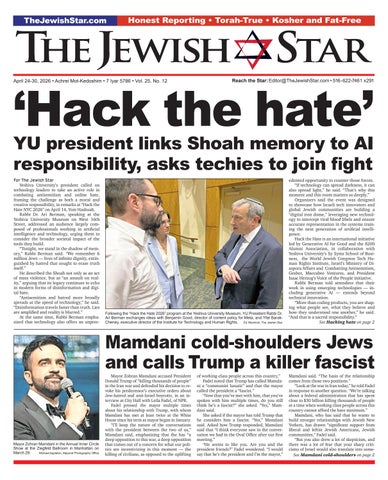
YU president links Shoah memory to AI responsibility, asks techies to join fight
For The Jewish Star
Yeshiva University’s president called on technology leaders to take an active role in combating antisemitism and online hate, framing the challenge as both a moral and creative responsibility, in remarks at “Hack the Hate NYC 2026” on April 14, Yom Hashoah.
Rabbi Dr. Ari Berman, speaking at the Yeshiva University Museum on West 16th Street, addressed an audience largely composed of professionals working in artificial intelligence and technology, urging them to consider the broader societal impact of the tools they build.
“Tonight, we stand in the shadow of memory,” Rabbi Berman said. “We remember 6 million Jews — lives of infinite dignity, extinguished by hatred that sought to erase truth itself.”
He described the Shoah not only as an act of mass violence, but as “an assault on reality,” arguing that its legacy continues to echo in modern forms of disinformation and digital hate.
“Antisemitism and hatred more broadly spreads at the speed of technology,” he said. “Disinformation travels faster than truth. Lies are amplified and reality is blurred.”
At the same time, Rabbi Berman emphasized that technology also offers an unprec-
ideas with
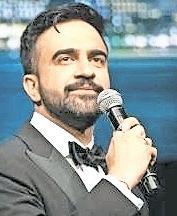
Mayor Zohran Mamdani accused President Donald Trump of “killing thousands of people” in the Iran war and defended his decision to revoke his predecessor’s executive orders about Jew-hatred and anti-Israel boycotts, in an interview at City Hall with Leila Fadel, of NPR.
Fadel pressed the mayor multiple times about his relationship with Trump, with whom Mamdani has met at least twice at the White House since his term as mayor began in January.
“I’ll keep the nature of the conversations with the president between the two of us,” Mamdani said, emphasizing that the has “a deep opposition to this war, a deep opposition that comes out of a concern for what our politics are incentivizing in this moment — the killing of civilians, as opposed to the uplifting
of working-class people across this country.”
Fadel noted that Trump has called Mamdani a “communist lunatic” and that the mayor called the president a “fascist.”
“Now that you’ve met with him, that you’ve spoken with him multiple times, do you still think he’s a fascist?” she asked. “Yes,” Mamdani said.
She asked if the mayor has told Trump that he considers him a fascist. “Yes,” Mamdani said. Asked how Trump responded, Mamdani said that “I think everyone saw in the conversation we had in the Oval Office after our first meeting.”
“He seems to like you. Are you and the president friends?” Fadel wondered. “I would say that he’s the president and I’m the mayor,”
edented opportunity to counter those forces.
“If technology can spread darkness, it can also spread light,” he said. “That’s why this moment and this room matters so deeply.”
Organizers said the event was designed to showcase how Israeli tech innovators and global Jewish communities are building a “digital iron dome,” leveraging new technology to intercept viral blood libels and ensure accurate representation in the systems training the next generation of artificial intelligence.
Hack the Hate is an international initiative led by Generative AI for Good and the 8200 Alumni Association, in collaboration with Yeshiva University’s Sy Syms School of Business, the World Jewish Congress Tech Human Rights Institute, Israel’s Ministry of Diaspora Affairs and Combatting Antisemitism, Gesher, Maccabee Ventures, and President Isaac Herzog’s Voice of the People initiative.
Rabbi Berman told attendees that their work in using emerging technologies — including generative AI — extends beyond technical innovation.
“More than coding products, you are shaping what people see, what they believe and how they understand one another,” he said. “And that is a sacred responsibility.”
2
Mamdani said. “The basis of the relationship comes from those two positions.”
“Look at the war in Iran today,” he told Fadel in response to another question. “We’re talking about a federal administration that has spent close to $30 billion killing thousands of people at a time when working class people across this country cannot afford the bare minimum.”
Mamdani, who has said that he wants to build stronger relationships with Jewish New Yorkers, has drawn “significant support from liberal and leftist Jewish Americans, Jewish communities,” Fadel said.
“But you also drew a lot of skepticism, and there was a lot of fear that your sharp criticisms of Israel would also translate into some-
See Mamdani cold-shoulders on page 2
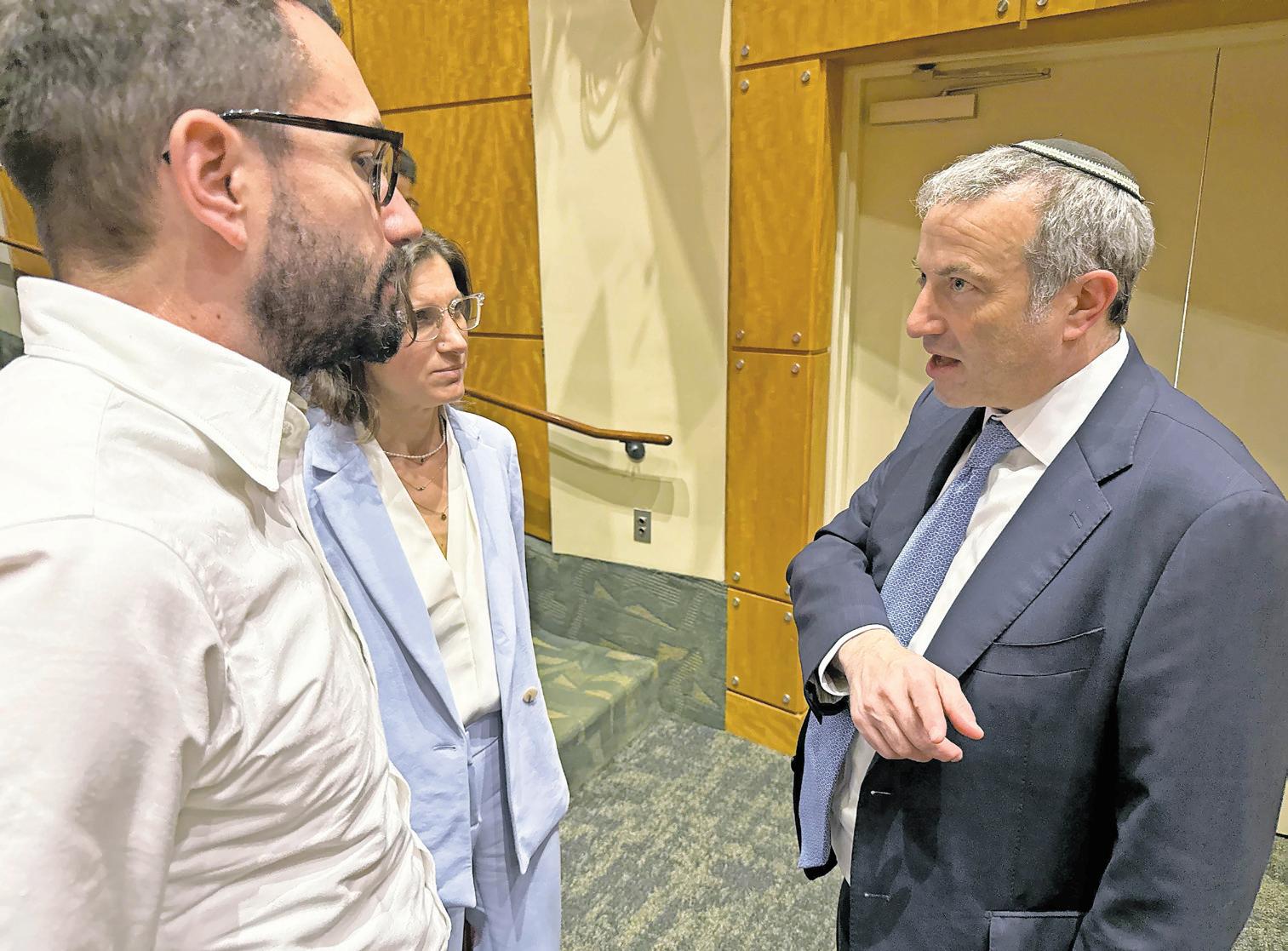
Benjamin Good, director of content policy for Meta, and Yfat BarakCheney, executive director of the Institute for Technology and Human Rights. Ed Weintrob, The Jewish Star
Mayor Zohran Mamdani in the Annual Inner Circle Show at the Ziegfeld Ballroom in Manhattan on March 29. Michael Appleton, Mayoral Photography Office
See Hacking hate on page
c
‘Let us hack the hate, fill that void with light … and build a future where kindness and justice and innovation for good will prevail.’
—Rabbi
Dr. Ari Berman, president of Yeshiva
University
Hacking hate: AI can distort reality or clarify it…
Drawing on Jewish teachings, he framed the issue in moral terms, citing the belief that every person is created in the image of G-d.
“To deny that image, to reduce a person to a caricature or a conspiracy, is a moral failure,” he said. “The question is larger than how we fight hate. It’s how we build a world where hate has no place to grow.”
He said that last year, he cited the teachings of Rabbi Abraham Isaac Kook who said “that the right-eous do not fight darkness directly — they increase light.”
“This year I would add that in a digital age increasing light also means creating it,” he continued. “It means designing platforms that elevate truth, building systems that reward dignity and training models that reflect wisdom” and are grounded in ethical principles.
Ben Good, public policy director for Meta, discussed how the company was dealing with the rise of online antisemitism, including Holocaust denial and distortion promoted by users across digital platforms. He said the tech industry needs to ensure that new systems such as Meta’s own Llama are developed with a deeper awareness of how anti-Jewish hatred manifests in the digital sphere.
“Meta is firmly committed to combatting antisemitism on our platforms, and we are optimistic about the promises of new technologies that we can deploy in that fight,” Good said during a chat with World Jewish Congress Tech Human Rights Institute Executive Director Yfat Barak-Cheney. He said that a determining factor in whether antisemitic expressions are blocked on Meta platforms may be that they spread hate and not simply that their assertions — such as Holocaust denial — are false.
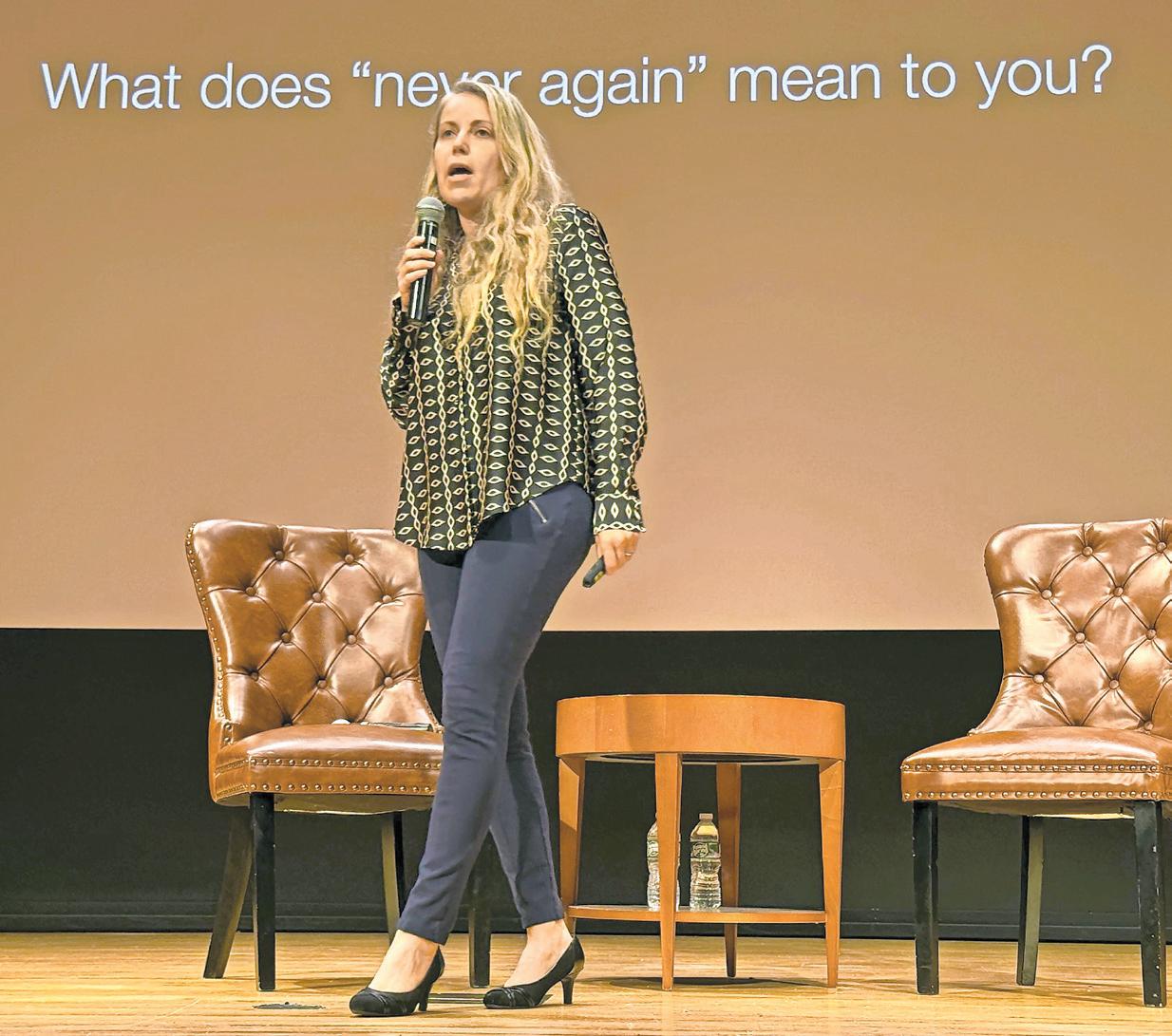
The evening also saw the launch of One Five Seven (157), presented by Dr. Maya Ackerman and Hannah Geller, as part of the Voice of the People initiative. It is designed to embed accurate, diverse and positive Jewish representation into AI systems, reduce antisemitic bias and equip insti-
disseminated online. Ed
tutions to engage responsibly with the opportunities and risks of the AI era.
Ackerman showed sometimes humorous if often blatantly offensive examples of stock images widely disseminated online that purport to represent American Jews and Jewish characteristics.
She said AI companies are increasingly working to align the messages diseminated by their creations.
They “used to try to be balanced, which it never was,” Ackerman said. “Right now the pretense has been dropped.”
She warned that it’s a mistake to compare AI to social media.
“I still hear this narrative a lot — Wikipedia is problematic, social media is problematic, and that’s why AI is problematic,” she said. “That maybe used to be the case, but right now AI companies have spent billions of dollars and hired farms of people in all sorts of countries to do alignment so that the AI systems are progressively
The Jewish Star
saying more and more of what the AI companies want them to say.”
“It’s getting worse and the Jewish community is sitting on it and trying to solve AI as a small subsection of social media,” she warned.
“Now that I’m on the inside and I know how we operate, I’m finding it devastating that we have not put serious resources behind AI already, that somehow it’s expected that some little non-profit is supposed to take care of it.”
One Five Seven takes its name from the world’s approximately 15.7 million Jews. The project is rooted in the conviction that as artificial intelligence increasingly shapes how societies understand identity and history, Jewish communities must help ensure that those systems learn from truthful, representative and dignified source material.
Chen Shmilo, former CEO of the 8200 Alumni Association, and Shiran Mlamedovsky-Somech, founder and CEO of Generative AI for Good,
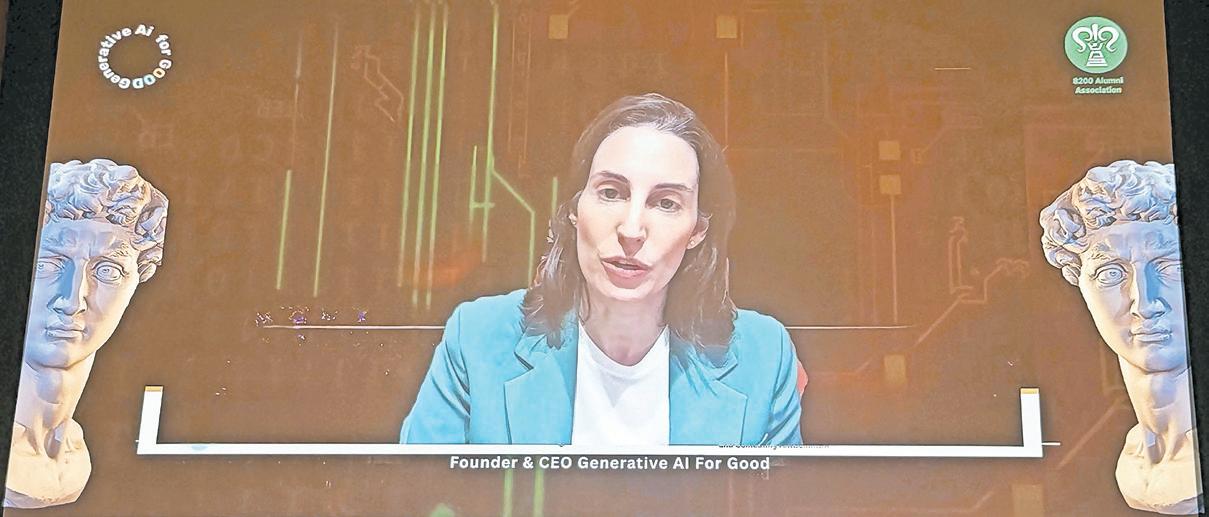
announced the creation of the One Signal Collective, an innovation community aimed at connecting Israeli technological expertise with the lived experience and practical needs of Diaspora Jewish communities. The initiative seeks to establish a framework through which entrepreneurs, researchers and investors can collaborate on deep-tech responses to online antisemitism, including Holocaust denial in large language models, crossplatform incitement, and other emerging forms of digitally amplified hate.
Mlamedovsky-Somech present-ed Hearing Their Voices, an AI platform that amplifies “silenced voices of survivors of conflict-related sexual violence through ethical AI” by allowing the victims to testify publicly without revealing their identities. The platform counters Holocaust Inversion by placing the testimony of Israelis alongside women from Syria, Iraq and Iran, transforming isolated denial into a documented cross-regional pattern.
Ofer Familier, co-founder and CEO of dig, demonstrated how AI tools can identify the evolution of viral hate narratives, expose bot-driven amplification, and map the emotional triggers that allow antisemitic conspiracies to spread rapidly and at scale online.
Familier’s presentation showed how a false and inflammatory narrative accusing Jews of involvement in the murder of Charlie Kirk was able to gain rapid traction online, He emphasized that tools were urgently needed
to intervene before digital blood libels harden into mainstream discourse.
Rabbi Berman described generative AI as “one of the most powerful tools humanity has ever created,” noting its dual potential.
“It can distort reality, but it can also deepen it,” he said. “It can spread division, or it can cultivate understanding. The choice is ours.”
Throughout his remarks, YU’s president returned to the theme of responsibility, particularly in light of Holocaust remembrance.
“On Yom Hashoah, we remember what happens when the world turns away, when hatred is left unchecked,” he said. “But we also remember something else — that from the deepest darkness, we rebuilt.”
He urged the audience to view their work as part of that ongoing rebuilding.
“We’re here not just to remember a world that was destroyed,” he said. “We’re here to build a world that must be.”
Closing his remarks, Rabbi Berman called on attendees to take an active role in shaping a more ethical digital landscape.
“The truth does not disappear. It waits to be carried,” he said. “And now it is in our hands.”
“Let us hack the hate,” he added. “Let us fill that void with light … and together, we will build a future where kindness and justice and innovation for good will prevail.”
Mamdani cold-shoulders Jews and rips Trump…
thing else,” she told Mamdani. “You did not renew two executive orders from your predecessor, one that adopted a broad definition of antisemitism, and another that prohibited city employees from engaging in the boycott, divest and sanctions movement against Israel. And this drew some concerns from some Jewish groups here. Why did you make that decision?”
Mamdani said that he made the decision to revoke every executive order that his predecessor, Eric Ad-
ams, signed after he was indicted on federal charges.
“That was a moment at which many New Yorkers started to ask themselves: ‘What was the motivation of any one executive order?’ Was it driven by self-interest, or was it, in fact, being driven by what it should be, which is public interest?” the
mayor told NPR.
“We’ve also sought to show that we are fully committed in fulfilling what we had spoken about over the course of the campaign to not just keep Jewish New Yorkers safe across
the city alongside each and every New Yorker, but also to celebrate and cherish those same New Yorkers.”
The mayor, who has said that he would have the Israeli Prime Minister Benjamin Netanyahu arrested in the Big Apple and whose spokeswoman said that synagogues violate international law by hosting pro-Israel events, said that “over the course, for example, of Passover, it’s been an incredible opportunity for me to attend a number of seders, to host Jewish City Hall officials at our home at Gracie Mansion for a
seder, to sit there as staffers look for the afikomen, to get a better sense of what it means to lead a city with such incredible beauty and breadth of Jewish life across the five boroughs and also to get a glimpse into the amount of service that so many organizations within the Jewish community are providing.” Fadel asked how the mayor’s
administration plans to define Jewhatred.
“We actually have the Office to Combat Antisemitism here at City Hall, and one of their jobs is to not only define that but frankly to conduct a listening tour to actually bring in the perspectives of Jewish New Yorkers from across the five boroughs,” he said. —JNS
Continued from page 1
Continued from page 1
Dr. Maya Ackerman, an internationally recognized AI expert and a leader in creating channels for combatting antisemitism in that field, presented at “Hack the Hate” troubling examples of how Jews are presented offensively in stock images that are widely
Weintrob,
Speaking from Israel, Shiran Mlamedovsky-Somech presented “Hearing Their Voices,” an AI platform that amplifies “silenced voices of survivors of conflict-related sexual violence through ethical AI” by allowing the victims to testify publicly without revealing their identities. The platform counters Holocaust Inversion by placing the testimony of Israelis alongside women from Syria, Iraq and Iran. Ed Weintrob, The Jewish Star
The Brain Health Center
Getting ahead of cognitive decline
MEMORY
Are you getting forgetful?
Are you worried about dementia? Feeling depressed?

DON’T WAIT TO TAKE ACTION!
✦ Medical exam by memory specialists, neurologist, and psychiatrist
✦ Cognitive exam by computerized and clinical tests
✦ Genetic lab testing
✦ Blood based biomarkers test
✦ Treatment with FDA approved infusion therapy LEQEMBI and KISUNLA
✦ Deep Brain Stimulation therapy
✦ Photobiomodulation therapy
(TRANSCRANIAL MAGNETIC STIMULATION)
TREATING
DEPRESSION, ANXIETY, PTSD, AND IMPROVING MEMORY

✦ FDA approved, non-invasive
✦ Clinically proven to alleviate symptoms of depression without causing systemic side effects
✦ Diminishes symptoms of Obsessive Compulsive Disorder
✦ Promising for patients looking for non-drug options for PTSD
✦ Minimizes symptoms of Anxiety
✦ Well-tolerated, effective, and has high remission rates
BALANCE & DIZZINESS SLEEP
ACUTE / CHRONIC DIZZINESS
LIGHTHEADEDNESS
VERTIGO
TINNITUS
IMBALANCE AND FALLS

✦ Exam by board certified Neurologist
✦ Exam by clinical Audiologist
✦ Computerized diagnostics
✦ Physiological testing
✦ Vestibular Physical Therapy
✦ Virtual Reality Therapy
PERSONALIZED SOLUTIONS FOR A HEALTHY NIGHT’S SLEEP

✦ Do you snore?
Or has someone told you that you hold your breath while sleeping?
✦ Do you have excessive daytime sleepiness after a full night’s rest?
✦ Do you have high blood pressure that is hard to control even with medicine?
✦ Have you fallen asleep while driving or at a stop sign?
✦ Is your memory getting worse?
Sleep problems can come from neurological & psychiatric problems or obstructive sleep apnea
DRUG-FREE, NON-INVASIVE TREATMENT FOR NICOTINE ADDICTION

✦ Reduces craving
✦ Increases cognitive control
✦ Studies showing increased quitting rates
✦ Drug free treatment with TMS (Transcranial Magnetic Stimulation) -
FDA Approved, paid by insurance
VAPING IS AS BAD AS CIGARETTE SMOKING AND A DEADLY HABIT CAUSING CANCER
NON-INVASIVE TREATMENT FOR ADOLESCENT DEPRESSION (Ages 15+)

High school and college age can be very traumatic for young people.
✦ Intense sadness, hopelessness, and loss of interest
✦ Irritability, low energy, sleep and appetite changes, withdrawal and poor school performance
✦ Triggered by stress, trauma, or genetics
✦ When medications and therapy aren’t enough
Significant symptom improvement and lowered anxiety and depression
TRANSCRANIAL MAGNETIC STIMULATION
FDA approved & Paid by insurances
2 Executive Blvd., Montebello/Suffern, NY 10901 | T. (845) 889-5088, (845) 889-5099
401 S Van Brunt St., Ste 302, Englewood, NJ 07631 | T. (201) 947-4777
*** Accepting Fidelis, Medicare, Clover, Aetna, UHC, Cigna and other major insurances ***
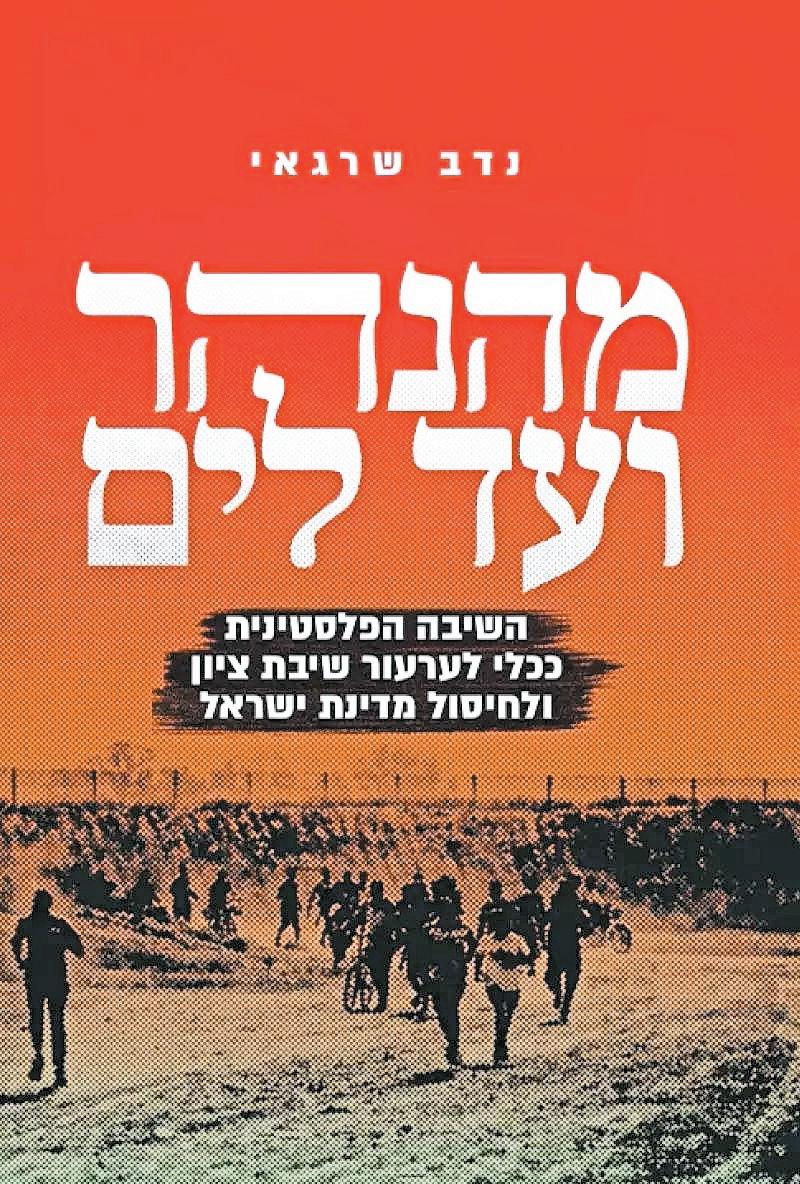
The inspiration for Oct. 7 that Israel ignored
By Nadav Shragai, Israel Hayom
For Palestinians, the return to homes and lands abandoned in 1948 was never merely a theoretical or symbolic demand. It was a practical matter, a foundational element of their thinking and identity. The demand for return, voiced from countless platforms, was not just a symbolic act meant to express loyalty to the Palestinian past and heritage, nor merely a tactical or propaganda move vis-a-vis Israel. It was always accompanied by a stated and written Palestinian expectation that it would one day be carried out in practice, both as an end in itself and as a means of eliminating the Jewish state and turning back the clock.
Even so, for many years, many in the Israeli leadership, followed by much of the Israeli public, assumed that the Palestinian demand for return was little more than lip service, a matter of heritage, folklore and historical memory, with no real practical dimension, or at least no significant one. They believed the Palestinians did not truly mean it.
Many Israelis believed that when the day came, at the “moment of truth” in negotiations, the Palestinians would retreat from the demand. They would understand, so the thinking went, that it was unrealistic to expect Israel to take back hundreds of thousands, even millions, of Arabs to the places where they had lived until 1948, to cities and communities that are now part of the State of Israel.
Only a few in Israel considered the possibility that the Palestinians meant exactly what they were saying, and were actively working to realize return. Even fewer grasped its implications.
‘Jews will not feel it’
But the warning signs were countless. One of the most prominent Palestinian researchers to spread the “gospel of return” was Dr. Salman Abu Sitta, author of “The Palestinian Right of Return: Sacred, Legal and Possible.” Abu Sitta worked for many years in cooperation with the organization Zochrot and sought “to return all the refugees of Lebanon to the Galilee and all the refugees of the Gaza Strip to Beersheba.”
“The Jewish areas,” he argued, “will not be affected at all, and theoretically, the Jews will not feel their presence.” According to him, if all the refugees from Lebanon and the Gaza Strip returned, their number would equal that of the Jews who immigrated to Israel from Russia since 1989.
Abu Sitta, who devoted his life to preserving the memory and identity of the “occupied homeland,” enjoyed broad support in Palestinian society, and his articles were published in leading newspapers across the Arab world. Under his plan, 175,000 refugees from Jaffa would be housed in high-rise buildings in Ayalon Park, 45,000 refugees from Safed in the Nahal Amud Nature Reserve, refugees from greater Haifa in Carmel Park, and refugees from Tiberias in towers on the shore of the Sea of Galilee.
Memory of the “Nakba,” and return as a
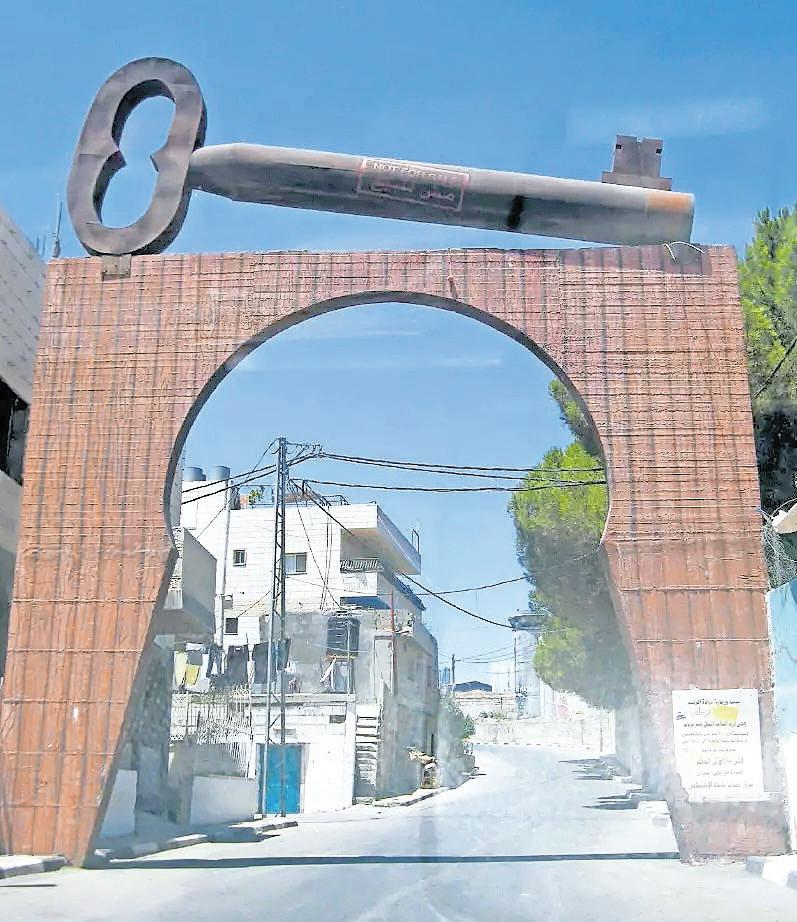
practical objective derived from it, are today expressed in many additional ways among Arab citizens of Israel, among Palestinians in Judea, Samaria and Gaza, and in Arab countries. One of these practical dimensions is the restoration of religious sites, churches, mosques or cemeteries, that remained standing within Israel after the War of Independence, unlike the homes in those villages, which were destroyed.
As Dr. Yechiel Shavi noted in his research, the main reason for preserving abandoned religious sites is not fear of desecration. The real aim is “to lead in the future to the return of an Arab population to these places.”
‘This
is our land’
A glaring red light should have been lit by extensive documentation showing that memory of the “Nakba” and consciousness of return occupy a very prominent, almost obsessive place in the Palestinian education system. This is true in the study of Islam, society, Arabic and history, and even in subjects such as biology and mathematics, where Palestinian students are required to memorize, directly or indirectly, the stories of return embedded in textbooks.
Dr. Arnon Groiss, who has for many years studied attitudes toward the “other” and toward peace in school curricula across the Middle East, also examined attitudes toward Jews, Israel and the conflict in teachers’ guides published by the Palestinian Authority Education Ministry. He found that Palestinian textbooks delegitimize the existence of the State of Israel and the very presence of Jews in this land. That is based on the Palestinians’ purported “exclusive right” to the Land of Israel and the rejection of any right Jews may have to it. “Palestine,” his research found, replaces Israel as the sovereign state in the area, both in texts and on maps.

Another researcher, Dr. Michael Milshtein, who closely traced the development of memory of the “Nakba” in Palestinian thought since 1948, found that “the Nakba goes beyond the definition of a concrete event or a historical point in time. This trauma,” he explained, “is perceived as an ongoing existential condition stretching across all the years of the Palestinian people’s existence and binding together all generations and sectors around a shared fate.
“The arms of Nakba memory also reach into the present, and in that way it embraces the Palestinians of 1948 together with their descendants. It is a tangled bond that, according to the Palestinian perception, can only be undone after the ‘wheel of history’ is turned back, meaning once return is realized, thus creating a clear separation between past and present.”
Then came October 7, while only a few paid attention to the central role that the ethos of return played in the horrors of that day. The leaders of Hamas, who ran the operation together with the Islamic Jihad terrorist organization, did indeed call it “Al-Aqsa Flood.” But from the preparations that preceded the massacre, and from examining the massacre itself, much of it documented by the terrorists’ body cameras, it was clear that one of its main goals was the practical realization of the “right of return.”
During the murders, abuse and conquest, some of the terrorists could be heard promising themselves and one another that they would return to Jaffa, Lod, Acre and Jerusalem, to lands, homes and places lost by the Arabs of the Land of Israel during the Jewish people’s War of Independence. A return to areas that are now part of sovereign Israel and home to millions of Jews.
A handwritten document seized by the IDF during the war revealed that Hamas’ original goal had been to take over 221 communities in southern Israel, including the cities of Netivot, Ofakim and Sderot, and expel the “settlers” from them. Some of the terrorists who took part in the massacre referred by their Arabic names to areas
inside Israel that they had invaded, and spoke of returning to lands that had been “stolen” from them. Among the places mentioned were the lands of Najd, on part of which Sderot was built, al-Majdal, now Ashkelon, Hiribya, near Kibbutz Zikim, and Bir Gra, near Kibbutz Nir Oz. One terrorist, who filmed himself on his head camera while taking part in the assault on Kibbutz Sufa and the nearby military post, was heard shouting excitedly: “This is our land, my brothers, this is our land!” At the same time, the inciting words of a host on Palestinian radio, to which the terrorist and his comrades were listening, could be heard in the background: “Anyone carrying a knife who can reach a community should go. Our good guys in ‘48 [Arab Israelis], we are waiting for Guardian of the Walls 2.” Chief Insp. Oshri Adri, who interrogated 200 Nukhba terrorists who took part in the massacre, came away with the impression that the invaders intended “to conquer the Land of Israel. ... They had prepared for this for years.” According to him, “some of them really came to settle on the land of the State of Israel. Some told investigators they had come to Israel because at the mosque they were told there was an opportunity to return and settle in homes here.”
Consciousness of return as a religious idea, and consciousness of “fath” (victory and Islamic struggle), as one expression of the Palestinian national idea of return, were interwoven among the planners and perpetrators of the massacre and among the masses of Gazans who came after them to complete the work through looting and further murders.
Packed suitcases
Many terrorists testified to this in interrogation. Muhammad Amjad, for example, told his Shin Bet interrogators how he operated in Sderot in order “to purify the occupied lands and Palestine and Jerusalem of the impurity of the settlers.” When asked what he meant by the term
Hamas terrorist on October 7.
A “key of return” at the entrance gate to the Aida refugee camp near Bethlehem.
from previous page
“settlers,” he replied: “These are the settlers and the undercover agents who came from Western countries, from foreign countries ... from abroad, in order to occupy the land, Palestine.”
About a week before the October 7 massacre, Mustafa al-Sawwaf, a journalist, columnist and senior Hamas activist, published an article on the Izz ad-Din al-Qassam Brigades website containing even more explicit language about “the Jews’ return to their countries of origin,” apparently reflecting prior knowledge of what was in store for residents of the Gaza border region:
“Prepare to depart from the envelope, but leave your suitcases closed and do not open them, and prepare for the final departure from Palestine, so that rearranging them will not burden you. The departure will happen, and it is closer than you estimate. Your presence on this land, even if prolonged, is … a temporary presence. … The owners of the lands of Palestine, their sons and grandsons, have been waiting for more than 75 years to return to them, and they will return soon with Allah’s help.”
The attack, which took place 10 days later, was meant to be far broader and to form part of a multi-front campaign including the conquest of the Galilee and the Negev, an armed uprising by Palestinians in Judea and Samaria and by Arab Israelis inside the Green Line, and a massive barrage of rockets and missiles to paralyze Israel’s air and sea ports and strike infrastructure and strategic targets, especially power stations, the water supply network and communications centers.
The full scope of the planned operation, which was meant to realize in practice the Palestinian demand for return in the communities and territories to be conquered, can be seen in a handwritten Hamas document seized in the Gaza Strip during the IDF ground maneuver launched after the massacre.
The invasion is called in the document “Operation Returning Home.” It includes breaching the border fence at dozens of points, as indeed happened, expulsion patrols, the expulsion of residents from small towns, and the neutralization of military zones. To achieve these goals, Hamas also planned to rely on ordinary Gaza civilians. “As a precaution,” the document states, “a mass popular mobilization must be recruited for the purpose of returning to the villages and reoccupying them symbolically.” Section 5 of the document, dealing with the “expulsion of the large cities,” states that each city would be assigned 400 fighters who would direct expelled residents “to the sea area.”
The idea of return is fundamentally a national one shared by Hamas and other branches of the Palestinian national movement, but Hamas turned it into a religious idea and clothed it in Islamic religious characteristics.
In many of the videos filmed by Nukhba terrorists during the massacre, they can be heard speaking about the “fath,” the Arabic term used for each of Muhammad’s and the first caliphs’ victories in war. In that spirit, on October 6, Hamas Gaza Brigade commander Izz ad-Din alHaddad instructed his men to take flags of Arab and Islamic states with them and raise them over the military posts and kibbutzim they captured.
And indeed, both the original Hamas charter and the supposedly revised version from 2017 commit to conquering all of “occupied Palestine as the supreme goal, from the river to the sea” or, in other words, creating a world without Israel. Islamic domination is aimed not only at territory. Its central goal is to impose Muslim religious faith and Sharia law on all human society and, in the local context, to “liberate all of Palestine” and impose Islam upon it in a “roaring flood” (tufan al-hadir), or, as Hamas called the campaign it launched on October 7, 2023, “Al-Aqsa Flood.”
Ideas of this kind also appear in Palestine, a work by Ali Khamenei, the man who had been Iran’s supreme leader and Hamas’ patron. Khamenei, who led Iran for 36 years until he was assassinated in the opening strike of Operation Rising Lion, defined the Palestinian issue as “the most important issue in the Muslim world” and declared that “Israel must disappear.”
In that work, published by the Islamic Revolutionary Guard Corps in 2011, Khamenei tried to persuade Israelis to return to the countries from which their grandparents had come. He predicted that after Israel disappeared, a referendum would be held among the “original inhabitants of the land” to determine whether Israelis would continue living in Palestine or be forced to return to their “mother countries.”
In his view, Israel and the Jews living there have no right to hold the land, not even the smallest part of it, because “any non-Muslim and non-Palestinian rule over Palestine is illegitimate.” Khamenei assigned the task of destroying Israel to the Palestinians themselves, not to any state actor, and the way to do that, he argued, is through “martyrdom” and “militant struggle.”
A scaled-down model
Senior Hamas officials wrote to Iran as early as 2021 asking for help in carrying out an attack on Israel far larger than the one that ultimately took place. In the original plan, Hamas intended to bring down skyscrapers in Tel Aviv, the Azrieli towers, the Moshe Aviv Tower and others, in the style of the September 11 attacks. Hamas’ Gaza leader, Yahya Sinwar, wrote to Khamenei that he needed additional financial and military support, and pledged that with Iranian backing Hamas would be able to destroy Israel completely within two years.
A 36-page presentation from 2022, seized by the IDF at a Hamas post in northern Gaza in November 2023, displays dozens of maps describing the movement of Hamas terrorists against possible Israeli targets under the title “Strategy for Building an Appropriate Plan for the Liberation of Palestine.” One of them shows that before October 7 Hamas had also planned attacks in communities in Samaria and along the seam line.
Two and a half years later, four months after the massacre and in the midst of the Swords of Iron war, one of Hamas’ senior officials, Basem Naim, explained in an article on the Al Jazeera website that the October 7 massacre had been “a scaled-down model of the final liberation war and the disappearance of the Zionist oc-

Continued
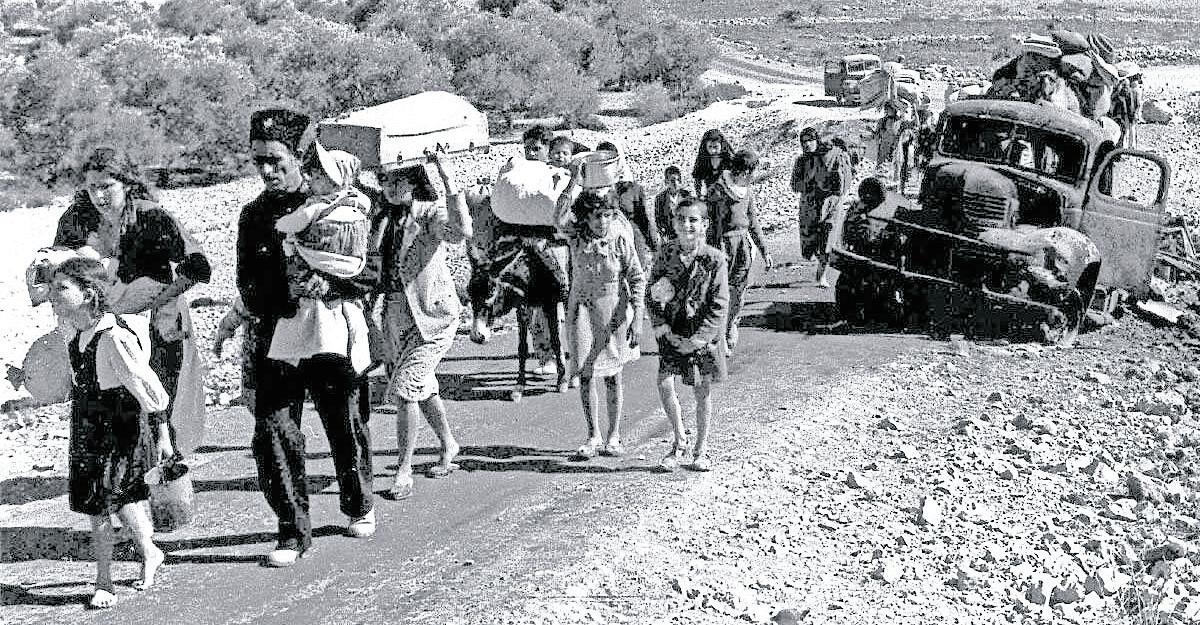
Palestinian refugees in the Galilee in 1948.
After 80 years, survivors reunited at Auschwitz
By Etgar Lefkovits, JNS KRAKOW, Poland —
For eight decades, Holocaust survivor Hannah Yakin, 93, wondered what happened to the baby boy who turned up outside a neighbor’s home in suburban Amsterdam during World War II with some clothes, blankets, a hot water bottle and buttermilk powder.
“I never forgot him because I loved him so much,” Yakin told JNS this week during the annual March of the Living Holocaust commemoration in Poland.
The little girl of nine who had played with the baby for two years in the garden of their home more than eight decades ago was finally reunited with the wartime infant — now 83 years old — last year, when an Amsterdam park was named after her late father, Jan van Hulst, a member of the Dutch resistance who was posthumously recognized in 1997 as a Righteous Among the Nations by the Yad Vashem Holocaust Memorial for saving Jews during the Holocaust.
This week, the two elderly survivors — the daughter of the resistance member and the baby whom her father had saved — were together again and jointly lit a memorial torch at a Holocaust Remembrance Day ceremony at Auschwitz-Birkenau in honor of the non-Jews who saved Jews during the Holocaust.
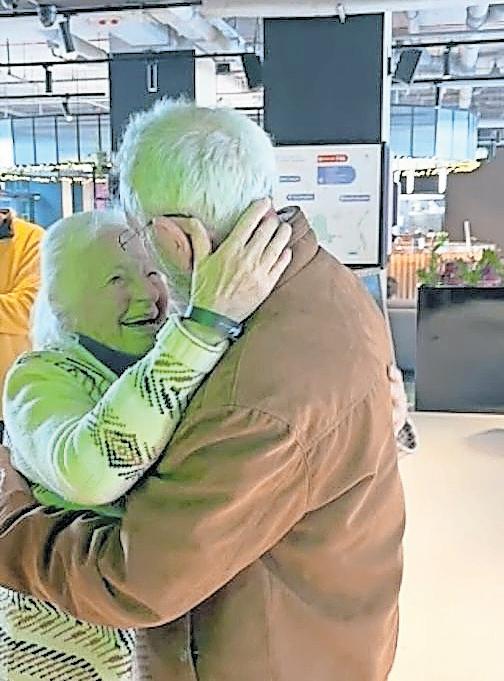
“I lost him once. I will never lose him again,” Yakin said as they embraced in tears ahead of the event.




It was December 1942 when the baby boy was placed in an open suitcase outside a house in the suburban Amsterdam district of Amstelveen, next to the home of the van Hulsts.
“Like Moses was dropped in a basket, I was dropped in a suitcase with some milk,” Ben Gazan, 83, recounted in an interview with JNS.
“On Tuesday evening, the doorbell rang at the address at Rodenburghlaan 27,” a local Dutch newspaper reported at the time. “When the lady opened the door, she discovered a package on the sidewalk that turned out to contain a 6-dayold baby boy. With the package were clothes, blankets and woolen baby items, a metal hot water bottle, and a few packets of Nutricia buttermilk powder.”
The report continued: “The residents of the property have lovingly taken in the child. The police are conducting an investigation.”
The baby was raised by the foster family. The little girl next door — whose father became known for forging papers for Jews, a practice he started with his Jewish wife, as well as hiding them during the wartime years — would play with him in their garden.
“They let me take him in my doll cart and play with him in the garden,” Hannah Yakin recounted. “He was like a live doll for me.”
The van Hulsts moved away after the war ended, while baby Ben was raised by his foster family
for another five years and later reunited with his biological mother, who recognized him one day in the neighborhood park.
In the meantime, Yakin immigrated to Israel in 1956 and settled in Jerusalem, where she married and started a large family, but never forgot the baby of her childhood.
“All my life, I never forgot him, and I had asked many times if people knew what had become of him,” Yakin recounted, noting that she had received false reports over the years that he was in Israel.
Last year, she was notified that a park in Amsterdam was being named after her late father for his heroism, and she again inquired after the baby boy.
The two reunited for the first time in more than eight decades at the ceremony and again this week in Poland.
“Moving is not the word,” Yakin said. “You cannot imagine what it is like.”
“My father taught us that being good is something normal,” she said, recalling his reluctance ever to be recognized for his wartime heroism. “He didn’t think one should receive a prize for doing something good.”
Standing at the site of the unmarked graveyard of more than 1 one million Jews murdered at Auschwitz, she said:
“From my parents I learned that even in the darkest times we are responsible for our choices.”





EDITOR WANTED


The Jewish Star is seeking a new editor who will be responsible for expanding local news coverage, recruiting and managing staff and freelance contributors, and editing and enhancing material from The Star’s wire services.
Candidates should have news reporting and editing experience, an understanding of what interests Modern Orthodox Jewish communities, and a drive to excel in a professional, collegial environment.
While our primary competitors emphasize one-dimensional and biased political coverage, The Jewish Star’s team of veteran journalists is committed to the highest professional standards — insisting on journalistic and commecial integrity and a pursuit of truth that’s grounded in an adherence to Torah values and a love of Israel.
Serving diverse Modern Orthodox communities on Long Island, in Queens, Riverdale, Upper Manhatan and Westchester, The Jewish Star is an independent newspaper produced by Richner Communications, a 100 employee family-owned company that publishes the Pulitzer Prize winning Riverdale Press and dozens of community newspapers, websites and shopping guides. This full-time in-person or hybrid position (starting at $50,024-$60,320) offers Jewish holidays, vacation, health insurance, and 401k.
Join The Jewish Star … and help make Jewish journalism great again.
Holocaust survivors Hannah Yakin, 93, and Ben Gazan, 83, who were separated for eight decades, embrace in Poland on April 13. Yossi Zeliger
Episcopal Health Services Cancer Center


Now open at the Walsh Ambulatory Pavilion










EHS is proud to introduce the EHS Cancer Center at the new Walsh Ambulatory Pavilion, bringing together leading oncologists, comprehensive treatments, state-of-the-art technology (PET/CT, TrueBeam linear accelerator) and coordinated support services in a serene, streamlined setting. Radiation oncology is now available on the Rockaway Peninsula ������������������������������������������������������������ space, new physicians and new era of cancer care at EHS.
Comprehensive Treatments and Services
• Medical Oncology
• Radiation Oncology
• Surgical Oncology
• Immunotherapy
• Access to Clinical Trials
• Cancer Navigation Program
• Inpatient Physical Rehabilitation
• Social Work and Counseling
• EHS Specialty Pharmacy
• Pastoral and Spiritual Support



19-20 Brookhaven Avenue, Far Rockaway, NY 11691
For more information, visit ehs.org/oncology or call:








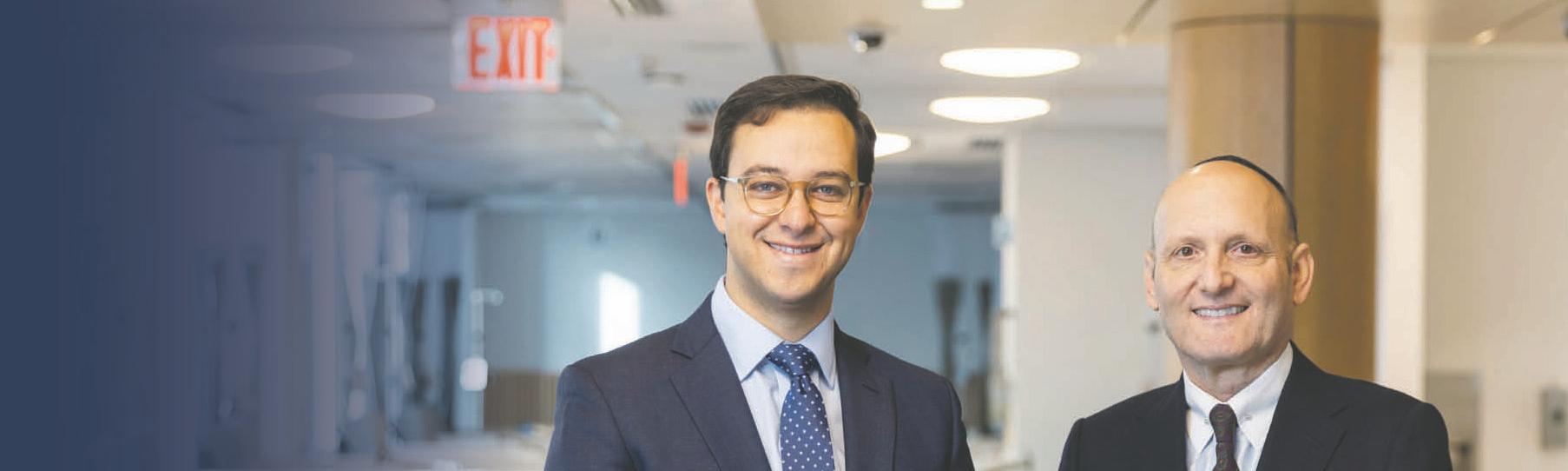
Mark Ashamalla, MDChief of Radiation Oncology (left) and Marc Warshawsky, MDChief of Hematology/Oncology (right)
Pol finds world goes on without him on Shabbat
By Jessica Russak-Hoffman, JNS
After Henry Stern found swastikas drawn on his backpack and faced threats at his Malibu, Calif., school, the then eighth grader readied for a fight. He asked a Jewish friend, who knew karate, to stand by him and use his martial arts skill if necessary and he intended to run a tape recorder to document the violence.
“We had this whole plan,” the now California state senator, told JNS. “I thought I was going to get beat up that day.”
Stern described his identity as a teen as he “happened to be Jewish.” He said that he is “good at talking my way through things” and is “not a super tough guy, but I at least can joke my way around stuff.” He didn’t need to, though, because the class was learning about the Holocaust at the time, and his teacher stopped the regular schedule to invite survivors to come address students.
“I met all these survivors, and they changed my life,” Stern said. “Not every kid has that magical bullying-into-leadership redemption moment. A lot of other kids have to duck it, take their Magen David off and lay low.”
“Going through all that stuff made me realize it doesn’t really matter if you’re religious or not,” he said. “You’re still vulnerable just being a Jew,” and “someone’s going to come for you.”
The swastikas weren’t a once-off. “There was a whole weird thing that was happening at the school newspaper at the time, and they were embedding swastikas into the school newspaper cartoons,” he said. “We found there was a whole crew of guys who were really getting into neoNazi stuff, and we had a whole intervention in my eighth grade social studies class where we basically stopped class for the week.”
“That’s my own personal origin story,” the 44-year-old Democrat, who represents about 1 million people, including in heavily-Jewish parts of Los Angeles and Ventura County, in
the state Senate.
The Malibu native, whose father is the actor Daniel Stern, of Home Alone fame (the burglar Marv Murchins), graduated from Harvard University and the University of California, Berkeley School of Law. He worked as an environmental lawyer and as a senior adviser on energy policy before being elected to the state Senate in 2016 as the youngest member elected at the time.
In his nine years in the state legislature, Stern has focused on climate policy and Holocaust edu-
cation. He has also become more religiously observant.
“I wear a kippah now and keep Shabbat much more strictly,” he said.
The issues of antisemitism and Jewish identity prompted Stern to introduce SB 1387, which would require state agencies to recognize Jewish identity as an ethnicity in demographic data collection, on April 15. If passed, it would help document increasing threats against Jews, he said.
The state senator started observing the laws of Shabbat more intentionally in his 30s. “I started sort of experimenting with it on my own, and then I would have these very contemplative, meditative, but somewhat lonely Shabbats by myself,” he said.
He felt at the height of his personal career. “I was a real hot shot. I felt so cool. I’m on TV and all this stuff’s happening,” he said. But observing biblical and rabbinic prohibitions would mean having to “back off” and skip Saturday events and things like press conferences on Passover.
“I found a way to be beautifully humbled by it all,” he said. “The world actually goes on without me, even when I step back a little bit.”
He married Alexandra Kaufman, an IsraeliAmerican whose parents were Holocaust survivors, and they have two children, ages 3 and 4, and live in the Jewish community in the Valley where they attend the Orthodox synagogue Shaarey Zedek.
“Shabbat took on this other dimension,” Stern told JNS. “Everyone’s around. There’s all these people. It wasn’t a lonely experience at all when I integrated into her life.”
“I wasn’t on a lonely Shabbos island by myself,” he added.
Living in the Valley, Stern has befriended “so many types of Jews: Iraqi Jews and Syrian Jews and different types of folks and backgrounds,” he said. “I’m in the Valley cholent.”
Jewish lawmakers in California are in a strong position, according to Stern, who is one of 18 — a fortuitously Jewish number — members of the California Legislative Jewish Caucus.
“We’re a really diverse group of people,” he told JNS. “We have really great influence.”
That strength has helped the caucus advance legislation, including a major Jew-hatred bill signed into law last year, even amid what Stern described as “very nasty objections and threats.”
“We’re kind of strong right now,” he said. “The governor’s got our back over the last few years in a big way, so we feel we’re in a pretty confident position at the moment.” He’s not sure how long that will last though, so he figures “in a weird way, we gotta get as much done as we can right now.” (The current legislative session ends in September.)
Stern told JNS that he endorsed the billionaire Tom Steyer, a Democrat, for governor.
Steyer described AIPAC as “dark money” recently, and Stern responded on April 5 and told the governor candidate that his rhetoric was “dangerous.”
“We can win Tom Steyer without making Jewish Californians like me feel like we don’t belong just because we believe in Israel’s right to exist and that we can eliminate the leverage of petrostates like Iran through clean energy, not with dog whistles about AIPAC and dark money,” he wrote.
Stern told JNS that Steyer is a “very good guy” who will be an “excellent governor.” He also said that “we’ve had this whole trendy thing of everyone wanting to dog whistle about ‘I don’t take AIPAC money,’ or ‘AIPAC is dark money.’”
“There’s a war going on. There’s a lot of weird trends, and you can get advisors that pull you in a lot of strange directions,” he said. “I’m deeply committed to the team. I’m in there as the religious Jewish guy. There’s got to be room for me, too.”
Note the ACCOLADES from our CLIENTS
RE: SYNAGOGUES and YESHIVOS
Dear Rabbi Leiner,
Thank you for replacing the Insurance for our Synagogue, with a Savings of almost 50%.
B.F. Executive Director
RE: REAL ESTATE CORPORATION
Dear Rabbi Leiner, You and Your Experts, have saved our Corp. Very Substantial Sums, with your Quality Insurance Replacement on our Real Estate Buildings. Thank you, M.B. Pres.
RE: HOMEOWNERS INSURANCE
Dear Rabbi Leiner, Our Insurance Company Refused to renew our Insurance Homeowners Policy. However, You and Your Experts were able to Secure for us other Insurance Coverage, even at a much lower Premium, than the Prior Canceled Insurance Policy. Thank You So Much. Mrs. D.S.
Meet Péter Magyar, the man who deposed Orbán
By Dudi Kogan, Israel Hayom
The long election campaign of Péter Magyar and his Tisza party ended in an historic victory that led to the ousting of Hungarian Prime Minister Viktor Orbán, who ruled the country for the past 16 years.
Magyar, a 45-year-old lawyer who emerged from the inner circle of power in Orbán’s Fidesz party, went in less than two years from being an almost anonymous figure to the leader the Hungarian opposition had been waiting for.
He is also expected to reshape the balance of power within Europe, which until now had mainly seen the rise of right-wing parties skeptical of the European Union.
Magyar grew up in Budapest in a family of lawyers, and as a child, he hung a photograph on his bedroom wall of a young Viktor Orbán, then one of the leading figures in the democratic struggle against communism. He was nine when the regime collapsed. “There was a surge of energy around the change of regime that swept me up as a child,” he said in an interview with the Hungarian podcast Fokuszcsoport.
In 2006, he married Judit Varga, who would later become justice minister in Orbán’s government. He moved with her to Brussels, where she worked as a political adviser in EU institutions, and joined Hungary’s permanent mission to those institutions. The couple has three sons.
In February 2024, a scandal led to the end of Varga’s political career and to Magyar’s breakthrough. President
Katalin Novák granted clemency to a man convicted of covering up pedophilia at a children’s home, and Varga, who had signed the pardon document as justice minister, was forced to resign.
Magyar, who until then had been a quiet behind-the-scenes figure, launched an unprecedented public campaign against corruption at the top of Fidesz. In an interview on the
YouTube channel Partizán that gained wide attention, he laid out his claims against the party and released embarrassing recordings of senior officials.
A few months later, Magyar joined the Tisza party, which until then had been marginal, and led it to a surprise result in the June 2024 European Parliament election. The party won about 29% of the vote and secured six of Hungary’s 21 seats.
‘Fidesz without corruption’
Magyar’s campaign sought to present itself as “Fidesz without corruption” — a right-wing politician who supports tough immigration policies and Hungarian nationalism, but focuses on the concrete problems facing ordinary Hungarians, including a faltering economy, the collapse of the healthcare and education systems, and a brain drain from the country.
Without access to the traditional media controlled by Fidesz, Magyar had to build his campaign through social media and grassroots organizing. He walked across Hungary with supporters, set up a network of local party branches called “Tisza Islands” and launched a newspaper distributed by volunteers to reach rural voters, Orbán’s traditional strongholds.
Orbán portrayed Magyar as an envoy of the Brussels-based EU establishment and as a Ukrainian agent, to the point that at times it seemed his real rival was Ukrainian President Volodymyr Zelenskyy rather than Magyar. Orbán and his allies repeatedly claimed that Magyar would drag Hungary into the war in Ukraine, an issue that worries Hungarians in part because of the country’s energy dependence on Russia.
In the final stretch of the campaign, pro-government media circulated allegations that Magyar used drugs, prompting him to travel to Vienna for tests at an independent laboratory to disprove them.
Magyar’s rise changed the face of the opposition. Left-wing and centerleft parties withdrew from the race one after another so as not to split the anti-Orbán vote and to give Magyar a chance. The election effectively became a contest between right and right.
The scale of the victory is critical — Magyar’s two-thirds majority in parliament will now allow him to amend the constitution shaped by Orbán over 16 years in power, while a narrow majority would have left his hands tied against state institutions Orbán filled with his loyalists.
Magyar’s victory is expected to shift the balance of power in the EU.
Russia will lose one of its main assets on the continent. For years, Orbán served as an almost automatic blocker of sanctions on Moscow and aid to Ukraine, and with Magyar’s victory, that automatic veto is expected to disappear. Magyar has promised pragmatic relations with Moscow, while at the same time reducing Hungary’s energy dependence on Russia and aligning with EU positions.
The election is also especially critical for Israel. Under Orbán, Hungary was Israel’s closest friend in the EU and repeatedly blocked anti-Israel initiatives in Brussels.
Magyar, by contrast, maintained deliberate ambiguity throughout the campaign on anything related to Israel, and in Jerusalem, the assumption is that even if he is not hostile, he will not clash with the EU on Israel’s behalf.

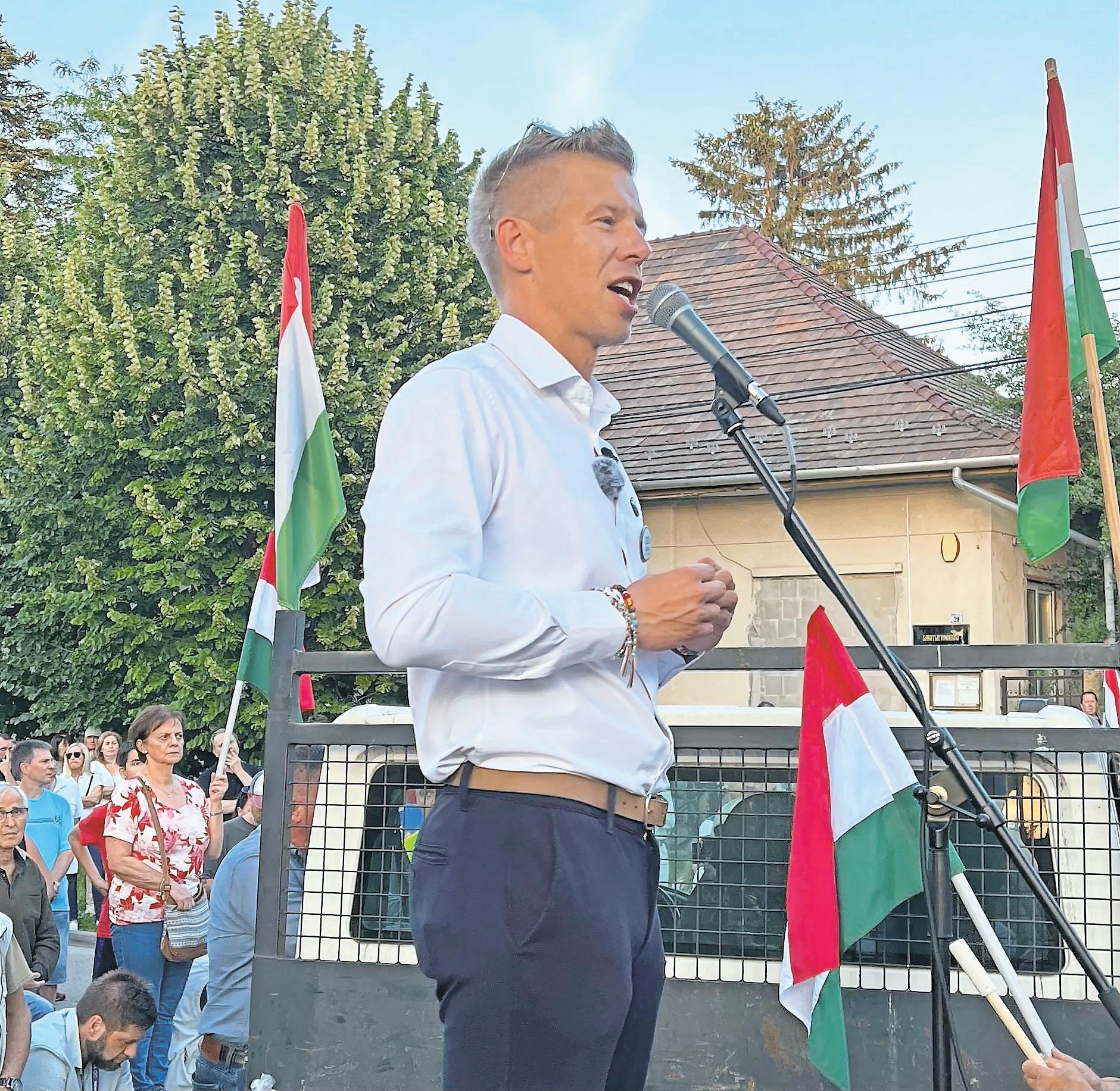
Péter Magyar in Szigetszenmiklós on June 2 2024. MrSilesian via WikiCommons
How Hezbollah ally learned to love Jewish state
For
The Jewish Star
Rawan Osman says she grew up believing Jews were the enemy.
Born in Damascus to a Syrian father and Lebanese mother and raised in Lebanon, Osman described an upbringing shaped by what she called deeply entrenched antisemitism and anti-Israel sentiment.
Speaking on a “Torah Talks” podcast hosted by Touro Law Center professor Sam Levine, she recounted how those beliefs were reinforced through education, media and the absence of Jewish communities in her surroundings.
“We were told a consistent story,” Osman said. “Why would we doubt what we were told about the Jews?”
Osman said that as a child and teenager, she viewed Hezbollah as heroic and accepted a simplified narrative of the Israeli-Palestinian conflict taught in schools. She also described exposure to religious and cultural messaging that portrayed Jews negatively.
That worldview began to change in her mid-20s, when she moved to Strasbourg, France.
There, she said, she had her first direct encounter with Jewish people — an experience she described as both frightening and transformative. Walking into a kosher grocery store in a Jewish neighborhood, Osman said she panicked upon hearing Hebrew spoken and seeing visibly Orthodox Jewish men.
“I had my first and last panic attack,” she said.
She left abruptly, then returned to retrieve her belongings. The storekeeper, she recalled, treated her kindly and without judgment, despite sensing her distress.
“That simple act of kindness allowed me to return to that space,” Osman said. “Without intending to, that gentleman on that afternoon converted me from an enemy to an ally.”
The encounter prompted her to question long-held assumptions. Osman said she began researching
Jewish history and the history of the Middle East, describing the process as a years-long reevaluation of what she had been taught.
“I realized that everything I knew about the Jews and about Israel … I learned from one narrative,” she said.
Over time, she said, she came to identify as a Zionist and began speaking publicly about antisemitism in Arab societies and the need for dialogue. Her views, she acknowledged, have strained relation-
REPORTER WANTED

ships with family and friends.
After the Hamas-led attacks on Israel on Oct. 7, 2023, Osman said she felt compelled to become more vocal. She described watching footage of the attacks and speaking out on social media and in public forums in support of Israel.
“I refuse to live in a world where what took place on October 7 is tolerated,” she said. Osman has since traveled to Israel multiple times and spoken at interna-
tional venues, including the European Parliament and the United Nations, she said. She described receiving messages from people who say her story has influenced their perspectives. Her commentary extends beyond personal narrative into broader geopolitical analysis. Osman has argued that antisemitism remains widespread globally and that education about the Holocaust alone is insufficient to combat it. She has also framed the Oct. 7 attacks as part of a larger ideological conflict involving Iran and allied groups. Those views are strongly held and, in some cases, controversial, particularly her characterization of global political alignments and conflicts. Throughout the conversation, Osman emphasized what she sees as the stakes of ongoing tensions in the Middle East.
Still, she returned repeatedly to the importance of personal interactions.
“I always thought I’m a single person — how can I bring change about?” she said. “And I remembered that that man … changed my life through a simple act of kindness.”
Osman said she remains optimistic about the future, despite ongoing conflict.
“I truly believe … that those who support Israel will prevail,” she said. Her story, she suggested, illustrates how deeply ingrained beliefs can be challenged — not through policy or politics alone, but through human connection.
is looking to add a full-time reporter to our team as we expand our coverage of local news that’s important to Modern Orthodox communities on LI and in Queens, Riverdale and Westchester.
is looking to add a full-time reporter to our team as we expand our coverage of local news that’s important to Modern Orthodox communities on LI and in Queens, Riverdale and Westchester.
Position offers expert mentoring, a starting salary of $36,400 to $39,520, and a menu of benefits including all Jewish holidays.
Salary ($35,000–$38,000) offers a menu of benefits including all Jewish holidays.
Candidates who have reporting and news-writing experience (professional or collegiate) are invited to email a resume with clips or links to Jobs@TheJewishStar.com.
Candidates who have reporting and news-writing experience (professional or collegitate) are invited to email a resume with clips or links to Jobs@TheJewishStar.com
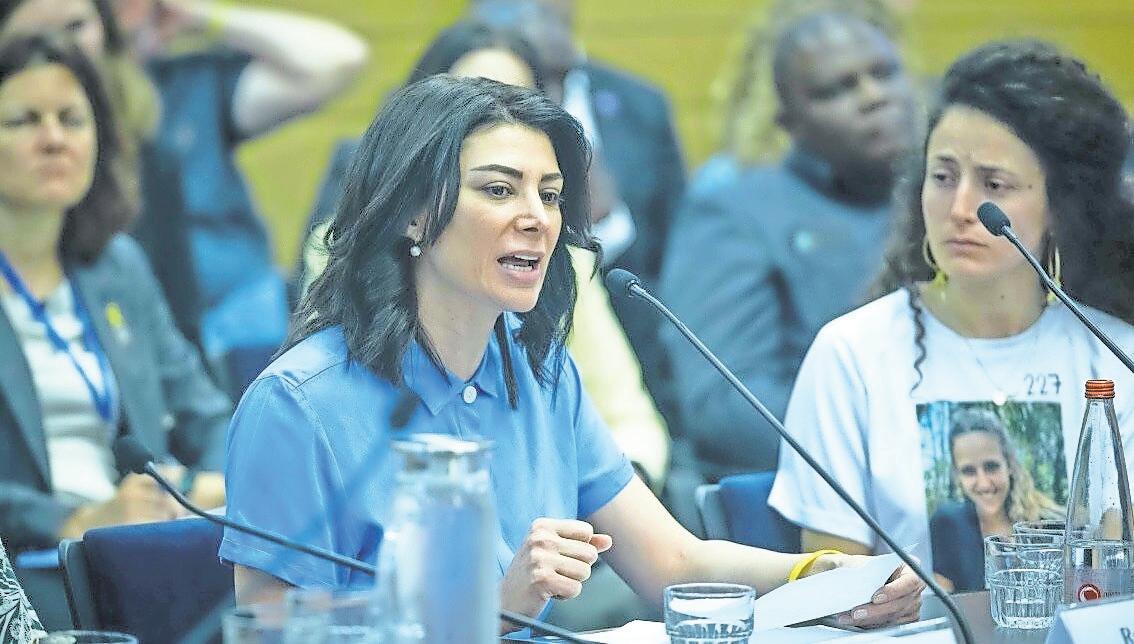
Rawan Osman addresses a meeting of the Global Women’s Coalition Against Gender-Based Violence as a Weapon of War, at the Knesset on May 20, 2024. Yonatan Sindel, Flash90
WINE AND DINE
Lemon happiness in a yellow-colored Spring
Kosher Kitchen
JoNI SCHoCKEtt
Jewish Star columnist
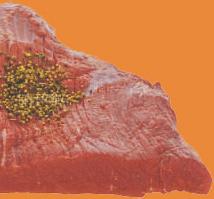
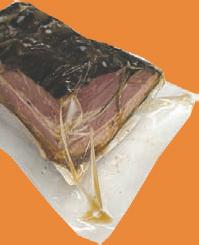
love lemons! They remind me of the summer that soon will come and, certainly, of spring’s fresh, clean, air. I love the sweet tart taste and sunny color of the yellow fruit. I am sure that I first fell in love with lemons as a child when I had my first taste of lemonade and, while my brother fought for the red Lifesaver, I always chose the lemony yellow one.
To this day, lemons are among my favorite go-to foods for all kinds of cooking and for drinking. I have saved thousands of calories (and some cash) by switching to ice water with lemon in restaurants and I even drink it at home instead of most other drinks.
It I believed that the lemon probably originated in India and South East Asia. It was brought into Europe by or maybe even before the first century and used widely in foods and for infections and diseases. It traveled well and came to the Americas by way of Christopher Columbus, By the 1700’s, experiments showed that eating lemons prevented scurvy in seamen on long voyages, so it became the norm for large amounts of the fruit to travel by ships wherever ships sailed. The dissemination of the seeds ensured the growth of the trees in all areas of the world that could sustain the sun-loving fruit.
While there were probably once many species of the fruit, today, the Lisbon and Avalon Lemons are the most predominant ones grown in the US. Meyer Lemons are a sweeter hybrid, thin-skinned, more perishable lemon that are delicious in so many recipes from lemonade to almost anything where a sweeter lemon would work (usually, not chicken recipes). And Australia has produced a super sweet lemon called, “lemonade” that can be eaten like an orange.
Lemons, besides being an ideal flavoring for all kinds of cooking from cakes to chicken, fish, soups and veggies, are also versatile for anything from cleaning the floor to creating gourmet foods. And can anyone remember putting lemon juice in your hair to lighten it in the summer?
The list is too long to run here, but numerous websites can tell you all the ways in which lemons are a super food, and a versatile household companion.
PS: Many years ago, my dad and I went to the famous Boston Landmark, Haymarket Square. We came to the lemons and I picked one up. The vendor, a friend of my dad’s (they were ALL friends of my dad’s!), grabbed it from me, “You do NOT want that lemon.”
He deftly cut it in half to show lots of seeds and thick rind. Looked normal. He picked up another lemon and cut it. Fewer seeds, a very thin rind. He squeezed them both into cups; the thinskinned one had much more juice. He told me that bumpy skinned lemons with knobby ends have thick rinds and less juice then thin skinned rounder lemons that easily indent with a finger.
I have followed that advice ever since and (almost) always found it to be true. Round, smooth skin, no nubs on the ends, easily indented. LOTS of juice. Try it!
Lemon Roasted Rock Cornish Hens or Chicken (Meat)
This is a delicious recipe for a small group or a crowd. Use small hens so that one hen is a serving

or use larger ones and cut in half. It looks gorgeous on a platter.
• 6 Cornish game hens, or about 3 to 4 pounds chicken pieces
• 1 cup freshly squeezed lemon juice
• 5 Tbsp. (generous) Dijon style mustard
• 4 Tbsp. tamari sauce
• 4 Tbsp. avocado or canola oil, do not use olive oil, it changes the flavoring
• OPTIONAL: tiny pinch cayenne pepper
• Garnish:
• 1 lemon thinly sliced
Cut down one side of the backbone of the hen using a sharp knife or poultry shears. Repeat with the other side. Place the backbones in the roasting pan to add flavor to the sauce, or use in chicken soup. Flatten the hen by gently pressing it so that the sides splay outward. Place in a roasting pan which has been coated with cooking oil or spray.
Mix the lemon juice, mustard, tamari sauce, oil and cayenne pepper together. Whisk until smooth. Pour half the marinade over the hens and place in a 375 degree oven for 40 to 45 minutes.
After 30 minutes, pour the remaining sauce over the hens and raise the temperature to 400 degrees. Bake for another 10 to 15 minutes. Remove from oven and let cool. Garnish with thinly sliced lemons. Skim as much of the fat off the sauce as possible and serve in a gravy boat.
Simple and Fast Roasted Cauliflower and Broccoli with Lemon and Garlic (Pareve or Dairy)
This also works well with green beans, asparagus, Brussels sprouts, Portabella mushroom caps, halved plum tomatoes and zucchini.
• 1 head cauliflower

• 2 large broccoli crowns
• 3 to 5 cloves garlic, minced
• 2 lemons, thinly sliced
• Kosher salt and freshly cracked black pepper, to taste
• 3 to 4 Tbsp. extra virgin olive oil
• OPTIONAL: A pinch red pepper flakes and/or oregano
For a dairy meal, top with some freshly grated Parmesan cheese
Line a rimmed baking sheet with foil and then a sheet of parchment paper. Set aside. Preheat the oven to 450 degrees.
Cut the cauliflower and broccoli into florets. Place in a large bowl. Mince the garlic and add to the bowl. Add the lemons thinly and the red pepper flakes and/or oregano, if using. Add salt and pepper and the olive oil and toss gently.

Pour evenly onto the prepared pan and roast for 20 to 30 minutes, mixing once to ensure even roasting. Serves 6 to 10.
Lemon Herb Compounded Butter (Dairy)
This is perfect on fish, rice, potatoes, and to make a different “garlic” bread. Can easily be doubled and can use any fresh herbs you like.
• 1 stick butter, very soft, but NOT melted
• 2 to 3 Tbsp. finely minced fresh parsley
• 2 Meyer lemons, yellow zest only (reserve the lemons for another use), finely grated
• 2 to 3 Tbsp. finely minced fresh thyme leaves
See Lemon happiness on page 14
My Husband’s Favorite Lemon Cake. insanelygoodrecipes.com
Simple and Fast Roasted Cauliflower and Broccoli with Lemon and Garlic. spoonfulofflavor.com Lemon Herb Compounded Butter. happyfoodstube.com




























































































































































Lemon happiness in a yellow-colored Spring…
• 1 to 2 Tbsp. finely minced fresh chives
• freshly ground black pepper
Place the very soft butter in a small bowl, add the zest, herbs, and pepper, mix well and scrape onto plastic wrap in a log shape. Roll up using the plastic wrap and twist the ends to close. Refrigerate until hardened and ready to use. Makes one stick.
Lemon and Roasted Garlic Vinaigrette (Pareve)
Great on salads, mixed with tuna fish, on fish or chicken or anything!
• I head garlic, roasted
• 1/4 to 1/3 cup freshly squeezed lemon juice
• 1/3 to 1/2 cup extra virgin olive oil
• Salt and freshly cracked black pepper to taste
• OPTIONAL: 1 to 2 tsp. honey to make a sweeter dressing, to taste
For the roasted garlic:
Preheat the oven to 400 degrees. Cut off the top quarter of the head of garlic and place on a sheet of heavy duty foil. Drizzle generously with olive oil. Fold up the foil and close. Place on a baking tray and roast until golden and softened, 30 to 40 minutes. Let cool, open and remove the cloves from the skin. Discard skin.
For the dressing:
Place some (as much as you like) of the garlic cloves in a bowl and mash with a fork until smooth. Add the lemon juice and mix well. Add the oil and whisk until emulsified. Pour into a bowl, taste and adjust garlic, adding more as desired. Season with salt and pepper, add some honey, if desired, mix and serve. Makes about 1 cup.
Melt-In-Your-Mouth Lemon Bars (Dairy)
These are delicious and creamy. Leave the zest out for a creamier filling. Use pareve margarine for Pareve dessert.
CRUST:
• 1-3/4 cups unbleached flour
• 1 cup confectioners’ sugar
• 1/4 cup plus 2 tsp. Cornstarch
• 2 sticks well chilled salted butter, cut into small pieces
• 1 tsp. grated lemon zest

FILLING:
• 5 extra-large eggs
• 2-1/2 to 3 cups sugar
• 4 Tbsp. unbleached flour
• OPTIONAL: 2 tsp. grated lemon zest
• 2/3 to 3/4 cup freshly squeezed lemon juice
Run a knife around the lemon squares and remove, using a spatula under the paper and lifting with the extending paper. Place on a serving tray and then cut, rinsing the knife in hot water between cuts. For less formal eating, cut while in the pan and remove individual squares.

• 3 tsp. baking powder
• 3/4 cup orange juice
• 3 Tbsp. freshly squeezed lemon juice
• 3/4 cup vegetable oil (Canola works best)
• 3 tsp. pure Lemon extract
GLAZE:
• 2/3 to 1 cup freshly squeezed lemon juice
• 1 box confectioner’s sugar (1 lb.)
Coat a 9x13 Pyrex or ceramic dish with butter and line with parchment, leaving long ends (about 2 inches) on either side. Butter the bottom of the paper. Preheat the oven to 350 degrees. Place the flour, sugar and cornstarch in a food processor bowl. Pulse to mix. Add the butter and pulse until the mixture resembles coarse cornmeal. Add the lemon zest and pulse once or twice to mix. Press the crust mixture evenly along the bottom and slightly up the sides of the pan. Refrigerate for 45 minutes for 20 to 25 minutes, until golden brown. Remove from the oven, reduce the heat to 325 degrees, and allow the crust to cool for 10 minutes.
FOR DAIRY: 1/3 cup whole milk or half and half FOR PAREVE: Omit milk, add 2/3 cup flour
(which includes the 4 tbsp.)
Write: Columnist@TheJewishStar.com Continued from page 12
Whisk the eggs, add the rest of the ingredients and continue to whisk until smooth and a bit thickened. Pour gently into the crust. Return to the oven and bake for 20 minutes until the filling looks and feels set. Remove from oven and let cool. Sprinkle generously with confectioners’ sugar and sugared lemon slices. (To make sugared lemon slices, mix one cup of sugar and one-half cup water in a small saucepan. Bring to a boil. Cut 2 lemons into very thin slices and add to the pan. Simmer for 15 to 20 minutes. Cool and refrigerate for use as a garnish.)
My Husband’s Favorite Lemon Cake (Pareve)
Th
My Husband’s Favorite Lemon Cake (Pareve)
This adapted version of a recipe I got from one of my aunts, is a very easy Bundt-type recipe that has a different twist. A fresh lemon glaze is infused into the cake immediately after baking. I changed the lemon glaze to one that used Confectioner’s sugar and lots of freshly squeezed lemon juice to make it less sweet. It is delicious.
CAKE:
• 2-1/2 cups unbleached flour
• 1-1/2 cups sugar
• 3 extra-large eggs
FOR THE CAKE: Preheat oven to 350 degrees. Generously grease and flour a Bundt pan. Set aside. Place all the cake ingredients in the bowl of an electric mixer and mix on low until completely blended. Increase the speed to medium and beat for 2 to 3 minutes. Let the batter sit for 3 minutes to allow any bubbles to rise and break. Scrape the batter into Bundt pan. Tilt pan and swirl batter around the outside rim one inch above the batter. This helps the cake bake higher and flatter. Bake just until a cake tester comes out clean, 35 to 50 minutes. Test at 35 minutes and 5 minute intervals once it is browned on top. Be careful not to overbake. FOR THE GLAZE: Combine Lemon juice and sugar and whisk vigorously. The glaze should be the consistency of heavy cream or a bit thicker. While the cake is still in the pan and hot, poke deep (not to the bottom) holes into the cake using the handle of a thin wooden spoon or chopstick. The holes should start about 1-inch from the edge and be 1-inch apart.
Make 3 to 4 rows of holes that zig zag to the center. Pour 3/4 of the glaze VERY SLOWLY into the holes and over the top of the cake. Let the cake rest for 15 minutes. Loosen the sides of the cake with a rubber spatula and invert onto a serving plate.
Tap the top and sides, or shake gently to loosen. The cake should easily release. Drizzle the rest of the glaze on top. Serves 10 to 14.
Lemon Roasted Rock Cornish Hens Or Chicken.

Jewish Star Torah columnists: Rabbi Benny Berlin, spiritual leader of BACH Jewish Center in Long Beach; Rabbi Avi Billet of Anshei Chesed, Boynton Beach, FL, mohel and Five Towns native; Rabbi Binny Freedman, rosh yeshiva of Orayta, Jerusalem; Dr. Alan A. Mazurek, former ZOA chair, retired neurologist, living in Great Neck, Jerusalem and Florida.
Contributing writers: Rabbi Sir Jonathan Sacks zt”l, former chief rabbi of United Hebrew Congregations of British Commonwealth; Rabbi Yossy Goldman, president South African Rabbinical Association; Rabbi Dr. Tzvi Hersh Weinreb, OU executive VP emeritus.
To submit commentary, inquire at: Editor@TheJewishStar.com. Contact our columnists at: Columnist@TheJewishStar.com.
תבש לש בכוכ
Fri April 24 / 7 Iyar
Achrei Mot-Kedoshim
Five Towns candles: 7:25 • Havdalah: 8:35
Scarsdale candles: 7:26 • Havdalah: 8:30
Fri May 1 / 14 Iyar
Emor (Friday is Pesach Sheni)
Five Towns candles: 7:32 • Havdalah: 8:42
Scarsdale candles: 7:33 • Havdalah: 8:38
Fri May 8 / 21 Iyar
Behar-Bechukotai
Five Towns candles: 7:39 • Havdalah: 8:49
Scarsdale candles: 7:40 • Havdalah: 8:46
Fri May 15 / 28 Iyar
Bamidbar • Shabbos Mevarchim
Five Towns candles: 7:46 • Havdalah: 8:56
Scarsdale candles: 7:47 • Havdalah: 8:55
Five Towns Candlelighting: From the White Shul, Far Rockaway, NY
Scarsdale Candlelighting: From the Young Israel of Scarsdale, Scarsdale, NY
Of love and hate and learning to live together
At the center of the Mosaic books is Sefer Vayikra. At the center of Vayikra is the “holiness code” (chapter 19) with its momentous call: “You shall be holy because I, the L-rd your G-d, am holy.” And at the center of chapter 19 is a brief paragraph which, by its positioning, is the apex, the high point, of the Torah: Do not hate your brother in your heart. Admonish your fellow and do not bear guilt on his account. Do not take revenge or bear a grudge against anyone among your people, but love your neighbor as your own self. I am the L-rd. (Vayikra 19:17-18)
I want, in this study, to examine the second of these provisions: “Admonish your fellow and do not bear guilt on his account.”
Rambam and Ramban agree in seeing two quite different levels of meaning in this sentence. This is how Rambam puts it: When one person sins against another, the latter should not hate him and remain silent. As it is said about the wicked: “And Absalom spoke to Amnon neither good nor evil, although Absalom hated Amnon.” Rather, he is commanded to speak to him and to say to him, “Why did you do suchand-such to me? Why did you sin against me in such-and-such a matter?” As it is said, “You must surely admonish your neighbor.” If he repents and requests forgiveness from him, he must forgive and not be cruel, as it is said, “And Abraham prayed to G-d . . .” If someone sees his fellow committing a sin or embarking on a path that is not good, it is a commandment to make him return to the good and to make known to him that he is sinning against himself by his evil actions, as it is said, “You must surely admonish your neighbour…” — Mishneh Torah, Hilchot De’ot 6:6 Likewise, Ramban:
“You shall surely remonstrate with your neighbor” — this is a separate command, namely that we must teach him the reproof of instruction. “And not bear sin because of him” — for you will bear sin because of his transgression if you do not rebuke him.
However, it seems to me that the correct interpretation is that the expression “you shall surely remonstrate” is to be understood in the same way as “And Abraham remonstrated with Avimelech.”
Achieving reconciliation through honest discussion — not always, to be sure, but often.
The verse is thus saying: “Do not hate your brother in your heart when he does something to you against your will, but instead you should remonstrate with him, saying, ‘Why did you do this to me?’ and you will not bear sin because of him by covering up your hatred in your heart and not telling him, for when you remonstrate with him, he will justify himself before you or he will regret his action and admit his sin, and you will forgive him.” (Ramban to Lev. 19:17)
The difference between the two interpretations is that one is social, the other interpersonal. On Rambam’s second and Ramban’s first reading, the command is about collective responsibility. When we see a fellow Jew about to commit a sin, we must try to persuade him not to do so. We are not allowed to say, “That is a private matter between him and G-d.”
“All Israel,” said the Sages, “are sureties for one another.” We are each responsible, not only for our own conduct, but for the behavior of others. That is a major chapter in Jewish law and thought.
However, both Rambam and Ramban are aware that this is not the plain sense of the text. Taken in context, what we have before us is a subtle account of the psychology of interpersonal relations.
Judaism has sometimes been accused by Christianity of being about justice rather than love (“You have heard that it was said, ‘Love your neighbor and hate your enemy.’ But I tell you: Love your enemies and pray for those who persecute you”). This is entirely untrue. There is a wonderful teaching in Avot deRabbi Natan: “Who is the greatest hero? One who turns an enemy into a friend.” What sets the Torah apart is its understanding of the psychology of hatred. If someone has done us harm, it is natural to feel aggrieved. What then are we to do in order to fulfill the command, “Do not hate your brother in your heart”? The Torah’s answer is: Speak. Converse. Challenge. Remonstrate. It may be that the other person had a good reason for do-
ing what he did. Or it may be that he was acting out of malice, in which case our remonstration will give him, if he so chooses, the opportunity to rethink, and apologize, and we should then forgive him. In either case, talking it through is the best way of restoring a broken relationship. Once again we encounter here one of the leitmotivs of Judaism: the power of speech to create, sustain, and mend relationships.
Maimonides cites a key prooftext. The story is told (II Samuel 13) of how Amnon, one of King David’s children, raped his halfsister, Tamar. When Absalom, Tamar’s brother, hears about the episode, his reaction seems on the face of it irenic, serene: Her brother Absalom said to her, “Has that Amnon, your brother, been with you? Be quiet, now my sister; he is your brother. Don’t take this thing to heart.” And Tamar lived in her brother Absalom’s house, a desolate woman. When King David heard all this, he was furious. Absalom never said a word to Amnon, either good or bad . . .”
Appearances, however, deceive. Absalom is anything but forgiving. He waits for two years, then invites Amnon to a festive meal at sheepshearing time. He gives instructions to his men: “Listen! When Amnon is in high spirits from drinking wine and I say to you, ‘Strike Amnon down,’ then kill him.” And so it happened.
Absalom’s silence was not the silence of forgiveness but of hate – the hate of which Pierre de LaClos spoke in Les Liaisons Dangereuses when he wrote the famous line, “Revenge is a dish best served cold.”
There is another equally powerful example in Bereishit:
Now, Israel loved Joseph more than all his other sons, for he was a child of his old age; he made him an ornately colored robe. But when his brothers saw that their father loved him more than any of them, they hated him and could not say a peaceful word to him. (Velo yachlu dabro leshalom, literally, “they could not speak with him to peace”)
(Bereishit 37:3-4)
On this, Rabbi Jonathan Eybeschuetz comments: “Had they been able to sit together as a group, they would have spoken to one another, and remonstrated with each other, and would eventually have made their peace with one another. The tragedy of conflict is that it prevents people from talking together and listening to one another.”
A failure to communicate is often the prelude to revenge.
The inner logic of the two verses in our sedra is therefore this: “Love your neighbor as yourself. But not all neighbors are loveable. There are those who, out of envy or malice, have done you harm. I do not therefore command you to live as if you were angels, without any of the emotions natural to human beings. I do however forbid you to hate.
“That is why, when someone does you wrong, you must confront the wrongdoer. You must tell him of your feelings of hurt and distress. It may be that you completely misunderstood his intentions. Or it may be that he genuinely meant to do you harm, but now, faced with the reality of the injury he has done you, he may sincerely repent of what he did. If, however, you fail to talk it through, there is a real possibility that you will bear a grudge and in the fullness of time, come to take revenge — as did Absalom.”
What is so impressive about the Torah is that it both articulates the highest of high ideals, and at the same time speaks to us as human beings. If we were angels, it would be easy to love one another. But we are not. An ethic that commands us to love our enemies, without any hint as to how we are to achieve this, is simply unliveable. Instead, the Torah sets out a realistic program: Communication. By being honest with one another, talking things through, we may be able to achieve reconciliation — not always, to be sure, but often. How much distress and even bloodshed might be spared if humanity heeded this simple command.
Consider ‘Keter LaAvadim,’ a crown for slaves
So many self-help books talk about vision. About dreaming big, setting goals, having the tenacity to pursue them no matter what stands in your way. And yet so many people walk through life doing exactly the opposite. They pinch here, get tangled up in small grievances and petty calculations there, and lose sight entirely of who they are actually trying to become.
Rav Avraham Yitzchak HaKohen Kook has a name for this. In Orot HaKodesh he writes that one of the greatest dangers facing a person is confinement of thought, what the tradition calls mochin de’katnus.
The antidote, Rav Kook teaches, is to lift your thought and your will toward something larger, toward mochin de’gadlus, an expansiveness of mind where real vision becomes
possible. The bigger the vision, he writes, the greater the joy, and the more a person merits divine blessing.
There is an old parable about a beggar who bought a lottery ticket. Someone asked him if he won, what is the first thing he would do with the money. He thought about it and said, I would hire a guard to keep the other beggar away from the shul entrance so I could have all the congregants to myself.
Now obviously, if he won the lottery, he would never need to stand outside a shul again. But his imagination was so locked into his present reality that even his wildest dreams were confined by it. He simply could not picture a life that looked fundamentally different from the one he already had. That is mochin de’katnus.
Parshas Acharei Mos details the avodah of Yom Kippur at length, and while Yom Kippur may feel like a distant concern in the middle of the Omer, there is a passage in the Gemara connected to this parsha that speaks directly to where we stand right now.
The Mishnah in Maseches Rosh Hashana
What’s
(1:1) teaches that the first of Tishrei marks the new year for several cycles, among them the Yovel, the Jubilee year, the fiftieth year in which all Hebrew slaves go free. But the Gemara raises a difficulty. An explicit verse in Vayikra (25:9) states that the shofar is sounded and the slaves are released on Yom Kippur, not Rosh Hashana. So which is it?
The Gemara in Rosh Hashana (8b) resolves it in a remarkable way. Both are true, but they describe two different moments. From Rosh Hashana, the slave is no longer under the master’s authority. Free to come and go as they please.
But they do not yet go home. Instead they stay in the master’s house through the ten days leading to Yom Kippur, and during that time they sing and dance and celebrate, and the Gemara tells us they wear a crown
on their head. Only on Yom Kippur do they finally walk out the door and return home. It is a strange image. This person was a slave yesterday. They sit at the very bottom of the social ladder, one step above nothing. No property, no standing, no title to their name. And we are telling them to put a crown on their head? Who exactly are they kidding?
But that is precisely the point.
The crown is not a description of where they have been. It is a vision of where they are going. We place that crown on their head because they need to feel it, to inhabit it, to let their imagination stretch far enough to believe that this new 50 year cycle can look entirely different from the last one. We are asking them to trade in their mochin de’katnus for something bigger.
We are in the Omer right now, the weeks between Pesach and Shavuos, a period our tradition frames as one of genuine personal growth, a steady climb toward receiving the Torah anew. And if we are honest with ourselves, all of us carry something we have been
See Berlin on page 22
Let’s look for the precise definition of holiness
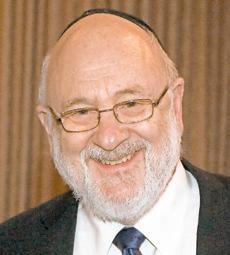
He never returned phone calls. He certainly never returned e-mails. He rarely smiled. He had very sophisticated tastes in wine and fine liquor. A seven-course gourmet dinner with a wine pairing at each course was almost an everyday occurrence for him.
He had the vocabulary of a sailor and seemed to be acquainted with the obscenities and profanities of every known language.
Don’t get me wrong. He had many fine qualities, and considered himself to be religious, even pious.
“After all,” he would say, “I am careful that the meals that I order are always absolutely kosher. The Torah doesn’t prohibit wine, nor does it require us to refrain from delicious food, and it places no limits on the quantity of food that
we eat.”
He would expound upon the fact that he found nothing in the Torah requiring one to return phone calls or e-mails. He even insisted that, at least in the written Torah, he found no objection to the use of vulgar language.
Iknew this person, let’s call him Reuben, for nearly 50 years. I was associated with him in various capacities, and often worked with him on charity projects. Although he scrupulously investigated every cause that approached him for contributions, and he was very careful as to the causes to which he made contributions, I cannot deny that he was generous by almost all standards.
I must admit that I often wondered about his relationship with his wife. Obviously, I was not privy to the intimate details about their relationship. I did meet Reuben’s wife several times, and she always appeared to be quite sad, even defeated. She certainly did not share his joie de vivre, dressed quite modestly compared to his lavish wardrobe, and she certainly never resorted to his foul language.
Reuben died a few months ago. One of his close business associates, who knew him as a religious Jew, eulogized him as a person who exhibited holiness. “He was no saint,” proclaimed this associate, “but from my perspective as an irreligious person, Reuben was a holy man.”
Now, it is common, and even to some extent permissible, to exaggerate the merits of the deceased during a eulogy for him. But there was something about the adjective “holy” that I simply could not accept and felt compelled to protest. It was certainly inappropriate for me to protest in public at the funeral, and I felt it was pointless to protest to the well-meaning person who delivered the eulogy.
So I decided to use this column as the venue for that protest.
What does it mean to be holy? For the answer to that, we need to examine a verse at the beginning of the second of this week’s doubleTorah portions, Achrei Mos and Kedoshim (Exodus 16:1-20:27). The verse reads: “Ye shall be holy; for I the L-rd your G-d am holy.”
The two greatest commentators on the Bible in the Jewish tradition, Rashi and Ramban (Nachmanides), enunciate definitions of “holiness.”
• Rashi insists that to be holy means to be separate, distant, from various sinful exploits, especially sexual promiscuity. He says that the Hebrew words, kedoshim tihyu (ye shall be holy) are best understood as, perushimtihyu (ye shall keep a distance).
• Ramban, however, takes issue with Rashi, although he characteristically does so with great courtesy and even reverence for his predecessor. Ramban’s definition of holiness expresses one of his most basic teachings, and in
See Weinreb on page 22
Sefiros: A Jewish morally-based math lesson
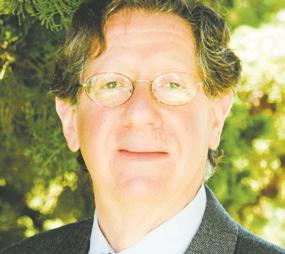
In his commentary on the Counting of the Omer, “The Siddur Illuminated By Chassidus, Shabbos” (Merkos/Kehot, 2015), Rabbi Eliyahu Touger, formerly of Cedarhurst, now of Jerusalem, teaches us that “the root of the term ‘sefirah,’ translated as ‘counting,’ also has the meaning of luminance, as in the phrase, ‘even sapir,’ a luminous sapphire stone.” (Yechezkel, 1:26)
“Similarly,” he continues, “the Ten Sefiros are so named because they shine forth Divine light. This is the mystic implication of the commandment: ‘And you shall count for yourselves,’ that is, you shall make yourselves luminous. The mitzvah of Sefiras HaOmer involves drawing down the light of the Ten Sefirosso that it shines and is internalized within a person as he exists in this lowly realm.”
This teaching, linking a timely mitzvah and
the Jewish mystical tradition, is expanded upon in a newly published work, “The Sefiros and the Self: A Divine Blueprint for Self-Discovery and Personal Growth” (Feldheim, 2016), by Rabbi Yaakov Feder of Lawrence.
This learned work, utilizing user-friendly terminology, goes into great detail to teach us the importance of the Jewish mystical tradition and its application to everyday life.
Rabbi Alter Metzger of Yeshiva University states in his approbation:
“One of the foremost challenges of the modern Jewish world is the sense of disconnect between spiritual and material values. It is a constant struggle to incorporate lofty ideas into daily life. There is a great need for tools that help translate the timeless lessons of Torah into down-to-earth terms. … By focusing on common scenarios and real-world problems, Rabbi
Yaakov Feder provides a grounded system that can help the individual repair his or her own inner disconnect and dysfunctionality.”
Rabbi Feder was born in Montreal where he attended the local Chabad yeshiva studying under Rabbi Wolf Greenglasz, z”l, and Rabbi I.M. Gourarie. He later studied at Jerusalem’s famed Yeshishat Torat Emet under Rabbi Yosef Offen. He received his semicha from Canadian Chief Rabbi Pinchas Hirchprung, as well as from Rabbi Isaac Schvei, z”l, and Rabbi Yitzchok Hendel, the rabbi of the Chabad of Montreal. His personal lineage also reflects deep rabbinic and learned roots, especially in the Chabad tradition.
According to family members, Rabbi Feder has followed in his family tradition by giving weekly Torah Parsha shiurim on Thursday nights, and shalosh seudot discourses at Chabad of the Five Towns. He is a regular congregant there as well as at Bais Avraham Zev (Gruber) in Lawrence.
Over the years, in addition to his business enterprises, Rabbi Feder has been writing thoughts on Chassidus, attempting to map out and define the complex structure of these ideas. The author’s been motivated by two great passions
— systematic self-improvement and the deep abstract concepts of Chassidic teachings — and they are reflected in this book. By analyzing the model of godly attributes, the Sefiros, we can effectively implement them into a plan for personal development and growth.
As a businessman, Rabbi Feder was able to appreciate firsthand the daily down-to-earth struggle of blending Torah values within our living in a mundane world. When dealing with financial and political matters, we often encounter the baser side of ourselves. Rabbi Feder realizes that just because a person is learned in our tradition, this does not guarantee that he will behave and act accordingly. Nor is a frum upbringing a strong indicator that an individual will adopt a mature, moral, honestly functional lifestyle and live as a moral, functional human being with a self-developed character.
Functionality is not always prevalent in the frum world.
“The Sefiros and the Self” addresses the need to actively encourage healthy moral character development, a focus that’s needed in Jewish life and education. Ve’hamevin yavin.
See Gerber on page 23
Published weekly except during certain religious and civil holidays by The Jewish Star LLC New York City office: 5676 Riverdale Ave Suite 311, Bronx NY 10471 • LI office: 2 Endo Blvd, Garden City NY 11530 Here’s how to reach The Jewish Star — Write: Editor@TheJewishStar.com. Call: 516-622-7461 ext 291
Editor & Publisher: Ed Weintrob
516-622-7461 ext 291
Jewish Star Associate: Nechama Bluth
516-622-7461 ext 241
Content: The Publisher endeavors to ensure that our content is within the bounds of normative halachah and hashkafah. Anyone who feels anything we publish may be inappropriate in this regard is urged to bring the item in question to the attention of the Publisher. Advertising is accepted at the sole discretion of the Publisher and should conform to standards appropriate for distribution in an Orthodox community. Send us your news! Editor@TheJewishStar.com
Advertising: Publisher@TheJewishStar.com
Kashrut: The Jewish Star is not responsible for the
kashrut of any product or establishment featured in its pages. If you have questions regarding any establishment or product, including its supervision, please consult your rabbi for guidance.
Submissions: All submissions become the property of The Jewish Star and may be edited and used by the Publisher, its licensees and affiliates, in print, on the web and/or in any media that now exists or will exist in the future in any form, including derivative works, throughout the world in perpetuity, without additional authorization or compensation. The individual or entity submitting material affirms that it holds the copyright or otherwise has the right to authorize its use in accordance with The Jewish Star’s terms for submissions.
Opinions: Views expressed by columnists and other writers do not necessarily reflect the position of the Publisher or of The Jewish Star LLC.
Distribution: The Jewish Star is available free in kosher food establishments, stores, synagogues, and curb-side newsboxes on Long Island, in New York City and elsewhere. To request free delivery to your location, write Publisher@TheJewishStar.com.
Copyright: All content is copyright and may not be republished or otherwise reproduced without written permission by The Jewish Star; to do so without permission is against the law and halacha. For content reproduction write to Publisher@TheJewishStar.com.
The Jewish Star subscribes to JNS. It, or its contributors, own the copyrights on material attributed to them. The length and content of JNS material and all other submitted material may be edited by The Jewish Star.
Member: American Jewish Press Association.
This newspaper contains words of Torah. While it is not considered shaimos, please dispose properly.
OPINION COLUMNISTS
Mitchell Bard, foreign policy analyst, authority on USIsreal relations; Ben Cohen, senior analyst, Foundation for Defense of Democracies; Stephen Flatow, president, Religious Zionists of America-Mizrachi and father of Alisa Flatow, murdered in an Iranian-sponsored Palestinian terrorist attack in 1995; Yisrael Medad, Americanborn Israeli journalist and political commentator; Rafael Medoff, founding director of David S. Wyman Institute for Holocaust Studies; Fiamma Nirenstein, Italian-Israeli journalist, author of 13 books, leading voice on Israeli affairs, Middle Eastern politics and antisemitism; Melanie Phillips, British journalist; Moshe Phillips, national chairman, Americans for a Safe Israel; Thane Rosenbaum, Distinguished University Professor at Touro University (published by Jewish Journal); Jonathan S. Tobin, editor-in-chief, Jewish News Syndicate.
In the Vatican, Pope Leo XIV’s unholy silence
When President Donald Trump sent Vice President JD Vance to negotiate with members of the Iranian regime in Islamabad, people initially thought that Vance — reportedly the most outspoken voice in the Trump administration against going to war with Iran — would be a soft touch.
When the talks in Pakistan broke down, however, Vance’s position could hardly have been tougher. Having seen the Iranian regime up close, he said, he was absolutely certain that these people must never be allowed to get nuclear weapons.
In recent days, he has again taken a position which contradicted previous assumptions about his worldview.
The MAGA movement is currently convulsed by a faction of poisonous, unhinged Jewish-conspiracy theorists, led by podcaster and political commentator Tucker Carlson. Believing that Israel drags America into needless foreign wars, they’ve been inflamed to the point of hysteria by the war against Iran.
A number of these people are Catholics who have positioned themselves against Christian Zionism, largely associated with evangelical Protestantism.
Younger Catholics, particularly recent converts who reject modernity, are leaning into older, more “authentic” versions of the faith — and are thus embracing its earlier virulent antisemitism.
Vance, a passionate Catholic convert, has caused great unease among the Jewish community by refusing to distance himself from this tendency.
This past week, an explosive row was detonated between Trump and Pope Leo XIV that played straight into the MAGA convulsions.
The pope called the war in Iran an “unjust war,” which was “continuing to escalate and not resolving anything.” He said G-d “does not listen to the prayers of those who wage war,” that “G-d does not bless any conflict” and that “no cause can justify the shedding of innocent blood.”
This caused Trump to lash out.
“I don’t want a Pope who thinks it’s OK for Iran to have a Nuclear Weapon” he wrote on Truth Social. “Leo should get his act together as Pope, use Common Sense, stop catering to the Radical Left, and focus on being a Great Pope, not a Politician.”
Shortly afterwards, Trump reposted an AIgenerated image of himself laying his hand on a hospitalized man, producing outraged claims that he was portraying himself as Jesus.
After a few hours, Trump deleted this post. But he had needlessly put rocket fuel behind those outraged at criticism of the pope rather than at what the pope himself had said. Trump, critics claimed, had now lost the Catholic vote.
Yet Vance savaged the pope’s comments. In a discussion at the University of Georgia, the vice president responded to the pontiff’s claim that “God is never on the side of those who wield the sword” by protesting, “How can you say that?”
Referring to Catholic “just war” theory, which holds that war is justified as a last resort to prevent grave, certain and lasting damage by an aggressor, provided care is taken to protect civilian lives as far as possible, Vance declared:
“There’s more than a thousand-year tradition of ‘just war’ theory. Was G-d on the side of the Americans who liberated France from the Nazis? Was G-d on the side of the Americans who liberated Holocaust camps and liberated those innocent people from those who had survived the Holocaust? I certainly think the answer is yes.”
As a number of aghast Catholics have observed, the pope’s remarks were indeed against Catholic teaching itself. They’ve also reinforced suspicions that he is leading the capitulation of the church to Islamic conquest.
While lambasting America over the Iran war during the Easter weekend, the pope said nothing about the Islamist bloodbath in Nigeria at precisely that time, when dozens of Christians were gunned down and their homes set on fire.
vides the wolves with an easier way to tear the sheep to pieces.
His condemnation of the war against Iran rather than the Iranian regime itself serves to line up the Vatican with the debauched amorality of countries such as Britain, France, Italy and Spain, which have taken a similar position.
Britain’s prime minister, Sir Keir Starmer, has adopted a particularly odious attitude. Having said the Iran conflict was “not our war” and “not in our national interest,” he then tried to cast himself as a peacemaker by flying to Saudi Arabia purportedly to negotiate a ceasefire.
While the United States is bringing Iran economically to its knees by interdicting Iranian maritime traffic in the Strait of Hormuz, thus brilliantly turning the regime’s ostensible trump card against it, Starmer is sending out invitations to a risible summit to “break” Iran’s control of the Strait.
Top of their deliberations will doubtless be what gifts to put into the party bags they’ll give the Iranians to take home with them.
WOn several occasions, he’s expressed sorrow over the victims of repeated such massacres in Nigeria and called on the authorities to protect
all citizens. But he’s never called out the Islamic world for the attempt by Islamists to exterminate Christianity itself.
hile the pope attacks America for waging war against Islamists, he fails to attack Islamists for their persecution and murder of Christians. He said instead last year that people should be “a little less fearful” of Islam, and this week that “Islam is a religion of peace we can learn from.”
On his visit to Algeria, immediately after the row with Trump, he appeared to promote an alliance between Muslims and Christians by signing the “Golden Book” ceremonial guestbook in the great mosque in Algiers and declaring it “a space proper to G-d.”
He also praised Algeria’s “rich diversity” and spoke about the importance of reciprocal respect and respecting the dignity of every person.
He thus totally ignored Algeria’s repression of Christians. The 2026 Open Doors World Watch List says that 47 churches of the Protestant Church of Algeria have been closed by the authorities, and the list puts the country in 20th place for Christian persecution around the world.
The pope’s genuflection to Islam spells disaster for Western civilization. Pope Leo XIV holds an audience with the media at the Vatican on May 12, 2025. Edgar Beltrán, The Pillar via WikiCommons
The pope said before his Algeria trip that his aim was to build “bridges between the Christian world and the Muslim world.” But building bridges between sheep and wolves merely pro-
Shockingly, Starmer thinks that Israel has no right to defend itself against Hezbollah in Lebanon. He told the House of Commons this week: “Israel’s strikes are wrong. They’re having devastating humanitarian consequences and pushing Lebanon into a crisis. The bombing should stop now.”
He thus presented Israel totally falsely as a wanton aggressor, ignoring the thousands of rockets that Hezbollah has been firing at Israeli civilians — with all the death and destruction they’ve caused--and that show no sign of stopping.
Starmer thinks diplomacy brings peace. But more than four decades of diplomacy with Iran have resulted in thousands of Jews, Americans and others around the world being murdered, killed and wounded; a terrorized and butchered Iranian people; and the world’s most lethal terrorist state coming to the very brink of arming itself with the nuclear bomb.
Like the pope, Starmer and his fellow European fainthearts make pious incantations of peace while leaving the targets of genocidal war to swing in the wind.
This culture of appeasement reflects the dismal fact that Britain and these European nations are now on a trajectory of cultural collapse, as their countries become steadily Islamized while they refuse to defend a historic identity they no
MELANIE PHILLIPS
Looking to Ukraine for how to fight antisemitism
GLOBAL FOCUS
BEN COHEN
It’s one hell of a reflection on Europe that the country which now arguably has the continent’s toughest laws against anti-Semitism — and the greatest will to fight this resurgent evil — is Ukraine.
Yes, Ukraine. The country that has been beating off a brutal Russian invasion for more than four years. The country for whom a typical day will bring hundreds of drones and barrages of missiles raining down on its cities and towns. The country that has been traumatized by the cruel abduction of nearly 20,000 of its children by the Russians in an outrage that brings to mind the Nazi “Germanization” campaign targeting Polish children during World War II. Yes, that Ukraine.
On April 15, one day after Yom Hashoah and a day when Ukraine was struck by more than 300 Russian drones, the country’s Jewish President Volodymyr Zelenskyy signed new legislation combating antisemitism, passed by an overwhelming majority of the country’s parliament. The law introduces harsh penalties for offenders, with crimes involving violence carrying sentences of between five and eight years.
It should be emphasized that the new law didn’t appear out of nowhere, nor was it an act of political opportunism. Rather, it builds upon and strengthens existing legislation, including Ukraine’s 2021 bill to combat antisemitism. That statute includes Holocaust denial,
Ukraine’s past should not blunt the significance of the present moment.
incitement and attempts to delegitimize Jewish identity — the latter phenomenon now so widespread in Western Europe that it has become unremarkable as punishable offenses.
There is much to say about this, and none of it reflects well on Ukraine’s neighbors to the west. Were any Western European country to have at this moment a Jewish president or prime minister, it’s highly unlikely that she or he would take the political and reputational risk of pushing through legislation to fight antisemitic agitation. But in Ukraine, there is no tension between Zelenskyy openly identifying as a Jew and approving legislation to protect the Jewish community, and his status as an elected, accountable president for all Ukrainians, many of whom are devout Christians.
This does not mean, of course, that antisemitism is non-existent in Ukraine — if it were, then this legislation wouldn’t be necessary. Nor does it mean that Jew-hatred can be simply written off in its long history there.
Over the centuries, when Ukraine was a component of the Polish-Lithuanian Commonwealth, the Tsarist Empire and the Soviet Union, its Jewish communities were subjected to vicious pogroms and expulsions. That culminated in the slaughter of 1.5 million Ukrainian Jews during the years of World War II and the Holocaust, mainly by the invading Germans but with plenty of local collaborators as well.
That history is still a point of contention, as demonstrated by the fact that Ukraine has yet to overturn the 1954 Soviet decision renaming the provincial city of Proskuriv as Khmelnytskyi in honor of the 17th-century Cossack leader Bogdan Chmielnicki, whose name, prior to Adolf Hitler, was a synonym for murderous violence against Jews. Indeed, Russian dictator Vladimir Putin’s regime has weaponized this history, which also includes such figures as the wartime nationalist leader and Nazi collaborator Stepan Bandera, to defame Zelenskyy’s democratic government as “neo-Nazi.”
Yet the past should not blunt the significance of the present moment.
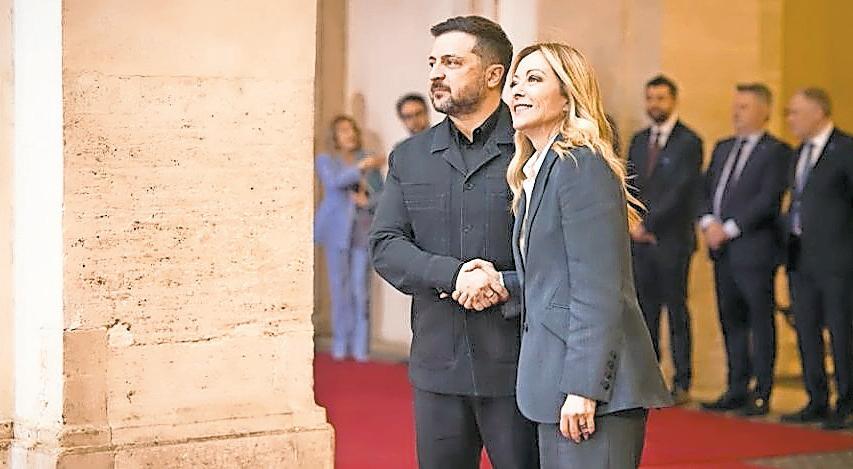
By stigmatizing anti-Semitism — and by doing so on a day when Israelis and Jews marked Yom Hashoah — Ukraine was standing up for the finest values of liberal democracy. Because the ideological garbage that this age-old scourge represents is anathema to societies based on tolerance and intellectual openness, and which cherish the importance of a well-rounded education. One of the saddest aspects of Western Europe these days is the retreat of these values at just the time that the vultures of communism, Islamism and neo-fascism are all circling with intent.
The grotesque nature of this situation was graphically unveiled in Tel Aviv University’s annual report on antisemitism, whose 2025 findings were published last week.
The statistics are grim.
In 2025, 20 people were killed in four separate antisemitic attacks.
In countries where Jewish communities are a tinier fraction of the overall population than in the United States and where they make up at
most 2.4 percent of all Americans, the number of recorded antisemitic incidents was simply dizzying.
•Nearly 2,000 in Australia.
•Nearly 4,000 in the United Kingdom.
•Nearly 6,000 in Germany.
•Nearly 7,000 in Canada.
•In many countries, like France, where there was a slight decrease in incidents compared with 2024, there was a corresponding rise in physical assaults targeting Jews.
Most disturbing of all is the lack of prosecutions of offenders. The final section of the report contains profiles of individuals in the United States, Canada, France and the United Kingdom who were convicted for antisemitic crimes.
However, the study’s author, professor Carl Yonker, noted that his “research team located slightly fewer than 100 indictments. This number is strikingly small in comparison to the number of antisemitic incidents reported in the four countries studied over the past five years. It
See Cohen on page 23
When J Street’s ‘pro-Israel’ stops meaning it
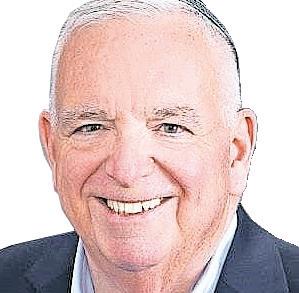
You have about 15 seconds. That’s the time an Israeli family has when the siren sounds — 15 seconds to gather children, reach a shelter and pray that what follows is not the sound of impact, but of interception.
For years, one thing in Washington was not up for debate: those 15 seconds should end with a life saved, not a life lost.
That consensus is now beginning to fracture. J Street’s decision to back calls for ending US funding for missile-defense systems like Iron Dome, David’s Sling and the Arrow missile-defense system is not a minor policy adjustment. It is a line crossed.
These systems are not abstractions. They are not political bargaining chips. They are the difference between impact and interception — between funerals and survival. They are what allow Israeli parents to tell their children that running to a shelter still matters.
J Street views Israel’s most basic defensive needs as optional, even objectionable.
For decades, US support for missile defense was among the least controversial elements of the US-Israel relationship. Republicans and Democrats alike understood a simple truth: helping Israel defend its civilians is both a strategic necessity and a moral obligation. Just as importantly, missile defense has prevented wider wars by reducing the need for massive retaliation.
J Street’s position cuts directly against that logic.
To say Israel should “pay for its own” missile defense is not a budgetary tweak but a redefinition of what support means. It turns a moral baseline — the right of a democratic ally to protect its civilians — into a negotiable expense. And it does not stand alone.
In recent years, J Street has embraced conditioning US aid on Israeli policy decisions and has spoken openly about phasing that aid out altogether. Step by step, what was once framed as support has been narrowed, qualified and now, in the case of missile defense, put on the chopping block.
This is where the organization’s own creed deserves scrutiny.
J Street describes itself as “pro-Israel, propeace and pro-democracy.” But what does “proIsrael” mean if it does not include support for systems that stop rockets aimed at Israeli homes? What does “pro-peace” mean if it weakens the very defenses that prevent escalation? And what does “pro-democracy” mean if it conditions a democracy’s ability to protect its citizens on political approval from abroad?
Missile defense was always the bright line. It was defensive by definition. It saved lives without

escalating conflict. Even the harshest critics of Israeli policy once acknowledged that distinction. No longer.
By aligning with calls to end funding for these systems, J Street is not merely criticizing Israel. It is aligning itself with a political current that increasingly views even Israel’s most basic defensive needs as optional, or worse, objectionable.
There is a hard strategic reality here. Weakening missile defense does not restrain conflict — it invites it. When rockets land, governments respond. When civilians die, escalation follows.
The systems now being questioned are precisely the ones that have, time and again, prevented broader war.
Which leads to a conclusion that is as stark as it is unavoidable:
Once you argue that even missile defense is negotiable, then you are no longer debating policy. You are redefining the boundaries of support itself. And once “pro-Israel” no longer includes the defense of Israeli lives, the phrase itself has lost its meaning.
Write: Columnist@TheJewishStar.com
The scene where a missile fired by Hezbollah from Lebanon struck a parking area in Safed, causing heavy damage on April 10. David Cohen, Flash90
In Rome, President of Ukraine Volodymyr Zelenskyy and President of Italy Giorgia Meloni discussed strengthening security cooperation, on April 15. Press Service of the President of Ukraine

When the ‘Holy See’ simply refuses to see
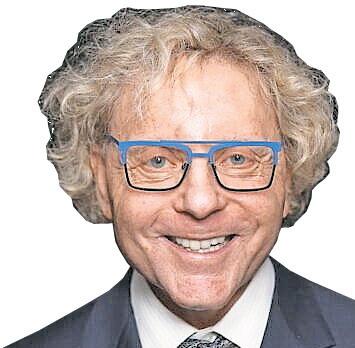
Anti-American animus and domestic selfhatred are all the rage nowadays — not just from foreign nations and homefront progressives, but it now seems from the Pontiff of Rome, too.
That’s right: the pope. And it, actually, makes sense. After all, long before the College of Cardinals elected him to the papacy, Leo XIV was a mere priest from Chicago — that notorious sanctuary city of political corruption, organized and unorganized crime, and the worshipping of a vicar by the name of Obama.
The pope appears to be only vaguely familiar with both Christian and papal history.
When addressing throngs of his own flock at St. Peter’s Basilica, the pope speaks in Italian and Latin. English, apparently, is reserved for his hypocrisy in judging America’s war in Iran, and the contempt he harbors for conservatives in his native land. Isn’t the pope supposed to be conservative?
This is a progressive pope, however. Catholic charities receive hundreds of millions in federal funding for refugee and asylum programs. Fighting Islamic terror apparently cuts into its business. The pope is more worried about dead mullahs than global security. Despite the thousands of churches Islamists have torched and Christmas markets they have plowed through, this pope seemingly has nothing to fear from Muslims.
He apparently doesn’t remember that in 2006, Pope Benedict XVI was pilloried with the chant “Death to the Pope!” from of all people, Iranians! His offense? Quoting a 14th-century Byzantine emperor who made the obvious connection between Islam and violence.
This pope insists that nations may not preemptively strike aggressive neighbors. That’s not what Jesus would do. Americans should sit back and await the arrival of intercontinental ballistic missiles armed with nuclear warheads.
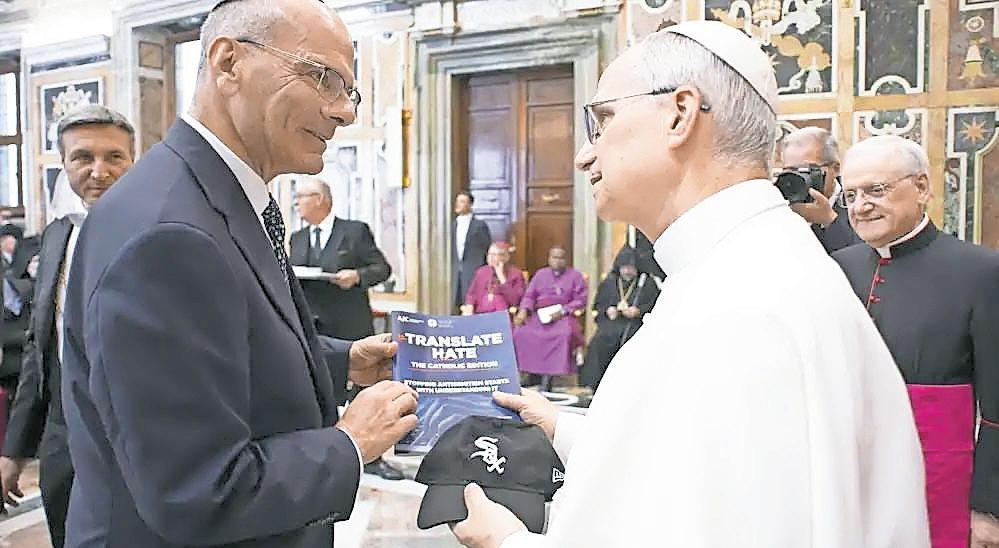
This is Jesus’ Sermon on the Mount about turning the other cheek on crack! How else to understand some of the theologically flawed and flatly wrong statements that recently have emanated from the Vatican?
He has called America’s hostilities toward Iran the “delusion of omnipotence,” which violates “international law.” He has warned that “G-d does not bless any conflict. Anyone who is a
More than ever, being unapologetically
THANE ROSENBAUM Distinguished University Professor Touro College MICHELLE LUBIN TERRIS
There is a lie circulating today that modern Jews aren’t the real Jews. This lie isn’t new and it isn’t harmless. Its purpose is simple: to erase Jewish identity and deny our connection to history, faith and our homeland.
Judaism is more than a religion. It is a people, a nation and a family.
You can convert to Judaism, but you don’t convert into a fictional ancestry. The Jewish people have never disappeared. We are the same
people who stood at Mount Sinai, who were exiled by empires, persecuted across continents and targeted in every generation. And yet, we are still here.
Today’s Jews come from Europe, the Middle East, North Africa, Ethiopia and beyond. We may look different and speak different languages, but we share the same calendar, the same prayers and the same direction of the heart. Wherever Jews lived, we prayed facing Jerusalem. We fasted on Yom Kippur. We mourned the destruction of the Temple. That is continuity.
One of the most common attempts to deny this continuity is the so-called Khazar theory, the claim that European Jews descend from a medieval kingdom unrelated to the
See Terris on page 23
Every generation of Jews faces the same question: Will we carry our identity forward, or let others define it for us?
Jewish
How we reassure our children in a time of war
For many families in Israel today, the most basic promise made to children — keeping them safe — feels painfully uncertain. Sirens pierce the day and night. Warnings arrive before alarms, giving us precious seconds to prepare, but also prolonging the dread. Even in moments of physical protection, emotional safety remains elusive.
This is the crisis of wartime childhood — not only the threat of danger but the erosion of cer-
After Oct. 7, we learned that silence is not protective.
tainty.
The current conflict with Iran marks a deepening of patterns that began after Oct. 7, 2023. Parents are struggling not only to protect their children but to feel like parents at all. Parenting depends on a sense of efficacy — on the belief that we can soothe, guide and protect. When that foundation is shaken, the entire family system is affected.
Children don’t need perfect safety to grow and thrive. But they do need at least a sense of relative security. When that is compromised, their development is at risk.
How can we respond? First, we must accept a difficult truth: We cannot shield children from fear. What we can do is help them make sense of it.
Following the events of Oct. 7, one of the most important lessons we learned is that silence is not protective. Very young children, even infants, experience the stress around them. They hear the alarms. They feel the tension in their parents’ bodies. Without explanation, they are left to interpret these experiences on their own.
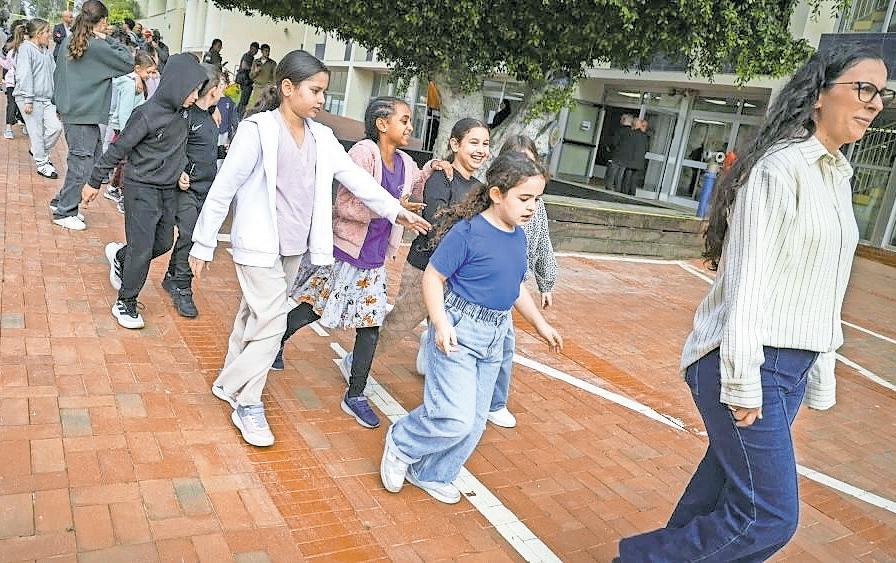
See Atzaba-Poria on page 23
Rabbi Noam Marans, director of interreligious affairs at the American Jewish Committee, meets with Pope Leo XIV on May 19, 2025. Courtesy
Children return to school in Rishon Letzion following a ceasefire in the war with Iran, April 9, 2026. Jonathan Shaul, Flash90
See Rosenbaum on page 22
Rosenbaum: The pope is blind to the truth…
Continued from page 21
disciple of Christ … is never on the side of those who … today drop bombs.” Stability and peace depend on “reasonable, sincere, and responsible dialogue.”
In which war was that true, Your Holiness? The Red Coats, Confederacy, Nazis, Al-Qaeda and ISIS couldn’t be talked into peace. There were 21 wasted hours of doomed ceasefire talks in Pakistan last week demonstrating how “responsible dialogue” is a catechism without a clue.
Where has the Holy See (the pope) been these past 47 years? Did he not have cable in Chicago; did he never pick up a copy of the Chicago Tribune, which surely didn’t paper over the crimes committed by the Iranian regime?
People who should know better seem to know absolutely nothing when the stakes are at their highest. The pope, who is the final arbiter on Catholic teachings, appears to be only vaguely familiar with both Christian and papal history.
The doctrine of “Just War Theory” — essentially, the ethics surrounding the right to go to war, and to wage the conflict honorably — has a long history rooted in Catholic tradition and military doctrine.
America’s war in Iran is unquestionably just — under both Christian and international law.
Israel’s most recent war in Gaza presented identical justifications. The United Nations, global media and shrieking Muslim mobs liv-
Oct. 7…
Continued from page 5
cupation.” According to him, this model “demonstrated to the Palestinian people that the scenario of defeating Israel, liberating Palestine and returning the refugees is possible, and indeed very possible.”
The October 7 massacre sparked celebrations and expressions of solidarity not only in the Gaza Strip, but also in areas of the Palestinian Authority in Judea and Samaria. The fact that this was a murder campaign with clear Nazi characteristics, one that included crimes against humanity, did nothing to shake the revelers’ joy. Many Palestinians in Judea and Samaria saw the events of October 7 as proof of the reality and feasibility of the dream of return. For several days, not a few Palestinians genuinely believed they were close to “touching happiness.” On October 7 they felt for the first time that they were within touching distance of “return” thanks to a Palestinian-initiated act of war, and they gave free rein to that feeling.
Jibril Rajoub, the former head of the Palestinian Authority’s Preventive Security Service and one of the potential heirs to President Mahmoud Abbas, said in an interview with an Egyptian television channel that the massacre was “a full defensive war filled with heroism,” part of “the war the Palestinian people have been fighting for 75 years.” Mohammed Dahlan, the former head of the Palestinian Authority security apparatus in Gaza, who also aspired to succeed Abbas, said Western leaders were coming here to make sure Israelis did not flee to Europe.
Palestinian Prime Minister Mohammad Shtayyeh refused to condemn the massacre and proposed forming a unity government with Hamas. Marwan Barghouti, a senior Fatah figure serving five life sentences for involvement in terrorism and a series of murders during the Second Intifada, called on Palestinian Authority security services to turn their weapons on Israel, act by surprise and recreate the October 7 massacre in Judea and Samaria. “Do not be mere witnesses,” Barghouti urged. “Become active soldiers in the decisive battle.” Jamal al-Huwail, another Fatah member who belongs to the movement’s Revolutionary Council, explained: “We hoped that something similar to what happened in the Gaza border region would happen
ing in the West skipped over Just War Theory and went straight to the genocide charge. Palestinians are the only people allowed to start wars without ever becoming casualties of those wars.
But St. Augustine, St. Thomas Aquinas and multiple catechisms of the Catholic Church teach that opposing aggressors in self-defense is always just — even if it results in mass casualties.
Was Pope Leo XIV asleep at the seminary? Did he somehow miss fundamental teachings of the religion he would someday lead? And does he not realize that nearly all wars under Christian banners were fought against Muslims who sought to forcibly export Islam to Europe?
The war the United States and Israel are fighting is for the survival of Christendom and Western Civilization!
There would be no Christianity at all if the pope’s reading of Catholicism is correct. The Battle of the Milvian Bridge in the year 312, the Battle of Tours in 732, the Siege of Vienna in 1529, the Battle of Vienna in 1683 — all involved fighting off invading Muslim armies.
Prior popes, in fact, blessed armies. Some, actually, led them — including namesakes Pope Leo IX and Pope Leo X. How do you think the Crusades against Islam got started? Armies were mobilized and deployed at the behest of Popes Urban II, Paschal II, Calixtus II, Innocent
[in Judea and Samaria], but we thought it was only wishful thinking ... G-d willing, we will see similar images in the West Bank.” Iyad Jarad, secretary of Fatah’s Tulkarem branch, stressed that Hamas’ actions were “a source of pride, heroism and honor for the Palestinian people.” Abbas Zaki, a member of Fatah’s Central Committee and a former Palestinian ambassador to Lebanon, declared that “after October 7 there is a Palestinian revival.”
Palestinian Authority President Mahmoud Abbas, who five months before the massacre had used a UN address to call for Palestinian refugees to be returned to their homes, and who also noted that he himself, as a refugee from Safed, wished to return to his city, refrained from any official response to the massacre. He did not praise it, but he did not condemn it either.
Around the world, Palestinian Authority diplomats did not hesitate to openly celebrate the October 7 massacre. Dozens of them, around 30 according to a study published in the Jewish Chronicle, posted messages on social media praising the massacre, comparing Israel to the Nazis, sharing content calling for Israel’s eradication and for the return of refugees, and encouraging the murder of Israelis.
The Palestinian street in Judea and Samaria, much like Rajoub, Barghouti and many of its leaders, also reacted to the massacre with sympathy and joy. In Ramallah and Nablus, marches were held in which participants called for weapons to be handed over to Hamas in order to realize the refugees’ return, and in many schools, especially those run by UNRWA, there were displays of solidarity with Gaza and with the events of October 7.
Thus, for example, just one week after the attack, on October 15, children at an elementary school in Nablus were seen drawing the paragliders Hamas used to infiltrate Israel and launch its killing spree. At the Ya’bad boys elementary school in the Jenin area, a strike was held “in honor of the pure blood of our martyrs,” and at a boys high school in Tulkarem, a video was published showing a student’s speech under the title “A day that will be written in the history books of the Arab-Palestinian struggle.” At that moment, “return” seemed to many Palestinians to be an attainable dream.
The sources for the information published in the excerpts presented here appear in the body of the book.
III, Honorius III, and Gregory IX.
But today’s pope is misdirecting his followers toward perpetual passivity. He’s saying that Christians don’t fight wars — especially not against Muslims, because Islam is the “Religion of Peace.” (He hasn’t exactly pinpointed where that is true, however.)
This revisionist history is nothing but sophistry. The very thing Europe accomplished for 2,000 years — fighting wars to establish a bulwark against Islam — is now under assault with open borders and mass migration hostile to Judeo-Christian traditions.
The pope received support from an unexpected source. Political commentator and LGBTQ activist Andrew Sullivan, once an antiterrorism stalwart, has in recent years had a change of heart. Surely, he knows that gay intellectuals don’t fare very well in Muslim societies — especially not in Iran. But like the Pope, he appears to have a soft spot for ayatollahs.
Because Jesus was tortured and murdered without protest, Sullivan believes that all Christians must do the same. Just wars are a rarity, and human beings are never entitled to just deserts. Christianity and Islam both reserve a special place in paradise for martyrs.
Sullivan writes, “War is unthinkable for Christians unless utterly necessary in selfdefense against an imminent threat, after all other options are exhausted.” The degree of in-
Berlin…
Continued from page 17
meaning to work on. Habits we are not proud of, relationships that have grown a little cold, a version of ourselves we have been meaning to become for a while now.
So the question worth sitting with is what is your vision as we count toward Shavuos. Maybe it is kivud av va’em. You have been meaning to call more, to visit, to show up with more patience and more warmth. For the next few weeks, put that crown on your head. Pick up the phone. Make the visit. Try on what it actually feels like to be the child your parents deserve.
Maybe your dream is greater honesty, cleaner dealings, more integrity in the quiet moments where no one is watching. Start this week. Let these days be the stretch where you wear that crown and act with the dignity you are capable of.
Maybe it is your davening. Your learning. The way you treat the people who sit closest to you at the Shabbos table. The middos you have been working on for years without quite getting there.
I know the voice. It says who am I kidding. I will manage for a week and then slide right back into my old patterns. Maybe. But that is not a reason to shrink. The Gemara is not telling the slave they have arrived. It is telling them to feel what arrival looks like, so the dream becomes real enough to actually pursue. The crown comes before the palace.
We are all counting toward Shavuos, trekking toward that mountain, refining ourselves for Matan Torah. So close your eyes for a moment and picture it. Picture yourself standing at the foot of Har Sinai, ready to receive the Torah, the best version of yourself. That is your vision. Put the crown on your head and start walking toward it.
Rabbi Benny Berlin is spiritual leader of BACH in Long Beach, www.bachlongbeach. com.
Write: Columnist@TheJewishStar.com
tellectual dishonesty and moral naivety in that sentence is breathtaking.
Aside from botching Catholic doctrine, the pope and Sullivan do have another thing in common: Neither is a lawyer. President Trump did not need congressional authorization to initiate military operations in Iran. Approval from the United Nations and NATO were similarly irrelevant in fighting a just war.
Sullivan laughably wrote that Iran’s nuclear threat was nullified by Obama’s Iran Deal. He should ask the International Atomic Energy Agency whether its efforts to verify Iran’s compliance left them satisfied that Iran had abandoned weapons-grade enrichment.
The fact that they still possess fissile uranium that could be readily deployed to launch missiles, and insist that they have no intention of ever relinquishing their nuclear aspirations, makes one wonder why Sullivan is so confident that Iran poses no imminent threat to anyone.
Similarly, both the pope and Sullivan seemingly have little sympathy for the 40,000 Iranians this regime has eliminated in order to remain a threat to the West — or, for that matter, the body count Hamas left behind on October 7, 2023. Christians are being asked to passively watch such suffering from their own precarious distance.
Where’s the Christian virtue in that?
Write: Columnist@TheJewishStar.com
Weinreb…
my opinion, one of the perspectives of Judaism which is often forgotten and needs to be re-emphasized from time to time.
Ramban writes that there is more to being holy then merely to abide by the rules and regulations of the Torah. Yes, he writes, the Torah does not forbid gluttony, and it is quite possible to be a glutton yet not violate any of the laws of kashrut. True, he continues, one can use all manner of vulgar language yet violate no explicit biblical command. A man can observe every detail of the Torah’s laws about family purity yet not be a loving husband.
Ramban coins a phrase: “Naval bereshut hatorah,” which can be translated either as, “a knave within the bounds of Torah,” or alternatively, “a knave with the Torah’s permission.” Holiness, for Ramban, consists of all those behaviors which are to be expected from a decent human being, even if those behaviors are not explicitly prescribed by the Torah.
Reuben was a man whom I knew all of my life. Although he was not perfect, he had his positive qualities and I certainly cannot take it upon myself to condemn him. But he was not holy. Indeed, he missed the point about what the Jewish religion was all about.
Our religion is indeed about obedience and compliance to a set of laws — some ordained by G-d and some instituted by wise and holy men — but that is not all that it is about. It is about attitudes, and it is about relationships. It is about ethical behaviors which need not be prescribed in the form of rules, but is to be expected of every reasonable human being.
Some would explain Ramban’s thesis in terms of the age-old distinction between the letter of the law and the spirit of the law. That is certainly one way of understanding it. Reuben is a prime example of someone who did not see beyond the letter of the law.
Our daily prayer book contains the following verse in Isaiah 59:21:
This is my covenant with them says the L-rd: My spirit which is upon you, and the words I have placed in your mouth, shall not depart from you or your children or your children’s children.
Continued from page 17 Continued
Clearly, the Almighty’s covenant has two components: His spirit and His words. Reuben kept the latter, but ignored the former. Holiness consists of adherence to them both.
Ramban teaches us that holiness is about that spirit. The Torah itself, by addressing the commandment “kedoshim tiheyu, be holy” to all of us, is teaching us that we are all capable of achieving that spirit. We are expected to be a goy kadosh, a holy people.
Write: Columnist@TheJewishStar.com
Gerber…
Continued from page 17
I conclude this week’s essay with the words on Rabbi Feder’s teachings by Rabbi Moshe Weinberger, spiritual leader of Aish Kodesh of Woodmere:
“In my conversation with Reb Yaakov Feder regarding his trailblazing sefer, I shared with him my impression that ‘The Sefiros and the Self’ is literally bursting with ‘oro shel Moshiach.’ The time has come for all to understand how the highest most sublime G-d is revealed through the ‘self’ of our very real and earthly personalities, challenges and accomplishments. …
“By using clear illustrations drawn by modern day life and wisdom, Reb Yaakov Feder has opened the doors to the soul, making the deepest mystery of man accessible to all serious students of Torah and Chassidus. This is a masterpiece.” To which I can only add my take: Amein. Previously published.
Write: Columnist@TheJewishStar.com
Phillips…
Continued from page 18
longer respect or even recognize.
Accordingly, the pope’s position should cause the utmost dismay to all who understand the need to prevent Western civilization from disintegrating.
Since religion is the moral scaffolding of a culture, it’s essential for the church to assert itself if the West is to be defended. For decades, the Church of England has tragically been instead at the forefront of civilizational decline. Now the Pope is sanctifying Europe’s surrender to Islam.
Trump’s crude and sometimes preposterous pronouncements dismay many. People’s real concern, however, should be for the survival of the civilization that only America’s president and the State of Israel are trying desperately to defend.
Write: Columnist@TheJewishStar.com
Cohen…
Continued from pag 19
highlights one of the main problems of the fight against antisemitism … the vast majority of offenders go unpunished.”
In surveying the offender profiles, certain patterns emerge. The overwhelming number are males. Arabs and Muslims are disproportionately represented, but several other demographics — white, black and Asian among them—find their way onto the list. Many of the offenders of all ages are unemployed. Many have been unable to find a romantic partner or bring children into the world. Many still live with their parents. Many have been diagnosed with mental illnesses or claim to suffer from them, although as the report observed somewhat wryly, “It is not clear why their situation led them to attack Jews while sparing other groups.”
Quite a few of the offenders are possessed by a rage against Jews that they are happy to share with the rest of the world. Here is a selection of
what they have to say: “Jews don’t deserve to live. Jews don’t deserve to be on this earth. I’m going to kill the Jews. I’m coming to the Temple to kill all the Jews and the children.” “I’m gonna blow you to bits you f**king ki*e bit*h.” “Get the f**k out of Palestine, you bleeding ass heinie heebe ki*e, or I’ll blow your other kid up, ki*e.”
Spitting and screaming, on and on they go.
Such gutter discourse has not emerged in a vacuum. Those who have enabled it are those whose offenses against Jews do not pass the threshold of criminality, but whose hatred is no less tangible.
•They include the millions of keffiyeh-clad demonstrators who have marched in solidarity with Hamas at protests and rallies where antisemitic barbs like “zio” and “Epstein class” are commonplace.
•They include that amorphous class of grifters known as “influencers” — ghouls like Hasan Piker on the left, and Tucker Carlson and Meghan Kelly on the right — whose revenue streams now depend on the continued popularity of Jew-baiting.
•They include the pundits, politicians, musicians, actors and artists who have falsely accused Israel of “genocide”; denied the fact that multiple rapes and other forms of sexual abuse were committed during the Hamas-led massacre of 1,200 people in southern Israel on Oct. 7, 2023, and the kidnapping of 251 others into the tunnels of Gaza; and given credence to the longdiscredited slander that Western governments are in thrall to a cabal of powerful Jews.
Every single one of these people is directly complicit in the storm of antisemitic hatred Jews face today. Most of them are proud of having done so.
This is the atmosphere in which Ukraine has bravely declared, “no more.”
Jews have never had the luxury of ignoring their enemies, but they cannot forget their friends either — most of all, those who stood by them in the darkest times.
Write: Columnist@TheJewishStar.com
Terris…
Continued from page 21
Jewish people. There is no credible historical or genetic evidence to support this claim. Modern genetic studies consistently show that Jews — Ashkenazi, Sephardi and Mizrahi — share common Middle Eastern ancestry. Even the priestly line, the Kohanim, reflects this continuity.
This lie persists because it serves an agenda. If Jews can be portrayed as imposters, Jewish history can be dismissed. And if Jewish history can be dismissed, then the Jewish connection to Israel can be denied.
Israel is not a modern invention or a colonial project. It is woven into Jewish history, prayer and memory. Jewish kings ruled there. Jewish prophets walked there. Jewish ancestors are buried there. You may debate politics. You may disagree with policies. But history cannot be erased by disagreement.
Jewish Americans have also been part of building this country from the very beginning. The Jewish patriot Haym Salomon helped finance the Revolutionary War and gave America a chance to survive. Leaders like George Washington understood that Jews were not outsiders but contributors to the American experiment in liberty and equality. Washington even wrote that in America, Jews would live safely under their own vine and fig tree, a promise of security, dignity and equality. Jews defended the Constitution, fought for religious freedom, advanced education and charity and upheld the belief that freedom carries responsibility. These contributions are part of Jewish history and American history alike.
Every generation of Jews faces the same question: Will we carry our identity forward, or let others define it for us? We answer that by learning our history, teaching our children, living our traditions proudly and cor-
recting lies with the truth. When we embrace our Judaism, we do not withdraw from society. We strengthen it.
The answer to antisemitism has never been assimilation or silence. It has always been knowledge, courage and pride. We are not here by accident. We are not strangers to this country. We will not allow our story to be rewritten.
We were scattered but not destroyed. Persecuted but not erased. Exiled, but we returned. Modern science confirms what Jewish tradition has always said: Jews around the world trace back to ancient Israel, to Jerusalem, to the land at the center of our story.
We are Jews. We are Americans. By embracing both, by embracing who we are, we ensure that truth, freedom and faith continue to shine for generations to come.
And perhaps the real question isn’t who the Jewish people are but why Jewish survival has always unsettled the world.
Michelle Lubin Terris is the founder and president of JEXIT.
Write: Columnist@TheJewishStar.com
Atzaba…
Continued from page 21
And children, while excellent observers, are not the best interpreters: A child who sees a parent crying may believe that he or she is the cause. A child who feels fear without explanation may imagine something even more frightening than reality. In the absence of language, anxiety can develop.
This is why protecting a child has two parts — taking them to the shelter to protect their body and speaking to them to protect their mind. That conversation must be honest, while developmentally appropriate.
We must not burden young children with the full weight of war. But we should give them a framework; we can tell them that something is happening and acknowledge that they may feel worried or afraid. We should add that it’s not their fault and that adults are working to keep them safe.
Equally important is helping parents regulate themselves. A parent overwhelmed by fear cannot provide a sense of stability. In the Duet Center at Ben-Gurion University of the Negev (BGU), we work with parents, teachers and therapists to support children growing up under chronic stress. We focus on what we call “reflective functioning” — the ability of parents to understand both their own emotions and their child’s inner world.
In practical terms, this means helping parents pause and ask: What is my child feeling right now? What might be behind this behavior? What am I feeling, and how is that affecting my response? This reflective capacity is not a luxury but a protective factor.
Our work is grounded in communities. Rather than relying solely on centralized services, we
train local professionals — teachers, therapists, community leaders — to deliver evidence-based interventions. This capacity-building approach allows support to reach families quickly, even in regions under acute threat, where warning times for missile attacks can be as short as seconds or completely nonexistent.
We are also addressing challenges faced by families of military reservists. When a parent returns from combat, the home can become another site of stress. A child’s crying may trigger a heightened sensory response. A spouse may be exhausted. Children may feel uncertain about whether the parent will stay or leave again. Without intervention, these dynamics can strain relationships at the very moment families need cohesion the most.
Another lesson is more counterintuitive: When the sirens quiet down, the psychological impact often intensifies. During acute danger, children and parents activate survival mechanisms. They cope, adapt and endure. Yet when the external threat subsides, delayed reactions emerge: anxiety, sleep disturbances, aggression and behavioral changes. This is why early intervention is critical. A toddler who develops anxiety symptoms cannot wait a year for treatment. In early childhood, a year is a lifetime.
After Oct. 7, we opened a hotline staffed by more than 100 volunteer mental-health professionals, providing 24/7 support to parents of young children during an extremely stressful period and offering immediate psychological firstaid interventions.
At BGU, part of our mission is to serve the communities of the Negev region and beyond — not only through research but through direct impact. In this spirit, we are working to build the capacity and secure the resources needed to establish the Duet@BGU intervention center in the coming year. This initiative is intended to expand access to timely, evidence-based care, particularly for young children, while thoughtfully integrating research with real-world intervention. In this way, what we learn in the field can inform our science, and what we discover in research strengthens our response on the ground. Israel has become a global laboratory for understanding trauma across an entire society. This reality carries responsibility.
To that end, we are building long-term studies to follow children growing up in wartime, seeking to understand not only what causes trauma but what helps them thrive. A new largescale, multisite longitudinal study will track children born before and during the war, generating critical insight into both risk and resilience. In times like these, healing does not begin after the war. It begins when we hold our children’s minds — so they can learn, one day, to hold their own.
Naama Atzaba-Poria, professor in the psychology department of Ben-Gurion University of the Negev, is chair and co-founder of its Duet Center, which promotes optimal developmental environments for children in Israel by emphasizing adult attentiveness to children’s emotional needs.
Write: Columnist@TheJewishStar.com