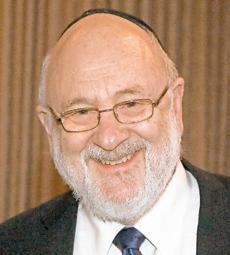
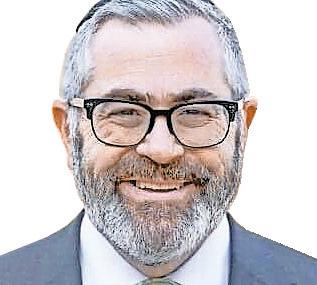
In an exclusive interview with i24NEWS over the weekend, Pollard, the former US Navy intelligence analyst who served 30 years in an American prison for spying for Israel, blasted President Donald Trump as “very dangerous,” declared the US-Israel alliance “finished,” accused Prime Minister Benjamin Netanyahu and every current Knesset party of bearing responsibility for Oct. 7, and confirmed he is entering Israeli politics.
Pollard said he would run in the upcoming Knesset election as a member of a new, small right-wing party. His comments amounted to a political broadside against the American and Israeli leaders who, in Pollard’s telling, have failed Israel at a moment of war, trauma and uncertainty.
When asked about Trump during the interview, with i24NEWS senior correspondent Owen Alterman, Pollard responded: “I think he’s very dangerous. Dangerous, because I don’t know what his North Star is. I don’t
Lag BaOmer lights up Cedarhurst
know what his values are.”
When Alterman noted that Trump “is loved in this country,” Pollard replied: “Well, that just shows you how stupid a lot of people in this country really are. They don’t seem to understand that empires like the United States have permanent interests, not permanent friendships.”
Pollard accused the Trump administration of preventing Israel from decisively defeating Hamas, Hezbollah, the Houthis and Iran.
“Ask yourself a question,” Pollard said. “Why is it that this administration has categorically refused to allow us to decisively beat any of our enemies — whether it’s Hamas, the Hutis, Hezbollah, or even Iran?
“Why? Because they don’t want us to win anything decisively.”
Pollard also took aim at Trump advisers Jared Kushner and Steve Witkoff, saying Trump “doesn’t really know much about anything that’s going on in this region, except maybe the price of real estate.” He described Kushner and Witkoff as “Tweedledum and See Pollard on page 7
After blood libel, new calls to boycott Times
By JNS
The were fresh calls this week for a boycott of the New York Times after critics accused the paper of publishing a “modern-day blood libel” — a Nicholas Kristof column alleging Israel uses sexual violence against Palestinians as part of its security apparatus.
The backlash erupted after the Times denied rumors that it would retract the Monday opinion piece, which cited claims that Israeli guards were using dogs to sexually assault Palestinian detainees — allegations critics blasted as unsubstantiated, inflammatory and rooted in anti-Israel propaganda.
“There is no truth to this at all,” Times spokesperson Charlie Stadtlander said Tuesday of the retraction rumor.
Stadtlander defended Kristof as “a two-time Pulitzer Prize-winning journalist who has reported on sexual violence for decades and is widely regarded as one of the world’s best on-the-ground reporters documenting and bearing witness to sexual abuse experienced by women and men in war and conflict zones.”
He said Kristof “traveled to the region to report firsthand on the stories of Palestinians who suffered abuse, and his article collects accounts in the victims’ own words, backed by independent studies.”
But critics said the column crossed a dangerous line.
The Israeli Foreign Ministry accused the Times of deliberately publishing the column the night be-
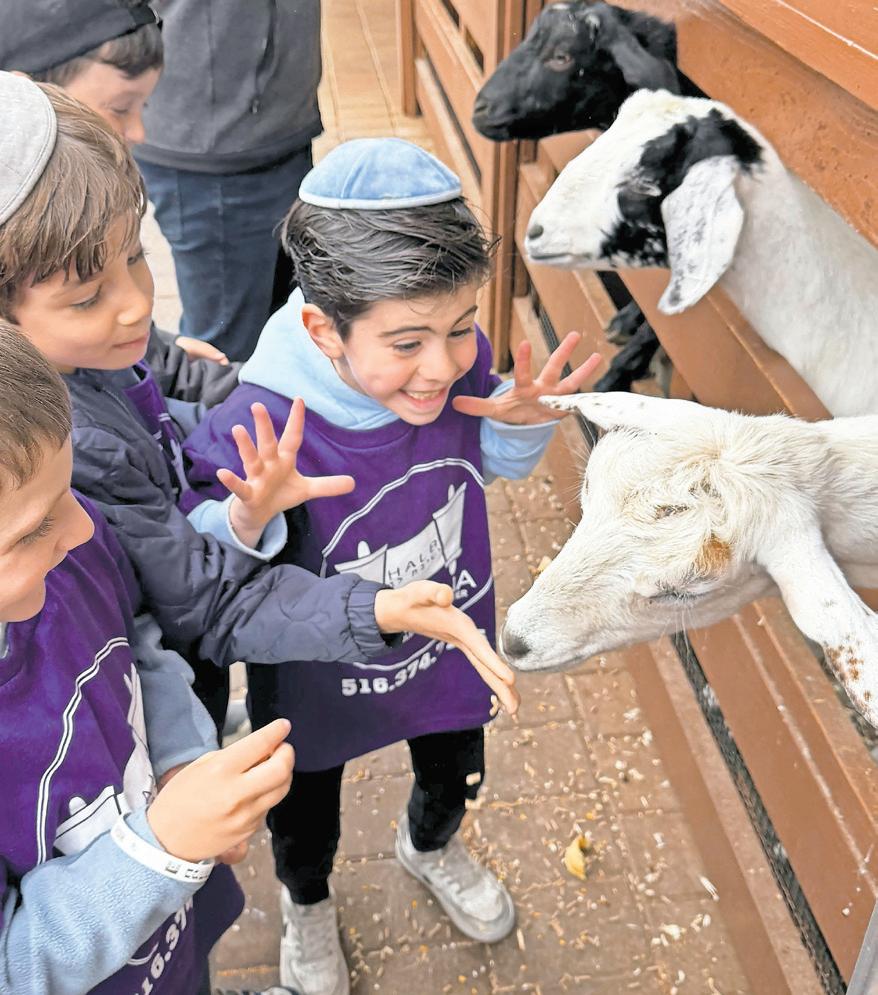
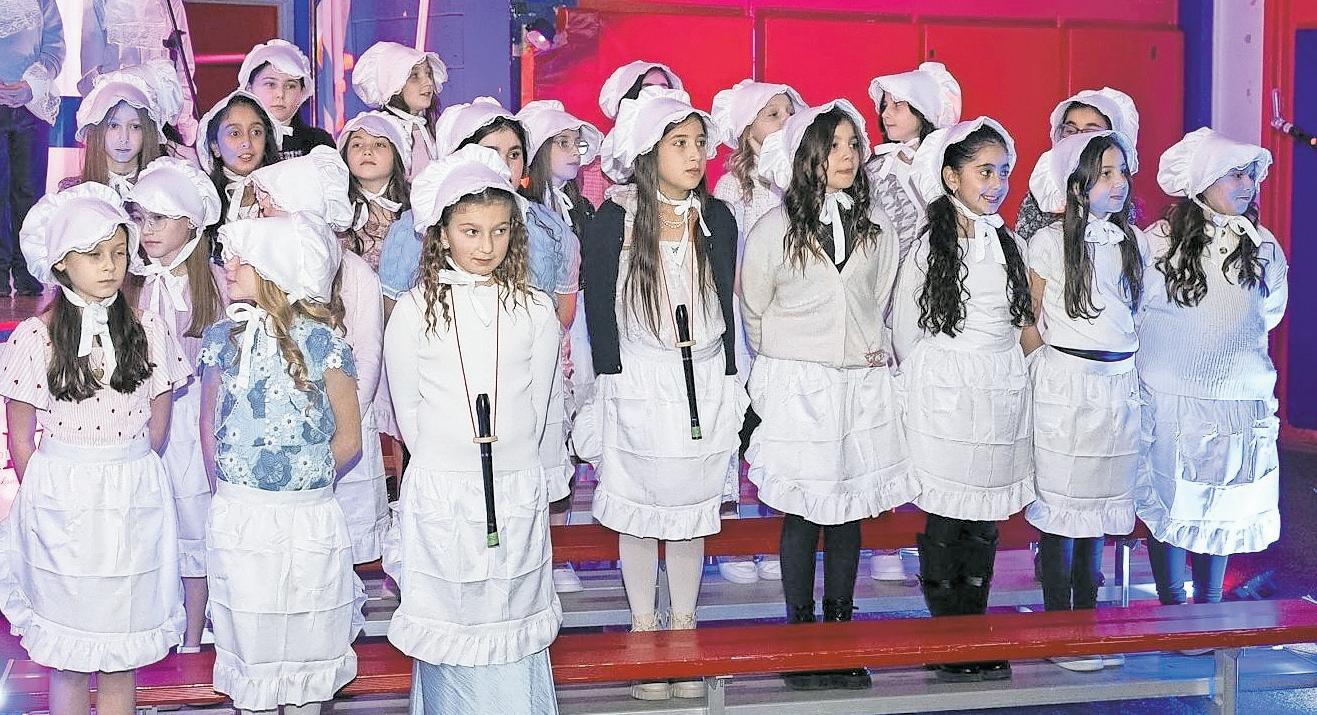
The Five Towns celebrated Lag BaOmer in Cedarhurst Park with a bonfire — plus archery, a “cirque-tacular,” inflatables, petting zoo and BBQ. The event was organized by Chabad of the Five Towns Rabbi Zalman and Rebbetzen Chanie Wolowik.
c
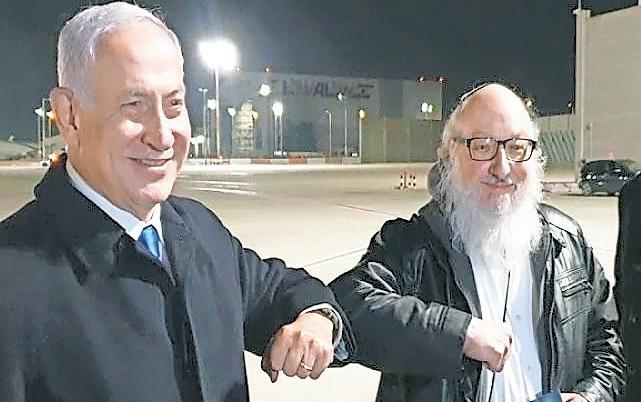
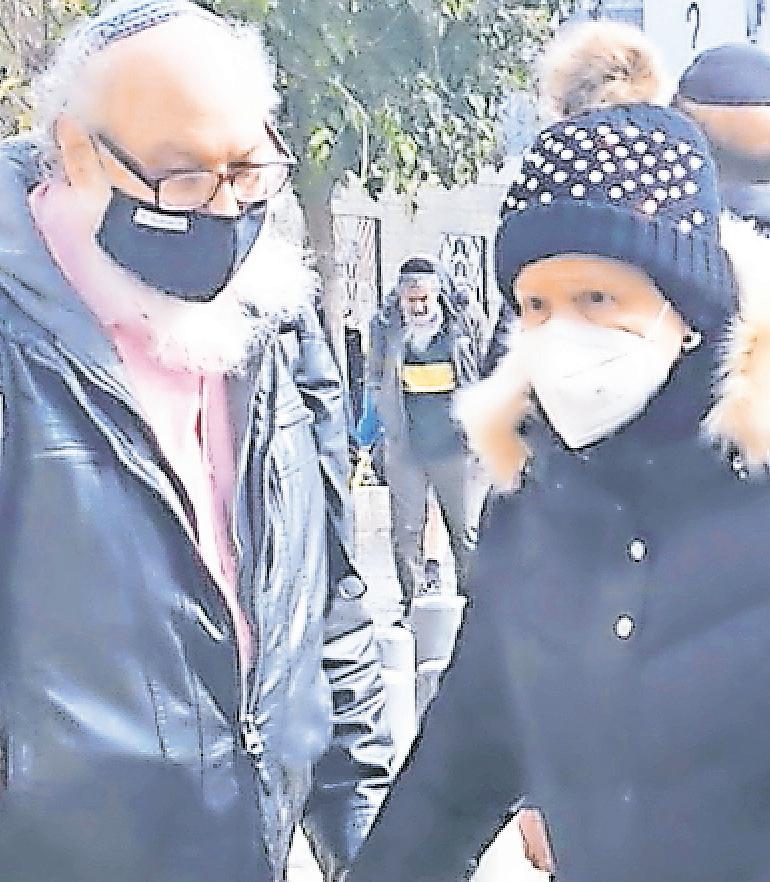
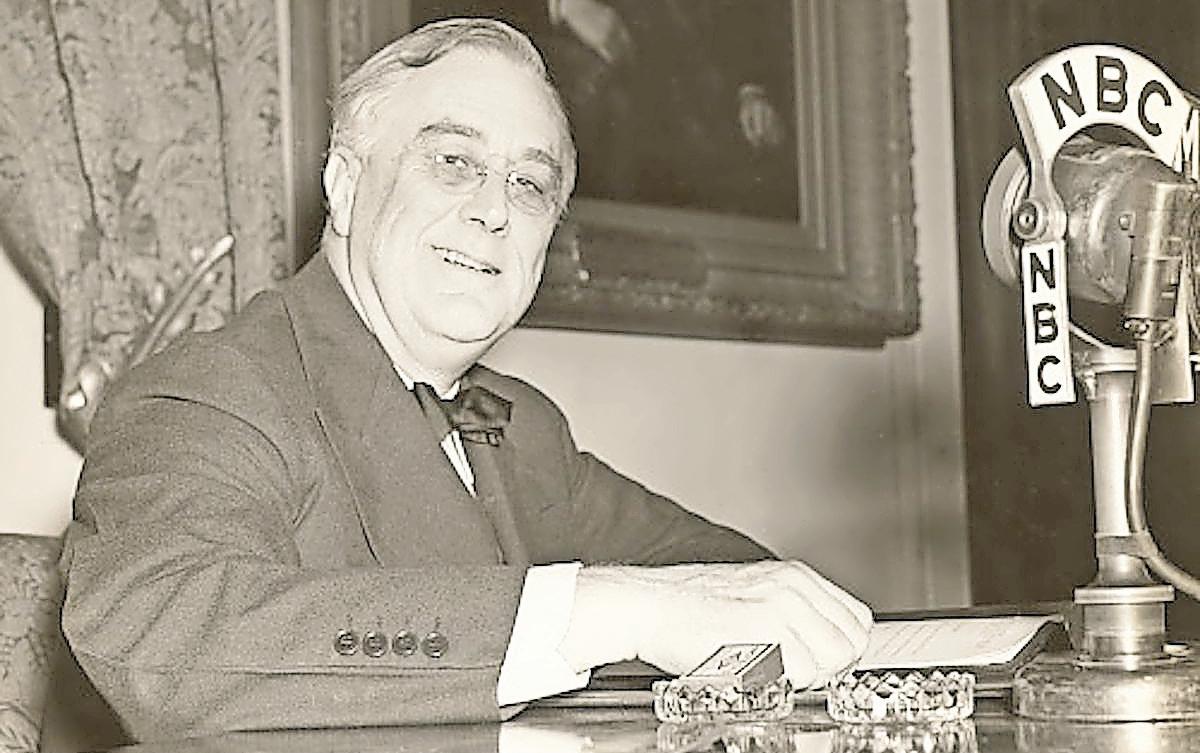
Israeli Prime Minister Benjamin Netanyahu welcomes Jonathan Pollard to Israel, at Ben-Gurion on Dec. 30, 2020. This week, Pollard downplayed Netanyahu’s role in his release from prison in the US and sharply criticized the prime minister
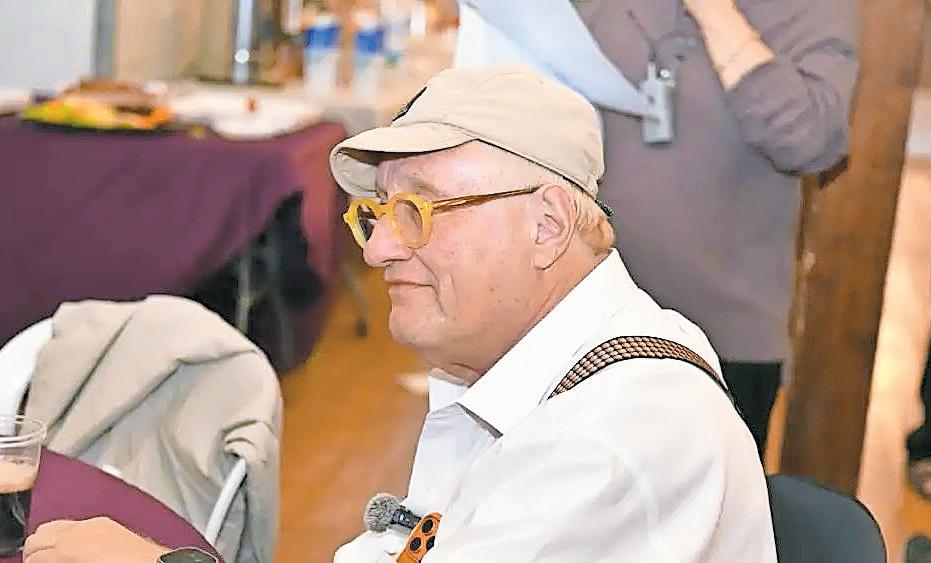
Jonathan Pollard appears
Sisterhood of survivors visit NY, share trauma
By Pesach Benson, TPS-IL
Among wounded Israeli veterans, a growing number of female soldiers are finding strength in shared trauma and connection.
A new initiative called Project Neshek brought eight wounded women warriors to New York for a week-long break aimed at building emotional resilience and peer support.
Female soldiers often carry what organizers describe as a “silent burden” within Israel’s wounded veterans community, said Rabbi Uriel Vigler and his wife, Shevy Vigler, founders of Belev Echad. The New York-based nonprofit supports Israeli soldiers wounded in action, through respite programs, rehabilitation and emotional assistance. Project Neshek operates under its umbrella.
“We wanted to give them a place where they don’t have to explain their pain, but can simply be seen and supported,” the Viglers said. “Their resilience is the heartbeat of our organization.”
As part of the program, participants were flown to New York for a break from the intensity of war and recovery. Organizers said the goal was not escape but perspective, allowing survivors to process trauma in a supportive environment.
“We came here to breathe,” the participants said. “We are not alone anymore.”
Among the participants was Shai Bachar, who survived the Oct. 7, 2023, Hamas-led at-
A political ‘power brit’ on Mom’s day
Politicos and Jewish influencers attended the Mother’s Day brit milah of David Berel Ha’Kohen Goldman, the b’chor of Henry and Maxine Goldman, first grandson of activist Jeffrey Wiesenfeld and his wife Cynthia of Great Neck.
The brit was performed at the Young Israel of Forest Hills.
As executive assistant to Senator Alfonse D’Amato, Mayor Ed Koch, and Governor George Pataki, and a former CUNY trustee, Wiesenfeld fought for Jewish
tacks at the Nahal Oz base near the Gaza border, where she served as an army social worker attached to the Golani Infantry Brigade.
She described the early morning hours as a sudden transition into a life-threatening situation, during which she helped coordinate communications while sheltering under fire.
“At 6:25 am, we woke up to explosions,” Bachar recalled. “About 20 of us, mostly headquarters staff in pajamas, hid in an open-ended bomb shelter. There were holes in the walls; we
could see them [terrorists], but they couldn’t see us.”
As the situation unfolded, Bachar said survivors were forced to assist the wounded while still under threat. Over the course of approximately 11 hours, she relayed information to commanders while hearing fighting outside. She said she lost 46 friends that day.
“I saw evil incarnate. I smelled the fire,” she said. “We stayed alive, but something inside us changed forever.”
Another participant, Adi Na’imi, described hiding under a desk with a technician for about 12 hours, armed only with kitchen knives, while hearing the violence outside at the Kissufim base.
“We heard shouting in Arabic right outside the window,” she said. “We just held those knives, hoping they would protect us from the worst.” The two were eventually rescued by armed soldiers.
For the participants, the trip was not presented as tourism but as a form of collective recovery. Many said they found understanding among others who had experienced similar events.
“In this week, we don’t try to be strong all the time,” the group said. “We allow space for difficulty, but also for laughter. We get to know each other at a depth that doesn’t require many words.”
The goal of Project Neshek, organizers said, is not to distance participants from reality, but to help them return to it with additional emotional support. Through the creation of a shared community of survivors, Belev Echad aims to ensure that wounded female soldiers do not carry their experiences alone.
“I thank G-d every day for the gift of life,” Bachar said. “And I think of my friends who are no longer here. There isn’t an hour that goes by without remembering them. They deserved a post-army trip too.”
rights. His mother, Chana z”l, served in the pre-state Haganah in 1947 and in the IDF until 1954.
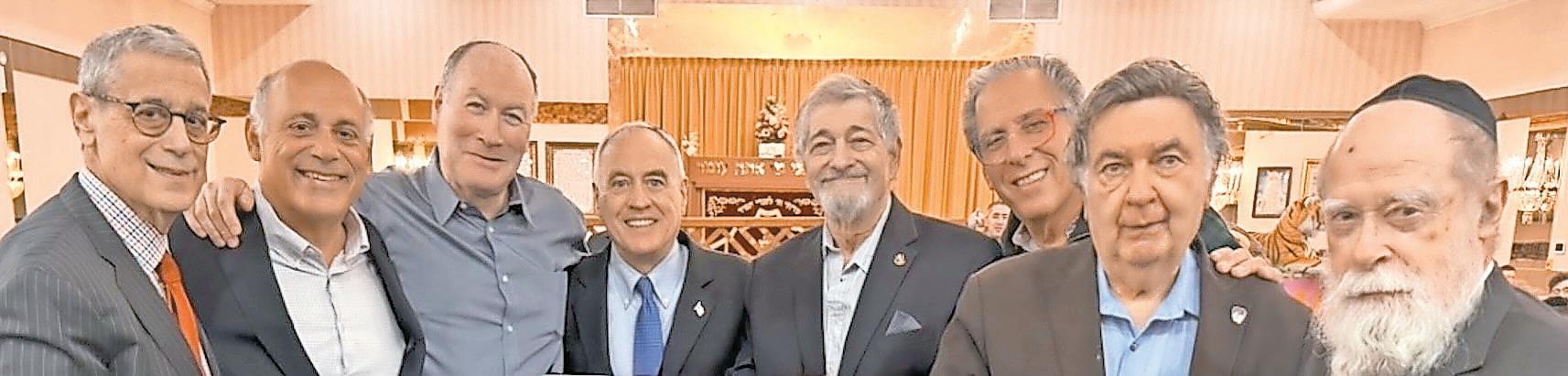
Maidenbaum; kvelling first-time Zayde Jeffrey Wiesenfeld; state Comptroller Tom DiNapoli; Dr. Paul Brody, ZOA’s president for Long Island and Queens; Jeff Goldfarb, development director of Gen.
After Monday’s blood libel, new boycott call…
fore the release of a Civil Commission report on Hamas’ use of sexual violence during the terror group’s Oct. 7, 2023, invasion.
The ministry said the Civil Commission approached the Times months ago with its report and that the paper said it was “not interested.”
“Aware of the report and its release date, the night before its release, the New York Times ran a shameful attack on Israel, belittling Hamas’ sexual crimes,” the ministry stated. “That tells you everything about the New York Times’ agenda.”
Oren Marmorstein, a spokesperson for the ministry, said Kristof’s column was fabricated and lacked “even a single piece of evidence, while its primary source has known ties to Hamas.”
“More importantly, why did the Times publish this baseless blood libel when it knew that a verified report on Hamas’ sexual crimes was due to be released the very next day?” Marmorstein asked.
In the column, Kristof acknowledged that “there is no evidence that Israeli leaders order rapes” and said he relied on conversations with 14 people who “said they had been sexually assaulted by Israeli settlers or members of the security forces.”
The column cited reports from the United Nations and Euro-Med Human Rights Monitor, including allegations that Israeli guards used dogs to sexually assault Palestinian detainees. Critics described those claims as baseless and accused Kristof of amplifying propaganda.
“Utter depravity from Nick for parroting such cartoonishly evil Hamas propaganda that would make Goebbels blush,” Eitan Fischberger, a Middle East analyst, stated. He said the dog allegation “is the handiwork of Ramy Abdu, head of the Hamas front group called Euro-Med.”
Gerald N. Steinberg, founder of NGO Monitor, wrote that the column was “perhaps the most toxic and idiotic pieces that Nick Kristof has put his name on.”
“A mix of lies sold by a Hamas-front propaganda NGO with zero credibility,” Steinberg said, pointing to Euro-Med, “and ‘eyewitness testimony’ from Hamas terrorists.”
Kristof compared Israeli officials’ rejection of the allegations to Hamas denying that its terrorists raped Israeli women during the Oct. 7 attacks.
“The horrific abuse inflicted on Israeli women on Oct. 7 now happens to Palestinians day after day,” Kristof wrote.
Nadav Pollak, a Middle East studies lectur-
er at Reichman University in Herzliya, called the column a “blood libel.”
“Any actual case that happened needs to be investigated by Israel, and those that commit crimes need to be arrested and face justice in court, but Kristof here intentionally tries to create a distorted reality, like this is common practice by Israel and compares it to Hamas,” Pollak wrote.
“The New York Times, of course, ran with this blood libel, comparing Israel to Hamas sexual attacks against Israeli hostages,” he added.
Deborah Lipstadt, former U.S. special envoy to monitor and combat antisemitism, condemned the Times for publishing the column.
“Have they, the NY Times, no sense of decency and journalistic responsibility?” Lipstadt wrote.
The outrage quickly turned into boycott calls.
Elliot Malin, an attorney and international law expert, urged Times subscribers to cancel.
“His sourcing was from an entity tied to Hamas and a sexual predator who admitted that he didn’t have anything to verify what he spread,” Malin said of Kristof’s column.
media users replied to Malin that they had canceled their subscriptions.
Rabbi Tzvi Pittinsky, director of educational technology at Yeshivat Frisch in New Jersey, said he had not subscribed to the Times for many years, but had occasionally read its articles.
“After this modern-day blood libel by the ‘paper of record,’ I will boycott the Times always,” Pittinsky said. “This is indefensible and inexcusable.”
Bill Ackman, chief executive of Pershing Square, said the Times “ran a disinformation campaign using Nicholas Kristof as the front man.”
“Shut it down,” Ackman said.
The American Jewish Committee also condemned the Times and the column, calling it “a modern-day blood libel in the ‘paper of record’.”
“Allegations of abuse toward Palestinians deserve serious, rigorous investigation,” the AJC stated. “Yet this piece, while opinion, appeared to be presented as an investigative report and fell alarmingly short of that standard while amplifying inflammatory narratives that have real-world consequences in a time of surging hatred toward Israelis and Jews worldwide.”
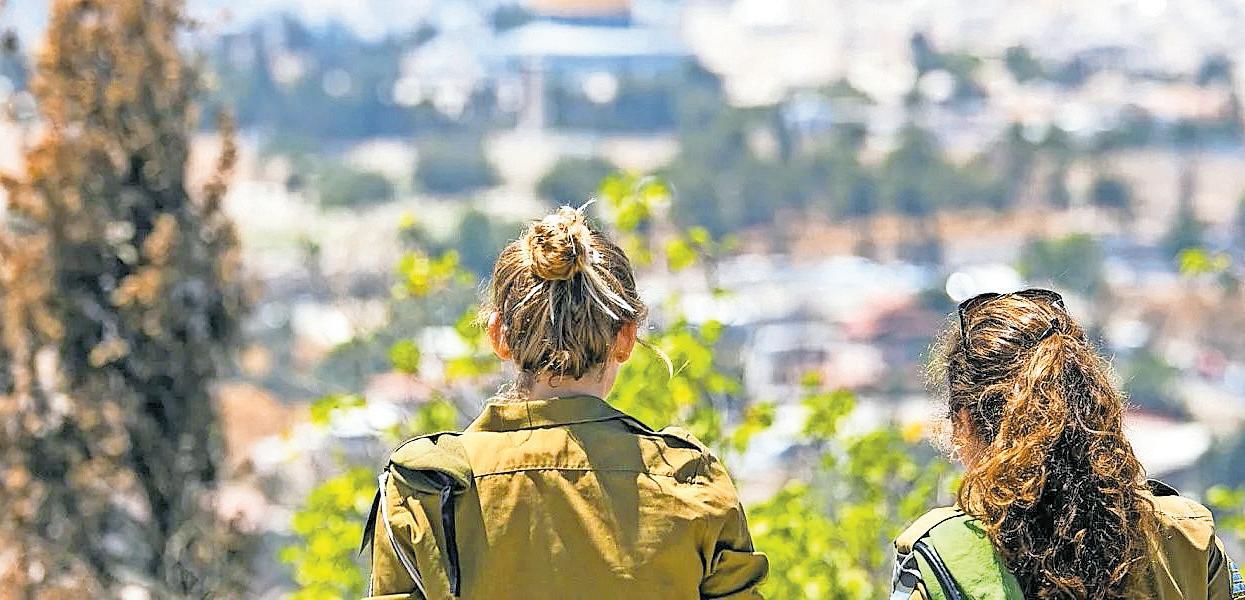
IDF soldiers.
Andrew McIntire, TPS-IL
Social
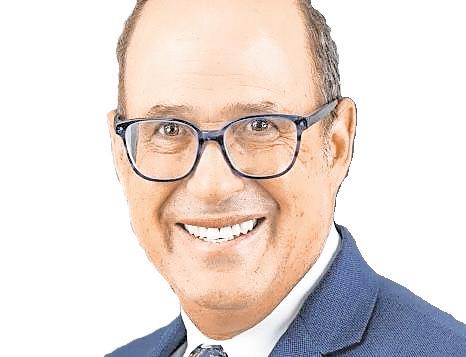
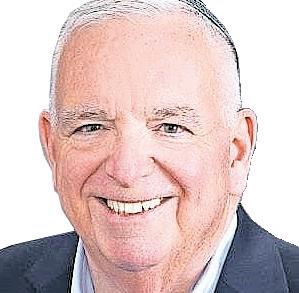
Pictured from left: Steve Cohn, vice chair of the Brooklyn Democratic Party; attorney
Shalom
Amir Avivi’s Israel Deense and Security Forum (IDSF); Joseph Potasnik, executive vice president of the New York Board of Rabbis; US Col. (ret.) Jacob Goldstein.
Photo by Judith Rosen Productions
Walsh Ambulatory Pavilion
Episcopal Health Services is proud to introduce the Walsh Ambulatory Pavilion , a state-of-the-art
Services Include:
• Primary Care
• Behavioral Health
• Obstetrics & Gynecology
Maternal Fetal Medicine
• Endocrinology
• Endoscopy Colonoscopy
• EHS Cancer Center
Medical Oncology
Radiation Oncology
19-20 Brookhaven Avenue, Far Rockaway, NY 11691
Call 718-347-3627 or visit ehs.org/walsh to schedule an appointment today! For the EHS Cancer Center, please email cancercenter@ehs.org.
DOJ calls for action after protest at B’klyn shul
By JNS
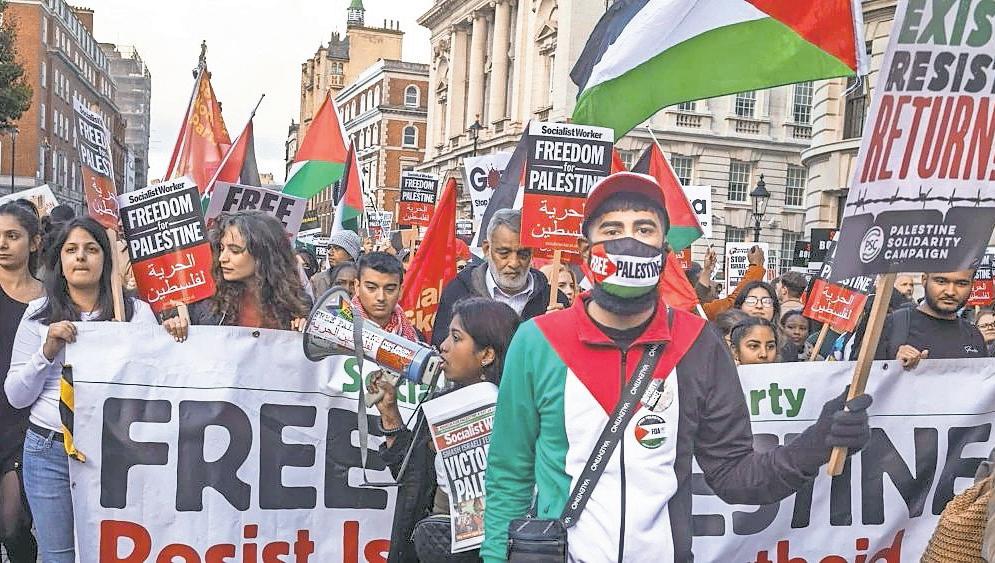
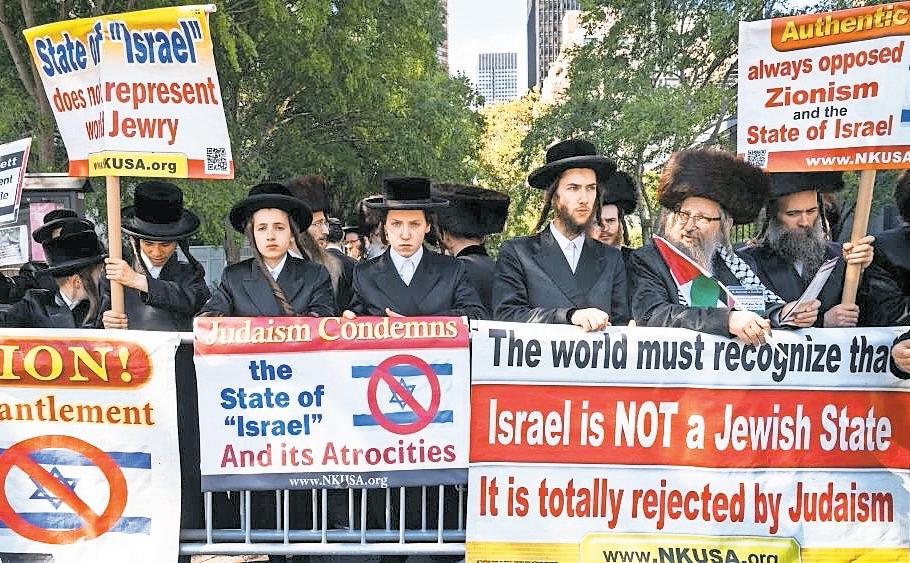
Four people were arrested Monday night during an anti-Israel protest outside the Young Israel of Midwood, where demonstrators gathered against an Israeli real estate event.
Police said officers responded to a scheduled demonstration outside 1694 Ocean Ave., between avenue L and M. NYPD told JNS that arrests were made after clashes between protesters and pro-Israel counterprotesters, and that those taken into custody had thrown objects during the confrontation.
The protest was organized by PAL-AWDA (Al-Awda, Palestine Right to Return Coalition), the same group behind a May 5 demonstration outside Manhattan’s Park East Synagogue that left one police officer injured and hospitalized, according to JNS.
The Brooklyn protest targeted “The Great Israeli Real Estate Event,” which featured properties in throughout Israel with some located in Jewish communities in Judea and Samaria. Protest organizers accused the event of promoting the sale of “stolen Palestinian land.”
“We’re here to say that events that are in direct violation of international law, New York civil rights law, federal anti-discrimination law will not be allowed in our neighborhoods,” a spokesperson for the group said during the protest.
Ahead of the demonstration, New York City Councilwoman Inna Vernikov and Assemblyman Kalman Yeger said in a joint statement that NYPD had assured them protesters would be required to remain across the street from the synagogue and that enough officers would be present to keep constituents safe and ensure safe passage.
“Our staff are currently on site and confirm there are barricades set up and several hundred
J’Estates set for a protest
By JNS
An anti-Israel protest was expected on Tuesday night outside the Young Israel of Jamaica Estates, according to state Assemblymember David Weprin whose 24th Assembly District includes the synagogue.
“I am deeply disturbed by this action that comes off the heels of multiple incidents of antisemitic vandalism and intimidation in Queens and throughout New York,” Weprin said. “We cannot tolerate hate of any kind, and I strongly denounce any action targeting a house of worship. Jewish New Yorkers deserve to feel safe at home, at prayer, and in the community.”
“We will stand together proudly, peacefully and unapologetically in support of our community, our values and our right to worship safely,” a flyer for the counter-rally states.
Deborah Lipstadt, former US special envoy to monitor and combat antisemitism, told JNS that “violence escalates” at such demonstrations.
“It starts with words, moves to shoving, then to punching and so on,” she said. “Those who engage in acts of violence must be stopped early on.”
Mayor Zohran Mamdani last month allowed a bill requiring the NYPD to develop securityperimeter plans for houses of worship to become law, after it passed the City Council with a vetoproof majority. However, he vetoed a separate bill covering schools and educational institutions, citing First Amendment concerns and arguing the measure was too broad.
Mark Treyger, CEO of the Jewish Community Relations Council of New York, called on public officials to “reject the dangerous effort by some bad actors to target, isolate or intimidate Jewish institutions and communities for living our identity openly and proudly.”
The City Council may consider an override vote on the vetoed measure on Thursday.
police officers present,” they wrote, posting photos of police setting up barricades.
The event prompted criticism from Leo Terrell, chair of the US Justice Department’s task force on Jew-hatred, who called on Mayor Zohran Mamdani and the Brooklyn district attorney’s office to act.
“Let me be clear, I am sick and tired of Jews being harassed in New York City,” Terrell said. “Did you see what happened in Brooklyn? Where is the mayor? Where is the district attorney? Where are the hate crime charges?”
“Jewish Americans are allowed the religious freedoms given by this country,” he said. “Jewish Americans are not being protected in New York City.”
Terrell called the protest “outrageous” and “insulting.”
“Mayor, district attorney, do your job,” he said. “Protect Jewish Americans now.”
Brooke Goldstein, founder of EndJewHatred, said protesters marched through a heavily Jewish neighborhood toward a Jewish house of worship.
“Jew-haters marched towards a Jewish house of worship, through a heavily Jewish neighborhood, past Jewish homes, Jewish families, Jewish businesses and Jewish communal spaces, chanting for ‘intifada,’ waving a Hezbollah flag and screaming abuse at Jews in the street,” Goldstein said.
“New York’s leaders, especially Zohran Mamdani, must stop pretending this is normal protest activity,” she said. “Mr. Mayor, you are on notice. The inevitable violence this will lead to falls squarely on your shoulders. You must act to
stop this now.”
Moshe Spern, president of United Jewish Teachers, also criticized the protest, saying demonstrators “burned Israeli flags, chanted ‘Jews go back to Germany’ and sparked near-fights.”
“This is antisemitism in NYC streets, not protected protest,” Spern wrote. “Jewish New Yorkers can’t walk in their community safely. Enough. Where’s the real accountability?”
PAL-AWDA has organized several anti-Israel protests in New York City, including the May 5 protest outside Park East Synagogue.
The group is scheduled to protest again on Saturday, at 72nd Street and Fifth Avenue in Bay Ridge, where it said it would demonstrate “to dismantle the genocidal Zionist entity.” Bay Ridge has a large population that identifies as Arab, Muslem and Palestinian.
Pollard: US-Israeli alliance over…
Continued from page 1
Tweedledee” and said they are “only interested in one thing, and that’s their bank account. It’s as simple as that.””
Asked whether he believed Trump was antisemitic, Pollard said no.
“No, I don’t think he’s antisemitic at all,” Pollard said. “I think he’s pro money. That’s all.”
Pollard was no gentler with Netanyahu.
Asked whether he was being ungrateful by attacking Netanyahu who, Alterman said, “fought for your release” and greeted him when he arrived in Israel, Pollard said this:
“G-d brought me home because it was a miracle.
“My wife Esther, a”h, fought for 30 years to bring me home, [former Israeli ambassador to the US] Ron Dermer fought to bring me home, and Sheldon and Miriam Adelson fought to bring me home, Rabbi Pesach Lerner fought to bring me home. There were a lot of people who fought to bring me home.
“BiBi, you know, he let my wife almost starve to death on the streets of Jerusalem before he deigned to see her.
“This is politics now, politics.”
Pollard added: “The problem lies in the fact that I got to know him when I came home and I didn’t like what I saw at all.”
He also rejected Netanyahu’s framing of the current war as a “war of rebirth.”
“We haven’t defeated our enemies,” Pollard said.
Pollard reserved some of his sharpest language for Israel’s ultra-Orthodox political leadership, calling Shas “a criminal enterprise” and United Torah Judaism “a shakedown operation.” The criticism, according to an i24NEWS interpretation, was aimed at party leadership, not the broader Haredi community.
“They don’t seem to understand that when you live in this country, as a citizen, when you take money from the government, you owe the government something,” Pollard said.
He praised Israeli soldiers who have served hundreds of days in combat as “sacred heroes,” and called it “disgusting” and “insulting” for Haredi leaders to compare service in the Israel Defense Forces to serving in a foreign army.
Pollard confirmed he is entering Israeli politics with a small independent party that, at least at this point, is not viewed as likely to clear the electoral threshold.
Asked whether another small party would divide the right, Pollard said he could not join any existing Knesset party.
Laffell chief to head
UJA
UJA-Federation of NY on Tuesday announce the selection of Michael Kay, leader of the Leffell School in Westchester as its next CEO, succeeding Eric Goldstein. At Leffell, a coeducational Jewish day school until recently affiliated with the Conservative movement, Kay, 46, has spoken about the importance of teaching a love for Israel, which has become more contentious in some pockets of the Jewish community. During a 2024 streamed discussion called “Zionism and Antisemitism on Campus and Beyond,” Kay said Leffell is one of few high schools that includes a visit to a West Bank village during its Israel trip.
“Nuance and complexity are not incompatible with the goal of promoting love of Israel.”
“The fact of the matter is, every party that’s currently sitting in the Knesset has blood on its hands from October 7th,” Pollard said. “And I couldn’t, in good conscience, join any one of them.”
Alterman asked whether “Itamar BenGvir, for example, has blood on his hands.”
Pollard replied: “All of them — every single legacy party that is in this Knesset bears a responsibility for the disaster that occurred on October 7th,” he said.
Pollard rejected the argument that blame belongs to the army, to the intelligence services or to a previous government.
“We live in a democracy,” he said. “The Army should serve the state and the government of the day. The fact of the matter is, this disaster didn’t start on October 7th … it
started long before, and it was the mismanagement, and the lack of oversight, by the civilian governments, the so called democratically elected parties, that allowed them to get away with this disaster.”
Pollard’s verdict on the US-Israel relationship was stark.
“This alliance is finished,” he said, predicting that the next American election would leave Israel with “a very bad choice between bad and worse” and “no friends” on either side of the political aisle.
For voters who want to prevent another Oct. 7, Pollard said the choice should be clear.
“If they want to make sure that there is never again an October 7, you better vote for someone like me rather than Bibi Netanyahu or Naftali Bennett or Gadi Eisenkot,” he said.
Jonathan Pollard and his wife Esther walking together in Jerusalem soon after his arrival in Israel.
WhatsApp? Record $200 mil to Shaare Zedek HEALTH, MIND & BODY
WhatsApp founder Jan Koum is donating $200 million to Shaare Zedek Medical Center in what is being described as the largest philanthropic contribution in the history of Israel’s healthcare system, officials from the Jerusalem hospital told JNS on Thursday.
The donation, made through the Koum Family Foundation, is expected to triple the size of the hospital, which currently has approximately 1,000 beds. Koum, 50, who was born into a Jewish family in Ukraine and immigrated to the United States as a teenager, co-founded WhatsApp in 2009 before selling the messaging platform to Meta for some $19 billion in 2014.
The funds will be used to construct a new “medical tower for medical excellence in Jerusalem,” Shaare Zedek said in a statement on Friday. The 24-story tower will be the “largest and most advanced facility of its type anywhere in Israel,” encom-
passing more than 1.5 million square feet and designed with the structural integrity to handle “developing regional threats,” it added. According to a source in Israel’s healthcare system, planning approvals for the new tower are advancing rapidly through Jerusalem’s mu-
nicipal planning institutions.
“We are proud to partner with Shaare Zedek Medical Center, an institution that defines medical excellence in Jerusalem and beyond,” Koum said in a statement.
“This gift reflects our confidence in a future of medical innovation and research that
EDITOR WANTED
The Jewish Star is seeking a new editor who will be responsible for expanding local news coverage, recruiting and managing staff and freelance contributors, and editing and enhancing material from The Star’s wire services.
Candidates should have news reporting and editing experience, an understanding of what interests Modern Orthodox Jewish communities, and a drive to excel in a professional, collegial environment.
While our primary competitors emphasize one-dimensional and biased political coverage, The Jewish Star’s team of veteran journalists is committed to the highest professional standards — insisting on journalistic and commecial integrity and a pursuit of truth that’s grounded in an adherence to Torah values and a love of Israel.
Serving diverse Modern Orthodox communities on Long Island, in Queens, Riverdale, Upper Manhatan and Westchester, The Jewish Star is an independent newspaper produced by Richner Communications, a 100 employee family-owned company that publishes the Pulitzer Prize winning Riverdale Press and dozens of community newspapers, websites and shopping guides.
This full-time in-person or hybrid position (starting at $50,024-$60,320) offers Jewish holidays, vacation, health insurance, and 401k.
Join The Jewish Star … and help make Jewish journalism great again.
will benefit patients in Israel and around the world.”
The hospital plans to rename itself the Koum Shaare Zedek Medical Center.
“This is truly a special moment in Shaare Zedek Medical Center’s 124-year-old history,” Shaare Zedek president Jonathan Halevy said.
“This record donation by the Koum Family Foundation reflects remarkable confidence in our hospital, our staff, the city of Jerusalem, the nation of Israel and a heartfelt embrace of Zionism. I am sure that this investment in Israeli healthcare will continue to positively impact the Israeli and Jewish people for generations to come.”
The donation followed months of discussions between the hospital and the Koum Family Foundation and a $50 million gift by the Palo Alto-based foundation to Soroka Medical Center last year after it sustained a direct hit from an Iranian ballistic missile in June 2025 that caused heavy damage to the hospital’s surgical wing and laboratories.
The latest contribution surpasses the previous record donation to Israel’s healthcare sector, a $180 million gift made in 2025 by Anat and Shmuel Harlap to the Rabin Medical Center. The two donations reflect a grow-
ing trend in which private philanthropy—much of it from American Jewish donors—is increasingly funding major hospital infrastructure projects that the state has not undertaken on a similar scale.
As an independent hospital not affiliated with one of Israel’s health funds, Shaare Zedek relies heavily on philanthropic support to expand and develop its facilities. Officials said the latest donation underscores the widening gap between institutions capable of attracting major private capital and those primarily dependent on government funding.
Koum, who divides his time between California and Europe, has become a prominent philanthropist, supporting Jewish, educational and pro-Israel causes around the world. In recent years, he has donated to several Israeli organizations and initiatives, including the Maccabee Task Force, Friends of Ir David and the Central Fund of Israel.
REPORTER WANTED
is looking to add a full-time reporter to our team as we expand our coverage of local news that’s important to Modern Orthodox communities on LI and in Queens, Riverdale and Westchester.
is looking to add a full-time reporter to our team as we expand our coverage of local news that’s important to Modern Orthodox communities on LI and in Queens, Riverdale and Westchester.
Position offers expert mentoring, a starting salary of $36,400 to $39,520, and a menu of benefits including all Jewish holidays.
Salary ($35,000–$38,000) offers a menu of benefits including all Jewish holidays.
Candidates who have reporting and news-writing experience (professional or collegiate) are invited to email a resume with clips or links to Jobs@TheJewishStar.com.
Candidates who have reporting and news-writing experience (professional or collegitate) are invited to email a resume with clips or links to Jobs@TheJewishStar.com
And the Experts Agree
At Mount Sinai South Nassau, patient safety isn’t just a priority— it’s a standard, one we work on every day. And the experts agree.
We’ve earned national recognition for patient safety, including an “A” Hospital Safety Grade from The Leapfrog Group and the Healthgrades Patient Safety Excellence Award.
That means better outcomes for our patients with lower risk of infections or hospital acquired conditions.
When it comes to your health, nothing matters more than knowing you’re in a place where patient safety matters most.
Learn more at mountsinai.org/southnassau
From both the air and sea, Hamas is rebuilding
By Lilach Shoval, Israel Hayom
Since a truce in the Gaza Strip went into effect on Jan. 19, 2025, followed by a longer-lasting ceasefire last Oct. 10, a perception has taken hold among the Israeli public that is detached from the reality on the ground: that the Strip’s borders are closed, the fighting has stopped and Hamas is on the verge of collapse.
But conversations with IDF officials, some of them senior, paint the opposite picture: Hamas is undergoing a systematic and rapid process of rebuilding its strength.
According to officials familiar with the details, the humanitarian aid corridor is one of the channels enabling Hamas to rebuild, with at least two shipments recently uncovered in which banned materials had been hidden under the guise of food and approved humanitarian equipment. Senior officials say these seizures are not isolated incidents, but part of a mechanism intended to ensure Hamas’s survival and prevent its collapse.
In practice, the ceasefire has not only failed to stop Hamas, it has given the organization breathing room to deepen its renewed entrenchment and buildup. The terrorist organization in the Strip is exploiting the delay in implementing the second stage of the agreement as a “window of opportunity” to rebuild and rearm.
Not only that, but Hamas is also increasing its open presence on the ground. Its operatives move around in public, strengthen governance, man armed checkpoints and restore government infrastructure. Hamas firmly controls more than two-thirds of the territory in the Strip that is not held by the Israel Defense Forces, doing so through a combination of force, intimidation, distribution of money and the use of part of the humanitarian aid as a tool to strengthen governance.
Since the summer of 2025, weapons and ammunition have been smuggled into the Gaza
Strip by drones launched from Egyptian territory. The IDF has managed to thwart a handful of attempts, but the working assumption must be that some smuggling operations succeeded.
According to officials familiar with the details, Hamas has also developed maritime smuggling capabilities using containers that float to the shores of southern Gaza.
But the real risk, the officials say, lies in the humanitarian aid framework, under which hundreds of trucks enter Gaza from Egypt through Israel. The trucks ostensibly contain humanitarian aid and are inspected by Israeli personnel, but the inspection is not airtight, and Hamas is exploiting the ability to prepare goods in Egypt in order to conceal banned materials and products inside the aid in a sophisticated manner. Hamas, the officials say, is using the humanitarian aid as a lifeline in four ways:
•The first is smuggling weapons, ammunition and dual-use components inside shipments, including motor oil, electronic equipment and raw materials for the local production of rockets. These are inserted into boxes and hidden among legitimate goods, and no inspection mechanism can detect them with 100% certainty.
•The second is economic independence in the face of the blockade. Hamas confiscates some aid shipments, sells them in the market, distributes the money to its operatives, and uses it to develop infrastructure and support the population.
•The third is preventing the legitimacy of alternative bodies, because the aid passes through mechanisms controlled by Hamas, thereby strengthening its status as the sole governing authority and weakening efforts to build an alternative governing mechanism.
•The fourth is that humanitarian aid serves as cover for intelligence activity, the smuggling of equipment and communications and technical equipment components that provide Hamas with renewed command-and-control capabilities.
Security officials say the real risk is the failure of the agreement. As of now, the second stage of the ceasefire, which was supposedly meant ultimately to lead to the demilitarization of the Strip, has been delayed. The IDF remains in Gaza for the time being, but Hamas, as noted, is using the time to build its strength inside the Strip while also concentrating resources in other countries to identify opportunities to smuggle goods into Gaza.
The assumption that closing the borders prevents Hamas from rebuilding its strength is mistaken, especially as the group uses unexploded IDF ordnance to assemble various weapons. Security officials say that as long as stricter inspections are not implemented to expand the security layers, Hamas will continue to grow stronger, build its force and prepare for another confrontation.
In light of all this, and given the Hamas activity identified on the ground, the top levels of the IDF are increasingly saying there will be no avoiding a return to fighting in the Gaza Strip. For now, with five IDF divisions in Lebanon, additional forces inside Syria, the need for reinforcements in Judea and Samaria, and the Israeli Air Force’s real focus on preparations for Iran, it is unclear how this can all come together. That is why security officials believe it is important for Israel to keep insisting on advancing the demilitarization agreement in Gaza, and not reach a situation in which the war in Iran and Lebanon exhausts the international community, and Israel itself, and diverts it from the goal of demilitarizing the Strip.
An Israeli soldier in the Gaza Strip.
IDF Spokesperson’s Unit
Tuvia Tenenbom makes the case for sovereignty
By Atara Beck, JNS
Tuvia Tenenbom’s latest book asks a pointed question about Judea and Samaria: “Excuse Me, Is This Yours?”
The Israeli-American author, playwright and journalist offered his answer May 7 at the Oz Vegaon Nature Preserve in Gush Etzion, Judea, where he argued that if Israel believes Judea and Samaria belong to the Jewish people, it should apply sovereignty there. If not, he said, Israelis should leave.
The book, based on Tenenbom’s eight-month stay in Judea and Samaria and his conversations with residents and leaders, is now available in Hebrew and will be released in English this summer.
Tenenbom, 68, grew up in the ultra-Orthodox city of Bnei Brak and served in the Israel Defense Forces as a tank driver before moving to the United States, where he founded the Jewish Theater of New York. He has written extensively about Israel, Germany, the United States and Jewish life.
The May 7 event was hosted by the Sovereignty Movement, an Israeli activist group that advocates applying Israeli law and sovereignty to Judea, Samaria and the Jordan Valley.
“This place is wonderful,” Tenenbom said. “It’s the cradle of the Jewish people, and it makes no difference if you’re religious or not. It’s the land of the Bible. It’s the foundation of the Jewish nation. More than 80 percent of the stories in the Tanach [the Bible] happened here, not in Tel Aviv.”
“So why isn’t there sovereignty?” he asked.
Tenenbom said Israel’s leaders have not fought hard enough for it. He questioned why Finance Minister Bezalel Smotrich, chairman of the Religious Zionism Party, and National Security Minister Itamar Ben-Gvir, chairman of the Otzma Yehudit Party, did not demand sover-
eignty over Judea and Samaria as a condition for joining Prime Minister Benjamin Netanyahu’s government after the November 2022 election.
Tenenbom said he has repeatedly heard politicians say, “It’s not the right time.”
“I love this region,” he said, adding that when other countries win wars and capture territory, they generally keep it. “What’s wrong with us? I don’t understand. What are you afraid of? It’s your right.
“Is it yours? If not, get out of here. If yes, take ownership. Demand it from your leaders.”
The status of Judea and Samaria, also known internationally as the West Bank, is among the most contested issues in the Israeli-Palestinian conflict. Israeli sovereignty there is supported by
many on Israel’s right and opposed by Palestinians and much of the international community.
Tenenbom said activists should pressure political leaders directly rather than stage demonstrations in public squares.
“Have a guy make a scene at shul, where your leaders go,” he said. “It would be over in two weeks. That was what ended Naftali Bennett’s government.”
Asked about the Arab population in Judea and Samaria, many of whom oppose Israeli rule, Tenenbom said citizenship should depend on loyalty to Israel.
“That’s very easy,” he told JNS. “When I wanted to get a green card in America, I had to swear allegiance to the United States of America.
If you ask those Arabs, with their hands on the Koran, to swear allegiance to the Jewish State of Israel, how many of the two and a half million will do that? Maybe two and a half people.
“They cannot be Israeli citizens if they don’t swear allegiance; they are guests, like in any other country. If they want a permit to work, the government can decide.”
Tenenbom also challenged the idea that Palestinians would voluntarily leave Judea and Samaria.
“If the Jewish people who live in the settlements believe — or say they believe — they can convince the Palestinians to leave, they are lying to themselves and cheating themselves,” he said. “I asked the settlers and their leaders: If you really believe the Arabs are leaving, why did you spend millions and millions of dollars on special roads where only Israeli cars can drive, circumventing Palestinian areas?”
Attorney Michael Sperber described Arab residents of Judea and Samaria as a security threat.
“We want to move them eastward. Jordan is Palestine, and if we say this openly, it is the only thing that will guarantee our survival,” he said.
Omer Rahamim, chief executive of the Yesha Council, said it is crucial before Israel’s next national election, due by Oct. 27, to secure a decisive victory for a government that views Judea and Samaria as an intrinsic part of the State of Israel.
Dubi Sheffler, head of the Efrat Local Council, urged attendees to help advance sovereignty by bringing tour groups to Judea and Samaria.
Nearly 60 years after the Six-Day War, Israel has not declared sovereignty over Judea and Samaria.
“But it will happen,” Sovereignty Movement co-chairs Nadia Matar and Yehudit Katsover said in their closing remarks. “Because it’s ours.”
Author Tuvia Tenenbom at a discussion on the prospects for Israeli sovereignty in Judea and Samaria, on May 7. Meir Elipur
WINE AND
DINE
Preparing the sweetest dishes for Shavuot
Historically, Shavuot is the celebration of the giving of the Ten Commandments to Moses at Mount Sinai, beginning seven weeks after the first day of Passover. Agriculturally, it commemorates the time when the first fruits were harvested and brought to the Temple, thus the “Festival of the First Fruits.”
Indeed, fresh fruit and flowers are the hallmark of the holiday, as is wearing white clothing. It symbolizes the purity, joy and the spiritual “marriage” between God and the Jewish people.
This year, the holiday starts at sundown next Thursday, May 21, and ends after Shabbat on May 23. Traditional dishes are almost certain to include blintzes and kugels, dairy-rich foods that harken back to Eastern Europe and cold climates that necessitated heavy, rib-sticking dishes.
Growing up in the Shetland Islands with Ashkenazi parents, my brother and I ate bowlfuls of thick, creamy rice pudding studded with plump raisins. With only four ingredients, the recipe couldn’t be simpler.
Not so in other countries. After being expelled from Spain and Portugal in the 15th century, Jews settled in warmer areas along the Mediterranean. Fresh fruits, vegetables, spices and olive oil were abundant, and local dishes were adapted to cook for Shavuot.
Although many of the original dishes are labor-intensive and time-consuming, I’ve tweaked each of them to lessen time in the kitchen and increase moments spent with guests. Using equipment like the food processor and incorporating items like store-bought pie crust make preparation a bit easier.
In Syria, atayef is a sweet, pancake-like pastry that has been enjoyed by Jews and non-Jews for hundreds of years. Use a good-quality mix to make mini-blintzes. Admittedly, it’s a laborious process, although a century ago a woman’s sole role was cooking, cleaning and raising a family. Today, everyone juggles packed schedules.
The Tomato-Basil Bisque is a Parisian-smooth cream soup prepared with seasonal produce. Slow-roasted salmon with a crunchy herb and pomegranate topping is often on Shavuot menus in Tel Aviv’s beach restaurants. Bathed in vegetable oil, the result is moist, soft and delicate. Just be on hand to baste it every 15 minutes or so; it’s done within an hour. It’s a perfect make-ahead main dish.
Back in America, Buttermilk Pie, often called
“Depression Pie,” was an affordable dessert during food scarcity in the years before and during World War II. Don’t be put off by the buttermilk; when baked, the result is a custardy filling. It’s not cheating to use a good-quality, store-bought crust (refrigerated or frozen). Top with fruit, yogurt or drizzle with homemade Toasted Caramel Sauce. And certainly, for the purist, Shavuot wouldn’t be the same without the ubiquitous cheesecake. I suggest Googling what you’re in the mood for: fruit, chocolate, cookie-based, gluten-free, nondairy, low-fat and more. A quick look online will offer a recipe for every palette.
Tomato-Basil Bisque (Dairy)
Serves 4
Cook’s Tips: •May roast tomatoes to enhance flavor. Quarter the tomatoes, drizzle with olive oil, and roast in a preheated 400-degree oven for 20 minutes. •Substitute plain yogurt for heavy cream. •Store in an airtight container in the fridge up to two days.
Ingredients:
• 1-1/2 Tbsp. olive oil
• 1/2 small onion, coarsely diced
• 1/8 tsp. bottled chopped garlic
• 1 lb. (4 to 5 medium) ripe tomatoes, cut
into 1-inch chunks
• 1 cup vegetable broth
• 1/2 tsp. sugar
• 1/4 tsp. ground pepper
• 1/2 cup heavy cream
• 2 Tbsp. chopped fresh basil
• Salt to taste
Directions: Heat olive oil in a medium pot over medium heat. Add the diced onion, garlic and tomatoes. Reduce the heat, cover and cook for 20 minutes, or until the tomatoes are broken down and soft. Cool. Pour into blender jar with the broth, sugar and pepper. Cover and blend until smooth.
Return to the pot. Whisk in the cream and basil. Bring to a simmer over medium heat. Serve warm or at room temperature.
Slow-Roasted Salmon with Pomegranate Gremolata (Pareve)
Serves 6 to 8
Cook’s Tips: •A basic gremolata is a zesty herb and citrus mixture. •A mixture of chopped herbs may be parsley, mint and basil. •Before cooking, spread salmon with 2 tablespoons of tahini.
Ingredients:
• 1 large lemon, thinly sliced
• 1 to 3 lb. salmon fillet, rinsed and patted dry
• 2 tsp. kosher salt, divided
• 1/2 cup vegetable oil
• 1/2 cup pomegranate seeds
• 1 cup mixed chopped herbs
• 1/4 tsp. bottled minced garlic
• 3 Tbsp. orange juice
Directions: Preheat oven to 250 degrees. Arrange the sliced lemon to cover the bottom of a large rimmed baking dish.
Place the salmon, skin-side down, on top of the lemon slices. Sprinkle with 1-1/2 teaspoons of salt. Pour the oil over and around the salmon. Place in preheated oven, basting with the oil every 15 minutes until salmon flakes with a fork, about 45 minutes. Or an instant thermometer inserted in the thickest part should read 130 degrees for medium.
While salmon is cooking, prepare the gremolata. In a small bowl, combine the pomegranate seeds, chopped herbs, garlic, orange juice and 1/2 teaspoon salt (optional). Stir in 2 tablespoons
See Hofman on page 16
Food for Shavuot on a family table in Mishmar David in central Israel, on June 12, 2024.
Nati Shohat, Flash90
Tomatoes. Myriams-Fotos, Pixabay Slow-Roasted Salmon With Pomegranate Gremolata.
Ethel G. Hofman
EThEl G. hofmAN
Preparing the sweet dishes of Shavuot…
of the oil from around the salmon. Set aside.
To serve, remove cooked salmon from the oven, and let it rest for five to 10 minutes. Cut into large slices.
Transfer to a serving platter. Spoon remaining oil and juices over and top with the gremolata. Serve hot or cold.
Buttermilk Pie (Dairy)
Serves 6 to 8
Cook’s Tips: •Preferably use full-fat buttermilk. •The butter should be very soft. Soften in the microwave in 10-second bursts.
Ingredients:
• 3 large eggs
• Scant ¾ cup sugar (use slightly less)
• 1/2 cup (1 stick) butter, softened
• 3 Tbsp. all-purpose flour
• 1 cup buttermilk
• 1 Tbsp. fresh lemon juice
• 1 tsp. vanilla extract
• 1/8 tsp. nutmeg
• 1 9-inch unbaked deep-dish pie crust
Directions:
Preheat oven to 350 degrees. In a large bowl, whisk eggs until frothy. Add the sugar, butter and flour. Beat until smooth. Whisk in the buttermilk, lemon juice, vanilla and nutmeg until smooth. Pour into the pie crust.
Bake in preheated oven until center is almost firm, 45 to 50 minutes. Cool and cut into wedges.
Syrian ‘Atayef’ (Dairy)
Makes 10 to 12
Cook’s Tips: •No need to deep-fry as done in Syria. Delicious drizzled with rose water syrup and chopped pistachios. •Use a good buttermilk pancake mix, such as King Arthur. Just add water.
Ingredients:
• 2 cups thin buttermilk pancake batter, prepared according to package directions
• Oil for greasing pan
• 1 cup of ricotta cheese
• 2 tsp. rose water, divided
• 1/2 cup sugar
• 1/4 cup water
• 1-1/2 tsp. lemon juice
• 1/4 cup chopped pistachios (optional)
Directions:
Lightly grease a nonstick skillet. Heat over medium heat. Pour about 2 tablespoons of batter onto the skillet to form thin pancakes about 3 inches in diameter.
Cook until tiny bubbles appear and the surface is no longer wet. Flip over for 5 seconds. With a spatula, remove and place in a single layer on paper towels.
Repeat until batter is finished, greasing the skillet as needed.
To Prepare the Filling: Whisk together the ricotta cheese and 1 teaspoon rosewater. Set aside.
To Prepare the Syrup: In a small saucepan, combine 1/2 cup sugar, 1/4 cup water and the lemon juice. Stir well. Bring to a boil, then reduce the heat to a simmer. Cook 10 to 15 minutes or until slightly thickened. Remove from heat, stir in 1 teaspoon rose water. Cool. Assemble by placing a teaspoon of the cheese filling in the center of a warm pancake. Fold over. Pinch edges to seal. Drizzle with rose water syrup and sprinkle with chopped pistachios, if using. Serve at room temperature.
My Mom’s Rice Pudding (Dairy)
Serves 4 to 6
Cook’s Tips: •Use long-grain rice. •Stir in ¼ cup heavy cream or vanilla yogurt at the end of cooking time.
Ingredients:
• 1/2 cup rice
• 4 cups milk
• 1 to 2 Tbsp. of honey to taste
• 1/2 cup dark or golden raisins
Directions:
In a heavy-bottomed medium pot, stir together the rice, milk and honey. Cook over medium heat for 10 minutes, stirring often. Reduce the heat to low. Stir in the raisins.
Cover and cook, stirring often, until thick and creamy, about 30 minutes.
Serve hot, cold or at room temperature.
Toasted Caramel Sauce (Dairy)
Makes ¾ cup
Cook’s Tips: •For salted caramel sauce, whisk in ¾ teaspoon of kosher salt with the cream.
Ingredients:
• 1 cup granulated sugar
• ¼ cup cold water
• 1/2 cup heavy cream, warmed
• 1 Tbsp. butter
Directions:
In a small (2-quart) saucepan, set over medium heat, add the sugar and water. Stir well. Cook at medium-low heat without stirring, until the sugar has turned a deep amber color, about 8 to 10 minutes.
When the caramel is ready, reduce the heat and slowly whisk in the warm cream.
Simmer for 2 to 3 minutes longer. Remove from heat. Whisk in the butter.
Serve warm, spooned over ice-cream, fruit or sponge cake.
Write: Columnist@TheJewishStar.com
Atayef Osps7, WikiCommons
Buttermilk Pie.
Ethel G. Hofman
Syrian atayef Ethel G. Hofman
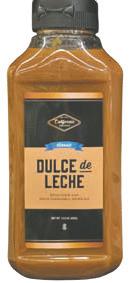
Toasted Caramel Sauce. Ethel G. Hofman
Proudly Jewish. Proudly Zionist.
BELMONT PARK VILLAGE
At The Jewish Star, selling advertising for the newspaper is just part of the job.
Our staff’s toolkit includes an exceptionally broad range of useful products (including both religious and secular publications and websites; digital, email, radio and social media marketing; in-person events; direct mail; commercial printing, and more) — whatever it takes to build business and raise revenue for our commercial and non-profit partners.
Employees are trained by the best in the business, in a supportive, collegial and kosher environment.
These F/T positions (P/T schedules may be arranged) offer competitive compensation ($40k-$90k) with excellent commission and bonus opportunities, paid holidays (including Jewish holidays), time off, medical and 401(k).
Just off the Cross Island Parkway, shop designer fashion finds from Coach, lululemon, Valentino, and more, at up to 65% off every day.
Dine at award-winning restaurants, stroll through pedestrian-only streets, and turn a quick trip into a day’s escape.
Fake ‘rabbis’ are flooding TikTok with hate
By The Jewish Star from JNS and other sources
A disturbing network of AI-generated TikTok “rabbis” is spreading antisemitic conspiracy theories to millions, according to a new report from the Combat Antisemitism Movement.
Researchers identified 49 fake accounts using synthetic Jewish personas to push hate-filled content disguised as insider wisdom and financial advice. The accounts reportedly racked up more than 950,000 followers and 10 million likes.
CAM warned the campaign is especially dangerous because it targets younger audiences already consuming conspiracy-heavy self-help content.
TikTok is being urged to remove the accounts and improve detection of AI-generated propaganda before the disinformation spreads even further.
‘Michael’ trumpets
Jewish music mogul
The new Michael Jackson biopic “Michael” is reviving interest in one of the music industry’s most colorful Jewish executives — Walter Yetnikoff — and an action he’s said to have taken that forced MTV to air Black artists during the early 1980s, according to JTA. A scene shows Yetnikoff, then head of CBS Records, threatening MTV executives after the network resisted airing Jackson’s “Billie Jean” video. In the film, Yetnikoff unleashes a profanity-laced tirade demanding MTV put Jackson into heavy rotation or risk losing CBS artists.
Yetnikoff was known as a largerthan-life executive who helped shape the careers of stars including Jackson, Billy Joel and Bruce Springsteen. According to JTA, Yetnikoff’s Jewish identity was central to his public persona. Music journalist Fredric Dannen once wrote that the executive “wore his ethnicity like a gabardine,” often
Shabbat clash at Trump bash
The White House celebration of a Jewish-inspired “national Sabbath,” proclaimed by President Donald Trump, is ironically scheduled during Shabbat itself. Jewish invitees told JNS the timing makes attendance religiously problematic, calling it a “sad oversight” from an administration usually praised for accommodating observant Jews. The event is set for this Saturday, May 16. Rabbi Steven Burg, CEO of Aish, had praised Trump’s Sabbath initiative as a powerful antidote to online antisemitism, saying a break from phones and social media could help ease anti-Jewish hatred.
peppering conversations with Yiddish expressions and explosive outbursts.
Uruguay leader blasts Jew hatred
Uruguayan President Yamandú Orsi condemned antisemitism and terrorism during meetings in Montevideo with a visiting B’nai B’rith International delegation. The group discussed rising antisemitism worldwide, social media extremism and growing populist movements. Orsi reaffirmed Uruguay’s commitment to the International Holocaust Remem-
Pulitzer fury over Gaza photo
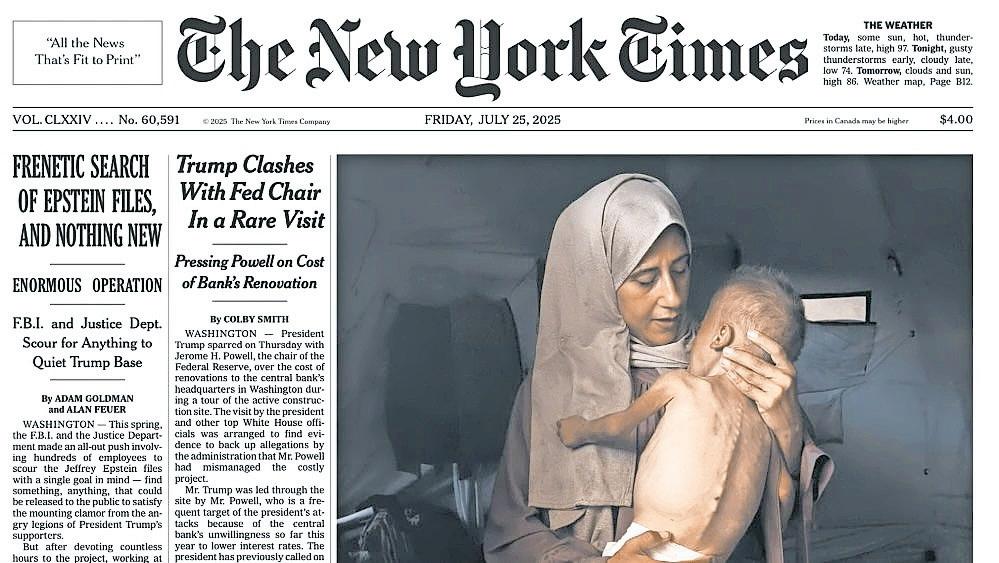
A New York Times contributor won the 2026 Pulitzer Prize for Breaking News Photography for a Gaza image that misrepresented a child’s condition. The haunting photo — prominently displayed on the Times website and at the top of a Sunday print edition (above) shows a severely underweight Palestinian boy. The caption said the boy had been “born healthy,” when in fact he was suffering from cerebral palsy. After backlash, the Times issued a correction — but photographer Saher Alghorra still received journalism’s top honor. Critics blasted the award, saying the image fueled misleading claims about mass starvation in Gaza.
libel.” Former US antisemitism envoy Deborah Lipstadt questioned whether the Times had “any sense of decency and journalistic responsibility.”
Gottheimer blasts
Dems’ silence on hate New Jersey Rep. Josh Gottheimer is accusing fellow Democrats of turning a blind eye to antisemitism on the far left. Writing in the New York Times, the Jewish congressman said Democrats have long condemned Jew-hatred from the far right but have become “noticeably and shamefully silent” when it comes from progressive voices. He singled out left-wing internet personality Hasan Piker, who has millions of followers and previously referred to Orthodox Jews as “inbred” while praising Hamas and attacking Israel. Gottheimer blasted prominent Democrats for appearing on Piker’s programs and helping legitimize his views. “Hate is hate,” Gottheimer wrote. “It doesn’t get a pass because it comes from your side of the aisle.”
Top judge dumps Democratic Party
brance Alliance working definition of antisemitism and said the country will participate in next month’s IHRA conference in Argentina.
Costa Rica eyes
Jerusalem embassy
Costa Rica’s new president, Laura Fernández Delgado, says she wants to move her country’s embassy back to Jerusalem. The announcement came during meetings with Israeli President Isaac Herzog following Fernández’s inauguration in San José. If carried out, the move would reverse Costa Rica’s 2006 decision to relocate its embassy to Tel Aviv amid international pressure. Herzog praised what he called strengthening ties between Israel and Latin America. Only seven countries currently maintain embassies in Jerusalem, including the United States and Guatemala. The move would mark another diplomatic win for Israel in the region.
Kristof torched over ‘dog rape’ claim
A Nicholas Kristof column in the New York Times opinion column accused Israel of using sexual violence against Palestinians — including prison guards weaponized dogs for abuse. While Kristof acknowledged in his column that there was “no evidence” Israeli leaders ordered rape, critics blasted him for repeating Hamaslinked propaganda and unverified accusations from anti-Israel forces. Former prosecutor Jacqueline Carroll said allegations of sexual violence require hard evidence, not inflammatory speculation. Middle East scholar Nadav Pollak branded the piece a “blood
the Jewish state’s defense establishment. Israeli business daily Globes reported that Microsoft Israel CEO Alon Haimovitz is leaving amid scrutiny over whether cloud services used by Israeli security agencies violated company ethics rules. The company allegedly shifted oversight of its Israel office to executives in France while reviewing concerns about surveillancerelated Palestinian data stored on Microsoft systems. The controversy follows mounting pressure from antiIsrael activists and shareholder groups over Microsoft’s government contracts tied to Israel and the military.
Europe’s Jews on edge as Iran-linked threats
grow Jewish communities across Europe are facing a growing wave of attacks — and Iran-linked operatives may be recruiting online to fuel the violence, according to a CNN investigation. Many of the attacks were claimed online by a little-known group calling itself Harakat Ashab al-Yamin al-Islamia, or HAYI.
Pennsylvania Supreme Court Justice David Wecht says rising antisemitism inside the Democratic Party pushed him to officially become an independent voter. Wecht, a longtime Democrat and former party vice chair, announced the move Monday. Referencing growing anti-Jewish rhetoric after the 2018 Tree of Life synagogue massacre in Pittsburgh, where he once served on the board, Wecht said hatred against Jews is now too often “minimized, ignored and even coddled.”
The justice stressed he will remain politically impartial on the bench but warned Americans must confront antisemitism before it further damages society. “It is my hope,” Wecht said, “that Americans of all viewpoints will oppose and resist the scourge of Jewhatred.”
Priceless prayer books hit market
A Brooklyn rare-book dealer is offering what may be America’s first Ashkenazi prayer books for nearly $25,000. Dealer Dan Wyman is selling three 1854 machzors printed in New York for newly arrived Jewish immigrants seeking familiar prayer traditions. Wyman called the books a major milestone in American Jewish history. He also recently uncovered a Holocaust-era photo album produced in a displaced-persons camp in 1947, complete with Yiddish captions and images documenting camp life after World War II. Wyman said discoveries like these are what make the world of Jewish rare books endlessly fascinating.
Microsoft Israel faces internal probe
Microsoft is reportedly investigating its Israeli branch over work tied to
CNN reported the group appears connected to Iran-backed militias and may be part of a broader effort to recruit operatives through social media and encrypted messaging apps. Posing as London-based Telegram users, CNN journalists encountered channels claiming to represent Iranian intelligence. One account offered money to “anyone who can harm Israeli interests or individuals.” Another proposed cash payments for anti-Israel propaganda stunts in London. Deputy Assistant Commissioner Vicki Evans of London’s counterterrorism police told CNN authorities are examining whether foreign actors are paying criminals to carry out attacks against Jewish targets. Security experts warned the “violence-for-hire” attacks could escalate. Most incidents so far have caused limited damage, but analysts fear increasingly radicalized recruits may turn more violent.
British Jews fear bleak future
A string of antisemitic attacks in Britain — including arson and the stabbing of two Jewish men in London’s Golders Green neighborhood — has deepened fears within the country’s Jewish community, according to Israel Hayom. When attacks on Jews in Britain are followed with discussions about antisemitism, those conversations are routinely redirected into debates about Israel and Gaza, British-Jewish journalist Jonathan Sacerdoti said. He accused British media outlets, especially the BBC, of fueling anti-Israel sentiment through biased coverage and uninformed commentary. He said many British Jews are now openly discussing emigration. “People are very bleak,” Sacerdoti told Israel Hayom. “They don’t believe we have a future here in the UK.” He added: “I’m not sure this is the best place to bring up Jewish children.”
Jewish Star Torah columnists: Rabbi Benny Berlin, spiritual leader of BACH Jewish Center in Long Beach; Rabbi Avi Billet of Anshei Chesed, Boynton Beach, FL, mohel and Five Towns native; Rabbi Binny Freedman, rosh yeshiva of Orayta, Jerusalem; Dr. Alan A. Mazurek, former ZOA chair, retired neurologist, living in Great Neck, Jerusalem and Florida.
Contributing writers: Rabbi Sir Jonathan Sacks zt”l, former chief rabbi of United Hebrew Congregations of British Commonwealth; Rabbi Yossy Goldman, president South African Rabbinical Association; Rabbi Dr. Tzvi Hersh Weinreb, OU executive VP emeritus.
To submit commentary, inquire at: Editor@TheJewishStar.com.
Five Towns Candlelighting: From the White Shul, Far Rockaway, NY
Scarsdale Candlelighting: From the Young Israel of Scarsdale, Scarsdale, NY
Bamidbar: Love as law, and law as love
On the face of it the connections between the sedra and haftara of Bamidbar are slender.
The first has to do with demography. Bamidbar begins with a census of the people. The haftara begins with Hosea’s vision of a time when “the number of the children of Israel will be like the sand on the seashore which cannot be measured or numbered.” There was a time when the Israelites could be counted; the day will come when they will be countless. That is one contrast between the future and the past.
The second goes deeper. The sedra and the book that bears its name are called Bamidbar, meaning “in the wilderness.” The book is about the wilderness years in both a physical and spiritual sense: a time of wandering and internal conflict. Hosea, however, foresees a time when G-d will bring the people back to the desert and there enact a second honeymoon: I will lead her into the wilderness and speak tenderly to her…
There she will respond as in the days of her youth,
As in the day she came out of Egypt. (Hosea 2:14)
What gives the haftara its special resonance, however, is the fact that Bamidbar is always read on the Shabbat preceding Shavuot, the festival of the giving of the Torah at Mount Sinai. The fact that tradition chose this of all prophetic passages tells us something deeply moving about how the Jewish people understood this festival, and about the Torah itself as the living connection between a people and G-d.
The story of Hosea is one of the strangest of that great chain of visionaries we call the Prophets. It is the story of a marriage. The prophet married a woman called Gomer. He was deeply in love with her. We can infer this, because of all the prophets, Hosea is the most eloquent and passionate on the subject of love.
Gomer, however, proved faithless. She left home, had a series of lovers, was serially unfaithful, and was eventually forced to sell herself into slavery. Yet Hosea, caught between anger and tender longing, found that he could not relinquish his love for her.
In a flash of prophetic insight, G-d leads him to understand that his own personal experience mirrors that between G-d and the Is-
raelites. He had rescued them from slavery, led them through the wilderness, and brought them to their new home, the land of Israel. But the people proved faithless. They worshipped other gods. They were promiscuous in their spiritual attachments.
By rights, says G-d, I should have abandoned them. I should have called them (as the prophet called his third child) Lo-ammi, “you are not My people.”
Yet G-d’s love is inextinguishable. He too cannot let go. Whatever the people’s sins, He will bring them back into the desert, the scene of their first love, and their marriage will be renewed.
The Talmud in Pesachim gives an extraordinary account of the dialogue between G-d and Hosea — the unwritten story of the episode that precedes chapter 1 of the book of Hosea.
The Holy One, blessed be He, says to Hosea, “Your children have sinned.” To this, the prophet should have replied, “they are Your children, the children of your favored ones, Abraham, Isaac, and Jacob. Be merciful to them.” Not only does he not say this, but what he actually says is, “L-rd of the universe, the whole world is yours. Exchange them for another nation.”
The Holy One, blessed be He, says, “What shall I do with this old man? I will tell him to go and marry a prostitute and have children by her. Then I will tell him to send her away. If he can, then I too will send Israel away.”
There are few more telling passages in the whole of rabbinic literature. If I were to summarize it, I would say: Who is a leader
Yet G-d’s love is inextinguishable. Like Hosea, he too cannot let go.
of the Jewish people? Only one who loves the Jewish people.
Reading the prophetic literature, it is easy to see the prophets as social critics. They see the people’s faults; they speak them aloud; their message is often a negative one, foretelling disaster. The Talmud is telling us that such a view is superficial and misses the essential point. The prophets loved their people. They spoke not out of condemnation but from the depths of deep desire. They knew that Israel was capable of, and had been summoned to, great things. They never criticized in order to distance themselves, to set themselves above and apart. They spoke in love — G-d’s love. That is why, in Israel’s darkest nights, the prophets always had a message of hope.
There is one verse in the haftara so deep that it deserves special attention. G-d is telling the prophet about the time yet to come when He will bring His people back to the places they once visited, the desert where they first pledged their love, and there they will renew their relationship:
On that day — declares the L-rd — you will call Me “my Husband”; you will no longer call Me “my Master.” (Hosea 2.16)
The resonances of this sentence are impossible to capture in translation. The key words in Hebrew are ish and baal, and they both mean “husband.” Hosea is telling us about two kinds of marital relationships — and two kinds of culture.
One is signaled by the word baal, which not only means “husband” but is also the name of the Caananite god. Baal, one of the central figures in the pantheon of the ancient Near East, was the storm god of lightning and the fertility god who sends rain to impregnate the ground. He was the macho deity who represented sex and power on a cosmic scale.
Hosea, punning on the name, hints at the kind of world that emerges when you worship sex and power. It is a world without loyalties, where relationships are casual and people taken advantage of and then dropped. A marriage predicated on the word baal is a relationship of male dominance in which women are used not loved, owned not honored. The word baal means, among other things, “owner.”
Against this Hosea describes a different kind of relationship. Here, his literary device is not pun but quotation. In using the word ish to describe the relationship between G-d and His people, the prophet is evoking a verse at the beginning of Genesis — the words of the first man seeing the first woman:
This is now bone of my bones and flesh of my flesh. She shall be called “woman” for she was taken out of man. (Gen. 2:23)
Daringly, Hosea suggests that the making of woman from man mirrors the creation of humanity from G-d. First they are separated, then they are joined again, but now as two distinct persons each of whom respects the integrity of the other. What joins them is a new kind of relationship built on fidelity and trust.
How we understand the giving of the Torah depends on how we see the relationship between G-d and the people He chose to be His special witnesses on earth.
Inevitably, the language of Judaism when it speaks of G-d is metaphorical. The Infinite cannot be compassed in finite categories. The metaphors the prophets use are many. G-d is, among other things, Artist, Creator, King, Master, Warrior, Shepherd, Judge, Teacher, Redeemer and Father.
From the point of view of G-d-as-king, the Torah is the code of laws He ordains for the people He rules. From the perspective of G-d-as-fatherand-teacher, it represents the instructions He gives His children as to how they should best live.
Adopting the image of Artist-Creator, Jewish mystics throughout the ages saw the Torah as the architecture of the universe, the deep structure of existence.
Of all the metaphors, however, the most lovely and most intimate was of G-d as husband, with Israel as His bride. Isaiah says:
For your Maker is your husband, The L-rd Almighty is His name. (Isaiah 54:5)
Likewise Jeremiah:
“Return, faithless people,” declares the L-rd, “for I am your husband.” (Jeremiah 3:14)
This is how Ezekiel describes the marriage between G-d and Israel in the days of Moses: Later I passed by, and when I looked at you and saw that you were old enough for love, I spread the corner of My garment over you and covered your nakedness. I gave you My solemn oath and entered into a covenant with you — declares the L-rd, G-d — and you became Mine. (Ezekiel 16:8)
This is what Yerushalayim can do to a Jew
There is a story about a man who did not want to come to Israel.
He was around 70 years old, newly retired, and had dreamed for years of celebrating with a trip to Las Vegas. His wife had other ideas. She wanted Yerushalayim. He resisted for as long as he could, and then, as sometimes happens in these negotiations, he lost. So off they went, not to the neon lights he had imagined, but to the ancient stones of the Old City.
He arrived muttering.
When the tour brought him to the Kosel HaMaaravi, he slowly walked toward the Wall and placed his hands on the stones. He wept like water pouring from a broken fountain, uncontrollably, with no warning. Later he told his rabbi what had happened.
“I suddenly realized,” he said, “that my father, and my grandfather, and his father before him, would have given everything they owned to stand in this place. This was their longing. Their dream. The prayer they whispered every single day of their lives.”
This is what Yerushalayim does to a Jew.
Not only to someone deeply religious or emotionally prepared for the moment. Even to a man who had to be dragged there and arrived
annoyed. Something deep within him recognized where he was, and it broke open without his permission.
The very name of the city contains the explanation.
The Midrash in Bereishis Rabbah teaches that Yerushalayim is a combination of two earlier names. After the Akeidah, Avraham called the place “Hashem Yireh,” meaning “Hashem will see” (Bereishis 22:14). Shem, the son of Noach, had already called it Shalem, as
we find in the reference to Malki Tzedek, Melech Shalem (Bereishis 14:18). Hakadosh Baruch Hu did not want to disregard either name, so they were joined together into one eternal name, Yireh-Shalem, Yerushalayim.
These two words contain the entire spiritual reality of the city.
Yireh means to see. In Torah, seeing means far more than physical sight. It means recognizing something beyond yourself worth seeing. Yerushalayim is the city that opens a person’s eyes to what life is truly about.
Shalem means wholeness. Every human being spends a lifetime searching for shleimus, hoping to feel complete. Yet the Torah suggests that true wholeness begins not with achieve-
Wilderness revelations: Israel calling us home
As we start a new sefer — Bamidbar — we find that Am Yisrael, having left Mitzrayim a year earlier, is about to spend a second year in the wilderness.
This is the timeline: They had arrived at Har Sinai and received the Torah seven weeks after the Exodus; they then spent about 10 months at Har Sinai during which they were party to the sin of the golden calf and the building of
the Mishkan. The Kohanim were instructed on the korbanot and the Leviim on the transport of the Mishkan. They learned the laws of tumah and tahara, shmita and yovel, kashrut, taharat hamishpachah, and personal and business relationships bein adam l’chaveiro. They were instructed about the shalosh regalim and were reminded multiple times to keep the Shabbat holy and central in Jewish observance. They then journeyed to a place from which they could enter the Land of Israel “immediately” (per Rashi quoting the Midrash Sifri). But that was not meant to be, for they sinned three times (running away from Har Sinai like dismissed children from school, because they were afraid Hashem would burden them with
Israel is loaded with problems. But it’s our home, our family.
more commandments; complaining about the manna (no meat or fish); and, finally, the sin of the meraglim (spies).
They were condemned to 38 years of wandering and dying in the desert, with only a select few surviving to enter the Holy Land. What started joyously ended tragically, with descendants of the Great Exodus being the ones to
enter the Land, rather than their parents and grandparents.
We read this story every year. As a kid in school, I’d wish and pray that perhaps this time it would be different, maybe they would not sin with the spies and they would make it into the Land. I would wish it so, as we might do when watching a horror movie we’ve seen a dozen times, warning the hero, “don’t open that door, the axe murderer is inside!” — knowing that wish is futile.
At this point, I want to engage in some selfrevelation. I am not naturally an optimist. If something can go wrong, I assume it will, usually to me. When people talk about the
Mamma Mia! Tribute to our magnificent mothers
I’m writing this on Mother’s Day. Is it a Jewish holiday? Not at all. But in Judaism, every day is Mother’s Day — and Father’s Day, too, for that matter.
“Honor Thy Father and Mother” is the fifth of the Ten Commandments, and it is a constant rule, not something reserved for one day per annum. But as this day is now being recognized globally, this week I decided not to focus on the Torah portion but on our mothers.
You may know the story of the husband who
walks into his house to find total chaos: the kids’ toys are all over the place, the lamps are knocked over, the phone is ringing, and the kitchen is a disaster. The whole house is in a total mess. He’s never seen his house looking like this.
He finds his wife sitting on the couch, relaxing. Horrified, he asks, “What on earth happened here today?!”
The wife calmly replies, “Nothing.”
As he stared blankly, she adds, “You know how every day when you come home from work, you ask me, ‘What the heck do you do all day’?”
“Yeah,” he replies, still in shock.
She smiles and says, “Well, today, I didn’t do what I do all day.”
Ithink it’s fair to say that we take our wives and mothers for granted. If we had to add up the sum total of the vast array of different things
Gratitude to these selfless souls.
they do in a day, we might have new respect for them.
In fact, the title “Superwoman” is not an exaggeration at all. The capable wife and mother’s multitasking is incredible — way beyond what most men can handle. The old song, “My Yiddishe Momma,” singing the praises of our mothers, is not only touching and poignant; it is absolutely correct.
Some years ago, Time magazine ran a cover story titled, “The Case for Staying Home.” It was all about how more and more mothers were opting
out of the “rat race.” It highlighted how a growing number of young women were putting their careers on hold to stay home and raise their children. It was a trend that went against the prevailing notion of career first, family second.
Indeed, when I would counsel young women about their career choices, I advised them to choose a profession that would allow them to raise a family while working, so as not always to be torn between childcare and the workplace. Remote choices certainly help in that regard, though not all of our preferred professions allow for that. I once got a call from a gentleman in my congregation who told me his mother had passed away, and would I please officiate at the funeral. “Certainly,” I replied. “Would you please tell me something about your mother since I didn’t know
Job number one is taming of the wilderness
My first exposure to the study of the Bible was in the Yiddish language. We spoke only English at home, but almost all the teachers we had in the yeshiva I attended were Holocaust survivors who had escaped to the safety of these shores only a few years earlier.
We learned to translate into Yiddish by rote and had little conception of what the words meant in English. Thus, we translated the very first verse of the Torah as “In der anfang hatte der Oibeshter bashaffen,” not having a clue that in der anfang meant “in the beginning,” that the Oi-
beshter was “the One Above,” and that bashaffen meant “created.”
When we reached Sefer Bamidbar, we finally had a teacher who, although he continued to provide the Yiddish translation, told us in broken English what the words meant in the language we understood. And he would even provide visual aids, photographs and drawings, which helped us grasp the meaning of what we were studying.
I’ll never forget his opening lesson. He told us that we were beginning a new book of the Torah, and a new weekly Torah portion, which both went by the name “Bamidbar.” “In Yiddish,” he said, “the word Bamidbar means ‘in der’.”
We were about nine years old, and the word veesternisht triggered what became laughter. There is something about the sound of the word that is comical to me to this
‘The way of the world precedes Torah.’
very day.
He waited for our laughter to subside and then said that veesternisht in English meant “a desert.” He showed us a picture of the Sahara. “The Jewish people were wandering through such a desert,” he explained, “and the entire book that we are beginning to study took place there.”
He then asked if we remembered coming across the word veesternisht earlier in our studies, in a slightly abbreviated form.
It was my dear friend Michael, who passed away some years ago, who remembered that first verse in Genesis contains the phrase “tohu
vavohu,” which is generally translated as “unformed and void.” In Yiddish, the phrase is rendered as “poost und veest,” “empty and desolate.” Bamidbar is the Torah portion we read this week, which is always read on the Shabbat before Shavuot. I researched about a dozen biblical translations, including some non-Jewish ones, and found that only a few translated “Bamidbar” as “in the desert.” The vast majority preferred the word “wilderness,” so that the key phrase in the first verse of our parsha reads, “The L-rd spoke to Moses in the wilderness of Sinai.” Although the dictionaries I consulted did not distinguish sharply between “desert” and “wilderness,” it is the latter that rings true as the English equivalent of the Yiddish veesternisht — an empty, frightening wasteland. It was in that wasteland that we received the Torah.
Published weekly except during certain religious and civil holidays by The Jewish Star LLC New York City office: 5676 Riverdale Ave Suite 311, Bronx NY 10471 • LI office: 2 Endo Blvd, Garden City NY 11530
Here’s how to reach The Jewish Star — Write: Editor@TheJewishStar.com. Call: 516-622-7461 ext 291
Editor & Publisher: Ed Weintrob
516-622-7461 ext 291
Jewish Star Associate: Nechama Bluth 516-622-7461 ext 241
Content: The Publisher endeavors to ensure that our content is within the bounds of normative halachah and hashkafah. Anyone who feels anything we publish may be inappropriate in this regard is urged to bring the item in question to the attention of the Publisher.
Advertising is accepted at the sole discretion of the Publisher and should conform to standards appropriate for distribution in an Orthodox community. Send us your news! Editor@TheJewishStar.com
Advertising: Publisher@TheJewishStar.com
Kashrut: The Jewish Star is not responsible for the
kashrut of any product or establishment featured in its pages. If you have questions regarding any establishment or product, including its supervision, please consult your rabbi for guidance.
Submissions: All submissions become the property of The Jewish Star and may be edited and used by the Publisher, its licensees and affiliates, in print, on the web and/or in any media that now exists or will exist in the future in any form, including derivative works, throughout the world in perpetuity, without additional authorization or compensation. The individual or entity submitting material affirms that it holds the copyright or otherwise has the right to authorize its use in accordance with The Jewish Star’s terms for submissions.
Opinions: Views expressed by columnists and other writers do not necessarily reflect the position of the Publisher or of The Jewish Star LLC.
Distribution: The Jewish Star is available free in kosher food establishments, stores, synagogues, and curb-side newsboxes on Long Island, in New York City and elsewhere. To request free delivery to your location, write Publisher@TheJewishStar.com.
Copyright: All content is copyright and may not be republished or otherwise reproduced without written permission by The Jewish Star; to do so without permission is against the law and halacha. For content reproduction write to Publisher@TheJewishStar.com.
The Jewish Star subscribes to JNS. It, or its contributors, own the copyrights on material attributed to them. The length and content of JNS material and all other submitted material may be edited by The Jewish Star.
Member: American Jewish Press Association. This newspaper contains words of Torah. While it is not considered shaimos, please dispose properly.
OPINION COLUMNISTS
Mitchell Bard, foreign policy analyst, authority on USIsreal relations; Ben Cohen, senior analyst, Foundation for Defense of Democracies; Stephen Flatow, president, Religious Zionists of America-Mizrachi and father of Alisa Flatow, murdered in an Iranian-sponsored Palestinian terrorist attack in 1995; Yisrael Medad, Americanborn Israeli journalist and political commentator; Rafael Medoff, founding director of David S. Wyman Institute for Holocaust Studies; Fiamma Nirenstein, Italian-Israeli journalist, author of 13 books, leading voice on Israeli affairs, Middle Eastern politics and antisemitism; Melanie Phillips, British journalist; Moshe Phillips, national chairman, Americans for a Safe Israel; Thane Rosenbaum, Distinguished University Professor at Touro University (published by Jewish Journal); Jonathan S. Tobin, editor-in-chief, Jewish News Syndicate.
The anti-Zionist contagion infects the world
Over the past few weeks, antisemitism has exploded as an issue in Britain, a reaction to two things.
•Two Jews were stabbed in separate attacks in the streets of London’s largely Jewish area of Golders Green.
•The insurgent Green Party very publicly sank into a sewer of Jew-hatred during the runup to Britain’s local government elections.
Dozens of Green Party candidates, whose supposed environmental concerns have given way to a hard-left, anti-Israel agenda, were revealed over the past few days as having a record of blood-curdling Jew-hatred.
Their party leader, Zack Polanski (who is himself a Jew) had asked whether British Jews were really unsafe or merely had “a perception of unsafety.” After the Golders Green attacks, he provoked outrage by criticizing the police for kicking the attacker to disarm him.
British Jews are under increasingly aggressive siege from abuse, intimidation, discrimination, arson attacks on their institutions, street violence and terrorism that left two Jews dead in a synagogue on Yom Kippur.
The Golders Green stabbings provoked a huge outpouring of revulsion and concern. There was a fusillade of bromides about “no place for antisemitism in Britain” from the prime minister, Sir Keir Starmer, and other Labour Party politicians.
The media suddenly started publishing accounts by deeply distressed British Jews about the state of fear in which they were being forced to live. Commentators produced outraged and horrified diatribes against a society that was forcing its Jews to consider emigrating.
Yet some of those voices had previously produced outraged and horrified diatribes against
Diaspora Jewish leaders should get up off their knees and start fighting.
the State of Israel, recycling defamatory falsehoods about the behavior of the Israel Defense Forces in the Gaza Strip.
This discrepancy alone should have sounded a warning that, for all the public breast-beating, the real point was still being lost.
This is because attacks on Jews are still deemed to be in a separate category from attacks on Israel or Zionism. The assumption is that attacks on Jews are very bad indeed because they are against people, but attacks on Israel or Zionism are absolutely fine because they are merely against a country or an ideology.
The distinction is false, and itself helps fuel the hatred of both Israel and Jews.
The point was illustrated this week in Manhattan. At Park East Synagogue on New York’s Upper East Side, where an event marketing Israeli real estate was taking place, hundreds of masked Islamists and their supporters chanted from behind a police barricade: “We don’t want two states. We want ’48!”
The mob, which flew a Hezbollah flag, was spearheaded by a branch of Al-Awda, which is linked to Samidoun, a US-designated terror organization.
The police thankfully prevented a repeat of what happened last November at Park East, when anti-Israel demonstrators blocked people from entering and exiting the synagogue. That
intimidation helped motivate city legislators to tell the police to establish a protest-free “buffer zone” around houses of worship.
The city’s Islamist mayor, Zohran Mamdani, is ruthlessly exploiting the false distinction between attacking Israel and attacking Jews.
“There is no tolerance for hatred of Jewish New Yorkers,” he said about the Park East demonstration. Yet at the same time, he registered his opposition to the synagogue event that was promoting the sale of land “in occupied West Bank in settlements that are a violation of international law.”
Condemning Jew-hatred while simultaneously inciting it through incendiary distortions is the mind-twisting stock in trade of the antiIsrael left.
In Britain, Starmer’s government is now talking about banning the “hate marches” that have taken place almost every week since the Hamasled atrocities in Israel on Oct. 7, 2023. The belated realization is beginning to dawn that the chanting on these marches for the murder of Jews may help cause actual attacks on Jews.
Despite this, Starmer and many others are still failing to join the necessary dots. The rampant Jew-hatred that has so shocked them is the result of something that they won’t acknowledge.
It’s anti-Zionism that is poisoning Western society, spreading a mind virus that’s targeting both the Jewish world and Western civilization itself. This contagion is being spread principally by Islamists, who are gleefully tapping into the anti-Zionism that has captured the non-Muslim progressive classes, including vast swathes of the young.
The question that’s constantly asked — if anti-Zionism really is antisemitism or is something different — fails to encompass the sickening enormity of what’s happened.
Anti-Zionism is an evil in itself because it launders antisemitism. It singles out the Jewish state for a verbal pogrom of wild blood libels straight out of medieval Christian, Soviet and Nazi demonology.
Accusations against Israel of “genocide,” starving innocent Gazans to death or wanton “baby-killing” aren’t just defamatory lies. They present the Israelis as positively evil and a uniquely demonic force in the world which therefore needs to be removed.
This murderous hatred doesn’t just fuel the aim of eliminating Israel. It’s also awakened that lightest of sleepers in the West, the secret wish of millions to remove the Jews from their world altogether.
The “hate marches” have been joined by people who may think they’re supporting the poor, oppressed Palestinians against the cruel and oppressive Israelis who have occupied their land. Nevertheless, these marches are in themselves an attack on Jews because they are an attack on Zionism, a denial of the right of the Jewish people alone to have their own nation-state in their own ancestral homeland.
Led, organized and funded by Hamas, the Muslim Brotherhood and Iran, these marches aren’t organized principally to protest against Israel or in support of “Palestine.” They are instead an expression of near-delirious Islamist triumphalism and a statement that the Muslims now control the streets.
For the Islamists, the Oct. 7 atrocities signaled the beginning of the end of the Zionist entity, itself a stepping stone to the conquest of the West.
The Islamists believe that they’re on course to victory because there’s been no pushback against them, only against Israel. Hamas actually thanked Starmer for rewarding them on Oct. 7 by recognizing a “State of Palestine.” And they
Anti-Israel demonstrators march through central London in support of Hamas, on Oct. 14, 2023. Andy Soloman, Shutterstock
MELANIE
PHILLIPS
British journalist
The Gaza quandary keeps returning to haunt us
The current round of turmoil in the Middle East began in the Gaza Strip, when Hamas terrorists stormed across the border into Israel early in the morning of Oct. 7, 2023, murdering, raping and abducting men, women and children with abandon.
It may well end there.
That prospect is perhaps not so clear right now, given the situation in the broader region. With the US administration transfixed on Iran — teetering between threats of an intensified war in one moment and guarded hopes for an agreement with the Tehran regime in the next — Gaza has taken a backseat in the past few months. Other parts of the region have also leapt into the foreground, such as Lebanon, where expectations of a Lebanese-Israeli peace agreement are building up; and Syria, where the Islamist regime that replaced Bashar Assad’s dictatorship continues to enjoy Washington’s goodwill.
Gaza, however, has become further mired in an uneasy stalemate between the Israel Defense Forces and Hamas that, at present, is more likely to resolve through renewed fighting than a diplomatic agreement.
Since the ceasefire in October last year, the IDF has acted prudently, maintaining a strong presence on the eastern side of the “yellow line”
that separates Israeli from Hamas-controlled territory, carrying out occasional targeted strikes against the terrorist presence, and closely monitoring land and maritime borders.
That posture has allowed Hamas to consolidate its power once again. It’s telling that the terrorist group’s first act after the ceasefire was to crack down on the growing dissent among Gazans who may not exactly love Israel, but do not want to be propelled into another war. The threat to Israel of another Oct. 7-style pogrom has been dramatically reduced following two years of war, but Hamas still retains around 20,000 armed men, tens of thousands of rifles, rockets and RPGs, and significant enough portions of its underground tunnel infrastructure, which it uses for weapons storage as well as for moving its fighters.
In other words, Hamas is in no mood to accept defeat and surrender control of the coastal enclave — and frankly, as long as it maintains this level of strength and fighting capacity, it has no reason to.
Hamas has also taken advantage of international dithering. The promised International Stabilization Force (ISF) for Gaza has yet to materialize beyond offers of troops from a handful of countries. That should not be surprising since governments are reluctant to risk their troops for an ostensible peacekeeping mission in a territory where the conditions for a return to war are ripening. Nor has the much-vaunted National Committee for the Administration of Gaza (NCAG), designed to be a government of technocrats, been able to begin
As long as there is a gap between restating the entirely legitimate goal of dismantling Hamas and achieving it, there will be a list of questions without ready answers.
the work of actually governing. Crucially, Hamas continues to refuse to disarm, rejecting one of the main requirements of the US-brokered ceasefire.
At the end of April, Secretary of State Marco Rubio stated that the “entire agreement relies upon [Hamas] disarming and demilitarizing” — until that happened, he continued, “all of it is in question.” Yet if anything, Hamas’s position has hardened to the point that it is insisting that it will not even consider disarmament unless Israel fully withdraws from Gaza. No Israeli government, whether led by current Prime Minister Benjamin Netanyahu or one of the opposition figures intending to unseat him in the election later this year, will ever agree to that.
Last week, clear signs emerged that the Board of Peace (BoP) — the multilateral organization launched by the Trump administration
to oversee Gaza as its initial task — is losing patience with Hamas after months of faltering negotiations over disarmament. According to the Times of Israel, the BoP’s High Representative for Gaza, Nickolay Mladenov, penned a letter to Hamas leaders signed by himself and US adviser Aryeh Lightstone, warning that all the undertakings accepted by the parties to the ceasefire would be nullified absent their disarmament.
“Failure by Hamas to accept the framework within a reasonable timeframe, as determined by the Board of Peace and after consultation with the parties, shall render such commitments null and void,” the letter reportedly stated.
Even more significantly, the BoP told Hamas that Israel could not be expected to refrain from attacks if the disarmament process fails to make progress.
See Cohen on page 26
Where are the voices defending Europe’s Jews?
The continent that vowed to become “different” after the Shoah is once again allowing antisemitism to spread openly across public life, culture and politics.
There would have been no Europe had it not been built upon the need to turn the page after the Shoah. Europe claimed to be “new,” as Konrad Adenauer declared. It swore to become “different,” as Simone Veil assured us, in the name of overcoming the antisemitism that murdered 6 million Jews.
And so the celebration of Europe Day last Saturday was deeply paradoxical.
Antisemitism has once again become omnipresent — a stain spreading across the continent just as it did in the Europe of the 1930s, a Europe dazzling in beauty, culture and tradition before the plague of Nazism and fascism consumed it.
Today’s Europe, confused by a mixture of distorted human-rights ideology and Third Worldist progressivism, applies an obvious double standard. It condemns Donald Trump while treating Iran gently. It attacks Israel while forgetting Hamas and Hezbollah.
All this while Europe claims to be forging a
The continent vowed to become ‘different’ after the Shoah.
stronger identity, capable of competing strategically and politically with the United States.
But antisemitism remains the structural weakness of European thought — its recurring condemnation.
Walter Hallstein, one of the first presidents of the European Commission, once said:
“Anyone who lived through National Socialism knows that Europe was born so that such persecution could never happen again.”
Yet when European Parliament President Roberta Metsola spoke this week of the “many challenges” facing Europe, she did not mention antisemitism.
French President Emmanuel Macron spoke of a “treasure forged by courage.” Yet why is that courage not used to pressure Lebanon to stop Hezbollah and pursue genuine peace, instead of endlessly blaming Jerusalem?
Former Italian Prime Minister Matteo Renzi dedicated a “White Rose,” the symbol of his political movement, to Sophie Scholl, the young German student executed for resisting Nazism.
Rightly so. That is the Europe we should honor.
But in the hands of a political camp that, in the name of peace, condemns only Israel, that rose appears withered.
Where are the voices defending Europe’s Jews?
Who says publicly that the Israeli pavilion at the Venice Biennale cannot be compared to the Russian one because Israel did not invade another country but defended itself after a massacre and terrorism, while Russia invaded Ukraine? Almost no one.
Who protests when Spain deprives millions of viewers of the opportunity to hear Israel’s Eurovision song, followed by Ireland, Slovenia and the Netherlands?
Meanwhile, across Europe, cultural and political campaigns aligned with Hamas and Iran spread fabricated images, promote boycotts of Israeli books, professors, students and exhibitions, and encourage a climate in which freedom is granted only to those who attack Israel and the Jews.
•In London, where Jews increasingly fear
walking openly in certain neighborhoods, police have reportedly assigned additional officers specifically to protect Jewish communities, elderly Jews and children.
•In France, a succession of antisemitic attacks has left many Jews contemplating emigration.
•In Belgium, Jewish communities live under constant pressure while circumcision — a sacred tradition since the time of Abraham — faces growing legal and political challenges.
•In Germany, Jews once again find themselves an intimidated minority, while institutions such as Burg Giebichenstein University of Art have faced controversy over accusations involving alleged cooperation with “genocidal Jews.”
•In Italy, Israeli students at the University of Naples have faced hostility severe enough to push some to leave.
Tourists wearing a kippah, speaking Hebrew or displaying a Star of David increasingly report discrimination.
The White Rose, a non-violent resistance group led by students in Munich against Hitler, was beautiful before it was exterminated by Nazi Germany. It once stood for courage and moral clarity against tyranny.
Today, statistics speak of tens of thousands of antisemitic incidents across Europe, met with little meaningful political resistance.
What kind of Europe is this, in which parts of the Left systematically promote the false narrative that Israel is a colonialist and genocidal state, projecting onto the Jewish people the very crimes and prejudices Europe itself once produced?
Europe celebrated itself this week and reaffirmed its desire to grow stronger. But nothing weakens it more profoundly than the return of this shameful antisemitism.
Write: Columnist@TheJewishStar.com
Palestinians walk through rainwater flooding the courtyards of Nasser Hospital in Khan Yunis, in the southern Gaza Strip, on March 26. Abed Rahim Khatib, Flash90
n Israel today, educators are grieving students. Yet we do not have the language to describe what that grief means. After every round of war, we count the fallen. We speak of families, of parents, of siblings — and rightly so. Standing in the background, almost without words, are hundreds of teachers, mentors and educators. People who loved, guided and helped shape the lives that were lost. Are they bereaved?
In a documentary by Noam Damsky, Rabbi Yaakov Medan resists this term. The language of bereavement, he says, belongs to parents. When educators use the word, they risk taking something that does not belong to them.
There is moral clarity in this refusal. And yet, it leaves a gap, because educators do experience a profound sense of loss, one that remains
unnamed and is therefore insufficiently understood.
I am a teacher who has lost students in this war: Ilay Graphinkel, Yuval Shoham, Nevo Fish-
er and Shahar Buzaglo. Their deaths have forced me to confront not just grief, but the meaning of education itself.
What, after all, is a teacher’s role in a society
One hundred years ago this week, the US government agreed to a new immigration procedure: the wives and unmarried children of clergymen and professors would be allowed to enter together with them, outside the restrictive quota system. The new policy could have later saved many Jews from the Holocaust. So why didn’t it?
The May 1926 decision by the Coolidge administration was in response to a Supreme Court ruling. What happened is that the 1921 immigra-
tion law — creating the quota system — permitted “ministers of any religious denomination” and “professors for colleges” to enter the US outside the new quotas.
The US government initially blocked their spouses and children from joining them, but the Supreme Court decision overruled that. That was the immigration system that Franklin D. Roosevelt inherited when he became president.
So when the Nazis rose to power in Germany in 1933, and large numbers of rabbis and Jewish professors wanted to escape, US law made it possible to welcome them and their families—but only in theory. In practice, FDR didn’t want any significant number of rabbis and Jewish professors coming in, much less their wives and children.
Throughout the twelve years of the Roosevelt administration, only several hundred rabbis were permitted to enter the US outside the quotas.
As for Jewish professors, Roosevelt administration officials looked high and low for reasons to keep them out, as Hebrew Union College in Cincinnati discovered when it tried to bring European Jewish scholars to join its faculty
The rise of Jew-hatred in America can be reversed, but only if it is fought differently. The hate-mongers have been successful in obtaining legitimacy for their absurd argument that being anti-Zionist and supporting the eradication of the State of Israel does not make them antisemites.
The fact is that in order to argue that antiZionism is not antisemitism, the haters have to do two false things.
First, they need to argue that Judaism has nothing to do with Zionism. They attempt to prove that with Neturei Karta demonstrators and assimilated Jews with no knowledge of Judaism. The fact that the Neturei Karta represents a tiny, insignificant group that in no way represents Orthodox Jews (despite their traditional dress) is ignored in the media.
where students are also soldiers? What does it mean to educate toward a future that some of your students will not live to see? At its core, education rests on three commitments: to human beings, to knowledge and to a vision of the future.
First, there is a commitment to the student as a person. Teaching begins with attention, with care, with a willingness to enter into a meaningful relationship with someone in the midst of becoming. This is not parental love, but it is real and formative. It is what allows a teacher to see not only who a student is, but who they might become.
Second, there is a commitment to knowledge. Teaching is driven by the belief that ideas matter, that wisdom, culture and intellectual traditions should not remain private posses-
What it means for a teacher to lose a student A 1926 rule that could have saved these Jews
Second is the false narrative that denies Jewish history and Jewish connections to the land of Israel. Just as denying that the Holocaust happened would mean you are an antisemite, if you deny that King David ruled over Jerusalem you are also an antisemite.
If you believe in the rights of indigenous people to their land, except when it comes to the indigenous Jewish people of Israel, you are antisemitic. If you try to claim some random time in history when Jews were not the majority and not go back to who was first in Israel — namely, the Jews — or who is a majority in Israel today — namely, the Jews — then you are antisemitic. The Jews were militarily forced from their homeland by the Romans in the year 70 CE and then in the Bar Kokhba revolt in the years 132 to 136, in which the Jews, except for a few, were
President Franklin Roosevelt, whose administration went to extraordinary lengths to bar European Jews. National Portrait Gallery
Jewish gratitude to America is never-ending
stephen M. FlatOw
President Donald Trump’s proclamation of May 2026 as Jewish American Heritage Month deserves the gratitude of American Jews. It honors not only the contributions Jews have made to the United States, but also the inimitable blessing America has offered the Jewish people: the freedom to live openly, proudly and faithfully as Jews.
That should never be taken for granted.
The proclamation rightly reaches back to President George Washington’s famous 1790 letter to the Hebrew Congregation in Newport, Rhode Islanbd. Washington’s promise that the United States “gives to bigotry no sanction, to persecution no assistance” remains one of the noblest statements in American history. It was not a mere courtesy to a small Jewish community. It was a declaration that in this new republic, Jews would not be tolerated as guests. They would be citizens. For a people who had known expulsions, ghettos, forced conversions, restrictions, humiliation and violence across centuries of exile, that promise was revolutionary.
American Jews did not respond to that freedom by standing apart from the country. They helped build it. The president’s proclamation mentions Haym Salomon, the Jewish
patriot who gave extraordinary support to the American Revolution. He was one of many Jews who believed that America’s cause of liberty was not someone else’s cause, but their cause, too.
Since then, Jews have served this country in uniform, built businesses, taught in its universities, healed in its hospitals, argued in its courts, enriched its culture and strengthened its civic life. America gave Jews room to breathe, and Jews helped America grow.
But the most striking part of the proclamation is its call for Americans, during this 250th anniversary year, to mark a national Shabbat of gratitude from sundown on May 15 to nightfall on May 16. That is more than a ceremonial gesture. It recognizes something profound: Shabbat is one of the Jewish people’s great gifts to civilization.
The idea that human beings are not machines, that workers are entitled to rest, that families need sacred time, that faith must interrupt commerce, that the world belongs to God and not to the marketplace — these are not modern inventions. They are rooted in the Torah and carried into history by the Jewish people.
Shabbat is not simply a “day off.” It is not merely a pleasant family meal or a religious custom preserved out of nostalgia. Shabbat is one of the foundations of Jewish life. It is a weekly declaration that God created the world — that freedom has meaning; that human dignity does not depend on productivity; and that Jewish identity must be lived, taught and transmitted.
For observant Jews, Shabbat is not symbolic. It is real. It shapes our homes, our communities and our children. It tells us when to stop.
It tells us what matters. It reminds us that even in a noisy, distracted, anxious world, holiness can still enter through the front door every Friday evening.
That is why the president’s call is so timely.
We live in an America where Jews have achieved remarkable success, but also where Jewish students are harassed on campuses, synagogues require security guards, and antisemitism has returned to public life with a confidence that should alarm every decent American. The proclamation’s commitment to fighting antisemitism is welcome, and it must be matched by action at every level: in schools, universities, law enforcement, public discourse and civic leadership.
Religious liberty cannot mean only the right to pray privately. It must mean the right to live publicly as Jews without fear.
That includes the right of a Jewish student to wear a kippah on campus without being intimidated. It includes the right of a Jewish family to walk to synagogue without looking over its shoulder. It includes the right of a Jewish community to support Israel without being slandered, isolated or threatened.
For religious Zionists, these truths are inseparable. We are grateful Americans, and we are devoted to the State of Israel. Those commitments are not contradictory; they are mutually reinforcing. The same Jewish faith that teaches us to appreciate the blessings of American liberty also binds us eternally to Jerusalem, the Torah and the Land of Israel. America’s greatness has never required Jews to abandon who we are. At its best, America has allowed Jews to become more fully who we are.
That is why this national Shabbat of gratitude should not be reduced to a slogan or a
See Flatow on page 27
As shekel rises, nonprofits are quietly suffering
When most people think about a strong Israeli shekel, they think of good news. They think that this means that the Israeli economy is resilient. On some level, they are right. The shekel’s remarkable rise against the dollar tells a story of foreign investment flooding into Israel, of a high-tech sector that keeps delivering even through war and of hope in lasting calm following the recent ceasefire agreements.
All of those are genuinely worth celebrating. But there is another story — one that gets far less attention and is causing serious, quiet damage to some of the most important institutions in Jewish life.
A year ago, the dollar was worth roughly 3.6 shekels. Today, it sits at 2.9. That may sound like a footnote for currency traders, but for the hundreds of Israeli nonprofits that depend on American Jewish donors, it is something closer to a financial emergency.
Every dollar raised in the United States, by a federation, a synagogue, a foundation, or an individual family writing a check, now delivers nearly 20% less purchasing power in Israel than it did just 12 months ago.
I’m not an economist; I’m a CEO, and here is what this means in practice:
•An organization that budgeted for a full
year of programming based on last spring’s exchange rate is now, midway through the year, looking at a gap.
•Staff salaries still get paid in shekels.
•Rent gets paid in shekels.
•Social services, food distribution, mentalhealth support for trauma survivors and displaced families — all of it runs on shekels.
While the generosity of donors has not diminished, the dollar has. That is causing a large issue for Israeli-based nonprofit organizations.
David Metzler, director of international relations at the Israel Defense Forces’ Widows and Orphans Organization, put it plainly: As the shekel strengthens, every dollar raised in the United States translates into less impact on the ground in Israel. His organization, which cares for some of the families who have lost the most in this war, now leads fundraising conversations
with the actual shekel cost of programs rather than dollar equivalents because the dollar equivalent keeps moving.
This comes just after the Israeli government approved its largest defense budget in history — more than 140 billion shekels, which inevitably means less for social services and the Israeli safety net. The millions of Israelis, as well as Jews around the globe, who receive benefits from Israel’s nonprofit sector are not being served less because people care less. They are being served less because the math no longer works.
Joseph Gitler, founder of Leket Israel, Israel’s national food bank, has said openly that everyone in the sector is feeling the pain, regardless of whether they fundraise in dollars, euros or Canadian dollars. Leket feeds hundreds of thousands of Israelis every year. When currency values shift this sharply, the con-
sequences are not abstract. Fewer meals get distributed. Fewer families get reached.
This issue has affected my own organization, Aish, rather severely. The dramatic strengthening of the shekel against the dollar resulted in a multimillion-dollar gap between the donations we brought in and our operating costs.
Like many others, this resulted in a large part because most of our expenses are shekel-based, and most of our donations are dollar-based. The pressure created by this gap became impossible to absorb without consequence. We had to make the painful decision to let go of several members of our staff, people who are deeply committed to our mission and to the Jewish people. Those are not spreadsheet decisions. They are human ones, and they do not get easier because the cause behind them is a macroeconomic trend.
What makes this trend especially difficult is that most nonprofit leaders are reluctant to say any of this publicly. They worry about appearing ungrateful. They worry donors will hear “the shekel is stronger” and conclude that their money is therefore less needed.
The opposite is true. The need is greater. The funding deficit created by this exchange rate shift has to be filled somehow or the programs disappear. Aish isn’t unique in this. We are unique in that we are open about this, and we are open about the need for responsible management and for working with our partners to bridge the gap. We now need to work harder than ever to do so.
Ihave spent my career working to strengthen communities in Israel and across the Jewish Diaspora. I have seen how American Jewish philanthropy can be genuinely transformative. It is a true partnership. Jews around the world invest in the future of the Jewish state and the Jewish people.
RABBI SACKS: Love as law and law as love…
Continued from page 20
From this perspective, the Torah is more than a constitution and code of laws, more than a set of instructions or even the metaphysical DNA of the universe. It is a marriage contract — a token and gesture of love.
When attraction, that most fleeting of emotions, seeks to perpetuate itself as love, it takes the form of marriage: marriage as covenant, in which both parties pledge themselves to one another, to be loyal, steadfast, to stay together
through difficult times as well as good and to achieve together what neither could do alone.
A marriage is created not by force or coercion but by words — the word given, the word received, the word honored in faithfulness and trust. There are such things as the laws of marriage (the respective responsibilities of husband and wife), but marriage of its essence is more than a dispassionate set of obligations and rights. It is law suffused with love, and love translated into law. That, according to this met-
responsibilities. But it’s your stuff.
Continued from page 21
ment but with acknowledgment.
The Hebrew root of the word modeh carries two meanings simultaneously, to give thanks and to admit. A person cannot genuinely thank someone until first admitting that one needed them. Dependence is not weakness. It is the beginning of real connection.
Standing before the place where the Shechinah rested, a person feels with a clarity that needs no argument how much he needs the Ribono Shel Olam. In that recognition, something becomes whole.
Yerushalayim is where those two ideas meet. The place where a person learns to see beyond oneself, and where that vision carries one toward wholeness.
Perhaps nowhere was this more visible than during the return to the Kosel in 1967.
On the 28th of Iyar, Israeli paratroopers entered the Old City through the Lion’s Gate. Secular soldiers, kibbutzniks, religious Jews, Holocaust survivors, ran toward the Kosel together. Motta Gur declared over the radio, “Har HaBayis b’yadeinu.” Rav Shlomo Goren stood before the stones sounding the shofar while soldiers wept openly.
Before the war, the army had reportedly prepared 10,000 wooden coffins near Har Herzl, anticipating catastrophic losses. When the fighting ended and the miracle became undeniable, the wood was repurposed to build sukkos, echoing the pasuk in Tehillim 76:3, “vayehi b’Shalem sukko (His sukkah is in Shalem).”
What those soldiers felt with their hands pressed against those stones is the same truth the man who wanted to go to Las Vegas discovered the moment he touched the Wall. It is what generations of Jews cried for in every corner of exile. There is something alive inside every Jewish soul that remembers where home is. It can lie buried beneath decades of distraction or distance. But when a Jew encounters Yerushalayim, the soul remembers what the mind forgot. That is Yerushalayim. The place of seeing and the place of wholeness. The city that finds you even when you were not looking — and it returns something you did not know you had lost.
Rabbi Benny Berlin is spiritual leader of BACH in Long Beach www.bachlongbeach.com.
Write: Columnist@TheJewishStar.com
Continued from page 21
the glass is broken and leaking everywhere. But when I’m here in Israel, I feel happy, smiling like a demented idiot.
Israel is beautiful, there is so much to do and see, we have lots of friends, the food is great and Torah learning unmatched. But you can get all that in lots of places. To me it has more to do with the feeling of finally being at home. You know how you can sometimes be in a luxury hotel and it’s nice and relaxing but after a few days, you are relieved to get back home — the same home with the leaky toilet or the irritating neighbors and the pressing bills and
Israel, with its constant war, running into shelters, political infighting and religious rivalries, is loaded with problems. But it’s your stuff. It’s your home. It’s your family. And when it’s threatened you will defend it in every way you can.
I used to feel that way about the United States, my birthplace. I was always a proud American, bled red, white and blue — especially as a religious Jew who gave thanks to the nation that welcomed the Jewish people, gave them opportunities to thrive, live and worship freely. To fight for truth, justice and the American way was always for me, not just a slogan, but an aspiration.
But sadly, now it is a hotbed of vicious, often violent antisemitism and anti-Israel sentiment, the likes of which America has never seen. What’s more, an increasing number of Americans, especially young people, hate America and everything it stood for. They falsely consider it an “Empire” that needs to be dismantled and destroyed.
Inow better understand the sins that plagued and doomed our people as we were about to enter the Land of Israel from the midbar We will read about it in the coming parshiyot in Sefer Bamidbar. The rabble who remembered “the fish that we ate in Egypt free of charge; the cucumbers, melons, leeks, onions and garlic” (Bamidbar 11:5). Were they crazy? They were slaves in Egypt!
The spies, all leaders of their tribes, and Korach and his confederates, preferred to stay in the wilderness rather than engage in the difficult but normal task of entering and living in their new G-d given home. They were remembering an Egypt that no longer existed, perhaps never did, or were so consumed with thoughts of power they never possessed in Egypt that it clouded their thinking.
As I sit in my apartment in Jerusalem, I feel blessed. We are among those who have made it home, out of the wilderness to the Land of Israel. And I worry about my co-religionists, my family and my friends who are still in the wilderness, in a land that is no more.
Come home, where life is hard but meaningful, where tragedy and happiness often coexist, but where one’s full potential as a person and a Jew can be fulfilled.
The supreme poet of marriage was Hosea. By reading this haftara on the Shabbat before Shavuot, we make a momentous affirmation: that in giving the Torah to Israel, G-d was not asserting His power, dominance, or lordship over Israel (what Hosea means when he uses the word baal). He was declaring His love.
That is why it is no accident that the words with which the haftara end — among the most beautiful in the entire religious literature of hu-
In my eulogy at the gravesite, I shared my conversation with Mervyn. And I said, “You know what? Mervyn said it all. She was his mother. What more needed to be said? A mother!” And I waxed as eloquently as I could on motherhood and Jewish mothers, in particular. It was a great eulogy.
Do we really have any idea what our mothers do for us? Is there any better example of unconditional love in the whole wide world?
And yet, we continue to have unrealistic expectations of our wives. “She should cook like my mother and look like Megan Fox,” some proclaim.
Hey, brother, I’ve got news for you. Your mother didn’t look like Megan Fox, and Megan Fox can’t cook!
Years ago, I heard a story from Rabbi Yirmiyeh Aloy of Johannesburg about Rabbi Abraham Isaac Kook, who was the chief rabbi of British-controlled Palestine back in the 1920s and 1930s until his passing in 1935. Apparently, he lost his mother at a very advanced age. Yet during the mourning period, Rav Kook was quite devastated.
Someone asked him, “Rabbi, I don’t understand. Your mother was a very old woman. She had a good and long life. You are already a middleaged chief rabbi. Why are you so inconsolable?”
Rav Kook looked at the man somewhat pityingly and said, “Yes, you truly do not understand. Don’t you realize that the only person in this world who could say to me the words, mein kind (‘my child’) is no longer alive?”
So, in this week of Mother’s Day, I doff my yarmulka to the mothers of this world and, yes, especially the Jewish mothers, who go way beyond the norm and are the most dedicated, loving mothers we could ever hope for. They continuously put the needs of their families ahead of their own.
To you all, we truly do value how much you do for our families and for us. We shall remain eternally grateful for generations to come. G-d bless you, now and always.
Write: Columnist@TheJewishStar.com
Why? Why was the Torah given in this wild and chaotic terrain?
Like most questions of this sort, numerous answers have been given over the ages. I would like to share with you an answer that makes great sense to me.
mankind — are the words Jewish men recite every weekday morning as they wind the strap of the hand-tefillin like a wedding ring around their finger, renewing daily the marriage covenant of Sinai: I will betroth you to Me forever; I will betroth you to Me in righteousness and justice, love, and compassion; I will betroth you to Me in faithfulness, And you will know G-d.
(Hosea 2:20)
establishment of a functional society in which people could get along with each other in a peaceful manner. Only in such a context could the Torah be properly absorbed.
There is an ancient saying which states this idea unequivocally: “Derech eretz kadma laTorah,” literally translated as “the way of the world precedes Torah” (Midrash Vayikra Rabba, 9:3). More generally, it means one must first have an ethical, just and humane society. Only then can one proceed to Torah.
We can classify this week’s Torah portion as the parsha of derech eretz, because in it a nation successfully copes with the trials and tribulations of its environment. It tames a wilderness by creating civilization. It deals with a wasteland by establishing a functioning and equitable society. That is why it is precisely this parsha that precedes Shavuot. Shavuot is the anniversary of Matan Torah, of the Divine revelation, the giving of the Torah. The Almighty does not reveal Himself to a people who cannot get along in an orderly and civilized manner. He does not express His will to individuals, communities, or nations who, in today’s jargon, “can’t get their act together.”
He does not give His Torah in a wilderness, in a wasteland, in a veesternisht. He expects us to first act toward each other with derech eretz, respectfully and courteously. He demands that we first tame that wilderness and cultivate that wasteland. Only then are we deserving of His great gift.
Derech eretz kadma laTorah. Humane behavior first, and only afterwards the Torah. That’s how it was the very first time in the wilderness of Sinai, and that’s how it must be this weekend, when the Shabbat of Bamidbar immediately precedes the festival of Matan Torah.
Write: Columnist@TheJewishStar.com
from page 23
This may be, unfortunately, what Hamas wants. Disarmament will strip away the material basis of its power, compelling the terrorist group to negotiate a final settlement with Israel, a nation it seeks to destroy. The fact that a return to war will visit further misery on the people of Gaza is not something that worries Hamas, which has always elevated its mission above the welfare of those it rules with an iron fist.
her personally?”
“Rabbi, what should I tell you? She was my mother!”
Well, I have done many funerals in my time, and I believe I deliver pretty good eulogies, but what kind of eulogy could I possibly give with that rather bland bit of information? What was I supposed to say, “Sadie was Mervyn’s mother. Now say Kaddish?”
I suppose Mervyn was traumatized and still in shock from his dear mom’s passing, so he was understandably inarticulate. But the more I thought of it, the more I realized that he had actually given me all the information I needed.
If one reads further than just the first verse of this week’s parsha (Bamidbar 1:1-4:20), he discovers that although the image we have of the wilderness is one of disorder and confusion, the narrative theme of these several opening chapters is one of order and systematic organization. The tribes are divided into 12 distinct units, each one is assigned its own flag or banner, and its place in the procession through the wilderness is precisely specified. The entire parsha can be summarized as “making order in the midst of chaos.”
It strikes me that the ability to organize one’s environment in an orderly manner is a basic human skill that every society must first possess before it can proceed toward greater cultural achievement.
Having said that, we can appreciate that before the Torah could be given to the Jewish people there was a necessary prerequisite: the
Hamas also knows, after two years of war, that its strategy of using the Gazans as human shields will never be acknowledged, much less condemned, by large swathes of world opinion — not by its groupies like the governments of Colombia, South Africa and the other members of the so-called “Hague Group” targeting Israel at the International Court of Justice; not by its sympathizers in Europe, such as the governments of Ireland and Spain; not by the legions of antisemitic Hamas supporters itching to relaunch their daily demonstrations; and certainly not by media outlets like the Qatari propaganda station Al Jazeera, which is now claiming that the profusion of fancy restaurants in Gaza is another indication of the “genocidal reality” imposed by the Israelis! For Israel, a return to war will be an opportunity to finish the job begun by the IDF in the
Continued from page 21
Continued from page 21 glass being half full or half empty, I say
PHILLIPS: Spreading anti-Zionist contagion…
Continued from page 22
gloat that U.S. President Donald Trump is being outwitted by the regime in Tehran.
In America, the Democratic Party is hurtling down the anti-Zionist rabbit hole. This has given permission to the Tucker Carlson faction of MAGA Republicans to parade their vicious conspiracy theories about Jews and Israel.
Meanwhile, Britain and Europe are rapidly losing their historic cultural identity to Islamization. And that’s not all.
It’s now clear that the threat to the West from communism didn’t collapse along with the So-
wake of Oct. 7, but there is no guarantee of success. As long as there is a gap between restating the entirely legitimate goal of dismantling Hamas and achieving it, there will be a list of questions without ready answers.
These include: Should Israel reconquer Gaza? What will happen to the population of Gaza in a renewed conflict? Will they be corralled into safe zones? Will a new bid to secure their voluntary emigration from the territory come to fruition? Can the IDF fight an effective war in Gaza while it is still forced to focus on the threat from Hezbollah in Lebanon and the destabilization tactics of an Iranian regime that has survived the US-Israeli war against it, battered but intact? Will key Arab states like Saudi Arabia and the United Arab Emirates continue to keep their distance from Hamas, or will they be swayed?
And perhaps most worryingly of all, how much leverage will the Israelis retain if the war is still ongoing once Trump leaves office after the 2028 election?
How these issues are resolved — and over what timeframe — will determine whether a new Middle East emerges from the rubble of war or whether the old one survives, symbolized by the retrenchment of Hamas.
Write: Columnist@TheJewishStar.com
Tzachi…
sions; they are meant to be shared and transmitted. Each educator is a link in a chain, passing something forward.
Third, there is a commitment to the future. Education is geared to what does not yet exist. It is grounded in the belief that the world can be better, and that the next generation will help bring that future into being.
These three commitments: relationship, knowledge, and future, are what give education its meaning. War fractures each of them. When a teacher loses a student, the natural order is reversed, and the world is shaken.
The relationship is cut short. The act of teaching, once oriented toward growth and continuity, is interrupted. And the eye to the future, which gave meaning to the entire endeavor, is suddenly diminished.
This is why the loss of students is not only personal. It is structural. It touches the very foundations of what education is. In Israel, this reality is not theoretical. It is lived.
Teachers are asked, implicitly, to prepare young people for a future that includes the possibility of war, and at times, the reality of death. At the same time, they are asked to cultivate hope, moral responsibility and a vision of life worth living.
This is not a paradox that can be resolved. It is a tension that must be carried.
How do educators continue? There is no single answer. But acknowledging the nature of this loss is a necessary beginning.
First, we must recognize that the relationship between teacher and student matters in ways that extend beyond the classroom. It shapes identity,
viet Union in 1989. Communism merely shifted its strategy to wage a culture war that has colonized the Western intelligentsia by anti-West hatred, and to use the Palestinian cause as a Trojan Horse to destroy the West’s moral compass altogether.
In the 1960s, the Palestinian terrorist leader Yasser Arafat cooked up a fictitious Palestinian identity with the Soviet Union.
In 1975, the KGB orchestrated the U.N. declaration that Zionism was racism.
In the 1980s, as the scholar Izabella Tabarovsky has documented, the Soviet Union
values and choices. When a student is lost, something real is lost for the educator as well.
Next, we must reaffirm the role of knowledge and learning, not as an escape from reality, but as a framework that gives it meaning. Education connects individuals to something larger than themselves: tradition, wisdom, a shared human story.
Finally, we must hold on to the future, even when it is wounded. The students we have lost were part of the future we believed in. Their absence changes that future. But it does not eliminate the responsibility to continue working toward it.
In a society shaped by conflict, education cannot remain untouched by loss.
But it mustn’t surrender to it. To teach, even now, is to insist, quietly but firmly, that the future still matters.
In loving memory of Ilay Graphinkel, Yuval Shoham, Nevo Fisher and Shahar Buzaglo.
Shira Tsachi is a senior fellow at the Jewish People Policy Institute and a doctoral student in Jewish philosophy at Bar-Ilan University.
Write: Columnist@TheJewishStar.com
in the 1930s. One distinguished German Jewish scholar whom the college invited was disqualified on the grounds that he was primarily a librarian rather than a full-time professor.
The Roosevelt administration also accepted the Nazi regime’s downgrading of the Higher Institute for Jewish Studies (the Hochschule fur die Wissenschaft des Judentums), from “Hochshule” (an institute of higher learning, or college) to “Lehranstalt” (a lower-level institution of learning, or an academy). Once that institution was no longer considered to be at the university level, its faculty members were no longer eligible for nonquota visas to America.
The Roosevelt administration used an antisemitic decree by the Nazis to prevent some Jewish scholars from qualifying to enter the United States.
Write: Columnist@TheJewishStar.com
Continued from page 24
forcibly evicted from their ancestral homeland and not allowed freely to move back in big numbers until a Jewish state was re-established in 1948. The land of Israel was mostly empty, as American essayist Mark Twain described during his visit in 1867.
Iasked Thomas Nides, the former US ambassador to Israel, to name a Palestinian Arab leader from before 1867. He could not because those who were called Palestinian in 1867 were Jewish and not Arab. Even the Muslim Waqf, in its 1925 tourist guide to the Temple Mount, wrote that it was the site of the Temple of King Solomon. It acknowledged that Muslims occupied the site in the seventh century when they built the Dome of the
promoted the “genocide” libel against Israel.
Fighting the menace of Islamist and communist-backed anti-Zionism is hardly being assisted by Diaspora Jews protesting that attacking them is unjustified because they have nothing to do with Israel. This merely reinforces the impression that Israel is too awful to be identified with.
Diaspora Jews should be loudly declaring instead that Palestinian identity is a fabrication created to destroy Israel and steal the Jews’ own history in their ancestral homeland. They should be saying that Israel always acts in accordance with international law. They should be calling
Rock and the Al-Aqsa mosque.
After being forcibly removed, the Jewish people never gave up their claim to Israel. That is why Jews face toward Jerusalem when they pray, and why returning to Jerusalem is in the main Amidah prayer of the Jewish service. Now, nearly 8 million Jews live in Israel.
Those who advocate for the establishment of a Palestinian Arab state to replace the indigenous Jewish state are the advocates for apartheid, since a majority of the people living in the land of Israel are Jews. If they support the physical murder of this Jewish population, then they are supporters of a real genocide.
The bottom line is that the Jewish people and Israel have the winning argument. They can overcome the antisemites. They do, however, need to change tactics in how to fight back because the current tactics aren’t working in America.
Farley Weiss is co-author, with Leonard Grunstein, of “Because It’s Just and Right: The Untold Backstory of the US Recognition of Jerusalem as the Capital of Israel and Moving the US Embassy to Jerusalem.”
Write: Columnist@TheJewishStar.com
one-weekend program. It should be an invitation. Invite a neighbor to a Shabbat table. Bring a student to a synagogue. Teach a child why the candles are lit. Speak about Washington’s promise. Speak about America’s blessings. Speak about Israel’s central place in Jewish destiny. Speak, too, about the responsibility that comes with freedom.
out Muslim antisemitism as a scourge going way beyond Islamist extremists. They don’t do so, either through fear or because too many themselves believe the lies or support the poisonous ideologies that underwrite them.
Anti-Zionism is a weapon of mass destruction — not just against Israel and the Jews but against the West. It’s high time that Diaspora Jewish leaders acknowledged this and started fighting it robustly in public. They would gain many allies if they got up off their knees and did so. Write: Columnist@TheJewishStar.com
Afree society is not sustained by politics alone. It requires families, faith, memory, gratitude and moral courage. Shabbat strengthens all of them.
As America marks 250 years of independence, Jews can and should say thank you. Thank you for the freedom to worship. Thank you for the freedom to educate our children. Thank you for the freedom to build institutions, defend Israel, speak out against hatred and contribute to the life of this nation.
But our gratitude should not be passive. It should be lived.
America gave Jews the freedom to keep Shabbat. Shabbat gave Jews the strength to remain Jews. And in a time when both freedom and Jewish identity must again be defended, that may be exactly the lesson America needs.
Write: Columnist@TheJewishStar.com
That partnership is under financial pressure now, through no fault of anyone’s generosity or commitment. The exchange rate is what it is. But what donors can do is factor this reality into their giving..
Organizations, for their part, need to take into account the fluctuating exchange rate and build their budgets responsibly, with a margin for this fluctuation. This can be quite a burden for many organizations that are continuing to do extraordinary work, but it is necessary. Otherwise, these same organizations will end up absorbing a loss they didn’t choose and can’t control.