Sharing their stories
Taking
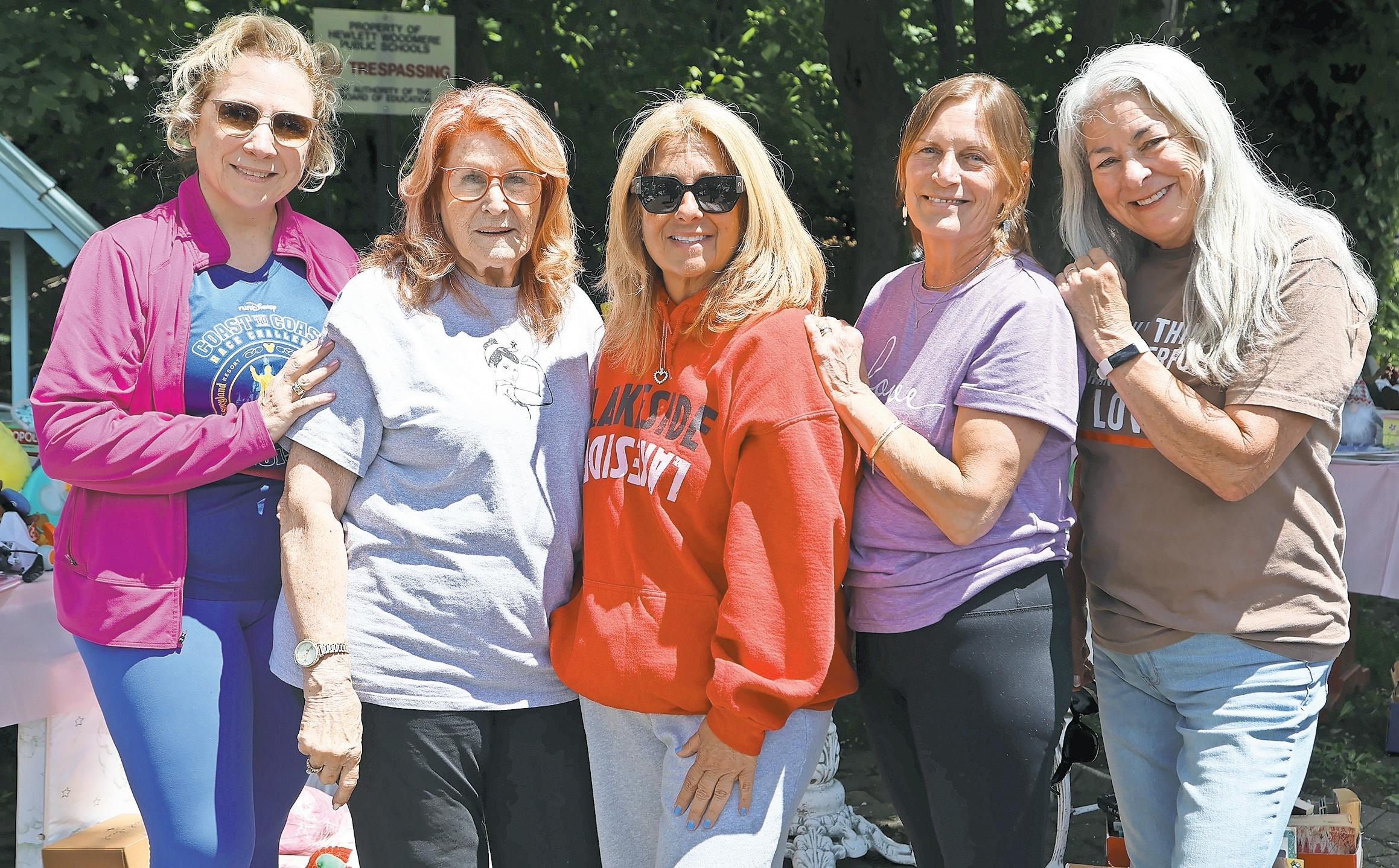
Hewlett House hosted its first garage sale on May 30 from 9:30 a.m. to 4:00 p.m., with support from students and families from the Norman J. Levy Lakeside School in Merrick.
The community staple, known for its support of cancer patients and their families, has partnered with
students from the school since Hewlett House opened in 2000. Funds raised from the garage sale will help cover operational costs, including supplies, wig stands and materials for crochet comfort items donated to hospitals across Long Island, including Mount Sinai South Nassau in
Oceanside, for patients undergoing chemotherapy.
“We get phone calls from all over,” Geri Barish, founder of Hewlett House said. “When people see what we do with the kids, the teachers, the community, I think it’s really important in this day and age.”
— Melissa Berman
Grieco/Herald
Roper Walk pulls in nearly $7K in Hewlett House fundraiser
By CHRIS COLUCCI ccolucci@liherald.com
“Bye, Helen.”
“Great to meet you, Helen.”
“See you next time, Helen.”
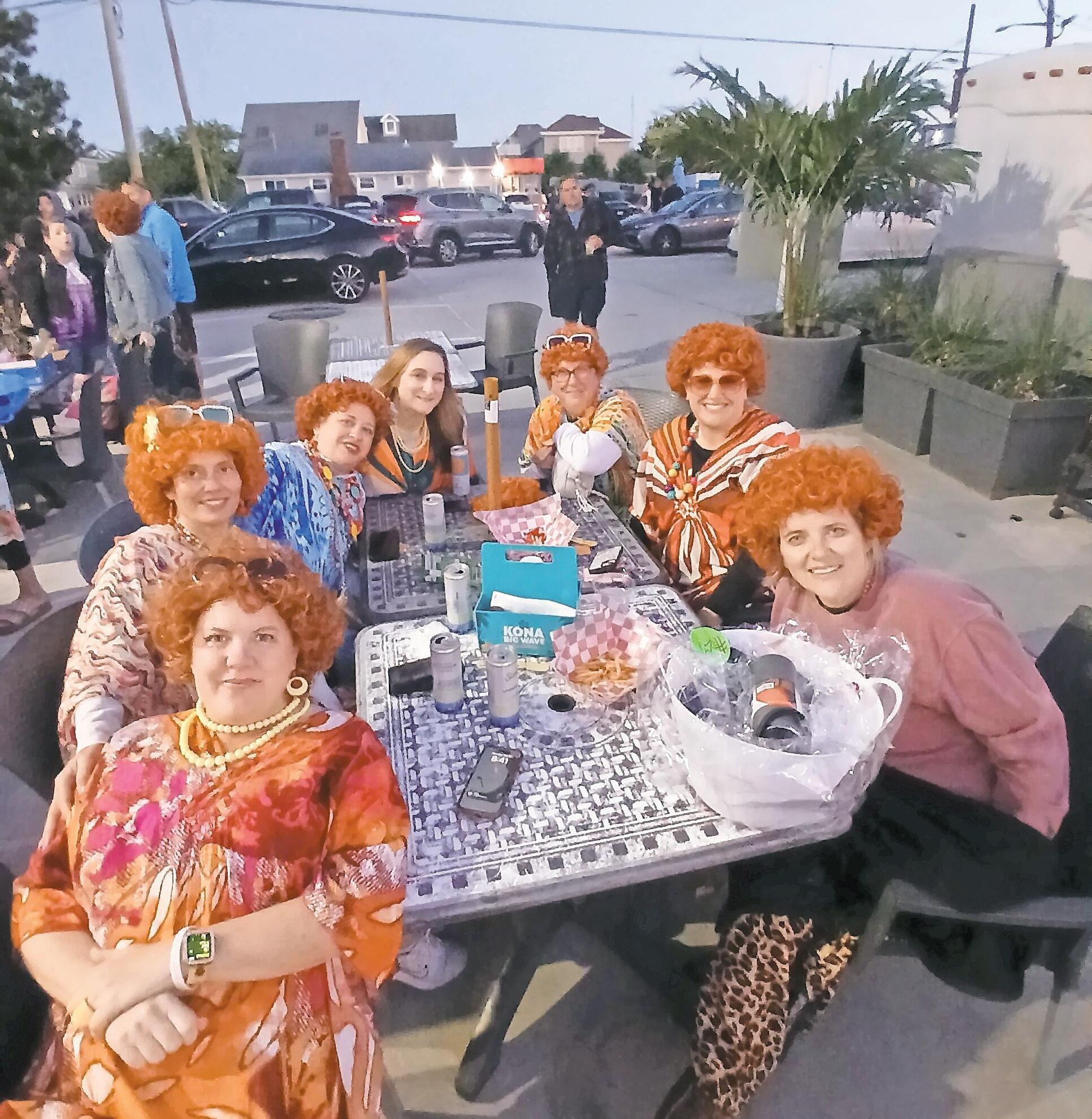
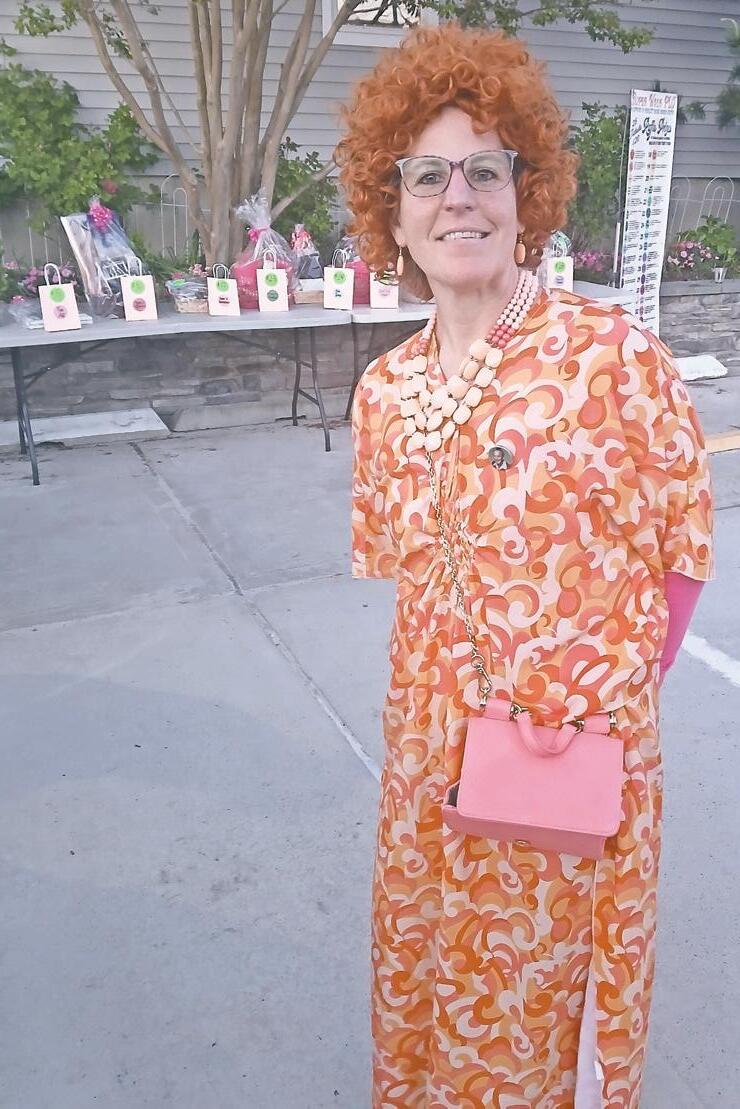
As dozens of disguised participants walked out of Buoy Bar in Point Lookout, they only acknowledged each other in character. At the Roper Walk, everyone in attendance comes dressed as the iconic TV character Helen Roper from the 1970s sitcom “Three’s Company,” and the shortlived spin-off, “The Ropers” — with her iconic caftan dresses and bright redhaired wigs.
Nicole Koenig, a Point Lookout resident and recent breast cancer survivor, arranged the combination dress-up/bar crawl as a dedicated fundraiser for Hewlett House — a nonprofit based in Hewlett which provides physical, moral and emotional support for people going through cancer treatments.
“At our event, all the ladies dress up in caftans and wigs,” said Koenig. “And one of the things that they do at Hewlett House is provide wigs to women who’ve lost their hair. And I thought that was such a beautiful alignment.”
Nearly 200 people showed up for the third annual Roper Walk — up from a few dozen in its first year. The squadron of supporters traveled across Point Lookout, making a total of five stops at bars and restaurants during three-hour event. Door prizes were raffled off at each venue,
with more than 30 grand prizes raffled at the final stop. In total, the event raised close to $7,000 for the charity.
“When people are having a good time and having fun, and they’re together and sharing the interest, and then add the compassion of the issue, that’s what really counts,” said Geri Barish, founder and executive director of Hewlett House. “You just are there to really do something for a great cause and have a good time at the same time.”
Why Long Island stands to gain from clean energy
For many Long Islanders looking ahead, a major cause for concern is the lack of economic investments that bolsters financial opportunity for the next generation. This looks like great paying jobs with benefits while keeping everyday necessary expenses affordable so that they can afford to buy homes and raise their families where they grew up.
Long Island sits at a crossroads, having the opportunity to build an industry that can provide that economic investment, train an entire generation of skilled workers, and give our kids the chance to obtain great paying jobs, all at the same time as stabilizing energy costs. Offshore wind, solar power and battery storage are solutions to those challenges.
Starting With Affordability
Energy costs matter everywhere, but especially on Long Island, where household budgets are already stretched. John Durso, President of the Long Island Federation of Labor, said battery storage can help by leveling demand and reducing

expensive peak pricing.
“When there is a heavy pull, it evens out the energy so you don’t have highs and lows,” Durso said. “You don’t have to pay the higher rate because of the great demand.”
Jobs, Careers and Local Investment
Clean energy is already reshaping the labor market. Construction of offshore wind transmission, solar installations, battery facilities and supporting infrastructure requires everything from electricians, engineers and ironworkers to
experts in law, math and science.
“It’s a wonderful opportunity here for our environment, for jobs, for the future,” Durso said. “We want to create careers.”
Long Island has long watched younger residents leave for more affordable regions or larger job markets. Clean energy advocates say emerging industries can help reverse that pattern.
Safety and Reliability Matter
Battery storage projects have drawn public scrutiny in some
communities, but industry officials say safety standards have significantly evolved to include strict codes, testing and emergency planning.
“These systems are being developed with safety in mind from the start,” said Paul Rogers, a retired FDNY lieutenant and founding principal of Energy Safety Response Group.
Building the Next Long Island Economy
Supporters believe clean energy could become another major chapter — one that combines infrastructure investment with local employment and community stability.
For many residents, that future would be measured not in megawatts, but in whether Long Island remains home.


Chris Colucci / Herald
A cacophony of caftans and wave of wigs took over Point Lookout as the Roper Walk strutted around town.
Block Island Wind Farm, located off the shore of Rhode Island, marked the first commercial offshore wind farm in the U.S. Now, for areas like Long Island, offshore wind is a driving force to clean, affordable energy and a healthy economy.
Celebrating Holocaust Survivor Day at the JCC
By AIDAN WARSHAVSKY awarshavsky@liherald.com
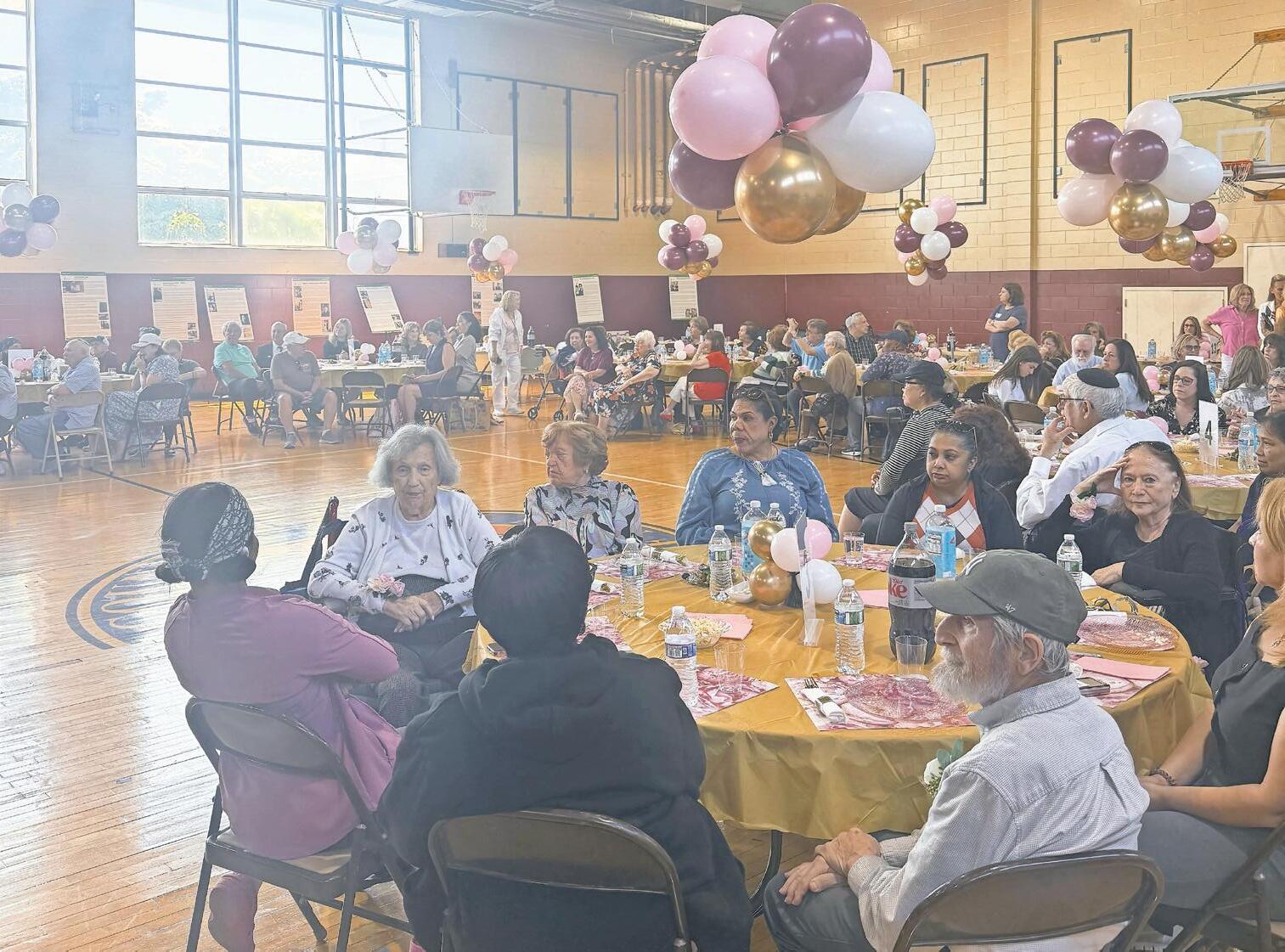
More than 50 Holocaust survivors and their families gathered in Lawrence for a Holocaust Survivor Day luncheon hosted by The Marion & Aaron Gural JCC.
Recognized internationally on June 4, Holocaust Survivor Day focuses on survivors by fostering community and support. Opening the event, Stacy Feldman, the JCC’s director, said an estimated three million Americans are are descendants of Holocaust survivors.
“As we honor you, our beloved survivors, we express our deepest gratitude for your perseverance and for the invaluable lessons you continue to teach us through your lives,” Feldman said.
Next to speak was Gary Kennedy, a retired Geriatric Psychiatrist and guest speaker, who said he attributes his professional career to the resilience of holocaust survivors and their families. He cited his mentor, George Myers, who escaped to the United States with his parents and later became an academic psychiatrist.
“Despite the trauma, it’s an example of how resilient they were and how they were able to achieve and contribute to their community.” Kennedy said.
Among the Holocaust survivors was Regina Goodman. Born Sarah Rivkah Buterwaser in Warsaw, Poland, the Lawrence resident said she was exposed to
the Nazi Regime at a young age. Her father Michoel Goodman, had his beard cut because he was Jewish, she recalls.
Goodman’s family — included her mother, brother and sister — spent time in several locations, including Siberia, Russia, Germany and later Israel. Know-
ing the realities of war, Goodman remained on the move well into her teens.
“We came to Israel in 1949, but when they started to take girls in the army, my mother sent me to Paris,” Goodman said. “I was already sixteen.”
After meeting her husband, Mendel Goodman, a Hungarian fashion designer, in Paris, the two moved to the United States in 1961.
When asked what it meant to uphold Jewish history, Regina Goodman emphasized the importance of passing on the legacy to future generation.
“We should keep up with the religion,” Goodman said. “You need to show the children that you are Jewish and proud.”
Goodman attends a JCC support group every Thursday, where survivors can interact with one another. Like Goodman, Valley Stream resident Suzanne Kucharz said she enjoys the camaraderie the group provides.
As a young girl, Kucharz, 83, grew up on a farm in Grenoble, France, as a hidden child. Her father, Albert Kucharz, was involved in the French Resistance. After spending time in Paris following the Second World War, she eventually found her way to the United States.
“After I graduated the French equivalent of college, my parents gifted me a trip to the us,” Kucharz said. “So, I came on vacation and stayed here.”
Looking back on more than a decade with the group, Kucharz said one of the most rewarding aspects has been connecting with fellow Europeans.
“The amazing thing is we quite often celebrate 100-year birthdays,” Kucharz said. “The resilience is unbelievable.”
Hindi’s Libraries finds a permanent home in Hewlett
By MELISSA BERMAN mberman@liherald.com
After years of operating out of borrowed spaces and relying on a growing network of volunteers, Hindi’s Libraries has found a place to call its own.
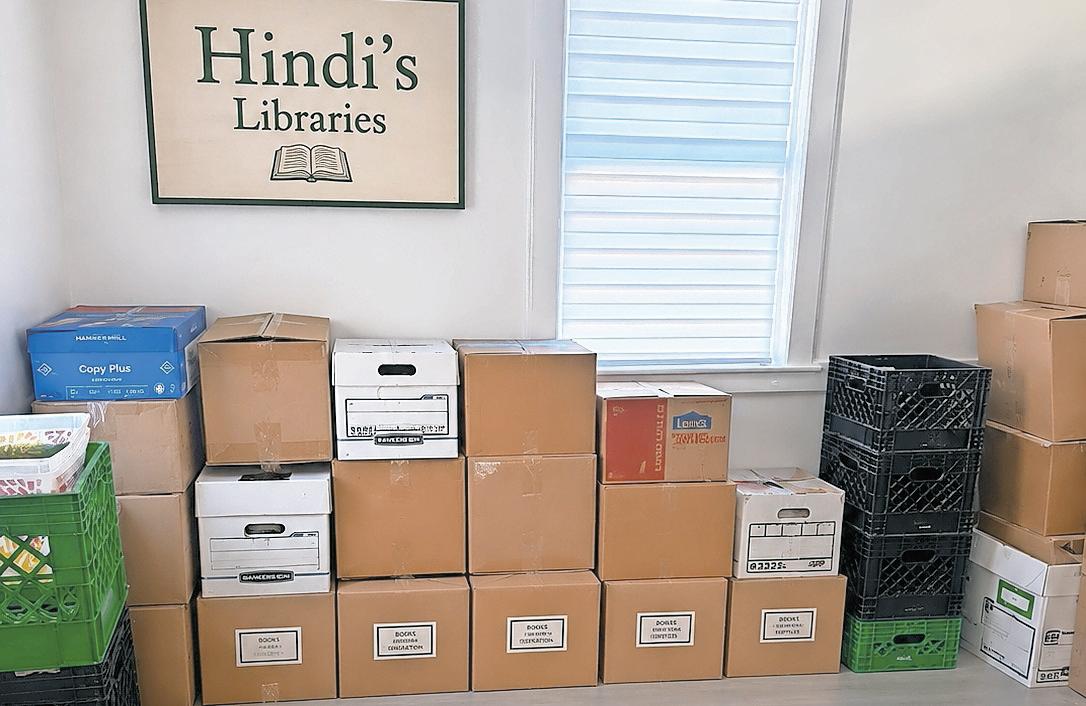
The nonprofit organization, founded in late 2018 following the death of beloved Hebrew Academy of the Five Towns and Rockaway teacher Hindi Krinsky, recently relocated from Cedarhurst to a new headquarters at 15 Ives Road in Hewlett. The move marks a significant milestone for the volunteer-run organization, which has distributed nearly 750,000 books to children and families around the world.
“We really wanted a space to call our own, something that feels more like home and gives us room to grow,” Leslie Gang, co-founder of Hindi’s Libraries wrote in an email. “We needed a place with ample space not only to collect and store books, but also to welcome volunteers, host community groups and hold events.”
The new location is only a few blocks from its previous Cedarhurst site, but the expanded space will allow the organization to better serve its mission of providing free new and gently used children’s books to communities in need.
Hindi’s Libraries was established to honor Krinsky’s memory and continue her passion for literacy and education. Since its inception, the organization has collected, sorted and shipped books to schools, libraries, shelters and community organizations across the United States and throughout the world.
The growth has surpassed anything its founders imagined.
“It’s honestly unbelievable,” Gang wrote. “One moment I’m sitting in Dovid’s [Kanarfogel] kitchen with a piece of paper, sketching out a little library box, and the next we’re approaching 750,000 books distributed and have partnered with more than 1,500 organizations worldwide.”
The organization’s success has been driven largely by support from the Five Towns community. Thousands of volunteers, many of them local students, have
spent countless hours collecting books, organizing donations and preparing shipments.
This time of year, however, presents unique challenges.
“Our largest volunteer group consists of high school students, and many of them are focused on finals, graduation and preparing for college,” Gang wrote.
To help maintain momentum, Hindi’s Libraries has expanded partnerships with local Girl Scout troops and community groups. The organization
currently has 10 book drives taking place across New York and in other states, helping donors connect with recipients in their own communities. Despite its international reach, one fact about Hindi’s Libraries often surprises people.
“We are still 100 percent volunteerrun and have no employees whatsoever,” Gang wrote. “Every dollar we raise through fundraising and donations goes directly toward shipping books and storing inventory.”
That commitment has allowed the organization to maximize the impact of community donations while remaining true to its grassroots origins.
For Krinsky’s husband, Dovid Kanarfogel, the nonprofit continues to fulfill its original purpose: ensuring children have access to books regardless of financial circumstances. Books collected through Hindi’s Libraries are shipped around the globe to support literacy initiatives and provide reading materials to communities that otherwise might not have access to them.
Gang said the organization plans to host a grand opening celebration later this summer once the school year concludes and volunteers have more availability.
“What inspires me most is seeing how much can happen when people come together around a simple idea,” she wrote. “Every book that gets donated, sorted, packed and shipped represents someone taking the time to help another person.”
Aidan Warshavsky/Herald
Over 50 holocaust survivors meet every Thursday at the JCC for a support group, including art and music therapy and guest speakers.
Courtesy Leslie Gang
Hindi’s Libraries, nonprofit organization, founded in late 2018 recently relocated to a new headquarters in Hewlett.
Taking care to the streets
When communities confront homelessness, the conversation often becomes trapped between competing concerns: public safety, housing costs, mental health, addiction and strained social services. But programs that make a real difference recognize a simple truth: Homelessness is both a humanitarian crisis and a public health crisis.
Addressing it requires more than temporary shelter or emergency interventions. It requires meeting people where they are — literally and figuratively. That is what makes street medicine and community outreach programs such powerful and innovative models.
Instead of waiting for vulnerable people to navigate a complicated health care system, outreach teams bring services directly to them. They visit train stations, commuter lots, wooded encampments, shelters and other places where homeless individuals live and gather.
The approach acknowledges a reality often overlooked in policy discussions: People struggling to survive day to day rarely have the ability to prioritize medical appointments, transportation, paperwork or insurance requirements. For many, simply getting through the next 24 hours is challenge enough.
Long Island’s most recent Point-In-Time Count found more than 4,500 unhoused adults and children in Nassau and Suffolk counties, the highest total recorded since 2007.
Behind every statistic is a person facing enormous barriers to proper health and stability. Chronic illnesses often go untreated. Mental health conditions worsen without care. Substance-use disorders become more dangerous. Small medical problems can become life-threatening emergencies.
Traditional systems are often not designed to reach people living in these circumstances. Outreach programs are.
What makes these efforts especially effective is their emphasis on trust. Team members may spend significant time with one person, providing medical evaluations, wellness education, supplies, referrals and, perhaps most important, human connection. People who often feel ignored, judged or invisible are treated with dignity and respect.
That trust-building is not a “soft” benefit. It is the foundation of successful intervention. People who trust service providers are more likely to seek treatment, follow medical advice, complete paperwork and engage with housing services. Those relationships can become the bridge that leads someone from instability to recovery and ultimately to permanent housing.
The results of street medicine programs across Long Island and the nation demonstrate the value of this approach. People have been connected to urgent medical care, chronic conditions have been managed before they became emergencies, and individuals have been guided into stable
L E tt ER to t HE ED ito R
housing. While the numbers may seem modest compared with the scale of the crisis, they represent something larger: individualized, community-based care that works.
Housing itself is a public health issue. Stable housing improves physical health, mental wellbeing, medication compliance and overall quality of life. Yet obtaining housing often requires medical evaluations and documentation that many homeless people struggle to access. Outreach teams help bridge that gap.
These programs also serve as a reminder that homelessness can happen to anyone. Job loss, illness, family breakdown, disability or financial hardship can push an individual into crisis. People do not choose homelessness, yet they are often judged as though they did.
Compassion alone will not solve homelessness. Neither will enforcement alone. Communities need practical, scalable solutions that combine health care, housing support and human connection.
Street medicine and community-based outreach programs are proving that such solutions exist. As homelessness continues to rise, communities should look closely at these models and invest in expanding them. If society wants to help people move off the streets, it cannot wait for them to come through the door. Sometimes the most effective solution is to bring the door to them.

dr. ravi gupta
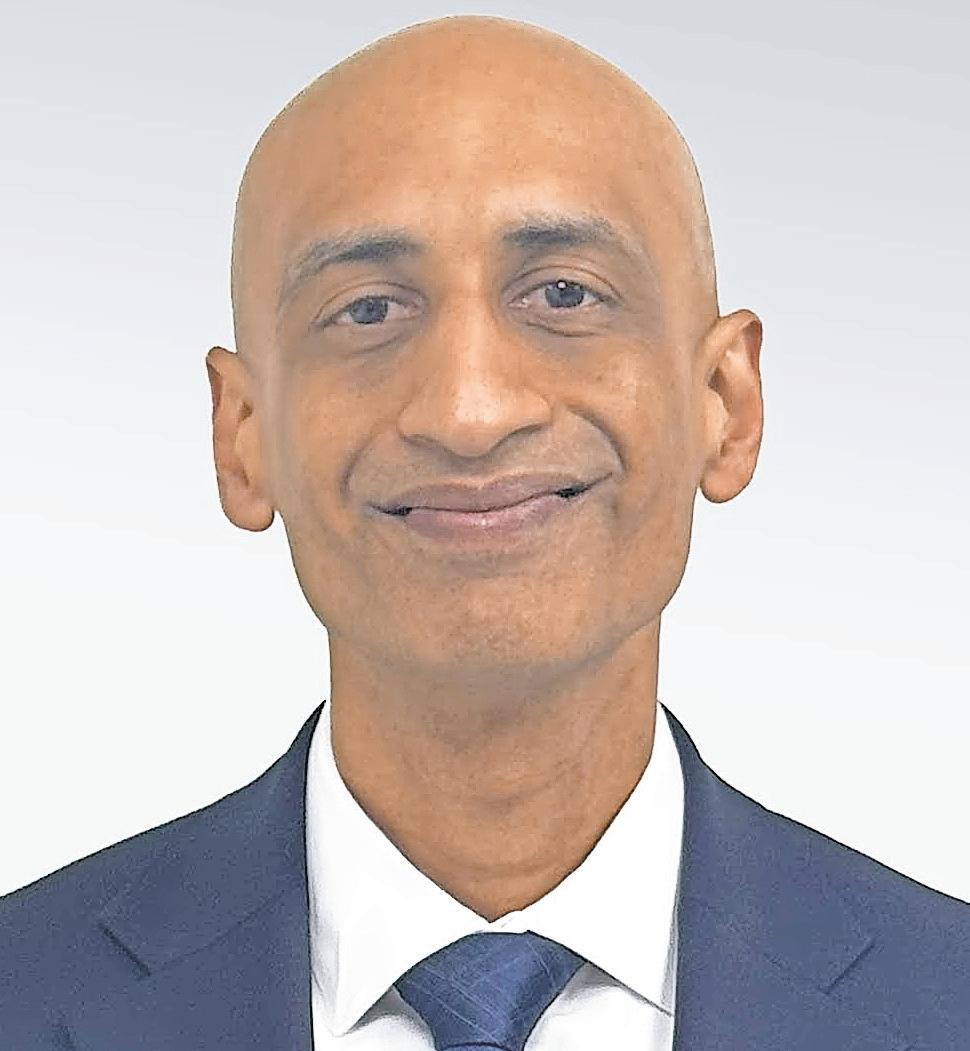
Emphasizing the importance of men’s health in June
By MELISSA BERMAN mberman@liherald.com
Q: Tell me about yourself.
Gupta Dr. Ravi Gupta, chair and residency director of the Department of Medicine at Episcopal Health Services joined Episcopal Health Services earlier this year after serving in several leadership positions at NYU Langone Hospital–Suffolk, Mount Sinai and Lutheran Medical Center/ NYU Langone Hospital–Brooklyn. I bring nearly 25 years of experience in academic medicine, physician leadership and graduate medical education. I started my career at SUNY Downstate, where I attended medical school, and then I completed my residency and chief residency at Brown University in Rhode Island. I
stayed on there as a faculty member and associate program director, where I worked closely with medical students and residents while helping lead inpatient medical services.
Q: Why is it important to recognize Men’s Health Awareness Month?
Gupta : “It’s critically important because men are generally much less likely to seek preventative and primary care. Many men don’t engage proactively with physicians, and that leads to poorer health outcomes. Gupta explained that many serious health conditions affecting men — including heart disease, diabetes, hypertension and prostate cancer — are far more manageable when identified early. Routine screenings, regular primary care visits and pay-
ing attention to changes in your health can make a significant difference in both quality of life and long-term outcomes. Preventive care is one of the most important steps men can take to protect their health.
Q: Why do many men avoid going to the doctor?
Gupta: Social stigma and cultural expectations often prevent men from seeking care.
A lot of men feel that asking for help makes them appear weak. There’s a belief that they should push through pain or deal with issues on their own. He added that mental health concerns are especially underreported among men. Many men silently struggle with stress, anxiety, depression or substance use issues without speaking to a healthcare professional. Unfortunately, delaying care can lead to much more serious health problems later on.
Q: What are simple ways men can improve their health?
Gupta: Gupta emphasized the importance of establishing care with a primary care physician and scheduling annual physicals and preventive screenings. At the most basic level, men should use the healthcare resources available to them. He encouraged men to regularly monitor
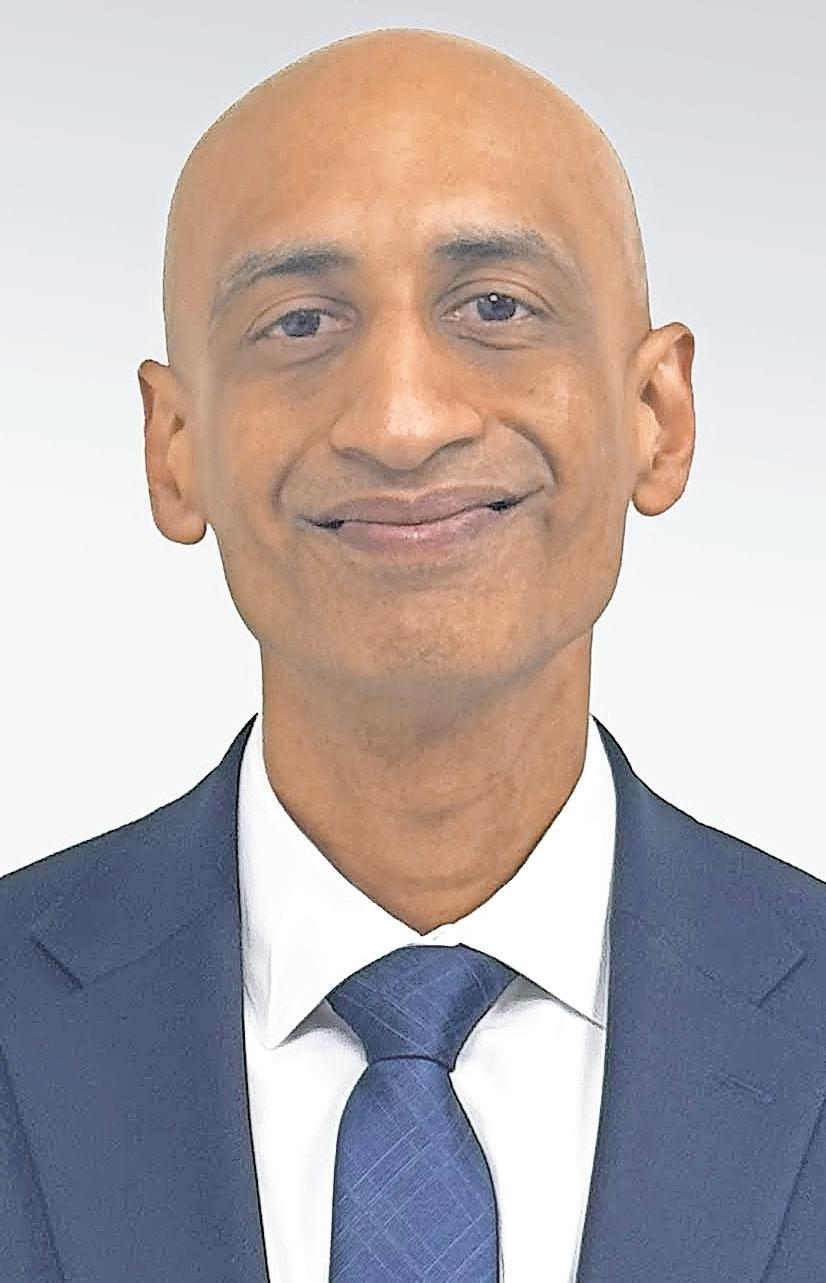
Dr. Ravi Gupta, Chair and Residency
blood pressure, cholesterol and blood sugar levels, since heart disease, hypertension and diabetes remain some of the most common conditions affecting men. Gupta also stressed the importance of maintaining a healthy diet rich in fruits, vegetables, lean proteins and whole grains, along with regular physical activity, quality sleep and stress management. Men often ignore symptoms that shouldn’t be ignored,” he said.
BELMONT PARK VILLAGE
Canzoneri-Fitzpatrick and Brown are silent on Israel
To the Editor:
In a pair of opinion pieces in the May 28-June 3 issue of the Herald, Assemblyman Ari Brown (“New York’s radical mobs are testing America’s spine”) and State Sen. Patricia Canzoneri-Fitzpatrick (“Our state must do more to combat antisemitism”) deplored the rise in antisemitism locally, nationally and globally. The two legislators called for stronger measures to protect Jews from harassment and the threat, or actuality, of violence.
No New Yorker of goodwill would oppose such protective efforts or deny that hatred of Jews is growing and spreading. It must also be acknowledged that Hamas is a terrorist organization that committed unspeakable atrocities in murdering 1,200 Israelis on
Oct. 7, 2023.
But neither Brown nor Canzoneri-Fitzpatrick offers the slightest criticism of the Israeli government’s military response to Hamas’s barbarism. And silence on this score is used by bigots to assert — falsely — that all Jews are complicit in the slaughter of Muslims.
Reputable sources, including the Israel Defense Forces, confirm that Israel has killed over 70,000 Palestinians in Gaza in the past two and a half years. That toll is known to include several thousand children and hundreds of humanitarian workers.
In addition, Israel has killed more than 3,000 civilians in Lebanon in the past few months in retaliation for Hezbollah terrorist attacks that have taken the lives of about 100 Israelis.
The relentless, merciless and disproportionate response on Israel’s part has caused support for the Jewish state to plummet in the U.S. and worldwide.
Only 37 percent of Americans now view Israel favorably, according to a Pew Research Center poll. Sympa-
thy for Palestinians has risen correspondingly. Anti-Israel sentiments do sometimes take the form of antisemitism. But most U.S. activists, including the many Jews who denounce the actions of Prime Minister Benjamin Netanyahu’s government, cannot be fairly accused of religious or ethnic bigotry.
Influential figures like Brown and Canzoneri-Fitzpatrick are not helping shield Jews by ignoring the causes of Israel’s isolation. They also ought to be pointing out that Israel’s security will not be enhanced through endless warfare that gives rise to new generations of Palestinian militants.
The cycle of hate, death and destruction is certain to continue until Israelis and Palestinians work cooperatively toward a two-state solution.
KEvIN J. KELLEY
Atlantic Beach
Editors’ note: Ari Brown’s and Patricia Canzoneri-Fitzpatrick’s op-eds did not appear in all print editions of the Herald, but can be found at liherald.com.

“It’s not normal to constantly be in pain or experience worsening symptoms over time. He also advised men to avoid smoking and limit alcohol consumption to improve cardiovascular and overall health.
Q: Why should men’s health be highlighted in the media?
Gupta: Increasing awareness can help normalize preventive care and encourage more men to take ownership of their health. We need to make men feel engaged in the process of their own healthcare. Too often, someone else in the family is encouraging them to go to the doctor or schedule appointments. Gupta said Episcopal Health Services continues expanding primary and preventive care services throughout the Far Rockaway region to improve access for residents. We hope that by expanding services and increasing access to providers, we can have a real impact on the health of the community. To learn more about Primary Care services available through Episcopal Health Services or to schedule an appointment, call 718-EHSDOCS (347-3627) or visit ehs. org/services/primary-care/.
Just off the Cross Island Parkway, shop designer fashion finds from Coach, lululemon, Valentino, and more, at up to 65% off every day.
Dine at award-winning restaurants, stroll through pedestrian-only streets, and turn a quick trip into a day’s escape.

Courtesy Episcopal Health Services
Taking care to the streets
When communities confront homelessness, the conversation often becomes trapped between competing concerns: public safety, housing costs, mental health, addiction and strained social services. But programs that make a real difference recognize a simple truth: Homelessness is both a humanitarian crisis and a public health crisis.
Addressing it requires more than temporary shelter or emergency interventions. It requires meeting people where they are — literally and figuratively. That is what makes street medicine and community outreach programs such powerful and innovative models.
Instead of waiting for vulnerable people to navigate a complicated health care system, outreach teams bring services directly to them. They visit train stations, commuter lots, wooded encampments, shelters and other places where homeless individuals live and gather.
The approach acknowledges a reality often overlooked in policy discussions: People struggling to survive day to day rarely have the ability to prioritize medical appointments, transportation, paperwork or insurance requirements. For many, simply getting through the next 24 hours is challenge enough.
Long Island’s most recent Point-In-Time Count found more than 4,500 unhoused adults and children in Nassau and Suffolk counties, the highest total recorded since 2007.
Behind every statistic is a person facing enormous barriers to proper health and stability. Chronic illnesses often go untreated. Mental health conditions worsen without care. Substance-use disorders become more dangerous. Small medical problems can become life-threatening emergencies.
Traditional systems are often not designed to reach people living in these circumstances. Outreach programs are.
What makes these efforts especially effective is their emphasis on trust. Team members may spend significant time with one person, providing medical evaluations, wellness education, supplies, referrals and, perhaps most important, human connection. People who often feel ignored, judged or invisible are treated with dignity and respect.
That trust-building is not a “soft” benefit. It is the foundation of successful intervention. People who trust service providers are more likely to seek treatment, follow medical advice, complete paperwork and engage with housing services. Those relationships can become the bridge that leads someone from instability to recovery and ultimately to permanent housing.
The results of street medicine programs across Long Island and the nation demonstrate the value of this approach. People have been connected to urgent medical care, chronic conditions have been managed before they became emergencies, and individuals have been guided into stable
L E tt ER to t HE ED ito R
housing. While the numbers may seem modest compared with the scale of the crisis, they represent something larger: individualized, community-based care that works.
Housing itself is a public health issue. Stable housing improves physical health, mental wellbeing, medication compliance and overall quality of life. Yet obtaining housing often requires medical evaluations and documentation that many homeless people struggle to access. Outreach teams help bridge that gap.
These programs also serve as a reminder that homelessness can happen to anyone. Job loss, illness, family breakdown, disability or financial hardship can push an individual into crisis. People do not choose homelessness, yet they are often judged as though they did.
Compassion alone will not solve homelessness. Neither will enforcement alone. Communities need practical, scalable solutions that combine health care, housing support and human connection.
Street medicine and community-based outreach programs are proving that such solutions exist. As homelessness continues to rise, communities should look closely at these models and invest in expanding them. If society wants to help people move off the streets, it cannot wait for them to come through the door. Sometimes the most effective solution is to bring the door to them.
dr. ravi gupta
Emphasizing the importance of men’s health in June
By MELISSA BERMAN mberman@liherald.com
Q: Tell me about yourself.
Gupta Dr. Ravi Gupta, chair and residency director of the Department of Medicine at Episcopal Health Services joined Episcopal Health Services earlier this year after serving in several leadership positions at NYU Langone Hospital–Suffolk, Mount Sinai and Lutheran Medical Center/ NYU Langone Hospital–Brooklyn. I bring nearly 25 years of experience in academic medicine, physician leadership and graduate medical education. I started my career at SUNY Downstate, where I attended medical school, and then I completed my residency and chief residency at Brown University in Rhode Island. I
stayed on there as a faculty member and associate program director, where I worked closely with medical students and residents while helping lead inpatient medical services.
Q: Why is it important to recognize Men’s Health Awareness Month?
Gupta : “It’s critically important because men are generally much less likely to seek preventative and primary care. Many men don’t engage proactively with physicians, and that leads to poorer health outcomes. Gupta explained that many serious health conditions affecting men — including heart disease, diabetes, hypertension and prostate cancer — are far more manageable when identified early. Routine screenings, regular primary care visits and pay-
ing attention to changes in your health can make a significant difference in both quality of life and long-term outcomes. Preventive care is one of the most important steps men can take to protect their health.
Q: Why do many men avoid going to the doctor?
Gupta: Social stigma and cultural expectations often prevent men from seeking care.
A lot of men feel that asking for help makes them appear weak. There’s a belief that they should push through pain or deal with issues on their own. He added that mental health concerns are especially underreported among men. Many men silently struggle with stress, anxiety, depression or substance use issues without speaking to a healthcare professional. Unfortunately, delaying care can lead to much more serious health problems later on.
Q: What are simple ways men can improve their health?
Gupta: Gupta emphasized the importance of establishing care with a primary care physician and scheduling annual physicals and preventive screenings. At the most basic level, men should use the healthcare resources available to them. He encouraged men to regularly monitor
Dr. Ravi Gupta, Chair and Residency
blood pressure, cholesterol and blood sugar levels, since heart disease, hypertension and diabetes remain some of the most common conditions affecting men. Gupta also stressed the importance of maintaining a healthy diet rich in fruits, vegetables, lean proteins and whole grains, along with regular physical activity, quality sleep and stress management. Men often ignore symptoms that shouldn’t be ignored,” he said.
BELMONT PARK VILLAGE
Canzoneri-Fitzpatrick and Brown are silent on Israel
To the Editor:
In a pair of opinion pieces in the May 28-June 3 issue of the Herald, Assemblyman Ari Brown (“New York’s radical mobs are testing America’s spine”) and State Sen. Patricia Canzoneri-Fitzpatrick (“Our state must do more to combat antisemitism”) deplored the rise in antisemitism locally, nationally and globally. The two legislators called for stronger measures to protect Jews from harassment and the threat, or actuality, of violence.
No New Yorker of goodwill would oppose such protective efforts or deny that hatred of Jews is growing and spreading. It must also be acknowledged that Hamas is a terrorist organization that committed unspeakable atrocities in murdering 1,200 Israelis on
Oct. 7, 2023.
But neither Brown nor Canzoneri-Fitzpatrick offers the slightest criticism of the Israeli government’s military response to Hamas’s barbarism. And silence on this score is used by bigots to assert — falsely — that all Jews are complicit in the slaughter of Muslims.
Reputable sources, including the Israel Defense Forces, confirm that Israel has killed over 70,000 Palestinians in Gaza in the past two and a half years. That toll is known to include several thousand children and hundreds of humanitarian workers.
In addition, Israel has killed more than 3,000 civilians in Lebanon in the past few months in retaliation for Hezbollah terrorist attacks that have taken the lives of about 100 Israelis.
The relentless, merciless and disproportionate response on Israel’s part has caused support for the Jewish state to plummet in the U.S. and worldwide.
Only 37 percent of Americans now view Israel favorably, according to a Pew Research Center poll. Sympa-
thy for Palestinians has risen correspondingly. Anti-Israel sentiments do sometimes take the form of antisemitism. But most U.S. activists, including the many Jews who denounce the actions of Prime Minister Benjamin Netanyahu’s government, cannot be fairly accused of religious or ethnic bigotry.
Influential figures like Brown and Canzoneri-Fitzpatrick are not helping shield Jews by ignoring the causes of Israel’s isolation. They also ought to be pointing out that Israel’s security will not be enhanced through endless warfare that gives rise to new generations of Palestinian militants.
The cycle of hate, death and destruction is certain to continue until Israelis and Palestinians work cooperatively toward a two-state solution.
KEvIN J. KELLEY
Atlantic Beach
Editors’ note: Ari Brown’s and Patricia Canzoneri-Fitzpatrick’s op-eds did not appear in all print editions of the Herald, but can be found at liherald.com.
“It’s not normal to constantly be in pain or experience worsening symptoms over time. He also advised men to avoid smoking and limit alcohol consumption to improve cardiovascular and overall health.
Q: Why should men’s health be highlighted in the media?
Gupta: Increasing awareness can help normalize preventive care and encourage more men to take ownership of their health. We need to make men feel engaged in the process of their own healthcare. Too often, someone else in the family is encouraging them to go to the doctor or schedule appointments. Gupta said Episcopal Health Services continues expanding primary and preventive care services throughout the Far Rockaway region to improve access for residents. We hope that by expanding services and increasing access to providers, we can have a real impact on the health of the community. To learn more about Primary Care services available through Episcopal Health Services or to schedule an appointment, call 718-EHSDOCS (347-3627) or visit ehs. org/services/primary-care/.
Just off the Cross Island Parkway, shop designer fashion finds from Coach, lululemon, Valentino, and more, at up to 65% off every day.
Dine at award-winning restaurants, stroll through pedestrian-only streets, and turn a quick trip into a day’s escape.
Courtesy Episcopal Health Services











Richard Kessel appointed the new chair of NHCC
By JORDAN VALLONE jvallone@liherald.com
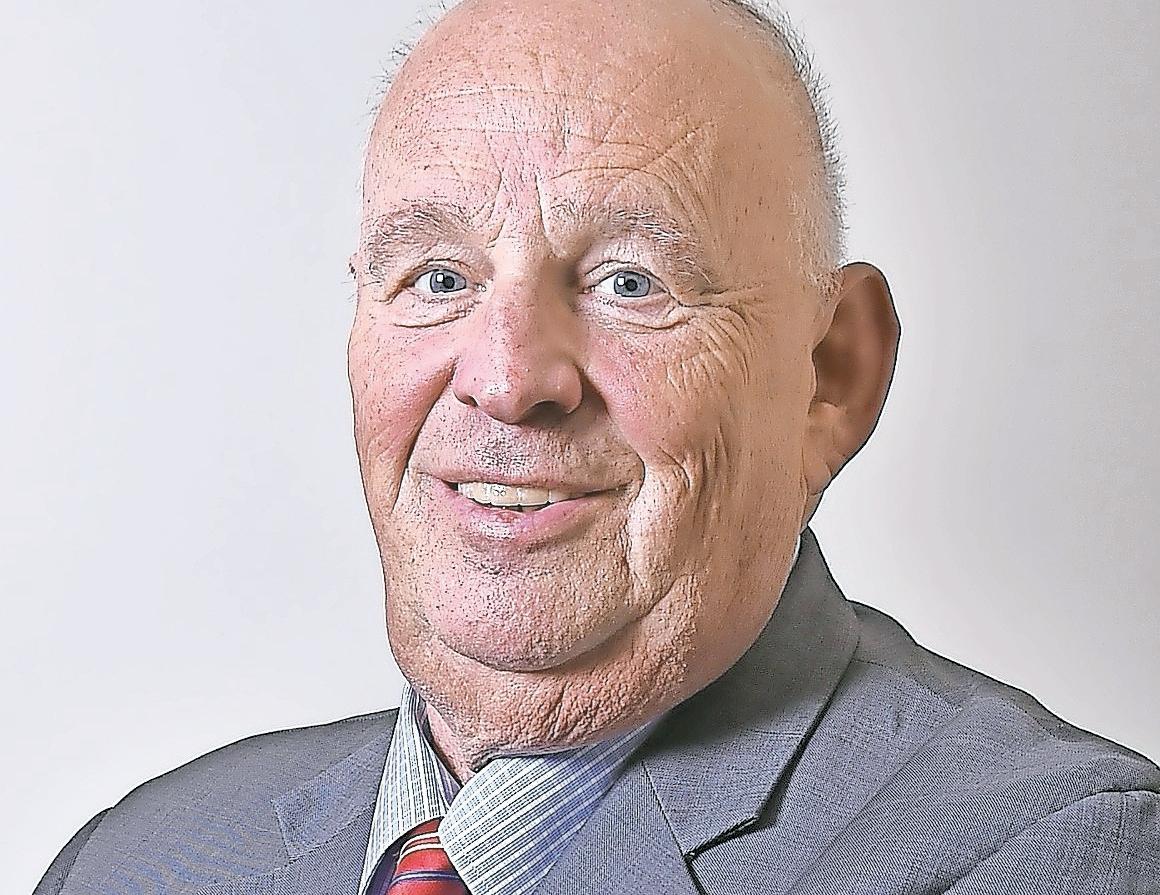
Richard Kessel, chairman of the Nassau Interim Finance Authority, has been tapped by Gov. Kathy Hochul to be the next chairman of the Nassau Health Care Corporation, the public benefit corporation that oversees Nassau University Medical Center, in East Meadow, and the A. Holly Patterson Extended Care Facility, in Uniondale.
A regional leader for decades, Kessel, of Merrick, is known for his expertise on energy and consumer issues and has an extensive background in public service. He previously served as chairman of the Nassau County Industrial Development Agency and as chief executive officer of the New York Power Authority. Kessel, 76, has a bachelor’s degree from New York University and a master’s from Columbia University.
“Richard Kessel brings decades of leadership experience in government, public policy and complex organizations,” Hochul said of Monday’s appointment in a statement emailed to the Herald. “His proven record of public service, commitment to Long Island and ability to navigate challenging issues make him exceptionally well-suited to lead the board as NHCC continues its mission of providing high-quality care to the communities we serve.”
Kessel’s appointment to the NHCC board means he will step down from NIFA. His position there will be filled by Moshin Meghji, a current NIFA board member.
The finance authority, another public benefit corporation, monitors and oversees Nassau County’s finances. It assumed direct financial oversight of NUMC in 2020, a move that was met with heavy opposition from previous hospital leadership. As part of the state’s takeover last year, it mandated that NHCC conduct
Leadership change at NHCC
• New chairman: Gov. Kathy Hochul appointed Richard Kessel, chairman of the Nassau Interim Finance Authority, to lead the Nassau Health Care Corporation.
• Leadership change: Kessel succeeds Stuart Rabinowitz, who stepped down in March after leading NHCC since June 2025.
a comprehensive study outlining the longterm viability of NUMC. The study is to be submitted to NIFA by Dec. 1.
The NHCC chair’s position has been vacant since March, when former Chairman Stuart Rabinowitz stepped down. Rabinowitz had served in the role since June 2025, after being appointed by Hochul when state officials assumed leadership of the public hospital and its governing body.
Rabinowitz’s departure came during a turbulent period for NUMC. Following a public battle between the hospital’s former leadership and the state, New York assumed oversight of the hospital under provisions included in the 2025-26 state budget. The board was restructured to include 11 members, most of whom were appointed by Hochul.
When Rabinowitz stepped down, Hochul thanked him for his service, saying he “stepped up when Nassau University Medical Center desperately needed steady, serious leadership.” She added that “his focus on accountability and fiscal management has helped put this critical safety-net hospital on the road to recovery.”
BUY HOUSES for Cash AS IS! No repairs. No fuss. Any condition. Easy three step process: Call, get cash offer and get paid. Get your fair cash offer today by calling Liz Buys Houses: 1-888-704-5670
tions, 45 Year Family Business. Licensed and Bonded, Immediate Cash Paid. SYL-LEE ANTIQUES www.syl-leeantiques.com 516-671-6464
DRIVERS WANTED
Full Time and Part Time Positions Available! Busy Print
to careers@liherald.com or Call (516)569-4000 x239
EDITOR/REPORTER
Part Time & Full Time. The award-winning Herald Community Newspapers group, covering Nassau County's North and South Shores with hard-hitting news stories and gracefully written features, seeks a motivated, energetic and creative editor/reporter to join our dynamic (and awesome) team! This education and general assignment reporting position offers a unique experience to learn from some of the best in the business. Historically, reporters who have launched their careers with us have gone on to The New York Times, Newsweek, Newsday, the New York Daily News, New York Post, CNN, BBC, NBC News and The Daily Mail, among many others. We look for excellent writers who are eager to learn, enhance their skills, and become well-established and respected journalists in our industry. Salary range is from $20K to $45K
To apply: Send a brief summary in the form of a cover letter describing your career goals and what strengths you can bring to our newsroom, along with a resume and three writing samples to jbessen@liherald.com
MAILROOM/ WAREHOUSE HELP
Long Island Herald has IMMEDIATE openings for a FULL-TIME & PART-TIME mailroom/warehouse helper in Garden City. We are a busy print shop looking for motivated and reliable individuals to assist in various duties in the shop. Forklift experience is a plus and heavy lifting is required. Hours vary, so flexibility is key. Salary Ranges from $17 per hour to $20 per hour. Email resumes or contact info to careers@liherald.com
MULTI MEDIA ACCOUNT DEVELOPMENT Inside Sales
Looking for an aggressive self starter who is great at making and maintaining relationships and loves to help businesses grow by marketing them on many different advertising platforms. You will source new sales opportunities through inbound lead follow-up and outbound cold calls. Must have the ability to understand customer needs and requirements and turn them in to positive advertising solutions. We are looking for a talented and competitive Inside Sales Representative that thrives in a quick sales cycle environment. Compensation ranges from $35,360 + commissions and bonuses to over $100,000 including commission and bonuses. We also offer health benefits, 401K and paid time off. Please send cover letter and resume with salary requirements to ereynolds@liherald.com Call 516-569-4000 X286
CONSUMER CELLULAR - the same reliable, nationwide coverage as the largest carriers. No long-term contract, no hidden fees and activation is free. All plans feature unlimited talk and text, starting at just $20/month.
Call 1-877-318-7982
BEAUTIFUL BATH UPDATES in as little as ONE DAY! Superior quality bath and shower systems at AFFORDABLE PRICES! Lifetime warranty & professional installs. Call Now! 1-877-271-0003
DO YOU KNOW what's in your water?
Leaf Home Water Solutions offers FREE water testing and whole home water treatment systems that can be installed in as little one day. 15% off your entire purchase. Plus 10% senior & military discounts. Restrictions apply. Schedule your FREE test today. Call 1-866-247-5728
PREPARE FOR POWER outages today with a Generac Home Standby Generator. Act now to receive a FREE 5-Year warranty with qualifying purchase. Call 1-877-516-1160 today to schedule a free quote. It's not just a generator. It's a power move.
PREPARE FOR POWER outages with Briggs & Stratton® PowerProtect(TM) standby generators - the most powerful home standby generators available. Industry-leading comprehensive warranty - 7 years ($849 value.) Proudly made in the U.S.A. Call Briggs & Stratton 1-888-605-1496
SAFE STEP. NORTH America's #1 WalkIn Tub. Comprehensive lifetime warranty. Top-of-the-line installation and service. Now featuring our FREE shower package and $1600 Off for a limited time! Call today! Financing available. Call Safe Step 1-855-916-5473
GET BOOST INFINITE! Unlimited Talk, Text and Data For Just $25/mo! The Power Of 3 5G Networks, One Low Price! Call Today and Get The Latest iPhone Every Year On Us! 844-329-9391
PEST CONTROL: PROTECT YOUR HOME from pests safely and affordably. Roaches, Bed Bugs, Rodent, Termite, Spiders and other pests. Locally owned and affordable. Call for service or an inspection today! 1-877-290-0023 Have zip code of property ready when calling!





Herald file
Richard Kessel


At Mount Sinai South Nassau, patient safety isn’t just a priority— it’s a standard, one we work on every day. And the experts agree.
We’ve earned national recognition for patient safety, including an “A” Hospital Safety Grade from The Leapfrog Group and the Healthgrades Patient Safety Excellence Award.
That means better outcomes for our patients with lower risk of infections or hospital acquired conditions.
When it comes to your health, nothing matters more than knowing you’re in a place where patient safety matters most.
Learn more at mountsinai.org/southnassau