
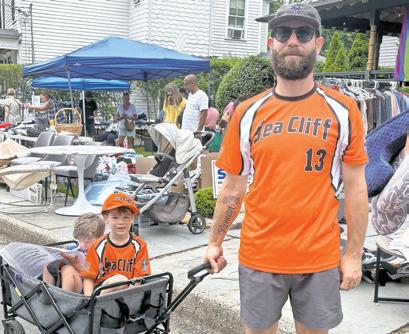
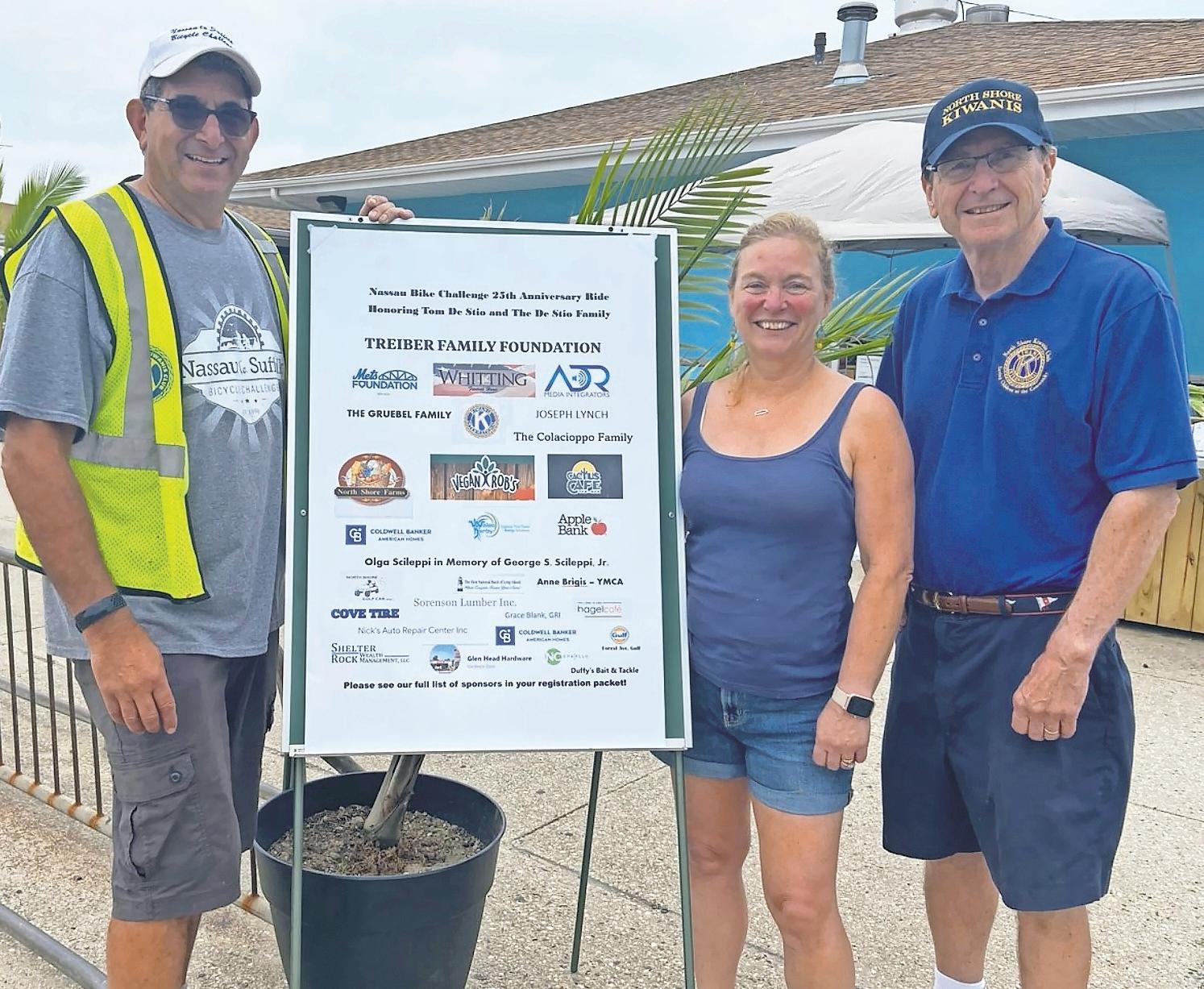
Courtesy North Shore Kiwanis Club
The challenge, formerly known as the Nassau-to-Suffolk Bicycle Challenge, now focuses exclusively on Nassau County. Riders can choose between a 25-mile route or a more demanding one that’s 10 miles longer.

Courtesy North Shore Kiwanis Club
The challenge, formerly known as the Nassau-to-Suffolk Bicycle Challenge, now focuses exclusively on Nassau County. Riders can choose between a 25-mile route or a more demanding one that’s 10 miles longer.
By RoKSANA AMID ramid@liherald.com
For three decades, cyclists have gathered at Harry Tappen Beach, in Sea Cliff to ride the winding roads of Long Island’s North Shore while raising money for children in need.
The Nassau Bicycle Challenge will celebrate its 30th anniversary on June 28, bringing riders of all ages and skill levels together for a community event that has raised more than $325,000 for children’s charities since its founding in 1997. Proceeds benefit the Kiwanis Club of North Shore Foundation, a nonprofit that supports programs including the Kiwanis Pediatric Trauma Center at Cohen Children’s Medical Center,
the Pediatric Lyme Disease Foundation, Kamp Kiwanis, Nosh Delivers and other youth-focused initiatives.
The ride began as a personal mission for Thomas DeStio, a Sea Cliff resident and longtime Kiwanis member. His son, Tommy, was born prematurely in 1996 with serious health complications, and spent time in the critical care unit at what is now the Kiwanis Pediatric Trauma Center in New Hyde Park.
“He was very premature, and the kid was really in bad shape,” DeStio recalled. “The only way I could come up with something to help was to create the bike ride.”
An avid long-distance cyclist who had taken part in endurance rides across the country, DeStio saw an opportunity to com-

Now is the perfect time to review your coverage
Scan to receive a personal quote from us (English and Spanish)

By JUlIA CAPITEllI jcapitelli@liherald.com
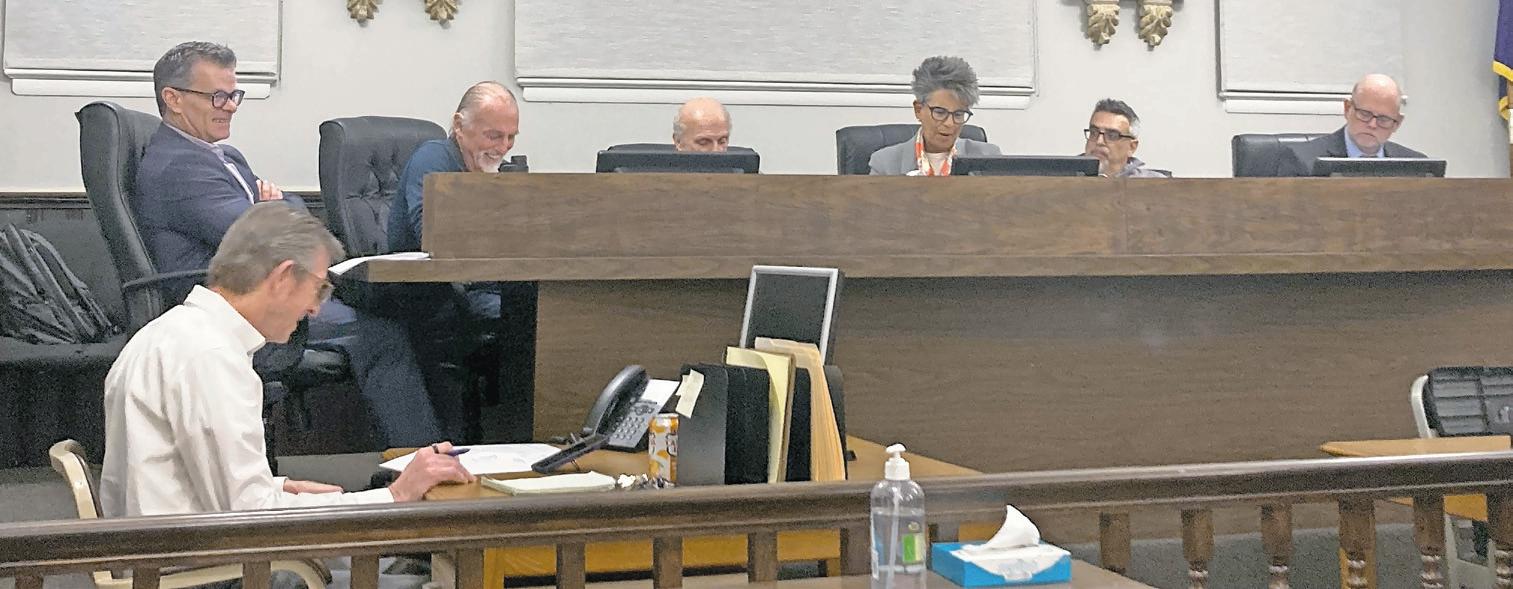
Tensions rose at the Sea Cliff Board of Trustees meeting Monday night as residents requested answers to questions about recycling and further consideration of village-led composting.
Mayor Elena Villafane and trustees presented logistical challenges to a composting program and expressed a need for more information.
Roughly 40 residents remained for the duration of discussions surrounding composting, with several speaking in support of a village-wide composting initiative.
l et’s work on it together and figure out the next steps.
JAMES VERSoCKI, Village trustee
Resident Amy Marion expressed a concern that residents’ recycling is not actually being recycled because the Town of Brookhaven Landfill no longer has a single-stream recycling program.
“I’m not just saying this is a village problem, but this is a national problem, right?” Marion said. “I think everybody is finding out that it’s a scam and it’s a sham.”
Sea Cliff uses a singlestream system, meaning residents may place paper, cardboard, glass, plastic and metal cans in the same bin for collection. Recycling is then transported to the Winter Bros. Transfer Station in Glen Cove to be sorted. Villafane said that Winter Bros. has told the village recycling is being recycled. The village has been unable for several years to get more than 18% of residents to recycle. Marion argued that composting would be fiscally beneficial for the village because it would reduce the overall municipal solid waste, or all garbage in Sea Cliff, and therefore reduce tipping fees. A tipping fee is an amount charged by a waste processing facility for a quantity of waste.
Ten Sea Cliff families have been participating in a community composting program run by Laura Russo, former cochair of the village’s Environmental Conservation Committee, and current Chair Fred Black. Participating families collect compostable materials
CoNTiNued oN page 6
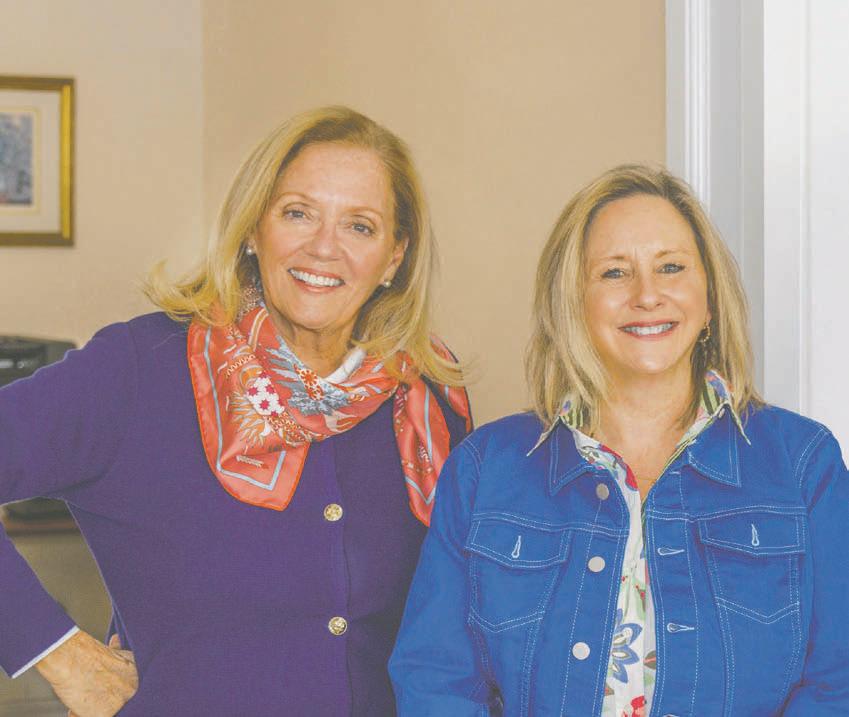









By JULIA CAPITELLI jcapitelli@liherald.com
More than $90,000 were raised at this year’s Pride for Youth gala. Pride with Purpose: A Benefit for PFY & the LGBTQ+ Community sold out on Thursday, bringing roughly 255 people to the event at the Westbury Manor. Veteran and congressional candidate Chris Gallant was honored at the gala.
The nonprofit offers many programs and services to support the LGBTQ+ community including legal support, counseling, sexual health services and gender affirming services. PFY Director Tawni Engel said Monday that the turnout and the amount of money raised for the organization were unprecedented for the event. She added that the goal was to raise $75,000.
“In this current economy and the current political climate, everything that’s going on, I wasn’t entirely sure if we would meet our goal this year,” Engel said, “and not only did we blow our goal out of the water, the event was sold out.”
This is PFY’s largest fundraiser of the year. Engel said that in the current political climate, it is particularly important for the organization to have funding that is not tied to a grant, especially at the federal level.
Sea Cliff resident Bruce Castellano chairs PFY’s gala committee. He spoke briefly about community at the gala before introducing Gallant as this year’s honoree.
“It is not a surprise to hear that we’re living through horrendous times,” Castellano said, “but it’s also important to know that together we make a difference.”
Engel echoed this idea on Monday, saying the energy of the gala was “incredible.” She added that she believes it is important to balance celebration with discussion surrounding the reality of anti-LGBTQ+ legislation in the United States.
“I think that people might just really be feeling a need to come together right now,” Engel said, “more than ever.”
Gallant, veteran, air traffic controller, volunteer firefighter, union leader and now congressional candidate in the first district, was honored at the gala, where he spoke about his experience serving in the military under the “Don’t Ask, Don’t Tell” policy and after the policy ended.
“I watched that era come to an end,” he said, “and I


watched our country become stronger because of it.”
Gallant also praised PFY for its work in supporting individuals and the LGBTQ+ community.
“Being unafraid to be myself has made me a better leader, a better teammate, and a better person,” he said. “I spend my life in service to my country, my community, and my neighbors.”
Engel described Gallant as “charismatic” and “humble.” She explained that honoring him is not a political endorsement, something nonprofits cannot do, but listed multiple reasons why he was chosen.
“We always try to choose someone who is local to Long Island,” Engel said, “someone who we feel is a very positive role model, good representation of the LGBTQ community, and he’s doing really good work for the community.”


Veteran, air traffic controller, volunteer firefighter, union leader and congressional candidate Chris Gallant was this year’s gala

The Town of Oyster Bay has once again partnered with Empire State Ride Long Island to host the Ride to End Cancer, Long Island’s largest charitable cycling fundraiser to benefit cancer research, scheduled for Saturday.
The event features four course lengths for riders of all ages and ability. All routes will begin on Audrey Avenue in Oyster Bay, by the historic Oyster Bay Post Office.
For those who can’t cycle but wish to
attend and support the event, downtown Oyster Bay will also host a Health & Wellness Fair, hosted in partnership with the Oyster Bay-East Norwich Chamber of Commerce – as local businesses will line the streets with food, live music and fun activities for families. Those interested in learning more or signing up to ride and raise funds for the event, should visit ESRLongIsland. com.


By JORDAN VALLONE jvallone@liherald.com
Richard Kessel, chairman of the Nassau Interim Finance Authority, has been tapped by Gov. Kathy Hochul to be the next chairman of the Nassau Health Care Corporation, the public benefit corporation that oversees Nassau University Medical Center, in East Meadow, and the A. Holly Patterson Extended Care Facility, in Uniondale.
A regional leader for decades, Kessel, of Merrick, is known for his expertise on energy and consumer issues and has an extensive background in public service. He previously served as chairman of the Nassau County Industrial Development Agency and as chief executive officer of the New York Power Authority. Kessel, 76, has a bachelor’s degree from New York University and a master’s from Columbia University.


a comprehensive study outlining the longterm viability of NUMC. The study is to be submitted to NIFA by Dec. 1.
The NHCC chair’s position has been vacant since March, when former Chairman Stuart Rabinowitz stepped down. Rabinowitz had served in the role since June 2025, after being appointed by Hochul when state officials assumed leadership of the public hospital and its governing body.
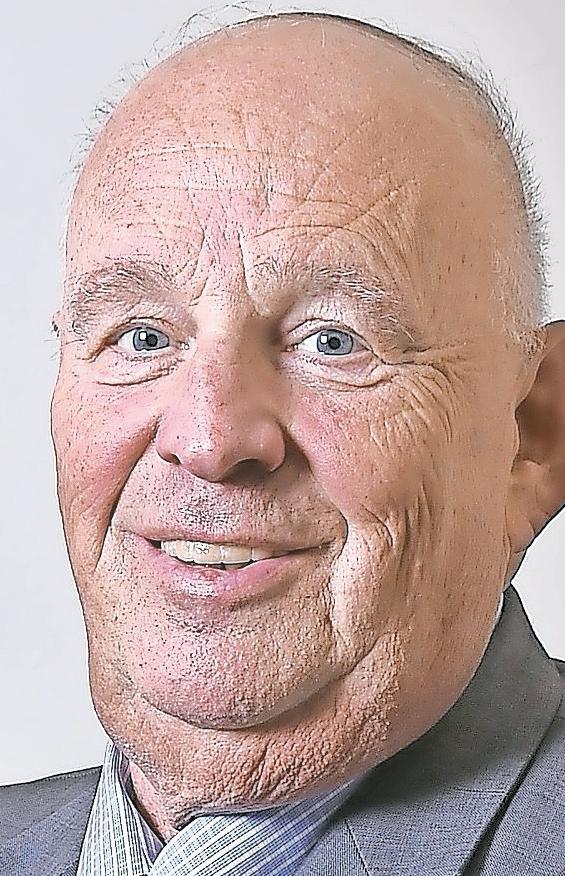
“Richard Kessel brings decades of leadership experience in government, public policy and complex organizations,” Hochul said of Monday’sappointment in a statement emailed to the Herald. “His proven record of public service, commitment to Long Island and ability to navigate challenging issues make him exceptionally well-suited to lead the board as NHCC continues its mission of providing high-quality care to the communities we serve.”
Kessel’s appointment to the NHCC board means he will step down from NIFA. His position there will be filled by Moshin Meghji, a current NIFA board member.
The finance authority, another public benefit corporation, monitors and oversees Nassau County’s finances. It assumed direct financial oversight of NUMC in 2020, a move that was met with heavy opposition from previous hospital leadership. As part of the state’s takeover last year, it mandated that NHCC conduct
Rabinowitz’s departure came during a turbulent period for NUMC. Following a public battle between the hospital’s former leadership and the state, New York assumed oversight of the hospital under provisions included in the 2025-26 state budget. The board was restructured to include 11 members, most of whom were appointed by Hochul.
When Rabinowitz stepped down, Hochul thanked him for his service, saying he “stepped up when Nassau University Medical Center desperately needed steady, serious leadership.” She added that “his focus on accountability and fiscal management has helped put this critical safety-net hospital on the road to recovery.”
■ New chairman: Gov. Kathy Hochul appointed Richard Kessel, chairman of the Nassau Interim Finance Authority, to lead the Nassau Health Care Corporation.
■ Leadership change: Kessel succeeds Stuart Rabinowitz, who stepped down in March after leading NHCC since June 2025.
(516) 622-7460
■ DISPlAY ADVERTISING: Ext. 249 E-mail: rglickman@liherald.com Fax: (516) 569-4643
■ PUBlIC NOTICES: Ext. 232 E-mail: legalnotices@liherald.com
By JULIA CAPITELLI jcapitelli@liherald.com
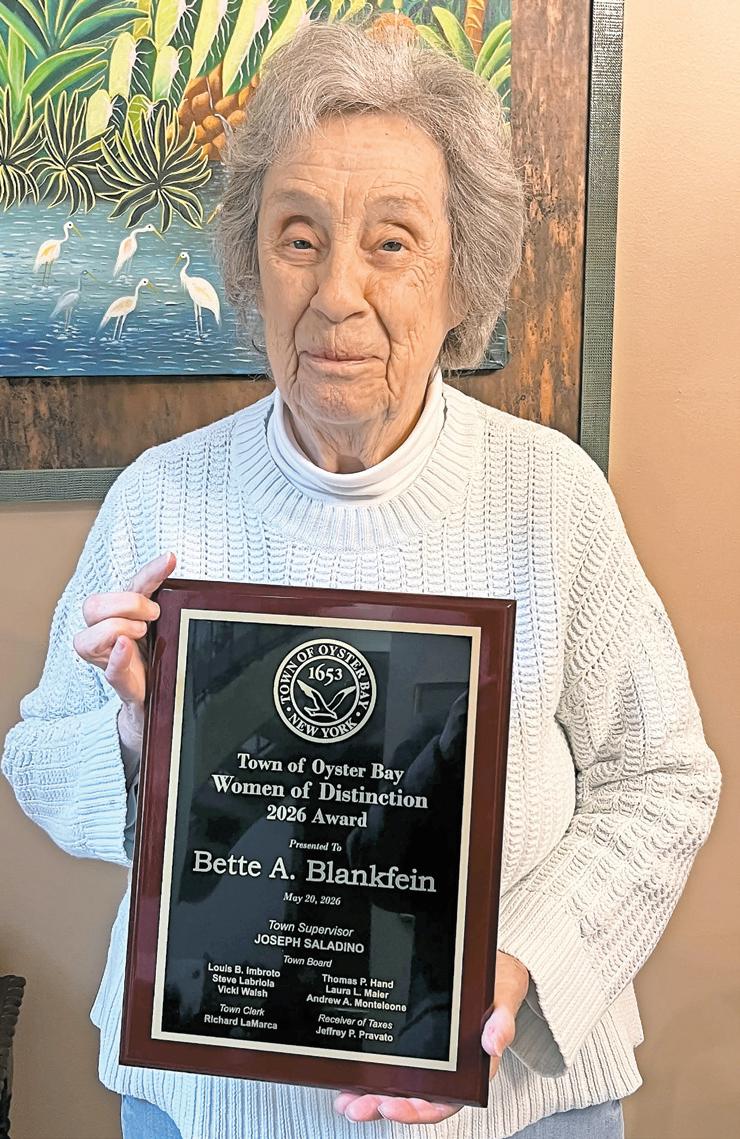
Longtime Glen Head resident Bette Blankfein was a special education teacher at Glenwood Landing Elementary School for 30 years. After retirement, she tutored middle and high school students before eventually bringing her teaching skills to the Glen Cove and Gold Coast Public Libraries. In the last few years, Blankfein has worked with adults learning and strengthening their English. She has also trained other tutors in the same program. All of these years of teaching have contributed to Blankfein recently being named a woman of distinction by the Town of Oyster Bay.
Blankfein, 86, earned her bachelor’s degree in education from Syracuse University and later completed her master’s degree at Hofstra University. She explained her motivation for pursuing education.
“I always admired my teachers,” Blankfein said, “and I wanted to continue in that field.” She added that she was inspired by one of her Syracuse professors, William Cruickshank, to go into special education in particular.
In her 30 years at Glenwood Landing, Blankfein worked with students in the school’s resource room, a special education program that involves additional specialized instruction in a one-on-one
or small group setting. She also worked closely with staff in Glen Head and Sea Cliff schools to develop and implement an early intervention program for students in kindergarten through third grade.
Blankfein described her work in the North Shore School District as a “nice giving and taking situation.” She also praised the district for its support and implementation of special education services.
“I always felt that I was appreciated,” she said, “and I appreciated what I did.”
Former North Shore special education teacher and Glen Head Elementary School Principal Fredda Klopfer, also a Glen Head resident, worked alongside Blankfein to develop a teacher’s manual and run teacher trainings for the early intervention program. The program took a multi-sensory approach to reading, writing and spelling.
Klopfer described Blankfein as “very dedicated” and praised her for identifying each student’s individual needs and adapting instruction for each student. She added that Blankfein has “a big heart.”
“That’s really the core of Bette,” Klopfer said, “her compassion, caring, and empathy.”
After working with adults to strengthen their English language skills at the Glen Cove Library, Blankfein presented the program to Michael Morea,
director of the Gold Coast Public Library. The program has since expanded to include roughly 20 tutors working with students.
Morea explained that many students

participate in the program to strengthen their English to help them in certain situations, such as in the workplace.
“(Bette’s) just got a tremendous amount of energy,” Morea said, “and she’s been able to take it from really what was just an idea to everybody kind of working consistently with students.”
Blankfein has recently been training tutors to work with students in the program, called “Learning Together.” She said that while her background is not in teaching the English language, she was able to apply her skills in working with students on speaking, listening, reading and writing.
“It didn’t matter,” Blankfein said. “I could use what I knew and adapt it and create new, and it was very gratifying.” She is handing coordination of the program to volunteer Tricia Allen.
Each year, women living within the Town of Oyster Bay are chosen as “women of distinction.” The title to awarded to those who have “significantly given back” to communities within the town. Blankfein said being named a woman of distinction was a “surprise.”
Klopfer and Morea both said Blankfein is deserving of the honor.
“She’s just able to do so much for our community,” Morea said, “even in her career before this, but even just with this program, but she really has had a tremendous impact on the people in our community.”
























each week to be combined in a three-bin system at a drop site outside of Sea Cliff.
Russo said at the meeting that there are roughly 50 families on the program’s waitlist. There are 351 resident signatures on a petition for community composting in Sea Cliff centered at the Department of Public Works. Sea Cliff’s population is roughly 5,000.
Villafane stated that she and the trustees are not against composting. She outlined logistical challenges for the village in creating a program, requested data from the pilot program and said that the board needs a business plan to determine if a village-wide program would be feasible.
“I am unaware of any of the details of the composting pilot program,” she said, “which is what we would really need to be able to assess the viability of it for the village.”
Among the listed challenges were space for equipment, the sanitation workers’ union contract and whether there is enough interest among residents.
The union contract is not up for at least a year and is task-based, meaning additional tasks cannot be assigned to workers without increasing salaries and funding.
Marion said that knowing tipping fees and whether recycling is being recy-
cled are necessary for putting together a business plan.
“We believe,” she said, “that the budget can actually provide for the composting once we are able to offset it with the numbers that are already being paid.”
Black also acknowledged that there were both ECC members and community composters in the room.
“We know that there’s logistical problems, labor, equipment, space, perhaps regulations,” Black said. “So (I) appreciate that (the board is) looking at it, and I do apologize to you because you didn’t have the information.”
One participant in the community composting program, Dan Herman, argued that organization of composting should not be left to a resident long-
term. Villafane agreed but reiterated that the village does not currently have the ability to run a program.
She then read a letter to attendees from resident Camille Sinatra, who composts at home. In the letter, Sinatra expressed confidence in Sea Cliff residents to compost. Villafane used the letter as “a backdrop” to ask attendees why composting should be an objective of the village government.
In response to Villafane’s question, Marion said that residents may not be able to do the physical work required to rotate and aerate compost and may not have the space in their yards. Russo said that environmental conditions may make it difficult for residents to compost on their own with tumblers.
“I couldn’t get in my bin because we
had such a cold winter,” she said, “and it was literally frozen shut.”
Villafane reassured attendees multiple times throughout the meeting that the board is not against composting but has many factors to consider.
“We need to do our due diligence as your government and your representatives,” she said, “to make sure that this goes through in a manner that is contractually sound, that is fiscally responsible, and physically possible.”
Trustee James Versocki gave a final response, discussing his positive personal experience with composting and acknowledging Sea Cliff’s environmental accomplishments, like being named a Bronze Certified Climate Smart Community by New York State. He echoed Villafane’s explanation of the challenges the village would need to overcome to implement a composting program.
The ECC exists under Article Eight of the village code to protect the environment and encourage sustainable practices. Versocki said that in this case, the committee has been tasked with investigating how a composting program would function and reporting back to the board so trustees can make informed decisions.
“Let’s work on it together and figure out the next steps,” he said, “and also (the) ECC, the village created to help educate the community and us, so we have to do it all together.”
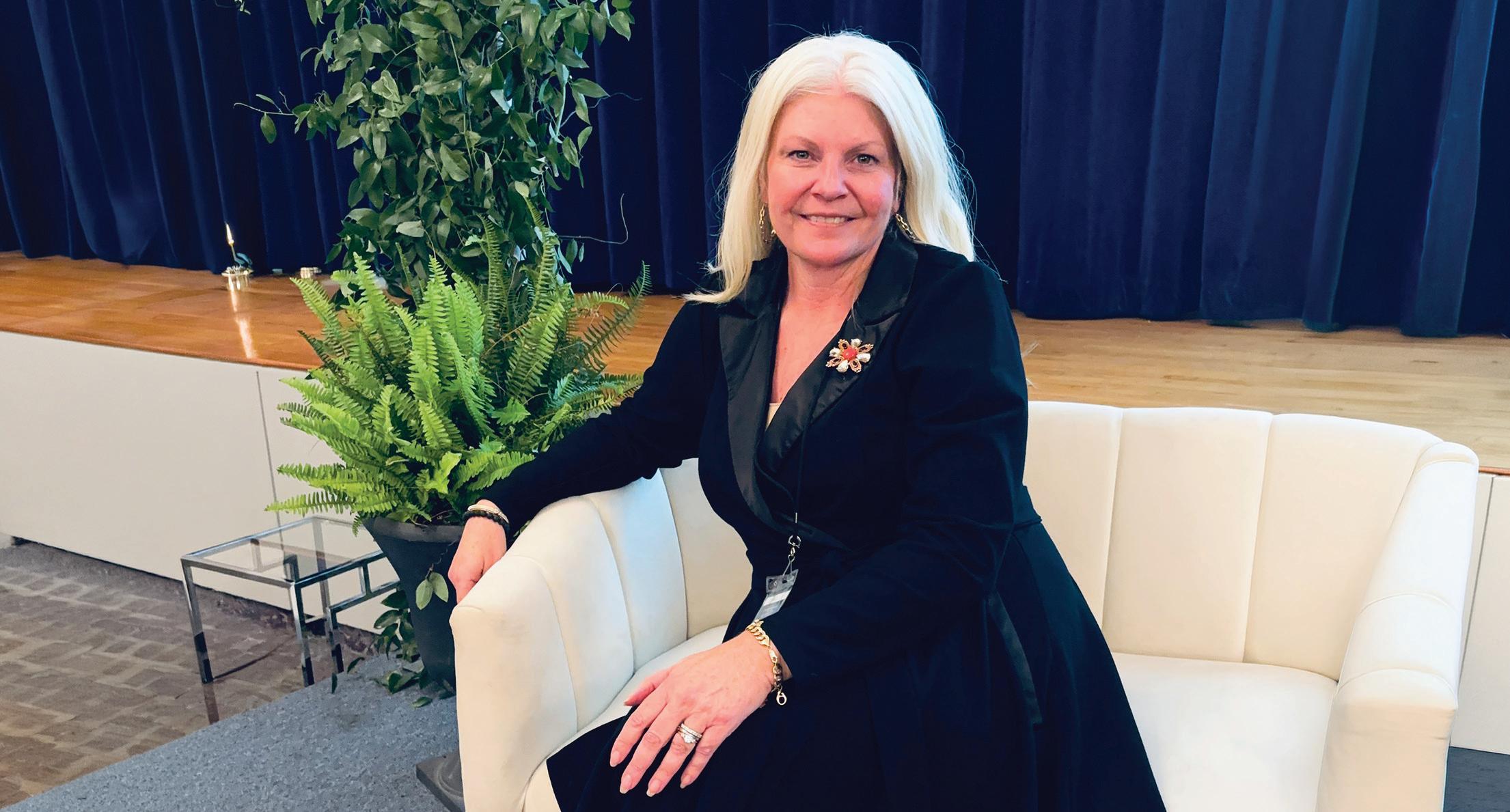
In a fast-moving business world, Susan Gatti believes most leaders are asking the wrong questions when planning for AI investment.
Instead of adopting the latest tools, the Disruptive Spark® founder says companies should begin clarity, mindset and trust.
“We want to be the voice in your head, guiding you toward factual decisions,” Gatti said during a recent interview. “Being good stewards of your reputation, your company and the people who work for you, that’s what matters.”
Gatti is a Long Island-based business advisor, speaker and founder of Disruptive Spark®, a boutique performance consultancy that works with growth-minded leaders and mid-sized businesses. Drawing on decades of leadership experience, she helps organizations navigate change, improve operational performance and embrace emerging technology without losing sight of company culture or human connection.
As businesses feel mounting pressure to adopt artificial intelligence and automation tools, Gatti said many executives are operating from fear messages.
“Leaders are being told, ‘Do something with AI or we’ll be left behind,’” she explained. “That pressure to be relevant,
mixed with the reality that many organizations don’t yet know what needs to be done, leads to uncertainty that causes indecision.”
That’s where Disruptive Spark® steps in.
Rather than pushing businesses toward expensive technology, Gatti focuses first on identifying the problem a company is trying to solve, then following a proven decision model to help business leaders make smarter decisions.
According to Gatti, most companies struggle with three operational pain points: inefficient repetitive tasks,
customer service friction and concerns around security and financial risk.
AI can help solve those issues if leaders approach implementation strategically.
Market challenges are putting pressure on local companies to operate more efficiently, while protecting their relationships and reputation. “Every dollar counts right now,” Gatti said.
“AI tools that allow businesses to go deeper with the client base they already have are more valuable than constantly chasing new customers.”
Disruptive Spark® helps companies navigate transformation. Gatti believes
resistance is a big reason large-scale technology initiatives fail.
Early in her career, she recognized the problem was often less about the technology and more about how organizations communicated and prepared for change.
Disruptive Spark® now works with organizations to reduce resistance by building readiness campaigns before implementation begins. The company offers leader education, communication strategies, readiness assessments and coping practices that empower teams to feel calmer, more comfortable and more engaged during transitions.
“We found that when people understood the value for them personally, adoption rates skyrocketed,” Gatti explained.
One service Disruptive Spark® offers is helping organizations establish ethical AI standards and clear communication policies.
“I would double down very quickly on creating AI ethics and standards,” Gatti said. “Everybody is experimenting with AI, whether the company has sanctioned it or not.”
By creating guardrails, businesses can


By JULIA CAPITELLI jcapitelli@liherald.com
Performers and literature lovers will come together for the Sea Cliff Civic Association’s annual James Joyce Jaunt next week. The adaptation of author James Joyce’s “Ulysses” is performed in recognition of Bloomsday, celebrated globally on June 16 each year.
Civic association President Ann DiPietro and her husband, Dan, began the James Joyce Jaunt 15 years ago. It began as a small event with no more than five actors in costume reading excerpts from the novel. Since then, the performance has become a mobile one, with different scenes taking place in several locations throughout the village. It features more actors, and all scenes are adapted by Dan and Sea Cliff resident Fred Stroppel.
“It’s evolved,” Dan said, “quite a bit.”
All events of the more than 700-page novel take place in one day, June 16, 1904. The date has become known as “Bloomsday,” named for main character Leopold Bloom. Celebrations are held in communities around the world.
“There’s something kind of powerful,” Dan said, “about being part of a global event.”
This year, the performance will be held in a single location, in the parking lot at Campground Craft Beer & Coffee on Sea Cliff Avenue. Dan said they chose to have it in one location because several regular attendees have expressed difficulty with the walking typically required during the jaunt. Moving throughout the village for different scenes is intended to

simulate Bloom’s travels through Dublin in the novel.
Stroppel explained that this year’s preparation consists largely of mapping out the performance in the space. The majority of the actors are returning in the same roles they have held for several years. Stroppel said using one location may help focus the story because there will be no breaks between scenes.
“It’s going to be interesting,” he said, “just doing it in one flowing narrative and seeing how it comes together.”
Dan praised Stroppel for his ability to “streamline” the novel’s story for the performance. The jaunt focuses on telling the story of the developing father-son relationship between Bloom and the younger protagonist, Stephen Dedalus. Stroppel said they chose to dramatize scenes they thought would reach the audience.
Ann and Dan expressed admiration for Joyce’s writing style and said that many people may be intimidated by the novel. Ann added that many attendees show interest in reading “Ulysses” following the jaunt.
“So often at the end,” she said, “people will say, ‘I never knew that James Joyce was so funny,’ and it’s true.”
The performance will begin at 6:30 p.m. on Tuesday. Stroppel said he hopes to give the audience a theatrical experience and leave attendees with something to think about.
“What we just want to do,” he said, “is let people know that there is a story flowing through it that’s quite accessible, quite funny, and very touching too.”









































By JOSEPH D’ALESSANDRO jdalessandro@liherald.com
Herald Community Media and Reworld partnered to celebrate Long Island’s leading environmental advocates and innovators during the Herald Sustainability Awards of Long Island, held May 14 at the Heritage Club at Bethpage.
The event recognized individuals and organizations making significant contributions to environmental sustainability while also honoring student leaders working to protect Long Island’s natural resources.
“Nothing unites Long Islanders more than our natural environment, from beaches and bays to wetlands and parks — these treasures are our fountain of life, beauty and resources,” said Stuart Richner, CEO of Richner Communications. “Tonight, we gather to honor environmental champions who are working tirelessly to protect
Long Island’s natural ecosystem for future generations. Their efforts are challenging but vitally important and we thank them for their unwavering dedication.”
The ceremony, emceed by comedian Tom Kelley, also featured awards for four Student Champions for Sustainability and a total of $7,500 in student sustainability initiative prizes.
Adel Omrani, president of Reworld’s East Region, highlighted the company’s role in transforming waste into energy.
“You don’t think of waste when you put it at the curb, and you usually don’t think about disposal, but there’s a lot of processes that goes into that,” he said. “We generate electricity out of that and recycle metals. Just for Long Island, for example, we power 100,000 homes just from processing this waste and using it as fuel.”
Omrani said collaboration among environmental leaders remains essential.
“It’s a very big part of what we do as a community,” he said.
Reworld Market Area Director James Regan stressed the importance of sustainable waste management on Long Island.
“For Long Island, an issue like sustainable waste management is extremely important given how populated it is and how limited resources are,” he said. “Reworld, for us, has a focus to continue to partner with all

these great champions of sustainability to ensure we have sustainable waste management for decades to come.”
New York State Senator Siela Bynoe spoke during the dinner portion of the event.
“I have really had the environment in mind as I’ve been in my various roles in government,” she said.
Bynoe’s life experiences motivated her to pursue environmental advocacy, witnessing increased cancer rates due to local contamination in the Caribbean and disproportionate harm done to marginalized communities during the Covid-19 pandemic.
“I set off on a path to make sure that we can conserve water, make sure we have clean water, and make sure that we are doing what we can to ensure that we sustain this community, this county and this state (so) that we have a bright future,” she said.
Suffolk County Executive Ed Romaine, a longtime environmental advocate, discussed his commitment to protecting Long Island’s future.
“I’m very concerned about the direction we’re going as a state and as an island, and I’m looking to change that direction by doing a number of things,” he said.
Romaine cited efforts to improve municipal waste management, expand solar energy infrastructure and advance environmentally friendly policies.
“I could have retired long ago, but there are things that I want to accomplish,” he said. “We need to see change.”
Among the evening’s featured speakers was sports broadcaster and former NFL quarterback Boomer Esiason, who reflected on his connection to the Great South Bay.
“When I was a kid, between the ages of 14 and 17, I spent a lot of my summers on the Great South Bay — I was a clammer,” he said. “It was great, but there were areas of the Great South Bay that we couldn’t clam in because it was considered polluted... It took many years for it to turn around and to start going back the other way, and it’s one of the things I’m most proud about.”
Esiason praised young environmental advocates being recognized at the event.
“I’m very, very proud of them, and very proud of what they’re trying to do for the beaches of the Great South Bay,” he said.
Girl Scouts Emma Klein and Zoe Lazarus, of Savyille High School, Roslyn High sophomore Charles Metzger and Hauppauge High se-
nior Matias Kalaitzis were all winners of the Student Champions for Sustainability Award. The four were recognized for their civic service, from cleanups to awareness efforts. National Grid Ventures, the main natural gas utility for over 600,000 residential and business customers in Nassau and Suffolk counties; Tritec, primarily known for mixeduse developments, transit-oriented communities and commercial property management across Long Island; and UBS Arena, the home of the New York Islanders, were all recognized with team awards.
As the presenting sponsor, Reworld continues to support environmental progress across Long Island. The company operates facilities in Westbury, West Babylon, East Northport and Ronkonkoma, processing two-thirds of Long Island’s waste, recycling thousands of tons of metals and generating electricity for local homes while helping reduce landfill use and greenhouse gas emissions.
For more information about Reworld and its initiatives that support various community empowerment and environmental programs fostering positive change locally and globally, visit ReworldWaste.com.
To view more pictures, visit RichnerLive.com.
P hotos by Tim Baker and Melissa Baptiste/Herald










It was a sunny day in Sea Cliff as residents and visitors enjoyed shopping around the village at the annual Garage Sale Day, sponsored by the Sea Cliff Civic Association. The event saw front lawns filled with furniture, clothing, knick knacks and a range of personal treasures. Local children set up lemonade stands to refresh thirsty walkers, while the Village Library raised money by offering older books for sale.
—Will Sheeline
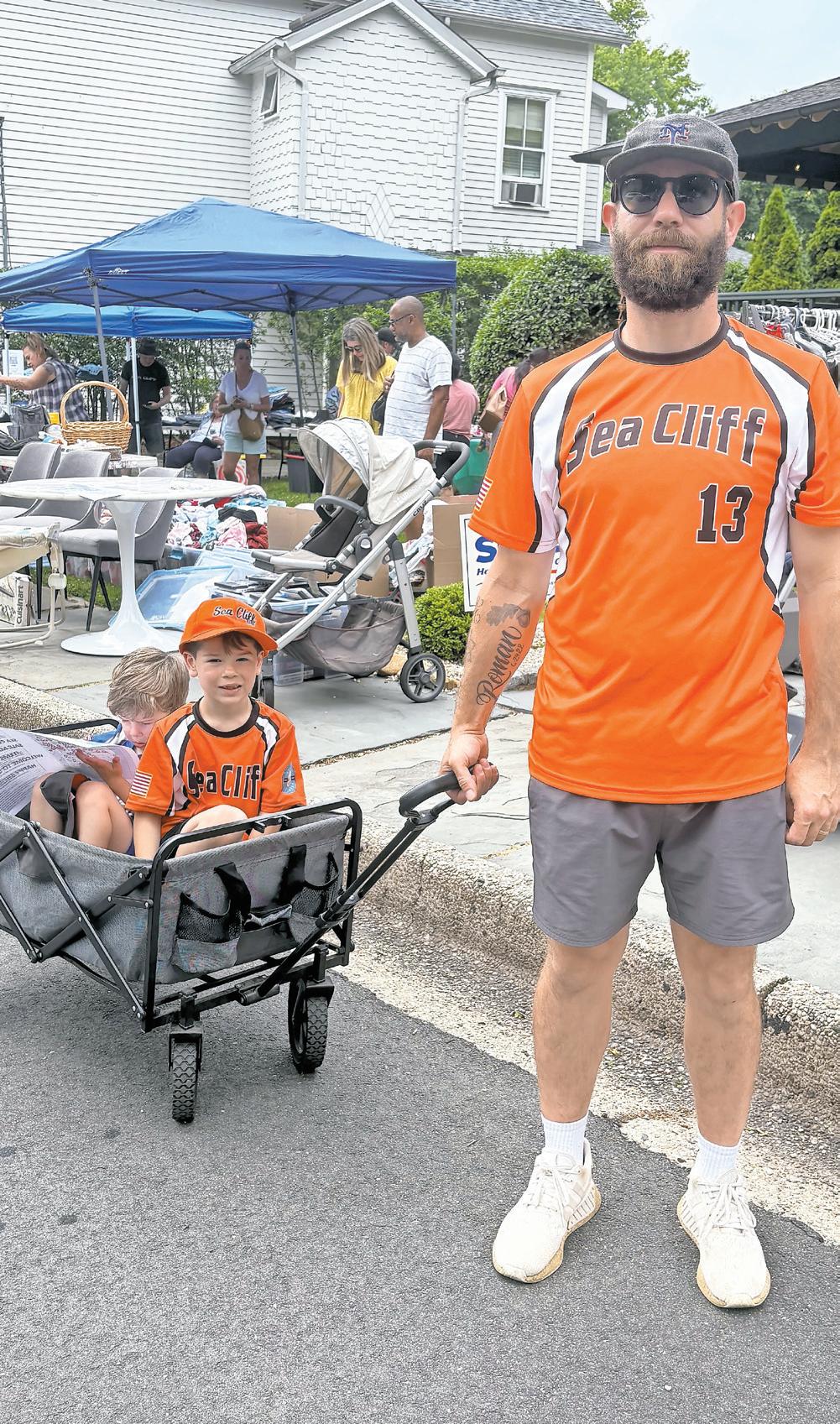

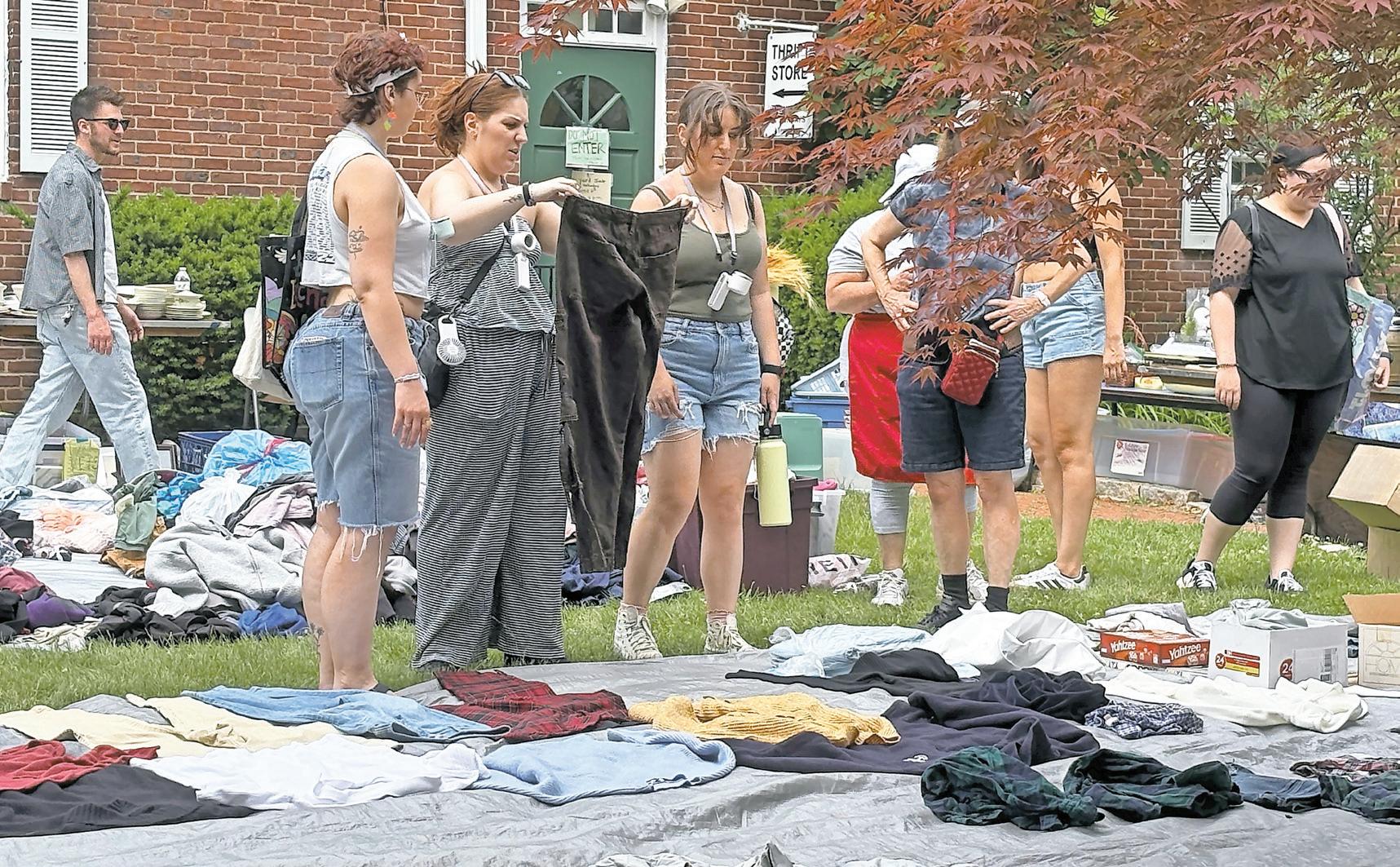
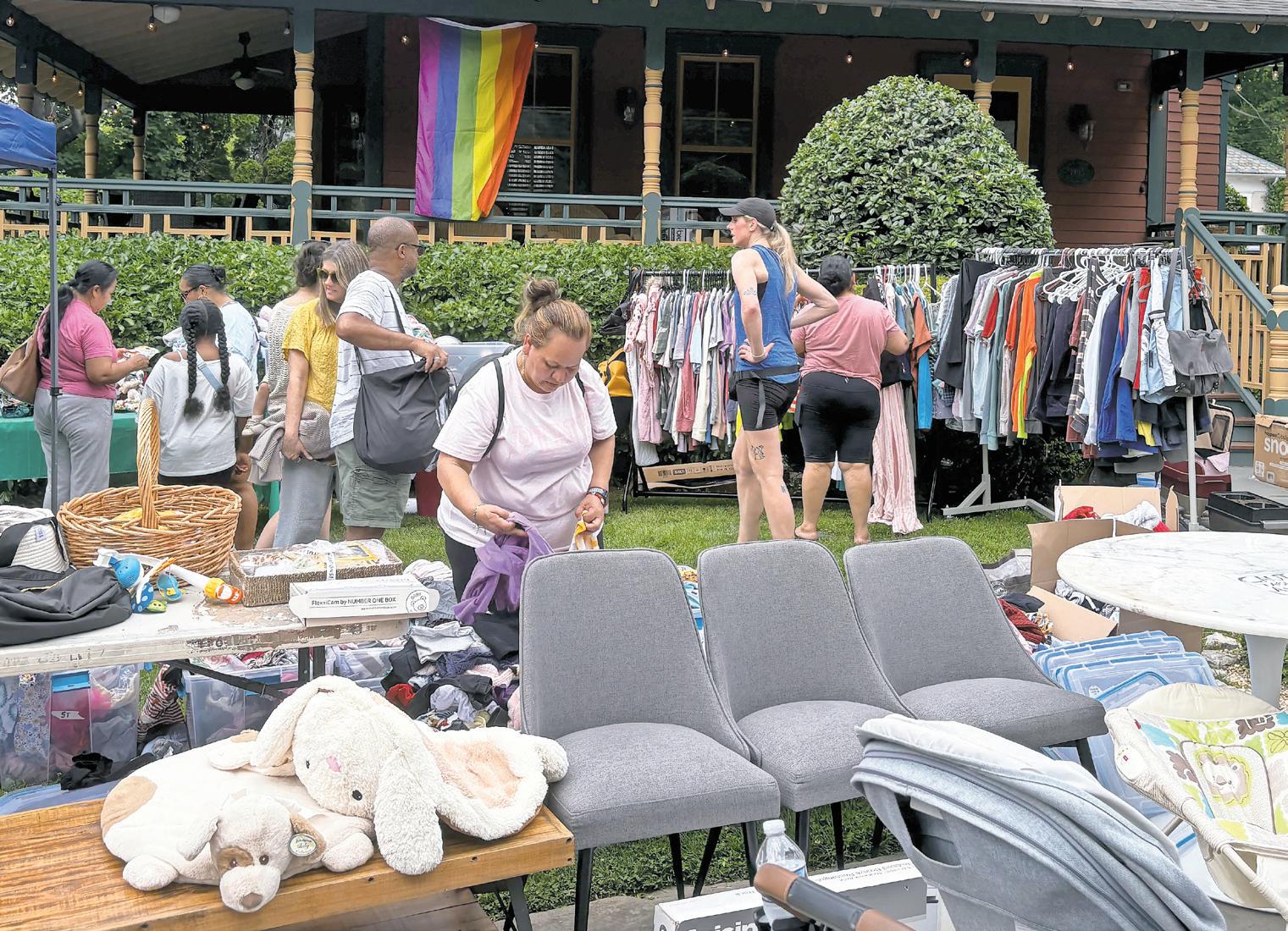
In addition to private homes, local organizations like churches and the Sea Cliff Village Library also emptied their closets and cupboards for items to display for Garage Sale Day.











By JEFFREY BESSEN jbessen@liherald.com
Herald Community Media captured three awards at the annual Press Club of Long Island Media Awards and Long Island Journalism Hall of Fame induction dinner on June 4.
Oceanside/Island Park Herald reporter Abigail Grieco won the James Murphy Cub Reporter of the Year award, given to “emerging journalists who show strong early promise in the field.” Journalists who have worked full-time for fewer than 18 months are eligible. Grieco was an intern with the Herald in 2023, and began working full-time in October 2025.
Deputy Managing Editor Jordan Vallone and previous senior reporter Mohammad Fariq shared a second-place award in the transportation category for the story “Southern State: a road still stuck in the past,” which was part of the Herald’s 2025 series on the Southern State Parkway.
“A compelling and well-structured piece that effectively examines the longstanding dangers of the Southern State Parkway,” judges wrote. “The article succeeds in connecting historical design flaws with present-day traffic realities, clearly explaining how outdated infrastructure continues to contribute to
accidents.
“Particularly strong is the integration of data, expert references, and concrete examples, such as low overpass collisions and hazardous curve segments,” the judges added. “The writing remains clear and accessible while addressing a complex safety issue. Overall, a thoughtful and informative investigation with clear public relevance and lasting value.”
Photographer Erik H. Lee earned a third-place award for a photo of the Wantagh High School baseball game.
“These awards reflect our commitment to strong local journalism and to telling the stories that matter most to Long Island communities,” Stuart Richner, CEO of Richner Communications, said. “We are especially proud to see our emerging reporters, experienced editors and talented photographers recognized for work that informs the public and has a lasting impact.”
Four veterans of Long Island journalism were inducted into the PCLI’s Hall of Fame: Photojournalist Michael DelGiudice, radio reporter Sophia Hall, former Newsday editor Anthony E. Insolia, and Shirley E. Perelman, who covered many major stories for Newsday, from the Long Island garbage barge to the trial of O.J. Simpson.
For more information on the press club, go to PCLI.org.
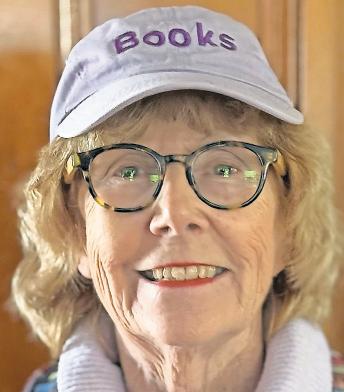
Dear Great Book Guru, I am very excited about Sea Cliff Arts Council’s first annual Film Festival. So many films and great Q and A’s afterwards! Can you recommend a quick, engrossing book to read during the week?
Film Fest Fan
Dear Film Fest Fan, I recently read “A Better Life” by Lionel Shriver. This is a darkly controversial novel set in Brooklyn’s Dimas Park - a neighborhood of lovely, large Victorian homes.
Gloria is a recently divorced mother of three adult children. She is struggling with debts, and her aging house is getting more and more difficult to maintain.
The story is viewed from the perspective of her youngest son Nico. Having graduated from college, he is living at home and making no attempt to find a job. When Gloria hears about a new city-wide pro-
gram - Big Apple Big Heart that pays homeowners to board recent immigrants, she sees a way out of her financial bind. From the start, Nico is not happy. When Martine arrives, she immediately bonds with Gloria and her daughters. Martine is the poster child for the program - eager to help with the household chores and great company.
It is only when disturbing facts about her family emerge and inconsistencies in her story arise that we begin to wonder if Nico was justified in his hostile attitude. But we are also left to wonder if he is a reliable narrator.
As the months go by and tensions build, we sympathize with Gloria and Martine but wonder if Big Apple Big Heart can possibly work. A disturbing story but recommended.
Would you like to ask the Great Book Guru for a book suggestion? Contact her at annmdipietro@gmail.com.
News Brief items including awards, honors, promotions and other tidbits about local residents are welcome. Photographs may be emailed as well. Deadline for submissions is noon Thursday, week prior to publication. Send to execeditor@liherald.com



Organizers describe ‘a very festive atmosphere’
bine his passion for the sport with a desire to give back.
“I kind of put two and two together,” he said. “Kiwanis was a communityminded organization, and they gave me a tool to possibly put together a bike ride to raise money to give to the hospital.”
Today, 36-year-old Tommy DeStio is a successful marketing executive, a husband and a father-to-be. His journey from medically fragile infant to thriving adult remains a source of inspiration for his father, and for the event he created.
The ride, formerly known as the Nassau-to-Suffolk Bicycle Challenge, now focuses exclusively on Nassau County. Riders can choose between a 25-mile route or a more demanding one that’s 10 miles longer. Both begin at the Harry Tappen Beach Boat Basin and wind through some of Long Island’s most scenic North Shore communities, including Locust Valley and Bayville, offering waterfront views and the Gold Coast’s rolling landscapes.
“It’s not a race,” Leslie Kle, treasurer of North Shore Kiwanis and one of the event organizers, said. “We have all levels of riders. It’s all fun.”
Kle said that many participants return year after year, drawn by the event’s welcoming atmosphere and charitable mission. “We’ve had riders that have come, if not all of the 29 years, then very many of those years,” she said. “They would be upset to see it go. So we have a lot of loyal riders who continue to come back year after year.”
Organizing the ride is a months-long effort. Planning begins in February, with permit applications, followed by sponsorship outreach, publicity campaigns and route preparation. Volunteers distribute fliers to bicycle shops, post signs throughout the area and coordinate food, refreshments and rider support.
The event includes rest stops in Bayville and Locust Valley stocked with water, sports drinks, fruit and snacks.
Organizers also provide cue sheets, digital maps and extensive route markings to ensure that riders stay on course.
“One of the things that we kind of pride ourselves on is we have every turn marked on the ride,” Kle said. “When they come back, many of them say it’s the best-marked ride that they’re ever on.”
More than 20 volunteers help manage registration, staff rest stops and support riders throughout the day. Family members and members of North Shore Kiwanis’s Young Professionals group also pitch in.
“We cheer every rider when they come in, and we celebrate them and congratulate them,” Kle said. “We have raffles. We try to make it a little bit more of a party atmosphere.”
Kiwanis President Chris Salmon said the challenge has become known for its camaraderie as much as its fundraising.
“Rain or shine, a lot of people attend,” Salmon said. “There’s great fun and enjoyment. It’s a very festive atmosphere.”
Salmon emphasized that every dollar raised supports charitable causes. The club foundation also funds programs such as Klothes 4 Kids, which provides back-to-school clothing for children in need, scholarships; community food assistance efforts; and support for local families facing hardships.
For DeStio, the ride’s longevity is proof that a simple idea can have a lasting impact. “It takes months to put that together,” he said. “But everything led to helping out the hospital. This was a way we could give back.”
Online registration is $50 through June 23, with walk-in registration available on the day of the ride for $60. Additional





By JEFFREY BESSEN jbessen@liherald.com
Herald Community Media captured three awards at the annual Press Club of Long Island Media Awards and Long Island Journalism Hall of Fame induction dinner on June 4.
Oceanside/Island Park Herald reporter Abigail Grieco won the James Murphy Cub Reporter of the Year award, given to “emerging journalists who show strong early promise in the field.” Journalists who have worked full-time for fewer than 18 months are eligible. Grieco was an intern with the Herald in 2023, and began working full-time in October 2025.
Deputy Managing Editor Jordan Vallone and previous senior reporter Mohammad Fariq shared a second-place award in the transportation category for the story “Southern State: a road still stuck in the past,” which was part of the Herald’s 2025 series on the Southern State Parkway.
“A compelling and well-structured piece that effectively examines the longstanding dangers of the Southern State Parkway,” judges wrote. “The article succeeds in connecting historical design flaws with present-day traffic realities, clearly explaining how outdated infrastructure continues to contribute to
accidents.
“Particularly strong is the integration of data, expert references, and concrete examples, such as low overpass collisions and hazardous curve segments,” the judges added. “The writing remains clear and accessible while addressing a complex safety issue. Overall, a thoughtful and informative investigation with clear public relevance and lasting value.”
Photographer Erik H. Lee earned a third-place award for a photo of the Wantagh High School baseball game.
“These awards reflect our commitment to strong local journalism and to telling the stories that matter most to Long Island communities,” Stuart Richner, CEO of Richner Communications, said. “We are especially proud to see our emerging reporters, experienced editors and talented photographers recognized for work that informs the public and has a lasting impact.”
Four veterans of Long Island journalism were inducted into the PCLI’s Hall of Fame: Photojournalist Michael DelGiudice, radio reporter Sophia Hall, former Newsday editor Anthony E. Insolia, and Shirley E. Perelman, who covered many major stories for Newsday, from the Long Island garbage barge to the trial of O.J. Simpson.
For more information on the press club, go to PCLI.org.
Dear Great Book Guru, I am very excited about Sea Cliff Arts Council’s first annual Film Festival. So many films and great Q and A’s afterwards! Can you recommend a quick, engrossing book to read during the week?
Film Fest Fan
Dear Film Fest Fan, I recently read “A Better Life” by Lionel Shriver. This is a darkly controversial novel set in Brooklyn’s Dimas Park - a neighborhood of lovely, large Victorian homes.
Gloria is a recently divorced mother of three adult children. She is struggling with debts, and her aging house is getting more and more difficult to maintain.
The story is viewed from the perspective of her youngest son Nico. Having graduated from college, he is living at home and making no attempt to find a job. When Gloria hears about a new city-wide pro-
gram - Big Apple Big Heart that pays homeowners to board recent immigrants, she sees a way out of her financial bind. From the start, Nico is not happy. When Martine arrives, she immediately bonds with Gloria and her daughters. Martine is the poster child for the program - eager to help with the household chores and great company.
It is only when disturbing facts about her family emerge and inconsistencies in her story arise that we begin to wonder if Nico was justified in his hostile attitude. But we are also left to wonder if he is a reliable narrator.
As the months go by and tensions build, we sympathize with Gloria and Martine but wonder if Big Apple Big Heart can possibly work. A disturbing story but recommended.
Would you like to ask the Great Book Guru for a book suggestion? Contact her at annmdipietro@gmail.com.
News Brief items including awards, honors, promotions and other tidbits about local residents are welcome. Photographs may be emailed as well. Deadline for submissions is noon Thursday, week prior to publication. Send to execeditor@liherald.com
Organizers describe ‘a very festive atmosphere’
bine his passion for the sport with a desire to give back.
“I kind of put two and two together,” he said. “Kiwanis was a communityminded organization, and they gave me a tool to possibly put together a bike ride to raise money to give to the hospital.”
Today, 36-year-old Tommy DeStio is a successful marketing executive, a husband and a father-to-be. His journey from medically fragile infant to thriving adult remains a source of inspiration for his father, and for the event he created.
The ride, formerly known as the Nassau-to-Suffolk Bicycle Challenge, now focuses exclusively on Nassau County. Riders can choose between a 25-mile route or a more demanding one that’s 10 miles longer. Both begin at the Harry Tappen Beach Boat Basin and wind through some of Long Island’s most scenic North Shore communities, including Locust Valley and Bayville, offering waterfront views and the Gold Coast’s rolling landscapes.
“It’s not a race,” Leslie Kle, treasurer of North Shore Kiwanis and one of the event organizers, said. “We have all levels of riders. It’s all fun.”
Kle said that many participants return year after year, drawn by the event’s welcoming atmosphere and charitable mission. “We’ve had riders that have come, if not all of the 29 years, then very many of those years,” she said. “They would be upset to see it go. So we have a lot of loyal riders who continue to come back year after year.”
Organizing the ride is a months-long effort. Planning begins in February, with permit applications, followed by sponsorship outreach, publicity campaigns and route preparation. Volunteers distribute fliers to bicycle shops, post signs throughout the area and coordinate food, refreshments and rider support.
The event includes rest stops in Bayville and Locust Valley stocked with water, sports drinks, fruit and snacks.
Organizers also provide cue sheets, digital maps and extensive route markings to ensure that riders stay on course.
“One of the things that we kind of pride ourselves on is we have every turn marked on the ride,” Kle said. “When they come back, many of them say it’s the best-marked ride that they’re ever on.”
More than 20 volunteers help manage registration, staff rest stops and support riders throughout the day. Family members and members of North Shore Kiwanis’s Young Professionals group also pitch in.
“We cheer every rider when they come in, and we celebrate them and congratulate them,” Kle said. “We have raffles. We try to make it a little bit more of a party atmosphere.”
Kiwanis President Chris Salmon said the challenge has become known for its camaraderie as much as its fundraising.
“Rain or shine, a lot of people attend,” Salmon said. “There’s great fun and enjoyment. It’s a very festive atmosphere.”
Salmon emphasized that every dollar raised supports charitable causes. The club foundation also funds programs such as Klothes 4 Kids, which provides back-to-school clothing for children in need, scholarships; community food assistance efforts; and support for local families facing hardships.
For DeStio, the ride’s longevity is proof that a simple idea can have a lasting impact. “It takes months to put that together,” he said. “But everything led to helping out the hospital. This was a way we could give back.”
Online registration is $50 through June 23, with walk-in registration available on the day of the ride for $60. Additional
By AIDAN WARSHAVSKY awarshavsky@liherald.com
The 126th U.S. Open Championship, which begins next week, is being played at the Shinnecock Hills Golf Club — known as one of the “cathedrals” of golf — for the first time since 2018.
Eric Steimer, senior director of U.S. Championships at the United States Golf Association, said the USGA’s transportation strategy is intended to reduce congestion around the site while providing multiple travel options for fans attending the tournament.
The plan, developed in collaboration with the Long Island Rail Road, Suffolk County and New York state officials, will be in effect from June 15, three days before the tournament starts, until June 21, the day it ends.
Steimer said that the 15-person team that planned transportation operations recognized early that travel logistics would be one of the event’s biggest challenges. “Any time we’re out here in eastern Long Island at Shinnecock Hills, transportation is a challenge,” Steimer said. “We’re doing a lot of different things to really try to mitigate that.”
As it did eight years ago, the LIRR’s Montauk Branch will provide transportation to and from the tournament. A temporary station will be constructed in Tuckahoe, across from Shinnecock Hills, on the south side of County Road

With the 126th U.S. Open set to tee off at Shinnecock Hills, the USGA and transportation companies like the LIRR announced travel plans for the tournament.
39, adjacent to Stony Brook University’s Southampton campus. A temporary pedestrian bridge will span the roadway.
From June 15 to 17, the LIRR plans to operate 10 inbound trains and dozens of outbound trains, more than double the service it provided in 2018. During the championship rounds, June 18 to 21, 12 inbound trains and 13 outbound trains are scheduled to operate.
“The Long Island Rail Road is ready,” its president, Rob Free, stated in a news release. “Avoid the traffic and use our






exceptionally reliable service to and from Shinnecock Hills for all the golf action. Extra staff will also be on hand at Southampton to help customers throughout the championship for a great customer experience.”
Steimer explained that this year’s transportation differs from 2018 because satellite parking operations have moved from Gabreski Airport to Calverton Executive Airpark.
“We will have complimentary parking and complimentary shuttle buses to and from the championship,” Steimer




said. “Anyone that looks at Calverton on a map is going to see that it’s pretty far away from Shinnecock Hills, but at the same time it is very accessible for anyone that’s coming from points west or coming along the Long Island Expressway.”
For residents of Southampton, Sag Harbor, Easthampton and neighboring communities, Steimer recommended using a rideshare program operating from Stony Brook Southampton’s campus.
Hamton Jitney will operate shuttle service for spectators traveling from Montauk, Amagansett, Sag Harbor, Bridgehampton, Water Mill and Southampton. Pickups and drop-offs will be located near Admission Gate 2 on the Stony Brook campus.
Fans traveling from New York City will have the option of using Blade helicopter service from June 18 to 21, with return flights scheduled each evening after play ends.
Steimer urged commuters not to arrange drop-offs on County Road 39, and said there would be increased police presence at intersections around the golf course.
“This is a plan that’s been carefully articulated with local experts to be able to implement this plan,” he said. “Now is the time to bring it to life.”
For more information on train service, go to MTA.INFO/document/209406.





By WILL SHEELINE wsheeline@liherald.com
A crowd of supporters, elected officials, donors and community leaders gathered at Oyster Bay’s Planting Fields Arboretum to celebrate the progress of the new Oudolf Garden, a one-acre landscape designed by internationally renowned Dutch garden designer Piet Oudolf that is scheduled to open this fall.
The May 28 event offered attendees an update on the garden’s development while highlighting what Planting Fields Foundation leaders described as the most significant addition to the historic estate in generations.
“Tonight we are here to enjoy the grounds,” Planting Fields Foundation board Chairman Duncan Sahner said in his opening remarks, “to connect with one another and to share an update on what is becoming one of the most significant new additions to Planting Fields in generations.”
Located behind the Blue Pool Garden and adjacent to the historic Rose Arbor, the new garden will be Long Island’s first public garden designed by Oudolf, whose work includes New York City’s High Line and numerous celebrated landscapes around the world.
Foundation President and CEO Gina J. Wouters said the project emerged from the foundation’s commitment to preserving the historic estate while continuing the legacy of artistic and landscape innovation established by the Coe family.
“What sets us apart is how we honor the Coe family, who gifted this incredible property to the people of the state of New York in 1955 and established Planting Fields Foundation in 1952,” Wouters said. “We place equal value on the preservation of what they left us, both tangible and intangible, and we keep their spirit alive by continuing the rich legacy of patronage of art-

ists and designers they brought to the site.”
Wouters said she began thinking about which contemporary designer might fit into that tradition over four years ago. She added that when she considered that the Coes brought over “the best of the best,” when it came to landscaping, Oudolf was the only choice.
The garden is expected to feature more than 25,000 plants and 22,000 bulbs on what Wouters described as “the most beautiful acre on Long Island.”
According to Wouters, the project moved quickly after her initial outreach to Oudolf in 2023 and his first visit to the estate that October. The planting designs were completed within months, Wouters sasid, and con-

struction and planting work soon followed. The garden is scheduled to open to the public on Oct. 17.
Beyond its visual impact, foundation leaders said, the garden is expected to enhance educational programming, environmental stewardship and visitor engagement throughout the 409-acre state historic park.
“In the coming months, this garden will become a major public destination and a source of pride for the region,” Sahner said, “and it will deepen our existing work in education, in wellness and in environmental stewardship.”
Kathy Moser, acting commissioner of the State Office of Parks, Recreation and Historic Preservation, who attended the event, praised the partnership between the foundation and the office, noting the role nonprofit organizations play in supporting public sites like Planting Fields, a state historic park, across New York.
“The way that we make our 250 parks and historic sites work,” Moser said, “is because of partnerships like the Planting Fields Foundation.”
Oudolf, who spoke briefly, reflected on his initial impressions of Planting Fields and the importance of ensuring that gardens thrive long after their designers leave.
One of his primary concerns when taking on a project, he said, is whether the people responsible for maintaining it will embrace the design and carry it forward.
“It’s not the work I do,” Oudolf explained. “It’s about people that have to work with it, and to keep it going, and to bring it into the future.”
The foundation recently hired a landscape curator who will oversee the long-term care of the garden to adress this concern.
For more information on the Planting Fields Foundation, the arboretum and how to support the Oudolf Garden and other projects, visit PlantingFields.org.

























FREE community event focused on health, wellness, and lifestyle
Meet trusted local exhibitors and service providers
Take advantage of on-site health screenings
Enjoy lively entertainment, fitness demonstrations and interactive experiences
Hear from experts during a panel discussion with Q&A
Win raffles, prizes, and giveaways
Snack station for all
*Boxed lunches for first 150 attendees
All designed to help you stay active, informed, and engaged at every stage of life.





AGENDA: VISIT EXHIBITORS
EXPERT PANEL + Q&A
RAFFLE DRAWINGS MUST BE PRESENT TO
x273





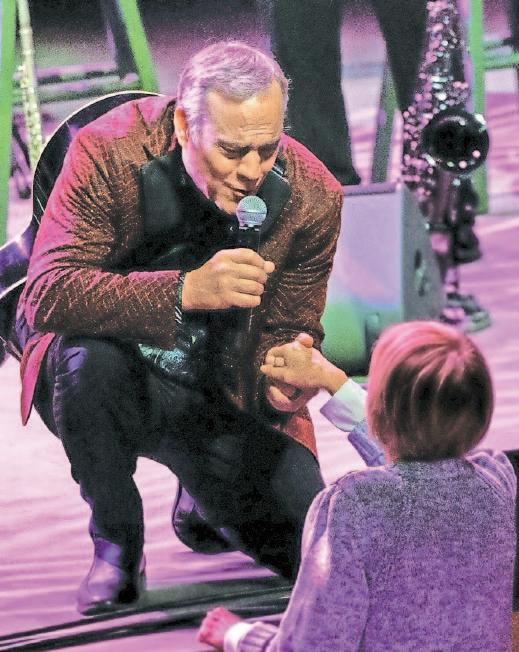

‘Good times never seemed so good…’ Neil Diamond’s tunes are always in style
By Karen Bloom
For those who can’t get enough of Neil Diamond, perhaps the next best thing to seeing him perform, is when Robert Neary takes on legendary singer-songwriter’s persona.
The multi-hyphenate performer brings his acclaimed show, ”So Good! The Neil Diamond Experience,” to Tilles Center, on Sunday, featuring his band and a special “hometown” guest performance. The East Meadow High School Chamber Choir concludes the concert with a six-song finale, under the direction of Chorus Director Samantha Schick. The collaboration is especially meaningful, as Neary is an alumnus of East Meadow High School, and the production’s trumpet player, Stephen Engle, formerly served as head of the music department at the school.
The stage, TV and film star has created an acclaimed tribute experience. The show celebrates the timeless songs and storytelling of Neil Diamond, with the beloved hits from Diamond’s extensive catalogincluding “Sweet Caroline,” “Cracklin’ Rosie,” “America, ,” and many more. Known for his remarkable vocals, Neary has earned praise for delivering a heartfelt and high-energy tribute to one of America’s most iconic entertainers. The concert was also filmed as a documentary feature that is now streaming on Amazon Prime Video, where it continues to receive rave reviews from audiences nationwide.
With decades in the entertainment industry, Neary has starred in three Broadway lead roles and appeared in more than 60 major television and film guest-starring roles. He has also built a worldwide social media following of more than half a million fans. Neary created “So Good! The Neil Diamond Experience” in 2019 and, alongside New York-based band The Mystic, developed the show into the nationwide hit it is today. The production continues to sell out venues across the United States and is now set to expand internationally.
“I’ve always been a fan,” says Neary, of Diamond. “I even learned how to play the piano to Hello Again and knew I could emulate his voice since high school. I was an actor for 40 years, but in 2018, the business for me, started to slow down. After hearing he was

• Sunday, June 14, 3 p.m.
• Tickets available at tillescenter.org or ticketmaster.com or (516) 299-3100
• Tilles Center for the Performing Arts, LIU Post, 720 Northern Blvd., Brookville
retiring due to Parkinson’s, I set out to create the best Neil Diamond tribute I could.”
And audiences certainly agree.
“We always hope that for the two hours they come to our show, they [audiences] are able to forget about the craziness going on in the world, and relive the happy moments with the Neil Diamond’s iconic music. People relate to his music and so many favorites bring so many people back to those beautiful days,” Neary continues.
Part of the show’s enduring appeal is Neary’s commitment to honoring Diamond’s catalog while keeping the performance dynamic and engaging for both new and returning audiences.
“I went right to his 50th anniversary hits album and compared each song to the success of each one and chart history. We now touch on 28 of them in a full show. We do various medleys that are able to incorporate more songs and with the fabulous multimedia, it really brings the songs to life. I also go into the audience for Sweet Caroline and high five and hug on as many people as I can,” Neary adds.
Over the years, the production has evolved into a full-scale theatrical concert experience.
“I set out to do exactly what it has become. So having it all continue to fall into place, has been all part of the plan. We continue to evolve in our production. Its started with eight members on stage and 22 songs. We now have amazing background singers, a violinist and a full multimedia presentation that is amazing. We also have included a full overture highlighting Neil’s career through the decades.”
His band, The Mystic, certainly adds to the experience.
“I am beyond blessed to have this amazing band,” Neary says, enthusiastically. “I met them playing at a huge Halloween party and asked if they would like to join me in this venture and they said, yes. To have this band and the comradery that they possess, having been together for 30 years, is just icing on the cake. We have such a great time on stage as well as touring together and it shows. Countless accolades say how amazingly tight the band is and that we all look like we are having fun.”
One could say that that that this performance’s special closing is the icing on the cake for Neary.
“I’m incredibly proud to return home and share this experience with students from East Meadow High School. Music education played such an important role in my life, and having these talented young performers join us for the finale makes this performance especially meaningful. It’s going to be a really memorable afternoon,” he continues.
“I’ve always wanted to add a choir, and with this Tilles show, being as big as it is, I figured now’s the time to make it happen. My best friend from junior high Stephen Engle, suggested them and I I immediately said, “Of course!”
Neary, who now resides in Melville after leaving East Meadow all those years ago to pursue his dreams in L.A., is delighted to be back on his home turf, especially reconnecting with his high school.
“It feels wonderful. So humbling and so blessed to be back where I was when my career was only a dream away. The first time we played Eisenhower Park, was very emotional and now to play the Tilles Center with the EMHS choir, on such a grander scale, is even more unbelievable.”
Robert Neary enthusiastically gets his audiences involved in this celebration of the singersongwriter’s enduring catalog of hits.

Contemporary swing revival band
Big Bad Voodoo Daddy visits the Paramount ready to cut loose. Since their formation in the early ‘90s in Ventura, Calif., they’ve toured virtually nonstop, performing on average over 150 shows a year, and produced a sizable catalog of recorded music. Early on, during their legendary residency at the Derby nightclub in Los Angeles, they reminded the world, in the midst of the grunge era no less, that it was still cool to swing. The band, co-founded by singer Scotty Morris and drummer Kurt Sodergren, was at the forefront of the swing revival of that time, blending a vibrant fusion of the classic American sounds of jazz, swing, and Dixieland, with the energy and spirit of contemporary culture. Big Bad Voodoo Daddy — famously named after an autograph by blues legend Albert Collins — has appeared in concert venues across the world, sold millions of records, and had their music appear in movies and television shows. The band continues to celebrate and revitalize jazz and swing music and bring joy to audiences around the world.
Saturday, June 13, 8 p.m. The Paramount, 370 New York Ave., Huntington. Tickets available at ticketmaster.com or paramountny.com.
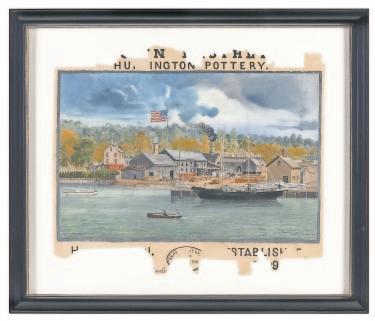
Nassau County Museum of Art hosts an engaging conversation with curator and collections expert Lauren Brincat, whose work and expertise helped shape the current exhibition “250 Years of Art on Long Island.” Brincat, Chief Curator and Director of Collections at Preservation Long Island — a key lending partner to the exhibit — offers an in-depth exploration of the show’s themes, giving visitors a closer look at the wide-ranging artworks and historical objects on view. Her talk illuminates how the exhibit brings together painting and decorative arts to trace the evolution of Long Island’s artistic identity across the centuries. She also discusses the collaborative research and curatorial process behind the exhibition, highlighting how artists, collectors and communities have contributed to shaping and preserving the region’s visual legacy.
Sunday, June 14, 3 p.m. $20, $15 seniors, $10 students (members free). Nassau County Museum of Art, 1 Museum Drive, Roslyn Harbor. Register at nassaumuseum.org or call (516) 484-9337.
Nassau County Museum of Art joins in the celebration of America’s 250th anniversary. Its landmark exhibition explores how Long Island has reflected and shaped the story of American art. From Revolutionary-era portraiture and folk art to nineteenth-century landscapes, Impressionism, and the bold innovations of Abstract Expressionism and Pop Art, the exhibition highlights how every major art movement found expression here. Featuring paintings, decorative arts, and historical objects displayed together in immersive settings, the exhibit celebrates the region’s enduring influence and its rich artistic legacy. On view through July 12.
• Where: 1 Museum Drive, Roslyn Harbor
• Time: Ongoing
• Contact: nassaumuseum.org or (516) 484-9337
The Sea Cliff Arts Council hosts Sea Cliff’s first film festival. Featuring narrative films and documentaries, the event will take place in multiple locations throughout the village. Sign up on the arts council website to get updates via email alerts.
• Where: 86 Roslyn Ave., Sea Cliff
• Time: 9 a.m., also June 14
• Contact: SeaCliffArtsCouncil. org
14
Sea Cliff House Tour
The Sea Cliff Landmarks Association hosts its annual Hour Tour, visiting five recently renovated homes in the village. Two periods of Sea Cliff’s history, the Victorian era and post-World War II mid-century period, are highlighted. $40 per person. Purchase tickets on the Landmarks Association’s Facebook page or in person at the Sea Cliff General Store or My Beautiful Mess.
• Where: Multiple locations
• Time: Noon
• Contact: Sea Cliff Landmarks Association and House Tour on Facebook
Conversations in art Nassau County welcomes all to a talk with Lauren Brincat, Chief Curator and Director of Collections at Preservation Long Island, which lent many works to the 250 Years of Art

• Where: 1395 Planting Fields Road, Oyster Bay
• Time: 6 p.m.
• Contact: plantingfields.org or call (516) 922-9210
Get ready for an evening of sharp observations and quick-fire punchlines that are Daniel Tosh’s signature irreverent style when he brings My First Farewell tour to The Paramount stage. Acclaimed for his quick wit and deadpan delivery, he’s built a devoted following through both stand-up and television. After graduating from the University of Central Florida with a degree in marketing, he moved to Los Angeles to pursue comedy full-time. His career gained national attention following a standout appearance on The Late Show with David Letterman in 2001, leading to appearances on programs including Comedy Central Presents, Premium Blend and The Tonight Show. Tosh became a household name as the creator and host of Tosh.0, the long-running Comedy Central hit that paired viral internet videos with his trademark commentary and satirical take on pop culture. The series became one of the network’s most successful and enduring comedy programs, helping cement Tosh’s reputation as one of stand-up’s most recognizable voices. Expect an energetic set filled with new material, unexpected twists and the unapologetic humor that has defined Tosh’s career.
on Long Island exhibition. Lauren offers an in-depth look at the exhibition, highlighting the remarkable range of artworks and artifacts that tell the story of Long Island’s artistic heritage. She explores how artists, collectors, and communities have shaped the region’s visual culture over two and a half centuries, sharing insights into the research, curation, and preservation that bring these stories to life. Limited seating; registration required. $20 $15 seniors, $10 students (members free.)
• Where: 1 Museum Drive, Roslyn Harbor
• Time: 3 p.m.
• Contact: S nassaumuseum. org or (516) 484-9337
Book Fest
Sea Cliff Daily Grind hosts an afternoon of book signings, meeting authors, vendors, crafts and spiritual readings. Snacks and drinks available for purchase and special offerings from Glowinskin Esthetics.
• Where: 230 Sea Cliff Ave., Sea Cliff
• Time: 1 p.m.
• Contact: (516) 675-1187
15
Summer Fest
The Coalition to Save Hempstead Harbor invites all to its third annual Summer Fest at the Sea Cliff Yacht Club. Enjoy a barbecue dinner, entertainment with local band Trilogy, eco-tours on Boat Launch, kayaking, tie-dye, and more. Tickets and t-shirts are available for purchase on the coalition’s website. Sales close on June 1.
• Where: 42 The Blvd., Sea Cliff
• Time: 4 p.m.
• Contact: coalitiontosavehempsteadharbor. org or call (516) 801-6792
James Joyce Jaunt
Join Sea Cliff’s performance troupe for the 15th annual James Joyce Jaunt at Campground.The adaptation of Joyce’s “Ulysses” is in recognition of Bloomsday, celebrated each year, the date on which the novel takes place.
• Where: 208 Sea Cliff Ave., Sea Cliff
• Time: 6:30 p.m.
• Contact: dan@dipietroconsult.com
• Where: The Paramount, 370 New York Ave., Huntington
• Time: 7 and 9:30 p.m.
• Contact: ticketmaster.com or paramountny.com
Town board meets
The Oyster Bay Town Board holds its next public meeting at Town Hall North. Residents are encouraged to attend.
• Where: 54 Audrey Ave., Oyster Bay
• Time: 10 a.m.
• Contact: (516) 624-6380
Sea Cliff Summer Nights
Visit Sea Cliff Avenue for the second outdoor dining night this month. Local restaurants set up tables outside and businesses will be open to shoppers.
• Where: Sea Cliff Ave., Sea Cliff
• Time: 5 p.m.
• Contact: (516) 671-0080
Creative Spirits: Gold Coast Glamour & French Design
Visit Planting Fields Arboretum program with Winterthur Museum’s Associate Curator of Art and Visual Culture Kendra Kearis. Explore how the elite women on the North Shore shaped domestic environments through adopting French revival styles. $35 per person. Register on the Planting Fields website.
Kiwanis Bicycle Challenge Ride in support of others. The 30th Anniversary Nassau Bicycle Challenge (formerly Nassau to Suffolk Bicycle Challenge) supports the work of the Kiwanis Club of North Shore Foundation. It supports charities such as Kiwanis Pediatric Trauma Center, Pediatric Lyme Disease Foundation, Kamp Kiwanis, NOSH, Boys and Girls Club and charities aligned with those of Kiwanis International “Serving the Children of the World,”including Kiwanis’ signature programs of Klothes 4 Kids. The beautiful ride through the Gold Coast features picturesque vistas and and idyllic waterfront settings. Choose from a 25-mile loop with 1,060 feet of vertical climb or the more challenging 35-mile ride. Routes are clearly marked and ride is equipped with a rest stop. Snacks and water provided. Sponsorships also available. Online registration ends June 23, but walk-ins are welcome. Online registration is $50, day of is $60.
• Where: Starting at Harry Tappen Beach, Sea Cliff
• Time: Staggered starts, 8 a.m. or 8:30 a.m., rain or shine
• Contact: n2nbc.org
Having an event?
Items on the Calendar page are listed free of charge. The Herald welcomes listings of upcoming events, community meetings and items of public interest. All submissions should include date, time and location of the event, cost, and a contact name and phone number. Submissions can be

By NOAH PERETZ nperetz@liherald.com
June 11 marks the beginning of the World Cup. Two bars have committed to providing the best World Cup watching experience on Long Island.
The Cabana in Long Beach’s West End, and Das Biergarten, nine blocks down in East Atlantic Beach, each have large TVs as well as TVs throughout their establishments, all of which will play World Cup matches.
“We plan on having all the games on, they’re mostly afternoon games,” Bob Johnson, owner of the Cabana, said. “We also had World Cup games on in 2022, but there’s much more excitement this year because it’s happening in the U.S., we wanted to use that opportunity.”
Johnson also explained that there would be World Cup themed drink specials, bucket deals for beers and seltzers, and brunch deals for early games. He also teased a ‘best dressed soccer fan’ deal with a free drink reward. The Cabana has a stage in its outside seating area as well, so there will also be live music during some of the games.
Although Cabana and Das Biergarten are rival businesses by proximity,



their owners are friends. “Drew [Andrew Hetzler] has always been a great friend, even though he’d tell you we’re the music spot and he’s the real World Cup place,” Johnson joked.
Andrew Hetlzer, owner of Das Biergarten, embraces his restaurant’s title as the ‘real’ World Cup watching venue. “We’ll be hosting every game,” he said. “Especially big events for the U.S., Germany, and Mexico.”
Hetzler said he would be advertising for the World Cup games on all Das Biergarten’s social media, including its Instagram and Facebook. “I’ll be running my ads in English, German, and Spanish, just for fun,” he said. “I want to target all of our friends in the Latin community in the Long Beach area as well.”
Das Biergarten will have food and drink specials not dissimilar to Cabana, including a ‘2-liter boot of beer.’
Hetzler’s restaurant has been hosting World Cup games as well as EuroCup games since 2018. “We opened in 2014, but it was right after the World Cup, and that was the one that Germany won too, so we just missed out on it,” Hetzler said. “We’ve gotten big crowds every year since then, though.”






























Most Long Islanders have a pretty good feel for the local economy, with housing demand up, unemployment down and new businesses replacing older ones. What many people don’t see is how all of those activities are connected.
thing much larger than many residents realize. Nassau and Suffolk counties together generate approximately $256 billion in economic activity annually. If Long Island were a state, its economy would rank roughly 23rd in the nation.
While those numbers are impressive, the more interesting story is how that economic activity is created.
A new apartment building isn’t just a construction project. A restaurant isn’t simply a place to grab dinner. A law firm does more than provide legal advice. Each of these businesses creates economic activity that extends well beyond its front door, generating jobs, income and spending throughout the region.
Economists call this the multiplier effect, and it impacts Long Islanders every day.
Our economy is often discussed in terms of individual industries — health care, education, construction, technology, hospitality, retail, professional services. Yet one of the reasons the economy has remained resilient through economic cycles is that no single industry dominates it. Instead, thousands of businesses of varying sizes create a diverse and interconnected economic ecosystem.
That diversity helps explain why Long Island’s economy has grown into some-
our economy is powered by thousands of interconnected decisions we make every day.
Consider a neighborhood bagel shop. When a customer purchases breakfast, the economic impact doesn’t stop at the cash register. The bakery purchases flour, cream cheese, utilities, equipment, insurance, accounting services and transportation. Employees spend their wages at local stores, restaurants and service providers. The original dollars continue to circulate through the economy, creating value long after the first transaction takes place.
This process happens every day, in every corner of Long Island.
Over the past year, the LIA Research Institute has been examining these relationships through input-output analysis, a methodology used to measure the direct, indirect and induced impacts of businesses and institutions. The findings reinforce something many business owners already know from experience: local spending creates local prosperity.
Take a hypothetical Long Island law firm generating $1 million in annual
Drevenue. The direct activity supports attorneys, staff and business operations. But the firm’s impact extends to office suppliers, maintenance providers, technology vendors and numerous other businesses. When those secondary effects are included, the original $1 million generates roughly $1.6 million in total economic output throughout the region.
The multiplier effect becomes even more visible with large-scale investments. Consider the construction of a multifamily housing development. Before a single family moves in, the project generates significant economic activity through construction workers, architects, engineers, legal professionals, material suppliers, trucking companies, and dozens of supporting industries.
Our analysis of a hypothetical $100 million apartment development found that the project could support more than 600 jobs and create roughly $166 million in total economic output. This is in addition to the benefit of adding to our region’s housing stock to address the high demand and low inventory, which pushes up prices.
That’s why discussions of economic development should never focus solely on the initial investment. The broader impact often tells a much larger story. For example, the LIA Research Institute
estimated that the 2025 Ryder Cup generated roughly $160 million in economic activity, not simply because spectators attended the tournament, but because visitors stayed in hotels, dined in restaurants and utilized transportation services. The ripple effects spread through our communities, strengthening the broader economy.
Long Island’s economy is powered by thousands of interconnected decisions made every day by entrepreneurs, workers, consumers, nonprofit organizations, educational institutions and investors. From a neighborhood bagel shop to new construction, from a local law firm to an international sporting event, economic activity rarely stops where it starts. Every transaction creates additional opportunities that ripple across our region.
The next time you buy a bagel, hire an attorney, dine at a local restaurant or drive past a construction site, remember that you are seeing the multiplier effect in action.
On Long Island, dollars we spend at local businesses become wages for workers, revenue for suppliers and opportunities for families across our region. That’s how $1 becomes $1.60 — and why the strength of our economy depends on the success of the businesses and institutions that keep that cycle moving forward.
Steven Kent is chief economist of the Long Island Association and an associate professor of economics and finance at Molloy University in Rockville Centre.
id you forget something today?
Maybe you misplaced your keys, or couldn’t find your wallet or your handbag. Perhaps you didn’t remember to pick up your cellphone from the table in the restaurant, and had the horrifying realization that you left it somewhere — as I recently did.
Moments like these happen to everyone, especially as we get older. But those common shared experiences help fuel a very common fallacy: that memory impairment is a natural part of aging.
Yes, memory lapses can occur more frequently with increasing age, but there is a major difference between occasional forgetfulness, which is normal, and memory loss, which is not.
Dispelling misconceptions about the supposed inevitability of memory loss as we age is essential. Memory loss isn’t a foregone conclusion; it is caused by a
medical condition. Alzheimer’s disease, for example, is a progressive degenerative brain disorder, not an ordinary part of aging. Assuming that symptoms of memory loss are simply the result of getting older discourages many people from getting checked, which can have serious health consequences.
Many of the conditions that cause memory loss are treatable, if not correctable.
Vitamin deficiencies, thyroid disorders, sleep apnea, depression, urinary tract infections and stress are just some of the conditions that can cause memory loss symptoms. The side effects of medication can also impact memory. All of these are treatable, if not correctable, but not without seeing a health care professional about your symptoms.
Failing to address these treatable underlying causes of memory loss can cause long-term cognitive decline and brain damage that is irreversible, and also raises the risk of developing Alzheimer’s or another dementia-related illness.
Differentiating between “regular” forgetfulness and something more seri-
ous can be difficult. A good rule of thumb is to watch for problems that are persistent, worsen over time and interfere with daily life. Not remembering where you parked your car every now and then is normal, but not remembering what kind of car it is can be a warning sign of a larger problem.
That’s why everyone should get routine memory screenings. They are an important early-detection tool that can help uncover a potential cognitive problem sooner for those experiencing symptoms. For those who are not, screenings are equally valuable, because they provide a baseline that people can monitor over time.
The Alzheimer’s Foundation of America offers free, confidential memory screenings regularly at its AFA Barbara Rabinowitz Education & Resource Center in Amityville. Screenings are performed one-on-one with a qualified professional, and consist of a series of questions that test memory and other cognitive functions. A screening by
itself is not a diagnosis, but it can indicate whether someone should see a physician for a more comprehensive evaluation of potential cognitive impairment.
Schedule an appointment for a free memory screening by contacting the Rabinowitz Center at (631) 223-4000. Everyone is welcome and encouraged to get screened. There are no minimum age or insurance prerequisites.
Just as important, if you notice that a loved one, such as a spouse or an aging parent, has become more forgetful, don’t just chalk it up to the fact that they’re growing older. Encourage them to get screened. The AFA Helpline, (866) 2328484, can provide guidance on how to have that sensitive conversation in a constructive and respectful way.
Forgetting something today doesn’t mean you have Alzheimer’s or are guaranteed to develop it in the future. It does mean you should be proactive, schedule a screening appointment and establish a trackable baseline for your memory. Your brain health is too important to forget about.
Charles J. Fuschillo Jr. is president and CEO of the Alzheimer’s Foundation of America.
Fax: (516) 569-4942
Web: seacliff.liherald.com glenhead.liherald.com E-mail: seacliffeditor@liherald.com
hen communities confront homelessness, the conversation often becomes trapped between competing concerns: public safety, housing costs, mental health, addiction and strained social services. But programs that make a real difference recognize a simple truth: Homelessness is both a humanitarian crisis and a public health crisis.
Addressing it requires more than temporary shelter or emergency interventions. It requires meeting people where they are — literally and figuratively. That is what makes street medicine and community outreach programs such powerful and innovative models.
Instead of waiting for vulnerable people to navigate a complicated health care system, outreach teams bring services directly to them. They visit train stations, commuter lots, wooded encampments, shelters and other places where homeless individuals live and gather.
The approach acknowledges a reality often overlooked in policy discussions: People struggling to survive day to day rarely have the ability to prioritize medical appointments, transportation, paperwork or insurance requirements. For many, simply getting through the next 24 hours is challenge enough.
Long Island’s most recent Point-InTime Count found more than 4,500 unhoused adults and children in Nassau and Suffolk counties, the highest total recorded since 2007.
To the Editor:
In a pair of opinion pieces in the May 28-June 3 issue of the Herald, Assemblyman Ari Brown (“New York’s radical mobs are testing America’s spine”) and State Sen. Patricia Canzoneri-Fitzpatrick (“Our state must do more to combat antisemitism”) deplored the rise in antisemitism locally, nationally and globally. The two legislators called for stronger measures to protect Jews from harassment and the threat, or actuality, of violence. No New Yorker of goodwill would oppose such protective efforts or deny that hatred of Jews is growing and spreading. It must also be acknowledged that Hamas is a terrorist organization that committed unspeakable atrocities in murdering 1,200 Israelis on Oct. 7, 2023. But neither Brown nor CanzoneriFitzpatrick offers the slightest criticism
Behind every statistic is a person facing enormous barriers to proper health and stability. Chronic illnesses often go untreated. Mental health conditions worsen without care. Substance-use disorders become more dangerous. Small medical problems can become lifethreatening emergencies.
Traditional systems are often not designed to reach people living in these circumstances. Outreach programs are. What makes these efforts especially effective is their emphasis on trust. Team members may spend significant time with one person, providing medical evaluations, wellness education, supplies, referrals and, perhaps most important, human connection. People who often feel ignored, judged or invisible are treated with dignity and respect.
That trust-building is not a “soft” benefit. It is the foundation of successful intervention. People who trust service providers are more likely to seek treatment, follow medical advice, complete paperwork and engage with housing services. Those relationships can become the bridge that leads someone from instability to recovery and ultimately to permanent housing.
The results of street medicine programs across Long Island and the nation demonstrate the value of this approach. People have been connected to urgent medical care, chronic conditions have been managed before they became emergencies, and individuals have been guid-
ed into stable housing. While the numbers may seem modest compared with the scale of the crisis, they represent something larger: individualized, community-based care that works.
Housing itself is a public health issue. Stable housing improves physical health, mental well-being, medication compliance and overall quality of life. Yet obtaining housing often requires medical evaluations and documentation that many homeless people struggle to access. Outreach teams help bridge that gap.
These programs also serve as a reminder that homelessness can happen to anyone. Job loss, illness, family breakdown, disability or financial hardship can push an individual into crisis. People do not choose homelessness, yet they are often judged as though they did. Compassion alone will not solve homelessness. Neither will enforcement alone. Communities need practical, scalable solutions that combine health care, housing support and human connection. Street medicine and communitybased outreach programs are proving that such solutions exist. As homelessness continues to rise, communities should look closely at these models and invest in expanding them. If society wants to help people move off the streets, it cannot wait for them to come through the door. Sometimes the most effective solution is to bring the door to them.

the three-day Long Island Rail Road strike last month did more than disrupt commutes. It highlighted just how interconnected New york City and Long Island truly are.
For 72 hours, the effects rippled across the entire metropolitan region. Workers struggled to get to their jobs. Businesses lost customers and productivity. Restaurants saw cancellations. Meetings were missed. Supply chains slowed.
State Comptroller Tom DiNapoli estimated that the work stoppage cost as much as $61 million per day in lost economic activity. The losses weren’t confined to any one county or borough. They were shared by all of us, because our regional economy functions as one interconnected system.
As president and CeO of the Queens Chamber of Commerce, representing thousands of businesses across Queens, I heard from employers immediately concerned about staffing shortages, delayed deliveries and declining foot traffic. The reason was simple: The workforce connection between Long Island and New york City is enormous.
According to Census data, around
240,000 Long Island residents commute into New york City for work, while roughly 310,000 New york City residents work in Nassau and Suffolk counties. Queens alone sends around 95,000 workers into Nassau County and another 28,000 into Suffolk County every day. Queens residents are among the largest workforce pipelines for Long Island employers, particularly in health care, construction, retail, transportation and professional services.
When that flow stops, even briefly, the economic consequences are immediate.
Lexactly why that mindset misses the bigger picture.
ong Island’s economy is deeply dependent on New York City’s, and vice versa.
That reality should also serve as a reminder in a broader political conversation that has become increasingly misguided recently. Too often, some elected officials and commentators have tried to frame Long Island and New york City as competitors, as though economic success on one side of the city line somehow comes at the expense of the other side.
It doesn’t.
We saw this dynamic emerge during the pandemic, when some suburban leaders openly encouraged businesses to leave New york City and relocate to Long Island. More recently, some politicians have continued to take rhetorical swipes at the city’s struggles as a way to score political points.
But the LIRR strike demonstrated
of the Israeli government’s military response to Hamas’s barbarism. And silence on this score is used by bigots to assert — falsely — that all Jews are complicit in the slaughter of Muslims.
Reputable sources, including the Israel Defense Forces, confirm that Israel has killed over 70,000 Palestinians in Gaza in the past two and a half years. That toll is known to include several thousand children and hundreds of humanitarian workers.
In addition, Israel has killed more than 3,000 civilians in Lebanon in the past few months in retaliation for Hezbollah terrorist attacks that have taken the lives of about 100 Israelis.
The relentless, merciless and disproportionate response on Israel’s part has caused support for the Jewish state to plummet in the U.S. and worldwide. Only 37 percent of Americans now view Israel favorably, according to a Pew Research Center poll. Sympathy for Palestinians has risen correspondingly.
Anti-Israel sentiments do sometimes take the form of antisemitism. But most U.S. activists, including the many Jews who denounce the actions of Prime Minister Benjamin Netanyahu’s government, cannot be fairly accused of religious or ethnic bigotry.
Influential figures like Brown and Canzoneri-Fitzpatrick are not helping shield Jews by ignoring the causes of Israel’s isolation. They also ought to be pointing out that Israel’s security will not be enhanced through endless warfare that gives rise to new generations of Palestinian militants.
The cycle of hate, death and destruction is certain to continue until Israelis and Palestinians work cooperatively toward a twostate solution.
KevIN J. KeLLey Atlantic Beach
Editors’ note: Ari Brown’s and Patricia Canzoneri-Fitzpatrick’s op-eds did not appear in all print editions of the Herald, but can be found at liherald.com.
Long Island’s economy is deeply dependent on New york City’s economic strength, just as the city depends on Long Island. Roughly 150,000 Suffolk County residents work in New york City’s five boroughs, with many commuting into Manhattan and Queens every day. Nassau County’s economic ties are even deeper. Meanwhile, businesses throughout the city rely heavily on Long Island residents as customers, employees and business partners.
Queens and suburban Long Island, in particular, share extraordinarily close economic ties. Queens is home to Kennedy and LaGuardia airports, major health care institutions, construction projects and entertainment destinations that employ thousands of Long Islanders. Long Islanders help staff schools, hospitals, financial firms and transportation systems throughout the city. At the same time, Queens residents support Long Island’s retail centers, restaurants, beaches and small businesses. The relationship is reciprocal by necessity.
That’s why the true competition facing our region isn’t between Queens and Nassau or between Manhattan and Suffolk. The real competition is coming from states aggressively attracting resi-
dents and employers away from New york altogether. Florida. Texas. The Carolinas.
When families leave the metropolitan area because housing costs become unsustainable, Long Island and New york City both lose. When businesses relocate operations out of state, the economic pain is shared throughout the downstate region.
Instead of trying to outcompete one another for headlines or short-term political advantage, regional leaders should be working together to address the challenges we all face: affordability, transportation reliability, housing shortages, public safety and economic competitiveness.
The LIRR strike also reinforced another important truth: Infrastructure matters. Reliable transportation is the backbone of the downstate economy. Millions of people depend on the seamless movement of workers and consumers throughout the region every day. When that system breaks down, even temporarily, it reminds us how fragile — and how interconnected — our economy really is.
In the future Long, Island and New york City will succeed or fail, rise or fall, together. That isn’t political rhetoric. It is an economic reality.
Tom Grech is president and CEO of the Queens Chamber of Commerce and acting chair of the Town of Hempstead Industrial Development Agency and Local Development Corporation.