Competitive Assembly race emerges
By Olivia Young oyoung@riverdalepress.com
The race for the Assembly District 81 seat is gaining momentum, emerging as a competitive contest between longtime incumbent Assembly member Jeffrey Dinowitz and teacher and community activist Morgan Evers. Dinowitz is leading Evers in petition signatures and finances raised toward the campaign, but the race still marks his most competitive in recent years. He has held his seat since 1994.
Evers said she filed 2,600 signatures, more than five times the amount needed to earn a spot on the ballot. Dinowitz said he collected 4,600 signatures, more than
nine times the amount needed.
The New York City Board of Elections said it does not line count signatures and could not confirm the exact numbers given by candidates.
Both candidates said they focused their efforts on doorknocking with volunteers across the district neighborhoods of Riverdale, Kingsbridge, Kingsbridge Heights, Van Cortlandt Village, Marble Hill, Norwood, Wakefield and Woodlawn Heights.
New York State Board of Elections campaign records show that after expenses, Dinowitz’s campaign currently has $235,523.11, and Evers’ has $36,883.94.
Both qualified for local contributions to be matched by the state, and said they
expect additional funds to come in soon.
Evers will officially appear on the ballot once she is approved by the New York City Board of Elections. The primary ballot certification will be filed by April 30, according to the New York State Board of Elections.
Evers said she expected Dinowitz to challenge her petition. By the deadline on April 2, Dinowitz’s campaign office told The Press they did not contest, and never had any intention to. New York City Board of Elections records also did not show any objections.
Evers told The Press she is optimistic about the campaign, and emphasized she is fighting against what she feels is the “same old status quo.”
More than $10k raised for Bronx Yoga Lab after flooding
By Olivia Young oyoung@riverdalepress.com
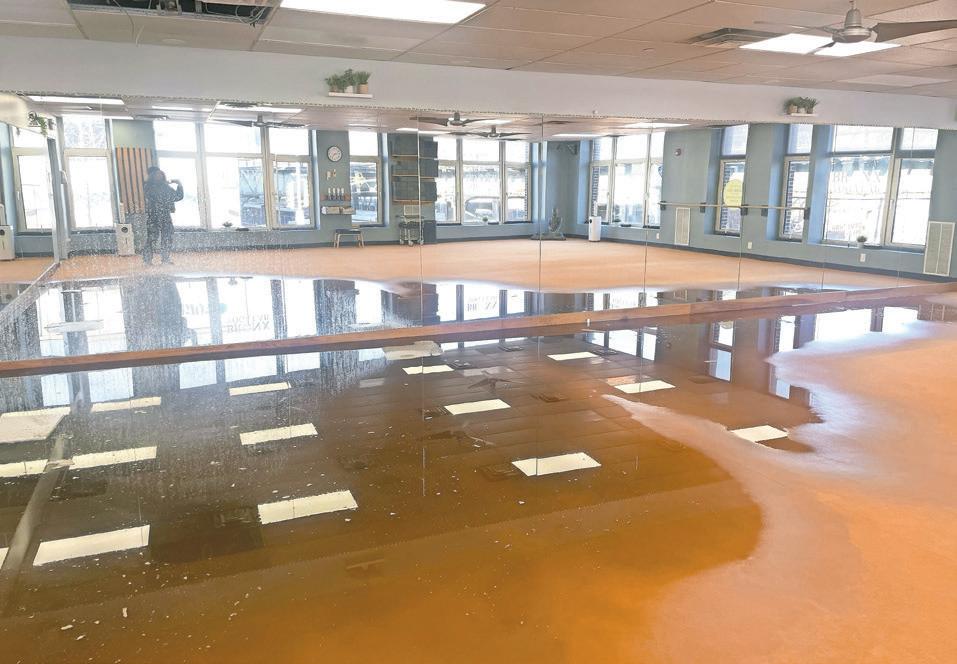
The Bronx Yoga Lab at 5500 Broadway suffered its second sprinkler malfunction of the year March 8. The issue led to what staff estimated was 8 to 9 inches of water pooled in the corner of the studio, three days without operation and the need for costly repairs.
But community members swiftly came together to support the Marble Hill-based hot yoga studio, which offers classes, retreats and workshops. A local fundraiser has raised thousands of dollars to go toward repairs for the studio.
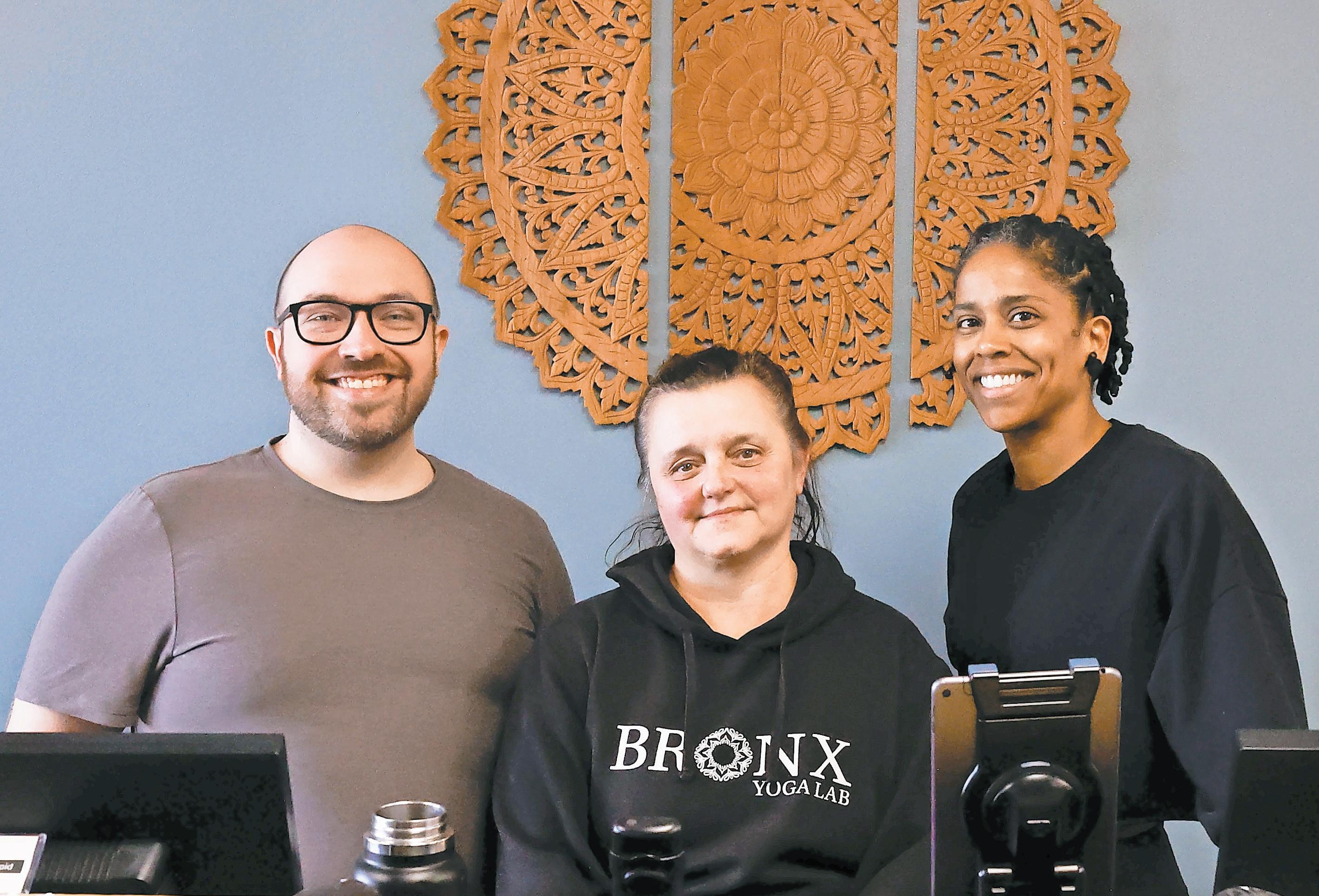
Co-owners Kerry Donegan and Dionne Presinal took over the studio in February 2020 after starting out as students five years prior. Now, they have built a community of more than 100 members and roughly 450 monthly classgoers, general manager Dereck Deblois said. De-
spite the recent setback, their connection to Bronx Yoga Lab runs deep, and they are set on staying open to serve their students, Donegan said.
“We’re really fighting for them as much as we are the business,” Donegan said. “It’s just really important to us that everybody that comes here has a safe space.”
On March 17, studio student Edith Lucas and nonprofit Friendly Fridge BX founder Sara Allen — both with longstanding ties to Bronx Yoga Lab — launched a GoFundMe campaign for repairs. As of April 6, community members donated $10,675. The goal is $30,000, most of which will go toward tearing up and replacing the studio floor, according to Deblois.
Deblois said maintenance companies estimated total repair costs would fall between $50,000 and $60,000.
When the first sprinkler burst on Jan.
Artist’s NYC works are making art accessible
By Olivia Young oyoung@riverdalepress.com
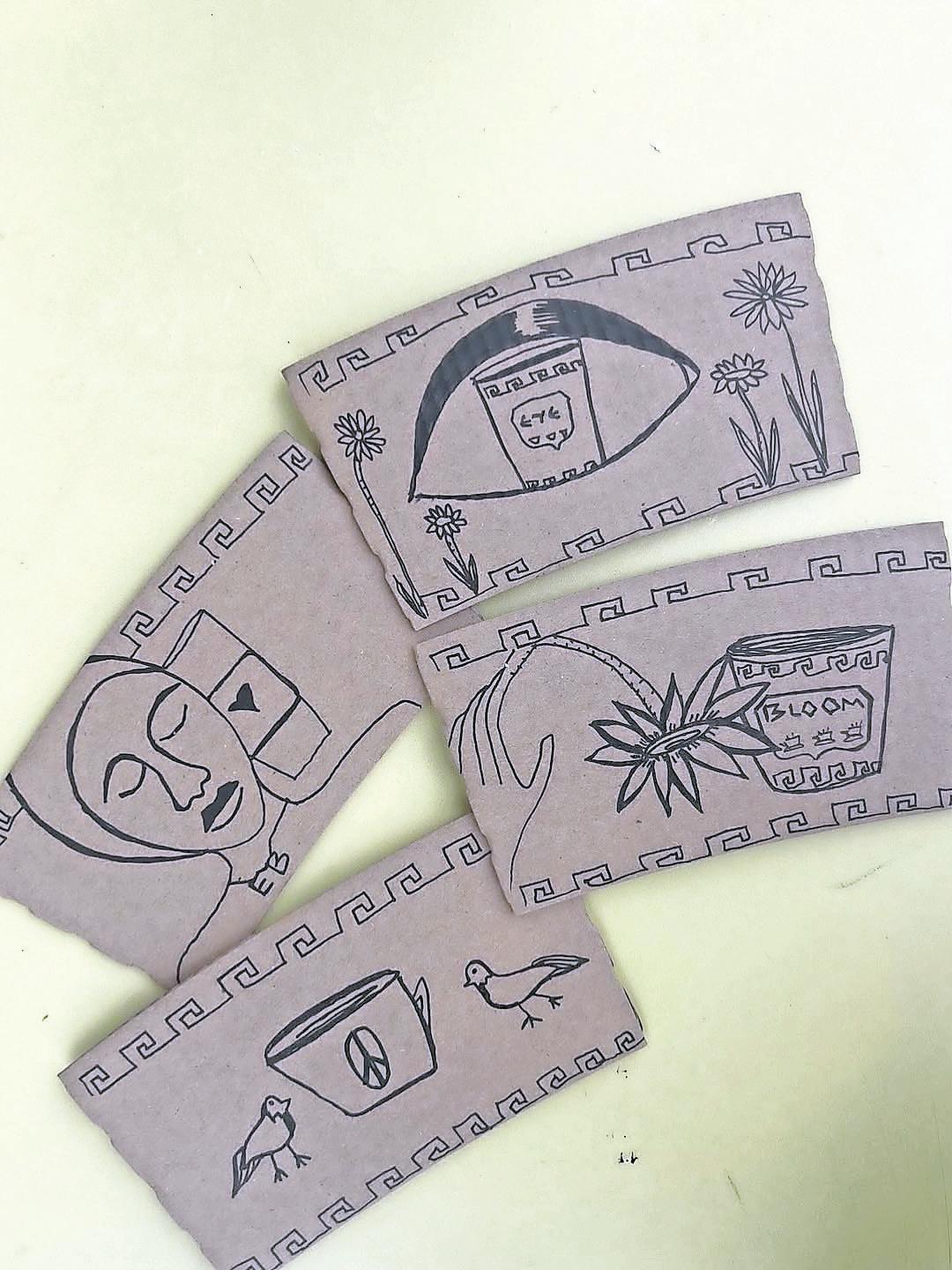
Longtime Riverdale resident and artist Nina Seigenfeld Velazquez’s exhibit at Early Bird Cafe on Mosholu Avenue is made to be shared. Along with other New York-centric designs, Seigenfeld Velazquez creates unique renditions of the city’s famous Anthora cup on coffee sleeves, which baristas give to customers at random.
“Coffee Reimagined” is a “way to get art into people’s hands,” Seigenfeld Velazquez said. From opening her own gallery at 21 in the East Village to sketching chalk outlines of women’s faces on Riverdale streets, the Upper East Side
“There’s a lot of excitement,” Evers said. “This is a grassroots movement, but it feels larger than life.”
Evers previously served as a New York State Committee member from 2022 to 2024, a volunteer role that connects the community to state Democrats. If elected to Assembly, she would be the first blind woman to be a part of the New York State Legislature, Evers said. She criticized the “machine,” or the idea of a political structure that limits local input. Evers referenced the 2024 Assembly race, where Dinowitz ran uncontested, and emphasized the importance of a competitive primary election.
native has always been of the belief that everyone can be an art collector, and has kept it at the center of her work.
“People are coming into Early Bird, they’re grabbing their coffee, they’re looking at my artwork — It would be nice if they walked out with something,” Seigenfeld Velazquez said.
The idea for the show came to be when 64-year-old Seigenfeld Velazquez was considering what a “real iconic image” was, she said. For her, it was undoubtedly the blue and white patterned paper Anthora cup, with its “We are happy to serve you” message. Since it was a coffee-themed exhibit, Early Bird Cafe owners Katie Mayer
21, the leak was less severe as it only ran for about 15 minutes, Donegan said. But, it still flooded from the studio into the hallway, forced a three-day closure and cost roughly $10,000 to repair, according to Deblois.
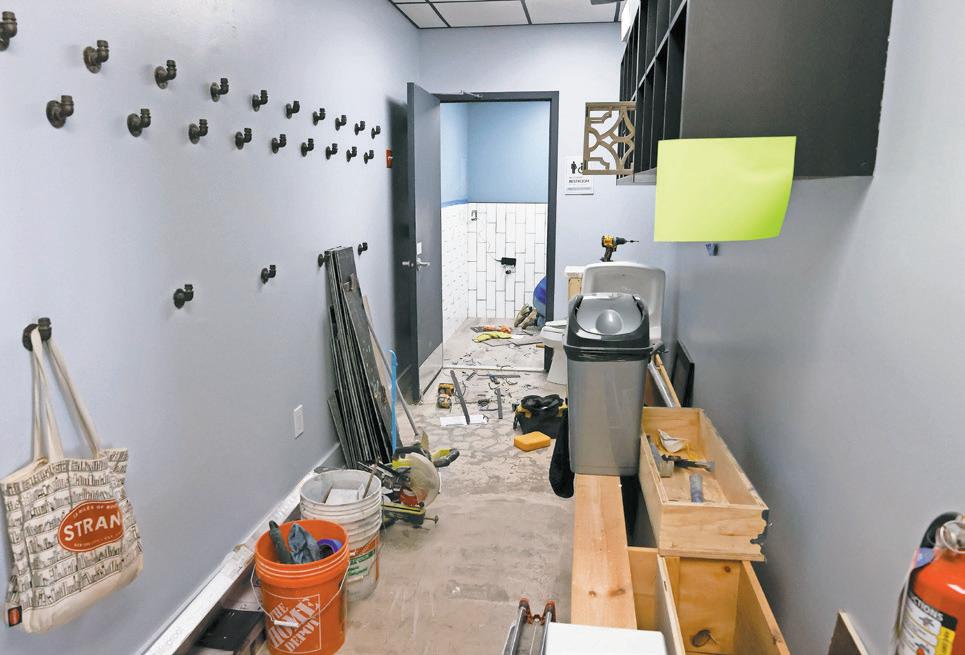
The day of the second leak, there was no one in the studio at the time, and the sprinkler ran for more than 30 minutes before an instructor arrived, Deblois said. The water marked the orange carpet with dark-colored spots that still remain despite repeated cleanings, and seeped into the bathroom, the hallway, and the break room of the Advanced Endoscopy Center next door, Deblois said.
Repairs at the endoscopy center were underway when The Press visited March 25, and were completed the following weekend, Steven Housberg, administrator at the center, said. The New York City Fire Department
By Michelle Mullen
mmullen@riverdalepress.com
On May 13, 2011, singer-songwriter Bob Dylan posted a brief note with an unusual proposition on his official website, BobDylan.com.
“Everybody knows by now that there’s a gazillion books on me either out or coming out in the near future,” he wrote. “So I’m encouraging anybody who’s ever met me, heard me or even seen me, to get in on the action and scribble their own book. You never know, somebody might have a great book in them.”
More than a decade later, one reader decided to take him up on the offer.
Singer-songwriter Kevin Kane has spent decades listening to Dylan, drawn to the cultural icon’s unconventional sound and offbeat lyrics — lines like “The sun isn’t yellow, it’s chicken,” from the 1965 song “Tombstone Blues.” Now 70, the longtime Riverdale resident is less interested in what the songs say than in what they leave behind.
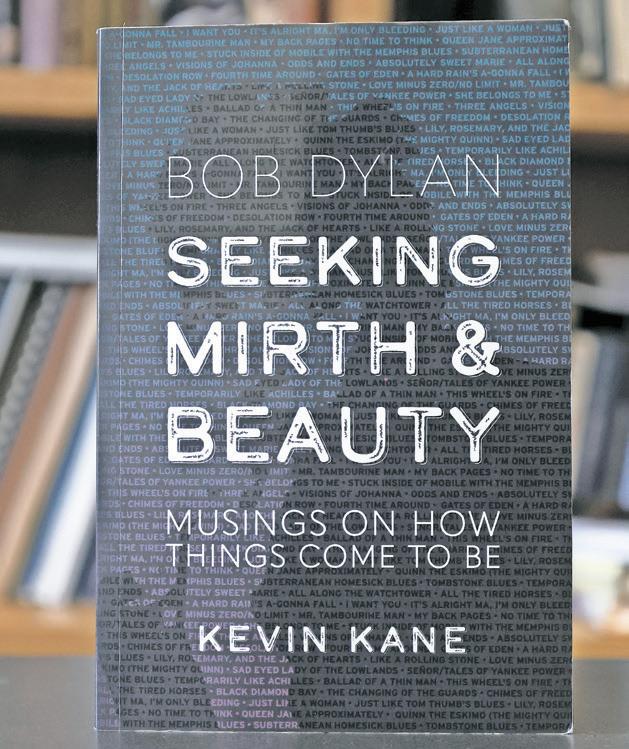
In his first book, “Seeking Mirth & Beauty: Musings on How Things Come to Be,” Kane does not retell Dylan’s life or try to decode his lyrics. Instead, he focuses on the experience of hearing the music — why some songs stay with people, and why others don’t.
“I point out very emphatically that the book is not about him at all,” Kane told The Press. “People try so hard to explain what he means, and it dawned on me a long time ago that his songs don’t mean anything any more than Jackson Pollock means something. Or Picasso putting the nose on the side of the face, it doesn’t mean anything, except that when he does it, it’s really good.”
The book grew slowly. Kane began writing during the pandemic, but the ideas had been building for years in notes and reflections.
“It became enough and comprehensive enough that it was all hanging together,” he explained.. “I thought, ‘I want to organize my thoughts and see what I actually think about all this.’”
Kane said the way he listens to music comes from how he grew up. He was one of nine children in a busy household in Connecticut, where quiet was hard to find.
“I just wanted to live alone so bad,” he reflected. “I loved my brothers and sisters, but I just wanted to be left alone and have some privacy.”


GARY JEAN-JUSTE
From left to right, general manager Dereck Deblois, co-owner Kerry Donegan and co-owner Dionne Presinal.
Courtesy Nina Seigenfeld Velazquez
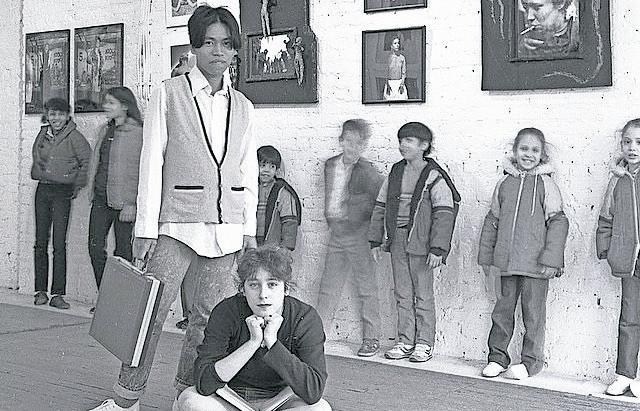
Nina Seigenfeld Velazquez, right, with the help of her friend Mario Fernandez, left, dropped out of the School of Visual Arts to open her own gallery.
VELAZQUEZ ON PAGE A4
ASSEMBLY
MORE ROOM FOR WHAT MATTERS™


Donated books find new homes on shelves at Bronx bodegas
By Michelle Mullen mmullen@riverdalepress.com
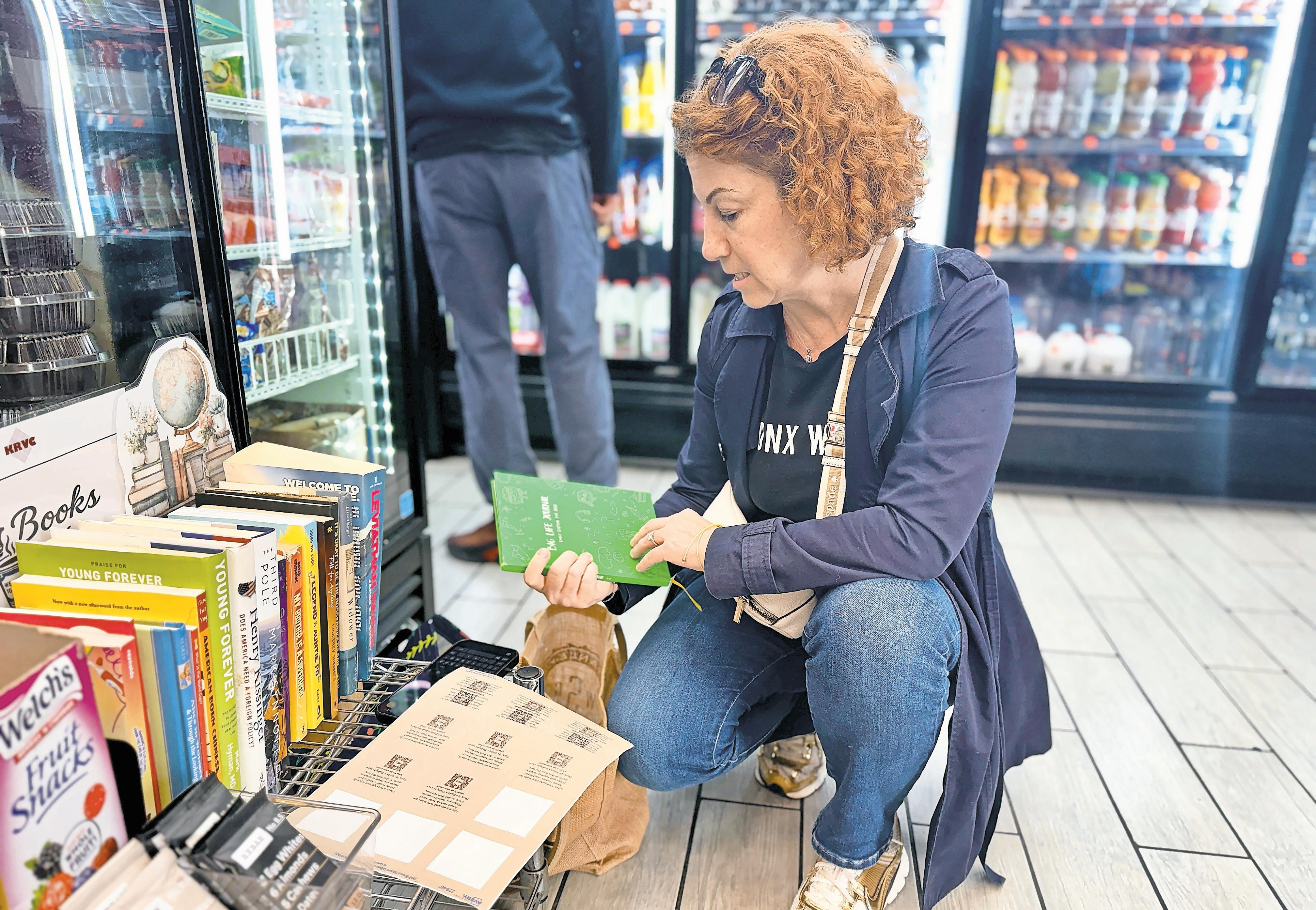
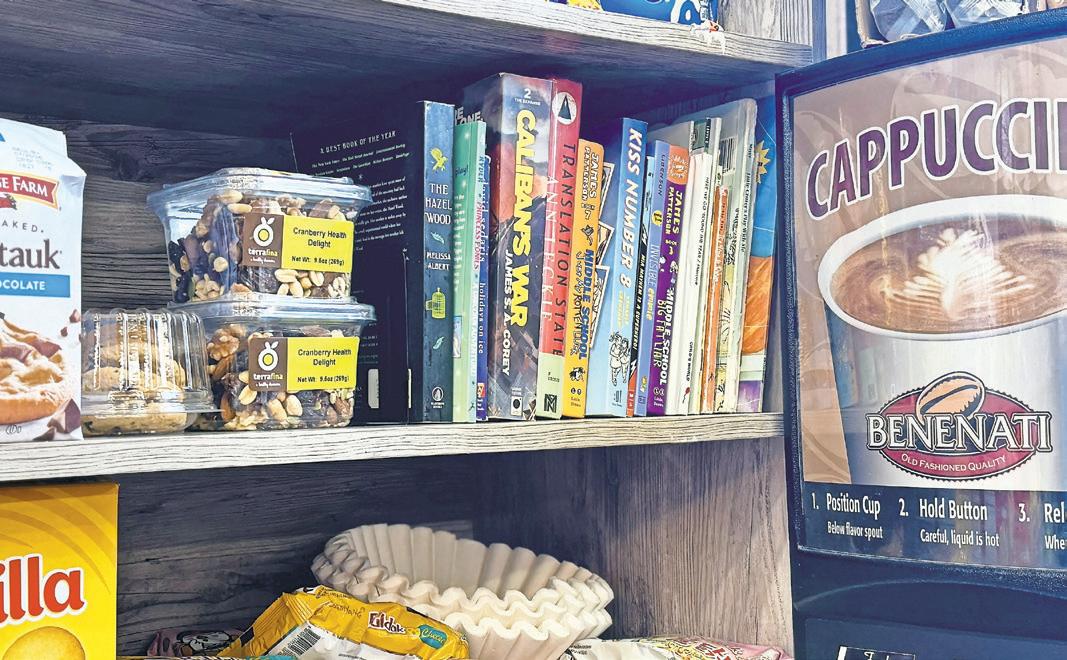
Books are appearing in bodegas across the Bronx, set on small shelves between chips, canned goods and everyday staples.
The initiative, known as “Books x Bodegas,” was launched last fall by Spuyten Duyvil residents Suzanne Likeness and her fiance Primo Cidi.
In just a few months, what began as a single shelf expanded to eight locations across the borough, including shops in the South Bronx and along Bailey Avenue.
Likeness, a high school teacher who works with English language learners, said the idea grew out of what she saw in the classroom. It was there that she realized how limited access to books outside of school could affect confidence and reading habits.
Many of her students were encountering books primarily in structured settings, with fewer opportunities to engage with reading on their own terms.
“I’m thinking of ways to bring literacy outside the classroom,” Likeness said. “I want them to see books in unexpected places and associate it with the environment outside of school. I don’t think that all the things we need to do as teachers can happen in the confines of the school day. It’s not the solution. It’s part of the solution.”
Likeness’ and Cidi’s connection began while she was teaching at a South Bronx school near the bodega where Cidi worked. It was there that he saw a steady stream of students coming in and out each day.
If students were already passing through these spaces, he and Likeness reasoned, why not bring books to them?
This idea was a central thread that helped shape the initiative to bring books into the places people already move through, without requiring them to seek them out.
Cidi said the project builds on those everyday interactions.
“When I see people happy, when I make someone laugh, or I help someone, books in bodegas bring a lot of enjoyment,” he said. The first shelf, installed at Cidi’s bodega in late 2025, was
stocked with donated books from a book drive and offered for free, with little expectation from the couple of how customers would respond.
At first, some hesitated, Likeness and Cidi recalled, unsure whether the books were really meant to be taken. Others lingered, flipping through pages while waiting at the counter, returning to the shelf on subsequent visits.
Over time, the hesitation faded. Books began to circulate, with readers taking and returning them freely, creating a quiet, informal exchange that required no sign-up and remained accessible to anyone.
As the project grew, Likeness and Cidi became more intentional about where to place shelves, focusing on store owners willing to dedicate space to something that would not generate profit, but serve the community instead.
“We’re asking the store owners to donate space,” Likeness said. “It’s not just about more stores. It’s about finding someone who wants to impact the community where they’re in business.”
At Johnson Deli and Grill, worker Washington Ahmeidi said the shelf has gradually become part of the store’s daily rhythm. Positioned near the counter, it draws customers’ attention, some of whom now reach for a book rather than their phones as they linger.
“People take books and bring books, they look at them while they’re waiting for a sandwich,” he said. “It’s even brought more customers to the store.”
What began as a small addition shifted how some customers spend those in-between moments, turning idle time into something quieter and more reflective.
The project gained more momentum earlier this year through Laura Levine-Pinedo, executive director of the Kingsbridge-Riverdale-Van Cortlandt Development Corporation, or KRVC, who first connected with Cidi through a community food distribution program. At the time, Cidi donated items from his bodega to support the effort.
He mentioned to Levine-Pinedo that the couple was running low on donated books and had begun purchasing them with their own funds.
“He came to me, and he’s like, ‘I need books. We have a book shortage,’” she recalled. “I was like, ‘I’ll get you books by tonight.’” Levine-Pinedo said she immediately turned to her resident network, putting out a call for donations and spending the evening collecting books from across the community. She then delivered

them that same night — an entire
SUV’s worth.
The response helped restock shelves and allowed the project to continue expanding without interruption.
“I think [Books x Bodegas] activates local bodegas,” she said. “Bodegas are really like the heart and soul of each micro community, so to have a place that can
incorporate literacy is a wonderful idea.”
That sense of familiarity has helped the shelves blend into their surroundings. Rather than standing out, they become part of the environment. Since its debut in November of last year, the shelves have been filled with a mix of books for both children and adults, shaped largely by donations rather than being tailored to each store’s customers. Although one location leans toward children’s books, others offer a broader selection to reflect the people who pass through each space. For Cidi and Likeness, the goal remains straightforward — to make books visible and part of daily routines.










Michelle Mullen photos
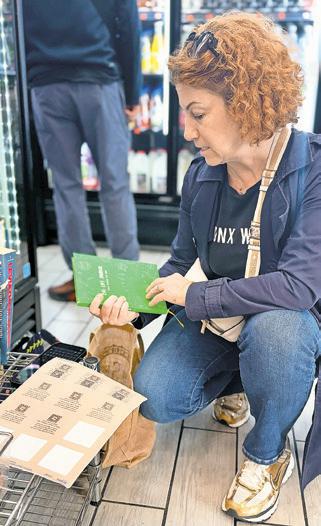
A small shelf of free books sits between everyday items inside a Bronx bodega as part of the “Books x Bodegas” initiative, which aims to bring reading into spaces residents visit daily.
Suzanne Likeness restocks a selection of free books every Saturday at establishments where the “Books x Bodegas” program has become part of the store’s routine.
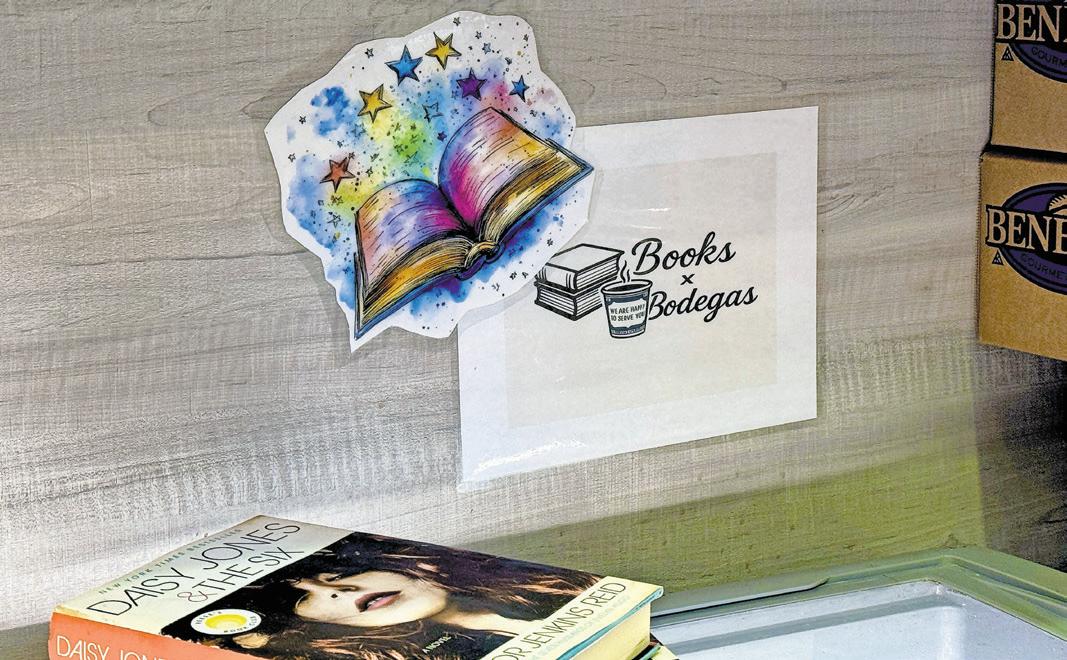
Suzanne Likeness and Primo Cidi, founders of “Books x Bodegas,” have expanded the initiative to eight locations across the Bronx, placing signs advertising the program inside bodegas.
Dinowitz and Evers race ramps up ahead of June
CONTINUED from page A1
Evers’ platform aims to target affordability, especially within housing, childcare and local businesses, according to her campaign website. She told The Press she is also concerned with aggressive measures by Immigration and Customs Enforcement, and the possibility of rollback on climate law.
“We need new voices that come from the community that can lift up the everyday concerns of working New Yorkers,” Evers said.
Dinowitz told The Press he disagrees with the argument that he’s been in office too long, and experience is what enables him to push policy.
“You can get more done when you have been around for a while — when you have more clout, when you have more experience, when you know the ins and the outs,” he said.
He mentioned the program he secured that allows residents with
an E-ZPass to get an instant rebate on the Henry Hudson Bridge toll, as well as a bill that helped tenants avoid eviction during the pandemic.
In this campaign, Dinowitz said he is looking to procure funds that improve schools, healthcare and childcare in the district.
He added the idea of running against the “establishment,” is insignificant compared to a candidate’s platform and what they aim to accomplish.
“People see me,” Dinowitz said.
“They know that I work hard. They know that I’ve lived in the community all my life.”
Dinowitz is backed by the longstanding Ben Franklin Reform Democratic Club, a political organization founded in 1960. He is also endorsed by U.S. Reps. Ritchie Torres and Adriano Espaillat, state Sen. Jamaal T. Bailey and Bronx Borough President Vanessa Gibson, among others. Another dominant local political
group, Unity Democratic Club, is behind Evers. She has the endorsement of the Working Families Party, and the support of state Sen. Gustavo Rivera and state Sen. Robert Jackson. The competition between organizations is also reflected in party posi-
tion races. Unity’s Abigail Martin is up for re-election for female district leader against Ben Franklin Club’s Virginia Krompinger. Male district leader and state committee members are held by Ben Franklin Club incumbents, with Unity-tied challengers.
Sprinkler malfunction leaves studio with damage
CONTINUED from page A1
was not able to confirm the cause of the sprinkler malfunction to The Press. Deblois said all eight sprinkler heads were replaced with ones that are hydrated, making them better suitable for high-temperature rooms like those in a hot yoga studio. The property management company of the building, Manhattan-based ABS Partners Real Estate, declined to comment on the incident.
Regular expenses are harder to manage with the added burden of repair costs, Deblois explained. The lab makes it a priority to still pay instructors when classes are cancelled, and the hot studio has a higher utility bill than most since they have to maintain a temperature ranging from 95 to 105 degrees. They are also still recovering from a total of six days in lost revenue, as membership fees were also frozen for students during closure, Deblois said. The lab is now open and operating at full capacity, but a few classes have to be cancelled weekly to work around maintenance scheduling, Deblois said.
Repairs are still underway in the hallway, lobby, wall molding and the bathroom, Deblois said, but the work should be wrapped up by April 11. After those repairs are finished, the lab has to focus on securing funds for repairing the studio floor. Without the GoFundMe, Deblois said, they would have to rely on insurance funds, which could take time to process.
Fundraiser organizers Lucas and Allen said their connection to the lab drove them to want to help.
Lucas, who has been a student at Bronx Yoga Lab for over a decade, said her bond with Donegan and Presinal started while the two were instructors.
Lucas’ son, Jason Johnson, got into a car accident 15 years ago that left one side of his body with limited mobility, she said. Donegan and Presinal created modified sessions that work for Johnson in his wheelchair.
“When people come into the studio, they carry a lot,” Lucas said. “Sometimes they’re excited and there’s a lot of hope, sometimes people have grief, some people have sadness. It’s a good place where you have time for an hour
or two to yourself where you can just reconnect.”
Allen and fellow Friendly Fridge BX founder Selma Raven had their first date at Bronx Yoga Lab seven years ago. As they built a life together, the lab remained a constant as a place to work out, but also as a fundraising partner for Friendly Fridge. Allen said
when she heard the lab was having trouble, she and Raven immediately wanted to be a part of their support network. Throughout the process, Donegan maintained that the studio has been holding it together for the sake of their students.
“It’s a commitment that we have to the studio and the people in it that drives us and keeps us going,” Donegan said. “It would be easy enough to say ‘Done,’ and walk away, but we both know that’s not the right thing to do — for ourselves, for the studio or for the community. So that’s why we’re fighting.”
Riverdale musician reflects on Bob Dylan’s lyrics
CONTINUED from page A1
It was there that he first heard Dylan. Late one night, lying in a room he shared with five brothers, he listened to a small transistor radio, trying not to wake anyone. “It was the most bizarre, non-linear, unlike any song that I’d ever heard in my life,” Kane added. “I would say it changed my life.” What stayed with him was not a clear meaning, but a feeling. He kept returning to the same songs, noticing how they changed depending on when he heard them.
That habit carried into his adult life. After moving to New York City in 1989, Kane settled in Riverdale in 1996 with his wife and two daughters. Meanwhile, he continued to write and record music.
“I have made my living by being frugal, and I’m really good at it,” he said. Kane worked a mix of jobs that allowed him to keep creating in his free time. For more than a decade, he also worked at the Hebrew Home, helping care for its art collection. Being around paintings every day changed how he thought about music.
In the book, Kane compares Dylan’s work to abstract painting, writing that the songs are less like stories and more like something you experience. People don’t always try to explain a painting, he noted. They look at it, spend time with it and take something from it. He began to think
CONTINUED from page A1
and Heather Kim were on board, and Seigenfeld Velazquez was soon delivering 10 unique sleeves to the shop a day, she said.
The Anthora cup was designed in 1963 by Holocaust survivor Leslie Buck and marketed to Greek-owned diners. The cups even appeared frequently in New York City-based TV shows and movies such as “Law & Order,” “Mad Men” and “The Wolf of Wall Street.” A few of Seigenfeld Velazquez’s drawings featuring city motifs hang on the cafe’s walls, sketched on reused paper brown bags. One shows three bodega cats dressed in Anthora cups, another shows the cup with a friendly face and a tophat, raising its arms in the air.
Seigenfeld Velazquez, who is a parent coordinator and afterschool art teacher at P.S. 81, wanted the project to be humorous and fun, but also “teach people to see,” she said, and notice the little things they may not think about.
“Not everybody is an academic, not everybody is a business person,” she said. “Sometimes we just have to celebrate art because it’s beautiful, and it makes people happy, and it makes you think.”
songs could work the same way.
“[Dylan] is as much an abstractexpressionist artist as he is a traditional songwriter,” he said. “His songs are more like objects of art. He’s not telling you about something. He creates something that you can kind of walk around.” Kane explained that not everything needs to matter for it to be enjoyed , an idea that became more important to him over time.
These threads of accessibility and ownership run through her previous work as well. Her signature face drawings have appeared on sidewalks, rocks, scaffolding, utility boxes and inside wet patches on the road after rain. One show from 2012 at the Riverdale Public Library, called “What’s Mine is Yours,” was made up of 400 Post-it notes with faces drawn on them. Those who visited were allowed to take one, with the hope of it becoming the first piece of art they could call their own, The Press previously reported. This approach to creativity can be traced back to Seigenfeld Velazquez’s experiences with her own gallery. In 1983, when she was in her third year at Manhattan’s School of Visual Arts, Seigenfeld Velazquez partnered with her friend Mario Fernandez to open New Math Gallery. The name was inspired by Seigenfeld Velazquez’s dad, who would attempt to help her with her homework and say in frustration “I just don’t understand this new math.”
Seigenfeld Velazquez said with only $250, she and Fernandez built something from nothing in the 12th Street storefront. They started with showing their school friends’ pieces, and worked their way up to other New York City artists, garnering media at-
That view puts him somewhat at odds with how Dylan is often discussed. Many listeners try to interpret the lyrics and find clear meaning. Kane understands that, but sees it as only one way of listening.
“There’s these websites that Dylan fans go crazy with and they just keep on deciding what this song means,” he said.
“I want people to listen differently, to him and to other songs and to see works of art differently,” he said. “That they don’t mean something, that they just are something.”
tention and becoming embedded in the East Village’s 1980s art scene.
“We were very open to our community, and we really prided ourselves on that,” Seigenfeld Velazquez said, explaining that New Yorkers who had never been to a museum, or were experiencing homelessness, would visit often and take interest in the pieces on display.
Though operation costs eventually caught up to New Math Gallery, which closed in 1986, Seigenfeld Velazquez said the sense of community built there — between neighbors, storeowners on her block, and other artist friends who would be constantly in and out of each other’s apartments — was something she gravitated toward. When she and her husband at the time moved to North Riverdale 37 years ago, Seigenfeld Velazquez said she did it “kicking and screaming,” but soon found her new neighborhood reminiscent of the East Village. The bonds she has built over time with other Riverdale creatives has led her to feel like the neighborhood still does not have a hub just for artists. There is Kingsbridge Riverdale Van Cortlandt Development Corporation’s Gallery 505 on West 238th Street, where Seigenfeld Velazquez helps with exhibits, but
the community outside of
“And the lines they talk about are the most bizarre, weird lines, there is no sense in trying. That doesn’t mean anything at all.
But it’s a great song.”
After finishing the manuscript, Kane sent it out not expecting it to be published.
It was eventually picked up by a small Wisconsin-based press, Genius Book Publishing, and released March 5.
“It’s not Simon and Schuster, and I’m not Stephen King, but people will read it, and that’s the satisfaction,” he said.
For Kane, the book is less about explaining Dylan than about holding onto the feeling he had as a teenager —- hearing something he couldn’t quite make sense of but couldn’t forget.
He said that feeling hasn’t gone away. If anything, it’s what has kept him listening.
“I’m really glad that I wrote it,” he said. “And I’m gonna continue to seek mirth and beauty.”
Unity was established in 2022 by former Ben Franklin Club members that aimed to create what they felt was a more inclusive group, as previously reported by The Press. The Democratic primary will take place June 23.
File photos
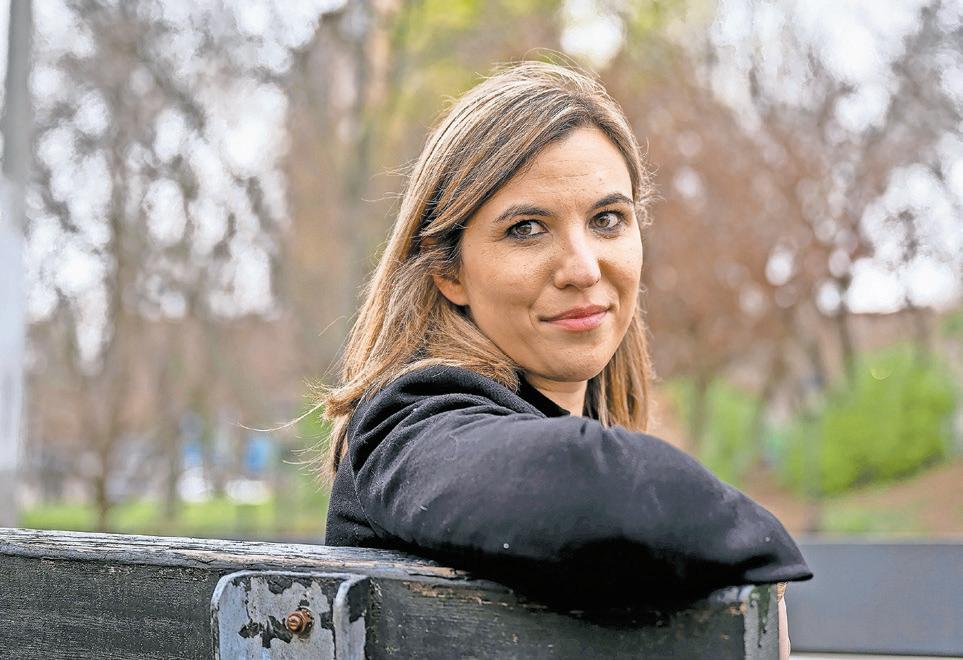
Morgan Evers is an educator, community organizer and disabilities advocate running for Assembly District 81.
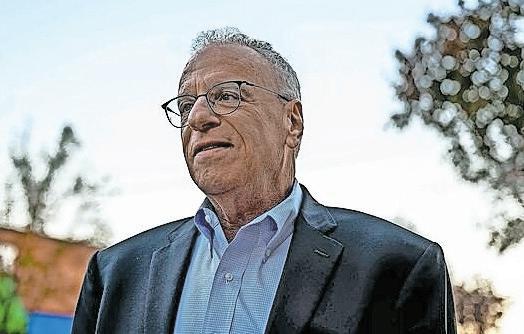
Assembly member Jeffrey Dinowitz has served Assembly District 81 for more than 30 years.
GARY JEAN-JUSTE
General manager Derek Deblois said maintenance companies estimated more than $50,000 in repair costs.
Courtesy Bronx Yoga Lab
General manager Derek Deblois said the sprinkler ran for more than 30 minutes on March 8, releasing gallons of water.
Michelle Mullen
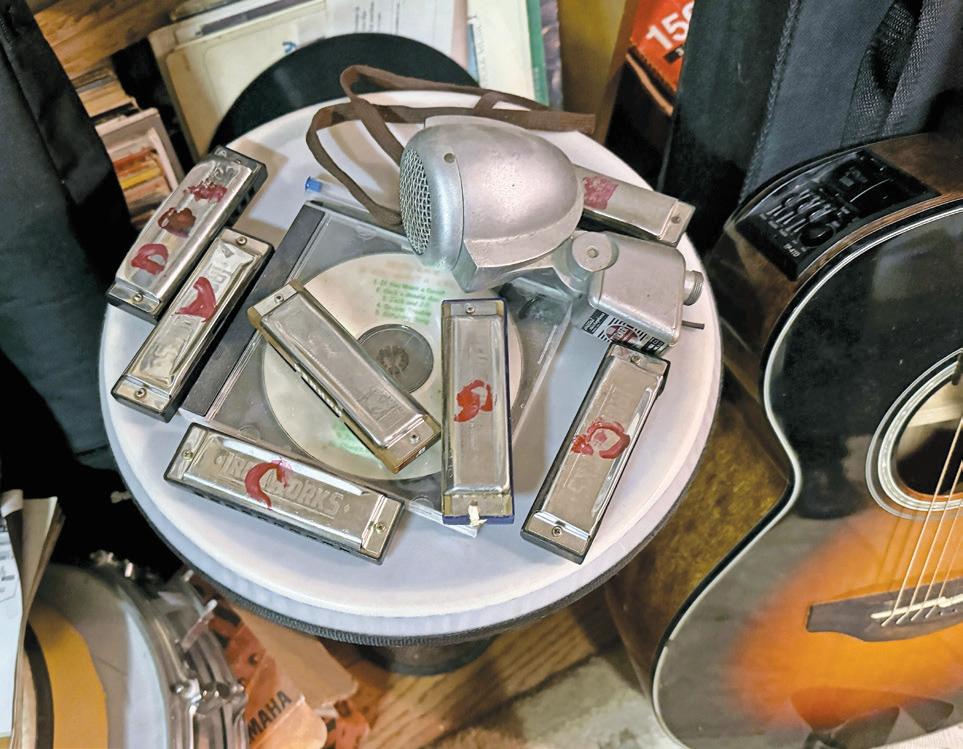
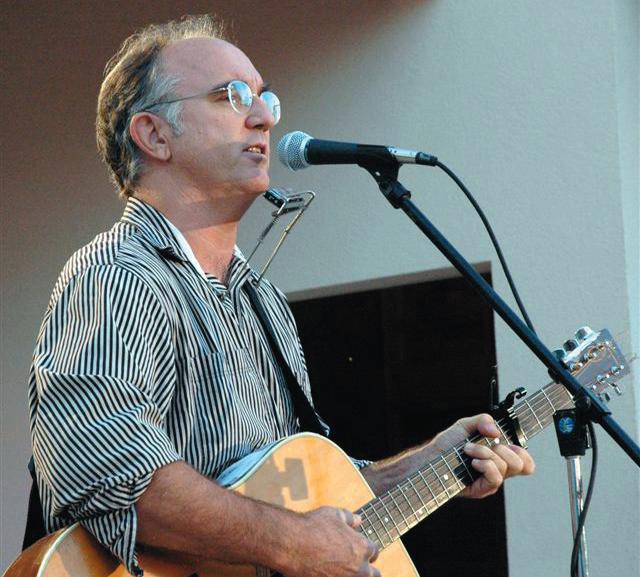
Singer-songwriter Kevin Kane set up a recording studio in his basement, where he grooves out on multiple instruments — including harmonicas in the spirit of Bob Dylan.
Courtesy Kevin Kane Musician and author Kevin Kane often performs live, including in Riverdale.
GARY JEAN-JUSTE Kevin Kane’s book, “Seeking Mirth and Beauty: Musings on How Things Come to Be,” debuted on March 5.
GARY JEAN-JUSTE photos Seigenfeld Velazquez’s other exhibit pieces follow the same city theme, with references to pigeons and bodega cats.
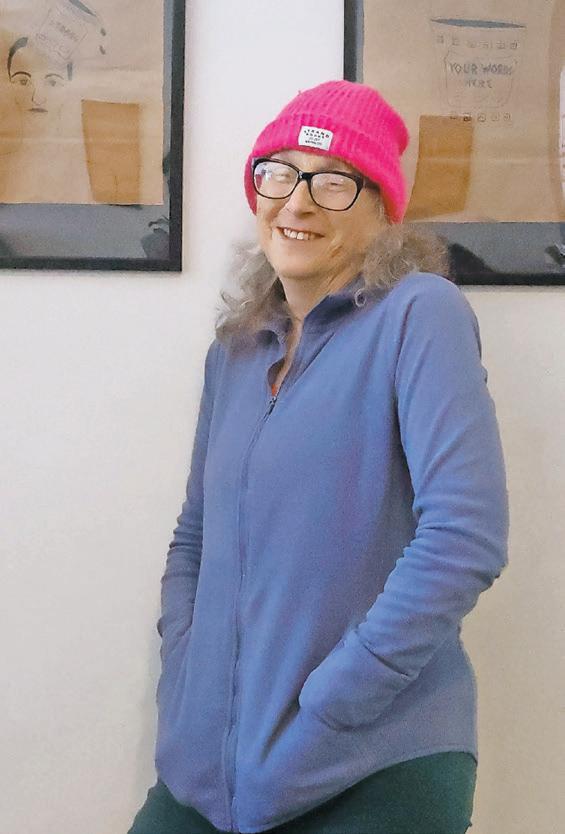
Courtesy Nina Seigenfeld Velazquez Seigenfeld Velazquez grew up on the Upper West Side and moved downtown in college before settling in Riverdale in her late 20s.
Hi dd en for d eca d es, Holocaust survivor’s d rawings on d isplay
By Michelle Mullen mmullen@riverdalepress.com
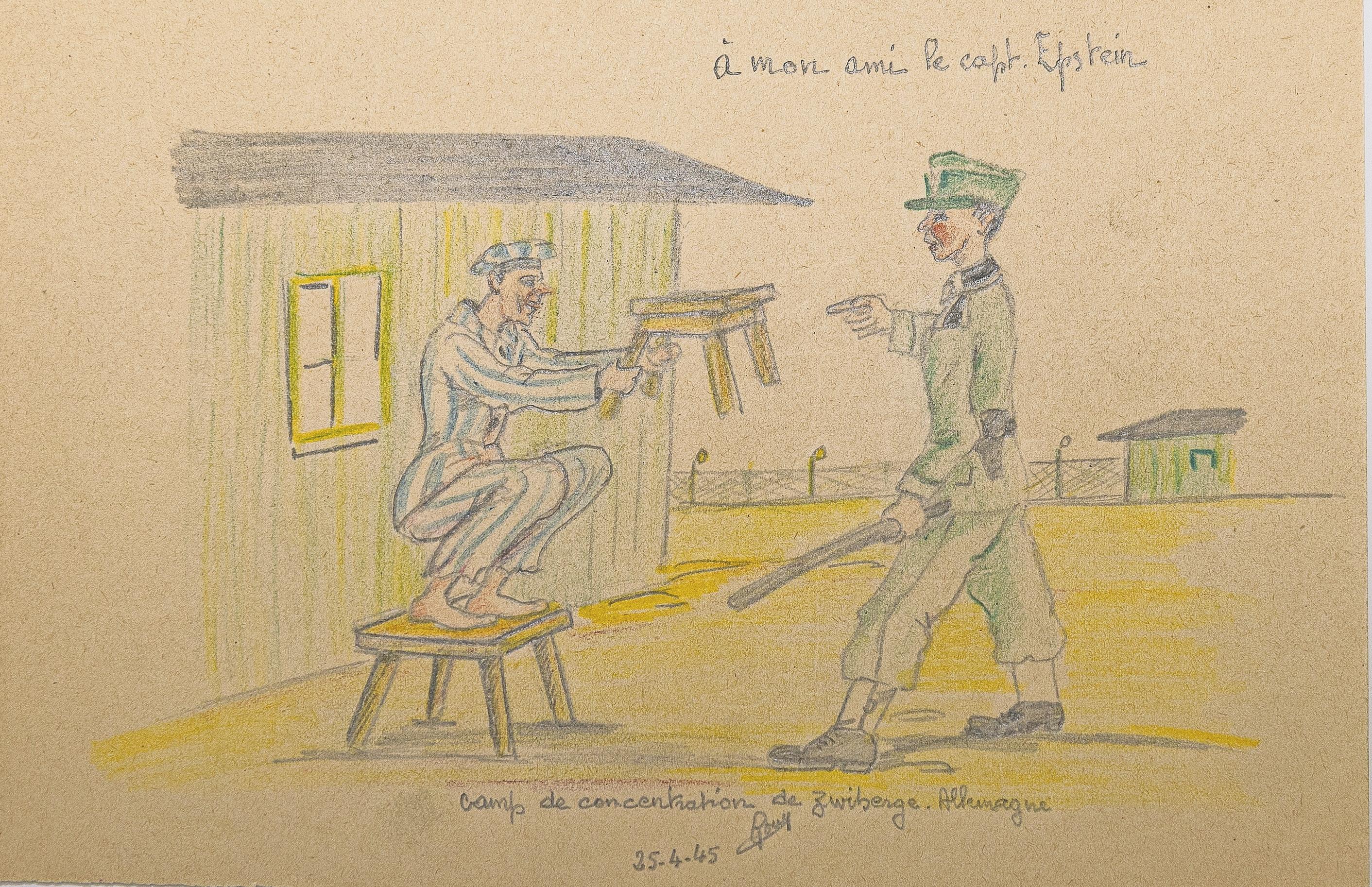
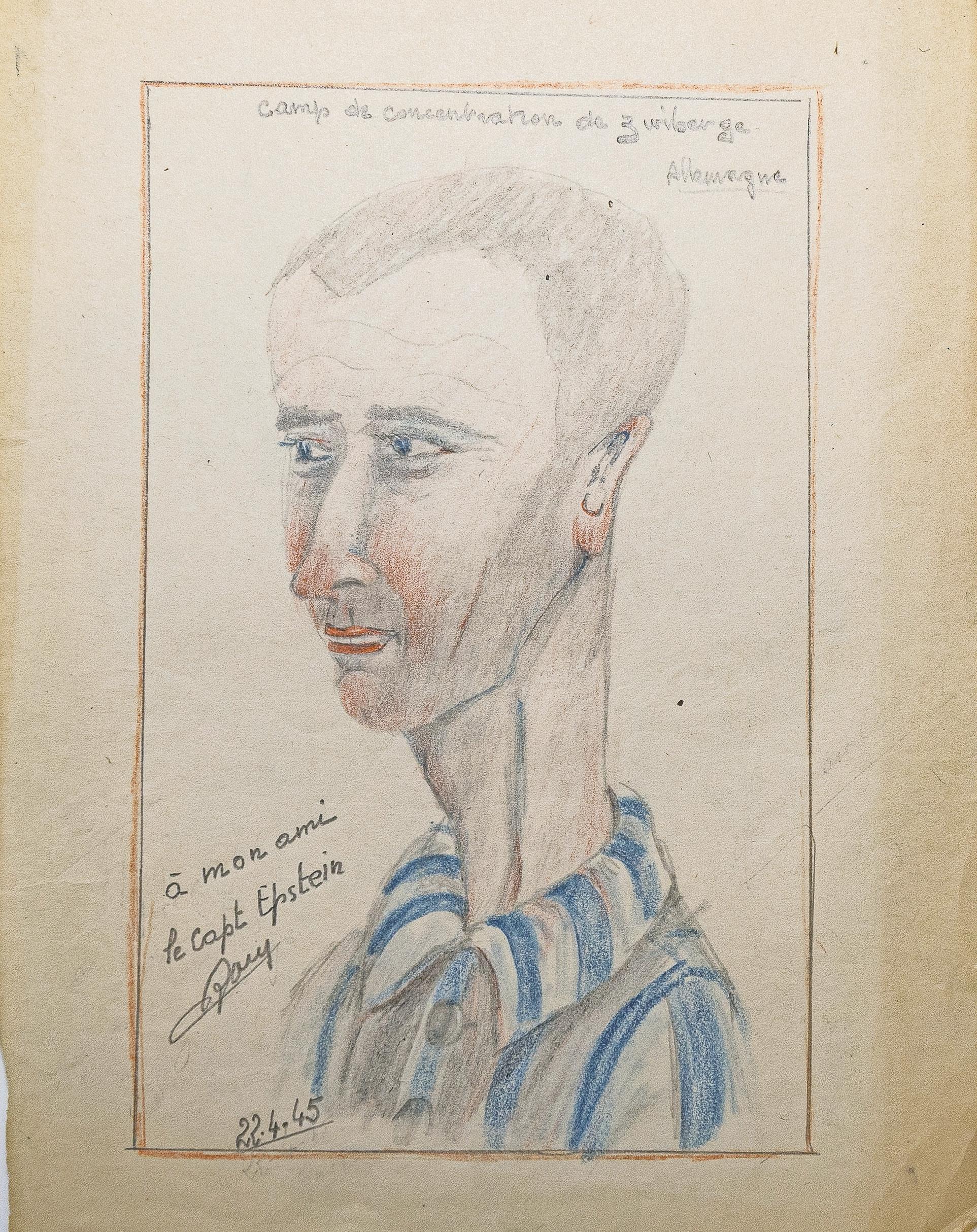
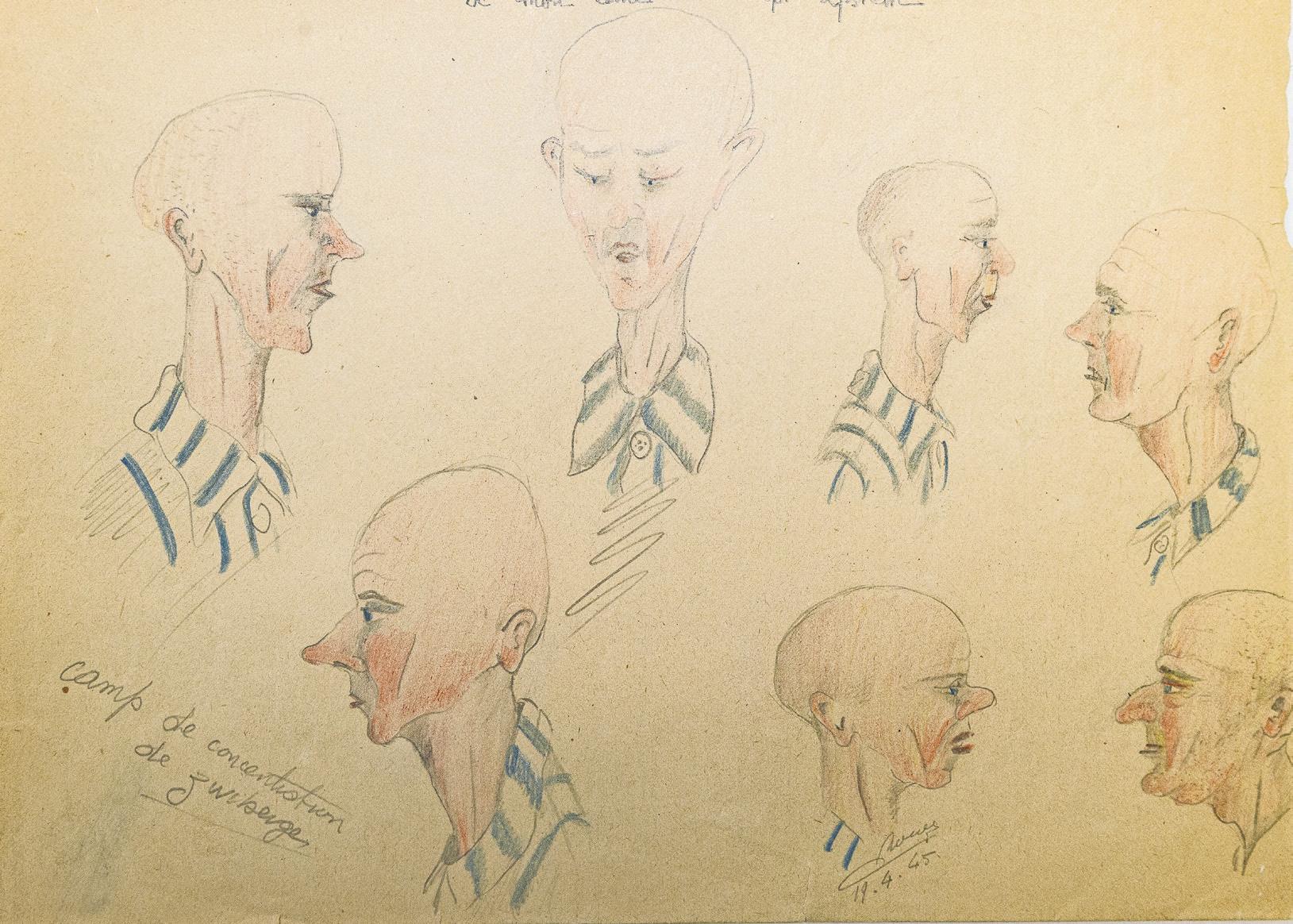
A set of drawings created by a Holocaust survivor in 1945 is now on display at Manhattan University, after spending decades hidden in a worn black briefcase tucked inside a closet — a piece of history quietly waiting to be found.
Before moving into their new Scarsdale home, Ken and Helene Orce undertook significant renovations, tearing out walls and reworking rooms. In one room, an unusual closet extended awkwardly along a wall. When it came time to remove it, the discovery came as a surprise.
“The closet in one of the rooms we were ripping out,” Helene said. “And Ken was kind of putzing around because he didn’t like what [contractors] were doing. And when he pulled at something in the closet, this briefcase fell on his head.”
Inside was a carefully packed archive, fragile and browned with age, containing more than two dozen sketches in colored pencil, along with photographs and documents.
The drawings, later identified as the work of Marcel Roux, a member of the French Resistance — a network of underground groups that opposed Nazi occupation in France — who was captured by Nazis as a political prisoner, not a Jewish detainee.
While imprisoned, Roux documented scenes of starvation, violence and survival inside Langenstein-Zwieberge, a subcamp of Buchenwald in Germany, where he was held and forced into hard labor.
At first, the Orces did not fully grasp what they had found.
“It was fascinating,” Orce said. “We were just looking at them, and not having any personal connection with the Holocaust. It wasn’t quite as disturbing to us in the beginning, until we began to study it, and thought, “Oh, my God, this is real.”
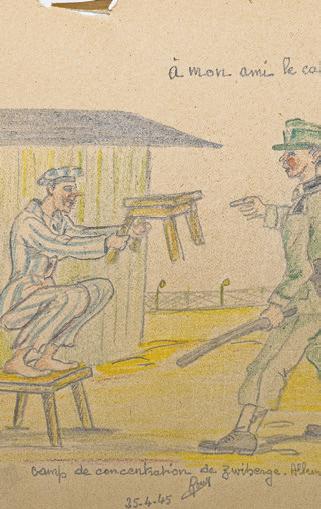
The drawings themselves form a visual record of daily life inside the camp. In one, a prisoner in striped uniform is beaten. In another, skeletal figures gather around bodies already reduced to skin and bones. Others show men standing in line for food, or collapsing under the weight of forced labor.
They were created in the final weeks of the war, after American troops liberated the camp and Roux, then in his early 40s, began to record what he had endured. He was not a trained artist. The materials appear on thin, sometimes lined scrap paper.
Each drawing was inscribed in French to “my friend, Captain Epstein,” a reference to Dr. William Epstein, a U.S. Army physician who served in a field hospital unit that treated survivors after liberation, including Roux. The case in which the drawings were found appeared to belong to the doctor, who later built a career in New York.
Alongside the sketches were personal items, among them postcards, photographs of landscapes and military aircraft, newspaper clippings and handwritten notes.
The Orces learned that the home they purchased had belonged to Epstein’s wife, Ruth, who had moved out and left the case behind. When they reached out through a caretaker to see if she or her family wanted the contents returned, the answer was no. The briefcase, and everything inside it, remained.
For 32 years, the drawings sat in a file cabinet in the Orces’ home. They showed them to friends and family, occasionally revisiting the question of what to do with them. At times, Helene said, they considered throwing them out, unsure of their significance or where they might belong. Each time, they hesitated.
“We said, no, we can’t dump this,” she explained. “This has got to go somewhere.” They reached out to sev-
eral institutions, including museums and Holocaust archives, but often encountered a similar response: the drawings could be accepted into collections, but would likely remain in storage, unseen by the public.
Instead, they decided to hold onto the sketches, waiting for the right place.
That opportunity emerged through Manhattan University, where Kenneth is an alumnus. The drawings were brought to the university’s Holocaust, Genocide and Interfaith Education Center, where Mehnaz Afridi, the center’s director, began to study them. What followed was part research, she said, and part reconstruction.
Afridi contacted archives in the United States and abroad, including major Holocaust research centers, piecing together what could be known about Roux and the camps he passed through.
At the same time, Afridi began examining the drawings themselves. Initially, they appeared as individual scenes. But as she laid them out and studied them more closely, a pattern emerged.
“I put them on the ground and started looking,” she said. “And then I realized there was a sequence.”
The images, when arranged in a particular order, traced a progression that echoed documented accounts of camp life: morning roll call, the distribution of meager food, forced labor, punishment, execution and burial. What Roux had created was not only a series of sketches, but a narrative.
Today, that narrative is on display at Manhattan University. To protect the originals — which remain brittle, with frayed edges and fading pigment — the exhibition features high-resolution reproductions. The originals are stored in protective archival materials, shielded from light and handling.
The exhibit itself is inten-
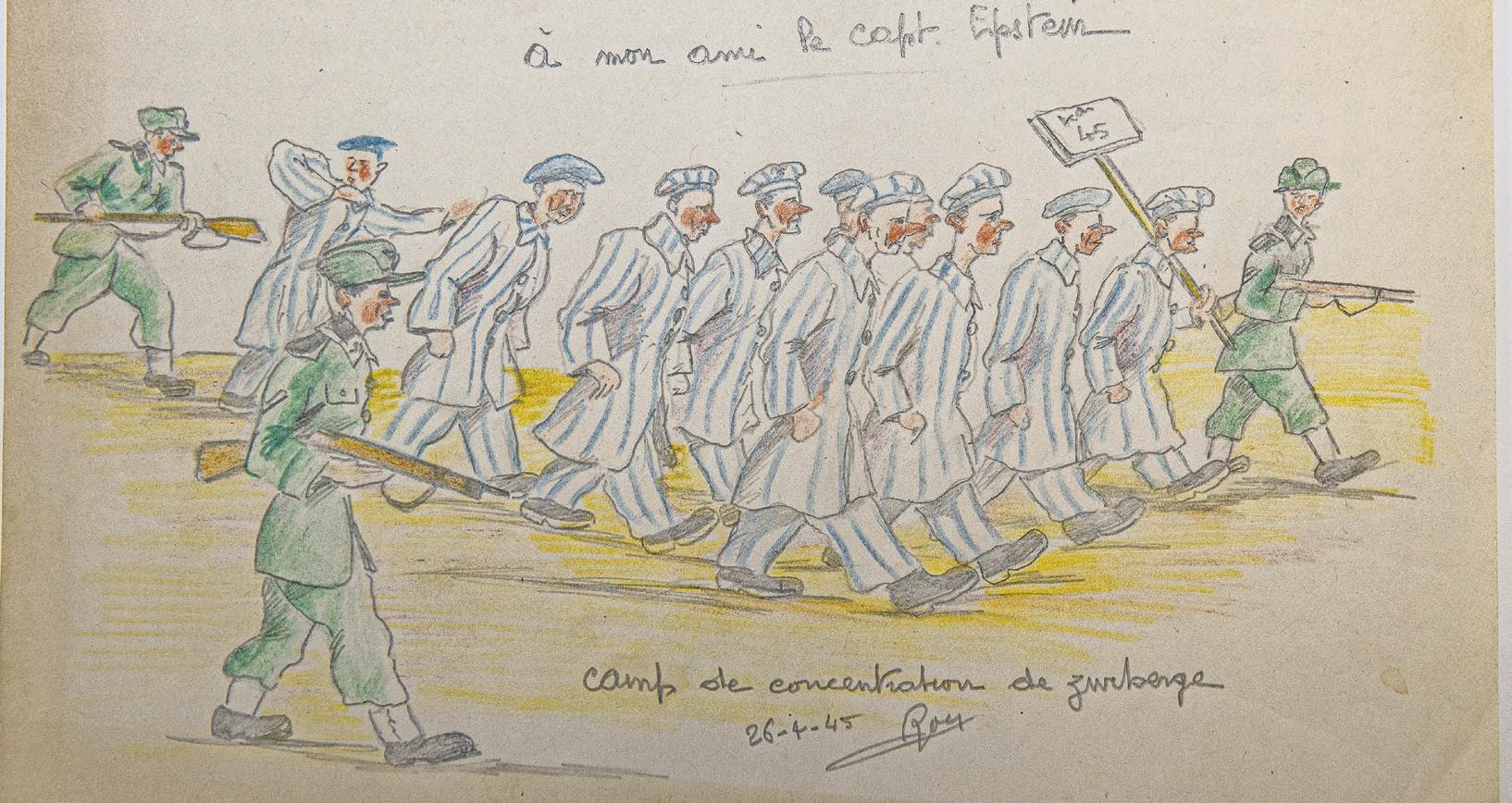
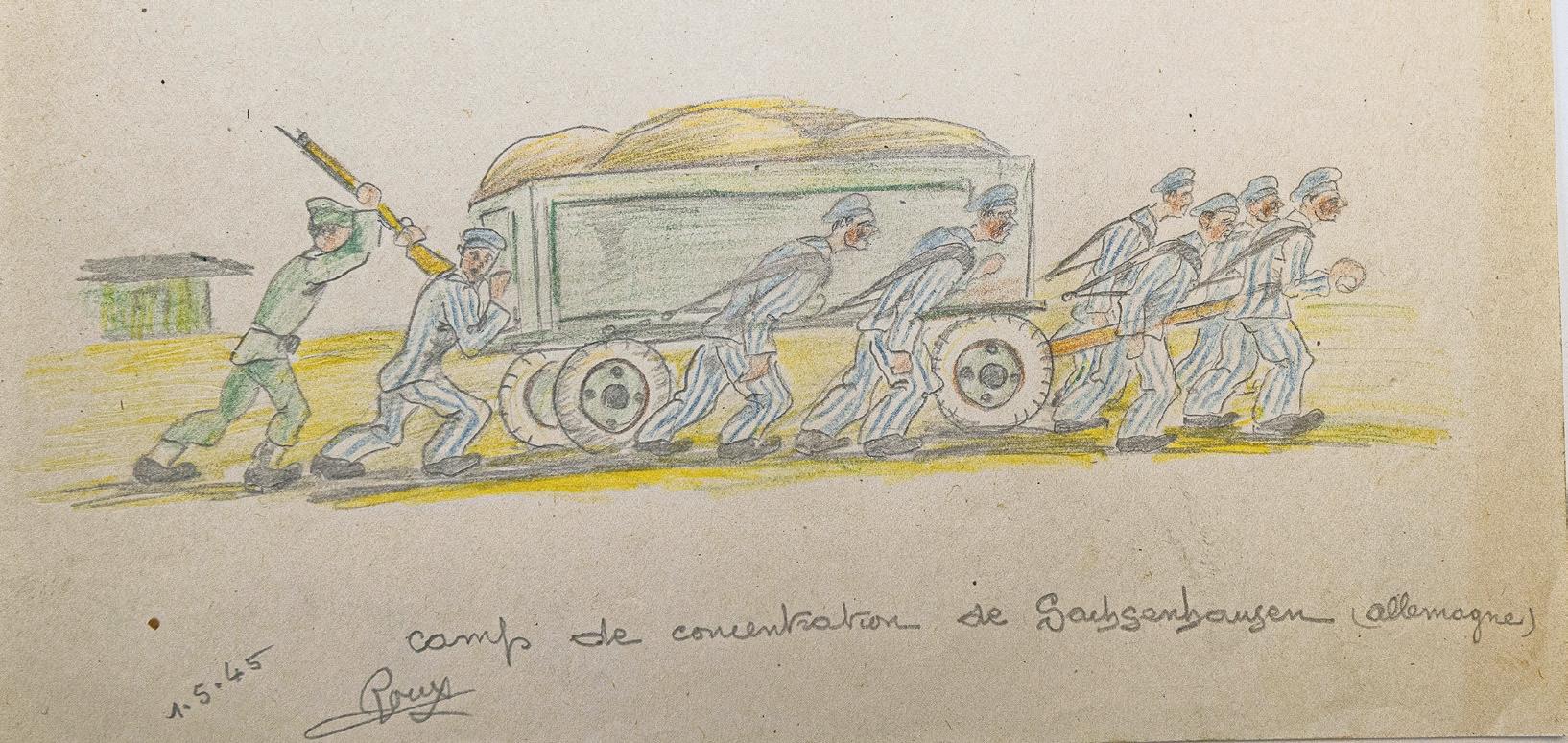
PHOTO OF THE WEEK
inside the Langenstein-Zwieberge concentration
tionally restrained. White frames and minimal text allow the drawings to stand on their own, without distraction. Visitors move from image to image, following the sequence Roux left behind.
For Afridi, the project is both scholarly and deeply personal.
“It’s almost like he was trying to tell his story the only way he could,” she said. “And that was through these drawings.”
Even now, questions remain. Little is known about Roux’s life beyond the camps. Researchers continue to search archives in France and elsewhere, hoping to piece together more of his biography. New leads have begun to surface, including connections to other families whose relatives were present in the same field hospital unit, according to Afridi.
The drawings themselves, however, remain the most direct record. They offer a perspective shaped not by hindsight, but by an attempt to capture what had been endured in real time.

The Rogosin Insitute hemodialysis center at the
As non-profit organizations, our partnership is dedicated to providing compassionate, high-quality care to patients with kidney diseases. Our in-house patients appreciate the convenience of receiving their dialysis on-site. Outpatients are also welcome! Rogosin is the leading center for
and treatment in all forms of
Photos courtesy Manhattan University
A drawing shows a prisoner being threatened by a guard, part of a series depicting daily life and violence
camp.
One sketch is thought to show Marcel Roux himself, capturing the likeness of the French Resistance member who created the series.
The drawings, inscribed to U.S. Army doctor William Epstein, offer a rare visual account of daily life inside Nazi hard labor camps.
Some of Roux’s drawings depict prisoners weakened by starvation and forced labor at Langenstein-Zwieberge, a subcamp of Buchenwald in Germany.
The exhibition at Manhattan University features reproductions of the original sketches, which are preserved in protective archival storage due to their fragility.
Michelle Mullen
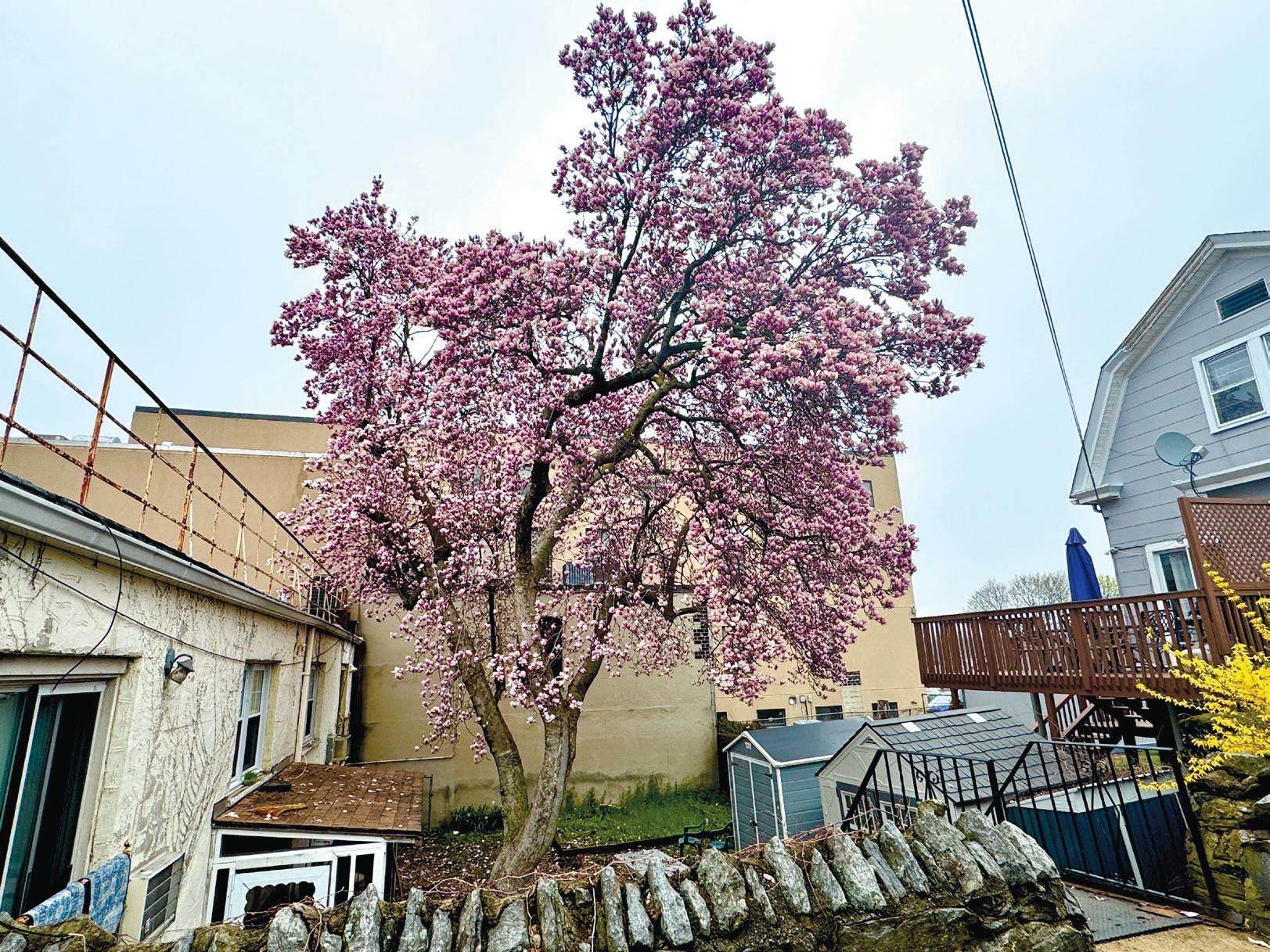
Signs that spring has officially sprung are plenty in greater Riverdale, with the pink and white flowers on magnolia trees in full bloom.
For three decades, Riverdale couple have been partners in protest
By Olivia Young oyoung@riverdalepress.com
After more than 32 years together, Riverdale residents Laura Klein and Dan Guenzburger remain firm in their love for one another — and for activism.
“It’s always been something that we shared, even when we had our differences,” Klein said. “Our political views have always been central to our lives.”
Sixty-eight-year-old Klein and 74-year-old Guenzburger held signs opposing the Trump administration at the March 28 “No Kings” protest in Lou Gehrig Plaza. But decades ago — before they found each other through a politically progressive dating service — Klein and Guenzburger were advocates in their own right.
Klein, a now-retired scientific researcher and public school teacher, started protesting in her 20s. A doctoral student in Bethesda, Md. at the time, she and classmates would take the train into Washington D.C. They sat in on court hearings about U.S. involvement in El Salvador and Nicaragua, booing at officials such as Elliott Abrams, she said.
“I started becoming aware of the games that were played by people at the highest level of government,” Klein said. She was also involved in the movement for women’s reproductive rights, as well as against former President Ronald Reagan’s policies that she said oppressed union workers.
Guenzburger, a lawyer who is also retired, said he started demonstrating in college during the anti-Vietnam War movement. After graduation, he volunteered with the labor union United Farm Workers in support of the Salad Bowl strike, and for more than 10 years worked for the Metropolitan Council on Housing to improve tenants’ rights, he said.
Guenzburger noted he was arrested three times in his life — twice for passing out literature in front of a supermarket during the Salad Bowl strike, and once in 2019 when he visited the Capitol with nonprofit Bend the Arc to protest against the Trump administration’s moves to rescind the Deferred Action for Childhood Arrivals program.
Back in 1990 — when Guenzburger was 38 and Klein was 32 — the two met through a matchmaking company called Concerned Singles that connects politically progressive people. Before signing up, Guenzburger ended an engagement with a woman who planned to vote for former Republican mayor Rudy Giuliani. He said he wouldn’t have been able to live comfortably with-
out shared political values. Both provided brief statements describing themselves to Concerned Singles.
Guenzburger said he was a public interest lawyer and former tenant activist, seeking an “active, warm, openminded Jewish female to share friendship, interests and explore new ground together.” Klein said she was “strongly opinionated and concerned about social justice” and looking for a “warm, supportive friend / lover / partner.”
Guenzburger sent his first letter to Klein in December, which said he would like to meet her, along with his phone number.
The next month, they met on a rainy Sunday in Grand Central Terminal — Klein coming in from New Haven, and Guenzburger from Brooklyn — without even having seen photos of each other. Guenzburger told Klein she was easy to spot, as she was the most frightened looking woman there.
The two drove to the Tenement Museum on the Lower East Side for an exhibit on media bias in coverage of the Triangle Shirtwaist Factory fire. They wandered through the museum, slowing to exchange thoughts on the articles.
“There were aspects of the Tenement Museum … that I thought were not done very well,” Guenzburger said. “I felt comfortable enough to say something negative, and that to me was a sign that I could be myself around her and accepted. I walked away with a good feeling.”
Klein said at the time, she had been on numerous first dates where she left exhausted from having to carry the conversation.
“That wasn’t the case with him,” Klein said. “I enjoyed talking with him and hearing what he had to say. It was a good conversation the whole time.”
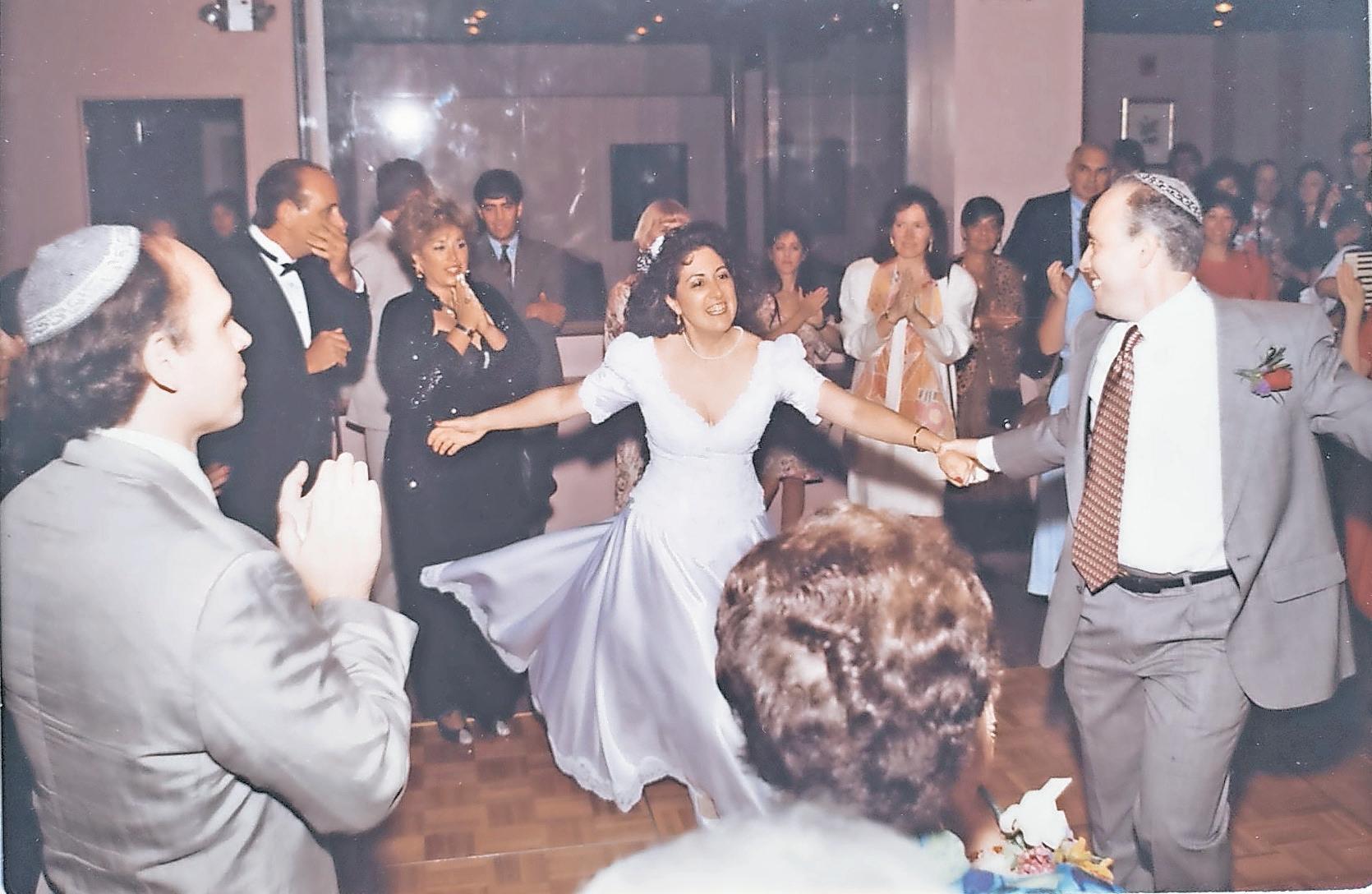
Their wedding, which came as a result of an unofficial proposal inside a jewelry store where Klein made it clear she was fed up with Guenzburger’s cold feet, was held at an Italian restaurant in Stamford, Conn.
The two settled in Riverdale in 1995, and later had twins, Eli and Talya Guenzburger, who are now 28. While raising the twins, their activism slowed, though they went as a family to a few anti-Iraq War rallies, Guenzburger said.
But before President Donald Trump took office for the first time in 2017, they were galvanized. Guenzburger and Klein traveled to Bethlehem, Pa. to canvas for Democratic candidate Kamala Harris. As Trump’s second term progressed, their activism took on even more conviction.
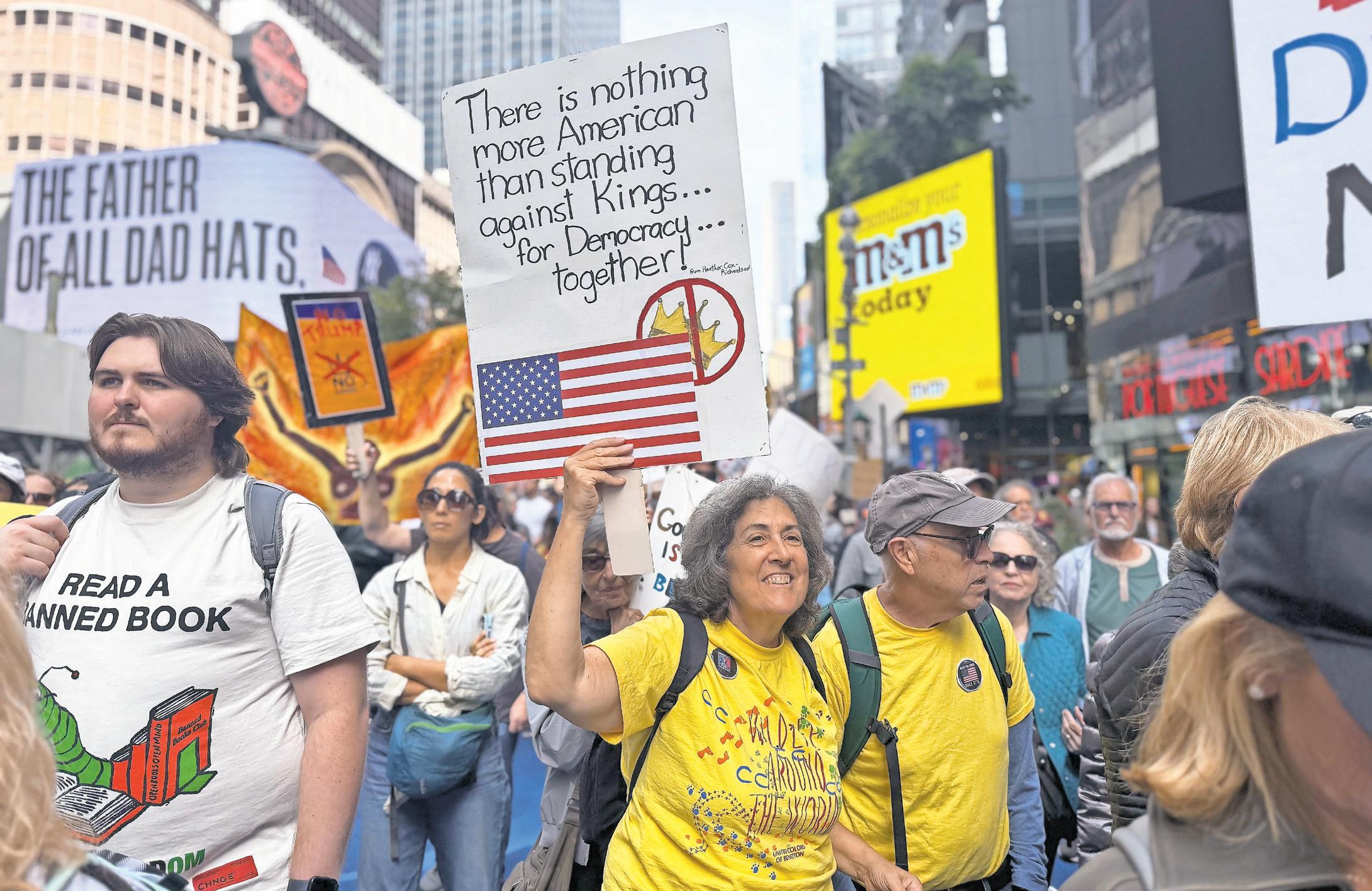
In the last year, the two have hit the streets for all three “No Kings” protests, a series of nationwide demonstrations against the Trump administration. Klein spends time volunteering at Waldo Sanctuary, a migrant family shelter, helping teach English as a Second Language. Guenzburger is on the steering committee for grassroots group Northwest Bronx Indivisible, and is working with an ELLIS Academy student from Guinea on getting his green card.
Their motivation to stay active is rooted in Jewish history, the couple said. Guen-
zburger’s parents grew up in Nazi Germany, and Guenzburger recalled hearing the belief was “it’s going to pass.” He said he’s scared of where the United States could be heading, but this is a crucial moment to intervene.
“This is a time where we can still save this country,” Guenzburger said.
Klein and Guenzburger don’t agree on everything, and have their differences politically too. But, they said respect and support for one another is what maintains their bond through the phases of life.
In remembrance of Else Odza on the first anniversary of her death on April 10, 2025, at the age of 95. Born in Denmark, upon marrying in 1950, she moved to The Bronx, where she lived for the remainder of her life. She enriched our lives with her warmth, exceptional intelligence, and love of reading, gardening, opera, museums, travel, Bridge, and family and friends. We will treasure our memories of her always. With love, Lois, Rose and Paige.
Photos Courtesy Dan Guenzburger
Dan Guenzburger and Laura Klein tied the knot in an Italian restaurant in Stamford, Conn.
Guenzburger and Klein have attended all three “No Kings” protests, a series of nationwide demonstrations against the policies of the Trump administration.
Courtesy Paige Ingalls

McDonald’s Gospelfest

Riverdale Children’s Theatre
The Riverdale Children’s Theatre, now in its 16th year, presents “The SpongeBob Musical,” performed at the St. Barnabas Elementary School Auditorium, at 413 East 241st St. The show features kids in grades 3 to 8.
Based on the hit Nickelodeon animated series, this vibrant, critically acclaimed production promises to bring joy to audiences of all ages. In addition to visual storytelling, this production includes music from a variety of beloved artists, such as Aerosmith, Cyndi Lauper, David Bowie and more.
Runs Friday, April 17 and Friday, April 24 at 7 p.m.; Saturday, April 18 and Saturday, April 25 at 2 p.m. and 7 p.m.; Sunday, April 19 and Sunday, April 26 at 2 p.m.
Visit Riverdaletheatre.org to purchase tickets. $15 each.
At Wave Hill
Atom Moore: Second Nature
Still life and product photographer Atom Moore presents “Second Nature,” an exhibit centered on the anatomy of plants in Wave Hill’s living collection. View the series at Wave Hill through July 12.
Winter Workspace drop-in
The Winter Workspace Drop-In Sunday series provides an opportunity for Wave Hill visitors to deepen their con-
nection with both the arts and their experience of the garden by learning how artists are drawing inspiration from the site.
Wave Hill’s Winter Workspace is a program that takes place over two seven-week sessions and provides artists with free studio space, a financial stipend and access to Wave Hill’s living collection. Since its start in 2010, the workspace has supported more than 175 artists.
During Winter Workspace, the artists have intimate access to the greenhouses, as well as horticultural and curatorial staff. Experimentation is encouraged, and artists expand their practices while working on site. At the core of the Winter Workspace is the recognition that creating art within the context of a garden is a unique experience.
During Drop-in Sunday, visitors can mingle with participating workspace artists in their studios, ask questions, and learn about their creative practice. It runs weekly from 1 to 3 p.m., with a different group of three or more artists participating.
At the RiverdaleYonkers Society for Ethical Culture
Ethics for Kids
Facilitated by Naa Pappoe, Ethics for Kids introduces children to social justice, science, history, self-expression and empathy through stories, the arts and
play.
The series, held at the Riverdale-Yonkers Society for Ethical Culture helps young learners explore what it means to live ethically. Designed for children ages 4 to 10, but open to all. Email growingethicsrysec@gmail.com to RSVP.
Sessions are held every Sunday at 10:30 a.m.
At Riverdale Neighborhood House
Riverdale CSA
The Riverdale CSA, Community Supported Agriculture, is accepting members for its 2026 season. Deliveries of organic and biodynamic vegetables from Hawthorne Valley Farm are made weekly on Thursdays from 3:30 to 7:30 p.m. from early June to November to the Riverdale Neighborhood House.
Full shares and partial shares are available and include 7 to 10 vegetables each week. Fruit shares can be purchased that include organic strawberries, blueberries, stone fruits, apples and pears.
Also available are a wide variety of local dairy products, baked goods, meats, poultry and eggs. CSAs are mutually beneficial for farmers and communities.
For more information about this and the current Winter-Spring CSA with Clatter Valley Farm, go to riverdalecsa. org or email riverdalecsa@gmail.com.
Masala Bhangra Join the Riverdale Neighborhood
ATTORNEYS
Leon G. Tsinberg, ESQ www.riverdalelegal.com
House for this full-body dance workout.
With easy-to-follow choreography adapted from Bollywood dance styles, participants are encouraged to move, touch and inspire. All ages are welcome. Runs on Tuesdays at 2 p.m. Visit riverdaleonline.org to register.
Youth market Stop by the Riverdale Neighborhood House youth market for fresh, local produce straight from area farmers. Other items for sale include sourdough bread from baker Annie Miller.
The Neighborhood House accepts EBT, cash, credit, FAMM checks, vouchers, SNAP EBT and Health Bucks, helping ensure access for everyone in the community. The market is open every Thursday from 1 to 6 p.m.
Stretch and Strengthen Start your mornings with a light movement class at the Riverdale Neighborhood House. Classes are held on Wednesdays from 10 a.m. to noon. A social hour with refreshments follows, offering a chance to chat with neighbors. Visit riverdaleonline.org
At Inner Space Yoga
Modern dance workshop
This hour-long workshop follows the format of a traditional modern dance technique class and is led by a former member of the world-renowned Paul Taylor Dance Company, Annmaria Mazzini.
Join Friday, April 10 from 6:30 to 7:30 p.m. $35 per class. Visit innerspaceyoga. com to register.
Beginner yoga series spring session
Led by Kendra Jackson, this 4-week series provides a structured approach to understanding the yoga process, basic poses, the difference between good and bad tension, and how to move between poses with ease.
The series runs on Saturday, April 11, April 18, April 26 and May 2, from 11:30 a.m. to 12:30 p.m. Reserve a single class for $30 or the entire series for $100. Visit innerspaceyoga.com to register.
Breath work and meditation
Change the way you feel with your breath alone in this 90-minute workshop. Ben Alpen will help you learn how to use three different diaphragms in your body, known as bandhas, along with four different breathing techniques. Runs Sunday, April 12, from 6 to 7:30 p.m. The class is $45, but free for Inner Space Yoga monthly members. Visit innerspaceyoga.com to register.
2026 Riverdale Comedy Night
Riverdale Comedy Night is back and better than ever. Join for a fun night at Downey’s Bar & Grill on Saturday, April 11, at 7 p.m. The impressive li-
Courtesy Lehman Performing Arts Center
McDonald’s Gospelfest returns to Lehman
gos pel’s enduring impact on music and culture. This year’s lineup features Hezekiah Walker,
What’s on?
neup features comedians Devin Keast, Theresa Moriarty, Corey Tindall, Jake Velazquez, Michele Durante, Jason Chatfield and Emily Azrael.
Food and drinks will be available to purchase from Downey’s. All ticket sales support the Riverdale Main Streets Alliance nonprofit mission. For questions email rmsabx@gmail.com.
At the New York Public Library
Baby storytime
Join baby storytime at Kingsbridge Library on Thursdays at 11 a.m. Join for a special time to bond with your little one and meet other caregivers. The program will explore the joy of movement, books and songs in addition to building early learning skills you can practice at home. Come prepared to sit with your child on your lap. Best for children who are pre-walkers or crawlers.
Mixed media art for pre-teens
Join every Tuesday at the Riverdale branch for a session of arts and crafts using different mediums such as acrylics, watercolors, clay, beads, paper and other mediums like photograms.
You’ll be simultaneously listening to podcasts like “Stuff You Missed in History Class” and “Night Vale” or just jamming to your favorite playlists.
Related books and resources will also be available for checkout to spark your creativity and help you dive deeper into techniques and other crafts. Runs every Tuesday from 3 to 4 p.m.
Writing Circle Kingsbridge Library hosts weekly writing circle meetings in an intimate setting where participants can share unpublished drafts and give and receive feedback. Attendees must be at least 18 years old.
Registration is available at nypl.org; the Google Meet code will be emailed the day before the session. The group meets every Thursday from 10 a.m. to noon.
Riverdale Art Association
Places and Spaces
The Riverdale Art Association invites you to visit its latest exhibit “Places and Spaces” at the gallery at Christ Church Riverdale.
Member artists use an array of vibrant, contrasting colors to interpret ways to bring to life their interpretations of place and space using acrylics, watercolor, mixed media and collage.
The parish hall is open Monday to Thursday 10 a.m. to noon. The exhibit runs until April 24.
At Yoga Muse
Yoga en Español Yoga Muse offers a weekly yoga class taught entirely in Spanish. The open-level, slow-flow class is led by Meli Rios and meets every Saturday at 12:15 p.m. Visit yogamuse.co to register.
Painted World
Until May 2, attend the “Painted World: Text, Gesture and Expression in Contemporary Art” exhibition at Lehman College Art Gallery. “Painted World” brings together three dozen contemporary artists who use powerful words and push the boundaries of written language through the physical act of painting.
Kids on the Move! Spring Awakening
At the New York Botanical Garden
The Orchid Show Head to the New York Botanical Garden through April 26 for the annual Orchid show, “Mr. Flower Fantastic’s Concrete Jungle.” This year, the Enid A. Haupt Conservatory transforms into a dazzling reimagining of New York City.
Orchids collide with concrete in scenes inspired by stoops, slice shops and even the subway, creating a vivid fusion of nature and cityscape artistry. Visitors can experience the flair and style of the Big Apple brought to life through thousands of flowers.
At
Derfner Judaica
Museum
Envisioning the Sacred: Modern Art from the Collection
“Envisioning the Sacred: Modern Art from the Collection” features 49 prints, paintings, and drawings from the museum’s permanent collection by 20th- and 21st-century artists working in a range of modernist styles — from figurative to abstract.
These 21 artists explore stories and characters from the Bible, represent Jewish observances and traditions, or take inspiration from language and legend. Many of the artists express their Jewish identities and relationships to Jewish communal experience through their work.
For some, mysticism and quests for spiritual connection are essential features of their art. It runs until Sunday, June 21.
At Van Cortlandt Park
Forest Fridays
Volunteer with the Van Cortlandt Park Alliance to remove invasive species from Van Cortlandt Park’s Northwest Forest every Friday from 9 a.m. to noon. The work helps promote biodiversity, protect young trees and improve forest health.
No prior experience is needed. Tools and gloves are provided.
Trail Work Thursdays
Join the Van Cortlandt Park Alliance and fellow residents every Thursday from 9 a.m. to noon to help maintain trails in Van Cortlandt Park. Tools and gloves are provided for this small-group volunteer event, which is limited to five participants.
It’s a hands-on opportunity to give back to the community while enjoying the Bronx’s natural beauty.
Sherlock Holmes Red Monkey Theater Group returns to Van Cortlandt House Museum with a new dramatic adaptation of a classic Sherlock Holmes mystery.
Holmes and his faithful friend Dr. Watson unravel a baffling mystery of loyalty and betrayal in a case of domestic drama with national implications. When jewels belonging to the most famous woman in England disappear from the secure country house of her banker, accusations fly, a family’s future hangs in the balance and Holmes must solve the case before it’s too late.
Catch one of three performances: Saturday, April 11 at 7 p.m.; Sunday, April 12 at 2 p.m.; Wednesday, April 15 at 7 p.m.
Seating is limited, so pre-registration is required. To register visit vchm.org.
Admission is free.
Raise a Glass: An Evening of Music and Revelry
Enjoy an evening of 18th-century tavern revelry with live music, drinks, games, trivia and snacks at the Van Cortlandt House Museum on Sunday, April 19.
Guests will be welcomed into the historic house starting at 4:30 p.m. to enjoy beer, cider and wine alongside tavern snacks inspired by the 18th century. Try your hand at traditional games like skittles and mancala, and settle in as the atmosphere fills with music and conversation.
Local historian Nick Dembowski serves as master of ceremonies for the evening, guiding the festivities while sharing stories about the role taverns played in colonial New York.
At 5:30 p.m., test your knowledge in a round of historical trivia inspired by the history of local public houses. The winner will take home a Van Cortlandt House Museum swag bag valued at $100.
The evening concludes with a special live performance by Linda Russell and Company from 6 to 6:45 p.m., bringing the sounds and spirit of the Revolutionary era to life.
Come ready to mingle, play, and enjoy a taste of colonial tavern culture in one of New York’s oldest historic houses. Proceeds of this event support Van Cortlandt House Museum and Kingsbridge Historical Society’s educational programs.
At the Kingsbridge Heights Community Center
Prom drive The Kingsbridge Heights Community Center’s Teen Center is collecting new and gently used formal wear, including gowns, suits, shoes, accessories and more to help local teens feel their best on prom night this year. Drop off donations at the community center, 3101 Kingsbridge Terrace, through April 23, 2026.
Group meditation over Zoom Join this collaboration with The Temple of Enlightenment for group meditation sessions online. It’s a great way to relax and let go during this stressful and uncertain time. This class is free and runs every Monday and Wednesday, from 7 to 8 p.m.
Community Board 8 Meetings
Bronx Community Board 8 is in session. All meetings held at the CB8 office are located at 5676 Riverdale Ave., Suite 100. Unless specified, all hybrid
ings will be in the office or via Zoom. To access the Zoom link for CB8 meetings, visit their website, cbbronx.cityofnewyork.us/c.
April 13 at 7 p.m. — Laws, Rules & Ethics April 14 at 7 p.m. — Regular Board Meeting at CSAIR Synagogue, 475 W. 250th St. April 15 at 7 p.m. — Environment & Sanitation
Physicians Services Directory
ColumbiaDoctors Ava B. Anklesaria, MBBS
Jennifer Caceres, MD
David S. Lee, MD
Enad M. Dawod, MD 3050 Corlear Avenue, Suite 204 Bronx, NY 10463 For appointments, please call: 212.932.4534
ColumbiaDoctors
Gerald Neuberg, MD,
For appointments, please call: 646.317.0130
Kung-Ming Jan, MD
For appointments, please call: 718.601.4800
David I. Sahar, MD
For appointments, please call: 718.601.3700
Ronald Weissman, MD
Dylan Marshall, MD
For appointments, please call: 844.311.1234
3050
NY 10463
Affiliated with NewYork-Presbyterian Allen
Affiliated with NewYork-Presbyterian Allen Hospital
St. John’s Medical Group
Ana Androne, MD - board certified
Thomas Apuzzo, MD - board certified
Kiranprit Kaur, MD – board certified
Klaudia Nowakiwskyj, MD - board certified
Accepting new patients & most insurances Call (914) 207-0004 -1088
OBSTETRICS & GYNECOLOGY
ColumbiaDoctors
Talitha Bruney, MD
Reyna Payero, MD
Shinelle Caldwell,
Doreen Kramer,
Alison Gruber, MD
Small actions can make a difference this Earth Month
Increasingly, there is a kind of resignation settling into our conversations about the planet we inhabit. Those conversations become dominated by doubtful phrases like “too late” or “too big.” It often feels like we’re watching the end of our world unfold in slow motion. Ice melting, forests burning, oceans warming. These large-scale problems that seem untouchable. Individual efforts seem to disappear into news about the latest environmental catastrophe, or how fast fashion and large corporations are accelerating these global damages.
In contrast, the minutiae of our days feel small, bounded by our ordinary rituals. A morning coffee, a commute to work, an evening grocery run, a dinner with friends or family. These might not seem like meaningful moments to make a difference in the fate of the planet. Often, when we are galvanized by the global changes we see and seek to make a difference, there is a pressure to be the perfect environmentalist — especially online. We’re told to adopt a vegan diet, eliminate waste, take cold showers, refuse disposable straws, buy clothes only from sustainable brands and so much more. These can be great ways to be environmentally conscious and reduce individual impacts, but jumping head first into a completely eco-friendly lifestyle can be daunting, and not all of these environmentally conscious efforts are accessible to everyone.
During April, or Earth Month, when we commonly see earnest slogans and calls for a greener future, that pressure to live a perfect environmentalist’s lifestyle can feel stronger. Some people make wholehearted efforts to reduce their environmental impact, but eventually find that the changes they’ve made aren’t sustainable for them. Eco-friendly clothing and items are expensive, and maybe some of us need a long, hot shower after a stressful day at work. Others tune out this noise altogether, unconvinced by the difference their small efforts would make if they even tried. In many ways, it feels unfair that the burden often falls on the consumer, the everyday person, to make changes or reduce their intake in these discussions of our environmental future. After all, when environmental protections are rescinded, and giant manufacturers dump massive amounts of plastic and sludge and smog into the
The cost of Trump’s golfing Editorial
world, why should we be made to feel guilty about using a plastic fork, or leaving a light on?
The truth is, we shouldn’t. Environmental conversations that depend on guilt and fear to spurn action are far from productive. They create a version of environmentalism that feels exclusionary, in which we may feel the need to “prove” the extent of and genuine motivations behind our actions. What often works, really works, is envisioning a shared future we can all feel excited about, and work toward in the ways we feel best equipped.
It’s important for us all to acknowledge that an environmentally-friendly lifestyle rarely looks the same between households or individuals. For some, dietary changes are the best way to reduce a carbon footprint. For others, it’s going a bit longer before buying new clothes, or carrying around a trusty reusable water bottle. Most of us already make eco-friendly choices throughout the day, because they also save us money: turning off the tap while we brush our teeth, turning down the air conditioning when we leave home for the day, washing our clothes on the cold cycle. These actions can compound into something larger.
None of this is to suggest that individual action will save the world overnight. It won’t. Large-scale change ultimately requires policy, infrastructure and corporate accountability. It requires decisions made beyond the scope of a single household — decisions we can advocate for, but which can still wind up out of our hands. However, the potential absence of sufficiency is no reason to feel discouraged from the effort.
The idea that one person is too small to make a difference depends on a definition of “difference” that tends to be more immediate and dramatic. But environmental changes, for better or for worse, are often slower than that. They happen incrementally. But those increments accumulate. Just as global temperatures have risen gradually, a fraction of a degree at a time, the repairs we make will take place gradually as well.
This Earth Month, we’ll begin where we are, with the choices we have available. These choices on their own may not act as a sweeping solution, but they do act as a refusal to accept that there is nothing to be done.
Letters to the editor
To the editor,
”I’m going to be working for you. I’m not going to have time to go play golf,” Donald Trump repeatedly told crowds during his campaign for the presidency in 2016. During his first term, ac-
cording to congressional records, he played golf on 293 days — more than 15 percent of the time — at a cost to taxpayers of more than $151 million. As of March 29, 2026, he has played golf on more than 25 percent of his days in office so far during his
current term, at a cost to taxpayers of more than $101 million — this from the man who told taxpayers in 2025 that children should have “two dolls instead of 30 dolls” and a maximum of five pencils.
MIRIAM LEVINE HELBOK
I came home to build something. Last-mile delivery made it possible.
by Rudy Cazares
New Yorkers see delivery trucks, vans and couriers on their streets every day. Packages arriving at buildings, goods moving into stores, drivers working block by block. What most people don’t see is how that system actually works — or how many local jobs and small businesses it supports.
That system is known as last-mile delivery, the final stage of a much larger network that moves goods from regional distribution centers into city neighborhoods and to people’s doors. It has become a core part of how New York City operates. On any given day, millions of packages move through this system, connecting warehouses to walk-up buildings, storefronts, and homes across the five boroughs.
I’m a Marine Corps veteran. I enlisted at 19 and served multiple deployments, where I learned what it means to lead teams under pressure and solve problems in real time. When I came back home to New York, I wanted to build a business and create opportunities in the communities I know. Today, my company supports over 100 workers, operates over 50 vehicles, and handles over 100,000 deliveries across the Bronx, Queens, and beyond.
Like many others in this industry, we hire from the communities we serve. Our teams of drivers, dispatchers and logistics workers keep goods moving every day, many in their own neighborhoods.
This is steady work with room to grow. People start as drivers or couriers and move into leadership roles. They build skills, earn reliable income, and support their families. I’ve seen people come in with no prior experience and, within a few years, step into management roles overseeing entire teams.
This industry gives people a real starting point. You don’t need a degree or years of experience to get your foot in the door. What matters is work ethic and reliability. From day one, our employees have access to benefits like health and dental coverage, paid time off, and even a 401k match. For someone looking to build a career or support a family, that kind of stability can be life-changing.
Beyond the jobs this industry creates and the reliability that it enables for our neighbors to access essential goods, we are also directly giving back to our communities. In my own business, we’ve supported efforts like delivering meals to veterans and community members in need, including through work connected to the Department of Veteran Services. Since 2023, that work has helped deliver more than 140,000 meals to veterans and military families across New York. We’ve been doing this week after week for the past couple of years, using the same teams and routes we rely on every day.
Right now, the city is considering Intro 518, a proposal that would significantly change how
Lament for Minnesota
Before cancer cells debut in the society of a body, They are ordinary citizens. Normal. Typical. Harmonious. The mutations that set them on a malevolent path Also grant them a cruel talent of evasion. They hide behind a mask of anonymity.
What keeps them warm on frozen twincity streets? What is the temperature of power?
The plot to mutate an art-filled organism into a war zone Found now-distant relatives Bewildered. Abandoned yet spurred on by A moral drive to honor fallen neighbors;
last-mile delivery businesses operate, including how small, locally owned companies like mine fit into the larger system. If those changes move forward – without our legislators having a clear understanding of how this work actually happens on the ground – the impact will be felt quickly. It could mean fewer opportunities for local businesses to operate. It could reduce hiring in communities that rely on these jobs. It could limit the flexibility that allows operators to grow, adapt, and invest in new approaches, including more sustainable delivery methods. For small business owners like me, it also raises real questions about whether we can continue operating at all under a completely different model.
The goal should be to improve the system without losing what it already provides. We should be looking for ways to strengthen safety, efficiency, and sustainability without shutting out the small businesses that make the system work. Because last-mile delivery is not just about convenience. It’s part of the local economy. It’s jobs. It’s small businesses. And in many cases, it’s a pathway forward for people trying to build something for themselves and their families.
As the conversation continues, that full picture should guide what comes next.
Rudy Cazares is the owner of Cazar Logistics LLC, a Bronx-based small delivery business.
To bear witness to brutality. This immune-based disorder— A body politic lawlessly attacking, not defending itself— Will be encoded in the warbling memories of young caged cells.
The bonds of truth and empathy are covalent, And the love of community cannot be abducted.
Yet as the mercury has fallen, Mercutios have fallen.
They were once one of us.
JENNIFER FIRESTONE
Online and in print — Riverdale Press classifieds get results
It’s

Place
Call: 718 543 6200
Fax: 718 548 4038






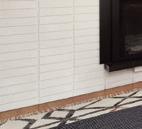









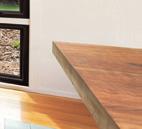


















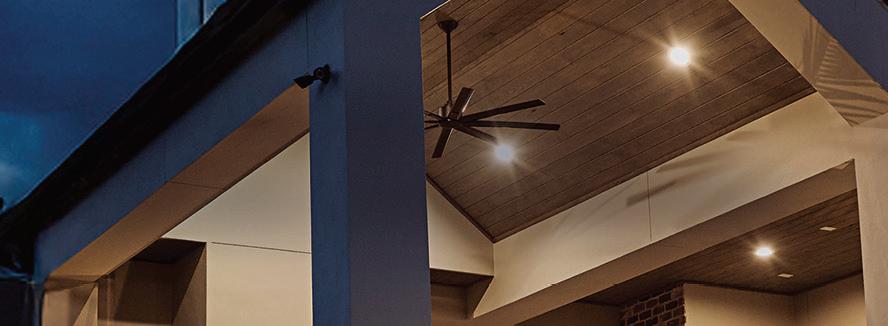











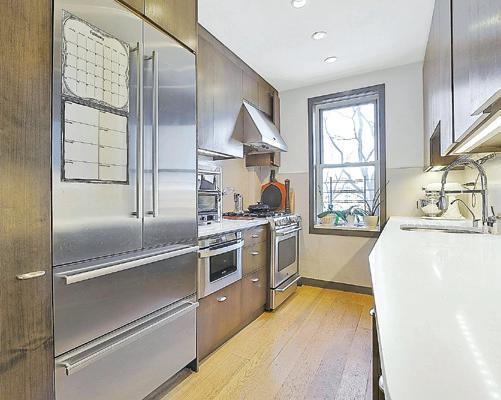
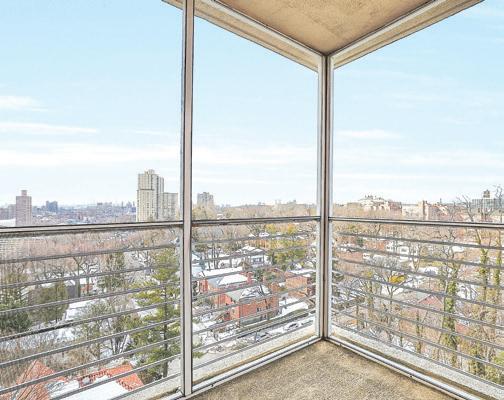
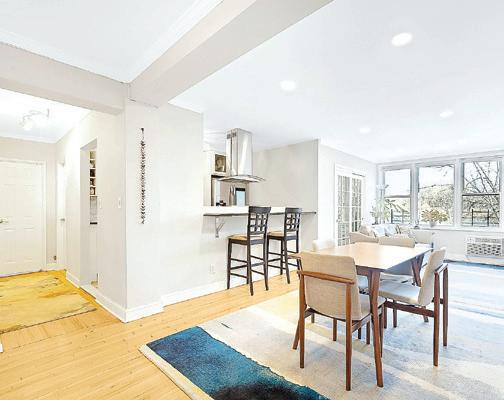
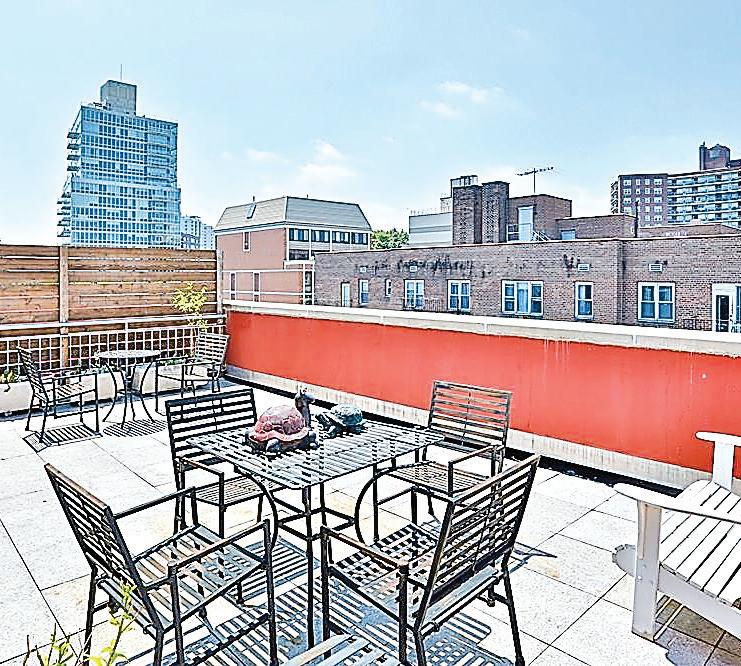
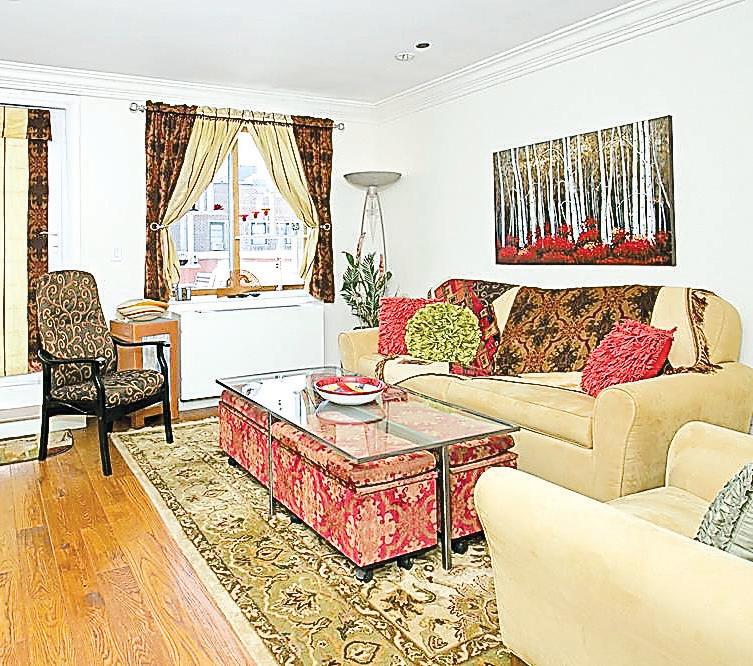
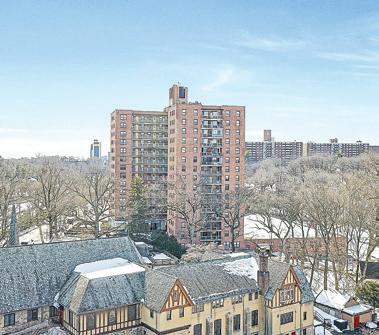
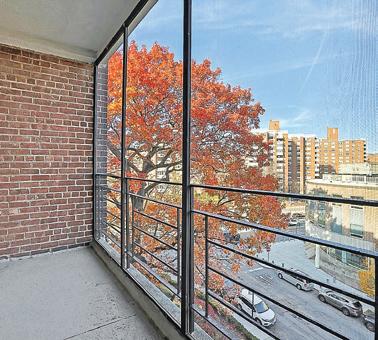
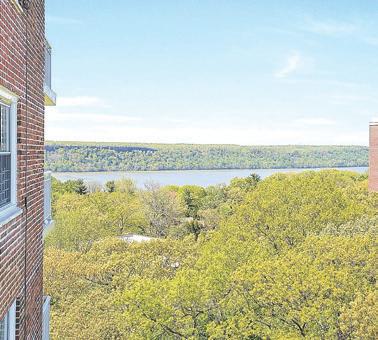
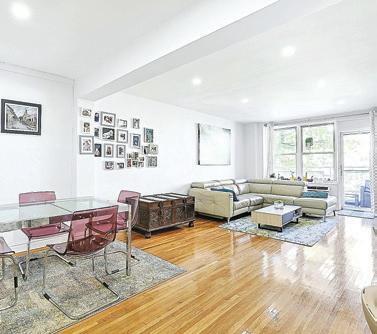
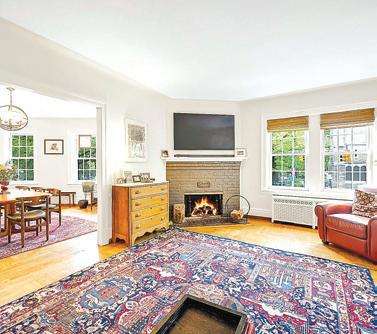
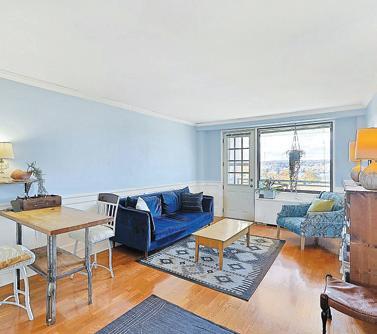
Aspacious and light-filled condominium at 640 West 237th Street has come to market, offering buyers a blend of modern luxury and everyday convenience in the heart of Riverdale. Priced at $798,000, the two-bedroom, two-bathroom residence at the Solaria is drawing attention for its generous layout and upscale finishes.
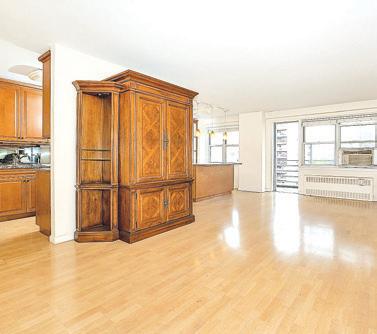
The corner unit spans approximately 1,445 square feet, featuring an open-plan living and dining area designed to maximize both space and natural light. Floor-to-ceiling windows frame the home, while radiant heat ensures year-round comfort. The adjoining kitchen is outfitted with cherry wood cabinetry, granite countertops and high-end appliances, including a Viking stove, catering to both casual meals and more elaborate entertaining.
Additional features include hardwood flooring throughout, an in-unit washer and dryer, and ample closet space, making the apartment as

practical as it is stylish. Residents at the Solaria also benefit from a range of full-service amenities. The building offers an attended lobby, a fitness center, a children’s playroom, and a residents’ lounge complete with a catering kitchen and entertainment area. A landscaped roof deck provides space for relaxation and social gatherings.