What’s inside?
Dual identities
Ukrainian immigrant shares story Page A3
What’s inside?
Dual identities
Ukrainian immigrant shares story Page A3
By Olivia Young oyoung@riverdalepress.com
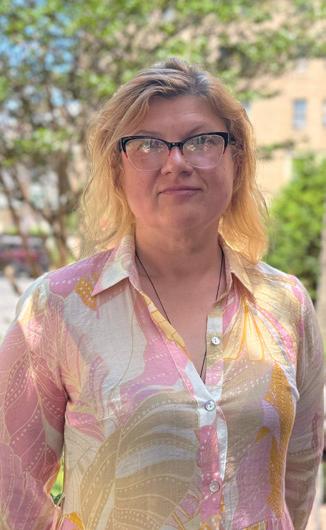
For many Americans, building a life in the United States was not a given, but a hard-fought achievement. While the nation geared up for Independence Day celebrations commemorating 250 years of American sovereignty, two alumni from Marble Hill’s English Language Learners and International Support Preparatory Academy, or ELLIS, reflected on the goals and journeys that led them to the U.S. Emely Lopez, 27, and Lorens Sanquintin Pena, 22, came to the U.S. as asylum seekers. Both endured years of stalled status with little certainty, but emerged with an education, access to work and an idea
of the U.S. that differed from their expectations.
ELLIS is a high school designed for newly arrived immigrants that are overage to enroll in the city’s public schools and are not yet proficient in English. Staff helps develop academic, language and cultural skills to prepare students for college in the U.S.
Lopez is a high school tech instructor who left Honduras for the Bronx a decade ago. At the time, her dad worked long hours, and she was often home alone. Lopez said when she was 16, the neighborhood was dominated by MS-13, a transnational criminal gang, and members started harassing her.
She recalled one member who was a
neighbor, and started telling her he liked what she was wearing, the way she styled her hair and calling out other unsolicited, suggestive comments that were not appropriate for a young person to hear, Lopez said.
Lopez had heard stories of what treatment like that led to. At some point, girls being harassed became victims, forced into a romantic and sexual relationship with gang members, Lopez said. Fear started to build. She felt unsafe in her home — there was no fence outside or protection against an intruder, anyone could break in if they wanted, she said. She worried the force of an older man would easily overpower her own strength. The justice system in Honduras
America 250 celebration
Bronx residents enjoy fireworks show Page A5
History through collaboration
Residents celebrate U.S. anniversary with tapestry Page A6
By Michelle Mullen mmullen@riverdalepress.com
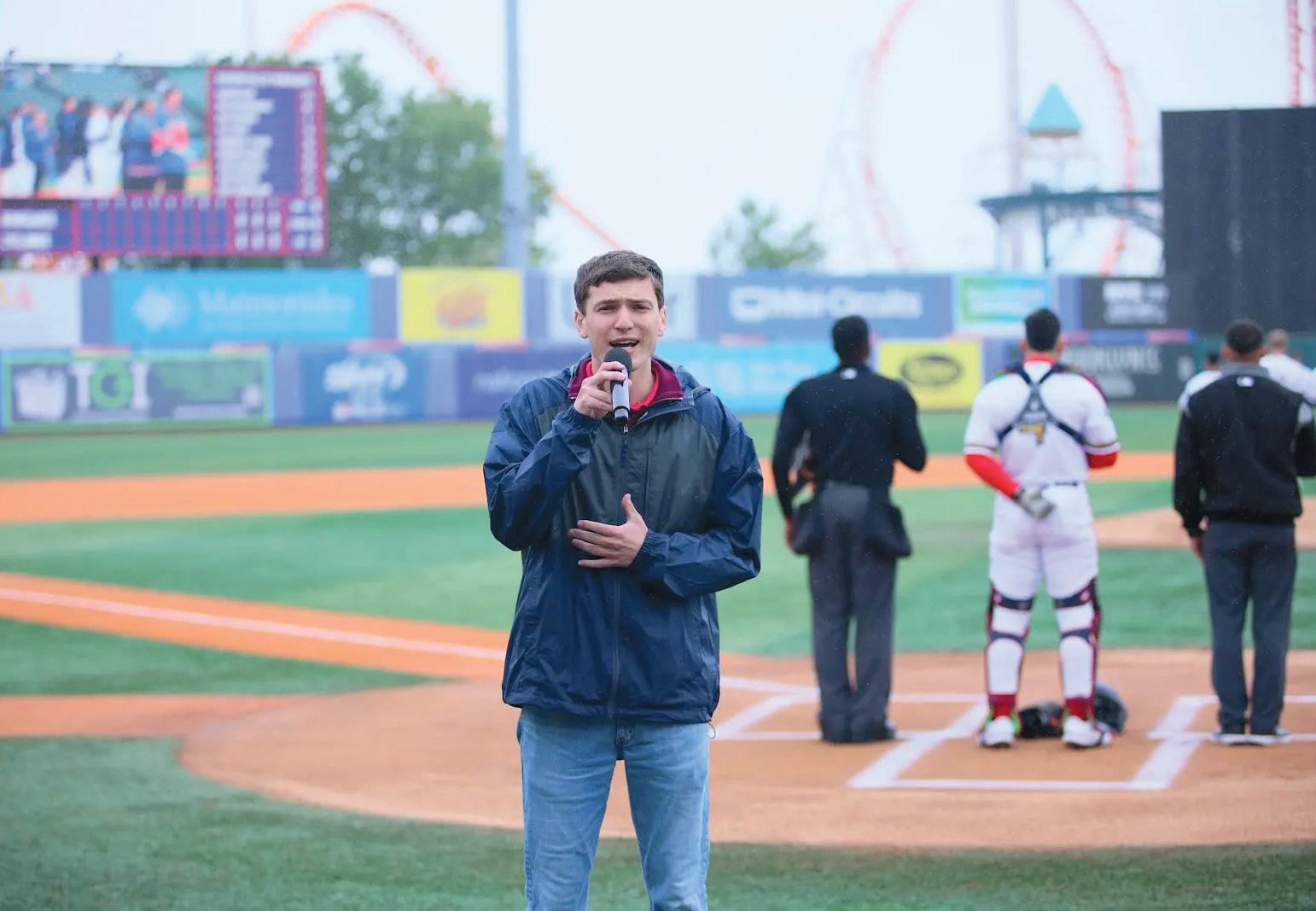
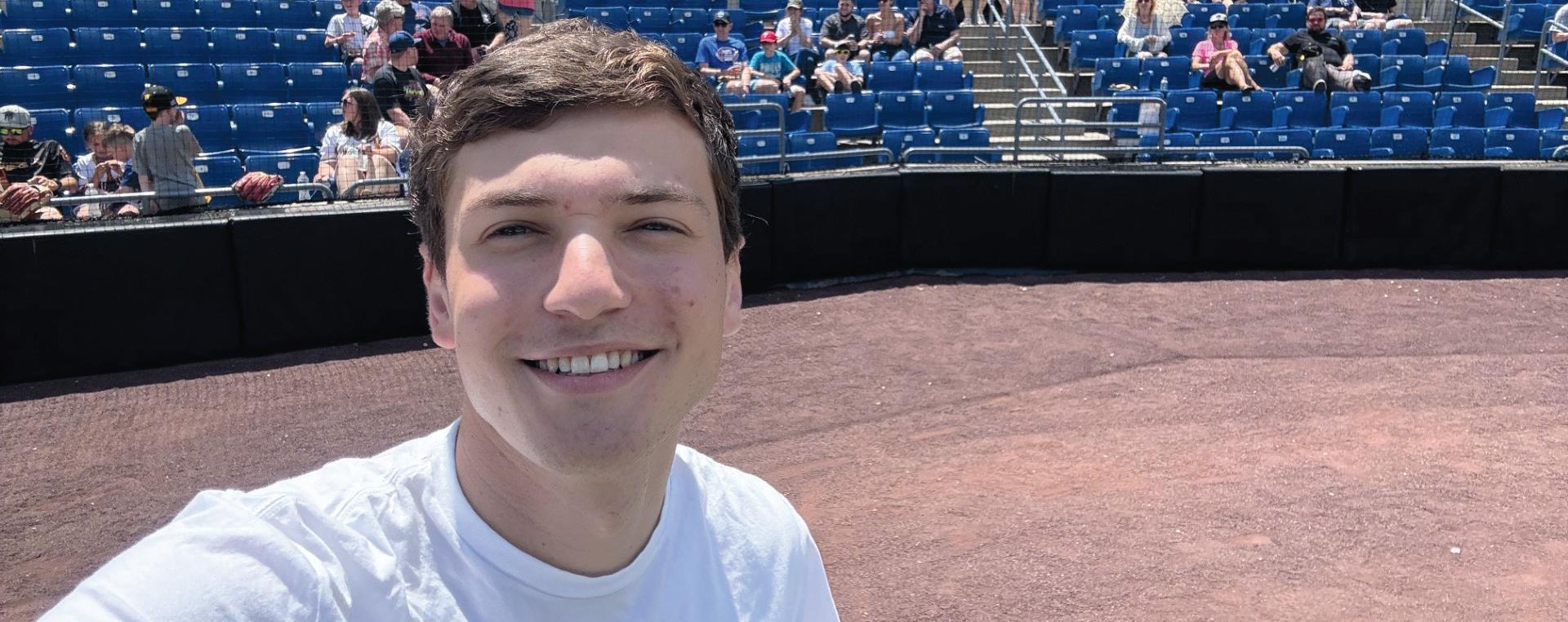
As the United States celebrates its 250th anniversary, Riverdale resident Eytan Saenger is marking the milestone one baseball game at a time.
The 22-year-old recent Binghamton University graduate is spending the summer traveling to ballparks across the Northeast to sing the national anthem before the first inning begins.
The idea took shape in April, shortly before graduation, after Saenger performed the anthem for the Binghamton Rumble Ponies. As the nation’s semiquincentennial approached, he began looking into the history behind one of baseball’s most enduring traditions.
“It ties into immediately after World War One at one of the World Series games where veterans who had just come back from the war were at the game, and they decided to play the anthem, and ev-
eryone stood up in celebration,” he said. “And then it was really from there on that the tradition began and got started.”
For Saenger, who was born in Boston and moved to Riverdale at 10 years old, the discovery reinforced the significance of the anthem as more than a pregame ritual. In it, he saw the opportunity to combine what he calls his three greatest passions: music, baseball and civic engagement.
“I realized it happened to be the approaching of the 250 birthday celebrations that were going to be happening throughout the country,” he said. “For me it felt like a really meaningful opportunity to combine these three things in a way which felt very appropriate.”
A graduate of Salanter Akiba Riverdale High School, Saenger has long been involved in civic life. While still a student, he founded a club that organized a City Council town hall and an interfaith mayoral forum for Jewish, Catholic and Muslim
By Michelle Mullen mmullen@riverdalepress.com
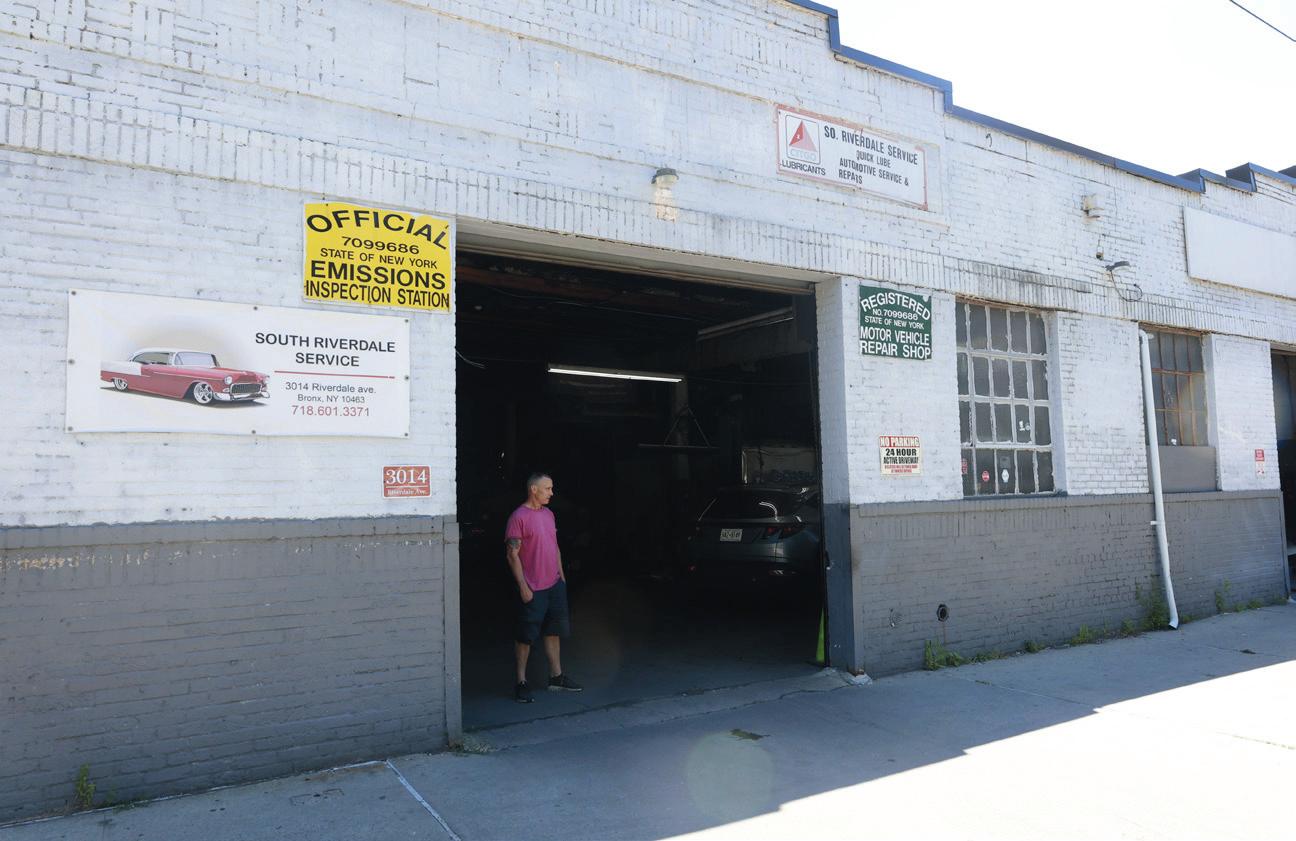
For more than three decades, motorists in Riverdale have turned to auto shop South Riverdale Service for everything from routine oil changes to emergency repairs.
Those garage doors will close after the property’s owner accepted an offer to sell the site to the neighboring BP gas station.
As a result, the longtime auto repair shop will have to vacate, with mechanic and owner Bruce Yudman saying he plans to close the shop on July 20.
For Yudman, who has operated the business for more than 35 years, the closure marks the possible end of a shop rooted in
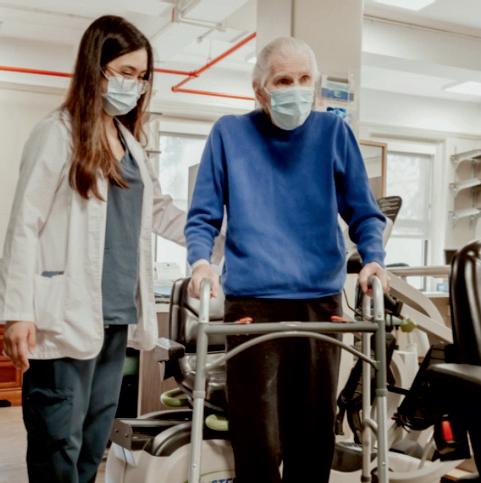
the neighborhood for generations.
“My landlord approached me back in December, telling me that the owner of the BP station made him an offer on the property,” Yudman said. The BP location’s owner could not be reached for comment, but store management confirmed the sale to The Press.
Greg Shea, managing partner of TK Management LLC, whose group owns the property where the auto shop rests, said the building was never listed for sale and they had no plans to sell it.
“It was not on the market,” he said. “Somebody approached us with an offer that was substantial in comparison to the
students, hoping to encourage civic participation among his peers. At Binghamton University, where he studied political science, he remained active in student leadership while continuing to sing with Jewish a cappella groups.
His anthem tour has since taken him to the Brooklyn Cyclones, Staten Island FerryHawks and Sussex County Miners. Additional performances are planned this summer with the Akron RubberDucks, Hudson Valley Renegades, Wilmington Blue Rocks and New York Boulders.
Saenger has also partnered with Civic Spirit, a nonprofit that promotes civic education. At games, he distributes materials promoting the organization, including Tshirts, sunglasses and even pocket Constitutions.
He believes baseball offers one of the few venues where Americans from different backgrounds still regularly come
couldn’t help her, Lopez said. To escape these mounting tensions, she and her family immigrated to the U.S., where some other family members had already been living. She hoped to apply for asylum, a status that once granted, allows a non-U.S. citizen to legally live and work in the U.S. if they have been or will be persecuted in their home country. On her first attempt to make it into the U.S., Lopez said she was detained in Mexico and deported back to Honduras. On the second, she made it to McAllen, Texas. She was held in a processing center there. Lopez said the treatment at the center was inhumane. She recalled sleeping on
By Michelle Mullen mmullen@riverdalepress.com
Two months after announcing plans to demolish the Van Cortlandt Park Stadium, New York City Department of Parks and Recreation officials are continuing to map out what comes next.
In a follow-up meeting with Bronx Community Board 8’s Parks and Recreation Committee, the agency unveiled its first master plan for the stadium, using engineering studies, environmental testing and community feedback to guide the eventual redevelopment of the aging stadium site.
Parks department officials acknowledged that, despite identifying demolition as the only viable option, no funding has yet been secured to replace the nearly century-old structure.
Opened in 1939 as part of New York City’s Depression-era expansion of public parks, Van Cortlandt Park Stadium became one of the Bronx’s premier public athletic venues, serving as a space for the public and an anchor for high school and college athletics — soccer, track and field and baseball among them.
The board’s parks and recreation committee chair Deb Travis said she was relieved to finally hear what the city envisions beyond demolition.
“That last meeting was really the first time that the community found out about the condition of the stadium and kind of the intentions of the parks department,” Travis said, explaining why the committee invited officials back for a second presentation. “We asked the parks department to come back ... to explain the rationale for why the stadium would need to be removed, and how they’re approaching the next phases of what will come next.”
The presentation offered the city’s most detailed explanation to date of why the stadium cannot be preserved, what investigators uncovered during months of testing and what could eventually replace it.
Marlisa Wise, an architect with the New York City Department of Parks and Recreation who helped oversee the master planning study, said the agency’s work unfolded in five phases, beginning with health and safety inspections before expanding into engineering investigations



June 23 around 10 p.m. a 13-year-old girl was on a northbound BX9 bus when an unidentified individual went up to her, police said. When the girl got off the bus, near Broadway and West 261st Street, the individual grabbed her and dragged her into a wooded area in Van Cortlandt Park, according to authorities. Police said the individual sexually assaulted the girl and fled to parts unknown. The girl was taken to a local
hospital in stable condition, police added.
Anyone with information regarding this incident is asked Hotline at 1-212-267-7273 or 646-610-7272, the Crime Stoppers Hotline at 1-800-577TIPS (8477) or, for Spanish, 1-888-57-PISTA (74782). The public can also submit their tips by logging onto the Crime Stoppers website at https:// crimestoppers.nypdonline. org/, or on X @NYPDTips.
All calls are strictly confidential.

After several candidates backed by the New York City Democratic Socialists of America were victorious in the Democratic primary elections, state Sen. Gustavo Rivera lauded the “people-powered movement” in a June 24 statement.
Rivera said election results made it clear that New Yorkers trust candidates who fight forporate interests, political machines and backroom deals.” He added communities “summarily rejected dog whistles and blatant racism demonstrated by some of the campaigns that lost.”
“Fascism is in our midst,” Rivera said. “And I proudly stand by my neighbors in choosing unity and hope to resist division and fear.”
Rivera said he welcomes the new generation of lawmakers, and looks forward to working with them in order to deliver a working-class agenda.
On June 25, the New York City Rent Guidelines Board voted to freeze the rent for rent stabilized tenants, delivering on


a key campaign promise from Mayor Zohran Mamdani. Rivera released a statement June 26, saying the vote will be transformative for the approximately 2.4 million tenants who live in rent-stabilized units across the city.
Rivera thanked the Rent Guidelines Board members for “rising to the occasion of the severe affordability crisis.” He also recognized Mamdani for “imparting hope and following through on his promise,” as well as tenant organizers for “building a movement that led to this moment.”
Rivera on primary election results, stabilized rent freeze vote Assembly member Dinowitz secures $900k for public schools, recognizes students and staff
Assembly member Jeffrey Dinowitz announced in his June 24 newsletter he had secured $900,000 in capital funding for nine local public schools, $100,000 for each. He said the money will help provide new laptops, upgraded gym facilities and enhanced security systems.
The schools who received funding were P.S. 207, P.S. 344, P.S. 94, P.S. 7, P.S./M.S. 95, P.S. 16, P.S. 483, P.S. 360 and P.S. 24.
Dinowitz also presented Delis DeLeon, a parent coordinator at P.S./M.S. 95, with a proclamation recognizing her dedicationnowitz said DeLeon has served as a “tireless advocate, leader and mentor” for more than 20 years, “strengthening connections between the school and its families while helping countless students succeed.”
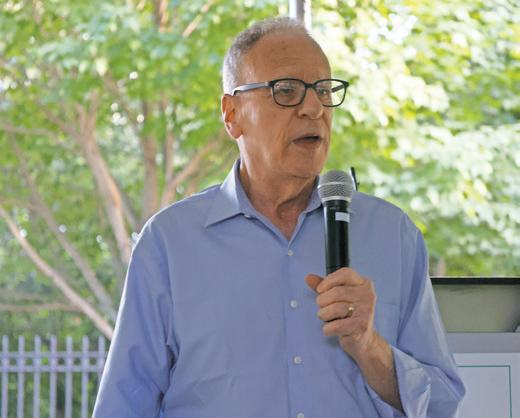
“Her unwavering commitment, compassion and service have left a lasting impact on the school community and the Bronx as a whole,” Dinowitz said about DeLeon.
Mayor Zohran Mamdani announced in a June 26 press release that his office made a portal for small businesses and community organizations to submit their own events for the Summer in NYC is an interactive
Dinowitz visited several other schools to continue his annual tradition of presenting community service awards to local graduates. Students were recognized for their leadership and hard work, Dinowitz said.
website that shows
By Olivia Young oyoung@riverdalepress.com
For Riverdale resident Lil-
iya Snovida, building a life in the United States has been a years-long exploration of belonging. But even after decades of living here, her sense of home isn’t tied to a single place.
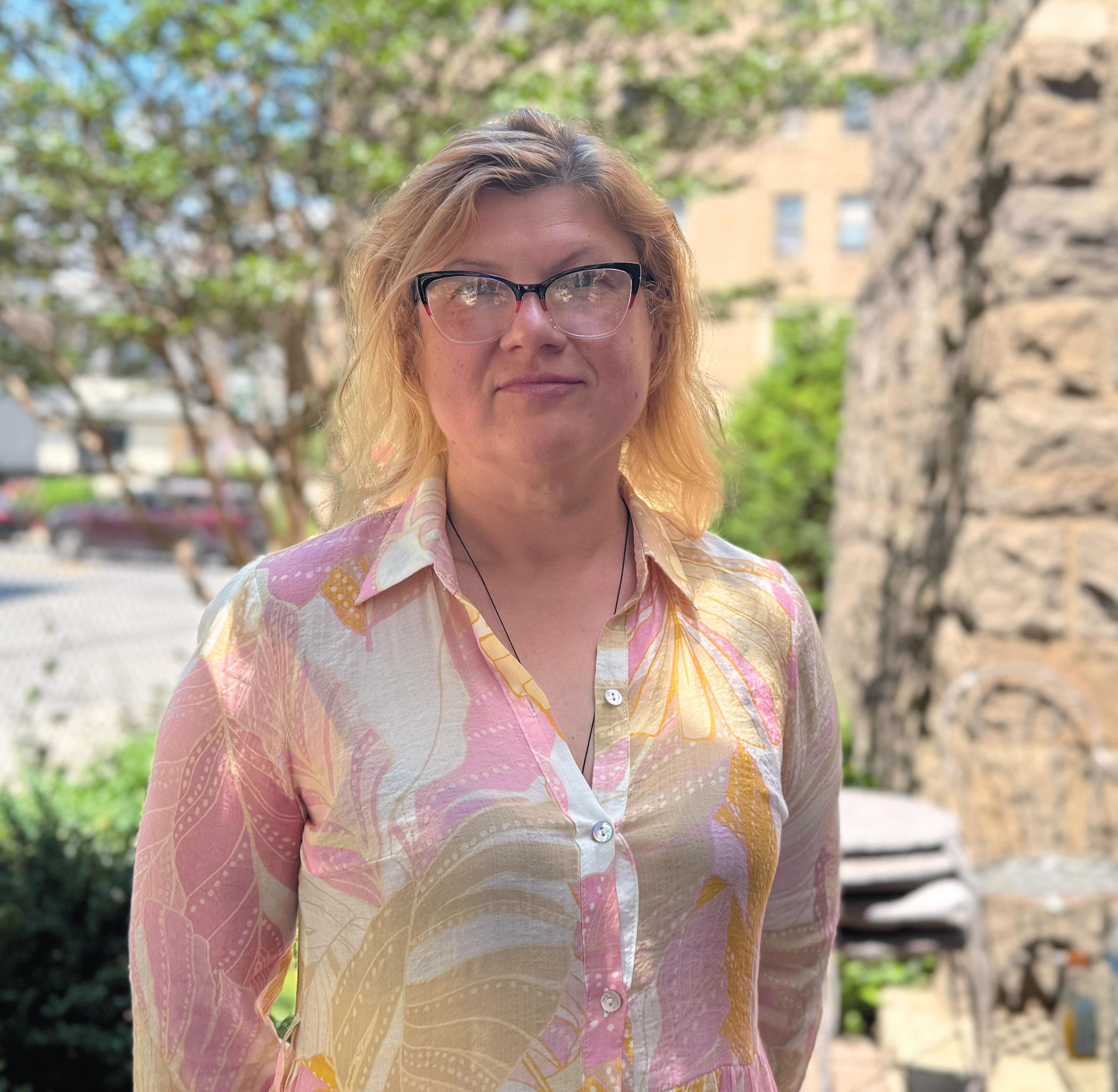
Snovida, 49, is a Ukrainian immigrant and a caretaker at Latvian Evangelical Lutheran Church in Yonkers. She volunteers often with the Riverdale Y, and throughout the city, organizing clothing and food drives, or arts and crafts workshops for the East Village’s School of Ukrainian Studies. She hasn’t returned to Ukraine in more than 20 years, terrified of the grief and loss that have become such a strong presence in the country throughout a war-torn period in its history. Though the U.S. has become a safe haven in many ways, a piece of Snovida’s identity remains in Ukraine.
“I think every immigrant has a very dual personality,” she said.
Snovida grew up in the Soviet Union in what is now the western Ukrainian city of Ternopil, a region she said was more pro-Ukrainian than others. Still, she felt that while her humanity, past and Ukrainian heritage were inside of her, at school and work she put up a front of a Soviet citizen. But Snovida considered herself lucky. Life was calm, she thrived in school and enjoyed her childhood.
When she was 18, in 1995, Snovida moved to the U.S. on a scholarship to Marymount College in Tarrytown, New York, which is now a part of Fordham University. Her dad, the family’s primary breadwinner, was diagnosed with cancer five years prior, a result of the 1986 Chernobyl nuclear power plant meltdown.
Her dad is still living, but at the time Snovida and her mom started to wonder if they’d have to prepare for a life without him. When the Soviet Union fell, bringing
an economic collapse along with it, Snovida solidified her decision to leave Ukraine for better opportunities in the U.S.
After her scholarship ended, Snovida was met with a choice. She recalled sitting atop a kitchen table, plane ticket in hand, and a coworker urging her to see the reality of the situation.
“Either you go back and you live poorly but comfortably,” she recalled him saying, “Or you stay, you work hard … there’s no guarantee that you will not end up a waitress for the rest of your life, but if you don’t take that chance and you go back, you probably would always think, ‘What if?’”
She transferred to Mercy College in New York, where financial strain took a toll. Snovida said she eventually scrounged up a couple hundred dollars for a room in an apartment with other students, but struggled between attending classes and paying rent. The experience became about proving herself more than anything.
‘There were days when I ate, there were days where I didn’t eat, and yet I continued,” Snovida said. “I wanted to prove to [my parents] and me that I can make it.”
More than 25 years have passed since Snovida last returned to Ukraine. Her identity — caught between the country in which she was born, and the country in which she has now spent the majority of her life — is complex, she said. The last time she visited Ukraine, in 2002, Snovida said others told her she was “more American,” with her aunt commenting on how Snovida was already developing an American accent. Still, “here, I do not feel American,” Snovida said. The U.S. gave her decades of growth, Snovida said. She built her life here. Had her son, now 13-yearold Markian Snovida. She got her bachelor’s and master’s degrees, and worked at American Express, Pfizer and International Business
Machine Corporation, or IBM. Even when she struggled, “it was my choice,” Snovida said.
Markian currently lives in Ukraine with his grandparents, where he has resided for three years, remaining connected to the place and heritage that are central to his identity. Preserving that culture takes effort, she said. When Markian was still
in the U.S., Snovida would only speak Ukrainian to him. They’d wake up early on weekends to take the train into the city for classes at the School of Ukrainian Studies downtown.
Markian living in Ukraine is a way for Snovida to broaden his opportunities — “educationally, culturally, emotionally, professionally,” she said. But personally, seeing
parts of her country become a war zone is something she can’t face.
“It’s home before the war,” Snovida said. “Women like me already lost their sons, their fathers, their brothers, their cousins. Some of them received them in black bags, some of them haven’t … I cannot deal with the reality, the aftereffects of the war.”
Snovida said she finds pieces of her faraway home in Riverdale — birds chirping, greenery, the residential style of buildings. She feels her connection strengthened through volunteer work in the U.S., and added that she is in the process of restoring her great grandparents’ house in Ternipol, with the hope of turning it into a museum.



CONTINUED from page A1
the floor with a foil blanket that had already been used by others held there. There was no private space to use the bathroom, she said. She got her period, and said she didn’t have any chance to ask for feminine hygiene products, resorting to paper towels.
“You have to somehow accept it if you want something good at the end,” Lopez told The Press. “You need to go through the hard parts. That’s how I saw it.”
Once she was released, Lopez took a three-day bus trip from Texas to New York, eventually enrolling at ELLIS. She met another student who would become her husband, and last year, after they got married, Lopez qualified for a green card because her husband was in the military.
A green card grants a non-U.S. citizen legal right to live and work in the U.S. as a lawful permanent resident. After five years, green card holders can apply for U.S. citizenship.
Up until 2025 — nine years after Lopez arrived in the U.S. — her application for asylum was still pending. Lopez lives in New Jersey now, and has an associate degree in information technology from City University of
New York’s Guttman Community College, and a bachelor’s degree in computer science from State University of New York at Oneonta.
To her, being an immigrant in the U.S. is being someone new and different. It’s powerful to offer a perspective that isn’t the same as everyone else’s, she said.
Things aren’t perfect, but “we are humans and we are not perfect,” Lopez said. She added that it “doesn’t matter where you go, you will find things wrong, but on a different level.”
Like Lopez, Sanquintin Pena came to the U.S. in pursuit of safety.
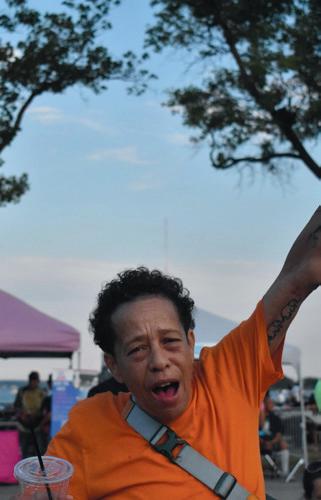
Sanquintin Pena moved from the Dominican Republic to the Bronx when she was 17. She is non-binary, a term that describes those whose identity is not exclusively male or female.
After coming out, Sanquintin Pena said, her family didn’t approve, and there would be no one else in the Dominican Republic to take care of her.
The country also doesn’t have laws to protect members of the LGBTQ+ community from discrimination.
With nowhere to turn, Sanquintin Pena applied for asylum status in the U.S. That application wasn’t approved until January 2025, and the years in between were painful, she said. She
wasn’t able to find work without the proper documentation, and doubted she would be able to move on to college for the same reason.
Before moving, when she was just visiting family in the U.S., Sanquintin Pena said she saw this country as easy — if someone comes to work, they will be given opportunities.
But the reality was more difficult, and it all came down to a few documents.
“I was frustrated,” Sanquintin Pena said. “I was so angry. Because for me it was just a card. It was just a paper that was going to change my life, that was going to give me all the opportunities that I was looking for … If you don’t have those titles, you are nobody here.”
Sanquintin Pena described it as living in a gray area. As an immigrant, she wanted financial stability, ability to work, to move onto college at the same time as her friends — not the inbetween of waiting, wondering if she will be able to make it through.
It’s difficult to “focus on the future when you have a present too hard, too chaotic,” Sanquintin Pena said.
Despite the uncertainty, there were glimpses at a better life as well. Sanquintin Pena said she was finally able
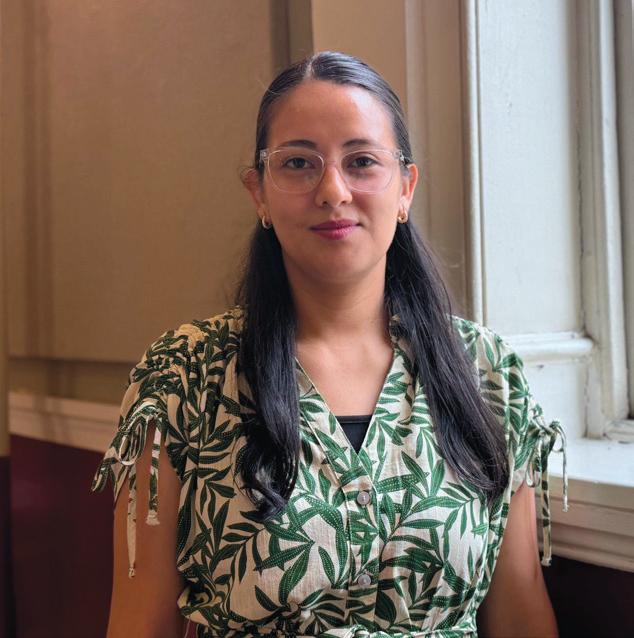
to express herself in the U.S. That expression has emerged through her personal style: she has bright, bluedyed curls and bleached eyebrows. She feels safer, blasting 80s rock music in her headphones while she walks instead of fear of being robbed, she said. Now, Sanquintin Pena is a student at Guttman Community College, where she studies human services. She also works part time at ELLIS helping other alumni navigate the college application process. Even with the security of asylum status, Sanquintin Pena said
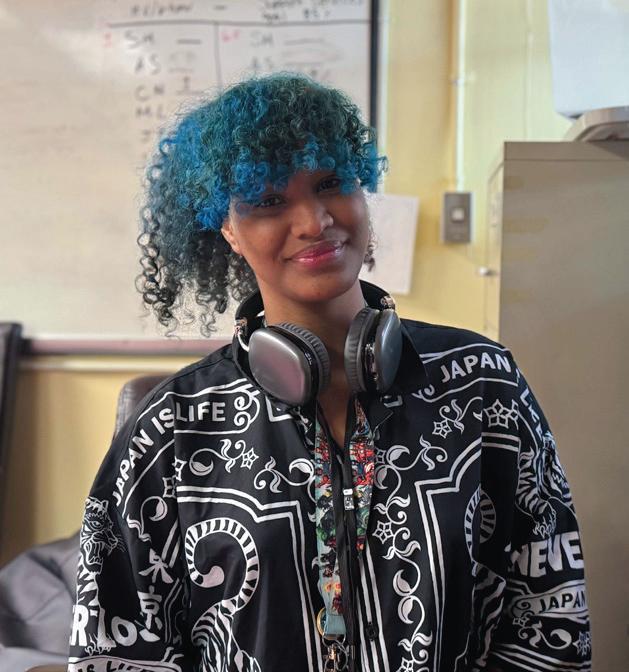
she is still living off of scholarships for immigrants, and fears federal rollbacks on aid programs or inability to renew her status. Sanquintin Pena said being an immigrant in the U.S. means thinking harder. The things that she faced were unimaginable at one time, but she also unlocked a new, deeper version of herself. She described it as being resilient, as being powerful. “It’s hard, but it’s a beautiful hard,” she said.
CONTINUED from page A1
“Between the major leagues, minor leagues, independent leagues, collegiate baseball, there are hundreds of thousands of games that happen over the course of summer,” he said. “Each one starts the same way, with people standing up for three minutes before the first pitch to sing the anthem collectively, no matter which part of the country, no matter what political affiliation, ethnicity, background people are coming from. There’s a really unifying nature to this tradition of singing the anthem.” That feeling, he said, extends beyond the ballpark.
“I think including Civic Spirit is so important because it shows us that
there’s something deeper that binds us,” Saenger said. “It shows us that there’s something that we all have in common, the values that we share and a responsibility that we hold to each other.”
As the country enters its milestone year, Saenger hopes people see the anthem as more than just the opening act before a baseball game.
“If you can stand together with people to sing the anthem together, to recognize and uphold that tradition, then I still believe that people have that ability to do so beyond that context as well,” he said. “Whether you’re wearing a Red Sox hat or Yankees hat, you’re still singing the same song together.”
CONTINUED from page A1
examining everything from stormwater management and structural integrity to soil conditions, topography and subsurface conditions. Engineers also collected samples from throughout the site for laboratory testing.
“We brought samples of all the materials into off-site labs, testing them for all kinds of contaminants,” Wise said. “Do we have lead? Do we have asbestos? Do we have chemicals in the soil that we should pull out and do something?”
Inspectors found asbestos, leadbased paint, mold and polychlorinated biphenyls, or PCBs — toxic industrial chemicals once commonly used in construction materials — throughout the building’s interior, along with contaminated soil beneath portions of the site. Officials emphasized that testing found no hazardous contamination on the building’s exterior, where the handball courts remain open and are still considered safe for public use.
The structural investigation proved equally revealing.
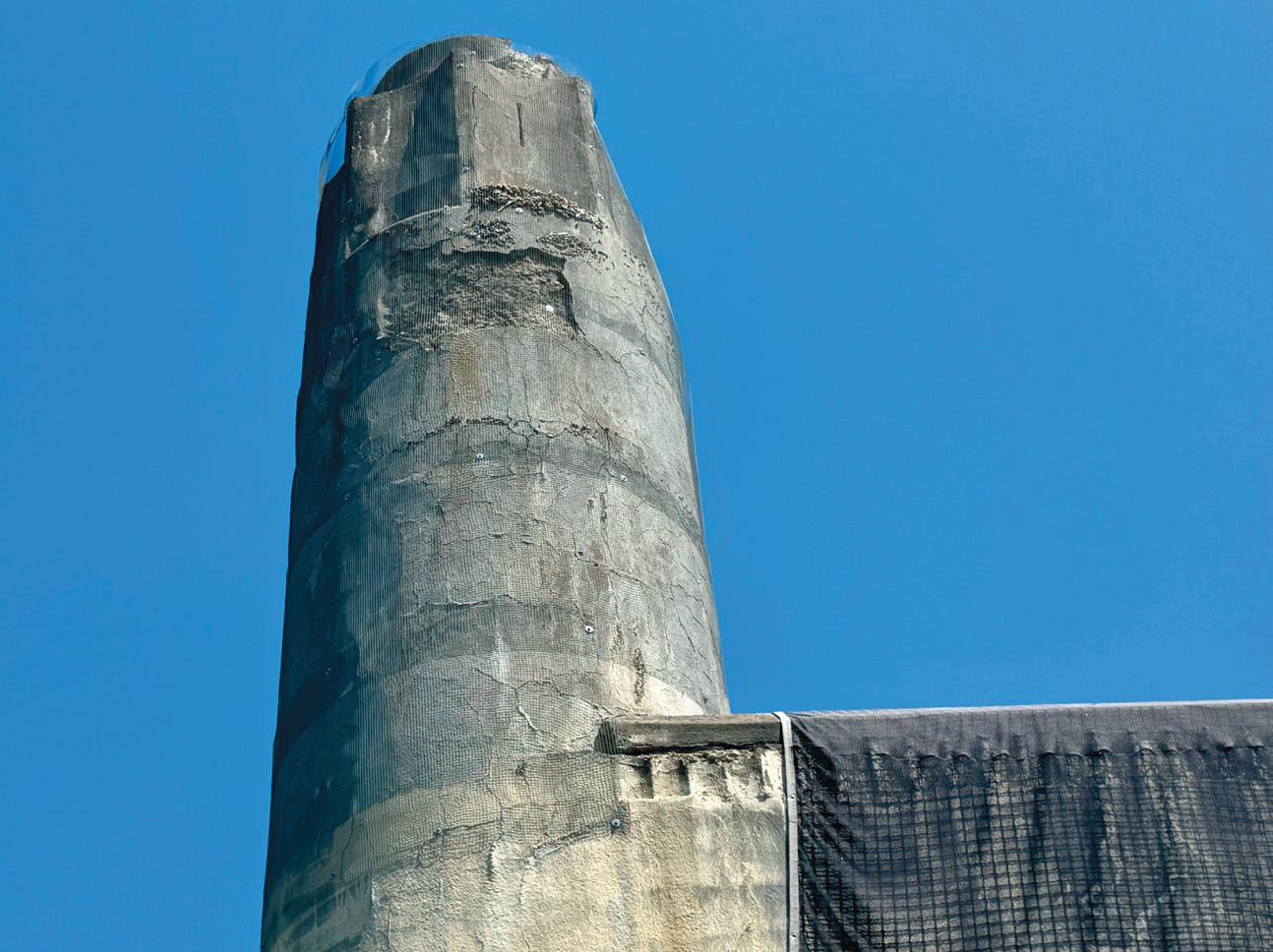
Historical research showed the stadium sits atop former marshland that was filled in as a landfill before construction. Unlike modern buildings that rely on deep foundation systems designed to stabilize structures built on soft ground, the existing stadium
CONTINUED from page A1 together.
rent roll. When you are presented with a price that you were not soliciting and is off the market, it’s certainly something to consider.”
Shea said the ownership group also honored a right of first refusal contained in Yudman’s lease, giving him the opportunity to purchase the property before the sale moved forward. Yudman told The Press he briefly considered purchasing the property himself but it was not financially feasible.
The shop is the latest in a string of longtime businesses to disappear from Riverdale and Kingsbridge, where many community members and business owners point to rising property values and redevelopment as forces that continue reshaping neighborhood commercial corridors.
Yudman’s ties to Riverdale stretch back even further than his business.
He grew up near West 236th Street and Waldo Avenue and opened the repair shop with his two brothers after the trio first operated a garage just north of the Bronx in Yonkers. When they relocated to Riverdale in the early ‘90s, most of their customers came with them.
“I’d say probably about 75 percent of my customers were from Riverdale anyway, so they moved with us,” he said, adding many of those customers
rests on a shallow foundation that continues to settle, greatly contributing to widespread cracking throughout the structure, according to the investigation.
“The existing stadium building has deteriorated beyond the point that it can be repaired and saved,” Wise said. “The shallow foundation will continue to subside and cause cracking throughout the structure.”
She added that deteriorating concrete, corroded reinforcing steel and decades-old mechanical, electrical and plumbing systems mean the building would require comprehensive replacement rather than repair. Engineers also found that the building’s original concrete mix allows water to penetrate the structure, accelerating deterioration through repeated freeze-thaw cycles and exposing rusting steel reinforcement beneath the surface.
The study also found that retaining the existing stadium would limit future improvements to the athletic complex.
One option, Wise said, is relocating a new building closer to Broadway, which would create space to expand the adjacent playing fields to the National Collegiate Athletic Association’s dimensions while also improving accessibility and allow the site to better serve future recreational needs.
Instead of renovating the structure, the parks department studied two replacement concepts: a roughly
never left.
Dawn Eaton, a longtime Riverdale resident, said she has trusted Yudman with every vehicle she has owned since moving to the neighborhood decades ago.
“Bruce has been part of this community from before I moved in,” Eaton said. “I’ve been using him since I’ve been in Riverdale, and that’s been 30 years.”
She said Yudman earned customers’ loyalty by treating their cars as carefully as he would his own.
“He’s honest,” Eaton said. “He doesn’t do any work that doesn’t need to be done.”
The news of the shop’s closure came as a shock. Eaton had dropped off her 2010 Toyota Corolla for an inspection, oil change and air conditioning recharge before walking to breakfast nearby. It was there that a waitress mentioned the garage was closing.
She credited Yudman with helping keep her 155,000-mile Corolla on the road by recommending only the repairs it actually needed.
“I needed Freon, so he gave me a shot of Freon,” Eaton said. “He could have easily said, ‘Ah, you know, you’ve got a leak and you’ve got to do this.’ I mean, somebody else could have easily said that.”
Before moving into the building more than three decades ago, Yud-
22,000-square-foot community building and a larger, approximately 44,000-square-foot recreation center that would include membership-based amenities such as gymnasiums, fitness facilities and locker rooms. Both concepts would preserve elements of the stadium’s historic character while incorporating modern building standards and improved accessibility.
The proposals were shaped by more than 1,000 responses collected through public meetings, on-site events and an online survey, according to the department. Residents consistently identified improved restrooms, lighting, seating and community gathering spaces among their highest priorities while stressing the importance of preserving the handball courts and the stadium’s identity. Others expressed interest in classrooms, multipurpose rooms and expanded programming that could serve neighborhood residents year-round.
For Travis, the discussion marked a shift from whether the stadium can be saved to what should replace it.
“What people weren’t getting from that first meeting was, ‘What do we get? What happens?’” she said.
While she said the presentation helped answer many lingering questions, Travis believes the planning process should not end there. She hopes the city will hold another round of community engagement before
man operated across the street on city-owned property where the John F. Kennedy Educational Campus now stands. He recalled years of uncertainty as the land was marked for future development before eventually becoming part of the school campus.
Over that same period, he watched Kingsbridge’s once-thriving automotive corridor steadily disappear.
“There was an Amoco, Shell, Sunoco, Texaco, Mobil, Exxon and Gulf station,” Yudman said, reciting the former service stations that once lined a short stretch of West 230th Street from memory. “That’s how many shops were on that block. They used to call it ‘Gasoline Alley.’”
Now, finding another location nearby has proven far more difficult than it was decades ago. Yudman recently believed he had secured a new shop on Bailey Avenue after months of conversations with a property owner. But after touring the building, he said the owner’s son informed him it had already been promised to another tenant. Still, Yudman hopes to remain close to the patrons who have sustained his business for decades.
Customer Phyllis Torney Katz discovered Riverdale South Service in 2021 after a friend recommended the shop when she became frustrated by expensive repairs elsewhere.
settling on a final design, allowing residents to react to the proposed concepts and offer feedback before funding is pursued.
“The best approach is for there to be a phase two to their public outreach,” Travis said. “The community should be able to see what they’re thinking.”
For now, Parks officials say structural engineers will continue monitoring the stadium while the agency advocates for capital funding to demolish and rebuild the facility. Until funding is secured, the department intends to keep the stadium’s courts and fields open for as long as they can be operated safely.
By Olivia Young oyoung@riverdalepress.com
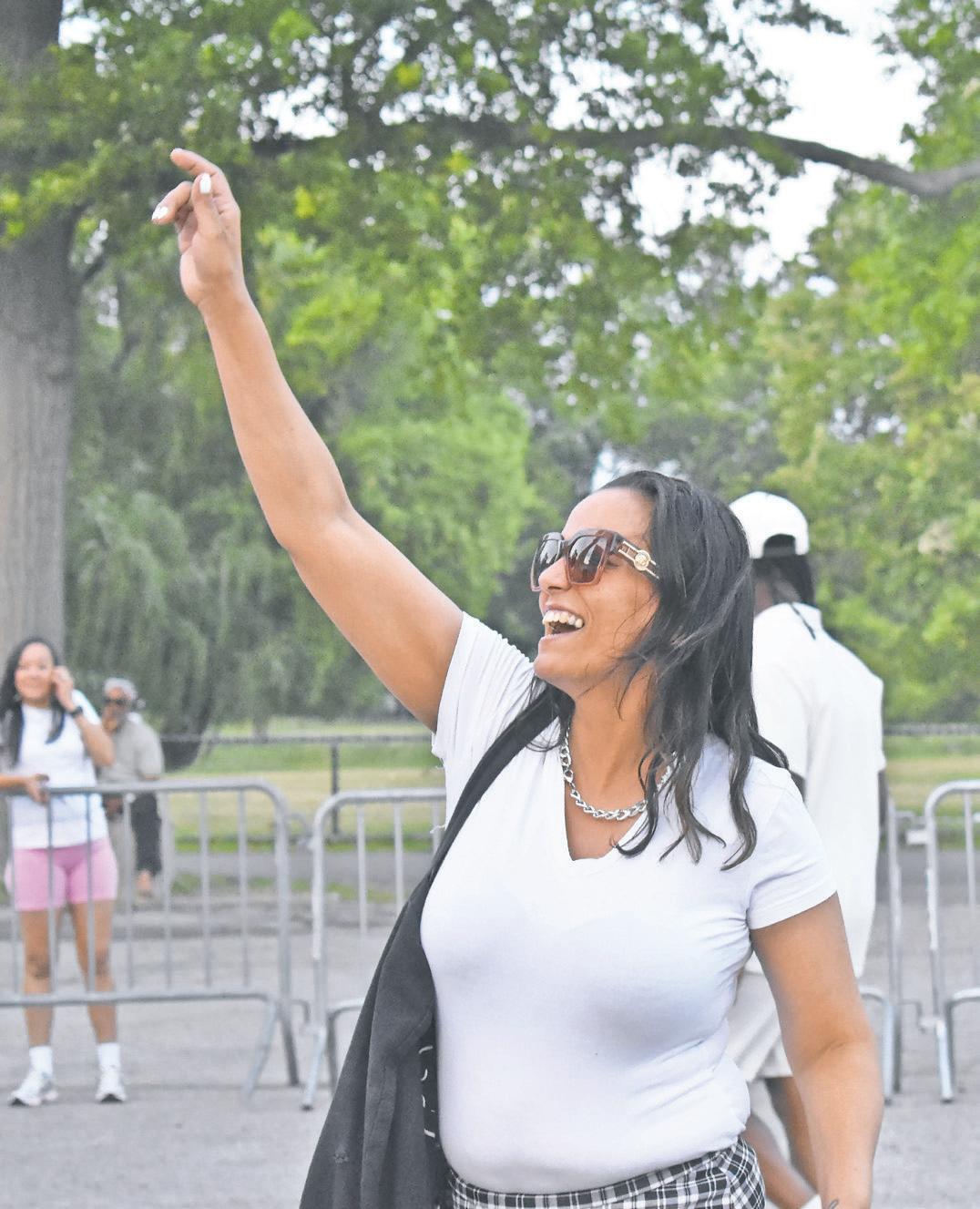
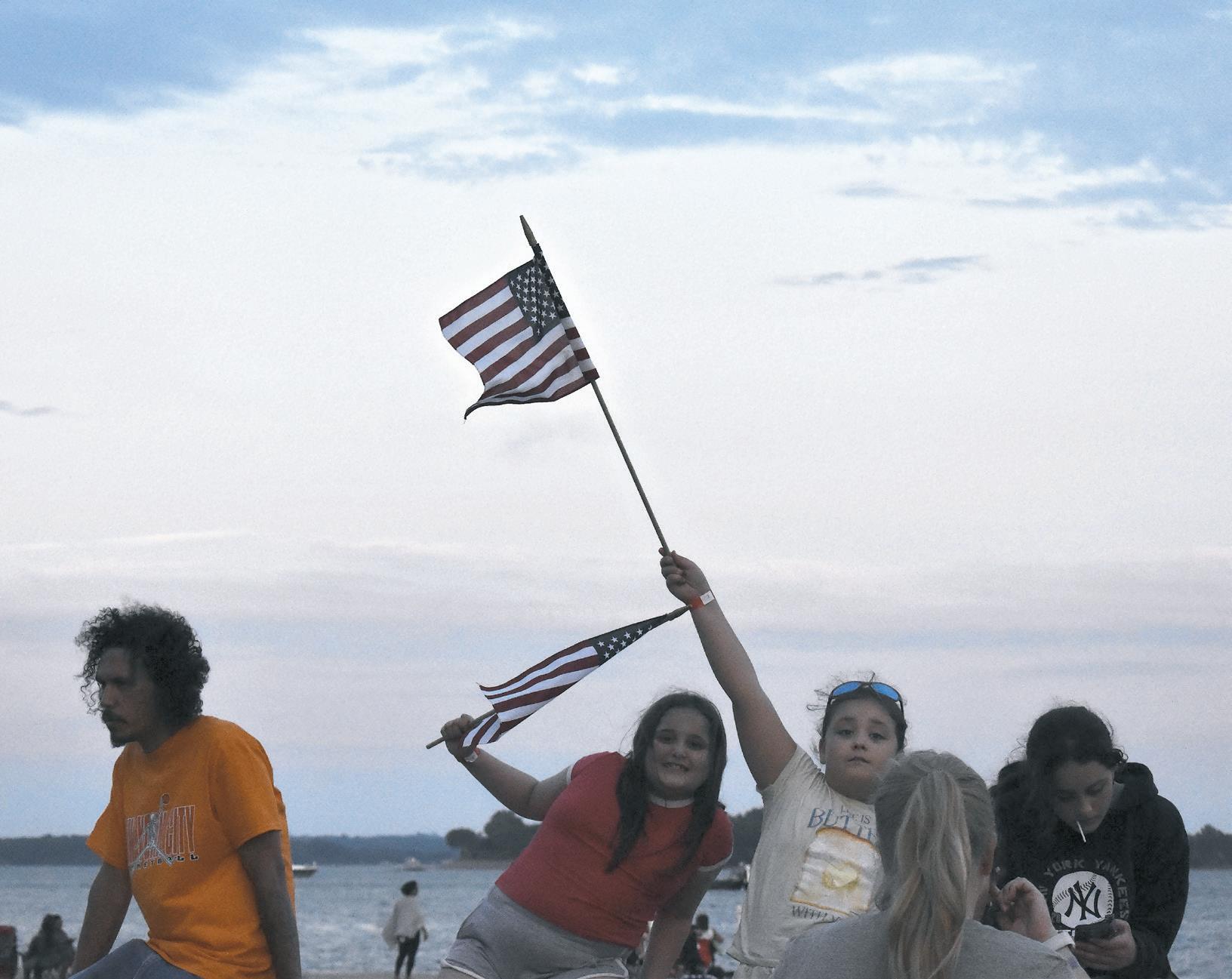
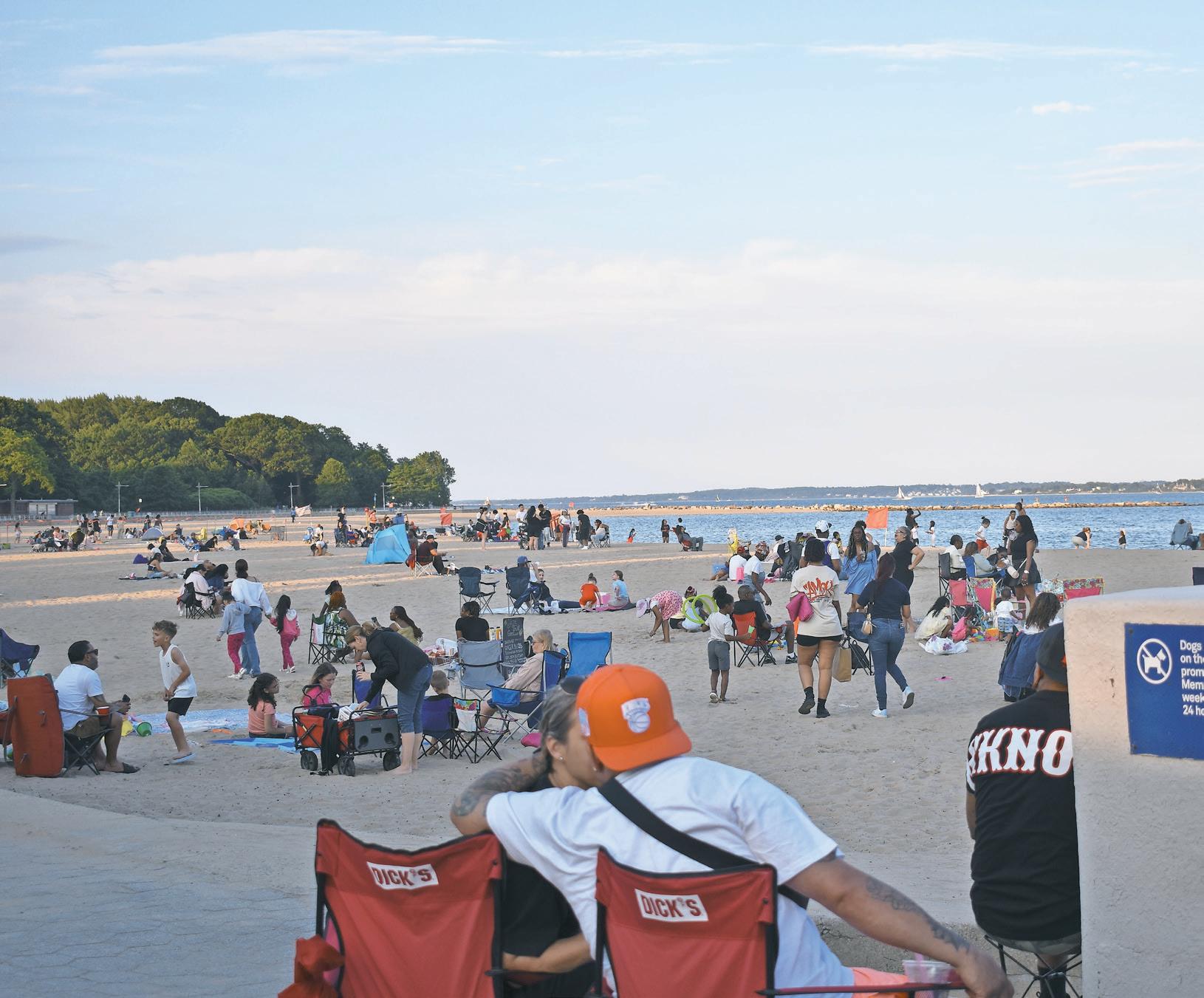
Hundreds gathered at Orchard Beach June 25 for the annual Bronx Fireworks Extravaganza, a celebration of the nation’s 250th birthday and a place to connect with community members underneath bursts of red and white that lingered in the night sky.
The event was organized by Bronx Borough President Vanessa Gibson with the help of organizations such as the Bronx Chamber of Commerce and the Bronx Tourism Council, among others, drawing crowds from every corner of the borough.
At more than a mile long, the only public beach in the Bronx was buzzing with New Yorkers who set up lawn chairs in the sand and along the boardwalk.
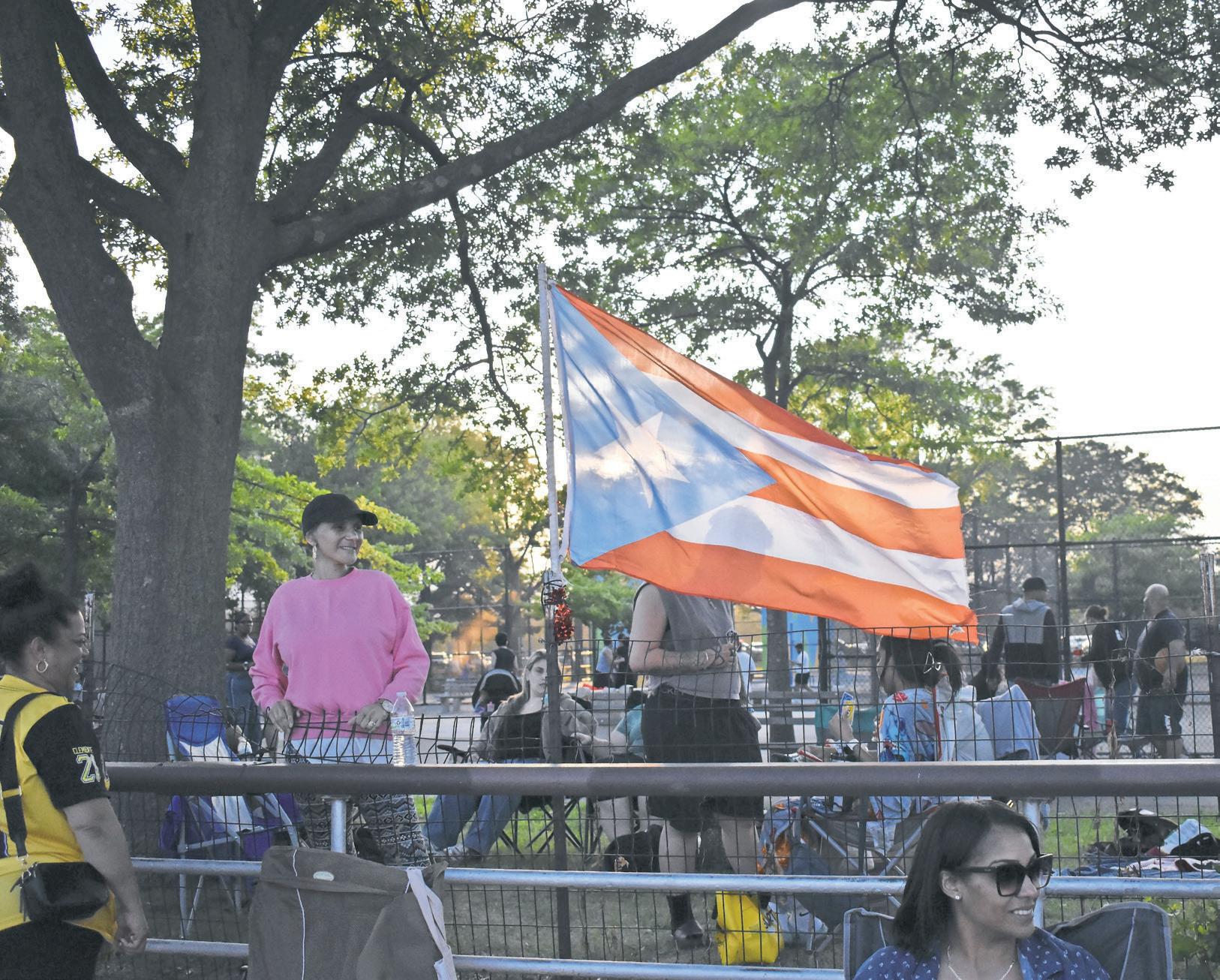
Attendees waved small American flags the event staff had handed out, as well as Puerto Rican flags, or passed baseballs and footballs between friends as the sun set. Upbeat melodies boomed from a nearby stage, where music group Uptown Royalty NYC was performing. Before the fireworks began, some, like Rigoberto Ceballos, found peace deep in the sand. He and his business partner sat around the edge of a hole in the sand, more than a foot down, that Ceballos said his son dug for him. Ceballos was born in
the Dominican Republic and now lives in Pelham Bay with his family. It was his third year at the fireworks, and he said he enjoys the lack of stress while watching the show, his feet digging in the sand.
For Santa Catalano, who was raised on Arthur Avenue and now lives in New Rochelle, the event is a tradition. Catalano said she’s been watching the fireworks at the beach for a decade, and this time she brought along her fiancé. The two set up lawn chairs a few feet from the chilly waves.
“I like seeing the reflection in the water when the fireworks go off,” Catalano said.
Others, like Juan Rodriguez, said while the fireworks were an opportunity for festivities, the event also held a deeper meaning. Rodriguez is an Army veteran who works for the Department of Veterans Affairs in the Bronx. Rodriguez said he wanted to show appreciation for those who have served, and encourage those on duty to stay safe and strong.
Bronx Borough President Vanessa Gibson also emphasized the importance of recognizing America’s veterans. She told The Press that to her, the U.S.’s 250th anniversary means appreciating how far the country has come, while still not shying away from the progress that needs to be made.

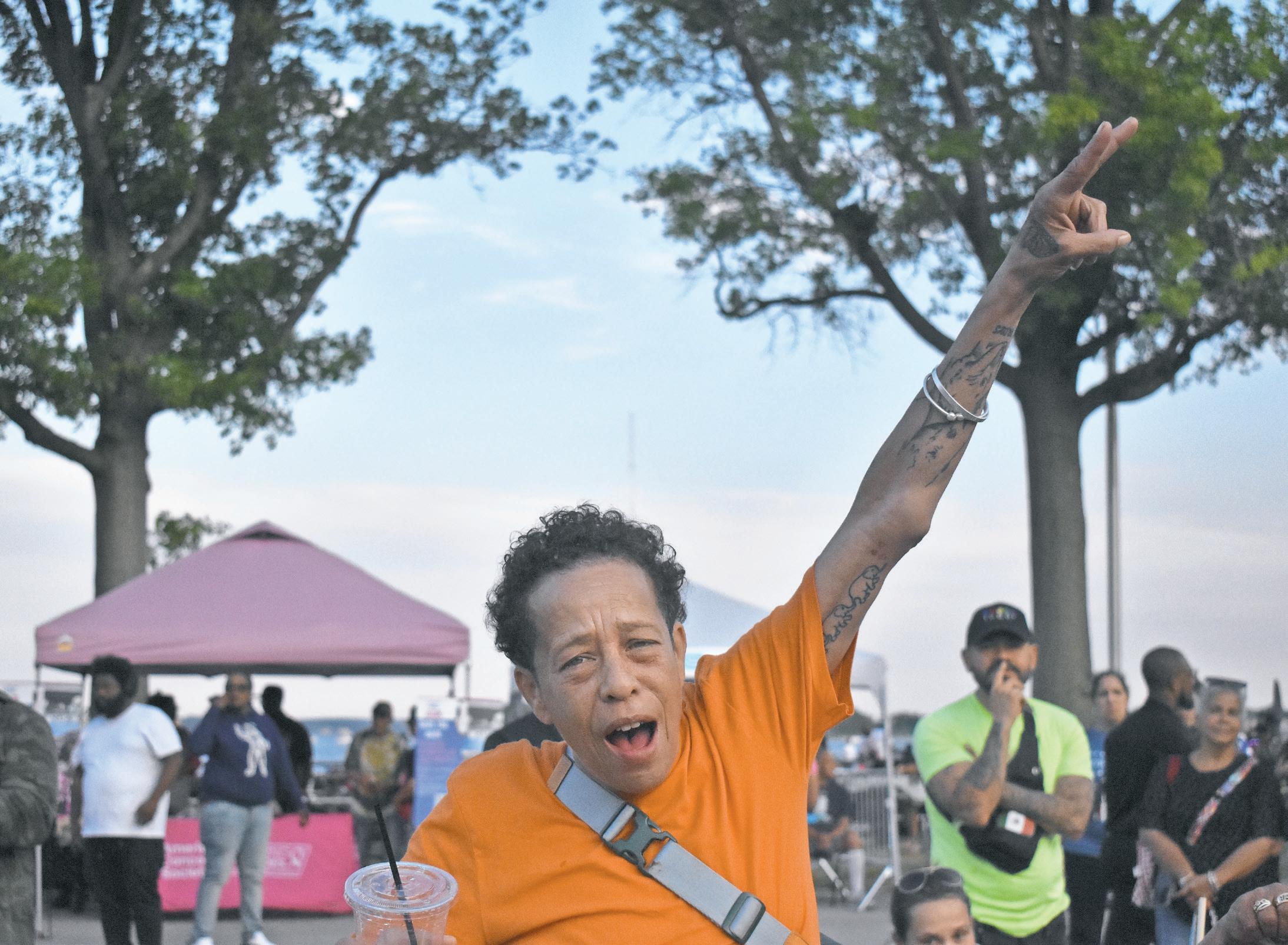
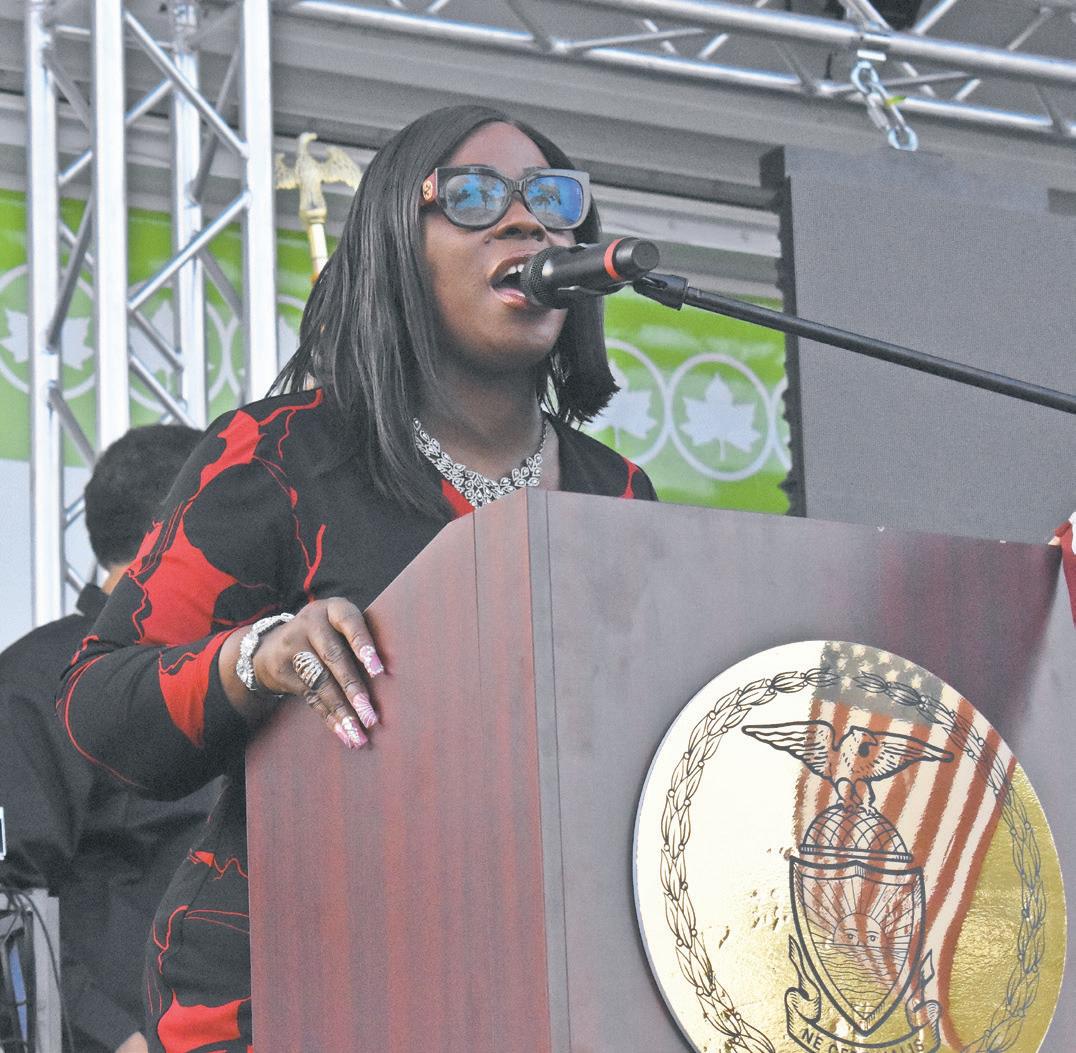
Bronx Borough President Vanessa Gibson told The Press that the nation’s 250th anniversary reminds her of the past, recognizes the present and also looks into the future. “It’s important to recognize that we are free as Americans, that we are free because someone made the ultimate sacrifice,” she said. “It’s about putting things into perspective,” she explained, referencing a federal rollback on safety net programs. “Recognizing the reality, not shying away from that, but also saying that we have come a long way.”

By Michelle Mullen mmullen@riverdalepress.com
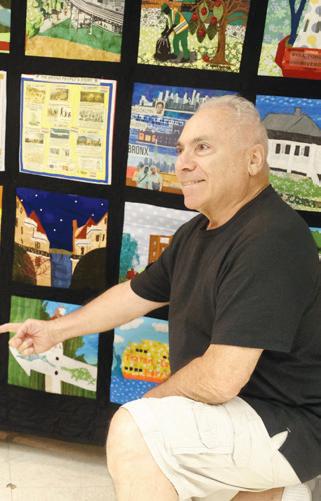
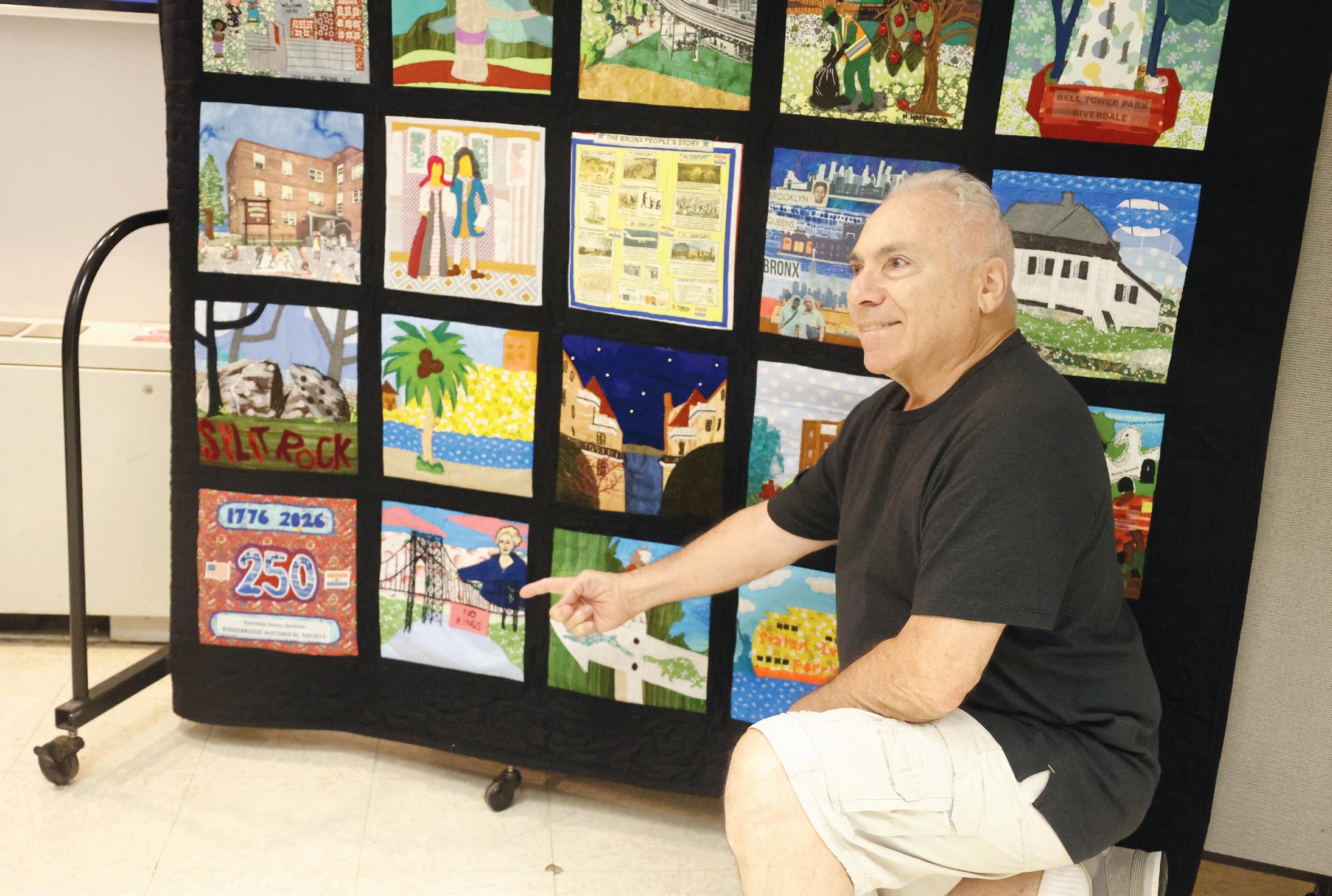
In 1976, a group of local women, dubbed the “quilting bees,” gathered around sewing tables to commemorate America’s bicentennial, stitch by stitch. Fifty years later, another generation left its own mark on Bronx history with a community tapestry for the nation’s 250th anniversary.
The completed project, a collaboration between Riverdale Senior Services and the Kingsbridge Historical Society will join the original quilts at the society’s headquarters, serving as a visual record of what residents valued in 2026 and hope future generations will remember. Through dozens of intricate fabric squares, the tapestry celebrates the landmarks and people that have shaped greater Riverdale.
Created over 12 weeks, the tapestry brought together longtime neighborhood residents, many of whom had never sewn before. Instead of relying solely on traditional quilting techniques, teaching artist Tijay Mohammed guided participants through watercolor painting, fabric collage and heat transfer methods before volunteer sewers assembled the individual squares into a single work.
“As an artist, my role here is to inspire the participants, to bring out the best and creativity in them to create this piece,” Mohammed said when the workshops began. “I’m facilitating in the form of inspiration, not telling them exactly what to do.”
The finished tapestry, he explained, is less a collection of landmarks than a collection of lives.
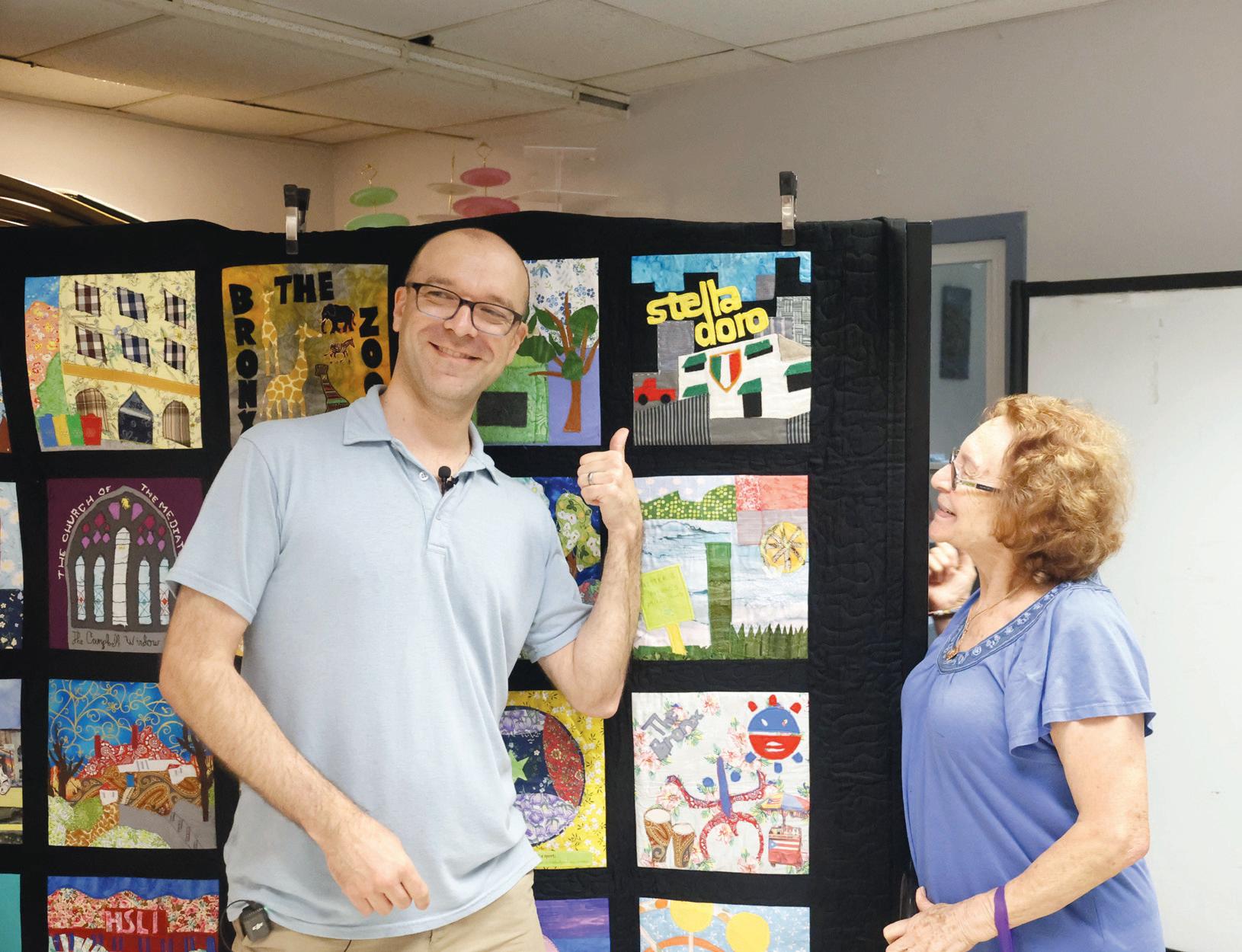
One square recalls the sweet aroma that once drifted through Kingsbridge from the Stella D’oro bakery. Unable to recreate the factory herself, Luciana Pepperas asked Kingsbridge Historical Society President Nick Dembowski to help finish the panel. The bakery had employed three generations of her family.
“My husband used to work as a young kid, part-time waiter, and eventually my son also worked, and my father-in-law used to be a cook there. I am so grateful, and Nick did an amazing, amazing job,” she said.
Across the tapestry, another square tells a different story — one of migration, faith and belonging.
Kola K. Baysah, who emigrated from Liberia, centered her panel on Christ Church Riverdale, where she found community after arriving in New York. Around it, she stitched symbols representing Africa, her ancestry and even an image herself.
For Sandra Ramos, the project became an opportunity to preserve a neighborhood landmark whose future remains uncertain, facing the threat of demolition. She chose the Church of the Mediator, a Gothic Revival church she previously served on the vestry of.
“We have all heard about the difficulties that the church has had over the years to maintain it, to renovate, to fix, and that’s still my dream,” she said. “Hopefully this will highlight the church, but it will be forever in these quilts, and that’s what we have — our memories, our collective memory is in these quilts, and it’s real for us, and it’s beautiful.”
Dembowski explained the initiative was inspired by the 1976 quilting project and invited residents to design 12-by-12inch squares.
“In comparison to the sort of national vibe in 1776, we’re definitely living in a much more divided country,” he said. “So I would say it became a little bit more about our local community, Bronx identity, as opposed to so much a national look at things.”
So many residents wanted to participate that organizers expanded the project into two tapestries instead of one, he added.
“It’s just like a snapshot in time,” Dembowski said. “Something like this gave a lot of people a chance to reflect on things that were important that they wanted to memorialize. They wanted people of the future to know what was important to them.”
Riverdale Senior Services Program Specialist Barbara Denson, who coordinated the weekly workshops, said the project became as much about storytelling as it did about quilting. After nearly a decade working with many of the participants, she found herself learning things she had never heard before.
“I loved watching the creativity,” she said. “I loved watching different things to see what was important to different people, and to hear the stories, that’s what makes the quilt beautiful.”
Even before their official unveiling, the tapestries had already been displayed during Juneteenth festivities in Van Cortlandt Park. Additional exhibitions are planned at Riverdale Senior Services and the Kingsbridge Library, ensuring the community’s stitched history remains on public display.
For Mohammed, that enduring visibility may be the project’s greatest achievement.
“I want future generations to remember that 50 years ago there were people who participated in a project that saw the past and brought it to the present for the future,” he said. “As they look at that quilt, they should also think about those that came before them. What did they do? How were they looking into the future? What are we also going to leave behind, so we can all build upon this?”



We pledge allegiance to the flag of the United States of America, and to the Republic for which it stands, one Nation under God, indivisible, with liberty and justice for all.
Happy Independence Day! As we celebrate 250 years of American independence, proudly display the flag on the reverse side of this page, presented by The Riverdale Press and these local merchants.
ASAP
Tech NYC Corp
646-776-0507 Service@ASAPTechNYC.com



Baron Hair Stylist 11 Knolls Crescent 718-549-9802
Dino’s Pizzeria 5660 Mosholu Avenue 718-796-2339
Burger King 6007 Broadway 718-549-9637 BK.com
Carlos & Gabby’s 5685 Riverdale Avenue 718-543-8226 646-361-0119 Ralphssd@aol.com
Chase Mortgages
Hector L. Rodriguez
Home Lending AdvisorNMLS #64791 1068 Morris Park Avenue 646-610-9840 Hector.L.Rodriguez@chase.com
Columbia Florist 210 West 231st Street 718-543-3753 FloristInBronxNY.com
Eliana Gutierrez Aesthetics 5676 Riverdale Avenue, Suite 102 929-788-9001
ElianaGutierrezAesthetics@gmail.com
Intagram: @ElianaGutierrezBeauty
Female Fight Club
5900 Riverdale Avenue 929-243-3327 FemaleFightClubNYC.com
Fieldston Pets 3476 Bailey Avenue 718-796-4541 FieldstonPets.com
Jake’s Steakhouse 6031 Broadway 718-581-0182 JakesSteakhouse.com
Julie Hyman, Esq Full Service Community Law Firm 640 West 237th Street Suites 2D-11D 347-449-6398 JulieHyman.com
Kingsbridge Social Club 3625 Kingsbridge Avenue 347-346-5180 KingsbridgeSocialClub.com
Kai Fan Asian Cuisine 3717 Riverdale Avenue 347-275-8056 KaiFanCuisine.com Le-Chic


By Olivia Young oyoung@riverdalepress.com
Independence Day is approaching fast, and while it’s tempting to carelessly hold a cold drink in one hand and a sparkler in the other, staying safe is as important for Riverdale residents as enjoying the holiday.
The New York City Health Department reported 45 fireworks-related emergency department visits in 2024, twothirds of which happened on July 4 and surrounding days. Males suffered more injuries, making up 73 percent of the total visits, as did 15 to 24-yearolds, making up one third of the visits, the department found.
Health isn’t the only thing at risk. For those celebrating in the neighborhood, and across the city, possessing or using fireworks is illegal, and is punishable by a fine of up to $10,000, imprisonment of six months, or both, according to the New York City Fire Department.
Here are a few tips to ensure local residents are able to celebrate their country’s anniversary safely and securely.
Leave fireworks to the professionals
The fire department advises the safest way to enjoy fireworks is to attend a public show put on by professionals.
Riverdale residents can make a trip to the iconic Macy’s 4th of July Fireworks — celebrating its 50th anniversary this year — with views available on TV, as well as in person from the East River, the Brooklyn Bridge and the Hudson River. Nationwide, safety faults have been fatal. In 2025, there were 15 reported fireworks-related deaths, the U.S. Consumer Product Safety Commission found, mostly from misfiring devices or malfunctions. Emergency rooms treated about
1,300 injuries involving sparklers that year, the commission added. Similar to New York’s 2024 incidents, 15 to 24-yearolds accounted for the largest share of injuries, especially hurting the hands, fingers, head, face and ears, the commission reported.
Sparklers aren’t as harmless
The bright, crackling warmth of a sparkler might appear safe for children, the fire department said, but they are not. Sparklers can reach between 1,200 and 2,000 degrees Fahrenheit, enough to melt gold or cause serious burns, the department said.
Fire officials advise that children be supervised, sparklers only be used outdoors in open areas and those using the sparklers wear closed-toe shoes and avoid loose-fitting clothes. The department also suggests having a bucket of water or hose nearby to extinguish sparklers, and remaining cautious if it is windy outside.
Ed Green, chair of the Bronx Community Board 8’s Public Safety Committee, heeded similar warnings.
“You want to keep an eye on kids always — if they’re near fireworks or sprinklers, or even cooking grills for that
matter — because little kids tend to roam and run around,” Green told The Press.
When it comes to drunk driving, the National Safety Council estimated there could be 410 deaths on U.S. roads this 4th of July. This number was sourced from comparing the length of this year’s holiday period to last year’s, when there were 437 traffic-related deaths.
Green said this is the main thing to be aware of come Independence Day. To be arrested for driving while intoxicated, a person has to blow a 0.8 blood alcohol content into a breathalyzer. The amount of drinks to reach this point varies based on weight, metabolism and other factors. But, reaching a dangerous level of intoxication can be easier than it seems, and the consequences can be devastating.
“You’re going to wind up in handcuffs,” Green said. “And worse than that, you can kill somebody’s whole family. We hear it all the time.”
According to the New York State Department of Motor Vehicles, punishment for alcohol or drug-related violations can include up to seven years in prison and $10,000 in fines.



By Michelle Mullen mmullen@riverdalepress.com
As the nation prepares to mark its 250th anniversary, the Bronx County Historical Society is highlighting stories of the pursuit of liberty rooted in the borough’s own backyard.
Its new exhibit,”The Bronx; Crucible of Liberty: Radicals, Runaways, & Revolutionaries; 1600–1850,” opened July 1 at Norwood’s Museum of Bronx History, and argues the story of American freedom was shaped not only in Philadelphia or Boston, but through a myriad of sites, most erased by time, scattered throughout present-day greater Riverdale and across the Bronx.
The show is part of the historical society’s “America 250: The Bronx” initiative, Steven Payne, executive director of the Bronx County Historical Society, explained. The temporary exhibition traces hundreds of years of competing ideas about what freedom looks like.
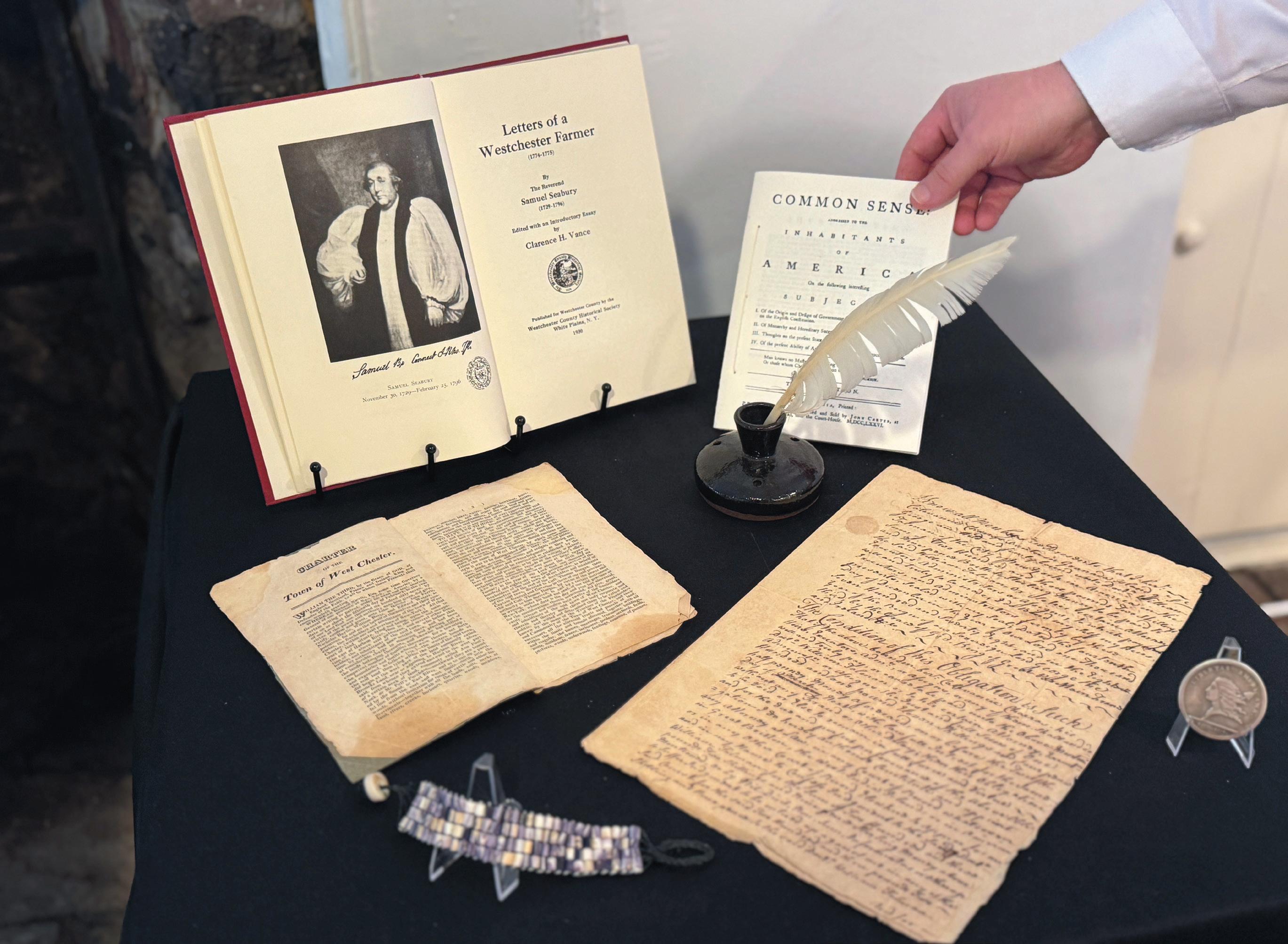
Upon entering the first-floor room holding the exhibit, visitors are met by several posters lining the walls — each one reading intricately detailed information on the Bronx’s storied past — alongside historic letters, illustrations and a modern-day replica of a Union soldier’s uniform.
“The main thread for the exhibit is different practices, different ideas of liberty from 1600 to 1850,” Payne said. “Obviously the American Revolution is a huge part of that... but it begins before and ends after the American Revolution, and it puts a lot of stories in a kind of tension with each other.”
The exhibition occupies the Valentine-Varian House at 3266 Bainbridge Avenue, one the Bronx’s oldest surviving homes. The stone house stood throughout the Revolutionary War, although it was captured by British troops in 1776. At the time, George Washington was living at the nearby Van Cortlandt House, which also served as temporary headquarters for his troops.
The show kicks off long before 1776, introducing visitors to the Lenape Native Americans who occupied the greater Riverdale and beyond, largely prior to European settlement. It explores traditions of diplomacy — including the exchange of wampum belts, which Payne said were intended to establish relationships and mutual obligations between nations. However, the practice was later misunderstood by Europeans as a form of commercial exchange.
From there, the exhibit moves through the stories of Dutch and English republican ideals, religious dissent, colonial settlement and the contradictions that emerged as Europeans sought liberty for themselves while denying it to others.
Those competing visions of freedom eventually spilled beyond political philosophy and into open conflict.
By the time the American Revolution reached the Bronx — then part of Yonkers —
Payne said, questions of liberty had become deeply personal, shaped by lived experience — whether someone was an Indigenous leader defending ancestral land, an enslaved person seeking freedom, a Loyalist or a Patriot. For greater Riverdale residents, that history is remarkably close.
Unlike many Revolutionary War battlefields that have since disappeared beneath urban development, much of the Kingsbridge battlefield survives within Van Cortlandt Park and its surrounding area, even if portions are now occupied by trails and athletic fields.
Among its most significant was the Battle of Kingsbridge, also known as the Stockbridge Massacre, which unfolded in what is now Van Cortlandt Park in August 1778. It was at the site that the Stockbridge Militia, a regiment of Mohican soldiers who had settled in Stockbridge, Massachusetts, were ambushed by British troops and Queen’s Rangers.
More than 500 British soldiers overwhelmed roughly 60 Stockbridge fighters, according to previous reporting by The Press. Between 15 and 40 were killed, while historical accounts indicate that three men who surrendered after being promised safety were executed.
The exhibit tells that story through Abraham and Daniel Nimham, Indigenous lead-
ers who fought alongside the Stockbridge Militia after years of unsuccessfully trying to reclaim lands taken from their people by colonial landowners.
“For them it was a very personal thing, fighting against the British,” Payne said, pointing to a 1766 document describing the seizure of indigenous lands by British colonists. “It’s never entirely sure how much they were fighting for the Americans, but they were definitely fighting against the British.”
The final portions of the exhibit move beyond independence, exploring the unfinished evolution of American liberty through Gouverneur Morris’ role in shaping the Constitution, early abolitionist thought, the Underground Railroad and one of the Bronx’s earliest Black churches.
Together, Payne said, the stories reveal that the nation’s founding ideals were never fixed but continually debated and redefined.
“The main thing that I hope people take away [from the exhibit] is conversations about the complexities of American traditions of freedom,” he said. “They may mean different things to different people, but that’s always been a part of history. I think the most robust freedom comes from being able to talk and debate — and in some cases fight out — what it means, and for whom.”
Leon G. Tsinberg, ESQ www.riverdalelegal.com
Yehudis Hoch, AUD, CCC-A
www.advancedcareaudiology.com
Sarah Andrew-Madison, LCSW, Psychotherapy PLLC
At Riverdale Neighborhood House
Ballet Fit
The Riverdale Neighborhood House invites you to join its Ballet Fit class on Tuesdays at 6:30 p.m.The class is a training program that combines ballet exercises with fitness exercises. Open to ages 13 and up, it is designed for individuals of all movement abilities. Participants will work on toning and strengthening, coordination, balance and flexibility.
Taught by Azucena Rollan Mas, dancer, performer and certified American Ballet Theatre and Ballet Fit instructor, at 5521 Mosholu Ave. Register at riverdaleonline.org.
Riverdale CSA
The Riverdale CSA, Community Supported Agriculture, is accepting members for its 2026 season. Deliveries of organic and biodynamic vegetables from Hawthorne Valley Farm are made weekly on Thursdays from 3:30 to 7:30 p.m. from early June to November to the Riverdale Neighborhood House, 5521 Mosholu Ave.
Full shares and partial shares are available and include seven to 10 vegetables each week. Fruit shares can be purchased that include organic strawberries, blueberries, stone fruits, apples and pears.
Also available are a wide variety of local dairy products, baked goods, meats, poultry and eggs. For more information about this and the current Winter-Spring CSA with Clatter Valley Farm, go to riverdalecsa.org or email riverdalecsa@gmail.com.
At Riverdale Senior Services
Weekly Mahjong or Leisure
Bridge Riverdale Senior Services, 2600 Netherland Ave., is looking for people aged 60 and up interested in coming to RSS for weekly games of Mahjong or Leisure Bridge. It is fun and non-competitive. Some experience playing is a must.
Mahjong is held Mondays from 10 a.m. to noon. Leisure Bridge is held Fridays from 1:15 to 4 p.m. Those interested in joining should email info@rssny.org.
Riverdale Art
Association
Reduce, Renew and Recycle
The Riverdale Art Association invites you to its exhibit, “Reduce, Renew and Recycle.” Member artists used recycled materials to create unusual artworks that challenge how you see the environment, as well as mixed media, photography, acrylics, watercolor and oils.
The show takes place at the parish hall of Christ Church Riverdale, 5040 Henry Hudson Parkway, and is open Monday through Thursday, 10 a.m. to noon. It runs until the end of August.
Hudson River Museum
Summer Nature Lab
The Hudson River Museum invites you to a family science workshop to examine water from vernal ponds, build a model plant cell, and explore specimens both large and small. Get up close with the season’s hidden wonders and
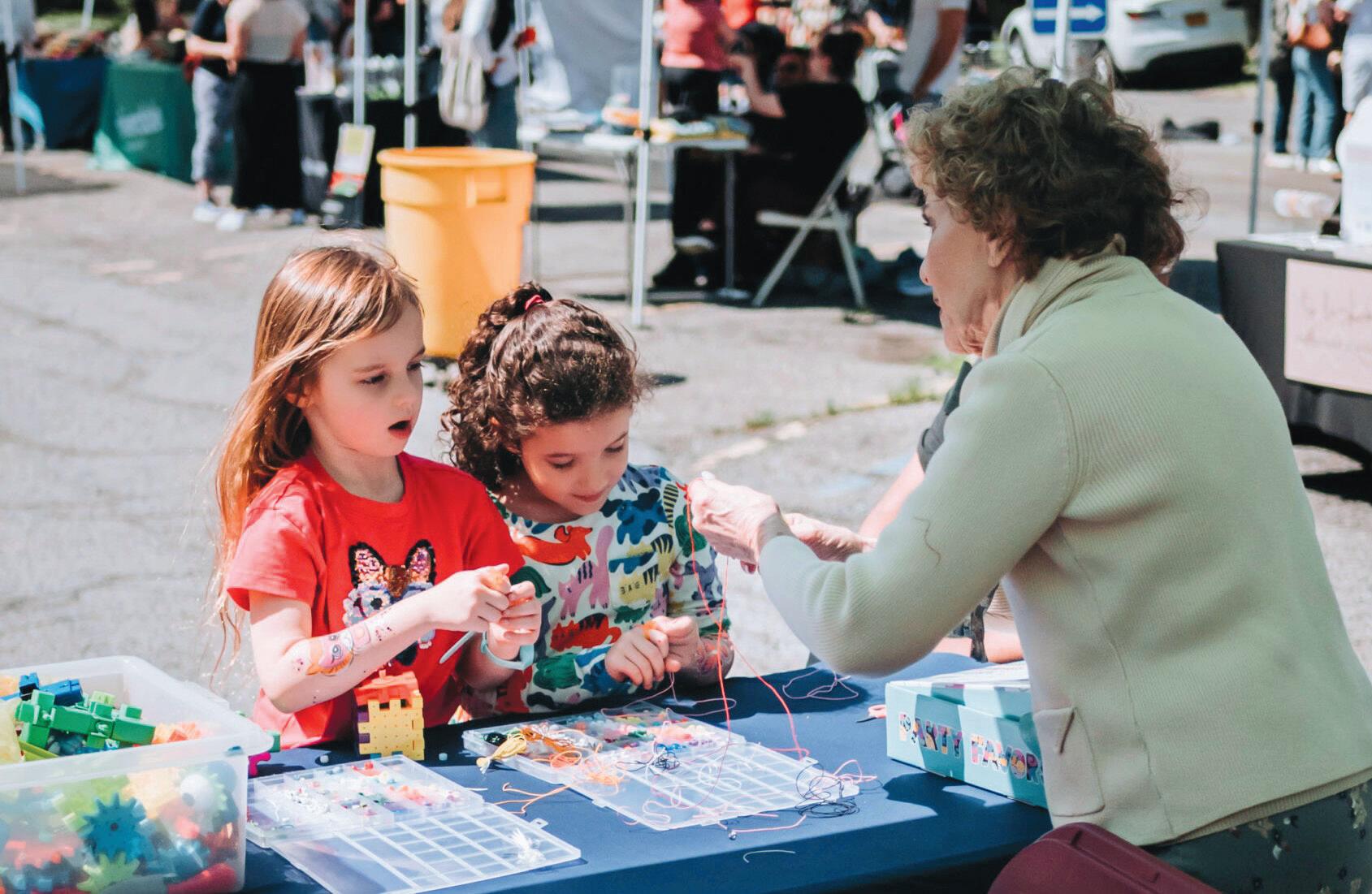
uncover the thriving ecosystems all around us.
The event takes place in the Greene Education Center and is free with general admission tickets. It takes place every Saturday and Sunday in July — with an exception for July 4 — from noon to 4 p.m. To buy tickets and for more information visit hrm.org.
At the New York Botanical Garden
‘Summer Of Moomin’
The New York Botanical Garden, located at 2900 Southern Blvd., presents the beloved inhabitants of Moomin valley arrive at the Garden for “Summer of Moomin,” a celebration inviting audiences of all ages to step into the imaginative universe created by Finnish artist and author Tove Jansson. The exhibit runs until Sept. 13, to get tickets visit nybg.org
‘Flower Power’
The New York Botanical Garden, located at 2900 Southern Blvd., invites you to immerse yourself in a groovy and colorful flower show spotlighting the ways in which hippie culture advanced closer relationships with the natural world in the “Flower Power” exhibition. The exhibit runs until October 18, to get tickets visit nybg.org.
At Wave Hill
Garden Highlights Walk Join a Wave Hill Garden Gui -
de for a free stroll in the gardens. Topics vary by season and the expertise of the guide. Each walk is individualized by the guides that lead them. The walk lasts 30 to 45 minutes and is most appropriate for adults or young adults.
The walks begin at 1 p.m. and take place every Sunday until Aug. 30. For more information visit wavehill.org
Family Art Project: ‘Blossom up your Garden Flag’
Wave Hill invites you to make your own pigments with flowers like yellow marigolds and crimson hibiscus. Then, grab your brush and use the paint you made to create decorative garden flags. The twoday event is on June 4 and June 5 from 10 a.m. to 1 p.m. at the Wave Hill house. Followed by a storytime program for families in the Gund Theater at 11:30 a.m.
No registration is required, for more information visit wavehill.org.
Afternoon Tea Wave Hill invites you to enjoy tea sandwiches and pastries with a specialty tea selection every Tuesday and Thursday with seatings at 11 a.m. or 2 p.m. Served on the Kate French Terrace or in their Tea Room at historic Wave Hill House.
“Afternoon teas” are provided by Wave Hill partner Great Performances, whose menu uses local and seasonal ingredients.
The program is available every Tuesday and Thursday until Aug. 4. Tickets cost $50 for adults and $30 for children with an adult. Re-
gistration is required seven days in advance. To register and for more information visit wavehill.org
Inner Space Yoga Inner Space Ballet Flow
Join Rainey Scarborough July 9, as they lead a low-impact workshop which focuses on joyful, somatic movement, blending contemporary ballet, gentle barre, center work and across the floor, ending in an expressive combination. No experience needed. The workshop begins at 7:15 p.m. and costs $37 per person. For more information visit innerspaceyoga.com.
Inner Space Modern Dance Inner Space yoga invites you to an hour-long workshop that follows the format of a traditional modern dance technique class, led by a former member of the world-renowned Paul Taylor Dance Company, Annmaria Mazzini. The workshop takes place July 10, at 6:30 p.m. Tickets cost $35 per person. For more information visit innerspaceyoga. com.
Inner Space Beginners Series
Kendra Jackson leads a fourweek series that provides a structured approach to understanding the yoga process, basic poses, the difference between good and bad tension, and how to move between poses with ease. Classes are once a week beginning on July 11 and ending on July 26. Tickets for the entire series cost $100 per person or $30 per person for a single class.
For more information visit innerspaceyoga.com.
Inner Space Somatic Reiki Sound Bath On July 11 at 2 p.m., Inner Space yoga will host a deeply restorative, all-levels practice that begins with gentle movement and mindful breathwork designed to unwind tension, calm the nervous system, and anchor your awareness in the present moment. The class, led by Ben Alpern and Shawna Emerick, does not require prior experience. Tickets cost $45 per person. For more information visit innerspaceyoga.com.
Inner Space Self Mastery: Meditation & Contemplation
Inner Space yoga is offering a workshop led by Ben Alpern where you’ll learn to access a meditative state-of-mind so you can examine your subconscious belief system which determines your reality. Learn to meditate for the purpose of creating harmony in your present moment. The class will be held on July 12 at 6 p.m. at the cost of $45 per person or free for monthly unlimited members. For more information visit innerspaceyoga.com.
Bronx Community Board 8
Bronx Community Board 8’s session has ended. There will be no further meetings until September.
Alison Gruber, MD
Gerald Neuberg, MD,
For
Kung-Ming Jan, MD For appointments, please call:
David I. Sahar, MD
For appointments, please call: 718.601.3700
Ronald Weissman, MD
Dylan Marshall, MD
Affiliated with NewYork-Presbyterian
The Declaration of Independence was first published on July 6, 1776, in a newspaper, the Pennsylvania Evening Post. We are proud to commemorate that high point in American journalism by reprinting that historic document.
When in the Course of human events, it becomes necessary for one people to dissolve the political bands which have connected them with another, and to assume among the Powers of the earth, the separate and equal station to which the Laws of Nature and of Nature’s God entitle them, a decent respect to the opinions of mankind requires that they should declare the causes which impel them to the separation.
We hold these truths to be self-evident, that all men are created equal, that they are endowed by their Creator with certain unalienable Rights, that among these are Life, Liberty and the pursuit of Happiness. That to secure these rights, Governments are instituted among Men, deriving their just powers from the consent of the governed. That whenever any Form of Government becomes destructive of these ends, it is the Right of the People to alter or to abolish it, and to institute new Government, laying its foundation on such principles and organizing its powers in such form, as to them shall seem most likely to effect their Safety and Happiness. Prudence, indeed, will dictate that governments long established should not be changed for light and transient causes; and accordingly all experience hath shown, that mankind are more disposed to suffer, while evils are sufferable, than to right themselves by abolishing the forms to which they are accustomed. But when a long train of abuses and usurpations, pursuing invariably the same Object evinces a design to reduce them under absolute Despotism, it is their right, it is their duty, to throw off such Government, and to provide new Guards for their future security. Such has been the patient sufferance of these Colonies; and such is now the necessity which constrains them to alter their former Systems of Government. The history of the present King of Great Britain is a history of repeated injuries and usurpations, all having in direct object the establishment of an absolute Tyranny over these States. To prove this, let Facts be submitted to a candid world.
He has refused his Assent to Laws, the most wholesome and necessary for the public good.
He has forbidden his Governors to pass Laws of immediate and pressing importance, unless suspended in their operation till his Assent should be obtained; and when so suspended, he has utterly neglected to attend to them.
He has refused to pass other Laws for the accommodation of large districts of people, unless those people would relinquish the right of Representation in the Legislature, a right inestimable to them and formidable to tyrants only.
He has called together legislative bodies at places unusual, uncomfortable, and distant from the depository of their Public Records, for the sole purpose of fatiguing them into compliance with his measures.
He has dissolved Representative Houses repeatedly, for opposing with manly firmness of his invasions on the rights of the people.
He has refused for a long time, after such dissolutions, to cause others to be elected, whereby the Legislative Powers, incapable of Annihilation, have returned
to the People at large for their exercise; the State remaining in the mean time exposed to all the dangers of invasion from without, and convulsions within.
He has endeavoured to prevent the population of these States; for that purpose obstructing the Laws of Naturalization of Foreigners; refusing to pass others to encourage their migrations hither, and raising the conditions of new Appropriations of Lands.
He has obstructed the Administration of Justice by refusing his Assent to Laws for establishing Judiciary Powers.
He has made Judges dependent on his Will alone, for the tenure of their offices, and the amount and payment of their salaries.
He has erected a multitude of New Offices, and sent hither swarms of Officers to harass our people, and eat out their substance.
He has kept among us, in times of peace, Standing Armies without the Consent of our legislature.
He has affected to render the Military independent of and superior to the Civil Power.
He has combined with others to subject us to a jurisdiction foreign to our constitution, and unacknowledged by our laws; giving his Assent to their acts of pretended legislation:
For quartering large bodies of armed troops among us:
For protecting them, by a mock Trial, from Punishment for any Murders which they should commit on the Inhabitants of these States:
For cutting off our Trade with all parts of the world:
For imposing taxes on us without our consent:
For depriving us in many cases, of the benefits of Trial by Jury:
For transporting us beyond Seas to be tried for pretended offences:
For abolishing the free System of English Laws in a neighbouring Province, establishing therein an Arbitrary government, and enlarging its Boundaries so as to render it at once an example and fit instrument for introducing the same absolute rule into these Colonies:
For taking away our Charters, abolishing our most valuable Laws, and altering fundamentally the forms of our Government:
For suspending our own legislature, and declaring themselves invested with Power to legislate for us in all cases whatsoever.
He has abdicated Government here, by declaring us out of his Protection and waging War against us.
He has plundered our seas, ravaged our Coasts, burnt our towns, and destroyed the lives of our people.
He is at this time transporting large armies of foreign mercenaries to compleat the works of death, desolation and tyranny, already begun with circumstances of Cruelty & perfidy scarcely paralleled in the most barbarous ages, and totally unworthy of the Head of a civilized nation.
He has constrained our fellow Citizens taken Captive on the high Seas to bear Arms against their Country, to become the executioners of their friends and Brethren, or to fall themselves by their Hands.
He has excited domestic insurrections amongst us, and has endeavoured to bring on the inhabitants of our frontiers, the merciless Indian Savages, whose known rule of warfare, is an undistinguished de-
struction of all ages, sexes and conditions.
In every stage of these Oppressions We have Petitioned for Redress in the most humble terms: Our repeated Petitions have been answered only by repeated injury. A prince, whose character is thus marked by every act which may define a Tyrant, is unfit to be the ruler of a free People.
Nor have We been wanting in attention to our British brethren. We have warned them from time to time of attempts by their legislature to extend an unwarrantable jurisdiction over us. We have reminded them of the circumstances of our emigration and settlement here. We have appealed to their native justice and magnanimity, and we have conjured them by the ties of our common
kindred to disavow these usurpations, which would inevitably interrupt our connections and correspondence. They too have been deaf to the voice of justice and of consanguinity. We must, therefore, acquiesce in the necessity, which denounces our Separation, and hold them, as we hold the rest of mankind, Enemies in War, in Peace Friends.
We, therefore, the representatives of the United States of America, in General Congress, Assembled, appealing to the Supreme Judge of the world for the rectitude of our intentions, do, in the Name, and by Authority of the good People of these Colonies, solemnly publish and declare, That these United Colonies are, and of Right ought to be Free and Independent States; that
they are absolved from all Allegiance to the British Crown, and that all political connection between them and the state of Great Britain, is and ought to be totally dissolved; and that as Free and Independent States, they have full Power to levy War, conclude Peace, contract Alliances, establish Commerce, and to do all other Acts and Things which Independent States may of right do. And for the support of this Declaration, with a firm reliance on the Protection of Divine Providence, we mutually pledge to each other our Lives, our Fortunes and our Sacred Honor. The Declaration was signed first by John Hancock, president of the Continental Congress, and then by 55 others representing the 13 original states.
To the editor,
I am an attorney who has practiced in the family courts representing survivors of domestic abuse for 37 years. I have also conducted extensive research over the years on the treatment of battered mothers and their children in the courts, teach at the City University of New York at John Jay College’s Graduate program in forensic psychology and have written extensively on this subject.
While I agree with Ms. Hyman that there are significant problems in the family courts, the answers cannot be found in disregarding allegations of abuse. Families in crisis seek the protection of the courts because of domestic abuse, substance abuse, child maltreatment, or untreated mental illness. These are wide-spread problems that exist in families from all economic, racial and ethnic backgrounds. Yet judges, attorneys and forensic mental health evaluators are poorly equipped to address the needs of families in crisis.
Since the inception of the first courts that addressed the needs of children and families in the early 20th century, these courts were plagued with insufficient funding, training, staffing and facilities. These problems were compounded because the founders of these courts viewed litigation and trials as destructive for families. Instead, they chose “therapeutic justice,” in which all the problems of the family would be heard in an informal, closed, parochial atmosphere before a small interdisciplinary team headed by an experienced judge. This judicial approach was radically different from the criminal courts which favored public,
evidence-based trials. Any family court litigant who has taken off time from work to attend informal conferences frequently held without the benefit of a judge or court reporter, can attest to the delays and lack of due process protections that are part of this informality.
Nor can the problems in the family court be solved by having more forensic mental health evaluators. Researchers have repeatedly found that such evaluators had no formal graduate education in domestic violence, held significant biases against women and recommended joint or sole custody to abusers even when provided with supporting documentation.
There is also an extensive body of research which concluded that there was significant gender bias against women in the courts. One study found that battered women and their advocates were not safe in the New York City family courts, subjected to physical threats and stalking. Unfortunately, this finding was not a surprise as my clients and I have experienced similar threats.
Children are particularly vulnerable in the family courts.
Despite passage of legislation in most states that provided that judges are to give “weighty consideration” to the proven existence of domestic violence during custody and visitation cases, judges have been found to favor co-parenting and joint custody. One researcher found that when judges must balance fathers’ rights against children’s, fathers’ rights frequently prevail.
When tragedies occur and children are murdered, we can look to the medical model of Mortality and Morbidity Conferences for answers, in which doctors meet to address what went wrong in their patient’s care. So too, judges, court personnel and advocates could review child fatalities that occur during the course of family court proceedings, to determine what could have been done differently. Finally, children exposed to abuse will suffer medical, psychological and social problems for decades to come. Addressing the problems of the family courts requires an understanding of the relevant research and a willingness to put our children’s safety and well-being first.
LISA FISCHEL-WOLOVICK, JD, MSW
Author: Behind the Courthouse Doors: The Institutional Control of Children, (Oxford University Press, Expected August, 2026); and Traumatic Divorce and Separation (Oxford University Press 2018).
Only in the last month was legislation in New York passed in honor of Kyra Franchetti, a twoyear old girl shot by her father after both the custody evaluator and the judge decided that it was safe for her to have unsupervised visitation with her father. Her mother, Jacqueline Franchetti fought for years to make the legislative changes that would require judges to prioritize children’s safety. But legislative change requires training. As someone who has conducted judicial training, I have learned that training on domestic abuse, coercive control, and child maltreatment must be mandatory for judges and court personnel. To be effective, such training must be conducted at regular intervals, the curriculum must be transparent and subject to evaluation.
It’s

Place
Call: 718 543 6200
Fax: 718 548 4038





































































Sandhya “Sanjya” Tidke & Belkis Tappan of the Sanjya Tidke Team of Brown Harris Stevens
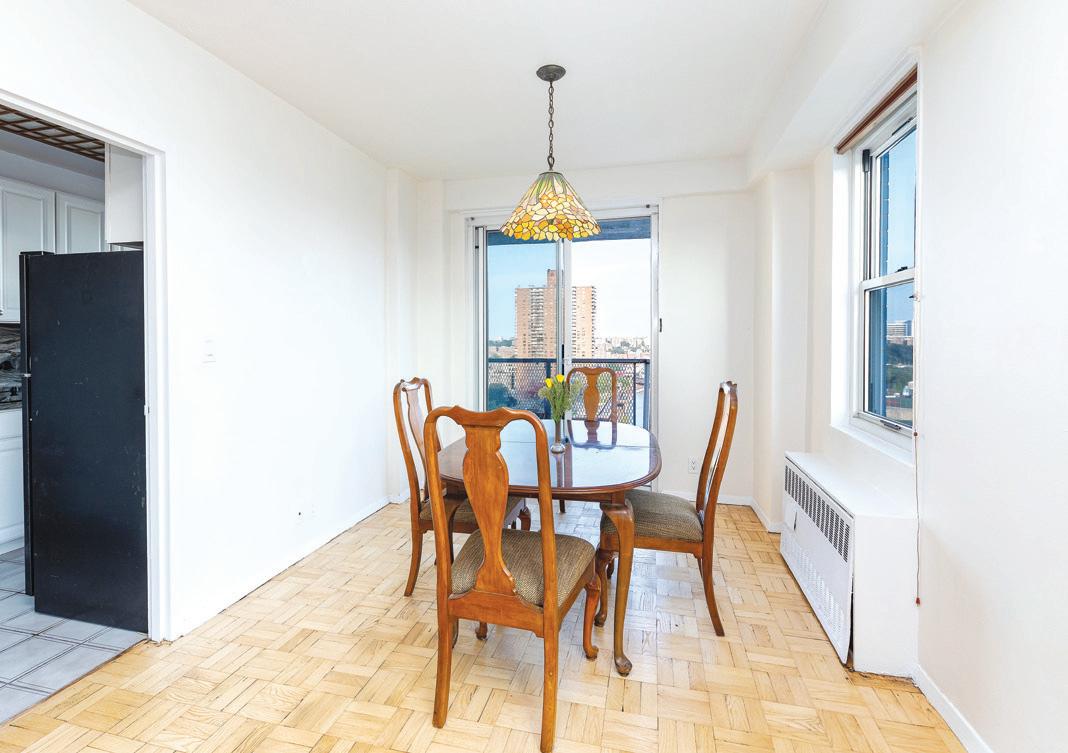
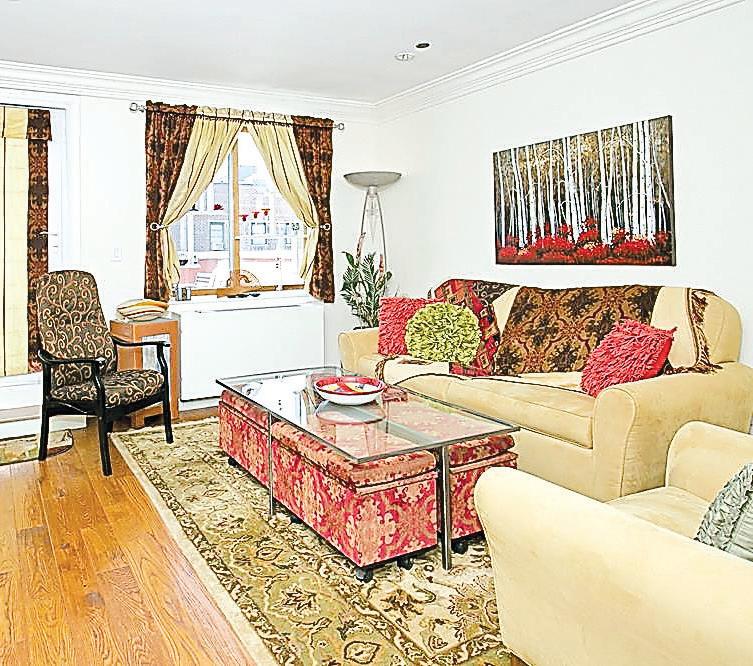
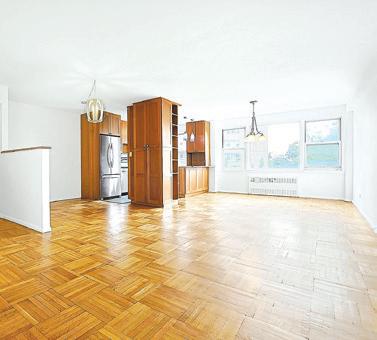
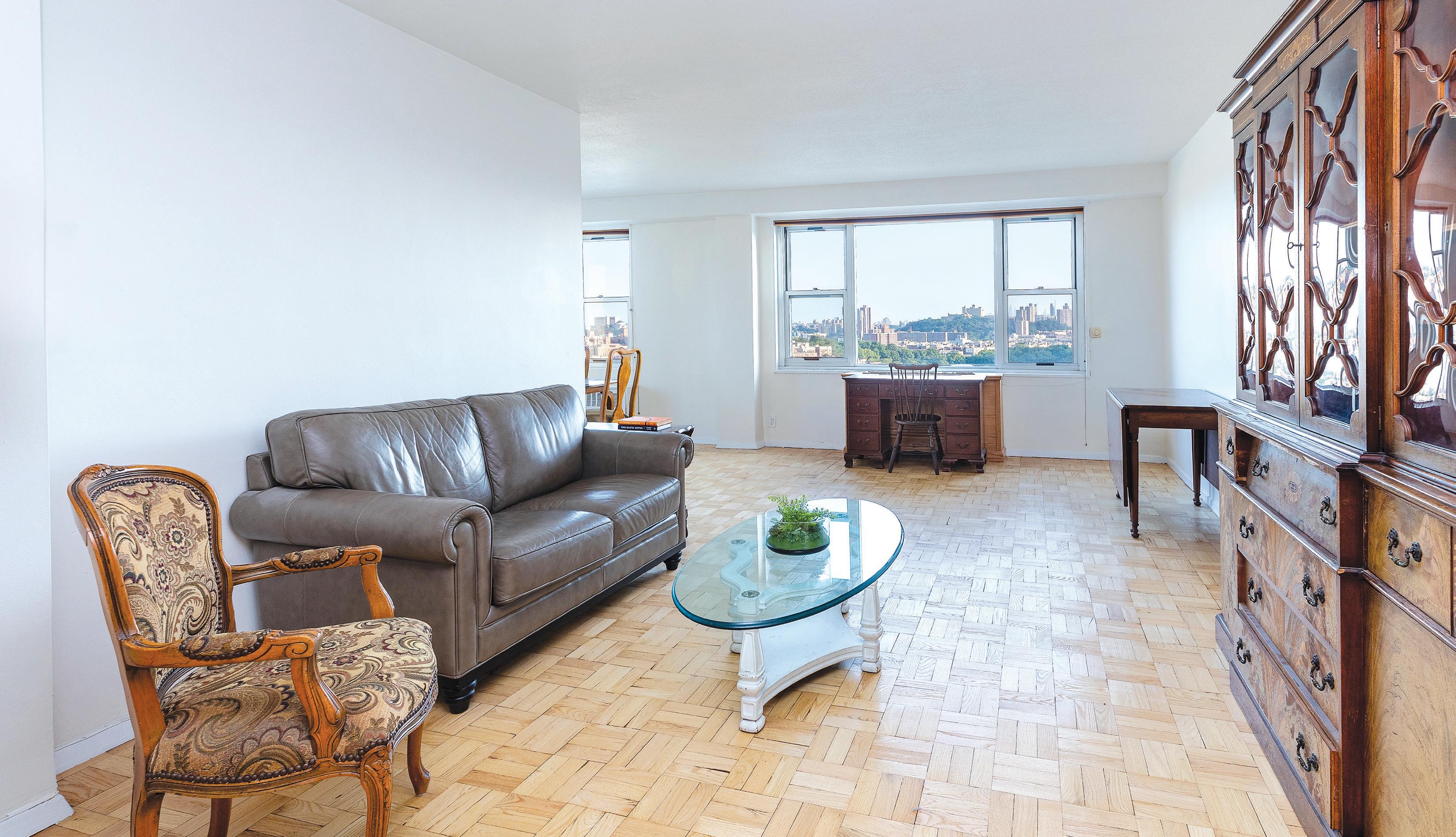
two-bedroom, two-bath cooperative apartment with sweeping river and skyline views has come on the market at 2400 Johnson Avenue, Apt. 11K, with an asking price of $495,500.
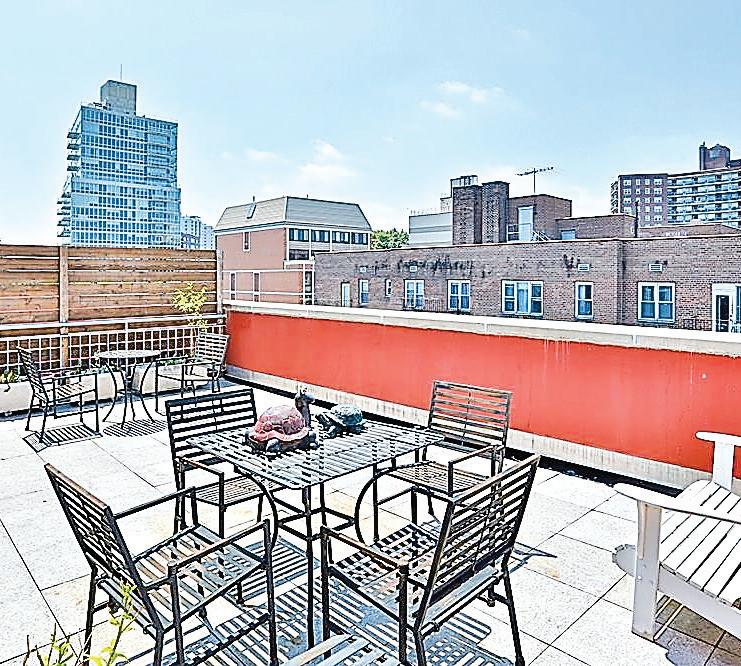
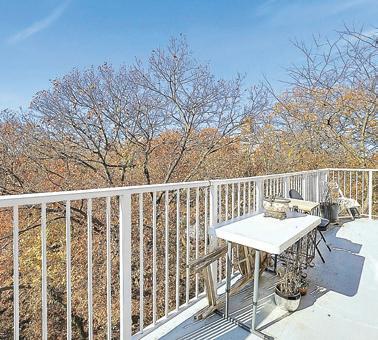
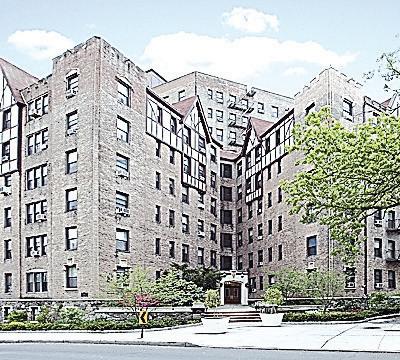
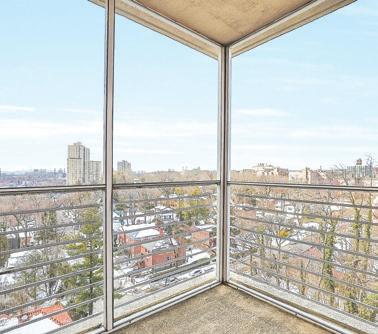
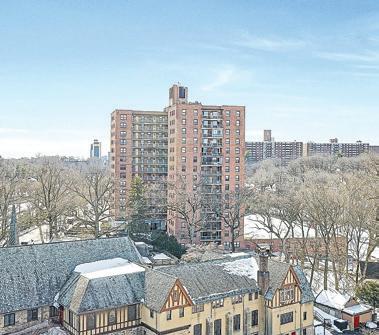
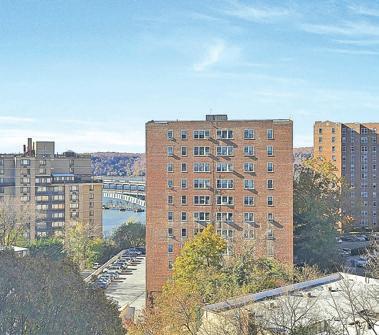
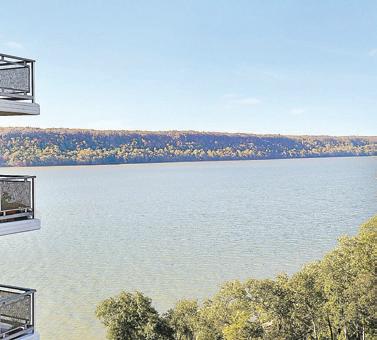
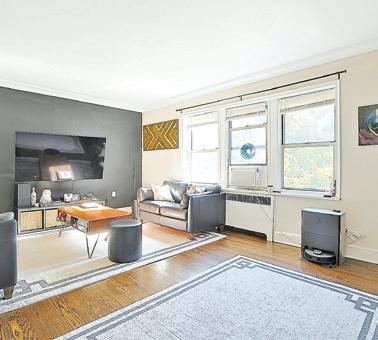
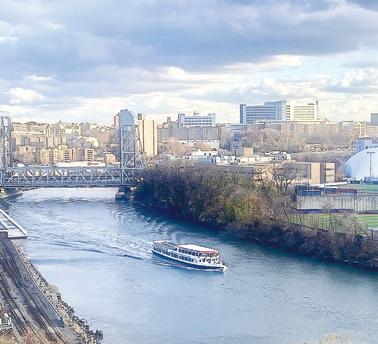
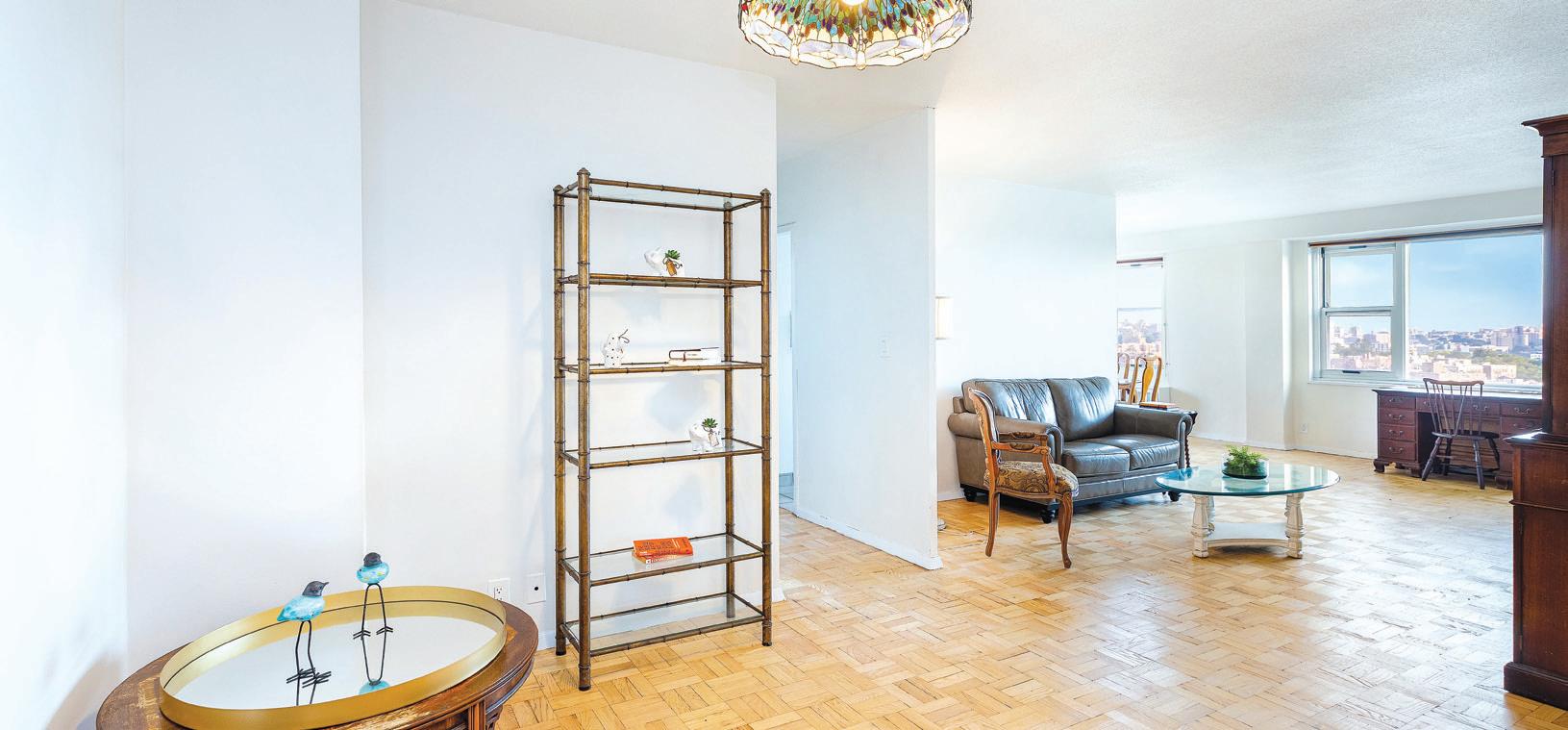
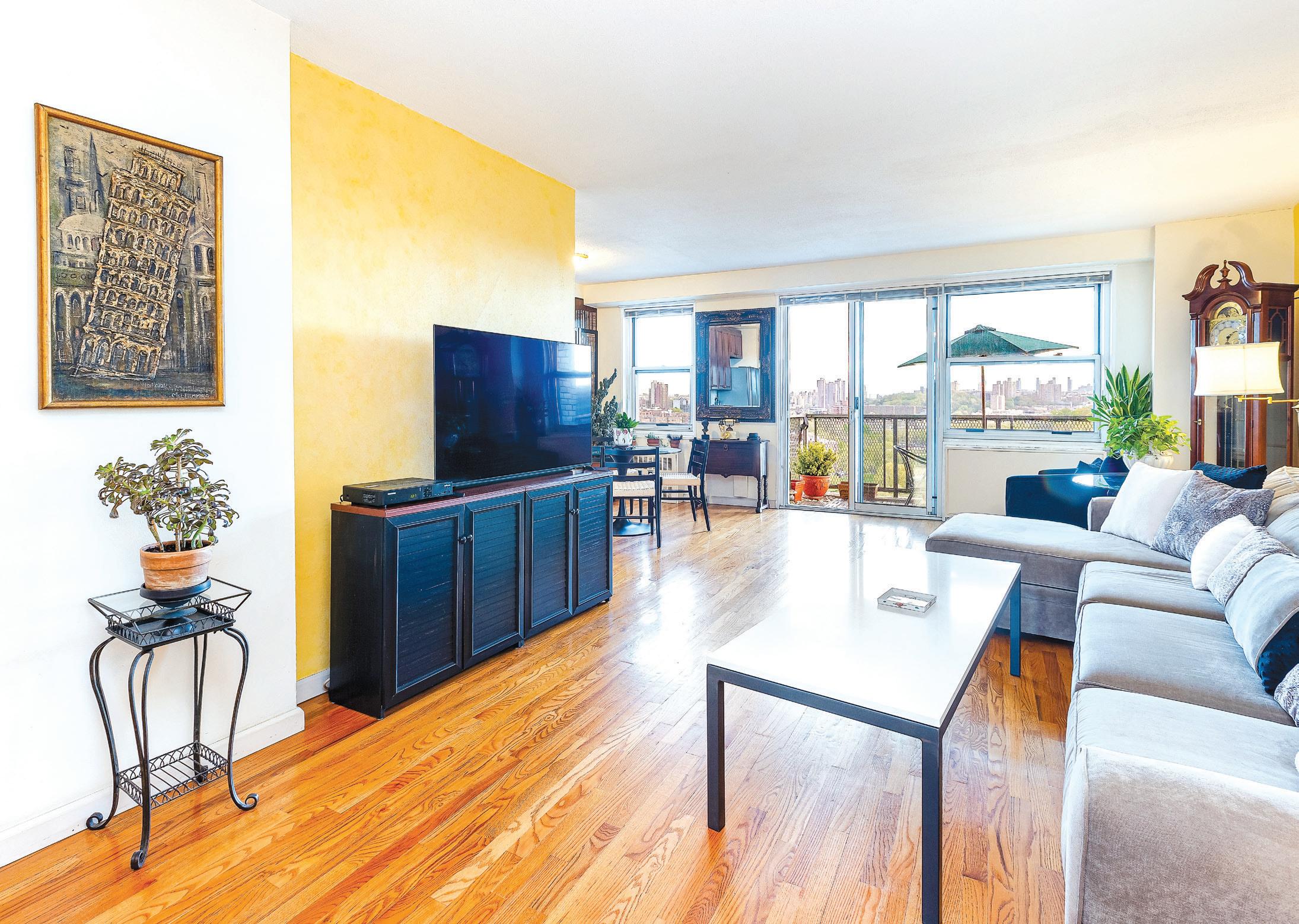
Located in Riverdale’s distinctive Blue Building, the south- and east-facing corner residence offers panoramic views from every window, including vistas of Inwood Hill Park, the Hudson River, the East River, the Palisades and the New York City skyline. A private terrace provides an ideal setting for enjoying sunsets or relaxing outdoors while overlooking the surrounding landscape.
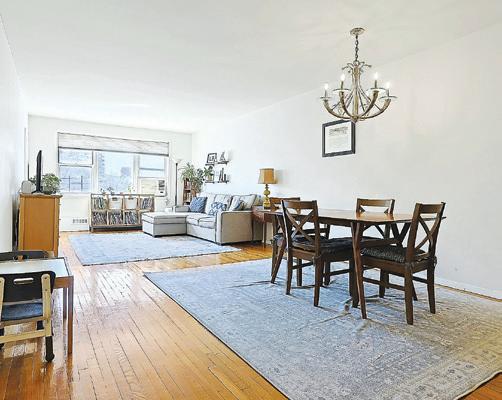
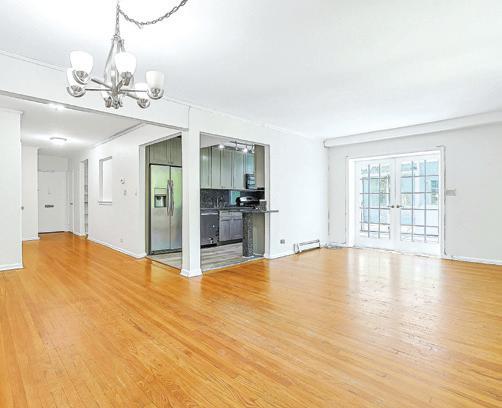
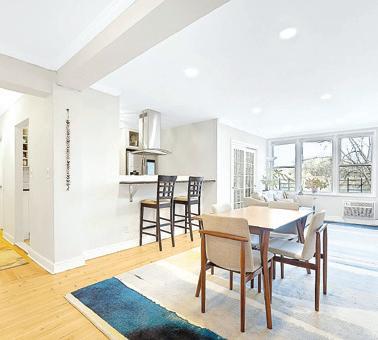
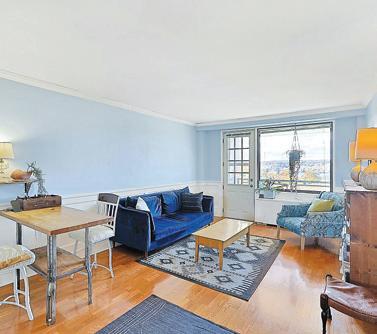
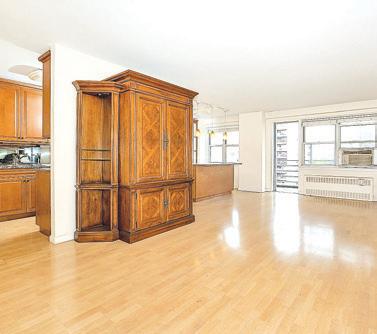
Inside, the apartment features an L-shaped living and dining area highlighted by expansive windows that fill the home with natural light throughout the day. A spacious entry hallway includes generous closet space, while the separate dining area opens directly onto the terrace, creating an inviting space for entertaining.
The windowed kitchen is equipped with full-sized appliances, granite countertops and abundant cabinetry designed to accommodate everyday cooking and storage needs.
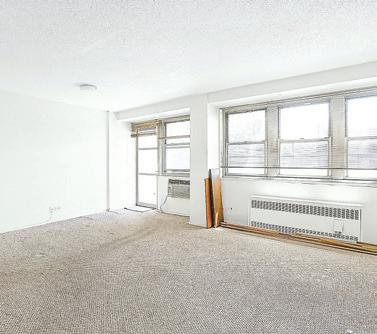
Both bedrooms are generously proportioned and enjoy eastern exposures that welcome the morning sun. The primary bedroom includes an en suite bathroom, while the second full bathroom is windowed and features a bathtub.
Residents of the full-service luxury cooperative enjoy an extensive list of amenities, including a 24-hour attended lobby, a year-round indoor
near
Showings are available by appointment, offering prospective buyers an opportunity to experience one of Riverdale’s most picturesque cooperative