

Celebrating 250 years of American independent
‘Theodore Roosevelt,’ above, and his wife Edith greeted attendees of the Oyster Bay parade. This year marked the first time children could ride bicycles in the parade, right. Story, more photos, Page 3.


‘Theodore Roosevelt,’ above, and his wife Edith greeted attendees of the Oyster Bay parade. This year marked the first time children could ride bicycles in the parade, right. Story, more photos, Page 3.
By WILL SHEELINE wsheeline@liherald.com
When Oyster Bay native Elisia Gallo crossed the finish line of the 2025 Boston Marathon, she completed more than her first 26.2-mile race.
The recent Boston College graduate had also raised more than $20,000 for Brigham and Women’s Hospital’s Stepping Strong Center for Trauma Innovation, turning months of training into support for trauma survivors and their families.
seventh-grader, and competing in track and field at Oyster Bay Middle School. “I really enjoyed the group of friends that I was with,” she recalled. “It was almost like we were suffering in track, because it’s very hard to do without a good group of people.”
I knew I wasn’t just running for myself.
ELISIA GALLO
Boston Marathon finisher
“I knew I wasn’t just running for myself,” Gallo said. “I was running for this whole community, for the hospital, for the Stepping Strong team, and I was fired up, and I was ready to go.”
The 21-year-old Oyster Bay High School graduate recently earned a degree in economics and business from Boston College, and plans to [//DO WHAT?//]. While she has been involved in sports like track and soccer for years, running a marathon was never part of her plan.
She discovered running as a
She ran the Long Island Half Marathon as a high school senior, and completed another half marathon while studying abroad in Barcelona, Spain. But it was an unexpected opportunity last fall that set her on the path toward Boston.
After a friend decided not to run the Cambridge Half Marathon in November, Gallo stepped in and ran the 13.1-mile race in her stead. “I hopped in without any training,” she said.
Encouraged by Kevin Cotter, head coach of track, field and cross country programs at Oyster Bay High School, who had run the Boston Marathon, Gallo decided to apply for one of the race’s limited charity entries, and submitted applications in mid-November 2024, CONTINUED ON PAGE 8
By WILL SHEELINE wsheeline@liherald.com
The Community Foundation of Oyster Bay awarded its George and Abby O’Neill Community Service Scholarship to two Oyster Bay High School graduating seniors this year after what foundation leaders described as an exceptionally competitive selection process.
For only the second time since the scholarship was established three years ago, the foundation expanded the award beyond its usual single recipient, granting $5,000 scholarships to valedictorian Mia Bencal and Giovanna Sherlock.
The scholarship recognizes graduating seniors who demonstrate academic excellence, community service and a commitment to improving the lives of others.
“This year we decided to give it to two different candidates, which was really exciting,” said Community Foundation President Julia Vaughn. “Both were young women who are graduating seniors who demonstrated substantial academic success, but also while putting a lot of effort into community service.”
Students applying for the scholarship must maintain at least a 3.5 grade point average and submit an essay describing their community service, along with a resume highlighting their accomplishments and volunteer work.
Bencal’s application highlighted
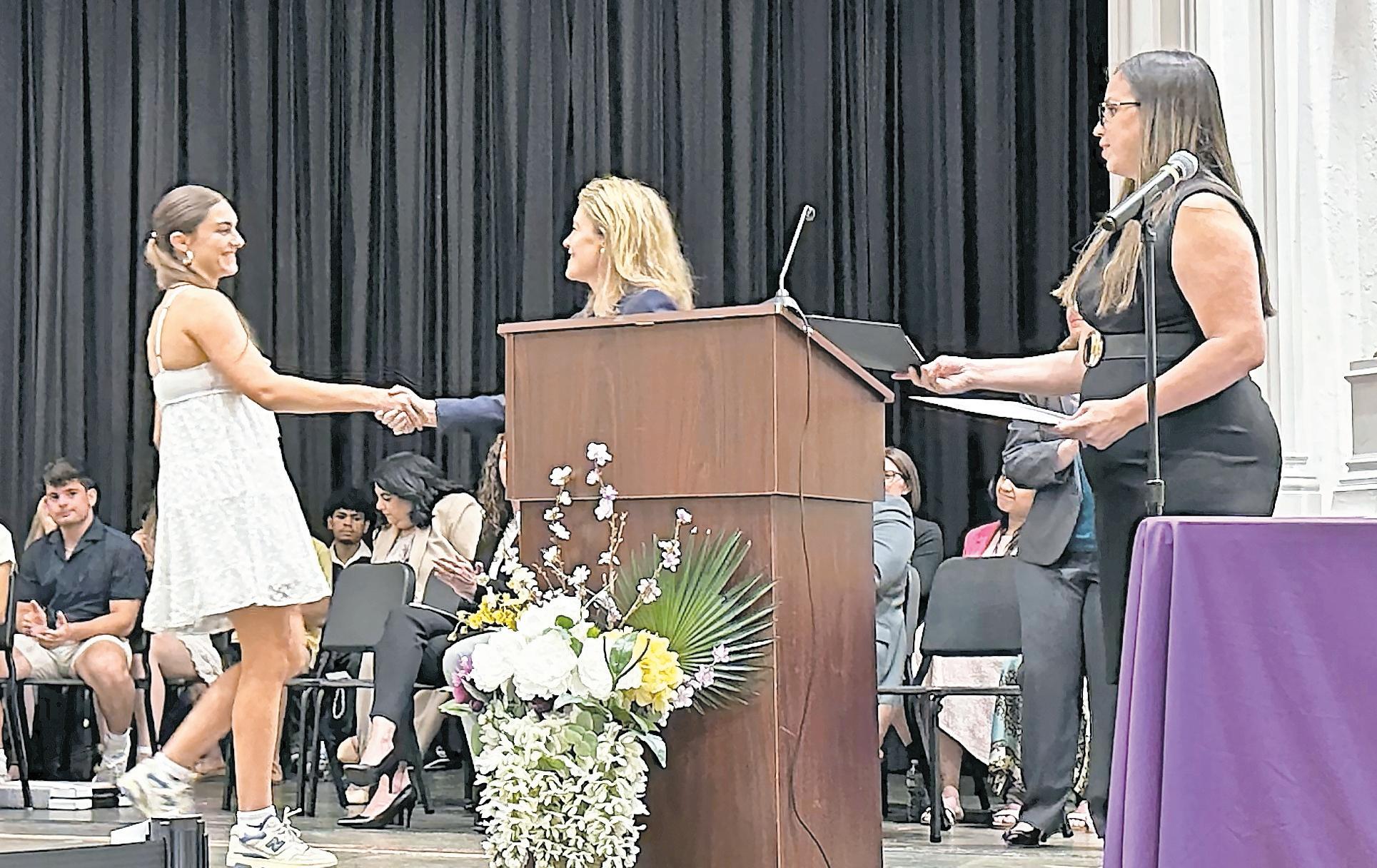
extensive volunteer work at St. Francis Hospital, where she gained experience that reinforced her plans to pursue a career in medicine. Vaughn said Bencal’s essay reflected both her commitment to service and her long term career goals.
Sherlock’s application focused on her volunteer work as a religious education teacher at St. Dominic’s Church and her aspirations for a career in law and public service.

Community Foundation Treasurer John Bonifacio reiterated that selecting a winner proved unusually difficult because both applicants excelled in different ways.
The scholarship is funded through the Community Foundation’s general fundraising efforts rather than a dedicated endowment. Bonifacio said the award aligns closely with the organization’s broader mission of supporting residents and strengthening ties with
the Oyster Bay community.
“We basically came up with it because we wanted to build a relationship with the Oyster Bay-East Norwich Central School District,” Bonifacio said. “What better way could we do that than by giving a scholarship to a student who exhibits community service, a love of Oyster Bay, and obviously has the grades.”
Named in honor of Community Foundation co-founders George and Abby O’Neill, the scholarship reflects the couple’s longstanding commitment to education and community service. Although the foundation plans to return to selecting a single recipient in future years, Vaughn said awarding two scholarships this year reflected the strength of the applicant pool.
The scholarships were presented during Oyster Bay High School’s annual Senior Awards Night on May 21.
“I want to express my immense gratitude for the very generous scholarship I received from the Oyster Bay Community Foundation at my senior awards night,” Bencal wrote in an email to the foundation on the Fourth of July. “As a Girl Scout, I appreciate how the foundation has given back to the Oyster Bay community, as well as the students through the scholarship program.”
For more information on the Community Foundation and how to support them, visit OysterBayCF.org.


















By WILL SHEELINE wsheeline@liherald.com
The Coalition to Save Hempstead Harbor has launched the fifth year of its Community Oyster Gardening Program, continuing the effort to restore shellfish populations and improve water quality throughout Hempstead Harbor.
More than 75,000 spat-on-shell Eastern oysters were delivered Tuesday from Cornell Cooperative Extension of Suffolk County’s shellfish hatchery in Southold. The oysters will be raised in cages at North Hempstead Beach Park, Tappen Marina, Sea Cliff Yacht Club and Hempstead Harbour Club before being planted in a state-approved conservation management area in the harbor.
The new oysters join more than two million oysters that have been planted in Hempstead Harbor since 2022 through the coalition’s community oyster gardening program and an Environmental Protection Agency community grant.
“This year, being our fifth year of the program, is a really special milestone,” Sarah Stromski, the coalition’s environmental monitor and project manager for the program, wrote in a statement on July 6. “It’s clear that community members care deeply about Hempstead Harbor and want to see it thriving.”
About 80 volunteers are expected to participate this season, according to the coalition. Volunteers will work in teams from July through September, cleaning oyster cages, monitoring growth and learning about oyster restoration. The program continues to operate at the same four locations as last year (Tappen Beach Marina, Sea Cliff Yacht Club, North Hempstead Beach Park and the Hempstead Harbor Club), with volunteers including community members, students and corporate groups.
Michelle Lapinel-McAllister, the coalition’s programs director, said the organization has expanded its oyster growing infrastructure by adding another

cage this season, giving the shellfish more room to grow.
She added that the the long-term goal extends beyond increasing oyster numbers.
“We know that the oysters that have been planted are doing really well,” Lapinel-McAllister said. “We want to make an oyster reef, and we’re not there yet, but a lot of oysters have gone in… we want them to grow, keep reproducing, and cleaning the water.”
Oysters are natural water filters, removing potentially hazardous chemicals like nitrogen from the water at a rate of roughly 50 gallons per day.
Lisa Cashman, the coalition’s programs director, emphasized that the benefits of oyster restoration reach beyond improving water quality, reiterating
that the oysters forming a natural reef provides habitats for other local fish and marine life.
“We’re hoping that the oysters create an ecosystem that can promote biodiversity,” she said, “which also has its own impacts, but takes some time.”
For the past four years, divers from Cornell Cooperative Extension have monitored oysters previously planted in Hempstead Harbor and found they remain healthy and continue to thrive. Lapinel-McAllister added that oysters typically take about three years to fully mature, making the restoration effort a longterm investment in the harbor’s ecological health.
For more information on the coalition, their work and how to get involved, visit CoalitionToSaveHempsteadHarbor.org.
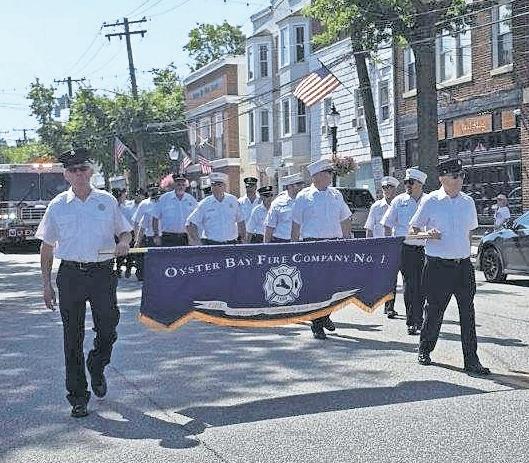
Residents of Oyster Bay marched their way through the heart of the hamlet in the annual Fourth of July parade to celebrate the United States’ semiquincentennial; 250 years since the signing of the Declaration of Independence by the Second Continental Congress.
Featuring firefighters and first responders, historical reenactors and elected officials, scouts of all ages and members of local clubs, the event saw Americans come together and celebrate 250 years of freedom from British tyranny.
–Will Sheeline













ear Great Book Guru, I just had the most wonderful weekend - It started with Happy Birthday USA at the Children’s Library; then we celebrated the Fourth on the Sea Cliff Village Green with a historical playlet, music, and the reading of the Declaration of Independence by angry villagers; and finally on Sunday a magnificent Patriotic Bike Parade. A truly amazing three days! While waiting for the parade to begin, someone mentioned a favorite novel that was made up entirely of letters. Are you familiar with it?
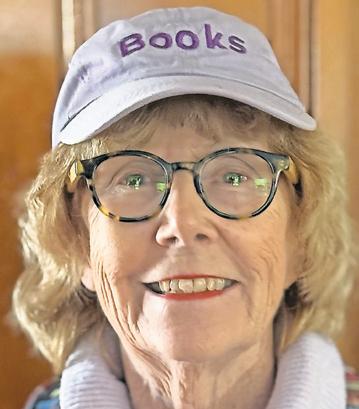
Every morning throughout her life she has been writing to a myriad of people - her brother Felix, her daughter Fiona, her best friend Rosalie, neighbors, school administrators, literary luminaries Joan Didion and Larry McMurty, film producer George Lucas, and many more. As we read these letters and the occasional response, we learn much about her life, filled with regrets and accomplishments.









Fan of the Fourth
Dear Fan of the Fourth, It seems everyone I meet is discussing “The Correspondent” by Virginia Evans. The novel is made up totally of letters – almost all written by Sybil Van Antwerp, a seventy-year-old brilliant lawyer who clerked for a famous judge.
When she herself receives a letter from someone she has wronged, our view of Sybil takes a dramatic turn. Will she be able to undo the past, will she find forgiveness, or is redemption impossible?
A fascinating look into the life and mind of an extraordinary character –recommended.
Would you like to ask the Great Book Guru for a book suggestion? Contact her at annmdipietro@gmail.com.

The Town of Oyster Bay’s S.T.O.P. (Stop Throwing Out Pollutants) and Homeowners Cleanup days have been for this summer, with dates scheduled for weekends in July and August. Residents can drop off materials at the Old Bethpage Solid Waste Disposal Complex, located at 101 Bethpage-Sweet Hollow Road in Old Bethpage.
S.T.O.P. program – this Saturday and Aug. 8 from 9 a.m. to 4 p.m.: collects various hazardous materials, including: asbestos material (double bagged); automobile batteries; automobile tires (with or without rims); fluorescent bulbs; gasoline; pesticides and insecticides; oil-based and latex paint; rechargeable and button batteries; small
aerosol cans; smoke detectors; solvents. Homeowners Cleanup Day – July 25 and Aug. 22 from 8:30 a.m. to 4 p.m.: collects non-hazardous waste only, including: air conditioners; all e-waste; campers; boats and boat trailers (proof of ownership required – oil, gas, other fluids and batteries removed).
The Town’s S.T.O.P. and Homeowners programs are open to residents within the Town’s Solid Waste Disposal District. Proof of residency is required. For more information, including a full list of what is accepted at these programs, visit OysterBayTown.com/cleanup or call (516) 677-5848.
–Will Sheeline
By WILL SHEELINE wsheeline@liherald.com
The Oyster Bay-East Norwich Central School District Board of Education reorganized for the new school year, electing its leadership, welcoming a new student representative and opening a public hearing on the district’s updated school safety plan before debating revisions to its public participation policy.
Nancy Castrogiovanni was re-elected board president during the annual reorganization meeting, which preceded the board’s regular business meeting. The board also elected Michael Schindler as its vice president and approved appointments of district officers, other appointments and annual designations.
Superintendent Francesco Ianni welcomed newly elected trustee Anne-Marie Longo and introduced incoming student representative Sophia Staphos, who will serve as the board’s student liaison during the upcoming school year.
“I want to first welcome Ms. Longo to the first board meeting,” Ianni said. “My entire team is very excited to work with you… and we’re looking forward to provide the best support that we can provide to our students every single day.”
Ianni also praised Staphos, describing her as “a mature young woman who consistently demonstrates integrity and compassion.”
Sapos introduced herself to the community, highlighting her involvement in athletics and academics.
Deputy Superintendent Maureen Raynor then conducted the required public hearing on the district’s proposed 2026-27 district-wide school safety plan.
Raynor said the updated plan reflects changes in state law and includes revisions related to emergency drills, annual staff training requirements and the

addition of a cardiac emergency response plan required under Dasha’s Law.
She reviewed the district’s standard response protocol, including procedures for secure lockouts, lockdowns, evacuations and sheltering in place. Raynor noted that the proposed plan will remain available on the district website for a 30-day public comment period before the board considers adoption at its August meeting ahead of the Sept. 1 deadline.
Raynor also reminded residents that while the district-wide safety plan is public, individual building emergency response plans remain confidential under state law because they contain sensitive security information. The board later approved instructional personnel, non-instructional personnel, business and special services resolutions without discussion before turning to new business, where trustees discussed revisions to Board Policy 1510 governing public partic-

ipation at meetings.
Longo questioned whether proposed edits would reduce opportunities for public comment. District attorney Mary Anne Sadowski explained that language allowing residents to speak at regular meetings had not been removed but relocated within the policy.
Board member Michael Castellano said he had requested language directing residents to the district’s complaint policy when appropriate.
Trustees also discussed how questions from residents should be handled during meetings.
Castrogiovanni said simple questions are answered immediately, when possible, while more complex inquiries requiring research receive follow-up responses at subsequent meetings and by email.
The board unanimously approved the policy revisions before concluding the meeting by returning to executive session to discuss personnel matters.







By TONY BELLISSIMO tbellissimo@liherald.com
There were plenty of cheers along with some tears in South Ozone Park June 28 as 6,866 horse racing fans bid farewell to Aqueduct Racetrack.
The crowd at ‘The Big A’ roared one last time as Assume Nothing, with jockey Jaime Rodriguez aboard, went wireto-wire to capture the final race of the track’s storied 132-year history.
“This is where my career started in 2010 and it feels amazing to win the last race on the last day,” Rodriguez said. “I’ve ridden the horse a few times and knew if he got a clean break, he’d have a great chance to win.”
After the finale, Rodriguez and the rest of the jockey colony celebrated with fans along the rail, giving out high fives and fist bumps. One fan hoisted a cardboard sign that read: “One more day! Give me a chance to win it back.”
Several thousand fans arrived two hours before the nine-race card began at 1:10 p.m. The first 1,000 through the doors received a small mason jar containing dirt from the main track.
One of the highlights on Aqueduct’s final day came not on the dirt but the turf in the penultimate race when Highway Harmony set a new track record at the 6-furlong distance, taking the last stakes race at the track in 1:06.44 under jockey Edgard Zayas.
Ron Berkowitz, a Merrick resident who grew up in Lynbrook, had the closing date circled on his calendar once it

was announced by the New York Racing Association.
“It’s a bittersweet day,” Berkowitz said. “I’ve been coming here since the late 1970s and really fell in love with the track and the sport. I haven’t been here in a couple of years, but there was no way I was missing today.”
Franklin Square residents Anthony and Sally Turco echoed Berkowitz’s sentiments. “Today brings back a lot of

The mural outside Aqueduct depicts Secretariat, who made his career debut there in 1972.
at Aqueduct, “Goretty” came in 2008. “So many memories,” he added. “I won’t miss the Belt Parkway, but I’ll definitely miss the Big A.”
great memories of coming to the Big A with family,” Anthony said. “Lots of nostalgia. It was awesome.”
The Turcos were in the paddock prior to the fifth race with friend Bruce Brown, a longtime trainer on the NYRA circuit and Floral Park resident. Brown saddled the winner, Boston’s Phinest.
“This is where it all started for me in New York when I came over from New Jersey,” said Brown, whose first winner
The closure of Aqueduct coincides with a rebuilt Belmont Park, set to open Sept. 18.
“I can see the new Belmont grandstand from my house,” said Brown, who expects to have between 15 and 20 horses in his barn once racing shifts back downstate from Saratoga. “I’ve watched the construction from the beginning to what’s almost the end and it’s going to be incredible when it opens,” he added.

Summer 2026 Starts Here.
❑ See a real Lunar Module
❑ Watch a Giant-Screen Movie
❑ Walk the Air & Space Trail
❑ Discover Aviation History
❑ Sit in an Airplane Cockpit
❑ Eat Astronaut Ice Cream

This year, skip the airport lines, expensive hotels, and rising travel costs. America’s 250th anniversary is happening right here in your own backyard.
Join us for a summer-long celebration of aviation, innovation, exploration, and discover with special exhibits, family events, and full-dome films on Long Island’s largest screen!
From early air fields to the Moon, Long Island helped shape America’s story. Come celebrate where history took flight.

Scan the QR code or visit www.cradleofaviation.org/celebrate250 for a complete list of ongoing celebrations and special events.

five months before the race — but still a month or two later than most other applicants. Shortly afterward, Brigham and Women’s Hospital contacted her with an offer.
“They reached out to me and said, ‘We have our first meeting tomorrow,’” she recounted, “so I’m pretty sure I was the last bid that they gave out.”
Along with the coveted marathon entry came a daunting challenge: raising $15,000 in just four months. When she told her parents about both the opportunity and the fundraising goal, the reaction was immediate.
“I called them, and I told them that I was running the Boston Marathon, and that I needed to fundraise $15,000,” Gallo said, “and they were, like, ‘Are you asking us?’ I was like, ‘I am telling you, OK.’”
The hospital’s cause had personal significance for the Gallo family. The Stepping Strong Center was founded in the aftermath of the 2013 Boston Marathon bombing, in which three people were killed and hundreds injured, and it supports trauma research and recovery efforts. The mission resonated with Gallo after her father, Mario Gallo, had been first on the scene of a serious motorcycle accident involving two friends in 2024. The experience, he said, reinforced his family’s longstanding commitment to helping others.

“We surround ourselves around trying to help community,” he said. “That’s what really made this hit home; it’s running to help people who are less fortunate.”
In addition, Elisia’s mother, Kelly, is an operating room nurse with 25 years of experience treating trauma patients.
To reach her fundraising goal, Elisia partnered with Boston nightlife promoters and organized ticket sales connected to events throughout the spring semester. “It was a great cause, so people were very passionate about donating as well,” she said.
Support came from classmates, coaches, family members and members of both the Boston College and Oyster Bay communities. Once she reached the $15,000 goal, she decided to keep going, eventually raising over $20,000.
At the same time, Gallo faced the challenge of preparing for her first marathon after beginning serious training only in January, three months before the race.
She started with shorter runs before gradually increasing her mileage, and supplemented her training with CrossFit classes and recovery sessions in a
campus hot tub. At home during winter break, she and three friends formed an informal running group and trained on Oyster Bay’s roads and trails.
Back at school, Gallo lived near the marathon route, which gave her the chance to train on the city’s famous hills, including the difficult climbs near the B.C. campus that have challenged generations of runners.
“They really didn’t have nothing on me,” she said. “We were cruising up those hills.”
Gallo completed the race in 4 hours and 23 seconds, narrowly missing her goal of finishing in under four hours.
Nonetheless, she described the marathon as a celebration rather than an ordeal.
“A lot of marathon runners will call the marathon itself the victory lap,” she said, “and I couldn’t even think of two better words to describe it.”
Before the race, she wrote the numbers 1 through 26 on her arm and dedicated each mile to a different person, place or group that had helped her along the way.
For Mario Gallo, seeing his daughter succeed came as no surprise. “She’s an old soul that gets driven,” he said. “If you keep your mind to it, you’re gonna do well, and you’re gonna succeed.”
His daughter added that she has caught “the marathon bug,” and looks forward to running another 26-miler soon.

















































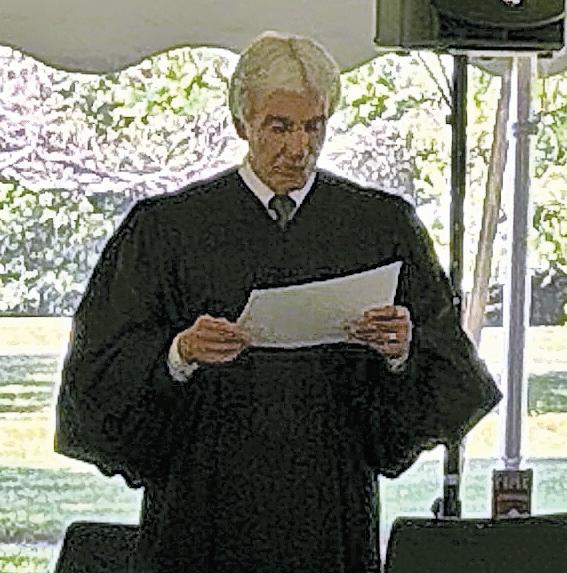
Families and friends of soon-to-becitizens gathered to watch the naturalization ceremony at Sagamore Hill. With the 250th anniversary of the United States coming in the following days, Theodore Roosevelt’s “Summer White House” was awash with patriotism as the 52 citizenship candidates collected their certificates among the sea of applause from their friends and family.
The July 1 event was hosted by the Honorable Robert A. Kaufman Justice For All: Courts and the Community Initiative, the United States District Court for the Eastern District of New York, and U.S Citizenship and Immigration Services.
The ceremony opened with a few speeches, including a keynote remark from Nusrat J. Choudruy, United States district judge for the Eastern District of New York, who shared her experiences growing up with immigrant parents and rising to success as the first Muslim woman and Bangladeshi-American in United States history to serve as a federal judge. A following speech was given by one of the citizenship candidates, Varun Sachdeva, who served in the U.S Navy.
Judge James M. Wicks called up the names of each candidate to collect their certificate as a U.S citizen, and Judge Joseph F. Bianco administered the Oath of Allegiance to the 52 candidates.
The ceremony concluded with a musical performance of “America the Beautiful.” This event changed the lives of 52 citizens from 24 countries, who left Sagamore Hill together as 52 Americans.


















































Cover Story
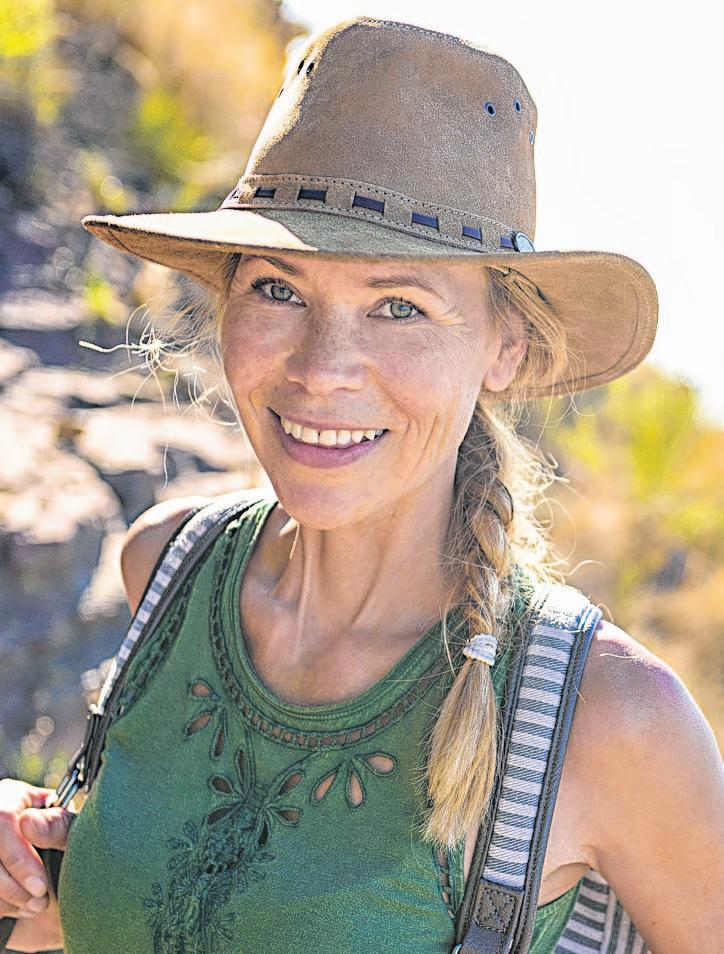
Longer days, warm temperatures and abundant sunshine make summer an ideal season to take your fitness routine outdoors. Whether it’s a morning run or walk along the boardwalk, a bike ride, a game of tennis or pickleball, yoga on the beach, or even a family hike, exercising outside o ers both physical and mental health benefits.
An outdoor workout does more than change your scenery. Exercising outdoors has been linked to improved mood, lowered stress, better cardiovascular health, and more motivation to move consistently. Even walking outside can be an excellent workout, especially when you do it regularly. Fresh air and a change of scenery can make workouts feel less like a chore and more like an enjoyable part of your day.
Of course, summer’s relaxed pace — complete with vacations, barbecues, beach days and social gatherings — can sometimes derail even the best fitness intentions. The key is finding ways to incorporate activity into seasonal routines while taking precautions against heat and sun exposure.
Summer temperatures can quickly turn a workout into a health risk. Exercising during the hottest parts of the day can lead to dehydration, heat exhaustion or even heat stroke.
Whenever possible, schedule outdoor activities during the cooler morning or evening hours, typically before 10 a.m. or after 6 p.m. Check the heat index before heading outside, and if temperatures or humidity levels are extreme, consider moving your workout indoors to an air-conditioned gym, recreation center or your own home.
Watch for warning signs of heatrelated illness, including dizziness, headache, nausea, excessive fatigue, muscle cramps or confusion. If symptoms occur, stop exercising immediately, move to a cool location and rehydrate.
While we all love being outside, the sun doesn’t love us. Even on cloudy days, ultraviolet (UV) rays can damage skin and increase the risk of skin cancer.
Health experts recommend applying a broad-spectrum sunscreen with an SPF of at least 30 about 15 to 30 minutes before going outdoors. Reapply every two hours, or more frequently if swimming or sweating heavily.
Additional protection includes wearing lightweight, moisture-wicking clothing, a wide-brimmed hat and UV-blocking sunglasses. Light-colored fabrics help reflect heat and keep the
body cooler during outdoor activities.
Proper hydration is essential yearround, but it becomes especially important during the summer months.
The American College of Sports Medicine recommends drinking approximately three to eight ounces of fluid every 15 to 20 minutes during exercise, depending on intensity and environmental conditions. For prolonged or high-intensity workouts lasting more than an hour, sports drinks may help replace electrolytes lost through sweat.
Don’t wait until you feel thirsty to drink. Thirst is often a sign that dehydration has already begun. Carry a reusable water bottle and drink fluids before, during and after physical activity.
After exercise, experts recommend consuming 20 to 24 ounces of water or a sports beverage for every pound of body weight lost during exercise.
Don’t skip the warm-up
Warm weather doesn’t eliminate the need to prepare your body for exercise. A proper warm-up gradually increases heart rate, loosens muscles and improves flexibility, helping reduce the risk of strains and injuries.
Spend five to 10 minutes performing light aerobic activity such as brisk walking, followed by dynamic stretches that target the muscles you’ll be using during your workout. Cooling down afterward is equally important and can help prevent sti ness and aid recovery.
Try something new
Summer o ers endless opportunities to shake up your exercise routine. Trying new activities can prevent boredom and challenge di erent muscle groups.
Consider adding activities such as:
• Walking or jogging on local trails
• Swimming or water aerobics
• Outdoor yoga classes
• Kayaking or paddleboarding
• Hiking
• Recreational sports leagues
Our parks, beaches and community organizations also o er free or low-cost fitness classes throughout the summer. Rev up the heart and cardiovascular system with sports you can play in the great outdoors. Eschew indoor racquetball for a game on an outdoor court. Try pickleball instead.
It’s easy to break a sweat and enjoy a good workout when a game of hoops is taken outdoors. Head out to your nearby park and check out the action on the basketball courts. Pickup football or baseball is another way to enjoy physical activity outdoors, especially for those who may not be gym hounds. Both sports provide a cardiovascular workout while building muscle. When you’re
engrossed in the game, you’re having fun and getting fit at the same time.
Even consider using items in your favored park to tailor a complete workout. Park benches can serve as a workout bench where athletes can do push-ups, triceps dips and step-up exercises. Stretch on a jungle gym or use monkey bars to fit in some pull-ups.
You’ll find that some parks even have their own fitness zones with exercise equipment built into the design.
Hike on! A nearby park or preserve that features walking trails is a good place to begin an outdoor workout. Some parks build exercise stations into their hiking paths, enabling visitors to vary their workouts along the way. Signs may also point out particular exercises that can be done during the hike, such as lunges or squats.
Hiking is a good cardiovascular workout that is particularly beneficial when done on varied terrain. Mixing uphill and downhill portions of the trail with level ones will work the various muscles in the legs and also provide greater resistance to get the heart pumping.
Take advantage of the beach
We’re surrounded by beaches, so make the most of our environment! After all, that’s one of the best features about living on Long Island. The beach provides much more than a place to relax. It can also serve as a natural fitness center.
Swimming in the ocean provides a full-body workout, as the resistance created by waves and currents challenges muscles while the water’s buoyancy reduces stress on joints. Water workouts are especially beneficial for older adults and those with arthritis or mobility concerns.
Walking or running on sand requires more effort than exercising on pavement because the unstable surface engages additional muscles in the legs,


core and hips.
As a result, beach workouts can improve strength, balance and cardiovascular fitness.
Even active beach outings that involve carrying chairs, coolers, umbrellas and beach gear can contribute to daily physical activity goals.
Keep moving all summer long
Adults should aim for at least 150 minutes of moderate-intensity aerobic activity each week, along with musclestrengthening activities on two or more days, according to federal health guidelines.
Summer is the perfect season
to reconnect with the outdoors and discover enjoyable ways to stay active. By taking sensible precautions, staying hydrated and making movement part of everyday life, you can enjoy all the benefits of the season while supporting your long-term health and wellness.
1. Trail Running
What it works: Lower body, core, and cardiovascular system
Benefits: Trail running demands balance, coordination, and strength. Unlike conditions on a flat road or treadmill, trail running requires more physical effort,
Cedrina Calder, M.D., a boardcertified preventive medicine physician and fitness professional says.
“The balance and stability required on the trail engages and strengthens your core muscles. It also requires greater use of your lower limb muscles, including the glutes, quads, and calves.”
Trail running can also support mental health and often feels more engaging than repeating laps on a track.
“It requires 100-percent mental focus — or you subject yourself to a tumble,” says fitness expert Tina Vindum, M.S., C.P.T.
A 2020 study published in BMC Public Health found that people who completed at least 6.5 miles of trail running reported higher wellness and health scores. Additional research suggests that spending 90 minutes moving in nature can help reduce depressive rumination.
Beginner tips: Start with wellmarked trails and shorter distances, focusing on time on feet rather than pace. Keep your eyes a few feet ahead, shorten your stride, and use walking breaks on steep hills to manage intensity and protect your knees.
What it works: Upper body, core, anaerobic conditioning, and balance Benefits: Surfing blends aerobic paddling with short bursts of anaerobic effort that feel similar to a HIIT routine.
“It’s a great anaerobic exercise that will help strengthen the trapezius, abdominals, and obliques, as well as the lats, triceps, biceps, and deltoids,” Jimmy Minardi, C.P.T., founder of Minardi Training, says.
Water-based workouts can offer a powerful reset and stress relief in ways a gym can’t match. “I can tell you one thing after being a devout surfer for [many] years, the tranquil and buoyant qualities of being in the water lift your spirits up,” Minardi said.
Beginner tips: Work with a certified instructor and start on smaller waves. Always check tides, weather, and surf conditions and wear appropriate safety
gear, such as a leash and personal flotation device.
What it works: Cardiovascular system, lower body, and aerobic endurance Benefits: Hiking intensity is highly customizable, making it an accessible outdoor workout.
“Hiking can be a great cardio workout as long as it’s intense enough to significantly raise your heart rate and respiratory rate,” Calder says.
Elevation gain, speed, and pack weight all influence intensity, allowing you to progressively increase the challenge as your fitness improves. Beyond fitness, hiking encourages mindfulness and sensory awareness in a natural environment. Spending time on the trail can also help reduce stress, support mental health, and improve sleep.
Beginner tips: Choose shorter trails with minimal elevation gain and use hiking poles if knee comfort is a concern. Wear supportive footwear, carry water, and plan your route so you finish before dark and avoid extreme heat.
Healthy bones depend on healthy kidneys, and at Queens-Long Island Renal Institute (QLIRI), protecting bone health is essential to comprehensive kidney care. The kidneys regulate calcium and phosphorus levels and activate vitamin D, maintaining bone strength. When kidney disease interferes with these processes, bones can weaken, increasing the risk of fractures.
The QLIRI team takes a proactive approach to preserving bone health. Through ongoing lab monitoring, individualized treatment plans and expert nutritional guidance, QLIRI helps patients maintain the delicate balance of minerals that supports strong bones.
For those on dialysis, maintaining optimal calcium, phosphorus and parathyroid hormone levels can significantly help bones stay strong. QLIRI’s specialists collaborate closely with patients to fine-tune care plans and prevent complications.
Even small lifestyle steps — including
approved exercises, lower-phosphorus diets and prescribed medications — can strengthen bones and improve quality of life.
With advanced technology, a compassionate care team and a focus on education and prevention, QLIRI empowers patients to protect their bone and kidney health, helping them stay strong, active and independent.
The Queens-Long Island Renal Institute (QLIRI) is a state-of-the-art dialysis center, conveniently located inside the first-floor lobby at Parker Jewish Institute in New Hyde Park, New York. QLIRI provides patients with the finest quality care, stateof-the-art technology, and uncompromised dignity, in a bright, ultra-modern and comfortable setting. Licensed by the New York State Department of Health, QLIRI is led by a compassionate and dedicated interdisciplinary team of experienced

Nephrologists and Dialysis Registered Nurses, a Renal Social worker and a Registered Dietitian. QLIRI also offers home dialysis, providing patients the flexibility to access needed care without ever leaving their homes, while also freeing up time to engage in their daily activities.
For more information, visit qliri.org or call (718) 289-2600.

Queens Long Island Renal Institute • 271-11 76th Ave., New Hyde Park • (718) 289-2600
Health memos are supplied by advertisers and are not written by the Herald editorial staff.









The Parker Jewish Institute will host its 2026 Peter Seideman Golf Classic at the Fresh Meadow Country Club in Lake Success on Monday, July 27, 2026. This year’s Golf Classic begins registration and breakfast at 10 a.m., followed by shotgun start at 11:30 a.m., and cocktails and dinner at 4:30 p.m. Proceeds from the event will benefit The Parker Jewish Institute Foundation to enhance the network of programs and services for thousands of people who access Parker’s continuum of services each year.
This year’s honoree is Old Republic Commercial Risk, which the Parker Foundation is recognizing for its excellence in delivering tailored commercial insurance solutions, and for its unwavering commitment to Parker’s patients and residents.
Parker’s golf outing is one of two major annual fundraisers, including the Parker Gala. This year’s gala will be held on Thursday, November 5, 2026, at The Village Club at Lake Success.
“We are grateful to our donors, sponsors, families and dedicated team

members, whose support is integral to the Parker community,” said Michael N. Rosenblut, President and CEO of The Parker Jewish Institute. “Through their generosity and commitment, Parker will continue advancing excellence in patient care, research and innovation while enhancing the lives of those we serve.”
To learn more about the 2026 Peter Seideman Golf Classic, and about sponsorship opportunities, call the Parker Jewish Institute Foundation at (718) 2892143, or email Golf@parkerinstitute.org.
Jewish Institute features its own medical team, and is nationally renowned as a skilled nursing facility, as well as a provider of community-based health care, encompassing Home Health Care, Medical House Calls, Palliative Care and Hospice. Parker Jewish Institute is also home to Queens-Long Island Renal Institute (QLIRI) — providing patients with safe, comfortable Hemodialysis treatments in a relaxed setting — as well as PRINE Health — a Vascular Center offering advanced vascular services. The Center and QLIRI further Parker’s ability to expand access to essential health-care services to adults in the greater New York metropolitan area. For more information, please visit parkerinstitute.org or call (877) 727-5373.
The Parker Jewish Institute for Health Care and Rehabilitation is headquartered in New Hyde Park. The facility is a leading provider of Short Term Rehabilitation and Long Term Care. At the forefront of innovation in patient-centered health care and technology, the Institute is a leader in teaching and geriatric research. Parker
Parker Jewish Institute • (718) 289-2212
Health memos are supplied by advertisers and are not written by the Herald editorial staff.


























By ANGELINA ZINGARIELLO azingariello@liherald.com
Between 1860 and 1942, agriculture remained a defining part of life on Long Island across Nassau and Suffolk counties. During the same period, transportation improvements and expanding connections to New York City began shaping economic changes that would influence Long Island’s future development.
According to the Long Island Farm Bureau, agriculture has been an important industry on Long Island since the earliest periods of Native American cultivation and European settlement.
Before European settlement, the 60,000-acre Hempstead Plains in Nassau — the largest natural prairie east of the Mississippi River — served Indigenous peoples as a vital landscape for hunting, gathering and managing natural resources. English colonists later used the expansive grasslands to graze livestock, establishing agriculture as one of the area’s earliest industries.
The organization reports that fertile soils, access to fresh water, and proximity to major markets helped make Long Island one of New York State’s most significant agricultural regions. The Farm Bureau notes that farmers produced a wide range of crops and agricultural products, including vegetables, potatoes, fruits, poultry, livestock and shellfish.
Historical records published by the Town of Brookhaven show that early residents were primarily engaged in farming, fishing and whaling. The town’s historical records further indicate that additional industries developed during the nineteenth century, but agriculture remained an important part of the local economy.
Transportation became an increasingly important factor in the region’s development. According to the Town of Brookhaven’s historical overview, the arrival of the Long Island Rail Road during the mid-19th century made travel and the movement of goods faster and easier. Historical records of Long Island transportation show that rail service reached the eastern end of


Angelina Zingariello/Herald While the landscape and industries of Long Island have changed over the years, the East End holds onto its farming roots. Every spring, the Waterdrinker Family Farm & Garden in Manorville plants over a million tulips for the annual Tulip Festival.
the island in 1844, creating stronger links between rural communities and larger markets.
By the late 19th century, however, parts of Nassau County’s rural landscape were undergoing dramatic change as wealthy industrialists purchased North Shore farmland to build lavish country estates, creating the famed Gold Coast.
Even as the North Shore evolved, farming remained a dominant force across central Long Island. Throughout the 19th century and into the first half of the 20th century, the Island ranked among the nation’s leading potato-producing regions.
Throughout the 19th century and into the first half of the 20th century, the Island ranked among the nation’s leading potatoproducing regions.
Farming remained a dominant force across central Long Island. Throughout the 19th century and into the first half of the 20th centu-
ry, the Island ranked among the nation’s leading potato-producing regions. Thousands of acres were planted with potatoes, supporting a thriving agricultural economy and supplying markets throughout the Northeast.
While much of eastern Suffolk County remained rural during this period, signs of long-term change were emerging. Historical information published by the Town of Brookhaven states that the 20th century witnessed the town’s expansion from an agrarian community into a more diversified economy.
The transition had not yet fully occurred between 1860 and 1942, but the transportation networks and market connections established during those years
helped shape the conditions under which later development would occur.
Manorville itself retained strong agricultural roots. Historical accounts of the hamlet describe it as a farming community for many years, reflecting the broader agricultural character that defined much of central and eastern Suffolk County during the late 19th and early 20 centuries.
That era began to fade after World War II. As returning veterans fueled an unprecedented demand for housing, farmland rapidly disappeared beneath subdivisions, highways and commercial development. The transformation was perhaps most evident in Levittown, where beginning in 1947 more than 4,000 acres of former potato fields were converted into what became the nation’s most iconic suburban development, symbolizing the shift from an agricultural landscape to the suburban Long Island recognized today.
ABy BRIAN KACHARABA, ALYSSA R. GRIFFIN & LAYLA EASON of the Herald
cross Long Island, history is not just preserved — it is built into the landmarks that still stand in its villages, harbors, downtowns, and shorelines, where centuries of American life are reflected in manor houses, churches, libraries, museums, crossroads, and memorials.
Together, these sites form a living timeline of the nation’s past, showing how Long Island evolved alongside the United States over more than 300 years.
One of the earliest stories begins in Bay Shore at Sagtikos Manor, one of Suffolk County’s oldest surviving structures. Built around 1697 by Stephanus Van Cortlandt, New York City’s first native-born mayor, the manor grew from a colonial estate into one of the region’s most enduring landmarks.
During the American Revolution, British forces occupied the property, placing it directly within the war’s contested landscape. In the early years of the republic, the manor is also associated with President George Washington, who stayed there for one night during his 1790 tour of Long Island, further linking the site to the nation’s founding era and its first presidential administration.
In Massapequa, Old Grace Church, established in 1844 on land donated by General Thomas Floyd-Jones, preserves nearly two centuries of community life and remains a lasting symbol of the area’s early settlement era. Nearby, the Elbert Floyd-Jones Servants Cottage,
1 2 3
built around 1870, survives as one of the few remnants of Massapequa’s grand estate period, offering a rare glimpse into daily life on Long Island’s 19th-century South Shore estates.
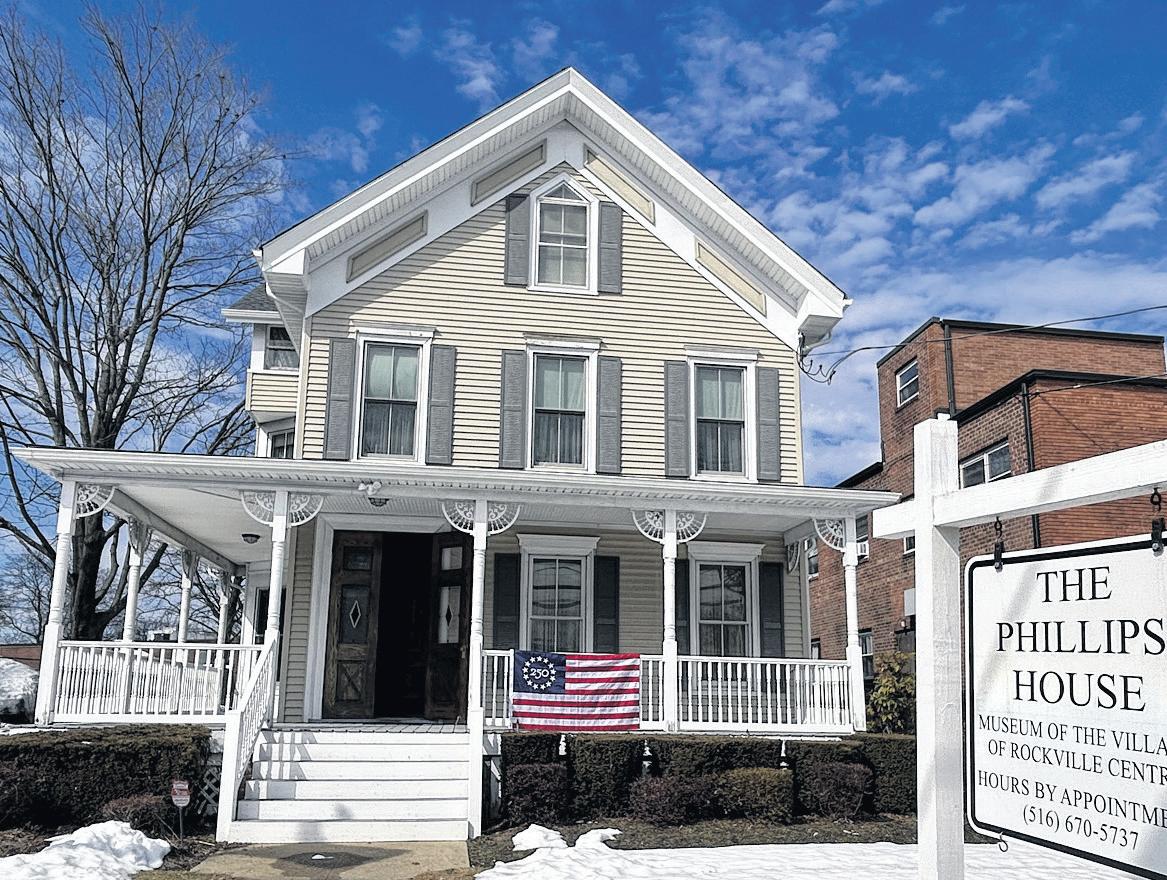
The Phillips House Museum in Rockville Centre, built in 1882 and once home to village founder James Phillips, reflects the community’s late-19th-century growth driven by commerce and transportation. Saved from demolition in the 1970s and restored during the Bicentennial era, it now stands as one of New York’s premier small historic museums.
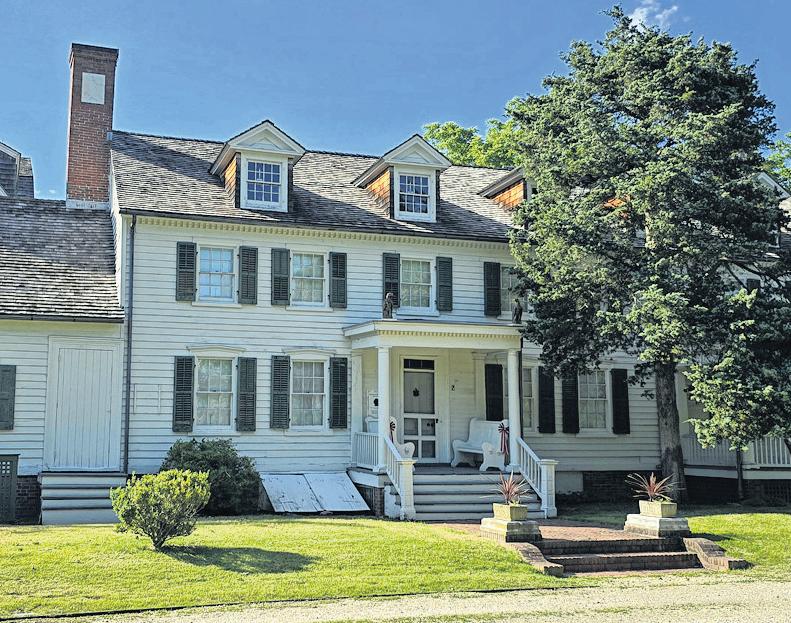
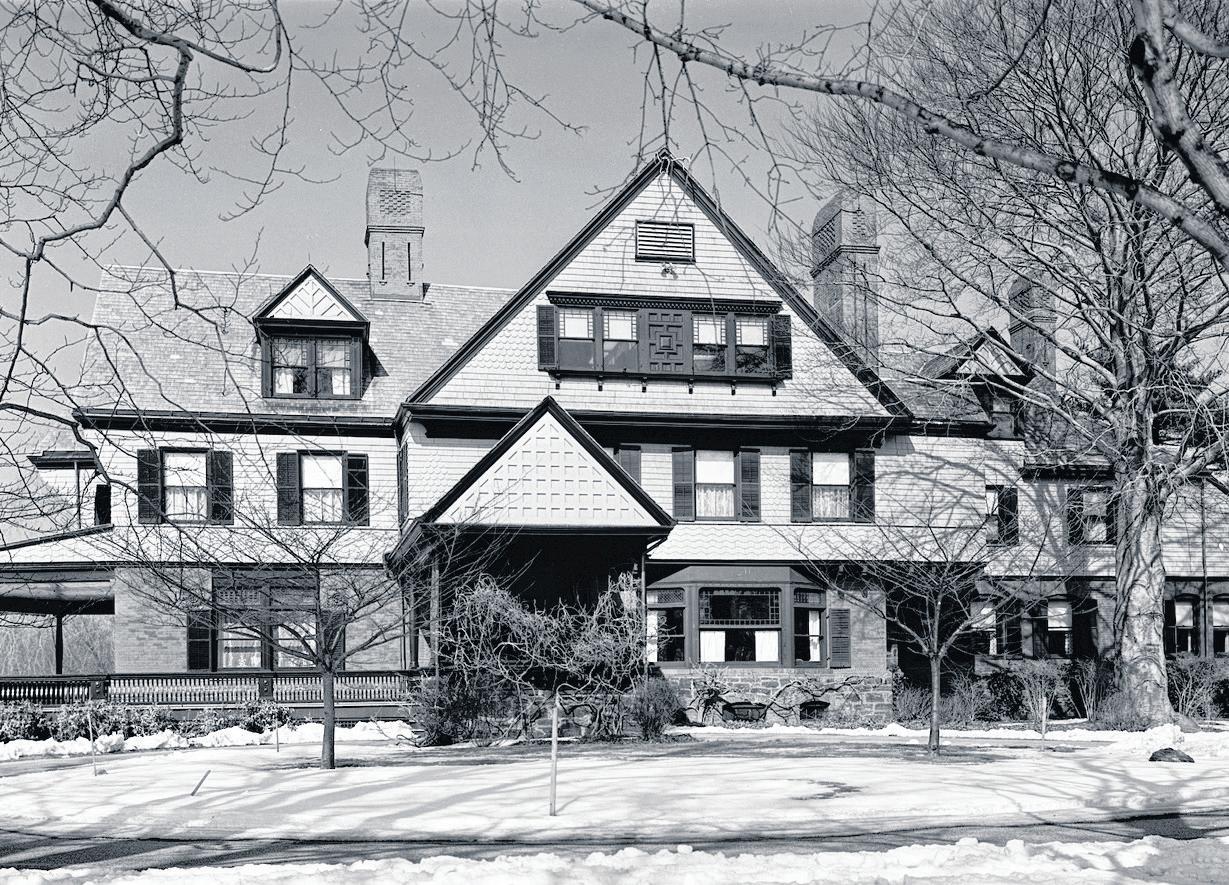
Long Island’s rise to national prominence is reflected at Sagamore Hill in Oyster Bay, built between 1884 and 1885 for Theodore Roosevelt. The Queen Annestyle home served as both his family residence and Summer White House, where policy and diplomacy shaped the Progressive Era. Today, it remains a National Historic Site and one of the country’s most significant presidential homes.
The growth of suburban Long Island is traced to Pearsall’s Corners, later Lynbrook, where a 19th-century crossroads centered on the Pearsall family store evolved into a stagecoach and railroad hub. With the arrival of the South Side Railroad, the community expanded rapidly and adopted the name Lynbrook in 1894, marking its transformation from rural hamlet to suburban village.
In Massapequa, the Delancey FloydJones Free Library, built in 1896, became the community’s first public library and remained its only one for more than 50 years. Now preserved within the Massapequa Historical Society Historic Complex, it reflects the rise
of civic institutions across Long Island.
On the South Shore, Long Beach reflects early 20th-century coastal planning. The home at 226 W. Penn Street, built in 1909 as part of William H. Reynolds’ resort vision, is one of the city’s earliest surviving structures. Now the Long Beach Historical Museum, it preserves the story of a barrier island community that grew from seasonal destination to year-round city.
The North Shore Historical Museum in Glen Cove occupies the former 1907 Justices Court Building, a State and National Register landmark that preserves the legacy of the Gold Coast era. In nearby Sea Cliff, the Village Museum—founded in 1979 and housed in a former Methodist church—continues that preservation effort through extensive archives of photographs, artifacts, and village records.
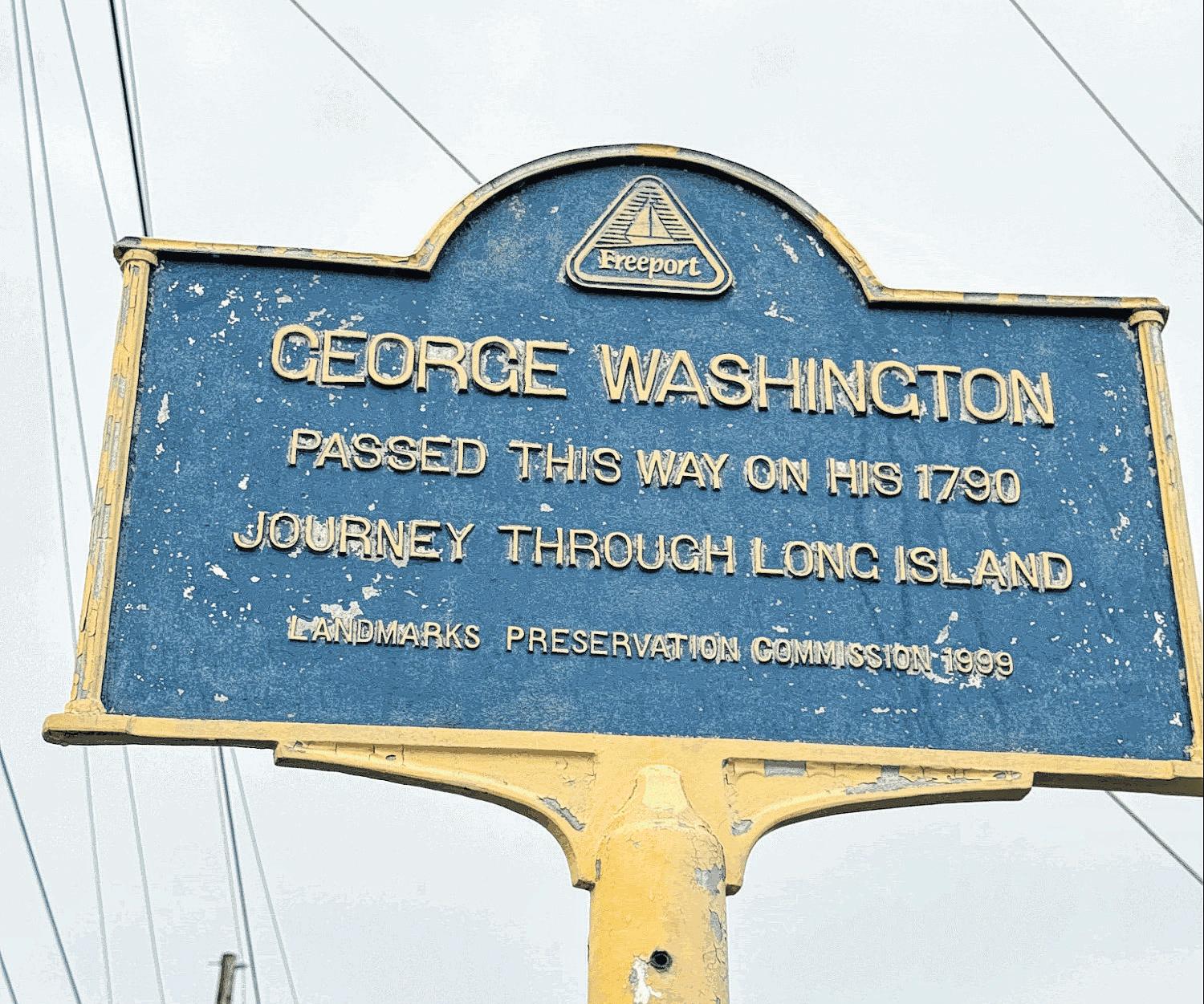
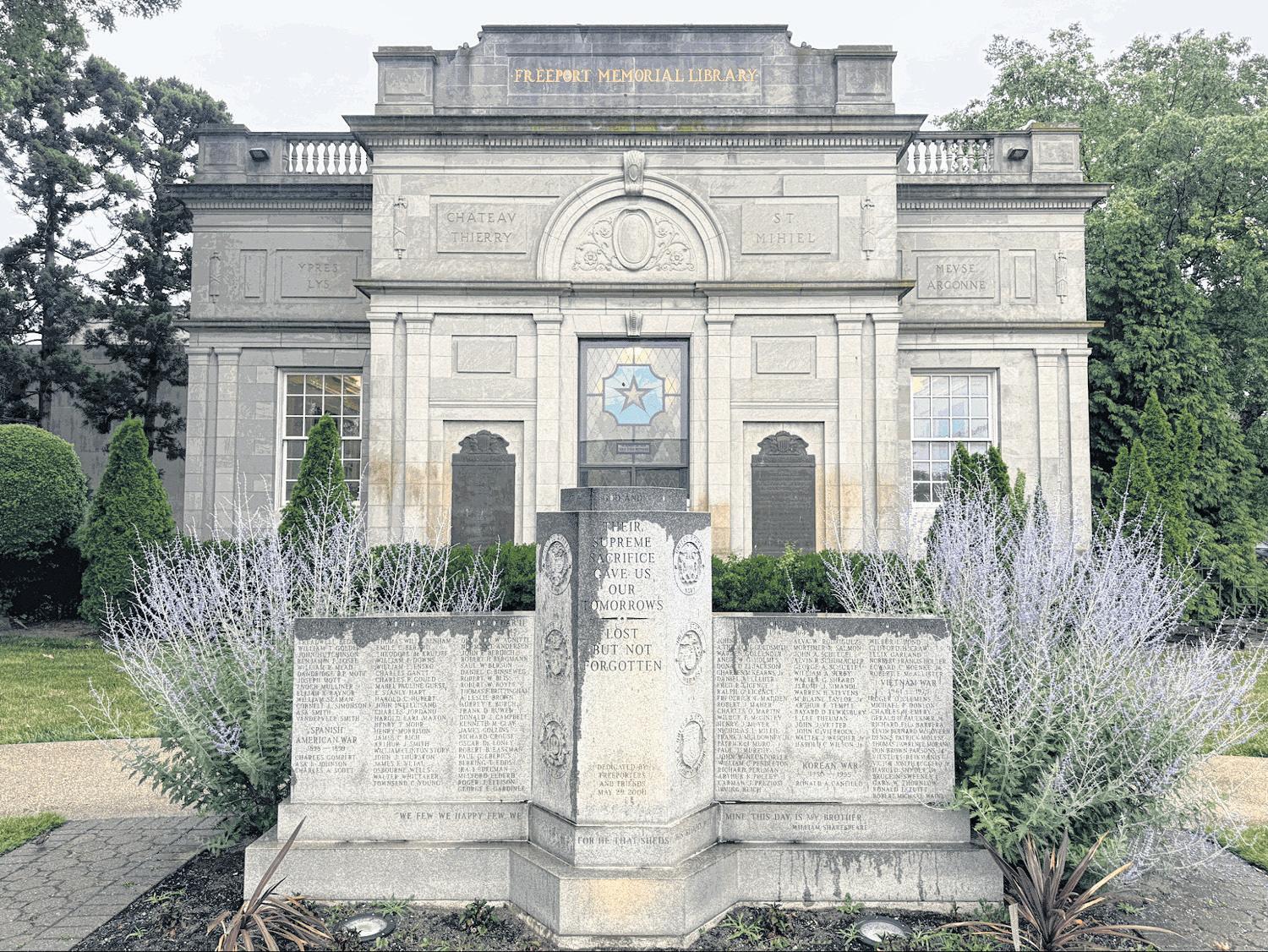
In Freeport, history spans multiple eras. A historic marker at Babylon Turnpike and Lakeview Avenue commemorates Washington’s passage through Long Island during his 1790 tour, linking the village to the nation’s earliest years. Nearby, the World War II memorial honors local service members who fought in the nation’s defining 20thcentury conflict, while the Vietnam War memorial stone at the Freeport Memorial Library stands as a tribute to those who gave their lives in service.
As America approaches its 250th anniversary, these landmarks underscore a simple truth: history is not confined to textbooks. It continues to live in the buildings, streets, and communities that shaped Long Island — and helped
shape the nation itself.
Photo 1 - Sagtikos Manor in Bay Shore, built around 1697, stands as one of Suffolk County’s oldest surviving homes and a rare link to Long Island’s colonial, Revolutionary War, and early presidential history.
Brian Kacharaba/Herald
Photo 2 - The World War II memorial plaque in Freeport honors residents who served and sacrificed during the conflict.
Layla Eason/Herald
Photo 3 - Sagamore Hill in Oyster Bay, the longtime home of President Theodore Roosevelt, reflects Long Island’s role in American leadership history and served as his residence and “Summer White House” during his presidency.
Library of Congress Prints and Photographs
Photo 4 - A historic marker at Babylon Turnpike and Lakeview Avenue in Freeport commemorates President George Washington’s passage through the area during his 1790 tour of Long Island.
Layla Eason/Herald
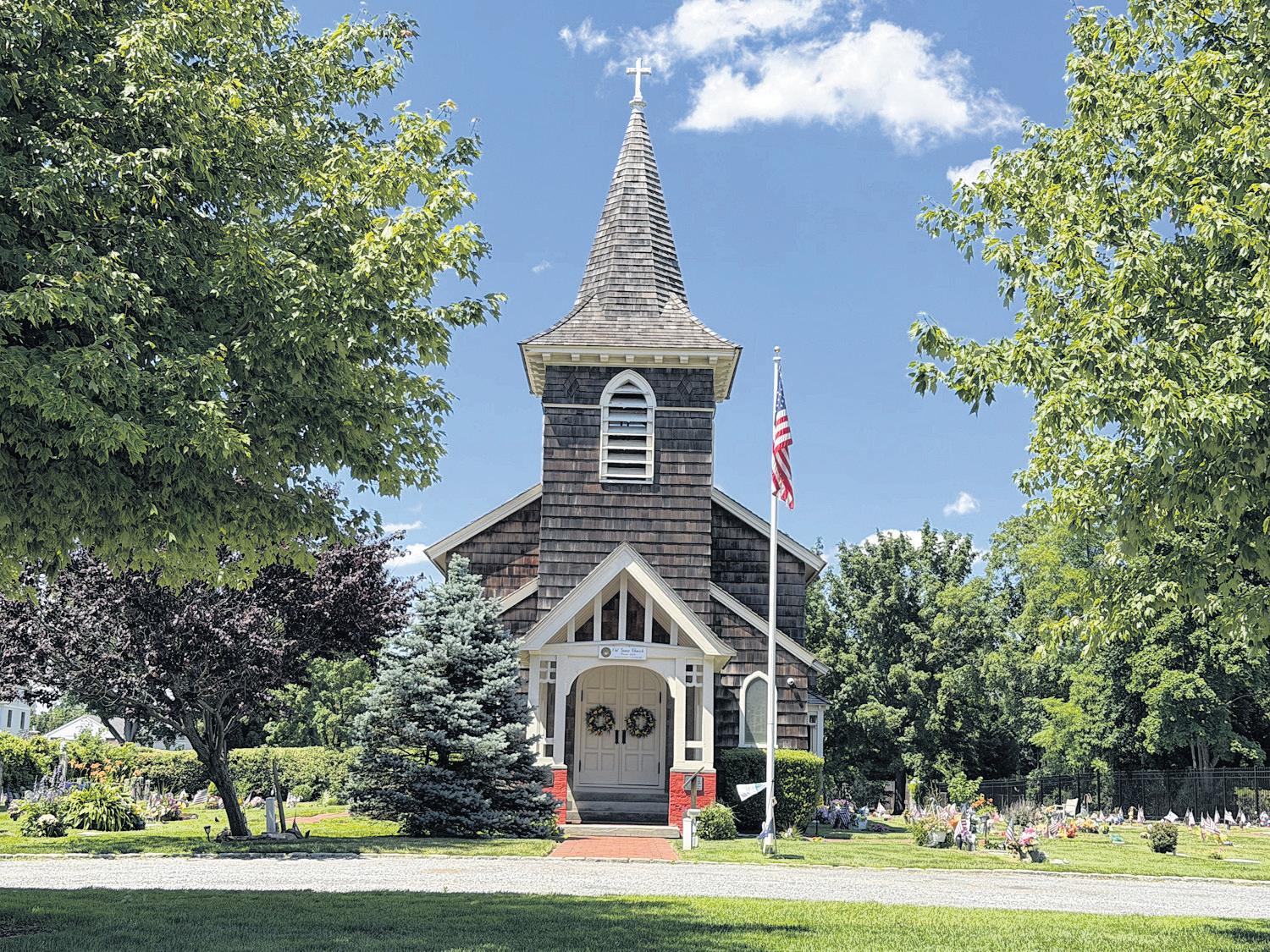
Photo 5 - The Old Grace Church in Massapequa traces its roots to 1844, where community members gathered to establish an Episcopal church closer to home rather than traveling to Hempstead for worship.
Alyssa R. Griffin/Herald
Photo 6 - Built in 1882, the Victorian home now housing the Phillips House Museum was once owned by sea captain and village founder James Phillips, whose family played a key role in the early development of Rockville Centre as a growing center of commerce and banking.
Alyssa R. Griffin/Herald

By Leah Ramai (Hunter) Sewanhaka High School freshman
High School
Reader, three centuries is a long time.
Aridiculous amount of possibilities could generally happen. Robots mating and artificial intelligence becoming the structure of everything.
America at 300. It’s long enough for your name to become dust. Long enough for every person you have ever loved to disappear. Long enough for your bedroom to become a room nobody remembers belonged to you. Long enough for the sound of your laughter to vanish from the earth entirely.
And perhaps, before you continue reading, I ask something of you. Look at your mother. Look at the shine in her eyes. The bliss, the warmth in her hugs. Look at your father. His tired eyes of making income and he doesn’t get a minute to himself. Not as parents. Not as permanent figures suspended safely in the background of your life. Look at them as people. As living things, imagine the lines of their faces softened by time until even memory struggles to hold them together. Imagine the sound of their voices becoming some-
thing distant. Imagine reaching for a memory and discovering it has begun to fade. That it simply doesn’t exist anymore. Where do these memories go? Certainly not in the future. Horrifying, isn’t it? Yet this is not fantasy. This is not horror fiction. This is reality moving exactly as it always has, because time does not wait for anyone whatsoever.
When people speak of America 300 years from now, they speak of progress. They speak of technology, discovery, innovation, and futures polished bright enough to distract themselves from the darkness beneath them. The good and positives. Yet I find myself haunted by something far quieter. Far more patient. The casualties time leaves behind.
How many voices will history never bother to remember? How many political figures will be jacks of spades in newspapers and magazines. How many poets will spend entire lifetimes filling notebooks only for their words to disappear without ceremony?
How many artists will devote themselves to beauty only for time to consume their work without even acknowledging it existed? Somewhere tonight, a child is creating something absolutely extraordinary. Somewhere, a story capable of changing a life is being written for the very first time. And somewhere else, another story dies before it is ever born. Reader that should terrify you. Not because it is unlikely. Because it is ordinary for dreams to never be pursued.
That is what makes humanity sacred. Not permanence. Not survival. Not the illusion that anything was
ever promised forever. If life stretched endlessly before us, love would become weightless. If grief did not exist, devotion would mean nothing. If death never arrived, neither would urgency, nor wonder, nor the desperate and beautiful need to create something before time steals the opportunity away.
It isn’t the fear of leaving, but leaving behind something utterly unfathomable, Humanity. Edgar Allan Poe understood this. Mary Shelley understood this. Beneath every graveyard, every ghost, every monster stitched together from pieces of the dead, there lingers the same unbearable realization. Existence is precious because it ends.
America, 300 years from now, will not be measured by what it builds. It will be measured by what it remembers. By whether someone still believes stories matter. By whether a child still stays awake long after midnight scribbling poems in a notebook because their heart feels too large for silence, deeply madly in love. Love, will you still feel the same flutter in your heart.
It’s chronically insane, isn’t it reader? To have to ask if a feeling would still sit in your anatomy because of how the world can change. By whether humanity still possesses the courage to create despite knowing everything eventually disappears. Knowing you have a purpose, but genuinely? It will end one day. Because the greatest horror has never been death. It has always been reaching the end of a life without leaving behind proof that you were here at all.


YBy JORDAN VALLONE jvallone@liherald.com
It is nearly impossible to discuss American literary history without mentioning Walt Whitman. Often called “America’s poet,” Whitman left a lasting mark as a writer, journalist and teacher, with a legacy deeply woven into both the nation’s history and Long Island’s own.
Born in what is now Huntington Station in 1819, Whitman came from a family whose Long Island roots stretched back to the 17th century. Though the family moved to Brooklyn when he was young, the island remained part of his foundation. His formal schooling ended at 11, but his education continued in print shops, newsrooms and city streets, where he developed a lifelong appetite for language, politics and the lives of ordinary people.
ou cannot really understand America... without ‘Leaves of Grass.’
MARY BERENsON
Art historian
As a teenager and young adult, Whitman worked as a printer, teacher and journalist across Long Island and New York City. When he returned to Huntington, he founded The Long-Islander, a local newspaper that is still being published.
His formative years placed Whitman in close contact with people from every corner of American life: laborers, commuters, families, readers, voters and strangers passing through the world around him. That broad human canvas helped shape the ideals that came to define his poetry — a sweeping appreciation for everyday Americans.
Whitman carried those influences into “Leaves of Grass,” the collection he first published in 1855 and continued revising until his death in 1892. What began as a slim, unconventional volume grew into a sweeping body of work that challenged literary traditions and helped redefine what American poetry could sound like.
Much of Whitman’s work opens a window onto everyday American life, but “Song of Myself” may be his most expansive expression of that vision. In it, the speaker stretches beyond the individual, seeing himself reflected in all people and all things — a voice that is deeply personal and collective.
The poem stands apart for its bold embrace of the body, its deep connection to the natural world and its insistence on elevating the ordinary individual.
“Born here of parents born here from parents the same, and their parents the same,”

Courtesy Library of Congress, Prints & Photographs Division, Gottscho-Schleisner Collection [LC-USZC2-4855]
Walt Whitman, one of America’s most renowned poets, taught at a summer school in Woodbury in 1840. The school building, erected in 1807, was acquired by Alexander M. White around 1927, who moved it to his estate in Oyster Bay Cove. The desk from the schoolhouse once used by Whitman is now at his birthplace, a historic site, in Huntington Station.
Whitman writes — a line that captures the layered, generational nature of belonging. It suggests how roots are formed not only through family, but through the places people claim as home. For Whitman, one of those places was Long Island.
Today, the Walt Whitman Birthplace Association maintains the New York state historic site Whitman was born in. Open to the public for tours, the home provides Long Islanders with insight into his early childhood, which influenced his work. Tours run daily in the summertime, and between Wednesdays and Sundays after Labor Day.
On the grounds of his original home is also an Interpretive Center, which opened in 1997, further allowing the birthplace association to build a tourist destination and regional hub for arts and literature, that offers unique, interdisciplinary programs.
“You cannot really understand America without Walt Whitman, without ‘Leaves of Grass’…” art historian Mary Berenson once wrote of the work, according to Whitman’s profile on Goodreads, a networking site for readers. “He has expressed that civilization, ‘up to date,’ as he would say, and no student of the philosophy of history can do without him.”

Photos courtesy LICM
Young artists created colorful works during last summer’s ArtVentures. This year, the program is expanded into four categories and families can enjoy similar creative experiences.

Bright colors and creative techniques come together in the watercolor project, one of the hands-on activities Kids can experiment how colors react to elements, and other colors.

By Stacy Driks
Long Island Children’s Museum invites families to put down the screens this summer, pick up a paintbrush and discover the many ways to create art.
With the launch of Summer ArtVentures [July 7], the museum expands its arts programming into a season-long celebration of imagination, hands-on learning and creative exploration four days a week.
Whether it’s experimenting with watercolor, building collages, sculpting with clay or creating artwork inspired by professionals, every visit offers something new.
The lineup grew from a pilot series the museum introduced last summer. After seeing children return week after week and hearing families ask for more opportunities to create, museum educators decided it was time to think bigger.
“We had such a positive reaction, people were asking if we could do them on other days and if we could offer more arts programming,” says Jeanmarie Walsh Mansfield, the museum’s director of visual arts and community initiatives. ”We found families kept coming back, and kids were building on what they learned from one week to the next.”
That enthusiasm inspired a full calendar of art experiences running throughout July and August, with activities designed to appeal to toddlers, schoolage children, teens and even adults.
Unlike traditional art classes, participants aren’t divided by age. Instead, everyone creates together in the same space, allowing each person to work at a level that’s comfortable while learning from one another.
“It’s sort of like an old-school classroom,” Mansfield says. “Kids of all ages learn with and from each other.”
Each Tuesday, the museum hosts Imagine That! Summer ArtVentures Workshops, where participants explore a different artistic medium or technique. One week may focus on collage, while another introduces mosaics, sculpture or animation. Before children begin creating, participants are introduced to artists whose work connects to that week’s project.
Some come from centuries ago, like Italian painter Giuseppe Arcimboldo, whose portraits famously transformed fruits, vegetables and other everyday objects into imaginative faces. Others are contemporary artists such as Octavio Ocampo, whose optical illusion paintings encourage viewers to look beyond first impressions.

Fireworks with the South Shore Symphony
“I want kids to learn that art can be much more than they think art is,” Mansfield says. “Art can be everywhere and made from anything. All you need is your creativity, your imagination and a willingness to experiment.”
Fridays offer Watercolor Wonder Pop-Ups, rotating through different galleries with new watercolor techniques and themes each week. One session explores the effects of salt on watercolor paint, while another teaches children how oil pastels and watercolor interact to create surprising results. Other activities draw inspiration from nature, encouraging families to experiment with flowers, color and texture.

What program is best for you?
• Tuesday: Imagine That ArtVentures workshops run from July 7 to Aug. 25, 1-3 p.m. Fee: $4 for children three and up.
• Friday: Watercolor Pop-Up run from July 10 to Aug. 28, 11 a.m.-1 p.m. Free with museum admission.
• Saturday: Amethyst Playground Pop-Up runs from July 11 to Aug. 1, noon-2 p.m. Free with museum admission.
• Monday: Squish Studio runs from July 27 to July 31, 11 a.m.- 2 p.m. Free with museum admission.

Still craving more fireworks? Rockville Centre’s annual celebration is just the ticket! Head to Pette and Barasch Fields for a festive evening with the South Shore Symphony, capped off by a spectacular Grucci fireworks display. It’s a beloved summertime tradition that brings together everyone for a rousing spectacle. Music Director Adam Glaser passes the baton to conductor Eileen Murphy who leads the orchestra in a program of Broadway hits, movie themes, pop hits, and patriotic standards. Selections include American Salute by Morton Gould, Suite from Hamilton by Lin-Manuel Miranda, RimskyKorsakov’s Procession of Nobles, Sousa’s Washington Post March and John William’s Raiders March. The orchestra begins performing at 7:30 p.m., the fireworks begin at 9:15 and the orchestra continues after. Hosted by the Village of Rockville Centre and the Rockville Centre Guild for the Arts, this free event has been a favorite for more than 30 years. Admission is free and is open to everyone. Rain date is July 12.

Hope shows her art project inspired by Kelly Olshan’s “Amethyst Playground” exhibit.
On Saturdays, Amethyst Playground Pop-Up connects directly to the current Artists’ Corner exhibition by Kelly Olshan. Families transform leftover materials from the artist’s creative process into colorful magnets, demonstrating how everyday objects can become works of art.
For children who love getting their hands dirty, Squish Studio, running July 27 through 31, offers an entire week devoted to clay. Young artists can experiment with different tools, create personal sculptures and contribute to a collaborative creature that grows throughout the week.
Clay holds a special place for Mansfield.
“I’ve been wanting to do clay-based workshops for a long time,” she says. “Kids really respond to it. It’s intuitive, it’s hands-on, and it helps develop fine motor skills while encouraging creativity.”
But the aim is for visitors leave with more than artwork to hang on the refrigerator.
Creating art helps children build confidence, develop criticalthinking skills and become more comfortable taking creative risks, Mansfield explains. Working alongside others also teaches collaboration, communication and problem-solving.
“Art making reduces anxiety,” she says. “It can be meditative. We know screens can increase anxiety, but when children are creating with their hands, they’re engaged, they’re present and they’re learning.”
Perhaps most importantly, art teaches children that mistakes aren’t something to fear.
“You fail sometimes,” Mansfield says. “You make something and it doesn’t come out the way you wanted. That’s an important life skill — mistakes are learning opportunities and that you can pivot and try something different.”
And the experience sparks curiosity. Rather than providing step-by-step instructions with one “correct” outcome, educators encourage children to ask questions, explore materials and decide for themselves what they want to create.
“There’s no wrong way to make art,” Mansfield says. “I want kids to push their boundaries and realize they’re artists.”
And this is only the beginning.
Museum leadership plans to further expand programming beyond the summer, with additional workshops during school breaks and perhaps a future art festival that celebrates creativity throughout the museum.
Until then, paint, sculpt, squish and create all summer — one colorful adventure at a time. For schedules, admission and registration information, visit licm.org.
Saturday, July 11, 7 p.m. Pette and Barasch Fields, 244 S. Park Ave, Rockville Centre. For more information, visit.rvcny.us.

The Bronx Wanderers
What do you get when a father, his two sons, and two high school classmates come together to create a show? A wildly entertaining mix of hilarious personal stories, a powerhouse playlist spanning every genre and decade, and one unforgettable family’s journey through life and music. Meet The Bronx Wanderers — a high-energy musical experience that’s been bringing audiences to their feet for over 20 years. With a unique blend of rock ‘n’ roll nostalgia, modern hits, and dynamic storytelling, this band has mastered the art of connecting with fans of all ages in one sweeping, musical tour de force. They’re still having the time of their lives — and by the end of the show, you will be too.
Sunday, July 12,7:30 p.m. Tickets available at ticketmaster.com
jul
On Exhibit
Nassau County Museum of Art joins in the celebration of America’s 250th anniversary. Its landmark exhibition explores how Long Island has reflected and shaped the story of American art. From Revolutionary-era portraiture and folk art to nineteenth-century landscapes, Impressionism, and the bold innovations of Abstract Expressionism and Pop Art, the exhibition highlights how every major art movement found expression here. From Brooklyn to Montauk, Long Island’s natural beauty, coastal light, and close connection to New York City inspired generations of artists and gave rise to thriving art colonies and postwar creative communities. Featuring paintings, decorative arts, and historical objects displayed together in immersive settings, the exhibit celebrates the region’s enduring influence and its rich artistic legacy. On view through July 12.
• Where: 1 Museum Drive, Roslyn Harbor
• Time: Ongoing
• Contact: nassaumuseum.org or (516) 484-9337
2026
The Oyster Bay Main Street Association welcomes all to its annual ‘Dancing in the Street’ series. Each week features live music and group dance instruction with DJ and dance instructor. All ages and skill levels are welcome.
• Where: 74 Audrey Ave., Oyster Bay
• Time: 6:30 p.m.
• Contact: oysterbaymain street.org or call (516) 9226982
10
Immersive Sound Bath Experience with Notes & Nirvana
Gold Coast Forum hosts a sound bath experience led by Andrea Gonella of Notes & Nirvana. Join her for an immersive experience that nurtures both mind and body. Wear cozy clothes and bring a blanket. RSVP on the Theodore’s Books website.
• Where: 111 South St., Suite 16, Oyster Bay
• Time: 7 p.m.
• Contact: heodoresbooks.com or call (516) 636-5550

• Where: 127 Middle Neck Road, Sands Point
• Time: Noon and 1:30 p.m., also July 19
• Contact: sandspointpreserve conservancy.org or call (516) 571-7901
jul
Book signing Award-winning author Annie Hartnett discusses and signs her book “The Road to Tender Hearts” at the Gold Coast Forum. Books are available for purchase courtesy of Theodore’s Books. Register on the Theodore’s Books website.
• Where: 111 South St., Oyster Bay
• Time: 7 p.m.
• Contact: theodoresbooks. com or call (516) 636-5550
jul
22
• Where: The Paramount, 370 New York Ave., Huntington
• Time: 8 p.m.
This is not a typical tribute or pretend concert act. Wild Child relies on recapturing the original: sound, feel, mood, dynamics and delivery of the Doors music. In true Doors fashion there are no: wigs, props, costumes, or phony banter between songs. It’s about the music and its delivery. Wild Child lead singer Dave Brock’s Doors tribute debuted with a triple sellout at the Whisky a-Go-Go. Since the band debuted, the act has been touring and playing at sold out national act venues and festivals around the world. Wild Child became the mold that “tribute bands” aspired to become, as they flooded the market in the 1990s with good and bad impersonations of famous artists. In 2010 Ray Manzarek and Robby Krieger of The Doors, invited Dave to tour with them as their vocalist on their concert engagements. This was perhaps the best compliment Dave has ever received from anyone for his work. Being selected by these two Rock ’n Roll Hall of Fame musicians was a huge honor; the ultimate compliment of his talents and speaks volumes for his credibility as a Doors style frontman and vocalist. Fans and critics alike praise Wild Child performances as the closest thing to a real 1960s Doors concert and live Doors experience.
St. Rocco’s Festival
The Italian American Citizens Club of Oyster Bay invites all to Firemen’s Field for its 15th annual St. Rocco’s Festival. Enjoy four days of carnival rides, games, live music, food, a beer garden and more. Fireworks held on July 10 at dusk.
• Where: Firemen’s Field, Oyster Bay
• Time: 6 p.m., through July 12
• Contact: (516) 922-9744
Sands Point Preserve’s historic mansions and waterfront grounds are the backdrop for the latest edition of its unique chamber music series at Hempstead House, themed “Summer’s Day.” The concert celebrates heritage, resilience, and the ways music carries culture forward, bringing together Indigenous voices and new musical visions. Works by Dawn Avery, Jessie Montgomery, Jessica Meyer, Rebecca Clarke, Charles Yang, and George Gershwin join the lyricism of Brahms and Mozart and the folkinspired spirit of Antonín Dvorák. duoJalal ensemble-in-residence featuring Kathryn Lockwood,
viola and Yousif Sheronick, percussion, with violinists Debbie Buck and Min-Young Kim, cellist Caroline Stinson and Alan Kay, on clarinet, perform. With wine reception following. $61, $50 members.
• Where: 127 Middle Neck Road, Sands Point
• Time: 3 p.m.
• Contact: sandspointpreserve conservancy.org or call (516) 571-7901
Town board meets Oyster Bay Town Board holds its next meeting at Town Hall North. Residents are encouraged to attend.
• Where: 54 Audrey Ave., Oyster Bay
• Time: 10 a.m.
• Contact: (516) 624-6380
Visit Audrey Avenue in Oyster Bay on Tuesdays throughout the summer for Cruise Nights hosted by the Oyster Bay-East Norwich Chamber of Commerce. The weekly car show attracts more than 250 vehicles and more than 1,000 attendees each week.
• Contact: ticketmaster.com or paramountny.com
• Where: Audrey Ave., Oyster Bay
• Time: 5:30 p.m.
• Contact: visitoysterbay.com
jul
15
Book signing Gold Coast Forum presents an evening with travel expert and author Darley Newman as she discusses and signs her book “Revolutionary Road Trip.” Newman chats with Justinne Lake-Jedzinak, director of Education and Public Programs at Raynham Hall Museum. Books will be provided by Theodore’s Books. Regisration required.
• Where: 30 West Main St., Oyster Bay
• Time: 7 p.m.
• Contact: theodoresbooks. com or call (516) 636-5550
See the grand rooms inside the massive 50,000-squarefoot Tudor-style mansion at Sands Point Preserve, the former summer residence of Howard Gould (1912-1917) and later Daniel and Florence Guggenheim (1917-1930). For adults, but children 5+ are allowed. $10 per person.
The Oyster Bay-East Norwich Chamber of Commerce invites all to its Jingle in July Holiday Lighting fundraiser. Enjoy a winter-themed slushie, refreshments and raffle prizes. Purchase tickets or donate at Zeffy.com.
• Where: 5 Bay Ave., Oyster Bay
• Time: 5:30 p.m.
• Contact: visitoysterbay.com or call (516) 259-1842
jul
Join the Oyster Bay Main Street Association to dance in the street on Audrey Avenue. Every other week brings a new DJ, new vibes and a new reason to dance. The second night of this series is Luau themed.
• Where: Audrey Avenue, Oyster Bay
• Time: 6:30 p.m.
• Contact: oysterbaymain street.org or call (516) 9226982
Having an event?
Items on the Calendar page are listed free of charge. The Herald welcomes listings of upcoming events, community meetings and items of public interest. All submissions should include date, time and location of the event, cost, and a contact name and phone number. Submissions can be

By JULIA CAPITELLI jcapitelli@liherald.com
More than 60 North Shore residents attended a rally last week to hear updates on Propel NY’s plan to install 90 miles of underground transmission lines across southern New York state, and to voice their concerns. The event was led by Glen Head residents Christine Panzeca and Dough Augenthaler, both of whom actively oppose the project.
While some of the complaints that were detailed at the July 1 gathering, at Glenwood Landing American Legion Post 336, have been raised by residents before, a new point of discussion for many was the joint proposal filed by New York Transco and the New York Power Authority in April determining parameters for the $3.2 billion project.
Construction is slated to begin later this year, and expected to last four years, with completion anticipated in May 2030. Crews are expected to progress 50 to 150 feet per day.
The New York Independent System Operator chose the project in 2023 as a solution to problems like increased demand on the state’s power grid and its vulnerability in severe weather. Before construction can begin, Propel NY must secure a Certificate of Environmental Compatibility and Public Need from the state Public Service Commission as well as a permit from the Army Corps of Engineers, and the PSC must also approve Environmental Management and Construction Plans.
Panzeca urged rally attendees to submit public comments to the PSC and the Army Corps opposing the project.
“A few comments from a few individuals in the community are not enough,” she said. “You need thousands of voices across every impacted community to make a difference.” The deadline to file comments with the PSC is July 17. Transco and NYPA, Panzeca said, are leaving “many important details of the project to later phases.”
Augenthaler echoed concerns about traffic, naming impact on business, emergency vehicles getting down streets
and busses bringing students to school as potential problems.
Shannon Baxevanis, Transco’s director of communications and public Affairs, said that the Environmental Management and Construction Plans would provide more specifics.
“That’s where the details (are),” Baxevanis said, “the meat and potatoes of not only how we’ll protect the environment and communities with various measures, but also the construction methods, the locations, more — how we’re going to build this.”
Residents have previously said they are concerned about potential electromagnetic fields produced by the cables. Panzeca said there are worries about EMF in locations where the cables would converge, and Augenthaler pointed out that New York state standards for EMF readings may not take into account existing transmission lines along with the new lines.
“We are in compliance with the state standard for EMF across the project,” Baxevanis said, adding that with the joint proposal, entities working on the project have committed to post-construction modeling to confirm compliance with the EMF standards.
The joint proposal does include some specific conditions for transmission line installation, such as limiting construction times around schools. In a joint letter, Oyster Bay Town Supervisor Joseph Saladino, Hempstead Town Supervisor John Ferretti and North Hempstead Town Supervisor Jennifer DeSena wrote that the project should not move forward without “transparency, accountability and real protection for residents.”
One Glenwood Landing resident, Cecelia McCann, has submitted a statement to the PSC in support of the project. McCann wrote that she believes the joint proposal fairly balances the competing interests of customers, transmission owners, the environment and the public, and adheres to the PSC’s policies.
Guilfoyle added that now that the Environmental Management and Construction Plans are being developed, more details should be available soon.

LEGAL NOTICE
NOTICE OF SALE
SUPREME COURTCOUNTY OF NASSAU
U.S Bank National Association, as Trustee for Terwin Mortgage Trust 2005-4HE, AssetBacked Certificates, Series 2005-4HE Plaintiff, Against Melanie C. Valderrama, Carol Ann Valderrama, Wilmington Savings Fund Society, FSB, Not In Its Individual Capacity But Solely As Certificate Trustee Of Bosco Credit II Trust Series 2010-1; John Doe (Name Unknown) Defendant(s) Pursuant to a Judgment of Foreclosure and Sale, duly entered 04/06/2026, I, the undersigned Referee, will sell at public auction, on the North Side steps of the Nassau County Supreme Court located at 100 Supreme Court Drive, Mineola, N.Y. 11501 on 7/21/2026 at 2:00PM, premises known as 16 4th Street, Bayville, New York 11709, and described as follows: ALL that certain plot piece or parcel of land, with the buildings and improvements thereon erected, situate, lying and being in the Village of Bayville, County of Nassau and State of New York.
Section 28 Block 48 Lot 110, 111 and 112.
The approximate amount of the current Judgment lien is $886,779.91 plus interest and costs. The Premises will be sold subject to provisions of the aforesaid Judgment of Foreclosure and Sale; Index # 619644/2024
For sale information, please visit Auction.com at www.Auction.com or call (800) 280-2832. If proper social distancing cannot be maintained or there are other health or safety concerns, the then Court Appointed Referee will cancel the Foreclosure Auction. This Auction will be
held rain or shine. Brian J. Davis, Esq., Referee.
SHELDON MAY & ASSOCIATES Attorneys at Law, 255 Merrick Road, Rockville Centre, NY 11570
Dated: 5/6/2026 File Number: 38517 CA 160776
LEGAL NOTICE NOTICE OF SALE SUPREME COURT NASSAU COUNTY ALLIED FIRST BANK, SB DBA SERVBANK, Plaintiff against MICHAEL ALVARADO, et al Defendant(s) Attorney for Plaintiff(s) Stern & Eisenberg, P.C., 20 Commerce Drive, Suite 230, Cranford, NJ 07016 and 1131 Route 55, Suite 1, Lagrangeville, NY 12540. Pursuant to a Judgment of Foreclosure and Sale entered May 19, 2026, I will sell at public auction to the highest bidder at North Side Steps of the Nassau County Supreme Court at 100 Supreme Court Drive, Mineola, NY 11501 on August 5, 2026 at 2:30PM. Premises known as 38 Jackson Avenue, and Jackson Avenue, Bayville, NY 11709. Sec 29 Block G Lot 224 and 644. All that certain plot, piece or parcel of land, situate, lying and being in the Village of Bayville, Town of Oyster Bay, County of Nassau, State of New York. Approximate Amount of Judgment is $708,890.85 plus interest, fees, and costs. Premises will be sold subject to provisions of filed Judgment Index No 611044/2022. For sale information, please visit www.Auction.com or call (800) 280-2832. The foreclosure sale will be conducted in accordance with 10th Judicial District’s Covid-19 Policies and foreclosure auction rules. The Referee shall enforce any rules in place regarding facial coverings and social distancing. If proper social distancing cannot be maintained
or there are other health or safety concerns, then the Court Appointed Referee shall cancel the foreclosure auction. Foreclosure Auctions will be held “Rain or Shine.”
Michele A. Baptiste, Esq., Referee File # NY202200000171-1 161007
LEGAL NOTICE
Locust Valley Central School District Request for Proposals Proposals from qualified. licensed and experienced Individuals or offices are requested by the Board of Education of Locust Valley Central School District, Town of Oyster Bay, Nassau County, New York for school physician services to meet the needs of the District for the 2026-2027 school year, with an option to renew the contract annually for the fiscal years ending June 30, 2028, 2029, 2030, and 2031. Proposals will be received until 11:00 a.m. on July 22, 2026, in the Business Office, at Locust Valley CSD, 22 Horse Hollow Road, Locust Valley, NY 11560. Attention: Jack Mitchell, Assistant Superintendent for Business. Interested, qualified and experienced providers can review a copy of the Request for Proposal beginning on July 10, 2026 on the district’s website www.locustvalleyschoo ls.org/page/purchasing or you may request a copy by email to LVpurchasing@locustva lleyschools.org. 161123
LEGAL NOTICE PUBLIC NOTICE INC. VILLAGE OF LAUREL HOLLOW PLEASE TAKE NOTICE that the Regular Meeting of the Board of Trustees, previously scheduled for Wednesday, July 8, 2026, at 6:30 PM has been rescheduled to Thursday, July 30, 2026, at 6:30 PM. This
meeting will be held at the Village Hall, 1492 Laurel Hollow Road. These meetings are open to the general public. Cathryn Hillmann Village Clerk-Treasurer Dated: July 7, 2026 161129
LEGAL NOTICE NOTICE OF SALE SUPREME COURT COUNTY OF NASSAU NATIONSTAR MORTGAGE LLC D/B/A CHAMPION MORTGAGE COMPANY, Plaintiff AGAINST GLENN A. SPELLMAN AS ADMINISTRATOR OF THE ESTATE OF WESSIE V. SPELLMAN WHO WAS SURVIVING SPOUSE OF GEORGE HENRY SPELLMAN, GEORGE H. SPELLMAN, III AS HEIR TO THE ESTATE OF WESSIE V. SPELLMAN WHO WAS SURVIVING SPOUSE OF GEORGE HENRY SPELLMAN, ET AL., Defendant(s) Pursuant to a Judgment of Foreclosure and Sale duly entered December 19, 2023, I, the undersigned Referee will sell at public auction at the North Side steps of the Nassau County Supreme Court, 100 Supreme Court Drive, Mineola, NY 115011 on August 11, 2026 at 2:00 PM, premises known as 28 Cross Street, Locust Valley, NY 11560. All that certain plot piece or parcel of land, with the buildings and improvements erected, situate, lying and being at Locust Valley, in the Town of Oyster Bay, County of Nassau, and State of New York, Section 30, Block 7, Lot 139 & 141. Approximate amount of judgment $355,697.69 plus interest and costs. Premises will be sold subject to provisions of filed Judgment Index #604609/2019. Michele Bencivinni, Esq., Referee Gross Polowy, LLC 1775 Wehrle Drive Williamsville, NY 14221 17-002006 90425 161041





















There was an especially poignant happening on Long Island recently, amid the Trump administration’s campaign against immigrants, when honor student Sara Lopez Garcia returned — virtually — for graduation ceremonies at Suffolk County Community College and gave a video presentation.

A year earlier, Immigration and Customs Enforcement agents had raided Garcia’s home in Mastic and arrested her.
As Bart Jones reported in Newsday, Garcia, who had a 3.9 GPA, “told the crowd … that while she joined in celebrating their new degrees, including hers, the day was bittersweet, as she was forced to watch from 2,500 miles away in South America.”
“This day brings really difficult memories for me,” Garcia, dressed in graduation regalia, said from Colombia. Of her arrest, she added, “It was one of the moments of my life when I felt fear. I was so scared, and everything was uncertain. I didn’t know what would happen to me, to my family, to my future.”

IShe was sent to an ICE detention facility in Louisiana. She had been brought to the United States by her mother, who was also arrested, and has no criminal record.
Jones wrote that SCCC English Professor Cynthia Eaton had nominated Garcia to speak at graduation because “she was a model of determination in the face of adversity.” Said Eaton: “She is a good thinker. She’s a good learner. She’s a good person … Everybody on our campus knew Sara’s smile. They all loved Sara. She was like a magnet … upbeat, positive.”
followed by laws enacted by New York state that prohibit “local governments, state and local police, and state and local corrections” from entering into “agreements with the federal government that allow for state and local enforcement personnel and facilities to be used for civil immigration enforcement purposes” — and that also ban “state, local and federal officers from wearing face covering while interacting with the public.”
A former Border Patrol chief talks of deporting over 100 million people.
Jim Morgo, ex-chief deputy Suffolk County executive, a former vice chair of the college’s board of trustees and a teacher, said that Garcia “is the perfect example of everything that’s wrong with mass deportation. There’s no distinguishing the honor students from the rapist.”
On Long Island, as is the case in the rest of the nation, there’s opposition to President Trump’s deportation program. For months there have been protests. The Town of East Hampton and, before that, East Hampton Village passed laws blocking their participation with ICE.
The town and village actions were
But Tom Homan, the exdirector of ICE who was given the title of “border czar” by Trump, has vowed that if New York passed “this ridiculous legislation,” ICE would “flood the zone. You’re going to see more ICE agents than you ever seen before.”
And in a party-line vote in the U.S. Senate, Republicans passed $70 billion in new funding for ICE and the U.S. Border Patrol, in addition to $150 billion the agencies received last year.
Meanwhile, Greg Bovino, the former Border Patrol chief who was removed in January after Renee Good and Alex Pretti were killed by federal immigration agents in Minneapolis, has announced that he is running for president, and said, “My one and only priority is deporting the 106 million illegal
immigrants who are here.”
The website Mediaite commented that this is one-third of the nation’s population, and “the true number of illegal immigrants peaked at 14 million in 2023, according to Pew [Research Center].”
Back to earth and Long Island, the Bridgehampton Museum recently held an exhibition titled, “What We Carry: Memory & Migration.” “Rooted in themes central to the East End and beyond, What We Carry underscores how migration stories are embedded in local history while resonating on a global scale,” the museum wrote, and was co-curated by Jeremy Dennis, a Shinnecock Native American; Mark Wilson, who has roots in Australia; and Darius Yektai, who has an Iranian and Greek background.
The exhibition was scheduled to be followed by presentations by East Hampton attorney Lenny Ackerman, the author of “Leibisch’s Journey,” a book about his father’s escape from the horrors of the Russian Revolution through Europe to the U.S., and Tara Rider, a Stony Brook University professor of history, to speak about her book “Journey of Hope: The Irish in New York.”
Karl Grossman has been an investigative reporter in a variety of media for more than 50 years. He is a professor of journalism at the State University of New York at Old Westbury.
f you’ve been following the news lately, you’ve probably seen headlines about microplastics — tiny plastic fragments and fibers showing up in the human body. It’s a topic that understandably raises questions, and as the CEO of the Suffolk County Water Authority, which serves more than 1.2 million people on Long Island, I’m focused on addressing this issue proactively and making sure our customers know where things stand. Microplastics are everywhere in the modern environment. They’ve been found in oceans, in rain, in the food we eat and in some water supplies. The health effects are not yet fully understood, and the science is still developing.
There are currently no federal regulatory limits for microplastics in drinking water. But the concern is real enough that the U.S. Environmental Protection Agency is considering requiring public water systems to test for them
under the upcoming Unregulated Contaminant Monitoring Rule — a program the EPA uses every five years to study emerging threats before setting any standards. That’s a significant signal that the federal government is taking this seriously, and so are we.
OSCWA didn’t wait to be told to act. At the end of 2025, we completed one of the first voluntary microplastics assessments of a groundwater-based public water system in the United States. We tested source water, treatment effluents and finished drinking water across a wide range of wells and treatment locations — including some of our shallowest wells, which would be the most vulnerable to surface contamination. The results were reassuring. The vast majority of samples showed no detectable microplastics. Where particles were found, levels were extremely low: typically, just one to five particles per sample, with no pattern suggesting widespread presence in the aquifer or any introduction through our treatment process. Our average was just 3.6 particles per liter. To put that in perspective, a peer-reviewed study found an average
of 325 plastic particles per liter in bottled water. Long Island tap water, drawn from a protected underground aquifer, performed dramatically better.
ur customers deserve accurate information about their drinking water.
We also applied strict quality-control procedures throughout the testing to confirm that our sampling and analysis process itself wasn’t introducing contamination. Those controls showed zero or near-zero particle counts, validating the accuracy of our findings. Sixty percent of our analyzed samples showed equal or fewer microplastics per liter than the blanks themselves.
We didn’t do this study because a regulation required it. We did it because our customers deserve clear and accurate information about their drinking water, and because staying ahead of emerging issues is what responsible water management looks like. Waiting for mandates is the easy path. Understanding the science before you’re told to is how you actually protect people.
We’re not alone in that commitment. The Long Island Commission for Aquifer Protection has partnered with the United States Geological Survey to
study microplastics in the aquifer and examine how they might enter our groundwater system, including through stormwater recharge basins. That kind of regional, scientific collaboration is exactly what this issue calls for.
And that brings me to a broader point. Microplastics are not solely a drinking water problem. Just as we’ve seen with PFAS — so-called “forever chemicals” — and other contaminants in recent years, drinking water is one of several possible exposure pathways — not the only one. Food packaging, synthetic textiles, household dust and consumer products are all sources. A serious, evidence-based response to microplastics must account for all these vectors, not single out one source while ignoring the others.
SCWA will continue to monitor the science, follow developments in regulatory guidance, and evaluate whether additional or expanded testing is appropriate as analytical methods improve. What I can tell you today is this: The water coming from your tap has been tested, the levels of microplastics found are extremely low, and we are not waiting for a crisis to take the issue seriously.
1899
Incorporating the Oyster Bay Guardian in 2010
Will Sheeline
Julia Capitelli Reporter
■ Rhonda GliCkman Vice President - Sales ■ offiCe
2 Endo Boulevard Garden City, NY 11530
Phone: (516) 569-4000
Fax: (516)
Summer has a way of reminding us about the simple pleasures in life. For many, that means relaxing on the beach with a good book, spending time with family or finding fun ways to stay cool during the hottest days of the year.
But while a great novel may be the perfect beach companion, the local public library offers so much more than books. It is one of the smartest and most valuable investments any community can make.
Libraries have evolved far beyond quiet reading rooms lined with shelves full of books. They are vibrant community centers that welcome residents of every age and every background. They’re places where curiosity is encouraged, lifelong learning is celebrated and neighbors come together at author readings, musical performances and movie screenings.
Summer is one of the busiest times of the year for libraries. Children who might otherwise lose valuable academic skills during the school break can take part in summer reading programs intended to keep their minds engaged while making learning fun.
Teens can explore new interests through workshops, volunteer opportunities and technology programs. Adults can attend lectures, careerdevelopment seminars, financial-literacy classes and cultural events. Seniors can take part in social gatherings, edu-
Scott’s column should be required
To the Editor:
Re Robert A. Scott’s column, “What it means to be a college graduate,” in the June 24-30 issue: At a time when some are questioning the value of a college education, Dr. Scott offers a thoughtful perspective on this important issue. Drawing on his own experiences at Bucknell University as well as research that demonstrates the many positive outcomes of college, he makes a strong case for post-secondary education. At its best, Scott notes, college can not only improve students’ writing and speaking skills and boost graduates’ earning power, but also foster personal growth and enhance one’s outlook on the world. “College is, or should be,” he writes, “as much about character development and active citizenship as it is about preparation for careers and advancement in commerce.”
cational presentations and wellness activities that help combat isolation while strengthening community connections.
Libraries are free public spaces open to everyone. They provide safe, air-conditioned environments in which families can spend time together, students can study, remote workers can focus and anyone can simply enjoy a quiet place to read, learn or reflect.
These services don’t disappear when summer ends. Throughout the year, libraries host civic meetings, support groups, educational workshops, cultural performances, technology training, tax-preparation assistance, job search resources and countless other programs that strengthen the social fabric of our communities. They serve as gathering places where ideas are exchanged, friendships are formed and local organizations find a home.
Elected officials deserve recognition when they prioritize funding for public libraries. Public investments often bring to mind roads, bridges or major construction projects, and those investments certainly matter. But investments in libraries produce returns that cannot always be measured in dollars. Whether funding is for the renovation of a community room to expand programs and services or a much larger capital project that overhauls the entire building, libraries aim to improve educational outcomes, encour-
age civic engagement, reduce social isolation, create stronger, more connected communities, and make their facilities more welcoming, accessible and functional for everyone who walks through their doors.
These projects also reflect a broader truth: Investments in libraries are investments in people. Every renovated classroom, meeting space or children’s area creates opportunities for learning, connection and growth that extend well beyond the life of the construction project itself.
At a time when many people worry about loneliness, educational gaps and divisions in society, libraries quietly address each of those challenges every day. They remain one of the few places where everyone is welcome, regardless of age, income or background, and where the only requirement for entry is a willingness to learn.
As summer unfolds, residents should take full advantage of everything their local libraries have to offer. Borrow that next beach read. Sign a child up for a reading challenge. Attend a lecture, explore a new hobby, join a community group or simply spend an afternoon discovering something new.
Every library card opened, every book borrowed and every program attended is a reminder that one of the greatest investments we can make is in institutions that educate, inspire and bring us together.

as the deadline for school districts to begin purchasing zero-emission school buses loomed, state lawmakers rightfully hit the brakes by delaying the mandate for five years.
The reasons are as clear as they are daunting: the electric grid isn’t ready, charging infrastructure remains scarce compared with ambitious state targets, and the upfront cost of a single electric bus can be triple that of a traditional one.

For Long Island school districts already grappling with a high tax burden and unique costof-living challenges, this represents yet another significant financial strain that would fall squarely on local taxpayers. State leaders should be lauded for recognizing these realities. But as officials continue to debate these and other changes to the state’s climate law, we can’t fall into an either-or trap, just as we can’t let the perfect be the enemy of the good.
new york already has a solution that has been in use for decades, and is easily deployed: renewable liquid fuels.
Transitioning the existing school bus fleets to renewable diesel can reduce greenhouse gas emissions by up to 86 percent immediately. Unlike electric buses, which require specialized chargers and rely on our dangerously thin electric grid, renewable diesel works in the engines we already own. It requires no costly equipment overhauls, no new infrastructure, and performs reliably in cold new york winters.
rfrom entering our air annually. officials aim to complete the conversion of all city-owned vehicles this summer.
new york became the first state in the northeast to offer the fuel to state agencies, authorities, schools, municipalities and nonprofits in 26 counties, including nassau and Suffolk. Still, too few are availing themselves of this resource.
e newable diesel fuel works in the school bus engines we already own.
While the state waits years for the grid to catch up, municipal leaders are already proving that renewable liquid fuels — biodegradable fuel manufactured domestically from vegetable oils, animal fats and recycled restaurant grease — can deliver significantly carbon reduction today without breaking the bank.
new york City is leading the way, having transitioned its fleet of garbage trucks, emergency vehicles and other heavy-duty machines to renewable diesel in 2024, a move expected to prevent 162 million pounds of carbon dioxide
Scott’s column should be required reading for every new college student, especially those entering with the misguided notion that college is little more than a quick ticket to a job. While finding a career that’s a good fit should certainly be part of everyone’s college years, students should also use this time to learn about themselves, to engage ideas, to come to grips with life’s complexities, and to develop a deeper understanding of the world that’s waiting for them after graduation.
Colleges themselves would also do well to pay attention to Scott’s advice. Too many schools present themselves as career factories, highlighting their programs’ “real world” skill development while paying only minimal attention to the transformative experiences that a college education can (and should) provide. Graduating thoughtful, knowledgeable and insightful human beings — people capable of seeing life’s big picture and acting on behalf of the greater good — should be a primary goal of higher education. Given the cost of college, as well as our collective anxiety about the future of America’s workforce, I can understand many students’ wish to choose a major that will help them make their way. But preparing for a career needn’t preclude being open to activities and experiences, both in and out of the classroom, that will invite students to stretch intellectually, socially and emotionally. There are indeed many valuable lessons to be learned here; students should not miss out on them.
RIChARd J. ConWAy Massapequa
And while much of today’s conversation centers on delays in transportation electrification, concerns about the pace and practicality of electrification are also growing in the homes and buildings sectors, as well as budget-strapped public facilities — especially our schools.
Consider a high school in Brooklyn where administrators recently replaced traditional heating oil with the renewable fuel alternative, making it the first school in new york City to convert to a heating system running entirely on biofuels. This historic transition to cleaner renewable fuels proves that giving schools and other institutions the flexibility they need to adopt a range of clean-energy solutions — not just electrification — is how the
Framework by Tim Baker
state can continue to make meaningful climate progress while keeping energy reliable and at a manageable price point.
This common-sense approach is what new yorkers are demanding as they navigate a punishing economy. With affordability continuing to be top of mind and the state grid operator warning of a razor-thin reliability margin that leaves Long Island particularly vulnerable to blackouts, a pragmatic, costeffective approach to making environmental progress today is the smart approach for the region’s school districts and the taxpayers and families who support them.
The debate in Albany often presents a false choice between a costly mandate and a climate delay. But a true all-of-theabove approach to energy options being advanced by Gov. Kathy hochul and some legislators can find an effective middle ground when the right tools are brought into the mix.
The grid will catch up eventually, but our environment and hardworking Long Islanders can’t afford to wait. It’s time to choose the solutions that work today.
Rocco J. Lacertosa is CEO of the Hauppauge-based New York State Energy Coalition.



KRISTIN THORNE Emmy-Award Winning Investigative Reporter



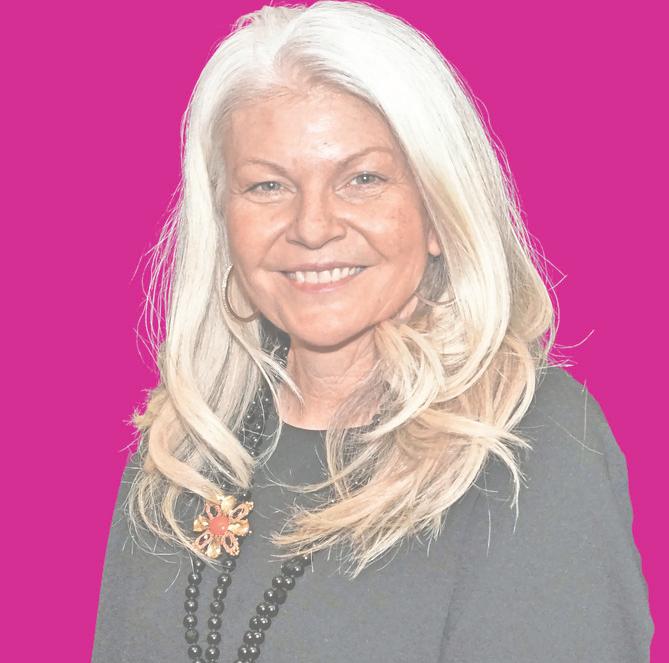















THERESA PORCARO Vice President, Growth & Marketing Pelvic Rehabilitation Medicine JESSICA RONDASH, MBA Director, Business Operations & Performance Holt Construction


MEREDITH VANDEGRIFT, MD, FACS Board-Certified Plastic Surgeon Vandegrift Plastic Surgery


WHELAN Capital Program Director The New Terminal One
BAG SPONSOR










SPONSORS CHRISTINA M. ROSAS Member Bond Schoeneck & King PLLC
& CEO Leadology