In the wake of the coronavirus pandemic four years ago, a combination of the CARES Act and the American Rescue Plan provided a crucial financial lifeline to schools across the nation — especially those in Uniondale.
Between the two laws passed by Congress as well as the Elementary and Secondary School Emergency Relief Fund — Uniondale picked up roughly $28 million in state and federal aid.
But even that money can’t last forever. As these funds reached their expiration last fal, districts like Uniondale are grappling with the impending financial shortfall. And administrators and school boards alike are asking: Without this funding, how will the district move forward in sustaining its investments?
“That’s the question of the hour,” said Monique Darrisaw-Akil, Uniondale’s superintendent.
And Uniondale has an advantage over other schools because the district tried to be “smart” with its money, she said, investing in
programs the board believed would outlive the short-term boost in funding. That included improving infrastructure through the likes of installing new HVAC units and airquality filters. The district also upgraded computer labs and exercise equipment, created touchless restrooms, and installed smartboards in every classroom.
The district even installed water bottle-fillers in every school — which officials say are not only more hygienic, but also more friendly for the environment. And they are cost efficient, too.
Other investments include implementing additional mental health resources, purchasing enough electronics to where each student either gets an iPad or a Chromebook to keep for the year, expanded after-school and summer programs, and extra tutoring and support resources for students.
One of the key issues facing Uniondale and other school districts is a phenomenon known as “learning loss” — a by-product of the pandemic where remote and hybrid classes didn’t adequately educate students, resulting in kids being further behind academical-

As yet another threat of a partial government shutdown loomed over Washington, D.C., this week, some residents of Nassau County said they were preparing for a potential health care catastrophe.
According to Empire State Voices — a grass-roots organization dedicated to amplifying the voices of working New Yorkers and holding members of Congress accountable for their votes — a shutdown would be bad, but not as bad as a long-lasting agreement that would cut funding for major services, like Medicaid, that many in this community rely on.
Residents are already grappling with the potential closure by this summer of Nassau University Medical Center, a public benefit hospital 80 percent of whose patients rely on Medicare or Medicaid.
But now, community members and activists are worried about the prospect of facing a situation in which the medical center closes and Medicaid takes a hit in funding, making it harder for low-income residents to receive adequate, affordable health care in a community like Uniondale, that does not have an urgent-care facility within its borders.
Earlier this month, Congress
negotiated and passed a $460 billion spending package, with funding for the department of Health and Human Services, which includes Medicaid, still needing to be negotiated before this week’s deadline. The plan included the cancellation of an impending $8 billion reduction in Medicaid Disproportionate Share Hospital funding, and delayed further cuts until January 2025. Medicaid DSH funding is money from the federal government that is given to hospitals, such as NUMC, that treat many low-income patients on Medicaid.
Although the canceled reduction is a win in the eyes of Empire State Voices, it doesn’t guarantee any help for NUMC’s financial situation by July, when it could close, without additional state aid, which is currently in limbo pending NUMC following the state’s orders earlier this month — which hospital chairman Matthew Bruderman says he will not comply with, calling the demands “extortion.”
If the hospital were to close, County Legislator Siela Bynoe said, “It would be a catastrophic failure to the communities who deeply rely on this public benefit health system.”
Jeannine Maynard, a co-facilitator of the Greater Uniondale Area Action Coalition, agreed that NUMC’s closure would not ContinUeD on pAge 4
Courtesy Joshua Watson/Herald file Uniondale Superintendent Monique Darrisaw-Akil, center, says the school district made good choices with the extra money it received during the coronavirus pandemic. But now that the money is gone, the district will, at some point, have to start making more difficult decisions.Caitlyn Jenner wouldn’t be allowed to participate in women-focused team sports on Nassau County property — but she’s OK with that.
The transgender former Olympic gold metal-winning decathlete joined County Executive Bruce Blakeman in Mineola Monday to express her support for Blakeman’s ban on transgender girls and women participating in teams geared exclusively toward girls and women on county property.
“I have empathy for all LGBT people, and I have a thorough understanding of all the struggles, no matter how different our circumstances,” Jenner said.
Jenner — who transitioned into a woman in 2015 had a six-year career in the Olympic men’s decathlon, taking the gold at the 1976 Summer Olympics in Montreal. Before, Jenner played college football for the Graceland Yellow Jackets.
She recounted her time training and competing in the Olympics, and the saliva tests that the International Olympic Committee used to test for biological male and femaleness.
“It is done in a matter to protect the integrity of the competition,” Jenner said. “Today, the problem is even more clear. Trans women are competing against women, taking valuable opportunities from the law-protected class under Title IX, and causing physical harm.”
Jenner talked about a North Carolina high school volleyball player who said she was injured after a transgender opponent spiked the ball on her during a game.
“In volleyball, we think of it as a non-contact sport,” Jenner said, “but these are the statistics.”
The women’s net is 7.5 inches lower than the men’s net, making it easier to spike, she said. Men also tend to

be 8 inches taller than women on the volleyball scene, and can jump 6 inches higher.
“The average spike for the men, a good spike, is 82 miles an hour,” Jenner said. “The average spike for women, 64 miles per hour, 30 percent greater velocity playing a man. And that’s why we have to protect women’s sports.”
Since her transition, Jenner has become a transgender rights activist, and has starred in her own reality television show, “I Am Cait,” documenting her transition.
Jenner ran as a Republican for California governor during the 2021 unsuccessful recall election, earning just 1 percent of the vote.
But not everyone agrees with what Jenner stands for — even in the LGBTQ+ community. David Kilmnick, president and founder of Long Island-based LGBT Network, said Jenner’s support of Blakeman’s executive order is a contradiction to her own identity.
“Embracing policies or ideologies that undermine the rights and dignity of LGBTQ+ individuals is not only hypocritical, but also harmful,” Kilmnick said, in a statement. “Jenner’s alignment with such positions not only perpetuates discrimination, but also adds fuel to the rising number of violent and hate incidents committed against transgender individuals.”
Blakeman signed his executive order last month demanding sports, leagues, organizations, teams, programs or sport entities operating in county facilities designate themselves based on male, female or co-ed, and then only accept athletes who meet that criteria according to what was originally listed on their birth certificate.
While those born male would not be allowed to participate in female teams, the order does not ban females from joining male teams.
“My executive order has one goal, and that is to make sure that competition is fair and safe in Nassau County,” Blakeman said. “That we protect women and girls, so that when they train for an athletic competition — when they train to get on a team, when they’re in a meet or tournament — they have the ability to compete fairly.”
Attorney General Letitia James sent a cease-anddesist letter to Blakeman earlier this month, demanding he rescind his executive order, calling it not only transphobic, but also illegal under the state’s human rights and civil rights laws.
Blakeman responded a few days later by joining Mark Mullen, a Nassau County parent of a female athlete, to file a federal lawsuit contesting the order.


In one of the most segregated counties in the entire country, high school students from all over Nassau came together to discuss the everyday disparities they feel across the board, and ways their generation will work to overcome them in the near future.
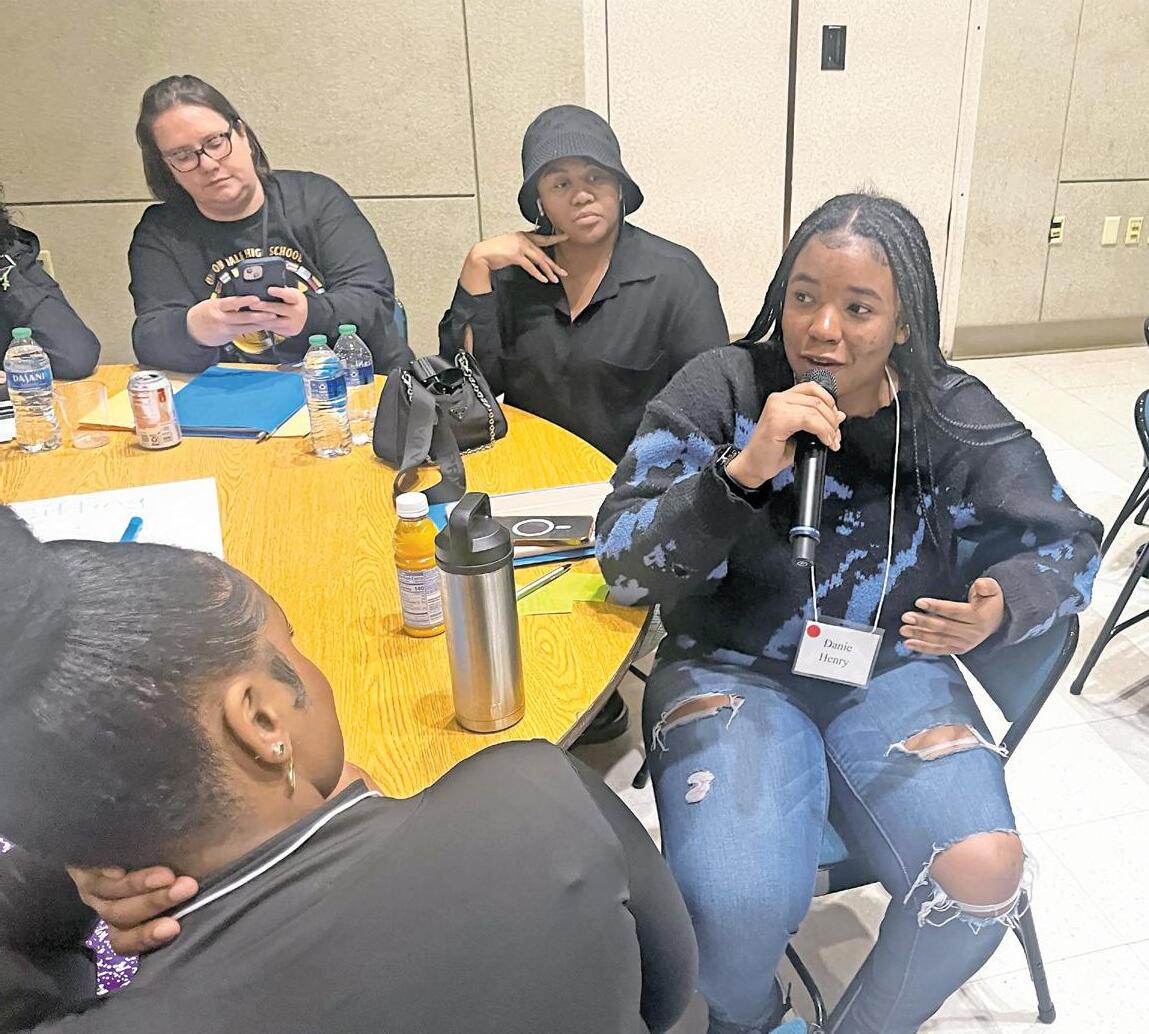
The Long Island Leaders of Tomorrow Summit last Friday, organized by ERASE Racism — a nonprofit organization committed to eliminating racism and promoting equity — invited over a hundred students from various districts to SUNY Old Westbury for an in-depth conversation surrounding racism, class, and solutions they want to see.
If it is about us, but doesn’t include us, then it is not really about us.
“What today does is allow students to identify areas that they can work with their teachers and school leaders to shift some of those biases,” said ERASE Racism’s director, Laura Harding. The day started with breakfast and a conversation surrounding structural racism in their schools and communities.
DANIelle lee director, Social and Environmental Justice Institute at Old Westbury.“You’re the generation that is going to fix the things that my generation and the generations before mine destroyed,” Danielle Lee told the room full of students. Lee is an associate dean, assistant professor of English, and the director of social and environmental justice institute at Old Westbury.
Lee stressed not just the importance of events such as last week’s summit for the young students who attended, but also stressed the importance of having these students see role models and people who look like them as leaders within the summit itself.
“If it is about us, but doesn’t include us, then it is not really about us,” Lee said, “and that goes for everything.”
Lee also told students that even though they come from many different places, to “listen to each other,” because they all might be going through similar things.
And she was right. Students from districts like Uniondale and Malverne compared their experiences of being Black and Brown in the two communities, comparing experiences, expectations, the demographics of people they see everyday, and the resources available to them.
“Having to go through metal detectors everyday to get into school would make me feel like a criminal,” said Jayden, a student from Malverne high school who attended the summit, after learning of the security measures in place at Uniondale’s high school.
Although there were stark differences in some experiences between the two communities, all of the students felt they had the shared experience of dealing with structural racism in their everyday

lives. Despite Malverne being 70 percent white, the district’s minority enrollment makes up about 80 percent of the student body, with almost half of all students identifying as “economically disadvantaged,” according to New York state data.
Most students from Malverne village, according to multiple sources, attend private schools over the public school in the community. According to private school review, at least 25 percent of residents in Malverne village send their children to private schools. While Matt Morello, a 44 year-old Malverne resident, believes the number is actually closer to 75 percent of residents with children.
“We’re from Malverne, so we know the consequences of getting rid of DEI,” said one student who asked not to be identified. That student believes that without initiatives like diversity, equity and

inclusion, students such as themselves and others who look like them may be overlooked throughout their community, which they believe is already a common thread.
On top of important, eye-opening conversations, students also learned about the five R’s of “real integration,” which was created by students in New York City. These R’s include resources, relationships, restorative justice, representation, and an end to the racial and socioeconomic segregation within our school districts.
Students also were able to attend an educational workshop, giving them the choice between financial education, economic work development, tips and tricks with the college application process, a workshop on outreach and advocacy as well as explaining how to run for office,
and even a workshop for the chaperones, discussing adult advocacy.
Also making an appearance at the summit was Assemblymember Taylor Darling, who spoke to students and tried to ignite further inspiration for them to continue to be “catalysts for change.”
“Long Island is very segregated,” Darling told the Herald. “We’re dealing with a disproportionate distribution of funds and resources,” she continued, “we shouldn’t be able to dictate or know who lives in what community based on what we see on the outside, and that is happening very comfortably on Long Island.”
“Racism is very present today in American society,” said Emily, a Uniondale highschool student. But she believes, along with the rest of the students in attendance, they will be the generation to end these disparities.
only be catastrophic, but would disproportionately affect low-income residents — especially those in Uniondale, many of whom have limited access to adequate health care.
Maynard recounted how her father, who went into cardiac arrest a few years ago, was saved by fast-acting doctors at NUMC.
“If any more time had passed and he had to be taken somewhere else,” Maynard said, “he wouldn’t have made it.”
Last Friday, residents and activists gathered outside U.S. Rep. Anthony D’Esposito’s office in Garden City to demand that he oppose any proposed cuts to Social Security, Medicare, Medicaid, and other resources that they say many Long Islanders need.
Despite Esposito’s pledge in a tweet a year ago that he would “always fight to fully fund Social Security, Medicare and Medicaid,” and to “never support cuts to these vital programs,” activists contend that a faction of extreme Republicans are pushing to cut funding for the programs, an idea that D’Esposito has supported in the past. He backed a proposal to slash nearly all government funding by 30 percent last September.
“He can say whatever he wants — his

voting record speaks for itself,” Maria Martinez, executive director of Empire State Voices, told the Herald.
“His record shows that, time and time again, he has voted in line with extremists that are pushing for legislation that goes against the interest and well-being of our Long Island communities,” added Angel Reyes, an activist with Make the Road Action, an organization dedicated
to empowering working-class Latino communities.
Residents are now calling for more transparency from D’Esposito, and his assurance that he will oppose any Republican efforts to “slash funding for programs that Long Island families rely on,” from Social Security and Medicaid to education and child care assistance.
Some rally attendees expressed wor-
ries about Gov. Kathy Hochul’s proposed $1.2 billion in cuts to a state Medicaidfunded home care program in her budget, which lawmakers rejected this week.
Leaders in Albany now want the state to rely on federal money to avoid cuts to programs that provide a lifeline to millions of New Yorkers. This means that New York, following in California’s recent footsteps, would be required to apply for a special federal waiver for the next three years, with the goal of maximizing the money that the state is reimbursed by Medicaid for programs that help residents.
But with funding for the federal programs up in the air, these same activists and community members are worried that their access to these resources may soon shrink.
“While the partisan hacks at Empire State Voices and Make the Road Action were failing to mislead the public during their recent midday protest,” Matt Capp, Esposito’s communications director said, in a statement, “Congressman D’Esposito was busy securing millions in direct federal funding for educational, infrastructure, and public safety projects across the 4th District, while also working on Capitol Hill to pass bipartisan spending bills to fund the federal government.”
ly than they should be.
So far, the superintendent said, the district’s plan is working. The idea was that these infrastructure upgrades would essentially be one-time payments that wouldn’t have to be re-purchased, while investments into students — such as technology upgrades — would last a number of years before needing replacing.
“We have to be really smart about phasing in the purchase of new computers on a rolling basis so they can replace those that have lost their usefulness,” Darrisaw-Akil said, “but a lot of the other hardware and air quality facilities improvement will be with us for a while. We’re thinking that some of those things will not have to be replaced or upgraded for the next five years or so.”
The district also is proactively apply-

ing and searching for grants to increase their funding. This includes Project Prevent, a federal program that helps fund the district’s after-school programs, as well as the 21st Century Grant, which brings the district $1.2 million.
“We’re going to keep applying for grants,” the superintendent said. “We believe that we’ve been successful in those efforts, but some of those things are going to have to shift into the general fund budget, which is not easy. But, we’re going to have to make some decisions on what’s going to have the most impact on students, and figure out how we continue those things.
“Unfortunately, other things might have to be phased out if we don’t have the funds to continue them.”
What those cutbacks could entail is unclear right now, but Darrisaw-Akil remains confident the district will con-
tinue operating as it is now through the next academic year. Some of that fallout likely won’t be felt for another three to four years.
“Down the line, decisions might have to be made,” Darrisaw-Akil said. “We’re driven by the revenue that we get from our tax base, and there is a cap on that. There are things that are just out of our control.”
What is out of the district’s control is what it receives in state funding, a source of revenue this district relies on heavily. Last year, Uniondale received $21 million in state funding. But this year, the district only received $5 million.
“I can’t confidently say that nothing will change if our funding from our state continues to be distributed in the manner in which it was this year,” DarrisawAkil said.
Although the future isn’t set in stone,
the district assures the community the financial choices its leaders have made were the best and smartest options longterm.
“We knew this day would come,” Darrisaw-Akil said. “We’ve planned as best as we possibly could to ensure that we continue to provide the level of services that our students need and deserve.”
Even with those smart choices and investments, reaping the rewards requires support from the community.
“Our focus is on our children,” the superintendent said, “on making sure they’re prepared for college and careers, and on making sure that all of our students — including those who have additional needs — that those needs are met.
“We’re not moving backwards, we’re continuing to move forward. But we definitely need the funds, and we are going to need the support of our community.”
Brandon Cruz/Herald Activist Darinel Velasquez speaking to residents outside U.S. Rep. Anthony D’Esposito’s office in Garden City, demanding transparency regarding the congressman’s intentions, and his assurance that he will oppose any ongoing efforts to ‘slash funding for programs that Long Island families rely on.’ ContInUED fRom pAGEThe renowned Rhythm of the Knight show choir from Uniondale High School has once again captured the spotlight, emerging as the Grand Champions at the prestigious FAME Orlando Show Choir of America event. This dynamic competition, featuring talented musical ensembles from across the nation, took place in the vibrant city of Orlando, Florida, showcasing the best of show choir performances in multiple categories.
Iam so proud of all of them.
The next stop is nationals!
LyNNette CARRHICks Show choir directorRhythm of the Knight, Uniondale High School’s famous, much coveted, and nationally renowned show choir has once again captured the spotlight, emerging as the Grand Champions at the prestigious FAME Orlando Show Choir of America event. This dynamic competition, featuring talented musical ensembles from across the nation, took place in the vibrant city of Orlando, Florida, showcasing the best of show choir performances in multiple categories.
Under the expert direction of Lynnette Carr-Hicks, Colton Wynter, and Joe






show choir also secured awards in several categories, including best vocals, best choreography, best set, and best visuals. These accolades underscore their allaround excellence in show choir performance. On top of all of this, Cody Dumpson, a student from Uniondale, was given individual recognition with the “Best Male Stage Presence” award, highlighting his exceptional talent, captivating energy and his significant contribution to the team’s success.
“The victory not only celebrates the hard work and passion of the students,” according to the district, but also solidifies the Rhythm of the Knight Show Choir as one of the top-performing arts groups in the entire nation. Their outstanding performance, which won them all of the mentioned awards in various aspects, can be viewed online at tinyurl. com/372aau3w. The performance already has almost 1.5k views on YouTube.
But as the choir sets its sights on the national level, they face the challenge of fundraising to support their journey and is asking for the community’s support, saying the community’s contributions will play a crucial role in enabling these talented scholars to continue showcasing their skills and representing Uniondale High School on a prestigious national stage.
But Uniondale’s wins didn’t stop at the grand prize — the Rhythm of the Night
Boardman, the choir’s remarkable victory against three other competing choirs highlights their continued exceptional talents and unwavering dedication to Uniondale and the show choir’s excellence, which has been recognized nationally. Reflecting on their triumph, show choir director Lynette Carr-Hicks expressed her astonishment and pride in their victory. “I was in shock when they called our names,” she said. “It was unbelievable. I am so proud of all of them. The next stop is nationals!”
For more information on how you can donate to the shop choir’s journey to nationals, please visit the district’s website at District.UniondaleSchools. org.






 Courtesy Uniondale School District
The
big at FAME Orlando, a national competition in Florida where Uniondale brought home the grand prize, as well as awards in several other categories.
Courtesy Uniondale School District
The
big at FAME Orlando, a national competition in Florida where Uniondale brought home the grand prize, as well as awards in several other categories.
Continuing a series exploring the presence of artificial intelligence in our schools — and, over time, in society as a whole. Thoughts? Questions? Ideas? Email us at execeditor@liherald.com.
What place does artificial intelligence have in schools? Should it be feared? Embraced? Somewhere in between?
These are conversations that didn’t even exist a year ago — at least as far as education is concerned. But as AI becomes more and more accessible, students and teachers alike are finding they can use software to ask questions, find answers, and even complete their work faster — and maybe even better — than they ever could.
But no matter how some may feel about AI — or simply not even understand what AI is — the tool is making its way into schools and curriculum. How fast and how much depends on the district. But at this point, it seems teachers and administrators on Long Island are accepting AI rather than running from it.
One of those districts is Bellmore-Merrick Central High School, which is not just introducing AI to its students — it’s already turning it into a college-level course.
Offered through the computer science department at Calhoun High School in Merrick, the magnet course partners with Long Island University to offer the college credit to not only Calhoun students, but also those from Kennedy and Mepham high schools in Bellmore, too.
“Each project is aligned with artificial intelligence topics that showcase the practical applications of AI,” said Danielle Caliendo, the district’s mathematics and computer science chair.
Students learn the Python programming language while creating AI chatbots. They also program a robot created by a French technology company to use AI features like facial recognition. And they fly drones.
Students also completed a linear regression project designed to make predictions based on existing data, like how public company stocks might perform.
Each project is aligned with AI topics that showcase the tool’s practical applications.
Joe Innaco, who leads the district’s administrative and instructional technology efforts, sees technologies like ChatGPT— a free chatbot system designed to provide a human-like response to a prompt— as fascinating possibilities.
try class.
“If you look at the history, there was a lot of resistance because it would eliminate all the thinking of doing trigonometry,” he said. “It was used, and it was embraced. And it saves more time for creative thinking and innovation.”

“Our vision is of opportunity and innovation,” he said. “That’s how we see technologies like these. Opportunities and innovations for teachers. We want to provide training. We want to encourage exploration in model classrooms, spotlight success, and really host conversations about it.”
Embracing AI goes right to the stop of the Bellmore Public Schools district, where superintendent Joe Famularo already serves on several AI advisory boards at institutions like Adelphi University, New Tech Institute and LIU. He also participates in think tanks conducted to discover how to incorporate AI into the classroom in a safe and responsible way.
While change might be daunting to many, Famularo points out that it’s not unprecedented. Just think about how much opposition there was to bringing something as simple as a slide ruler into a trigonome-
Eventually came scientific calculators, and then the internet. Both received significant pushback, but now who could imagine a classroom without them?
Learning responsible use of AI Instructors at Lawrence Woodmere Academy in the Five Towns are guiding students there in to use AI responsibly. John Tiliakos — who teaches computer science in the middle and upper schools — tends to let his students lead discussions surrounding AI.
AI is coming into his middle schoollevel engineering and technology classes, as well as his more high school-level courses in aviation, aerospace and computer programming.
But even before that, Tiliakos was spreading the word about AI, teaching a class at LWA on how artificial intelligence works in our world.
While that class no longer exists, Tiliakos said he and the other teachers at LWA are still focusing on the same values of providing knowledge for proper use of the technology.
“AI is a great tool,” Tiliakos said. “There’s nothing wrong with it, if it’s used in a positive way.”
That’s why he focuses so much of his attention on inputs — the written instructions given to AI systems. Tiliakos believes that inquisitive nature of teenagers could lead to devious uses of the technology — like writing term papers and the like.
His responsibility, Tiliakos said, is to direct students toward feeding AI prompts that result in helpful information to be used for beneficial causes.
“When you use AI, you see scenarios based on what you did,” he said. “Every action is a reaction.”
But some teachers — even at LWA — aren’t too keen about the AI presence.
“I don’t think it’s positive or negative,” said Christopher Clark, a senior at the school. “It just depends on how you use it.”
One unlikely way of putting AI to use is through another somewhat newer technological offering: podcasting.
“AI is still new. But for podcasting, it’s still very, very new,” said Henry McDaniel, a theatre arts and oration teacher at LWA. “What it can do is help you write a script for your podcast.”
Podcasting students also can use AI to reproduce their own voice to read their scripts, McDaniel said. They then post the productions online.
“Our motto here is ‘at home with the world,’” he said. “What we’re trying to do is give them skillsets, but (also) teach them the responsible way of using those skillsets.”
Implementing AI has been a little slower going in Long Beach, where the discussion on how best to use it continues.
Lorraine Radice, the school district’s literacy director, has worked to alleviate many of the fears some Long Beach teachers might have when it comes to AI, while looking for ways they could try to implement the technology into their respective classrooms.
“Over the summer, I taught two professional development courses in the district and taught teachers how to use ChatGPT,” Radice said. “I surveyed teachers in the fall across the district as to who was using ChatGPT and who knew about it. Even in the fall after about nine months of ChatGPT being in social media circulations and in the news — not as many people had used it as I expected.”
While Radice would very much like developing ways on how AI chatbots like ChatGPT can be used in classrooms, a lot of her time is still focused on educating teachers what exactly the AI software is.
“So, part of the goals of those summer professional development courses was to raise awareness of how to use it,” Radice said,” and then to really start to support teens in thinking about how it could be used from the planning side of being a teacher. And then also how it can be used as a tool to provide support and equitable access to writing and generating ideas for
kids.”
Having access to AI has impacted classrooms already by allowing students to use it to aid research, while many teachers worry they could go too far and have AI completely answer questions and even write essays for them.
But that just means adapting.
A I is a great tool. There’s nothing wrong with it, if it’s used in a positive way
John TiliAkos teacher, Lawrence Woodmere Academy“A teacher raised a great question during a session when talking about using artificial intelligence tools to analyze classical texts,” Radice said. “The same question has been asked so many times, and she asked, ‘If I could just get the answer from a tool like ChatGPT, then what’s the point of even asking this type of question?’
“That’s a great thing for people to think about. What is the point of this question? Can I rephrase this question that really puts the student at the







 Parker Schug/Herald
After an up and down nonconference schedule, Hofstra women’s lacrosse gets a chance to hit the reset button with the start of conference play.
Hofstra entered the start of the Coastal Athletic Association portion of its schedule with a record of 3-4 and kicked off the league slate on an uplifting note with a 13-10 win at Campbell last Saturday.
The Pride is now looking to qualify for the four-team CAA tournament in early May after missing out on the postseason for the first time since 2018 last spring.
“I think it’s a great opportunity for a new season and I think we have started to find out a lot about ourselves and who we are as a team,” said 12th-year Hofstra head coach Shannon Smith. “Overall we have started to play better and we’re starting to hit our stride at the right part of our season when we go into conference play.”

The Pride have already equaled their win total from last season when Hofstra went 4-12 with two of those victories coming prior to a seasonending knee injury to rookie phenom Nikki Mennella. The now redshirtfreshman attacker is back healthy and is third on the team with 16 goals despite missing two games.
Graduate student Taylor Mennella, the older sister of Nikki, is tied for first on the team in scoring with 29 points on 19 goals and 10 assists. Hofstra has also gotten a boost from graduate student attacker Melissa Sconone, a University of North Carolina (UNC) transfer who also has 29 points.
“She brings a lot of leadership and a lot of experience and a calming presence,” said Smith of Sconone, who tal-
lied 35 goals during her UNC career and was part of the Tar Heels’ 2022 national championship team. “She’s been nothing but a tremendous addition and asset to our team.”
Senior midfielder Kerry Walser has provided key veteran leadership in her final season with —- goals so far. The Bay Shore native was an integral part of the 2021 Hofstra team that received an at-large bid to the NCAA Tournament her freshman season.
The Hofstra defense– led by Trinity Reed, Brynn Hepting, Ashlyn McDonald and Christine Dannenfelser— held Wagner scoreless for three quarters in a dominating 15-2 win on March 5. Sophomore goalie Luchianna Cardello is starting in net for the second straight season and recorded 10 saves in a season-open-
ing 13-5 victory against Long Island University on Feb. 10.
The Pride’s roster features plenty of Long Island players including senior attacker Grace Pupke, who was a standout at Seaford High School. Pupke registered an assist late in the Wagner win and is often utilized in the player-up situations on the offense.
“Grace is one of our hardest workers on our team,” said Smith of Pupke, who registered 44 goals and 16 assists during her final high school season at Seaford in 2019. “She’s a great person and a great teammate and brings a lot of energy to our practices.”
Hofstra will host William & Mary in its CAA opener this Friday, March 22 at 5 p.m. before returning home Sunday to face Elon at noon. The Pride will also

host Monmouth on April 12 at 5p.m. and close the conference schedule on April 27 versus Drexel at noon. The remaining road league schedule is highlighted by an April 21 visit to Long Island rival and defending CAA champion Stony Brook at noon.
“Every game that you play is a backyard brawl and anyone can win on any given day in our conference,” Smith said. “I’m just super excited for the journey that we’re about to go on with our team for conference play.”



















Antipasto
•
Caprese
• Stuffed Mushrooms
• Mini Riceballs (choose one)


• Penne Alla Vodka
• Baked Manicotti




• Baked Stuffed Shells


First Course Small Feast- Half Tray Large Feast- Full Tray (choose one)
• Meat or Cheese Lasagne
• Stuffed Rigatoni Bolognese
• Pappardelle & Braised Short Rib (+$10)



• Garden Salad
• Caesar Salad
• Girardinastro Salad
• Mesclun & Goat Salad (choose one) Salad

•
• Stuffed
• Bruschetta Platter
•
•




Side Dish
(choose one)
• Sauteed Broccoli
Last weekend, the community got to witness a heartwarming and captivating dance show with the theme of talent and companionship.
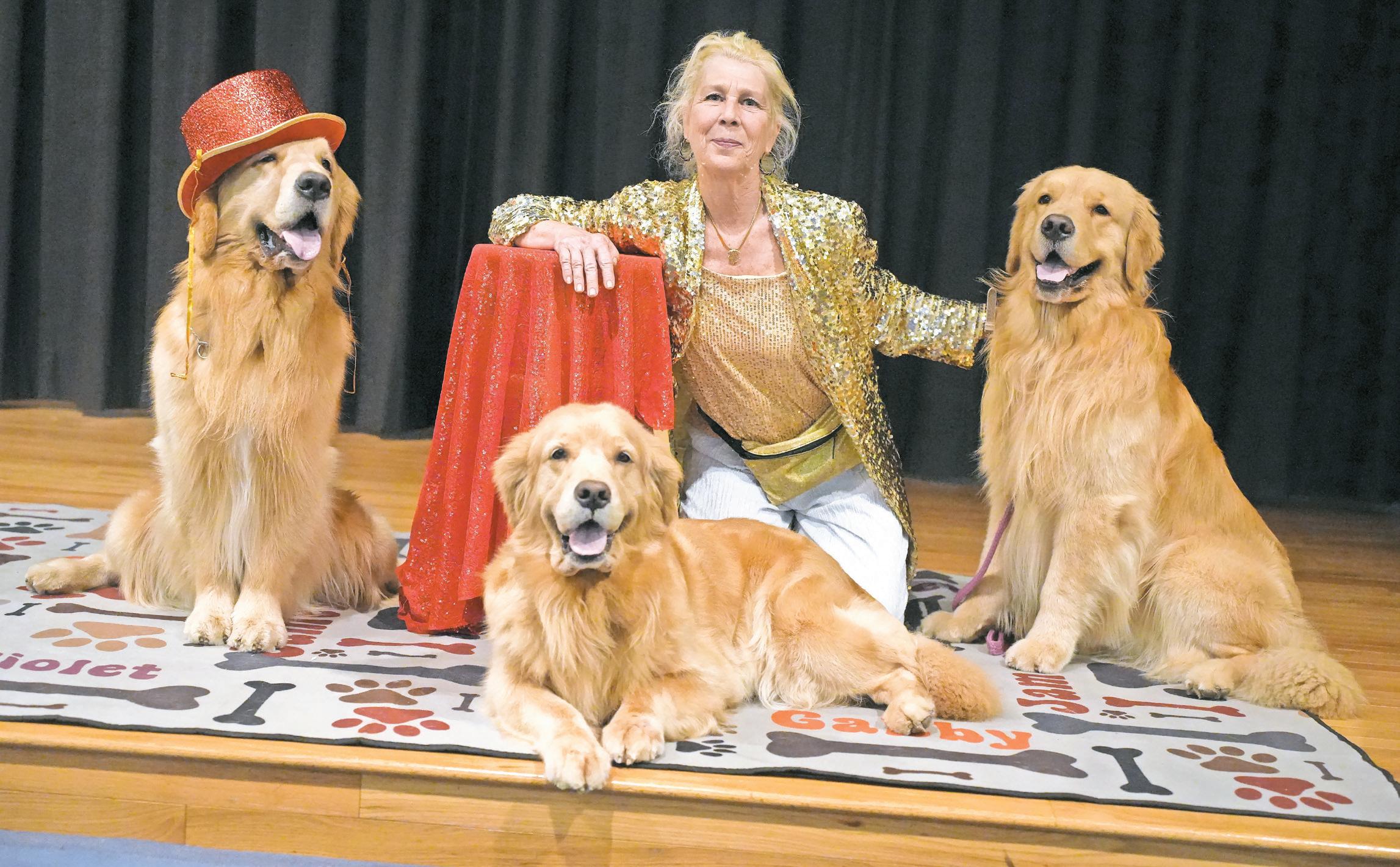
The star performers? Three golden retrievers named George, Gabby, and James, who danced their way into the hearts of everyone present alongside their talented partner, Diana Frohman, on the stage at the Uniondale public library on March 16.
The performance showcased the remarkable bond between humans and their furry friends, even through the art of dance. As the music filled the air with iconic tunes like “New York, New York” and “Rainbow Connection,” the audience was treated to a spectacle unlike anything they’ve ever seen.
Diana Frohman’s choreography, combined with the enthusiasm and agility of George, Gabby, and James, created moments of pure delight and straight-up laughter. The synchronized movements, playful interactions, and graceful twirls of the dancing dogs left the crowd in awe, applause, and tears.
Throughout the show, George, Gabby, and James showcased a wide range of dance routines, from graceful waltzes to upbeat jigs, demonstrating their remarkable agility and obedience. The bond between Diana Frohman and her canine partners was evident in every step, reflecting hours of training and dedication to perfecting their performances.
As the final notes of the music faded away, the applause echoed throughout the library, signaling the end of a truly enchanting show. The dancing dogs not only brought smiles to faces but also celebrated the special connection we share with our four-legged friends.
Diana Frohman’s passion for dancing with her beloved golden retrievers shone brightly throughout the show, creating a magical experience that transcended the ordinary. The Uniondale Public Library’s initiative to host such a unique and entertaining event was met with overwhelming appreciation from the community, who came out in a large numbers to watch the show.





 By Danielle Schwab
reams collide with reality and the subconscious reigns supreme. That’s the essence of the transformative approach of the avant garde artists at the forefront of the Surrealist Movement. Inspired by André Breton’s 1924 Surrealist Manifesto in France, artists, writers and filmmakers diverged from conventional thought to explore ideas such as the unconscious and the irrational.
Step into the fascinating creativity of the surrealists at Hofstra University Museum of Art’s new exhibit “Les Visionnaires: In the Modernist Spirit.” It’s a deep dive into what became a new movement that transformed how artists moved on from rigid historical styles to invent new ways to respond to their world.
The exhibit commemorates the 100th year of the Surrealist Manifesto, which forever changed artistic practice. More than 70 works from 1924 through the 1970s — sourced from the Museum’s permanent collection and the Howard L. and Muriel Weingrow Collection of AvantGarde Art and Literature from Hofstra University Special Collections — are on view.
something powerful,” Giordano adds. “Their partnerships and collective approach captured the realities and hopes of modern society.”
She cites Salvatore Dalí’s lithograph “Untitled from Memories of Surrealism,” (a suite of 12 prints he created in 1971 reflecting on his long artistic career) as a prime example of the movement’s significance.

Rick Wakeman
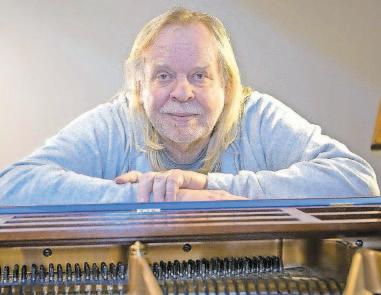
Keyboard wizard Rick Wakeman is headed back on the road for one last jaunt, ‘The Final Solo Tour.’ Known for his incredible talents, sense of humor, and multitudinous back catalog, expect to hear some of his best-known hits from both his solo career and his collaborations with Yes, Bowie and more among musings and hilarious tales from his 50-plus years in the music industry. Wakeman — who has become almost as well-known for his intimate piano shows as his prog rock extravaganzas — has decided that after a decades spanning career spanning he is calling a halt to lengthy American one-man show tours, in order to concentrate on composing, recording and collaborating with other musicians. In addition to his musicianship, Wakeman has evolved into a well-loved television presenter and author, with his bawdy British wit endearing him to audiences on both sides of the Atlantic.
Friday, March 22, 8 p.m. $75, $5, $45, $29.50. The Paramount, 370 New York Ave., Huntington. Tickets available at Ticketmaster.com or ParamountNY.com.

• Now through July 26
• Saturday and Sunday, noon4 p.m.; Tuesday through Friday, 11 a.m.-4 p.m.
• Emily Lowe Gallery, Hall, South Campus, Hempstead.
“The manifesto is important because artists from this time period are breaking away from the French Academy,” Alexandra Giordano, Hofstra University Museum of Art’s director and co-curator of the exhibit, explains. “It’s a concrete way to unify artists working in different styles. The manifesto really engages the unconscious mind, the importance of dreams and free association, the rejection of rational thought. It’s revolutionary because it’s really about the liberation of the imagination.”
• For information, and to RSVP to related events, call (516) 463-5672 or visit Hofstra.edu/ museum
Suddenly, artists whose work was tethered to the French Academy, established in 1635, realized that new modalities, mediums, and methodologies were a more appropriate way to respond to the rapidly changing world in which they lived. “Political, economic and cultural shifts inspired a new forward-thinking attitude in artists who, in turn, discovered radical innovations in aesthetic forms, techniques and content. Paris was the epicenter. Artists were drawn to the city, where a drive for pushing boundaries and sharing their transformative vision thrived,” Giordano explains in the forward to the exhibit catalog.
Jean Arp, Marc Chagall, Jean Cocteau, Salvador Dalí, Max Ernst and Joan Miró are among the 25 artists and writers represented here. Besides the artworks, first-edition books are on display including an original copy of the Surrealist Manifesto. Françoise Gilot, who had a tumultuous, decade-long partnership with Picasso and is the mother of two of his children, also figures prominently in the exhibit. Gilot had a close association with Hofstra and was awarded an honorary doctorate in 1982. She was an honorary conference chair of the 1985 Hofstra Cultural Center conference “Toward a Reappraisal of Modernism,” a program on avant-garde art and literature.
The Surrealist movement emerged in response to shifting political and societal landscapes.
“You had World War I and World War II that were devastating events, but at the exact same time you had Sigmund Freud’s interpretation of dreams,” Giordano says. “All of these new ideas were being explored, juxtaposed to these scary world events. Artists were responding to it all.”
Paris became a hub for artists to collaborate — sharing ideas, living spaces, lovers, and friends.
“They show us how we can work with our peers to produce
“It reflects on the stream of consciousness with this out-of-body experience,” she says. “You have this large eye in the background, there’s a clock on the pupil and (in the forefront) there’s butterflies. It captures otherworldliness.”

Not only was a change of ideas happening at the time, but also a change of mediums.
“They focused on interdisciplinary vision using a lot of different materials,” Giordano says. “In addition to this dream-like quality and imagery, there is also this idea of collaboration for bookmaking, photography, collage, poetry, set design and film. These artists created these new ideas towards art, which was a deviation from the expected outcome.”
One of the ‘Les Visionnaires’ as they were known, was filmmaker and artist Jean Cocteau, who directed the 1946 adaptation of “Beauty and the Beast” (La Belle et la Bête). Based on the original fairytale with a surrealist twist, the film is a testament to bringing the traditional to reinvention. Visitors can view portions of the film throughout the exhibit.
As always, related programming enhances the exhibit. For those who want a more in-depth look, join Giordano for a guided exhibit tour and discussion, Tuesday, April 16, at 5 p.m. During the tour, as Giordano puts it, participants will learn all the “juicy tidbits.”
As Long Island’s only nationally accredited public-facing academic museum, Hofstra Museum is an important local resource.
“Our neighboring communities don’t realize that they don’t have to travel to New York City to see wonderful art, they can come here,” Giordano adds. “They can be nose-to-nose with important artists, and experience this beautiful art in their backyard.”
The exhibit includes Salvador Dalí’s etching and lithograph, Untitled, from Memories of Surrealism, Portfolio, 1971. A gift of Benjamin Bickerman. Also Françoise Gilot’s lithograph IX, from On the Stone: Poems and Lithographs (Sur La Pierre: Poemes et Lithographies), 1972. Courtesy of Special Collections, Joan and Donald E. Axinn Library, Hofstra University.

The Ivy League of Comedy arrives on Long Island with their elite brand of clever humor. Carmen Lynch (above), Ryan Reiss and Shaun Eli deliver the laughs in this fast-paced evening of stand-up. Lynch, who made it to the semi-finals of NBC’s ‘Last Comic Standing,’ is known for her deadpan delivery and riffs on life. A rising star from a bilingual family, who lived in Spain as a child, she’s appeared on a string of latenight television shows,’Inside Amy Schumer,’ and more. Funnyman Reis, also a writer-actor, began his career while attending NYU, and quickly became a favorite act on the scene. His quick wit and instant likability have made him one of the most sought-after comics on the club circuit. Eli has rightfully been called one of America’s smartest comics. Whether it’s a story about dining with a vegetarian or successfully fighting a parking ticket in criminal court, master storyteller Eli shows you that there’s hilarity in the ordinary if you approach life with a comedic warp. For just about anything he’s experienced he has hilarious stories at the ready.
Saturday, March 23, 8 p.m. $45-$50. Molloy University, 1000 Hempstead Ave., Rockville Centre. Tickets available at MadisonTheatreNY.org or (516) 323-4444.

Get ready for an unforgettable night on the Paramount stage, Saturday, March 30, 8 p.m. Robert Neary honors an icon with The Neil Diamond Experience, a tribute show like no other. With over 35 years as a Broadway, TV, and film actor, Neary brings a unique touch to this production, weaving Neil Diamond’s greatest hits with stories from interviews, quotes, and autobiographical books. Neary creates an incredible cut above the rest tribute show. You will swear you are watching the master himself as he and the band perform Neil Diamond’s greatest hits. With his powerful presence, from the moment he struts on stage wearing trademark black, gray, and silver sequined jacket, Neary, uncannily, resembles Neil Diamond at the height of his touring career in the 90s and 2000s. His wit and mannerisms on stage is spot on, especially when he plays his guitar. When he speaks and tells the stories and trivia behind some of Neil’s most popular songs, his rich baritone gravelly voice can easily be mistaken for Neil’s own speaking voice. But make no mistake about it at all, if you close your eyes and listen to him sing any of the 22 classic Neil Diamond songs with the magnificent band behind him, you will swear you are listening to the Master himself. This truly is, the most authentic tribute to one of the greatest artists in musical history. The title says it all. It is the quintessential Neil Diamond Concert Experience. With a finale that will blow your mind, the show is guaranteed to have you on your feet dancing and cheering. $49.50, $39.50, $35, $29.50, $25. The Paramount, 370 New York Ave., Huntington. Tickets available at Ticketmaster.com or ParamountNY.com.
See some birds with the South Shore Audubon Society. All are welcome to join members for the next in its series of bird walks, at Norman J. Levy Park and Preserve, Sunday, March 24 , starting at 9 a.m. The entrance road to the Norman Levy Preserve is located on the south side of Merrick Road, just east of the Meadowbrook Parkway. Walk leaders, other birders and nature enthusiasts are happy to share their knowledge and experience with you. Bring binoculars. The group will meet at the gazebo. To register, text your name and contact information to (516) 4679498. No walk if rain or snow. Text regarding questionable weather. For more information, visit SSAudubon.org.
In concert
Plaza Theatricals presents a lively tribute to The Temptations, Saturday, March 23 , 7:30 p.m. Groove along with The Fellas, in “Just My Imagination,” a salute to the Motown icons. Enjoy those great tunes, including “Just My Imagination,” “My Girl,” “Ain’t Too Proud to Beg,” and more. It’s at the Elmont Library Theatre. 700 Hempstead Tpke., Elmont. $40, $35 seniors. For tickets, call (516) 599-6870 or visit PlazaTheatrical.com.

On exhibit
Nassau County Museum of Art’s latest exhibition, “Urban Art Evolution,” is a comprehensive exhibit featuring a diverse range of compositions from the 1980s through the present by creators who were based in the rough and tumble downtown area of New York City known as Loisaida/LES (Lower East Side/East Village) and close surrounding neighborhoods.
Artists pushed the boundaries of what was considered “art” with a primary focus on street/graffiti art. The exhibit’s scope, guest curated by art collector/gallerist Christopher Pusey, offers an even broader view from other creative residents, who worked inside their studios but still contributed to the rich fabric of the downtown art scene from different vantage points and aesthetics.
Works include sculpture, paintings, photography, music, and ephemera from many noted and influential artists.
Opens March 23, on view through July 7. Nassau County Museum of Art, 1 Museum Dr., Roslyn Harbor. (516) 484-9337 or NassauMuseum.org.

























Family and Children’s Association (FCA), Long Island’s leading health and human services nonprofit organization, announced the opening of two FCA Gambling Support and Wellness Centers, one in Hempstead, the other in Hicksville. The services available in these centers will be made possible partially through a $200,000 donation made by Sands New York.
“We know that most people who gamble, do it as a form of entertainment. As a responsible community partner and industry-leading entertainment company we must identify and help solve for issues in our community,” said Ron Reese, Senior Vice President at Las Vegas Sands. “We are proud to partner with FCA to provide this valuable resource to Long Islanders.”
According to the National Council on Problem Gambling, about 85% of U.S. adults have gambled at least once in their lives, with 60% having gambled within the past year. However, between 1% and 2% of the U.S. adult population, or 2 to 4 million adults, will
experience a gambling disorder in their lifetime. “From the state lottery expansion to casinos to online sports betting, which became legal in New York in 2021, gambling is here to stay. It’s imperative that we introduce new programs to identify and treat problem gambling especially as the need emerges,” said FCA President and CEO Dr. Jeffrey Reynolds. “This is particularly important for college kids and people who already have a casino that blinks, beeps and beckons in their back pocket 24/7. We want to make the resources readily available to every Long Islander who needs or wants help.”
With the increase in online sports betting, gambling has reached newer, younger audiences, many unaware of the larger consequences of problem gambling. New York recently announced that it generated $862 million from mobile sports wagering in its second year of operation. When added to the $693 million and $200 million in licensing fees collected in 2022, that brings the total generated revenue to $1.75 billion.
We want to make the resources readily available to every Long Islander who needs or wants help.
Dr. Jeffrey Reynolds, Family and Children’s Association President and CEO
We are proud to partner with FCA to provide this valuable resource to Long Islanders.Ron Reese, Senior Vice President at Las Vegas Sands
one of only two hotel and gaming companies included, sands’ 2024 recognition demonstrates the value it delivers to host regions and the hospitality industry
Las Vegas Sands has again been named one of Fortune’s World’s Most Admired Companies in the news outlet’s 2024 list of the most respected and reputable global businesses, marking the company’s 10th appearance on the list.
“Sands’ being included on Fortune’s list is an endorsement of our performance in delivering economic, social and environmental value to our communities, Team Members, investors and customers,” said Patrick Dumont, President and Chief Operating Officer of Las Vegas Sands. “Entering 2024 with this recognition demonstrates our ability to successfully navigate change and evolution, while remaining focused on the positive impact we strive to deliver.”
Sands is the largest global developer and operator of world-class integrated resorts. Combining luxury hotel rooms and suites, gaming, state-of-the-art meeting and convention facilities, expansive retail offerings and an array of entertainment attractions, the company’s iconic integrated resorts are premier attractions that draw hundreds of thousands of business and leisure tourists to its regions annually.
In each of its regions, Sands is focused on being the employer and partner of choice; keeping its communities strong by making them ideal places to live, work and visit; and minimizing environmental impact by being a leader in preserving natural resources and incorporating sustainable practices.
With the goal of achieving measured, ongoing environmental, social and governance progress in these areas, the company established 2021-2025 ambitions to invest $200 million in workforce development, contribute 150,000 volunteer hours to its communities and reduce carbon emissions by 17.5% by the end of the period, mapping to its People, Communities and Planet corporate responsibility pillars.

Under the Communities pillar, the company surpassed its 150,000 community service hours at the end of 2022 because of extensive support for pandemic-related initiatives, along with core Sands Cares volunteer efforts. The new 2025 target will be announced in Sands’ next ESG report in spring 2024, along with progress toward all three ambitions.
As of 2022 reporting, the company had invested $56 million in workforce development initiatives, bringing its cumulative investment to $113 million since 2021, well past the halfway point. Carbon emissions reduction was at 50%; however, that figure reflected continued pandemic-related impact on property visitation and will be updated in the 2023 ESG report.
Sands’ designation on the Fortune World’s Most Admired Companies list follows recent recognition on Newsweek’s 2024 America’s Most Responsible Companies list as well as the 2023 Dow Jones Sustainability World and North America Indices.
As in the past, Fortune collaborated with its partner Korn Ferry on this survey of corporate reputations, which began with a universe of about 1,500 candidates: the 1,000 largest U.S. companies ranked by revenue, along with nonU.S. companies in Fortune’s Global 500 database that have revenues of $10 billion or more. The assortment was winnowed to the highestrevenue companies in each industry, a total of 660 in 29 countries. The top-rated companies were picked from that pool of 660; the executives who voted work at the companies in that group.
To determine the best-regarded companies in 52 industries, Korn Ferry asked executives, directors, and analysts to rate enterprises in their own industry on nine criteria, from investment value and quality of management and products to social responsibility and ability to attract talent. A company’s score must rank in the top half of its industry survey to be listed. For complete rankings, visit fortune.com.
Continued from page 1
The addition of 3 downstate gaming licenses to be awarded by New York State is expected to further increase state revenue from gambling. Sands New York is currently preparing a bid for one of the three available gaming licenses for its planned integrated resort and entertainment center at the Nassau Coliseum property in Uniondale, New York.
FCA, with its 140-year history of helping Long Islanders, has won state certification from the Office of Addiction Services and Supports (OASAS) to provide problem gambling counseling and support to those who need or want help. FCA’s new Gambling Support and Wellness Centers will offer individual, group, and family counseling including financial counseling and planning to individuals and families experiencing problem gambling issues.
The announcement was made during a press conference at FCA headquarters in

In a bid to bolster local supplier diversity and entrepreneurship, Long Island-based Minority Millennials and Sands New York recently joined forces on The NextGen Supplier Diversity Gathering at the Barclays Center for a spirited Brooklyn Nets game.
This partnership event served to offer essential resources and connections for Minority, Women, and Veteran-owned business proprietors potentially interested in bidding for contracts with the Sands’ planned development in Uniondale. This collaboration between Sands New York and Minority Millennials not only equips business owners with vital information and contacts but also beckons the next wave of community entrepreneurs, eager to carve their niche in the Long Island economy.
"These types of intimate networking opportunities with likeminded business owners are rare and extremely valuable. Getting to speak face to face with other suppliers and Sands executive leadership can really be a game changer for my company," said Daphne Baptiste, from Valley Stream.
Participants seized the opportunity, recognizing the potential to expand their networks and stimulate economic growth, facilitating invaluable connections, shared insights, and fostering potential partnerships.
Sands New York looks forward to continuing programming that highlights its commitment to nurturing local business prospects

and cultivating the professional advancement of diverse, young talent, underlining their unwavering dedication to fostering a vibrant and inclusive local economy.
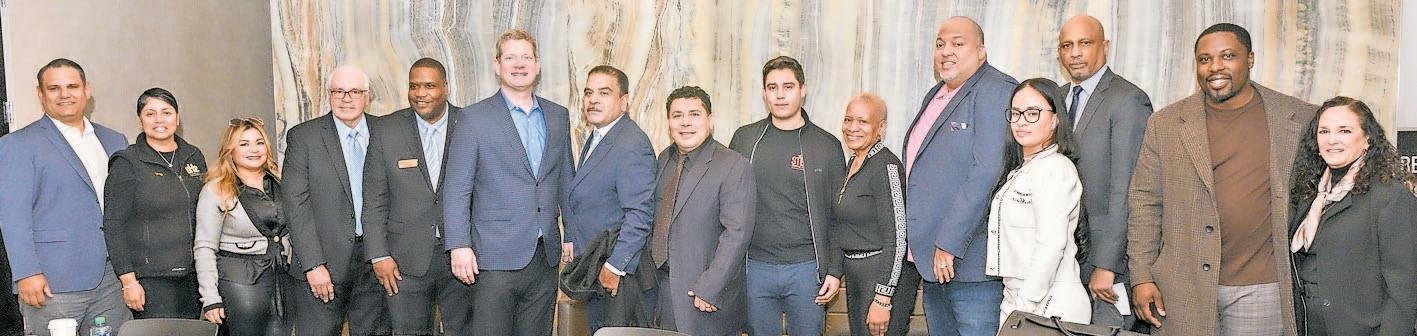
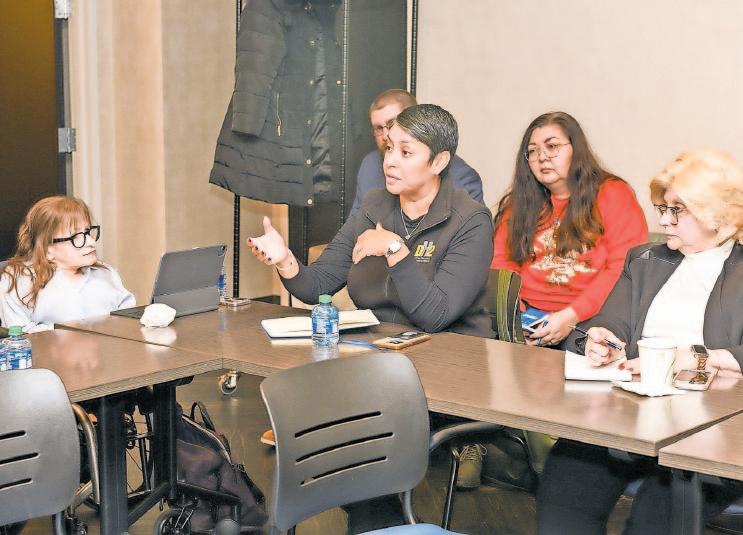
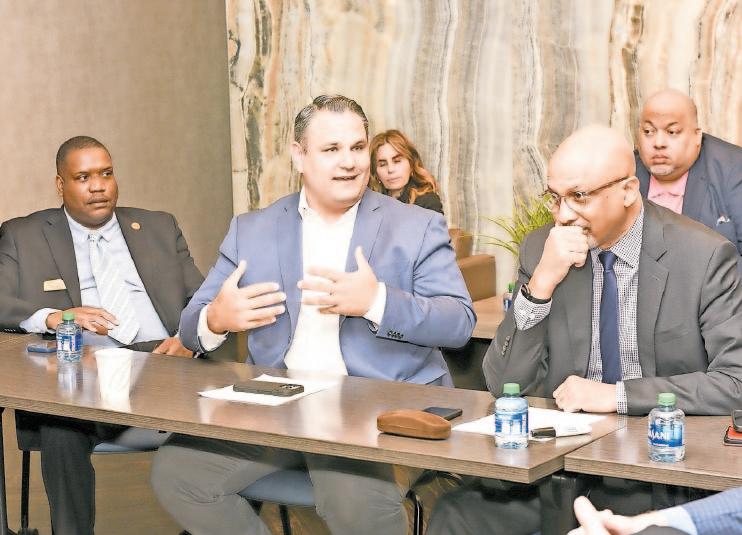
Sands procurement executives Chad Forster and Uzoma Ehimere joined the Business Development and Tourism Work Group on Thursday, Feb. 22 to build a plan to engage local businesses into the Sands procurement pipeline for opportunities stemming from the project.
The work group was convened to connect Sands with Long Island local and regional stakeholders and has met consistently for over a year to help inform the public about the project and direct local business owners on how to get involved in the tremendous opportunities the development presents. With the work group's guidance, Sands and the regional chambers have produced the procurement academy and resource fair event series at Nassau Community College, Suffolk Community College, and virtually, as well as the widely attended Chambers Clink + Collaborate event at the Coliseum.
The most recent meeting centered on building out the next steps for local businesses in the Sands procurement pipeline. The robust discussion included representatives from the local and regional chambers, small business development centers, and local business non-profits to ensure that Long Island’s business community is fully informed on how to stay involved as the project grows closer.
who we are:




Poet-essayist Elizabeth Schmermund, who is an assistant professor of English at SUNY Old Westbury, reads from her works, as part of Hofstra University’s Great Writers Great Readings series, Wednesday, March 27, 4:30 p.m.
Her work has appeared in The Independent, Mantis, and Gyroscope Review, among other venues. Her first poetry chapbook, “Alexander the Great,” is published by Finishing Line Press. Free and open to the public. Guthart Cultural Center Theater, Axinn Library, South Campus, Hempstead. Register in advance at events.hofstra. edu or call the Hofstra Cultural Center at (516) 463-5669 for more information.
Uniondale Junior Friends invite teens in grades 6 through 12 to join in their peer-led meetings, Fridays, 4:30-5:30 p.m. Discuss upcoming events, share ideas and learn about community service opportunities. 400 Uniondale Ave. For more information, visit UniondaleLibrary.org or call (516) 489-2220.
The Uniondale Community Land Trust meets at Uniondale Library, Thursday, March 21, 6-8 p.m. The nonprofit organization is focused on creating affordable housing opportunities in Uniondale and throughout Nassau County. 400 Uniondale Ave. For more information visit UniondaleLibrary.org or call (516) 489-2220.
Are you interested in eBooks or other digital library services, but don’t know where to start? If so, schedule a 30-minute session at Uniondale Public Library, on Mondays, Wednesdays, or Fridays, 9:30 a.m.-8 p.m. Registration required. 400 Uniondale Ave. Visit UniondaleLibrary.org call (516) 489-2220 for more information.

Mercy Hospital offers a peer to peer meeting for breastfeeding support and resources, facilitated by a certified breastfeeding counselor, every Thursday , 10:30 a.m.–11:30 a.m. Bring your baby (from newborn to 1 year) to the informal group setting. All new moms are welcome, regardless of delivering hospital. Registration required. Call breastfeeding counselor, Gabriella Gennaro, at (516) 705-2434 to secure you and your baby’s spot. Mercy Hospital, St. Anne’s Building, 1000 North Village Ave., Rockville Centre. For information visit CHSLI.org.
Items on The Scene page are listed free of charge. The Herald welcomes listings of upcoming events, community meetings and items of public interest. All submissions should include date, time and location of the event, cost, and a contact name and phone number. Submissions can be emailed to thescene@liherald.com.

Long Island Children’s Museum welcomes spring when it opens its doors for an after-hours celebration, “Spring EGGstravaganza,” Saturday, March 23. Peter Cottontail greets families, 6-9 p.m., with a night of engaging activities celebrating iconic symbols of the season. Children can start their evening by decorating a Cool Carrot goody bag to collect items throughout the night. Activities include the creating such spring-themed items as a Bunny Puppet Pal, How Does your Garden Grow planter, an Everywhere a Chick Chick necklace and a Spring has Sprung hat. Also test your skills in egg relay races and take part in a museum-wide scavenger hunt. All that celebration got you egg-hausted? Make a sweet treat to recharge your energy.
The LICM Theater hosts eye-popping performances of BubbleMania Jr. with bubbleologist Jim Napolitano (6:15, 7:05 and 8 p.m.) Sit back and witness fascinating bubble sculptures being crafted and discover soap bubble tricks, with plenty of comedy and audience interaction woven into this spell-binding show. Dancing bubbles, bubbles inside bubbles, arches and a bubble fountain on display create a truly memorable performance. (Additional ticket required for theater performance.) $15 per person ($13 members); BubbleMania Jr. ticket fees are $4 with EGGstravaganza admission ($3 members). Advance tickets are recommended for this popular event. Museum Row, Garden City. (516) 224-5800 or LICM.org.
Converse, collaborate and create at Family Saturdays at Nassau County Museum of Art, Saturday, March 23 , noon-3 p.m. Get inspired by the art and objects in the galleries and then join educators at the Manes Center to explore and discover different materials to create your own original artwork. Kids and adults connect while talking about and making art together. A new project is featured every week. $20 adult, $10 child. For ages 2-14. Registration required. Nassau County Museum of Art, 1 Museum Dr., Roslyn Harbor. Visit NassauMuseum.org for to register or call (516) 484-9337.
The Long Island Nets take on the Grand Rapid Gold, Tuesday, March 26, at 7 p.m., at Nassau Coliseum. Tickets start at $27. 1255 Hempstead Turnpike, Uniondale. Visit NassauColiseum.org for tickets.





































































































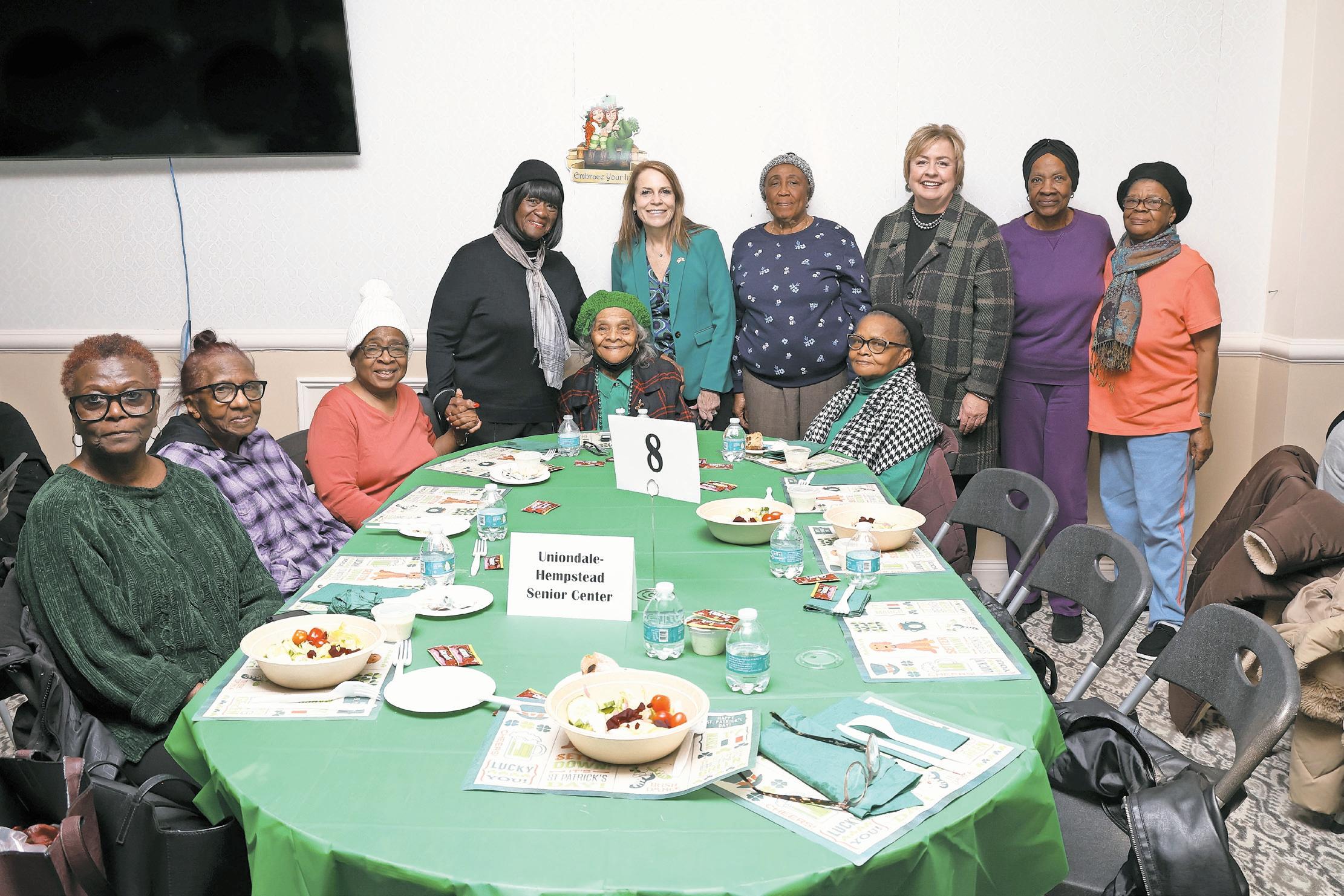
Members of the Uniondale-Hempstead Senior Center were greeted by Hempstead town clerk Kate Murray and receiver of taes Jeanine Driscoll during a St. Patrick’s Day luncheon held at the Sands in Lido Beach last week.
During a rally outside the State Senate and Assembly chambers in Albany last week, hospital administrators, physicians, nurses and staff joined State Senators Kevin Thomas, Steve Rhoads and Patricia Canzoneri-Fitzpatrick and Assembly members Taylor Darling and John Mikulin to urge the state to restore critically important aid that is necessary for the Nassau University Medical Center to continue to provide the highest quality services to its patient population.
“We are asking for our governor’s help and our government officials help, so we can continue our good work … while our staff continues to go above and beyond,”NUMC interim president and chief executive Megan Ryan said.
NUMC has implemented a comprehensive plan to address the financial challenges faced by Long Island’s largest safety net hospital. The plan is intended to create new efficiencies and increase revenue for the hospital that over time will allow it to require less State aid.
However, as a hospital that is designed to receive low reimbursement or no payment for most services it provides, state aid is required. The state slashed aid to NUMC from nearly $190 million in 2017 to $65 million in 2023. A continued reduction in aid could reduce the life of the hospital to a matter of months.






































 Courtesy Town of Hempstead

LEGAL NOTICE
NOTICE OF SALE
SUPREME COURT.
NASSAU COUNTY. MTAG, AS CUSTODIAN FOR ALTERNA FUNDING I, LLC, Pltf. vs. DANIEL C. BROWN, et al, Defts. Index #002241/2017.
Pursuant to judgment of foreclosure and sale entered Nov. 23, 2022, I will sell at public auction on North Side steps of the Nassau Supreme Court, 100 Supreme Court Drive, Mineola, NY on April 2, 2024 at 2:30 p.m. premises k/a 371 First Place, Uniondale, NY 11553 a/k/a School
District 2, Section 50, Block 109, Lot 6.
Approximate amount of judgment is $21,571.20 plus costs and interest. Sold subject to terms and conditions of filed judgment and terms of sale. ADRIENNE FLIPSE
HAUSCH, Referee. BRONSTER, LLP, Attys. for Pltf., 156 West 56th Street, Ste. 703, New York, NY 10019. File No. 700999.132 - #101140 145084
LEGAL NOTICE NOTICE OF SALE
SUPREME COURT
COUNTY OF NASSAU
CitiMortgage, Inc., Plaintiff AGAINST Fritz Mathieu, Chantale Mathieu, et al., Defendant(s) Pursuant to a Judgment of Foreclosure and Sale duly entered April 10, 2019, I, the undersigned Referee will sell at public auction at the North Side steps of the Nassau County Supreme Court, 100 Supreme Court Drive, Mineola, NY 11501 on April 3, 2024 at 2:30PM, premises known as 517 Linwood Street, Uniondale, NY 11553. All that certain plot piece or parcel of land, with the buildings and improvements erected, situate, lying and being at Uniondale, Town of Hempstead, County of Nassau and State of New York, SECTION: 36, BLOCK: 128, LOT: 195, 196 and 511.
Approximate amount of judgment $344,070.86 plus interest and costs. Premises will be sold subject to provisions of filed Judgment Index #614603/2018. The aforementioned auction will be conducted in accordance with the NASSAU County COVID-19 Protocols located on the Office of Court Administration (OCA) website (https://ww2.nycourts.gov /Admin/oca.shtml) and as such all persons must comply with social distancing, wearing masks and screening practices in effect at the time of this foreclosure sale. Foreclosure Auctions will be held “Rain or Shine”. For sale information, please visit Auction.com at www.Auction.com or call (800) 280-2832. Wayne Wink, Esq., Referee
Frenkel Lambert Weiss Weisman & Gordon, LLP 53 Gibson Street Bay Shore, NY 11706 01-089829-F00 79559 145041
LEGAL NOTICE
SUPREME COURT OF THE STATE OF NEW YORK COUNTY OF NASSAU
21st Mortgage Corporation, Plaintiff, -againstNassau County Public Administrator of the Estate of Estate of Hertha Mintah a/k/a Hertha
Felicia Mintah a/k/a
Hertha F. Mintah, Adrienne Malone as heir of the Estate of Hertha Mintah a/k/a Hertha
Felicia Mintah a/k/a
Hertha F. Mintah, A.M. as minor heir of the Estate of Hertha Mintah a/k/a
Hertha Felicia Mintah a/k/a Hertha F. Mintah and Hertha Mintah a/k/a
Hertha Felicia Mintah a/k/a Hertha F. Mintah’s unknown heirs-at-law, next-of-kin, distributees, executors, administrators, trustees, devisees, legatees, assignees, lienors, creditors, and successors in interest and generally all persons having or claiming under, by or through said defendant who may be deceased, by purchase, inheritance, lien or otherwise, any right, title or interest in the real property described in the second amended complaint herein, State of New York, United States of America-Internal Revenue Service, New York State Department of Taxation and Finance, Candice Simmons, John Doe (Refused Name), John Doe (Refused Name), Defendants.
Index No.: 9876/2015
Filed: February 21, 2024
SECOND SUPPLEMENTAL
SUMMONS
Plaintiff designates Nassau County as the place of trial. Venue is based upon the County in which the premises is sitatued.
TO THE ABOVE NAMED
DEFENDANT(S): YOU ARE HEREBY
SUMMONED to answer the Complaint in this action and to serve a copy of your Answer or, if the Complaint is not served with this Summons, to serve a Notice of Appearance on the attorneys for the plaintiff within twenty (20) days after service of this Summons, exclusive of the day of service; or within thirty (30) days after service is complete if this Summons is not personally delivered to you within the State of New York; or within sixty (60) days if it is the United States of America. In case of your failure to appear or answer, judgment will be taken against you by default for the relief demanded in the Complaint.
NOTICE OF NATURE OF ACTION AND RELIEF
SOUGHT
THE OBJECT of the above captioned action is to foreclose a Mortgage to secure $309,000.00 and interest, recorded in the office of the clerk of the County of Nassau on May 25, 2007 in Liber M31930, Page 401 covering premises known as 159 Gilroy Ave, Uniondale, NY 11553. The relief sought in the within action is a final judgment directing the sale of the premises described above to satisfy the debt secured by the Mortgage described above.
NOTICE YOU ARE IN DANGER OF LOSING YOUR HOME
If you do not respond to this summons and complaint by serving a copy of the answer on the attorney for the mortgage company who filed this foreclosure proceeding against you and filing the answer with the court, a default judgment may be entered and you can lose your home.
Speak to an attorney or go to the court where your case is pending for further information on how to answer the summons and protect your property.
Sending a payment to your mortgage company will not stop this foreclosure action.
YOU MUST RESPOND BY
SERVING A COPY OF THE ANSWER ON THE ATTORNEY FOR THE PLAINTIFF (MORTGAGE COMPANY) AND FILING THE ANSWER WITH THE COURT.
Dated: Bay Shore, New York
February 8, 2024
Yours, etc., By: Linda P. Manfredi, Esq. Frenkel, Lambert, Weiss, Weisman & Gordon, LLP 53 Gibson Street Bay Shore, NY 11706 (631) 969-3100
Our File No.: 01-096978-
F00
SECTION 50. BLOCK 40
LOT 279 145341
LEGAL NOTICE
SUPREME COURT OF THE STATE OF NEW YORKCOUNTY OF NASSAU NEWREZ LLC, F/K/A NEW
PENN FINANCIAL, LLC
DBA SHELLPOINT
MORTGAGE SERVICING, V. OSCAR CLARA, ET AL.
NOTICE OF SALE
NOTICE IS HEREBY GIVEN pursuant to a Final Judgment of Foreclosure dated February 22, 2023, and entered in the Office of the Clerk of the County of Nassau, wherein NEWREZ LLC, F/K/A NEW PENN FINANCIAL, LLC
DBA SHELLPOINT
MORTGAGE SERVICING is the Plaintiff and OSCAR CLARA, ET AL. are the Defendant(s). I, the undersigned Referee will sell at public auction RAIN OR SHINE at the NASSAU COUNTY SUPREME COURT, NORTH SIDE STEPS, 100 SUPREME COURT DRIVE, MINEOLA, NY 11501, on
April 8, 2024 at 2:30PM, premises known as 305 CHESTER STREET, UNIONDALE, NY 11553: Section 50, Block 48, Lot 15 & 16: ALL THAT CERTAIN PLOT, PIECE OR PARCEL OF LAND, SITUATE, LYING AND BEING AT UNIONDALE, TOWN OF HEMPSTEAD, COUNTY OF NASSAU AND STATE OF NEW YORK
Premises will be sold subject to provisions of filed Judgment Index # 605776/2017. Howard Eric Colton, Esq.Referee. Robertson, Anschutz, Schneid, Crane & Partners, PLLC 900 Merchants Concourse, Suite 310, Westbury, New York 11590, Attorneys for Plaintiff. All foreclosure sales will be conducted in accordance with Covid-19 guidelines including, but not limited to, social distancing and mask wearing. *LOCATION OF SALE SUBJECT TO CHANGE DAY OF IN ACCORDANCE WITH COURT/CLERK DIRECTIVES. 145325
LEGAL NOTICE SUPREME COURTCOUNTY OF NASSAU. CARDINAL CREDIT X LLC, Plaintiff -againstSTEPHEN PRESCOD ENTERPRISES LLC, et al Defendant(s). Pursuant to a Judgment of Foreclosure and Sale dated January 25, 2024 and entered on January 30, 2024, I, the undersigned Referee will sell at public auction on the North Side steps of the Nassau County Supreme Court “Rain or Shine” located at 100 Supreme Court Drive, Mineola, NY on April 9, 2024 at 2:30 p.m. premises situate, lying and being at Uniondale, in the Town of Hempstead, County of Nassau and State of New York, bounded and described as follows: BEGINNING at a point on the westerly side of Second Place, distant 370.95 feet southerly from the extreme southerly end of the arc connecting the westerly side of Second Place and the southerly side of Salem Road; RUNNING THENCE South West, 33.15 feet; THENCE South West, 17.00 feet; THENCE North West, 102.28 feet; THENCE North East, 50.00 feet; THENCE South East, 100.00 feet. Section: 50 Block: 109 Lot: 16
Said premises known as 396 SECOND PLACE, UNIONDALE, NY 11553
Approximate amount of lien $234,830.02 plus interest & costs.
Premises will be sold subject to provisions of filed Judgment and Terms of Sale.
Index Number
605280/2023.
RONALD J. FERRARO, ESQ., Referee
The Camporeale Law Group PLLC
Attorney(s) for Plaintiff 585 Stewart Avenue, 770, Garden City, NY 11530 {* UNIONDALE*} 145270
LEGAL NOTICE NOTICE OF SALE SUPREME COURT
COUNTY OF NASSAU
Carrington Mortgage Services, LLC, Plaintiff AGAINST Lisa Wiley; et al., Defendant(s)
Pursuant to a Judgment of Foreclosure and Sale duly entered January 30, 2024 I, the undersigned Referee will sell at public auction at the North Side Steps of the Nassau County Supreme Court at 100 Supreme Court Drive, Mineola, NY 11501 on April 11, 2024 at 2:00PM, premises known as 809 Jerusalem Avenue, Uniondale, NY 11553. All that certain plot piece or parcel of land, with the buildings and improvements erected, situate, lying and being at Uniondale, in the Town of Hempstead, County of Nassau, State of New York, Section 50 Block 138 Lot 361. Approximate amount of judgment $339,234.30 plus interest and costs. Premises will be sold subject to provisions of filed Judgment Index# 612018/2022. The auction will be conducted pursuant to the COVID-19 Policies Concerning Public Auctions of Foreclosed Property established by the Tenth Judicial District. Foreclosure Auctions will be held “Rain or Shine.”
Ronald J. Ferraro, Esq., Referee LOGS Legal Group LLP
Attorney(s) for the Plaintiff 175 Mile Crossing Boulevard Rochester, New York 14624 (877) 430-4792
Dated: February 21, 2024 145339
LEGAL NOTICE
NOTICE OF FORMATION OF LIMITED LIABILITY COMPANY. NAME:
Empire State Local News Coalition LLC. Articles of Organization were filed with the Secretary of State of New York, (SSNY) on 02/05/2024.
NY Office location: Nassau County. SSNY has been designated as agent of the LLC upon whom process against it may be served. SSNY shall mail a copy of the process to 2 Endo Blvd., Garden City, NY 11530
Purpose: To engage in any lawful act or activity. 145344
LEGAL NOTICE NOTICE OF SALE
SUPREME COURT.
NASSAU COUNTY. L&L
ASSOCIATES HOLDING
CORP., Pltf. vs. LLOYD RAMSAY, if he be living, if he be dead, his respective heirs-at-law, next of kin, distributees, executors, administrators, trustees, devisees,
legatees, assignees, lienors, creditors, and successors in interest, and generally all persons having or claiming under, by, or through LLOYD RAMSAY, if he be dead, whether by purchase, inheritance or otherwise, including any right, title or interest in and to the real property described in the complaint herein, all of who and whose names and places of residence are unknown to the plaintiff, et al, Defts.
Index #610740/2021.
Pursuant to judgment of foreclosure and sale entered October 28, 2022, I will sell at public auction on the North Side steps of the Nassau Supreme Court, 100 Supreme Court Drive, Mineola, NY on April 16, 2024 at 2:00 p.m. prem. k/a Section 50, Block 414, Lot 6. Sold subject to terms and conditions of filed judgment and terms of sale and the right of the United States of America to redeem within 120 days from the date of sale as provided by law. PETER FAMIGHETTI, Referee. LEVY & LEVY, Attys. for Pltf., 12 Tulip Dr., Great Neck, NY. #101229 145454
LEGAL NOTICE SUPPLEMENTAL SUMMONS-SUPREME
COURT OF THE STATE OF NEW YORK, COUNTY OF NASSAU - WILMINGTON SAVINGS FUND SOCIETY, FSB, NOT IN ITS INDIVIDUAL CAPACITY BUT SOLELY IN ITS CAPACITY AS OWNER TRUSTEE FOR OCWEN LOAN ACQUISTION TRUST 2023-HB1, Plaintiff, -againstJUANITA WRIGHT, AS HEIR OF THE ESTATE OF DIANE GILLIAM, AS HEIR, DEVISEE, DISTRIBUTEE OF THE ESTATE OF JUANITA HENRY; SHALAWNNA WRIGHT, AS HEIR OF THE ESTATE OF DIANE GILLIAM, AS HEIR, DEVISEE, DISTRIBUTEE OF THE ESTATE OF JUANITA HENRY; NAKIA WRIGHT, AS HEIR OF THE ESTATE OF DIANE GILLIAM, AS HEIR, DEVISEE, DISTRIBUTEE OF THE ESTATE OF JUANITA HENRY; ANY AND ALL KNOWN OR UNKNOWN HEIRS, DEVISEES, GRANTEES, ASSIGNEES, LIENORS, CREDITORS, TRUSTEES, AND ALL OTHER PARTIES CLAIMING AN INTEREST BY, THROUGH, UNDER OR AGAINST THE ESTATE OF JUANITA HENRY; UNITED STATES OF AMERICA ACTING ON BEHALF OF THE SECRETARY OF HOUSING AND URBAN DEVELOPMENT; LATISHA SHEREE GILLIAM, AS PRESUMPTIVE HEIR, DEVISEE, DISTRIBUTEE OF THE ESTATE OF JUANITA HENRY; LEROY GILLIAM, AS HEIR, DEVISEE, DISTRIBUTEE OF THE ESTATE OF JUANITA HENRY; UNITED STATES OF AMERICA, ACTING ON
BEHALF OF DEPARTMENT OF TREASURYINTERNAL REVENUE SERVICE; NEW YORK
STATE DEPARTMENT OF TAXATION AND FINANCE; “JOHN DOE #1” through “JOHN DOE #10,” said names being fictitious and unknown to plaintiff, intended to be possible tenants or occupants of the premises, or corporations, persons, or other entities having or claiming a lien upon the mortgaged premises, DefendantsIndex No. 603294/2019
Plaintiff Designates Nassau County as the Place of Trial. The Basis of Venue is that the subject action is situated in Nassau County. To the above named Defendants-YOU ARE HEREBY SUMMONED to answer the Complaint in this action and to serve a copy of your answer, or, if the complaint is not served with this Summons, to serve a notice of appearance, on the Plaintiff’s Attorney(s) within 20 days after the service of this Summons, exclusive of the day of service (or within 30 days after the service is complete if this Summons is not personally delivered to you within the State of New York); and in case of your failure to appear or answer, judgment will be taken against you by default for the relief demanded in the Complaint. That this Supplemental Summons is being filed pursuant to an order of the court dated January 2, 2024.
NOTICE-YOU ARE IN DANGER OF LOSING YOUR HOME - If you do not respond to this summons and complaint by serving a copy of the answer on the attorney for the mortgage company who filed this foreclosure proceeding against you and filing the answer with the court, a default judgment may be entered and you can lose your home. Speak to an attorney or go to the court where your case is pending for further information on how to answer the summons and protect your property. Sending a payment to the mortgage company will not stop the foreclosure action. YOU MUST RESPOND BY SERVING A COPY OF THE ANSWER ON THE ATTORNEY FOR THE PLAINTIFF
(WILMINGTON SAVINGS FUND SOCIETY, FSB, NOT IN ITS INDIVIDUAL CAPACITY BUT SOLELY IN ITS CAPACITY AS OWNER TRUSTEE FOR OCWEN
Dated: October 23, 2023
Filed: March 5, 2024
Greenspoon Marder LLP, Attorney for Plaintiff, By: Raspreet Bhatia, Esq., 590 Madison Avenue, Suite 1800, New York, NY 10022 P: (212) 524-5000
F: (212) 524-5050 No Service by fax) Service purposes only: Trade Centre South 100 W. Cypress Creek Road, Suite 700, Fort Lauderdale, FL 33309 P: (888) 491-1120
F: (954) 343-6982 145450
LEGAL NOTICE
SUPREME COURT OF THE STATE OF NEW YORKCOUNTY OF NASSAU
BANK OF NEW YORK MELLON TRUST COMPANY, N.A. AS TRUSTEE FOR MORTGAGE ASSETS MANAGEMENT SERIES I TRUST, V.
ELAINE DEL COLLE, AS TRUSTEE OF THE KMETZ FAMILY TRUST, ET AL.
NOTICE OF SALE NOTICE IS HEREBY GIVEN pursuant to a Final Judgment of Foreclosure dated May 23, 2023, and entered in the Office of the Clerk of the County of Nassau, wherein BANK OF NEW YORK MELLON TRUST COMPANY, N.A. AS TRUSTEE FOR MORTGAGE ASSETS MANAGEMENT SERIES I TRUST is the Plaintiff and ELAINE DEL COLLE, AS TRUSTEE OF THE KMETZ FAMILY TRUST, ET AL. are the Defendant(s). I, the undersigned Referee will sell at public auction RAIN OR SHINE at the NASSAU COUNTY SUPREME COURT, NORTH SIDE STEPS, 100 SUPREME COURT DRIVE, MINEOLA, NY 11501, on April 16, 2024 at 2:00PM, premises known as 715 LAFAYETTE AVENUE, UNIONDALE, NY 11553: Section 50, Block 120, Lot 198,199, 200, and 201: ALL THAT CERTAIN PLOT, PIECE OR PARCEL OF LAND, WITH THE BUILDINGS AND IMPROVEMENTS THEREON ERECTED, SITUATE, LYING AND BEING IN THE TOWN OF HEMPSTEAD, COUNTY OF NASSAU, STATE OF
LOAN ACQUISTION TRUST 2023-HB1) AND FILING THE ANSWER WITH THE COURT. The foregoing summons is served upon you by publication pursuant to an order of the Honorable Jeffrey A. Goodstein, A.J.S.C. Dated: January 2, 2024 Filed: February 16, 2024. The object of this action is to foreclose a mortgage and covering the premises known as 411 Northern Pkwy, Uniondale, NY 11553.

SALE SUBJECT TO CHANGE DAY OF IN ACCORDANCE WITH COURT/CLERK DIRECTIVES. 145443
LEGAL NOTICE NOTICE OF PUBLIC HEARING BY THE BOARD OF APPEALS
Pursuant to New York State Town Law Article 16, New York State Public Officers Law Article 7, and the Town of Hempstead Building Zone Ordinance, NOTICE is hereby given that the BOARD OF APPEALS of the Town of Hempstead will hold a public hearing in the Old Town Hall, 350 Front Street, Room 230, Second Floor, Hempstead, New York on 3/27/2024 at 9:30 A.M. to consider the following applications and appeals:
THE FOLLOWING CASES WILL BE CALLED STARTING AT 9:30 A.M.
212/24. UNIONDALEFrank & Karen Villeda, Variance, subdivision of lot, maintain dwelling & detached 2-car garage on a lesser lot (Lot B)., W/s Greengrove Ave., 60’ N/o Webster Ave., a/k/a 360 Greengrove Ave.
213/24. UNIONDALEVerdeland Homes, Inc., Variances, subdivision of lot, lot area, front width from & on street line to front setback line, lot area occupied, construct dwelling with garage (Lot A), W/s Greengrove Ave., 120’ N/o Webster Ave.
ALL PAPERS PERTAINING TO THE ABOVE HEARING ARE AVAILABLE FOR INSPECTION AT THE BOARD OF APPEALS, TOWN HALL, 1 WASHINGTON STREET, HEMPSTEAD, NY 11550.
This notice is only for new cases in Uniondale within Town of Hempstead jurisdiction. There are additional cases in different hamlets, towns and villages on the Board of Appeals calendar. The full calendar is available a t https://hempsteadny.gov/ 509/Board-of-Appeals
The internet address of the website streaming for this meeting is https://hempsteadny.gov/ 576/Live-Streaming-Video Interested parties may appear at the above time and place. At the call of the Chairman, the Board will consider decisions on the foregoing and those on the Reserve Decision calendar and such other matters as may properly come before it. 145548
LEGAL NOTICE NOTICE OF SALE SUPREME COURT COUNTY OF NASSAU, PS FUNDING, INC., Plaintiff, vs. BLUE ROCK CAPITAL HOLDINGS LLC, ET AL., Defendant(s). Pursuant to an Order Confirming Referee Report and Judgment of Foreclosure and Sale duly entered on November 3, 2022, I, the undersigned Referee will sell at public auction on the front steps on the north side of the Nassau County Supreme Court, 100 Supreme Court Drive, Mineola, NY 11501 on April 23, 2024 at 2:00 p.m., premises known as 13 Charles Street, Roosevelt, NY 11575. All that certain plot, piece or parcel of land, with the buildings and improvements thereon erected, situate, lying and being at Roosevelt in the Town of Hempstead, County of Nassau and State of New York, Section 55, Block 422 and Lots 174 & 175. Approximate amount of judgment is $287,328.82 plus interest and costs. Premises will be sold subject to provisions of filed Judgment Index #601354/2021. This foreclosure sale will be held on the north side steps of the Courthouse, rain or shine. COVID-19 safety protocols will be followed at the foreclosure sale. If proper social distancing cannot be maintained or there are other health or safety concerns, the Court Appointed Referee will cancel the sale.
Charles Casolaro, Esq., Referee Chartwell Law, One Battery Park Plaza, Suite 710, New York, New York 10004, Attorneys for Plaintiff 145565
ALL that certain plot piece or parcel of land, with the buildings and improvements thereon erected, situate, lying and being in the Town Of Hempstead, County Of Nassau And State Of New York.
Section 36 Block 153 Lot 664-667.
The approximate amount of the current Judgment lien is $586,880.87 plus interest and costs. The Premises will be sold subject to provisions of the aforesaid Judgment of Foreclosure and Sale; Index # 14881/08
If proper social distancing cannot be maintained or there are other health or safety concerns, the then Court Appointed Referee will cancel the Foreclosure Auction. This Auction will be held rain or shine.
Richard Lawrence Farley, Esq., Referee.
MCCABE, WEISBERG & CONWAY, LLC, 10 Midland Avenue, Suite 205, Port Chester, NY 10573
Dated: 2/6/2024 File Number: 17-300289 CA 145594
LEGAL NOTICE
SUPREME COURT OF THE STATE OF NEW YORK
INDEX NO. 009369/2015
COUNTY OF NASSAU
CIT BANK, N.A., Plaintiff, vs.
ANTOINNE DOCTOR AS HEIR AND DISTRIBUTEE
TO THE ESTATE OF TIFFANY BARNETT A/K/A
TIFFANY JOHNSON A/K/A
TIFFANY DOCTOR; J.M. MINOR CHILD AS HEIR AND DISTRIBUTEE TO
THE ESTATE OF TIFFANY
BARNETT A/K/A TIFFANY
JOHNSON A/K/A TIFFANY
DOCTOR BY AND THROUGH CUSTODY OF JAVOHN MATHIS A/K/A JOVAHN MATHIS; UNKNOWN HEIRS AND DISTRIBUTEES OF THE ESTATE OF TIFFANY
BARNETT A/K/A TIFFANY
JOHNSON A/K/A TIFFANY
LEGAL NOTICE NOTICE OF SALE
SUPREME COURTCOUNTY OF NASSAU
HSBC BANK USA, NATIONAL ASSOCIATION, AS TRUSTEE UNDER THE POOLING AND SERVICING AGREEMENT
DATED AS OF DECEMBER 1, 2005, FREMONT HOME LOAN TRUST 2005-E, Plaintiff, Against REGINALD MATHONE, ET AL, Defendant(s)
Pursuant to a Judgment of Foreclosure and Sale, duly entered 10/03/2016, I, the undersigned Referee, will sell at public auction, on the North Side steps of the Nassau County Supreme Court located at 100 Supreme Court Drive, Mineola, N.Y. 11501 on 4/25/2024 at 3:00PM, premises known as 622 Hillside Court, Uniondale, NY 11553, And Described As Follows:
DOCTOR, any and all persons unknown to plaintiff, claiming, or who may claim to have an interest in, or general or specific lien upon the real property described in this action; such unknown persons being herein generally described and intended to be included in the following designation, namely: the wife, widow, husband, widower, heirs at law, next of kin, descendants, executors, administrators, devisees, legatees, creditors, trustees, committees, lienors, and assignees of such deceased, any and all persons deriving interest in or lien upon, or title to said real property by, through or under them, or either of them, and their respective wives, widows, husbands, widowers, heirs at law, next of kin, descendants, executors, administrators, devisees, legatees, creditors, trustees, committees, lienors and assigns, all of whom and
whose names, except as stated, are unknown to plaintiff; UNKNOWN HEIRS AND DISTRIBUTEES OF THE ESTATE OF GWENDOLYN BARNETT; any and all persons unknown to plaintiff, claiming, or who may claim to have an interest in, or general or specific lien upon the real property described in this action; such unknown persons being herein generally described and intended to be included in the following designation, namely: the wife, widow, husband, widower, heirs at law, next of kin, descendants, executors, administrators, devisees, legatees, creditors, trustees, committees, lienors, and assignees of such deceased, any and all persons deriving interest in or lien upon, or title to said real property by, through or under them, or either of them, and their respective wives, widows, husbands, widowers, heirs at law, next of kin, descendants, executors, administrators, devisees, legatees, creditors, trustees, committees, lienors and assigns, all of whom and whose names, except as stated, are unknown to plaintiff SECRETARY OF HOUSING AND URBAN DEVELOPMENT; SLOMINS, INC.; THE PEOPLE OF THE STATE OF NEW YORK; NEW YORK STATE DEPARTMENT OF TAXATION AND FINANCE; UNITED STATES OF AMERICA, “JOHN DOE #1” through “JOHN DOE #12,” the last twelve names being fictitious and unknown to plaintiff, the persons or parties intended being the tenants, occupants, persons or corporations, if any, having or claiming an interest in or lien upon the premises, described in the complaint, Defendants. Plaintiff designates NASSAU as the place of trial situs of the real property SUPPLEMENTAL SUMMONS
Mortgaged Premises: 15 PRIMROSE LANE, ROOSEVELT, NY 11575
Section: 36, Block: 522,
Lot: 11
To the above named Defendants YOU ARE HEREBY SUMMONED to answer the Complaint in the above entitled action and to serve a copy of your Answer on the plaintiff’s attorney within twenty (20) days of the service of this Summons, exclusive of the day of service, or within thirty (30) days after service of the same is complete where service is made in any manner other than by personal delivery within the State. The United States of America, if designated as a defendant in this action, may answer or appear within sixty (60) days of service. Your failure to appear or to answer will
Ryan Hamilton will serve at least 19 years of his life behind bars after pleading guilty to the 2021 murder of Trendabi Reid, 25, in the backyard of his Hempstead home.
Reid had been arguing with another man about a debt, and Hamilton stepped in, shooting Reid in the face, before running and dumping his gun in a vacant lot a couple blocks away.
Police arrested Reid a month later in
Connecticut.
Reid ultimately pleaded guilty to murder in the second degree and criminal possession of a weapon.
“When an argument broke out in the backyard of a Hempstead home, Ryan Hamilton chose to end it with violence,” Nassau County district attorney Anne Donnelly said, in a release. “Our thoughts are with Trendabi’s family today as this defendant is sentenced.”
result in a judgment against you by default for the relief demanded in the Complaint. In the event that a deficiency balance remains from the sale proceeds, a judgment may be entered against you.
NOTICE OF NATURE OF ACTION AND RELIEF SOUGHT
THE OBJECT of the above caption action is to foreclose a Mortgage to secure the sum of $544,185.00 and interest, recorded on July 27, 2007, in Liber M 32151 at Page 739, of the Public Records of NASSAU County, New York., covering premises known as 15 PRIMROSE LANE, ROOSEVELT, NY 11575.
The relief sought in the within action is a final judgment directing the sale of the premises described above to satisfy the debt secured by the Mortgage described above.
NASSAU County is designated as the place of trial because the real property affected by this action is located in said county.
NOTICE YOU ARE IN DANGER OF LOSING YOUR HOME
If you do not respond to this summons and complaint by serving a copy of the answer on the attorney for the mortgage company who filed this foreclosure proceeding against you and filing the answer with the court, a default judgment may be entered and you can lose your home.
Speak to an attorney or go to the court where your case is pending for further information on how to answer the summons and protect your property.
Sending a payment to the mortgage company will not stop the foreclosure action.
YOU MUST RESPOND BY SERVING A COPY OF THE ANSWER ON THE ATTORNEY FOR THE PLAINTIFF (MORTGAGE COMPANY) AND FILING THE ANSWER WITH THE COURT.
Dated:February 26th,
2024 ROBERTSON, ANSCHUTZ, SCHNEID, CRANE & PARTNERS, PLLC Attorney for Plaintiff Eric Sheidlower, Esq. 900 Merchants Concourse, Suite 310 Westbury, NY 11590 145588
LEGAL NOTICE NOTICE OF SALE SUPREME COURT COUNTY OF NASSAU U.S.
BANK NATIONAL ASSOCIATION, NOT IN ITS INDIVIDUAL CAPACITY BUT SOLELY AS TRUSTEE FOR THE RMAC TRUST, SERIES 2016-CTT, Plaintiff AGAINST MICHAEL MCKENZIE AKA MICHAEL L. MCKENZIE, ET AL., Defendant(s) Pursuant to a Judgment of Foreclosure and Sale duly entered June 27, 2022, I, the undersigned Referee will sell at public auction at the North Side steps of the Nassau County Supreme Court, 100 Supreme Court Drive, Mineola, NY 11501 on April 24, 2024 at 2:00PM, premises known as 674 HENRY STREET, UNIONDALE, NY 11553.
All that certain plot piece or parcel of land, with the buildings and improvements erected, situate, lying and being at Uniondale, Town of Hempstead, County of Nassau and State of New York, Section 50, Block 119, Lot 552-556. Approximate amount of judgment $518,021.92 plus interest and costs. Premises will be sold subject to provisions of filed Judgment Index #611774/2017. The aforementioned auction will be conducted in accordance with the NASSAU County COVID-19 mitigation protocols and as such all persons must comply with social distancing, wearing masks and screening practices in effect at the time of this foreclosure sale. If proper social distancing cannot be maintained or there are other health or safety concerns, then the court appointed referee will
cancel the foreclosure auction. Foreclosure
Auctions will be held
“Rain or Shine”. John G. Kennedy, Esq., Referee
Gross Polowy, LLC 1775 Wehrle Drive Williamsville, NY 14221 18-003000 79498 145519
LEGAL NOTICE
NOTICE OF SALE
SUPREME COURT
COUNTY OF NASSAU
Wells Fargo Bank, N.A., as Trustee, on behalf of the registered holders of First Franklin Mortgage Loan Trust, Mortgage Pass-Through Certificates, Series 2004-FF8, Plaintiff
AGAINST Ana Yanez a/k/a
Ana M. Yanez a/k/a Ana Maritza Yanez, Juan Yanez a/k/a Juan A. Yanez, et al., Defendant(s) Pursuant to a Judgment of Foreclosure and Sale duly entered November 17, 2016, I, the undersigned Referee will sell at public auction at the North Side steps of the Nassau County Supreme Court, 100 Supreme Court Drive, Mineola, NY 11501 on April 24, 2024 at 2:00PM, premises known as 950 Ditmas Avenue, Uniondale, NY 11553. All that certain plot piece or parcel of land, with the buildings and improvements erected, situate, lying and being in the Town of Hempstead, County of Nassau and State of New York,
SECTION: 50, BLOCK: 452, LOT: 7. Approximate amount of judgment $401,125.43 plus interest and costs. Premises will be sold subject to provisions of filed Judgment Index #010573/2014. The aforementioned auction will be conducted in accordance with the NASSAU County COVID-19 Protocols located on the Office of Court Administration (OCA) website (https://ww2.nycourts.gov /Admin/oca.shtml) and as such all persons must comply with social distancing, wearing masks and screening practices in effect at the
time of this foreclosure sale. For sale information, please visit Auction.com at www.Auction.com or call (800) 280-2832.
Roger H. Hausch, Esq., Referee Frenkel Lambert Weiss Weisman & Gordon, LLP 53 Gibson Street Bay Shore, NY 11706 01-067521-F00 79741 145521
To place a notice here call us at 516-569-4000 x232 or send an email to: legalnotices@liherald.com
LEGAL NOTICE
SUPREME COURTCOUNTY OF NASSAU.
EMIGRANT BANK (FORMERLY KNOWN AS EMIGRANT SAVINGS BANK AND NEW YORK
PRIVATE BANK & TRUST), Plaintiff -against-
WILLIAM F. WINIARSKI AS ADMINISTRATOR AND HEIR TO THE ESTATE OF BRUCE WINIARSKI A/K/A
BRUCE E. WINIARSKI
A/K/A BRUCE EDWARD WINIARSKI, et al Defendant(s). Pursuant to a Judgment of Foreclosure and Sale entered on February 5, 2024, I, the undersigned Referee will sell at public auction on the North Side steps of the Nassau County Supreme Court “Rain or Shine” located at 100 Supreme Court Drive, Mineola, NY on April 25, 2024 at 2:30 p.m.
ALL that certain plot, piece or parcel of land, situate, lying and being at Uniondale, Town of Hempstead, County of Nassau and State of New York, known and designated as Section 50 Block 385 Lot 53. Said premises known as 559 ASH COURT, UNIONDALE, NY 11553
Premises will be sold subject to provisions of filed Judgment and Terms of Sale.
Index Number
607501/2023.
RONALD J. FERRARO, ESQ., Referee
Terenzi & Confusione P.C.
Attorney(s) for Plaintiff
401 Franklin Avenue, Suite 304, Garden City, NY 11530
{* UNIONDALE*} 145531
Grocery Shopping, Personal Correspondence. Reliable, Responsible, Caring. Please Call 516-775-5578
To Meet And Interview
COMPANION AVAILABLE : Care For The Elderly. Own Car. Live-in/ Out. $20+/ Hr. References. Yvonne 516-417-4411
SANTA CRUZ SERAG Caregivers Provide The Best Male/ Female Caregivers In America. Certified HHA's, Professional. Experts In Dementia, Alzheimers, Parkinsons Cases. Live-in/Out. Gertrude 347-444-0960







Professional Websites Designer, Hosting, Domain Registration, Website Teaching, Periodic Websites Updates, Tech Support, Images, Brochures, Data Processing, Custom Crystal Reports, ChatGpt Email Setup, Construction AIA Requisitions, Construction Project Schedules. 516-236-4045 chinnababureddy@hotmail.com









HEWLETT: BA 1267 Peninsula Blvd, 5
CEDARHURST BA. 332B Peninsula Blvd, Move Right Into This Updated 3 Br, 2.5 Bth Coop Townhouse. LR, DR, Gran/Wood Kit w/ Stainless Steel Appl. Trex Deck Off LR.Primary Ste Features Updtd Bth & WIC. Att Gar Plus 1 Pkg Spot incl in Maintenance. W/D.Pull Down Attic.SD#15. Convenient to Shops, Trans & Houses of Worship...$449,000 Ronnie Gerber, Douglas Elliman 516-238-4299
EAST ROCKAWAY BA 62 Bulaire Rd, , NEW TO MARKET! Move Right Into This 4 BR, 2.5 Bth Exp Ranch in Waverly Park Area of SD#20(Lynbrook). Open Floor Plan. LR w/Fpl, DR, Gran/Wood EIK Plus Family Rm w/ Vaulted Ceiling. Upper Level Has Huge Skylit Recreation Rm, BR, Bth & W/D. Beautifully Lanscaped Oversized Prop W/ Trex Deck for Entertaining. Multi Car Drvewy...$899,000 Ronnie Gerber, Douglas Elliman 515-238-4299
HEWLETT BA, 1534 Broadway #213,.! Move Right Into This 2 Bedroom, 2 Bath Condo in Prestigious Jonathan Hall with Doorman & Elevator. Spacious Corner
Updtd Gran/Wood Kit, LR & DR. Washer/Dryer in Unit. Garage Pkg. Loads of Closets. Terrace Faces Back. Easy
Style Living. Convenient to Shops, LIRR & Houses of Worship....$649,000 Ronnie Gerber, Douglas Elliman 516-238-4299
HEWLETT 1390 BROADWAY #117, OPEN HOUSE BY APPT, NEW TO MAR-
Move Right Into This Beautiful JR 4
Apt in Luxurious Hewlett
HEWLETT BAY PARK: BA 190 Meadowview Ave, , Ever Dream of Living in A Castle? This 8000 Sq Ft Mansion is Full of Character. Amazing Architectural Details, Soaring Ceilings, Stained Glass Windows. 5 BR, 6.55 Bths. Sprawling 1.3 Acre Prop with IG Gunite Pool. SD#14.Near All. Must See This Unique Home!.REDUCED!!.$2,700,000 Ronnie Gerber, Douglas elliman 516-238-4299
CEDARHURST NO FEE Private En-




T& Updtd Bth. 1.5 Car Det Gar Plus 4/5 Car Drivewy. Priv Yd w/ Deck. HW Flrs, Gas Ht. Near Shops, LIRR, Trans & Houses of Worship $599,000 1534 Broadway #213, BA, FIRST TIME ON MARKET! Move Right Into This 2 Bedroom, 2 Bath Condo in Prestigious Jonathan Hall with Doorman & Elevator. Spacious Corner Unit. Updtd Gran/Wood Kit, LR & DR. Washer/Dryer in Unit. Gar Pkg. Loads of




We asked for a variance and were turned down
Q. After a lot of delays, due partly to Covid, we were turned down for a zoning variance and are wondering what to do. We have a café that has been operating for over 20 years, which we bought from a couple who were retiring, and everything seemed to be legal. Our building department told us that we needed a variance because we didn’t have enough parking, and that we had 20 seats instead of 12. Twelve seats was a takeout, but these days, if you don’t have enough seats, you won’t stay in business very long. So we asked for a variance, and we were turned down. Also, our plans didn’t show that we do have parking on the street, and use a public lot and some other businesses nearby. What can you tell us about our situation? We don’t want to lose our location, and anything we do will need plans, and we realize our architect had never dealt with this before.
A. As common as this problem is, you would need to appeal your case by filing for the appeal with the court, with an attorney, within 30 days, in what is referred to as an Article 78. In order to make your case, you would need accurate plans, plus what you already have, the minutes of your hearing for an attorney to review, plus any documentation you already had through the process of the building application over all the time you described.

In addition, you would need all the old records of the property that were filed for any and all permits for the previous uses going back to the very beginning of the take-out or retail space. It sounds like a lot, and it might be, but you have a difficult case to prove, because parking on your property is usually the biggest issue in any use variance. A use permit always requires that there be adequate parking, and if there isn’t enough on-site parking, the request for a variance (to vary from the requirements) would then be your appeal.
By changing the use from takeout, where people are coming and going, to an assembly space of people who are lingering, triggers all kinds of building and safety codes. Once you get to a restaurant from a take-out by serving more than 12 people, you need male- and female-use restrooms or, depending on the jurisdiction, enough fixtures and privacy to serve the occupants, based on specific chapters from the plumbing code, the handicapped-access code and the building code, requiring more floor space.
You also have issues with fire marshal and fire safety equipment, depending on the area in square feet area and the number of occupants. Your attorney and architect can craft your case, but you have to be flexible enough to meet certain basic codes to be able to convince a court that the first level of the process can be overturned. You can do this! Good luck!


























PUBLIC
OAK
ROOFTOP CARGO CARRIER, Soft Used once.$50. 516-225-9191
WOOD BLINDS, GOLDEN Oak, corded, 22 1/2 X50, 6 available $12 each. 516-354-0317.






CARPENTRY & PAINTING: Residential/ Commercial. All Phases. Licensed/ Insured. FREE ESTIMATES! Anthony & J Home Improvements 516-678-6641
PLUMBER! PLUMBER! PLUMBER! FREE ESTIMATES! Heating, Repairs, Installations. $25 OFF New Customers. 24 Hour Emergency Response. 516-599-1011.
FRANCISCO'S TREE SERVICE
AND LANDSCAPING: Tree Removal, Stumps, Fertilization, Planting, Land Clearing, Topping. Free Estimates. Lic# H206773000. Office 516-546-4971, Cell 516-852-5415
DIRECTV SPORTS PACK – 3 Months on Us! Watch pro and college sports LIVE. Plus over 40 regional and specialty networks included. NFL, College Football, MLB, NBA, NHL, Golf and more. Some restrictions apply. Call DIRECTV 1-888-534-6918
E-Z

FREON
CRYSTAL
BATH & SHOWER UPDATES in as little as ONE DAY! Affordable prices - No payments for 18 months! Lifetime warranty & professional installs. Senior & Military Discounts available. Call: 866-393-3636

TAX PROBLEMS: IRS/NYS. Business/ Personal. Tax Letters. Audits. Unfiled Returns. Wage & Bank Levies. Call TaxKingUSA.com at 631-743-4829 for a Solution and Peace of Mind.
ATTENTION OXYGEN THERAPY USERS! Discover Oxygen Therapy That Moves with You with Inogen Portable Oxygen Concentrators. FREE information kit. Call 888-514-3044
HEARING AIDS!! HIGH-QUALITY rechargeable, powerful Audien hearing aids priced 90% less than competitors. Tiny and NEARLY INVISIBLE! 45-day money back guarantee! 855-598-5898
VIAGRA AND CIALIS USERS! 50 Pills
SPECIAL $99.00 FREE Shipping! 100% guaranteed. CALL NOW! 855-413-9574
INJURED IN AN ACCIDENT? Don't Accept the insurance company's first offer. Many injured parties are entitled to major cash settlements. Get a free evaluation to see what your case is really worth. 100% Free Evaluation. Call Now: 1-888-454-4717.






As a lawyer, I have the greatest respect for the American court system. Our country is one of the few in the world whose courts are not used for political vendettas, as is the case in Russia. That system is manipulated by one man, Russian President Vladimir Putin, and there are countless cases in which he has punished his political enemies by using the judicial system.
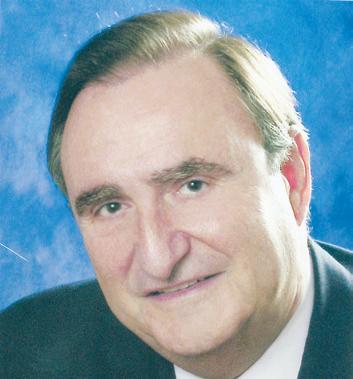 JERRY KREMER
There is no question that some judges appointed to our courts have philosophical or personal views that color their decisions. U.S. District Judge Aileen Cannon, who is hearing the case involving former President Donald Trump’s handling of classified documents, has appeared to favor him on a number of occasions. Some judicial observers believe Cannon will find ways to stop Trump from being brought to justice before November’s election.
Many judges, including those appointed during Trump’s tenure, have
shut down multiple attempts to throw out the 2020 election results. Upward of 60 judges have overseen election fraud suits, and all of them have ruled against the team headed by former New York City Mayor Rudy Guliani. That gives me, and countless others, a degree of comfort.
Regrettably, that doesn’t apply to members of the U.S. Supreme Court, which of late has been dominated by a majority that is willing to bend its decisions to fit its philosophy. Our country has had some Supreme Court majorities that have approached most of their big cases with strong personal views, but in the end have chosen more moderate positions.
During my lifetime, different Supreme Courts have been known as the Warren Court, the Burger Court, the Rehnquist Court. They get those label based on who the chief justice is, and whether the court is in fact guided by him. In the case of the current court, Chief Justice John Roberts has been unable, in most big cases, to steer the court to positions that fit his philosophy.
Because this court is so strongly guid-
Wed by its five ultra-conservative members, there is no doubt that the decisions it will make in some pending cases may have a strong impact on the November election. There are at least six cases yet to be decided that fit into that category. One, which will stir up the pro-choice movement, involves the legality of the Food and Drug Administration’s approval of the abortion drug mifepristone. Considering that more than half of the women in America who have abortions use pills, if that legalization is overturned, it will likely lead to nationwide protests.
Another case in that arena involves the legality of restraining orders that prohibit granting gun permits to people with a history of domestic violence. It is universally agreed that spouses should be protected from a spouse with a history of violent conduct. But this court is so wedded to protecting the Second Amendment that it’s likely that it could rule in favor of gun owners.
Another case involving guns is the challenge to an executive order by then President Trump that makes it illegal to add a “bump stock” to a gun that turns
it into a machine gun. That order came about as the result of a mass killing at a Las Vegas concert. If you took a national poll on this issue, an overwhelmingly majority would express their opposition to the use of bump stocks. But this is another case in which the court could side with gun rights.
One of the biggest cases the Supremes will soon decide is whether a former president is immune from prosecution for an alleged crime he committed when he was in office. A federal court has written a lengthy opinion denying such immunity, but the Supreme Court has taken the case to put its own imprint on this issue. Some court followers have conjectured that it did so to prevent any prosecution of Trump before the election.
People unfamiliar with the courts often aren’t aware of how much mischief a court can create. But sadly, the current highest court in the land has shown that it is anything but a “supreme” court.
Jerry Kremer was an Assemblyman for 23 years, and chaired the Assembly’s Ways and Means Committee for 12 years. He now heads Empire Government Strategies, a business development and legislative strategy firm. Comments about this column? jkremer@liherald.com.
It’s me, not ChatGPT . . . at least I think so
hy should I work this week? No one works anymore, or if they show up, they bring attitude or the three stages of incompetence: Don’t care, don’t want to be here, don’t notice you standing there at my counter. (I don’t mean you, of course. Herald readers are all diligent, responsible people.)

Anyway, as an experiment with AI, and a way not to work, I thought I’d ask ChatGPT to write my column. What I specifically asked for in the query was: Write a 750-word column in the style of Randi Kreiss.
RAnDi KREissIt took about two seconds, and I got a piece about the idea of detoxing ourselves from our exposure to screens and devices. Not an original idea, not a bad idea, but between you and me, I hope it wasn’t an example of how I usually write, because it was sooooo booooring.
This was the last paragraph of the pseudo-Randi column, written by ChatGPT:
“So let us embrace the digital detox not as a fleeting trend, but as a timeless
reminder of our innate capacity for connection, creativity, and contemplation. Let us reclaim our time, our attention, and our humanity from the clutches of the digital realm and rediscover the beauty of life beyond the screen.”
I mean, there’s nothing wrong with the writing; it’s just so blah-blah-blah. All of which leaves me with no other choice than to abandon AI and deploy my own skills, which are both modest and flawed.
WIf I were going to write about the toxicity of screens and devices — and I am, now that ChatGPT gave me the idea — I would connect it specifically to our current political madness. We are bombarded 24/7 by repetitious news about the threat to our democracy by former President Donald Trump and his acolytes. Is there really anything else to talk about that carries the gravitas of a looming democracydestroying, unhinged presidency? The Orange Man lurks behind us just as he stalked Hillary in the 2016 debates. He is meaner than the last time around. His alleged crimes have earned him dozens of felony indictments. We can’t stand watching the coverage, and we can’t stop.
about President Biden’s age and oratorical misadventures.
hen I asked it to write a column like I might write, it let me down.
For a long time, I tried to see the issues from all sides. I figured that I have more in common with Trump supporters than the issues that divide us. I figured that when he fully revealed himself as an authoritarian wannabe, folks would recoil, seeing the threat to our freedoms. I wanted to stand in their shoes and see what they saw, but Trump’s singular determination to take down our democracy blots out the sun. Legitimate disagreements over immigration, the economy and taxes pale compared to his promise to dismantle the pillars of government and build camps for people he determines are unwelcome or undesirable.
There isn’t a legitimate other side when the other side is a dictatorship.
Trump must be removed from political life, and we must find ourselves again. That means removing ourselves from obsessional newscasts. Watch the candidates’ speeches for yourself, without the filters, and believe what you see. Look and listen to who Trump is. Listen to Biden.
men are too old for the job, but Biden and his team will keep faith with the American public. The country is sound and well-connected to our friends around the world. Biden’s experience has brought us through these difficult years. The alternative is more than a flirtation with authoritarianism and institutionalized racism. Young people do not realize how quickly bellicose talk can turn into tanks rumbling down our streets.
In many homes, the TV is on. It’s always there, in the background, too loud, too repetitive, too insignificant. We all know that news shows ran out of news long ago. Most of the time they reprocess the meat of a story until it comes out like sausage, link after link, hour after hour. Is it news when a know-nothing anchor interviews a reporter who once interviewed a spokesperson who represents an insignificant staff member of a mid-level politician?
We can improve our lives by disconnecting from our devices. Voting is easy and analog. The conflation of politics and screens is wearing us down. Let the candidates speak for themselves.
Thanks, ChatGPT, for priming the pump. I just needed to say it in my own words.
Other news outlets beat the drum
We must retire the would-be dictator, and that means re-electing Biden. Both
Copyright 2024 Randi Kreiss. Randi can be reached at randik3@aol.com.
t. Patrick’s Day has come and gone, but there is much more to this annual holiday than just the vibrant green decorations, festive parades, pints of beer and corned beef. It is an opportunity to celebrate the rich tapestry of Irish-American heritage, deeply woven into the fabric of Long Island and its communities.
The journey of Irish immigrants and their descendants is a narrative of resilience, contribution and cultural vibrancy. The Long Island portion of that history stretches back centuries, marked by waves of newcomers who left their homes in search of the American dream.
The potato famine in the 19th century led nearly 800,000 Irish immigrants to travel across the Atlantic in search of new opportunities in the United States. Many entered through Ellis Island before finding their way to Long Island, drawn by construction and agricultural work.
Many of those new pioneers faced adversity and discrimination because of their heritage, their religion, and their immigrant status. Still, they persevered, carving out a place for themselves in their adopted homeland.
To the Editor:
The letter from Joseph Varon, “Immigrants make our economy stronger,” in the March 7-13 issue, asks us to “stop the anti-immigrant rhetoric.” What anti-immigrant rhetoric?
Americans, personally, and the United States, officially, are very immigrant-friendly. For many years, the U.S. has admitted hundreds of thousands of immigrants each year, issuing them green cards, which grant permanent residency, and if you want, you can become a citizen in five years, as long as you don’t commit a felony — sooner if you marry an American citizen or serve in the military. That’s an admission policy unmatched by any other country.
Members of my family and my wife’s family have married immigrants. A legitimate case can be made for raising the limit on immigrants due to America’s decreasing birth rate.
I hear no complaints about legal immigrants — only about the illegals and the unvetted, let in, regardless of the costs of housing them and the brutality of the crimes committed, by an administration bent on countering the population loss of blue states caused by their irresponsible fiscal policies. It’s an exodus that would otherwise cause these states a loss of congressional seats and Electoral Col-
Their legacy and contributions to Long Island’s growth and development span many generations, shaping the landscape and leaving an indelible mark on the region’s cultural identity. From building the infrastructure that connects communities, to establishing businesses and institutions, Irish-Americans played a pivotal role in shaping the destiny of Long Island.
St. Patrick’s Day serves as a poignant reminder of this heritage. It is a day when people come together to honor their Irish roots and celebrate the legacy of those who came before them. The festivities are a testament to the enduring spirit, camaraderie and pride that characterizes the community. Parades wind through the streets. Music fills the air. And traditional Irish fare delights the senses, adding to an atmosphere of joy and unity.
Beyond the revelry of the holiday, Long Island is home to a vibrant tapestry of Irish-American cultural organizations, events and businesses that enrich the community year-round.
The Ancient Order of Hibernians — the oldest Irish-Catholic fraternal organization in the country — boasts numerous divisions across Nassau and Suffolk
counties. Long Island is also home to several Irish dance troupes and Gaelic sports clubs. They preserve tradition, and foster a sense of belonging among generations of Irish-Americans, providing avenues for cultural expression, education and camaraderie, and ensuring that the legacy of Irish heritage continues to thrive.
Local businesses also play a crucial role in promoting Irish-American culture, offering cuisine, crafts and products that pay homage to the traditions of the Emerald Isle.
Whether it’s a cozy pub serving up a hearty Irish stew or a shop brimming with Celtic jewelry and knick-knacks, these establishments serve as ambassadors of Irish culture, inviting many to experience all that Ireland has to offer without ever leaving home.
Although this year’s St. Patrick’s Day is now behind us, let us not forget all of the contributions and traditions of Irish-Americans that resonate throughout our communities every day.
So, a toast to all of the pioneers who paved the way. The traditions that bind us together. And the legacy of IrishAmerican heritage on Long Island. Sláinte!
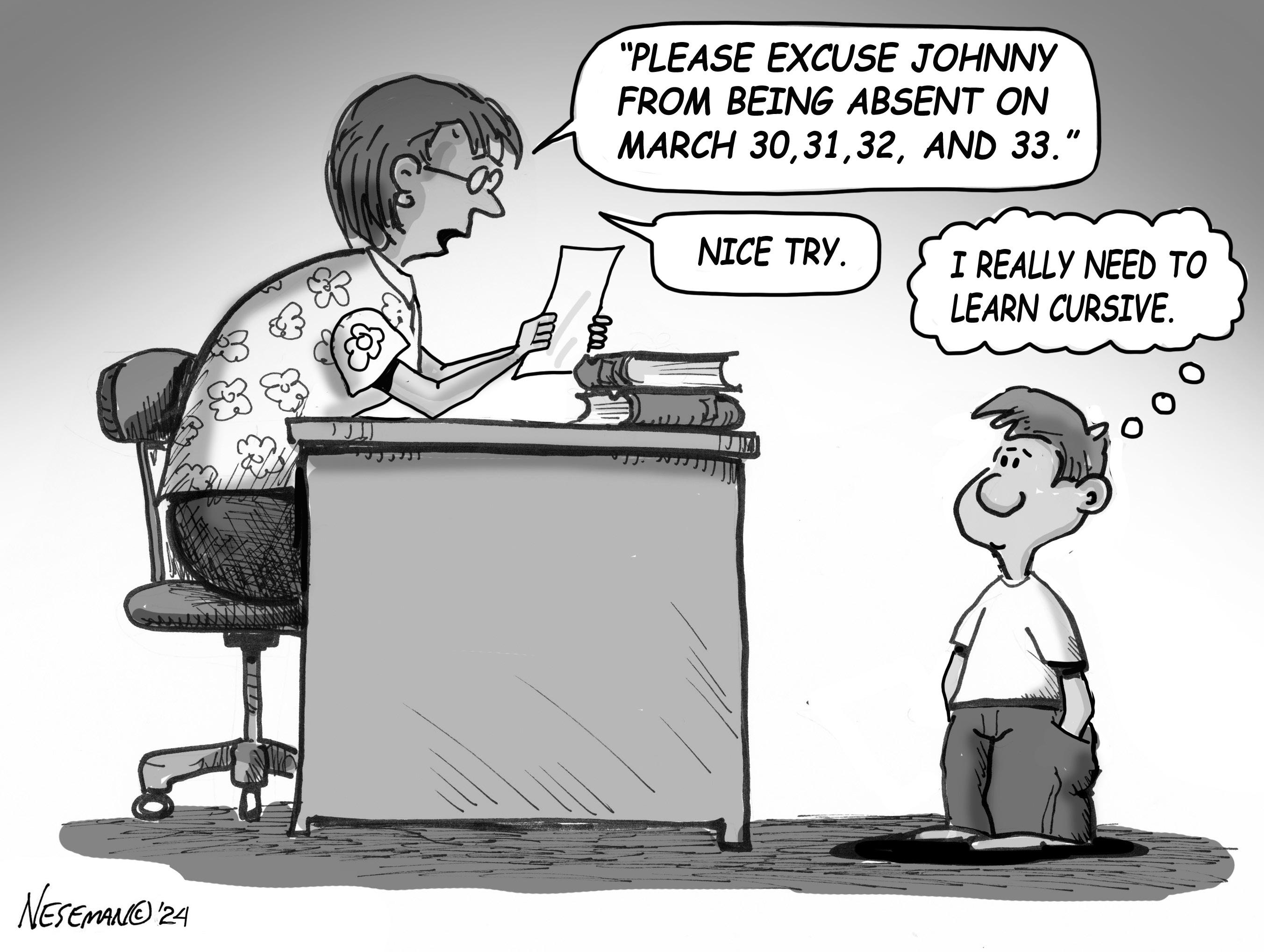
lege votes.
The “billions” in taxes quoted, unfortunately, are buying more people in to failing systems that will pay out even more billions than are paid in. I fail to see a hero in one who puts in a dollar and takes out two.
Our communities need more doctors who look like me
’m 26, and have lived virtually my whole life in Hempstead. I’ve seen a lot of health-related issues — low-income people of color, like me, suffering from chronic conditions like asthma, diabetes, obesity, high blood pressure, and untreated mental illness. Often they haven’t been able to receive proper treatment for their conditions. I wanted to do something about it, and soon I will be able to, because I’m on my way to becoming a doctor. There was a one-in-a-million chance that I would ever reach this goal. I’m an African-American woman from a low-income neighborhood, raised in a single-parent household. My father was incarcerated by the time I knew what it meant to have one, and remains imprisoned to this day — though he’s using this time to reflect and to continue his education. My mother, a crossing guard, worked extremely hard to provide for my brother and me, but there
were days when the money she made didn’t seem like enough to put food on the table, or ensure that we would keep a roof over our heads, or keep us from falling victim to the violence that plagued our community.
TI had to fight every step of the way to become the person I wanted to be. I graduated from Hempstead High School in 2015 in the top 1 percent of my class, and then, thanks to Stony Brook University’s Economic Opportunity Program, I graduated in 2019 with a double major in biology and psychology, and went on to earn a master’s in physiology and biophysics. I was the first person in my family to go to college, so there was no blueprint to follow but the one I created along the way.
life-changing. There are classes to prepare me for the rigors of medical school, and a stipend I can use for living expenses so I can focus on my studies. I have mentors to turn to for help.
here was a one-in-amillion chance that I would ever be able to go to medical school.
I got jobs in the health care field, but becoming a doctor seemed out of reach until I was selected for the Diversity in Medicine pipeline program sponsored by Associated Medical Schools of New York. This post-baccalaureate program at SUNY Buffalo’s Jacobs School of Medicine and Biomedical Sciences is
world, the USA, became that because so many of its citizens are immigrants, or children of immigrants. They came mostly from civilized countries, and came legally.
With the Industrial Revolution booming, America needed skilled and unskilled workers, and they came in droves. Most were checked over at Ellis Island, and all were required to become citizens. Yes, we quarantined the sick for a couple of weeks, in not the most luxurious accommodations, but it worked.
We do not need the number and the caliber of those coming across our borders in illegal fashion. We don’t need the crime, and we don’t need what they turn our cities into. We can’t afford to clean up the world, and we aren’t all in desperate need of gardeners, but rather skilled welders, carpenters, etc.
Having these illegal immigrants among us costs us money, and destroys our school systems. They don’t even try to blend in — they dress, act and expect us to learn their culture. Sometimes the raw truth hurts, but they are the only ones benefiting from their crime of crossing our borders illegally. Politicians? Guilty.
ROBERT CASAlE Glen HeadWe thought Randi was gone
To the Editor:
My wife and I, loyal readers of the Merrick Herald, are among Randi Kreiss’s biggest fans, and we were thoroughly dismayed
Most important, if I successfully complete the one-year program, I will go to medical school in the fall, and could be selected to receive AMSNY’s Diversity in Medicine Scholarship to help defray the cost. This amazing program is 100 percent statefunded.
Pipeline programs like this are needed to help diversify the physician workforce. Research has shown that patients are more likely to visit and follow the instructions of doctors who understand their language and culture, resulting in better health outcomes. Yet in New York state, where more than 30 percent of the population identifies as Black or Hispanic, just 13 percent of the state’s doctors come from those groups.
Physicians from racial and ethnic groups that are underrepresented are more likely to go into primary care and
when we thought she disappeared last year. But a letter to the editor in the Feb. 29-March 6 issue, “At your library, borrow a book — or a telescope,” which mentioned her column on libraries, made us realize that Randi is still here!
We have now read all her monthlies since she started them in September. What an ordeal she and her husband have been through. We wish both of them all the best, and are beyond delighted that Randi’s observations on our society, her humor, her book recommendations, and her overall words of wisdom can continue to be part of our lives.
KARIN SPENCER & MARISA HOHEB MerrickTo the Editor:
Yet another example of Nassau County Republicans’ blatant misuse of taxpayers’ money for partisan purposes is the legislative majority spending $500,000 for a politically connected law firm to prevent holding all elections in even years, even though even-year elections increase voter turnout and save taxpayers millions.
practice in under-served communities, where they are desperately needed. I have seen 30 to 40 people waiting, endlessly, to see a doctor; minor symptoms that were left untreated develop into chronic disease; and people with mental illness who are homeless, unable to pay for the care they need and jaded by past interactions with the health care system. People in these communities do not trust that system. I want to be a doctor who can change that, and earn their trust.
Growing up, I never saw a doctor who looked like me. Now I am one of 24 future physicians in this year’s AMSNY program who want to give back to our communities. I am immensely grateful to our state representatives and Gov. Kathy Hochul for making that possible.
In the past two years, the state’s investment in Diversity in Medicine programs has tripled. This funding must continue, and even increase, so more people like us can become doctors and leaders of change for our communities.
Shakia Miller is scheduled to complete the AMSNY Diversity in Medicine program in May.
FRAMEwoRK by Tim Baker
Nassau GOP machine officials justify this waste by claiming that even-year elections “will lead voters to ignore local issues when federal and state issues dominate.” Yet Republicans’ local campaigns are dominated by state and federal issues. Indeed, County Executive Bruce Blakeman just sent a glossy mailer smearing Democrats in Albany and Washington, misusing county taxpayers’ dollars on issues that have nothing to do with county government.
um or the Nassau University Medical Center debacle — critical county issues. Instead, every mailer attacks federal and state Democrats.
l ast year, Blakeman took county government employees to New York City, and used a county podium to grandstand on an issue over which he had no jurisdiction. The GOP continuously misuses taxpayer dollars for political purposes. Neither county nor town GOP officials sent a single mailer on the plan for the casino at the Colise-
The Republicans win elections by gerrymandering, voter suppression, taxpayer-funded mailers and scare tactics. GOP officials use our tax money to fight voter participation. Clearly, they know that higher voter turnout will turn them out of office.
DAvE DENENBERG Merrick