
BY DENIS PEREZ-BRAVO
In North Richmond, Black residents have organized to buy back 25 dilapidated units in the abandoned Las Deltas housing projects following a unique collaboration that prioritized former residents.
The unincorporated community just outside Richmond city limits became a destination for Black families from the South during World War II. Residents have faced environmental challenges and decades of disinvestment. Rising housing costs have pushed some families out of the community they once called home.
Still, North Richmond remains a resilient place, shaped by generations of history, struggle and love.
Now, after more than a decade of organizing, residents are not just watching redevelopment happen around them. Through a first-of-its-kind preference policy, many are becoming homeowners in the very community they fought to stay in, a rare example of development without displacement.
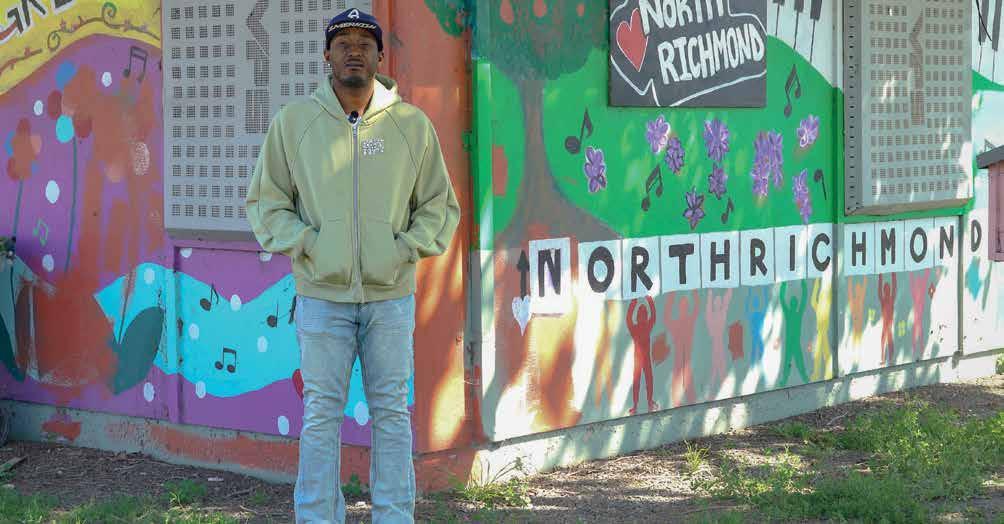
“I don’t think it’s ever been done before,” said lifelong North Richmond resident D’Shawn Goodwin.
CONTACT US
Have questions, comments, or want to get involved? Contact us at:
The initiative is a rare victory for a neighborhood often overlooked.
For North Richmond, a historically Black community, the buyback is a direct challenge to decades of displacement.
Using below-market sales, “right to return” policies, a community land trust model and grassroots organizing, residents are turning blighted properties into permanent affordable housing.
“Everybody got a slogan, ‘Buy Back the Block,’” Goodwin said. “But we really just did it.”
His motivations stem from the regional displacement and the financial strain in the Bay Area that mean Black residents experience the highest rate of housing cost burden; more than 50% of Black renters spend over 30% of their income on housing, according to the San Francisco Analysis of Impediments to Fair Housing Choice.
Goodwin’s roots in North Richmond stretch back to an era when the neighborhood was a beacon for those seeking a new life on the West Coast.
“My family came here in the ’40s, bought their land right there on Sixth Street and basically worked at the shipyard,” Goodwin said, “and built little, small houses before they were able to
info@ccpulse.org www.ccpulse.org ABOUT
The Contra Costa Pulse is a community media project focusing on local and health news coverage in West and East Contra Costa County. The project is supported by STRONG Collaborative Fund.
build big houses in the front.”
The family home became a gateway for relatives fleeing the Jim Crow South.
“A lot of my cousins from the South came to our house first when they came to the West Coast,” he said. “This was like a landing point, a breath of fresh air.”
Through generations of migration and labor, the community established its identity as a historical center for minority families.
“So North Richmond was always a minority hub and always been there,” Goodwin said.
Las Deltas provided affordable housing dating back to the 1950s. But in 2020, after decades of underfunding and a lack of maintenance, the project was decommissioned and the last residents relocated with no clear path to stay.
“The plan was to just sell them. And that was it,” said Richmond LAND executive director Princess Robinson.
Then, Robinson and Alfonzo Leon began to envision the North Richmond EcoVillage.
The project plans to introduce 12 community land trust condominium units.
“The community land trust model is a permanent affordable housing tool model
that we are using to keep our community in place,” Robinson said.
To bring this vision to life, the Housing Authority of Contra Costa County and Richmond LAND worked to sell the Las Deltas properties back to the community rather than to the highest bidder.
Robinson said they partnered with the Partnership for the Bay’s Future to implement “Just Right to Return” and “Local Preference” policies, which prioritize former residents and people with ties to the neighborhood.
First, they sold property at belowmarket rates, then at market rate, and this is where people like Goodwin stepped up.
“I started off just as a community member going to the meetings,” he said.
Goodwin became a conduit of information for others while pursuing a property himself.
“We had classes every Monday,” he said. “Teaching people about credit, teaching people about how to buy a house, teaching people about first-timebuyer ownership.”
Goodwin helped organize the Aug, 2, 2025, “Buy Back the Jets” housing fair to connect interested buyers with financial institutions and counselors. They had









Scan the QR code above to go to our donation page.
Publisher
Malcolm Marshall
Editor Danielle Parenteau-Decker
Denis Perez-Bravo
Samantha Kennedy
Emily Tenorio Molina
Joe Porrello
Juliana Libunao
Vernon Whitmore
Sandy Close
Michael J. Fitzgerald
The Contra Costa Pulse is a community media project founded by New America Media, focusing on local and health news coverage in West and East Contra Costa County.
The project is supported by The California Endowment and the STRONG Collaborative Fund.
Have questions, comments, or want to get involved?
Contact The Contra Costa Pulse at info@ccpulse.org www.ccpulse..org
BY SAMANTHA KENNEDY
ditor’s note: Antioch school board
EPresident Jag Lathan is running for Contra Costa County superintendent in the June 2 election. She holds a doctorate in educational leadership from Mills College. Her opponent is Dana Eaton, superintendent of the Brentwood Union School District. Lathan spoke to The Pulse about her background, why she’s running and what she would do as superintendent, including how she would address equity and district finances. This interview has been edited for length and clarity.
Contra Costa Pulse: Why did you decide to run for superintendent, and what are your top priorities?
Jag Lathan: I am running because of my experience as a child who had a difficult time learning to read and as a teenage mother who faced real obstacles in high school. I know the power of educators who believe in you. I took those learnings with me as a special education teacher, general education teacher, gate teacher, principal, and chief of learning and accountability. The county needs a leader with a proven track record of turning around student outcomes.
My priorities … I’ll list the top three: countywide literacy. There are about 170,000 students in our public school system in Contra Costa County. About 50,000 are not yet reading on grade level. Leading with students at the center of budgeting. Providing clear and consistent oversight to districts, monitoring their budget, and providing feedback so they’re not in a situation many are in now, where they’re struggling and needing to make cuts. The county office’s role and responsibility is to step in prior and support districts.
Lastly, prioritizing educator growth and excellence. Creating … an accredited program at the county office where
people can become an educator, a school psychologist, a teacher or an administrator.
Contra Costa Pulse: How have your experiences shaped your approach to supporting students?
Jag Lathan: It’s shaped my approach tremendously in terms of not only the compassion that I have for young people, but the high expectations. I was able to be successful even though I was a teenage mom. I was pregnant with my son at 16. Because educators and my family had high expectations of me, they supported me to finish high school. But also educators having high expectations for educators — that you can and you will teach at high levels, and I’m going to support you to make sure that you get what you need so that you can be successful.
Contra Costa Pulse: What role should the county superintendent play when districts are facing financial insolvency?
Jag Lathan: Definitely providing resources. Many districts across the state are on this fiscal cliff because we no longer have the one-time COVID funding. Enrollment has declined across the county and state. The [fewer] students you have, the less money districts receive. There’s an increase in students with disabilities, … that means more funding going towards those services. Teachers’ unions across the state are advocating for an increase in … staff pay. … Medical premiums have increased since COVID into double digits … that also contributes to this enormous bubble that we have of financial stressors. If the county office works proactively … to show districts before you get to this cliff, here are the things that you can do, [then] you can start making incremental changes to right-size your district to
match the new reality of your funding.
Contra Costa Pulse: Your platform calls for “safe and ethical AI literacy.” What does that look like in schools?
Jag Lathan: AI is constantly changing. … While there are some benefits, there are real concerns about how students may use it, how adults may use it, and the information from AI that might be harmful.
I know there have been concerns about grading and, “Are students really writing these papers or are they using artificial intelligence?” We need to not hide from those conversations, then set some boundaries, and whatever is working well using artificial intelligence, not hiding from that either.
We need to make sure that what we are doing is ethical, then teaching students. … how to discern if this is a real image or if this is an image created by artificial intelligence. Those are conversations we need to have with young people.
Contra Costa Pulse: What distinguishes your vision from your opponent’s? What are the biggest equity challenges, and how would you address them?
Jag Lathan: Mine is more about bringing everyone together and ensuring people are moving forward in a similar manner. What also distinguishes me is my understanding of how county offices work and the innovation that can be done at a county office. My opponent has never worked at a county office of education. At San Diego County Office of [Education], I started the first equity department. I worked at the Alameda County Office of Education and created a teacher credentialing program, a teacher residency program.
I also have done a lot of turnaround work … taking things from something that isn’t working well or is very small
BY SAMANTHA KENNEDY
Antioch is facing what Mayor Ron Bernal calls “big city problems” when it comes to economic development, homelessness and transit. Two of the state’s highest-ranking officials who represent the city — state Sen. Tim Grayson and treasurer Fiona Ma — say that some help is there to support local jurisdictions, but change has to happen too.
Bernal facilitated a city-sponsored town hall with Grayson and Ma on April 3 to discuss how the state is involved in some solutions to the city’s problems and what else might be coming.
Problems Bernal said were at the top of his mind were the costs of affordable housing and the city’s large homeless population. Bernal, who took office back in December 2024 on a platform that prioritized homelessness, has overseen the application for a Homekey+ program (which he voted against) and attempts to house dozens of people on cold nights in place of a warming center.
Providing shelter alone is “the lowhanging fruit,” said Grayson. Rather, he continued, people need comprehensive wraparound services, mental health services, workforce training, health coverage, “and all of those coming together.”
The proposed Homekey+ project at the former Comfort Inn on Mahogany Way, which is partially state-funded,
would offer both shelter and supportive services to clients. The city already has Opportunity Village, also a former hotel, that provides wraparound services to those who used to live at the Sunset/ DevPar homeless encampment.
Bernal said that building housing for residents who may not yet be homeless can also be challenging because of the cost that cities have to pay instead of developers. Fees meant to help fund services and infrastructure for new residents, known as impact fees, are exempt from affordable housing projects, for example.
“What that does is it places part of the burden on the local government to absorb some of that,” said Bernal.
Ma and Grayson touted pieces of legislation they’re sponsoring that they suggested might ease some of that burden.
Ma, along with state Sen. Anna Caballero, who represents parts of Fresno and Merced counties, is sponsoring a bill that would create a fund for infrastructure projects across the state.
Grayson’s bill could mean that cities and developers, who he said currently have an adversarial relationship, would become partners in the process of building affordable housing. If passed, that bill would have a city and a developer collaborate and then go to the state for funding. The city, and not the developer, would get the funding, said Grayson.
“It can make the project pencil out,”
said Grayson, referring to the funding paying for fees and improvements that the developer is exempt from.
Workforce development, Bernal said, is another important piece for the city because of the number of students getting out of school. According to an analysis by Beacon Economics, job growth in the county has “slowed sharply and has now turned negative.” But the county has seen gains in the healthcare industry that outpace the state’s increases.
A chunk of East Contra Costa commuters could be hurt by the uncertainty around public transportation in the region. BART and Tri Delta Transit, which serve the city, both face deficits and are hoping a countywide sales tax will be placed on the November ballot and pass. Antioch’s Amtrak station is also planned for closure next year.
But there are some opportunities for workforce development nearby — programs through the city itself, local organizations and Los Medanos College. Ma said more needs to be done across the state to increase pathways for those that are not able to go to a four-year college.
“Too many of them are taking a gap year right now because they can’t find a job. That is not acceptable. We need to do more to create those pathways and go back to working with your hands, understanding what some of these jobs are because they are good-paying jobs,” said Ma.
Grayson said that the Green Empowerment Zone, an effort to grow
BY MALCOLM MARSHALL
M ichael Atkins, a second-year College Corps fellow at UCLA, remembers the moment a student told him he felt “completely lost” trying to write his college application essay.
The student, a foster youth, struggled to see how his life experiences mattered. Over the course of a week, Atkins met with him every day, helping him break the process into manageable steps. By the end, the student had a personal statement he was proud of and was later accepted into his dream university.
“It only takes one individual to help transform students’ beliefs and what is possible for themselves,” Atkins said.
“[Serving in the] California Service Corps has provided me with the opportunity to help students realize that college is not only a realistic option, but it’s an achievable one as well.”
Atkins is one of thousands of fellows in the California Service Corps, a statewide initiative recruiting 10,000 people into paid service positions across California. The opportunities support communities while building valuable experience.
Saksen Hathaway’s path to service looked different. After studying environmental science in college, she struggled to break into the field.
Now, as a fellow with the California Climate Action Corps, Hathaway helps run programs that bring fresh food to underserved communities in Ventura County.
The two spoke during a April 7 briefing for ethnic media outlets on the California Service Corps.
Stories like theirs show how the
program places fellows in schools and community organizations to support students with college access, tutoring and basic needs. The initiative is designed to address some of the state’s most pressing challenges while creating pathways for young people to gain experience and find purpose.
“Service doesn’t just change communities; it changes the people who serve,” said Josh Fryday, director of the Governor’s Office of Service and Community Engagement and California’s chief service officer.
Fryday said members across four programs, College Corps, Youth Service Corps, AmeriCorps and the California Climate Action Corps, are working on issues including climate change, education and food access.
“They’re planting trees to protect communities from extreme heat. They’re tutoring students who fell behind during the pandemic, and they’re helping families access food,” he said.
In doing so, he said the fellows are tackling climate change, food insecurity, and the learning loss that many students are still recovering from because of the pandemic.
The California Service Corps is the largest state service force in the country.
The program offers paid opportunities for participants to work in their communities while building job skills and gaining experience. Fryday said the state aims to fill 10,000 positions.
“It’s a very simple and yet a powerful model,” Fryday said. “We will pay young people to make a difference in their community and to start their careers.”
According to Fryday, demand for those roles has been strong, with nearly four
applications submitted for each position last year.
Fellows at the briefing said the work can also come with challenges.
“A big challenge is…maintaining a work-life balance,” Hathaway said. “The work is hard, and especially when it’s something that’s really close to home and something you care about deeply.”
“My biggest issue is really getting the buy-in to the resources and the opportunities that we’re offering…and really getting them to be open to the opportunities,” Atkins said.
The state is also launching a targeted effort to recruit more men, particularly young men of color, to the new California Men’s Service Challenge, aimed at empowering men through service, leadership and connection.
Fryday pointed to rising suicide rates, declining college attendance and growing disconnection among men and boys as reasons for the focus. Doing service, he said, could help them find a sense of belonging and become leaders in their communities.
“Gov. Newsom has had a very strong vision when we created the California Service Corps,” Fryday said. “If you want to gain experience, if you want to build connections, and if you want to get paid to make a real difference in your community, then we have a place for you.”
For more information about the California Service Corps, visit californiavolunteers.ca.gov/californiaservice-corps/. •

‘We Don’t Have to Be the Germ in the Petri Dish’: Oakley Temporarily Bans AI
BY SAMANTHA KENNEDY
The city of Oakley is banning artificial intelligence data centers for at least the next 45 days because of environmental concerns.
City Council members unanimously approved a moratorium April 14 on any approval of data centers, with the possibility of extensions that could last up to two years.
The urgency ordinance comes about a month after residents successfully pushed for the removal of a potential data center from the Bridgehead Industrial Project, which the developer said was not sure to be built but was possible before dropping the use from its application.
City staff wrote in their report that they could use the time as “breathing room” to determine when data centers might be acceptable in projects.
“I want this as strong as possible. I don’t want data centers to come in,” said council member Shannon Shaw about a permanent ordinance that would ban data centers.
City Attorney Derek Cole said that a longer, temporary moratorium, such as a two-year ban, was not legally allowable.
A majority of council members said at the March 10 meeting that they would not be comfortable approving the Bridgehead project with the possibility of a data center because of community pushback and concerns that a data center would affect water and energy sources in the area.
Environmental concerns were the biggest problems residents mentioned after hours of testimony at previous meetings. Data centers, which are used to support the functions of AI, have been shown to consume large amounts of energy and water, and contribute to air pollution, according to research.
Resident Bud Chaddock likened the struggle between Oakley and companies wanting to build data centers to “going to a gunfight with a knife” but said they still had a choice.
“All these people propose this stuff — yes, it may be the future. But we don’t have to be the germ in the petri dish,” said Chaddock.
One resident said ahead of the meeting that they would be in support of a full ban on data centers due to the potential impacts, calling them “disastrous.”
But the turnout April 14 was much smaller than previous meetings about the Bridgehead project, drawing only three public speakers and a couple who submitted comments online.
Sue Ellen Moseley questioned whether residents had been notified of the topic ahead of the meeting but thanked council members for considering the ordinance “because Oakley’s special, and we need to take care of it.”
Council members are expected to consider extending the moratorium at their first meeting next month.
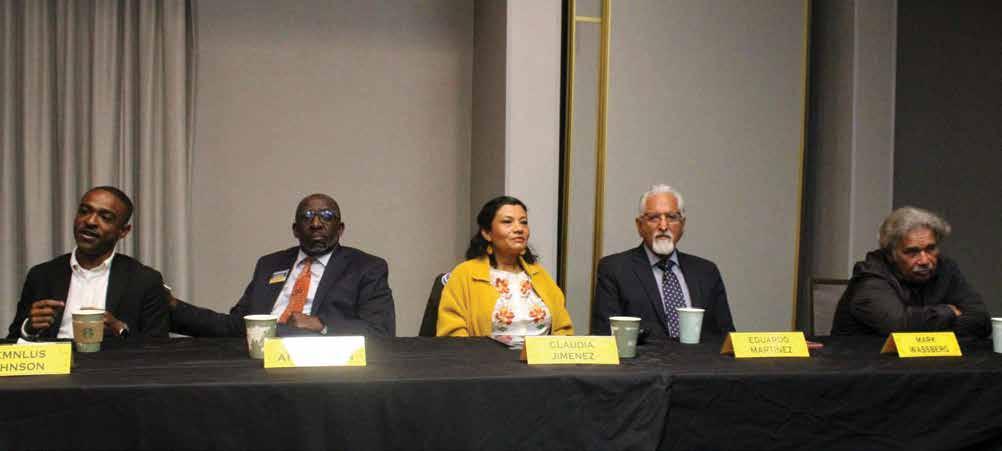
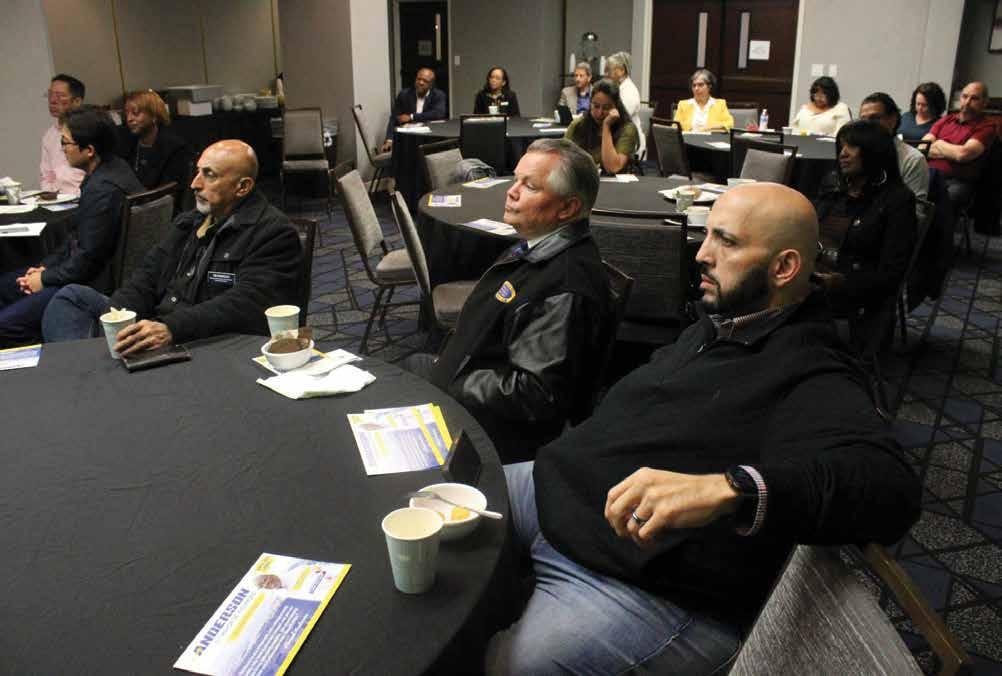
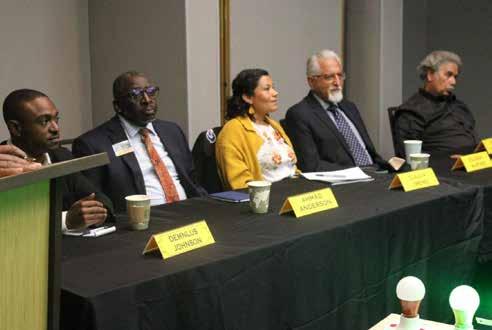
The five candidates running in the June primary for Richmond mayor gathered with local community and business leaders April 21 at a forum hosted by the Richmond Chamber of Commerce.
The event, hosted at the Courtyard by Marriott hotel as part of the chamber’s monthly roundtable, was billed as an opportunity for candidates to share their platforms, with a focus on economic development and their vision for working with Richmond’s business community.
Candidates answered questions from audience members but did not debate. Each was given 90 seconds to introduce themselves and their platform and the same to answer each question.
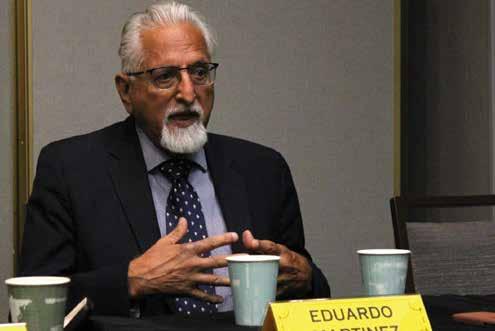
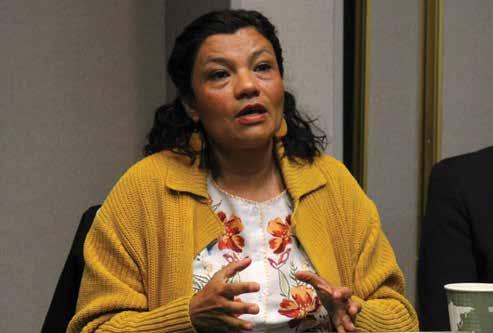
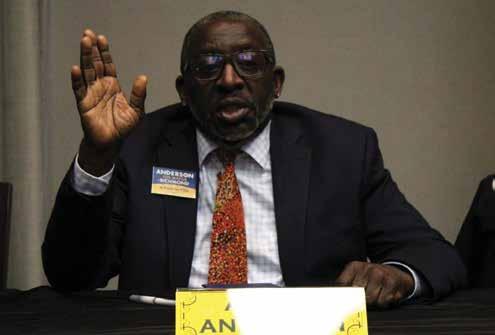
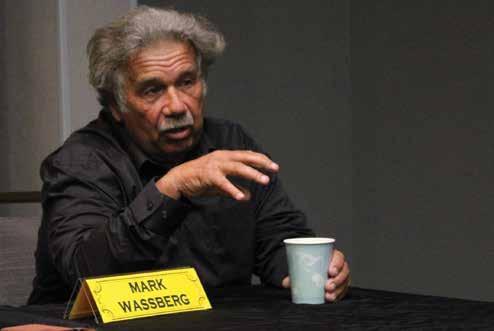
About 30 community business leaders were in attendance to hear from the candidates: incumbent Mayor Eduardo Martinez, Richmond City Council member Claudia Jimenez, former Vice Mayor Demnlus Johnson, community leader Ahmad Anderson and Mark Wassberg, a local filmmaker who frequently speaks at council meetings.
Martinez, a retired elementary school teacher, highlighted public safety and city progress during his tenure as mayor.
“During my four years as mayor, the city of Richmond has improved not only in terms of infrastructure but also in terms of emotional well-being,” said Martinez. “Last year, our homicide rate was the lowest ever, and I’m making sure it continues to be low.”
Jimenez, originally from Colombia where she worked as an architect, said her time on the council has strengthened the city’s finances.
“I’m running for mayor because I’m passionate about Richmond,” said Jimenez. “The fiscal flexibility we have
has been, in part, because of the work that I’ve done.”
Johnson is a fourth-generation Richmond resident and in 2018 became the youngest person ever elected to Richmond City Council.
He said that he is “100% committed to recruiting more industries to the city of Richmond, both green and traditional.”
Anderson has worked as a workforce planning supervisor for UPS of the East Bay and vice president and economic development committee chair of the Richmond NAACP.
He says he will “ensure jobs are representing those who have been underrepresented” and that he recognizes “the actions that it takes to step up and step in.”
Wassberg, raised in San Pablo, spent most of his life working in factories and refineries around Richmond before wading into filmmaking. He entered the political realm years ago because he didn’t — and still doesn’t — approve of the way Richmond operates.
“They’re just letting people run wild in Richmond; if I’m there, that ain’t gonna happen,” said Wassberg.
Candidates were also asked about housing issues, including rent control and code enforcement.
Wassberg said the private sector, like homes, should largely not be rent-controlled.
“I’m against rent control, but on the other hand, there’s certain things you might have to have rent-controlled because we know some landlords are greedy,” he said. “Once you destroy the real estate market, you’re going to destroy Richmond.”
Martinez says the issue stems from Richmond not having enough employees to do code enforcement, though the city is currently in the process of hiring more.
As a former renter, Anderson says he understands
the value of rent control and how it can help people financially keep their head above water.
With many potential property owners in Richmond sometimes waiting years for building permits, the candidates were asked how they would expedite the situation.
Johnson says he would dissolve the design review board and give responsibilities back to the planning commission, as well as digitizing the process so people don’t have to go to Civic Center in person.
“For a long time, projects have been held up and haven’t even been able to get to the permitting process — it has become a place where appointed individuals can extort business owners and developers,” said Johnson. “For me, it’s about redoing that entire process and making it a lot less convoluted.”
Jimenez says the problem stems from not having a housing department, leaving one or two staff members to deal with everything from homelessness to new property developments, as well as the lack of a streamlined permitting process for important projects that would benefit Richmond.
“We need to actually create a robust housing department that has the right staffing, because what happens is, many permits are being looked at by one person,” she said.
Martinez believes the issue can be resolved by combining the planning commission and design review board, because, in his opinion, they both work on problems the other should be tending to.
With the June 2 election approaching, candidates have a few weeks left to make their case to voters.
Mail-in ballots will be sent to registered voters during the first week of May. •

BY JULIANA LIBUNAO
Cell phone bans — and whether they help or harm students — have been a growing topic of debate across schools around the country.
Supporters say that banning phones during school hours will create ideal learning environments for students. Critics raise concerns on whether these bans really serve to address the root of issues at schools. For the general public, it’s been difficult to come to a consensus.
Distractions like social media and online games have been viewed as problems in school for years now, but it seems the recent rise in artificial intelligence use has prompted district leaders to tackle these issues more head on.
As of last October, 31 states and the District of Columbia require their school districts to restrict cell phones to some degree, according to Education Week; 22 of those states do not allow students to use their phones at all during the school day.
So given the mass implementation that took place last year, are the bans working? The answer is a lot more complicated than a simple yes or no.
Dr. Timothy Pressley, an associate professor of psychology at Christopher Newport University in Virginia, said during a recent American Community Media briefing that there are three main factors to take into account when discussing the success of phone bans: academic outcomes, mental health and engagement.
When it comes to its impact on academics and mental health, results are mixed. Research has shown anything from no changes in academic performance to a boost in schoolwide test scores.
Research has also found little to no difference in the mental health of students before and after phone bans were put in place.
The other two areas were mixed, but engagement improved — which isn’t surprising.
When my friends and I are hanging out and someone pulls out their phone, we ask them if it's phone time or friend time. What started out as a joke has become a reminder for us all to stay present.
“Technology itself isn’t the issue,” said Dr. David Marshall, an associate professor of educational research at Auburn University. “The issue here is that people are
Continued from page 2
and expanding it, and not only making it larger, scaling up, but also turning it around and making sure it’s excellent.
I’ve been in L.A. Unified. … I’m also already an elected official. I’ve been in so many different environments and working across differences in ethnicity, income, working with the LGBTQ community, different religions. I know how to bring people together, and I have not seen that from my opponent.
Contra Costa Pulse: What are the biggest equity challenges, and how would you address them?
Jag Lathan: One is improving literacy. Thousands of children leaving our schools … might be reading, but they’re not reading on grade level. That’s really important when you think about the future of our students.
Literacy is not just reading. Literacy is reading, writing and speaking across content areas. That is an equity issue because a lot of kids not reading on grade level are Black, Latino and multilingual learners who are usually Latino and Middle Eastern.
The ability for people to become educators is an equity issue. We need to increase the number of teachers of color in this county. The more that you have teachers and staff who look like the students, the more connections there are. I want to … bring in teachers and staff who come from the communities they serve.
•

distracted by technology.”
From my perspective, it’s less that students, and young people as a whole, want to be glued to our phones 24/7and more that reaching for our devices has become a habit when we don’t have anything else or better to pay attention to — it’s a distraction, most definitely, but one that can be combated.
If the goal is student interaction and focus, I just don’t think taking away phones entirely is the best way to accomplish that.
The type of cell phone ban that we’ve been seeing most recently are known as bell-to-bell bans. As the name suggests, students have their phones taken in the morning before classes and are given them back once everyone has been dismissed for the day.
KaiTamsin Bwor, a senior at Granada Hills Charter School in Los Angeles, was asked, “How can schools have balanced policies that don't feel overly strict?” In response, she pointed to the approach her AP psychology teacher takes. She said he is very involved, prompting his students to actively take part in his lessons, which in turn leads them to stay off of their phones by choice.
Choice is really the keyword here. It’s human nature. If you’re forced to do something that you don’t see the benefit of, you’re going to try and find an escape in anything you can — enter a student's phone.

Engagement is a two-way street. If teachers want their students contributing to class discussion, they need to make sure that their lectures are making room for just
Continued from page 1
Youth Voices, clean energy, in part, through workforce development and other partnerships is part of “doing everything we can to keep Contra Costa County economically viable and strong.”
For residents who want to build a business themselves, there are resources to help. Ma shared a packet of such resources for small businesses and families that outlines state grants, tax breaks and loans to support them. •



Bwor also said that rather than taking away cell phones when he sees them, her teacher instead reminds his students of the importance of taking his lectures in and learning from them, as well as the consequences of not paying attention.
I think it’s fair to say that schools are taking a pretty extreme approach with the initial rollouts of cell phone bans. On paper, it may seem like removing phones from the equation altogether will solve the problem of distracted students, but that doesn’t mean it’ll always work.
Multiple times throughout the briefing, speakers also raised concerns that students will find ways around full bans. In some cases, they already have.
There’s a phenomenon known as the “forbidden fruit effect.” When something is taken away or you’re specifically told you can’t have something, the more you’re going to want it. Now, imagine that the thing that’s been taken from you is something that you’ve grown incredibly attached to and use on a daily basis. Ultimately, it’s a matter of balance.
Policies that allow students to make responsible decisions of their own accord, instead of just taking devices away, may achieve better results. Attention is a choice. Rules and bans can be made and implemented, but they’ll only be productive when students choose to follow them themselves.
Phones aren’t going away.
The real lesson is in knowing when to put them down, look up, and be a part of the world in front of us. •
until approximately Oct. 10 to close on their properties or enter escrow.
Like Goodwin, Anthony Woodards is working to take the community back for other people.
Born and raised in North Richmond, Woodards is a battalion chief with the Richmond Fire Department. He now lives in Oakland.
Woodards isn’t planning to move back, but he wants to help other people he says were “forced out.”
“Whole generations were uprooted, and my plan is for me to buy and provide opportunities for Black-owned businesses and Black-owned stores,” he said.
The property Woodards purchased requires a full renovation. He is also pursuing two other units.
Any property with five or more external doors is considered commercial, and both fall under that category, requiring thousands of dollars in additional costs, he said.
“So I’m facing that, and I am working with the county to help break this up,” Woodards said.
For residents like Goodwin and Woodards, the goal is more than buying property. It is creating opportunities for people with ties to North Richmond to remain in the community.
As Goodwin stood at Market Avenue and Fred Jackson Way, where his two units are located, family and friends greeted him with car horns, waves and smiles as they passed by.


“This is my first property,” Goodwin said. “It is a sense of pride.”
He said being part of the community meetings and connecting neighbors to resources was one of the most meaningful parts of the process. These are people he grew up with, he said, and now they are becoming homeowners in the neighborhood.
“Well, it's not really my journey. It is like we are doing it together,” he said. Now, he is focused on renovating the two homes and bringing them back to life.
“So what I want to do is get it livable where a family can come in, or a nonprofit can be here and use this property for some greater good,” Goodwin said. •
BY DANIELLE PARENTEAU-DECKER
The debate over surveillance is often framed as one between privacy and safety. But a discussion hosted recently by American Community Media suggests that is misleading, as growing concerns of racial profiling and government overreach point to surveillance as being potentially more dangerous than the harms it claims to prevent.
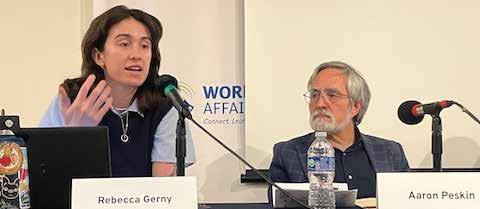
The conversation, held Feb. 27 at the World Affairs Council in San Francisco, examined the debate. Moderator Jaya Padmanabhan, executive director of ACoM, said there is a “false two-way narrative” around whether Flock Safety provides safety or surveillance, summing up the issue as a whole.
In Richmond, the debate is playing out in real time. Last year, the Richmond Police Department turned off its Flock license plate readers after learning that federal agencies could potentially access the data. This month, the Richmond City Council voted 4-3 to turn them back on.
Those opposed said Flock was untrustworthy and that the system endangers immigrants under the guise of public safety.
The chief of police told the council that vehicle thefts surged with the cameras turned off, but a council member pointed out another period in which vehicle thefts increased while they were active.
“Cameras don’t stop crime. They just record them,” said Rebecca Gerney of East Bay Sanctuary Covenant at the Feb. 27 event.
Similarly, Ariel G. Ruiz Soto, a senior policy analyst at the Migration Policy Institute, said that “more data [gained from surveillance] has not automatically translated into more deportations despite the Trump administration’s focus.”
Rather, he said, it has created “chilling effects including chilling access for health care, schools, courts and public benefits, including potentially undermining tax compliance and other core government functions.”
Sources of that data include “very common things that many of us do not think often about like DMV records,” he said.
Ruiz Soto also said the government wants to collect biometric data from immigrants and their sponsors and family members who are U.S. citizens, warning that such systems can expand beyond their initial targets.
That biometric data could even include your heartbeat.
Jacob Ward, a reporter and former editor in chief of Popular Science magazine, said there is technology to identify your heartbeat that is more accurate than facial recognition.
And, naturally, harder to evade.
“You can’t leave your heart at home. You can’t cover it
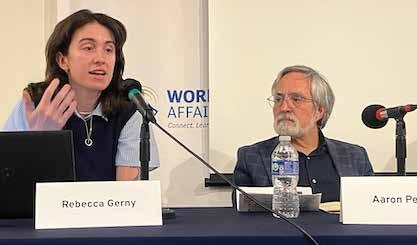
“Cameras don’t stop crime. They just record them,” said Rebecca Gerny during a discussion surveillance. Later, Aaron Peskin said, “Facial recognition technology disproportionately misidentified people of color because the algorithm was created by white dudes.” (Danielle Parenteau-Decker / The CC Pulse)
with a mask,” he said.
Ward added that facial recognition is less accurate at identifying Black, Brown and female faces “as it is identifying faces that look like mine.”
To Aaron Peskin, a former San Francisco supervisor, that is no surprise.
“These algorithms reflect the biases of the programmers who create them who tend to overwhelmingly be white men,” he said. “So guess what? Facial recognition technology disproportionately misidentified people of color because the algorithm was created by white dudes.”
Jacob Snow, a senior staff attorney for the American Civil Liberties Union of Northern California, said the nonprofit revealed that Amazon was selling facial recognition software to law enforcement, then put that software to the test.
In 2018, ACLU NorCal used Amazon’s Rekognition tool to compare around 20,000 publicly available mugshots with photos of all the then-current members of Congress. It found 28 matches — “All of those, to be clear, were false matches,” Snow said — most of whom were people of color, including civil rights activist John Lewis and five others in the Congressional Black Caucus. A similar test the following year wrongly matched 26 California lawmakers with arrest photos.
“The dangers are both when it’s flawed and when it works,” Snow said, specifying that it could be used to locate “somebody in a medical clinic who’s seeking abortion” or “an undocumented person trying to go about their daily lives.”
Ruiz Soto said surveillance used in immigration enforcement doesn’t always go after “the worst of the worst.”
Still, it can seem to some that the only people who need to be worried about surveillance are those who have reason to worry that law enforcement might be after them.
Juan Sebastian Pinto, who writes about technology and civil rights, challenged that idea, saying companies are
not just collecting individual data but using it to predict behavior.
He said that artificial intelligence companies “don’t necessarily want your specific information … but they want to learn about everything” that will help them predict how “everyone who shares your characteristics” will behave in the future.
Peskin said there is “a whole host of technologies” that can be used to track people and behavior, a lot of which “you might not, and I didn’t think of, as surveillance technology [that] permeates so many aspects of our lives.”
And tech companies can get the data they want from things that are made to seem not invasive but helpful or even fun.
Ward pointed to the 10-year social media challenge in which someone posts two photos of themselves 10 years apart as an “amazing way” to train facial recognition software.
“Persistence over the course of a lifespan is one of the hardest things to do in facial recognition,” he said. “But they’ve solved that for the most part, in part, because we fed them all the information” needed to have that happen.
Speaking about devices like Alexa, Ward said that even an intelligence chief for the Stasi — the notorious East German secret police known for mass surveillance — “could never have imagined a world in which we actually paid money to put a mic in our house, and yet that’s the world we live in.”
But as widespread as this technology may be, people are finding ways to push back.
Pinto said resistance to surveillance companies is being led largely by women, while others, including young people, are beginning to reject smartphones and social media
Ward also said one word gives him hope: “clanker,” slang for someone who uses A.I. too much — as in “Don’t be a clanker.” •

When will Latinos address the sexism and sexual violence our community faces, even when it involves one of our most revered leaders?
Thirty years after his death, The New York Times uncovered allegations of sexual assault and rape of at least three young girls by César Chávez, co-founder of the United Farm Workers. And painfully, Dolores Huerta, also a UFW co-founder who led marches with Chavez, accused him of raping her too.
Huerta told the Times that the abuse resulted in two children, whom she had raised by other people. She had four other children with his brother Richard Chávez.
A painful secret of more than half a century. People shocked to see a longstanding figure of Latino resilience as a monster.
Online, people questioned why the article was published right before Cesar Chávez Day. I read comments questioning why it took the women more than three decades to say anything. How can the public trust the victim’s word? How can a dead man defend his legacy?
Many of these comments came from within our own Brown community.
Chávez was often called the “Mexican American Gandhi,” a man who led a movement for the betterment of other Latinos. In 1983, he topped a poll by the Los Angeles Times, in which 568 California Latinos were asked to name the Latino they admired most, with 6% of the vote.
That admiration is real. But it has also made it harder for people to confront the harm tied to his legacy.
Chávez’s work as a leader is often presented simply to kids and adults. I was taught that he fought for Latino farmworkers to get a fair wage and better working conditions, but that is as far as my teachers went.
As a California Latina, I saw Chavez as an activist who made it possible for farmworkers to earn a living wage and shine a light on California Latino work conditions.
The full story is harder to face.
Reading about the disgusting behavior he allegedly displayed in the dark, such as raping a 15-year-old at a motel during a march or telling a victim he would name a street after her if she slept with him, made me sick to my stomach.
A figure of cultural resilience was all a lie. His victims and the women that he harassed all had to keep it a secret for the movement.
Now, back to the people who are questioning the validity of the allegations.
Chávez allegedly intentionally used his status as a
BY SAMANTHA KENNEDY
Whether it was taking home an award for leadership or performing traditional Mexican dances between stories of achievements, East County youth represented well at Contra Costa County’s Farmworkers’ Rights Movement celebration.
Three students with ties to Antioch and Pittsburg were among a dozen Youth Hall of Fame awardees at Tuesday’s event that, alongside performances from Pittsburg High School Folklórico and East Countybased Mariachi Monumental, celebrated the resilience of farmworkers.
Once named for labor leader César Chávez, the annual event was delayed and renamed this year following an investigation by The New York Times that unearthed allegations he sexually abused fellow activist Dolores

union leader and activist to take the bodies of young girls and women for his sexual gratification.
So far, all his alleged victims are Latina women, and considering the time, Chávez likely knew that his alleged violation wouldn’t have repercussions.
It’s basically taboo to speak of rape or sexual violence in the Latino community, which connects back to a cultural trauma of sexism and machismo.
Chávez was a second-generation American whose grandfather migrated from Mexico to Texas and eventually owned land. Throughout Chávez’s life, he saw himself and his peers as hardworking Americans who were mistreated because of their Mexican last names and brown complexion.
Yet he saw undocumented immigrants as pests that attack and are making these “legal, hard-working” Mexican Americans look bad.
In a 1972 interview with KQED, Chavez said, “All of a sudden yesterday morning, they brought in 220 wetbacks. There’s no way to defend against that kind of strikebreaking.”
What could make Chavez think this way? Part of the answer may be his sexist Mexican values assimilated with American prejudice.
For many, being seen as “American” still means conforming to dominant white cultural norms. And in the 1960s, white Americans generally saw farmworkers as uneducated servants.
At the same time, being Mexican means embracing tradition. That includes the tradition of men dictating what a woman can and can’t do.
As a Mexican man, Chávez carried with him the learned generational sexism, as he allegedly perpetuated sexual violence upon the women and young girls who saw him as a leader.
He allegedly took advantage of these women and saw them as naive and easily persuaded to sex.
Huerta and underage girls.
Chavez’s legacy, however tainted or complicated for many Latinos, added another layer to the event. Board Chair Diane Burgis said the Farmworkers’ Movement remains “rooted in those lasting ideals of fairness and respect.”
“We also recognize that accountability and care must go hand in hand, creating space for truth, for healing, and for those who may have experienced harm is essential,” said Burgis.
But, as promised by a Burgis opening address that praised the Farmworkers’ Movement as much more than one individual, the rest of the event highlighted the community and their struggles.
Jane Garcia, the keynote speaker and CEO of La Clinica De La Raza, said the fight is far from over, citing the impact of the Trump administration’s mass deportations and their economic and emotional toll.
“This is why, now more than ever, we must link arms. We have to do this,” said Garcia. “All of our history, all of our future, is depending on this.”
The message appears to resonate with East County youth, who were awarded for their achievements in leadership and innovation.
“We’re acknowledging all of these amazing farmworker rights efforts and the right of workers to organize into a union to create some fundamental equality, and bargaining and rights,” said supervisor John Gioia. “And the young people that we are recognizing are doing
Latina women have a higher rate of not disclosing sexual violence. Sex and rape are often taboo topics within the community, which results in victims feeling ashamed of their assault.
Latina women have to carry trauma and guilt to keep the family united.
Reading about Dolores Huerta’s secret pain, which she had to carry to keep her family and organization united, reminded me of a painful reality in our culture for many women.
I’ve felt anger over the fact that I was taught to be “grateful” for César Chávez’s leadership in the farmworkers movement because his advocacy helped my parents and many parents from in my elementary school to have a decent agricultural work experience.
But that is not the whole story.
My parents and other foreign-born Latinos didn’t really follow his work or join the movement.
I’m a first-generation Mexican American. I’ll always live between two cultures. But that’s a power. I get to observe the good and the bad of both cultures.
I feel a responsibility to speak up about what we are doing wrong and how to improve our community.
We have to hold our learned cultural values accountable. Sexism is very much alive in the Latino community.
Families need to have honest conversations about the prevalence of sexual violence and how to hold people accountable.
No person is bigger than a movement, and César Chávez is not the movement.
What we can learn from this heartbreaking truth is that we must confront the vulnerabilities women face due to cultural trauma. •
similar great things.”
Morriah Crose, an 11th grader at Pittsburg High, and Samantha Pedraza-Lindsey, an eighth grader at Black Diamond Middle School in Antioch, were recognized with the leadership and civic engagement and innovation and empowerment awards, respectively.
Amadeus Castillo, a student at Freedom High School in Oakley who serves on the Antioch Council of Teens, received the Good Samaritan Award.
Crose, who is on Pittsburg’s Youth Advisory Commission, was celebrated for her dedication to civic engagement that creates “lasting change,” according to officials.
Pedraza-Lindsey was given a “Rising Star” award for, in part, her “invaluable” willingness “to uplift those around her,” the award states.
Castillo has tutored students, participates in the Latinos Unidos Cultural Club and volunteers with an organization that builds homes and schools in other countries
Also honored were: Marisela Villezcas of Alhambra High School; Symone Jewell of Northgate High School; Cesia Jesus Gonzalez of Oakland Technical High School; Adya Gupta of Dougherty Valley High School; Eden Rosekind, who is homeschooled in El Cerrito; Claire Cho of Foothill Middle School; Pablo Cabrera of El Dorado Middle School; Soraya Dang of Pleasant Hill Middle School; and Camilla Rodriguez Cantwell of Excelsior Middle School. •