
BY DENIS PEREZ-BRAVO
S ACRAMENTO — Family is the foundation California organizations say must be rebuilt as communities confront failing institutional systems, substance abuse and homelessness.
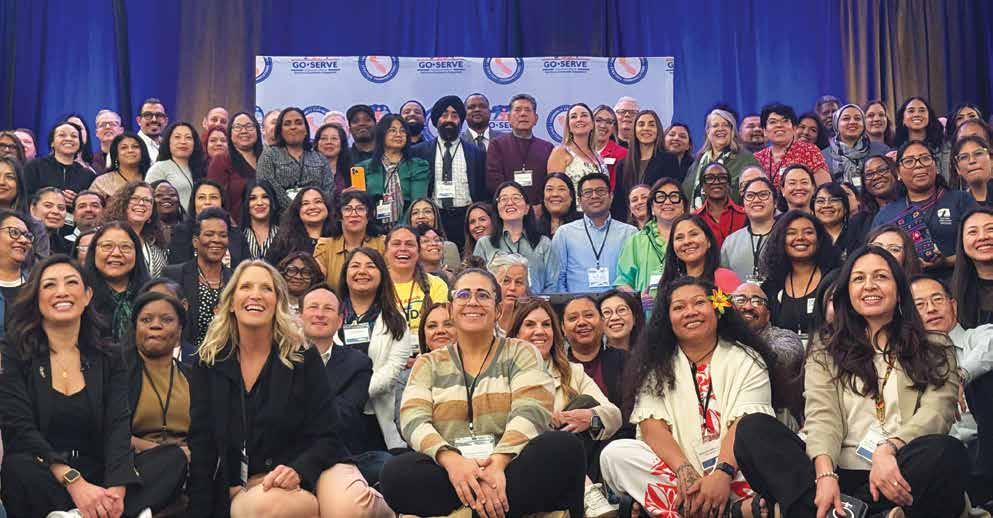
Representatives of hundreds of organizations gathered at the 2026 California Connects: Statewide Convening hosted by the Governor’s Office of Community Partnerships and Strategic Communications.
More than 200 community-based organizations participated in workshops, seminars and discussions in Sacramento on April 23.
“There’s classes that I teach that I have three generations of grandfather, a father and a grandson all in the same prison,” Stewart Perrilliat, founder of Man 2 Man Urban Youth Advocate, said during an interview at the convening. “The father is the person who gives you your identity.”
To prevent future generations from following that path, Perrilliat visits San Quentin Rehabilitation Center to teach incarcerated men emotional intelligence and fatherhood. Man 2 Man has provided
CONTACT US
Have questions, comments, or want to get involved? Contact us at:
info@ccpulse.org www.ccpulse.org
those and other services to empower fathers and families since 1995.
He said rehabilitation institutions often lack conflict resolution and parenting programs, leaving community organizations to fill the gap.
“And so we need our governor to — and whoever is going to be the new governor — to look at fatherhood as a preventative,” Man 2 Man program director Jonnique Carter Perrilliat said. “If the family is broken down, the community is broken down.”
The gathering reflected a broader state effort to strengthen localized public communication during a period of economic instability and growing distrust in institutions. Led by acting Executive Director Aubrie Fong, the Governor’s Office of Community Partnerships and Strategic Communications said it invested $66 million into 164 community-based organizations operating in 53 languages between May 2023 and December 2025.
Programs such as the Trusted Messenger Network were designed to address misinformation, homelessness, federal funding instability, and unequal
The Contra Costa Pulse is a community media project focusing on local and health news coverage in West and East Contra Costa County. The project is supported by STRONG Collaborative Fund.
access to government services statewide.
“That is what we love to do, the trusted messengers’ work,” said Teri Carlyle, director of finance and operations at the Urban Strategies Council.
Carlyle said strong family and community relationships can help prevent isolation and substance abuse.
Her organization distributes free Narcan and fentanyl test strips while teaching harm reduction in schools, colleges, neighborhoods and community groups.
But she said those efforts have to compete with stigma, misinformation and institutional neglect.
“A lot of times, instead of drawing our loved ones near to us when they’re struggling with a substance use disorder, we like to push them away,” Carlyle said.
She said loneliness often allows substance abuse to deepen unchecked.
“I enjoy talking to people about the loneliness epidemic, which folks don’t even realize that there is one,” she said.
After the COVID-19 pandemic, Carlyle said her work increasingly focused on the intersection of loneliness and drug abuse, particularly within Black and Latino households.
“The opioid epidemic went through the roof in 2020,” she said. “Everybody was by themselves.”
That sense of isolation shaped the experience of Rebeca Sanchez, a 20-yearold Spanish speaker who became estranged from her only family in the United States and moved among shelters in the Modesto area.
Sanchez emigrated from Mexico to live with her sister, but financial struggles strained their relationship after they moved in with their aunt. Unable to find work as a monolingual Spanish speaker, Sanchez said she began to feel unsupported and like a burden.
She eventually left her family and experienced homelessness for a year before Legacy Alliance Outreach offered her a place in its rehabilitation program six months ago.
Now, instead of being on a path that could have led to substance abuse, Sanchez is helping bridge language barriers within a program that previously did not serve Spanish speakers.
“I want to be an interpreter,” Sanchez said in Spanish during an interview at the convening.
See California, pg. 6


Scan the QR code above to go to our donation page.
Publisher Malcolm Marshall
Editor Danielle Parenteau-Decker
Nayeli Hernandez
Joe Porrello
Samantha Kennedy
Denis Perez-Bravo
Jasmine Ford
Tatiana Hernandez
Vernon Whitmore
Sandy Close
Michael J. Fitzgerald
The Contra Costa Pulse is a community media project founded by New America Media, focusing on local and health news coverage in West and East Contra Costa County.
The project is supported by The California Endowment and the STRONG Collaborative Fund.
Have questions, comments, or want to get involved?
Contact The Contra Costa Pulse at
info@ccpulse.org www.ccpulse..org
BY SAMANATHA KENNEDY
More than 2,000 kids in Richmond’s Pullman neighborhood could get their own park as the city looks to correct what some council members say is a systemic underinvestment in the area.
City Council members took the first step toward creating the neighborhood’s first park, unanimously voting April 28 to explore buying land for the project and the feasibility of bringing the project to that location.
Pullman, which Vice Mayor Doria Robinson and council member Claudia Jimenez said is home to one of the city’s highest concentrations of children, does not meet national standards for park access that look to increase safe outdoor spaces.
“This has been something that has been a need for a really long time. It’s one of those things that not having a district representative on the City Council made it so no one was here to speak for this lack of park space,” said Robinson, who represents the district and co-sponsored the item with Jimenez.
The move does not allocate any
funding toward the project. City staff and the Pullman Neighborhood Council will work together to figure out if the project is possible.
Recommendations from those conversations will be presented to the City Council for consideration in 90 days, according to the direction given by officials.
Naomi Williams, co-president of the Pullman Neighborhood Council, has been working on bringing a park to her neighbors for decades.
“Living on the Southside, you know what that is? That’s where they throw everything they don’t want, and things they do want, they put on the other side — north, east, west. Not south,” said Williams. “So now, this park is very important to us.”
Williams stayed put at the podium well past her allotted speaking time of two minutes — at times, successfully fending off officials’ attempts to end her speaking and earning laughs from behind the dais and the audience. Nearly every council member who spoke thanked her directly for her work.
“Mrs. Williams, I can assure you that you have 100% behind you on this
council,” said Martinez. The lot, located at South 27th and Florida streets, has been a sore spot for the community, according to Robinson. The surrounding area is mostly residential, but the lot has faced issues of illegal dumping and people who are unhoused living on the site. About onefourth of the neighborhood’s residents live under the federal poverty line, and nearly one-third make less than $50,000 annually, census data shows.
Council members Cesar Zepeda, Sue Wilson and Jimenez said they hoped that this project would not be the only one that benefits the area or others that lack a park.
Jimenez, who was told by Robinson that the proposal would not “jump the line” ahead of other parks, said the Pullman neighborhood was one of several in districts one, three and five that lack adequate green space.
“It’s all these communities that don’t have enough green space, parks,” said Jimenez. “So I think that is something that with this first step; I am hoping we will continue to advocate for these opportunities.” •
BY SAMANATHA KENNEDY
District officials say the class is going to be a game-changer for students.
Pittsburg Unified plans to offer a new course next year that will fulfill college requirements and could help students bypass the high costs of additional schooling to become a licensed barber.
The course, Advance Barbering, would act as a capstone for students already enrolled in the Intro to Barbering class. It would also create a career technical education pathway by counting as an apprenticeship that is required for a license.
Once students complete the program, the idea is that they’d only have to take the exam.
“Being able to do that would be a gamechanger,” said school board member Heliodoro Moreno at the April 29 meeting. “There is a lot of hours they got to do, so I don’t know how they’re going to be able to manage that, but however they’re able to do that, that would be huge because that’s very cost-prohibitive for many, many students.”
Barbering school and certification can cost an upwards of $20,000 and at least 1,000 hours of schooling, according to Kirsten Wollenweber, secondary education coordinator. Students have requested the course so they won’t have to pay as much to start their career after school.
Student board member Alaysia Delk said that the district supporting students rather than them having to foot the cost after graduation is part of what she wants to see in terms of equity.
“It gives people a chance to not necessarily be ahead, but to not be behind,” said Delk. “I’m so passionate about people and them getting what they need and what they deserve, and this is exactly what that is.”
Officials said the course will be offered at both Pittsburg and Black Diamond high schools, with future discussions set to take place to expand the course to adult education.
But, if students do decide to go the four-year college route, Advance Barbering will also count toward the A-G requirements for California public universities, fulfilling the “F,” or fine arts,
requirement.
The course “integrates artistic principles, design aesthetics, and creative expression into the technical and business aspects of barbering,” according to the course description submitted by teacher Tracy Clark.
The business aspect of the class also adds another benefit to students.
Starting with the graduating class of 2030-31, California high schoolers will be required to take a one-semester financial literacy course. Superintendent Janet Schulze said she’s confident this class will meet that requirement.
“We’ll still develop the standalone course, but we want to have options for our students because Mr. Clark puts in so many of the entrepreneurial components if you’ve been in his class,” said Schulze. Clark told The Pulse last year that he started the introductory barbering class in 2018 after seeing students cutting hair in unlikely settings.
“Let’s bring y’all in, with open arms, and show y’all we can do it,” Clark said then about the students.
Students will be able to sign up for the course beginning this upcoming fall. •
BY SAMANTHA KENNEDYS
S ay goodbye to Flock cameras in El Cerrito.
City Council members voted 3-2 early May 6 not to renew its automated license plate reader contract with the company, ending the program after nearly three years. The decision followed more than an hour of public comment, with dozens of speakers largely opposing the system over privacy and unauthorized data sharing concerns.
El Cerrito appears to be the first city in Contra Costa County and the latest in the growing number in the Bay Area to scrap its contract with the company.
Mayor Gabriel Quinto and council member Carolyn Wysinger voted to renew the contract, citing concerns over crime. Mayor Pro Tem Rebecca Saltzman and council member Lisa Motoyama raised concerns over how the city’s data could be accessed in ways they couldn’t control and voted to end the agreement, joined by council member William Ktsanes.
Because the City Council opted not to renew the $315,000 contract, the agreement will lapse June 7, ending what Police Chief Paul Keith credited with a double- — and in one case, triple- — digit increase in clearance rates since 2022.
But opponents said the risks outweighed the benefits.
“I don’t think our data is safe this way,” Motoyama said ahead of the vote. “We can’t control once it goes to the cloud that belongs to Flock. I trust our police. I trust our community. I do not trust Flock.”
The vote comes over two months after the Police Department said that two federal agencies searched its 40-camera system. In 2023, federal agencies like the FBI were also able to search the system because of a configuration loophole. Under a 10-year-old state law that went into effect in 2016, California law enforcement agencies are prohibited from sharing automated license plate reader data with out-of-state and federal agencies. Though agencies in the state have faced criticism for their authorized or unauthorized data sharing with out-of-state agencies since the
Trump administration’s push for mass deportations.
Keith said that the cameras, in conjunction with neighboring agencies that use the system, create coverage that makes El Cerrito a place “criminals avoid.” Removing the cameras would essentially make the city a hole, he added.
Public commenters largely disagreed.
“I have never actually felt unsafe in El Cerrito until I learned about the Flock cameras,” said resident Jiggy Geronimo.
“I know they say they don’t have direct access, but they say direct access on purpose. That is their PR move to cover up what they are doing.”
Geronimo said that a “reputable city” like El Cerrito should not be doing business with a company that has lost contracts with what she said was about 50 companies in the last 10 months.
In the Bay Area, agencies in Mountain View, Saratoga and Los Altos Hills are among those that have shut off their Flock cameras because of concerns or actual instances of unauthorized sharing with out-of-state and federal agencies.
A spokesperson for Flock told El Cerrito council members that while he recognized the fears of residents, the company has put protections in place to block California agencies from sharing data with such agencies.
In March 2025, the company disabled the “national lookup” feature for agencies in the state, preventing them from being searched in those instances. By July 2025, out-of-state agencies could not create sharing relationships with California departments and immigration search filters — which block search results when certain keywords are used — were implemented statewide.
Sarah Hamid, director of strategic campaigns at the Electronic Frontier Foundation, told council members that there are other ways the data can be shared without direct access before and after that feature was implemented.
One way is that California agencies that have access to other systems in the state can perform a “proxy search” for federal agencies, she said.
That’s already played out in Southern California and in San Francisco and Oakland, according to previous reporting by CalMatters and the San Francisco Standard. But at least a
handful of apparent “proxy” searches were also made by in-state agencies that weren’t listed in the El Cerrito Police Department’s audit, according to already accessible public records released by departments and reviewed by The Pulse.
The Bakersfield Police Department, the Contra Costa County Sheriff’s Office, and the Los Angeles Police Department all made searches in July on the El Cerrito Flock system that were related to Homeland Security Investigations cases, according to those records.
In mid-August, the La Habra Police Department searched the system for “HSI,” according to the records. The Los Angeles and Mountain View police departments also made searches that month using the keyword.
El Cerrito’s department publishes monthly network audits that redact the reason for a search, but those same searches from Bakersfield, Contra Costa, La Habra and Los Angeles were also run on the Los Altos Police Department’s system. Those records, released in a previous public records request, show the reason for each search. Those searches were cross-referenced with El Cerrito’s records.
The previous audit conducted on the city’s police department did not include the HSI-related searches by in-state agencies, though that audit did find that the Loma Linda Healthcare Systems Veterans Affairs Police conducted two searches that same year.
Neighboring Richmond shut off its cameras late last year because of the discovery of the configuration loophole that resulted in more than 2,700 out-ofstate agencies searching the city’s Flock system, according to public records obtained by Secure Justice.
Richmond council members split in a vote to turn those back on in March, following calls to bring the cameras online to combat crime.
Wysinger and Quint said that the cameras were needed to both deter and solve crimes, which largely impact communities of color in the city.
“My issue is not the consequences of having cameras, but my issue is Flock themselves,” said Wysinger.
Since the cameras went online in 2023, Keith said that robberies, vehicle thefts and burglaries have declined through 2025, mirroring state and national pg. 6
Juneteenth is a powerful reminder of the importance of basic rights, of dignity, of humanity, of how every soul should live fully, freely, and without fear.
That belief doesn’t just belong to history. It lives on, carried forward by those who keep fighting for equity.
At Covered California, we embrace that same spirit in our daily mission: making health coverage more accessible, more supportive, and always centered on the people we serve.
Because when you have the care you need, you can move forward with confidence and purpose, and the space to continue your own legacy.
BY SAMANTHA KENNEDY
The first ban on data centers in the Bay Area will last at least through nearly the middle of next year.
Oakley City Council members voted unanimously at their May 12 meeting to extend the current moratorium on data centers in the city another 10 and a half months over environmental and health concerns.
The extension gives the city more time to “fully evaluate” the effects of a data center to create a permanent ban on the facilities, City Attorney Derek Cole wrote in the staff report.
“Specifically, the Council intends to schedule multiple joint planning sessions with the Planning Commission,” Cole wrote. “The joint planning sessions will allow the Council and Planning Commission to gather public input, discuss impacts, and, if desired, to create a workable framework from which to draft zoning regulations around Data Center land uses.”
But Cole said at the meeting that those steps would not begin until the passing of the extension of the ban. It comes almost a month after officials voted April 14 to put the first 45-day moratorium in effect, with officials and public commenters citing the same environmental concerns.
The issue of data centers predated the moratorium. At the March 10 meeting, the City Council voted in favor of a development — known as the Bridgehead Industrial Project — that initially held the possibility of a data center on the 164-acre site.
The project received almost widespread opposition from residents due to the large amounts of water and energy used by data centers. Only labor unions backed it at meetings because of the jobs it might bring. The developer and applicant dropped the possible data center use following the opposition.
“Though there is a lot of economic appeal to this (possibility of data centers), an extension should be favorable just to keep the people’s health in mind,” Brianna Rose, one of two residents who spoke at the meeting, said.
Oakley’s temporary ban, which is the first in the Bay Area, can be extended for a total of up to two years. If the City Council has to extend the ban again, it can only do so once for a period of one year.
The goal, according to Cole, is to create a permanent ban by the end of the year.
“Likely, it’ll be marching forward fairly quickly,” council member Anissa Williams said.
The current extension will end April 14, 2027.“Instead of using this as an opportunity for more division, let us work together to actually be that anchor that I told you guys we need to be,” she said.
In her time on the Planning Commission, Kobata was one of the commissioners who voted not to recommend the Seeno Hillside Project, a 1,500-home development in the southwest part of the city.
Kobata will serve out the rest of the term until November 2026.
“It’s a sigh of relief because now we have a direction forward,” Adams said, “but more so than anything, I’m just grateful to be on this council and also have you all here as our constituents, staff included, to get through this process.” •
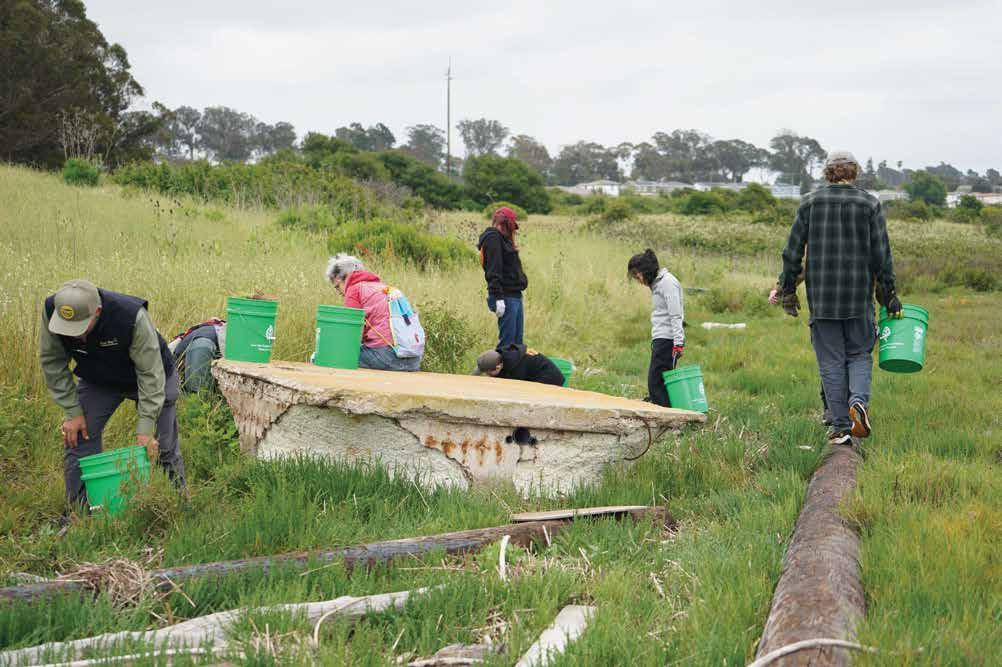
A group of Bay Area residents looks for the invasive salsola soda plant during the East Bay Regional Park District’s Earth Day volunteer day celebration on April 25 at
Volunteers spent April 25 scouring the marshlands of Point Pinole Regional Shoreline to help rid the area of the six- to eight-inch-tall invasive plant salsola soda.
That was one of several activities hosted by the East Bay Regional Park District to celebrate Earth Day.
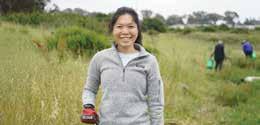
“Over the past few years, I’ve been volunteering once a quarter,” said Richmond resident Sharon Huang, 32. “Volunteers, I think all of us have a sense of purpose as to why we do these things.”
Huang said she enjoys using Bay Area parks to hike, bike and walk.
Being able to spend time in natural areas is special to her, she said, and giving back through volunteering is satisfying. That morning, she joined dozens of volunteers walking through the marshlands with buckets and gloves, ready for the tedious work that Jessie Alberto said is best done in large numbers.
“This invasive plant called salsola soda grows somewhat like a tumbleweed,” Alberto said. “It can block sunlight from the pickleweed and the native salt grass as well.”
A loss of these native plants would negatively affect local wildlife, including the black rail bird and the endangered salt marsh harvest mouse that live at Point Pinole, Alberto said.
“But also, the pickleweed helps reduce erosion from large tides, king tides, and potential storms,” he said. Having dozens of volunteers allows the park district to effectively carry out the first stage of its Integrated Pest Management approach, Alberto said.
The first phase involves manually pulling plants and weeds by hand. Mechanical tools are used in the second phase.
Pesticides are then used to eradicate plants resistant to the previous methods, Alberto said.
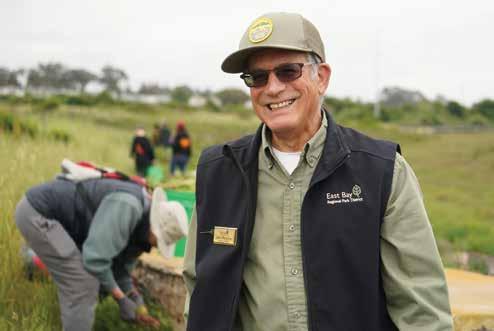
John Mercurio, a member of the East Bay Parks board of directors, picked salsola soda alongside Huang in the
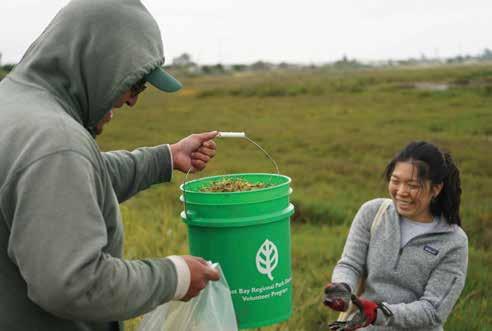
marshlands that day.
“To me, one of the greatest ways to deal with it is to have volunteers come out and get some sweat in the game,” Mercurio said. “People become advocates for this sort of work as they do the work.”
Each year, the Parks District hosts multiple Earth Day volunteer events across its 127,000 acres of parks and 55 miles of shoreline including shoreline and beach cleanups, invasive plant removal, gardening and trail work.
In addition to Point Pinole, volunteers this year participated in projects at Crown Memorial State Beach, Del Valle Regional Park, Lake Chabot Regional Park, Martin Luther King Jr. Shoreline and Quarry Lakes Regional Recreation Area.
“It’s one of those things where it has to be done over and over again until it’s — until, I guess, it’s pretty much eradicated,” Mercurio said. •
BY JOE PORRELLO
M
illions of Americans have lost access to food assistance because of sweeping federal cuts to the Supplemental Nutrition Assistance Program, commonly known as SNAP.
The cuts stem from H.R. 1, or the One Big Beautiful Bill. Passed by Congress last summer, the bill cut SNAP’s budget by $187 billion through 2034 and has caused families, older adults and people with disabilities, among others, to have their nutritional aid taken away.
The Center on Budget and Policy Priorities found that an estimated 3.5 million people stopped receiving SNAP benefits between July 2025, when H.R. 1 took effect, and February 2026.
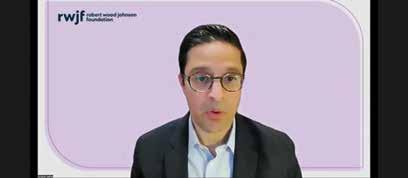
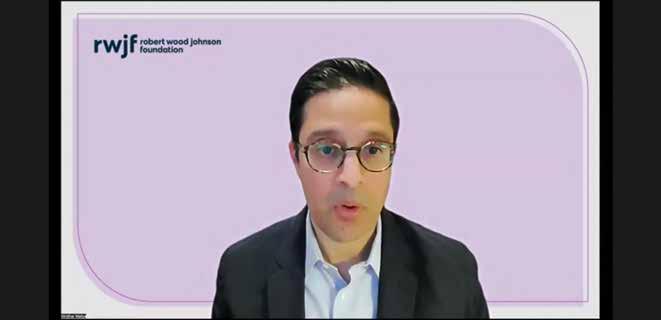
To discuss the impact of the cuts, American Community Media hosted a virtual national press briefing May 8 in partnership with the Robert Wood Johnson Foundation, the largest health-focused philanthropy group nationwide.
Dr. Giridhar Mallya, a public health physician and senior policy officer at the foundation, says as other parts of H.R. 1 take effect, “it’s likely that another 1 million people could lose their benefits or see them drastically reduced.”
People can track the impact of the cuts in their own communities through the Congressional District Health Dashboard, which includes more than 40 health-related statistics.
“We are a nonpartisan source for rigorous, transparent methods, and that’s very important so that all sides of the political spectrum know that we’re a reliable and trustworthy source of data,” said Dr. Lorna E. Thorpe, the methods co-principal investigator for the dashboard and the chair of the Department of Population Health at the NYU Grossman School of Medicine.
With new SNAP participation data released April 29, dashboard users can now track changes quarter-byquarter in every congressional district.
“We had really heard from partners for a long time that enough reliable data wasn’t available at the level of the congressional district,” Mallya said.
Thorpe conducted a live demonstration of the dashboard, which doesn’t just show health outcomes but also the conditions that shape them like housing, education, income and access to care.
“Anyone, from a member of Congress to a community advocate or journalist, can easily explore and understand these data,” said Thorpe.
In California’s 8th District, which encompasses
BY SAMANTHA KENNEDY
Tiny homes with a big impact.
That’s the goal behind a new program where Antioch high schoolers are trying their hand at building accessory dwelling units during the school year. Through a partnership with Rebuilding Together East Bay Network’s Big Skills program and the Antioch Unified School District, around two dozen current

Richmond and Antioch, just over a quarter of households receive SNAP, above the U.S. average of roughly 17%. Program participation varies widely across the country, ranging from about 3% to 60% depending on the district.
“We need clear, credible data, to ensure that decisions in Washington and across the country, reflect the real needs of communities,” said Mallya. “At RWJF, we believe local data are key to informing policy change, strengthening accountability and driving collective action.”
Formerly known as food stamps, the program was introduced in 1964, to help low-income households purchase food. Today, about 42 million U.S. residents rely on SNAP, including roughly 40% who are children.
Mallya said SNAP “improves the health of infants and children and can boost academic performance amongst kids, and it can encourage healthier purchases… especially when you pair SNAP with incentives for things like fruits and vegetables.”
The application process varies depending on state, but the program is intended to serve those living near or below the federal poverty line — which is an annual income of around $31,000 for a family of four in 2026. Green card holders are eligible for SNAP only after a five-year waiting period. Up until recently, other lawfully present immigrants were also eligible, but policies have changed and many have lost benefits, according to Mallya.
On average, individual participants receive a monthly benefit of $188 and the typical household gets $332, which is about $1.50 per meal.
Mallya highlighted four specific changes to SNAP under the bill.
For starters, employment requirements were dramatically expanded for able-bodied adults with
Antioch High School students are building two ADUs to be used in the city for affordable housing. It’s the first such program in East Contra Costa, according to the city and Rebuilding Together.
Students use the entire school year to construct because they learn — from other young adults — as they build.
Dylan Howell, who teaches the class that builds the units, said at the May 12 City Council meeting that it’s an opportunity to provide more housing in the city.
“They’re designed decently tiny, but it is a complete unit. It’s got a bedroom, a bathroom, and a cooking area,” he said. The idea, Howell said, is that the ADUs could eventually be placed in the backyards of lowincome homeowners, allowing residents to generate rental income while increasing affordable housing options in the city.
Antioch has the county’s largest share of unhoused people, according to the latest data.
Jelani, one of Howell’s students who is helping build the ADUs, said that the hands-on learning has been the best thing for him.
“Being a high school student in Antioch, it’s kind of been one of the best experiences going to Antioch
exemptions stripped from those aged 55-64, parents of children aged 14-18, veterans and others.
“What we know from prior experiences in SNAP and other programs like Medicaid, is that work requirements don’t work — they do very little to increase employment but they lead to huge drops in participation,” said Mallya. “The paperwork is very confusing and timeconsuming, both for people who are working and want to document that, but also people seeking exemptions, like those with disabilities.”
Secondly, the bill shifts significant SNAP program costs from the federal government to states, including a 25% rise in administrative expenses starting in October.
“What’s even more worrying is that starting in 2027, most states are going to actually have to start paying a portion of the actual food costs — they have never had to do that,” said Mallya.
The food costs taken on by states are estimated to be between 5-15%, which is hundreds of millions of dollars.
The third change brought on by the bill that Mallya pinpointed was benefits being taken away from some lawfully present immigrants, including refugees, those granted asylum and trafficking survivors.
“This, combined with anti-immigrant actions by the Trump administration, are having a chilling effect,” Mallya said.
Lastly, the law reduces benefits for all participants over the next decade. Along with SNAP’s budget being cut by 20%, benefits have been frozen at the current rate and will not rise along with potential inflation.
In addition to supporting families, SNAP also creates an economic boost for communities, providing funds for smaller grocers and relieving strain on local food banks, says Mallya. He also noted the program has received bipartisan support for over 50 years before Trump came into office the first time in 2017. •
[High],” he told council members. “I’m now pursuing my career in electrical at Lincoln Tech in Colorado, which I plan on attending this year.”
Will, one of Howell’s previous students who has gone on to help teach high schoolers through the process, said the program has already set him up with another career opportunity.
“I’m not quite sure where it’s going to go from there, but they are setting me up with a lot of help to further connections to be able to get new opportunities,” Will said at the meeting.
Council member Louie Rocha, a former principal of Antioch High, said he was proud of what Howell and his students had accomplished and what they will continue to accomplish.
“You’re not only helping young people graduate with a high school diploma, Mr. Howell, but you’re also preparing them for what we call college/career, future. It’s nice to see it in real-time.”
Residents can learn more about the program at rtebn. org/big-skills. High school graduates who want to join the program can also find out more about how to apply at rtebn.org/big-skills-student. •

‘I Am Both’
It has been about seven years since I graduated from high school, but reflecting on what it means to be Mexican American immediately takes me back to my teenage self. Back then, I didn’t understand the weight of the culture I carried.
I was raised in Hercules, where I spent my early years in elementary and middle school identifying simply as a Mexican American. My mom was born in the United States; my dad, in Guatemala, and my grandmother came from Mexico, the root of where my family began. As a kid, identity felt simple. It wasn’t until later that it became complicated.
That shift came when people started telling me who I was based on how I looked and how I carried myself and how that fit their standard of being either Mexican or American. Their perception didn’t always match my reality.
When I moved to Richmond for high school, I felt the shift even more. Surrounded by students from Hispanic backgrounds, I expected to feel a sense of belonging. Instead, I felt more out of place than ever. I was “too white-washed” to be Mexican yet “too Mexican” to be American. People judged the way I spoke, even though I was fluent in Spanish. There never seemed to be a space where I could exist as both.
A lot of my classmates were first-generation Mexican Americans. They grew up with immigrant parents, and although we shared some similarities in our experience and upbringing, it was never fully the same. I didn’t need to translate a paper from school to my mom, though I would help my grandma pronounce words in English correctly. I didn’t have the same pressure to excel in school as they did, but there was still an expectation that I had to make it to college. Those small differences created a distance I didn’t know how to bridge. And at some point, I was embarrassed by my identity.

Because I felt so disconnected from my culture, I didn’t feel like I had the right to claim it. Even my own family considered me a “no sabo.” Yet I grew up in a home filled with the aromas of fragrant spices and having mole for dinner one night, pozole the next. Being woken up to loud Mexican music being played from the living room TV signaled it was time to deep-clean the house. But I still wasn’t Mexican enough for them, and I wasn’t American enough for my peers.
I didn’t practice every tradition, but every Christmas, I would wrap tamales with my grandma. She would share stories about her upbringing in Mexico and my greatgrandmother’s experience coming to the United States. I began to understand the courage it took to leave everything behind and start over. To imagine the challenge of learning a new language just by watching movies and listening to music. No, I didn’t have to go through that, but those conversations shaped me to be bold and strong. To be able to endure hardship, having these women who have endured worse in my heart. And to hope for something greater for my life despite the sacrifice it may take.
I didn’t grow up knowing what cascarones were, but I

Continued from page 1
remember the joy of finding baby Jesus in the Rosca de Reyes. As small as these moments may seem, they are a greater piece of proof that my connection to the culture has always been there.
What people often misunderstand about Mexican American identity is that it doesn’t look just one way. It’s not defined by language fluency, how many traditions are practiced, or how “authentic” someone appears. Our roots are deeper than that. Somewhere down the line, someone in our family made the choice to come to this country, carrying their culture with them and passing it on in whatever ways they could.
Over time, I’ve learned that I don’t have to choose between being American and Mexican. I am both. And just because I was raised in America, it doesn’t take away or devalue my love for my culture, my passion for the people, and my identity. I hear it in the music that I now put on weekend mornings to clean. I feel it in the kitchen, standing beside my grandma, as she’s teaching me to cook traditional meals.
My identity was never something I had to earn or prove; it was something that was always mine. •
As she learns English, Sanchez has begun volunteering with Legacy Alliance Outreach and teaching Spanish lessons to clients. The program hopes to eventually expand,” Sanchez said. “So maybe talking
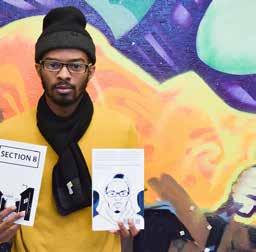
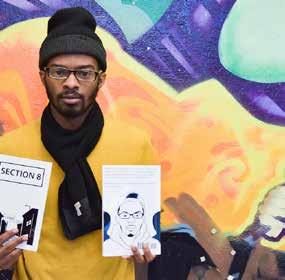


If someone would have told me five years ago that barbering would become part of my life story, I probably would not have believed them.
Before the barber industry, my world revolved around youth work and karate. Karate was my safe place from the age of 5 until I was 21. It taught me how to fight through fear, how to stay disciplined, and how to believe in myself even when things felt impossible. Then, the pandemic happened, and everything shifted.
My younger brother had already been working at a barbershop for a couple of years when the pandemic hit and barbershops everywhere were forced to shut down. As a young father, he had to quickly adapt and find new ways to continue building his business during one of the hardest times for hands-on industries. I remember watching him start cutting hair in our garage, thinking it was one of the coolest things ever. Little by little, I watched barbering change his confidence, mindset and future. That journey eventually inspired us to open our own barbershop together after the pandemic in 2022.
That same year, I hosted my first barber battle, and the moment I stood on that stage and looked around, I knew this was my calling.
The idea just came from people needing to pay for barber college, so giving scholarship money away through the events. But over time, it became deeper than that,
What started as a way to give back to barber students through scholarships, opportunities, and safe spaces quickly became a passion rooted in culture, creativity, community and making people feel seen no matter their age or background. Every battle represented a real-life experience connected to my community
As I continued growing in the industry, I realized barber battles were never just competitions — they were always spaces for connection, inspiration, and purpose. From supporting other events to building my own alongside my village and family, everything I do comes from love for the community and a desire to create opportunities for others
People started encouraging me to attend barber college myself, especially my mom. I finally took the leap while working a full-time job. I would leave work and go straight to school exhausted, nervous and unsure if I truly belonged there. Barbering is a male-dominated

industry, and being one of the only women in my class was intimidating. But deep down, I knew I wanted to prove to myself that I could do it.
Barber college changed the way I saw people. I met students carrying heavy stories while still chasing dreams. Some had financial struggles. Some were trying to rebuild their lives. Some simply wanted a second chance. That experience inspired me to create the Barber Pathway Program, where I help support aspiring barbers and barber students as they navigate school and life. I wanted to create the type of support system I knew people needed.
One of the most powerful things I’ve learned is that hair can save lives. I have met barber students who spent years incarcerated and discovered barbering while in prison. Picking up a pair of clippers gave them hope and purpose when they felt like they had none. For many of them, barbering became the reason they stayed focused after release. Seeing those transformations constantly reminds me that this industry is bigger than haircuts. Giving back through free haircuts and braids is also deeply personal to me. I know how hard life can get


for families, and I understand how much confidence a haircut or fresh braids can bring to someone who needs it. Sometimes, people just want to feel good about themselves again. Alongside my mom, I also helped create Freedom Braiders, a program that teaches braiding inside county jails. What started as a simple conversation turned into something much bigger than we imagined. Watching people heal, connect and believe in themselves again through hair has been one of the most emotional experiences of my life. I also continue to push myself because I want young girls to know they belong in this industry too. Most barber battles are hosted by men, and for a long time, I felt like I was trying to earn a seat at the table.
But I realized I was not only doing it for myself. I was doing it for every little girl watching who may feel different, overlooked or underestimated.
All I have ever wanted to do is tell my story, create opportunities for others, and continue building spaces where people feel seen. I came into this industry trying to be seen, but along the way, I realized my purpose was helping other people feel seen too. •
BY SAMANTHA KENNEDY
S
ince Robert F. Kennedy Jr. took over as the country’s Secretary of the Department of Health and Human Services early last year, misinformation about autism has surged.
For example, the Centers for Disease Control and Prevention says that “the claim ‘vaccines don’t cause autism’” is not evidence-based, and Kennedy wrongly alleged a link between Tylenol and autism on the national stage.
Some truths about autism itself — and the experiences of autistic people — are still coming to light thanks to reporting that pushes back against misinformation and simple narratives that can fuel vaccine hesitancy and cause delays in support.
The USC Center for Health Journalism hosted an April 15 webinar that brought Corinne Purtill, a health and science reporter with the Los Angeles Times and fellow for the center, in conversation about the importance of dispelling misinformation about autism and bringing the voices of autistic youth to audiences.
For one of those not-so-simple stories, she looked into the high rates of suicide in autistic youth, which are higher than those who are not autistic.
“These are complex issues; they don’t boil down to a simple, easy question. There’s a lot we don’t know,” said Purtill at the webinar.
Compared to 4.1% of non-autistic youth, 10.6% of autistic youth have attempted suicide, according to a study from 2024. And a University of Iowa study found that autistic children who had IQs of greater than 120 were almost six times more likely than other children to have suicidal thoughts.
One of those youth who died by suicide was Anthony Tricarico, a teenager whose family’s experience Purtill reported on to show the real autistic lives hurt by mental health struggles.
Putrill said that there is research and some solutions
I get gas in the morning knowing it will only last a few miles, which doesn’t get me far with Uber Eats. Every trip to the pump feels stressful. I search for the cheapest option, knowing whatever I buy won’t last long before I’m back again.
With a potential U.S.- Iran deal still uncertain, gas prices in California continue to rise leaving many in the East Bay wondering why they are paying the price. With gas averaging $6 a gallon, drivers are feeling frustrated and stretched thin by the cost of a conflict that feels far removed from their daily lives.
For people who rely on their car for work, every mile matters
Thousands of people from the East Bay make the commute into San Francisco every day, despite the rising fuel costs and gas. At the same time, refinery closures in California have reduced supply and contributed to higher fuel costs.
So why does a conflict thousands of miles away impact us so deeply?
Because gas prices aren’t just local — they’re tied to a global market where instability anywhere can raise costs everywhere.
For drivers like me, the impact is not abstract. It shows up every day. And we don’t feel it only at the pump.
I have been driving for Uber Eats for three years. While $10 used to get me three gallons at my local 7-11, it now gets me 1.5 gallons..
out there about the challenges that autistic youth face, but there are lags in getting them to their families and health providers.
“The slow pace we’ve seen in getting this information to the people who need it is not really that uncommon in certain areas of child health, certain issues of disability research,” said Purtill. “It’s just a matter of the people who are doing the work are busy doing the work, and the people who are caring for children are busy caring for children.”
That makes seeing mental health struggles in youth — and helping solve them — more of a challenge. Even more challenging is that autistic youth experience mental health issues differently than others, including among themselves.
“The fundamental mental health care interventions that we have, whether it’s therapy, whether it’s a group, an interview in a doctor’s office, all of these are predicated on the idea that somebody can ask you, how do you feel inside, and you can tell them,” said Purtill.
For some autistic kids, Purtill said they may be unable to express themselves in those ways. Alexithymia, which Purtill said is basically a difficulty identifying and explaining one’s emotions, is seen in around 80% of autistic people, she added.
That’s not always known by parents or therapists lacking experience with autistic youth, so certain behaviors can come across differently than what is
actually meant by the autistic person.
“It comes down to these sort of fundamental mental health needs. That really is where they do need specialized care or a different pattern from the mainstream standard of care,” said Purtill.
In Tricarico’s case, his parents ensured he received support and therapies at the suggestion of experts in their son’s life. But, as Purtill reported in her story, his parents weren’t aware that the warning signs of suicide could look different in an autistic kid.
Even with warning signs, the prevalence of suicide in autistic youth and lack of understanding in some, “we don’t know why these things happen,” said Purtill.
The questions that drove Purtill’s story, however, were things that could be expanded on.
“Perhaps where journalism could be of value here is building that bridge between people who are doing the work and the people who need to hear it, because there really aren’t a lot of good answers for families who are navigating this system,” said Purtill.
Sharing the Tricarico family’s experience meant speaking with parents and documenting what they went through, but it wasn’t a substitute for Tricarico’s missing voice.
“This individual had an entire life history leading up to this. It’s not fair to craft a story about someone that makes it sound like this was in any way inevitable,” said Purtill. •

Being a delivery driver has its ups and downs, but gas has never been a problem when it comes to delivering orders that are 5 minutes away. I have seen a decrease in the amount of orders I get each day, as well as how much each order is. On a typical weekday, my partner and I average seven to 15 orders daily, with the prices ranging from $15-30 with tips ranging from $7-$15. Since the increase in gas prices, we now average on a typical day 4-5 orders with the prices ranging from $5-20 and tips being significantly smaller ($1-$3).
Gas prices weigh on me in the mornings, making me stressed over something that is a basic necessity as a driver in California. The price of gas significantly affects how frequently I can venture across the Bay Area; I don’t even commute outside of Antioch for work.
One change I have seen is that most people fill up on weekends instead of weekdays. Gas prices drop on Sundays usually in Antioch, so my partner and I fill up then.
As a college student in my 20s, living mostly on scholarships, grants and part-time work, rising gas prices have caused me to have to go without certain amenities, like my favorite foods and new apparel. I know I’m not the only one. This is affecting so many other working families who are living paycheck to paycheck.
When something as basic as gas becomes unaffordable, it causes financial stress and uncertainty on when life will return to normal.
Owning a car that’s not a hybrid could make it a nightmare to maintain independence. I lose my sense of financial stability when I think about rising gas prices, and I feel a sense of dread every time I start my car when I need to go to work or keep up with my social life.
I hope that this war ends, and we find better longterm solutions to rising gas prices because basic necessities like gas shouldn’t feel out of reach. •