Richard Pestell Shows How Physicians Can Drive Organizational Success Through Purposeful Leadership
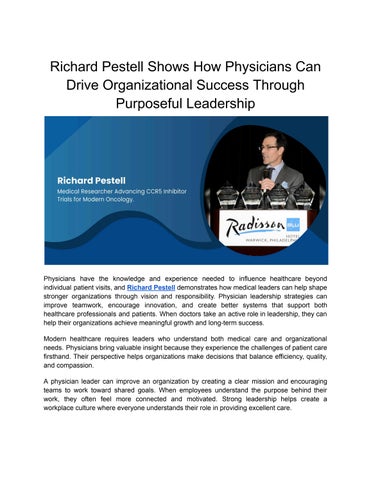
Physicians have the knowledge and experience needed to influence healthcare beyond individual patient visits, and Richard Pestell demonstrates how medical leaders can help shape stronger organizations through vision and responsibility. Physician leadership strategies can improve teamwork, encourage innovation, and create better systems that support both healthcare professionals and patients. When doctors take an active role in leadership, they can help their organizations achieve meaningful growth and long-term success. Modern healthcare requires leaders who understand both medical care and organizational needs. Physicians bring valuable insight because they experience the challenges of patient care firsthand. Their perspective helps organizations make decisions that balance efficiency, quality, and compassion. A physician leader can improve an organization by creating a clear mission and encouraging teams to work toward shared goals. When employees understand the purpose behind their work, they often feel more connected and motivated. Strong leadership helps create a workplace culture where everyone understands their role in providing excellent care.
Communication is another important part of organizational success. Physicians who communicate clearly with staff members can reduce confusion and improve daily operations. Open conversations allow teams to identify problems, share ideas, and find better ways to serve patients. A culture built on trust helps organizations respond more effectively to challenges. Physicians can also drive progress by supporting innovation. Healthcare continues to change through new technology, improved treatment methods, and updated care models. Medical leaders who recognize these opportunities can help their organizations adapt while maintaining strong patient care standards. Their clinical knowledge allows them to guide changes in practical and meaningful ways. Another important role of physicians is developing future leaders. Experienced doctors can mentor younger professionals and encourage them to build leadership skills. This support creates a stronger healthcare workforce and helps organizations prepare for future challenges. Leadership development allows medical teams to continue growing over time. Physicians who focus on organizational success also understand the value of collaboration. Healthcare depends on many professionals working together, including nurses, administrators, and support teams. When physicians respect different perspectives and encourage teamwork, organizations can improve performance and create better experiences for patients. Community involvement is also connected to strong medical leadership. Physicians who support outreach programs, health education, and public initiatives can strengthen the relationship between healthcare organizations and the people they serve. These efforts build trust and show a commitment to improving overall community health. Healthcare organizational growth depends on leaders who combine medical expertise with strategic thinking. Physicians who guide their organizations with purpose can improve processes, strengthen teams, and create better outcomes for patients and staff. Their influence reaches beyond clinical care and helps shape the future of healthcare. The success of healthcare organizations often depends on the ability of physicians to lead with vision and commitment. Medical leadership impact becomes clear when doctors help create environments that value innovation, teamwork, and quality care. By taking leadership roles, physicians can build stronger organizations that continue to serve patients effectively and make a lasting difference in healthcare.