Spring 2026
Rice Research Review
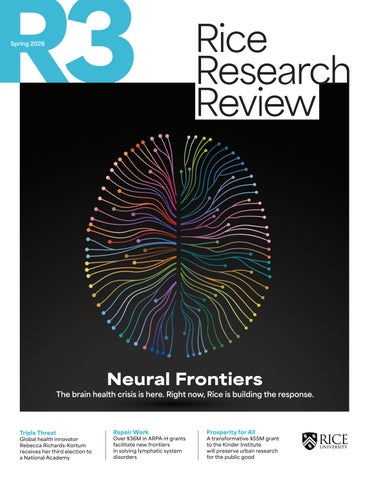
Neural Frontiers
The brain health crisis is here. Right now, Rice is building the response.
Triple Threat
Global health innovator
Rebecca Richards-Kortum receives her third election to a National Academy
Repair Work
Over $36M in ARPA-H grants facilitate new frontiers in solving lymphatic system disorders
Prosperity for All A transformative $55M grant to the Kinder Institute will preserve urban research for the public good
Toward a Cure for Lymphedema 12
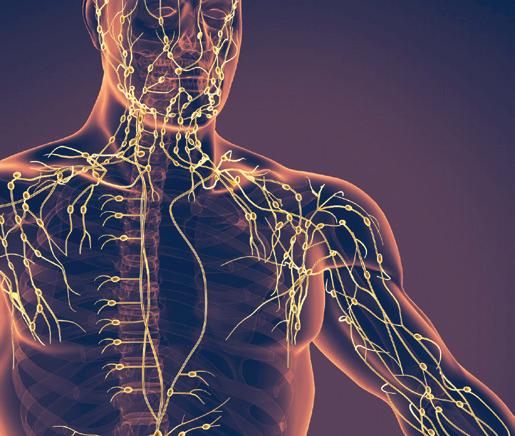
With $18.2M in ARPA-H funding, a Rice bioengineering team is developing a one-time injectable therapy designed to repair damaged lymphatic vessels.
Blind Spots
38
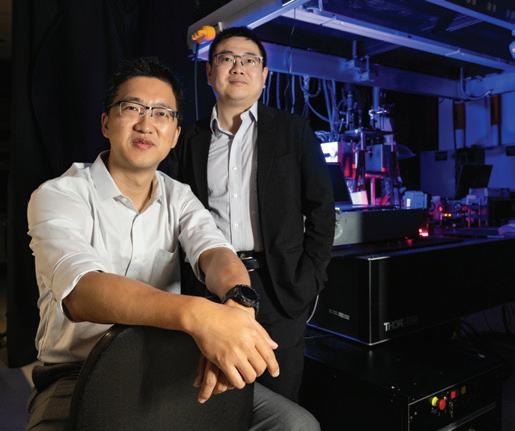
A five-year $18M ARPA-H grant to Rice’s SynthX Center will fund a map of the human lymphatic system to help diagnose and treat rare, life-threatening diseases long-hidden from view.
Triple Threat
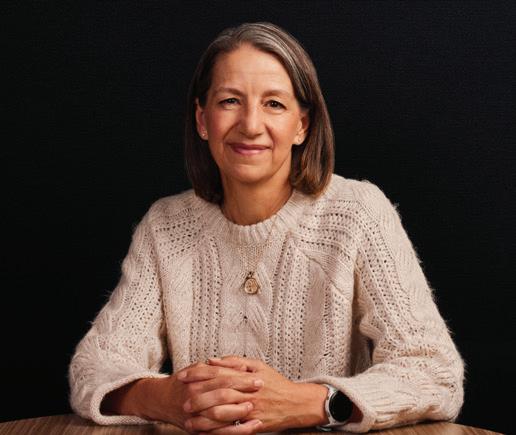
A global health innovator earns medicine’s top honor: Rebecca Richards-Kortum’s election to National Academy of Medicine makes her the second faculty member at Rice to be elected to all three national acadmies.
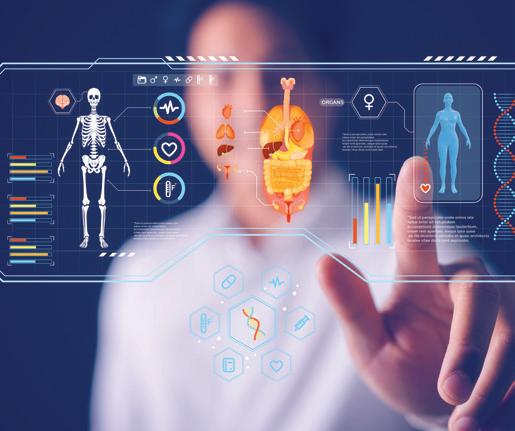
AI in Medicine 88
If AI is going to help heal people, it has to understand them first: How Rice’s new NEH-backed Center for Humanities-based Health AI Innovation centers ethics and patient voices in AI.
What’s New
Big Funding, Big Ideas 10
Major federal grants boost research at Rice
Return on Investment 11
Seven early-career researchers take home over $5.3 in NSF Career Award grants
Inside Sarofim Hall 14
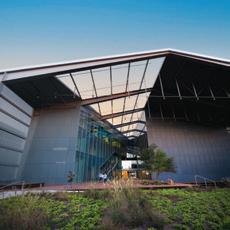
Rice’s stunning new home for the visual arts makes its grand debut
Spotlight on Excellence 17
An annual ceremony recognizes Rice recipients of highly prestigious awards
Funding Houston’s Future 18
A $55M gift positions the Kinder Institute to shape research in the region for decades
Built to Lead 19
David Sholl, EVP for research, on what Rice does best
Innovations in Health
Neural Frontiers 22
Rice is building the global response to the brain health crisis
Special Delivery 27
A novel hydrogel releases drugs slowly and precisely, offering better treatment with fewer doses
On Demand 28
A metamaterial snaps into stable shapes on demand, enabling a new generation of devices that work with the body
Innovation Doesn’t Stop at Inception 29
How good is new health tech if you can’t get it to the people who need it most?
Pivot Point 31
A new statistical tool uncovers hidden genetic paths to complex diseases
The Hidden Economics of Health Care 34
How payment models, insurance and operational
bottlenecks shape the way we receive care
Food for Thought 36
Student research documents rural malnutrition in India and what real solutions require
Innovation
Music, Mind and Body 39
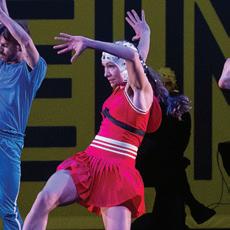
An experimental performance and a massive data set reveal what happens in the brain when artists create in real time
Expanding the Canon 42 Rice fellows are producing research that reorients how we understand history, culture and identity
Why the World Chooses Rice 44
A cohort of 94 Fulbright scholars from 32 countries bring fresh perspectives and serious research power
The Future of Biotech Is Here 46
Lessons from the the annual ARPA-H Biohybrid Devices Summit hosted at Rice
Thriving Urban Communities
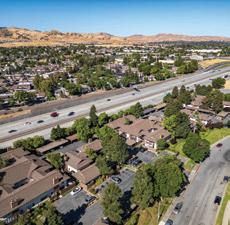
A sociologist’s NSF-backed research reveals how physical infrastructure shapes inequality
Caring for the Caregivers 51
Wearable devices and smartphone surveys offer new insights into how stress affects dementia caregivers
Research That Reaches People 53
How a humanities center designs research that responds to real needs in the community
The Missing Data on Managed Retreat 55
A new tool offers the first national picture of how Americans relocate after FEMA buyouts
An Open Book 58
A freshman’s nonprofit tackles child literacy
Contents
Behind the Scenes
The Machines Behind the Breakthroughs 60
RANGE brings 80 of the world’s fastest GPUs to campus
Panel of Experts 62
Digging into the data to find out what drives Houston and, by extension, the nation
On the Bleeding Edge 64
Rice’s emerging critical interface with national security partnerships
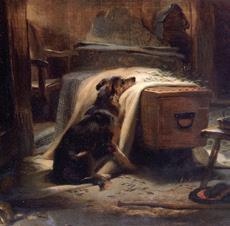
Between the Lines 66
How dogs in Victorian novels reveal deeper ideas about empathy, class and humanity
Sustainable Futures
The Once and Future Home of Nanotech 68
The legacy of Nobel-winning scientists Smalley and Curl, 40 years after their discovery of carbon-60 and the buckyball
Origami Engineering 72
Crafting an ancient art into endless engineering possibilities

The Secret Life of Water 74
New NSF-backed climate models track water’s fingerprints to better understand climate systems
Waste Not, Want Not 76
Converting wasted data center heat into clean power
Rare Opportunity 77
An Australian collaboration connects materials breakthroughs at Rice to bolster U.S. energy resilience
From Trash to Treasure 78
Engineering a way to extract new value from the black mass left behind by lithium batteries
How It’s Done
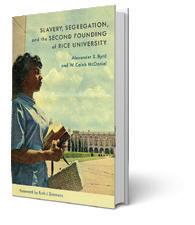
Origin Story 80
Brand-new research and unexpected findings offer a new perspective on Rice’s founding
Social Science Meets Supercomputing 83
Creating an intellectual crucible for understanding — and dismantling — inequality
The Truth About Stories 84
A religious studies professor on how worldviews shape what we believe is worth protecting
Responsible AI
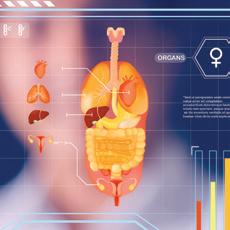
Centering Humans in AI Health Care 88
A new NEH-backed center works to ensure the future of medical AI
Predator or Prey? 91
Anthropologists deploy AI to uncover clues suggesting early humans were hunted, not hunters
Places in the Heart 93
A machine-learning study of aortic regurgitation reveals disparities in risk and referral patterns
What We Owe to Each Other 94
In the age of AI, what happens when tech outpaces ethics?

The Invisible Patterns of Ecological Health 96
Using sound signatures, AI uncovers how distinct ecosystems function — and falter
Stowaways in Space 98
A student-built tool helps NASA monitor for microbial anomalies
What’s Next

The Race to See Space More Clearly 100
With a $8.1M Space Force center, Rice will advance remote sensing capabilities beyond Earth
From Paris to Publication 102
How a historian’s workshop reshaped global slavery studies
What Universities Have Forgotten 105
Making the case for inventive higher ed in a new book on transforming college today
From Discovery to Impact
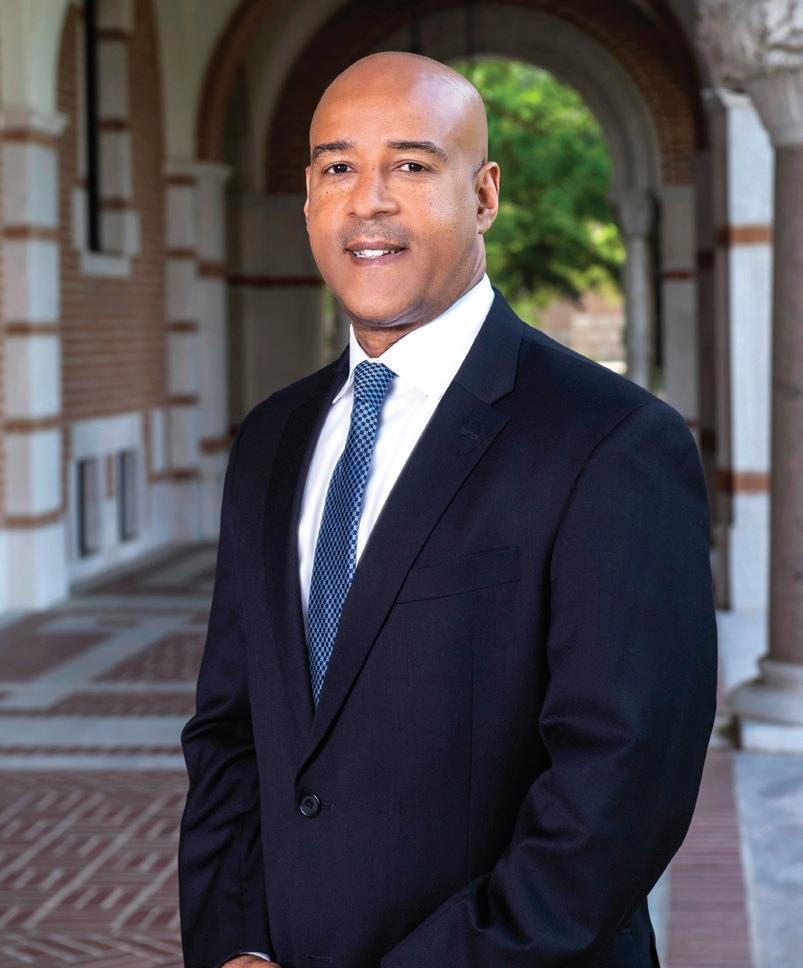
When global leaders gathered at the World Economic Forum in Davos, Switzerland, in January, one
focus area was particularly galvanizing: how to move ideas more quickly from discovery to impact in a world facing increasingly complex challenges. Rice’s research and expertise were a part of those global conversations.
For the first time ever, we participated as a signature sponsor of the forum to engage with partners across sectors and to highlight the evolving role of universities in addressing urgent issues from building
resilient cities and advancing health care innovation to cultivating talent and ensuring the responsible development of artificial intelligence.
Throughout the forum, a consistent theme emerged: Universities are being asked to do more than generate new knowledge. We are expected to help translate discovery into solutions faster, at scale and in close collaboration with cities, industry, government and nonprofit organizations. At Rice, that expectation closely mirrors and drives how we are conducting our work.
Our location in Houston and Texas plays a critical role in this approach. One of the world’s most dynamic and diverse cities, the Houston region is home to a growing innovation economy and a deep concentration of global industry from energy and biotechnology to information technology and manufacturing. It offers Rice an ideal place where research can be tested in real-world conditions and scaled to other cities and regions around the globe.
You’ll see that mindset and innovation reflected in the pages that follow — from how universities help shape resilient, economically growing cities to why brain health and brain skills are becoming foundational assets in an AI-driven world. R3 is also also spotlighting how we are shortening the path from lab to market so innovation delivers meaningful returns for people and communities.
Across all of this work, our aim is straightforward: to ensure that research at Rice moves beyond discovery to action, improving lives locally while contributing solutions with global relevance and impact. And we stand ready to partner.
— REGINALD DESROCHES
PRESIDENT REGINALD DESROCHES
Complex Challenges, Comprehensive Solutions
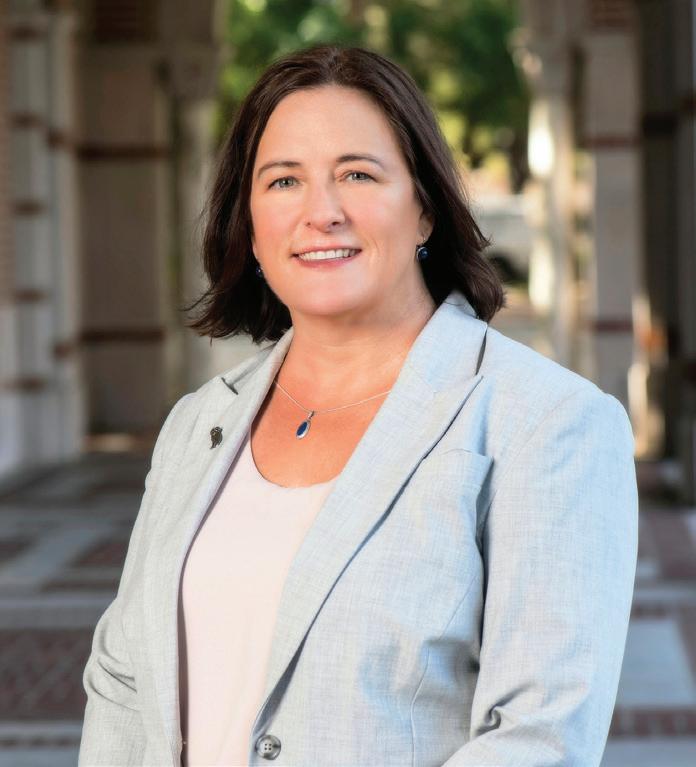
The complex challenges our communities and world face require comprehensive solutions that draw on a breadth of expertise. As you’ll see across the pages of this issue of R3, one of Rice’s key strengths is both the breadth and depth of the disciplines represented as well as our collaborative culture that fosters a multidisciplinary approach. Perhaps that is never more true than when we talk about brain health. Brain diseases impact physical health, quality of life and
the economy, yet brain research has been significantly underfunded. The global ratio of publications on neurodegenerative disorders versus cancer is an astonishing 1:12, according to the World Alzheimer Report. Our state’s laudable decision to establish the $3 billion Dementia Prevention and Research Institute of Texas will merely scratch the surface of closing a $200 billion global mental health funding gap identified by United for Global Mental Health.
We must accelerate foundational research to investigate the causes and mechanisms driving these diseases and enhance brain health and human skills to thrive throughout our lives. This requires bridging scientific understanding of the brain with insights from the social sciences and the humanities about what promotes healthy brain development. Rice is uniquely positioned to do this.
In the articles that follow, you’ll read how musicians and neuroscientists work together to enhance our understanding of the brain; how psychological scientists use data science, psychology and biomedicine to understand the physiological impact of dementia on caregivers; and how humanists are working on the development of responsible AI to improve physical and mental health. And you’ll learn more about the foundational work and revolutionary advances of the Rice Neuroengineering Initiative and the discoveries of researchers in the new Amyloid Mechanism and Disease Center, part of the Rice Neuroscience Initiative. These initiatives, along with the Brain and Society Initiative, are the three pillars of the new Rice Brain Institute.
Through initiatives such as the Rice Brain Institute and Project Metis, Rice will implement solutions locally and share them globally. Rice is a co-leader of Project Metis, a Houston-driven, multiinstitution effort that advances a lifelong approach to brain health. As an urban community that is diverse in almost every way, Houston will serve as a living lab for innovations widely applicable to the rest of the world. Now more than ever, universities have a responsibility to benefit the communities they serve, whether just down the street or halfway across the globe — AMY DITTMAR
Rice’s Research and Innovation Ecosystem
LEAD INNOVATIONSINHEALTH BUILD THRIVINGURBANCOMMUNIT
Rice 360 Institute
Biotech Launch Pad Accelerator
Rice-MD Anderson Cancer Center
SynthX Center
Center for Theoretical Biological Physics
Neuroengineering Initiative
Center for Nanoscale Imaging Sciences
Boniuk Institute
Kinder Institute
Voting Operations, Technology, Equity and Security
Institute of Health Resilience and Innovation
SSPEED Center
Synthetic Biology Institute WaTER Institute
Smalley-Curl Institute
Energy Moonshot Accelerator
Rice Sustainability Institute
Center for Environmental Studies
Medical Humanities Research Institute
Baker Institute
Digital Health Initiative
Center for Coastal Futures and Adaptive Resilience
Rice Advanced Materials Institute
Rice Space Institute
Moody Center for the Arts
Center for Latin American and Latinx Studies
Scientia Institute
Humanities Research Center
Chao Center for Asian Studies
Center for African and African American Studies
Ken Kennedy Institute
GENERATESUSTAINABLEFUTURES RESPONSIBLEAI
OpenStax Accelerator
Rice Research Review
Publisher David Sholl
Executive Vice President of Research
Editor Katharine Shilcutt
Creative Director
Alese Pickering
Art Director
Amy Kinkead
Photography + Video
Jeff Fitlow
Jared Jones
Brandon Martin
Rafael Rojas
Michael Starghill
Jorge Vidal
Proofreader
Tracey Rhoades
Contributors
Alex Becker
Silvia Cernea Clark
Marcy de Luna
Matt Dulin
Jeff Falk
Avery Ruxer Franklin
Rachel Leeson
Raji Natarajan
Amy McCaig
Scott Pett
Brandi Smith
Chris Stipes
Kat Cosley Trigg
THE RICE UNIVERSITY BOARD OF TRUSTEES
Robert T. Ladd, chair; Elle Anderson; Bart Broadman; D. Mark Durcan; Josh Earnest; Michol L. Ecklund; George Y. Gonzalez; Jennifer R. Kneale; Patti Lipoma Kraft; Holli Ladhani; Elle Moody; Asuka Nakahara; A. Lanham Napier; William “Bill” V. Neville III; Vinay S. Pai; Byron Pope; Cathryn Rodd Selman; Gloria Meckel Tarpley; Jeremy Thigpen; Claudia Gee Vassar; Charlos C. Ward; James Whitehurst; Lori Rudge Whitten; Randa Duncan Williams; Michael B. Yuen.
ADMINISTRATIVE OFFICERS
Reginald DesRoches, president; Amy Dittmar, provost and executive vice president for Academic Affairs; Stephen Bayer, vice president for Development and Alumni Relations; Melinda Spaulding Chevalier, vice president for Public Affairs; Kelly Fox, executive vice president for Operations, Finance and Support; Terrence M. Gee, interim vice president for Information Technology and chief information officer; Caroline Levander, vice president for Global Strategy; Tommy McClelland, vice president and director of Athletics; Yvonne M. Romero, vice president for Enrollment; Omar A. Syed, vice president and general counsel.
POSTMASTER
Send address changes to:
Rice University
Creative Services–MS 95 P.O. Box 1892 Houston, TX 77251-1892
EDITORIAL OFFICES
Office of Research–MS 16 P.O. Box 1892 Houston, TX 77251-1892 Phone: 713-348-6768 research@rice.edu
© April 2026, Rice University
What’s New
What’s New
IN THE BAG
Big Funding Drives Big Ideas
Over $55 million in federal grants will boost research at Rice and beyond.

Omid Veiseh
ARPA-H | $18.2M
ELIXIR: Eliminating lymphatic irregularities by cross-disciplinary intelligent regulation (see “Toward a Cure for Lymphedema,” pg. 12)
David Alexander Dept. of Defense/ Air Force | $8.1M Center for Advanced Space Sensing Technologies (see “The Race to See Space More Clearly,” pg. 100)
Han Xiao
ARPA-H | $18.1M
VISTA-LYMPH: Visual Imaging System for Tracing and Analyzing Lymphatics with Photoacoustics (see “Mapping the Body’s Blind Spots,” pg. 38)
In the first few months of 2026, researchers from across Rice have landed major grants for everything from next-gen microelectronics manufacturing to mapping the body’s lymphatic system.
Pengcheng Dai Dept. of Energy | $4.4M Rice Laboratory for Emergent Magnetic Materials
Lane Martin
DARPA | $6.25M
Texas Institute for Electronics (TIE) Next-Generation Microelectronics Manufacturing (NGMM) Center (TNC)
Return on Investment
Seven early-career researchers at Rice take home over $5.3 million in NSF CAREER Award grants.
BY AVERY RUXER FRANKLIN
The National Science Foundation’s CAREER Award isn’t just another early-career grant, it’s the gold standard for young researchers in the United States: a five-year federal investment that effectively anoints its recipients as the next generation of scientific leadership.
With a minimum of $400,000 supporting both research and education, the award has long been the clearest signal of who is poised to shape their field for decades to come. In 2025, seven Rice researchers took home this prestigious award across a variety of fields:
Anna-Karin Gustavsson, Chemistry ($788,823)
Gustavsson’s research aims to enhance our understanding of how DNA organization within cells influences gene expression, a fundamental process for cellular function. Studying disruptions in gene regulation — linked to numerous diseases — at the necessary resolution remains challenging. By developing and applying cutting-edge techniques, she seeks to overcome these difficulties and provide unprecedented insights into the relationship between DNA structure and gene activity.
Marcos de Moraes, Biosciences ($1,200,000)
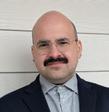
De Moraes will study a little-understood family of bacterial toxins known as deaminases. The NSF grant will fund research into the molecular mechanisms and evolutionary roles of these toxins as well as a robust educational outreach effort aimed at making biosciences open to all, including differently abled persons with mobility impairments and other physical or sensory challenges.
Lei Li, Electrical and Computer Engineering ($550,000)
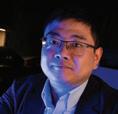
Li is working to develop a new generation of wearable medical imaging technology capable of visualizing deep tissue function in real time. His project centers on photoacoustic imaging, a technique that merges light and sound to produce high-resolution images of structures deep inside the body. This approach captures far more detail than conventional ultrasound and can visualize biological structures without the use of dyes or contrast agents.
Matt McCary, Biosciences ($1,260,000)
McCary’s research on the spread of invasive plants — aggressive nonnative species that disrupt native ecosystems, threaten biodiversity and contribute to billions in economic damages each year — seeks to understand why some plants become invasive while others do not. By comparing invasive plants with closely related

native and exotic naturalized species, McCary’s research aims to advance ecological theory while generating actionable insight to help conservationists manage invasive species more effectively.
Elizabeth Roberto, Sociology ($500,000)
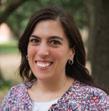
Roberto is analyzing how features of the built environment — like dead-end streets, highways, fences and railroad tracks — shape patterns of neighborhood separation and access to opportunity across U.S. cities. Her multiyear study will span 50 U.S. cities and introduce new ways to measure how spatial features of neighborhoods affect access to schools, transit and other public resources. (see “Not-So-Dead End,” pg. 48)
Matthew Tyler, Political Science ($400,000)
Tyler is working to advance statistical methods aimed at strengthening the accuracy and reliability of survey-based research. He will address a long-standing challenge in the field of survey methodology: satisficing. This occurs when respondents take mental shortcuts and provide answers without fully engaging with the questions — a common issue that can compromise the quality of data used across disciplines, including the social sciences, public health, economics and education.
César A. Uribe, Electrical and Computer Engineering ($686,440)
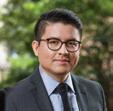
Uribe investigates how to enable faster, more efficient learning across a number of computing units connected over sparse networks that process massive amounts of data without relying on a single centralized coordinator. His work will lay the theoretical groundwork on large scale data processing for improving fields such as digital health monitoring and environmental data analysis, where traditional centralized approaches can no longer keep up with the scale and complexity of modern data. (see “Exposing the Invisible Patterns of Ecological Health,” pg. 96)
RESTORATION WORK
What’s New Toward a Cure for Lymphedema
With $18.2 million in ARPA-H funding, a Rice bioengineering team is developing an injectable regenerative therapy designed to repair damaged lymphatic vessels.
BY SILVIA CERNEA CLARK
Millions of Americans live with chronic and rare diseases tied to the lymphatic system — a critical but often overlooked network of vessels that helps regulate fluid balance and immune function. Lymphatic disorders are progressive and sometimes life-threatening. Current treatments focus on symptom management, but there are no approved therapies that repair damaged vessels or restore normal function.
A team of researchers led by Rice bioengineer Omid Veiseh has been awarded up to $18.2 million in funding from the Advanced Research Projects Agency for Health (ARPA-H) to develop a first-of-its-kind regenerative treatment aimed at restoring damaged lymphatic vessels and potentially curing lymphedema, a condition that affects more than 10 million Americans.
The award supports the agency’s Groundbreaking Lymphatic Interventions and Drug Exploration program, known as GLIDE, led by ARPA-H program manager
Dr. Kimberley Steele. GLIDE aims to advance lymphatic medicine by improving our understanding of the role of lymphatic dysfunction in disease and building effective, affordable and accessible treatment options.
“As a surgeon, I was trained to fix what I could see — but I was never taught about the one system that connects everything. As a rare disease parent, I’ve lived the heartbreak of watching someone you love suffer while medicine has no answers. And now, as an ARPA-H program manager, I get to help change that story for millions of families,” Steele said in an agency press release.
Lymphedema can develop because of inherited conditions or as a result of cancer treatment. Patients often experience chronic swelling, tissue thickening, infections and reduced mobility. Annual care costs run into the billions of dollars nationally.
“People affected by lymphedema have no other option than lifelong supportive management,” said Veiseh, professor of bioengineer -
ing at Rice, Cancer Prevention and Research Institute of Texas Scholar and director of the Rice Biotech Launch Pad. “Our goal is to change that by developing a one-time injectable treatment that gets to the root cause of the disease.”
Projected costs for the ELIXIR platform range between $5,000 and $10,000 per individual patient, which represents less than half the current annual cost of managing lymphedema.
The research project benefits from a unique translational infrastructure, including RBL LLC, a biotech venture creation studio dedicated to rapidly building companies based on breakthrough medical technologies, and the Rice Biotech Launch Pad, a biotech accelerator dedicated to bridging the gap between academic research and clinical application.
RBL portfolio company SteerBio Inc. is leading the development and commercialization effort. SteerBio is led by Martha Fowler, CEO and co-founder, alongside Veiseh and clinical collaborators Dr. Edward Chang, professor in the Department of Plastic Surgery at The University of Texas MD Anderson Cancer Center, and Dr. Ionela Iacobas, medical director of the Vascular Anomalies Center at Texas Children’s Hospital/ Baylor College of Medicine.
Veiseh and his team will develop a programmable regenerative therapy called Eliminating Lymphatic Irregularities by Cross-disciplinary Intelligent Regulation, or ELIXIR, which is designed to rebuild broken
“By targeting the structural damage that causes lymphedema, the therapy aims to restore lymphatic function.” — Omid Veiseh
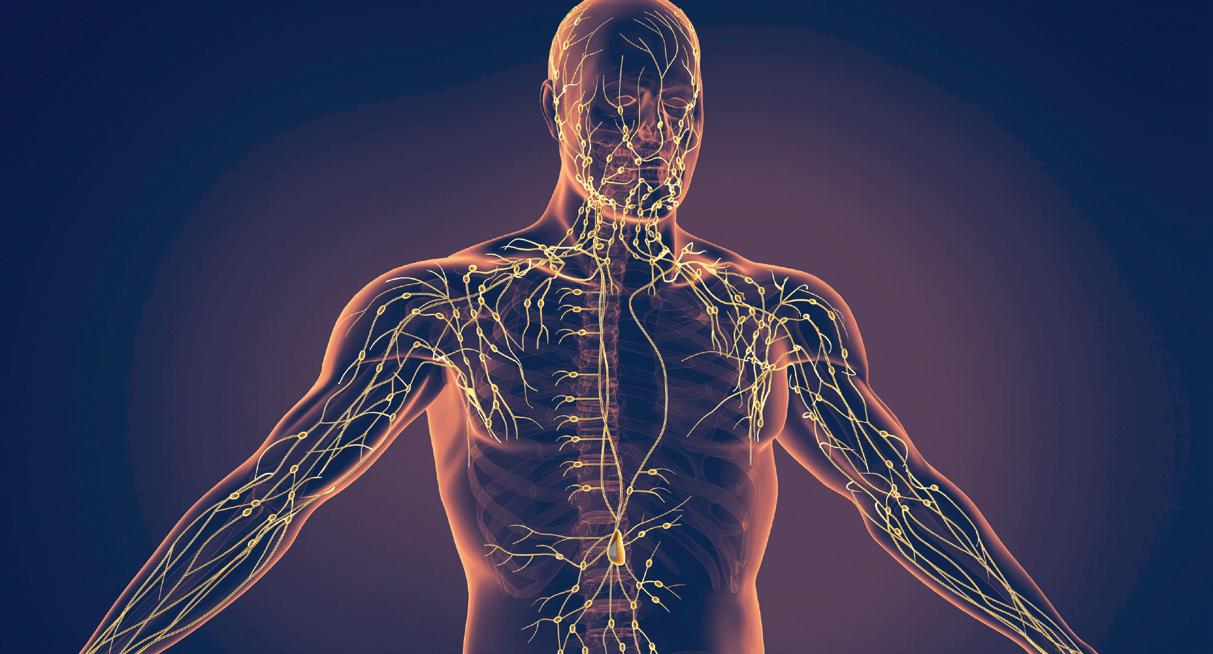
lymphatic vessels.
The treatment will use a minimally invasive, subcutaneous injection to deliver engineered human retinal pigment epithelial cells — already approved by the U.S. Food and Drug Administration for treating degenerative eye disease — encased in a protective hydrogel. The hydrogel shields the cells from immune attack while allowing them to function. Inside the cells are engineered genetic circuits that produce therapeutic proteins to stimulate vessel repair.
The genetic circuits can only be activated by small-molecule regulators, giving physicians control over when and how much therapeutic protein is produced. The approach enables sustained, localized treat-
ment and is designed as a one-time outpatient procedure.
Initial preclinical testing has shown 100% vessel regrowth toward healthy lymph nodes and 80% edema reduction with testing currently underway in large animal models.
“By targeting the structural damage that causes lymphedema, the therapy aims to restore lymphatic function,” Veiseh said. “We are building a scalable, affordable platform that could redefine the standard of care for lymphedema and open the door to a new era in lymphatic medicine. Beyond lymphedema, the technology could establish proof of concept for programmable living therapies that treat other structural and immune-related diseases.”
Over five years, the research team will advance the therapy from preclinical testing in animal models to a first in-human feasibility trial. Success will be measured by restored lymphatic function and clearance for an Investigational New Drug application with the FDA.
SCAN THIS QR CODE TO SEE MORE ABOUT HOW ELIXIR WILL REBUILD BROKEN LYMPHATIC VESSELS:
What’s New
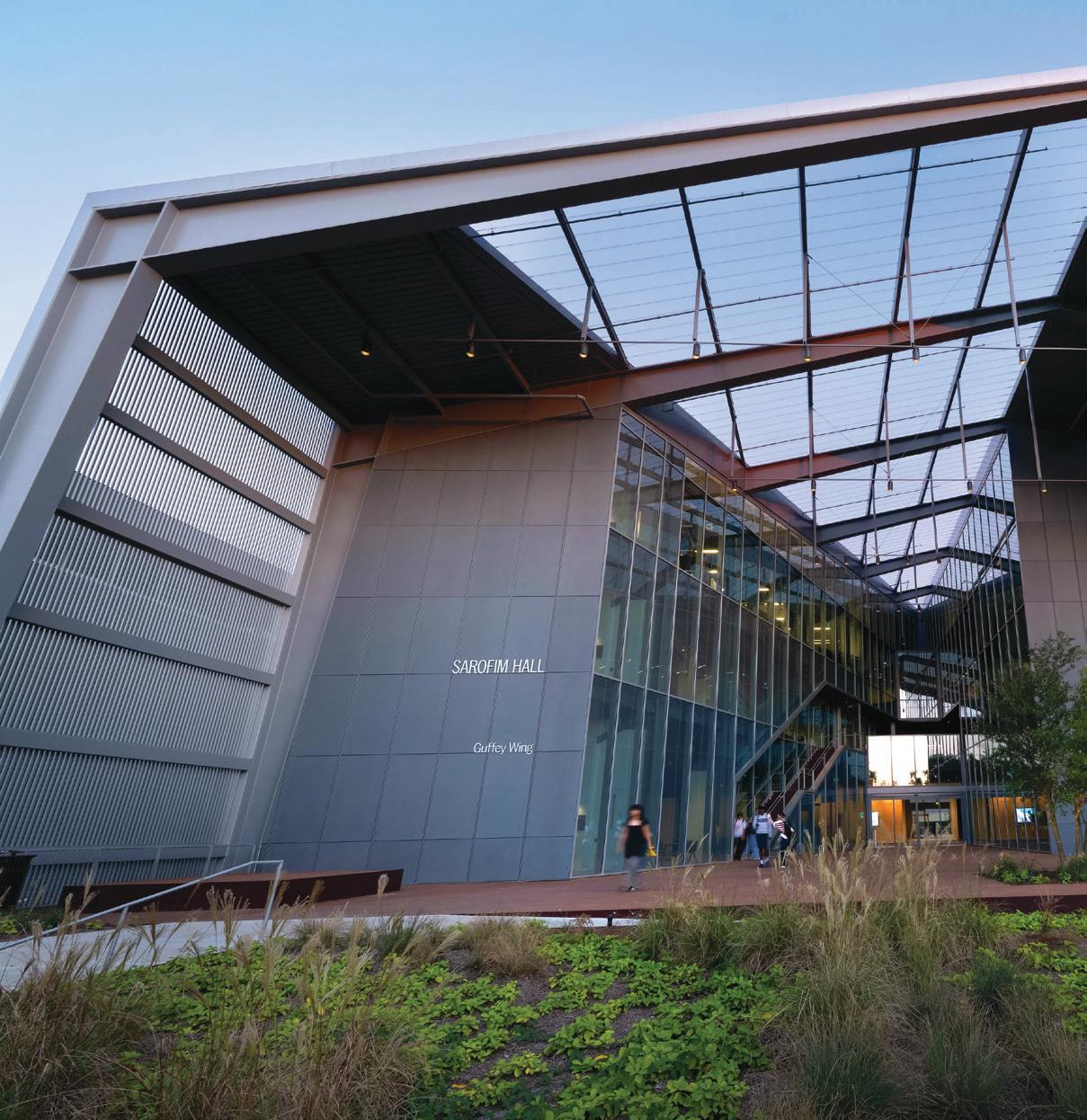
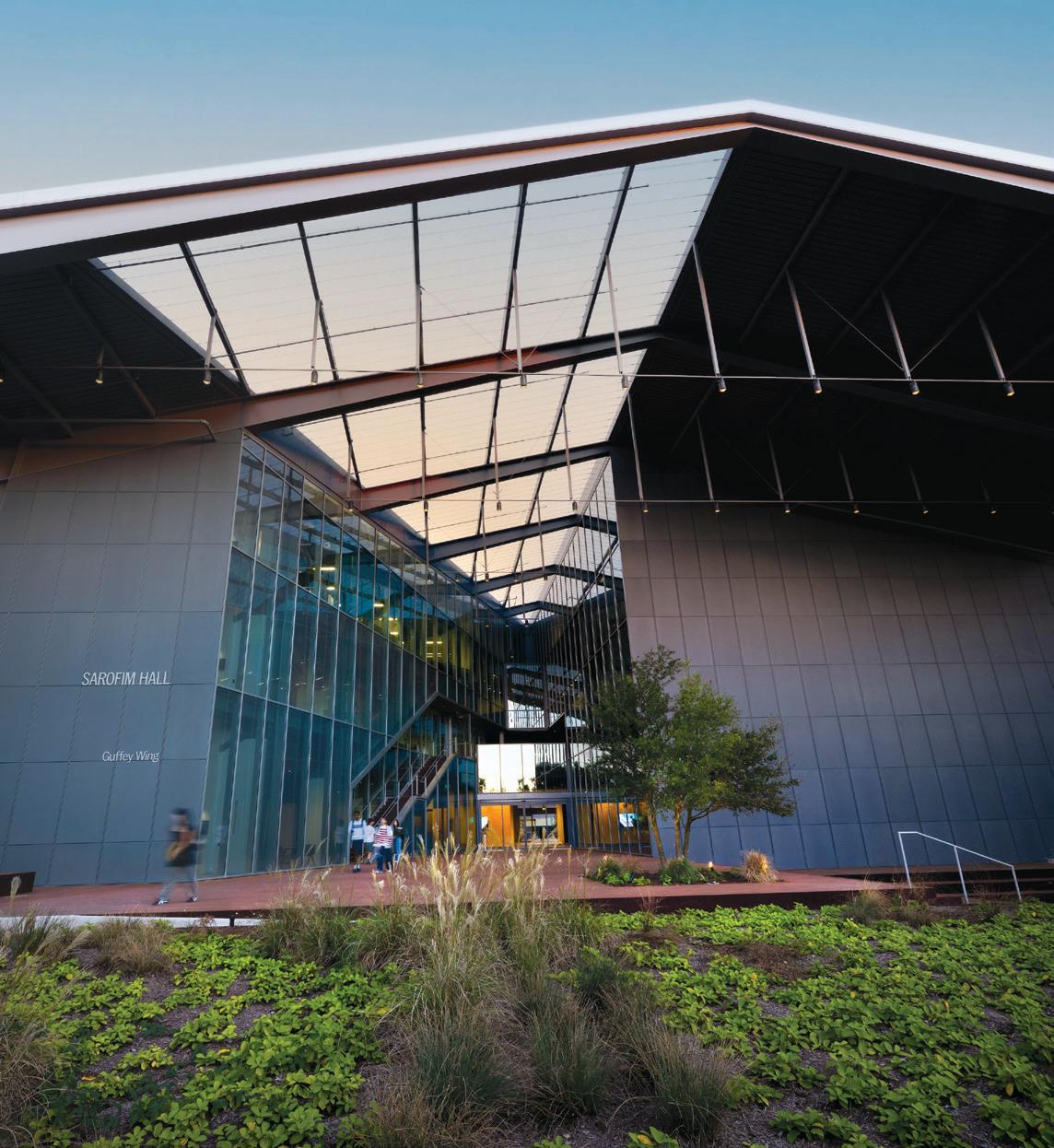
Two intersecting glass planes across three floors that reinterpret the iconic “Butler Building,” recalling the much-loved “tin house” Art Barn and Rice Media Center that occupied the site from the late 1960s until construction began on the new Sarofim Hall.
Sarofim Hall is the 11th building on campus to receive LEED Gold certification, indicating a high standard of sustainability and energy efficiency,

LETTERS, SCIENCE AND ART
Inside Sarofim Hall
Rice’s stunning new home for the visual arts makes its grand debut
BY KATHARINE SHILCUTT
A striking new structure now greets all who enter the Rice campus at Stockton Drive and University Boulevard — Susan and Fayez Sarofim Hall, the long-awaited home of the Department of Art and the final jewel in the university’s arts district, which includes the Moody Center for the Arts and Shepherd School of Music’s Alice Pratt Brown Hall and Brockman Hall for Opera.
“Sarofim Hall is a bold realization of Rice’s enduring commitment to the arts — a space that invites imagination, fosters collaboration and opens new doors for creative expression,” said Robert T. Ladd ’78, chair of Rice’s Board of Trustees. “This remarkable facility honors the vision and generosity of Susan and Fayez Sarofim and so many others whose dedication has made it possible.”
From the words “letters, science and art” carved into Lovett Hall more than a century ago to today’s dedication, the arts have always been central to Rice’s mission, Ladd told a massive crowd at Sarofim Hall’s grand opening celebration on a sunny September day in 2025.
In recognition of Rice’s growing invest-
What’s New
ment in the visual arts and creative writing, the School of Humanities was renamed the School of Humanities and Arts in 2025. Dean Kathleen Canning formally requested the name change, citing the school’s expanded offerings in visual and performing arts, the recruitment of stellar new faculty and the opening of Sarofim Hall. Canning noted that undergraduate courses in visual arts are consistently wait-listed and that art has been the second-largest major in the school over the past five years.
“At a moment when universities across the country are cutting resources for the humanities and the arts, Rice is investing in them — building new facilities, hiring exceptional faculty and supporting the next generation of creative thinkers,” Canning said.
Such an exceptional facility truly serves the creative and programmatic mission of arts education, noted John Sparagana, the Grace Christian Vietti Chair in Visual Arts. “Charles Renfro’s design for Sarofim Hall is an ingenious response to our program’s history, context and curricular structure,” he said.
For Renfro ’87, ’89, partner at Diller Scofidio + Renfro and a Rice graduate in both art and architecture, the project was personal.
“As a double major in art and architecture, nothing could be more satisfying and humbling than having the opportunity to design a new building for Rice’s art department, a new space which will unite my chosen disciplines,” Renfro said. “Sarofim Hall will bring these disparate media together under one roof and, in so doing, allow each of them to blossom.”
94,000 square feet of studios, workshops, galleries, performance spaces and flexible studios for film, media, photography, printmaking, drawing, painting and sculpture
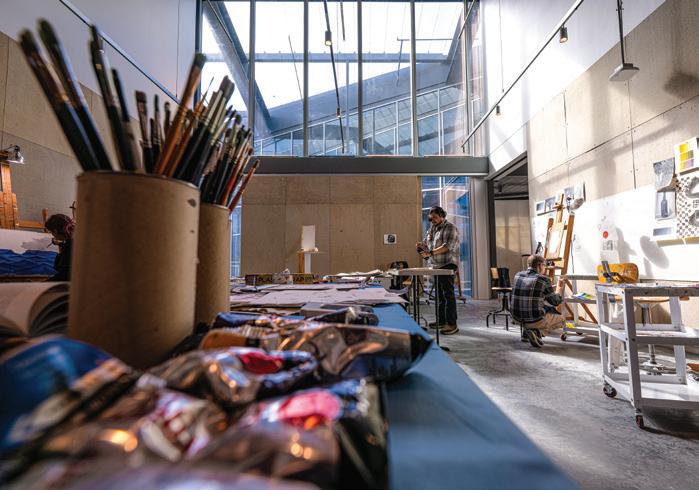
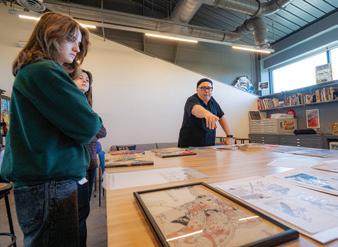
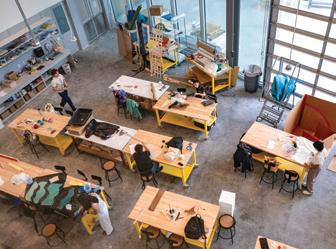
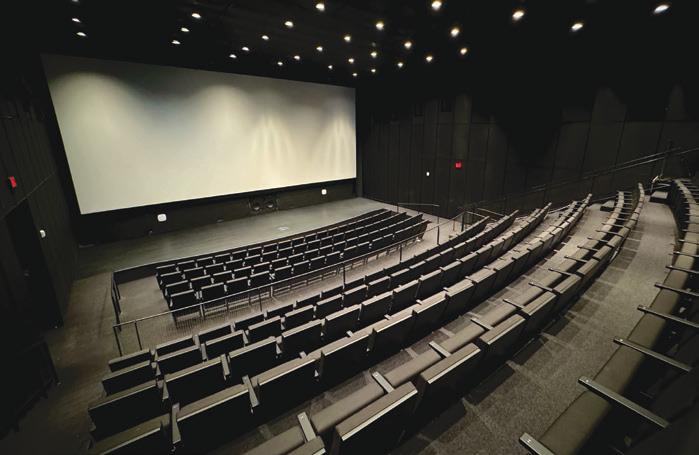
215 seats in the cinema, which will house the popular, long-running Rice Cinema program, and is equipped to screen 3D films
800 students take arts classes at Rice every year.
PHOTOS
BY JEFF FITLOW
AWARDS
Spotlight on Excellence
A new annual ceremony recognizes Rice recipients of highly prestigious and prestigious awards.
BY AVERY RUXER FRANKLIN
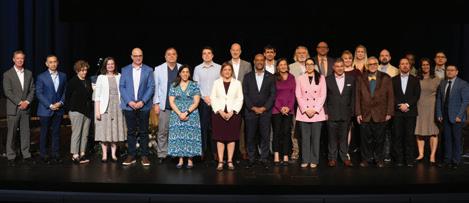
On Oct. 6, President Reginald DesRoches and Provost Amy Dittmar welcomed faculty to a formal awards ceremony at Brockman Hall for Opera. The occasion? Honoring Rice faculty who earned prestigious and highly prestigious awards during the 2024–2025 academic year, as defined by the Organization of the National Research Council and the Association of American Universities.
“These awards are more than individual recognitions,” DesRoches said. “They represent the extraordinary talent and dedication of our faculty — their brilliance as researchers, their commitment as mentors and their impact as teachers. Each honor strengthens Rice’s reputation as a university defined by excellence, where world-class faculty push the boundaries of knowledge and prepare the next generation of great minds.”
As the inaugural Highly Prestigious and Prestigious Awards ceremony, the event was also a commemoration of all the Rice faculty who have won these categories of awards over the decades.
PRESTIGIOUS AWARD WINNERS
National Science Foundation CAREER Awards
Sylvia Dee, associate professor of earth, environmental and planetary sciences
Marcos H. de Moraes , assistant professor of biosciences
Anna-Karin Gustavsson, assistant professor of chemistry
Lei Li, assistant professor of electrical and computer engineering
Matthew McCary, assistant professor of biosciences
Elizabeth Roberto, assistant professor in the Department of Sociology
Matthew Tyler, assistant professor in the Department of Political Science
César A. Uribe, Louis Owen Assistant Professor of Electrical and Computer Engineering
American Association for the Advancement of Science Election
Reginald DesRoches , president of Rice University, professor of civil and environmental engineering
Angel A. Martí, professor of chemistry, bioengineering, materials science and nanoengineering
Luay Nakhleh , William and Stephanie Sick Dean of the George R. Brown School of Engineering and Computing, professor of computer science and biosciences
H. Earle Johnson Bequest for Book Publication Subvention
Danielle Ward-Griffin, assistant professor of musicology
IEEE Jack S. Kilby Signal Processing Medal
Richard G. Baraniuk , C. Sidney Burrus Professor of Electrical and Computer Engineering
Association for Asian Studies NEAC Korean Studies Grant
Sonia Ryang , T.T. and W.F. Chao Professor of Asian Studies
HIGHLY PRESTIGIOUS AWARD WINNERS
Guggenheim Fellowship
Dominic Boyer, professor of anthropology
Benjamin Franklin Medal in Chemistry
Naomi J. Halas , University Professor, Stanley C. Moore
Professor of Electrical and Computer Engineering
American Academy of Arts and Sciences Election
Karen Lozano, trustee professor of materials science and nanoengineering
Eduardo Salas , Allyn R. and Gladys M. Cline Chair and Professor of Psychology
National Academy of Inventors Election
Omid Veiseh , professor of bioengineering
National Academy of Sciences Award in Chemical Sciences
Peter G. Wolynes , Bullard-Welch Foundation Professor of Chemistry, professor of biosciences, materials science and nanoengineering, physics and astronomy
National Academy of Sciences Election and National Academy of Engineering Election
Lydia E. Kavraki, University Professor, Kenneth and Audrey Kennedy Professor of Computing, professor of computer science, electrical and computer engineering, mechanical engineering and bioengineering

PROSPERITY FOR ALL
What’s New Funding Houston’s Future
A new $55M Kinder Foundation gift positions Rice’s Kinder Institute to shape research, policy and opportunity in the region for decades.
BY JEFF FALK
A new $55 million grant from Kinder Foundation will empower Rice’s Kinder Institute for Urban
Research for decades to come as it focuses on its bold vision for “prosperity for all” and service to the public, ensuring that everyone can contribute to Houston’s success and share in its opportunities. The grant includes $50 million restricted for the institute’s endowment and $5 million for immediate research and program needs to benefit Houston.
Ruth López Turley, director of the Kinder Institute, applauded the foundation’s visionary generosity and called the grant “a gift to all of Houston and its future generations” as the institute works to improve lives, policy and services through data, research, engagement and action. “This grant will preserve our research as a public good, and we are focused on the long term to address future societal issues and needs.”
Since its founding in 2010, the in-
stitute has had a measurable impact on the Houston region, advancing research and insights of value to cities across the United States and world. Researchers have helped the city find sustainable solutions to a multi-billion-dollar pension liability, forged partnerships with the Houston Independent School District and other districts to improve educational outcomes, and built robust survey platforms, including the Greater Houston Community Panel, to capture the experiences and attitudes of Harris, Fort Bend and Montgomery counties, a region home to 1 in 5 Texans (see “Panel of Experts,” pg. 62).
“Over the past 15 years, we’ve seen firsthand the strength of the institute’s leadership and impact of its work,” said Nancy Kinder, president and CEO, Kinder Foundation. “By growing the endowment, the institute will have the stability and independence to advance meaningful solutions for generations to come.”
This new gift comes less than five years after the foundation’s landmark $50 million endowment grant to the institute in September 2022. The new grant is also in addition to the approximately $30 million given prior to 2022 by Kinder Foundation to Rice to facilitate the building where it is housed. The foundation’s giving to the institute over the past two decades now surpasses $135 million.
“Kinder Foundation is widely respected for its transformative gifts and sustained commitment to work that creates lasting impact,” said Turley. “We are grateful for their continued support.”
Ruth López Turley
CULTIVATING CREATIVITY
Built to Lead
David Sholl, EVP for research, on what Rice does best
BY KATHARINE SHILCUTT
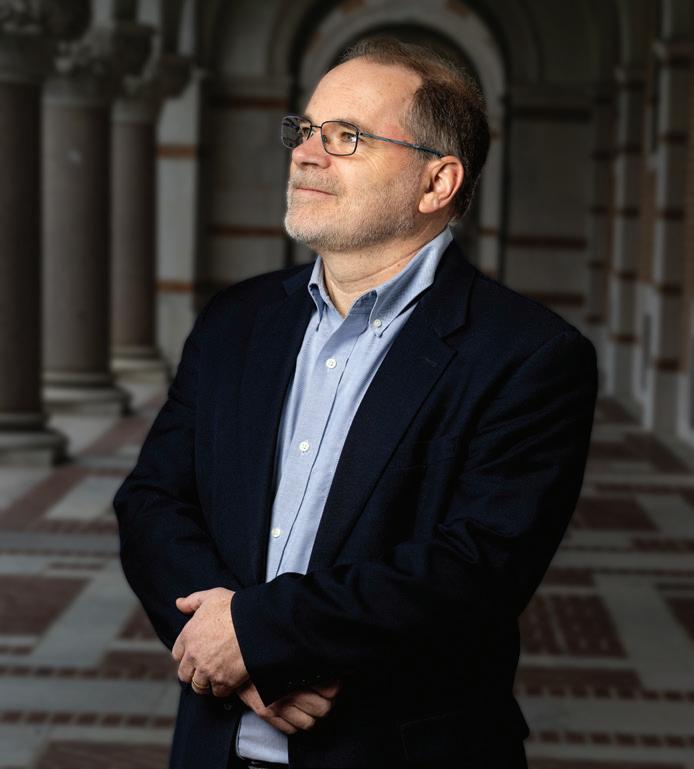
When David Sholl arrived at Rice in January 2026 as executive vice president for research, he brought with him a résumé that zigzags across disciplines and institutions: theoretical physics, applied mathematics, chemistry, chemical engineering, leadership at Georgia Institute of Technology, the U.S. Department of Energy and the Oak Ridge National Laboratory.
What ties it together, he said, is a curiosity about systems — scientific and organizational — and a belief that creativity can be cultivated.
In his first months on campus, Sholl has been listening, touring labs and studios and classrooms, and thinking about how to help Rice’s research enterprise sharpen its focus and amplify its impact.
“I had an outstanding impression of Rice before I came,” Sholl said. “That’s been greatly amplified since I’ve realized how good the people are here and what the possibilities are.”
You started out in theoretical physics as an undergraduate. How did that path lead you here?
It was really just a series of opportunities that seemed interesting. Through some connections I ended
up applying to an applied math Ph.D. program. Almost all the way along, there’s some overlap, and once you make a step like that five times, you can end up pretty far away from where you started.
My thesis advisor was a chemist, so I was doing theoretical chemistry, and then I did a postdoc in a chemical engineering department and discovered there were good job opportunities in chemical engineering. I eventually became an assistant professor in chemical engineering, even though I’d never taken a chemical engineering class. So I had to learn what I was teaching the students.
Along the way, my own research drifted from very fundamental things to quite applied things over time. At Georgia Tech, I was head of a big department for eight years. I appreciated that by being in charge of an organization like that, you can have a positive influence over a wid-
er group of people. Then I went to a national lab. It was fascinating — so different from the university system. I got to see the advantages and the complications. And then one day, (Rice President) Reggie (DesRoches) called me … and here we are today.
What was it like moving from academia to a national lab?
Each discipline or place has its own deep culture, and you have to respect that culture and understand what people value. A university is a very decentralized organization. The national lab is a very hierarchical organization. Everybody knows who their boss is and who your boss’s boss is. There’s an org chart, and it’s a real thing.
I led a joint institute between the national lab and the University of Tennessee. Very different large organizations, similar goals. But not all
“The strength of universities in general, and in particular Rice, is the creativity of the faculty.” — David Sholl
the people on both sides knew how to talk to the other side. I could act as a cultural translator between the two.
Are there lessons from that experience you’d like to bring to Rice?
I think something we can do better at Rice is winning large research programs that involve teams of people. That’s in the DNA of national labs. It’s not that at the university we have to do everything the same way as a national lab, but I think there are some process things we can adapt to increase our successes with large programs.
You’ve written a book, “Success and Creativity in Scientific Research: Amaze Your Friends and Surprise Yourself,” based on a popular series of lectures. Do scientists think of themselves as creative?
I think they do. But one of the strange things in scientific research is that, at least in most fields in engineering, we don’t actually train people how to do research. It’s almost like having a creative writing course except we don’t talk about writing. It’s assumed you pick that up osmotically.
One goal of my book was to get people to step back and think a little bit about how you generate creative research questions. Creativity is a learned skill. It’s something we can all get better at.
The strength of universities in general, and in particular Rice, is the creativity of the faculty. My faculty colleagues are amazing. I’ve been around a lot of universities, and these are really, really creative people.
What have you enjoyed most about the job so far?
One of the really fun things about this job is that I get to learn about everything across the university. The science and engineering folks are amazing. But for me, maybe the most enjoyable part has been learning about things outside my technical discipline that are also really amazing.
To give just one example, right across the road from my office, we have folks who work on technologies and human factors for voting — fantastically important problems, rigorous, careful science. There’s just an amazing amount of stuff happening at the university.
How do you see Rice’s research enterprise evolving, especially given Houston’s strengths as a global capital of energy, medicine and space sciences?
There’s a sense that new things can happen here. It’s not just, “We’ve done it this way forever.” That implies that the best things are still ahead of us. That sense of growth and possibility permeates an institution.
Houston’s connections to the energy industry, to the health care infrastructure in the medical center, to space science — those are real differentiators compared to any other university in the country. And strategically, we have to think about where we can really differentiate ourselves. Our goals aren’t just being as good as everybody else.
What are your top priorities at Rice?
Reputational lift for the university makes a very big difference. It’s a long game. You can’t change it overnight. But continuing to bring people here — large conferences, major events — cements in their mind that Rice is a major intellectual player in the country. We’ve already talked about helping faculty be more effective in competing for large research awards. There’s lots of ambition around campus to do that.
And then there’s something a little bit boring but really important: having the Office of Research continue to run in a really efficient way. Fundamentally, we’re a service organization to the faculty researchers. We’re here to make their research more effective. Compliance issues with federal funding are complicated, so our job is to continue working on our processes to make them efficient and not hamper what people are trying to do.
The strategic plan, Momentous. Is it an effective roadmap?
Like many people, I’m pretty skeptical of strategic plans of any big organization. Sometimes you read them, and there are all the buzzwords, and you get to the end and think, “What did I learn from this?”
But I will say, Momentous offers a real plan. I was impressed by it. There were genuine strategic choices made. It’s not just saying, ‘Here are three areas that are important to society,’ but these are things that are important to society where Rice can lead. That’s a strategic plan. And it doesn’t stop people from working on other stuff. But it says that, over the long run, we should look for ways to amplify those.
Innovations in Health
BOUNCING BACK
Health Innovations Neural Frontiers
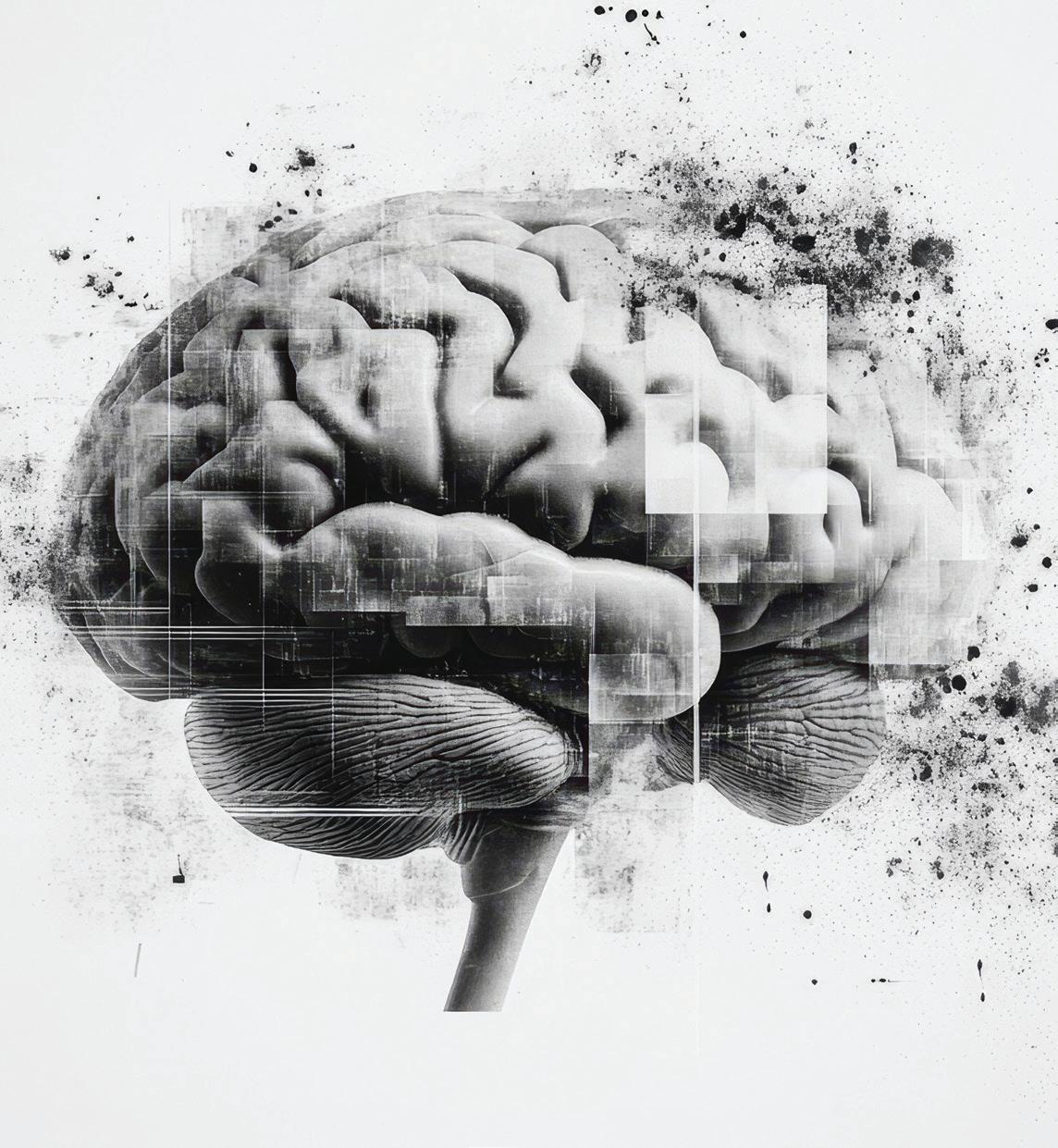
The brain health crisis is here. Right now, Rice is building the response.
BY AMY MCCAIG
As neurological disease surges worldwide and the cost of brain disorders climbs into the trillions, Rice is making a deliberate move. In October 2025, the university launched the Rice Brain Institute, a campus-wide effort uniting engineers, scientists and social scientists in a coordinated push to understand — and protect — the brain. And in January 2026 at the World Economics Forum in Davos, Switzerland, Rice established the Global Brain Economy Initiative in collaboration with The University of Texas Medical Branch and the Davos Alzheimer’s Collaborative.
“Few areas of research have as direct and profound an impact on human well-being as brain health,” Rice President Reginald DesRoches said. “As rates of Alzheimer’s, dementia and other neurological diseases rise in our country and around the world, universities have a responsibility to lead the discovery of solutions that preserve memory, movement and quality of life.”
Brain disorders, including mental health conditions such as depression and anxiety, cost the global economy an estimated $5 trillion annually and could reach $16 trillion by 2030. Addressing that mounting crisis has become a global imperative.
Located in Houston, at the intersection of Rice and the Texas Medical Center — the world’s largest
health care complex — the Rice Brain Institute launches at a pivotal moment. Last fall, Texas voters approved a $3 billion investment to create the Dementia Prevention and Research Institute of Texas, signaling the state’s intent to become a national leader in brain health research.
The Rice Brain Institute integrates three major initiatives —
“We all know someone who has been affected by a brain-related health issue. This research is personal.” — Reginald DesRoches

neuroengineering, neuroscience and brain-and-society research — into a single framework designed to move ideas from basic discovery to real-world impact. It reflects a strategic bet: that solving the brain’s most complex problems will require engineering-driven tools, fundamental science and an understanding of how brains function in real human systems.
The Rice Brain Institute Engineering the brain health enterprise
BY ALEX BECKER
The Rice Brain Institute is not a rebranding exercise or a loose federation of labs. It is a deliberately engineered structure designed to connect discovery, technology and policy under one coordinated umbrella.
At its core are three initiatives: the Neuroengineering Initiative, founded in 2018; the newly established Neuroscience Initiative; and the Brain and Society Initiative, which situates brain research within real-world contexts such as education, work, justice and public health.
Already, the Neuroengineering Initiative has built a foundation for success, securing more than $78 million in research funding and assembling a network of more than 50 collaborators across Rice and the Texas Medical Center. Its work spans neural sensors, soft robotics, neuroimaging, data science and artificial intelligence — tools designed not only to observe the brain, but to interface with it in real time.
“At Rice, we lead with engineering,” said Luay Nakhleh, dean of the George R. Brown School of Engineering and Computing. “Our focus on developing technology that interfaces directly with the brain positions us to make transformative contributions not just in discovery, but in impact.”
The Neuroscience Initiative complements that work by bringing together cell biologists, neurobiologists, chemists, physicists and biochemists to explore the brain’s most fundamental mechanisms, from molecular interactions to neural circuits.
“A fundamental understanding of neural development and neurodegeneration is the foundation on which all other exploration builds,” said Thomas Killian, dean of the Wiess School of Natural Sciences. “By integrating this with neuroengineering and psychology, we can accelerate discoveries and translate them into solutions.”
The Brain and Society Initiative extends that integration beyond the lab, examining how brain science intersects with behavior, policy and equity. Its researchers study learning, mental health and cognition in real-world settings — schools, workplaces and communities — where scientific insights can shape practice and policy.
“We want breakthroughs in brain science to lead to breakthroughs in people’s lives,” said Simon Fischer-Baum, associate professor of psychological sciences and co-lead of the initiative. “That requires understanding how brains function in complex, real environments.”
Together, the initiatives form a system designed for translation rather than isolation.
“We’re scaling a model that turns discovery into impact,” said Behnaam Aazhang, co-director of the Neuroengineering Initiative. “The Rice Brain Institute gives us the structure to do that intentionally.”
Health Innovations

A Global Brain Economy
BY ALEX BECKER
Rice launched the Global Brain Economy Initiative in January 2026 during the annual meeting of the World Economic Forum in Davos, Switzerland. This initiative positions brain capital, or brain health and brain skills, at the forefront of global
economic development, particularly in the age of artificial intelligence.
The GBEI, based at Rice and launched in collaboration with The University of Texas Medical Branch and the Davos Alzheimer’s Collaborative, aligns with a recent World Economic Forum and McKinsey Health Institute report titled “The Human Advantage: Stronger Brains in the Age of AI,” co-authored by Rice researcher Harris Eyre.
Led by Eyre, the GBEI aims to establish brain capital as an essential asset for the 21st century. As AI transforms workplaces and the global population ages, Rice’s strategy connects neuroscience with economic policy to promote longterm growth, workforce resilience and social well-being.
The GBEI aims to convert research into practical solutions for governments, employers and investors to
Alzheimer’s
Disease International estimates that global dementia cases could reach 78 million by 2030 and 139 million by 2050.
enhance brain health and human skills. Its mission is to address disparities in support for brain capital across health care, education, workplaces and public policy.
The initiative functions as a global center of excellence and coordinating platform and advances brain capital through four core strategies, including:
Defining a shared framework that integrates brain health and skills as a unified driver of human and economic performance.
Measuring impact by establishing common research agendas, standards and metrics for brain capital.
Testing solutions through real-world pilots that improve cognitive health, workforce performance and local economic outcomes.
Supporting investment in brain health by developing financing frameworks to attract capital that is aligned with long-term value creation.
In its first year, the GBEI will establish a global brain research agenda, piloting brain economy strategies in select regions and introducing a framework to guide funders and financial leaders. It will also advocate for brain economy public policies at major global forums, including the G7 Summit in France, G20 Summit in the U.S., United Nations General Assembly, World Health Assembly and COP31 in Turkey.
Amyloid Research Takes Center Stage
BY MARCY DE LUNA
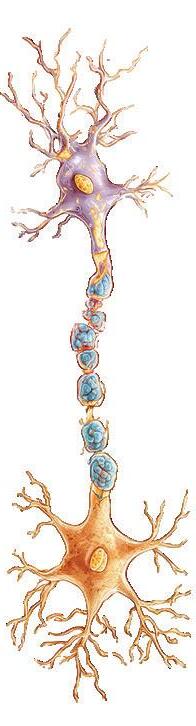
The new Amyloid Mechanism and Disease Center at Rice is a research hub designed to confront one of neurodegeneration’s most persistent mysteries: how misfolded proteins trigger diseases such as Alzheimer’s and Parkinson’s — and how that process might be stopped.
Led by biophysicist Pernilla Wittung-Stafshede, the center brings together researchers from chemistry, biophysics, cell biology and biochemistry to study how amyloids form, spread and damage brain cells.
“This is close to my heart,” Wittung-Stafshede said. “My father died
of dementia a few years ago. These diseases affect everyone.”
Amyloids are protein polymers that form when proteins misfold and clump together. Their accumulation can kill neurons and erode cognition. Despite decades of study, no cures exist, and current treatments offer only limited relief.
The scale of the challenge is accelerating. Alzheimer’s Disease International estimates that global dementia cases could reach 78 million by 2030 and 139 million by 2050.
The Amyloid Center anchors the neuroscience arm of the Rice Brain Institute, advancing basic research while forging ties with the Texas Medical Center to translate discoveries toward clinical relevance.
Recent work from Wittung-Stafshede’s lab revealed that protein clumps associated with Parkinson’s disease can behave like enzymes, consuming ATP, the brain’s main energy source. The finding suggests amyloids may harm cells through mechanisms beyond simple accumulation.
“These are the kinds of questions we need to answer,” she said. “If we understand the mechanisms, we can intervene — ideally before disease begins.”
The center plans to expand its research team, pursue external funding and host training programs to strengthen Rice’s growing neuroscience ecosystem.
“To make a real difference, we have to go all the way,” Wittung-Stafshede said. “That means finding ways to prevent these diseases, not just manage them.”
“Brain health is the defining frontier of this century.” — Jochen Reiser, president and CEO of UTMB
International Trailblazers in Brain Health Project Metis positions
Gulf Coast institutions as global leaders
BY CHRIS STIPES
Rice has joined an ambitious initiative designed to position the Houston–Galveston region as a global leader in brain health and the emerging brain economy.
Led by Center for Houston’s Future, Project Metis brings together Rice, the University of Texas Medical Branch and Memorial Hermann Health System to advance a holistic approach to lifelong brain health, from early development to healthy aging.
“Brain health is the defining frontier of this century,” said Jochen Reiser, president and CEO of UTMB. “Project Metis allows us to unite research, clinical care and innovation at scale.”
Rice’s role is anchored by the Rice Brain Institute, while UTMB’s Moody Brain Health Institute and Memorial
Hermann’s comprehensive neurology care extend that work into clinical and community settings.
“Brain health requires a systems approach,” said Amy Dittmar, Rice’s provost and executive vice president for academic affairs. “Together, we can produce discoveries that improve lives here in Texas and around the world.”
Project Metis also emphasizes economic impact. Its leaders envision a brain health ecosystem that includes workforce development, innovation and commercialization — what they describe as the brain economy.
Early plans include launching working groups focused on brain health across life stages, developing a regional brain health index and piloting interventions in education, health care and workplaces. The initiative also aims to share Houston’s progress in international settings such as the World Economic Forum and the United Nations.
“Project Metis is more than an initiative — it’s a movement,” said Center for Houston’s Future CEO David Gow. “By uniting science, innovation and collaboration, we aim to unlock human potential for generations.”
Rice and Paris Brain Institute Forge Transatlantic Partnership
BY BRANDI SMITH
When leaders from Rice and the Paris Brain Institute gathered in Paris last fall, they marked the beginning of a new transatlantic collaboration in brain science and innovation.
Located within Pitié-Salpêtrière Hospital, the Paris Brain Institute brings together more than 900 researchers and clinicians focused on neurological and psychiatric disorders. The partnership connects Rice’s engineering-driven approach with Europe’s leading neuroscience ecosystem.
“Our collaboration opens new opportunities for deep interdisciplinary work across continents,” said Paris Brain Institute executive director Stéphanie Debette. “By combining our strengths, we aim to address brain health challenges that affect people worldwide.”
For Rice, the partnership reflects a broader strategy to build global research networks through its Rice Global Paris Center.
“This collaboration extends the mission of the Rice Brain Institute beyond borders,” said Caroline Levander, Rice’s vice president for global strategy. “It connects two academic communities committed to innovation and human impact.”
ADAPTABILITY
Special Delivery
A novel peptide-base hydrogel releases drugs slowly and precisely, offering longer-lasting treatment with fewer doses
SILVIA CERNEA CLARK
For patients who juggle handfuls of pills or endure daily injections, Rice researchers may have found something closer to a quiet miracle: a tiny hydrogel that releases medicine slowly, steadily and exactly where it’s needed.
Called SABER — short for self-assembling boronate ester release — the platform uses reversible chemical bonds to lock drugs into a peptide-based gel. The drugs then seep out at a controlled pace. The system is designed to work with everything from small-molecule drugs to biologics, an unusually broad range for a single delivery method.
In animal tests, the results were striking. A tuberculosis drug embedded in the gel, delivered through a single injection, performed better over two weeks than daily oral dosing. Insulin loaded into the hydrogel kept blood-sugar levels stable for six days — a dramatic contrast to the four-hour window typical of standard insulin therapy.
The hydrogel itself is built from amino-acid peptides, which de -
Health Innovations
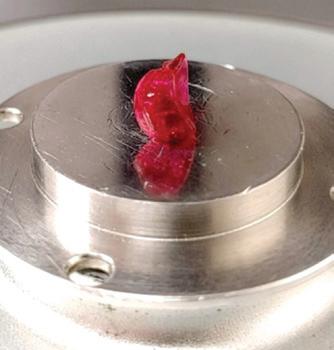
Above: Hydrogel sample with red dye for visibility (the gels are usually colorless and completely transparent) which used the new, ‘sticky’ hydrogel formulation.
grade cleanly in the body without leaving behind toxic byproducts. Its chemistry is tunable, meaning researchers can adjust how tightly the gel holds a drug by adding the right molecular “handle” to the therapeutic. That adaptability is what scientists say could open the door to wide clinical use.
The implications go well beyond
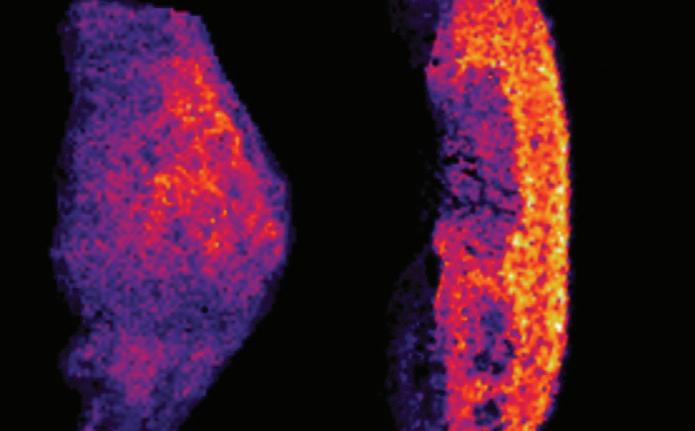
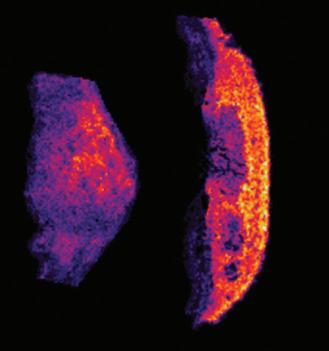
Above: Microscopy image of skin around hydrogels loaded with a cancer chemotherapy drug one week after injection. The brighter yellow color signals more drug is present while the darker purple color means less drug. The sample on the left uses a gel that is less sticky, as opposed to the sample on the right,
convenience. In fields such as cancer immunotherapy, timing and localization can be the difference between manageable side effects and debilitating ones. A platform that offers sustained, precision release could make existing treatments both safer and more effective.
Lead authors Jeffrey Hartgerink, professor of chemistry and bioengineering, and Kevin McHugh, associate professor of bioengineering and chemistry, describe SABER as a first-generation system, one they expect to refine as they expand the menu of compatible drugs. The study appears in Nature Nanotechnology and was supported by the National Science Foundation, the National Institutes of Health and the Cancer Prevention and Research Institute of Texas.
Health Innovations
MULTI-STABILITY
On Demand
A magnet-responsive metamaterial snaps into stable shapes on demand, promising a new generation of devices that work with the body, not against it.
BY RAJI NATARAJAN
Your next medical implant might not be a chip, a pump or a rigid capsule; it might be a shape-shifting piece of “smart fabric” inside your body, waiting to be triggered with a magnet. Researchers at Rice have developed a soft, yet strong, metamaterial that can remotely transform its size and shape, and then hold the new form all by itself.
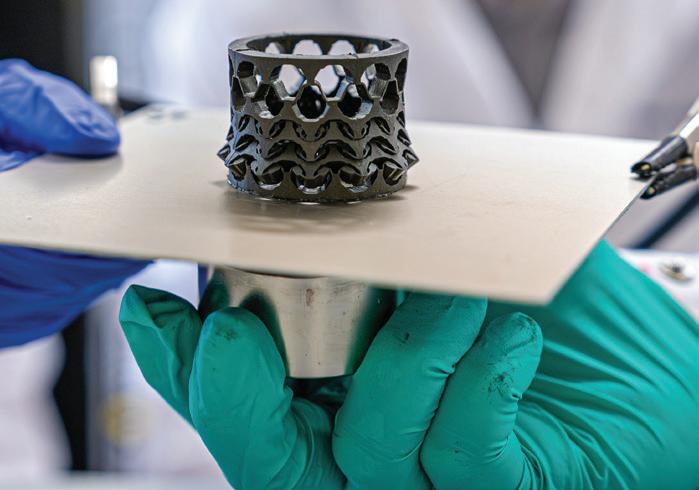
Led by assistant professor of mechanical engineering Yong Lin Kong, the team has created a material whose architecture — tiny beams, trapezoidal supports and magnetic particles embedded in a soft matrix — yields what they call “programmed multi-stability.” That means the material can snap from one stable shape to another and remain there even after the external magnetic field is removed.
“We programmed multi-stability, i.e. the ability to exist in multiple stable states, into the soft structure by incorporating geometric features such as trapezoidal supporting segments and reinforced beams,” said Kong. “These elements create an energy barrier that locks the struc-
ture into its new shape even after the external actuation force is removed.”
In tests, the material withstood loads more than 10 times its own weight, endured extreme temperatures and even handled the acidic conditions found in the human stomach.
Those are the kinds of challenges — punctures, inflammation, malfunctions — that often doom implantable or ingestible devices built from rigid parts. Kong’s soft architecture is designed to bypass those risks.
Possible applications include devices that expand or contract inside the body on command, deliver drugs exactly where they’re needed, or apply mechanical force deep in tissues, all without wires or batteries.
“This could enable lifesaving capabilities such as precisely controlling where a device stays, delivering medication where it’s needed or applying targeted mechanical forces deep inside the body,” Kong
Metamaterial developed by Rice researchers could enable lifesaving capabilities such as delivering medication.
said. “We are now leveraging this metamaterial to develop ingestible systems that may one day treat obesity in humans or improve the health of marine mammals, and we are collaborating with surgeons at the Texas Medical Center to design wireless fluidic control systems to address unmet clinical needs.”
The original author of this study was Kong’s first graduate student at the University of Utah, Taylor Greenwood, who has since graduated and started a faculty position at Brigham Young University. Kong’s other graduate students Brian Elder and Jared Anklam, postdoctoral associates Jian Teng and Saebom Lee and other collaborators were involved in the study. This research was supported by the National Institutes of Health and the Office of Naval Research.
Published in Science Advances, this metamaterial represents a profound new shift that, in medicine, could mean devices that move with us, rather than being passive guests.
PHOTO BY JORGE VIDAL
“By 2030 we’ll have 15% fewer OB-GYNs than we actually need within the state of Texas, thereby compounding the problems we already have.” — Kristie Wilburn-Wren
Innovation Doesn’t Stop at Inception
Does it matter how good a new health technology is if you can’t get it to the people who need it the most?
BY ALEX BECKER
How do we ensure health care innovations not only reach the communities that need them most but also endure long after the pilot projects end? This urgent challenge was the topic at hand during the 2025 Innovation for Healthcare Access Conference, held Oct. 27–28 at Rice and organized by the Rice360 Institute for Global Health Technologies.
During the two-day event, hundreds of leaders from academia, medicine, public health and policy converged to discuss translating technologies into sustainable, equitable systems of care across maternal and newborn health and chronic disease prevention in both global and local contexts.
Kristie WilburnWren
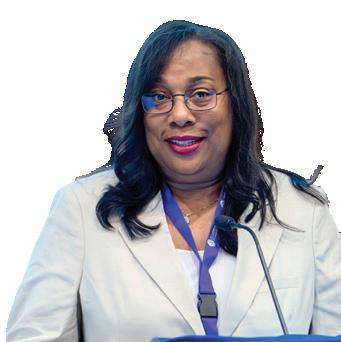
In her keynote address, Kristie Wilburn-Wren, clinical associate professor and medical director of eMCAP at the UT Southwestern Medical Center, told the crowd she was delivered prematurely and given a very low chance of survival.
“I was born at a point in time where there were no antibiotics, there were no steroids — there was actually no care for me,” said
“These challenges are going to require everyone to work together.”
—Maria Oden
Wilburn-Wren. “There was a very special nurse who took care of me, and that is the only reason I’m here today.”
Her address underscored the importance of equitable systems of care and noted the particular challenges of health care for mothers with the widening shortage of OBGYNs across Texas and almost half of counties lacking any at all.
“By 2030 we’ll have 15% fewer OBGYNs than we actually need within the state of Texas, thereby compounding the problems we already have,” she said, adding that maternal mortality patterns are shifting both in timing and cause. “This has to be reflected in how we are treating and following up with patients.”
Conference sessions on global case studies in pediatric and
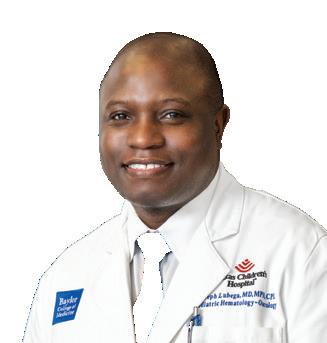
“When it comes to health, especially in these settings, policies are the holy grail.”
— Joseph Lubega
neonatal care highlighted scalable innovations being implemented successfully abroad and emphasized the importance of embedding health programs into national policy frameworks.
“When it comes to health, especially in these settings, policies are the holy grail,” said Joseph Lubega of Texas Children’s Hospital. “If you can stick an intervention into national policy, you can guarantee it will always be worked on.”
Krishna Udayakumar, director of the Duke Global Health Innovation Center, emphasized that designing new technologies is only part of the solution.
“Technology without design for equity will actually make things worse,” he said. “It doesn’t matter how good our innovations are if people don’t want them. At the core is trust — trust in science, in health, in public health.”
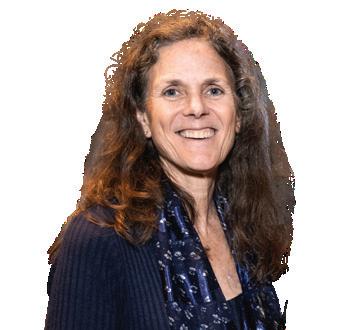
The second day began with remarks from Maria Oden, co-director of Rice360, who emphasized the conference’s central mission: to forge new collaborations, to share ideas and to find new projects to work on. “These challenges are going to require everyone to work together,” Oden said.
Implementation science can bridge the gap between discovery and delivery, said keynote speaker Lisa Hirschhorn, director of the Robert J. Havey, MD Institute for Global Health’s Ryan Family Center for Global Primary Care at Northwestern University.
“Over the last 150 years, we’ve had thousands of innovations that promised to reduce suffering and improve
life, but so many of them haven’t actually gotten there,” Hirschhorn said. “It’s not just about developing new innovations; it’s about innovating delivery.”
Sessions on digital and mobile health showcased real-world examples of telehealth, digital monitoring and emergency response programs, while panels on rural health and chronic disease care examined the intersection of technology and accessibility in applications ranging from cardiovascular prevention to diabetes care.
Global case studies for cervical cancer was a highlight of the conference, featuring Isabel Scarinci of the University of Alabama at Birmingham and Kathleen Schmeler of the University of Texas MD Anderson Cancer Center. Scarinci shared how Alabama became the first U.S. state to adopt a formal plan to eliminate cervical cancer, describing a coalition of universities, public health agencies and civic organizations working together.
“There is only one cancer that we can eliminate, and that is cervical cancer,” Scarinci said. “Everyone can play a role.”
Maria Oden
Joseph Lubega
Health Innovations

INSIGHTS
Pivot Point
A new statistical tool uncovers hidden genetic paths to complex disease, enabling more precise diagnosis and targeted treatment.
BY ALEX BECKER
Not every diagnosis tells the same story. Two people may both carry the label “breast cancer,” “Parkinson’s disease” or “high cholesterol,” yet the genetic routes they traveled are different. At Rice, a new statistical tool aims to map those divergent journeys and change how we think about treatment.
The method, called the Causal Pivot, was developed in collaboration with Baylor College of Medicine and the Jan and Dan Duncan Neurological Research Institute at Texas Children’s Hospital. It allows
researchers to sift through genetic complexity and identify hidden drivers of disease — rare mutations or pathways that push someone into illness even when their overall “common-variant” risk is low.
“Not everyone with a complex disease gets there the same way,” said lead author Chad Shaw, a statistician with joint appointments at Rice and Baylor and a faculty member at the NRI. Shaw is also the director of Rice’s Data to Knowledge Lab. “The Causal Pivot is designed to detect those differences and sort patients into more precise, biologically meaningful subgroups. This is a foundational step toward truly personalized genetic medicine.”
Traditional genome-wide studies tend to average genetic effects across all patients, masking those who arrived at disease by different mechanisms. The Causal Pivot sidesteps that by using a person’s polygenic risk score (PRS) — a summary of many common genetic variants — as a “pivot” point. If a patient carries a
rare, impactful mutation, the method detects that their PRS is lower than expected, revealing a distinct subgroup with a unique genetic story.
The team tested the tool on large datasets from the UK Biobankand successfully confirmed known gene–disease relationships — like LDLR with high cholesterol, BRCA1 with breast cancer, GBA1 with Parkinson’s. It also surfaced cumulative rare-variant burdens along entire pathways, such as the lysosomal-storage network in Parkinson’s.
By identifying the how of illness, the Causal Pivot opens the door to truly personalized medicine — screening patients for the right targets, matching therapies to the mechanism anddesigning trials around subgroups that actually share biology, not just symptoms.
In a world awash in genomic data, tools like this may steer us past statistical noise and toward actionable insight — to treatments built not for the average case, but for the exact path their body took.
Health Innovations
THE ACADEMY
A Global Health Innovator Earns Medicine’s Top Honor
Rebecca Richards-Kortum’s National Academy of Medicine election makes her the second faculty member in Rice’s George R. Brown School of Engineering and Computing elected to all three national academies.
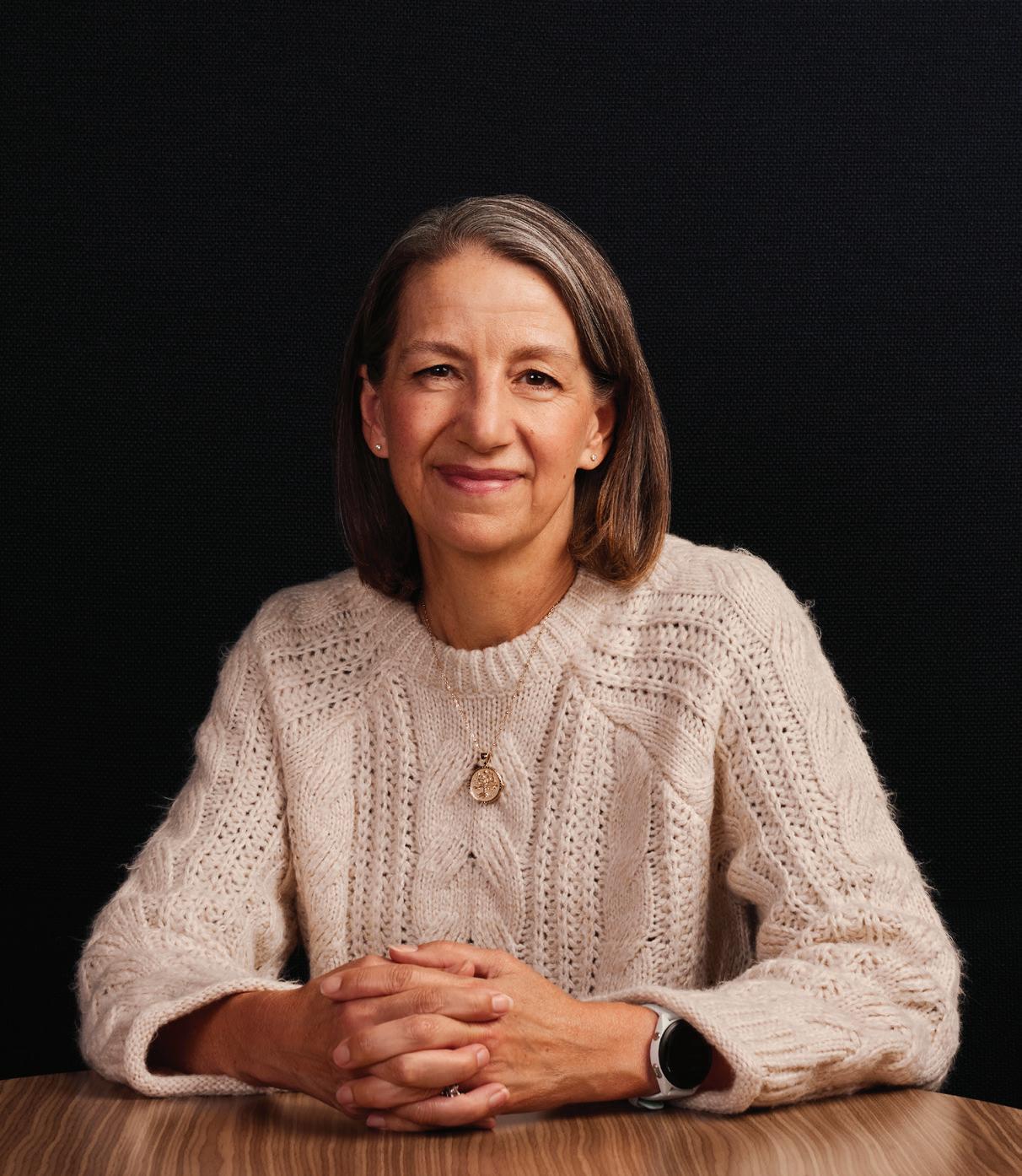
Rebecca Richards-Kortum, the Malcolm Gillis University Professor and professor of bioengineering and electrical and computer engineering at Rice, has been elected to the National Academy of Medicine, one of the nation’s highest honors in health and medicine.
“I’m deeply honored by this recognition,” Richards-Kortum said. “Throughout my career, I have been driven by the belief that every person deserves access to high-quality health care, no matter where they live. Engineering gives us the tools to make that possible — by transforming good ideas into technologies that truly work where they are needed most.”
Richards-Kortum is only the second faculty member in Rice’s George R. Brown School of Engineering and Computing — along with Lydia Kavraki — to be elected to all three national academies. They are also the only two researchers in Texas who hold membership across the academies of medicine, science and engineering, a distinction shared by
BY SILVIA CERNEA CLARK
fewer than 35 people nationwide.
A pioneer in global health engineering, Richards-Kortum is known for a systems-level approach that pairs novel medical technologies with the training, infrastructure and partnerships required for real-world impact. Her laboratory has developed cost-effective optical imaging and diagnostic tools for early detection of cancer, infectious diseases, sickle-cell disease, and for improving maternal and neonatal care.
At Rice, she co-directs Rice360 Institute for Global Health Technologies, which brings together engineers, clinicians and students to design and deploy affordable solutions to urgent health challenges. Rice360 is also a founding member of NEST360, an international alliance working to end preventable newborn deaths in sub-Saharan Africa by strengthening clinical training, supply chains and technology management.
Richards-Kortum’s current translational efforts include the NIH-funded Center for Innovation
and Translation of Point-of-Care Technologies for Expanded Cancer Care Access, which supports lowcost tools for early cancer detection, and AccessPath, an ARPA-H–supported project developing affordable, real-time digital pathology of tumor margins.
“Rebecca represents the best of what Rice stands for — bold innovation driven by compassion,” Rice President Reginald DesRoches said. “Her technologies are saving lives in hospitals around the world, and her example inspires students to see engineering as a force for shaping a better tomorrow.”
Her career spans more than 300 research papers, 13 book chapters, a widely used textbook on biomedical engineering for global health and over 40 patents. She is a MacArthur Fellow, a former U.S. Science Envoy for Health Security and was named to Fortune’s “World’s 50 Greatest Leaders.” She becomes the fourth Rice faculty member elected to NAM, joining Vivian Ho, Antonios Mikos and Kavraki.
The Hidden Economics of Health Care
Business professor Tolga Tezcan studies how payment models, insurance systems and operational bottlenecks shape the way Americans receive care.
BY SCOTT PETT
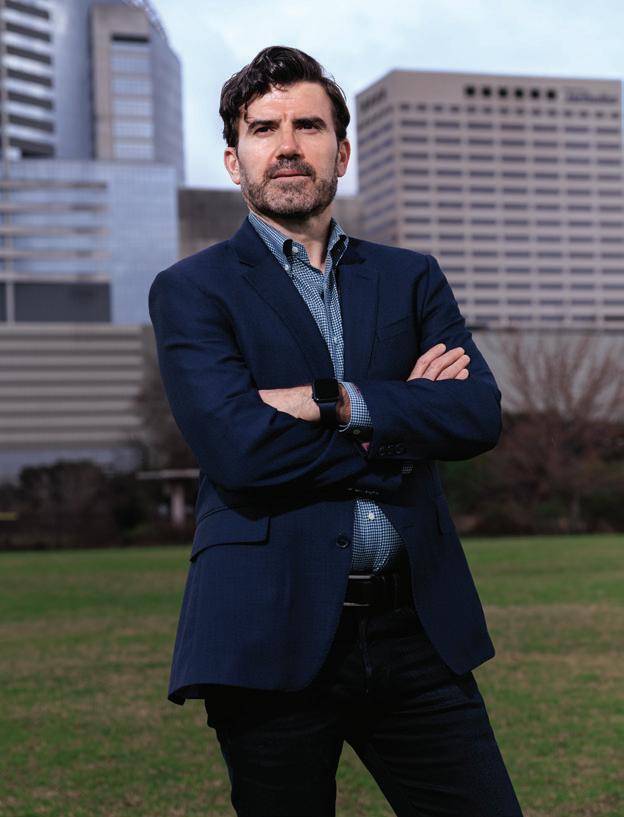
Tolga Tezcan explores innovative ways of designing and managing health care delivery systems and has collaborated with customer contact centers and hospitals to address issues relating to access. Tezcan currently teaches courses on operations management, business analytics and data mining at Rice’s Jones School of Business.
Your research mainly focuses on healthcare payment systems and insurance. Can you talk about the history of our national payment systems? How did they come about?
If you look at the early 1900s — when people paid mostly out of pocket — healthcare costs averaged maybe $150 to $200 per year in today’s dollars. Our procedures were not very complicated. And people didn’t live as long as they do today. Doctors would come to your home. They’d probably give you an aspirin or some kind of antibiotic, and that’s the most they could do.
That changed as technology advanced, but our payment system stayed the same until World War II. When people came back from the war, it became clear that a lot of older people could no longer pay for their healthcare. Private insurance came in and then Medicare and Medicaid in the 1960s. These systems had no incentive to be efficient.
Imagine taking your car to a mechanic and saying, “Fix everything.” What kind of bill is that mechanic going to come up with? That went on until the 1980s when healthcare became more transactional, and costs exploded.
I think we are moving toward a “capitation” payment system. In this system, like what Medicare Advantage does, healthcare institutions will receive a fixed amount, and they’re responsible for everything that relates to an episode of care. Now they have all the incentives to keep me healthy. They’re going to encourage me to exercise, not to drink, and so on and so forth.
Can you share an example of how operational research can make a real difference in healthcare?
Tolga Tezcan
“Healthcare is basically the backbone of the economy. So whenever I hear people say they oppose universal healthcare, I can’t really fathom what they’re missing.” — Tolga Tezcan
When I was at the University of Rochester, we were looking at the causes of lengthy treatment times in the emergency room. We dug deep into their database to figure out where patients are spending time and used somewhat standard management tools to understand where the bottlenecks are, and then we’d try to find ways to decrease the hospital’s load.
Emergency rooms, unfortunately nowadays, are anything but emergent unless you’re dying. Otherwise, you register, and go through triage. The level of triage you fall in kind of determines your priority in the waiting line.
As researchers, we said, “Look: there are so many triage patients coming into the emergency room who could have gone to a primary care physician or to urgent care. Why don’t we start treatment in triage?” Let’s say you walk in with arm pain. Why don’t we just order an X-ray before you see a doctor? By the time the doctor sees you, the X-rays will be ready — because in the ER, doctors and beds are the bottleneck. Not X-rays. Our job as researchers is to help healthcare professionals identify these opportunities.
Much of what you’re saying is specific to the U.S. But I’m sure you have a very transnational perspective. You’re a native of Türkiye. You’re speaking with me from London.
Whatever you see in America, it’s one system. There are other ways of doing this. Take the U.K. Until WWII, their system was very similar to the U.S. Obviously, they were more directly impacted by the war. And after the war, they nationalized all the hospitals by running them through “trusts” (i.e., nonprofit organizations). That way, the government can pay hospitals and keep track of quality issues.
The U.S. needs to get rid of prices. If Hospital A does a surgery and Hospital B does the same surgery, they should get
paid the same amount regardless. Where they should be competing is on quality. If Hospital A ends up with better surgery outcomes, they should get additional money. And Hospital B should lose some of theirs.
The problem in the U.S. is that every insurance company goes around and negotiates with all these hospitals about how they’re going to charge for every single operation. Compared to the U.K. system, that’s the biggest difference. And that’s where we see the biggest inefficiencies in U.S. healthcare.
Is there anything else you’d like people to know about your research?
First, healthcare is not just about health. Healthcare is the economy.
Healthcare keeps everybody healthy so that they can work and contribute. So, when you don’t provide health insurance for people, the whole economy suffers, not just that person’s life.
Even more, if you’re not changing jobs — a job you hate — because you don’t want to lose your health insurance, then you’re not doing a job where you’ll probably be more productive and contribute more to the overall economy. Healthcare is basically the backbone of the economy. So whenever I hear people say they oppose universal healthcare, I can’t really fathom what they’re missing.
Second, in terms of research and my personal experience, healthcare operations has been a great field to research. With all due respect to people who research the supply chain, Amazon has billions of dollars to fund research. That’s not the case in healthcare.
Healthcare needs people who have the flexibility and training to look at systems and ask systematic questions. It’s a great area of focus for universities and scholars.
Health Innovations
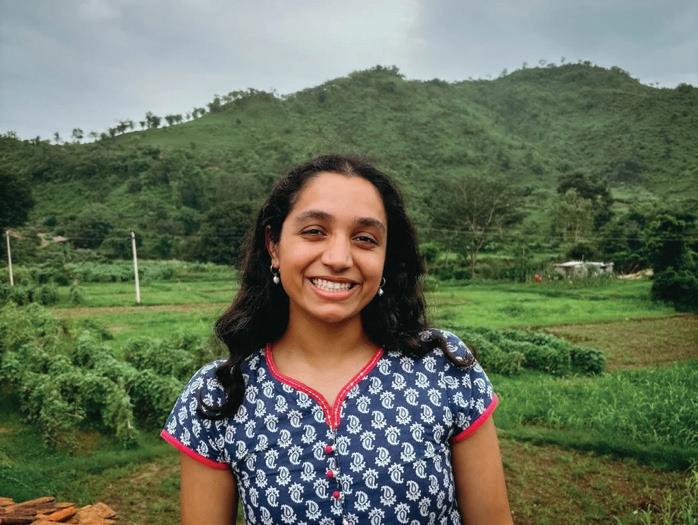
Food for Thought
Supported by Rice fellowships, senior Maya Harpavat documented how families in rural India confront malnutrition — and what real solutions require.
BY ALEX BECKER
Last summer, Maya Harpavat left the lecture halls of Houston for the winding roads of rural Rajasthan, India, determined to understand malnutrition from the inside out. As a senior at Rice double-ma-
joring in health sciences and English (with a minor in medical humanities), Harpavat set out to look beyond numbers and charts: she wanted to talk with families, peer into care wards, and listen to how culture, schooling and infrastructure shape child and maternal nutrition in some of India’s most underserved communities.
With support from Rice’s Wagoner Fellowship and the Minter Summer Scholars Program, she partnered with the nonprofit Seva Mandir in Udaipur. Accompanied by local health-workers who introduced her to dozens of mothers and caregivers, she conducted more than 40 focused interviews in villages where malnutrition remains stubbornly high.
Harpavat traces her interest in nutrition research back to a freshman summer working with Shreela
Sharma at UTHealth Houston’s Food as Medicine initiative — an experience that opened her eyes to links between diet, chronic disease and health equity.
At Rice she found mentors across departments in kinesiology, medical humanities and English. Professors like Cassandra Diep and Melissa Bailar helped design her interviews; assistant professor Ragini Tharoor Srinivasan encouraged her to shape her senior thesis as creative nonfiction reflecting those voices. And through the Center for Civic Leadership, Harpavat became inspired to focus more on global health issues.
In villages such as Gogunda and Majawad, Harpavat found families eager to share their stories: women described empty fields during lean farming seasons, hospitals hours away, and a hunger for better information on feeding during pregnancy or childhood. She found that even basic education — completing fifth grade, for instance — dramatically shifted how women understood nutrition and cared for children.
She hopes her research will inform Seva Mandir’s future programs: nutrition education that isn’t just aimed at mothers, but at whole caregiving networks, including grandparents and siblings, and that begins as early as the preschool level. After a gap year of research, Harpavat plans to attend medical school, carrying the lesson that research matters the most when it empowers communities.
“This project showed me that research can go beyond data — it can change lives,” she said. “That’s the kind of medicine I want to practice.”
PHOTO
Maya Harpavat
Innovation

PHOTO BY LYNN LANE
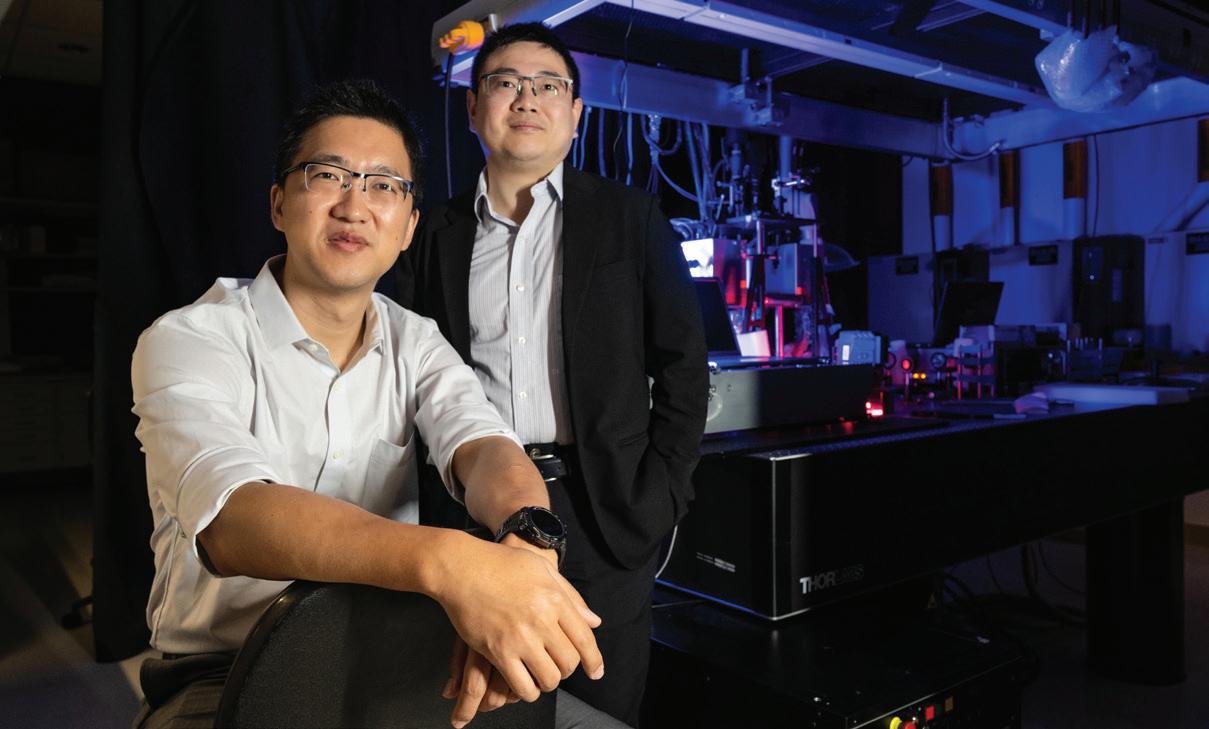
TRANSLATIONAL TECH
Mapping the Body’s Blind Spots
A five-year $18 million ARPA-H grant to Rice’s SynthX Center will fund cutting-edge imaging and biomarker tools aimed at diagnosing and treating rare, life-threatening lymphatic diseases long hidden from view.
BY MARCY DE LUNA
For decades, the lymphatic system — a network of microscopic vessels essential to immune function and fluid balance — has remained one of the least understood systems in the human body. Its size, complexity and near invisibility to conventional imaging have left patients with rare lymphatic diseases facing delayed diagnoses, limited treatment options and years of uncertainty. A new $18 million federal award to Rice aims to change that. Rice’s SynthX Center, directed by Han Xiao, has received an up to five-year, $18 million award from the Advanced Research Projects Agency for Health Lymphatic Im -
Han Xio (left) and Lei Li
PHOTO BY JEFF FITLOW
“We hope this technology can provide patients with answers and treatments where there were only uncertainties before.” — Han Xiao
aging, Genomics and pHenotyping Technologies program. The project has the potential to transform how clinicians diagnose and treat complex lymphatic anomalies and lymphedema — rare and often debilitating conditions caused by abnormal lymphatic vessel growth that can affect multiple organs.
LIGHT is led by ARPA-H program manager Kimberley Steel and centers on the development of two complementary technologies: the Visual Imaging System for Tracing and Analyzing Lymphatics with Photoacoustics (VISTA-LYMPH) and Digital Plasmonic Nanobubble Detection for Protein (DIAMOND-P). Together, the tools are designed to overcome longstanding barriers in lymphatic research and care by combining deep-tissue imaging with sensitive molecular diagnostics.
The award advances efforts to tackle rare, life-threatening lymphatic disorders that are notoriously difficult to diagnose and treat along with other lymphatic diseases.
Xiao, a professor of chemistry, biosciences and bioengineering and a Cancer Prevention and Research Institute of Texas Scholar, will oversee the project. He is collaborating with co-investigator Lei Li, an assistant professor of electrical and computer engineering, as well as researchers from Texas Children’s Hospital, the University of Texas at Dallas and the University of Texas Southwestern Medical Center. The team will integrate advanced photoacoustic imaging with proteomic tools to map lymphatic vessels and detect disease-associated biomarkers.
“This is exactly the kind of visionary, high-impact science we cham-
pion at Rice,” said Thomas Killian, dean of the Wiess School of Natural Sciences. “It pushes the boundaries of discovery and drives meaningful advances in human health.”
The lymphatic system plays a critical role in immune responses, fluid regulation and waste clearance, yet its tiny vessels are notoriously difficult to visualize. Traditional imaging methods often lack the resolution or contrast needed to capture the fine structure of lymphatic vessels, particularly deep within the body. As a result, many lymphatic diseases go undetected until they have progressed significantly.
The VISTA-LYMPH platform seeks to address that challenge using photoacoustic tomography, a hybrid imaging technique developed in Li’s lab. It combines light and sound, allowing researchers to visualize biological structures at greater depth and with higher clarity than lightbased methods alone. Early animal studies have demonstrated the ability to safely image the entire body in fine detail, making it possible to map lymphatic vessels in areas such as the arms, legs, torso and neck.
“Thanks to ARPA-H’s award, we will build the most advanced PAT system to image the body’s lymphatic network with unprecedented resolution and speed, enabling earlier and more accurate diagnosis,” Li said. Imaging, however, is only part of the solution. Many patients with lymphatic diseases do not have identifiable genetic mutations, and tissue biopsies can be impractical. The team will deploy proteomic strategies through the DIAMOND-P technology to identify circulating biomarkers associated with lymphatic dysfunction.
By pairing biomarker detection with high-resolution imaging, the researchers aim to create highly accurate, noninvasive diagnostic tools that can reveal subtle changes in lymphatic health long before symptoms become severe.
“Our goal is to create a system that provides real-time insights into the lymphatic system with unprecedented resolution, depth and safety,” Xiao said. “By validating VISTA-LYMPH and DIAMOND-P in both preclinical and clinical settings, the team aims to establish a comprehensive diagnostic pipeline for lymphatic diseases and potentially beyond.”
The technologies developed through LIGHT could have far-reaching implications beyond lymphatic disorders. Because the lymphatic system is implicated in cancer metastasis, cardiovascular disease and neurodegeneration, improved visualization and molecular insight could inform diagnosis and treatment across a wide range of conditions.
The project also underscores Rice’s growing strength in biomedical innovation. Established in 2024 as part of Rice’s Momentous strategic plan, the SynthX Center focuses on developing next-generation drugs and technologies through close collaboration with cancer programs across the Texas Medical Center. Its translational model is designed to move discoveries rapidly from the lab to clinical use.
“Ultimately, we want to bring clarity to diseases that have long remained in the shadows,” Xiao said. “We hope this technology can provide patients with answers and treatments where there were only uncertainties before.”
CREATIVITY
Music, Mind and Body
Composer Anthony Brandt’s experimental performance turns improvisation into a massive data set, revealing what happens inside the mind when artists create in real time.
KATHARINE SHILCUTT
On stage, nothing ever turns out exactly the same way twice. For composer Anthony Brandt, that uncertainty is the point of “Free Rein,” a performance that blends live music, contemporary dance and neuroscience into something closer to a living experiment than a conventional concert.
When the piece was staged earlier this year at Houston’s Hobby Center for the Performing Arts and MATCH, audience members watched dancers and musicians move between passages that were fully scripted and others that were improvised in real time, guided by rules but not outcomes. Both dancers and musicians wore brain-sensing caps, generating an
enormous stream of data as the work progressed — 173 million data points per performance, to be exact. It’s data that neuroscientists will be able to mine for years to come as they try to decipher how exactly the brain functions when it’s creating on the fly.
“What’s happening in the brain when you’re doing something scripted versus improvising? That’s a crucial question in understanding how our minds work,” said Brandt, whose research at the intersection of music, performance and neuroscience has long probed such questions.
The caps his performers wear also generate visualizations for the audience, thanks to the work of Shepherd School doctoral candidate Badie Khaleghian, who are able to literally see a neuroscience experiment taking place in real time, far outside of the traditional boundaries of a lab or other such sterile research facility.
Such off-campus experiments are central to Brandt’s work at Rice’s Shepherd School of Music, where “Free Rein” acts as a vivid example of the kind of interdisciplinary research housed under the school’s new Music, Mind and Body Lab. The lab brings together composers, performers, dancers and neuroscientists to study how the brain behaves during real artistic activity. Too much research on creativity and the brain, said Brandt, has relied on tightly controlled lab environments that bear little resemblance to how creativity actually functions in the world.
“I feel like one of our jobs on the art side is to let music be itself in its full glory and be the wild menagerie of beasts that it is, so that we can show what’s happening in the brain when it’s actually behaving out in the real world,” Brandt said.
“Free Rein” was designed to create those conditions. Structurally, the piece alternates between paired movements: one carefully composed, the other partially open, asking performers to invent their parts within specific constraints. “The scripted passages function as the scientific ‘control’,” Brandt said, ”so fixed and improvised sections need to occur in equal amounts.”
The form itself plays with audience expectations. Some movements introduce a fixed version before its improvised counterpart; others reverse that order, letting the improvised material come first and only later revealing the composed structure behind it. The final completely scripted movement, Brandt said, becomes “kind of the emotional core of the piece,” as a long stretch of improvisation suddenly crystallizes into something fixed.
Near the end of “Free Rein,” the score briefly disappears altogether. “The final movement alternates between fixed and free sections. Eventually, it ends up in a place where the score is blank,” he said. “The music and dance are free for about 70 seconds. What happens there is entirely in the hands of the performers.”
Freedom, however, does not mean
“It’s a very rare real-world study of creativity.” — Anthony Brandt

chaos. One of the project’s central insights — shared by artists and scientists alike — is that improvisation depends on rules, vocabularies and shared expectations. Early rehearsals made that clear. “Honestly, the initial musical rehearsals sounded like everyone was in their own world,” Brandt recalled of the first attempt. Without collective intention, the music wasn’t expressive; it was arbitrary.
Improvisation, he came to see, functions more like conversation. “I don’t know exactly what you’re going to say, but I have to know what the words are,” he said. “My goal as a player is not to throw off the other
“Free Rein” generated 173 million data points per performance from the
musicians or to shock them. It’s to talk in the lingo we’ve developed among each other.”
That realization shaped both the artistic structure and the research design. Musicians improvised within defined pitch fields so they would remain harmonically connected to pre-recorded material. Dancers followed game-like rules — staying tethered by a bungee cord, keeping an object in contact with a partner’s body — that forced constant adjustment without devolving into randomness.
Those choices are exactly what make the project valuable to neuro -
scientists, including collaborators Andrew Nordin at the University of Houston and Anna Abraham at the University of Georgia. Across multiple performances and rehearsals, performers generated an unprecedented volume of neural data while engaging in authentic creative behavior. “It’s a very rare real-world study of creativity,” Brandt said.
Creativity, Brandt argues, is deeply tied to how people navigate uncertainty in everyday life. “Every time we have to adjust on the fly” he said, “we’re switching from a predictable model of the world into one where we improvise.”
brain -sensing caps worn by dancers and musicians.
SENIOR SCHOLARS
Expanding the Canon
Across disciplines, Rice’s Mellon Mays fellows are producing work that reorients how we understand history, culture, identity and community.
BY ROSIE NGUYEN
Each year, Rice’s Mellon Mays Undergraduate Fellowship supports a small cohort of students committed to expanding who and what gets represented in academic research. Working closely with faculty mentors over two years, fellows pursue original scholarship, build pathways toward graduate study and contribute new perspectives to fields where voices like theirs have long been underrepresented. This year’s 10 seniors showcase the range and depth of Mellon Mays scholarship at Rice.
Sehoon “Sammy” Baek
Baek ’26 researches the lives of enslaved people on Brazoria County plantations through digital humanities, working with Molly Morgan, assistant teaching professor at Rice, to turn archival survey reports into interactive ArcGIS StoryMaps. He has helped rewrite and preserve dozens of reports in the Rice Research Repository. After graduating in December, he plans to continue studying Texas plantation history in graduate school.
Asyiah Bray
Bray ’27 examines how Black women’s fiction of the early 1980s uses fashion as cultural critique, focusing on Gloria Naylor’s “The Women of Brewster Place” and “Linden Hills.” Her project argues that clothing and beauty function as commentary on race, gender and class, positioning Black women’s literature as an alternative archive of style, survival and social critique.
Wenshi Chen
Chen ’27 studies the global Algorave scene — live-coded electronic music performed in front of audiences — by combining fieldwork in San Francisco with interviews and hands-on experimentation in platforms like TidalCycles and Sonic Pi. Her research explores Algorave’s history, performance practice, and the creative tension between human musicianship and algorithmic processes within contemporary music communities.
Isabella Gonzalez
Gonzalez ’27 analyzes health disparities through the lens of culturally competent care, drawing on data from the 2023 California Health Interview Survey. She finds that Black and Native American respondents report high levels of perceived discrimination in health care, with communication and access improving outcomes for Black respondents but not for Native Americans — suggesting deeper structural issues at play.
Mariella Gonzalez Molina
Gonzalez Molina ’26 investigates how the Smithsonian’s 1964 exhibition “Hall of Everyday Life in the American Past” constructed a vision of American identity. Situating the display within the Civil Rights and Cold War era, she argues that its focus on domestic life played a defining role in shaping the institution’s narrative of what it means to be American.
Avalon Hogans
Hogans ’26 examines preservation practices in Houston’s Freedmen’s Town through Theaster Gates’s installation “From My People and My Skin.” She argues that the work’s themes — labor, archives and the “gaps” in Black history — offer a framework for understanding and protecting the neighborhood’s cultural legacy, proposing the concept of the “Black Line” to describe silences that hinder preservation.
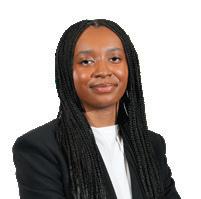
Kenzie LanghorneAjidahun
Langhorne-Ajidahun ’27 studies poetry published during Pauline Hopkins’s editorship of The Colored American Magazine (1900–1904), showing how it voiced communal grief, divine justice and political resistance in the aftermath of Reconstruction. Her project traces how editorial shifts later muted this radical urgency, revealing the magazine’s role as both literary forum and political intervention.
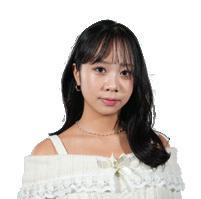
Lana Nguyen
Nguyen ’27 explores shifting funerary traditions in the Vietnamese village of Điên Môn as economic pressures and urban migration reshape community life. Through interviews, oral histories and observation, she finds residents divided: some see cultural change as an opportunity for new practices, while others mourn the erosion of long-held rites and local identity.
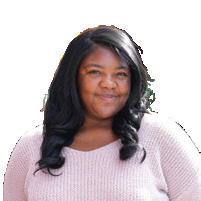
Samantha Peltrau
Peltrau ’26 traces the long lineage of Black vampires in literature and film — from the 1819 story “The Black Vampyre” to “Blacula” and Octavia Butler’s “Fledgling” — to interpret current works like “Sinners” and “Interview with the Vampire.”She argues that the Black vampire reveals how racial trauma, enslavement and national belonging haunt contemporary genre storytelling.
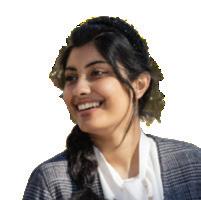
Lajward Zahra
Zahra ’27 analyzes post-2016 border films that translate economic anxieties — foreclosure, medical debt, precarity — into narratives of cross-racial intimacy and emotional reconciliation. She argues that this “affective displacement” shifts attention away from structural crises, turning the border into a symbolic site for resolving national tension while obscuring the underlying political and economic forces.
GLOBAL GRADS
Why the World Chooses Rice
A cohort of 94 Fulbright scholars from 32 countries are bringing fresh perspectives — and serious research power — to Rice’s graduate programs.
BY KATHARINE SHILCUTT
When you see nearly a hundred Fulbright graduate students on campus — 94 this year, from 32 different countries — it tells you something important. These scholars are hand-picked by their home countries and the U.S. government, and they can go pretty much anywhere in the United States. The fact that so many end up here means Rice isn’t just known abroad; it’s trusted. Faculty, labs and programs across the university have all built a reputation that attracts top international researchers, meaning 2.3% of Rice’s grad student population are Fulbright scholars — a compelling statistic when Fulbright students are a fraction of a fraction at most U.S. universities.
“This is one of the closest-knit communities we have at Rice,” said Seiichi Matsuda, Dean of Graduate and Postdoctoral Studies.
This also says a lot about what Rice can handle. Supporting this many Fulbright students isn’t simple. It takes strong advising, responsive departments and a campus where international students can hit the ground running.
The payoff is a graduate community that feels genuinely global. These scholars bring different perspectives, research interests and lived experiences to the mix, and that changes the conversations happening in classrooms and labs.
“Something that I really like about Rice is that we have people from everywhere,” said Alan Salceda Monge, who came to Houston from Mexico to study engineering management and leadership.
“It’s a very international environment, and people are very open and kind. I know we can count on each other for almost everything.”


LIVING PHARMACIES
The Future of Biotech Is Here
Dedicated to closing the gap between discovery and translation, Rice hosted the second annual ARPA-H Biohybrid Devices Summit.
BY SILVIA CERNEA CLARK
Biohybrid devices — “living pharmacies” that produce and adjust therapies inside the body — could fundamentally change how medicine is delivered. To accelerate that shift, Rice hosted the second ARPA-H Biohybrid Devices Summit in Houston in September 2025.
The summit took place at Rice and at Helix Park in the Texas Medical Center, backed by the Rice Biotech Launch Pad and RBL LLC. It drew researchers from across the TMC, national experts, CPRIT leadership, Gates Foundation representatives, investors and commercialization teams.
Day one opened with a keynote from Northwestern’s John Rogers
and sessions on encapsulated cell therapies, bioelectronics and biomaterials. Poster sessions gave early career researchers direct access to collaborators and funders. Rice bioengineer Omid Veiseh outlined progress on immune-protective biomaterials and cell-based drug production, noting his team has screened thousands of modified alginates — even in nonhuman primates — to tame the foreign-body response.
“We are disrupting how the pharma industry is doing manufacturing and delivery,” Veiseh said.
The second day focused on clinical realities such as medication adherence and disease management, then turned to commercialization strategy. RBL CEO Paul Wotton emphasized Houston’s position as an emerging biotech hub.
“This medical system here sees about 10 million patients every year,” Wotton said. “Most of the clinical trials in this country go through Houston one way or another, and yet we don’t have a biotechnology industry in this city compared to what we have in Cambridge or San Francisco. We have to change that.”
The meeting included demonstrations of emerging technologies, including HAMMR, an implantable device that monitors tumors and delivers on-demand immunotherapy. It’s part of Rice’s ARPA-H–funded THOR program, which aims for its first clinical trial in 2026.
The summit followed ARPA-H reviews of THOR and ROGUE, a project developing an implantable device for obesity and Type 2 diabetes — both aimed at pushing prototypes into clinical reality as quickly as possible.
Thriving Urban Communities

Thriving Urban Communities
ROAD TRIP
Not-So-Dead End
A sociologist’s journey from simple curiosity to NSF-backed research reveals how physical infrastructure shapes inequality.
BY KAT COSLEY TRIGG
As a graduate student living in New Haven, Connecticut, Elizabeth Roberto said she couldn’t stop wondering why certain neighborhoods seemed connected while others were quietly walled off.
“There were these places where the roads just stopped,” Roberto recalled. “Like they were meant to go somewhere — but didn’t.”
It was the kind of everyday sight the average person might drive past without a second thought. But for Roberto, it sparked a question that would stay with her for years: What happens when barriers separate people — not just symbolically but literally?
Now a sociologist at Rice University, Roberto has turned that question into a pioneering research agenda. Backed by a $500,000 CAREER Award from the National Science Foundation, she’s investigating how features of the built environment — like dead-end streets, highways, fences and railroad tracks — shape patterns of neighborhood separation
and access to opportunity across U.S. cities.
“It’s something I’ve been thinking about for years,” she said. “This award is incredibly exciting, and honestly, I’m still processing it. It’s the culmination of so many years of work.”
While many studies focus on economic factors, personal preferences or systemic discrimination in explaining residential segregation, Roberto’s research adds a physical layer to the analysis. Using satellite imagery, historical archives, redlining maps and artificial intelligence, she and her team are mapping how infrastructure decisions like where a street does or doesn’t go can reinforce racial and economic divides.
“You start to see these patterns repeating across the country,” Roberto said. “What I noticed in Connecticut wasn’t unique. Cities everywhere are shaped by the same forces.”
Her multiyear study will span 50 U.S. cities and introduce new ways


Thriving Urban Communities
to measure how spatial features of neighborhoods affect access to schools, transit and other public resources. That includes mapping not just what’s there but what’s missing.
At Rice, Roberto is building interdisciplinary learning opportunities in spatial analysis, urban inequality, and data science for undergraduate and graduate students alike.
She also plans to develop an interactive, publicly accessible web platform to share her team’s findings with policymakers, researchers and community leaders.
“The NSF CAREER Award is one of the highest honors a faculty member can receive early in their career,” said Rachel Kimbro, dean of the School of Social Sciences.
“This national recognition is a testament to Elizabeth’s premier research and dedication to the field of sociology. We are so proud of Elizabeth and grateful for her service as a School of Social Sciences faculty member.”
The roads we build — and the ones we don’t — tell a story. For Roberto, the work is about more than maps and measurements. It’s about making the invisible visible, helping cities, scholars and communities understand how decisions about streets, zoning and infrastructure shape the very fabric of opportunity.
“I’m not trying to say we should build more roads,” Roberto said. “But if we want to understand inequality, we need to see the ways physical infrastructure limits or enables access. This research is about creating tools that help us ask better questions about the way our cities are built and for whom.”
Elizabeth Roberto
HEALTH
RESILIENCE
Caring for the Caregivers
Using wearable devices and daily smartphone surveys, Project REACH offers new insight into how stress affects dementia caregivers.
BY KAT COSLEY TRIGG
Kenneth Payne starts most days with a plan. On Mondays, Wednesdays and Fridays, he heads to the gym then takes his wife, Mary, out for a burger — a routine built around her needs and his. She was diagnosed with dementia in 2021, and now he’s her full-time caregiver.
“I had never cooked,” Payne said. “Now I cook everything. I clean. I do it all.”
After nearly 62 years of marriage, Payne says it’s a role he never expected but one he embraces, even when the weight of it feels crushing.
“Dementia is a life in a downward spiral,” he said. “All we can do is just try to do the best we can. If you don’t take care of yourself, you can’t take care of your partner. That’s what I’ve learned.”
It’s a lesson he took to heart after
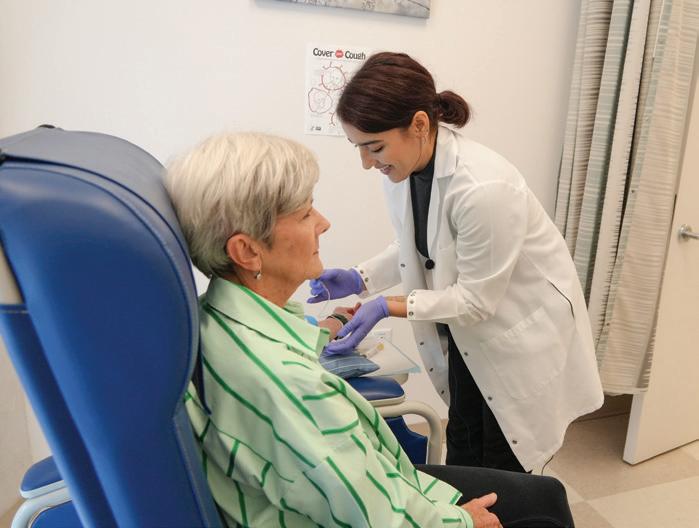
participating in a caregiver study led by Christopher Fagundes, professor in psychological sciences and director of Rice’s Institute of Health Resilience and Innovation. The study — known as Project REACH — is among the first in the nation to collect real-time data on how stress affects the health and well-being of dementia caregivers.
Payne remembers what it was like to have someone from the research team knock at the door — always on time, always kind.
“I looked forward to the visits,” he said. “Life can get pretty lonely when you’re caring for someone with dementia.”
When Payne, a retired Houstonian, learned the study offered home visits, he signed up. “I can’t leave her,” he said. “That made it possible for me to take part.”
Short for Restore, Enable and Advance Caregiver Health, Project REACH uses wearable heart monitors and daily smartphone surveys to track how caregiving affects the body and mind as it happens. It’s one of the first studies in the country to combine ecological momentary assessment with physiological data, providing a more complete picture of caregiver strain.
“Most studies ask caregivers to recall how they’ve felt over the last week or month,” Fagundes said. “But stress isn’t something you can always remember accurately. It happens moment by moment, and those moments can add up to serious health consequences.”
Thriving Urban Communities
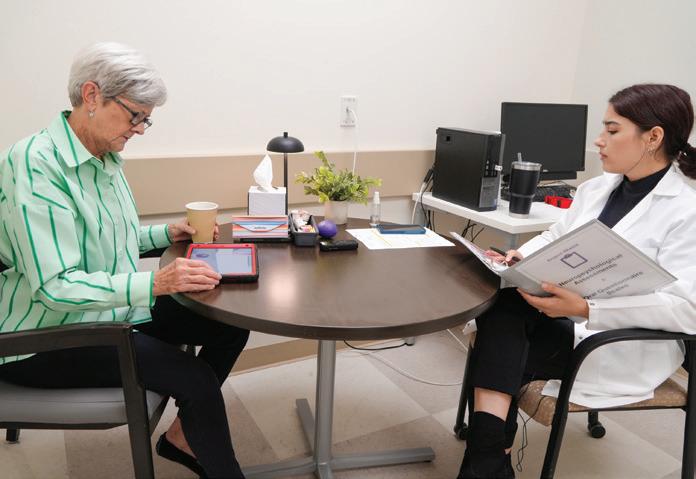
Fagundes has spent much of his career studying the connection between stress and disease. His previous research has shown that chronic loneliness and caregiving strain can increase inflammation, disrupt sleep, weaken immune function and even shorten lifespan.
To capture those effects, Project REACH doesn’t stop at surveys and sensors. The research team — including graduate students and clinical staff — also collects blood samples to measure biomarkers of inflammation,
one of the most reliable indicators of stress-related health decline.
“It’s a team effort,” Fagundes said. “We’re combining data science, psychology and biomedicine to get a 360-degree view of caregiving.”
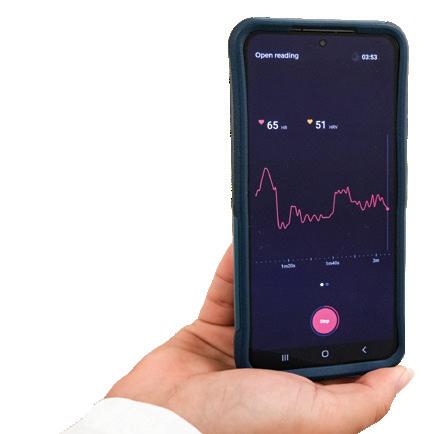
The study, funded by the National Institute on Aging, began in 2023 and will continue through 2028. Participants complete three lab visits over six months, wear a lightweight monitor for two weeks and respond to app-based questions about mood, sleep, social connection and caregiving demands.
“We’re not just
collecting numbers,” Fagundes said. “We’re learning from caregivers themselves. They’re the experts in their own experience.”
While Project REACH is still in its data collection phase, the ultimate goal is to turn these insights into personalized interventions — practical tools that help caregivers manage stress in real time, improving outcomes for both the caregiver and their loved one.
“Caregivers carry so much — emotionally, physically, financially,” Fagundes said. “We want to build tools that support them, not just in theory but in daily life.”
For Payne, being part of the research gave him a sense of purpose.
“They were kind, helpful, always on time — and it just felt like somebody, somewhere, was trying to help the caregiver,” he said. “That’s why I’m doing this. If I can help someone else, I will.”
In the meantime, he continues his schedule — the gym, lunch dates, tending to his garden — the small routines that keep him and his wife both moving forward.
“She doesn’t always remember,” he said, “but I do.”
SCAN THIS QR CODE TO SEE HOW PROJECT REACH IS LEARNING MORE ABOUT DEMENTIA CAREGIVERS:

REACH uses wearable heart monitors and daily smartphone surveys to track how caregiving affects the body and mind as it happens.
A caregiver participant completes a digital questionnaire while a research team member records responses during an in-depth neuropsychological assessment at Rice.

CRITICAL CONVERSATIONS
Research That Reaches People
The Center for the Study of Women, Gender and Sexuality connects Rice students with Houston organizations for hands-on research.
BY BRANDI SMITH
For students in Rice’s Center for the Study of Women, Gender and Sexuality, research doesn’t begin in a library or a lab. It begins in living rooms, clinics, and conversations across Houston.
Each year, the center’s Seminar
and Practicum in Engaged Research invites juniors and seniors of all majors to collaborate with local organizations, working alongside community partners to design research that responds to real needs and generates change that lasts beyond
the academic year. The course has paired more than 100 students with more than 50 organizations across the region since 2008.
“These students are not simply given an assignment and told to check some boxes,” said Brian Riedel, associate director of CSWGS and adjunct assistant professor. “They are intellectual collaborators with the nonprofit agencies. Together, they develop research questions the students then get to execute.”
Undergraduate projects have shaped peer-reviewed scholarship including articles co-authored by former students Sophia Haase ’13 and Sara Millimet ’11 through partnerships with the Baylor
Thriving Urban Communities
College of Medicine’s Teen Health Clinic and Live Consortium. When former student Mingo Almazan ’25 worked with PFLAG Houston to redesign outdated educational materials on transgender inclusion, the updated brochure became a resource the organization continues to use and share.
“Many of the students find that the experience of conducting research from initial collaboration to finished product gives them critical thinking skills for understanding what constitutes good research,” Riedel said.
This year’s cohort, taught by Riedel and postdoctoral associate Anzi Dong, is small by design. Seniors Caitlin Reddig, Joselyn Lwigale and their classmates meet weekly, designing community-based research together. Much of the fall semester was spent developing background knowledge, writing research plans and navigating the detailed requirements of Institutional Review Board approval.
Reddig, a triple major in psychology, sociology and SWGS, plans to pursue a career in housing policy and social work. Her project focuses on the eviction experiences of women of color who have received services from Coalition for the Homeless of Houston/Harris County.
“I started looking into it and was unaware of how crazy the stats are and how women of color are so disproportionately evicted,” Reddig said. “There was something there that I wasn’t aware of, and I felt like I could dig deeper.”
Reddig spent last semester conducting literature reviews, drafting interview guides and considering the ethical questions that shape re -
Part of what makes the seminar and practicum attractive to students is they recognize that research can have a real-world impact on things they care about right now.”
— Brian Riedel
search with vulnerable populations. This year, she’s conducting one-onone interviews and a focus group to identify patterns in how eviction affects women’s lives.
“This isn’t my story,” Reddig said. “I want to let the conversation flow and just hear their experiences.”
Lwigale, a SWGS major with a minor in medical humanities, is studying birth experiences among patients who received midwifery care at Houston Methodist Willowbrook Hospital. As pregnant people are classified as a vulnerable research population, she developed a project that focuses instead on women who have already given birth. This year, she’s leading an in-person focus group with individual interviews to understand what shaped each participant’s sense of care, agency and satisfaction.
“I’m really excited to create a space where moms can talk about their birth experiences and share what common experiences they might have or things to look for in future births,” Lwigale said. “Birth stories are something people don’t always get to share.”
Both students said SWGS 100, the department’s introductory course,
gave them language for experiences and systems they recognized but had never been taught to analyze.
“It shows students names for things they have already been experiencing but never knew how to talk about,” Riedel said. “A gendered, feminist and intersectional perspective alters our ability to see that what happens in your life is like what happens in my life. We’re no longer just individuals having experiences but participants in a pattern. And because it’s a pattern, we could choose to organize to change it.”
The practicum makes that possibility concrete. Students apply humanistic and social science methods to questions developed with community partners, from narrative and linguistic analysis to contextual and visual interpretation. They learn how to design interviews, facilitate focus groups and understand research not only as data collection but as relationship building.
In its 16 years, the practicum has generated partnerships that endure. Organizations return because the work is meaningful, Riedel said, and because the research students produce addresses questions that often exceed the capacity of nonprofit staff. These collaborations also give students insight into how research circulates in the world. Projects have informed programming in local clinics, contributed to policy conversations in Houston and Austin and shaped changing conversations around care and equity.
“Part of what makes the seminar and practicum attractive to students is they recognize that research can have a real-world impact on things they care about right now,” Riedel said.
MAKING MOVES
The Missing Data on Managed Retreat
A first-of-its-kind tool reveals that most people in FEMA buyout areas simply sell or rent their homes, leaving incoming residents to inherit the danger.
BY KAT COSLEY TRIGG

When a natural disaster devastates a community, the Federal Emergency Management Agency buyout program is one of the few options for helping residents move to safer ground. But a new interactive tool created at Rice shows the vast majority of people aren’t relying on FEMA at all, which has major implications for resilience.
“No one’s been able to really map these moves in the past,” said Jim Elliott, the David W. Leebron Professor of Sociology and co-director of Rice’s Center for Coastal Futures and Adaptive Resilience. “It’s a real innovation.”
The FEMA buyout mapping tool, developed at Rice in partnership with data providers, offers the first national picture of how Americans relocate after the agency implements managed retreat in their community. The policy seeks to acquire and demolish homes in some of the nation’s most flood-prone areas, often after a recent disaster.
The new tool tracks more than 73,000 Americans who moved from homes in more than 650 neighborhoods across 42 states following FEMA policy implementation. The map not only shows where buyout participants relocate but also tracks nearby neighbors who moved through conventional market sales or leases.
Thriving Urban Communities
“What we found is the vast majority of people in these buyout zones are actually moving through what we might call the marketplace,”
Elliott said. “They sell or rent their home on the market and pass the risk on to the next residents instead of having the property removed.”
Nationwide, the tool shows that for every one FEMA buyout and demolition, about 15 neighbors move away without federal support.
“Some people are adapting by moving from growing flood risk,” Elliott said. “But that doesn’t mean the community as a whole is necessarily adapting. It could simply mean that others are moving into the flood-prone housing they’re leaving behind. As that happens, insurance rates can continue to increase,
policies can be canceled and disaster recovery dollars can be spent repeatedly fixing up the same at-risk homes, drawing on taxpayer support at the federal and increasingly at the state level.”
FEMA’s program has purchased more than 45,000 homes across the country since its inception and invested billions of dollars, but the Rice tool suggests that the majority of retreat is happening outside federal programs — often invisibly, one household at a time.
The map also reveals a hopeful pattern: Most people don’t move far. The average relocation is just five to 12 miles from the original home, often within the same county. And according to hazard-risk ratings from First Street Foundation, the
A U.S. map from Rice’s FEMA buyout mapping tool shows clusters of buyouts and market moves between 2007 and 2017, revealing relocation patterns nationwide.
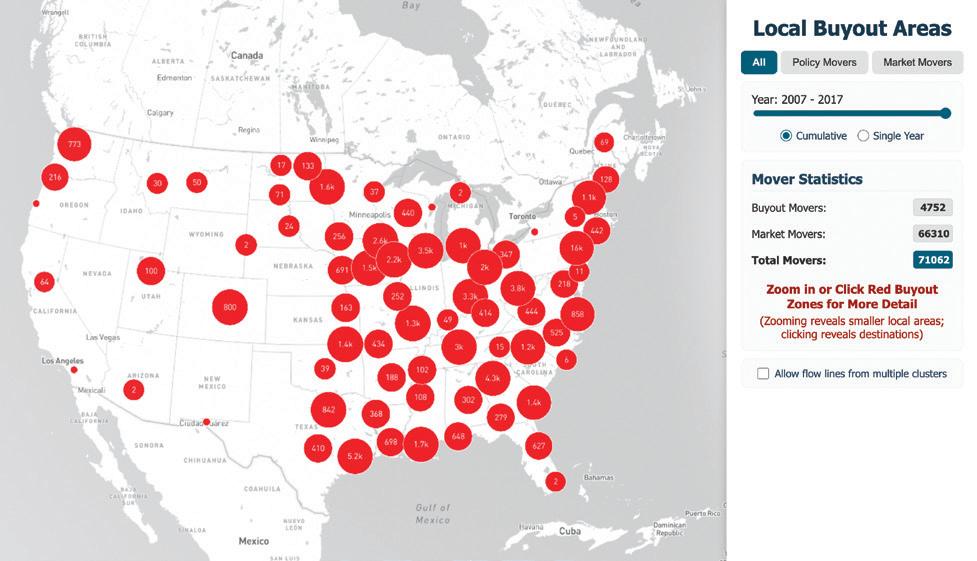
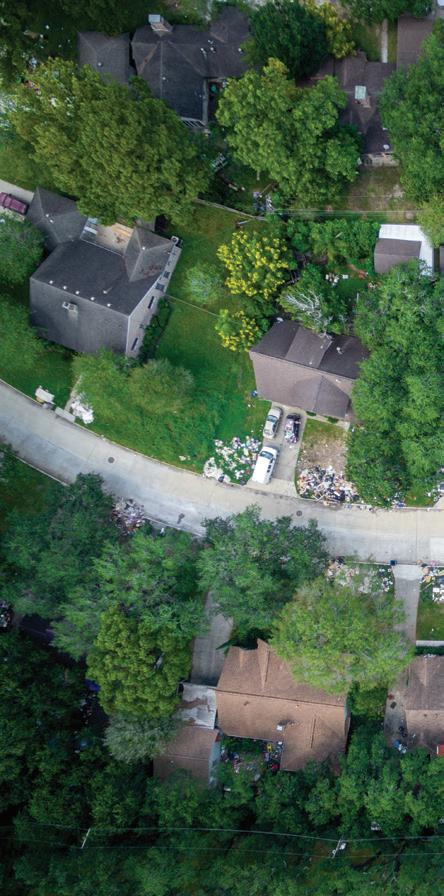
“The
goal is to avoid a system where individuals solve their own problems by selling risky homes to others, leaving future buyers and communities to shoulder the consequences.” —
Jim Elliott
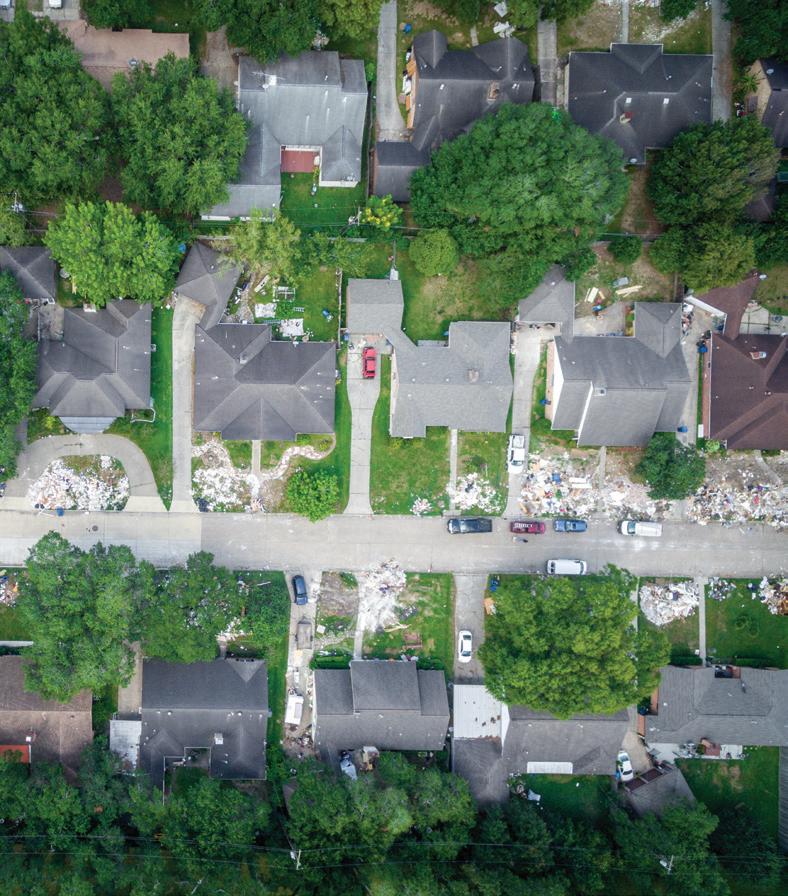
vast majority of these moves land families in homes that are at considerably lower risk of flooding.
“When they move, most people aren’t leaving the communities where they live,” Elliott said. “They’re staying close and getting safer with regard to future flood risk. That’s an important observation.”
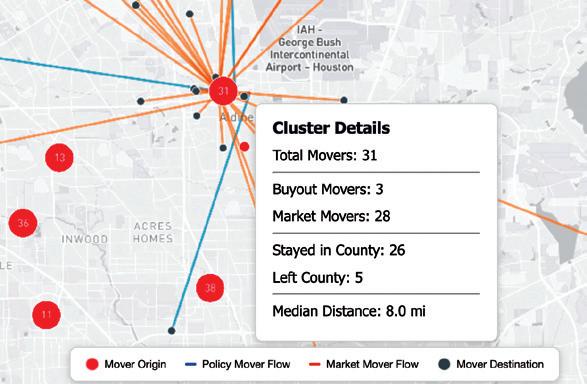
where individuals solve their own problems by selling risky homes to others, leaving future buyers and communities to shoulder the consequences,” he said.
While FEMA’s focus has long been on floods, Elliott said the tool also has relevance for other hazards such as wildfires, mudslides and extreme heat. “It’s useful not just to people who are interested in flooding in the current program but also to those beginning to research and talk about climate adaptation in other contexts,” he said.
Elliott said the tool can help communities and policymakers see the bigger picture. By combining FEMA records with residential location data and risk assessments, it provides evidence of how adaptation is actually happening and where federal programs could do more.
“The goal is to avoid a system
Elliott said the innovation offers a new way forward. “If we’re going to improve on these methods and help people — help ourselves — become more resilient to these climate challenges, we have to think not just about where experts predict risk but where people are actually moving when they begin adapting to it,” he said.
Most residents move close to home. In this cluster, the median relocation distance was just 8 miles.
Thriving Urban Communities

READING RAINBOW
An Open Book
‘Making
a difference does not have to wait’: A Rice freshman’s nonprofit tackles child literacy.
BY SILVIA CERNEA CLARK
Many children who spend long stretches of time hospitalized or who grow up in underserved communities have limited access to books. A Rice freshman is helping change that: Lucia Noto is founder and CEO of
Butterfly Books, a nonprofit organization she started at 13, and which now reaches more than 30,000 children.
“Making a difference does not have to wait until you are older,” Noto said.
An avid reader from a young age, Noto accumulated quite the book collection, and decided to sell some of them during the COVID-19 pandemic — but decided not to keep all of the profits for herself.
“I wanted to donate it to an important cause, so I did some research and I learned that approximately 40% of elementary school students in the U.S. can’t read at a basic level, which was shocking,” Noto said.
That research helped guide Noto’s next steps. Though it started small, Butterfly Books now works with 25 partner organizations in the Washington, D.C., Maryland and Virginia region. The organization is supported by a board and a junior advisory committee made up of high school students and operates through three read-aloud events, book-bundle donations and installation of Little Free Libraries.
Many Butterfly Books events — which range from a dozen to sometimes thousands of children — take place in medical facilities, requiring extensive coordination and adherence to strict safety protocols.
At events, children receive book bundles that include a new book, a handmade bookmark and what the organization calls a “letter of love,” a short note of encouragement meant to “remind [children] they’re not alone,” Noto said.
That message of hope is a core part of Butterfly Books. “The butterfly, to me, symbolizes hope and transformation,” Noto said. “I want children to know that reading opens the door to many opportunities, and that regardless of present hardship, they should always have hope for the future.”
At Rice, Noto is also building the organization’s next phase while majoring in biosciences with a concentration in cell biology and genetics and is on the premed track. She recently received approval to launch a local university chapter, advised by Anna Rhodes, associate professor of sociology and director of undergraduate studies.
“I have ambitious plans for next semester,” Noto said.
Lucia Noto
Behind The Scenes

Behind The Scenes
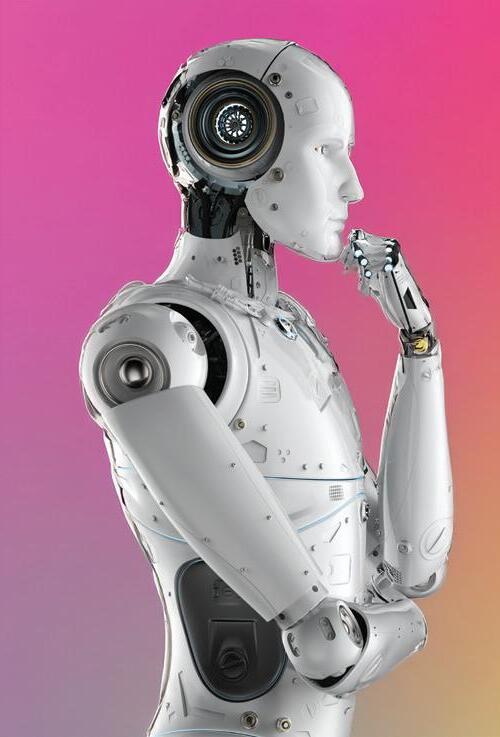
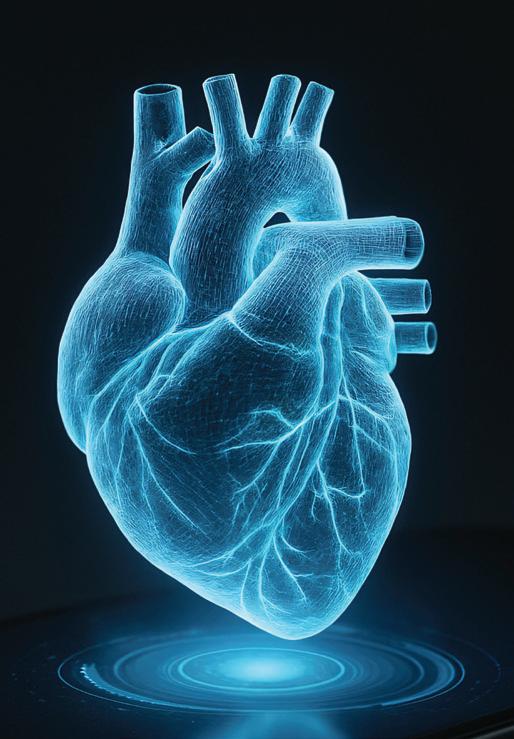
The Machine Behind Rice’s Next Breakthrough
RANGE brings 80 of the world’s fastest GPUs to campus, giving researchers the speed and scale to push scientific discovery into new territory.
BY ISABELLE DOM

At Rice, the next breakthrough in cancer therapy, climate modeling or urban design may not come from a lab bench, but from a humming bank of GPUs at the Center for Research Computing. Its new system, RANGE, gives faculty the power to run AI models at a scale once reserved for the world’s biggest research institutions.
RANGE — the Rice AI Networked GPU Engine — is a high-performance computing system built to help faculty tackle major challenges in energy, health and urban innovation. Now, a researcher can screen thousands of new materials


before lunch, train a robotic arm overnight or rebuild a 3D medical image in the time it takes to get coffee.
RANGE includes 80 NVIDIA H100 and H200 GPUs — some of the fastest AI processors available today. These processors allow researchers to move huge amounts of information extremely quickly and run advanced AI models in hours or days instead of weeks or months.
More simply, RANGE allows Rice faculty to do research that wouldn’t be possible on standard computers. (Ever try to run a Zoom meeting with one too many programs open?)
By offering researchers access to the kind of computing power typically found only at national labs or major tech companies, RANGE can offer faster discoveries in everything from medical imaging to materials science while bringing new resources and opportunities to Rice and providing hands-on experience for students with advanced AI tools that shape tomorrow’s workforce.
Earlier this year, the CRC invited 11 faculty-led research groups to test and prepare RANGE for campus use. With support from CRC staff, 32 researchers ran more than 9,000 jobs during this pilot phase.
Early projects included:
Teaching robots to move like humans: Using video clips, researchers trained AI models to mimic natural arm movements for safer, more intuitive robotic motion.
Creating clearer 3D medical images: The Digital Health Initiative tested AI tools that rebuild 3D images from limited data — work that could one day improve the accuracy of radiation therapy.
Discovering new materials faster: One group used AI to explore thousands of possibilities for growing better silicon crystals, which are essential for solar panels and electronics.
Finding new proteins: Two groups are working on finding proteins that are fundamental for designing drugs that can target them for cancer therapies or developing monoclonal antibodies.
The CRC is currently in Phase 2 of its RANGE Early Adopter Program. Each selected awardee received a set allocation of GPU hours to help them test and scale their ideas. Moving forward, the CRC will also host workshops and training sessions to help new users get started, optimize their workflows, and get the best performance from RANGE.
When RANGE comes fully online, it will stand as one of Rice’s most powerful research assets — accelerating discovery across disciplines and strengthening the university’s position as a leader in high-impact, AI-driven science.
BY THE NUMBERS
Behind The Scenes Panel of Experts
From climate change to job change, the Kinder Institute for Urban Research digs into the data to find out what drives Houston and, by extension, the nation
BY MATT DULIN
Building on the four-decade legacy of the Houston Area Survey, the Kinder Institute for Urban Research is now home to one of the largest longitudinal panel studies of a single urban area.
The Greater Houston Community Panel, launched in 2022 in partnership with the University of TexasHouston School of Public Health, now includes nearly 11,000 adults living in Fort Bend, Harris and Montgomery counties.
“The panel lets us take a deeper look at the lives of residents making up the fifth largest metro area in the nation, learning about macro challenges and issues, neighborhood processes and programs, and indi -
vidual aspirations and experiences,” said Daniel Potter, co-director of the institute’s Houston Population Research Center.
To ensure the diversity of the Houston region was represented, participants were targeted using address-based sampling with an oversampling of non-white neighborhoods. Panel members complete surveys multiple times a year, allowing for both long-term studies as well immediate data collections in response to disasters, events, politics and other rapidly evolving dynamics.
“By working alongside community organizations and leaders, researchers are collecting data that is more likely to be put
WHO/WHAT IS THE GREATER HOUSTON COMMUNITY PANEL?
11,000
Panel
into action, informing decision-making throughout the Houston region,” Potter said.
Find the full library of research powered by the GHCP, along with a public-use data file for researchers, at kinder.rice.edu/ghcp.
2,440 from Fort Bend County
1,736 from Montgomery County
4,807 from Harris County
Members This region represents 1 in 5 Texans.
8,997
2025 survey respondents
“By working alongside community organizations and leaders, researchers are collecting data that is more likely to be put into action.”
— Daniel Potter
WHAT WE’RE LEARNING BY LISTENING TO HOUSTON
BEING HOUSTONIANS
80% REDUCING INEQUALITY
of residents across the three counties consider themselves “Houstonians”


8 in 10
Houston-area residents think the government should ensure a basic standard of living for all Americans
TRANSIT USE VIEWS ON AI

1 in 6
adults 18-29 use public transportation once a week (compared to 1 in 10 adults over 55)
1 in 4
residents in households earning below $25,000 use public transportation once a week
JOB CHANGE


1 in 5
workers say it is very or extremely likely they will change careers the next 5 years


80%
of residents expect AI to impact the Houstonarea labor market
7%
expect their job to be eliminated in the next 5 years by AI (this translates to almost 174,000 workers)

FINANCIAL SECURITY FOOD SECURITY
64%
of residents save regularly

31%
of residents have enough savings to cover less than 2 weeks’ worth of grocery expenses
CLIMATE CHANGE
60% of Houston-area residents are worried about climate change
80%
expect that extreme weather will negatively impact their health in the next 10 years
HATE CRIME VICTIMIZATION


2 in 5 households in the Houston area reported food insecurity in the past year
IMMIGRATION VIEWS

7 in 10
Houston-area residents prefer increased pathways to citizenship over deportations
80%
of residents see the U.S. immigration system as not working well
About 1 in 3 residents believe they have been the victim of crime or incident motivated by bias or prejudice in their lifetime
Behind The Scenes On the Bleeding Edge
Vinod Veedu, assistant vice president in Rice’s Office of Research, on leading Rice’s emerging “critical interface” with national security partnerships
BY KATHARINE SHILCUTT
Vinod Veedu, assistant vice president in Rice’s Office of Research, leads the Office of National Security Partnerships, Rice’s emerging “critical interface” with government agencies, driving the university’s shift from transactional defense grants to long-term national security partnerships
You spent almost 18 years in industry before coming to Rice. What brought you here?
I had what many would call a dream job, working in the defense and energy industries that I absolutely love. It was a high-octane leadership role, with constant domestic and international travel, building new businesses and deploying major technologies. Over time, I realized I wanted to recalibrate my pace to be more present for my teenage kids while continuing meaningful work
in national security. The timing was perfect: Rice approached me about leading the National Security Research Accelerator. What truly drew me in was their conviction: Rice was serious about national security work and had bold ambitions, offering a tremendous opportunity to build something significant and enduring around the university’s core technological strengths.
People are sometimes surprised that Rice does defense work. How do you answer that?
For decades, Rice has engaged in defense work, specializing in fundamental research that drives disruption. A powerful example is the work of Richard Smalley, where crucial early defense investment catalyzed the Nobel Prize-winning discovery that eventually spawned a global nanotechnology industry valued at hundreds of billions of dollars (see “The Once and Future Home of Nanotech,” pg. 68). Our strength lies in creating entirely new fields and defining new vectors of possibility, not merely making incremental advances. While we recognize we are not currently designated as a University Affiliated Research Center, which are natural destinations for defense work, we possess exceptionally deep intellectual resources that enable this level of breakthrough innovation.
What kinds of projects show how national security needs shape Rice research today?
Rice research directly targets the “bleeding edge” needs in this space. A few quick examples that come to my mind: we’re doing groundbreaking work that’s reshaping the future of wireless connectivity by developing curved beams to eliminate lineof-sight issues and guarantee clear connections. In materials science, we use AI and rapid computation to strategically find breakthrough materials, replacing years of slow discovery with data-driven results. Our work also includes forging synthetic diamond for next-gen defense electronics, alongside projects in human-machine teaming, quantum, microelectronics and synthetic biology, positioning Rice to solve the Department of Defence’s most demanding technology challenges.
What will success look like for you in the next five to 10 years?
Success will be defined by its ability to become the premier, nontraditional national security partner. This success hinges on three critical outcomes: first, securing serious, sustained funding that ensures longterm commitment and momentum in our research programs; second, establishing a secure national security research environment and infrastructure; and third, building active, integrated partnerships with key DoD labs and industry partners. Achieving these goals in at least three or four of our 10 identified core competency areas will confirm Rice’s status as a consistently trusted and high-impact contributor to national security needs.
PHOTO BY RAFAEL ROJAS
Behind The Scenes Between the Lines
An undergraduate’s research on dogs in Victorian novels reveals deeper ideas about empathy, class and what it means to be human.
BY BRANDI SMITH
For Dasseny Arreola ‘25, a childhood fascination with animals eventually found an unexpected home in Victorian literature.
Arreola, a double major in English and anthropology with a minor in ecology and evolutionary biology, spent her last two years at Rice exploring the role of dogs in 19th-century novels. Her final research project, “Familiarmorphism: The Literary Dog in the Victorian Novel,” examined how canine characters shape ideas about humanity, hierarchy and empathy in classic literature.
The project grew out of a moment in the classroom, during a course on the Victorian novel taught by Helena Michie, the Agnes Cullen Arnold Professor in Humanities. Arreola encountered a lecture on sentimental dogs in literature alongside paintings by Victorian artist Sir Edwin Henry Landseer. The connection immediately captured her imagination.
“Once I started noticing the dogs in these novels, I couldn’t stop seeing them,” Arreola said. “They aren’t

just background characters. They’re doing important work in the story — shaping how readers think about loyalty, class and even what it means to be human.”
Through close readings of novels and visual art, Arreola’s research drew on the interdisciplinary field of animal studies to investigate how literary dogs blur the boundary between human and nonhuman worlds. These animals often function as mirrors for human behavior, revealing cultural anxieties about power, morality and social order in Victorian Britain.
Along the way, Arreola received support from several Rice programs that encourage undergraduate research. Funding from the Elizabeth Lee Moody Undergraduate Research
Fellowship, the Humanities Research Center’s Carlson Undergraduate Summer Research Fellowship and the Mellon Mays Undergraduate Fellowship allowed her to pursue the project in depth and present her work within broader scholarly conversations.
The experience also broadened her academic horizons beyond campus, including the opportunity to study abroad at Oxford.
For Arreola, the research was less about arriving at definitive answers than about discovering new ways of asking questions. “Research can start from something small — even just noticing a dog in a novel,” she said. “But once you begin following that curiosity, it can open up an entire world of ideas.”
Landseer, Edwin Henry. Lion; A Newfoundland Dog. 1824
Sustainable Futures

Sustainable Futures
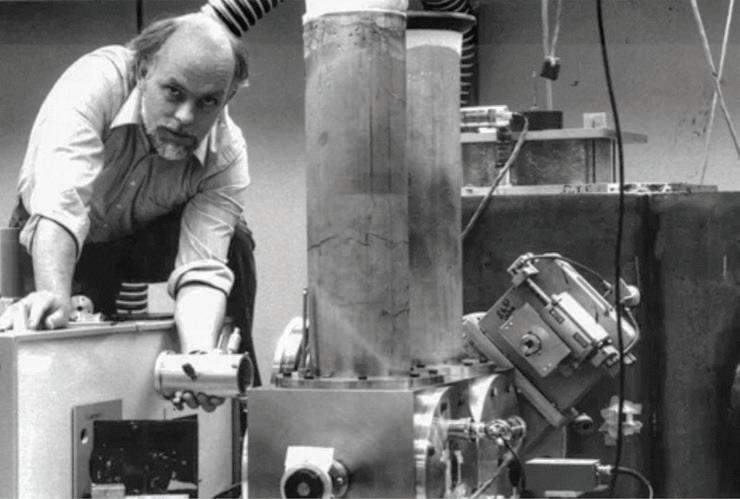
The Once and Future Home of Nanotech
The legacy of Nobel Prizewinning scientists Smalley and Curl at Rice and beyond
BY KATHARINE SHILCUTT
Over 40 years ago, in the fall of 1985, at a lab at Rice, a group of scientists had a far-out idea. What if they pointed a giant laser — basically a light cannon — at a chunk of pencil lead? What if this could tell them what happened to carbon atoms when they were blasted apart the way they might be inside a star?
Richard Smalley, a Rice professor of chemistry and physics, and his lab team had custom-built a laser-su-
personic cluster beam apparatus that could vaporize graphite under conditions meant to mimic stellar environments. Fellow Rice chemistry professor Robert Curl ’54 and visiting chemistry professor Harold Kroto from the University of Sussex stood by with batedbreath as Smalley’s team fired the laser.
Boom! The graphite exploded into a tiny cloud of hot, lonely carbon atoms. And inside the machine two very unexpected things happened: First, the cloud of graphite cooled so fast it was like someone opened a freezer door the size of a universe. What came next would ultimately win Smalley, Curl and Kroto the Nobel Prize in chemis-
try and launch the worlds of nanoscience and nanotech we know today. Instead of the graphite cloud falling into a messy pile of soot — which is what carbon normally does — the atoms started snapping together in this ultra-cold environment. They didn’t snap into lines, or sheets or lumps. They snapped into balls. Perfect, tiny soccer balls made of exactly 60 atoms each.
This whole experiment had come about because Kroto wanted to study carbon-based space dust in Smalley’s device, one of only two in the world that could generate molecular clusters in a simulated space environment. (Smalley and his group also built the other identical device, which was being used at an Exxon lab.) It was while the group — Kroto, Smalley, Curl and grad students Jim Heath and Sean O’Brien — was studying space dust that the students noticed something weird.
Where the time-of-flight spectroscopy they were conducting should have shown an even distribution of cluster sizes, there was an unexpected production peak at 60 carbon atoms. The students pointed this out to the professors, and they all realized that this anomaly was much more important than space dust: After tuning their laser further, with the help of colleague Frank Tittel and student Yuan Liu, they saw that the experiment produced many more 60-atom particles than would have made sense if they were just clusters.
With that many 60-atom particles being created and surviving, the team decided they must be true molecules. Sixty carbon atoms in one molecule . No one thought a molecule
Richard Smalley atop the AP2 cluster machine.
“The story of C₆₀ is, in many ways, the story of how discovery happens.” — Reginald DesRoches
of this sort could be created, or exist, and what happened next is the reason the C₆₀ discovery won a Nobel Prize: The team turned away from studying space dust toward figuring out how the molecule was shaped.
But how do you go about figuring out how to arrange 60 carbon atoms so that they only bond to each other, and they have no “dangling bonds,” which would attract other atoms to join the molecule? The answer: creativity. Both Rick and Harry had separately seen Buckminster Fuller’s giant geodesic dome at the Expo 67 world’s fair in Montreal, Canada. Like the much later geodesic globe that’s the iconic image of Epcot Center, the shape crept back into both scientists’ minds, and they shared this image with the team.
After beer, dinner and discussion at Goode Co. Taqueria with Jim Heath, Jim’s wife and Kroto, Smalley went home and — using paper, scissors and tape — fit 20 hexagons and 12 pentagons into a sphere. When the group re-convened the next morning, they all agreed this paper model had to be the shape of the molecule.
They did have to convince Curl, however. Often acting as a brake to Smalley’s impulsiveness, Curl insisted they count the bonds. This would satisfy the rules of chemistry; otherwise, it was just another neat idea that lacked sufficient proof to be publishable.
But the bond count worked: the idea was real, and the C₆₀ molecule — which the team named buckminsterfullerene — put Rice on the map as the birthplace of carbon nanotechnology.
Rice recently celebrated the 40th anniversary of the groundbreaking discovery at a two-day event attended by over 275 guests, which included public lectures, scientific panels and a private dinner reception with speakers Keith Scott, the United Kingdom’s consul general to Houston; Jakob Carnemark, CEO of Endeavour; and Rice President Reginald DesRoches. Guest speakers at the two-day event included Sumio Iijima, a physicist at Meijo University and senior research fellow at NEC Corporation, who with his then postdoc and current Rice Professor Pulickel Ajayan discovered carbon nanotubes; Chad Mirkin, a
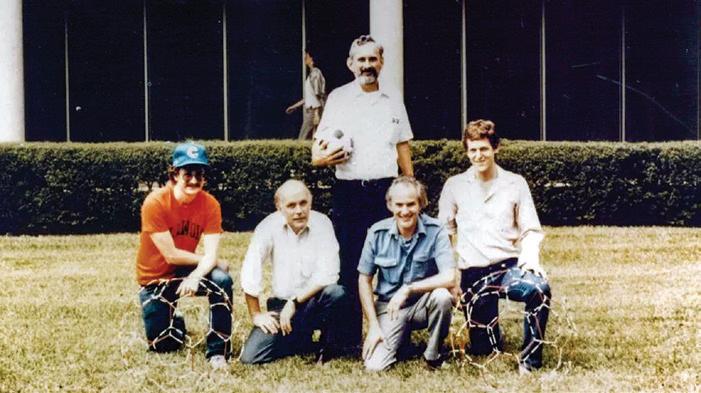
chemistry professor at Northwestern University, who developed Spherical Nucleic Acids, nanostructures with a nanoparticle core and a shell of DNA or RNA strand.
“The story of C₆₀ is, in many ways, the story of how discovery happens — through persistence, creativity and the belief that pursuing knowledge for its own sake can lead to breakthroughs that improve lives and shape society,” DesRoches told attendees as he welcomed the standing-room-only crowd. “It’s this belief that continues to define Rice’s research culture today. From nanoscience to quantum materials, we are driven by the same conviction: that fundamental research is the foundation of progress and societal well-being.”
Before C₆₀, the only known stable forms of carbon were graphite, diamond and amorphous carbon (like soot or charcoal). The spherical, cage-like structure of 60 carbon atoms arranged like a soccer ball was completely new. The scientists decided to call it a Buckyball, named for architect Buckminster Fuller, whose iconic geodesic domes were basically giant versions of the molecular forms the team had discovered.
Buckyballs, as it turned out, are extremely stable, can trap atoms inside them and show unusual electronic, optical and superconducting behaviors. Their shape and electron distribution made them candidates for molecular electronics, drug delivery, superconductors, solar cells and lubricants. And, perhaps most importantly, they showed that carbon could form not just flat sheets or hard crystals, but complex, versatile nanostructures with extraordinary properties.
C60 discoverers Sean O’Brien, Richard Smalley, Robert Curl, Harold Kroto and James Heath outside the Space Sciences Building in 1985.
Sustainable Futures
Once people realized carbon could build spheres, they quickly discovered it could also build tubes: In 1991, physicist Iijima and his postdoc Pulickel Ajayan discovered carbon nanotubes using an electron microscope, further pioneering the worlds of nanoscience and nanotechnology. Iijima made his second-ever visit to Rice for the 40th anniversary celebration, sharing insights into his work and personal correspondence with Smalley from the years after C₆₀ was discovered.
“I won the first Richard E. Smalley Research Award,” Iijima told the crowded auditorium during his lecture on the first day of celebration. As the inaugural recipient of the Electrochemical Society’s 2008 award, Iijima was honored for the foundational discovery and its profound impact on materials science.
“I think the C₆₀ discovery is not important just because it was a beautiful molecule that was discovered, but because there were many, many molecules and many material systems that came out of this — many different structures and different dimensionalities,” said Ajayan, who is now Rice’s Benjamin M. and Mary Greenwood Anderson Professor of Engineering. He served as a post-doc for Iijima for three years at NEC Corporation.
After nanotubes came graphene: a single-atom-thick sheet. First produced and identified in 2004 by Andre Geim and Konstantin Novoselov (who credited Hanns-Peter Boehm and his co-workers for the experimental discovery of graphene in 1962), the hexagonal honeycomb shape of graphene is extremely strong, conductive, flexible and transparent.
Each breakthrough grew out of the original mindset established by
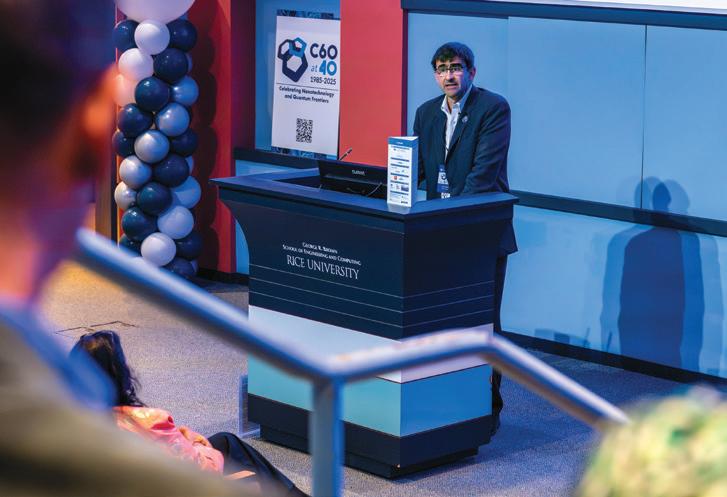
Smalley, Curl and Kroto: carbon as a flexible, nanoscale LEGO block. These materials began to underpin today’s nanotech, quantum materials, flexible electronics and advanced energy storage as scientists recognized opportunities with each new discovery: Physicists saw superconductivity potential. Chemists saw synthetic playgrounds for molecular engineering. Materials scientists saw structural and mechanical possibilities. Biologists even looked at buckyballs as drug carriers or antiviral agents.
Kroto, Curl, and Smalley won the 1996 Nobel Prize in Chemistry for discovering C₆₀ just 11 years after the original paper, which was lightning-fast recognition for what would ultimately create an entire new field of science.
Thomas Killian, dean of the Wiess School of Natural Sciences, noted while observing the 40th anniversary that the Wiess School of Natural Sciences is also celebrating its 50th anniversary this year. Anniversaries, he said, are important opportunities to reflect on past achievements while looking forward to future breakthroughs.
“Throughout this golden anniversary year, we’ve been celebrating the milestone achievements in natural sciences that have shaped scientific exploration not only at Rice but around the world,” Killian said. “And of course, C₆₀ looms large in that history.”
Today, the legacies of Smalley and Curl continue through the eponymous Smalley-Curl Institute at Rice, which is headed by Junichiro Kono, the Karl F. Hasselmann Chair in Engineering.
“We are witnessing an extraordinary convergence of fields, from quantum materials and photonics to nanotechnology and data science,” Kono said. “At Rice, we are uniquely positioned to lead this transformation. The Smalley-Curl Institute continues to stand at the forefront of nanoscience and quantum engineering.”
Speaker sessions on day two of the event focused on topics such as advancements in nanoparticles and photonics, led by Matteo Pasquali, director of Rice’s Carbon Hub, and discussions on quantum physics led by Kaden Hazzard and other speakers to highlight how C₆₀ laid the foundation for atomic-scale research.
Thomas Killian, dean of the Wiess School of Natural Sciences, noted while observing the 40th anniversary of the buckyball that the Wiess School of Natural Sciences is also celebrating its 50th anniversary this year.
“We are witnessing an extraordinary convergence of fields, from quantum materials and photonics to nanotechnology and data science.” — Junichiro Kono
Emilia Morosan, director of the Rice Center for Quantum Materials, hosted presentations explaining how today’s discoveries in materials science echo the pioneering spirit of the groundbreaking work done in 1985.
Kono encouraged students and researchers who want to shape the next generation of technologies, including resilient quantum devices and sustainable materials, to continue making themselves at home at Rice — the home of nanotech.
“Rice is the place to be,” Kono said. “The same spirit of curiosity, collaboration and bold thinking that once inspired the discovery of C₆₀ is still alive here today, and honestly, I have never been more excited about what’s ahead.”
After the
Buckyball
Although the Rice Quantum Institute was founded as the university’s first interdisciplinary institute in 1979 by Curl, Richard, Tittel and other faculty members, it was the discovery of C₆₀ that instantly made Rice a global hub for nanoscience.
Smalley Smalley leaned hard into the field and became a public advocate for nanotech, coining the phrase “the next industrial revolution.” He used his platform to lobby Washington, pushing nanotech funding onto the national agenda. His testimony before Congress in the 1990s directly influenced the National Nanotechnology Initiative, which poured billions into the field.
In 1993, Smalley also founded the Center for Nanoscale Science and Technology at Rice — renamed to honor him posthumously in 2005
— which became one of the first major U.S. centers dedicated to nano research. And in 2015, the Richard E. Smalley Institute for Nanoscale Science and Technology and the Rice Quantum Institute merged to form the Smalley-Curl Institute. By this time, Rice was already known worldwide as the home of nanotech, and had become a magnet for funding, faculty recruitment and graduate students eager to become pioneers themselves, as Rice researchers were also early adopters in the areas of graphene and carbon nanotubes.
In 2023, the SCI began a renewal campaign, under the leadership of former director Naomi Halas, adding staff and programs with a mission to:
• Support faculty across the university in collaborating on Thematic Working Interest Groups, which have led to a higher volume of large grant proposals and other leadership efforts
• Increase support for the Rice Quantum Initiative and the Rice Center for Quantum Materials.
• Continue the momentum in the Applied Physics Program of graduate studies, which is one of the world’s leading programs of its kind.
• Establish and strengthen the relationships with agencies, institutions, industry and universities that will lead toward groundbreaking research and meaningful innovation.
Support continued leadership in nanoscale and quantum research and technology.
In 2024, Rice named Junichiro Kono Director of the Smalley-Curl Institute, continuing the tradition of strong leadership by research-active leaders taking the institute to new levels of excellence. Kono is a world leader in studies of light-matter interactions and nanomaterials and a longtime champion of global student and scholar exchange between the U.S. and Japan, Taiwan, China, Singapore and France.
Today Rice is an international hub for research on superconductors, exotic topological states, and novel 2D materials beyond graphene. Over 40 faculty across fields still leverage the legacy of Smalley’s work, including Ajayan (nanotubes, 2D materials), Boris Yakobson (computational nanoscience) and Jun Lou (mechanical behavior of nanostructures).
And thanks to Rice’s Department of Bioengineering and its proximity to the Texas Medical Center, biomedical nanotech here has translated into buckyballs and nanotubes inspiring targeted drug delivery, cancer therapies and biosensors.
Fullerene research has also made Rice a leader in sustainable nanomaterials for batteries, clean fuels and environmental remediation.
SCAN THIS QR CODE FOR THE 40TH ANNIVERSARY CELEBRATION OF THE DISCOVERY OF C60:
Sustainable Futures
FOLDING THE FUTURE
Ancient Art, Endless Engineering Possibilities
An engineer turns Japanese origami into real-world innovation, creating materials and machines that morph, transport and deploy with precision.
BY ALEX BECKER
When Larissa Novelino began her engineering career, she never imagined she’d spend her days folding paper.
“I was never the crafty, artistic type,” Novelino said. “My mom still can’t believe I ended up working with origami.”
Now an assistant professor of civil and environmental engineering at Rice, Novelino has built her research on a surprising foundation: the centuries-old Japanese art of paper folding. But in her lab, origami isn’t about creating cranes and swans — it’s about transforming
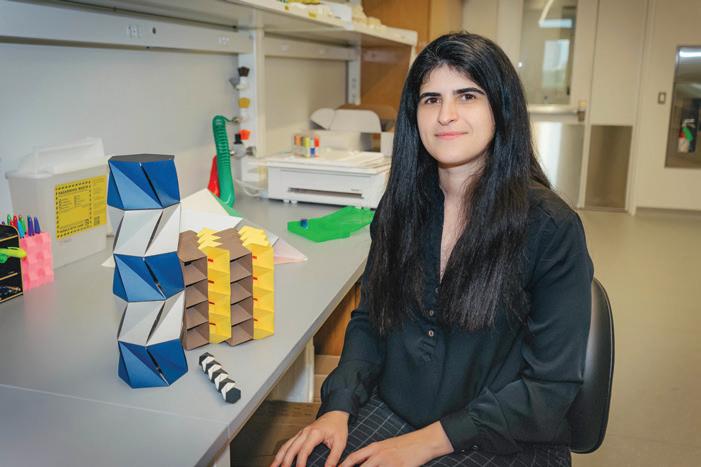

how we design buildings, materials and machines.
Origami engineering takes the geometric principles behind folding and applies them to real-world challenges, creating structures that are compact when stored but transform into strong, functional shapes when deployed. Novelino uses these principles to design everything from portable emergency shelters to lightweight materials with unique mechanical properties.
PHOTOS
Larissa Novelino
“Through geometry, you can design how a material behaves — its stiffness, weight, even how it responds in different directions.” — Larissa Novelino

The possibilities, she said, are endless.
“Through geometry, you can design how a material behaves — its stiffness, weight, even how it responds in different directions,” Novelino said. “You can make something deployable in one direction, then stiff and load bearing in another.”
Novelino says one of her biggest ambitions is to change the way we approach construction, using principles of origami to make it safer
and more efficient.
“Construction is dangerous work. If we can design structures that fold flat, transport easily and deploy with minimal human risk, we can make job sites safer,” she said.
“That’s not just innovation for the sake of novelty; that’s innovation that protects lives.”
Novelino’s designs aren’t limited to buildings. She has worked on origami-inspired electromagnetic filters that can change their opera-
tional frequency simply by shifting shape and soft robots that use origami folds to “snap” into new positions and perform different tasks.
“Origami gives you a way to visualize and test these concepts right in front of you,” Novelino said. “You can prototype with paper and explore ideas hands-on and then scale them up with advanced materials.”
At Rice, her students quickly learn that in Novelino’s classroom, you don’t just solve equations, you fold them.
“They are always surprised at how much folding a piece of paper can teach them about geometry, mechanics and design,” she said. “It’s an accessible, tangible way to understand concepts that can feel abstract on a computer screen.”
Growing up in Belém, Brazil, Novelino says she always excelled in math, but she found her path to origami engineering almost by accident. While pursuing her master’s in structural engineering, she connected with a U.S. professor whose work had shifted from traditional computational mechanics to origami-inspired structures.
“It was nice to have a break from the computer and instead use laser cutters and 3D printers and actually make things,” Novelino said. “One of the things I loved the most is that I’m terrible at visualizing things and being able to fold these structures in my hands and see how those patterns behave has been so important to my work. It’s really the perfect mix for me — it’s still math and mechanics but with this whole new layer of understanding.”
Sustainable Futures
RISK MANAGEMENT
The Secret Life of Water
New climate models created by Rice and the NSF will track water’s unique fingerprints to better understand climate systems.
BY ALEX BECKER
When it comes to Earth’s climate system, water is often at the center of the story — whether it’s too much, too little or arriving at the wrong time. And while today’s climate models can tell us how much rain might fall or how humid the air might be, they often can’t answer the simpler, and perhaps more important, question: Where did this water come from?
A new project led by Rice and the U.S. National Science Foundation National Center for Atmospheric Research is changing that. Backed by a grant from the National Science Foundation, the initiative — called SCI-SWIM, short for sustainable community infrastructure for stable water isotope modeling — will build a new and improved version of the Community Earth System Model, which can trace water across the entire planet from the clouds in the sky to the thick ice sheets deep underground.

“This work is about expanding our scientific community’s ability to study the water cycle across space and time,” said Sylvia Dee, associate professor of Earth, environmental and planetary sciences at Rice and one of the project’s lead principal investigators. “Our project will
help us understand water’s unique fingerprints as it moves through the climate system: We can understand not only how much rain is falling but also where that moisture came from and how it travels through Earth’s oceans, atmosphere or the land surface.”
“This work is about expanding our scientific community’s ability to study the water cycle across space and time.” — Sylvia Dee
Those fingerprints come in the form of stable water isotopes — tiny variations in water molecules that shift in predictable ways when water evaporates, condenses, freezes or melts. By following these subtle signals, climate scientists can tell whether a storm drew its moisture from the nearby ocean or from halfway across the globe. They can separate evaporation from plants versus soil, and they can compare their simulations directly to a growing network of real-world isotope measurements collected by satellites, research flights, weather towers and even ancient ice cores.
The approach isn’t entirely new. Earlier versions of CESM with isotope tracking helped researchers unlock mysteries of past climate events. But that older system was built on outdated software and couldn’t keep up with the rapid evolution of CESM. SCI-SWIM is a ground-up redesign that will permanently weave isotope tracking into the model, making it easier to maintain, easier to share and adaptable to advances in technology. The redesign uses a new atmosphere model code base, CAM-SIMA, which implements atmospheric physics schemes through the flexible and interoperable Common Community Physics Package.
The science it enables has the potential to touch some of climate research’s biggest questions. In the atmosphere, isotopes provide clues about how clouds form, processes that play a big role in how quickly Earth warms. Over land, isotopes can help diagnose why models often overestimate humidity in dry regions and can reveal how plants interact with their environment. In
Sylvia Dee
polar regions, isotope-enabled ice sheet simulations will offer new insights into how ice cores record climate history and how melting ice sheets may shape sea-level rise.
“Stable water isotopes are nature’s tracers,” said Jiang Zhu, project scientist at NSF NCAR and principal investigator of the project.
“They give us a direct line of comparison between models and observations, from the rain falling outside your window today to the ice layers recording climate thousands of years ago.”
The project is designed with the broader community in mind. The team plans to roll out training modules for students, provide tutorials for young researchers and even partner with local schools in Houston to collect rainwater samples for isotope analysis.
“We want the next generation of
scientists, including current K–12 students, to see how the water cycle is changing in their own backyards,” Dee said.
The project co-PIs include Peter Lauritzen and William Wieder at the NSF NCAR. By the end of the fiveyear effort, the team expects to have a production-ready, isotope-enabled CESM that anyone in the climate science community can use. The benefits could range from sharper forecasts of extreme weather to better reconstructions of Earth’s past climate and more reliable predictions of future risks.
“Climate risk is water risk,” Zhu said. “By following every drop of water — where it comes from, where it goes and how it changes along the way — we can give communities, policymakers and scientists the information they need to prepare for what’s ahead.”
Sustainable Futures
HOT AIR
Waste Not, Want Not
Researchers are converting wasted data center heat into clean power by turning a liquid-cooled liability into an asset.
BY ALEX BECKER
When you stream a movie, back up a photo or ask ChatGPT a question, somewhere a data center is working hard — and getting hot. Cooling those facilities already consumes a huge share of their electricity, and nearly half of that energy leaves as low-temperature waste heat that’s simply vented into the air.
A team at Rice has found a way to turn that discarded warmth into clean power. Their innovation: marry waste heat with rooftop solar to feed a compact power system called an organic Rankine cycle, essentially converting heat into electricity.
“There’s an invisible river of warm air flowing out of data centers,” said Laura Schaefer, the Burton J. and Ann M. McMurtry Chair of Mechanical Engineering at Rice and co-author of the paper. “Our question was: Can we nudge that heat to a slightly higher temperature with sunlight and convert a lot more of it into electricity? The answer is yes, and it’s economically compelling.”

The key challenge: typical waste heat from data centers is simply too cool for efficient ORC conversion. The solution: add low-cost, flatplate solar collectors on the rooftop to give the coolant loop a “solar bump” before it enters the ORC.
The team modeled two real-world climates — Ashburn, Virginia, and Los Angeles, California — to test the hybrid system’s performance. The system recovered 60–80% more electricity from the same waste heat stream. In Los Angeles, it achieved an 80% boost and lowered the cost of recovered electricity by 16.5%. In Ashburn, it improved output and cut costs by 5.5%.
Interestingly, the approach works best in modern liquid-cooled data centers — widely considered a weakness because their coolant streams are relatively cool. In this case, that “weakness” becomes a strength once paired with solar pre-heating.
Looking ahead, the researchers say pilots are next: real-world installation, thermal storage to bank solar heat for nighttime use and evaluation of collector types in colder climates.
“We’re not saying this replaces efficiency work on servers or cooling, which is also crucial,” Schaefer said. “But we are adding a new tool to the kit — one that turns a liability into an asset.”
ADVANCED MATERIALS
Rare Opportunity
A new collaboration connects Rice’s materials breakthroughs with an exploration firm to bolster U.S. energy resilience.
BY JORGE VIDAL
In an era when the U.S. is scrambling to secure the raw materials that keep its energy systems running, one obscure element is suddenly back in the spotlight: antimony, a mineral the nation relies on but barely produces. Now, Rice is teaming up with Australian exploration firm Locksley Resources Ltd. to change that equation.
The partnership aims to accelerate domestic antimony processing and advance next-generation
energy applications. Locksley brings antimony-rich feedstocks from its California Mojave Desert project and deep expertise in extracting critical minerals; Rice brings decades of leadership in advanced materials, nanoscience and applied research. Together, they’re attempting to build something the U.S. has long lacked: a true mine-to-materials pipeline.
“Developing scalable, domestic pathways for antimony processing is not only a scientific and engineering
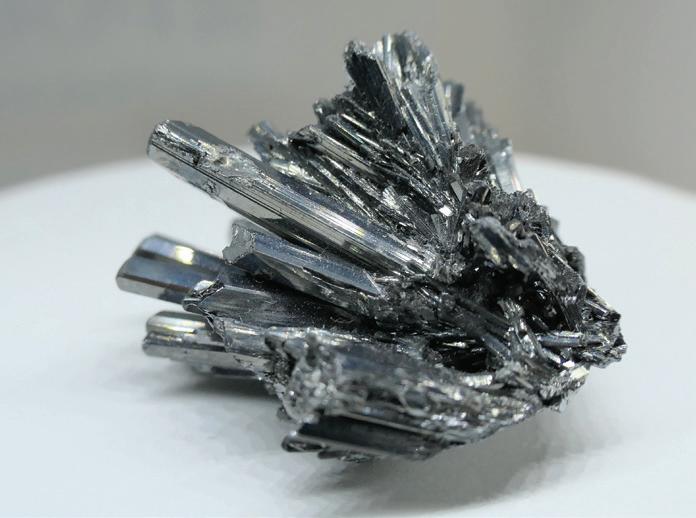
challenge but also a national strategic priority,” said Pulickel Ajayan, the Benjamin M. and Mary Greenwood Anderson Professor of Materials Science and Nanoengineering at Rice and principal investigator on the effort. “By combining Rice’s expertise in advanced materials with Locksley’s resources, we can address a critical supply chain gap and build collaborations that strengthen U.S. energy resilience.”
The Rice Advanced Materials Institute is anchoring the effort. RAMI director Lane Martin said the agreement reinforces Rice’s role in moving high-impact research into real-world solutions.
“This partnership aligns with our mission to lead in materials innovations that address national priorities,” Martin said. “By working with Locksley, we are helping to build a robust domestic supply chain for critical materials and support the advancement of next-generation energy technologies.”
Locksley is providing funding to evaluate low-impact hydrometallurgical extraction methods and to explore antimony-based materials for batteries and energy storage.
For Rice, the initiative extends a long track record of materials science leadership and deep collaborations with federal agencies and industry in defense and energy. By pairing upstream mineral development with downstream materials innovation, the partnership creates a rare opportunity: a domestic antimony supply chain built to serve both strategic needs and emerging technologies.
Antimony is a material the U.S. heavily relies on but barely produces.
Sustainable Futures
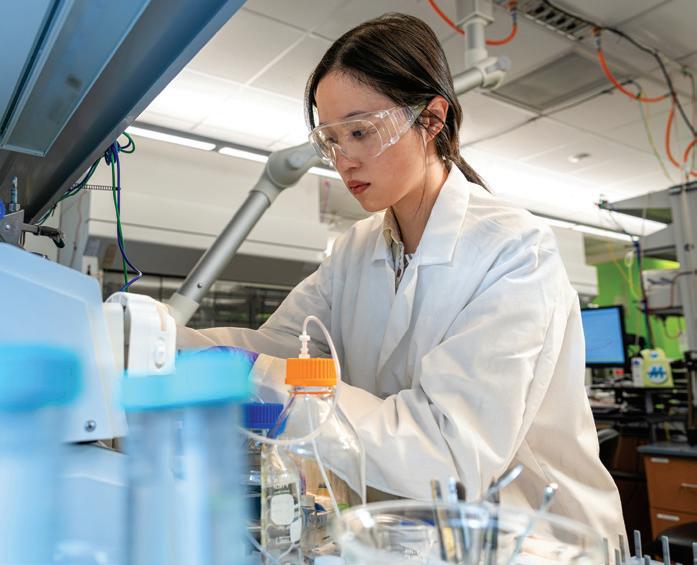
STUDENT
SPOTLIGHT
From Trash to Treasure
Rice graduate student Yuge Feng has engineered a way to extract new value from the “black mass” left behind by lithium batteries.
BY ALEX BECKER
When electric-vehicle batteries reach the end of their life, they leave behind mountains of “black mass” — waste cathode material still rich in lithium. Mining new lithium is expensive and environmentally punishing. Rice graduate student Yuge Feng has engineered a way to extract new value from that waste. Feng developed a compact electrochemical reactor that
transforms black mass directly into high-purity lithium feedstock, sidestepping the harsh acids, solvents and multistep refinements used in conventional recycling. As first author of a new paper in Joule, she led the design, testing and scaling of the system under the guidance of advisers Haotian Wang, associate professor of chemical and biomolecular engineering, and Sibani Lisa Biswal, the William
M. McCardell Professor in Chemical Engineering.
“By pairing battery-charging chemistry with a compact reactor, we separate lithium cleanly and produce the exact salt manufacturers want,” Feng said.
Her zero-gap membrane–electrode reactor pulls lithium out of spent cathodes by driving it across a cation-exchange membrane into water. At the counter-electrode, water splits to generate hydroxide, which then binds with lithium to form lithium hydroxide — the battery-grade material manufacturers need.
The results were striking: nearly 90% lithium recovery, >99% purity and energy consumption as low as 103 kJ per kilogram of black mass in one operating mode — roughly one-tenth the energy demand of common acid-leaching routes before downstream refinement. Feng and her team scaled the reactor to 20 cm², processed 57 g of industrial black mass over 1,000 continuous hours, and proved compatibility with multiple cathode chemistries, including LFP and NMC.
Feng also pushed the reactor toward industrial reality by adapting it for roll-to-roll processing of whole electrodes — using intact lithium iron phosphate sheets straight from foil, bypassing shredding entirely.
For Feng, the work is about more than chemistry. With support from Wang and Biswal, she’s building technology that tightens critical-materials supply chains and turns battery waste into a reusable resource — a step toward cleaner, more resilient energy systems.
Yuge Feng
How It’s Done


How It’s Done
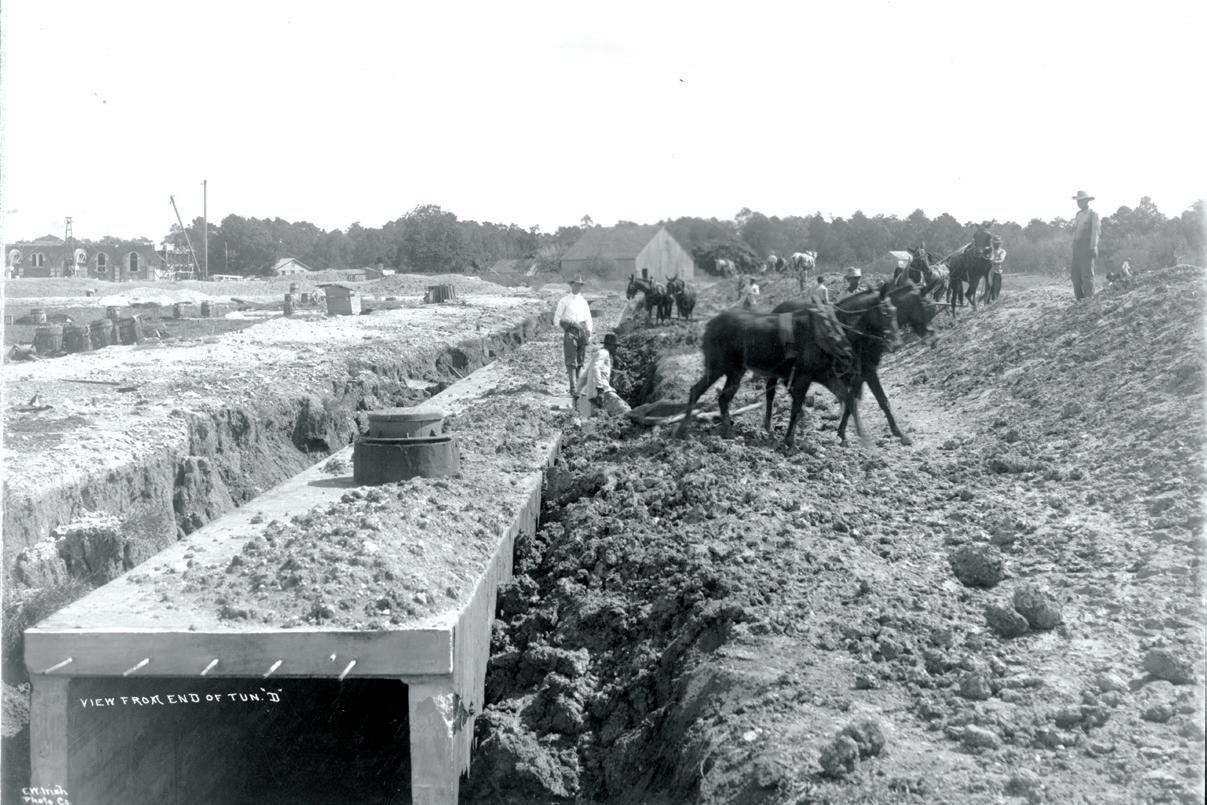
GOOD HISTORY
Origin Story
Brand-new research and unexpected findings offer a new perspective on Rice’s founding.
BY KATHARINE SHILCUTT
A new book from historians Alexander Byrd and Caleb McDaniel engages questions specific to Rice’s history with slavery and desegregation, and reflects not only new findings — including a never-before-examined 1868 will left by William Marsh Rice — but a deeper rethinking of how history is researched, interpreted and understood.
Although Rice did not open until 1912, it was connected to the history of slavery through the life of its founder and namesake, William
Marsh Rice, whose fortune was deeply intertwined with the enslavement of Black people. And in 2019, then-president David Leebron commissioned a Task Force on Slavery, Segregation, and Racial Injustice helmed by Byrd and McDaniel to examine this history in greater depth. In 2023, the task force released its final report and recommendations, and in 2025 the historians published a companion book — “Slavery, Segregation, and the Second Founding of Rice University” — based
View of Black workers constructing tunnels underneath the William M. Rice Institute campus on Main Street.
PHOTO COURTESY OF WOODSON ARCHIVE, RICE UNIVERSITY
“To give this work justice, one must pay as much attention to the recommendations of the task force as one does to the methods and the findings that led to them.” — Alex Byrd
on the in-depth research they’d conducted over the previous six years.
“We started with the goal of bringing the research reports from the task force together into one volume,” said McDaniel, Rice’s Mary Gibbs Jones Professor of Humanities, a professor of history and editor of the Journal of Southern History.
But as the historians worked to synthesize the material, new questions and sources emerged.
“Why do historians find new things? Sometimes it is because collections that weren’t accessible become accessible, but you also find new things because you go back to old sources with new questions,” said McDaniel.
Byrd and McDaniel are no strangers to the amount of revision and rethinking necessary for historians to put together a narrative of their findings. McDaniel’s book “Sweet Taste of Liberty: A True Story of Slavery and Restitution in America” won the Pulitzer Prize for History. Byrd’s book “Captives and Voyagers: Black Migrants across the Eighteenth-Century British Atlantic World” received the Wesley-Logan Prize.
For this new book, they worked together to sift through archival material related to the work of the task force, including some sources that have only recently become easily accessible to scholars. Collections at the Houston Heritage Society and the Houston Public Library, for
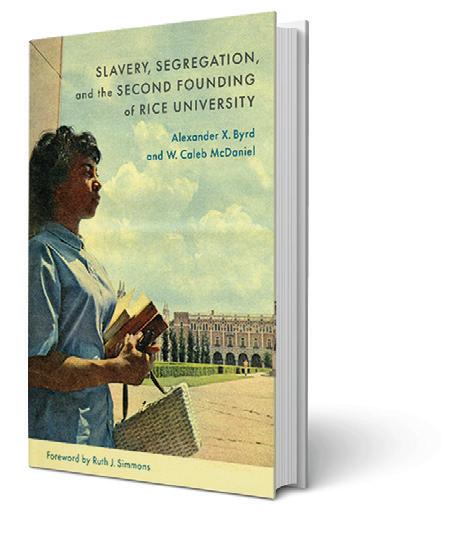
instance, existed for years but were not fully processed or digitized. But during the COVID-19 pandemic, they were digitized to support the task force’s work. Many of those materials, McDaniel said, “related directly to the Civil War era.”
And even within Rice’s own archives, materials long overlooked took on new significance. The historians found business ledgers from the antebellum and early Civil War periods that “for a long time… lived in the basement of Lovett Hall and then the Allen Center in a vault” before they were transferred to the Woodson Research Center at Fondren Library around 1994. Descriptions of these ledgers characterized them as routine grocery store accounts, but closer examination revealed far more.
“These ledgers include mention of enslaved people and relationships between cotton plantations and William Marsh Rice,” McDaniel said.
Such discoveries are not accidental, but methodological, said Byrd, Rice’s Vice Provost for the Office of Access and Institutional Excellence and an associate professor of history. He pointed to what he described as an older — but still vital — historical principle.
“There’s this notion of comprehensiveness: you’ve got to read everything about the thing,” Byrd said. That approach, Byrd argued, stands in contrast to more modern reliance on keyword searches or how an archival document is described in simple terms. “These examples speak to that. The archives clearly say it’s ‘a grocery book,’ but you gotta turn every page.”
That method also led to one of the most significant findings in the new book: the discovery of an 1868 will drafted by William Marsh Rice.
“Earlier histories have always said that Rice started thinking about founding an institute in the 1880s, and the earliest will we had was from 1882” McDaniel said. But while revisiting the Woodson Research Center archives to chase down a footnote, McDaniel stumbled upon an 1868 will that fundamentally reshapes the university’s origin story.
In that document, Rice declared his intention to fund “a school for the poor white children of Harris County”
How It’s Done
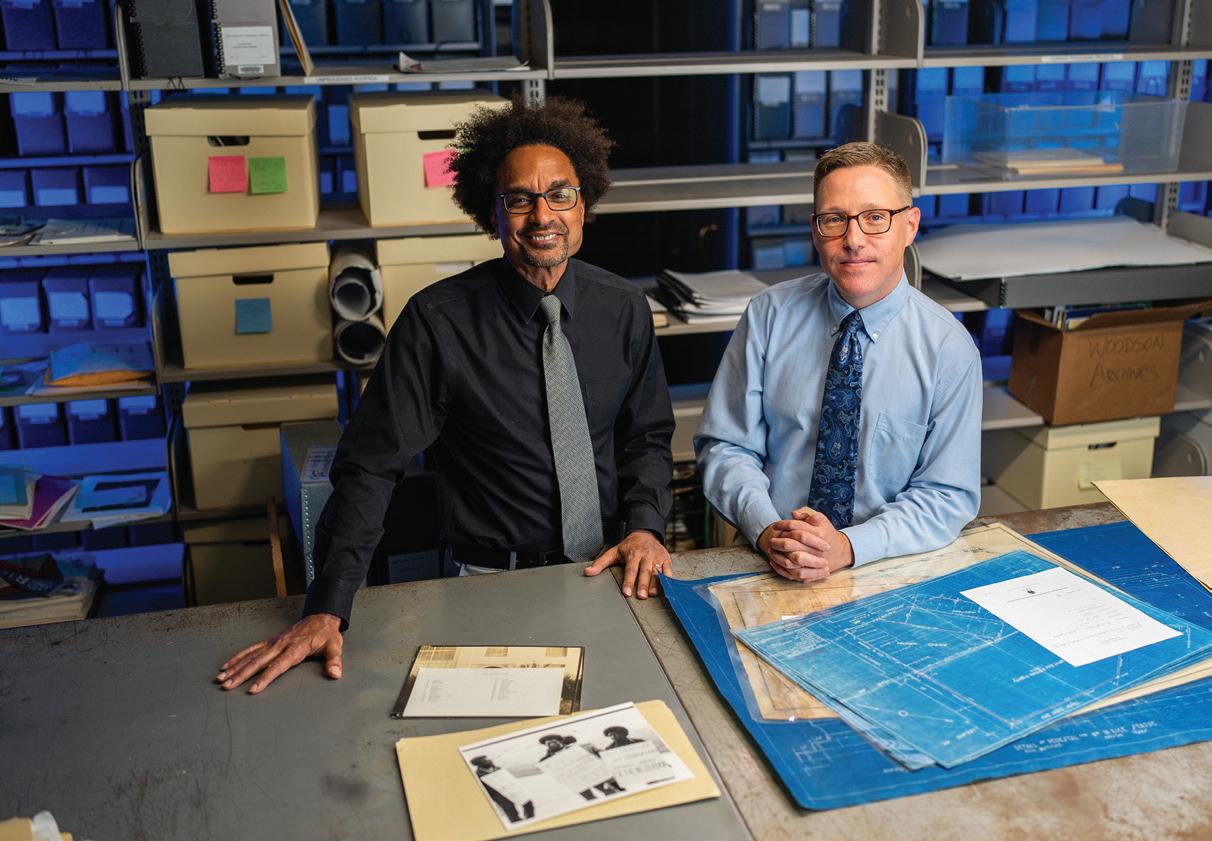
and named a board of trustees which included individuals who later served on the first board of the Rice Institute.
“This changes our understanding of the earliest moment where Rice was thinking about founding a school in Houston,” McDaniel said. “The origin story starts not in the north in the 1880s but in Texas, in the Reconstruction period immediately after the Civil War.”
While the 1868 will is a major
addition, McDaniel stresses that it is only one example of new material throughout the book that was not included in the task force reports. And these findings are inseparable from the task force’s recommendations, which Byrd describes as the most ongoing aspect of the work.
“To give this work justice, one must pay as much attention to the recommendations of the task force as one does to the methods and the
findings that led to them,” Byrd said. “They come out of good history.”
Both the task force and book exist within a much larger scholarly landscape, the historians also pointed out — one that has developed over the past 25 years as universities have examined their own histories.
“This should be seen not as the final word,” McDaniel said, “but as joining that cross-generational conversation.”
Alex Byrd (left) and Caleb McDaniel in the Woodson Research Center Archive at Rice.
Social Science Meets Supercomputing
A new center creates an “intellectual crucible” for understanding how inequalities are created — and how to dismantle them.
BY AMY MCCAIG


How It’s Done
Rice has launched a new research hub that puts serious computing power behind one of society’s oldest problems: inequality. The Center for Computational Insights on Inequality and Society will unite social scientists and data experts to map how inequities take shape — and how to dismantle them.
Led by Elizabeth Roberto, assistant professor of sociology, CIISR will bring together faculty, postdoctoral researchers and students in the School of Social Sciences to identify, understand and help address complex issues related to inequality and society.
“Addressing these societal issues requires bold, innovative approaches that bridge disciplines and harness the power of data and computation,” said Rachel Kimbro, dean of social sciences.
“The Center for Computational Insights on Inequality and Society exemplifies our commitment to advancing research that makes a meaningful impact. By fostering collaboration and equipping scholars with cutting-edge tools, Rice is working to push the frontiers of social science research.”
The center seeks to cultivate a community that Roberto describes as an “intellectual crucible” for transformative and computationally intensive research among social sciences experts at Rice. They said the unique combination of computing power, large-scale data and advanced methods will enhance research innovation across the university,
enabling scholars to answer complex multidisciplinary questions about inequality, revealing new insights and enhancing research training in the social sciences.
The center will be a highly collaborative environment, allowing researchers to learn from each other’s computational methods, while making social sciences a more integral part of research across the university that seeks to make meaningful contributions to society.
By combining computing power with large-scale data, Roberto said CIISR will help researchers study topics like the spatial patterns of residential segregation and the impact of artificial intelligence on the future of work. “The center will also provide valuable opportunities for collaboration and training, equipping students with the skills needed to tackle today’s social challenges,” she said.
Roberto said another goal of the center is for its work to lead to large-scale, grant-funded research that energizes research productivity and enhances world-class graduate and undergraduate education.
“We want to offer training opportunities that allow emerging scholars to sharpen their skills in ways not possible through the standard curriculum,” Roberto said. “We also want the center to support and complement what’s already happening in departments and build a community of scholars that transcends disciplinary boundaries.”
ENERGY COSMOLOGY
The Truth About Stories
A
religious studies professor examines how worldviews from oil fields to birth rooms shape what people believe is worth protecting.
BY BRANDI SMITH
For Judith Ellen Brunton, studying religion isn’t about what happens in churches, temples or synagogues. It’s about the moral frameworks that guide how people live, work and imagine the world around them.
“Religious studies lets you inhabit another person’s worldview,” said Brunton, assistant professor of religion and a Boniuk Institute Faculty Fellow at Rice. “When you ask questions about how people see the world and what they value, you start to see that religion happens everywhere.”
That wide-angled way of seeing the world has shaped Brunton’s re -
“The stories we tell about energy, about birth, about work — they aren’t just reflections of the world. They make the world.” — Judith Ellen Brunton

search across borders, industries and disciplines. A scholar of religion, the environment and the cultural study of science, she looks at how people’s worldviews — religious or otherwise — influence what they believe the natural world is for and how they think it should be used. Her current book project, which is based on years of ethnographic research in her native Alberta, Canada, investigates how oil extraction shapes cultural imaginaries of the “good life.”
“I grew up in Calgary, where oil is everywhere — in the economy, the skyline and even the stories people tell about themselves,” Brunton said. “What fascinated me was how oil wasn’t just a resource. It was a moral landscape, a way people tested themselves and their communities against an idea of what a good life should be.”
Brunton’s book traces how corporations, government agencies and community organizations use oil to express ethical and cultural values.
She has studied corporate boosterism campaigns, energy heritage sites and even the Calgary Stampede, identifying how these public narratives blend faith in human ingenuity with reverence for the land’s power. What emerges, she argues, is a kind of energy cosmology — a spiritual framework for living that treats extraction as a moral act.
“Even in systems we think of as secular — economics, technology, industry — there are values at work,”
How It’s Done
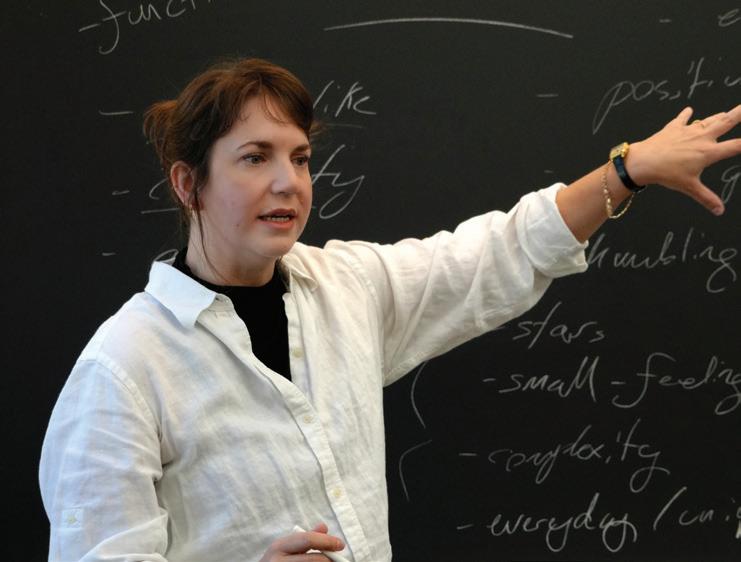
Brunton said. “Efficiency, productivity, control over nature. Those are moral ideas too. My job is to uncover them and ask what stories they’re telling about who we are.”
A new addition to Rice’s faculty last academic year, Brunton continues to expand her exploration of religion and environment through her teaching. This fall, she’s teaching Religion and Science as well as Sacred Birth, a course inspired by Brunton’s co-authored chapter “Birthing” in “The Routledge Handbook of Religion and American Culture.” The course looks at how birth practices reflect cultural, moral and religious ideas about bodies, creation and care. It asks students to think about where spiritual and medical worldviews meet in the most intimate moments of human life. Her class Religious World Views and the Environment, which she’ll
Judith Ellen Brunton
teach again in spring 2026, challenges students to see environmental crises not just as scientific problems but as moral and cultural ones too.
“The class isn’t about giving students a single answer,” Brunton said. “It’s about giving them language to recognize that scientific, economic and spiritual worldviews are all ways of knowing and they all shape how we respond to the planet’s challenges.”
Brunton’s teaching fits naturally with Rice’s growing focus on collaboration across disciplines, especially where the sciences and humanities meet. In her classroom, climate change and environmental ethics become openings for deeper conversations about what people believe is worth protecting — and why.
“It’s exciting to teach at a place like Rice where students come in with such strong backgrounds in science and engineering,” Brunton said.
“They bring this incredible analytical energy. What I get to do is help them see how moral imagination and storytelling are also analytical tools. They shape how we use energy, how we think about technology and how we define progress.”
That curiosity also drives Brunton’s next wave of research. Beyond Alberta, she’s turning her attention to resource extraction ghost towns and dowsing traditions — historical and cultural practices that reveal how humans have long sought meaning and direction in the land beneath them. She’s particularly interested in the ways communities inherit “spiritual infrastructures” from previous generations of industry, faith and labor.
Brunton’s work dovetails naturally with the Boniuk Institute’s mission to study pluralism and moral life and with Rice’s growing investment in the environmental humanities.
“It’s a place that values curiosity and collaboration,” she said. “I get to think about big questions alongside people who study energy, ethics, ecology and everything in between.”
Brunton often returns to a favorite idea from Indigenous scholar Thomas King, who wrote, “The truth about stories is that that’s all we are.” For her, that idea isn’t just literary; it’s ethical.
“The stories we tell about energy, about birth, about work — they aren’t just reflections of the world. They make the world,” Brunton said. “So we have to be careful which stories we keep telling and brave enough to imagine new ones.”
Responsible AI

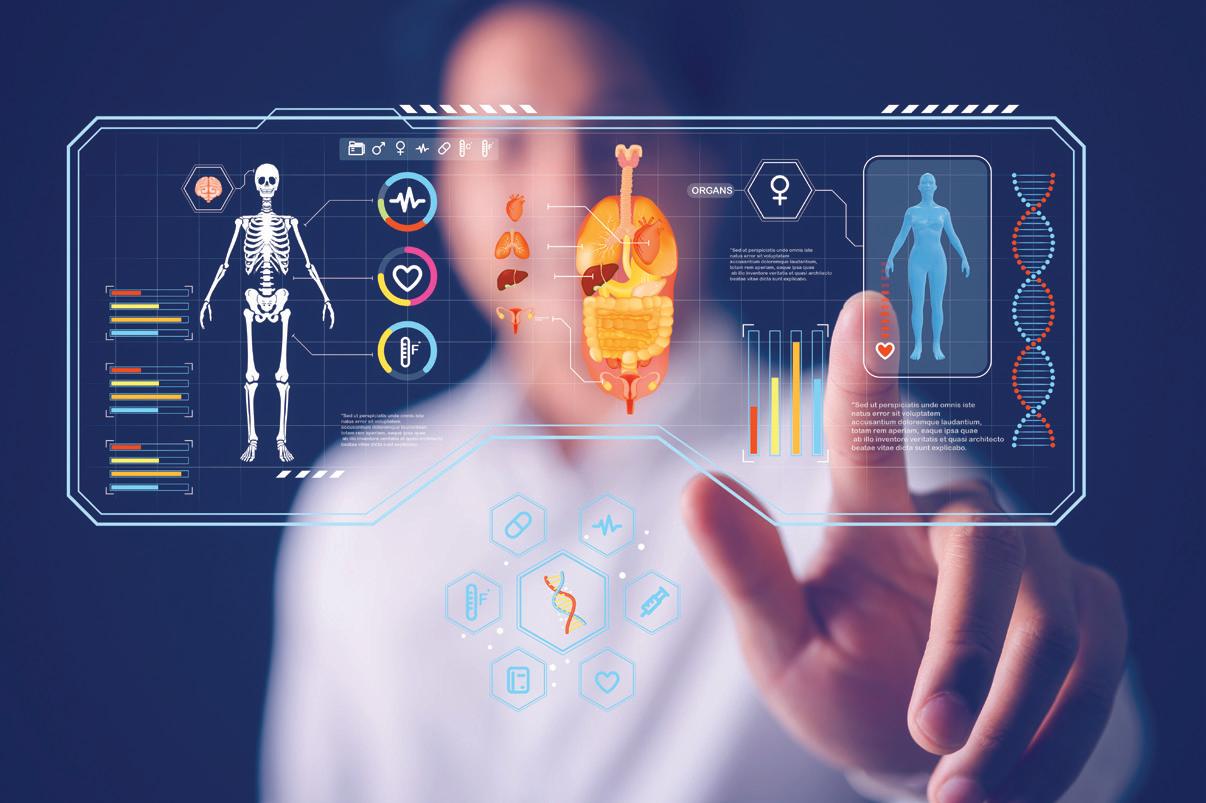
Centering Humans in AI Health Care
Rice’s new NEH-backed Center for Humanities-based Health AI Innovation works to ensure the future of medical AI.
BY BRANDI SMITH
Many conversations about AI in health care revolve around algorithms, data sets and automation, but two researchers at Rice and Baylor are speaking up about something ultimately more crucial: If AI is going to heal people, it has to understand them first.
Enter CHHAIN, the Center for Humanities-based Health AI Innovation, a bold initiative designed to embed ethics, history and patient voice into the heart of health AI.
HUMAN INTEREST
“We’re creating a space where humanities scholars, patients, AI developers and clinicians all collaborate.” — Kirsten Ostherr
Supported by a $500,000 grant from the National Endowment for the Humanities, CHHAIN launches as a three-year hub co-directed by Kirsten Ostherr, director of Rice’s Medical Humanities Research Institute, and Vasiliki Rahimzadeh, assistant professor at Baylor’s Center for Medical Ethics and Health Policy. Their goal: ensure that the future of AI in medicine honors human dignity, narrative and rights.
What makes this center different isn’t the tech — plenty of institutions build AI health tools — but the human-centered logic: AI is only as good as the humans it serves. Ostherr points out that too often, technology development overlooks the lived experience of patients or
the historical context of care.
“CHHAIN represents a bold new model for placing the humanities at the center of health innovation,” she said. “We’re creating a space where humanities scholars, patients, AI developers and clinicians all collaborate.”
In practice, what might this look like? One project might involve collecting patient stories from marginalized communities about their experiences with AI-enabled diagnostics. Another might embed ethicists and historians into tech design teams so that algorithm development includes cultural, social and narrative dimensions. Yet another might translate that scholarship into policy briefs or public-engagement
events aimed at demystifying healthAI for everyday people.
“For AI to truly improve health outcomes, it must be designed with patient trust and wellbeing at its core,” Rahimzadeh said. “CHHAIN will provide a dedicated space to explore key bioethics questions: How do we respect patient autonomy? How do we serve underserved communities? How do we integrate AI meaningfully into care?”
A NEW MODEL
Located within the MHRI’s new space in Rice’s Helix Park, CHHAIN will operate across three interlinked fronts:
Defining Trustworthy AI Through Patient Voices: Gather narratives, histories, and ethics to shape how AI is developed and deployed.
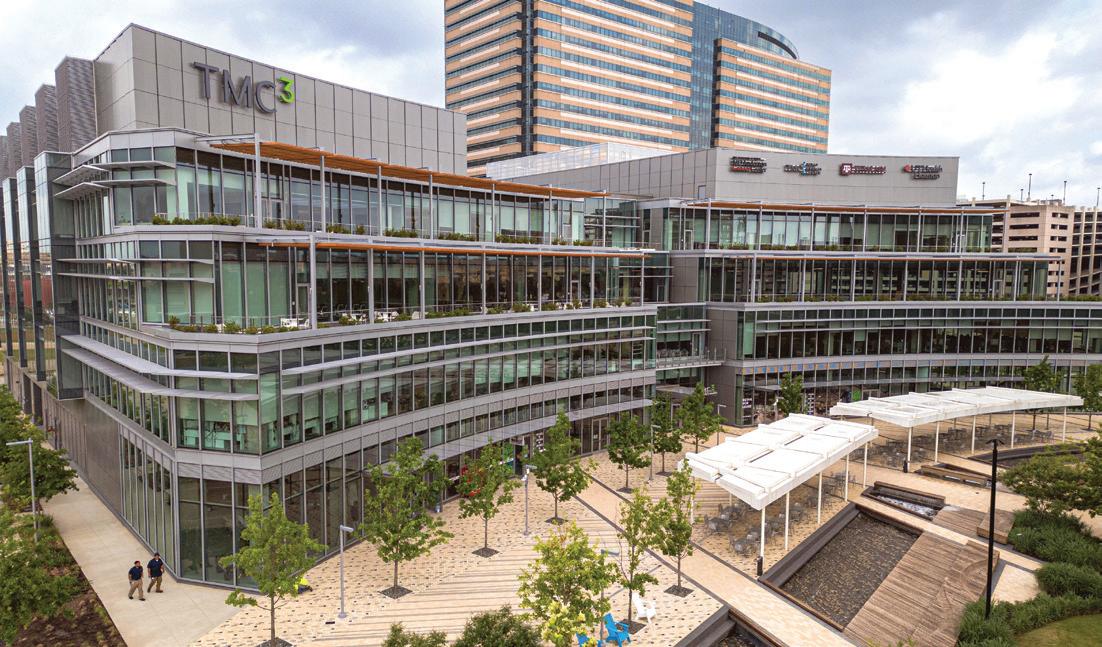
Translating Humanities Insights Into Clinical AI Settings: Bring ethics, storytelling and history into places where AI meets patients and clinicians.
Public Engagement and Policy Translation: Connect research to real-world impact, with input from partners like Rice’s Baker Institute for Public Policy and The Hackett Center for Mental Health.
Responsible AI
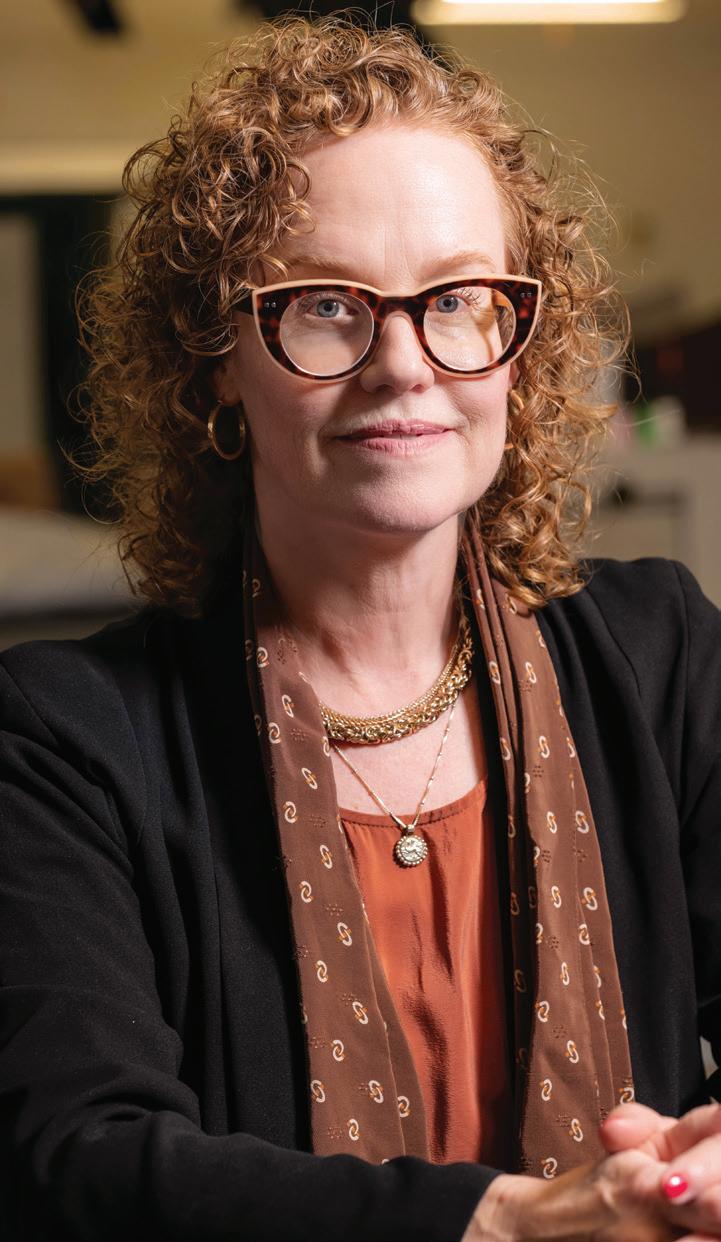
The timing could not be more urgent. As AI systems proliferate in health care — triage bots, predictive diagnostics, wearable monitors — the stakes are enormous. Without human-centered design, there’s risk of bias, erosion of trust or worse, systems that technically succeed but ethically fail. CHHAIN aims to prevent that by prioritizing questions like: How do you build an AI that “knows” when cultural context matters? How do you ensure the underserved aren’t left behind? How do you design transparency without overwhelming patients?
Rahimzadeh offers one concrete framing: “We want AI that doesn’t just predict — they ask why.”
The architecture of the center reflects this ethos. Situated in the heart of Houston’s Texas Medical Center ecosystem, it draws on Rice’s humanities and policy strengths and Baylor’s clinical and ethics expertise. The earlier seed collaborations between the two institutions — via Rice’s provost-mandated Collaborator Fund and Baylor’s internal medicine department — helped build the foundation for CHHAIN’s agenda.
Ultimately, CHHAIN seeks to become a national model for how to integrate the humanities into AI for health. Its long-term ambition: not just to create ethical AI, but sustainable, inclusive and trusted AI that reflects the full spectrum of patients’ lives. And as AI further weaves into our health care systems, the founding of CHHAIN offers a reminder: the future of AI is human.
“Technology alone won’t change outcomes,” Ostherr said. “People will.”
Kirsten Ostherr
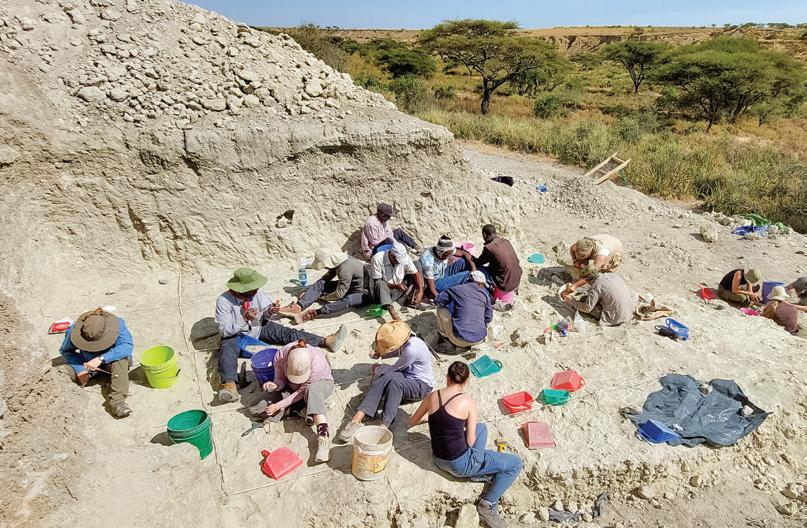
BONE DEEP
Predator or Prey?
A Rice anthropologist is among the first to use AI to uncover new clues that early humans were not the hunters, but the hunted.
BY KAT COSLEY
TRIGG
Were early humans hunters — or hunted? For decades, researchers believed that Homo habilis — the earliest known species in our genus — marked the moment humans rose from prey to predators. They were thought to be the first stone tool users and among the earliest meat eaters and hunters based on evidence from early archaeological sites.
But fossils of another early human species — African Homo erectus — show they lived alongside H. habilis about 2 million years ago. That
raised a new mystery: Which of these two species was actually making tools and eating the meat of hunted animals? Most anthropologists long suspected H. habilis was responsible, which would have placed them in a dominant predatory role.
New findings from a team led by Rice anthropologist Manuel Domínguez-Rodrigo, in partnership between Rice and the Archaeological and Paleontological Museum of Madrid through the Institute of Evolution in Africa,
which he co-directs with Enrique Baquedano, challenge that view, revealing that these early humans were still preyed upon by carnivores, likely leopards. The work was published in the Annals of the New York Academy of Sciences.
“We discovered that these very early humans were eaten by other carnivores instead of mastering the landscape at that time,” DomínguezRodrigo said.
The breakthrough was made possible by applying AI to fossil analysis, giving researchers insights they could not have reached with traditional methods alone. Domínguez-Rodrigo is among the first anthropologists to use AI for taxon-specific analysis of bone surface damage – training computer vision models to recognize the microscopic tooth mark patterns left by different predators.
“Human experts have been good at finding modifications on prehistoric bones,” he said. “But there were too many carnivores at that time. AI has opened new doors of understanding.”
His team trained deep learning models to distinguish bone damage left by leopards, lions, hyenas, crocodiles and wolves. When the models analyzed marks on H. habilis fossils from Olduvai Gorge in Tanzania, they consistently identified leopard bite marks with high confidence.
“AI is a game changer,” Domínguez-Rodrigo said. “It’s pushing methods that have been stable for 40 years beyond what we imagined. For the first time, we can pinpoint not just that these humans were eaten but by whom.”
The finding challenges a long-standing idea about when and what type
Responsible AI
of humans began to dominate their environment, showing that even as their brains were beginning to grow, they were still vulnerable.
“The beginning of the human brain doesn’t mean we mastered everything immediately,” Domínguez-Rodrigo said. “This is a more complex story. These early humans, these Homo habilis, were not the ones responsible for that transformation.”
He said it’s a reminder that human evolution wasn’t a single leap from prey to predator but a long, gradual climb and that H. habilis may not have been the turning point researchers once believed.
Domínguez-Rodrigo added that the methods developed for this study could unlock discoveries across anthropology, allowing researchers to analyze other early human fossils in new ways. The work is part of a growing collaboration between Rice and IDEA, where his team is based.
“This is a pioneer center in the use of artificial intelligence to the past,”
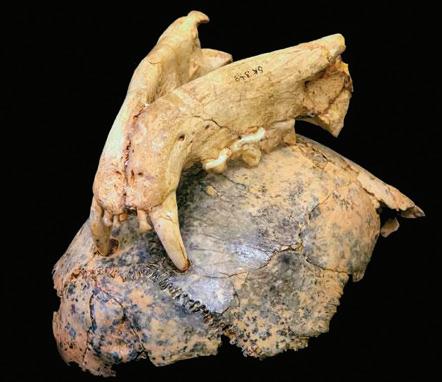
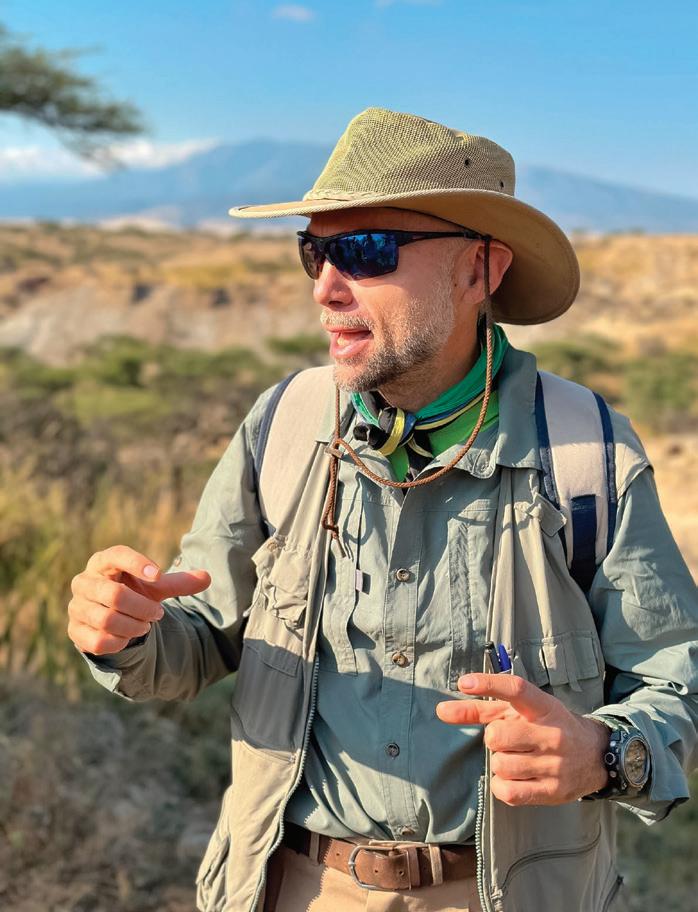
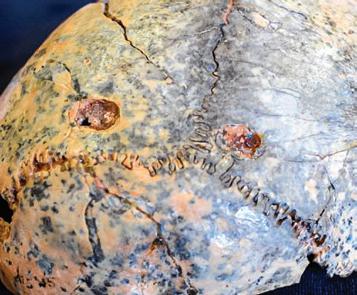
he said. “It’s one of the first places using AI for paleontological and anthropological research.”
Domínguez-Rodrigo said he hopes this discovery is just the beginning. By applying AI to other fossils, he
believes researchers can map when humans truly rose from prey to predator and uncover new chapters in our evolutionary story that have long been hidden.
“It’s extremely stimulating to be the first one to see something for the first time. When you uncover sites that have been hidden from the human eye for more than 2 million years, you’re contributing to how we reconstruct who we are. It’s a privilege and very encouraging.”
The study was co-authored by Marina Vegara Riquelme and Baquedano, and was supported by the Spanish Ministry of Science and Innovation, the Spanish Ministry of Universities and the Spanish Ministry of Culture.
Manuel Domínguez-Rodrigo
Fossil evidence showing leopard bite marks embedded in a hominin skull.
DIGITAL HEALTH
Places in the Heart
A machine-learning study from Rice and Houston Methodist reveals four distinct forms of aortic regurgitation, exposing gender disparities in risk and referral patterns.
BY ALEX BECKER
Two people can walk into a clinic with the same diagnosis of aortic regurgitation, yet only one is likely to be taken seriously enough to get timely surgery. New research from Rice and Houston Methodist shows why: the disease splinters into distinct subgroups that standard tools fail to detect.
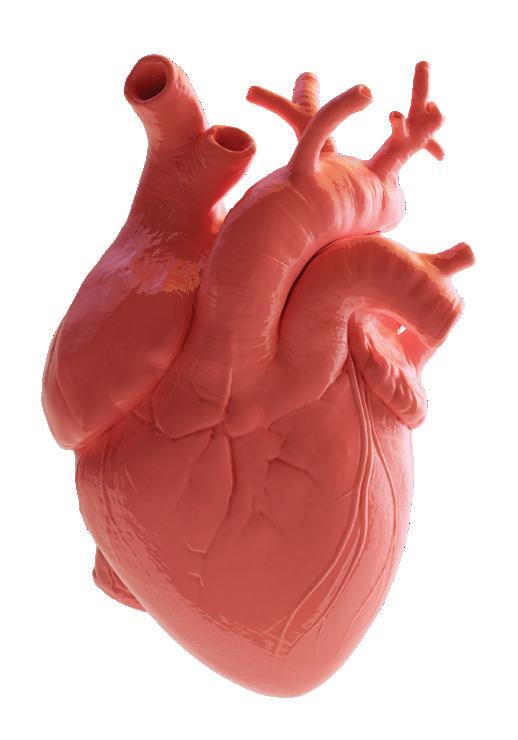
ventricular scarring and dysfunction — showed the highest risk. But the most striking finding was a fourth, predominantly female cluster: women whose hearts showed less dramatic remodeling yet who faced similarly high mortality and were referred for surgery less often.
Methodist’s academic medicine and research infrastructure with Rice’s leadership in engineering, digital health and AI.
“This work is exactly the kind of signal we need to uncover with advanced analytics,” said Dr. Dipan Shah of Houston Methodist. “Women in our cohort had worse outcomes despite what looked like less severe remodeling. That finding urges us to re-examine referral thresholds and ensure women are not being undertreated.”
The team also built a prototype risk calculator to help clinicians estimate which subgroup a new patient belongs to. While more validation is needed, the study marks a step toward tailoring treatment not just to a diagnosis, but to the specific patient group hiding beneath it.
Aortic regurgitation occurs when the heart’s aortic valve doesn’t close fully, allowing blood to leak backward. Using MRI and clinical data from 972 patients across four U.S. centers, the team applied unsupervised machine learning to 23 imaging and clinical variables. The algorithm surfaced four distinct “phenoclusters,” each with different risk profiles and outcomes.
Two clusters were composed mostly of men, with typical valve abnormalities and better to intermediate survival. A third cluster — older men with multiple comorbidities,
“What clinicians have long suspected — that not all aortic regurgitation is the same — our data quantifies in a reproducible way,” said Meng Li, associate professor of statistics at Rice and co-author of the study.
When the team added cluster labels to established risk-prediction models, accuracy improved, suggesting clinicians could identify high-risk patients sooner — especially those who don’t look conventionally severe on imaging.
This research was enabled by the Digital Health Institute, a multiyear initiative uniting Houston
Meng Li
MORAL IMPERATIVE
What We Owe to Each Other in the Age of AI
What happens when tech outpaces ethics?
BY MARCY DE LUNA
How do we build machines with moral intelligence? What do humans owe to each other in the age of AI? These were just a few of the deep wells of conversation at Rice’s annual Ethics and Compliance Symposium, at which faculty members on the university’s AI advisory committee addressed such topics as the implications of artificial general intelligence, workforce disruption,
education, data transparency, chip supply vulnerabilities and the erosion of moral agency in an AIdriven world.
How have disruptive technologies reshaped societies?
Paul Padley, vice president for IT and chief information officer, linked the rise of AI to previous technological revolutions, from the printing
press to modern computing. While machine learning is rooted in rulebased logic and symbolic manipulation that dates back to the 1960s, today’s neural networks present unique ethical and educational challenges due to their reduced transparency. In other words, we used to know how our machines worked; now, the machinery of “deep learning” makes even the builders squint. Padley acknowledged AI’s role in breakthroughs such as the Higgs boson discovery but cautioned against overestimating its capabilities. “AI is here to stay, and its implications for education, research and leadership demand thoughtful engagement,” he said. “We need to carefully consider what this means.”
“You risk undermining critical thinking by overusing AI. Responsible AI means balancing efficiency with preserving these essential human traits.”
— Fred Oswald
How do we preserve essential human traits?
Fred Oswald, Herbert S. Autrey Chair in Social Sciences and Chair of the Board on Human Systems Integration at the National Academies, advocated for preserving critical thinking, empathy and judgment as AI becomes more embedded in the workplace, doing everything from writing essays to evaluating job applicants.
“You risk undermining critical thinking by overusing AI,” said Oswald, who also serves as chair of Rice’s AI advisory committee. “Responsible AI means balancing efficiency with preserving these essential human traits.”
How do we maintain our moral and ethical standards?
Robert Howell, the Yasser El-Sayed Professor of Philosophy, cautioned that core moral virtues may quietly erode as humans increasingly delegate decisions to machines. “In the process of gaining efficiency through artificial intelligence, we must not lose sight of the human cost,” he said.
Offloading ethical choices risks weakening qualities such as generosity, courage and intellectual curiosity — traits involving behavior, reasoning, emotion and focused attention, which AI cannot develop or embody for us.
“Attention is a moral commodity,” Howell said. “We must be careful about artificial intelligence’s lower recognition threshold. Responsible AI requires us to remain vigilant about maintaining our moral and ethical standards.”
What counts as “responsible”?
Rodrigo Ferreira, assistant teaching professor of computer science, critiqued oversimplified views of fairness and transparency, advocating for nuanced, evolving dialogue. “Responsibility follows this response process and the ability to respond,” he said.
While tech companies promote ethical AI, Ferreira said the terms are often oversimplified. Transparency depends on the audience’s understanding, fairness varies across cultures, and accountability is mud -
died by competing interests among stakeholders and regulators.
“Responsible AI means engaging in continuous dialogue and adapting our frameworks to address these complexities,” Ferreira said.
What happens as the global race intensifies?
Kathleen Perley, a Rice Business instructor and adviser on AI initiatives, discussed the rapid evolution of AI, particularly with the advent of AGI.
Perley advocated for the implementation of safety protocols and control over chip supply, citing that 92% of advanced chips used in cutting-edge AI models come from Taiwan and Korea. “We are one earthquake away from a single point of failure that could delay AI advancements,” she said.
Perley called for global regulations based on safety protocols, including red-teaming — using ethical hackers to simulate real-world cyberattacks — and kill switches, balancing innovation with responsibility as the global race intensifies.
“Ensuring responsible AI development means preparing for and mitigating these risks,” Perley said.

BIOACOUSTICS
Exposing the Invisible Patterns of Ecological Health
From African predator networks to the sound signatures of Colombian forests, AI uncovers how ecosystems distinct from each other function — and falter.
BY SILVIA CERNEA CLARK
AI is breaking new ground in ecology, and at Rice, César A. Uribe is helping push that frontier. Uribe, the Louis Owen Assistant Professor of Electrical and Computer Engineering and a member of the Ken Kennedy Institute, develops computational tools that extract ecological insight from datasets too complex for traditional methods. His recent work spans two continents and two very different kinds of
“This is AI for ecology and conservation — not AI for maximizing profit.”
— César A. Uribe
data: African mammal food webs and the soundscapes of Colombia’s tropical forests.
“AI allows us to analyze ecological data in ways that were not possible before,” Uribe said. “These projects look at two different questions using different forms of data. We can span a large set of regions and ecosystems with these tools.”
One study introduces a new way to compare biological networks — the webs of interaction among species that underpin every habitat. The challenge is simple to describe but hard to solve: ecosystems on opposite sides of the world may function similarly even when they share no species in common. Traditional comparison tools break down quickly.
To solve that, Uribe and collaborators, including Michigan State University ecologist Lydia Beaudrot, turned to a class of mathematical tools known as optimal transport distances. Often described through the metaphor of the “earth mover’s distance,” optimal transport calculates the minimum work needed to transform one object into another. In this case, each object is a food web: a network of predators, prey and ecological roles.
By applying optimal transport to more than 100 African mammal food webs across six regions, the team showed how ecosystems with different species could still share structural signatures. The approach even identified functionally equivalent species, or animals playing similar ecological roles despite taxonomic differences.
“This allows us to determine, for
example, if the lion in this food web plays the same role as the jaguar in this other one,” Uribe said.
The data-quantification effort was led by two former Rice undergraduates, Kai Hung ’24 and Alex Zalles ’25, now doctoral students at MIT and UC Berkeley. “They did so well here at Rice that they were recruited into the top programs in the nation,” Uribe said.
A second project took Uribe back to Colombia, where he grew up. Led by Colombian doctoral student Maria Guerrero — who joined Rice last fall as a Fulbright visiting scholar — the study used sound to map biodiversity in tropical forests. The team placed 17 microphones across habitats in and around an oil palm plantation and recorded hundreds of hours of frogs, insects and birds over 10 days.
Through AI, the researchers created what Uribe calls a “tropical forest connectome,” borrowing a term from neuroscience to describe how different areas of the forest are linked through sound. “Instead of connections inside the brain, we were looking at connections in the tropical forest — how information and energy flows,” he said. Bioacoustics became a proxy for ecosystem health.
One striking result: habitat type mattered more than geographic distance. Two intact forest patches could sound alike even when far apart, while a forest fragment and a nearby oil palm plot were acoustically — and ecologically — worlds apart. The work reinforced a well-known but often unquantified reality: converting native forest to monoculture plantations sharply reduces biodiversity. It also showed how inexpensive bioacoustics tools can offer fast, scalable monitoring in threatened habitats.
For Uribe, the project was both scientific and personal. “It is meaningful because I am doing research with global impact, using tools developed here in collaboration with people in Colombia and beyond,” he said. “This is AI for ecology and conservation — not AI for maximizing profit.”
Both studies were published in Methods in Ecology and Evolution, the field’s leading methods journal. The African mammals project was supported by the National Science Foundation and Google; the bioacoustics study was supported by institutions in Colombia, NSF and Rice.
César A. Uribe
Responsible AI
STUDENT SPOTLIGHT
Stowaways in Space
Using computational sleuthing from International Space Station data, Rice student Ankhi Banerjee built a tool to help NASA monitor microbial anomalies.
BY SILVIA CERNEA CLARK
When astronauts blast off into orbit, they bring more than just human minds and machinery: microbial stowaways tag along on spacecraft surfaces and in living quarters. Last summer, Ankhi Banerjee, a Rice junior majoring in computer science and biology, built a computational tool to help scientists at NASA Johnson Space Center track those invisible passengers aboard the International Space Station.
Over 10 weeks, Banerjee developed a data-analysis pipeline and visualization system that showed how different bacteria were distributed across station modules. She began by designing an anomaly detection tool to flag unusual microbial signatures. Her findings were both intuitive and surprising: sweat-loving bacteria clustered around gym equipment; food-associated microbes appeared near dining zones; and bathroom handrails turned out to be microbial hotspots.
The project was part of Rice’s
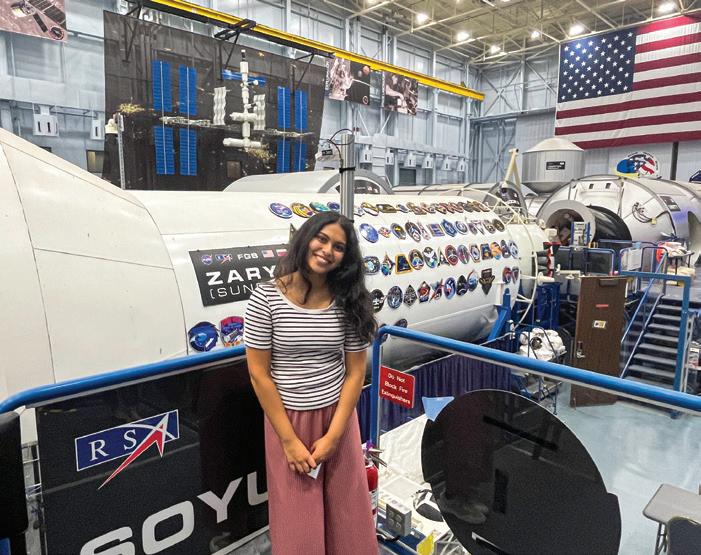
Genome Sleuths program, which places students in paid internships to develop computational biology tools. Genome Sleuths itself is part of the Vertically Integrated Projects program, a model that embeds undergraduates in faculty-led research groups for multiple semesters or years, allowing them to develop deeper skills than shortterm lab experiences usually allow. At Rice, the program is coordinated through the Office of Undergraduate Research and Inquiry.
Faculty mentor Todd Treangen, associate professor of computer science and the lead of the AI and Computational Biology for Human Health research cluster at the Ken Kennedy Institute, describes Banerjee’s work as among the strongest he’s seen. “Ankhi
developed software that impressed a full team of NASA scientists, and she is just getting started,” he said. At the end of the summer, Banerjee presented her work at Johnson Space Center to around 30 NASA scientists. “It was very intimidating at first, but everyone was kind and welcoming,” she said. “They all just wanted me to learn.”
Now, the anomaly detection software is still being refined, with hopes of supporting long-duration missions such as Artemis and habitation on the lunar Gateway platform. Banerjee plans to continue the research and eventually pursue a Ph.D. in computational biology. Her work offers a vivid example of how undergraduate research can reach beyond campus — and into orbit.
What’s Next

What’s Next The Race to See Space More Clearly
With a new $8.1M Space Force center, Rice aims to sharpen how satellites sense, interpret and respond to what’s happening beyond Earth
RACHEL LEESON
Rice has signed an $8.1 million cooperative agreement to lead the United States Space Force University Consortium/Space Strategic Technology Institute 4 (SSTI), called the Center for Advanced Space Sensing Technologies (CASST) at Rice. Led by David Alexander, director of the Rice Space Institute, CASST will bring new technologies to advance remote sensing from space.
The research team includes Rice professors and staff Kevin Kelly, Tomasz Tkaczyk, Kenny Evans, Kaden Hazzard, Mark Jernigan and Vinod Veedu, as well as collaborators from University of California, Los Angeles; University of California, Santa Barbara; Georgia Institute of Technology; and Aegis Aerospace in Houston.
“This investment positions Rice at the forefront of the technologies

that will define how we see, understand and operate in space,” said Amy Dittmar, the Howard R. Hughes Provost and executive vice president for academic affairs. “By bringing together advanced remote sensing, AI-driven analysis and cross-institutional expertise, CASST will
help transform raw space data into real-time insight and expand the frontiers of scientific discovery.”
USSF, established in 2019, is the newest branch of the American armed services, formed in response to increased everyday reliance on space technologies. USSF uses space
“Rice has helped shape the modern era of space research, and CASST marks a bold step into what comes next.” — David Sholl
sensors to provide real-time information about space environments and potential threats in support of its mission to ensure security and superiority in the space domain. In support of that goal, USSF is partnering with research universities to support creation of Space Strategic Technology Institutes — CASST is the fourth such body established under this initiative. Funded by USSF and led by researchers, SSTIs facilitate collaborative applied research and drive transformative breakthroughs and technologies.
“Rice has helped shape the modern era of space research, and CASST marks a bold step into what comes next,” said David Sholl, ex-
ecutive vice president for research. “As space becomes more contested and more essential to daily life, the ability to rapidly sense, interpret and act on what’s happening beyond Earth is critical. This center brings together the materials, engineering and data science innovations needed to deliver that capability.”
CASST will integrate existing leading-edge technologies into space sensors, expand their capabilities then optimize sensors to meet the specific challenges of use in space. The team will also work to miniaturize sensors while developing and implementing low-resource fabrication techniques. The researchers will use artificial intelligence and machine
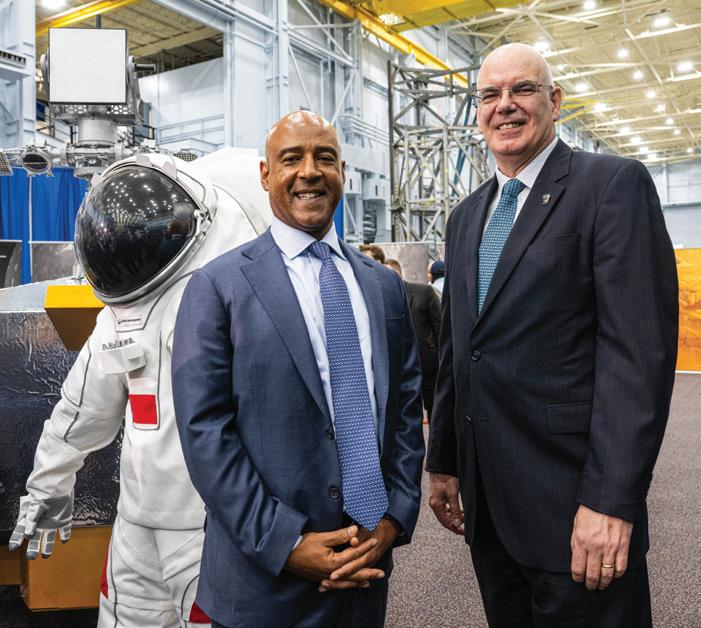
learning to analyze sensor data, allowing for real-time decision-making and decision support in response to sensor data.
“I’m excited to be leading this incredible collaborative effort,” said Alexander, professor of physics and astronomy and principal investigator on the project. “CASST will enable us to expand the range, ability and optimization of space remote sensing, reduce cost and resources required to build them and ensure the data they produce can be used in real-time to support USSF decision-making.”
Alexander is an inaugural member of the Texas Aerospace Research and Space Economy Consortium and serves on the boards of the Houston Spaceport Development Corporation, SpaceCom and the Sasakawa International Center for Space Architecture. He recently served on the board of the American Astronautical Society.
Such collaborations are emblematic of Rice’s rich history in space exploration. In 1959, Rice initiated research collaborations with a newly established NASA. Since then, the university has maintained a leadership role in advancing space science and technology with initiatives such as the Rice Space Institute and partnerships with other leading space organizations.
“CASST is a catalyst for Rice’s expanded role in national security. As a first step in a vital defense partnership, it fuses Rice’s research excellence with the USSF’s vision for a secure and superior space frontier,” said Veedu, assistant vice president for research and head of the university’s Defense Research Advancement initiative.
PHOTO BY JEFF FITLOW
Reginald DesRoches (left) and David Alexander
What’s Next
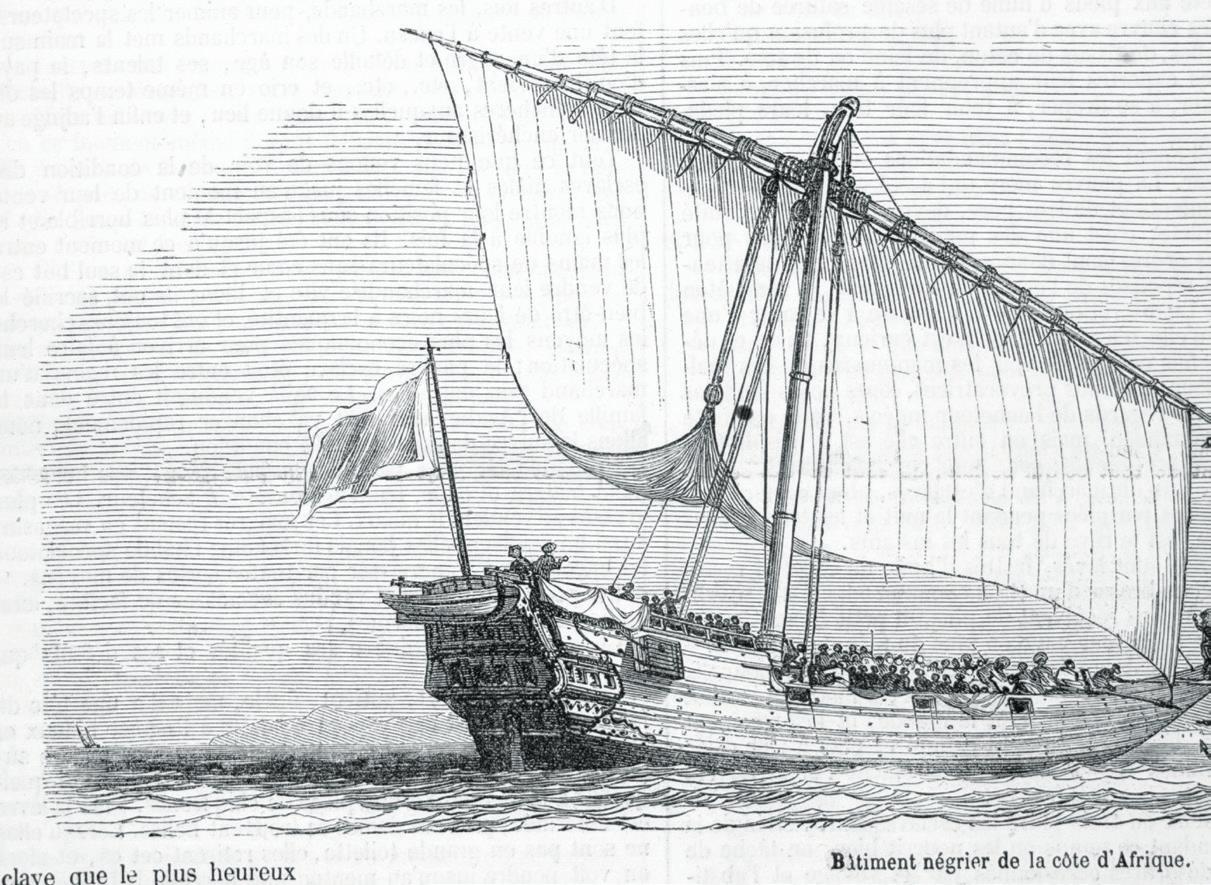
UNCOMMON KNOWLEDGE
From Paris to Publication
How a Rice historian’s workshop reshaped global slavery studies
BY BRANDI SMITH
“Putting these scholars in the same room made it impossible to ignore how fragmented the field still is.” — Daniel Domingues da Silva
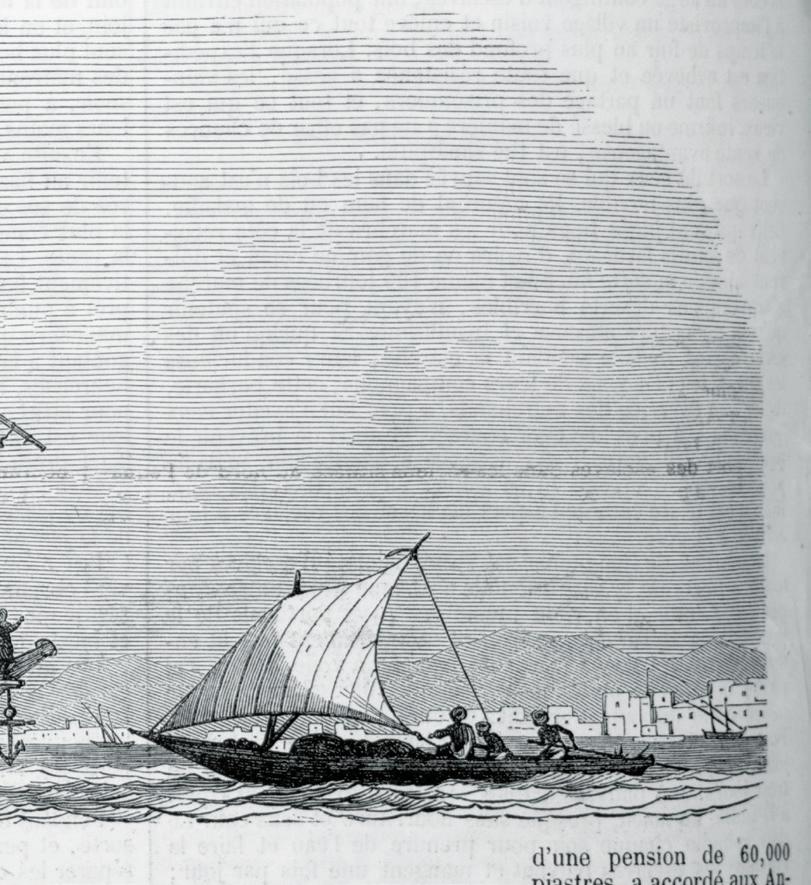
This illustration from the 1840s shows an Arab slave ship off the East African coast, probably near Zanzibar. It appeared in L’Illustration (Paris), Vol. 14, 1849
When Daniel Domingues da Silva organized a 2024 workshop at the Rice Global Paris Center, he was responding to a persistent imbalance in the field of slavery studies. Despite decades of scholarship labeled “global,” he saw the same geographic center of gravity holding firm.
“Global slavery studies have expanded tremendously, but the Atlantic world still sets the terms of the debate,” said Domingues, an associate professor of history at Rice. “Asia and the Indian Ocean are often treated as side conversations rather than as places where coer -
cion and enslavement shaped global systems in their own right.”
That concern became the intellectual foundation for “Hidden Archives and the Commerce of Enslavement in the Indian Ocean and Asia,” a special issue of the Journal of Global Slavery. Edited by Domingues alongside Richard B. Allen, Jane Hooper and Matthew S. Hopper, the issue grew directly out of the Paris workshop, which brought together scholars working across regions, languages and archival traditions who rarely intersect.
Rather than staging a comparative exercise with the Atlantic world as an implicit benchmark, Domingues designed the workshop to foreground local dynamics of coercion in Asia and the Indian Ocean, including systems that predated European expansion as well as those that developed alongside it.
“One of the goals was to move away from the idea that these regions only matter insofar as they resemble Atlantic slavery,” Domingues said. “That framing obscures the economic significance, the scale and the internal logics of coercive systems that operated independently of Europe.”
The resulting volume challenges long-standing assumptions about the supposed marginality or “mildness” of bondage in Asian societies. Contributors examine enslavement, forced mobility and coerced labor across regions including China, Mozambique, the Mascarenes and Southeast Asia, demonstrating how deeply embedded these practices were in local economies and global exchanges.
What’s Next
“A truly global history of coerced labor requires more than just adding new Asian case studies; it necessitates integrating these studies into the historiographical mainstream,” said Claude Chevaleyre, a research fellow at the French National Centre for Scientific Research’s Institute of East Asian Studies. “Asia is too often mobilized as a static comparand. This special issue thus contributes to demarginalizing the region, illuminating the global driving forces of coerced mobility beyond European networks and inviting area studies specialists to engage more deeply with labor history.”
For Chevaleyre, the implications extend well beyond historiographical correction.
“The data demonstrates that claims regarding the ‘mildness’ or ‘noneconomic’ nature of bondage in Asian societies do not hold up under rigorous investigation,” Chevaleyre said. “Dispelling these myths matters today because it allows us to recognize Asian coercive systems as dynamic, economically significant and integral to global history.”
A second unifying thread of the special issue is its methodological focus on so-called “hidden archives,” sources that have long existed but were overlooked due to linguistic barriers, institutional practices or narrow research questions. These include legal records, commercial documentation and personal correspondence preserved across fragmented archival systems.
“Archives aren’t hidden just because they’re hard to access,” Domingues said. “They’re hidden because scholars sometimes fail to
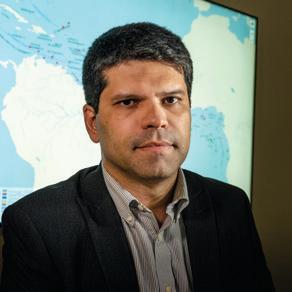
understand their relevance. Once you start asking different questions, entire documentary worlds open up.”
Gabrielle Robilliard-Witt, a postdoctoral researcher on the Prize Papers Project at Carl von Ossietzky University of Oldenburg in Germany whose contribution examines the Prize Papers collection at The National Archives in London, said the methodological diversity showcased in the issue creates new possibilities for understanding the lives of enslaved people themselves.
“One very important development made possible in part through this breadth of sources is perhaps the increased visibility of the agency and audibility of the voices of the enslaved,” Robilliard-Witt said. “Digitisation and cataloguing of sources paired with digital humanities methods will permit systematic analysis of large source corpora on a hitherto unknown scale. For example, it will be possible to search thousands, even tens of thousands, of letters in the Prize Papers collection for references relating to uprisings of the enslaved, work that would have taken a historian years if not decades. This furthers not only a multiperspectival approach but also greater potential for switching
between macro and micro scales.”
The Paris workshop was deliberately structured to foster sustained, in-person exchange among scholars who rarely have the opportunity to engage across regional and disciplinary boundaries. Participants said those conversations exposed both shared patterns of coercion and the limits of Eurocentric conceptual frameworks that still shape global history.
“Engaging in an English-speaking environment using concepts derived from European experiences reveals how Eurocentric global history remains,” Chevaleyre said. “The terms of the debate are often framed by Western categories that create distortions when rendering the complexities of Asian bondage.”
“Putting these scholars in the same room made it impossible to ignore how fragmented the field still is,” Domingues said. “If we want a genuinely global history of slavery, Asian and Indian Ocean histories can’t remain specialized knowledge. They have to become common knowledge.”
The publication of the special issue marks a milestone, but Domingues sees it as part of a longer process rather than a final statement. The work that began in Paris, he said, demonstrates what can emerge when scholars are given the space to question inherited frameworks and to build new ones collaboratively.
“This is about changing the center of gravity of the field,” Domingues said, “not by replacing one dominant narrative with another but by expanding what we collectively understand as central to global history.”
BY
Daniel Domingues da Silva
PHOTO
JEFF FITLOW
“What’s missing in the public conversation is a clear explanation of how universities actually generate creativity and discovery.”
— Caroline Levander
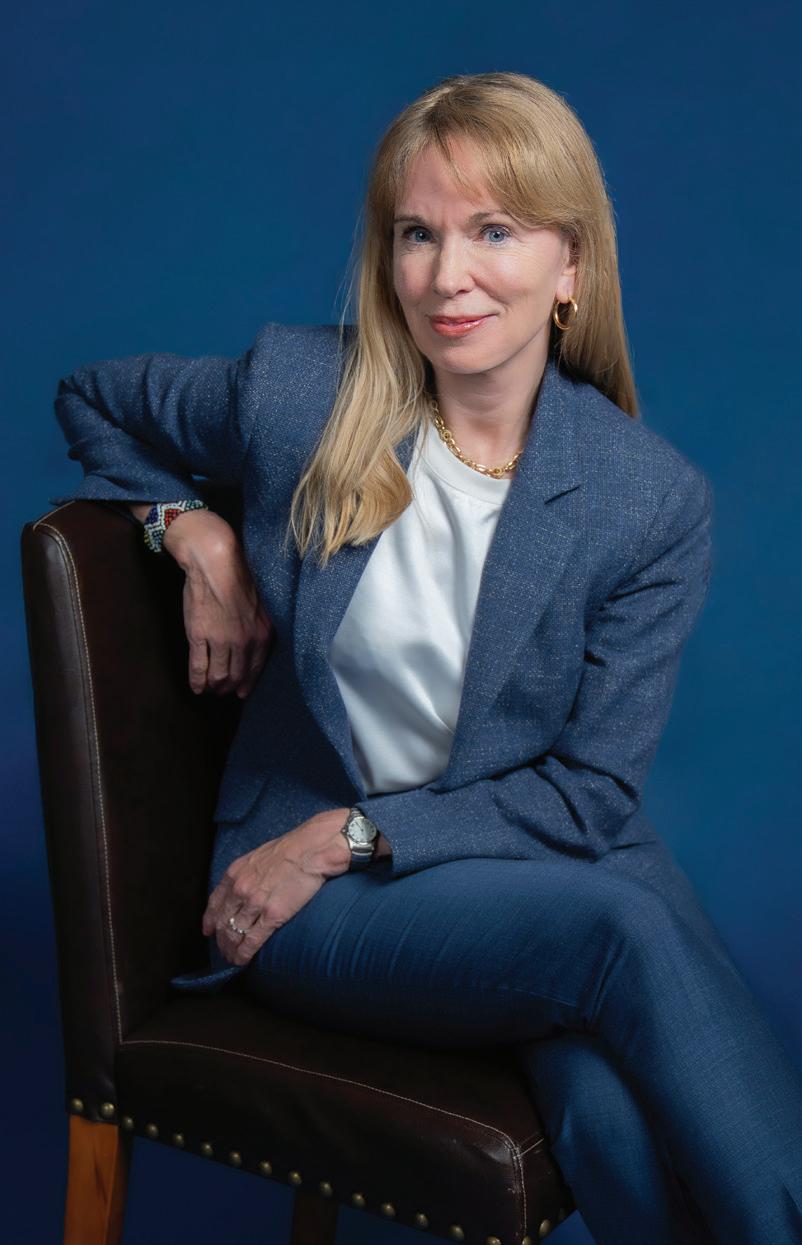
What Universities Forgot — and How to Find It Again
Rice’s vice president for global strategy makes the case for inventive higher ed
BY KATHARINE SHILCUTT
As colleges, universities and policymakers grapple with how to remain relevant in an era of rapid technological change, reassess the value of a degree and reinvent what higher education means for today’s learners, Caroline Levander is uniquely positioned to offer authoritative insight. Levander serves as vice president for global strategy and the Carlson Professor in the Humanities at Rice, where she leads development of new global hubs, online learning and strategic partnerships. She is also the
GLOBAL GOOD
PHOTO BY RAFAEL ROJAS
What’s Next
author of the new book “Invent Ed: How an American Tradition of Innovation Can Transform College Today.”
There are countless books critiquing higher education. What gap did you see that “Invent Ed” needed to fill?
I wrote “Invent Ed” because there are two dominant conversations about higher education happening right now. One is led by people outside the academy who don’t really understand how universities work today. The other is led by former administrators writing mainly for the industry. There’s a real gap for the average American to understand why universities matter and why they are such an important part of our national culture and economy. What’s missing in the public conversation is a clear explanation of how universities actually generate creativity and discovery. American higher education did not become globally dominant by accident. It did so because it cultivated an inventive spirit: a willingness to experiment, to recombine ideas and to see knowledge as something dynamic rather than fixed. I wanted to remind readers of that history and show how it can guide us forward.
You argue that universities have drifted from their inventive roots. What do you mean by that and what have we lost?
Creativity is putting existing concepts, ideas and tools into new combinations. Universities are the richest archive and laboratory for
those ideas, which makes them the natural home for creative discovery. Over time, though, we have allowed a culture of credential-getting to overshadow a culture of invention. Students are more risk-averse than they were in prior decades. They are focused on grades, rankings and outcomes in ways that often prevent them from taking intellectual risks. That is deeply detrimental to long-term success because students are not taking full advantage of the resources universities offer to stimulate discovery.
When education becomes a zero-sum game centered on transcripts and performance, anxiety flourishes. A creative mindset, which involves playing with tools, experimenting, combining ideas, is an engaged and optimistic mindset. It builds capability over time. If we want students to thrive in unpredictable workplaces and societies, we have to reward exploration, not just efficiency.
How should universities respond to AI and rising skepticism about the value of a college degree?
AI is often framed as something happening to universities, but that misses the point. Universities are shaping AI even as they adapt to it. Many of the discoveries behind the AI revolution happened in university research labs. That shared partnership of discovery is critical moving forward.
We have a responsibility to teach students how to use AI ethically and responsibly. Students need to be in the driver’s seat because the ability to direct and manage these tools is a major advantage in the marketplace. At the same time, we need to communicate
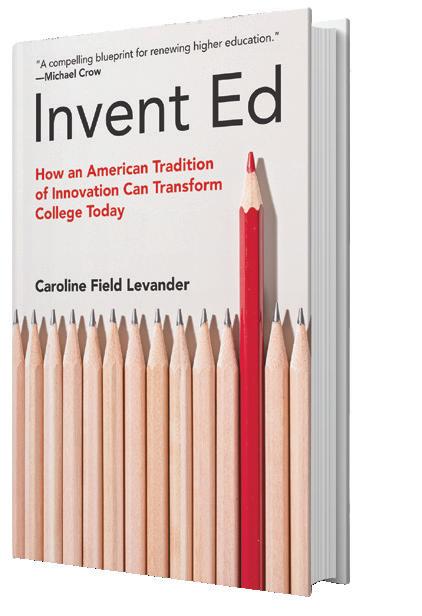
more clearly what universities contribute to society. American universities are engines of discovery and new industry creation. That has driven our global prominence for decades. The more we lose sight of that, the more vulnerable we become as a country.
Why did you choose MIT Press as the publisher for “Invent Ed”?
In addition to being one of the largest and most distinguished university presses in the world, MIT Press is the leading publisher of books and journals at the intersection of science, technology, art, social science, and design. And they are known for their intellectual daring, scholarly standards, interdisciplinary focus and distinctive design.
Because their mission is to advance knowledge in science, technology and the arts that best serve the nation and the world in the 21st century, the Press is the perfect home for “Invent Ed,” which shows how American universities can become powerful contributors to the public good.
Index
Aazhang, Behnaam 23
Ajayan, Pulickel 69, 77
Alexander, David 10, 100-101
Arreola, Dasseny 66
Bailar, Melissa 36
Banerjee, Ankhi 98
Baraniuk, Richard 17
Biswal, Sibani Lisa 78
Boyer, Dominic 17
Brandt, Anthony 40-41
Brunton, Judith Ellen 84-86
Byrd, Alexander 81-82
Canning, Kathleen 16
Curl, Robert 68-71
Dai, Pengcheng 10
de Moraes, Marcos 11, 17
Dee, Sylvia 17, 74-75
DesRoches, Reginald 5, 17, 22, 69
Diep, Cassandra 36
Dittmar, Amy 6, 26
Domingues da Silva, Daniel 101-102
Dominguez-Rodrigo, Manuel 91-92
Elliott, Jim 55-57
Eyre, Harris 24
Fagundes, Christopher 51-52
Feng, Yuge 78
Ferreira, Rodrigo 95
Gustavsson, Anna-Karin 11, 17
Halas, Naomi 17, 71
Harpavat, Maya 36
Hartgerink, Jeffrey 27
Hazzard, Kaden 70
Ho, Vivian 33
Howell, Robert 95
Kavraki, Lydia 17, 33
Killian, Thomas 23, 39, 70
Kimbro, Rachel 50
Kong, Yong Lin 28
Kono, Junichiro 70-71
Levander, Caroline 26, 105-106
Li, Lei 11, 17, 39
Li, Meng 93
Lou, Jun 71
Lozano, Karen 17
Marti, Angel 17
Martin, Lane 10, 77
Matsuda, Seiichi 44
McCary, Matt 11, 17
McDaniel, Caleb 81-82
McHugh, Kevin 27
Michie, Helena 66
Mikos, Antonios 33
Morosan, Emilia 70
Nakleh, Luay 17, 23
Noto, Lucia 58
Novelino, Larissa 72-73
Oden, Maria 30
Ostherr, Kirsten 89-90
Oswald, Fred 95
Padley, Paul 94
Pasquali, Matteo 70
Perley, Kathleen 95
Potter, Daniel 62
Rhodes, Anna 58
Richards-Kortum, Rebecca 33
Riedel, Brian 53-54
Roberto, Elizabeth 11, 17, 48-50, 84
Ryang, Sonia 17
Salas, Eduardo 17
Schaefer, Laura 76
Shaw, Chad 31
Sholl, David 18-19
Smalley, Richard 68-71
Sparagana, John 16
Srinivasan, Ragini Tharoor 36
Tezcan, Tolga 34-35
Treangan, Todd 98
Tyler, Matthew 11, 17
Uribe, Cesar 11, 17, 96-97
Veedu, Vinod 64
Veiseh, Omid 10, 12, 17, 46
Wang, Haotian 78
Ward-Griffin, Danielle 17
Wittung-Stafshede, Pernilla 25
Wolynes, Peter 17
Xiao, Han 10, 38-39
Yakobson, Boris 71
Rice University, Office of Research MS-16
P.O. Box 1892 , Houston, TX 77251-1892
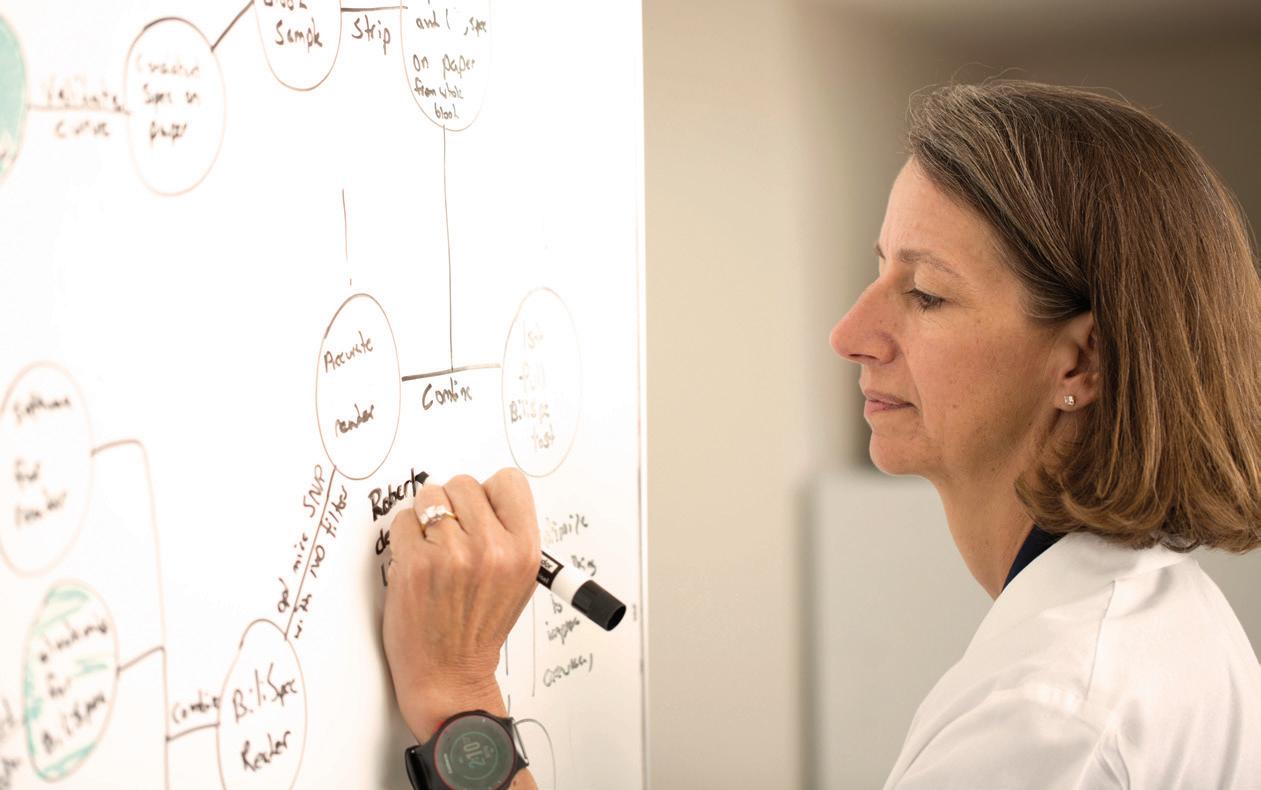
Triple Triumph
Rebecca Richards-Kortum’s recent election to the National Academy of Medicine makes her the second faculty member of Rice’s George R. Brown School of Engineering and Computing, alongside Lydia Kavraki, to be elected to all three national academies.
Richards-Kortum and Kavraki are the only two researchers in Texas who share membership across the national academies of medicine, science and engineering — an honor held by fewer than 35 researchers nationwide.
A pioneer in global health engineering, Rebecca RichardsKortum’s election to NAM (see pg. 33) reflects her decades-long push to pair breakthrough tech with the infrastructure needed for real-world impact.
“Every person deserves access to high-quality health care, no matter where they live. Engineering gives us the tools to make that possible — by transforming good ideas into technologies that truly work where they are needed most.”
Photo courtesy of John D. and Catherine T. MacArthur Foundation