




This annual report highlights many of the major activities and accomplishments of the Office of the Registrar (OTR) over the last academic year, 2024-2025. While this report details the sheer volume of our work, I want to take a moment to share the story behind the numbers, which is a story of a team deeply dedicated to the academic mission of Rice University.
Our office sits at the heart of Rice’s academic operations, a responsibility we take seriously. This year, our focus has been twofold: flawlessly executing the essential services that our community relies on while strategically embracing innovation to enhance the Rice experience. We’ve continued to make ongoing strides to modernize our services, from implementing AI tools in an effort to optimize the creation of the final exam schedule, to launching “Sammy” the chatbot to provide 24/7 assistance to our students. These projects, undertaken in close collaboration with campus partners, are not
just about technology; they are about reducing administrative burdens so students can focus on learning and faculty can focus on teaching and research.
None of this would be possible without the hard work of the staff in the OTR. I am immensely proud of their expertise, their collaborative spirit, and their proactive approach to service. Their commitment is evident in our internal initiatives, where 100% of our staff engage in personalized professional development plans as we seek to be at the forefront of our profession. This dedication ensures that we are not just completing tasks, but that we be constantly evolving to meet the needs of the Rice community.
Our work is grounded in a customer service philosophy centered on accessibility, efficiency, and empowerment for our entire community. We strive to be more than a transactional office; we aim to be a collaborative partner,
proactively seeking feedback and analyzing our processes from a user-centric perspective. Whether we are answering one of the nearly 35,000 inquiries submitted to our team or empowering students and alumni with robust 24/7 self-service tools, our goal is to reduce friction and ensure every interaction is a positive and effective one.
Looking ahead, there is excitement about the future and growth of Rice University, and we are inspired to contribute to the university’s strategic vision. We will continue to improve our systems, enhance data security and access, and serve as responsible stewards of the university’s academic record. The dedication that the OTR staff have to Rice’s mission is our driving force, and we are committed to providing the highest level of support to Rice students, faculty, staff, and alumni.
-David A. Tenney, Sid Richardson ‘87

THE DEDICATION THAT OTR STAFF HAVE TO RICE’S MISSION IS OUR DRIVING FORCE...
The Office of the Registrar (OTR) supports the educational mission of the university by working with the Rice community to maintain the accuracy and integrity of its educational records, provide quality service, and support innovative systems that enhance the academic experience. We aim to be a leading registrar’s office, thoughtfully supporting the Rice community through a holistic approach that leverages skilled staff and advanced technology to enhance the lives of its members.

Gain a clear understanding of OTR’s customers to sufficiently serve their needs; continue to strengthen OTR’s position and relationships in the community by increasing collaborations.
The OTR is a service organization that has a customer service model built on the principles of accessibility, efficiency, and empowerment. Our “customers” (students, faculty, staff, and alumni) are not passive recipients of administrative processes. They are active participants in the academic life of the university, with constantly evolving needs. We aim not to be simply transactional office but an office that is embedded in the academic experience and that partners with others to proactively address emerging needs. This philosophy is rooted in a proactive, continuously improving methodology that actively seeks feedback and analyzes business processes from a user-centric perspective. Its goal is to anticipate challenges and reduce administrative burdens before they arise, thereby reducing friction and allowing students to focus on learning and faculty on teaching and research.
Have a well-executed succession plan that meets the needs of the changing university landscape and the technological environment in which we operate.
Being well-trained is fundamental to OTR’s long-term resilience and is achieved through a robust succession plan. This commitment guarantees the provision of uninterrupted, expert service, builds a more agile team ready to meet future challenges, and ultimately positions the OTR as a stable and reliable partner in achieving the university’s core mission. To this end and in alignment with Rice University’s strategic goals, each OTR staff member creates and executes an annual Professional Development Plan unique to the registrar profession. Ultimately, a wellexecuted plan guarantees that we can provide uninterrupted, excellent service to our students, faculty, and staff. It builds a more agile team ready to meet any future challenge and positions the OTR as a stable and reliable partner in achieving the university’s core mission.

Modernize technology in use by registrarrelated functions and improve effectiveness and efficiencies of registrar-related services.
The OTR is dedicated to modernizing the technology used in registrar-related functions to significantly improve the effectiveness and efficiency of its services for the Rice community. This strategic imperative involves upgrading systems to provide better tools, automating routine tasks to drive critical efficiencies, and freeing staff to focus on more complex work that directly supports student and faculty success. Modern systems provide the robust data and analytics necessary for informed, strategic decisionmaking across the university. Embracing current technology ensures greater data security and creates an agile foundation for future innovations. These efforts, often undertaken in close collaboration with campus partners, underscore the OTR’s commitment to continuous innovation and technological leadership.

Hakeem Abiola Office Administrator and Executive Assistant

Sara Dickens Student Records Analyst

Chris Higgins Classroom and Scheduling Manager

Maritza Salinas Associate Registrar



Cynthia Chavez Staff Assistant
Alicia Bradley Assistant Registrar for Reporting Rachel Clay Associate Registrar

Ellen Everett Project Manager for OTR Operations

Darlene Judd Registration Assistant

Justin Schilke Deputy Registrar

Daniel Garcia Assistant Registrar
Jillian Krempasky Student Records Analyst

Shar-Lee Shandera Registrar Specialist

Katharine Hayes Student Records Specialist

John Martinez Catalog and Scheduling Assistant

Jean Tarrats Associate Registrar
The Office of the Registrar is heavily involved in the Rice community and helps ensure that academic and administrative processes run smoothly and are followed according to the General Announcements, Rice policies, state and federal law, and best practices of the profession.
In alignment with the university’s strategic goals, each OTR staff member creates an annual Professional Development Plan. These plans are structured using the nationally recognized Core Competencies and Professional Proficiencies developed by the American Association of Collegiate Registrars and Admissions Officers (AACRAO). With guidance from their manager, each employee selects two competencies and two proficiencies to focus on over a twelve-month period. Focus areas are diverse, ranging from core skills like Change Management and Communication to specific proficiencies such as Data Systems Management or Technological Knowledge.
To develop these areas, staff complete at least one relevant professional development activity each month. Activities are varied and include attending conferences, listening to podcasts, taking courses, reading journal articles, and meeting with mentors. Staff document their progress monthly and reflect on how each activity contributes to their improvement. The ultimate purpose of this initiative is not just to “check off a box,” but it is intended to foster genuine growth and ensure our team has the support to succeed and flourish at Rice.
Staff meetings have been enhanced to foster both internal expertise and a broader understanding of the university. Each week, a different staff member leads a presentation on their work, promoting valuable cross-training and building a more resilient, knowledgeable team. Furthermore, each month our meetings feature guests from the Rice community who either provide insight into their campus role or lead the team in a targeted professional development activity, such as team building. This dual approach ensures our staff are not only proficient in our own operations but also more informed and effective partners within the wider university community.
To ensure our office remains at the forefront of the profession, staff actively participate and serve in leadership roles in key state, regional, and national organizations such as TACRAO, SACRAO, and AACRAO. This engagement allows us to contribute our expertise to the field while bringing back innovative best practices and technological insights to better serve the Rice community. Several staff members also hold leadership roles within these groups, further enhancing the university’s reputation in the wider higher education landscape.
Association of American Universities (AAU) Registrars
Association of American Universities (AAU) Registrars LEAD
American Association of Collegiate Registrars and Admissions Officers (AACRAO)
Southern Association of Collegiate Registrars and Admissions Officers (SACRAO)
Texas Association of Collegiate Registrars and Admissions Officers (TACRAO)
Texas Association of Collegiate Veteran Program Officials (TACVPO)
Western Association of Veterans Education Specialist (WAVES)
Academic Calendar
Academic Fair
Academic Plan Changes
Academic Standing, Probation and Suspension
A-Level Credit Processing and Posting
AP Test Credit Processing and Posting
Application for Graduation
Athletic Eligibility
Banner / ESTHER / EDGAR
Budget Transformation Initiative Working Groups
Classroom Quality Management Team
Classroom Renovations
Classroom Scheduling
College Associates
College Roadtrips
Commencement
Committee on Examinations and Standing
Committee on Teaching
Committee on Undergraduate Curriculum
Course Catalog Updates
Course Descriptions and/or Information
Course Evaluations
Course Rosters
Course Schedule Build
CourseLeaf CAT, CIM, CLSS
Curriculum Review
Data Governance
Data Requests (Ad Hoc)
Data Stewards
Data Warehouse Initiative
Dean Verifications
Declarations (Majors, Minors, and Certificates)
Degree Certification/Degree Audits
Degree Conferral & Transcript Updates
Degree Verifications
Degree Works
E-mail Notices and Communication
Enrollment Verifications
Facsimile Diplomas
Faculty Senate
FERPA Brown Bag and General Compliance/Guidance
Final Exam Scheduling
General Announcements
Grade Processing
Grade Rosters
Graduate Council
IB Credit Processing and Posting
Inclusivity in Student Records Working Group
Instructor Evaluations
Inter-Institutional Agreements and Registration
International Certifications
Latin Honors Calculation
Late Fee (Registration/Graduation) Assessment/Waiver
National Student Clearinghouse Submissions
NCAA Compliance
New Student Orientation/Registration
OnBase Document Management
Phi Beta Kappa
President’s Honor Roll
Registration/Enrollment Troubleshooting
Replacement Diploma Processing
Reports to the President
Residential College Updates
Staff Council
Student Insurance Committee
Student Records Access
Student Registration Actions
Student Services Collaboration
Student Status Changes
Study Abroad (Registration / Transfer Credit)
Subpoenas
Summer Sessions
Tableau Users Group
Transcript Processing
Transfer Credit Processing/Posting
VA Benefits (Audit and Processing)
Various Training Presentations
Visiting Students
Waitlist Management
staff traveled to professional conferences and other professional activities
Ad Astra Aspire
Association of American Universities (AAU) Registrars Annual Meeting
American Association of Collegiate Registrars and Admissions Officers (AACRAO) Hill Day
Ellucian Live
National Collegiate Athletic Association (NCAA) Regional Rules Seminar
National Student Clearinghouse Academy
Registrar 101 (AACRAO)
Southeast Texas Association of Collegiate Registrars and Admissions Officers (SETACRAO) Meeting
Texas Association of Collegiate Registrars and Admissions Officers (TACRAO) Annual Conference
Texas Association of Collegiate Veteran Program Officials (TACVPO) Annual Conference
Western Association of Veterans Education Specialist (WAVES) Annual Conference
100% OF STAFF HAVE A PERSONALIZED PROFESSIONAL DEVELOPMENT PLAN
Degree Works was updated from a “classic” to a new “responsive design” interface, which required extensive testing, customization, and community training.

OTR worked with OIT and admitting units to test and approve data flowing to Banner from Slate using Axiom. Additionally, changes were put in place to correct expected graduation dates for students so that the dates more accurately reflected an anticipated graduation date upon matriculation.
GR
A number of changes were made to ESTHER, the self-service Banner interface, including updates to student profiles and course search. Additional changes are in the process of being tested and are scheduled to launch in Fall 2025 and Spring 2026. UG GR
These diplomas are smaller versions of Rice’s diploma. OTR revamped the processing, making it more efficient, and revised the document layout to better resemble the fullsize Rice diploma. UG ECC GR
OTR provided additional assistance and informal reviews of other departments at Rice who perform similar student service activities, such as Rice Business. A report was produced with recommendations, and several efficiencies have been adopted.
While started prior to the last year, OTR saw through final revisions to an updated Policy 837, which helps stipulate requirements for student records access, disposition, and retention.
FERPA training was overhauled to be more modern and provide better insights into completers, which is required under Rice Policy 837. The new training is expected to launch in Fall 2025. ECC
To provide a better final exam schedule experience for undergraduate students, OTR used AI tools to help optimize the Spring 2025 final exam schedule and plans to continue to refine the process for Fall 2025 and beyond. UG AI
To more efficiently evaluate other institutions’ transcripts, OTR has partnered with Validity to implement an AI tool to help in the processing of transfer credit.

OTR management designed a unique professional development plan structure based on AACRAO’s Core Competencies and Professional Proficiencies that all OTR staff participate in.
OTR transitioned from using Monday.com to Asana for project management. In the process, all OTR staff were trained, and OTR launched full use in June 2025.
Whoo’s there? It’s Sammy! With assistance from Rice’s Transformative Technology & Innovation, OTR launched Sammy the chatbot on the OTR website, registrar.rice.edu, as well as visitingstudents.rice.edu and military.rice.edu.
Building on its commitment to strategic advancements, the Office of the Registrar undertakes a diverse portfolio of significant projects designed to enhance the effectiveness of its services across multiple fronts, extending beyond direct student-facing technology to encompass vital areas like policy, compliance, and inter-departmental collaboration. We consistently aim to improve upon existing business processes to enhance the educational journey for both our undergraduate and graduate students, as well as the broader faculty and staff experience at Rice. While we undertake dozens of small projects for incremental improvements, our major projects often involve significant technological advancements to modernize our services and improve existing business processes, including the responsible application of artificial intelligence. When selecting projects to undertake, we carefully curate them to maximize the impact on our community, focusing on the following questions:
• How does this project align with Rice’s Strategic Plan, Momentous?
• How will this help the university community?
• How will completing the project free up time and resources for us to better serve others?
The successful implementation of these complex initiatives, as well as our on-going strategic projects such as the evolving Data Warehouse (and University Dashboards) would not be possible without the invaluable assistance of our partners in the Office of Information Technology (specifically the Student Information Systems and Learning Environments teams), Enterprise Data and Business Intelligence (EDBI), the Facilities and Capital Planning division, Human Resources, and Transformational Technology & Innovation.

The Office of the Registrar approaches customer service with an emphasis on accessibility, efficiency, and empowerment for the entire university community. We provide multiple channels for communication, including email, phone, and in-person lobby hours, ensuring that students, faculty, and staff can easily seek assistance. By utilizing Request Tracker, an email-based incident-tracking system, we also ensure that every inquiry is routed to the appropriate staff member for a prompt and organized response. This foundational commitment to responsive communication establishes the OTR as a reliable and accessible resource for all academic and administrative needs.
For students and alumni, the OTR’s customer service model is heavily built around providing robust, 24/7 self-service options through technology. Essential services such as requesting official transcripts, verifying enrollment or degrees, and managing course registration
are streamlined through online portals like ESTHER and the National Student Clearinghouse. This focus empowers users to handle their own administrative tasks efficiently and at their convenience, from any location. By offering clear, step-by-step instructions and immediate access to these tools, the office minimizes transactional friction and allows students to focus on their academic pursuits over administrative details.
The OTR extends its service approach to faculty and staff by acting as a collaborative partner in the university’s academic mission. It provides faculty with access to essential tools and data through systems like ESTHER and the Electronic Data Gathering and Reporting (EDGAR) system, which are vital for online grade entry, viewing course rosters, and obtaining student records for advising purposes. By ensuring faculty and administrators have the necessary information and system access, the OTR facilitates smoother departmental operations and supports in-
formed decision-making across campus. This role as a data steward and systems provider underscores the office’s commitment to supporting the entire academic enterprise and enabling Rice to make data-driven decisions.
Beyond these established services, our customer service philosophy is fundamentally proactive and centered on continuous improvement. We actively seek to understand the evolving needs of our community by listening to feedback and analyzing our business processes from a user-centric perspective. This allows us to not only refine existing procedures but also to innovate and modernize, such as by leveraging new technologies to enhance efficiency in complex tasks. Our goal is to anticipate challenges and reduce administrative burdens before they arise, ensuring our services will continue to evolve in support of the university’s dynamic academic mission.

34,989 2.25m 198 2,042
OTR uses a number of e-mail aliases to direct tickets to a ticketing system that is managed by staff. Once a ticket is received, it is organized and sent to an appropriate queue and the correct staff member for processing.
The General Announcements (GA) is Rice University’s official catalog of courses, degrees, policies, and curricular requirements. The maintenance, editing, and updating of the GA (curricular programs, Programs of Study) is the responsibility of the OTR. The Office of the Vice Provost of Academic Affairs maintains and oversees the academic policy and faculty information sections. There are 958 unique pages that comprise the GA; each of which is reviewed multiple times by key staff and management in the OTR before being published. Over the past year, ga.rice. edu had 1.5 million page views.
The OTR website contains many of the procedural items related to the GA. Over the past year, egistrar.rice.edu had 750,000 page views.
OTR processes VA benefits for a portion of students using benefits to pay for education costs. In the 2024-25 academic year, 198 Rice students utilized benefits, and OTR was directly responsible for processing 69 of those.
Since being launched in December 2024, OTR’s chatbot Sammy has responded to 2,042 conversations, with the most common themes being: dropping a course, viewing the course schedule, transcript information, and academic calendar information.
The Office of the Registrar manages the university’s complex course registration process, a foundational operation that underpins the academic experience each semester. Our responsibilities include establishing registration timelines and managing course waitlists to ensure equitable access. A significant part of this work is done “behind the scenes” in Banner, Rice’s student information system, but it also involves providing direct support by processing thousands of course registration overrides and other special requests, offering critical flexibility for students and academic departments to meet their educational goals.
8,449 12,902 4,960 2,253 11,465
Following the registration period, our focus shifts to the stewardship and maintenance of the official academic record for every student. This critical function includes fulfilling thousands of transcript requests, processing enrollment and degree verifications, managing grade changes, and articulating transfer credit. At the conclusion of each term, we oversee the collection of grades, calculation of GPAs, and the assignment of institutional honors, ensuring the enduring accuracy and integrity of each student’s complete academic history.
As the primary official record of students, OTR processes official transcript requests, with 7,172 electronic and 1,277 paper requests processed. The turnaround time for transcripts averages less than a day when a PDF transcript request is submitted, as processing is automatic.
Registration overrides allow students to register for courses that need instructor permission or when the student doesn’t meet the established registration restrictions. Instructors may issue electronic overrides or sign paper forms, with electronic overrides being preferred.
When students need to establish they have been attending Rice or have earned a Rice degree, OTR will process an enrollment or degree verification. OTR processed a total of 4,960 verifications, of which 708 had to be manually done, and 4,252 were auto-processed through an integration.
Instructors submitted a total of 954 grade changes, but OTR also processed grade changes related to Degree Audit processing, judicial review, and authorized withdrawal/grade change actions, which account for the remainder of changes made.
OTR processes transfer credit for all Rice students, and a review of transfer applicants also occurs in OTR. Transfer credit processing has consistently grown for the last several years, and to keep pace with demand, OTR has partnered with a vendor to begin using AI to assess transfer credit requests.
Total transcript requests were up 6%. PDF transcripts increased 17% while paper decreased 12% OTR STAFF MANUALLY PROCESSED 17% OF OVERRIDES. instructors submitted the remaining online via esther.
OTR saw a 23% increase in total manual verifications, and a 81% increase in enrollment verifications alone
There was a 19.65% increase in grade changes. Instructor changes INCREASED 20.3% from last year.
Transfer credit from non-ap/ ib/a level sources increased 22.75%. Undergraduate transfer credit increased 27%.

The official pathway from a student’s major declaration to graduation runs through OTR, with the General Announcements being the authoritative road map and Degree Works auditing the journey. This dynamic tool empowers students and their advisors to track progress against requirements in real-time, plan future coursework, and explore alternative
37,354 9,314 4,298
academic paths. OTR manages this system and performs the final, official audit for all graduation applicants after final grades are posted. This meticulous certification process verifies that every university and program requirement has been successfully met, ensuring the integrity of every degree conferred by Rice University.
The Degree Works degree audit displays a student’s progress toward academic credential completion. By utilizing this online, electronic tool, a student can see what needs to be completed to successfully earn a specific credential. Audits are also regularly run by OTR staff as they manage graduation activities, assess students, and advise students on possible routes to graduation.
When a student needs to deviate from the curriculum established in the General Announcements, an advisor can submit a request to allow a specific course to meet a requirement, and those requests are reviewed and processed by OTR to ensure compliance with university policies and procedures. Additionally, each graduating student will be “certified” for graduation by the credential’s Official Certifier and subsequently reviewed by OTR.
OTR updates student curriculum declarations (majors/major concentrations/minors/certificates/areas of specialization) as well as changes to catalog years. Almost 4,300 updates were made over the past year, mostly to undergraduate student records. The heaviest period of processing occurs in the middle of the spring semester, which is when second-year second-semester students must declare a major before being able to register for the fall semester.
2,770
2,879
3,162
Majors/fields of study

The Office of the Registrar manages the foundational academic infrastructure for Rice: course offerings. These university, school, departmental, and interdisciplinary, for-credit course offerings are those that are recorded on students’ official transcripts. The OTR oversees the Course Catalog, which is the complete and official list of all courses offered, and the Course Schedule, which details the courses offered each term.
Key responsibilities in this process include:
• Reviewing Course Catalog Changes: The OTR reviews all i.) new course and ii.) change course requests to ensure compliance with university rules.
1,263
10,752
133,157
2,984
• Managing the Scheduling Timeline: The OTR establishes and communicates a detailed timeline with critical deadlines for departments.
• Communicating with Departments: The team sends regular updates and reminders to departmental schedulers regarding deadlines, scheduling restrictions, and the status of the course schedule. This includes announcements about time blocks that have reached capacity and when classrooms are officially posted.
• Enforcing Scheduling Policies: The OTR enforces university scheduling policies and data integrity requirements. For example,
requests for non-standard times require a curricular rationale and must go through an approval process.
• Syllabus Management: The OTR ensures compliance with the Faculty Senate’s policy on syllabus standards, which requires syllabi to be archived and uploaded in ESTHER. This helps to facilitate students’ “shopping” during the course Registration ADD/ DROP period.
In addition to these core catalog and scheduling functions, the OTR also manages the administration of the course and instructor evaluation process and creates the final exam schedule for undergraduate courses.
There were 1,263 course proposals submitted between August 2024 and July 2025. Of those, 303 were new courses, 673 were course changes, and 287 were course inactivations. Each proposal requires the OTR intervention on several steps to ensure compliance with university policy, the intent of the academic department, and data integrity.
Departments offered a total of 10,752 course sections in the Course Schedule during the 2024-25 academic year, with 4,644 in Fall 2024, 4,503 in Spring 2025, 1,353 in Summer 2025, and the remainder in the quadmester terms. The total sections count was approximately 7% higher than previous academic years.
The OTR administers the course and instructor evaluation process on behalf of the Provost and Vice Provost for Academic Affairs. Each semester, OTR identifies the courses to be issued evaluations and works with the Office of Information Technology to ensure the evaluations are launched and closed at the appropriate times, as well as ensuring students cannot see their final grades prior to submitting the evaluation.
The OTR manages the complex process of creating the final exam schedule for over almost 3,000 undergraduate sections each year. The methodology prioritizes minimizing student conflicts by anchoring the schedule around large service courses and then strategically placing the remaining courses based on their meeting patterns. To further enhance efficiency and optimize the schedule, we have begun utilizing AI-powered tools to analyze countless permutations and identify the best possible outcomes. This innovative approach helps ensure a fair and manageable exam period for students while navigating the immense logistical challenge of the academic calendar.
6,314 COURSES IN THE COURSE CATALOG ELIGIBLE TO BE OFFERED

3,290 UNIQUE COURSES ACTUALLY OFFERED
3,065
REGISTRATION
The Office of the Registrar (OTR) plays a central and multifaceted role in the management and stewardship of Rice University’s learning spaces. On behalf of the Provost, the OTR manages the university’s 103 general-purpose classrooms. This responsibility extends far beyond simple allocation, encompassing scheduling for both academic and event purposes, as well as the continuous maintenance and enhancement of these vital facilities in collaboration with the Office of Information Technology (OIT) and Facilities and Capital Planning. (F&CP). The OTR’s work ensures that faculty have access to appropriate teaching environments and that students have quality spaces in which to learn and collaborate.
The primary responsibility in managing these rooms is the complex task of academic scheduling. The OTR assigns academic classes to rooms based on departmental requests, considering factors such as class size, pedagogical needs, and technology requirements. Scheduled classes alone account for over 95,000 individual meetings during the Fall and Spring semesters.
Beyond academic courses, the OTR is also responsible for finding appropriate space for university-sanctioned events, a process that requires careful coordination to maximize the efficient use of these high-demand spaces. Requestors will submit a form to the OTR, and the OTR will process the request after spaces are assigned for scheduled academic classes so that these classes are not displaced. There were almost 1,400 event requests during the Fall and Spring semesters, which resulted in almost 6,300 individual meetings being assigned rooms.
Somewhat overlooked, classrooms for final exam scheduling are another complicated puzzle, as the OTR tries to place courses in the same
room or types of rooms for a final exam that the class had during the semester.
A cornerstone of classroom oversight is the OTR’s role as a key stakeholder on the Classroom Quality Management Team (CQMT). The CQMT is a permanent subcommittee, approved by the Provost in 2010, charged with the critical responsibility of identifying, selecting, and managing classroom maintenance and improvement activities. This team represents a crucial partnership between the OTR, the OIT, F&CP, and the faculty, bringing together experts from across campus to make holistic decisions about the learning environment. The team works to prioritize improvement projects, recommend policy on scheduling matters, and allocate budget resources effectively. The work of the CQMT is essential for keeping Rice’s classrooms modern and functional, managing major renovations to routine updates, such as replacing student desks, repainting walls, recarpeting, and upgrading A/V technology. The CQMT must be diligent and judicious, selecting projects based on current and projected needs, estimated cost, and university timelines to ensure the greatest positive impact on the classroom inventory.
Through its comprehensive management of scheduling, maintenance, and strategic planning, the OTR ensures that Rice’s general-purpose classrooms effectively support the university’s academic mission. This work, performed in close collaboration with partners in the CQMT, is fundamental to providing a high-quality educational experience. By balancing the competing demands for these spaces and proactively planning for their upkeep and enhancement, the OTR helps create an environment where teaching and learning can thrive.
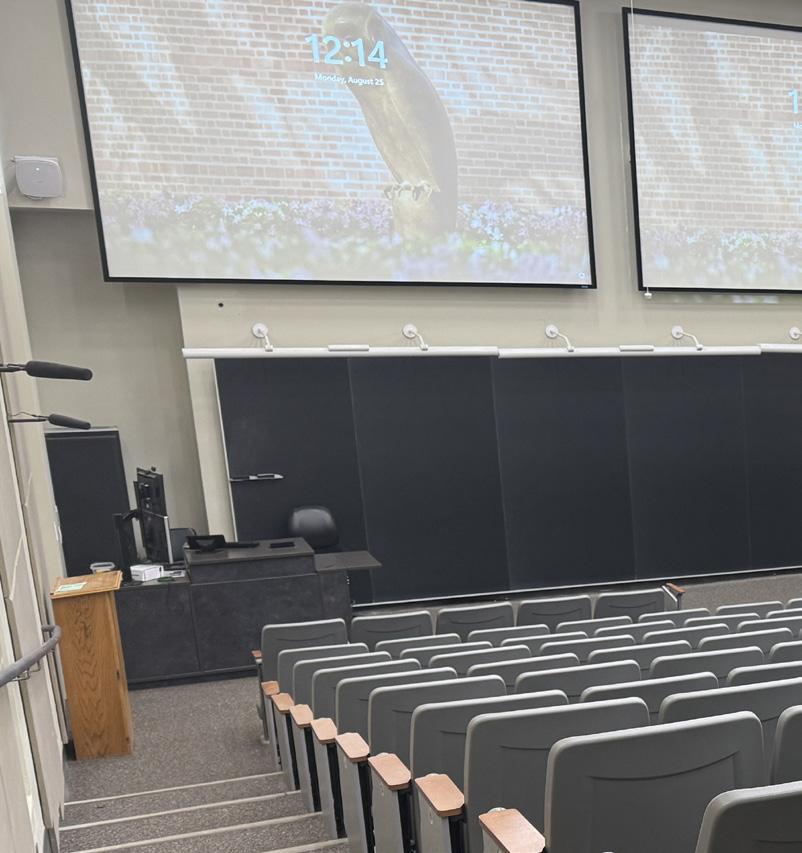
KECK 100
Replaced A/V system; installed new projectors at the classroom rear to improve image quality, equipment reliability, and equipment serviceability
Humanities 328
Removed cart monitor and cabling across floor; mounted larger monitor at rear/side of classroom; added vertical mount and second monitor to lectern
herring 100
Replaced A/V system; installed new projectors at classroom rear to improve image quality, equipment reliability, and equipment serviceability
Duncan 1064 & 1070
Replaced A/V system in each room
Anderson biological lab 131
Implemented a solution to address room’s lighting system and electrical issues
RAYZOR 106
Replaced A/V system and replaced furniture with flexible classroom tables and chairs
Keith-Wiess Geological Lab 128
Removed cart monitor and cabling across floor; mounted larger monitor at rear/side of classroom; added vertical mount and second monitor to lectern
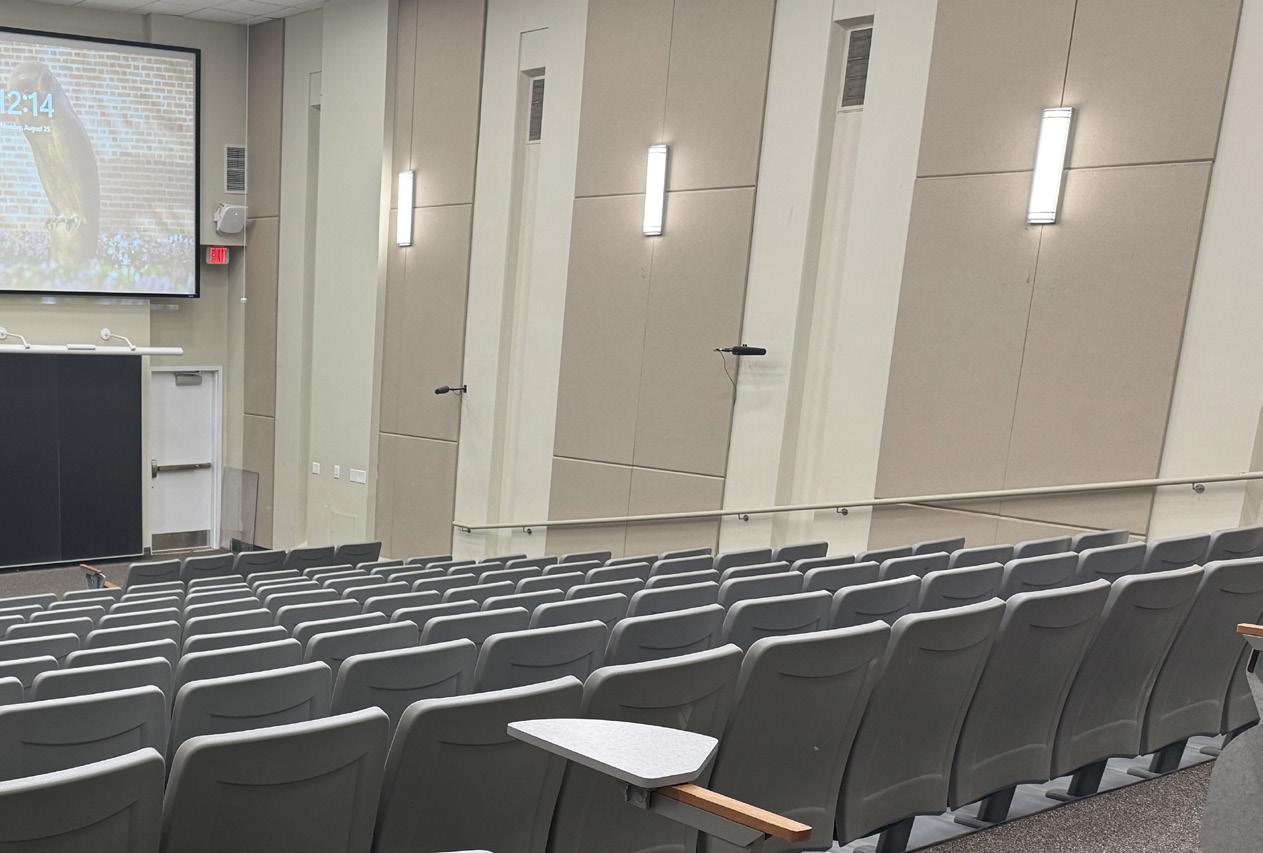
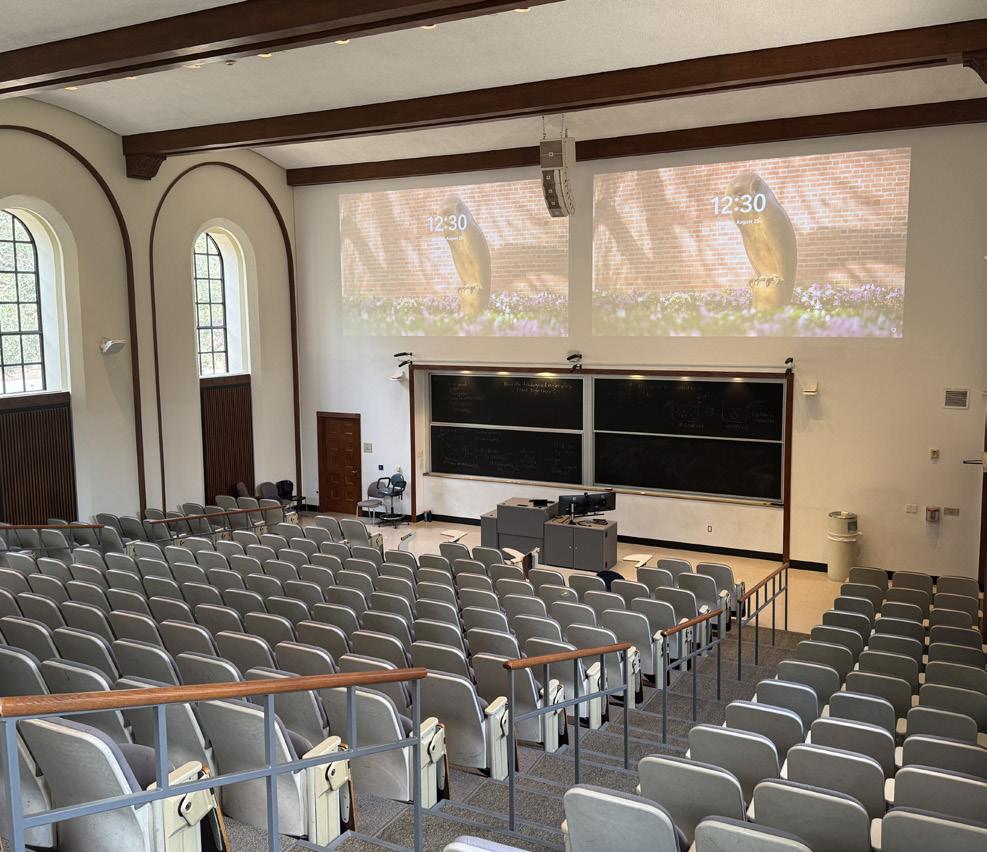
5,556 Seats in otr room inventory
UTILIZED DURING BUSIEST TIME PERIOD
(Spring 2025 - Thursday 11am - 12:15pm)
67,049 hours of utilization from 8am-5pm fall 2024 & spring 2025 combined
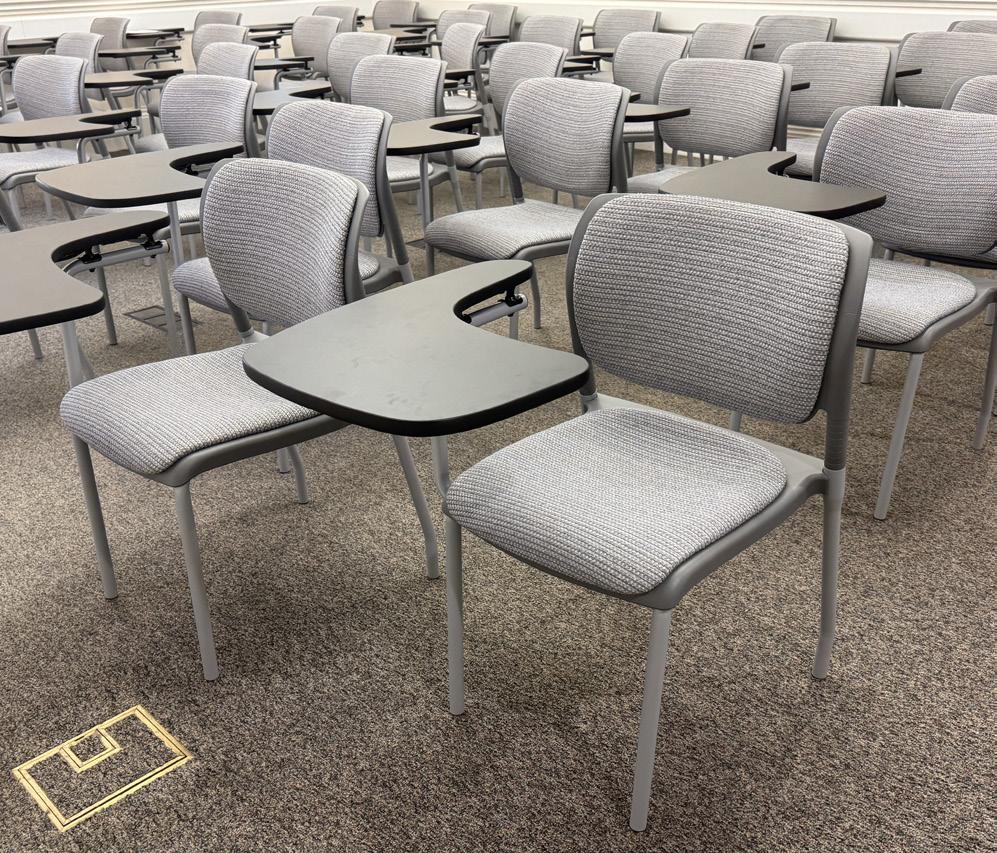
5 types of classrooms
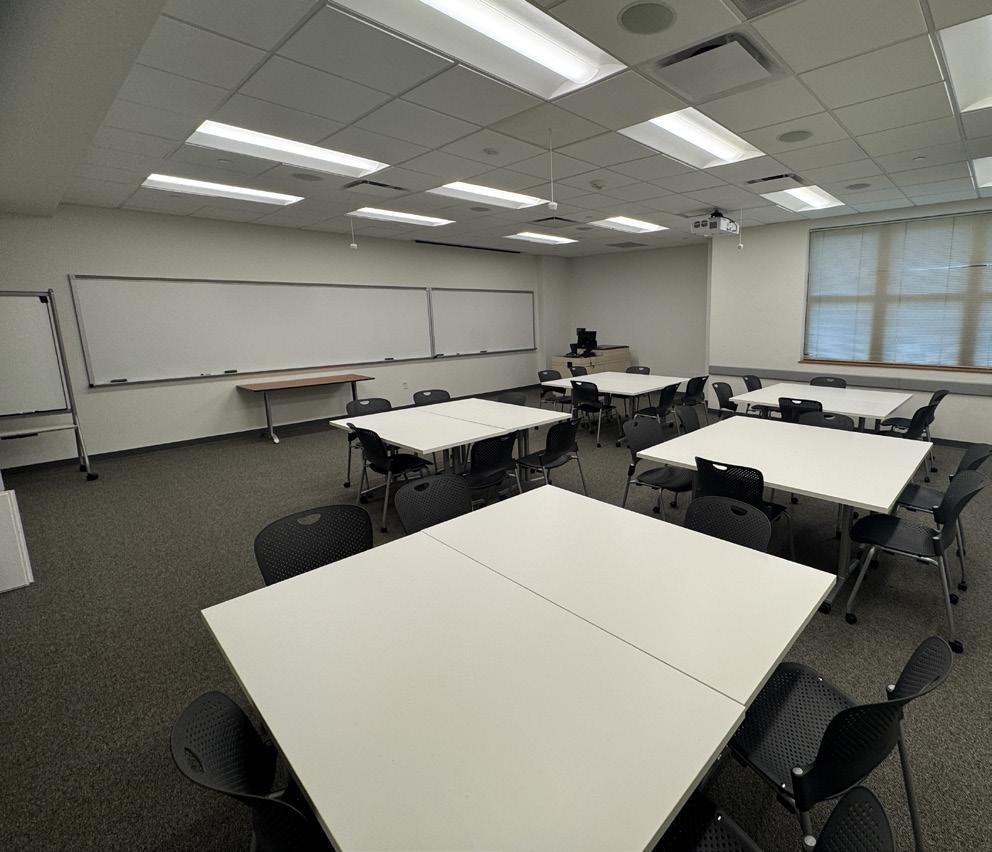
100% of classrooms INSPECTED by otr staff each semester
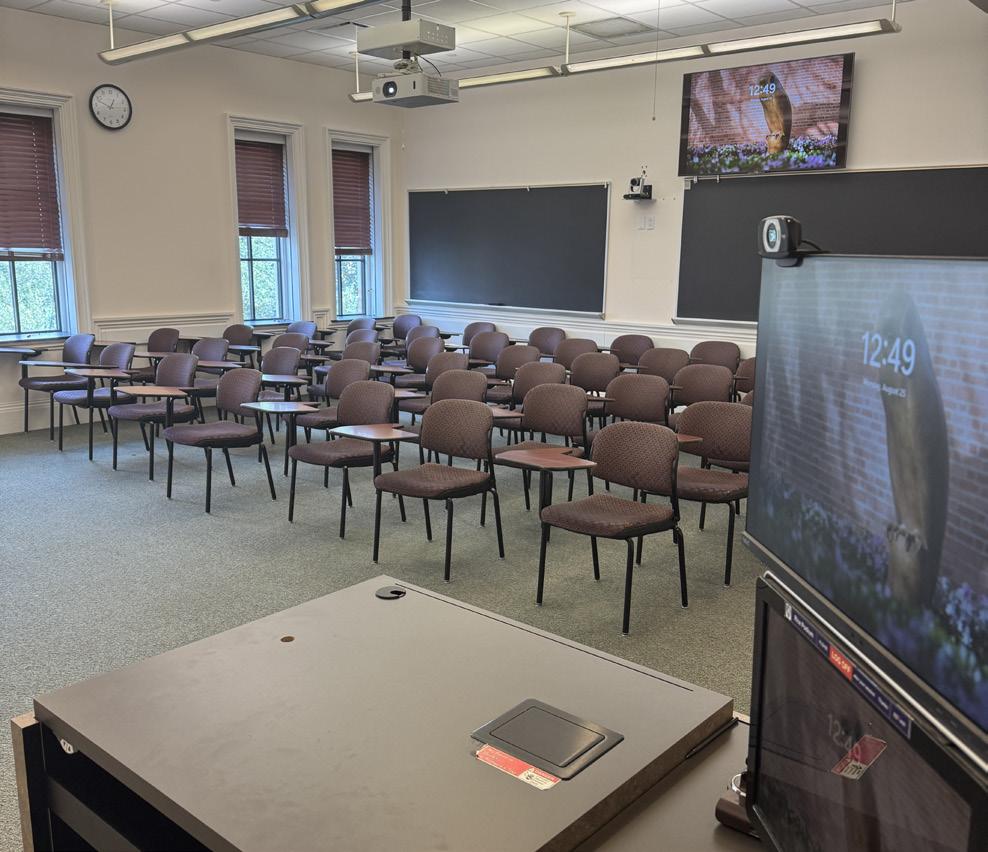

The Office of the Registrar collaborates with departments and the Office of Information Technology to ensure student data is being used appropriately and is being used in a manner that accurately reflects Rice’s landscape.
12Twenty 2U Aetna AIMS Parking ALMA ASIMUT Blackbaud Canvas Chase College Source CourseLeaf
EAB Navigate Everbridge Fischer Follett Fusion (iO) Inside Track
Interfolio ISSM
Marching Order Name Coach
National Student Clearinghouse Paradigm
Point and Click Slate
StarRez Touchnet Validity
Data is available in many self-service reports and applications for departments; however, sometimes a unique data set is needed to address a specific question. The OTR fields these ad hoc requests and processes them. While the number of specific requests remained steady from last year, several reports were changed into self-service reports to limit the recurring requests and create additional resources for other initiatives.
System access requests are first routed to the Office of Information Technology, and then sent to the appropriate data steward. As the official steward of student data, the OTR reviews all student data access requests for legitimate educational interest and completion of FERPA training, both of which are required for Rice Policy 837. The OTR reviews access for Banner, ESTHER, Edgar, Degree Works, EAB Navigate, CourseLeaf, and the data warehouse. 207
OTR staff have started to utilize ai tools and common table expressions (cte) OVER THE PAST YEAR. these have helped create more efficient queries and resolved database resource issues.
The heaviest time period for security requests is summer, WHEN MANY ADVISORS TRANSITION TO NEW ROLES.
471
471
Degree Works access allows individuals to view and run degree audits on students for advising and assessment purposes. There are different levels of access: advisor, official certifier, and superuser. Most access is at the advisor level, which allows viewing and some commenting. Official certifier access allows for the submission of petitions, course substitutions, and academic credential certifications. Super-user access is reserved for core offices for the processing of students for graduation.
The OTR maintains a large number of dashboards on Rice’s internal Tableau Server, but a number of them are published for public consumption and embedded on registrar.rice.edu. These dashboards are meant to convey a large amount of data outside of standard HTML tables, and they provide filter options, unlike common tables. Some examples include official certifier lists, part of term calendars, standard time block options, credit hour matrix, and classroom usage.
there are 131 official certifiers. THESE USERS ARE IDENTIFIED AND PROVISIONED ACCESS AFTER A ROLL CALL TO DEPARTMENTS/PROGRAMS AT THE BEGINNING OF THE ACADEMIC YEAR.
THE CREDIT HOUR MATRIX IS THE ALLTIME MOST VIEWED DASHBOARD. IT HAS ALMOST 28,000 VIEWS.