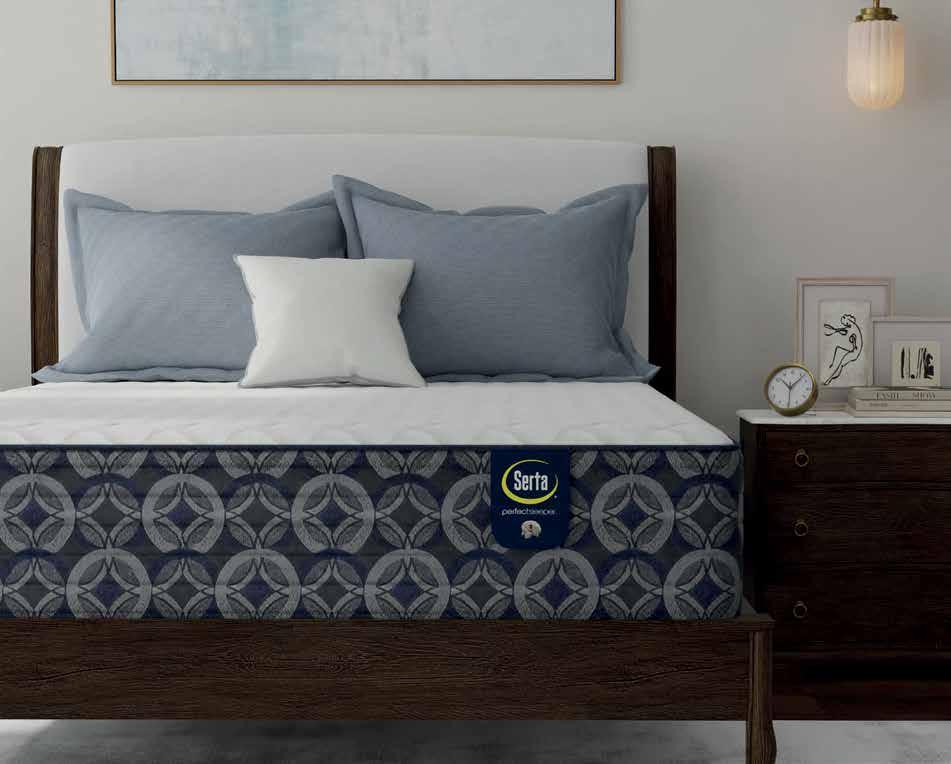
Designed to help relieve aches and back pain with consistent comfort, reduced pressure, and long-lasting support, night after night. Perfect sleep. Night after night.
14
DESIGN FIRST
Niche Decor is about more than just furniture. Although it operates a 10,000-square-foot showroom just outside Newmarket, Ont., the company is first and foremost a full-service design firm focused on creating casual, curated and livable spaces through its collection of made-to-order home furnishings.
6
TRANSFERRING OWNERSHIP
For many entrepreneurs, handing over ownership of their business is more than just a transaction — it’s an emotional moment. Here’s what you should know from a legal perspective before passing that legacy on to the next generation.
18
THE BEDDING SHIFT
While wool is often associated with warmth, research shows it can actually help regulate temperature and support cooler, more comfortable sleep. That’s one of the many reasons consumers are now turning to this natural material.
10 THE REVIEW GAP
Online ratings and reviews have become an integral part of the customer journey. As two sides of the same coin, they play a significant role in shaping purchase decisions, making them too important for businesses to ignore.
34
FROM POSTING TO PERFORMANCE
A successful social media strategy goes beyond posting regularly. Building sustainable momentum requires a structured marketing process that includes content planning, audience engagement, follow-up and performance tracking.
TELLING THE STORIES THAT MATTER
One of my favourite writing assignments is company profiles. It’s not just the process of putting pen to paper — or, should I say, fingers to keyboard. It’s also the extensive background research involved and the conversations with business leaders that bring each story to life.
This past spring, I was nominated for a National Business-to-Business Magazine Award in the Best Profile of a Company category for my article on storied Canadian furniture retailer Tepperman’s. This profile holds a special place for me because it is the longest piece I have ever written in my nearly 20 years with MediaEdge and, perhaps more importantly, celebrated Tepperman’s centennial anniversary.
In this issue, I spotlight Niche Decor, a full-service design firm with a curated 10,000-square-foot furniture and decor showroom. As the company prepares to mark 35 years in business in 2027, it continues to build on its legacy, growing from its first Ontario storefront in Richmond Hill to its current home just north of Newmarket.
Before we turn to the profile, we explore the legal considerations of succession planning for family-owned businesses, the state of the Canadian housing market in the first half of the year, and the increasing influence of online ratings and reviews.
Elsewhere in this issue, we examine the benefits of wool bedding products, how physical retailers can compete in the age of artificial intelligence, the importance of employee recognition, strategies for optimizing furniture financing and recommendations for successful rebranding, among other topics.
As always, we close with our Observations column, where four industry experts offer their insights on a timely question.
Looking ahead to the remaining issues of 2026, if there’s an issue that you’d like to see covered, e-mail me at claret@mediaedge.ca. The same goes if you’d like your company to be considered for a future profile.
Clare Tattersall
PUBLISHER
Ashley Ramnairan ashleyr@mediaedge.ca
PRESIDENT Kevin Brown kevinb@mediaedge.ca
PRODUCTION
MANAGER
Ines Louis Inesl@mediaedge.ca
PROGRAMMATIC
ACCOUNT MANAGER
Rhea Sood rheas@mediaedge.ca
Published by
EDITOR Clare Tattersall claret@mediaedge.ca
SENIOR GRAPHIC DESIGNER
Roxy Huynh-Guinane roxyh@mediaedge.ca
SOCIAL MEDIA DIRECTOR Steve Chester stevec@mediaedge.ca
CIRCULATION Adrian Holland circulation@mediaedge.ca
Home Goods Merchandiser is published four times annually — Spring, Summer, Fall and Winter — for Canada’s bigticket home goods industries. Subscriptions are free to qualified participants in Canada’s big-ticket home goods industries. Subscribe at www.homegoodsonline.ca. Readers from outside Canada may purchase subscriptions for $40 Cdn. For subscription inquiries, e-mail circulation@mediaedge.ca. Return undeliverable Canadian addresses to: Home Goods Merchandiser 251 Consumers Road, Suite 1020, Toronto, Ontario M2J 4R3. MediaEdge Communications and Home Goods Merchandiser disclaim any warranty as to the accuracy, completeness or currency of the contents of this publication and disclaims all liability in respect to the results of any action taken or not taken in reliance upon information in this publication. The opinions of the columnists and writers are their own and are in no way influenced by or representative of the opinions of Home Goods Merchandiser or MediaEdge Communications.
Canada Post Canadian Publications Mail Sales Product Agreement No. 40063056
ISSN 2291-4765
Return undeliverable Canadian addresses to circulation department: 365 Evans Avenue, Suite L10, Toronto, Ontario M8Z 1K2
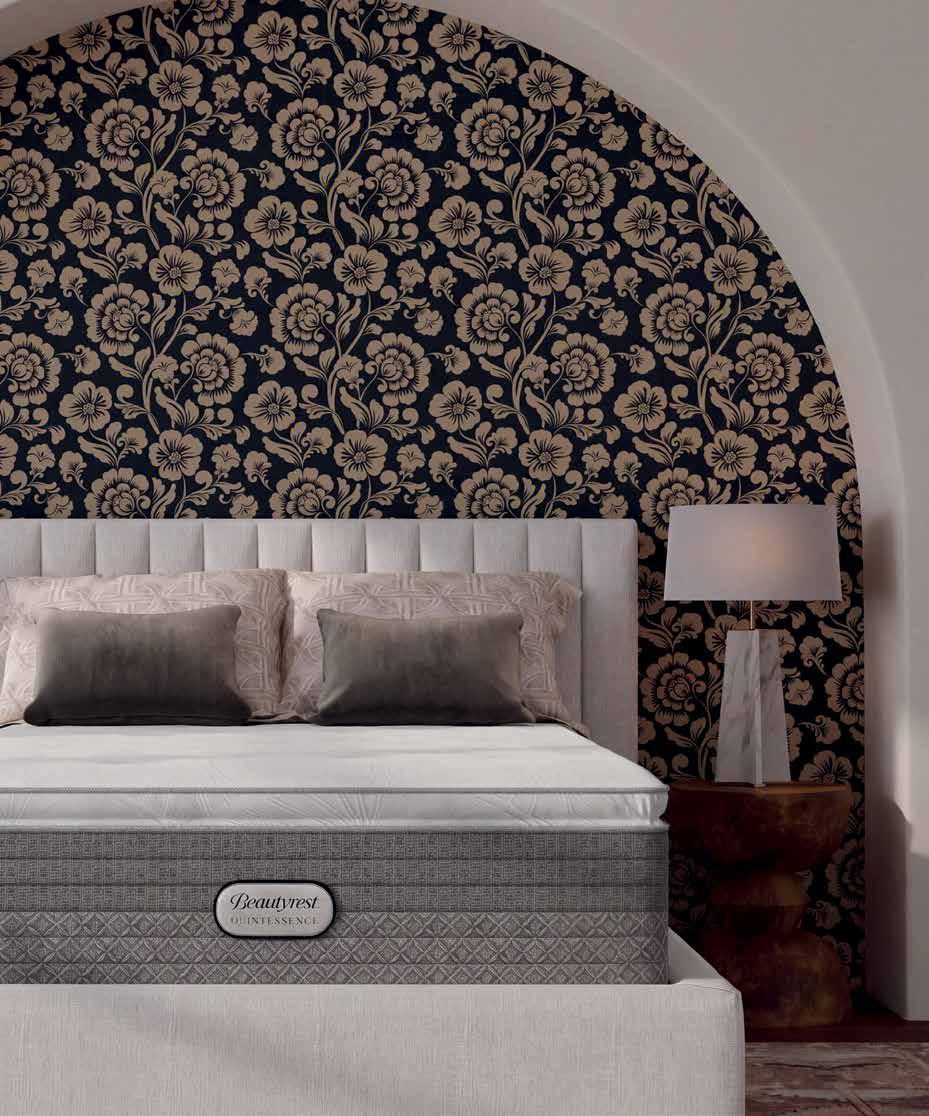
Breakthrough innovation centered around luxurious comfort, enhanced cooling and superior support. The result.. a luxurious cradling feeling helping you to drift away to sleep.
TRANSFERRING OWNERSHIP
Smart succession planning for Canadian family businesses BY
STEVE PARR
FAMILY-OWNED BUSINESSES ARE THE BACKbone of the Canadian economy. They make up more than 60 per cent of private sector enterprises, account for almost 50 per cent of private sector GDP, and employ millions of people across the country. But as founders approach retirement, a major wave of transition is on the horizon. Nearly half plan to pass on their leadership, ownership or both to the next generation.
If you are one of those owners, you know that your business is more than just an asset; it is your life’s work. Yet passing a company to close relatives is rarely as simple as handing over the keys. Without a clear, practical plan, families can run into unintended tax consequences, operational gridlock or messy disagreements.
To get succession right, you don’t need a law degree. You simply need to focus on a few core principles to protect your family legacy.
THE DANGER OF THE $1 SALE
When it’s time to pass the business to your children, a natural instinct is to ease their financial burden. Many owners think, “I’ll just sell the company shares to my kids for a token amount like $1 and call it a day.”
Unfortunately, the Canada Revenue Agency (CRA) does not see it that way. For tax purposes, it evaluates transactions between family members based on the business’s fair market value — what it would reasonably sell for on the open market.
If your business is worth $2 million and you sell it to your child for $1, the CRA will still treat the transaction as if it occurred at fair market value, taxing you on the full $2 million and creating a significant capital gain. Even worse, your child’s tax baseline — their adjusted cost base — remains the $1 they paid. When they eventually sell the business, they will be taxed again on the same increase in value. This creates a punitive
double-tax trap that can force families to liquidate hard-earned assets to cover an unexpected tax bill. Rather than attempting a discounted or informal transfer without professional guidance, consider properly structured approaches, such as a legally documented gift or a formal sale agreement with protective clauses to ensure compliance with tax rules. In some cases, families may also be able to make use of Canada’s Lifetime Capital Gains Exemption.
FREEZING YOUR BUSINESS VALUE
If your business is growing and you want to pass that future success on to your children without triggering an immediate, massive tax bill, consider an estate freeze. An estate freeze is a way to hit the pause button on your current tax liability. You exchange your existing company shares for a class of preferred shares fixed at the company’s current fair market value. This ensures
your retirement capital is safe and your future tax exposure is fixed and defined.The business then issues new common shares to your children at a nominal cost. Because your value is frozen, all future growth and appreciation of the business accrue to your children. This strategy allows you to map out a reliable retirement income stream as the company gradually buys back your fixed shares over time. It keeps operations running smoothly without corporate disruptions, protects future growth from personal estate taxes and sets your children up for long-term success.
PROTECTING ASSETS WITH A FAMILY TRUST
Instead of handing over new common shares directly to your children — particularly if they are young or still developing experience — many founders use a family trust to hold those shares. A family trust is often managed by the founder. By acting as trustee, you retain control over major corporate decisions. At the same time, you can distribute business profits (dividends) or gradually transfer ownership shares as your children mature and demonstrate they are ready.
A family trust can provide both business protection and tax efficiencies. It helps shield your hard-earned corporate assets from outside risks, such as potential shareholder disputes, creditor claims or marital breakdowns. It can also offer flexibility to allocate income to family members in lower tax brackets, provided they are genuinely active and engaged in the business.
Keep in mind that a family trust comes with strict rules. If it isn’t structured carefully with professional guidance, the CRA may attribute the trust’s income back to you, potentially wiping out any tax advantages.
TAX-FRIENDLY SALES TO YOUR KIDS
Historically, Canadian tax laws made it incredibly difficult to sell a business directly to a company owned by your children without facing significant tax penalties. Fortunately, recent rule changes have created clear safe harbours for intergenerational transfers, making them much more tax-efficient.
You can choose between two main paths depending on your timeline: immediate handoff or gradual transition. An immediate handoff is a fast-tracked transition in which you relinquish voting power and future growth rights, handing over full management responsibilities to your children within a three-year period. A gradual transition gives you a flexible five- to
10-year period to step back from the business. While management control must be transferred within five years, you can retain up to 30 per cent of the equity value for up to a decade.
Both options require your children or grandchildren aged 18 or older to remain actively involved in day-to-day operations. They offer a powerful alternative to an estate freeze that allows you to make full use of your lifetime capital gains exemption.
STEPS TO PREPARE FOR SUCCESSION
A successful business transition isn’t just about paperwork; it’s about setting up a stable foundation for the future. Here are four strategies every business owner should implement.
To begin, obtain an independent professional valuation. Knowing exactly what your business is worth satisfies tax authorities and provides a realistic benchmark for your succession planning.
Then, solidify your governance. Update shareholder agreements and corporate bylaws. Clearly outline who has voting rights and how shares can be transferred to prevent unexpected corporate gridlock.
Next, separate ownership from management. Just because a child inherits a piece of the company doesn’t automatically mean they should run the day-to-day operations. Define executive roles based on qualification and capability rather than birthright to protect the business’s longevity.
Finally, use a corporate will to save on estate administration costs. In provinces like Ontario and British Columbia, probate fees can amount to roughly 1.5 per cent of an estate’s value. By drafting a separate will for your private company shares, your heirs can transfer the business without going through a lengthy court process. This strategy helps keep the value of your business private while saving your family thousands of dollars in unnecessary fees.
Steve Parr is the founding partner at Parr Business Law, a Canadian business law firm with offices in Vancouver that advises family enterprises, entrepreneurs and mid-market corporations on tax-driven reorganizations, mergers and acquisitions, and corporate estate planning, with offices in Vancouver.
A family trust can be particularly useful when your children are still young because it provides flexibility. Instead of deciding today who will own or run the business in the future, you can defer that decision until your children are older.
BETTER LATE THAN NEVER
Delayed housing market recovery sets stage for stronger second-half activity, but CREA lowers 2026 outlook
BY CLARE TATTERSALL
FOLLOWING A SLOW START TO THE SPRING selling season, Canada’s residential resale market has begun to find its footing. However, the anticipated recovery hasn’t been strong enough for the Canadian Real Estate Association (CREA) to maintain its original housing market forecast for 2026.
Economic developments and housing trends during the first half of the year have prompted CREA to downgrade its projection. The association now expects 463,336 residential properties to trade hands through Canadian MLS systems, nearly 32,000 fewer than previously predicted. While this would represent a modest 1.4 per cent decline from 2025, CREA had forecast a 5.1 per cent year-over-year increase in sales.
The revision reflects a more pronounced-than-anticipated slowdown in parts of the country facing the dual headwinds of the sharp reduction in population growth and historic supply shortages, particularly in Quebec and Atlantic Canada. As a result, Ontario
is now the only province projected to record higher home sales in 2026 than in 2025.
The national average home price is still forecast to rise in 2026, but only by 1.1 per cent annually to $686,710, compared with the previously predicted 2.8 per cent increase. The updated outlook reflects declines of less than one per cent in British Columbia and Ontario, offset by continued but slowing price growth in other provinces. Standout provinces on the price front include Alberta, where prices turned a corner and resumed rising in the second quarter, and Newfoundland and Labrador, which remains Canada’s only province firmly in seller’s market territory.
UNCERTAINTY EXTENDS BEYOND BORDERS
Housing market momentum was tempered in spring by the lingering effects of a long, snowy winter and geopolitical uncertainty. Ongoing trade tensions with the United States continued to fuel concerns about
economic stability and job security, while the inflationary impact of America’s escalating conflict with Iran pushed energy prices and fixed mortgage rates higher in late March. Rates have since partially eased, and the prospect of further Bank of Canada interest rate hikes this year has largely been taken off the table, providing some relief for both fixed- and variable-rate borrowers.
This slowdown affected not only sales but also the national aggregate home price, which declined two per cent year-over-year in the first quarter and 1.4 per cent in the second quarter. However, on a quarter-over-quarter basis, prices held steady, edging up a modest 0.2 per cent.
National figures, though, do not tell the whole story. Housing trends continue to be heavily influenced by weaker conditions in British Columbia and southern Ontario because of the size of those markets. In contrast, Quebec’s comparatively affordable housing
market supported stronger sales activity and price growth. While home sales eased across the Prairies, limited inventory continued to support modest price gains. In Atlantic Canada, stronger economic conditions, driven by growth in Newfoundland and Labrador’s energy sector and a rebound in Nova Scotia’s exports, helped sustain housing demand. Although sales activity moderated, tight supply and ongoing interprovincial migration in search of more affordable housing helped underpin modest home price appreciation.
MAJOR CITIES FOLLOW DIVERGING PATHS
While most regional markets showed resilience, conditions remained more varied in Canada’s largest urban centres.
In the Greater Toronto Area (GTA), market conditions tightened as activity improved steadily from one month to the next while new supply declined. Many sellers chose to delay listing their homes for sale rather than accept lower offers, contributing to a gradual increase in prices. While the region was still characterized as a buyer’s market, momentum shifted toward more balanced conditions in the second quarter.
Activity in the GTA is expected to continue increasing, with the exception of the condominium sector, which is likely to stay soft given elevated inventory and selling pressure from investors. If supply declines and pent-up demand remains significant — particularly among move-up buyers who have delayed purchasing decisions over the past two years — competition could intensify this fall.
In Ottawa, home prices inched up slightly despite lower sales activity compared with the same period last year. Inventory held steady at balanced levels, suggesting the recent slowdown has been driven more by softer buyer demand than by supply constraints. Summer market activity is expected to be fairly typical, with the potential for a busier fall if consumer confidence improves.
Activity was strong on Montreal’s North and South shores, where limited inventory favoured sellers. Downtown, however, is still feeling the effects of the pandemic-driven shift away from urban living. The luxury property market was the main source of renewed activity in the city, supported by a clear return of consumer confidence and liquidity inWestmount, Outremont and Mont-Royal. Despite a gradual increase in housing stock, demand remained strong, with buyers outnumbering available listings and maintaining upward pressure on prices. By contrast, the condo market continued to face significant challenges, including a historic glut of units.
The market eased considerably in Quebec City,
with far fewer multiple offers than before, although buyers were present and active. Prices reflected the slowdown, but limited available supply still put slight upward pressure on property values.
The outlook for the second half of the year in Montreal and Quebec City remains cautious. The upcoming provincial election could cause some buyers and sellers to pause, while also raising the possibility of a minority government and increased support for the Parti Québécois. This could renew long-standing federalist-sovereigntist tensions and create uncertainty for the business climate, particularly within the English-speaking community.
While still below typical seasonal trends, Greater Vancouver saw sales activity steadily tick upward month-over-month. June marked a significant improvement in home sales, increasing about 10 per cent from a year ago. Sales are expected to flatten out over the summer months before picking back up again in the fall.
Activity gradually picked up in Calgary, though sales were down roughly 11 per cent compared with the same period last year. Despite lower sales, conditions remained fairly balanced overall. The city’s relative affordability continued to attract buyers from other provinces, supporting sustained interprovincial demand.
In Edmonton, first-time buyers and newcomers maintained a strong presence, many drawn to the city for employment opportunities and its relative affordability. Move-up buyers also became more engaged, particularly those who purchased during the
pandemic and are seeking more space. Edmonton’s luxury market continued to gain momentum, as homeowners in established neighbourhoods have invested significantly in renovations and upgrades, enhancing property values and raising expectations for surrounding areas. Market activity is expected to ease gradually through the summer rather than experience a sharp decline, with momentum carrying into the early weeks of the third quarter.
Regina performed slightly better than expected, with buyer demand remaining resilient despite ongoing affordability challenges. Inventory stayed below long-term historical averages, as new listings were generally absorbed quickly. Continued population growth and in-migration to Regina and other parts of Saskatchewan also supported housing demand.
Winnipeg’s market unfolded largely as expected. Sales softened modestly compared with the same period last year, while new listings increased more meaningfully, giving buyers greater choice. Despite lower sales volumes, home prices posted modest yearover-year gains, supported by limited inventory.
A sense of hesitation emerged in Halifax. Consumers were engaged but a lack of urgency kept inventory levels elevated. The market continued to be driven largely by local first-time buyer demand. Out-of-province buyers pulled back as return-to-office mandates reduced the flexibility that previously made relocation more viable. Some of that demand is expected to return as increased federal defence spending brings military personnel and their families to bases across the region.
Higher interest rates, affordability concerns and economic uncertainty led many move-up buyers in Toronto to delay purchasing decisions in recent years. However, as market conditions tighten, the fall may be the right time for those buyers to make their next move.
THE REVIEW GAP
Why big-ticket home goods retailers can’t afford to treat ratings, reviews as an afterthought
BY MARK SMITH
CONSIDER TWO PURCHASES. THE FIRST IS A can of tuna. It costs a few dollars, takes seconds to grab off a shelf and if it turns out to be the wrong choice, the consequence is a mildly disappointing sandwich. The second is a mattress. It costs anywhere from $800 to $3,000, requires a trip to a store or a leap of faith online, and if it turns out to be the wrong choice, the consequence is months of poor sleep and a return process nobody wants to navigate.
These two purchases exist in the same retail ecosystem. They both sit on e-commerce product pages.
And both collect ratings and reviews. But the role those reviews play in the purchase decision is not remotely the same, and retailers that treat them as such are leaving significant revenue on the table.
New research from Caddle, conducted this past spring with approximately 2,000 Canadian shoppers, makes the stakes clear. Ninety-one per cent of Canadian shoppers describe ratings and reviews as essential to their purchase decision. Not helpful. Essential. And reviews rank second only to price as a purchase driver, ahead of free shipping, brand loyalty and word
of mouth. In a category where the average transaction size runs into the thousands, that number should reshape how big-ticket retailers think about their review programs entirely.
THE CONSIDERED PURCHASE PROBLEM
Big-ticket home goods like furniture, mattresses and major appliances occupy a unique space in the Canadian retail landscape. They are purchases that shoppers research deeply, decide slowly and remember for years. A shopper selecting a sofa is not making a snap decision. They are imagining it in their living room, calculating whether it fits through the front door, wondering how it holds up after years of daily use and quietly hoping they do not regret it.
Reviews are the closest thing that a shopper has to the experience of owning the product before they buy it. They are proxy experiences — accounts from real people who have already made the leap. For a $2,500 mattress, that proxy experience is not a nice feature on the product page. It is the deciding factor.
The research reinforces this. Seventy-five per cent of Canadian shoppers say they trust a star rating more when a written review accompanies it. In other words, a star rating alone does not close the deal. Shoppers want the story behind the number whether the mattress sleeps hot, the sofa cushions flatten after six months or the refrigerator is as quiet as the listing claims. Those answers do not live in a star rating. They live in reviews.
Half of shoppers say the length and depth of a review shapes their assessment of a product. In big-ticket categories, a one-line review such as “great product, fast shipping” is nearly worthless. A review that describes the assembly process, quality of the materials, dimensions relative to expectation and how the piece holds up after months of use is doing meaningful commercial work.
THE TRUST SIGNAL THAT CANNOT BE FAKED
One of the more striking findings in the research is 64 per cent of Canadian shoppers say real customer reviews written by verified buyers are more import-
ant to their purchase decisions now that artificial intelligence (AI)-generated content is widespread. The authentic human voice has become more valuable precisely because it has become harder to find.
For big-ticket home goods retailers, this creates both a challenge and an opportunity. The challenge is that shoppers are increasingly skeptical of review content that feels thin, generic or unverifiable. The opportunity is that retailers who invest in genuine, verified purchase reviews — reviews tied to real transactions, real products, real experiences — are building a competitive asset that is difficult to replicate.
The research also reveals a counterintuitive truth about negative reviews. Ninety-six per cent of Canadian shoppers actively seek out negative reviews before making a purchase. Not occasionally. Actively. And 60 per cent are suspicious of a product with a perfect five-star rating. A flawless review profile does not signal excellence; it suggests curation. A balanced profile, honest trade-offs and genuine criticism alongside praise is what builds the kind of trust that converts.
THE THREE-SIGNAL CHECK
Canadian shoppers evaluate a review profile on three signals simultaneously: average rating, total number of reviews and recency of the content. No single signal is sufficient on its own. A 4.8 average rating with three reviews from 2022 will not move a shopper who is about to spend $1,800 on a sectional. All three signals need to be working together.
Nearly half of Canadian shoppers, 47 per cent, want to see reviews posted within the last month before they feel confident making a purchase. For seasonal categories like air conditioners or outdoor furniture, this creates a real operational challenge. Review content goes stale. A product that sold well last summer may have reviews that are already 12 months old by the time the next buying season begins. Retailers that build post-purchase review collections into ongoing operations — not one-time campaigns — are the ones that show up with fresh, relevant content when it matters most.
“Eighty-six per cent of shoppers actively seek out websites that feature ratings and reviews before they begin the purchase process.”
The research identifies a sweet spot of 11 to 25 reviews as the threshold where shopper confidence peaks across most product categories. That is an achievable target for most SKUs, but it requires intention — asking for reviews at the moment of highest customer satisfaction, after delivery, installation and first use. It also means making the review submission process easy and giving shoppers guidance on what a useful review looks like.
THE DIGITAL SHELF FOLLOWS SHOPPERS
Seventy-two per cent of Canadian shoppers check reviews on their phones while in a physical store. A customer standing in front of a floor model, comparing it to what they saw online the night before, is completing a research journey that spans multiple channels and moments. The review content they encounter either builds confidence or erodes it.
Eighty-six per cent of shoppers actively seek out websites that feature ratings and reviews before they begin the purchase process. Reviews are not just a
feature on the product detail page — they are a discovery mechanism. Retailers that surface review content across their digital presence, from category pages to search results to digital flyers, are meeting shoppers earlier in the journey and holding their attention longer.
This extends to how review content is structured for machines as well as people. Search engines, AI shopping tools and large language models can only surface what they can find and interpret. Implementing schema markup on product pages, along with structured data that labels review content in machine-readable formats, is rapidly becoming a baseline requirement for retailers that want to appear in AI-generated shopping recommendations. Reviews that are not structured for machine readability are, in effect, invisible to an increasingly important discovery channel.
The same principle applies to syndication. Forty-five per cent of Canadian shoppers find reviews through search engines before they reach a retailer’s product page, while 50 per cent encounter them on retailer websites. Shoppers are not consolidating their research around a single platform. A review that only lives on a product page is invisible everywhere else. Syndicating review content across retail channels — ensuring it appears wherever the product is sold — multiplies the commercial value of every review collected.
THE BOTTOM LINE FOR BIG-TICKET RETAILERS
Big-ticket home goods retailers operate in a category where purchase decisions are long, research is deep and the cost of a wrong choice, for both shoppers and retailers, is significant. In that environment, a best-inclass ratings and reviews program is not a marketing tactic — it is commercial infrastructure.
The retailers that will win the next decade of Canadian home goods retail are those that treat review content with the same seriousness they bring to pricing strategy, promotional planning and inventory management. Reviews are the new price. They travel with the shopper across every channel, answer questions at every stage of the journey and ultimately determine whether a considered purchase ends in a conversion or a lost sale.
The data is clear. The opportunity is real. The question is whether retailers choose to act on it.
Mark Smith is chief growth officer at Caddle, a leading Canadian consumer insights and ratings and reviews platform. With more than 25 years working across retail, brands and technology, Mark has a straightforward philosophy: growth comes from genuinely understanding shoppers and building partnerships that deliver real outcomes, not chasing the noise. Mark can be reached at reviews@caddle.ca.
Looking up online reviews while shopping in a physical store has become a common behaviour that helps consumers feel more confident about their purchase decisions.
The sales floor is the last mile. Most retailers are not taking advantage of it.
There’s a version of furniture retail that works exactly as it should. A customer walks in uncertain, has a real conversation with someone who knows what they’re talking about, and walks out confident. They bought something they’ll love, at a price that made sense, with a protection plan they actually understand.
That version doesn’t happen by accident. It happens when the associate is prepared.
The uncomfortable reality for many home furnishings retailers is that the product is often fine. The merchandising is fine. The pricing is competitive. And the sale still falls apart because the conversation on the floor wasn’t strong enough.
Customers arrive having done their homework. They’ve compared prices, read reviews, and visited other stores. They don’t need someone to read them a hang tag. They need someone who can help them think, who can explain why one mattress is worth the premium, how financing makes a better sofa actually accessible, why the protection plan matters for a household with kids and a dog. They need someone who can meet a price objection with confidence instead of a shrug and a discount.
82% of units sold are recommended by an RSA*. The sales associate isn’t just supporting the sale. They MAKE the sale.
Which is what makes AI genuinely interesting here, not because it replaces that conversation, but because it can make the person having it far better prepared.
The tools now exist to give associates on-demand product knowledge, realistic role-play practice, and coaching tied to actual performance gaps rather than gut feelings. Brands can connect directly with floor associates through training platforms that link product knowledge to SPIFFs. Managers can see not just who is having more challenges but specifically why, and address the real issue instead of delivering the same generic feedback for the fourth time.
Protection plan attachment running below target? There’s a coaching path for that. Financing conversations feeling awkward and forced? There’s practice for that. New product launch with a complicated story to tell quickly? There’s a course for that.
None of this is about making retail feel more automated. When an associate knows the product, has worked through the hard objections in practice, and has a clear sense of what they’re working toward, the customer conversation gets more human. Not less.
The retailers figuring this out are building something that goes well beyond a training program. They’re connecting learning, practice, and incentives into something that actually functions as a performance system on the sales floor.
The gap between a good associate and a great one usually isn’t talent. It’s preparation.
The full article goes considerably deeper: how AI role-play is being used for specific objection types, how brands are structuring SPIFF programs around knowledge verification, what responsible AI implementation looks like and what to avoid, and how leading retailers are tying coaching activity to measurable floor results.
Get tips to improve your margins & join the waitlist for the Margin + Plus Method™ playbook release later this year!
*Source: SellPro Completes Stage 1 of AI Strategy to Reshape Retail Engagement.
Author: Bradford W. Geddes
Bradford “Brad” W. Geddes is President and CEO of Zucora Inc., a company dedicated to helping home furnishings retailers grow more profitable businesses. Brad has worked closely with hundreds of dealers, store managers, and sales associates across the furniture, appliance, and bedding sectors, gaining deep, practical insight into the realities of highly competitive retail markets. Brad brings a grounded, real-world perspective to the challenges and opportunities facing today’s home furnishings industry. His experience and insights have been distilled into 150 practical lessons featured in his forthcoming book, Margin + Plus Method™, scheduled for release in fall 2026.
Design First
Niche Decor redefines the furniture experience through its custom approach to creating livable spaces BY
CLARE TATTERSALL
SITUATED ON THE NORTHERN EDGE OF THE Greater Toronto Area, Newmarket is a growing lifestyle destination. Blending historic charm, modern amenities and access to nature, the town is emerging as one of the region’s most sought-after communities. Its steady growth over the past two decades reflects its enduring appeal to residents and businesses alike, with an average of 40 new businesses opening annually in recent years.
Like many of Toronto’s commuter suburbs, Newmarket experienced a real estate boom during the pandemic. As remote work became more widespread, many people left denser urban areas in search of larger, more affordable homes with ample outdoor space.
Between 2020 and 2021, home sales increased by approximately27percent,whilecompetitionamongbuyers drove home values sharply higher. Detached home values rose by more than 37 per cent during the early stages of the Covid-19 outbreak — one of the strongest gains in Ontario. This surge in home purchases also benefitted businesses in Newmarket and surrounding communities, including Niche Decor, a full-service interior design firm that operates a 10,000-square-foot curated home furnishings showroom in East Gwillimbury, as new homeowners sought to personalize and furnish their spaces.
“We were super busy and saw huge growth,” says Jean Bisnaire, co-owner and founder of Niche Decor.
He adds that whole-home renovations and individual room refreshes also fuelled business, driving demand for both furniture and design services.
“With people spending more time at home, they noticed their spaces were no longer meeting their needs, so a lot decided it was time to fix that.”
Bisnaire’s partner, both professionally and personally, says the company’s location between multiple municipalities gives it an advantage.
“In addition to Newmarket, we service surrounding areas like Uxbridge and Stouffville, and communities as far north as Collingwood and Barrie, as well as Toronto to the south, which means we attract business from all directions,” explains Shima Yazdan.
Niche Decor is now approaching a decade at its current address at 181 Green Lane East. The company relocated from Unionville in 2017, motivated by the need for larger premises to showcase its collec-
tions — the previous storefront was just 1,000 square feet — as well as changing demographics in the community. Known for its small-town charm and picturesque aesthetic, Unionville was once home to several independent specialty retailers, particularly along Main Street, where Niche Decor spent 20 years. But as rents rose, consumer habits shifted and redevelopment in the region increased competition, the retail landscape changed. Restaurants and cafes increasingly replaced the boutique home furnishings stores that once lined the street. Bisnaire says Niche Decor was the last store of its kind before relocating.
“Clients eventually stopped visiting the showroom because they couldn’t find parking; available spaces were often filled by people coming to the area to eat,” he recalls.
“It wasn’t a shopping destination anymore,” adds Yazdan. “We went from selling an entire section of the showroom on a weekend to people just strolling through with an ice cream in their hand. We would go weeks without a single sale being made on the floor.”
Faced with a difficult decision — remain and risk being left behind or leave in pursuit of growth — Bisnaire and Yazdan opted for the latter.
AN UNEXPECTED PATH
While Niche Decor’s story did not end in Unionville, neither did it begin there.
Bisnaire, a graduate of Humber College’s industrial design program, got his start in the industry in the mid-1980s, working for several furniture companies, including Creative Custom Furnishings. After the company’s owner unexpectedly died and the business dissolved, Bisnaire launched High-end Custom Furnishings with two colleagues. Despite the venture’s initial success, he soon realized that furniture production wasn’t his forte.
“I wasn’t a cabinetmaker; I was more of a designer,” he says.
Bisnaire decided to “start again” and opened a studio with a retail storefront in Richmond Hill in 1992, allowing him to focus on what he did best — designing custom, high-quality furniture — while leaving manufacturing to subtrades that shared his values. From that vision, Niche Decor was born, the name chosen to reflect that Bisnaire had found his niche.
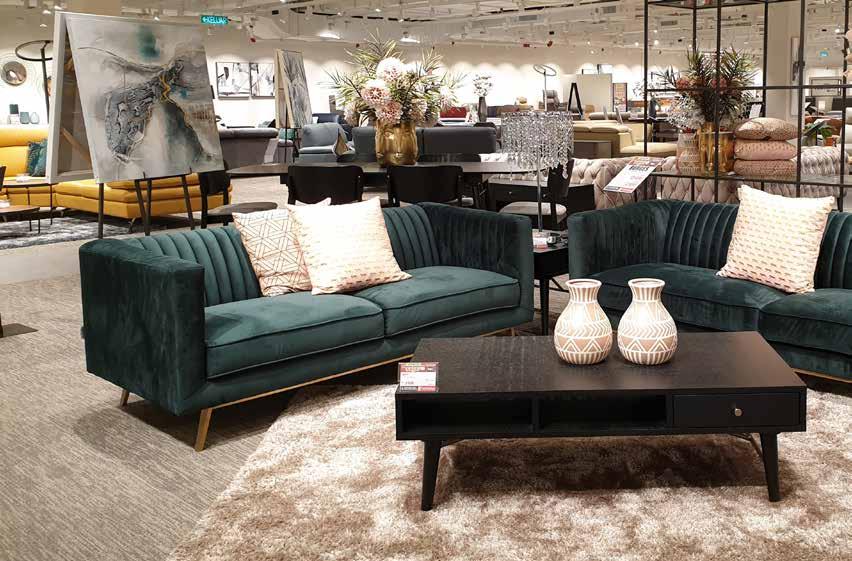
Niche Decor’s 10,000-square-foot showroom features room settings.
Three years later, he moved Niche Decor to Unionville so he could be closer to his aging parents, who lived there.
“I wanted to be able to have coffee with my dad and spend time with them,” says Bisnaire. “It was really about creating a different quality of life.”
The move also proved to be good for business.
“The clientele understood the kind of furniture we were trying to create,” he explains. “Along with about six other furniture-related stores on Main Street, we became part of a go-to design hub where the energy was fantastic.”
As the business grew, so did Bisnaire’s team.Yazdan, then an arts management student at the University of Toronto, applied for a part-time position in 2007, to earn some money while in school. With dreams of curating art exhibitions, she expected to stay for no more than a couple of years.
“I wanted zero responsibility,” laughs Yazdan. “The running joke was that I didn’t even want a key to the store.”
Her perspective began to change when Bisnaire encouraged her to complete a co-op placement at Niche Decor as part of her university program. The experience gave her a new appreciation for the company.
“It was wonderful because I got to go on all of Jean’s site visits with him,” says Yazdan. “He has this remarkable ability to see what people need before they do, bringing not only his design expertise into their homes but his furniture, too.”
Yazdan settled into Niche Decor, where her role
evolved from sales associate to interior decorator, eventually expanding into business development. In 2015, she became co-owner of the company.
SELLING SOLUTIONS, NOT JUST SOFAS
As Niche Decor nears its 35th year in business, Bisnaire reflects on what has contributed to its enduring success. Positioning the company as a design firm first — focused on creating casual, comfortable and liveable spaces through its customizable home furnishings — and a retailer second has helped distinguish it within the industry. Design services account for 60 to 75 per cent of the business, including collaborations with independent designers on their projects, while the remainder comes directly from retail sales.
This isn’t to say the showroom is an afterthought. Showcasing Bisnaire’s exclusive designs alongside products from other brands — 80 per cent of them Canadian, including Linea Design Furniture, Marcantonio Designs and Brentwood Classics — the space is thoughtfully arranged into captivating vignettes that highlight not only the furnishings but also distinctive accessories and art, demonstrating how carefully chosen pieces can bring character to any home. Twice annually, during slower shopping periods in March and August, Yazdan, creative director Amanda Scarlato-Bittner and their team completely transform the showroom, reinventing each room setting over five days — a process that involves months of planning.
“It’s a huge endeavour that also requires the help of movers since we have a lot of heavy items in the
Niche Decor co-owners Jean Bisnaire and Shima Yazdan.
Project Stoneridge in Uxbridge, Ont., features a custom-made coffee table to anchor the space.
showroom, but it’s well worth it,” she says. “The overhaul breathes new life into the space, introducing customers to newly added pieces while allowing them to rediscover long-time favourites that have been on the floor for years.”
Most of the furniture, which falls within the midto-high price range and reflects a transitional aesthetic, can be made-to-order, with options to customize elements such as dimensions, finishes, fabrics and functional features like storage.
“We’ve even had people come in and ask if we could colour-match an armoire to their existing dining table. When I said, ‘Sure, just bring us a stain sample,’ they were ecstatic,” says Yazdan. “This level of service really sets us apart.”
Also, unlike many furniture stores, sales associates do not work on commission. Staff are focused on helping customers make thoughtful decisions rather than maximizing individual sales. This approach has fostered long-term customer relationships, resulting in repeat and referral business.
“We don’t want to just sell a sofa to a customer — we want to sell them the right sofa for their lifestyle, family and space,” she says.
While many furniture retailers offer complimentary design services focused primarily on the products they sell, Niche Decor’s process extends far beyond furniture selection. Every project considers the entire space — from layered lighting, wallpaper, window treatments, flooring and fireplace feature walls to paint colours, architectural details and custom furnishings — to create a cohesive design tailored to each client’s lifestyle. This comprehensive approach is why Niche Decor charges for its design services, reinforcing the company’s position as a full-service interior design firm rather than a showroom focused solely on selling furniture.
MORE THAN A SHOWROOM
Niche Decor’s business model has helped it remain resilient amid the economic uncertainty brought on by changing U.S. trade policies. At the same time, the company has made strategic adjustments to support long-term growth, including forging relationships with complementary home brands to create cross-promotional opportunities. Last year, for example, Niche Decor partnered with Bloomsbury Fine Cabinetry, a local high-end kitchen manufacturer, to refresh its showroom for an open house. Shared across both companies’ social media platforms, the collaboration helped increase brand awareness and introduce Niche Decor to new audiences.
“These initiatives contributed to a strong 2025 for us,” says Yazdan. “We saw 15 per cent growth over the previous year.”
Community involvement has been another avenue for strengthening relationships while giving back. The company regularly hosts in-store events, from catered dinners to pop-up shops, that encourage connection and engagement. This past spring, Niche Decor opened its showroom as a donation hub for Girls Inc. of York Region, which collects gently used formal wear, shoes and jewelry for girls graduating Grade 8 or attending their high school prom.
“We encouraged our clients to clean out their closets and their daughter’s closets and bring us dresses so they could have a second life,” says Yazdan, who emphasizes that the showroom is intended to be more than just a retail space — it’s a place for good.
This excites both customers and staff, reinforcing Niche Decor’s vision as a destination that prioritizes relationships over transactions and purpose alongside design.
“We don’t want to just sell a sofa to a customer — we want to sell them the right sofa for their lifestyle, family and space.”
A family room and flexible office space vignette in Niche Decor’s showroom, featuring made-to-order, Canadian-made upholstered furniture.
The Bedding Shift
Consumers choosing wool for better sleep
BY CHRIS TATTERSALL
FOR HUNDREDS OF YEARS, WOOL HAS BEEN associated with scratchy sweaters and other coldweather clothing. However, it is now making an appearance in the bedroom in the form of wool bedding that supports cooler sleep and deeper rest. Shoppers are turning to wool comforters, toppers, protectors and pillows because the fibre offers comfort, breathability, durability and natural performance.
A COMFORTABLE SLEEP CLIMATE
Anyone who has woken up sweating or freezing in the middle of the night knows how important temperature regulation can be. It is one of the biggest selling points for wool bedding. By managing heat and moisture at the same time, wool helps the body stay comfortable throughout the night — even as temperatures fluctuate.
Synthetic materials, such as polyester blends, and even natural fibres like down or feather can trap moisture and heat. Wool, by contrast, is breathable and wicks moisture away from the body, helping sleepers feel warm if the room is cool and cool when it is warm. This makes wool a year-round bedding solution.
NATURAL MOISTURE CONTROL
Wool provides a natural way to absorb and release moisture without feeling damp or heavy, holding a
significant amount while still feeling dry to the touch. While wool offers superior moisture control, synthetic or down and feather bedding can leave sleepers feeling clammy throughout the night.
Sleep quality can be significantly impacted by how comfortable a person feels throughout the night. A sleeper who wakes up feeling sticky and sweaty, invariably between 2 and 5 a.m., is unlikely to settle back into a sound sleep. A dry bed is a fresh bed, supporting deeper and more restorative sleep.
ALLERGY AND SAFETY-FRIENDLY
Wool bedding is also a great option for allergy sufferers, as it is naturally resistant to dust mites, mould and mildew. While no bedding is allergy-proof, wool can help create a cleaner sleep environment that is less likely to trigger sensitivities, particularly those associated with house dust mites.
In addition, some wool bedding manufacturers now offer machine-washable products, challenging the long-held belief that wool cannot be safely washed.
There is also evidence that wool is a safer bedding option. Research shows it is significantly more fire-resistant than cotton and doesn’t melt like some synthetic materials. This adds an important layer of safety and practical performance for consumers.
A WORTHWHILE PURCHASE
The move to wool bedding represents a broader shift in consumer habits. More people are prioritizing clean living, sustainability, safety and better sleep quality. As a result, they are increasingly seeking natural materials and avoiding synthetics in the bedroom.
Wool aligns with these preferences. A renewable, natural fibre, it offers a more eco-friendly alternative to petroleum-based materials while delivering softness, breathability and long-term temperature regulation.
As shoppers become more selective in home goods, they are gravitating toward products that support both personal health and environmental responsibility. Wool bedding meets this demand by combining comfort, performance and sustainability in one material.
Chris Tattersall is managing director of Woolroom, a leading sleep and home textiles brand dedicated to better sleep through the natural fibre of wool. Chris draws on more than 150 years and three generations of family expertise to champion British wool as a superior, sustainable alternative to synthetic bedding. Under his leadership, Woolroom has become the world’s only fully traceable wool bedding and mattress company, supporting British farmers through its Wool ID Traceable Wool Program.
Canadian Craftsmanship Reinvented for a New Era
Brentwood Classics demonstrates why innovation and local manufacturing matter more than ever
In today’s evolving economic landscape, innovation and local manufacturing have taken on renewed importance. Rising material and transportation costs, supply chain disruptions, inflationary pressures and tariff uncertainty are reshaping the furniture industry, placing greater value on dependable partners that can deliver quality, flexibility and long-term reliability.
For more than 45 years, Ontario-based Brentwood Classics has built its reputation on Canadian craftsmanship, thoughtful design and domestic manufacturing. While remaining committed to its core values of quality and customization, the family-owned company continues to evolve alongside the changing needs of retailers, designers and consumers.
“Businesses today need to be prepared to adapt,” said Diana Sisto, Chief Creative Officer of Brentwood Classics. “As costs rise and market conditions continue to shift, the companies that identify emerging needs and respond with innovative solutions will be the ones best positioned for long-term success.”
The Strength of Local Manufacturing
The current economic climate has reinforced the advantages of manufacturing closer to home. As businesses navigate global supply chain challenges and geopolitical uncertainty, Canadian-made products offer greater consistency, transparency and responsiveness. At the same time, consumers are placing increased importance on understanding where the products they purchase are made and how they are sourced.
Brentwood Classics has proudly manufactured its custom, bench-crafted upholstered furniture in Ontario since its founding more than four decades ago. That longstanding commitment to local production has become an increasingly meaningful differentiator, allowing the company to maintain close oversight of quality while supporting Canadian jobs and local suppliers.
“We believe there’s tremendous value in building products within the communities we serve,” said Sisto. “Manufacturing locally allows us to uphold the highest standards of craftsmanship and service while contributing to the strength of the Canadian economy.”
Innovation That Reflects How People Live Today
While local manufacturing provides stability, innovation continues to drive growth. At Brentwood Classics, innovation isn’t simply about introducing new products—it’s about continually refining how furniture is designed, engineered and manufactured to deliver lasting value.
The company believes the most sustainable piece of furniture is one that doesn’t need to be replaced. Every collection is thoughtfully engineered using bench-crafted construction techniques, certified sustainable kiln-dried hardwood frames and premium, high-density soy-based polyfoam cushions that are designed to maintain their comfort and performance for years to come.
“Our approach to innovation has always been rooted in longevity,” said Sisto. “We’re constantly looking at better ways to build furniture that performs beautifully over time while reducing its environmental impact.”
That philosophy extends beyond construction. Brentwood Classics carefully sources materials that meet rigorous environmental and quality standards, ensuring each piece is as responsible as it is comfortable.
In addition to being a longstanding member of the Sustainable Furnishings Council, the company reached another significant sustainability milestone in October 2024 when every product across its entire collection became GREENGUARD Gold Certified The certification verifies that Brentwood furniture meets some of the industry’s most stringent standards for low chemical emissions, helping contribute to healthier indoor environments for homes, hospitality spaces and commercial interiors alike.
Combined with local manufacturing, durable construction and timeless design, this commitment to quality allows Brentwood Classics to create furniture that is built to last— reducing waste, supporting responsible consumption and reinforcing the company’s belief that sustainability begins with making products people will enjoy for decades.
Turning Change into Opportunity
For retailers, partnering with Canadian manufacturers offers advantages that extend beyond product quality. As the buy-local movement continues to gain momentum, domestically produced furniture provides a meaningful point of differentiation, backed by shorter lead times, greater transparency and the ability to respond more quickly to changing consumer demand.
While today’s market presents undeniable challenges, Brentwood Classics views them as an opportunity to continue investing in Canadian manufacturing, thoughtful innovation and sustainable practices.
“Every challenge presents an opportunity to improve,” said Sisto. “While the market continues to evolve, we’re continuing to invest in our business, our people and our products. Those investments ensure we’re well positioned to meet today’s needs while building for the future, without ever compromising the values that have guided Brentwood Classics for more than 45 years.”
As the industry continues to evolve, Brentwood Classics remains focused on delivering thoughtfully designed, sustainably built furniture that reflects the enduring value of Canadian craftsmanship.
THE SILENT SALES KILLER
When
AI responds faster than staff, customers walk out the door BY
BOB PHIBBS
RETAIL SALES ASSOCIATES HAVE APPROXIMATEly 15 seconds to greet a customer. But that customer can get an answer from ChatGPT in just 10. The majority of sales are lost in-store because shoppers are never greeted at all and the longer someone goes unacknowledged, the less likely they are to buy.
THE PROBLEM WITH THINKING THERE’S TIME
The most common customer complaint is that sales associates are always on their phones. They don’t even look up to say hello. The assumption behind this be-
haviour is that they have time. They operate like it’s the 1950s, when customers would eventually walk over to ask for help. Back then, the only place to get information was from a well-trained employee. Those days ended with the introduction of the iPhone in 2007. It’s important to understand this shift goes beyond ChatGPT. We’re now moving into an era of custom GPTs, where users can tailor tools to their own preferences, criteria and priorities. Artificial intelligence (AI) can already help surface highly relevant information before a question is even fully formed.
The challenge for retailers goes deeper.
Even if a sales associate uses ChatGPT to research something on their own device, the results will be shaped by their previous prompts and history. They won’t see what the customer sees.
Two people asking the same question can receive different answers based on their context. It becomes increasingly difficult to anticipate or counter what the AI is telling the customer.
Just 10 years ago, when a sale was lost, you could at least understand why. The employee could explain: “She came in looking for a sofa. I showed her this one but she said it was too much money. Then I showed her the one on sale but it wasn’t offered in the right fabric.” You had visibility into why the customer didn’t purchase from you.
That visibility is gone.
When a customer is exploring on their own and feels unsure, they pull out their phone. They open ChatGPT, take a picture of the product and ask: Is this a good value? Should I buy this? Is there a better option online?
In those seconds, the sale is lost.
By the time the sales associate finally looks up from their phone, the window has closed. The customer has already received a recommendation from an AI that the retailer will never see, influence or counter.
That should be a serious concern for anyone focused on retail profitability.
WHY STAFF RELY ON SCREENS
Sales associates’ reliance on their phones to answer questions didn’t happen overnight. Retailers have been hollowing out their knowledge — not just product knowledge — for years.
When mobile devices entered stores, employees stopped learning whether products were in the back room and instead simply opened a browser to check the inventory system. They stopped learning product details because they could look them up, and they stopped memorizing prices because the screen would provide them instantly.
Each shortcut made sense in isolation.
Why memorize stock levels when you can check?
Why learn specifications when they’re a tap away?
Sales associates became screen-readers instead of product experts. They lost the ability to answer questions without a device in hand. They lost the instinct to engage because the device became their first response to any uncertainty. And most had little training on how to speak to a stranger to begin with.
Now customers have better devices and quicker access to information. Unless the sales associate is using their own smartphone, store-provided technology is likely years behind. And the customer’s AI is faster.
There’s another problem. Since the pandemic, many retailers have convinced themselves they can run shifts with four or five fewer employees and no one will notice. As a result, staffing has been reduced, along with training and understanding of how the retail environment needs to be navigated.
This will show up in weaker performance in the years ahead. And when it does, people will look around and say brick-and-mortar is dead. But that’s not true. It’s a reflection of not having chosen to fight for that customer.
INSTANT ANSWERS REPLACE SEARCH
Before smartphones, sales associates could count on a couple of minutes of customer patience. Shopping was an event — people wanted to settle in and browse. The friction of driving elsewhere bought you time.
Once the iPhone entered the picture, stores became showrooms. Customers could touch products in-store, then buy online. Retailers panicked about price matching and competitive transparency.
ChatGPT is showrooming on steroids.
The customer no longer has to search, scroll and interpret results. They take a picture or ask a question and get a direct answer. The AI synthesizes reviews, compares prices and suggests alternatives in seconds. And those results may even be influenced by competitors willing to pay.
AI recommendations are increasingly subsidized by advertising. When a customer asks ChatGPT whether to buy the item in front of them, the answer may include a paid suggestion to purchase elsewhere.
Retailers cannot see what the AI recommends.
“We’re now moving into an era of custom GPTs, where users can tailor tools to their own preferences, criteria and priorities.”
They cannot influence the response. They only see the customer leave.
RETAIL’S LAST UNSPONSORED VOICE
Here’s what most retailers don’t realize: their sales associates may be the only unsponsored recommendation left.
ChatGPT is taking ads. Google search results have been pay-to-play for years. Influencer recommendations are sponsored. Every suggestion a customer receives online comes with an agenda they have to decode.
A trained retail associate has no algorithm, no sponsor, no affiliate link. They can give a straight answer about whether something is worth buying.
But that’s only true if they’re actually trained.
Learning and development has become an afterthought. Some retailers operate on the assumption that training happens once and lasts forever. They check a box to say they’ve done training, even when it’s clear from the sales floor that they haven’t.
Because of that, many employees become disengaged. They lose the hustle and satisfaction of making a retail sale. They shift from active guides to passive order-takers — waiting for customers to tell them what they want instead of helping them discover what they need.
When a customer asks a sales associate a question, they could be getting something they can’t get anywhere else: an unsponsored opinion from someone who has handled the product, seen how it holds up and observed what other customers have chosen. But that only happens if the employee is trained, attentive and available. If they’re on their phone, the customer will simply ask it instead.
THE 15-SECOND EFFECT
Let’s be clear: A sales associate shouldn’t approach every shopper within 10 seconds of them walking into the store. That’s pouncing and customers hate it.
But 15 seconds isn’t as short as it sounds. It’s enough time to make eye contact, acknowledge someone’s presence and let them know you’re available — without ambushing them at the door.
Research across hundreds of retail stores shows consistent patterns. Customers greeted within 15 seconds convert at significantly higher rates. The greeting window begins when the customer clears the entrance decompression zone — approximately eight feet into the store. Delayed greetings are associated with more “just looking” responses and lower engagement. Stores that implement structured greeting protocols see conversion improvements of 15 to 30 per cent within 60 days.
Bob Phibbs, known as the Retail Doctor, is a renowned expert in brick-and-mortar retail. As CEO, he provides international business strategy, customer service expertise, sales coaching and marketing mentorship. An author of three books and motivational speaker, Bob recently expanded his online retail sales training program, SalesRX. This on-demand platform has led 83 per cent of clients to achieve double-digit growth within six months.
Failing to acknowledge customers shortly after entering a store can create the impression that staff are inattentive or unavailable, often resulting in more “just looking” responses and lower customer engagement.
THE MANY FACES OF RECOGNITION
Six ways to show employees they’re valued
BY DONALD COOPER
EMPLOYEE RECRUITMENT, ENGAGEMENT AND retention are among the hottest topics in business today — and for good reason. Surveys by Gallup show only 30 per cent of North American employees are engaged at work, while a staggeringly low 13 per cent of employees worldwide are truly engaged.
Gallup’s research also indicates 70 per cent of employee engagement is influenced by an employee’s direct manager, making acknowledgement a significant factor. Here are six recognition tips worth putting into practice.
1
Say thank you, every day. You can’t get much simpler than this. We learned to say thank you as children, yet many of us forget to do so as managers. Research shows one of the biggest reasons people stop trying — in any role, including that of a spouse — is because they believe they don’t make a difference. A simple, sincere ‘thank you’ reinforces that an em-
ployee’s efforts are noticed and appreciated. People never tire of hearing those two words.
2
Celebrate achievements. Create a culture of celebration by looking for opportunities to recognize both business and personal milestones — a new customer sale, a commitment met, a birthday or an engagement. Whether it’s presenting an award, handing out a plaque, throwing a party or just ordering pizza for the team on Friday, take time to celebrate.
3
Create a special experience. Think of this as a celebration taken to the next level. It could be concert tickets, dinner for two at a local restaurant, or a unique activity or adventure that an employee or team might not otherwise enjoy. The more meaningful and relevant the experience, the more powerful the recognition.
4
Reward and honour significant others. If a work assignment takes a staff member away from their spouse, partner or family for a period of time, make it up to them by giving a gift certificate for a special dinner, a weekend away or another activity that helps make you and your employee a hero at home.
5
Promote or assign a new job title. Both recognize an employee’s effective contribution. Just make sure you don’t promote someone to a position they’re not suited or properly trained for. That can become a career-limiting outcome rather than a form of recognition or reward. This is a significant problem in many businesses.
6
Give a bonus or raise. This clearly acknowledges effective performance or increased responsibility. Bonuses should always be tied to specific commitments being met or exceeded. For example, most Christmas bonuses are not performance-based and should be called what they really are — a Christmas gift. Beware: A tiny, insignificant raise will feel like an insult rather than recognition.
Donald Cooper has been both a world-class manufacturer and an award-winning retailer. Now a Torontobased business speaker and management coach, he helps business owners and managers rethink, refocus and re-energize their business to create compelling customer value, clarity of purpose and longterm profitability. Donald can be reached at donald@donaldcooper.com.
Redefining the Buying Journey
How to make consumer financing a front-end advantage BY
VICKI TURJAN
IN TODAY’S RETAIL ENVIRONMENT,
FRICTION IS
one of the most significant barriers to conversion and one of the least consistently addressed. Nowhere is this more evident than in the positioning and execution of consumer financing within the furniture buying experience.
For decades, financing has often been treated as a fallback option, introduced late in the sales process when a customer hesitates or signals concern about price. That approach no longer aligns with modern consumer behaviour. Financing has evolved into a primary purchasing tool; retailers that continue to treat it as a last resort risk missing revenue opportunities and falling short of customer expectations.
FINANCING HAS MOVED UPSTREAM
Today’s consumers are more comfortable using financing to manage cash flow and extend their purchasing power. This shift spans income levels and demographic groups and reflects broader adoption of flexible payment options across categories. As a result, financing is no longer simply a way to save a sale — it is increasingly a way to drive it.
Successful retailers have recognized this shift and introduced financing earlier in the customer journey, helping consumers understand their purchasing power before they reach a final buying decision.When customers begin evaluating products through the lens of monthly affordability rather than total price alone, the nature of the sales conversation changes.
Increasingly, high-performing retailers are adopting a credit-first sales strategy, introducing financing proactively rather than waiting for hesitation or objections. This requires more than simply offering financing. It calls for a thoughtful engagement strategy built around how consumers actually shop.
FRICTION ON BOTH SIDES
One of the most overlooked aspects of a financing strategy is that friction exists not only for the customer but also for the person presenting it.
Consumers frequently experience payment anxiety. They may worry about affordability, approval uncertainty, credit impact or the potential embarrassment of a decline. At the same time, sales associates often experience approval anxiety. They may hesitate to introduce financing because they are uncomfortable navigating multiple lending options, uncertain about approval outcomes or seeking to avoid awkward customer interactions. When both sides of the transaction experience friction, financing adoption and sales conversion suffer.
The most effective financing strategies reduce anxiety for both the consumer and sales associate by cre-
ating a more guided, transparent and confidence-driven process.
When sales associates understand that most customers are likely to receive an approval within a thoughtfully designed financing strategy, confidence increases significantly. That confidence changes behaviour: financing is introduced earlier, presented more consistently and integrated more naturally into the overall sales conversation.
In many cases, financing programs underperform not because of lenders but because of inconsistent execution, unclear engagement strategies or a disconnect between the financing process and the retailer’s sales methodology.
CREDIT STRATEGY IS SALES STRATEGY
A financing strategy is not simply a financial tool — it’s a sales strategy.
The most successful financing programs mirror the way the retailer already sells. If the sales process is consultative, flexible, customer-centric and designed to reduce friction, the financing experience must reflect those same principles.
A robust credit strategy also serves as a safeguard for the substantial resources allocated to customer acquisition. When a retailer invests heavily in marketing to drive traffic, a fragmented or friction-heavy financing process can lead to abandoned carts and lost conversions, effectively wasting that initial spend. By ensuring a seamless path to purchase through integrated financing, businesses can maximize the return on marketing investments and protect customer acquisition costs.
Retailers that separate financing from the broader sales experience often create inconsistency in the customer journey. Financing becomes reactive instead of integrated. Sales associates treat it as a last resort rather than a core selling tool. Customers encounter complexity at the exact moment confidence should be highest.
Retailers seeing the strongest results tend to share several common characteristics: financing is introduced early and consistently; it is integrated naturally into the customer experience; the process is designed to be simple, fast and accessible; sales associates are trained on process consistency rather than individual discretion; and customers are given clear, easy-to-understand payment options.
EARLY ENGAGEMENT REMOVES BARRIERS
A key component of reducing friction is enabling earlier, lower-pressure engagement with financing options. Tools such as prequalification and prescreening allow consumers to explore potential offers without
“When customers begin evaluating products through the lens of monthly affordability rather than total price alone, the nature of the sales conversation changes.”
committing to a full application or immediately impacting their credit. This gives customers an opportunity to understand their purchasing power earlier in the shopping journey and creates transparency around potential monthly payments and available options. The earlier that confidence is established, the more likely customers are to proceed comfortably through the buying process.
Equally important is how customers engage with financing. Modern consumers expect flexibility and convenience throughout the shopping experience. Retailers that provide multiple engagement points, such as tablets, kiosks, QR codes, e-commerce integrations or personal mobile devices, create more opportunities for customers to explore financing in ways that feel natural and low-pressure.
This flexibility also reduces operational burden on store teams. Standardized, guided processes remove much of the guesswork from financing conversations, reducing reliance on individual associate comfort levels or assumptions.
The result is a more scalable, consistent experience for both customers and staff.
A FULL-SPECTRUM STRATEGY
Another critical element of a frictionless financing strategy is recognizing that consumers span a wide spectrum of credit profiles.
In many retail environments, full-spectrum financing programs spanning prime, near-prime and alternative financing solutions have delivered meaningful improvements in approval rates and overall sales conversion. While lender structures and product availability vary by market, the underlying principle remains consistent: consumers are not financially identical and financing strategies should reflect that reality.
Consumers also move throughout the credit spectrum over time. A customer utilizing a secondary or alternative financing solution today may qualify for more traditional financing in the future.
Retailers that understand this dynamic are often better positioned to serve a broader customer base and build longer-term customer relationships.
The challenge is not the availability of options but the willingness to present them consistently. Personal bias, whether intentional or unintentional, can influence how financing is introduced and which options are emphasized. Sales associates may project their own financial preferences onto customers rather than allowing them to evaluate the options available. Removing friction, in this context, also means removing assumptions and creating a transparent process that empowers customers to make informed decisions.
EXPERIENCE AND DATA ALIGN
While lender structures and market conditions may differ across regions, consumer behaviour remains remarkably consistent. Customers value clarity, confidence, simplicity and flexibility, and they respond positively when those elements are embedded into the financing experience.
Data visibility also plays a critical role in program success. Financing strategies cannot remain static. Consumer expectations, lender performance, purchasing behaviour and economic conditions evolve continuously. Retailers that actively measure engagement, approval trends, conversion patterns and financing utilization are significantly better positioned to refine execution and identify opportunities for improvement.
The retailers achieving the strongest results are typically not those with the largest number of lenders but those with the most intentional execution strategies.
THE CONCLUSION IS CLEAR
As economic conditions fluctuate and consumer expectations continue to evolve, a well-designed financing strategy will become increasingly important.
Retailers that focus on removing barriers, for both customers and store teams, will be better positioned to capture demand, improve conversion and create stronger customer experiences.
In the end, the goal is not simply to offer financing. It is to make financing feel like a natural, seamless extension of the buying journey.
When financing is integrated thoughtfully into the sales process, it stops being a reactive tool used to rescue transactions and becomes a proactive strategy capable of driving growth.
Vicki Turjan is president and chief operating officer of Versatile Credit. With more than two decades of experience in consumer financing, she has helped retailers, lenders and technology partners develop credit strategies that reduce friction, improve customer experience and drive stronger business outcomes. Vicki is known for her strategic approach and is passionate about helping retailers build financing programs that create value for both merchants and consumers.
Retail sales associates may be reluctant to discuss financing because of uncertainty around approval outcomes that can lead to awkward customer interactions.
TO THE NEXT LEVEL TAKE YOUR BRAND & MARKET SHARE
We can provide you with industry specific, cost effective & highly targeted digital marketing.
Get your message in front of the Home Goods Online audience everywhere online through our 360° marketing solutions Engage the largest community of furniture, appliance and mattress retailers across Canada with an effective omni channel marketing strategy.
GOOGLE ADWORDS
PROGRAMMATIC SOLUTIONS
Connect your business with a targeted web audience.
Key benefits:
SOCIAL MEDIA MANAGEMENT
•Programmatic advertising drives interested prospects to the right place -your website
•Geo-targeting produces quality leads and delivers real results
•Analytics reports provide real-time data and insight
•Campaigns are flexible and can be changed at any time to maximize results
Complimentary consultations are available
Build your online presence and reap the rewards.
Key benefits:
Instantly connect with prospects seeking your services.
Key benefits:
•Businesses and potential customers are instantly connected
•You control your advertising costs with a predetermined budget
An active social media presence builds brand awareness
Both customer and advertiser benefit
•The Search Ads program has guaranteed results
• It’s fast and effective
• Quality posts and regular interaction shows a commitment to your customers Platforms like Twitter and LinkedIn are great vehicles for sharing news and successes
A balanced campaign reaches a variety of professionals and decision-makers Existing content can be refreshed, reissued, and maximized at no additional cost
After six months utilizing MediaEdge’s social media program, we have generated sales leads and received a significant amount of exposure across five platforms.”
R.W. (Bob) Storey, P.Eng., MBA General Manager - Sto Canada Ltd.
CUT OUT THE MIDDLEMAN
The competitive advantage of furniture dealer programs
BY GURJAP GILL
RUNNING A FURNITURE STORE MEANS YOUR margins depend heavily on your suppliers. A furniture dealer program gives qualified retailers access to benefits that are not available through a general purchase order. If you’re still sourcing inventory through multiple middlemen, you’re almost certainly leaving money on the table.
In Ontario, that reality is even more pronounced. The province has more furniture stores than any other in Canada — 1,230 as of December 2024, according to Statista. IBISWorld estimates the Canadian furniture retail industry generated $10.5 billion in 2025. In such a competitive market, one of the clearest advantages an independent retailer in Ontario can have over big-box chains is a direct, responsive relationship with a manufacturer — one that answers the phone when it matters.
HOW IT WORKS
A furniture dealer program is a formal businessto-business arrangement between a manufacturer and a retail business. Think of it as an ongoing business
relationship with agreed terms rather than a one-off transaction.You are not just buying furniture — you are building a supply relationship.
In Ontario, dealer programs generally include some combination of wholesale pricing below standard retail or distributor rates; access to the manufacturer’s full product catalogue, including items not listed publicly and exclusive collections; custom order capabilities (fabrics, sizes, finishes, configurations); priority production scheduling, particularly during peak seasons; dedicated account support from the manufacturer’s sales team; marketing assets, such as product photography, dimension sheets and specification documents; and consistent, repeatable supply for best-selling lines. What you don’t get is a middleman adding an extra margin before the product reaches you.
WHO QUALIFIES
Most Canadian furniture manufacturers structure their dealer programs to include furniture retailers with physical or online showrooms; interior designers
and decorators sourcing for client projects; home stagers and real estate professionals requiring reliable supply; builders, contractors and renovation companies outfitting new builds or multi-unit developments; hospitality operators like hotels, motels and short-term rentals; and private-label brands and e-commerce sellers seeking a Canadian manufacturing partner.
The goal is to partner with businesses positioned to represent the product well and generate consistent, long-term purchasing volume.
WHAT DEALERS GET
While specifics vary by manufacturer, a well-structured dealer program should include, at minimum, wholesale pricing with meaningful margin room, access to custom orders, reliable factory supply and dedicated business-to-business support.
The primary purpose of a dealer program is to provide pricing that allows you to operate a sustainable retail operation. Dealer pricing from a manufacturer gives you the margin flexibility to compete against
larger chains without needing to match their purchasing volume. This is especially important in categories such as bedroom furniture and upholstered beds, where lower-priced imports have put downward pressure on retail prices.
One of the strongest advantages of working directly with a Canadian furniture manufacturer is customization. Customers can get exactly what they want, rather than being limited to what arrived in a shipping container from overseas.
Imported furniture supply chains have been repeatedly disrupted since 2020. Working with a local manufacturer means shorter lead times, more predictable turnaround and the ability to accommodate urgent orders when needed. For furniture retailers managing floor inventory and customer deposits, that level of reliability is essential.
Just as important is having direct access to the people behind your orders. You get real contact — someone who knows your account, understands your product mix and can answer questions about lead times, special orders and deliveries without routing you through a general customer service line.
STEPS TO JOIN
Retailers typically apply directly with the manufacturer to join a dealer program and complete a short application process.
Before reaching out, be clear about your sourcing needs. Understanding your product mix, target market and expected order volume helps the manufacturer determine whether there’s a good fit and tailor dealer terms to your business.
Once you’ve connected, the manufacturer will walk you through pricing tiers, minimum order requirements and delivery terms. This is also the time to ask about lead times for standard and custom orders, available fabrics and finishes, and whether the manufacturer can accommodate urgent orders during peak periods, such as spring and the pre-holiday season.
Approval for most dealer programs is straightforward for established retail businesses, with no lengthy vetting process. Once terms are finalized and your account is set up, you can typically begin ordering within two to four weeks. Many retailers start with a smaller pilot order to evaluate lead times, product quality and the overall ordering experience before increasing their purchasing volume.
The best dealer relationships are built over time. Communicate your seasonal requirements well in advance and let the manufacturer know when you anticipate periods of higher demand. If you have a custom request or you need to fill an urgent showroom order, raise it early and be direct. A manufacturer that understands your business is far better equipped to support it than one processing anonymous orders through an online portal.
CHOOSING A MANUFACTURING PARTNER
Not all furniture dealer programs offer the same value. Before committing to a manufacturing partner, consider the following.
Local Manufacturing
Products manufactured in your province or elsewhere in Canada typically offer shorter lead times, little to no exposure to import tariffs, and more consistent quality control compared to furniture imported from overseas.
Custom Capability
The ability to order non-standard sizes, fabrics or configurations matters, especially for high-end retail and designer-facing stores.
Product Range
The capability to source across product categories, such as bedroom sets, upholstered beds, television stands and storage furniture, from a single manufacturer helps significantly simplify your supply chain.
Truthful Lead Times
A manufacturer that is honest about timelines is worth more than one who overpromises. Ask what standard and custom lead times look like during both off-peak and peak seasons.
Urgent Order Support
The capacity to expedite a production run when needed is one of the clearest practical differences between a local manufacturer and an overseas supplier.
Track Record
The manufacturer’s length of operation is an important indicator of their stability, reliability and familiarity with the needs of retailers. A longer history can also provide added confidence in their ability to maintain consistent supply, support dealer relationships and navigate market fluctuations over time.
Gurjap Gill is CEO of New Gill Furniture, a Canadian furniture manufacturer whose dealer program is open to furniture retailers, interior designers and business-to-business buyers in Ontario. Since 2002, New Gill Furniture has specialized in manufacturing fully assembled bedroom furniture and case goods for retailers across Canada and the United States. The Toronto-based company offers a wide range of customizable furniture collections designed to meet the needs of both value-focused and premium markets.
BRAND TO REBRAND
Transformation belongs to the boardroom, not just the marketing department
BY ERICKA SAURIT
IMAGINE A WELL-LOVED REGIONAL FURNITURE retailer that has been in business for decades. Its name is familiar, sales team experienced and supplier relationships strong. Over time, the company has added categories, expanded delivery and financing, and invested in e-commerce. Yet new shoppers are discovering national chains first, sales teams are working harder to explain what makes the business different, and marketing activity is not producing the same quality of traffic it once did.
The business has evolved, but the brand still reflects an earlier chapter.
This is where many retailers, manufacturers and distributors find themselves today. They have made
meaningful investments to improve operations, assortment, service and digital access, but their market position, message and customer experience have not kept pace. In a category still shaped by the aftereffects of the pandemic-era boom and correction, that disconnect has real consequences.
Current retail conditions make the need for clarity more urgent. The home sector continues to contend with a weakened housing market, elevated interest rates, softer consumer confidence and shifting tariff policy. At the same time, Deloitte’s 2026 Retail Industry Global Outlook identifies value-seeking consumers, artificial intelligence-led commerce, reimagined customer experience, supply chain resilience and
margin discipline as forces reshaping retail.
In this environment, a rebrand should not be treated as a cosmetic refresh. It should be viewed as a strategic business realignment at the leadership level.
A brand is not simply what a company says about itself. It is the meaning the market attaches to the business over time, shaped by product quality, assortment, service, pricing, merchandising, digital experience, sales conversations, delivery, follow-up, employee culture and consistency.
Marketing can communicate a rebrand, but leadership must define where the business is going, who it serves,howitcreatesvalueandwhatmustaligninternally so the external promise can be delivered consistently.
WHEN BUSINESS AND BRAND DIVERGE
Consider a manufacturer that has invested in better materials, faster service and a more design-forward product line. Internally, the business may feel transformed. However, if buyers still associate it with an older price point, outdated styling or unreliable lead times, the market is responding to a previous version of the brand.
In that situation, a rebrand is not simply about looking more modern. It is an exercise in strategic positioning that helps the market understand what has already changed and why that change matters.
The question is not only, Do we need a new look? or even, Do we need a new campaign? It is, Does the
current brand help the right people understand the business we are becoming?
This is particularly important in high-consideration categories. Customers often research online, compare specifications, read reviews, visit showrooms and seek reassurance before purchasing furniture, mattresses or appliances. Recent analysis of digital product experiences in furniture has emphasized that confidence depends on clear product information, service transparency, visualization and trust signals.
CLARIFY THE BUSINESS ADVANTAGE
A retailer may have an excellent sales team, well-established vendor relationships and a compelling product mix, but if its message sounds like every other store in the market, differentiation becomes difficult. The same is true for manufacturers and distributors. When competitors all speak about quality, value, selection and service in similar ways, the market has little reason to remember one business over another.
This is where brand strategy becomes a competitive tool. A strong brand does not attempt to say everything. It defines the specific space the business wants to own in the customer’s mind, whether that is expert guidance, faster availability, design leadership, customization without complexity or reliable access to margin-building categories. The position will vary by business but it must be clear, emotionally resonant, credible and consistently expressed.
Buyer psychology matters because customers are making large home-related purchases with greater caution. In a climate shaped by interest rates, tariff uncertainty, inflation fatigue and longer decision cycles, customers are assessing risk, identity, trust and future satisfaction as much as product. Edelman’s 2025 Brand Trust report found that trust is now a purchase consideration alongside quality and price.
A rebrand should help the business communicate value in language that matters to the buyer, so customers understand not only what is being sold but why it matters to them.
ALIGN THE BUSINESS INTERNALLY
One of the most overlooked benefits of rebranding is internal alignment. Sales, merchandising, operations, service, finance, marketing and delivery may all be working hard but not always telling the same story. When those signals are misaligned, the brand becomes fragmented. Customers feel it, even if they
“A rebrand is an exercise in strategic positioning that helps the market understand what has already changed and why that change matters.”
cannot name it. Employees do, too.
A leadership-level rebrand creates shared language across the organization, defining the company’s promise, audience, values, position and experience standards so every team understands its role in delivering the brand.
Imagine a multi-category retailer whose promise is to help customers furnish an entire home with confidence.Thatpromisemustshapemorethanadvertising. Sales associates need a shared way to guide connected decisions, product information must make comparisons easier, financing must be clearly explained and delivery communication must feel considered.
In that sense, a rebrand strengthens culture because it gives every department a standard for decision-making. Employees are more confident when they understand what the company stands for, how decisions should be made and how their work contributes to the experience customers were promised.
REINFORCE THE BRAND PROMISE
A customer’s perception of a brand is not formed in a single moment. It is built gradually through every interaction.
A buyer may first encounter a manufacturer at market, then review the website, speak with a sales representative, compare lead times, place an order and experience fulfillment. A retail customer may begin with a search, then visit a store, ask about financing and finally decide whether to recommend the business. Every touchpoint either reinforces or undermines the brand promise.
This is why a rebrand should include the full customer journey, not only the visible identity. PwC’s 2025 Customer Experience Survey found that 70 per cent of executives say customer expectations are evolving faster than their companies can adapt, and 29 per cent of consumers stopped buying from a brand because of poor online or in-person customer experience.
A rebrand should examine the experience behind the message. If a company promises expertise, the sales process must demonstrate it. If it promises ease, the purchasing journey must feel organized. If
it promises value, the customer must understand the investment.
This is where many rebrands fall short. They change the surface but leave the experience untouched, resulting in a more attractive identity but not necessarily a stronger brand.
MAKE IT A MEASURABLE INVESTMENT
Because rebranding is often associated with creative work, some companies evaluate it too narrowly. A successful launch is not the same as a successful rebrand.
The deeper measure is whether the new brand improves business performance and strategic clarity. Depending on the company, success may show up in better lead quality, stronger buyer response, improved close rates, higher average tickets, clearer sales conversations, better employee adoption or greater consistency across locations and channels.
A retailer may measure whether online research leads to showroom visits. A manufacturer may measure whether buyers understand a new product direction. A distributor may measure whether its sales team can explain the portfolio more clearly.
The point is not to measure brand only as awareness. It is to measure whether the rebrand helped the business become easier to understand, trust and choose.
PROGRESS WITHOUT COMPROMISE
For established businesses, rebranding can feel risky because legacy has value. A strong rebrand does not erase it. Instead, it identifies what still carries meaning and builds a bridge to the future.
These sectors are built on relationships, reputation and trust. Those assets should not be discarded, but they must be translated for a market in which customers research, compare and buy differently.
The businesses that lead the next era will understand what their brand means to people, where that meaning has become outdated and how to realign around a promise the market can believe.
A rebrand, done well, is not a change in appearance only. It is a decision to lead the business into its next stage with greater clarity, relevance and confidence.
Ericka Saurit is the founder and creative director of Saurit Creative, a brand strategy and design communications studio serving interior designers, architects, manufacturers and home industry brands. She helps visionary teams clarify their positioning, messaging and market presence so they can communicate their value with clarity and cultural impact. Ericka can be reached at ericka@sauritcreative.com.
A brand is the meaning consumers attach to a business over time, shaped by every interaction they have with it, from product quality and assortment to pricing and merchandising.
Cuisine et salle de bains Chervin : 30 ans dʼexistence
Cʼest en 1991 que Kevin Bauman a transformé sa passion pour le travail du bois en une entreprise dʼébénisterie personnalisée à Waterloo, en Ontario. Des décennies plus tard, Chervin Kitchen & Bath a étendu ses racines pour ...
Plus de 110 millions de vues en une semaine : Transformer Table
Une simple vidéo montrant lʼensemble innovant table à manger extensible et banc de Transformer Table prend le monde dʼassaut après avoir amassé 250M de vues sur ... Lire la suite
Over Half of SMEs Still Making Less Than Normal Revenues
Avec la rentrée parlementaire, les deux tiers (66 %) des petites entreprises souhaitent que le gouvernement fédéral se concentre sur la réduction du fardeau fiscal ... Lire la suite
Job Vacancies Across Canada
Les employeurs de tous les secteurs au Canada ont cherché à combler près dʼun million de postes vacants au deuxième trimestre, soit le nombre trimestriel le plus élevé jamais enregistré. Les postes vacants ont augmenté ...
Office Furniture Market – Growth, Trends, Forecasts Le marché canadien du
connaître une croissance de 4,2 % au cours de la période de prévision entre
Une ballerine devenue ébéniste soutient les femmes de métier
Depuis son premier cours de danse à lʼâge de huit ans, Brandy Kawulka dit quʼelle était destinée à devenir une danseuse de ballet. Grâce à son engagement et à son ... Lire la suite
From Posting to Performance
Why structure, not activity, drives social media results
BY DARRELL DAHLBERG
FOR MOST BUSINESSES, SOCIAL MEDIA IS NOT failing because they are absent. It is failing because their content is too random, too repetitive or too promotional. They are posting but not with a clear structure that consistently earns attention and drives action. In a crowded feed, the brands that win know how to create a hook, tell a relevant story and connect it to a meaningful offer. That is what turns social media from a visibility tool into a customer acquisition engine.
This matters even more for furniture and mattress retailers. These are visual, high-consideration categories where customers rarely buy after a single interaction. They browse, compare, hesitate, research and return. Social media has become part of that buying journey, meaning brands that show up with stronger content are far more likely to stay top of mind when the customer is ready to act. The real question is not whether your business should be active on Instagram, Facebook, TikTok or LinkedIn, but whether your content is strategically designed to stop the scroll, build trust and drive the next step.
WINNERS USE A REPEATABLE FORMULA
The most effective social content usually follows a simple framework: hook, story, offer. First, the content opens with a strong hook that creates curiosity or tension. It then provides context through a story, insight or relatable customer problem. Finally, it presents a clear offer or call to action, telling the audience what to do next.
This formula works because it mirrors how people process information in fast-moving social environments: attention comes first, relevance second and action last. If a post starts weak, the audience never reaches the value. If it provides value but never offers direction, it may perform well but fail to convert. Businesses that understand this structure are far more likely to create content that is both engaging and commercially effective.
For furniture and mattress retailers, a strong hook might address affordability, room design anxiety, sleep quality, space planning, comfort, financing or buyer hesitation. The story then connects that issue
to a real-world scenario, and the offer provides a clear next step, such as booking a consultation, visiting the store, requesting financing details or claiming a promotion.
WHY SOCIAL CONTENT UNDERPERFORMS
A major reason social media content stalls is that brands focus too heavily on selling and not enough on helping. Audiences do not stay engaged with accounts that only push products, discounts or repetitive promotions. They stay engaged with accounts that teach, entertain, inspire or make decisions easier.
That is why the 80/20 rule remains one of the most practical principles in content strategy: 80 per cent of content should provide value and 20 per cent should be directly promotional. Brands that follow this balance build trust first, which makes the promotional content more effective when it appears. For furniture or mattress retailers, value-driven content could include room layout advice, mattress-buying tips, sleep education, styling examples, product comparisons, customer transformation stories or common mistakes people make when furnishing a space. Promotional content still matters but it should feel like the payoff to a helpful relationship, not the only message the audience ever receives.
WHAT EACH SOCIAL CHANNEL SHOULD DO
A common mistake in social strategy is treating every platform the same. Businesses copy and paste identical content across channels, then wonder why results are inconsistent. Strong performance usually comes from aligning content style with each platform’s role.
Instagram is a discovery and visual storytelling platform. It rewards brands that use reels, stories and product tagging effectively. Reels are especially important because they typically generate stronger engagement than static posts, while stories help maintain daily connection with audiences. For furniture and mattress retailers, this makes Instagram an ideal channel for room transformations, styling tips, showroom moments, quick product demonstrations and design inspiration.
Facebook remains a strong platform for community building, local reach, events and relationship development. Native video performs well and tools like groups and events still help businesses drive ongoing interaction. Retailers with physical locations can use Facebook to promote in-store campaigns,
local events, new arrivals, special financing offers and community engagement.
TikTok rewards strong openings, authenticity and educational content that feels entertaining. The first one to three seconds are critical, meaning businesses need immediate hooks, not slow introductions. Furniture and mattress retailers can use TikTok for myth-busting, quick design lessons, sleep tips, product comparisons, unboxing-style demos and ‘TikTok made me buy it’-style product storytelling.
Pinterest is often underused by retailers, but it is the leading platform for inspiration. In a recent survey, 53 per cent of users ranked it among their top three inspiration sources, alongside TikTok and Instagram. Pinterest ranks as the first or second digital inspirational platform among women aged 18-34 and 45-64. It ranks third among women aged 35-44, behind Amazon and Instagram.
HOW TO BUILD 365 DAYS OF CONTENT
Retailers should stop trying to create content from scratch every week. Instead, they should build a repeatable annual content engine using customer questions and structured prompts. The recommended process is simple. First, identify 12 subtopics your audience cares about. Next, search each one to find ‘people also ask’ questions and collect them in a spreadsheet. Then, turn each question into
Instead of posting randomly, establish a schedule for the types of content you’ll share on social media throughout the week. This will help you maintain a steady online presence.
“A major reason social media content stalls is that brands focus too heavily on selling and not enough on helping.”
short-form content using a consistent script format. AnswerThePublic.com is a useful place to start for identifying content subtopics.
This replaces guesswork with demand-driven content creation. Rather than asking,What should we post this week?, ask,What are customers already asking and how can we answer it in a more engaging format? This instantly improves relevance and makes the content calendar much easier to maintain.
A practical way to do this is to break the year into 12 recurring content themes. For furniture or mattress retailers, those themes might include living room design, bedroom upgrades, mattress selection, sleep quality, financing options, space planning, family-friendly furniture, seasonal trends, trade-in offers, delivery preparation, style mistakes and product care. Once the 12 themes are defined, each can generate dozens of question-based posts, giving the business a scalable path to 365 days of content.
A PRACTICAL WEEKLY CONTENT RHYTHM
A long-term content system only works if execution is consistent. A weekly content rhythm gives each day a clear role. For example, Monday is tips and education, Tuesday is behind-the-scenes and culture, Wednesday is product features, Thursday is user-generated
content and reviews, Friday is fun and trends, and weekends are lifestyle and inspiration. This rhythm is especially useful for retail teams because it removes daily uncertainty. Staff know what kind of content to capture, marketers know how to plan the calendar, and leadership can see whether the brand is maintaining a healthy mix of educational, relational and promotional content. The content rhythm supports a high posting cadence, including daily reels, stories and multi-slide posts, reinforcing the idea that consistency is not optional if social media is expected to produce measurable results.
OPERATIONAL DISCIPLINE MAKES IT WORK
Eventhebestcontentplanfailswithoutfollow-through. Create habits that matter: post consistently, use native platform features, engage quickly after publishing, maintain high visual quality, caption video content, show real people, use clear calls to action and review performance regularly so winning content can be repeated and refined.
One especially important operational point is the ‘golden hour’ rule: the first 60 minutes after posting are critical. Brands should reply to comments quickly to strengthen reach and engagement signals. That discipline often separates accounts that grow steadily from those that stay flat, even when content quality appears similar on the surface.
CONTENT THAT COMPOUNDS
The businesses that win on social media are not necessarily those with the biggest budgets or most polished graphics. Rather, they have the clearest hook, the most useful content and disciplined execution. For furniture and mattress retailers, that means building content around real customer questions, structuring posts with hook-story-offer, maintaining a repeatable weekly rhythm and using simple prompts to scale ideas into a full-year content system. Social media becomes far more effective when it stops being a random series of posts and starts functioning like a system. Once that system is in place, the business is no longer just publishing content — it is building demand, trust and momentum.
Darrell Dahlberg is an e-commerce expert and founder of Orbit Interactive, a digital consultancy specializing in helping furniture retailers transition into the online marketplace. With years of experience in digital strategy and online marketing, Darrell has helped numerous businesses expand their reach and increase their revenue through e-commerce solutions. He can be reached at darrell@orbitinteractive.com.
Reach 7000+ floor covering manufacturers, installers and retailers across Canada through our industry-leading print and digital marketing vehicles!
SCAN
To promote your products, service and for general business inquiries, please contact Dan Gnocato at 604 549 4521 or dang@mediaedge.ca.
HERE to subscribe to our bi-weekly E-digest and stay connected to the latest industry news, design trends and market analysis!
WHAT CONSUMERS WANT
Furniture buyers prioritizing pieces that fit the way they live
While the furniture industry continues to face a cautious spending environment and weak housing activity, consumers are still making purchases — just more selectively. Like many aspects of the home, furniture design is evolving alongside changing lifestyles and needs. To understand the trends shaping the market, we asked representatives from four Canadian manufacturers and dealers what is resonating with buyers.
MAURA DINEEN, MOE’S HOME COLLECTION
We’re seeing strongest demand where craft meets function. There’s a growing pull toward pieces that feel human-made with visible materiality like carved wood, patinated finishes, live-edge surfaces, aged brass — the kind of detail a machine can’t easily replicate. For us, that’s a differentiator beyond price. Alongside that, hidden storage and dual-function design have become table stakes, particularly as millennials furnish smaller, more flexible spaces where utility can’t come at the expense of design. Across our design directions, the through-line is the same: fresh silhouettes within familiar forms, built to feel current with a nod to the past.
CARL LOVETT, SUNPAN
The North American furniture landscape is undergoing a shift. Sculptural accent chairs, rounded silhouettes and low-profile sectionals are replacing the rigid, angular lines that defined the last decade. We’re seeing that shift play out across categories, as consumers move toward forms that feel more relaxed and inviting. Tactility has become just as important as form. The uniform, single-species look has given way to the mingling of diverse tones like pairing the rich, deep grains of walnut with the light airiness of white oak. High-quality, natural stone and vintage leather are highly prioritized. Colour has followed the same instinct — the cool, clinical greys that once read as modern are stepping aside for rich, saturated earth tones like deep caramel browns, muted olive greens and other neutrals that feel warmer and more lived-in.
JASON HARRIS, STYLUS
We’re seeing strong demand for furniture with softer, organic shapes that create a warm, welcoming feel in the home. Our Andina collection is a great example of this trend, combining sculptural curves with a modular design that can be configured to fit virtually any space. Consumers also want furniture that reflects their personal style, which is why customization has become so important. With more than 400 fabric options, homeowners can create a piece that feels uniquely their own while ensuring it works perfectly for their lifestyle and floor plan. Companies that produce domestically are able to offer this level of customization without sacrificing quality or responsiveness.
ANGELO MARZILLI JR, DECOR-REST FURNITURE
Today’s consumers are looking for furniture that works harder than ever before. Motion seating continues to be one of the fastest-growing categories, as homeowners prioritize comfort, versatility and modern functionality in domestically made leather and fabric options. Reclining sofas, loveseats, sectionals and chairs with power features, adjustable headrests, lumbar support and integrated conveniences like USB charging are consistently outperforming traditional stationary seating. Our motion line is designed to meet this demand. Featuring contemporary styling, premium comfort and advanced reclining technology, it delivers the perfect balance of form and function.