V O L U M E 1 4 I S S U E 3 | FA L L 2 0 2 6
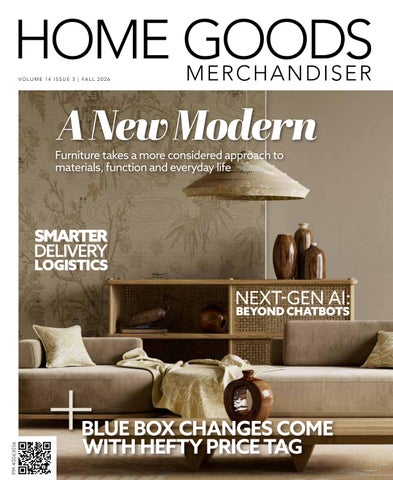
A New Modern
Furniture takes a more considered approach to materials, function and everyday life
SMARTER
DELIVERY
LOGISTICS
NEXT-GEN AI:
PM 40063056
BEYOND CHATBOTS
+
BLUE BOX CHANGES COME WITH HEFTY PRICE TAG
Experience xtra premium support and xtra perfect sleep 5 support zones designed for full-body spinal alignment and cooling technology with a combination of responsive coils and plush, premium memory foam for high quality comfort.
serta.ca
contents
feature stories 14
OUT OF THE BLUE Ontario’s transition to a producer-paid recycling system excludes industrial, commercial and institutional properties from municipal blue box pickup, requiring them to pay for private collection — a change that has added significant costs for some small businesses, including Tepperman’s.
6
SWITCHING JOBS While it’s perfectly legal to recruit staff from another company in the same industry, employers have legitimate concerns when employees move to competitors. Here’s how to protect your business if this situation arises.
20
CUT OUT THE MIDDLEMAN A furniture dealer program should provide more than access to products. It should offer competitive pricing, dependable ordering, clear product info, shipment visibility, a practical category mix and account support.
10
SUFFERING IN SILENCE Loneliness can make people less effective at work by lowering their commitment and reducing their access to peers. Here’s how employers can recognize and address it, improving productivity, quality of work and employee retention.
36
RETHINKING THE LAST MILE Product pickup over delivery is a win-win for both consumers and retailers, improving the shopping journey while offering lower costs and greater scheduling control, that is, so long as businesses get the logistics right.
front to back 4 6 10 12 14 18
FROM THE EDITOR LEGAL FILE THE WORKPLACE THE CONSUMER IN FOCUS TRENDSPOTTING
20 28 32 36 38
RETAIL MATTERS MARKETING MASTERY TECH TALK THE SUPPLY CHAIN OBSERVATIONS
from the editor
RECYCLING RULES’ ROUGH START At the beginning of the year, private companies took over recycling collection from municipalities across Ontario, and the transition did not go off without a hitch. While there was no change to pickup schedules, at least in Toronto, some neighbourhoods saw their blue boxes left untouched, resulting in recycling piling up at the curb. Although an inconvenience, residents’ early experience with the new program pales in comparison with that of businesses, which, as of Jan. 1, 2026, are financially and operationally responsible for 100 per cent of the paper and packaging they supply to residents. This includes arranging for collection with a private hauler if they are unable to take recyclables to an environmental depot — a responsibility that, for some businesses, has come with a hefty price tag. In an interview with Home Goods Merchandiser, Andrew Tepperman, executive chairman of Tepperman’s, discusses how the provincial government’s decision to move away from the municipally shared recycling model and shift the costs of its blue box program onto producers has affected the third-generation family-owned home furnishings retailer, as well as the rollout of the new system. We’ve added a new column to the magazine focused on the workplace. In this issue, resiliency and mental health expert Beverly Beuermann-King addresses workplace loneliness, which is fairly common, even among people who interact with colleagues every day. She explores its impact, the warning signs to watch for and what employers can do to help. Perhaps unsurprisingly, Canada’s trade war with the United States is the focus of this edition’s Observations column, as tensions between the two countries have escalated in recent months. I’d like to thank our experts from the home furnishings industry for sharing their perspectives on this timely and sensitive matter. If you’d like to participate in our Observations column, or if there’s a topic you’d like to see covered, e-mail me at claret@mediaedge.ca.
Clare Tattersall
PUBLISHER
EDITOR
PRESIDENT
SENIOR GRAPHIC DESIGNER
PRODUCTION MANAGER
SOCIAL MEDIA DIRECTOR
Ashley Ramnarain ashleyr@mediaedge.ca Kevin Brown kevinb@mediaedge.ca
Ines Louis Inesl@mediaedge.ca
PROGRAMMATIC ACCOUNT MANAGER Rhea Sood rheas@mediaedge.ca
Published by
Clare Tattersall claret@mediaedge.ca Roxy Huynh-Guinane roxyh@mediaedge.ca
Steve Chester stevec@mediaedge.ca
Home Goods Merchandiser is published four times annually — Spring, Summer, Fall and Winter — for Canada’s bigticket home goods industries. Subscriptions are free to qualified participants in Canada’s big-ticket home goods industries. Subscribe at www.homegoodsonline.ca. Readers from outside Canada may purchase subscriptions for $40 Cdn. For subscription inquiries, e-mail circulation@mediaedge.ca. . MediaEdge Communications and Home Goods Merchandiser disclaim any warranty as to the accuracy, completeness or currency of the contents of this publication and disclaims all liability in respect to the results of any action taken or not taken in reliance upon information in this publication. The opinions of the columnists and writers are their own and are in no way influenced by or representative of the opinions of Home Goods Merchandiser or MediaEdge Communications. Canada Post Canadian Publications Mail Sales Product Agreement No. 40063056
CIRCULATION
Adrian Holland circulation@mediaedge.ca
ISSN 2291-4765 Return undeliverable Canadian addresses to circulation department: 365 Evans Avenue, Suite L10, Toronto, Ontario M8Z 1K2
251 Consumers Road, Suite 1020, Toronto, Ontario M2J 4R3 © 2026 by MediaEdge Communications. All rights reserved.
4 | HOME GOODS MERCHANDISER FALL 2026
The consistent, comfortable support of Beautyrest ® at an affordable price
legal file
SWITCHING JOBS
What employers should know when an employee joins a competitor
WHEN AN EMPLOYEE LEAVES FOR A COMPETItor, employers may worry about client relationships, business-sensitive information, pricing strategies, referral networks, trade secrets and whether knowledge gained during employment is being used to benefit a new workplace. Not every move to a competitor is unlawful. Employees are generally permitted to change jobs and continue working in the same industry. Litigation may become relevant, however, where there are concerns about confidential information, restrictive covenants, solicitation, fiduciary duties or other unfair competitive conduct. For employers operating in closely connected industries, an employee’s departure may warrant a timely review of their contractual obligations, conduct and potential impact on the business. COMPETITION ALONE USUALLY NOT ENOUGH
The fact that a former employee joins a competitor 6 | HOME GOODS MERCHANDISER FALL 2026
BY J.P. KARAM
does not, by itself, create a legal claim. Ontario employment law generally balances an employer’s ability to protect legitimate business interests with an employee’s ability to earn a living. The central question is not simply whether the employee is competing, but whether that competition involves a breach of a contractual, legal or equitable obligation. Examples may include taking confidential records, soliciting restricted clients, recruiting former co-workers in breach of a contractual obligation, diverting business opportunities or using proprietary pricing information. REVIEWING THE EMPLOYMENT AGREEMENT
One of the first steps is to assess the former employee’s contractual obligations. Employment agreements may contain confidentiality clauses, non-solicitation provisions,intellectualpropertyterms,return-of-property requirements and post-employment restrictions.
legal file
Ontario’s Employment Standards Act generally prohibits non-compete agreements entered into on or after Oct. 25, 2021, subject to limited exceptions involving certain executives and sale-of-business arrangements. While the prohibition does not automatically invalidate non-competes signed before this date, Ontario courts have historically enforced such agreements only in highly specific circumstances. Other protections may still apply. Non-solicitation clauses, confidentiality obligations, fiduciary duties and breach of confidence claims can remain relevant. Their enforceability often depends on whether the language is clear and reasonable, and whether it is directed at protecting a legitimate business interest.
FIDUCIARY DUTIES AND SENIOR EMPLOYEES
Some senior or highly trusted employees may owe fiduciary duties because of their authority, discretion, client influence or control over an area of the business. A fiduciary may face obligations beyond those that apply to an ordinary employee. Potential concerns include secretly competing while still employed, diverting business opportunities, soliciting clients before departure, recruiting employees for a competing venture or using their position to obtain an unfair advantage. Whether fiduciary duties exist depends on the individual’s actual responsibilities and influence, not merely their job title. PRE-DEPARTURE CONDUCT
NON-SOLICITATION AND CLIENT RELATIONS
A non-solicitation clause may restrict a former employee from actively approaching clients, customers, suppliers, referral sources or employees for a defined period. Litigation may arise where evidence suggests the employee contacted clients shortly after leaving, encouraged them to transfer their business, used internal client lists or coordinated account transitions before resigning. Evidence may include e-mails, customer relationship management (CRM) records, telephone logs, access histories, client communications and changes in business patterns. Courts may distinguish between active solicitation and situations where a client independently chooses to follow the former employee.
Post-departure litigation often turns on what happened before the employee left the company. Employees may generally make reasonable plans for future employment. Problems can arise when planning crosses into active competition, misuse of company resources, concealment of conflicts or diversion of business opportunities. Examples may include preparing a competing bid using employer information, encouraging clients to delay decisions until after the employee leaves, copying confidential files or coordinating competitive activity during working hours. A clear chronology can help establish when the employee accepted the new role, what information was accessed, which clients were contacted and whether business shifted around the time of departure.
“A non-solicitation clause may restrict a former employee from actively approaching clients, customers, suppliers, referral sources or employees for a defined period.”
CONFIDENTIAL INFO AND TRADE SECRETS
Confidential information claims can be central to post-departure litigation. Protected information may include pricing models, customer lists, supplier terms, financial data, marketing plans, technical processes, tender documents or internal communications. Not all workplace knowledge is protected. Employees may carry general skills, experience, professional relationships and industry knowledge into future employment. Litigation is more likely to focus on information that is private, commercially sensitive, specific to the employer and not generally available. Concerns may arise where documents were downloaded, copied to a portable data storage device, sent to a personal account, accessed unusually close to the employee’s resignation or later used in dealings with clients or prospects.
DEMAND LETTERS AND EARLY INTERVENTION
Before beginning litigation, an employer may send a demand letter to the former employee and, in some circumstances, the new employer. The letter may request the return or deletion of company information, preservation of relevant records, confirmation that confidential information has not been used or an undertaking not to solicit restricted clients. A focused demand letter may resolve the issue and createarecordoftheemployer’seffortstoprotectitsinterests. Overly broad demands or unsupported allegations, however, may create additional risk, particularly where they could effectively prevent lawful employment. INJUNCTIONS AND URGENT COURT RELIEF
An employer may consider seeking an injunction homegoodsonline.ca | 7
legal file
POTENTIAL REMEDIES
Available remedies depend on the claims and the evidence. They may include injunctions, damages for lost profits, the return or deletion of protected information, preservation orders, declarations and costs. Financial losses can be difficult to prove. Employers may need to establish a connection between the former employee’s conduct and lost clients, contracts, revenue or other measurable harm. The fact that business moved to a competitor may not be enough without evidence of legally actionable conduct. In some disputes, stopping the misuse of information or protecting client relationships may be more important than obtaining monetary compensation. REDUCING RISK BEFORE AN EMPLOYEE LEAVES
In Ontario, non-compete clauses in employment contracts are largely banned and legally void under the Employment Standards Act for most workers. The ban applies to non-compete agreements entered into on or after Oct. 25, 2021.
where immediate court intervention is necessary to prevent continuing harm. An injunction may be requested to stop solicitation, prevent misuse of information, require the return of records or preserve the status quo while the dispute proceeds. Courts generally consider whether there is a serious issue to be tried, irreparable harm may occur and the balance of convenience favours the requested order. Timing can be critical. Delay may weaken the argument that urgent relief is necessary. An employer seeking an injunction may need to act quickly, preserve relevant evidence and present a focused record of the anticipated harm. CLAIMS AGAINST THE NEW EMPLOYER
Litigation may sometimes involve the competitor that hired the employee. A claim may arise where the new employer allegedly encouraged a contractual breach, knowingly used confidential information, participated in unlawful solicitation or received improperly taken materials. Hiring an employee from a competitor is not, by itself, unlawful. The issue is whether the new employer participated in conduct that crossed a legal boundary. 8 | HOME GOODS MERCHANDISER FALL 2026
Potential remedies may include injunctions, disclosure orders, damages or orders concerning confidential information. PRESERVING EVIDENCE AND INVESTIGATIONS
Evidence preservation is often essential. Employers may need to secure company devices, preserve e-mail accounts, suspend automatic deletion settings, retain access logs and protect CRM data from being overwritten. An internal review may examine whether the employee exported information, forwarded documents, deleted records, accessed unusual files or communicated with clients in a concerning manner. Relevant contracts, policies, exit materials and property-return records should also be reviewed. Investigations should remain proportionate, welldocumented and focused on legitimate business concerns to help avoid privacy, workplace or evidentiary issues.
Post-departure disputes may be easier to manage when protections are established in advance. Employers may benefit from regularly reviewing employment agreements, confidentiality provisions, access permissions, client protocols, remote work policies, and onboarding and offboarding procedures. During a departure, the employer may recover company property, promptly disable access, remind the employee of continuing obligations and document concerns identified during the transition. For businesses operating within connected commercial networks, clear contracts and consistent procedures may reduce uncertainty when individuals move among competitors, manufacturers, suppliers, dealers and professional services firms. A MEASURED RESPONSE MATTERS
The strongest post-departure claims generally involve clear obligations, focused evidence and identifiable business harm. A former employee’s decision to work for a competitor, without more, will not usually justify litigation. Reviewing the agreement, preserving evidence, assessing urgency and identifying practical objectives can help an employer determine whether a demand letter, injunction, lawsuit or negotiated resolution may be appropriate.
J.P. Karam is a partner at Willis Business Law, where his practice is restricted to representing employers in all areas of labour and employment law. Willis Business Law is a top-tier business and employment law firm located in Windsor, Ont. The firm is committed to providing first-rate, innovative business law, employment and labour law, and mediation services. J.P. can be reached at 226-526-9954 or jpkaram@willislawfirm.ca.
YOUR AD HERE
YOUR AD HERE
YOUR AD HERE
TAKE YOUR BRAND & MARKET SHARE
YOUR AD HERE
TO THE NEXT LEVEL
We can provide you with industry specific, cost effective & highly targeted digital marketing. Get your message in front of the Home Goods Online audience everywhere online through our 360° marketing solutions.
GOOGLE ADWORDS
Engage the largest community of furniture, appliance and mattress retailers across Canada with an effective omni channel marketing strategy.
SOCIAL MEDIA MANAGEMENT
PROGRAMMATIC SOLUTIONS Connect your business with a targeted web audience. Key benefits: • Programmatic advertising drives interested prospects to the right place - your website • Geo-targeting produces quality leads and delivers real results • Analytics reports provide real-time data and insight • Campaigns are flexible and can be changed at any time to maximize results • Complimentary consultations are available
Build your online presence and reap the rewards. Key benefits: • An active social media presence builds brand awareness • Quality posts and regular interaction shows a commitment to your customers • Platforms like Twitter and LinkedIn are great vehicles for sharing news and successes • A balanced campaign reaches a variety of professionals and decision-makers • Existing content can be refreshed, reissued, and maximized at no additional cost
Instantly connect with prospects seeking your services. Key benefits: • Businesses and potential customers are instantly connected • You control your advertising costs with a predetermined budget • Both customer and advertiser benefit • The Search Ads program has guaranteed results • It’s fast and effective
“
After six months utilizing MediaEdge’s social media program, we have generated sales leads and received a significant amount of exposure across five platforms.” R.W. (Bob) Storey, P.Eng., MBA General Manager - Sto Canada Ltd.
Let’s set up a time to discuss your 2026 marketing strategy! Contact Ashley Ramnarain, Publisher, at 416-512-8186 ext. 240, 647-393-9815 or ashleyr@mediaedge.ca.
PRODUCED BY
POWERED BY homegoodsonline.ca | 9
the workplace
SUFFERING IN SILENCE
Employee loneliness a real problem but practical strategies can help combat it BY BEVERLY BEUERMANN-KING
LONELINESS DOESN’T ALWAYS ANNOUNCE ITSELF. Sometimes it shows up quietly in disengaged team members, awkward silences during meetings or the subtle withdrawal of once-enthusiastic employees. Even in busy workplaces, loneliness can thrive when people feel emotionally disconnected or socially isolated. For employers, that should be a flashing warning sign. Loneliness chips away at mental well-being, adaptability and the resilience people need to show up and thrive at work. It’s not just a personal issue — it’s a performance, culture and retention issue. Employers must reframe loneliness as a workplace challenge they can help solve. So, how do employers create environments where people feel seen, valued and supported? It starts by understanding what loneliness looks like at work — and having the courage to address it. 10 | HOME GOODS MERCHANDISER FALL 2026
UNDERSTANDING LONELINESS
THE HIDDEN COST OF DISCONNECTION
Loneliness is not the same as being alone. It’s the feeling of being isolated, even when surrounded by others. It stems from a lack of meaningful connection, not necessarily a lack of interaction. You can feel lonely in a crowded meeting, a buzzing office or showroom, while managing a full e-mail inbox or even in social settings like a team lunch. Loneliness is linked to higher rates of stress, anxiety and burnout. It can increase absenteeism and reduce engagement. Gallup’s 2023 research found that one in five employees experience loneliness a lot during their workday, with younger employees and those working off-site among the most affected. This isn’t a passing problem. It’s a persistent workplace challenge that can affect the mental health, adaptability and performance of teams.
When people feel disconnected, they struggle to adapt. Connection is foundational to both individual and team resilience. People draw strength from one another. They feel safer trying new things, navigating uncertainty and recovering from setbacks when they know they’re supported. A team lacking psychological safety — where members fear judgment, rejection or being ignored — won’t take risks. They’ll avoid difficult conversations and stick to the status quo rather than adapt. Loneliness creates emotional fatigue, draining the cognitive flexibility people need for creative problem-solving and navigating change. Adaptability quotient relies on curiosity, emotional regulation and collaborative learning. All three can be compromised when people feel isolated. A lonely
the workplace
employee may hesitate to speak up, share ideas or ask for help. A disconnected leader may miss early signs of burnout or misalignment. Building adaptability and resilience isn’t just about training or tools — it’s about relationships. And leaders play a pivotal role in cultivating them. SPOTTING THE WARNING SIGNS
Loneliness can be easy to overlook. Signs to watch for include team members opting out of social or collaborative activities; reduced participation in meetings; withdrawal from conversations or avoiding check-ins; a drop in productivity, creativity or initiative; emotional flatness or disengagement; and a sudden increase in absenteeism or withdrawal. It can also show up as perfectionism, defensiveness or irritability. Lonely employees may become hyper-independent, afraid to rely on others or ask for help. Importantly, these behaviours don’t always mean loneliness is the cause. But they can be invitations to check in. WHAT EMPLOYERS CAN DO
Employers can’t fix loneliness with a pizza party. But they can build a culture of connection. Here’s how.
1
Prioritize meaningful connection, not just interaction. Small moments of genuine human connection matter. Encourage leaders and managers to start meetings with check-ins that go beyond task updates. Ask questions like, “What’s something you’re looking forward to this week?” or “What’s been challenging lately?” Model curiosity and listening. Make it okay to not have everything figured out and show appreciation when people are comfortable being vulnerable. Create space where people feel safe being human.
2
Design rituals and celebrations that matter. Social gatherings are a vital part of workplace culture, but they need to be intentional and inclusive. Plan celebrations that honour diverse personalities and comfort levels. Offer a mix of large group events and smaller, informal moments. Encourage micro-celebrations like sending a team-wide shout-out or mailing a handwritten note.
3
Recognize individuality and invite participation. Not everyone connects in the same way. Provide multiple avenues for engagement. Some people thrive in large groups, while others prefer one-onone conversations. Include employee voices when planning wellness or engagement initiatives. Create spaces where people can share who they are
Regular check-ins during periods of significant change can help employees feel connected, supported and less alone as they navigate uncertainty.
through storytelling, peer recognition or employee-led sessions. Simple questions like, “What helps you feel connected at work?” can yield powerful insights.
4
Support adaptability through connection. Loneliness and change resistance often go hand in hand. When people feel left out or uncertain, they’re less likely to embrace new ways of working. Use mentoring, peer support or buddy systems to help employees navigate transitions. Cross-functional projects can reduce silos and build new relationships. Regular check-ins during periods of significant change reinforce that people don’t have to navigate uncertainty alone.
5
Model vulnerability and human-centred leadership. Leaders set the emotional tone of a team. When they share their own struggles or uncertainties, they signal that connection and honesty are valued. Vulnerability builds trust. Lead with empathy. Ask open-ended questions. Listen without immediately jumping to problem-solving. Create psychological safety by showing your team that it’s okay to show up as their full selves.
ENCOURAGING A CULTURE OF CARING
Loneliness can’t be solved with surface-level strategies. It requires a cultural shift — from coping to caring, from pushing through to checking in. Well-meaning gestures are not enough. Employers must build workplaces where people feel genuinely valued and supported. That means policies that allow time for connection, training that develops emotional intelligence and workflows that make space for human moments. BUILDING CONNECTION
So, here’s the truth: Loneliness isn’t just a mental health issue; it’s a leadership issue. Ask yourself: Who on my team might be quietly struggling with disconnection? What small change could I make this week to foster genuine connection? When employers build real relationships, they unlock resilience. When they create belonging, they fuel adaptability. And when they name and address loneliness, they lay the foundation for a workplace where people don’t just survive — they thrive. Lead with intention, empathy and in a way that reminds every employee that they are not alone.
Beverly Beuermann-King is a professional speaker in resilience and wellness strategies, as well as a corporate culture and mental health expert, and founder of R ‘n’ B Consulting Corp. and Work Smart Live Smart. Beverly created the three-part stress management and resilience framework, the S-O-S Resilience Principle, and is the author of Stress Out! 52 Weeks to Letting More Life In. She can be reached at 705-786-0437 or info@WorkSmartLiveSmart.com. homegoodsonline.ca | 11
the consumer
WINNING THE BLINK
How big-ticket home goods retailers can quickly connect with customers BY JEAN-PIERRE LACROIX
12 | HOME GOODS MERCHANDISER FALL 2026
the consumer
WHEN SHOPPERS ENTER A STORE, THEY OFTEN feel excited, unsure and a bit pressured. A sofa needs to fit the space. A mattress should help with sleep. An appliance should fix a problem at home. These choices are practical, but they also carry emotion. People often form lasting opinions about brands in the blink of an eye. This means the first few seconds in-store are crucial.
may seem complicated. Sales staff may ask too many questions too early or none at all. A good first impression helps relieve anxiety. Clear sightlines, easy-to-follow signage, visible departments and a welcoming greeting help customers feel comfortable. Shoppers should know where to go, who can help and what to expect. MAKE PRODUCTS PART OF A STORY
THE EXPERIENCE STARTS BEFORE ENTRY
First impressions begin before a customer walks through the door. They start with the store’s website, mobile app, store sign, window displays, parking lot, Google listing and even the way the first phone call is answered. If these touchpoints are confusing or inconsistent, customers will walk in feeling unsure. If they are clear, welcoming and professional, they are more likely to enter with confidence. Retailers should ask a simple question: What emotion should customers feel the moment they arrive — reassured, inspired, comfortable or excited? Once that emotion is clear, every cue should support it. A mattress store might want to convey rest and expertise. A furniture store could focus on an approachable sense of style. An appliance store might emphasize reliability and practical solutions. The goal is not to say everything but to make the right feeling clear. REMOVE OBSTACLES FAST
Nothing breaks an emotional connection faster than friction. Research into retail environments points out that poor service, confusing choices, unclear information and payment issues all hurt the customer experience. In big-ticket home goods stores, these challenges are common. Shoppers may struggle to find the right department. Prices may not be clear. Delivery details may be difficult to locate. Financing options
Many home goods retailers still organize products by category and price, which is important but not enough on its own. Customers are not just buying a sectional; they are picturing movie nights, family gatherings, peaceful mornings and a room that finally feels right. Storytelling is a powerful way to build emotional connections in retail. Sharing narratives about founders, sourcing, product craftsmanship and customer experiences can help stores connect more deeply with shoppers. For home goods retailers, this can be especially effective. Displays organized around real-life needs, such as a first apartment, downsized condominium, sleep reset, holiday-hosting kitchen or family room that works harder, help customers picture themselves in the space. APPEAL TO THE SENSES
Home goods stores naturally invite people to use their senses. Customers sit, touch, test, compare, open, close, recline and imagine. This is an advantage for retailers, but only if the store is designed with care. Lighting, textures, sounds, scents and sightlines all influence how customers feel. Retail design research highlights that these sensory details can evoke emotions
like delight, discovery, pleasure and fulfillment. Retailers should walk through their store as if visiting it for the first time and ask questions like: Are the lights flattering? Are mattresses displayed in a calming way? Are appliance demonstrations straightforward to follow? Can customers easily compare fabrics and finishes? Does the store feel inspiring or overwhelming? A store should do more than show products. It should help customers imagine how their lives could improve after making a purchase. BUILDING COMMUNITY, NOT JUST TRAFFIC
Independent retailers have something national chains often cannot match: a local connection. Retail design thinking emphasizes the importance of local identity, community relevance and creating stores that reflect the people they serve. Home goods stores can promote a sense of belonging by partnering locally, creating community walls, hosting charity events, offering design workshops, featuring customer homes or working with local builders and decorators. These actions show that the retailer understands its community. In the big-ticket home goods industry, purchases do not happen often but they are significant. While customers might not buy a sofa every year, they will remember how they felt in the store when it was time to decide. The very first moments of customer experience is not about flash; it’s about clarity, warmth, confidence and emotional relevance. When retailers design the first impression with intention, they do more than sell products — they create trust before the sales conversation even begins.
Jean-Pierre Lacroix is president at Shikatani Lacroix Design (SLD). With offices in Toronto and Shanghai, SLD is an award-winning leader in strategic design. Through the power of the Blink Factor, a strategic philosophy that consumers make subconscious, emotionally driven decisions about brands in the blink of an eye, SLD delivers transformational change for brands, from packaging and environmental design to graphics and digital. Jean-Pierre can be reached at jplacroix@sld.com. homegoodsonline.ca | 13
in focus
Out of the Blue
Ontario’s recycling changes leave some businesses with big bills and growing frustrations BY CLARE TATTERSALL
14 | HOME GOODS MERCHANDISER FALL 2026
in focus
JUST OVER THREE YEARS AGO, IN JULY 2023, Ontario began shifting Blue Box program costs to producers of packaging and paper products — from the plastic and cardboard used to wrap mattresses and furniture to promotional flyers. The transition from a shared-cost system with municipalities to an extended producer responsibility (EPR) model was effectively complete by late 2025. As of Jan. 1, 2026, industrial, commercial and institutional properties, including small businesses, are fully financially on the hook for collection and recycling, with fees based on the type and quantity of material they produce and paid to third-party producer responsibility organizations. Tepperman’s, Canada’s largest independent home furnishings retailer, with seven showrooms across Southwestern Ontario, is among many businesses that have been hit hard by the program download. In an interview with Home Goods Merchandiser, the company’s executive chairman, Andrew Tepperman, discusses the impact of the changes on the 101-year-old family-owned business, as well as broader industry effects, implementation concerns and compliance challenges. How has Ontario’s EPR model for its Blue Box program affected your business?
Tepperman: The costs increased from $60,000 to $500,000 to over $600,000 within a few years. What was your reaction when you first saw the new fee?
As of Jan. 1, 2026, businesses shoulder the cost of recycling in Ontario.
Tepperman: We originally thought the program was a mistake when we saw the invoice for this new government fee.We immediately contacted our local MPP and eventually spoke to the premier and his environmental minister. Each individual we spoke to said the same thing — it wasn’t supposed to impact a business to this degree.When we realized this was a new fee for the government to unload their costs to manage recycling to private businesses, we began to make internal changes. What have you done to adjust to the new costs?
Tepperman: We are not passing the cost on to con-
sumers. Flyers and direct mailers are the key marketing pieces driving this cost. We are investing more in digital marketing, TV and radio, and using less flyer distribution, whether on our own or through local newspapers. The long-term impact is that this forces us to spend our marketing dollars with large U.S.-based digital platforms, as Blue Box program fees keep us from investing in local newspaper distribution. What is interesting is that newspapers are exempt from these fees, even though they generate substantially more paper waste than we ever could. We avoid a lot of the cardboard-weight fees because providing home delivery allows us to recycle the cardboard ourselves and ship it directly to recycling companies. Companies that direct-ship products in cardboard packaging are supposed to self-report and pay into the program. When you think of everything consumers are buying online from all over the world, do you think the Ontario government is receiving the self-reported weights and payments? What are your frustrations with the new program?
Tepperman: One of our six guiding principles is about environmental leadership. We have won several sustainability awards through local chambers of commerce across Southwestern Ontario. We look for every opportunity to improve the environment, including hiring environmental co-op students to research new ideas, and we believe strongly in recycling — we invested in foam emulsifiers to keep Styrofoam out of landfills, we recycle all the cardboard and plastic we produce, we send used appliances and furniture to Habitat for Humanity ReStore, we ship used mattresses to a recycling firm that re-purposes the materials, we have installed solar projects and we’ve planted bee-friendly pollinator gardens where there is space on each site. We don’t ask for government subsidies or tax breaks. That’s why this fee seemed excessive. What upset us most about the Ontario program were three things. First, the phase-in costs were astronomical. There was a disconnect between what the government believed was an appropriate phase-in and what we believed. Going from a $60,000 fee to $500,000 homegoodsonline.ca | 15
in focus
Tepperman’s executive chairman, Andrew Tepperman.
and then $650,000 is too much to digest that quickly. Second, the program relies on self-reporting. While we report everything that could potentially end up in the blue box, many companies are still unaware that they need to do this. Lastly,whenyoudrivedownastreetonrecyclingday, the bins are full of cardboard and other paper packaging from products that consumers ordered online and that arrive from companies in other countries. We have yet to see any evidence that they are paying into this program.This is most upsetting when a private family business is subsidizing, in some cases, competing products coming from Asia that avoid this fee. In our 101 years in business, we have never experienced any level of government downloading such a large cost without creating a fair program where everyone is impacted. What broader impact do you think the province’s EPR system for recycling will have?
Tepperman: It forces businesses to change what they’re doing. We will continue to see more companies move away from paper marketing. Also, as more companies find ways to mitigate this fee, there will be less revenue going to third-party recyclers. I assume they will need to increase their fees to cover their fixed costs.
It’s easier for the government to force local private Ontario businesses to pay for this than to hold international companies accountable for creating recycling waste in our regions. I was speaking to the head of marketing for a large national grocery store chain. Their food flyer Blue Box program fees make ours look immaterial. It would be interesting to examine whether grocery stores are having to pass those costs on to consumers at the worst time. What do you think is the biggest problem with how Ontario’s EPR program has been implemented?
Tepperman: The program is great, but it’s incredibly sloppy and unfair how it has been managed. The fact that our government is okay pushing this cost onto honest private Ontario businesses and letting international companies’ paper recycling waste slide is ridiculous. In fact, it should have been managed in reverse. The government also needs to enforce it. One of the recommendations we were given was to forward the names of companies that we believe are not properly reporting. That’s not something we are going to do. We believe if every company and organization that produces paper waste ending up in the blue box self-reported accurately and paid its share, the costs for companies like us would be much less.
For Tepperman’s, sustainability isn’t a trend or a marketing program — it’s part of running a responsible business. In 2022, more than 900 solar panels were installed on the roof of its Kitchener store, helping reduce energy costs, reliance on grid electricity and associated carbon emissions.
16 | HOME GOODS MERCHANDISER FALL 2026
SPONSORED CONTENT
The sales floor is the last mile. Most retailers are not taking advantage of it. There’s a version of furniture retail that works exactly as it should. A customer walks in uncertain, has a real conversation with someone who knows what they’re talking about, and walks out confident. They bought something they’ll love, at a price that made sense, with a protection plan they actually understand. That version doesn’t happen by accident. It happens when the associate is prepared. The uncomfortable reality for many home furnishings retailers is that the product is often fine. The merchandising is fine. The pricing is competitive. And the sale still falls apart because the conversation on the floor wasn’t strong enough. Customers arrive having done their homework. They’ve compared prices, read reviews, and visited other stores. They don’t need someone to read them a hang tag. They need someone who can help them think, who can explain why one mattress is worth the premium, how financing makes a better sofa actually accessible, why the protection plan matters for a household with kids and a dog. They need someone who can meet a price objection with confidence instead of a shrug and a discount.
82% of units sold are recommended by an RSA*. The sales associate isn’t just supporting the sale. They MAKE the sale. Which is what makes AI genuinely interesting here, not because it replaces that conversation, but because it can make the person having it far better prepared. The tools now exist to give associates on-demand product knowledge, realistic role-play practice, and coaching tied to actual performance gaps rather than gut feelings. Brands can connect directly with floor associates through training platforms that link product knowledge to SPIFFs. Managers can see not just who is having more challenges but specifically why, and address the real issue instead of delivering the same generic feedback for the fourth time. Protection plan attachment running below target? There’s a coaching path for that. Financing conversations feeling awkward and forced? There’s practice for that. New product launch with a complicated story to tell quickly? There’s a course for that. None of this is about making retail feel more automated. When an associate knows the product, has worked through the hard objections in practice, and has a clear sense of what they’re working toward, the customer conversation gets more human. Not less. The retailers figuring this out are building something that goes well beyond a training program. They’re connecting learning, practice, and incentives into something that actually functions as a performance system on the sales floor.
The gap between a good associate and a great one usually isn’t talent. It’s preparation.
The full article goes considerably deeper: how AI role-play is being used for specific objection types, how brands are structuring SPIFF programs around knowledge verification, what responsible AI implementation looks like and what to avoid, and how leading retailers are tying coaching activity to measurable floor results.
Get tips to improve your margins & join the waitlist for the Margin + Plus Method™ playbook release later this year! *Source: SellPro Completes Stage 1 of AI Strategy to Reshape Retail Engagement.
Author: Bradford W. Geddes Bradford “Brad” W. Geddes is President and CEO of Zucora Inc., a company dedicated to helping home furnishings retailers grow more profitable businesses. Brad has worked closely with hundreds of dealers, store managers, and sales associates across the furniture, appliance, and bedding sectors, gaining deep, practical insight into the realities of highly competitive retail markets. Brad brings a grounded, real-world perspective to the challenges and opportunities facing today’s home furnishings industry. His experience and insights have been distilled into 150 practical lessons featured in his forthcoming book, Margin + Plus Method™, scheduledhomegoodsonline.ca for release in fall 2026. | 17
trendspotting
MODERN LIVING, REIMAGINED Design trends point to warmer materials, more personal spaces and furniture designed for everyday use BY DAVE ADAMS
AS 2026 MOVES THROUGH ITS SECOND HALF, the direction of modern design is coming into focus. The strongest ideas are not the loudest ones. They are the ones making homes feel warmer, calmer and easier to live in. At this year’s spring and summer markets, that shift was visible across showrooms: modern design is not disappearing; it is becoming more personal. Clean lines remain, but what has changed is how they are being balanced — with warmer materials, layered textures, integrated function and spaces that feel collected rather than overly controlled. 18 | HOME GOODS MERCHANDISER FALL 2026
A DEEPER NEUTRAL WARMTH
One of the clearest takeaways from show floors was the steady move away from chilly greys and sterile whites. Layered neutrals created warmth without sacrificing clarity, with a progression of creamy whites, warm beiges and taupes grounded by earthy tones like sage green, clay, sand and muted brown. This shift in palette directly influences the way wood finishes are used. Rather than masking wood surfaces under heavy stains or aggressive bleaching, designers are highlighting the natural variations of medium-toned oak and warm walnut. These natural
finishes are often paired with lighter elements on adjacent panels or surrounding cabinetry, creating contrast while keeping the overall look balanced. At home, these colours can be introduced through larger furniture pieces, natural wood surfaces, textiles and smaller accents. When selecting furniture, consumers are looking beyond finish alone. Features such as integrated storage, adjustable interiors, cable management and ventilation support everyday use while maintaining a visually quiet presence. The result is less clutter, allowing natural wood grain and warmer tones to take centre stage.
trendspotting
ORGANIC TEXTURES AND MIXED MATERIALS
Texture has moved beyond the realm of accent details to become a core structural element. The delicate caning and thin linear details of previous years are giving way to bolder, more substantial expressions of natural craftsmanship. Showrooms featured rattan and rope weaves alongside burled wood and deeper oak finishes, creating surfaces that invite both visual and tactile interest. This philosophy is reshaping furniture design, beginning with more approachable forms. Rounded corners, eased edges, gentle curves and sculptural shapes are replacing rigid, strictly architectural lines, making rooms feel instantly more relaxed. This shift is evident across everything from plush upholstery to casegoods and accent pieces. Alongside softer shapes, the designs that feel most sophisticated right now rely heavily on multi-tone layering. Rather than limiting each piece to a single material or finish, brands are embracing two- and even three-tone combinations, pairing lighter woods with smooth painted surfaces, stone accents, satinetched glass or refined metal hardware. The result is great visual depth and a collected-over-time feel without making a space feel overly busy. DESIGNED FOR THE LONG TERM
This emphasis on functional durability reflects a larger shift across the wider furniture industry. At this year’s spring High Point Market, the theme, ‘Preserve,’ underscoredthischangingmindset,withtheexhibition’sforecasting partner, Future Snoops, highlighting a growing consumer movement away from mass-produced, temporary flat-pack options. Instead, buyers are increasingly seeking foundational furniture pieces defined by authentic character, structural integrity and long-term utility. The idea of buying fewer, better pieces increasingly reflects concerns about durability, adaptability and long-term value. Using hardwood veneers over engineered cores can improve dimensional stability and reduce the movement associated with solid wood, supporting more consistent performance. Durable joinery, adaptable configurations and thoughtful construction further extend the usefulness and lifespan of each piece. HYBRID SPACES AND INVISIBLE TECHNOLOGY
Remote and hybrid work continue to shape how homes are organized, particularly as living spaces take on multiple functions. As technology becomes more integrated into everyday life, concealed power, smart storage and thoughtful cable management are becoming increasingly important. These details help support the demands of modern living without adding visual clutter.
OPPOSITE PAGE: Louvered wood doors add texture and visual warmth to BDI’s Corridor 8109 credenza, while keeping storage visually quiet. TOP: A defined office zone can feel integrated into the home with warm materials, open shelving and storage that keeps daily work essentials organized. BOTTOM: Integrated lighting, bedside charging and sliding-top nightstands bring everyday function into a relaxed bedroom setting. Images courtesy BDI.
Open floor plans are being organized into more clearlydefinedzones.Credenzas,shelvingandthoughtful furniture placement can establish areas for work, conversation or entertainment without requiring permanent walls. This approach reflects insights shared by Forbes and design expert Cheryl Clendenon, who identified a broader movement toward designing for ease and simplifying everyday life. A similar shift was visible in workplace design at this year’s NeoCon, where technical performance was balanced with warmer materials and a more residential visual language. Across the market, warm colours, tactile upholstery and layered materials brought a greater sense of comfort to workplace design. The strongest products continued to address practical needs while concealing or softening their technology, creating environments that felt calmer, more human and less corporate.
The broader trend reinforces the value of keeping technology organized, accessible and visually controlled rather than allowing it to dominate a room. Technology is an integral part of daily life, but thoughtful design can keep cords, power sources and equipment neatly concealed, helping spaces feel calmer and more visually composed. WHAT LASTS BEYOND THE TREND
The clearest design directions of 2026 are not built around shock or disruption. They reflect a more considered approach to materials, function and the way a room supports everyday living. The most enduring direction this year may be the simplest one: people are asking more of their homes. The furniture that lasts will not merely fit the look. It will organize daily life, manage technology, adapt over time and make a room easier to live in.
Dave Adams is vice-president of marketing at BDI Furniture, a leading manufacturer of modern, design-focused furniture for the home, office, entertainment and bedroom spaces. Dave has more than 20 years of furniture industry experience, specializing in product design, merchandising and global marketing. homegoodsonline.ca | 19
retail matters
CUT OUT THE MIDDLEMAN The competitive advantage of furniture dealer programs
RUNNING A FURNITURE STORE MEANS YOUR margins depend heavily on your suppliers. A furniture dealer program gives qualified retailers access to benefits that are not available through a general purchase order. If you’re still sourcing inventory through multiple middlemen, you’re almost certainly leaving money on the table. In Ontario, that reality is even more pronounced. The province has more furniture stores than any other in Canada — 1,230 as of December 2024, according to Statista. IBISWorld estimates the Canadian furniture retail industry generated $10.5 billion in 2025. In such a competitive market, one of the clearest advantages an independent retailer in Ontario can have over big-box chains is a direct, responsive relationship with a manufacturer — one that answers the phone when it matters.
relationship with agreed terms rather than a one-off transaction.You are not just buying furniture — you are building a supply relationship. In Ontario, dealer programs generally include some combination of wholesale pricing below standard retail or distributor rates; access to the manufacturer’s full product catalogue, including items not listed publicly and exclusive collections; custom order capabilities (fabrics, sizes, finishes, configurations); priority production scheduling, particularly during peak seasons; dedicated account support from the manufacturer’s sales team; marketing assets, such as product photography, dimension sheets and specification documents; and consistent, repeatable supply for best-selling lines. What you don’t get is a middleman adding an extra margin before the product reaches you.
HOW IT WORKS
WHO QUALIFIES
A furniture dealer program is a formal businessto-business arrangement between a manufacturer and a retail business.Think of it as an ongoing business
Most Canadian furniture manufacturers structure their dealer programs to include furniture retailers with physical or online showrooms; interior designers
20 | HOME GOODS MERCHANDISER FALL 2026
BY GURJAP GILL
and decorators sourcing for client projects; home stagers and real estate professionals requiring reliable supply; builders, contractors and renovation companies outfitting new builds or multi-unit developments; hospitality operators like hotels, motels and short-term rentals; and private-label brands and e-commerce sellers seeking a Canadian manufacturing partner. The goal is to partner with businesses positioned to represent the product well and generate consistent, long-term purchasing volume. WHAT DEALERS GET
While specifics vary by manufacturer, a well-structured dealer program should include, at minimum, wholesale pricing with meaningful margin room, access to custom orders, reliable factory supply and dedicated business-to-business support. The primary purpose of a dealer program is to provide pricing that allows you to operate a sustainable retail operation. Dealer pricing from a manufacturer gives you the margin flexibility to compete against
retail matters larger chains without needing to match their purchasing volume. This is especially important in categories such as bedroom furniture and upholstered beds, where lower-priced imports have put downward pressure on retail prices. One of the strongest advantages of working directly with a Canadian furniture manufacturer is customization. Customers can get exactly what they want, rather than being limited to what arrived in a shipping container from overseas. Imported furniture supply chains have been repeatedly disrupted since 2020. Working with a local manufacturer means shorter lead times, more predictable turnaround and the ability to accommodate urgent orders when needed. For furniture retailers managing floor inventory and customer deposits, that level of reliability is essential. Just as important is having direct access to the people behind your orders. You get real contact — someone who knows your account, understands your product mix and can answer questions about lead times, special orders and deliveries without routing you through a general customer service line. STEPS TO JOIN
Retailers typically apply directly with the manufacturer to join a dealer program and complete a short application process. Before reaching out, be clear about your sourcing needs. Understanding your product mix, target market and expected order volume helps the manufacturer determine whether there’s a good fit and tailor dealer terms to your business. Once you’ve connected, the manufacturer will walk you through pricing tiers, minimum order requirements and delivery terms. This is also the time to ask about lead times for standard and custom orders, available fabrics and finishes, and whether the manufacturer can accommodate urgent orders during peak periods, such as spring and the pre-holiday season. Approval for most dealer programs is straightforward for established retail businesses, with no lengthy vetting process. Once terms are finalized and your account is set up, you can typically begin ordering within two to four weeks. Many retailers start with a smaller pilot order to evaluate lead times, product quality and the overall ordering experience before increasing their purchasing volume. The best dealer relationships are built over time. Communicate your seasonal requirements well in advance and let the manufacturer know when you anticipate periods of higher demand. If you have a custom request or you need to fill an urgent showroom order, raise it early and be direct. A manufacturer that understands your business is far better equipped to support it than one processing anonymous orders through an online portal.
CHOOSING A MANUFACTURING PARTNER Not all furniture dealer programs offer the same value. Before committing to a manufacturing partner, consider the following. Local Manufacturing Products manufactured in your province or elsewhere in Canada typically offer shorter lead times, little to no exposure to import tariffs, and more consistent quality control compared to furniture imported from overseas. Custom Capability The ability to order non-standard sizes, fabrics or configurations matters, especially for high-end retail and designer-facing stores. Product Range The capability to source across product categories, such as bedroom sets, upholstered beds, television stands and storage furniture, from a single manufacturer helps significantly simplify your supply chain. Truthful Lead Times A manufacturer that is honest about timelines is worth more than one who overpromises. Ask what standard and custom lead times look like during both off-peak and peak seasons. Urgent Order Support The capacity to expedite a production run when needed is one of the clearest practical differences between a local manufacturer and an overseas supplier. Track Record The manufacturer’s length of operation is an important indicator of their stability, reliability and familiarity with the needs of retailers. A longer history can also provide added confidence in their ability to maintain consistent supply, support dealer relationships and navigate market fluctuations over time.
Gurjap Gill is CEO of New Gill Furniture, a Canadian furniture manufacturer whose dealer program is open to furniture retailers, interior designers and business-to-business buyers in Ontario. Since 2002, New Gill Furniture has specialized in manufacturing fully assembled bedroom furniture and case goods for retailers across Canada and the United States. The Toronto-based company offers a wide range of customizable furniture collections designed to meet the needs of both value-focused and premium markets. homegoodsonline.ca | 21
retail matters
Product Training Done Right
The floor-backward approach is a paradigm shift that empowers sales teams BY DAVE CHACE
22 | HOME GOODS MERCHANDISER FALL 2026
retail matters
IN THE HIGHLY COMPETITIVE CONSUMER ELECtronics and household appliance industries, product training is an essential for equipping retail sales associates (RSAs) with the knowledge they need to effectively communicate a product’s value to potential customers. Traditionally, manufacturer-provided training is saturated with features and technical specifications, reflecting a strong sense of pride in the engineering and research and development behind the product. This approach is based on the assumption that providing RSAs with a comprehensive understanding of the advanced technology embedded in a product will empower them to present and sell it most effectively. However, this method often produces the opposite of the desired outcome. Training sessions are overloaded with technical jargon, overwhelming RSAs who are then expected to distill a mountain of information into a succinct and persuasive sales pitch. Multiply this by the number of products these salespeople are expected to both learn and remember, and the result is a futile attempt to fit 500 pounds of information into a 10-pound bag. This leads to inconsistent product presentations across RSAs, meaning that the product’s most unique and noteworthy benefits may not be communicated by every salesperson, ultimately limiting its sales potential. THE TRADITIONAL TRAINING MODEL
Let’s break down the common product training process used by many consumer electronics and home appliance manufacturers. Most training sessions begin with a deep dive into the company’s history — its origins, milestones and achievements. While this information can be valuable, it is not directly relevant to what RSAs need to know to sell products effectively. The next step is usually a detailed overview of the entire product line. This often includes an extensive list of technical specifications and product details, which can overwhelm rather than inform.
The bulk of the training typically focuses on features and technical specs. While this information is important, it is often presented without clear guidance on how to apply it in a sales context or explain it in simple, customer-friendly terms. Most customers have little or no technical knowledge, making the ability to translate complex information into clear, compelling benefits particularly important. PRODUCT EDUCATION OVERLOAD
Understanding why manufacturers structure training this way is key to understanding how it can be improved. Most manufacturers are proud of their company’s history, the engineering behind their products and the thought and research that went into developing every feature. They believe these details are essential and must be shared with their sales channel partners. However, while this information might be interesting from a corporate-pride perspective, it is not what will close the sale on the showroom floor. Instead, this nice-to-know information adds to the pile of facts heaped on RSAs and is often little more than a variation of the same story they have heard from other manufacturers: a company founded decades ago in a garage, or some other modest setting, by the founder, “who wanted to do it better.” Enter the floor-backward approach — a method that flips traditional training on its head. Instead of starting with company history or product specifications, it starts with the end goal in mind: the interaction between the RSA and the customer on the sales floor. Here’s how it works.
“Instead of being overwhelmed by unnecessary details, RSAs receive targeted, relevant information that’s directly applicable to their sales pitch.”
1
Focus on the sales pitch. An RSA typically has only 60 seconds to make a compelling pitch to a customer, so product training should be designed around that reality. Instead of flooding salespeople with excessive information, focus on the top two or three features most likely to resonate with consumers. These should be the features that truly differentiate the product and set it apart in the market. homegoodsonline.ca | 23
retail matters
The floor-backward approach is effective because it aligns the training process with the real-world needs of salespeople. Instead of being overwhelmed by unnecessary details, RSAs receive targeted, relevant information that’s directly applicable to their sales pitch. This not only boosts their confidence but also makes their job easier, leading to more effective sales interactions and higher conversion rates. When salespeople can clearly and confidently explain the benefits of a product,customersarealsomorelikelytofeelinformed and satisfied with their purchase. PUTTING THE APPROACH INTO ACTION
When salespeople can clearly and confidently explain the benefits of a product, customers are more likely to feel informed and satisfied with their purchase.
2
Emphasize benefits over features. While features are important, benefits are what sell. Training should help salespeople understand how to translate technical features into tangible benefits for the customer. For example, instead of emphasizing the power of a television’s built-in processor, explain how that technology enhances the viewer’s experience by delivering a more detailed, lifelike picture or more precise, accurate audio reproduction.
3
Use simple, conversational language. Avoid jargon and overly technical terms that might confuse both salespeople and customers. Instead, explain the product to RSAs in the same simple, clear language they can use with their customers. Don’t force salespeople to distill complex information into something understandable for the average consumer. Training should work for them, equipping RSAs to explain the 24 | HOME GOODS MERCHANDISER FALL 2026
product in a way that is accessible and compelling to customers regardless of their level of technical knowledge.
4
Design training backward from the sales interaction. The cornerstone of the floor-backward approach is to start with the final sales interaction and work backward from there. Identify the key points that an RSA needs to communicate during those 60 seconds and build the training around them. Every element of the training should serve a purpose: preparing the RSA to deliver a concise, compelling and customer-focused sales pitch.
Transitioning to a floor-backward approach might require a shift in mindset but the benefits far outweigh the challenges. To successfully implement this strategy in product training sessions, start by collaborating with sales teams to identify the primary features and value propositions that resonate most with customers. Use this feedback to shape your training content. Then, prioritize the essentials. Strip away unnecessary details and focus on the key points that will help RSAs make the sale. Remember, less is more when it comes to effective training. Focus on the need-to-know not the nice-to-know. Next, incorporate real-world scenarios to make learning more relevant and practical. This helps RSAs see how they can apply new skills directly on the sales floor. Finally, simplify and streamline content. Ensure materials are easy to understand and free of jargon. Use visuals, infographics and video clips to enhance engagement and reinforce the main points. It’s time to rethink product training. The floor-backward approach offers a clear path forward, ensuring sales teams have the right information, delivered in the right way, to succeed in today’s competitive market.
Dave Chace is a 35-plus-year veteran of the consumer electronics and custom integration industries and the founder and president of Cogent360. His company works with leading consumer electronics manufacturers, integrators and industry organizations to create innovative digital sales and education tools that simplify complex technologies, improve product understanding and help companies communicate their value more effectively.
Expanding Opportunities and Options
SPONSORED CONTENT
IFD GROUP
I
FD Group, a solid wood manufacturer based in Mexico, continues to strengthen its position as a leading furniture destination, bringing expanded product offering, stronger dealer support and increased distribution capacity. With the introduction of its Canadian Dealer Program, the arrival of new furniture collections and the opening of a new warehouse in Phoenix, IFD Group is continuing to invest in its customers and dealer partners across North America. The Canadian Dealer Program, launched at the beginning of the year, is a highly successful program that supports Canadian retailers through a specialized dealer partnership model. The program features direct shipping from Mexico to Canada, giving retailers full truckload pricing without paying more tariffs. Through collaboration with DeJong Enterprises and Parkview Customs Brokerage, all shipments are distributed from its Woodstock, Ont. facility. The initiative currently supports dealers located in Ontario, Quebec, Nova Scotia, and New Brunswick. “This program offers direct shipping, which helps retailers with their bottom lines,” says Miguel Ochoa, president of IFD. “We want to expand the program to the West Coast so our dealers there can also benefit from it so they can give consumers more options. The trends are changing so fast now and that’s why we are always expanding our products and designs.” IFD introduces new collections that reflect evolving consumer tastes and the latest trends in home furnishings. From contemporary designs and versatile occasional pieces to upholstery, dining and bedroom furniture, the latest additions give retailers more choice when refreshing their showroom floors. The collections are focused on combining style, functionality and value. The Savia Collection, one of the company’s top selling market collections, started with consoles and TV stands and now has expanded with new solid wood options including bedroom, dining room and occasional tables. “The collection is unique because it showcases the natural look and details of wood markings,” says Ochoa. In addition, IFD has introduced new stationary upholstery frames featuring a high-value combination of solid wood and top-grain leather. Frames are crafted from sustainable solid woods like pine, mango, and melina, accented with multi-step stained finishes. Pieces feature rich, 100 percent leather upholstery designed for natural character and everyday living. We are also very excited about the new motion line which offers a broader
product assortment covering the motion and stationary categories which complements all our lines,” he says, adding innovation and customization are key parts of their business. For example, IFD offers customizable dining options, where separate tabletops and bases can be combined with a choice of unique finishes. This allows retailers greater merchandising flexibility and customers more ways to create a dining space that feels personal. Behind this growing product and style offering is another significant investment: the new Phoenix warehouse and showroom. The facility will increase IFD Group’s distribution and inventory capabilities while strengthening its ability to serve dealers on the West Coast. Additional warehouse capacity means greater flexibility in managing inventory and supporting the company’s expanding product assortment. “The facility is our first one that includes a 10,000-square-foot showroom where we will present only new products every three to six months. It is designed to better serve our customers from the West Coast and to allow them to see our products in person,” says Ochoa. “We’re expecting the facility to be ready at end of 2026 or early January.” With the Canadian Dealer Program, an expanding selection of new collections and increased warehouse capacity, IFD Group is building on its commitment to serving the furniture industry. The company’s latest investments demonstrate a clear focus on growth, innovation and partnership—giving Canadian dealers more ways to meet their customers’ preferences. For more information, contact info@ifdgroup.com.
retail matters
The Success Trap
How the qualities that built your business may be holding it back
THE PEOPLE WHO START AND GROW A BUSINESS from the ground up are generally fearless initiativetakers. Nothing stops them. They do it all and, if they’re good at it, they succeed. For a while. Eventually, the business grows to the point where it has supervisors and managers. But typically, the owner keeps taking the initiative, giving staff a job and then taking it back a little bit at a time. And the very initiative-taking that built the business now becomes a serious constraint — and drives good people away. Here’s the thing: initiative doesn’t exist in the air. It exists in people. And when you take it, you take it away from them. Good staff leave in frustration, and the rest stay and take “I don’t give a damn” pills. One of the biggest challenges for an owner is to make that important transition from being a ‘player’ 26 | HOME GOODS MERCHANDISER FALL 2026
BY DONALD COOPER
to being a ‘coach’ as the business grows. Players take initiative, while coaches give it. That’s how initiative works. Do you see yourself as a player or a coach? In sports, the difference is clear. You never see a football coach run out onto the field in the middle of a game, take the ball from a player and carry it down the field themself. Why? Because there are clear rules about coaching and playing — and there’s a referee who will blow the whistle if a coach tries to be a player. Sadly, in business, there are no clear rules about coaching and playing. And there’s no referee. So, owners often grab the ball and run with it while the players stand on the sidelines. As the person in charge of the
retail matters
rules, the owner is also the one with the whistle — and they never blow it on themselves. Being a great player and being a great coach are two very different abilities. In sports, we’ve all seen great coaches who were unremarkable as players and players who struggled as coaches. The skills that make someone an outstanding player don’t necessarily make them an effective coach. Why do so many business owners struggle with the transition from player to coach? They’re wired to be doers. For their entire careers, they’ve defined success and relevance by their ability to score goals — preferably the winning goal, in overtime. To make the transition, you must develop the coaching skill set and then find a new way to feel good about yourself. It’s about getting to the point where
you can proudly say, “Today, I personally scored no goals, but I coached our team to score enough goals to win.” Give staff specific tasks and projects. Make sure they have the training, ability, resources and empowerment to succeed, and that they understand why the task or project matters. Ask, “By when can we agree that this will be completed?” Then, negotiate a commitment. This creates urgency and accountability. Document their commitment and follow up at ap-
propriate intervals to see how they’re progressing. Let them know you’re there to help, guide and encourage them, but they remain the ‘owner’ of the task or project at all times. In addition to specific assignments with deadlines, give staff ongoing responsibilities and then let them do their job. Every once in a while, ask, “How’s it going?” Look for opportunities to praise and thank them, and to coach without taking the initiative away. You’ll be amazed at how good people will become great, while non-performers will become obvious.
Donald Cooper has been both a world-class manufacturer and an award-winning retailer. Now a Toronto-based business speaker and management coach, he helps business owners and managers rethink, refocus and reenergize their business to create compelling customer value, clarity of purpose and long-term profitability. Donald can be reached at donald@donaldcooper.com. homegoodsonline.ca | 27
marketing mastery
STORY OVER PRODUCT
Demonstrating real-world performance is the new competitive advantage in furniture manufacturing BY LINDA FARHA
IN TODAY’S MANUFACTURING LANDSCAPE, QUALity is no longer a differentiator; precision, durability and innovation are expected. Regardless of what you produce, chances are your competitors are working with similar materials, comparable technology and equally skilled craftsmanship. So, what makes one brand stand out while another blends into the background? Increasingly, the answer isn’t the product itself — it’s the story behind it. For years, product marketing in the furniture manufacturing industry focused on specifications: dimensions, finishes, load ratings and installation methods. While those details remain essential, they rarely generate interest on their own. Today’s consumer wants to understand how a product fits into a broader design narrative. They want to see how it performs in real spaces, how it solves everyday challenges and how it supports the way they actually live. That’s where storytelling becomes powerful — not as a marketing tactic, but as a way to translate technical innovation into something relatable, visual and human. WHY STORYTELLING RESONATES
A well-told story shows application, not just capability. 28 | HOME GOODS MERCHANDISER FALL 2026
It humanizes technical innovation and helps the consumer imagine possibilities, not just products. This approach is especially relevant today, as spaces become more multifunctional, footprints shrink, and expectations for flexibility and usability continue to grow. When storytelling is done well, it doesn’t distract from the product — it clarifies its purpose. SHOWING, NOT SELLING
Rather than leading with product sheets, design-forward brands are now leading with context: real homes, real constraints and real design decisions. Hettich’s Design Chronicles, for example, is a video series that takes viewers behind the scenes of real renovation projects where space, movement and functionality are central to the design challenge. Instead of highlighting the hardware in isolation, the series shows how thoughtful designs enables better living. In compact interiors, for instance, cabinetry that disappears when not in use becomes more than a clever mechanism — it becomes a way to reclaim space and
reduce visual clutter. A door that retracts smoothly into a cabinet frame or a unit that rotates to reveal hidden storage isn’t just an innovation — it’s a solution to a real design problem. By embedding these details within a broader story about how people live in their homes, the technology becomes relatable and intuitive rather than technical. The product supports the story instead of competing for attention. WHY THIS APPROACH WORKS
Storytelling reframes how products are perceived. Instead of asking the consumer to imagine possibilities, it shows them. Instead of listing benefits, it demonstrates outcomes. This matters because today’s consumer evaluates products in the context of lifestyle and experience. They look for solutions that support flexibility and smarter use of space, and they’re more likely to engage with brands that understand design thinking, not just manufacturing.
Linda Farha is an experienced communications and marketing professional who has worked with some of Canada’s most reputable mid-sized organizations, delivering bottom- line results. In 2003, she founded Zenergy Communications and currently serves as the company’s president. Over the past two decades, Zenergy has helped support a wide range of marketing communications initiatives across industries, including manufacturing, building materials, retail and professional services.
Reach 7000+ floor covering manufacturers, installers and retailers across Canada through our industry-leading print and digital marketing vehicles! SCAN HERE
to subscribe to our bi-weekly E-digest and stay connected to the latest industry news, design trends and market analysis!
PRINT ADVERTISING
PROGRAMMATIC ADVERTISING
To promote your products, service and for general business inquiries, please contact Dan Gnocato at 604 549 4521 or dang@mediaedge.ca.
SOCIAL MEDIA MANAGEMENT
PRODUCED BY
POWERED BY
GOOGLE ADWORDS
marketing mastery
The SEO Overture
Why your furniture store’s website needs monthly search engine optimization BY FREDY WRIGHT
A GOOD ORCHESTRA DOESN’T PERFORM ONE rehearsal and call it finished. Musicians make adjustments, work through trouble spots and learn new arrangements. Your website needs ongoing attention, too. Search engine optimization, or SEO, helps customers find your business when they search for what you sell. Monthly SEO keeps that effort moving as your products change, competitors improve their websites and consumers find new ways to search. For furniture retailers, the goal is simple: help on30 | HOME GOODS MERCHANDISER FALL 2026
line shoppers become showroom visitors and customers. KEEP YOUR WEBSITE IN TUNE
A website can look great and still make customers work too hard. Can shoppers find your delivery area? Are financing options clearly explained? Does your mattress page give visitors enough information to understand their choices or simply tell them you sell mattresses? Monthly SEO helps uncover those gaps and im-
prove the pages that need attention. It also includes checking for technical problems, such as broken links or pages that search engines have trouble accessing. Like an instrument slipping out of tune, small issues can go unnoticed until someone takes the time to listen. PLAY SONGS CUSTOMERS WANT TO HEAR
Your sales team hears questions every day that deserve a place on your website. What upholstery holds up to pets? How do you
marketing mastery
measure a room for a sectional? What’s the difference between a power recliner and a lift chair? Those questions provide direction for useful content. A buying guide, improved product page or clear explanation of delivery options can give shoppers more confidence before they visit your showroom. The goal isn’t to publish something just because another month has passed. Google’s guidance emphasizes helpful, reliable content created for people. Sometimes, improving an existing page is more valuable than adding a new blog post. MAKE SURE THE LOCAL AUDIENCE CAN FIND YOU
For a furniture store, many of your best prospects are nearby. Local search should be part of your SEO strategy. Your Google Business Profile needs accurate hours, contact information and business categories. Your website should clearly explain where your store is located and which communities you serve. Customer reviews also give shoppers a sense of what they can expect. Google identifies relevance, distance and prominence as key local ranking factors. While you can’t control a shopper’s distance from your store, you can keep your business information complete and current. Regular attention prevents outdated hours, missing details and unanswered questions from getting between you and a customer. NEW INSTRUMENT IN THE ORCHESTRA
Search is changing and artificial intelligence (AI)-generated answers are now part of the experience. That has brought a new term into the conversation: generative engine optimization, or GEO. It describes efforts to improve how a business’s information appears in answers generated by AI search tools. A shopper might ask an AI tool to explain furniture
materials, compare mattress types or help research local shopping options. Businesses want their information to be understood and accurately represented in those answers. SEO and GEO share much of the same foundation: useful content, clear business information and a website that search systems can access. Google says established SEO practices remain relevant to its AI Overviews and AI Mode, without special additional optimization requirements. Neither SEO nor GEO guarantees placement. GEO adds another reason to keep answering customers’ questions clearly as the ways they search continue to evolve.
“Like an instrument slipping out of tune, small issues can go unnoticed until someone takes the time to listen.”
MEASURE THE PERFORMANCE
An orchestra needs feedback. Your website does, too. Rankings and visitor counts can help show progress but they shouldn’t be the entire report. Where tracking allows, look at calls, inquiries, appointment requests and purchases. Your monthly SEO conversation should also explain what was completed, what the results suggest and what comes next. If traffic increases but inquiries don’t, that’s something worth investigating. KEEP THE MUSIC GOING
Some website improvements can be completed once. Others need attention as your inventory, business and competition change. Monthly SEO provides a regular process for making those adjustments. The work should reflect your store’s needs, with clear priorities and realistic expectations. A strong website, useful content, accurate local information and ongoing measurement all have a part to play. When those pieces work together, your business is better prepared to give shoppers the information they need and guide them toward the next step.
Fredy Wright is senior digital director at Conquest Digital Solutions, a digital advertising firm focused on driving sales growth for furniture retailers and interior design clients through custom-designed campaigns. By leveraging advanced technology and innovative approaches, the company provides personalized services tailored to help businesses in these industries strengthen their online presence, boost customer engagement, maximize sales and refine their digital strategies. homegoodsonline.ca | 31
tech talk
THE NEW E-COMMERCE PLAYBOOK Agentic AI reshaping the shopper experience, retailer operations
THINK ABOUT THE LAST TIME YOU SEARCHED for something to buy. You might have typed a question into a traditional search engine like Google or gone straight to an artificial intelligence (AI) chatbot such as ChatGPT. Maybe you described exactly what you needed in plain language and got a direct recommendation before ever visiting a single website. If that sounds familiar, you’ve already experienced agentic commerce — even if you didn’t have a name for it. For shoppers, it feels like a smarter, faster way to find and buy products. For retailers, it represents something bigger: a fundamental change in how discovery works, how purchase decisions are made and where brands need to show up. The old playbook — rank on Google, drive traffic, convert on-site — still matters. But it’s no longer the whole game. Agentic commerce adds a new layer to the ecosystem. AI now powers discovery channels, shopping assistants, on-site search, personalization and even checkout itself. Retailers that understand this landscape will be far better positioned to compete. THE SHOPPING JOURNEY HAS CHANGED
The path from discovery to purchase used to be predictable. Shoppers searched, clicked, browsed and 32 | HOME GOODS MERCHANDISER FALL 2026
BY ANNIE LAUKAITIS
bought. Retailers optimized for that funnel and measured every step along the way. AI has changed the starting point entirely. Shoppers now simply share what they are looking to buy in an AI engine’s chat box. Almost immediately, they receive relevant recommendations, enabling them to make a decision without visiting the brand’s website. In the most advanced scenarios, AI completes the purchase on their behalf. The journey is faster, more automated and increasingly taking place outside traditional search. For retailers, the conventional approach can only get them so far. Competing in this new landscape requires clean product data, the right infrastructure and a clear picture of where AI now fits into the commerce ecosystem. That picture has nine distinct parts. ANSWER ENGINES
External AI tools that give shoppers direct answers and product suggestions often before they reach your website. This includes platforms like Claude, ChatGPT and Google Gemini. What they do: Summarize product information, recommend products based on the question asked, and support conversational, natural-language queries. Why they matter: More shoppers now start their
tech talk
journey in AI tools rather than traditional search engines. As a result, answer engines are becoming the new front door to commerce.
Why they matter: Retailers can complete everyday tasks faster by simply asking an AI assistant, rather than navigating complex dashboards and workflows.
SHOPPING ASSISTANTS
AI INFRASTRUCTURE
AI helpers act like personal in-store associates, answering questions and recommending the best options. What they do: Help shoppers ask questions and compare products, recommend products based on their needs, and support faster, more confident purchase decisions. Why they matter: Shoppers can get personalized help instantly, similar to talking with an in-store associate, creating a better customer experience and reducing decision friction.
Backend systems and protocols that make commerce platforms AI-ready, including Model Context Protocol (MCP), Agent Commerce Protocol (ACP) and Unified Commerce Protocol (UCP). Together, they make commerce data more readable, actionable and interoperable with AI tools. What it does: Exposes retail data, such as products, pricing, checkout and tax calculation, to AI in a structured way, enables AI agents to initiate secure commerce actions across systems, and provides standardized protocols for data exchange with emerging AI agents. Why it matters: AI assistants and answer engines can only function effectively when they have trusted access to storefront data, transaction systems and standardized interaction layers. MCP, ACP and UCP provide the infrastructure that enables these AI-powered commerce experiences.
SEMANTIC SEARCH
AI-powered search on your website that understands shopper intent, not just the words they type. What it does: Interprets conversational queries rather than relying solely on keywords, delivers more accurate and relevant product results, and helps shoppers find what they mean even when they don’t know exactly what to search for. Why it matters: AI-driven search improves product findability and creates a more intuitive on-site shopping experience, resulting in higher conversion rates. AI PERSONALIZATION
AI that helps each shopper see the products and experiences most relevant to them. What it does: Delivers smart product recommendations, reorders content based on shopping behaviour, and targets shoppers with more relevant experiences. Why it matters: Personalized experiences help shoppers find the right products faster, increasing confidence and conversion. They also improve customer satisfaction and drive stronger returns on traffic.
ANALYTICS AND AI INSIGHTS
AI tools that help retailers understand performance and make smarter decisions. What they do: Provide real-time visibility into store and product performance, automatically surface trends, patterns and opportunities, and recommend actions to improve results. Why they matter: AI turns raw data into clear, actionable guidance, helping retailers make faster, more informed decisions.
AGENTIC CHECKOUT
AI that completes the purchase for the shopper. What it does: Adds items to cart, selects product options, monitors availability and pricing, and completes checkout on the shopper’s behalf. Why it matters: It collapses the entire buying journey into a single AI-powered action. AI ASSISTANTS
AI tools can help retailers manage and run their stores using natural language, with capabilities spanning catalogue management, analytics and campaign planning. What they do: Update and organize product catalogues, generate and refine content, assist with reporting and insights, and automate routine workflows.
Artificial intelligence shopping assistants provide instant, tailored guidance, helping shoppers make faster, more confident decisions.
homegoodsonline.ca | 33
tech talk
AI is changing the path to purchase, letting shoppers get recommendations without visiting a brand’s website.
DATA ENRICHMENT
AI that improves product data so products are easier for shoppers and AI tools to discover and surface, including enrichment of product titles, attributes and descriptions. What it does: Fills in missing or incomplete product attributes, enhances titles and descriptions for clarity, and optimizes data so products surface more accurately across AI-powered experiences. Why it matters: Better product data increases visibility across storefront search, answer engines and AI-driven shopping tools, helping products get discovered in more places. IMPLICATIONS FOR YOUR STRATEGY
Agentic commerce isn’t a future state to prepare for. It’s already shaping how shoppers find and buy products today. The question for retailers isn’t whether to pay attention — it’s where to focus first. A few priorities stand out. First, your product data is your foundation. In an agentic commerce world, AI tools are only as good as the data they can access. If your product titles are vague, attributes are incomplete or descriptions aren’t optimized for how people actually search, your products are harder to surface — whether in an AI answer engine, a shopping assistant or AI-powered storefront search. Investing in clean, structured, enriched product data isn’t a back-office concern anymore. It’s a frontline competitive advantage. A product data enrichment platform helps retailers close those gaps at scale by filling in missing attributes,
generating optimized content and structuring product data so AI-powered discovery channels can actually read, understand and surface products accurately. Second, discovery happens before shoppers reach you. When a significant portion of the buying journey plays out inside AI tools, your storefront is no longer the starting point. It’s a destination that shoppers may already have a strong opinion about before they arrive. Brands that treat AI discovery channels as secondary will feel it in their traffic and conversion numbers. The ones that show up early, accurately and consistently in those channels are the ones capturing demand before it ever reaches a search bar. Third, the infrastructure underneath your store matters more than ever. Agentic checkout, AI protocols and emerging agent-to-agent commerce all require a technical foundation that can support them. Headless architecture, open APIs (application programming interfaces) and flexible integrations aren’t just nice-tohaves anymore — they’re becoming table stakes for any retailer that wants to participate in the future of commerce. Finally, personalization at scale is becoming an expectation. Shoppers who experience AI-driven personalization — smarter recommendations, more relevant results and experiences tailored to their behaviour — quickly come to expect it everywhere. Retailers that can deliver this consistently will see the impact in conversion rates, average order value and customer retention. THE FINAL WORD
Agentic commerce isn’t a trend to monitor from a distance. It’s an active shift in how shoppers find products, make decisions and complete purchases. And it’s happening now. The retailers who will win in this environment aren’t necessarily the biggest or the most technically sophisticated. They’re the ones who understand the landscape, invest in the right foundations and show up where their customers are actually making decisions. That starts with your data. It extends to your infrastructure. And it touches every part of the shopping journey, from the first AI-generated recommendation to the moment of purchase. The agentic commerce era rewards preparation. The good news is that the path forward is clearer than it might seem.
Annie Laukaitis is a content marketing writer at Commerce, where she uses her writing and research experience to create compelling content that educates e-commerce retailers. As the parent company of BigCommerce, Feedonomics and Makeswift, Commerce connects the tools and systems that power growth, enabling businesses to unlock the full potential of their data, deliver seamless and personalized experiences across every channel, and adapt swiftly to an ever-changing market. 34 | HOME GOODS MERCHANDISER FALL 2026
KEEP YOUR FINGER ON THE PULSE OF THE CANADIAN WOODWORKING INDUSTRY WITH
THE BUSINESS SIDE OF WOODWORKING Le 28 septembre, 2025
Version en ligne
Sʼabonner | Archives | Annoncer | Facebook | Twitter | LinkedIn
Lʼaspect commercial de la menuiserie.
re nd 17 re e 6 us qu no s z kio ne au Ve ite vis
Article en vedette
W E E K L Y
Cuisine et salle de bains Chervin : 30 ans dʼexistence
Cʼest en 1991 que Kevin Bauman a transformé sa passion pour le travail du bois en une entreprise dʼébénisterie personnalisée à Waterloo, en Ontario. Des décennies plus tard, Chervin Kitchen & Bath a étendu ses racines pour ... Lire la suite.
September 28, 2025
View this Online
Sign Up | Archives | Advertise | Facebook | Twitter | LinkedIn
MERIVOBOX – une innovation de Blum
Il n’a jamais été aussi facile d’offrir de la variété. Découvrez les multiples possibilités qui s‘offrent à vous pour satisfaire pleinement vos clients – avec un unique système box. Ayez une longueur d‘avance et préparez-vous à relever les défis passionnants qui vous sont proposés.
Building Trust. Creating Together.
The Business Side of Woodworking.
www.blum.com/merivobox
Message de la rédactrice Bonne fête du Canada ! La semaine dernière, nous avons publié notre numéro dʼété, et cette semaine, nous vous proposons du contenu exclusif en ligne tiré de ce même numéro. Consultez les graphiques supplémentaires pour une vue dʼensemble plus complète dans notre rapport sur le logement du premier trimestre de 2025.
re nd 17 re e 6 us qu no s z kio ne au Ve ite vis
Feature
October 18 - 22, 2022 | Mississauga, ON
– Tyler Holt, Rédactrice en chef
Chervin Kitchen & Bath: 30 Years Young
E - D I G E S T
Canadian industry news Feature articles Product profiles Design and technology updates
Delivered to your inbox every week!
It was 1991 when Kevin Bauman shaped his woodworking passion into a custom cabinetry business in Waterloo, Ontario. Decades later, Chervin Kitchen & Bath has spread its roots to become a reputed provider of custom, ... Read more.
ting CNC router solutions are tailored TING SOLUTIONS AUSSI UNIQUES meet your production requirements. QUE VOS DÉFIS.
Machines pour lʼusinage de bois massif. matières plastiques et aluminium
www.felder-group.com
OMNITECH SELEXX SERIES
High-Performance Nesting CNC Router for Maximum Output nouvelles Systems Selexx Series CNC RouterDernières has been developed specifically for higher ter requirements demanding the utmost precision and accuracy, all within a Trust. Together. dewith 110 millions deBuilding vues en uneCreating semaine : stment. It is the ideal CNC router for nesting applications as itPlus is packed Transformer tional features to maximize output. Available as a stand-alone solution with Table Une simple vidéo montrant lʼensemble innovant table à manger automatic part offloading or integrated into a full line solution. from Editor extensible et banc deMessage Transformer Table prend the le monde
MERIVOBOX – une innovation de Blum
à vous pour satisfaire pleinement vos clients – avec un unique système box. Ayez une longueur d‘avance et préparez-vous à relever les défis passionnants qui vous sont proposés.
www.blum.com/merivobox
dʼassaut après avoir amassé 250M de vues sur ... Lire la suite. Happy Canada Day! Last week we released our Summer issue, and Over Half of SMEs Still Making Less Than Normal this week weʼre featuring web-exclusive content from that issue. Revenues See additional graphs for larger context in our Q1 2025 housing Avec la rentrée parlementaire, les deux tiers (66 des report, and%) see the complete, uneditorialized Q&A with Angelo petites entreprises souhaitent que le gouvernement fédéral se Gangone on AWFS 2025. October 18 - 22, 2022 | Mississauga, ANDERSON STRATOS PROconcentre FULL LINEsur la réduction du fardeau fiscal ... Lire la ON suite. – Tyler Holt, Editor
Maximum Throughput, High Volume Nesting CNC Router Solution Job Vacancies Across Canada ratos Pro Full Line CNC Router System is a fully integrated automatic nesting Les& employeurs de tous les secteurs au Canada ont cherché line that greatly reduces cycle times by shortening the loading unloading à combler près dʼun million de postes vacants au deuxième quipped with our unique one step loading system that cantrimestre, grab the panel soit le nombre trimestriel le plus élevé jamais and load it into the machine in a single operation.Les postes vacants ont augmenté ... Lire la suite. enregistré.
major
SCAN HERE TO SUBSCRIBE FOR FREE!
Il n’a jamais été aussi facile d’offrir de la variété. Découvrez les multiples possibilités qui s‘offrent
SIBO_WoodIndustry_Summer_2022_FINAL.pdf
1
2022-09-08
12:59 PM
Our nesting CNC router solutions are tailored S’inscrire maintenant! Office Furniture Market – Growth, Trends, Forecasts ASdeUNIQUE AS Le marché canadien du mobilier bureau devrait connaître NOW! toREGISTER meet your production requirements. une croissance de 4,2 % au cours de la période de prévision YOUR CHALLENGES www.siboexpo.ca
entre 2016 et 2026. Après une baisse graduelle la suite. Machines for the processing...ofLire wood, SIBO_WoodIndustry_Summer_2022_FINAL.pdf
WWW.AKHURST.COM
October 27-29, 2022 27-29 octobre, 2022 Centrexpo Cogeco Drummondville (quebec)
1
2022-09-08
12:59 PM
panel material,S’inscrire plasticmaintenant! and aluminium
SIBO_WoodIndustry_Summer_2022_FINAL.pdf
1
2022-09-08
12:59 PM
S’inscrire maintenant!
REGISTER NOW! www.siboexpo.ca October 27-29, 2022 27-29 octobre, 2022 Centrexpo Cogeco Drummondville (quebec)
REGISTER NOW!
www.felder-group.com www.siboexpo.ca
OMNITECH SELEXX SERIES October 27-29, 2022 27-29 octobre, 2022 Centrexpo Cogeco Drummondville (quebec)
2022
OCTOBER 27-29, 2022 Centrexpo Cogeco Drummondville Quebec
LEARN MORE AT woodindustry.ca lemondedubois.com
SIBO is back.
CONFE R E N C E SC H E D U LE High-Performance Nesting 27-29, CNC Router for Maximum Output OCTOBER 2022 News The Omnitech Systems Selexx Series CNC RouterLatest has been developed specifically for higher Centrexpo Cogeco production CNC router 2022 requirements demanding the utmost precision and accuracy, 2022 all within a Drummondville Quebec 110M+ Views in 1 Week: The Transformer Table cost-effective SIBO is back. investment. It is the ideal CNC router for nesting applications as it is packed with One simple video showing Transformer Table‘s innovative standard and optional features to maximize output. Available as a stand-alone solution with extendable dining table and bench set is taking the world by CArticle ONFen ERENCE vedette automatic part offloading or integrated into a full line solution. storm after amassing 250M views across social media. In midMake plans to return to the Quebec woodworking industry’s largest event in 2022. Engage with vendors featuring the latest in woodworking technology, hardware, tooling, software, materials and much more. SIBO 2022 will take your business to a new level.
Learn from your peers and experts in educational sessions dedicated to best All sessions will be held for free at the SIBO Live stage, booth #121. practices in manufacturing, marketing, and management. SIBO partners with major industry associations and institutions to deliver a stellar line-up of curriculum.
Thursday, October 27
Le SIBO est de retour.
Friday, October 28
Faites des plans pour revenir à l’événement le plus important de l’industrie du bois au Québec en 11:00 -- KEYNOTE: Adoption of 11:00du -- KEYNOTE: 2022. Rencontrez des fournisseurs qui vous présenteront les plus grandes technologies bois, du Roboistic’s Industry 4.0 by Quebec Wood et bien plus encore. Le SIBO 2022 Pioneering Robot-Made matériel, de l’outillage, des logiciels, des matériaux fera passer votre Products Manufacturers Cabinetry entreprise à un niveau supérieur.
SIBO is back.
Make plans to return to the Quebec woodworking industry’s largest event in 2022. Engage with vendors featuring the latest in woodworking technology, hardware, tooling, software, materials and much more. SIBO 2022 will take your business to a new level.
Make plans to return to the Quebec woodworking industry’s largest event in 2022. Engage with vendors featuring the latest in woodworking technology, hardware, tooling, software, materials and much more. SIBO 2022 will take your business to a new level.
Learn from your peers and experts in educational sessions dedicated to best practices in manufacturing, marketing, and management. SIBO partners with major industry associations and institutions to deliver a stellar line-up of curriculum.
Le SIBO est de retour.
Apprenez de vos pairs et des experts lors de sessions éducatives consacrées aux meilleures pratiques en Presenter: Christian Galarneau, Presenter: Bastien Laroche, matière de fabrication, de marketing et de gestion. Le SIBO s’associe à des associations et institutions Sectoral Labor Committee for the Founder & President of Roboistic industrielles majeures pour proposer un programme éducatif exceptionnel. Door and Window, Furniture and RMC Kitchen Cabinet Industries
Horaire/Show Hours: -- Economic Jeudi/Thursday13:00 10:00H - 17:00H for Converting Vendredi/FridayConsiderations 10:00H - 17:00H to Water-based Finishes Samedi/Saturday 10:00H - 15:00H Presenter: Houssein Awada,
Hôtel hôte/Host Hotel: Scientific Director and Head of Hôtel Grand TimesResearch at Inovem 530, rue Saint-Amant, Drummondville (Québec) 819-474-5555 grandtimeshotel.com
Pour de plus amples renseignements For more13:00 information -- The Rules of the Art Contactez-Nous/Contact us Woodworking of Architectural Harry Urban Phone/Téléphone: 708.373.4344 Presenter: Jean Michaud, Email/Courriel: GIS Inspector, Architectural harry.urban@woodworkingnetwork.com Woodwork Manufacturers Association of Canada
www.siboexpo.ca
Learn from your peers and experts in educational sessions dedicated to best All sessions will be held for free at the SIBO Live stage, booth #121. September, Instagram creator Rasha Abdel Reda ... Read more. practices in manufacturing, marketing, and management. SIBO partners with major Faites des plans pour revenir à l’événement le plus important de l’industrie du bois au Québec en 2022. Rencontrez des fournisseurs qui vous présenteront les plus grandes technologies du bois, du matériel, de l’outillage, des logiciels, des matériaux et bien plus encore. Le SIBO 2022 fera passer votre entreprise à un niveau supérieur.
ébéniste soutient les femmes Thursday, OctoberUne 27 ballerine devenue Friday, October 28
industry associations and institutions to deliver a stellar line-up of curriculum.
Le SIBO est de retour.
de métier
Apprenez de vos pairs et des experts lors de sessions éducatives consacrées aux meilleures pratiques en matière de fabrication, de marketing et de gestion. Le SIBO s’associe à des associations et institutions industrielles majeures pour proposer un programme éducatif exceptionnel.
14:15 -- How the Internet of Things Is Changing the Woodworking Industry
A Woodworking Network event 14:15 -- Inovem’s Robotic Sanding Project
Presenter: Christopher Mancliere, Senior Software Specialist, Planit Canada
Presenter: Pierre-Luc Vallières, Productivity 4.0 Project Manager
Over Half of SMEs Still Making Less Than Normal
Horaire/Show Hours: Faites des plans pour revenir à l’événement le plus important de l’industrie du bois au Québec enJeudi/Thursday 10:00H - 17:00H 11:00 -- KEYNOTE: Adoption of 11:00du -- KEYNOTE: 10:00H - 17:00H 2022. Rencontrez des fournisseurs qui vous présenteront les plus grandes technologies bois, Vendredi/Friday du Roboistic’s Samedi/Saturday 10:00H - 15:00H Industry 4.0 by Quebec Wood et bien plus encore. Le SIBO 2022 Pioneering Robot-Made matériel, de l’outillage, des logiciels, des matériaux fera passer votre Products Manufacturers Cabinetry Hôtel hôte/Host Hotel: entreprise à un niveau supérieur.
Pour de plus amples renseignements For more information Contactez-Nous/Contact us Harry Urban Phone/Téléphone: 708.373.4344 Email/Courriel: harry.urban@woodworkingnetwork.com
Saturday, October 29
Depuis son premier cours de danse à lʼâge Revenues de huit ans, Brandy Kawulka dit quʼelle était destinée à devenir With une danseuse deback in session, two-thirds (66%) of small Parliament www.siboexpo.ca ballet. Grâce à son engagement et à son ...businesses Lire la suite.want the federal government to focus on reducing Hôtel Grand Times
530, rue Saint-Amant, Drummondville (Québec) Apprenez de vos pairs et des experts lors de sessions éducatives consacrées aux meilleures pratiques en 819-474-5555 Presenter: Christian Galarneau, Presenter: Bastien Laroche, grandtimeshotel.com matière de fabrication, de marketing et de gestion. Le SIBO s’associe à des associations et institutions Sectoral Labor Committee for the Founder & President of Roboistic industrielles majeures pour proposer un programme éducatif exceptionnel. Door and Window, Furniture and RMC Kitchen Cabinet Industries
11:00 -- KEYNOTE: The Rules of the Art of Architectural Woodworking
Presenter: Charles Besmargian, Director General, AWMAC Quebec Chapter
13:00 -- Tips for Buying Your First CNC Machine
Presenter: Christopher Mancliere, Senior Software Specialist, Planit Canada
A Woodworking Network event
ANDERSON STRATOS PROtheFULL LINEtax burden, according to a new survey ... Read more. overall SIBO_WI_Fall_2022.indd 2-3
2022-09-08 1:00 PM
Maximum Throughput, High Volume Nesting CNC Router Solution Job Vacancies Across Canada The Anderson Stratos Pro Full Line CNC Router System is a fully integrated automatic nesting Employers CNC router line that greatly reduces cycle times by shortening the loading & unloadingacross all sectors in Canada sought to fill nearly Hôtel hôte/Host Hotel: one million vacant positions in the second quarter, the highest Hôtel Grand Times operations. It is equipped with our unique one step loading system that can grab the panel
Horaire/Show Hours: -- Economic Jeudi/Thursday13:00 10:00H - 17:00H for Converting Vendredi/FridayConsiderations 10:00H - 17:00H to Water-based Finishes Samedi/Saturday 10:00H - 15:00H Presenter: Houssein Awada, Scientific Director and Head of Research at Inovem
Pour de plus amples renseignements For more13:00 information -- The Rules of the Art Contactez-Nous/Contact us Woodworking of Architectural Harry Urban Phone/Téléphone: 708.373.4344 Presenter: Jean Michaud, Email/Courriel: GIS Inspector, Architectural harry.urban@woodworkingnetwork.com Woodwork Manufacturers Association of Canada
Powered by:
the supply chain
RETHINKING THE LAST MILE
Why the most efficient delivery is the one you don’t have to make
MODERN FULFILLMENT NETWORKS NEED TO include more than just delivery. Customers across industries — from consumers purchasing furniture to general contractors ordering building supplies — want flexibility in how they receive their orders. Sometimes, they’re willing to pick them up themselves to simplify and speed up the process. This is a huge opportunity to improve the customer experience and reduce costs — one that many retailers and distributors miss out on. The two biggest line items on any delivery profit and loss statement 36 | HOME GOODS MERCHANDISER FALL 2026
BY BRIAN HOEY
are fuel costs (now more than ever) and driver pay. When you give customers the option to pick up their own orders, you can eliminate both of those line items entirely. At the same time, consumers appreciate the flexibility you’re offering, while customer satisfaction and retention improve. It’s a win-win. So, why don’t more companies offer this as a standard part of their fulfillment process? The answer is complexity and uncertainty. Even though you’re taking the driver and route out of the
the supply chain
equation, getting pickup logistics right requires just as much coordination as managing last-mile delivery. You need to optimize around capacity rules, communicate with customers, document pickups and build visibility into the process. Without a firm handle on each element, you wind up with traffic jams in your parking lot, overworked store associates and exasperated customers. Poorly optimized pickups can create a level of chaos that quickly eats into your margins. Luckily, it doesn’t have to be that way. TIME AND MONEY SAVINGS
The most efficient delivery is the one you don’t have to make. When you can avoid routing deliveries onto trucks and dispatching them to customer locations, you immediately eliminate fuel and driver costs — even when the delivery would have gone off without a hitch. You also save the time it would have taken to build and optimize the delivery route. When you dig deeper, there are other sources of time and cost savings. Inventory velocity can increase when pickup options reduce fulfillment lead times. Redelivery costs, which can effectively double the cost of the initial delivery, are also eliminated. And if pickups make up a meaningful percentage of orders, you can avoid capital expenses like adding new trucks to your fleet. The same applies across your entire delivery network: you may be able to rely less on third-party logistics providers and find new efficiencies in how your distribution centres operate. What these cost-saving levers don’t capture is the added flexibility you gain across your network by offering more fulfillment options. Likewise, they don’t tell the full customer experience story. In addition to getting orders to customers at a lower cost, you’re making life easier by giving them more freedom — assuming you can deliver on your promise of a smooth, efficient pickup process.
house associates. Pickups are complicated enough that getting the process right isn’t always easy. But with the right solution, you can optimize it in just a few steps. First, pickup schedules should be determined by your pre-established capacity rules. When an order comes in, customers can self-schedule from dynamically generated options based on availability and the number of orders that can be fulfilled at a given location each hour. Second, enrol customers in the same communication cadence they would receive for a delivery: messages prompting them to schedule their pickup, reminders when their order is ready and alerts when it’s time to pick their purchase up. Third, store or distribution centre associates should receive alerts through a mobile app when it’s time to stage specific orders and when the customer arrives at the pickup site. They can use the same app to capture
proof of pickup via a signature and/or photo. Lastly, managers should have real-time visibility throughout the process into which orders have been picked up, which are scheduled and which are still pending. If a customer doesn’t show up, they can spot it immediately and reach out to remind them or reschedule the pickup. THE BIGGER DELIVERY PICTURE
The true value of pickup logistics optimization doesn’t come from a handful of saved trips. It emerges when you step back and look at your entire fulfillment network as a whole. With pickup logistics as an option, you have greater flexibility in how you get the right goods to the right customer at the right time. That flexibility only strengthens your delivery orchestration strategy, putting you in a better position to control costs and stop margin bleed.
Brian Hoey is the director of content at DispatchTrack, a leading provider of logistics-native artificial intelligence solutions for delivery orchestration, trusted by more than 2,500 companies around the world.
STEPS TO OPTIMIZE PICKUP LOGISTICS
To realize these gains, you need to offer a seamless experience for both customers and store or ware-
Mobile alerts to warehouse associates keep orders moving from staging to customer pickup.
homegoodsonline.ca | 37
observations
TRADE WAR TIZZY
Tit-for-tat tariffs impact businesses, consumer confidence The trade war has ratcheted up since Canada walked away from negotiations with the U.S. in August. The Trump administration promptly imposed 50 per cent tariffs on a range of Canadian imports affecting the home goods sector. The Canadian government followed with targeted counter-levies of 15, 25 and 50 per cent on more than 600 U.S. product lines. Within hours of those duties taking effect on Sept. 8, the U.S. announced 50 per cent tariffs on additional Canadian products. Caught up in the back-and-forth trade war are businesses on both sides of the border. Here, four furniture industry experts share how their businesses are navigating this tumultuous period in the Canada-U.S. relationship.
JIM FEE, STONEY CREEK FURNITURE The new tariffs and counter-tariffs have certainly had an effect on our business. While we are happy to support our Canadian vendors, we have always worked with a few U.S. vendors that provide unique looks and values we are unable to source domestically. We have found these vendors to be good partners and a profitable part of our overall assortment. With counter-tariffs, however, they no longer provide good value for our customers, and we have once again had to clear their products off our floor. We lose sales volume and our U.S. supplier loses our business. I feel the greater impact of the tariffs is on overall consumer confidence. In an already challenging economic time, where customers are under financial stress, the tariffs add another layer of uncertainty and further reduce their desire to shop for home furnishings.
DARRYL SHERMAN, WILSON FURNITURE With this second round of counter-tariffs, we are currently re-evaluating our costs and pricing from our American manufacturers. This time, we have to address a 50 per cent tariff on American casegoods. We are selling off some items and holding the line on others while we have inventory. For the remaining items, we are looking to absorb some of the tariff. We are analyzing the cost of every item to minimize the impact on our customers. As in the past, our customers are asking for Canadian-made furniture and we are pleased to have a wide assortment available across many categories. We will be attending High Point Market to see what’s new and visit our suppliers, including our Canadian suppliers, who we expect will be bringing fresh looks and aggressive pricing suited to the current market.
STEVE FORBERG, DECORIUM The tariffs have been an issue since March 2025, and with each new change, we have had to adapt, pivot and make merchandising decisions based on the latest announcements. We started transitioning away from offshore upholstery more than 10 years ago and now mainly carry Canadian and Europeanmade products, which initially helped us avoid the U.S. tariffs. We are fortunate to have great vendors who have made critical decisions to support the Canadian market, including, in some cases, opening Canadian warehouses. We have also been sourcing from smaller local vendors across Canada that have become very meaningful partners for us since the tariffs were introduced. The confusion the tariff war has created for consumers has been very evident. They are unsure when is the right time to buy, but there is also a clear aversion to U.S.-made products right now.
JIM RICE, MAISON RICE Like many others, we’ve streamlined our U.S.-based vendors and partnered with our existing domestic factories and other Canadian distributors, which helps shelter us from some of the damaging tariffs. We’ve also started focusing more on these sources to find attractive offerings for our customers. In addition, we’ve fine-tuned our digital marketing initiatives to highlight our company’s strengths and longevity, while also showcasing new growing category segments, including adjustable bed bases, triple-power sofas and extendable dining tables. In-store traffic has softened somewhat and I suspect it might worsen. This is our time to shine with our guest greeting, product presentation and overall sales techniques, making sure we get the most out of each and every person who walks through our doors each day.
38 | HOME GOODS MERCHANDISER FALL 2026
MOTION
Made in North America Meet all new introductions at High Point Fall Market 401 S Hamilton St, High Point, NC 27260, Spaces 145 & 245 info@ifdgroup.com
SCAN TO EXPLORE
Designed for Comfort.