







CONDO BOARDS DEAL WITH significant information overload. Buildings are increasingly complex and regulatory obligations are expanding. In this issue, one management professional explains how boards can move beyond gathering information and focus more on meaningful insights.
That decision-making ability is crucial as communities evolve. One ongoing challenge is the daytime noise associated with approved renovations, maintenance, and repairs. As a condo lawyer explains, these activities typically occurred during regular business hours; however, more owners and tenants work remotely, and sounds can interfere with virtual meetings, concentration, and productivity.
Yet another issue is the limitations corporations face when dealing with problematic tenants. This edition also explores how Ontario’s new Bill 60 will help navigate eviction proceedings more efficiently.
Finally, we turn to technology. As organizations prepare for Microsoft’s planned retirement of Exchange Web Services (EWS), condo corporations and their service providers should be assessing any applications that still depend on the platform before key deadlines arrive. Meanwhile, as AI continues to dominate headlines, one industry member shares how many existing software solutions already offer practical opportunities to improve efficiency, communication, and operations.
Whether addressing resident concerns, planning for insurance costs, understanding legislative changes, or evaluating new technologies, boards are constantly expected to make informed choices. This issue offers practical tips to help boards cut through complexity and make sound decisions for their communities.
Lastly, check out our 12th annual Who’s Who, a ranking of the Canadian condo industry’s major players and portfolios.
Wishing you a wonderful summer!
Rebecca MeInyk
Editor, CondoBusiness
rebeccam@mediaedge.ca
Editor Rebecca Melnyk
Publisher Andrea Almeida
Senior Graphic Designer Roxy Huynh-Guinane
Graphic Designer Amanda Spearman
Production Manager Ines Louis
Advertising Sales
Sean Foley Ron Guerra
Contributing Writers
Thomas Beattie, Valeriia Dolgova, Gaya Fonseka, Kent Ford, Aaron Lazare, Joseph Nakhla, Ryan Stenquist, and Dalia Yonadam.
Subscription Rates Canada: 1 year, $30*; 2 years, $55* Single Copy Sales: Canada: $10*. Elsewhere: $12 USA: $85 International: $110 *Plus applicable taxes
Reprints: Requests for permission to reprint any portion of this magazine should be sent to info@mediaedge.ca.
Circulation Department
Adrian Holland circulation@mediaedge.ca
CONDOBUSINESS is published four times a year by
President Kevin Brown
Director & Group Publisher
Sean Foley
Accounting Manager
Michele Therien
251 Consumers Road, Suite 1020 Toronto, Ontario M2J 4R3 (416) 512-8186 Fax: (416) 512-8344 e-mail: info@mediaedge.ca
CONDOBUSINESS welcomes letters but accepts no responsibility for unsolicited manuscripts or photographs.
Canadian Publications Mail Product Sales Agreement No. 40063056 ISSN 0849-6714 All contents copyright MediaEdge Communications Inc. Printed in Canada on recycled paper.
Return Undeliverable Canadian Addresses to Circulation Dept: 365 Evans Avenue, Suite L10, Toronto, Ont. M8Z 1K2

By Aaron Lazare

Most technology deadlines announce themselves. Software stops loading. Error messages appear. Someone calls IT. But Microsoft’s phased retirement of Exchange Web Services (EWS) will look much different. There will be no crash or pop-up alerts. Instead, software that condo corporations rely on every day will quietly stop performing certain functions.
Beginning October 1, 2026, Microsoft will start disabling EWS by default across Microsoft 365 and Exchange Online, with a permanent shutdown scheduled for April 1, 2027. The window to flag applications that still need EWS, and keep them running past October 1, closes at the end of August 2026. Understanding what is changing and preparing ahead of the deadline will help avoid unexpected disruptions.
EWS is the connection layer that most third-party software has historically used to integrate with Microsoft’s email and calendar infrastructure. Organizations that use on-premises Exchange Server will not be affected.
For condo corporations, the practical consequence is not a Microsoft problem — it is a third-party software problem. Any application that was built to connect to Outlook through EWS and has not been updated to use Microsoft’s modern replacement will lose that connection. The software itself continues to function. The integration does not.
When EWS is disabled, everything will seem to work until someone requires
a necessary function that is no longer accessible.
Consider the applications common to Ontario residential condominium management: amenity booking platforms, visitor management systems, work order and maintenance tools, email archiving solutions, shuttle scheduling software. Many were built years ago, when EWS was the industry standard. Some have been updated. Some are in progress. Some have not started, and some particularly older custom-built platforms where the original developer no longer exists, will never be updated.
Any application that hasn’t migrated to the new connection standard will produce no error message. Amenity bookings will stop syncing to calendars. Visitor logs will stop updating. Email archives will stop capturing communications. Work order notifications will stop delivering.
The first indication will appear as a need that is suddenly missing: a status certificate required on a tight deadline, a maintenance record needed for an insurance claim, or board communication that becomes critical in a legal dispute.
At that point, the discovery that the archive has a months-long gap is not a technology conversation. It is a governance conversation.
Under Ontario’s Condominium Act and its regulations, corporations have obligations around records retention and access. Communications, meeting minutes, maintenance records, and legal correspondence must be maintained. If the software tools used to capture and archive those records silently fail, the exposure falls to the corporation and its directors.
This is not a hypothetical risk. The deadline is published. The mechanism is documented. The April 1, 2027 final shutdown has no extensions.
Many boards have not been briefed
on this and many property managers remain unaware. The responsibility to ask the question falls to whoever is paying attention.
Identifying exposure at a given site is straightforward for anyone with access to the Microsoft 365 administrative environment. Microsoft has published EWS usage reports within the Microsoft 365 admin centre that identify which applications in a tenant are actively using EWS.
A review of those reports, combined with confirmation from software vendors on their migration status, is sufficient to determine where a condominium corporation stands.
The conversation with each vendor is simple: has your platform migrated from EWS to Microsoft Graph, and if not, what is the timeline? Most major platforms serving the Ontario residential condo market have addressed this or are actively working on it. The risk con centrates in older integrations, custom-


built tools, and platforms where vendor communication has been absent.
The window before the end of August is narrow. For corporations that need more time on a given application, keeping it running past October takes a simple administrative step in Exchange Online; however, someone has to initiate it.
If a condo corporation uses Microsoft 365 or Exchange Online, and depends on any third-party software that connects to it, one conversation with your IT provider or property manager is sufficient to know where you stand.
The deadline is fixed. The failure mode is silent. The preparation window is open, but not for much longer.
Aaron Lazare is the owner of Toronto Tech, an independent IT advisory firm working exclusively with residential condominium corporations in the GTA. He can be reached at aaron@torontotech-












By Gaya Fonseka

Acondominium is a community within a community. Residents share walls, hallways, amenities, elevators and, on occasion, a limited supply of patience. To balance individual freedoms with the collective interests of residents, condominiums depend on a carefully layered recipe of declarations, rules, by-laws, and legislation, which all play a role in maintaining order when conflicts arise.
Bill 60, Ontario’s latest housing legislation, aims to strengthen that framework by helping landlords and condo corporations navigate eviction proceedings more quickly and efficiently.
THE “IT’S NOT ME, IT’S MY TENANT!”
Many condo owners are surprised to learn that renting out a unit does not transfer responsibility to the tenant.
Under the Condominium Act, 1998 (the Act), owners are responsible for ensuring their ten-
ants comply with the condominium’s governing documents. In other words, if a tenant causes disturbances, damages common elements, violates parking rules, smokes where prohibited, or repeatedly breaches the governing documents, the corporation will typically look to the unit owner, not the tenant, for compliance.
Condo corporations often face a frustrating reality: they cannot directly evict a tenant. Consequently, enforcement generally starts by issuing compliance letters, legal demands, and ultimately court proceedings when the tenant is problematic. Section 134 of the Act continues to be the corporation’s enforcement mechanism. Through this process, the corporation can seek a compliance order requiring an owner or tenant to follow its governing documents. But obtaining a compliance order is often the beginning of the journey rather than the destination. Additional legal steps may still be required before a tenancy can ultimately be terminated.
Bill 60 does not alter this framework, but what it does do is potentially support landlords who are willing to act, by:
• Streamlining certain eviction processes through the Landlord and Tenant Board (LTB);
• Reducing delays associated with tenancy enforcement;
• Allowing landlords to address serious tenancy breaches more efficiently; and
• Creating a more practical pathway toward removing persistently non-compliant tenants.
1The deadline to request a review of an LTB decision will be cut from 30 days to 15 days. Bill 60 also limits the circumstances in which an LTB order can be reviewed, making some decisions harder to challenge.
2
Tenants will have just 7 days instead of 14 to pay overdue rent after receiving an arrears notice before a landlord can move forward with an eviction application.
3
Tenants may face restrictions when raising maintenance, repair, health, or safety concerns as a defence in certain rent arrears applications, including potentially paying at least 50 per cent of the alleged arrears prior to the scheduled eviction hearing.
4
Landlords who issue an N12 notice for personal use and provide 120 days’ notice will no longer be required to pay the one month’s rent compensation currently owed when giving the standard 60-day notice.
A single problematic tenant can generate dozens of complaints, consume management resources, increase legal costs, and significantly affect residents’ enjoyment of their homes. For condo boards and managers, waiting is not a viable strategy.
Historically, one of the greatest challenges has been the delay between identifying a problem and seeing meaningful enforcement ensue. While condocorporations cannot bypass the statutory requirements under the Act, reduction in delays at the LTB may help responsible unit owners resolve tenancy issues faster.
That benefits everyone involved by:
• Avoiding escalating compliance costs;
• Corporations spend less time pursuing enforcement;
• Managers can focus on daily operations instead of tenancy disputes; and
• Residents experience fewer prolonged disruptions.
These owners take an active approach to renting their units and understand that successful tenancies require ongoing attention and oversight. They carefully screen prospective tenants, provide copies of condominium governing documents, respond promptly to complaints, and address issues before they escalate.
When a tenant repeatedly violates the governing documents, the proactive landlord takes action, even if that action may be uncomfortable. These owners understand that ignoring a problem rarely makes it disappear. More often than not, it only adds to the
corporation’s legal fees and transforms a single issue into a slow-moving stream of invoices.
For these landlords, Bill 60 may be especially beneficial. If a tenant’s conduct justifies termination of the tenancy, a more efficient LTB process could result in faster hearings and quicker resolutions. That means less time managing ongoing disputes and less frustration for neighbours affected by the misconduct.
Then there is the owner who lives three cities away, rarely checks email, and treats condominium correspondence like a set of ‘terms and conditions’, acknowledged, but never truly read. Complaints pour in, follow-up letters are sent, legal compliance letters are issued, and the silence persists
Unfortunately, condo corporations know this scenario all too well. The result is often months




Join Ontario’s only professional association dedicated to supporting Condominium Managers through free continuing education for members, valuable resources, strong advocacy, and a collaborative network that promotes excellence in the condominium management profession.

(or years) of ongoing disruption and legal proceedings, while residents are left wondering why the issue is still lingering and why little appears to be done.
While Bill 60 may improve enforcement mechanisms, it cannot compel an inactive landlord to take action. A faster process is only effective when it is actually utilized.
Condominium ownership is never a passive investment. Owners who rent their units remain
responsible for the conduct of their tenants. The most effective risk-management strategy is prevention. That means:
• Screening tenants carefully;
• Providing copies of condominium governing documents before move-in;
• Responding promptly to complaints;
• Maintaining communication with management; and
• Taking immediate action when problems arise.
Bill 60 may provide a faster route to enforcement, but it cannot replace active ownership.
For years, condo corporations, managers, and responsible landlords have been fighting the same battle: slow enforcement and delayed hearings, while problems quietly grow louder.
Bill 60 steps into the arena with a promise of efficiency, aiming to ease some of those longstanding pressures by offering a faster path through the eviction process and a way to ease some of that pressure.
However, condo corporations should view the legislation as a helpful tool, not a complete solution. The fundamentals remain unchanged.
A condominium is a shared ecosystem built on respect and participation, not apathy. Condo corporations still rely on engaged owners to preserve community standards. Good tenants build good communities and responsible landlords protect their investments and their community members.
After all, condo living is about shared space, shared responsibility, and shared consequences.
Gaya Fonseka is a paralegal at Lash Condo Law LLP.




































Across Ontario’s condominium sector, technology, software, and new apps are reshaping how buildings are managed. Nowhere is this transformation more evident than in the evolving areas of security and fire and life safety. What was once considered a routine operational responsibility has become a defining measure of a building’s resilience, reputation, and risk profile.
Technology-Driven Security: Smarter, Faster, More Connected Security has moved beyond traditional cameras and key fobs. Today’s condominium communities are leveraging integrated digital ecosystems that combine smart surveillance, AI-powered analytics, mobile access credentials, and visitor management apps. These
tools allow managers to monitor activity in real time, identify patterns, and respond proactively rather than reactively. Unfortunately, with these advancements come the need for stronger oversight around data privacy, system integration, and policy development.
Fire and Life Safety in the Digital Age
Fire and life safety systems are also benefiting from technological innovation. Digital inspection tools, automated reporting software, and system-integrated alarms are improving compliance tracking and emergency response times. These can become vital operational tools as the obligations for document retention and record keeping have increased. Managers are now expected to maintain detailed records, and

coordinate with emergency services using up-to-date information. This shift requires not only technical knowledge, but the confidence to lead preparedness initiatives and support boards in understanding their obligations.
A cooperative approach is necessary to ensure compliance. Boards must approve of necessary deficiency remedies without delay, owners must attend to unitized fire and life safety components and residents must permit routine inspections. Each have not only a role to play but a responsibility and liability in ensuring that Corporations are safe – everyday.
As technology becomes more embedded in daily operations, condominium managers are stepping into increasingly specialized and strategic roles. They are expected to evaluate software solutions, manage risks, and ensure that life safety systems are optimized and compliant.
This growing complexity means that continuing education is essential for staying current and effective.
Moreover, the support of Management Service Providers and licensed professional Condominium Managers is paramount to ensuring that Corporations are run efficiently and risk mitigation is prioritized.
To support this evolution, ACMO has developed best-in-class Advanced Certificate Programs tailored to the modern condominium management environment. These programs focus on practical application, equipping managers with the tools and knowledge needed to navigate building technology, risk management, and operational excellence.
Participants gain insights into emerging trends, hands-on strategies for managing security and life safety systems, and a deeper understanding of regulatory expectations.
Moreover, the support of Management Service Providers and licensed professional Condominium Managers is paramount to ensuring that Corporations are run efficiently and risk mitigation is prioritized. It is for this reason that ACMO has invested in the Mental Health of their members and advocate on their behalf.
As buildings become smarter, the expectations placed on condominium managers will continue to grow. Investing in advanced education is one of the most effective ways to stay ahead.
Explore ACMO’s Advanced Certificate Programs to strengthen your expertise in technology, security, and life safety, and position yourself as a leader in a rapidly evolving industry. Visit ACMO’s website to learn more and register for upcoming programs.

How a measured and adaptable response can help reduce conflict.
By Dalia Yonadam

Condo units that were once empty during weekdays are now occupied around the clock. Kitchens have become offices, bedrooms double as boardrooms, and living spaces are now shared with colleagues, clients, and conference calls.
As a result, the expectations of “quiet enjoyment” have shifted. Activities that were once considered reasonable during daytime hours, like renovations, maintenance, or even routine noise, are now being experienced in real time by residents who are home all day. And with that shift comes a new question for condominium communities: how do we balance evolving work-from-home realities with long-standing norms around noise?
Many residents now seek conditions conducive to a professionally productive space. But if they now demand the same level of “quiet enjoyment” during the day as in the evening, what does that mean for a condo corporation’s ability to operate? These are the modern-day questions that arise as societal norms continue to evolve.
Noise disputes within a corporation are often associated with conduct occurring in the evening or overnight hours. Calls to concierge to report loud parties, amplified music, and other after-hours disturbances have long been the conventional noise complaints.
By contrast, condo communities have generally accepted daytime noise, particularly when it arises from permitted renovations, and routine maintenance, or repairs. These activities have traditionally been scheduled during standard nine-to-five working hours because fewer residents were typically home.
Yet as more residents log in from home, noise once considered tolerable is increasingly experienced as a disruption, interfering with video calls, concentration, and other work-related demands. The result is a growing disconnect between traditional expectations of condo living and the realities of the work-from-home era.

Under the Condominium Act, 1998, corporations are permitted to make rules aimed at preventing unreasonable interference with the use and enjoyment of units and the common elements. The Condominium Authority of Ontario also provides guidance on what constitutes unreasonable noise, noting that it depends on factors such as the source, intensity, frequency, duration, and whether the noise interferes with a resident’s right to use and enjoy their unit.
The difficulty lies in its practical application. While a unit owner who car-
ries out renovations during permitted hours is complying with the condo corporation’s governing documents, that same activity may feel highly disruptive to a neighbour attempting to participate in virtual hearings, client calls, or focused desk work.
This evolution places boards and managers in a difficult position. They must enforce the governing documents consistently and reasonably, while ensuring that doing so does not create the unrealistic expectation that condominium living can resemble a silent office environment during business hours. At the same time, they cannot ignore that, for many residents, the home now serves multiple functions. The challenge lies in addressing legitimate concerns without treating every daytime disturbance as a breach of quiet enjoyment.
Many declarations, by-laws, and rules were drafted before the work-from-home era became commonplace and, as a result, may offer little direct guidance on daytime noise conflicts arising from home-based work. Consequently, boards are often left to rely on provisions that prohibit “unreasonable” noise or nuisance. While these standards are common, they leave significant room for interpretation and, in today’s modern living environment, can lead to inconsistent expectations.
For this reason, many condo corporations may wish to revisit their governing documents, renovation protocols, and resident communications. Eliminating ordinary daytime noise is neither realistic nor enforceable, but communication is just as important as regulation. That means reducing avoidable conflict where possible. The goal is not to recreate a professional office environment, but to clearly communicate expectations. Providing advance notice for disruptive work, setting clear contractor expectations, and outlining complaint processes can help align resident expectations with what condominium living can reasonably accommodate.
The balance is that residents undertaking noisy work should be encouraged to act with courtesy, while neighbours should be reminded that shared living inevitably involves some level of ambient noise.
The rise in daytime noise complaints reflects more than simple frustration. It points to a fundamental shift in how people live and work. Homes are no longer spaces that sit empty during the day. They have become offices, meeting spaces, and shared work environments. Yet the legal framework governing noise in condo communities has not evolved at the same pace as these lived realities. As a result, boards and managers are often left to apply long-lasting standards to situations those standards were never designed to address.
In this setting, a rigid approach is unlikely to produce practical results. What is needed instead is a measured and adaptable response. The concept of quiet enjoyment may not be formally redefined anytime soon, but its day-to-day meaning is already shifting through lived experience. Communities that recognize this change, and respond with thoughtful rulemaking, clear communication, and balanced enforcement, will be better positioned to manage these tensions while preserving the balance at the heart of communal living.
Dalia Yonadam is a senior associate at Levitt Di Lella Duggan & Chaplick LLP, working with the firm’s Condominium Law Practice Group. She has practiced condominium law since 2014 and has developed extensive experience in corporate governance, compliance, and dispute resolution within the condominium context.
By Thomas Beattie

The Canadian condo sector is facing a collision of aging concrete, regulatory shifts, and unprecedented construction inflation. The next 10 years will require an overhaul of how condo corporations spend their money, the impact of which will be felt disproportionately in provinces that are not proactive about reserve funding.
In the first decade of a condo building’s life, an illusion of affordability takes shape. The building is under warranty, condo fees are low, and only superficial maintenance is required. Because the routine maintenance is cheap, owners develop a false
sense of security, and while the developers have left an initial contribution to the reserve fund, it rarely projects the true longterm inflation of construction costs. But at first glance, the picture is relatively rosy.
In the second decade, building components start to require attention. It could be resurfacing and waterproofing, cosmetic work in the hallways and foyer, and greater attention to roof maintenance. The gap between what the building has and what it will need according to the reserve fund studies begins to widen, and reserve fund contributions tick up alongside increased maintenance.
Between 20 and 30 years, the building faces escalating insurance deductibles, potential repair and replacement of roofing systems, boilers and chillers, elevator modernization, and windows may start to fail. Even if those elements are okay, the exterior caulking and window sealants will show their age, inviting water ingress. Pinhole leaks may surface in copper pipes, or for condo built in certain eras, Kitec and Poly B piping might show their weaknesses.
As buildings cross the 30-year threshold, plumbing stacks, parkade podium
membranes, window-walls and building envelopes require total overhaul. Modernization may improve the carbon footprint and bring savings on future energy consumption, but meeting modern building codes comes at a capital cost. And all of this sits alongside municipal EV mandates, green energy bylaws, and other greenhouse gas emission reduction initiatives.
Provincial governments have progressively closed loopholes that allowed boards to kick maintenance indefinitely down the road. It’s been 25 years since Ontario officially required condos to maintain adequate reserve funding, just behind Alberta, but in British Columbia, adequate funding still isn’t a requirement. There’s a minimum portion of the operating budget, but this is an inadequate measure.
For many years, British Columbia’s Strata Property Act contained a systemic vulnerability: strata corporations could
“The consequences of this statutory blind spot are severe.”
indefinitely waive their statutory depreciation reports via a three-quarters majority vote. The legislative updates taking effect in mid-2026 permanently dismantle this loophole. By forcing mandatory five-year updates, the province is effectively ending an era of willful financial blindness, forcing underfunded communities to finally confront their deferred liabilities.
The consequences of this statutory blind spot are severe: without ongoing reporting, the remaining useful life of capital assets is uncertain, and the anticipated costs disconnect from reality. This leads to underfunded reserves, and where adequate funding is not available, special assessments are used to fund capital projects — often with material and unexpected impacts on owners.
The pressure is easy to understand.



Current owners are stretched and would rather keep fees low to save money. Low fees are also more attractive to buyers. However, financial delays don’t change the need for capital repairs and replacements; it is just a matter of when — and often who — has to come up with the money.
Yet there is little economic merit to the argument that passing these costs to future buyers is fair, particularly when long-term owners have benefited from a decade or more of substantial asset appreciation. Buyers who have purchased in the last five years are not so fortunate, and most have lost equity even if it hasn’t been realized.
Data compiled from nearly 8,000 reserve fund studies* across Canada highlights a



stark disconnect between owner priorities and structural reality. Capital expenditures over the next decade rise from $3,000 to roughly $4,500 per unit per year on average. While interior aesthetics like lobbies and amenities dominate annual general meeting debates, they account for less than 10 per cent of long-term capital needs. The real capital sinks are foundational: building envelopes, comprising windows, doors, siding, and roofing, consume nearly half (49 per cent) of every capital dollar spent.
The next major slice is where less visible degradation hides. Balconies, which are concrete in high-rises but often wood in low-rise and townhouse communities, require attention. The parking structures include the underground parkade podium, so it’s more than just paving. Together with foundation work, these involve struc-
tural engineering to prevent salt and water ingress from damaging the integrity of the building. Between those, more than a fifth of all capital spending is consumed. A building’s mechanical, electrical, fire safety and plumbing systems consume roughly 15 per cent of total expenditure. From the main water lines and plumbing stacks to sanitary, sumps and pumps, to climate control and power distribution, the buildings don’t work without this critical infrastructure.
The era of the artificially cheap condo is drawing to a close. For decades, multi-unit residential buildings across Canada operated under a financial model that prioritized short-term monthly affordability at the expense of long-term structural survival. By allowing necessary maintenance to be deferred and reserve funds to remain underfunded, many communities merely

delayed a mathematical certainty. Now, caught between the realities of a 30-to50-year engineering lifecycle, rigid new provincial regulations, and a period of historic construction inflation, the bill has officially come due.
Navigating this transition requires a fundamental shift in how Canadians view condominium properties. A unit can no longer be evaluated merely as interior square footage or a lifestyle amenity; it must be understood as a collective, fractionally owned investment in a significant civil engineering asset.
As legislative updates systematically eliminate the ability to defer engineering and reserve studies, the true cost of housing will be apparent. While this transparency may cause near-term financial friction in the form of increased contributions and special levies, it is a necessary stabilization mechanism to protect the structural integrity of Canada’s housing supply and prevent sudden, catastrophic equity loss for future buyers.
Ultimately, the condo corporations that thrive over the next decade will be those that abandon the politics of deferral and adopt a culture of proactive fiscal stewardship. For boards, managers, and owners alike, the choice is no longer whether to pay for the aging infrastructure of yesterday. It is simply a matter of choosing between predictable, structured funding today or a financial reckoning tomorrow.
Thomas Beattie is CEO of OctoAI Technologies, a condo intelligence company that provides report and data to buyers, owners, property managers, Realtors and businesses that serve condo communities. The company has delivered over 40,000 Eli Reports since 2020, helping thousands of people understand what matters about their property, and offers the Annual Benchmark Report to condo board to help owners save money. Thomas is a CFA Charterholder, an entrepreneur and former investment banker. Contact him at thomas@octoai.com
*The data from nearly 8,000 reserve fund studies mentioned in the article was compiled by OctoAI.

Ontario condominiums face unique challenges; aging buildings, rapid growth, and rising expectations.
That’s why our approach is rooted in local expertise and strengthened by the industry experience of our leadership team and management professionals.
Whether it’s financial oversight, capital planning, or day to day operations, we provide the clarity, communication, and support your board needs to thrive.
Let us introduce you to a smoother, more supported experience.
Say hello to, Life, simplified.
Visit: bit.ly/lifesimplified-ON

Or scan to discover how we can help make your community thrive.
By Peter Altobelli, President, Yardi Canada Ltd.
The condo sector has faced its share of uncertainty in recent years. Rising costs, legislative changes and shifting tenant expectations have prompted some to question whether condominium management is becoming too complex to scale. The answer, for those leveraging the right technology, is a clear no.
Condo is not going anywhere. In fact, for management companies that have modernized their operations, this moment represents an opportunity to lead.
Governance is only as strong as the systems behind it
Every condominium corporation operates under a defined set of rules: bylaws, declarations, reserve fund obligations and disclosure requirements. The challenge has been executing them consistently, across every building, every board and every fiscal year.
The most effective management companies are turning governance requirements into structured, repeatable workflows. When compliance tasks are built into daily operations rather than tracked manually, nothing falls through the cracks. Dashboards surface what needs attention. Reports generate on schedule. Owner and board communications go out through a single, auditable channel. The result is less reactive management and more confident decision-making at every level.
Boards that are informed make better decisions
Board members are volunteers. They take on significant legal responsibility without the benefit of a full-time staff or institutional knowledge. The management companies serving them well are not just providing information. They are providing the right information, to the right people, at the right time.
Role-based access gives board members a clear view of what is relevant to their responsibilities, without overwhelming them with operational detail. A secure, connected system means discussions happen in one place, decisions are documented and there is no confusion about what was approved, when and
by whom. That kind of structure reduces liability exposure and helps boards act with confidence rather than hesitation.
Onboarding and compliance as a competitive advantage
One of the most overlooked opportunities in condo management is the transition process. When a new building comes under management or a board changes hands, the speed and quality of that handoff sets the tone for the entire relationship.
Companies that have invested in integrated onboarding workflows move faster. Legal documents, compliance history, financial records and maintenance logs live in one connected system rather than scattered across email threads and filing cabinets. New team members get up to speed quickly. Boards inherit a clean, complete record. And when audits or disputes arise, the information is there.
That kind of operational clarity is not just an internal efficiency. It is a differentiator when competing for new contracts and a safeguard when managing risk.
path forward
The management companies ranking at the top of lists like this one share a common thread: they treat technology as infrastructure, not an add-on. They have built systems that support good governance by design, not by exception. The condo sector is evolving. The firms that will lead it are the ones investing now in the tools that make that evolution manageable.
To learn how Yardi supports condo management companies across Canada, visit www.yardi.com/condo.








By Rebecca Melnyk

Although the high insurance premiums that have rattled Ontario’s condo corporations are declining after years of substantial increases, industry professionals are cautioning boards to remain vigilant about various insurance-related risks that can impact the financial health of their communities.
Roughly six years ago, insurers incurred severe losses, primarily from water damage claims. This led to annual premium increases of 20 to 40 per cent for about three consecutive years, higher deductibles, and fewer insurers who were willing to cover condominiums.
Chris Di Pietro, account executive at Selectpath Insurance, said now that insurers have become profitable again and more companies have entered the market, this renewed competition is driving costs down. “I believe rates are as low as they can get and they may stay this way unless insurers start becoming unprofitable and then the cycle starts again,” he said during a CCI Huronia webinar this past spring.
Not all condo corporations are realizing decreases. Older buildings with features such as aluminum wiring or fuse panels may see higher costs and limited coverage options. Besides condition, insurers also factor in a property’s location and claims history, and generally offer more favourable pricing to bestin-class condos.
According to Tom Gallinger, senior vice-president at Atrens Counsel Insurance Brokers, condos are still viewed as better insurance risks compared to apartment buildings because they have professional management, pride of ownership, and better overall maintenance standards.
“It’s a good time for insurance purchasers in the current marketplace because brokers are going to bat with the companies and are able, in a lot of cases, to secure competitive premiums for their clients,” said Gallinger. If premiums fall below what condos have budgeted for, he suggested investing those savings into additional safeguards, such as cyber coverage and higher liability limits. But cost is only one part of the insurance equation. “It’s always im-
portant to take a look at the insurance companies that are backing up that premium and make sure you have some comfort and confidence in them,” he urged.
Sandy Fantino, vice president, client executive and team lead at brokerage firm BFL Canada, explained that a corporation isn’t just buying a policy; it’s purchasing a long-term risk management service that goes beyond the bottom line and protects the corporation’s assets.
Insurance is often a condo’s largest operating expense, so naturally, unit owners expect their boards to secure the lowest premium. However, accountability also means education and following a strategic procurement process.
“Insurance decisions impact financial stability, claim outcomes, owner relations, and even director liability,” said Fantino. “As such, premiums should be viewed as only one component of the value.”
Boards should assess the overall insurance program through myriad factors, including the broker itself. A good broker shops for coverage among multiple companies, helps negotiate renewals, and provides ongoing advocacy and strategic guidance during disputes.
“A condo corporation insurance program is only as effective as the advice behind it, the clarity of the coverage, and the responsiveness during a claim,”

said Fantino. “Claims are where insurance is truly tested and valued.”
When purchasing a policy, boards should ask: Who will interpret the coverage during a claim? Who will challenge denials, limitations, and depreciation? Who will coordinate with adjusters, engineers, lawyers and restoration firms?
Other elements to scrutinize are coverage gaps and wording. Policies often exceed 300 pages. Not all are created equal, so the “devil is in the details,” Fantino explained. Key areas where differences matter include, water damage and sewer backup limits, deductible structures, deductible buy-down options (worthwhile in unique circumstances), standard unit bylaw coverage, directors and officers enhancements, loss assessment coverage, equipment breakdown insurance and inflation and rebuilding cost provisions.
”Our role as a broker is to identify those coverage gaps, explain exclusions in plain language, and align coverage to the corporation’s governing documents and risk profile,” she stressed. Renewal strategies also matter. A broker can approach multiple insurers and create competitive tension in the marketplace, prepare boards for upcoming changes, and reposition any risks.
Boards and property managers should further expect brokers to educate them about policy changes, deductibles, owner communication, and how to integrate insurance with reserve planning and risk management. “Strong governance requires informed decision-making,” said Fantino. “This level of education is core to the broker’s responsibility.”
Over the years, condo insurance has transitioned from a routine annual expense to one of the most talked-about budget issues. Tricia Baratta, condo manager at Thorne Property Management Ltd. and a former broker, remembers how that conversation began to shift after catastrophic events like the 2016 Fort McMurray wildfire in Alberta. The fire totalled $3.58 billion, making it the most expensive disaster for insurers in the country’s history.
“We did start to see the impact here and there was that 30 per cent increase that happened overnight to our condo corporations,” she said. “They hadn’t budgeted for a potential shortfall and it took a long time to recover from that.”
When budgeting for insurance, she advises boards to value a long-term perspective. “One of the biggest mistakes I’ve seen boards make is budgeting solely based on last year’s numbers,” she said. “It’s more recommended to look back 3 years, 5 years, 10 years.”
Instead of simply adding a percentage increase, boards and managers can review the insurance history to identify trends in premiums, deductibles and claims. In many cases, the premium is the most visible part of a condo’s financial exposure; however, budgets should also consider hidden costs, such as deductible payments, mandatory appraisals, legal costs, and potential gaps in thirdparty claim recoveries. As Baratta cautions, subrogation doesn’t always recover the full replacement costs, even when another party is responsible for damage.
As the budget is compiled, a “stress test” is essential. “If your budget only works when everything goes right, then it’s not a very strong budget,” she maintains. Boards should ask whether the corporation could absorb a 20 per cent premium increase without creating a shortfall or imposing financial hardship on owners.

Doing so is yet another way to ensure the corporation is financially prepared for the unknown. Managers are also advised to contact their broker well before renewal and glean insight into market conditions that can be used during budget discussions.
“They’re not going to be able to tell you what your premium is in six months (there might be losses or a change in the market) but they can tell you right now, and you can rely on that information and feel confident going into that budget discussion with your board,” she said. “Good insurance budgeting isn’t about optimism. It’s about resilience.”



SEPTEMBER 18, 2026


From everyday maintenance to large-scale renovations, H&S Building Supplies helps keep condominium properties operating efficiently with dependable products, responsive service, and reliable supply.


Curated, pre-approved products ensure consistent finishes building-to-building.


Proactive inventory management ensures the right products are available when needed. Now supporting more properties across Ontario.

300+ Condominium Served in Ontario

8,500+ SKUs Across 10 Product Categories

200+ Canadian Suppliers


33+ Years Supporting Multi-Residential Operations



By Ryan Stenquist
The rising age of artificial intelligence (AI) is a hot topic across industries, with equal discussion about its promise and potential pitfalls. But what is often lost in those conversations is something more immediately practical: the non-AI software that already exists can do an extraordinary job
of streamlining businesses. The real estate industry is no exception. Realtors are among the most tool-heavy professionals around, juggling transaction management, client communication, document signing, showing coordination, and marketing across half a dozen separate platforms.

The single-purpose software model made sense at one time. Tools were built for specific functions by teams that deeply understood those functions. Accounting software was for accountants. CRM platforms were for sales teams. Each product was purpose-built, often complex, and sold on the strength of what it did better than anything else in its category.
The hidden costs were easy to miss. Licensing fees compounded across a growing stack, learning curves reset every time a new assistant or team member was hired. And perhaps most damaging: data siloed across platforms that forced manual re-entry, multiplying
“Before reaching for a new subscription, ask whether a current tool can already fulfill the job.”
errors, and an unclear view of an organization’s operations.
That model is becoming obsolete, not because the tools became worse, but because a new generation of better generalpurpose software evolved.
Depending on a business’s current software stack, it is highly likely that there are already overlapping tools. Realtors often purchase software for a singular purpose without realizing its full capabilities, then buy something else for another purpose when the original could have done the job.
The most capable software available today was designed to be flexible — to adapt to workflows rather than forcing workflows to adapt. The best tools are connectable, affordable and built to share data with other platforms. What is really being designed is the movement of data: how it is collected, where it resides, and how it flows between clients, systems, and business operations.
Many realtors either pay for a dedicated real estate CRM or manage contacts in a spreadsheet. But modern database platforms go far beyond contact storage. The right tool can serve as the CRM, the communications hub, a transaction tracker, a feedback logger, and the internal operations system — all in one place. Tools worth exploring include Airtable, Notion, and Monday.com.
Form and intake tools are another area
where realtors tend to over-purchase. Buyer intake forms, seller questionnaires, open house sign-ins, feedback requests — these are often managed across multiple systems or handled on paper. A capable form platform replaces all of it. Options worth exploring include JotForm, Typeform, and Gravity Forms.
The automation layer is arguably the most transformative piece. What used to require manual data entry or a very organized assistant now happens automatically — a form submission triggers a database update, which triggers a follow-up email, which logs a completed action, and creates a reminder or trigger for the next stage in the process. At this stage, roughly 30 hours of manual work per week can be replaced with automations that never sleep. And none of it is AI. Platforms like Zapier, Make, and n8n make this accessible even without a technical background.
Purchasing a new tool isn’t always needed every time a new problem pops up. Before reaching for another subscription, ask whether a current tool can already fulfill the job.
This requires a mindset shift. Most businesses shop for software by category. Rather than sourcing CRM software for a CRM, consider what the data needs to accomplish and how it moves. Flexibility and integration matter more than features. A tool that does one thing brilliantly but can’t connect to anything else is often less valuable than a tool that does several things well and plays nicely with an entire stack.

Others in the industry treat AI as a thinking partner and guide, not a replacement for sound systems and good processes. Whether AI belongs in a business, and to what degree, is a personal decision. What matters is that the foundation
— the data, workflows, and integrations — is solid. AI built on a shaky system is merely expensive noise.
The real advantage today doesn’t come from having more tools; it comes from
systems that are deliberately designed. Build lean, connect systems wherever possible, and before investing in new technology, ensure existing tools are being used to their full potential.
For realtors, a leaner system is more than an operational improvement — it’s a competitive edge. Every hour saved on administration is an hour spent with clients, building relationships, and doing the work that actually grows a business.
Ryan Stenquist is the founder of Condo Clear Services, which specializes in strata document review and summarization for buyers and realtors, strata corporation consulting, and realtor education. He has been involved in every aspect of strata living and business over the last 20 years including being an owner, council member/president, strata manager and owning a real estate brokerage.


By Valeriia Dolgova

Hybrid meetings have become a regular feature of condominium governance. Most boards and managers have either hosted one, attended one, or are seriously considering the switch. Yet despite their growing adoption, the same questions persist: Is it worth the effort? What does a proper setup look like? And how do you know when it’s successful? Running a hybrid meeting is more complex than it looks. Here are potential goals:
• Achieve quorum;
• Maximize participation from owners;
• Getting more owners to vote; and
• Making it easier for every owner to participate. What to avoid:
• Soliciting proxies when you don’t have to;
• A last-minute rush at the registration desk; and
• Complicated and lengthy vote tabulation.
Hybrid meetings allow owners to join from any location, vote in the format that suits them, and engage without rearranging evening plans.
For boards and managers, hybrid meetings deliver greater participation and accessibility compared to either fully virtual or fully in-person formats, while reducing reliance on proxies and in-person attendance to achieve quorum through advance e-voting.
If quorum is the only real pain point, advance e-voting alone may solve it without the added complexity of a full hybrid setup. When choosing between fully virtual and hybrid formats, use this benchmark: if more than a quarter of owners want to attend in person, hybrid is usually worth the investment. A quick owner survey can help boards decide on the best format.
A laptop propped in the corner with a Zoom call is not a hybrid meeting. Virtual attendees can watch, but they can’t meaningfully participate. Under Ontario’s Condominium Act, that distinction matters.
Meaningful participation means virtual attendees can hear the discussion clearly, ask questions, and cast a vote. If any one of those is missing, you have a livestream, not a hybrid meeting.
When owners report a negative hybrid experience, they’re almost never criticizing the format. They’re describing a bad tech experience: audio that was cut out, a vote they couldn’t cast, a connection that dropped at the wrong moment. Those are execution problems, which means they’re preventable.
Good hybrid AV doesn’t require a large budget, but it does require the right components and an honest look at the room.
Here are some essentials:
• Two cameras, one on the board panel, and one facing the room, so virtual attendees can see in-room attendees;
• A wireless microphone that can travel to attendees rather than requiring a lineup at a fixed stand;
• A projector or large monitor so in-room attendees can see virtual participants; and
• A laptop with good battery life.
Nice-to-have extras:
• Spare chargers and extra cables;
• A backup microphone battery; and
• A basic audio interface (for rooms with more than a handful of participants, this can significantly improve sound quality)
Where possible, use ethernet over Wi-Fi. Connection stability is the foundation that everything else depends on.
The room itself is an underappreciated factor. Before confirming your meeting venue, it’s worth asking whether anyone actually tested the
acoustics. Carpeted rooms absorb sound well; hard surfaces, such as marble, concrete, and glass, can create an echo that’s nearly impossible to fix once the meeting is under way.
Electronic voting at hybrid meetings is an area where platform choice matters.
When hybrid meetings first gained traction, some communities were using Zoom polls to handle electronic voting. Convenient as it seems, that approach isn’t compliant.
Most built-in polls have no vote privacy protections, and nothing prevents an owner from responding across multiple devices. For informal discussion, that may be acceptable. For owners voting in a condominium, it creates real legal risk.

A compliant platform needs: owner authentication, an audit trail, and duplicate vote prevention, so an owner who receives a paper ballot at registration can’t also submit an electronic vote.
Some platforms built specifically for condo governance now include a virtual meeting module, so attendees vote and join from a single link. The fewer platforms you’re managing on meeting night, the fewer things that can go wrong. And with advance evoting, owners vote before the meeting opens, their votes count toward quorum, and you walk in already knowing whether you’ve reached your threshold.
Hybrid meetings, done well, are one of the most effective ways to modernize how a condominium engages with owners. But they’re only effective if planned and executed properly.
Summer is the right time to evaluate a hybrid meeting setup. Review the technology, test the venue, and make any changes before fall AGM season arrives.
Valeriia Dolgova is a marketing manager specializing in technology solutions for condominiums and HOAs. She works with CondoVoter, a leading provider of electronic voting and virtual meeting services across North America.
Condo
boards are drowning in
data but hungry for insight. How can they fine-tune decision-making in an era of information overload?


Atypical board meeting might include financial statements, status certificate updates, maintenance reports, reserve fund studies, vendor proposals, resident correspondence, and compliance updates. Buildings have become much more complex, regulatory requirements continue to expand and residents expect greater transparency.
As a result, boards are flooded with information from a variety of sources, yet many still struggle to prioritize urgent issues, assess the greatest risks to the corporation,
By Joseph Nakhla
Condo board members are tasked with governing an entire community of residents, while navigating everything from warranty deficiencies and reserve fund planning to major capital projects worth millions of dollars.
and make timely decisions. The challenge is not obtaining data, but rather turning that information into actionable insight.
Consider a few common examples. A board receives a 30-page financial package before a meeting. The information is accurate and comprehensive, but which numbers actually require attention?
A maintenance report may contain dozens of open work orders. Which items
represent routine operational activity, and which could become significant liabilities if left unresolved?
Good governance depends on understanding priorities, not simply reviewing reports. Yet many boards spend more time reviewing information than discussing its implications, and meetings ultimately become exercises in document review rather than decision-making. When that happens, reporting isn’t a tool for effective governance.
Decision-making stalls as boards attempt to process increasingly large volumes of material. Meetings become longer and less productive. Volunteer directors can experience burnout as governance responsibilities begin to resemble a part-time job.
Critical risks may also become harder to identify. When every issue appears equally important, genuinely urgent matters get buried beneath routine updates and administrative details.
The result may be deferred maintenance decisions, delayed strategic planning, or missed opportunities to address emerging concerns before they become costly problems.
Boards are increasingly recognizing that better governance is about receiving more useful information. The most effective reporting is often characterized by prioritization rather than exhaustiveness. It identifies key risks and exceptions, provides context around financial and operational changes, and highlights trends over time, instead of relying solely on static snapshots.
Perhaps most importantly, it translates complex information into plain-language summaries that support decision-making and offer clarity.
Property managers play a critical role in bridging the gap between information and insight. Beyond delivering reports, they interpret information to help identify priorities, understand risks, and focus discussions on the decisions that matter most.
Technology supports this effort by uncovering trends and organizing information, yet the condo management industry has only recently accelerated its adoption of digital tools. Over the last five to six years, many organizations have invested in platforms that improve communication, document storage, and record-keeping, and make information more accessible than ever before. The goal is not automating governance, but
“Good governance depends on understanding priorities.”
reducing the cognitive burden on volunteers and management professionals.
As condo communities grow in complexity, the boards that thrive will be those that can find clarity in information, and turn understanding into action.
That is where experienced property managers, supported by thoughtful reporting and technology, become valuable partners — helping boards prioritize key issues and providing the context needed to govern with confidence.
In an industry increasingly defined by data, the true measure of effective reporting is not how much information it contains, but how well it translates that information into a clear direction. Clarity
may prove to be one of the most valuable governance tools of all.
Joseph Nakhla is the founder and CEO of Tribe Management, a Canadian-owned third-party property management company serving condominium and rental communities across Western Canada and Ontario. Since founding Tribe in 2011, he has built the company around a commitment to operational excellence, trusted partnerships, and exceptional service, helping establish its reputation as a leading property management provider. Joseph also currently serves on the Canadian Chamber of Commerce’s Housing and Development Council, where he collaborates with industry leaders on issues shaping the future of housing and community development across Canada.

In Toronto, an exterior level retrofit transforms a common area terrace into a functional and aesthetic private space.

By Kent Ford
Assembling a multi-disciplinary consultant team on any condo new build or renovation project is a daunting task.
In the case of rooftop renovation at a Yorkvillearea condominium, the project brought together the building’s original structural engineer, mechanical and electrical engineers, a landscape architect, and other consultants to align technical plans and develop a coordinated proposal for the board’s review.
“At first glance it was the kind of outdoor space most would envy — expansive, elevated and wrapped in the energy of the city,” says Tal Belavin, general contractor at J.T. Belavin Group in Toronto. “The terrace, though physically tied to a newly merged luxury suite, was technically a common element of the building. It existed in a grey zone- caught between private ambition and shared ownership.”
The team analyzed the load bearing capacity and
wind factors of all the new design features. The project required a strategy that considered how these hardscape features would be anchored without penetrating the structural slab underneath. “The terrace hovered above occupied living space, supported by a structural slab embedded with an intricate waterproofing and drainage system that could not be compromised,” reflects Belavin. “Every decision would need to respect not only what was visible but what lay beneath.”
Alongside the structural engineer, the team developed a sister slab concept where a secondary new layer of concrete was laid over the existing one. This new layer would bear the brunt of the structural anchoring of steel privacy panels, water and fire features, permanent planters, a composite deck area, and glass solarium.
The mechanical engineer developed a com-
plete system of heating, cooling and ventilation, including a specialized exhaust for an indoor barbecue and proper air management for cigar use within the solarium. Meanwhile, an electrical engineer helped merge the line voltage requirements of a swim spa and audio and video systems with low voltage landscape lighting.
The condo corporation’s approval was the next step. “Every detail mattered,” says Belavin. “Every detail had to be answered before it was asked. Approval was not guaranteed. It had to be earned.”
A 3-D computer modelling presentation was created for property management and the board of directors. A solid checklist of all technical concerns was pre-determined before the presentation leading to an efficient and successful Q-and-A session.
In addition to the in-depth technical planning required by the team, Belavin put his innate knowledge of construction logistics into gear. He was familiar with the challenges of transporting materials through tight service elevators, but this project presented a different challenge: lifting materials by crane from a busy street below.
City of Toronto traffic control permits and police were involved. Accordingly, these considerations drove the size and weight of the design of steel planters and panels, lumber, site furnishings, and components of the architectural glass enclosed interior space.
For owners, boards, and managers, solid planning requires in-depth construction, artistic and technical knowledge, and ease and diplomacy of process navigation. As the head of the design and planning team pyramid, Belavin sums it up best.
“What emerged was a space that felt as though it had always been there,” he says. “What remained invisible was the complexity of the constraints, the negotiations, the engineering and the coordination at both building and city scale. That is the nature of exceptional design. The more effortless it appears the more work has been done behind the scenes.”
Kent Ford is a landscape architect and founder of KFDG Inc., a Toronto-based design and project management firm. He can be reached at kent@kentforddesign.com , @kentforddesign or at 416-368-7175.
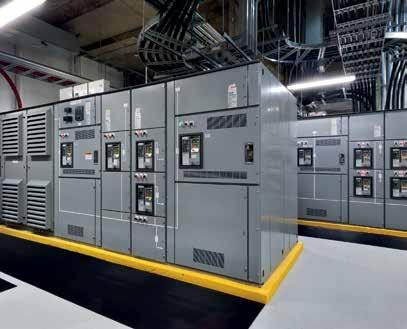
Having the technical expertise and insight to conduct retrofit projects in established buildings without affecting the day-to-day business of occupants is our specialty. It’s what sets us apart.
The truth is, existing buildings are far more complex and challenging than new construction, and require a unique game plan every time. It’s why the process for delivering mechanical and electrical engineering solutions requires more than a cookie cutter approach – it demands that you have a deep insight into the building and how new systems can be integrated into existing systems seamlessly.
All of our projects are reviewed by senior engineers, each with over 30 years of experience in their respective fields, ensuring that our clients always receive engineering services of the highest quality.
The Government of Canada, the Province of Ontario and the City of Toronto have officially launched Waterfront Toronto’s Request for Qualifications (RFQ) for the first residential buildings on Ookwemin Minising. The RFQ signals the beginning of developer selection for what will become a complete, mixed-income island community — and a defining chapter in the city’s next generation of waterfront growth.
Backed by $1.4 billion in tri-government flood protection, parks and bridges, and an additional $975 million for streets, utilities and public spaces, Ookwemin Minising and nearby Quayside are planned to support up to 14,000 new homes. The first development block alone is expected to deliver roughly 700 units, including a target of 30 per cent affordable rental housing. As part of the Toronto Builds portfolio, the project leverages public land to create mixed-income communities designed for long-term affordability and resilience.

At the heart of the emerging neighbourhood is Biidaasige Park, set to become Toronto’s largest new park in a generation. The selected development partner will help shape not only the buildings but the character of an inclusive, sustainable and architecturally ambitious waterfront district.

Canderel broke ground on Forêt Forest Hill. The three-tower, master-planned condo community will rise in midtown Toronto on a long-vacant site at Bathurst and St. Clair.
The construction financing was recently secured from a consortium that includes CIBC, National Bank, TD, Desjardins, and Laurentian Bank, signalling renewed confidence in Toronto’s condo market.
Forêt sits at a prominent intersection near Forest Hill, Cedarvale, Wychwood and Casa Loma, in an area where new supply is extremely limited. The plan will transform the property into three residential towers with retail at grade: 35, 37- and 41-storey buildings that total 1,310 suites, and a new public park.
The condo community will also feature approximately 50,000 square feet of indoor and outdoor amenities. Typical suites will reach up to 2,000 square feet with options to combine suites for unique living purposes.