


Denise
Myers |
RHAWA Member Programs
Director | dmyers@RHAwa.org | (206) 905-0614
For all ONLINE classes, 30-day access to a recording of the session is included. Upgrade your membership to include a premium dues package. The Weekly ONLINE Session Package includes 12-months' access to live weekly ONLINE educational sessions for $250/person/year. The ONDEMAND Library Package provides full access to over one hundred recorded educational sessions for $120/person/year.
When: Wednesday, August 5 | 1-2:30pm
Cost: $35 Members | $200 Guests
Over the last ten years, state statutes and local government codes governing rental agreement terms have become a minefield of potential violations every time you set and enforce terms on a lease. Attorney Chris Benis will review a standard RHAWA lease form section by section, highlighting and discussing the purpose, state and local legal requirements, and best practices for setting specific terms throughout the agreement.
Casual member meetings with topical discussions. No fee, simply order and pay for food at restaurant venues. August topic is Using the Add/Remove Resident Form (AKA Roommate Addendum).
• Birch Conference Room, Vancouver | Tuesday, August 11, 6-7:30pm
• The Onion Bar & Grill, Spokane | Wednesday, August 12, 6-7:30pm
• Dimension Law, S. King County | Thursday, August 13, 6:30-8pm
• Darcy’s Restaurant, Spokane Valley | Monday, August 17, 12-1:30pm
• Realty Pro's NW, East King County | Tuesday, August 18, 6-8pm
• Ben Dews Clubhouse Grill, Tacoma | Thursday, August 20, 6-7:30pm
• Bob’s Burgers, Everett | Thursday, August 20, 6:30-8pm
• LINK Meeting | ONLINE | Tuesday, August 25, 6-7:30pm
*Meeting time and subject may change. Please check the calendar at RHAwa.org/events.
When: Wednesday, August 12 | 12-1pm
Cost: FREE for members
Learn how to create a fully digital rental agreement using trusted RHAWA forms and send to all parties for digital signature. This new proprietary RHAWA web application makes it easy to put together a lease and is designed with our small independent rental owners in mind. Learn all the features of this tool and get your questions answered.
When: Thursday, August 13 | 2-3pm
Cost: $35 Members | $70 Guests
After decades of building wealth through your rental property, how do you protect what you've built — and decide what comes next? For many longterm single-family rental owners, the math has quietly shifted. Depreciation runs out, expenses climb, and equity sits locked in an asset that may no longer be working as hard as it once did. In this one-hour class, Austin Bowlin, CPA will walk through a case study of a couple weighing three options for their long-held rental — hold it, cash out, or exchange into a Delaware Statutory Trust (DST). You'll see exactly how each path affects after-tax income, equity preservation, and lifestyle.
When: Thursday, August 20 | 12-1pm
Cost: $35 Members | $70 Guests
Challenging conversations are an unavoidable part of rental housing, but the right approach can prevent conflict from escalating and protect both your business and your peace of mind. In this engaging one-hour class, Kathryn Shabalov, Property Management Professional, will cover applicable laws, communication strategies, and practical best practices for handling difficult interactions with tenants, contractors, clients, and vendors. Through real-world scenarios and discussion, you’ll learn how to set boundaries, document issues effectively, respond professionally under pressure, and navigate disputes with greater confidence and clarity. The goal is to help property owners and managers reduce stress, improve outcomes, and maintain productive professional relationships.
When: Wednesday, August 26 | 12-1pm
Cost: $35 Members | $70 Guests

Successful property management is built on preparation, not reaction. In this practical one-hour class, Kathryn Shabalov, Property Management Professional, will teach proactive building management strategies designed to help rental property owners reduce costly surprises and respond confidently when problems arise. From preventing unexpected water heater failures to planning for power outages, storms, and larger emergencies, you’ll learn how to create systems that protect your property, tenants, and budget. The class will cover preventative maintenance planning, establishing appropriate capital reserves, emergency preparedness, vendor coordination, and practical steps that keep buildings operating smoothly while minimizing stress, disruption, and expensive last-minute repairs.
Melissa Canfield |
RHAWA
Deputy
Director
| mcanfield@RHAwa.org | (206) 905-0615
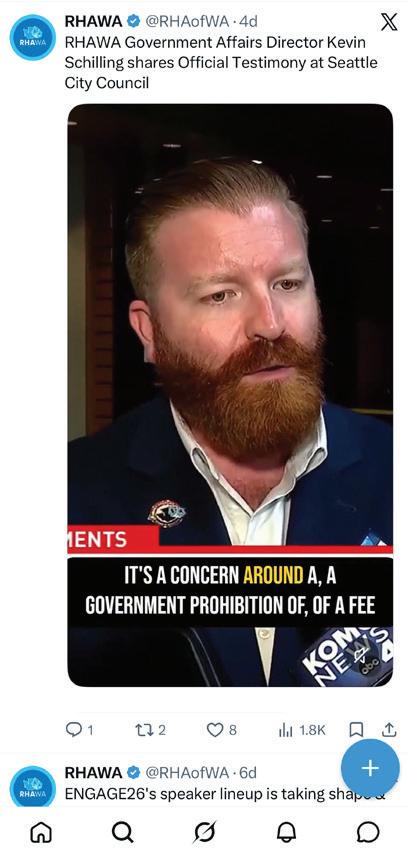
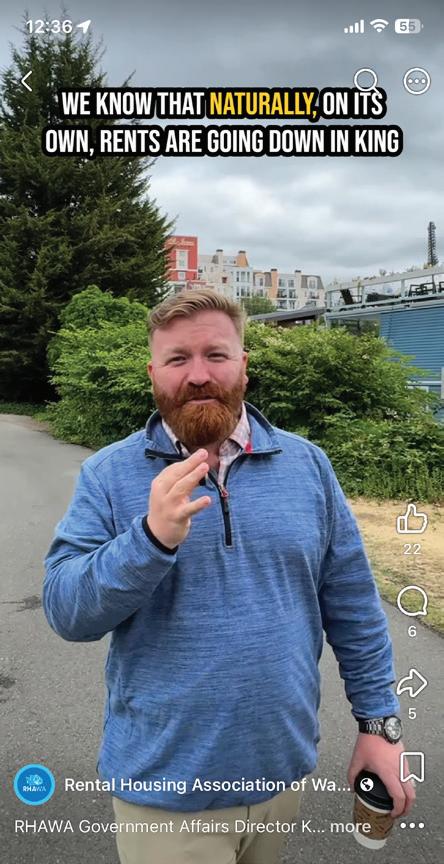
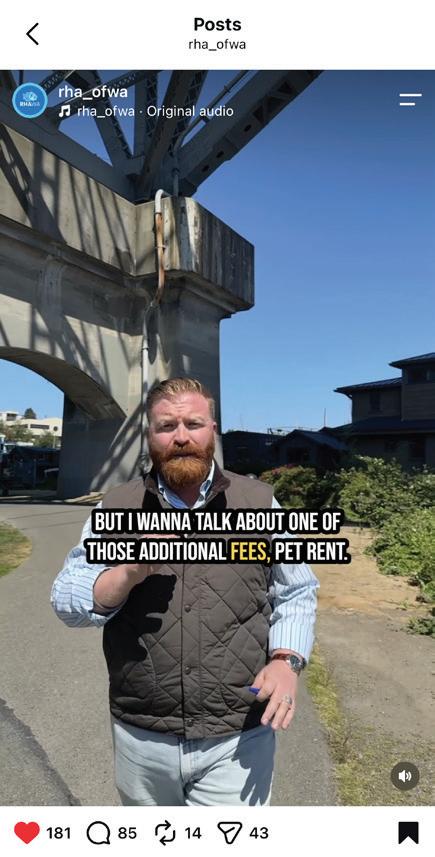
If you have ever wondered what happens when you combine a fourth-generation Washingtonian, a global traveler, a policy expert, a former mayor, and someone who once washed dishes at Mick Kelley’s Irish Pub, you get Kevin Schilling, RHAWA’s brand new Government Affairs Director.
Kevin brings a rare mix of hometown roots, academic firepower, and real-world experience that makes him uniquely equipped to champion the needs of rental housing providers across Washington. And yes, he is just as energetic in person as his résumé suggests.
Kevin’s family has been in Washington longer than most of us have been in the rental housing business. His grandfather and father each put in 35 years at Boeing, one as a machinist and one as an engineer, while his mom balanced work and raising twins.
Kevin grew up in Burien, graduated from Aviation High School and St. Francis of Assisi, and started working at 13. If there was a job to do, bussing tables, washing dishes, running lights at the Highline Performing Arts Center, Kevin was there with sleeves rolled up.
Before he became a familiar face in Olympia, Kevin took a detour to rural western Nepal to teach English and backpacked across India. That global perspective stuck with him and shaped how he thinks about communities, opportunities, and the systems that support them.
Back home, he worked for State Representative Kathy Haigh and later as a legislative aide to the Governor. Then came Washington State University, where he graduated summa cum laude, Phi Beta Kappa, and as a Top Ten Senior, all while working three jobs.
Continued on next page
President
Sean
Vice
Christopher
Past
Secretary
Treasurer
Christopher Benis
Facebook: Like us at facebook.com/RHAofWA
Instagram: Follow us at @RHAofWA
LinkedIn: At linkedin.com/company/rhawa
Twitter: Follow us at @RHAofWA
YouTube: Watch us at youtube.com/@RHAofWA
Seattle Office (206) 283-0816
Eastern WA Office (509) 535-1018
Educational articles featured in Current must be between 500 and 1500 words, include an author bio, professional headshot and contact information. High-resolution (300 dpi) graphics and photos should be sent separately. Deadlines are generally 30 days before the issue date, which is the first of each month. The editors reserve the right to edit, revise, or reject any submitted material. Submit to publications@RHAwa.org.
Advertise
For advertising information (rates, production specifications, and deadlines), contact Daniel Klemme: dklemme@RHAwa.org.
RHAWA Current is published every month by the Rental Housing Association of Washington. Copyright ©2026 RHAWA Current with all rights reserved. Reproduction or use without permission of editorial or graphic content in any manner is prohibited. All copyrights, trademarks, and servicemarks are property of their respective owners. P.O. Box 31103 Seattle, Washington, 98103.
Administrative Director Chloe Moser: cmoser@RHAwa.org
Not one to slow down, Kevin went on to earn dual master’s degrees from Columbia University and the London School of Economics and later completed the Harvard Kennedy School Senior Executive Program. We are still trying to figure out when he slept.
Most recently, Kevin served as the Advocacy Director for the Washington State Dental Association, where he navigated complex statewide policy issues and built coalitions. These skills translate directly into the rental housing world.
His time in Burien city government gave him a front row seat to the challenges facing housing providers, including zoning, permitting, economic development, homelessness response, and the ever-shifting landscape of local regulations. He has been in the room where decisions are made, and he knows how to make sure housing providers are not left out of the conversation.
Kevin was elected to the Burien City Council in 2019 and re-elected in 2023. During the pandemic, he helped expand internet access for low-income families, opposed tax increases during the crisis, joined AmeriCorps to deliver meals, and pushed for more housing and economic development.
He continues to focus on commercial growth, housing supply, regional partnerships, and accountability in homelessness and behavioral health systems, all issues that directly affect the rental housing ecosystem.
He has also stepped forward as a candidate for the Washington State House of Representatives in the 33rd Legislative District, reflecting his ongoing commitment to public service.
Kevin’s journey, from local kid to global scholar to policy leader, gives him a unique lens on the issues that matter most to RHAWA members. He understands how legislation is crafted, how cities operate, and how policies land on the ground for small housing providers.
He is ready to lead our government affairs team with energy, insight, and a deep respect for the people who make rental housing possible.
Kevin is eager to meet RHAWA members and hear directly from the people he will be representing in Olympia and beyond. Feel free to reach out, introduce yourself, and share what matters most to you as a housing provider.
You can contact him at kschilling@RHAwa.org or by phone at (206) 905-0603.
You can also meet Kevin on all of our social media platforms! Kevin is shaping up to be a real star in the rental housing world already. Watch, make sure to hit the like button, and don’t forget to SHARE!
Please join us in giving Kevin Schilling a warm RHAWA welcome. We are thrilled to have him on board, and we cannot wait to see the impact he will make.


Daniel Klemme | RHAWA Policy & Partnership Coordinator
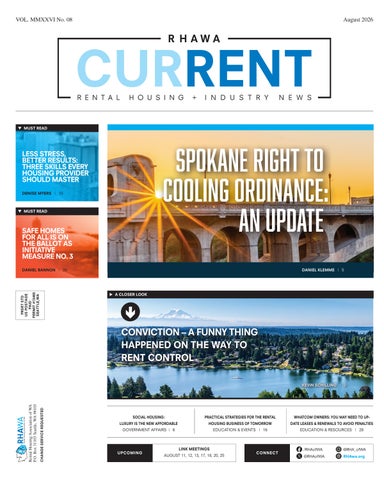
A lot has happened since our July update on Spokane's Renters' Right to Cooling ordinance (ORD C36877).
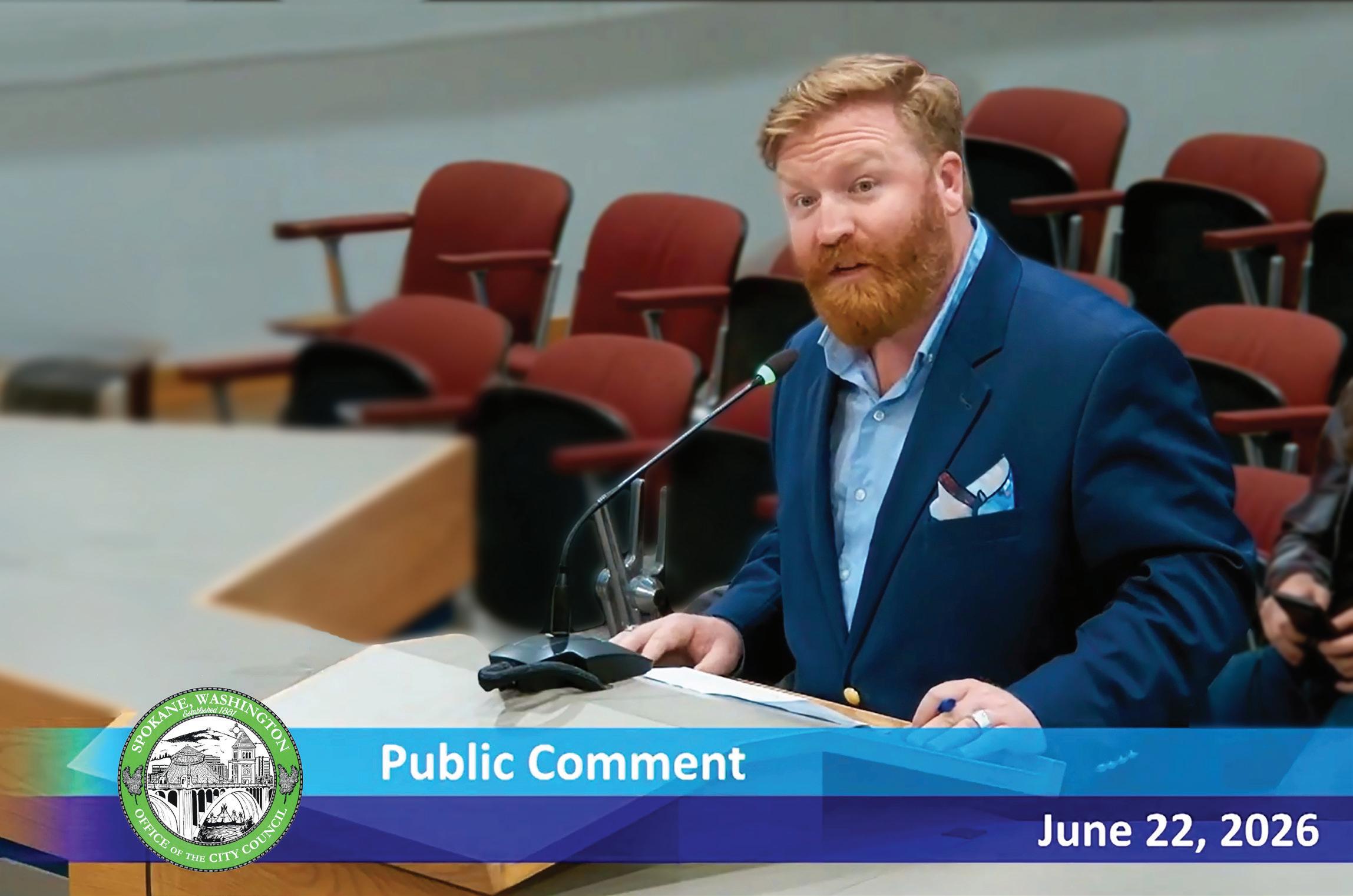
The ordinance had its first reading before the Spokane City Council on June 22. RHAWA was there in full force. Our Government Affairs Director, RHAWA Regents, RHAWA staff, RHAWA members, and our partners in the Spokane Real Estate Coalition provided ample testimony against the ordinance as written and the unintended consequences it would pose to the community.
Since that reading, the RHAWA Government Affairs team and our Executive Director have met with several council members and the City Council President to discuss the ordinance at length. Those conversations have covered possible amendments and other solutions, including directing House Bill 1590 affordable housing sales tax dollars toward cooling measures. Our hope is that these discussions lead to a reworking of the ordinance around what is actually possible.
The ordinance is not done. The amendments accepted so far have already changed it substantially, and more changes are on the horizon. As of this writing in early July, the ordinance is scheduled for a final vote on July 15. However, we believe the amendments that have yet to be fully introduced or voted on may push the final vote into August. Under city charter rules, an amended ordinance must be delayed two weeks before final action, so each new amendment restarts that clock.
Adding to the moving pieces, new council rules also take effect on Wednesday, July 15. City Council is shifting from Monday night meetings, with council briefing at noon on Mondays, to council briefing on Tuesdays, a streamlined agenda, and council meetings on Wednesdays.
With so much still in play, and with pushback coming from RHAWA, our members, the Spokane Real Estate Coalition, affordable housing providers, and other community members, we cannot say with certainty what will happen
next. What we can say is that the ordinance, as originally written, will almost certainly change substantially. By the time you read this, it may have passed. It may not have.
What has made the difference is showing up. Staying vigilant, building relationships across our industry and our community, staying reasonable and data-driven, and coming to the table as problem solvers have all moved this ordinance in a better direction. It is worth noting that if RHAWA had not deployed its resources, staff, and lead-
ership quickly, this ordinance likely would have passed with little fanfare. The way a small seed can grow into a mighty tree, a seemingly innocuous piece of legislation can grow into something that undermines a city's ability to solve housing affordability and sustainability.
Thank you to our Eastern WA members for being willing to answer the call. We deeply appreciate your support and we will continue to keep you informed.

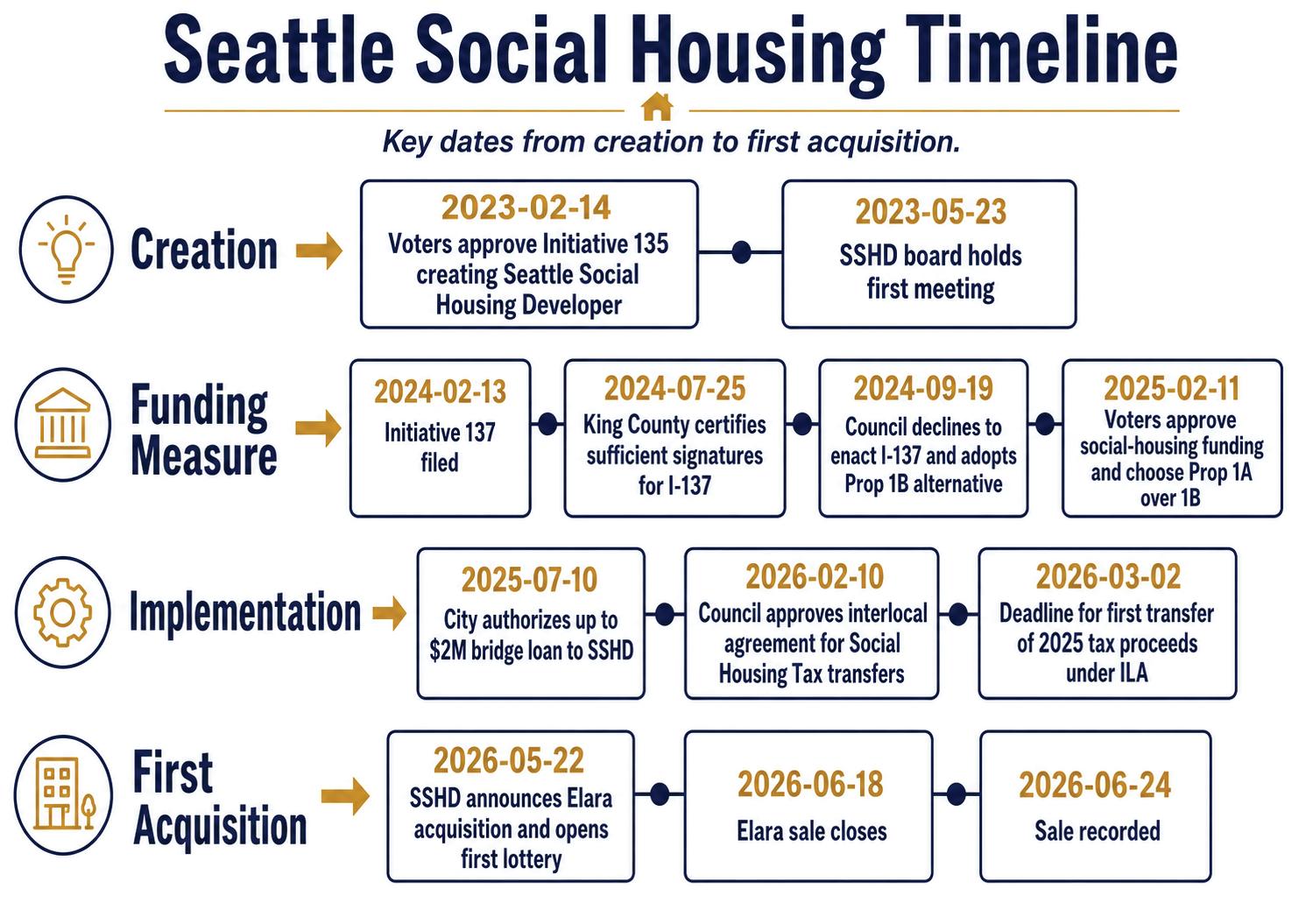
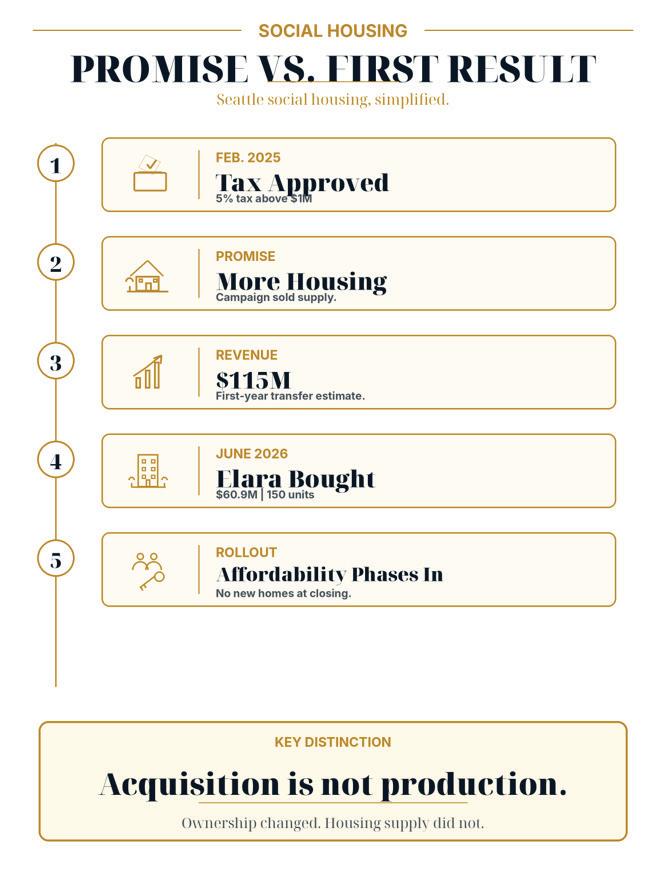
In June, the Seattle Social Housing Developer closed on its first property. Not a distressed building. Not an aging complex on the edge of viability. It bought Elara at the Market, a 150-unit, eight-story apartment building at 2134 Western Avenue in Belltown, across the street from Pike Place Market and the rebuilt waterfront. The price was $60.9 million, roughly $406,000 per unit. The prior owner's own marketing described a LEED Gold certified, "Condo-Quality" building with an "extravagant" amenity collection, aimed at the high-income downtown tech-corridor renter.
This was the first major act of Seattle's social housing experiment, funded by the new Social Housing Tax approved by voters in February 2025: a 5 percent excise tax on compensation paid in Seattle above $1 million per employee. Voters were told the tax would address the housing shortage. Projections estimated about $50 million per year; city officials announced that approximately $115 million would transfer to the developer in its first year, more than double the estimate.
Acquisition Is Not Production Initiative 137 explicitly authorized both "construction and acquisition" of social housing, so the critique here is not misuse of funds. The measure permitted acquisition. But the campaign promise was housing supply, and that distinction matters.
Seattle's housing problem, by every official account, is a shortage. A shortage is solved one way: more homes.
The purchase of Elara at the Market added zero homes to Seattle's housing supply. On June 17, the city had 150 units at 2134 Western Avenue. On June 18, it had the same 150 units. Ownership transferred. Supply did not move.
Nor did affordability arrive on closing day. Current tenants remain, as they should, with rents frozen for two years, fees trimmed, and one-year transit passes. The agency handled its inherited residents well. Affordability phases in through turnover: the first 15 vacancies go to households at or below 30 percent of area median income, and the next 45 to households between 30 and 50 percent. Other units remain part of the building's mixed-income operating model, including market-rate units that help carry the project financially. Whatever the final mix, the point remains the same: affordability arrives gradually through reallocation, not through new production.
There is another quiet reality here. The existing residents leased into a market-rate apartment building under one ownership model, one management model, and one set of expectations. After the sale, the building became a public mixed-income social-housing experiment. The rent freeze, fee reductions, and transit passes are meaningful gestures, and they help explain why current tenants may welcome the transition. But they do not change the underlying fact: the building's purpose changed around the people already living there.
Calling this "new affordable housing" blurs the most important distinction in housing policy: the difference between creating homes and reallocating homes. Reallocation can be a legitimate policy choice. But it is not production, and it sits uneasily beside a measure sold as a way to "increase the supply" of permanently affordable housing. If Seattle wants to buy buildings and convert them over time, it should say that plainly. But that is
a different promise than adding new homes to a housing-short city.
The Revealed Preference
When the public sector finally had to become a housing provider itself, with real money, real tenants, and real operating risk, it did not buy the cheapest, oldest, most heavily regulated building it could find. Its leadership said openly that it targeted a newer "Class A" asset without major deferred maintenance.
They were right to do so. A newer building means lower maintenance risk, predictable capital needs, easier stabilization, and a healthier operating margin. Every rental property owner in Washington lives inside that calculus.
A new Class A building also screens out a large share of operating and compliance risk. Cities across Washington are layering capital and retrofit mandates onto existing buildings: energy performance standards, emissions retrofits, cooling requirements, habitability upgrades. A building completed in
tax on the region's largest employers to pencil.
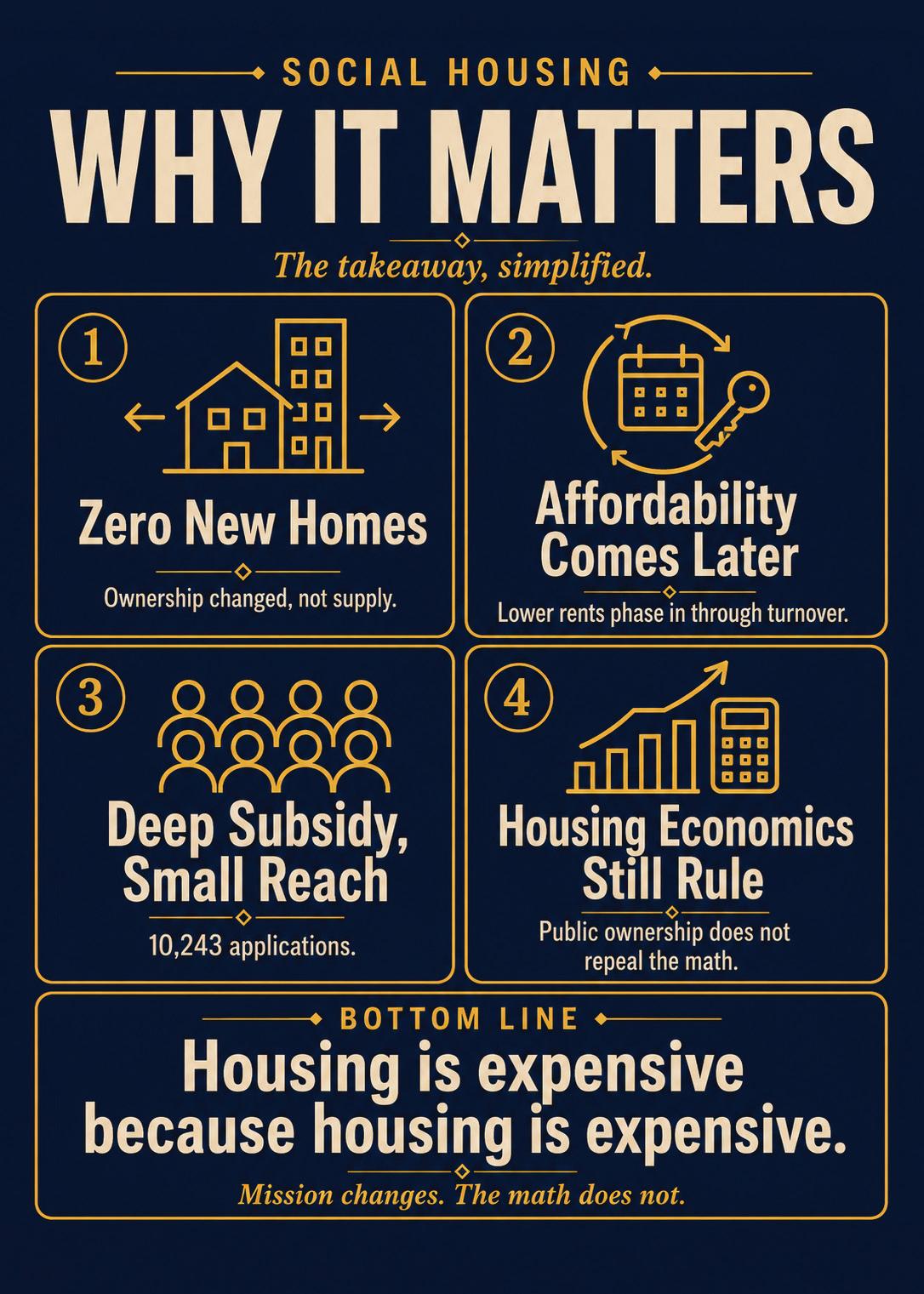
Housing is expensive because housing is expensive. Public ownership changes the mission. It does not repeal the math.
Consider the subsidy inside the building. Published social housing rents at Elara run from $665 for a studio to $1,482 for a two-bedroom, in an asset that traded at roughly $406,000 per unit. The gap between those rents and the cost of operating a Class A Belltown building does not disappear because a public agency holds the deed; it is carried by market-rate revenue, public tax dollars, or both. That is not a criticism of the residents. It is a description of the model: one of the most expensive vehicles imaginable for delivering affordability, chosen first.
2018 arrives at or near compliance on many of these issues; an older building may carry the same mandates as unfunded liabilities from day one. By buying new with taxpayer dollars, the public agency purchased its way past the very requirements its host city imposes on private owners of older housing. For now.
Economists call this revealed preference: you learn what someone believes not from their statements but from their choices when their own money is on the line. On its first purchase, Seattle's social housing agency revealed that it believes what housing providers have said all along. Quality costs money. Deferred maintenance is a liability. Retrofit mandates are real costs. The economics of a building do not care who owns it. The political narrative held that removing the profit motive would deliver affordability; the public sector removed it, made the same choices a private operator would make, and discovered that converting even 60 of 150 units to below-market rents requires a nine-figure
The headline price was roughly $406,000 per apartment. But that number understates the policy problem. Because most apartments were already occupied, the relevant question is not only what Seattle paid per unit, but what it paid per immediate affordable opportunity. Measured against the first 15 deeply income-restricted vacancies, the acquisition cost is more than $4 million per initial slot. Measured against the first 60 below-market vacancies described in the phase-in, it is still more than $1 million per slot before operations, maintenance, reserves, or debt service. That is the difference between buying a building and delivering affordability.
Now consider who gets it. The developer received 10,243 applications during the two-week lottery. The first phase reserves 15 vacancies for households at or below 30 percent of area median income. Two identical extremely low-income households: one wins a $665 studio across from Pike Place Market, the other waits years on a list. The subsidy is so deep that almost no one can receive it, and the ones who do are chosen by chance. That is not a solution to a shortage. It is a raffle with a very nice prize.
The alternative has a name: preservation. Washington's affordable stock includes tax-credit properties whose affordability restrictions are approaching expiration, plus thousands of older, unsubsidized buildings whose below-market rents last only as long as the buildings stay viable. The
need is not hypothetical: affordable housing providers in Seattle, nonprofit and for-profit alike, are reporting losses and selling off properties right now. Preserving those units typically costs a fraction per unit of a Class A downtown acquisition,
and it protects households already housed affordably rather than a handful of lottery winners. Pair the same dollars with Housing Choice Vouchers and the reach multiplies. Or direct them toward workforce housing at 80 to 120 percent of area median income, where a household with full-time employment can carry the rent itself, a range the developer's own charter contemplates. Spent only on depth, $115 million a year produces press conferences. Spent on breadth, it can produce housing outcomes.
There is a second lesson here, and it applies in every housing market in Washington.
If a publicly funded agency, spending other people's money, concluded it needed a newer, high-quality, low-maintenance building to make its numbers work, consider the private owners who hold the stock the agency avoided. The 1960s fourplex. The 1978 garden apartment complex. The single-family rental with a 40-year-old furnace. This is the naturally occurring affordable housing that serves most working renters in Washington, operated on margins the Social Housing Developer evidently found unattractive even with a dedicated tax stream behind it.
Those owners absorb the maintenance risk Seattle's agency screened out. They carry the retrofit mandates the agency bought its way around. They provide the
Continued page 14


Interested in Submitting Your Announcement?
about industry
new employee and location information, and more. If you have questions, or would like to submit an item for consideration, email publications@RHAwa.org.
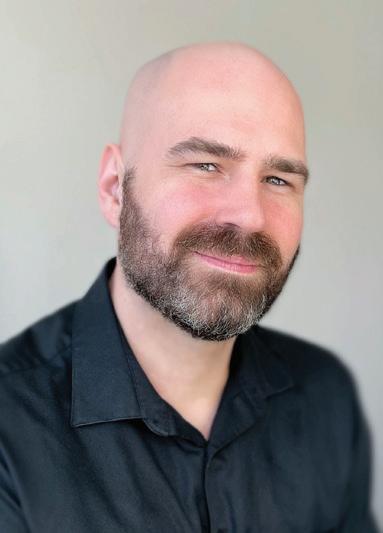
Kevin Schilling | RHAWA Government


I finished graduate school at a difficult time in the Pacific Northwest labor market. In 2019, before COVID, hiring was still concentrated largely in tech. My friends from undergrad (Go Cougs) were landing jobs in management consulting and program management. I studied history, political science, and economics as an undergraduate, then continued that work in graduate programs at Columbia University and the London School of Economics. I had also worked on campaigns and in elected officials’ offices, but at the time, employers did not seem especially interested in humanities or social science backgrounds.
With my degrees in hand, I moved back to my hometown of Burien and ran for city council. I won in 2019 and again in 2023, then was selected as Mayor of Burien in 2024. During that period, King County and Washington State underwent a major shift in political identity. During COVID, activists used the pandemic to push new mandates on housing providers, including eviction moratoriums and restrictions on rent collection. Even in Burien, I helped stop an effort by then-community activist Katie Wilson to require housing providers to pay tenants’ moving costs.
After COVID, activists and their allies set their sights higher. Rent control became the next step for politicians seeking to control private enterprise and interfere in the landlord-tenant relationship. More elected officials (and more voters) came to believe that supporting
anything labeled anti-Trump was the only way to influence public policy. As a result, activists and political organizers worked at nearly every level of government to expand eviction moratoriums, waive rent requirements, broaden tenant protections, and ultimately impose state-mandated rent control.
When I became Mayor, I knew I could not support these policies. Everything I had learned in academia showed they were fundamentally flawed. Supply
runs counter to economic science. In the end, this is a rejection of evidence by many of the same people who, during the world’s most recent pandemic, insisted that we follow it.
In reality, the rent control debate was only the beginning of what I believe many elected officials (once described as “progressive” and now openly “socialist”) want: to make individual private ownership, whether of property or other wealth-building assets, as diffi-
BUT THE TRUE TEST OF CONVICTION IS WHETHER WE GET BACK INTO THE FIGHT, BECAUSE THERE WILL ALWAYS BE ANOTHER ONE.
would decline, responsible operators would leave the market, and large, private equity-backed firms would have an opening to expand their ownership of community housing. I kept asking myself: Don’t elected officials want neighbors to supply housing to neighbors, rather than potentially predatory actors interested only in making more money?
That was the argument I made locally and before the Legislature. But as we know, the Legislature chose a path that
cult as possible in this state. Alongside rent control, the Legislature has passed or expanded taxes on income, capital gains, estates, property, business activity, and sales. No matter what you own or what economic activity you generate, the state has signaled its intent to claim a share of it.
What is Washington doing to encourage broader ownership and wealth creation? It is a question I asked myself as Mayor and continue to ask in my
new role as Government Affairs and Advocacy Director of RHAWA. Unfortunately, I do not believe most elected officials are asking it.
That is the landscape for the next few years, and it is exactly why associations are so vital. RHAWA cannot stop these threats alone, but an organized association of more than 6,000 housing providers can push back with discipline, persistence, and a clear message. We can always do more, but the stakes are higher now. With socialist candidates winning office across the country, including here in our own backyard, the political pendulum is unlikely to swing back toward common sense on its own.
I know that can be demoralizing. Losing is hard. But the true test of conviction is whether we get back into the fight, because there will always be another one. I know that because I’ve been in fights my whole life: my first campaign I worked on that lost, my own two campaigns I won, the legislative campaign I lost, and many other fights, great and small. No matter the size of the fight, and no matter what stage in life, whether it was during college and grad school, on the campaign trail, during my time as Mayor, or supporting members of an association, the fight is always worth it. I am proud to work with an association that is not afraid to defend property rights, expand housing opportunities, support community investment, and stand up for common sense.


Owning and managing rental housing has never really been a passive investment, but even more so in the last decade. Between changing regulations, rising operating costs, maintenance demands, and the everyday realities of working with people, housing providers often find themselves wearing the hats of business owner, project manager, accountant, negotiator, and emergency responder—all in the same week.
While many stressors are outside your control, one important factor isn’t: preparation.
The most successful housing providers aren’t necessarily the ones who encounter the fewest problems. They’re the
Myers
ones who have systems in place before problems occur. They rely on consistent processes rather than constant improvisation. Instead of reacting to every challenge, they develop skills that help them respond with confidence.
Three areas, in particular, have an outsized impact on reducing stress while protecting both your investment and your peace of mind: efficient tenant turnovers, effective communication during conflict, and proactive property management.
1. Build a Turnover Process, Not a Turnover Crisis Vacancy is expensive. Every extra day a unit sits empty means lost rental income, additional carrying costs, and another opportunity for unexpected surprises.
Yet turnovers often become chaotic because they’re treated as unique events instead of repeatable business processes.
Think about everything that happens between one resident moving out and another moving in:
• Notices and timelines
• Move-out inspections
• Security deposit documentation
• Cleaning
• Repairs
• Vendor scheduling
• Marketing
• Showings
• Lease preparation
• Move-in coordination
Missing even one step can create delays, legal headaches, or unnecessary costs.
Stress decreases dramatically when every turnover follows the same checklist.
Experienced property managers know that standardized procedures save both time and money. Vendors know when they’re needed. Inspections happen consistently. Marketing begins sooner. Repairs are completed in the right order. New residents move into well-prepared homes.
A documented turnover system also helps eliminate decision fatigue. Rather than asking, “What do I need to remember this time?” the answer is already written down.
The result isn’t simply faster turnovers—it’s fewer surprises and greater confidence.
Many housing providers enter the rental business because they enjoy real estate. Few expect that one of the biggest challenges will be navigating difficult conversations.
Unfortunately, conflict is inevitable.
Late rent.
Noise complaints.
Maintenance frustrations.
Lease violations.
Contractor disagreements.
Misunderstandings with vendors.
Even routine conversations can become emotional when someone’s home, livelihood, or finances are involved.
The good news?
Many conflicts can be prevented—or at least significantly reduced—through communication skills.
Professional communication doesn’t mean avoiding difficult conversations. It means having them in ways that remain calm, respectful, and legally appropriate.
Some habits consistently reduce stress:
• Setting expectations early
• Communicating policies consistently
• Listening before responding
• Documenting conversations carefully
• Focusing on facts rather than emotions
• Establishing professional boundaries
One of the greatest sources of stress for housing providers is feeling personally attacked during disagreements.
Experienced professionals learn an important distinction: not every emotional conversation requires an emotional response.
By remaining calm, documenting interactions, and following established procedures, housing providers protect themselves while often de-escalating situations before they become larger disputes.
Good communication isn’t just about keeping tenants happy.
It’s about protecting your business.
Many expensive repairs don’t begin as emergencies.
They become emergencies because warning signs were missed.
The water heater that suddenly fails may have been nearing the end of its expected life.
The roof leak may have started as a minor maintenance issue months earlier.
The HVAC failure may have shown reduced performance long before it stopped working entirely.
Reactive maintenance creates stress because it forces housing providers into expensive decisions under pressure.
Emergency contractors.
Emergency pricing.
Emergency tenant communications.
Emergency scheduling.
Everything becomes more difficult when there’s no time to plan.
Predictive building management shifts the focus from reacting to anticipating.
Instead of asking, “What broke today?” successful housing providers regularly ask:
• What systems are approaching replacement age?
• Which preventative maintenance tasks are overdue?
• Are emergency supplies available?
• Do trusted vendors know our properties?
• Is adequate reserve funding available?
• What would happen if power were lost tomorrow?
This mindset dramatically changes the ownership experience.
Rather than constantly putting out fires, owners gradually build systems that prevent many of them.
While no property can avoid every unexpected event, preparation greatly reduces both financial impact and emotional strain.
Many people assume stress comes from hard work.
In reality, much of it comes from uncertainty.
Not knowing what the law requires.
Not knowing which vendor to call.
Not knowing how much a repair will cost.
Not knowing how to respond to an angry resident.
Not knowing whether enough reserve funds exist.
Knowledge reduces uncertainty. Systems reduce decisions.
Preparation reduces emergencies.
Each improvement may seem small on its own, but together they create a business that feels more manageable.
Continued on page 14

Washington's local housing policy landscape is rarely quiet for long, and the past several weeks have delivered significant developments that members operating in Seattle, Bellingham, and Redmond need to know about heading into the fall. Here is where things stand. ——
The Junk Fee Ordinance has Arrived
Mayor Katie Wilson transmitted a proposed rental fee ordinance to the Seattle City Council last month, and it represents one of the most sweeping changes to Seattle's housing provider fee structure in recent memory. The proposal would establish a specific approved list of fees that housing providers are legally permitted to charge. Any fee not explicitly on that list would be prohibited: full stop.
Under the proposal, permitted fees would include security deposits, utility surcharges, late rent payments, key replacement, bounced checks, and parking. (several of these are already heavily
regulated in the City of Seattle) What housing providers would no longer be allowed to charge for includes pet rent, mail service, use of in-unit appliances, paying rent by check or money order, and access to common areas. If that last category sounds familiar, it is because Bellingham passed similar fee restrictions in 2025. Seattle is now moving to match and expand on that framework citywide.
Wilson framed the proposal in terms of transparency, arguing that what renters see advertised rarely reflects what they actually pay once fees are added. While RHAWA has no issue with the disclosure of full rental prices upfront, this policy is using “transparency” and “disclosure” to further squeeze smaller housing providers out of the rental market. Additionally, this proposal follows the passage of rent control last year, which Wilson claims has created pressure for housing providers to seek new fee-based revenue outside the rent cap framework. This is obviously a misrepresentation of the purpose of fees and is certainly not how RHAWA’s members operate their rental business.
For Seattle housing providers, the practical implications are significant. Many housing providers currently recover legitimate costs (pet damage, appliance wear, administrative overhead) through line-item fees that would be eliminated under this proposal, with little corresponding ability to raise base rent to compensate, given the statewide rent
cap. Angie Gerrald, who owns and rents several homes in north Seattle and is a long-time RHAWA member, participated in the city's stakeholder process and described the ordinance as adding new "landmines and booby traps" to an already heavily regulated operating environment.
As of this writing, the ordinance is before the full City Council and has not yet passed. RHAWA will be monitoring its progress closely and will keep members informed as the council schedule develops. If you operate a rental property in Seattle, now is a good time to review your current fee structure and understand what would change under this proposal.
Algorithmic Rent Pricing is on the November Ballot
A campaign that launched in April has now cleared every hurdle it needed to clear. Community First Whatcom (the organization behind Bellingham's 2023 tenant protections initiative, 2025 rental fee ordinance, and a long string of successful local ballot campaigns) submitted nearly 5,700 signatures in late June for Initiative 26-01, which would ban the use of algorithmic pricing software in Bellingham's rental market.
The Whatcom County Auditor's Office issued a certificate of sufficiency on July 2, confirming that the required threshold of 3,167 valid signatures was
met. The measure is headed to Bellingham voters on November 3.
The initiative would prohibit housing providers from using paid services that analyze public and private rental market data to recommend prices, lease renewal terms, or occupancy levels to multiple housing providers simultaneously. It would also ban any agreement between two or more housing providers to coordinate rental pricing, and create a private right of action with whistleblower and anti-retaliation protections. Penalties would be assessed on a per-unit, per-year basis.
The broader context matters here. The Washington State Attorney General's Office sued RealPage and several King County housing providers in 2025 for antitrust violations related to algorithmic pricing. A 2026 state Senate bill that would have prohibited algorithmic price fixing statewide failed to make it out of committee, leaving local governments to act on their own. Seattle and King County have already passed similar bans, and RHAWA was at the table to help craft these pieces of legislation to reduce unintended harm to small housing providers who do not use services like RealPage. The concern with the Bellingham initiative, when compared to previous versions, is that it had absolutely no input from our side of the equation.
For housing providers operating in Bellingham — particularly larger operators

managing multiple properties — this initiative carries direct compliance implications if it passes, including the potential for criminal penalties if violated. RHAWA will continue to cover the campaign through the fall and will keep members updated ahead of the November vote. ——
A "Renters Bill of Rights" Proposal is Gaining Momentum
Redmond is the latest Washington city to see organized tenant advocacy take shape at the local level, and housing providers in the Eastside community should be paying attention to what is being proposed.
A proposal developed by the Transit Riders Union, dubbed the “Redmond Renters Bill of Rights” is pushing the Redmond City Council to adopt a package of new tenant protections, framing its effort around the fact that renters now make up nearly two-thirds of Redmond households. The proposal is organized around five core areas, each of which carries direct implications for housing providers operating in the city.
The first is a ban on: wait for it… “junk fees” — including many of the usual suspects in these proposals. Limited or restricted fees include administrative fees charged at the application stage, monthly pet rent charged on top
of existing pet deposits, amenity fees for common area access, valet garbage charges, third-party billing and service fees, required internet fees, and unspecified utility charges billed through property management software. The scope here is notably wider than what Seattle is currently proposing, and would effectively prohibit many of the ancillary charges that have become standard practice in some professionally managed properties.
The second is a First Right of Refusal ordinance modeled on Seattle's existing lease renewal framework. Under current Washington State law, fixedterm lease tenants have no guaranteed right to renew their tenancy when a lease expires. The statewide just cause law applies to month-to-month tenants, but end-of-term non-renewals remain permissible outside of Seattle. The Redmond proposal would require housing providers to offer continued tenancy to existing renters at the end of a lease term before pursuing a new applicant, with exceptions limited to enumerated just cause reasons. This would effectively bring Redmond in line with Seattle's mandatory lease renewal protections — a significant expansion of tenant rights on the Eastside.
The third element is an anti-retaliation provision that would prohibit housing providers from taking adverse action against tenants who exercise their legal rights, request repairs, negotiate rent, speak publicly about housing
conditions, or engage with elected officials on housing policy.
The fourth would give lease tenants the ability to exit a lease early with 20 days' notice and no penalty whenever a rent increase exceeds 3%. Currently, that flexibility exists for month-tomonth tenants under state law, but this lease break provision is new territory for term leases and should worry any provider operating in Redmond.
The fifth element would require the City to build and maintain a comprehensive renter rights website, mandate that the site's address be visibly posted in apartment buildings and provided to all tenants, and hire or contract with dedicated staff to inform, advise, and advocate for renters on an ongoing basis. Whether the city has the resources and time to make this a helpful source of information is yet to be seen, but these things rarely play out without a hitch.
It is worth noting that this proposal has not yet been adopted by the Redmond City Council, and at the time of writing this article has not been officially proposed yet. But the trajectory in Redmond is consistent with what we have seen across Washington State; tenant advocacy organizations taking bits and pieces from other cities' policies, changing the handwriting and proposing it as a set of new “protections”. As always, RHAWA will be tracking this proposal and will update members as it develops.
Thank You for Staying Ahead of the Curve
Before I share my additional thoughts, if you are surprised Spokane is not included on this edition of Local Housing Regulation Watch, don’t be. There is a full article on Spokane’s current regulatory landscape written by Daniel Klemme on page 5 and a full article on Tacoma’s ballot initiative on page 26.
If you are consistently reading our local housing regulation watch articles, you are keeping yourself informed of the cutting edge of upcoming rental housing regulations. As the policy landscape continues to shift, it remains more important than ever to stay ahead of these changes and adopt updated policies in advance to protect yourself and your business.
As we continue to provide these regular updates and continue to see similar (but not identical) versions of policy pass in various municipalities throughout Washington state it makes me think back to our statewide proposal of “harmonization” to rework many of these patchwork-style policies into one easier to follow general statewide standard. While we are still make moons away from that becoming a reality, I look forward to the day that our lawmakers wake up and realize that passing a hodgepodge of policies across every city in the state is not an effective or productive way to provide good policy.
actual below-market supply, not through a lottery and a press release, but through the ordinary economics of older buildings. When policymakers layer new mandates, fees, and process requirements onto those operators, they raise costs on precisely the housing stock the public sector itself declined to touch.
Seattle's first purchase is, unintentionally, the strongest brief yet for taking those owners seriously. The agency's own acquisition criteria concede the point: operating older, cheaper housing is hard, risky, and capital-intensive. The people already doing it deserve policy that reflects that reality, not policy that treats them as the problem.
Ten thousand lottery applications is real demand. Sixty units phased in through turnover is not a response at scale. It is a demonstration project with a very good address.
The honest version of Seattle's story goes like this. Voters approved a tax to solve a shortage. The first act was a transfer of ownership, not an expansion of supply. The agency executing the transfer behaved exactly like the private operators the campaign spent years criticizing, because the economics left it no other option. The dollars went toward an unusually deep subsidy for a very small number of households, while cheaper paths, preservation, vouchers, and workforce housing sat untouched. And the underlying shortage, the one that put more than 10,000 names into a lottery for a handful of apartments, remains exactly as large as it was the day before closing.
There is a version of public involvement in housing that adds homes. This was not it. Until the conversation shifts from who owns existing buildings to how we build more, and until policy treats owners of older affordable housing as partners in supply rather than targets of regulation, expect more press conferences like this one: a ribbon cut on a building that already existed, for tenants already housed, funded by a tax sold as a solution to a shortage it did not shrink.
Seattle did not misuse the money. It did something more revealing. It proved the point.
Dear RHAWA Members;
I would like to remind everyone that your discount is available at any Rodda Paint store using Account # 536894.
Continued from page 11
Reducing stress doesn’t require completely reinventing your rental operation.
Often, small improvements make the biggest difference.
Consider implementing just a few new habits:
• Create a written turnover checklist.
• Build relationships with reliable vendors before emergencies occur.
• Keep maintenance records for major building systems.
• Review reserve funding annually.
• Use written communication whenever appropriate.
• Document inspections consistently.
• Develop standard responses for common situations.
• Schedule preventative maintenance instead of waiting for failures.
These simple practices create consistency, and consistency builds confidence.
When people think about protecting rental property, they usually think about insurance, maintenance, or legal compliance.
But there’s another valuable asset that’s easy to overlook:
Your own time and peace of mind.
Burnout affects decision-making.
Constant stress increases mistakes.
Feeling overwhelmed often leads to deferred maintenance, delayed communication, and rushed decisions that cost even more later.
Investing in professional education isn’t simply about learning new information.
It’s about creating better systems that allow you to spend less time reacting and more time operating your rental business strategically.
Every process you improve today makes tomorrow a little easier.
Every skill you strengthen reduces future uncertainty.
Every system you create becomes another safeguard against unnecessary stress.
Rental housing will always present challenges. But with the right preparation, those challenges become far more manageable—and your business becomes more resilient as a result.
Continue Building Your Skills
This Summer, RHAWA is offering three practical online classes designed to help housing providers reduce stress while improving the way they operate their rental businesses.
Seamless Tenant Turnovers (July 22) will provided proven systems for managing move-outs and move-ins efficiently while minimizing vacancy, protecting deposits, and keeping turnovers on schedule.
Dealing with Difficult People (August 19) focuses on communication strategies, legal considerations, documentation, and practical techniques for navigating challenging conversations with tenants, contractors, vendors, and clients.
Predictive Building Management (August 26) explores proactive maintenance planning, emergency preparedness, reserve planning, and preventative strategies that help avoid costly surprises before they happen.
Whether you own one rental home or manage a larger portfolio, these onehour online sessions offer practical tools you can put to work immediately.
Register today at rhawa.org/events and build confidence that can help make your rental business more profitable—and a whole lot less stressful.


Join professionals from across Washington for ENGAGE26, two days of real-world education, policy insight, and meaningful connections. Walk away better informed, better connected, & better prepared for









Rental housing providers across Washington are being asked to navigate more change than ever before. New laws, evolving local requirements, economic pressure, rising operating costs, and ongoing political uncertainty are reshaping the way rental housing is owned and managed.
ENGAGE26 was created to address that reality.
Hosted by the Rental Housing Association of Washington, this two-day conference will bring together rental owners, property managers, industry professionals, and rental housing advocates from across the state for education, conversation, and practical problem-solving.
The conference will include four general sessions and 18 breakout sessions divided among three educational tracks. This format allows attendees to build an experience around the topics most relevant to their properties, businesses, and professional goals.
4 18 32+ 40+


Operating rental housing in Washington requires careful attention to a growing number of state and local rules.
Track A focuses on the responsibilities and day-to-day decisions that come with managing rental property in an increasingly regulated environment. Topics will include lease administration, rent-increase requirements, fair housing, enforcement actions, maintenance obligations, regulatory compliance, and risk management.
The sessions are intended to help housing providers understand their obligations, improve their internal practices, and avoid preventable errors that can lead to financial or legal consequences.
Each issue of CURRENT will offer a closer look at one of the conference tracks. Last month’s article introduced Track A: Rental Operations. This month, the focus shifts to Track B: Business Strategies and the sessions designed to help housing providers make stronger financial and operational decisions.
Four general sessions will serve as shared learning experiences for all attendees.
These sessions will examine the larger forces affecting rental housing in Washington, including legislative activity, market trends, economic conditions, and the direction of the industry. Presenters will include legal professionals, policymakers, industry leaders, and experienced housing providers.
By bringing attendees together around these broader issues, the general sessions will provide important context for the more specialized topics covered throughout the breakout tracks.
The information will be relevant to both independent owners and professionals managing larger portfolios. View full agenda at engageWA.com/schedule/full.
Registration includes full access to all general sessions, breakout sessions, and Spark Sessions across both days of the event. You'll be well-fueled with complimentary breakfast, lunch, snacks, and beverages provided throughout the day. The conference also features exclusive opportunities to engage directly with government and civic leaders during the Public Officials Mix & Mingle Reception, held at the close of day two.


OCTOBER 14-15, 2026 | 8:30AM - 6PM |



Owning rental housing is not only a compliance responsibility. It is also a business that requires careful planning, financial awareness, and the ability to respond to changing conditions.
Track B explores the decisions that can affect the long-term strength and stability of a rental business. Sessions will address maintenance planning, financing, insurance, business structures, accounting, succession planning, and other issues connected to protecting and growing a rental housing investment.
The goal of this track is to provide housing providers with useful strategies they can apply to improve efficiency, manage risk, preserve their properties, and make more informed business decisions.
See details on page 18.
ENGAGE26 will be held at the Meydenbauer Center in downtown Bellevue — an accessible, modern venue for a professional two-day conference. Sessions span multiple rooms across the venue, with a spacious exhibitor hall, a dedicated Speakers Lounge, and complimentary garage parking. Nearby hotels, including the InterContinental, Marriott, Westin, and Hilton, offer upscale accommodations. With Bellevue's restaurants and cafés within walking distance, you'll enjoy easy access to dining and networking before and after each day's programming.

Many of the policies affecting rental housing are developed at the state and local levels, often through decisions made in Olympia, city halls, county councils, and community meetings.
Track C will help attendees better understand how those decisions are made and how housing providers can participate more effectively in the process.
Sessions will cover legislative developments, local policy activity, grassroots advocacy, coalition building, public relations, and engagement with elected officials and community stakeholders.
The track is designed to help housing providers move from simply responding to new policies to becoming more informed and active participants in the conversations shaping the future of rental housing. View full agenda at engageWA.com/ schedule/full.
Do you collaborate with contractors, attorneys, lenders, insurance professionals, or others who support the rental housing industry? Invite them to be part of ENGAGE26. Whether they're plumbers, general contractors, tech providers, or legal experts, this event offers a prime opportunity to connect with housing providers, promote their services, and stay ahead of industry developments. Encourage your partners to attend, exhibit, or sponsor — because when more voices come to the table, the entire industry moves forward together.



Speaker: Julie Martinello, Partner, Dimenson Law Group
Is an LLC the right choice for your rental properties? This practical legal session explains when forming a limited liability company makes sense, how to properly structure and main-
tain an LLC, and the advantages and limitations every housing provider should understand. Learn how LLCs can help with liability protection, ownership transitions, and business operations while avoiding common mistakes that can undermine their legal benefits.


Speakers: Chris Benis, Attorney, First Avenue Law Group, PLLC & RHAWA Legal Counsel
Constance Nelson, President, Jensen, Jensen and Associates
John Mullally, Managing Member, Mullally Development Company
For decades, family-owned rental housing businesses have adapted to changing markets, evolving regulations, and shifting resident expectations. Join a panel of multi-generational rental housing providers from the Seattle area as they discuss lessons learned, today's biggest challenges, and their vision for the future. Hear how these family businesses are planning for succession, embracing new technologies, navigating regulatory changes, and positioning their portfolios for long-term success in an increasingly complex housing environment.


Speaker: Karen McDonald, CMCA, AMS, PCAM, RS, President & Founder, Accurate Reserve Professionals, LLC
Unexpected repairs can quickly derail your budget, but a proactive maintenance plan helps protect your investment and avoid costly surprises. In this practical session, a Reserve Planning Professional will explain how to identify major building components, estimate replacement timelines, prioritize maintenance projects, and develop realistic funding strategies. Whether you own a single rental or a growing portfolio, you'll leave with practical tools to plan ahead, preserve your property, and reduce long-term repair costs.

Speaker: Jim Schneider, National HUD, Agency, Bridge & Debt Fund Originator, Centennial Mortgage, Inc.
Finding the right financing can make or break a rental investment strategy. This session explores creative and traditional funding approaches available to rental property investors, including seller financing, partnerships, portfolio lending, equity leveraging, and alternative loan structures. Participants will learn how to evaluate risk, structure deals that improve cash flow, and identify opportunities beyond conventional bank lending. Designed for both new and experienced investors, this class offers practical tools to expand purchasing power and build a more flexible, resilient investment portfolio.


Speaker: Matt Layson, President, CalRose Insurance Insurance markets are shifting quickly, leaving many rental property owners facing higher premiums, stricter underwriting, and reduced coverage options. In this session, an experienced insurance broker with expertise across multiple product lines will break down today’s key challenges and opportunities. Learn how insurers are evaluating rental properties, what coverage gaps to watch for, and strategies to manage risk while controlling costs. The class will also explore policy options, endorsements, and practical steps to strengthen insurability in a tightening market environment.

Speaker: Sharon Cunnington, Entrepreneur, Housing Provider, and RHAWA Regent
Running a rental property is more than collecting rent—it’s operating a business with financial and tax responsibilities. This session guides housing providers through core concepts from handling security deposits correctly to understanding depreciation and its long-term tax impact. Learn how to track income and expenses, avoid common accounting mistakes, and align operational records with tax preparation. Designed for small to mid-sized rental owners, this class turns essential business and bookkeeping concepts into practical tools you can apply immediately in day-to-day property management.
View the full speaker lineup and learn more at engageWA.com/speakers. We look forward to seeing you at ENGAGE26!


We encourage you to consider the vendors found within these listings for your rental business needs. When seeking competitive bids, be sure to mention your RHAWA membership as many offer member discounts. RHAWA does not specifically endorse any business listed herein. References are always recommended. If you would like to submit a customer testimonial for our records, please submit to publications@RHAwa.org. Please note that changes made to a vendor member profile will not be reflected in the CURRENT Vendor Listings unless the change is also sent to publications@RHAwa.org.
Loftx AI Avi Belur | avi@loftx.ai | (425)765-4078 |
Envirotest | Mold, Air Quality Analysis, Inspections Donald B. Kronenberg (206) 877-3191 | seattlemoldandairquality.com
Greenwood Hardware (206)783-2900 | ghw@greenwoodhardware.com greenwoodhardware.com APPLIANCE PROTECTION
Home Warranty Inc (877) 977-4949 | eyoung@homewarrantyinc.com homewarrantyinc.com
Metropolitan Appliance (206) 402-4881 | metropolitanappliance.com propm@metropolitanappliance.com
Astuno & Associates APC (888) 231-3004 | jj@astuno.com
Christopher T. Benis, Attorney at Law
First Avenue Law Group, PLLC
Vendor of the Year | 2006 (206) 447-1900 | firstavenuelaw.com
Clifton Law PLLC (360) 298-3123 | cliftonlawpllc.com
Demco Law Firm, P.S. (206) 203-6000 | demcolaw.com
Dimension Law Group PLLC
Synthia Melton (206) 973-3500 | dimensionlaw.com
Eric Steven Law (509) 688-4416 | ericstevenlaw.com
Flynn and Associates, PLLC
Sean Flynn (206) 330-0608 | theflynnfirm.com
Holmquist & Gardiner, PLLC (206) 438-9083 lawhg.net
Jack W. Hanemann, P.S. (360) 357-3501 | Cody@hbjlaw.com | hbjlaw.com
Ledger Square Law (253) 327-1701 | ledgersquarelaw.com
LT Services (206) 241-1550 | ltservices.net
Paper Pushers Process Service (206) 779-0721 | paperpushers@gmail.com paperpushersprocess.com
Peterson Law, PLLC (206) 586-2009 | brynpetersonlaw.com
bryn.peterson@brynpetersonlaw.com
Steven Schneider Law Firm (509) 838-4458 | stevenschneiderlaw.com
CMG Home Loans
Eric Aasness (206) 915-3742 | eaasness@cmghomeloans.com
Eastside Funding (425) 873-8873 | eastsidefunding.com
Pacific Crest Savings Bank
Scott Gibson (425) 670-9600 (800) 335-4126 | paccrest.com
WAFD Bank (206) 777-8213 | wafd.com tim.marymee@wafd.com
BATHTUB & SHOWER RENOVATION
Brothers Flooring & Design (509) 489-3494 | brothersflooringnw.com
BLIND CLEANING + REPAIR
DE-EL Inc.
Blinds & Shades – Clean, Repair and Replace (360) 926-6330 | jwade@deelinc.com | deelinc.com
Shine a Blind On-Site Ultrasonic Mini-Blind Cleaning + Repair (425) 771-7799 | shineablind.net
BOATING + WATERCRAFT
Northwest Inboards (206) 618-0785 | darrenjlamont@gmail.com nwinboards.com
BUILDING INSPECTORS
Cimarron III, LLC (425) 232-4209 | rchuffy3@gmail.com
Straight Street Building / Home Inspection
John Leon Gonzalez (206) 999-1234 | hi@homeinspect.ws
BUILDING REPAIR | REMODEL
+1 Construction (206) 313-6587 | plusoneconstruction.com
AK Kreutzer Construction LLC (206) 444-5236 | akkllc@comcast.net nwvinyldecks.com
Bellan Group, LLC Susan Bellan (206) 383-0102 | bellan.com
Brush & Beam Construction, LLC (360) 980-6567 | brushandbeam.team@gmail.com
Downey & Sons Property Care (206) 832-6204 erin.garcia@downeyandsonspc.com
Steven Williams Kastner - Hohnstein (206) 628-2767 | williamskastner.com jhohnstein@williamskastner.com
1312 N Monroe Street, Suite 253 Spokane, Washington 99201
o: (509) 838-4458 e: SS@StevenSchneiderLaw.com w: StevenSchneiderLaw.com
Masonry Restoration Consulting (425) 344-3893
masonryrestorationconsulting.com
McBride Construction Resources, Inc. (206) 283-7121 | mcbrideconstruction.com connor@mcbrideconstruction.com
Renova Services (253) 287-7769 | renovapnw.com contact@renovapnw.com
RKC Construction, Inc. Kyle Caulk | (206) 595-3565 | cajames.com
REPAIR | REMODEL
T.E. Kelly Company, LLC
Tim Kelly | (206) 240-1950
UpKeep Solutions (206)486-5576 | info@upkeepsolutions.com upkeepsolutions.com
Vivid Renovations LLC (360) 977-4780 | vividrenovations24@gmail.com
CARBON MONOXIDE + SMOKE DETECTION
Envirotest | Mold & Air Quality Analysis
Donald B. Kronenberg (206) 877-3191 | seattlemoldandairquality.com
CARPET CLEANING + INSTALLATION
Brothers Flooring & Design (509) 489-3494 | brothersflooringnw.com
Extreme Steam Carpet Cleaning 24/7 Water Extraction (425) 330-9328 | extremesteamcc.com
Haight Carpet & Interiors (206) 719-5790 | markv@haightcarpet.com
CHIMNEY CLEANING | REPAIR (MASONRY)
The Chimney Specialists, Inc. Pierce Co.: (253) 475-0399 | (888) 979-3377 Seattle: (206) 782-0151 | (888) 979-3377
South King Co.: (253) 833-0144 | (888) 979-3377
thechimneyspecialists.com
Masonry Restoration Consulting (425) 344-3893 masonryrestorationconsulting.com
Alsace Asset Services
Christopher Hall | (206) 636-9440 | alsaceas.com chris@alsaceas.com
Big Haul (425) 949-9791 | bighaul.com jeff@bighaul.com
Bio Decon Solutions (360) 393-5660 | scott@biodeconsolutions.com
Ready Removal (425) 446-1992 | readyremoval.net Readyremovalco@gmail.com
Valta Homes (360) 207-4685 | valtahomes.com contact@valtahomes.com
Capstone Commercial Real Estate Advisors
John Downing (206) 324-9427 | capstonerea.com
CBRE - PNW Multifamily | Private Capital Group (206) 292-1600 | cbre.com
Kidder Mathews
Dylan Simon: (206) 414-8575
Jerrid Anderson: (206) 499-8191 DylanSimon.com | kidder.com
DVF Legacy Investments (206) 650-6113 | pugetsoundinvesting.com
Icon Real Estate Services Inc.
Jeremiah Roberson (425) 633-3330 |

Lee & Associates Multifamily Team Candice Chevaillier | (206) 284-1000 | lee-nw.com Paragon Real Estate Advisors, Inc.
Vendor of the Year | 2016 (206) 623-8880 | (800) 643-9871 paragonrea.com


| renovapnw.com contact@renovapnw.com
| (206) 595-3565 | cajames.com
+1 Construction (206) 313-6587 | plusoneconstruction.com
A&A Electric (206) 212-1888 | anaelectric.com
Bellan Group, LLC
Susan Bellan (206) 383-0102 | bellan.com
Bravo Roofing, Inc.
GoldStar Vendor + Vendor of the Year | 2014
John Paust, Estimator: (206) 948-5280 (253) 335-4825 | (360) 886-2193 bravoroofs.com
ER Flooring (360) 402-9566 | erflooring.com Masonry Restoration Consulting (425) 344-3893 masonryrestorationconsulting.com
Masonry Restoration Co. (206) 782-4331 | pioneermasonry.com
Electric & Service (425) 251-5201 | reinhartelectric.net
LT Services, Inc. (206) 241-1550 | ltservices.net
Paper Pushers Process Service (206) 779-0721 | paperpushers@gmail.com paperpushersprocess.com
1031 Capital Solutions (800) 445-5908 | 1031capitalsolutions.com
Real Estate Transition Solutions (206) 502-4862 | info@re-transition.com re-transition.com/rhawa
Sound Realty Group Charles Burnett, CCIM (206) 931-6036 | soundrealtygroup.com
Country Financial Real Estate investment / Landlord insurance john.kapelac@countryfinancial.com (509) 724-0000
CPK Mortgage, Inc. (831) 682-5647 | cpkmortgage.com
Restora Services (425) 761-2136 | info@restoraservices.com restoraservices.com
ER Flooring (360) 402-9566 | erflooring.com
Haight Carpet & Interiors (206) 719-5790 | markv@haightcarpet.com
INNOVA Floors LLC (763) 313-5715 | innovafloorsllc@hotmail.com
FORMS + LEASES
Rental Housing Association of Washington (206) 283-0816 | RHAwa.org
GARBAGE + RECYCLE
E-Cycle Washington (360) 407-7020 | ecyclewa.org
GUTTER CLEAN + INSTALLATION
Axis Roof and Gutter, Inc. (360) 653-ROOF(7663) | axisroofandgutter.com
First Choice Roof Service (800) 766-3927 | firstchoiceroofservice.com roofwash@hotmail.com
HANDYMAN SERVICES
UpKeep Solutions (206)486-5576 | info@upkeepsolutions.com upkeepsolutions.com
Valencias Handyman (509) 346-3694 | Javiervv065@icloud.com
HARDWARE STORE
Greenwood Hardware (206)783-2900 | ghw@greenwoodhardware.com greenwoodhardware.com
HAZARDOUS WASTE
Bio Decon Solutions (360) 393-5660 | scott@biodeconsolutions.com
Restora Services (425) 761-2136 | info@restoraservices.com restoraservices.com
HEATING/AIR CONDITIONING (HVAC)
Fast Water Heater Company (866) 554-2448 | fastwaterheater.com
Seattle Rental Inspection Services (RRIO) (206) 854-0390
seattlerentalinspectionservices.com
Taurus Home Inspections
Lisa Lotus | WA State Home Inspector #2261 (206) 676-0023 | taurushomeinspections.com INSURANCE
Associated Agents Group INC. (509) 309-3067 | AAGI.us benjamin_reuland@your-policy.com
Brent Ward State Farm Insurance (425) 488-9100 (888) 532-1875 brentwardagency.com
CalRose Insurance
calroseinsurance@calroseins.com (425) 252-5188 | calroseins.com
Country Financial
Real Estate investment / Landlord insurance
john.kapelac@countryfinancial.com (509) 724-0000
Home Warranty Inc (877) 977-4949 | homewarrantyinc.com
eyoung@homewarrantyinc.com
Madison Avenue Insurance Group Inc (206) 805-6244 | stacey@madisonaveins.com madisonaveins.com
CBRE - PNW Multifamily | Private Capital Group (206) 292-1600 | cbre.com
LENDERS, MORTGAGE CAPITAL
CPK Mortgage, Inc. (831) 682-5647 | cpkmortgage.com
CV Lending (415) 923-8069 | cvlending.com
Eastside Funding (425) 873-8873 | eastsidefunding.com
Kidder Matthews Simon and Anderson Team (206) 747-4725 | dylansimon.com
Pacific Crest Savings Bank
Todd M. Hull | Scott Gibson (425) 670-9624 | (800) 335-4126 pacificcrestbank.com
Peak Mortgage Partners
Dave Eden | (206) 660-3014 | peakmp.com
WAFD Bank (206) 777-8213 | wafd.com tim.marymee@wafd.com
Alsace Asset Services
Christopher Hall | (206) 636-9440 | alsaceas.com chris@alsaceas.com
Brush & Beam Construction, LLC (360) 980-6567 | brushandbeam.team@gmail.com
Downey & Sons Property Care (206) 832-6204 erin.garcia@downeyandsonspc.com
Seattle Rental Management (206) 274-9141 | seattlerentalmanagement.com info@yourseattlehometeam.com
Maintenance Man Unlimited Seattle LLC (206) 517-8000 | mmuwa.com | info@mmuwa.com
Masonry Restoration Consulting (425) 344-3893 | masonryrestorationconsulting.com
Pioneer Masonry Restoration Co. (206) 782-4331 | pioneermasonry.com
Darco Inc (206) 322-9495 | darcoapts.com
Kidder Mathews
Dylan Simon: (206) 414-8575 Jerrid Anderson: (206) 499-8191 DylanSimon.com
Paragon Real Estate Advisors, Inc.
Vendor of the Year | 2016 (206) 623-8880 | (800) 643-9871 paragonrea.com
Peak Mortgage Partners
Dave Eden (206) 660-3014 | peakmp.com
Pilot Ventures LLC | Property Management (206) 566-6600 | pilotnw.com
Ruston Investors, LLC (206) 713-5245 | deluxebargrill@comcast.net
Sound Realty Group
Charles Burnett, CCIM (206) 931-6036 | soundrealtygroup.com JUNK REMOVAL
Big Haul (425) 949-9791 | bighaul.com jeff@bighaul.com
Ready Removal (425) 446-1992 | readyremoval.net Readyremovalco@gmail.com
Allied Property Experts (206) 717-5777 | apex-re.com
CMG Home Loans
Eric Aasness (206) 915-3742 eaasness@cmghomeloans.com cmghomeloans.com/mysite/eric-aasness
Envirotest Mold, Air Quality Analysis, Inspections Donald B. Kronenberg (206) 877-3191 | seattlemoldandairquality.com
Maintenance Man Unlimited Seattle LLC (206) 517-8000 | mmuwa.com | info@mmuwa.com
Alsace Asset Services
Christopher Hall | (206) 636-9440 | alsaceas.com chris@alsaceas.com
Downey & Sons Property Care (206) 832-6204 erin.garcia@downeyandsonspc.com
Extreme Steam Carpet Cleaning (425) 330-9328 | extremesteamcc.com
RODDA PAINT
Tim Puckett tpuckett@roddapaint.com (509) 868-3552 | roddapaint.com

Sherwin Williams (425) 495-4124 | alison.m.antoku@sherwin.com sherwin.com
UpKeep Solutions (206)486-5576 | info@upkeepsolutions.com upkeepsolutions.com
Vivid Renovations LLC (360) 977-4780 | vividrenovations24@gmail.com
All Sound Plumbing (206) 809-2999 | allsoundplumbing.com
connor@allsoundplumbing.com
Downey & Sons Property Care (206) 832-6204
erin.garcia@downeyandsonspc.com
Paper Pushers Process Service (206) 779-0721 | paperpushers@gmail.com paperpushersprocess.com
Allen Property Management
Mike Larson | (253) 582-6111 800) 995-6111 haroldallen.com
Bell-Anderson & Assoc., LLC, AMO (253)852-8195 | bell-anderson.net
Brink Property Management
Dean Foggitt | (425) 458-4848 | brinkpm.com
Capstone Commercial Real Estate Advisors
John Downing | (206) 324-9427 capstonerea.com
Cornell & Associates Inc (206) 329-0085 | cornellandassociates.com
Dave Poletti & Associates (206) 286-1100 | davepoletti.com
Ddb Management (360)207-4083 | ddbmgmt@gmail.com
ddb.management
Dobler Management Company Inc. (253) 475-2405 | doblermanagement.com
Emerald Door Property Management (206) 992-7334 | emeralddoor.com
Icon Real Estate Services Inc.
Jeremiah Roberson | (425) 633-3330 iconre.org
Jean Vel Dyke Properties, LLC (206) 725-3103 | veldyke.com
Jevons Property Management
Enrique Jevons (206) 880-7935 | jevonsproperties.com
Krishna Realty (425) 209-0055 | krishna-realty.com
Madrona Real Estate Services, LLC
Bradford Augustine (206) 538-2950 | MadronaRealEstate.com
Maple Leaf Management LLC
Michelle Bannister (206) 850-8095 | mapleleafmgt.com
Nathaly Burnett Property Management (253) 732-9535 | beyondseattle.com
Next Brick Property Management (425) 372-7582
North Pacific Property Management
Joshua Fant | (206) 781-0186 | (800) 332-1032
northpacificpropertymanagement.com
Pacific Crest Real Estate (206) 812-9155 | pacificcrestre.com
Park 52 Property Management
Paul Jakeman | (253) 473-5200 | park52.com
People’s Real Estate, Inc.
Lisa Brannon | (425) 442-9941 | peoplespm.com
Pilot Ventures LLC | Property Management (206) 566-6600 | pilotnw.com
Prime Metropolis Properties, Inc (425) 688-3003 | pmp1988.com
Prospector Property Management (206) 508-6366
prospectorpropertymanagement.com
Real Estate Investment Services (REIS)
Lakewood: (253) 207-5871
Seattle: (206) 319-5981 | REISinvest.com
Ruston Investors , LLC (206) 713-5245 | deluxebargrill@comcast.net
Seattle's Property Management (206) 856-6000
seattlespropertymanagement.com
Seattle Rental Group (206) 315-4628 | seattlerentalgroup.com
Seattle Rental Management (206) 274-9141 | seattlerentalmanagement.com
info@yourseattlehometeam.com
SJA Property Management (425) 658-1920 | sjapropertymanagement.com
Urban Settlements (509) 944-0979 | urbansettlements.com
bgwynn@urbansettlements.com
Weber & Associates Property Management (425) 745-5838
Westlake Associates richk@westlakeassociates.com (206) 505-9400 | westlakeassociates.com
Windermere Property Management / JMW Group (206) 621-2037 | windermere-pm.com
Windermere Property Management / WPM South, LLC
Ed Verdi | (253) 638-9811 | wpmsouth.com
WPI Real Estate Services, Inc. (206) 522-8172 | wpirealestate.com
Aptly (141) 556-8033 | getaptly.com
Loftx AI
Avi Belur | avi@loftx.ai | (425)765-4078 loftx.ai
RHAWA ATLAS Digital Leasing (206) 283-0816 | RHAwa.org/atlas-digital-leasing
Intellirent
Screening Services | myintellirent.com (844) 755-4059 | info@myintellirent.com
Allied Property Experts (206) 717-5777 | apex-re.com
Capstone Commercial Real Estate Advisors
John Downing (206) 324-9427 | capstonerea.com
Cornell & Associates Inc (206) 329-0085 cornellandassociates.com
Dave Poletti & Associates (206) 286-1100 | davepoletti.com
DVF Legacy Investments (206) 650-6113 | pugetsoundinvesting.com
Darco Inc (206) 322-9495 | darcoapts.com
Jean Vel Dyke Properties, LLC (206) 725-3103 | veldyke.com
Kidder Mathews
Dylan Simon (206) 414-8575
Jerrid Anderson (206) 499-8191 DylanSimon.com
Krishna Realty (425) 209-0055 | krishna-realty.com
Lee & Associates Multifamily Team
Candice Chevaillier | (206) 284-1000 | lee-nw.com

Madrona Real Estate
Bradford Augustine (206) 538-2950 | MadronaRealEstate.com
Next Brick Property Management (425) 372-7582
North Pacific Property Management (206) 781-0186 | (800) 332-1032 northpacificpropertymanagement.com
Paragon Real Estate Advisors, Inc.
Vendor of the Year | 2016 | paragonrea.com (206) 623-8880 | (800) 643-9871

Park 52 Property Management
Paul Jakeman | (253) 473-5200 | park52.com
People’s Real Estate, Inc. (425) 442-9941 | peoplespm.com
Prime Metropolis Properties, Inc (425) 688-3003 | pmp1988.com
Real Estate Investment Services (REIS) Lakewood: (253) 207-5871 Seattle: (206) 319-5981 | REISinvest.com
SJA Property Management (425) 658-1920 | sjapropertymanagement.com
Sound Reatly Group Charles Burnett, CCIM (206) 931-6036 | soundmultifamily.com
Westlake Associates richk@westlakeassociates.com (206) 505-9400 | westlakeassociates.com
WPI Real Estate Services, Inc. (206) 522-8172 x105 | wpirealestate.com
Northwest Inboards (206) 618-0785 | darrenjlamont@gmail.com nwinboards.com
E-Cycle Washington (360) 407-7020 | ecyclewa.org
AK Kreutzer Construction LLC (206) 444-5236 | akkllc@comcast.net nwvinyldecks.com
Williams Kastner - Hohnstein (206) 628-2767 | williamskastner.com jhohnstein@williamskastner.com ROOFING
Axis Roof and Gutter, Inc. (360) 653-ROOF(7663) | axisroofandgutter.com Bravo Roofing, Inc.
GoldStar Vendor + Vendor of the Year | 2014 John Paust, Estimator: (206) 948-5280 (253) 335-4825 | (360) 886-2193 john@bravoroofs.com | bravoroofs.com

|
(844) 755-4059 | info@myintellirent.com
Conservice (866) 947-7379 | conservice.com Guardian Water & Power Chris Apostolos | guardianwp.com (206) 271-6913
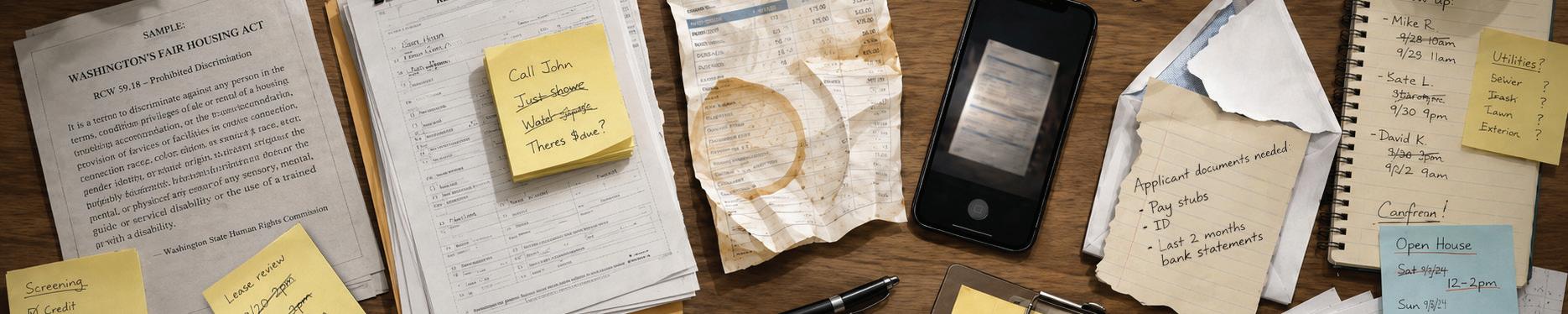
For many independent landlords, the rental application process still looks a lot like it did decades ago: paper forms, phone calls, gut feelings, and a lot of back-and-forth. It works, sort of. But it also leaves room for inconsistency, and inconsistency in leasing carries real risk, both legal and financial.
Online rental applications are increasingly common, and for good reason. When used thoughtfully and in combination with clear, written criteria, they can help landlords move faster, stay organized, and apply their standards more consistently across all applicants.
This article is not legal advice, and landlords should always consult a qualified attorney when developing their screening policies. But here is a look at some of the practical ways an online application process may help.
The Problem with an Ad Hoc Process
When applications arrive in different formats, at different times, and through different channels, it is easy for the review process to drift. One applicant submits a tidy packet; another sends a blurry photo of a pay stub via text. One landlord might give a lot of weight to how polished a submission looks, or how quickly someone followed up, without realizing that those factors may have nothing to do with whether someone will be a reliable tenant.
Unstructured processes can also make it harder to demonstrate compliance with Fair Housing laws. Washington's Fair Housing Act prohibits discrimination based on protected characteristics, and landlords who rely heavily on subjective impressions rather than
documented, consistent criteria may find themselves in a difficult position if a decision is ever questioned.
An online application platform, whether it is a standalone screening tool or part of a broader property management system, typically does a few things that manual processes struggle with.
It collects the same information from every applicant. Every person who applies fills out the same fields, in the same order. There is no variation in what gets submitted based on what someone thought to include or how they interpreted the instructions. This consistency makes it easier to compare applicants against your written criteria and to document your decision-making process.
It reduces the back-and-forth. Chasing down a missing document or a second reference costs time, and vacancies cost money. Online platforms often allow applicants to upload everything at once, including ID verification, income documentation, and consent for background and credit checks. That compression of the timeline can meaningfully reduce days on market.
It creates a paper trail. When applications are submitted and reviewed digitally, there is a record. Timestamps, submitted documents, screening results, and correspondence can all live in one place. This is not just convenient; it is a reasonable precaution if you ever need to explain or defend a leasing decision.
It can help you apply your criteria before you meet the applicant. Many
landlords unconsciously form opinions during the first phone call or showing. Online applications allow you to review basic qualifications, income ratios, credit, and rental history before personal contact, which means those objective factors are already part of your thinking when you meet someone in person.
The platform itself is not the point. What matters is that you have written, documented screening criteria that you apply consistently to every applicant. Income requirements, credit score thresholds, rental history standards, all of these should be established before an applicant ever submits. The online application is a tool for gathering information against those criteria, not a substitute for having them.
Washington landlords should also be aware of local requirements around screening criteria. Seattle and some other jurisdictions have additional rules, including requirements to consider applicants in the order applications are received. Make sure your process is built around the laws that apply to your specific properties.
It is worth being direct about what online applications cannot solve on their own. Technology does not make a leasing decision compliant or fair; the decision-maker does. If a landlord applies inconsistent criteria, ignores documentation, or uses screening as cover for a decision that was actually made on other grounds, the format of the application changes nothing.
Screening reports also have limitations.
Background and credit checks pull from imperfect data sources, and errors in these reports are not uncommon. The Fair Credit Reporting Act gives applicants the right to dispute inaccurate information, and it is worth understanding your obligations as someone who takes adverse action based on a consumer report.
If you are considering moving to an online application process, the investment is relatively low. Several platforms offer free or low-cost options for independent landlords. Before choosing one, think about what you actually need: application collection only, or integrated screening? Do you want the applicant to pay for the screening report, or will you? What data does the platform retain, and for how long?
And before you launch any application, sit down and write out your screening criteria. That document, consistently applied, is the foundation of a defensible and efficient leasing process. The technology helps, but the criteria is what protects you.
Kathleen Castro is the Client Success Manager at Intellirent, a rental housing technology platform that provides tools for rental applications, resident screening, marketing, compliance, and fraud prevention. She works with housing providers to simplify leasing workflows and improve the rental application experience. She may be contacted at support@myintellirent.com or (415) 849-4400. Visit their website myintellirent.com.


The industry's biggest gathering has a new home, and this October it comes with more stage time, more branding real estate, and more decision-makers than ever.
For more than four decades, the TRENDS Rental Housing Management Conference and Trade Show was where Washington's rental housing industry met. Rental property owners, managers, vendors, and housing professionals filled those halls year after year, and RHAWA was a proud co-promoter and supporter of the event for over 40 years. So it is with genuine gratitude for that history that we share the news: TRENDS has come to an end and will not be returning.
But here is the thing about an industry gathering: the building matters less than the people in it. The owners, operators, and investors who walked the TRENDS floor every year still need education, still evaluate vendors, and still show up. They now show up at ENGAGE.
The Room, By the Numbers
ENGAGE26, RHAWA's Fall Expo and Annual Business Meeting, takes place October 14-15 at the Meydenbauer Center in Bellevue, and last year's event tells you exactly what kind of room it is. ENGAGE25 drew more than 350 housing professionals over two days. The average attendee owned or operated 89 units. They came from both sides of the Cascades: the Tri-Cities, Spokane, Seattle, Vancouver, Yakima, and everywhere in between. And they covered every asset class, with single-family, multifamily, and manufactured housing owners, operators, and investors sharing the floor with industry leaders and elected officials. It is a venue where policy meets practice, and for businesses that serve this industry, it is the audience TRENDS used to deliver, now gathering each fall under one roof.
New This Year: Take the Stage
For the first time, ENGAGE is opening the stage to a select group of sponsors through Spark Sessions: ten-minute, TED Talk-style presentations in prime networking slots. These are not sales pitches. They are thought-leadership moments, a chance to share real expertise, educate the audience, and walk away positioned as an authority in the rental housing space. Spark Sessions are included at the Silver tier ($3,500) and above, and slots are limited.
Reach the Room Without Leaving Yours
Not every business can staff a booth in Bellevue for two days, and this year that does not have to be a barrier. Branding-only packages embed your name directly into the conference experience: Hydration
Stations ($4,000) put your logo on every branded water bottle, Box Lunch Supporter ($1,500) puts it on every lunch, and Charging Stations ($1,275), Emergency Kits ($1,275), and Refreshment Stands ($1,000) put it at the high-touch moments attendees return to all day. Whether your business is based in Bellingham, Vancouver, Spokane, or anywhere in between, your brand can work the room without you.
to a single remaining Platinum at $15,000, with escalating booth space, digital visibility, program advertising, VIP passes, and stage time. Branding-only packages start at $650, and most offer only one to three slots. The final day for logo inclusion in printed materials is September 1, 2026.
A booth gets seen when someone walks past it. A branded touchpoint gets seen every time it is used.
The Details
The full tiered packages run from Bronze at $1,000
If TRENDS was part of your company's marketing calendar for years, ENGAGE26 is where that tradition continues. To find the right fit, contact Daniel Klemme at (206) 905-0611 or dklemme@RHAwa. org, reach the sponsorship team at sponsorships@ rhawa.org, or visit engageWA.com for all sponsor and branding options.
Own the Spotlight (1 left)
Own the Spotlight
Own the Spotlight
Exclusive Thought Leadership (2 left)
• Exclusive:
• Exclusive:
• Exclusive: Stage skirt co-branding*, welcome kit branding
• Digital: Logo on promotions, 6-month home page carousel (RHAwa.org), linked 30-second promo (engageWA.com)
• Digital: Logo on promotions, 6-month home page carou sel (RHAwa.org),
• Digital: sel
• Stage Time: Day 2: Closing Session ) working slot)
• Stage T Day 2: Closing Session ) working slot)
• Stage Time: 2-minute keynote slot (Day 1: Opening Session & Day 2: Closing Session ) + 10-minute Spark Session (prime networking slot)
• Visibility: 3-month home page carousel (RHAwa.org), logo on promotions, linked 30-second promo + logo (engageWA.com)
• Perks: ad, attendee list
• Perks: 10 registrations, 4 VIP passes, full-page program ad, attendee list (opt-ins)
• Signature T + naming rights)
• Signature T + naming rights)
High-Impact Engagement (10 left)
High-Impact Engagement
High-Impact Engagement
• Visibility: shout-outs, linked logo
• Visibility: shout-outs, linked logo
• Perks: 10 registrations, 4 VIP passes, full-page program ad, attendee list
• Signature Touch: “Mix & Mingle” branded cocktail (napkins + naming rights)
• Visibility: 1-month home page carousel (RHAwa.org), emcee shout-outs, linked logo (engageWA.com)
• Stage Time:
• Stage T
• Stage Time: 10-minute Spark Session (networking slot)
• Perks: 6ft booth, 2 registrations, attendee list (opt-ins)
• Perks: 6ft booth, 2 registrations, attendee list
• Perks:
Box Lunch Supporter
Box Lunch Supporter
Charging Stations
Charging Stations
Emergency Kits
Emergency Kits
Hydration Stations
Hydration Stations
Photo Booth
Photo Booth
Refreshment Stands
Refreshment Stands
Industry Supporter
Industry Supporter
* Time sensitive printing
* Time sensitive printing deadline


• Stage Time: 2-minute general session slot + 10-minute Spark Session (prime networking slot)
• Perks: 8ft powered booth, 4 registrations, 2 VIP passes, half-page program ad, attendee list (opt-ins)
Essential Footprint (6 left)
• Visibility: Linked logo (engageWA.com), emcee shout-out
• Perks: 6ft booth, 1 registration




Policy



For the last several months, RHAWA has been watching the SAFE Homes for All Initiative move through its signature-gathering phase with close attention and growing concern. On June 18, 2026, Tacoma for All submitted its petition to the Pierce County Auditor's Office. The auditor's review is complete. The required threshold of valid signatures was met. It will appear as Initiative Measure No. 3 and will appear on the November 3, 2026 General Election ballot.
This is no longer a hypothetical. It is a countdown.
While the signature-gathering campaign was underway, something else was happening in Tacoma's rental buildings that every housing provider in the city should understand. Tenant unions have been quietly forming across the city ahead of the November vote — at the Newcastle Apartments this spring, more than 90% of occupied units voted to unionize. Organizers at other buildings across Tacoma have said publicly that they are actively preparing to do the same. Devin Rydel Kelly, an organizer with the Tacoma tenant unions, described it as a movement, and he is not wrong about the momentum.
The reason this matters is that Initiative Measure No. 3 was not written to create tenant unions — it was written to formalize and legally empower ones that are already forming. If the initiative passes, the organizing that has been happening informally this year becomes the foundation for a mandatory good-faith bargaining requirement.
Landlords owning more than four units would be legally required to negotiate with recognized tenant unions on lease terms, fees, deposits, utilities, building policies, and compliance with tenant protection laws — and to attend at least one tenant union meeting per quarter upon written request. What is happening right now in Tacoma's rental buildings is a preview of what becomes the law if November goes the wrong way.
The SAFE Homes for All Initiative did not emerge from a vacuum. It is a direct response to two things: the December 2025 amendments to the Landlord Fairness Code, which Tacoma for All viewed as a rollback of the protections its members fought to win in 2023, and the structural reality that Tacoma's existing tenant protection laws have been difficult to enforce because the City's own code requires tenants to pursue legal action individually rather
than through an administrative complaint process.
Tacoma for All's argument — and it is one that will resonate with voters — is that the rules already exist, they are just not being followed, and this initiative creates the enforcement mechanism to change that. That is a more targeted and politically sophisticated message than a straightforward expansion of tenant rights. It is harder to argue against, and it will require a clear, factual counter-narrative from our side between now and November.
RHAWA Executive Director Sean Flynn has been direct about what is at stake. His message to housing providers and policymakers has been consistent: initiatives like this tell anyone interested in building or investing in Tacoma's rental market to look elsewhere. You do not attract housing providers to a municipality with mandatory tenant union bargaining, per-unit licensing fees, a public database of landlord violations, and civil penalties of up to five times monthly rent per violation. You drive them out. And when housing providers leave a market, supply tightens, rents rise, and the tenants these policies were designed to protect end up paying the price.
That argument is backed by evidence that is already in the public record. The Tacoma Housing Authority and the Tacoma-Pierce County Affordable Housing Consortium — organizations whose entire mission is to house Tacoma's most vulnerable residents — told the City Council directly that the Landlord Fairness Code had drained their resources, increased tenant debt, and created conditions that would make it harder for displaced tenants to find housing in the future. The December 2025 amendments that Tacoma for All is responding to with this initiative were passed precisely because the law as written was causing harm. That is not opposition spin. It is documented city record.
RHAWA
RHAWA has been actively engaged with our industry allies since signatures began circulating, and now that the initiative has qualified, those conversations have intensified. We are working alongside coalition partners from across the housing industry, the business community, and the broader stakeholder landscape to develop a coordinated response to Initiative Measure No. 3 before the November vote. We will have more to share with members in the coming
weeks as that strategy takes shape, and we will use every available platform — CURRENT, our blog, LINK Meetings, and direct member communications — to keep you informed and engaged throughout the campaign.
What we know from experience is that campaigns like this are won or lost in the months before Election Day, not in the final weeks. The opposition spent more than $380,000 against the Landlord Fairness Code in 2023 and lost. We are not going to outspend Tacoma for All's grassroots organizing infrastructure with a last-minute checkbook. What we can do is show up with a better story, a stronger coalition, and a clearer argument about who actually pays the price when housing policy ignores economic reality.
If you own rental property in Tacoma, here is what matters most in the coming months. Stay connected to RHAWA. When the call to action comes — and it will — we need members who are informed, energized, and ready to act. At-
tend your Pierce County or online LINK Meeting, where our team will be providing regular updates on the initiative and our response strategy as the campaign develops. If you have a story about how the Landlord Fairness Code has affected your ability to operate, maintain, or invest in your Tacoma properties, we want to hear it. Those stories are the most powerful tool we have, and we are actively collecting them.
And if you have not yet contributed to the RHA PAC or the Legal Defense Fund, now is an excellent time to reconsider. The relationships RHAWA has built in Olympia and in Tacoma over the past several years are the reason we are at the table on conversations like this one. That access is not free, and it is not guaranteed. It is the direct result of sustained investment from members who understood that showing up in the political process before the crisis hits is the only way to have any influence when it does.
November 3 is coming fast. We will be ready. Make sure you are too.


Denise Myers | RHAWA Member Programs Director | dmyers@RHAwa.org | (206) 905-0614

The City of Ferndale’s voter initiative, Consumer Protections from Unfair and Excessive Fees in Housing Tenancies is now codified under FMC 5.44. Following in the footsteps of Bellingham, this code specifies that landlords will be in violation of the law if they renew a lease with prohibited terms, even if you do not enforce them. These new laws restrict charges and outright prohibit many common fees that are likely to be included in rental agreements, so it is important that housing providers update their leases.
This law states that any provision in a rental agreement or renewal entered into on or after November 25, 2025, in violation of the following is void and unenforceable. Inclusion of a prohibited provision in an agreement or renewal entered into on or after November 25, 2025, is a violation and can lead to the following:
• Liable to tenant in private right of action: the greater of up to three times actual damages or $1000; double the amount of an unlawfully charged or withheld deposit; costs of suit and attorneys' fees. Effective 1/1/2027, $250 for any provision prohibited by this chapter in a new or renewed rental agreement.
• Additional affirmative defense for
tenant: in an eviction for default on rent payment; action to enforce a rental agreement, impose penalties, or forfeit a deposit contrary to the requirements in this chapter.
• Citation from the City of Ferndale: Up to $500 for first violation, up to $1000 for subsequent violations or those involving retaliation. It is considered a separate violation for each affected tenant, and for each day where any violation of any provision of this chapter is committed, continued, or permitted by the landlord.
These regulations apply to both residential rentals under RCW 59.18 and manufactured/mobile housing communities (MHC) under RCW 59.20.
RECOMMENDED ACTIONS
• To remedy a non-compliant rental agreement that was entered into or renewed on or after November 25, 2025, serve the RHAWA Rules Change in Terms of Tenancy Notice (rhawa.org login required) to update all non-compliant terms in your rental agreement, and refund any deposit amount held in excess of the limits defined in this chapter.
• For all lease renewals entered into on or after November 25, 2025,
change any terms necessary to comply with this chapter, and refund any deposit amount held in excess of the limits defined in this chapter.
• For any automatically renewing MHC Rental Agreement or Monthto-Month Residential Rental Agreement that was entered into prior to November 25, 2025, give 30-day notice to change any non-compliant terms.
• For all new rental agreements entered into on or after November 25, 2025, ensure that all terms are in compliance with this chapter.
Disclosure of Fees Required - Include the following in any advertisement, listing, or application form: monthly rent, utilities tenant pays separately from the rent, utilities included in rent, and the amount of any optional or mandatory fees.
Reasonable Fees Permitted - Only the following fees are permitted:
• Applicant screening fee that does not exceed $50.
• Refundable security deposit that does not exceed one month's rent. Exception: A non-profit organization may pay up to two months' rent on behalf of the tenant.
• Pet damage deposit that does not exceed 25% of one month's rent. (Residential Rentals Only, does not apply to MHC).
• Fee for utilities not included in rent that does not exceed the actual cost of used utilities; or if individual usage is not available, is based on an equitable method for splitting the charge that is disclosed to the tenants.
• Late rent fee that does not exceed 1.5% of the portion of rent that is past due. If receiving a subsidy, only charge a fee on the tenant's portion of rent that is past due.
• Insufficient Funds Fee on the tenant's payment that does not exceed the actual charge from the financial institution.
• A reasonable fee for any optional good or service. Tenant must opt in (in writing) after receiving written disclosure, including: concise description of good/service, fee amount, how to opt out, and a clear statement describing tenant's right to continue renting dwelling unit if they opt out.
Unfair or Excessive Fees Prohibited
- The following fees are prohibited:
• Fees other than those identified in FMC 5.44.030, unless expressly
permitted under state law for residential rentals and MHC.
• Any unlawful fees under any local, state, or federal law.
Unreasonable Optional Fees Prohibited - The following fees are prohibited, even if they are optional…
A. Both Residential Rentals and MHCs:
1. Fee to accept payments by personal check, money order, cashier's check, or ACH. If using a third-party payment vendor where there is an option for the landlord to pay fee, the landlord cannot opt to impose fee on tenant.
2. Fee for use of any in-unit appliance by tenant. If you previously charged a fee for the use of an inunit appliance, such as a washer-dryer, you shall not deprive the tenant of the use of an in-unit appliance without payment of fee after the effective date of this chapter.
3. Fee for mail/package collection and distribution.
4. Early termination where the tenant has victim protection rights under state law.
B. MHCs:
1. For the performance of any landlord duty under RCW 59.20.130
2. For a service/amenity previously included in monthly rent or provided to current or immediately prior tenants at no additional cost.
3. For temporary guests not in compliance with RCW 59.20.060 or where charges exceed actual cost.
4. For a family member to occupy the unit. No occupancy restrictions more restrictive than the actual law.
5. To park within the tenant's lot. No limit on safely parked vehicles.
6. Any appliance installation fee.
7. Any pet deposit or pet fee.
8. Fee for use of common area. Exception: rental of space for exclusive temporary use by the tenant.
9. For not signing a new agreement.
C. Residential Rentals:
1. For the performance of any landlord duty under RCW 59.18. 2. Fee (single time or periodic) for pets.
Retaliation Prohibited - There is a rebuttable presumption of retaliation if a landlord takes any of the following actions within 150 days of a tenant exercising their rights under this chapter:
• Refusing to provide, accept, or approve a rental application, agreement, or renewal.
• Applying more onerous terms, conditions, or privileges to the application process or agreement, including increased rent.
Effective Date of new code
Late Rent Fee
NSF Fee
Other late rent charges
Screening Fees
Lease agreement violation fee
Security Deposit
Pet Damage Deposit
Utilities not included in rent
Optional service fees
Prohibited optional service fees
Retaliation
• Misrepresenting any material fact on a rental reference against the tenant.
• Threatening to report unlawful presence in the U.S.
Similar Law in Bellingham… Bellingham passed a very similar law (BMC 6.16) back in August of 2025. The similarities and differences are noted in this chart.
Leases and renewals entered into on or after Aug. 1, 2025.
Capped at 2% of past-due rent
Exact fee from bank
No other fees related to late rent are permitted
$50 cap
Leases and renewals entered into on or after Nov. 25, 2025.
and MHC
Capped at 1.5% of past-due rent
$75 per month after notice and reasonable opportunity to cure.
Capped at one month’s rent. Exception: two months’ rent with subsidized tenancies.
Capped at 30% of rent.
3. Fee for adding or removing tenants on a rental agreement. Exception: application fee for new tenant is permitted (subject to the above limits). If you have property in Bellingham or Ferndale, make sure to review the full details of the laws as follows:


Capped at 25% of rent.
(Does not apply to MHC law)
Never to exceed actual cost either a) directly used by the tenant, or b) fairly split between tenants with clear accounting.
Reasonable, must be able to opt out without fee.
See details below
Adverse actions within 120 days of tenant’s rights asserted are considered retaliation.
Adverse actions within 150 days of tenant’s rights asserted are considered retaliation.
Melissa Canfield | RHAWA Deputy Director | mcanfield@RHAwa.org | (206) 905-0615

The future of rental housing in Washington State is being shaped right now, and your voice could be part of it.
The Rental Housing Association of Washington (RHAWA) is seeking committed, forward-thinking members to serve on the Board of Directors and Council of Regents. These roles offer a unique opportunity to influence decisions, guide strategy, and help lead an industry at a pivotal time.
This is more than volunteering. It is leadership with real responsibility and real impact.
If you’re ready to step forward, contribute your perspective, and help drive meaningful change, we encourage you to apply.
Is This Opportunity Right for You?
You don’t need a formal title to be a leader; you just need the willingness to show up and make a difference.
This opportunity may be right for you if you:
• Want a seat at the table where key policy and advocacy decisions are made
• Are ready to grow your leadership and decision-making skills
• Care about strengthening and protecting the future of rental housing
• Are looking for a meaningful way to give back to your industry and community
You don’t need formal board experience; you simply need a willingness to engage, contribute, and lead.
Why Serve?
Serving on the Board of Directors or Council of Regents is one of the most powerful ways to make a lasting impact.
As a member of the Board, you will be part of the governing body of the Association, responsible for:
• Providing oversight, direction, and leadership for RHAWA
• Guiding strategy, priorities, and policy decisions
• Ensuring the organization operates in the best interest of its members
• Upholding accountability for programs, initiatives, and outcomes
You will help shape advocacy efforts, strengthen member resources, and advance initiatives that support safe, sustainable, and accessible housing across Washington. You will also join a respected network of leaders actively working to move the industry forward.
RHAWA leadership is designed to be impactful without being overwhelming.
• Board of Directors
- Two-year terms beginning January 1 following election
- Eligible for consecutive terms
- Meets monthly (up to three hours per meeting)
• Council of Regents (COR)
- Up to four consecutive two-year terms
- Terms begin January 1 following election
In addition to meetings, leaders are expected to actively participate in events, outreach, and advocacy efforts where much of the connection, influence, and impact happens.
RHAWA is looking for individuals who bring integrity, sound judgment, and a collaborative mindset. Strong candidates typically demonstrate:
• A track record of involvement in committees, projects, or community initiatives
• A commitment to RHAWA’s mission and members
• The ability to think strategically and navigate complex issues
• Strong communication and teamwork skills
• A willingness to mentor and support future leaders
Effective leaders understand how to balance different perspectives while keeping the organization’s broader goals front and center.
Eligibility Requirements
To run for the Board of Directors or Council of Regents, you must:
• Be at least 18 years old
• Be a RHAWA member in good standing (or designated representative) for at least one year prior to election
• Have served on a standing committee for at least one year prior to a COR election
• Have served on the Council of Regents for at least one year prior to a Board election
Lead with RHAWA. Board & Council seats now open. Step forward & get involved.

• Reside in Washington State and own rental housing within the state (or serve as a designated representative)
• Maintain eligibility throughout your term of service
Board service is part of a leadership pathway that builds experience over time. Members begin with committee service, then move to the Council of Regents, and ultimately to the Board of Directors.
Not yet involved? Visit RHAwa.org/committees to get started.
Here’s what to expect:
• August 31 – Application deadline
• September – Nominating Committee reviews applications and selects candidates
• October 14 – Election at RHAWA’s ENGAGE26 Annual Business Meeting
• January 1 – New leadership terms begin
Nominations are open to all members in good standing, including self-nominations. To apply:
1. Request an application: mcanfield@RHAwa.org
2. Submit your completed application by August 31
3. If nominating someone else, include a brief statement explaining why they’re a strong candidate
The rental housing industry is evolving rapidly, and the decisions being made today will shape its future for years to come. This is your opportunity to step into a leadership role that carries purpose, responsibility, and lasting impact. Apply by August 31 to be considered for this year’s leadership slate.
Help lead what’s next for rental housing in Washington State—starting with you.
PENDING - 9 UNITS
AVAILABLE - 8 UNITS
- 19 UNITS
AVAILABLE - 21 UNITS
PENDING - 8 UNITS
For the past 30 years Paragon Real Estate Advisors has been the premier commercial real estate brokerage firm in the Puget Sound. When our expert knowledge of the greater Seattle area is paired with our targeted marketing strategies, our contract negotiation skills, and our vast network of contacts; it is easy to see why we are experts in our market.
AVAILABLE - 8 Units
With the recent interest rate drop the market is starting to move! If you have any questions or would like to speak about your personal investment properties and projected market trends, we would be happy to help you. Call us today to speak with one of our specialized commercial brokers to start a free property evaluation.

CARPET/VINYL PLANK FLOOR CLEANING
Heavily Soiled Additional Charges, Townhouses add $75
Studio Apt From $90
One Bedroom Apt ............................................. From $100
Two Bedroom Apt ............................................. From $110
Three Bedroom Apt ........................................... From $120
Houses/Townhouses Bid Only
Studio Apt ........................................................... From $90
One Bedroom Apt .............................................. From $100
Two Bedroom Apt ............................................. From $11 0
Three Bedroom Apt ....................................... From $120
Houses/Townhouses ............................................ Bid Only
Studio Apt ........................................................... From $90
One Bedroom Apt .............................................. From $100
Two Bedroom Apt ......................................
Three Bedroom Apt ....................................
From $11 0
...... From $120
Houses/Townhouses ............................................ Bid Only HALLWAY CLEANING SPECIALISTS Bid Only
APARTMENT REPAINT SPECIALIST
One Coat Labor Only. Customer to Supply Paint Walls Only* Ceilings Only Studio Apt .............................. From $450 ........ From $250 One Bedroom Apt From $550 From $ 300 Two Bedroom Apt From $650 From $350 Three Bedroom

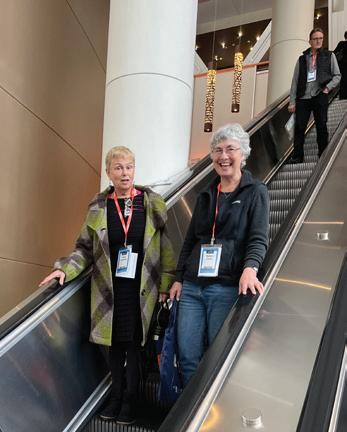
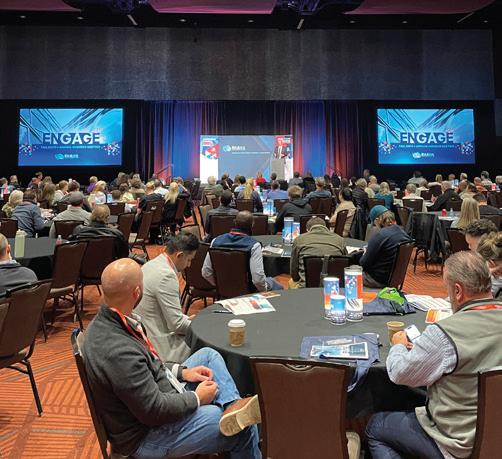
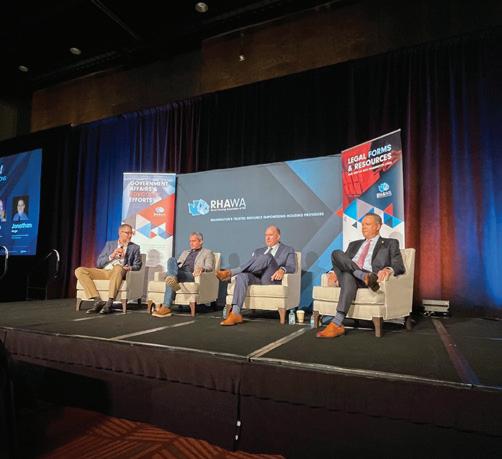
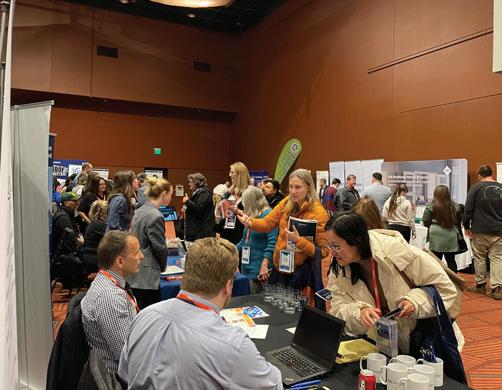


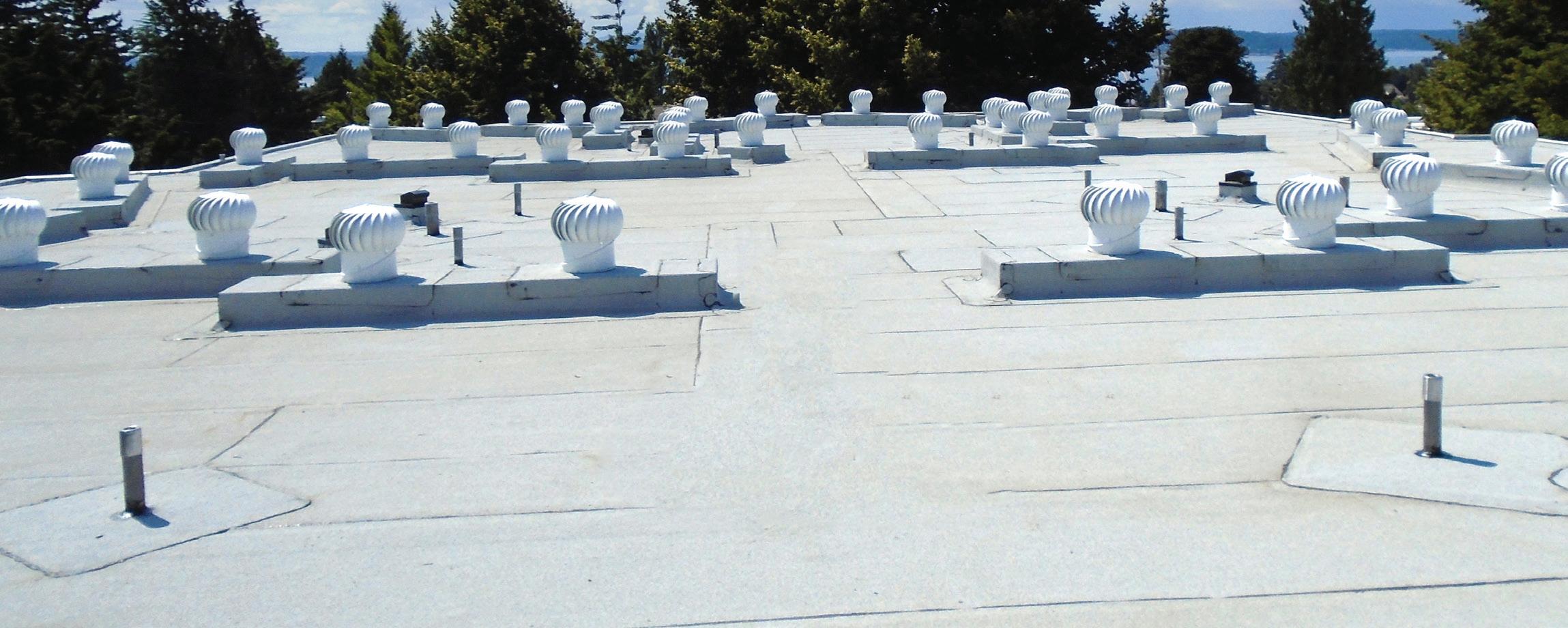
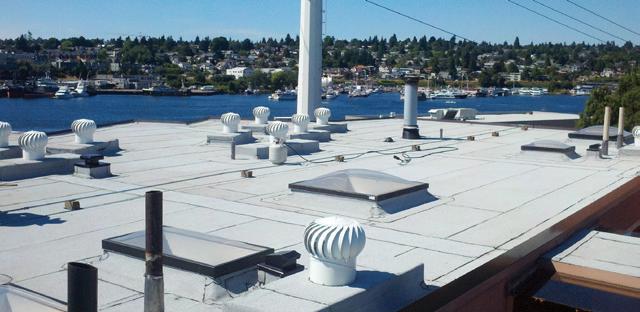
We are very proud to be a family owned and operated company. John, Barry and Jill have been serving RHA Members for over 22 years. Our focus is to solve customers’ roof problems and concerns with a reliable, high-quality roof system. Our dedicated crews take pride in their craftsmanship and treat our customers roofs as if it were our own.
Polyflex G (torch down) provides an exceptionally durable roofing product and provides long-term weathering performance. With a granulated surface, Polyflex G exceeds all minimum ASTM standards for tensile strength, puncture resistance and flexibility. This torch down roof membrane is ideal for Northwest roofs; where common branches sometimes fall or residents want a roof-top patio. We stand behind Ployglass APP Membranes with the most reliable warranties in the industry. Their warranty provides extended protection, assuring the optimum system performance is guaranteed.

About Elizabeth Gregory Home (EGH)
EGH inspires homeless women to transform their lives. Through services offered, women can meet immediate needs, as well as long-range goals to break the cycle of homelessness.
Learn more about EGH and how you can help at eghseattle.org. Thank you.
Contact John Paust for more information:
Special pricing for RHAWA members AND $100 donation toward EGH with paid re-roof contract!