Rodeo Dental’s unstoppable journey from the Rio Grande Valley. p.50
TEXAS
SCHOOL VOUCHER PROGRAM
Pros, cons, and how the program compares to other states. p.30
INFRASTRUCTURE FOR TOMORROW
Reconstruction of Cargo Dock 3 begins. p.42
ADVENTURE AWAITS
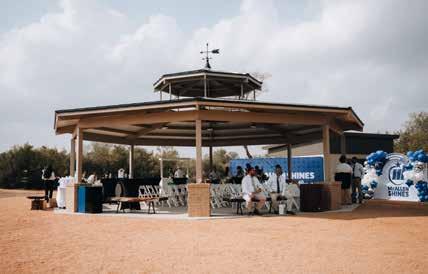
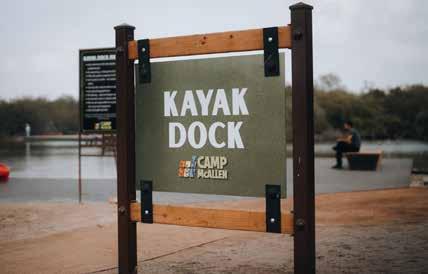
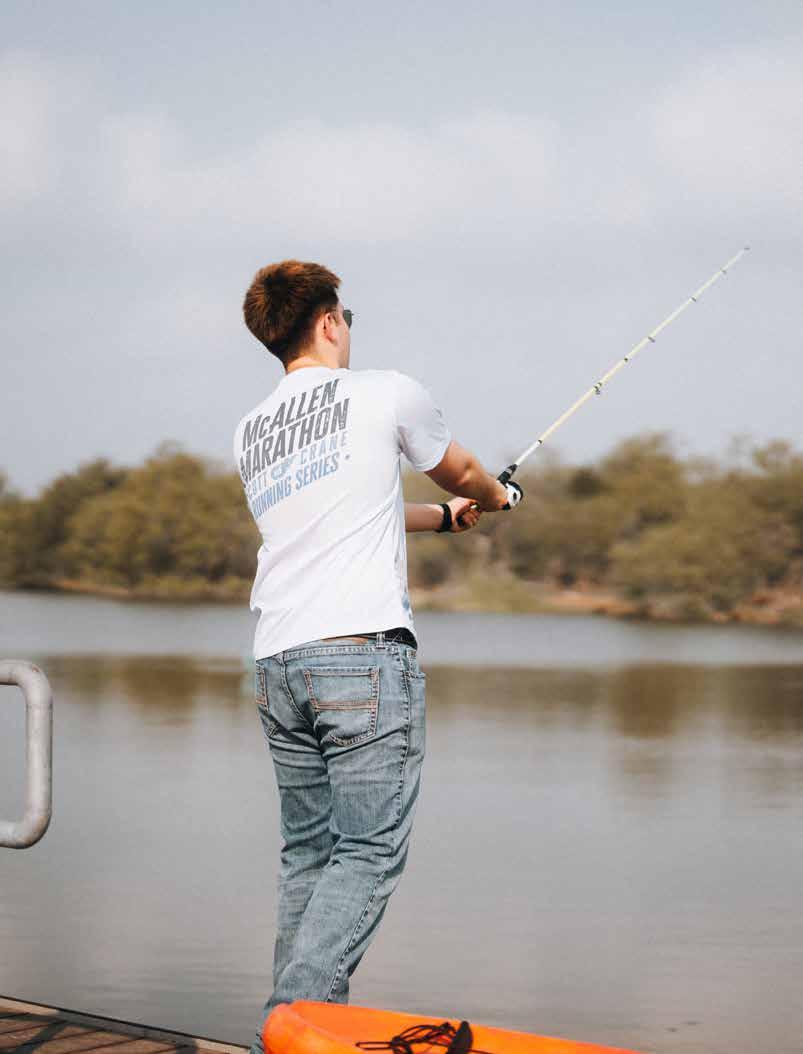
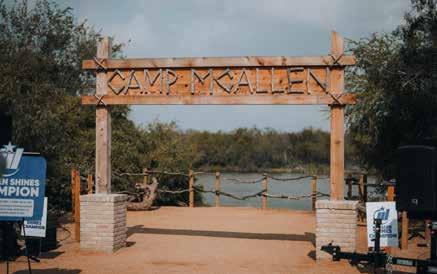
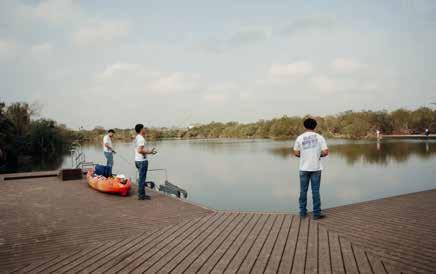
A new city-run nature park invites families and groups to reconnect with the outdoors. p.76
Comprehensive Dental Care
RGVISION
STAFF
GABE PUENTE PUBLISHER/CEO
A new year invites reflection, renewal, and a renewed sense of purpose. As we step into 2026, we’re reminded that progress begins with vision, faith, and confidence in what lies ahead. One verse that continues to guide us comes from Jeremiah 29:11: “For I know the plans I have for you,” declares the Lord, “plans to prosper you and not to harm you, plans to give you hope and a future.”
This message reflects the heart of RGVision Magazine and our commitment to highlighting the people, institutions, and ideas shaping a stronger Rio Grande Valley.
In this January/February issue, we feature stories that speak to leadership, growth, and long-term impact. We take an in-depth look at the Port of Brownsville, a powerful driver of economic development and global trade. We also highlight Camp McAllen, a place grounded in faith, service, and community connection. In addition, we explore the ongoing conversation surrounding the Texas school voucher program, a topic influencing the future of education and opportunity for families across the state.
Each feature reflects progress in different forms — economic, community, and policy-driven — working together to shape our region’s future.
At RGVision, we are proud to amplify stories that inspire progress and meaningful connection. We thank our readers for their continued support and our partners for believing in the value of local storytelling.
If you are a business or organization looking to share your story and reach an engaged regional audience, we invite you to be part of an upcoming issue. Together, let’s move forward with purpose, clarity, and hope in the year ahead.
PUBLISHER'S NOTE
If you are interested in receiving issues delivered to your home, please go to RGVisionMagazine.com/Subscribe or email us at info@RGVisionMagazine.com to subscribe to RGVision for $6.50/month.
Copyright by RGVision Publications Inc. All rights reserved. Reproduction without expressed written permission of the publisher is prohibited. The opinions and views expressed in the magazine do not necessarily reflect those of our advertisers or collaborators. RGVision magazine is published bi-monthly and circulates copies across the Rio Grande Valley. The RGVision office is located at 100 E. Nolana Ave. Suite 130 McAllen, TX 78504.
DOMINIQUE Y. ZMUDA
GRAPHIC DESIGNER/ILLUSTRATOR /
CONTENT MANAGER
SALVADOR PRUNEDA
UX/UI WEBSITE DEVELOPER
ANTHONY RAMIREZ
UX/UI WEBSITE DEVELOPER
MARIA T. CARRILLO
SOCIAL MEDIA CONTENT STRATEGIST
MARCO DE HOYOS
DIGITAL MARKETING ASSISTANT
JOEY PARTIDA
ACCOUNT EXECUTIVE
Cynthia Ybarra
Amanda L. Rodriguez
Port of Brownsville
RioPlex Business Exchange
Unique HR
Rodeo Dental
Michael Swartz
Colleen Curran Hook
Bryan Kirk
Caroline Waldrip
Nathaniel Mata
Thom Denton
Bárbara Delgado
Aaron Garcia
Haven Creative House
For editorial comments and suggestions, please send emails to info@RGVisionMagazine.com. For advertising information, please call us at 956.627.2951 or email us at info@RGVisionMagazine.com.
A special thank you to all the advertisers who support this publication: You are the power behind the flywheel igniting positive change that keeps the conversation going.
PRINTED IN MEXICO
2026 VOLUME 18 ISSUE 1
RGVISION MAGAZINE
Rodeo Dental’s unstoppable journey from the Rio Grande Valley. CELEBRATING 15 YEARS OF SMILES
Learning Revolution
pg 12
Buster the Bus
pg 14
Education-to-Workforce
pg 16
Celebración de Excelencia
pg 20
Building Careers
pg 26
TEXAS SCHOOL VOUCHER PROGRAM
Pros, cons, and how the program compares to other states.
INFRASTRUCTURE FOR TOMORROW
Reconstruction of Cargo Dock 3 begins.
ADVENTURE AWAITS
A new city-run nature park invites families and groups to reconnect with the outdoors.
Sustainable Future
pg 34
Strong Branding
pg 38
Business Value
pg 40
A Legacy of Opportunity
pg 46
Who is UniqueHR?
pg 48 A Legacy of Heart
Creativity and Conservation
pg 60
Junction Café
pg 66
Elizabeth Ramirez
pg 72
Pickleball at South Padre Island
pg 82
RGVISION ADVISORY BOARD
Each and every member of our advisory board charges RGVision with growth and commitment within our business development, social engagement, and editorial efforts. Through their feedback and contributions, RGVision will continue to help tell and share the Rio Grande Valley’s stories and extend the invitation to join the conversation.
STEPHEN SUTTON
MAURICE WELTON
MARITZA VENECIA
BYRON JAY LEWIS
BILL MARTIN
JUAN GARCIA SEBY HADDAD
DR. RENE I. LUNA
SARAH SAGREDOHAMMOND
ROBERT DUNKIN
ROLAND VILLARREAL
WHERE FASHION MEETS PURPOSE
INSIDE PSJA ISD’S BLENDED LEARNING REVOLUTION
How Students Are Owning Their Education
by Cynthia Ybarra | photos provided
In classrooms across the Pharr-San Juan-Alamo Independent School District, a quiet transformation is reshaping how students learn, think, and lead. This school year, PSJA ISD launched a districtwide blended learning model — an approach that merges high-quality teaching with purposeful technology. However, within the walls of PSJA classrooms, blended learning is becoming something more: a system that empowers students to take ownership of their learning and strengthens the instructional core districtwide.
Blended learning in PSJA ISD is built on a simple but powerful belief: every student deserves personalized, rigorous instruction that meets them where they are and accelerates them forward.
“We’ve implemented a station rotation model that
allows teachers to personalize learning for students while still following required pacing and standards,” said Dr. Iris Guajardo, Executive Officer for Secondary Schools and a proud PSJA alumna. “It’s purposeful, aligned, and built on strong teaching.”
Across all eight middle schools, students rotate through teacher-led instruction, adaptive digital programs, and collaborative group tasks. The technology is intentional — platforms like iReady and Mathia help students practice skills at their level while generating real-time data teachers can use to adjust instruction. The structure gives students clarity on their progress and creates the conditions for meaningful, engaged learning.
In elementary schools, blended learning is woven into the rhythm of each day. During their 90-minute reading
block, students begin with whole-group instruction before rotating through stations that reinforce and extend the lesson. Whether using hands-on materials, working independently on technology programs, or collaborating with peers, students are active participants in their learning.
“Ask your child every evening what they learned and have them provide examples,” said Dr. Susana Arredondo, Executive Officer for Elementary Schools. “It reinforces understanding and teaches children how to articulate their learning. This partnership between parents and schools is vital for student success.”
Behind the scenes, PSJA ISD’s approach is fueled by collaboration. Curriculum teams, instructional coaches, technology specialists, and campus leaders work together to support teachers through classroom visits, data analysis, and targeted professional development. It is this systemic alignment — and the district’s clear academic expectations—that give blended learning its strength.
Even though the district formally launched its blended learning model in the 2025–2026 school year, PSJA ISD’s work in curriculum and instruction is already showing results. In 2025, all eight PSJA ISD middle schools earned an A or B in state accountability ratings, reflecting strong instructional systems across campuses. In elementary schools, students are learning to track their progress, set goals, and take responsibility for their own learning. These skills not only raise academic performance but also build
confidence, independence, and a deeper sense of agency in the classroom.
Structured group work further enhances these outcomes. Students learn from one another, take on defined roles, and solve problems collaboratively. Handson tools help them make sense of complex concepts in both math and reading, strengthening their ability to think critically and communicate effectively.
For PSJA Superintendent Dr. Alejandro Elias, the work signals a larger commitment.
“Blended learning is far more than using technology,” Dr. Elias said. “It is a system that brings together strong teaching, supportive tools, and family involvement to help students succeed. This approach empowers students to take ownership of their learning, supports teachers in providing instruction tailored to each child, and ensures that families are partners in their child’s education.”
As the blended learning system continues to unfold across the district, PSJA ISD is demonstrating what’s possible when purposeful teaching, innovative tools, and aligned instructional systems come together. Students are not just learning — they are learning how to learn. They are setting goals, reflecting on progress, and developing the independence to thrive in school and beyond.
Blended learning helps PSJA ISD fulfill one of its core beliefs: when students are given the right tools, guidance, and opportunities, they rise. And in classrooms across the district, that rise is already underway.
BUSTER THE BUS
Teaching Safety, Sparking Joy, and Strengthening Community
by Caroline Waldrip | photos provided
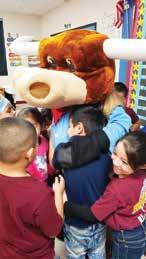
On Brownsville ISD campuses, it’s not uncommon to hear the energetic chant of “Buster, Buster, Buster!” echoing through the halls. That enthusiasm is directed at one of the district’s most beloved and enduring educators: Buster the Bus, an animatronic mini school bus who has spent more than 30 years teaching students how to stay safe.
Buster isn’t operated by classroom teachers, but by a dedicated team within the district’s Transportation Department. The program was first introduced under the leadership of Eliud Ornelas, Director of Transportation, whose early support helped bring Buster to Brownsville ISD and establish the foundation of what would become a decades-long safety initiative. Today, the program continues under the guidance of Gloria Longoria, the current program lead, who helps ensure Buster remains an engaging and effective educational tool.
At the center of Buster’s day-to-day operations is Silvia A. Saldaña-Gomez, Assistant Director for Transportation in the Special Education Department, who helps oversee Buster’s ongoing mission of safety, literacy, and community connection. For Saldaña-Gomez and her team, Buster is far more than a novelty. He’s an impactful educational tool. “We’ve used Buster for over three decades to teach children bus safety rules in an engaging way,” Saldaña-Gomez said. With expressive eyes, animated movements, and a friendly voice, Buster transforms what could be a routine safety talk into a lively, memorable experience.
During each school visit, the Transportation Department’s Buster Team leads students through essential safety procedures. “We go over the essential rules for the bus, the safety zone, the equipment on board, and how to evacuate during an emergency,” Saldaña-Gomez said. Those lessons are delivered through music, storytelling, and Buster’s signature charm, turning important safety concepts into something young students truly understand and remember.
In recent years, Buster has also stepped into a new role: promoting early literacy. “Students cheer for Buster because they learn not only about bus safety but also the importance of literacy,” Saldaña-Gomez said. Integrating reading themes into his presentations allows Buster to reinforce the district’s broader educational goals in a natural and engaging way.
While Buster’s school presentations are central to his mission, his impact stretches far beyond campus boundaries. “Buster is not only at schools; he is also seen around the community,” Saldaña-Gomez said. The animatronic bus appears at BOO at the Zoo, Christmas parades, Charro Days festivities, and various BISDsponsored and citywide events throughout the year. Whether he’s waving from a parade float or greeting families at a festival, Buster’s presence symbolizes the district’s commitment to outreach and safety education.
That visibility has created a unique bond between the community and the character. “Families love to visit with Buster during appearances, bringing back memories of when he would visit their schools when they were
growing up,” Saldaña-Gomez said. For many adults in Brownsville, Buster is a cherished part of their childhood — and now they bring their own children to meet him. It’s a rare example of a school safety initiative becoming a multigenerational tradition.
This long-term connection is exactly what the Transportation Department hopes to cultivate. Buster’s fun and approachable nature allows the team to deliver important messages in a way that resonates with children and families alike. “Buster helps us make safety fun, and that makes the lessons stick,” Saldaña-Gomez said.
Looking ahead, the district has no plans to slow Buster down. His presence at events and on campuses will continue to grow as Brownsville ISD expands its outreach.
“Buster will continue to serve our BISD students and the Brownsville community,” Saldaña-Gomez said.
For families across Brownsville, Buster is more than an animatronic bus. He’s a familiar face, a safety ambassador, and a symbol of the positive relationships that can form between schools and the communities they serve. Whether he’s rolling into a classroom or waving to paradegoers on a sunny South Texas afternoon, Buster brings the same message every time.
“Next time you’re out, keep an eye out for Buster and come by to say hello,” Saldaña-Gomez said. And, true to Buster’s signature catchphrase, she added one final reminder — one that has echoed across generations of BISD students: “Remember what Buster says: follow the school bus rules.”
PATHWAY
by Bryan Kirk | photos provided
The Rio Grande Valley has plenty of homegrown talent, but there hasn’t always been an effective way to ensure that valuable workforce talent stays in the Valley. In fact, the roadblock to building and holding onto the Valley’s talent, it seems, has been the absence of a local talent pipeline that spurs economic growth and creates opportunities for the region’s workforce by providing the needed skills to prosper.
The Region One Education Service Center has collaborated with Workforce Solutions Centers, local colleges and universities, and city and county leaders throughout the Rio Grande Valley to establish this pipeline.
“Our three main goals were to strengthen career pathways in education, enhance employer engagement, and promote work-based economic development,” said Dr. Bobbie Sue Gonzalez, Director of Innovative School Models, Division of College, Career, & Life Readiness for the Region One ESC, who also serves as the Director for the Pathways Leadership Team. “Even though we had some wonderful pathways, it is really about getting students that hands-on experience, whether that be in high school or in college.”
The Region One Tri-Agency Convener is an impressive team of K-12 educators, stakeholders in higher education, workforce development, and community and non-profit stakeholders, who’ve spent nearly three years building an impactful conduit for learning that promotes workforce development and economic prosperity in the Valley.
LAYING THE FOUNDATION
For many years, state agencies like the Texas Education Agency, the Texas Higher Education Coordinating Board, and the Texas Workforce Commission have focused their energies on economic and industry growth through the creation of conduits from education to the workforce.
However, these concepts were never collaborative among these agencies.
Gonzalez said the state’s siloed approach to workforce development and education created barriers for students who may be interested in a specific career path, but the resources were not locally available.
“These state agencies have amazing data tools and data dashboards, but they didn’t connect,” said Gonzalez. “For instance, if a student is interested in criminal justice and earns a level two security guard certification in high school to attend the police academy after graduation, that student wouldn’t be able to because there isn’t a connection to higher education to any police academy program.”
In 2016, Governor Greg Abbott hoped to eliminate these barriers and launched the Tri-Agency Workforce Initiative. The focus was to gauge workforce challenges and economic opportunities, and consider innovative solutions to promote economic growth.
“Understanding the needs of job creators is paramount to ensuring that Texas remains the top state for business expansion and relocation,” Abbott said in a press release. “This past session, we made economic strides by investing in our workforce and further reducing taxes and regulations.”
The program was spearheaded by Texas Education Agency Commissioner Mike Morath, Texas Higher Education Board Commissioner Raymund Paredes, and Texas Workforce Commissioner Andres Alcantar–referred to in the state’s Strategic Framework as the Tri-Agency Partners–who hosted meetings with regional educational and workforce leaders to assess local workforce needs
and to develop cooperative connections–pathways–between education and industry.
“By establishing this initiative, the State of Texas now seeks to ensure that the needs of both its growing workforce as well as new and existing businesses are met, and each is prepared to successfully operate in an ever-changing 21st-century economy,” said Abbott.
This initiative led to the passage of several key pieces of legislation, which included the passage of House Bill 3 in 2019 that enabled TEA to form the Texas Regional Pathways Network, as well as key strategic planning outlines that included the TEA’s Building a Talent Strong Texas and the Tri-Agency Strategic Framework for WorkBased Learning Report, both released in 2022.
These three documents ultimately laid the foundation to create the Tri-Agency Conveners in Texas.
MOVING FORWARD
In 2023, the state’s Tri-Agency embarked on a $12 million grant initiative tasked with identifying, training, and designating regional conveners in each of the state’s 28 workforce districts to create a Regional Pathways System that supports the Tri-Agency’s vision.
The 24-member Region One ESC Tri-Agency Convener spent the first two years in its planning phase, which involved laying the groundwork for developing a shared vision and goals for pathways, evaluating pathway outcomes, and planning for continuous improvement and sustainability.
“We have an amazing leadership team that has been together since the beginning,” said Gonzalez. “Currently, we are doing a data analysis for our work-based learning initiative with our leadership team.”
In the second half of 2025, the Tri-Agency Convener shifted its focus to the implementation phase, with a focus on increasing the number of students involved in work-based learning opportunities, internships, and apprenticeships in government, healthcare, and education.
“There are a lot of support systems for filling out the Free Application for Federal Student Aid (FAFSA) or filing out the college application, but the data isn’t deep enough to create a streamlined process from K-12 into higher education,” said Gonzalez.
The creation of the regional Tri-Agency Conveners has changed the landscape of workforce development in Texas by having each work on a dedicated platform that will ultimately be showcased throughout the Tri-Agency network, so it can be used statewide.
To learn more about the Region One ESC and the TriAgency Convener, and the work they are doing in the Rio Grande Valley, visit esc1.net/tri-agency-convener.
Tri-Agency Regional Convener
Linking Education and Workforce Spurring Economic Growth
To enhance its initiatives in aligning education with workforce needs, Texas is working to create clearer pathways for students toward high-wage, indemand careers. This effort involves collaboration with local governments, higher education institutions and private sector employers.
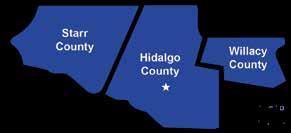
Region One ESC serves as the Tri-Agency Regional Convener for Workforce Development Area 23-Lower Rio, responsible for overseeing the development, implementation and monitoring of regional strategies for highquality career and education pathways in targeted industries across Starr, Hidalgo and Willacy counties.
Priority Industry Sectors
CELEBRACIÓN DE EXCELENCIA
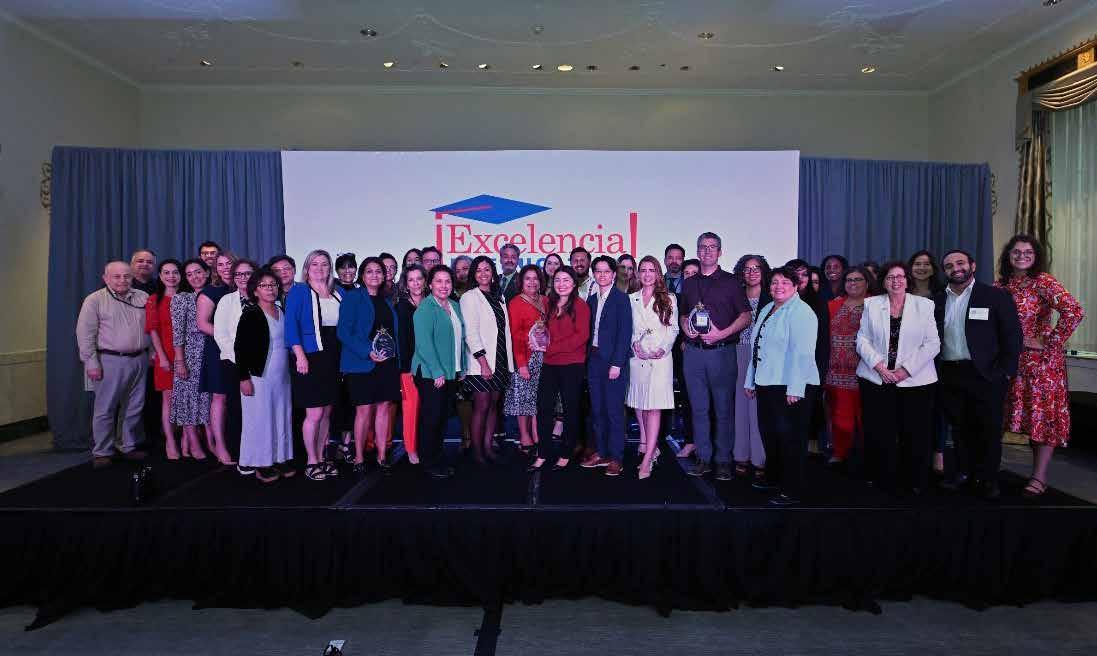
VIDA’s Avanza RGV Recognized at the Community-Based Organization Level as One of Only Four Programs Nationwide Named a 2025 Example of Excelencia
by Amanda L. Rodriguez | photos provided
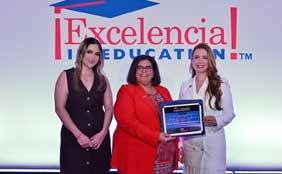
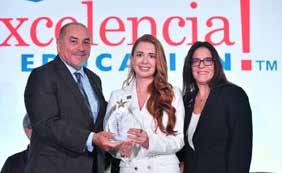
Valley Initiative for Development and Advancement (VIDA) has been nationally recognized by Excelencia in Education for its program Avanza RGV: Accelerating Latino Prosperity through Education & Career Pathways, earning the title of 2025 Example of Excelencia at the CommunityBased Organization level.
Excelencia in Education, the nation’s leading authority on accelerating Latino student success, selected VIDA’s Avanza RGV as one of only four programs nationwide to receive this distinction. The recognition honors programs with measurable, evidence-based outcomes that advance
Latino achievement in education and career development.
VIDA’s Avanza RGV program exemplifies a holistic, worker-centered model that equips Latino and underserved residents of the Rio Grande Valley with the education, resources, and career pathways needed to achieve lasting economic prosperity. The program integrates academic and workforce training with wraparound support services, ensuring that participants not only complete their programs but also secure stable, high-wage employment.
Founded in 1995, VIDA was created to address high unemployment and workforce skill shortages in the
region. Through comprehensive support, including skills assessments, academic advising, financial assistance, career counseling, and job placement, VIDA provides a structured pathway from enrollment to employment. Graduates receive individualized follow-up for up to three years after completing their training to promote longterm success.
In 2025, VIDA served 879 students with an impressive 98% persistence rate. More than 80% were first-generation college students, and over half were parents balancing their education with family responsibilities. These outcomes reflect VIDA’s deep commitment to helping nontraditional learners overcome barriers to higher education and achieve financial stability through high-skill, high-demand careers.
“Being named a 2025 Example of Excelencia is a tremendous honor,” said Felida Villarreal, President and CEO of VIDA. “This recognition validates our holistic approach that combines wraparound support services with innovative educational and career pathways.
We remain committed to empowering underserved Latino communities by removing barriers to higher education and connecting them to sustainable, familysupporting careers.”
The 2025 Examples of Excelencia honorees were announced during Celebración de Excelencia, part of Excelencia’s annual Fall Convening in Washington, D.C. The event brings together national leaders in higher education, philanthropy, policy, and business to celebrate programs that are transforming Latino student success. VIDA joins other 2025 honorees, including initiatives from Cerritos College, California State University Long Beach, and the University of Illinois Chicago.
All finalist programs will be featured in Excelencia’s Growing What Works Database, the nation’s only searchable resource of evidence-based practices that improve higher education outcomes for Latino and underserved students.
To see the full list of the 2025 Examples of Excelencia finalists, visit: EdExcelencia.org/what-works-examplesexcelencia/examples-excelencia-finalists.
BUILDING CAREERS
STRENGTHENING COMMUNITIES
CHCP McAllen Celebrates 10 Years of Advancing Healthcare Education in the Rio Grande Valley
by Nathaniel Mata | photos by Haven Creative House and provided
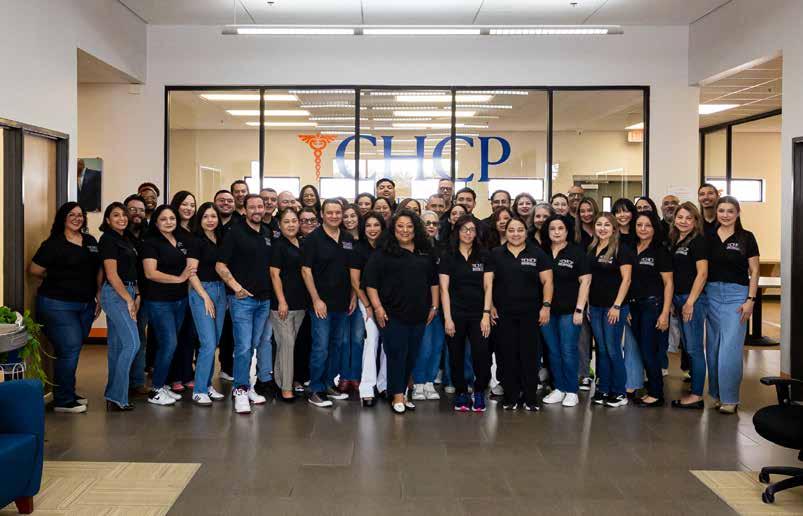
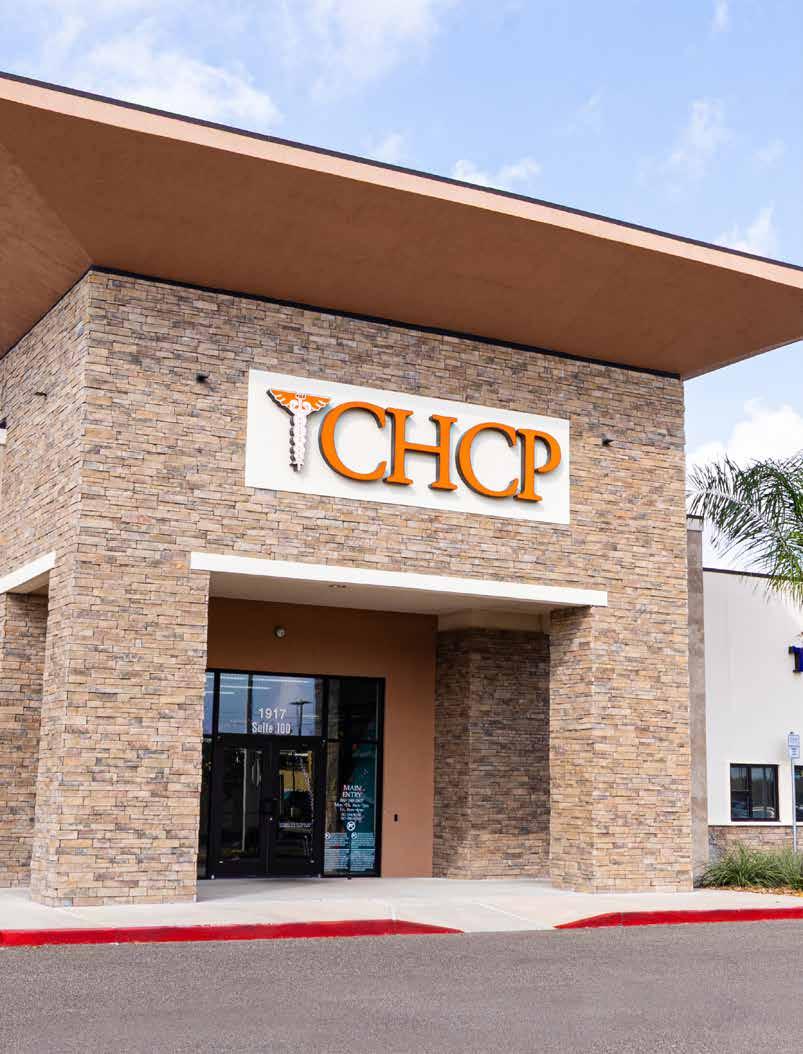
The College of Health Care Professions (CHCP) McAllen Campus is marking a decade of service to the Rio Grande Valley—ten years defined by workforce development, community engagement, and expanded access to healthcare education.
Andrea Hernandez has been part of that journey from the beginning. After nine years as Director of Education, she stepped into the role of Campus President this year, guiding the institution as it celebrates a major milestone. The anniversary year also brought national recognition.
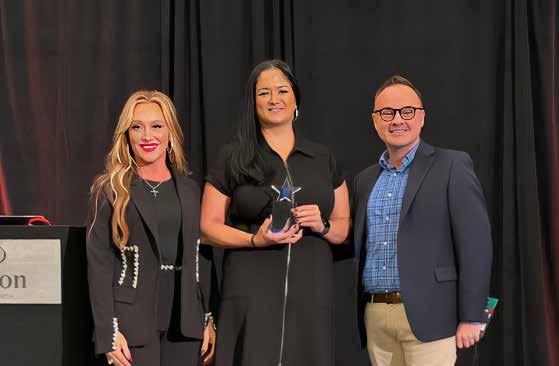
CHCP McAllen was named Career Colleges & Schools of Texas, School of the Year for the second time in its history. The first honor came in 2017; the 2025 award aligns with the campus’s 10th year in operation.
For the team, graduation day best reflects the campus’s impact. “Seeing students walk across the stage with their families cheering them on—that’s when it all comes together,” Hernandez said. “Many of our students are first-generation college students. We serve a population that is about 80 percent Hispanic females. We don’t just
provide an education; we help students elevate their lives. For many, the diploma is just the beginning of their career journey.”
Since opening its doors, CHCP McAllen has graduated more than 3,000 students, preparing them for careers in high-demand healthcare fields. According to Hernandez, more than 83 percent of graduates are placed in jobs within their field of study.
“Winning CCST School of the Year recognition is really about the community we serve, our students, graduates, and the healthcare employers who trust us,” she said. “We’re credentialing skilled professionals and strengthening the local healthcare workforce at the same time.”
That trust is reflected in CHCP’s partnerships across the region. The campus maintains affiliations with major hospital systems and clinics throughout the Rio Grande Valley and beyond, many of which regularly contact CHCP for staffing needs. “Building that reputation as a reliable source of well-trained healthcare professionals takes time,” Hernandez said. “It’s something we’ve earned through consistency and results.”
CHCP McAllen currently offers eight career-focused programs designed to align with regional workforce needs. The campus is continuing to grow, with an Associate Degree in Surgical Technology scheduled to launch in January 2026. Decisions about expansion are driven by both student interest and labor market research, Hernandez explained.
“If we identify an in-demand program that’s feasible and truly serves the community, we explore it,” she said. “Our priority is ensuring students are gainfully employed and properly credentialed. That, combined with the ongoing demand for skilled healthcare providers, is what guides our growth.”
Hernandez credits a stable and experienced faculty and staff as a key factor in the campus’s success. “Our instructors are licensed and certified medical professionals with real-world experience,” she said. “They understand both healthcare operations and educational pathways, which allows them to guide students effectively. Our collaborative culture attracts professionals who share a commitment to student success and excellence.”
CHCP’S VOLUNTEER SPIRIT
Community engagement is a defining part of the CHCP McAllen mission. Through volunteer initiatives and student-led service, the campus extends learning beyond the classroom while addressing local needs.
“Our mission reaches into the neighborhoods and lives of the people we serve,” Hernandez said. “Service is not an add, it’s who we are.” Students regularly participate in health fairs, park cleanups, back-to-school events, and food bank initiatives. CHCP also hosts free health services, including 4D ultrasound events that allow expecting parents to connect with their unborn children.
The campus has partnered with local animal shelters, providing physical and emotional care for animals and supporting community events such as 5K runs that include pet vaccinations.
“Just recently, our students volunteered at the food bank and helped prepare more than 6,000 meals,” Hernandez said. “Through these experiences, students gain hands-on training while giving meaningful service, without expecting anything in return.”
As CHCP McAllen looks ahead to its next decade, Hernandez says the focus remains clear: student success, community impact, and meeting the evolving needs of the healthcare industry.
“Our goal is simple,” she said. “To continue changing lives by building careers and strengthening the communities we serve.”
HEALTHCARE PROGRAMS
WHY CHOOSE CHCP?
• Practical training built around real employer needs.
• CHCP is accredited by ABHES and 100% focused on career-oriented healthcare education and training.
• Most blended in-person classes meet on campus just one day a week.
Limited Medical Radiologic Technologist with MA Skills
Medical Assistant
Medical Coding & Billing
Pharmacy Technician
Physical Therapy Technician
SCHOOL VOUCHER PROGRAM
Pros, Cons, and How the Program Compares to Other States
by Bryan Kirk
The decade-long debate over school choice in Texas ended in May when Governor Greg Abbott signed Senate Bill 2 into law, which will allow parents of school-aged children to use taxpayer funds to send their children to an accredited private school.
The law went into effect on Sept. 1, 2025. The application process begins Feb. 4, 2026. First awards will be available to participating families for the 20262027 school year.
In the meantime, the Texas Comptroller’s Office has been laying the groundwork for the voucher program’s education account, known as the Texas Education Freedom Accounts (TEFA).
EXPLAINING SCHOOL CHOICE IN TEXAS
The passage of Senate Bill 2 provided $1 billion in initial funding to create TEFA. From a government perspective, the education freedom accounts (EFAs) are designed to expand educational opportunities for Texas school children.
“We’re moving quickly to launch this program, keeping the end goal in sight every step of the way — giving parents the freedom to choose the best educational path for their children to reach their God-given potential,” Acting Texas Comptroller of Public Accounts Kelly Hancock said in a press release. “This is about empowering families, expanding opportunity, and making sure every child can learn in the environment that works best for them.”
In October, Hancock announced that New York-based Odyssey will manage an end-to-end platform that will support parents, schools, service providers, and state administrators.
Odyssey brings a strong track record of successfully managing education freedom programs across several states, including Iowa, Georgia, Louisiana, Utah, and Wyoming.
The Texas Legislative Budget Board projected that the TEFA program would cost taxpayers $989 million in the 2026-2027 school year and increase to $4.7 billion in the 2029-2030 school year, along with a reduction in funding for public schools of at least $805 million in the 2029-2030 school year.
“As the leading school choice platform in the country, we are thrilled to partner with the Comptroller’s office to launch a Texas-sized program to empower Texas parents,” said Odyssey Founder and CEO Joseph Connor. “Having successfully served hundreds of thousands of students across the nation, we are ready to deliver a user-friendly and trustworthy platform that can ensure a seamless rollout.”
Parents who apply for this must provide proof that their child is a U.S. citizen or admitted legally into the U.S., lives in Texas, and is eligible to attend a public school, an open-enrollment charter school, or eligible for a pre-k or kindergarten program.
Most participating families will receive 85% of the statewide average amount, estimated at $10,800 per child, according to the TEFA website.
Families of children with disabilities who are eligible for the program could receive up to $30,000. To qualify, the child must have an individualized education program (IEP) that is on file with the Texas Education Agency by the end of the application period. Families who homeschool their children would be eligible for up to $2,000 annually.
The State Comptroller’s Office released the final rules for the program in November, which include the following:
• A family’s adjusted gross income will be used in determining prioritization for participation
• Families of students with disabilities may submit a licensed expert’s evaluation for prioritization, but an IEP
is required to qualify for the additional financial support
• Participating students who remain in good standing will not need to reapply each year
AN UPHILL BATTLE FOR TEXAS PUBLIC SCHOOLS
Although many in the state government consider the implementation of TEFA a win for Texas families, some educators are concerned about a steep decline in student enrollment.
Dr. Eva Flores, Dean of Instruction for Rio Hondo ISD Middle School, sees TEFA as a critical blow to public school funding.
“I believe in public education, and I come from a public education family. My parents were both public school teachers, so this is in my blood,” said Flores. “I believe we are doing great things here in the public education system. It is disheartening what is happening right now, because the funding is being pulled in so many different directions and public school funding can’t keep up with inflation.”
Robert Carreon, Vice President of Public Affairs–Texas Teach for America, said there is a high level of uncertainty among the educators in the Valley who are worried that this new program will negatively impact the public education system.
“Many people have real concern about the potential loss of students from the public school system to private schools now that those students can receive statefunded support for tuition,” he said.
The Texas Legislative Budget Board projected that the
TEFA program would cost taxpayers $989 million in the 2026-2027 school year and increase to $4.7 billion in the 2029-2030 school year, along with a reduction in funding for public schools of at least $805 million in the 20292030 school year, said Carreon.
“The new funding for public education in the 2025 legislative session was $8.5 billion total for the 20252026 and 2026-2027 school years; so, in essence, the program expenditures are projected to be more than the increase in public education funding in the most recent legislative session,” Carreon said. “This creates a tension in our education system, as school districts would absolutely appreciate and put to good use any new funding that comes to them through legislative action.”
Meanwhile, school district leaders in the Valley who anticipate a drop in student enrollment are carefully considering what they can trim from their budgets, while still providing quality public school education.
Flores said these are some of the most difficult discussions they are having in her district as they prepare for making drastic changes ahead of the 20262027 school year.
“Our superintendent is reviewing our budget to determine what exactly can be cut,” said Flores. “We don’t want to cut curriculum, so we are trying to write and apply for as many grants as we can. Our goal is to maintain a solid curriculum and instruction, while cutting back in other areas that are less sustainable. We owe that to our kids.”
LA JEFA
Building a More Sustainable Future
Dr. Sylvia Robles Champions Innovation, Humanity, and the Power of the Rio Grande Valley
by Caroline Waldrip | photo by Bárbara Delgado
When Dr. Sylvia Robles received the 2024 Hispanic Women Making History award, the recognition felt bigger than a personal milestone. To her, it symbolized the spirit and resilience of the region she calls home. “Being honored with the Hispanic Women Making History award was deeply meaningful because it recognized not only my work, but the communities and students who walk this journey with me,” Robles said.
For Robles, an Assistant Professor of Practice in Entrepreneurship & Innovation at UTRGV, service is more than a professional calling — it’s a responsibility. “For me, service is sacred,” she said. “Empowering entrepreneurs, especially those who are underrepresented, overlooked, or building from scratch, is one of the greatest privileges of my career.”
Robles believes the Rio Grande Valley is overflowing with untapped potential. “The Valley has extraordinary
talent, resilience, and creativity,” she said. “When our community is given tools, mentorship, and a platform, they not only grow their businesses, but they also transform families, neighborhoods, and opportunities for the next generation.”
That belief is the driving force behind one of her most transformative efforts: the Adopt a Startup program.
Originally developed in Torreón, Coahuila, the program was inspired by Robles’ desire to bridge the gap between academia and underserved micro and small businesses. “I wanted to bridge the gap between academia and underserved micro and small businesses,” she said. When she joined UTRGV in 2015, she brought the model to the Valley and expanded it into what she describes as a “Quintuple Helix ecosystem,” connecting community organizations, industry partners, nonprofits, government agencies, and multidisciplinary academic teams.
“My heart will always be with the dreamers who weren’t given a seat at the table. Through experiential learning, mentorship, and sustainable innovation, I hope to keep opening doors for those who need them most.”
Dr. Sylvia Robles, Assistant Professor of Practice in Entrepreneurship & Innovation at UTRGV
The outcomes speak for themselves. “Students gain confidence, empathy, leadership experience, and problemsolving skills,” Robles said. Meanwhile, entrepreneurs receive support in marketing, financial analysis, branding, sustainability integration, and more — often through more than 100 customer-discovery interviews per project. Hundreds of startups have benefited, and many have gone on to win pitch competitions, some securing up to $100,000.
However, for Robles, the true impact goes deeper. “The program does more than build businesses and strong professionals; it builds human capacity, strengthens our region, and creates a culture of collaboration through inner development,” she said.
Her work is profoundly shaped by her commitment to sustainability — and to humanity. Robles defines “humane-innovation-sustainable-based entrepreneurship” as innovation that “uplifts people, protects our environment, strengthens our economy, prioritizes wellbeing over short-term wins, and designs solutions that are ethical, inclusive, and resilient,” she said. She weaves the Sustainable Development Goals, Inner Development Goals, and Design Thinking into every course and program she leads, including the growing VIP Idea Lab.
“In the Rio Grande Valley, sustainability isn’t a luxury; it’s a necessity,” Robles said. She believes sustainable innovation helps address the region’s challenges in health access, economic mobility, education, and environmental risk. “Sustainable entrepreneurship empowers the Valley
not only to grow, but to grow with dignity, equity, and purpose,” she said.
Robles’ dedication is also deeply personal. Her journey as a cancer survivor reframed her approach to teaching and mentorship. “My personal journey with cancer changed everything about how I teach, lead, and mentor,” she said. “Lead with compassion. Teach with purpose. Serve with gratitude.” She credits her students for helping her persevere while teaching through chemotherapy. “My students gave me purpose, strength, and hope,” Robles said. “That’s when I realized the impact that a professor can have on others’ souls.”
Looking ahead, Robles envisions expanding the Adopt a Startup program, growing the VIP Idea Lab, and strengthening global collaborations that bring international learning opportunities to the Valley. “My heart will always be with the dreamers who weren’t given a seat at the table,” she said. “Through experiential learning, mentorship, and sustainable innovation, I hope to keep opening doors for those who need them most.”
At the center of her vision is a simple but powerful goal: “Build an entrepreneurial ecosystem where every person, regardless of background or discipline, can innovate, grow, and lead,” Robles said.
For the Rio Grande Valley, leaders like Dr. Robles aren’t just shaping programs — they’re shaping the region’s future. With her passion, resilience, and commitment to humanity, that future looks more innovative, inclusive, and sustainable than ever.
STRONG BRANDING
A Key Driver of Business Growth and Recognition
In a competitive marketplace where consumers are exposed to thousands of messages each day, branding often serves as a business’s first point of contact with the public. More than a logo or color scheme, branding encompasses how an organization presents itself, communicates its values, and is perceived over time. Its influence extends across customer trust, recognition, and long-term growth.
Branding functions as an organizing framework for a business’s identity. It shapes how a company is recognized, what it represents, and how it differentiates itself from competitors. When executed consistently, branding can help audiences quickly understand a business’s purpose and develop familiarity with its offerings.
DEFINING BRANDING BEYOND VISUALS
Branding includes visual identity, messaging, tone, and the overall experience associated with an organization. These elements work together to convey consistency and intent. A clear brand identity allows customers to recognize a business across platforms and interactions, from digital channels to in-person experiences.
Perception plays a central role in branding. Consumers tend to gravitate toward organizations that appear credible, aligned with their values, and clear in their communication. Over time, a brand becomes a reflection of how a business behaves, not just how it looks.
BRANDING AND MARKETING ALIGNMENT
Branding and marketing serve distinct but interdependent functions. Branding establishes identity,
while marketing delivers that identity to audiences through campaigns, content, and outreach. When the two are aligned, messaging is more cohesive and easier for audiences to recall.
Marketing efforts without a strong brand foundation may lack clarity, while branding without marketing limits visibility. Consistent alignment between the two supports recognition and reinforces key messages over time.
BUILDING AWARENESS THROUGH CONSISTENCY
Brand awareness develops gradually through repeated exposure and consistent presentation. Every public-facing element contributes to how a business is remembered, including advertising, social media, video content, and printed materials. Consistency across these touchpoints helps strengthen recognition and reduces confusion. Over time, repeated and coherent messaging increases familiarity, making it easier for audiences to recall a business when making decisions.
EMOTIONAL CONNECTION AND CREDIBILITY
Effective branding often creates an emotional
response, influencing how customers relate to a business. Emotional associations can play a role in purchasing decisions and customer loyalty, particularly when experiences align with expectations.
Consistency also contributes to credibility. A cohesive brand presence signals professionalism and reliability, which can be especially important for newer organizations establishing trust. For established businesses, maintaining brand consistency supports relevance as markets and consumer expectations evolve.
BRANDING AS A LONG-TERM ASSET
Rather than a short-term expense, branding is commonly viewed as a long-term investment. Over time, a wellestablished brand can strengthen customer loyalty, improve marketing efficiency, and support sustainable growth. As recognition increases, the brand itself becomes an asset that carries measurable value.
Ultimately, branding influences how a business is experienced and remembered. By shaping perception, fostering trust, and supporting recognition, branding plays a central role in how organizations position themselves for long-term success.
THU-SUN JANUARY 1-4
TUESDAY JANUARY 6
WEDNESDAY JANUARY 21
SATURDAY JANUARY 31
FRIDAY FEBRUARY 6
THURSDAY FEBRUARY 12
SATURDAY FEBRUARY 14
TUESDAY FEBRUARY 17
WEDNESDAY FEBRUARY 18
THURSDAY FEBRUARY 19
SAT-SUN FEBRUARY 21-22
TUE-WED FEBRUARY 24-25
THURSDAY FEBRUARY 26
BUSINESS VALUE
How Timing, Operations, and Growth Shape Business Value
by RioPlex Business Exchange
Selling a business is often one of the most consequential financial decisions an owner will make. Whether a company has been built over decades or scaled rapidly in a shorter period, understanding what determines its market value is critical before entering the sale process. Buyers evaluate more than revenue figures; they assess risk, sustainability, and long-term potential. Business valuation reflects how a company is
expected to perform in the future, not just how it has performed in the past. While financial statements remain central, buyers also examine operational stability, market position, and the conditions surrounding the business’s industry and location.
FINANCIAL PERFORMANCE AND TRANSPARENCY
Financial records are typically the first materials reviewed during a sale. Buyers look for clear, accurate,
and well-organized documentation that demonstrates consistent performance and responsible management. Revenue trends, cash flow, profit margin, and tax records are closely scrutinized, along with outstanding debt or liabilities.
Consistency can be as important as scale. Even modest profits may be viewed favorably when supported by reliable documentation and predictable results. Clean financial records also tend to shorten due diligence timelines and reduce uncertainty for buyers.
MARKET POSITION AND OPERATIONS
A company’s standing within its market plays a significant role in how it is valued. Buyers often favor businesses with established reputations, identifiable competitive advantages, and loyal customer bases. Brand recognition, customer retention, and community or industry relationships can all influence perceived value.
Operational structure is another key consideration. Businesses that function independently of the owner are generally more attractive to buyers, as they reduce transition risk. Documented procedures, trained staff, and stable vendor relationships signal that operations can continue smoothly after a change in ownership.
GROWTH POTENTIAL AND CUSTOMER STABILITY
Beyond current performance, buyers assess whether a business has room to grow. Opportunities to expand services, enter new markets, adopt updated technology, or improve marketing efforts can increase valuation by signaling future upside.
Customer stability also weighs heavily in buyer evaluations. Companies with recurring revenue, long-term contracts, or strong retention rates are often seen as lower risk. Predictable income streams provide
reassurance that revenue will continue after the sale.
LOCATION, INDUSTRY TRENDS, AND TIMING
External factors also shape business value. Local economic conditions, population growth, and regional development can affect buyer demand, particularly in growing markets. Visibility, accessibility, and proximity to commercial centers may further influence valuation.
Industry trends and broader market conditions matter as well. Businesses operating in expanding industries may benefit from higher buyer interest, while those in more challenged sectors may need to demonstrate operational strength and adaptability. Economic factors such as interest rates and lending conditions can also affect the timing and competitiveness of offers.
PREPARING FOR A SALE
Preparation plays a critical role in the sales process. Buyers typically expect access to financial records, operational documents, employee information, contracts, and permits. Sellers who organize these materials in advance often create smoother transactions and greater buyer confidence.
Selling a business can also involve personal considerations. Many buyers seek some level of transition support from the seller, and an owner’s readiness to assist can influence negotiations. Successful transactions often balance financial planning with thoughtful preparation for the handover process.
Understanding these factors can help business owners approach a potential sale with greater clarity and realism, positioning them to navigate the process more effectively when the time comes.
UPCOMING EVENTS
SAT-SUN JANUARY 17-18
TUESDAY JANUARY 20
FRI-SUN JAN-FEB 30-1
SAT-SUN FEBRUARY 21-22
SAT-SUN MARCH 28-29
FRI-SUN APRIL 24-26
INFRASTRUCTURE FOR TOMORROW
Reconstruction of Cargo Dock 3 Begins
by Port of Brownsville | photo provided
The Port of Brownsville has begun the demolition phase of the Cargo Dock 3 reconstruction project, marking the start of a major modernization effort for the port’s turning basin.
Originally constructed in the 1940s, Cargo Dock 3 served the port for nearly 90 years, handling a wide range of cargo. Located on Windhaus Road on the west side of the turning basin, Cargo Dock 3’s reconstruction will update the facility to meet today’s safety and operational standards while accommodating larger vessels following the deepening of the Brownsville Ship Channel to 52 feet.
According to the U.S. Army Corps of Engineers’ latest report, the Port of Brownsville handled over 11.2 million tons of waterborne cargo in 2023 — a 23% increase from the previous year — advancing its national ranking from 50th to 41st out of 150 maritime ports, its highest position ever, and a testament to its growing role in international maritime trade.
The $40 million project is funded by the Texas Department of Transportation (TxDOT) Maritime Division (MRD) and the Brownsville Navigation District (BND), with the navigation district securing an $11.5 million Maritime Infrastructure Program grant in 2023.
“The reconstruction of Cargo Dock 3 reflects our shared commitment to progress and partnership. We thank TxDOT and our state partners for their continued investment in the Port of Brownsville’s growth and success,” said Port Director and CEO William Dietrich. “Their support strengthens our ability to expand critical
“The reconstruction of Cargo Dock 3 reflects our shared commitment to progress and partnership. We thank TxDOT and our state partners for their continued investment in the Port of Brownsville’s growth and success.”
William Dietrich , Port Director and CEO
infrastructure, drive economic development, and ensure the Port remains a key gateway for trade and industry in Texas and beyond.”
Procurement of 495 steel piles, sourced from Turkey, was completed in August. The piles are coated to extend their lifespan and will form the foundation of the new dock. The Notice to Proceed for demolition and construction was issued in mid-October, and project completion is anticipated in 2027.
During demolition, the existing concrete dock will be cut and reused as bank protection to prevent erosion in other areas of the port. The construction phase will follow with the installation of new piles, concrete decking, and pavement.
The reconstruction is part of the port’s long-term turning basin improvement plan, which includes several infrastructure upgrades along the south side of the basin. Once complete, the new dock will enhance cargohandling capacity, increase efficiency, and support continued economic growth for the region.
Demolition has begun on Cargo Dock 3 at the Port of Brownsville, kicking off a major reconstruction project to modernize the nearly 90-year-old facility. The upgraded dock will handle larger vessels and boost the port’s efficiency and capacity, supporting continued growth in international maritime trade.
A LEGACY OF OPPORTUNITY
How Affordable Homes of South Texas Inc. is Shaping the Future of Homeownership
by Thom Denton | photos provided
Since 1976, Affordable Homes of South Texas, Inc. has quietly transformed housing opportunities across the Rio Grande Valley. What began as a modest effort to help local families escape substandard housing has grown into one of the region’s largest community housing organizations.
For almost 30 years, the organization was led by Robert “Bobby” Calvillo, whose dedication to helping hardworking Valley families achieve affordable homeownership shaped AHSTI’s mission. “He believed deeply that every hardworking family deserves a place to call home,” said current CEO Myra Martinez. “He built an organization capable of delivering on that promise year after year.”
After Calvillo passed away, Martinez was promoted to CEO after 14 years of service in a variety of leadership roles. She now leads AHSTI with the values and humanity he embedded in the organization. She attributes not only the organization’s success to him but also her own professional growth. “My role isn’t to replace his legacy,”
she said. “My role is to carry it forward with purpose and ganas, and to continue the work he dedicated his life to.”
While the loss of his leadership hit AHSTI hard, Martinez said it was Calvillo’s commitment to every aspect of the organization that has allowed it to continue to grow and thrive. “He built strong systems, empowered leaders, and cultivated a mission-driven culture,” she said. “He was the heart of this organization.”
It isn’t just the people of South Texas or AHSTI who remember his contributions. In November, the Housing Assistance Council recognized his decades of service with the 2025 Rural Service Award.
Today, AHSTI operates as a full-service, nonprofit housing provider. It develops land, builds and rehabs homes, extends mortgage financing, offers homebuyer education and counseling, and services loans — all under one roof.
One of the elements that sets AHSTI apart is its
dedication to building homes with energy-efficient features. In addition to using high-performance construction standards that begin with a well-sealed structure and enhanced insulation, the organization installs high-efficiency HVAC systems designed to optimize each individual home’s layout.
In its Jaguar Heights development, now under construction in Edinburg, AHSTI has implemented even higher standards by including Indoor airPLUS certification in each home. The added features will improve indoor air quality in addition to lowering monthly utility costs. Martinez considers these upgrades essential. “Every efficiency feature is intentional. Families deserve a home that’s not only affordable to purchase but affordable to live in year after year.”
Over the decades, the organization has helped thousands of families who might otherwise never have qualified for conventional financing achieve safe, affordable, and energy-efficient homeownership. The result is greater stability, dignity, and a potential path to generational wealth.
Looking ahead, AHSTI expects to build 80 new homes in 2026, a milestone year that marks the organization’s 50th anniversary. Martinez calls the expansion both a celebration of AHSTI’s five decades of impact and a reflection of its ongoing commitment to meeting growing demand in the Valley.
AHSTI’s holistic, mission-driven model sets it apart. The group does more than build houses — it builds opportunity. Through homebuyer education, financial coaching, and loan underwriting that considers rent and utility history instead of credit scores, AHSTI helps working families responsibly transition into homeownership.
In recent years, the organization has taken further steps toward sustainability and long-term growth. To
reduce reliance on grants and outside funding, AHSTI has diversified through social-enterprise ventures, launching subsidiary businesses such as a real estate agency and other related operations that generate mission-driven revenue to support its housing programs.
As affordable housing remains a pressing challenge for low- to moderate-income families in the Valley, AHSTI stands as a cornerstone of hope and opportunity. Its work shows how nonprofit housing solutions grounded in community values and long-term commitment can make homeownership not just possible but sustainable.
“What sets AHSTI apart is that we don’t just build homes,” Martinez said. “We build opportunity.” If one were to evaluate the organization’s success based solely on what it has already accomplished, there is no doubt that it is one of the most important community builders in the Rio Grande Valley. Based on their plans for the future, it is clear that AHSTI will continue contributing to the region for decades to come.
Who is UniqueHR?
Meet the Family and Veteran-Owned Leader of the PEO Industry
Family and veteran-owned and operated by Texans since 1991, UniqueHR is a licensed PEO providing comprehensive HR solutions to small and mid-size businesses. It’s headquartered in Corpus Christi and provides services to all of Texas and the US.
UniqueHR promotes the growth of businesses by focusing on identifying and mitigating employment related exposure resulting in reduced employer-related liabilities and controlled associated costs. It’s a member of the National Association of Professional Employer Organizations (NAPEO), Employer Services Assurance Corporation (ESAC), Certification Institute (CI), and the Center for Fiduciary Excellence (CEFEX) and ranks in the top 12% in the PEO industry for accreditation.
As a veteran-owned business, UniqueHR strives to assist returning veterans and their spouses in finding their next employment opportunities and provides mentorship along the way. The UniqueHR team believes it’s their responsibility to build bridges and eliminate the language barrier between military and civilian entities and will do whatever it takes to support a successful transition.
You can read more about UniqueHR’s vital role in veteran employment assistance in the article “Movement as an Industry to Support Our Veterans” featured on PEO Insider Magazine.
What Services Does UniqueHR Offer?
UniqueHR offers comprehensive HR solutions, and its major services include human resources, employee benefits, payroll and payroll tax, retirement management, risk management, workers’ compensation insurance and claims management. Let’s take a closer look at each of the major services that UniqueHR has to offer:
Human Resources
Clients who release their business’ administrative burdens of HR and employee relations to UniqueHR enjoy a more efficient workforce along with potential savings rather than spending additional money and time on administering these functions themselves. Some of the major HR benefits provided by UniqueHR include assistance in creating custom employee handbooks and procedures, conducting background checks and pre-employment screening, developing on-site and online human resource training programs, as well as consultation on employee-related issues, which include disciplinary actions and terminations.
Employee Benefits
UniqueHR makes it easy for employers to choose from a wide selection of health benefit plans that best meet the needs of their employees, along with their families, at affordable prices. Its employee benefits encompass medical and prescription drug plans, voluntary dental and vision plans, voluntary life and disability plans, and more.
Payroll
UniqueHR provides the flexibility of web-enabled payroll administration, allowing convenient self-service access to records, expenses, tax liabilities, deposits, processing and reports.
Examples of major payroll benefits include state and federal tax compliance and reporting, year-end W-2 forms issued to all employees, and processing and remittance of wage garnishments and wage assignments. UniqueHR also provides a pay card as a means to safely and securely access funds from virtually anywhere.
401K Retirement Plan
UniqueHR’s 401(k) plan is a key element to its client’s and their associated employees’ financial future UniqueHR assists businesses with 401(k) plan design along with investment performance, which reduces costs on plan administration fees and relieves business owners of their fiduciary liability.
Risk Management
UniqueHR’s risk management services assist businesses in mitigating regulatory penalties while improving employee retention and productivity. UniqueHR’s Risk Management experts help educate our clients with training, risk assessment analyses and assistance, support in developing business risk management practices and procedures, and completing work-related accident reports as well as investigations.
Workers' Compensation and Claims Management
UniqueHR provides responsible risk and claims management with the goal of educating clients about risk within their organization with the highest amount of integrity and expertise. Whenever a worker qualifies for Workers’ Compensation, UniqueHR protects everyone’s interests, including those of the employer and the employee.
Some of the major benefits of partnering with UniqueHR for Workers’ Compensation include $1,000,000 coverage, workers’ compensation administration and claims management, back-to-work programs, defense and investigation of fraudulent claims, and loss prevention programs.
Celebrating Years of Smiles
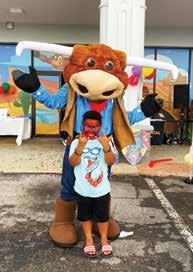
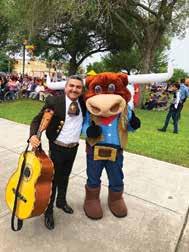
Rodeo Dental’s Unstoppable Journey from the Rio Grande Valley
by Rodeo Dental | photos by Bárbara Delgado and provided
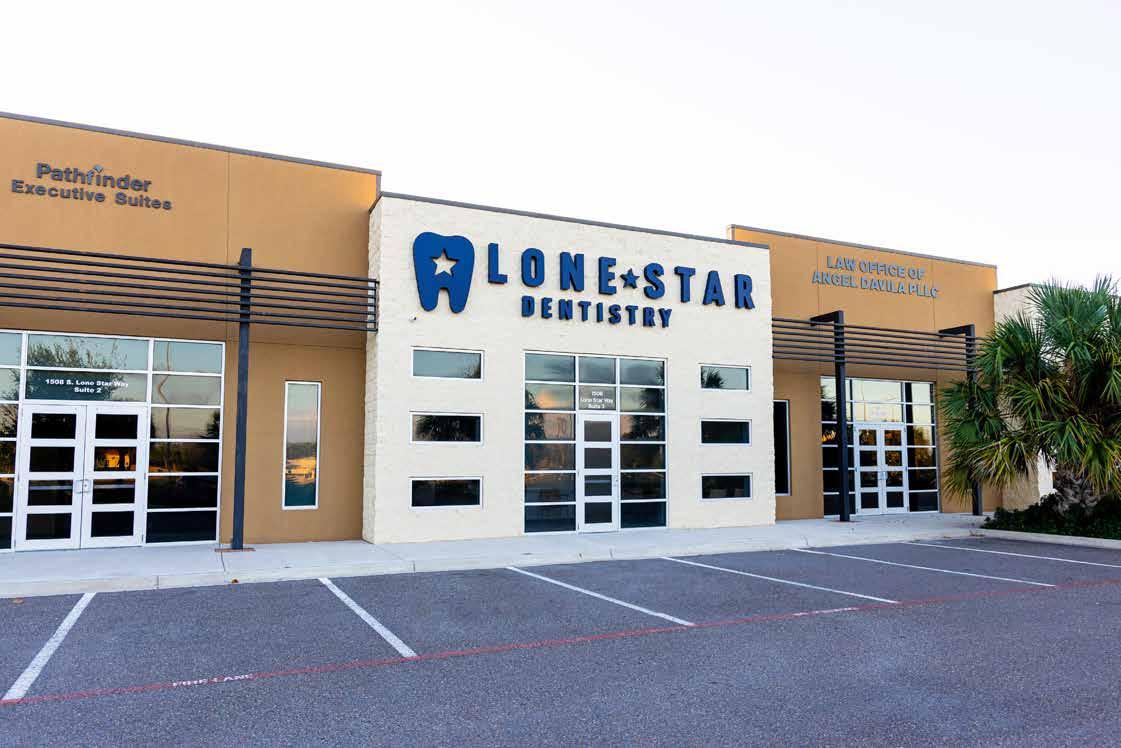
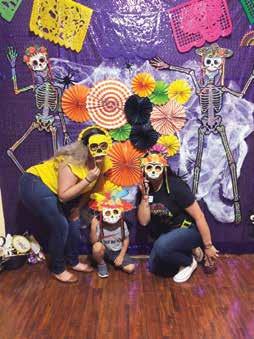
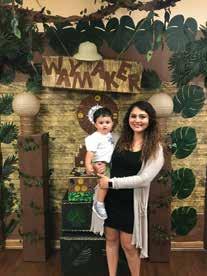
Rodeo Dental offices across the Rio Grande Valley feature bright lobbies with interactive arcades for children and inoffice movie theaters screening animated films. Families can snap photos under themed backdrops that rotate monthly — from cowboy adventures to superhero scenes — all designed to make the visit positive, memorable, and fun. Fifteen years after opening its first office, Rodeo Dental continues delivering a community-focused experience that blends world-class care with joy.
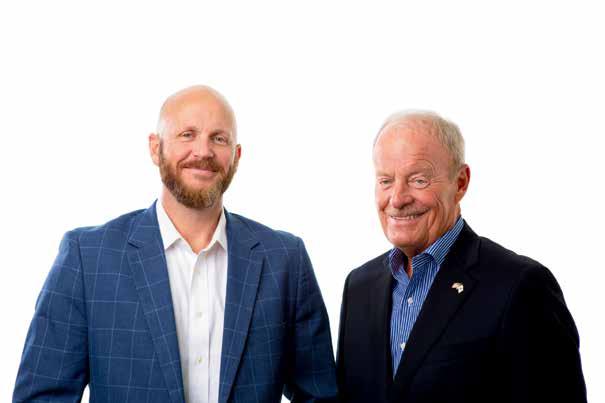
In 2011, Dr. Saam Zarrabi launched the first Rodeo Dental in Brownsville, Texas, off Southmost Road, driven by what he describes as a simple but bold belief: every family in the Valley deserved access to high-quality dental care without the fear, formality, or stress that often surrounds it. “Families [were] driving hours for specialty care or skipping visits altogether because the experience felt cold and transactional,” Dr. Zarrabi said. “We asked — why can’t dentistry feel like the best day ever? Why can’t it be fun, empowering, and truly accessible?”
What began as one office has grown into more than 50 locations across Texas, Colorado, and Arizona — including
several flagship practices throughout the Valley. This year, Rodeo celebrated its 15th anniversary and the opening of its 50th office in Lubbock, marking a milestone that traces back to its roots in the RGV.
VALLEY-BORN, VALLEY-PROUD
The Rio Grande Valley is not just where Rodeo began — it remains the heart of its mission. From the early days in Brownsville, Rodeo Dental set out to challenge the traditional dental experience. Sterile waiting rooms were swapped for arcade games and costumes. Long waits and confusing bills were replaced with hospitality, transparency, and affordability. Every insurance plan was welcomed. Every family was welcomed.
The response has been overwhelming. Rodeo Dental now has more than 60,000 five-star Google reviews, many from Valley families. One mother shared: “My kids beg to go to the dentist now. They get celebrated, bells, and confidence. Rodeo changed everything for us.”
Behind those experiences is a multi-specialty practice with board-certified pediatric dentists, orthodontists, oral surgeons, and endodontists — all under one roof. From
Fifteen years in, Rodeo Dental continues to expand while staying grounded in its Valley values.
first checkups to braces to implants, families can receive complete care in one visit. The impact is significant: Rodeo now serves more than half a million patient visits annually.
MILESTONES
THAT MATTER
Rodeo Dental’s 15-year journey includes major achievements that reflect both growth and purpose:
• Certified B Corporation status — the first healthcare company founded in the RGV to earn this global recognition.
• Inclusion on the Fortune Impact 20 List for businesses using profit as a force for good.
• Expansion to 50 offices nationwide, with the Valley still home to some of its highest-volume practices.
• More than 60,000 five-star reviews from real families.
• Recognition as one of the best places to work in Texas, with hundreds of Valley natives advancing into leadership roles.
PEOPLE FIRST, ALWAYS
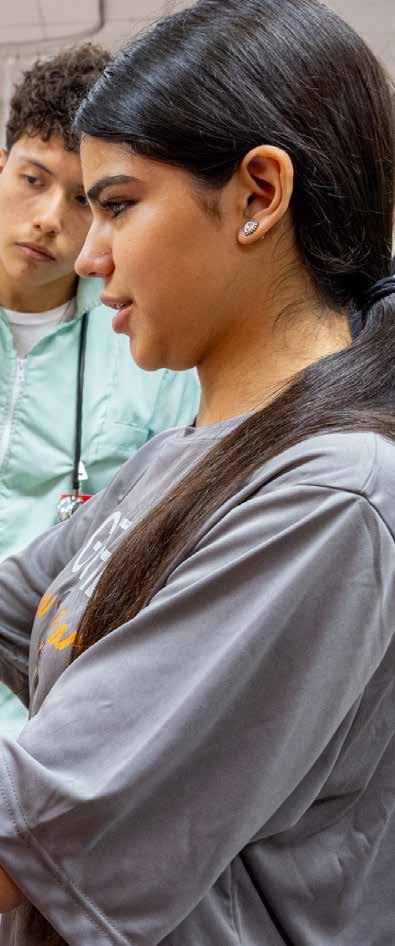
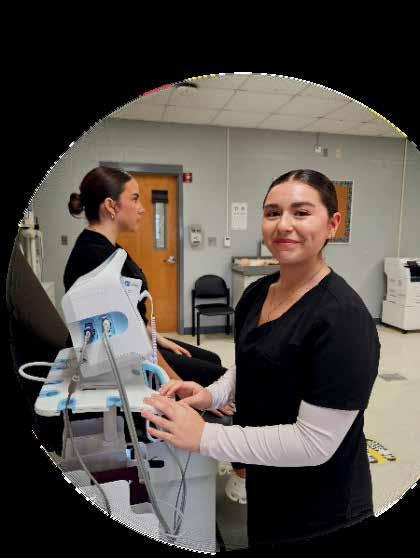
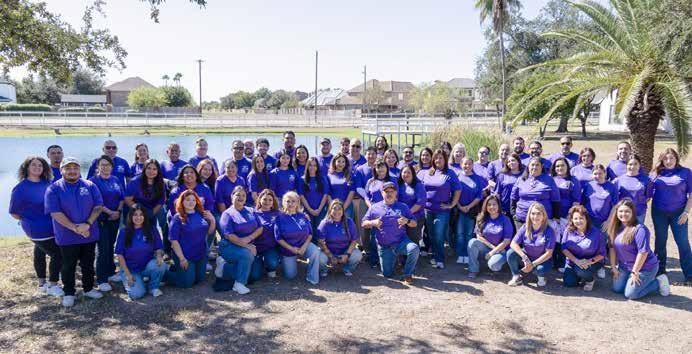
Rodeo’s team — from doctors and assistants to frontdesk staff and operations leaders — is the foundation of its success. Many are Valley-raised and deeply committed to uplifting the community. “Our team members aren’t just employees — they’re the reason kids leave braver and
parents leave relieved,” Dr. Zarrabi said. “When they thrive, our patients thrive.”
Rodeo partners with local schools, hosts free health fairs, organizes holiday celebrations, and donates thousands of dollars in care each year. Its B Corp commitment is reflected not in a certificate, but in daily actions.
THE FUTURE STARTS HERE
Fifteen years in, Rodeo Dental continues to expand while staying grounded in its Valley values. New offices use advanced technology — including real-time analytics to reduce wait times — but still carry the same SmileDNA that defines the brand: joy, accessibility, and community.
As Rodeo looks forward to more innovations, more growth, and more families served, one message remains constant: gratitude. The Rio Grande Valley believed in Rodeo from day one. Families trusted the team with their children’s first dental visits, teens’ orthodontic journeys, and long-term care.
Fifteen years later, what started as one office has become a movement — and the best chapters are still ahead.
¡Viva el Rodeo! The best is yet to come.
15 YEA RS OF SMILE S THAN K YOU FOR
SINCE 2011
A LEGACY OF HEART
Celebrating 30 Years of South Texas Health System Heart
by Caroline Waldrip | photos provided
Three decades ago, a group of cardiologists recognized a critical gap in cardiac care in the Rio Grande Valley — and decided to do something about it. In 1995, South Texas Heart Hospital opened its doors with a singular purpose: to deliver faster, more focused, and more compassionate heart care to a region facing disproportionately high rates of cardiovascular disease.
“Local cardiologists recognized the urgent need for a more hands-on, patient-centered approach to cardiac care in the region,” said Dr. Luis Padula, MD, FACC. “Their vision was to create a hospital fully dedicated to delivering prompt, exceptional care.”
That early vision soon caught the attention of Universal Health Services, Inc. (UHS), which acquired the hospital in January 1996 and formed a long-standing partnership with the founding physicians of The Heart Clinic. According to Padula, that collaboration became foundational to the hospital’s long-term success.
“Today, the success of the McAllen Heart Hospital (now called South Texas Health System (STHS) Heart) and the success of the clinic (now a part of the hospital’s sister company, STHS Clinics) are inseparable,” Padula said. “Each strengthens and elevates the other.”
Padula credits the hospital’s growth to what he calls
its “secret sauce” — a balance of strong leadership and physician autonomy. “UHS has remained committed to allowing cardiologists to do what they do best: care for patients in a safe, compassionate, and highly professional manner,” he said. “Both sides understand how deeply symbiotic this relationship is.”
He summarized the formula simply as the “three P’s.”
“It all comes down to People, Process, and Product,” Padula said. “UHS has placed an outstanding leadership team at the Heart Hospital. The processes guiding patient care have been refined over decades,” he said. “The product — the cardiologists and advanced practice providers — is a uniquely cohesive group driven by excellence.”
That commitment has positioned STHS Heart as a regional leader in cardiovascular care. Brenda Ivory, the facility’s chief executive officer, has witnessed the evolution firsthand.
“Over the past three decades, STHS has evolved from providing essential cardiovascular services to becoming a regional leader in advanced, comprehensive heart care,” Ivory said. “What stands out most is our shift toward early intervention and minimally invasive technologies.”
Ivory pointed to advances in cardiac imaging, catheterbased procedures, and emergency response coordination as game changers. “Our ability to diagnose and treat cardiovascular disease faster and more precisely has dramatically improved outcomes,” she said. “Just as important has been the growth of a multidisciplinary, team-based approach that places the patient at the center of care.”
Some of the most meaningful moments, Ivory said, come long after a medical crisis has passed.
“We often have patients visit us months later who are healthy, active, and deeply grateful,” she said. “Those moments capture the heart of STHS — skilled care delivered with compassion, teamwork, and a deep commitment to our community.”
Looking ahead, innovation remains central to STHS Heart’s mission. Ivory sees cardiology shifting toward proactive, technology-driven care.
“We are committed to leading this evolution by investing in advanced medical technology, expanding minimally invasive procedures, and strengthening evidence-based preventive care,” Ivory said. “We are actively investigating the role of artificial intelligence to identify cardiac risks earlier than ever before.”
That forward-thinking approach has earned the facility national recognition. “For 2026, STHS Heart was named one of America’s 100 Best Hospitals for Coronary Intervention and ranked among the Top 3 in Texas by Healthgrades,” Ivory said. “These accolades prove we are delivering world-class care right here in the Rio Grande Valley.”
Community engagement remains equally vital, particularly in a region with high rates of diabetes and hypertension. “Education, screenings, and outreach help patients understand their risk factors before serious illness develops,” Ivory said. “We’re treating not just disease, but root causes across generations.”
Padula agrees that serving the RGV has shaped the hospital’s philosophy. “We see chronic conditions presenting at younger ages,” he said. “That reality reinforces the importance of proactive, culturally sensitive, patient-centered care.”
As STHS Heart celebrates its 30th anniversary, the milestone carries deep meaning for those who helped build it.
“Professionally, it stands as a testament to decades of dedication, innovation, and teamwork,” Ivory said. “Personally, it represents the countless lives touched along the way. Being part of this journey is truly an honor.”
Together, those three decades tell a story of vision, partnership, and heart — one that continues to shape a healthier future for South Texas.
THE HEARTBEAT OF THE VALLEY
SOUTH TEXAS HEALTH SYSTEM® HEART CELEBRATES THREE DECADES OF ADVANCED CARDIAC CARE
Since 1996, South Texas Health System Heart has been dedicated to keeping hearts healthy for our patients.
We were one of the first freestanding cardiology and cardiovascular facilities in the United States – and we’re proud to continue serving the community with distinguished services from our award-winning team, including:
• Accredited Chest Pain Center with Primary PCI for treatment of heart attacks and chest pain
• Advanced Certification as a Primary Stroke Center
• Level IV Trauma Center
• Robotic, minimally invasive and general surgery
• Bariatric Weight Loss Surgery Center
• Women’s heart health
• Congestive heart failure program
• Cardiac rehabilitation
GRADE “A” FOR PATIENT SAFETY
Mission
Regional Center,
Harlingen
Medical,
and
Knapp
Medical Earn “A” Grades for Patient Safety by the Leapfrog Group
by Michael Swartz | photos provided
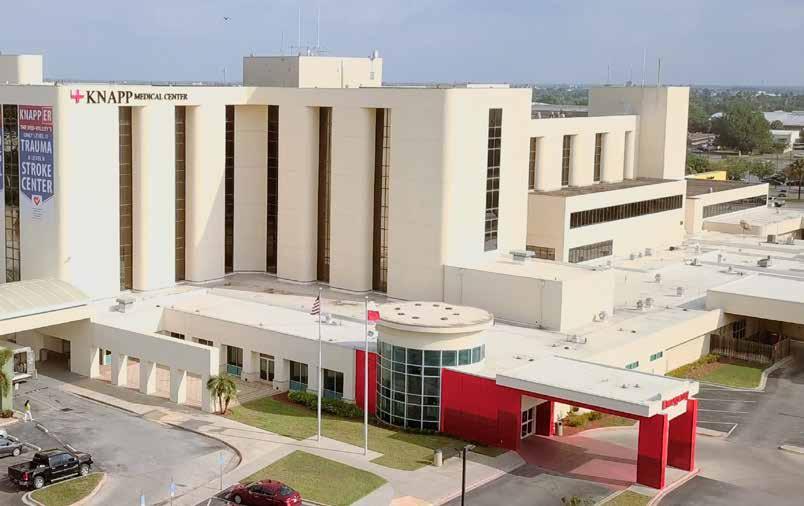
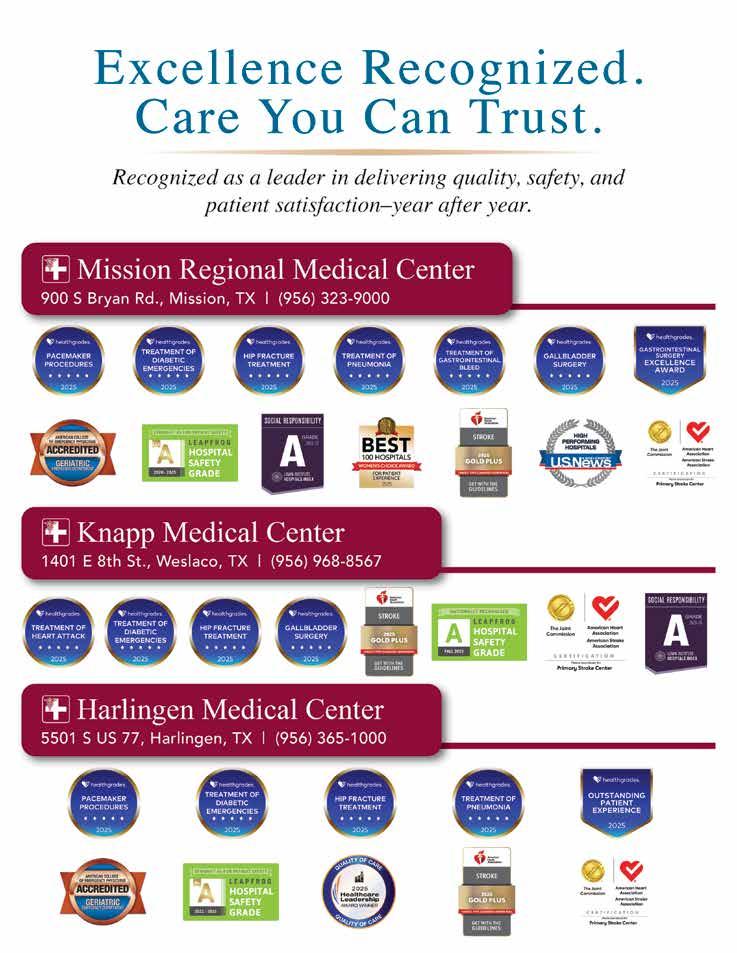
Mission Regional Medical Center, Harlingen Medical Center, and Knapp Medical Center in Weslaco have each been awarded an “A” grade for patient safety for the fall of 2025 by The Leapfrog Group, a national, independent healthcare ratings organization.
This prestigious distinction places the three Prime Healthcare hospitals among the safest hospitals in the country for protecting patients from preventable harm, errors, and complications.
The recognition also highlights the Prime hospitals’ long-term consistency. Over the past four years, the Prime Healthcare hospitals have been the most dependable providers of patient safety excellence in the Rio Grande Valley.
For example, Mission Regional Medical Center has earned straight “A’s” since 2020 — 11 consecutive grading periods (since grades are awarded twice a year, in the fall and the spring). This makes Mission Regional the
only hospital in Hidalgo County with such sustained performance.
Meanwhile, Harlingen Medical Center has received nine consecutive “A” grades since 2021, by far the longest streak among Cameron County hospitals.
Knapp Medical Center has also demonstrated strong safety performance, earning four “A” grades and three “B” grades since 2022.
Leapfrog’s Hospital Safety Grades are issued each spring and fall, using a letter grade system similar to academic grading. The ratings are based on nationally recognized, evidence-based measures focused on preventing medical errors, injuries, accidents, and infections.
“These outstanding grades reflect our unwavering commitment to delivering the safest, highest-quality care to patients across the Rio Grande Valley,” the Prime hospitals said in a joint statement.
“We are honored to have earned a grade ‘A’ on Leapfrog’s
Hospital Safety Score 11 times in a row,” said Kane Dawson, CEO of Mission Regional Medical Center. “Quality care matters. By choosing our hospitals, you can ensure that you receive the high-quality outcomes you rightly deserve.”
Todd Mann, CEO of Harlingen Medical Center, noted that the recognition “reflects the steadfast dedication of our teams and our ongoing commitment to deliver consistent, exceptional care to the patients and communities we serve.”
Rene J. Lopez, CEO for Knapp Medical Center, said the awards are a testament to the work of physicians, nurses, and other healthcare professionals who are dedicated to providing “the highest-quality healthcare to residents of the Valley — every patient, every time.”
Leah Binder, president and CEO of The Leapfrog Group, said that earning an ‘A’ Grade means that “Mission Regional Medical Center, Harlingen Medical Center and Knapp Medical Center made a true commitment to put patient safety first.”
“We congratulate the leadership, board, clinicians, staff, and volunteers that all had a role to play in this achievement,” she said.
Dr. Padmini Bhadriraju, Chief Medical Officer for Prime Healthcare in the Rio Grande Valley, expressed gratitude for the teams who made these results possible. “What it means for you and your family is that when you come through our doors, we provide excellent care, a safe environment, and uncompromising quality in every service we deliver,” she said.
The Leapfrog Hospital Safety Grade remains the nation’s only hospital ratings program focused exclusively on preventable medical errors, infections, and injuries — issues that contribute to more than 500 patient deaths per day in the U.S. The program is peer-reviewed, fully transparent, and free to the public.
For full details on Leapfrog grades for the Prime Healthcare hospitals — and for tips on staying safe during a hospital stay — visit HospitalSafetyGrade.org.
For more information on award-winning patient care in the Valley, please visit MissionRMC.org, HarlingenMedicalCenter. com, and KnappMed.org.
Purple Martin
CREATIVITY AND CONSERVATION
IN HARMONY
Quinta Mazatlán is Where the Region’s Natural and Cultural Stories Come Together
by Colleen Curran Hook, Executive Director of Quinta Mazatlán | photos provided
Winter brings mild, inviting weather to the Rio Grande Valley, encouraging more time outside. It’s an excellent season to visit Quinta Mazatlán, an urban sanctuary in McAllen, where the region’s natural and cultural stories come together.
Guests approaching the historic home first notice the warmth of the 1930s adobe mansion, named Quinta Mazatlán by the first owners. Its Spanish Revival architecture, hand-carved details, and red clay courtyard pavers pay tribute to the region’s artistic heritage. The mansion feels timeless, as every archway and garden has a story to tell.
Surrounding the home are acres of Tamaulipan Thorn Forest, one of the most ecologically diverse habitats in North America. Winter brings a colorful array of migratory
birds, including Blue-headed Vireos, Orange-crowned Warblers, Purple Martins, and Yellow-bellied Sapsuckers. Birders of all experience levels enjoy spotting tropical rarities and seasonal residents throughout the sanctuary.
Quinta Mazatlán is also a hub for environmental programs. Its Thursday Night Speaker Series, Saturday Stewardship opportunities, Yoga & Tai Chi in the Park, Workshops, and Guided Walks connect people of all ages to the Valley’s natural beauty. Children and families can enjoy the Forest Tots program, the natural playscape, and hands-on STEM activities offered each Saturday. Every visit offers something new to learn, explore, and appreciate.
Art has long been part of the Quinta experience! More than 40 bronze sculptures dot the trails among native plants. Guests can admire the Uriarte Talavera tile murals, installed by the original owners and crafted in Puebla, Mexico. Outdoor murals add color and meaning throughout the sanctuary, from Monarch Migration by Irving Cano, to Born to Fly by Helena Martin, and the popular LOVE YOU mural by Lupe Hernandez.
Visit QuintaMazatlan.com for winter events, concerts in the park, and seasonal programs. Quinta Mazatlán is a place where creativity and conservation truly complement each other beautifully.
Thursday speaker series taking place in outdoor amphitheater.
Blue-headed Vireo
Sponsorship Package
KITCHEN OF OUR CULTURE
A Family-Run Restaurant Rooted in Tradition and Local History Junction Café
by Thom Denton | photos by Haven Creative House
In downtown Pharr, where historic buildings line the streets and familiar faces greet one another, Junction Café has remained a constant. With century-old floors and generations of loyal customers, the café continues to serve as a gathering place rooted in family, tradition, and community.
Junction Café is a family-owned business led by Criselda Fong, a Pharr native. Her granddaughter, Brittany Ramirez, supports daily operations behind the scenes, managing scheduling and social media while helping preserve the café’s long-standing vision.
The restaurant opened in December 1989. At the time, Fong had no formal experience in the restaurant industry, having previously worked at Sears. Her husband, originally from Mexico, was a musician. When the previous owners decided to sell, the couple purchased the business.
For Ramirez, the café has always felt like home. She spent much of her childhood inside the restaurant, watching staff prepare meals and helping whenever possible. Longtime customers recall seeing her as a child sweeping floors and assisting employees. She later worked her way from server to manager and now helps oversee operations.
The menu reflects the café’s broad appeal. Breakfast is served all day and includes traditional American options alongside Mexican dishes such as enchiladas, tacos, and botana platters. Burgers and other classic meals round out the offerings.
Community involvement has long been central to Junction Café’s identity. The restaurant offers a 40% discount to uniformed police officers and emergency medical technicians and hosts an annual toy drive. The café also provides meals and hot chocolate
to people in need when possible. “We do what we can,” Ramirez said.
Over the years, Junction Café has drawn customers from across the Rio Grande Valley, many of whom make it part of their weekly routine to visit the restaurant. Ramirez recalls mornings when customers lined the sidewalk before opening.
The building itself reflects the café’s history. The floors, more than 100 years old, have never been replaced. Photographs and antiques displayed throughout the space were donated by customers, turning the restaurant into a shared archive.
The café faced challenges during the COVID-19 pandemic, operating within health guidelines while employing the maximum number of staff allowed to prepare and deliver food. The business was also affected by fluctuations in the peso, which reduced cross-border traffic. Despite these challenges, Ramirez's focus remained on supporting employees and the community. “If we were struggling, we knew other people were too,” she said.
Today, Junction Café has recovered and continues to operate.
More than three decades after opening, and more than a century after the building was constructed, Junction Café remains an institution in downtown Pharr.
Elizabeth Ramirez
Building a Life, a Legacy, and a New Model for Entrepreneurship in the Rio Grande Valley
by Caroline Waldrip | photos by Bárbara Delgado and Aaron Garcia
For many entrepreneurs, the moment that defines their career is tied to a milestone — a promotion, an award, or a breakthrough. However, for Elizabeth Ramirez, the defining moment came from an internal shift. “It was the moment I realized I didn’t have to choose between being a present mom, a creative, and a leader,” she said. That realization set the foundation for a business — and a life — built on alignment rather than expectation.
Ramirez, a business coach and systems strategist, didn’t follow a traditional path. She began behind the camera, photographing people in a way that helped them feel seen, but the work quickly evolved into something deeper. “My journey began behind the camera, helping people feel seen,” she said. “Over time, that passion evolved into helping entrepreneurs find clarity, build systems, and create businesses that support the lives they actually want.”
As the demands of a typical 8–5 schedule clashed with the kind of mother and leader she wanted to be, she felt a quiet but persistent inner pull. Listening to that intuition — what she calls the moment she finally believed she was worthy of designing her own life — changed everything. “The true turning point came when I finally listened to that inner voice saying, ‘You are worthy of living the life you want,’” Ramirez said.
From there, she stepped fully into coaching, developing frameworks and systems that help clients streamline operations and expand their impact. However, behind every strategy, there’s a philosophy she returns to again and again. “When you understand yourself and your goals clearly, you build differently,” she said. That clarity, she believes, is more than mindset — it’s the foundation of every decision a business owner makes.
“Transformation happens when people feel seen, heard, and supported in a way that helps them reconnect to who they are and what they truly want.”
Elizabeth Ramirez, business coach and systems strategist
Her coaching style is deeply rooted in supporting the whole person behind the business. “Transformation happens when people feel seen, heard, and supported in a way that helps them reconnect to who they are and what they truly want,” Ramirez said. She guides clients to slow down, re-evaluate their vision, and create systems that honor their lives rather than overwhelm them.
One of her most defining success stories goes back to her first systems client, photographer Barbara Delgado. Ramirez had just returned to the Rio Grande Valley from Austin in 2020, navigating early motherhood while transitioning out of photography. Delgado was the first person to believe in her new direction. “Barbara took a chance on me,” she said. “Her studio was already producing incredible work; what she needed was clarity, structure, and systems.”
Together, they reimagined the business — organizing workflows, refining services, and creating processes that freed Delgado from the daily grind. The impact was profound. “The most rewarding part wasn’t just seeing her revenue grow,” Ramirez said. “It was watching her step into a new level of freedom.” With streamlined operations, Delgado gained the space to expand her work, dream bigger, and even launch philanthropic efforts.
“That experience affirmed that I was exactly where I needed to be,” Ramirez said.
While her work spans industries, the Rio Grande Valley remains at the heart of her mission. Returning home during the pandemic revealed something she hadn’t fully appreciated before. “There is a different kind of grit and heart here,” she said. “Growing up as a first-generation daughter of immigrant parents, I saw that up close.”
Her upbringing — with a father in construction and
a mother who devoted her life to family — shaped her understanding of resilience, sacrifice, and opportunity. “They were the generation we needed during that time: hardworking, humble, honest people who sacrificed so that we could dream bigger,” Ramirez said.
Now, when she serves RGV entrepreneurs, she sees echoes of her own family. “When I look at the entrepreneurs in the Valley, I see my parents,” she said. “I see families who aren’t just building businesses, they’re building legacy.”
Through her coaching, Ramirez hopes to shift the culture of entrepreneurship in the region from survivalmode hustle to intentional, life-centered leadership. “I want to help business owners get their time back — time to be present with their families, time to enjoy the life they deserve,” she said. Whether through systems, strategy, or renewed clarity, she aims to empower the community that shaped her to dream bigger and trust themselves more.
“If I can help even a small part of our community organize better and step into alignment,” Ramirez said, “then I feel like I’m giving back to the place, and the people, who made me who I am.”
Ramirez’s story reflects the strength, resilience, and vision that define so many women leading in the Rio Grande Valley today. Her work is more than strategy or systems — it’s an invitation for others to build with intention, trust themselves, and create lives that feel aligned with who they are becoming. As she continues to guide entrepreneurs toward clarity and confidence, Ramirez stands as a reminder that leadership doesn’t require sacrificing family, authenticity, or purpose. It simply requires the courage to honor your gifts and build a life that reflects them.
ADVENTURE AWAITS IN NORTH MCALLEN
A New City-Run Nature Park Invites Families and Groups to Reconnect with the Outdoors
by Nathaniel Mata | photos by Aaron Garcia
On the northwest side of McAllen, a new spot for Valley residents to enjoy the great outdoors has opened.
Camp McAllen is the newest offering from McAllen Parks & Recreation. The 20-acre site, which features walking trails, fishing, kayaking, and an archery range, opened in the Summer of 2025.
The ribbon cutting was attended by community stakeholders, the builders, designers, and engineers who worked on Camp McAllen, along with young Boy and Girl Scouts who would be the first to enjoy the nature park.
“This is a great opportunity for families, churches, groups to spend time, to put down the phones for a little while and start reconnecting with nature,” McAllen
commissioner JJ Zamora said. “Camp McAllen is a place dedicated to bringing the outdoors closer to our residents, right here in North McAllen. This space offers a fully immersive outdoor experience within city limits. The 20-acre site gives groups a chance to enjoy nature in a safe and structured setting.”
McAllen Parks and Recreation set out to do something new in town. With an attraction like archery, the department can expand its efforts to encourage residents of McAllen and beyond to spend more time outdoors.
McAllen City Commissioner Tony Agurrie (District 1) said the camp's purpose is to provide additional outdoor exploration options.
“The reason for Camp McAllen is the
community and families that are going to enjoy this location,” Aguirre said. “ Wholesome, great reasons to get together. People will be able to bring their kids and show them what nature is and make it a way of life for them.”
Camp McAllen becomes the fourth designated nature area in the city alongside Quinta Maztlan, Fireman’s Park, and McAllen Nature Center.
City manager Isaac Tawil took time to recognize the collaboration between McAllen departments to get the $1.86 million project from design to ribbon-cutting.
“The project reflects the best of McAllen’s teamwork, it’s not just one group that gets it done. Projects like this don’t happen with the isolated work of just one department,” Tawil said after acknowledging Parks and Recreation Director Denny Meline. “To our engineering department, whose technical expertise helped shape the project, to procurement, public works, planning, and yes,
even our legal department, had input to make sure that this project came to fruition on time and under budget.”
PARD Director Meline spoke during the ribbon-cutting to commemorate the day.
“It’s a big day for residents and visitors to McAllen,” Meline said. “There is a lot more planning to do in McAllen which is a beautiful thing. It shows what the vision is in what the city is trying to strive for and that’s quality of life for residents here in McAllen. We are excited to offer this facility for all residents to enjoy, creating a welcoming environment for our community to connect and create lasting memories.”
Camp McAllen is located at 8701 N 23rd St, McAllen, TX 78504, and is open 8 a.m. to 8 p.m. Tuesday through Sunday.
Overnight stays at the camp can be booked and vary by tent size. Archery is open for a $5 fee on Thursdays and Saturdays from 4 p.m. to 7:30 p.m.
PICKLEBALL AT SOUTH PADRE ISLAND
The Gulf Coast Retreat for Pickleball Fans and Winter Texans Alike
by Thom Denton | photos provided
South Padre Island showcases its natural beauty and vibrant community through a wide array of attractions.
Visitors can explore Sea Turtle Inc., take dolphin-watching boat tours, and visit acclaimed birding and nature centers that highlight the region’s unique wildlife. The island also offers beautiful beaches, shopping, diverse dining options, and year-round events.
Winter Texans — seasonal residents who migrate to South Texas during the colder months — are an essential part of the local community. Together with year-round residents, they enjoy the many activities and amenities South Padre Island provides.
One activity that has surged in popularity in recent years is pickleball — a sport that blends the accessibility of table tennis with the competitive nature of tennis and badminton. John “JR” Raschilla, a founding member of the RGV Pickleball Association, has been instrumental
in expanding the sport across the Rio Grande Valley and helping open numerous public courts.
In 2017, Raschilla’s wife encouraged him to try pickleball because many players at the time were seniors.
“I looked at her and said, ‘Are you crazy? You want me to play a game with old people?’” he recalled with a laugh.
“About a year later, I went, ‘Hey bud, you’re old.’”
After his first four-hour session, he immediately bought equipment and spent the next day serving more than 1,000 balls. Since then, he has remained committed to growing the sport in the Valley.
Today, Raschilla is a U.S. Pickleball ambassador, a Level 2 certified instructor, and a national champion. As the sport expands and organizations compete for influence, his focus remains steady: “We are about bringing it to the people,” he said. “Because we love the sport. That’s why we do it.”
Raschilla and the association provide free lessons for seniors and have successfully encouraged local governments to build public courts. He believes expanding pickleball not only benefits local residents but also attracts visitors.
“If you play pickleball, you are not going to go to a place that does not have pickleball,” Raschilla said. “When I first tried to take it to the city, the only courts were in RV parks — that didn’t help the city,” he said. Within months, eight public courts were built.
Raschilla believes South Padre Island could become a leading pickleball destination thanks to its many existing attractions. With wildlife sanctuaries, horseback riding, and pristine beaches, he says the island only lacks one thing: pickleball.
What began as a small passion project has evolved into a thriving community. “When I first started this,” Raschilla said, “there were maybe 15 people in a single tournament. Last year at the Pickleball on Padre tournament, we had more than 250 participants — and thousands more showed up just to watch.”
Pickleball on Padre is scheduled for Jan. 27–31, 2026, featuring both indoor and outdoor competitions. The event will also offer free-play sessions for participants to practice and connect with others involved in the country’s fastest-growing sport. For more information, visit info. enjoyspi.com/event/pickleball-on-padre-2.
WHEN WE SERVE TOGETHER IN OUR COMMUNITIES, EVERYONE SOARS.
Southwest Airlines® proudly partners with those who are helping to shape our communities all across America. One good deed—when coupled with another and another and another—can truly make a positive difference in our daily lives.