Sécurité du Bâtiment, notre mission est d’assurer votre protection!
pour vous assurer une protection optimale en tout
4 National Editorial A year marked by elections... and by the housing and coownership crisis by Yves Joli-Cœur, Ad. E., president of the RGCQ – Provincial
6 Editorial from the Executive Director 2026: Growing together with clarity and ambition by Yves Nadon
8 Can a co-owner carry out work on a common portion for restricted use?
14 Management Column
Initial syndicate and concurrent syndicates: co-ownership in all its complexity by Michel Paradis, Ad. E.
20 Managing human behaviour in co-ownership
When people are at the heart of management
30 Mandatory construction site inspections
A historic turning point... but still insufficient
36 Buying or renting a condo? When the numbers and family wealth speak for themselves by Roch St-Jacques
38 Construction Starts
The Outaouais paradox: why the condo market is dying in Gatineau while thriving in Ottawa?
42 Bill 16
Better-known tools, but still difficult to master
Renovation Feature
59
60 Legal Column
A major decision regarding liability for losses in coownership by Me Charlotte T Fortier
Tribute
Claude Wilson: the discreet architect of co-ownership expertise by Caroline Martel
Building Column
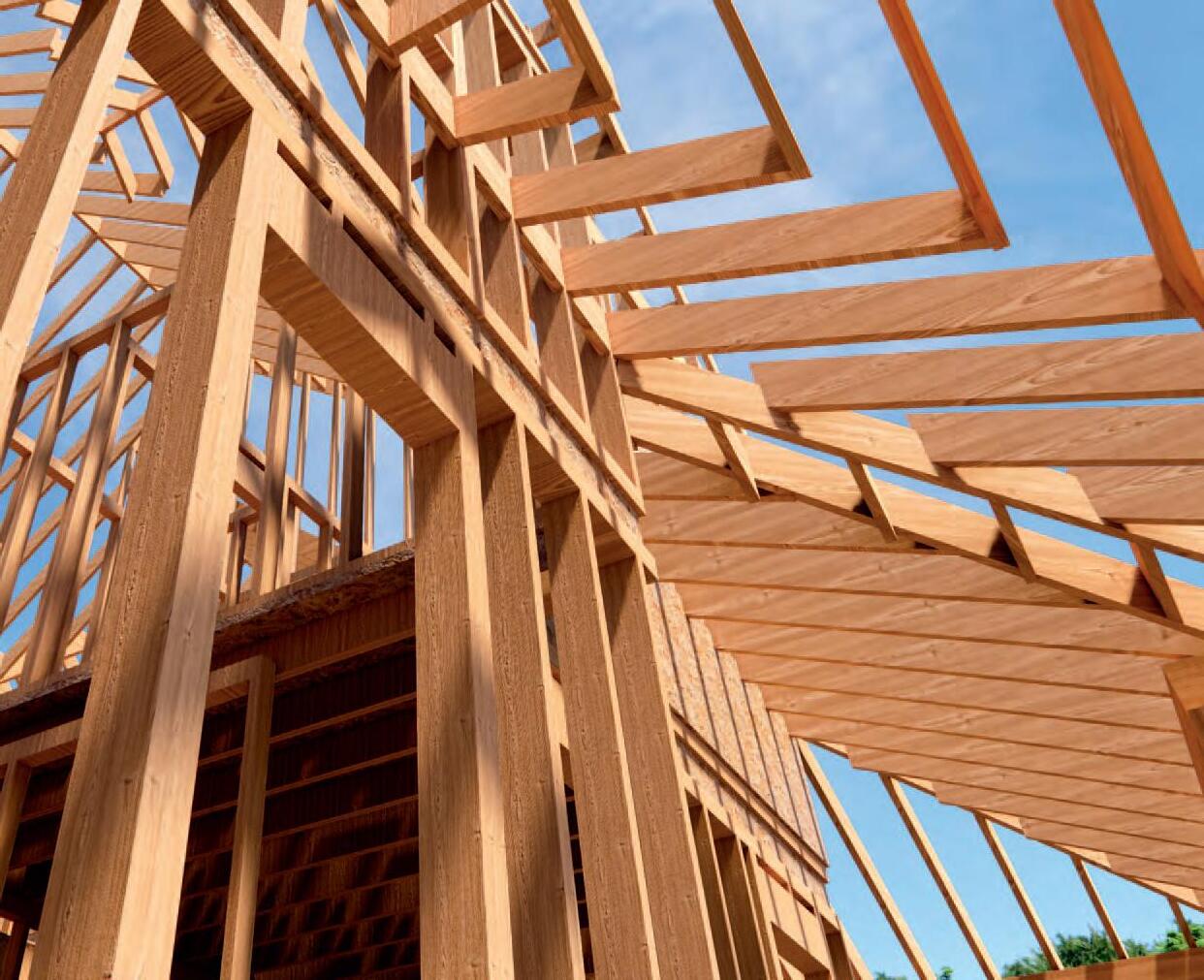
Wood in co-ownership A living, sustainable material...that leaves no room for improvisation by Caroline Martel
SERIES: The race to carbon neutrality
Climate transition and co-ownership
From global commitments to local regulations by Véronique Martel
Making your coownership greener thanks to proper planning... and grants
Info-Management Column
Your questions, answered by our team of expert advisors by Simon Bégin
RGCQ – Montréal Chapter
Some beliefs held by co-owners and directors regarding Bills 16 and 141 by Charles-Antoine Carra
RGCQ – Québec City Chapter
It is high time to revive divided co-ownership by Michel Paradis, Ad. E.
RGCQ – Outaouais Chapter
Tribute to Michel Mancini by Me Richard M. LeBlanc
Closing Remarks
Better management, better oversight, better training: the RGCQ’s latest initiatives
An election year marked by housing... and divided coownership
by YvesJoli-Coeur,Ad.E.,presidentoftheRGCQProvincial
TExecutive Director RGCQ
Magazine Direction
Coordination
Editoriale Board
Editorial Team
Linguistic Editing and Layout Proofeading
Advertising
Graphic Production
Translation
Printing and distribution
Deposit:
Gestion et réalisation de projets complexes en copropriété
Newsam Construction accompagne les syndicats de copropriétaires et leurs gestionnaires dans la gestion et la réalisation de projets structurants, notamment en contexte de sinistres ou de travaux majeurs. Ces mandats exigent une coordination rigoureuse des intervenants, une maîtrise des coûts et des échéanciers, ainsi qu’une exécution conforme aux attentes des copropriétaires.
Notre approche repose sur une expertise technique éprouvée et une communication claire avec les divers intervenants.
Nos champs d’intervention comprennent notamment :
La gestion de sinistres majeurs (dégâts d’eau et incendies)
La réalisation de projets majeurs en copropriété
La coordination avec les assureurs et les autorités compétentes
La gestion des budgets, des échéanciers et des exigences réglementaires
Notre division extérieure chez Newsam est également experte en projets extérieurs pour les copropriétés et les toits-terrasses. Nous sélectionnons et distribuons des solutions de protection solaire ainsi que des structures architecturales adaptées aux condos, tout en accompagnant nos clients de manière rigoureuse, du permitting jusqu’à l’installation finale.
Par une approche rigoureuse et transparente, Newsam Construction contribue à protéger les intérêts du syndicat, à soutenir les gestionnaires de copropriété et à accompagner les conseils d’administration dans leurs responsabilités.
Contactez Paul Schapira paul@newsam.ca 514 969-8757
Dear members, partners and friends of coownership, At the dawn of 2026, one thing is clear: divided co-ownership in Quebec is undergoing a profound transformation period.With more than 400,000 units spread across Quebec, it is no longer a marginal or specialized reality. It has become a full-fledged way of life, both residential and collective, now affecting hundreds of thousands of citizens.
This growth also comes with major challenges. Aging buildings, rising costs, increasingly complex obligations, multiplication of legal and human issues: co-ownership now requires more rigour, more expertise, but above all more vision
The new regulatory framework, particularly brought forward through Bill 16, has created a real structural shift. It requires the entire sector to evolve: to better plan, to better govern, to better protect. This transition may seem demanding, sometimes even destabilizing, but it also represents a unique opportunity: to build a more sustainable, more transparent and better-equipped coownership model for the future.
In this context, the role of the RGCQ has never been more essential.
UNDERSTANDING THE DIVERSITY OF OUR COMMUNITY
Co-ownership is not a homogeneous block. It is a rich, complex ecosystem, profoundly human. Behind every syndicate, every building, every assembly, there are different realities.
Co-owners discovering their responsibilities.
Volunteer directors giving their time and energy, often without prior training.
Professional managers carrying an increasing burden in a context of shortage and pressure.
Brokers, notaries, lawyers and partners helping to structure the market. Expectations are not the same and needs are not either.
This is why, in 2026, a fundamental priority will guide our action: better understanding and better serving each segment of members, with targeted services, useful tools and a differentiated approach.
AN RGCQ THAT IS CLOSER, MORE MORE MOBILIZING
In 2025, many of you called upon our expertise. Thousands of requests were handled through the info-management line, consultation service, and thousands of people participated in our training sessions and events.
This mobilization confirms that our community is alive, engaged and in need of guidance. The RGCQ is more than ever a party, an independent anchor point in a sector undergoing profound change.
In 2026, we will pursue this momentum with clear priorities:
Strengthening support for syndicates limited resources;
Deploying structured training paths for directors and managers;
Continuing to make the voice of the sector heard before government authorities, notably regarding governance modernization, the creation of a district register, regulation of the profession and the establishment of a specialized tribunal;
Developing strategic partnerships, particularly financial ones, in order to offer syndicates concrete solutions to better manage contingency funds, finance major work and support renovation and improvement projects aimed at greater building energy efficiency.
A COLLECTIVE AMBITION
I would like to sincerely thank all those who are bringing this transformation to life, namely our members, our volunteers, our regional chapters, our partners and our team.
Co-ownership is often viewed through the lens of its obligations, but above all it is a human adventure, one of learning to live together, deciding together and preserving together.
In 2026, the RGCQ will continue, with clarity and ambition, to support each stakeholder in the sector according to their reality, level of experience and responsibilities.
Because a stronger co-ownership community is a better-equipped community. And a better-equipped community means a betterhoused Quebec.
Cordialement.
Regulation
Can a co-owner carry out work on a common portion for restricted use?
It sometimes happens that co-owners make modifications to a common portion for restricted use (CPRU)over which they have
exclusive enjoyment rights, believing they are entitled to do so.
WHAT IS THE REALITY?
CPRUs are designated as such in the declaration of co-ownership, either because they are integrated into the structure of the immovable (balconies, windows), or as a means of preserving architectural harmony. However, it must not be forgotten that CPRUs remain, first and foremost, common portions; their use is reserved, depending on the case, to one or certain co-owners only.
The second paragraph of article 1043 C.C.Q. is clear on this matter:
Unofficial translation of Art.1043.Common portions are those portions of the buildings and land that are owned by all the co-owners and are used for their common benefit.
DU CONSEIL À LA COUR
Consultation et formation | Médiation et arbitrage | Représentation devant les tribunaux
Présidence d’assemblées | Recouvrement des charges communes | Assemblées de transition Modification de la déclaration de copropriété
L’équipe LJT a le plaisir de vous présenter
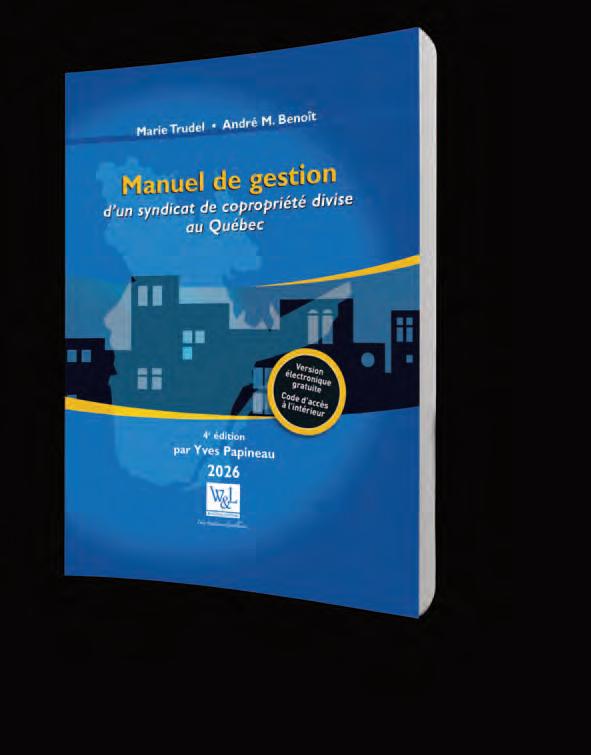
la 4e édition du Manuel de gestion d’un syndicat de copropriété divise au Québec de Me Yves Papineau
Cette 4e édition contient tous les articles du Code civil à jour au 1er janvier 2026 et les autres lois applicables en plus de la réglementation en vigueur depuis le 14 août 2025 quant au carnet d’entretien, de l’étude du fonds de prévoyance et de l’attestation du syndicat.
Pour commander utilisez ce code «QR»
Me Yves Papineau
Me Olivier Charbonneau
Me Karl Michel
Me Philippe Gagnon-Marin
Me Maxime Laflamme-Leblond
Regulation
CAN A CO-OWNER CARRY OUT WORK ON A COMMON PORTION FOR RESTRICTED USE?
However, some of these portions may serve only the use of certain co-owners or of a single one. The rules relating to common portions therefore also apply to these common portions for restricted use.
CPRUs are therefore the undivided property of all co-owners. It is the syndicate that has the authority to authorize and supervise the execution of work on these portions, where applicable. In effect, the declaration of co-ownership usually prohibits co-owners from carrying out work on a CPRU without authorization from the syndicate.
Let us take the example of a balcony, a common portion reserved for the restricted use of the co-owner of the unit to which it provides access. The declaration of co-ownership could prohibit the installation of a permanent flower box or heat pump in order to preserve the architectural harmony of the immovable. If this co-owner wished to carry out such transformation work, they would first have to obtain authorization from the assembly of co-owners.
WHAT HAPPENS IN THE CASE OF UNAUTHORIZED WORK?
When a co-owner carries out work on a common portion for restricted use without the required authorization, the syndicate is entitled to require that the co-owner restore the premises to their original condition, at the co-owner’s expense. Failing voluntary compliance, injunction proceedings and claims for damages could be undertaken by the syndicate.
It should be noted that the syndicate’s injunction remedy is then based on article 1080 C.C.Q. In this regard, the Quebec Court of Appeal, in Amselem c. Syndicat Northcrest, put an end to a jurisprudential controversy by establishing that the syndicate is entitled to an injunction in the event of a contravention of the declaration of co-ownership, even in the absence of “serious and irreparable prejudice.” The Supreme Court of Canada ruling in this matter does not reverse this principle, which therefore applies when a co-owner refuses to comply with the declaration of co-ownership.
The cases SDC de Trillium Court and Association des copropriétaires de Valbourg II, respectively in 1998 and 1999, provide examples of injunction remedies arising in the context of row houses. In Trillium Court, a co-owner had enlarged their balcony (qualified as a CPRU in this co-ownership) without first obtaining authorization. The declaration of co-ownership prohibited such work without authorization, since the uniformity of the exterior décor formed part of the characteristics of the immovable, and thus of its destination. The tribunal recognized the validity of these clauses and the syndicate obtained an injunction ordering the co-owner to restore the balcony to its original condition.
In the Valbourg matter, it was the exterior terraces that were qualified as CPRUs. One co-owner had, without authorization, removed a flower box to install a hot tub and a lattice fence. Once again, the tribunal upheld the provisions of the declaration of co-ownership aimed at preserving the visual harmony of the terraces and ordered restoration. And, as in the Trillium decision, the judge added that in the event of default, the syndicate could carry out the work at the expense of the coownership.
More recently, two other decisions recognized that terraces, yards and gardens of a co-ownership constitute a distinctive characteristic forming part of the destination of the immovable. This is not limited to the general vocation stated (“residential destination”); it also includes, among other things, the harmony of the immovable as a whole, its interior and exterior layouts, as well as the location of the immovable and the conditions under which the co-owner acquired their unit (SDC StBruno-sur-le-Lac, Phases 4-5 c. Jean, 2024 QCCS 2621 (confirmed on appeal: 2026 QCCA 247); Tanaberia c. Condominium du Musée et Lashchuk,2024QCCS3427).
In vertical co-ownership, let us highlight two other examples: In Bouchard c. SDC de la Tour de l’Île, 2018 QCCS 2118, a co-owner sought, among other things, an injunction ordering the syndicate to allow them to install a temporary car shelter over an exterior parking space reserved for their exclusive use. They considered themselves entirely entitled to do so.
The declaration of co-ownership notably provided that no construction, structure or tent could be built, erected, placed or stored on the common portions without the prior consent of the directors. Since CPRUs remain common portions, as we have emphasized, the judge established that the installation of a Tempo-type shelter necessarily required authorization from the directors. Moreover, the refusal was reasonable and justified, according to the judge, particularly because of the duty to maintain a certain harmony in the exterior appearance of the premises, an integral part of the destination of the immovable.
The installation of such a temporary shelter on one of the exterior parking spaces would likely have broken the harmony created by the unfortunate precedent, the judge added. Furthermore, the installation of a shelter would have harmed snow removal operations. The co-owner’s injunction application was therefore dismissed.
In SDC Le Bern-Bonsecours c. Fredette, 2016 QCCS 6864, a structure designated by the co-owner as a “gazebo” had been installed without authorization because the latter considered that the patio located at the rear of their unit in the Old Montreal district belonged to them. The installation had a negative impact on the view enjoyed by another coowner over a landscaped courtyard, a common portion of the coownership forming part of the destination of the immovable.
Regulation
CAN A CO-OWNER CARRY OUT WORK ON A COMMON PORTION FOR RESTRICTED USE?
The syndicate therefore brought injunction proceedings in order to obtain a court order requiring the dismantling of the installation. The declaration of co-ownership prohibited coowners from altering the appearance of balconies and patios and, in practice, the layout on the patio also included a spa and a “dining room” section, in addition to the gazebo.
The co-owner claimed that the installation constituted a “seasonal arrangement” permitted by the declaration of coownership and that they therefore did not need authorization from the syndicate. They also argued that the installation was not “disagreeable to the eye,” since the structure was a quality product, expensive and, moreover, aesthetically pleasing.
The judge rejected this claim, specifying that the word “disagreeable” does not necessarily mean “ugly.” “Disagreeable,” he wrote, means “something that displeases.” As for the argument that the co-owner had a right to it, according to the declaration of co-ownership, to install any seasonal arrangement, the judge replied that such a right does not apply if the installation contravenes other conditions and aims to alter the destination of the immovable.
The courtyard represented a characteristic unique to this coownership.ItwassomethingrareinOldMontreal,thejudgenoted beforeexpressinghimselfasfollows:
It is in this context that the Tribunal is of the opinion that the destination of the immovable in question includes the enjoyment of this courtyard-garden, both physically and visually. Anything that diminishes such enjoyment, such as Fredette’s structure in this case, constitutes an attempt to alter the destination of the immovable, which is prohibited. It is not necessary that the reduction in enjoyment of a right directly affect all co-owners for there to be considered an attempt to alter the destination of the immovable. Acting consistently against a single one of the 18 coowners may be sufficient. The Tribunal is of the opinion that, in this case,thisthresholdwasindeedmet.
The syndicate’s injunction application was therefore granted. However, since all of the installations had already been removed for the winter at the time judgment was rendered, the order essentially consisted in prohibiting the structures from being reinstalled on the patio. The Court of Appeal of Quebec confirmed this decision in one of its more recent rulings: 2017 QCCA 655.
The trial judge also took care to remind that, when one decides to live in divided co-ownership, one must accept living with certain restrictions. This clarification applies in all cases, of course, but it is useful to reiterate it. Unfortunately, some co-owners sometimes tend to forget it.
IL N'Y A PAS DE MEILLEURE ASSURANCE QUE VIGILANCE
Ce ne sont pas des mots en l’air. Nous nous appuyons sur plus de 20 ans d’expérience en protection contre les dégâts d’eau pour recommander le système NOWA 4S, le plus fiable sur le marché, et vous garantir une expérience d’installation absolument sans faille.
10 000 valves installées
75 000 détecteurs
Prise en charge totale
Expérience client 5 étoiles
Une entreprise qui regroupe trois générations
Installateur certifié
Demandez une soumission gratuite.
1-866-522-7911 | legroupevigilance.com
INITIALSYNDICATE ANDCONCURRENTSYNDICATES :
CO-OWNERSHIP IN COMPLEXITY
For reasons that are more economic than practical, municipal authorities often require that multiphase co-ownership projects be developed under a model involving an initial declaration of coownership followed by concurrent ones.
by Me Michel Paradis, Ad. E., partner at Therrien Couture Jolicoeur S.E.N.C.R.L. and president of the RGCQ - Québec chapter
Developers, however, dislike this development model, as it requires a full and final commitment to build plus buildings that may only be soldseveralyearslater,atwhichpointrealestatemarketconditions may have changed, depending on the economy. This model is also immediately off-putting due to the mere rules governing the creation of multiple syndicates interconnected by increasingly complex declarations and servitudes.
This approach offers virtually no concrete advantages and, without a doubt, several disadvantages for those who later acquire residential units within it. Many dissatisfied individuals have come to us in the past seeking relief from this situation by separating the phases from one another. We had no practical or low-cost solution to offer them. How can one truly live well in such a “layered” co-ownership structure?
Comptez sur notre expérience pour vous offrir les protections d’assurance adaptées à la réalité de votre entreprise en immobilier. Demander une soumission. desjardins.com/assurance-immobilier 1 866 773-8692
INITIAL SYNDICATE AND CONCURRENT SYNDICATES: CO-OWNERSHIP IN ALL ITS COMPLEXITY
AN INTELLECTUALLY CLEVER STRUCTURE, BUT CONCRETELY ILL-SUITED TO DIVIDED RESIDENTIAL CO-OWNERSHIP
Co-ownership with concurrent syndicates is based on a twolevel organization. The initial syndicate, first established for the entire group of immovables to be built, is intended to manage the generally exterior common portions such as roads, alleyways, parking areas, access points, exterior or underground infrastructures, technical networks and collective equipment. Sometimes, when the immovables share underground spaces connected by garages or others, these may also form part of the initial declaration. The concurrent syndicates, for their part, administer the common portions specific to each building, typically roofs, elevators and internal mechanical systems.
This division introduces administrative and decision-making complexity that should not be underestimated.
70, de la Barre Bureau 114, Longueuil
Tél.:
BUILDINGS UNDER DEVELOPMENT
The construction planned for several immovables, neighbouring one another, in phased co-ownership over a period of several years, involves several pitfalls:
Theinconveniencesrelatedtonoiseanddisturbancescausedby construction sites;
The fact that the developer retains control of the initial declaration and does so through the owners of the first phases, without any right of oversight by the latter;
The fact that purchasers in the first immovables find themselves competing with the developer, who will sell, next to them, for several years, immovables identical to theirs but newer;
Situations where the developer keeps rights over parking spaces built in order to offer them in later phases, while residents would like to use them immediately;
The fact that the allocation of shares in the initial syndicate between the phases is established at the outset, but that the final built version of the phases may change and become unfair for the immovables already constructed;
The fact that the developer sometimes goes bankrupt before the end of construction, and that certain lands belonging to the initial syndicate become wasteland; The development of the later phases is done as rental housing, because the market no longer supports the sale of new condos.
EVERYTHING IS DECIDED AT THE DRAFTING STAGE OF THE DECLARATION OF COOWNERSHIP
The success of such a real estate arrangement depends above all on the quality of the declarations of co-ownership. The initial declaration and the concurrent declarations must precisely define the common portions, their allocation among the various syndicates, decisionmaking mechanisms and cost-sharing arrangements. Only specialist notaries can create these legal structures.
However, in many projects, the declaration is drafted at a very early stage, sometimes before the actual use of the premises is fully known Imprecisions remain: a parking slab, a pipeline or a loadbearing wall may give rise to several interpretations. These grey areas quickly become sources of disputes and administrative deadlocks.
In particular, the sharing of costs between constructed phases and those not yet built has given rise to numerous
Danielle Macpherson présidente
disputes between developers and co-owners, one claiming exemption from paying for lands not yet constructed and the others asserting that, despite this, a contribution to the management of the initial syndicate exists, has expenses and must distribute them equitably. Notaries must never fail to provide clearly for these situations.
FRAGMENTED GOVERNANCE
Administering co-ownership with concurrent syndicates means, for each vertical syndicate, participating in two boards of directors, preparing two budgets, two financial statements, two annual meetings, two contingency fund studies, two maintenance logbooks, two certificates from the syndicate, etc. This duplication makes the task of directors heavier. It should not be forgotten that directors are most often volunteer co-owners. In a context of concurrent syndicates, they are required to master complex legal and financial concepts, while coordinating their actions with other boards of directors. This discourages more than a few.
Parce que la copropriété, c'est aussi une question de chiffre!
514 437-8800
info@dpcpa.ca www.dpcpa.ca
Too often, in the medium or long term, syndicates become dysfunctional; either the initial syndicate takes control of the phases, which cease to function normally, or worse, the initial syndicate falls apart, no longer complying with the rules of the declaration that governs it. One can only imagine the point at which it is important that all created syndicates respect their obligations and operate according to the termsoftheir declaration!
SENSITIVE FINANCIAL ISSUES
The financial component also constitutes a source of frustration. Co-owners contribute generally at two levels: their concurrent syndicate and the initial syndicate. This double contribution is often poorly understood and can create a feeling of unfairness, especially when costs increase for infrastructures that are not visible or little used.
The management of contingency funds adds another layer of complexity. Without rigorous coordination, certain syndicates may be adequately capitalized, while others accumulate a worrying deficit, compromising the planning of major work over the long term.
-Certification d'états financiers (mission d'audit et d'examen)
-Mission de compilation (avis au lecteur)
-Déclarations fiscales
-Préparation de budget (incluant l'analyse de la déclaration de copropriété afin d'établir les clés de répartition
-Tenue de livre et gestion financière
-Consultations diverses
Management Column
INITIAL SYNDICATE AND CONCURRENT SYNDICATES: CO-OWNERSHIP IN ALL ITS COMPLEXITY
SIMILAR BUILDINGS THAT MUST REMAIN SO
In square co-ownerships, the various immovables composing the project are no longer simply neighbours, but contractual counterparts. The rules governing the initial declaration of the immovable, often provided through appearance servitudes, require the syndicates not to tolerate any exterior element altered by coowners, particularly on balconies and terraces. Vertical syndicates that consider their materials to be obsolete or no longer corresponding to the project’s identity struggle to come to an agreement with the other vertical syndicates regarding replacement materials. Without constant collaboration between syndicates, conflictsbetweenphasesareinevitable.
A VIABLE, BUT DEMANDING MODEL
Concurrent syndicates are not an error in themselves. When properly designed, they allow management adapted to complex real estate developments. However, their effectiveness rests on a rigorous declaration of co-ownership, constant collaboration between syndicates and transparent communication with co-owners.
TIPS FOR THE PROPER FUNCTIONING OF A SQUARE CO-OWNERSHIP
The initial syndicate and each concurrent syndicate must operate in compliance with its declaration to the letter (even if it should be amended if incomplete).
Concurrent syndicates must delegate, as much as possible, a representative to sit on the board of the initial syndicate.
The initial syndicate should concern itself only with what falls under its responsibility and let the concurrent syndicates manage themselves.
Concurrent syndicates may join together to obtain professional services (management, contingency fund study, appraisal, maintenance logbook, insurance, etc.) at reduced volume pricing.
Co-owners of the phases must attend the annual meeting of the initial syndicate, just as they should participate in that of their vertical syndicate.
The initial syndicate is a major economic force (possibility of contributions from all co-owners of the phases) and should not hesitate to consult professionals to ensure the proper functioning of the entire complex.
Martin Lirette
Chargé de Projet et copropriétaire
Téléphone : 418-847-5556 p104
Cellulaire : 418-953-0612
martin@ventilation-ncv.com
Sans frais : 1 800 567-5557
Everyone must abandon their desire for separation; bringing an “impermeable” square co-ownership to an end, particularly regarding obtaining the necessary votes and dissolving costs. The whole must be made to function and declarations amended if necessary.
Recognize that this type of co-ownership is not made for everyone and that one must truly understand the very particular residential system in which one agrees to live.
Co-ownership with an initial syndicate and concurrent syndicates is a powerful residential development tool, but a demanding one for its residents. It allows for the densification of central areas of cities with more affordable medium-density immovables. Only time will tell whether it should disappear. However, promoters of these projects must be fully aware that it is not merely a matter of constructing buildings, but that they must surround themselves with knowledgeable, experienced and competent professionals to carry out meticulous planning and establish a solid legal structure for their project.
Équipez-vous d’un détecteur de fuites d’eau AKWA Technologies. Contactez notre équipe d’experts 1 877 326-0606 poste 4228 ententegroupee@hydrosolution.com
Notification immédiate par courriel ou texto
Rabais accordé sur certaines primes ou assurances
Remplacez votre vieux chauffe-eau par un modèle plus durable qui réduit les risques de fuites d’eau.
Administration
Co-ownership is not merely a collection of units and regulations: above all, it is a collective living environment where people with highly varied backgrounds and vulnerabilities coexist. In this context, managers are confronted with increasingly complex human issues, such as disruptive behaviour, an aging population, mental health issues, social precarity, or tensions related to governance and finances.
by Caroline Martel
Tes situations go far beyond the rapid application of a few simple rules. They are part of a demanding legal framework, notably under the Civil Code of Québec and recent reforms around Bill 16, which strengthen obligations regarding diligence, transparency and financial planning for syndicates of co-ownership. The management of human behaviour therefore becomes inseparable from the responsibilities entrusted to the syndicate and its manager.
Administration
HUMAN BEHAVIOUR MANAGEMENT IN CO-OWNERSHIP –WHEN PEOPLE ARE AT THE HEART OF MANAGEMENT
As Guillaume Leblond, President of Lafrance and Mathieu, points out, co-ownership management is never black and white. We constantly operate in grey areas, where judgment, resourcefulness and, above all, patience are required.
HUMAN ISSUES VERY PRESENT IN THE FIELD
Mental health and behaviours perceived as problematic
According to the most recent government data available, Portrait de santé de la population québécoise selon le parcours de vie by the Institut national de santé publique (2024), approximately one in four Quebecers will experience a mental health disorder each year. Furthermore, the proportion of people reporting excellent or very good mental health declined from 75% in 2015 to 66% in 2021. This trend reflects a broader deterioration in the population’s psychological well-being, which is inevitably felt in co-ownership communities.
Guillaume Leblond, B.A.A.,Adm.A.
General manager at Gestion immobilière
Lafrance & Mathieu, director of the Provincial RGCQ and the Quebec chapiter
From a clinical perspective, certain behaviours associated with difficult or “disruptive” individuals are frequently linked to deeper psychological factors. They may result from emotional overload, a sense of loss of control, or emerging cognitive disorders. In such an environment, these manifestations quickly become visible and can generate tensions.
Guillaume Leblond nevertheless stresses that becoming aware of a mental health issue after a series of repeated incidents, neighbour disputes or complaints can be difficult. It requires both sensitivity and a structured approach. A strictly regulatory response risks aggravating the situation rather than resolving it.
From a legal standpoint, the syndicate of co-ownership is required to ensure the preservation of the immovable and the peaceful enjoyment of the private and common portions (art. 1039 C.C.Q.). It must therefore intervene when a resident’s conduct becomes disruptive. However, this intervention must be reconciled with the protections provided by the Charter of Human Rights and Freedoms, particularly regarding disability and discrimination.
Aging, loss of autonomy and isolation
The aging population is profoundly transforming the realities of co-ownership. According to Le bilan démographique du Québec 2023, published by the Institut de la statistique du Québec, people aged 65 and over represented nearly 21% of the population in 2023, a proportion expected to increase significantly by 2040. Moreover, a significant share of seniors live alone, particularly in urban areas. For many, co-ownership constitutes the last autonomous living environment before moving into a residence for older adults.
NOUS SOMMES
LES EXPERTS EN COPROPRIÉTÉS
Rapport d’état d’immeuble
Plan de gestion de l’actif Fon s de prévoyance
Carnet d’entretien
5170, rue de Verdun Montréal (Québec)
H4G 1N6
514 519-1573
514 768-8141
info@cossettetouchette.com
Cossette & Touchette inc. www.cossettetouchette.com
Administration
HUMAN BEHAVIOUR MANAGEMENT IN
CO-
OWNERSHIP – WHEN PEOPLE ARE AT THE HEART OF MANAGEMENT
From a psychosocial perspective, loss of autonomy is often associated with factors of vulnerability that are broader than health alone: social isolation, financial hardship, a diminished support network or a reduced ability to manage administrative responsibilities. In private portions, this can lead to maintenance delays, difficulties in understanding certain financial obligations or an inability to properly comply with syndicate rules, thereby generating tensions.
In practice, these issues often emerge indirectly. “It may involve a resident whose unit shows significant deterioration because they are no longer able to maintain it adequately over the long term,” explains Guillaume Leblond.
From a governance perspective, these situations often require the board of directors to intervene. If a documented failure to intervene causes harm to other co-owners, the directors’ liability could be engaged. Proper documentation of procedures, written notices and follow-ups therefore becomes a central element of rigorous management.
Social precarity, homelessness and residential safety
The challenges associated with residential vulnerability are part of a context broader than mental health and can significantly influence life in co-ownership, particularly in urban environments. In Quebec, according to the Portrait de santé de la population québécoise selon le parcours de vie, more than 30,000 people reported having experienced at least one episode of homelessness during their lifetime, and approximately 10,000 people were living in a situation of visible homelessness in 2022. Across Canada, the document Résultats du troisième dénombrement ponctuel coordonné de l’itinérance au Canada et fiche pancanadienne (2022) indicates that 37% of people experiencing homelessness cited insufficient income as the primary cause of losing their housing.
These data remind us that homelessness is largely linked to structural factors — housing crises, precarious economic conditions and mental health issues — rather than individual choices. In certain co-ownerships, this reality can manifest itself through security concerns, for example attempted break-ins in garages, temporary occupation of common areas or acts of vandalism.
Guillaume Leblond notes that these co-ownership realities are generally beyond the control of the residents themselves, but that they nevertheless require appropriate safety measures and clear communication to avoid stigmatization.
Assurance Condo
Un programme d’assurance de copropriété exclusif
Nouveau programme disponible pour les syndicats de copropriété de 25 unités et moins
En tant que chef de 昀le en courtage d’assurance condo, BFL CANADA propose un programme d’assurance spécialement conçu pour répondre aux besoins des syndicats de copropriétés, o昀rant des couvertures d’assurance uniques et exclusives.
Adhérez à ce programme et pro昀tez gratuitement de nombreux services exclusifs :
— Prix avantageux;
— Courtiers spécialisés en assurance de la copropriété;
— Remboursement des frais du gestionnaire lors des sinistres couverts;
— Service d’accompagnement par un expert en sinistre pour vos réclamations et sinistres sous franchise, incluant un suivi personnalisé de vos droits et obligations, une assistance dans vos démarches auprès des assureurs, et un suivi de l’évolution du règlement a昀n de réduire les délais;
— Optimisation des chances pour le syndicat de recouvrer la franchise auprès de la partie fautive;
— Participation aux rencontres virtuelles avec les copropriétaires.
On vous assiste au-dessus et en-dessous de votre franchise dans les règlements des sinistres.
HUMAN BEHAVIOUR MANAGEMENT IN COOWNERSHIP – WHEN PEOPLE ARE AT THE HEART OF MANAGEMENT
GOVERNANCE UNDER PRESSURE: BETWEEN INDIVIDUAL PROFILES AND COLLECTIVE RISK
Divided co-ownership brings together very diverse profiles, such as owners, tenants, investors, short- or long-term occupants, young households, seniors and others. This diversity gives rise to challenges related to the management of conduct, particularly with respect to rental activities, the use of common areas and financial management.
“The syndicate of co-owners is often driven by the best intentions, but certain decisions necessary for the sustainability of the immovable can generate significant tensions,” observes Guillaume Leblond.
The coming into force of Bill 16 has heightened these tensions, by raising the standard of diligence expected of directors and strengthening the obligations of syndicates of co-ownership regarding the sustainability of the immovable. New requirements have increased costs. They can also place greater pressure on certain co-owners, particularly vulnerable individuals. When a co-owner refuses necessary work, contests special assessments or fails to maintain their unit, the issue goes beyond an individual conflict and can affect the value of the fractions, collective solvency and confidence in local governance.
From a legal standpoint, the syndicate must reconcile its obligation to preserve the common portions, its duties of prudence and diligence, as well as respect for fundamental rights under the law. The management of human behaviour therefore inevitably becomes an exercise in strategic governance, where profiles, legal requirements and financial realities intersect and sometimes collide.
THE EXPANDED AND HYBRID ROLE OF THE MANAGER
There is no longer any doubt today that the role of the manager, whose responsibilities have expanded over time, includes:
Intermediary between the syndicate of co-ownership and residents;
Mediator in conflicts or delicate situations;
Strategic resource, guiding the syndicate toward best practices when issues go beyond the manager’s expertise.
“The manager must support the syndicate of co-owners, not decide in its place. As soon as mental health issues or loss of autonomy arise, it becomes essential to work collectively and not to act alone,” insists Guillaume Leblond.
From a clinical and psychosocial perspective, this position is crucial: the manager has neither the responsibility nor the authority to make diagnoses or intervene in place of therapy. Their role consists rather in recognizing the limits of their mandate, documenting situations and supporting the syndicate in making decisions that are proportionate and humane.
The clarity and sharing of roles protect the syndicate, the co-owners and the residents alike.
REGULATIONS, RIGHTS AND A HUMAN APPROACH: FINDING BALANCE
The management of human behaviour is based on a delicate balance between the application of the syndicate’s regulations and the rights of individuals, all within the framework of obligations imposed by law.
Moreover, clinical and psychosocial expertise converge: effective intervention must be progressive, proportionate and documented. Inaction can harm the collective, but intervention that is too rigid or poorly adapted can also lead to tensions.
The challenge is therefore twofold: to protect the integrity of the building while acting with humanity. An intervention that is too late can affect the entire immovable, while one that is too abrupt may compromise the dignity of the person concerned.
Rapports explicatifs envoyés aux administrateurs lors des déplacements de nos gestionnaires
Communications constantes avec les copropriétaires et les administrateurs
Rédaction d’études de fonds de prévoyance et de carnets d'entretien avant-gardiste
Culture d'entreprise de perfectionnement continu Nous remettons en question le statu quo
Protégez votre immeuble, sans même y penser!
Ne laissez pas un dégât d’eau mettre en péril votre investissement!
Offrez-vous une protection 24/7, même en cas de panne de courant*, avec Sedna Mesh.
Adieu les dégâts d’eau!
Sécurité
totale
Protège l’ensemble des unités et les espaces communs, sans intervention manuelle
Gestion simplifiée
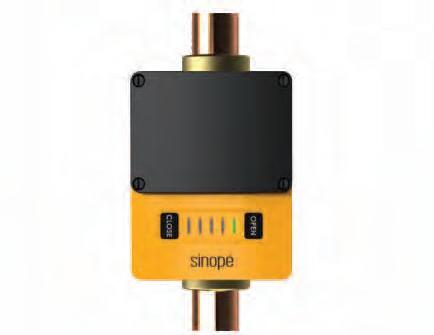
Contrôle et suivi en temps réel avec la plateforme Sinopé Smart Systems
Tranquillité assurée
Un système fiable et certifié, qui vous aide à préserver votre couverture d’assurance
La référence en réfection d’enveloppe de bâtiment.
Spécialiste en réfection de maçonnerie et autres travaux de réparation de l’enveloppe de bâtiment.
Pisciniste spécialisé en copropriétés
Odyssée Aquatique vous offre une gammes complète de services pour vos piscines, spas et bassins décoratifs
•Entretien
•Réparations
•Analyses chimiques et bactériologiques
•Produits chimiques
•Consultation et Formation
•Automatisation du traitement d’eau
•Rénovations
RBQ: 5742-3287-01
Administration HUMAN BEHAVIOUR MANAGEMENT IN COOWNERSHIP – WHEN PEOPLE ARE AT THE HEART OF MANAGEMENT
Best practices for sound and sustainable management
Several avenues can be pursued to support balanced management.
1. Prevention and ongoing communication
Promoting dialogue throughout the year, rather than focusing on frustrations during assemblies.
2.Training for directors and syndicates
Training in communication, mediation and understanding psychosocial issues is becoming essential.
3. Collaboration with external resources
Without substituting for professionals, the manager can help direct the syndicate toward appropriate resources when the situation requires it.
4.Clarity of roles and responsibilities
Clearly defining the respective responsibilities of the manager and the syndicate of co-owners helps avoid improvised and misunderstood decisions.
CO-OWNERSHIP: A HUMAN PARTNERSHIP
Managing divided co-ownership today means operating with increasing human complexity, within a demanding regulatory framework and in constant evolution. The effectiveness of the manager is measured not only by administrative compliance, but also by their ability to support the syndicate of co-owners, understand human dynamics and foster a climate of respect and collaboration.
As Guillaume Leblond and Caroline Martel point out, coownership is first and foremost a partnership. For it to function, managers, syndicates of co-owners and co-owners must work hand in hand, with respect and dialogue, throughout the year.
Putting people at the heart of management is not merely a condition essential to the sustainability of immovables; it is also essential to the quality of life of those who reside in them.
AAs was the legislator’s intention, the reality on the ground remains far more nuanced, because as long as oversight remains independent, the flaws of a system that has long remained deficient risk persisting.
A SILENT CRISIS AT THE HEART OF THE REAL ESTATE DREAM
In Quebec, a deep crisis has been undermining the very foundations of the real estate dream. Every year, thousands of owners see the value of their investment eroded by major defects that compromise quality of life: sagging floors, cracked walls, structural problems, generalized moisture, foundation cracks, or human drama related to health.
For more than a decade, the Regroupement des gestionnaires et copropriétaires du Québec (RGCQ) has been sounding the alarm. Its repeated interventions have highlighted a system that has allowed avoidable defects to occur, all too often to the detriment of rigorous and uniform oversight.
In 2024, the Quebec government finally adopted a law imposing mandatory inspections of residential construction sites. The signal was strong, but the question remains: will this reform be enough to prevent another crisis?
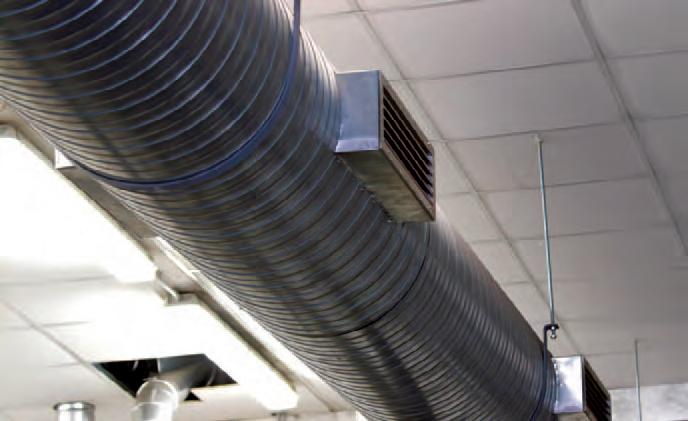
Conduits et système de ventilation
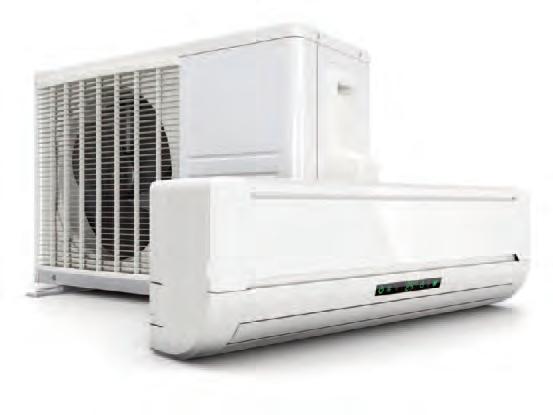
Chauffage et air climatisé
Échangeur d’air
Tout type de systèmes d’évacuation
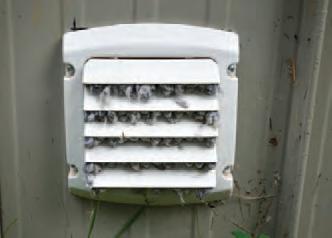
Conduits de sécheuses et plus !
Service complet sur unité de climatisation mural
Service complet sur système de
Nettoyage de conduits de sécheuses
Construction
CONSTRUCTION SITE INSPECTIONS –A HISTORIC TURNING POINT… BUT STILL INSUFFICIENT
WHEN THE DREAM BECOMES A NIGHTMARE
Examples of defective construction are multiplying. New co-ownerships deteriorate within just a few years. Walls are closed while the structure is still damp. Roofs are poorly sealed. Waterproofing membranes are installed upside down and corrected only after the fact.
A striking case was brought to light by La Facture (November 2025), involving a residential project in Sainte-Jérôme that showed major deficiencies from its very first years. The findings ranged from structural defects to water infiltration, premature aging of the structure and serious safety concerns. Experts’ verdict: demolition. The co-owner had to reimburse $16 in mortgage interest. Relocated to a hotel, they saw their rental income disappear.
In a report, Mr. Yves Joli-Cœur, President of the Provincial RGCQ, drew a parallel with victims of disasters, people who are left with the impression that they have lost everything because of buildings that have been defective from the outset. He also pointed out that if Quebec had adopted quality laws, thousands of victims might not exist today, reminding us that we are no longer protected from purchasing a defective condo in Canada. The striking image is accurate. Purchasing the most important asset of a lifetime sometimes offers fewer guarantees than buying a household appliance.
A STRUCTURAL PROBLEM : DECADES WITHOUT REAL OVERSIGHT
These tragedies are not isolated cases, but rather reveal a much older structural problem. For decades, Quebec has required no oversight of construction sites, unlike several provinces and countries where independent professionals inspect key stages. Construction quality therefore largely depended on developers’ goodwill. The result: a culture of minimum compliance, where cost pressure and deadlines often take precedence over long-term quality.
As early as 2010, a report by an advisory committee recommended making oversight of high-rise construction work mandatory. This recommendation remained a dead letter.
From 2015 to 2025, the RGCQ called for:
mandatory independent oversight;
A universal warranty plan including high-rise buildings;
A genuine safety net comparable to that in place elsewhere in the country.
Repair costs were estimated at $300,000 to $500,000 per unit. In some cases, demolition proved less costly than rehabilitation.
As Mr. Joli-Cœur points out: “Quebec is the only province where we have tolerated this flaw for so long.”
SPOT INSPECTIONS OR CONTINUOUS OVERSIGHT: A CRUCIAL DISTINCTION
The law adopted in 2024 introduced:
a site supervision plan;
three mandatory inspections at key stages;
certificates of compliance;
penalties in the event of non-compliance.
The objective is clear: prevention rather than repair. Legislators recognized that discovering problems after delivery is too late—and too costly. It remains to be seen how effective this legislation will be, as the Règlement (RBQ) had not yet been published at the time of writing. We do not know which types of buildings will be targeted, nor the stages that will require inspection.
Several experts nevertheless emphasize a fundamental limitation: a spot inspection does not replace continuous oversight. Mr. Joli-Cœur explains the distinction with an analogy: “Three inspections are a photo. Continuous oversight is a film.”
A spot inspection observes a construction site at a precise moment, often planned in advance. The most serious defects frequently occur between two inspections: a wall closed at the wrong moment, a misplaced membrane, protection removed by a subcontractor and then forgotten.
Continuous oversight involves the regular and independent presence of a qualified person capable of intervening immediately, documenting deviations and requiring corrective measures before errors become irreversible. For a complex building, a real supervision plan cannot consist of a dozen visits, much less three symbolic inspections.
It is in this context that the system’s vulnerability remains.
2025–2026: TOWARD A MORE STRUCTURED FRAMEWORK
The Faubourg Boisbriand case starkly illustrates the consequences: 27 affected buildings, generalized contamination by mould and deterioration of structural components.
A sign of hope emerged in 2025. On April 29, the RBQ entrusted the Bureau de normalisation du Québec (BNQ) with the mandate to develop a first Quebec guide of best practices in construction site supervision.
This committee brings together 24 organizations, including architects, engineers, technology experts, municipalities, entrepreneurs’ associations, real estate managers, and the Garantie de construction résidentielle (GCR) and the RGCQ, among others.
The Minister of Labour, Jean Boulet, emphasized that this is the first collaboration of its kind in nearly two decades around practices common to both the BNQ and the RBQ. Michel Beaudoin also recalled that there is currently no uniform standard in this field of site supervision.
The resulting guide should be incorporated into a regulation expected in 2026, specifying the responsibilities of the various stakeholders involved in residential construction work. If these standards translate into real requirements for independent and documented oversight, the shift could become structural.
CO-OWNERSHIP: A PARTICULARLY VULNERABLE LINK
Divided co-ownership is more exposed to construction defects than any other type of building. A defect affecting one unit can impact the entire immovable. Water infiltration on a roof can cause problems on several floors. A structural defect can compromise the stability of the entire building.
In these situations, it is generally the co-owners, and not the entrepreneurs, who bear the costs. It is known that certain entrepreneurs become insolvent, disappear at the end of a project, and that contingency funds, often insufficient, quickly become overwhelmed. This can result in special assessments, internal tensions, disputes and loss of value.
THE QUALITY OF CONSTRUCTION IS A SOCIETAL CHOICE
Mandatory inspection of construction sites will not, on its own, resolve all the shortcomings that have affected co-ownership in Quebec. Recognizing it as the quality issue it truly is nevertheless constitutes a first step toward a lasting transformation and a restorative justice.
To truly turn the page on the crisis affecting the sector, however, we must go further: improve practices, require a stronger independent presence and ensure rigorous application of standards.
As Mr. Yves Joli-Cœur concludes: “We no longer know how many people live in a building in poor condition. Each generation deserves better than the previous one.”
Build more, yes.
But above all, build better — to pass on a durable, safe and equitable legacy to future generations.
NOUS GÉRONS LES GRANDES COPROPRIÉTÉS (GC)
DANS LA GRANDE RÉGION DE MONTRÉAL
(25 UNITÉS ET PLUS)
Forfait gc
GRANDES COPROPRIÉTÉS
PREMIER MOIS DE GESTION GRATUIT
PAS DE HAUSSE ANNUELLE DE VOS HONORAIRES DE GESTION (GEL DE PRIX TANT QUE VOUS ÊTES GÉREÉS PAR A1 CONDO)
PAS DE FRAIS D'INTÉGRATION LORS DU DÉBUT DE NOTRE MANDAT (TRANSFERT DE VOS ARCHIVES ET DE VOS DOSSIERS)
TRÈS BON RAPPORT QUALITÉ/PRIX ET EXCELLENT SERVICE À LA CLIENTÈLE
7 JOURS SUR 7
POUR TOUS VOS COPROPRIÉTAIRES
PETITES COPROPRIÉTÉS
PREMIER MOIS DE GESTION GRATUIT
PAS DE HAUSSE ANNUELLE DE VOS HONORAIRES DE GESTION (GEL DE PRIX TANT QUE VOUS ÊTES GÉRÉS PAR A1 CONDO)
PAS DE FRAIS D'INTÉGRATION LORS DU DÉBUT DE NOTRE MANDAT (TRANSFERT DE VOS ARCHIVES ET DE VOS DOSSIERS)
TRÈS BON RAPPORT QUALITÉ/PRIX ET EXCELLENT SERVICE À LA CLIENTELE
At first glance, the financial burden of becoming a homeowner may seem comparable to renting in the short term, but remainsmoreadvantageousinthemediumandlongterm, while helping to build and protect family wealth.
A REALISTIC SCENARIO AND CURRENT
Let us take the example of a buyer who acquires a condo with a selling price of $300,000 and makes a 20% down payment and 4% interest, over 25 years. In this scenario, the mortgage cost is virtually equivalent to the rent of a modest unit in the same type of condo building ($2,115). In short, the monthly payment difference between renting ($2,195) and purchasing remains minimal, despite the other ownership costs (taxes and maintenance costs, among others).
The purchase nevertheless presents a major advantage, namely that it allows the buyer to build equity over time.
RISING
COSTS... YES, BUT LET'S COMPARE PROPERLY
In 2025, co-ownership costs and taxes increased from $432 to $484 per month. This increase of $52, corresponding to an annual rise of approximately 1%, is nevertheless relatively small when compared with the increase in rent.
For the same period, the Tribunal administratif du logement authorized a rent increase of 5.9% in 2025 and 3.1% in 2026. In this scenario, this represents a monthly increase of $109.75. The resulting difference between the cost of renting and coownership fees, often underestimated, becomes decisive when viewed over several years.
Roch St-Jacques
Author and court-appointed receiver at CENTURY 21 Ética, he is also Director of Training at the Québec Real Estate Association (OACIQ), a trainer for the Club de Condo, author of the condominium law guide Immobilier au 104, FM, and a director of the Provincial RGCQ.
THE CUMULATIVE EFFECT OF TIME
In the short term, purchasing may seem comparable to renting. However, over a period of five years, the gap becomes significant in favour of ownership. According to the figures for the Outaouais region:
Mortgage balance after five years: $229,822;
Projected value of the condo: $371,633 (upon resale);
Approximate net equity upon resale: more than $140,000.
The net value of an asset is the difference between its price and the debt associated with it. In a rental scenario, monthly payments are expenses that are never recovered, whereas ownership allows a return on investment.
THE CONDO AS A TOOL FOR PROTECTING FAMILY WEALTH
Beyond monthly comparisons, purchasing a condo also constitutes a powerful tool for protecting and transmitting family wealth. It is a long-term decision that has historically allowed parents and grandparents to preserve and increase the value of their assets.
When a household becomes a homeowner, part of each payment serves to repay capital and gradually invest in the value of the asset rather than simply paying a monthly expense.
In the scenario analyzed, more than $140,000 has therefore already been paid and can be used as a down payment on another property, to support a family project, to consolidate retirement savings or to invest in a rental property. Conversely, rent remains a purely operating expense.
AND WHEN THE MORTGAGE IS PAID OFF?
In older buildings, a large number of co-owners no longer have a mortgage. The financial impact then becomes even more significant. In our example, this
represents $84,480 in savings over five years attributable to increases in rent and property appreciation.
This ability to preserve family liquidity while directly benefiting from the appreciationofthecondoasacapitalassetbecomesamajoradvantage.
Financial Scenario for the Greater Montréal Area
Purchase price: $505,000
Down payment: 20% ($101,000)
Mortgage amount: $404,000
Mortgage balance after five years: $362,219
Comparable rent: $2,800/month
Co-ownership fees: $311/month
Net wealth projection (net equity and savings): $218,405
Considering these figures for a condo in the Greater Montréal Area, the same conclusion emerges: despite a market reputed to be more expensive, ownership remains more advantageous than renting in the medium and long term.
AN ESSENTIAL CONDITION: A HEALTHY SYNDICATE
This analysis nevertheless rests on a fundamental element: the quality of co-ownership management. The scenario presented assumes:
an up-to-date contingency fund study (PFA);
a maintenance logbook;
responsible management of the contingency fund over time.
In this context, fee increases are planned, justified and directed toward protecting the immovable and its value. A healthy syndicate does not seek short-term savings at the expense of co-owners, but rather a collective investment in their common asset.
Ownership can provide financial stability and allow access to property ownership under better conditions. Purchasing a condo means building capital and preserving family wealth. Under these conditions, it becomes a long-term investment vehicle tied not only to the value of the family residence, but also to the transmission of tangible value to future generations.
In co-ownership, however, the quality of management and fees should not be seen as an expense, but rather as a strategic choice for protecting wealth.
THE
OUTAOUAISPARADOX:
WHY IS THE CONDO MARKET DYING IN GATINEAU WHILE THRIVINGINOTTAWA?
Caroline Martel, in collaboration with Me Richard M. LeBlanc, President - Outaouais Chapter
In Gatineau, the latest figures reveal a striking reality: in the first quarter of 2025, the rental segment (+49%) absorbed almost all new housing starts, while the condominium sector itself reached a historic low, and a complete standstill in development activity. What is particularly striking is that co-ownership is thriving on the other side of the river, in Ottawa. Does this reveal a profound structural crisis between the two shores?
A FALSE STATISTICAL ISSUE OR A REAL ONE?
While Quebec recorded overall growth in housing starts in 2025, the Outaouais is distinguished by a slowdown in residential development. In Gatineau, the weak number of housing starts appears to be attributable mainly to the contraction of the rental segment as well as the stagnation of condominiumdevelopment.
According to the President of the Outaouais Chapter of the Regroupement des gestionnaires et copropriétaires du Québec, Mr. Richard M. LeBlanc, the gap observed reflects a lack of confidence in the coownership model in Quebec. Data are striking: from 2023 to 2024, approximately 600 housing units were built in Gatineau, with co-ownership representing only 0.3%, or approximately 12 units (out of 2,000 units). Conversely, Ottawa added between 23% and 27% condominiums to its 17,000housingstartsoverthesameperiod.
Mr. LeBlanc describes this gap as a symptom of a climate of distrust toward the co-ownership model in Quebec: “There is no reason why a condo market should function in Gatineau while it is thriving in Ottawa, a short distance away.”
TABLE 1
Housing starts in Gatineau (2025)
Gatineau
Rental housing
Single-family housing
Sources : APCHQ, SCHL
TABLE 2
Indicator Gatineau Ottawa
Totalhousingstarts ~6000
Two markets, two residential development models (2023-2024) ~17 000
Share of co-ownership ~0,3 % (~ 12 units) 23 % to 27 %
THE SHIFT TOWARD RENTAL HOUSING
Several stakeholders in the sector attribute the contraction of co-ownership development to a strategic reorientation by developers toward the rental market, perceived as more profitable in the short term and less exposed to legal risks. New regulations, as well as certain inspection processes, are sometimes cited as factors likely to increase uncertainty or lengthen project timelines.
On this point, Mario Laurin, President of Groupe Alexma Construction, sums up the situation: “It is much easier for us to develop rental housing than to get out of a condominium project.” He also cites contingency funds, GCR warranties and inspections as contributing factors.
Mr. Laurin adds that the business model has changed: investment groups now purchase entire apartment buildings, allowing developers to make a single sale rather than managing dozens of individual condominium sales, subject to rigorous inspection standards and administrative delays.
URBAN PLANNING: BOLD OTTAWA VERSUS GATINEAU THE CAUTIOUS, OR THE RECKLESS?
The differences observed between the two residential markets also stem from approaches to urban planning. In Ottawa, policies favour greater residential and commercial density and reduce administrative complexity through derogations, helping to increase the attractiveness of co-ownership projects.
Conversely, the absence of municipal incentive programs comparable to those in Gatineau and longer approval timelines discourage the industry.
Mr. Laurin also notes a certain local [political] resistance: “The City [of Gatineau] does not want condo towers in the downtown core like Ottawa does.” This vision contrasts with that of Ottawa, where tools make it possible to increase density in exchange for public amenities and where construction near light rail (O-Train) is carried out without imposing high parking standards, thereby improving the economic viability of many urban developments.
The Ontario regulatory advantage Ottawa’s success is based on flexible mechanisms that are absent in Gatineau
As-of-right zoning: fewer complex variances are required to launch a project.
Mandatory mixed use: commercial uses at ground level stabilize the value and attractiveness of condo projects.
Density bonusing: density negotiation tools make it possible to obtain additional units in exchange for community benefits, thereby avoiding systematic gridlock.
THE “DENIAL OF REALITY” OF THE RENTAL MARKET
Some stakeholders in the sector maintain that the dominant narrative around the rental housing shortage may be masking a troubling local reality regarding the actual availability of housing.
Some estimates suggest potentially higher vacancy rates in certain recently built residential developments, on the order of 8% or 9%, without however allowing these observations to be generalized to the market as a whole. In some cases, rents announced for new units would reach levels considered high ($2,500 to $3,000) for small units, which could limit the actual absorption of newly available units and weaken the Outaouais market.
“We must incorporate quality of life and home ownership into the equation when increasing density in our downtowns and promoting ownership for young Quebecers,” adds Mr. LeBlanc.
THRIVES IN OTTAWA?
THE ONTARIO MODEL AS A BENCHMARK
For Mr. LeBlanc, the solution lies in greater professionalization of the sector. As an example, Ontario has imposed, since 2007, a series of structural measures that Quebec has still not implemented 17 years later. These include, in particular, the requirement for condominium directors to complete mandatory basic training offered by the Ontario Condominium Authority (OOSC-CAO), an initiative that helps strengthen transparency, the quality of governance, buyer confidence and the long-term value of buildings.
It should also be noted that in Ontario, new properties are subject to a much higher number of inspections — more than a dozen per residence or rental unit — helping to maintain particularly high quality standards.
Governance: the Ontario example (OOSC) TheOntariosystemprovidesalevelofsecuritythatQuebechasnotyetmatched.
Mandatory training: Since 2007, directors have had six months to complete an online course, failing which they may lose their position.
Registry transparency: The public registry reserved for condominium corporations records, among other things, the number of voting units, the manager’s contact information and the building’s history.
Specialized tribunal: Ontario has its own administrative tribunal to resolve disputes, thereby accelerating resolutions.
TOWARD A NEW BALANCE FOR CO-OWNERSHIP IN QUEBEC
Beyond cyclical fluctuations, the condominium market in the Outaouais raises the question of balance between consumer protection, regulatory predictability and the ability to build quality housing within timelines compatible with the economic realities of the sector.
The Ontario experience suggests that more structured governance, combined with better dissemination of real estate information and stronger professional oversight, can help support the long-term value of condominiums.
For the Outaouais, as for Quebec as a whole, the issue goes beyond the number of housing starts. It is about creating an environment that fosters real estate innovation while ensuring quality of life and access to ownership. Without such convergence, Quebec’s residential market could continue to evolve along a path distinct from that observed on the other side of the river — at the risk of finding itself without a stock of newly built condominiums to offer its population...
CALFEUTRAGE
JOINTS DE PORTES-FENÊTRES
Bill16
Better-known tools, butstill difficultto master
Since the coming into force of Bill 16, boards of directors of syndicates of co-owners have had to incorporate new structured obligations: the certificate attesting to the condition of the immovable, the contingency fund study and the maintenance logbook. To assess the extent to which syndicates have truly adopted these tools, the RGCQ conducted a vast survey among its members.
by Véronique Martel
Pour en 昀nir avec les dégâts d’eau
Un seul contrat, zéro casse-tête
Systèmes, plomberie et électricité : nous nous occupons de tout !
Protégez vos investissements et évitez les sinistres coûteux.
Noti昀cations en temps réel
Application gratuite perme琀ant de contrôler facilement votre système et de recevoir des alertes en temps réel sur votre cellulaire
Condo sécurisé, esprit en paix Protection de votre investissement immobilier grâce au système installé par AquaDétect
Présence 昀able
Soutien technique par téléphone 24/7
Neuf années de spécialisation
Entreprise exclusivement consacrée aux immeubles à condos depuis 2016
Appelez-nous !
• Soumission détaillée sans frais
• Possibilité de 昀nancement
Saviez-vous que vous pourriez pro昀ter de RABAIS sur certaines polices d’assurance ?
securiteaquadetect.com info@securiteaquadetect.com 514 375-5678, poste 4
Entrepreneur général 5725-6638-01
Membre installateur certi昀é
Entrepreneur en plomberie
BILL 16 – BETTER-KNOWN TOOLS, BUT STILL NOT FULLY EMBRACED
A WELL-KNOWN CERTIFICATE, BUT STILL NOT FULLY EMBRACED
The first striking finding from the survey: nearly 97% of respondents have already heard of the Certificate Attesting to the Condition of the Immovable (CACI), a mandatory document during a sale.
The syndicates of nearly 50% of respondents had already been called upon to produce one. Among them, nearly 87% had heard of the model certificate published by the RGCQ and approximately 62% had downloaded and used it.
The certificate must be produced by the syndicate, which remains solely responsible for it. The CACI is produced by the syndicate in 35.8% of cases. It is produced by the condominium manager in 20.32% of cases, while other individuals, including co-owners or real estate brokers, produce it in other cases.
A total of 57% have an up-to-date certificate registry.
While 73.8% consider that they have a good or very good level of knowledge to complete the certificate, only 45% consider it easy or very easy to gather the information required to produce it.
There remains significant room for improvement. Several respondents consider the collection of information to be “moderately difficult,” or even difficult, particularly due to the lack of documents, financial information or maintenance records. Nevertheless, only 14.8% of respondents believe that the CACI makes co-ownership management “more complex.” It is, however, perceived as “more transparent” by 80%.
For Me Papineau, this finding echoes a message that the RGCQ has repeated for many years: ÒThe certificate is not an isolated document, but rather a reflection of the overall quality of the syndicate’s document management.”
ÒThis diversity reflects a reality well know n in the field, namely that syndicates, often composed of volunteers, operate with limited resources and varying levels of expertise. The number and complexity of their obligations are increasing, at the same pace as their need for guidance and support,” observes M Yves Papineau, who has extensive experience with co-ow ners’ meetings through both his professional practice and personal involvement.
Me Yves Papineau, Partner, LJT Lawyers
Emeritus lawyer, specializing in coownership law, accredited mediator and arbitrator in co-ownership matters, legal author, lecturer and trainer.
THE CONTINGENCY FUND STUDY AND THE MAINTENANCE LOGBOOK ARE WELL ESTABLISHED
With respect to the contingency fund study, more than 75% of respondents affirm that one has been carried out, mainly by qualified professionals. The years 2023 to 2025 stand out strongly, a sign of compliance accelerated since the adoption of Bill 16. The maintenance logbook follows a similar trajectory: nearly 73% of syndicates have one and several are currently being updated. These tools are not merely formalities. Nearly 80% of respondents say they consult them to prioritize work and expenditures. Better still, approximately 70% estimate that coownership management has improved since the implementation of the contingency fund study and the maintenance logbook. However, approximately 20% of syndicates that have implemented the tools do not systematically consult them to guide their decision-making, even though the usefulness of the maintenance logbook (average score of 4 out of 5) and the contingency fund study (5 out of 5) is recognized.
PERSISTENT CONCERNS AND CLEAR NEEDS
As a result, concerns remain. The insufficiency of accumulated funds, rising assessments and the fear of major work are among the principal concerns. These concerns are particularly prevalent in small and medium-sized co-ow nerships, which are underrepresented in the survey, notes M Papineau. Furthermore, only 45% of respondents have Òfull confidence” that their contingency fund is sufficient for future work When asked about useful supports, respondents are clear: they want practical guides, training and technical support. The message is consistent with the historical positions of the RGCQ, namely to equip syndicates, demystify obligations and support volunteers in their responsibilities.
ÉVITEZ LE REMPLACEMENT complet de vos fenêtres
Pourquoi les syndicats de copropriété choisissent Basco ?
PROLONGEZ
· Économies importantes vs remplacement complet Travaux rapides adaptés aux immeubles multilogements
· Coordination simple avec votre conseil d’administration
Plus de 20 ans d’expertise
REMPLACEMENT DE VITRES THERMOS
COUPE-FROID ET MÉCANISMES RÉPARATION DE
BILL 16 – BETTER-KNOWN TOOLS, BUT STILL NOT FULLY EMBRACED
EQUIPPING OURSELVES TO GOVERN — AND TO MOBILIZE MORE EFFECTIVELY
Running through all the survey results, one idea emerges: Bill 16 has initiated a cultural shift in co-ownership. The tools are better known, their usefulness is recognized, but their adoption requires time, education and ongoing support. This is precisely where the RGCQ has been intervening for years, by developing models, guides and training activities adapted to the realities of syndicates.
“This survey is excellent because it clearly demonstrates that RGCQ members are well informed about co-ownership and well equipped, and that they feel supported and guided. The industry must now ask itself how to educate all co-owners and the population in general in order to create a lasting shift,” concludes the co-author of Le condo : Tout ce qu’il faut savoir, a true bible of co-ownership in Quebec.
The survey results therefore confirm both the progress made and the distance still to be covered. They also highlight an obvious reality: managing a co-ownership today is not simply about complying with the law;itisalsoaboutgivingoneselfthemeanstomakeinformed,sustainable and responsible decisions — for the benefit of all current and future coowners. In short, this is the mission of the syndicate of co-owners, as set out in the law: “the conservation of the immovable, the maintenance and administration of the common portions, the safeguarding of the rights appurtenant to the immovable or the co-ownership, as well as all operations of common interest,” in addition to “ensuring that all work required for the preservation and maintenance of the immovable is carried out.”
Methodological Note
The survey was conducted online among RGCQ members who were invited by email. From December 18, 2025, to January 30, 2026, the survey gathered 312 responses. Respondents were primarily members of boards of directors of syndicates of co-ownership.
VOIR L'INVISIBLE, UN PLUS !
et Maîtres Inspecteurs
SERVICES DE THERMOGRAPHIE ET D'INSPECTION par drone / par caméra
Bilan de Santé Immobilier • Inspection de façades
Inspection de toiture • Inspection intérieure
Détection d'eau dans les revêtements
Inspection d'équipements électriques pour assurance
Évaluation des pertes de chaleur
Détection d'eau
Détection d’eau mur de briques
À INSTALTECH POUR LES PORTES ET FENÊTRES DE VOTRE IMMEUBLE
Produits de qualité supérieure
Durabilité à long terme
Entente d'escompte de volume pré-négociée avec les fabricants
Équipe d'installation expérimentée en règle avec la CCQ
Scellant extérieur avec les produits
Adfast garanti 50 ans
Planification des horaires d'installation faite directement avec les locataires et copropriétaires
Chantier laissé propre tous les jours
Garantie sans tracas de 10 ans (pièces et main-d'œuvre)
WOOD IN CO-OWNERSHIP: WHEN NATURE ENTERS THE BUILDING
There is something instinctive about wood. Its colour, texture and visual warmth evoke a return to nature in an urban environment dominated by concrete and steel. Wood is not, however, a static material. It is a living material that breathes, moves and interacts with its environment. In co-ownership, this reality requires attentive management based on an understanding of its behaviour rather than its appearance alone.
In Quebec, wood has regained popularity in residential construction thanks to the rise of engineered wood and new architectural approaches supported in particular by the Canadian Wood Council.
Renovation feature
An emblematic example of this evolution is the Origine project, a 13-storey residential complex located in the Pointe-aux-Lièvres eco-district in Québec City and recognized as one of the most innovative high-rise wood buildings. Built in 2021, this residential tower illustrates the potential of modern mass timber construction technologies and eco-responsible engineered wood projects in North America.
Woodoccupiesanincreasinglyimportantplacein modern co-ownerships. It can be found in balconies, exterior cladding, certain structures and various architectural elements that contribute to the visual identity of residential buildings. The recent amendment to the RBQ regulation and the commitment of stakeholders in Quebec’s construction industry to innovation contribute to its popularity.
A LIVING MATERIAL THAT CONTINUES TO “WORK”
A rigorous maintenance expertise is a fundamental planning tool. For, contrary to certain preconceived notions, wood is never completely stable within a building.
It reacts to humidity, seasonal variations and ventilation conditions. During humid periods, wood can absorb water and slightly swell. During dry periods, it contracts. These movements are normal.
What becomes problematic is when water infiltrates and initiates a process of internal deterioration. Wood is perfectly suited to modern construction, provided that it is protected continuously from moisture and climatic stresses. In a structure, it remains essential to correct the causes rather than merely the symptoms and to prioritize prevention.
WHERE IS WOOD REALLY HIDDEN IN A CO-OWNERSHIP?
In many residential buildings, wood is not always visible. It may be visible in appearance, but the most sensitive components are often concealed, enclosed or partially protected by other materials.
Wood can notably be found:
in and beneath balconies and guardrails (joists, anchors, loadbearing elements and flashing);
behind exterior cladding, where it acts as a structural component or support;
at the heart of the structural frame,inareasthatarerarely accessiblewithoutopeninguptheassembly;
behind architectural panels, where it is protected, but also made invisible;
within certain decorative interior components, sometimeswithout directaccessforinspection.
In other words, wood may be visible… without being truly inspectable. This reality constitutes one of the principal management challenges. A problem can evolve slowly without being detected, particularly in concealed areas or spaces that are rarely inspected.
Quebec’s climate adds another layer of complexity. Repeated freeze-thaw cycles, combined with seasonal humidity, place constant pressure on assemblies and connections, particularly in balconies, walls, exterior cladding and roof penetrations, creating a demanding environment for organic materials such as wood.
The National Research Council of Canada stresses the importance of proactive moisture management and targeted inspections in the performance of Nordic buildings.
SIGNS THAT SHOULD NEVER BE IGNORED
In co-ownership, observation remains the first line of defence. Certain clues should attract attention:
Unusual discoloration or darkening of the wood;
Surfaces becoming soft or spongy;
Abnormal cracks or deformation of components;
Persistent odour of dampness;
Appearance of mould;
Deterioration of protective finishes.
Care must be exercised, however: appearance alone does not allow one to conclude that a structural hazard exists. A visible aesthetic flaw may be harmless, while internal deterioration may remain invisible to the naked eye.
In co-ownership, there is a risk of associating a visible problem with a necessarily serious situation or, conversely, minimizing a problem because it is invisible. Building analysis must first seek to identify the causes before any repair proposal is made.
An assessment by an engineer or architect remains recommended for any major structural intervention, in accordance with recognized professional best practices, particularly those of the Ordre des ingénieurs du Québec.
Renovation feature
PREVENTING BEFORE REPAIRING: THE TRULY DURABLE STRATEGY
The longevity of wood depends on a few simple, yet essential principles.
Protecting Against Water
Water remains the primary cause of wood deterioration in northern climates.
The watertightness of joints, the quality of membranes and the proper drainage of water from surfaces are determining factors. Over the long term, an accumulation point for water can become a source of accelerated deterioration.
Ensuring Proper Ventilation
A poorly ventilated environment promotes the development of fungi responsible for wood decay. Adequate air circulation helps maintain humidity levels compatible with the durability of the material.
Inspecting Regularly
Periodic inspection is the cornerstone of preventive management. Integrating inspections into a building’s maintenance plan often helpsavoidmajorcostsinthelongterm.
Technology in Service of Inspection
Assessment methods continue to evolve with technological advances.
Some co-ownerships now use non-destructive diagnostic tools that make it possible to analyze the condition of wood without removing material. These approaches, documented notably by the National Research Council Canada, facilitate the early detection of areas of potential deterioration.
These technologies do not replace professional judgment, but they constitute a valuable complement for supporting and confirming a structural assessment.
THE REAL COST OF INACTION
The principal risk in co-ownership is not always the initial problem, but rather the time that passes before intervention.
Pour les administrateurs, gestionnaires de copropriété et courtiers d’assurances
Formation sur la prévention des dégâts d’eau
• Apprenez à identi昀er les sources potentielles de dégâts d’eau
• Voyez comment un système de détection peut les prévenir
• Découvrez quelles caractéristiques rechercher
• Durée de 3 heures (en ligne et en différé)
• En anglais ou en français
• Formation reconnue par la CHAD, la RBQ, la CMMTQ et la CMEQ
• Prix : 120 $
Information : 514 375-4004 ou info@prevcan.org
A small, uncorrected infiltration can evolve into deterioration requiring major work. An early repair can often cost several times less than replacing complete structural components.
In a building, the value of prevention is appreciated in the short term, but it is most evident through the reduction of emergencies and major work in the long term.
Integrating these risks into the budget planning of reserve funds constitutes a sound co-ownership management practice.
WOOD IN CO-OWNERSHIP: UNDERSTANDING BEFORE ACTING
Wood is not fragile or dangerous by nature. It is simply a material that requires an understanding of its reactions. In a collective building, the management of wood must be part of a logic of prevention, observation and financial planning.
Protecting the building depends above all on the ability to recognize the first signs of concern before materials begin to fail. Wood, like concrete or steel, presents its own indicators that require appropriate attention.
And in this silent conversation between the building and its occupants, prevention remains by far the most profitable language.
Because in co-ownership, sound management does not consist in repairing quickly, but in understanding early enough to avoid urgency.
The recent authorization of mass timber construction up to 18 storeys by the Régie du bâtiment du Québec (RBQ) is a concrete illustrationofthistrend,notasasymbolicideologicalmeasure, but as the result of a technical and professional evolution already underway. For syndicates of co-owners, understanding this dynamic makes it possible to align long-term planning with the direction in which the sector is moving.
THE BUILDING AT THE HEART OF THE TRANSITION
At the international level, COP30 confirmed that the building sector is now recognized as a major lever of the climate transition. Beyond energy-related emissions, attention is increasingly focused on embodied carbon — the carbon associated with the manufacturing, transportation and installation of materials.
In Quebec, the target of reducing greenhouse gas (GHG) emissions by 37.5% below 1990 levels remains in place, but the deadline has been postponed to 2035. The trajectory nevertheless remains unchanged, even if the timeline has been extended.Meanwhile, professional practices continue to evolve.
CLIMATE TRANSITION AND CO-OWNERSHIP: FROM GLOBAL COMMITMENTS TO LOCAL REQUIREMENTS
Caroline Frenette, eng., Ph. D., senior construction and training manager –Cecobois, an initiative of the Conseil de l’industrie forestière du Québec (CIFQ)
ENERGY PERFORMANCE UNDER SCRUTINY
Félix
Cadotte,
principal advisor – relations with stakeholders at theAssociation des professionnels de la construction et de l’habitation du Québec (APCHQ)
MEASURING TO DESIGN BETTER
One of the most significant changes concerns the integration of embodied carbon calculations into projects.
NOS SERVICES
CONTACTEZ-NOUS DÈS AUJOURD’HUI
In Montréal, the By-law concerning disclosure and grading of greenhouse gas emissions from large buildings (2021) is part of this same movement toward enhanced environmental accountability. The By-law respecting the performance and environmental standards of buildings (2024) goes even further by requiring the disclosure of energy consumption, establishing a building rating system and setting minimum performance standards.
This evolution contributes to normalizing the collection of information on building performance. It reflects a broader trend: the gradual integration of environmental indicators into real estate construction and management.
“Contractors are continually adapting to the new requirements of the Québec Construction Code, which is raising energy performance standards. At the APCHQ, we support entrepreneurs on concrete issues: water management, energy efficiency, choice of low-carbon materials, and other best practices. Moreover, we recently launched our first cohort in sustainable construction,” explains Félix Cadotte, whose principal role involves relations with stakeholders in Quebec’s construction and housing industries.
“The objective is no longer simply to reduce emissions by a building, but to enable professionals to become familiar with these tools and understand the actual impact of materials in buildings,” explains Caroline Frenette, engineer, Ph.D., senior construction and training manager at Cecobois. An initiative of the Quebec Wood Export Bureau (QWEB), the Cecobois expertise centre specializes in wood research and provides technical support free of charge to construction industry professionals at every stage of project design.
Tools adapted to the Quebec market have been developed to support architects and engineers. “Professionals want to be able to access this information when making design decisions. There is a real interest in integrating these concepts into practice,” she notes. In collaboration with the Government of Quebec, Cecobois created GESTIMAT, a tool for estimating greenhouse gas emissions related to the production of structural materials and building development.
According to analyses conducted by Cecobois, structural choices can have a considerable impact.“Forthestructurealone,greenhousegas emissions associated with construction materials can be reduced by more than half. It is generally considered that, in a developed environment, approximately 50% of the emissions associated with the materials of a new building result from the structure alone,” explains Caroline Frenette, holder of a doctorate in wood science and technologyfromUniversitéLaval.
The APCHQ also notes a growing awareness of these issues. “Energy efficiency and related practices are becoming central to residential construction. Requirements related to insulation, air tightness and mechanical performance are now part of contractors’ daily reality. Tools exist to support this transition, but they must also be made more accessible to smaller entrepreneurs,” adds Mr. Cadotte, who chairs the environmental committee and participates in several industrial ecology and proximity initiatives within the construction community. The APCHQ also multiplies its efforts in education, information and mobilization by deploying a variety of tools, resources and trainingprograms.
REGULATORY ADJUSTMENT: THE CASE OF WOOD
The RBQ’s decision to authorize encapsulated mass timber buildings up to 18 storeys is part of this progression and opens opportunities for the residentialconstructionsector.
“The studies have demonstrated the good performance of the material and the new construction techniques,” states Ms. Frenette, who is also an associate professor at Université Laval.“TheConstructionCodeimposesthesame requirements, regardless of the material. Systems have evolved, and expertise has been developed.”
“This is a major step forward in the decarbonization of buildings,” she adds. “Wood therefore becomes a concrete example of the integrationofembodiedcarbonintodecisions.It
While international commitments, Quebec’s climate targets, energy performance regulations and adjustments to the Construction Code are superimposed, a coherentpictureisbeginningtoemerge.
The climate transition is not limited to stated objectives; it is part of a sequence of rules and concrete practices that are gradually redefining the way buildings are designed, assessed and managed.
For syndicates of co-owners, the issue is not to master all the technical details. It is to understand that the framework within which a project is developed is changing: the way a contingency fund is established over a 25-year horizon. Mr. Cadotte, whose experience ranges from entrepreneur to contractor and who has held various responsibilities in the sector, summarizes the situation for the co-ownership sector: “The regulatory framework will continue to evolve, particularly with respect to energy efficiency and environmental performance. Co-owners must expect higher standards over time. Today’s construction standards will not necessarily be those of tomorrow. Planning with a margin of anticipation is therefore necessary. Integrating these parameters into planning helps protect the value of the building while limiting future financial shocks for co-owners.”
In this context, long-term thinking becomes central, as the sector makes it possible to incorporate long-term planning into the evolution of professional practices and regulations. The mutation is already underway, and it is shaping the future of construction in Quebec. The decisions made today are part of a movement.
Making a co-ownership greener may seem complex, unattainable and costly. Yet, according to these speakers, the key is neither technological nor ideological, but rather methodological.
BEAUTIFUL, GOOD AND PROFITABLE
Contrary to certain perceptions, green renovation does not begin with spectacular solutions. It often starts with small decisions that have a significant impact, as Julien Chaput-Lemay explains: “We always encourage syndicates to base their decisions on facts. For quick gains, you have to pick the low-hanging fruit first.”
In the options analyses conducted by Groupe ecoPlus, energy consumption in a building is modelled and measures are ranked according to their diminishing returns. The first 20 to 25% of improvements are often accessible at low cost: LED lighting, lowflow fixtures, optimization of mechanical systems.
1. Start with measures that have a high impact and a quick return on investment.
MEASURE BEFORE DECIDING
2. An objective energy assessment helps dispel misconceptions and prioritize rationally.
PRACTICAL ADVICE
SUBSIDIES: A STRATEGIC LEVER
4. Sequence and integrate projects intelligently.
PRACTICAL ADVICE
BILL 16 : AN OPPORTUNITY TO SEIZE
Médiateur et arbitre accrédité
C.514 608.9405 / T. 450 634.2364 graymond@deveaudm.com
PRACTICAL ADVICE
3. Strategic monitoring of subsidy programs can transform a desired project into a feasible project.
MAKING YOUR CO-OWNERSHIP GREENER THROUGH GOOD PLANNING... AND SUBSIDIES
ÉVALUATEURS AGRÉÉS
5. Integrate the maintenance logbook’s energy objectives into the contingency fund study.
ATTENTION TO REVERSIBLE CHOICES
Another message emerges strongly: avoid making decisions too quickly or based solely on urgency.
VALEUR ASSURABLE
ÉTUDE DE FONDS DE PRÉVOYANCE ET CARNET D’ENTRETIEN
Bureaux principaux : LAVAL - VILLE DE QUÉBEC
Sans frais 1 833 338-9710
info@gmaconsultants.ca www.gmaconsultants.ca
PRACTICAL ADVICE PRACTICAL ADVICE
“The key term is planning,” insists Jean-François Frémaux. “You have to avoid turning to technologies that may commit the syndicate for 20 or 30 years.”
6. Surround yourself with independent experts and make decisions based on on rigorous comparative analyses.
At a time when climate issues, rising energy costs and building decarbonization are driving the market, this is no longer a luxury.
It is a matter of responsible management, regulatory foresight and financial optimization.
Jean-François Frémaux, Project Manager at Magelan Immobilier Conseils, a subsidiary of Groupe Sergic Québec
Julien Chaput-Lemay, President and CEO of Groupe ecoPlus, and director of the Outaouais Chapter of the RGCQ
MISSED THE APRIL 7 WEBINAR?
Good news: it remains available on demand. An opportunity to continue your board of directors’ training and effectively plan your building’s green strategy. Open to RGCQ members and non-members alike.
We invite you to consult it directly on the RGCQ website.
A Major Decision Regarding Liability for Losses in Co-ownership
by Me Charlotte T. Fortier, lawyer with Therrien Couture Joli-Coeur S.E.N.C.R.L.
THE DISPUTE
In a decision rendered on February 17, 2025, the Superior Court was called upon to rule on a claim brought by the syndicate of co-owners of 1200 Ouest against one of its co-owners and the franchise insurer paid by the syndicate following water damage originating from the building. The dispute concerned a water leak originating from a defective bidet located in the private portion of the defendant coowner and having caused significant damage to the private portions and common portions that had to be assumed by the syndicate.
Accordingly, the Court had to determine whether the syndicate was entitled to claim from the co-owner the amount of the deductible pursuant to the first paragraph of article 1074.2 of the Civil Code of Québec, the loss having occurred before the coming into force of the second paragraph of that provision.
THE PARTIES’ CLAIMS
In this case, the syndicate invoked several breaches by the co-owner of the obligations arising from the declaration of co-ownership governing the immovable, which allegedly contributed directly to the occurrence of the loss and the resulting damages. More specifically, the syndicate reproached him for not having notified it of the deterioration of the components giving access to his unit, for not having inquired about the required insurance and damages, and above all, for having failed to ensure that any tenant would comply with their maintenance obligations regarding the bidet seat that causedthewaterdamage.
The defendant, for his part, invoked that no fault could be attributed to him and argued that there was no proof of negligence regarding the inspections and reminders required as to the return of keys and the obtaining of an insurance policy.
THE ANALYSIS AND THE COURT’S CONCLUSIONS
In its analysis, the Superior Court confirms that the adoption of article 1074.2 C.C.Q. does not have the effect of neutralizing the obligations set out in the declaration of co-ownership, which remain in force and require relationships between a syndicate and its co-owners. The Court therefore states that these obligations are relevant in determining the existence of fault by the co-owner within the meaning of article 1074.2 C.C.Q.
Moreover, it rightly recalls that the maintenance obligation imposed on most declarations of co-ownership, by its preventive nature, is triggered upon the presence of one or more indications that may allow a co-owner to suspect a defect justifying intervention. The Court emphasizes that this obligation is not aimed at holding the co-owner responsible by encouraging them to detect and correct, upstream, problems likely to affect their private unit. This is particularly true where the co-owner or tenant residing in the condo is the only person capable of identifying the private components in all respects, and not the administrators, who only have access to them for strictly defined reasons.
In the present case, the Court concludes that the damage resulted from the co-owner’s conduct, who did not inspect the bidet installed in the private portion for nearly 11 years, did not return a duplicate set of keys to the syndicate, and did not obtain the insurance policy required in due time. It therefore concludes that the syndicate’s claim under article 1074.2 C.C.Q. was justified.
That being said, and while mitigating the co-owner’s liability, the Court also takes into account that the syndicate itself failed to meet its obligations by not monitoring compliance by the co-owner, by not requiring proof of the declaration of co-ownership and by not reminding the coowner of his obligations regarding the obtaining of an insurance policy. Consequently, liability was apportioned between the co-owner and the syndicate.
AN IMPORTANT AND NECESSARY REMINDER
This decision constitutes an important and necessary reminder for co-owners to comply with the obligations imposed by the declaration of co-ownership, particularly those relating to the maintenance of private portions supplied with water and insurance matters, and for syndicates to amend the declaration so that the obligations of co-owners and tenants are clearly identified, enabling the syndicate and manager to ensure proper monitoring with respect to co-owners.
1 Syndicat des copropriétaires du 1200 Ouest c. Sarhan, 2025 QCCS 434.
Claude Wilson : thediscreetarchitectof co-ownershipknowledge
A PUBLISHER IN THE SERVICE OF THE DISSEMINATION OF LAW
Founded in 1909, Wilson & Lafleur has been a benchmark in legal publishing in Quebec for over 60 years. President and CEO for more than 40 years, Claude Wilson devoted much of the company’s mission to supporting the publication of legal works: supporting authors, building specialized collections and providing practitioners with legal reference tools.
In a field where law evolves rapidly and where determining doctrine plays a structuring role, Claude Wilson had understood this. Under his leadership, Wilson & Lafleur supported authors whose publications profoundly shaped the practice, particularly in co-ownership law.
For M Yves Papineau, author of several works published by this publisher, Wilson distinguished himself by the confidence he placed in authors and by his audacity in supporting projects that few believed in. “Publishing is a real risk when a book is published, but he never feared it. He believed in the project and w as ready to invest in seeing it through.”
That confidence notably enabled the publication of Le condo : tout ce qu’il faut savoir (and its many subsequent editions), a work signed by M Yves Papineau and M Yves Joli-Cœ ur and devoted to various aspects of co-ow nership. At the outset, the format proposed by the publisher broke with the usual legal doctrine approach aimed at peers. Claude Wilson’s intuition was perhaps revealed from the outset: “Today, more than 11,000 copies of the first title in the series have been sold. With hindsight, one can say that his confidence w as justified,” notes M Papineau.
For M Yves Joli-Cœ ur, who also published several works with Wilson & Lafleur, this intuition rested on a simple idea: to make the law more
accessible. “Claude Wilson was open to the idea of producing legal literature for the general public. We often had the impression that legal works were intended only for jurists and legal professionals.”
This approach helped make legal knowledge not only accessible to jurists, but also to directors of syndicates of co-ownership, property managers and co-owners themselves.
CONFIDENCE, EDITORIAL BOLDNESS AND PROXIMITY WITH AUTHORS
In an environment with few players, Mr. Wilson distinguished himself through a broad-mindedness. “The ‘no’ was never part of his vocabulary. When a project arrived with a somew hat unusual profile, he looked for a way to support it,” recalls M Joli-Cœ ur. It was someone with whom attention remained focused on the human being rather than on the profitability of projects.
A man of discretion, a great loyalist to his authors and deeply attached to Quebec legal publishing, Claude Wilson did not seek the spotlight. Yet his influence and legacy can still be found today in libraries and on the shelves of jurists, managers and directors of syndicates of co-ownership.
As M Papineau notes: “An author who writes a text in his office does not amount to much. An author publishes, and then the work takes on know ledge. Claude Wilson made that possible.”
For these authors, writing books is sometimes seductive or even lucrative. In Quebec’s co-ownership world, however, a large part of that knowledge still rests, discreetly, on the work of Claude Wilson — a man who helped, at once, to build doctrine and to pass on knowledge.
Info-ManagementColumn
UnlimitedAdviceonCo-ownership Management
When it comes to co-ownership in Quebec, it is best to rely on real experts. The RGCQ brings together 13 experienced advisors whose mission is to answer members’ questions — free of charge.
Here are some of the questions most frequently asked and the answers provided by our team.
Simon Bégin
Info-Management Advisor since 2023
Experience: Career property manager and project manager, owner of a property management firm since 2024.
Strengths: Equipped with extensive practical experience in co-ownership, Simon also has six years of research, training and intervention experience in co-ownership.
Other involvement: Director of his own coownership for two years, then president of the board of directors for three years
Managing water-related losses is a frequent issue in co-ownership. Water damage remains the leading cause of claims in residential buildings, and nearlytwo-thirdsofQuebecco-ownersarenotadequatelyinsuredagainst this risk (Insurance Bureau of Canada, 2020). When a loss occurs, several concepts must be understood and reconciled: obligations under the insurance policy, liability and fault. Wanting to protect oneself and avoid making mistakes is understandable, but transparency is key.
Keypointsforthesyndicate
As soon as a loss occurs, the syndicate must notify its insurer, even if it has no intention of submitting a claim because the damages are below the deductible. This obligation, still too often overlooked, is all the more important since the coming into force of the Certificate Attesting to the Condition of the Immovable (CACI).
Whether the damages affect a private portion, a common portion, or both, the syndicate must restore the premises as quickly as possible in order to preserve the integrity of the building and limit consequential damages. Insurers also generally recommend using specialized contractors.
At this stage, the issue is not to determine fault, but rather to act in the interest of the co-ownership, in accordance with the mission assigned to the syndicate under article 1039 of the Civil Code of Québec: “to see that all work necessary for the preservation and maintenance of the immovable is carried out.”
Once the situation has been stabilized, the syndicate decides whether to open a claim. If the damages are minor, it may instead obtain quotations from qualified contractors before awarding the contract for the work.
The co-owner has an obligation to cooperate with the syndicate, particularly by providing information related to the loss, granting access to their unit and responding promptly to requests from the syndicate or the insurer. This cooperation is essential to enable the syndicate to fulfil its legal obligations regarding the preservation of the common portions.
In practice, regardless of who is ultimately found responsible or who will assume the costs, the syndicate cannot intervene effectively for the benefit of the affected co-owners without genuine and diligent cooperation on their part.
Actingtogether,intheinterestofthebuilding
The smooth handling of a loss — more or less rapid and harmonious — depends largely on the extent of the collaboration and mutual understanding between the syndicate and the coowner.
Ultimately, both must prioritize the interest of the building and the prevention of the worsening of damages, rather than the search for those responsible or the escalation of personal conflicts — a principle that lies at the very heart of the syndicate’s role.
REMINDER
The RGCQ provides a Loss Documentation template in the Documentation Centre. This tool is free for members and was developed by experienced professionals. It is simple and easy to use. https://rgcq.org/centre-de-documentation
The Insurance Bureau of Canada has developed a process illustrating the options available to a syndicate according to various situations (PDF format). https://copropriete.bacquebec.qc.ca/media/1069/application-desarticles-1074-1-et-1074-2_dommages-aux-biensassures-par-le-syndicat_bac.pdf
Legal Notice
The present notice constitutes a general opinion based on the principles applicable to divided co-ownership. It does not replace personalized legal advice or a complete analysis of the declaration of co-ownership of the syndicate concerned.
s apropertyandcasualtyinsurancebroker,Ihavewritten
my share of claim files and I have several collaborations with various media to my credit. The goal is always the same: to popularize and simplify information while making insurance more interesting in the field. On the one hand, you have to understand it; on the other, that is not always enough to win in advance.
As an insurance broker who insures certain syndicates of coowners, I speak with many stakeholders. Here are a few beliefs I have heard over the past few months that should be cleared up right away.
1.“Having the reconstruction value assessed? No need right away.”
Even if the building is less than five years old, this director believed that his syndicate was not required to obtain a reconstruction value assessment. Not only is this false, but value gaps can become increasingly significant for older buildings. In fact, some promoters, wishing to keep displayed condo fees as low as possible, deliberately underinsure the building during the first year. They then use that insurance premium as the factual basis for subsequent renewals.
2.“We don’t need to do everything. We are not a small co-ownership.”
At first glance, it is not wrong to say that the laws seem to have been designed for medium-sized and large co-ownerships. Indeed, the cost and scope of the measures to be adopted by syndicates will be easier to absorb for larger syndicates than for very small ones. However, the purpose of the law is to protect co-owners, regardless of the size of the building. In doing so, all syndicates of co-owners are essentially subject to the same rules.
byCharles-AntoineCarra Property and Casualty Insurance Broker at Fort Assurances & Avantages sociaux, director of the RGCQ – Montréal Chapter
3. “All these new laws are going to cost the syndicate a lot.”
While it is true that a syndicate that has not yet started any compliance efforts may see the total bill increase significantly, that is not necessarily a bad thing. In fact, the objective is for syndicates to improve building maintenance, to be sufficiently funded and to have reserve funds available to cover planned and unforeseen expenses, thereby avoiding special assessments as much as possible. These measures are intended to improve the overall condition of co-ownerships and, at the same time, their value. It will cost very little more for the regular maintenance of a co-ownership, but it should become more valuable over time and cost less in unforeseen expenses.
We have heard this for a long time. If condo fees are very low, it may mean that a significant catch-up effort is already underway. If the fees are low, it could mean that this major catch-up effort is still to come.
5.“We’lldotherepairsourselves.Itwillcostless.”
By looking at what had to be done in the contingency fund study, some directors decided that they would carry out the work themselves in order to save money. As a broker, I must strongly discourage this practice. Not only is it illogical for a director to spend personal time for a small saving, but it is even more dangerous to personally assume responsibility for all the work. Ultimately, there are more and more resources available to directors to help them make informed choices. Don’t know where to start? Don’t rely on rumours and contact the specialists!
It Is High Time to Revive Divided Co-ownership
t is observed, in virtually every region of Quebec except the Greater Montréal area, that housing starts for divided coownerships have declined significantly. This phenomenon is cause for concern. As key stakeholders in the sector, we know the causes, but we also know what should be put in place to give new momentum to thisresidentialsectorthatremainsessentialtoahealthybalance.
Place the new legal obligations adopted in 2025 at the forefront, since they restore credibility to the administrative and financial operation of syndicates:
Adopt a maintenance logbook, a contingency fund study and a certificate from the syndicate that provide a true picture of its finances, reassuring purchasers and helping them avoid unpleasant surprises.
Improve the governance of syndicates from the moment they are created:
Require minimum training for directors;
Regulate the work of co-ownership managers.
Truly protect purchasers against promoters:
Establish construction-site oversight by the RBQ and inspections by cities and municipalities of completed projects, as well as monitoring of the permits they issue to promoters;
by Me MichelParadis, Emeritus lawyer and partner at Therrien Couture Joli-Coeur
S.E.N.C.R.L., President of the RGCQ — Québec Chapter
Increase purchaser protections and find ways to secure post-construction liability, which too often remains an empty shell after units are delivered;
Sanction promoters who fail to comply with transitional rules, particularly with respect to the documents they must also provide to the syndicate.
Have the Chambre des notaires du Québec intervene:
Raise awareness among notaries about specialization in co-ownership law. If you do not know the subject, do not get involved;
Prevent the notaries who draft declarations of coownership for promoters from also being the ones who prepare all deeds of sale for the same project, because they no longer have all the objectivity necessary to fully inform purchasers.
Strengthen purchaser confidence:
Completely review the operation of divided coownership insurance;
• Use AI to summarize declarations of co-ownership (e.g., ask a common question such as “Can we put flowers on our balcony?”) and obtain answers directly from the texts;
Require promoters of buildings with 50 units or more to provide a space where co-owners can gather for their annual general meetings.
It would be truly unfortunate if Québec's housing stock were henceforth composed solely of detached houses and rental units. Co-ownership, a housing solution that combines investment and the collective aspect of sharing responsibilities, must remain strong in a society where proximity, intelligent densification and solidarity among neighbours constitute major challenges.
GhislaineThériault Présidente
Editorial | RGCQ – Outaouais Chapter
Tribute to Michel Mancini
There are, in community organizations, individuals whose commitment leaves a lasting mark on their environment. Michel Mancini is one of them. Since joining the Board of
Directors of the Outaouais Chapter in June 2011, Michel quickly established himself as a reference. From 2012 to 2014, he served as its president, guiding the organization with a rare combination of rigour,humanismandstrategicvision.
AN EXEMPLARY COMMITMENT SINCE 2011
A director devoted to the well-being of the Outaouais Chapter, Michel was also, for 12 years, one of the most consistent voices of Condoliaison. His contribution to the journal’s editorial mission was marked by editorial rigour and a depth of analysis that solidly supported the evolution of discourse on co-ownership.
Michel was due to take a well-deserved retirement in December. Those who know him know, however, that a complete retirement does not suit him! His desire to pass on knowledge, to explain, to share the fruit of his experience is too deeply rooted in his nature for it to stop with a single gesture. It is therefore with respect — and deep affection — that we mark his transition to partial retirement. Faithful to his sense of duty, Michel continues to contribute one article per year, allowing the next generation to flourish while continuing to nourish collective reflection.
THE RIGOUR OF A PEN IN THE SERVICE OF CO-OWNERSHIP
For Michel is, first and foremost, a writer. A rare writer, precise, elegant, respectful of the French language — a language he handles with admirable mastery. In each of his texts, one finds the same attention to detail, the same intellectual rigour, the same patience in research. His analyses are meticulous, his explanations clear, and his view of co-ownership law always fair, nuanced and profoundly human.
This humanity was highlighted with emotion by Yves JoliCœur in a message he addressed to him. His words capture with rareaccuracytheessenceofwhatMichelrepresentedforthe
byMe RichardM.LeBlanc, president of the RGCQ - Outaouais Chapter
community: “Throughout all these years, your pen, your rigour and your humanity have enriched not only this publication, but also the entire co-ownership community in Québec.”
It would be difficult to better describe Michel. Michel did not merely write about co-ownership; he contributed to advancing it, patiently and durably.
Within the Outaouais Chapter, although he remains a member of the Board of Directors, his presence will gradually leave more room for Condoliaison, which will continue to draw inspiration from the substantial legacy he leaves behind. His calm, his loyalty, his capacity for synthesis and his reassuring presence during critical moments helped guide many demanding files. His contribution marked an era and continues to inspire all those who are involved today in the governance of co-ownership.
I wish, in my own name and on behalf of our members, to warmly thank Michel for his constant dedication, his sense of duty and his intellectual generosity.
Dear Michel, thank you for the hours spent making a complex area of law understandable. Thank you for the impeccable quality of your contributions. Thank you for the friendship and the confidence you have so often offered us. You leave us a solid legacy: structured thinking, a clear vision and an impeccable ethic. May those who follow you continue along this path with the same rigour and the same conviction that you embodied for so many years.
BetterManaging,Better Regulating,BetterTraining The RGCQ’s Latest Initiatives
THE CACI OF THE SYNDICATE: AN ESSENTIAL GOVERNANCE TOOL
The syndicate’s CACI is now an indispensable tool for syndicates of coowners. It makes it possible to gather and certify strategic information related to the conformity and situation of the immovable, notably that of the syndicate, particularly in relation to financing institutions, insurers and professionals.
To facilitate its use, the RGCQ has made available guides, fact sheets and detailed video tutorials These tools explain clearly the objectives of the attestation, the information to be collected and the best practices to adopt to ensure accuracy and updating. This process contributes directly to more rigorous, transparent and credible governance.
A NEW VERSION OF THE MANAGEMENT CONTRACT NOW ONLINE
The RGCQ recently updated its management contract online. This model takes into account the evolution of practices in co-ownership and the increasingly frequent requirements arising from the relationship between the syndicate and the manager.
Clearer and more structured, this contract aims to clarify the roles and responsibilities of each party, reduce grey areas and promote more balanced contractual relations. It is an essential tool for sound professional management that complies with the expectations of the sector.
A LIBRARY TO CONSULT PAST ACTIVITIES AND TRAINING SESSIONS
We recently made available to our members a new library bringing together the activities and training sessions offered over the years by the RGCQ. This section allows members to consult the history of conferences, training sessions and webinars offered, and to access available content.
This library constitutes a valuable source of information about the RGCQ’s past activities and a useful resource for syndicates wishing to deepen their knowledge, draw inspiration from topics already covered or plan their future training needs.
CREATION OF THE QUEBEC SCHOOL OF REAL ESTATE PROFESSIONS
Finally, the RGCQ is proud to announce the creation of the École Supérieure des Professions Immobilières du Québec (ESPiQ). This new institution marks an important step in the structuring and recognition of professions related to real estate and co-ownership.
ESPiQ’s mission will be to offer high-level training programs rooted in field realities, and to contribute to raising skills standards, professional standards and expertise within the sector. Through this initiative, the RGCQ reaffirms its leadership and commitment toward a better regulated, more competent and more sustainable co-ownership sector.
Problèmes de fenêtres
Ne les remplacez pas !
Services
Remise à neuf et réparation de tous types de portes et fenêtres
Remplacement de thermos et rampe de verre
Amélioration performance par insertion de thermos à la place de verre simple
Recherche et correction de problème complexe de l’enveloppe du bâtiment
Service spécialisé, solution et expertise unique (usinage pièce, impression 3D)