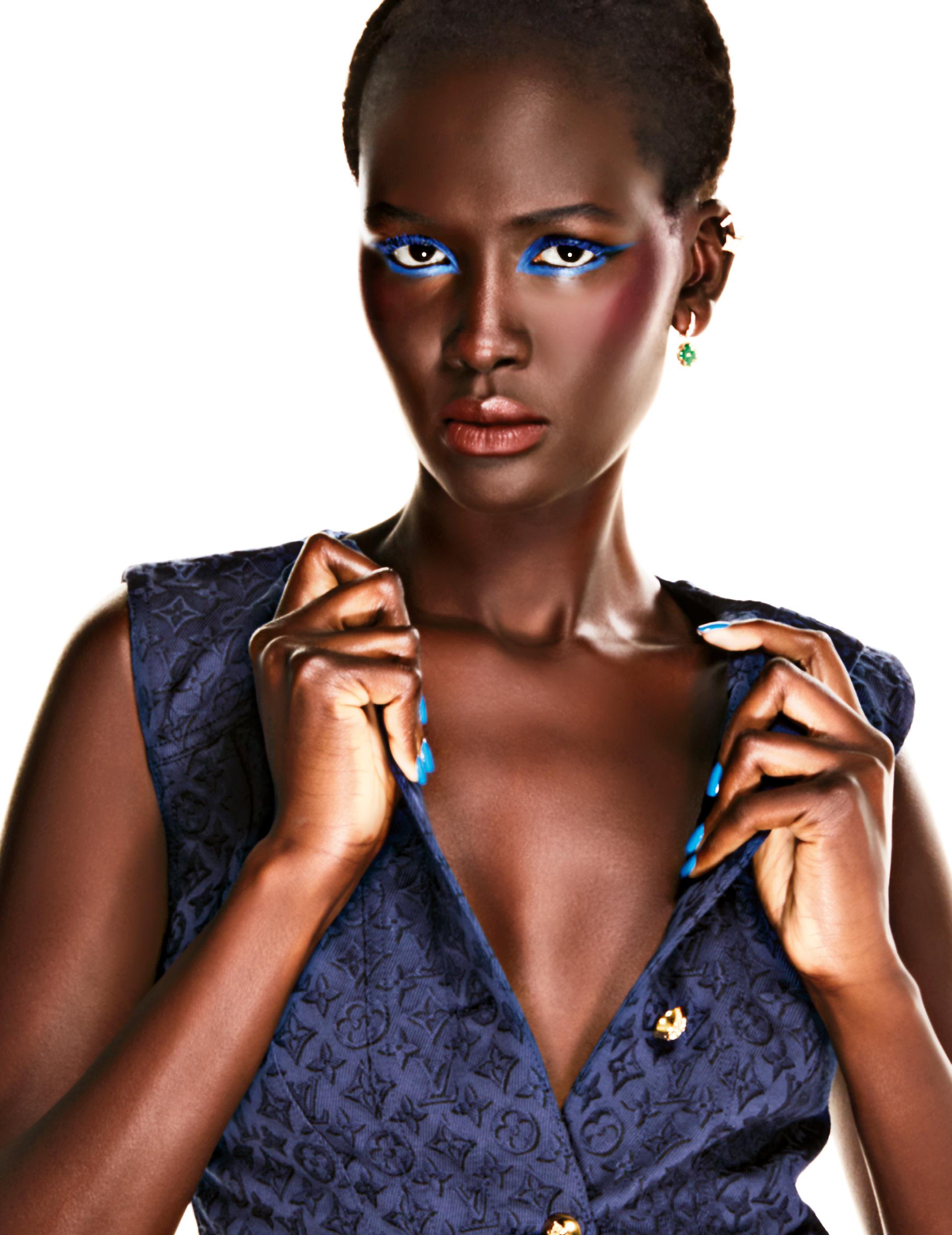
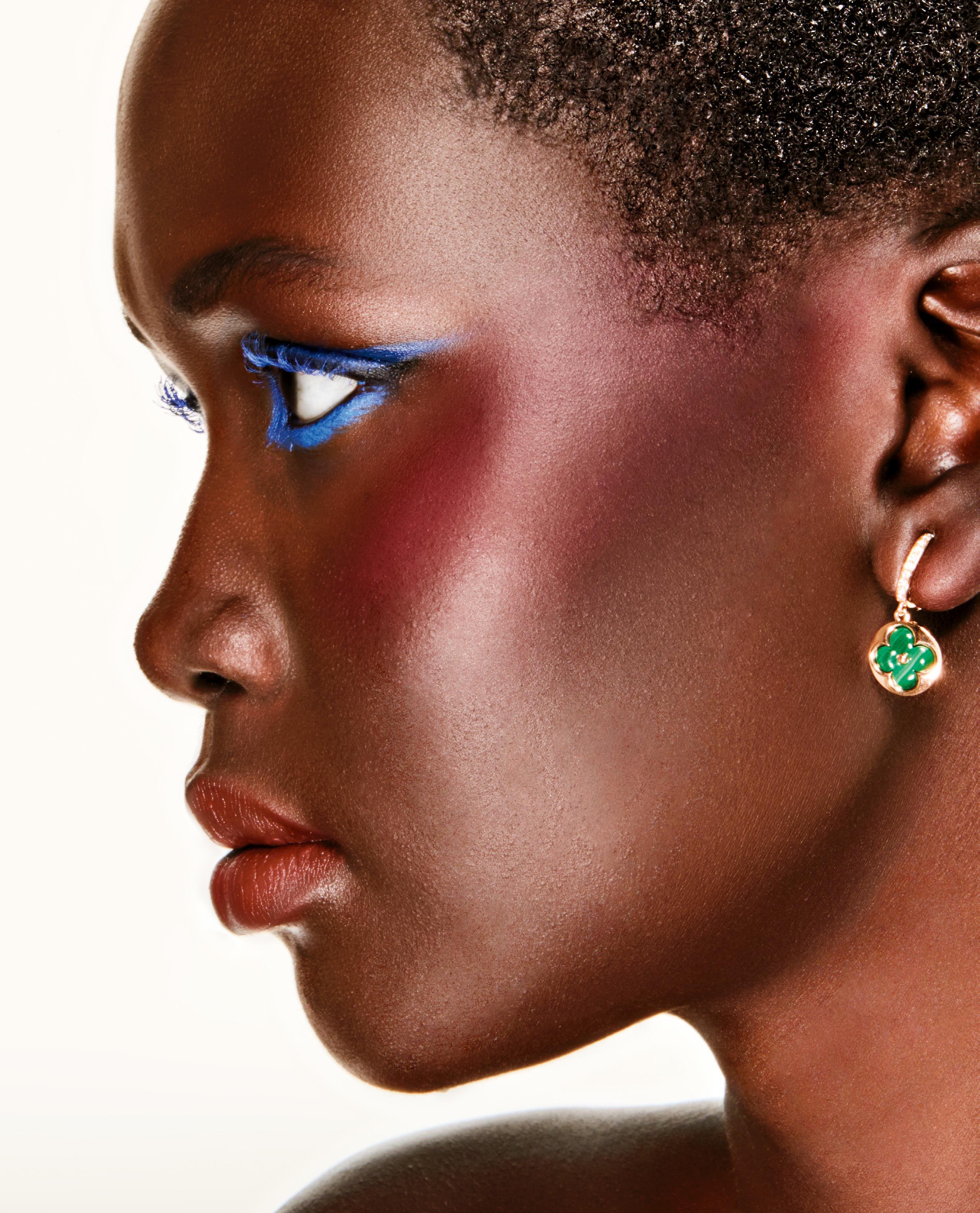
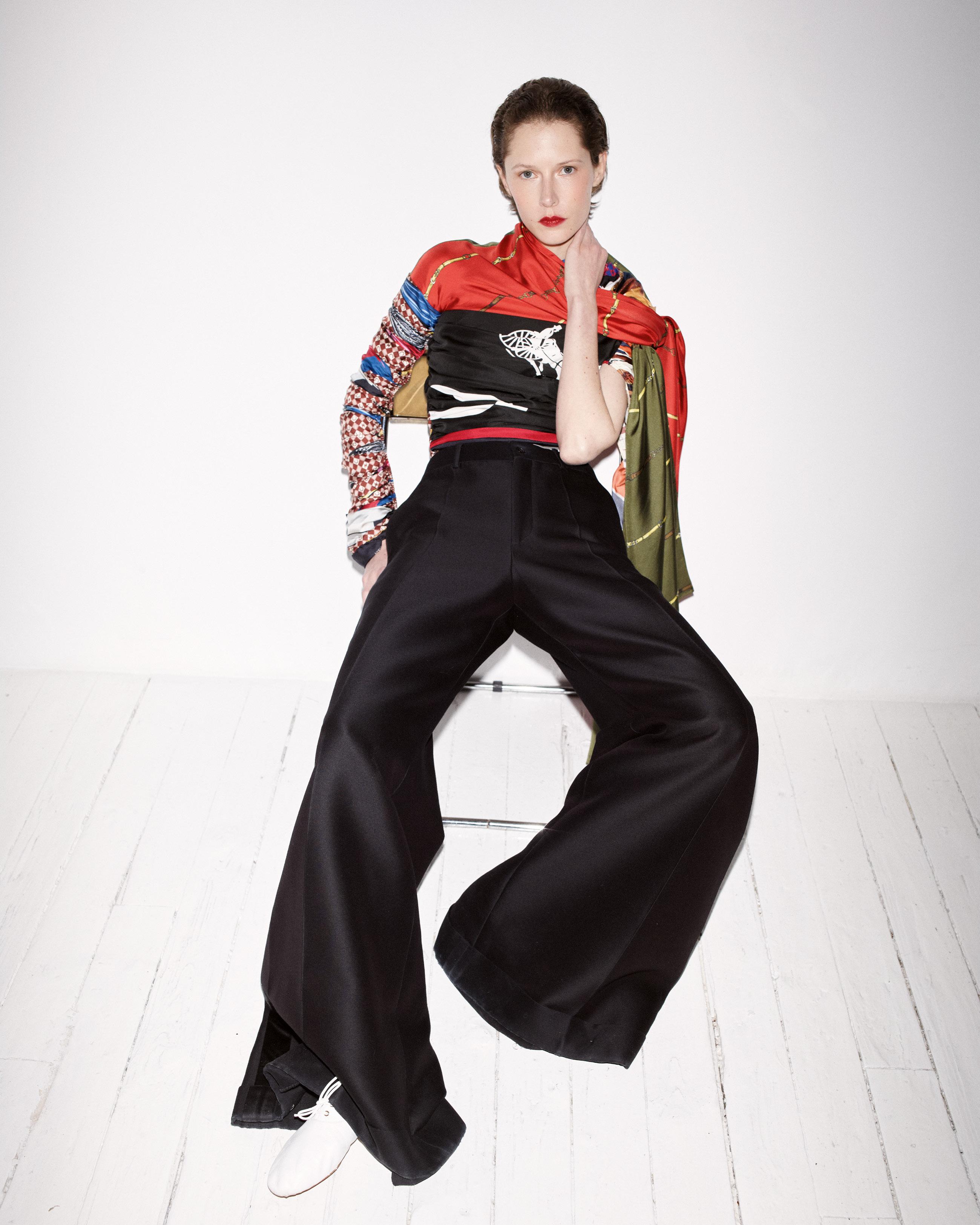
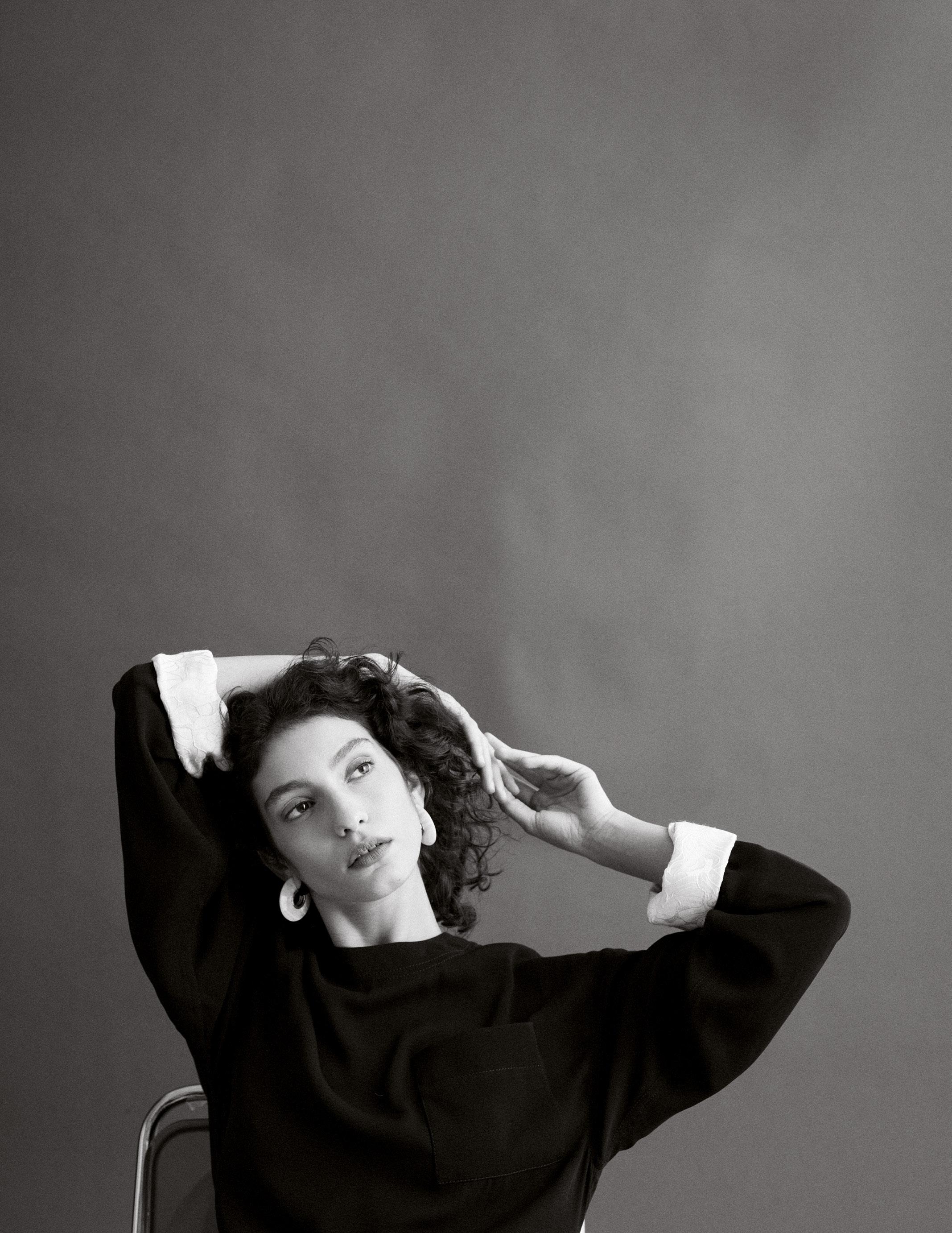
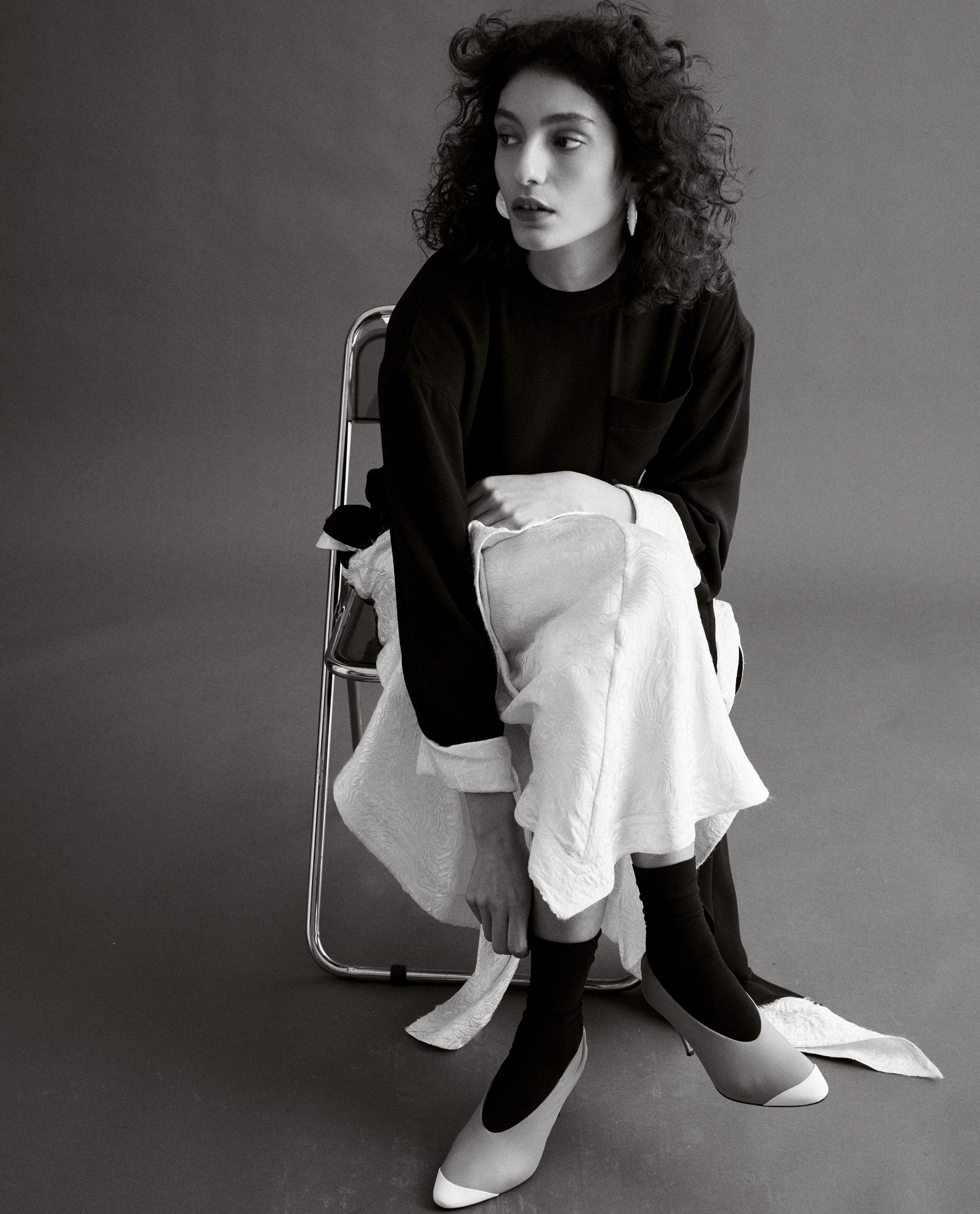
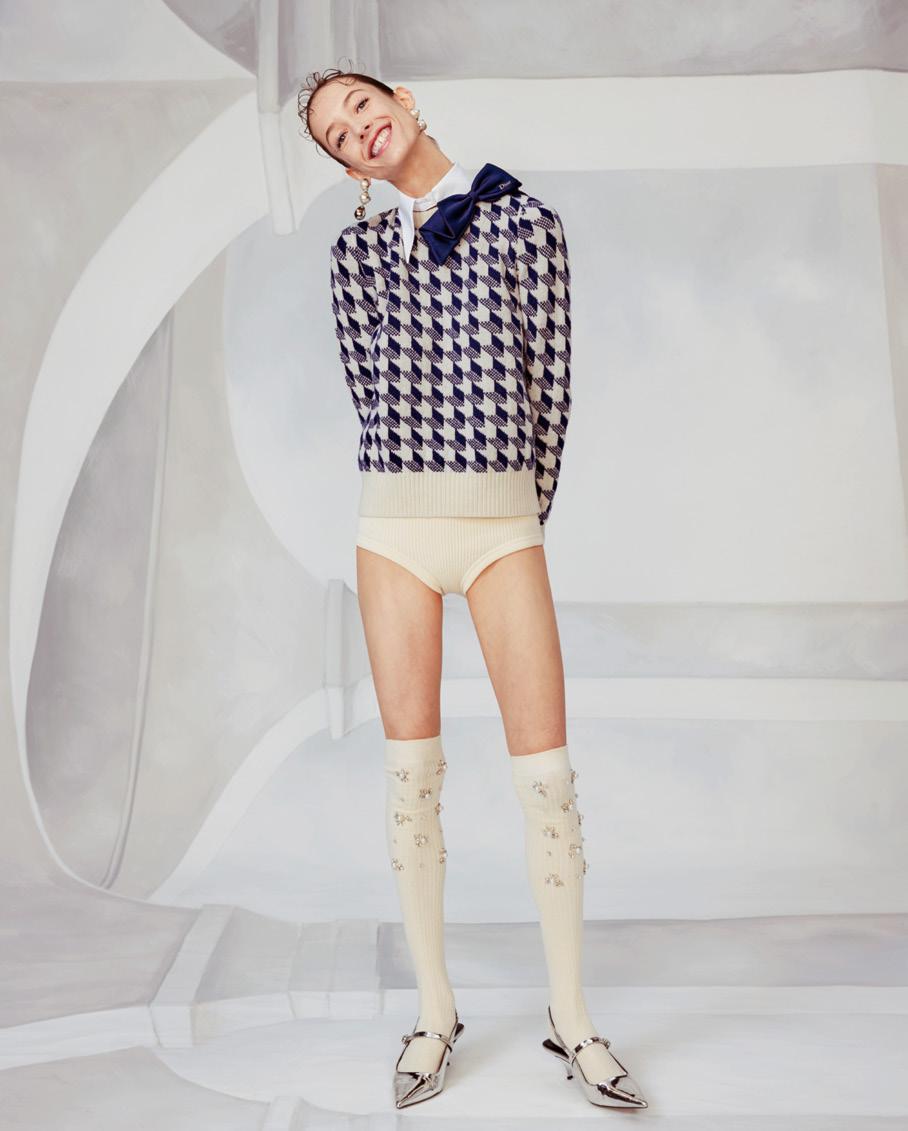
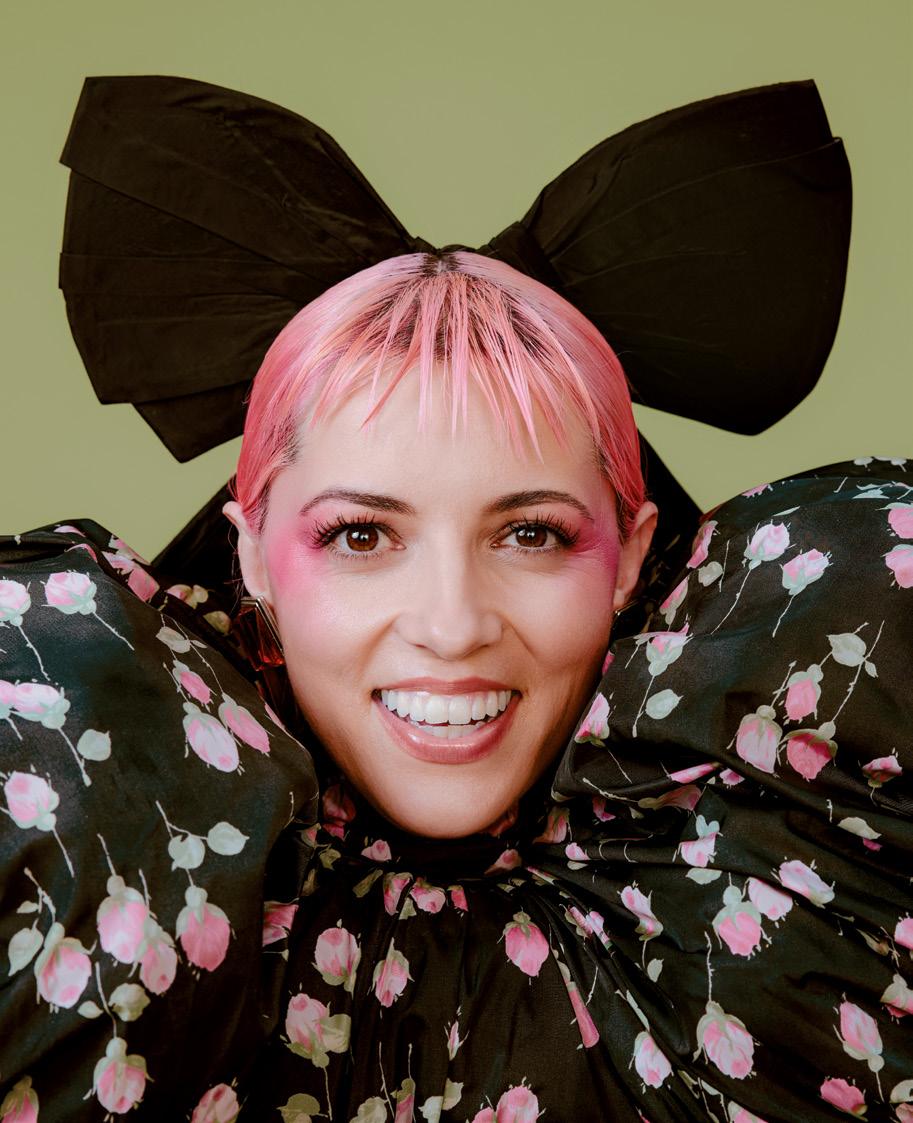
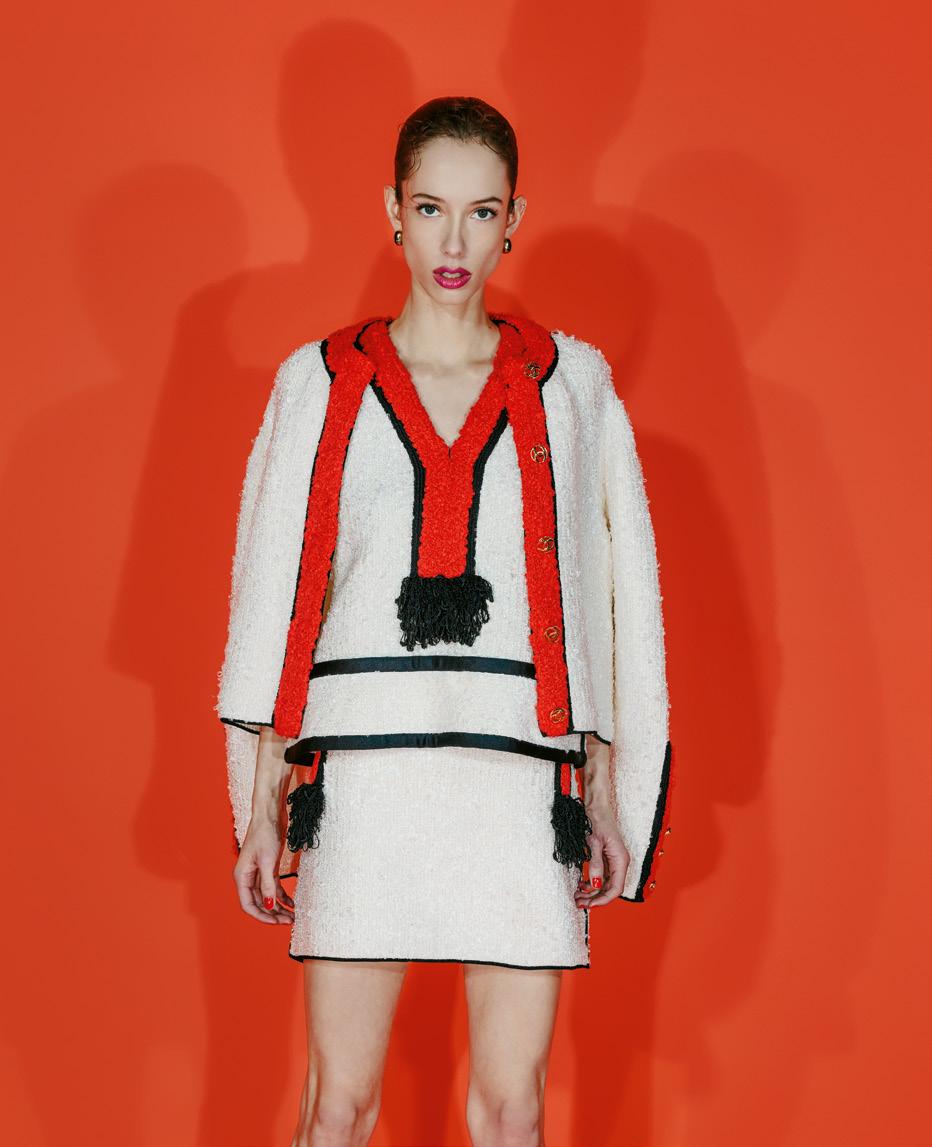
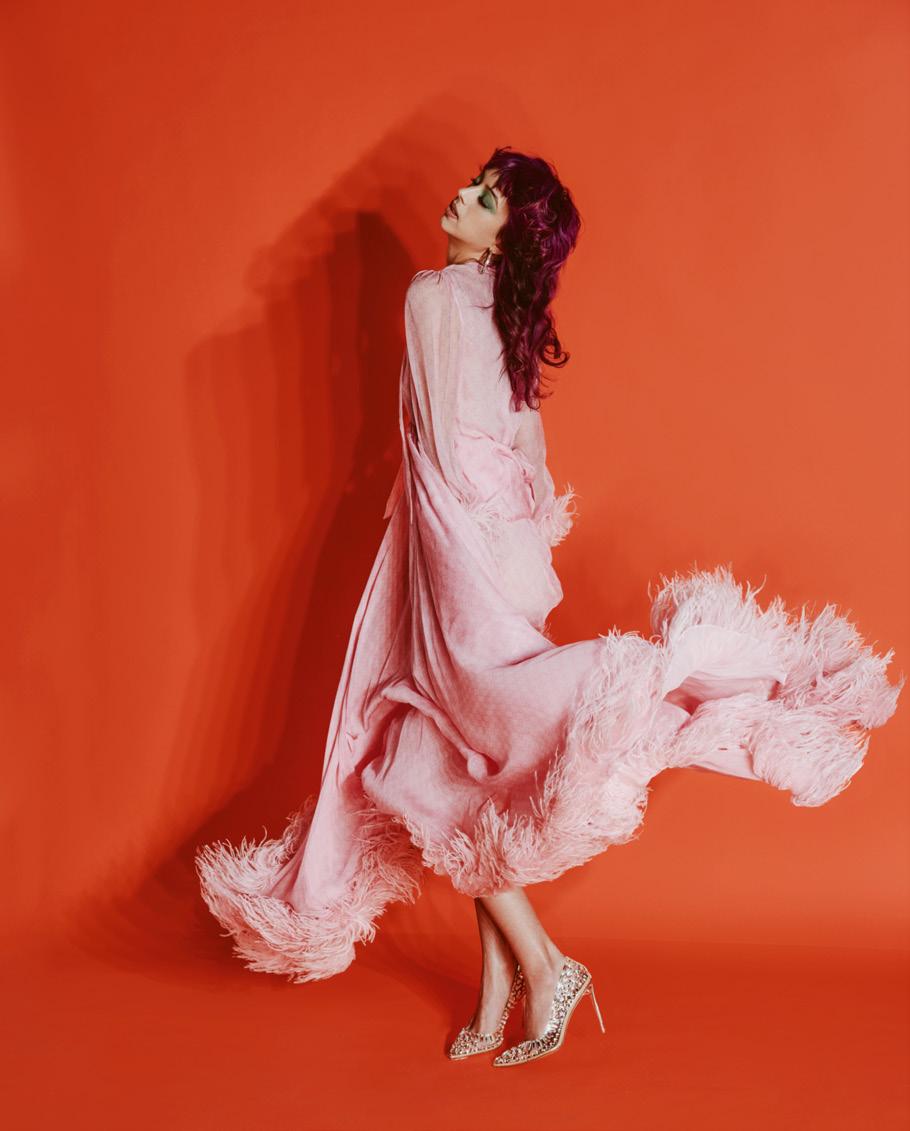
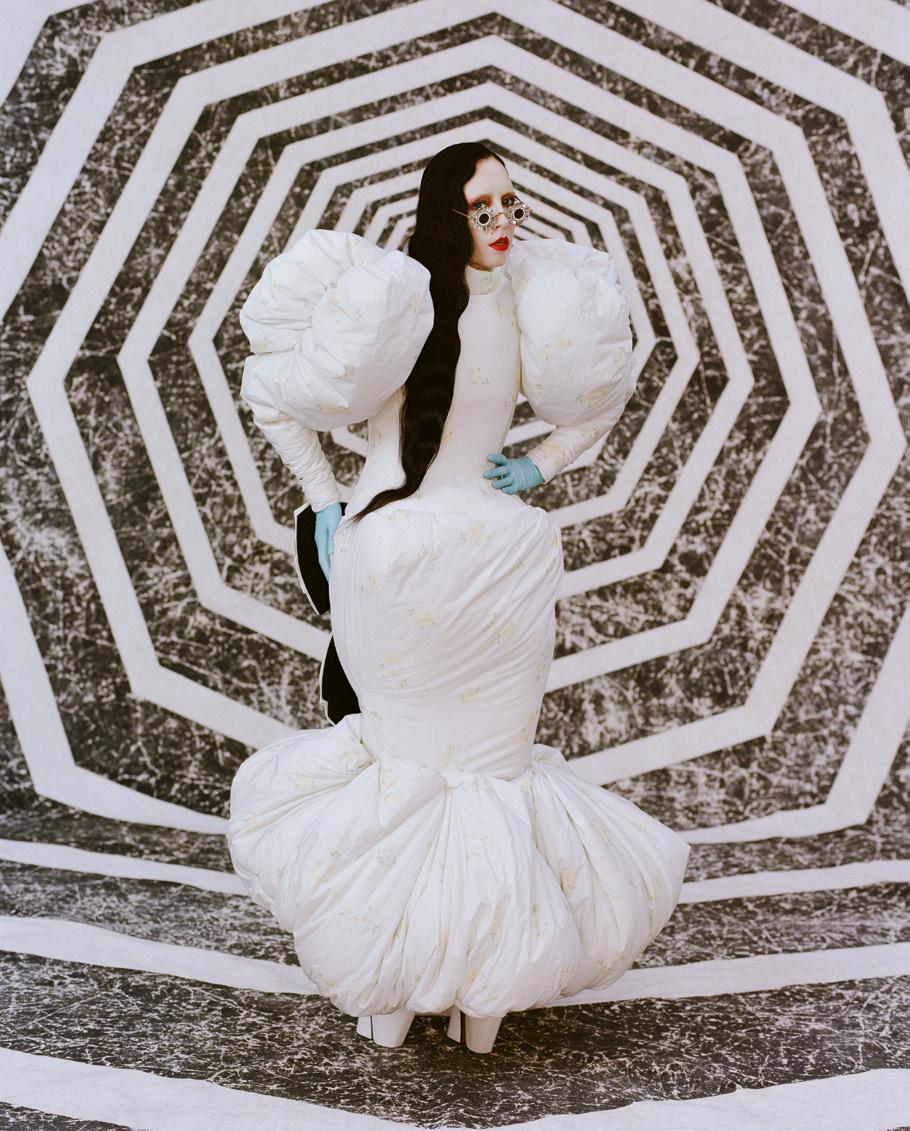
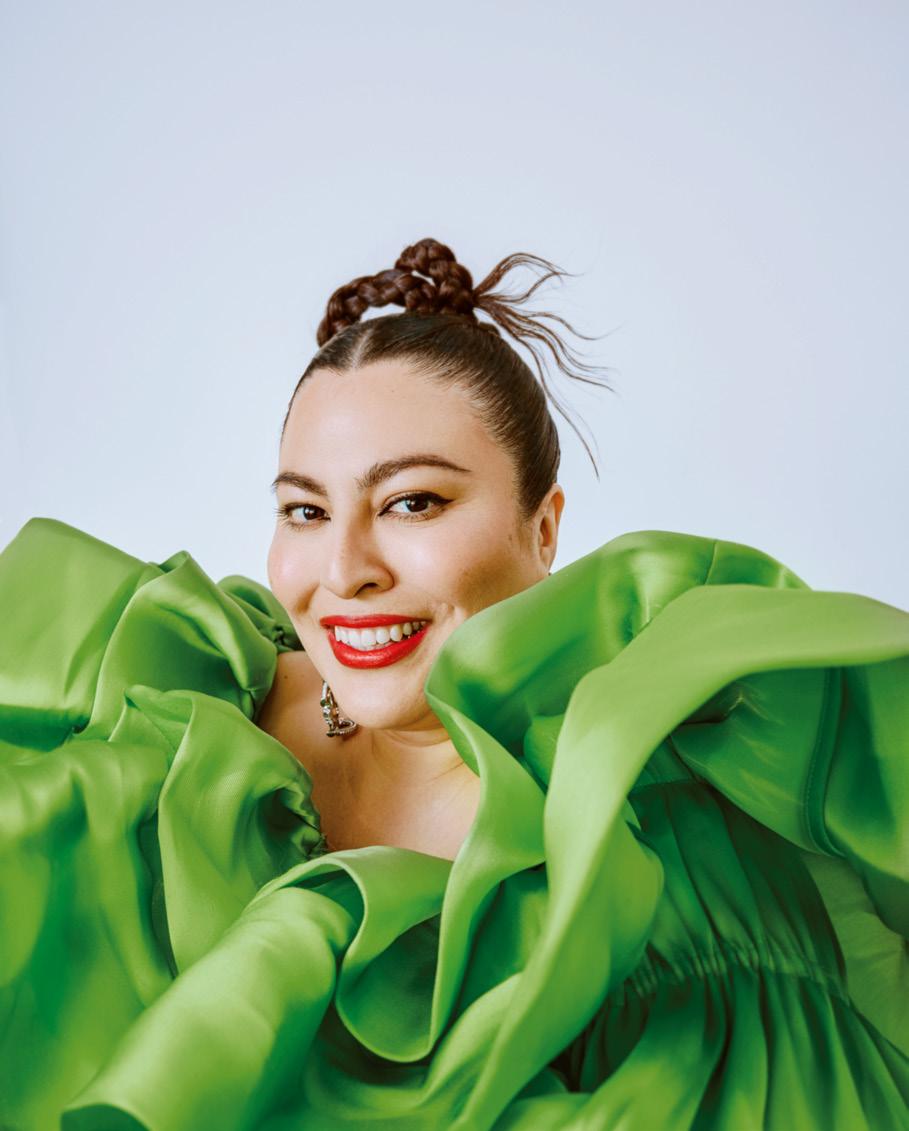
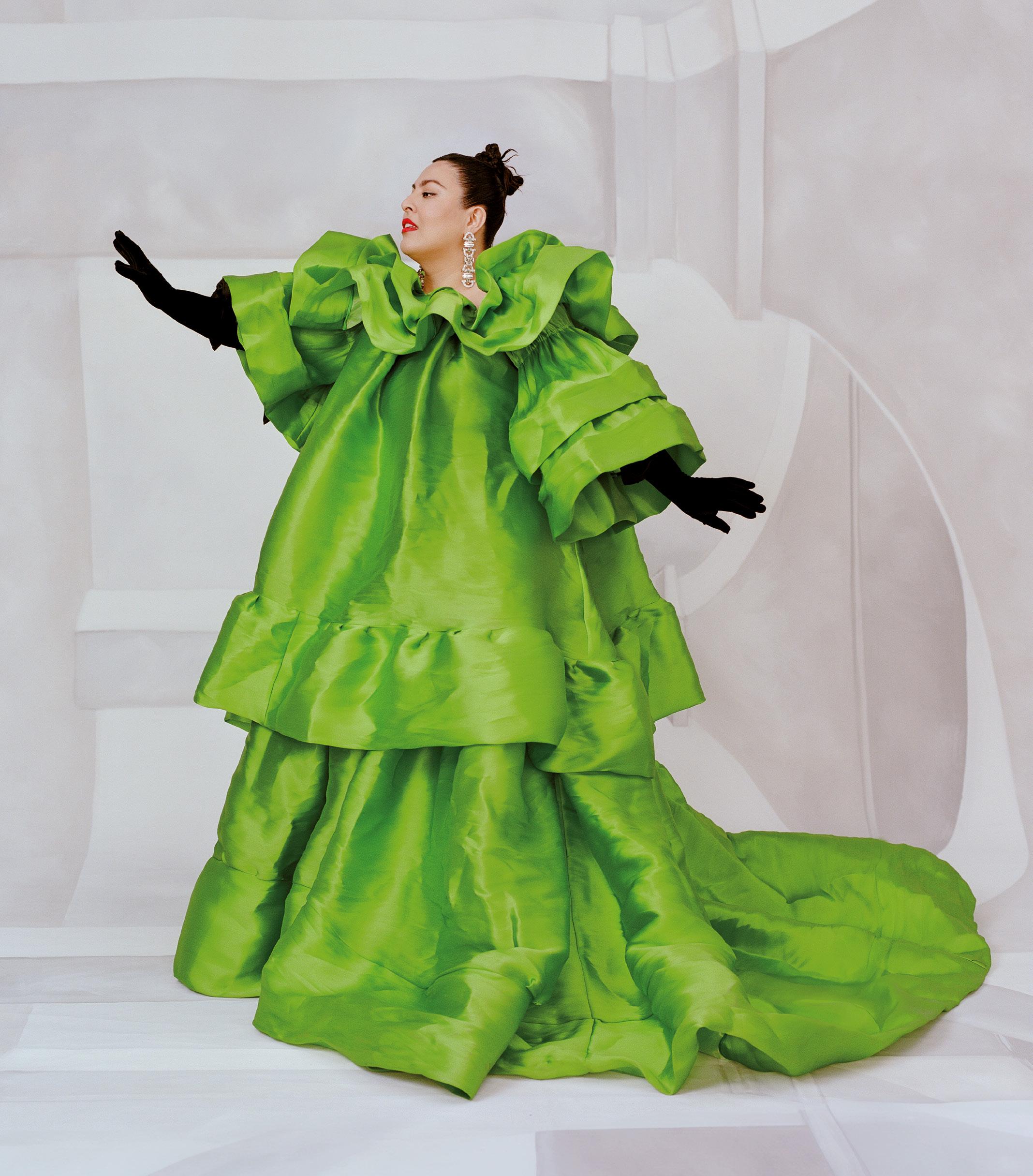
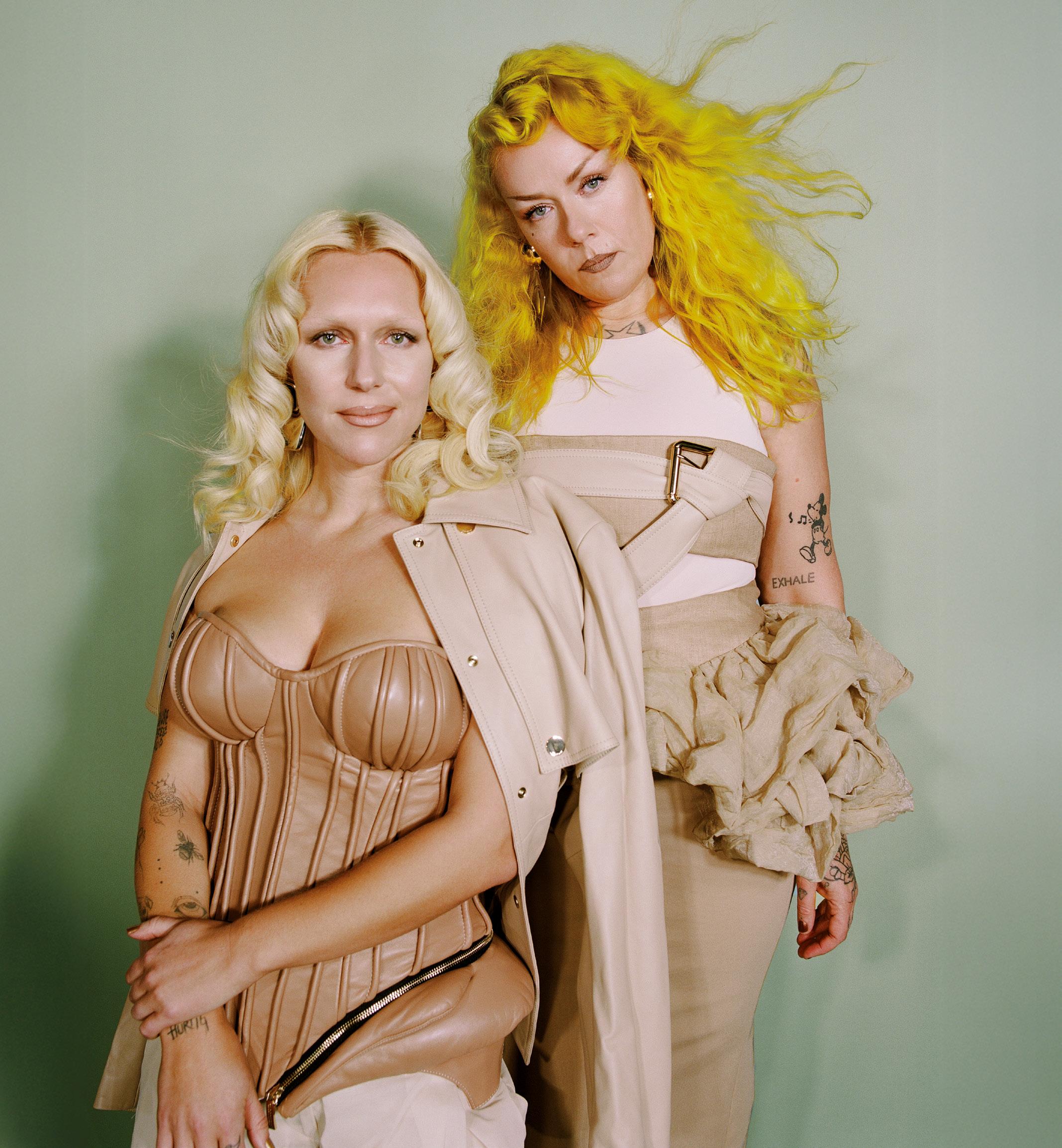
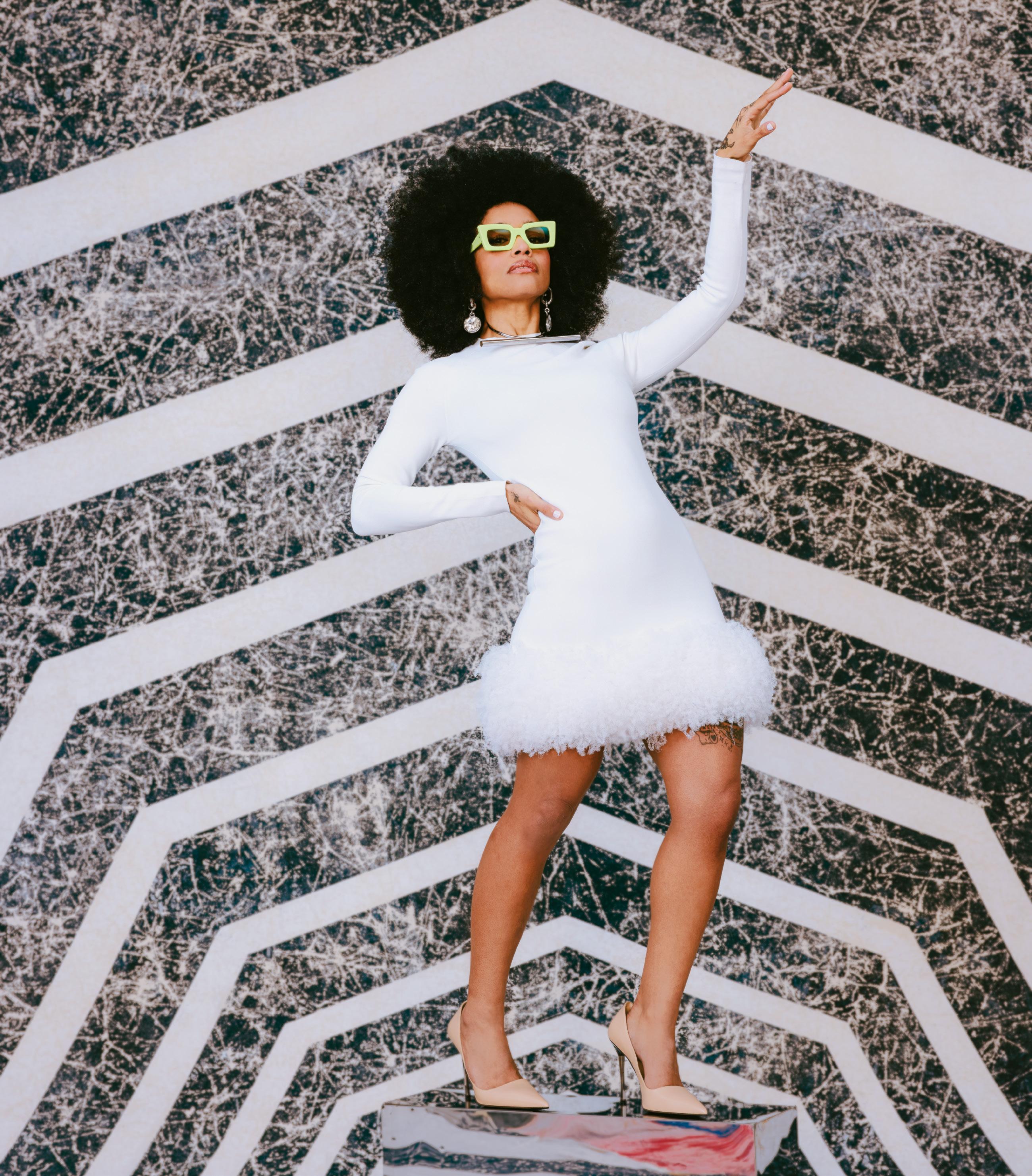
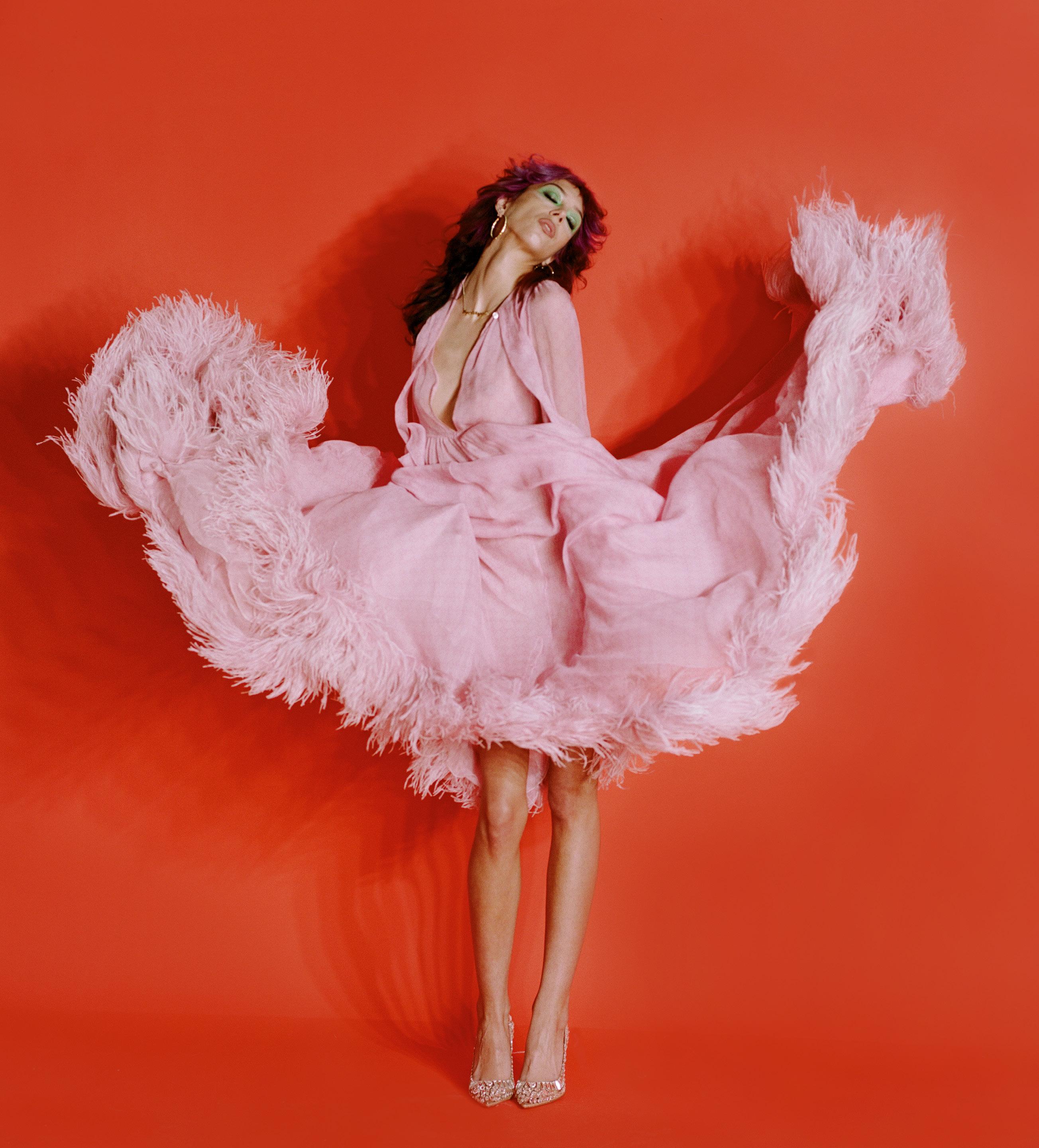
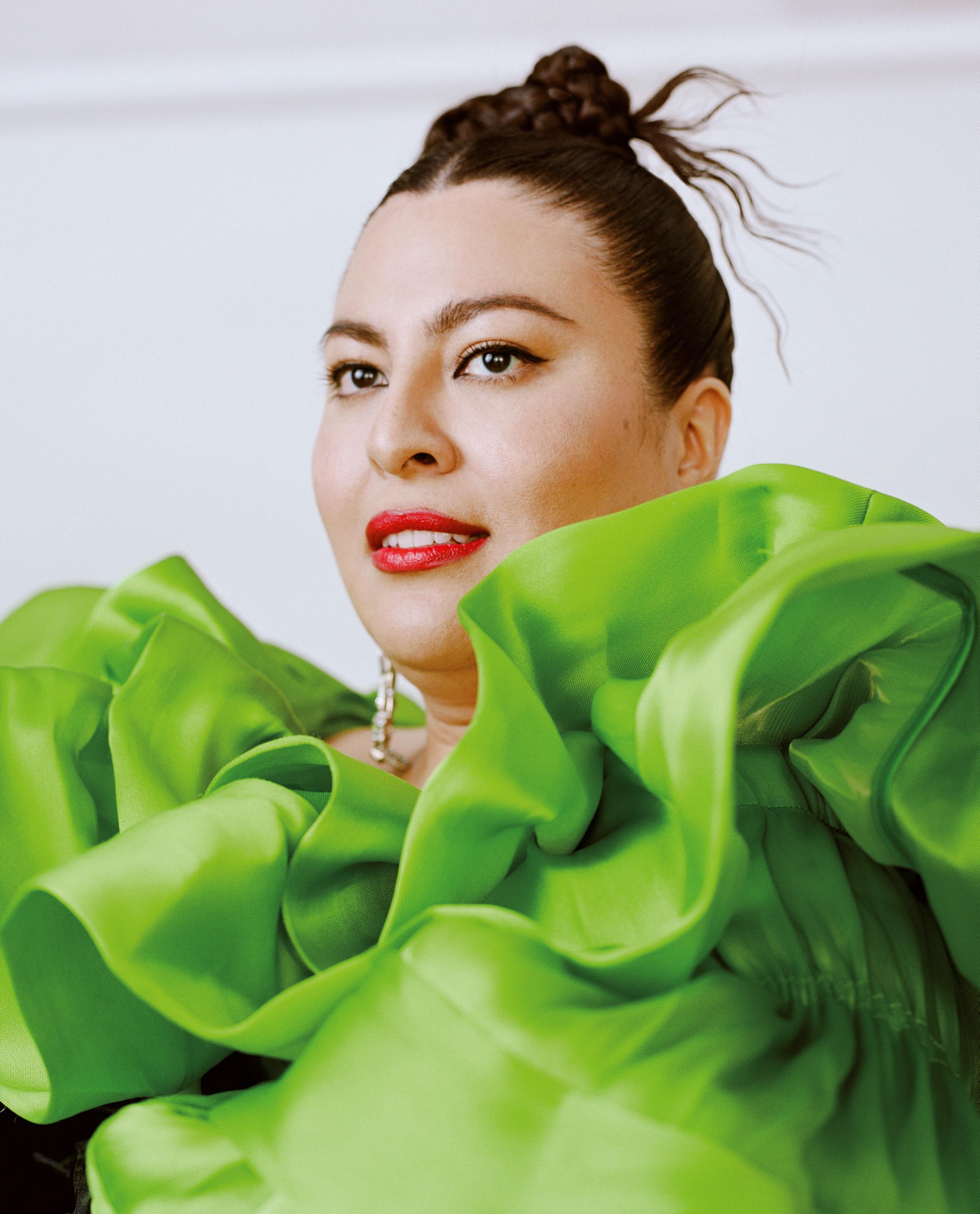
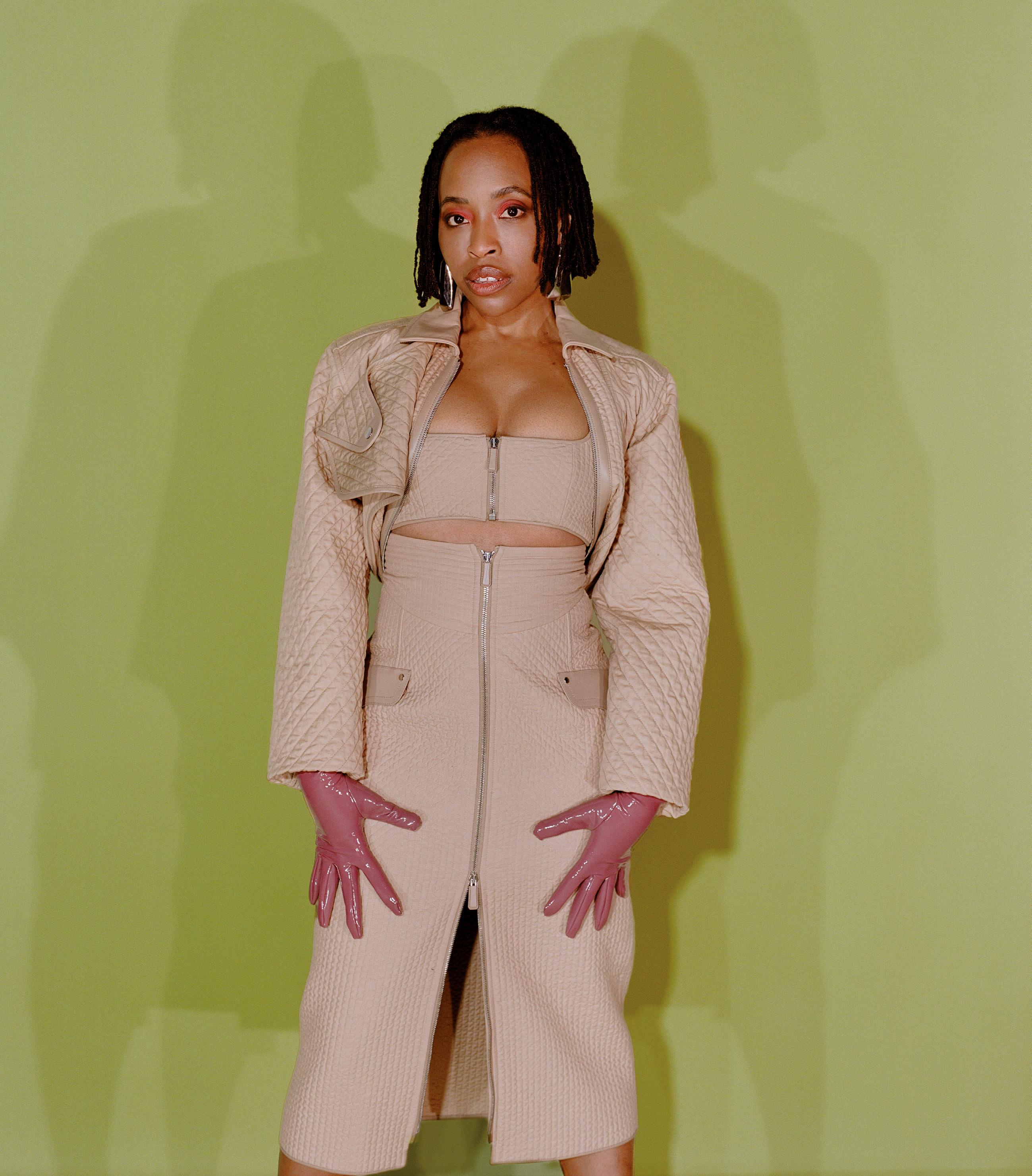
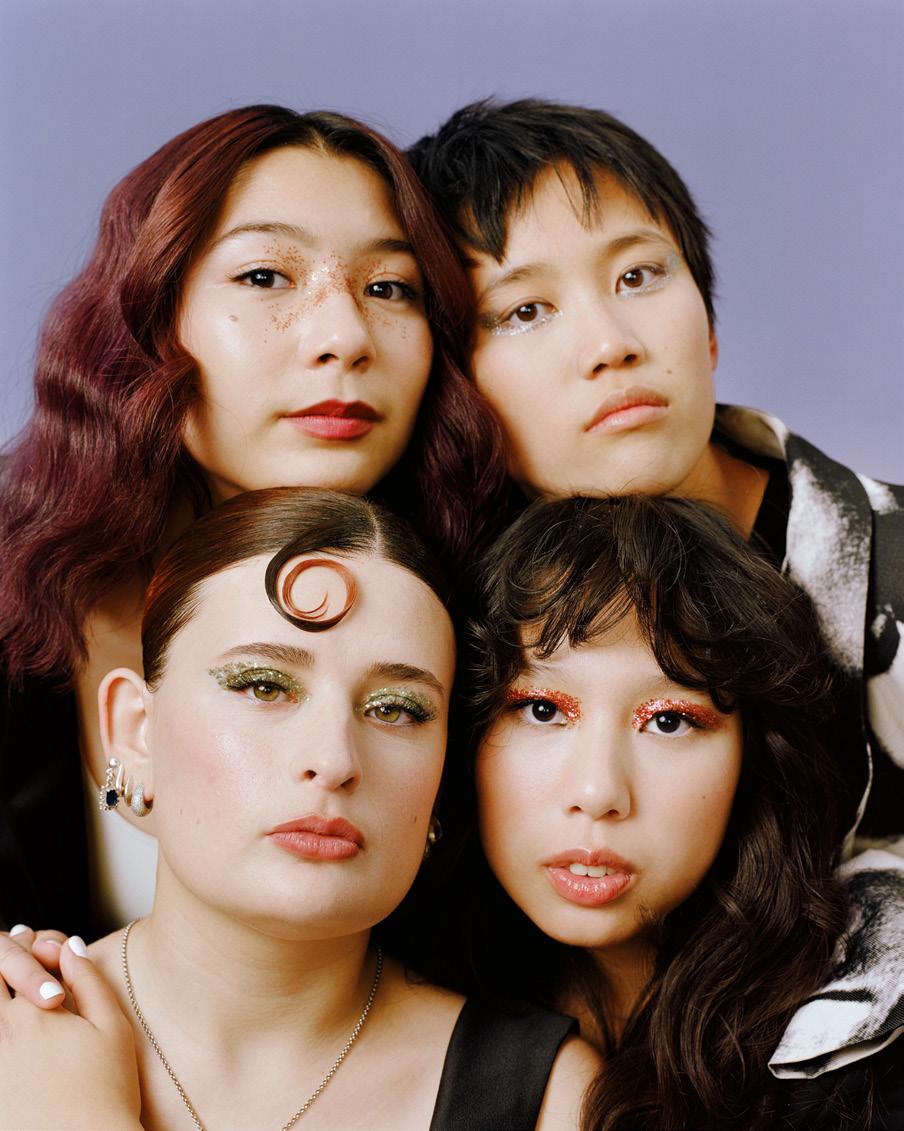
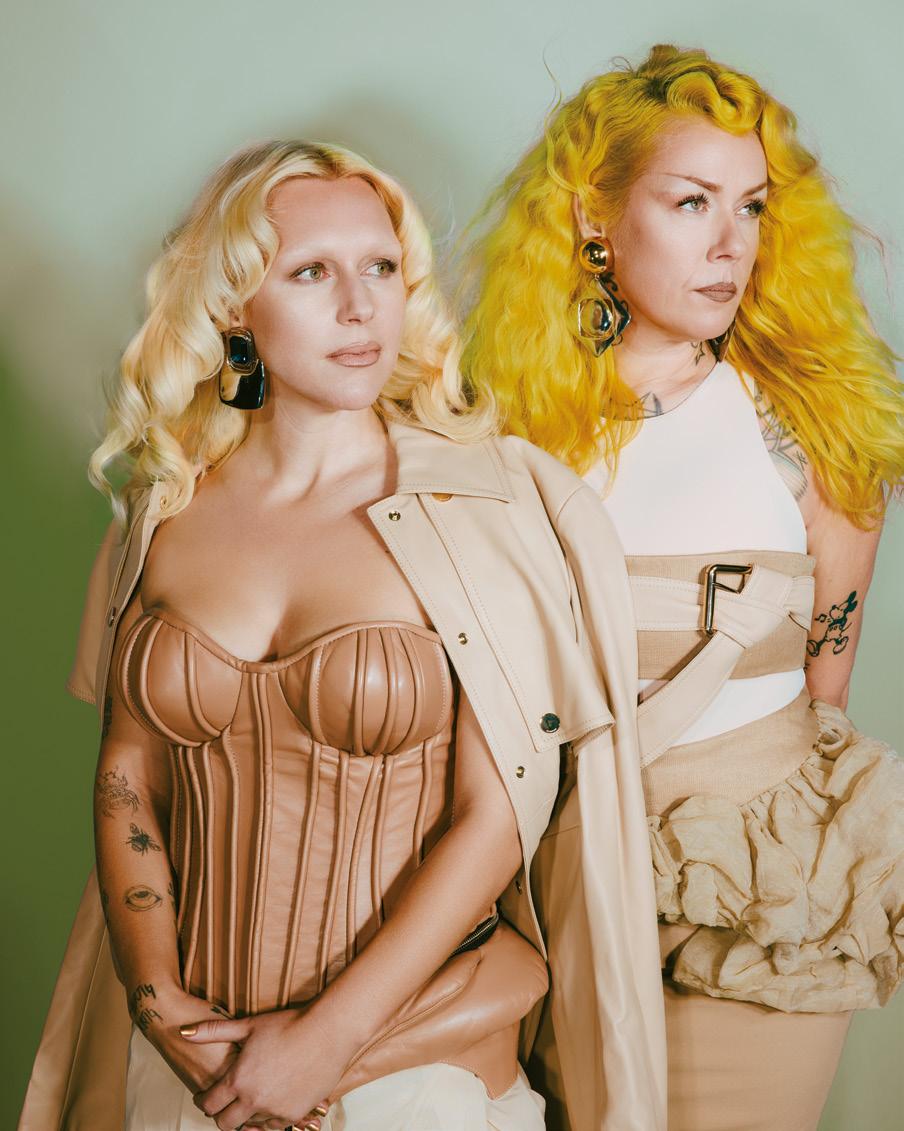
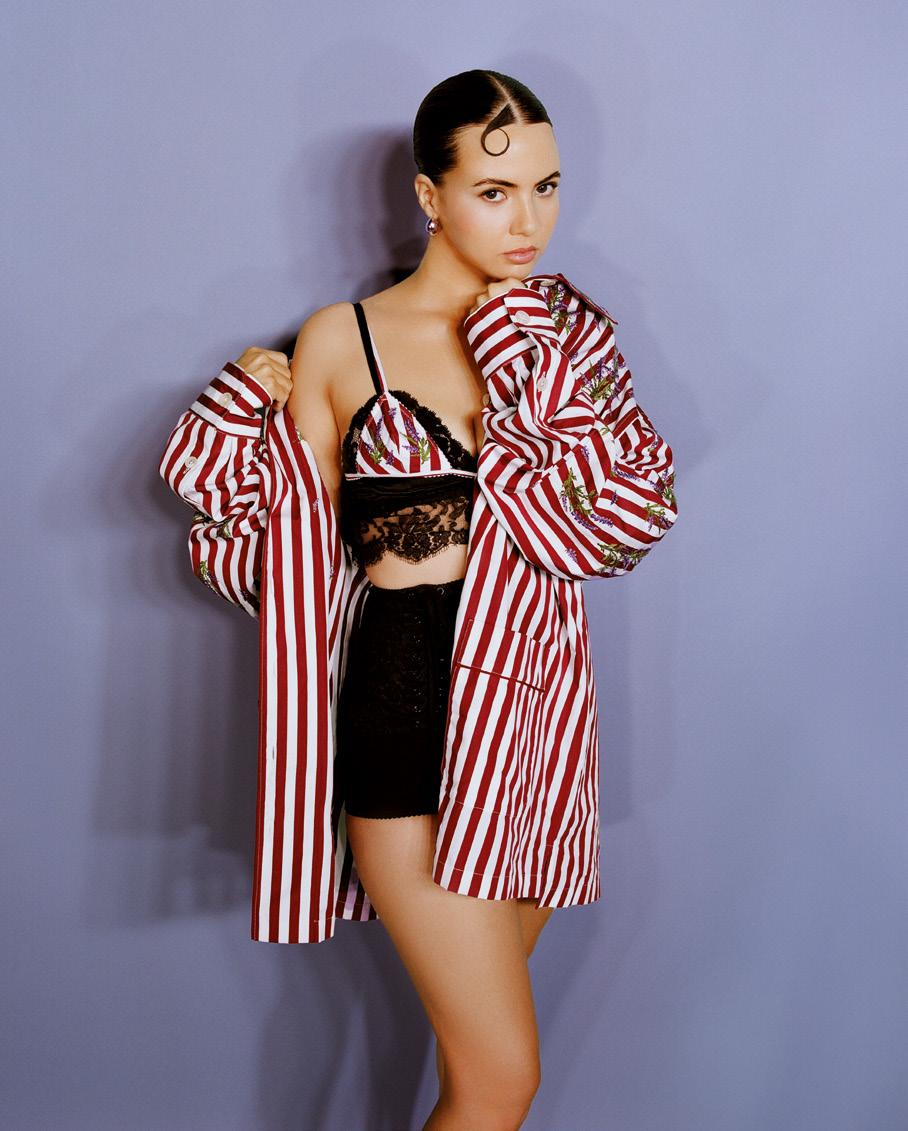
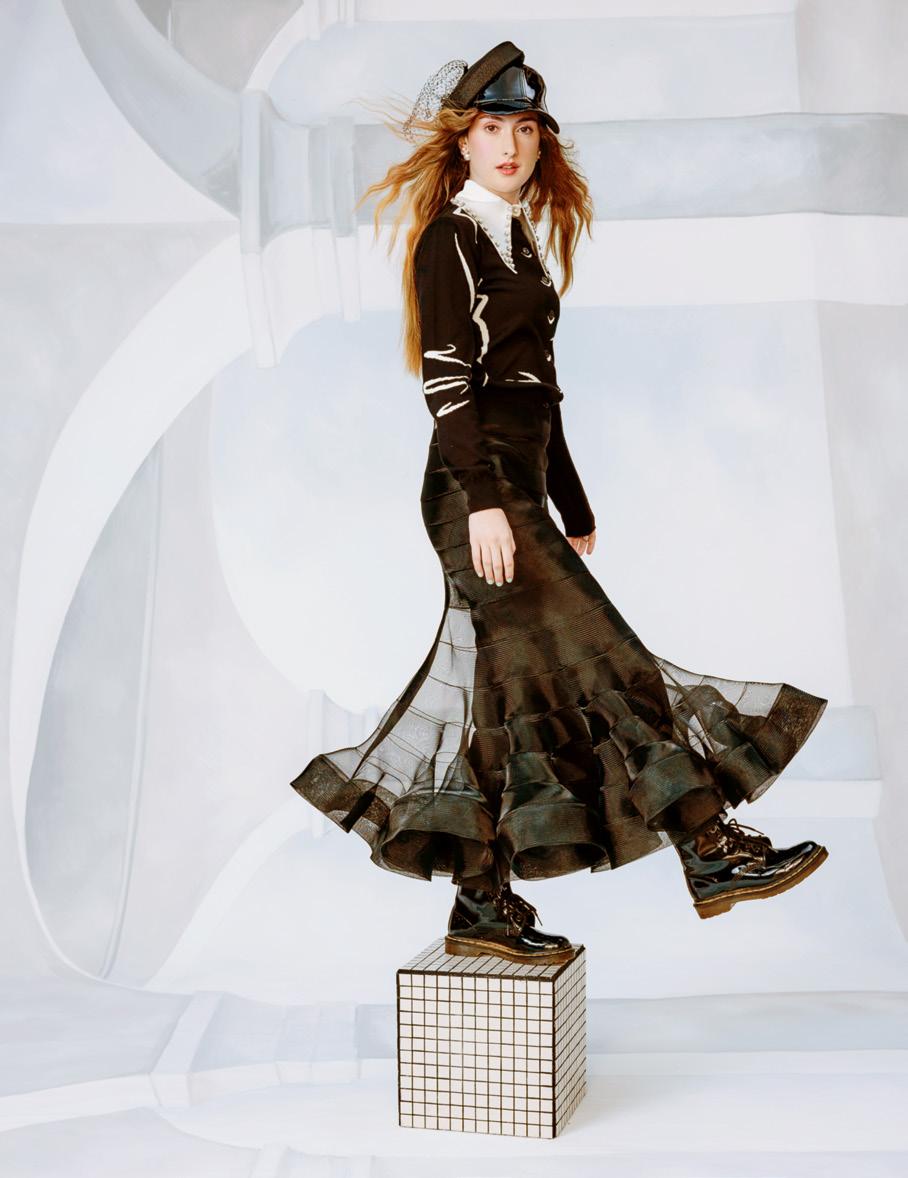
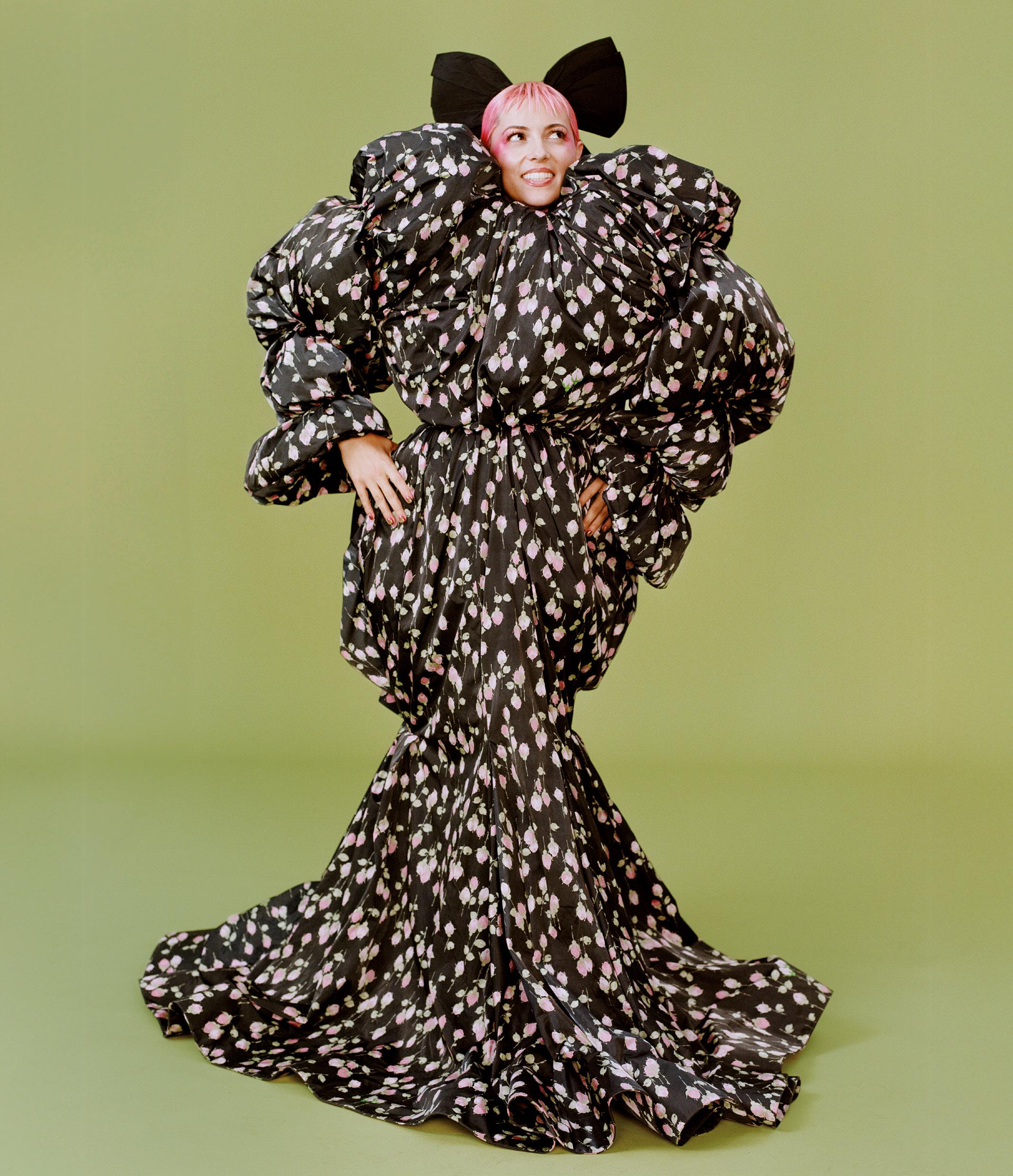
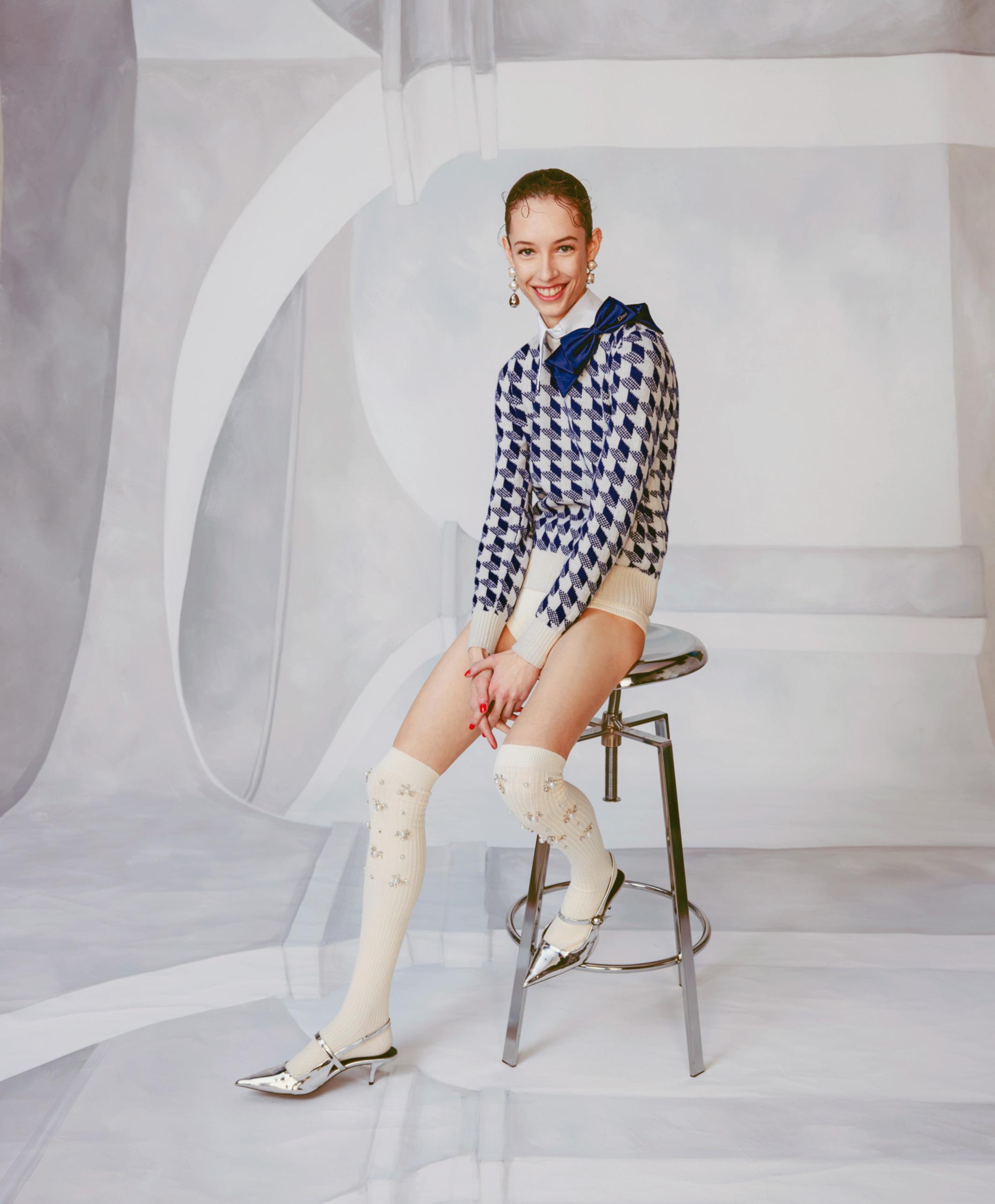
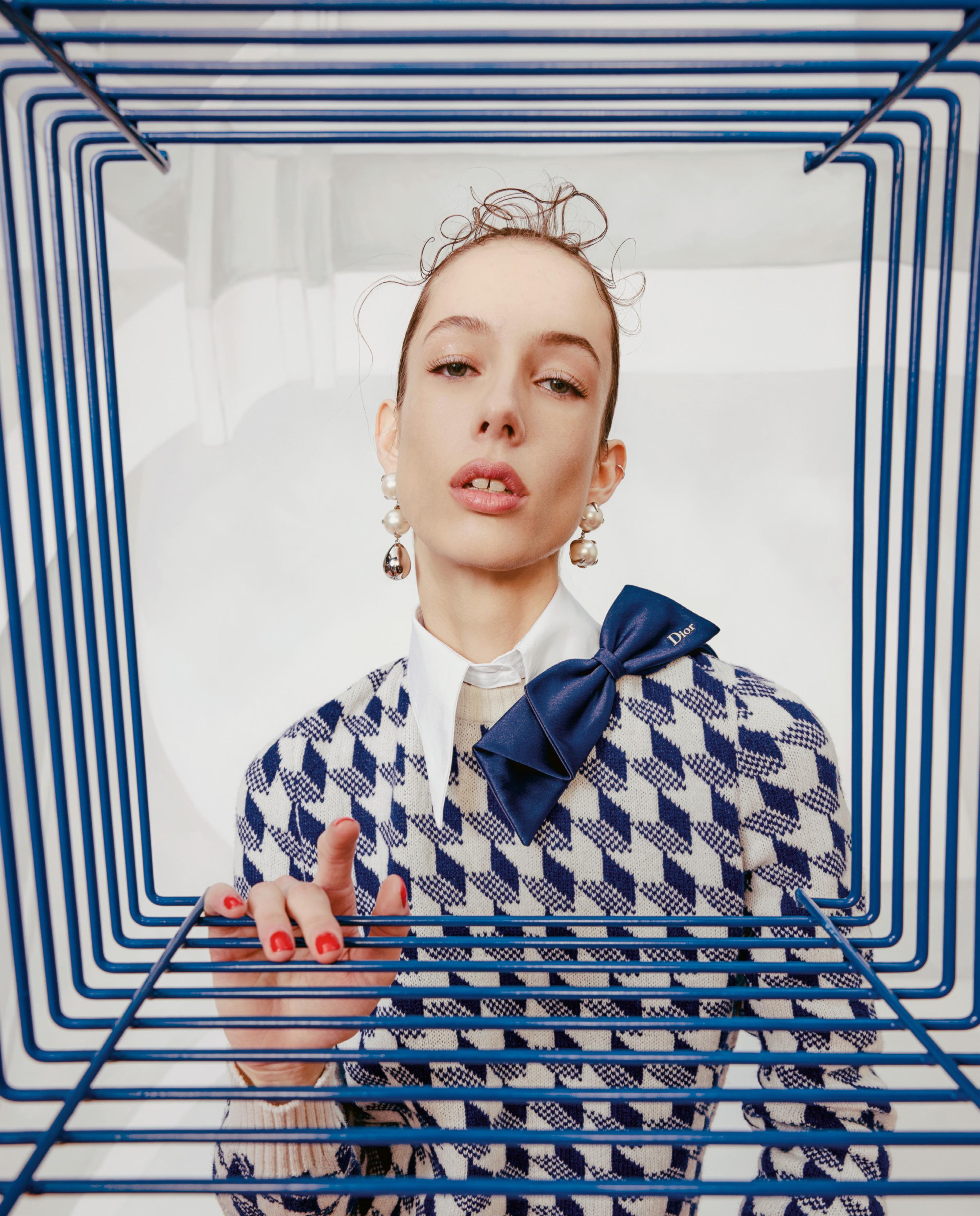
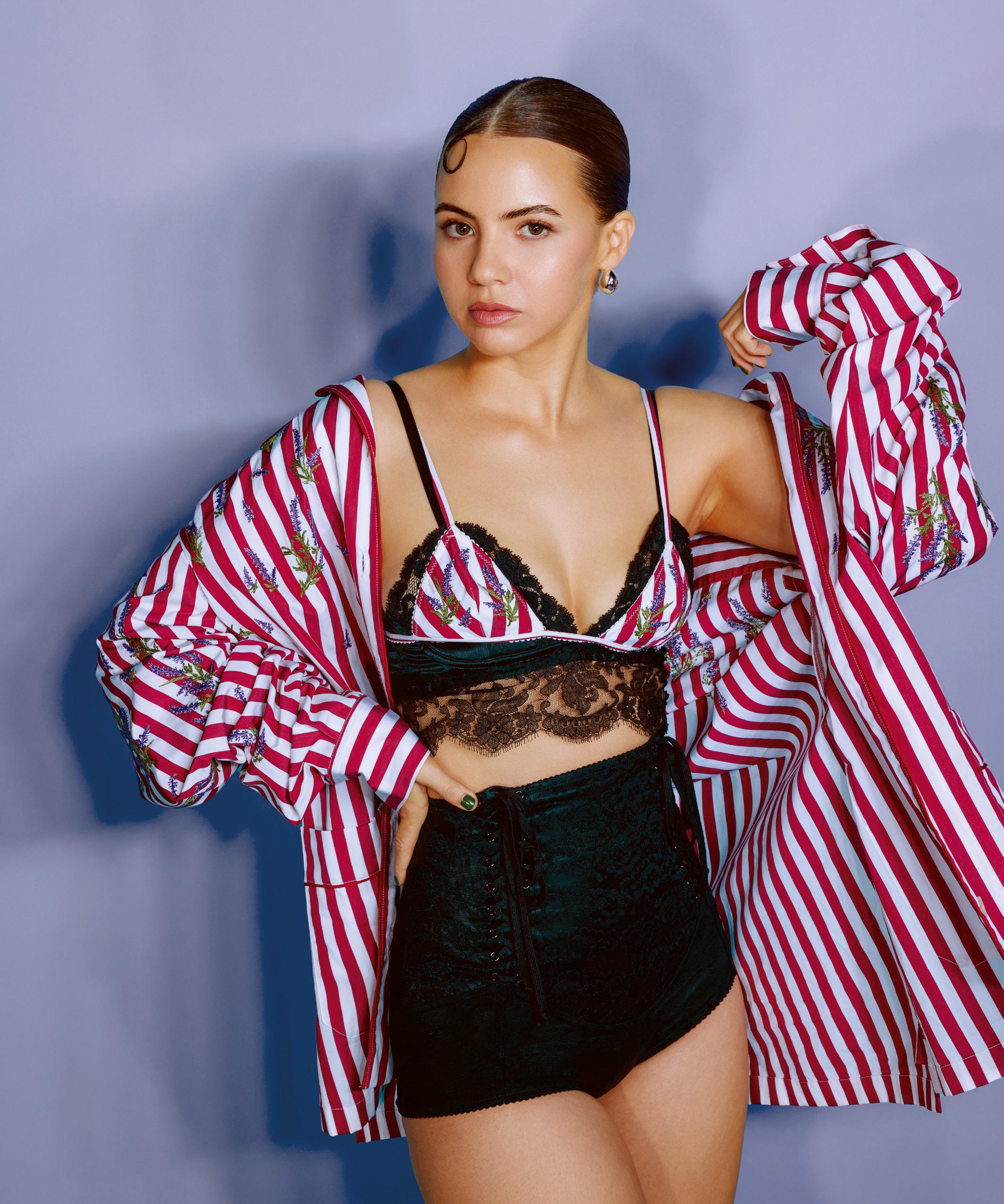
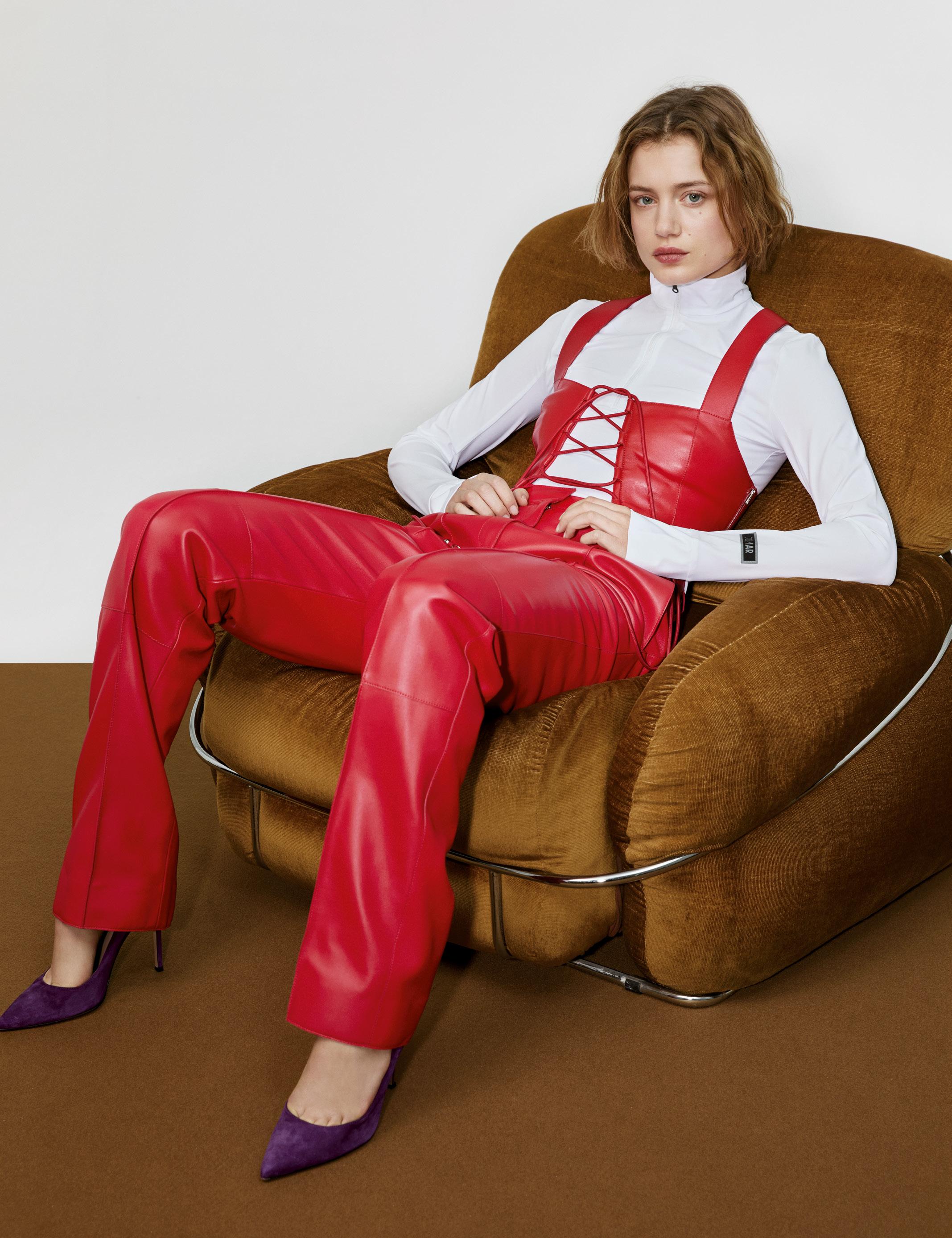
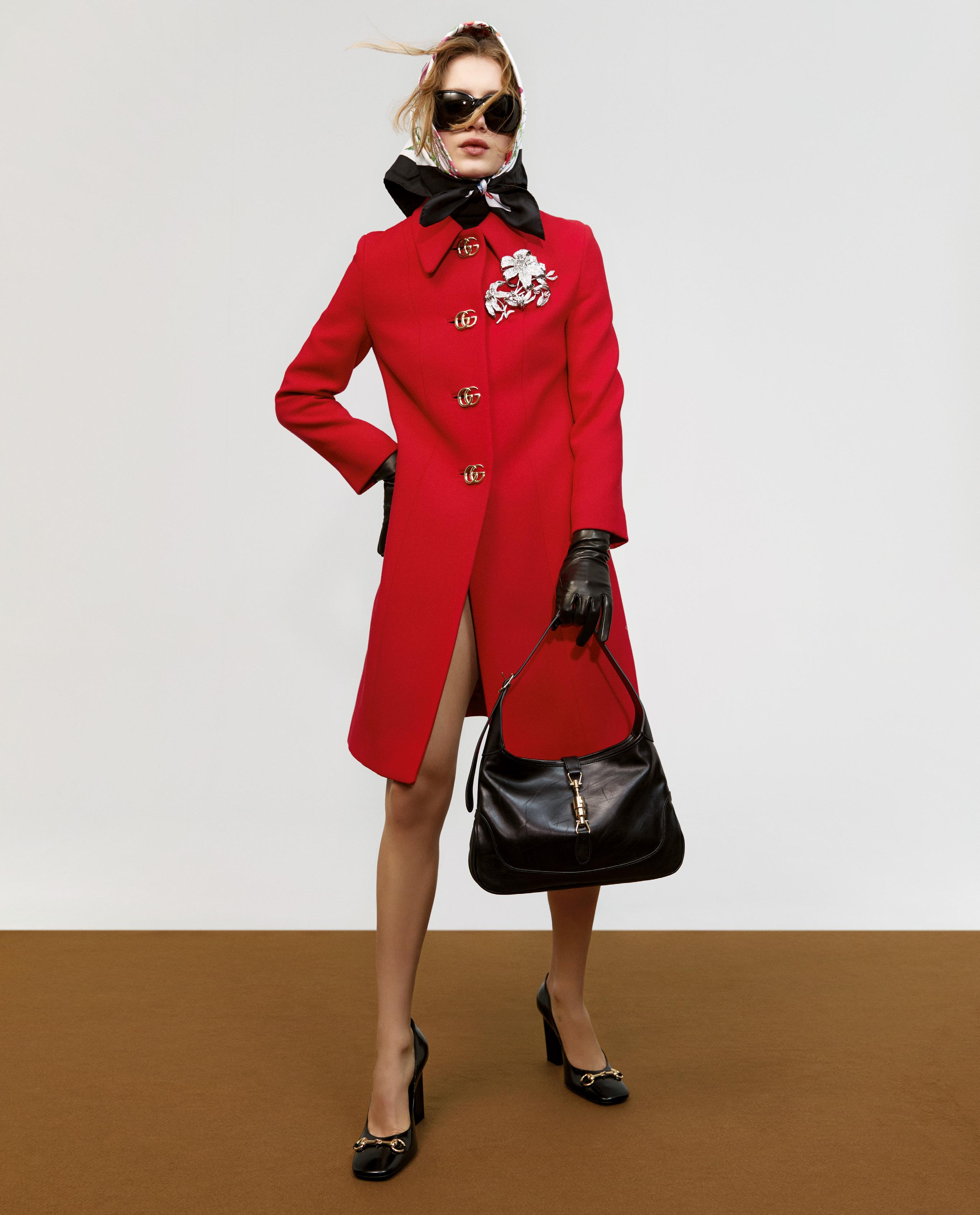
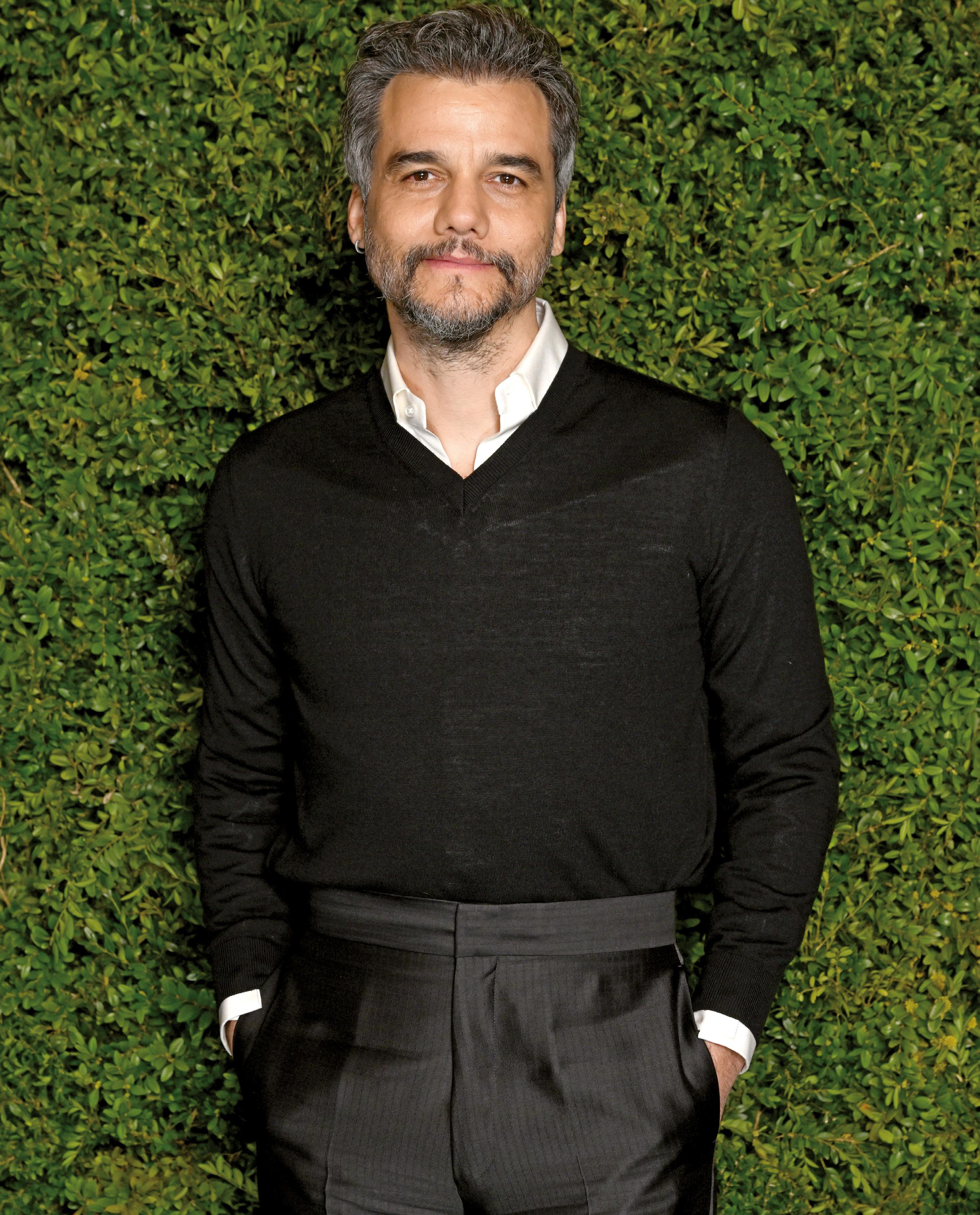
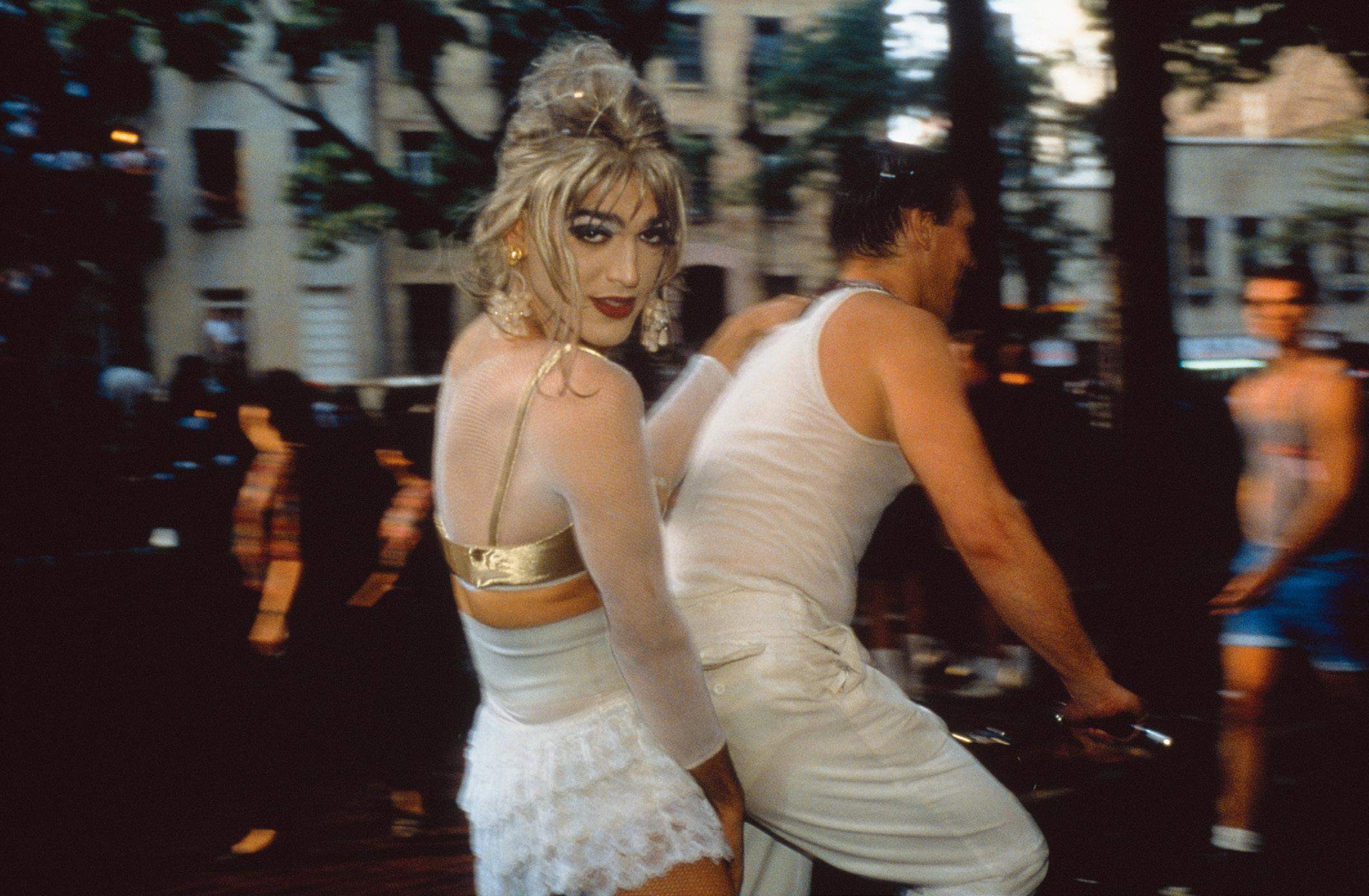
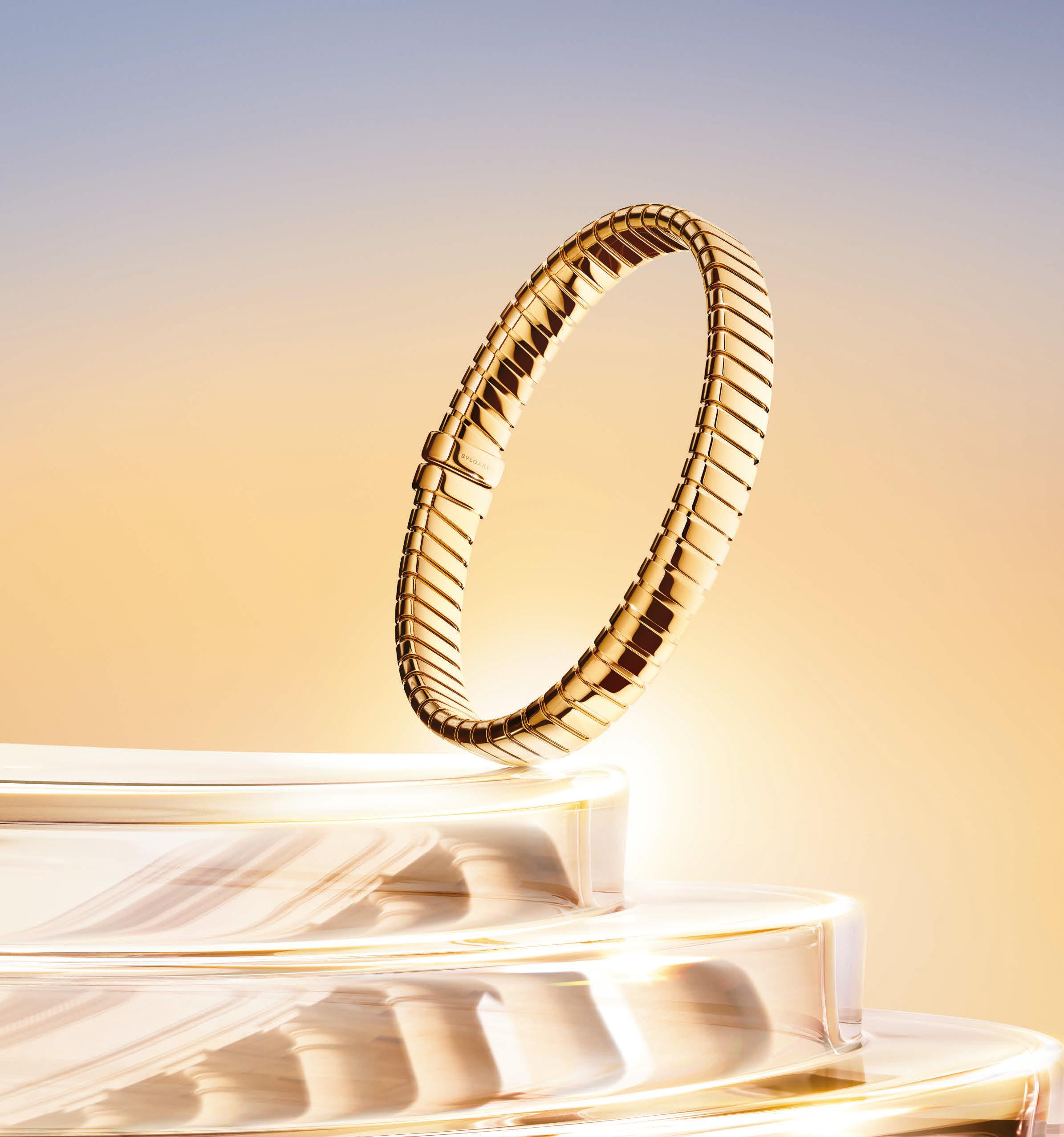
Fashion is not for the meek but rather those willing to dream and dare big.
Shine Bright
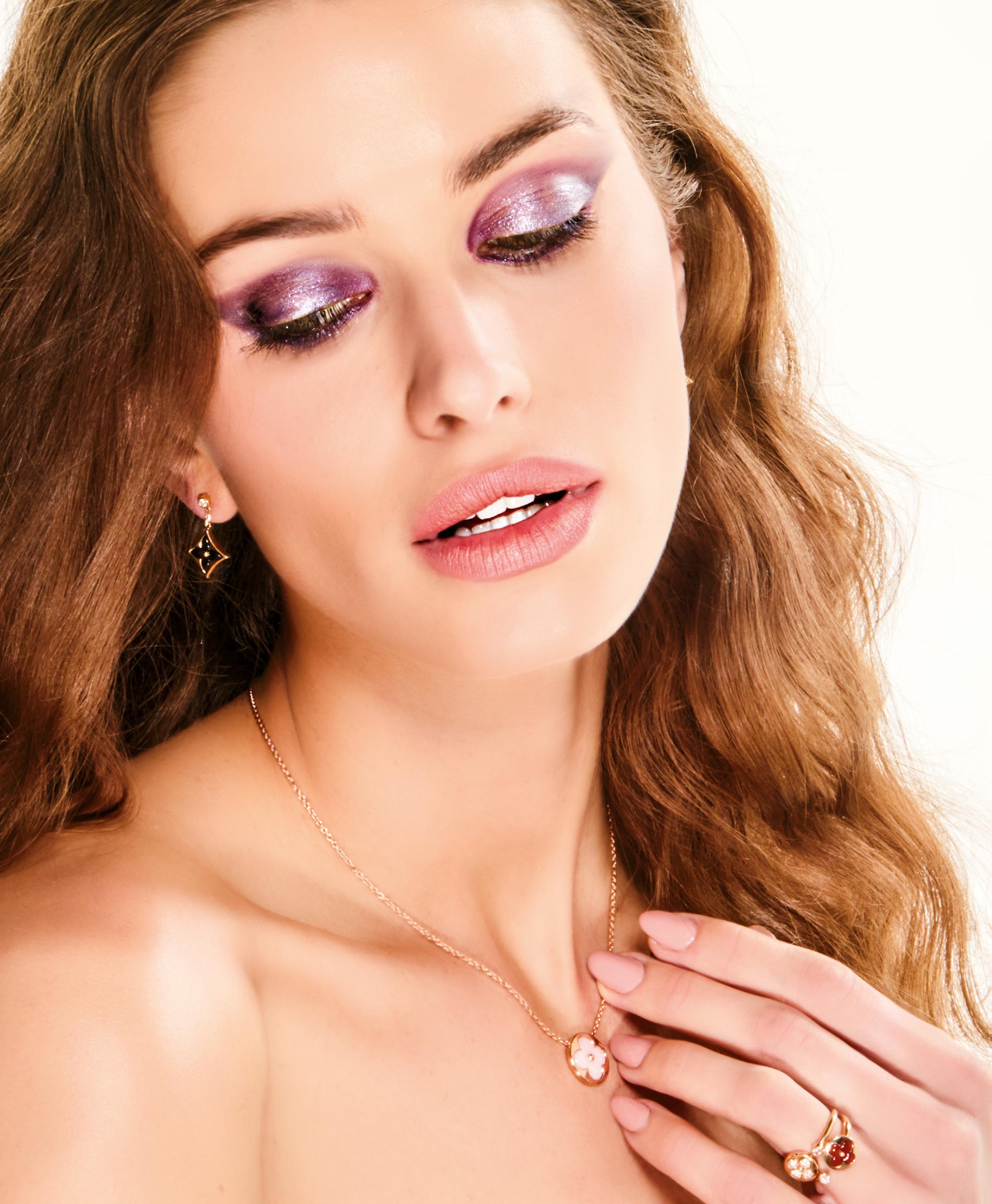
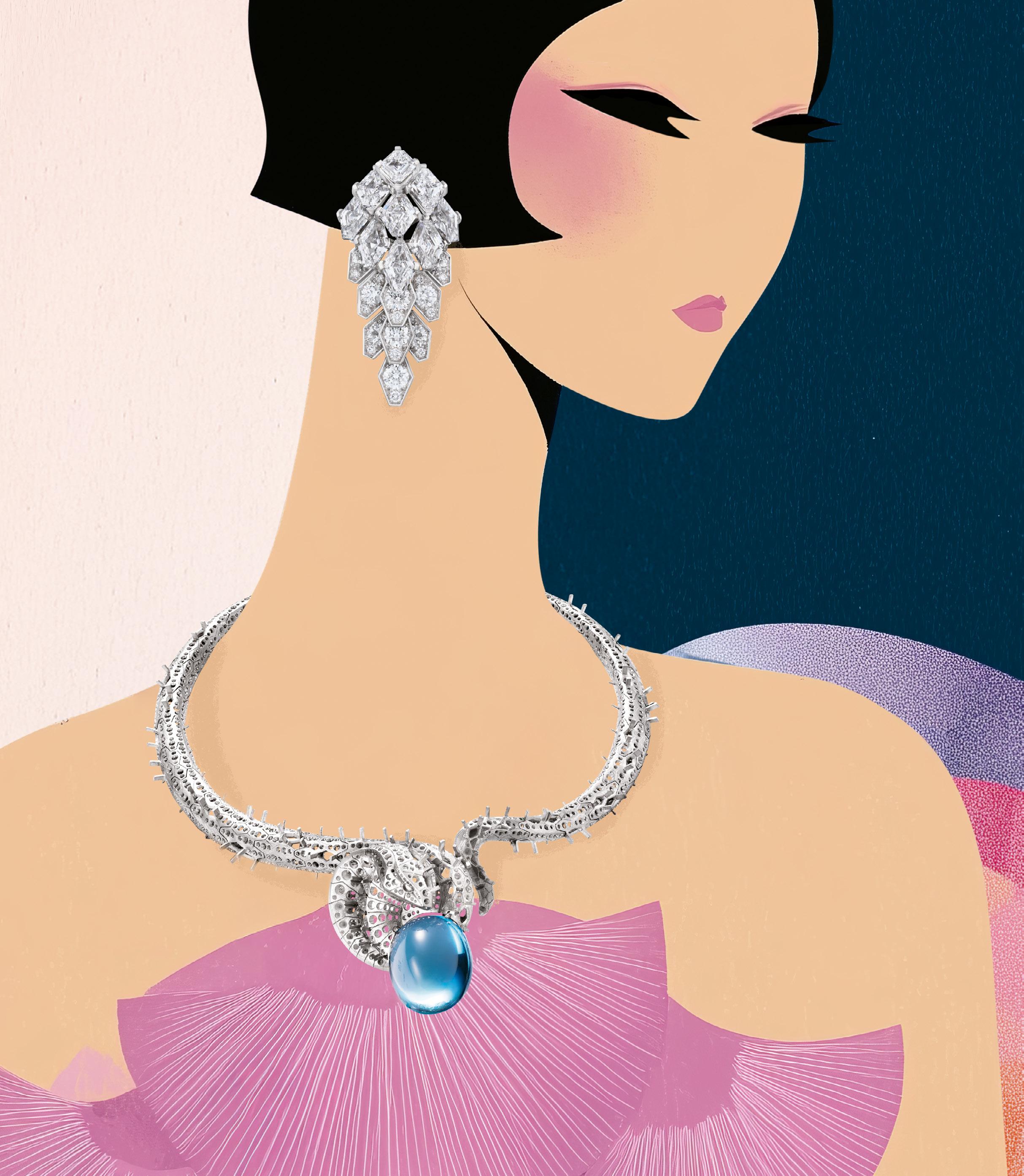
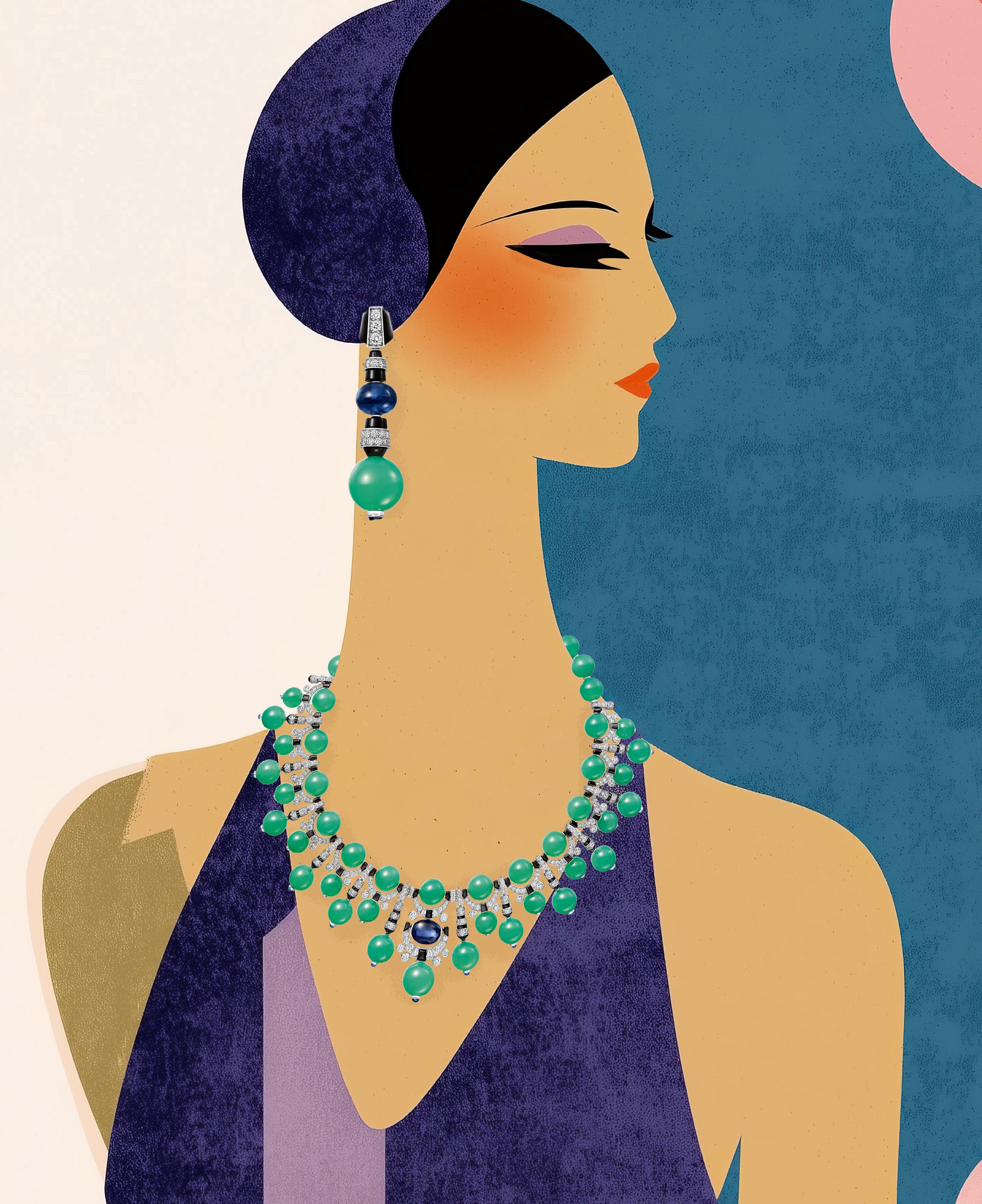
Crafted from gemstones and precious metals, this jewelry has instant heirloom status.
Minimal Hands, Maximum Desire
Precision has never looked — or felt — this alluring.
Above The Bold
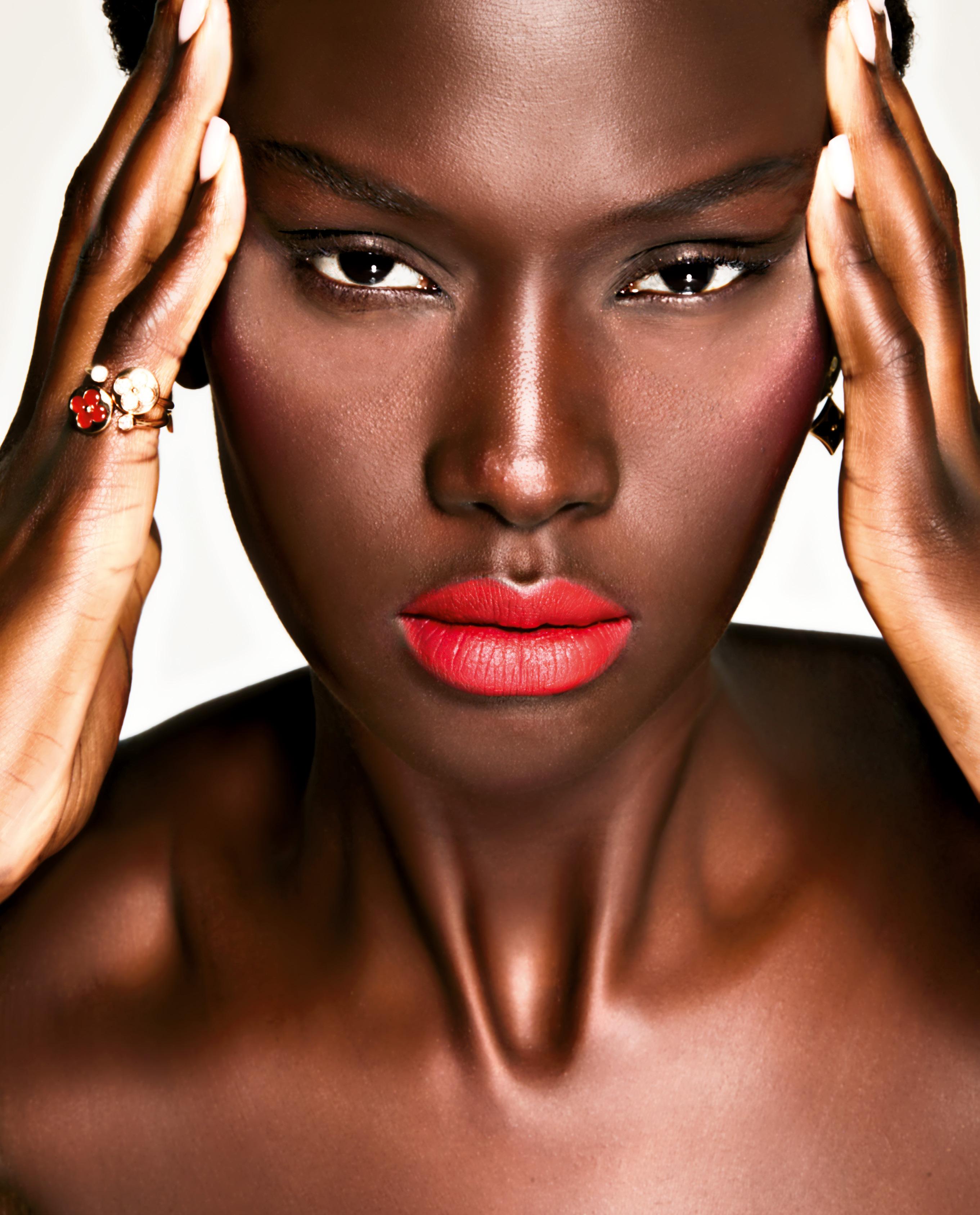
Lush, rich, bright — Spring’s hautest makeup looks are anything but basic.
The Greats
From strapless tops to micro-shorts, Spring’s silhouettes make immaculate skin a covetable necessity.
Bottle Rocket
How the iconic Dior J’adore Amphora — now reimagined for J’adore Intense — catapulted the fragrance to its cult status.
The
Facelift
Can we counter the visible signs of aging by manipulating our own fascia?
Let There Be Lux
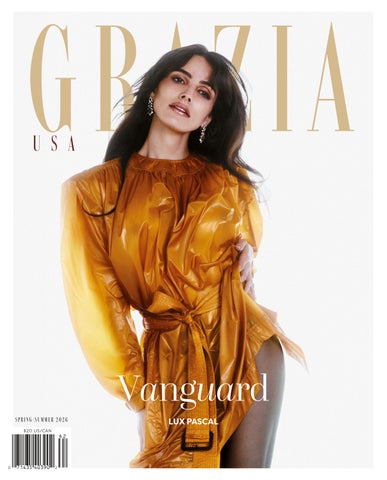
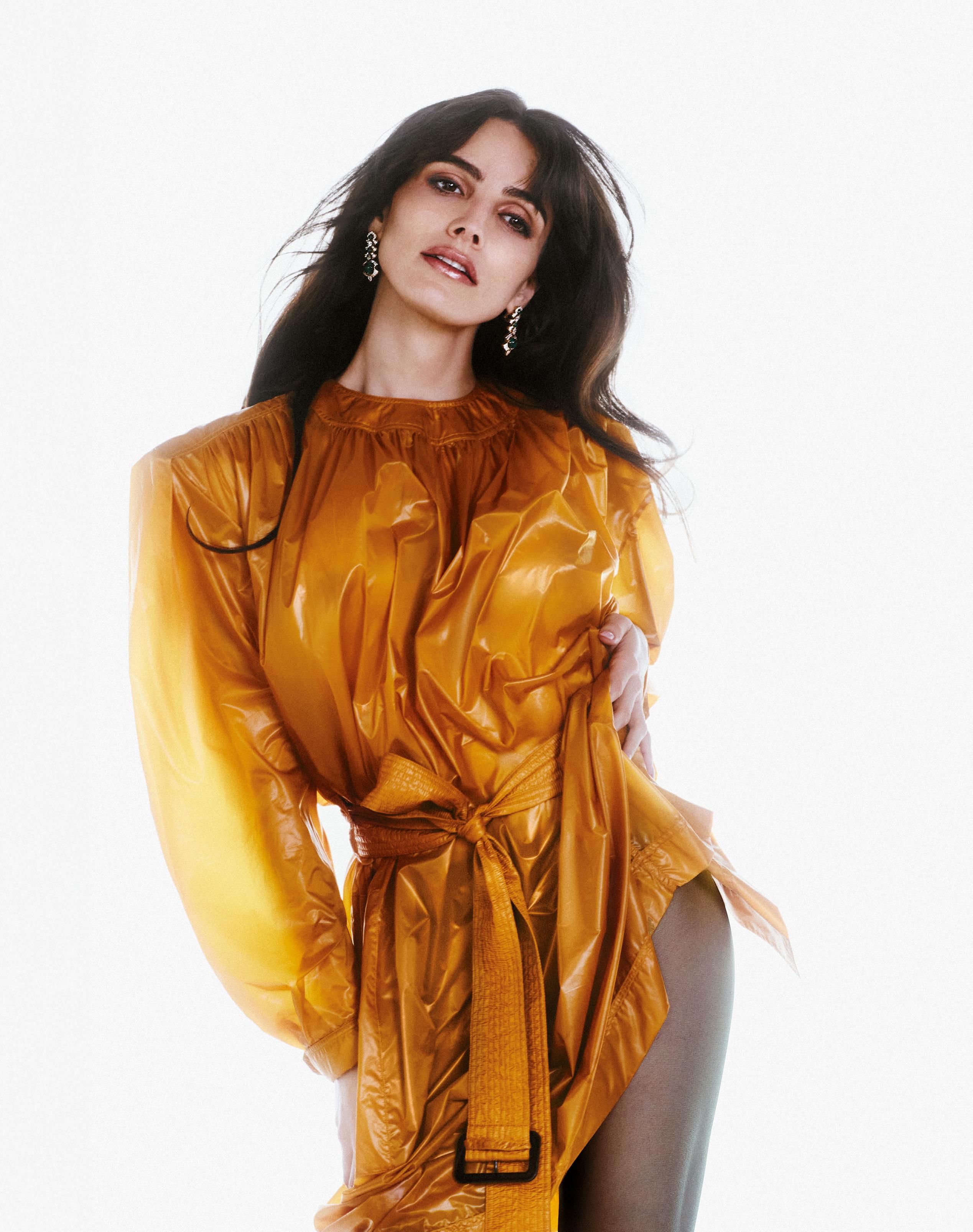
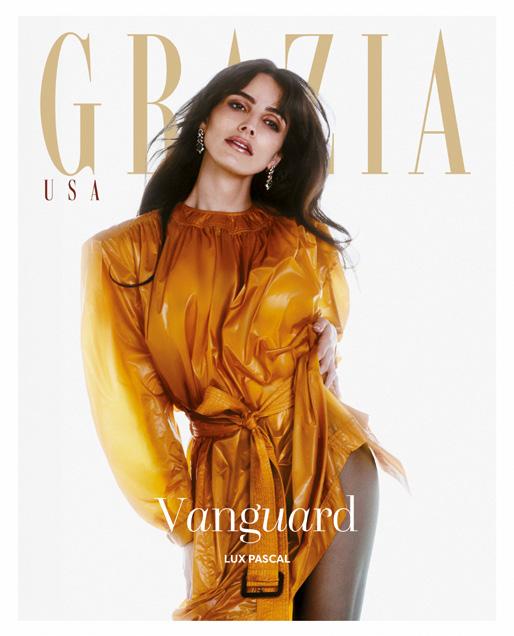
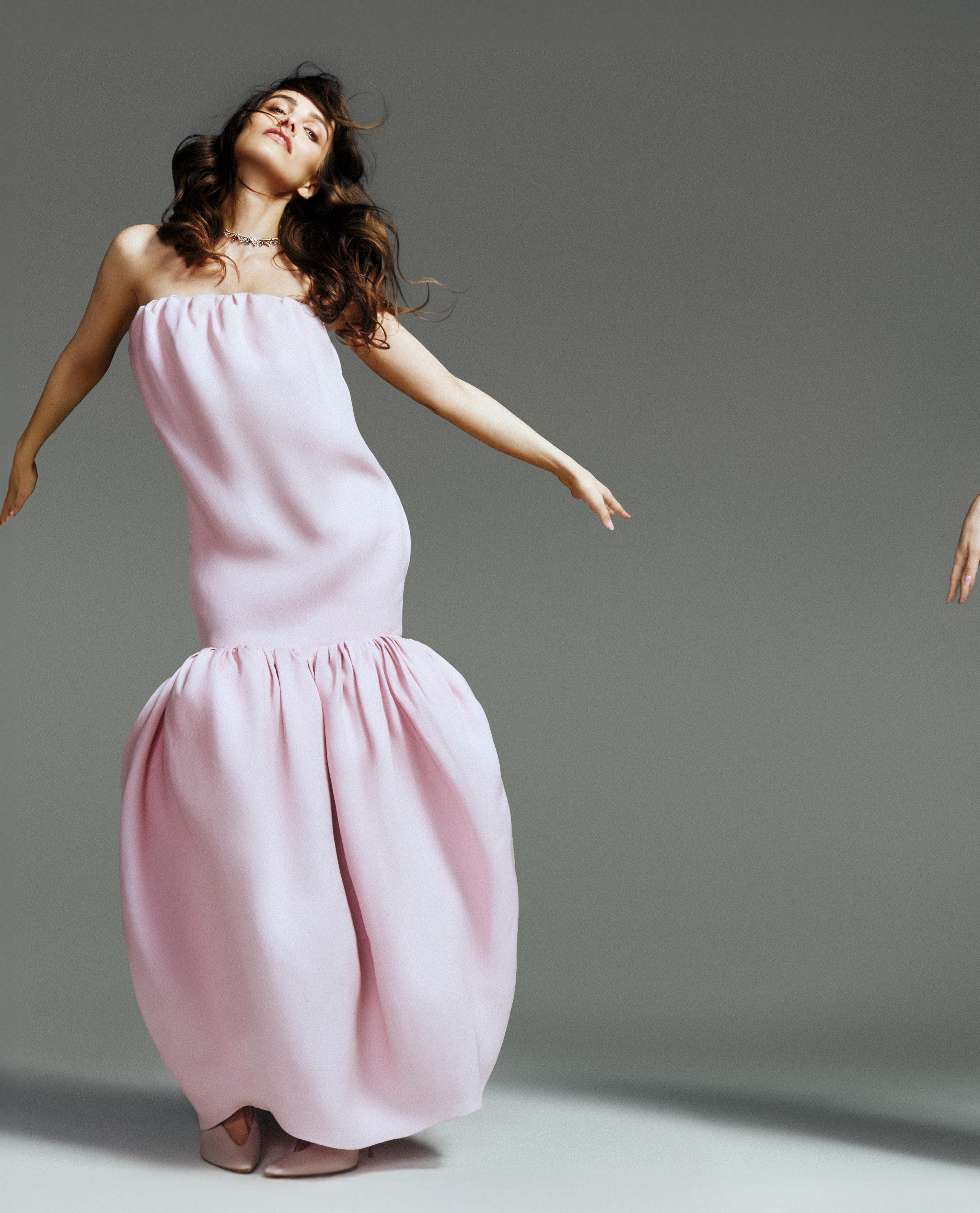
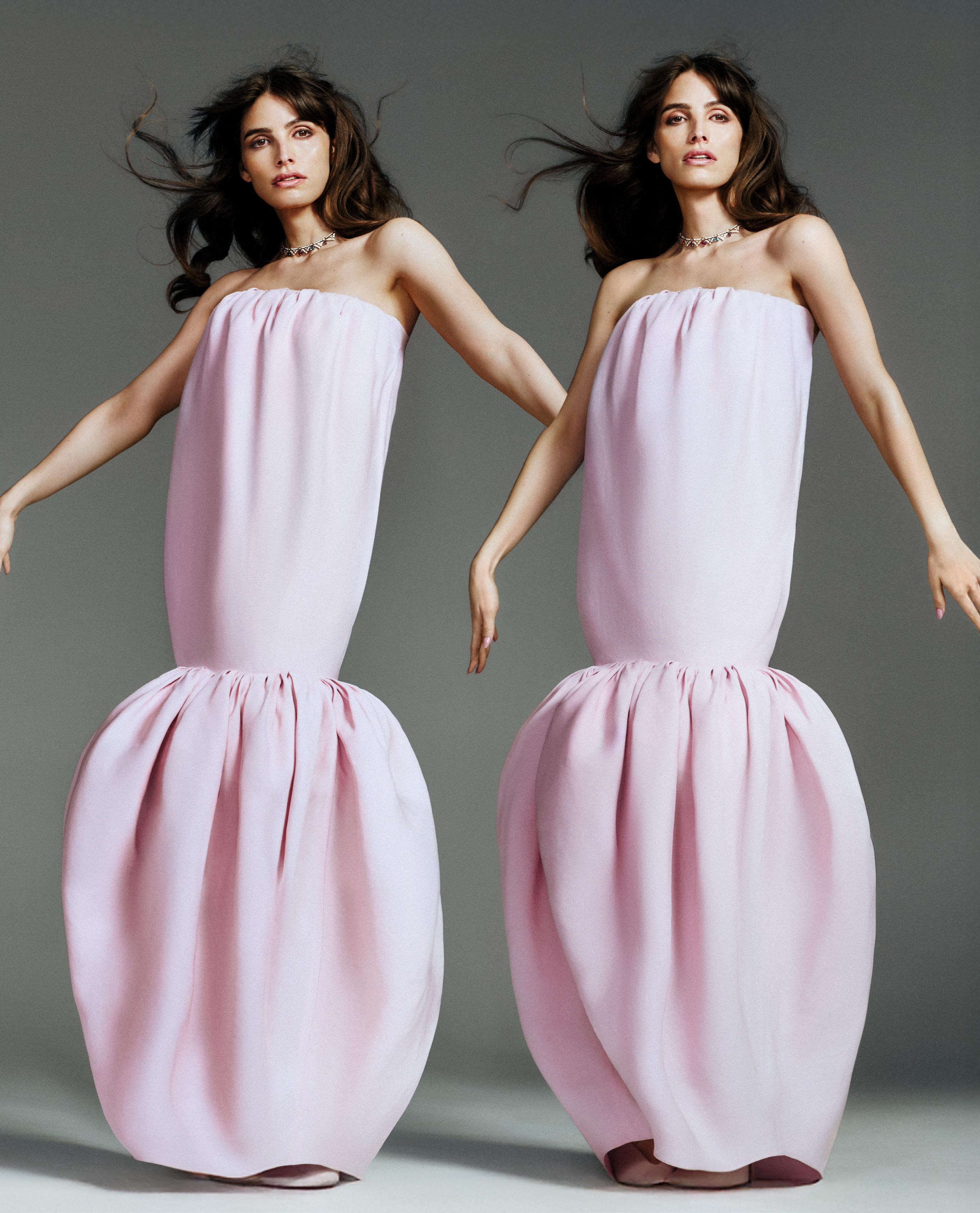
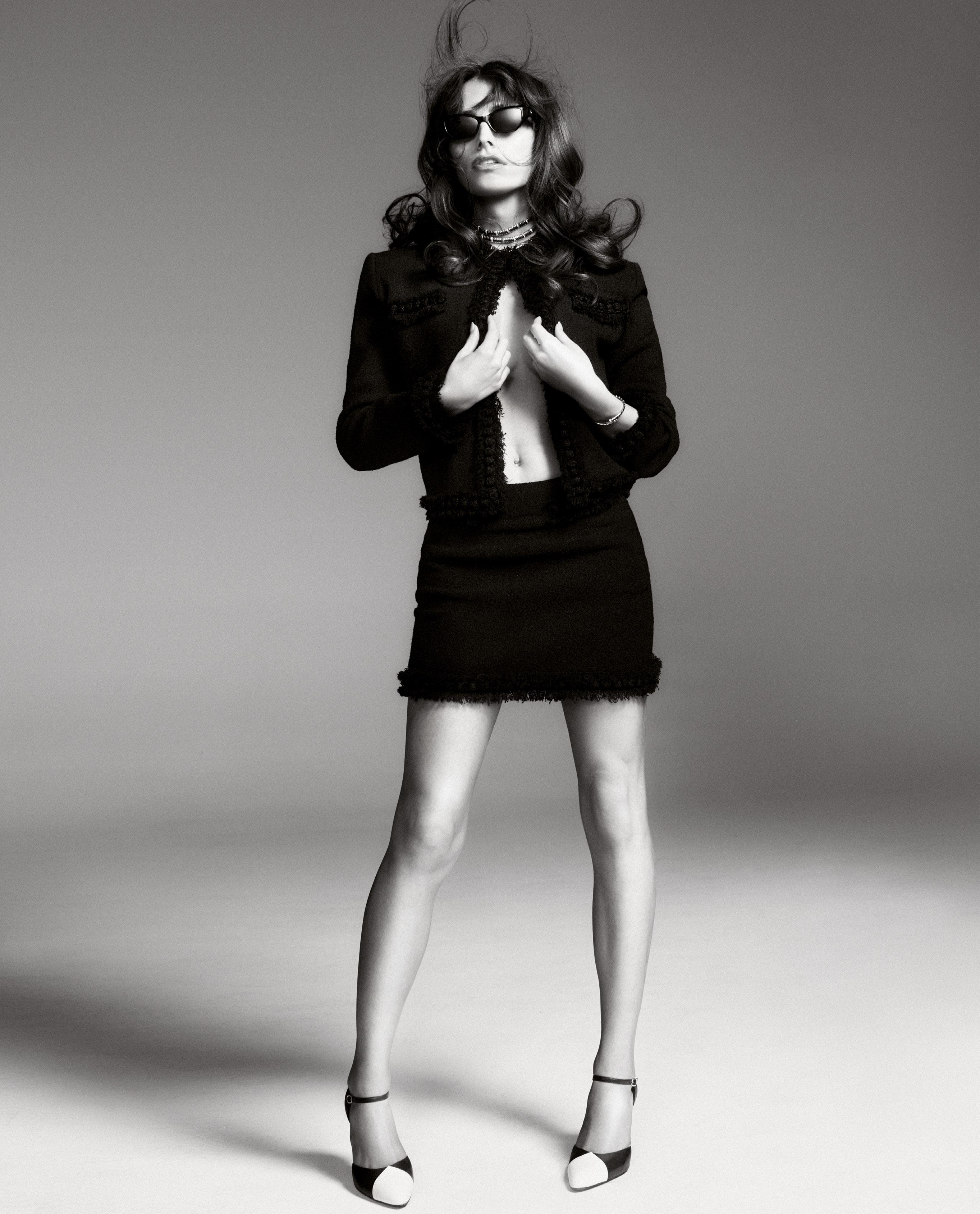
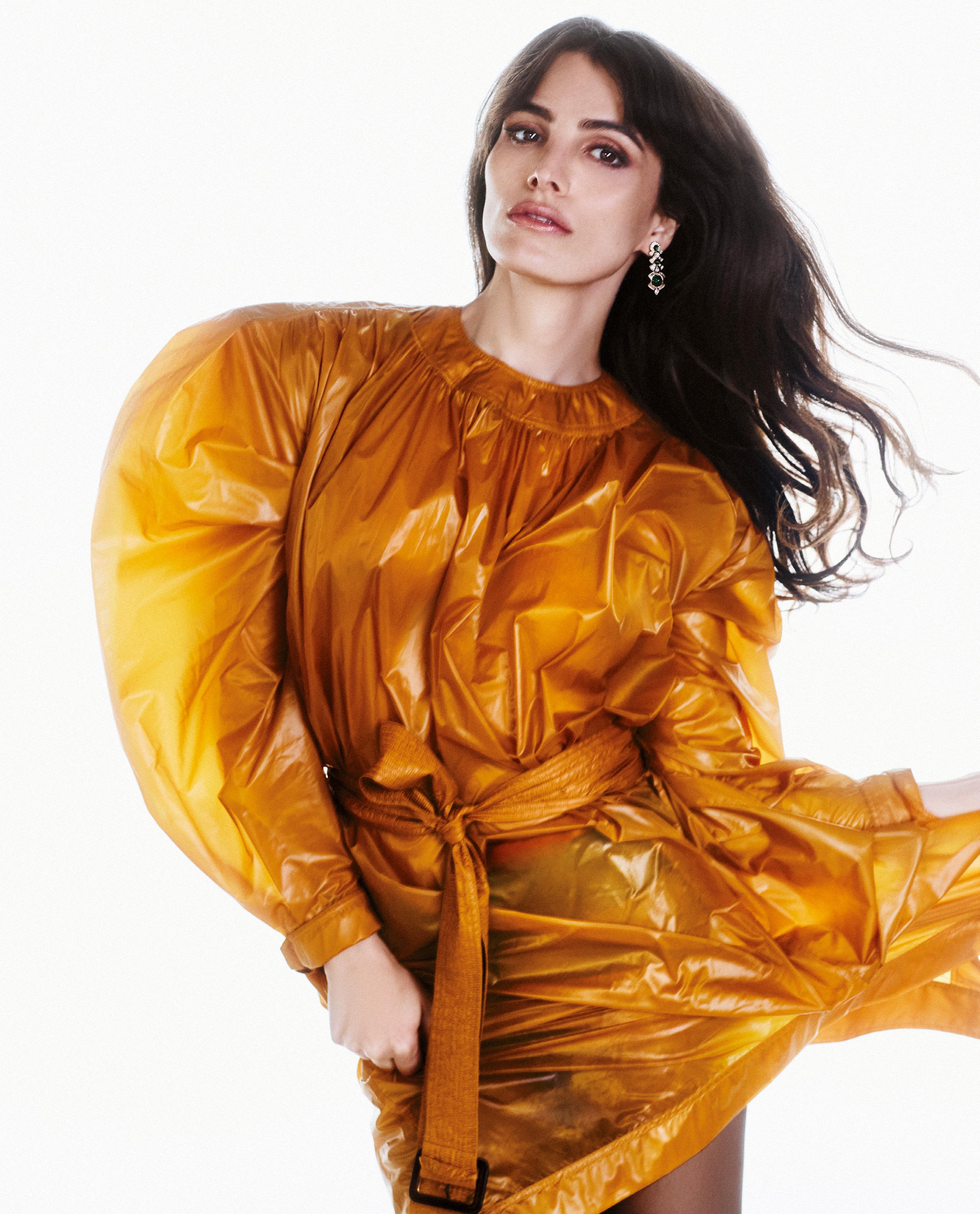
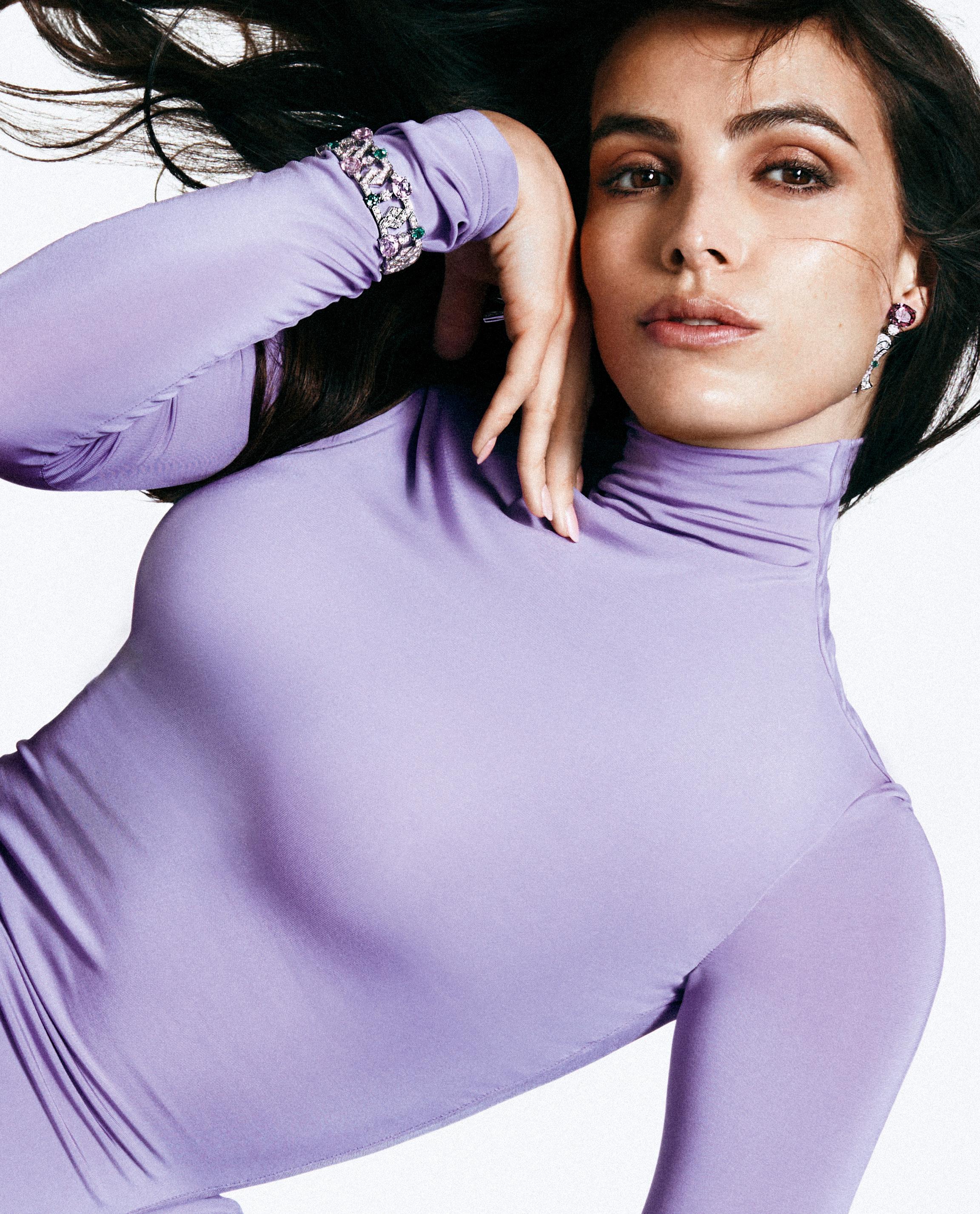
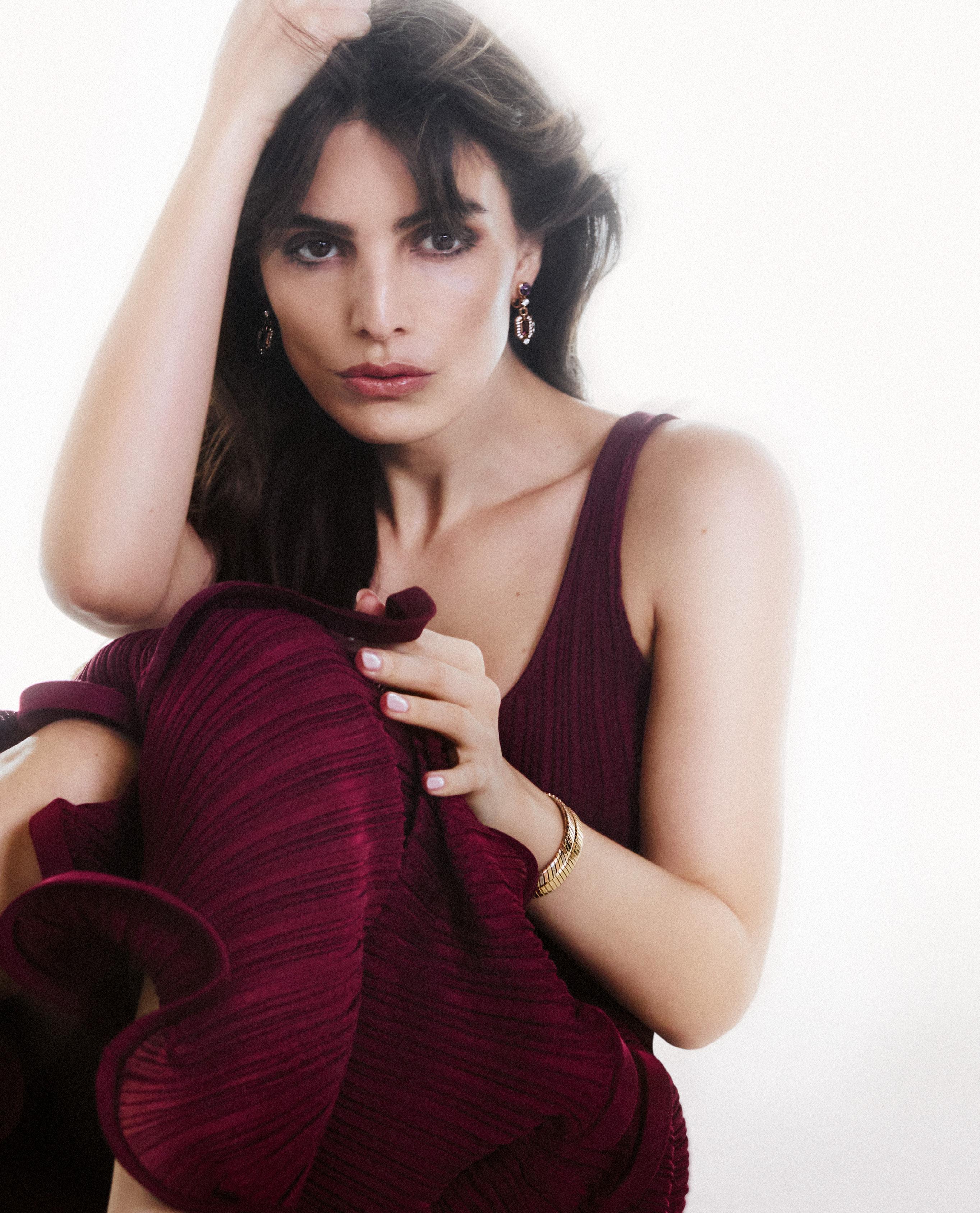
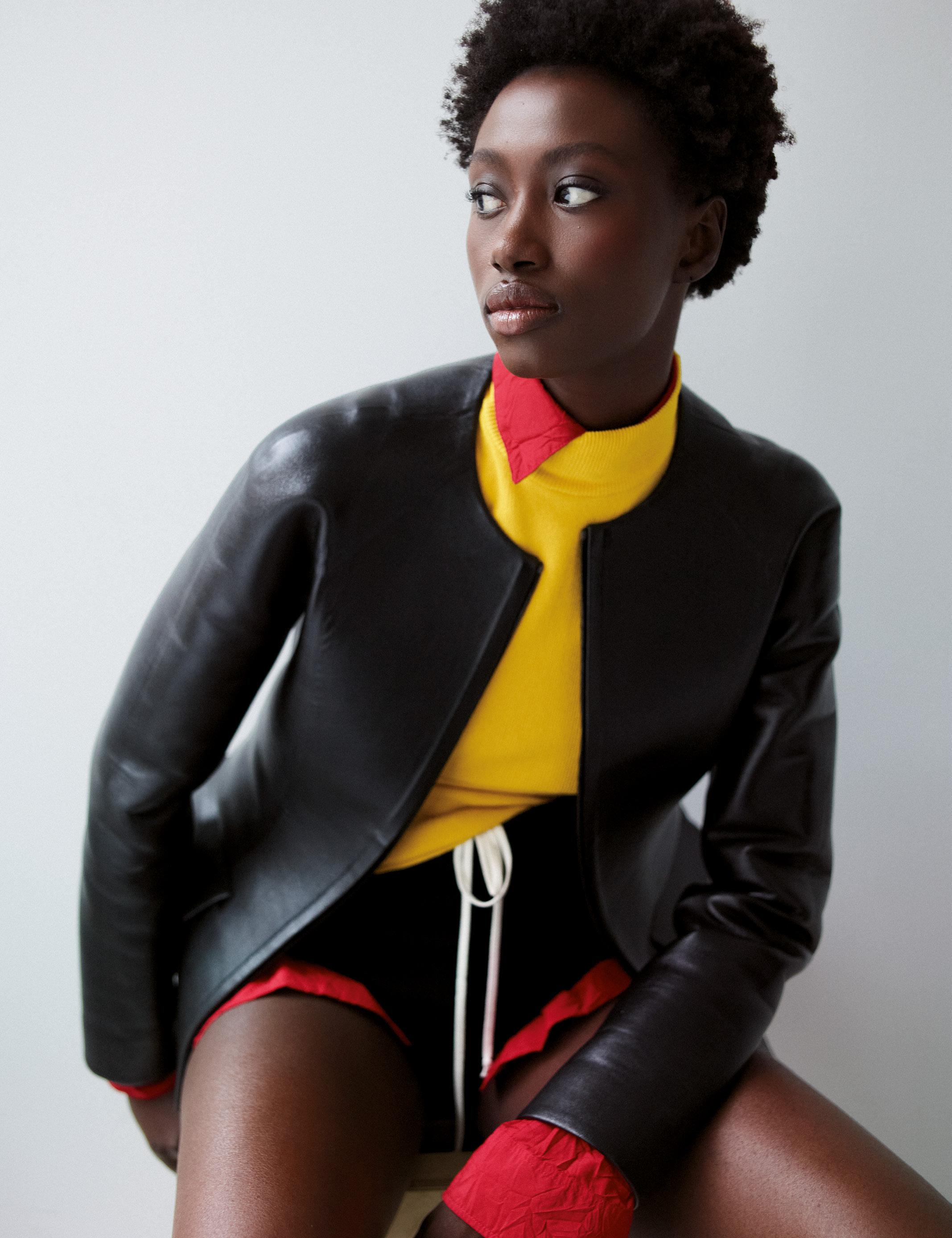
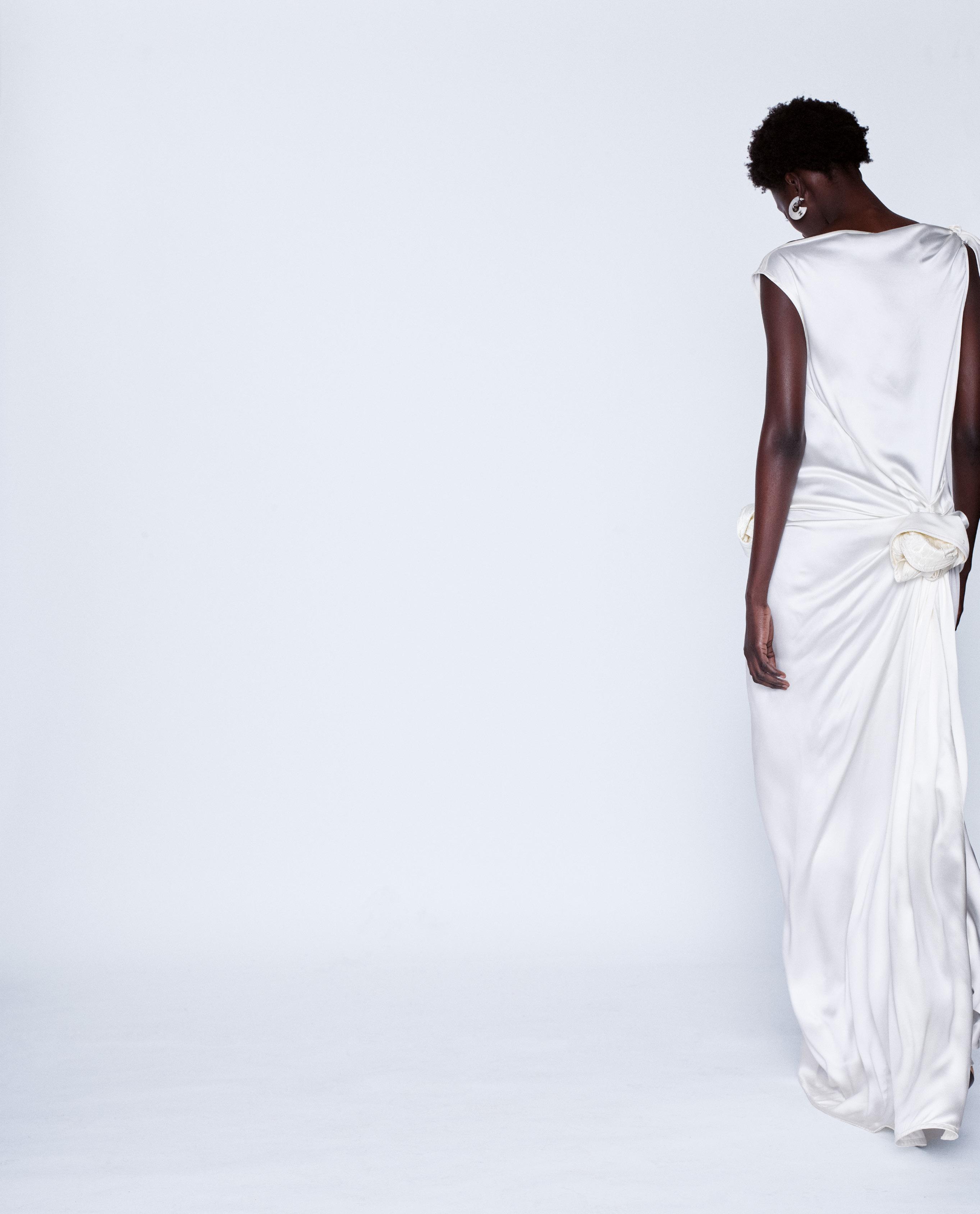
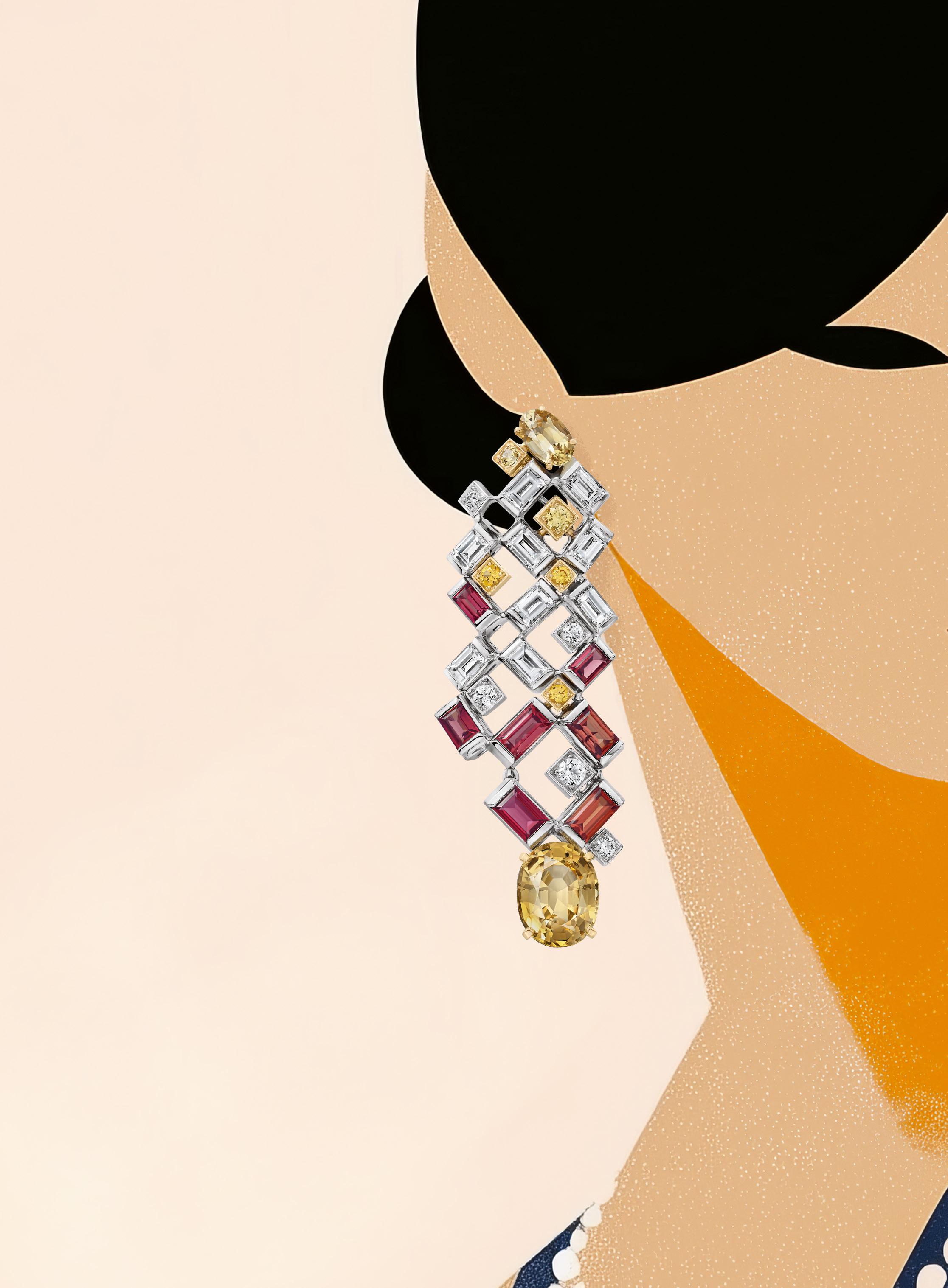
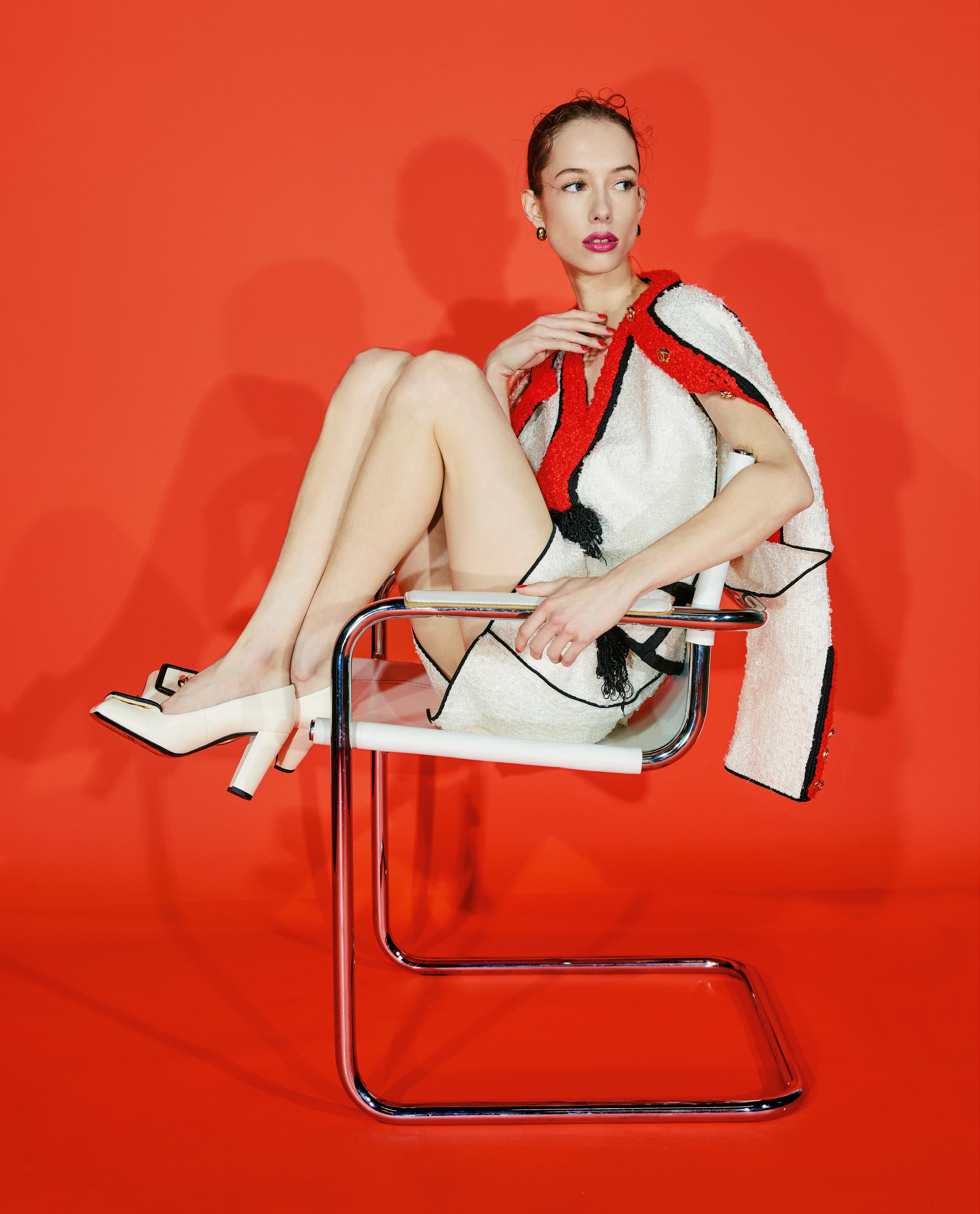
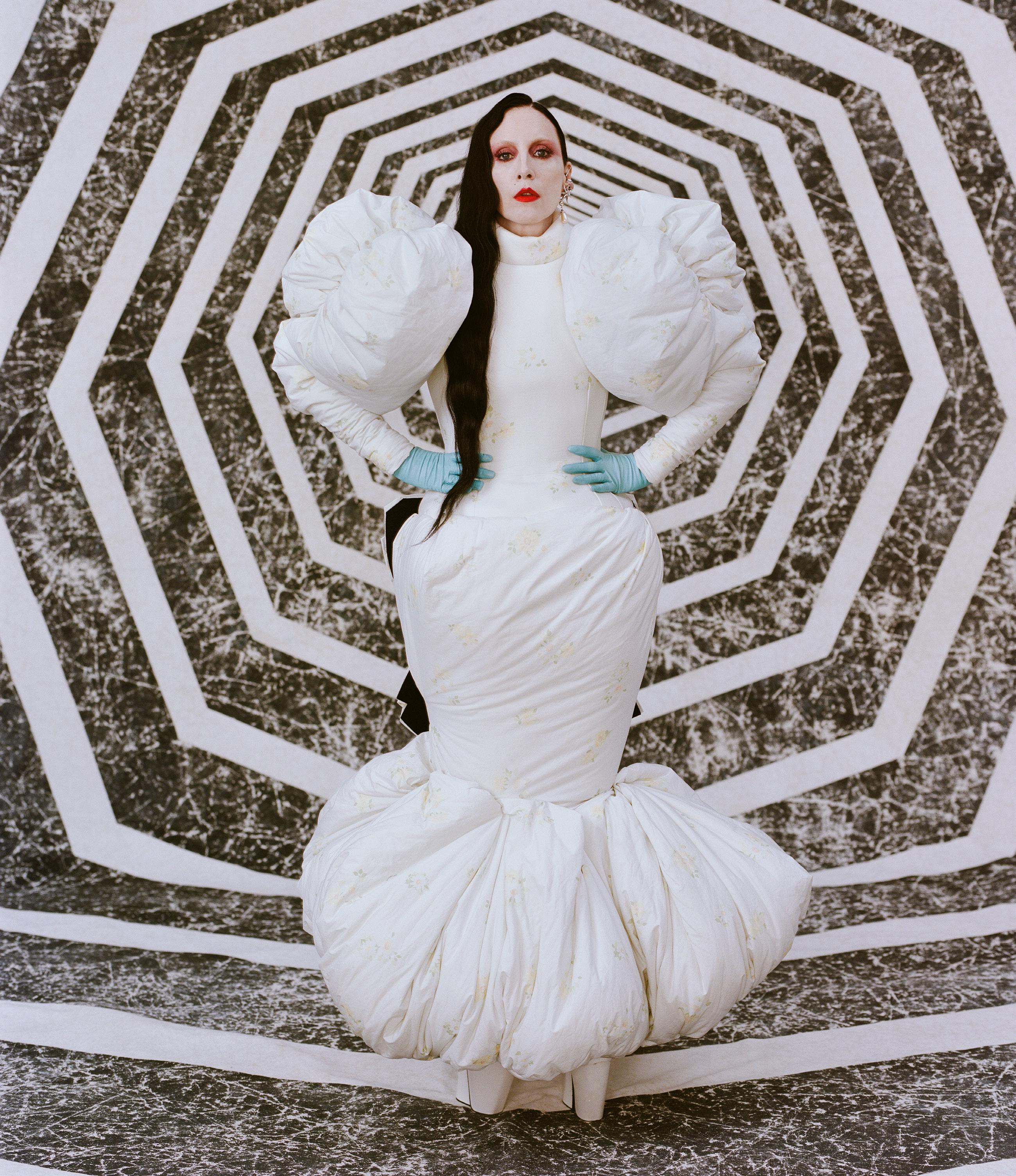
On the cover: Saint Laurent by Anthony Vaccarello dress, tights, ysl.com; Bvlgari High Jewelry earrings, bulgari.com.
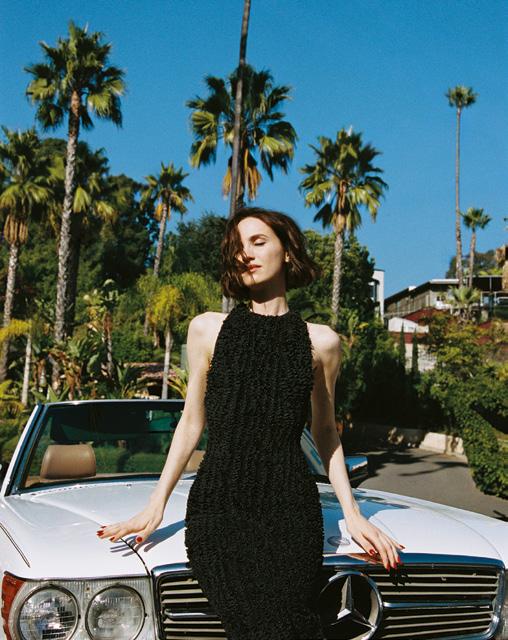
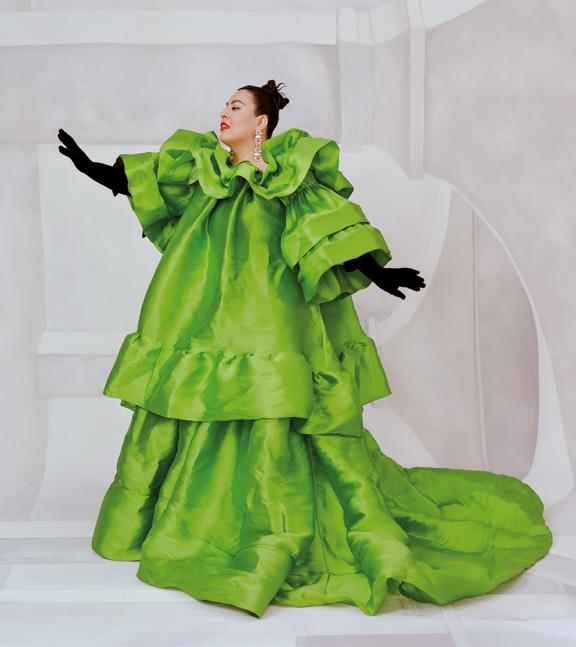
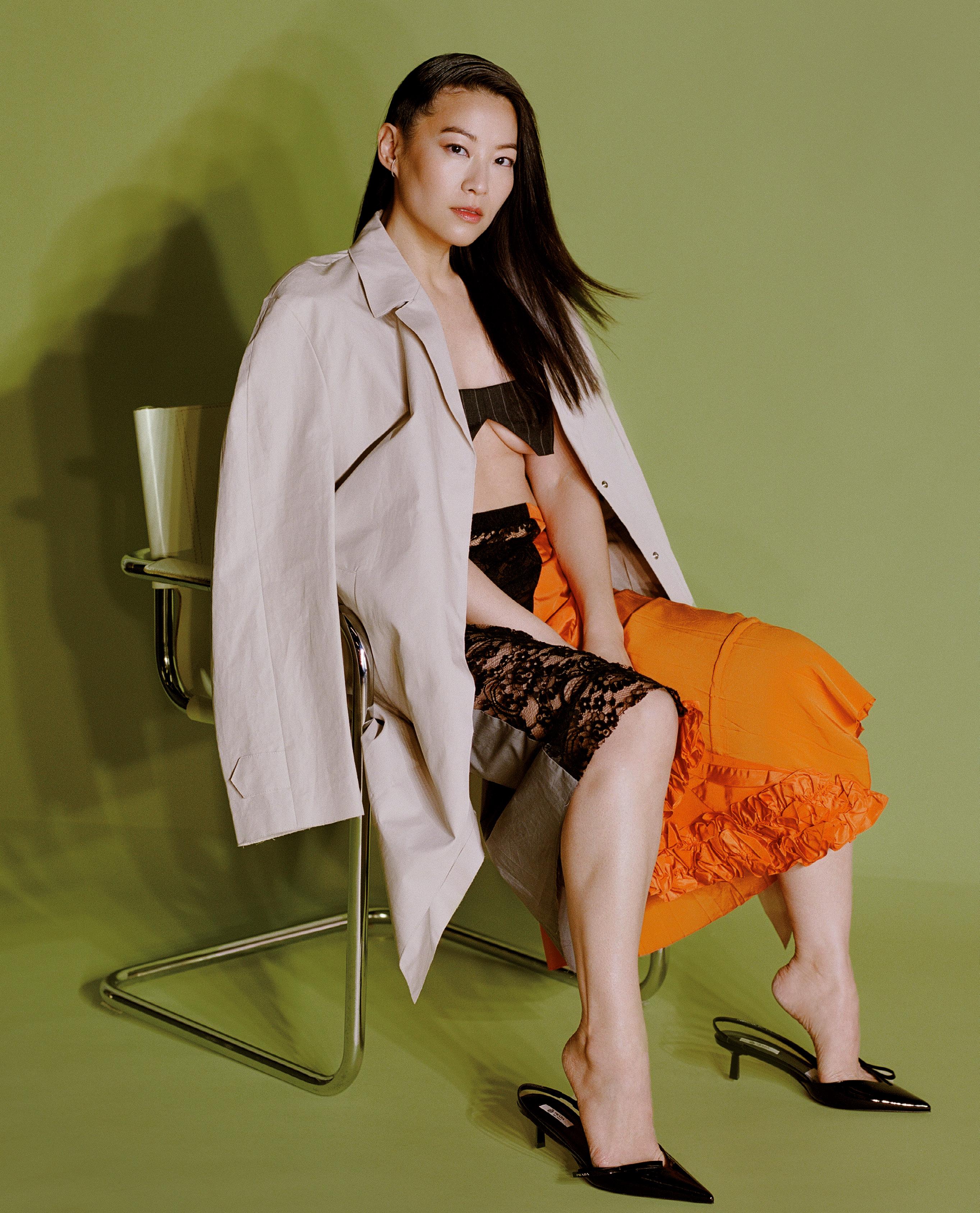
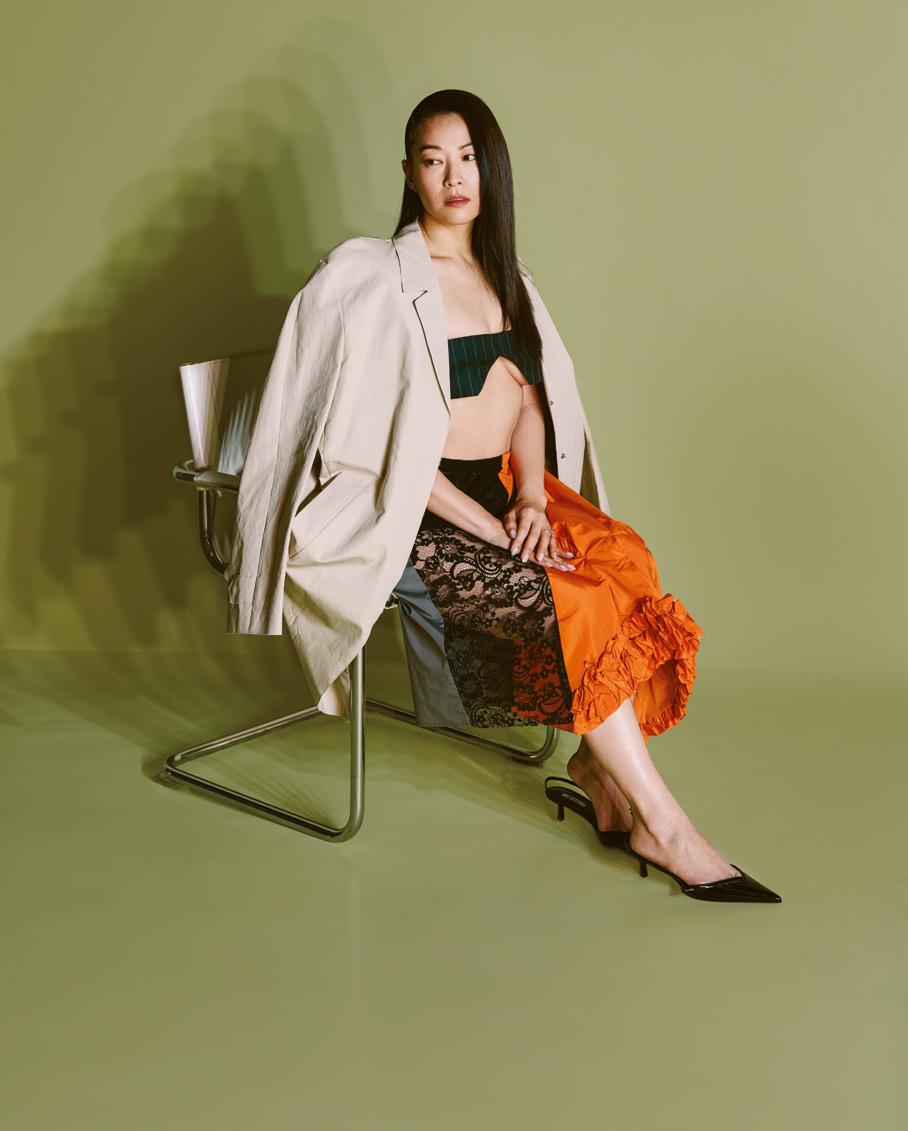
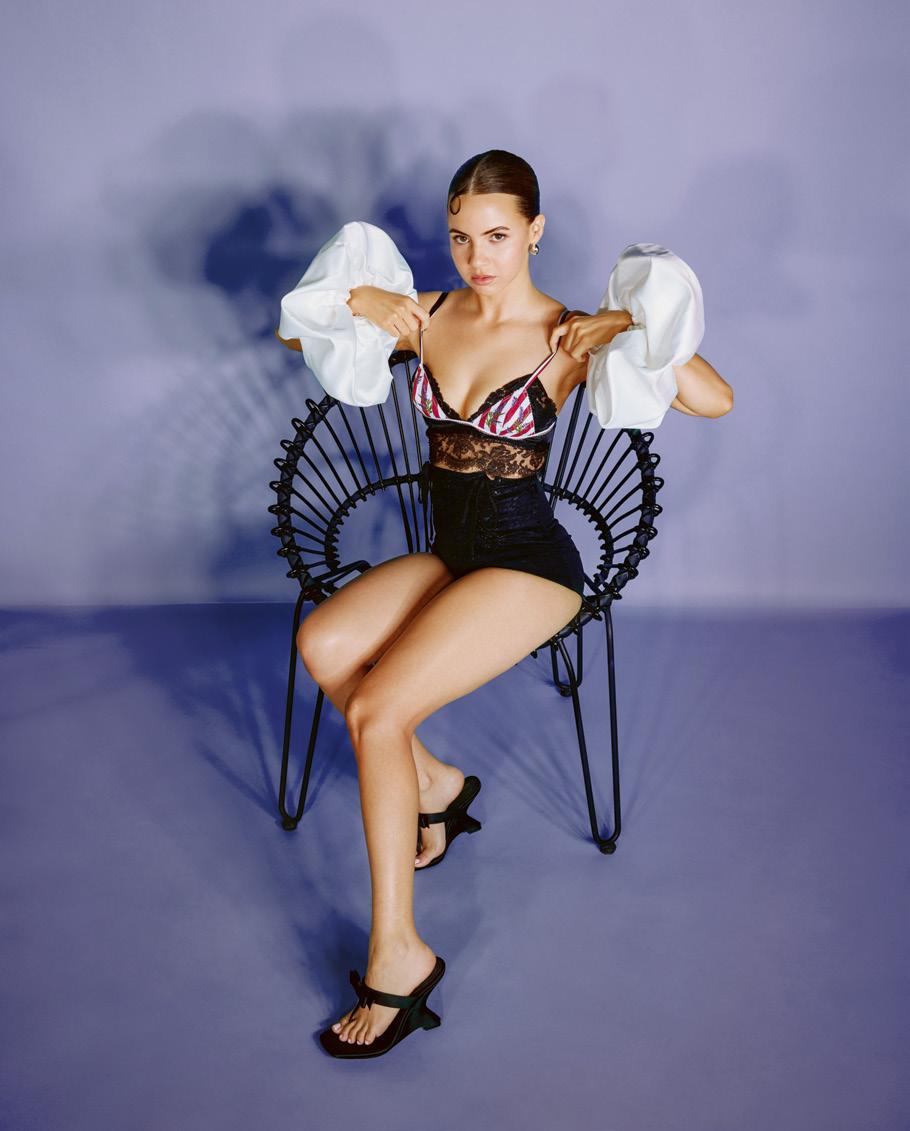
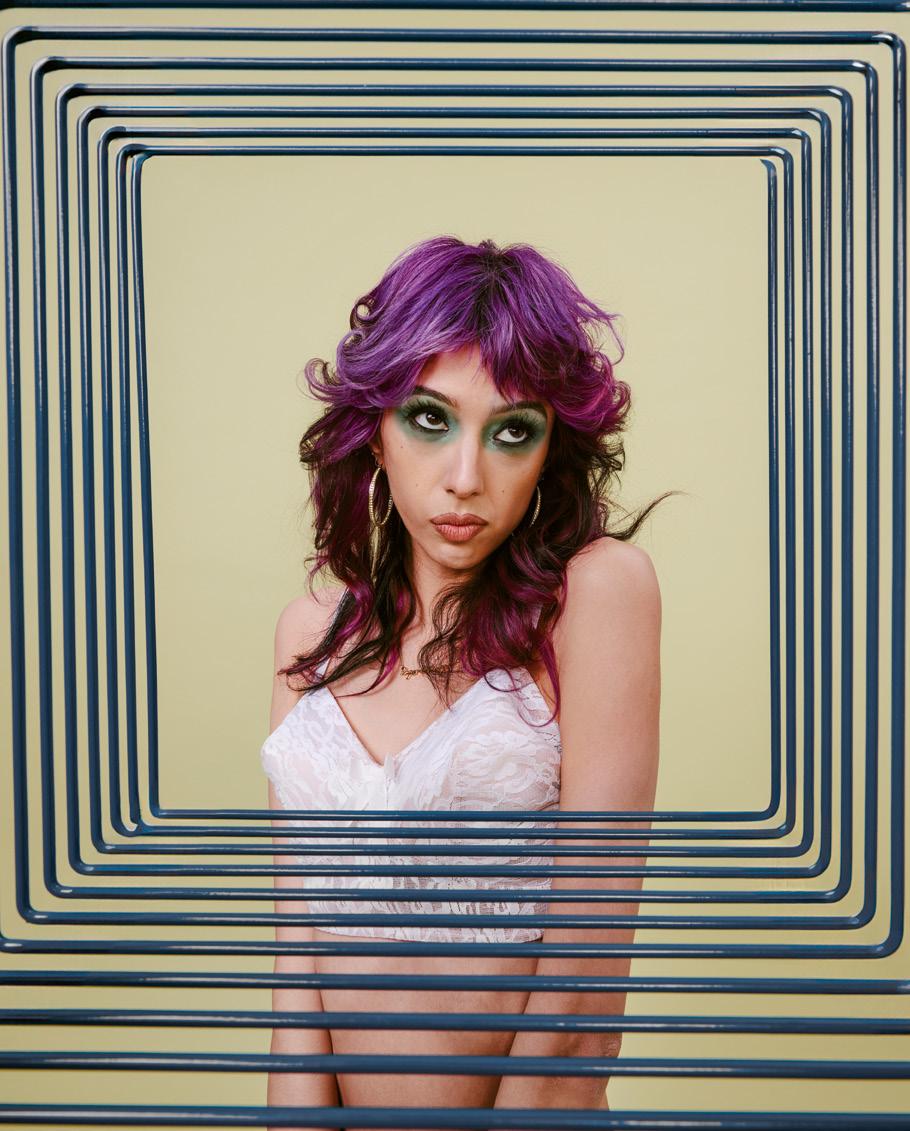
Opposite page from left: Maude Apatow wearing Max Mara dress, us.maxmara. com. Bottega Veneta coat, bottegaveneta.com; Falke bodysuit, falke.com. San Cha wearing Vungoc & Son dress, vungocandson.com; Gucci earrings, gucci.com; The Residency Experience gloves, theresidencyexperience.com.
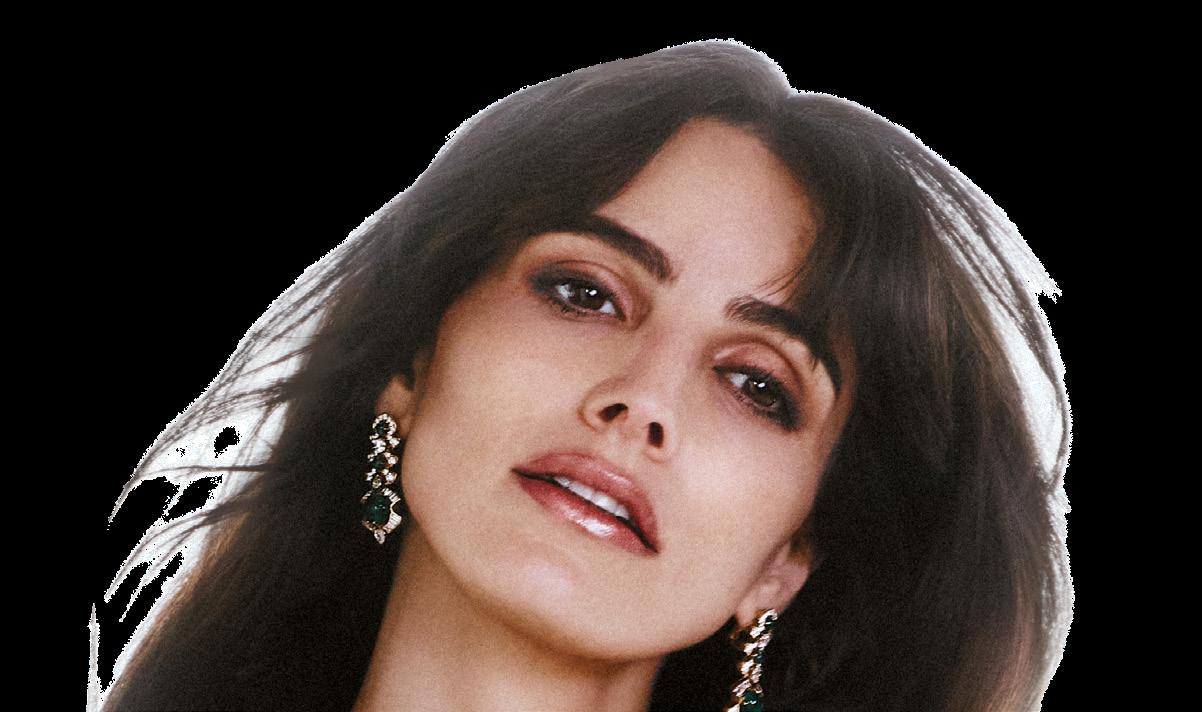
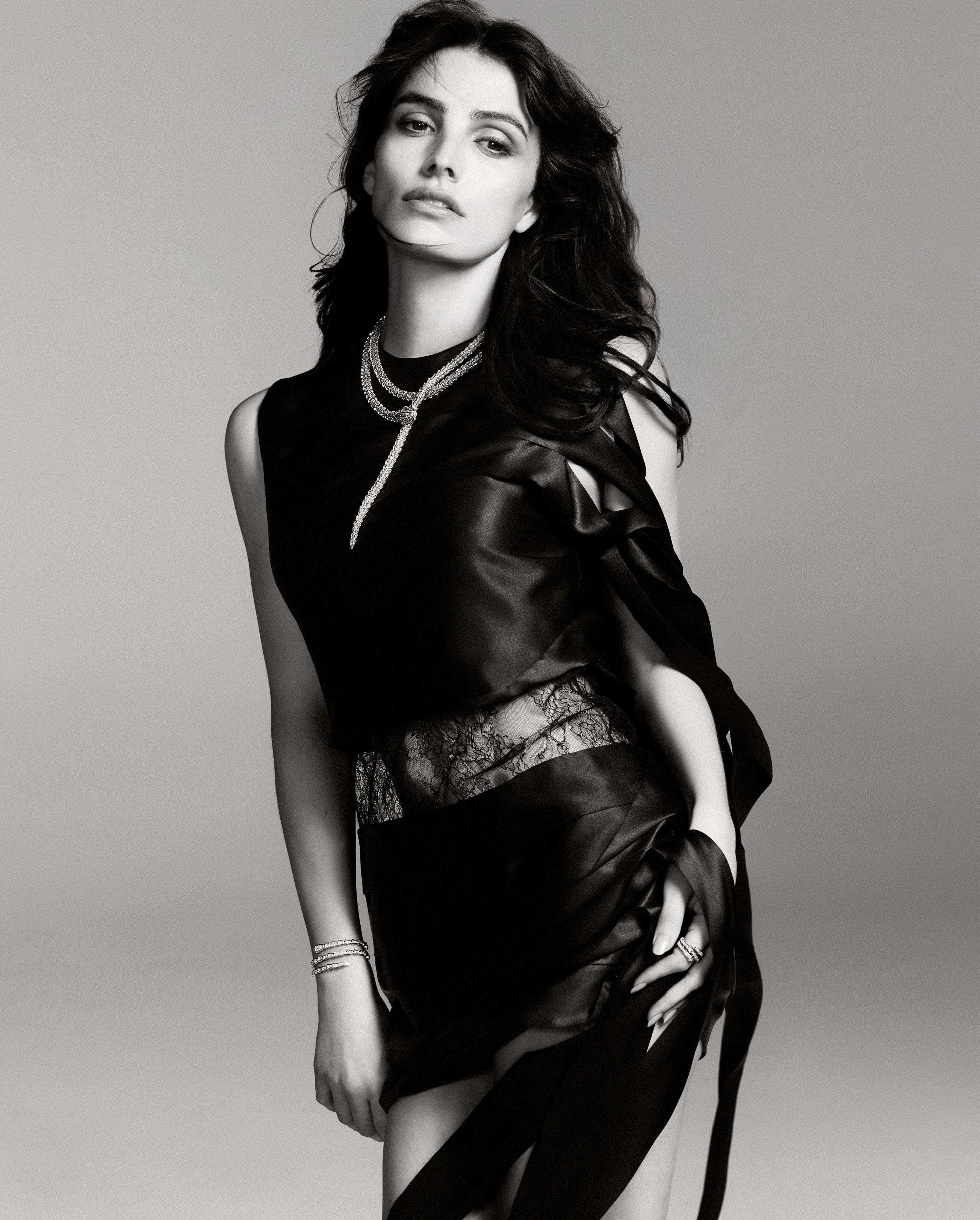
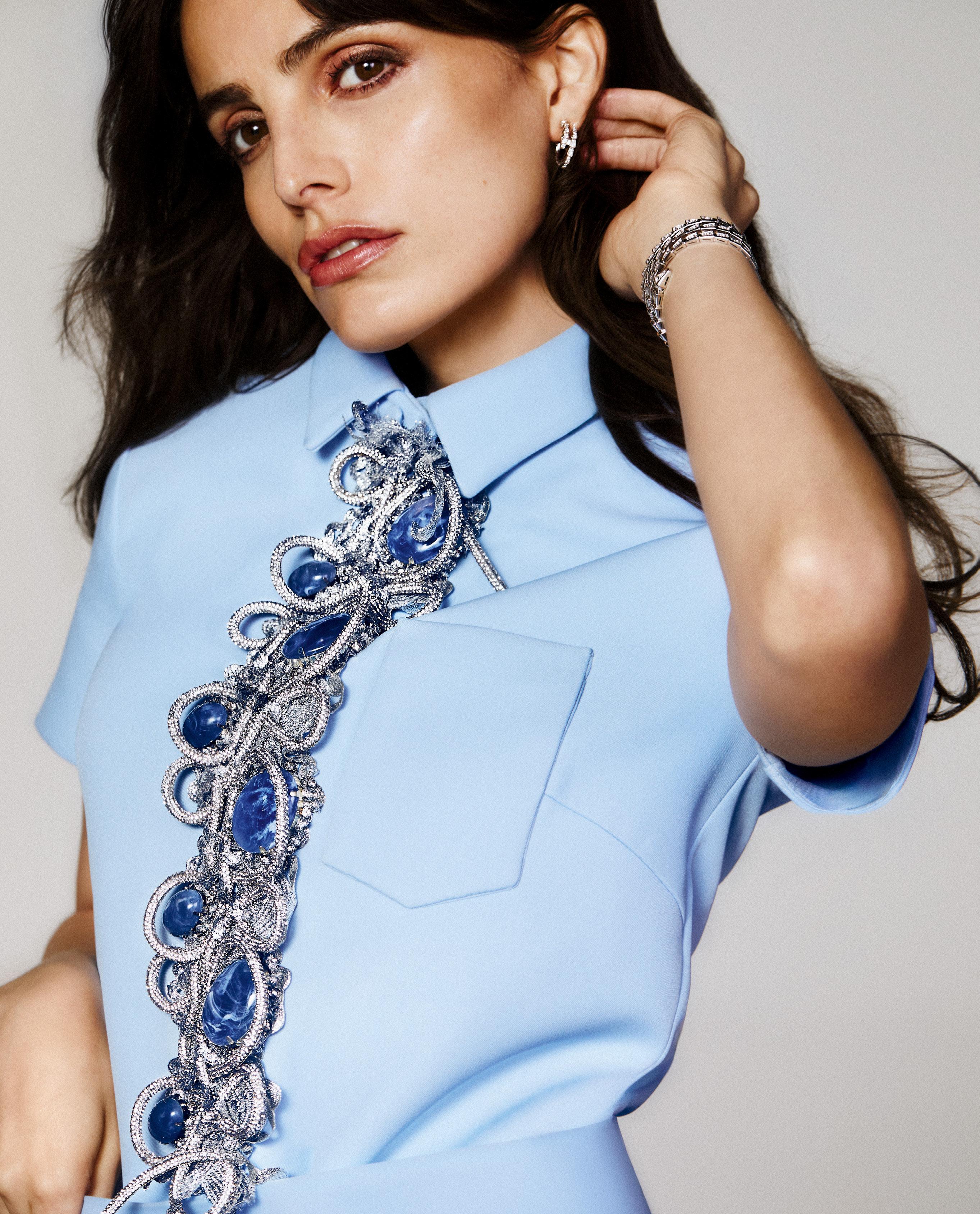
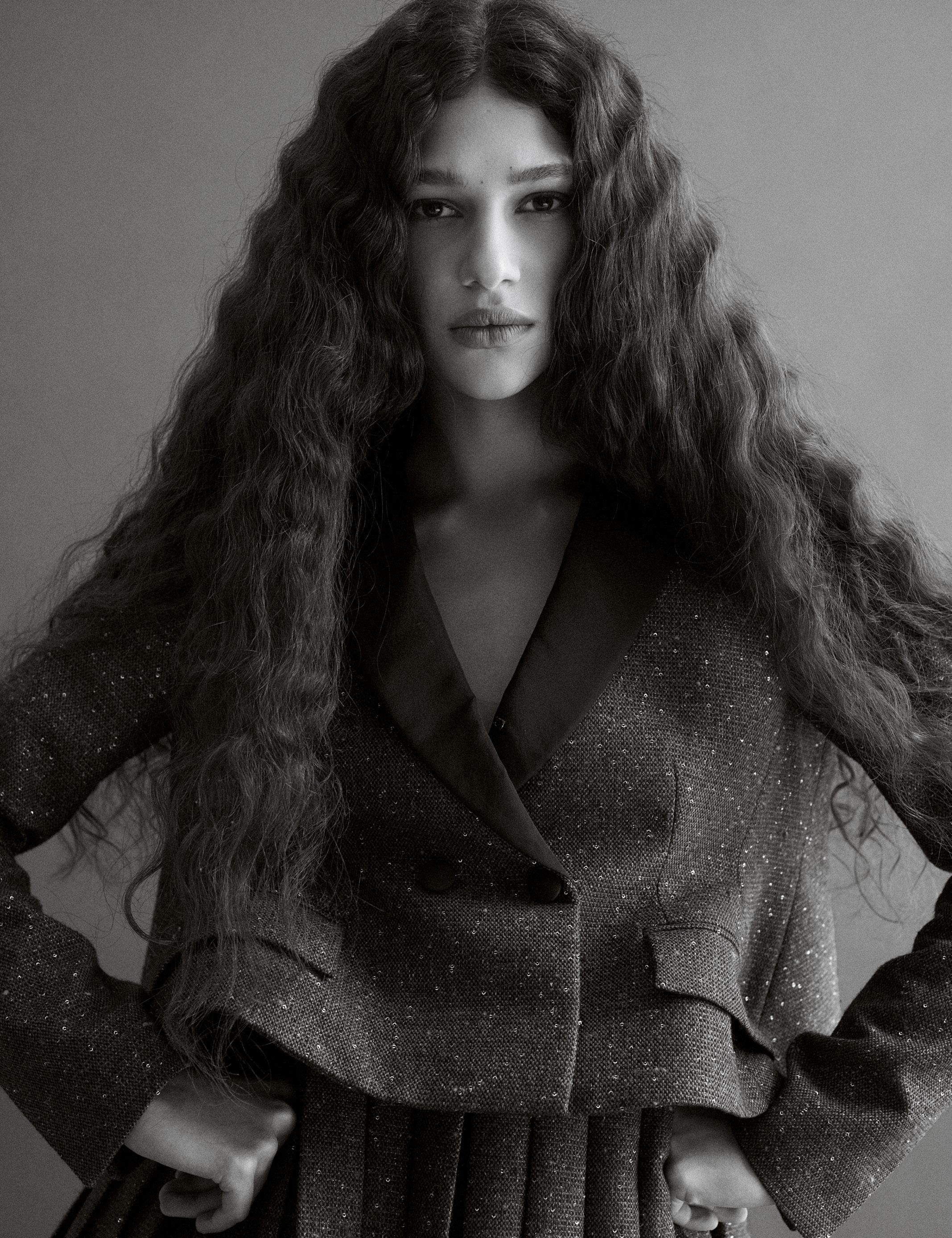
Lux Pascal is often mentioned in the same breath as her brother Pedro, but this year the Chilean actress is finding her own light.
Maude’s Moment
Euphoria has made global superstars of its Gen Z cast – including Maude Apatow, winner of the Max Mara Face of the Future Award.
If You See Something, Buy Something
Informercials are now… chic? They are on shopping livestreams, where everything from vintage Banana Republic to new Balenciaga hits the online auction block.
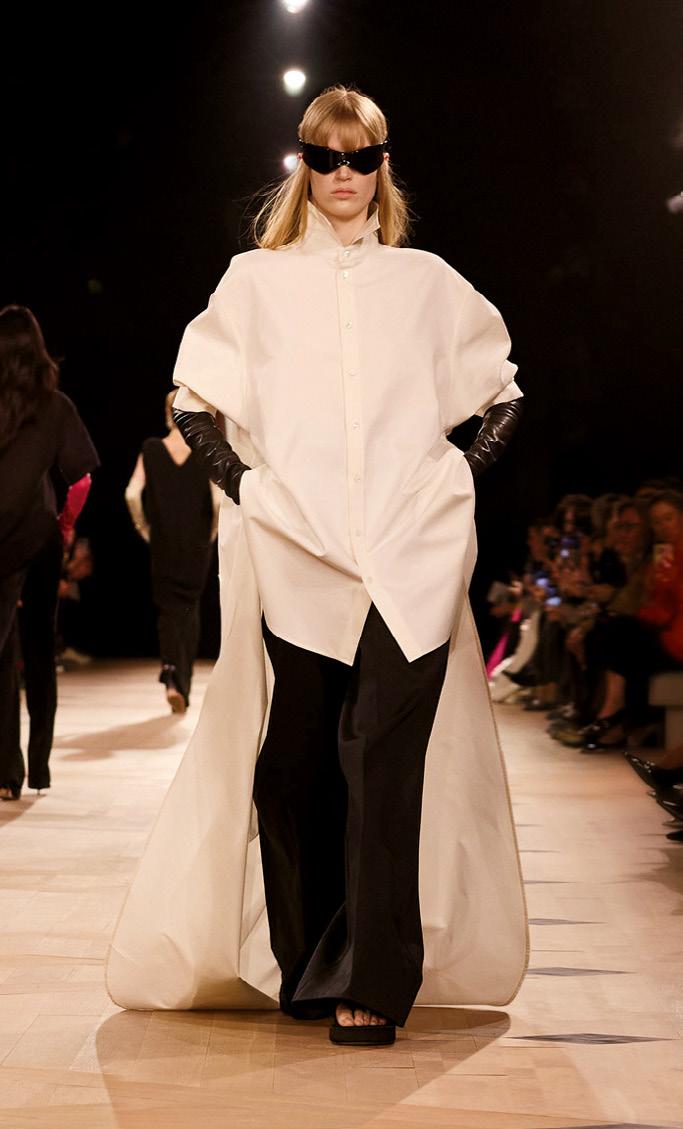
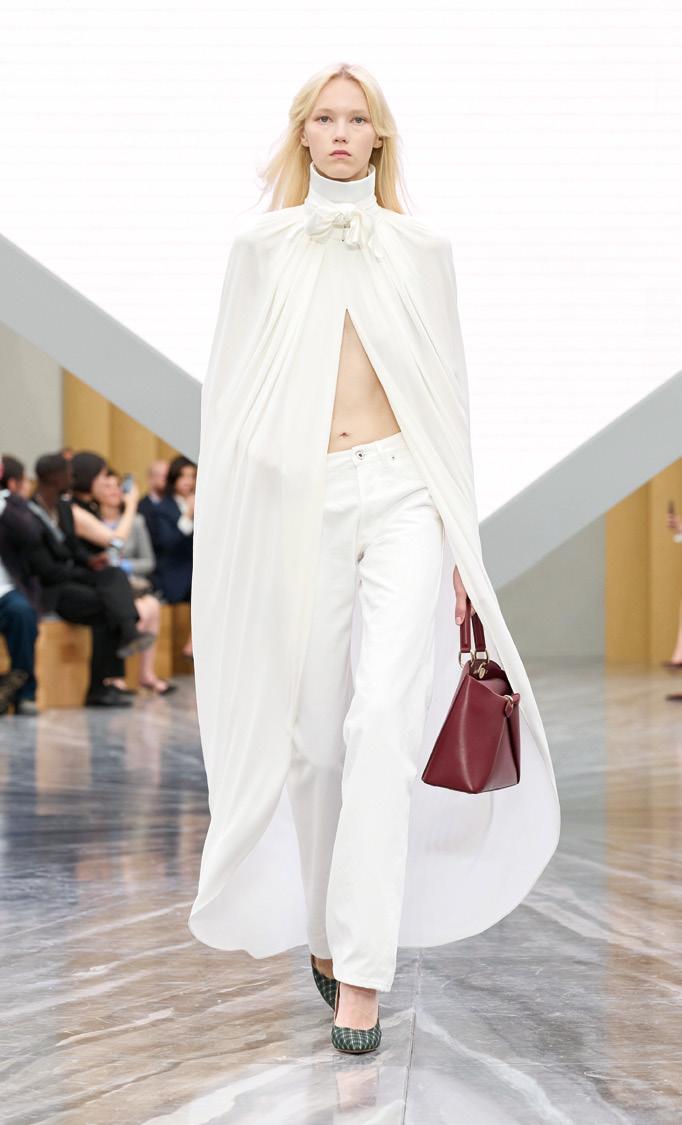
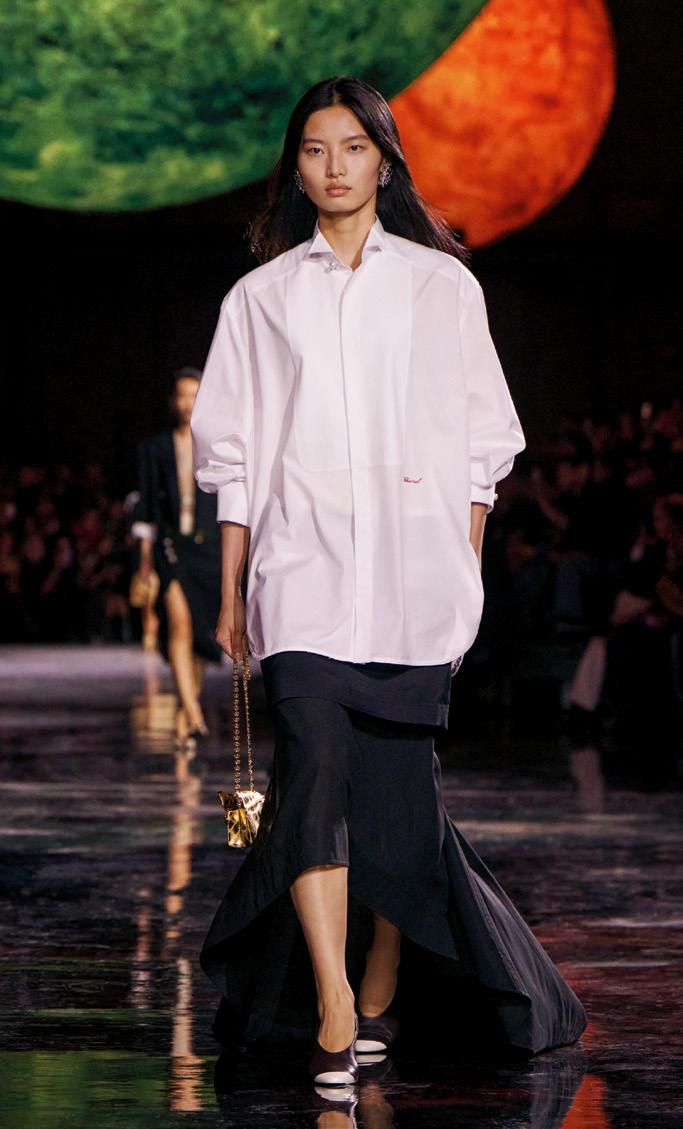
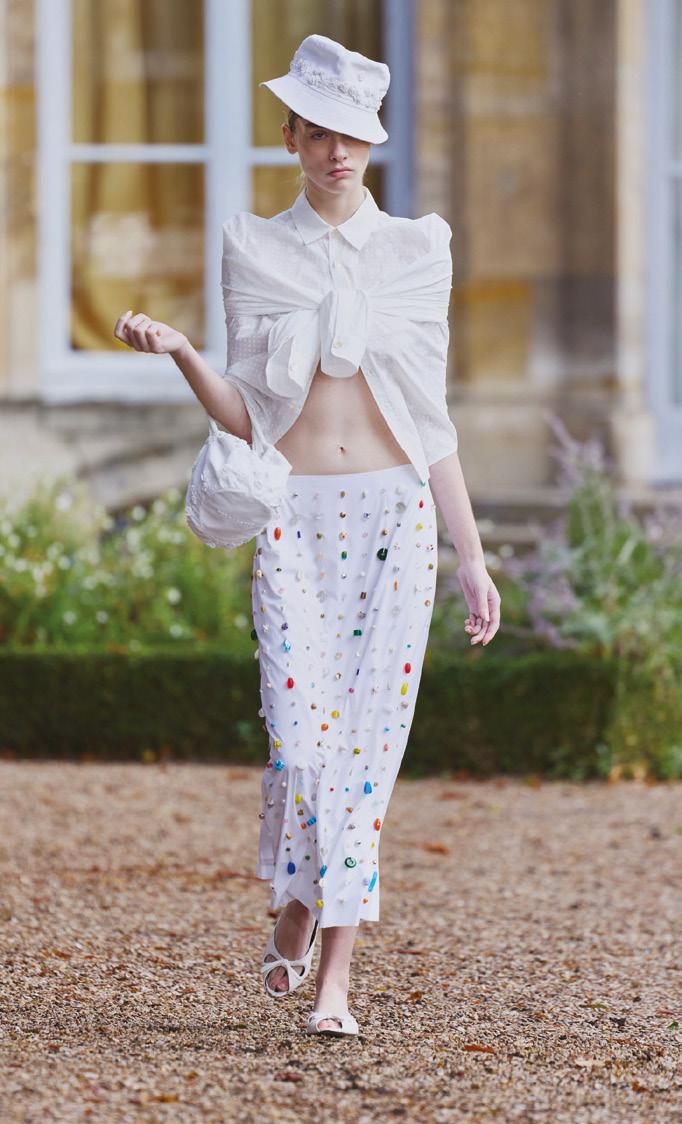
Great White Shirt
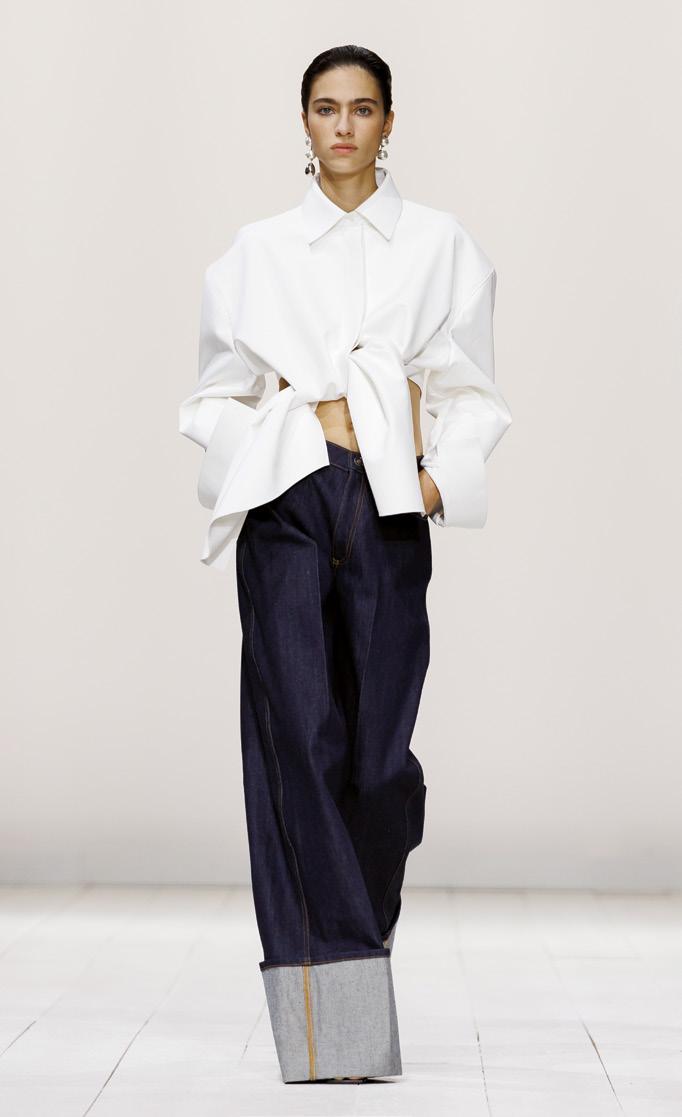
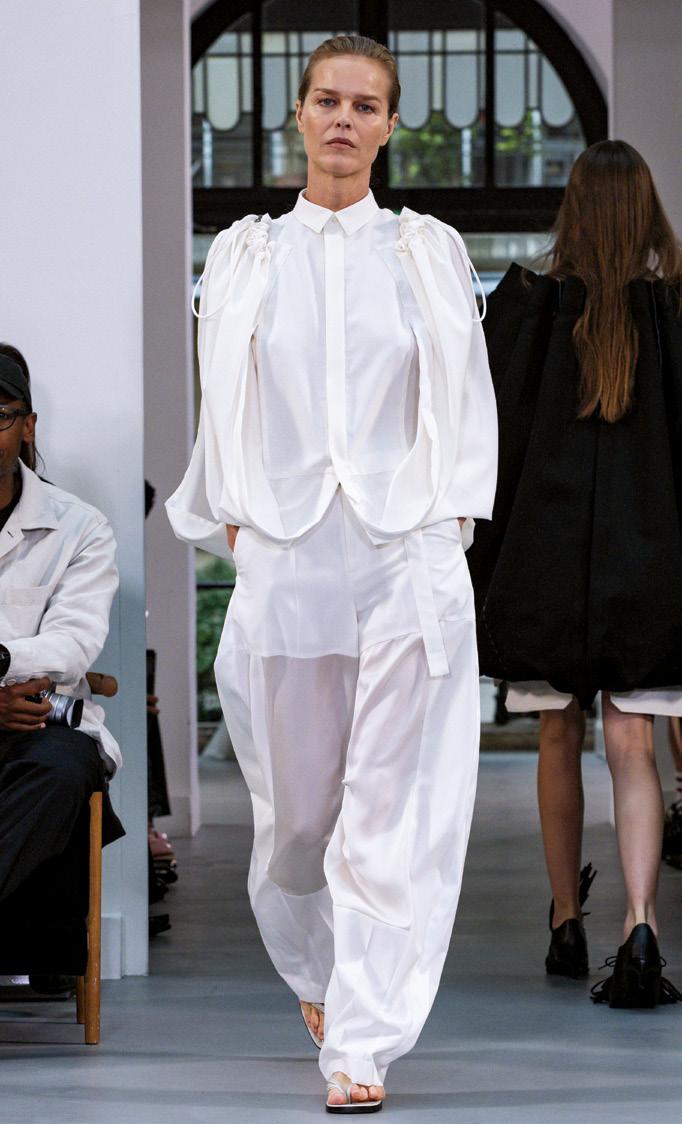
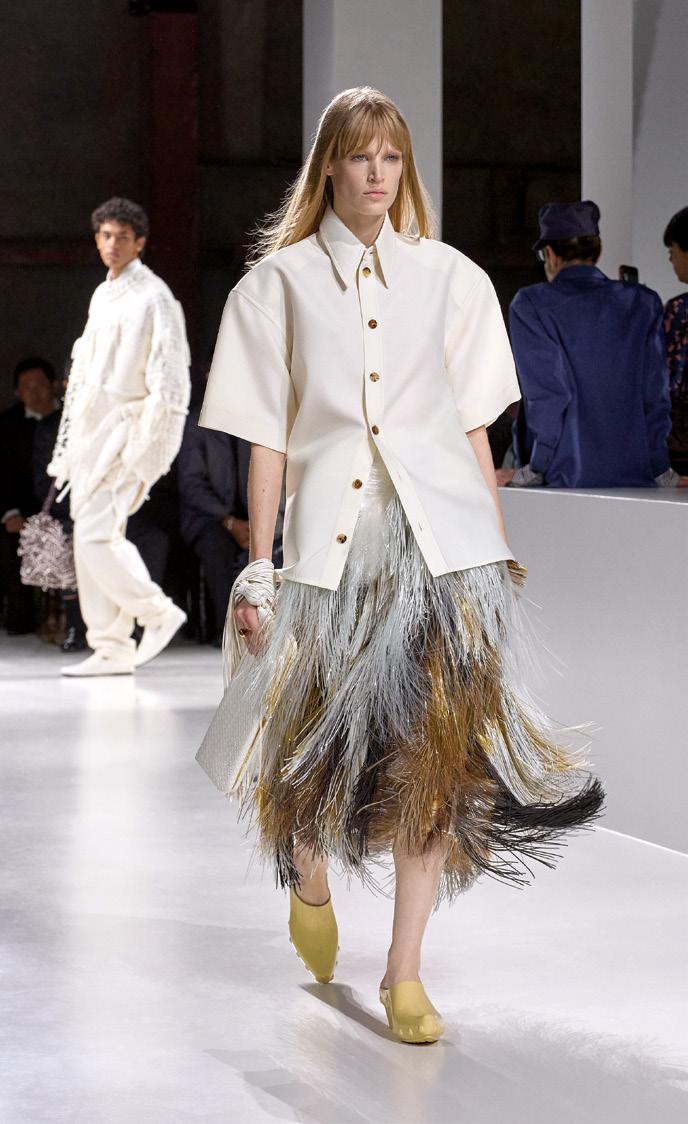
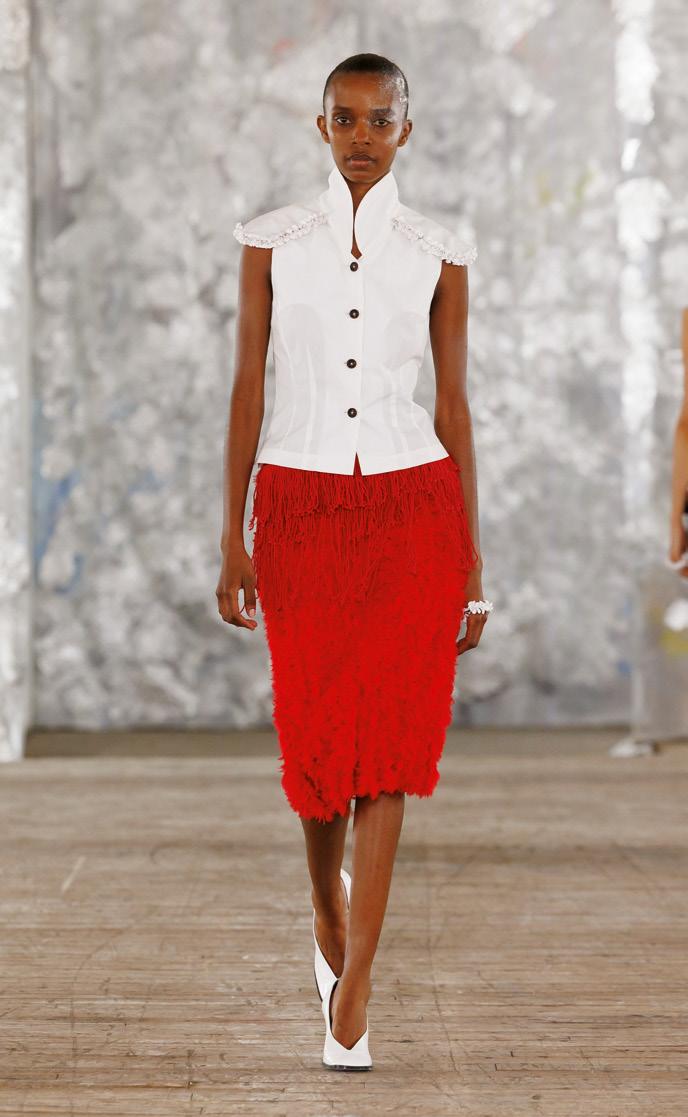
Move over LBD, the Spring/Summer 2026 collections offer a new all-occasion staple.
Panorama
The Arts Agenda
Spring/Summer 2026 saw a wave of new creative directors changing the direction of the world’s greatest fashion brands. The future is now.
Gilded Glamour
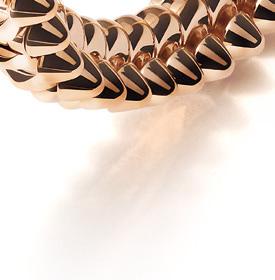
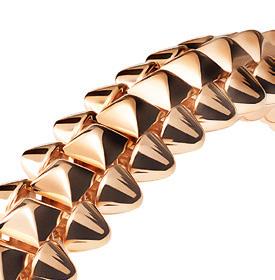
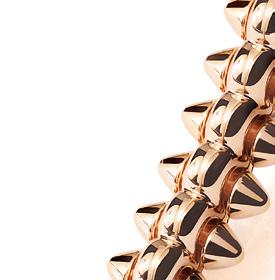
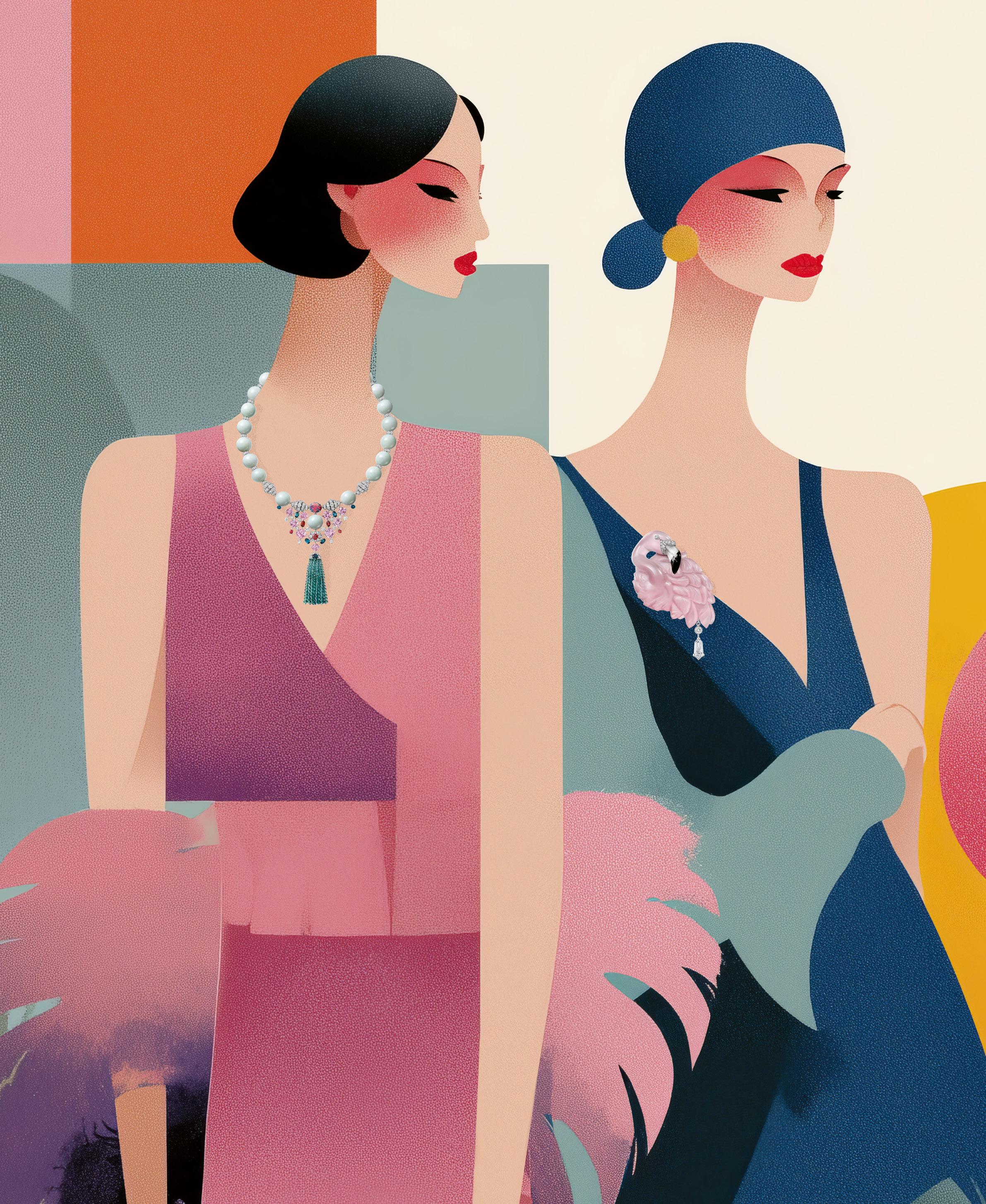
Adornment is a deeply primal act. With its flamingos, serpents, and surreal glamour, Cartier’s latest creations conjure a fever dream of nature’s theater.
Bold Moves
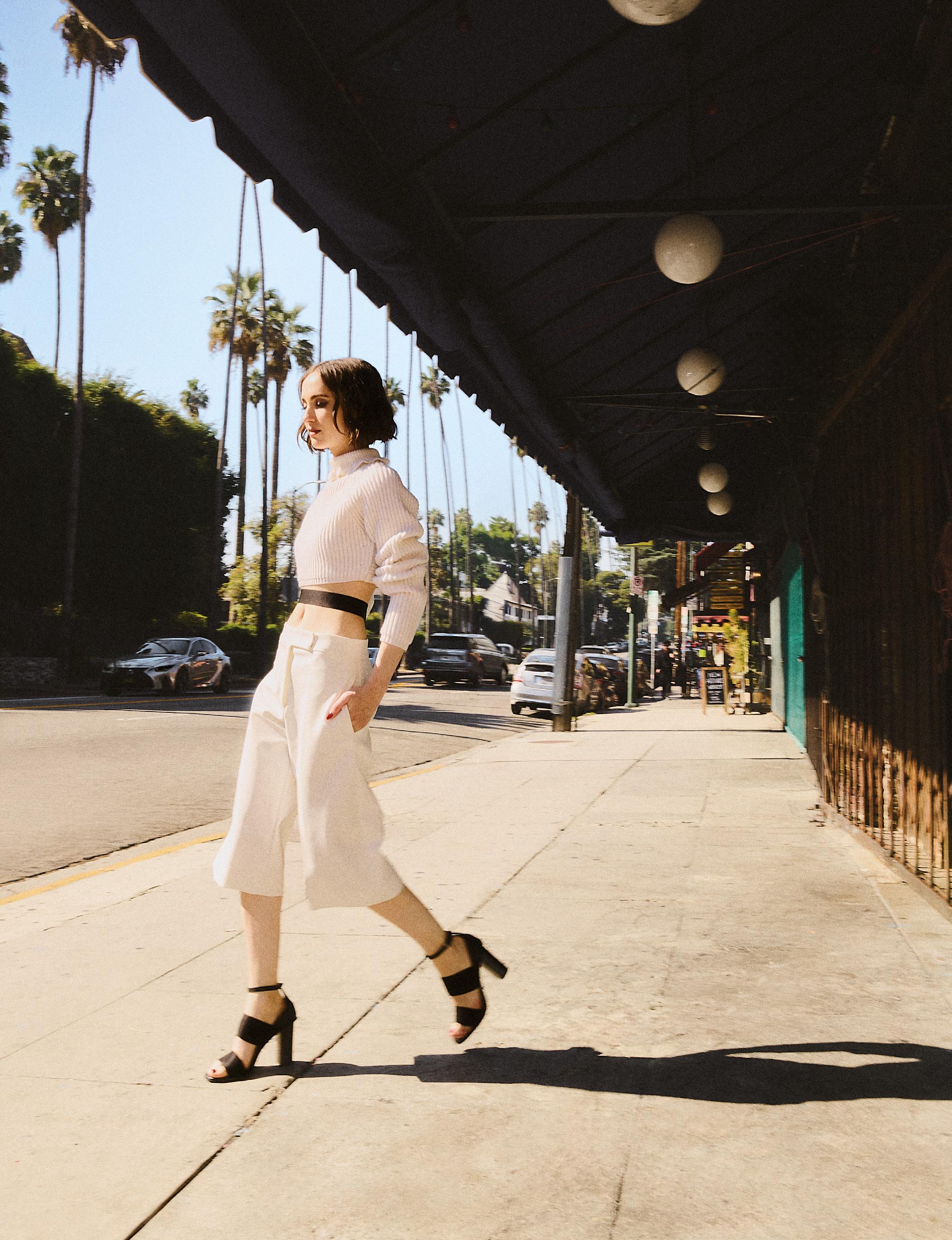
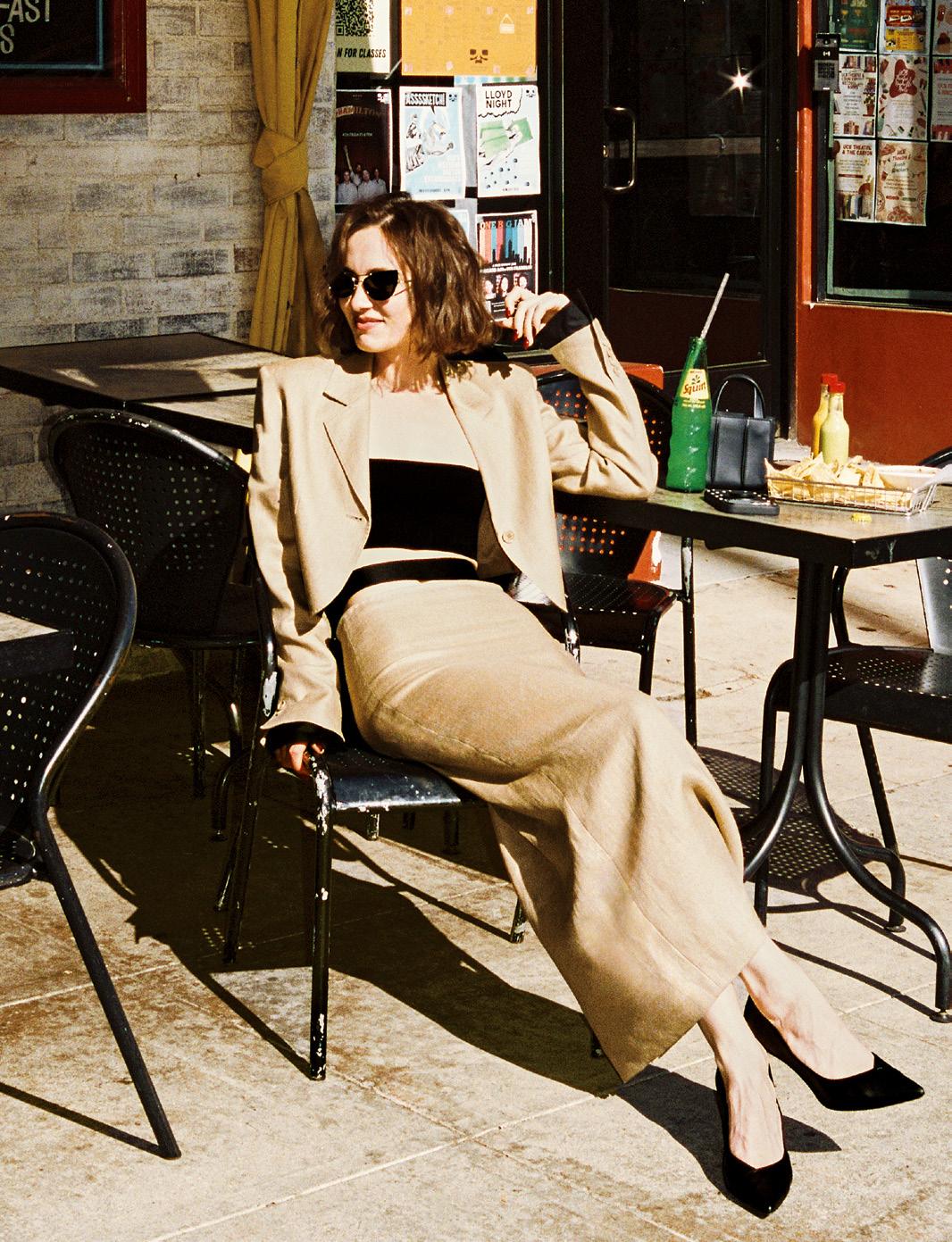
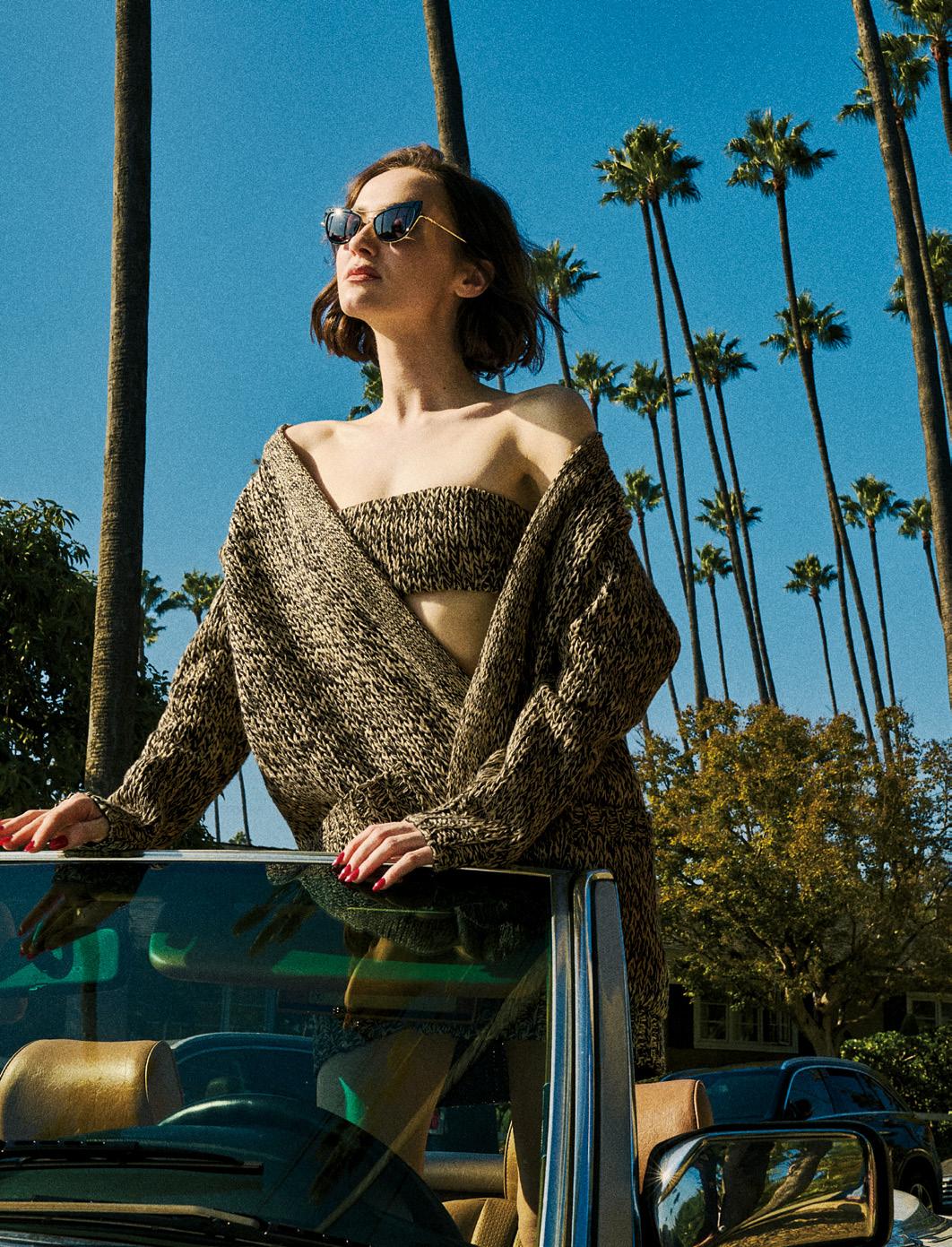
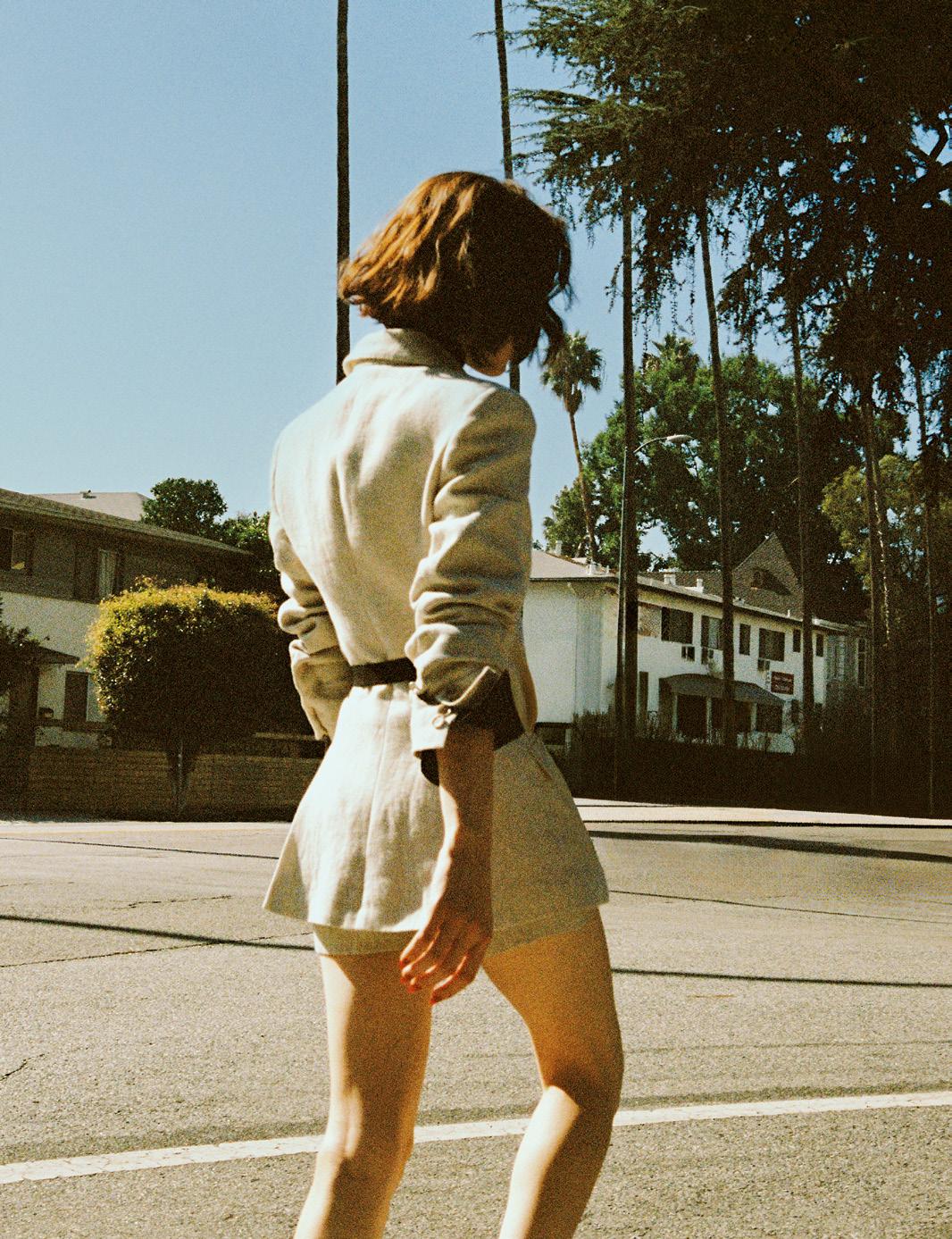
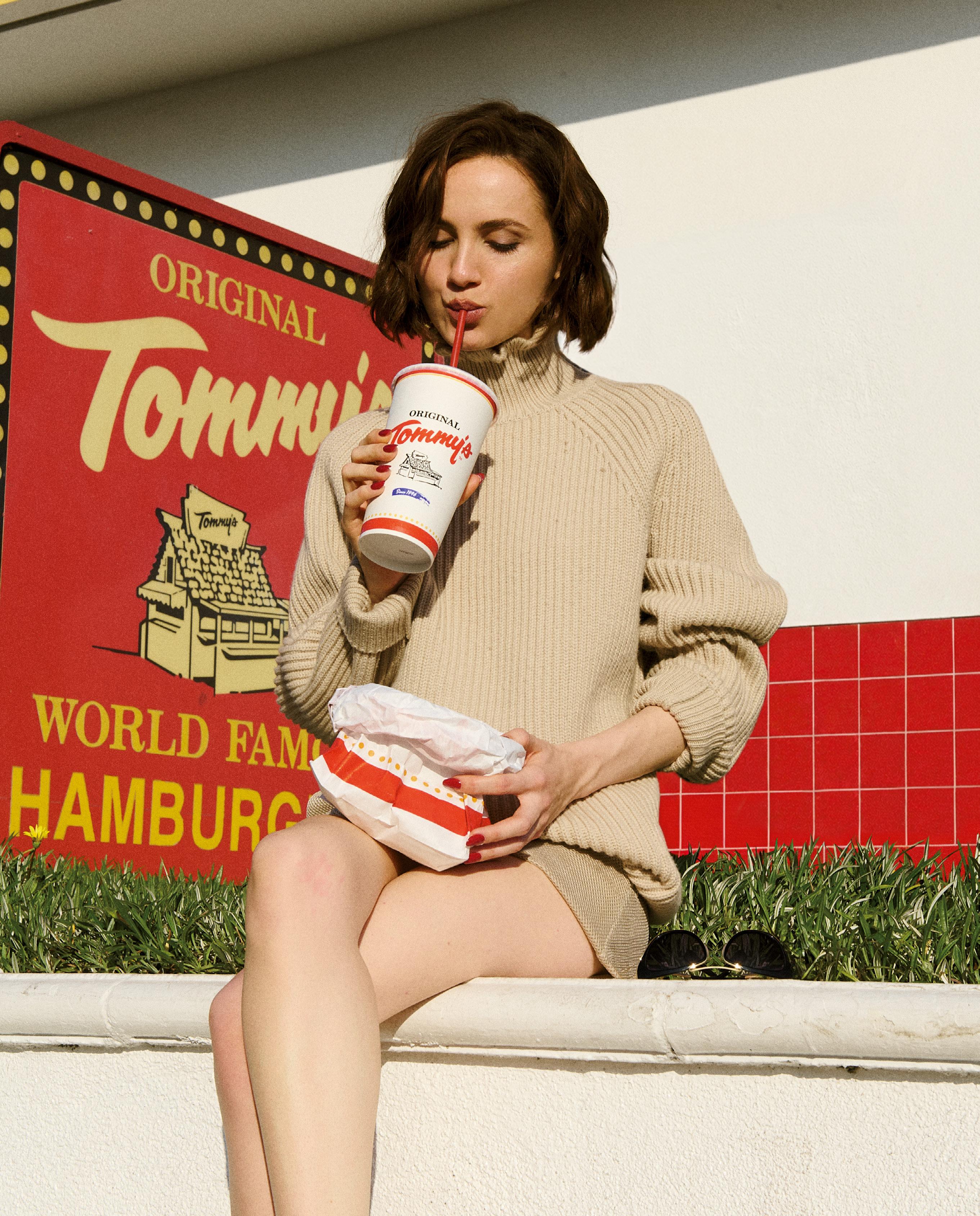
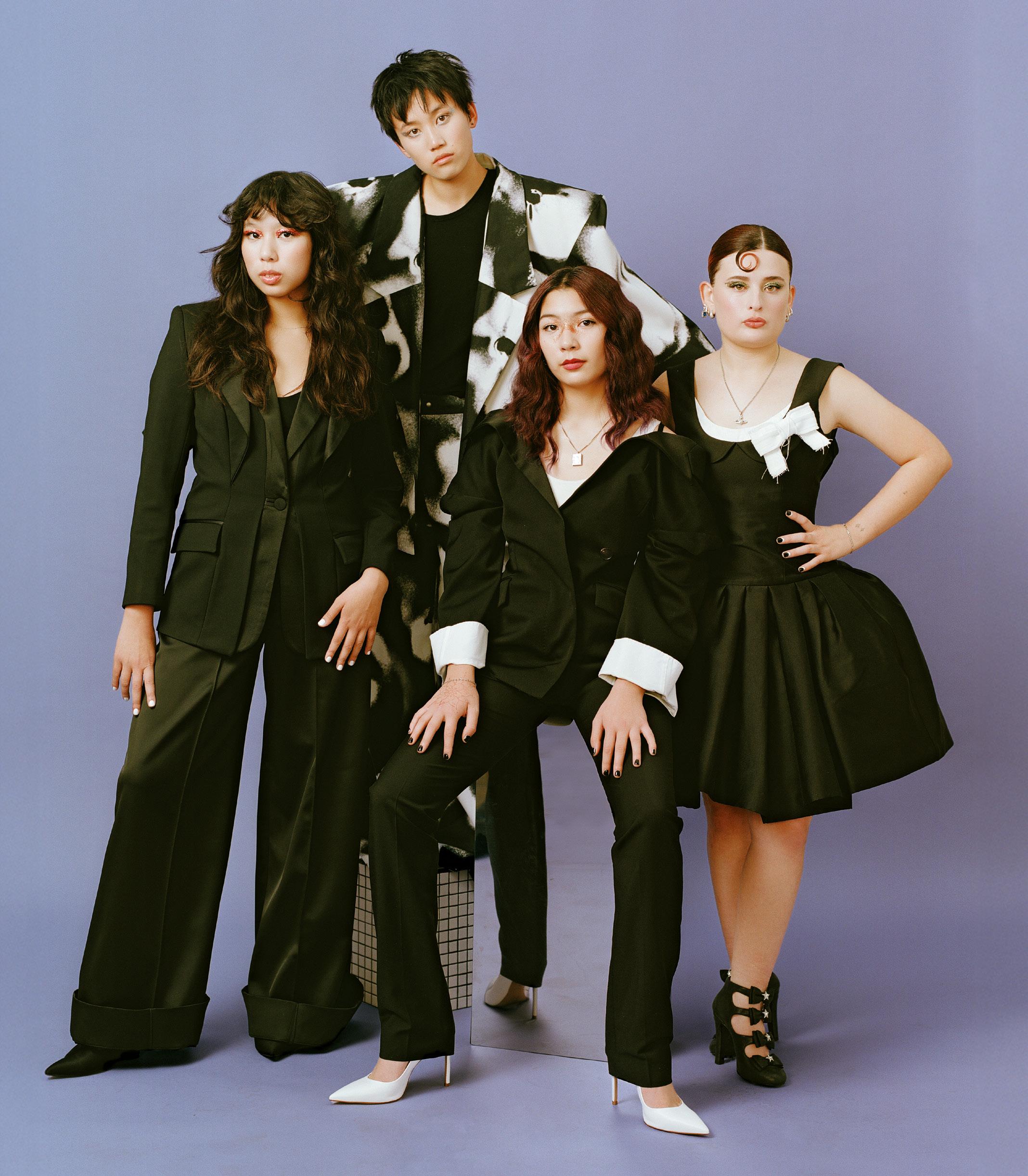
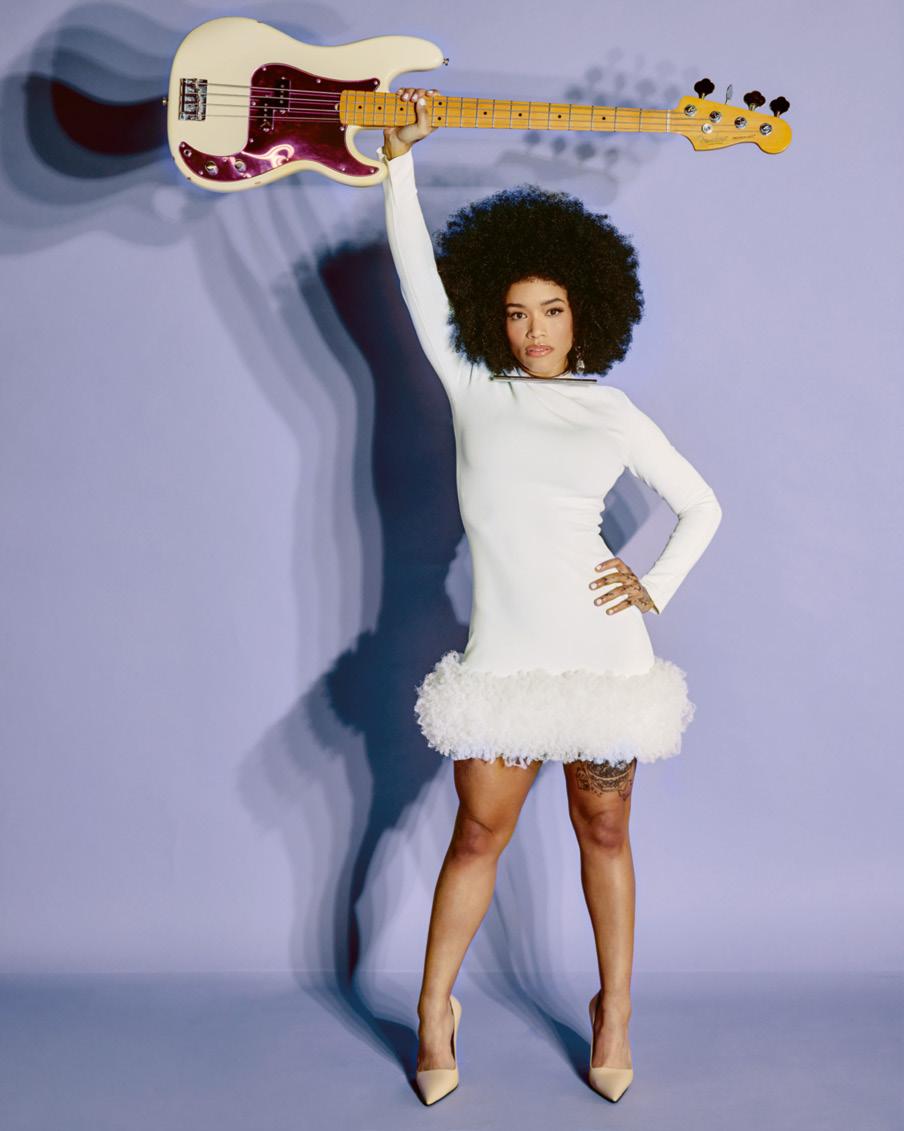
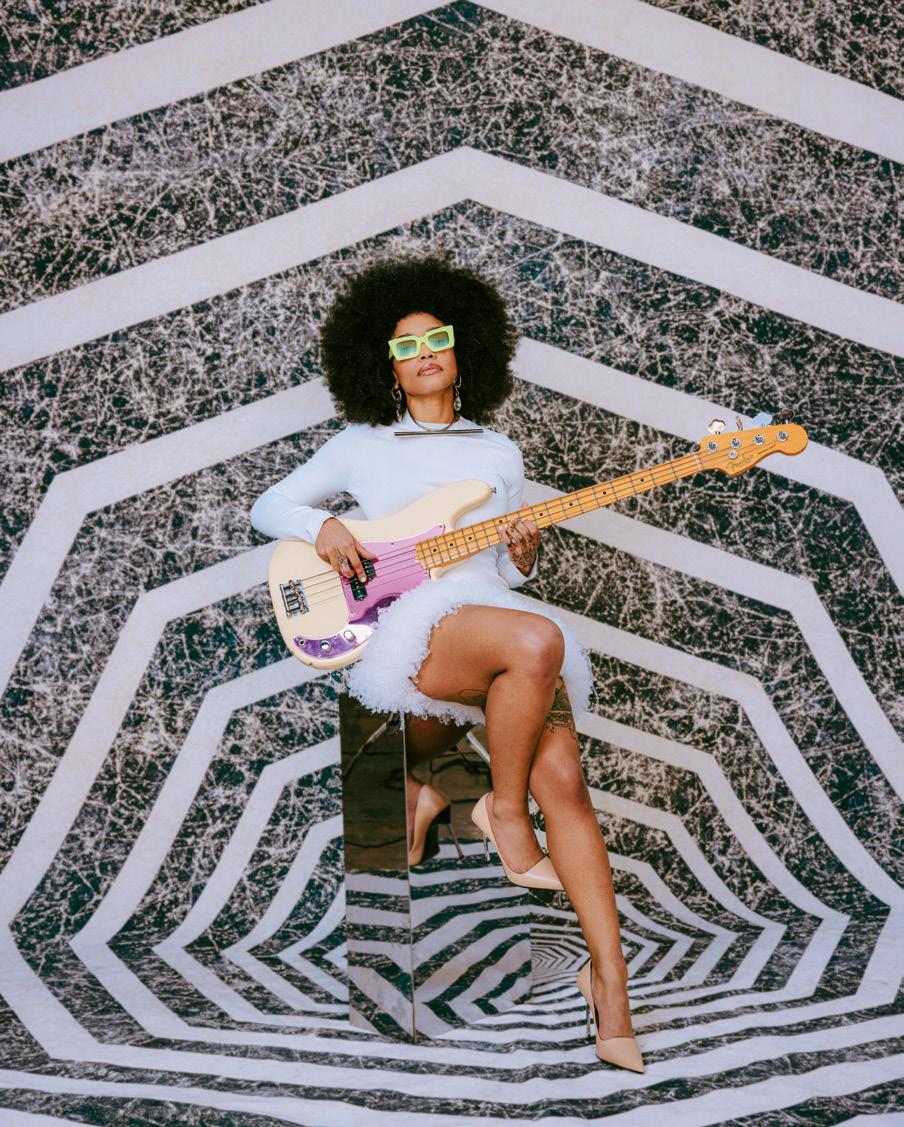
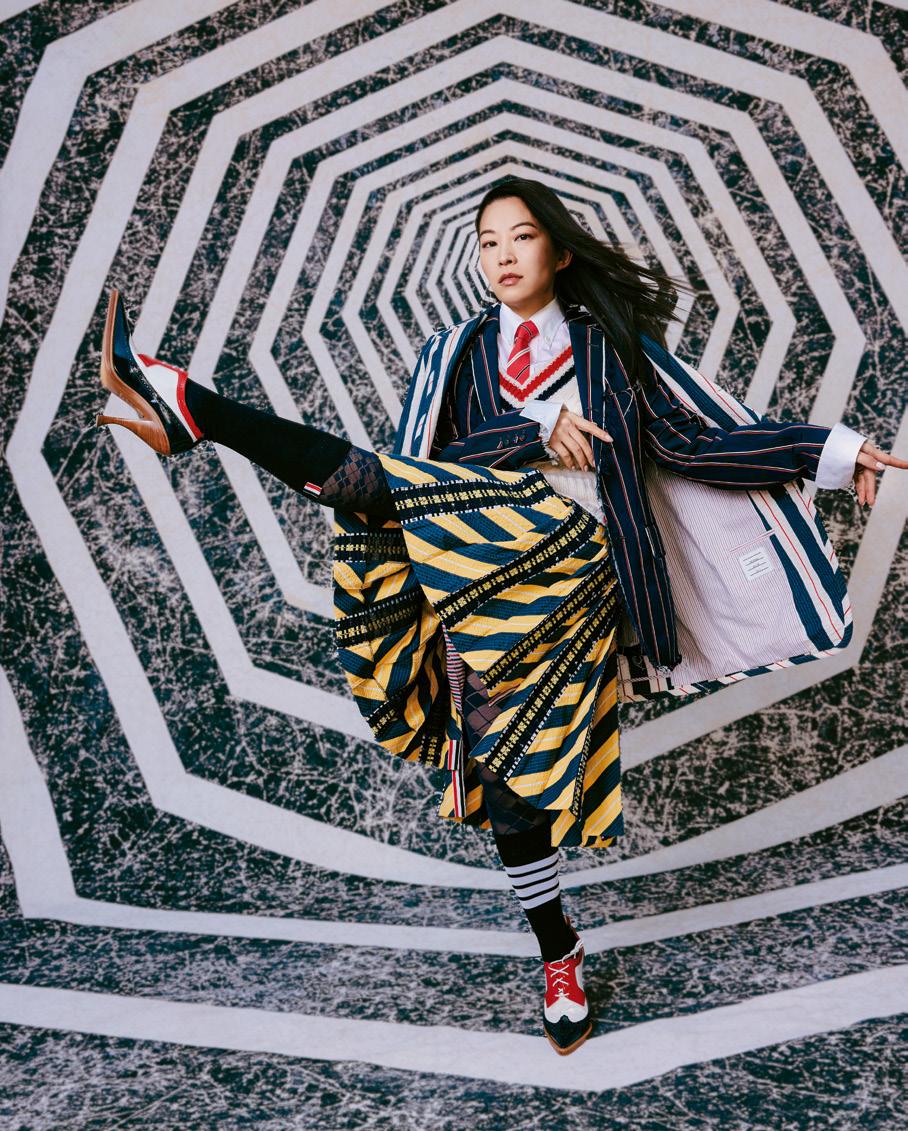
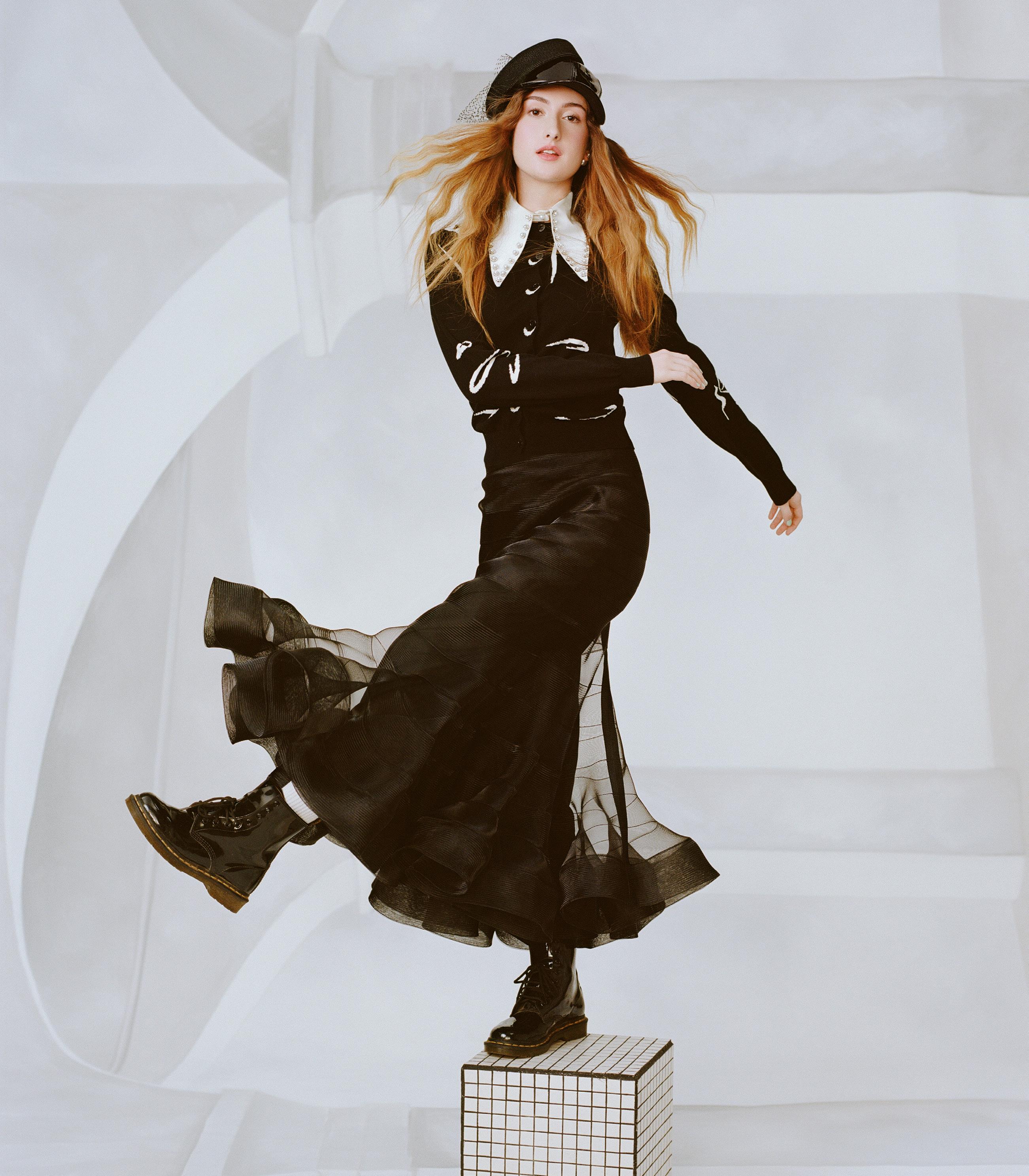
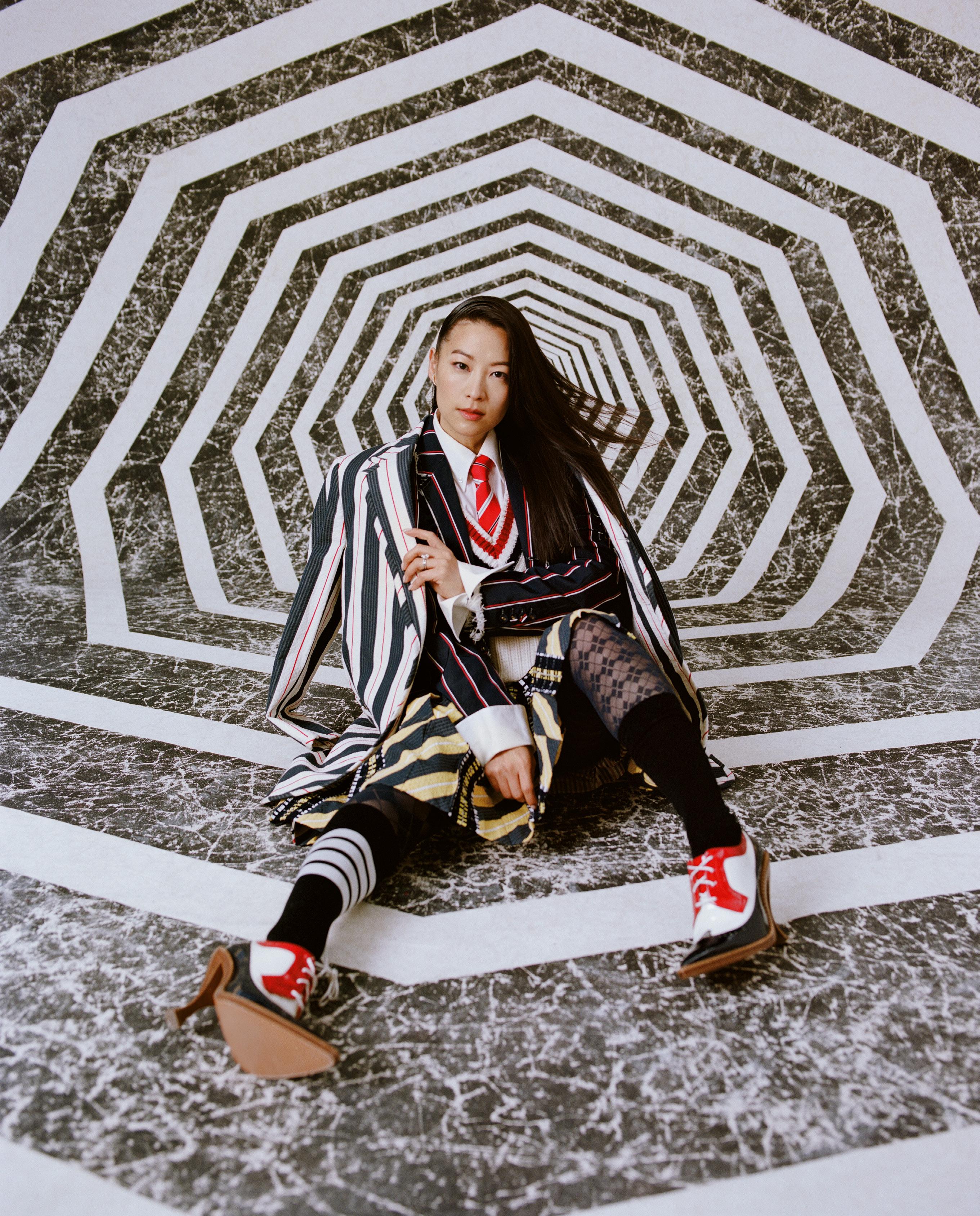
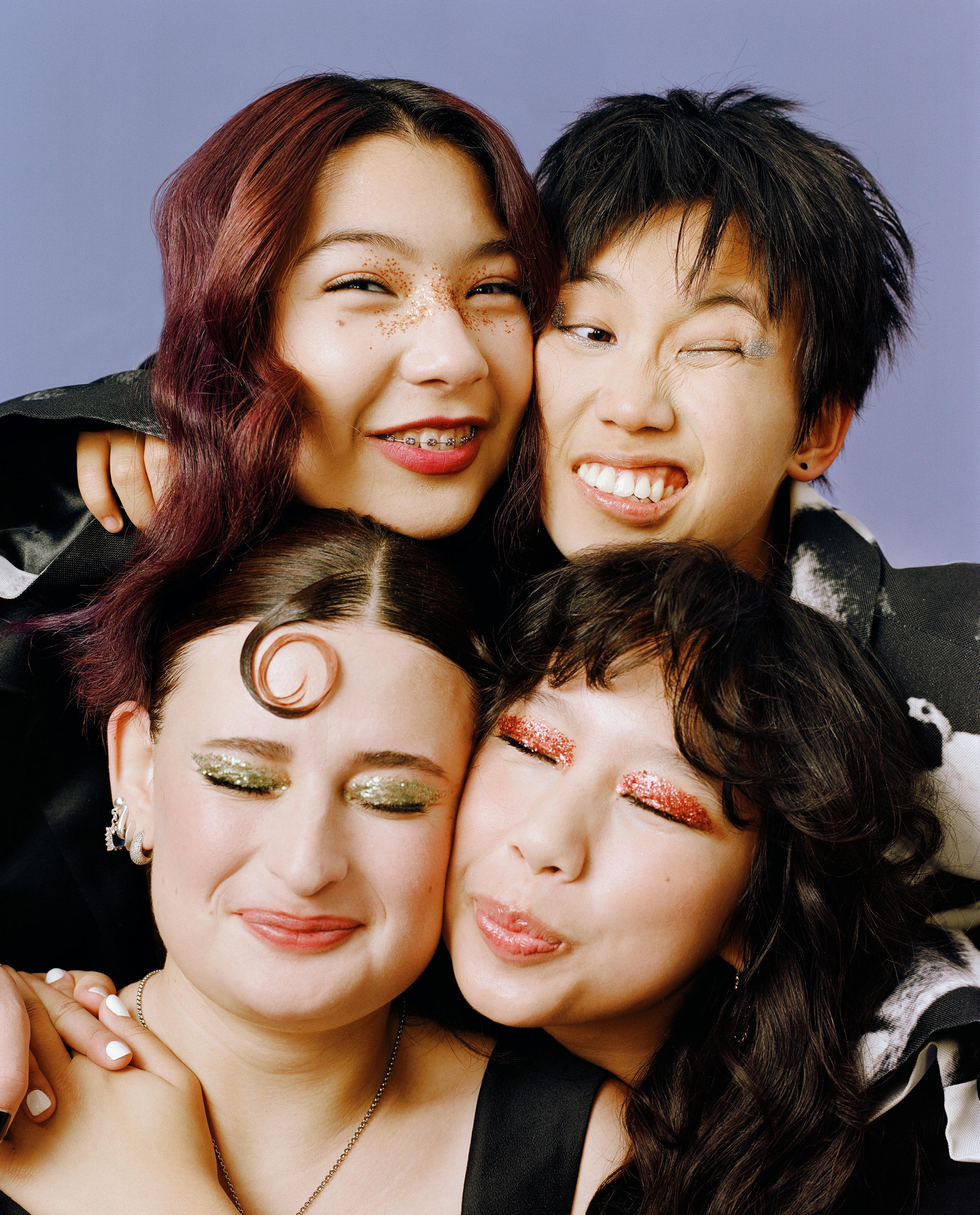
West Coast, best coast? A fashionable glimpse into the lives of some of Los Angeles’ most exciting visionaries shaping the future.
Color Clash
Bold chromatic choices give a new sense of strength to this season’s looks.
Creatives rise up as the old order crumbles.
The Art Of Collaboration
A new V&A show explores Schiaparelli’s creative cross-pollination.
The Early Dinner Is the New Power Move
Forget 8:30 p.m. reservations. The most strategic tables are filling at 5:30 — and no one is apologizing for it.
Radical Stillness
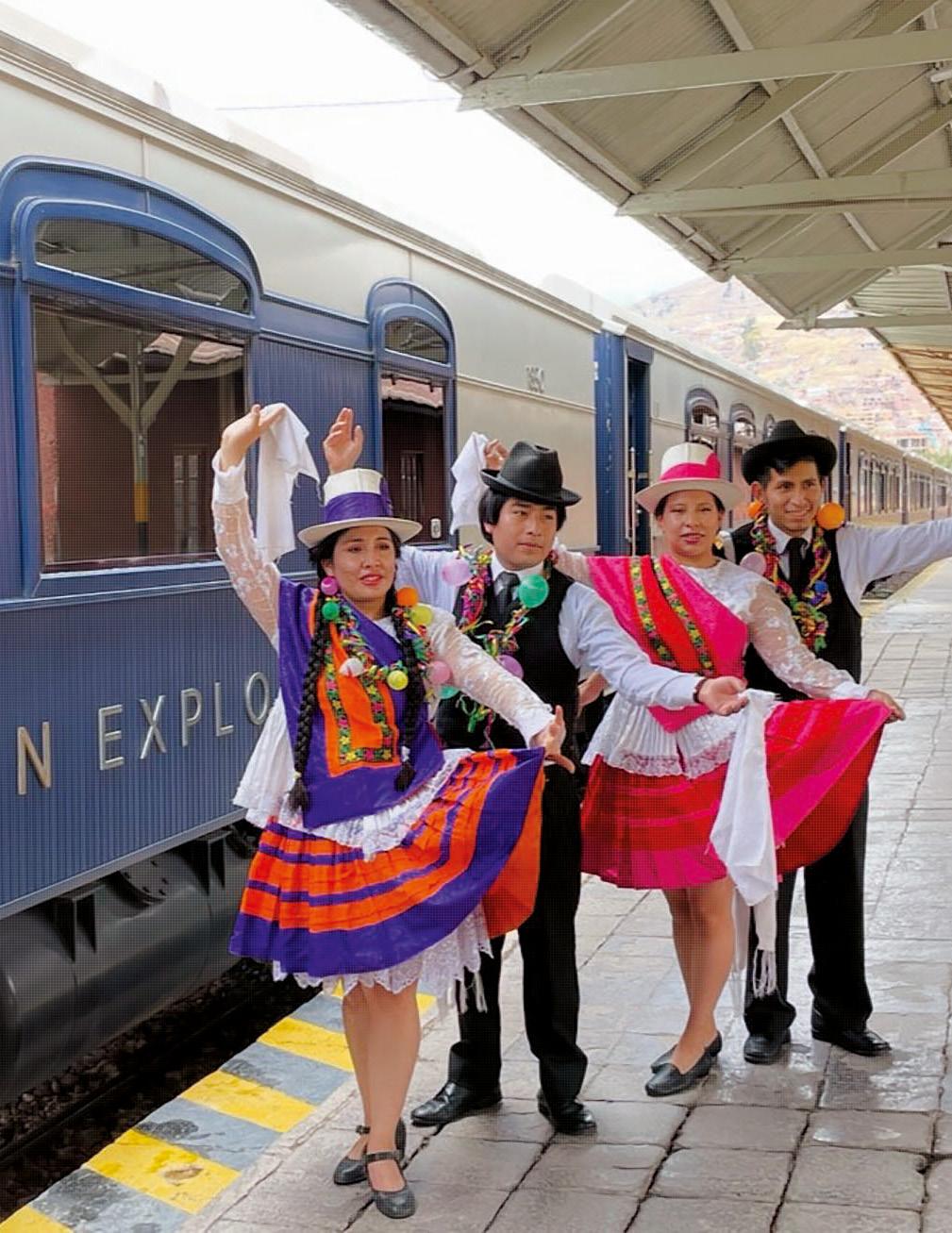
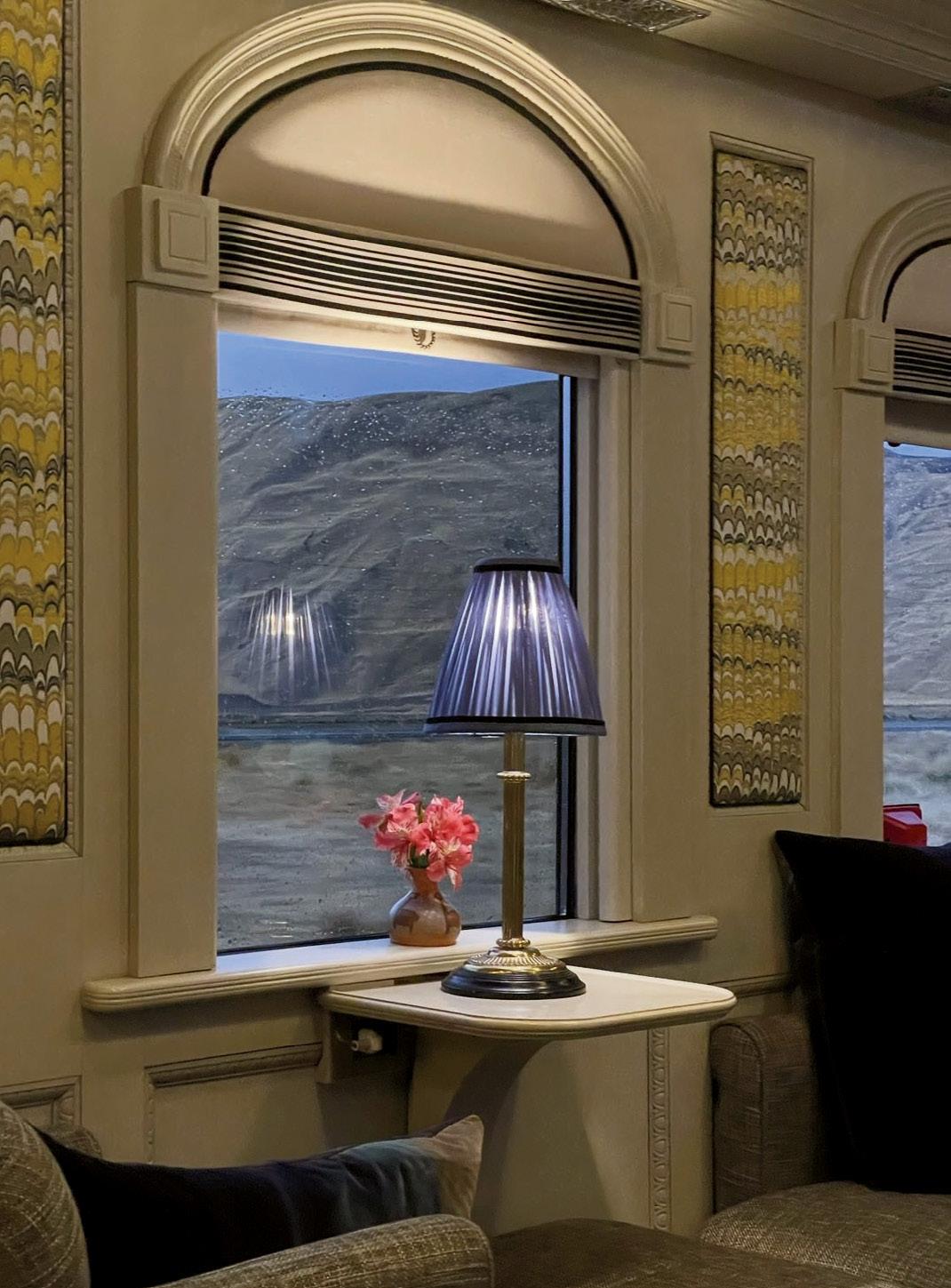
Two timeless rail journeys in Peru prove that life’s richest memories emerge when we slow down and fully immerse ourselves in the experience
Contributors
Xavi Gordo is a fashion photographer specializing in beauty, celebrity, and advertising imagery. Passionate about art from an early age, he discovered photography as a teenager and later pursued formal studies before assisting leading fashion photographers. In 2010 he launched his independent career. Since then, he has worked with global brands such as Chanel, Rolex, Emirates, and Dolce & Gabbana, and contributed to magazines including Vogue, Harper’s Bazaar, GQ, and Elle. Known for his mastery of light and natural connection with subjects, he has photographed many renowned models and actors.
Artist, mother and deranged gardener, Julia Johnson is based in Pasadena, Ca. She grew up on South Beach in the 90’s which put her on the pathway to making bright and joyful work for a long ass time. For Julia, working intimately with her subjects and gaining their trust for collaboration are the most treasured parts of her career. Peers describe her as having a shopping problem, being a fabulous cook and having a great sense of direction. Julia lives with her husband Dane and son Valentine in Bungalow Heaven.
Andrea Volbrecht. From the halls of MassArt to the fastpaced editorial desks of multiple national magazines, her 25-year journey in the NYC industry began with a single spark of advice from an Italian mentor. Now serving as the Producer for Grazia USA, she leverages a decade of freelance production expertise to scout fresh talent and master the complex logistics of high-end image-making. She thrives on the intricate details and creative synergy required to bring a vision to life, ensuring every shoot remains seamless and inspired. Currently based upstate with her family, she manages the pulse of global fashion remotely, bringing a calm, seasoned perspective to the high-energy world of publishing.
Kabuki, from northern England, rose on New York’s downtown club scene in the mid-1990s, where his bold makeup and theatrical style led to appearances on Thierry Mugler’s Paris runways. He created the signature looks for Sex and the City and later worked in film. His transformative work in Party Monster caught the attention of Steven Klein and launched his fashion career. Kabuki has since collaborated with top photographers, major magazines, global brands, and celebrities including Rihanna, Lady Gaga, and Madonna.
Katia Ciancaglini Head Of Digital Reworld Media Italia
Shelby Comroe Fashion Editor
Faran Krentcil Features Editor
Aaron Rasmussen Features Editor
Andrea Volbrecht Producer
Marly Graubard Chief Revenue Officer
Priya Nat Sales Director, Home & Luxury
Marketing
Francesca Brambilla
Marketing Director Reworld Media Italia
EMAIL CONTACT@GRAZIAUSA.COM
Printing by Quad; Distributed by CMG Grazia USA (www.graziamagazine.com; UPC 0-74820-40390-7) is published biannually by Reworld Media US Inc. 122 East 42nd Street, 18th Floor, NY, 10168 USA. Reworld Media US is a branch of the Reworld Media Group
Believe it or not, Spring 2026 marks the most significant vibe shift the fashion industry has seen in the last 30 years.
Nearly 20 fashion houses presented their spring collections under newly installed creative directors. Among them, some of the most legendary and influential maisons in the world — Dior, Chanel, Jean Paul Gaultier, Balenciaga, Gucci … the list goes on. Heritage brands with long-established DNA are being reimagined through entirely fresh perspectives.
Some landed triumphantly, others more divisively. But whether blasphemous or brilliant, they shared one crucial quality: They were new. A taste of what’s to come.
That spirit became the jumping-off point for this issue.
are the harbingers of what’s to come — our cultural vanguards?
Our writers were tasked with answering exactly that. And wow, did they deliver.
For years we’ve been told injections were the key to eternal youth. But as Fiorella Valdesolo reports (p. 68), the tide may be turning: Facelifts and injectables are increasingly giving way to fascia massage. Meanwhile, if you want to glimpse the future, look no further than Gen Z. According to them, only boomers eat after 6 p.m. (p. 182), and the coolest shopping now happens via livestream — an unexpected revival of the glory days of the Home Shopping Network (p. 100). Even travel is reconsidering its identity. In quiet rebellion against our toxic hustle-harder culture, slow travel is having a moment (p. 184). All aboard.
Now look at the people In the streets, in the bars We are all of us in the gutter
Some of us are looking at the stars
Fashion has been here before. In 1997, the industry experienced what is often referred to as its “Big Bang.” Young British provocateurs like Alexander McQueen and John Galliano were installed at legacy couture houses, injecting a much-needed jolt of energy into these stuffy institutions. In the process, they helped ignite our culture’s modern obsession with fashion as pop culture. These men reshaped the cultural landscape with the cut of a dress. And, dear reader, it’s happening again.
For this issue, two of our longtime contributing fashion editors brought their distinct perspectives to these debut collections — with strikingly different results. Santa Bevacqua offers a sweeping exploration of the key moments and looks from the most important debuts (p. 100), while Karen Levitt doubles down, casting Los Angeles’s most daring and groundbreaking female creatives to model these watershed collections (p. 138).
Fashion, of course, isn’t the only world experiencing a shift. From travel to nightlife to beauty, entire industries are quietly recalibrating. What’s new? What’s next? Who
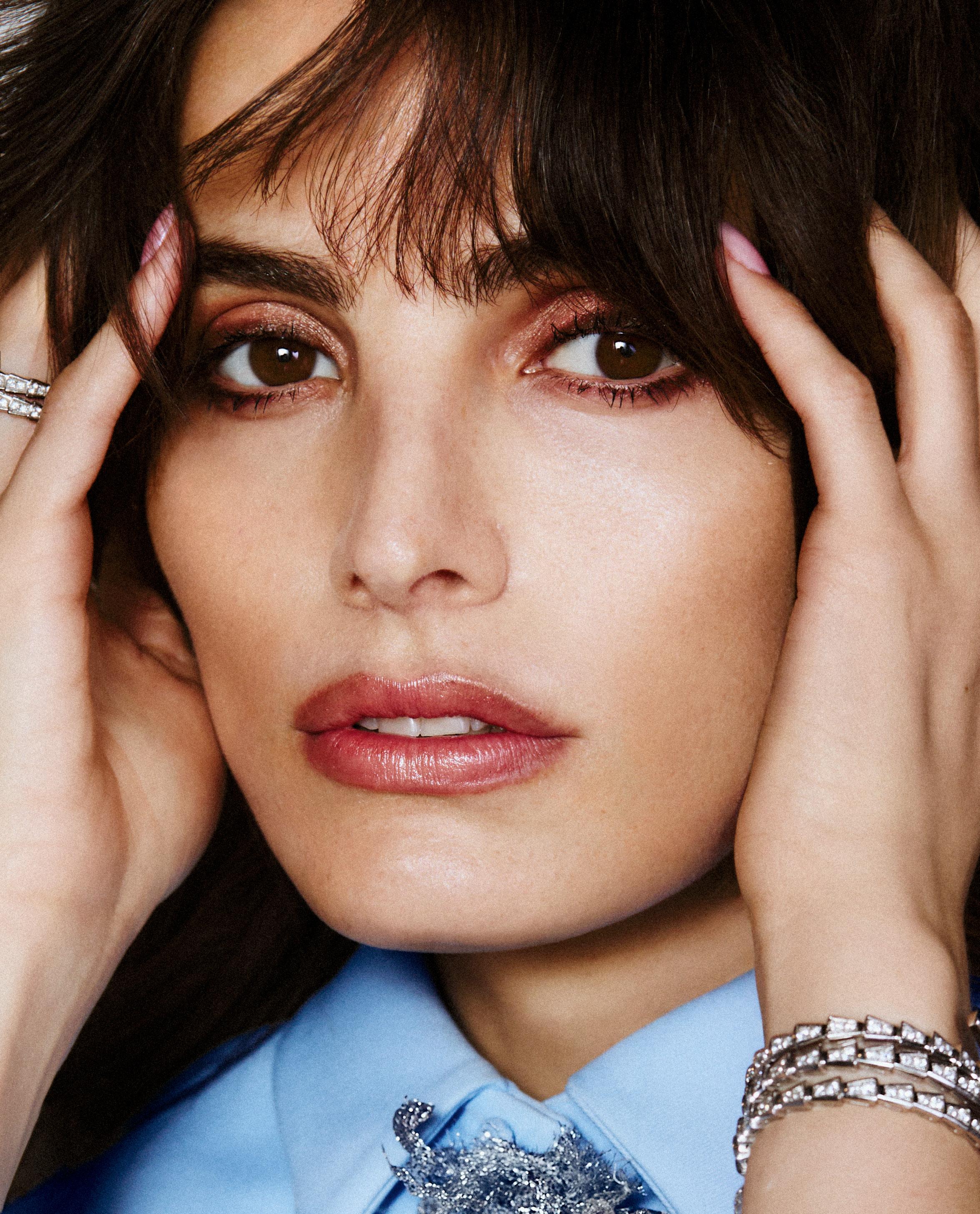
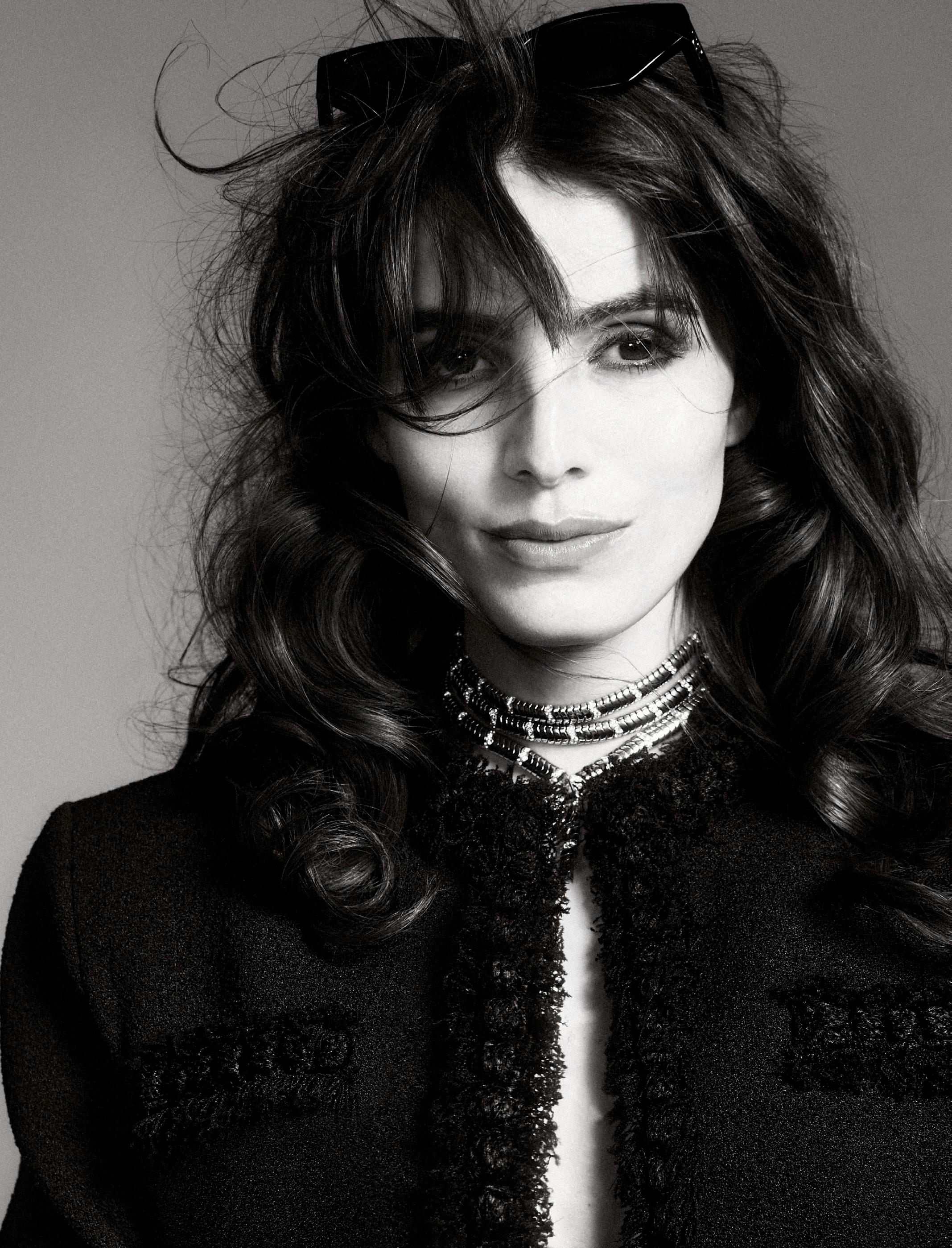
Another vanguard I’m very happy to get behind: our mega-glamorous cover star, Lux Pascal.
For those not yet in the know, Pascal is about to be the moment. The first time I spotted this vision prowling the runway at Matthieu Blazy’s debut collection for Chanel, I was transfixed. Her dark, doe-eyed beauty draws you in — but make no mistake, Pascal has the chops. A multilingual Juilliard School graduate, she’s on a trajectory we haven’t seen in quite some time. Her performance in Miss Carbón is mesmerizing, and I’m hardly the only one who thinks so. Ryan Murphy took quick notice, casting her in a pivotal role in his series The Beauty. Fashion and film visionary Tom Ford also offered Pascal a role in his highly-anticipated upcoming film, Cry to Heaven, without so much as an audition!
Breaking down walls, challenging stereotypes, and creating space for those left of center has never looked quite so effortless, or so glamorous.
And if this issue proves anything, it’s that the vanguard rarely waits for permission — it simply arrives.
Joseph Errico Editor & Chief Creative Officer
Release the potency of anthocyanins in a new serum with a unique antioxidant performance.
REPLUMPS RETEXTURES
REVITALIZES ILLUMINATES
Ossess ione
From the season’s most desirable pieces to the lifelong pursuit of personal style, obsessions define the cultural moment. The jewelry and watches we covet, the women shaping the avant-garde, and the newest rituals of longevity and self-care all reflect what captivates us today.
Edited by Shelby Comroe
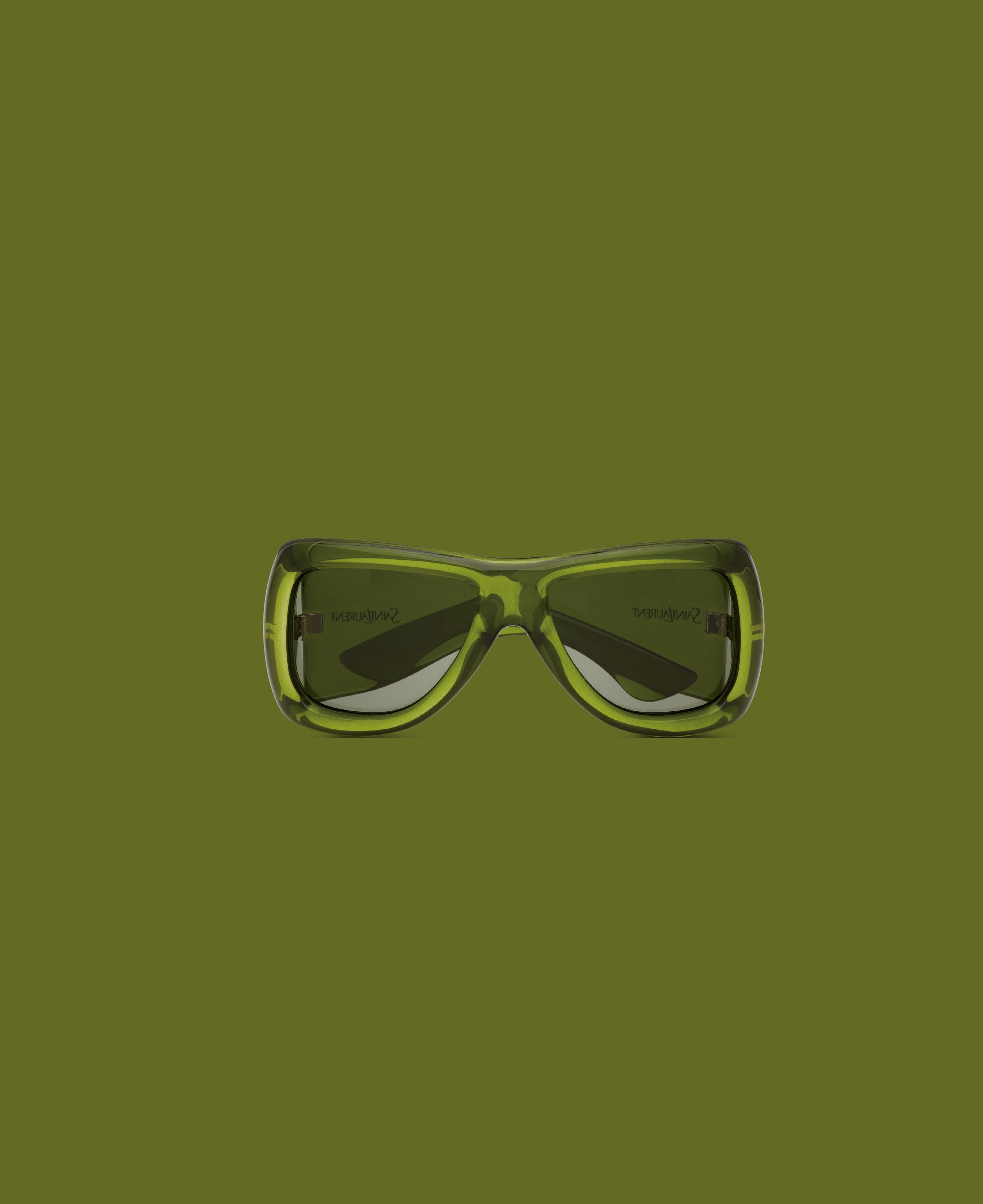
Saint Laurent by Anthony Vaccarello SL 902 Howl sunglasses, $595, ysl.com
A bold take on statement eyewear from Saint Laurent. The SL 902 Howl sunglasses are rendered in translucent green, with oversized pillow-shaped frames and exaggerated temples that amplify the silhouette. Futuristic yet unmistakably retro, the sculptural shape channels the house’s sharp, high-impact approach to accessories.
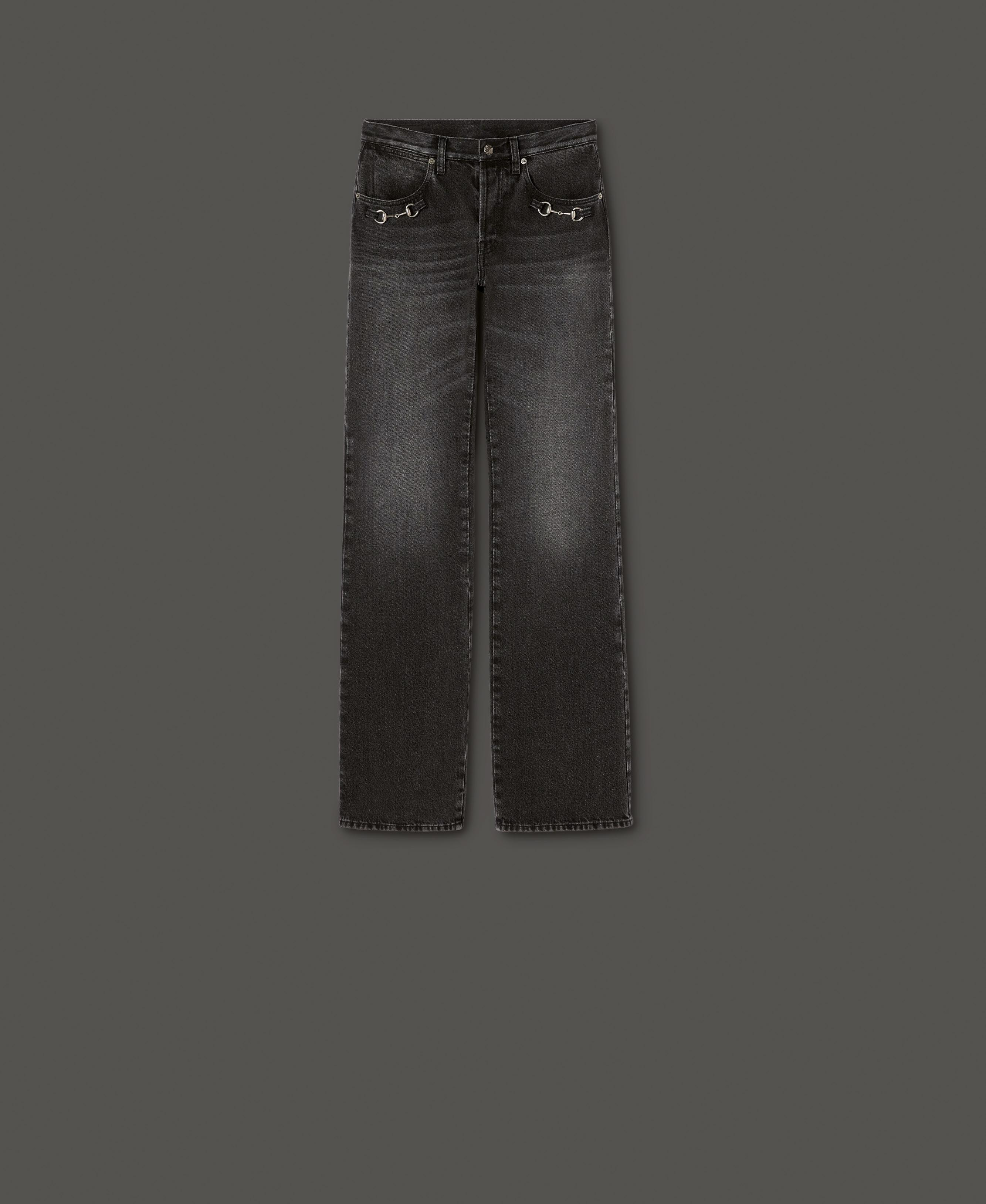
Gucci Cotton denim pants with Horsebit, $1,700 gucci.com.
Classic denim with a signature Gucci twist. From the Spring/Summer 2026 La Famiglia collection, these washed black jeans feature Horsebit hardware at the front pockets, a subtle nod to the house’s equestrian heritage.
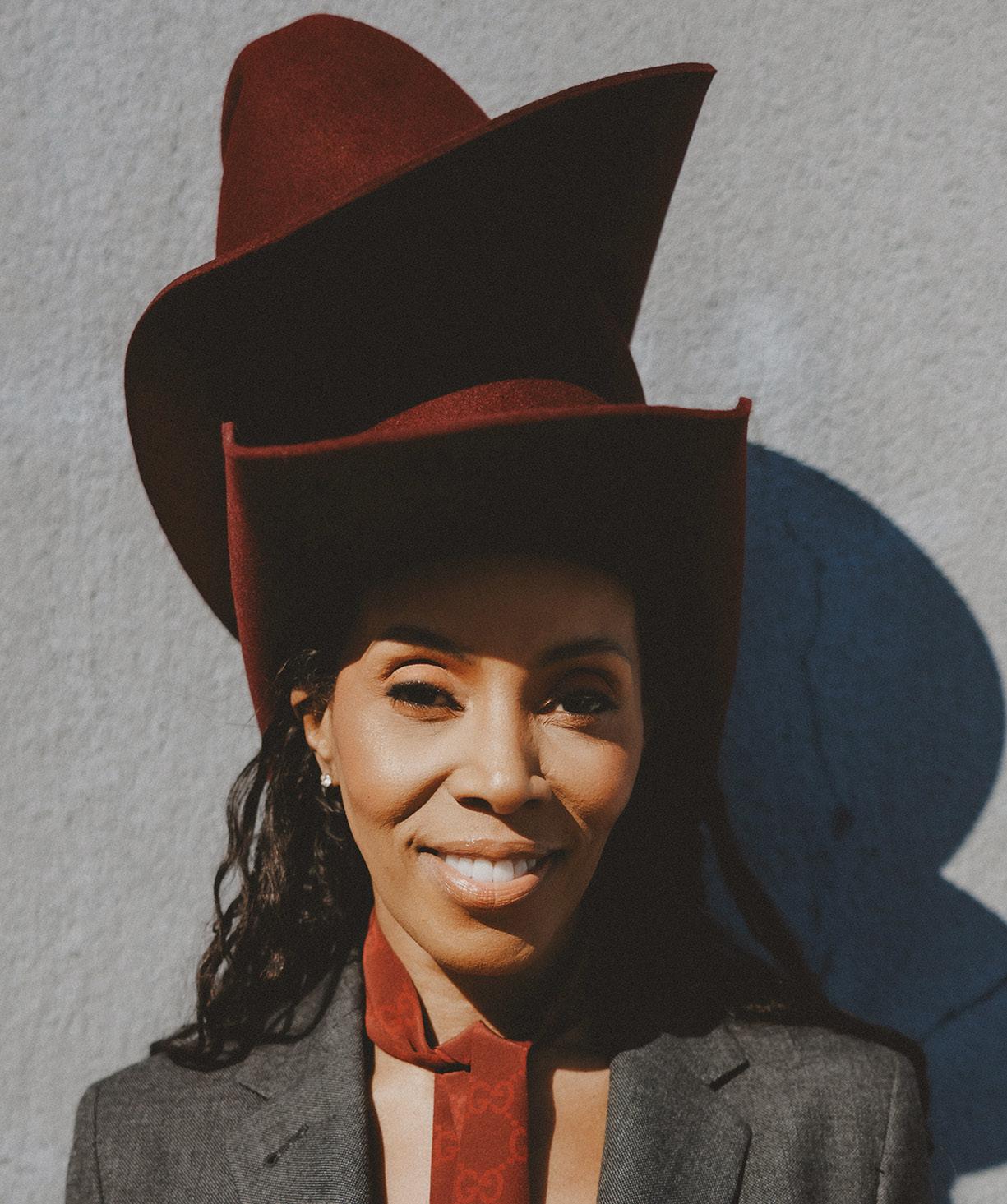
JUNE AMBROSE
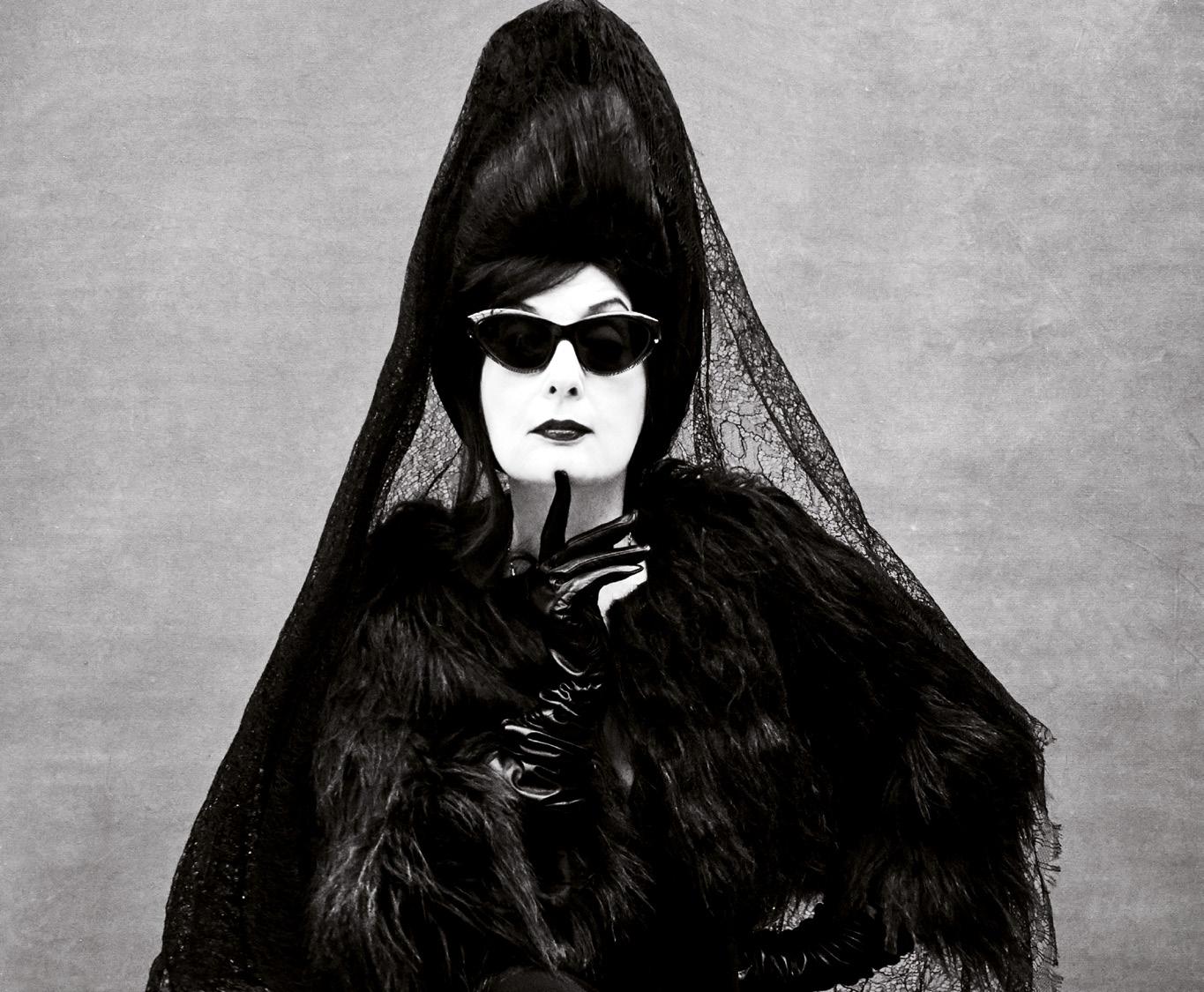
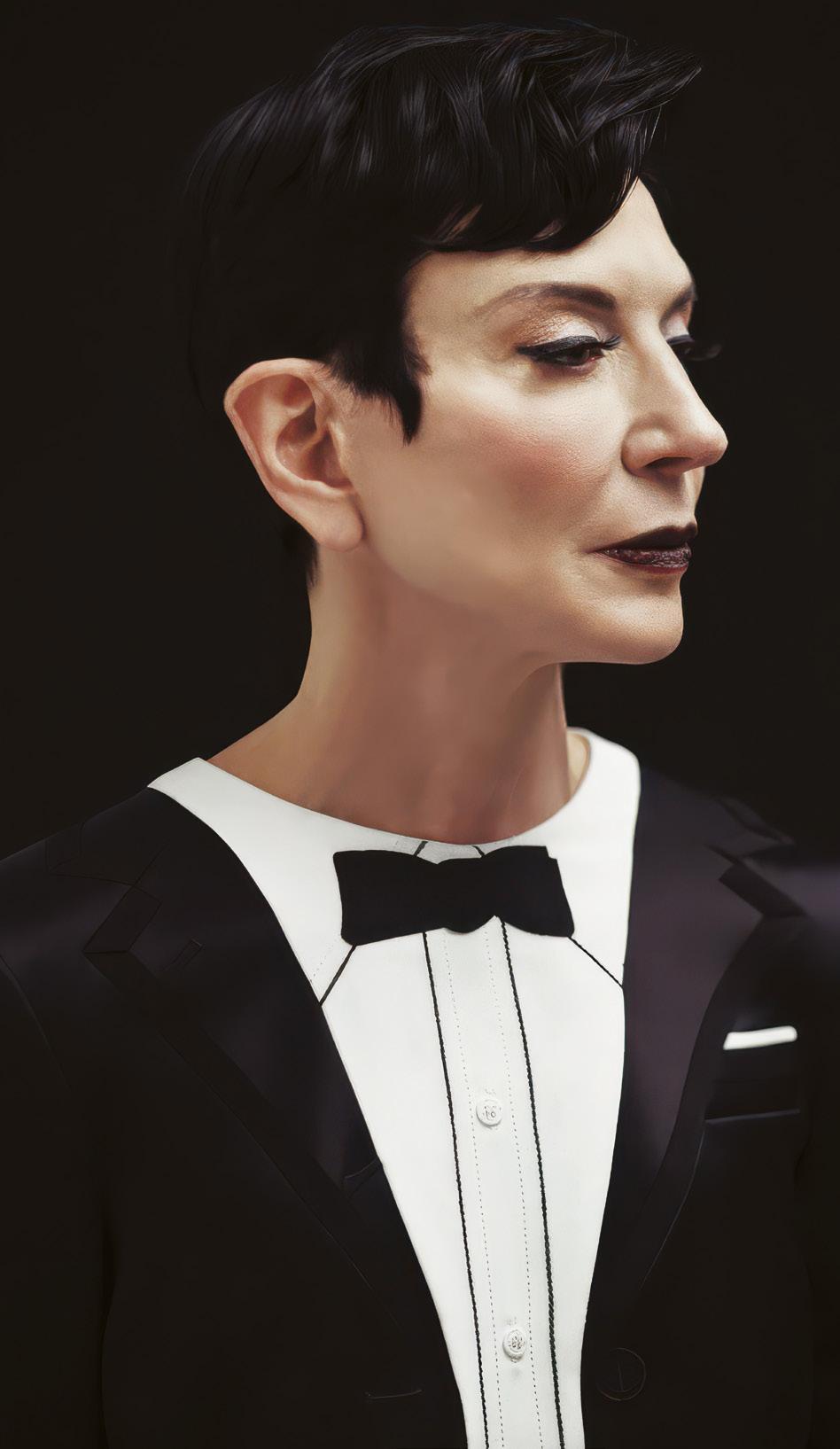
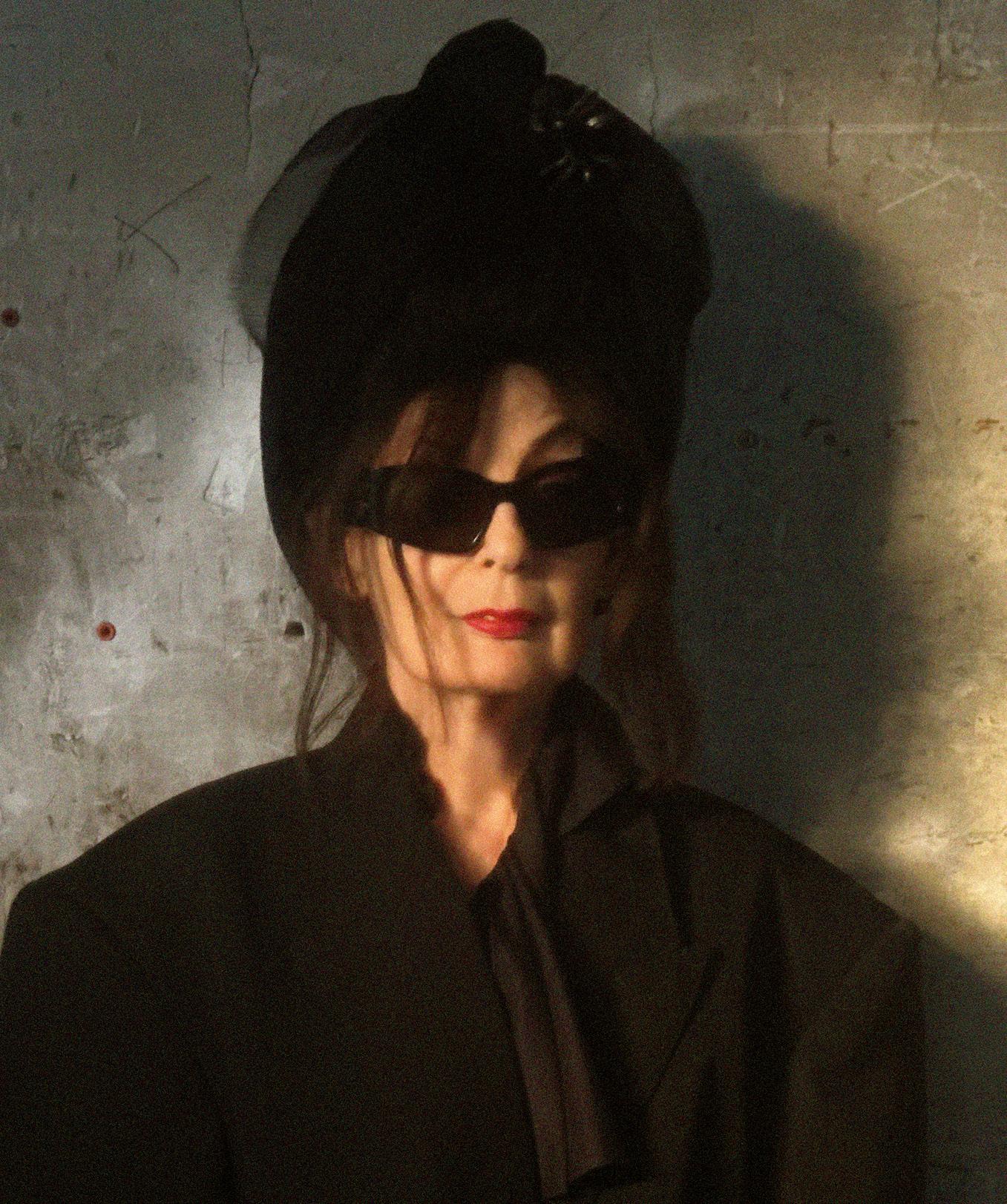
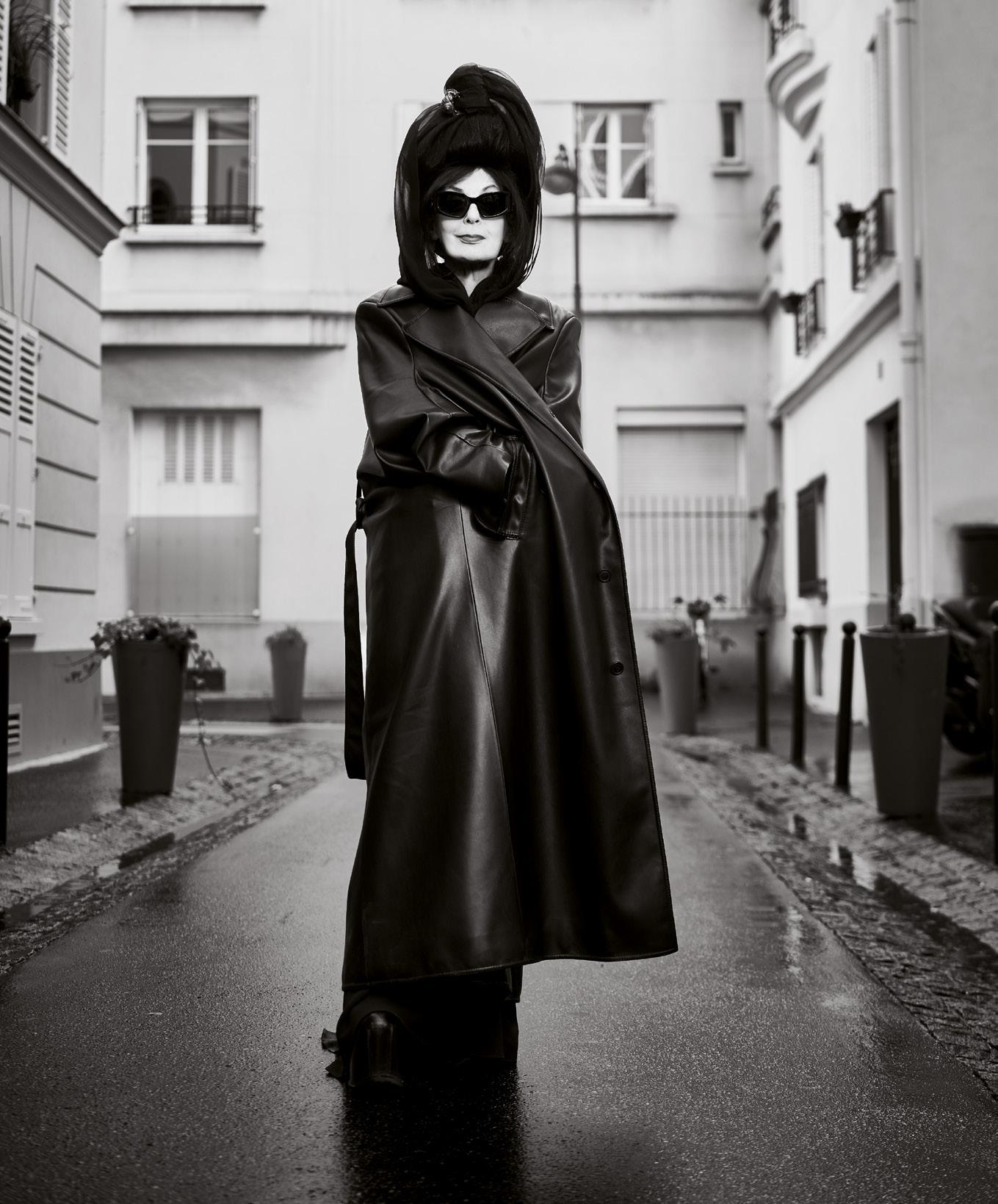
DIANE PERNET
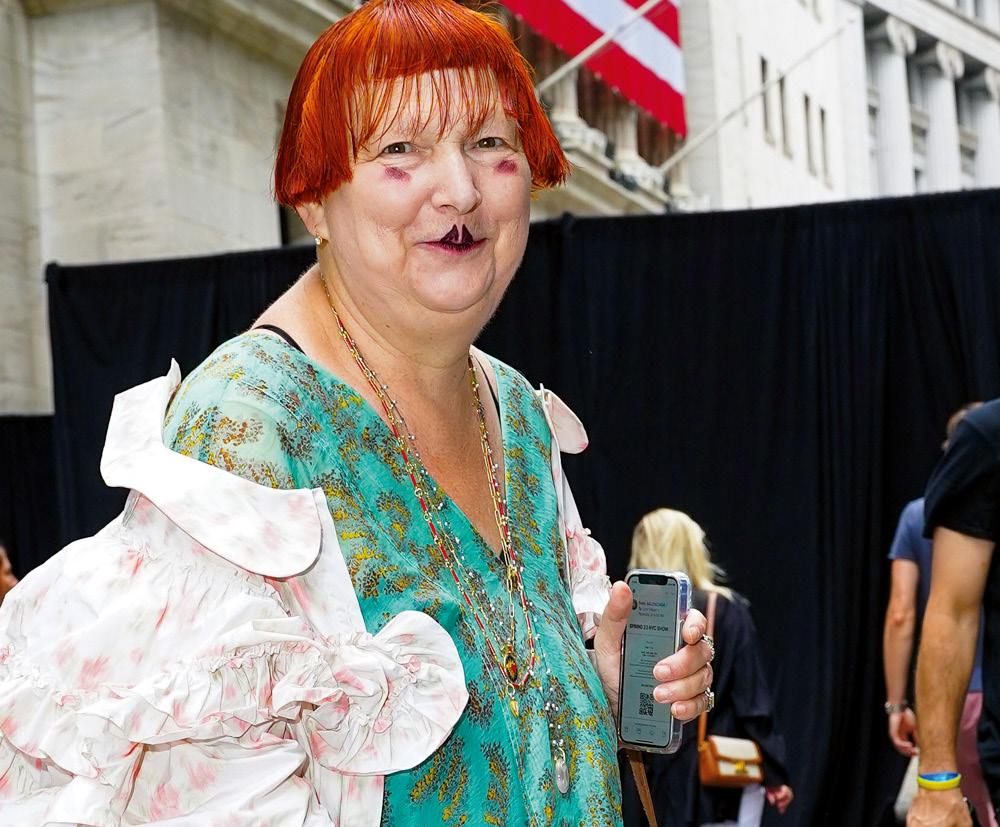
LYNN YAEGER
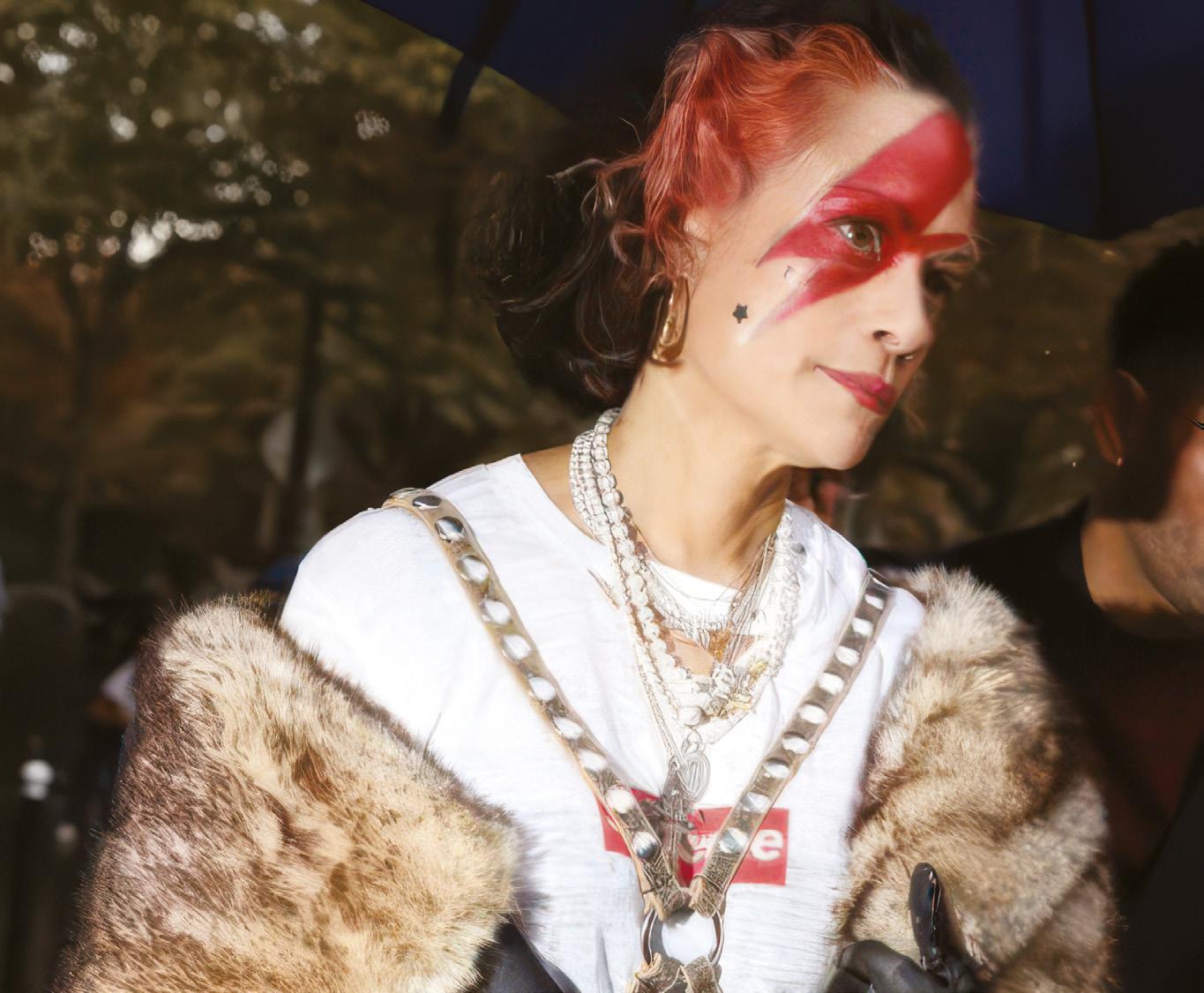
BIANCA JEBBIA
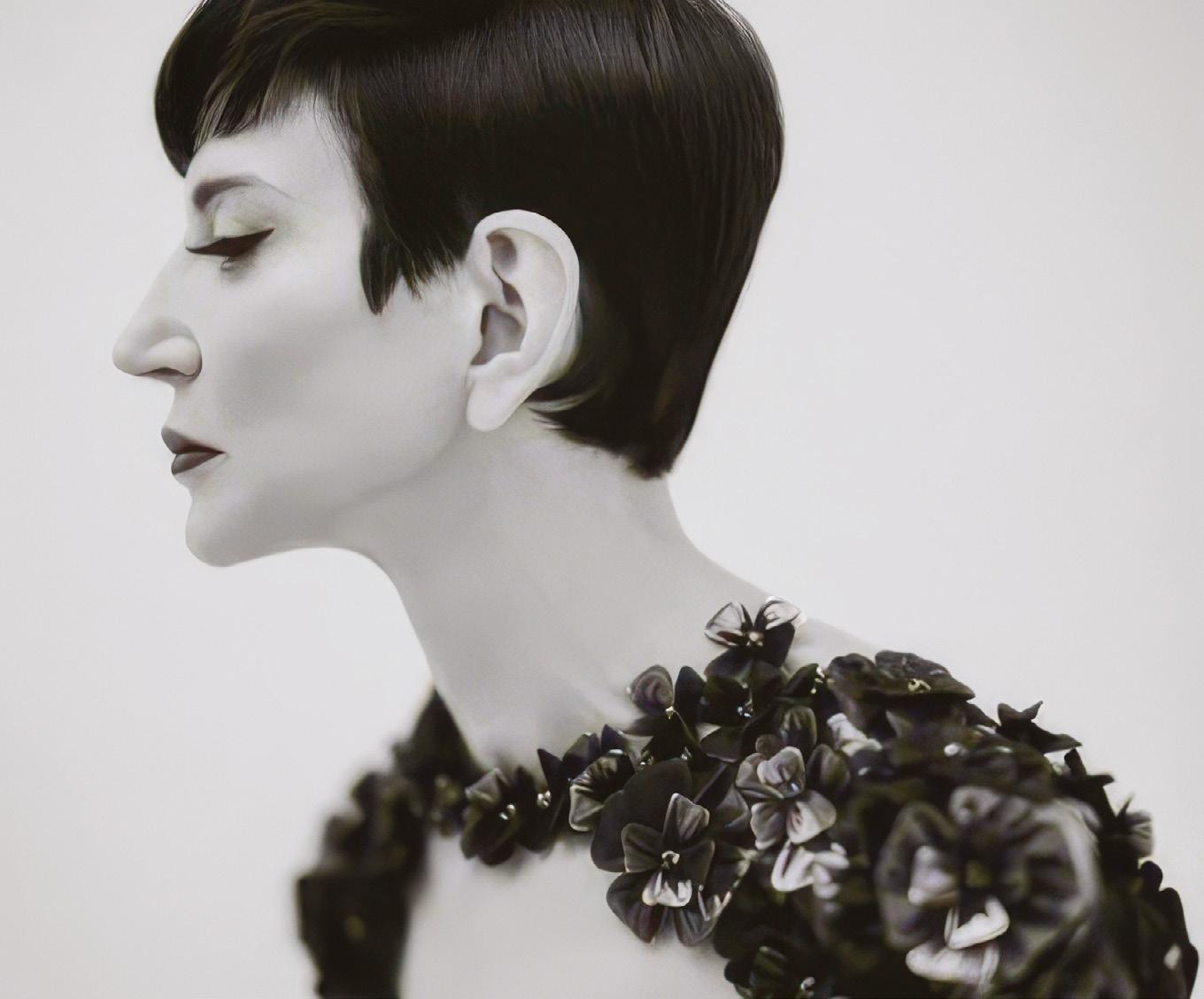
KATHARINE K. ZARRELLA
AMY FINE COLLINS
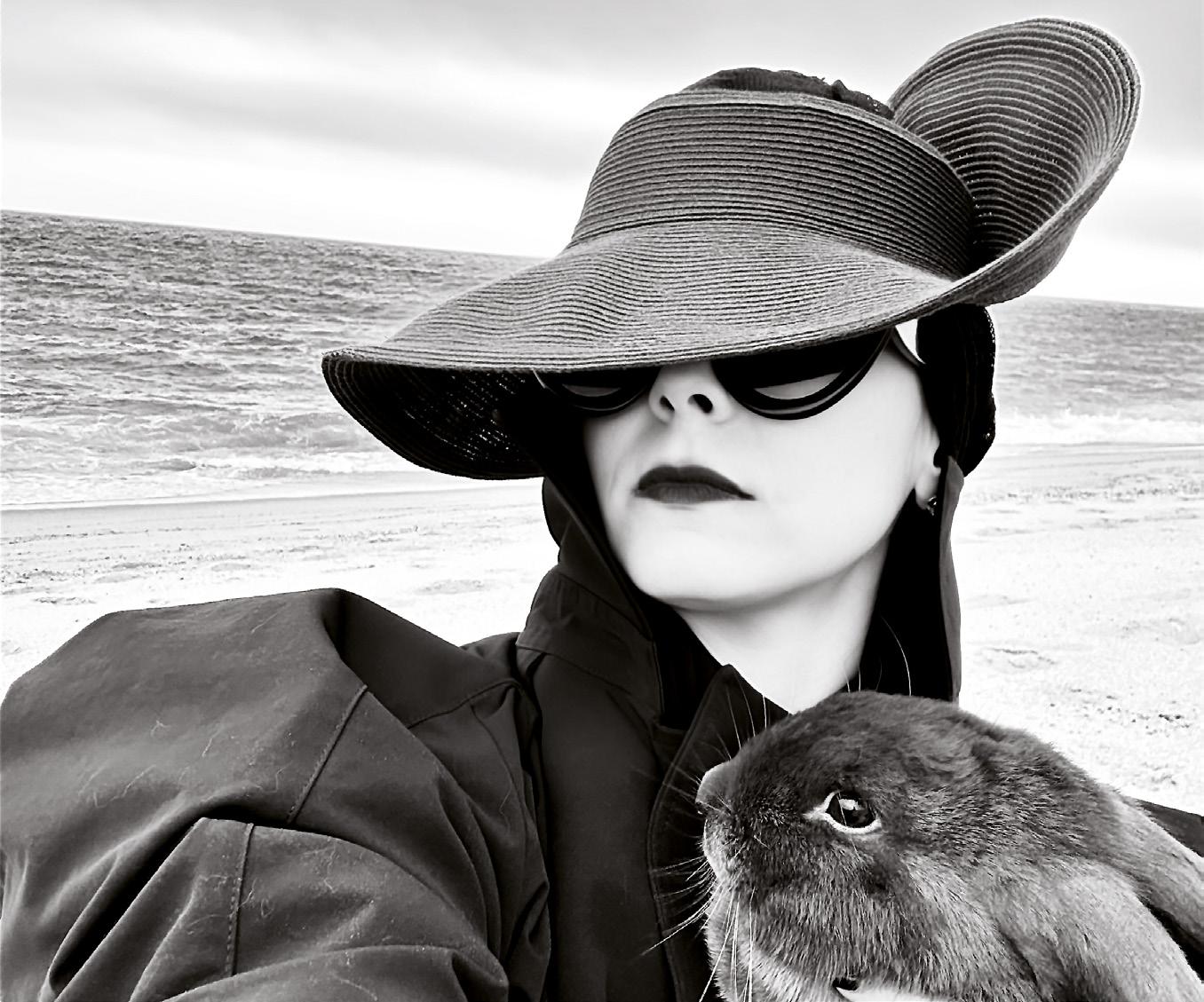
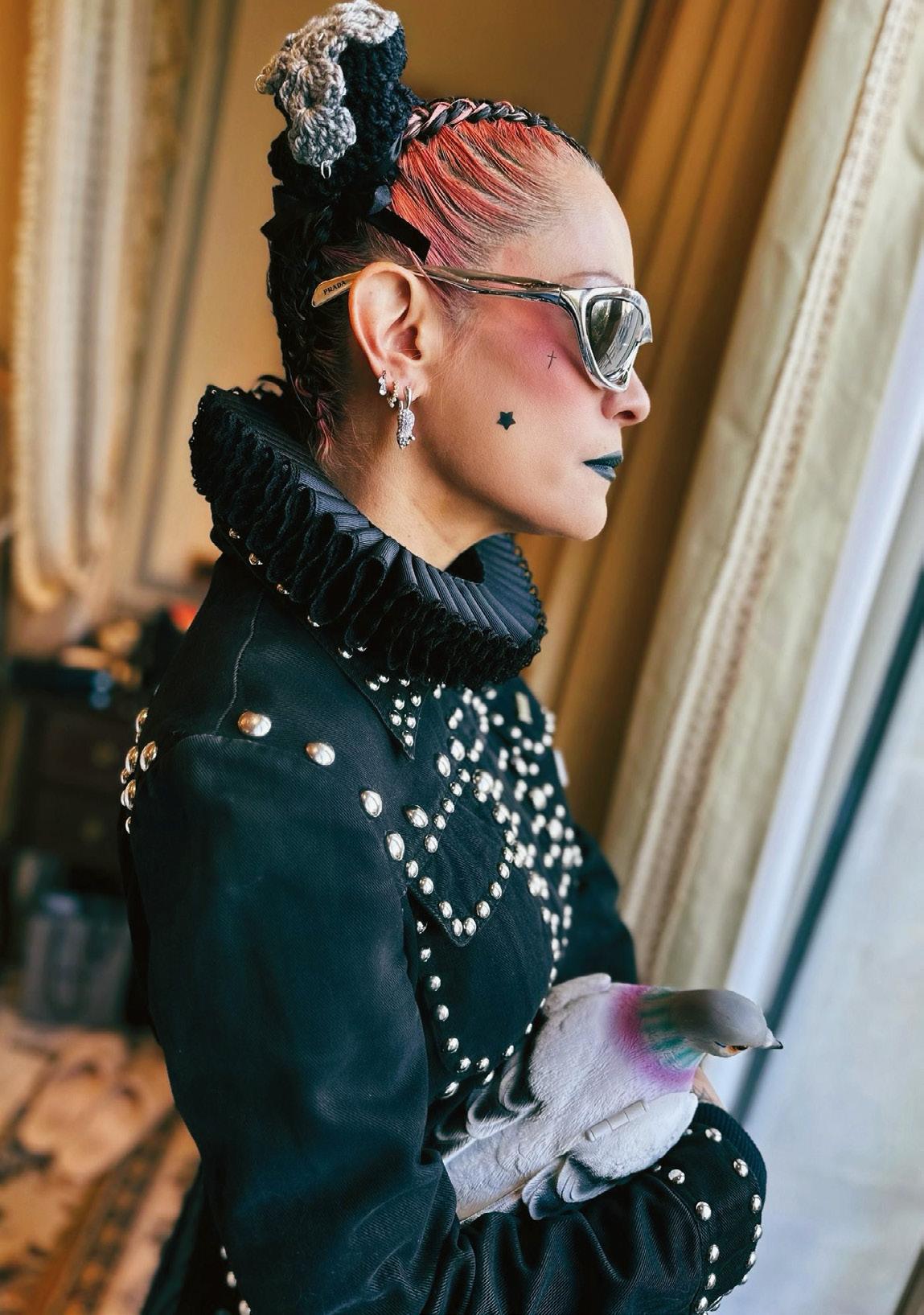
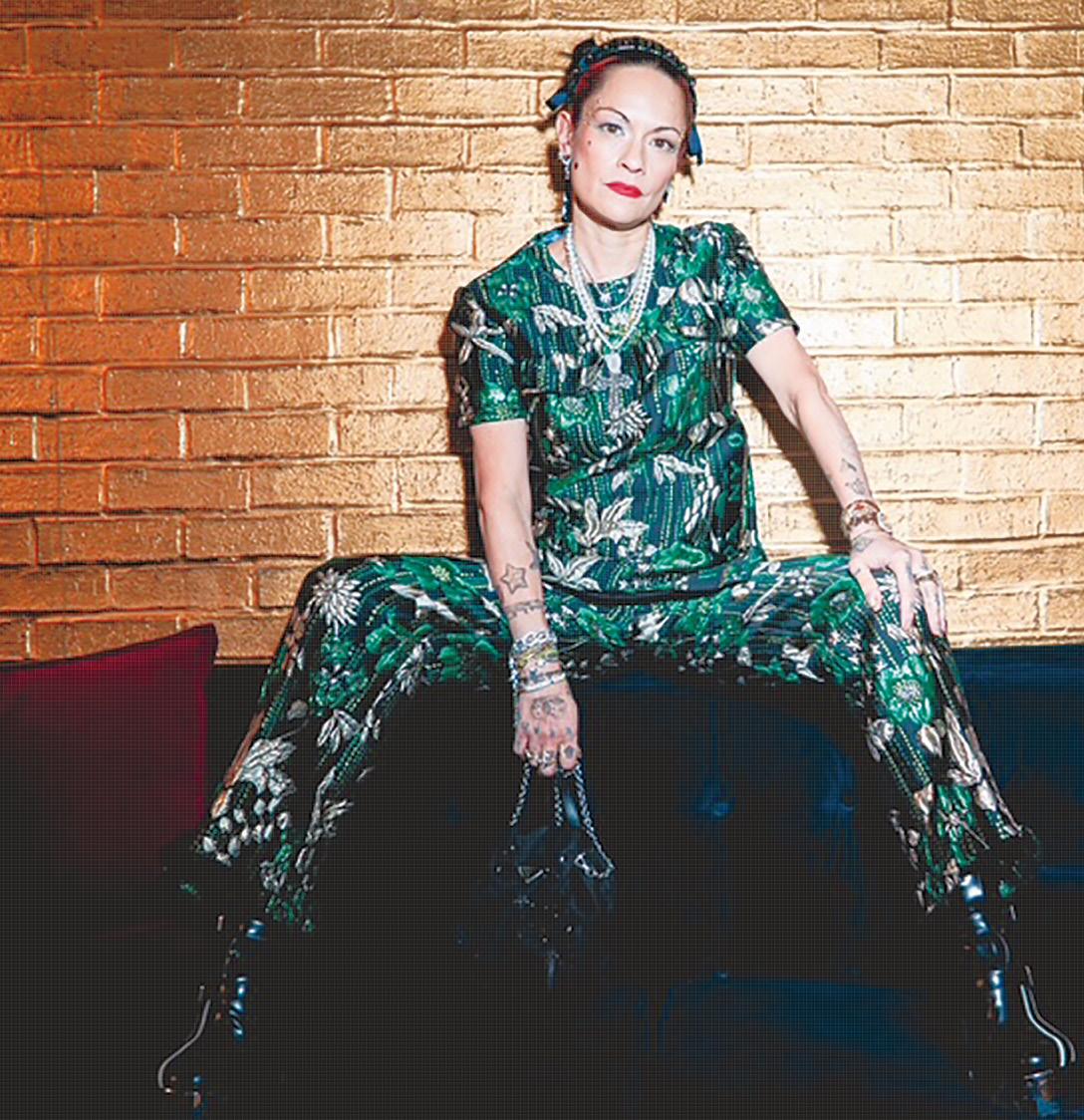
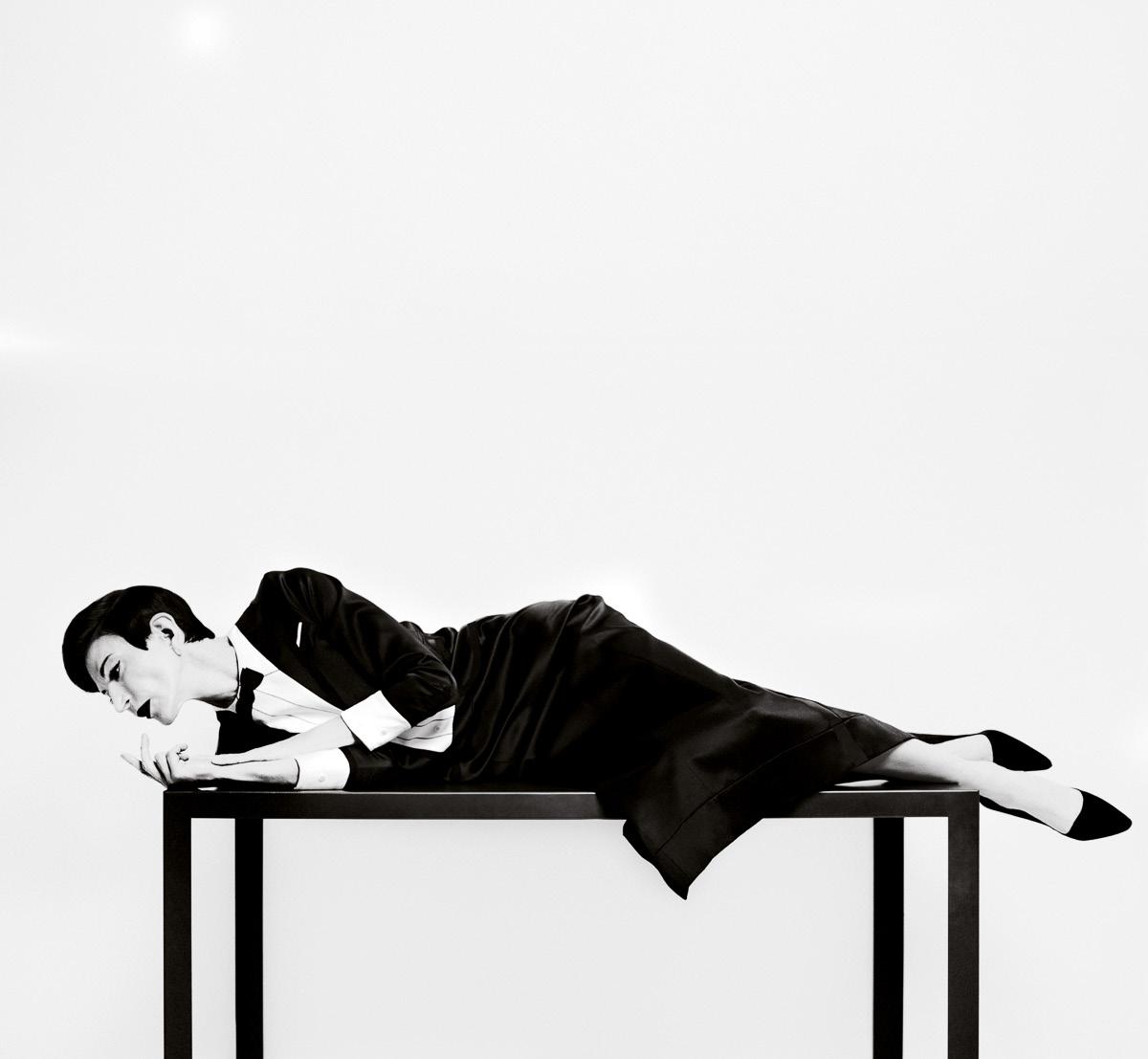
More than 40 years ago, Boy George, aka George O’Dowd, made a splash on America’s MTV with his catchy pop tunes and an outlandish, creative style. He cultivated his look at London’s Blitz Club, where the post-punk scene ushered in the New Romantic style, helping launch the careers of Culture Club, Spandau Ballet, Steve Strange of Visage, Stephen Jones, and John Galliano, among others. O’Dowd described the look to Classic Pop magazine as “glam rockers who became punks, took it further, threw a bit of goth, Cabaret, and John Waters.”
The English pop singer’s extravagant style, marked by ribbon-festooned dread-like braids, quirky hats, colorful plaid layered looks, and Robert Nagel-esque makeup, normalized a movement of dress associated with music and fashion subculture, which effectively gave young Americans interested in the burgeoning alternative fashion the green light to dress in a hyper-individualistic manner with abandon. Most, this writer included, flocked to New York and its East Village for the opportunity to flaunt this 1980s alternative dress, whether it was strutting down St. Mark’s Place or peacocking in the club scene.
veloping the careers of Philip Treacy and Alexander McQueen, which would lead to her personal style. As New York magazine’s Harriet Mays Powell wrote at the time, “Blow, 48, was fashion’s nutty aunt: always dressed perfectly in an outrageous hat, couture duds, painfully high stiletto heels; her lips were always fuchsia, scarlet, aubergine, and richly so.”
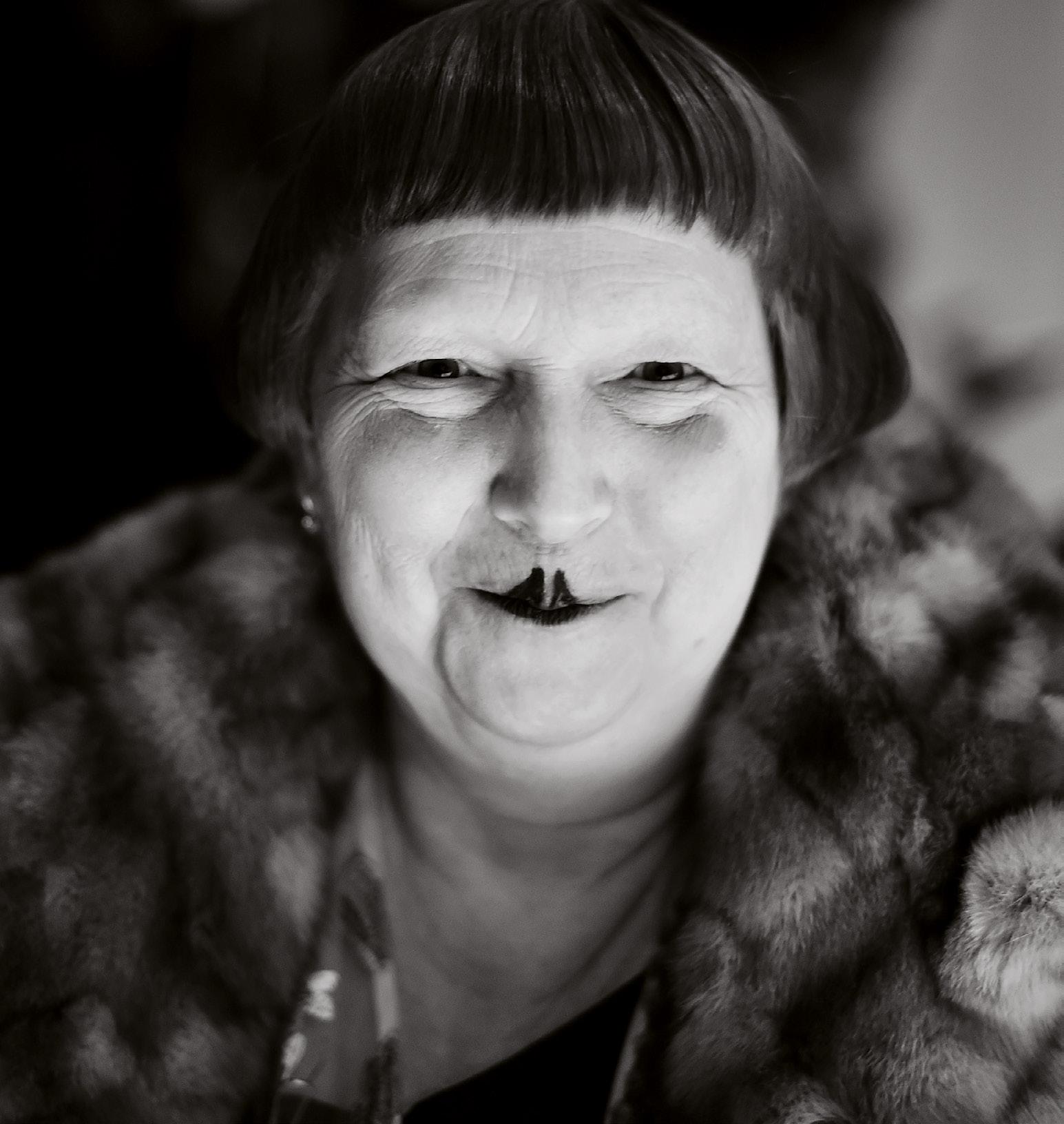
Fashion is not for the
meek but rather those w illing t o dream and
dare big. Grazia US A explores those who
pioneered the moniker of fashion eccentr ic
t o those who shine in
t oday’s m ilieu, not for
online fame, but for the
love of the game.
FULLY COMMITTED
Milan-born Anna Piaggi was not only legendary in her work as a fashion editor — her “doppie pagine” layouts in Italian Vogue were both current trends and a history lesson — but for a one-of-a-kind look that was equally Clara Bow, Versailles courtesan, and punk rock with her shock of blue hair. She was a ’70s muse to Karl Lagerfeld — he published a book of his sketches of her in the ’80s — and the subject of a retrospective at London’s Victoria and Albert Museum in 2006, entitled Anna Piaggi, Fashion-ology, which included “932 hats, 24 aprons, 31 feather boas and 2,865 dresses,” according to W Magazine, that anchored its 40th anniversary around her unique style in 2012 right before her passing.
Words Roxanne Robinson
Simultaneously, icons in fashion, the late Anna Piaggi and the late Isabella Blow, livened up the fashion scene with their eccentric styles. Blow, raised a posh military brat, began her career in fashion in New York in the late ’80s, assisting Andre Leon Talley at Vogue following a meeting with fellow Brit Anna Wintour; she would return to London to work with Tatler fashion director Michael Roberts, eventually succeeding him in the role. This early experience would prepare her for her most key roles, de-
Blow and Piaggi didn’t exist in a vacuum. Several came before them as well. Patron of the arts and Italian heiress slash socialite (is there really a difference?) in the early 20th century Luisa Casati collected exotic animals and incorporated them into her look, whether parading two cheetahs on leashes or wearing live snakes as bracelets and patronized fashion designers such as Fortuny and Paul Poiret; she also hosted the Ballet Russes and counted writers Jean Cocteau, Cecil Beaton, and Gabriele d’Annunzio as friends, the latter a lover. Artists such as Man Ray, Giovanni Boldini, and Romaine Brooks immortalized her in works. (Brooks
was also a lover.) In the Casati case, her eccentricities went beyond a look but spoke to a nonconformist lifestyle.
Forever embedded in Venice’s history for her personal collection of art, American socialite and art lover Peggy Guggenheim was also known for her outlandish personal style, as if wearing art were also a manifesto. Case in point, one of her most famous and familiar style markers was her butterfly glasses designed by Edward Melcarth that she wore consistently starting in the 1950s (and reproduced by Safilo in 1994 to sell in the Peggy Guggenheim Collection’s gift shop). Among her other iconic looks was a cellophane dress made by Elsa Schiaparelli and capes for warding off the breeze during a Venice canal gondola ride. Aside from the sunglasses, the other most prominent accessories were the gaggle of Lhasa apsos she was often seen photographed with.
Much like Boy George, Piaggi’s and Blow’s looks were marked by peculiar decorative headgear and signature bold makeup. Piaggi was team Stephen Jones, whom she counted as a friend, and Blow, team Phillip Treacy. As Cathy Horyn wrote in a 2007 tribute in the New York Times to Blow following her passing, “Her hats were the big-game kind, trophies of her wit and imagination: a veiled set of antlers, a jewel-encrusted lobster, a sailing ship, a phe-
asant.” Blow had a kindred spirit in her paternal grandmother, Lady Vera Delves Broughton, who had a penchant for exploration and wild-game hunting.
Since Blow’s passing in 2017 and Piaggi’s in 2012, social media has created a wave of fashion design and click-seekers made to stand out in the visual medium, manufactured to garner public approval. It often reeks of inauthenticity as an attention-seeking construct and a vehicle for getting paid by brand sponsors, rather than a true love or understanding of fashion.
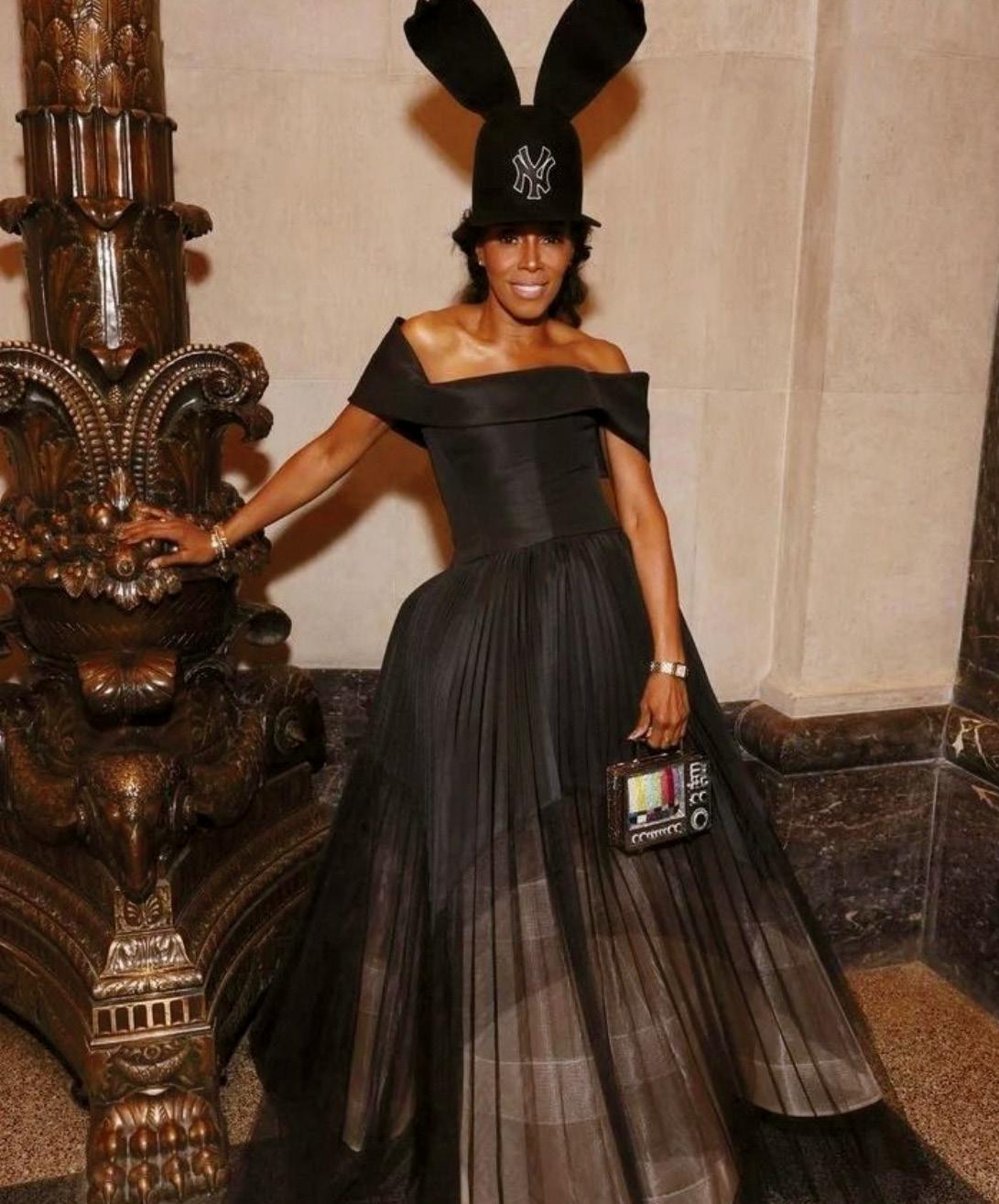
While not immune to Instagram and the ilk, today’s fashion scene is home to truly devoted fashion lovers who have cultivated a head-turning persona, many for decades, based on a love of design and craft. These women express a gusto for individuality, inspired by life and its plethora of creative avenues. They are all intimately involved in fashion as a career or business and are actual customers. As fashion writer Katharine K. Zarrella, aka @ LadyKKZ, professed, “I don’t borrow clothes. I can’t stand wearing anything that I don’t own, and that isn’t intrinsically me. I tried once and had to change — I felt like a fraud.”
Grazia USA spoke to Zarrella as well as Amy Fine Collins, Lynn Yaeger, June Ambrose, Bianca Jebbia, and Dia-
BIANCA JEBBIA
ne Pernet, six American women committed to the joy of dressing in clothes that command attention for all the right reasons. For the record, O’Dowd, while trading in the braids for a short coif and chiseled facial hair, is still rocking his eclectic millinery, usually by Stephen Jones, dramatic maquillage, and his inspired or actual Vivienne Westwood garb as he tours casinos in America’s flyover states. The audience — whose dress code reigns in American slop — loves it, undisputedly acknowledging that the delight of genuinely dressing for oneself can give others.
Bianca Jebbia
New York City, mom and muse, lover of fashion and master of bedazzled.
Grazia USA: Describe your fashion aesthetic.
Bianca Jebbia: Coco Kahlo—Chanel meets Frida, classic lines with a fearless, artistic twist. To insiders I’m an artist, with fashion as my canvas. A civilian may see me as confident, creative, fearless, with a “fuck off” attitude. What were the most pivotal and formative fashion experiences that got you hooked on fashion?
For over 30 years, every day is an opportunity to express myself and bring joy through fashion. Often, I feel like I’m
just getting started. Working in SoHo at 17, I had a frontrow seat to fashion theater — people-watching through the windows. It was personality in motion — high-low mashups, vintage flair, and streetwise freedom. My streetwear look got a fancy-girl upgrade with a pair of Tootsi Plohound black leather triple-strap Mary Janes bought near my job at Stüssy.
In 1997, in Miami Beach, my boyfriend (now husband) James gifted me chartreuse neon Miu Miu sandals; they were to me like punk-meets-designer magic. Ditto for a Stephen Sprouse LV pochette tagged “LOVE” by the late artist Rammellzee. It was like carrying a piece of art and love.
In 2003, when the Marni store opened on Mercer Street, I was transfixed and teared up. I felt like it was fashion church. Here I solidified myself as a creative, artistic vessel, in love with craftsmanship. Who are your muses, favorite brands, and most coveted items?
Besides Kahlo and Chanel, Björk, David Bowie, Freddy Mercury, Kate Moss, Marie Antoinette, Debbie Harry, and Joan Jett, Gustav Klimt and Egon Schiele’s subjects inspire me. Also, comic books!!! The colors and outfits are a superpower. I love a tutu — thank you, Degas — and bless
AMY FINE COLLINS
Simone Rocha’s seasonal collection.
I couldn’t live without my 2017 Gucci Alessandro Michele rocker platform boots — they’re my confidence — or my silver Milanese cross from my husband. Sunglasses are a must, and AirPods covered in an adorable crochet Chanel case for the train. I also love Undercover, Comme des Garçons, Noir, Junya Watanabe, vintage Vivienne Westwood, current Chloe, and Supreme.
Amy Fine Collins
New York City, editor-at-large, Air Mail; contributing editor, New York, World of Interiors and Table; co-owner of and author of the official tome, The International Best-Dressed List.
Grazia USA: Who influenced your fashion aesthetic most?
Amy Fine Collins: From the age of two, I was hyper-aware of what my mother and I were wearing; I still remember these outfits. As a fashion student, my mother was very concerned with cut, quality, craftsmanship, and the major influence. As an adult, Geoffrey Beene was a primary influence. Today, Thom Browne is my favorite brand. How has art influenced your look?
Observing the costumes in paintings in art museums, always. I always admired the women drawn by the fa-
shion illustrators René Gruau and Eric [Carl Erickson]. What is your secret style flex?
My style is consistent, graphic, disciplined. For various reasons, nobody can copy it. I’ve heard of drag queens doing ‘AFC’, but I’ve never seen them.
Can you share your best fashion advice and worst fashion regret?
Color can be an antidote to a bad mood or to bad weather. Pauline Trigere said, “When you feel blue, wear red.”
I regret giving away a Geoffrey Beene piece to a charity event; it was immediately snapped up by another collector of Beene.
Diane Pernet
Paris, founder and director of ASVOFF, the first fashion film festival, and pioneering fashion blog ASVOF.
Grazia USA: Tell us how cinema has played a huge role in your style.
Diane Pernet: My style is a uniform and a shield, allowing me to be present yet slightly apart, observing more than performing. Movies made me dream. Seeing Anna Magnani, not typically beautiful but devastatingly sensual in her black slip in The Rose Tattoo, made a strong impres-
DIANE PERNET
sion, as did Jeanne Moreau in François Truffaut’s The Bride Wore Black. Also, Marlene Dietrich — sort of a muse to me — as Shanghai Lily in Shanghai Express. The cinema and its characters played a powerful role in shaping my eye.
Describe your aesthetic.
Strong, silent, austere. While a designer in New York in the 1980s, I decided to always wear black; it didn’t interfere with my creative process. My silhouette is long, fluid skirts, jackets, and platform shoes to appear taller than I am. Often I have worn veils. Non-fashion people either love it or are scared by it, which can be unsettling.
What are your favorite brands?
Dries Van Noten, Comme des Garçons, Balenciaga, Matières Fécales, Rick Owens, Willy Chavarria.
How do your moods or the weather affect your style?
More layers in winter. It’s difficult in the rain with my long skirts; in a way, I suppose I help clean the streets of Paris.
June Ambrose
New York City, creative director/costume designer
Grazia USA: Tell us about your earliest fashion memories.
June Ambrose: In my living room in the ’70s, cosplaying Diana Ross, slipping into one of Michael Jackson’s jackets, channeling his showmanship, and mesme-
rized by the effortless glamour—it was performance; it was presence. Watching my mom dress for her Wertheimer’s job was witnessing a sacred ritual with intention in every detail. She taught me that fashion is a ceremony and that you announce yourself before you ever speak. As a teenager in the ’80s, I knew I didn’t just want to wear fashion but to direct and disrupt it. Hip-hop was my runway school. Artists trusted me with their image, which shaped my path.
How do you describe your fashion aesthetic?
It’s structured, never stiff. Sensual, never loud. There’s always tension in my wardrobe — masculine and feminine, polish and edge, couture and culture. I believe in punctuation: belted waists, hats, and posture-defining heels. Nothing is accidental. The public sees me as powerful, looking expensive, or, my favorite, “like she’s in the fashion industry.”
What do accessories mean to your style?
My gateway “fashion drug” is a bold hat. The wider the brim, the stronger the presence. A hat changes posture. It frames your silhouette from top to bottom. It commands space without asking for permission. The moment I put one on, I felt intentional — almost cinematic. Also oversized glasses. Big frames became my signature — equal
JUNE AMBROSE
parts mystery and authority. Glasses taught me control: what you reveal, what you conceal, and how you edit your energy. They’re armor and attitude. I regret not buying the Prada runway asymmetrical lens sunglasses with a headscarf attached. My other go-to items are my Hermès Kelly bag and a cool pair of kicks. What are your favorite brands?
Sacai, Gucci, Naturalizer collaboration Style-letics by June Ambrose.
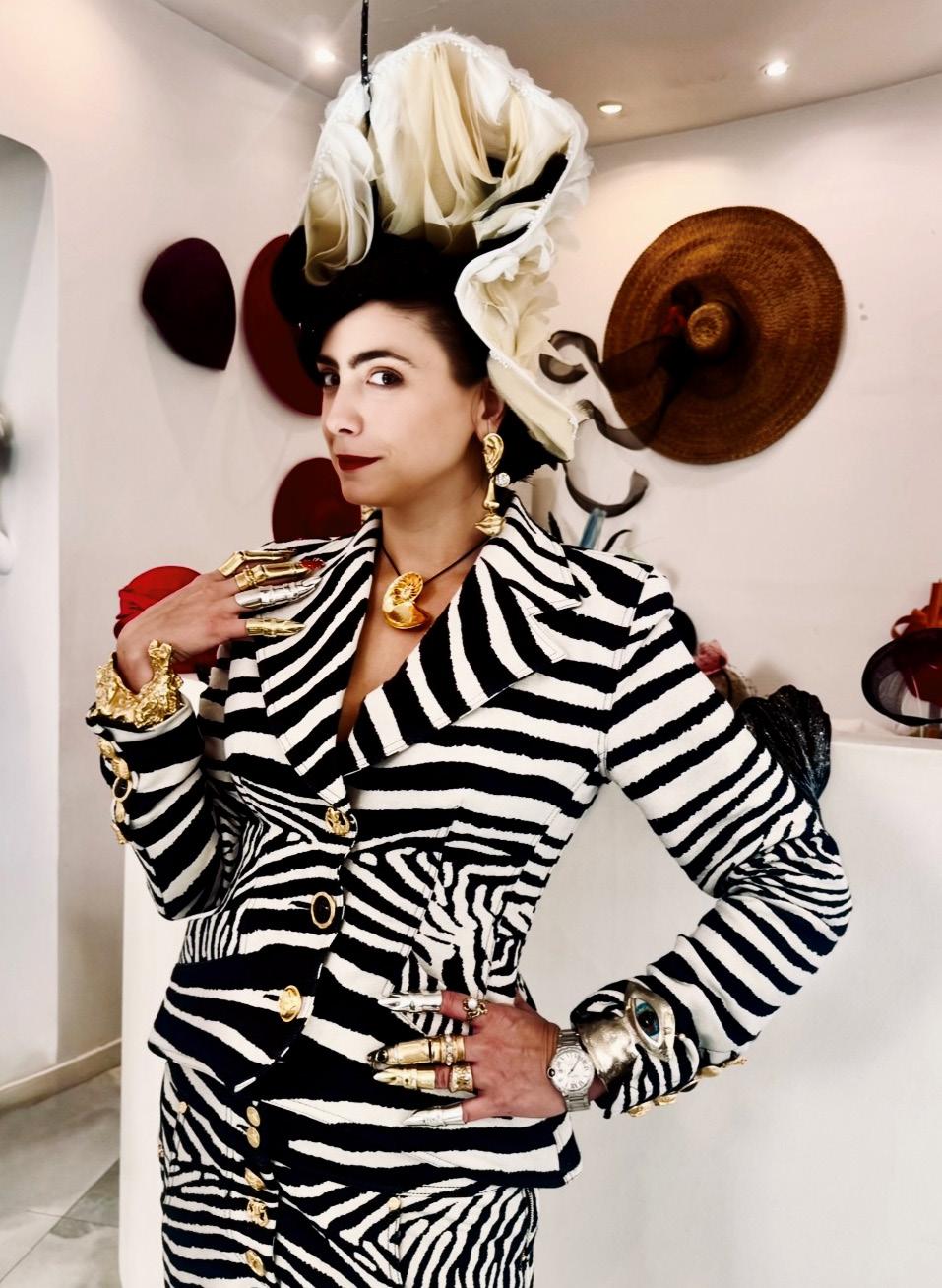
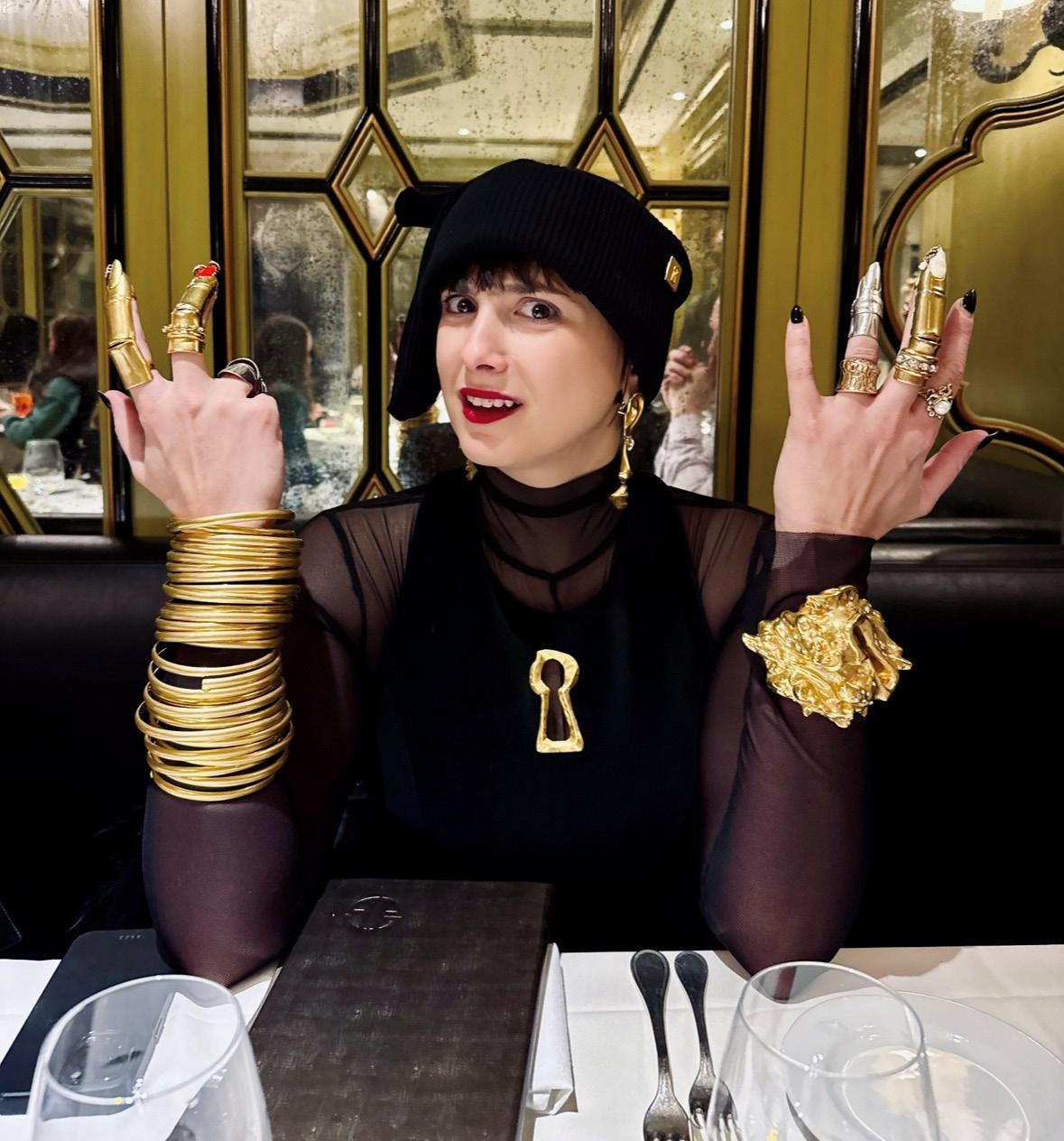
Katharine K. Zarrella
New York City, fashion journalist, editor, critic, and lecturer
Grazia USA: Tell us about your late mother’s style.
Katharine K. Zarrella: My mom wore a strapless black velvet and tulle skirt Victor Costa gown to a black-tie event in 1986. The bodice met the tulle in these dangerously sharp points, which awed me.
I begged to have it even though I destroyed her wedding gown playing princess. I found this gown following my mother’s passing in 2014, crying when I discovered it. I felt my mother’s glamour when I wore it finally this past New Year’s Eve to the Met Opera. How do you coin your look? What about others?
Gothic Cirque de Soleil clown, melodramatic storm cloud, and undead Marie Antoinette, among them. A fashion insider might say my style is eccentric, researched, and intentional. A civilian would say it’s batshit crazy.
What was your first major fashion purchase?
When I lived in Paris in 2008, I acquired my first Junya Watanabe look—a cocoon top; wool cuffed trousers and low, long crotch; a matching, swirly hat, and full-length gloves. It ignited my obsession with Japanese designers and developed my aesthetic.
What are you forever on the hunt for?
Archival Schiaparelli. I procured a 1934 haute couture jacket and a 1938 monkey-fur cape that Elsa wore herself. In Paris, I found a 2008 tweed Chanel tailored jacket and jodhpur-shaped trousers, both trimmed in zippers. I’ve never forgotten it. I will find it and make it mine. Elsa, along with Marchesa Luisa Casati, Jean Paul Gaultier-era Madonna, Marie Antoinette, Isabella Blow, and Oscar Wilde are among my muses.
What are your ride-or-die items?
Schiaparelli gold-toe platform boots, Comme des Garçons’s tulle skirts, vintage Alaïa, 1963 Kelly bag. I can’t leave the house without these: Since 2010, a hat — at four, I was instantly enamored with hats when my mom put a black bow-
KATHARINE K. ZARRELLA
ler adorned with cherries on my head — and my army of full-finger rings by Schiaparelli and Fangophilia. Otherwise, I feel naked. I wear the most outrageous, intense, and/or complicated pieces when I am sleep-deprived or frazzled.
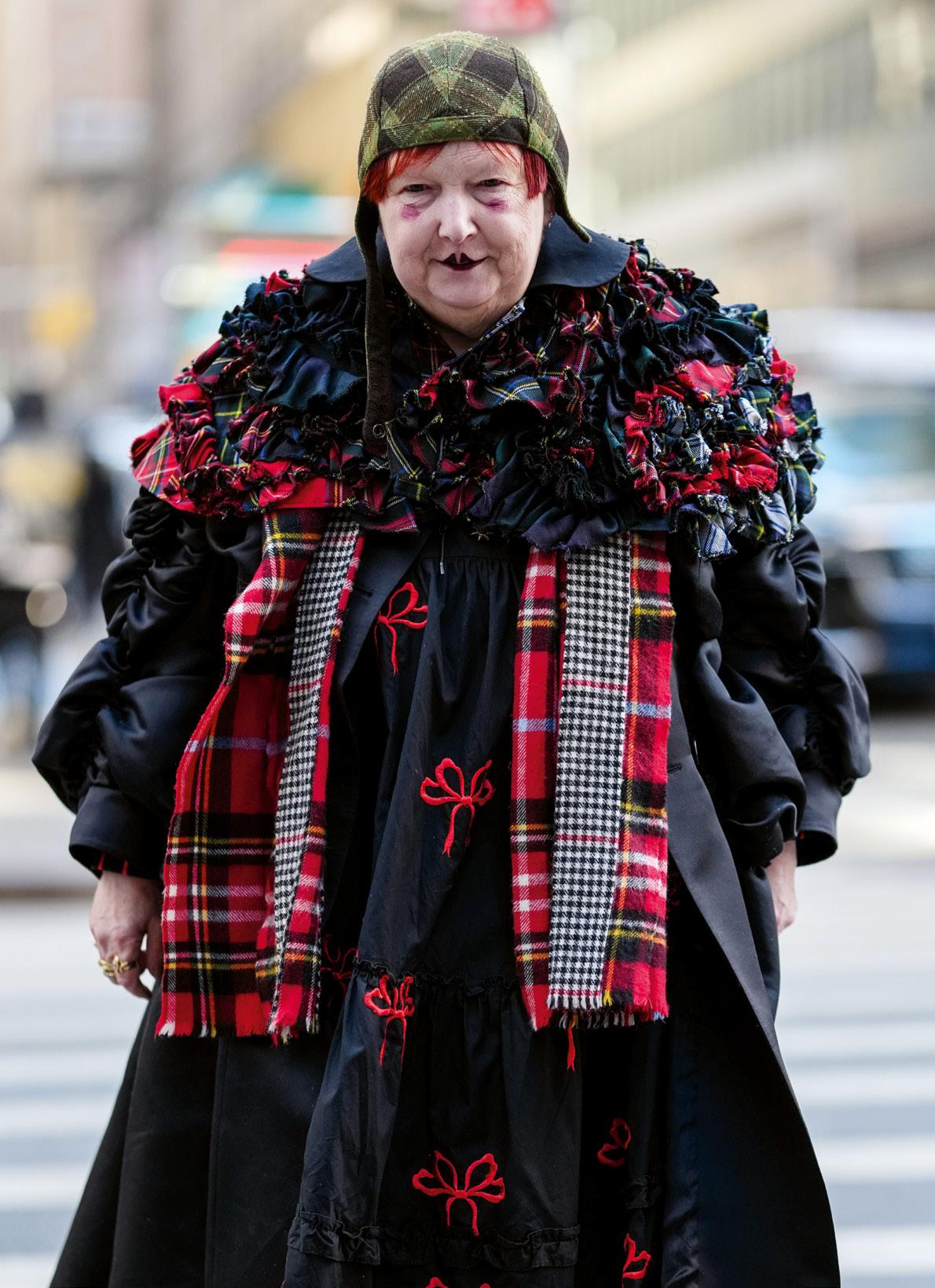
Lynn Yaeger
New York City, writer and former podcast host
Grazia USA: Tell us who inspired your look and how you describe it?
Lynn Yaeger: It’s a broken 1920s doll. Silent film stars Colleen Moore and Louise Brooks are muses for hair and makeup. Also, a friend I had years ago in the East Village. She was older than me and had my current haircut. She was a trashy heroin addict but had a look. How did you cultivate this look?
I wore all vintage clothing for years. As you get older, so do the clothes, especially the clothes I wanted from the 1920s; they’re 100 years old now. When you’re young, looking a bit shabby is cute; not as you age. It looks poor. I still love vintage accessories, especially antique jewelry. Tell us about a special moment wearing Roaring ‘20s dresses.
Once, I went to London with five beaded antique dresses in my suitcase. I used to wear evening dresses during the day.
Some of it deteriorated quickly.
What were some other early fashion inspirations?
When I was in college, I loved European designers, unknown to me growing up in Long Island. Bloomingdale’s had a department, Place Elegant, that carried Cacharel, Romeo Gigli, and Daniel Hechter. I became quite enamored of those clothes. I love a ballet look; the Pierrot, the French clown look. Anything like that works for me.
What are your must-have pieces?
I wear smock dresses, a tutu, and a cardigan; those are my core wardrobe pieces. Among my favorite designers are Marc Le Bihan in Paris, who makes me dresses, and Patou under Guillaume Henry. I look for old Simone Rochas on The RealReal every day. I also hunt for Comme des Garçons and Alessandro Michele’s Gucci tote.
What do you regret not getting?
It was an antique gold locket that said “Bebe” in diamonds. Since I am Baby Lynnie, I wanted it. It was at a jewelry show. I went to borrow a resale number from a friend, and it had been sold when I returned.
What is the best shopping advice?
I shop resale and vintage; a lot of designer brands got too expensive for the aspirational customer. I also love the fakes. Anyone who wants to go to Canal Street can get a nice bag.
LYNN YAEGER
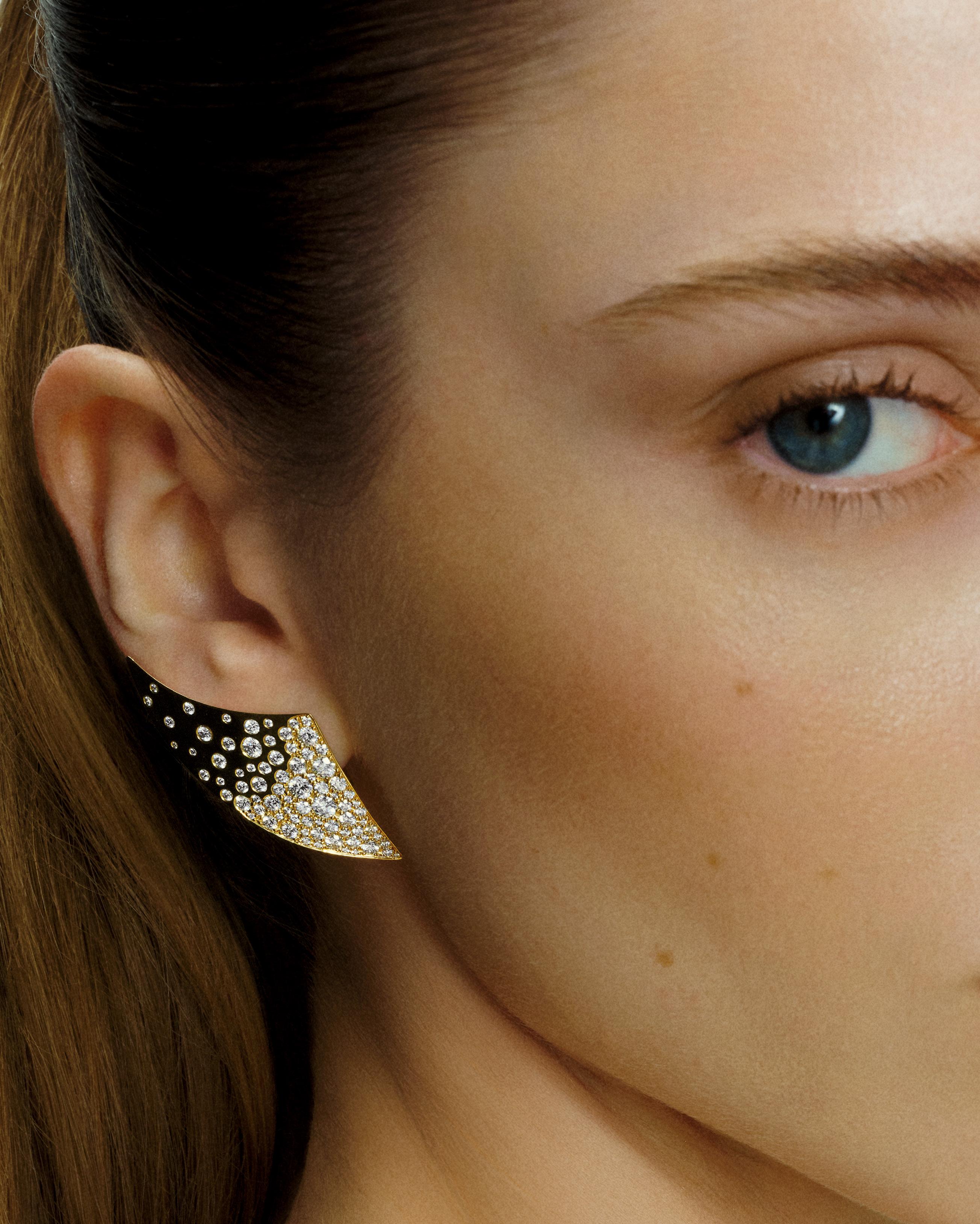
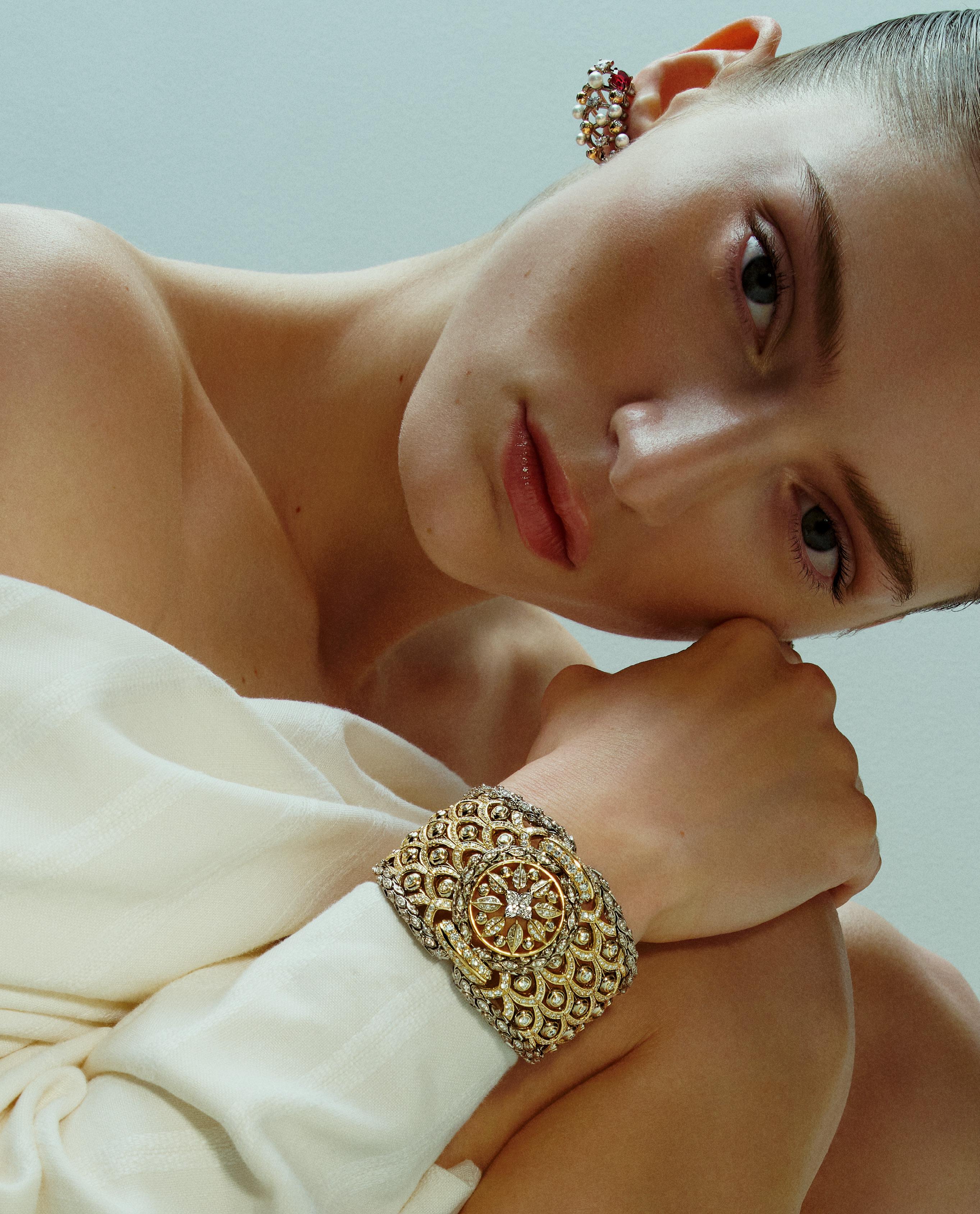
Messika High Jewelry ear cuff with white diamonds, messika.com.
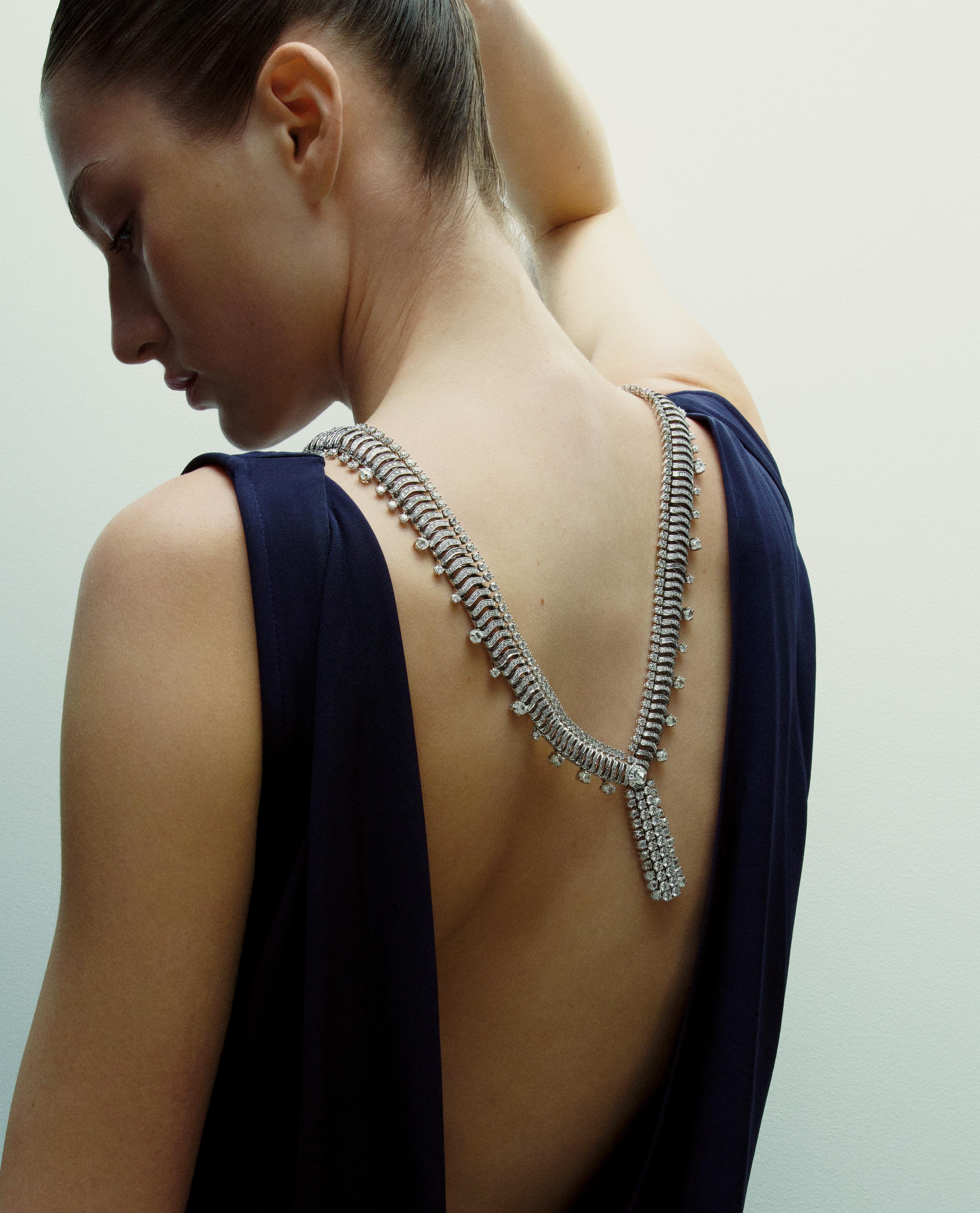
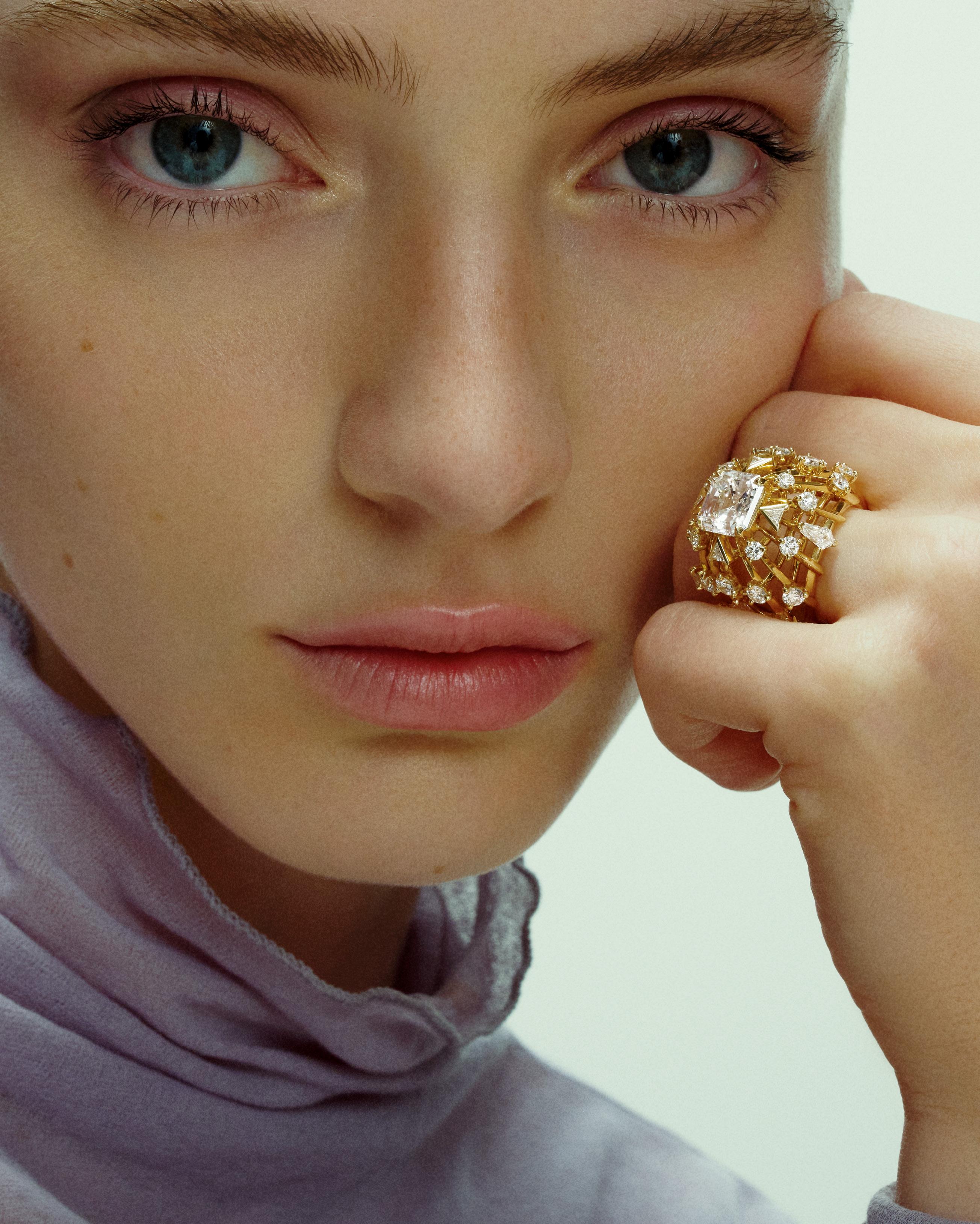
Craft ed from gemst ones and precious met als, this je welry
has inst ant heirloom st at us.
SHINE BRIGHT
Photography Studio MIMI
Jewelry edited by Molly Haylor
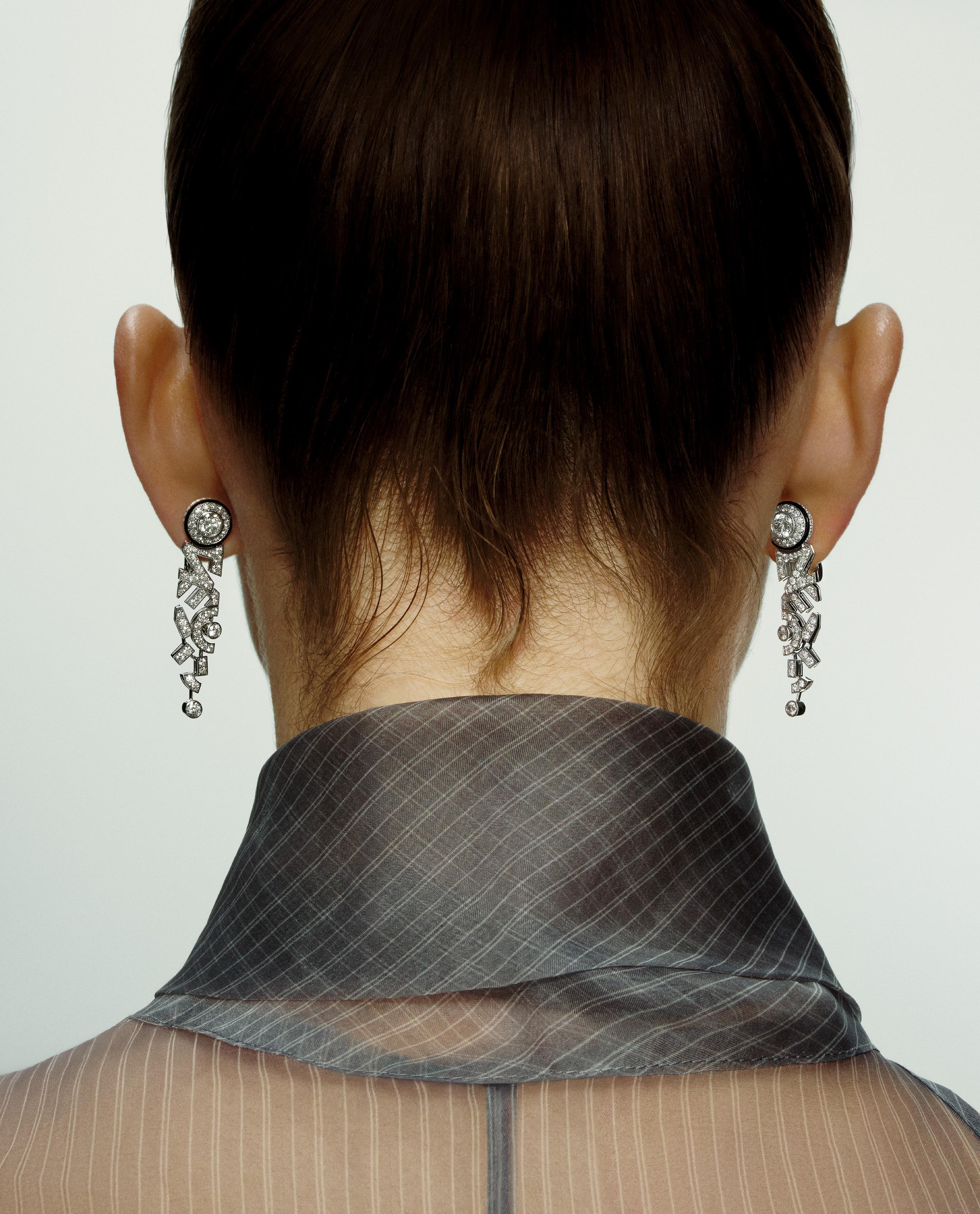
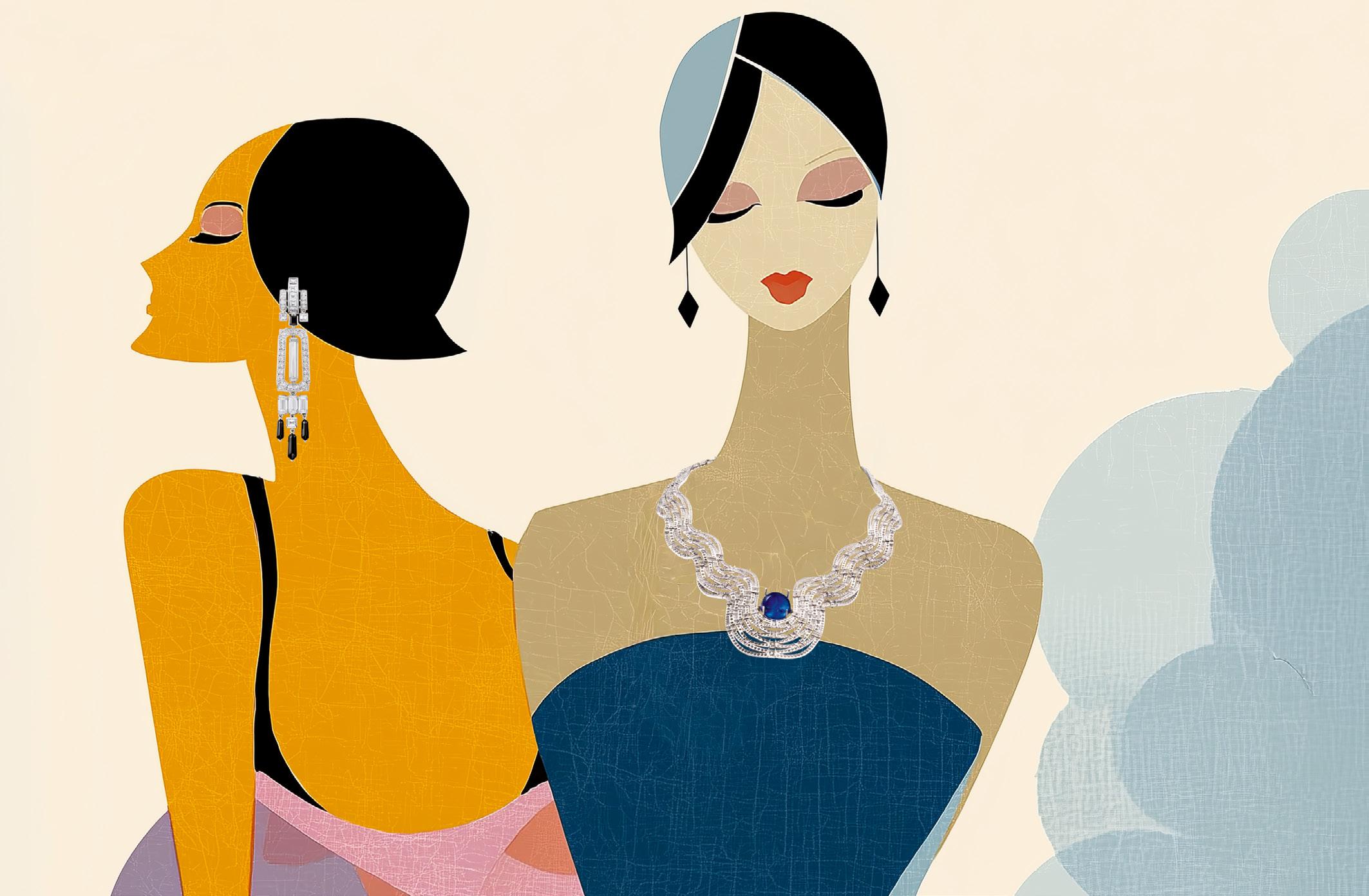
Chanel High Jewelry Haute Joaillerie Sport earrings in 18-carat gold, diamonds, and lacquer, 800-550-0005; Rat & Boa top, ratandboa.com.
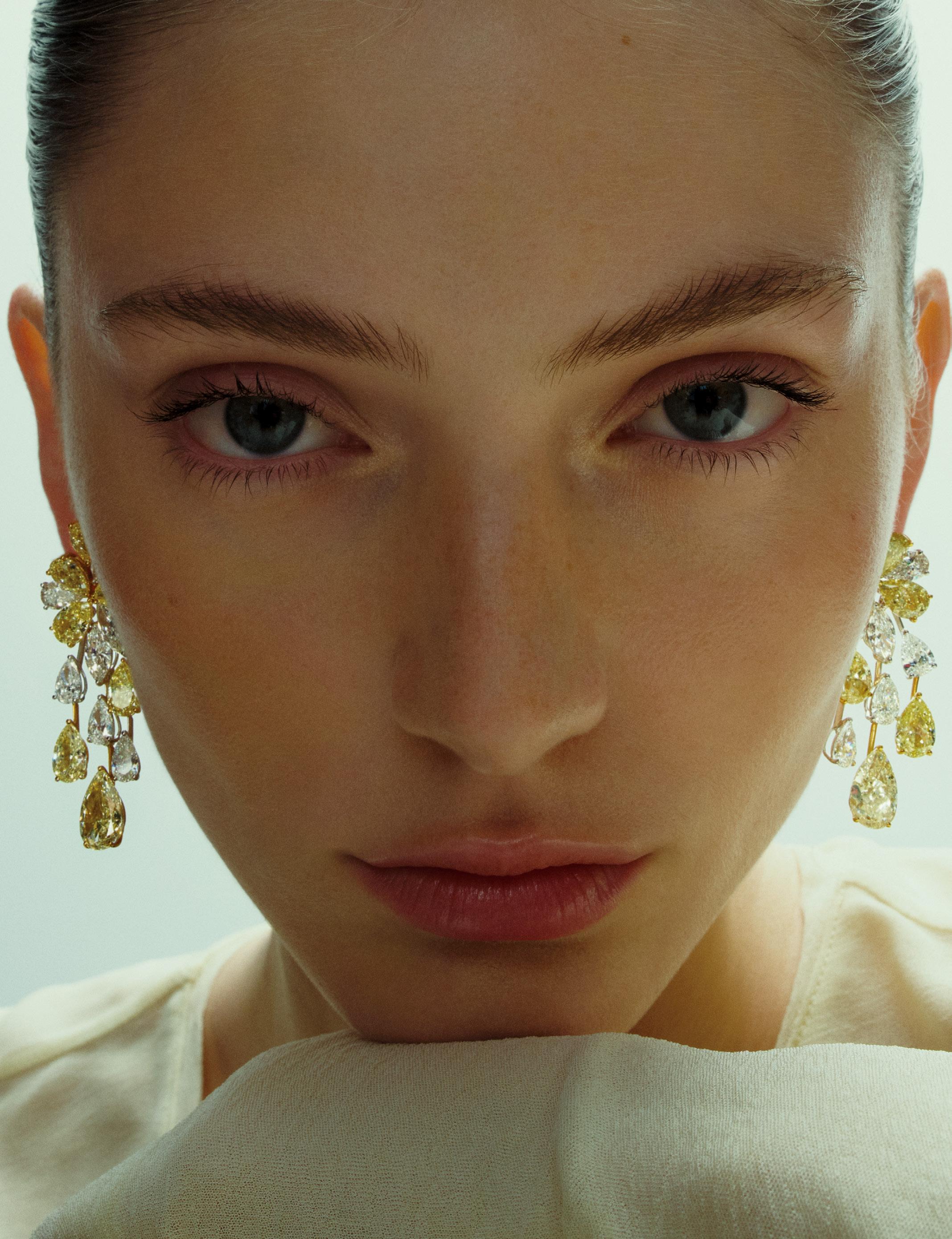
Graff High Jewelry 48-carat yellow and white diamond earrings, graff.com; Tove top, tove-studio.com.
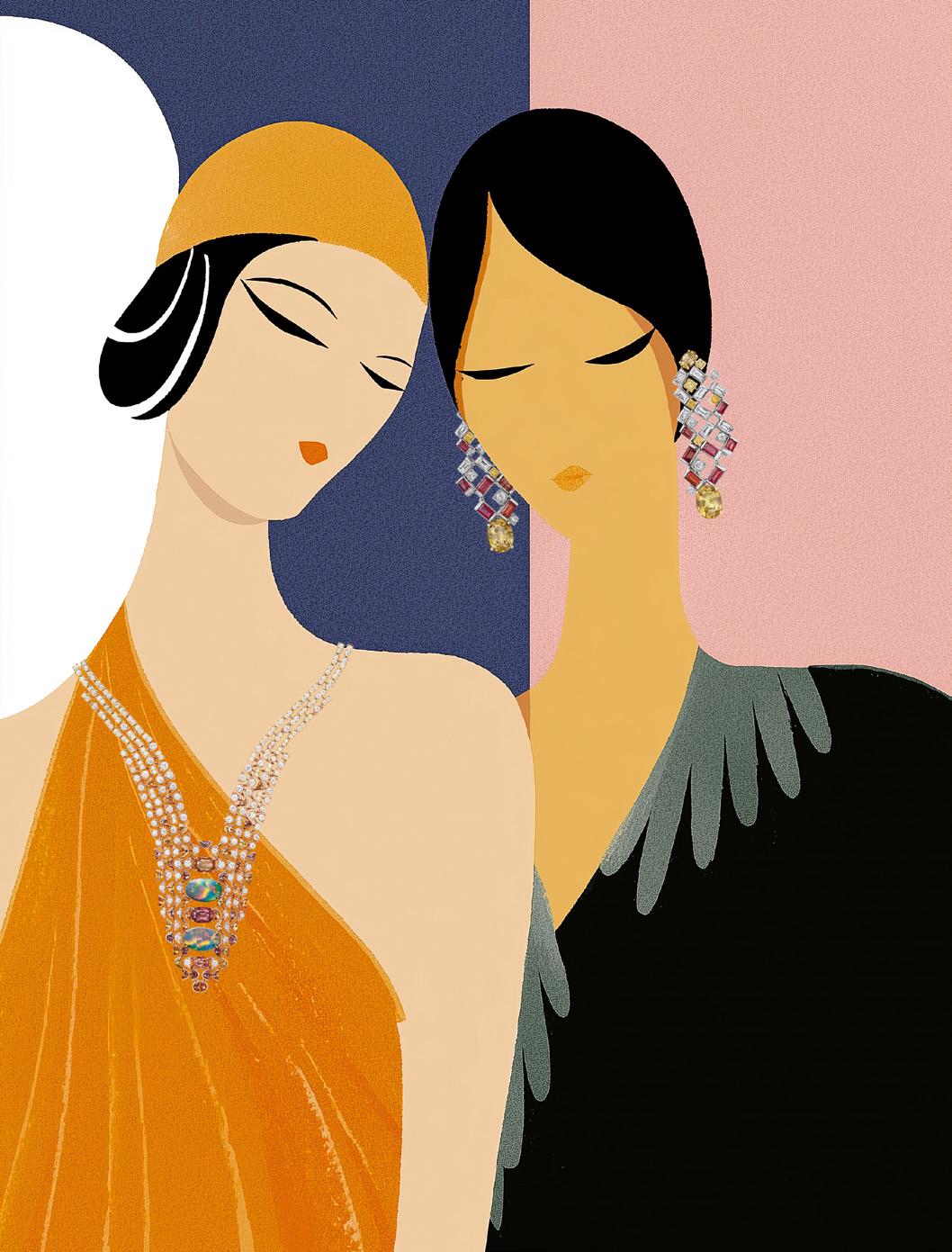
Louis Vuitton High Jewelry Virtuosity Collection white and yellow gold and diamond Protection bracelet with 1.59-carat LV monogram diamond, and white gold and platinum Protection earrings with rubies and diamonds, dress, 866-VUITTON.
De Beers Vibrations
Echo necklace with a 1.12-carat Fancy Intense blue diamond and 193 carats of white diamonds, debeers.com; Cult Gaia dress, cultgaia.com.
Model: Lena Bussolino at Monster Management; Hair: Christophe Pastel; Make-up: Nolwenn Quintin; Casting: Christie Phedon; Shoot producers: Gabriela Velasco, Fiona Rollet; Photographer’s assistants: Louis Lac, John Chevalier; Fashion assistant: Amber Backhouse; Studio assistant: Hannah Mesguich
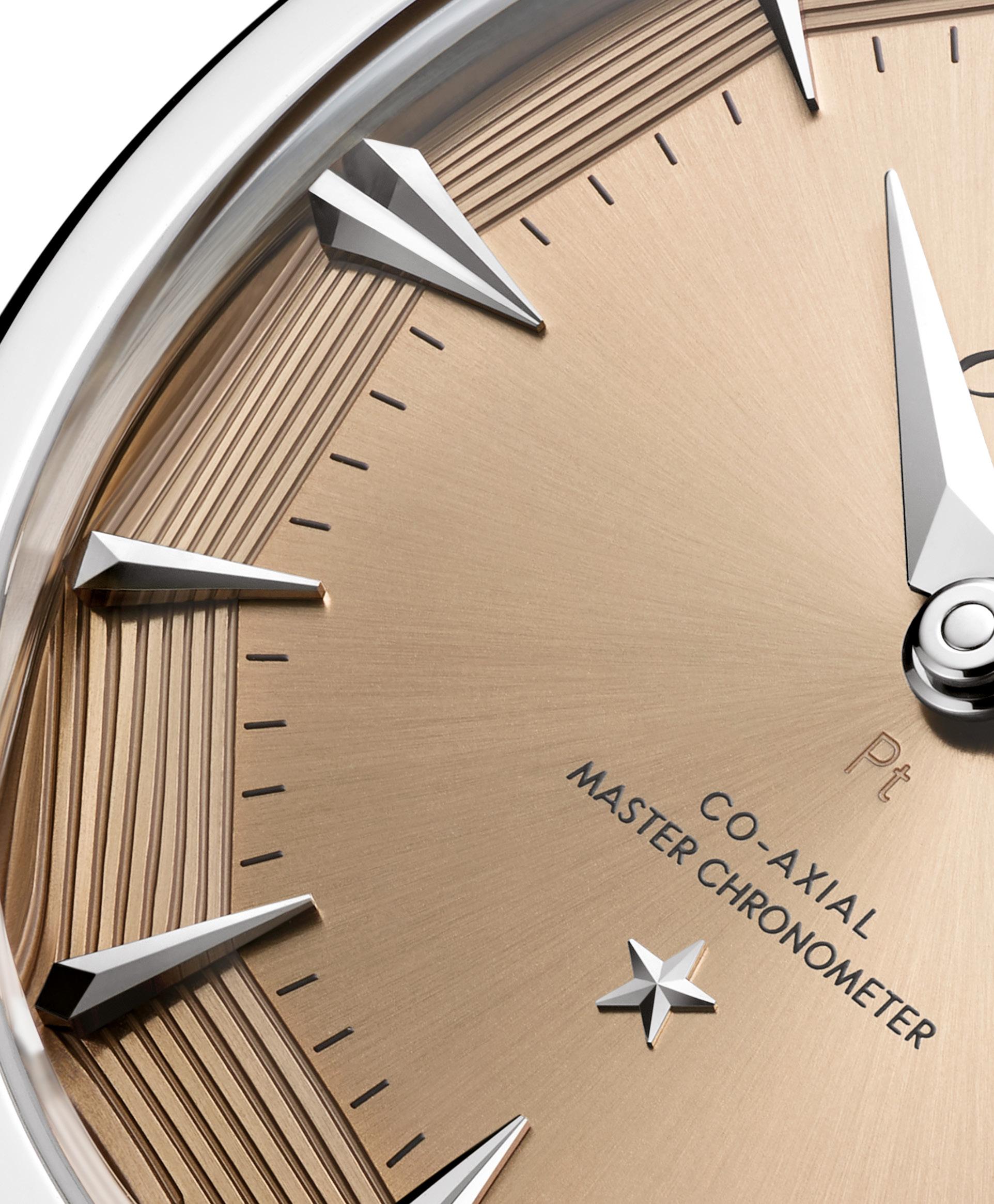
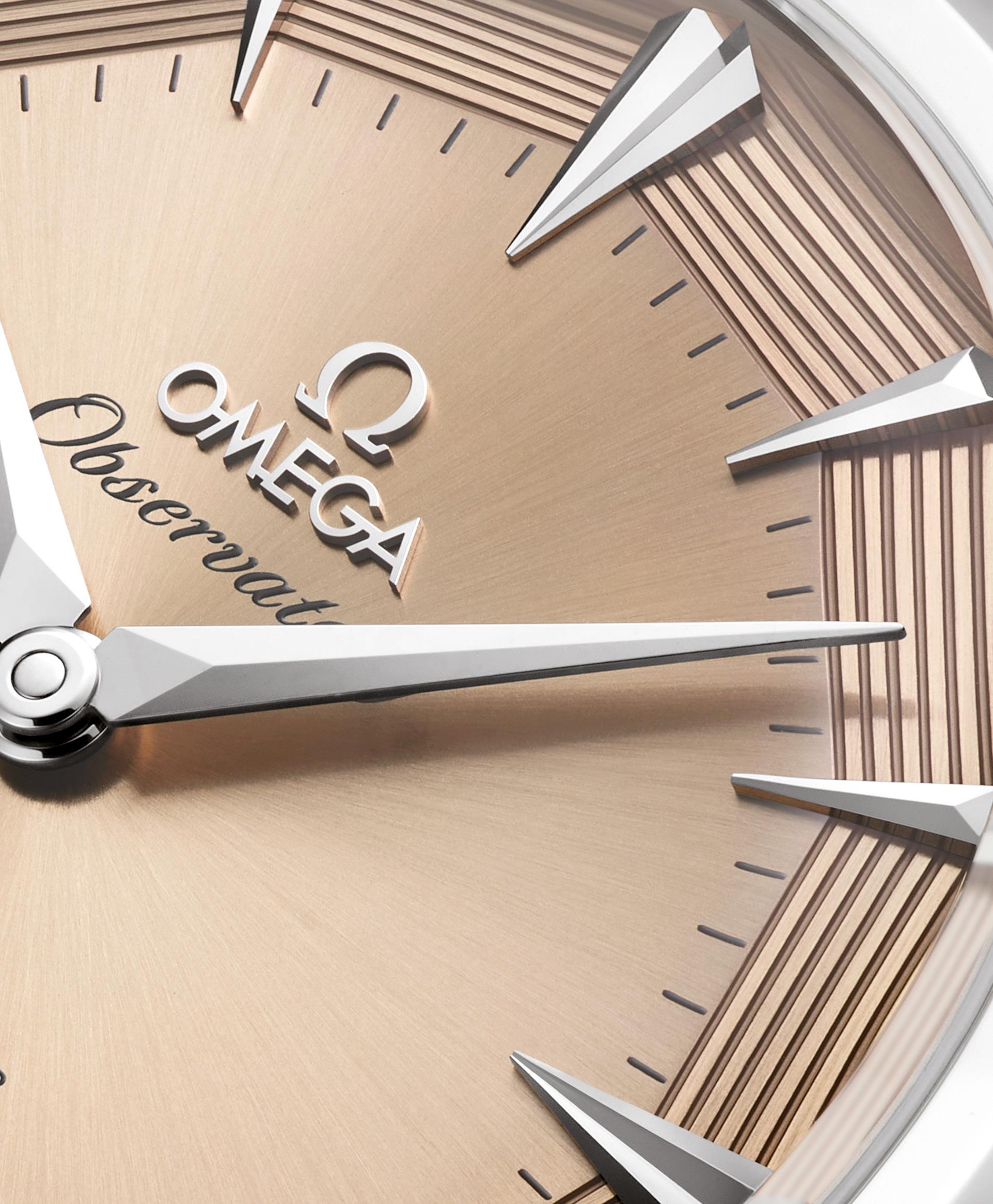
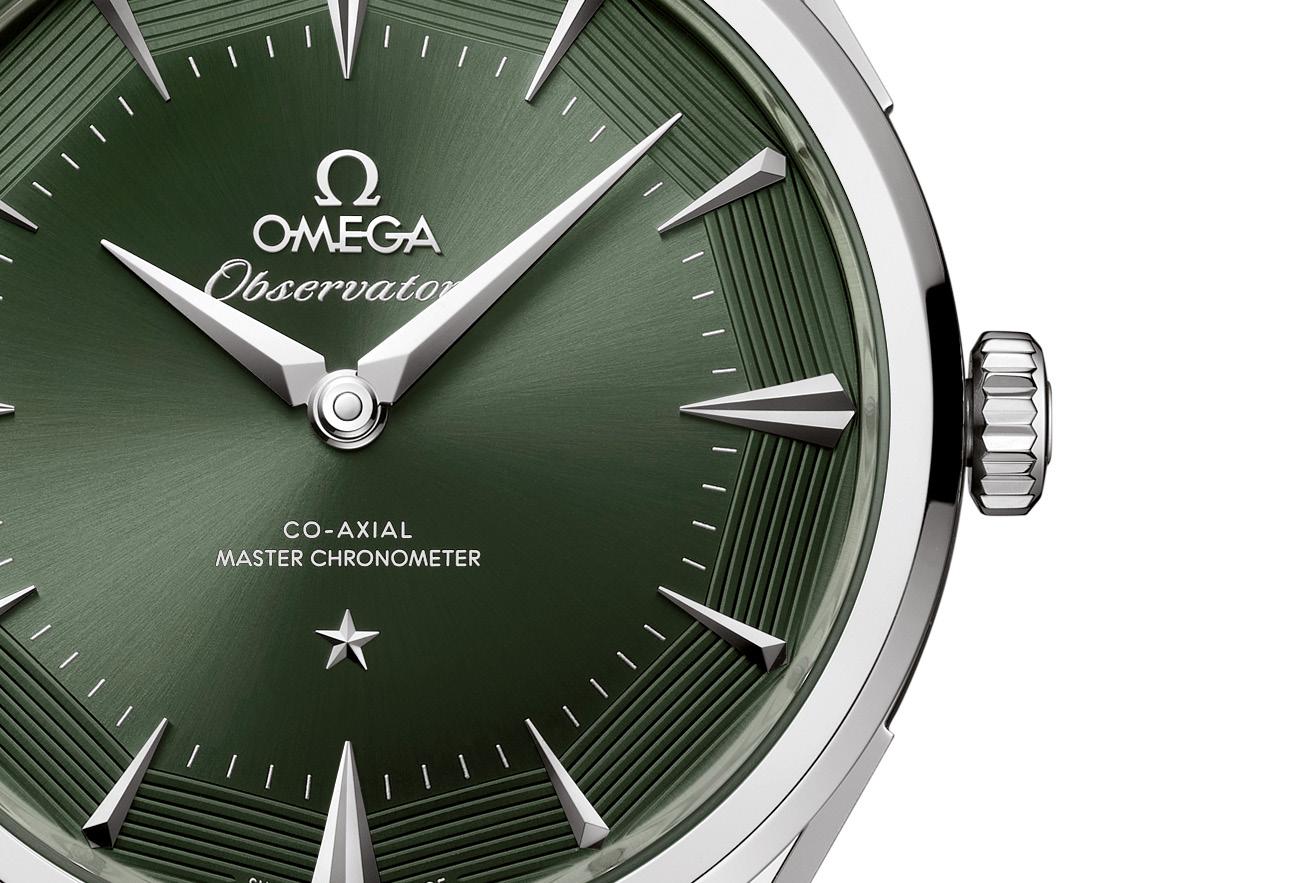
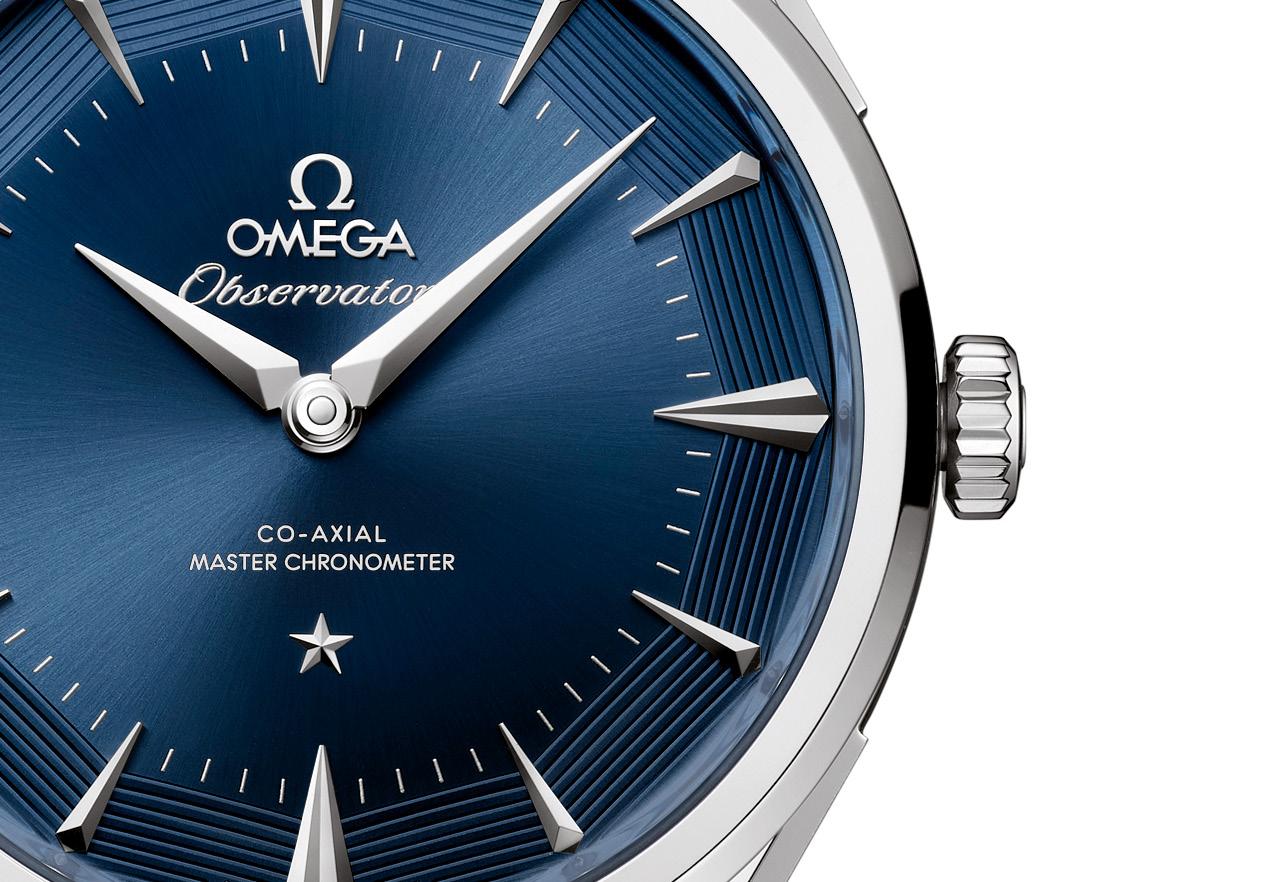
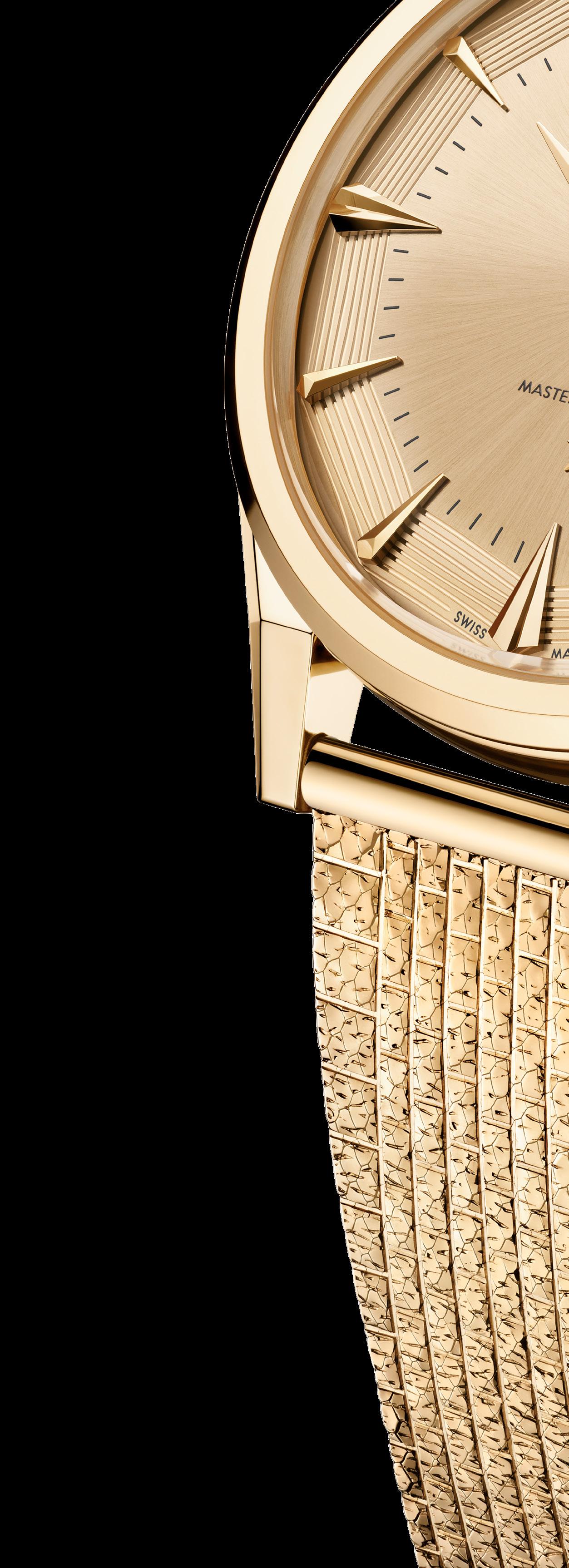
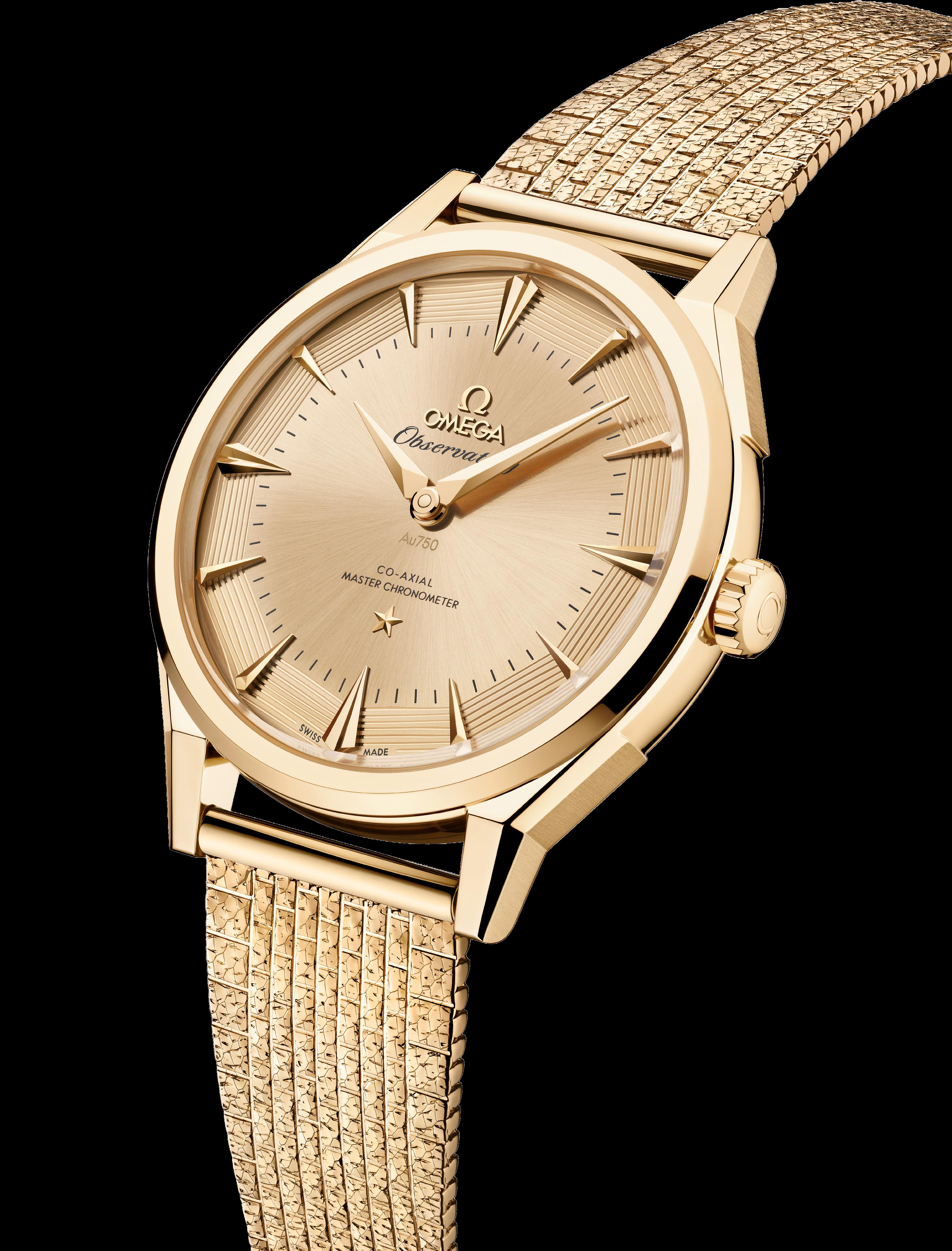
For decades, precision had a visible tell: the seconds hand. No sweep, no certification. That was the rule — until now.
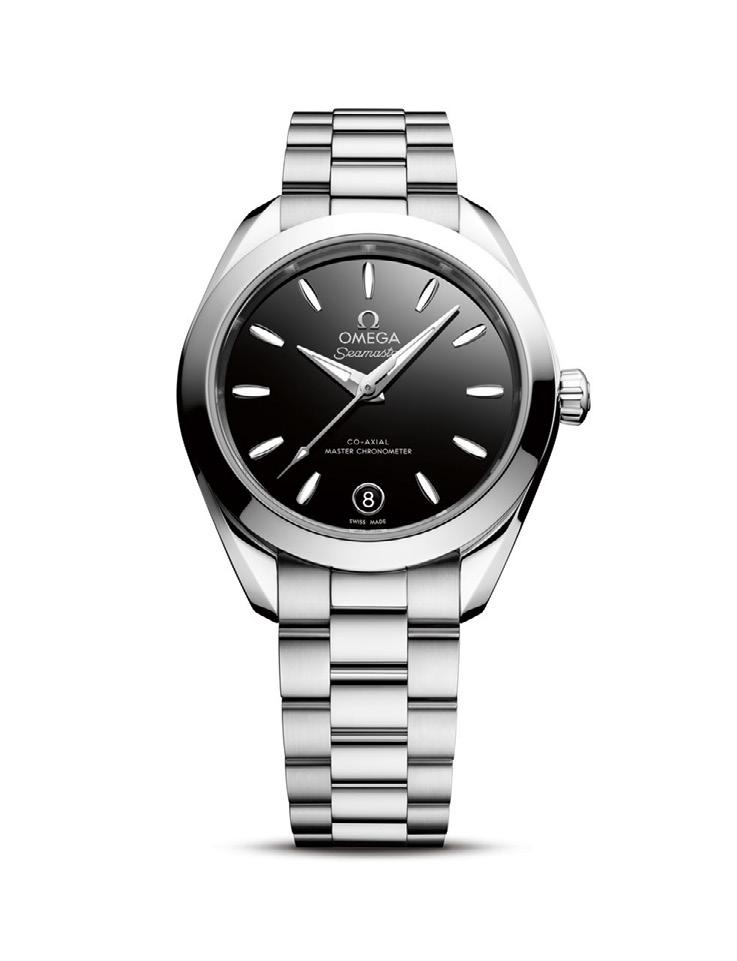
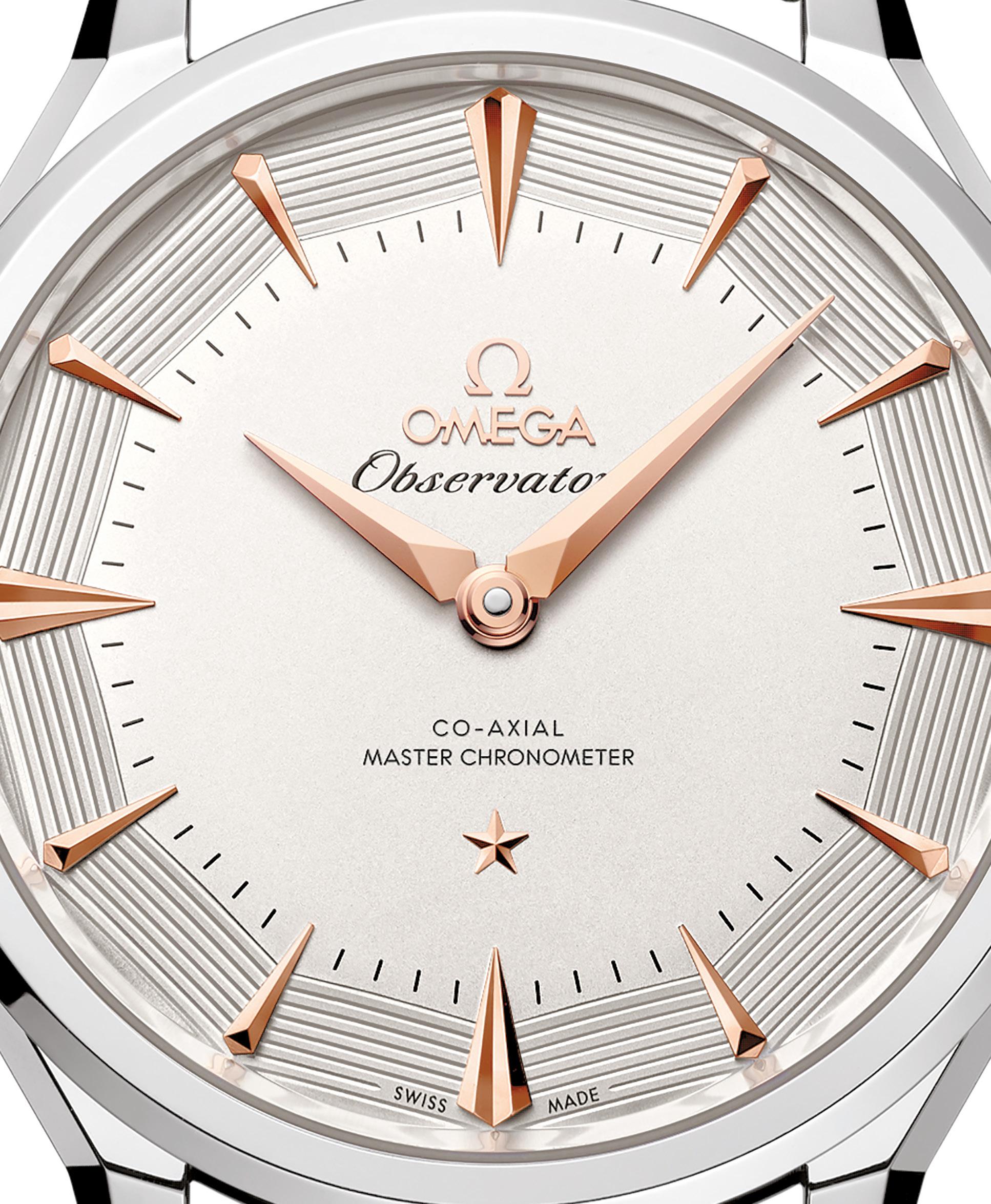
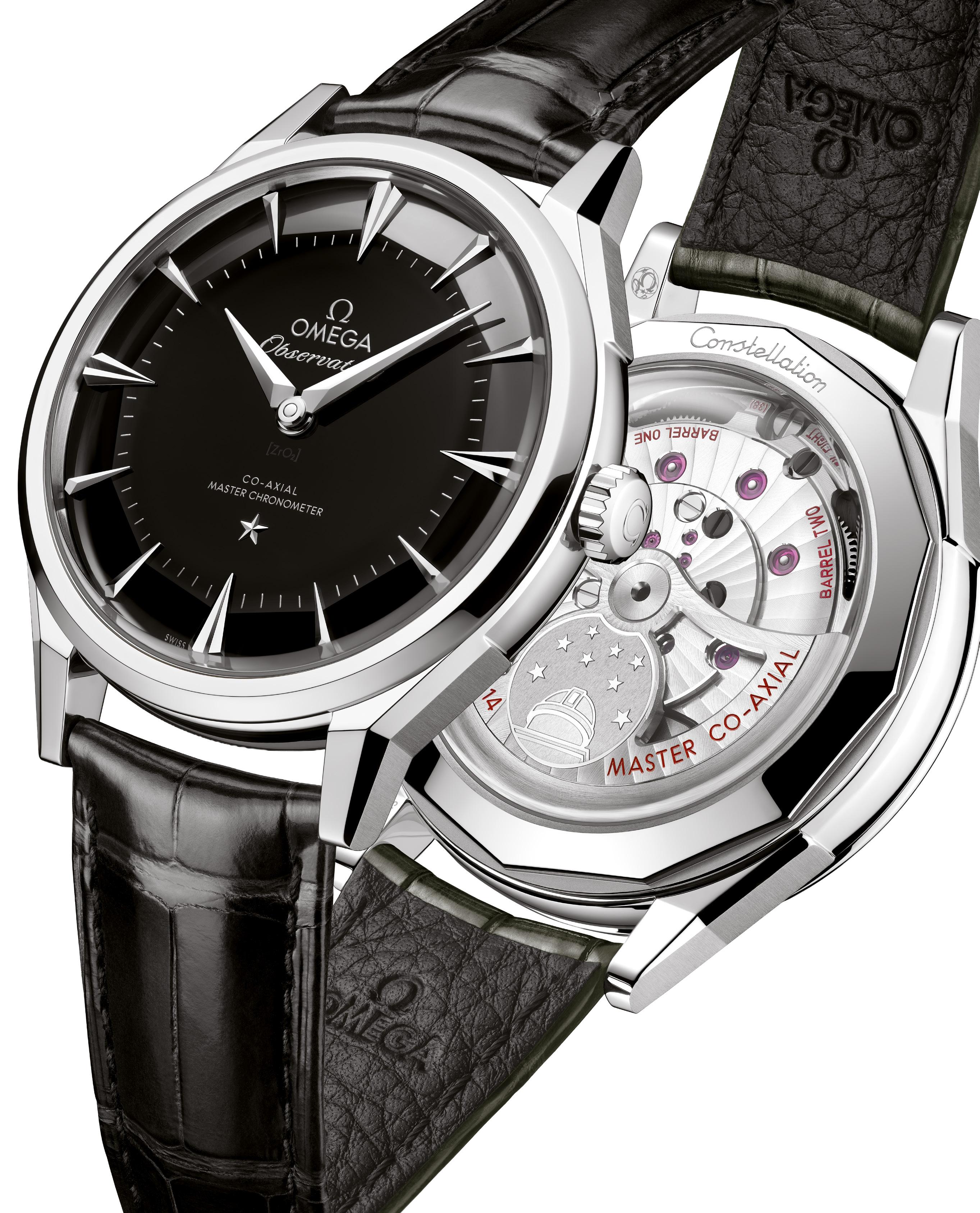
With the new Constellation Observatory collection, Omega has quietly rewritten it. Developed at the brand’s recently established Laboratoire de Précision and certified by METAS, the Constellation Observatory is the first two-hand watch ever to achieve Master Chronometer status.
While the breakthrough is technical, the impact is sensual.
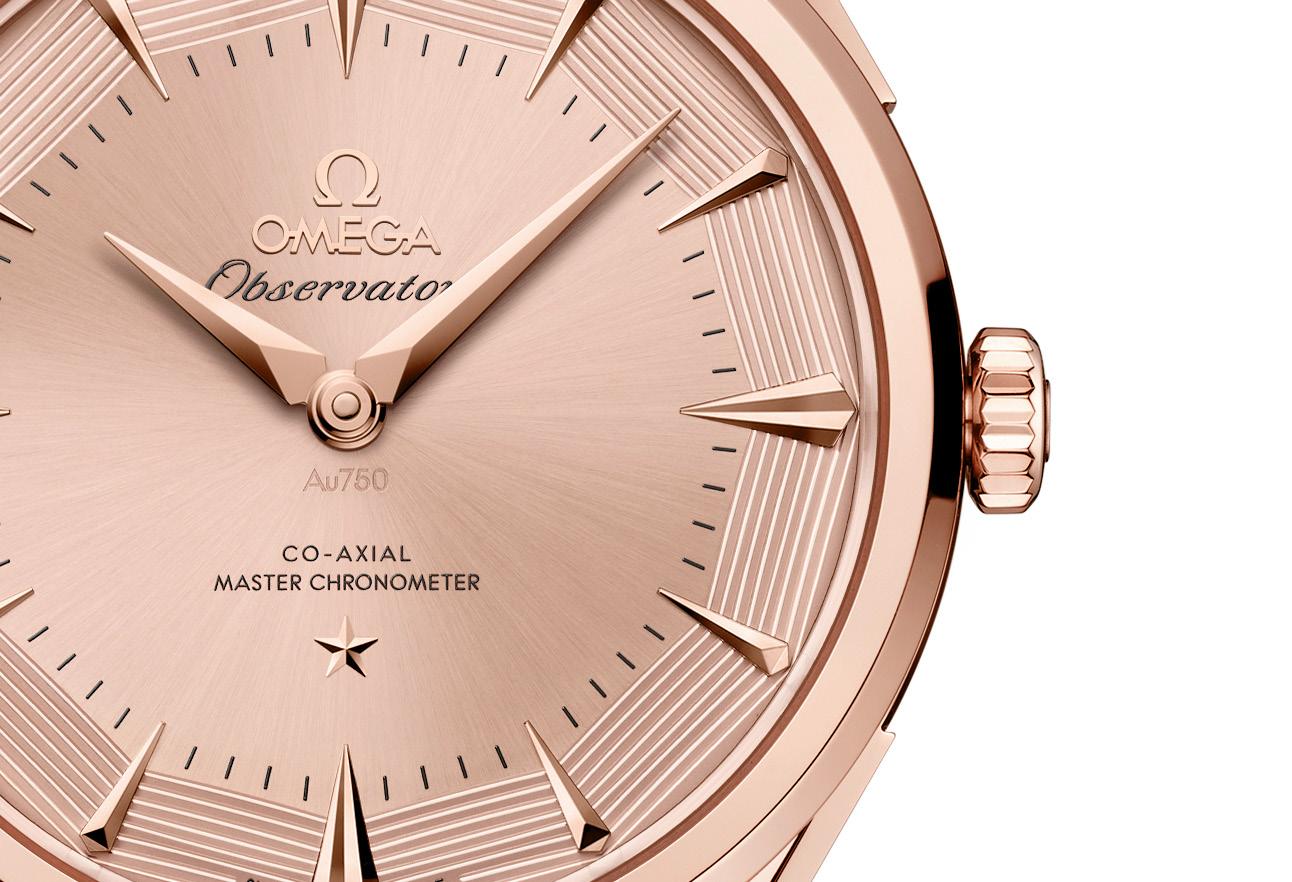
Nine new 39mm references arrive in polished and brushed finishes, channeling decades of Omega DNA with deliberate allure: The restrained two-hand purity of 1948. The 1952 pie-pan dial and Observatory medallion. The crisp guilloché facets introduced in 1953. The sculptural dog-leg lugs of 1956. Each code is crisply reinterpreted, creating a silhouette that feels at once vintage and vividly modern. The dial remains the star — faceted, architectural, light-catching — while the applied Constellation star at six anchors the composition with quiet confidence.
Materials heighten the allure. There’s the glow of full Moonshine gold, the cool refinement of platinum, the sleek modernity of a black ceramic pie-pan dial, and a brick-pattern mesh bracelet that slips around the wrist like liquid metal. This is heritage, tailored.
Inside, innovation hums. A new acoustic testing method listens continuously to every tick and tack across 25 days, tracking sound, temperature, position and pressure in real time. Where traditional tests captured only snapshots, this system hears the whole performance.
The new Co-Axial Master Chronometer calibres 8914 and 8915 deliver the substance. The design delivers the desire.
In 2026, Omega proves that precision can be heard. Seduction, however, is unmistakably seen — and felt.
Aubrie wears LV Ombres in 350 Dazzling
Gaze and LV Rouge Satin in 200 Rose
Eugénie by La Beauté Louis Vuitton
Lush, rich, bright —
Spring’s hautest
makeup looks
are anything but basic.
ABOVE THE BOLD
Photography Jamie Magnifico
Beauty Direction and Words Gwen Flamberg
Makeup Nick Barose using La Beauté Louis Vuitton
Layers of cerulean mingle for a playful power punch
Awuor wears LV Ombres in 950 Sky Is The Limit, LV Rouge Satin in 104 Beige Machina, and LV Baume in 010 Nude Poetry by La Beauté Louis Vuitton
The spring season is a coming-out party of sorts, a return to vibrance after months spent indoors. And there’s no better way to face longer days — and nights! — than adorned in cheerful hues. For maximum impact, choose one unexpected shade, monochromatically or focused on a single feature, and set it against an otherwise clean face, says makeup artist Nick Barose. “It’s a modern way to wear color,” says the pro. “The look is dramatic, but still approachable.”
Strategically placed pops of vivid color are spring’s best accessories
For a bold, saturated finish, Barose suggests prepping skin with primer before makeup. Intensify pigment by pressing color into lips in “thin layers so it doesn’t get cakey,” Barose advises. For eyes, sweep shadow on with a wet brush, dipped in water or a mixing medium. The result: Ultra-luxurious looks that scream look at me.
Awuor wears LV Rouge Satin in 601 Tonic Orange
by La Beauté Louis Vuitton
Aubrie wears LV Ombres in 450 Cosmic Dreams and LV Rouge Matte in 105 Nude Nécessaire by La Beauté Louis Vuitton
All fashion and fine jewelry, Louis Vuitton
Hair: Corey Tuttle for Exclusive Artists using Oribe Nails: Taku Okamura for Exclusive Artists
From strapless t ops
t o m icro-shorts, Spr ing’s silhouett es
make immaculat e sk in
a covet able necessity.
Gwen Flamberg f inds the
goods t o get in pursuit of
head-t o-t oe complex ion perfect ion.
THE GREATS
YOUTH BOOST
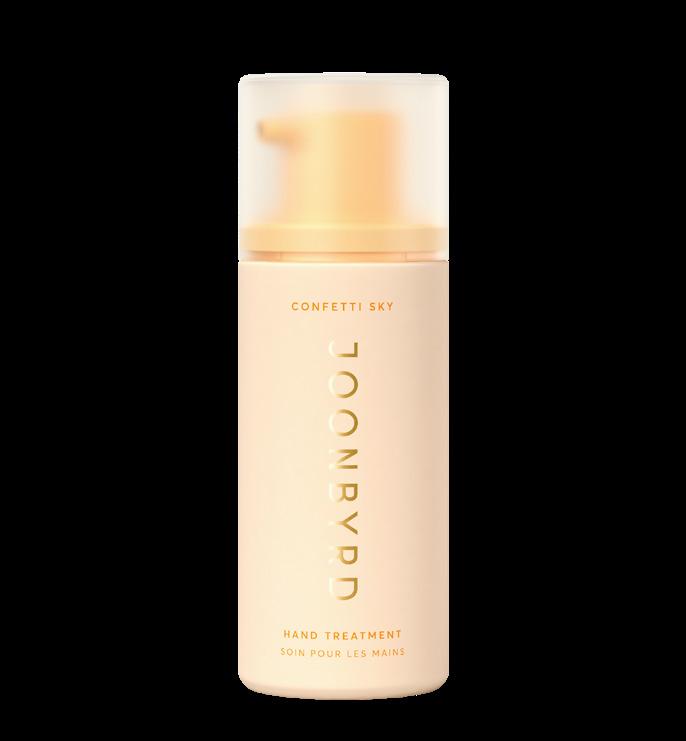
Treat the back of your hands — a hot spot for aging — to a twice daily coat of Joonbyrd’s Confetti Sky Hand Treatment. Peptides, amino acid protein, and encapsulated vitamin E target skin at the cellular level for serious rejuvenation. ($65, joonbyrd.com)
OIL RICH
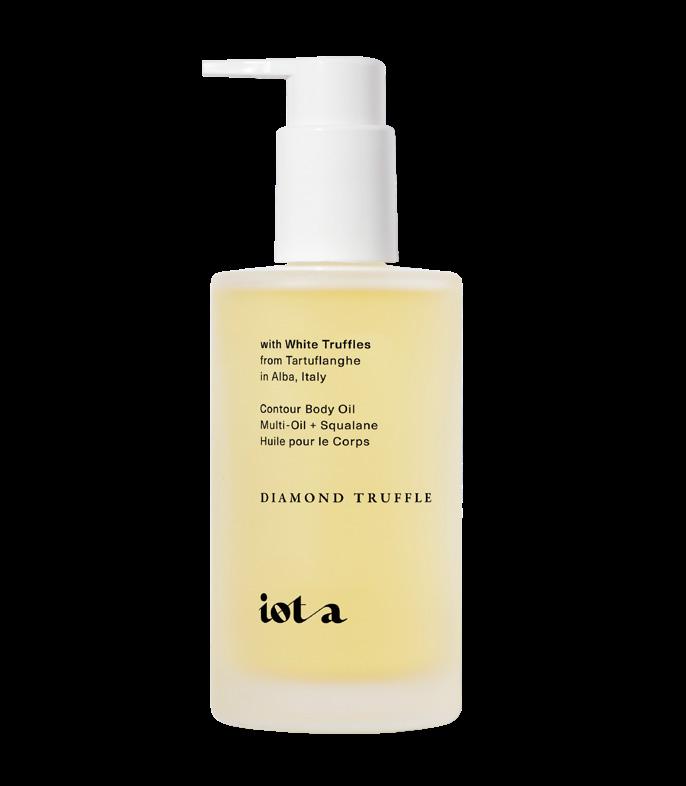
Ultra-luxe and nourishing, Iota’s Diamond Truffle Contour Body Oil is laced with actual diamond powder that imparts a soft-focus, line-free finish for a flawless décolletage. Plus algae, olive, and hemp seed oils firm and smooth. ($50, iotabody.com)
SLEEK CHIC
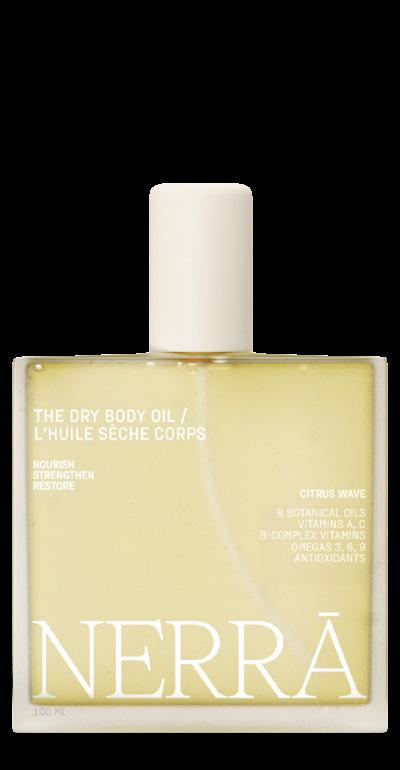
A spritz of Nerrā Dry Body Oil after a shower locks in moisture thanks to a potent cocktail of coconut, argan, and mega-firming hibiscus seed oil. Bonus: The woody jasmine scent will send you. ($72, nerra.com)
Body. Firming, brightening and smoothing potions for preternaturally sleek shoulders and legs.
SLICK TRICK
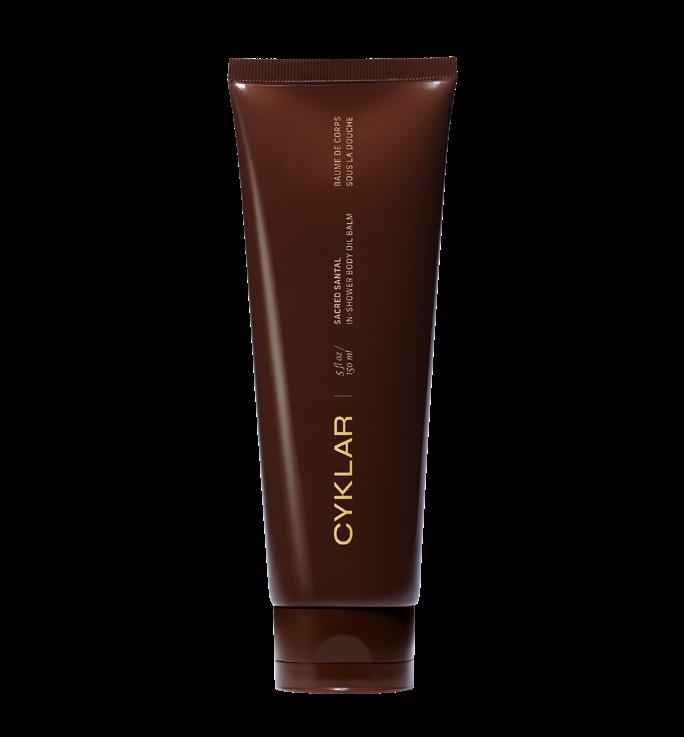
Slathered on just after rinsing, Cyklar Sacred Santal In-Shower Body Oil Balm cocoons skin in a lipid and ceramide-packed potion that locks in moisture as it strengthens the barrier. ($29, cyklar.com)
BRIGHT IDEA
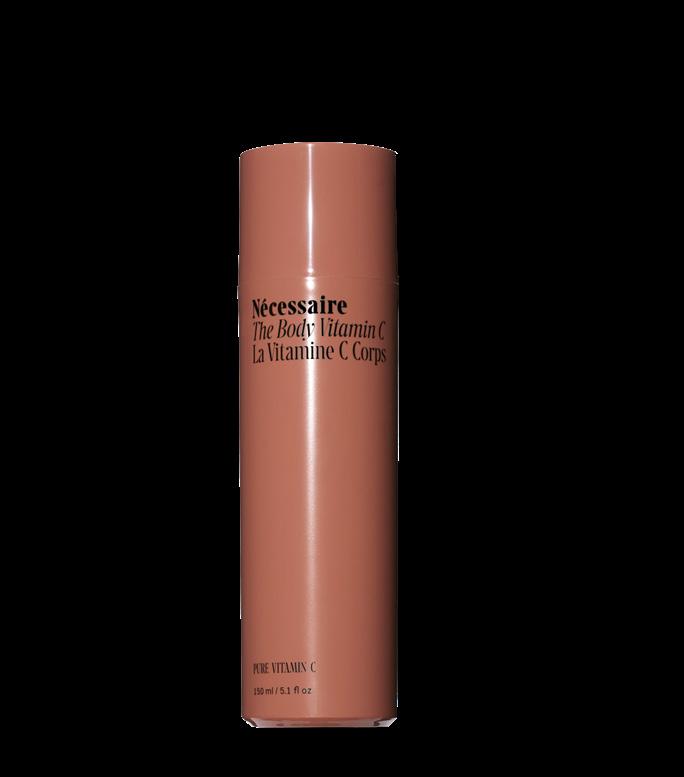
Smooth Nécessaire’s The Body Vitamin C on every morning and by summer your chest will be more radiant and even-toned. The luxe serum is loaded with tranexamic acids and enzymes that make fast work of freckles. ($62, necessaire.com)
FIRM ANSWER
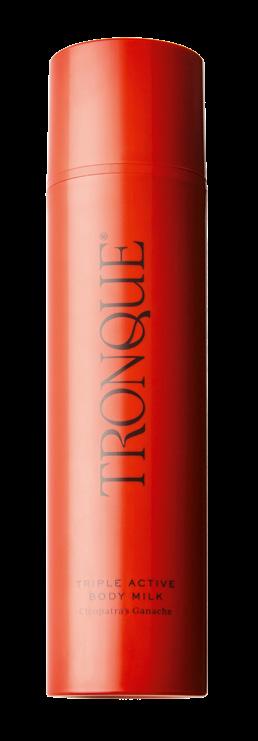
Target trouble spots like cellulite or laxity around the knees with Tronque’s Triple Active Body Milk — the circulation-spurring formula blends stimulating caffeine and green coffee with hyaluronic acid for a lifted, luminous look. ($120, tronque.com)
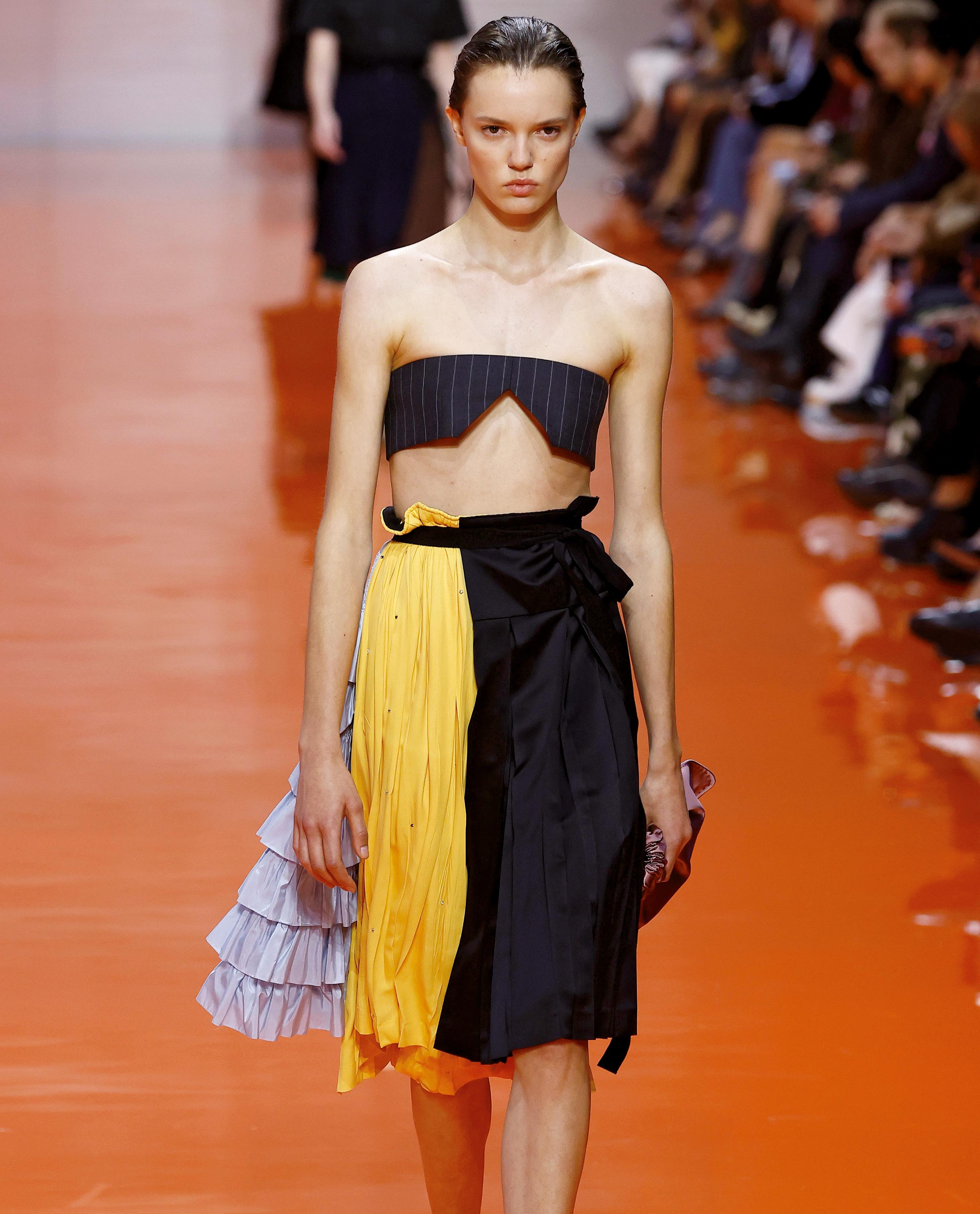
Miu Miu Spring/Summer 2026
MARATHON MAKEUP
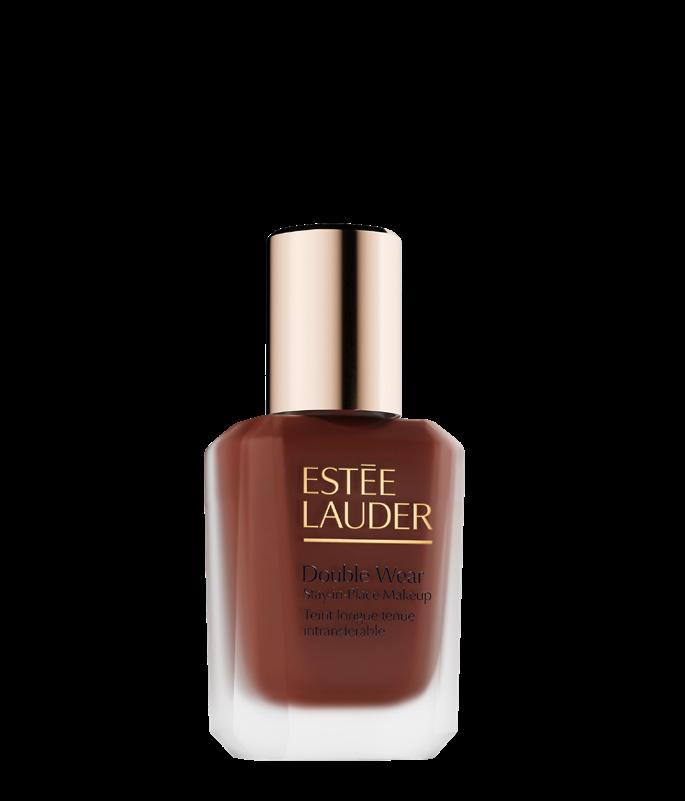
For the most active day-to-night escapades and weekend trysts, Estée Lauder’s revamped Double Wear Stay-in-Place Foundation delivers a soft matte finish that won’t budge for 36 hours. The whisper-light fluid comes in a whopping 70 hues.
($52, esteelauder.com)
FILTERED FINISH
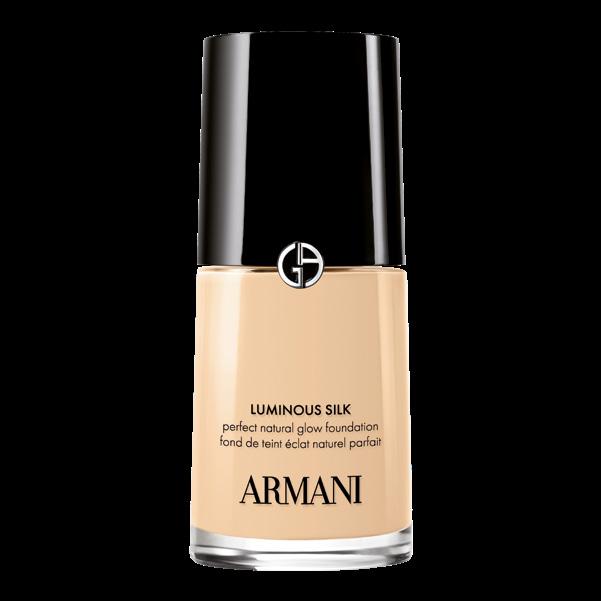
Once the holy grail of makeup artists and beauty fanatics, the updated version of Armani Beauty Luminous Silk Foundation contains light-diffusing pigments that leave a soft-focus, blurred effect. Behold Luminous Silk Natural Glow Blurring Liquid Foundation in 44 colors. ($69, giorgioarmanibeauty-usa.com)
PORE THING
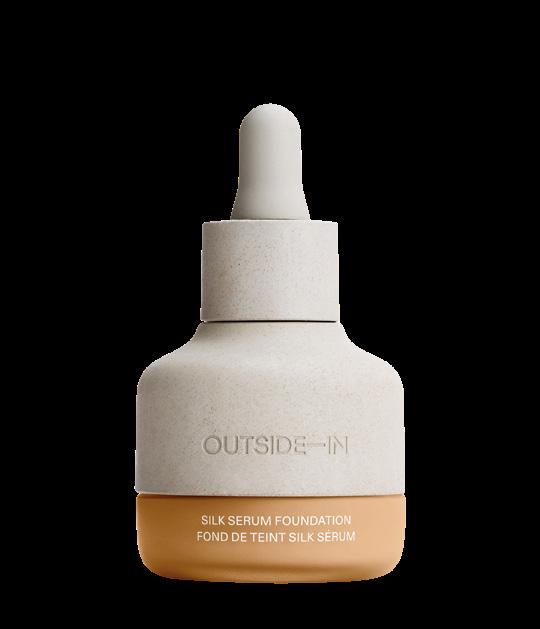
Squeaky clean, vegan, and cruelty free, the unique formula of Outside In’s Silk Serum Foundation suspends spherical powders in a liquid base that refracts light to camouflage the look of pores, red spots, and even fine lines, all while boosting radiance. ($64, theoutsidein.com)
Face. Updated foundation formulas fake flawless skin in seconds, then last an obscenely long time.
GLOW ON
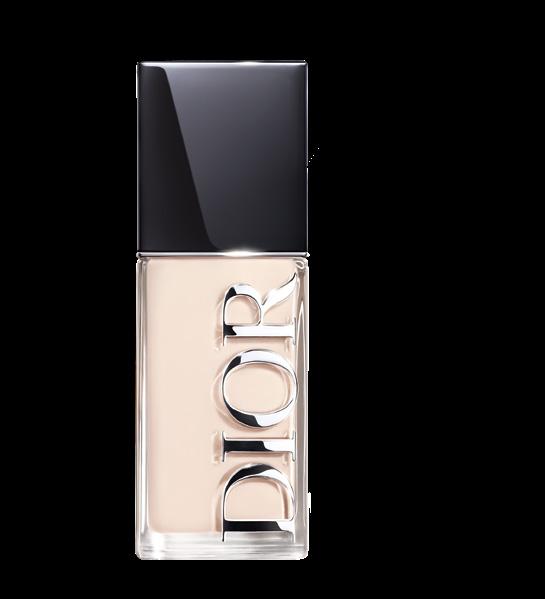
Dior Forever Skin Glow Radiant Foundation does the heretofore impossible — impart a dewy finish with hefty coverage that somehow stays perfectly luminous for a full 24 hours. Choose from 42 shades that flatter absolutely every skin tone. ($60, dior.com)
TOP COAT
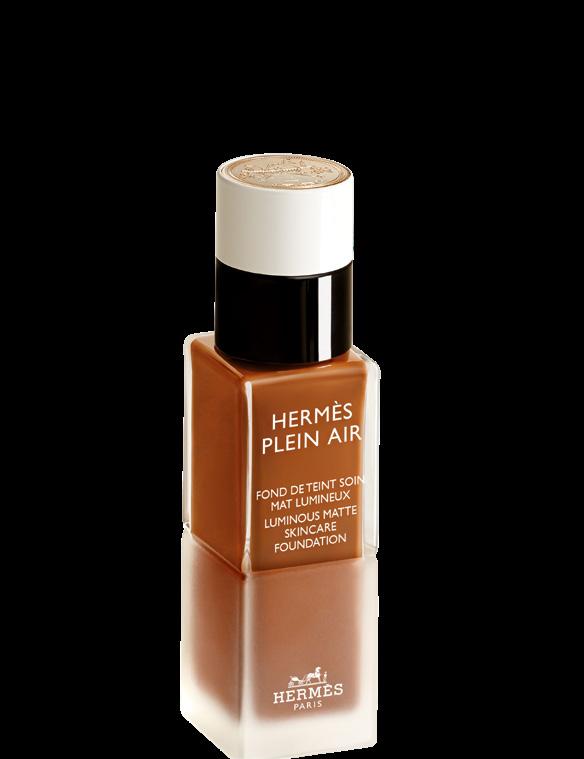
Infused with pure hyaluronic acid and skin-balancing niacinamide, Hermès Plein Air Luminous Matte Skincare Foundation locks in moisture for an imperceptibly chic, shine-free finish from dusk till dawn — and beyond. ($145, hermes.com)
INVISIBLE TOUCH
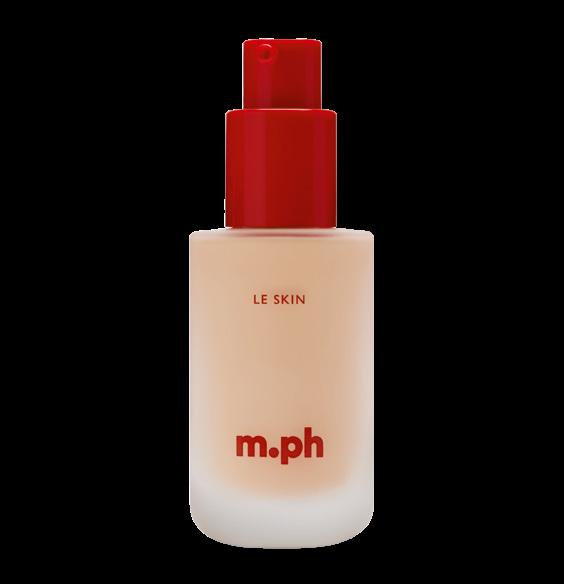
From Hailey Bieber’s makeup artist: m.ph by Mary Phillips Le Skin Weightless Serum Foundation layers nicely to impart a subtly dewy, you-only-better creamy complexion akin to her It Girl clients’. ($49, sephora.com)
Gwen Flamberg
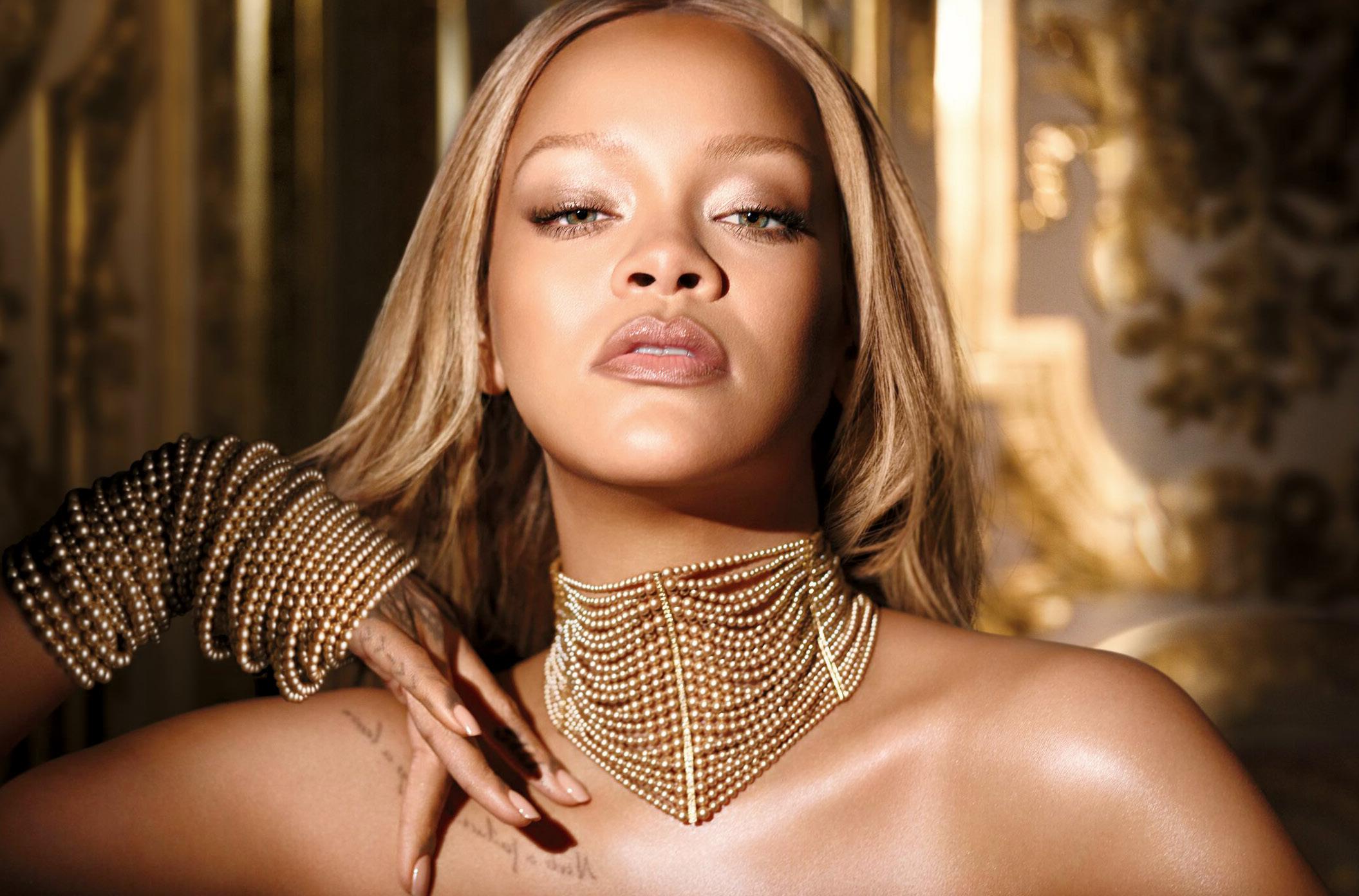
discovers how the iconic
Dior J’adore Amphora — now reimag ined for J’adore Int ense —
cat apult ed the fragrance t o its cult st at us.
BOTTLE ROCKET
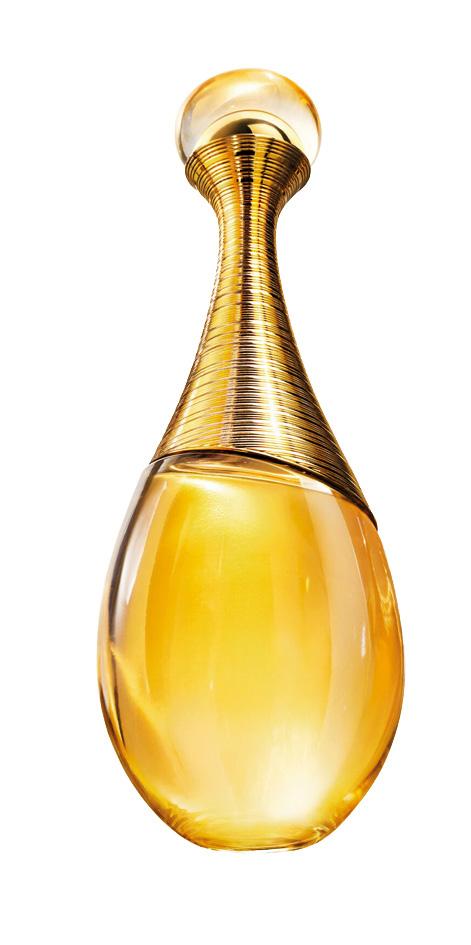
She is the moment. With her elegant stature, hyper-feminine, confident curves and golden honey hue, she’s garnered a legion of mega-fans. A symbol of pop culture, she’s lived several incarnations, ever evol ving her story for over 20 years. No, I’m not referring to multi-hyphenate Rihanna, whose very essence in spired the new J’adore Intense. I’m talking about … the legendary bottle.
In the world of perfumery, judging a book by its cover is de rigueur. The flacon of a fragrance is the gateway drug, the love-at-first-sight turn on and the tangible identity of the scent. Simply put, top sellers have memorable vessels. Take, for instance, the slight ly subversive stiletto of Carolina Herrera’s Good Girl. Or Jean Paul Gaultier Le Male’s buff torso. Since its inception, Dior’s J’adore practically dou bles as an object d’art, a totem rich in brand codes. Instantly recognizable and synonymous with the famed French fashion house, the J’adore amphora follows the curves of the figure-eight silhouette designed by Christian Dior in 1947 to establish his nipped-in New Look. But the-
re’s much more to the story of how the bottle came to be than a single reference.
When production on J’adore started in 1996, the house looked to an unexpected artisan to envision and create the packaging for the new white floral fragrance. Enter wunderkind jewelry designer Hervé Van der Straeten, whose first collection was so well received that he started his own company at age 19. The artist worked in finely gilded, hand-hammered brass that caught the eye of fashion’s elite. Van der Straeten was tapped to create accessories for runway shows for “major couturiers,” he recalls in an exclusive interview.
The artist was briefed by Madame Marie-Christine de Sayn-Wittgenstein, the creative director at Dior Perfumes at the time, who he remembers as “the embodiment of Parisian chic, with natural style and a voice like velvet,” and set to work dreaming up a form for the as-yet-unnamed scent. Van der Straeton presented hundreds of watercolor sketches that were then developed into models. “I had suggested tall bottles, in harmony with John Galliano’s astonishing, elegant crea-
tions, which in turn evoked Monsieur Dior’s aesthetic,” he says. The British designer had just taken the reins at the house. At first, Van der Straeten’s drawings with delicate necks that were tough to manufacture were balked at, but eventually a compromise was struck. The result: “a highly streamlined design that was both futuristic and yet rooted in history.”
A gilded, gadrooned cap topped off the elegant design. “The inspiration came from the emblematic neck rings worn by the so-called ‘giraffe women’ of the Padaung tribe of Myanmar, which Galliano had reimagined for one of his shows,” Van der Straeten reveals. Later, the artist crafted a Maasai necklace at the request of Galliano, which has become an iconic piece of the Maison.
The bottle has morphed through the years with each iteration of the scent. With the 1999 launch, Van der Straeten’s design boasted a crystal bottle with matte gold neck rings. The adornments evolved to be more fluid in the 2010s, with the flacon becoming a bit more sensual and rounded. 2023 marked the incarnation of L’Or de J’adore, Francis Kurkdjian’s take on the iconic scent, with a warm, melted-by-the
sun voluptuousness to the aroma and a molten gold cap to match. For the just-dropped J’adore Intense, the update has major implications beyond the cosmetic. The weight of the glass has been reduced by 53 percent, making it ultralight and extraordinarily environmentally conscious. Following suit, the gilding on the neck is lightly etched, topped with a new golden bead.
But while the vessel of J’adore Intense may be decidedly more subtle, the juice is its boldest incarnation yet. “I wanted the fragrance to be more voluptuous, confident, playful, and sensual,” says Kurkdjian, who had the face of the brand, and her unapologetic bodaciousness, in mind. “Rihanna is naturally inspiring and intense,” he exclaims. To push J’adore’s floral bouquet of rose, jasmine, and ylangylang to “unprecedented fruity and sensory extremes,” he blended the warm, syrupy fruity facets of the flowers in a new way to bring out “a sort of gourmand glow.” The result: an unabashedly sultry, yet sophisticated spritz. A powerpacked scent with not-to-be-underestimated curves. “It is a J’adore for a new era,” Kurkdjian says, “that risks making a change.” A new era, indeed.
Forget deep planes and vert ical lifts…
Can we count er the
v isible signs of ag ing by
manipulat ing our own
fascia?
For a grow ing wa ve of
beauty experts,
Fiorella Valdesolo f inds, the answer is yes.
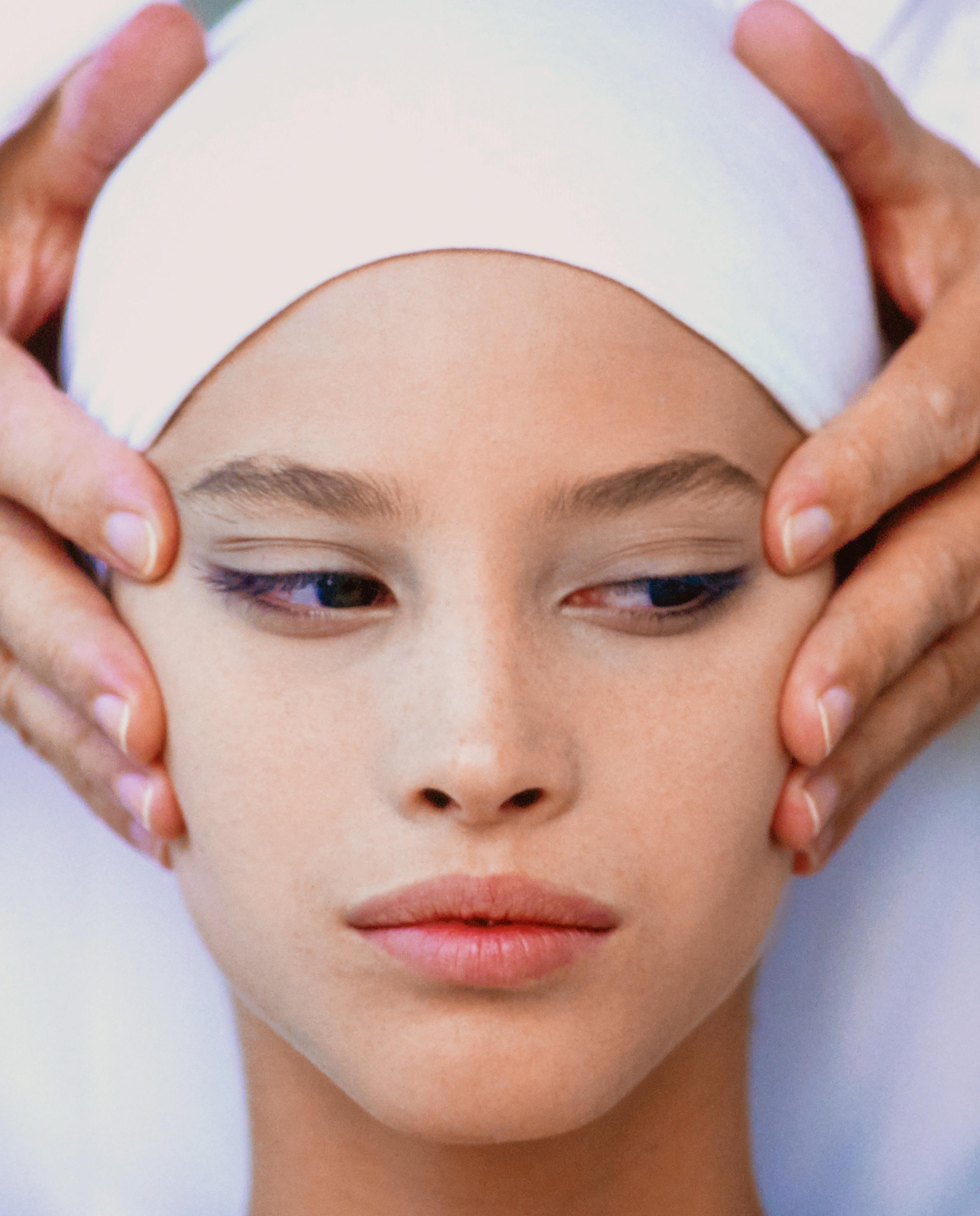
THE NEW FACELIFT
Words Fiorella Valdesolo
Ready to sculpt, lift, and make your skin glow in just 10 minutes a day? That’s the question posed by Anastasia, a wide-eyed influencer with Rapunzel locks and chiseled cheeks known online as @anastasiabeautyfascia. Her videos and “GLOW transformation program” (price tag: $300) offer detailed guidance for how to squeeze, tap, and rub your way to a smooth forehead, lifted lids and a slimmer jawline. In Anastasia’s world there is no need for Botox or Juvederm or blephs or facelifts (all of which she actively denies partaking in), just your fingers and your time. Anastasia’s qualifications (she is a board-certified structural integration therapist) for doling out her transformative tips are a bit nebulous, and her theories (like how our swallowing pattern is the cause of a double chin) can veer into unscientific territory. But it’s her own face, which she frequently shows in its pre-fascia-molding state, that may be the most convincing endorsement for her many followers (2.7 million on Instagram, 1.5 million on TikTok).
Online and off, fascia is being mentioned ever more frequently. Fascia educators like Lauren Roxburgh and Ashley Black and Sue Hitzmann are making fascia a part of the broader wellness conversation, and it’s become a singular treatment draw: You can sign up for a functional fascia fitness class at the new Zadun, a Ritz-Carlton Reserve resort in Los Cabos, Mexico, or take a fascia flow and release at Sage + Sound on New York’s Upper East Side. But for all the hashtags and mentions, what fascia is, how it functions, and what manipulating it can (and, just as importantly, can’t) do for our faces and bodies remains widely misunderstood.
together is fascia,” says Carrillo. Our understanding of what fascia does has shifted in recent years. “For decades in the West, fascia was considered inert packing material, something surgeons might cut through to get to the ‘important’ structures underneath,” says Sophie Carbonari, a sought-after Paris-based facialist whose unique technique has been described as “skin cracking.” But in the past two decades, since the start of the Fascia Research Congress in 2007, that thinking has evolved. Recent research has shown that fascia is highly innervated (it has more nerve endings than muscle) making it a major sensory organ, that it contains cells that contract in response to stress hormones, that it’s rich in hyaluronic acid, and that it’s a primary pain generator, so when pain is chronic it becomes stiff and inflamed, Carbonari explains. “We’ve gone from viewing fascia as passive wrapping, to understanding it as an active system that communicates with the nervous system,” she adds. Ashley Black, an author and entrepreneur who has been spreading the gospel of fascia (via the use of her system of FasciaBlaster tools) for nearly three decades, sees the body’s fascia as a singular energy system. “It circulates light throughout the entire body,” says Black. “Those of us who have been working with it forever, call it a life force.”
Online and off, fascia is being mentioned ever more frequently.
A primer: Fascia is a connective tissue that runs through the entire body. “It wraps around muscles, organs, nerves, and blood vessels, linking everything together into one continuous system,” says Jessa Zinn, a movement therapist and founder of The Zinn Method, adding that it behaves like a single piece of fabric, all of it interconnected, instead of separate parts. More than simply a foundation, fascia is our internal scaffolding, a critical support system. Joseph Carrillo, aka The Facial Sculptor, uses an orange to explain fascia to his clients. “The flesh is like muscle, the peel is like skin, and the thin white membrane holding everything
But while fascia manipulation may feel, if we’re judging by our algorithms, like a more recent discovery, it’s not new. In fact, says Carbonari, other traditional healing systems have been working with it for centuries, just under different names. Carbonari points to Traditional Chinese Medicine (TCM) practices like tuina, gua sha, and acupuncture and their focus on releasing blocked “qi” (energy flow); Ayurveda’s abhyanga oil massage, which is designed to lubricate deeper tissues and soften fascia; and how in traditional African medicine, Yoruba and Zulu healers use various methods to “untie knots” in the body’s fabric, mobilizing what we would understand now to be fascial tissue.
According to Black, manipulating and releasing the fascia allows the face and body to function as they should. That manipulation can take many forms. Her FasciaBlaster tools look, with their molded claws, not unlike torture devices, albeit chic ones, and they function by loading (or
applying pressure), stretching and shearing, thereby not just breaking up areas of tension but also, Black claims, regenerating tissue. Black’s system has accrued both avid followers and vocal detractors who maintain that working the tissue should not be this aggressive.
Myofascial release is a technique that facialists like Carbonari, Carrillo, and Lord Gavin have centered in their treatments. “It’s a hands-on therapeutic approach that uses slow, sustained pressure to release tension and restrictions within the fascia, restoring softness and elasticity, and improving mobility and circulation,” says Lord Gavin McLeod-Valentine, a celebrity facial masseur and global brand ambassador for Augustinus Bader. Done correctly, myofascial release works with the tissue but doesn’t force it. “The goal isn’t to push harder, but to create space,” says Carrillo, adding that when fascia is shaped properly it can affect posture and, in the face, address heaviness and create balance. While there is some overlap with gua sha and face yoga, both of which are also frequently name-checked on social media nowadays, the intention of fascial work is slightly different. Face yoga builds and strengthens and relies on repeated muscular contractions (which can, says McLeod-Valentine, sometimes end up reinforcing dynamic lines) and gua sha stimulates lymphatic flow and drains. “Skilled fascial manipulation uses slow, sustained, precise pressure to restore glide between tissue layers, rebalance tension patterns, and re-establish structural lift and symmetry,” says McLeod-Valentine. “It’s transformative.” Zinn’s eponymous method is focused on helping bodies in midlife move with more ease and resilience. It was developed after 20-plus years of working with professional athletes, mapping out and activating the web of fascia with simple exercises and rituals. These include daily gentle ribcage breathing and slow joint circles for the neck, hip and shoulders and a few minutes of foam-rolling or ball work. Former professional dancer Bonnie Crotzer’s signature Fascia Flossing practice leans into an instinctual and involuntary function shared by humans and animals called pandiculation. It’s that wiggling and tugging and stretching that people often do upon waking up — and that we often watch our pets do intermittently throughout the day. “It creates a contraction or engagement through the fascial matrix that
stimulates architectural change, reduces tension, and also sends a signal to the nervous system that all is safe,” says Crotzer, who frequently teaches Fascia Flossing at SkyTing in New York.
Age, genetics, and lifestyle can all play a role in the health of our fascia.
Age, genetics, and lifestyle can all play a role in the health of our fascia. And there is a marked difference, experts say, between healthy and unhealthy versions. The former is hydrated and elastic and springy with a gel-like glide — it has, says Crotzer, a goosh to it — while the latter tends to be dense, rigid, even sticky. “On the face, restricted fascia manifests as asymmetry, deep lines that won’t release, reduced facial mobility, or a heavy, tired appearance,” says Carbonari. Modern lifestyles aren’t doing our fascia any favors either. More sitting, less varied movement, and hours spent hunched over our computers and phones has, says Zinn, led to shallow breathing, constant jaw tension, and bodies that feel consistently braced rather than fluid, a perfect storm for fascia, which thrives on variety and multi-directional movement. Carbonari can tell within moments of touching a client’s face how much time they spend attached to their devices. Dehydration, inflammatory diets, and sleep deprivation also don’t help, but, most of all, stress. “We live in a state of chronic low-grade stress that previous generations didn’t experience; we’re constantly ‘on,’” says Carbonari. “Chronic stress means chronic fascial contractions. Your fascia is literally holding your anxiety.”
But while fascia work can come with big promises, it’s important to remember what it can do and what it can’t.
“The idea that fascial face massage can replace skincare actives, Botox or fillers is ridiculous,” says McLeod-Valentine, adding that while it softens the appearance of lines and helps the face function and age more optimally, it cannot stop neuromuscular contractions or replace lost volume.
David Kim, MD, a New York-based dermatologist and the founder of Soho Dermatology, agrees: “Fascia work helps sharpen the face and body, but it can’t replace Botox and filler, which simply serve a different purpose.” For freezing or filling, if that’s what you’re after, fascial work isn’t it, no matter what that TikTok video claims. What fascial work can do, most experts agree, is complement or delay those injectables. “When the face is functioning well, people tend
to need less overall, and whatever they choose to do works better,” says Carrillo.
Much like with most beauty and health rituals, consistency is key. And, says Carrillo, it matters more than intensity.
“People usually feel a shift right away, a lightness or openness, but visual changes build over time as the tissue learns a new baseline,” he says. Beyond the promise of eventual visible results, what makes DIY fascial work easy to adopt is that it’s relatively simple and, more importantly, it feels really good. Try Carbonari’s favorite temporal release on your next work break and you will experience what can only be referred to as an immediate face melt: Place fingers on temples; apply gentle, sustained pressure whi-
le slowly opening and closing the jaw for 60-90 seconds. Fascial exercises serve a different purpose than topical skincare actives or neurotoxins and fillers, and, experts say, they are vital for skin health. “I think it’s the key to the fountain of youth,” adds Crotzer. Something that the beauty industry, which thrives on marketing and selling us what it claims we collectively need, may not be so thrilled about. As for the conversation around longevity, fascial work fits in quite neatly, taking a long-game approach to the health of our skin and body. “It supports our ability to move with ease over time and determines how long you stay mobile, upright, and resilient,” says Zinn. Maybe what Anastasia is espousing isn’t so far-fetched after all?
Van guard
Vanguards reveal what comes next.
Groundbreaking actresses redefining the roles women can inhabit, fashion exploring bold new ideas, and emerging concepts in how we shop — each marking a turning point in the evolution of culture and style.
In the 1950s and ’60s designer Pierre Balmain called some of the most celebrated actresses of the era like Katharine Hepburn, Sophia Loren, and Rita Hayworth regular clients. The legendary couturier wasn’t just outfitting them for red-carpet events; he was also often dressing them for their performances on screen and on stage. When Loren played Epifania, the wealthiest woman in the world in Peter Sellers’s 1960 rom-com The Millionaress, it was Balmain’s belted black leather dress and knee-length cinched cream tulle shrouded in pearls and crystals that telecasted her wealth and status.
For Hepburn’s turn as the same character on the London stage, she too was dressed by Balmain, most memorably in an opulent embroidered gown with long matching gloves.
The iconic fashion house’s cinematic legacy is one that actress (and occasional model) Lux Pascal was thinking about when she was, at the behest of the newest designer at its helm, Antonin Tron, sitting front row next to Naomi Watts at his highly anticipated March debut. The show was a femme fatale-coded master class in sensual power dressing with whiffs of The Hunger and Blade Runner and even Epifania’s black leather fit as worn by Loren in 1960. “He told me that he was inspired by the brand’s post-war beginnings and how old Hollywood glamour might be translated in the 1980s,” says Pascal, who was photographed wearing a long slip skirt and plunging button-down, with a lace bodysuit peeking out. “I had four different looks they
had prepared for me to wear, and I was just beaming trying on each one. I felt like a movie star from a classic film noir.”
Fashion and film have a symbiotic relationship for Pascal, stretching back to when she was a kid enthralled with cinema growing up in Chile. “I’ve always been inspired by the silhouettes I saw in the movies,” says Pascal, who even in sweats and zero makeup via Zoom exudes an easy elegance. “I would try to replicate what the actresses were wearing,” she adds, citing favorites like the dramatic, color-saturated looks of David Lynch’s Mulholland Drive or the romanticism of Sofia Coppola’s Virgin Suicides. Fashion’s ability to shape and morph how someone presents themselves to the world, how it can be the ultimate vehicle for inhabiting a character, even one radically different from who you are, has long intrigued Pascal. And since tiptoeing into the public eye in the last few years, the fashion world, for all its exclusive pretense, has felt to Pascal incredibly welcoming. This season she was sitting front row at Balmain and Bottega Veneta, and last she was walking the runway for Matthieu Blazy’s inaugural collection for Chanel.
But Pascal’s love of fashion is born of her love of cinema, something fostered both by her older brother Pedro (17 years her senior, he would regularly dispatch VHS tapes back to his youngest sibling in Chile; she also has another brother and sister) and her father, José Balmaceda, a reproductive endocrinologist. “My dad was a major movie
High Jewelry necklace, Serpenti Viper bracelet, Serpenti Viper ring,
fan,” Pascal shares. “Growing up I would go with him to the movies at least once a week, maybe twice. Some days we would even leave one movie, go have lunch, and then go back to the theater and see another.” She was born in Orange County, California, where her parents had eventually retreated (after a stint in Denmark) after being forced into political exile from Chile during Augusto Pinochet’s reign; they returned to Chile when she was three. Her mother, Verónica Pascal, a child psychologist, died a few years later in 1999. “One of my last memories of my mom was making pottery with her,” recalls Pascal. In her final years, Verónica had started making art in earnest (ceramics, painting, collages, poetry) and developed, says her daughter, a signature aesthetic. “My mother was very attuned, very sensitive, a really sophisticated being,” Pascal says, smiling softly. The loss is one that is still deeply felt by her and her siblings; both she and Pedro use their mother’s last name as an homage.
Though watching movies laid the groundwork, Pascal’s path to acting was bumpy at first. Always a model student, when she enrolled in a demanding theater program at the Pontificia Universidad Católica de Chile, she had difficulties. “I wasn’t used to being on stage, and it felt very awkward to me,” Pascal confesses. But her determination and fierce work ethic trumped her awkwardness; a foray into dance, thanks to a choreographer who took her under her wing and whose company she would eventually perform with, helped immensely too. “Dance and learning how to center my body taught me so much about being on stage,” says Pascal.
After graduating, her professional life started almost immediately. Pascal was dancing, performing in theater productions, and appearing in films and TV series including Narcos; she was busy but felt like when it came to acting, she had a lot more to learn. So, she auditioned for the Juilliard School, got in, and uprooted her life to move to New York to attend what is arguably the most prestigious arts university in the world. Because she had the privilege of matriculating when she had already had a career, she felt
like she was able to enjoy the experience of being in school. With a container to learn and grow as an artist, Pascal put her head down and focused intently on mastering what she had come to love. “I took that shit so seriously that I was passing on every single professional opportunity that was being offered to me even when my managers were like, maybe you should go for this role because it’s a big deal,” says Pascal, her big brown eyes widening. The opportunity to play the lead in Netflix’s Miss Carbón (Queen of Coal), an Argentinian film about the story of Carla Antonella Rodriguez, a trans woman who was the first female miner in Patagonia, came at the end of her graduating year. Director Agustina Macri’s sole choice for the role of Carla was Pascal. “I was like I’ll pay attention to this when I’m done with school, and if she’s still interested in me, I’m interested,” she adds. Macri waited, and Pascal was cast after graduation. Her turn as Carla is exceptional. Pascal has an openness and quiet power that is riveting to watch on screen. While Miss Carbón is at its core a story about transness, it’s just as much a story about women and power and the workplace, and the ones who risk everything with steely determination for what they believe is right. Carrying on in the tradition of Sally Field in Norma Rae and Charlize Theron in North Country, Pascal in Miss Carbon is a force of nature. Meeting the real Carla convinced her to take the part, but she was admittedly still a bit hesitant.
“I’m very wary of stories that are centered around someone’s gender identity because I don’t want to make a parade of it,” says Pascal.
Pascal herself transitioned in 2021. Pedro, ever the supportive brother, posted a picture on his Instagram after her announcement captioned: Mi hermana, mi corazón, nuestra Lux, which translates to “my sister, my heart, our Lux.” “He always drives me to be authentic and to trust myself,” she says, adding that her relationship with all three of her siblings is extremely tight. “At the end of the day I know who I am and what I want.” Since uprooting her career to America, her instincts thus far have proved to be right. She had a small, but pivotal, role in Ryan Mur-
Saint Laurent by Anthony Vaccarello dress, tights, ysl. com; Bvlgari High Jewelry earrings, bulgari.com.
Stella McCartney dress, stellamccartney.com; Bvlgari High Jewelry earrings and bracelet, bulgari.com; Manolo Blahnik shoes, manoloblahnik.com.
phy’s much-discussed The Beauty — “Maybe it’s not the smartest thing to say, but I will do anything Ryan asks me to,” she claims, laughing. And this fall she will star in Cry to Heaven, an oft-overlooked Anne Rice book that is a masterful study of art and identity through the lens of a historical epic about Italian castrati; it’s being adapted for the screen by designer and director Tom Ford. Ford’s films
A Single Man and Nocturnal Animals, not to mention his ’90s Gucci heyday, were formative for Pascal. Ford offered her the part without an audition. “My team called me and said they’re going to send you the script, which they weren’t even allowed to read, and you have to give us an answer as soon as you can,” she recounts. “I told them, ‘I’ll read it, but it doesn’t matter, because the answer is yes.’ He’s remarkable!” Though Pascal, sworn to secrecy, can’t share many details about Cry to Heaven yet, she says it’s exquisitely written and that she understood immediately why Ford had tapped her. “I knew exactly who this person was,” says Pascal. “In the dialogue there isn’t much revea-
led, but everything is there.”
She sees Ford, much like Carla, as someone who has led multiple lives. Someone who, in our modern vernacular, contains multitudes. It’s a quality Pascal believes is required of her as an actress. “To me, to be an artist, you kind of have to live multiple lives,” says Pascal. A few days after our chat, Harrison Ford would say something similar in his lifetime achievement speech at the SAG-AFTRA awards. Ford said: “As actors, we get to live many lives. We get to explore ideas that affirm and elevate our shared experience. The stories we tell have a unique capacity to create moments of emotional connection; they bring us together. … We share the privilege of working in the world of ideas, of empathy, of imagination.” For Pascal, her artistic path is a profession and a passion, and, often, its own form of advocacy. As for how she’s choosing the parts she takes, the stories she wants to be a part of telling, Pascal is resisting the urge to get too analytical about the process and be more instinctual instead. To do that she goes back to the discipline she learned as a dancer in Chile: Do, then think. Spoken like a true vanguard.
Hair: Peter Gray at Home Agency using @ owayusaofficial; Hair Assistant: Chiaki Morimoto; Makeup: Makeup by Kabuki using Dior Forever Skin Perfect; Manicure: Miss Pop using Chanel Le Vernis assisted by Sanzou; On Set Production: Jean Jarvis for Area1202
Euphoria has made global superst ars of its G en Z cast –including Maude Apat ow, w inner of the Max Mara
Face of the
Fut ure Award.
MAUDE’S MOMENT
Photography Cully Wright
Styling J. Errico
Words Hattie Brett
Max Mara top, sweater, sunglasses,
characters beyond the microcosm of high school and making their way out in the real world.
We’re still a month away from the third and final season of Euphoria hitting our screens in April, but the internet is awash with theories about how the cult TV show will end, from the tantalizing (Nate will leave Cassie and reunite with Jules) to the tragic (Rue will die). If fans are desperate to discover the fate of the East Highland High alumni, for cast members the finale will be bittersweet. “I can’t even think about it. It will make me too sad,” Maude Apatow says, shaking her head almost in disbelief that the series she’s been working on for the past eight years is wrapping up.
The cast is like family. We’ve been through high highs and low lows
“I’ve been working on Euphoria since I was 20, and I’m about to be 28. We’ve learned so much and we’ve been through so much together, so coming back this last season has been very emotional.”
It’s been four years since the cast were last on set together. Naturally, that has necessitated a time jump in the Euphoria narrative. When we meet, Apatow is on a brief break from filming to attend Milan Fashion Week with Max Mara and won’t be drawn on details of the new Euphoria plot, but she does say she believes they’re “finishing strong.” What we do know is that season 3 picks up with the characters post education, as they start their working lives as young adults, trying to figure out their paths in life. The show’s creator, Sam Levinson, has talked about wanting to open up the Euphoria universe – so we get to see these
Apatow’s character, Lexi – who was arguably always the most sane, stable, and likeable of the show’s troubled teens – has channeled her talent for script writing (who can forget that school play scene?) into a career in entertainment, now an assistant to a bigwig Hollywood show runner, who thrillingly will be played by Sharon Stone. For Apatow, though, it was returning to work with the original cast members, now some of Hollywood’s biggest Gen Z power players – Zendaya, Sydney Sweeney, Jacob Elordi, Hunter Schafer – that had the greatest appeal. “We’re like family at this point,” she says. “We’ve spent an enormous amount of time together, and we’ve gone through high highs and low lows and through all of that I think we have each other. That’s been nice because it’s a huge sort of experience and we’re all going through it together and we can talk to each other about it. It’s amazing and it’s also stressful.”
She says her fondest memories of filming are of the scenes when the cast are all together. “Like the New Year’s Eve party in season 1 or the carnival, where we all spent two weeks working all night together, sitting around and chatting.” As for who’s the goofiest on set? “Hunter makes me laugh really hard. We’re always laughing together.” Away from the set, there’s a group chat – make that multiple breakout group chats – but Apatow admits, “If anything I’m the most active.”
Apatow says it was during the COVID pandemic that she suddenly realized just how much the series had taken off, when her TikTok timeline was filled with people posting dances to the Euphoria soundtrack. The show, which never shied away from depicting the darker side of adolescence – sex, drugs, and toxic bullying – precipitated a thousand think pieces about teen culture today. It also launched the careers of its young cast, who are now fully-fledged A-list names, top of every Hollywood casting director’s wish list. “When we went back to film season two, it felt like a diffe-
OPPOSITE PAGE: Max Mara sweater, pants, belt, shoes, us.maxmara.com.
rent beast. I was like, ‘Oh shit, this is crazy.’” What made Euphoria such a success, Apatow believes, is its confidence. “Even though a lot of it is very dramatized and heightened, it feels very truthful. It never was trying to be something else. It was always its own thing. It wasn’t trying to be young or modern or hip. … It wasn’t chasing a trend. It was setting a trend. I think there’s no hesitation about casting family. My mom is amazing at doing very grounded comedy, and that’s exactly what the part called for. It wasn’t really a question. I think she’s the best at what she does. And she was perfect.”
Now, Apatow is taking what she’s learned from Euphoria and applying it to her own directorial debut – indie-film Poetic License. The rom-com, about a therapist and soon-to-be empty-nester mom who becomes the object of affection for two male college students, got rave reviews at the Toronto Film Festival. It also stars Apatow’s real-life mom, actress Leslie Mann. “When I read the script, one of the big storylines is about a mother and daughter and there were parts of it that really reminded me of us,’ Apatow says.
It’s clear that Apatow doesn’t intend to shy away from the fact she grew up in one of Hollywood’s most successful comedic families. She’s starred alongside Mann in Knocked Up and its semi-sequel This Is 40 – just two of dad Judd Apatow’s very funny, very real films. But what was it like directing her mom? “My mom is my best friend. Knowing her so intimately, knowing her emotional levels, I know what she’s capable of. So I was able to be very clear what I wanted her to do in each moment,” she recalls. “But she’s so truthful and present as an actress so, most of the time, I didn’t really need to do anything because she’s already got it.”
Staying present is one of the most valuable pieces of advice Mann has given her. “She’d always say that to me but, when I was directing her, I saw her doing it and when I went back to Euphoria to shoot this season, I tried to stay really present.”
Now, as the worthy recipient of the Max Mara Face of the Future award – one bestowed on Emily Blunt, Gemma Chan, and Zoe Saldaña in previous years and seen as a bellwether of trailblazing talent – Apatow finds she’s the one being asked how to break through in Hollywood. You get the sense it’s a position she’s not quite familiar with yet. “It’s crazy!” she laughs. “I look up to so many different women in film and female filmmakers, and I feel very honored to be seen as one of them.”
Apatow says she copes with the pressure by concentrating on the work itself – not the public reaction. “When you release something into the world, it’s no longer yours and you have zero control over how people will respond to it and what they think of it,” she says. “When I was in film school, I remember writing papers about movies and making stuff up that I don’t think the filmmaker intended. But you can find meaning in most art that the people themselves didn’t intend.”
All of which is partly why Apatow may be intrigued to read the fan theories around the end of Euphoria. “They make me laugh. I don’t think any of them are real, but I respect it. If people think that…” Just note that the best ones may well end up on the Euphoria cast group chat.
Max Mara dress, us.maxmara.com.
Hair: Cherilyn Farris; Make-up: Shelby Smith;
Shoot producers: Jenn
Kim and Ryan Holt at Kindly
Productions; Production assistants:
Mackenzie Paulson; Lac, John Chevalier; Photographer’s assistant: James Ross
Mankoff; Hair assistant: Jamie Maloney
Mara
us.maxmara.com. OPPOSITE PAGE CLOCKWISE FROM TOP LEFT: Max Mara jacket, top, shorts. Max Mara top, sweater, sunglasses. Max Mara jacket, top, skirt, belt, sunglasses, shoes. Max Mara jacket, shorts, belt; us.maxmara.com.
Informercials are now… chic?
The y are on shoppin g
livestreams, where e verything
from v int age
Banana R epublic
to ne w Balenciaga
hits the online
auct ion block.
IF YOU SEE SOMETHING, BUY SOMETHING
Words Faran Krentcil
Liana Satenstein is one of the coolest girls in New York. She is also undoubtedly the corniest. As the host of Neverworns Live!, a shopping video livestream that’s hawked everything from Chloë Sevigny’s vintage Marni clogs to Sofie Pavitt’s zit-clearing face serum, Satenstein mugs for the camera in a gleeful imitation of old-school QVC hosts. “Don’t miss out on this fabulous opportunity!” she grins into a microphone, her voice cheery but deadpan. “This is your chance to look seriously iconic.” Satenstein did start to laugh after she said that, but she can giggle all the way to the bank. Her brand partners now include Banana Republic and Madewell. When QVC and the Home Shopping Network first hit the airways in the early 1980s, you could buy crystal bowls, crystal brooches, or an oven-slash-piano-tuner that also made pancakes. Catnip for a certain kind of cat lady, the late-night infomercials were so overthe-top with their sales pitches that SNL spoofed them, with Adam Sandler and Mike Meyers playing the “shopping ladies.” (An entire bit on the vacuum haircutter The Flowbee made it onto Wayne’s World; the machine almost sucked out Garth’s brain.) In 1992, Robin Williams tried to hawk the lamp in Aladdin along with “Dead Sea Tupperware” at the beginning of the movie. Home shopping was a multimillion dollar empire of kitsch, but it was also a cultural joke.
livestream yourself became a low-stakes way to experiment with style (and impulse-buy dopamine rushes) without leaving the house. And the numbers got big: Global livestream e-commerce generated an estimated $940 billion in 2024 and, according to some projections, could reach $6 trillion by 2035. In China — where the format originated on platforms like Taobao Live and Douyin, and where shopping stars like Austin Li and Viya turned Singles’ Day into billion-dollar broadcast events — livestream shopping now accounts for roughly 60 percent of all e-commerce sales.
The United States is still catching up, with live shopping making up closer to 5 percent of e-commerce. But the rate of growth is insane — like, if this were hair instead of livestream shopping sales, you’d think it belonged to Rapunzel. Here’s how big we’re talking: TikTok Shop generated $9 billion in U.S. gross merchandise value in 2024 alone, a number that nearly doubled in the first half of 2025. On Black Friday 2024, the platform ran more than 30,000 simultaneous livestream sessions and drove over $100 million in a single day of U.S. sales — triple the year before.
As people began posting everything online, their shopping habits became a type of real-time watchlist for how to look like people liked you.
Then came the internet, and with it, our collective realization that nothing is cheesy if it gets people to buy things, the closest modern facsimile we have to feeling things. Suddenly the “cultural joke” of watching women with big hair hawk chain belts and lifetime-warranteed woks became a kind of evidence that at least we were all still alive and kicking.
As people began posting everything online, their shopping habits became a type of real-time watchlist for how to look like people liked you. That Mean Girls line, “I saw Cady Heron wearing army pants and flip-flops so I bought army pants and flip flops”? Multiply it by a billion and sub Cady Heron for strangers on YouTube, on Instagram, on Roblox. Watching people shop became a soothing way to disconnect. Participating in a shopping
How is this happening? Partly through people like Liana, who have both the skill and the connections to turn an HSN parody into a viable place for girls who love-love clothes to buy stuff fast. She launched Neverworns during the pandemic on Instagram Live — she told me, “I suspected it would be a Thing, but also, at the time, I needed something great to do!” Because we were all stuck at home, she built a captive audience quickly, inviting fashion insiders like Magasin founder Laura Reilly and i-D editorial head Steff Yotka to excavate their closets. Nearly 20,000 Substack subscribers later, Satenstein has successfully proven that the old-school format of shopping TV can exist for new audiences.
So has Emma Rogue, a vintage seller who went viral in 2020 with a Depop packing video that reached 6 million views in a week, turned that momentum into a three-store network on what her neighbors quickly started calling “the TikTok Block.” Rogue’s stores — styled like deliberately chaotic early-2000s bedrooms, staffed by employe-
es who appear in content, visited by fans who have traveled from as far as Tokyo and Ithaca — function as sets as much as shops. She produces short-form video constantly inside them, interviews customers and passersby with her signature yellow microphone, and uses TikTok’s algorithm the way a buyer uses a sourcing trip: intentionally, systematically, and with a sharp eye for what converts. Rogue’s profile is so high that the Business of Fashion recently used her work to declare, “creators are the new storefront.” Even better, it got Versace to invite the young thrifter backstage at its Fall 2025 collection, where she clinked champagne glasses with Hyunjin from the K-pop band Stray Kids and excitedly pointed to Anna Wintour in the wings.
Meanwhile, the original home shopping networks are experiencing something of a real revival. Downtown bag babe turned Real Housewife Rebecca Minkoff sells her diffusion line on QVC, allowing stay-at-home shoppers to grab cool, roomy jeans and sick black boots. HSN has paired with the media brand Elle on a tight edit of basics, including a cropped trench coat with lines so clean, it could likely be mistaken for something your sister paid too much for on My Theresa. Whispers from major fashion stylists on NDA-protected projects confirm cooler collections, à la Target’s early designer collabs, are indeed in the works.
Of course, with live TV, seeing is always believing, which means in order for the format to succeed, the pieces have to actually shine. That was the message during London Fashion Week, when the jewelry brand Completed Works staged a livestream shopping spoof that starred Jemima Kirke as its kooky host. Kirke was beautiful and magnetic, but as she gestured to one influencer in the audience who’d been gifted by the brand, it became clear that the Insta model’s earring had actually snapped off. At least it happened when she was taking her front-row seat, instead of as the cameras kept rolling.
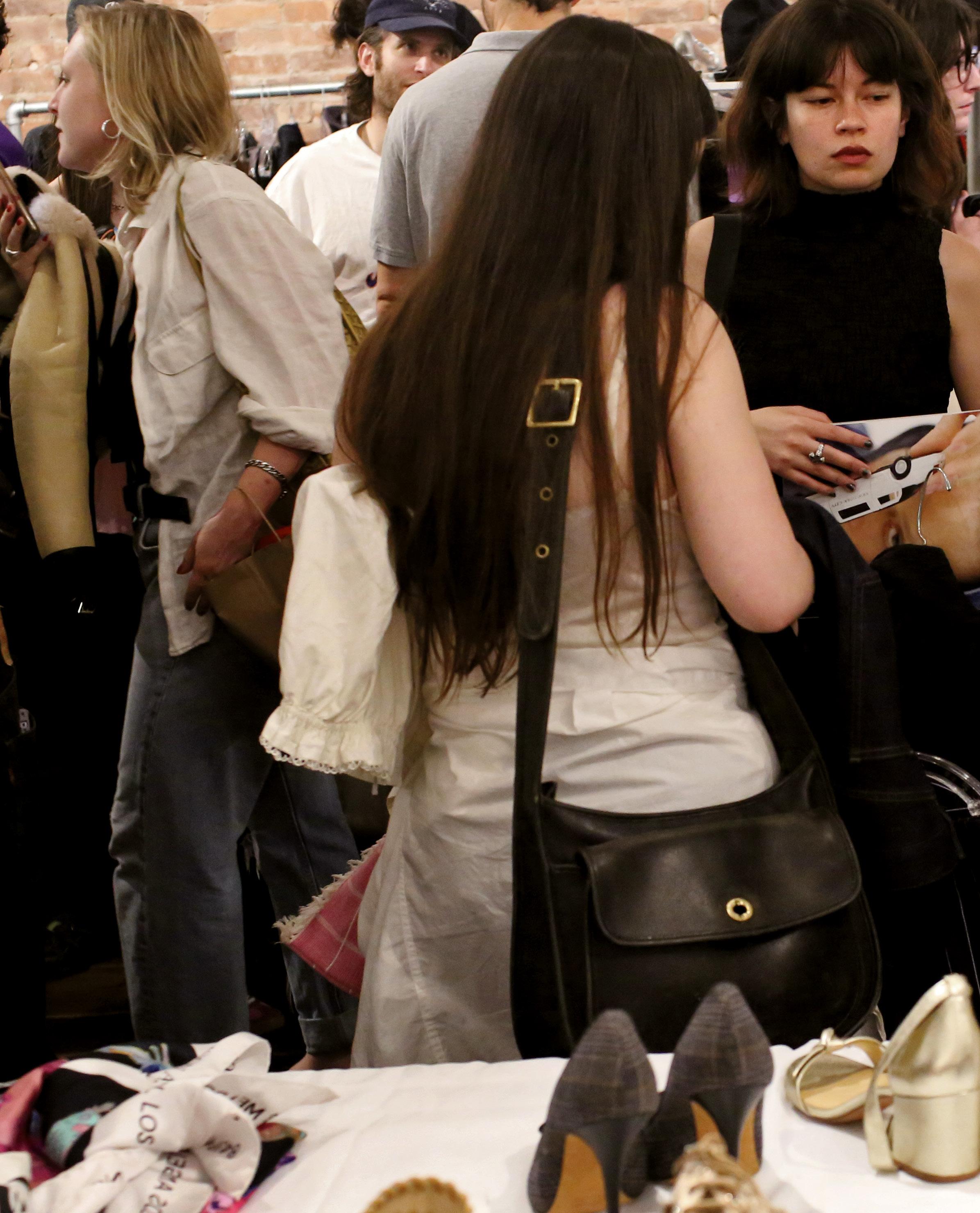
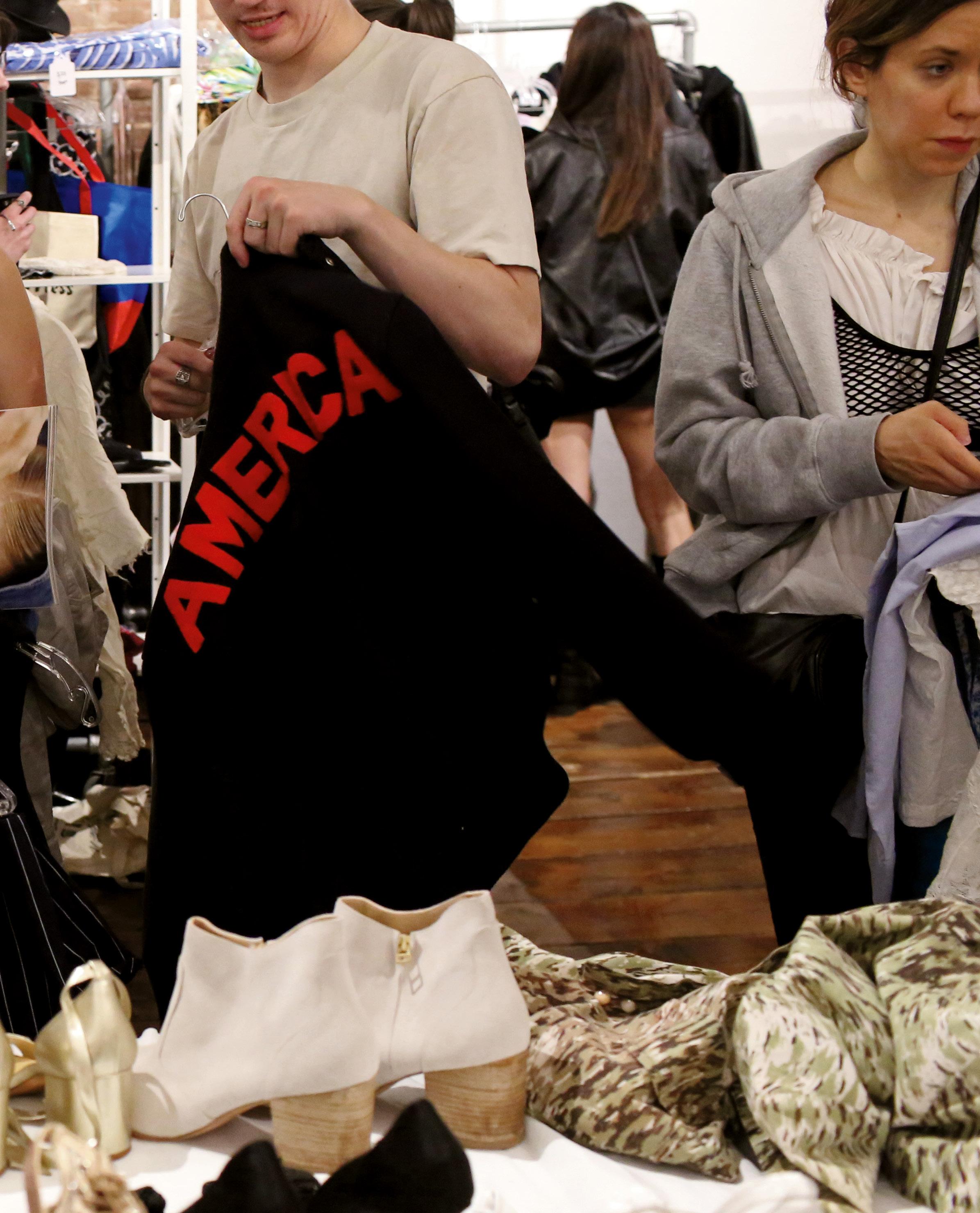
PREVIOUS SPREAD: Fashionistas gather at a sale hosted by Chloe Sevigny, Mickey Boardman, Lynn Yaeger, Sally Singer and Liana Satenstein, titled The Sale of the Century, in Manhattan, NY (Photo by Yana Paskova/For The Washington Post via Getty Images)
RIGHT: Emma Rogue wears black sneakers, silver sunglasses, a white belt, a black Adidas x Avavav tank top, a black leather cropped hoodie and low waist grey denim trousers outside Avavav show during the Milan Fashion Week Womenswear Fall/Winter 2025/2026 on March 2, 2025 in Milan, Italy. (Photo by Valentina Frugiuele/Getty Images)
Spring/Summer 2026 arrives like a hard reset. With an unprecedented wave of major house debuts, this season marks a turning point not seen since the 1997 Big Bang, when a new generation of designers arrived to shake the foundations of fashion. The surprise? This time around, the white shirt, that most basic, almost boring wardrobe staple, has been transformed with sweeping proportions and sumptuous fabrics into the ultimate status piece. Call it the great white shirt, a herald of a new era of vanguard elegance. Boxy tops spill into maxi trains, sleeves balloon, collars soar, and each refined textile from Pierpaolo Piccioli’s organdy-and-silk poplin at Balenciaga and Louise Trotter’s wool-and-silk toile at Bottega Veneta whispers quiet authority. Jonathan Anderson reimagines shirts as capes at Dior, while Matthieu Blazy delivers the pièce de résistance at Chanel with the maison’s first-ever collaboration with the nearly two-century-old Place Vendôme shirtmaker Charvet, a $3,900 cropped cotton shirt featuring chain and pearl-button detailing and a subtle embroidered logo.
The white shirt is a timeless canvas for luxury brands to demonstrate craftsmanship, especially at a moment when global luxury sector growth has slowed considerably. “With a white shirt, there are few distractions and essentially nowhere to hide or overcompensate, making it the perfect item to display brand and product integrity,” says WGSN womenswear strategist Sithandiwe Khumalo. “In a market fatigued by obvious branding, provenance becomes the badge. The Chanel x Charvet story is a perfect example: It’s not about a monogram, it’s about heritage shirtmaking and insider knowledge.” The white shirt allows designers to showcase mastery in tailoring, fabric choice, and finish: the subtleties that signal true luxury in a market where a large logo no longer guarantees superior quality.
Those debuts also arrive alongside a renewed fascination with 1990s minimalism, fueled in part by the collective obsession with Carolyn Bessette Kennedy’s style in Love Story. In the show, a memorable scene has Bessette Kennedy borrowing her then-boyfriend John F. Kennedy Jr.’s white shirt after an unplanned sleepover, transforming an everyday staple into something quietly sensual. In real life, she delivered the definitive version of the look at a 1999 Whitney Museum gala, pairing an unbuttoned Yohji Yamamoto white shirt with a sweeping black evening skirt. The combination, austere yet glamorous, has since become a red-carpet archetype worn by everyone from Sharon Stone to Zendaya. Designers this season reinMove over
ollections offer a ne w all-occasion st aple.
GREAT WHITE SHIRT
Words Alison S. Cohn
Photo courtesy of Chanel
Chanel
terpreted that formula with fresh exuberance: At Bottega Veneta, an untucked white shirt topped a dramatically voluminous midiskirt embroidered with all-over fringes, while at Chanel it anchored extravagant feathered ball skirts.
Not every interpretation leans evening. Designers also proposed more everyday flourishes that bring the white shirt back into the realm of workwear. At Givenchy, Sarah Burton showed a wrap shirt cut in white leather with turn-up raw denim trousers, while Brandon Maxwell paired voluminous button-ups created from layers of organza, cotton, tulle, and horsehair with high-rise distressed jeans. “Under all of those shirts are all of the layers that would be under a ball skirt,” he explains. At Carolina Herrera, a house long associated with the white shirt thanks to the founder’s crisp personal style, Wes Gordon invited Alejandro Gómez Palomo to reimagine the silhouette for a destination show in Madrid. Palomo traded traditional cotton poplin for yards of delicate silk organza condensed into tiny, precise darts inspired by vintage lingerie construction and added dramatic Victorian puffed sleeves. “I wanted to twist the white shirt with my Spanish heritage and historical point of view,” he says.
One of the great things about the great white shirt is that you don’t have to wear it as intended. The Spring/Summer 2026 runways offer endless ways to reinvent the staple with pieces you already have in your closet. Flip an extra-long collar up like Diotima, layer a tunic-length top under a minidress à la Toteme, or tie one on as a capelet in the style of Bernadette. Sacai and Issey Miyake pushed the concept further: Issey’s “Odd Shirts” look classic at first glance, but buttoned in unconventional ways or styled using the extra sleeves, they transform into entirely new shapes. “Pinning, tying, and doubling shirts from Uniqlo or any other mass-market brand is another way to explore avant-garde possibilities,” says stylist Ana Tess, who suggests pairing two shirts in different sizes or using the wrong holes to create unexpected forms. “The only rule is to have fun with it.”
From the bold new direction of the world’s great fashion maisons to the female vanguards reshaping Los Angeles style, and the timeless allure of Art Deco high jewelry, fashion enters a moment where heritage, innovation, and artistry collide.
Opposite page: Calvin Klein Collection dress, calvinklein.us.
Hair: Leslie Thibaud; Make Up: Alexandra Schiavi; Models: Maria at Oui Mgmt, Yarin at Premium Models, Aminata at Women Mgmt, Tamar at Premium Models; Fashion Assistant: Lisa Rodier; Photo Assistants: Jakub Fulin and Sara Dellagiacoma; Production: Royal Cheese
Cartier En Équilibre Chapitre II High Jewelry Necklace in Platinum with Spinels, Australian Black Opal, Jade Beads, Tourmalines and Diamonds right En Équilibre
Chapitre II High Jewelry Brooch in White Gold, with Pink Quartz, Agate and Diamonds
Adornment is a deeply
pr imal act.
With its flamingos, serpents, and surreal
glamour, Cart ier’s
lat est creat ions
conjure a fe ver dream of nat ure’s theat er.
GILDED GLAMOUR
Art Kimberlee Kessler Words Pema Bakshi
Nature has always been Cartier’s quiet collaborator. Look closely within its expansive archives, and you’ll find its blueprint everywhere: the charismatic composure of the panther, the ornate symmetry of a butterfly’s wing, the hypnotic stripe of the zebra, the organic tessellation of a crocodile’s skin. In En Équilibre Chapitre II, Cartier’s new high jewelry collection, these wild geometries are reimagined with gemstones that appear less cut than conjured – opal and onyx, sapphire and diamond, each arranged with architectural precision, fuelled by an instinctual zest for adornment.
For the Maison, harmonizing with nature doesn’t simply mean to take on its pelts but to capture the raw allure of the wild’s most mystifying inhabitants. With the En Équilibre Chapitre II collection, beguiling patterns mined from the natural world are inexplicably refined through time-honoured artistry. As Jacqueline Karachi, director of High Jewelry Creation, notes, Cartier’s vision has long been to offer the paradox of “sophisticated simplicity” – a craft where understatement and spectacle co-exist as they do in nature. The newly realized pieces recall a surreal carnival of vintage glamour, where feathers and jewels glimmer beneath the haze of champagne decadence. Flamingos, poised mid-dance, become echoes of Cartier’s opulence, while serpents command through shadow, their sensual forms reflected in rings and necklaces that coil around the body. Here, ornament is revered as a language as old as life itself.
Yet for all its dreamlike excess, this collection remains disciplined, shaped by the prowess of Cartier’s expert craftsmen. As Alexa Abitbol, director of the High Jewelry Workshops, observes, the true challenge lies in “the technical transcription of the original aesthetic intention” – a translation of vision into matter. Crafted with acute understanding and masterful precision, stones pulled from the earth are transformed into objects that pulse with the beauty of the natural order.
In En Équilibre Chapitre II, we are reminded that glamour is not invention, but inheritance. To dazzle, to display, to shimmer in the light, these are instincts written into our DNA, as proven by the creatures we take up as muses. Cartier simply gives them form, inviting us to heed the call of the wild.
Cartier En Équilibre Chapitre II High Jewelry earrings in white gold and yellow gold with sapphires and diamonds, cartier.com.
Cartier En Équilibre Chapitre II
High Jewelry earrings in white gold, onyx and diamonds, En Équilibre Chapitre II
High Jewelry Haliade necklace in white gold with sapphires and diamonds, cartier.com.
Cartier En Équilibre Chapitre II High Jewelry Cafayate necklace in rose gold and yellow gold with Australian opals, sapphires, and diamonds, En Équilibre Chapitre II High Jewelry earrings in white gold and yellow gold with sapphires and diamonds, cartier.com.
Cartier En Équilibre Chapitre II High Jewelry earrings in platinum with emeralds and diamonds, cartier.com.
Cartier En Équilibre
Chapitre II High Jewelry earrings in white gold with diamonds, En Équilibre
Chapitre II High Jewelry Najaatra necklace in white gold with diamonds, cartier.com.
Cartier En Équilibre Chapitre II
High Jewelry earrings in platinum with sapphires, chrysoprase beads, onyx, and diamonds, En Équilibre Chapitre II High Jewelry necklace in platinum with sapphires, chrysoprase beads, onyx, and diamonds, En Équilibre Chapitre II High Jewelry ring in white gold with sapphires and diamonds, cartier.com.
Prada coat, top, skirt, shoes, prada.com.
West Coast, best coast?
A fashionable glimpse int o the lives of some of L os A ngeles’ most exciting v isionaries shaping the f uture.
BOLD MOVES
Photography and Art Direction Julia Johnson
Styling & Creative Direction Karen Levitt
ARDEN CHO
What do you do, occupation or otherwise? actor, producer, entrepreneur
How are you a vanguard?
Honestly, I’m not quite sure I feel like a vanguard. I feel like someone who worked really hard, took risks, and stayed when things were uncomfortable. It meant stepping into rooms that weren’t originally built for me and then widening the door behind me.
I’ve had the privilege of leading projects that center Asian stories on a global scale, like voicing Rumi in K-Pop Demon Hunters, and I don’t take that lightly. I’m not just showing up as an actor anymore. I’m not waiting for permission. I’m producing, developing, and actively shaping the kinds of stories we get to tell next. For me, it’s not about being first. It’s about making sure we’re not the last. Progress only matters if it creates permanence.
How are leading culture in a unique way?
I think what makes my path unique is that I’m building across mediums — voice, live action, music, producing — while staying rooted in identity. Producing Perfect Girl, a psychological thriller that blends Korea and America in a layered, emotional way, feels especially meaningful. It places Korean identity at the center of a genre that has historically excluded us. And it’s not just one woman at the forefront. The film features nine female leads, creating space and opportunity for Asian American women in a genre where we’re rarely seen. We’re in a moment where audiences want specificity. They want complexity. They want stories that feel global but deeply personal. I try to lead by example, by showing that you don’t have to dilute who you are to reach the world. We don’t have to be side characters in someone else’s story. We can be the main character.
What do you do, occupation or otherwise? Musicians How are you a vanguard? How are you leading culture in a unique way? Today’s culture can feel like a countless array of subsections that’s overwhelming to navigate, but we’re more focused on staying true to what we believe in, and making art in a way that feels fun and ex-
citing to us. Sometimes making music doesn’t feel like contributing to a larger culture, because it’s so intimate and personal. But interacting with people who’ve come across our work, both online and at shows, it’s pretty cool to see that our art can connect us to the rest of the world, too.
THE LINDA LINDAS: LUCIA DE LA GARZA, ELOISE WONG, MILA DE LA GARZA, BELA SALAZAR
THIS PAGE: CHANEL jacket, top, skirt, earrings, shoes, 800-550-0005.
OPPOSITE PAGE FROM LEFT: Lucia in Mitiliane Couture jacket, us.mitilianecouture. com; Kilian Kerner pants, kilian-kerner. de; Schutz shoes, schutz-shoes.com. Eloise in Maximilian Gedra jacket, pants, maximiliangedra. com; GAP T-shirt, gap.com. Mila in Givenchy blazer, pants, givenchy.com; Gap top, gap.com; Schutz shoes, schutzshoes.com. Bela in ShuShu Tong dress, shushutongstudio. com; The Archive X Yana shoes, thearchivexyana.com; All jewelry her own.
Marc Jacobs bra, panty, marcjacobs. com; The Archive X Yana shoes, thearchive xyana.com.
SAN CHA
What do you do, occupation or otherwise? I am a composer, librettist, and vocalist bridging the visceral traditions of Mexican ranchera with the subversive glamour of queer electroclash. My work utilizes the operatic medium as a vessel for grand-scale storytelling and ancestral recontextualization.
How are you a vanguard? How are leading culture in a
Vungoc & Son dress, vungocandson. com; Gucci earrings, gucci.com; The Residency Experience gloves, theresidencyexperience.com.
unique way? I lead by prying open traditional, high-art forms to create a sanctuary for queer narratives, transforming my presence into a profound act of taking up space. As a Mexican woman in a country that demands our invisibility, I am redefining opera as a vital, global vehicle for collective liberation.
THIS PAGE: Johanna: Mitiliane Couture corset, us.mitilianecouture. com; Sportmax jacket, pants, us.sportmax. com; The Archive X Yana earrings, thearchivexyana. com. Zenia: Max Mara top, skirt, us.maxmara. com; Popilush bodysuit, popilush. com; The Archive X Yana earrings, thearchivexyana. com.
OPPOSITE PAGE: Stella McCartney dress, stellamccartney. com; Gucci shoes, gucci.com; The Archive X Yana necklace, earrings, thearchivexyana. com; Aperçu Eyewear sunglasses, apercueyewear.com.
Zenia Jaeger, right, Founder & CEO of Submission Beauty, high fashion and beauty makeup artist.
Johanna Nomiey, left, Co-founder & COO of Submission Beauty, high fashion and beauty makeup artist. How are you a vanguard? How are leading culture in a unique way?
We challenge the entire beauty industry ecosystem, from supply chains to consumer behaviors, by drawing attention to the harm that our convenience behavior and plastic poses to both the human body and the environment. We’re
leading by example, excluding plastic from every aspect of our production process: the product, packaging, and shipping materials.
We are changing the beauty standards. Responsible luxury must be a space where everyone feels invited. Submission intersects sustainability, material innovation, fashion, art, underground culture, activism and social change. We feature voices that challenge convention, expand representation, and move conversations forward. We publish with intention. We feature with purpose.
JOHANNA NOMIEY & ZENIA JAEGER OF SUBMISSION BEAUTY AND SUBMISSION MAGAZINE
What do you do? I’m a musician, performer, and a cultural force
How are you a vanguard. How are leading culture in a unique way?: My aim has always been to make art that hits people in the chest and makes them feel seen in the parts of themselves
they’ve been taught to hide. I’m building my own legacy, in my own lane, on my own terms, with a voice no one else can replicate.
APRIL KAE
Gucci dress, gucci.com; The Archive X Yana earrings, shoes, thearchivexyana.com.
ARROW DE WILDE
What do you do, occupation or otherwise? Singer / frontperson for the band Starcrawler How are you a vanguard? How are leading culture in a unique way? I feel like the real vanguards don’t know that they’re vanguards. I would be grateful to know that I’m leading culture in some way, but I also can’t be the one to say for certain. Only time will tell! My advice is, listen to what you want, wear whatever you want, dont pay attention to trends, because you might end up accidentally starting something new and important by just being yourself!
Hermès jacket, dress, hermes. com; Handsome Stockholm gloves, handsomestockholm. com; The Archive X Yana earrings, thearchivexyana.com.
What do you do, occupation or otherwise? Writer, strategist, and creator working at the intersection of women’s health, media, and culture. How are you a vanguard? How are you leading culture in a unique way?
I translate complex, often silenced experiences especially around the body—into language, systems, and stories that expand agency and shift culture forward.
ERICA CHIDI
Marc Jacobs dress, bow, marcjacobs.com.
What do you do, occupation or otherwise? Real estate agent at Douglas Elliman, art collector How are you a vanguard? How are leading culture in a unique way? I use my background in art to align individ-
uals with homes that become the backdrop for their own collections, aspirations, and memories. My goal is not only to help people find a house, but to help them define and discover their own version of what truly makes it a home.
NICOLE REBER
KATIE JOHNSON
THIS PAGE: Dolce & Gabbana bralettes, briefs, shirt, dolcegabbana. com; The Archive X Yana earrings, thearchivexyana.com.
OPPOSITE PAGE: Marc Jacobs dress, shoes, marcjacobs.com; The Archive X Yana earrings, sunglasses, gloves, thearchivexyana.com.
BOBBI ALTHOFF
What do you do, occupation or otherwise? Comedian and podcast host
How are you a vanguard? How are leading culture in a unique way? With The Really Good Podcast and now on Not This Again, I wanted to create a new kind of conver-
sation where we can all embrace our awkward selves. With a mix of awkwardness and comedy, I’m trying to push the boundaries of how humor and culture connect – giving audiences the honest, surprising moments we’re all craving in a world that often feels curated and scripted.
What do you do, occupation or otherwise? Fashion activist and costume designer How are you a vanguard? How are
leading culture in a unique way?:I made the blueprint while they were still asking for directions…
B.ÅKERLUND
Bold chromatic choices give a new sense of strength to this sea
son’s looks.
CLASH
Photography Byron Mollinedo
Styling Selin Bursalioglu
COLOR
THIS PAGE: Avant Toi sweater, avant-toi.it; Dsquared2 dress, dsquared2.com; Givenchy by Sarah Burton earrings, givenchy.com; Celine ring, celine.com.
OPPOSITE PAGE: Louis Vuitton jumpsuit, hat, socks, shoes, 866.VUITTON.
Model: Mandy Stenzel @The Agency; Set Designer and Props Stylist: Ornella Rota; Hair: Mimmo Di Maggio @Production Link Using Revlon Professional. Makeup: Rachid @Production Link Using Mac Cosmetics.
Pan orama
This season, culture takes the lead: exhibitions and films spark new conversations, while early dining and the embrace of slow travel signal a shift in how we savor life. These experiences define the vanguard of the coming trends.
Creat ives rise
up as the old order
crumbles.
ARTS AGAINST THE MACHINE
Words Cynthia Martens
In 1947, when the physical and psychological injuries of World War II were still raw, three of the most vibrant theater events in Europe took root: the Edinburgh International Festival in Scotland, the Holland Festival in the Netherlands, and the Festival d’Avignon in southern France.
Eight decades later, the festivals share a desire “to question and to uphold artistic freedom as an essential force against authoritarianism,” per Tiago Rodrigues, the director of the Festival d’Avignon. In the same vein, Holland Theater director Emily Ansenk expressed the view that “art can bridge what politics divides.”
In honor of their upcoming shared anniversary, this summer the three institutions are producing a show together: director Christiane Jatahy’s A Trial – after An Enemy of the People, starring actor Wagner Moura, who played Pablo Escobar a few years back in the Netflix series Narcos. The play, spearheaded by Brazilian creatives, is a courtroom drama in which audience members serve as the jury, and “a powerful statement of shared purpose” for the festivals,
A TRIAL – AFTER AN ENEMY OF THE PEOPLE
Internationaal Theater Amsterdam, June 25 to 28
Avignon July 4 to 7
The Lyceum Theatre Edinburgh, August 7 to 10
according to Roy Luxford, creative director of the Edinburgh International Festival. The show runs from June 25 to 28 at the Internationaal Theater Amsterdam before reaching Avignon in July and The Lyceum Theatre Edinburgh from August 7 to 10.
A Trial – after An Enemy of the People is itself a reference to Henrik Ibsen’s An Enemy of the People, an 1882 dark comedy that pits a threat to public health against collective economic interests. (Think of the sleazebag mayor of Amity Island in Jaws, when a large shark is prowling the waters but, hey, “it’s a beautiful day, the beaches are opened, and people are having a wonderful time.”)
Ibsen, who hailed from a bourgeois family in Norway, loved to probe the tension between self-realization and the social pressure to conform, which lies at the heart of No Other Choice, a sharply written South Korean film that’s in the running for the Best International Feature Oscar.
Right: Fritz Lang’s silent Metropolis, filmed in 1926, is now a century old.
Left: Actor Wagner Moura, who played Pablo Escobar a few years back in the Netflix series Narcos, is now to appear in Christiane Jatahy’s A Trial – after An Enemy of the People
ODYSSEY
Matt Damon is Odysseus in The Odyssey, written, produced, and directed by Christopher Nolan and scheduled for release on July 17.
Directed by Park Chan-wook, the story centers around a middle-aged family man who loses his job at a papermaking company and spirals into a murderous plot to dispatch other would-be job candidates in a tough market.
“We all live in the capitalist system, we all comply to it, and we’re all trying very hard to survive in it as well. And we don’t often question the system itself,” Park said in an interview with Mashable.
As it goes in the dystopian workplace, so it goes in geopolitics. Russian President Vladimir Putin said that Russia was forced to invade Ukraine; there was, he affirmed, “no other choice.” In January, when asked for comment about the detention of a 5-year-old by ICE agents, U.S. Vice President JD Vance asked, “What are they supposed to do?”
The subtext of many political responses is by now so formulaic, it’s easy to anticipate. We’ve been here before.
No Other Choice, then, feels timely. It is the second adaptation of the novel The Ax by Donald E. Westlake, after Greek-French director Costa-Gavras’s 2005 film Le couperet. The original Korean title translates literally to “it can’t be helped,” echoing the message the film’s protagonist, played by Lee Byung-hun, receives from the corporate higher-ups overseeing his, er, redundancy, which is attributed to increased reliance on artificial intelligence.
Perhaps the original cinematic work to take on corporate brutality in the industrial world, Fritz Lang’s silent Metropolis, filmed in 1926, is now a century old. Inspired by the director’s visit to New York City, the film is set in 2026, with a grim choreography of workers literally consumed by machinery while high above the skyscrapers their wealthier counterparts, including main character Freder, prance and preen in blinding white sports attire. (Gatsby cannot be far away.)
woodwinds, brass, and percussions are, at times, panic-inducing – Art Deco aesthetics, proletarian riots, and a Bond-worthy chase scene to save a damsel from burning at the stake, subtle the film is not. It was a financial failure at the time of its release, panned as silly or even pro-fascist.
It was also, however, highly inventive in its usage of special effects, thanks to the contributions of Eugene Schüfftan. To create the illusion of modern traffic, toy trains and cars were pulled on model bridges using wires. Mirrors, miniatures, Geissler tubes, compressed air, and more were deployed with great creativity, ultimately inspiring generations of filmmakers, including Martin Scorsese and Christopher Nolan, whose new spin on The Odyssey is set to debut on July 17 this year.
The film stars Matt Damon as Odysseus, Homer’s superhero of the ancient world, celebrated for his intellect and resolve as he journeys home from Troy to Ithaca. The cast also includes Tom Holland, Anne Hathaway, Lupita Nyong’o, Robert Pattinson, Jon Bernthal, Charlize Theron, and Zendaya.
The poem dates to between the eighth and seventh century B.C. and has been translated by a wide array of scholars, each rendering the story in a different color.
Nolan, whose credits include The Dark Knight and Dunkirk, knows a thing or two about the epic genre. He’s also long championed use of IMAX cameras, which provide crisp, high-definition images but historically were so loud as to limit their use to action sequences. Now, The Odyssey is set to be the first narrative film shot entirely using IMAX cameras, which have been fitted with “blimp” film casings to substantially reduce noise pollution. While Nolan secured exclusive use of the new cameras for his latest movie, industry reports suggest there is a market for the new technology.
Freder falls head-over-heels for Maria, a smoky-eyed young woman whose visit to the moneyed quarters with a gaggle of workers’ children stirs an awareness in him of the inequalities buttressing his froufrou existence. Meanwhile, a mad scientist is creating a Maria-like robot at the behest of the corporate overlords, secretly intending for the robot to tear the whole system down. With a zippy orchestral score by Gottfried Huppertz – the violins,
Before seeing the new film, we suggest dusting off a copy of The Odyssey or even hunting for a new translation. The poem dates to between the eighth and seventh century B.C. and has been translated by a wide array of scholars, each rendering the story in a different color. Is Odysseus “skilled in all ways of contending,” a “various-minded man,” a “man of twists and turns” or, simply, “a complicated man”?
In 2017, British classicist Emily Wilson became the first woman to publish an English interpretation of the ancient
NAN GOLDIN
This Will Not End Well, Paris, Grand Palais and Chapelle Saint-Louis de la Salpêtrière, from March 18 to June 21
text. “What I wanted to do was have something of what I see in the original, which is a crystalline clarity” of syntax, she once told NPR. Her translation, written in iambic pentameter, stands out for its smoothness and aims to match the brisk flow of the original. As she explains in her translator’s note, “It may be tempting to imagine that a translation of a very ancient poem would be somehow better if it used the language of an earlier era,” but ultimately, her Homer “does not speak in your grandparents’ English, since that language is no closer to the wine-dark sea than your own.”
A 2025 translation by author and critic Daniel Mendelsohn, editor-at-large at the New York Review of Books, has also garnered praise. Interviewed by a colleague at the Review, Mendelsohn emphasized how much translation is an act of interpretation and attributed enduring interest in The Odyssey to its portrayal of the passage of time and a vanishing world.
“It’s obviously a postwar poem, but it’s also a sort of post-everything poem. The old order has disappeared. The gods have receded. They’re almost not present at all,
except in a couple of crucial moments, and certainly not in the way they’re present in the Iliad, where they’re all over the action and fighting in the battles. You feel the gods have withdrawn,” he observed. “Odysseus is a lone guy in a strange world with no familiar landmarks. The whole poem is haunted by a feeling that the old world order has come to an end, and now we’re just on our own, making our way as best we can. That may be what’s speaking to people.”
Just doing our best to get by: That sentiment, combined with an interest in memory and a marked empathy with mental health struggles, has long animated the work of American photographer Nan Goldin, whose first solo exhibition as a filmmaker, This Will Not End Well, is traveling to France this spring, hosted by the Grand Palais and the Chapelle Saint-Louis de la Salpêtrière in Paris from March 18 to June 21, having previously shown in Milan and Stockholm.
The exhibition draws from The Ballad of Sexual Dependency (1981–2022), considered Goldin’s most famous work, but also The Other Side (1992–2021); Sisters, Saints and
Sibyls (2004–2022); Fire Leap (2010–2022); Sirens (2019–2020); and Memory Lost (2019–2021). Viewers are invited to experience the intimacy characteristic of Goldin’s work via an artful composition of photographs presented in slideshows, set to music and with occasional voiceovers. Her candid portraits seize on all facets of human experience with a non-judgmental gaze.
Erstwhile fashion designer Helmut Lang, who left the runway world more than 20 years ago to embrace visual arts, is happiest away from the camera lens. As a young child in the Austrian Alps, Lang found solace in the wild, and today, he still expresses a preference for quiet, eschewing the Hamptons party scene for time spent observing whales near his Long Island studio and residence.
(“For me, privacy means not needing to share everything one does with the entire world,” he told Kate Orne, the photographer founder of Upstate Diary, a publication dedicated to creatives “with lifestyles close to nature.”)
Through May 5, visitors to the MAK Museum in Vienna can trace the evolution of Lang’s artistic spirit through Helmut Lang. Séance de travail 1986-2005. Excerpts from the MAK Helmut Lang Archive
The mixed-media show presents Lang’s work, known for its edgy minimalism, as an expression of his egalitarian mindset and interest in interdisciplinary crossover. “The MAK archive is meant to be a ‘living archive.’ I hope it inspires others to have the courage to find their own voice. The past is never easier than the present; the present is always the opportunity,” Lang said.
A ne w V& A show explores
Schiaparelli ’s creat ive crosspollinat ion.
Is fashion art? The question has lingered for as long as the modern fashion industry has existed, exposing a perceived divide between the intellectual world of fine art and the commercial business of fashion. Today, artist collaborations are ubiquitous, with designers splashing famous motifs across garments to lend them cultural credibility. Opening March 28 at London’s Victoria and Albert Museum, Schiaparelli: Fashion Becomes Art explores the legacy of a 20th-century legend who dissolved that distinction long before it became a marketing strategy. If Gabrielle Chanel dismissed the Rome-born designer Elsa Schiaparelli, who launched her eponymous Paris maison celebrating Surrealism and eccentricity in 1927, as “that Italian artist who’s making clothes,” Cristóbal Balenciaga countered that she was “the only real artist in couture.”
Schiaparelli did not merely borrow motifs from the Surrealists; she was embedded in the movement’s inner circle, working closely with Salvador Dalí, Jean Cocteau, and Man Ray throughout the 1930s to shape its visual language. Today, that dialogue continues under Daniel Roseberry, the American designer who in 2019 was given the keys to her house, which had lain dormant for more than half a century since she retired in 1954. “What I am drawn to is the connectivity of Elsa’s work,” says Roseberry. “There was a distance between culture and most French couture houses back then. Elsa’s focus wasn’t just on good taste or lifestyle or even beauty, it was more cerebral than that. It was about how the expression of the surreal can create a more intimate connection between art, pop culture and fashion and between the designer and client.”
ver, colleagues from the museum’s departments of photography and paintings and drawings. She has designed the show as what she calls an “oscillating conversation between two designers” rather than a conventional chronological survey. “In her autobiography, Shocking Life, Elsa uses the word ‘exhilarating’ to describe working with the leading artists of her day, and that sense of excitement continues in Daniel’s current practice,” says Stanfill. Comprising more than 200 objects — including garments, accessories, jewelry, paintings, photographs, sculpture, furniture, and fragrance — the exhibition reads like an exquisite corpse, with artist collaborations forming its conceptual nerve center.
The central room features some of Schiaparelli’s most iconic pieces created with Dalí, from the Summer 1937 Lobster dress with suggestively positioned crustaceans that appeared in Wallis Simpson’s trousseau to the Summer 1938 Tears dress featuring a trompe l’oeil ripped pattern and coordinating veil lined with real tears in pink and magenta. A perfect example of their creative exchange is the juxtaposition of another piece from this collection, a Skeleton dress with padded ridges that seem to transpose the wearer’s skeleton to her exterior and a Dalí sketch inscribed, “Dear Elsa, I like this idea of ‘bones on the outside’ enormously,” which depicts a female skeleton from multiple angles. “The poses are reminiscent of a fashion model’s,” notes Stanfill, underscoring the playful back-and-forth that turned a concept into couture.
Sonnet Stanfill, the V&A’s senior fashion curator, organized the exhibition with Lydia Caston and Rosalind McKe-
Schiaparelli’s clothes balanced fun and functionality, and a series of rooms highlights her vision for the modern wardrobe, built around sportswear, tailored daywear, and elegant eveningwear. The display opens with a trio of her trompe l’oeil bowknot sweaters, the first garments she
Portrait of Elsa Schiaparelli by Man Ray, 1933. Opposite page: Schiaparelli haute couture Fall/Winter 2024
designed for her label. Her sparkling evening jackets, heavily embroidered with everything from sequins to glass mosaic and which came to epitomize the soignée style of Café Society, take pride of place. “They’re showcased a bit like a box of chocolates,” says Stanfill. No modern wardrobe is complete without accessories, so the exhibition presents a profusion of hats, bags, shoes, and gloves. Roseberry’s Face bag, decorated with anatomical jewels in enamel and hammered brass, and his shoes with gold-tone brass toes are shown alongside Schiaparelli’s own buttons and jewelry, including Alberto Giacometti’s sculptural pieces and the writer Elsa Triolet’s Aspirin necklace, composed of porcelain beads shaped like pills.
Wherever possible, the exhibition unpacks the stories of the remarkable women who have worn Schiaparelli, from aviator Amelia Earhart and tennis star Suzanne Lenglen to actress Marlene Dietrich and collector Peggy Guggenheim. “Schiaparelli described her clients as ‘glittering personalities,’ and she was very transparent about the importance of her clients in making the dresses come
Above: Schiaparelli Spring 1937 evening coat designed by Elsa Schiaparelli and Jean Cocteau.
Opposite page clocwise from top left: Drawing for Schiaparelli by Jean Cocteau, 1937; Schiaparelli collarless jacket and hat with butterfly trimmings, 1937; Portrait of Nusch by Pablo Picasso; Portrait of Elsa Schiaparelli, 1940.
Photo by Fredrich Baker Condé Nast via Getty Images
alive,” says Stanfill. The exhibition also pays tribute to the often unacknowledged contributions of women behind the scenes. The idea for the iconic upside-down Shoe Hat that Dalí designed for Schiaparelli’s Fall 1937 collection, for instance, can be traced to his wife and muse, Gala, who once playfully placed a slipper on his head. “Credit where credit is due,” says Stanfill.
Another curatorial device is doubling, with certain objects encountered more than once from different vantage points. The Shoe Hat appears first in the accessories gallery among Schiaparelli’s inventive millinery, then resurfaces in the artist collaborations room. The idea also extends across time. A Spring 1937 linen dinner jacket embroidered in golden thread with Cocteau’s double-image drawing of mirrored profiles forming an urn of flowers finds its twin in a sculptural minidress from Roseberry’s Fall/Winter 2021 haute couture collection, also executed in silk appliqué by Maison Lesage, with the roses multiplied across
the bodice and sleeves. “It’s a kind of riposte, or an answer to the Elsa Schiaparelli design,” says Stanfill, highlighting the house’s suspension of time.
“It’s a kind of riposte, or an answer to the Elsa Schiaparelli design”
For Roseberry, working at Schiaparelli is about a relationship with the house and its codes that cannot be rushed or forced. “Being a creative director at a maison with a great history is like dating,” he says. “It’s the kind of chemistry that you cannot predict. You can’t fast track it and you can’t force it. When people ask me about my connection with Elsa and the codes, I feel there’s a natural chemistry between us. I think with other heritage houses the weight of the past could feel like a constraint — whether it’s a specific silhouette, colorway, graphic, or logo. But Elsa’s legacy seems to grant endless permission to explore, express, challenge, and shock.”
Above: Lobster Telephone by Salvador Dali, 1938. Opposite page: Schiaparelli haute couture Fall/Winter 2024.
Photos:
THE EARLY DINNER IS THE NEW POWER MOVE
Words Casey Brennan
For years, the later your dinner reservation, the better. An 8:45 was respectable. A 9:30 meant you were really going out. And 10 p.m.? That was the point.
Now? In New York, Miami, Los Angeles, London — really, in most major cities — the hardest table to get might be 6:15.
Early dinners have quietly become the move. Not in a
“we’re getting older” early-bird special way. In a deliberate way. The people walking into restaurants before sunset aren’t tourists or retirees — they’re busy. They work. They train. They travel. They want the martini, the pasta, the conversation — and they also want to wake up clear.
I can clearly recall the shift — in the fall of 2020, walking
into the Odeon at 6 p.m. and finding the bar completely full, not an empty table in sight. Part of it was boredom and the desire to get out of the house, where we had been cooped up for months. But it was also a very real transformation of how people go out.
But the thinning of very late nights didn’t begin with COVID. Amy Sacco — who helped define New York nightlife at Lot 61 and Bungalow 8 — says the shift had been brewing for years.
“The very late nights have been slowly lost over the last several years — even before COVID,” she says. “It’s harder to find anyone out late aside from weekends.”
She points to something more structural: dating apps. “When Tinder and Grindr came on board, there was a big dip,” she says. “People can ‘order’ dates instead of going out nightclubbing and barhopping to find them.”
When the social hunt moved to a screen, the dance floor inevitably lost some urgency.
Then came lockdowns — and nesting. “Everyone got used to the cozy warmth of their homes,” Sacco says. More cooking. More house parties. Smaller dinners. When restaurants reopened, she noticed longtime clients requesting what used to be called “early bird” slots — 6 to 7:30 p.m. reservations.
“I was thrilled,” she says. “It made my life easier.”
the Space guys — are doing yoga,” he says, referencing the famously late-night culture around Miami’s iconic Club Space. “It’s happening everywhere.”
And it does feel different. A 6 p.m. reservation is calmer. The room isn’t slammed, and the staff is fresh. The light is better. You can hear each other. Dinner doesn’t feel like a holding pattern before something “real” begins. It is the thing.
There’s also simple math at play. Sleep experts consistently recommend finishing your last meal two to three hours before bed to improve sleep quality. That matters in a culture that tracks recovery and schedules 6 a.m. workouts. A 9:45 p.m. pasta course hits differently when you’re setting an early alarm.
There’s also the data layer. When your sleep score is waiting for you in the morning — courtesy of an Oura Ring or a continuous glucose monitor — dinner stops being casual. People are tracking macros, glucose spikes, recovery metrics. They can literally see what a 10 p.m. meal does to their heart rate variability. Add in the widespread use of GLP-1 medications, which naturally reduce appetite and shift eating earlier in the day, and the old model of lingering over a heavy late-night meal starts to feel misaligned.
It’s not that people don’t want to go out. It’s that they want to go out — and still function the next day.
Even younger crowds embraced the rhythm. “Friends and relatives in their 30s want to eat early and be out until 9-ish,” she says. “They work. They get up early to work out. This way they get the best of both worlds.”
It’s not that people don’t want to go out. It’s that they want to go out — and still function the next day.
Few people have watched that recalibration unfold from as many angles as legendary nightlife promoter turned restauranteur Bill Spector. He says he began noticing the reservation shift before the pandemic, but the pandemic made it undeniable.
“Clients were asking for earlier reservations around 2017 or 2018,” he says. “It was skewing earlier before COVID.” But when the restrictions hit, he explains, it went mass scale. “I remember thinking, ‘Wow, this is actually a genius idea.’”
Part of it, he believes, is health becoming status. “People are trying to be healthy. Even the nightlife crowd — even
Spector acknowledges the trade-off. “People have dinner at 5:30, and by 8 p.m., they’re home. They don’t want to go back out,” he says. Dinner used to be the pregame. Now, it’s the main event.
But late night hasn’t disappeared — it’s just condensed. Weekends still hold pockets of it. Big events still spark after-parties. But the idea that status requires arriving somewhere at midnight feels dated. Even younger crowds aren’t pushing as late as they once did.
Will it stay this way? Probably not permanently. “These trends are cyclical,” Sacco says. “Late nights will come back with a vengeance — probably when the next generation of club owners starts their revolution.”
For now, though, the energy has shifted across cities. Being seen at 5:45 doesn’t feel early or embarrassing. It feels intentional. It suggests you know exactly how much of the night you want — and when you’re done. In places that once measured power by how late you arrived, the real flex now might be knowing exactly when to leave.
Two t imeless rail
journe ys in Peru
prove that life’s richest
memories emerge
when we slow down and f ully immerse ourselves in the experience.
RADICAL STILLNESS
Photography and Words Aaron Rasmussen
Istand shivering nearly 14,000 feet up in the quiet, windswept highlands of the Peruvian Andes, my breath escaping in wheezing bursts. It’s just after 5 a.m., and I’m on a hill overlooking Lake Saracocha on one side and Lake Lagunillas on the other, their surfaces like sheets of burnished tin in the dawn haze. Below me, between the two, my temporary home — the 18-car Andean Explorer, a Belmond train — lies motionless, snaked along the tracks amid brittle, honey-hued tufts of puna grass, its windows catching the first light. Without Wi-Fi here at the top of the world, my phone becomes only a camera, so I’m happily left to see the view and simply be. I watch the memory of this place take shape in real time, already knowing it will stay with me long after I leave. I’m grateful to be wholly present as the insight settles in, bright and certain as the sun yawning awake over the altiplano.
It’s the art of creating magical scenes like this that underscores why Belmond has revolutionized and redefined slow travel, turning our most precious commodity — time — into a treasure to be indulged in. And that was exactly my intention as I embarked on my bespoke rail adventure from Machu Picchu to Arequipa. My expedition began days earlier at Rio Sagrado, a Bel-
mond hotel hidden away along the Urubamba River in the Sacred Valley. It’s an ideal base for acclimating to the altitude and the unhurried pace. At the property, I connected with Mother Earth over a ceremonial pachamanca — a Quechua word meaning “earth pot” — a feast of marinated meats slow-roasted underground on piping-hot volcanic stones. Llamas wandered the lawns, their large, dark eyes casting curious glances at the proceedings as I bottle-fed a cloud-soft white youngster named Valentina with one hand and toasted the evening with a glass of champagne in the other.
The next morning, the five-car train Hiram Bingham — named for the early-20th century American explorer who revealed Machu Picchu to the world, my next destination — lumbered into the hotel’s private station. I boarded to the lively flute, guitar, and drum rhythms of traditional Huayno music. In the bar car, I sipped the tangy brightness of pisco sours. Every instant demanded my full attention: There was the lush cloud jungle and raging rivers sliding past outside, but also tiny details everywhere inside that might otherwise escape notice. A barman crowned an Amazonas Collins — a bubbly Tom Collins twist made with Gin’ca, a Peruvian gin infused with mountain pineapple botanicals — with a reddish-purple liquid
recalling airampo seeds once used by the Incas to dye textiles.
Rain lashed the station as we arrived in Aguas Calientes, signaling the most anticipated leg of my adventure, the steep ascent to Machu Picchu. A father and his young daughter sprinted by, their smiles as bright as their wet-weather gear — the girl wrapped in a hot pink poncho, her father holding a violet umbrella. By the time the skies cleared and fog lifted, I felt equally flush with joy scaling the 15th-century walled citadel, believed to have been a retreat for Inca elite. The expansive views of the sky-high ancient marvel grounded me in the moment. Later, in Cusco, two contrasting meals awaited me. For lunch at Pachapapa, I tried farm-raised guinea pig, a Peruvian delicacy surprisingly reminiscent of duck. Dinner at Mauka, helmed by Pía León, one of the world’s finest chefs, was elevated and immersive. Her cuisine is, quite literally, rooted in the region, drawing on local products, from tubers and corn to grains and native fruit. Crispy pork belly with rainbow quinoa was a master class in flavor, while the flaky white paiche, an Amazonian fish, came alive with the gentle sweetness of tropical fruit and the earthy richness of yucca.
That night, I felt like royalty as I slipped into bed at the hotel Palacio Nazarenas, a former 16th-century palace, where oxygen is thoughtfully pumped into the rooms to offset the thin mountain air. I fell into a deep and satisfying sleep—the perfect prelude to the main course of my trip: three days and two nights aboard a second train, the Andean Explorer.
melted into raindrops streaking the windows, the steady click-clack of the train’s wheels coaxing me into an even deeper state of relaxation as we glided our way south. Life on the Andean Explorer struck a perfect balance of activity and leisure. I strolled between the two lounges, took in the fresh air on the observation deck, and treated myself to a massage in the spa. Some guests read; others lost themselves in the scenery, scanning hillsides for elusive vicuñas, wild relatives of llamas. Afternoons brought cocktails in the bar car while a pianist serenaded from a baby grand, followed by refined, white-tablecloth dinners featuring Peruvian fusion dishes. Evenings ushered in singing and dancing to a live band, offering moments to connect with fellow travelers and form bonds. Days and nights aboard the train were full, but they never felt rushed.
Without Wi-Fi here at the top of the world, my phone becomes only a camera, so I’m happily left to see the view and simply be.
Traveling on South America’s first luxury sleeper meant moving from spacious hotel suites to more intimate quarters. The refurbished cobalt-blue and white cars, modeled after Pullman carriages of the 1920s, were a step back in time. My berth was in the Capulí car, named for a cherry-like fruit harvested in the Sacred Valley. As the train departed, I watched the world whiz by from my cabin’s two large windows. Compact villages yielded to emerald fields, where farmers tended sheep. Women in traditional garb — polleras (full, layered skirts) of fuchsia, turquoise, and sunlit yellow, with matching llicllas (woven shawls) — waved as we passed. Sunbeams
The stops on our route proved equally remarkable. On a remote grassy plain, the train ground to a halt in front of a double-spired white adobe church. Inside, local women sold buttery-soft wool sweaters and blankets to us before we reboarded. From Puno, we headed to Lake Titicaca, the world’s highest navigable lake, to visit Uros, a community of more than 100 floating, manmade reed islands maintained by Indigenous families for centuries. Stepping onto one of the islands was like treading on a springy floor of foam, and I learned that each isle must be rebuilt every few decades. Later, we explored the Paleolithic-era Sumbay Caves in Salinas and Aguada Blanca National Reserve, where rock paintings of llamas and pumas endure after 8,000 years. All too soon, the Andean Explorer wound its way into Arequipa, the final stop of my journey. Swirling through my mind were all the wonders I had just witnessed—mist-laden Machu Picchu, devastatingly beautiful highland vistas, and surreal sunrises. At the town’s cramped airport, my Wi-Fi signal sprang back to life, along with the onslaught of the real world and all its distractions and demands. But as if on cue, Pachamama — the Andean spirit of the land — gently nudged me, bringing me back down to earth. Looking up, I gaped at a spectacular double rainbow arching across a pink sky. I set my phone aside and let the moment wash over me.
L eave Them
Flushed
With Desire
A PRESTO
Photography Vivi Suthathip
Creative Direction Nuntaporn Munkit
Words Gwen Flamberg
Blush is no longer confined to the apples of the cheeks. This season, it climbs higher, swept along the apex of cheekbones, blended softly into temples and across eyelids. The allure is hyper-romantic, a heightened expression of the natural flush conjured on warm spring afternoons and sultry summer evenings. Indeed, rouge has become a means of experimentation lately. More than any other makeup, it can both lift and sculpt the face as well as add a veil of intrigue or make a major statement. In short: Blush can be a whole mood. To recreate this elevated, avant-garde look, makeup artist Romy Soleimani suggests concentrating color at the highest point of cheeks, just under the outer corner of eyes, then diffusing out towards ears and up towards
the hairline with a fluffy brush. Use a separate, clean eyeshadow brush to layer blush onto lids, then stipple with a damp sponge to tie it all together. A perfect match: MAC Cosmetics Cushiony Lightweight Buildable Blurring Blush in Heat Index ($34, sephora.com).
But the real drama here lies in bleached brows that make the blush pop and amp up the dreamy appeal. Plus, they brighten the complexion and “open the whole face,” says Soleimani. For those who fear commitment, there’s no need to hit the dye bottle. Fake the effect by threading an eyebrow spoolie laced with concealer through brow hairs to lighten them.
Hair: Viktoriia Vradii; Makeup: Julia Voron; Model: Cho
@J’adore Models; Post production: Diana Nehrebetska