(Translation from the Italian original which remains the definitive version)
(Translation from the Italian original which remains the definitive version)
Single-member company, managed and coordinated by Ferrovie dello Stato Italiane
S.p.A. pursuant to article2497-sexiesof the Italian Civil Code and Legislative Decree no. 112/2015
Fully paid-up share capital: €31,536,472,466.00
Registered office: Piazza della Croce Rossa 1, 00161 Rome
Tax code and company registration number: 01585570581 - Rome company register
Economic and Administrative Register (R.E.A.) number: 758300
VAT number: 01008081000
Web address: https://www.rfi.it/
Board of Directors
Chairman/Chairwoman
CEO
Directors
Board of Statutory Auditors
Chairman
Standing statutory auditors
Alternate statutory auditors
Members at 5 March 2025*
Dario Lo Bosco
Gianpiero Strisciuglio
Antonella Faggi
Manolo Cipolla
Sabrina Lai
Members from 19 May 2023
Leonardo Quagliata
Lorenzo Brocca
Simona Vittoriana Cassarà
Gaetano Giudice
Maria Pia Erica Nucera
Members from 6 March 2025**
Paola Firmi
Aldo Isi
Antonella Faggi
Manolo Cipolla
Sabrina Lai
FINANCIAL REPORTING MANAGER
Andrea Pascucci
INDEPENDENT AUDITORS
PricewaterhouseCoopers S.p.A. (for the 2023 – 2025 three-year period)
* The members of the Board of Directors were appointed on 19 May 2023 and remained in office until 5 March 2025.
** On 6 March 2025, RFI appointed Paola Firmi as the new Chairwoman and Aldo Isi as the new CEO, replacing the outgoing members Dario Lo Bosco and Gianpiero Strisciuglio. The positions will expire with the approval of the 2025 financial statements. The other members of the Board of Directors and of the Board of Statutory Auditors remained unchanged.
Statement of changes in Equity 108
Cash Flow Statement ...........................................................................
Errore. Il segnalibro non è definito.
Notes to the financial statements ...................................................................................................... 110
Basis of preparation .............................................................................
Notes to the income statement .............................................................
Notes to the Statement of financial position
Other information ................................................................................
Events after the reporting date .............................................................
Errore. Il segnalibro non è definito.
Errore. Il segnalibro non è definito.
Errore. Il segnalibro non è definito.
Errore. Il segnalibro non è definito.
Errore. Il segnalibro non è definito.
Allocation of profit for the year Errore. Il segnalibro non è definito.
During 2025, the international macroeconomic environment was characterised by moderate global growth that gradually slowed; however, against a backdrop of continuing international tensions, economy held up better overall than initially expected, with global inflation remaining at historically low levels.
In this complex international context, Italy enjoyed relative political stability, closing out 2025 with GDP growth of +0.6% compared to the previous year, thanks primarily to domestic demand - in particular, driven by investments linked to the implementation of the NRRP - while the consumer price index for the entire national population rose by +1.5% compared to 2024.
Specifically, with regard to the transport sector and the trends in mobility demand, passenger traffic volumes in 2025 remained in line with last year's levels.
In this context, Rete Ferroviaria Italiana achieved very positive results of operations compared to the previous year: the loss of €99 million for financial year 2024 was offset by a net profit of €118 million at 31 December 2025.
EBITDA increased by €256 million, from €98 million at 31 December 2024 to €354 million at 31 December 2025, primarily due to the restructuring of Government grants allocated by the Ministry of the Economy and Finance (MEF) under the GPC-S, which increased by €290 million to primarily support routine maintenance activities, and to higher capitalisations of approximately €117 million related to the massive investment activities carried out during the financial year, and linked mainly to the NRRP.
At the same time, the company incurred higher insurance costs of approximately €72 million, due to taking out a new policy covering damage to railway infrastructure resulting from natural disasters, as required by the 2024 Finance Act, as well as higher personnel costs of approximately €28 million, related to the renewal of the National Collective Labour Agreement (CCNL) during the first half of 2025.
From a financial standpoint, the Company’s Net Financial Position, amounting to approximately €5,614 million, showed an improvement of €327 million compared to 31 December 2024; however, close attention remains focused on the mismatch between the timing of collection of government and EU funds, and payments to suppliers.
In the same period, RFI made infrastructure investments totalling €11,294 million (€7,410 million for large infrastructure projects, €3,884 million for infrastructure maintenance, of which €977 million was for technological upgrades), marking an increase of €1,664 million (approximately 17%) compared to the previous year. Investments under the National Recovery and Resilience Plan (NRRP) played a key role in achieving the target set for June 2026.
In fact, during 2025, RFI achieved all the targets and milestones set out in the NRRP, in accordance with the revision of the Plan for Measure 3, Component 1, approved on 17 June 2025, by a Decision of the European Council. This revision resulted in changes to the funding allocation for the interventions contributing to the implementation of the investments, in order to ensure the achievement of the planned targets, and maximise the related spending objectives, thereby allowing the total amount allocated to RFI in terms of resources to be confirmed - both for the portion allocated to ongoing projects and for new projects - without the need to identify additional government funding following the revision process.
In 2025, too, Rete Ferroviaria Italiana S.p.A. reaffirmed its full commitment to the continuous improvement of safety, a core principle that guides all actions taken by management and staff. Safety is understood in a broad and integrated sense, encompassing not only the regularity and reliability of railway operation, but also environmental protection, the well-being of workers, and the protection of all those who come into contact with the infrastructure. In this context, RFI has implemented numerous initiatives aimed at ensuring the highest standards of reference, including the strengthening of routine maintenance and ongoing investment in technologies, systems, and processes capable of further raising levels of operational and environmental safety.
Alongside safety, punctuality is one of the fundamental pillars of the company’s operations, serving as a key indicator of the quality of service provided to customers: adherence to schedules contributes, in fact, to the overall efficiency of the rail system, strengthens user confidence, and reinforces the company’s reputation. In 2025, the overall improvement in performance across all transport segments relative to set targets underscores the central role of punctuality in RFI’s daily operations, confirming the value of “doing things well and on time” as a hallmark of Italian excellence, and a key factor for the sustainable and competitive development of national mobility.
With this in mind, the Company is constantly committed to identifying innovative solutions capable of generating long-term value, systematically integrating the principles of environmental, social, and economic sustainability into its activities. This commitment is realised not only through the integration of these principles into business processes, but also through intensive research and development, supported by collaboration with universities and research institutions, which enables the identification and implementation of cutting-edge technological solutions and new industrial processes capable of meeting the needs of increasingly sustainable and innovative mobility; sustainability thus becomes the driving force behind research and experimentation, guiding the adoption of practices that help create value for the country, and build a resilient, efficient, and environmentally friendly future.
In terms of governance, RFI implemented the new model adopted by the Ferrovie dello Stato Italiane Group in 2025, aimed at defining a unified strategic plan appropriate for a group operating across multiple sectors while also ensuring the managerial and operational autonomy of each individual Business Unit. This model has placed RFI within the “Infrastructure – Railways Business Unit” as the Lead Company, and precisely to align the FS Group’s governance system with this new business structure, two strategic transactions have been completed:
- with effect from 8 May 2025, the transaction whereby FS transferred 100% of the share capital of Italferr S.p.A. to Rete Ferroviaria Italiana S.p.A. was completed;
- with effect from 1 January 2026, the transaction - approved at the Shareholders’ Meeting on 9 October 2025 - involving a Partial Demerger for the intercompany reallocation of the “Energy Business Unit” of Rete Ferroviaria Italiana S.p.A. to FS Energy S.p.A. was completed.
Furthermore, on 1 August 2025, RFI completed the acquisition of the “infrastructure” business unit of Società Ferrovie Udine Cividale S.r.l. (FUC), which will enable the expansion of the railway infrastructure, bringing significant benefits to the community.
At the same time, the Company continued to maintain, in coordination with the Parent Company, well-established and strategic relationships with the Government, both as the concessionaire of the national railway infrastructure and as the entity responsible for implementing development and investment policies in the sector. Likewise, dialogue with other stakeholders - including national and local institutions, Sector Authorities, railway undertakings, trade associations, and local communities - continued in a transparent and proactive manner, fostering collaboration on issues of innovation, sustainability, and improved mobility. Finally, with regard to customers, RFI reaffirms its approach focused on listening to and meeting their needs, promoting solutions that generate shared value, and ensure the quality of the services offered, in line with the company’s mission.
The Chairwoman
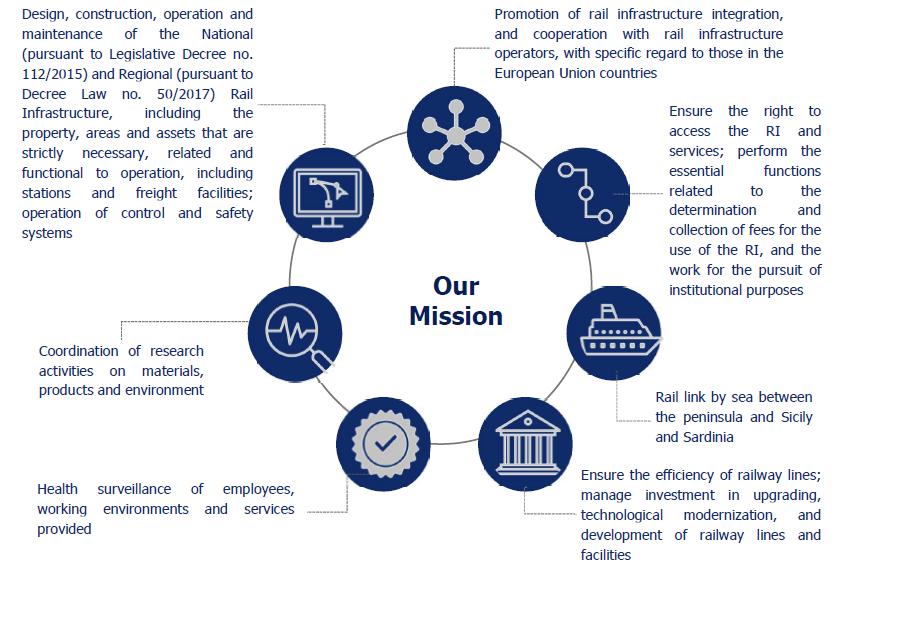
Rete Ferroviaria Italiana S.p.A. (“RFI”) is the company within the Ferrovie dello Stato Italiane Group (“FS Italiane Group”) responsible for operating the national railway infrastructure under a concession agreement with a term of 60 years, according to the decree issued by the Ministry of Transport and Navigation no. 138 - T of 31 October 2000.
RFI owns the infrastructure consisting of the portion that belonged to the former public body, Ferrovie dello Stato (and made up the body’s assets) and the portion acquired subsequently using own funds (obtained through thirdparty financing and capital injections, first from the government and subsequently Ferrovie dello Stato Italiane) and, currently, through government grants related to assets.
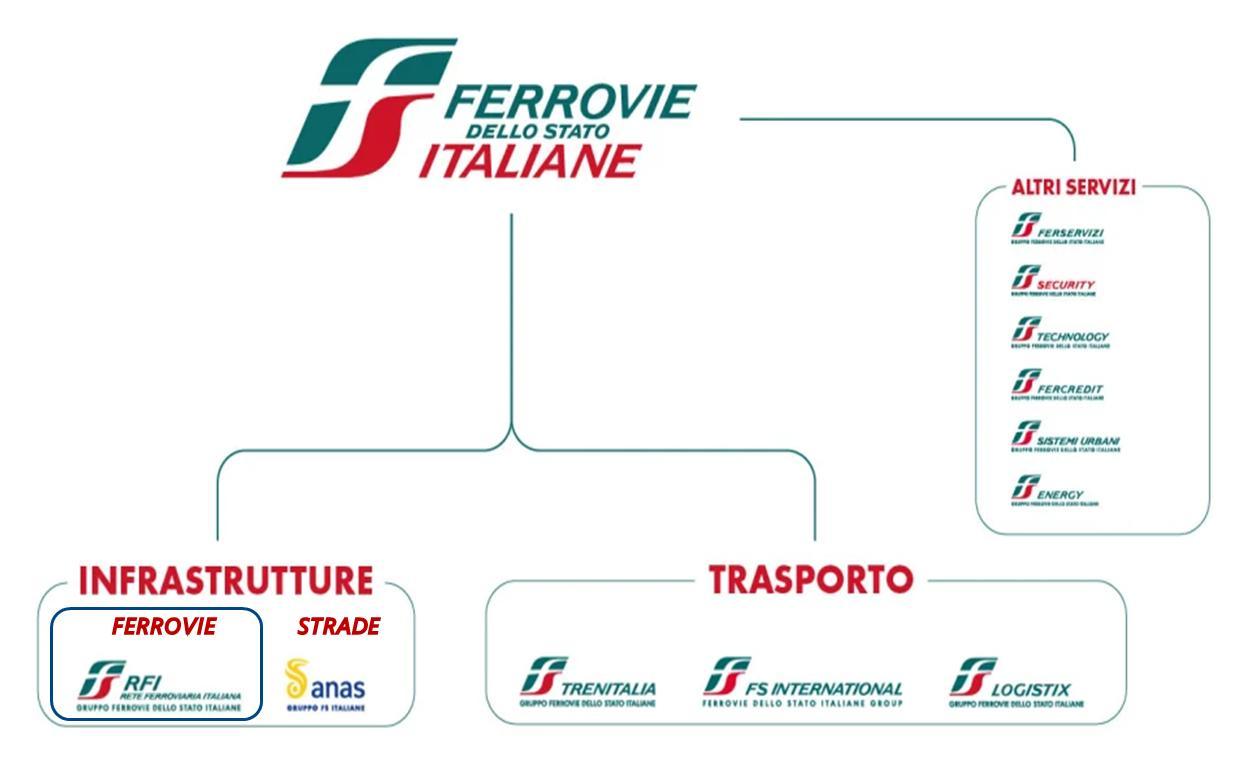
On 8 May 2025, the Extraordinary Shareholders’ Meeting of RFI approved an amendment to the Bylaws, in accordance with the “new Governance Model” adopted by the Ferrovie dello Stato Italiane Group, and implemented at RFI by COI (Information and Operational Circular) no. 173/AD dated 5 June 2025.
This Model has redesigned the Group’s governance structure, phasing out the Business Hubs and establishing five Business Units:
(i) Infrastructure – Railways Business Unit, headed by Rete Ferroviaria Italiana S.p.A.; (ii) Infrastructure – Roads Business Unit, headed by Anas S.p.A.; (iii) Transport - Freight Business Unit, headed by FS Logistix S.p.A.; (iv) Transport - International Passengers Business Unit, headed by FS International S.p.A.; and (v) TransportPassengers Business Unit, headed by Trenitalia S.p.A..
The new organisational structure aims to transition from a hybrid approach (carrying out management and coordination activities on both a participatory and contractual basis) to a “vertical” (solely on a participatory
basis) for management and coordination within the Group. It is designed to implement a unified strategic plan appropriate for a group operating in multiple complementary sectors while ensuring autonomy and operational independence in the management of the various Business Units and subsidiaries.
In implementing the model, FS assumes a role of general strategic guidance, and definition, supervision, and implementation and financial coordination of the Group, carrying out management and coordination activities visà-vis the Lead Companies of the Business Units and of its direct subsidiaries (Fercredit Servizi Finanziari S.p.A., Ferservizi S.p.A., FS Security S.p.A., FS Sistemi Urbani S.p.A.1, and FS Technology S.p.A.).
As the Lead Company of a Business Unit, RFI carries out management and coordination activities with respect to its subsidiaries, and is responsible for the direction, coordination, and technical and operational oversight of said companies, including risk management models, systems, and protocols, as further described in the Group Rules adopted by the Company by a resolution passed by the Board of Directors on 17 April 2025.


Below is a description of the criteria used to calculate the most frequently used performance indicators for the purposes of this report. Such criteria differ from the criteria applied to the financial statements and which management finds useful in monitoring the Company’s performance and believes reflect the results of operations and financial trends of its business segments:
o Gross operating profit: this is an indicator of the performance of operations and reflects the core business only. It is calculated as the difference between revenue and operating costs
o Operating profit: this is an indicator of the performance of operations and is calculated as the sum of gross operating profit and amortisation and depreciation, impairment losses (impairment gains) and provisions
o Net operating working capital: this is the sum of inventories, contract assets, current and non-current trade receivables, current and non-current trade payables and advances to suppliers
o Other assets, net: these reflect the sum of assets and advances from the Ministry of the Economy and Finance (MEF) for grants, deferred tax assets, other current and non-current assets and other current and non-current liabilities
o Working capital: this is the sum of net operating working capital and other assets, net.
o Net non-current assets: these reflect the sum of property, plant and equipment, investment property, intangible assets and equity investments.
o Other provisions: these reflect the sum of post-employment benefits and other employee benefits, the provision for litigation with employees and third parties, and provisions for other sundry risks set aside from time to time
o Net invested capital (NIC): this is the sum of working capital, net non-current assets, other provisions and net assets held for sale.
o Net financial debt (NFD): this financial indicator consists of bonds, non-current bank loans and borrowings, the current portion of non-current bank loans and borrowings, current and non-current loans and borrowings from other financial backers, cash and cash equivalents and current and non-current financial assets
o Equity (E): this is a financial statements indicator calculated as the sum of share capital, reserves, retained earnings (losses carried forward), current and non-current derivative liabilities and the profit (loss) for the year.
o Gross operating profit margin: this profitability indicator is calculated as the ratio of gross operating profit to operating revenue
o Operating profit margin - ROS (return on sales): this sales profitability indicator is calculated as the ratio of operating profit to revenue
o Debt/equity ratio: this indicator is used to measure the Company’s debt. It is calculated as the ratio between net financial debt and equity.
o ROE (return on equity): this is a profitability indicator for equity and is calculated as the ratio of profit/loss for the year and average equity (from the start to the end of year), net of the profit/loss for the year
o ROI (return on investment): this is a profitability indicator for invested capital through core business operations. It is calculated as the ratio of operating profit to average NIC (from the start to the end of the year).
o Turnover of net invested capital – Net Asset Turnover: this is an efficiency indicator that expresses invested capital’s abilityto transform into sales revenue. It is calculated as the ratio between operating revenue and average NIC(from the start to the end of the year).
The following terms are frequently used in relation to the Company’s operations:
o Multistation Computerised interlocking system: this is a central management system for control and signalling and station safety.
o Transport Regulator (ART): the body in charge of regulating transport and access to related infrastructure along with accessory services
o ATC: Automatic train control. This system automatically controls the train’s speed. It is the technological and functional evolution of the automatic train protection (ATP) system.
o HS/HC: High speed/High capacity. This is the system of lines and vehicles specifically developed for high speed and/or high-capacity transport
o CSEA: the fund for energy and waste collection service.
o CIPESS: Interministerial committee for economic planning and sustainable development
o Government Programme Contract - Services or Investments: these are long-term contracts between the MIT and RFI defining investment projects and other terms and conditions, such as ordinary and/or extraordinary network maintenance, to encourage the development of the railway system
o Main line: this is a particularly important series of railway lines in terms of traffic volumes and the transport role that it plays, as it joins major network centres or hubs
o Prime Ministerial decree: Prime Minister’s decree.
o ENIM (European Network of Infrastructure Managers): this is a third-party entity including all IOs of the railway lines belonging to the core and extended core TEN-T network and the European Commission.
o European Railway Agency (ERA): this is the EU agency establishing the mandatory requirements for European railways and builders in the form of technical interoperability specifications applicable to the
European railway system. The ERA sets common safety targets, along with the related methods and common safety indicators, in compliance with Directive 2004/49/EC, as amended.
o European Rail Traffic Management System (ERTMS): this is the system that integrates the various railway networks in the EU from a functional and operational standpoint and provides for the European Train Control System
o European Train Control System (ETCS): this is the overall network of the various national automatic train control (ATC) systems. ATC systems consist of traditional and innovative signalling systems.
o Infrastructure Manager: Operator of the domestic infrastructure
o Global System for Mobile Communication - Railway (GSM-R): this is the European standard for public digital mobile telephony system with a transmission speed of 9.6 Kbps
o ItP: information to the public on train schedule and performance.
o NRI: National Railway Infrastructure
o MATTM: Ministry of the Environment and Protection of Land and Sea.
o MEF: Ministry of the Economy and Finance
o MIT: Ministry of Infrastructure and Transport.
o HUB: this is a conventional term to define a railway area that generally coincides with major metropolitan destinations presenting highly dense and relatively complex medium to large-size stations and other railway plants that are interconnected by various lines, creating a continuation of the main routes into the same hub and other lines, built to manage various traffic flows and alternative routes, or service loops
o PIR: Network Statement, containing the criteria, procedures, methods and terms for the allocation of the infrastructure capacity and for the provision of the related services, as well as a detailed presentation of the available infrastructure and access conditions
o LC: level crossing.
o Operating control line: a location where there is no passenger service
o MAP: minimum access package.
o PRG: general zoning plan
o PUMS: urban sustainable mobility plan.
o Doubling: this is the transformation of a single track to a double track
o CCS/CTC: this command and control system/large network central traffic control system regulates traffic on the main lines and hubs, outperforming traditional centralised traffic control systems
o TSCS: train speed control system. This is the first functional stage of the ATC system for constant control over train speed, making it possible to activate the emergency brakes if the train exceeds the maximum speed allowed on the line or if it proceeds past stop signals
o Steering support controls - SSC: they are used to control and manage railway operation on the line from the central control stations in Bologna and Verona.
o Terminal: this is the intermodal transport infrastructure for the transfer of large load units between carriers, with or without warehouses of modest size.
o TLC: telecommunications
o Intermodal transport: this is transport using two or more modes of transport (road, rail, sea or river) with the transfer of load units from one mode to another without breaking up the load, i.e., using a roadway vehicle or intermodal transport unit (containers, swap bodies and semitrailers).
o Train-km (tkm): this is the number of train events per kilometre travelled
The RFI network in figures
Notes
(1) 70 km of which on the foreign network, 52 km on Umbrian regional railway and 54 km on Piedmont regional railway
(2) referring to lines with speed equal to or exceeding 250 km/h, equipped with Level 2 ERTMS powered at 25kV, and high-performance lines with speed exceeding 200 km/h
(3) facilities with intermodal centres, hubs, connections, etc.
(4) all network lines are equipped with one or more train speed protection systems
* of which 25 km with double SSC and TSCS equipment
(5) referring to lines equipped with stand-alone Level 2 ERTMS and with overlapped ERTMS
(6) nominal figure net of any possible discontinuities - for example, due to maintenance work – which could reduce service availability
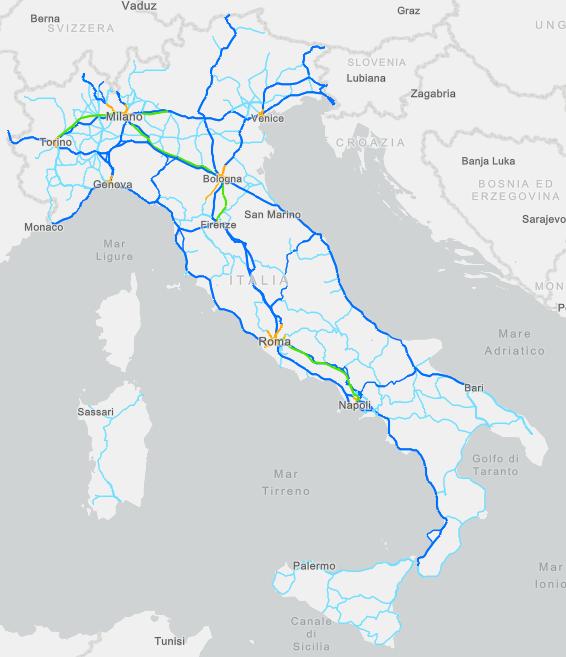
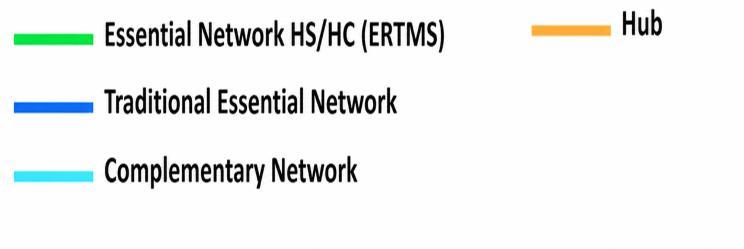
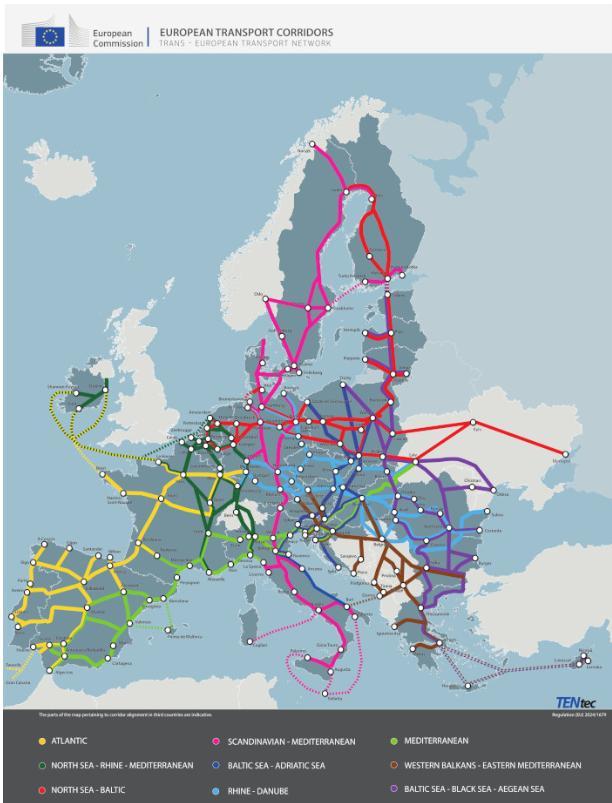
TEN-T (Trans European Transport Network) Corridors

Our approach
In line with its mission, RFI conducts its business according to a vision marked by social, economic and environmental sustainability, and based on the values of:

with the aim of delivering quality services at the lowest cost to the community and capable of generating shared value for all stakeholders.
On site and on a day-to-day basis, the Company develops the operation, maintenance, upgrading, design and construction of lines and stations with the utmost attention to safety, reduction of impacts and, increasingly, rational use of resources, circularity, infrastructure monitoring and resilience, and benefit to the community.
This wholly sustainability-driven approach leverages RFI's well-established Integrated Safety Management System (ISMS), which includes environmental management systems (EMS), workers’ safety (OSMS), and rail operation safety (SMS) certified to UNI EN ISO 9001,14001, and 45001.
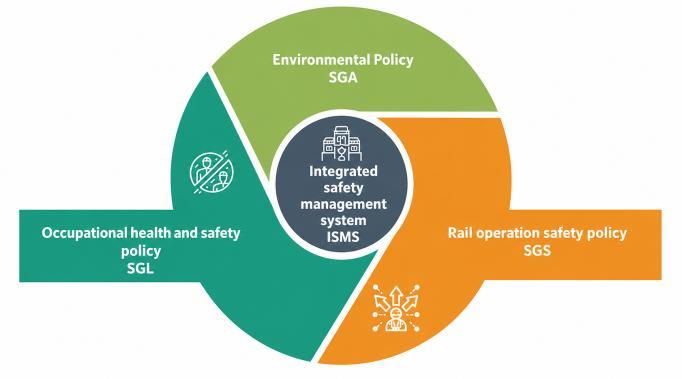
As stated in the Company's "Integrated Policy" document, the National Railway Infrastructure (NRI) operated by Rete Ferroviaria Italiana S.p.A. is a fundamental asset of the country's mobility system, and is therefore a significant reference for the social, economic and environmental enhancement of the national territory. In particular, RFI ensures that railway traffic takes place in safety, the technologies used are developed on an ongoing basis, the network evolves consistently with the mobility needs of people and goods across the country, and that the network itself is maintained in full efficiency.
The Company supports the dissemination and entrenchment of a culture of safety, including attention to the human factor as a component influencing operations, which, in compliance with EU, national and regional regulations, as well as voluntary ones, is the point of reference for those who work daily within the organization, as well as for those who, from the outside, come into contact with it. RFI bases its culture of safety on key principles, by which management and all personnel must always be guided, which can be identified as follows:
o priority of safety and continuous improvement;
o leadership commitment;
o awareness and accountability;
o communication and participation;
o skill learning;
o comprehensibility of rules and standards;
o organisation of work;
o unexpected event management;
o transparency and fairness.
The effective adoption of these principles implies safe behaviour, at all levels of the organisation, based on widely shared ways of thinking and acting within RFI.
Therefore, safety and protection are two key values for the Company, pursued both through the direct and ongoing oversight of the balance between technologies, people and organisation right from the definition of infrastructure projects, as well as of the services offered and industrial processes, with a view to continuous
improvement, and through the management and minimisation of risks related to business activities for workers, the environment, travellers, citizens and, in general, for the world outside the company.
On 9 December 2025, the Board of Directors of RFI approved the company Business Plan (hereinafter “The Plan”) with a five-year horizon, 2026-2030 (CAPEX with ten-year horizon for the period 2026-2035), in which the year 2026 represents the Budget year.
The Plan serves as an update to the previous 2026–2030 Plan; the strategic framework remains therefore essentially unchanged for both RFI and the companies in the Infrastructure – Railways Business Unit. In particular, the five Strategic Guidelines already identified are reaffirmed, and a new strategic guideline dedicated to the vertical integration of the construction sector has been added:
o Service quality: “Support the improvement of services provided and punctuality through industrial reorganisation and reduced unavailability”;
o Network transformation: “Develop the NRI, with upgrades, new works and new access points, to support the potential of local areas and production system, and Ensure the implementation of the investment plan and safeguard the targets and milestones set under the NRRP”;
o Stations: “Revolutionise the relationship between infrastructure and travellers, enhancing touchpoints”;
o Asset and skills enhancement: “Improve asset utilisation to create shared value and Strengthen, extend and make skills available to expand the scope of work in support of the community”;
o Performance improvement: “Ensure the adoption of advanced models in support of business efficiency to optimise results of operations and Ensure the economic stability of planned interventions and the achievement of a certain and aligned level of contribution”;
o Vertical Integration: “Pursue the internalization of expertise from the external market, including through M&A, to ensure the investment plan is secured.”
Cross-functional initiatives related to maintaining infrastructure efficiency, compliance with safety and cybersecurity standards, and the gradual integration of sustainability into business processes are also confirmed. In line with the 2026–2030 Plan, the key factor enabling the achievement of planning objectives remains the availability of sufficient financial resources to support the planned investments. The new plan incorporates two significant new elements:
o a revised regulatory framework following the approval of Resolution no. 201/2025, which establishes a higher toll profile than the previous one, as it incorporates the cost changes that have occurred in the meantime; specific reference is made to the costs associated with taking out the natural disaster insurance policy (CAT NAT);
o adoption of the new Group governance structure, involving the centralization - within the newco FS Energy – concerning the governance, responsibilities, and services related to energy management, energy efficiency, and the PV development plan, as well as a more in-depth assessment of the supply chain’s production capacity.
The 2026–2035 Investment Plan totals €110.9 billion, showing a decrease of approximately 4% compared to the 2025–2034 Plan (-€4.5 billion), primarily due to energy-related investments transferred via demerger to the aforementioned FS Energy company (-€2.2 billion). In particular, the 2026–2035 Plan aims to ensure substantial
investment volumes for “Service Quality”, “Maintenance and Safety”, and “Network transformation” interventions, in line with strategic objectives, and consistently with the previous Plan.
In terms of financial forecasts, the plan period shows a significant increase in the performance of the key economic and financial indicators achieved through revenue growth (CAGR: +2.8%), linked in particular to the trend in tolls, which are expected to rise starting in 2027 as a result of the increase in the IMU (unit cost of electricity) following the ART Decision no. 201/2025 (mentioned above), up to a level of public funding amounting to €1,256 million annually, guaranteed by the 2025 Budget Act. Targeted actions of performance improvement aimed at cost reduction, and higher capitalisation as the financial effect of the investment plan, allow the achievement of balanced results for all years covered by the plan.
32,459
NUMBEROFEMPLOYEES
22,733
DEDICATEDTOTHEINDUSTRIALAREA RAILWAYMAINTENANCE
APPROX. 1,300 NUMBEROFNEWHIRES
7,010
DEDICATEDTOTHEINDUSTRIALAREA RAILWAYTRAFFIC
The evolution of RFI’s workforce during 2025 showed a trend of substantial stability, with an increase in total costs of labour compared to the previous year, due to the renewal of the National Collective Labour Agreement (CCNL).
The number of RFI employees in the period from 1 January 2025 to 31 December 2025 showed a slight reduction:
o Headcount at 31 December 2024: 32,555 (including 350 managers, and 32,205 blue collars, workers and junior managers);
o Headcount at 31 December 2025: 32,459 (including 360 managers, and 32,099 blue collars, workers and junior managers).
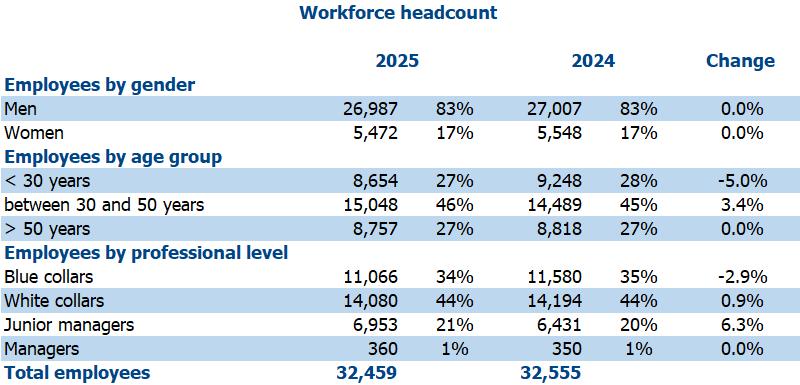
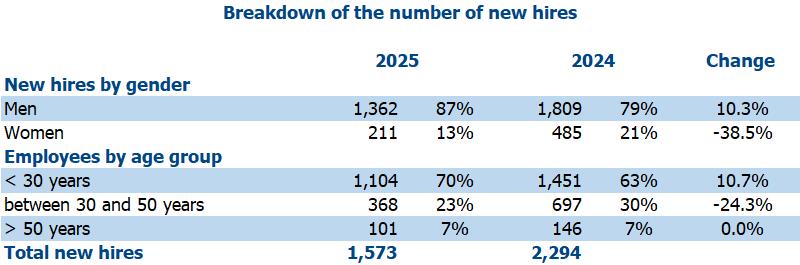
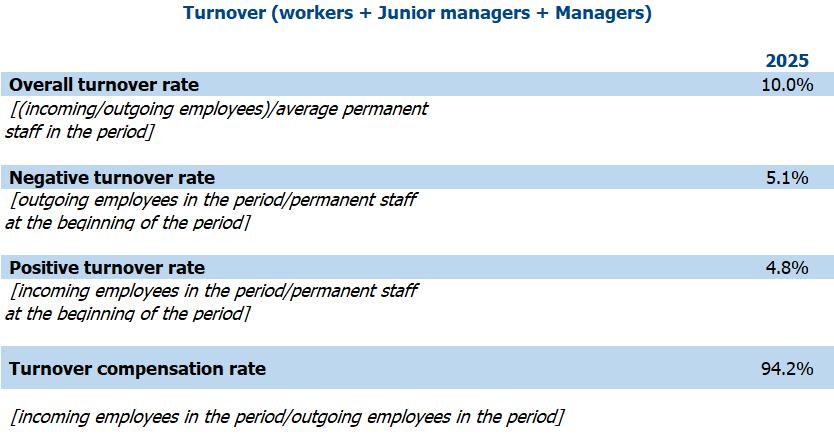
During 2025, there were 1,573 new hires (from the market, and from internal Group mobility), and 1,669 exits. The current contracts are the National Collective Labour Agreements applicable to the Company, and to the Mobility in the Railway Activities Area (AAF).
In 2025:




3,800,000 training hours delivered;
€150 per participant as average cost of training;
+3% involvement of participants compared to the previous year;
100% of the Company population was involved in at least one synchronous training course.
Among training projects in 2025 was the onboarding dedicated to approximately 1,200 new hires in blended mode, with the delivery of 84 sessions, including cross-sector and Occupational Safety training.
In 2025, RFI continued its efforts on the training programme focused on Safety Culture and Human Factor, which involved approximately 30,000 people for more than 10,000 man/days, through initiatives dedicated to various targets: the Human Factor course for new hires, apprentices, and Assistant Works Managers; the e-learning module on Safety Culture; training for in-house trainers; and skills maintenance for Human Organizational Factors (HOF) experts, and Safety LEDs.
Following the completion of the Basic Life Support Defibrillation (BLSD) training center, and the training of the BLSD Manager and trainers in 2024, it was possible to deliver in-house training to RFI staff throughout 2025. The goal is to provide participants with the necessary tools to promptly recognise cardiac arrest; perform basic resuscitation procedures in a proper manner; use a semi-automatic defibrillator (SAED) in a safe manner; clear the airway; and know how to stop bleeding (“Stop the Bleed”).

January
On 11 December 2024, the Shareholders’ Meeting of Tunnel Ferroviario del Brennero - Società di partecipazioni S.p.A. (“TFB”) approved the 16th capital increase, to be carried out in one or more tranches by 31 December 2025. In January 2025, the shareholders RFI S.p.A. and Autonomous Province of Bolzano subscribed to their respective shares of the first tranche of the aforementioned increase, amounting to €136,381,950 (RFI S.p.A.) and €9,566,100 (Autonomous Province of Bolzano).
Subsequently, on 31 January 2025, RFI S.p.A. paid out the unsubscribed shares of the first tranche of the 16th capital increase of Tunnel Ferroviario del Brennero – Società di Partecipazioni S.p.A., amounting to €4,051,950.

March
In March 2025, the shareholders RFI S.p.A. and Autonomous Province of Bolzano subscribed to their respective shares of the second tranche of the aforementioned capital increase, amounting to €45,590,000 (RFI S.p.A.) and €3,188,700 (Autonomous Province of Bolzano).
Subsequently, on 31 March 2025, RFI S.p.A. paid out the unsubscribed shares of the second tranche of the 16th capital increase of Tunnel Ferroviario del Brennero – Società di Partecipazioni S.p.A., amounting to €1,221,300.

May
Contribution of the Stake in Italferr S.p.A. held by FS in favour of Rete Ferroviaria Italiana S.p.A.
On 8 May 2025, the FS’ Contribution of 100% of the share capital of Italferr S.p.A. in favour of Rete Ferroviaria Italiana S.p.A. became effective in implementation of the Act of management and coordination issued by Ferrovie dello Stato Italiane S.p.A. on 10 March 2025, and in
compliance with the Golden Power regulations. This reallocation responds to the need to align the FS Group’s governance system with the new organisational and business structure, in which RFI serves as the Lead Company of the “Infrastructure – Railways” Business Unit.
As a result of the Contribution, RFI’s share capital increased by €8,047 thousand, corresponding to the carrying amount of Italferr S.p.A.’s equity investment in the financial statements of FS.
On 22 May 2025, a draft agreement was signed to renew the National Collective Labour Agreement for the railway sector, which will be applicable for the three-year period 2024–2026 for all employees of undertakings in the sector, including those of the FS Italiane Group. The reservation regarding the renewal of the National Collective Labour Agreement for Mobility –Railway Operations was officially lifted on 9 July 2025, following the positive outcome of the consultative referendum among workers, making the renewal agreement actually effective as from July 2025.

On 17 June 2025, FS Italiane placed its tenth green bond in the amount of €800 million, with settlement date on 24 June.
The issue is intended to finance Eligible Green Projects in accordance with the FS Green Bond Framework, updated in June 2022.
In using the proceeds from the issue, FS granted an intercompany loan of €180 million to RFI to finance projects with positive impacts in terms of environmental sustainability, in line with the FS Green Bond Framework. Specifically, the proceeds will finance investments to complete the Turin-Milan-Naples high-speed rail network.
On 17 June 2025, the proposed revision of the Plan for Measure 3, Component 1, which is of interest to the Infrastructure Manager (IM), was approved by a Decision of the European Council. This revision is permitted under Regulation (EU) 2021/241, and the Guidance on Recovery and Resilience Plans adopted by the European Commission (C/2024/4618). For further information, please refer to the “Investments” section of this Directors’ Report.
Contribution of real estate owned by Rete Ferroviaria Italiana S.p.A. in favour of Infrarail S.r.l.
With effect from 19 June 2025, the extraordinary transaction became effective, which involved the contribution of real estate owned by Rete Ferroviaria Italiana S.p.A., located at Via di Castelguidone in Rome, in favour of its subsidiary Infrarail S.r.l..
The transaction meets the company’s need to establish a logistics facility that will enable it to more easily achieve its mission.
Following the contribution, the quota capital of Infrarail S.r.l. was increased by approximately €120 thousand, corresponding to the net book value at 31 December 2024 recorded for the properties owned by RFI involved in the transaction; conversely, RFI recognised, in its assets, an increase in the quota it held in Infrarail S.r.l..

On 19 June 2025, the Board of Directors of Rete Ferroviaria Italiana S.p.A. approved the acquisition of the so-called “infrastructure” business unit of Ferrovie Udine Cividale S.r.l. (FUC), for a price of €124 thousand (subject to adjustment).
Following entering into the transfer agreement, the sale of the business unit was finalized on 1 August 2025, resulting in RFI taking over the operation of the regional rail line.
This transaction will enable the expansion of the rail line, bringing significant benefits to the community, and will make it possible to achieve a standardization of the commercial offer and services to the public, thus achieving benefits in terms of supply optimization, with the integration of long-haul and LPT services. However, the line is currently closed to allow for the completion of works to bring the railway infrastructure into line with RFI’s safety and technology standards. RFI plans to reopen the line in March 2026.

On 16 September 2025, an Intercompany Bridge Loan agreement was signed with FS for the Energy Business unit, amounting to €45 million. The purpose of the Loan is to provide the Borrower with the necessary resources to finance investments already underway, and to be
completed during 2025, which fall within the perimeter of FS Energy in the process of being established; no other purpose is permitted.
Specifically, the Intercompany Bridge Loan provides temporary coverage for FS Energy’s overall medium- to long-term financial needs, which, following the finalization of the demerger from RFI, will be covered in a structured manner through a dedicated medium- to long-term loan held by FS Energy.
of Rete Ferroviaria Italiana S.p.A. “Time Management” activities within Ferservizi S.p.A.
On 2 July 2025, following the submission by FS of the document on “Actofmanagementand coordination – CentralizationofTrenitaliaS.p.A.andRFIS.p.A.TimeManagementactivities withinFerserviziS.p.A.” on 25 March 2025, the Extraordinary Shareholders’ Meeting of Rete Ferroviaria Italiana S.p.A. passed - following the approval of the Demerger Plan by the Board of Directors of RFI on 19 June - a resolution to carry out the Partial Demerger of the “Time Management” business unit of RFI (“Demerged Company”) in favour of Ferservizi S.p.A. (“Beneficiary Company”), with effect from 1 October 2025.
The aforesaid reallocation is part of the so-called “Shared Services Center Project”, launched in 2024 and designed to enhance Ferservizi’s role as the new Shared Services Center of the FS Group for the centralized provision of business support services, in line with the 2025–2029 Strategic Plan. As a result of the Demerger, assets and liabilities valued at approximately €2 million each were assigned to Ferservizi S.p.A. starting from the relevant effective date.
Intercompany reallocation of the Energy Business Unit of Rete Ferroviaria Italiana
S.p.A. as part of the adoption of the new model implementing the “Energy Project”
On 9 October 2025, in implementation of the Act of Management and Coordination issued by Ferrovie dello Stato Italiane S.p.A. on 17 July 2025, and in compliance with the so-called “golden power” regulations, the Extraordinary Shareholders’ Meeting of Rete Ferroviaria Italiana
S.p.A. passed - following the approval of the Demerger Plan at the Board of Directors’ meeting held on 29 July – a resolution to carry out the Partial Demerger for the intercompany reallocation of the “Energy Business Unit” of RFI (“Demerged Company”) in favour of FS Energy S.p.A. (“Beneficiary Company”), with the transaction effective as from 1 January 2026. This transaction was carried out with the aim of making the energy supply supporting the railway service safer, more stable, and more reliable, as well as more sustainable (through an increase in energy from renewable sources), and more cost-effective.
On 29 October 2025, the Shareholders’ Meeting of Tunnel Ferroviario del Brennero - Società di partecipazioni S.p.A. (“TFB”) approved the 17th capital increase, to be carried out in one or more tranches by 31 December 2026. In December 2025, the shareholders RFI S.p.A. and Autonomous Province of Bolzano subscribed to their respective shares of the first tranche of the aforementioned increase, amounting to €91,256,000 and €6,377,000, respectively














ANIC: Average net invested capital (average of the opening and closing balances)
OP: Operating profit (loss)
GOP: Gross operating profit (loss)
E*: Average equity (average of the opening and closing balances) net of the profit for the year
E: Equity
NFD: Net financial debt
R: Revenue
P: Profit for the year
For the purposes of describing its financial position and performance, the Company has prepared reclassified financial statements in addition to those required by the IFRS adopted by the FS Italiane Group (as detailed in the Notes). The reclassified financial statements comprise alternative performance indicators which differ from those directly derived from the financial statements and which management deems useful in monitoring the Company’s performance and in presenting the financial results of the business. Reference should be made to the section “Key and glossary” for a description of the methods used to calculate these indicators.
The Company reported a net profit of €118 million, showing a significant improvement over the loss recorded in the previous year (€99 million), driven primarily by its operating performance. In fact, EBITDA stood at €354 million compared to €98 million at 31 December 2024.
This increase, amounting to €256 million, was the combined effect of the following factors:
o higher revenues of €340 million, primarily driven by the following elements:
- a restructuring of Government grants allocated by the MEF under the GPC – Services, which increased by €290 million;
- higher toll revenues of €36 million, of which €6 million relate to the volume of train-km travelled in 2025, and €29 million relate to adjustments from previous financial years;
- other income, primarily from penalties, partially offset by lower capital gains from the disposal of assets no longer used in operations;
o higher personnel costs, amounting to €28 million, partly linked to the renewal of the National Collective Labour Agreement (CCNL), which took place during the year;
o an increase of €56 million in other net costs, due to the combined effect of higher operating costs, amounting to €173 million, and higher capitalised internal expenses of approximately €117 million, related to the massive investment activities carried out during the year, and primarily linked to the NRRP.
Operating costs that are expected to increase in 2025 primarily include:
- insurance costs, mainly related to the new policy covering damage to railway infrastructure resulting from natural disasters (€75 million);
- provisions for costs for services (€48 million), relating essentially to developments in civil litigation;
- infrastructure maintenance (€18 million), linked to increased work on the railway line and cleaning activities; in particular, it should be noted that additional staff were deployed at stations during 2025 to ensure adequate service levels even during periods of heightened demand (e.g., the Jubilee, strikes, etc.);
- property services and utilities (€15 million), primarily related to the operating costs of the main stations that RFI pays to its subsidiary GS Rail;
- travel and subsistence (€4 million), linked to the increase in accommodation costs;
- ongoing administrative and IT services (€3 million), provided by affiliates FS Technology and Ferservizi.
Amortisation and depreciation increased by €16 million, of which €12 million were primarily related to leased assets within the scope of IFRS 16 Leases.
Write-downs and impairment losses increased by €9 million, related to obsolete tangible assets.
No circumstances arose which necessitated a change in the income and employment support fund; no similar release was therefore made in 2025 compared to 2024.
The balance of financial income and expenses showed an improvement of €21 million, driven by higher dividend income from the subsidiary GS Rail, amounting to €5 million, and, for the remainder, lower financial expenses on loans to the Parent Company and to financial institutions, due to a slight improvement in interest rates, and a reduction in the company’s debt exposure.
As at 31 December 2025, “Net invested capital” showed a slight decrease of €196 million, due to a reduction of €645 million in Working Capital, and of €47 million in Provisions (severance pay and others), partially offset by an increase of €370 million in Net fixed assets, and of €33 million in Assets held for sale.
The decrease in Working Capital was primarily attributable to a deterioration of €409 million in Net operating working capital, and of €236 million in Other net assets
The reduction of €409 million in Net operating working capital resulted from a higher debt exposure of approximately €529 million - primarily linked to significant economic progress on investments, and the timing of collection of government grants, and payments to contractors -, partially offset by higher trade receivables of €49 million, particularly from FS Group companies, and by an increase of €71 million in inventories - thanks to production output at the National Workshops in Bari, Pontassieve, and Bologna, concerning frogs, switches, glued insulation joints and electrical equipment worth approximately €161 million - offset by the value of materials used, net of new purchases, amounting to €83 million, and by the provision for inventory write-down of €7 million.
Other assets, net, decreased by €236 million compared to 31 December 2024, primarily due to a significant increase in advances for set-up grants (amounting to €1,635 million), linked to NRRP and MIT allocations, offset by a corresponding increase in receivables for grants from the MEF, the MIT, and the EU, and others of €1,466 million, relating primarily to receivables from the MEF.
Payables to employees also increased by approximately €30 million while non-trade receivables from the Parent Company decreased by approximately €34 million due to receipts collected during the year.
The increase of €370 million in Net non-current assets was due to the rise in Property, plant and equipment (€361 million), linked with the status of work in progress, and in Equity investments (€8 million), following the transfer of the investment in Italferr (FS Engineering S.p.A. from 1 March 2026) from the Parent Company FSI to RFI.
“Post-employment benefits” showed a slight decrease of €27 million while “Other provisions” showed a decrease of €20 million, attributable primarily to the use and release of the excess portion of the Provision estimated in 2024 for the renewal of the National Collective Labour Agreement (CCNL), partially offset by provisions for the period related to the developments in disputes on liability claims, particularly with construction contractors.
With regard to Coverage, the reduction of €196 million reflects a slight improvement in the Net Financial Position (€327 million), due to the timing of grants received relative to payments made, offset by an increase of €131 million in Equity, primarily attributable to the profit for the year. Specifically, the change in Net Financial Position was attributable to:
o a reduction in short- and medium- to long-term borrowings following repayments of capital, net of new drawdowns on HS/HC rail debt;
o an increase in cash and cash equivalents at the end of the period.


Blu Jet operates the railway connection by sea between Villa San Giovanni and Messina, to be carried out by also using high-speed vessels.
It ended 2025 with a net profit of €363 thousand (up by €59 thousand from 2024), attributable primarily to the growth in grants paid by RFI and the increase in ticket revenue from high-speed ferry service on the Villa San Giovanni – Messina route, which offset the rise in personnel costs - attributable to contract renewals under the sector-specific National Collective Labour Agreement (CCNL) and the cost of chartering high-speed vessels.
TFB is engaged in the management of the investment in Galleria di Base del Brennero BBT SE, and in any other entity promoting the project of the Brennero base railway tunnel
It ended 2025 with a net profit of €717 thousand, down from 2024 due to lower interest income on loans and a shorter period of cash on hand.

Infrarail is engaged in the construction and maintenance of equipment and facilities as described in the regulations applicable to public works and to those falling within the categories of the qualification systems of RFI, as well as in the performance of engineering services necessary for the implementation of projects of RFI.
It ended 2025 with a net loss of €2.7 million, marking a reversal from 2024 (a profit of €412 thousand). This performance was primarily attributable to lower-than-expected production levels, although output still more than doubled compared to the previous year, with an increase that nearly quadrupled the figure recorded in 2024 in the construction sector. Although the company did not achieve its set financial targets in terms of profitability, this trend should be considered normal during a phase characterized by an increase in the number of contracts under management, and a gradual rise in their technical complexity, within a market context - particularly that of the construction sector -, which in 2025 faced significant pressures stemming from major investment programmes, such as the NRRP and projects related to the Milan-Cortina Olympics. It should also be noted that on 22 December the company acquired the entire quota capital of Mazzucchelli S.r.l., consequently recording an equity investment among its assets.
Grandi Stazioni Rail is engaged in redeveloping, improving and operating the 14 largest Italian railway stations; as well as in the performance of lease and maintenance services on the real estate complexes at railway stations; it also operates the areas and premises used for ticketing offices and waiting areas, paid parking lots near the stations, and the commercial exploitation of the units for executive office use; it also manages investment and maintenance contracts related to the activities under its responsibility.

It ended 2025 with a net profit of €7.1 million, down by 18% from 2024, primarily due to the combined effect of (i) the recognition of Credit notes to be issued against lease revenues from previous years; (ii) higher revenues from RFI for the reimbursement of non-routine maintenance, and the return on invested capital; (iii) a reduction in operating costs; and (iv) an increase in income taxes, mainly attributable to lower positive income tax adjustments related to the previous year, and to an increase in deferred tax assets and liabilities, partially offset by lower income taxes for the current financial year.
Italferr (FS Engineering from 1 March 2026) specialises in the study, design, and works management of conventional and high-speed transport systems; environmental monitoring and archaeological surveys; the organisation, testing, implementation, and launch of transport system operations; and the conduct of technical, economic, and financial inspections.
It ended 2025 with a net profit of €71 million; this improvement of approximately €19 million compared to the previous year was mainly attributable to higher production volumes (+46%), and an increase in the average profitability of contracts (+54%), which generated an increase of approximately €30 million in operating revenues. Personnel costs rose by 6% compared to 2024 due to an increase in the workforce while other net costs decreased compared to 2024 (7%), primarily due to a reduction in outsourced engineering services.
During 2025, the international macroeconomic environment saw moderate global growth that gradually slowed down2; however, against the backdrop of continuing international tensions3 , global economy held up better overall than initially expected, with world inflation remaining at historically low levels. International trade relations remained tense, but the United States’ relations with Europe and China showed signs of gradual stabilisation thanks to bilateral agreements, and a strategic realignment in trade, which helped mitigate the adverse effects of the widespread increase in tariffs on global trade initiated by the new U.S. administration. At the same time, the gradual fading away of the temporary factors that had supported economy in the first half of the year –specifically, companies’ advance purchases and sales in anticipation of the introduction of tariffs - contributed to a slowdown in global GDP growth in the second half of the current year.
The unfavourable outlook for global trade is confirmed by the trend in the global composite Purchasing Managers’ Index (PMI): the component relating to new export orders, which serves as a key indicator of global demand, remained consistently below the expansion threshold throughout the year, signalling a decline in both the manufacturing and services sectors.
In this context, the economies of major countries showed slightly stronger momentum than expected, albeit with varying trends: in the United States, growth was supported by still-solid domestic demand, fuelled as it was by household consumption and AI-related investments. Especially in China, the economy benefited from the contribution given by the manufacturing sector and targeted support policies, despite structural weaknesses that continue to weigh on the medium-term outlook; the Eurozone’s economy remained weaker, but with signs of resilience in some countries and sectors, particularly industrial production in Germany, and household spending in Spain and France.
On the consumer price front4, inflation in the Eurozone remained close to the 2% target set by the ECB. In the United States, however, inflation began to rise again in the second half of the year, partly due to the application of new trade measures and the depreciation of the dollar. However, given the persistent weakness of the labour market, the Federal Reserve initiated a phase of monetary policy easing, proceeding in December with its third interest rate cut, thereby showing a preference for supporting full employment over the risks of inflationary pressures.
Prices for fossil fuels, particularly oil and gas, showed generally a downward trend, which the Iran-Israel conflict in June 2025 altered only temporarily and to a negligible extent. Specifically, at the end of December, crude oil (Brent) was trading at just over $60/barrel while the price of gas stood at around €28/mWh5 .
In light of this scenario, Prometeia estimates that growth in global GDP stood at +3.1% in 2025 compared to 2024 while world trade showed an increase of +3.7%.
2 Source: Prometeia macroeconomic data, December 2025.
3 On the geopolitical front, efforts continued to secure a truce in the conflict in Ukraine, and the first phase of the ceasefire agreement was launched in Gaza, although the outcome of both situations remains uncertain; at the same time, the United States has stepped up its role in foreign policy, as evidenced by its initiatives in Venezuela and its renewed interest in Greenland.
4 In December 2025 the index of consumer prices (ICP) for the Eurozone was 2.0% on an annual basis, and the corresponding ICP for the US was 2.7% on an annual basis.
5 Values refer to the reference natural gas price for European markets (Title Transfer Facility, TTF).
Growth projections for 2026 suggest a slight decline in the global GDP growth rate (+2.7%), and a more significant slowdown in global trade growth (+2.1%).
Against the backdrop of the complex global scenario, the Italian economy in 2025 benefited from relative political stability, ensured by a cohesive parliamentary majority, and from prudent management of public finances. This institutional context helped bolster financial market confidence, facilitating the placement of Government bonds, with a significant narrowing of the spread compared to the German Bund, which fell to levels not seen on a sustained basis since before the 2008 financial crisis. Against this backdrop, economic conditions remained moderately positive: GDP growth, at +0.6%6, averted a creeping recession, and was driven primarily by domestic demand, particularly by investments linked to the implementation of the NRRP, but also by the gradual recovery of household consumption, supported by the rebound in labour income and employment, and by a further decline in inflation. Added to this was the contribution given by exports, although likely temporary, as it was largely attributable to front-loading behaviour - a defensive strategy through which companies sought to protect themselves from uncertainty regarding U.S. tariffs. The slowdown in industrial production in the final stretch of the year points to a cyclical weakening of trade; at the same time, the residential construction sector showed persistent signs of weakness, largely attributable to a return to normalcy in the sector following the expiry of the incentives.
Italy ended 2025 with a GDP growth of +0.6% compared to the previous year while the consumer price index for the entire national community saw growth of +1.5% compared to 2024.
Establishment of the National Authority for the Protection of the rights of persons with disabilities (Legislative Decree no. 20/2024)
Legislative Decree no. 20/2024 established, with effect from 1 January 2025, the Authority known as the “National Authority for the Protection of the rights of persons with disabilities” (hereinafter the “Authority”), a body operating with organisational autonomy, with the institutional task of promoting and protecting the rights of persons with disabilities.
In performing its duties, the Authority carries out specific supervision and protection functions which may directly or indirectly affect the activities carried out by RFI, which include:
o monitoring compliance with the UN Convention on the Rights of Persons with Disabilities, and related national, EU, and international regulations;
o combating all forms of direct or indirect discrimination or harassment related to disability, including the refusal to provide reasonable accommodations pursuant to Article 5-bisof Law no. 104/1992;
o receiving reports regarding alleged violations of the rights of persons with disabilities, submitted by citizens, associations, organisations, and public authorities; evaluating such reports, and, upon conclusion of the proceedings, adopting collective-body resolutions providing reasoned opinions;
o conducting investigations, including on its own initiative, into the existence of discriminatory practices, through on-site inspections of essential public facilities and services, with unrestricted access, and the authority to conduct confidential interviews with those concerned;
6 Source: Prometeia, December 2025.
o requesting information and documentation from public authorities and public service concessionaires, who are required to respond within a mandatory deadline of thirty days from receipt of the request;
o putting forward recommendations and proposals, including reasonable accommodations, addressed to the competent authorities, with the aim of promoting the removal of architectural and sensory barriers, as well as proposing specific time schedules to ensure effective accessibility;
o systematically collaborating with similar bodies at the regional or local level, promoting the exchange of information and best practices, in order to ensure uniform and effective protection of rights throughout the country.
The Authority intervenes by issuing reasoned opinions when public authorities or public service concessionairesincluding RFI - adopt administrative measures, whether general or specific, which violate the rights of persons with disabilities. In such circumstances, the Authority puts forward proposals for so-called “reasonable accommodations”, taking into account the principles of proportionality and adequacy.
In situations characterised by urgency, and the risk of serious and irreparable harm to the rights of persons with disabilities, the Authority may also immediately propose, even on its own initiative, the adoption of provisional precautionary measures.
In the event of inaction or failure to respond by public authorities or public service concessionaires, ninety days after the issuance of the Authority’s reasoned opinion, the latter may bring legal action pursuant to Legislative Decree no. 104/2010 - the Code of Administrative Procedure - in order to protect the rights of persons with disabilities, and to establish the potential invalidity of discriminatory measures.
In referring to the 2024 Annual Report for more details, whereby it was notified that, on 11 July 2023, the European Commission had presented the new proposed Regulation on the use of railway infrastructure capacity, appropriate updates are reported below about the state of the art of the legislative approval process, and the key points of interest for RFI.
With regard to the legislative procedure, the trilogue phase concluded on 19 November 2025, after the European Council and Parliament reached an agreement on the text. Once this text has been reviewed by the Parliament’s TRAN Committee to confirm the political agreement reached, it will proceed to the final adoption phase by the European co-legislators in April (adoption of the text by the Council as its second-reading position, followed by confirmation of the text in plenary session by the European Parliament).
The Regulation is scheduled to enter into force in June 2026 upon publication of the relevant text in the Official Journal of the European Union. However, the new provisions on planning, allocation, and management of rail capacity (Chapters II and III) will apply only starting with the 2030–2031 timetable.
With regard to the content, negotiations among the EU institutions focused primarily on the following points: o penalties for changes to capacity rights: the application of penalties that are effective, proportionate, dissuasive, and non-discriminatory when the IM or RU fails to meet its commitments regarding capacity rights allocated through 2029, resulting in significantchanges.
The level of these penalties falls within a range between a minimum and a maximum threshold, with the possibility of adjustment based on criteria such as: the timing of notification, the quality of the alternative capacity offered, and the possibility of reuse by other applicants.
With regard exclusively to penalties imposed on RUs, a differentiation is also provided for based on the market segments in which they operate.
Finally, specific exemptions are provided to exclude the application of such penalties in cases where changes to capacity rights are due - among other reasons - to force majeure; reasons of public order or public safety; the failure to use the allocated capacity for a specific period of time, and below a certain threshold; changes made by the IM to the Framework Agreements to enable better use of the infrastructure; or scheduled outages.
The system outlined above aims to ensure legal certainty, transparency, and a reduction in disputes, thus encouraging compliance with planned capacity rights.
o Governance and the role of ENIM: confirmation of the role assigned to national IMs in guiding planning and coordination processes, so that each Member State can ensure consistency between capacity planning and its strategic objectives. The European Network of Infrastructure Managers (ENIM), on the other hand, plays a central role in developing three European frameworks:
- European framework for capacity management (EFCM), which defines guidelines and criteria for long-term planning and the allocation of rail services, serving as a reference for national operators;
- European framework for the coordination of cross-border traffic management, disruption management, and crisis management, which concerns the management of traffic, disruptions, and crises, including changes to allocated capacity rights;
- European framework for performance review, which enables the monitoring of developments in rail transport and comparability among Member States.
The purpose of this governance model is to balance national autonomy with European coordination, thus promoting a harmonised approach to rail capacity management.
ART Decision no. 201 of 26 November 2025 - 2025 annual update of the 2025–2029 tariff system for the Minimum Access Package (MAP) to the national railway infrastructure and of the 2025–2029 fee system for non-MAP Services provided by RFI
By Decision no. 201/2025, the ART approved, subject to certain requirements, the annual update of the rate levels for MAP services, and the fees for non-MAP Services. At the same time, the Authority, with regard to the incremental operating costs associated with the new maintenance organisational model adopted by RFI in 2024 (please refer to the 2024 annual financial report for further information), and specifically with regard to the portion of those costs actually attributable to the provisions of Measure 10.5, point 1.a) of Annex “A” attached to decision no. 95/2023, deemed it necessary to initiate specific proceedings aimed - subject to the necessary verification of the actual amount of eligible incremental operating costs as part of the tariff level update submitted for consultation by RFI – at ordering any appropriate measures should it be found that RFI was required to implement organisational changes to address changes, beyond its control, in the environment in which it operates. The deadline for concluding the proceedings is set for 30 April 2026.
ART Decision no. 116 of 24 July 2025 – Bonus/penalty schemes for tariff levels linked to the quality of service provided by the NRI Manager
Pursuant to the provisions of Measure 10.6 of ART Decision no. 95/2023, regarding railway infrastructure access fees, the Transport Regulatory Authority, under Decision no. 116/2025, made additions to the current regulatory
framework with measures aimed at establishing bonuses and penalties on tariff levels linked to the quality of service provided by the national railway infrastructure manager.
Specifically, the Decision imposes on RFI the obligation of establishing:
o a technical and industrial operating model, developed by the IM every five years, to define the reference operating scenario that it considers to represent, from a technical and industrial standpoint, the effective and optimal use of the railway infrastructure under management;
o a technical and commercial operating model, drafted following the publication of the technical and industrial operating model, defined by the IM after consultation with existing and potential capacity applicants, and aimed at balancing the technical and industrial perspective with the safeguarding of capacity utilisation levels derived from market demand, including projected demand;
o a bonus/penalty scheme based on a set of 11 specific indicators of quality.
In compliance with the provisions of the Decision, RFI has initiated and concluded a consultation regarding proposals for methods of aggregating baseline data, the calculation of each indicator provided for by the bonus/penalty scheme, proposals for the relevant quality thresholds, and the operating models.
Following the consultation, certain observations submitted by stakeholders were agreed to and taken into account. The Transport Regulatory Authority will issue its opinion on the conformity of RFI’s proposals by 15 April 2026.
On 29 October 2025, Decree Law no. 156 of 29 October 2025 was published in the Italian Official Journal, General Series no. 252. It was then converted, with amendments, by Law no. 191 of 18 December 2025, containing “Urgenteconomicmeasures”, which, in Article 1, paragraphs 1 and 2, provides for an increase in the expenditure authorisation for RFI S.p.A., as referred to in Article 1, paragraph 86, of Law no. 266 of 23 December 2005 (“Economy Decree Law”), of €1,400 million for the year 2025, for non-routine maintenance under the Services section of the Programme Contract, and an increase in the expenditure authorisation for RFI S.p.A., as provided for in Article 1, paragraph 396, of Law no. 234 of 30 December 2021, of €400 million for the year 2025.
On 30 December 2025, Law no. 199 was published in the Italian Official Journal, General Series no. 301, Ordinary Supplement no. 42, setting out the “Governmentbudgetforthe2026fiscalyear,andthethree-yearbudgetfor 2026-2028” (the 2026 Budget Act), which, in Article 1, provides as follows:
Paragraph Title
475 Tiera Viaduct
476 Ufita Valley
486 Tunnels
487-494 Expensive materials
741 NRRP
Description
In order to restore traffic on the former State Road SS 93 and the Foggia-Potenza railway line, an extraordinary grant of €1,210,000 is allocated to the Provincial Government of Potenza for the year 2026 to carry out the initial retrofitting work on the Tiera viaduct. The costs arising from this paragraph, amounting to €1,210,000 for the year 2026, shall be covered by a corresponding reduction in the expenditure authorisation referred to in Article 1, paragraph 76, of Law no. 213 of 30 December 2023.
Authority is delegated to the Commissioner for the Adriatic Line for the completion of the design, the awarding of the contract, and the construction of the “Valle Ufita Logistics Platform.”
An expenditure of €5 million is authorised for each of the years 2026 and 2027 pending the completion of the works in the tunnels currently in operation referred to in paragraph 2 of section 8 of Annex A attached to the Decree of the Minister of Infrastructure and Transport dated 4 March 2025, published in the Italian Official Journal no. 75 of 31 March 2025, in order to enable the railway infrastructure manager to ensure, in the event of an accident, safe access to the tunnels, in accordance with the provisions of the fourth, fifth, and sixth sentences of paragraph 17-bis of Article 13 of Decree Law no. 183 of 31 December 2020, as converted, with amendments, by Law no. 21 of 26 February 2021.
A national price list is established for public works and an Observatory to monitor price lists of public works within the MIT, tasked with preparing the national price list, and monitoring updates to regional and special price lists.
In light of the adjustments provided for in the Council’s implementing decision of 27 November 2025, which amends the implementing decision of 13 July 2021, the MEF - General State Accounting Officeshall, by means of one or more directorial decrees, carry out the
necessary administrative and accounting procedures to make the resources available to the central government agencies responsible for the measures.
The Company’s relationships with the Government are governed by two contracts:
Government Programme Contract – Investments aimed at regulating the sustainable planning and funding of investments to develop the railway infrastructure in order to improve service quality and ensure compliance with safety levels in line with technological developments, in accordance with new legislation and the national and EU strategic guidelines for financial planning
Government Programme Contract – Services governing the availability of the infrastructure and, specifically, routine and non-routine maintenance on the infrastructure.
As from 31 December 2025, the 2024 update of the 2022-2026 Programme Contract - Investments (GPC-I) entered into force. On 10 December 2025, CIPESS received a disclosure on the 2025 update to the 2022–2026 Programme Contract, a preliminary step towards signing it with the MIT, and the subsequent issuance of the MIT/MEF Decree approving the update.
The final approval of the 2025 update to the Contract, scheduled for early 2026, will authorise the use of the resources provided for in the 2025 Budget Act, specifically:
o €1,096 million to finance residual needs and higher costs arising from the implementation of the NRRP interventions;
o €1,158 million earmarked as a priority, to cover the greater requirements of interventions in the process of being implemented, and the continuation of works in progress;
o €3 million earmarked for infrastructure needs on the Palermo-Agrigento-Porto Empedocle railway line in order to facilitate the mobility of the citizens of the Sicily Region.
The 2025 Budget Act itself also provided for:
o a reduction of €13 million in the resources already granted under Decree Law no. 68/2022 for the Genoa Hub, Campasso railway yard;
o a further reduction of €4 million financed from the resources allocated for the renewal of fleets of buses, trains and green ships, under the National Complementary Plan to the NRRP;
o the implementation of a funding cut of €123 million, to be taken from the appropriations allocated to RFI under previous legislative measures.
Furthermore, the 2025 update to the Programme Contract incorporates the restructuring of the NRRP, as established by European Council Implementing Decision (2025/0148) of 17 June 2025, which makes changes to the financial allocation for interventions contributing to the implementation of investments, in order to ensure the achievement of the set targets, and to maximise the related spending objectives, thereby allowing for the
confirmation of the total amount allocated to RFI in terms of Recovery and Resilience Facility (hereinafter RRF) resources - both for the portion allocated to ongoing projects and for new projects - without the need to identify additional state funding as a result of the restructuring process.
The new allocation of RRF resources, determined according to the criteria outlined above, makes it possible to maintain, overall, the amounts of resources allocated to Measure 3, Component 1, totalling over €22,000 million, without placing any additional burden on the national public finances.
The 2026 Budget Act did not provide for appropriations for projects falling under the Investment section of the Programme Contract, with the exception of an expenditure authorisation totalling €10 million, intended to enable the railway infrastructure manager to ensure safe access to tunnels in the event of an accident.
As at 31 December 2025, the third supplementary act to the 2022-2026 Government Programme ContractServices (GPC-S) was in force. This supplementary act incorporates the appropriations provided for in the 2025 Budget Act for maintenance work, specifically:
• €475 million for routine maintenance, bringing the annual operating grants to approximately €1,250 million;
• €1,334 million for non-routine maintenance.
During the second half of 2025, regulatory measures were enacted which provided for an increase in resources allocated to non-routine maintenance and, therefore, to be incorporated into the 2022–2026 Programme Contract - Services, specifically:
o the so-called “Economy Decree Law” authorised an expenditure of €1,800 million;
o the 2026 Budget Act approved the refinancing of the allocation for non-routine maintenance in the amount of €3,660 million.
These resources will be incorporated into the fourth supplementary act to the GPC-S, which will be approved by 2026, and into the subsequent 2027–2031 Programme Contract - Services.
RFI operates and deals with a structured ecosystem of stakeholders, which are current or potential recipients of its services, on an ongoing basis. In all areas of interaction RFI promotes in its relations with stakeholders a careful, proactive and transparent approach.
The main categories of stakeholders with whom the Company interacts directly and indirectly, as well as the main channels of communication and engagement, are described below.
BODIESANDINSTITUTIONS
•


CUSTOMERSANDPASSENGERS Specificandperiodicmeetings/workgroups


•
•
FINANCIAL
•
CIVILSOCIETYORGANISATIONS Audits

BUSINESS

ECONOMICOPERATORS/SUPPLIERS
SCIENTIFICCOMMUNITY HUMAN
As part of the infrastructure investment planning process, stakeholder engagement is essential for properly identifying infrastructure investment priorities, in order to ensure an adequate response to the needs expressed by Government institutions - at both the national and local levels -, as well as to the needs highlighted by railway and transport undertakings.
In 2025, work continued on the activities of the "Technical team for listening", in line with the provisions of the Network Statement for continuous dialogue between RFI, MIT, Regions and Autonomous Provinces, licensed Railway Undertakings, and Framework Agreement holders, in order to streamline decision-making regarding the launch of investments, and to carry out synergistic planning of their respective areas of responsibility. With regard to infrastructure investments, RFI promoted additional stakeholder engagement initiatives in 2025 to ensure the maximum inclusion of all stakeholders, which were aimed at more effectively managing the relations with citizens, associations, and local bodies concerned, making them participate in the significance of the interventions to be carried out, and involving them from the earliest stages with a view to creating not merely an infrastructure project but a true “social project”, in which the needs and expectations of local communities define the course of action for developing the “right” project - one that fosters a sense of participation and belonging within the community, and supports the long-term growth of local communities. During 2025, four public debates were conducted for the interventions shown in the image below:
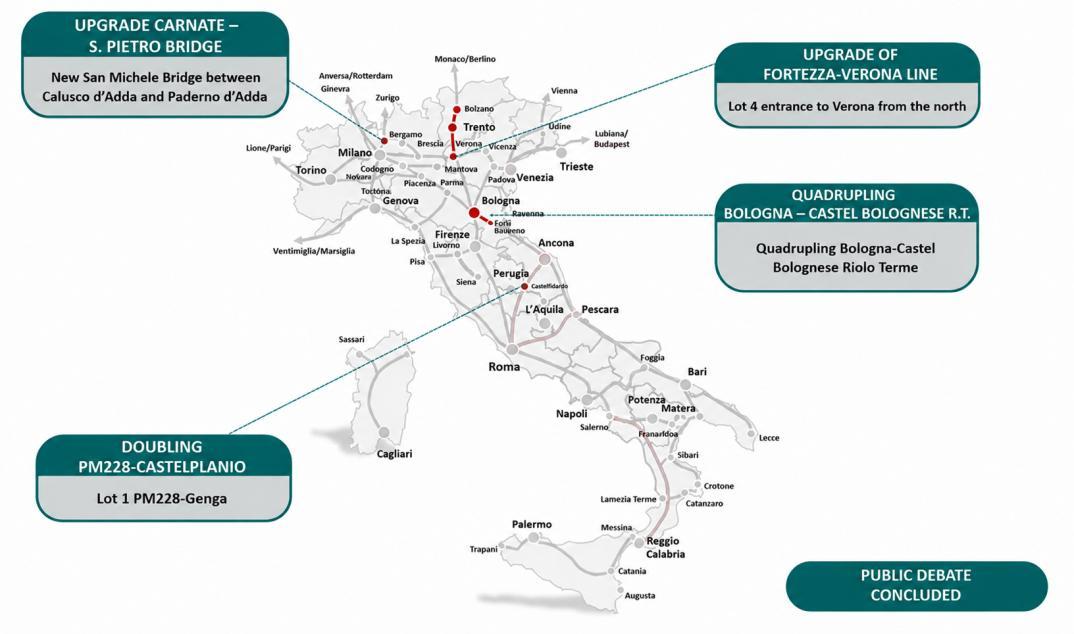
In 2025, as part of the Climate Change Adaptation Plan, RFI further promoted operational synergies with key institutional stakeholders on adaptation issues.
In particular, RFI continued its efforts to develop and support Memoranda of Understanding with the District Basin Authorities, resulting in signing agreements with six of the seven Basin Authorities, aimed at addressing the issues of hydrogeological instability and water resource protection in an integrated manner. These memoranda are geared towards integrating the safety requirements of infrastructure assets with the district planning tools, and the national programmes on hydrogeological instability, as well as identifying shared, useful and effective methodologies at national level for strengthening climate change adaptation strategies.
During 2025, RFI also launched, at an organisational level, the first operational meetings with the signatory Basin Authorities, aimed at consolidating and implementing the activities set out in the memoranda they had signed. Finally, as part of the FS Group’s “CantieriParlanti” initiative, RFI is implementing the roll-out of the Info Point network. These are “physical” and “virtual” information hubs through which it is possible to share with stakeholders – including via innovative and technological platforms – an integrated overview of the works that are currently in the process of being designed or constructed, the benefits of the transformation brought about in local areas by infrastructure projects, and regular updates on the progress of the works.
By 2025, Infopoints were operational in Brescia, Florence, Trento, Verona and Genoa, which had been opened between 2022 and 2024.
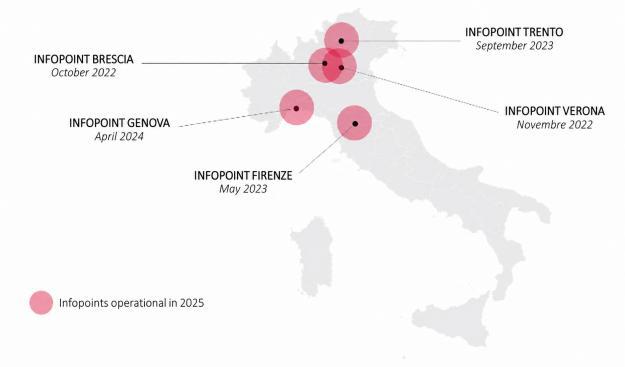
With respect to what was reported in the 2024 Annual Report on the subject of NRRP, it should be noted that, on 17 June 2025, the proposed revision of the Plan for Measure 3, Component 1 was approved by a Decision of the European Council.
This revision is permitted under Regulation (EU) 2021/241, and the Guidance on Recovery and Resilience Plans adopted by the European Commission (C/2024/4618).
The revision became necessary in view of certain difficulties in the implementation of the NRRP linked to objective circumstances (such as rising prices, insufficient demand, or shortages of raw materials and factors of production, difficulties arising from unforeseen geological events, or attributable to the water and energy crises), as well as in relation to the need to correct certain clerical errors.
The main features of the proposal are set out below:
o re-inclusion within the scope of the NRRP of projects co-financed by the ERDF under the 2014–2020 Network National Operational Programme (NOP) for Infrastructure & Networks;
o extension of the application of the physical KPI relating to the completion of works from functional lots to parts of work;
o quantification of the Recovery and Resilience Facility (RRF) allocation, taking into account the coverage of all costs incurred during the eligible period, even if not directly attributable to the achievement of the physical target, but nevertheless relating to the relevant functional lot;
o removal of certain projects from the NRRP funding scope due to difficulties in achieving the targets.
In summary, the proposed revision entails changes to the financial allocation for interventions contributing to the implementation of investments, in order to ensure the achievement of the set targets, and to maximise the related spending objectives, thereby allowing for the confirmation of the total amount allocated to RFI in terms of Recovery and Resilience Facility resources - both for the portion allocated to ongoing projects and for new projects - without the need to identify additional state funding as a result of the restructuring process.
The new allocation of RRF resources, determined according to the criteria outlined above, makes it possible to maintain, overall, the amounts of RRF resources allocated to Measure 3, Component 1; the new allocation of RRF resources does therefore not place any additional burden on the national public finances.
On 6 October 2025, the MEF Decree of 9 September 2025 was published in the Italian Official Journal no. 232, concerning the update of the financial resources allocated for the implementation of the NRRP measures.
On 27 November, an ECOFIN Council Implementing Decision was adopted to approve simplifying the final targets for June 2026, which essentially combines the Targets set out in the original measures 1.5, 1.6, 1.7 and 1.9 into a new measure on “Investment1.10 –Strengtheningmetropolitannodesandinter-regionalandregionalrailway lines”.
A summary of the status of implementation of the main projects included within the scope of the revised NRRP is set out below:
Measure1.1:High-speedrailwayconnectionstotheSouthforpassengersandfreight
The final June 2026 Target involves the construction of 114 km, comprising:
a) 41 km to be completed by December 2025 as an interim target, relating to the high-speed passenger and freight railway on the Naples–Bari and Palermo–Catania lines, and, specifically, the Naples–Cancello, Cancello–Frasso and Bicocca–Catenanuova lots. Works were completed in December, thereby meeting the NRRP target;
b) 30 km of the Naples–Bari line, relating to the Frasso–Telese and Telese–Vitulano routes (functional lots), which are ready for the authorisation and operational phases;
c) 43 km of high-speed railway works on the Naples–Bari, Palermo–Catania and Salerno–Reggio Calabria lines, relating to the Apice–Hirpinia, Lot 4b Dittaino–Enna, Giampilieri–Fiumefreddo and Ogliastrillo–Castelbuono routes, and the priority Battipaglia–Romagnano lot (works reorganised by parts of work).
The projects described above are all at an advanced stage of implementation.
The final June 2026 Target is 158 km of high-speed rail lines for passengers and freight on the Brescia–Verona–Vicenza–Padua and Liguria–Alps routes, of which:
a) 109 km relating to the lots ready for the authorisation and operational phases: Brescia–Verona and Verona–Bivio Vicenza – currently under construction –, and the Genoa Hub (functional lots). As part of the works at the Genoa Hub, the quadrupling of the Genoa Voltri–Sampierdarena line was activated in 2025;
b) 49.6 km of railway works reorganised by parts of work on the Liguria–Alps line, relating to the following projects:
(i) Third Giovi Pass – for which the doubling of the section between Rivalta Scrivia and Tortona was activated in 2024;
(ii) Upgrading of the Milan–Pavia line (Phase 1), for which Amending Supplementary Deed was signed with the Contractor providing for a rephasing of work; at the same time, the Executive Design was finalised, and the works were taken over for Part A (July 2024), Part B (October 2024), and Part C (April 2025);
(iii) Upgrading of the Gallarate–Rho line, in relation to which it should be noted that, by a Judgement of 19 May 2025, the Council of State definitively granted on the merits the appeal lodged by RFI against the judgement of the Lombardy Regional Administrative Court, which had led to the suspension of the works. The works were taken over for Part A (August 2024) and for Part B (December 2024).
The projects described above are all at a stage of implementation.
Measure1.3:Diagonalconnections
The final June 2026 Target is 15 km, and its achievement will be contributed to by the Genga-Serra S. Quirico, and PM228-Albacina lots on the Orte-Falconara line, odd-numbered interconnection with Lot 1a BattipagliaRomagnano, and the Grassano-Bernalda priority lot on the Battipaglia–Potenza–Metaponto–Taranto line (Works rearranged by parts of work).
On the Orte–Falconara section, with regard to PM228 – Castelplanio, Genga San Quirico, the design of Part B was completed on 7 March 2025, and the relevant takeover of the works took place on 22 March 2025; whilst, in relation to the Doubling PM 228 – Albacina project, the takeover of works for part A took place in April 2025 and that for Part B in August 2025.
With regard to the Battipaglia–Potenza–Metaponto–Taranto line, works for the priority lot Grassano-Bernalda were taken over in April 2025. With regard to the interconnection between the new HS SA-RC line, and the existing Battipaglia-Potenza line, the intervention has been implemented, together with Lot 1a BattipagliaRomagnano line.
The projects described above are all at a stage of implementation.
Measure1.4:IntroducingtheEuropeanRailTrafficManagementSystem(ERTMS)
The interim Target of 1,400 km was attested to by RFI, as planned, on 17 June 2025. The final target of 2,785 km is scheduled for June 2026.
All basic design work has been completed, and the 132 application contracts for execution (either total or partial) relating to design, construction, and advance material supply have been signed.
The projects are at a stage of implementation.
Measure1.5:Upgradingmetropolitannodesandkeynationallinks
The original targets have been confirmed: the interim target of 700 km, achieved on 13 December 2024, and the final target, to be achieved in June 2026, for 1,280 km of upgraded lines, which has been incorporated into the Measure1.10-Strengtheningmetropolitannodesandinter-regionalandregionalrailwaylines.
The interventions on upgrading the infrastructure and technology of the metropolitan nodes and main lines are all in the process of being implemented.
Measure1.6:Strengtheningregionallines
The final Target is a total of 646 km – of which 15 km are RFI investments – by June 2026, and has been incorporated into that of Measure 1.10 - Strengthening metropolitan nodes and inter-regional and regional railwaylines.
The interventions under the responsibility of RFI (Bari–Bitritto Line: infrastructure upgrading; Rosarno–S. Ferdinando Line: Alignment of the Rosarno and San Ferdinando facilities with the General Zoning Plan (PRG)) included in the measure are currently underway.
The measure has two targets, the intermediate Target of 172 km attested in December 2023, and the final Target of June 2026 is 1,162 km of upgrade and resilience improvement interventions in the South, and has been incorporated into the investment under Measure1.10 -Strengtheningmetropolitannodesandinter-regionaland regionalrailwaylines.
The final Target by June 2026, amounting to 1,162 km, comprises:
a) 172 km of the intermediate target referred to above, consisting of works aimed at increasing the resilience of the railways in the South;
b) 450.3 km of interventions organised into functional lots, ready for the authorisation and operational phases;
c) 11.7 km of railway works organised into parts of work, both relating to modernisation and electrification interventions;
d) 528 km of interventions aimed at increasing resilience, ready for the authorisation and operational phases.
The interventions that will contribute to achieving the target are in the process of being implemented.
The final Target is 38 completed stations, including in "partial" areas of intervention by June 2026.
As at 31 December 2024, the intermediate Target had been achieved with the completion of the rehabilitation of 10 stations for the parts financed from NRRP funds.
As at 31 December 2025, works were being implemented on the remaining 28 stations: Brindisi, Villa San Giovanni, Bari Centrale, Benevento, Caserta, Lecce, Taranto, Messina, Acquaviva delle Fonti, Acireale, Crotone, Giulianova, Isernia, Marsala, Monopoli (preparatory phase), Napoli Centrale, Nocera Superiore, Pescara, Potenza Centrale, Potenza Superiore, Rosarno, Reggio di Calabria Lido (preparatory phase), Sarno, Siracusa, Teramo, Torre del Greco, Napoli L2, and Trinitapoli-S. Ferdinando di Puglia.
Measure1.9Inter-regionalconnections
The final Target of 221 km in total by June 2026 has been incorporated into that of Measure1.10-Strengthening metropolitannodesandinter-regionalandregionalrailwaylines.
To date, 92 km of inter-regional connections have been completed and made faster, broken down as follows:
- 59 km relating to the Pavia–Voghera section as part of the upgrade and enhancement of the Milan–Genoa line;
- 33 km relating to the Tito–Romagnano section as part of the upgrade and enhancement of the Battipaglia–Potenza line.
The interventions that will contribute to achieving the target are in the process of being implemented.
Measure1.10-Strengtheningmetropolitannodesandregionalrailwaylines
The projects covered by this measure are those described above, which were originally included in measures 1.5, 1.6, 1.7 and 1.9.
The final Target is to complete the rehabilitation of at least 3,309 km of regional and local railway lines, of which 1,280 km are from the former measure 1.5, 646 km from the former measure 1.6 (of which 15 km are RFI investments), 1,162 km relating to the former measure 1.7, and 221 km from the former measure 1.9.
The DNSH (Do No Significant Harm) compliance audit is envisaged for all the interventions in line with European directives.
In 2025, the Company’s infrastructural investments totalled €11,294 million, up by €1,664 million (roughly 17%) on the previous year.
Total investments of approximately €7,410 million were allocated to large-scale infrastructural projects, and roughly €3,884 million to the work to maintain the efficiency of infrastructure, including €977 million for technology-related projects.
Progressofinvestments2025 (€mil.)


During 2025, work continued on the completion and commissioning of planned investments aimed at upgrading and modernising the national railway infrastructure.
In particular, among the most significant projects completed, mention may be made of the commissioning of the Train Speed Control System (TSCS) at Modica, and on the Mortara–Cava Carbonara and Bra–Cavallermaggiore sections, the activation of the double track north of Ortona, and the Pistoia–Montecatini section. At Venezia Mestre Olimpia, a new service facility was brought into operation, and electrification works were completed on the Treviso–Montebelluna–Belluno line. Furthermore, a diversion was introduced on the Rome Tiburtina–Rome Casilina and Rome Tiburtina–Rome Ostiense lines. On the Nichelino–Candiolo section, a new level crossing came into operation, whilst the Crossover Point and the Command and Control system were activated at Aupa. The Picerno station facilities were also commissioned, and the S. Oreste electrical substation is now operational as part of the upgrading of the Rome–Florence “Direttissima” direct line. At Canicattì, both the Computerised interlocking system (CIS), and the Axle Counter Device were put into operation, whilst on the Mesagne–Latiano–Oria section, the Central Computerised Multi-station System (CCMS) and the Multi-station Peripheral Position (MPP) systems are now operational. The Computerised interlocking system (CIS) was also implemented at Paola and, finally, the Train Speed Control System (TSCS) came into service on the Siena–Buonconvento section.
Fifty-nine level crossings were closed to traffic.
In March, the Technical and Economic Feasibility Project (TEFP) was submitted for the Bolzano Ring Road, and work commenced on the TEFP for the New Medio Etruria HS Rail Station and the Rovereto Ring Road.
In April, the Final design work began on the new Airport stop as part of the Bari Nord Hub, and on the railway works connecting to the Calabrian side of the Strait Bridge; finally, the Feasibility Document on Design Alternatives (FDDA) was completed for the new Passo Corese–Rieti line.
In July, work was completed on the TEFP for the authorisation process for the doubling of the S. Zeno–Ghedi section, and the General Zoning Plan (PRG) for Montirone and Ghedi.
In August, the TEFP for Lots 3 and 4 was completed as part of the Rome–Pescara intervention, and work commenced on the Final Design for the railway works connecting to the Strait Bridge on the Sicilian side.
In September, the Final Design was completed for the new Airport stop as part of the Bari Nord Hub.
In October, work commenced on the TEFP for the new Castellucchio Service Area as part of the Piadena–Mantua track-doubling project, and the Savona Parco Doria–Savona Marittima connection.
In November, work commenced on the TEFP+ for the Dora and Zappata Stops.
In December, work was completed on the Final Design for the Quadrupling of the eastern exit from Brescia as part of the MI-VR HS/HC Line: Brescia–Verona section; finally, work was completed on the TEFP+ for the modification of the power supply to Ventimiglia station.
Stations have historically evolved in line with mobility trends and changes in their surrounding environment. RFI has worked for years to develop a new concept of a station for its more than two thousand stations as an intermodalhub and focus point for sustainable cities. This vision puts people's needs at the center, reorganizing outdoor spaces, expanding pedestrian-friendly surfaces, removing fixed obstacles, making routes more fluid, rationalizing the positioning of feeding services according to a priority approach aimed at making door-to-door travel efficient while minimizing the use of private cars.
The goal is to make stations - both indoor and outdoor - more friendly, safe, and pleasant by increasing the level of connectivity with local public transport, sharing mobility, and bicycle and pedestrian mobility, improving accessibility through inclusive and barrier-free design, and enhancing infomobility and wayfinding. The station thus reinforces its role as a hybrid entity. On the one hand, it is the beating heart of the smart city, an integral part of the urban layout, a driving force behind the regeneration of derelict, marginalised or unattractive areas, and a magnet for innovation; on the other, it is at the forefront of an integrated mobility project, with spaces and services designed to ensure that transfers between different modes of transport are quicker, easier, more intuitive and smoother.
The implementation of this project requires some actions by RFI, as well as RFI's ongoing interaction with Ministries, Regional Governments, and Metropolitan Cities, and Municipal Governments so that national and local planning - particularly PUMS, the Urban Plans for Sustainable Mobility - facilitates the transformation of stations into drivers of the redevelopment of disused, marginal or unattractive areas, and into privileged places of new mobility.
In the area of investment, the Integrated Stations Plan (ISP) has been structured, which is a plan that concerns the redevelopment of more than 600 stations throughout the country; among them are the larger ones where about 90% of users move, but also medium/small-sized stations of particular relevance in relation to the multiple requests expressed by the community, and institutional stakeholders.
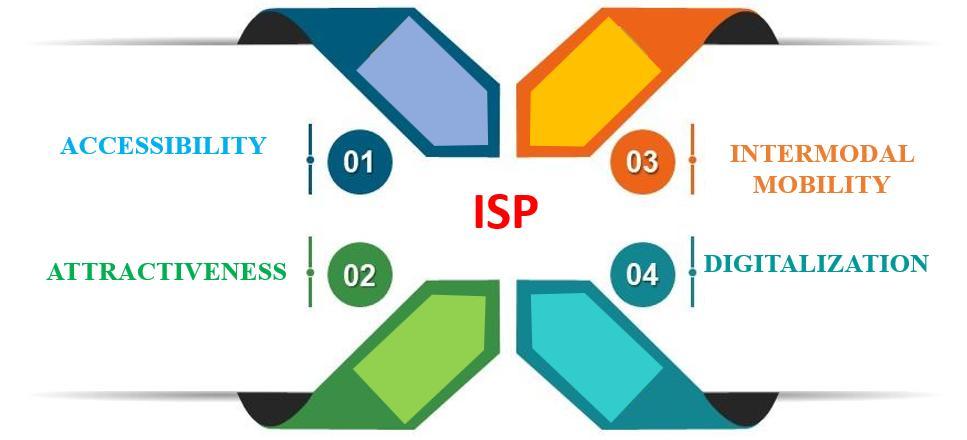
In addition to the ISP, the Hub and metropolitan lines cluster also forms an integral part of the Station Investment Plan, whose programme is aimed at the development and/or the rehabilitation, accessibility and energy efficiency of important stations on the territory, and railway nodes that perform the function of mobility Hub, as well as the construction of new points of access to the network (new stations/stops); the planned interventions are key and functional to improve accessibility to rail transport and with positive repercussions on the territory, often integrated in a broader context of urban regeneration and mobility system.
Interventions in 2025 involving the following main areas: regeneration of the passenger building, outdoor areas, and improving accessibility were carried out on more than 50 stations, and work was completed on the designs on technical-economic and/or final and executive feasibility at more than 120 stations.
In addition, the following were carried out:
o transport studies that involved the analysis of the accessibility of approximately 55 stations;
o transport accessibility analyses of entire railway lines, preliminary evaluations of new railway connections and/or upgrades, evaluations of reactivation of railway sections or individual stations involving approximately 50 railway lines and/or stations/stops;
o audits of approximately 30 projects of third-party entities concerning station areas.
During 2025, work continued on the certification activities, which had been started in previous years for the various sustainability protocols applied to the rehabilitation of railway stations (Envision, GBC HB - Historic Building and LEED for Transit Stations), with a view to setting up well-established procedures in design and site operation that aim at higher standards of environmental, social and economic sustainability for RFI's investments. With regard to the “Stations of the Territory” project, started in 2024 on the direct initiative of the FS Italiane Group and RFI S.p.A. and aimed at Municipalities with a population of less than 15,000 inhabitants, with the objective to transform stations into multi-functional centres, making part of the passenger buildings and outdoor areas available to citizens with the inclusion of multi-purpose and public utility services, works were completed in 2025 on three stations forming part of the project.
ERDF resources - 2007-2013 NETWORK AND MOBILITY NATIONAL OPERATIONAL PROGRAMME
The planning is completed and the definitive assignment of the grants is subject to the European Commission’s definitive approval of the Final Execution Report, pending the conclusion of checks on reported expenditure by the other beneficiaries of this Programme
ERDF resources – 2014-2020 INFRASTRUCTURE AND NETWORK NATIONAL OPERATIONAL PROGRAMME
The 2014-2020 Infrastructure and Network National Operational Programme (NOP) was approved with the EU Decision on 29 July 2015.
RFI has received financing for works to complete the previous 2007-2013 programme, and for new projects entirely covered by the current Programme for total costs for which reimbursement can be claimed of roughly €1,490 million, corresponding to a grant of €1,377 million, net of the Funding Gap (the difference between investment cost and discounted net revenue).
The abovementioned amount was the result of a process of renegotiating the operational programme started in 2023, which resulted in an increase in NOP14-20 funding, net of the Funding Gap, equal to about €381 million, of which €120 million related to REACT-EU programme-funded interventions, which aims to repair the social and economic damage caused by the COVID-19 pandemic and prepare for a green, digital and resilient recovery.
In 2017-2024, RFI submitted reimbursement requests for €1,413 million, and the MIT approved an amount of €1,165 million, leading to receipts of €1,078 million, €186 million of which was collected in 2025. The remaining amount will be certified by the MIT and collected by RFI during 2026, net of the expenditure not considered eligible and the expected balance at programme closure in 2026.
In 2025 RFI was assigned resources of €427 million, net of the Funding Gap, for the regions of Campania, Sicily, Calabria and Basilicata for thematic objective 7. During 2025, two events occurred: a decrease of €0.2 million for the Campania Regional Operational Programme (ROP), and a change in funding source from the ROP to DCF AGREEMENTS 14-20, amounting to €22.3 million.
In 2025, claims for reimbursement were submitted for €408 million
The amount financed to date for the 2014-2020 programme is €134 million
During 2025, the projects nearing completion under the aforementioned programme did not generate any receipts, given that the European Agency CINEA’s audits are due to take place during 2026.
The amount financed to date for the 2021-2027 programme is €225.1 million. During 2025, there was the collection of an amount of €9.7 million.
In January 2025, RFI participated in the CEF Transport General Envelope call for tenders by applying for 5 projects as coordinator. All applicant projects received favourable opinions, but those for which the financing agreement was signed were 2, due to limited budget of the European Agency CINEA. The respective Grant Agreements were signed in September and October, allocating an amount of €7.03 million for RFI. Of this, €3.5 million was collected in December 2025 as pre-financing.
RFI conducts all business activities that have an even indirect impact on train traffic safety within the framework of the corporate Safety Management System (SMS). After being authorised by ANSFISA (National railway, road and motorway infrastructure safety Agency) in the Safety Authorisation it issued to RFI in June 2014 pursuant to Legislative Decree no. 162/2007, the SMS is one of the three components of the Integrated Safety Management System (ISMS), which also comprises the Environmental Management System (EMS), and the Occupational Health and Safety Management System (OHSMS), certified under the ISO 9001 standard, and ISO 14001 and OHSAS 18001 standards, respectively. With regard to the activities related to the Integrated Safety Management System (ISMS), there was the confirmation of the certificates ISO 14001 and ISO 45001.
In the period from 9 October 2025 to 24 October 2025, the certification body SGS ICS Italia S.r.l. carried out the surveillance audit of the ISMS certification (issued in July 2024) according to UNI EN ISO 9001:2015, UNI EN ISO 14001:2015, and UNI ISO 45001:2018. This audit was successfully completed on 17 December 2025, and required approximately 25 man/days of ork, involving various head office and local Departments and Production Units.
Safety targets are monitored for the National Railway Infrastructure that RFI operates by using the indicators identified in accordance with current legislation, and the data stored in its specific database (the “Dangers Database”), and in compliance with the international criteria endorsed by the ERA (European Railway Agency)
The main indicators used to monitor safety performance are as follows:
o Common Safety Targets;
o significant accidents (train collisions, train derailments, accidents at level crossings, fires on board rolling stock, injuries to people involving moving rolling stock, except for suicides and attempted suicides, others);
o rate of total accidents for which RFI is responsible;
o significant accidents for which RFI is responsible;
o typical” UIC accidents.
For some of these indicators, the ERA has prepared and assigned CSTs7 at European level and NRVs8 at national level, based on historical data.
The table below compares the National Infrastructure Manager RFI’s cumulative performance in each risk category and for each indicator defined (measured in FWSI 9 related to the “Basis of calculation”) with the CSTs and specific NRVs for Italy.
7 Common Safety Targets.
8 National Reference Values: these are, for each of the CSTs considered at European level, the specific value assigned to the railway system in each Member State.
9 FWSIs - Fatalities and Weighted Serious Injuries
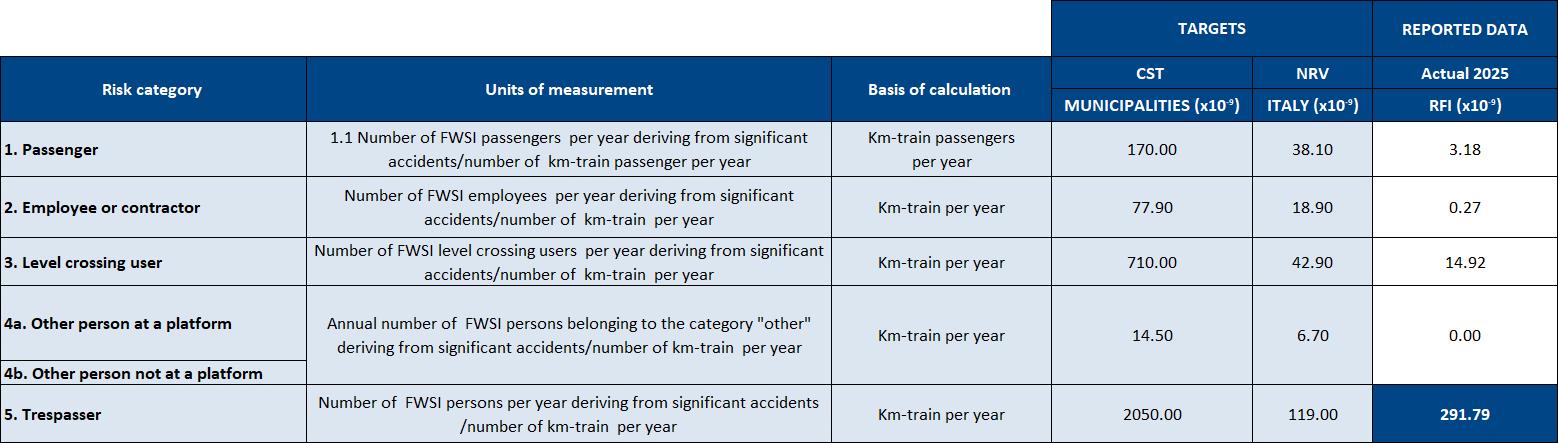
The analysis in the table shows that the only target above the NRV but below the CST was that for people entering or crossing the railway tracks in violation of rules (violation of safety regulations by non-railway system people), being higher than the value in the last year (291.79 compared to 133.86).
In any case, this indicator cannot be considered definitive and could be subject to change based on the findings of the competent Authority in its investigation of suicides/attempted suicides.
Significant accidents10 are particularly important given the gravity of their consequences. In 2025, 165 events were recorded, as shown in the table below.
The increase observed in 2025 in the total number of significant accidents (+66 compared with 2024) was mainly attributable to the rise in the following categories: “Injuries to people involving moving rolling stock” (+61), “Accidents at level crossings” (+5), “Fires on board rolling stock” (+2), and “Train collisions” (+1). There also was a decrease in accidents attributable to “Train derailments” (-3), whilst the figure for “Other” accidents remained stable. As regards the causes of accidents, there was an increase in those due to “External” causes, rising from 85 to 155, compared with a reduction in those associated with “Internal” causes, which fell from 14 to 10.
In addition to being monitored according to the ERA classification, safety performance is also monitored internationally according to the UIC’s criteria, which exclusively consider the effects of the railway service and therefore exclude people being run over, damage to people when they unduly board/deboard moving trains, suicides and attempted suicides.
10 The ERA’s definition of significant accident: any accident involving at least one rail vehicle in motion, resulting in at least one killed or seriously injured person, or in significant damage to stock, tracks, other installations or environment, or extensive disruptions to traffic. Accidents in workshops, warehouses and depots are excluded.
“Typical” accidents according to the UIC are classified as follows: collisions, derailments, fire on rolling stock, accident involving hazardous freight, and accidents at level crossings (collisions against obstacles or vehicles). This type of classification is used to measure the safety of railway systems giving less importance to accidents due to misconduct by external people (violations of Presidential Decree no. 753/80).
To boost train traffic safety, RFI is committed to the ongoing protection, maintenance and upgrade of the infrastructure and its technological equipment, as well as the development of new lines and systems, and finetuning increasingly effective production and operating procedures.
Of the 12 typical accidents that occurred in 2025 during operations, 6 were of an endogenous nature, and 6 of an exogenous nature. An analysis of liability shows that none of the accidents were attributed to RFI.
In May 2025, the Annual Safety Report for 2024 was prepared and submitted, in accordance with ANSF Guidelines no. 5841/2016 of 25 May 2016, and Decree no. 50/2019, for the “Implementation of Directive 2016/798 of the European Parliament and of the Council of 11 May 2016 on railway safety”
The Annual Safety Report was sent to ANSFISA by a memo dated 29 May 2025, and includes:
o data on how internal safety objectives and safety plan results are achieved;
o the calculation of national safety indicators and CSIs;
o the findings of the internal safety audits;
o observations on weaknesses and malfunctioning of railway and infrastructure operations that could be of concern to ANSFISA;
o the data and information that ANSFISA requests on an ongoing or occasional basis;
o the application of the Common Safety Methods.
In 2025, work was completed on the process involving the takeover of the operation of the regional concession rail infrastructure Udine - Cividale, which had been started in 2024 with the request to update the current Safety Authorisation (SA), submitted by RFI by a memo dated 16 December 2024, in accordance with the provisions of the “Guidelines for the issue of safety authorisations and certificates of fitness for operation” issued by ANSFISA.
In a letter dated 1 August 2025, the Agency informed RFI that it had approved the update to the relevant SA (IT2120250001 – expiring on 20 June 2029).
In the second half of 2025, in anticipation of the award of the contract for the operation of the infrastructure built by RFI as part of the project relating to the “Completion of the Palermo Metro Line Infrastructure”, following agreements between RFI and the Municipality of Palermo, the Agency was asked to update the aforementioned Safety Authorisation.
During 2025, work continued on activities for the issue of Emergency and Rescue Plans (ERPs) for tunnels that are more than 1,000 metres long. As at 31 December 2025, 291 of the 358 tunnels concerned were usable. In addition, an audit was carried out to check for compliance of the safety documentation, prepared in accordance with the Ministerial Decree of 28 October 2005, “Safety in railway tunnels”, and, subsequently, with the Ministerial Decree of 4 March 2025, “Approval of guidelines on railway safety – Annex A: Guidelines –Technical specifications for the safety of railway tunnels”, in relation to the following tunnels:
o Monte Aglio of the 1st Functional Lot Cancello - Frasso Telesino of the doubling of the CancelloBenevento section, Naples - Bari route;
o Casalnuovo of the Cancello - Naples Line Variant, Naples - Bari route;
o Telese, Tuoro Sant’Antuono, San Lorenzo and Le Forche in Functional Lot II (Frasso Telesino – Vitulano) of the track-doubling of the Cancello – Benevento section, on the Naples – Bari route;
o Lonato in the Brescia–Verona functional Lot of the Milan–Verona Section of the Turin–Venice HS/HC line;
o Madonna del Frassino in the Brescia–Verona functional Lot of the Milan–Verona Section of the Turin–Venice HS/HC line;
o San Martino Buon Albergo in the Verona–Bivio Vicenza functional Lot of the Milan–Verona Section of the Turin–Venice HS/HC line;
o Crispi/Amari in the first functional Lot for the completion of the Palermo metro line, Giachery–Politeama section;
o Polcevera as part of the infrastructural upgrading of the Genoa Hub.
Seismicvulnerability,hydro-geologicalriskandareassubjecttolandslides
With regard to seismic vulnerability testing on infrastructure works along major railway lines pursuant to article 2.3 of Prime Minister’s Order no. 3274 of 2003, and work to improve the management of seismic risks:
o work was completed on inspections on 171 bridges, in addition to the 2,932 inspected in previous years, and 39 buildings, in addition to the 137 already inspected in previous years;
o general inspections were performed on 171 bridges (451 spans) in accordance with the procedure for “Inspections of bridges, tunnels, and other railway infrastructure works”;
o seismic improvement works were completed on 217 bridges with work underway for another 56 bridges;
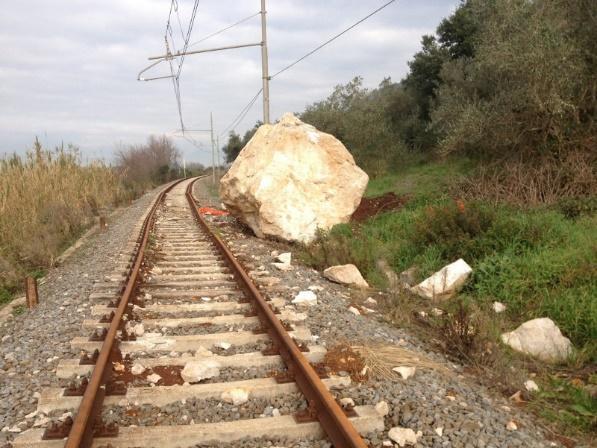
o assessments were carried out on the tunnels within the Naples area affected by bradyseism, which allow for certain train movements in the event of a suspension of services in the Villa Literno–Napoli Gianturco tunnel section following a seismic event caused by bradyseism in the Phlegraean Fields.
In addition to the mapping already carried out for the mitigation of hydro-geological risks and the prioritisation of projects to protect the railway track bed:
o study, monitoring and design activities continued for hydrogeological risk mitigation measures at approximately 50 sites;
o roughly 15 hydrometric monitoring stations were installed at as many railway crossings;
o work is currently underway on the landslide susceptibility map for the lines in the Trieste and Venice areas;
o further 13 rain gauge stations were installed in Sardinia, and work continued on the surveys on other sites with related plant engineering design;
o routine maintenance work continued on the installed monitoring sensors;
o work also continued on the Hydraulic compatibility study.
With regard to the work carried out on the alarm netting for falling rocks, rockfall warning systems are being installed in the areas of Milan and Reggio Calabria.
Finally, construction activities continued for wind barriers in the areas of Bologna and Naples.
In 2025, work commenced on the “analysis and experimental evaluation of the use of non-natural aggregates in the production of concrete” in collaboration with the University of Brescia, with the aim of investigating the use of non-natural aggregates in the production of the various types of concrete specified in RFI’s General Technical Specifications for Civil Engineering Works – Part II – Section 6.
The range of materials that can be used as crushed stone for railway ballast has been extended to include certain specific types of artificial materials, which derive from recycling, and which would otherwise have been sent to landfill, thereby enabling the objectives of “reducing environmental impact” and “safeguarding natural resources” to be achieved, whilst ensuring the same technical performance standards.
With regard to the development activities of the analysis of impacts of weather and climate on the railway infrastructure, work continued on the collaboration in the "Climate Change" working group; specifically:
o there was the enhancement of the oversight process on climate risk, and adaptation measures;
o a working group was formed to draft a methodology for the quantification of climate change adaptation actions in investment projects;
o information and data analysis were provided for the preparation of a natural disaster insurance policy.
They are developed according to the plans set forth with the Government to improve infrastructure performance in terms of safety, speed, capacity, punctuality, the quality of services provided to transport companies and passengers, railway technologies encompass all electromechanical, electronic and automated plants and systems controlled by ground and on-board operators, and help ensure traffic safety throughout the network, while also supporting and increasing the efficiency of all other processes for railway operation, line maintenance, public information, network electrification, and remote monitoring of proprietary assets.
In 2025, work continued on the ERTMS L2/L1 deployment program, launched in 2018 in compliance with Regulation (EU) 2017/6, in overlapping mode with the national train running control system on priority sections of
the four core network corridors (Mediterranean Corridor, Rhine-Alpes Corridor, Scandinavian Mediterranean ERTMS Corridor, and Baltic-Adriatic ERTMS Corridor). This program will connect the cross-border sections with Switzerland, Austria and Slovenia with the main logistics areas in northern Italy. In addition, the connection with France will also be made.
In line with the ERTMS NIP, the complete set of reference specifications for the design, harmonised development, and implementation of the ERTMS/ETCS L2 SST (Ground Subsystem)-SDT (Train Spacing System) Generic Applications was issued for application, in the context of the absence of trackside signalling, and the national protection system.
Work continued on the development and roll-out of the European Rail Traffic Management System (ERTMS), which represents the benchmark standard for the safety and interoperability of trains on the national network. During the year, the technical files essential for the configuration of new trainsets equipped with ERTMS technology were produced and distributed.
In 2025, too, the commitment remained constant in supporting and monitoring the installations relating to the Safety Interventions of the Technological Network Plan, in which reference standards are listed for the design and construction of Technological Systems and Products that are currently available, or that are being built on all lines and Hubs, in order to meet design requirements with respect to Safety, Capacity, Regularity, Faster speeds, Obsolescence, Technological Integration, and Interoperability.
In 2025, the first in-house Specific Application for the Secure Data Transmission (SDT) system was launched, having been entirely designed, tested, developed and validated by RFI staff.
In collaboration with universities and research institutions, RFI is engaged on an ongoing basis in the development of new technologies, as well as the study and definition of new industrial processes. Research and technological development are key to exploring innovative solutions, and long-term scenario analysis. The real challenge is to grasp the trend in the variables affecting mobility in order to design interventions adapted to long-term transport needs, either by following industry innovations on the global scene, or by finding new solutions applicable to the domestic environment.
During 2025, research activities already launched in previous years continued, such as: the Unmanned Railway Vehicle (URV) project, which aims to develop autonomously driven railway vehicles capable of performing monitoring and surveillance of the infrastructure of HS rail lines; the Automatic Train Operation (ATO) over ETCS project, designed to develop an automatic train speed control system compliant with Shift2Rail specifications, and therefore capable of being scaled up for application to train operations across the network; the Low Power TE project, started in 2024, which aims to monitor, through newly developed, low-power and integrated sensors, the TE line in order to indirectly determine contact wire wear, up-lift value and other useful quantities to diagnose the health of the electrical infrastructure; the Transportable Terrestrial Drone (ROBIN) project, a railway vehicle (a transportable terrestrial drone) capable of performing automatic supervision along specific sections of railway line, under interruption, which, should any anomalies be detected, notifies the escort officer so that they can take immediate action.
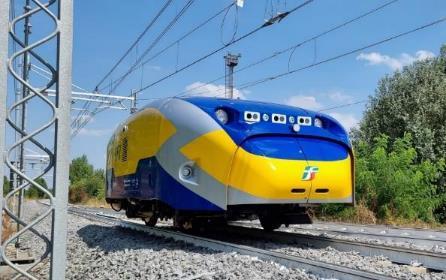
In 2025, the following two new research projects were also launched:
a) Electromagnetic Tube, which aims to establish guidelines for the development of a technological system to be installed on overhead catenary poles, both along the railway line and in stations, capable of detecting unauthorised track encroachment by identifying objects or obstacles on the track bed, and providing diagnostic information on the condition of the infrastructure, thanks to a distributed sensor system (radar, lasers and cameras);
b) ICE-TRACK, which stems from the need to mitigate the peak temperatures reached by rails during the summer months, partly due to climate change, which is leading to a steady rise in average annual temperatures, as well as increasingly drastic temperature fluctuations that can have undesirable effects on rail traffic and safety. The project therefore aims to evaluate the use of phase-change materials and the application of specialised coating materials; furthermore, the possibility of dissipating heat via highthermal-conductivity elements beneath the rails will be assessed. In 2025, preliminary thermal measurements were carried out during the summer months, and subsequently, work began on designing a preliminary thermal model to determine the thermal balance of the rail.
In 2025, spending for investments in innovation was equal to approximately €14.1 million. The table below shows the amount of spending broken down by the main operating segments:
Spending for technological developments varies over time due to the very nature of the interventions, which may enter production, or because additional pilots are carried out for a limited number of locations/categories/systems.
In 2025, work continued on development projects launched in previous years, including:
o “Research and Development technology demonstrators", with the aim of creating a centre of excellence where RFI's expertise is concentrated in all technological areas relating to railway signalling and telecommunications;
o "Hardware and Software Platform Development", which involves the development of RFI's hardware and software platforms, and work on information systems to support analytical services for traffic;
o structural monitoring systems on railway bridges and viaducts; in 2025, a call for tenders was issued for the installation of 150 spans of priority bridge structures;
o IT platform I.O.D.A. (Artwork Inspection) for the management, storage and visualization of data acquired during inspections on works of art belonging to the railway network, including with the help of Remotely Piloted Aerial Systems (RPAS - drones);
o assembly and construction of the first Multi-function Diagnostic Train (“Prototype”) equipped with mobile diagnostic systems for detecting defects in tunnels, with a view to bringing the activity in-house;
o development activities related to crosswind effects, extended to all types of interoperable trains, to determine the effects of crosswinds on newly-constructed HS/HC lines; monitoring of the track bed at the Petacciato site through the setup of a test site with fiber-optic sensors installed on the rail.
General information
As national railway infrastructure manager pursuant to Legislative decree no. 112/2015, RFI operates on a market that consists of Railway Undertakings (RUs) and applicants. The latter, in addition to the railway undertakings, Regions and autonomous provinces, also include “the competent authorities under the European Parliament and Council regulation no. 1370/2007, loaders, shipment agents and combined transport operators, with a public service or business interest in acquiring infrastructure capacity for the purposes of providing railway transport services (article 3 of Legislative decree no. 112/2015).” The contract concerns, in the case of the former, standard hours and services - Infrastructure use contract with a term not exceeding the validity of a schedule, and in the case of the latter, the infrastructure’s capacity in general terms or overall volumes, rather than in detail - Long-term Framework Agreement.
Infrastructure use contracts
In 2025, the market consisted of 41 RUs (40 from 14 December 2025) with operational railway licences issued by the MIT, and 50 infrastructure use contracts (49 as from 14 December 2025) were signed, broken down as follows:

23
2
25 for freight traffic for technical runs used to test rolling stock
Network Statement (NS)
In the first half of 2025, there was the publication of an extraordinary update to the NRI’s 2026 NS (February 2025 edition), and an extraordinary update of the NRI’s 2025 NS (February 2025 edition).
The publication of the “2026 NS – February 2025 edition” follows the provisions set forth by the Transport Regulatory Authority (ART) in Decision no. 178/2024 of 6 December 2024, containing “Guidelines and requirements for the “2026 Network Statement” submitted by the national railway network manager, R.F.I. S.p.A.,aswellasthosepertainingtothe“2025NetworkStatement”, and the observations reported by the ART in a memo dated 14 January 2025, regarding Chapter 5, “ServicesandFares.”
Compared to the “2026 NS – December 2024 edition”, the Infrastructure Manager (IM) has provided for: for passenger traffic (22 as from 14 December 2025)
o the inclusion of an Appendix to Chapter 1, which describes concrete examples related to the concepts of mission, interval-service timetable, time channel, and equivalent paths, aimed at clarifying the IM’s intent, and the corresponding applications of the definitions in the various phases of the infrastructure capacity allocation processes;
o the inclusion of Appendix 2 to Chapter 4, containing concrete examples of the application of the priority criteria set forth in the NS within the capacity allocation processes;
o correction of inaccuracies/typos and certain amendments to Chapter 5 in relation to the changes introduced following the approval of the Tariff Proposal, which took place via ART Decision no. 165/2024.
The publication of the “2025 NS – February 2025 edition” was ordered by the IM in order to correct some typographical errors.
Furthermore, during the reporting period, and precisely on 30 June 2025, RFI published, in accordance with the provisions of Article 14 of Legislative Decree 112/2015, on its website:
a) the first draft of the 2027 NS relating to the National Railway Infrastructure (NRI), and the related accompanying report;
b) the first draft of the 2027 NS relating to the Piedmont Regional Railway Infrastructure (IFRP), and the related accompanying report;
c) the first draft of the 2027 NS relating to the Umbrian Regional Railway Infrastructure (IFRU), and the related accompanying report.
The main changes introduced in the aforementioned documents relate to updates to the rates for services included in the perimeter of the Minimum Access Package (MAP), and for non-MAP services, pursuant to ART Decisions no. 95/2023 and no. 51/2024, as well as to updates to the rules concerning ERTMS implementation. In addition to the above, in general, the necessary changes and additions have been made to align the IFRP NS and the IFRU NS with the NRI NS.
During the second half of 2025, the following were published:
a) an extraordinary update of the IFRP 2026 NS (July 2025 edition);
b) an extraordinary update of the IFRU 2026 NS (July 2025 edition);
c) an ordinary update of NRI 2027 NS (December 2025 edition);
d) an extraordinary update of NRI 2026 NS (December 2025 edition);
e) an ordinary update of IFRP 2027 NS (December 2025 edition);
f) an ordinary update of IFRU 2027 NS (December 2025 edition);
g) an ordinary update of 2027 NS of the Friulian Regional Railway Infrastructure (IFRF) (December 2025 edition).
The following is intended to give precise evidence, albeit in summary form, of the services provided by the infrastructure manager, broken down as per Article 13 of Legislative Decree no. 112/2015 while living indications of the economic performance for the year 2025 compared to the previous year.
Minimum access package (MAP)

Right to use assigned capacity, use of the railway infrastructure, and control and regulation of train traffic. Provision of all necessary information to deliver or operate the service for capacity granted. Use of the electrical system for train traction

Sea rail link to/from Sicilia and Sardinia
A sea rail link to/from Sicily (Villa S. Giovanni - Messina) and Sardinia (Villa S. Giovanni/Messina - Golfo Aranci) is made available to the RUs.

Infrastructure connecting to the service facilities
Ensuring RUs the right to use the railway infrastructure to access the connected facilities owned by entities other than RFI.
New clearance service
Infrastructure clearance service directly operated by RFI on the Palermo–Reggio Calabria line (pilot program to start in November 2025).
Revenue from fees arising from traffic volumes in 2025 showed a slight increase on the previous year, which was attributable to the tariff increase brought about by the ISTAT (National Statistics Institute) revaluation of 2.1%, with a positive impact on tariffs.
Revenue from sea rail link showed an increase compared to the previous year.
Facilities with guaranteed access and related services

Passenger stations, with respect to facilities for travel information systems, adequate spaces for ticketing, and other facilities that are functional and necessary for railway operations
Station spaces related to self-service ticketing kiosks (BSS), mobile information desks, non-self-service ticketing kiosks, reception and assistance services, ticket machines, and premises and technical areas functional to the aforementioned spaces are made available to RUs.

Freight terminals li merci
Accessing and making terminals intended for cargo loading and unloading available to RUs, for nonexclusive use, for which RUs may use the Facility Operators working at the terminal.

Train unmarshalling and marshalling areas, including shunting areas
Accessing and making areas intended for marshalling and unmarshalling trains (rolling stock), by using at least two tracks, available to RUs, for non-exclusive use.

Areas, facilities and buildings for parking, shelter and storage of rolling stock and freight, and areas for fuel supply
Tracks are made available for non-exclusive use by RUs, and with no obligation on RFI to store rolling stock, for a period of time equal to or exceeding 1 hour, for RUs operating passenger services, and 2 hours for RUs operating freight services.

Maintenance centres, except for heavy maintenance centres reserved for high-speed trains, and other types of rolling stock that require specialist centres
Areas (buildings, and covered and uncovered areas), and related functional equipment therein are made available for non-exclusive use, and without any obligation of custody of equipment owned by RUs.

Washing bays
Secondary track bundles equipped with slab tracks, washing water drainage and purification system, functional for washing rolling stock, are made available for non-exclusive use. The provision of the service assumes the use of stabling tracks; therefore, the RU that uses the washing bay service also uses the stabling service in an indispensable manner.
Infrastructure clearance with equipped rescue wagons, or other suitable/equipped vehicles
Equipped rescue wagons, or other suitable/equipped vehicles are made available in order to clear the railway line in case a train is unable to run.

Wastewater discharge carico reflui
The undertakings operating in rail passenger transport services are provided with:
o specific functional areas for the installation by the Company of tanks for the storage of sewage to be collected from the trains by means of trolleys equipped with special tanks for emptying train tanks;
o specific tracks where there is a drainage system directly connected to the sewage system, where the Railway Undertakings may carry out drainage operations, without resorting to specific equipment.
In 2025, revenue showed an increase for all these services, mainly attributable to:
o freight terminals;
o train marshalling and unmarshalling areas, including shunting areas;
o areas, facilities, and buildings used for the parking, sheltering, and storage of rolling stock and freight, as well as areas for fuelling;
o washing bays;
o wastewater discharge areas.
For these services, in compliance with Decision no. 38/2024 of the Transport Authority, the year 2025 saw tariff increases of 50% compared to the rates set forth in the tariff proposal submitted in February 2024, leading to an increase in revenues.
For the freight terminal service, there was an increase in volumes compared to 2024, primarily linked to the “Freight terminal project”, which generated revenues attributable to previous financial years as well.
Revenue for the wastewater discharge areas service also increased due to the delivery of new areas.
For the Maintenance Centre service, however, revenues showed a reduction in 2025 compared to 2024 due to the limited operating hours of the Milan Porta Garibaldi facility, and the failure to secure a contract for the Fiorentina facility in Piombino.

Pre-heating, air-conditioning, and use of REC power for maintenance and cleaning of passenger trains
Power for on-board equipment, through an Electric Wagon Heating (REC) column, to be used for climatic treatment of the material, the performance of maintenance operations that can be carried out on stationary tracks, and internal cleaning of the material.

Water supply
Fixed installations, and functional water supply to feed on-board water systems of rolling stock are made available to RUs, for non-exclusive use.

Traffic control for trains transporting freight classified as hazardous
RFI’s monitoring of the movement of trains transporting freight classified as hazardous in the PIC WEB computer system, and coordination and implementation of such contingency plans as may be necessary, even at the request of the RU.

Traffic assistance with special trains
o Preparation of the routing schedule of trains carrying exceptional freight, and issuance of authorization for the movement of such freight;
o Monitoring the movement of the freight, as well as, where required, technical escort of the trainset with RFI staff;
o Operations, if necessary, to adapt the infrastructure to allow the circulation of the special train

Shunting service
Shunting service is provided by RFI at the Villa S. Giovanni and Messina facilities.

Assistance to people with disabilities and reduced mobility (PRM)
Reception, assistance, and boarding on the train at the departure station; disembarking, and assistance in reaching the exit, or another train at the arrival station, including by providing wheelchairs for the transfer of persons with disabilities and those with Reduced Mobility, as provided for in Regulation (EU) 2021/782.

Power for on-board systems, via pantograph slides, for a period of time of 1.5 hours or more, with the activation of the "parking" mode.

A train access gate is made available, for exclusive use, which is additional to the gates used for ordinary security checks, with dedicated staff and utilities functional to the delivery of the service.

Supply of electrical energy for traction
Supply of electricity for traction of rolling stock, both on 25kV and 3kV powered grids.
The most significant change in revenue from complementary services was attributable to the service for Traction Current Supply, which recorded a decrease linked to trends in the average market price of energy, particularly on the traditional 3 kV line.
Revenue from electric parking service, on the other hand, remained virtually unchanged, as the decrease in electricity rates was offset by higher volumes.
Revenue from the Assistance Service for People with Reduced Mobility increased compared to the previous year. Revenue from other Complementary Services for the reporting period showed a net decrease attributable to the combined effect of a decline in the Special Train Assistance service, partially offset by higher revenues from the Water Supply and Dangerous Goods services.

Provision of complementary information
Loudspeaker announcements, visual messages, and traveller alerts, and supply of Utilities for the use of information systems made available to RFI.

Access to the GSM-R telecommunications network for ground/train service links
Access to the functional radio network for phonics and data communication in support of railway operations, and work of maintenance, operation, at freight yards and terminals and stations, command and control of train operations, and control and diagnostic supervision of railway equipment.
Revenue from auxiliary services recorded an increase from the previous year, mainly attributable to the Provision of Information due to increased market demand for information utilities.
Train punctuality is the key indicator of the quality of service provided to Customers by RFI.
Real punctuality was used to measure punctuality performance in 2025, as it measures the performance perceived by Customers directly.
Real (or perceived) punctuality is the ratio of the number of trains that arrived within the punctuality threshold selected and the total number of trains in circulation (where NP is the number of trains that arrived within the threshold, NC is the number of trains in circulation and real punctuality is equal to NP/NC*100).
The punctuality KPIs are defined as the ratio of trains that arrived within the punctuality threshold (based on preset parameters) and the total number of trains in circulation for a given segment.
Therefore, the punctuality figure must also be considered in relation to the related traffic volumes: in this regard, it should be noted that, during 2025, there was an increase in traffic volumes for Long-Distance/Universal Service Trains and Regional Transport. In contrast, traffic volumes for Long-Distance/Market and Freight Trains showed a decline, primarily due to reduced capacity resulting from upgrading works related to NRRP projects and nonroutine infrastructure maintenance, as well as an increase in strike notices issued by Trade Unions. RFI sets the punctuality targets at the beginning of each year, pursuing continuous improvement.
The 2025 punctuality KPIs were as follows:
The punctuality figures recorded in 2025 were in line with the company's targets for all business segments.
In being aware of the key role of the rail sector in the pursuit of the UN Agenda 2030 for Sustainable Development Goals (SDGs), and the guidelines outlined by the European Green Deal and the NRRP, RFI is concretely committed to implementing an integrated model of infrastructure development, thus strengthening an increasingly systemic and multidisciplinary approach to support the development of sustainable infrastructurefrom design through to operation - by identifying solutions aimed at achieving specific sustainability goals, and generating value for the country from a long-term perspective.
Infrastructure works are a concrete opportunity to support the sustainable development of local areas and communities concerned, not only in relation to their ability to offer a new scenario of sustainable mobility, but in a broader sense of social cohesion, accessibility, attractiveness of places, reduction of gaps, increase in the quality of life and ecosystem services and, more generally, of economic, social, cultural and tourist growth attentive to the environmental and landscape context.
RFI aims to be an active part of the ongoing transition to a model of sustainable development consistent with European and national guidelines through the definition of sustainability policies and strategies, in line with the guidelines defined by the Parent Company, and the development of actual operational synergies with key Stakeholders for the pursuit of common objectives for the country's growth.
The dimensions, and areas of activity in which RFI operates, with the entire FS Group, are closely related to needs that drive many of the 17 SDGs of the United Nations 2030 Agenda, including: the right to mobility of people, the livability of cities for the improvement of the quality of life, the creation of new connections, and the
optimization of logistics to support production, the raising of accessibility and connection of territories to overcome inequalities, the reduction of climate-altering emissions, and the fight against climate change.
As part of the update to the 2026–2030 Business Plan, in 2025 the Parent Company launched the process of defining the 2026–2030 Sustainability Plan, identifying the Strategic Sustainability Guidelines that reinforce the Group’s ambitions regarding adaptation to climate change, climate change mitigation, promoting the efficient use of natural resources with a focus on circularity, conserving and enhancing biodiversity and ecosystems, developing and enhancing local areas and communities, supply chain sustainability, and training and digitisation for safety and security.
In particular, RFI actively contributes to all the goals and targets of the Group’s Sustainability Plan, including through the involvement of the entire value chain, and its strategic vision of Sustainability is vertically implemented in business processes, including through the definition of specific initiatives that promote the development of an increasingly efficient, resilient, interconnected and inclusive infrastructure system, which integrates new modes of transport, the implementation of a safety culture, the rehabilitation and regeneration of stations and urban spaces, and the enhancement of the landscape and historical-cultural heritage through the reuse of decommissioned lines, and the reactivation of lines for tourist use.
Finally, the Company recognizes the importance of stakeholder engagement in the development of sustainable infrastructures, promoting moments of institutional dialogue but also specific initiatives of listening, involvement, shared planning, and development of operational synergies. For more details on this area, please refer to the paragraph on “Stakeholder Relations. ”
In order to improve the sustainability profile of the Company and of its value chain, RFI is committed to gradually refine its ESG governance models and tools, following an iterative programme that aims to increase the integration and measurability of sustainability in all its business processes. The purpose is to ensure, in line with the Group's vision, the definition of sustainability policies and strategies, and the governance of related planning, implementation, monitoring and reporting processes aimed at achieving the sustainability objectives of RFI and the FS Group, which are defined by taking into account national and European targets and stakeholder expectations.
To this end, during 2025, some of the main activities developed in RFI involved:
• the implementation of the Climate Change Adaptation Plan (CCAP), drafted the previous year, through the launch of the Implementation Plans that comprise it, with the consequent development of the measures and actions outlined therein, which form the operational backbone of each implementation plan. In particular, we continued the analysis and development of actions related to the “Climate Proofing” design of railway infrastructure, initiating measures aimed at gradually improving and integrating climate vulnerability assessments into design processes. At the same time, we launched engagement and dialogue with institutional stakeholders who contribute, in various capacities, to climate change adaptation processes;
• the evolution of the sustainability strategy as part of the 2026-2030 Business Plan;
• the continuation of efforts to align accountability processes with European reporting standards (European Sustainability Reporting Standards ESRS), which will inform the FS Group’s Integrated Report at the consolidated level;
• the corporate contribution to the Parent Company for the issuance of green bonds for rail projects;
• the adoption, as part of the 2025 incentive policy, of a common goal for the entire population involved in the Management By Objective (MbO) process, which measures, through a specific indicator, the Group's commitment to combating climate change.
In addition, with the 2025 update of the 2022-2026 Programme Contract - Services and Investments - by virtue of the collaboration with MIT and MEF for the definition of sustainable infrastructures, which was started as part of the common commitment to the NRRP - the value of sustainability structurally connected to the investments envisaged by the two Contracts was highlighted, during the current year too, with the special Appendix 11 “MITRFI Programme Contracts and Sustainable Development.” In line with the new approach that sees the infrastructure system as a pivotal element in the promotion of an inclusive, resilient and sustainable development model capable of making a substantial contribution to the Sustainable Development Goals (SDGs) of the UN 2030 Agenda, Appendix 11 shows for all types of investment the SDGs to which each of them makes a contribution, as well as any related quantitative targets.
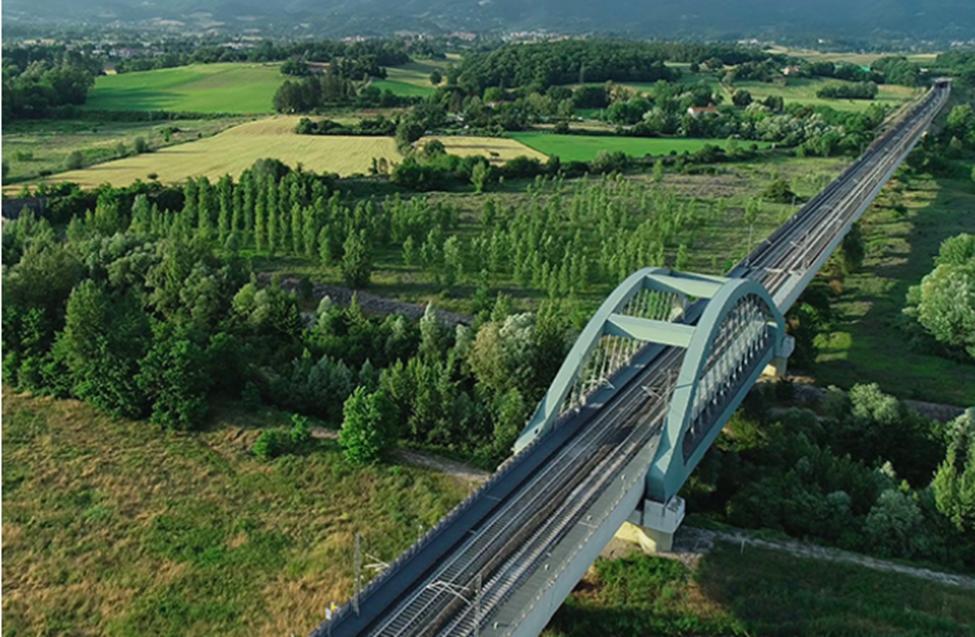
As part of the numerous commitments related to the application of Regulation (EU) 2020/852 and related delegated acts (“EU Taxonomy”), RFI has pursued – including for the purpose of the reporting requirements under the aforementioned CSRD - the reclassification of RFI's economic activities, identifying environmentally sustainable activities and the related shares of turnover (Turnover), operating costs (OpEx) and capital expenditure (CapEx) realized in 2025.
The Taxonomy provides for the conditions that an economic activity must meet in order to be considered environmentally sustainable. Specifically, the Regulations define environmentally sustainable activities as those that contribute substantially to at least one of the following six environmental objectives:
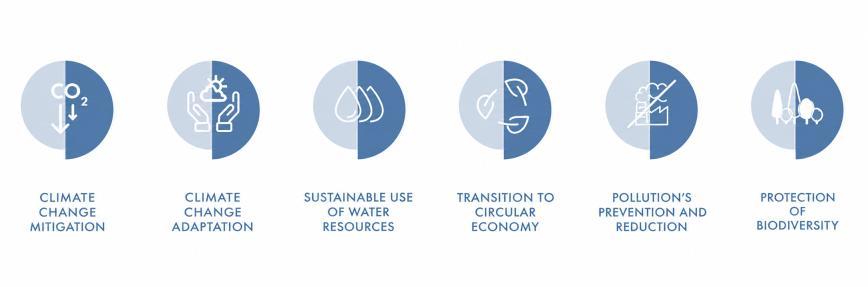
and which, simultaneously:
o do not cause any significant harm to any of the environmental objectives (DNSH - Do No Significant Harm);
o are carried out in compliance with minimum safeguards, in line with the OECD Guidelines and the UN Guiding Principles on corporate accountability for human rights, workers' rights, etc..
The assessment carried out by RFI showed that, for the 2025 financial year, about 85.8% of revenues (Turnover), 81.7% of operating costs (OpEx), and 91.1% of investments (CapEx) are related to environmentally sustainable activities, which contribute in particular to the goals of climate change mitigation, and climate change adaptation.
RFI’ssustainabilityreportingandcontributiontotheGroups’IntegratedReport
Sustainability reporting becomes central to our Companies and stakeholders. With a view to fostering sustainable investments aimed at achieving the European Union's climate and sustainability objectives, it has in fact become essential to have clear and reliable data from undertakings: the entry into force of the Corporate Sustainability Reporting Directive (2022/2464/ EU - CSRD) in January 2023 - transposed into Italian law by Legislative Decree no. 125 of 6 September 2024 - responds to this need, expanding and strengthening transparency and reporting obligations on sustainability information.
In line with the regulatory obligations, and in coordination with the Parent Company, RFI has contributed, in line with the previous year, to the preparation of the Group Integrated Report, which includes in the Financial Report the information needed to understand the Group's impacts, risks and opportunities related to sustainability issues,
as well as any information needed to understand how the aforesaid issues affect the Group's performance and results.
The 2025 sustainability reporting process then began in autumn 2025 also involved the subsidiaries Grandi Stazioni Rail S.p.A., Blujet S.r.l., Infrarail S.r.l., and Italferr S.p.A. (FS Engineering S.p.A. from 1 March 2026) coordinated by RFI.
The main company results in energy and environment for the last two years are reported below.
In the energy area, the 2025 results show, compared to the previous year:
1,083,541 (4)
* It includes MV/LV electricity, and HV electricity used by diagnostic trains and other working vehicles of RFI, and does not include HV electricity absorbed by the trains of the railway undertakingsoperatingon the network operatedby RFI
o for electrical energy for "internal use", whose total consumption stands at about 508 GWh, an almost constant trend (+1%);
o the overall consumption of diesel fuel stood at about 18.6 million litres, an increase (6%) attributable to the combined effect of:
- a decrease in consumption of diesel fuel for heating (-290 thousand litres, due mainly to the gradual conversion or decommissioning of certain diesel-powered systems) and railway traction (-109 thousand litres);
- an increase in diesel fuel consumption for shipping operations (+863 thousand litres, due to a higher number of trips made at the request of railway undertakings, and the addition of a special trip by the vessel N/T Iginia, which transported the Olympic torch), and for fuelling company vehicles (+620 thousand litres, due to the need to increase the number of long-term hire vehicles and, in general, their use to meet greater service demands);
o for natural gas, whose consumption stood at approximately 6.7 million Smc, an almost constant trend (-3%).
Of note is a slight decrease of about -5% in traction electricity, totalling about 5,595 GWh (of which approximately 6 GWh self-produced).
In the environment area, the 2025 results showed, compared with the previous year:
withdrawn - of which for civil use - of which for industrial use
o for water, whose overall withdrawal stood at about 11 million cubic metres, a decrease of about -3%, mainly due to optimised use of water resources, and the prompt repair of some leaks.
o for special waste, the total generation of which is approximately 206 thousand tons, a reduction compared to the previous year (-4%), attributable to the combined effect of:
- a decrease in special non-hazardous waste, attributable to lower production of iron, steel, concrete, and copper related to construction site activities; - a slight increase in special hazardous waste (2%);
o both the proportion of special non-hazardous waste (90%) to hazardous waste (10%), and the share of special waste sent for recovery, equal to about 99%, remained substantially unchanged over the two-year period, confirming the Company's ongoing commitment to proper waste management.
In 2025, RFI published its Service Charter (as per the Prime Minister’s directive and Prime Minister’s decree dated 27 January 1994 and 30 December 1998, respectively) on its website, which officially reports the 2024 results, and
2025 targets for the quality of the services provided to the public in the areas identified by legislation (the quality factors), based on the characteristics of the Company.
The Service Charter contains 16 indicators representing the Company’s various action and focus areas that are priorities for the public, the 2025 targets were met for both perceived quality, measured in customer satisfaction surveys conducted by the Market Observatory, through more than 180 thousand interviews with departing travellers at the network's 760 stations, which alone collect nearly 92% of total travellers, and delivered quality, assessed through internal/third party monitoring. Among the latter, the traffic safety indicator is still in the process of being consolidated.
In relation to the service quality, the following objectives were achieved:

sustainability: RFI has identified and achieved objectives aimed at strengthening strategic and operational tools in the ESG area, launching certification processes under Sustainability Protocols for some of the most significant redevelopment projects involving existing stations; at the strategic level, it has promoted initiatives to engage Communities and enhance local areas, including through the transformation of decommissioned rail lines.

assistance to PRM: with regard to independent accessibility, RFI is implementing measures aimed at removing barriers that limit accessibility within station areas, thereby enabling People with Reduced Mobility to travel as independently as possible. By 2025, objectives were achieved in relation to both improving accessibility within at least 20 stations, and updating the technical specifications for accessibility at stations. As for accessibility through the Blue Room circuitthe free assistance service dedicated to travellers with reduced mobility and disabilities -, the service was expanded to include an additional fifteen stations in 2025 (the target was twelve), with a view to continuously improving the quality of assistance provided to PRM. For 2025, the target for effective accessibility was achieved by adding another 20 “effectively accessible” stations - that is, stations that take into account both infrastructure features and the assistance service provided.
With regard to perceived quality, the MO results for 2025 showed:
o for satisfied travellers (scores of 6-9), there is, at the whole-network level, a substantial stability for all macro-factors, with changes close to zero (compared to last year), the percentages remain above 95%. There has been an increase in the ItP indicator for critical conditions, which stands at over 90% (91.6%), representing a positive change of 2.3 percentage points (p.p.) compared to the previous year;
o for fully satisfied travellers (scores 7-9), at the whole-network level, there is an overall positive trend in the various values of macro-factors. Specifically, travellers fully satisfied with the station overall stands at nearly 93% (92.9%), showing an increase of 1.5 p.p. compared to 2024. A significant increase from the previous year was mainly recorded in the ItP in critical conditions, with a 3.3 p.p. increase, and 78.6% of fully satisfied travellers. Further increases were recorded in the macro-factors related to maintenance and upkeep (89.3%, +1.2 p.p.), cleanliness (92.4%, +1.1 p.p.), lighting (91.7%, +1.1 p.p.), and the ItP overall (96.3%, +0.6 p.p.). The other macro-factors showed substantially stable
results, with changes (compared to last year) close to zero. After considering the detail by network, the Large Stations recorded a higher percentage of fully satisfied travellers than that found for the RFI network (96.4% compared to 91.5%). The upward trends in maintenance and upkeep, cleaning, and lighting are also confirmed for these two networks. In the RFI network, it is the main 100 stations that record the highest percentage of fully satisfied travellers at 92.7%. The other RFIs stand at over 90% of travellers fully satisfied with the station as a whole.
An analysis of travellers’ social and behavioural profiles shows that in 2025 there was an increase in the percentage of frequent travellers (+1.7 p.p. compared to 2024 among those who report using the station every day or almost every day), and in business travellers (+3.3 p.p.). There was a slight decline among those traveling for educational purposes (-1.2 p.p.). Finally, there was an increase in the number of travellers who reach the station in less than a quarter of an hour (+1.7 p.p.). With regard to modes of transport to the station, there was a decrease in car use (-1.6 p.p.) in favour of public transport (+1.0 p.p.) and walking (2.1 p.p.).
On the survey front for the Blue Room services, the long-established values of excellence continue to be confirmed, with the percentage of “fully satisfied travellers” for the service as a whole, standing at 99.4% in the first eleven months of the year.
To implement an integrated model of sustainable infrastructure development at all stages of investment management, during construction RFI promotes "sustainable worksites" by adopting solutions, actions and interventions aimed at reducing impacts on the environment, promoting circular economy processes, and safeguarding biodiversity and ecosystems. Environmental design plays a crucial role in improving interaction with the reference territory and the populations involved. In this regard, design documents - such as the Worksite Environmental Project (PAC) and Environmental Monitoring Project (PMA) - are developed, where applicable, to identify the significant environmental issues related to construction site work, as well as the mitigation measures and environmental monitoring activities necessary to ensure proper environmental supervision of the worksite. In addition, RFI promotes operational synergies to implement and enforce sustainability policies at worksites, and stimulate sustainable choices on the part of the entire supply chain, with specific regard to new infrastructure works.
Specifically, RFI's commitment to build sustainable worksites passes through the integration of contractual requirements in order to require a concrete commitment from companies, suppliers, and manufacturers of construction materials in the adoption of sustainability policies at worksites, oriented towards environmental protection, efficient use of resources in a circular economy perspective, reduction of the Carbon Footprint of the work, and protection and enhancement of cultural, landscape, environmental and biodiversity assets. In addition, contract agreements require the on-site application of environmental management systems in accordance with UNI EN ISO 14001.
Among the projects that are already underway are the integration of the Tender specifications with a view to providing award criteria in order to require Contractors to make a concrete commitment to sustainability policies with specific regard to the procurement of sustainable materials with a lower environmental footprint according to a Life Cycle Assessment approach, certified with Type III environmental product labels (“Environmental Product Declaration” - EPD under ISO 14025).
During the year, RFI carried out numerous environmental protection and enhancement activities as part of its Environmental Management System (EMS), integrated into the Integrated Safety Management System described in the paragraph on "Our Company", and applied in the governance of both the activities performed directly by Company staff, and those carried out through contractors.
On this basis, all the company’s production units involved in managing environmental issues have environmental specialists who handle the preparatory and preliminary work, gather and process data and provide assistance for the performance of the environmental protection duties assigned to them. Environmental specialists also provide technical and operational support in the management of all environmental aspects relating to their respective units, such as waste, water discharge, issues connected with the noise created by line maintenance, water withdrawals, atmospheric emissions in connection with thermal plants, the use of hazardous substances for processing, the use of herbicides along the railway line, etc.. In addition to ensuring the proper management of environmental variables in compliance with regulations, the internal management system and the environmental policy, this type of organisation enables the Company, which applies it extensively throughout its operating contexts, to maintain constant discussion and collaboration with all its key stakeholders at all levels, starting with government bodies for the land and environment, encourage coordination in this respect with other group companies, raise environmental awareness among RFI’s personnel as much as its suppliers’, and promote dialogue with associations and bodies representing passengers and the community.
During the year, new Procedures for the Environmental Management System (EMS), and the Occupational Health and Safety Management System (OHSMS) were issued regarding the management of fluorinated greenhouse gases and F-gases.
Updated lists of the obligations that RFI must comply with regarding environmental protection and occupational health and safety were also published.
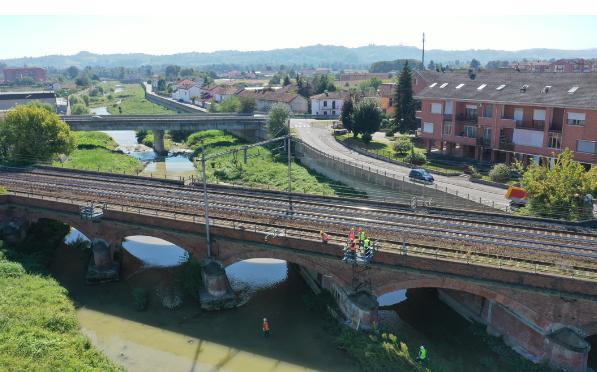
Introduction
This section details the most significant court and criminal proceedings which were pending at the reporting date, and which entailed developments in the year. Unless otherwise indicated, up to the date of preparation of this report, no information had arisen that would indicate that the Company is exposed to contingent liabilities or losses of any amount, nor is any information known with a potentially material impact on the Company’s financial position, financial performance or cash flows. Furthermore, where necessary, the Company has joined the criminal proceedings as a civil party.
In 2025, following criminal proceedings initiated by the public prosecutors against former or current Company representatives, except for those described below, there were no definitive rulings against senior management (Company officers or General Managers) for any of the following:
o particularly serious crimes with wilful intent entailing substantial damage to the Company or leading to the application of restrictive measures;
o fraudulent crimes covered by Legislative decree no. 231/2001;
o additional fraudulent crimes covered by Law no. 190/2012.
Litigation and significant proceedings pending with employees, third-party service providers and/or contractors, the tax authorities, regions, etc., for which, where the relevant conditions are met, accruals have been made to specific provisions for risks and charges, are detailed in the Notes to the financial statements, to which reference should be made, as for information on contingent assets and liabilities.
Please refer to the corresponding section of the 2024 Annual Report for information on proceedings and disputes that did not change during the year.
Litigation pursuant to Legislative Decree no. 231/2001
Criminal proceedings under Legislative Decree no. 231/2001, which reported developments during the year, and newly-reported proceedings, are described below.
With regard to criminal proceedings no. 3651/2018 RGNR (General Register of Crimes), registered with the Milan Public Prosecutor's Office following the train accident that occurred on 25 January 2018, in Località Seggiano di Pioltello, which involved the regional train no. 10452 of the railway undertaking Trenord S.r.l. (in commercial service on the route between Cremona and Milan Porta Garibaldi Station), which caused the death of three passengers, and the injury of others, executives and employees of RFI and the Company itself were initially entered in the register of persons under investigation for administrative liability pursuant to Legislative Decree no. 231/2001.
On 25 February 2025, the Plenary Court issued a ruling acquitting the Company of the administrative offence under Article 25-septiesof Legislative Decree no. 231/2001 due to the absence of the predicate offence. With regard to the individuals, the Court found the Head of the Maintenance Unit (CUM) guilty, sentencing him to 5 years and 3 months’ imprisonment while it acquitted all other defendants of the offences of culpable railway disaster, culpable homicide, and culpable injuries, on the grounds that they did not commit the acts, as well aslimited to the defendants against whom it was alleged - of the offence of wilful omission of precautions against
accidents at work, because the offence did not exist. The Court also ruled that no proceedings should be brought against any of the defendants regarding the charge of culpable injuries due to lack of grounds for prosecution, following the exclusion of the aggravating circumstance of violating accident prevention regulations, with regard to 54 victims who did not file any complaint.
With regard to the civil rulings, the Court ordered the CUM, jointly and severally with the civilly liable party RFI, to reimburse the costs incurred by the aggrieved parties acting in criminal proceedings to recover damages (45 individuals), as well as to pay compensation for the damage suffered by them, settled on a provisional basis; finally, to pay compensation for the damage suffered by the aggrieved party FILT CGIL, settled on an equitable and final basis.
The judgment was challenged by the Milan Public Prosecutor’s Office on certain grounds, including with respect to the Company held liable pursuant to Legislative Decree no. 231. At the same time, the convicted CUM and RFI, as the civilly liable party, also filed an appeal.
The hearing has been scheduled before the Milan Court of Appeals for 9 June 2026.
With regard to criminal proceedings no. 4309/2023 RGNR (General Register of Crimes), pending before the Ivrea Public Prosecutor’s Office - concerning the fatal collision of five workers from a subcontracting firm performing maintenance work on the infrastructure by a train near the Brandizzo station -, it is noted that, on 24 July 2025, the Ivrea Public Prosecutor’s Office served a notice of conclusion of preliminary investigations: it was learned that, contrary to the initial allegations, within the RFI context, the individuals (CSE (Safety Coordinator in the Execution phase) and the Head of the Engineering Organisational Unit) and the Company, held administratively liable under Legislative Decree no. 231/2001, already entered in the register of notices of crimes, as well as the interim CEO holding office at the time of the accident, the CEO previously in office until 19 May 2023, the Director of the Infrastructure Operations Department, the Director of Traffic Operations, the interim Director of the Turin Local Infrastructure Operations Department (hereinafter “DOIT Turin”), and the interim Head of the “Turin Area Traffic Operations” unit; the interim Head of the Turin Node Lines Local Unit of DOIT, the interim Works Manager, an RFI employee assigned to DOIT Turin, and, finally, the Construction Site Specialist, and the Head, of UMLV2 (Works Maintenance Unit) (CUM), were under investigation for the offences of multiple culpable homicide with violation of the regulations on the prevention of accidents at work (Article 589, paragraphs 1, 2 and 5 of the Italian Criminal Code), and culpable railway disaster (Article 449 in conjunction with Article 430 of the Criminal Code).
With regard to third-party companies, five representatives of the Subcontractor, and three representatives of the Contractor are under investigation, as are the Companies themselves, pursuant to Legislative Decree no. 231/2001.
The developments reported in 2025 in other significant criminal proceedings, and those pending against RFI personnel in which RFI appeared in court as liable under civil law, and for which no insurance coverage is in place, are described below.
Criminal proceedings under no. 524/2020 RGNR (General Register of Crimes) – brought before the Lodi Public Prosecutor’s office, related to the Company’s alleged administrative liability for the derailment of the HS train 9595 in Livraga on 6 February 2020 as a result of which two train drivers lost their lives:
o abbreviated procedure: the Appellate Proceedings concluded on 4 March 2025, with the confirmation of the convictions of the two workers who had performed maintenance work on the switch on the night of the incident; the sentence of 3 years’ imprisonment imposed in first instance was reduced to 1 year and 8 months’ imprisonment (with conditional suspension of the sentence granted, and no mention of the conviction). The two convicted employees waived their right to appeal to the Court of Cassation; the ruling has therefore become final;
o ordinary procedure: on 16 December 2025, the Lodi Plenary Court handed down a conviction against the interim head of the Production Department, sentencing him to 3 years and 5 months in prison, with a 5year ban from holding public office. At the same time, the two Alstom workers were sentenced to 2 years and 8 months in prison (the actuator assembler), and 2 years and 10 months in prison (the tester), respectively while the other two Alstom representatives on trial (the head of the production function, and the System Program Manager) were acquitted on the grounds that they did not commit the offense.
With regard to the civil rulings, the Court ordered the RFI executive to pay damages to the civil party, FILT CGIL, in an equitable and final amount totalling €50,000, with a provisionally enforceable ruling, in addition to litigation costs (the trade union was not a civil party in the case against the two Alstom workers who were convicted).
Criminal proceedings under no. 6305/2009 RGNR (General Register of Crimes) concerning the accident that occurred in Viareggio on 29 June 2009: on 27 May 2025, the operative part of the decision issued by the Florence Court of Appeals, Second Criminal Division, was read aloud. This judgment stems from the referral ordered by the Court of Cassation, Third Criminal Division, which, in its ruling no. 30805 of 15 January 2024 (filed on 26 July 2024) - having deemed the liability of all defendants for the events that occurred in Viareggio to be definitively established - set aside the ruling issued during the previous appeal phase on 30 June 2024 (the socalled “appeal bis”) against the interim CEO of FS, also in his capacity as CEO of RFI, the interim CEO of RFI, the interim CEO of Cargo Chemical, who also served as head of the FS Logistics Business Unit, as well as the defendants outside the FS Group, for a new trial “limitedtotheamountofthereductioninsentenceforgeneral mitigatingcircumstances”, which the appellate Judges had recognised at a reduced rate of 1/9.
Following the referral, the Second Criminal Division of the Florence Court of Appeals, in its operative part dated 27 May 2025, upheld the sentences previously imposed by the First Criminal Division of the Florence Court of Appeals on 30 June 2024, as set forth below: 5 years’ imprisonment for the interim CEO of FS and former CEO of RFI; 4 years, 2 months, and 20 days of imprisonment for the interim CEO of RFI; 4 years of imprisonment for the interim CEO of Cargo Chemical, who also served as head of the FS Logistics Business Unit; and for defendants outside the FS Group, sentences ranging from a minimum of 2 years, 6 months, and 10 days of imprisonment to a maximum of 6 years of imprisonment.
The defendants’ attorneys have filed an appeal with the Court of Cassation against the aforementioned ruling, and a hearing date is currently being scheduled.
RFI, in its capacity as civilly liable party, and the two interim CEOs of the same Company, have filed appeals against the aforementioned ruling of the Court of Cassation of 2024 before the European Court of Human Rights; a hearing date for these appeals has yet to be set. Furthermore, extraordinary appeals have been filed pursuant to Article 625-bisof the Italian Code of Criminal Procedure; the Court of Cassation ruled on these appeals on 27 February 2026, holding the appeals inadmissible.
Proceedings under no. 503034/2012 RGNR (General Register of Crimes) registered with the Public Prosecutor’s Office of Rossano, and subsequently transferred to the Public Prosecutor’s Office of Castrovillari, concerning a train collision with a motor vehicle carrying six people at the Private Level Crossing at km 155+849 of the Rossano C. – Mirto Crosia section: on 21 November 2025, the Court of Castrovillari issued a judgment of acquittal for all defendants on the grounds that the offense did not occur. The Public Prosecutor filed an appeal limited to the cases of three defendants.
Criminal proceedings under no. 3216/2017 (into which cases nos. 14614/21 and 270/2022 have been combined in the General Register of Crimes) registered by the Turin Public Prosecutor’s Office against the physician at the Major Repair Workshop (OGR) facility in Turin during the period from December 1970 to November 1979 in connection with the deaths and illnesses resulting from asbestos exposure suffered by certain workers employed at the aforementioned facility. During the Preliminary Hearing, the Preliminary Hearing Judge (GUP), having taken note of the motions to summon the civilly liable party submitted by the civil parties, ordered the summons of the civilly liable party, RFI. The first-instance trial concluded on 24 March 2025, with a judgment issued by the Court of Turin, which: i) ruled that the statute of limitations had expired for the alleged injuries; ii) acquitted the defendant of the charge of involuntary manslaughter of certain victims; iii) sentenced the defendant to 1 year and 6 months of imprisonment in connection with the deaths of other victims; iv) ordered the defendant and the civilly liable party, jointly and severally, to pay damages to the civil party INAIL (National Institute for Insurance against Accidents at Work), as well as to reimburse any litigation costs. RFI, as the civilly liable party, has filed an appeal against the conviction, and is awaiting the scheduling of the appellate proceedings.
Criminal proceedings under no. 649/17 RGNR (General Register of Crimes) are pending in the trial phase before the Court of Trento against, among others, certain executives of RFI responsible for the misdemeanor offense provided for and punishable under Article 659 of the Italian Criminal Code. On 24 September 2025, the Court of Trento issued a judgment of acquittal pursuant to Article 129, paragraph 2, of the Italian Code of Criminal Procedure in favour of all defendants.
Criminal proceedings under no. 8127/2014 RGNR (General Register of Crimes), concerning the collapse of the wall at Villa d’Elboeuf on 5 February 2014, brought by the Naples Public Prosecutor’s Office, in which RFI is a civil party - regarding the defendants’ failure to perform work on structures at risk of collapse, and the resulting disruption of public service, with the defendants being employees of Invest S.r.l., the owner of the property, and the contractor responsible for the reinforcement work - but also as a civilly liable party as of 14 February 2020. On 4 July 2025 (with the grounds for decision filed on 23 February 2026), the Court of Naples issued a judgment acquitting the two RFI employees charged with negligent collapse on the grounds that they did not commit the offense. The Court of Naples, however, convicted the judicial custodian of Villa d’Elboeuf, who will be required to
pay damages to Rete Ferroviaria Italiana and Invest S.p.A.. For all remaining charges of indictment, the Court acquitted the defendants - in some cases because the statute of limitations had expired, and in others because the offense did not exist.
Other investigations
Proceedings Competition Authority AGCM A/519 –Veneto Regional Government.
In referring to previous reports for further details, it should be noted that, on 6 September 2023, by judgment no. 13627 of 2023, the Lazio Regional Administrative Court annulled the contested decision (Competition Authority AGCM no. 27878, adopted on 31 July 2019, at the end of proceedings A519), ruling out the existence of a link between the electrification of the lines, and the award of the service contract, and emphasising that - in part based on the affidavit submitted by RFI from the outset of the proceedings - “the infrastructure investment programme was, as is customary, developed by taking into account the guidelines of the Ministry of Infrastructure, and the strategic objectives set forth in the government’s planning.” On 4 December 2023, the Competition Authority served a writ of summons in appeal on RFI, seeking to overturn the aforementioned judgment. RFI entered its appearance on 4 January 2024. The Council of State, in its adverse judgment no. 3058/2025 – Case no. 9667/2023 RG (General Register) – published on 9 April 2025, granted the Competition Authority’s appeal.
Appeal to the Lombardy Regional Administrative Court (General Register RG no. 1366/022) - RFI against ARERA for the cancellation of the memo of 11 May 2022 concerning the “Special tariff regime in favour of RFI - application for supply for uses other than traction”.
On 11 July 2022, RFI served, on the abovementioned Authority and the other parties concerned, an appeal filed with the Lombardy Regional Administrative Court for the annulment of the memo dated 11 May 2022, concerning the Special Tariff Regime in favour of RFI – application to supply for uses other than traction, as well as for the annulment of the Authority’s report no. 212/2022/I/Com of 17 May 2022 reporting the use of resources earmarked to mitigate the effects of the price rises in the electricity and natural gas sectors, with specific regard to paragraph 3.2.2.
In particular, objections were raised against Arera’s measure according to which, pursuant to Article 29, paragraph 1, of Decree Law no. 91 of 24 June 2014, as converted with amendments into Law no. 116 of 11 August 2014, as amended by Law no. 167 of 20 November 2017, the Special Tariff Regime, for which RFI is the holder pursuant to Presidential Decree no. 730 of 22 May 1963, would be limited to energy for traction and, hence, energy “for uses other than traction” is excluded from this Regime.
The appeal was served on Arera, and Cassa per i servizi energetici e ambientali (CSEA), as well as on the other parties identified as co-interested parties (MIT, Trenitalia S.p.A. and ITALO S.p.A.).
After CSEA retained, in execution of the aforesaid Arera memo, the alleged credit amount relating to the offset component for “uses other than traction” for the years 2015 – 2019 from the amount relating to the offset component adjustment for “traction use” for the year 2021 against RFI, the latter proceeded with serving, on 10
February 2023, a notice of additional grounds with suspension for the annulment of the relevant measures of CSEA.
By judgment no. 2874/2023, the Lombardy Regional Administrative Court rejected RFI's defence arguments. RFI challenged the ruling before the Council of State. The hearing on the merits was held on 17 December 2024, as a result of which the Council of State issued an adverse ruling in 2025.
On 26 February 2024, RFI also filed an appeal before the Lombardy Regional Administrative Court against ARERA and Cassa per i Servizi Energetici e Ambientali (CSEA), challenging ARERA Resolution no. 618/2023/R/COM of 27 December 2023 (and the subsequent amending ARERA Resolution no. 45/2024/R of 20 February 2024), in the part in which, under Article 36.1 of Annex A, excludes that the Special Tariff Regime under Presidential Decree no. 730/1963 applies to consumption for uses other than those related to rail transport services performed on the national railway infrastructure, with the exception of passenger services carried out on the lines specifically built for high-speed trains, and powered at 25 kV alternating current. A date for the public hearing has yet to be set.
Voyages Italia S.r.l. v. ART – Trenitalia S.p.A. v. ART – Italo NTV v. ART
ART Decision no. 178/2024
By an appeal filed under Case no. 254/2025 of the General Register (RG), SNCF Voyages Italia S.r.l. (“SVI”), in its capacity as a railway undertaking holding a Framework Agreement for the allocation of rail capacity on the national network, challenged, before the Turin Regional Administrative Court, the ART Decision no. 178/2024 on the “Guidelines and requirements for the Network Statement (NS) for the years 2025 and 2026”, in the section defining the concept of equivalent paths/time channel, and the priority criteria, as well as the 2026 NS, effective as of 14 March 2025, in the section implementing the aforementioned Decision regarding the priority criteria to be applied when scheduling High-Speed passenger transport service timetables and, in any case, any priority criterion that, in balancing conflicting train path requests on a saturated line, favours requests from undertakings that already operate at a higher frequency on the route, thereby making it impossible to reallocate or assign train paths based on the aforementioned criteria, which are alleged to be anti-competitive. By an appeal based on additional grounds, SVI sought the annulment and, alternatively, a declaration of invalidity of: (i) the 2026 NS, as updated by CEO Order no. 15 of 12 December 2024, and no. 2 of 28 February 2025, in the relevant section; (ii) the Final Proposal of 14 February 2025, and the Framework Agreement submitted on 14 February 2025, as subsequently amended, and in its final version of 8 April 2025. Italo NTV and Trenitalia filed extraordinary appeals against Decision no. 178/2024 and the 2026 NS with the President of the Republic; both appeals were transferred to the Turin Regional Administrative Court under Cases numbers 956/2025 and 973/2025 of the General Register (RG), respectively.
Following the hearing on the merits, in judgments nos. 1638 and 1642 of 17 November 2025, the Regional Administrative Court granted the appeals filed by Italo and Trenitalia, respectively. By judgment no. 1793 of 9 December 2025, however, the Regional Administrative Court, as a preliminary matter, ordered the separation of the main appeal from the appeal on additional grounds (against the proposed Framework Agreement of 14 February 2025, and the amended Framework Agreement) due to lack of connection. That latter case was therefore assigned a new general docket number (3381/2025), and a hearing was scheduled for 16 April 2026. In the aforementioned judgment, the Regional Administrative Court then found SNCF’s appeal to be unfounded on the merits, and ordered the allocation of litigation costs.
The proceedings relate to the litigation brought by RFI against ART and against Trenitalia for the annulment of ART Decision no. 26/2018 on “Conclusion of the proceedings initiated by Decision no. 78/2017 against RFIAdoption of the sanctioning measure for violation of Article 37, paragraph 14.c, of Legislative Decree no. 112 of 15 July 2015, on “Implementation of Directive 2012/34/EU of the European Parliament and of the Council of 21 November 2012, establishing a single European railway area” on the lack of information, by RFI, with respect to some of the requests for information made by the ART as part of a fact-finding investigation it had promoted with previous Decision no. 127/2016, aimed at analysing the impact of the introduction of innovative ways of operating trains on the retail market of passenger transport services falling within the so-called Open Access Premium market segment.
The fine imposed has already been paid by RFI.
The hearing on the merits, originally scheduled for 19 November 2024, was postponed to 21 January 2025. By Judgment no. 211 of 24 January 2025, the Turin Regional Administrative Court granted the appeal filed by RFI, annulling the contested measure. ART filed an appeal with the Council of State, registered under no. 3392/2025 RGN (General Register) on 24 April 2025, challenging the aforementioned judgment. RFI joined the proceedings on 23 May 2025. The hearing has been scheduled for 21 May 2026.
We are referring to the ART Decisions nos. 126 and 127 of 27 July 2023, whereby the Authority concluded the sanctioning procedure - started under Decision no. 147/2022 for the violation of Article 23, paragraph 3, of Legislative Decree no. 112/2015 as regards the limits on the allocation of framework capacity as per paragraph 4.4.2.1 of the 2023 Network Statement (NS). Specifically, the Authority alleged that RFI had entered into framework agreements for capacity above the 85% threshold of total capacity for each route, and each time slot provided for in the abovementioned provision of the Network Statement (NS).
Following specific evaluations conducted also with the help of the appointed third-party legal counsel, RFI deemed it appropriate to challenge the above-mentioned measures before the Piedmont Regional Administrative Court. The appeal was settled by judgment no. 1092/2024 of 28 October 2024, which was challenged by RFI in an appeal filed on 28 January 2025. A hearing date has yet to be set.
By ART Decision no. 187 of 30 November 2023, the Authority declared the non-compliance with the new regulatory model set forth in ART Decision no. 95/2023 - which revised the criteria for the determination of fees for access to and use of the railway infrastructure approved under the previous Decision no. 96/2015 – on the part of some issues of the proposal submitted by RFI for the definition of the new tariff system for the period 2024-2028 for the Minimum Access Package (MAP) to the national railway infrastructure, as well as for non-MPA Services provided. On 29 January 2024, RFI appealed against the above-mentioned measure before the Piedmont Regional Administrative Court. On 13 May 2024, RFI filed an appeal on Additional Grounds, also valid as a standalone appeal, against the subsequent ART Decision no. 38/2024, whereby the Authority declared the noncompliance of the additional proposal submitted by RFI for the definition of the tariff system for the period 20242028, and set the consequent decisions for the tariff period 2025-2029.
By judgment published on 2 April 2025, the Piedmont Regional Administrative Court, having declared the matter in dispute moot with respect to one of the legal grounds in the appeal based on additional grounds, dismissed both the main appeal, and the appeal based on additional grounds. The case is pending before the Council of State, with which RFI filed an appeal on 2 July 2025.
Individual proceedings initiated against Grandi Stazioni Rail (GS Rail) by Resolution no. 184/2023 and concluded by Resolution no. 89/2025
By Resolution no. 89/2025 of 29 May 2025, the Authority concluded the individual proceedings initiated against GS Rail by Resolution no. 184/2023, concerning the methodology for determining the rates for the 2022–2023 period for the provision of regulated spaces referred to in Article 13, paragraph 2.a), of Legislative Decree no. 112 of 15 July 2015.
In particular, the reasons underlying the initiation of said proceedings stem from GS Rail’s inclusion in its tariffs of a series of cost items deemed ineligible by the Authority, as they violate the principle of cost-based pricing established by the current regulatory framework.
RFI, by virtue of the existing concession agreement, was impacted by the requirements laid down in Resolution no. 89/2025, aimed at bringing the tariffs applied by GS Rail into full regulatory compliance.
In this regard, on 30 June 2025 - as part of the tariff level update process -, the Manager informed the interested parties that the requirements imposed by the Authority in Resolution no. 89/2025 would have an impact on the tariff levels of the Minimum Access Package, due to the reallocation to Pillar I of certain cost items arising from the contractual relationships entered into with GS Rail. Talks and evaluations with the Authority are still ongoing. The Authority will evaluate the Manager’s proposal during the next available period of time for updating tariff levels (i.e., 30 June 2026).
The remuneration of the chairwoman of the board of directors and of the CEO are established by the board of directors in compliance with the “Directive regarding the adoption of the criteria and methods for the appointment of members of the board of directors and the remuneration policies for senior managers of companies directly or indirectly controlled by the MEF” dated 24 June 2013. ChairoftheBoardofDirectors**
of theControl, Risks and Sustainability Committee(30% of theChair's
ChiefExecutiveOfficerandGeneralManagerinofficeuntil6March2025
remuneration*: fees for position as CEO under Article2389.3 of the
ChiefExecutiveOfficerandGeneralManagerfrom6March2025
under Article2389.3 of
(*)Thefixedgrossannualremunerationincludes€25,000.00inrespectofthepositionofdirector.
(**)On6March2025,theShareholders'MeetingappointedthenewChairoftheBoardofDirectors,confirmingthefeesprovidedforunderthepreviousmandate.
During 2025, the Board of Directors of RFI adopted, as a strategic/industrial decision influenced by the management and coordination activities formalised by the Holding Company, the transaction involving the contribution of FSI’s stake in Italferr S.p.A. (FS Engineering S.p.A. from 1 March 2026) to RFI, with effect from 8 May 2025, as approved by the Extraordinary Shareholders’ Meeting of RFI on the same date.
It is also noted that the Extraordinary Shareholders’ Meeting of RFI held on 2 July 2025 approved the Partial demerger plan of RFI in favour of Ferservizi S.p.A.., relating to the “Time Management” Business Unit, which will take effect from the date of registration of the deed of demerger with the Register of Companies.
Finally, with regard to strategic/industrial decisions influenced by the management and coordination activities formalised by the Holding Company, we must note the partial demerger of RFI S.p.A. in favour of FS ENERGY S.p.A., approved by the Extraordinary Shareholders’ Meeting of RFI on 9 October 2025, and with effect from 1 January 2026.
By a “Act of management and coordination- Intercompany reallocation of RFI’s Energy Business Unit as part of the adoption of the new implementation model for the “Energy Project” , FS has commenced the process of implementing the corporate restructuring plan, which involves the reallocation of the so-called “Energy Business Unit.” The “Energy Project” was outlined with the aim – included amongst the targets of the 2025–2029 Strategic Plan – of making the energy supply supporting the rail service safer, more stable, and more reliable, as well as more sustainable (through an increase in energy from renewable sources), and more economical (by optimising the cost of supplying consumption not covered by the Special Tariff Regime and, therefore, exposed to market volatility). The transaction was assessed as the best solution for reallocating to FS Energy S.p.A. the “energy portfolio” comprising the most substantial resources, activities, assets and contracts in the energy sector, represented by the Energy Business Unit of RFI.
RFI also adopted and implemented, as a result of the management and coordination activities carried out by FSI, the following acts:
o Internal Control and Risk Management System (ICRMS) Model (CO no. 800/P/AD of 5 June 2025);
o Tax strategy of the Ferrovie dello Stato Italiane Group (CO no. 795/AD of 5 March 2025);
o Governance Model of the FS Italiane Group (CO/I no. 173/AD of 5 June 2025).
With regard to the management and coordination activities carried out by RFI as the Parent Company of the Sector, in accordance with the previous Governance Model, it is noted that Guideline no. 07 v.01, “Optimisation of the procurement process”, has been issued. On 21 March 2025, the Board of Directors of FSI approved the new Governance Model of the FS Italiane Group, adopted by a resolution of the Board of Directors of RFI on 17 April 2025.
On 28 November 2025, Intercompany Organisational Communication no. 190/AD “BU Model for the design of Network Development works” was issued, which was aimed at defining an operational model for the design of railway infrastructure for the Infrastructure – Railways Business Unit, with the aim of:
I. ensuring unified governance of the design phases, clearly defining the roles, responsibilities, and areas of competence of the Companies within the Business Unit of RFI, Italferr (FS Engineering S.p.A. from 1 March 2026), and Infrarail;
II. strengthening design and operational oversight through an integrated and collaborative approach, based on the digitisation of processes, transparency of information, and the sharing of expertise;
III. improving the overall effectiveness of processes, reducing lead times, and enhancing design quality, whilst adhering to the principles of safety and sustainability.
In carrying out its risk management activities, RFI adopts, in accordance with the guidelines of the parent company FSI, the following taxonomy divided into 4 macro-categories (Strategic, Operational, Compliance, ESG), which group together specific types of risk:
Riskslinkedtomarket changes,macroeconomic shocksandunexpected investmentfluctuations

Riskslinkedtothebusiness, thenetworkandthe infrastructure,thetechnology systems,thesupplychain, theorganisation,healthand safety,projectmanagement andbrand


Riskslinkedtothe infringementoflawsand regulations,changesinthe regulatoryframeworkand issueofunfavourableacts, contractnon-performance anddisputes
Riskslinkedtothe environmentandtheclimate change,tosocialand governanceissues

Market Macroeconomic
Financial
Business&Development
Infrastructure&Means
Technology&Digital
SupplyChain
PeopleandOrganisation
Security
Safety
Designandimplementation
BrandandCommunication
Compliance
Regulatory
LegalandContractual
Environmental
SocialandHumanRights Protection

Governance
Ethics
Risksarising frommarket changeswhich can compromiseor reduce the capacityof creating added value andprofitability
Risks which reflect macroeconomic shocks that can affect a country, a continent or have a worldwide impact
Risksinvolvingunexpectedinvestmentfluctuations(exchangerate,interestrate,liquidity)
Risksaffectingthecapacityofcreating,maintaininganddevelopingbusiness
Risksaffectingthemanagement anddevelopmentofthenetwork andofthe(road andrail)infrastructureas wellasthefleet(trains,buses,vessels)
Riskslinkedtothedigitaltransitionprocess,thedevelopmentandmanagementofITsystems
Riskslinkedtothesupplychain(suppliers’qualification,negotiationprocess,contractmanagement)
Risks arising from the lack of internal skills, inadequacy of training programmes, of the turnover planning processandinefficacyoftherecruitmentandretentionpolicies
Riskslinkedtothephysicalandlogicalsecurityofpeople,assetsandinformationwhicharecompany-owned orundertheresponsibilityoftheFSGroup
Risksconnectedwithenvironmentalprotectionactivities,occupationalandoperationalsafety
Risksconnectedwiththedesignandimplementationofjobcontractworks,projectsandprogrammes
Risksconnectedwiththespreadingofreports,communicationsorothernoticeswithwrong,inaccurateor incompleteinformation
Risksofinfringementoflawsandinternationaland/ornationalregulations
Risks anticipating an adverse change to the regulatory framework and the issue of unfavourable acts/provisions
Risksarounddisputemanagementandcontractnon-performance
Risksconnectedwiththeclimatechangeandapolicyforatransitiontolow-carboneconomy
Risksconnectedwithsocialtensionsandfailuretorespectorlowrespectforhumanrights
Risksconnectedwithcorporategovernancerulesandwiththeprocessofassignmentofdelegatedpowers
Risksderivingfromintentionallyincorrectorcorruptivebehavioursputinplacebypersonsinsideandoutside theGroupinordertoobtainimproperorillicitadvantage
The main events to which Rete Ferroviaria Italiana is potentially exposed, and an indication of the main management actions adopted, are briefly and not exhaustively described below.

• Price volatility (e.g. commodities, raw materials)
• Economic and financial crisis in business-relevant sectors
• Application of the flexibility clauses provided for in the Programme Contract to cover additional costs on a temporary basis
• Regulatory and financial measures to cover tariff increases
• Synergies through European benchmarking in centralised procurement of railway equipment
• Expansion of the supplier portfolio
• Inadequate disbursement of public grants or funds
• Critical issues in the definition or management of financial requirements
• Change in the method of financing investments from a grant-based to a fee-based model
• Search for alternative forms of financing
• Expansion of the scope of Due Diligence
• Talks with institutional stakeholders to ensure the necessary funding
• Renegotiation of national/EU targets in the event that the conditions underpinning the funding cannot be met
• Rescheduling of available funding to cover priority projects
• Exploring additional sources of funding through the OPEN project (e.g. green finance, European funds, regional funds, funds from other ministries)
• Speeding up the process of updating the Programme Contract
• Management income statements
• Recourse to temporary self-financing to ensure the continuity of services provided and ongoing construction sites

• Critical issues in the definition, implementation or updating of strategies
• Critical issues in the definition, implementation or updating of M&A initiatives
• Critical issues in scouting, defining, developing, implementing, or upgrading innovative solutions
• Critical issues in the definition or allocation of tracks
• Critical issues in defining agreements with counterparties
• Critical issues in the provision of customer support services
• Inadequacy or obsolescence of industrial plant or equipment
• Unavailability of rail or road infrastructure
• Unavailability of infrastructure, technology tools or digital applications
• Inadequacy or obsolescence of infrastructure, technology tools or digital applications
• Creation of multidisciplinary working groups for M&A activities
• Parallel initiatives for organic growth (e.g. recruitment of specialist staff, investment in railway assets/rolling stock)
• Proposals for the reallocation of funds between investment projects in compliance with preset targets
• Renegotiation of performance target deadlines
• Stepping up coordinated measures to improve reliability and minimise the impact on traffic on the main lines
• Strengthening relations with Railway Undertakings through active engagement
• Updating agreements with the Civil Defence Agency
• Implementing emergency plans
• Advanced diagnostics and predictive maintenance
• Contingency Plan
• Non-routine maintenance of the oldest systems
• Adoption of Group common platform
• Training and awareness initiatives
• Implementation of the new Integrated TPTM (Traffic Planning/ Traffic Management) Platform
• Upgrade of information systems (e.g.: Repository)
• Development of digital functions for monitoring the progress of construction works on the operational network
• Identifying new areas for capitalisation
• New business opportunities from operation of Stations
• Inadequacy of manufacturing organisations
• Difficult availability of goods and services
• Critical issues in defining or updating requirements
• Inadequate performance of suppliers or contractors
• Dependence on key suppliers or contractors
• Critical issues in defining procurement strategies
• Scouting for new suppliers
• Cooperation with other railway authorities
• Promoting and accelerating the development of European interface standards between components and products
• Opening up the market with international tenders
• Opening up the market in the standard sector
• Supply chain support measures for access to credit and forms of financing
• Review of the suitability of the current General Terms and Conditions
• Periodic meetings with Trade Associations
• Enhancement of the Vendor Rating system
• Acquisition of a supplier/contractor or a branch of their business
and organisation
• Shortage of professionals with specialised or emerging skills (key people)
• Critical issues in staff sizing or allocation
• Critical issues in relations with trade unions
• Scuola FS project in support of the development of specific trades and skills
• Talent Performance Development System
• Reskilling
• Retention
• Remuneration, training and job diversification policies
• Development and optimisation of tools and methodologies to support selection and training process
• Diversity & Inclusion plan and interventions to support the Group’s company people (internal caring, social policies, engagement)
• Destruction, damage or theft of company or third-party assets or property
• Cyberattacks to infrastructure, technology tools or digital applications
• Loss of confidentiality, integrity or availability of data or information
• Critical issues in crisis management
• Unauthorised physical access to railway or road infrastructure, vehicles and other assets
• Updating and strengthening technological and organisational security measures
• Enhancing staff protective equipment and specialist training courses
• Reviewing emergency plans through drills, including in coordination with high-risk businesses located near the infrastructure
• Agreements/Memoranda of Understanding with Entities and Authorities
• Critical issues in the coordination or monitoring of job orders, programmes or projects
• Critical issues in validation, testing or commissioning
• Critical issues in implementation

• Non-compliance with regulations, rules or standards
• Risk-based approach (Project Risk Management)
• FS-NRRP Steering Committee
• Re-engineering and optimisation of processes
• Training/information initiatives
• Changes in legislation, regulations and standards
• Unfavourable or late acts/measures
• Critical issues in relations with institutional stakeholders
• Proactive dialogue with stakeholders
• Strengthening stakeholder involvement tools and integrating them with innovative engagement methods
• Strengthening dialogue with Institutions
• Monitoring and promptly implementing changes in legislation and regulations

• Natural disasters
• Extreme weather events
MITIGATION ACTIONS
• Implementation of the Climate Change Adaptation Plan
• Natural disaster insurance policy (CATNAT)
• Corruption, fraud or collusive arrangements between employees and counterparties, whether public or private
• Group Code of Ethics
• Group Anti-Corruption Policy
• Design of procedures and implementation of mechanisms of whistleblowing
• Corporate governance and control frameworks
• Adherence to the United Nations Global Compact
• Internal and external training, information and communication campaigns
• Execution of agreements, protocols and arrangements with Entities and Authorities
• Critical issues in the definition or implementation of relations between corporate functions or Group companies
• Establishing more effective information flows to Group companies
OPPORTUNITIES
The latest forecasts for the world economy indicate that global growth in 2026 will remain at around 3.3%, supported by strong investment in technology – including developments in artificial intelligence –, and by a temporary easing of trade tensions between the United States and China. Despite this, downside risks remain, particularly linked to the possibility of further tariff escalation, and continuing geopolitical tensions in various areas of the world.
On the international trade front, the outlook remains uncertain: the recent tariffs introduced by the United States in 2025 continue to have an impact on global trade flows, and trigger reallocations within value chains, although they have not led to a collapse in trade. US trade policy, based on broad-based tariffs and sector-specific measures, therefore continues to play a key role in shaping the outlook for world trade in 2026.
In the Eurozone, growth remains moderate. The latest estimates point to a 1.3% rise in GDP in 2026, supported by public investment, rising real wages, and gradually more accommodative financial conditions. The manufacturing sector continues to struggle, with performance still lacklustre, particularly in Germany, whilst the services sector is showing signs of a slowdown.
Inflation in the Eurozone is returning towards the ECB’s target: after fluctuating around 2% in 2025, it is forecast to fall to 1.7–1.9% in 2026, thanks to easing pressure on non-energy prices, and the normalisation of costs in the services sector.
In Italy, economic growth remains modest but positive. The latest official projections indicate a 0.8% increase in GDP in 2026, driven primarily by domestic demand, thanks to gradually strengthening consumption, and investments supported by the implementation of the NRRP.
Manufacturing remains weak, in line with the rest of the Eurozone while the construction sector continues to benefit significantly from projects funded by the NRRP. Inflation, which is slowing further, is expected to settle at around 1.3–1.4% in 2026.
The overall outlook suggests that Italian growth could strengthen slightly in the coming years while remaining at moderate levels, and will continue to depend on developments in the international environment, and global trade policies.
However, the new geopolitical environment, and the global repercussions stemming from the latest crisis in the Middle East - including the recent tensions that began on 28 February 2026, with joint attacks by the United States and Israel against Iran, which also led to the partial closure of the Strait of Hormuz, one of the world’s key energy checkpoints - could result in significant revisions to the scenario described above.
The Company is focused on achieving its investment objectives, as outlined in the 2026–2035 Business Plan, by leveraging all necessary measures to ensure the continuity and availability of the production factors essential for continuing ongoing projects and launching new ones, with particular attention to relations with the supply chain.
The date of 30 June 2026 is of particular importance, as it is the deadline by which the Company is committed and fully dedicated to ensuring the achievement of targets and milestones in line with the revision of the NRRP (Measure 3, Component 1) approved by a Decision of the European Council on 17 June 2025.
Issues related to service safety and quality remain of the utmost importance. On the safety front, cross-cutting measures will be implemented to maintain the infrastructure’s operational efficiency, and ensure compliance with safety and cybersecurity standards, both through routine operations and capital investments.
With regard to service quality, the strategic objectives of the Business Plan identify the need to support the improvement of services provided to Railway Undertakings and end customers, focusing primarily on punctuality as the key enabling factor. The measures already implemented led, in 2025, to a general improvement in punctuality across all business segments compared to the set targets, as described in more detail in a specific section of this report.
From a financial standpoint, the expected trend in investments, together with the foreseeable continued discrepancy between the timing of collection of Government and EU funds, and payments to suppliers, requires that we continue, with particular attention, our dialogue with the relevant Ministries aimed at identifying ways to cover the urgent financial needs related to the Programme Contract - both the Investments and Services components, noting that the Company has recorded receivables from the competent Ministries totalling approximately €9 billion in its Financial Statements.
The aforementioned dialogue, conducted in close coordination with the Parent Company, may result in the acceleration of regulatory procedures, or through specific regulatory measures (e.g., advances drawn from future resources), in order to ensure the Manager’s economic and financial stability, and compliance with existing contractual obligations. To this end, on 11 March 2026, Decree Law no. 32 of 11 March 2026 was adopted with regard to “Urgentprovisions regarding extraordinary commissioners and concessions” , which authorised total expenditure of €2,800 million - of which €1,800 million for 2026, and €1,000 million for 2027, for the purposes of reducing RFI’s debt exposure. In any case, the Parent Company Ferrovie dello Stato Italiane, in a letter dated 4 March 2026, regarding “Going concern - financial support to the FS Group’s subsidiaries”, expressed its willingness to continue providing the Company with the financial support necessary to ensure the smooth conduct of its operations. Accordingly, the Parent Company’s Board of Directors approved appropriate financial instruments to cover the funding needs of RFI at the meeting held on 12 March 2026.
Finally, efforts to identify alternative sources of funding must also continue through the submission of eligible projects for funding under the 2021–2027 Development and Cohesion Fund, or through the 2021–2027 EU programming period, such as the National Operational Programmes (NOPs) and Regional Operational Programmes (ROPs), and the TEN network funding programme (Connecting Europe Facility), with particular attention to developments in legislation and funding related to Military Mobility.
For the Board of Directors
The Chairwoman
FINANCIAL STATEMENTS AT 31 DECEMBER 2025
* For a more accurate comparison of the 2024 data, reclassifications totalling €5,000 thousand were made from “Other operatingcosts”to“Services”.
STATEMENT OF COMPREHENSIVE INCOME
Rete Ferroviaria Italiana (the “Company” or “RFI”) is a company set up in accordance with Italian law and is based in Italy. Its registered office is in Rome
It is managed and coordinated by Ferrovie dello Stato Italiane S.p.A. (“FS Italiane S.p.A.”).
The directors approved these financial statements on 5 March 2026 and they will be made available to the shareholder for approval and subsequent filing within the terms established by law. The shareholder has the power to make changes to these financial statements.
The Company opted not to prepare consolidated financial statements in accordance with the exemption allowed by IFRS 10. The consolidated financial statements are prepared by FS Italiane S.p.A. which is RFI’s direct parent. This Company has its registered office in Piazza della Croce Rossa 1, Roma, and the consolidated financial statements can be obtained at the above address in accordance with the terms and methods set out in the current regulations PricewaterhouseCoopers S.p.A. was appointed independent auditor for the 2023-2025 three-year period.
These financial statements for the financial year ended 31 December 2025 have been prepared in accordance with the IFRS (which include the International Accounting Standards (IAS) and International Financial Reporting Standards (IFRS)) issued by the International Accounting Standards Board (IASB) and the interpretations issued by the International Financial Reporting Interpretations Committee (IFRIC) and the Standing Interpretations Committee (SIC), endorsed by the European Union pursuant to Regulation (EC) no. 1606/2002 and in effect at the reporting date (“IFRS”). Specifically, the Company consistently applies the IFRS to all periods presented in these financial statements
Furthermore, these financial statements have been prepared on the basis of the best knowledge of the IFRS and considering best practices in this respect. Any future guidance and interpretations will be applied in future years, as established by the standards over time.
The financial statements have been prepared and presented in Euro, which is the Company’s functional currency, i.e., the currency of the primary economic environment in which it operates. Unless otherwise stated, all amounts included in the tables and comments of the following notes are expressed in thousands of euros
These financial statements comprise a statement of financial position, an income statement, a statement of comprehensive income, a statement of changes in equity, a statement of cash flows and the notes thereto. Specifically:
o the statement of financial position has been prepared by classifying assets and liabilities as “current/non- current”, with the specific separation of assets/liabilities held for sale or included in a disposal group;
o the income statement has been prepared by classifying operating costs by nature, indicating the profit (loss)from continuing operations separately from any profit (loss) from discontinued operations;
o the statement of comprehensive income includes the profit (loss) for the year and other changes in equityattributable to transactions that are not carried out with owners in their capacity as owners;
o the statement of changes in equity shows the profit (loss) for the year separately from any other changes not through profit or loss;
o the statement of cash flows has been prepared by presenting cash flows from operating activities using indirect method.
The annual report also includes the directors’ report accompanying the Financial Statements
These financial statements have been prepared on a going-concern basis, as the directors established that there are no financial or operational indicators or any other indications of critical issues about the Company’s ability to meet its obligations in the foreseeable future and, specifically, in the next 12 months, without prejudice to the principle of the Operator's economic and financial balance under Article 16 of Legislative Decree no. 112/2015. Reference should be made to note 36 - Financial risk management for a description of the Company’s financial risk management procedures.
The financial statements have been prepared on the historical cost basis, except for those items which are measured at fair value, as required.
Furthermore, “current” refers to the 12 months immediately after the reporting date, while “non-current” refers to periods more than 12 months after the reporting date.
These financial statements have been prepared using the same accounting policies applied when drawing up the financial statements at 31 December 2024, except for that set out below
The most significant information on accounting standards and policies applied to the preparation of these financial statements is described below.
Property, plant and equipment are recognised at purchase or production cost, net of accumulated depreciation and impairment losses, if any. The purchase or production cost includes any charges that are directly incurred to make assets available for use, as well as dismantlement and removal charges, if any, that will be incurred as a result of contractual obligations that require the asset to be returned to its original conditions. Any financial expense that is directly attributable to the acquisition, construction or production of qualifying assets is capitalised and depreciated on the basis of the useful life of the asset to which it refers. It is no longer capitalised when all operations to bring the asset in the conditions necessary to ensure its use have been completed. Leasehold improvements or costs to upgrade and transform property, plant and equipment are recognised under assets
Any charges incurred for ordinary maintenance and repairs are directly taken to profit or loss when incurred. Costs to upgrade or replace an existing part or for extraordinary maintenance are capitalised as a direct increase in the asset. Where inspections or replacement of parts at regular intervals are planned, the related charges are capitalised.
Depreciation begins when the asset becomes available for use and is calculated based on the cost of the asset, net of the residual amount, being the estimated recoverable amount of the infrastructure at the end of the Concession.
Depreciation is charged systematically and on a straight-line basis at variable rates based on train-km production volumes. “Train-km” means the total number of kilometres travelled by trains on a railway infrastructure expressed in millions/year. Specifically, depreciation is calculated based on the ratio of quantities generated in the year to total production expected throughout the concession term, applied to the depreciable cost of the infrastructure at the reporting date, and considering future investments which guarantee a sufficient efficiency and security level of the infrastructure equal to that of the current year (in particular, extraordinary maintenance and renewals), being fully covered by grants and therefore economically borne by the government. Consequently, future investments are considered in the calculation of the infrastructure’s total production capacity, and, accordingly, with an impact on the calculation of the depreciation rate. If there are no government grants, the depreciation of the network is calculated based on the ratio of quantities generated in the year to total production expected throughout the concession term, without considering those related to the future costs necessary to ensure the efficiency of the infrastructure in the same period (in particular, extraordinary maintenance and renewals).
The depreciable cost of investments is the sum of all costs incurred not yet amortised, including any interest expense accrued during or for the development of assets, net of grants related to assets, excluding the expected residual carrying amount of the railway infrastructure at the end of the concession, in order to consider the related transferability against consideration
Property, plant and equipment which, together with intangible assets and investment property, make up the railway infrastructure, comprise seven lines as shown in the table below
For each line, RFI uses the number of train-km actually sold during the year and resulting from the Company’s specific monitoring system as the indicator of the quantity generated during the year The depreciation rates applied in 2025 and 2024 are as follows:
line and Apennines cross-rails (Line E)
The depreciation rates and the residual carrying amount are revised and updated where necessary at each year end. Land is depreciated only in respect of capitalised reclamation costs
Property, plant and equipment are derecognised when they are sold or when no more future economic benefits are expected from their use or disposal. Any gain or loss (calculated as the difference between the disposal amount, net of sale costs, and the carrying amount) is recognised in profit or loss in the year the asset is derecognised.
i. Identification
At the inception date of the lease (i.e., the earlier of the date of a lease agreement and the date of commitment by the parties to the principal terms and conditions of the lease) and, subsequently, the Company reassesses whether a contract is, or contains, a lease only if the terms and conditions of the contract are changed. In particular, a contract is, or contains, a lease if it conveys the right to control the use of an identified asset for a period of time in exchange for consideration. For a contract that is, or contains, a lease, the Company accounts for each lease component within the contract as a lease separately from non-lease components of the contract, which are accounted for in accordance with other standards.
The commencement date is the date on which a lessor makes an underlying asset available for use by a lessee. It is determined by assessing the length of the non-cancellable period of a lease, i.e., the period in which the contract is enforceable, including any rent-free periods provided to the lessee by the lessor. In addition to this term, the Company considers:
o the period covered by the option to renew the lease if the Company is reasonably certain to exercise the renewal option;
o periods after the termination option if the Company is reasonably certain not to exercise the option Options to terminate the lease held only by the lessor are not considered
The Company has opted not to recognise short-term leases (i.e., those with a term of 12 months or less), or contracts for low-value items (i.e., assets that, when new, are worth €10,000 or less or leases with a contractual value of €10,000 or less) in accordance with IFRS 16. The Company recognises the lease payments associated with these types of leases as an expense on either a straight-line basis over the lease term or another systematic basis if that basis is more representative of the pattern of the lessee’s benefit
At the commencement date of a lease, the Company recognises the right-of-use asset under the relevant noncurrent assets caption depending on the nature of the asset subject to the lease contract and the lease liability in current and non-current financial liabilities. The right-of-use asset is initially measured at cost, including the amount of the initial measurement of the lease liability, adjusted by any lease payments made at or before the commencement date, plus any initial direct costs incurred by the lessee and an estimate of costs to be incurred by the lessee in dismantling and removing the underlying asset, restoring the site on which it is located or restoring the underlying asset to the condition required by the terms and conditions of the lease, less any lease incentives received.
The Company measures the lease liability at the present value of the remaining lease payments, discounted using the interest rate implicit in the lease for the remainder of the lease term, if that rate can be readily determined, or the lessee’s incremental borrowing rate if it cannot. The lease payments included in the measurement of the lease liability include fixed payments, variable lease payments that depend on an index or a rate, any residual value guarantees, the exercise price of a purchase option (if the Company is reasonably certain to exercise that option), the exercise price of an extension option (if the Company is reasonably certain to exercise that option) and payments of penalties for terminating the lease (unless the Company is reasonable certain not to exercise an option to terminate the lease).
The right-of-use asset is subsequently depreciated on a straight-line basis over the entire term of the contract, unless the contract provides for the transfer of ownership at the end of the lease or the cost of the lease reflects the fact that the purchase option will be exercised. If the lease transfers ownership of the underlying asset to the lessee by the end of the lease term, the Company depreciates the right-of-use asset from the commencement date to the earlier of the end of the useful life of the right-of-use asset or the end of the lease term. The estimated useful lives of right-of-use assets are calculated using the same depreciation requirements as those for the relevant intangible assets or property, plant and equipment. Furthermore, the right-of-use asset is recognised net of any impairment losses on the cash-generating unit (CGU) and is adjusted to reflect the remeasurement of the lease liability.
The lease liability is subsequently measured at amortised cost using the effective interest method and is remeasured whenever there is a change in future lease payments resulting from a change in an index or a rate used to determine those payments, a change in the amount that the Company expects to be payable under a residual value guarantee or when the Company changes its assessment of an option to purchase the underlying asset or extend or terminate the lease. If the lease liability is remeasured, the Company adjusts the right-of-use asset. If the carrying amount of the right-of-use asset is reduced to zero, any remaining amount is recognised in profit or loss.
In the statement of financial position, the Company includes right-of-use assets within the same captions as that within which the corresponding assets would be presented if they were owned, and the lease liabilities in other financial liabilities. In the income statement, interest expense on the lease liability is a component of financial expense and is presented separately from the depreciation charge for the right-of-use asset.
Investment property is property held to earn rentals and/or for capital appreciation rather than for sale in the ordinary course of business. Furthermore, investment property is not used in the production or supply of goods or services or for administrative purposes. This caption is recognised using the criteria applied to property, plant and equipment
If a property development project is launched to be subsequently sold, the properties are reclassified to inventories following the change in use. Their carrying amount at the date of the change in use is considered a cost for subsequent recognition under inventories and depreciation is suspended.
Transfers to, or from, investment property are made only when there is a change in use. In and of itself, a change in management’s intentions for the use of a property does not provide evidence of a change in use
Intangible assets are identifiable, non-monetary assets without physical substance, that can be controlled and can generate future economic benefits. They are recognised at purchase and/or production cost incurred to make the asset available for use, net of accumulated amortisation (except for Intangible assets with an indefinite useful life) and impairment losses, if any. Interest expense, if any, that accrues during and for the development of intangible assets, is considered part of the purchase cost. Amortisation begins when the asset is available for use and is calculated using the criteria applied to property, plant and equipment
Intangible assets comprise: development expenditure; concessions, licences, trademarks and similar rights; assets under development and payments on account.
Research expenditure is recognised in profit or loss when incurred, while development expenditure is recognised under intangible assets when all the following conditions are met:
o the project is clearly identified and any costs referred thereto are identifiable and can be measured reliably;
o the technical feasibility of completing the project can be demonstrated;
o the intention to complete the project and to sell the generated intangible assets can be demonstrated;
o there is a potential market or, in case of internal use, it is demonstrated that the intangible asset is useful forthe production of the intangible assets generated by the project;
o technical and financial resources are available which are necessary to complete the project.
If the research phase of an identified internal project to create an intangible asset cannot be distinguished from the development phase, the expenditure on that project is fully charged to profit or loss as if it had been incurred in the research phase only
The gain or loss arising from the derecognition of an intangible asset is equal to the difference between the net disposal proceeds and the carrying amount of the asset. It is recognised in profit or loss when the asset is sold
Service concession arrangements, where the grantor is a public sector entity and the operator is a private sector entity (public-to-private) fall under the scope of IFRIC 12 only when the requirements for service regulation and control of the residual interest are met. This interpretation is applied when the infrastructure is essential to provide the public with services and the arrangement establishes that the grantor:
o controls or regulates what services the operator must provide with the infrastructure, to whom it must provide them, and at what price; and
o controls - through ownership or otherwise - any significant residual interest in the infrastructure at the end ofthe term of the arrangement
The Company does not recognise infrastructure for concessions under the scope of IFRIC 12 as property, plant and equipment but rather recognises at fair value either alternatively or jointly: the intangible asset, if the operator has the right to charge users of the public service for the construction or upgrading of the infrastructure; and the financial asset when its construction or upgrade generate an unconditional contractual right to receive cash from or at the direction of the grantor and the grantor has little, if any, discretion to avoid payment. The
operator recognises revenue and costs in line with the contractual terms and the stage of completion as provided by construction contracts. Revenue from the prices paid by users continues to be recognised in line with that set out in the paragraph on revenue recognition. Any intangible assets are amortised over the concession term using a method that reflects the estimated consumption of the economic benefits embedded in the right and the manner of consumption. Accordingly, amortisation is calculated considering the concession term. Provisions for concession commitments include accruals made for the operator’s obligation to restore the infrastructure to a specified condition or replace the infrastructure to return it to its normal state of use. They are made when the concession arrangement includes these obligations and the grantor does not receive additional financial benefits.
Investments in subsidiaries, associates and joint arrangements are measured at cost, including directly-attributable costs, adjusted for impairment
The Company’s investments in companies that are neither subsidiaries nor associates or joint arrangements, which are not listed in an active market and for which the use of an appropriate measurement model is not reliable, are in any case measuredat cost which is deemed to reflect the best estimate of fair value
Impairment losses on investments measured at cost are recognised in profit or loss. If the reasons for an impairment loss no longer apply, the carrying amount of the investments is reserved up to its original cost. Impairment gains are recognised in profit or loss
An investor controls an investee when it is (i) exposed, or has right, to variable returns, and (ii) has the ability to affect those returns through its decision-making power over the relevant activities of the investee. The existence of control is verified whenever facts and/or circumstances indicate a change in any of the above qualifying elements of control.
An associate is an entity over which the investor has “significant influence” over its management. If an investor holds 20% or more of the share capital, it is presumed that the investor has significant influence unless the contrary can be clearly demonstrated; conversely, where the investor holds less than 20% of the share capital, it is assumed that there is no significant influence in management unless such influence can be clearly demonstrated.
i. Classification and measurement of financial assets
The Company’s financial assets are classified and measured considering both the business model used to manage such assets and the characteristics of their cash flows. The Business model determines whether cash flows will flow to the Company from collecting contractual cash flows, selling financial assets or both of them. The Company performs SPPI (Solely Payment of Principal and Interest) tests on each instrument to determine whether these contractual cash flows aresolely payments of principal and interest (in which case the SPPI test is passed).
Financial assets are classified in one of the following categories at initial recognition:
o at amortised cost (AC)
o at fair value through other comprehensive income (FVOCI)
o at fair value through profit or loss (FVTPL).
(a) Financialassetsmeasuredatamortisedcost
This category includes all financial assets that meet both of the following conditions:
o the financial asset is held solely to collect contractual cash flows (HTC - Held To Collect - business model); and
o the contractual cash flows are solely payments of principal and interest (SPPI test passed).
In this category, financial instruments are initially recognised at fair value, inclusive of transaction costs, and subsequently measured at amortised cost. Interest, calculated using the effective interest method, impairment losses (impairment gains), exchange gains (losses) and gains (losses) on derecognition are recognised in profit or loss.
(b) Financialassetsmeasuredatfairvaluethroughothercomprehensiveincome(FVTOCI)
This category includes all financial assets that meet both of the following conditions:
o the asset is held to collect not only contractual cash flows but also the cash flows generated from its sale(HTC&S model); and
o the contractual cash flows are solely payments of principal and interest (SPPI test passed).
In this category, the financial assets are initially measured at fair value, inclusive of transaction costs. Interest (calculated using the effect interest method), impairment losses (impairment gains), exchange gains (losses) and gains (losses) on derecognition are recognised in profit or loss. Other fair value gains or losses are recognised in OCI. Upon derecognition, all cumulative gains or losses previously recognised in OCI are reclassified to profit or loss.
For information about equity instruments which fall under the scope of IFRS 9, reference should be made to the paragraph on Investments in subsidiaries, associates, joint arrangements and other investments.
(c) Financialassetsmeasuredatfairvaluetoprofitorloss(FVTPL)
This category includes all financial assets not classified as measured at amortised cost or fair value through other comprehensive income.
They are initially and subsequently measured at fair value. Transaction costs and fair value gains and losses are recognised in profit or loss.
ii. Classification and measurement of financial liabilities
Loans and borrowings, trade payables and other financial liabilities are initially recognised at fair value, net of directly-attributable costs, and are subsequently measured at amortised cost, applying the effective interest method. When there is a change in the estimated expected cash flows, the carrying amount of the liabilities is recalculated to reflect this change on the basis of the present value of the new expected cash flows and of the effective internal rate as initially determined. Loans and borrowings, trade payables and other financial liabilities are classified under current liabilities, except for those with a contractual term of more than 12 months after the
reporting date and those for which the Company has an unconditional right to defer their settlement for at least 12 months after the reporting date. Loans and borrowings, trade payables and other financial liabilities are derecognised when repaid and when the Company has transferred all risks and charges related to the instrument.
iii. Classification and measurement of derivatives
The Company has opted to continue applying hedge accounting to derivatives, as permitted by IAS 39 until the IASB completes the macro-hedging project to simplify the accounting treatment of hedges.
The Company uses derivatives as part of its hedging strategies to mitigate the risk of fair value gains or losses on recognised assets or liabilities or firm commitments (fair value hedges) or changes in cash flows expected from firm commitments or highly probable transactions (cash flow hedges). The effectiveness of hedges is documented and tested since the inception of the transaction which is periodically (at least at each annual or interim reporting date) measured by comparing the fair value gains or losses on the hedge to those on the hedged item (dollar offset ratio) or, with respect to more complex financial instruments, through statistical analyses based on risk changes.
Fair value hedges: fair value gains or losses on derivatives designated as fair value hedges and which qualify as such are recognised in profit or loss, similarly to fair value gains or losses on hedged assets or liabilities attributable to the hedged risk.
Cash flow hedges: fair value gains or losses on derivatives designated as cash flow hedges and which qualify as such are recognised, only to the extent of the “effective” portion, in other comprehensive income in the hedging reserve. They are subsequently reclassified to profit or loss when the underlying hedged item affects profit or loss. Fair value gains or losses related to the ineffective portion are immediately recognised in profit or loss. Should the underlying transaction no longer be considered highly probable, the related portion of the hedging reserve is immediately reclassified to profit or loss. Conversely, should the derivative be sold, expire or no longer qualify as an effective hedge of the risk for which the transaction was created, the related portion of the hedging reserve is maintained until the underlying item affects profit or loss. Recognition of the hedge as a cash flow hedge is discontinued prospectively.
The Company applies the expected credit loss (ECL) model to determine impairment losses, which entails a significant assessment level of the impact of the changes in economic factors on the ECL, which are probabilityweighted.
Loss allowances are measured using the general deterioration method and the simplified approach. Specifically:
o under the general deterioration method, the financial instruments are to be classified in three stages which reflect the level of deterioration from the moment the financial instrument is acquired and provide for a different ECL calculation method;
o under the simplified approach, some simplifications may be applied to trade receivables, contract assets and lease assets so that the entities are not required to monitor credit risk changes, as required instead by the general approach. Under the simplified approach, lifetime expected credit losses are recognised, therefore, nostage allocation is necessary. Losses are calculated over the residual life of the asset or receivable, which doesnot generally exceed 12 months.
As mentioned earlier, when the general deterioration method applies, financial instruments are classified into three stages based on the deterioration of credit quality between initial recognition and the measurement date.
In order to identify the methodological approach to be applied to the assets that are in scope of the impairment requirements and, specifically, the correct probability of default, the Company defined a conventional cluster segmentation based on counterparty:
o Public administration: all loans and trade receivables with the government, regions, provinces, municipalities, the EU or related bodies;
o Intragroup: all intragroup loans and trade receivables;
o Deposits: all deposits with banks;
o Amounts from third parties: loans and trade receivables other than those above, with non-financial companies,producers and consumers.
Furthermore, the Company opted to apply the low credit risk exemption allowed by IFRS 9 to assets other than trade receivables that are rated investment grade (between AAA and BBB-). Accordingly, there is no stage allocation: in fact, these assets are directly allocated to Stage 1 with a one-year provision.
Therefore, the application of the impairment model entails the following main steps:
o Separation between loans and trade receivables: this distinction isolates the scope of the assets subject to thestage allocation criteria, i.e., all loans. Conversely, these criteria do not apply to trade receivables following the application of the simplified approach whereby expected credit losses are always classified on a lifetime basis;
o Calculation of expected credit losses - loans: the expected credit loss is calculated for each cluster, once the relevant stage has been identified;
o Calculation of expected credit losses - trade receivables: for each cluster, trade receivables are broken down by due date (specifically, falling due, past due up to one year, past due up to two years, past due by more than two years). The expected credit losses are then calculated accordingly.
The impairment model, developed in line with the requirements of IFRS 9, is based on the following risk parameters:
o Probability of Default: the PD estimate is derived by matching the Standard & Poor’s rating class and the various types of counterparties against the public PD matrices provided by the major credit rating agencies (ECAI). Probability of default is then added to by a macroeconomic scalar to incorporate forward-looking information regarding the PD risk parameter;
o Exposure at Default: EAD is conventionally defined as the gross nominal value of the financial asset as at the valuation date;
o Loss Given Default: the LGD value is applied uniformly across all time horizons, except in cases where an internal LGD model allows for the modification of this default value.
The fair value of instruments quoted on an active market is calculated based on the bid price at the reporting date, while that of instruments not quoted on an active market is determined using financial valuation techniques: specifically, the fair value of interest rate swaps is measured by discounting expected cash flows, while that of currency forwards considers closing rates and the expected differentials of the relevant currencies.
Financial assets and financial liabilities measured at fair value are classified using the following three levels of the fair value hierarchy, based on the relevance of the inputs used to determine fair value. Specifically:
o Level 1: financial assets and financial liabilities whose fair value is calculated based on quoted prices (unadjusted) in active markets for identical assets or liabilities that the Company can access at the measurement date;
o Level 2: financial assets and financial liabilities whose fair value is calculated based on inputs other than quotedprices included within Level 1 that are observable directly or indirectly;
o Level 3: financial assets and financial liabilities whose fair value is calculated based on unobservable inputs
Inventories are recognised at the lower of purchase and/or production cost and net realisable value. Cost is calculated using the weighted average cost method. The net realisable value of finished products and property is the estimated selling price in the ordinary course of business less the estimated costs of completion and the estimated costs necessary to make the sale. The net realisable value of raw materials, consumables and supplies is replacement cost
Purchase cost includes additional charges, while production cost comprises directly-attributable costs and a portion of indirect costs that are reasonably attributable to the products.
Obsolete and/or slow-moving inventories are written down to reflect their estimated possible use or future sale, through the recognition of a specific allowance for inventory write-down. The write-down is derecognised in subsequent years if the reasons therefor no longer apply
Cash and cash equivalents comprise cash on hand and available bank deposits, and any other forms of shortterm investment, with an initial maturity of three months or less, net of impairment losses calculated in accordance withIFRS 9. At the reporting date, current account overdrafts are classified in the statement of financial position as loans and borrowings under current liabilities. Cash and cash equivalents are measured at fair value, which usually corresponds to the nominal amount, through profit or loss.
Short-term benefits
Short-term benefits comprise wages, salaries, related social security contributions, holidays paid and incentives paid out in the form of bonuses payable in the 12 months after the reporting date These benefits are accounted for as personnel expense components in the period in which the employees provide their service
The Company has both defined benefit and defined contribution plans in place. The defined contribution plans are managed by third-party fund managers, in relation to which there are no legal or any other obligations to pay additional contributions if the fund does not have sufficient assets to meet the commitments with employees. With respect to the defined contribution plans, the Company pays contributions, either voluntarily or as required by contract, into public and private insurance pension funds. Contributions are recognised as personnel expense on an accruals basis. Advance payments for contributions are recognised as an asset that will be repaid or offset against future payments, if due.
A defined benefit plan is a plan that cannot be classified as a defined contribution plan. Under defined benefit plans, the amount of the benefit to be paid to the employee can be quantified only after the termination of the employment relationship, and is linked to one or more factors, such as age, years of service and remuneration. Therefore, defined benefit obligations are determined by an independent actuary using the projected unit credit method. The present value of defined benefit plans is determined by discounting future cash flows at an interest rate equal to that of (high-quality corporate) bonds issued in the foreign currency in which the liability will be settled and that takes account of the term of the related pension plan. Actuarial gains and losses are fully recognised in profit or loss in the relevant year, taking account of the related deferred tax effect
Specifically, the Company manages a defined benefit plan that consists of post-employment benefits (Italian “TFR”). Italian companies are required to accrue a provision pursuant to article 2120 of the Italian Civil Code, which is treated as deferred remuneration and is based on employees’ duration of service and the remuneration they receive during that time. Starting from 1 January 2007, Law no. 296 of 27 December 2006, the “2007 Finance Act” and subsequent Decrees and Regulations, introduced significant amendments to TFR regulations, including the employees’ right to choose to transfer the TFR being accrued either to supplementary pension funds or to the “Treasury Fund” managed by INPS (the Italian Social Security Institute). Consequently, the obligation to INPS and the contributions paid into supplementary pension funds are now treated, pursuant to IAS 19 - Employee benefits, as defined contribution plans, while the amounts recognised under post-employment benefits at 1 January 2007 are still treated as defined benefit plans.
The Company also has a defined benefit pension plan in place, the “Free Travel Card” that gives current and retired employees and their relatives, the right to use – free of charge or, in some cases, for an admission fee – the trains operated by Trenitalia.
Consequently, in accordance with the above-mentioned actuarial techniques, a provision is recognised which reflects the discounted charge for retired employees entitled to benefits, and the benefits accrued for employees in force to be disbursed at the end of the employment. The same accounting treatment is applied to the Free Travel Card benefits and the effects arising from actuarial gains and losses as for post-employment benefits
Provisions for risks and charges are recognised to cover specific liabilities that are certain or probable, but whose amount and/or due date is unknown at the reporting date. A provision is recognised when there is a present obligation (legal or constructive), as a result of a past event, and it is probable that an outflow of resources will be required to settle the obligation. The provisions are stated as the best estimate of the expenditure required to settle
i.
the obligation. The discount rate used to determine the present value of the liability reflects the current market value and considers the risk specific to each liability.
Where the effect of the time value of money is material and the settlement dates of obligations can be estimated reliably, the amount of a provision is the present value of the expenditures expected to be required to settle the obligation. The discount rate reflects current market assessments of the time value of money and the risks specific to the liability. The increase in the provision due to the passage of time is recognised as interest expense
Risks for which a liability is only possible are disclosed in the specific section on contingent liabilities without accruing any provisions
The Company recognises revenue in order to depict the transfer of the promised goods and/or services to customers in an amount that reflects the consideration to which the Company expects to be entitled in exchange for those goods or services. Revenue is recognised using the five-step model, which entails: i) identifying the contract with the customer, ii) identifying the performance obligations in the contract, iii) determining the transaction price, iv) allocate the transaction price to the performance obligations in the contract and v) recognising revenue Revenue is measured considering the contract terms and the commercial practices usually applied to transactions with customers. The transaction price is the amount of consideration (which may include fixed amounts, variable amounts, or both) to which the Company expects to be entitled in exchange for transferring promised goods or services to a customer. Control refers to the ability to direct the use of, and obtain substantially all of the remaining benefits from, the asset (good/service). The total consideration of contracts for the provision of services is allocated among all services based on the selling prices of the related services as if they had been sold separately. For each contract, the reference element for the recognition of revenue is the single performance obligation. For each performance obligation, the Company recognises revenue when (or as) it satisfies a performance obligation by transferring a promised good or service (i.e., an asset) to a customer. An asset is transferred when (or as) the customer obtains control of that asset. For performance obligations satisfied over time, revenue is recognised over time, assessing the progress towards complete satisfaction of the performance obligation at each reporting date. The Company measures progress in accordance with an input method (cost-to-cost method). Accordingly, revenue is recognised based on the inputs used to satisfy the obligation up to the reporting date, compared to the total inputs assumed to satisfy the entire obligation. When the inputs are distributed consistently over time, the Company recognises the corresponding revenue on a straight-line basis. In some circumstances, when the Company is unable to reasonably measure the outcome of a performance obligation, revenue is recognised only to the extent of the costs incurred
The nature and timing of performance obligations and the significant terms for the satisfaction of performance obligations are summarised below for the Company’s main contracts with customers:
Sale of goods and services and construction contracts (standard)
Nature and terms of performance obligations, significant terms of payment
Under IFRS 15, revenue is measured considering the contract terms and the commercial practices usually applied to transactions with customers. The transaction price is the amount of consideration (which may include fixed amounts,variable amounts, or both) to which an entity expects to be entitled in exchange for transferring promised goods or services to a customer. Control refers to the ability to direct the use of, and obtain substantially all of the remaining benefits from, the asset (good/service). The total consideration of contracts for theprovision of services is allocated among all services based on the selling prices of the related services as if they had been sold separately.
Under IFRS 15, for each contract, the reference element for the recognition of revenue is the single performance obligation. For each separately-identified performance obligation, an entity shall recognise revenue when (or as) the entity satisfies a performance obligation by transferring a promised good or service (i.e., an asset) to a customer. An asset is transferred when (or as) the customer obtainscontrol of that asset.
For performance obligations satisfied over time, revenue is recognised over time, assessing the progress towards complete satisfaction of the performance obligation at each reporting date. The group measures progress in accordance with an input method (cost-to-cost method). Accordingly, revenue is recognised based on the inputs used to satisfy the obligation up to the reporting date, compared to the total inputs assumed to satisfy the entire obligation. When the inputs are distributed consistently over time, the group recognises the corresponding revenue on a straight-line basis. In some circumstances, when the group is unable to reasonably measure the outcome of a performance obligation, revenue is recognised only to the extent of the costs incurred.
Ferrying services
They are the amount paid to use the train paths necessary to carry out the longand short-haul domestic passenger rail transport and for freight transport (chapter 5 of the Network Prospectus) which reflect the individual performance obligations (POs).
The fee is calculated as the sum of components A and B: - component A relates to the wear and tear of the infrastructure; - component B relates to the market segments’ ability to pay Revenue is calculated every month with progress bills based on the contractuallyagreed amounts
Adjustment takes place every quarter based on the actual number of trains in operation. This figure is calculated for each train by pricing the train paths under the contract and those actually used by each railway company
This service relates to the transport of trains by ferry and is part of the minimum access package (“MAP”).
Although it also comprises shunting, boarding and disembarking services, this service is considered a single performance obligation.
Electric traction (traffic-related services)
The tariff is governed by chapter 6 of the Network Statement and is calculated bymultiplying the market segments’ ability to pay by the km travelled.
Revenue is recognised and progress bills are issued
Adjustment takes place every quarter based on the actual number of trains transported
Chapter 5 of the Network Statement includes the supply of electrical energy fortraction under additional services.
The fee for this service is calculated in accordance with the Ministry of Economic Development decree dated 22 December 2015 and set out in chapter 6 of the Network Statement. It is equal to the sum of the fee for the indirect supply costs and the unit cost of energy, multiplied by electric km
Revenue is recognised every month based on progress billing with quarterly adjustments. The actual cost of electrical energy for traction is calculated within the following year and the billed cost is adjusted with the railway companies
Other traffic-related services (excluding electric traction)
Health services
Revenue from GSM-R
This contract refers to the traffic-related services covered by chapter 5 of the Network Statement (e.g., parking, water supply, washing sidings, pre-heating, shunting services, fast track, parking, etc.), excluding those covered by the MAP and electric traction.
The tariffs for each service are listed in chapter 6 of the Network Statement. Each traffic-related service is considered an individual performance obligation. Consequently, each fee refers to a single PO.
Revenue is recognised monthly, while invoices are issued every three months based on the amounts calculated for each railway company and each service.
The group’s Health department offers many different health services to FS Italianegroup companies and companies, transport public bodies and accredited private bodies and private parties. These services include fitness assessments for varioustypes of driving licences, checking the mental and physical soundness of transportworkers, specialist check-ups, etc..
Once the service has been provided and completed, it is entered into the WEB VINE system which will transfer the relevant data necessary for revenue recognition and to issue the related invoice.
This contract governs the service that RFI provides to telephone operators, granting non-exclusive access to the GSM frequency band inside railway tunnels, and the maintenance of the related systems. The consideration paid by the above operators is invoiced in accordance with the terms and conditions of the relevant contract.
This usually covers long-term contracts for the execution of a work or a group of closely interrelated works. These are contract works performed in accordance with the customer’s technical specifications and are not carried out for the protection or safety of the railway operations. This category also includes the services generally related to the construction of an asset, agreed as a single item as per the customer’s specific instructions. When the agreement is signed with the customer, an “Internal contract” is created which comprises the figures related to the works
Sale of materials
necessary for revenue recognition purposes. Invoices are issued after reporting, unless in the case of contract advances
These contracts cover the sale of “new” materials (mainly technological materials) and “serviceable” materials (mainly superstructure materials). New materials are sold at the more favourable price between the standard and the purchase price, while the sale price of serviceable second-hand materials is usually based on the price of new materials, reduced by a percentage discount to reflect certain variables (e.g., consumption, type, exclusion of transport, etc.). For each delivery of materials, the Site Manager prepares a delivery report, a copy of which is sent to the person in charge of issuing the sale order and the related invoice
ii. Variable consideration
If the consideration promised in a contract includes a variable amount (e.g., because of discounts, rebates, refunds, credits, price concessions, incentives, performance bonuses, penalties or because the consideration is contingent on the occurrence or non-occurrence of a future event), the Company estimates the amount of consideration to which it is entitled. The Company estimates variable considerations consistently for similar items, using the expected value or the most likely amount method. They subsequently include in the transaction price the amount of variable consideration estimated, only to the extent that it is highly probable.
iii. Existence of a significant financing component
When a significant financing component exists, revenue is adjusted, both when companies are financed by their customer (advance collection) and when they finance it (deferred collection). The existence of a significant financing component is identified when the contract is signed by comparing expected revenue against the payments to be received. It is not recognised if the period between when the entity transfers a promised good or service and when the customer pays for that good or service is one year or less
iv. Incremental costs of obtaining a contract and costs to fulfil a contract
The incremental costs of obtaining a contract are those costs that an entity incurs to obtain a contract with a customer that it would not have incurred if the contract had not been obtained (for example, a sales commission), which it expects to recover. If no contract is obtained, they are recognised provided that they are explicitly chargeable to the customer. The Company recognises the costs incurred to fulfil a contract only when they relate directly to a contract, generate or enhance resources that will be used in satisfying performance obligations in the future and are expected to be recovered.
Government grants, when formally assigned and, in any case, when the right to their disbursement is deemed definitive as it is reasonably certain that the Company will comply with any conditions attached to the grant and that the grants will be received, are recognised on an accruals basis.
Grantsrelatedtoassets
They refer to amounts paid by the government and other public authorities to the Company for the implementation of initiatives aimed at the construction, reconditioning and expansion of property, plant and equipment. They are recognised as a direct reduction in the cost of the assets to which they refer and decrease the depreciation rates
They refer to amounts paid by the government or other public authorities to the Company to offset costs and charges incurred. They are recognised under Revenue from sales and services, as a positive component of income
Costs are recognised when they relate to goods and services acquired or consumed in the financial period, or on accruals basis over the financial period.
They are recognised in profit or loss when the shareholder’s right to receive payment thereof arises. The latter usually coincides with the shareholder’s resolution approving dividend distribution Dividends distributed to the Company’s shareholder are presented as a change in equity and recognised under liabilities when their distribution is approved by the shareholder.
When the conditions set out by IAS 12 are not met, no current or deferred taxes are recognised. For more details, please refer to note no. 15.
Non-current assets and liabilities (or disposal groups) whose carrying amount will be recovered primarily through sale rather than through continued use are classified as held for sale and presented separately from other assets and liabilities in the statement of financial position. The corresponding balance sheet amounts from the previous financial period are not reclassified. A Discontinued Operation is a component of an entity that has either been disposed of or is classified as held for sale, and:
o represents a major line of business or major geographical area of operations;
o is part of a co-ordinated plan to dispose of a major line of business or geographical area of operations;
o is a subsidiary that was acquired exclusively for resale.
The results of discontinued operations - whether they have been disposed of or are classified as held for sale and in the process of being disposed of - are presented separately in the income statement, net of tax effects. The corresponding amounts for the previous financial period, if any, are reclassified and presented separately in the separate income statement, net of tax effects, for comparative purposes. Non-current assets and liabilities (or disposal groups) classified as held for sale are initially recognised in accordance with the specific applicable IFRS for each asset and liability and are subsequently carried at the lower of their carrying amount and fair value, net of selling costs. Any subsequent impairment losses are recognised directly as an adjustment to the non-current assets (or disposal groups) classified as held for sale, with a corresponding entry in the income statement.
Instead, a reversal of an impairment loss is recognised for each subsequent increase in the fair value of an asset, net of selling costs, but only up to the amount of the total impairment loss previously recognised.
First-time adoption of standards, amendments and interpretations
The following new standards are effective for annual periods beginning on or after 1 January 2025.
On 15 August 2023, the IASB published the amendment to IAS 21 with the aim of specifying when a currency is exchangeable into another currency, how to determine the exchange rate when a currency is not exchangeable into another currency, and in the latter case the disclosures to be made.
The application of the aforementioned changes has not had any material impact on these Financial Statements.
Accounting standards, amendments and interpretations endorsed by the European Union but not yet applied
In May 2024, the IASB published the document which made amendments to IFRS 9 Financial Instruments and IFRS 7 Financial Instruments: Disclosures. In detail, the IASB amended the requirements: (i) to clarify the recognition and derecognition dates for certain financial assets and liabilities, with a new exception provided for certain financial liabilities settled through an electronic money transfer system; (ii) to clarify and add further guidance on assessing whether a financial asset meets the “solely payments of principal and interest” (SPPI) criterion; (iii) to add new disclosures for certain instruments with contractual terms that may modify cash flows (for example, certain financial instruments with features linked to the achievement of environmental, social, and governance objectives); and (iv) to update disclosures regarding equity instruments measured at fair value through Other Comprehensive Income (FVOCI). The amendments shall apply from 1 January 2026, and the potential impact of their application on the Company’s future financial statements is currently being assessed.
They were issued in December 2024, and aim to improve the financial reporting of certain contracts for the purchase or sale of electricity from renewable sources (e.g., wind and solar energy). Such contracts involve exposure to the variability of the underlying quantity of electricity because the source of its generation depends on uncontrollable natural conditions (e.g., weather conditions). This category includes both certain contracts for the purchase or sale of electricity from renewable sources, often structured as long-term agreements (i.e., physical Power Purchase Agreements, PPAs), and financial instruments that reference this type of electricity (i.e., Virtual Power Purchase Agreements, VPPAs). The amendments shall apply from 1 January 2026, and an assessment of any impact their application might have on the financial statements is currently underway.
Annual Improvements Volume 11 were issued in July 2024. The document makes formal amendments and clarifications to certain existing standards. Specifically, the following standards have been amended: (i) “IAS 7 –Cost method”: the amendment removes the term “cost method”, which is no longer defined in the IFRS; (ii) “IFRS 9 – Lessee derecognition of lease liabilities”: the amendment resolves a potential lack of clarity regarding how a lessee accounts for the derecognition of a lease liability, clarifying that any resulting gain or loss must be
recognised in the income statement; (iii) “IFRS 9 – Transaction price”: the amendment removes the reference, in Appendix A of IFRS 9, to the definition of “transaction price” stated in IFRS 15, given that the term is used in specific paragraphs of IFRS 9 with a meaning not necessarily consistent with the definition of that term in IFRS 15; (iv) “IFRS 7 – Gain or loss on derecognition”: the amendment clarifies potential confusion arising from an obsolete reference to a paragraph that was removed from the standard upon the issuance of “IFRS 13 – Fair Value Measurement”; (v) “IFRS 7 – Disclosure of deferred difference between fair value and transaction price”: the amendment clarifies an inconsistency between the standard and the related application guidance, which arose when an amendment, consequential to the issuance of IFRS 13, was made to the standard, but not to the corresponding paragraph of the implementation guidance; (vi) “IFRS 7 – Introduction and credit risk disclosures”: the amendment resolves potential confusion by clarifying how to apply the relevant implementation guidance and simplifying certain explanations; (vii) “IFRS 10 – Determination of a ‘de facto agent’ ”: the amendment clarifies how an investor must determine whether another entity is acting on its behalf; (viii) “IFRS 1 – Hedge accounting by a first-time adopter”: the amendment improves consistency between the hedge accounting requirements set out in IFRS 9 and IFRS 1. Each of the amendments will be applicable, subject to endorsement, for annual financial periods beginning on or after 1 January 2026, and the potential impact of their application on the Company’s future financial statements is currently being assessed.
In April 2024, the IASB published a new accounting standard, which will replace IAS 1 Presentation of Financial Statements, to improve the reporting of financial performance. IFRS 18 will improve the quality of financial reporting through requirements on: (i) subtotals shown in the income statement; (ii) disclosure of managementdefined performance measures; and (iii) adding new standards for aggregating and disaggregating information. IFRS 18 shall become effective from 1 January 2027, and the potential impact of their application on the Company’s future financial statements is currently being assessed.
Standards, amendments and interpretations not yet endorsed by the European Union
For those newly-issued amendments, standards and interpretations that have not completed the process for endorsement by the European Union, but which deal with matters currently or potentially present in the FS Group, the assessment of the possible impacts that their application could determine on the financial statements is underway, taking into consideration the date when they become effective. In particular, these include:
o IFRS 19 Subsidiaries without Public Accountability: Disclosures - On 9 May 2024, the IASB issued a new accounting standard to simplify reporting systems and processes for companies, reducing the cost of preparing financial statements of eligible subsidiaries while maintaining the usefulness of those statements to their users. IFRS 19 shall become effective from 1 January 2027, and the potential impact of their application on the Company’s future financial statements is currently being assessed.
o Amendments to IFRS 19: Subsidiaries without Public Accountability – Disclosures – On 21 August 2025, the IASB published amendments to IFRS 19 to provide for reduced disclosure requirements for accounting standards issued and/or amended between February 2021 and May 2024, as the version published in May 2024 included reduced disclosure requirements for accounting standards published up to February 2021. The IASB will consider amending IFRS 19 whenever an accounting
standard is issued or amended. The amendments will become applicable on 1 January 2027, and an assessment is currently underway of any impacts their application may have on the financial statements.
On 13 November 2025, the IASB published amendments to IAS 21 to specify the translation procedures for an entity whose presentation currency is that of a hyperinflationary economy. The entity applies the amendments if: (i) its functional currency is that of a non-hyperinflationary economy and it is translating its results into the currency of a hyperinflationary economy; or if (ii) it is translating into the currency of a hyperinflationary economy the results of a foreign operation whose functional currency is that of a non-hyperinflationary economy. The amendments will become applicable on 1 January 2027, and an assessment is currently underway of any impacts their application may have on the financial statements.
In preparing the financial statements, the directors applied standards and methods, which in some circumstances rely on difficult and subjective valuations and estimates based on past experience, climate-related risks and opportunities, and assumptions that are from time to time considered to be reasonable and realistic depending on the circumstances. Therefore, the actual amounts of certain financial statements captions calculated according to the above estimates and assumptions may differ in the future, even materially, from those reported in the financial statements.
The geopolitical environment and the global repercussions arising from ongoing conflicts, as well as the macroeconomic situation and the imposition of tariffs and/or other trade restrictions, could have an impact on the assumptions underlying the estimates provided. The main geopolitical uncertainties stem from the crisis between Russia and Ukraine, and the crisis in the Middle East, including the recent tensions that began on 28 February 2026 with the joint attacks by the United States and Israel against Iran, which also led to the partial closure of the Strait of Hormuz, one of the world’s key energy chokepoints. Estimates and assumptions are reviewed periodically and the effects of any changes are recognised in profit or loss when they affect the year only. If the revision affects both current and future years, the change is recognised in the yearthe revision is made and in future years.
Therefore, actual results may differ, even materially, from these estimates following possible changes in the factors considered in the determination of such estimates.
It should be noted that RFI does not conduct the impairment assessment due to the (immanent) principle of the Operator's economic and financial balance pursuant to Article 16 of Legislative Decree no. 112/2015.
The following accounting standards require the most subjectivity from the directors in the preparation of estimates and would have a material impact on the financial figures if there were a change in the conditions underlying the assumptions used:
o Impairment losses - non-financial assets
Property, plant and equipment and intangible assets with a finite life are tested for impairment. Impairment losses are recognised when there is evidence that it will be difficult to recover the related carrying amount through the use or sale of the asset. Impairment tests require the directors to make subjective valuations based on the information available within the Company and in the market, as well as from past experience. Furthermore, when a potential impairment loss exists, the Company calculates such loss using suitable valuation techniques. The correct identification of impairment indicators and the estimates for calculating them depend on factors that may vary overtime, thus affecting valuations and estimates made by the Directors.
o Impairment losses - financial assets
According to the Company’s impairment model, an expected loss is the sum of the expected losses that result from possible default events on a financial instrument over a specific time horizon; this results in the recognition of a loss using both past and present figures and forward-looking information. Determining expected credit losses, especially when there are credit-impaired financial assets or which show objective evidence of impairment requires the directors to make subjective valuations based on the information available within the Company (e.g., estimating expected cash flows) and in the market, as well as from past experience. The correct identification of impairment indicators and the estimates for calculating them depend on factors that may vary over time, thus affecting valuations and estimates made by the Directors.
o Extension/termination options in leases
For leases that include extension/termination options, at the commencement date of the lease, the Company assesses whether it is reasonably certain to exercise the options and reassesses them whenever a significant event or significant change in circumstances under its control occurs. Assessing the extension option may require the directors to make subjective judgements based on the information available at the lease measurement date and on past experience.
o Residual value of property, plant and equipment, investment property and intangible assets with a finite useful life
Under IAS 16, 38 and 40, the depreciable cost of an item of property, plant and equipment, investment property and intangible assets with a finite useful life is calculated by subtracting its residual value. The residual value of the infrastructure and investment property is calculated as the estimated amount that an entity would currently obtain from disposal of an asset, after deducting the estimated costs of disposal, if the asset were already of the age andin the condition expected at the end of the Concession. The Company periodically revises the residual value and measures its recoverability using the best
information available at that date. Periodic updates may cause a change in the depreciation rate for future years.
o Amortisation and depreciation
The cost of property, plant and equipment, intangible assets with a finite useful life and investment property is depreciated/amortised based on production volumes, as described in detail in the note to property, plant and equipment. The Company assesses any technological, usage and sector changes to update these volumes on a regular basis. These updates may entail a change in the amortisation and depreciation period and in the amortisation and depreciation rates of future years.
Calculating the amortisation/depreciation of these assets entails a complex accounting estimate that is influenced by a number of factors, including the estimated production volumes expressed as train-km, the estimated residualvalue and any changes to the regulatory framework.
o Provisions for risks and charges
Provisions are accrued against legal and tax risks which represent the risk of a negative outcome, if this risk is deemed probable. The recognisedprovisions relating to these risks reflect the best estimate made by the directors at the reporting date. This estimate entails the adoption of assumptions that depend on factors which may vary over time and which may have significant effects compared to the current estimates made by the directors for the preparation of the Company’s financial statements.
o Fair value of derivatives
The fair value of derivatives that are not quoted on active markets is measured using valuation techniques. The Company applies valuation techniques that use inputs that can be observed in the market, either directly or indirectly, at the reporting date, and that are connected to the assets and liabilities being measured. Even if the estimates of the above fair values are considered reasonable, any possible changes in the estimate factors on which calculation of the aforesaid amounts is based may generate different valuations.
4. Revenue from sales and services
The tables and comments below give a breakdown of revenue from sales and services.
“Revenue from infrastructure services” increased by €69,469 thousand as a result of the following factors:
o higher revenue from services under concession for €31,938 thousand, attributable to non-routine maintenance work carried out during the year on the Ferrovia Centrale Umbra railway, the Udine–Cividale line, and the Turin-Ceres and Canavesana railway lines; this change is consistent with the increase in costs for work contracted on behalf of third parties;
o higher fee revenue for €36,218 thousand, of which €5,770 thousand relate to traffic in 2025, and are primarily attributable to a price effect (an increase in rates resulting from ISTAT (National Statistics Institute) revaluation of 2.1%), and €23,693 thousand relate to tolls from previous years, and for the remainder to the balance of performance regime and circulation penalties;
o ferrying service revenue recorded a slight increase of €1,313 thousand compared to the previous year.
“Other service revenue” showed a decrease of €21,901 thousand, as a result of the following:
o a decline in revenue from traffic-related ancillary services amounting to €28,189 thousand, attributable primarily to a decrease in revenue from electric traction services, amounting to €32,691 thousand, linked to trends in the average market price of energy, particularly on the traditional 3-kV line. This effect was
only partially offset by an increase in revenue from other transport-related services, net of a reduction of €4,502 thousand in revenue from terminal operation, resulting from tariff adjustments;
o a slight decrease of €673 thousand in revenue from other services, attributable to lower sales from certain types of services, particularly those provided at sites and tunnels to telecommunications operators. This trend was partially offset by an increase in revenue from healthcare services provided during the year, amounting to €1,803 thousand;
o an increase of €2,322 thousand in work performed for third parties, in line with the related costs, due primarily to the progress of works on the Rome-Lido railway line;
o a significant increase in sales of stock materials and materials for €4,639 thousand.
“Sundry revenue” increased by €289,327 thousand, thanks to the effect of higher Government grants allocated by the MEF under the Government Programme Contract – Services for €290,000 thousand, other Government grants totalling €731 thousand, and EU operating grants totalling €165 thousand, partially offset by lower revenue for rolling stock rentals for €1,569 thousand.
“Revenue from property management” showed an increase of €2,219 thousand, consistent with the related costs, primarily due to a rise in station operating costs passed on to tenants.
Revenue from contracts with customers may be analysed as follows:
With respect to the services listed above, the Company has a single-segment structure
The table below provides information about contract assets and liabilities:
The table below shows the significant changes in contract assets and liabilities for the year:
Revenue recognised during the year which was included in the opening balance of
Reclassifications from contract assets recognised at the beginning of the year
Increases in
due to changes in the evaluation of the state of progress
This caption can be analysed as follows:
This item remained essentially in line with last year, thanks to opposing changes in “Income and sundry services” and “Gains.” Specifically, income and sundry services increased by €15,859 thousand due to higher contingent assets recognised in 2025 compared to the previous year while gains decreased by €15,344 thousand, primarily due to property capital gains recognised in the comparative year (sale of the so-called “Farini Terminal”).
This caption may be analysed as follows:
“Personnel expense” showed an overall increase of €27,623 thousand compared to the previous year, partly due to signing, in 2025, the agreement to renew the National Collective Labour Agreement (CCNL). Specifically, the increase stems from the cost of permanent staff (€22,048 thousand), and other personnel costs (€5,642 thousand) - primarily attributable to costs for meal vouchers, and training - partially offset by a slight reduction in the cost of independent contractors (€67 thousand).
The average workforce of the year was as follows.
They can be analysed as follows:
The total increase of €40,634 thousand in “Raw materials, consumables, supplies and goods” was mainly due to the following factors:
o an increase of €54,528 thousand in costs for raw materials and consumables, due to the combined effect of:
- a decrease of €29 thousand in costs due to a change in prices of raw materials;
- a decrease of €5,401 thousand in costs for the purchase of consumables;
- an increase of €59,958 thousand in costs for consumption of materials as a result of:
• the greater use on investment projects, equal to €56,419 thousand, due to the progress of works, and fully offset by the corresponding capitalisations;
• the lower use related to income, equal to €15,294 thousand, mainly related to a lower use of materials for the activities of the National Infrastructure Workshops and contract work;
• lower revenue from work on a time and materials basis, equal to €18,833 thousand, for the output of finished and semi-finished products of frogs, switches, glued insulation joints and equipment by the National Workshops (Bari, Pontassieve and Bologna plants), mainly due to the postponement of delivery plans.
o Lower costs for electricity and fuel for train traction, equal to €20,465 thousand, mainly due to the combined effect of the trend in the average annual price of the cost of energy, and the larger increase in the offset component regulated under the Special Tariff Regime applied by RFI, whose particular
calculation algorithm, as resolved upon by the Electricity Market Regulator (ARERA), is related to retroactive parameters depending on the price of energy;
o higher costs for lighting and driving force, equal to €1,107 thousand, substantially attributable to the trend in the average annual price of electricity;
o higher requirements for provisions for raw materials, consumables and goods, for €5,464 thousand.
* For a more accurate comparison of the 2024 data, reclassifications totalling €5,000 thousand were made from “Other operating costs” to “Services”
“Services” increased by a total of €218,467 thousand, mainly due to the combined effect of the following main factors:
o contract work performed on behalf of third parties, which is reflected in the related revenue, showed an increase of €26,119 thousand, thanks to progress of works on non-routine maintenance on the railways under concession and on the Rome-Lido railway line;
o cleaning and maintenance services increased by €6,718 thousand and €13,433 thousand, respectively, due to increased maintenance work on the railway line and cleaning operations; in particular, it should be noted that additional staff were deployed at stations during 2025 to ensure adequate service levels even during periods of heightened demand (e.g., the Jubilee, strikes, etc.);
o the increase in costs for property services and utilities, amounting to €14,714 thousand, was mainly attributable to the operating costs of the main stations that RFI pays to its subsidiary GS Rail while that relating to costs for administrative and IT services, equal to €3,311 thousand, was linked to higher fees for continuous IT services to the affiliated company FS Technology, and personnel administration services to the affiliated company Ferservizi;.
o external communication and advertising costs showed a reduction of €1,609 thousand, mainly for lower sponsorships;
o higher costs for the use of third-party assets for €3,149 thousand related primarily to car hire that does not fall within the scope of IFRS 16, and space occupancy allowances;
o finally, within “Other” costs, the increase of €151,637 thousand was primarily due to taking out the new insurance policy covering damage to railway infrastructure resulting from catastrophic events (€75,228 thousand), and from developments in civil litigation (€48,053 thousand). There were also higher costs for “Other third-party services” amounting to €26,977 thousand, approximately half of which was paid to the affiliated company FS Security for security services provided at stations.
This caption can be analysed as follows:
* For a more accurate comparison of the 2024 data, reclassifications totalling €5,000 thousand were made from “Other operating costs” to “Services
“Other operating costs” showed a decrease of €29,071 thousand, attributable to non-recurring events that occurred last year, such as the payment of compensation reserves, expenses related to the sale of the so-called Farini terminal as part of the 2017 Programme Agreement with the Municipality of Milan, and higher taxes on waste collection. Capital losses from disposals showed a slight increase of €885 thousand.
This caption amounts to €1,612,903 thousand and refers to internal costs for the use of personnel and overheads of €840,240 thousand, and costs for materials used in investments of €772,663 thousand, in line with the use of such materials.
The increase in assets capitalised in 2025 compared to the previous year, equal to €173,652 thousand, is mainly attributable to accounting operations linked to the continuation of investments under the NRRP.
This caption can be analysed as follows:
The increase in depreciation/amortisation charge compared to the previous year was mainly due to the recognition of new contracts subject to the application of IFRS 16 - Leases.
Write-downs of property, plant and equipment were higher by €10,528 thousand compared to the previous year, and involved obsolete tangible assets.
No circumstances arose which would have required a change in the income and employment support fund; therefore, there was no similar release in 2025 as there was in 2024.
This caption can be analysed as follows:
The €459 thousand decrease in “Financial income” was attributable primarily to the combined effect of lower other interest income (€5,426 thousand), and lower exchange gains (€33 thousand), offset by higher dividend income from the subsidiary GS Rail (€5,000 thousand).
This caption may be analysed as follows:
*For a more correct presentation in 2024, bank charges and fees on current accounts (€124 thousand) and registration taxes (€5 thousand) were reclassified to “costs for services”.
“Financial expense” decreased by €21,667 thousand, mainly due to the following factors:
o lower borrowing costs for €23,451 thousand, mainly arising from lower financial expenses on loans to the Parent Company (€22,885 thousand) and to other parties (€411 thousand), due to a slight improvement in interest rates, and a reduction in the company’s debt exposure;
o higher financial expenses on lease liabilities amounting to €1,785 thousand, related to new lease agreements entered into during the year.
Capitalised financial expense was determined based on the portion of financing allocated to assets under construction and amounts to €141,642 thousand. The reduction compared to 2024 (€25,258 thousand) was mainly due to lower interest rates applied on the Loan Agreement financing of €2 million (-€39,185 thousand), and a higher use of short-term credit lines (+€13,927 thousand).
The Company’s tax burden is nil as a result of higher deductible tax expenses which give rise to a negative tax base (loss). The most significant decrease in this respect consists of fiscally-driven depreciation in excess of depreciation for accounting purposes of Property, plant and equipment, Intangible assets and Investment property.
The following table provides a breakdown of the depreciable cost used for tax purposes which, following the application of the specific IFRS-compliant provisions set out in article 1.86/87 of Law no. 266/2005, is shown gross of the corresponding asset-related government grants given to the Railway Infrastructure Manager
By Legislative Decree no. 209 of 27 December 2023 (“Decree no. 209/23”), implementing the tax reform on international taxation, Directive (EU) 2022/2523 was transposed, which requires Member States to adopt, for multinational groups with consolidated revenues exceeding €750 million, a minimum tax rate of 15% in each jurisdiction in which they operate, known as “Pillar 2.”
RFI S.p.A. qualifies as a “company” or “constituent entity” belonging to the multinational group headed by the “Ultimate Parent Entity” (UPE), Ferrovie dello Stato Italiane S.p.A..
The Ferrovie dello Stato Italiane Group (FS Group) is subject to Pillar 2 rules, as the annual revenues, in at least two of the four financial years preceding the 2025 tax period, as reported in the consolidated financial statements of the ultimate parent entity, exceed €750 million.
For the purposes of the annual financial report as at 31 December 2025, the best estimate of the Pillar 2 tax liability for the period was calculated by using the option to apply the simplified transitional regime based on aggregated Qualified Financial Statements data for each relevant jurisdiction (CbCR Transitional Safe Harbour or “CbCR TSH”) whose effects, upon satisfaction of certain conditions, result in the elimination of the national minimum tax.
Based on the analysis conducted, with respect to the total number of jurisdictions in which the FS Group entities within the Pillar 2 scope are resident or located, in the reporting period (31 December 2025), the Italian jurisdiction is found to have exceeded the Transitional Safe Harbours (TSH) thresholds; no Pillar 2 tax is therefore required to be set aside.
The balance of the item, amounting to €33,250 thousand, consists of the reclassification of the non-current assets pertaining to the “Energy Business Unit” from “Property, plant, and equipment” in accordance with IFRS 5 - Non-currentAssetsHeldforSaleandDiscontinuedOperations. As already described in the section on “Main events of the year” in the Directors’ Report, the Energy Business Unit is involved in a partial demerger from RFI to the affiliated company FS Energy S.p.A., with effect from 1 January 2026.
The table below shows the opening and closing balances of property, plant and equipment and changes in the year. It also shows changes in Historical cost, Depreciation and impairment losses and Grants. The balance of extraordinary maintenance refers to extraordinary maintenance expense incurred and capitalised and, hence, subject to depreciation.
Placement in service mainly refers to upgrading work on the line and technological work while progress of investments refers to large infrastructure projects, investments in maintaining the efficiency of infrastructure and technological work. For additional information, reference should be made to the “Investments” section of the Directors’ Report.
Depreciation amounts to €149,384 thousand, of which €32,777 thousand relates to right-of-use assets (IFRS 16).
As at 31 December 2025, the total amount of outstanding contractual commitments for the purchase of property, plant, and equipment was €33,398,178 thousand.
In 2025, grants related to assets totalling €11,001,276 thousand were allocated to assets under construction, including €2,730,779 thousand from the European Union and local bodies, and €8,270,497 thousand from the Government. They mainly comprise:
o €7,711,643 thousand as advances for grants from the MEF for infrastructure investments;
o €558,854 thousand as advances for grants from the MIT for infrastructure investments
The opening and the closing balances of investment property are given below.
Changes in right-of-use assets in 2025 can be analysed as follows.
The following table shows the impacts on profit or loss. (€’000)
Property leases include extension/termination options. At the commencement date of a lease, RFI assesses whether it is reasonably certain to exercise that option and reassesses them whenever a relevant event or significant change in circumstances under its control occurs.
Based on this assessment, RFI concluded that it was reasonably certain that the lease of Villa Patrizi would be extended.
The table below shows potential future lease payments:
(€’000)
The table below includes an ageing analysis of payments to be received in future years for assets that the Company has given under operating lease:
(€’000)
The following is a statement of Intangible Assets at the beginning and end of the period, with the related changes that occurred.
The opening and the closing balances of equity investments are broken down by category.
In 2025, equity investments, amounting to €113,721 thousand, showed an increase of approximately €8,167 thousand, due to the acquisition of the stake in Italferr S.p.A. (FS Engineering S.p.A. from 1 March 2026) from FS, equal to €8,047 thousand, and an increase in the quota capital of Infrarail S.r.l. by approximately €120 thousand, relating to the contribution of real estate. For further information, please refer to the section on “Main events of the year” in the directors’ report.
Although the Company recognised an increase of €278,501 thousand in the cost of the investment in Tunnel Ferroviario del Brennero - Società di partecipazioni S.p.A., it was entirely offset by the greater grants related to assets received from the MEF and transferred to the subsidiary.
The table below shows the list of investments in subsidiaries and associates, specifying the related carrying amounts, and the corresponding portions of equity. A comparison of these values does not reveal any situations in which the carrying amount exceeds the attributable equity; furthermore, no other indicators of impairment loss have emerged pursuant to IAS 36. As at the reporting date of the financial statements, it was therefore not necessary to determine the recoverable amount of the equity investments.
The Company applies IAS-IFRS.
Stretto
As at the date of this Annual Report, the draft financial statements
22. Non-current and current financial assets (including derivatives) Financial assets are broken down below
The balance in assets from the MEF of €75,194 thousand is mainly due to the residual amount of grants pursuant to Article 25.1 of Decree Law no. 4/2022, converted with Law no. 25 of 28 March 2022 (“Support Decree-Ter”), which showed a decrease of €10,000 thousand compared to 31 December 2024 as a result of the instalment collected during the year.
Securities include the Webuild (former Astaldi) securities at fair value (€1,003 thousand).
Non-current loans of €63,549 thousand mainly relate to the restricted current accounts with Unicredit (€42,157 thousand), Intesa (€12,723 thousand), and BNL (€7,643 thousand). The amounts are generally restricted following attachment by third party suppliers as a result of unhonoured orders/injunctions to pay.
The €4,741 thousand increase in Other loans is substantially due to an increase in the amount due from the parent for the intragroup cash pooling account.
“Derivatives” showed an increase of €2,608 thousand, primarily attributable to the execution of new derivative contracts in 2025 to hedge against the risk of interest rate fluctuations.
They may be analysed as follows:
The decrease of €37,167 thousand in “Other assets from group companies” was substantially due to the collection of receivables from Parent Companies covered by the 2017 Programme Agreement with the Municipality of Milan.
The amounts due from the MEF and the MIT at 31 December 2025 are analysed below:
Grants related to income: - MEF: chap. 1541
Grants related to freight: -
chap. 1274 – 7302
Grants related to assets and investments:
- MEF: chap. 7122-7123-8000
- MIT: chap. 7060-7514-7515-75187528-7540-7532-7549-7561-75501274-7505-7506-7006-7007-7552
(1,255,557)
During the year, the caption rose by a net €1,465,414 thousand due to the combined effect of the following factors:
o the recognition of new grants related to income, goods, assets and investments for €10,674,075 thousand, broken down as follows:
€1,255,557 thousand granted using the chapter 1541 funds of the MEF in accordance with Law no. 207 of 30 December 2024 (2025 Budget Act);
€95,000 thousand in grants related to freight from the funds earmarked under Article 1, paragraph 294, of Law no. 190/2014, allocated to the MIT under Article 11.2-ter of Decree Law no. 185 of 25 November 2015, to be transferred to the RUs for 2025;
€7,934,840 thousand in grants related to assets (MEF chapters), of which:
• €66,824 thousand (chapter 7122 – Management Programme 1 (“MP1”), allocated under Article 1, paragraph 176, of Law no. 228/2012 (2013 Stability Act), and refinanced by Law no. 190/2014 (2015 Stability Act);
• €3,129,280 thousand (chapter 7122 – MP2) allocated under the 2025 Budget Act, of which an amount of €907,163 thousand of vertical remodulation, to finance the works executed in 2025;
• €28,994 thousand (chapter 7122-MP4) relating to the recognition of amounts for grants related to assets fromthe MEF financed by the resources allocated by chapter 7122 of the MP4;
• €2,498,757 thousand (chapter 7122 – MP5) as provided for in the Budget Act for non-routine maintenance work, including €1,800,000 thousand under Decree Law no. 156/2025;
• €627,211 thousand (chapter 7122 – MP7) for 2025, allocated under Article 1, paragraph 76, of Law no. 147/2013 (2014 Stability Act), for the Brescia Verona Padua-Apice Orsara line, and refinanced by Law no. 190/2014 (2015 Stability Act), of which €113,397 thousand from the estimated funds allocated for the 2026-2028 three-year period to finance the works executed in 2025;
• €85,499 thousand (chapter 7122- MP9) relating to the recognition of amounts for grants related to assets from the MEF for 2025;
• €448,913 thousand (chapter 7122 –MP10) relating to the recognition of grants related to assets from the MEF financed by the resources allocated by chapter 7122 of the MP10 for the year 2025;
• €275,707 thousand (chapter 7122-MP11) relating to the recognition of amounts for grants related to assets from the MEF, financed by the resources allocated by chapter 7122 of the MP11;
• €273,640 thousand (chapter 7122-MP12) relating to the recognition of amounts for grants related to assets from the MEF, financed by the resources allocated by chapter 7122 of the MP12;
• €298,672 thousand (chapter 7122-MP13) pursuant to Decree Law no. 59 of 6 May 2021 to finance works on the “Salerno-Reggio Calabria HS/HC line”;
• €3,217 thousand (chapter 7122-MP15) following the recognition of grants related to assets from the MEF financed by the resources allocated by chapter 7122 of the MP15;
• €198,126 thousand (chapter 7122-MP16) following the recognition of grants related to assets from the MEF financed by the resources allocated by chapter 7122 of the MP16 for 2025;
€1,388,678 thousand for grants related to assets under the MIT chapters, of which:
• €90,000 thousand (chapter 7532) financed from the resources allocated under Article 1 of the 2023 Budget Act for the year 2025 to cover the works for the Turin-Lyon line;
• €330,000 thousand (chapter 7518) of which €30,000 thousand under Decree Law no. 68/2022 and €300,000 thousand under Law no. 213/2023 (2024 Budget Act) allocated for 2025, to finance the works for the Milan-Genoa –Third Giovi Pass HS/HC line;
• €1,000 thousand (chapter 7144) allocated under Law no. 207 of 30 December 2024 for 2025;
• €10,885 thousand (chapter 7006) allocated under the Fund for the adjustment to construction material prices, as provided for in Article 1-septies, paragraph 8, of Decree Law no. 73/2021;
• €970,428 thousand (chapter 7007) financed by the Fund for the continuation of public works provided for by Article 7, paragraph 1, of Decree Law no. 76/2020;
• partially offset by a decrease of €13,635 thousand in chapter 7561 due to a cost update, and the resulting adjustment to funding sources.
o Decreases due to receipts totalling €9,208,661 thousand, relating primarily to:
- €1,255,557 thousand (chapter 1541, MEF – operating grants);
- €6,392,288 thousand (chapter 7122, MEF) drawn from various management programmes (MP1-MP2-MP4MP5-MP7 MP9-MP11-MP12-MP13-MP14-MP16);
- €1,007,561 thousand (chapters 7506–7007), primarily drawn from the Fund for the continuation of public works provided for in Article 7, paragraph 1, of Decree Law no. 76/2020;
- €10,885 thousand (chapter 7006, MIT) relating to resources allocated from the Fund for the adjustment to construction material prices referred to in Article 1-septies, paragraph 8, of Decree Law no. 73/2021;
- €4,509 thousand (chapter 7505) from the resources allocated under Article 1 of Decree Law no. 59/2021 for the “Renewal of the naval fleet”;
- €23,170 thousand (chapter 7528) by using the resources allocated under Law no. 164/2014 (“Unlock Italy”) to finance the “Upgrading of the Munich-Verona rail link: Brennero Base Tunnel - Construction Lot III” (chapter 7528);
- €34,629 thousand (chapter 7561) relating to resources financed under the MIT’s Olympic Decree of 7 December 2020;
- €316,342 thousand (chapter 7518) relating to resources financed under CIPE (Interministerial Committee for Economic Planning) Resolution no. 86/2011 by using the resources under Article 32, paragraph 1, of Decree Law no. 98/2011 allocated to RFI for the Milan-Genoa HS/HC railway line: Third Giovi Pass;
- €259 thousand (chapter 7549) relating to resources financed under Law no. 164/2014 (“Unlock Italy”);
- €28,230 thousand (chapter 7564) relating to resources financed under Law no. 164/2014 (“Unlock Italy”) earmarked for the “Quadrupling of the Pistoia–Lucca railway line”;
-€8,310 thousand relating to resources under Article 32, paragraph 1, of Decree Law no. 98/2011, as converted into Law no. 111/2011, allocated to RFI by CIPE (Interministerial Committee for Economic Planning) Resolution no. 85/2011 and allocated to chapter 7515 “Milan–Verona HS/HC Line – Treviglio–Brescia section” – 2nd Construction lot;
-€26,068 thousand (chapter 7532) under Article 1 of the 2023 Budget Act, allocated to cover works on the Turin–Lyon line;
- €100,853 thousand (chapters 1274 and 7302), primarily due to grants related to freight financed by Article 1, paragraph 294, of Law no. 190/2014, allocated to the MIT under Article 11.2-terof Decree Law no. 185 of 25 November 2015 to be transferred to the RUs for 2025.
The item of “Other Government authorities” showed a decrease of €35,726 thousand, substantially due to the drop in the amounts due from CSEA (Energy and environmental service fund)
The item of “Grants related to assets - EU, other Ministries and ordinary customers”, equal to €13,075 thousand, includes the grants received from the European Union, other Ministries and other bodies.
“Sundry assets” and “Prepayments and accrued income” may be analysed as follows:
The €129,093 thousand increase in “Sundry assets" and “Prepayments and accrued income” was mainly due to: o higher advances to suppliers for €96,742 thousand following the recognition of advances to contractors; o higher accruals and deferrals of €30,238 thousand, resulting primarily from higher prepaid expenses as a result of taking out an insurance policy against natural disasters pursuant to the 2024 Budget Act.
The table below gives a breakdown of Other non-current and current assets by geographical segment:
This caption can be analysed as follows:
The net increase in raw materials, consumables and supplies amounted to €71,449 thousand at 31 December 2025, and was due to the combined effect of the following:
o the purchase of materials (€883,579 thousand);
o the use of materials (€967,287 thousand);
o the production output at the National Workshops in Bari, Pontassieve and Bologna for the production of frogs, switches, glued insulating joints and electric devices (€161,729 thousand);
o a net increase of €6,572 thousand in the allowance for inventory write-down due to the analysis of lowuseand/or obsolete materials.
They can be analysed as follows:
The decrease in trade receivables from Ordinary customers (€20,145 thousand) compared to 31 December 2024, gross of the related loss allowance, was mainly attributable to the amounts collected from the Railway Undertakings, and the payments relating to the work performed.
The increase of €2,989 thousand in trade receivables from Government and other public authorities compared to 31 December 2024, gross of the related loss allowance, was mainly due to new invoices issued to local bodies for the construction and upgrading of rail infrastructure.
The increase of €52,968 thousand in trade receivables from Group companies compared to 31 December 2024, gross of the related loss allowance, was primarily attributable to higher provisions set aside for access fees for the current year and previous years, as well as a reduction in allocations for credit notes to be issued related to energy.
The gross amount of “Contract assets”, amounting to €72,139 thousand, reflects the amount due from customers for construction contracts in progress, and was substantially in line with the previous year.
In order to show the progress of work considering the amounts already invoiced for contract assets, this caption should be considered together with the corresponding portion included under Contract liabilities. The €13,136 thousand balance, which decreased by €6,753 thousand, was substantially due to the recovery of advance payments on the progress of the work on the Turin-Ceres and Canavesana concessionary railways.
* Amounts are shown gross of the loss allowance
The maximum exposure to credit risk, broken down by geographical segment, is as follows:
26. Current financial assets arising from service concession arrangements
This caption increased by €45,044 thousand due to the progress of work on the Umbrian concessionary line, as well as on the Udine-Cividale, Turin-Ceres and Canavesana lines.
They can be analysed as follows:
The overall increase in the caption on 31 December 2024 was substantially due to the treasury current account which receives the payments made by the MEF in relation to the Government Programme Contract and those related to other grants disbursed by the MIT and the European Commission and subsequently transferred to the intragroup current account in accordance with cash needs.
For more information on changes in cash and cash equivalents, reference should be made to the statement of cash flows.
The €396 thousand balance decreased by €414 thousand on the previous year, mainly due to lower tax credits per withholding taxes recorded.
Changes in the main equity captions in 2025 are shown in the statement of changes in equity to which reference should be made.
At 31 December 2025, the Company’s fully subscribed and paid-up share capital was made up of 31,536,472,466 ordinary shares with a nominal amount of €1.00 each, for a total of €31,536,472,466. The increase recorded during the year relates to the contribution of FS’s equity investment held in Italferr S.p.A. (FS Engineering S.p.A. from 1 March 2026) in favour of RFI.
At 31 December 2025, it amounted to €137,325 thousand, remaining unchanged compared to 31 December 2024.
The extraordinary reserve amounted to €43,394 thousand at 31 December 2025, showing changes of €10 thousand compared to 31 December 2024, following the Partial Demerger of RFI’s “Time Management” business unit (“Demerged Company”) to Ferservizi S.p.A. (“Beneficiary”), with effect from 1 October 2025.
The cash flow hedge reserve includes the effective portion of the cumulative net change in the fair value of cash flow hedges relating to transactions that have not yet taken place and the residual portion of the cumulated reserve with previous financial instruments in relation to which, in 2012, the counterparties exercised the contractually- permitted early termination option.
At 31 December 2025, this reserve was positive by €2,326 thousand, up by €2,360 thousand on 31 December 2024. The improvement is due to the following factors:
o the fair value measurement of hedging instruments at the reporting date (entailing a positive change of €2,311 thousand);
o the release of the portion of the year following the above-mentioned early termination of contracts in 2012 (entailing a positive change of €49 thousand).
The actuarial reserve includes the effects of actuarial gains and losses on post-employment benefits and the Free Travel Card. The net balance of this reserve was negative for €126,296 thousand at the reporting date, compared to the previous year-end balance following the total actuarial profit of €3,544 thousand.
At 31 December 2025, retained earnings amounted to €2,332,764 thousand, a net decrease of €99,078 thousand compared to the previous year end due to the recognition of the loss in the 2024 Financial Statements as per the resolution passed by the Shareholders’ Meeting held on 8 April 2025.
The Company ended the year with a profit of €117,603 thousand.
The origin, availability and distribution of equity captions, as well as any use in the past three years, are shown below.
30. Current and non-current loans and borrowings
This item is broken down as follows:
* It mainly refers to the current portion of non-current loans and borrowings
“Bank loans and borrowings” (non-current and current), and the current portion of non-current loans and borrowings amount to €347,514 thousand and are shown gross of accrued expenses not yet paid (€513 thousand). This caption is entirely comprised of liabilities with the European Investment Bank (EIB). The €57,381 thousand decrease on the previous year end refers to the reduction, amounting to €57,375 thousand,due to the principal repaid in the half-year 2025, and the €6 thousand decrease in accrued expenses included under the current portion.
Shareholder loans (non-current and current) amount to €5,793,697 thousand and are shown gross of accrued expenses not yet paid (€54,920 thousand). Specifically, they refer to loans and borrowingsrelated to the tranches of the bonds that FS Italiane S.p.A. placed on the market as part of the FS EMTN Programme, and intragroup loans as part of bank loan agreements entered into by FSI, in addition to intragroup loans as part of short-term credit lines (including the Loan Agreement).
The €133,402 thousand decrease in these liabilities on 31 December 2024 is mainly due to the combined effect of the following factors:
o the decrease of €50,000 thousand referrable to short-term credit lines;
o the acquisition of the Energy BU’s short-term credit line of €31,000 thousand;
o the decrease of €300,000 thousand due to repayment of the Loan to FS EMTN Serie 6;
o an increase of €175,123 thousand, attributable to entering into the new Intercompany Green Bond Series 25 contract for €180,000 thousand, net of the payment of €4,877 thousand in contractual premiums;
o an increase of €1,503 thousand in amortised cost and contractual fees;
o an increase of approximately €8,972 thousand, mainly attributable to accruals (non-current portion).
The terms and conditions of non-current loans and borrowings in place, net of accrued interest, are summarised in the table below:
(1) The rate was converted from variable to fixed following a swap hedging the interest rate risk.
(2) Fixed for each tranche used
(3) Fixed for the first three tranches, variable for the subsequent ones
(4) Amount transferred by CDP to CPG Società di cartolarizzazione a.r.l. as part of a securitisation transaction carried out in accordance with Law no. 130/1999
(5) New intercompany FS contracts signed for a total of €745 million in 2023, net of contract fees, and new Green Bond Series 25 contract signed for €180 million in June 2025
(6) Intesa Intercompany Loan agreement of €2 billion was reclassified (as refinancing) from short- to medium/long-term from January 2025
The table below shows the net financial debt at 31 December 2025 compared with that at the previous year end, showing a slight improvement equal to €326,864 thousand, which was mainly attributable to the combined effect of the following factors:
o a reduction in short- and medium/long-term financing following the repayment of principal on outstanding loans, net of new drawdowns for HS/HC debt;
o an increase in cash and cash equivalents at the end of the period.
The following table shows changes in financial items, indicated separately from those that generated/used cash flows. For more details, please refer to the section on the “Financial position and performance” of the Directors’ Report.
(*) through profit or loss
In accordance with the IFRS, the post-employment benefits accrued up to 1 January 2007 and the Free Travel Cards have been considered defined post-employment-benefits, the amount of which is calculated on an actuarial basis.
In 2025, a total of €30,844 thousand in post-employment benefits was used (benefits paid, transfers in/out, other changes, estimated benefit payments). This refers to the benefits paid to employees who left the Company in 2025 and employees’ advances and transfers from/to other group companies.
Net actuarial gains of €3,544 thousand were recognised in 2025, compared to a net profit of €52 thousand in 2024. The amount of the actuarial gain was mainly due to the discount rate of post-employment benefits, which increased from 2.93% in 2024 to 3.09% in 2025 for post-employment benefits while it increased from 3.38% in 2024 to 3.96% in 2025 for the Free Travel Card.
Specifically, the actuarial reports on post-employment benefits and the Free Travel Card show a total gain linked to financial assumptions (including the discount rate) of approximately €2,623 thousand, and other actuarial assumptions of €921 thousand, which, summed together, generate a net actuarial gain of €3,544 thousand. Other provisions include negligible amounts which were not subject to actuarial valuation since they did not meet the requirements of defined benefit obligations set out in IAS 19. Consequently, they were presented separately.
The main assumptions for the actuarial estimate process are described below:
Expected rate of advances
Probability of death ISTAT 2022 ISTAT 2022
Disability
Retirement
INPS tables broken down by age and gender
100% upon meeting mandatory general insurance (AGO) requirements
The expected mortality assumptions are based on published statistics and mortality rates.
INPS tables broken down by age and gender
100% upon meeting mandatory general insurance (AGO) requirements
The following sensitivity analysis shows the effects that would have been recorded in terms of changes in the present value of liabilities for defined benefit obligations, following reasonably possible changes in actuarial assumptions. The tables below show the contribution expected for the subsequent year, the average term of the defined benefit obligation and the payments scheduled by the plan.
The opening and the closing balances of the provisions for risks and charges and changes in 2025 are shown below. The provisions are deemed adequate to cover the Company’s probable charges.
Provision for taxation
It includes probable future tax charges.
As at 31 December 2025, the provision showed a decrease due to withdrawals of €629 thousand, and releases of €403 thousand.
Provisions for expense related to personnel and third parties
This provision comprises the probable charges in respect of economic and labour claims and compensation for occupational illness. It refers to pending disputes brought before the competent labour courts. In this respect, in 2025, €12,263 thousand was used to cover the contributions charges and costs related to disputes with personnel (in court or out of court). It was increased by €16,980 thousand to meet the needs calculated at 31 December 2025.
The provision for expense related to third parties mainly refers to lawsuits pending with suppliers for subcontracting, services and supplies and the out-of-court dispute for suppliers’ claims. In 2025, €4,187 thousand was used following the unfavourable settlement of disputes or settlement agreements while €48,278 thousand was set aside
Reclamation provision
This provision was accrued and used to cover the costs incurred to reclaim sites polluted by works to be sold/that have been sold. The initial calculation of this provision considered the costs to restore the affected areas based on their previous industrial use.
Provisions for other risks and charges
These provisions mainly refer to:
o fund for the pursuit of pro-active policies to support income and employment (€61,535 thousand);
o leaving incentives (€16,523 thousand);
o other risks (€31,151 thousand).
33. Non-current and current financial liabilities (including derivatives)
The €17,910 thousand increase in financial liabilities (non-current and current) substantially reflects the new entries of leases under IFRS 16 for €17,634 thousand.
34. Other non-current and current liabilities
At 31 December 2025, advances for grants related to assets amounted to €3,845,744 thousand and can be analysed as follows:
The net increase of €1,640,015 thousand in advances for grants is due to the combined effect of the increases in amounts due from the MIT, the MEF and other bodies which were recognised under Other non-current and current assets and Non-current and current financial assets, the decreases due to uses through the allocation to assets under construction, and the €278,550 thousand net decrease included under “Other changes” reflecting the capital increases of Società Tunnel Ferroviario del Brennero S.p.A. as described in the note to Equity investments to which reference should be made, and the coverage of financial costs.
Other liabilities with Group companies amount to €339,779 thousand, showing a decrease of €8,985 thousand compared to 31 December 2024, mainly attributable to a reduction in the freight subsidy allocated during the year compared to the previous year
Other liabilities showed an increase which mainly related to personnel (for approximately €25,852 thousand), in line with the increase in the minimum amounts defined in the National Collective Labour Agreement (CCNL), partially offset by a reduction in advance payments to the MEF/MIT for the 2025 freight subsidy (amounting to approximately €4,408 thousand, which corresponds to the equivalent receivable for grants recorded under current assets).
They can be analysed as follows:
The increase in trade payables on the previous year-end balance totals €280,055 thousand and is mainly due to the progress of work on infrastructure investments during the year.
Advances refer to ordinary customers and group companies (€97,760 thousand), down by €4,691 thousand on 31 December 2024.
Current trade payables to group companies increased by a net €356,903 thousand mainly due to the combined effect of the following factors:
o the €229,989 thousand increase in liabilities with the related company Fercredit following factoring by third-party and group suppliers;
o the €293,271 thousand increase in liabilities with subsidiaries;
o the €72,856 thousand decrease in invoices received from related companies;
o the €6,321 thousand decrease in liabilities with the Parent company;
o the €87,180 thousand decrease in invoices to be received from related companies and JVs.
Contract liabilities of €13,136 thousand reflect the amounts of advances paid by customers for those relating to work in progress, which shall be recovered on progress payments. This caption corresponds with Contract assets under trade receivables, to which reference should be made.
The activities that the Company carries out expose it to various types of risks arising from the use of financial instruments:
o credit risk;
o liquidity risk;
o market risk, specifically the interest rate risk.
Financial assets and liabilities measured in accordance with the IFRS 9 may be analysed as follows.
the captions have been shown by including
This section provides information on the Company’s exposure to each of the risks listed above, the objectives, policies and processes for the management of these risks and the methods used to assess them, as well as capital management. These financial statements also include additional quantitative information. The Company’s risk management focuses on the volatility of financial markets and tries to minimise potential undesired effects on its financial position and results of operations
With respect to financial risk disclosure, in order to reconcile the financial assets and liabilities identified pursuant to IFRS 7 with those reported in the statement of financial position, it is noted that the amounts shown in the statement of financial position match those of the financial assets and liabilities identified pursuant to IFRS 7, net of tax assets and participatory instruments. Furthermore, financial assets and liabilities include the respective hedging derivatives.
Credit risk mainly arises from loans to the public administration, trade receivables and financial investments of the Company
For credit risk arising from investment activities, there is a policy for the use of liquidity managed centrally by the Parent company, which defines:
o the minimum requirements of the financial counterparty in terms of creditworthiness and the related concentration limits;
o the types of financial products that can be used.
With respect to the derivatives used for hedging purposes and which can potentially generate credit exposure to counterparties, the Company applies a specific policy that defines concentration thresholds by counterparty and credit rating
With respect to the assessment of customers’ credit risk, the Company manages and analyses the risk of all new significant customers, regularly checks their commercial and financial exposure and monitors the collection of receivables from the public administration within the contractually agreed timeframe
The following tables shows the Company’s exposure to credit risk at 31 December 2025 and 2024, broken down by category and counterparty. For information about the gross balance and the loss allowance, reference should be made to the notes to the relevant captions.
A significant portion of trade receivables and loans relates to government and public authorities, such as the MEF and the regions. The amount of financial assets whose recoverability is uncertain is negligible. However, an adequate loss allowance was accrued in this respect.
The maximum exposure to credit risk, broken down by counterparty and past due brackets, on 31 December 2025 is shown below:
Amounts from ordinary customers, past due by more than 720 days, mainly arise from disputes. The legal actions commenced for the recovery of some amounts are still underway. Sometimes, in order to recover the amounts, the offsetting of receivables and payables with the same customer/supplier was proposed and carried out.
Amounts receivable from the public administration, past due by more than 720 days, mainly refer to local bodies facing financial difficulties as part of the unfavourable national economic situation.
The total exposure and the impairment of each category was classified by risk class at 31 December 2025, as per Standard & Poor’s rating, and is shown below:
Liquidity risk is the risk that an entity may have difficulties in meeting obligations from financial liabilities to be settled with cash or another financial asset
Cash flows, cash requirements and liquidity are monitored to ensure efficient and effective management of financial resources. The Company’s objective is the prudent management of the liquidity risk arising from ordinary operations
As for the FS Italiane group’s other main companies, the parent oversees RFI’s liquidity management using the intragroup current account, whereby the Company can manage its cash needs for ordinary operations, including by using committed and uncommitted lines that it may request from the Parent
In this regard, as at 31 December 2025, RFI had drawn down €2.5 billion in short-term committed and uncommitted credit lines made available by the Parent Company.
Furthermore, RFI holds a non-interest-bearing current account with the MEF, included under cash and cash equivalents to ensure that the amounts disbursed by the government to finance the portion of RFI’s investment match their progress
The following table shows the due dates of financial liabilities, including interest to be paid:
The contractual flows from variable-rate loans have been calculated using the forward rates estimated at the reporting date. Loans and borrowings from group companies comprise the current portion of loans from the parent which, due to their nature, are among those due within six months.
The following tables show the repayments of financial liabilities at 31 December 2025 and 2024 within one year, from 1 to 5 years and after 5 years.
a better presentation, non-derivative financial liabilities are shown gross of accrued interest
For a better presentation, non-derivative
The continuity of the cash flow needed to support the investments outlined in the Business Plan - given the potential timing mismatch between the availability of funds allocated by the Ministries and cash requirementswill be ensured through management actions, in close coordination with the Parent Company, and the competent Ministries.
In this regard, it should be noted that, on 11 March 2026, Decree Law no. 32 on “Urgent provisions concerning extraordinary commissioners and concessions” was adopted, which authorised total expenditure of €2,800 million, of which €1,800 million for 2026 and €1,000 million for 2027 - for the purpose of reducing the debt exposure of RFI.
Furthermore, the Parent Company Ferrovie dello Stato Italiane, in a letter dated 4 March 2026, regarding “Going concern - financial support to the FS Group’s Subsidiaries”, expressed its willingness to continue providing the Company with the financial support necessary to ensure the smooth conduct of its operations. Accordingly, the Parent Company’s Board of Directors approved appropriate financial instruments to cover RFI’s funding needs at its meeting on 12 March 2026.
Market risk is the risk that the fair value or future cash flows of a financial instrument may fluctuate following changes in market prices, due to changes in exchange or interest rates. The objective of market risk management is to manage and maintain the Company’s exposure to this risk within acceptable levels, while optimising returns on investments. The Company uses hedging transactions to manage the volatility of the results
Interest rate risk is associated with the intrinsic variability of market interest rates which generates uncertainties as to the future cash flows associated with financing activities
With respect to the actual and forecast non-current indebtedness, the Company, assisted by the parent, has adopted a structured interest rate risk management policy, the objective of which is (i) to limit total financial expenses (even under adverse scenarios) to a level no higher than that assumed in the Business Plan while at the same time offering (ii) the possibility of freeing up additional resources beyond the assumed cost of debt.
As of 31 December 2025, RFI had five hedging contracts in place, through an Interest Rate Swap, having hedging purposes in accordance with Cash Flow Hedge requirements
The table below shows variable and fixed rate loans and borrowings (including the current portion).
The table below shows the percentage of variable- and fixed-rate loans (including the current portion), before and after hedging derivatives, which convert variable rates into fixed rates.
The following sensitivity analysis shows the effects that would have been recorded in terms of changes in interest expense had an increase or a decrease of 50 basis points in the Euribor interest rates affected loans in 2025.
+ 50 bps shift - 50 bps shift
(10,363)
(7)
(10,356)
The Group’s portfolio includes over-the-counter (OTC) instruments which are classified in Level 2. Financial instruments have been measured at fair value using financial models based on market standards. Specifically, this entailed determining the net present value of future cash flows for swaps
The inputs used to feed the above models reflect observable market parameters which are available with the main financial info providers. Specifically, the swap vs. three-month Euribor curve figures were used, as were those related to the swap vs. six-month Euribor curve, and the futures of the energy market (for electricity price hedging), and the credit default swap (CDS) curve of the parties to the derivative contract, which reflect the input widely accepted by market operators to calculate non-performance risk. This risk is calculated using adequate financial valuation techniques and models which include, inter alia, the following factors i) the risk exposure, being the potential mark-to-market exposure throughout the life of the financial instrument, ii) adequate CDS curves to reflect their probabilities of default (PD).
If, at the reporting date, the interest rates had been 50 basis points higher, with all other variables being equal, profit for the year gross of the tax effect would have been €10,363 thousand lower. At the same date, had interest ratesbeen 50 basis points lower, with all other variables being equal, profit for the year would have been €10,363 thousand higher.
The following sensitivity analysis shows the effects of a parallel shift of 50 basis points up or down in the swap rate curve at 31 December 2025 on the fair value of the derivative financial instruments. The effects would be substantially recognised in the specific equity reserve.
The table below shows, for cash flow hedges and by risk category, the change in the value of the hedged item used as the basis for detecting hedge ineffectiveness during the year. Potential sources of ineffectiveness of cash flow hedging relationships for RFI may arise from a potential mismatch in the characteristics of the hedging instrument from that of the hedged item, or from the effect of the credit risk component on changes in the value of the hedging instrument and the hedged item. (€’000) + 50 bps shift - 50 bps shift
By virtue of its operations, RFI is exposed to the risk of fluctuations in the prices of energy as a raw material. In light of this risk exposure, RFI adopted, in 2025, a risk management policy for electricity used for purposes other than rail traction.
The policy aims to limit fluctuations in cash flows related to the purchases of electricity for uses other than rail traction, ensuring that the price of electricity remains in line with the multi-year plan and/or annual budget. The hedging instruments typically used are swaps or options.
The implementation of hedging measures designed to mitigate this risk helped stabilise energy costs during 2025. Nearly all hedges expired in 2025, with the exception of a single swap hedging expected consumption in 2026, whose fair value is approximately negative €29 thousand. (€’000) + 5 % shift – 5 % shift
The Company’s main objective with respect to capital risk management is to safeguard its ability to continue as a going concern in order to ensure returns for shareholders and benefits for other stakeholders. The Company also aims to maintain an optimal capital structure in order to reduce the cost of debt
37. Other information
The Company’s main contingent assets and liabilities are reported below. TheCompany has assessed the risk of losing the case underlying the contingent liability and considers it possible
In 2011, Gruppo COSIAC S.p.A. brought a legal action before the Roma Civil Court claiming compensation for damage following the alleged violation of rules of integrity, impartiality and good faith in the performance of the integrated service concession for the laying of double tracks on the Tommaso Natale – Carini railway line, and the connection to the Punta Raisi Airport.
With ruling no. 9769/2015, the Rome Court, admitting all RFI S.p.A.’s arguments, declared the lack of jurisdiction in favour of the Administrative Court
COSIAC S.p.A. appealed against the ruling. With ruling no. 1477/2019, the Rome Court of Appeal partially admitted COSIAC S.p.A.’s appeal and transferred the case to the Court, recognising the Ordinary Court’s jurisdiction
By judgment no. 15336/22, the Court rejected all the claims put forward by the COSIAC group, and the principal Hera S.p.A. subject to extraordinary administration (a.s.) (worth approximately €1 billion), condemning them, jointly and severally, to reimburse RFI for the costs of litigation settled in a total of €350,000.00 plus general expenses and legal charges. Subsequently, COSIAC served a notice of appeal to challenge the aforementioned judgment. RFI entered an appearance while the principal Hera S.p.A. in a.s. remained contumacious.
By judgment no. 5698/23, the Court rejected the appeal brought by the COSIAC S.p.A. Group, ordering it to reimburse RFI for the costs of the litigation settled in total at €150,000.00 plus general expenses and legal charges. COSIAC S.p.A. appealed against this judgment before the Supreme Court. RFI entered an appearance by filing a counter-appeal on 19 December 2023. The proceedings are still pending, and the hearing has yet to be scheduled.
K2discountpursuanttoMinisterialDecreeno.44T/2000-RomeCourtruling–GeneralRegister59994/2017-no. 3460of1March2023
Further to the previous 2024 Annual Report, regarding the dispute between RFI, Trenitalia, Mercitalia, MIT, and MEF concerning the infrastructure manager’s failure to apply the K2 discount, it should be noted that, in a ruling dated 1 March 2023, the Court of Rome ruled on the civil lawsuit brought by Trenitalia against RFI for the recovery of undue payments resulting from the failure to refund, for the period from 1 December 2005 to 31 December 2007, amounts attributable to the so-called K2 discount; Mercitalia was a third-party intervener in this case. The Court, in granting the plaintiff’s claims almost in their entirety, ordered RFI to pay approximately €144.5 million, plus interest and legal fees to Trenitalia, and approximately €91.3 million, plus interest and legal
fees to Mercitalia. It also rejected RFI’s request for indemnification against the MIT and the MEF, ordering RFI to pay legal fees.
RFI filed its notice of Appeal along with a motion to suspend the enforceability of the judgment, on 28 July 2023.
In an order filed on 22 February 2024, the Court of Appeals granted RFI’s motion to suspend the enforceability of the first-instance judgment. The oral discussion is scheduled for 23 June 2026, with a 60-day deadline for filing final briefs.
In view of the above, the assessment of the risk of losing the case is, in the opinion of the Directors, supported by the opinions given by third-party professionals, regarded as possible. Therefore, they did not make any provision therefor in the financial statements as allowed by IAS 37 - Provisions, Contingent Liabilities and Contingent Assets. In addition, based on the above-described previous case involving the other railway companies, RFI can reasonably expect that any cost it may be required to bear as a result of the proceeding will be covered by the State
o Audit fees
Pursuant to article 37.16 of Legislative decree no. 39/2010 and article 2427.16-bis of the Italian Civil Code, it is noted that the total fees for 2025 due to the independent auditors and their network amount to €728 thousand, and include the fees paid for services other than the statutory audit (€282 thousand).
o Directors’ and statutory auditors’ fees
The following fees were paid to directors and statutory auditors for the performance of their duties, as per the relevant resolutions.
*in addition, fees of €39 thousand are expected during the period for the members of the Internal Control and Risks Committee. Furthermore, the fees paid to third-party members of the Supervisory Body totalled €55 thousand during the year.
The key figures of the direct parent at 31 December 2024 are available on the company’s website www.fsitaliane.it and at the head office of FS Italiane S.p.A.
The general conditions that govern transactions with key managers and the parties related to them are not more favourable than those applied, or that could have been reasonably applied, to similar transactions with managers other than key managers associated with the same entities at market conditions.
In addition to short-term benefits, a variable portion is to be paid in 2026, for an amount not exceeding €1,655 thousand, once checks have been made on whether objectives have been reached. The key managers did not carry out any transactions, directly or through close family members, with the company or companies controlled directly or indirectly by the latter.
The main transactions between the Company and its related parties, which were all carried out on an arm’s lengthbasis, are described below.
Subsidiaries
Blu Jet S.r.l.
Grandi Stazioni Rail S.p.A.
Trade and other: revenues for company officersmanagers, healthcare and services, training, lease fees
Trade and other: retrocession fee, revenues from services, works and supplies, level crossings and parallel routes, revenues for company officers –managers, health and other services.
Financial: dividends.
Tunnel Ferroviario del Brennero S.p.A. -
Infrarail S.r.l.
Italferr S.p.A. (FS Engineering S.p.A. from 1 March 2026)
Associates
Quadrante Europa S.p.A.
Stretto di Messina S.p.A.
Parents
Ferrovie dello Stato Italiane S.p.A. (a)
Trade and other: revenues for company officers –managers, health services, professional training courses, testing, certifications and consultancy, other services
Trade and other: health services, lease fees, operating buildings, professional training courses, revenues from GSM-R utilities, other services
Trade and other: ferrying services, reimbursement for services rendered by the parent, and for seconded personnel.
Trade and other: charges for failure to vacate certain properties, building expenses, and registration tax, rents and incidental expenses, occasional maintenance, contracted services, seconded personnel costs, other thirdparty services, reimbursement for services rendered by the parent, plant cleaning services.
Financial: IFRS 16.
Trade and other: reimbursement for services rendered by the parent
Trade and other: seconded personnel costs, reimbursement for services rendered by the parent.
Trade and other: management, design, and supervision of the execution of works of investment in the network, reimbursement for seconded personnel, and for services rendered by the parent.
Trade and other: revenues for company officersmanagers.
Financial: shareholder loan.
Trade and other: reimbursement for seconded personnel
Trade and other: healthcare and services, group fees Financial: interest income.
Ferservizi S.p.A. (b)
Trade and other: lease fees, health services, chargeback of building expenses and registration tax, testing, certifications and consultancy.
Trade and other: payables for capital increase to be paid and advances.
Trade and other: seconded personnel costs
Trade and other: seconded personnel costs, insurance and legal policies, nonfinancial fees, costs for services rendered by the parent, reimbursement for employee transport, fees due to the BoD members
Financial: interest expense on intercompany current account and loans, bonds, bank and postal commissions.
Trade and other: global service provider activities, administrative/ accounting/treasury management services, personnel administration, training services, services for purchasing travel tickets and hotelbooking, facilities, administrative management of catering, building expenses, occasional maintenance, other third-party services, rents and ancillary expenses, lighting and driving force.
Italcertifer S.p.A.
FS Logistix S.p.A. (b)
Mercitalia Intermodal
Trade and other: health services, lease fees, revenues from GSM-R utilities, testing, certifications and consultancy, other services, charge-back of building expenses, and registration tax.
Trade and other: healthcare, services, revenues from services, works and supplies.
Trade and other: freight terminal lease fees, healthcare and services -
Trade and other: services and works on behalf of third parties, other third-party services
Trade and other: rents, building expenses and ancillary expenses, seconded personnel costs, other assets.
Financial: IFRS 16
Mercitalia Rail S.r.l.
Mercitalia Shunting & Terminal
Trade and other: lease fees, land leases, charge-back of building expenses and registration tax, GSM-R utilities, services provided to RUs (access fees, sale of HV energy, ferrying and shunting, electrical energy service used for traction, traffic-related services), healthcare, services, penalty income and expenses, professional training courses, revenues for company officers – managers
Trade and other: access fees, lease fees, revenues from GSM-R utilities, services provided to RUs (sale of energy, electrical energy used for traction, trafficrelated services), healthcare, services, revenues from works and suppliers, professional training courses, testing, certifications and consultancy, penalty income and expenses, sundry fees, stock materials.
Fercredit S.p.A. (b) Trade and other: health and other services
FS PARK S.p.A.
Trade and other: lease of buildings and areas, healthcare, services, revenues from services, works and supplies
Trade and other: transport and shipping services, carriage hire, contracted services, reimbursement for costs of services, maintenance, contractual penalties, utilities
Trade and other: rolling stock maintenance, carriage hire, transport and shipping, other contracted services, other third-party services, costs for services, interventions for natural disasters
Trade and other: factoring, supplier analyses, other third-party services
Financial: interest expense.
Trade and other: contracted services, third-party services, reimbursement for services rendered by the parent, fees, seconded personnel costs.
Trenitalia S.p.A. (b)
Trenitalia TPER SCARL
FS Treni Turistici Italiani S.r.l.
Trade and other: access fees, electrical energy used for traction, ferrying and shunting services, health services, lease fees, sundry fees, land leases, revenues from GSM-R utilities, sale of HV energy, traffic-related services, charge-back of building expenses and registration tax, penalty income and expenses, other services, works and supplies, professional training courses.
Trade and other: access fees, electrical energy used for traction, sale of HV energy, healthcare, services, lease fees, revenues from GSM-R utilities, traffic-related services, penalty income and expenses, land leases
Trade and other: health and other services, access fees, electrical energy used fortraction, traffic-related services, professional training courses
Tx Logistik AG Trade and other: services.
TX Logistik Transalpine GmbH
Trade and other: traffic-related services, other services, sale of HV energy, electrical energy used for traction, access fees, health services, lease fees, charge-back of building expenses and registration tax, revenues from GSM-R utilities, penalty income and expenses
FS International S.p.A. (b) Trade and other: healthcare, services.
FS Sistemi Urbani S.r.l. (b)
Trenord S.r.l.
Trade and other: other works, services and supplies, health services, level crossings and parallel routes, group fees.
Trade and other: access fees, health services, revenues from GSM-R utilities, sale of HV energy, traffic-related services, lease fees, other services, penalty income and expenses, land leases, electrical energy used for traction, charge-back of building expenses and
Trade and other: transport services for employees, utilities, rents and ancillary expenses, purchase and maintenance of rolling stock, shunting services, travelling expenses and reimbursement for seconded personnel, other services, registration tax, penalties on tickets, waste disposal, carriage hire, other thirdparty services, reimbursement for services rendered by the parent.
Financial: IFRS 16
Trade and other: group repayments for services, maintenance, other third-party services, professional training courses
Financial: interest expense.
Trade and other: lease fees.
Trade and other: reimbursement of costs for services
Financial: interest expense.
Trade and other: reimbursement for seconded personnel.
Trade and other: seconded personnel costs, other third-party services, rents and ancillary expenses, building expenses and registration tax, other assets, group services, facilities, served spaces
Financial: IFRS 16
Trade and other: reimbursement of costs for intercompany services.
Financial: interest expense.
BUSITALIA Sita Nord
S.r.l.
BUSITALIA Campania
S.p.A.
BUSITALIA Rail Service
Busitalia Veneto
S.p.A.
Cremonesi Workshop
Terminali Italia S.r.l.
ANAS S.p.A. (b)
FS Technology S.p.A. (b)
Bluferries S.r.l.
FS Security S.p.A. (b)
T.E.L.T. SAS (formerly L.T.F. SAS)
Joint arrangements
BBT SE
Group associates
Metro 5 S.p.A.
Sita S.p.A.
Other related parties
CDDPP Group
registration tax, professional training courses
Trade and other: healthcare, services, revenues from GSM-R utilities, access fees, penalty income and expenses, lease fees, traffic-related services, chargeback of building expenses and registration tax.
Trade and other: healthcare, services, lease fees, land leases, charge-back of building expenses and registration tax -
Trade and other: health services, lease fees, other services.
Trade and other: health and other services -
Trade and other: health services
Trade and other: freight terminal lease fees, health services, testing, certifications and consultancy, revenues for company officers - managers, other services
Trade and other: healthcare, services, works and supplies, level crossings and parallel routes
Trade and other: lease fees, health services, penalties.
Trade and other: health services, services, charge-back of building expenses and registration tax, revenues for company officers - managers, lease fees
Trade and other: health services, revenues from GSMR utilities, lease fees, charge-back of building expenses and registration tax
Trade and other: new Turin-Lyon railway line
Trade and other: revenues for company officersmanagers, lease fees, services, works and supplies, charge-back of building expenses and registration tax, level crossings and parallel routes
Trade and other: reimbursement for seconded personnel
Trade and other: costs for use of thirdparty assets, other third-party services.
Trade and other: advances, other services
Trade and other: reimbursement for services rendered by the parent, seconded personnel costs, other thirdparty services
Trade and other: fees, reimbursement of costs for services, seconded personnel costs, other third-party services
Financial: interest expense.
Trade and other: IT services, other thirdparty services, seconded personnel costs.
Trade and other: reimbursement for seconded personnel, sundry fees
Financial: interest expense.
Trade and other: reimbursement of costs for services, seconded personnel costs, reimbursement for services rendered by the parent, group reimbursement of Railway Police charges, other third-party services
Trade and other: reimbursement for seconded personnel
Financial: interest expense.
Trade and other: revenues for company officers –managers. -
Trade and other: lease fees
Trade and other: lease fees
ENEL Group
ENI Group
Trade and other: third-party level crossings and parallel routes, professional training courses, land lease, services, healthcare, penalties, sundry fees, expenses for acts, fees for interventions on sidings
Trade and other: lease fees, land leases, third-party level crossings and parallel routes, services, revenues from services, works and supplies, charge-back of building expenses and registration tax.
Trade and other: third-party level crossings and parallel routes, land leases, fees for interventions on sidings, health services, professional training courses, other
Trade and other: lighting and driving force, electrical energy for train traction, utilities, line maintenance costs, Thirdparty liability and Legal policies, sundry material and third-party services, professional training courses, sundry fees, charges
Financial: interest expense
Trade and other: utilities, lighting and driving force, and electrical energy for train traction, third-party services, line maintenance costs, works on behalf of third parties
Financial: interest and default interest
Trade and other: gas utilities and fuel, expenses for use of motor vehicles and service trucks, usage material, motor
Leonardo Group
GSE Group
Invitalia Group
IstPolZeccaStato Group
Poste Italiane Group
RAI Group
ENAV Group
EUROFER/PREVINDAI pension funds
Other pension funds
Banca Monte dei Paschi di Siena Group
Fondazione FS
Ferrovie Nord Milano subsidiaries
Scarl, associations, EEIG, partnerships
Equitalia Giustizia Group -
services
Financial: interest.
Trade and other: third-party level crossings and parallel routes, revenues from GSM-R utilities, health services, professional training courses.
Trade and other: services.
Trade and other: fees for interventions on sidings, testing, certifications and consultancy
Trade and other: third-party level crossings and parallel routes, services.
Trade and other: lease fees, land leases, charge-back of building expenses and registration tax, services, third-party level crossings and parallel routes, revenues for sites and tunnels, revenues for interconnection.
Financial: current accounts
Trade and other: lease fees, third-party level crossings and parallel routes.
Trade and other: third-party level crossings and parallel routes, services.
Trade and other: revenues for company officersmanagers.
Trade and other: operating building lease fees
Trade and other: lease fees, charge-back of building expenses and registration tax.
Trade and other: lease fees, land leases, health services, revenues for services, works and supplies, professional training courses, charge-back of building expenses and registration tax, testing, certifications and consultancy.
Trade and other: health services, third-party level crossings and parallel routes, services, land leases and stock materials.
Trade and other: services
vehicle maintenance, charges, sundry fees for medical supplies, professional training courses
Financial: interest expense.
Trade and other: works on behalf of third parties, professional training courses.
Trade and other: electrical energy for train traction, lighting and driving force, energy utilities, third-party services.
Trade and other: services.
Trade and other: purchases of spaces for legal notices.
Trade and other: usage material, transport and shipping, utilities, telephone equipment rental, costs for interconnection, third-party services.
Trade and other: costs for services
Trade and other: third-party services
Trade and other: social security contributions and charges, third-party services.
Trade and other: insurance policies and social security charges.
Trade and other: other assets transferred. Financial: interest expense
Trade and other: donations, seconded personnel costs, services, third-party services.
Trade and other: costs for services
Trade and other: membership fees, seconded personnel.
Trade and others: taxes. Principia
Rinascimento Urbano S.p.A.
SITMB Group
SOGIN Group
AMCO Group -
Consap S.p.A. -
Autostrade dello Stato Group
Ferrovie del Sud Est S.r.l.
Trade and other: third-party level crossings and parallel routes, design
Trade and other: third-party level crossings and parallel routes -
Trade and other: health services. -
Trade and other: services
Trade and other: level crossings and parallel routes.
Trade and other: healthcare, services, testing, certifications and consultancy, professional training courses, stock materials, revenues for services rendered to railway managers, revenues for GSM-R utilities, revenues for services, works and supplies.
(a) Company carrying out management and coordination activities (direct parent).
(b) Company managed and coordinated by (a)
Trade and other: administrative penalties.
Trade and other: sundry charges
Trade and other: motorway tolls for vehicles.
Financial: interest expense
Trade and other: costs for services, seconded personnel.
The table below summarises the statement of financial position and income statement balances as at and for the year ended 31 December 2025 generated by related party transactions. Financial transactions between the parent and its related parties are shown separately, i.e., without offsetting positive against negative components, although these components refer to similar transactions (e.g., repayments). Consequently, the figures presented do not necessarily coincide with those set out in the corresponding tables of the notes to these financial statements.
1) Individual investees of the MEF, as per the list above, shall be
same group. For example, any transactions with TERNA shall be added to other transactions with companies of the
under the caption: CDP Group
2) Any negative amounts, where present, reflect balances that are not offset.
2. OTHER 2.1
by third
“Risks” include “Sureties” and mainly refer to the sureties that RFI issued to the public administrations (e.g. regions and provinces, and the Municipality).
“Other” includes “Sureties issued by third parties in favour of the Company” and mainly refers to bank or insurance guarantees given in favour of the Company (e.g. issued by suppliers for all contracts for works, services and supplies).
o Third-party financial commitments
Developments at 31 December 2025 in the captions related to commitments undertaken by bodies including the government and the EU in favour of the Company following the issue of loans, in the form of share capital increases or sundry contributions, are shown below:
InvestmentsfinancedbytheGovernmentandtheEUbetween1993and2025:
Amountstobe receivedfrom the Government andtheEU
Specifically, total available resources considered at 31 December 2025 amount to approximately €202 billion. This amount includes loans and borrowings “on an accruals basis” pursuant to several Budget Acts and those pursuant to ad hoc legislative measures as well as the resources from the European Union. Available resources increased by €8,152,790 thousand on 31 December 2024 due to the net effect of new accruals and reductions recorded on
various financing sources during 2025. At 31 December 2025, the disbursements received in respect of the above granted amounts amounted to €125,975,676 thousand and include total disbursements from public sources provided by the different Budget Acts and long-term financing laws, as well as EU funds.
At 31 December 2025, disbursements of €125,484,258 thousand were recognised, up €10,982,418 thousand on the previous year, due to the amounts recognised during the year in respect of the above disbursements.
Assets recognised in respect of the above disbursements were included under Available resources and amount to €9,641,305 thousand. They include assets recognised following the amendment to the criterion used to disburse government resources for investments, previously accounted for as share capital increases and now as grants related to assets pursuant to Article 1.86 of the 2006 Finance Act, due from the MEF and the MIT for disbursements arising from Budget Acts and long-term financing laws, not yet disbursed.
Finally, at 31 December 2025, the financial advances granted to contractors in accordance with current legislation, in respect of the allocations included under Available resources but not yet reflected in the recognised balances of the above works effectively carried out, amounted to €7,317,370 thousand.
o Public funds
The disclosure required by article 1.125 and 126 of Law no. 124/2017 is provided below and in other sections of this document
The financial figures refer to cash inflows and outflows for 2025.
The following table provides the disclosure required by Article 1.125 of Law no. 124/2017 for 2025:
1300/1274)
(*)railwayundertakingsaretheultimatebeneficiariesofthesegrants(MITchap.1274– CSEA).
The following table provides the disclosure required by article 1.126 of Law no. 124/2017 about 2025: Euros
ART, SIML, Fondazione Politecnico di Milano, Ass.per la Protezione dalle Corrosioni Elettr., MOTUS-E, Buildingsmart, ArcheolLog, IBIMI.
o Other information
845,484
As at the date of these financial statements, the Company adopted, pursuant to Article 2086 of the Italian Civil Code, an organisational, administrative, and accounting structure appropriate to the type and size of the business, which was assessed as satisfactory in these respects - including pursuant to Article 2381, paragraph 3, of the Italian Civil Code - by the Board of Directors.
January
Capital increase in TFB
With regard to the 17th Capital increase in TFB S.p.A., approved in October 2025, it is informed that the shareholder RFI S.p.A., after subscribing in December to its allocated share (amounting to €91,256,000) relating to the 1st tranche of the aforementioned capital increase, also proceeded with the payment on the value date of 9 January. It is also noted that, on 30 January, RFI S.p.A. paid for any unopted shares of the aforementioned capital increase, for an amount of €2,367,000.
The financial statements as at and for the year ended 31 December 2025 show a net profit of €117,603,483.36
The Board of Directors proposes to allocate 5% of the net profit for financial year 2025 - amounting to €5,880,174.17 - to the legal reserve, and €111,723,309.19 to the distribution of dividends to the shareholder, in accordance with Group policy. Rome, 17 March 2026
For the Board of Directors