Andrea Méndez Aguiñaga - Writing, Proofreading, and Style
Ismael Posadas - Editorial Design
Carla Montiel - Advertising Director
Carlos Arellano - Marketing
Axel Moreno - Advertising
Monica Velazco, Alejandro Lopez - Correspondents
EDITORIAL BOARD:
Macaria Rodríguez, Salim Gutiérrez, Fernando Ramos, Ernesto Bravo, Irasema López, Roberto Montiel, Regina Alfaro, Eduardo Gonzalez, Carlos Bailleres
CONTACT: cavarevista@gmail.com
COVER PHOTO: Ellian Reyes
PARTIAL OR TOTAL REPRODUCTION IS PROHIBITED WITHOUT STRICT AUTHORIZATION FROM THE PUBLISHER. THE CONTENT OF THE ARTICLES IS SOLELY THE RESPONSIBILITY OF THE AUTHOR. CAVA MAGAZINE IS NOT RESPONSIBLE FOR THE INFORMATION CONTAINED IN COMMERCIAL AND/OR NON-COMMERCIAL ADVERTISEMENTS.
CAVA Magazine, Volume 11, Issue 35, March–May 2026, is a quarterly publication edited by Ariana Toscani, located at Calle 5 de Mayo #1035, San Miguelito Neighborhood, ZIP Code 78339, cavarevista@gmail.com www.revistacava.com. Editor-in-Chief: Ariana Toscani. Exclusive rights reserved as granted by the National Copyright Institute: pending. ISSN granted by the National Copyright Institute: pending. Legality of title and content: pending. This issue was printed in March 2026 with a print run of 12,000 copies. Printer located at 115 Paseo del Sol Blvd., Jardines del Sol Neighborhood, Zip Code 27014, Torreón, Coahuila. The opinions expressed by the authors do not necessarily reflect the views of the publication’s editor. The total or partial reproduction of the publication’s content and images without prior authorization is strictly prohibited.
Editorial
Beginner's Guide
WINE
Mexican Wine
Wine Culture in the Age of Social Media Grape Varieties
Unaged Wine: Discovering Another Expression of the Grape Grape Varieties
Invisible Viticulture: Vineyard Workers About Wine
Serving Order and Temperature for Wines
MEZCAL
Mezcals Mx
Pre-industrial Agave Cultivation and the Essence of Mezcal
Mezcal Bar
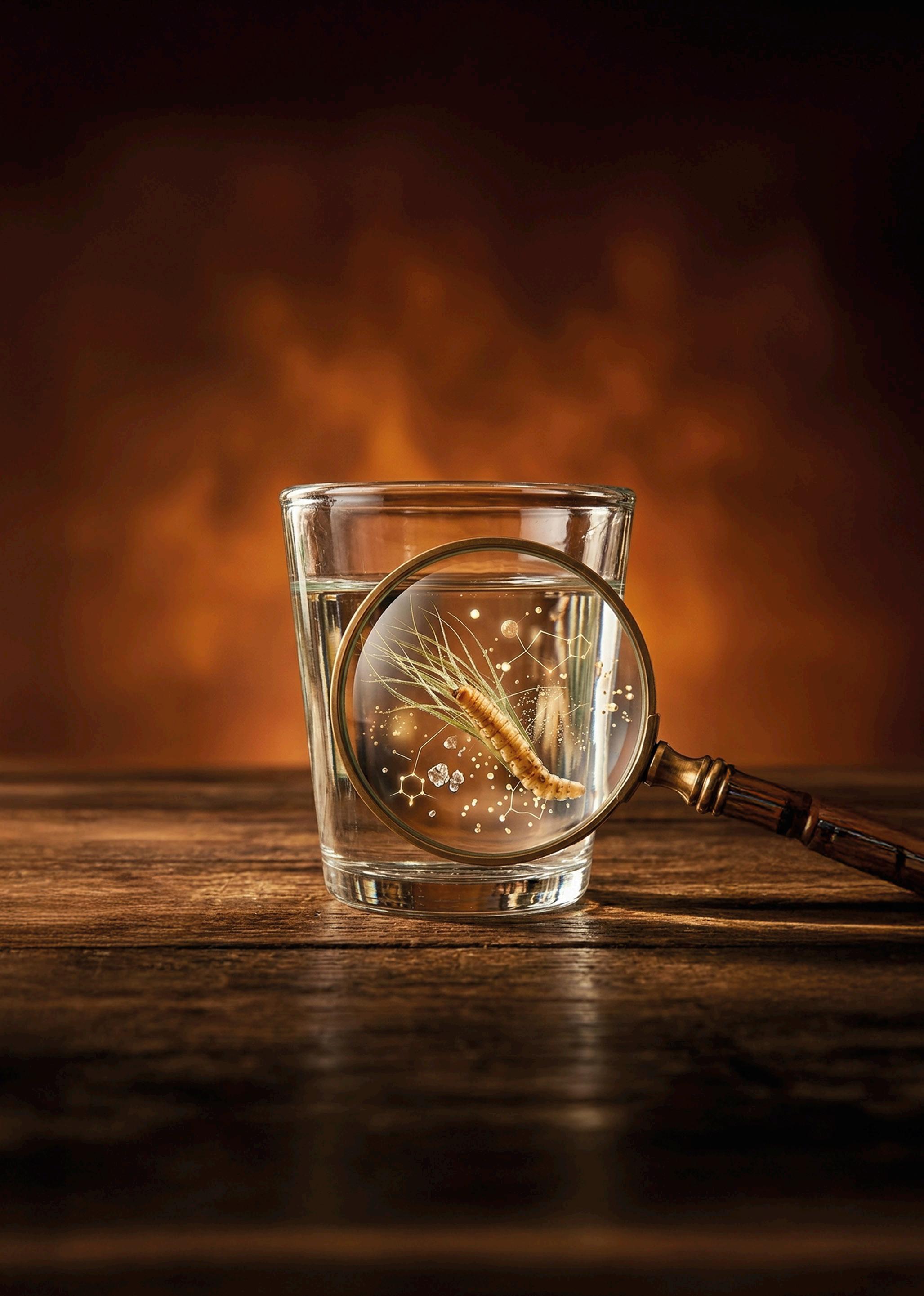
Chemistry in the Still: The Pechuga Mezcal Process
Mezcal Bar
What we Believe About Mezcal… and What is True
About mezcal
Map of Mezcal Designations of Origin in Mexico
TOP 99
Mezcals 2026 by CAVA
BEER
Mexican Beer
Beer, Colonialism, and Liquid Memory Brewery
Challenges Facing the Beer Industry Brewery
Bitterness, Learning, and Beer: How do we Develop a Taste that isn’t Innate?
About Beer
Ideal Temperature by Beer Style
DISTILLATES
Distillery
Distillates Made from Byproducts
Distillery
Long vs. Short Fermentations in Distillates
GASTRONOMY
“The Spicy One, Please”: Spiciness as the Soul of Mexican Gastronomy
—www.revistacava.com
EDITORIAL
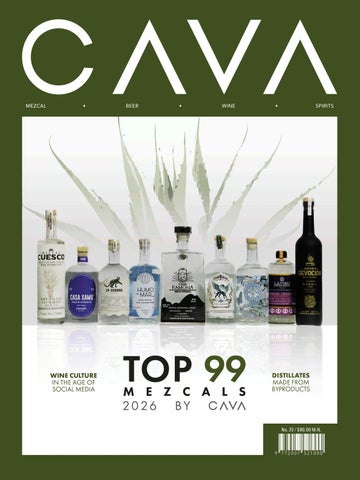
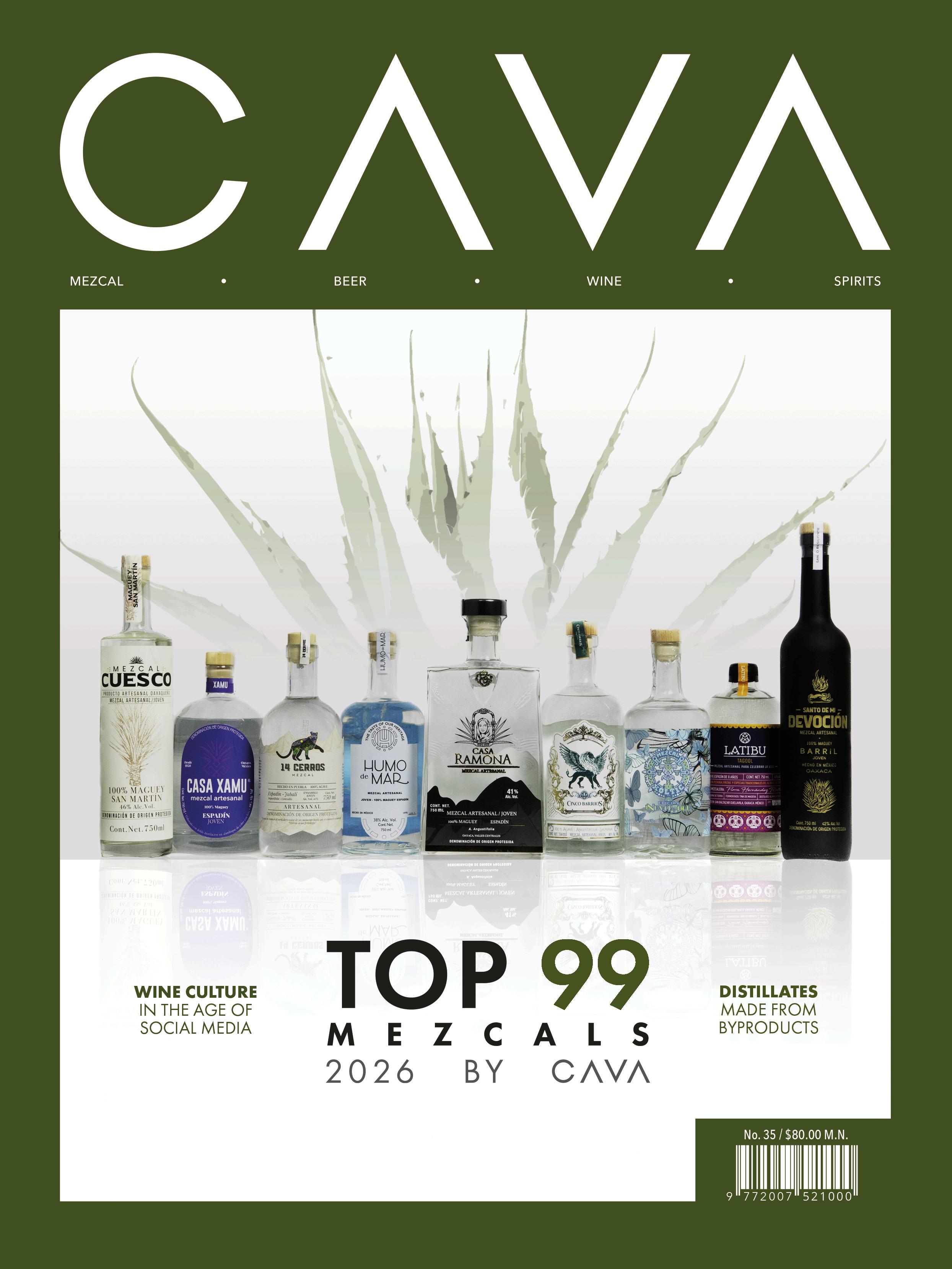
Spring is in the air, bringing longer, warmer days. It’s the season when scents intensify, gatherings move to terraces and gardens, and every sip seems to celebrate new beginnings. At CAVA Magazine, we embrace that fresh, renewed spirit. And, as we do every year, we present our highly anticipated TOP 99 Mezcals 2026, a tribute to the excellence of mezcal.
In the wine section, we explore how wine culture is evolving in the age of social media, where immediacy and image influence how we choose,recommend, and enjoy a bottle. We also explore the rise of unbarrel-aged wine, a more direct expression of the grape and terroir that prioritizes freshness and aromatic purity. And we turn our attention to the invisible side of viticulture, recognizing the vineyard workers whose labor—often unseen—sustains the quality of every harvest.
Beer, for its part, is explored from both a historical and sensory perspective. We examine the relationship between beer and colonialism, understanding how this beverage accompanied processes of expansion and cultural mixing. We also analyze the current challenges facing the brewing industry, from sustainability to changes in consumption. Finally, we reflect on the acquired taste for beer and its bitterness, a characteristic that for many was an initialV challenge and is now an acquired pleasure.
In spirits, we open the conversation to innovation with spirits made from byproducts, projects that champion the circular economy and creativity. We also con-
trast long fermentations versus short fermentations, and how these durations influence the character, texture, and aromatic complexity of each label.
Mezcal holds a special place in this issue. We delve into the pechuga mezcal-making process, one of the most ritualistic and festive expressions of this category; we debunk common myths about mezcal that still persist in the collective imagination; and we explore the pre-industrial cultivation of agave and mezcal, recalling traditional practices that resonate today with sustainability.
In the gastronomy section, we delve into spiciness in Mexican cuisine, not only as a sensation, but as a cultural identity, science, and tradition that awakens memory and a sense of belonging in every dish.
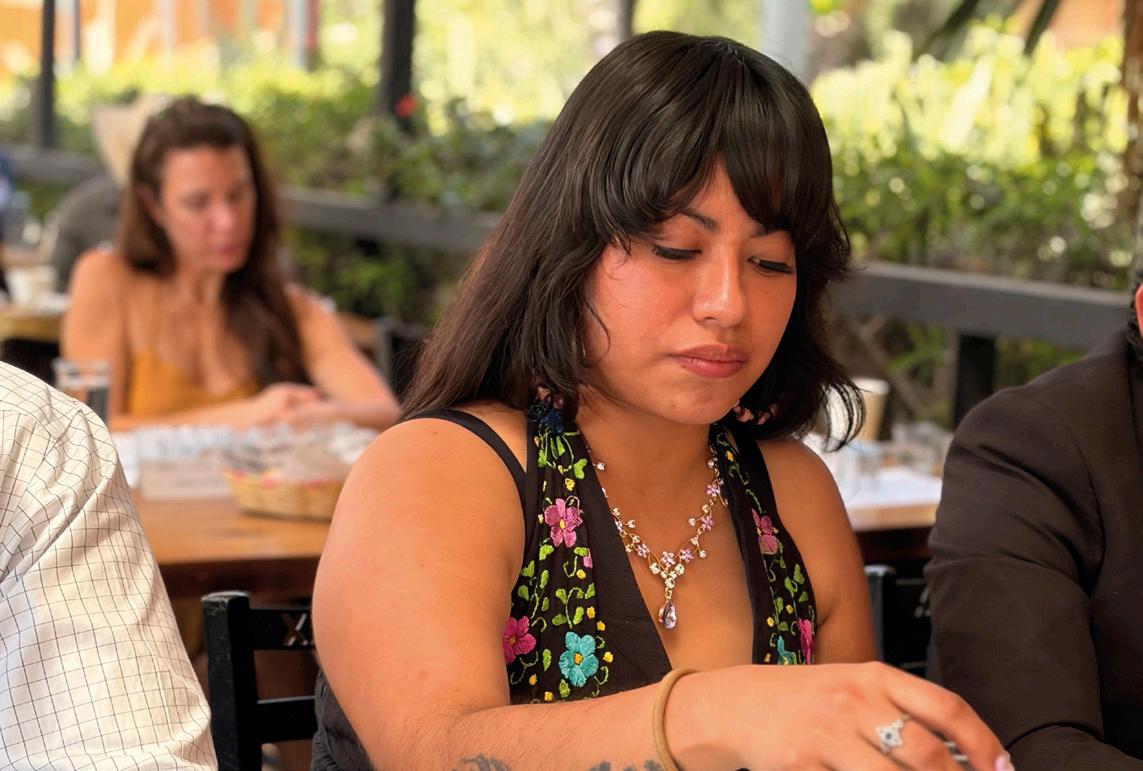
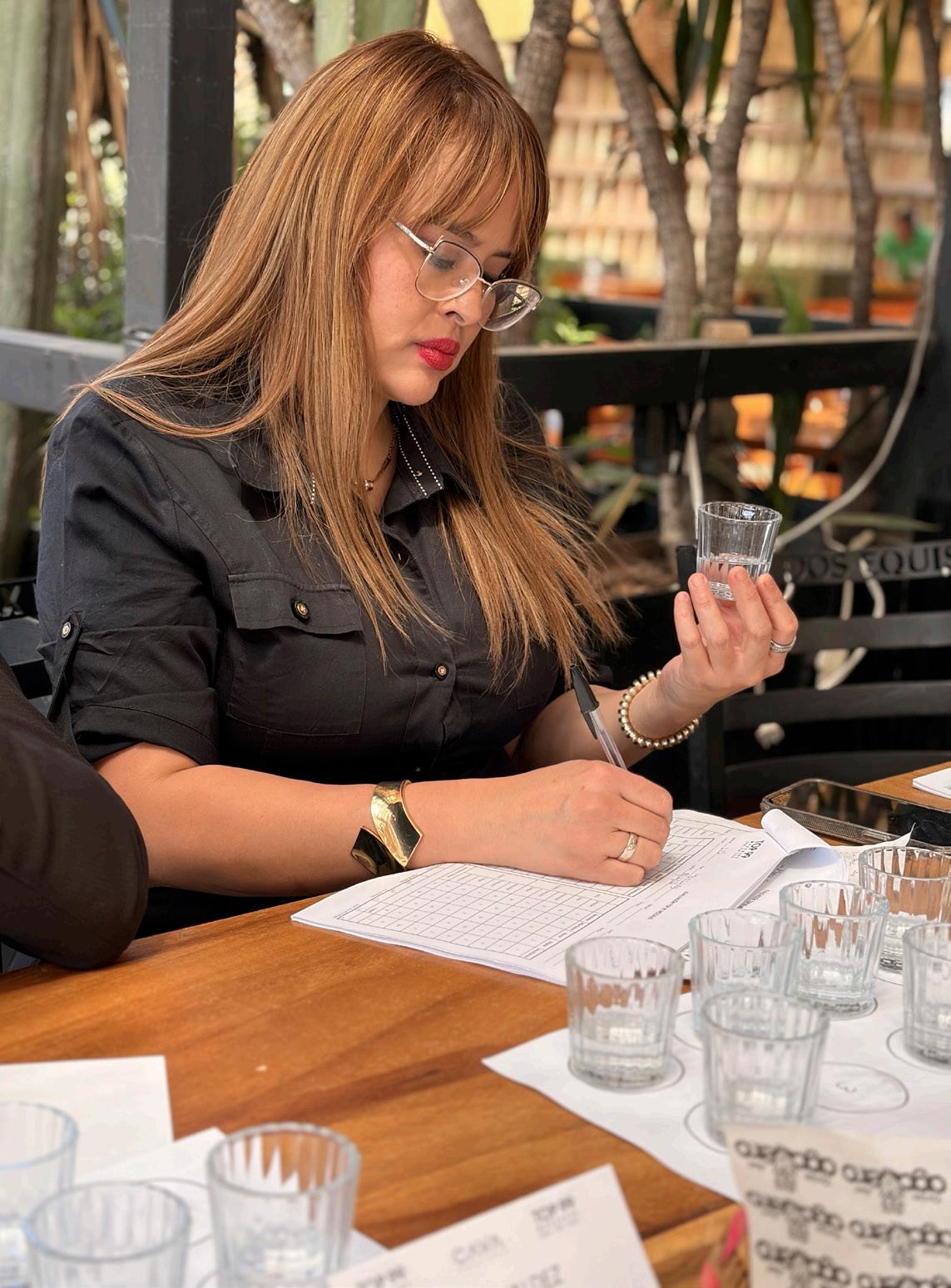
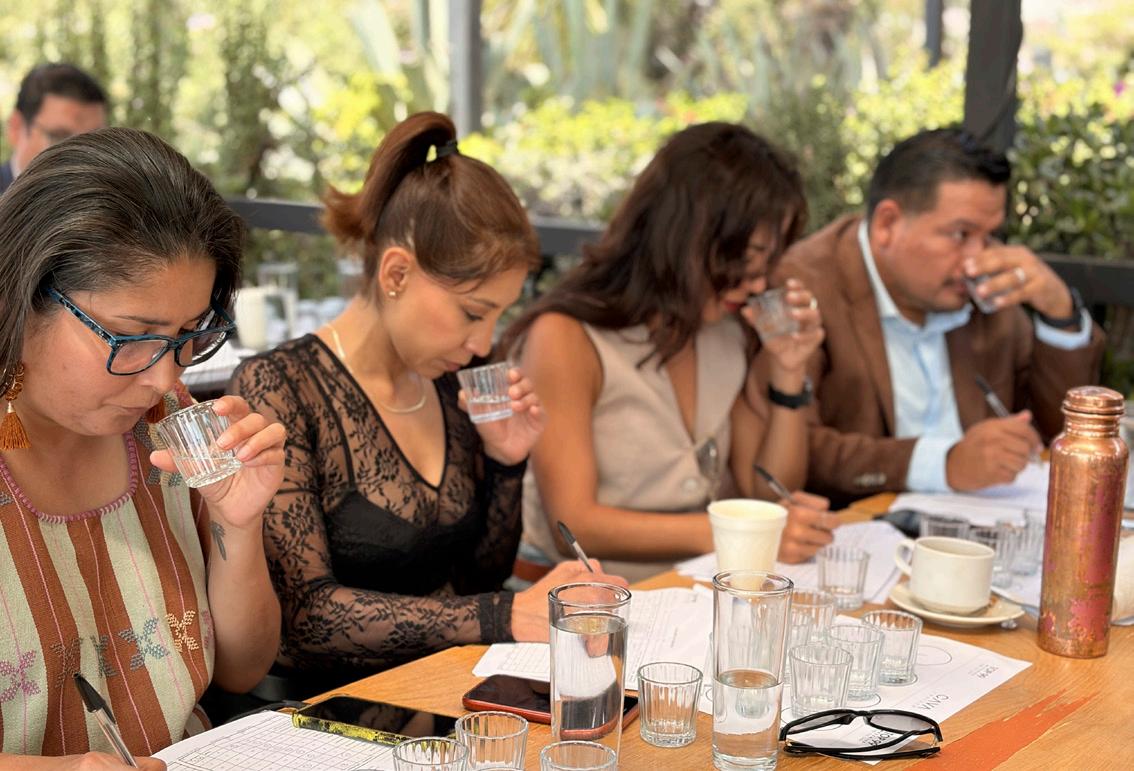
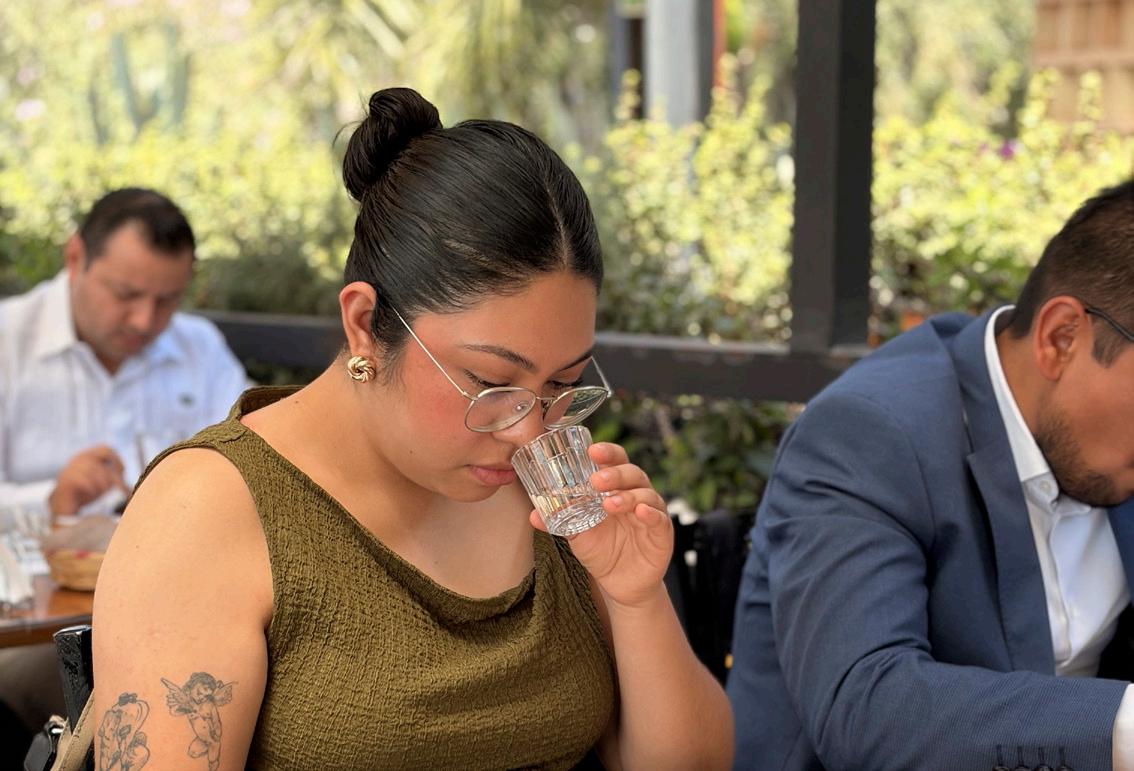
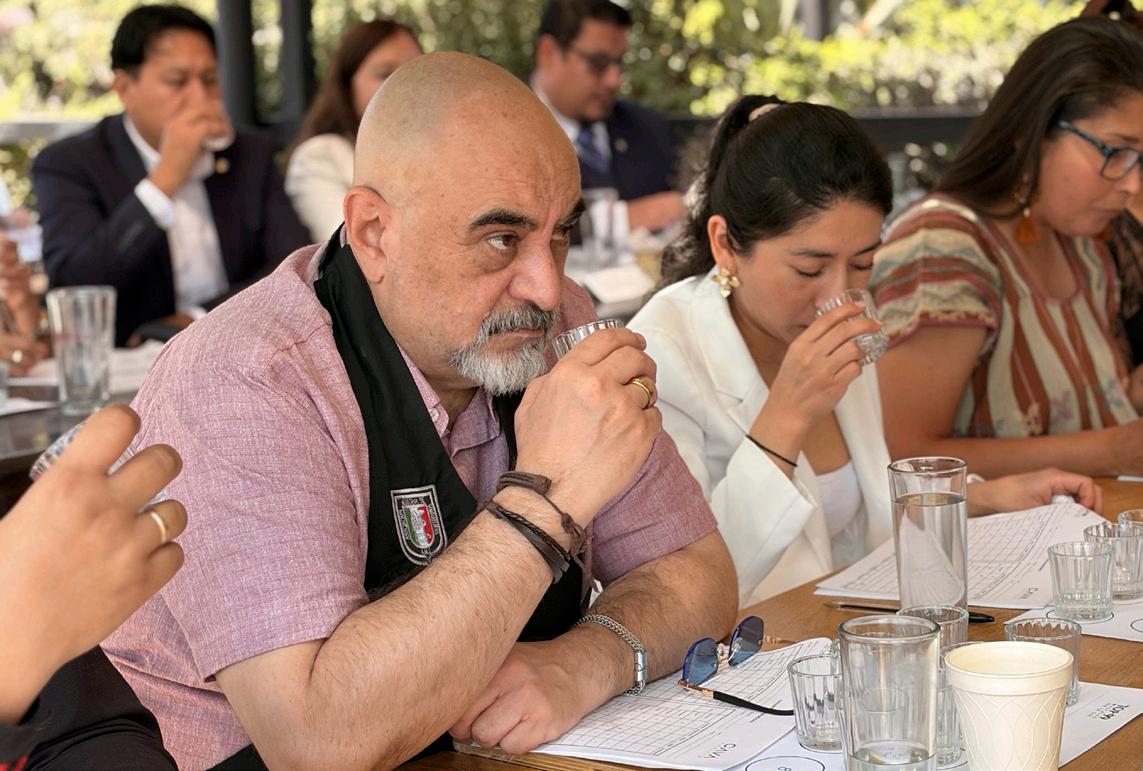
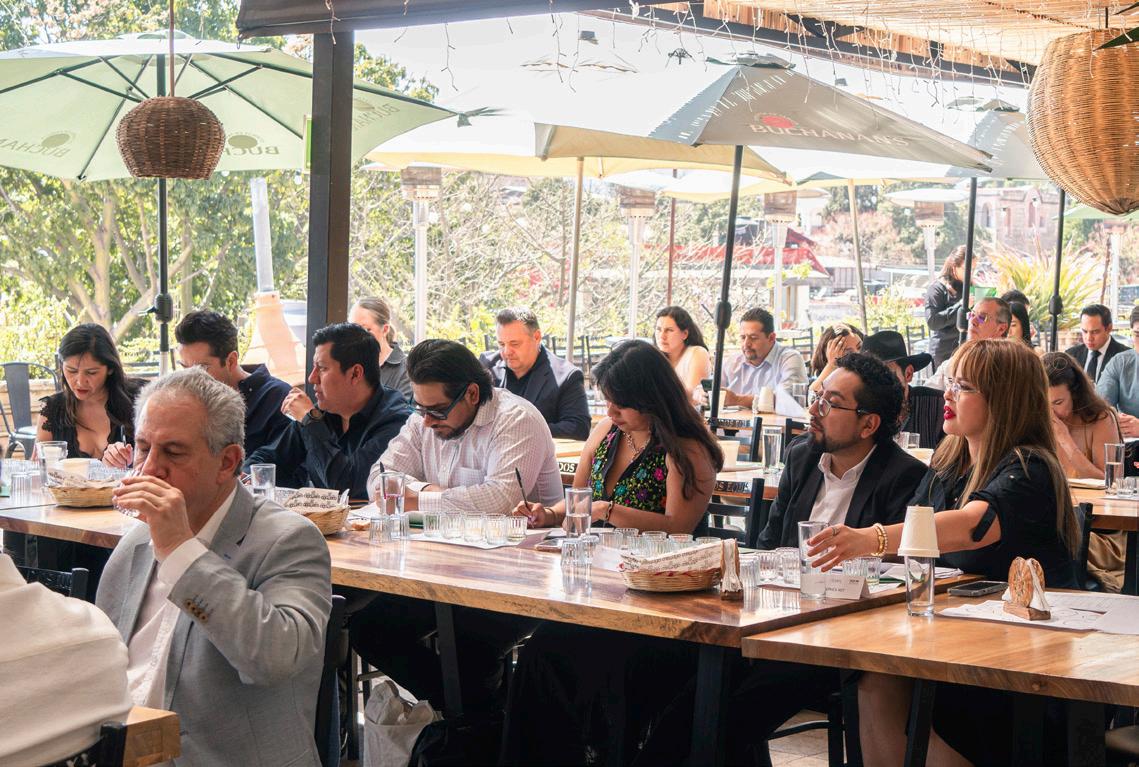
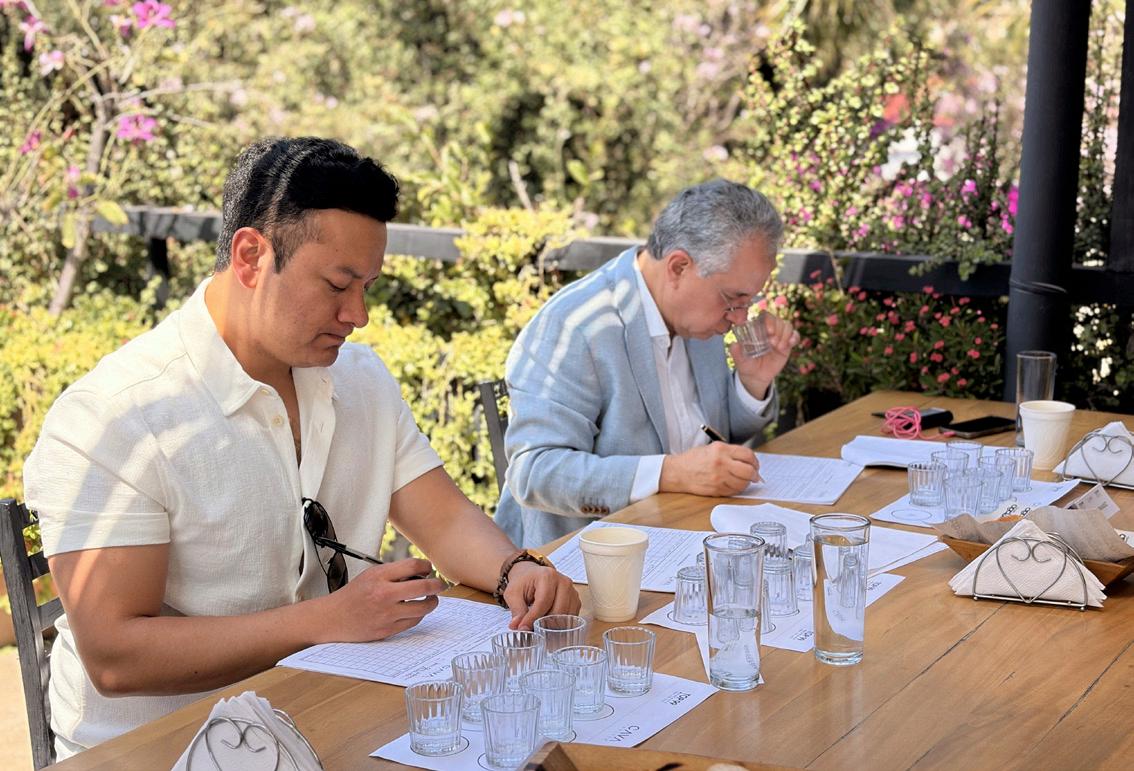
And, as is our tradition, we present our highly anticipated TOP 99 Mezcals 2026. The result of a blind tasting held in the beautiful state of Oaxaca during the month of February, this guide aims to offer our readers a reliable resource for discovering outstanding brands and understanding the rich variety of styles that define mezcal today.
This edition is an invitation to look more closely at what we taste in every glass and dish, to recognize its historical context, its social impact, and its sensory dimension. May each page be like a good fermentation: patient, profound, and full of nuances.
Cheers!
A BEGINNER'S GUIDE
IF YOU'RE TAKING YOUR FIRST STEPS INTO THE WORLD OF WINE, MEZCAL, SPIRITS, BEER, AND MEXICAN CUISINE, THIS BEGINNER'S GUIDE WILL HELP YOU UNDERSTAND SOME TERMS YOU MAY NOT HAVE BEEN FAMILIAR WITH AND ENJOY THE READING YOU'LL FIND ON THE FOLLOWING PAGES EVEN MORE.
Capsaicin
A chemical compound responsible for the spicy sensation in chili peppers, a central element in Mexican cuisine. It is an alkaloid found primarily in the veins and seeds of the fruit, which does not produce a spicy flavor in the strict sense, but rather a burning sensation by activating the pain and heat receptors in the mouth.
Concrete Eggs
These are ovoid-shaped fermentation and aging tanks made of cement that are used in winemaking as an alternative to wooden barrels. Their design promotes natural circulation of the wine inside, thanks to convection currents that keep the lees in suspension without the need for mechanical agitation, which adds texture and complexity.
Grape Harvest
This refers to the period and process of harvesting grapes in the vineyard, a pivotal moment in the wine-growing calendar that culminates months of work in the fields and demands precision, physical stamina, and technical expertise.
Jima
This is the agricultural process by which ripe agave is harvested, involving the cutting of its leaves to expose the piña, or heart of the plant, which will be used in the production of spirits such as mezcal. Jima is not a mechanical task, but rather a specialized skill that requires recognizing the optimal point of ripeness.
Pomace
The solid residue left after extracting the juice from grapes, agave, or apples, consisting of skins, fibers, seeds, and pulp remnants.
Pot ale
Residual liquid remaining in the still after the first distillation (especially in the production of malt whiskey) and consisting of water, proteins, dead yeast, and other soluble compounds that did not evaporate along with the alcohol.
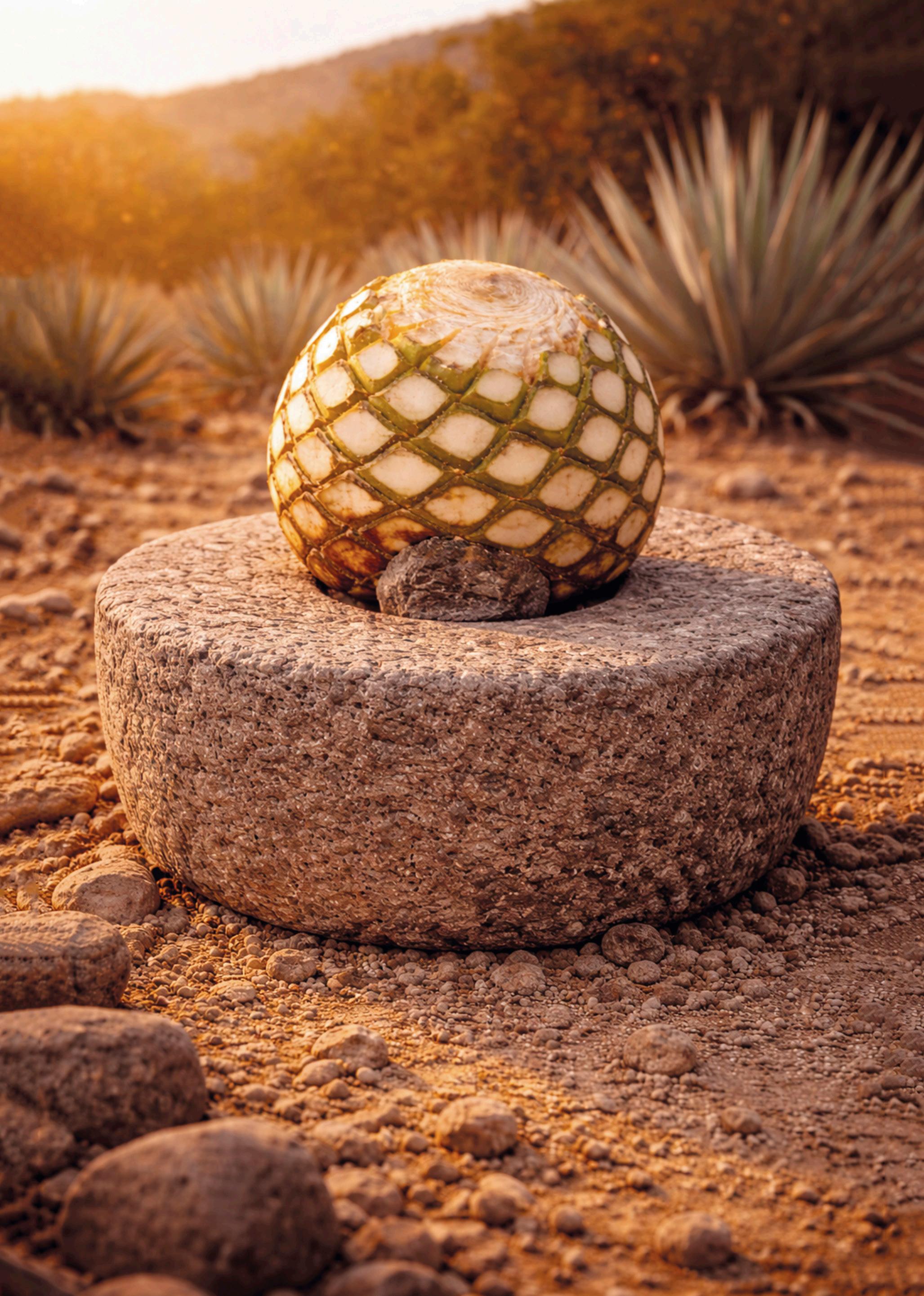
Tahona
It is a large stone wheel, traditionally pulled by an animal or driven mechanically, used to crush the cooked agave and extract its juices prior to fermentation in the production of mezcal.
WINE CULTURE IN THE AGE OF SOCIAL MEDIA
WINE CULTURE—WHICH WE KNOW AS THAT NETWORK OF PRACTICES, KNOWLEDGE, AND RITUALS—HAS BEEN INCREASINGLY TRANSFORMED BY SOCIAL MEDIA: MORE VISUAL, MORE IMMEDIATE, MORE PARTICIPATORY. WHAT DOES THE GROWING POPULARIZATION OF WINE
MEAN FOR MEXICO, IN A CONTEXT WHERE CULTURAL CONSUMPTION IS INFLUENCED BY GLOBAL TRENDS AND NATIONAL IDENTITY IS CONSTANTLY BEING REDEFINED?
If we want to understand the sociology of wine consumption today, authors such as Pierre Bourdieu can help us explain how taste is not merely an individual preference, but a form of cultural capital: knowing how to choose, describe, and appreciate a wine in this sense conveys a sense of belonging, education, and experience. Today, in addition to critics and sommeliers, content creators, enthusiasts, and novice producers who speak from their vineyards or kitchens are influential; the “authoritative palate” coexists with shared experience without distinction—isn’t that how it should be?
AND HOW DO SOCIAL MEDIA INFLUENCE WINE CULTURE?
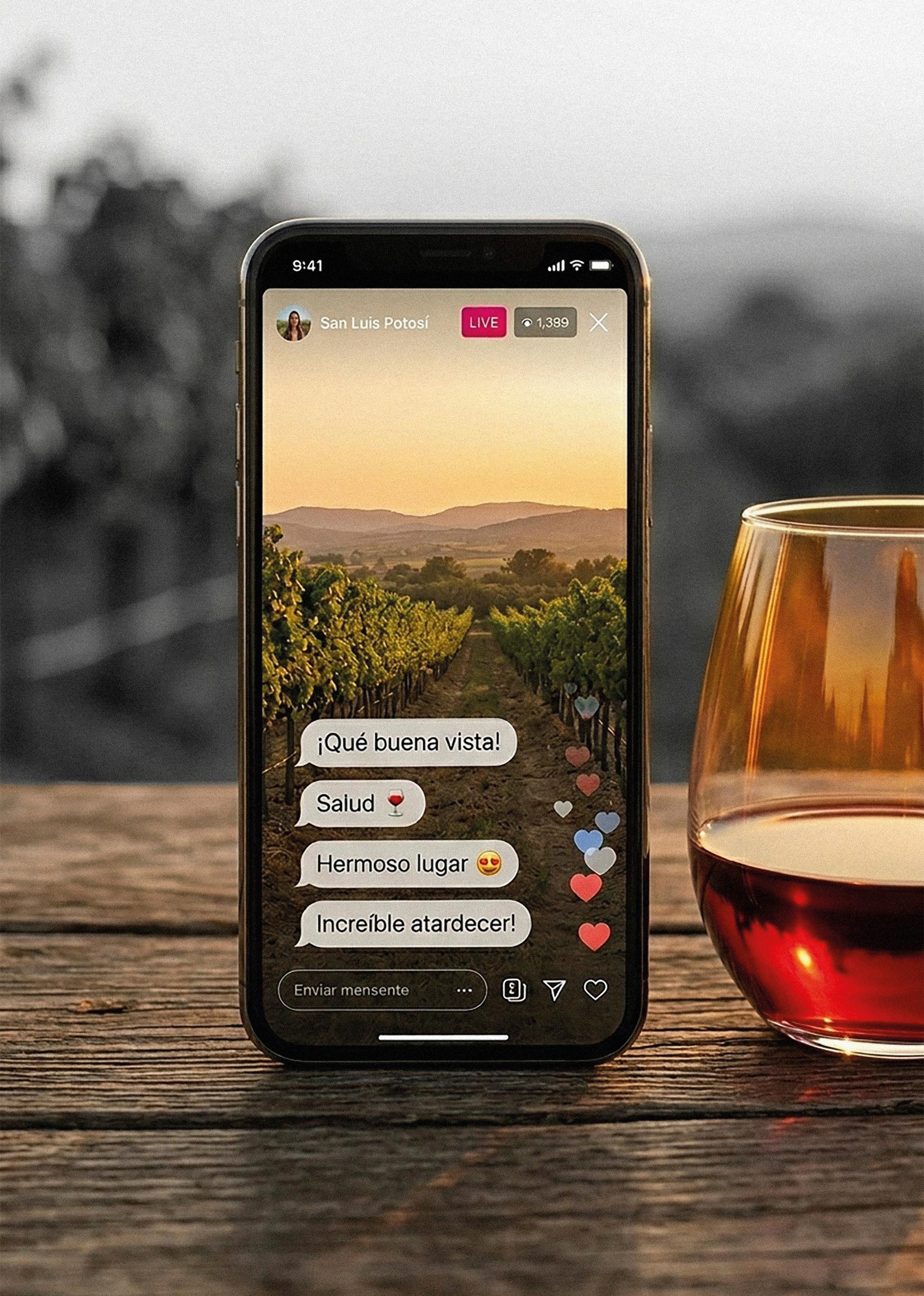
The importance of social media lies in the fact that it not only disseminates information but also shapes practices by prioritizing the visual; apps like Instagram have reinforced the aesthetic dimension of wine through aesthetic photos, glasses against sunsets in vineyards, pairings designed for the camera, etc. This emphasis can sometimes have contradictory effects: on the one hand, it democratizes access, since anyone can share their discovery and feel part of a global com-
munity. On the other hand, it can oversimplify the discourse, reducing the complexity of the wine cycle to an attractive image; likes and views function as symbolic currency that validates tastes and guides consumption.
However, let’s not lose sight of the fact that digitalization has also opened up opportunities for learning, and this is where we should focus; specialized magazines such as Revista CAVA and other academic and social sources have observed that contemporary consumption is characterized by a search for experiences and knowledge. Streamed tastings, online courses, and wine clubs coordinated through social media allow previously distant audiences to access basic concepts of viticulture, fermentation, or food pairing. The technical language so often associated with exclusivity is translated into brief, clear, and sometimes humorous formats; a one-minute video can explain what natural wine is or why climate influences acidity.
From the perspective of the cultural economy, social media has also reshaped the value chain; small Mexican wineries that once depended almost exclusively on distributors or in-person fairs now find in e-commerce and digital promotion a direct route to the
“ WINE REMAINS A BRIDGE: BETWEEN THE LAND AND THE TABLE, BETWEEN GENERATIONS, BETWEEN REGIONS; SOCIAL MEDIA HAS BROADENED THAT BRIDGE, AMPLIFYING VOICES, ACCELERATING EXCHANGES, AND EXPANDING KNOWLEDGE.
”
consumer. Reputation is built through reviews, recommendations, and collaborations with content creators; in this environment, authenticity becomes a strategic resource: showcasing the grape’s origin, the family history, and environmental commitment. The transparency demanded by informed audiences becomes part of the prestige.
However, wine culture on social media is not without its tensions; visibility can also give rise to new forms of exclusion. The most expensive bottles or the most well-known regions tend to receive the most attention, reproducing global hierarchies. Similarly, the pressure to produce constant content can encourage simplified narratives: “the five wines you must try” or “the best wine for under…”. While these formulas facilitate access, they run the risk of reducing diversity to lists and fleeting trends. Against this backdrop, the challenge for Mexican producers, communicators, influencers, and consumers is to find a balance; social media offers powerful tools for spreading knowledge, strengthening local economies, and building community. At the same time, it demands a critical eye to avoid falling into trivialization or the uncritical reproduction of global trends.
WINE CULTURE IN MEXICO
In Mexico, the digital conversation also engages with local identities; wine competes and interacts with other beverages deeply rooted in local culture, such as mezcal or
craft beer. On social media, this coexistence translates into pairings, shared festivals, and debates about what it means to “consume domestic products”; the #VinoMexicano hashtag not only promotes products but also fosters a sense of belonging and pride.
This transformation is taking place alongside the rise of wine-producing regions such as Baja California, Querétaro, Coahuila, and San Luis Potosí, wineries don’t just produce wine—they craft stories, post harvest updates in real time, showcase winemaking processes, announce virtual tastings, and come together at the country’s most important wine festivals, such as the MEXICAN WINE FESTIVAL organized by CAVA Magazine, which takes place every year in the state of San Luis Potosí. The vineyard becomes the stage and the bottles the protagonists of a narrative that forms part of stories, reels, and live streams.
Wine remains a bridge: between the land and the table, between generations, between regions; social media has broadened that bridge, multiplying voices, accelerating exchanges, and expanding knowledge. In Mexico, the winemaking tradition coexists with an innovative spirit; this digital expansion represents an opportunity to tell the story of wine with a unique voice, and the glass remains a meeting place. The new does not replace the old; it reinterprets it, and perhaps therein lies the most fruitful lesson of our time: that culture, like wine, is always in the process of transformation. ▼
BUNAGED WINE: DISCOVERING ANOTHER EXPRESSION OF THE GRAPE
FOR CENTURIES, THE BARREL WAS SYNONYMOUS WITH “SERIOUS” WINE; OAK CONTRIBUTED STRUCTURE, TOASTED AROMAS, AND AGING POTENTIAL; FURTHERMORE, IT WAS THE BEST CONTAINER AVAILABLE FOR TRANSPORTING AND STORING WINE.
HOWEVER, IN RECENT DECADES, A TREND TOWARD DOING WITHOUT WOOD HAS GAINED GROUND. FAR FROM BEING A PASSING FAD, BARREL-FREE WINE RESPONDS TO A SPECIFIC OENOLOGICAL GOAL: TO HIGHLIGHT THE GRAPE AND THE TERROIR WITHOUT THE AROMATIC FILTER OF OAK.
efore stainless steel gained prominence in the 20th century, wood was the indispensable raw material for countless production processes. Barrels not only held the wine; they also allowed for natural micro-oxygenation, which stabilized the color and softened the tannins. With the advent of steel, the wine industry gained much more precise control over temperature and hygiene, which opened the door to fresher, lighter styles.
Today, making wine without barrels is more a stylistic choice than a process-related one; in other words, it is not about “saving” on wood, but rather prioritizing other aromas, typically fruity ones. For example, in warm-climate regions, where the fruit ripens intensely, avoiding oak can help preserve freshness. In contrast, in cold areas, where natural acidity is high, the absence of wood allows citrus and mineral profiles to stand out.
WHAT DOES THE BARREL ADD AND WHAT DOES IT TAKE AWAY?
From a wine chemistry perspective, oak wood (primarily Quercus robur and Quercus alba)
contains phenolic and aromatic compounds that are transferred to the liquid during aging, including vanillin, lactones, eugenols, and toasted compounds derived from the internal heating of the barrel. Studies published in specialized journals have documented how these compounds alter the sensory profile and perception of structure; when a wine is not aged in a barrel, these contributions do not exist. The result is usually a more linear and transparent profile. The primary notes— fresh fruit, flowers, and herbs—remain in the foreground; there are no layers of vanilla or toast to mask the wine’s expression. For some consumers, this absence signifies simplicity; for others, authenticity.
One of the arguments in favor of oak barrels is their ability to allow a slow influx of oxygen; this exchange helps soften tannins and stabilize pigments. In non-oaked wines, the technique of micro-oxygenation (introducing small, controlled amounts of oxygen into tanks) can serve a similar function. Developed in France in the late 20th century, this practice has been studied by specialists who
“ WITHOUT THE INFLUENCE OF THE BARREL, TANINS TEND TO FEEL
MORE DIRECT AND LESS POLISHED; THIS DOES NOT IMPLY LOWER QUALITY, BUT RATHER A DIFFERENT STYLE.”
have demonstrated its impact on texture and color without the need for oak.
ALTERNATIVE CONTAINERS: PRECISION AND NEUTRALITY
Stainless steel has become a favorite in wine production because it is an inert material that does not impart aromas and allows for precise temperature control during fermentation. Maintaining low temperatures—primarily for whites and rosés—helps preserve the volatile aromatic compounds responsible for fruity and floral notes.
But steel is not the only option; cement tanks, clay amphorae, and concrete eggs are also used. While these containers do not impart their own flavors like oak does, they do allow for some oxygen exchange. Oenological research has shown that moderate micro-oxygenation can stabilize color and round out texture without adding external aromas, allowing the wine to retain its purity while gaining complexity.
The no-oak style is particularly common in white and rosé wines; varieties such as Sauvignon Blanc, Albariño, and Chenin Blanc are typically aged in stainless steel to highlight their citrus, herbal, or mineral profiles. In Mexico, regions like the Guadalupe Valley and Baja California have adopted this approach for many contemporary wines. Here, the combination of sunny climates and modern winemaking techniques yields vibrant whites with good acidity and crisp fruit expression. Similarly, in states like Querétaro and Coahuila, sparkling wines and young wines are produced without oak to preserve freshness.
Although less common in the traditional imagination, un-oaked reds do exist and are
gaining popularity; in this case, varieties like Gamay or certain styles of young Tempranillo exhibit juicy, light profiles when bottled after brief aging in steel or concrete. Without the influence of the barrel, the tannins tend to feel more direct and less polished; this does not imply lower quality, but rather a different style: wines intended to be drunk young, with immediate character and less need for prolonged aging; stability is achieved through technical control and timely bottling.
CONSUMER PERCEPTION
Various sensory analysis studies show that perceptions of quality are influenced by cultural expectations; aromas of vanilla or toast were associated with higher-quality wines. However, new generations of consumers value freshness, drinkability, and varietal clarity. In comparative tastings, many participants identify non-oak-aged wines as “lighter” or “easier,” attributes that are now considered positive.
But this is not about establishing hierarchies; the oak barrel remains a valuable and legitimate tool, yet its absence can also be valuable. At the table, these wines often shine for their gastronomic versatility; their freshness makes them compatible with spicy cuisine, seafood, salads, and light dishes. Since they lack dominant toasty notes, they harmonize with delicate flavors without overshadowing them.
Choosing not to use barrels can also be an aesthetic stance; it is opting for a narrative where the fruit and terroir speak without aromatic intermediaries. In a world where excess can overwhelm the senses, wine without oak offers a respite: crisp aromas, vibrant acidity, and honest structure. ▼
INVISIBLE VITICULTURE: THE WORKERS OF THE VINEYARD
WHEN WE RAISE OUR GLASSES TO TOAST, IT IS RARE TO THINK BEYOND THAT SHARED MOMENT AND IMAGINE THE HANDS THAT CARED FOR THE LAND, FOR EVERY BRANCH AND EVERY BUNCH. BEFORE THE GRAPES FERMENT IN THE WINERIES, THERE IS A SILENT CYCLE OF HARD WORK, PATIENCE, AND HUMAN RESILIENCE THAT BEGINS LONG BEFORE THAT RITUAL IN WHICH WE SET OUT TO UNCORK OUR FAVORITE BOTTLE AND CELEBRATE.
Farm work, as we say in Mexico:“has its own challenges,” since it involves a wide range of tasks such as planting, pruning, leaf removal, watering, fertilizing, spraying, and constantly tending to the land—all while working long hours under the sun. That is why the history of the winegrower and the vineyard worker is almost as old as agriculture itself; cultivating a vineyard is not just about planting vines and waiting for the harvest, it is about accompanying every stage of the vine’s biological cycle, observing how it grows with the seasons, how the heat affects the grape skin in summer, and how that moment finally arrives to harvest the ripe fruit. Those who make their living working in the fields know this well: every task has its season, its technique, and its demands. For example, pruning—which may seem simple to many—requires precision and repetition, or leaf removal, which is used to improve airflow around the grape clusters and can make the difference between a healthy harvest and a diseased one.
HARVEST SEASON
The harvest (the picking of grapes for wine) is the busiest time of the year; although its duration varies by region and weather con-
ditions, it usually takes place over just a few weeks. In Mexico, for example, it takes place between July and October, giving way to large celebrations of the bountiful harvests organized by wineries, which mainly feature tastings, guided tours of the vineyards and cellars, and other activities to celebrate the good harvest. During this time, the vineyards are filled with workers who, starting very early in the morning, pick the grapes by hand or oversee the machinery that harvests them; speed is key because the grapes must be harvested when they reach the optimal point of ripeness.
During this time, the workdays can be long and demanding: lifting, cutting, transporting, and sorting bunches under the sun can lead to physical and mental fatigue. This intensity is repeated every season, and although many tackle it with a passion for wine and pride in their work, it is not without its challenges.
WORKING CONDITIONS AND SOCIAL CHALLENGES
Work in vineyards shares many characteristics with that of other agricultural day laborers because it is seasonal, physically demanding, and poorly paid. In other parts of the world,
“ …RECOGNIZING VINEYARD WORKERS MEANS RECOGNIZING THAT WINE IS NOT JUST AN AGRICULTURAL PRODUCT; IT IS PART OF OUR SOCIAL FABRIC, OF THE COLLECTIVE MEMORY OF THE COUNTRYSIDE, AND EVEN OF OUR COUNTRY’S ORAL TRADITION.”
such as California and European regions, labor shortages have been a growing concern for producers, as various factors come into play, including an aging workforce, the migration of young people to cities in search of other jobs, and the perception that farm work is neither sufficient norwell compensated.
In Mexico, in some wine-growing regions of the states of Baja California, Querétaro, and Coahuila, wineries have faced similar challenges in recruiting and retaining workers, especially during harvest season. Strategies such as in-house training, transportation, or incentives help, but competition with other agricultural activities and demographic shifts complicate these efforts.
Working conditions also involve a profound element of social inequality; in some traditional wine-producing regions of Europe, investigative journalism has exposed what appear to be appalling conditions for migrant workers, who face exploitation, inadequate housing, and long working hours while contributing to the production of highly acclaimed wines. While these cases do not represent the sector as a whole, they serve as a reminder that the wine industry is made up of people whose rights must be supported and respected.
SHORT SEASON, LASTING EXPERIENCES
Although the harvest may seem like a brief interlude in the agricultural year, for workers it represents months of preparation and focus; many laborers move between wine regions according to harvest seasons, forming a seasonal community that experiences firsthand the lives of multiple vineyards and wine styles, these experiences foster not only agricultural skills but also human and cultural ties to the terroir, making the wine cycle all the more valuable.
The interaction between workers from different regions and backgrounds also highlights how work in the wine industry can be a source of learning, exchange, and growth; however,this dynamism is hampered by a lack of public recognition. The wine enjoyed at celebrations and tastings rarely gives a thought to those who harvested the grapes, upheld their quality, and worked under the pressure of each season.
TOWARD A MORE SUSTAINABLE AND HUMANE VITICULTURE
In the face of the sector’s challenges, modern viticulture has reevaluated certain practices, such as the use of machinery for pruning or mechanized harvesting, which are not intended to replace people but rather to alleviate intense physical strain and address labor shortages. Likewise, movements of winegrowers and cooperatives advocate for better working conditions, fair wages, and formal recognition of the social role of farmworkers in wine production. Agricultural associations and rural development programs have highlighted the importance of recognizing agricultural labor as an economic and cultural driver, especially in regions where wine is part of the regional identity.
For these reasons, recognizing vineyard workers means acknowledging that wine is not merely an agricultural product; it is part of our social fabric, the collective memory of the countryside, and even the oral tradition of our country. Every pruning, every bunch harvested by hand, every hour under the sun contributes to the story of a bottle of wine that goes beyond the technique and science of cultivation; the vineyard is also a space of generational wisdom, shared challenges, constant learning, and dignity in work. ▼
SERVING ORDER AND TEMPERATURE WINE
ORDER
When organizing a wine tasting, it is best to establish an order that allows each wine to be fully appreciated. It is recommended to start with the lightest wines, move on to those with more body, and save the sweet or dessert wines for last. This way, the palate gradually progresses in intensity, preventing stronger flavors from overshadowing the more subtle ones.
TEMPERATURE
JUST AS WITH BEVERAGES SUCH AS BEER OR SOFT DRINKS, WINE MUST ALSO BE SERVED AT THE RIGHT TEMPERATURE TO BE FULLY ENJOYED. WHEN SERVED TOO COLD OR TOO WARM, ITS AROMAS AND FLAVORS CAN LOSE INTENSITY OR BECOME UNBALANCED. KEEPING IT WITHIN ITS OPTIMAL RANGE ALLOWS ITS CHARACTERISTICS TO EXPRESS THEMSELVES CLEARLY AND PLEASINGLY ON THE PALATE.
CELLAR 12-15 C°
C°
6-10 C°
Rosés, reds, sparkling wines, and dry sherry Light reds
Spicy and earthy reds
Full-bodied reds
Dessert wines
TTHE PRE-INDUSTRIAL CULTIVATION OF AGAVE AND THE ESSENCE OF MEZCAL
MEZCAL, THAT SPIRITUOUS BEVERAGE THAT RECONNECTS US WITH THE LAND AND THE HISTORY OF MEXICO, IS THE RESULT OF DECADES OF THE AGAVE’S LIFE, OR MAGUEY, AS MANY RURAL COMMUNITIES CALL IT. ITS MANAGEMENT, PRIOR TO INDUSTRIAL PROCESSES, COMBINES ECOLOGY, CULTURE, AND ANCESTRAL KNOWLEDGE PASSED DOWN FROM GENERATION TO GENERATION.
he journey of mezcal begins many years before its fermentation and distillation. The agaves intended for mezcal production can take between 6 and 15 years to mature, depending on the species and where they are grown. During this time, the plants accumulate sugars in their core (the piña), which will later be essential for the production of the spirit. This long life cycle makes agave cultivation, in and of itself, a profound practice, tied to time, climate, and harmony with the natural environment. Unlike annual crops, where the focus is on repeated harvests year after year, agave demands patience, observation, and a deep respect for the rhythms of nature.
JIMA: KNOWING WHEN AND HOW TO HARVEST
Jima is a crucial stage that requires both physical strength and expert knowledge. The jimador—as the farmer specializing in maguey plants is called—is responsible for identifying ripe agaves and carefully cutting the leaves to expose the piña, the heart of the plant. This decision is not based on calendars, but on observing the plant, its shape, the color of its
leaves, and the absence of a flowering quiote, which indicates that the plant has passed its prime. Harvesting too early can result in a piña with low sugar content, which will affect fermentation and the quality of the mezcal. Harvesting too late can mean a plant that has begun to divert energy toward reproduction rather than accumulating sugars. Finding that sweet spot is both an art and a science that is learned through years of practice.
TRADITIONAL FARMING
Many mezcal-producing communities have practiced traditional farming methods that avoid the use of agrochemicals and rely on natural soil and climate conditions. According to experts, traditional agricultural and environmental practices profoundly influence the microbial communities living in and around the agave, which, in turn, can affect the fermentation and profile of the mezcal. In the agave’s natural microbiota, various microorganisms can contribute to fermentation and impart unique sensory characteristics, although this stage is still dominated by spontaneous fermentation practices in many artisanal palenques.
“ THIS DEEP UNDERSTANDING OF THE AGAVE AND ITS BIOLOGICAL RHYTHMS IS ROOTED IN CULTURAL PRACTICES, COMMUNITY FESTIVALS, LOCAL KNOWLEDGE, AND EXPERIENCES PASSED DOWN FROM MASTERS TO APPRENTICES” .
In contrast, more intensive practices or the overexploitation of mature agaves without replanting can weaken the genetic and microbiological diversity of the crops; this not only has ecological implications, but also affects the sensory identity of the mezcals produced from those agaves.
Mexico is home to the greatest diversity of agaves in the world, with around 200 described species, many of which are endemic to particular regions. Although not all are used in mezcal production, several of them are valuable for their flavor characteristics, yield, and adaptation to the environment.
Traditional agave management involves understanding the characteristics of each species: what types of soil they prefer, how they respond to rain or drought, how many years it takes for them to mature, and what their productive potential is. This ecological wisdom is built on field experience, observing the plants, and respecting natural cycles. Maintaining species diversity and avoiding practices that favor monocultures is part of a pre-industrial management approach that respects biodiversity and helps ensure the long-term sustainability of the resource.
In many artisanal palenques, the agave heads are cooked in stone ovens with local firewood, ground with tahonas (large stone wheels pulled by animals or people), and fermentation occurs spontaneously, without industrial additives. Although these practices are labor-intensive and slow, they produce a mezcal with unique profiles that reflect not only the agave, but also the place where it grew and the hands that worked it.}
CURRENT CHALLENGES
The global boom in mezcal is putting pressure on this traditional management system; growing demand has encouraged intensive farming practices, the use of monocultures, and the replacement of seed-based methods with hijue plantations, which reduce genetic diversity. Furthermore, the overexploitation of wild agaves threatens entire ecosystems that depend on these plants and their natural cycles. In the face of these challenges, various organizations and communities are proposing a return to more sustainable practices: collecting seeds to grow new agaves, crop rotation, conservation of wild areas, and education on management practices that respect both biodiversity and biocultural heritage. These strategies aim to ensure that pre-industrial agave management is not lost or reduced to a purely extractive approach.
What we now call pre-industrial agave management isn’t learned from books or technical workshops; it’s learned in the field, through observation, repetition, and by listening to those who have spent their entire lives among the maguey plants. This deep understanding of the agave and its biological rhythms is rooted in cultural practices, community festivals, local knowledge, and experiences passed down from masters to apprentices. Mezcal-producing communities have developed a symbiotic relationship with the agave that transcends economic considerations; it is part of their cultural identity, their landscapes, and their stories. This relationship is centuries old, predating even the arrival of Europeans, and has survived countless socioeconomic and environmental changes. ▼
TCHEMISTRY IN THE STILL: THE PROCESS OF PECHUGA MEZCAL
PECHUGA MEZCAL IS A DISTILLATE THAT, BEYOND ITS WELL-KNOWN TRIPLE DISTILLATION, EMBRACES TRADITION, SENSORY CURIOSITY, AND A DIALOGUE AMONG INGREDIENTS
THAT MAY SEEM UNUSUAL: MEAT, FRUIT, SPICES, AND THE SPIRIT OF THE AGAVE. BUT WHAT MAKES IT SO SPECIAL? WHY DOES THIS TECHNIQUE SPARK SO MUCH INTEREST AMONG
CONNOISSEURS IN THE WORLD OF DISTILLATES?
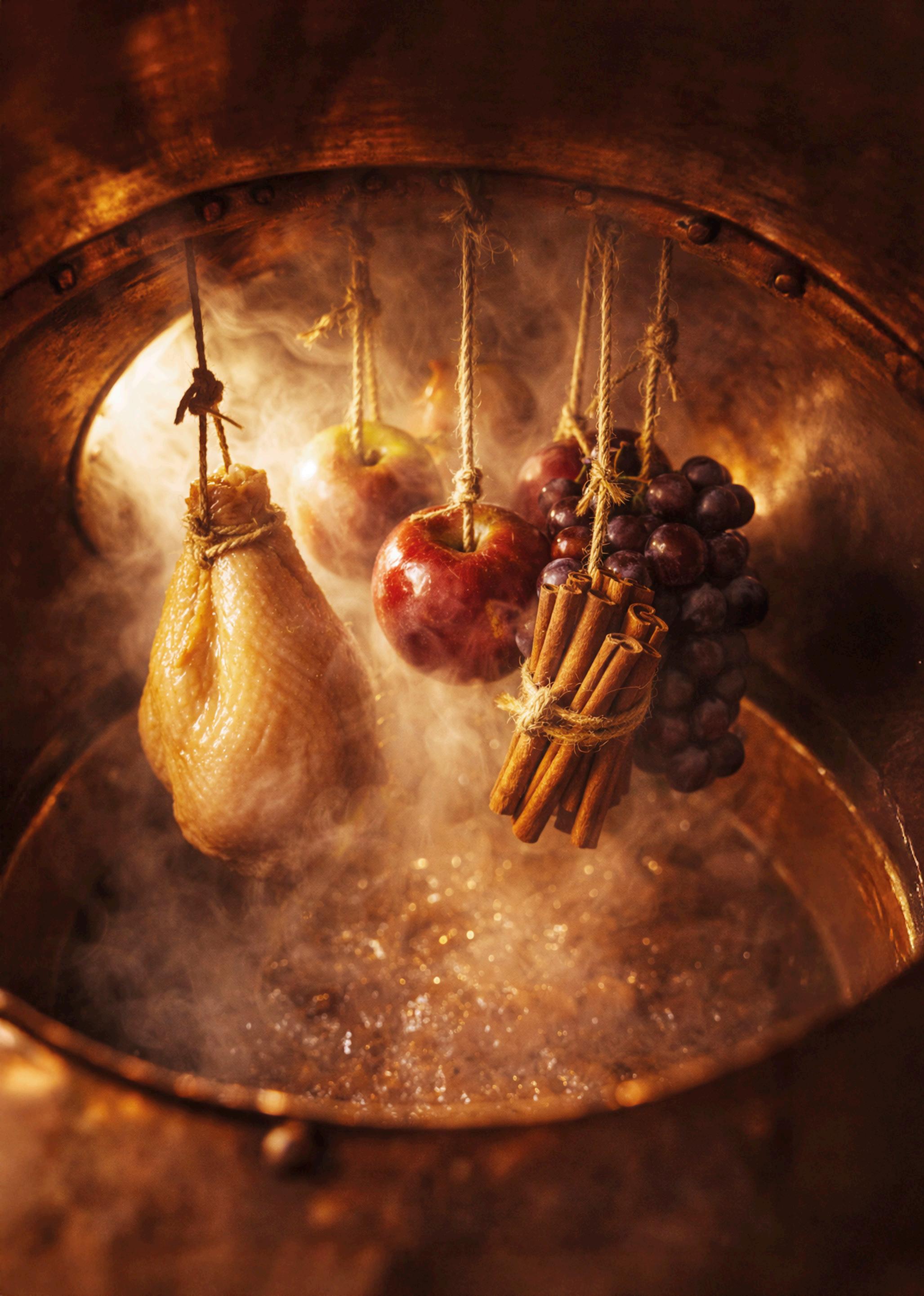
he word “pechuga” isn't just a gimmick to pique the reader's curiosity; although, if we've managed to do that by now, you can continue to uncover more of its secrets in the following paragraphs. It literally refers to the breast of a chicken or turkey that is suspended inside the still during the final distillation of mezcal. This somewhat unusual practice hides a chemical and artisanal process with centuries of history in the palenques of southern Mexico.
WHAT IS PECHUGA MEZCAL?
The exact history of pechuga mezcal is difficult to trace with documentary precision, because like much rural knowledge, it is transmitted orally and from generation to generation. There are records and testimonies suggesting that its production may date back to the 19th century, though the practice is likely even older. What is well documented by ethnographers and spirits experts is that this mezcal undergoes a triple distillation. During the third distillation, the hanging pechuga is added, along with other aromatic ingredients,
which technically transforms the distillate into a beverage enriched by the interaction between steam, organic matter, and volatile compounds.
FROM THE FIELD TO THE STILL: STAGES OF THE PROCESS
The production of Pechuga mezcal follows the classic stages of mezcal-making, with an added layer of complexity in its final phase:
Agave Harvest
The journey begins in the fields with Agave angustifolia, also known as espadín, which must reach optimal maturity before being harvested; this can take between 7 and 10 years, depending on the variety and region. The leaves are carefully cut, and the piña (the heart of the agave) is ready for the next step.
Oven cooking
The piña is cooked in underground stone ovens, where high temperatures and smoke transform its complex sugars into
“ …THE INCLUSION OF PECHUGA IN THE PROCESS IS JUSTIFIED, AS IT IS A TECHNIQUE THAT HELPS BALANCE ALCOHOLIC INTENSITY, ADD TEXTURE, AND DIVERSIFY AROMATIC PROFILES” .
fermentable compounds. This process can last several days, and the choice of wood for the fire influences the final aromas and flavors.
Milling and Fermentation
Once cooked, the pineapple is traditionally crushed using machinery such as a tahona (a large stone wheel), releasing the juices that will form the basis of the must. This juice is left to ferment in wooden vats, where natural yeasts convert the sugars into alcohol.
Initial distillations
The fermented liquid is distilled at least twice, as is customary in mezcal production; these distillations purify and concentrate the spirit, creating an alcoholic base with a distinct agave profile.
The Magic of the Pechuga
This is what sets pechuga mezcal apart from any other mezcal: during the third distillation, a chicken or turkey breast is suspended from the ceiling of the still so that the alcoholic vapor flows around it and interacts with the meat. Seasonal fruits, spices, and herbs are also added and hung alongside the breast, infusing the spirit with complex aromas. This step not only contributes aromatic compounds from fruits and spices, but the proteins and lipids in the meat react with the vapors, producing molecules that alter the texture, body, and sensory perception
of the mezcal. The resulting flavor notes can range from sweet and fruity to spicy and deep, with a mouthfeel that many describe as rounder and smoother.
WHY IS IT MADE WITH PECHUGA?
At first glance, adding meat to a distilled spirit may sound contradictory or even unappealing; however, the inclusion of pechuga in the process serves a specific purpose, as this technique helps balance the alcohol’s intensity, add texture, and diversify the aromatic profiles. Hot steam extracts compounds from the muscle tissue and fruits, infusing complex and sweet flavors that soften the alcoholic impact of the mezcal. Likewise, in the traditional context, this method is closely linked to the important celebrations we love in Mexico, such as weddings, quinceañeras, patron saint festivals, holidays, and any other gathering we come up with—after all, as we Mexicans always say with festive enthusiasm: “there are plenty of reasons.”
In an era when standardization dominates much of the spirits industry, pechuga mezcal stands as a reminder that distilling is also is about telling the story of the countryside and artisanal techniques; every third distillation, every hanging fruit, every pechuga suspended in the still speaks to a different logic: that of knowledge passed down without manuals and of patient experimentation that does not present itself as science, but practices it with precision. ▼
TWHAT WE BELIEVE ABOUT MEZCAL… AND WHAT IS TRUE
MEZCAL IS SURROUNDED BY STORIES, HALF-TRUTHS, AND MYTHS THAT ARE
PASSED DOWN BY WORD OF MOUTH; SOME AROSE FROM IGNORANCE, OTHERS
FROM MARKETING; SEPARATING FICTION FROM REALITY DOESN’T TAKE AWAY
FROM THE MAGIC OF OUR EXPERIENCE WHEN DRINKING OUR FAVORITE SPIRIT; ON THE CONTRARY, IT ENHANCES IT.
here’s a familiar scene: someone pours mezcal into the traditional “veladora” glass, swirls it, takes a solemn sniff, and, before the first sip, warns, “Careful, it’s strong!” Everyone nods in agreement, convinced that “the good stuff comes with a worm.” The phrase sparks curiosity and amazement.
Mezcal is enjoying a moment of unprecedented popularity; it appears on the menus of signature bars, takes center stage at festivals and specialized tastings, and has become a symbol of identity and sophistication. However, along with its rise, myths have also proliferated that shape the way we consume and understand it. In this article, we’ll introduce you to some of them:
MYTH 1: “MEZCAL ALWAYS CONTAINS A WORM”
Perhaps the most famous myth, the image of the worm became popular in the second half of the 20th century, but it is not an ancient traditional practice; historical research agrees that the inclusion of the worm was a marketing strategy to differentiate products in urban and export markets.
From a scientific standpoint, the larva does not “improve” mezcal nor is it a mark of quality; the drink’s sensory profile depends on factors such as the agave species, the type of oven, fermentation, and distillation.
The worm may contribute additional compounds if macerated, but it is not a technical indicator, as many high-end mezcals do not include it.
MYTH 2: “IF IT DOESN’T BURN, IT’S NOT GOOD”
There is a common belief that a good mezcal should “hit hard” or “burn,” stinging the throat and leaving a fiery sensation with every sip. This burning sensation is associated with the ethanol content and certain volatile compounds. However, sensory science studies show that the perception of smoothness or harshness depends on the balance between higher alcohols, esters, and other aromatic compounds.
A well-crafted mezcal can have a high alcohol content and still be silky smooth. The key lies in careful distillation that removes undesirable fractions (such as excess methanol) and preserves pleasant aromatic compounds.
MYTH 3: “MEZCAL IS THE FATHER OF TEQUILA”
The relationship between mezcal and tequila is more complex than a simple hierarchy; both are agave spirits, but they are governed by specific designations of origin, agave varieties, and traditions. Tequila is produced pri-
“ IN A GLOBALIZED MARKET, MANY PEOPLE WANT TO FEEL LIKE THEY’RE CONSUMING SOMETHING ‘AUTHENTIC’ OR ‘TRADITIONAL,’ WHICH IS WHY IDEAS LIKE ‘GOOD MEZCAL’ MUST BE SMOKIER OR CONTAIN A WORM…
ARE GAINING TRACTION” .
marily from the blue variety of Agave tequilana Weber, while mezcal can be made from dozens of different species: espadín, tobalá, madrecuixe, among others.
“In a globalized market, many people want to feel like they’re consuming something ‘authentic’ or ‘traditional,’ which is why ideas like ‘good mezcal’ must be smokier or contain a worm… are gaining traction.”
MYTH 4: “AUTHENTIC MEZCAL IS ALWAYS HANDCRAFTED”
Quality does not depend solely on whether the process is manual or mechanized; what matters most is controlling variables such as temperature, hygiene, the selection of ripe agave, and fermentation times.
MYTH 5: “THE SMOKIER, THE BETTER”
The smoky flavor is characteristic of mezcal because agaves are traditionally cooked in underground conical ovens using firewood and hot stones. This process generates phenolic compounds responsible for smoky notes. But not all mezcals should have an intense smoky flavor; the intensity depends on the type of oven, the firewood, and the cooking time. Depending on the agave species and region, some mezcals are characterized by herbal, fruity, or mineral notes.
MYTH 6: “MEZCAL IS A RECENT TREND”
Although its international popularity has skyrocketed in recent decades, mezcal has deep roots. Colonial documents record agave distillates dating back to the 16th century. Its production has adapted to rural contexts, prohibitions, and tax regulations over
the centuries. What is recent, however, is its global recognition as a gourmet product; beginning in the 21st century, bartenders and foreign consumers began to take an interest in artisanal spirits with a regional identity.
BETWEEN MYTH AND SCIENCE
Myths don’t arise by accident; sometimes they protect traditions or support marketing strategies aimed at attracting misinformed consumers. The myths surrounding mezcal reflect much more than mere misunderstandings; they speak to how we construct identity, tradition, and prestige around what we drink. In a globalized market, many people want to feel that they are consuming something “authentic” or “ancestral,” which is why ideas such as “good mezcal” must be smokier or contain a worm thrive—these are symbolic shortcuts for identifying what is perceived as artisanal or traditional.
They also reveal historical and technical misinformation; a lack of knowledge about production processes, agave varieties, or designations of origin leaves room for simplistic generalizations such as thatall mezcals are strong, that they all taste the same, or that they are consumed in only one way. Furthermore, these myths reflect commercial strategies and market narratives; some beliefs were promoted to differentiate the product, make it seem exotic, or attract international consumers.
Today, as mezcal faces challenges stemming from its growing global demand, debunking these myths not only enriches the conversation but also fosters more conscious, informed, and responsible consumption. ▼
MAP OF THE MEZCAL DESIGNATION OF ORIGIN
What is the Mezcal Designation of Origin?
The Mezcal Designation of Origin (DOM) is a legal designation that protects the name “mezcal” and reserves it exclusively for agave spirits produced in certain regions of Mexico with a long-standing tradition of mezcal production. This system ensures that the beverage meets requirements regarding geographical origin, raw materials, and production processes, established primarily in the Official Mexican Standard NOM-070-SCFI-2016. The designation was first granted in 1994, recognizing regions where mezcal is part of the cultural and productive heritage.
Based on official statements from the IMPI (Mexican Institute of Industrial Property), NOM-070-SCFI-2016, and technical literature on the Mezcal Designation of Origin (DOM), the states can be divided as follows:
In these cases, the designation covers the entire state territory: Oaxaca and Durango. Here, the designation applies partially, only to specific municipalities: Guerrero, San Luis Potosí, Zacatecas, Guanajuato, Tamaulipas, Michoacán, Puebla, Morelos, the State of Mexico, and Aguascalientes.
This reflects that the designation is not based solely on political boundaries, but on historical areas of agave production and cultivation.
Oaxaca (the leading producing state)
Guerrero
Puebla Michoacán Tamaulipas Guanajuato
Durango San Luis Potosí Zacatecas Morelos Estado de México Aguascalientes
Understanding the mezcal landscape in Mexico means looking, at the same time, at a symbol deeply rooted in community identity and a production chain undergoing rapid transformation, where tradition and innovation coexist in every drop. Today, mezcal plays a leading role in the country’s culinary and economic discourse; it is served in a gourd in the mountains just as it is in a fine glass at haute cuisine restaurants in Mexico City or New York. However, behind its growing international prestige lies a complex reality, deeply rooted in the land: in many regions of the country, mezcal continues to be produced using artisanal techniques and inherited knowledge.
The current landscape of mezcal is a constant dialogue between commercial expansion and cultural heritage, between designations of origin and community practices, between global demand and the patient rhythms of the countryside. Understanding this requires recognizing that it is a living system where economy, biodiversity, and collective memory are intertwined.
At Cava, we are proud to feature in our first issue of the year the mezcal bottles that represent the fruit of the meticulous work of master mezcal makers who, while preserving traditional production methods, are shaping the future of mezcal in Mexico and around the world.
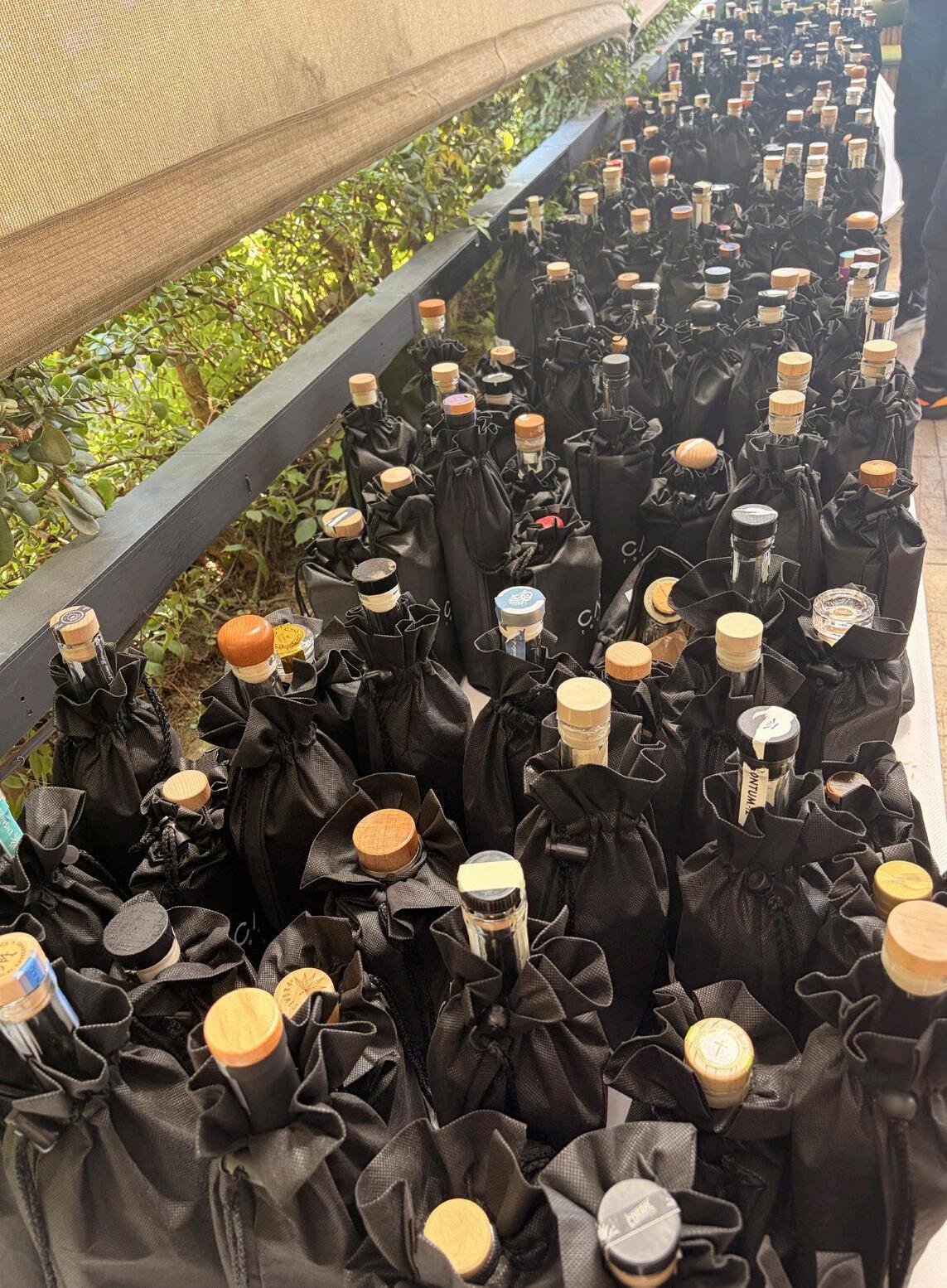
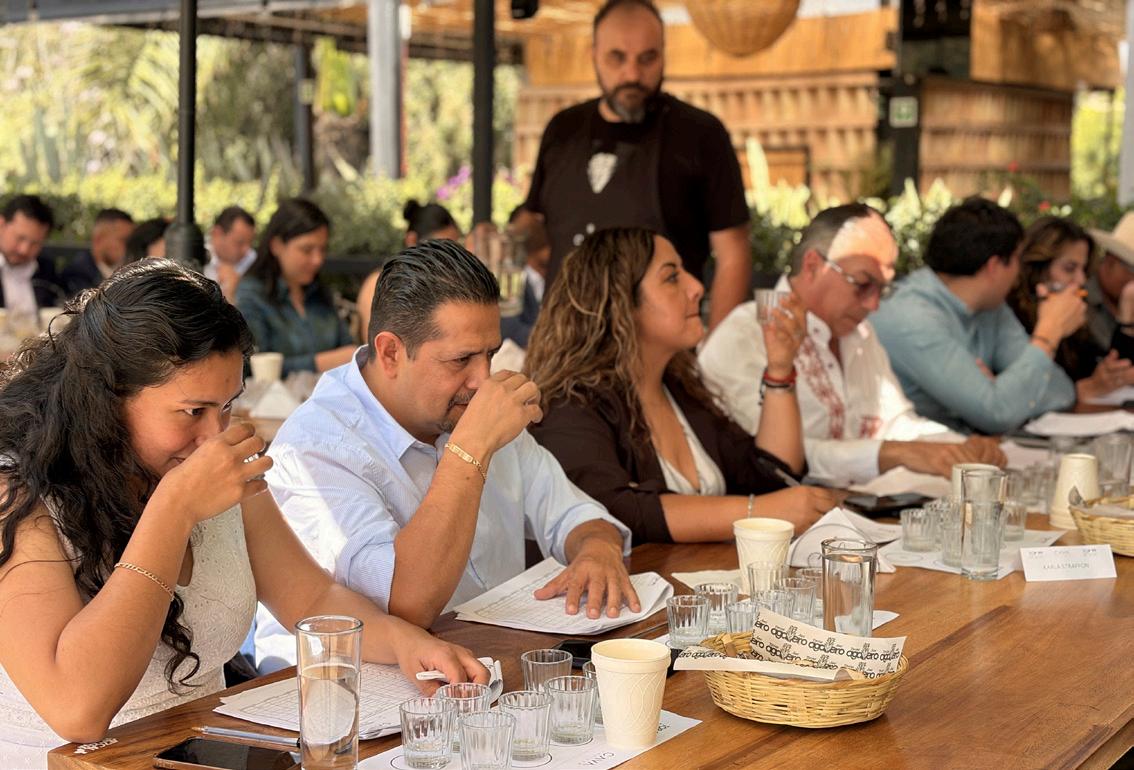
The blind tasting of over 500 mezcals from the 11 Designations of Origin allowed us to create
the 10th edition of the TOP 99 MEZCALES 2026 guide. This list aims to guide our readers, both enthusiasts and connoisseurs, and seeks to pay tribute to the authenticity, tradition, and complexity of this iconic Mexican spirit. The TOP 99 MEZCALES 2026 competition highlights the diversity of flavor profiles and terroirs that characterize this unique spirit. Whether you’re a fan of young mezcal, reposado, or añejo, our guide is sure to satisfy every palate.
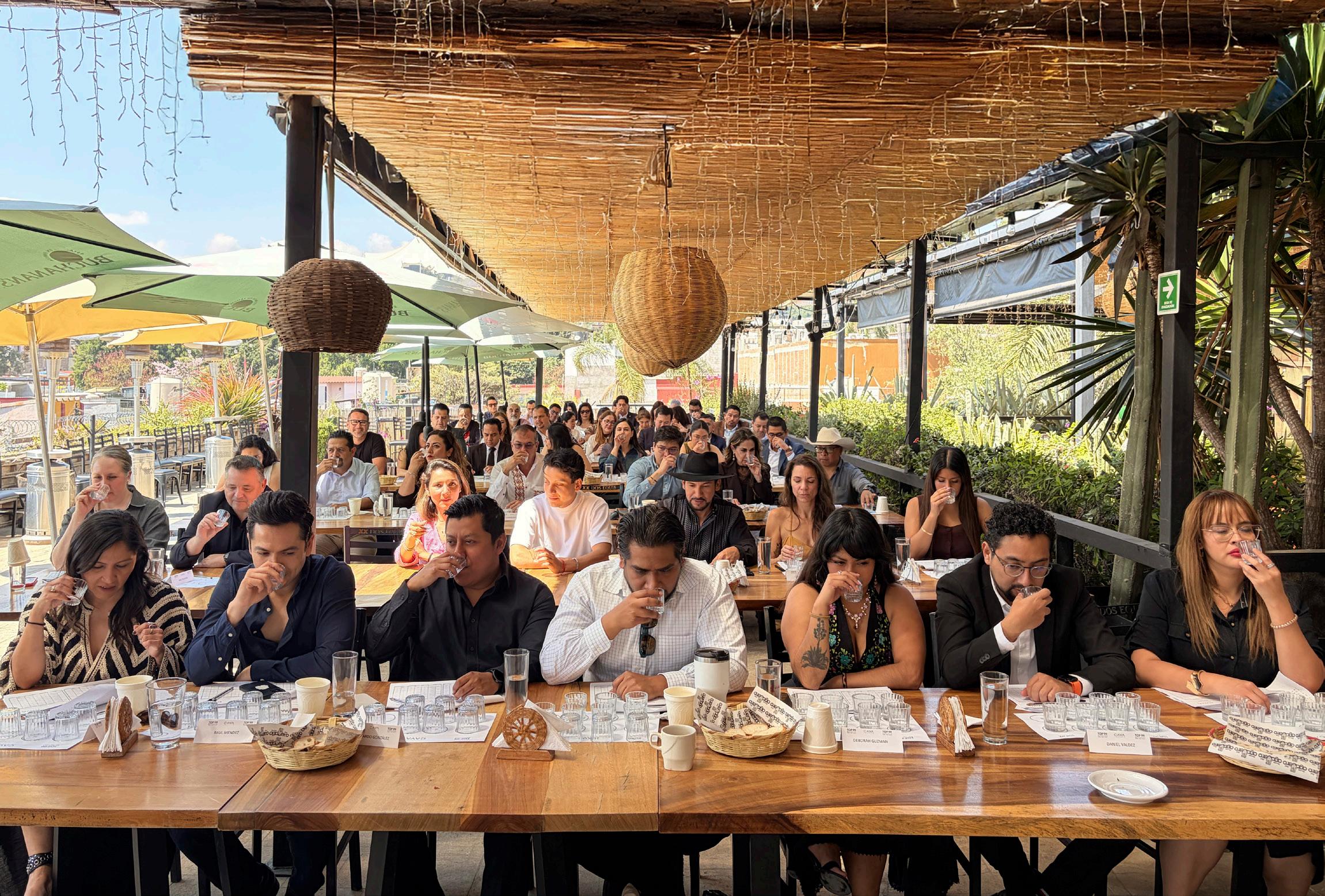
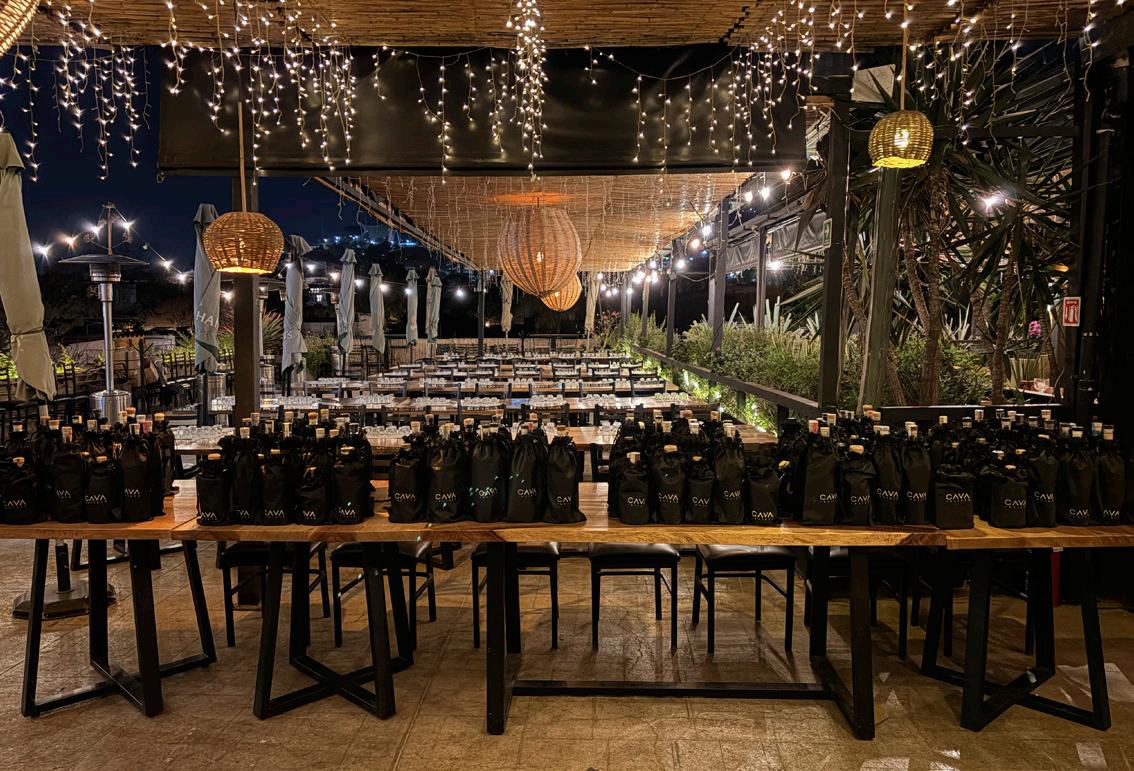
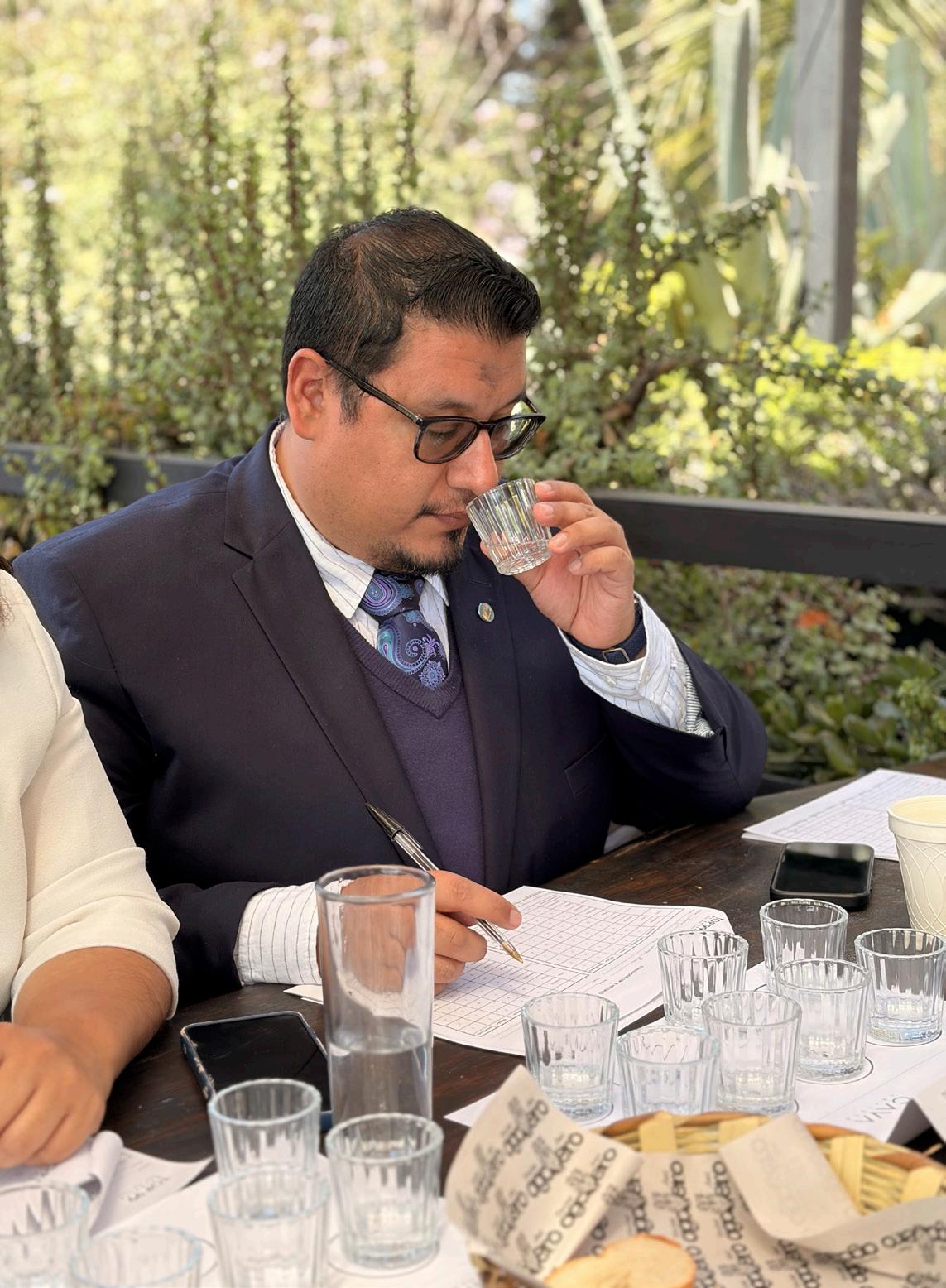
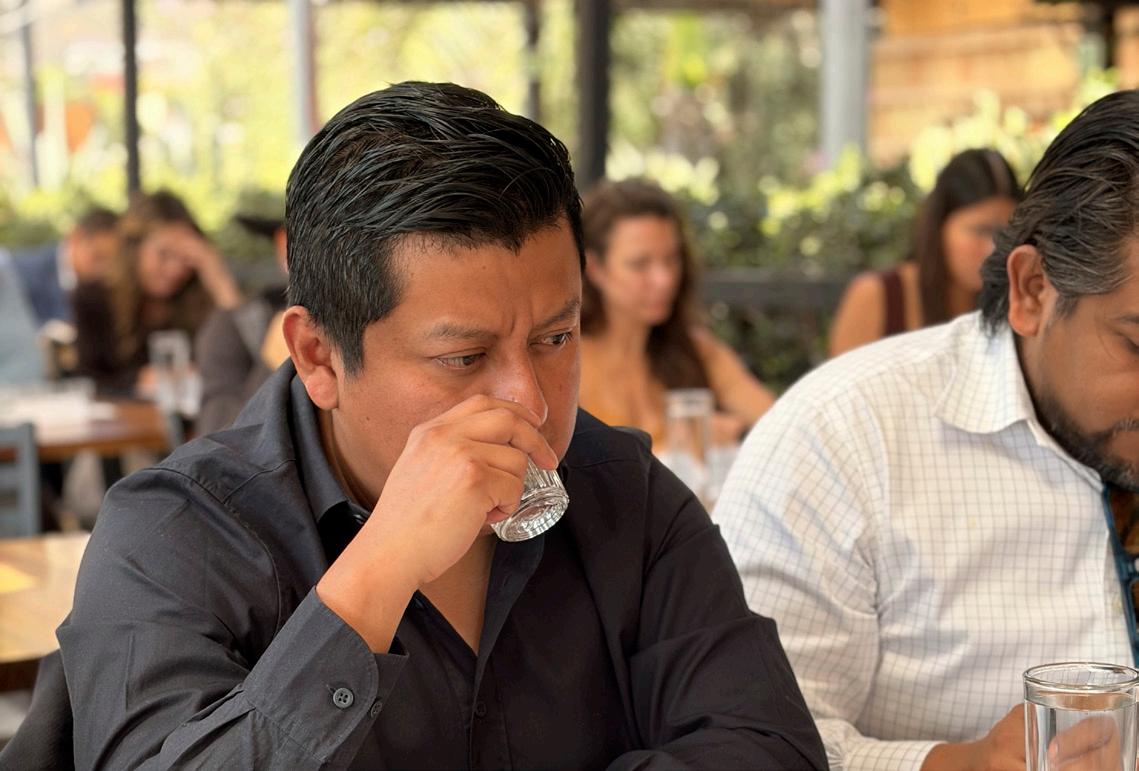
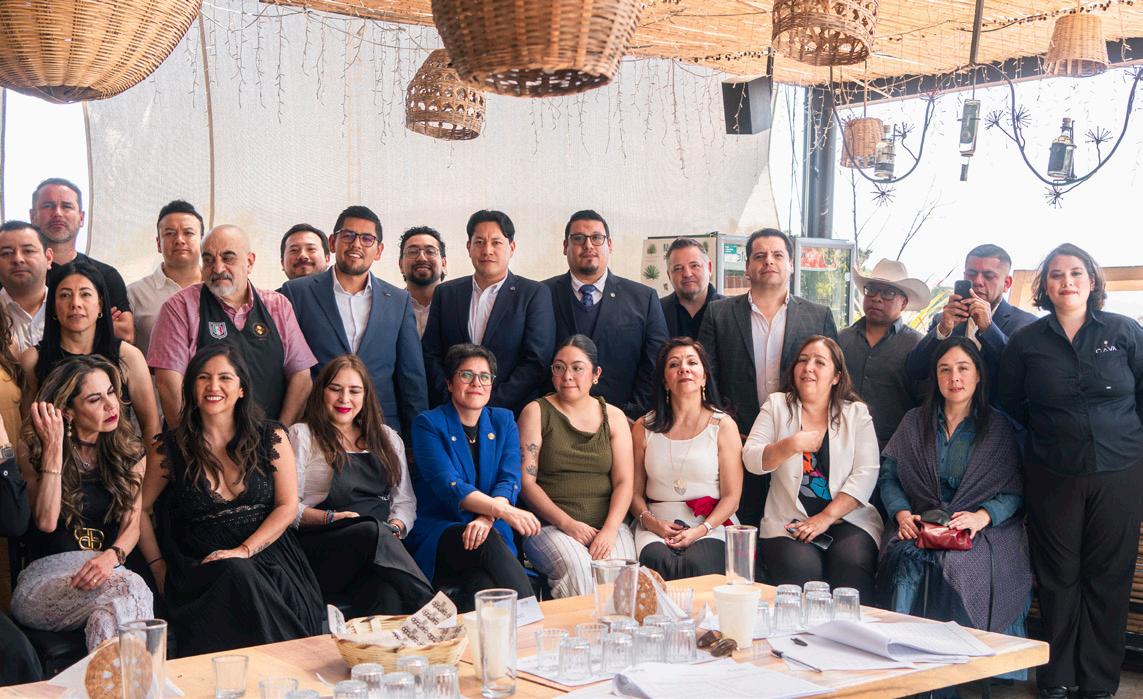
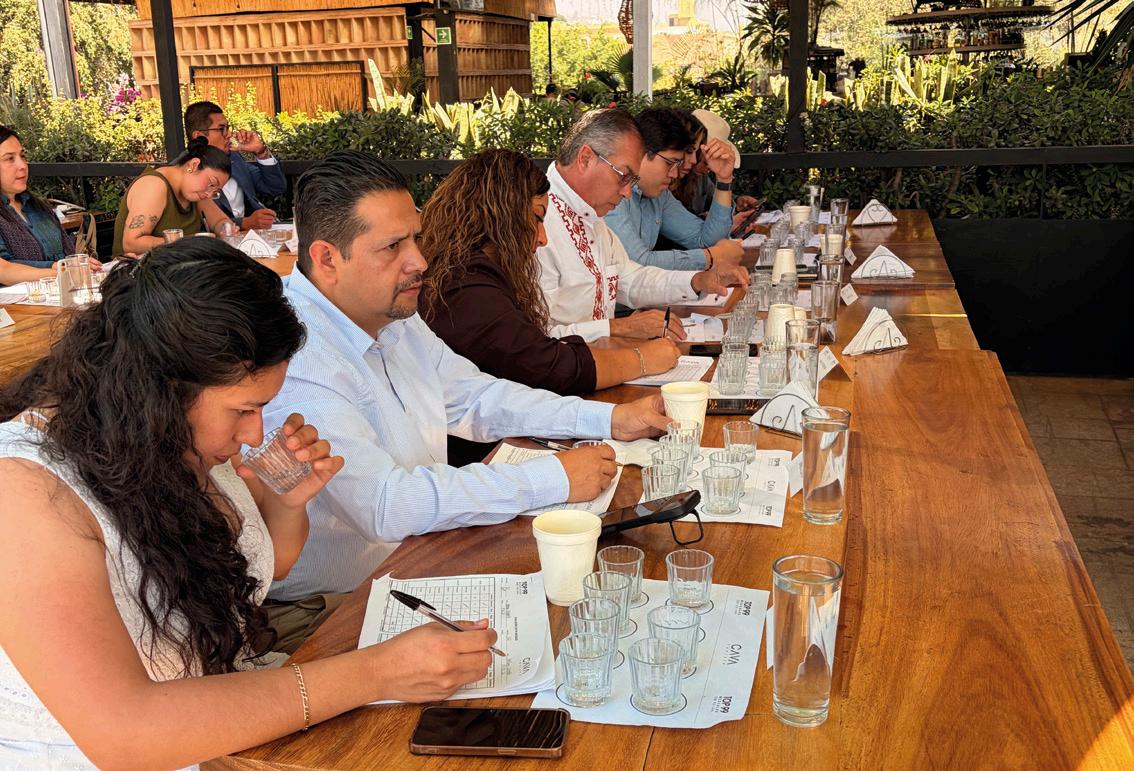
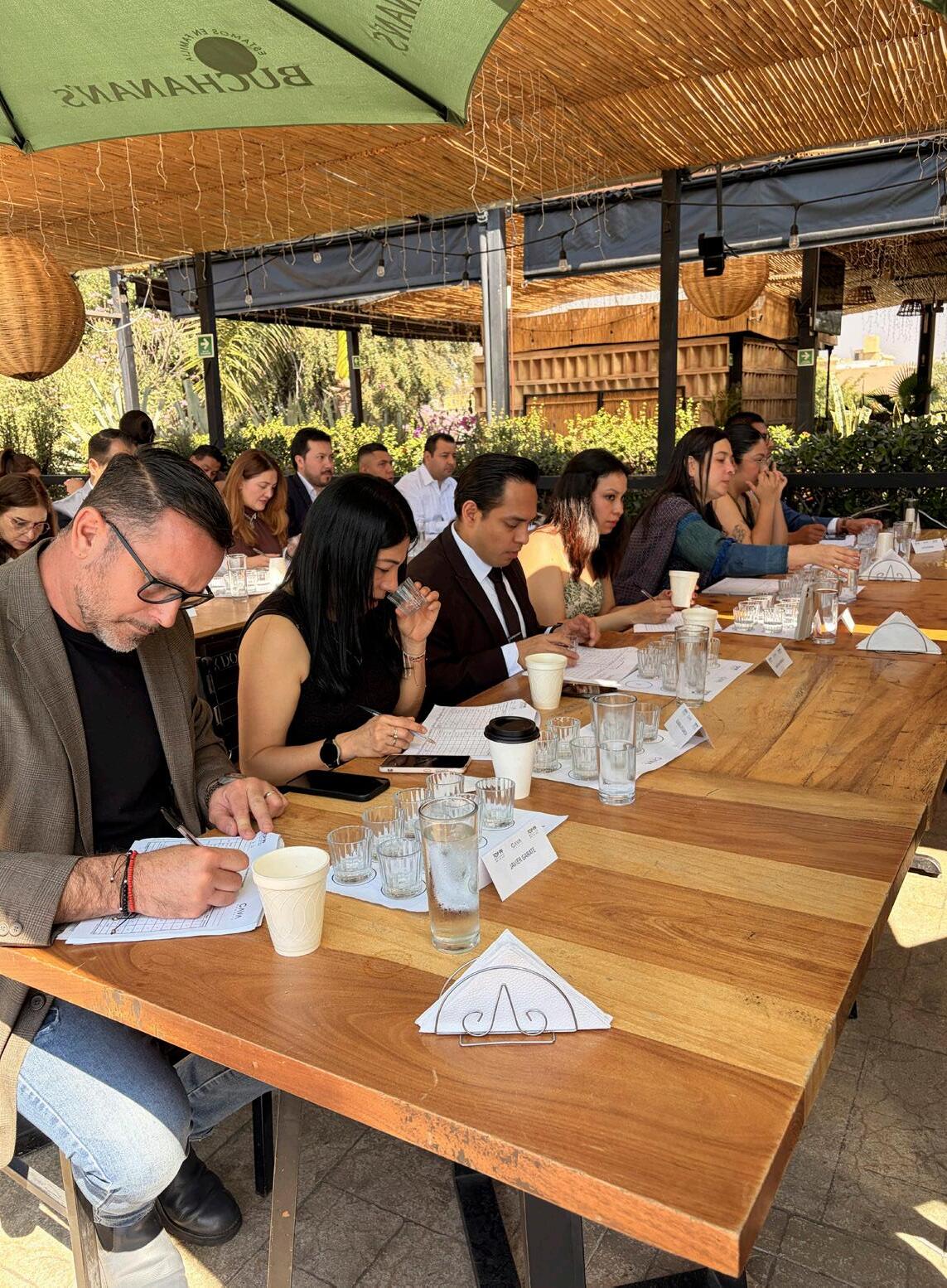
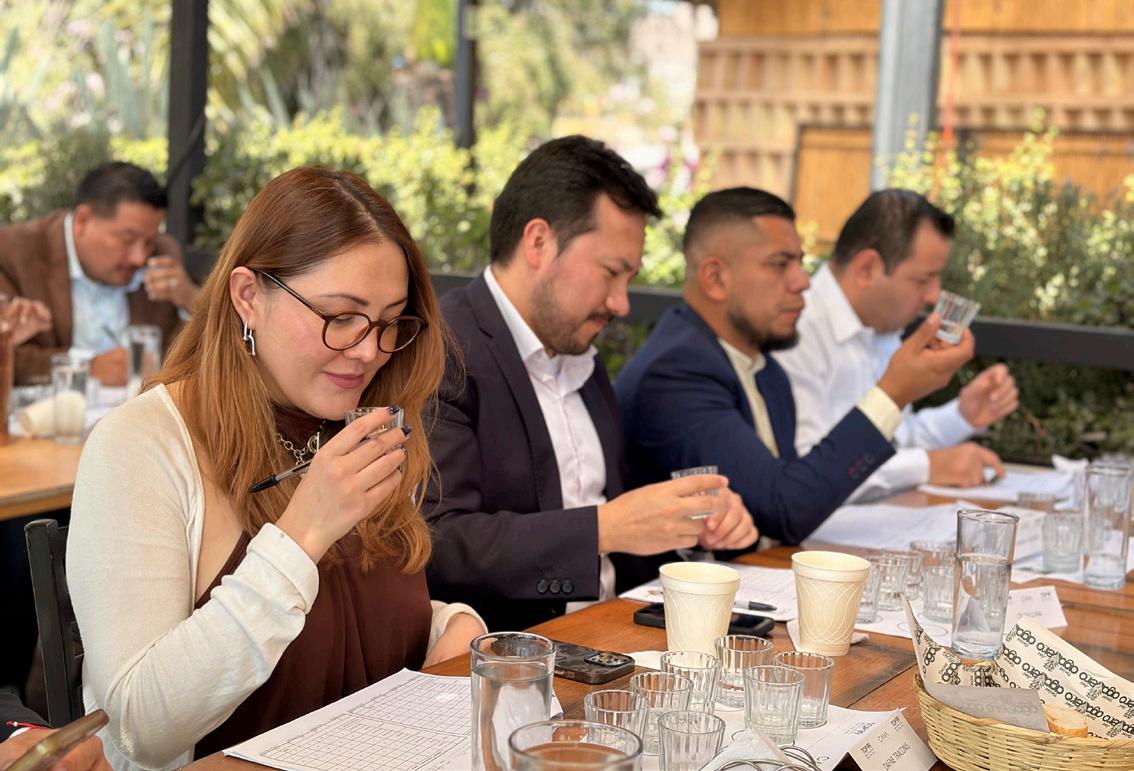
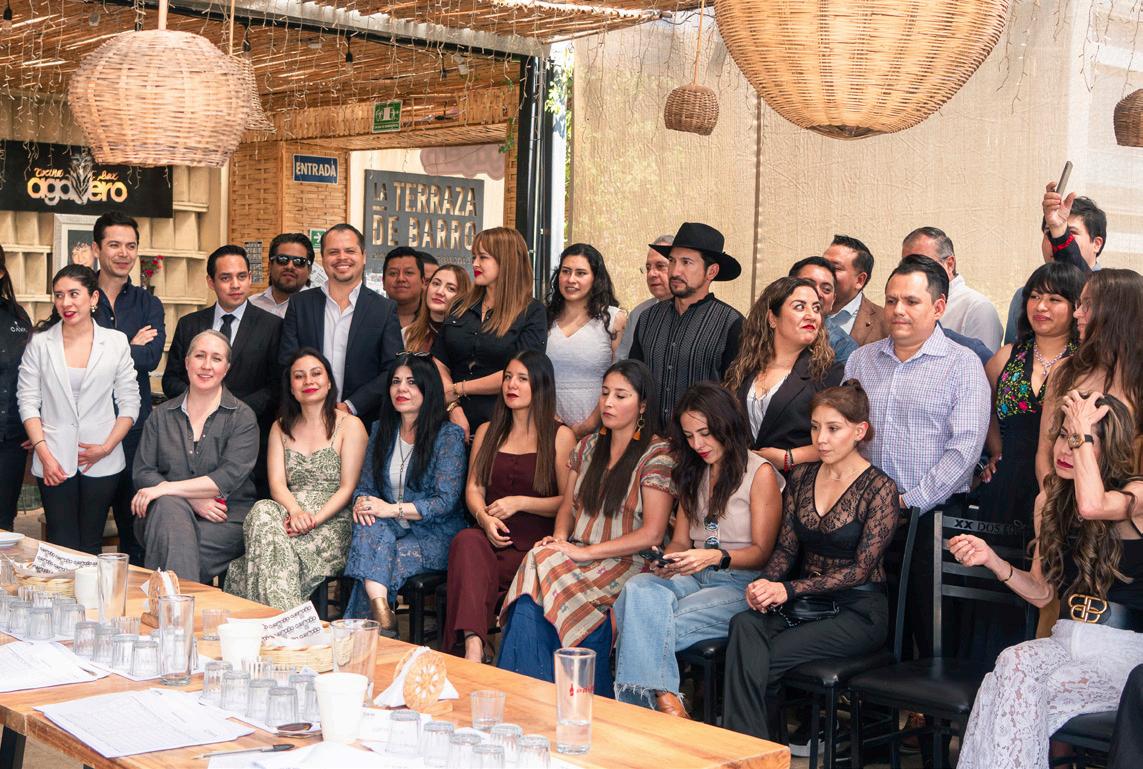
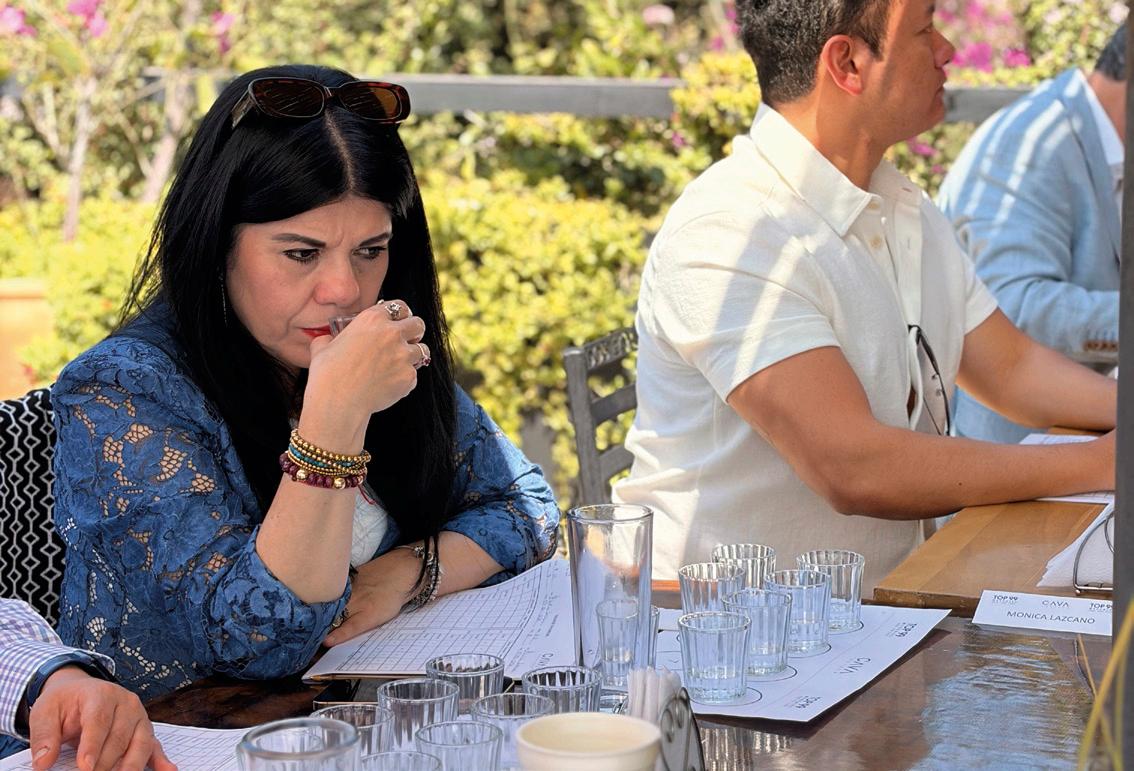
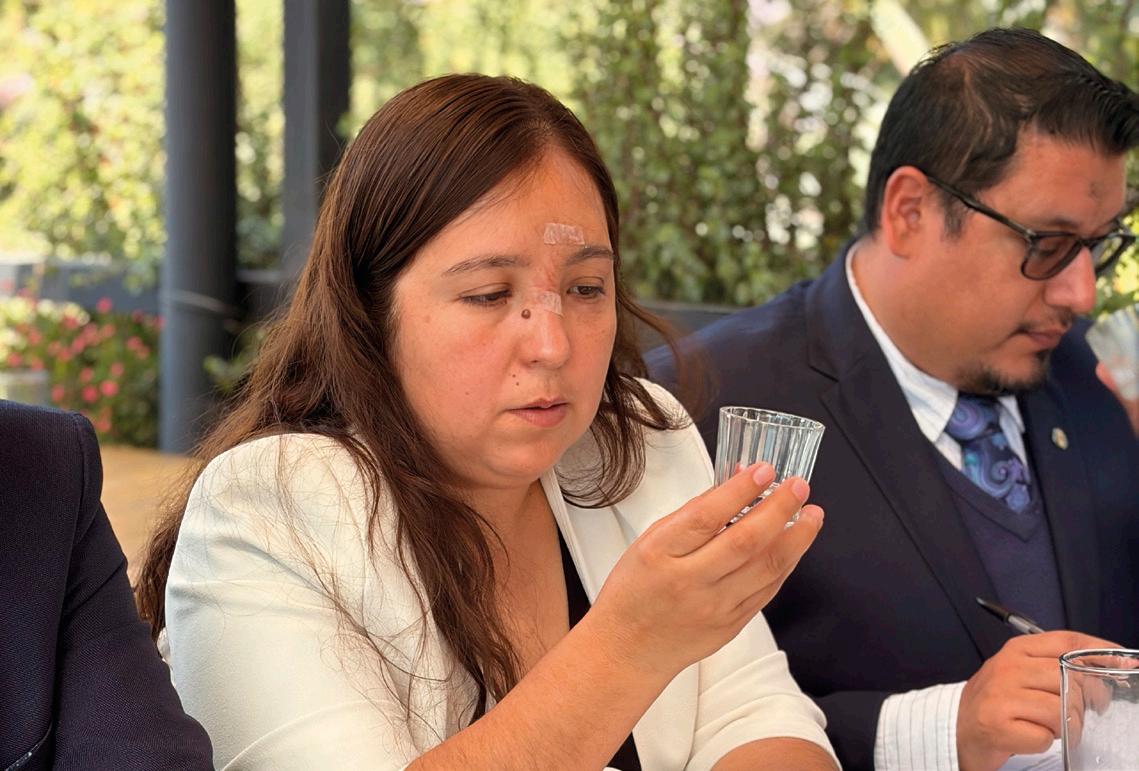
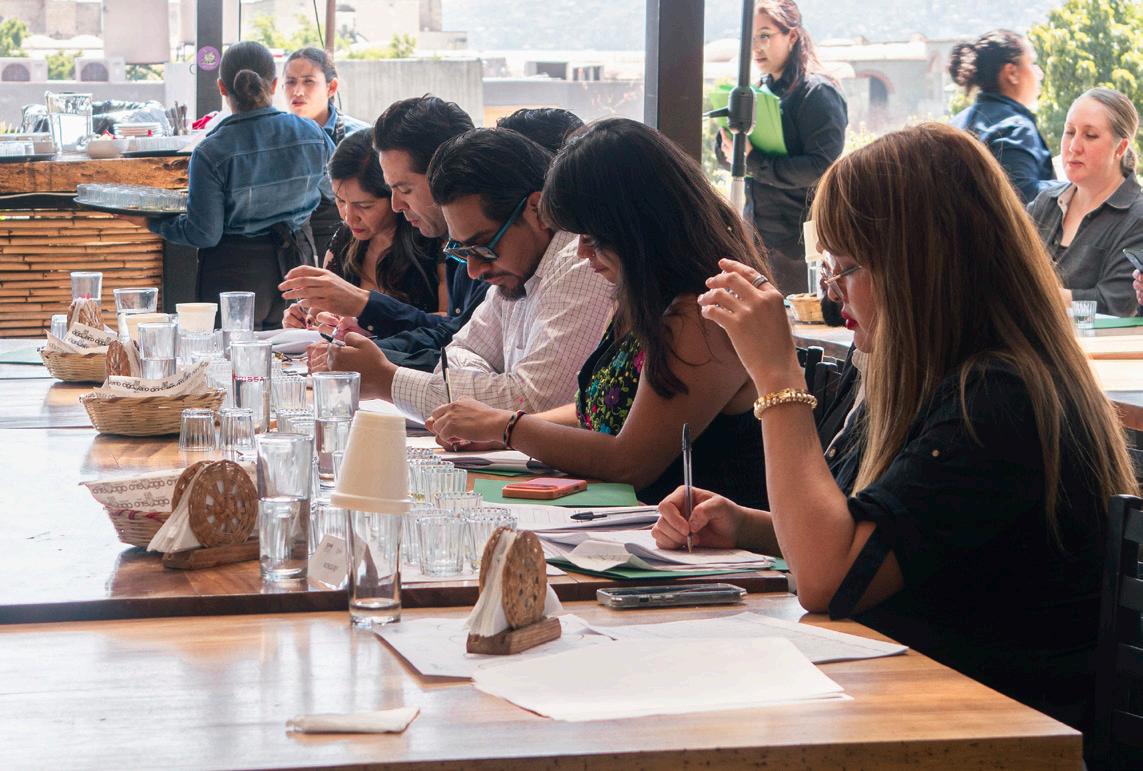
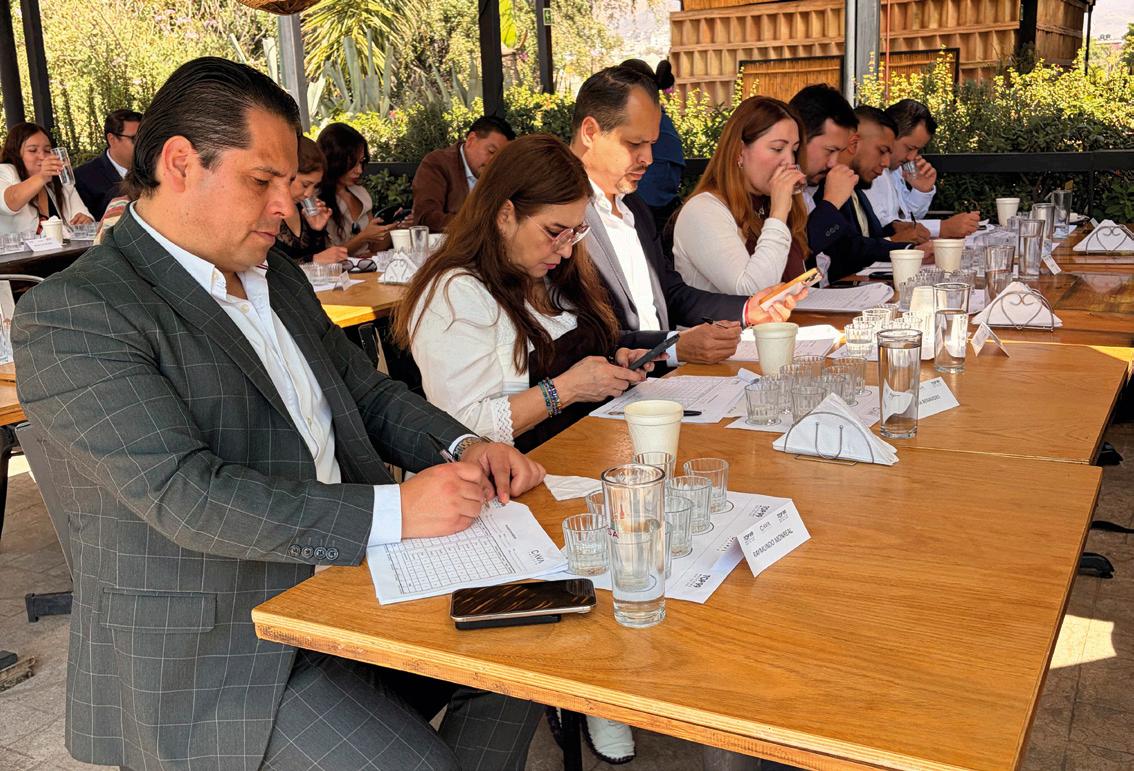
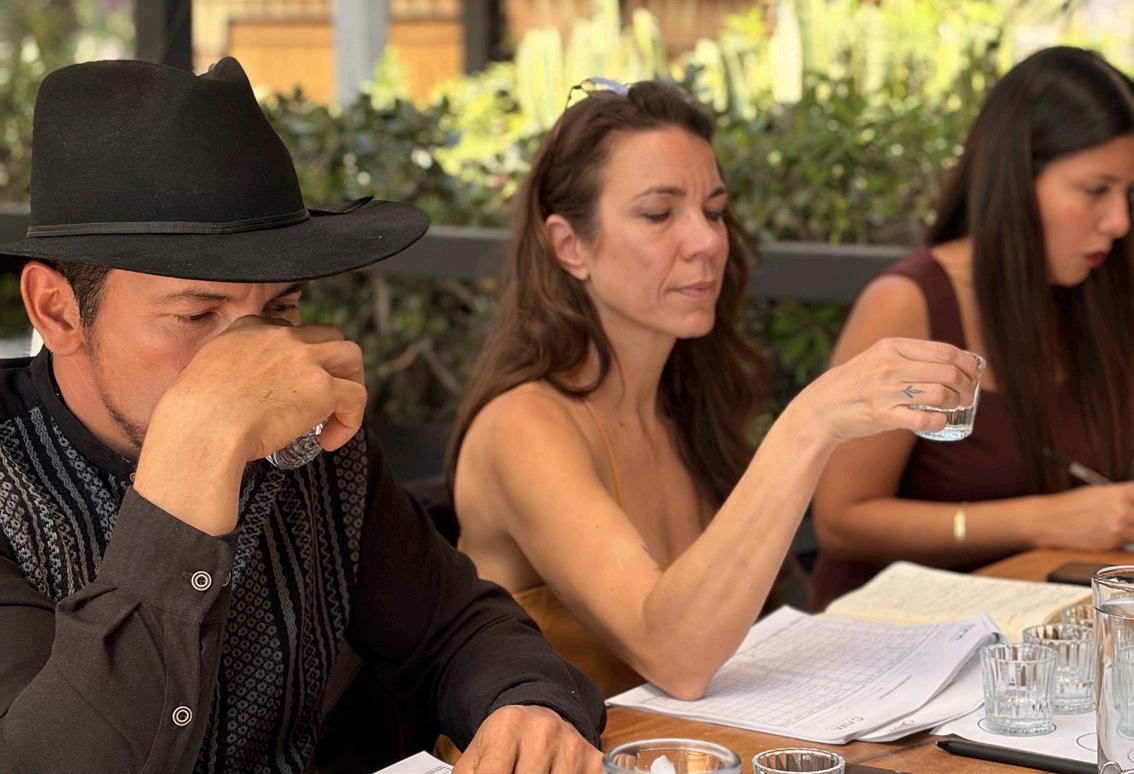
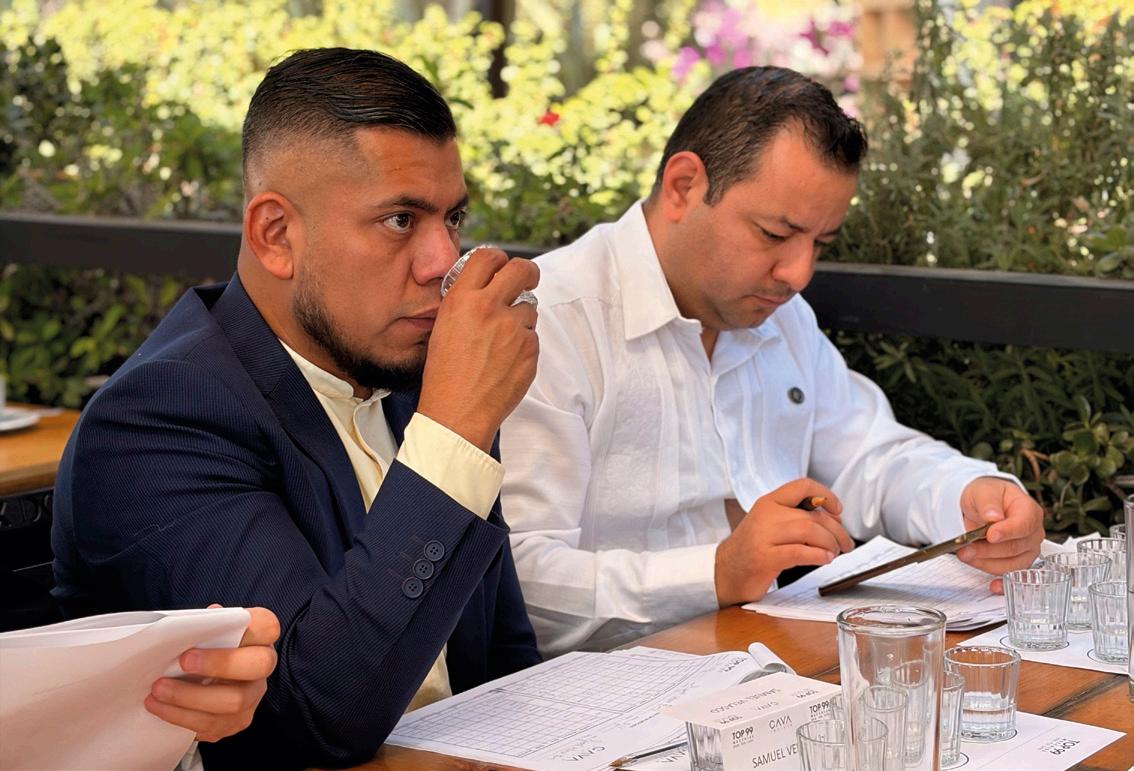
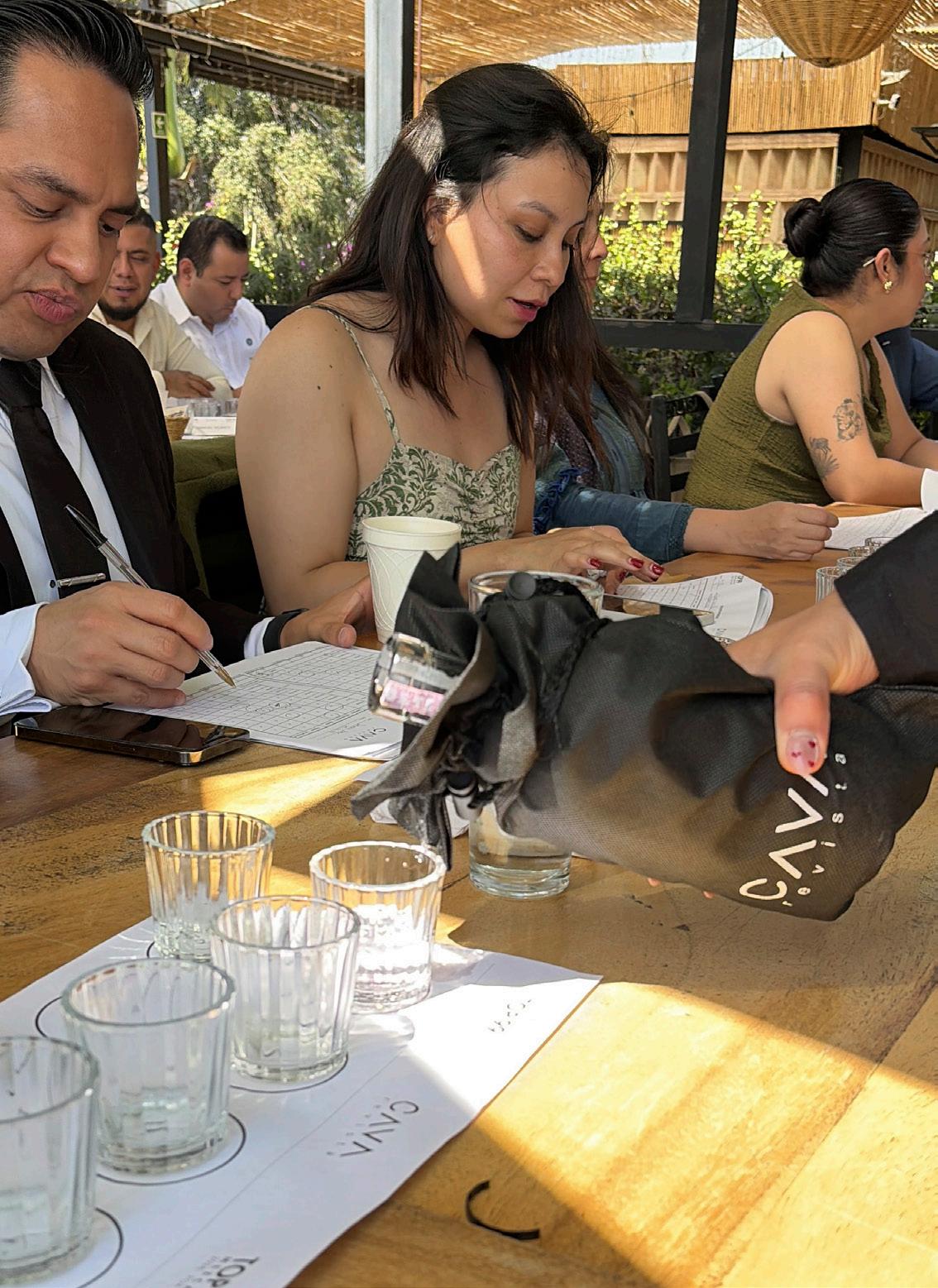
This major event took place on February 19 of this year in the state of Oaxaca, the country 's leading producer of mezcal. The event was hosted at the well-known Agavero Restaurant in downtown Oaxaca City. We thank the producers who joined us for this incredible experience, with bottles from Aguascalientes, Durango, the State of Mexico, Guerrero, Guanajuato, Michoacán, Oaxaca, Puebla, San Luis Potosí, Tamaulipas, and Zacatecas; as well as the expert judges who tasted each one.
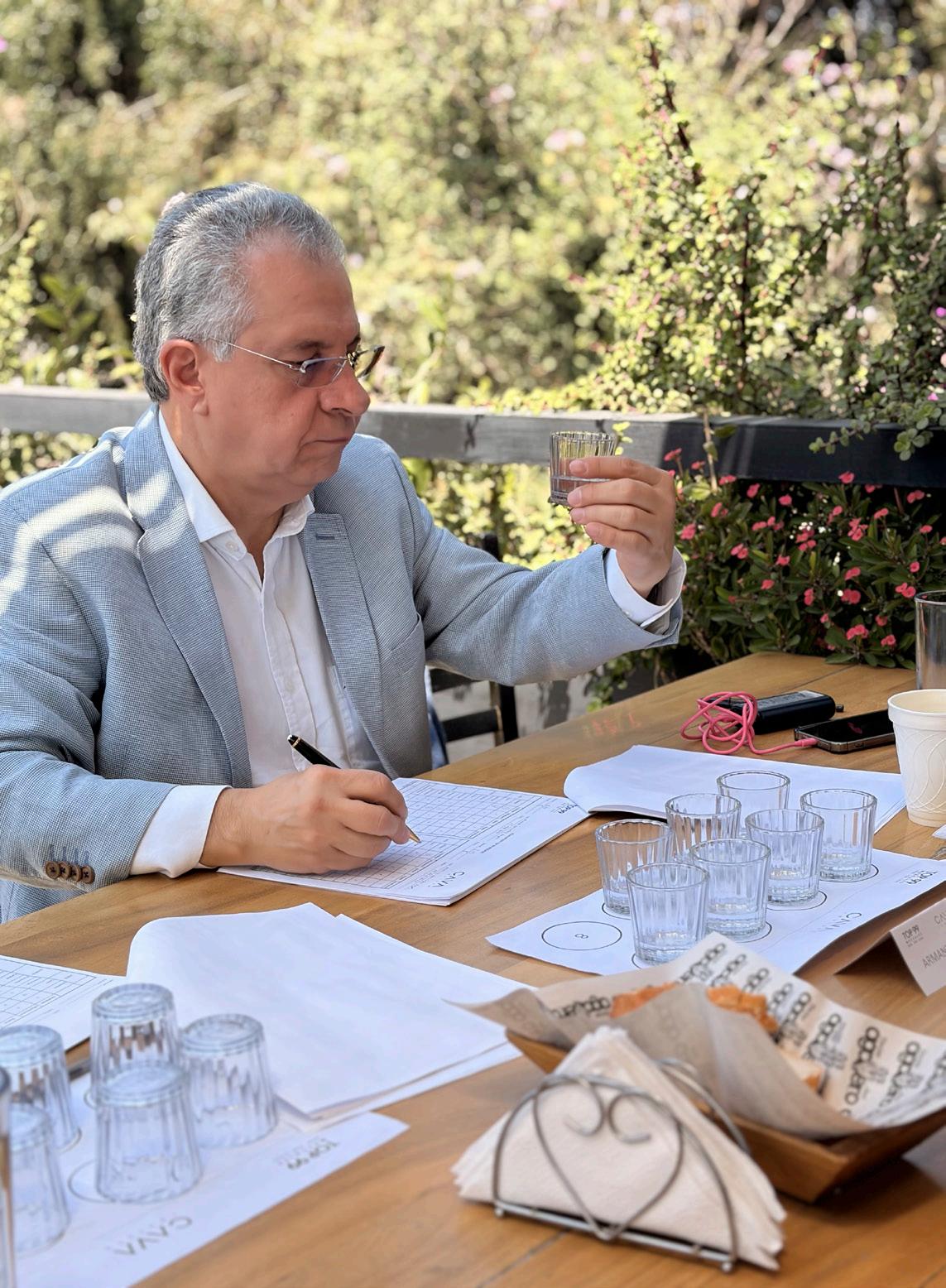
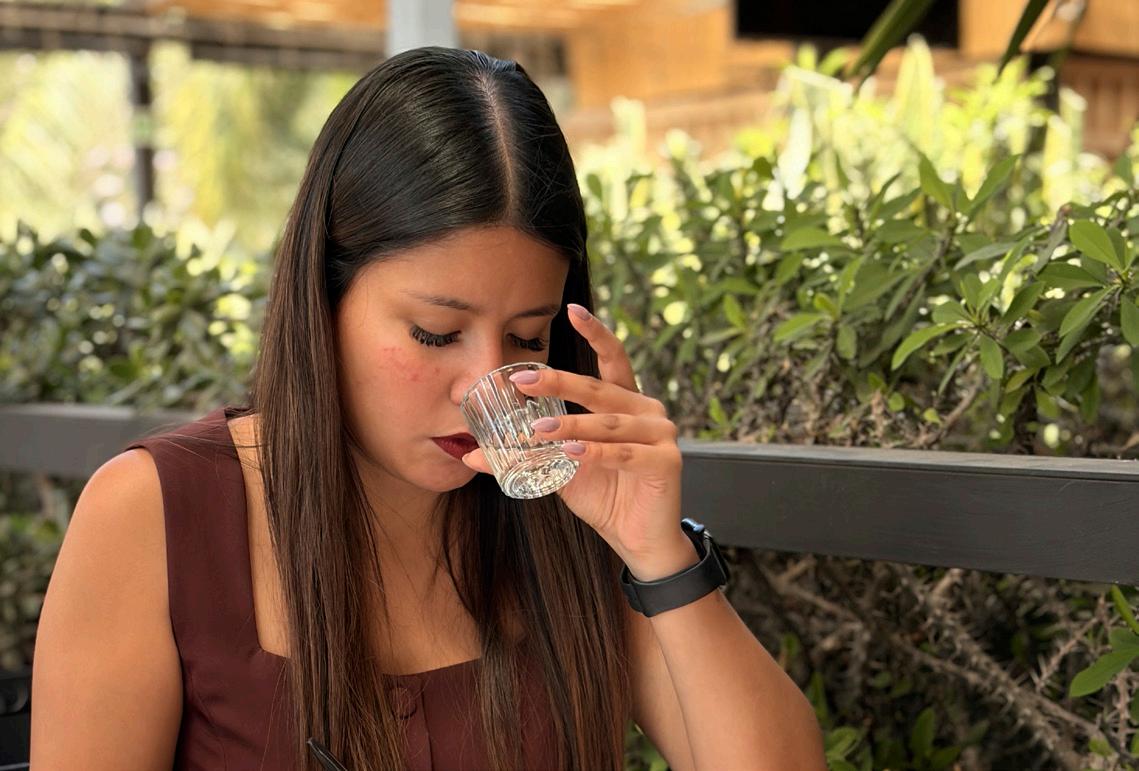
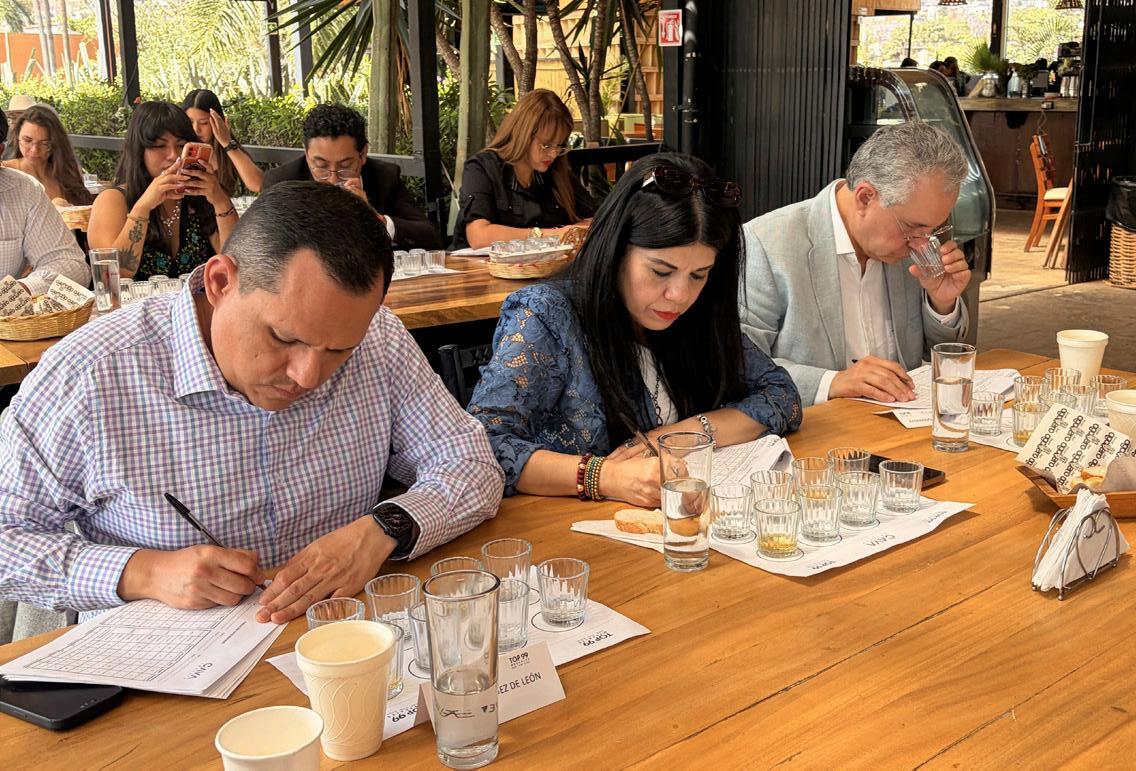
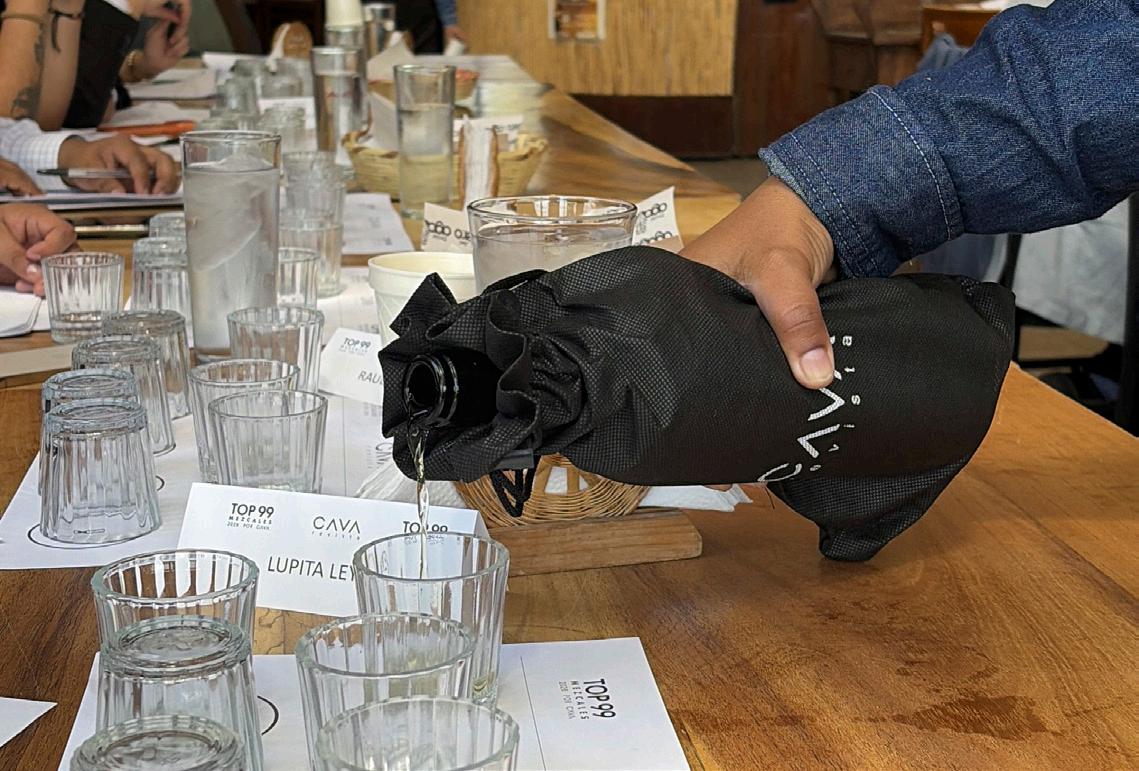
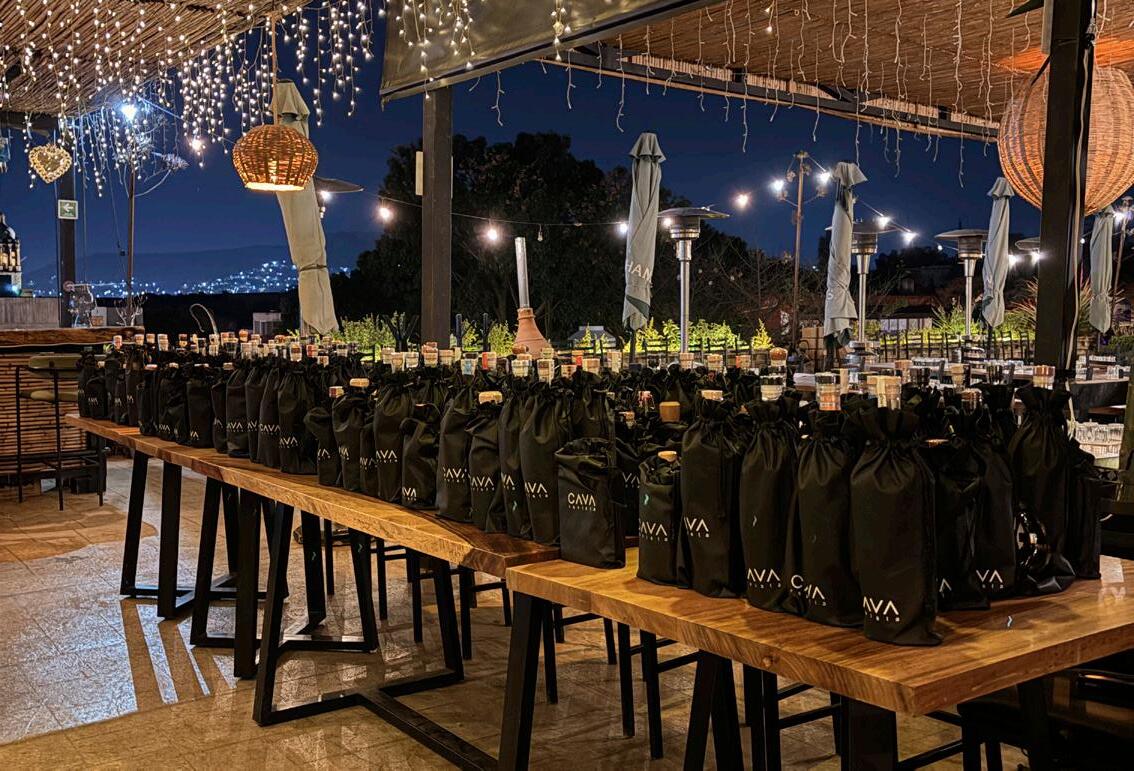
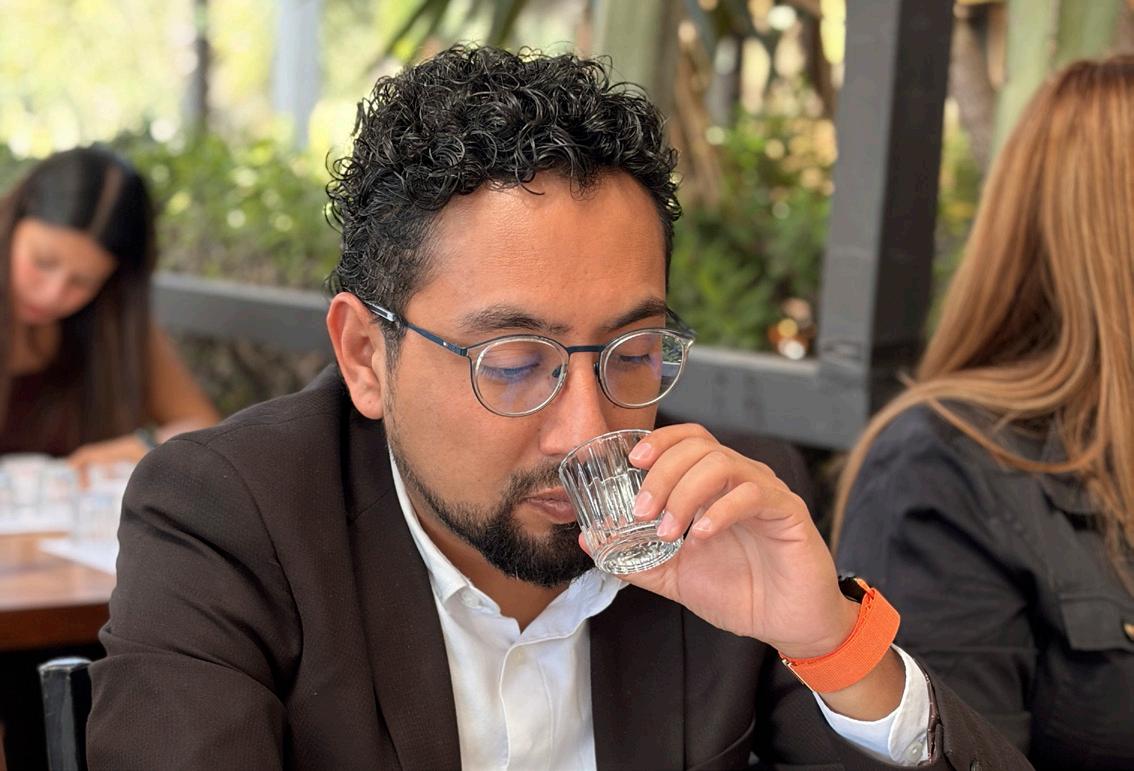
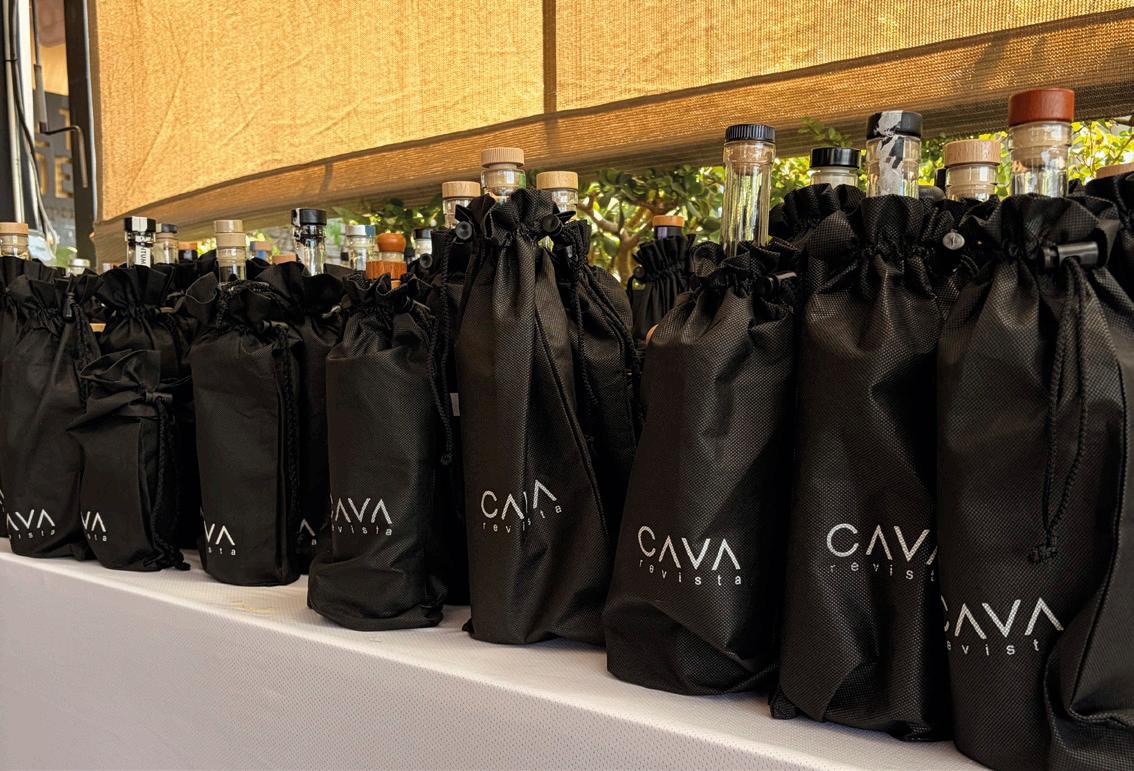
For tasting and evaluation, each bottle was covered with a cloth sleeve so that the judges would not know the identity of the mezcal they were rating. The panel of experts conducted the tasting using a mezcal evaluation sheet, dividing the score into several categories: appearance (clarity, color), aroma (intensity, openness, quality), taste (intensity, openness, quality, persistence), and overall impression. The mezcals that
ranked in the TOP 99 were those that achieved a score between 87 and 99 points in the sum of averages, derived from the tabulation of the individual results of the tasting judges. The medals are divided into Bronze, for bottles scoring between 80 and 84 points; Silver, between 85 and 89 points; Gold, between 90 and 94 points; and Grand Gold for mezcals scoring between 95 and 99 points.
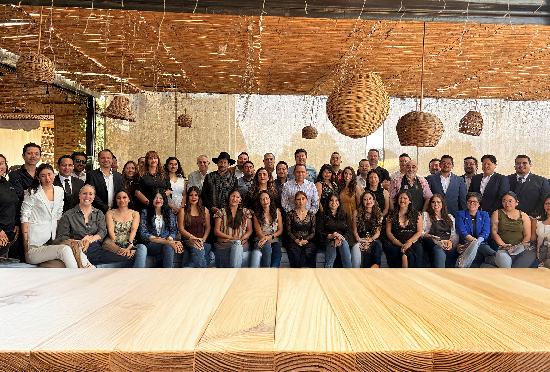
Thank you to all the participants and mezcal producers for placing your trust in this event and sharing your mezcals with us, crafted from the finest agaves using distillation methods that preserve the natural aromas and essence of the terroir. Special thanks to our panel of experts: Ana María Appendini, Alejandro Noriega, Ana Iris Nava, Armando Hernández Loyola, Beatriz Margarita Vázquez Díaz, Daniel Valdez, Dafne Traconis, Deborah Guzmán, David Roque, Dena Chagoya, Diana Aurora Rivas Sánchez, Dinora López, Eleana Núñez, Ernesto Lovio, Estefanía Elizalde, Guadalupe García, Georgina Quiroz, Héctor Uriel Vázquez Lecona, Ivone Lastra, Isabelle Plante, Israel Pérez Santiago, Jonathan Robles, Javier Ignacio Gárate González, Juan
Carlos Méndez, Jaime Girones Victoria, Jorge Muro, Jannet Ochoa Armendáriz, Juan Efrén Balbuena Rebollar, Karla Straffon, Mónica Rey, Lupita Leyva, Raúl Méndez, Miguel Ángel Zamora Olivo, Xavi Touron, Leonardo Soto, Lucio Joel Sernas Luis, Leonardo Ricardez Juárez, Mariana Grapain, Miguel Jáuregui, Miguel de Ita Caro, Miriam Nájera, Miguel Vázquez de León, Mónica Lazcano, Nora Benavides, Olavi Luna, Raymundo Monreal, Rodrigo Ricardez, Ricardo González Aragón, Samuel Velasco, and Verónica Barriga.
We appreciate the welcome and support given to all the staff at Agavero Restaurant. Andrés Quintana Roo No. 208, Ruta Independencia, Centro CP. 68000, Oaxaca de Juárez, Oaxaca Phone: 951 685 6872
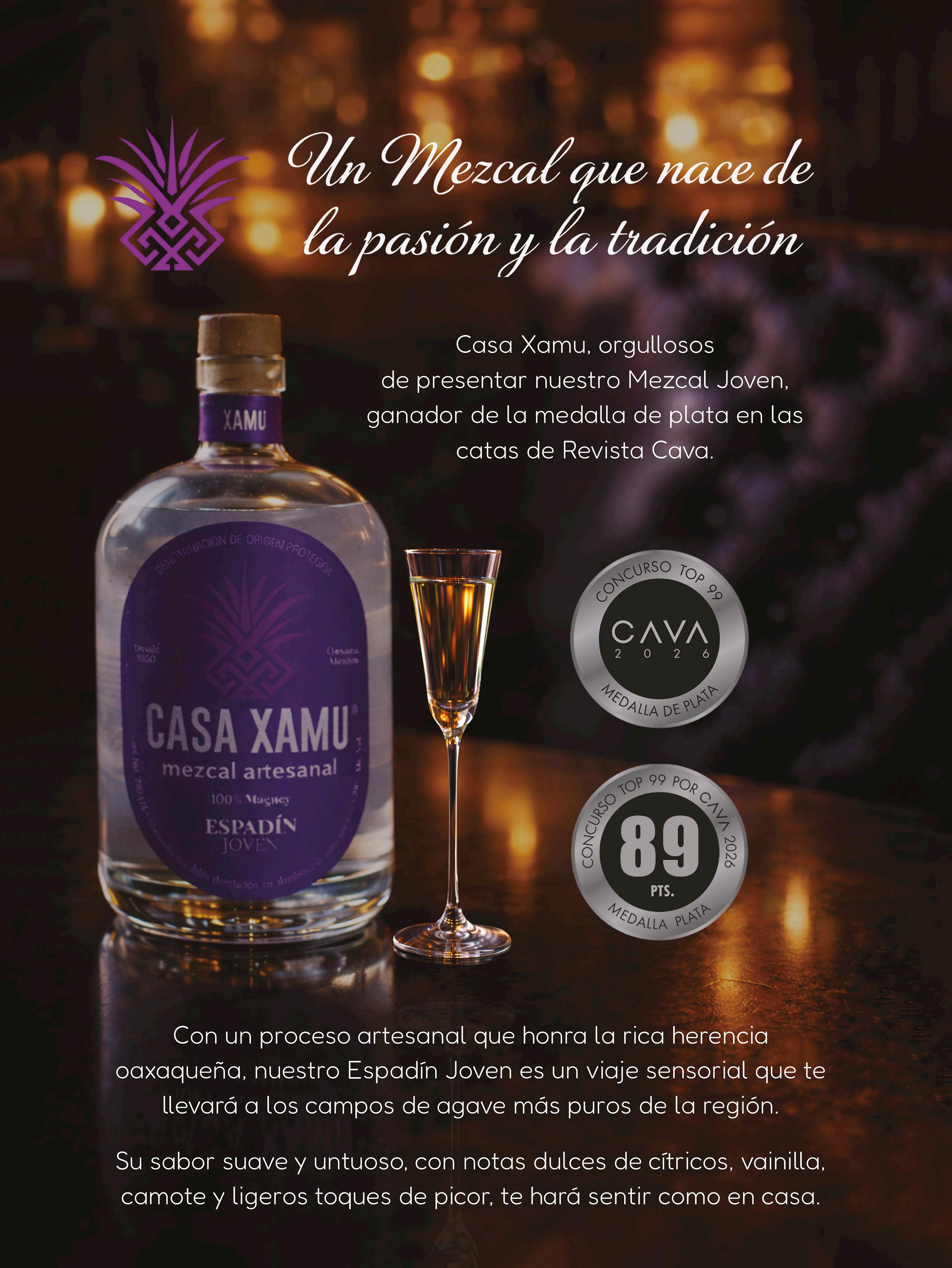
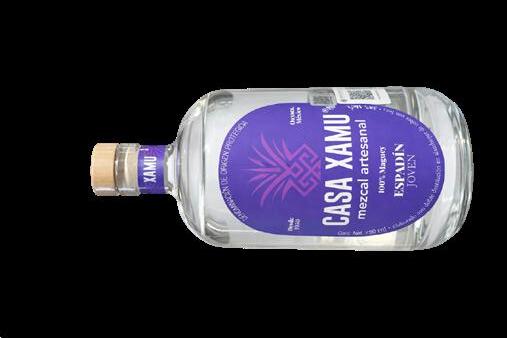
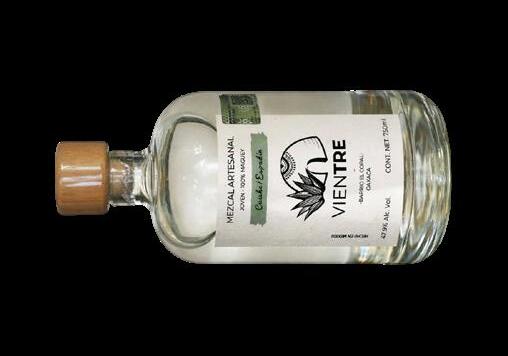
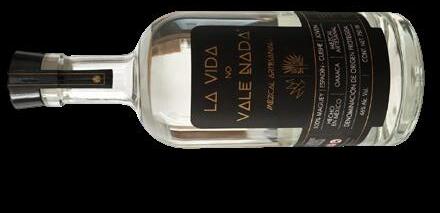
Agave: Espadín
Mezcal producer: Casa Xamu
Region: Oaxaca
Medal: Silver
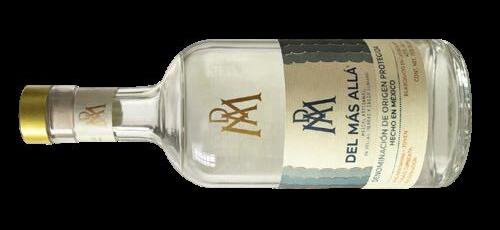
DEL MÁS ALLÁ, 45% Alc Vol
Agave: Cupreata
Mezcal producer: Del Más Allá
Region: Guerrero
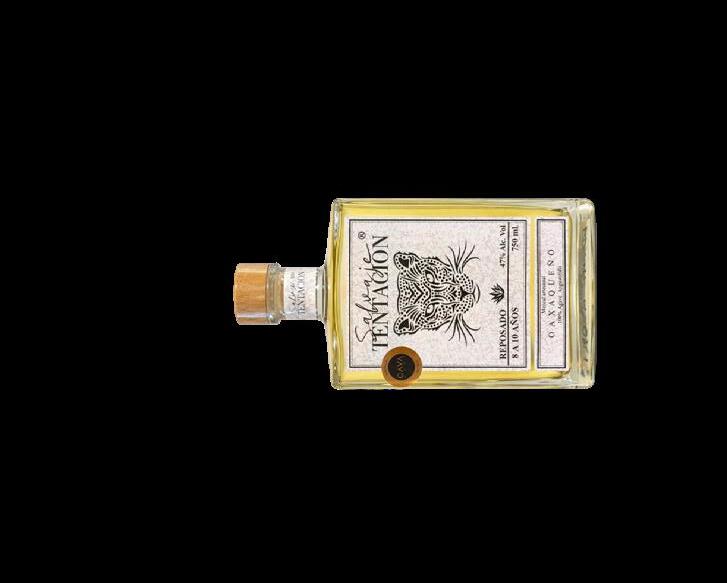
Agave: Espadín
Mezcal producer: Salvaje Tentación
Oaxaca
Silver
SUEÑO DE AGAVE TEPEX., 48% Alc Vol
Agave: Tepextate, Mexicano
Mezcal producer: Sueños
Region: Oaxaca
Medal: Gold
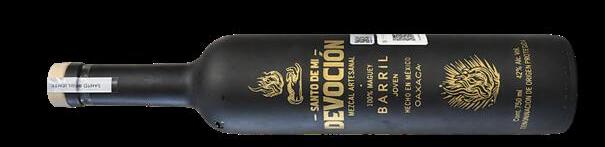
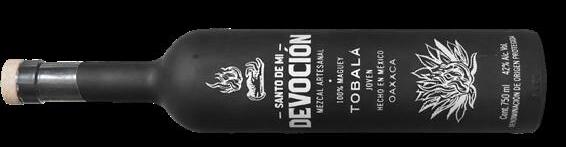
SANTO DE MI DEVOCIÓN BARRIL, 42% Alc Vol
Agave: Barril
Mezcal producer: Santo de mi Devoción
Region: Oaxaca
Medal: Grand Gold
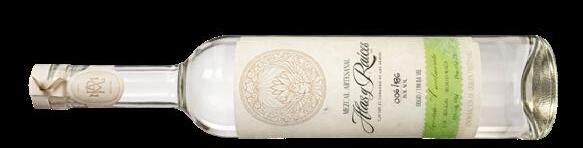
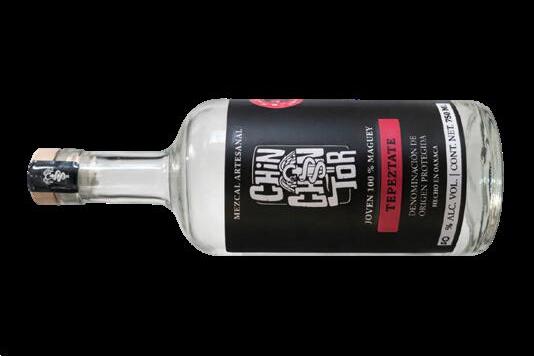
ALAS Y RAÍCES TEPEZTATE, 45% Alc Vol
Agave: Tepeztate
Mezcal producer: Alas y Raíces
Region: Puebla
Medal: Gold
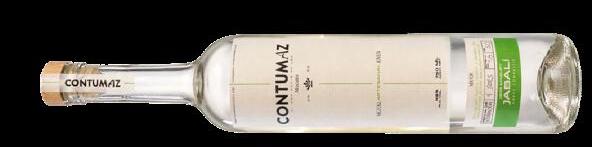
CONTUMAZ JABALÍ, 49% Alc Vol
Agave: Jabalí
Mezcal producer: Contumaz
Region: Oaxaca
Region: Oaxaca
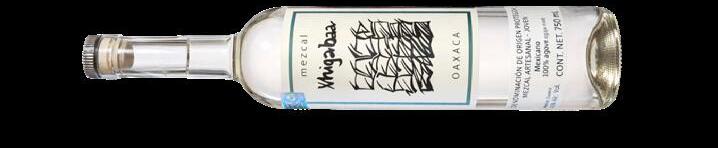
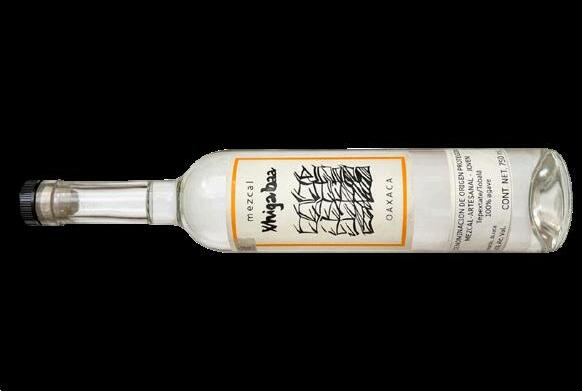
XHIGABAA MEXICANO, 45% Alc Vol
Agave: Mexicano
Mezcal producer: Xhigabaa
Region: Oaxaca
Medal: Gold
Region: Oaxaca
Medal: Silver
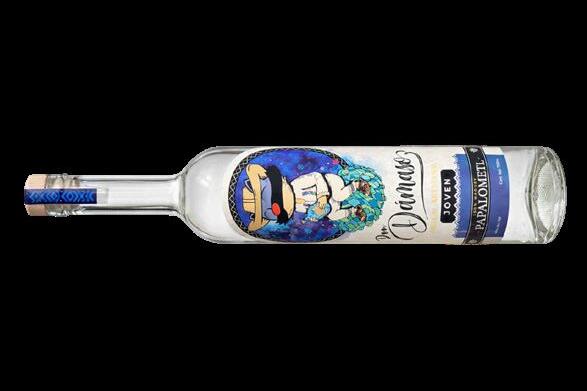
Agave: Papalometl
Mezcal producer: Don Damaso
Region: Puebla
Medal: Gold
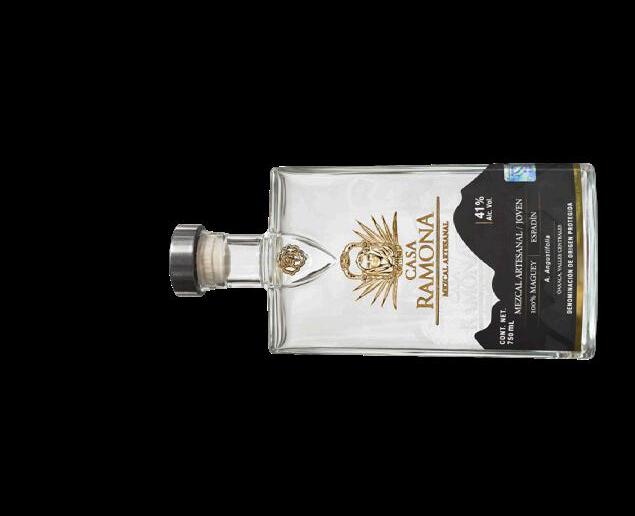
RAMONA ESPADÍN, 41% Alc Vol
Agave: Espadín
Mezcal producer: Casa Ramona
Region: Oaxaca Medal: Gold
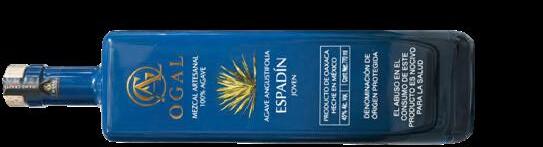
OGAL, 43% Alc Vol
Agave: Espadín
Mezcal producer: Ogal
Region: Oaxaca
Medal: Gold
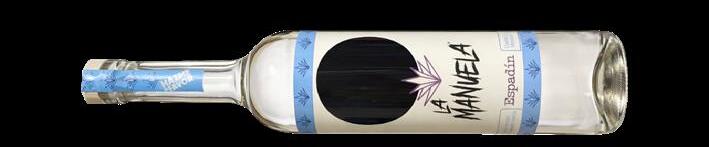
LA MANUELA ESPADÍN, 38% Alc Vol
Agave: Espadín
Mezcal producer: La Manuela
Region: Oaxaca
Medal: Silver
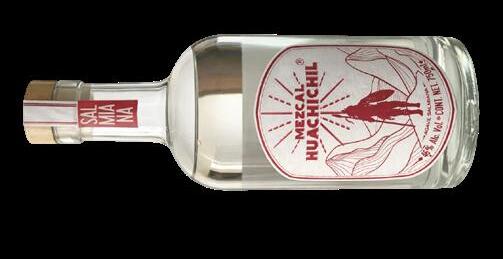
Agave: Salmiana
Mezcal producer: Huachichil
Region: San Luis Potosí
Medal: Gold
EL SR. DE LAS CAN. TEPEZ, 47% Alc Vol
Agave: Tepeztate
Mezcal producer: El Sr. de las Can
Region: Oaxaca Medal: Grand Gold
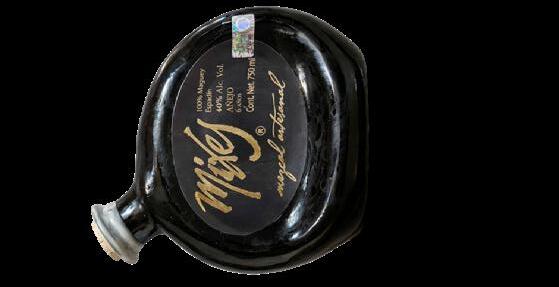
Agave: Espadín
Mezcal producer: Mixes
Region: Oaxaca Medal: Gold
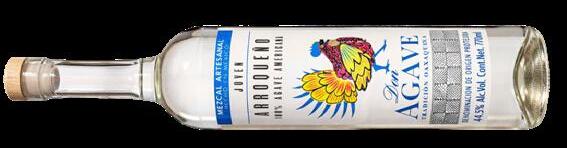
EL SIGLO LLEVA TU NOMBRE ARROQUEÑO, 44% Alc Vol
Agave: Arroqueño
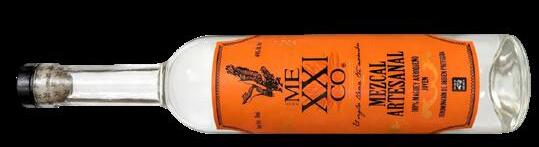
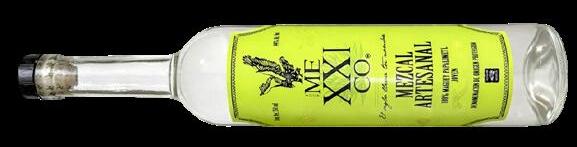
Mezcal producer: Mexxico El Siglo Lleva Tu Nombre Region: Puebla Medal: Gold
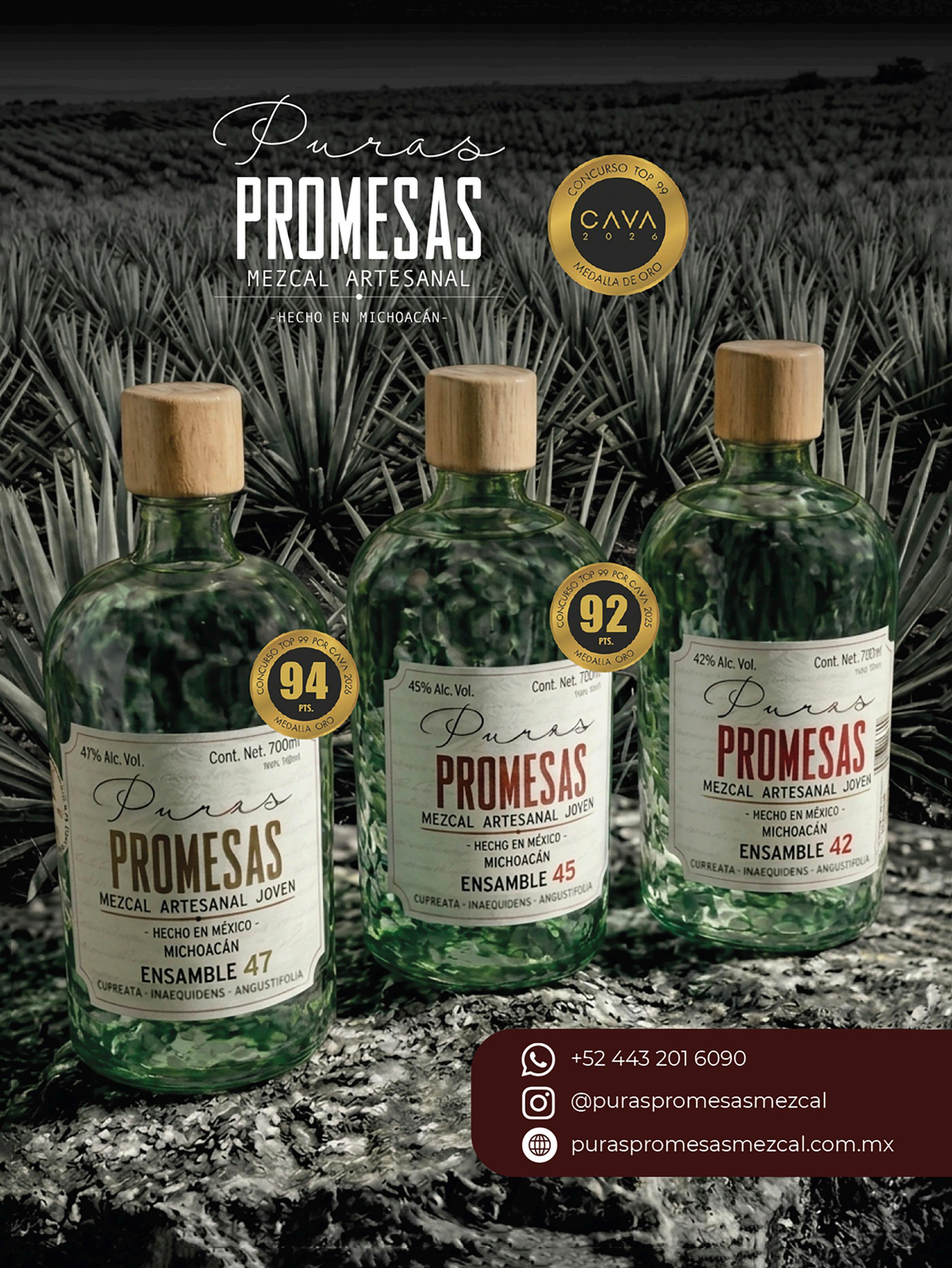
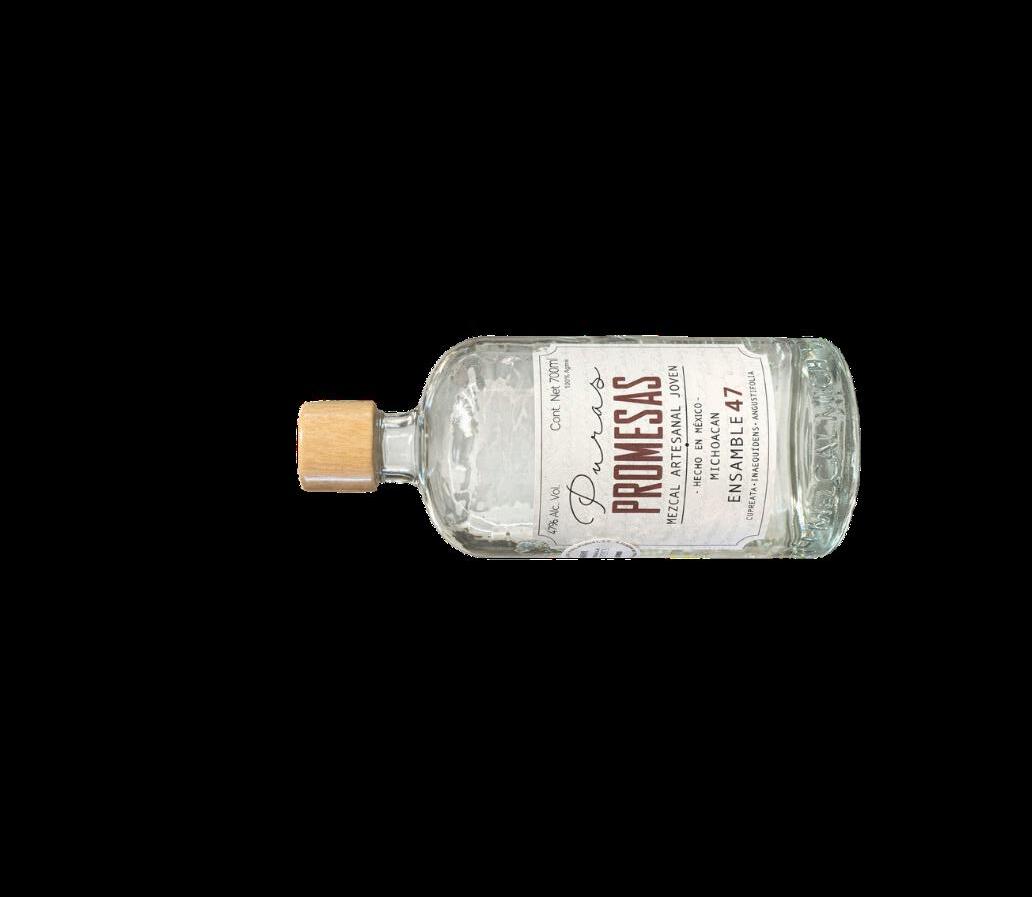
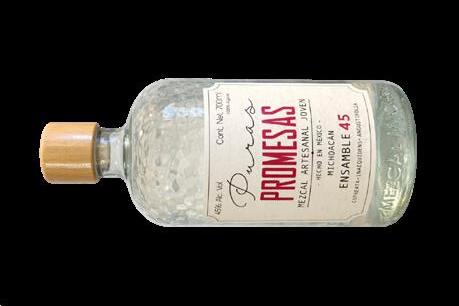
ENSAMBLE 47, 47% Alc Vol
Agave: Cupreata, Alto, Espadín
Mezcal producer: Puras Promesas
Region: Michoacán Medal: Gold
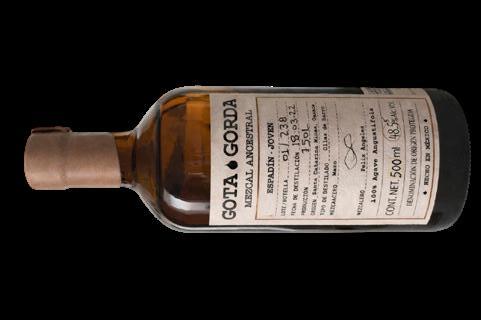
GOTA GORDA, 48.5% Alc Vol
Agave: Espadín
Mezcal producer: Gota Gorda
Region: Oaxaca Medal: Gold
Agave: Papalote
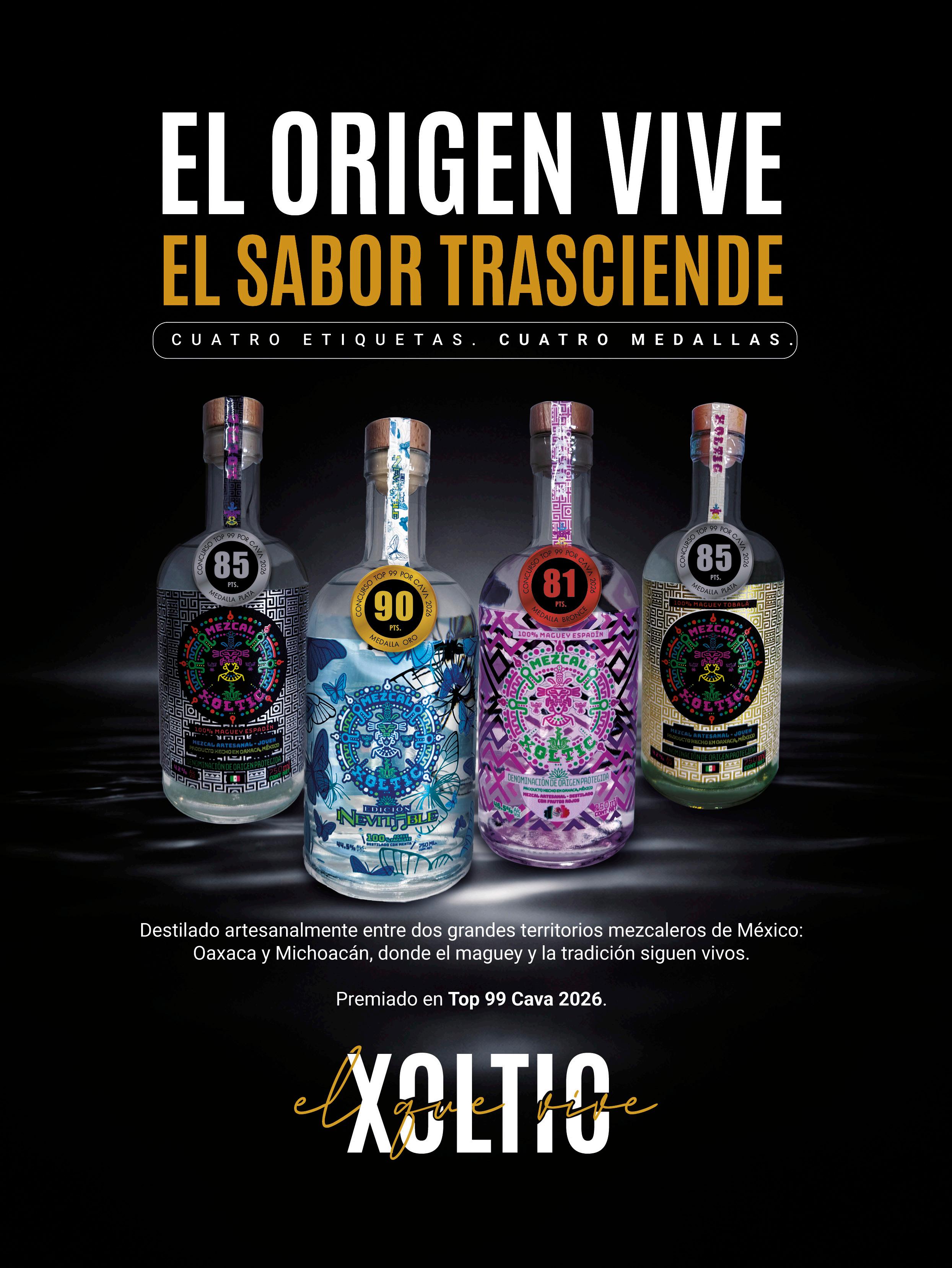
Mezcal producer: Xoltic
Region: Michoacán Medal: Gold
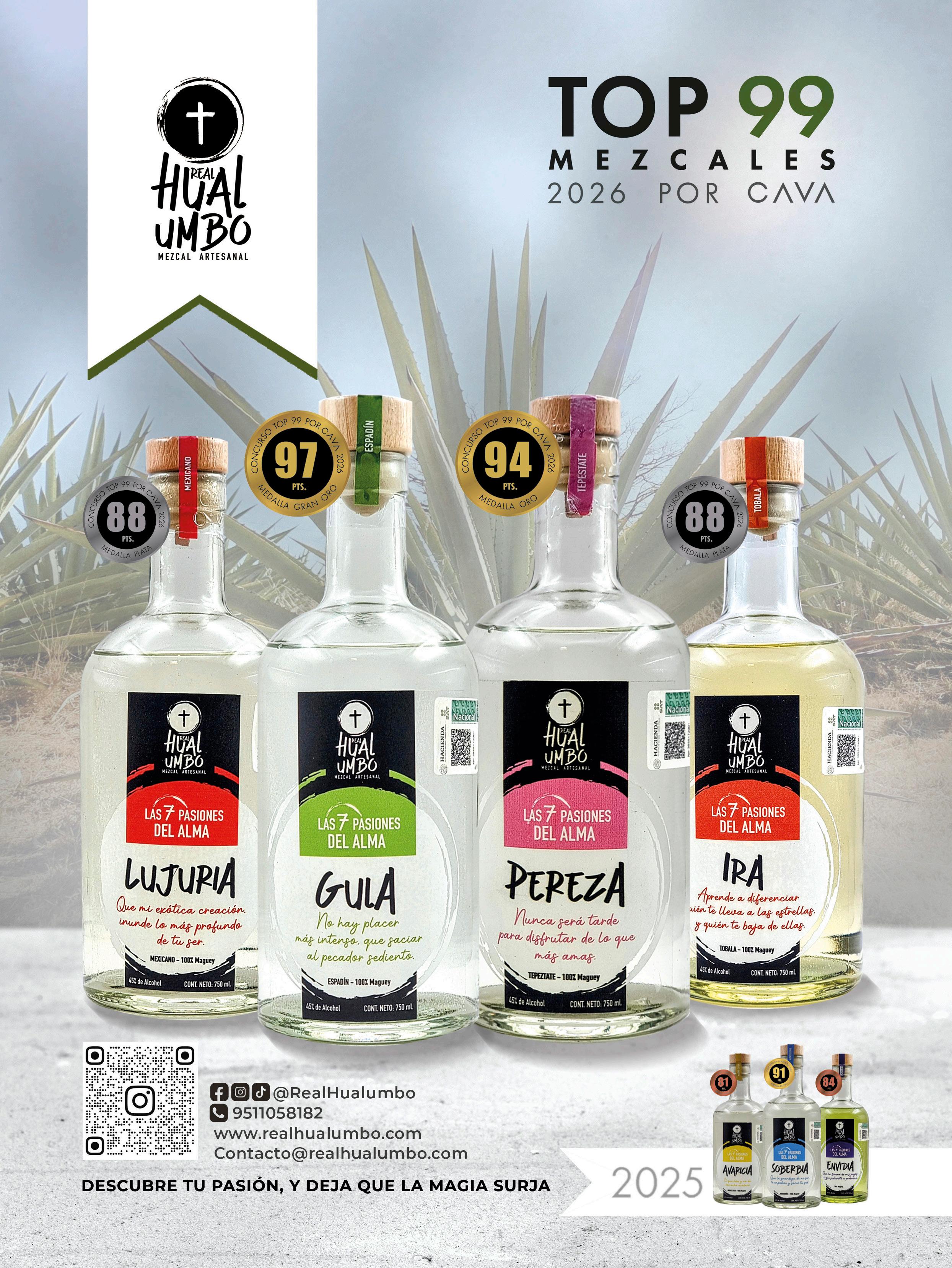
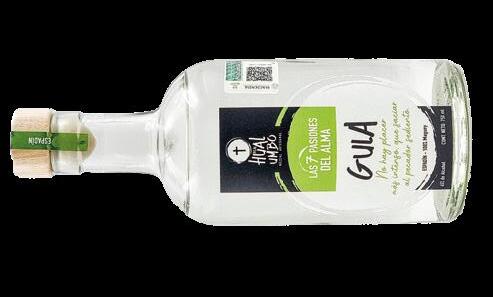
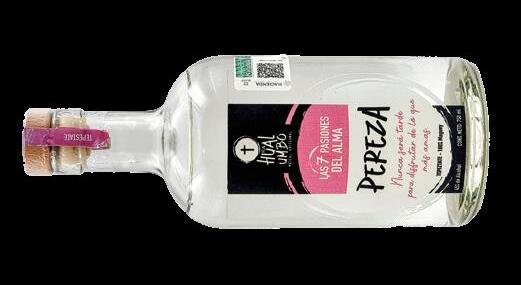
GULA, 45% Alc Vol
Agave: Espadín
Mezcal producer: Real Hualumbo
Medal: Grand Gold MIXES EXTRA AÑEJO 6 AÑOS, 40% Alc
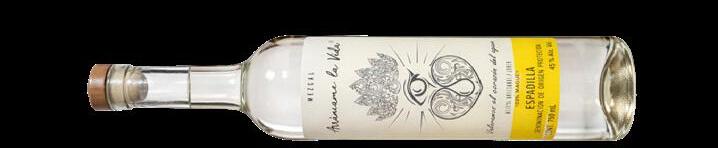
ARRANCAME LA VIDA PECHUGA MOLE PBNO., 41.3% Alc Vol
Agave: Espadín
Mezcal producer: Arráncame la Vida Region: Puebla Medal: Gold
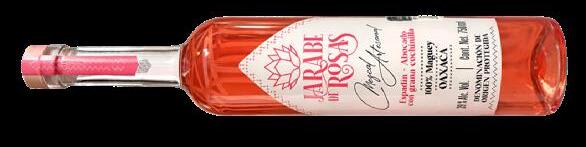
Mezcal producer: Jarabe de Rosas Region: Oaxaca Medal: Silver
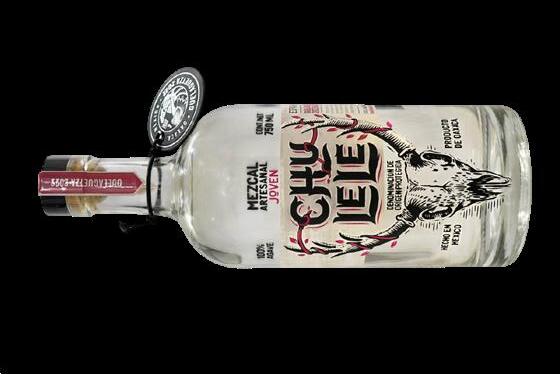
Mezcal producer: Chulele
Region: Oaxaca
Medal: Silver
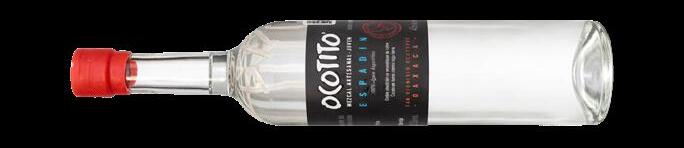
OCOTITO, 45% Alc Vol
Agave: Espadín
Mezcal producer: Ocotito
Region: Oaxaca Medal: Gold
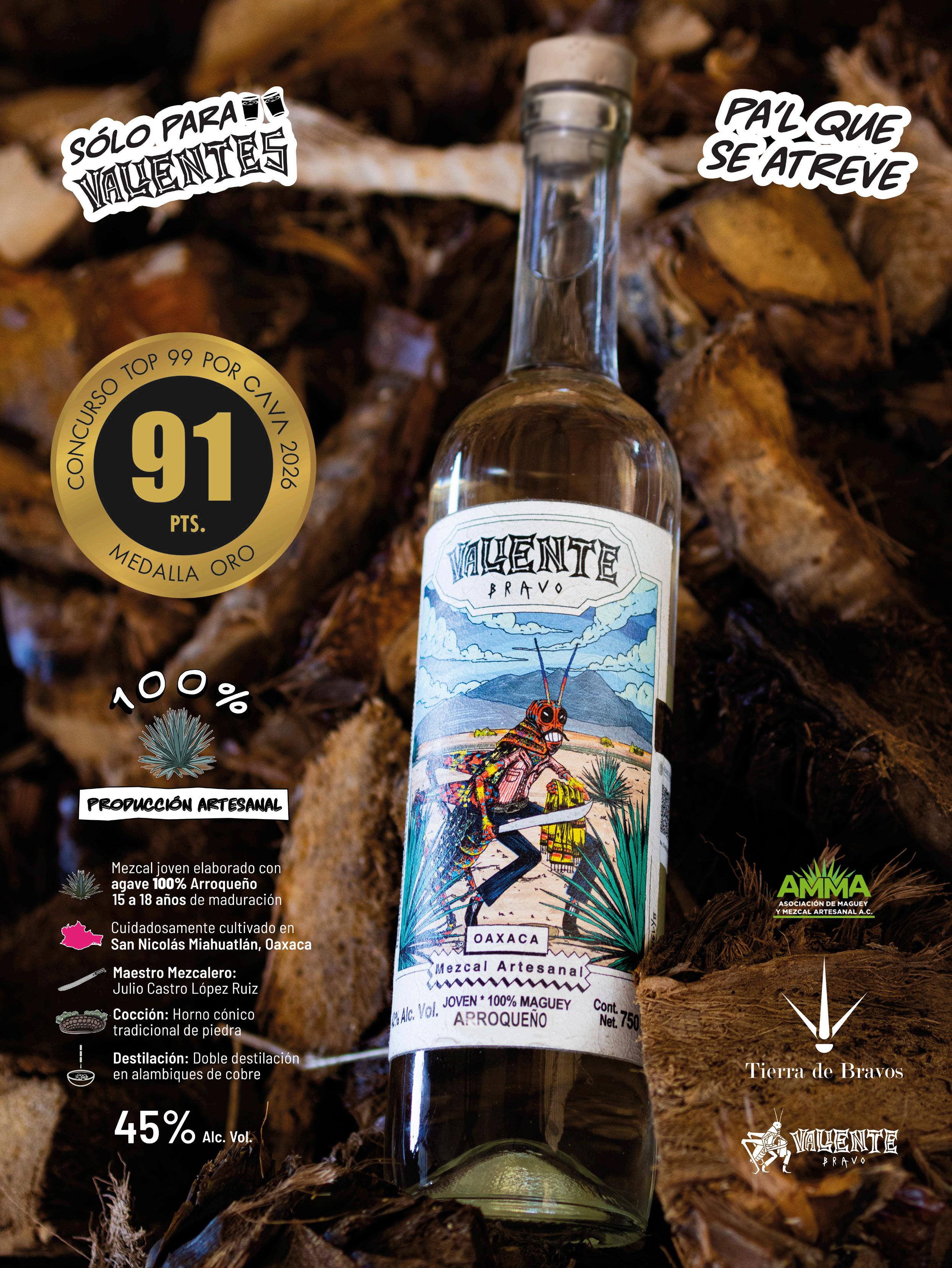
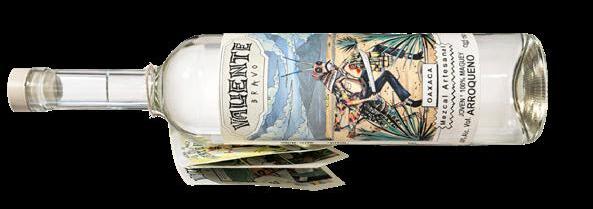
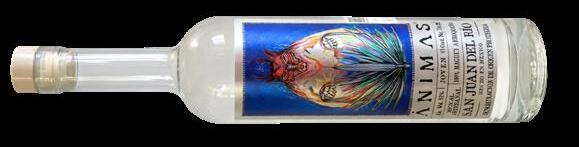
Agave: Arroqueño
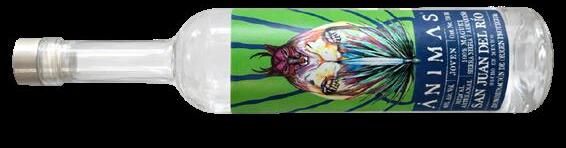
Mezcal producer: Las Ánimas
Region: Oaxaca Medal: Gold
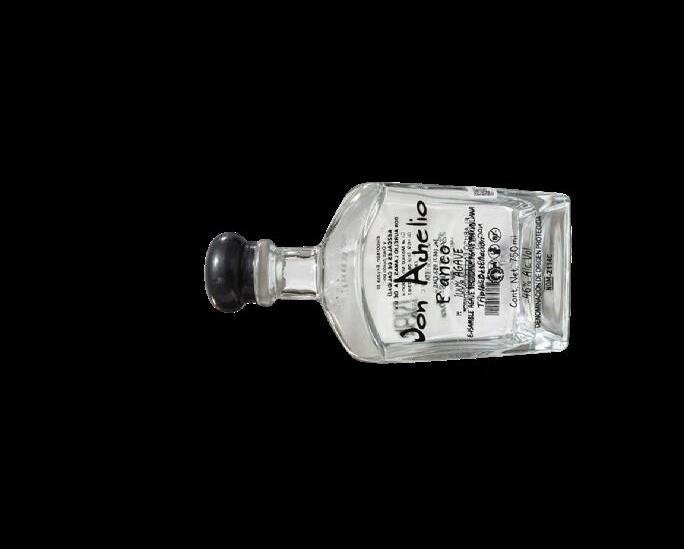
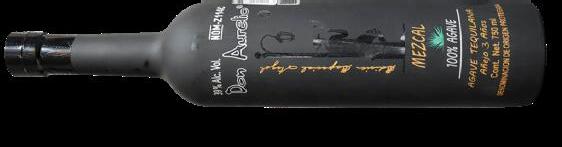
Agave: Azul Tequilana Weber
Mezcal producer: Don Aurelio
Region: Zacatecas Medal: Silver
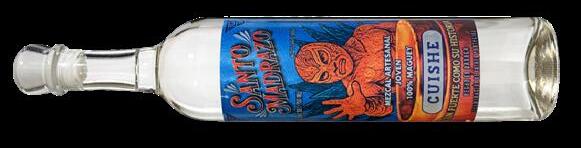
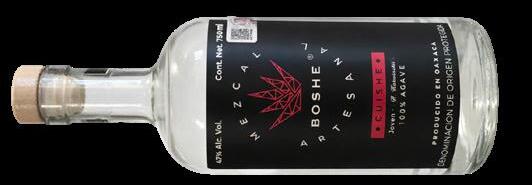
Agave: Cuishe
Mezcal producer: Boshe Region: Oaxaca Medal: Gold
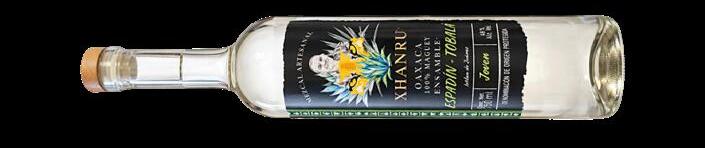
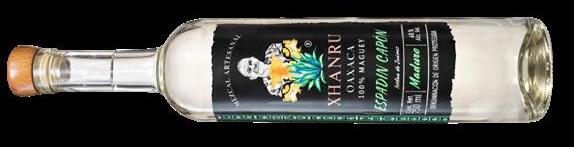
Agave: Espadín Capón
Mezcal producer: Xhanru
Region: Oaxaca
Medal: Gold
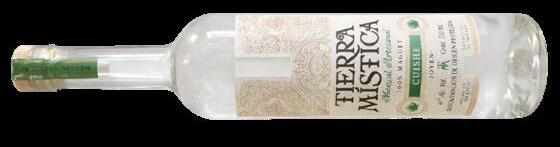
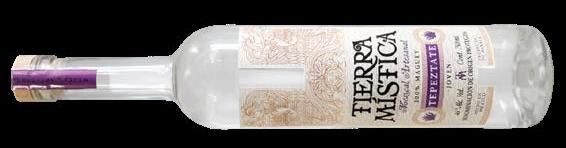
Agave: Tepeztate
Mezcal producer: Tierra Mística
Region: Oaxaca
Medal: Gold
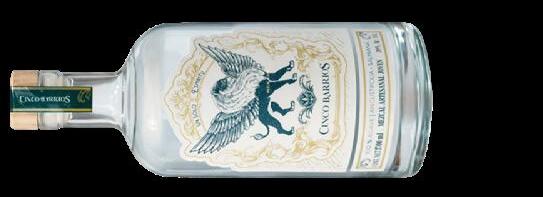
CINCO BARRIOS, 40% Alc Vol
Agave: Espadín, Salmiana
Mezcal producer: Cinco Barrios
Region: Aguascalientes Medal: Gold
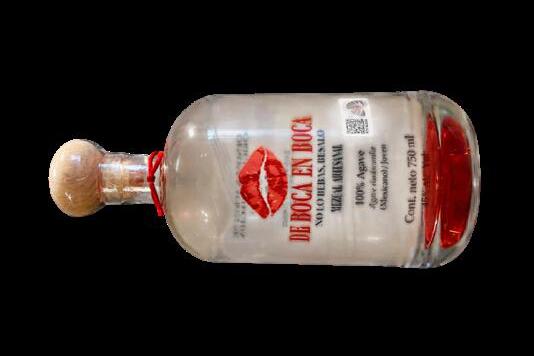
BOCA EN BOCA
Agave: Espadín
Mezcal producer: De Boca en Boca Region: Oaxaca Medal: Gold
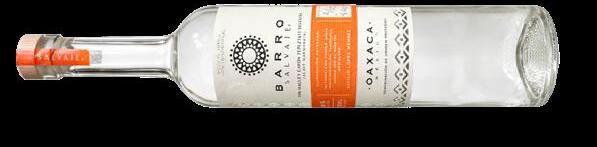
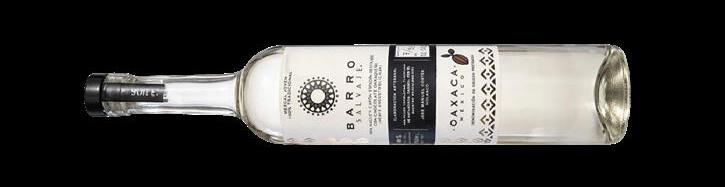
BARRO SALVAJE ESPADIN CHOCOLATE OAX., 48% Alc Vol
Agave: Espadín
Mezcal producer: Barro Salvaje Region: Oaxaca
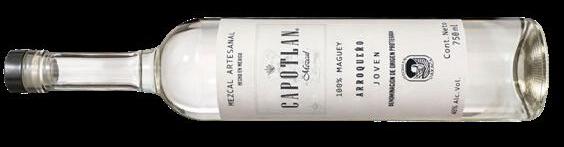
CAPOTLÁN ARROQUEÑO, 46% Alc Vol
Agave: Arroqueño
Mezcal producer: Capotlán
Region: Oaxaca Medal: Gold
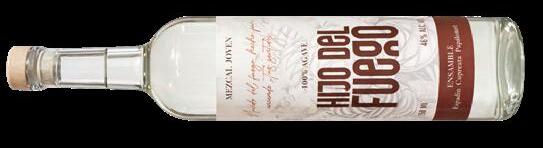
Agave: Espadín, Papalometl, Cupreata
Mezcal producer: Hijo del Fuego
Region: Puebla
Medal: Gold
Mezcal producer: San Balta Region: Oaxaca Medal: Gold
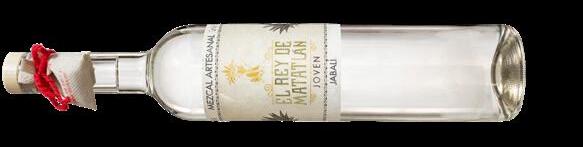
Agave: Tepeztate
Mezcal producer: El Rey de Matatlán
Region: Oaxaca
Medal: Gold
IBEER, COLONIALISM, AND MEMORY LIQUID
BEHIND THE MAGICAL COMBINATION OF GRAINS, WATER, YEAST, AND HOPS LIES A STORY
RICH IN MEANING THAT SPANS REGIONS, OCEANS, EMPIRES, AND TRADE ROUTES. BEER NOT
ONLY ACCOMPANIED THE COLONIALIST MOVEMENT FROM ITS ORIGINS, BUT WAS ALSO A
TOOL OF EXPANSION AND A CULTURAL SYMBOL IN OCCUPIED TERRITORIES.
t’s common to think that history can be boring or tedious; however, if we focus on understanding the reasons behind and the origins of what interests us, it can become a way to connect with it even more deeply. In this sense, learning about the history of beer and its connection to colonialism doesn’t take away from the pleasure of raising a glass; on the contrary, it adds context—one that might even help you be more interesting at parties!
Beer is one of the oldest fermented beverages in the world; archaeological studies date its production to Mesopotamia more than five thousand years ago. For centuries, it served as food, medicine, and liquid wages. In medieval Europe, the development of hops allowed the beverage to travel farther without spoiling; that technical detail, seemingly minor, was key in the Age of Exploration.
When European powers began expanding in the 15th century, they brought with them crops, animals, yeast, and customs. On many ships, beer was part of the daily ration because stored water was easily contaminated; fermentation offered a safer alternative from a microbiological standpoint, as explained in historical studies of naval diets
published in journals specializing in the history of science.
BEER IN COLONIZED LANDS
In the Americas, Africa, and Asia, European beer did not arrive in “empty” territories; it arrived in regions where fermented beverages already existed, such as pulque in Mesoamerica, chicha in the Andes, and sorghum beer in various parts of Africa, among many others. Colonization not only imposed languages and religions; it also reorganized food systems.
In the case of New Spain, the Spanish promoted wine as a “civilized” drink associated with Christianity, while the indigenous pulque was regulated, taxed, or discredited at various times. Beer, which had a smaller initial presence compared to wine, gained a stronger foothold in the 19th century, when European (particularly German) migration brought lager fermentation techniques and industrial models.
Colonialism was not merely what we usually read about in history books—that is, territorial occupation—but also a forced integration into a global economic system. Beer played a role in that network; in the British colonies in
“ …HISTORIANS HAVE DOCUMENTED ADVERTISING CAMPAIGNS IN EARLY 20TH-CENTURY MEXICO THAT ASSOCIATED PULQUE WITH BACKWARDNESS AND BEER WITH HYGIENE AND MODERNITY” .
Africa, for example, colonial administrations regulated and, at times, banned traditional beers to favor industrial production linked to companies in the mother country. Industrial beer—bottled and standardized—represented control: sanitary, fiscal, and labor-related. In many areas, alcohol taxes financed part of the colonial administrative apparatus.
The history of beer and colonialism also has an agricultural dimension; the cultivation of barley and hops was adapted to new territories, sometimes displacing local crops. Colonial agronomic science promoted specific varieties that met export needs and European standards of taste.
MEXICO: BETWEEN TRADITION AND COLONIAL HERITAGE
Our country’s history tells the story of how the first major breweries in the country emerged during the Porfiriato, a period that sought to modernize Mexico by following European models; industrial beer fit into that narrative: it was technological, urban, and associated with progress.
In Mexico, the relationship between beer and colonialism is complex. During the viceregal era, beer did not hold the same central place as wine, but over the centuries it became deeply integrated into the national culture. The arrival of German immigrants in the 19th century influenced styles and techniques that still shape the Mexican beer scene today. At the same time, industrial beer largely displaced pulque in the urban
market; historians have documented early 20th-century advertising campaigns in Mexico that associated pulque with backwardness and beer with hygiene and modernity. That discourse cannot be separated from the colonial legacy and the desire to “whiten” customs considered indigenous. However, history is not linear; in recent decades, the craft beer movement has championed local ingredients, reinterpretations of styles, and connections with Mexican farming communities. In that process, pulque and other traditional beverages have also been revalued.
WHAT DO WE DO WITH THIS STORY?
Talking about beer and colonialism doesn’t mean passing negative judgment on a beverage or romanticizing the pre-colonial past; it means recognizing that food and drink aren’t neutral, but are shaped by power dynamics, trade, and culture.
At CAVA Magazine, we understand that comprehending these narratives helps us make more informed decisions. Choosing a local beer, supporting sustainable agricultural projects, or taking an interest in traditional beverages is not just a culinary preference; it can also be a conscious act in the face of a history of inequality. Drinking with memory does not spoil the pleasure; it deepens it. It reminds us that even the most everyday things are made up of layers of time, and that, as a society, we can decide which stories we want to continue fermenting and which we prefer to transform. ▼
CURRENT CHALLENGES FACING THE BREWING INDUSTRY
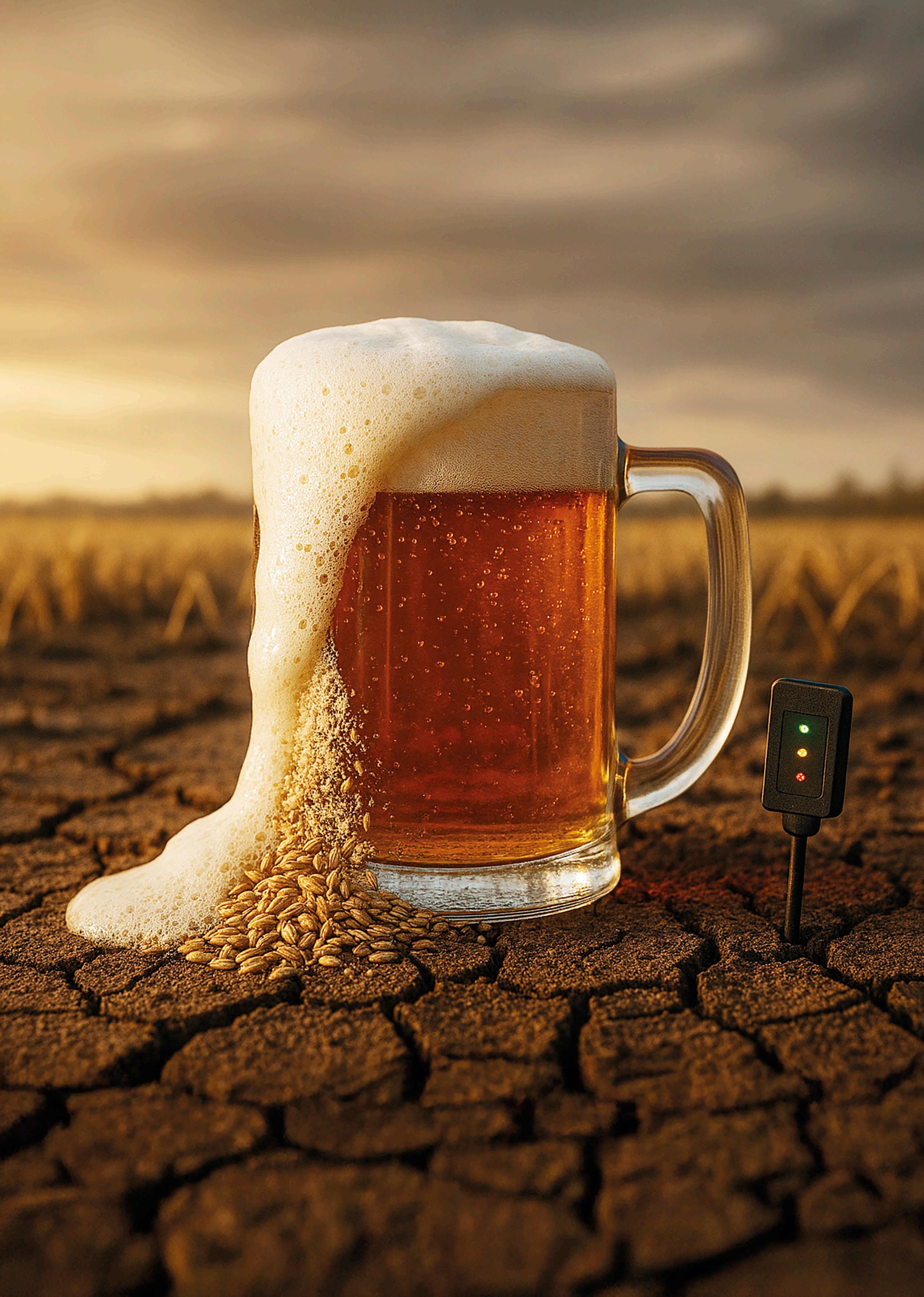
FEW IMAGES ARE AS UNIVERSAL AS THE FOAM THAT GENTLY RISES TO THE EDGE OF A BEER GLASS WHEN POURED ICE-COLD. IN MEXICO AND AROUND THE WORLD, WE ENJOY
THIS SCENE ENORMOUSLY, AS IT ACCOMPANIES OUR DAILY RITUALS AND CELEBRATIONS.
HOWEVER, ON THE OTHER SIDE OF THE COIN, SIGNIFICANT CHALLENGES ARE EMERGING FOR THE BREWING INDUSTRY, SUCH AS CLIMATE UNCERTAINTY, TRANSFORMING MARKETS, AND SOCIAL
TENSIONS SURROUNDING WATER USE.
Mexico has established itself as a global powerhouse in beer production and export, accounting for about one-fifth of the world’s total beer exports—an achievement that has transformed entire communities and provides employment for thousands of people both inside and outside its breweries. However, this very scale is now facing challenges that are forcing the industry to rethink some of its traditional pillars.
BARLEY AND HOPS IN THE FACE OF AN UNCERTAIN CLIMATE
As part of its very identity, “our favorite cold one” depends on ingredients from the fields, such as barley and hops, whose production is becoming increasingly volatile due to the challenges of climate change. These plants require specific conditions regarding temperature, precipitation, and soil; prolonged droughts, heat waves, and torrential rains are reducing yields and crop quality in growing regions. In some traditional beer-producing countries, such as in Europe and the United States, production losses have been significant; the area planted with barley has de -
creased, and production has been affected by adverse conditions that reduce yields per hectare.
The impact of these changes is not limited to the countryside; market data show that hop prices have risen by nearly 20% in recent years, and barley has also seen considerable increases. These effects are felt particularly acutely by independent breweries that lack the purchasing power and logistics to mitigate changes in raw material prices. Ultimately, as is the case with almost all products in the current economic climate, these fluctuations drive up the cost of the final product and put pressure on the margins of smaller producers.
WATER AS A VITAL RESOURCE IN BEER PRODUCTION
More than 90% of beer is water, making this resource an irreplaceable element of beer production. But water is an increasingly scarce commodity in many regions of the world, including Mexico, where competition between agricultural, urban, and industrial uses is intensifying amid recurring droughts. In
“ THE BEER INDUSTRY IS AT A CROSSROADS; ITS TRADITIONAL FOUNDATIONS ARE BEING STRAINED BY ENVIRONMENTAL, SOCIAL, AND ECONOMIC FACTORS THAT ARE FORCING IT TO RETHINK ITS OWN BUSINESS MODELS” .
states like Yucatán, the construction of a mega-brewery has sparked protests from local communities concerned about the pressure it could exert on aquifers and cenotes, water resources with deep cultural and historical significance.
These tensions highlight that water sustainability is not merely a technical or business issue, but a social and political one: how is access to water prioritized when diverse communities compete for it? The answer is still under constant debate, but it is clear that without equitable and sustainable solutions for managing this resource, the brewing industry will face increasing conflicts that will force it to rethink its processes and its relationship with local communities.
WHAT DOES THE MARKET SAY?
Despite these challenges, in Mexico, sectors such as craft beer have experienced growth in recent years, with annual growth rates of around 10 to 12% in production and expectations of consolidation. However, this growth starts from a small base and faces its own challenges, such as the need to educate consumers about styles, build brand identity, and compete against giants that dominate distribution channels. Globally, consumption patterns are also shifting; per capita beer consumption has shown signs of stagnation or even decline as the fitness lifestyle gains traction, while other beverages—including low-alcohol and non-alcoholic options—are gaining ground.In addition, younger consumers tend to value sustainability, transparency in production processes, and ethical
practices, which requires breweries to adopt more environmentally responsible models that go beyond their mere production capacity.
Faced with these challenges, the brewing industry is not sitting idly by; several companies have adopted innovative technologies and strategies to adapt, leveraging artificial intelligence systems that optimize fermentation processes, as well as more eco-friendly packaging materials and waterand energy-saving practices. Innovation has become a tool for maintaining competitiveness. Some breweries have implemented water recycling systems or energy-efficient technologies to reduce their environmental footprint and lower their consumption, such as “green beer” initiatives featuring biodegradable cans or processes powered by renewable energy sources—initiatives that represent not only an ecological response but also a way to connect with environmentally conscious consumers.
The brewing industry is at a crossroads; its traditional foundations are being challenged by environmental, social, and economic factors that are forcing it to rethink its own business models. The challenge is no small one, as it involves ensuring the availability of raw materials, responding to more demanding consumers, and managing natural resources responsibly—all while preserving the quality and diversity that have defined beer since its origins. What is at stake is not only production, but the sustainability of a social and cultural ecosystem that cannot be ignored. ▼
TBITTERNESS, LEARNING, AND BEER:
HOW DO WE DEVELOP A TASTE THAT ISN'T INNATE?
SOME FLAVORS DATE BACK TO CHILDHOOD: SUCH AS THE SWEETNESS OF A RIPE MANGO OR THE TARTNESS OF A LEMON, BUT BITTERNESS IS NOT USUALLY AMONG THEM. ON THE CONTRARY, THAT FLAVOR MAY BE PERCEIVED NEGATIVELY AT FIRST, AND YET, PEOPLE ALL OVER THE WORLD END UP
DRINKING BEER WITH PLEASURE AND APPRECIATING THAT BITTERNESS THAT DEFINES IT. WHAT HAPPENS
ALONG THE WAY? HOW DO WE GO FROM MAKING A FACE AT THE FIRST SIP TO ENJOYING A CRAFT BEER OR A COLD LAGER?
his phenomenon is not merely a social phenomenon, but also a sensory and cultural process that combines biology, learning, collective experiences, and the construction of identity.
From an evolutionary perspective, the sense of bitterness is a defense mechanism. How does it work? Many toxic compounds in plants have a bitter taste, and humans have developed specific receptors to detect it and avoid potential poisons. This system is encoded in a family of genes responsible for bitter taste receptors (known as TAS2R), which vary from person to person. Some genetic variants cause a more intense perception of bitterness, while others reduce it, influencing how we experience beverages like beer or even foods like broccoli or coffee. That is why it is not uncommon for someone tasting beer for the first time to perceive mainly a strong, dry, or unpleasant flavor; biologically, that bitterness is a sign of something unfamiliar and potentially harmful.
The bitterness in beer is due to compounds that essentially come from hops, whose flowers contribute acids that com-
bine during the brewing process to form intensely bitter molecules characteristic of this beverage. This bitterness is not static; in addition to the chemical elements, the final perception of the bitter taste is modulated by the aroma, the balance with residual malt flavors, and other sensory factors that ensure bitterness is not a single “button” on the palate, but rather a spectrum of complex sensations. In other words, not all bitter beers are the same, nor is bitterness perceived the same way in a hoppy pale ale as in a light lager.
AN ACQUIRED TASTE?
One of the keys to understanding why many people end up enjoying beer lies in how we learn to appreciate flavors that are initially unpleasant. Bitterness, unlike innate tastes such as sweet or salty, is not usually well-received by default. It almost always requires repetition and context to become familiar and pleasant. And that learning occurs on several levels:
Social and cultural association: drinking beer doesn’t happen in a vacuum; it’s deeply tied to moments of togetherness: sha-
“ THE BITTER TASTE MAY HAVE BEEN THE FIRST IMPRESSION, BUT OVER TIME IT BECOMES INTERTWINED WITH MEMORIES,
CELEBRATIONS, AND RITUALS, AND EVENTUALLY BECOMES A SOURCE OF GREAT PLEASURE
ring a table with friends, watching a game, a Sunday barbecue, or simply chatting on the patio after a long day. Over time, the positive experience becomes associated with the act of drinking, and even if the first sip was bitter, the emotional memory can “soften” that initial perception and reinforce the taste.
Repeated exposure: our taste system is surprisingly flexible; with continuous repetition, greater sensory tolerance develops, causing the same bitter stimulus to produce less rejection and more interest. For many, the second, third, or tenth sip no longer provokes rejection; on the contrary, it can begin to be enjoyed for its own flavor profile.
Sensory combinations and the eating context: Beer isn’t drunk on its own; pairing it with food, soft drinks, or a pleasant atmosphere allows other sensations—such as residual sweetness, carbonation, and floral aromas—to soften the impact of bitterness, and the brain perceives the overall experience as pleasant rather than unpleasant. This type of learning is also seen with other bitter products such as black coffee, dark chocolate, or certain vegetables.
MORE THAN JUST FLAVOR, IT’S MEANING AND PLEASURE
Although learning plays a key role, not all palates change in the same way; science has shown that personality traits and indi -
vidual sensory differences also influence how we perceive and relate to the bitter taste of beer. A consumer study showed that people who are more open to new experiences or who seek intense sensations tend to prefer more bitter beers, such as hoppy craft beers, and consume them more frequently. For them, bitterness is not an obstacle, but part of the product’s appeal.
The social dimension’s influence on the development of taste cannot be underestimated; in cultures where beer is part of daily rituals (as in many regions of Mexico), drinking it involves unwinding after a hard day’s work, feeling part of a group, celebrating achievements, and sharing stories and experiences. That context can transform the perception of taste into an emotional experience rather than an exclusively sensory one; it becomes a kind of social language: the bitterness that once repelled becomes part of a shared story, a common memory, a collective identity.
The bitter taste may have been the first impression, but over time it becomes intertwined with memories, celebrations, and rituals, and ultimately becomes a welcome source of pleasure. This transformation from rejection to enjoyment is an example of how we humans not only perceive flavors, but also give them meaning, socialize them, and incorporate them into our cultural life in profoundly human ways. ▼
IDEAL TEMPERATURE BY BEER STYLE
When you open your favorite beer, there’s one detail that can completely transform your experience: the serving temperature. This directly influences how you perceive the aromas, flavors, and even the sensation of freshness and carbonation.
Below, in this guide, we share the recommended temperature for each style.
GENERAL RECOMMENDED RANGE
Most specialized guides agree that beer should be served between 1 °C and 13 °C (≈ 34 °F–55 °F) depending on the style.
13 c°- 16 c° BARLEYWINE, STRONG BEERS For styles with high alcohol content and a complex profile.
10 c°- 13 c° BELGIAN ALES & COMPLEX BEERS
Fruity aromas and esters come through best.
4 c°- 10 c° WHEAT BEER (Weiss, Wit)
Served very cold: highlights freshness and carbonation.
10 c°- 13 c° PORTERS & STOUTS
Warmer temperatures reveal toasted and chocolatey flavors.
7 c°- 10 c° PALE ALES & IPAS
Allows hops and malts to express their aromas.
1 c°- 7 c° LIGHT LAGERS / PILSNERS
Very cold: highlights freshness and carbonation
DISTILLATES MADE FROM BY-PRODUCTS
SPIRITS MADE FROM BYPRODUCTS OF OTHER FOOD INDUSTRIES ARE A BLEND OF TRADITION, INNOVATION, AND A TRUE SPIRIT OF THE CIRCULAR
ECONOMY. THIS
PHENOMENON
NOT ONLY OPENS THE DOOR TO NEW TASTE EXPERIENCES, BUT ALSO PAVES A MORE SUSTAINABLE PATH FOR THE WORLD.
WHAT DO WE MEAN BY “DISTILLATES MADE FROM BYPRODUCTS”?
In simple terms (though not necessarily easy to put into practice), these are distilled alcoholic beverages made from byproducts or residues that were previously considered industrial waste. These can come from food or beverage production, such as fruit scraps, brewers’ grains, or distillation residues, and are repurposed to create new spirits. This trend fits perfectly within the broader concept of the circular economy: “One man’s trash is another man’s treasure.”
FROM WASTE TO SPIRIT: HOW THE MAGIC HAPPENS
The traditional production of distilled beverages such as whiskey, brandy, or aguardiente begins with a fermented mash (cereal, fruit, or fermented juice) that is distilled to separate the ethanol and other aromatic compounds. But what happens to the leftovers from that process?
In wine or beer production, solid residues called pomace or skins remain—these are peels, seeds, stems, and pulp remnants that seem useless after the juice or must has been extracted. However, this moist, compound-rich raw material can be fermented and distilled to produce traditional spirits in many cultures—interesting, isn’t it? For example, in Spain and Italy, spirits like orujo or
grappa are made precisely from the grape skins left over after winemaking. This same principle of “waste turned into spirit” is now inspiring sustainable distillers around the world.
In some cases, industrial waste, such as carbohydrate-rich brewer’s spent grain or distillation byproducts, serves as a base for creating new beverages. Although this waste is often used for animal feed or fertilizer, recent research has explored its potential as a source of ethanol or a base for alternative fermentation processes. In addition, craft distilleries are experimenting with more unusual byproducts, such as whey, fruit waste, or even leftover botanicals, to create spirits with unique and sustainable profiles.
BEHIND THE PROCESS: SCIENCE AND SUSTAINABILITY
The idea of reusing waste is not only environmentally friendly but also scientifically sound. Modern research on the circular economy shows that the alcoholic beverage industry produces solid and liquid byproducts that can be repurposed, reducing environmental impact and creating new products. For example, post-distillation waste known as vinasse or pot ale (liquids rich in organic matter and nutrients) poses an environmental challenge due to its high organic load, but also presents an opportunity to recover useful components
“ WHY NOT IMAGINE SPIRITS THAT TAKE THEIR STORY TO A WHOLE NEW LEVEL?
THINKING ABOUT SPIRITS MADE FROM TROPICAL FRUIT WASTES OR BYPRODUCTS FROM LOCAL BREWERIES COULD OPEN UP NEW PATHWAYS FOR INNOVATIVE MICRODISTILLERIES IN THE COUNTRY ” .
through separation and processing technologies. Contemporary science no longer views this waste as mere garbage; instead, techniques such as secondary fermentation, bioconversion, and energy recovery are being developed to give it a second life. This approach is also aligned with several of the United Nations Sustainable Development Goals, which promote responsible production and consumption patterns.
SOME EXAMPLES OF SUSTAINABLE DISTILLATION
The sustainable spirits movement is growing rapidly, although it is still an emerging trend compared to viticulture or craft brewing. Some inspiring practices include:
Distillation of leftover botanicals.
Some European distilleries use leftover aromatic plants that didn’t make it to market to extract essential oils and aromatic alcohols for gins or liqueurs, while also reducing harvest waste.
Reusing cheese and dairy waste.
In the United States, certain companies transform dairy industry byproducts such as whey into spirits, significantly reducing water usage and waste.
Artisanal specialties made from bagasse. More traditionally, in wine-producing regions, distilled grape skins yield aromatic, full-bodied spirits that reflect the terroir and harvest from which they come.
This type of innovation not only creates intriguing beverages for mixologists and curious consumers but also opens up new economic opportunities for small and medium-sized producers, while reducing the environmental impact of industries that generate high volumes of waste.
AND IN MEXICO? A FUTURE WITH POTENTIAL
Mexico is a country with an enormous diversity of fermentable raw materials such as agave, corn, tropical fruits, sugarcane, etc. Traditionally, we have seen how these resources give rise to iconic beverages such as tequila, mezcal, bacanora, or raicilla, all of which are distilled from the fermentation of juices or musts from native plants. Now, this wealth can be taken a step further; agave bagasse is already recognized in Mexico as a valuable resource for various applications, from biomaterials to functional ingredients. Why not imagine spirits that take their story to a new level? Thinking about spirits made from tropical fruit waste or byproducts from local breweries can open new avenues for innovative microdistilleries in the country. Because it’s not just about recycling, but about telling a liquid story of our land, our practices, and our possibilities. Ultimately, every sip of a spirit made from byproducts tells a twofold story: one of chemistry and science, and another of philosophy and purpose. It reminds us that sustainability isn’t just a technical term, but a way of relating to what we produce, consume, and leave behind. ▼
BLONG VS. SHORT FERMENTATION IN DISTILLATES
IF YOU'VE EVER WONDERED WHY TWO WHISKIES FROM THE SAME REGION CAN SMELL AND TASTE SO DIFFERENT, OR WHY CERTAIN DISTILLATES HAVE MORE PRONOUNCED
FRUITY, FLORAL, OR EARTHY NOTES THAN OTHERS, THE ANSWER USUALLY LIES IN THE FERMENTATION.
efore the vapor rises through the still and becomes the spirit we enjoy, a microscopic community of yeasts works day and night, transforming sugars into alcohol and a universe of aromatic compounds.
Alcoholic fermentation is a biological process in which yeasts (such as Saccharomyces cerevisiae) consume sugars and transform them into ethanol, carbon dioxide, and a series of secondary compounds called congeners (such as esters, acids, and higher alcohols), which then contribute aroma, flavor, and body to the distillate. Although all distillates begin with a fermentation stage, there is no single “correct” way to do it. The duration of fermentation (ranging from just a few hours to several days or even weeks) produces radically different sensory profiles.
SHORT FERMENTATIONS
A short fermentation typically lasts approximately 48 to 60 hours before the mash is ready for distillation. Sensory characteristics include cleaner, more direct profiles, fewer complex congeners, aromas closer to cereal or light fruit, and less intense ester notes. In these fermentations, the yeasts do not have as much time to produce more
complex secondary compounds. The result is a more “neutral” spirit, ideal for styles where the aim is to emphasize other aspects of the recipe or the wood during aging. This approach may be preferred in industrial production or in styles seeking a purer expression of the grain or the initial raw material.
LONG FERMENTATIONS
When fermentation extends beyond 80 to 100 hours or even several days, the picture changes significantly. The yeasts have more time to produce esters (which are responsible for fruity aromas such as apple,mango, or floral notes).
Additional metabolites may emerge due to the action of bacteria that accompany the yeast as the process lengthens. The sensory profile becomes richer, more complex, and deeper.
This type of fermentation can evoke the aroma of ripe fruit or even almost tropical notes, because the chemistry of the esters evolves in different proportions than in short fermentations. The simplest analogy would be to think of a fruit that is allowed to ripen longer: its aromas intensify, becoming more complex and less linear.
“ CHOOSING BETWEEN A LONG OR SHORT FERMENTATION IS LIKE CHOOSING BETWEEN TWO WAYS OF EXPRESSING AROMAS AND FLAVORS: ONE MORE DIRECT AND CLEAR, THE OTHER MORE COMPLEX AND NUANCED” .
WHY DOES DURATION MATTER?
Imagine that fermentation is a conversation between sugar and yeast; the more time they have to talk, the more ideas (aromatic compounds) will emerge. In short fermentations, that dialogue is brief and direct; in long fermentations, it is extensive, with nuances, twists, and surprises. Duration determines not only how much alcohol is produced, but also what kind of secondary compounds are generated.
Other interacting factors include temperature, pH, the size and shape of the fermenter, and the type of yeast and microorganisms present: different strains produce different profiles. This is why fermentation time must be understood as part of a broader equation, where each variable (raw material batches, tank management, cleaning, and microbiological control) contributes to the final result
In distilled spirits, fermentation precedes a subsequent stage: distillation. This step concentrates the alcohol and either concentrates or removes certain compounds, depending on how the “heart,” “head,” and “tail” of the distillate are separated. The quality of the fermented mash (whether the result of a long or short process) serves as an aromatic canvas for the distiller. In practice, many distillers use fermentation duration as a tool for sensory design. A producer seeking a light, precise spirit may opt for controlled, brief fermentations, where microbial activity is carefully limited. In contrast, other producers allow for longer, less restrictive fermentations, where different yeasts and bacteria participate in the process, generating a broader
aromatic palette. It is not just a matter of waiting longer, but of understanding how that time transforms the chemistry of the must.
There is also a cultural and stylistic factor. In certain traditions, extended fermentation is part of the very identity of the spirit, imparting that deep character that distinguishes an artisanal product. In others, the consistency and purity of the aromatic profile take priority, so the processes tend to be shorter and more controlled. Thus, the duration of fermentation responds not only to technical criteria but also to a production philosophy: a particular way of interpreting the raw material and deciding which aromatic story one wishes to reveal in the final distillate.
WHICH IS “BETTER”?
There is no single answer; short fermentations can be perfect for clean, fresh, and straightforward spirits. Long fermentations can shine in complex spirits with an aromatic “story” to tell. Each style, tradition, and master distiller dictates their choice, and both approaches have a valuable place in the vast universe of spirits.
Fermentation is not merely a technical step prior to distillation, but an invisible art that shapes the character of each spirit. Choosing between a long or short fermentation is choosing between two ways of narrating aromas and flavors: one more direct and clear, the other more complex and nuanced. Time is a powerful tool in the hands of the distiller who seeks to tell a story in every sip. ▼
“THE ONE THAT REALLY SPICES THINGS UP, PLEASE”: SPICY FLAVOR AS THE SOUL OF MEXICAN CUISINE
IF YOU SIT DOWN AT A TABLE IN A MEXICAN HOME OR RESTAURANT AND THERE ARE NO CHILIES OR SAUCES IN THE CENTER, YOU IMMEDIATELY FEEL THAT SOMETHING IS MISSING. SPICY FLAVOR IS NOT JUST ANOTHER FLAVOR: IT IS AN IDENTITY AND CULTURAL TRAIT THAT SPANS SPACES, MEMORIES, AND SENSES.
BUT WHAT LIES BEHIND THAT FAMILIAR SENSATION OF BURNING AND PAIN? AND WHY, DESPITE THE PAIN, DO WE KEEP COMING BACK FOR MORE? THE ANSWER COMBINES HISTORY, SCIENCE, AND EMOTION IN EVERY BITE.
The presence of spice in Mexico goes beyond a culinary trend; it is part of a collective memory that dates back to the first peoples who domesticated the chili pepper more than eight thousand years ago. In the vast archaeological region of Mesoamerica, the staple diet was based on three pillars: corn, beans, and squash. With the introduction of Capsicum, the chili pepper became an integral part of the daily menu. It not only enriched the flavors but also provided nutrients, vitamins, and variety to dishes that would have been more monotonous without it. Some experts believe that this plant was, literally, one of the first to be domesticated in the region, and its use extended to both daily life and pre-Hispanic tributes and ceremonies.
PAIN AND PLEASURE: THE SCIENCE BEHIND CAPSAICIN
From a chemical standpoint, spiciness is not a taste (like sweet or salty); rather, it is a sensation and an acquired taste. The compound responsible for this is capsaicin, found in chili peppers of the Capsicum family. When you eat something spicy, this molecule activates receptors known as TRPV1 on the tongue and in the oral mucosa; these same sensors react when something is extremely hot
or harmful, so the brain “thinks” it is experiencing heat or irritation. This interaction with the nervous system explains why your eyes water or your nose runs while you enjoy your favorite tacos or chilaquiles—in other words, the body is reacting as if there were a physical fire in the mouth. But clearly, being Mexican prepares us for those moments of suffering, because we learn from an early age to enjoy that sensation.
Spiciness isn’t just a test of endurance; science has discovered that, although capsaicin causes a burning sensation, it also triggers the release ofendorphins and dopamine neurotransmitters associated with pleasure, relief, and emotional well-being. It’s a paradoxical response, but it makes sense: the initial pain can turn into gratification. That mix of heat and reward explains why, even as our taste buds scream, we keep bringing the spoon back for another bite. That’s why, for many, a “really spicy” dish isn’t a warning, it's an invitation.
Mexican cuisine does not rely on a single type of heat: there are as many nuances as there are cultural contexts, from the habanero of the Yucatán Peninsula to the deep, smoky aroma of the morita chili in the center of the country. If the chili is the raw material, the sauce is everyday alchemy
“ SPICY FOOD DOESN’T JUST SPICE THINGS UP IT TELLS STORIES FROM VARIOUS PARTS
OF THE COUNTRY AND ALL OF LATIN AMERICA, SPEAKING OF CULTURAL EXCHANGES, OF REGIONAL TRADITIONS, AND WAYS OF DEALING WITH INTENSITY THROUGH HUMOR, COMPLICITY, AND A SENSE OF BELONGING ” .
in kitchens across the country, which is why there isn’t just one sauce, but hundreds of regional combinations. Raw sauces, ground in a molcajete with tomatoes, green tomatoes, and onions, retain the fresh, vegetal bite of the chili. The tatemadas, roasted on a comal, develop smoky notes thanks to chemical reactions that intensify their flavor. Sauces in oil, such as salsa macha, fry dried chilies with garlic and seeds, achieving a lingering heat and adding a crunchy element.
AN INFINITE PALETTE: VARIETIES OF CHILIES AND SAUCES
Mexican cuisine does not rely on a single type of heat: there are as many nuances as there are cultural contexts, from the habanero of the Yucatán Peninsula to the deep, smoky aroma of the morita chili in the center of the country. If the chili is the raw material, the sauce is everyday alchemy in kitchens across the country, which is why there isn’t just one sauce, but hundreds of regional combinations. Raw sauces, ground in a molcajete with tomatoes, green tomatoes, and onions, retain the fresh, vegetal bite of the chili. The tatemadas, roasted on a comal, develop smoky notes thanks to chemical reactions that intensify their flavor. Sauces in oil, such as salsa macha, fry dried chilies with garlic and seeds, achieving a lingering heat and adding a crunchy element. In the realm of complex dishes, the delicious and famous mole poblano illustrates how various dried chilies can be combined with spices, seeds, and chocolate to create a sauce where the heat does not dominate but rather balances the other flavors; here, the chili interacts with sweetness and bitterness, demonstrating that heat can also be subtle. Each of these sauces offers a distinct experience, an interplay of heat, texture, and flavor that transforms food into something unique.
BEYOND THE BURN: BENEFITS AND PRECAUTIONS
Although spiciness can border on the extreme, it also has effects beyond mere intensity. Several studies have suggested that capsaicin can improve blood circulation, aid digestion, and boost metabolism. In some cases, these benefits have been linked to vasodilation, which helps regulate blood pressure and promotes healthier blood flow. However, as with any ingredient, consumption should be balanced; large amounts can irritate the gastrointestinal mucosa and cause discomfort in sensitive individuals or those with conditions such as gastritis or reflux. For this reason, even spicy food lovers often recommend knowing and respecting one’s own tolerance threshold.
IDENTITY IN EVERY BITE
Spicy food doesn’t just pack a punch; it tells stories from different parts of the country and all across Latin America. It speaks to cultural exchanges, regional traditions, and ways of facing the intense with humor, camaraderie, and a sense of belonging. In Mexico, eating spicy food isn’t just about enduring a moment of suffering by choice; it’s about sharing stories with friends around a table, testing visitors with a homemade hot sauce, or simply feeling that a dish is complete only when it has that touch that awakens all the senses.
This love for spice has transcended borders, and today Mexican cuisine is recognized worldwide, in part, for its bold flavors whether it’s a delicately balanced mole or an aguachile that makes you want to stop eating but keep going anyway because you’re savoring the moment. Spice remains a living expression of our culture, a complex, passionate culture deeply rooted in our culinary history. ▼
MEZCAL
ALEGRÍA
Address: Av. Independencia No. 1229, CP. 75150
Acatzingo, Puebla.
Phone: 222 579 5409
Email:: infomafra@gmail.com
Instagram: mezcalalegria
Web: https://mezcalalegria.com/
CASA RAMONA
Address: 3ra. Cda. de Independencia No.5, Centro, CP. 70430 Mitla, Oaxaca. Phone: 951 226 2880
Email: mezcal.artesanal@casaramona.com.mx
Instagram: @mezcal_casa_ramona
Facebook: Casa Ramona
CASA XAMU
Address: Boutique Mezcal: Boulevard Belisario Domínguez No. 2430-B, Colonia San Francisco Sabinal, CP. 29020, Tuxtla Gutiérrez, Chiapas. Phone: 951 103 3337
Email: direccion@casaxamu.com
Instagram: casaxamu
Facebook: Casa Xamu Web: www.casaxamu.com
CINCO BARRIOS
Address: Domicilio Conocido San José de la Ordeña CP. 20363, Aguascalientes. Phone: 449 310 2150
Instagram: Cinco_Barrios
Facebook: Cinco Barrios Web: cincobarrios.com.mx
CUESCO
Address: Martín de la mezquita No. 106, Col. Volcanes CP. 68020, Oaxaca de Juárez Oaxaca. Phone: 951 237 2307
Email: hola@mezcalcuesco.com
Instagram: mezcal_cuesco
Facebook: Mezcal cuesco
Web: https://mezcalcuesco.com/
HUMO DE MAR
Dirección con: Calle 4 norte entre 40 y 46. CP. 77710 Playa del Carmen, Quintana Roo. Phone: 984 166 3878
Email: humodemar.mezcal@gmail.com
Instagram: humo de mar mezcal
Facebook: humo de mar mezcal Web: https://humodemar.mx
LATIBÚ
Address: Giorgione 59 / 301, CP. 03700 Santa María Nonoalco, Benito Juárez. Phone: 554 457 1152
Address: Carretera internacional 190 km 41 Oaxaca / Tehuantepec Unión zapata, Carretera internacional 190 km 41 Oaxaca / Tehuantepec Unión zapata, mitla Oaxaca mitla Oaxaca Phone: 951 117 5141
Email: tierramisticamezcal@gmail.com
Instagram: tierra.mistica_oficial Facebook: mezcal tierra mística Web: www.mezcaltierramistica.com
XOLTIC
Address: 23 de noviembre 2 CP. 53270 san Juan Totoltepec Phone: 813 893 5881
Address: Oficinas Corporativas: Av. Plan de San Luis No. 1402, Mezquitan Country, CP. 44260 Guadalajara, Jal. Destilería: Carretera Jesús María - Ayotlán, Jalisco KM 1.5 CP. 47950 Jesús María, Jal. Web: https://www.tequilacampoazul.com Instagram: @tequilacampoazuloficial Facebook: Tequila Campo Azul Tik Tok: @tequilacampoazul
CASA ALMERO
Address: Sindicalismo 18 B, Col Hipódromo, Cuahutémoc, CDMX, CP. 06100
Email: hola@casaalmero.com
Web: www.casaalmero.com
Instagram: @casaalmero
TEQUILA GALINDO, SA DE CV.
Address: Presa de Barajas No. 4D, Km 1; Arandas, Jal. Mexico. CP. 47180
Web: www.tequilagalindo.com
Email: horacio.gonzalez@tequilagalindo.com
Instagram: tequilagalindo
Tik Tok:@tequilagalindo
CORPORATIVO DESTILERÍA SANTA LUCIA
Address: Servidumbre de paso a Las Agujas No. 450. Zapopan, Jalisco, CP. 45200
Web: www.destileriasantalucia.com
HACIENDA EL DIVISADERO
Address: Camino el Tuito a Chacala S/N KM 9, Localidad las Guasimas, Municipio de Cabo Corrientes,Jalisco. Web: www.haciendaeldivisadero.com facebook: HaciendaElDivisadero Instagram: raicillahaciendadivisadero
RON POTOSÍ
Address: Av. Venustiano Carranza No. 1045, Col. Tequisquiapan, CP. 78250, San Luis Potosí, SLP. Web: www.ronpotosi.mx
Instagram: @ronpotosi
Facebook: Ron Huasteco Potosí
GRUPO EXTRACTOS ARTESANALES
Address: Peyote No. 53 Infonavit Iztacalco Ciudad de Mexico CP. 08900
Web: www.grupoextractosartesanales.com
Instagram: por_mis venas
CHILCUAGUE
Address: Address: Blvd. Campestre 201, Jardines del Moral, 37160 León de los Aldama, Gto. Web: www.chilcuague.com.mx
Instagram.com: chilcuague
CHIRINGUITO
Address: Rio Tiber 100 Oficina 601ª Col Cuauhtemoc CDMX CP. 06500