
Q4 2026
The New Business Context for Leaders
Performance intelligence
The leadership multiplier
Shaping, not supporting The evolution of the CHRO
Critical connection How human relationships drive performance
Orbital fnance Investment in the space economy

How leaders turn AI’s potential into value in practice



















WHY RECOGNIZING AND ACCOMMODATING CHRONODIVERSITY COULD BE A BOON FOR BOTH EMPLOYEES AND EMPLOYERS










“The best companies want to tap into the full potential of their employees – and that means recognizing the unique needs of morning and evening people. Chronoleadership revolutionizes the way we create inclusive work cultures and equips leaders with strategies for embracing a diversity of chronotypes to improve health, productivity and overall wellbeing in the workplace.”
DORIE CLARK Wall Street Journal bestselling author of The Long Game and executive education faculty of Colombia Business School

THOMAS WEDELL-WEDELLSBORG author of What’s Your Problem?



“With this manifesto against our culture’s time tyranny, Camilla Kring points the way to a brighter future: one where employees flourish, students learn more, and society becomes just a little bit more human. Can we get this revolution started now, please?”


“A must-read for anyone interested in unlocking the full potential of their workforce.”
ALEX WUERFEL Executive Coach and former Vice President at AbbVie Inc.











Promise unful lled
The history of AI is not as brief as we might casually assume. Its story doesn’t begin in November 2022 when ChatGPT appeared; far from it. AI research at MIT began in the late 1950s. The first collection of articles about AI was published in 1963. Yet progress was gradual. It was decades before the Defense Advanced Research Projects Agency (DARPA) launched its Grand Challenge for autonomous vehicles in 2004. Momentum grew in the 2010s with tools like IBM’s Watson, Apple’s Siri and Microsoft’s Cortana.
Of course, researchers’ early sense of AI’s potential has now evolved into a much clearer –and more widely shared – picture of its potential. It is one based less on theoretical possibilities and more on tangible capabilities, and it has given rise to the current breathless dash to implement and scale AI within organizations. The mindset in these early days of the AI revolution has often, rightly, been experimental. But leaders face increasingly acute questions. What value are we truly creating through AI investments? Are we doing what’s needed to realize its potential in practice?
The Focus section in this issue of Dialogue o ers some answers. Mounting evidence suggests that organizations are still struggling to deliver value from AI; there are huge opportunities to increase implementation e ectiveness. Critically, as our authors explain, the challenges are rarely purely about the tech. Rather, they are about the organizational and human dimensions. That makes leadership critical.
Start with the feature from Tshilidzi Marwala and Duke Corporate Education’s CEO Sharmla Chetty, o ering a framework for Performance Intelligence. Their equation underlines the need to consider human capabilities alongside those of AI and autonomous agents. Tying them all together is leadership: the multiplier that brings all other capabilities to life (p16).
Next, we welcome a trio of Duke CE faculty members writing for Dialogue for the first time. Roger Spitz explains how leaders can use AI for
better decisions without weakening their decisionmaking muscle (p20). Pierre-Alexandre Balland trains his gaze on the critical questions of vision and verification (p24). And Tom Lawry o ers guidance to help healthcare providers break the Silicon Ceiling that’s holding them back (p28).
We also explore the opportunities of the emerging AI era in this issue’s fascinating interview with D Crum, executive vice president and CHRO at AbbVie (p32). Be sure not to miss his insights on how AI is upending old assumptions about talent – a theme further explored by Duke CE’s Vishal Patel (p11). The guild and apprentice model for giving leaders vital experience and building precious judgment has collapsed, he writes. What will replace it?
Emmanuel Gobillot warns leaders against surrendering their agency in the face of AI inevitability narratives (p38), while Edosa Odaro argues that when it comes to building AI-powered systems, leaders need to ditch the usual advice to start with why, and think first about who (p62).
Elsewhere, Kerry-Lyn Stanton-Downes explains why relational capacity – the connections we build in our teams – is critical infrastructure for collective performance in the age of AI (p46). Psychological safety is a felt experience, she writes –and it is created through relationship.
The AI story is unfolding faster than ever. As they strive to realize AI’s vast potential in practice, leaders must recognize that human needs, human values and human talent are more important – and more precious – than ever. Enjoy the issue.

Mounting evidence suggests that organizations are still struggling to deliver value from AI
Patrick Woodman is editor of Dialogue
Dialogue is brought to you by:
LID Business Media
Editor Patrick Woodman
patrick.woodman@lidbusinessmedia.com
Creative director Kate Harkus
Chief subeditor Luisa Cheshire
Editor-at-large Ben Walker
Publisher Martin Liu
Associate publisher Alec Egan For advertising sales: alec.egan@lidbusinessmedia.com
Duke Corporate Education
Chief marketing o cer
Christine Robers
Publisher
Published in the United Kingdom by LID Business Media Ltd, LABS House (5.12), 15-19 Bloomsbury Way, London WC1A 2TH
Disclaimer
Copyright 2026 by Duke Corporate Education and LID Business Media Ltd. All rights reserved. Material may not be reproduced without permission of the publisher. While we take care to ensure that editorial is accurate, independent, objective and relevant for the readers, Dialogue accepts no liability for reader dissatisfaction rising from the content of this publication. The opinions expressed or advice given are the views of individual authors and do not necessarily represent the views of Dialogue. This journal is also supported by Knowledge Partners, including Duke Corporate Education as Lead Knowledge Partner. Whenever an author is related to a Knowledge Partner it will be noted as such. Dialogue takes every e ort to credit photographers but we cannot guarantee every published use of an image will have the contributor’s name. If you believe we have omi ed a credit for your image, please email the editor. Cover image Al-Musharraf ISSN 2053-4361
Printed by Paragon www.paragon.world
Good business Sharmla Chetty on people power 11
Upfront Vishal Patel on how leaders acquire experience and hone judgment
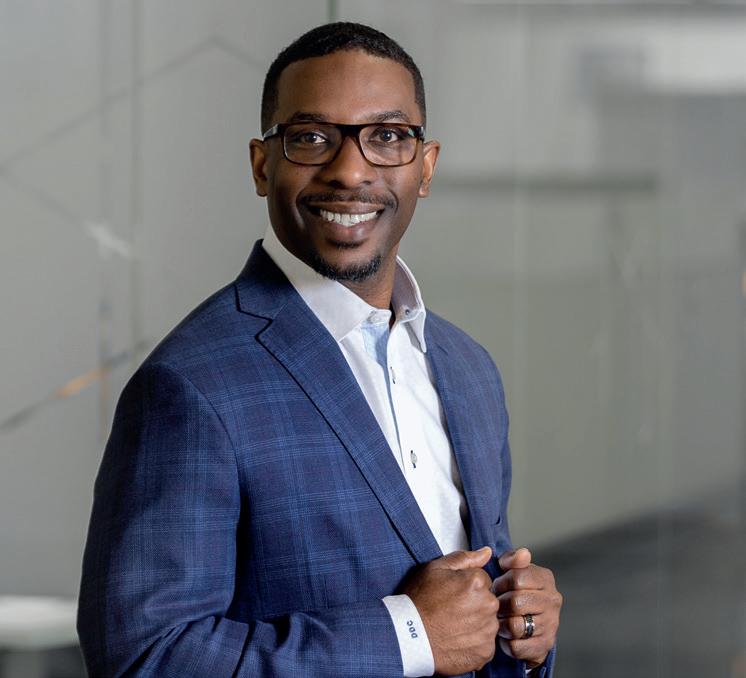

Intentional acts Don’t surrender your agency to AI
The Prosus way Leadership for 10x growth
Built to endure Human connection is the foundation of team performance
Leading in chaos Knowing yourself is key to success
Executive presence How Sanofi leaders are leveling up
Quick wins Ten minutes to unleash your team’s potential







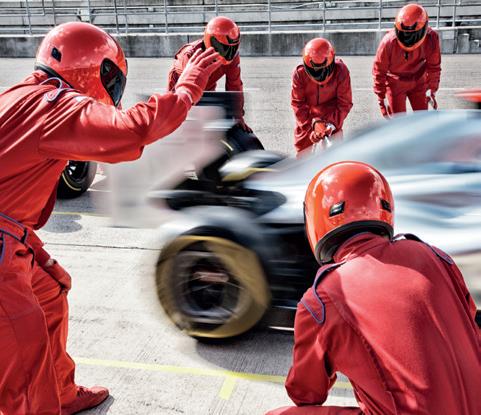


















THE KEY TO TURNING IT ALL AROUND







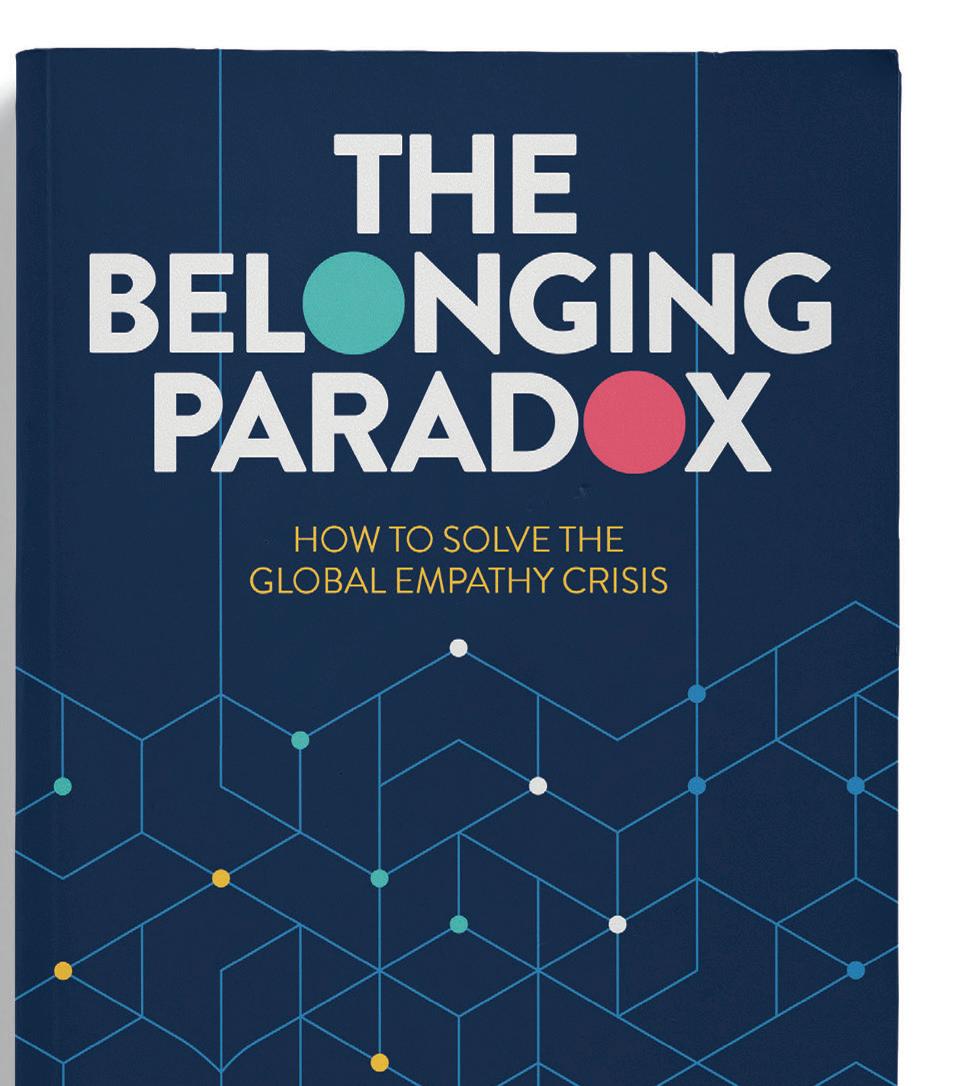

“In The Belonging Paradox, Danny Gal o ers powerful methods for bridging divides in our increasingly polarized world. Drawing on his extensive work, he reveals that transformative connection is only possible when we develop the capacity to see the human behind the perceived enemy –a skill that feels more urgent than ever.”
PROFESSOR DANIEL L. SHAPIRO

Author of Negotiating the Nonnegotiable and Founder and Director, Harvard International Negotiation Program

“In this important book, Danny Gal distils decades of work building empathy, showing that building trust with the ‘other’ is not a task limited to saints but a practice that all of us can – and must –take up if our world is to survive.”


DOUGLAS A. JOHNSON
Lecturer in Public Policy at Harvard Kennedy School and former Faculty Director of the Carr Center for Human Rights Policy

“Danny Gal explores the empathy crisis at the heart of global challenges, revealing how disconnection fuels polarization and systemic breakdowns. He presents a compelling call to reclaim democracy and cocreate models of collective belonging rooted in empathy, deep listening and generative leadership. A vital guide for changemakers, this book provides the tools to shape a more inclusive and just future.”

OTTO SCHARMER
Senior Lecturer, MIT School of Management, author of Theory U and Co-founder of the Presencing Institute
Contributors

Sharmla Che y
Tshilidzi Marwala
Professor and rector of the United Nations University, and UN Under-Secretary-General. Marwala was formerly vice-chancellor of the University of Johannesburg. He holds a PhD from the University of Cambridge and his research applies AI across engineering, economics, finance, medicine and social sciences. He has authored over 30 books, holds five patents, and serves on the UN SecretaryGeneral’s Scientific Advisory Board. Focus p16
Chief executive of Duke Corporate Education and its former president of global markets. Dr Chetty is a visionary driven by one purpose – transforming organizations and society through leadership. She was previously head of human capital development at Nedbank for over 19 years and has a proven track record of driving transformation through leadership in a wide range of industries. Focus p16
PierreAlexandre Balland
Chief data scientist at CEPS, visiting professor at the Harvard Growth Lab, and an educator at Duke CE. Ranked among the top 1% most cited scientists worldwide, his research explores the economic impact of AI and technological change. Balland helps business leaders navigate AI adoption, and previously co-founded AI World and General Robotics. Focus p24


Roger Spitz
President of Techistential and chair of the Disruptive Futures
Institute in San Francisco. Spitz is a recognized authority on AI, strategic foresight and systemic disruption, ranked #15 among the world’s top futurist professionals (Global Gurus, 2026). He is the author of the awardwinning Disrupt With Impact and the four-volume Definitive Guide to Thriving on Disruption. Focus p20


Tom Lawry
Managing director of Second Century Tech and former Microsoft national director for AI in health and life sciences. Lawry cuts through the hype surrounding AI to help health systems, governments and global organizations focus on measurable impact at scale. He is the bestselling author of AI in Health and Health Care Nation, and a 2025 Global Top 20 AI Voice to Follow. Focus p28

Join the Dialogue
Direct comments, queries and suggestions to media@lidbusinessmedia.com
Kerry-Lyn Stanton-Downes
A relationship expert, speaker and author whose work with people around the world has shaped her understanding of what it means to lead. A powerful advocate for the quality of the way we relate as a leader’s greatest superpower, she is the author of Beyond Words: How to lead people from survival to success. Leadership p46
Dialogue Digest
A quick look at the key themes and topics covered in this issue

Potential to practice
How can organizations deliver true value from AI? Tshilidzi Marwala and Sharmla Chetty outline a framework for Performance Intelligence and explain why leadership is the essential multiplier for realizing value from artificial and human intelligence alike (p16). Meanwhile, Roger Spitz explores how to utilize AI for better decisions – without letting leaders’ decision-making muscle atrophy (p20).

Pandora’s box
Vision and veri cation
Organizations aren’t being held back by a scarcity of data and analysis, writes Pierre-Alexandre Balland; today’s problems are bottlenecks in verification and an absence of vision (p24). Tom Lawry takes a closer look at how AI is being deployed in healthcare (p28).


Relate be er
Brilliant team performance is built on the infrastructure of strong interpersonal connections, writes KerryLyn Stanton-Downes (p46). Leaders’ mindset is critical, too: Nicholas Janni and Amy Elizabeth Fox make the case for inner work in an age of chaos (p50).
The era of polycrisis requires an exponential governance mindset, argues Andrea Bonime-Blanc (p80). AI’s impact means that leaders need to ditch the usual prescription to start with ‘why’ and think first about ‘who’, argues Edosa Odaro (p62). And in the Dialogue interview with D Crum, executive vice president and CHRO at AbbVie, we explore the need to rethink leadership development as AI dissolves the old opportunities to build experience (p32).
You can break it be er
Systems are powerful. But they are not permanent
The great economist John Maynard Keynes had something to say about change. “The di culty,” he said, “lies not so much in developing new ideas as in escaping from old ones.” Too often, the status quo seems fixed. Yet the evidence of history is that human resilience – and human determination – is a powerful predictor of change.
Recently, I was a guest on Thought Sparks, the podcast of Columbia University professor and Dialogue columnist Rita Gunther McGrath. McGrath and I discussed how the societal shifts of the 20th century tell an invaluable lesson: systems are powerful, but they are not permanent. They are built by people. And they can be changed by people.
The social upheaval of the 1980s was acute in my native South Africa. But it was identifiable throughout the West. Victory for liberty over authority could be seen in the US and in Europe, as the Cold War thawed and the Warsaw Pact crumbled. Powerful systems that had shaped people were changed by people.
I told McGrath that we have reached a similar cusp today. The world is in polycrisis – a period of instability unknown at least since the turmoil of the 1980s. Arguably, you must rewind as far as the 1960s – when the Cold War almost became hot –to find a world as unstable as today’s. Meanwhile, the relentless march of artificial intelligence – an unstoppable force for which individuals, companies and governments remain unprepared – shrouds the future in unimaginable uncertainty.
Those who believe that systems are fixed might preach that the world will now fragment. The twin superpowers of the US and China will grow ever further apart. Global cooperation will become impossible. Economic and societal power will taper into the hands of an ever-fewer number of tech pioneers. Human jobs will be replaced by robots. Yet to presume the future is predetermined
Powerful systems that had shaped people were changed by people

Dr Sharmla Che y is chief executive of Duke Corporate Education
is wrong. The world is uneven. We cannot assume that it will remain the same. The status quo was shaped by systems. And those systems can be changed. Paradoxically, AI is a likely facilitator of that shift. It democratizes knowledge. And knowledge is power – and the tool of change. McGrath describes today as a once-in-acentury inflection point. The march of technology is hoovering global capital; income and power inequalities are growing. Yet businesses – and governments – can shift the system. In the 1940s, a business-led organization called The Committee for Economic Development set out to guarantee demand by establishing a stable middle class, even if it meant corporate profits had to be lower in the short-term. In the US, the CED’s work resulted in the Employment Act of 1946, which made economic stability and employment the responsibility of the federal government. And it sparked the Marshall Plan, a program of foreign aid that helped European nations rebuild after the war. The CED deliberately broke the system to change the world order – and make it work better. Every organization can play a role in e ecting such a shift today. How would the world look if companies found a wider purpose and acted upon it? Change can happen. But it needs willing changemakers to smash the mold.

THRIVING IN THE AGE OF CHAOS
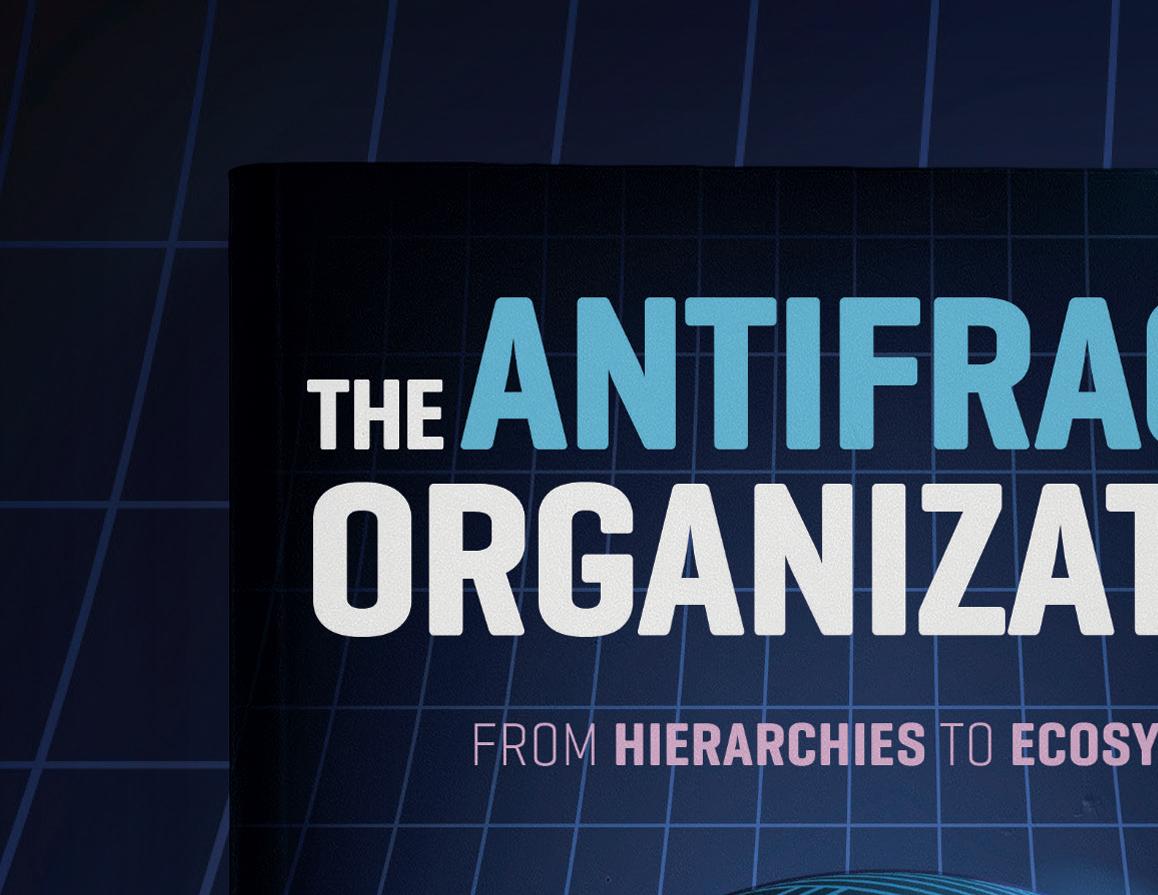

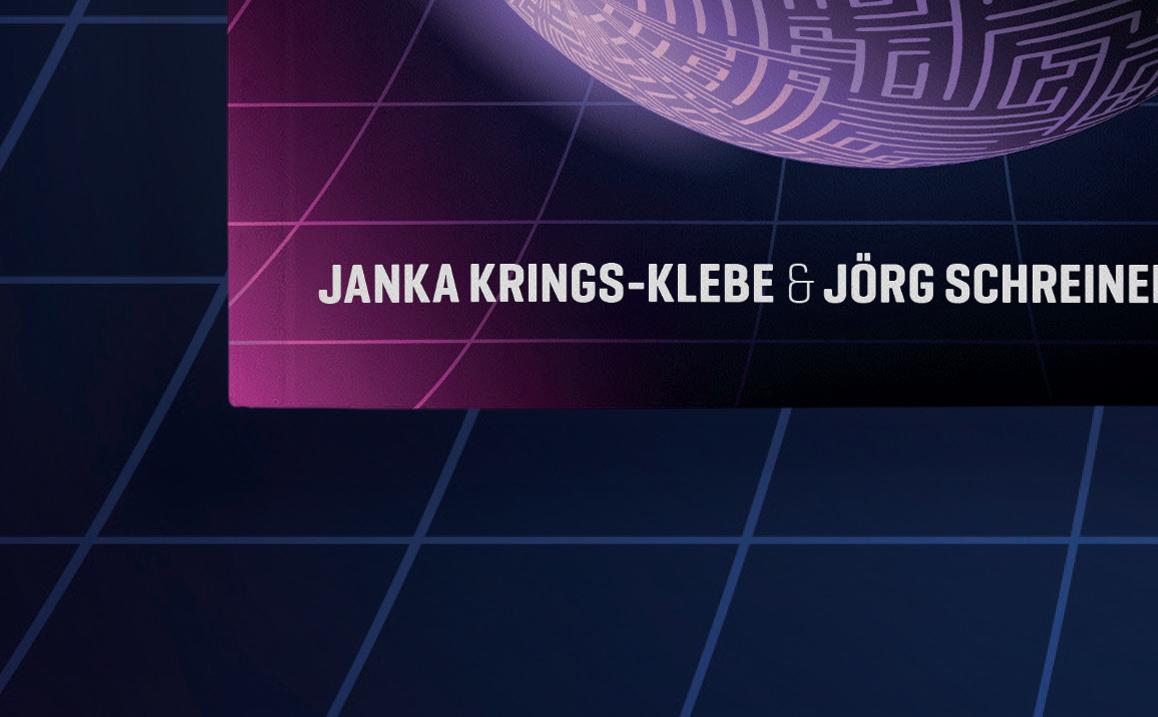



“This book is essential reading for any leader who is serious about breaking free from legacy thinking. If you want your organization to continuously evolve and thrive, you need to stop being afraid of disruption and start seeing it as the opportunity it is. The Antifragile Organization perfectly captures that shift.”
KEVIN NOLAN, President & CEO, GE Appliances, a Haier company

“The Antifragile Organization explains why top-down command-and control businesses cannot survive in today’s world and describes the kinds of dynamic organizations that are able to navigate the unending change that lies ahead. The book’s diverse examples and well explained principles make it a useful resource for anyone interested in the future of business.”
AMY C EDMONDSON, Novartis Professor of Leadership, Harvard Business School, and author of Right Kind of Wrong: The Science of Failing Well

“In The Antifragile Organization Janka Krings-Klebe and Jörg Schreiner take challenging, complex and abstract concepts and make sense of them in a truly compelling way. Their insights are backed by in-depth and highly practical examples from some of the world’s most progressive organizations. If you are simply interested in organizations or wrestling with managing in complex global corporations, this is required reading.”
STUART CRAINER, Co-founder Thinkers50


Print edition: ISBN 978-1-915951-87-8 Published by LID Publishing (
Available through all good book retailers | E-book edition: ISBN 978-1-915951-88-5 www.lidpublishing.com)



The guild is dead. Long live the guild
Be wary of abandoning a model that has served us well
You get it. The robots will do the donkey work. AI will free us from the mundane.
The routine duties that once swallowed up a manager’s workday will be handled by digital agents. You dislike scheduling, triaging problems, and chasing status updates on projects? Join the club. And welcome the future – because soon you won’t need to do those anymore. The dreary gruntwork will no longer be part of the managerial canon. What will remain is the cerebral activity leaders were hired for in the first place. As modern management theory has it, the new triad of leadership is founded on human intellect: coaching, judgment and care.
This truth is almost universally acknowledged, as it should be. Yet hiding beneath it lies a more sinister reality. The disruption to leadership comes not from the fact that the role has changed. The disruption occurs because the way we have historically learned to lead has collapsed.
From time immemorial, leaders were made in guilds – the workplaces where every one of us learned our craft. The guild logic demanded a duality: a master and an apprentice. Every apprentice performed their work under their master’s eye. They developed judgment through gradual exposure to the consequences of their – or their master’s – decisions. Sometimes the apprentice would make a wrong decision, and the master would rectify it. On rarer – but formative – occasions, the master might concede to the apprentice’s choice, recognizing that no-one has a monopoly on good ideas, or smart planning. Yet, in all cases, everyone would learn to lead.
The way decisions played out – the daily recognition that choices predict outcomes –provided leadership lessons for both master and apprentice. Workaday tasks like the programming
The master-guild model is dying. As there is no junior work, there are no natural apprentices
of workflows or arrangement of meetings provided a real-world guild for leadership. In 2023, I warned in this column that leadership behaviors must be assessed on “intact, working teams – not in a classroom” (Dialogue, Q4 2023). That was as true then as it is now. The workflow was the classroom. But AI is emptying the school.
The master-guild model is dying. As there is no junior work, there are no natural apprentices. Instead, the management theorists champion a new model – that of coach-player. Leaders, once at the helm, stand instead on the sidelines, coaching the stars of tomorrow to success. Instinctively, the coach-player paradigm might make sense – creating tasks for humans that can be done better and more e ciently by machines is little more than Luddism. Better to reshape the workforce around technological reality.
Yet here is the flaw. Who coaches the coaches? A coach earns the right to coach by having been a player. In the AI configuration, machines do the playing. Nobody is accruing the experiences that produce judgment and care. Organizations are optimizing for coaches while removing the very fields where they learned to play.
We must be wary of abandoning a model that has served us well. As the machines become workflow masters of context engineering, the solution is not remodeling the master-guild paradigm to that of coach-player; it is rebuilding the guild itself. Paradoxically, the technology that destroyed it – AI – is the only force with the power to revive it.
Vishal
Patel is president of global markets at Duke Corporate Education











LEADERSHIP THAT LASTS.














For more than 25 years, Duke Corporate Education has partnered with organisations across the globe to meet defining moments — and shape what comes next. We don’t deliver off-theshelf answers. We co-create learning that is custom designed for the challenges organizations face. Whether we’re building custom or accredited programmes or collaborating on advisory work, we walk alongside our clients to fuel purposeful business change — across the globe, at every level.
At the heart of every transformation is a partnership — and every partnership, a story. Let’s shape the next chapter, together.

THIS ISSUE’S FOCUS
From potential to practice
Artifical intelligence’s potential may be no longer in question, but for many organizations, delivering value in practice remains challenging. Caught between early experiments and implementation at scale, many firms are investing heavily in AI systems yet failing to deliver meaningful returns. This issue of Dialogue examines what it takes for leaders to close the gap between potential and value in practice. What is Performance Intelligence, and how does leadership serve as a multiplier for integrated capabilities across both artificial and human intelligence? How can organizations rethink their approach to decision-making? We take a closer look at the crucial leadership challenges of vision and verification for AI systems. And we explore the lessons emerging from a sector where AI could have a truly transformative, lifechanging impact: healthcare.


capital became the dominant lens through which talent was understood and managed. Recruitment, training and performance measurement were designed to maximize the productivity of employees. Yet the assumptions underlying this framework are increasingly inadequate. In many organizations, critical decisions are informed by AI systems, routine activities are automated, and autonomous agents execute tasks with limited human intervention. The workforce is no longer exclusively human.
The rise of Performance Intelligence
In the age of AI, competitive advantage flows from the integration of people and technology – and leadership is decisive
Writing Tshilidzi Marwala & Sharmla Chetty
For more than a century, economists, executives and policymakers have explained organizational success through the concept of capital. Industrial firms relied on physical capital. The knowledge economy elevated human capital. Today, however, the rise of artificial intelligence (AI), machine learning and autonomous systems is forcing us to reconsider the foundations of value creation.
We are entering an era in which organizational performance depends not only on people, but on the interaction between human intelligence, artificial intelligence and autonomous agents operating under e ective leadership. This emerging reality calls for a new framework: Performance Intelligence.1
The industrial age taught organizations to optimize labor, machinery and processes. Human
Humans remain bounded, but technology extends the scope and quality of decisions
The AI challenge today is no longer adoption, but value creation. McKinsey’s 2025 report, The State of AI, found that while 88% of organizations have deployed AI in at least one function, only 39% report any measurable impact on earnings. BCG’s 2025 global study, The Widening AI Value Gap, paints an even sharper picture: 60% of companies generate little or no material value from their AI investments. The gap is even starker at the top. Only 5% – just one in 20 – qualify as what BCG calls “future-built.” These firms achieve 1.7 times the revenue growth and 3.6 times the three-year total shareholder return of laggards, demonstrating that AI leadership translates into superior business performance. Meanwhile, Deloitte’s 2026 Global Human Capital Trends study, drawing on more than 9,000 leaders across 89 countries, identifies the root cause: organizations taking a technology-first approach are 1.6 times more likely to miss their AI return targets than those taking a human-centric approach. These failures are not technological. They are architectural.
To understand the transition, it is useful to revisit the work of Herbert Simon, whose theory of bounded rationality transformed economics and decision science. Simon argued that humans are constrained by limited information, finite cognitive capacity and imperfect judgment. Rather than optimizing, people satisfice: they settle for ‘good enough.’ This insight fundamentally changed how scholars understood decision-making.
Advances in artificial intelligence create an opportunity to rethink these constraints. In Artificial Intelligence and Economic Theory (Marwala and Hurwitz, 2017), the concept of flexiblybounded rationality was introduced to explain how technology can expand the limits of human decision-making. As data availability increases, computational power grows and algorithms improve, some of the boundaries that restrict rationality become more flexible. Humans remain bounded, but technology extends the scope and quality of decisions.
The Performance Intelligence equation
This shift has profound implications for organizations. If machines can augment cognition,

identify patterns at scale and process information consistently, then performance can no longer be understood solely through the capabilities of individuals. Instead, performance emerges from an integrated system of intelligence. This leads to a new formulation for Performance Intelligence.
PI = (w1HI + w2SI + w3AI + w4AA) × L
Performance Intelligence (PI) represents the integrated output of an organization. Human Intelligence (HI) contributes creativity, empathy, ethics, contextual judgment and strategic imagination. Social Intelligence (SI) encompasses psychological safety, interpersonal trust and team cohesion – the collective conditions that determine whether human and machine capabilities can be e ectively combined. AI contributes pattern
recognition, forecasting, optimization and analytical consistency. Autonomous Agents (AA) contribute execution, adaptation and operational scalability. Leadership (L) acts as the multiplier that aligns these capabilities toward a shared purpose.
The structure of the equation is important. Human intelligence, social intelligence, artificial intelligence and autonomous agents are additive: each contributes a distinct capability. Leadership is multiplicative, because it determines whether these capabilities reinforce one another or remain disconnected assets. Without e ective leadership, organizations risk deploying powerful technologies without direction, coordination or trust.
The weights in the formula, which sum to 1, refine the calculation. They should be calibrated by function and sector to reflect the varying needs of di erent industries. In high-contact sectors,
such as healthcare, professional services or education, Human Intelligence remains the primary performance driver. In data-intensive functions, such as algorithmic trading, logistics optimization or fraud detection, AI delivers the greatest marginal return.
Social Intelligence warrants particular attention from leaders. Amy Edmondson’s research, including her 1999 paper ‘Psychological safety and learning behavior in work teams’ – replicated across three decades and multiple sectors – identifies psychological safety as the strongest single predictor of team performance in complex and uncertain environments. Google’s Project Aristotle, a study of 180 internal teams, reached the same conclusion. Yet Deloitte’s 2026 research found that 34% of organizations name culture as the primary barrier to AI transformation. Culture is not a soft supplement to organizational performance in the AI era. It is a structural input.
Intelligence, logic and the leadership multiplier
The concept of Performance Intelligence challenges traditional assumptions about productivity. Historically, productivity measured the relationship between inputs and outputs. The objective was to produce more with less. In the intelligence age, however, the challenge is not simply e ciency. It is the e ective combination of multiple forms of intelligence.
Organizations increasingly face questions that cannot be answered by human expertise alone. Climate modeling, financial forecasting, healthcare diagnostics and supply chain optimization all require computational capabilities beyond the reach of individuals. At the same time, organizations cannot rely exclusively on machines. Ethical dilemmas, strategic trade-o s and questions of legitimacy require human judgment. This creates a new managerial challenge: determining
Without e ective leadership, organizations risk deploying powerful technologies without direction, coordination or trust
how responsibilities should be allocated between humans, AI systems and autonomous agents. The most successful organizations will not be those that maximize automation, but those that optimize collaboration.
A critical distinction must be made between logic and rationality. Machines can be highly logical: they process data according to defined rules and objective functions. Yet they are not necessarily rational in the broader sense. Models are simplifications of reality. Data may be incomplete. Objectives are specified by humans. Context is often di cult to encode. As a result, there remains a gap between logical consistency and true rationality.
The leadership multiplier
The gap between logic and rationality underlines the enduring importance of leadership – the multiplier that makes every other investment compound or collapse.
Leaders provide purpose, values, and accountability. They ask whether an optimization objective is appropriate. They determine which risks are acceptable. They decide when e ciency should yield to fairness, resilience or social responsibility. Leadership becomes more important, not less, as AI becomes more capable.
To lead e ectively in the PI era requires three specific competencies. First, AI literacy: the ability to evaluate, direct and interrogate AI outputs without becoming a technical specialist, including understanding model limitations, data biases and failure modes.
The second is orchestration: the capacity to design and govern workflows in which human judgment, AI analysis and autonomous execution are correctly sequenced, with clear decision rights at each stage. Third, leaders need to understand and develop trust architecture, building psychological safety, transparency and accountability structures that allow human-AI teams to perform under uncertainty.

This points to a structural failure of accountability running beneath the adoption gap. Deloitte’s 2026 study found that 56% of leaders design AI systems solely for business outcomes, while only 40% design for both business and human outcomes. 42% of workers report that their organizations do not evaluate AI’s impact on people at all. The cumulative e ect is described as “cultural debt,” the performance liability that accumulates when organizations optimize for AI while neglecting the people systems around it.
The leadership multiplier can only function positively when accountability for human outcomes is built into the governance structure alongside accountability for business outcomes.
Organizations that neglect this are not merely failing ethically; they are accumulating a risk that will eventually constrain performance regardless of AI investment.
The rise of autonomous agents
The emergence of autonomous agents introduces additional challenges. Unlike traditional software, autonomous agents can act, adapt and learn, and they are already a significant source of organizational value. BCG’s 2025 study found that agentic AI accounts for 17% of total AI value creation today, a share expected to reach 29% by 2028. Future-built companies are three times as likely to deploy agents as laggards. In Seizing the Agentic AI Advantage (2025) McKinsey identifies agentic AI as the next frontier for competitive di erentiation, with the most advanced organizations already moving from single-function agents to multi-agent systems capable of complex, multi-step reasoning.
Their growing role requires governance built in advance, not retrofitted after problems emerge. Organizations must establish clear boundaries regarding what agents can do, what decisions require human approval, and how responsibility is allocated when outcomes are unexpected. Trust in AI systems must be earned through transparency, validation, monitoring and accountability: it cannot be assumed.
Talent and intelligence literacy
The rise of Performance Intelligence also changes how organizations must think about talent. Traditional approaches focus on individual competencies; future-oriented organizations must develop collective intelligence. BCG’s analysis found that companies realizing the most value from AI have the most targeted upskilling programs, and points out that 70% of AI’s total potential value is concentrated in core business functions including R&D, product innovation and digital marketing.
Three tiers of intelligence literacy are required. At the senior leadership level, strategic literacy means the ability to make AI investment decisions, set governance policy and hold AI systems accountable for both business and human outcomes. At the management level, operational literacy means the ability to redesign workflows around human-AI collaboration and interpret algorithmic outputs in context. At the front line, task literacy means the practical skills to direct, interrogate and override AI outputs in daily work. Performance management systems must evolve accordingly: evaluating employees without evaluating the AI systems they use provides an incomplete picture of organizational capability.
THE BRIEFING
The AI value gap
We are entering an era in which organizational performance depends not only on people, but on the interaction between human intelligence, AI and autonomous agents operating under e ective leadership. Yet while most organizations have now deployed AI, the evidence suggests that few are capturing real value from it. Solutions will be found via improvements in how human and machine intelligence are integrated, governed and led.
The Performance Intelligence equation
The Performance Intelligence equation o ers a framework for calculating the impact of human, social, arti cial and autonomous intelligence – with leadership as the multiplier that determines whether investments in those areas compound or collapse. Far from being diminished by the rise of AI, the value of people increases: uniquely human capabilities such as creativity, empathy, ethical reasoning and the ability to navigate ambiguity are indispensable to future success.
Competing through intelligence
The shift from human capital to Performance Intelligence does not diminish the value of people. On the contrary, it highlights uniquely human capabilities. Creativity, empathy, ethical reasoning and the ability to navigate ambiguity remain indispensable. The future belongs neither to humans nor to machines alone. It belongs to systems that combine the strengths of both.
The implications extend far beyond individual organizations. Investors may increasingly assess organizations by their intelligence architectures. Nations may compete on their ability to build ecosystems that support Performance Intelligence, including education systems, digital infrastructure, governance frameworks and innovation capacity. Universities must prepare graduates not only to acquire knowledge, but also to collaborate e ectively with intelligent technologies. Intelligence literacy may become as important as digital literacy.
Professor Tshilidzi
Marwala
is Rector of the United Nations University and UN
Under-Secretary-
General, and co-author with Evan Hurwitz of Artificial Intelligence and Economic Theory
Dr Sharmla Che y is CEO of Duke Corporate Education
For generations, firms competed on scale. Later, they competed on information and knowledge. Today, they are beginning to compete on intelligence. The rise of Performance Intelligence signals a fundamental transformation in how value is created, measured and sustained. The organizations that thrive will be those that recognize that the quality of integration between people and machines is now the most important source of competitive advantage.
The future of decisionmaking
AI excels at complicated decisions but complex ones demand human judgment
Writing Roger Spitz
The future of decision-making is inseparable from the future of predictability – yet most organizations deploy AI to make significant decisions without asking a critical prior question. How predictable is the environment in which these decisions are made?
That omission is the costliest mistake in enterprise AI. Most failures are not technical or deployment challenges, but category errors: AI is delegated decisions that it is poorly suited to make and left underused where it genuinely excels. Better
models will not fix a category error, because more data or greater e ciency does not translate into e ectiveness. Closing the gap between potential and practice starts with decoding the environment – the nature of complexity, the limits of data, and AI’s ascent of the decision-making value chain.
Complex is beyond complicated Complicated environments are ordered and generally linear. There is a range of right answers, the unknowns are identifiable, and cause and e ect can be analyzed to assess the best response in advance. Designing an aircraft engine or sending a probe to Mars is complicated; so are logistics optimization, fraud detection and protein folding. These domains yield to pattern recognition at scale, given well-defined outcomes – precisely where AI’s strength lies. Google DeepMind’s AlphaFold has generated structure predictions for over 200 million proteins, all but solving a problem that had defeated biologists for decades – work recognized by the 2024 Nobel Prize in Chemistry. In 2025, an MIT team used generative AI to design novel molecules and identified promising antibiotic candidates against drug-resistant pathogens, including gonorrhea and MRSA.
Complex environments are another matter. They are nonlinear, dynamic and interconnected, with emergent properties and unknown unknowns. There may be no right answer; relationships are unpredictable, the parts interdependent, and causality is visible only in retrospect. The Amazon, geopolitics and financial markets are under deep uncertainty: all are complex in their own right, let alone as they interact. Neither humans nor AI are adept here. The danger comes when leaders apply complicated-domain answers to complex-domain questions, where automation mistakes confidence for capability and hides asymmetric risk behind false predictability.
Complicated domains favor innovation; complex ones demand invention. And while AI accelerates innovation, invention remains stubbornly human.
There is no data on the future
AI is delegated decisions that it is poorly suited to make and le underused where it genuinely excels
Consider macro forecasting. Despite unprecedented volumes of data, economists and policymakers failed to anticipate the sustained inflation – the highest in decades – that hit the US in the wake of the pandemic and the invasion of Ukraine. Treasury Secretary Janet Yellen had called the risk small, but conceded in 2022 that “I was wrong,” blaming “unanticipated and large shocks.” The models assumed a controllable trajectory; the world declined to cooperate.
The lesson is not to abandon data, but to recognize what it is. All data is historical; the
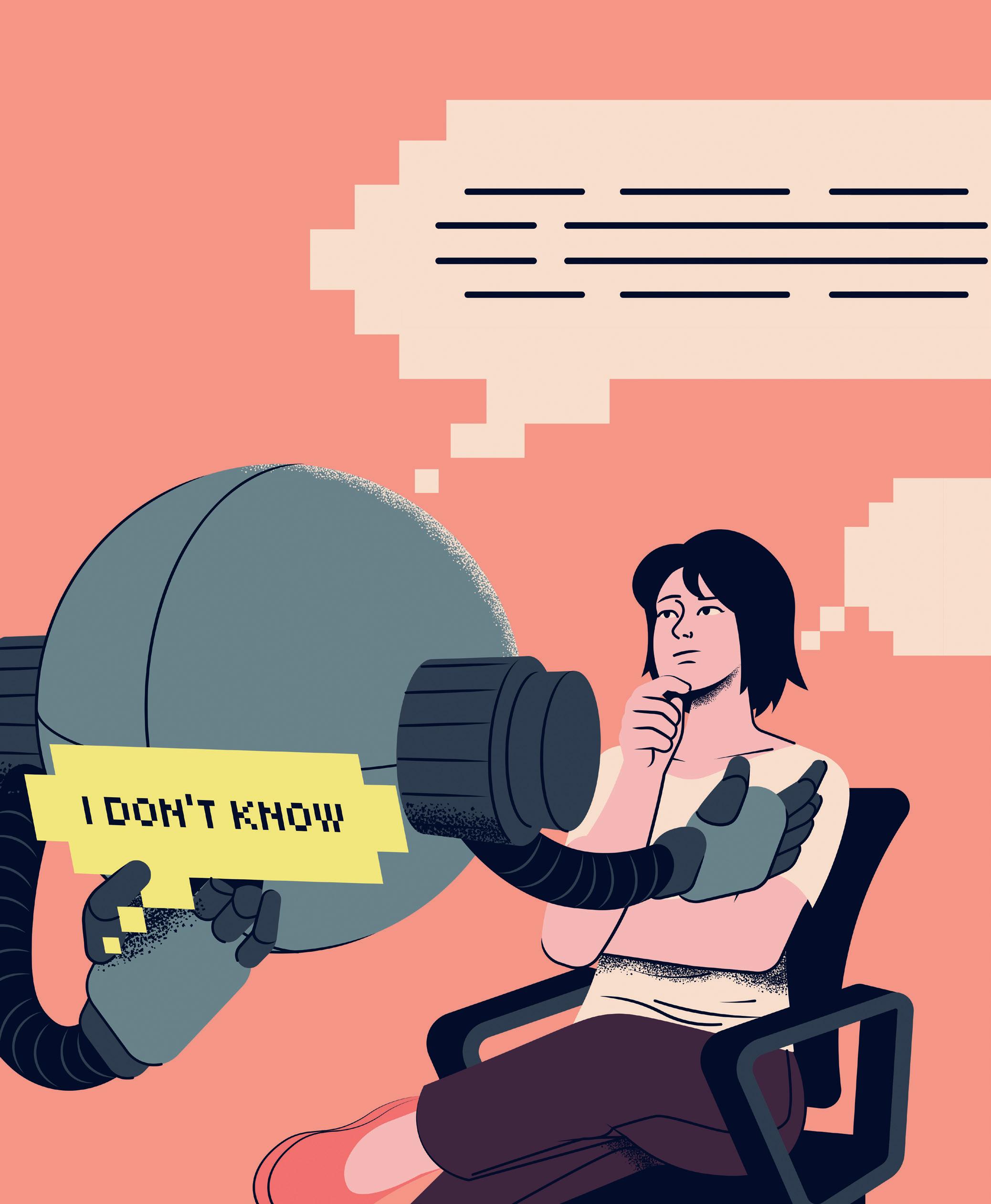
purpose of every decision lies in the future. Yet there is no data on the future. As uncertainty deepens, predictability declines and the cost of wrongly delegating decisions increases. Leaders need foresight, not just forecasting – and knowing which mode they are in is a crucial skill.
Consider 2026 alone. US and Israeli strikes on Iran’s nuclear facilities in late February triggered the closure of the Strait of Hormuz, sending energy markets into crisis and dramatically slowing projected global trade. Geopolitics simultaneously weaponized cyberspace, with AI-enabled threats and supply chain vulnerabilities compounding what the energy shock had already set in motion. Each amplified the other, cascading uncertainty across domains. In June, the new Federal Reserve chairman Kevin Warsh dropped the Fed’s forward guidance and declined to submit his own interestrate projection alongside other Fed o cials – the world’s most influential forecaster, amid deep uncertainty, declining to forecast its next move.
Machines are moving up the decision-making value chain
The decision-making value chain spans descriptive analytics, which tell you what happened; predictive analytics, which estimate what comes next; and prescriptive systems that recommend what to do (and may automate execution). The further up the chain AI climbs, the more the nature of the environment determines whether delegation is an asset or an abdication.
Machines have long surpassed human capacity for pattern recognition across unstructured data at scale, and the higher rungs are following fast, with AI now taking decisions once thought too important to entrust to machines. Viz.ai’s strokedetection software alerts care teams faster than standard hospital workflows, saving brain function by the minute. Procurement systems approve and place orders autonomously. AI executes millions of financial trades daily – decisions once requiring a trader’s judgment now made by machines in milliseconds.
The decisive move is the last one, and AI is increasingly not only recommending options but selecting and executing them. A 2026 Rand study, A Formal Model of How Artificial Intelligence Erodes Human Agency, draws that distinction. Every decision has two parts – structuring it (defining the problem to be solved and the available options) and choosing among them. Structuring is where power quietly sits: an AI that shapes which options reach the table determines the outcome before any choice is consciously made. AI may also take over the choice, removing the human even when the framing was theirs. Either path narrows agency –yet neither looks dramatic on any single decision.
1 Features of predictability and unpredictability
Prediction – features supporting predictability
Parameters and variables known
Narrow scenarios
Most probable
Foresight – uncertainties prevent predictability
Multiple unknowns
Multidimensional, nonlinear, complex
Probable, plausible, possible, wild cards – “What if?”
A speci c answer to a precise question No right answer
Well-de ned, contained, discrete, linear, megatrends
Source: Disruptive Futures Institute
When organizations habitually delegate complex decisions to algorithms, decision muscle atrophies
Signals, emergence, next-order impacts, dynamic, intersecting, metaruptions
Where does automation arrive next? Anywhere where outcomes are well-defined, the pattern repeats, and the answer can be checked coste ectively and reliably. Legal document review and claims processing fit the bill. Other areas will remain resistant. When deciding whether to enter a new market, how to address emerging climate challenges or how to reinvent the business in the face of discontinuity, there is no training data – and no scalable check can validate a strategic judgment before reality renders its own verdict.
There is a quieter reason leaders hand complex decisions to algorithms, unrelated to capability. If a leader gets a big call wrong, it is a career problem; if an algorithm gets it wrong, it is a vendor problem. Delegating outsources accountability –which is why crossing from potential to practice is as much a matter of organizational courage and culture as of technology. Humans have skin in the game; machines have only algorithms in the game.
Techistentialism: the quiet erosion of agency
In 2017, we named our foresight practice Techistential because humanity’s technological and existential conditions can no longer be separated. As AI climbs the value chain, the question is not how much machines will augment human decision-making, but whether humans choose to remain involved at all.
The exponential cost of automating agency is where the real existential risk lies – more practical, and less cinematic than the science fiction versions. When organizations habitually delegate complex decisions to algorithms, decision muscle atrophies and reliance slips into dependence. Brian Patrick Green at Santa Clara’s Markkula Center for Applied Ethics calls it “moral deskilling.”
The risk may not be machines taking over or reaching human-level intelligence, but the opposite: people starting to think and respond like idle machines, unable to connect the emerging dots of a complex, systemic world. We call this ‘superstupidity,’ and it can counter any level of intelligence. AI does not have to reach artificial general intelligence to shift the balance – it simply needs to become better than us at tasks we stop practicing. Agency does not vanish in a single decision; it erodes quietly until the capacity for sense-making and judgment in complex environments is gone.
This is the existential risk – not the machine that turns hostile, but the organization that optimizes its way into a position where it no longer has the capacity to overrule the machine. Leaders who cannot tell the predictable from the unpredictable will keep funding expensive AI theater – and quietly surrendering the one critical capability that cannot be outsourced.
Defying the odds
What, then, remains distinctly human? The case for keeping humans accountable in complexity is not that they predict better – they do not, and neither do machines. It is that only humans can redefine the problem, invent options with no precedent, and own a choice whose outcome cannot be known in advance. Facing George Foreman in 1974, Muhammad Ali won with a strategy that had no precedent. Rope-a-dope was not an optimization; it was an invention. The unprecedented never comes with plentiful or relevant data – which is exactly why the most consequential decisions in complex environments cannot be delegated.
Leaders need to decode significant decisions before tooling them. First, ask three questions. Are the parameters known? Is there a verifiable right answer? Can causality be assessed before acting, or only in retrospect? Two or three “no” answers put you in complexity, where AI augments judgment rather than replacing it.
Most real initiatives are hybrids. A marketentry decision has complicated parts – tax structures, supply chain economics, demand modeling – that AI crunches better than any team. It also has complex parts – how a regulatory regime might evolve, how geopolitical shifts are reordering the competitive landscape, how consumer trust may form or fracture – where there is no training data and no right answer.
Automate the first; keep a human accountable for the second. A model may recommend doubling down on a market that a seasoned team already senses is turning, because it has never seen a regime shift – and, until the shift lands, the data will point the other way.
Next: draw on the AAA Framework to become antifragile, anticipatory and agile.
Build antifragile foundations Leaders’ instinctive question – “What can we automate?” – may be the wrong one. Optimized systems eliminate ine ciencies and, with them, the bu ers needed to absorb shocks. One defective CrowdStrike update grounded airlines, hospitals and banks worldwide in 2024 – no malice or AI involvement required.
Only humans can rede ne the problem, invent options with no precedent, and own a choice whose outcome cannot be known in advance
The trade-o between e ciency and resilience is ultimately a choice between fragility and antifragility. Coined by Nassim Nicholas Taleb, antifragility goes beyond resilience, describing systems that improve in response to stressors and volatility. Build it by auditing where e ciency has stripped out bu ers like redundancy, liquidity and modularity – traits that look wasteful in stable conditions, but which prove decisive when volatility arrives. Focus on the amplitude of outcomes, not only their probability: the same uncertainty that makes catastrophic loss possible makes asymmetric gain available too.
Antifragile foundations mean accepting randomness, watching for the non-obvious, acknowledging that the rare is becoming less rare, and positioning the organization to benefit when others break.
Exercise the anticipatory decision muscle
Anticipatory capacity is built, not bought, and it atrophies fastest where automation runs deepest. Make pre-mortems routine: before a major commitment, have the team imagine it is 18 months on and the decision has failed badly, then write down why. Stated as fact rather than risk, the exercise surfaces the objections nobody wanted to raise. Pair this with scenarios that rehearse decisions for which no historical data exists, so judgment under deep uncertainty is practiced before the crisis or missed opportunity, not improvised in it. Ask “What if this expands larger than expected?” and “What else might this impact?”
Develop cognitive, emergent and strategic agility Decide in the here and now without losing the longer-term vision – adapting continuously as feedback emerges. Agility requires an experimental mindset: curiosity over certainty, diverse perspectives over consensus, and enough tolerance for failure to let instructive patterns emerge.
Agency is the di erence
Roger Spitz is president of Techistential, author of Disrupt With Impact (Kogan Page), and a Duke CE educator
No matter how capable our machines become, the AAA approach works only when activated by agency: informed choices, aligned with values and environment. Agency is like an unexercised option: without action, it holds no value.














Vision and verifcation
Where does value come from in the age of cheap execution?
Writing Pierre-Alexandre Balland
When anyone can build anything, the scarce resources are vision and verification – and most organizations are overlooking both, creating a feeling of productivity at the individual level while limiting it at the organizational level.
For most of industrial history, the binding constraint was execution. The scarce thing was the capacity to actually produce the report, the model, the code, the campaign. Leadership was largely the art of marshaling that scarce capacity. Today, AI has taken that constraint and driven its cost toward zero. Yet here is the part we can easily miss: when a scarce resource becomes abundant, the constraint does not disappear. It migrates to whatever sits next to it. The new scarce resource is the human capacity to decide what is worth building – and to confirm that what got built is any good.
These are the two Vs that now determine business value: vision and verification. A massive amount of value is moving to those two layers, yet nearly all the investment is still pouring into the one that has been commoditized.
The verification bottleneck
My colleagues Christian Catalini, Xiang Hui and Jane Wu have given this a sharp formulation. They model the AI transition as a collision between
two cost curves – an exponentially falling cost to automate execution, and a cost to verify what is inherently bottlenecked, bounded by human time and attention. The binding constraint on growth is no longer intelligence but human verification bandwidth: the capacity to validate outcomes, audit behavior and underwrite responsibility once execution is abundant.
The asymmetry is the whole point. You can parallelize execution without limit – spin up 10 agents, then 100, and the work multiplies. You cannot parallelize the checking. Attention does not fork. The reviewer reading the 100th plausible draft is the same finite human who read the first, with the same finite judgment, only now stretched thinner. So a gap opens between what your systems can produce and what your people can realistically verify – and that gap widens precisely as execution gets cheaper.
This reframes what your output actually is. Only the verified share of it is productive. The rest is plausible, but left unchecked, is indistinguishable from the verified part until something breaks. The word that keeps coming back when senior people describe this to me is ‘noise.’
“With AI I got much more work from my team,” one executive told me, “which looked great at first. Then I quickly realized I also got a lot more
noise in my pipelines – and that is as bad as news can get when your biggest asset is your reputation.”
An organization that triples its output while holding verification flat has not tripled its production. It has tripled its noise and kept its real output roughly constant. This is a large part of why productivity statistics can remain unimpressive despite spectacular AI adoption numbers. At the individual level, everyone feels faster: drafts appear in seconds, analyses in minutes. At the organizational level, that acceleration piles up in front of verification gates that are not evolving at the same speed.
Cheap execution multiplies output that looks like signal, and it shows up in small but meaningful ways. Take AI meeting notes. They are often praised as a key tool of ofce life – and just as often dismissed as useless and a source of clutter. The summaries are usually impeccable: every attendee recorded, every action item captured, every decision neatly organized. Yet in one highstakes negotiation I attended, the entire outcome hinged on just two seemingly minor parameters. The AI dutifully documented them, buried halfway through a perfectly structured list. Meanwhile, someone scribbling notes on a folded sheet of paper had circled those two game-changing elements in red. The machine produced a complete record – a useful one, even. But the human’s precise pattern recognition produced the most value – the



critical judgment that would form the basis of subsequent decision-making.
Intelligence is not the ability to capture everything, but the ability to recognize what should interrupt your thinking
This is the paradox of cheap execution. AI compresses the 95% of information that is routine, making everything appear equally polished. But in doing so, it often flattens the crucial 5% – the anomaly, the tension, the unanswered question, the subtle signal that deserves disproportionate attention. Intelligence is not the ability to capture everything, but the ability to recognize what should interrupt your thinking.
Consider the manager in the consulting or research world who has started to receive an endless stream of AI-generated dashboards: visually stunning, technically flawless and increasingly devoid of insight. Information production has exploded while information density has declined. The bottleneck is asking the right question before building anything. Organizations are recreating the PowerPoint problem all over again – the dashboard is becoming the deliverable, rather than the insight.



One pattern worries me more than almost anything else: consultants, analysts and junior staf increasingly using LLMs to find data points or perform analyses as if they were search engines or statistical software. They are not. An LLM is a language model: it predicts plausible text, as opposed to reporting verified facts. AI is an extraordinary tool for thinking, writing and exploring ideas – but when it comes to evidence, statistics, or analysis, it should never replace the underlying data or the human judgment needed to verify it.
The trap of verifying with more AI
The obvious objection is that this is what evals, test harnesses and AI-checking-AI are for. Let the machines verify the machines and the bottleneck dissolves, runs the argument. It is the right instinct, yet it has a hard limit.
Automated verification works beautifully where the criterion for correctness is cheap to specify: does the test pass, does the ledger reconcile, does the output match a known answer? It breaks down where judgment was the entire point: is this the right strategy, is this argument sound, is this the tasteful call, is this claim actually true rather than merely well-formed? Pointing a second model at the first does not escape this. It relocates the judgment to a new question – do I trust this verifier? – which is itself unverified, and now one layer harder to inspect.
The automated layer extends your reach across the easy ground and leaves the hard ground exactly as scarce as before. An augmented organization is not one that produces more. It is one where verification scales alongside capability, rather than being outrun by it.
There is a second-order version of this problem that the leaders I work with feel before they can name. When a senior delegates verification to a junior who delegates it to a model, the chain of people who understand the work thins out – and this is the very loop that used to produce the next generation of people qualified to verify. The cheaper execution gets, the faster you erode the human judgment you will need to check it, unless you rebuild on purpose the learning loops that cheap execution dissolves by accident.
This is the crisis hiding behind the disappearance of entry-level jobs. Execution was never just production: it was the apprenticeship through which juniors earned the pattern recognition that verification requires. Nobody becomes a good reviewer of financial models without having built a few hundred of them, badly, under supervision. If AI absorbs the building, organizations must deliberately reconstruct that ladder – structured review, verification rotations, deliberate exposure to failure cases.
Investing in vision and verification
The implication is almost the opposite of what most AI budgets reflect. You spent years and capital building the capacity to execute. That capacity is now cheap to rent. The discipline now is to invest in vision and verification with the same seriousness – and to understand that the two are not separate line items but two ends of one mechanism. Start with vision, because it is the least understood of the two. Most people hear ‘vision’ as inspiration – a stirring sense of direction. Its real function in this economy is mechanical and far more valuable: vision is upstream verification. When you can build anything, prioritization stops being a planning exercise and becomes the hardest thing leaders do – because every project you greenlight is a verification bill you will personally have to pay later. If the acceptance criteria cannot be articulated, the project is not ready: not because it cannot be built, but because it cannot be checked.
Sharp vision does not just point the way. It minimizes the surface area that ever needs checking: fewer things built, narrower acceptance criteria, less plausible output flooding the queue. The leader who lets a thousand experiments bloom without this discipline has not empowered their team. They have manufactured a verification crisis. Then treat verification as your last line of defense – and resist the urge to make it a bloated one. The goal is not an army of checkers; that simply moves the bottleneck without relieving it. The goal is to verify the things that matter deeply, and to design the work so that less of it needs deep verification in the first place.
1 Human value in the AI-augmented economy
Human vision
Goals, taste, judgment and strategy. Identify and prioritize what's worth building. Ideas are cheap, but vision is scarce

Machine execution
Speed, scale and countless iterations. Turns human vision into code, text, analysis. Execution cost is collapsing and noise is exploding

Human verifcation
Domain expertise, accountability and sign-of Audits the work, carries the liability. This is the new botleneck
An augmented organization is not one that produces more. It is one where verifcation scales alongside capability
In practice, in a world of intense competition and limited resources, this will most likely mean tiering. Reserve deep human review for what is irreversible, reputation-critical or client-facing, and accept lighter-touch sampling elsewhere. Build auditable loops: know which claims trace back to verified data and which are model-generated plausibility. And make verification visible in the organization: a named responsibility, a budget line, a skill that is hired for and promoted on, rather than an invisible tax absorbed by whomever happens to care.
Orchestration is the connective tissue here, and the reason good execution still matters enormously even as its cost collapses. The orchestrator’s job is to use cheap execution in service of the vision without flooding the verifier – structuring work so that what reaches a human for judgment is already filtered, already narrowed, already worth the attention it will cost. Execution becomes the thing you organize and structure.
Pierre-Alexandre Balland is chief data scientist at CEPS, visiting professor at Harvard Growth Lab, and a Duke CE educator
The organizations that win the next decade will be those that understand, earlier than their competitors, that abundance on one side of the equation makes the other side priceless. Everyone can build anything. The advantage goes to whoever knows what is worth building – and can tell whether it’s any good. AI is the defining technology of our time, yet the bottleneck is not technological. It is organizational – and unlike the models, it cannot be rented. It has to be cultivated within.
it happened “gradually, then suddenly.” Twitter took six years to reach 100 million users. TikTok took nine months. ChatGPT did it in eight weeks. Nothing in the history of human technology has moved that fast. By early 2023, it was clear the world was no longer turning on the same axis.
For healthcare, that shift arrived at a critical juncture. Aging populations, rising chronic disease and a workforce in crisis were already straining systems built for a di erent era. Clinician burnout had moved from a warning sign to a defining feature of the profession – the predictable outcome of asking talented people to deliver 21st-century care with 20th-century thinking and systems. AI promises a way through. The question is how.
The AI paradox: volume versus value
Breaking healthcare’s Silicon Ceiling
AI has transformative potential. But closing the gap between pilot and practice demands leadership, not just technology
Writing Tom Lawry
The future did not arrive gradually. It arrived all at once. It was the fall of 2022. Working as the national director of AI for health and life sciences at Microsoft, I had a front-row seat to what was quietly unfolding inside the world’s most sophisticated AI research organizations. Teams across Microsoft, Google, Amazon, Meta and a small, but unusually ambitious, company called OpenAI were working on large language models and generative AI systems.
At the time, none of this felt explosive. It felt incremental. Then something changed. The collective work jumped the borders of cloistered research centers and went from labs to living rooms in a matter of weeks. In the words of Hemingway,
70%
Share of healthcare organizations worldwide now actively using AI
79%
The failure rate of AI projects in healthcare
Source: Pertama Partners
The adoption numbers are striking. About 70% of healthcare organizations worldwide are now actively using AI. More than eight in 10 clinicians say AI can improve patient outcomes. Measurable gains are appearing in diagnostic accuracy, workflow e ciency, administrative burden and improved access to consolidated patient data across care teams.
Yet the failure rate of AI projects in healthcare approaches 79%, according to a study by Pertama Partners. Most organizations find themselves stuck in a familiar pattern: a promising pilot that doesn’t scale. Only one-third of completed AI proofs of concept across provider, payer and pharma organizations ever make it into full production, according to a study by Bessemer Venture Partners.
This is AI theater: the visible performance of transformation without its substance. Roughly two-thirds of health organizations remain stranded between experimentation and meaningful practice, unable to move from proof-of-concept to value-at-scale.
These are not technology failures. They are leadership failures – predictable, preventable and recurring. The tools, in most cases, are sound. The question being asked of them is not.
The question that determines everything
The single variable that best predicts whether an AI initiative creates lasting value is not the technology or the strength of an algorithm. It is the orientation of the leader.
Most health leaders begin their AI journey by asking: “Is this technology ready?” This seems reasonable, but it is the wrong starting point – not because the question is unimportant, but because it directs attention, investment and accountability toward the wrong variable.
Leaders who start with the technology question typically measure progress by deployments and adoption metrics. Implementation is delegated to

IT or a data science team. The C-suite watches, but does not directly drive. Frontline sta are expected to adapt. When resistance follows, it gets diagnosed as a change management problem to be managed, rather than a signal that the approach was wrong from the start.
There is a better question – one that actually predicts whether AI creates lasting value. It has nothing to do with the technology. It is simply this: “Are we ready to lead it?”
The shift from technology readiness to leadership readiness is the gap that separates organizations moving toward generating real and sustainable value from those accumulating impressive pilots that never leave the runway.
The Silicon Ceiling
The Silicon Ceiling is the gap between leadership’s excitement about AI and the workforce’s readiness to embrace and use it. Left unresolved, it becomes the invisible barrier between a well-funded AI strategy and meaningful results.
A 2026 survey of executives across all industries found that 93% identified culture and change management – not technology, not infrastructure, not budget – as the primary barrier to AI adoption and value realization. That figure has been rising for six consecutive years.
At some point, a recurring pattern stops being a warning and becomes a verdict. The verdict is this: when sta feel that AI is being done to them rather than with them, the resistance that follows is not a technology failure. It is a leadership failure. In healthcare, the stakes of this failure run deeper than in most industries. Today, the dominant
You cannot force people to embrace something new. You can only create the conditions that make them want to
feeling about AI among healthcare workers is worry, not optimism. More than half feel anxious about how AI will be used in their workplaces. About 40% fear job displacement or long-term insecurity. For clinicians, those fears extend to accountability for AI-driven errors, the devaluation of hard-won expertise, and the prospect of AI-enabled roles emerging at a fraction of the cost of human ones.
The World Economic Forum estimates that nearly 70% of workers globally will need new skills as AI reshapes the workforce. Yet only 30% say they are receiving adequate training or support to use AI e ectively. That gap is replicated in healthcare: physicians report that AI is barely addressed in medical training, yet 92% say they want significantly more of it, according to a survey by the American Medical Association.
The Silicon Ceiling is not a technology problem. It is a human one, and it requires a human solution.
Empowerment, not technology
Health leaders who are generating measurable, sustained value from AI start with a premise that most technology-first rollouts overlook: innovation is a voluntary act. You cannot force people to embrace something new. You can only create the conditions that make them want to.
This means involving frontline teams before the design is complete. The goal is not to gather feedback after decisions have been made, but to make clinical and operational sta genuine co-architects of how intelligence gets applied, evaluated, and managed in their work.
1 The greatest impediments to AI adoption (2021-2026)
Source: Bean, R and Davenport, TH (2026) ‘Survey: How Executives Are Thinking About AI in 2026’, Harvard Business Review
When AI arrives in this context, it doesn’t feel like a system imposed from above. It feels like a capability built from within. That distinction is the structural reason some deployments generate real clinical value while otherwise comparable deployments become expensive shelfware.
Empowerment-oriented leaders look for friction before they look for tools. They map decision points inside clinical and operational workflows, where better insight could change a care outcome or a workforce experience. They ask where administrative burden is draining time from clinicians – time that belongs with patients. They identify where consumers encounter friction when they turn to the system in need.
Only after developing a clear picture of where human capability is constrained do they ask what AI can do about it. When AI is framed this way, it stops being a technology project. It becomes a workforce strategy, a patient experience strategy, and one of the most consequential competitive decisions a health system leader makes this decade.
What separates leaders who generate value
The empowerment orientation is a philosophy, not a methodology. The health systems that cross the chasm from potential to practice translate it into a consistent set of disciplines – not as a checklist but as a coherent way of leading.
Firstly, they define what success looks like before they begin. The evidence is unambiguous. According to research by Pertama Partners and Rand Corporation, 73% of failed AI projects lack executive alignment on success metrics – yet organizations that establish pre-deployment commitments achieve a 54% success rate, compared to just 12% for those that do not. The harder question is not, “What can this technology do?” but, “What specific outcomes are we committing to improve, by how much, and by when?”
Second, they treat the data estate as a strategic initiative. AI needs data like fire needs oxygen, and healthcare generates more than any other industry. The average hospital generates about 50 petabytes of data annually – more than double the holdings of the US Library of Congress. Yet less than half of structured healthcare data is ever actively used in clinical or operational decision-making, and only 5% of unstructured data is ever analyzed at all.
Next, they invest in their people as seriously as in their AI platforms. Organizations extracting real value from AI are not those that deployed the most sophisticated tools. They are those that redesign care and work with AI as a native capability, bringing their workforce along as genuine partners. That means training not as an afterthought at go-live, but as a sustained commitment woven into how the organization learns and adapts.
AI in practice Health systems breaking the Silicon Ceiling
Mount Sinai Rather than impose AI on its nursing workforce, US provider Mount Sinai built a system-wide program to bring nurses into the journey as partners: an AI-in-nursing charter, hands-on boot camps, and a standing process that invites nurses to surface their own ideas for how AI can advance practice and improve patient care.
Multi-system burnout trial A Yaleled study across six health systems found ambient AI scribes cut clinician burnout from 52% to 39% in just 30 days, alongside gains in a er-hours documentation time and patient focus.
National University Health System, Singapore NUHS built a formal AI governance framework to oversee development, deployment and monitoring across its hospitals, including training sta in AI literacy and treating workforce readiness as inseparable from the technology itself.
Cleveland Clinic A standing oversight team of clinicians, data scientists, ethicists and IT sta reviews every AI pilot for risk, ethics and frontline t before launch. Leadership has made it a stated goal to engage frontline caregivers as partners, not recipients.
Fourth, they build governance before something goes wrong. Just 18% of health systems have a mature governance structure and fully formed AI strategy, yet 88% are already using AI internally, according to a study by the Healthcare Financial Management Association.
When an AI-assisted decision contributes to a patient harm event and there is no documented framework for accountability – no audit trail, no clear chain of responsibility – the organization cannot explain what happened or who is answerable. Governance must precede deployment, not follow a failure. In healthcare, the cost of learning that lesson the hard way is measured in more than dollars.
Healthcare’s intelligent future
There is another question that transformational health leaders are willing to ask: if we were building the health system from scratch today, knowing what AI now makes possible, would we build it this way? The honest answer, almost always, is no.
Tom Lawry is managing director of Second Century Tech, author of AI in Health and Health Care Nation, and a Duke CE educator
The future of healthcare will not arrive gradually. It is being built right now, by leaders willing to ask harder questions, take on bigger challenges, and hold themselves accountable not for the technology they deploy, but for the care they make possible. That future belongs to leaders with the courage to build it – and the conviction that, done right, AI can make healthcare better, more human, and more e ective.
belongs to the past. “We all have a seat at the table. The question is what you’re doing with that seat,” argues Crum.
Nomenclature matters: HR needs to rid itself of language that describes it as a support function, putting a false ceiling on its contribution. “I really want us to move from HR supporting the business, to HR shaping and partnering with the business,” says Crum. “That means an HR function that helps the company anticipate change, make better talent decisions, and ultimately deliver the outcomes the business needs to win in the marketplace.”
HR can’t be one step behind, merely reacting to others. “CHROs need to be in step with leadership,” says Crum. “The best HR leaders are in the room alongside leadership, at the moment decisions are being shaped, thinking about all the things they might not be thinking about.”
Finding purpose
Shaping, not supporting
CHROs need to walk alongside their C-suite counterparts, not one step behind, says AbbVie’s D Crum
Writing Patrick Woodman & Vishal Patel
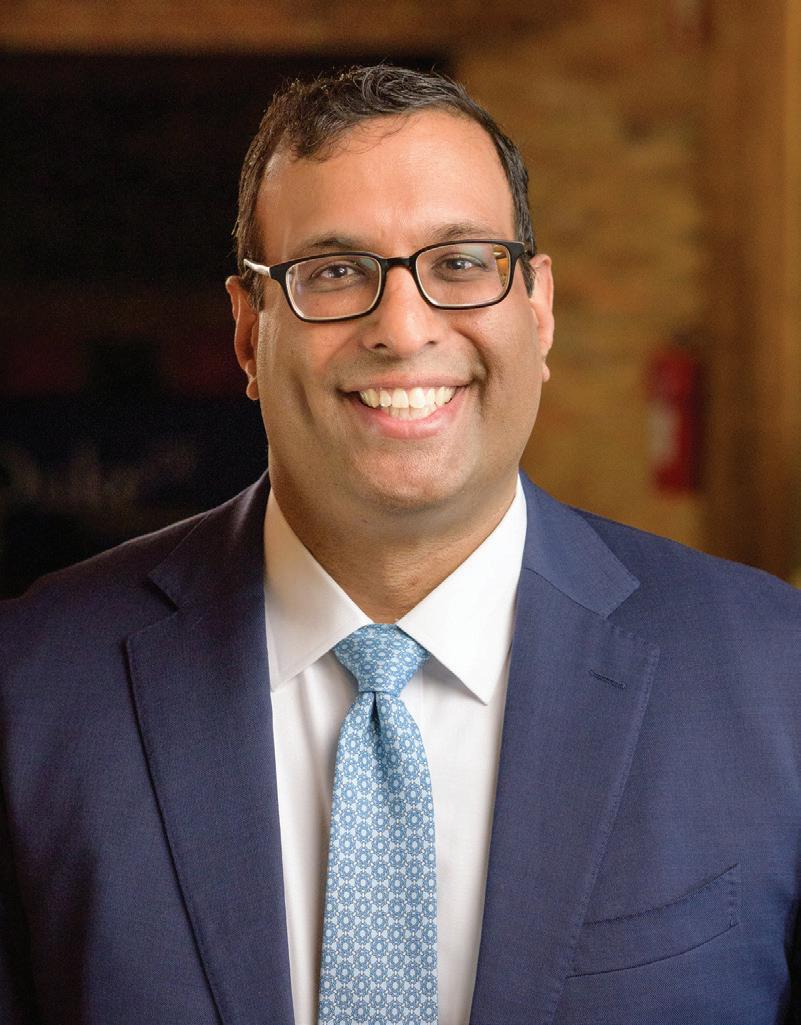
y vision – my dream – is HR as an enterprise engine: a value creator, not a support function.” Demetris Crum, known as D, is executive vice president and CHRO at AbbVie, the global biopharmaceutical company – and a passionate, persuasive advocate for HR playing an expanded role in the era of AI.
For starters, HR needs to forget the tired old refrain about earning a seat at the table. That
My vision is HR as an enterprise engine: a value creator, not a support function
Crum’s approach reflects clarity about HR’s purpose in modern business, at a time when business itself is being transformed by a raft of emerging technologies, especially AI. How, we ask, is AI changing the strategic challenges facing CHROs?
“I put this into 2.5 categories,” answers Crum. “The first is the impact on the CHRO functionally – within the HR function itself. How will it change your operating model? As it creates capacity for your team, how are you thinking about what they should be doing with that capacity? How are you looking at HR work processes? How are you thinking about your customer experience – the HR tools, processes and solutions you provide for employees and for leaders in the organization?”
The second category is the business impact. “The first part, there is talent. How are we evolving the skills of our current talent? How are we creating a culture where employees are adapting, and adopting AI in their everyday work?” Then there are questions about future skills. “Are you evaluating your hiring profiles against those future capabilities? Are you influencing the business as they continue with everyday hiring to ask: ‘Will this role look the same tomorrow?’ That rigor is important.”
Crum’s final half-category is about how CHROs help organizations anticipate the future of work to deliver long-term value. “You could say that culture and leadership falls under business impact, but I think it’s so important that it needs its own swim lane,” says Crum. “Leaders shape culture, so as we adopt AI, it’s important that we’re spending time with leaders, creating focus on the human element – on being change-ready leaders, not just regarding AI, but technology in general.”
How, though, can CHROs bring that perspective? We’re in unknown territory: nobody has a map for the change being unleashed by AI.

“It’s not so much about the experiences we’ve had, but being able to navigate waters we’ve never been in before,” says Crum.
That is a much-needed capability – one that HR needs to help organizations discover and develop among its leaders, understanding what potential looks like in the future. “To me, potential is really about curiosity, people’s ability and judgment when dealing with ambiguity. How do they navigate in that new space? That’s why I call out that 0.5 category.”
Change and continuity
Crum’s career spans almost 25 years in HR, following undergraduate studies in human resources at Michigan State University. Much has changed since then, we reflect. What has been constant – and what has had to be jettisoned or reinvented?
“Development and di!erentiation of talent have stayed extremely important; how you invest in talent and give transparent feedback still matters. The CHRO architecting culture, evolving it over time, and expecting leadership to model and continue to shape it – all of that remains important.”
The biggest change is around the role of experience in understanding potential and developing talent, within HR and among leaders more widely. “Historically, we’ve built judgment based on the experiences people accumulate over time: when you get to a senior role, you’ve seen a great deal. That breadth of experience remains essential, and so is the ability to adapt to a landscape that may change considerably in the next 18 months.”
That shift demands a more tailored approach. “We have to be more nuanced for every leader. What is the question we’re trying to answer about this individual, and what experiences do we need to create for them to answer it?”
Ownership of this agenda has to be shared, argues Crum. It is a prime example of how HR and leadership should work in tandem. “Leaders have to understand and be held accountable for owning the talent agenda; HR has to be accountable for making sure leaders are making good talent decisions,” he explains.
AI’s impact
We turn to the wider implications of AI. What are the opportunities for expanding its impact in practice in the next two to three years? “If I talk about AbbVie, it’s about our mission and what we can deliver for the patients we serve,” says Crum. “What do we do here? We discover therapies, we develop and manufacture those therapies, and then we elevate standards of care by getting them to the
CV
D Crum
2025–
Executive vice president, chief human resources
o cer
AbbVie
2022–2025
Vice president, total rewards
Vice president, compensation
AbbVie
2020–2022
Vice president, business human resources
AbbVie
2017–2020
Business human resources
AbbVie
2016–2017
Director, human resources
PepsiCo
2015–2016
Director, human resources
The Kra Heinz Company
2002–2015
HR specialist, manager and associate director roles
Kra Foods
patients we serve. Where we can harness the power of AI across all of those areas, that, to me, is the passion we hold collectively.”
Under Crum, AbbVie’s HR organization is shaping that agenda with senior leadership through varied initiatives: not only ensuring that AI is part of its own everyday work, but establishing an AI Capability Lab to drive continuous enterprise learning, and – crucially – building a culture of trust around AI.
In a field that relies on highly educated specialists, there is potential for resistance to a technology that some might perceive as devaluing their expertise. Yet that has not proved a concern in practice: clarity of purpose around how AI should be used has meant that employees have been open to it. It’s an object lesson in AI adoption.
“We moved quickly from saying, ‘Go use it,’ to connecting it to ‘why,’” recalls Crum. “Aligning conversations about AI use to the larger AI adoption goals across each function helps provide a path to the why and to what we’re trying to achieve with AI.”
Culture in service of performance
Clarity about what the business is trying to achieve is also essential to any discussion about corporate culture. AbbVie prides itself on being one of Fortune’s 100 Best Companies to Work For and on being recognized over many years by the Great Place to Work® organization. But what will shape a consistently high-engagement, high-performing culture as AI transformation accelerates?
“It starts with having a really good definition of culture,” says Crum. “For one thing, it is unique to organizations – and it has to be seen through the lens of the business’s goals. Culture is in the service of performance,” emphasizes Crum.
Yet while business is changing fast, the ingredients of a strong culture will endure. “Even in a highly technical world, you have to be clear about expectations and clear about your North Star. It’s clarity, trust, accountability and shared purpose.”
Nevertheless, tensions are inevitable. For one thing, transformation rewards speed, which may clash with other priorities. How do leaders reconcile such tensions? Crum recognizes the challenge. “It comes back to first principles. Culture in the service of performance – that’s your anchor. It requires leaders who can navigate change, who know when and how to pivot, and how to build clarity around the ‘why’ – why something may need to change, slow down, or speed up.”
He describes this as managing polarities, and points out that ambiguity and uncertainty are inherent. “It’s not that one side is wrong and the other right – you can find reasons why each side is right. But when you get back to your first principles
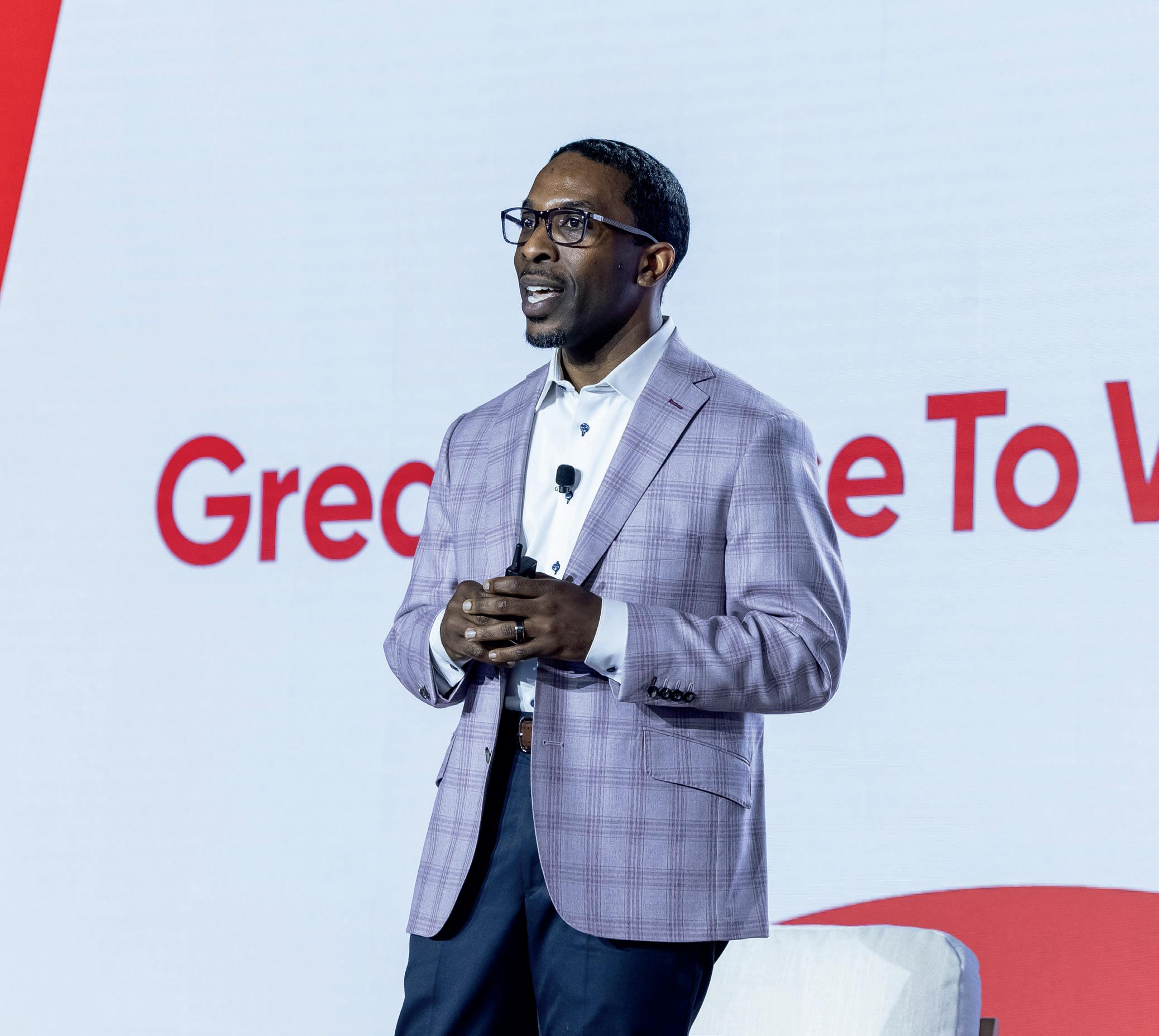
and think about leading through change –knowing what to do when you don’t know what to do – that’s when you make the trade-o!s between those polarities, in the service of delivering the performance that’s needed.”
Four Fs
Crum’s clarity about today’s business challenges is evident. He is equally clear about what gives him balance and energy beyond work. “I have my Fs: faith, family, fun and fitness,” he explains. “My faith keeps me grounded spiritually. My family – well, I love my family, and my goal after retiring is to still have them love me! Spending time with them and disconnecting in the right way is really important.”
For leaders in high-pressure roles, time to relax or invest in fitness is easily squeezed out. “I’ve really learned – especially through Covid – that your wellbeing is very important, so you can bring your best self to the areas of your life that matter most, both at work and at home.”
Bringing one’s best self to work gets easier when the work is engaging and rewarding. What
The biggest competitive advantage we have is our people
fires him up about the challenges of being CHRO in a business of some 57,000 people?
“What excites me most is the people element,” says Crum. “The biggest competitive advantage we have is our people. How you invest in, develop, and allow people to achieve their full potential –wherever they may be in the organization – and build that around clarity, a moral compass and integrity: that is what keeps me excited about the CHRO role.”
Our conversation concludes on a strongly optimistic note. “I hear it every day: there has never been a better time to be in HR. I will always agree with that, but I will also say, it is a navigating time, a figuring-it-out time. And that’s exciting!”
Patrick
Woodman is editor of Dialogue. Vishal Patel is president of global markets, Duke Corporate Education
“We are in a moment that I would hope no HR leader would want to miss. We have the chance to make a path for the future and define the value that HR can bring to the businesses we help shape.”
Shaping, not supporting, the business, with people at its heart. In a world in flux, Crum’s vision of HR is a compelling blueprint for CHROs contributing to organizational success.





























“Irwin is a master brand strategist. He shows how brands, when viewed as mental real estate in consumers’ minds, deliver competitive advantage and enormous financial value for firms. Brilliant.”
Erich Joachimsthaler PH.D., POST-DOCTORAL FELLOW AT HARVARD BUSINESS SCHOOL, CEO OF VIVALDI GROUP, AND CO-AUTHOR OF THE LANDMARK BOOK "BRAND LEADERSHIP
"





Think like the world’s most competitive brands.
A practical playbook to out-solve competitors, win the decision moment, and build a brand that can’t be ignored.
AVAILABLE AT
LEADERSHIP SURRENDER OR LEAD?
change rather than enduring it as an unstoppable external force.
The illusion of technological inevitability
There is nothing new in this. History shows that the more we are captivated by technology, the more it can mislead us.
Intentional leadership in the age of AI
The greatest risk AI poses to organizations is not technological disruption but leaders surrendering their agency
Writing Emmanuel Gobillot
Beyond its technological impact, artificial intelligence has created a cultural narrative that risks turning leaders into bystanders rather than the decision-makers their title implies they should be. As AI promises to replace much of our work, the greatest risk facing organizations lies in their leaders relinquishing their agency.
As AI’s seemingly inevitable rise progresses, there is a risk that leaders make decisions to avoid obsolescence, rather than to ensure a return on ever more substantial investments. This points to the only true inevitability: a transition of leadership from stewardship to mere compliance.
Even discounting our weak track record of delivering on the promise of new technologies, the fact that AI is a powerful tool should not dictate organizational direction. E ective leadership has always been about discerning when to adopt, pause or decline new technologies – with leaders shaping
This arti ce of intelligence does not develop on its own. It is the product of human decisions
In the 18th-century, the Mechanical Turk –an automaton built by Wolfgang von Kempelen to impress Empress Maria Theresa – amazed audiences by appearing to defeat chess players. Many believed they were witnessing machine intelligence nearly 70 years before Charles Babbage developed the Analytical Engine. But deep within its mechanical entrails, the Turk held a secret. Hidden inside the cabinet, a human chess player controlled the machine’s every move. The spectacle relied on carefully orchestrated engineering, guided by human hands, designed to fool observers.
Modern AI creates a similar illusion. This artifice of intelligence does not develop on its own. It is the product of countless human decisions. Every system and algorithm is shaped by human choices. While these systems appear intelligent and independent, it is people who select the data, set goals, define limits and determine which results to reward.
This is why it is critical to eschew the contemporary leadership discourse that presents AI adoption as an evolutionary imperative. When organizations focus on survival, and executives feel compelled to signal their relevance through performative actions directed at stakeholders, technological advancement risks being pursued solely in response to peer behavior.
It is in such environments that leaders’ ability to reclaim their own strategic narrative – rather than keeping pace with or reacting to someone else’s – becomes critical.
From fear to agency
Reclaiming agency requires setting aside two dominant narratives currently shaping organizational attitudes toward AI. The first is the fear narrative, which views AI as superior, inevitable and likely to replace human capabilities. While this perspective creates urgency, it undermines confidence in the value of our humanity. The second is the co-opted narrative, which sees AI as a flawless collaborator whose integration ensures improvement. While this view encourages enthusiasm, it obscures the risks, limitations and ethical complexities associated with AI. Although these narratives appear opposed, both lead equally to passive adoption – and in both cases, leaders’ agency is reduced.
A more constructive perspective is to consider AI as an instrument rather than a threat or a savior.

Like countless tools that came before it, AI can enhance productivity without supplanting human judgment. Instead of asking, “How quickly can we adopt and adapt?” leaders should consider three foundational questions.
Does this technology align with our purpose and values?
Does it serve the needs of employees and stakeholders?
Does it solve the right problem – or create a new one?
These questions reframe AI adoption from reactive implementation to strategic evaluation, and rea rm leaders’ roles as guardians of organizational identity rather than implementers of technological trends. But agency and intentionality require informed judgment. To answer these questions meaningfully, leaders must first understand what AI actually is.
The capabilities and limitations of AI Artificial intelligence functions through an ABC process. These systems ingest data (Artifacts), apply algorithmic instructions to identify patterns (their Blueprint), and generate outputs based on probabilistic associations (their Composition). But unlike humans, AI does not reason to produce responses; nor does it comprehend their meaning. While machine intelligence may appear both convinced and convincing, it is fundamentally di erent from human cognition, which emerges from a di erent ABC process: one based on Awareness, the Body, and Cultural context. Because it lacks this second ABC, which humans rely on to form judgment, AI can never exert e ective leadership.
It is only because we, as humans, can draw on emotional memory and intuition, and reflect on social nuance and ethical considerations, that we can think e ectively. It is only because we recognize ambiguity and demonstrate compassion that we can lead e ectively. These abilities are
It is
only because we recognize ambiguity and demonstrate compassion that we can lead e ectively
borne of the richness of lived experience. When we equate computational simulation with genuine understanding, we risk assigning judgment-based decisions to systems designed only to predict.
This risk comes as a direct result of the way our habits are formed. Remember Clippy in Microsoft O ce? This early software application may have been more intrusive than intuitive, but it had the grace to be obvious. Today’s systems deliver similar suggestions more subtly, influencing our decisions without our being explicitly aware of it. Over time, these suggestions become defaults, or habits, and then evolve into established standards.
Yet convenience and agency are inversely related. Decision-makers’ acceptance of algorithmic recommendations risks incrementally transferring decision ownership from humans to machines, sacrificing deliberate reflection and compromising purpose in the process.
Radical humanity as competitive advantage
To safeguard their agency amidst the rise of AI, leaders need to remain aware of both external technological influences and humanity’s unique value.
Historically, leaders have been expected to suppress human vulnerability and prioritize certainty in order to achieve mechanistic e ciency – yet today AI overturns that model, because it can do those things better than any human. Machines excel at data processing, content generation, and process optimization, so leaders must rediscover their true value and shift to applying their uniquely human strengths.
These capabilities – authenticity, moral courage, intuition, curiosity, compassion, presence, storytelling – are not simply soft skills. They build trust, strengthen organizational culture and provide strategic direction. They help leaders navigate ambiguity, balance competing values and encourage collective action.
Radical humanity – the intentional amplification of human qualities – is no longer optional or aspirational. The emphasis on
THE BRIEFING
Inevitability narratives
Powerful narratives of AI inevitability are stoking people’s fears and risk turning leaders into bystanders, encouraging them to relinquish their agency over how their organizations are being transformed. Yet every AI system is the product of human choices: selecting data, se ing goals and limits, and choosing which results to reward. Leaders must not abdicate their responsibilities.
Radically human solutions
AI cannot replicate the fundamental human capabilities that build trust, strengthen organizational culture and provide strategic direction. These are the de ning sources of leadership advantage in automated environments. Leaders who amplify their humanity will shape organizations capable of harnessing technology without surrendering to it.
vulnerability, compassion and ethical reflection is vital for the e ective governance of organizations implementing intelligent automation, given AI’s capacity to propagate ethical lapses more broadly and quickly, obscure accountability and undermine professional judgment.
These are leadership rather than technical challenges. AI systems reflect organizational values shaped by design, deployment and governance. It is up to leaders to influence these outcomes intentionally – or su er the unintended consequences of not doing so.

needs of others. It means designing systems that prioritize dignity over e ciency, insisting that someone remains personally responsible for decisions made in the organization’s name, and refusing to let optimization override the lived reality of customers, employees or citizens.
Without ethics, our choices will be made for us by vendors, competitors or the algorithm’s own logic – with no loyalty to our values, our objectives or our culture.
Pulling back the curtain
Ethics as compass, not constraint
It is only through incorporating human monitoring, transparency and ethical reflection into AI initiatives that organizations can protect their legitimacy and sustain their capacity for innovation.
Yet if ethical leadership is to become a strategic capability, it must function as more than a mere safeguard. Too often, organizational ethics have been treated as compliance with boundary lines not to be crossed, policies to be adhered to and risks to be mitigated. That posture is no longer su cient. In the age of AI, ethics must be anticipatory and focused on what is right. Ethics cannot be left to the end of the process as a review mechanism – it must shape intention at the outset.
The work of asking whether a goal is just, or questioning whether the metrics chosen distort behavior, belongs to us as leaders. Moral courage is not simply about resisting obvious wrongdoing. It is about asking whether “because we can” is ever as powerful an argument as “because we should.” Ethics, properly understood, never impede innovation nor slow progress. They simply define the kind of progress we are willing to pursue.
Of course, the ethical debate around technological innovation is not new; it echoes older philosophical tensions. We may be familiar with Aristotle’s view of ethics as character –ensuring that the habits and virtues we cultivate in ourselves as leaders are virtuous – or with John Stuart Mill’s focus on consequences, weighing outcomes, measuring harm and optimizing benefit. But French philosopher Emmanuel Levinas o ers something more urgent for the age of AI. He urges us to reject the tendency to abstract people into data points.
Levinas’s work requires us, as leaders, to ensure that no AI-enabled decision is so automated that it erases the human it a ects. His view of ethics begins in “encounters,” where we confront the
Leaders who continue to prioritize control, information analysis and synthesis accelerate their irrelevance
When it comes to its impact on work, AI’s most profound contribution may be its capacity to expose outdated leadership practices. Automation has always revealed tasks that no longer require human involvement – but in doing so, it has also always highlighted uniquely human capabilities. Leaders who continue to prioritize control, information analysis and synthesis accelerate their irrelevance. Those who emphasize relationship building, ethical interpretation and cultural stewardship enhance their impact. Our challenge is not to compete with machines, but to rediscover our humanity.
Being alive inside – emotionally engaged, ethically grounded and meaningfully present – has become the defining characteristic of e ective leadership in automated environments. AI will continue to transform organizational landscapes, but transformation does not negate choice. True leaders are architects of technological futures rather than the subjects of technological fate.
Pulling back the curtain on AI reveals a simple truth: behind every algorithm lies human intention. AI’s adoption, deployment and impact are all shaped by decisions reflecting someone’s values, priorities and purpose. Leadership, therefore, retains responsibility not only for technological outcomes, but for the narratives that justify them.
Emmanuel Gobillot is a leadership thinker and speaker, and author of Alive Inside: Unlock Your Leadership Advantage in the Age of AI (Routledge)
AI may alter how work is performed, but it does not redefine why organizations exist. Purpose, trust, meaning and dialogue remain human constructs requiring human leadership. The future will not be determined by how quickly organizations implement AI, but by how thoughtfully they integrate it. Leaders who resist inevitability narratives, reclaim their agency and amplify their humanity will shape organizations capable of harnessing technology without surrendering to it.
In the age of AI, the leaders who matter most will not be those who imitate machines, but those who remain unmistakably, unapologetically and radically human.
Targeting 10x growth
To develop the leaders who will deliver outsized results in the AI era, Prosus turned to Duke Corporate Education to curate an unforgettable immersive experience
Writing Patrick Woodman
The unfolding AI revolution o ers vast opportunities and disruptive threats alike. It is forecast to add trillions of dollars of value to the global economy over the next few years – but it could destroy legacy companies that fail to keep pace. Seizing the moment demands bold strategic moves and overhauling legacy models in favor of new approaches to leadership.
One of the firms leading the way is Prosus, the power behind some of the world’s leading lifestyle e-commerce brands. Its roots can be found over 100 years ago in South Africa, but today the Prosus Group is headquartered in Amsterdam, with 45,000 people across its wholly owned companies.
Its global portfolio spans startups, scaleups and multibillion-dollar giants alike – and many have shot up that ladder over time. Prosus was one of the earliest investors in Tencent, back in 2001. In 2016, it invested in a promising food ordering
and delivery startup in India, Swiggy. Other success stories include OLX Group, the Dutch online marketplace; Latin American food delivery firm iFood; and eMAG, the Central and Eastern European e-commerce firm.
Yet Prosus is also a company that has recognized the need for substantial change – to reinvent itself for the future. The latest chapter began in 2024 with the arrival of a new chief executive, Fabricio Bloisi, who had previously served as CEO at iFood, Prosus’s food delivery business in Brazil. He was accompanied by Gustavo Vitti, who became Prosus’s chief people o cer. Under Bloisi’s leadership, the company has embarked on a dramatic shift. Having recognized that it could do more to support the growth of its investments, Prosus is today pursuing a strategy built on creating ecosystems across its portfolio, driven by a vision of unlocking an AI-first world for its two billion customers.
The potential benefits of building more integrated ecosystems across Prosus companies are clear, explains Laureen Rwatirera-Chivere, VP talent management. “There are huge opportunities for the companies we’ve invested in to innovate together, cross-sell, upsell and build products that serve our consumers in new and even better ways.”
Bloisi drew on one particularly influential book: The Geek Way, by Andrew McAfee. Published in 2023, it sets out a vision for leadership centered on speed, experimentation and calculated risk –the style of leadership that has turned Silicon Valley companies into global giants. Underpinning their growth, McAfee writes, is an organizational culture based on four pillars: science, ownership, speed and openness.
Those insights made the book a touchstone for Prosus’s new direction, even inspiring its own internal philosophy – the Prosus Way. It is built around five values – entrepreneurship, results, innovation, people and impact – with an outlook encapsulated in a ‘jet ski’ methodology for innovation, where speed and agility are paramount. The first stage centers on small teams, small investments and small incremental wins and failures. Ideas with proven potential move to the second stage, ‘boats,’ where they are scaled but kept lean, before the final ‘cruise ship’ stage, where innovations are embedded organization-wide.
The jet ski methodology points to the necessity of a cultural shift for executing the major change in strategy envisioned by Prosus’s leadership. AI might be driving exponential change – but adapting to new realities was never going to be only about the technology. “We knew that the thing that would unite us to make those ecosystems successful is a unified culture,” explains Rwatirera-Chivere. And that made leadership mission critical.
Opposite Andrew McAfee (top right); Ben Draa of the Golden State Warriors (bo om right); Prosus CHRO Gustavo Vi i (bo om center)







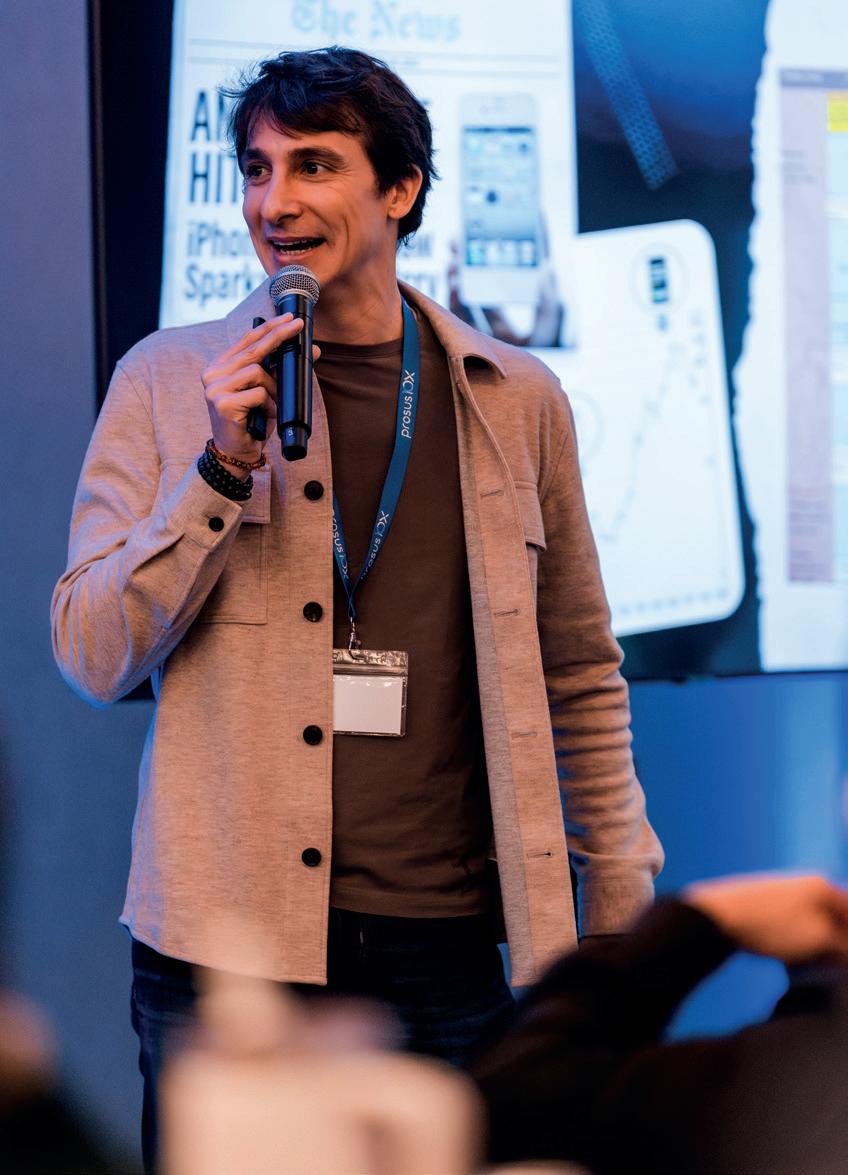




Out of the classroom, into the Valley As Prosus assessed how it could support its leaders and grow their capability for driving the company’s future, there was an appetite for new ways of doing things. “One of Fabricio’s taglines is ‘We’re not moving fast enough,’ and he wanted us to push the boundaries and think bigger – not just 10% bigger, but 10X bigger,” explains Analisa Ponce, global lead for talent and ecosystem development for the Prosus Group. “So when we thought about how to address that with our leaders, one of the big decisions we made was that we wanted a more immersive experience.”
Prosus turned to Duke Corporate Education to design a new program for senior leaders built around a fully immersive experience. There was only one potential destination.
“Silicon Valley generates more revenue than most countries in the world – and a big part of the reason it’s able to do that is the culture within the Valley,” says Rwatirera-Chivere.
The brief was to give participants a real experience of that culture. The result was the Prosus 10X Program: a week-long immersive experience in San Francisco that took place in December 2025. Some 80 senior leaders participated, including company CEOs and C-suite leaders from 12 global businesses across the Prosus portfolio.
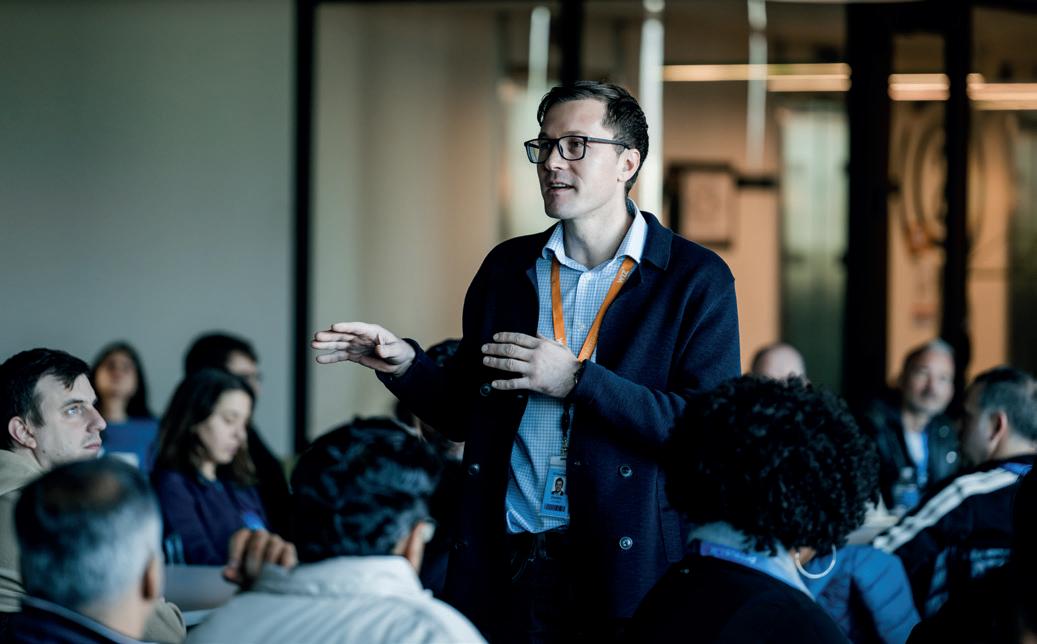

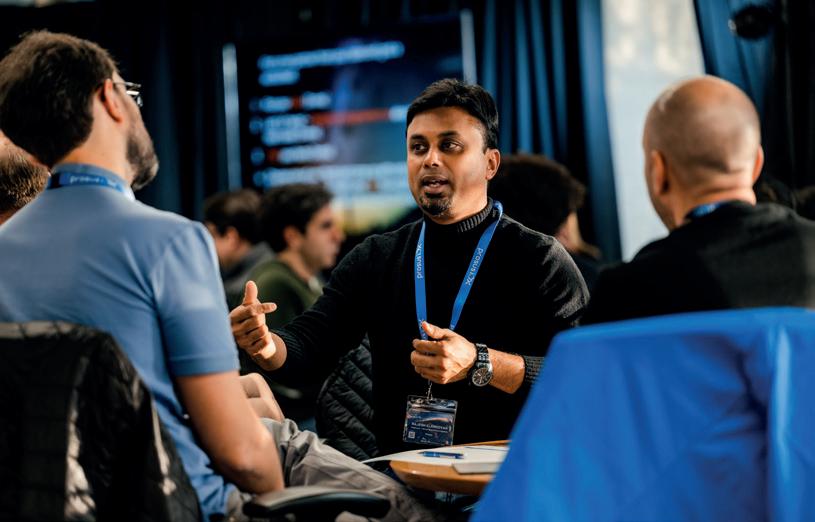
Themes across the week included the power of culture as a compass, learning to adopt a scientist’s mindset, innovating with purpose, and building ecosystems that scale. The agenda explicitly linked The Geek Way’s pillars with the Prosus Way – with McAfee himself delivering the opening keynote. Participants engaged with no fewer than 20 educators and practitioners over the week, including executives at companies such as Google DeepMind and AWS, angel investors and AI experts, while visiting a range of leading-edge organizations.
Ponce highlights a visit to IDEO, the design and innovation company, where discussion focused on human-centered design thinking, as particularly impactful. “The approach to everything was iterative and fast – participants really got exposed to innovation up close.”
Another highlight was a data analytics briefing and game experience with the NBA’s Golden State Warriors. “Every single one of the people who were there will never forget that experience – not only for being able to watch and experience the game, but for hearing the story of how it is orchestrated through AI and analytics at every touchpoint in the customer journey. It was mind-blowing,” says Rwatirera-Chivere.
The breadth of experiences curated across the program proved hugely powerful for participants.
Above Laureen Rwatirere-Chivere (top le ); Analisa Ponce (bo om center)
“The opportunity to connect with talented leaders from across our ecosystem and explore the frontiers of AI with Google DeepMind, Amazon, Distyl and the Golden State Warriors was both inspiring and energizing,” says Sebastiaan Vaessen, Prosus’s global head of strategy. “Every conversation challenged my thinking.”
It underlines the power of the immersive approach. “Being in a traditional classroom would have kept the conversation at a theoretical level –but we’re a company that’s trying to make a real cultural change,” says Rwatirera-Chivere. “Having the lived experience of operators in the space –people doing the work, people showcasing what works and what doesn’t, sharing their challenges –truly brought it all to life.”
Designing for connection
As the 10X Program took shape, one of the major considerations for Prosus and Duke CE was the program’s role as a catalyst for network creation across the group’s varied companies – be they startups, scaleups or major businesses. The cohort intentionally brought together leaders from the same company holding di erent roles; those from di erent companies doing similar roles; and those in di erent companies and departments who were natural ecosystem partners, such as e-commerce companies and fintechs.
But creating the conditions for connections to flourish took more than just cohort selection. The structure put in place around the visits and expert discussions was critical.
“With Duke CE’s guidance we factored in reflection points after every speaker, focusing on how we were going to apply this in our business,” explains Ponce. “We had people from all those di erent companies working in mixed teams, so they could start building that ecosystem thinking together – discussing common challenges and problems, and starting to look for solutions. They really started making headway on projects they could take back to the business.”
The value of the emphasis on network creation is reflected by participants such as Tessa Ackermann, CFO at the South African e-commerce firm Takealot Group. “The highlight for me was the ecosystem itself,” says Ackermann. “Connecting with peers from other group companies was phenomenal. It’s rare to be in a room with that much collective talent and shared ambition.”
On the record: the 10X commitment
Having created the conditions for new thinking and new connections to emerge, the next challenge was ensuring impact back in the organization. To that end, the 10X Program tapped into the power of accountability for achieving goals.
“The science tells us that if I write down my goal, I increase my chances of achieving it – and if I then tell someone, I increase my chances again,” explains Rwatirera-Chivere. Going public takes this to the next level. “When you make a public declaration, you’re even more inclined to be accountable and follow through on it.”
Themes included the power of culture as a compass and building ecosystems that scale
On the final day of the immersion, participants filmed short videos on how they planned to deliver 10X growth – documenting their commitments not only for themselves, but for senior leadership and stakeholders across the business. Examples included a talent exchange between the iFood fraud prevention team and the CTO of Coin, the fintech business, sharing crucial learning between their organizations. Another was the connection made between Romania-based Freshful from eMAG and Takealot, focusing on personalizing customer journeys and customer behavior analysis. Such talent exchanges have had outsized impact, says Rwatirera-Chivere – helping companies overcome key barriers to growth in areas where they lack internal expertise.
For every one of the participants, accountability has been reinforced from the top. “Our CEO has watched every single video. He’ll tag people on Slack – ‘Okay, how’s it going with this? I want to hear what you’re doing,’” explains Ponce. “We’ve seen the synergies building. What we envisioned is actually happening – and the videos really helped keep people accountable for that.”
Ecosystems in action
The 10X pledges speak directly to the ROI of the program – and to Prosus’s success in accelerating its culture change. The outcomes have been highly varied, says Rwatirera-Chivere. “It goes from, ‘I met somebody who helped us solve a challenge,’ to, ‘I’ve changed my outlook on how we can drive AI within our business operations,’” she explains. “Not only have people learned and found small wins – they’re transforming their businesses, changing their way of working and operating in a positive way, so we can say, ‘Hey, that program was really worth the investment.’”
The view from participants echoes that evaluation. “Calling it a ‘learning experience’ feels like an understatement,” reflects Ackermann. “It was a full immersion into the energy and innovation of Silicon Valley that I won’t soon forget. This was, hands down, the best professional learning experience I’ve had.”
Patrick Woodman is editor of Dialogue
The 10X Program points to the fundamental ideas that will shape the AI-first world – not only for Prosus, but for business globally. This is leadership for the future: designed for connection, inspiring innovation, and driving impact – with people firmly at the center.
Connection as infrastructure
Relational capacity is the foundation that leaders can no longer a ord to overlook
Writing Kerry-Lyn Stanton-Downes
We are more connected than ever – and lonelier than ever. In 2024, Gallup reported that 20% of employees globally experience daily loneliness. That same year, employee engagement hit a 10-year low, with just 23% of the global workforce describing themselves as engaged. In the US, engagement dropped to 31%, its lowest point in a decade. Disengagement is costing the global economy an estimated $8.9 trillion annually, equivalent to 9% of global GDP. We have invested billions in wellbeing programs, resilience training, mindfulness initiatives, and mental health resources. Yet the numbers keep getting worse.
The reason is not lack of e ort. It is that we are treating connection as a ‘nice to have’ – a supplement to the real work, something to add when budgets permit and pressures ease. It is not. Connection is infrastructure. It is the foundation that determines whether teams can think together, stay curious under pressure, navigate di culty without fracturing and do their best work. The future is not being created in strategy sessions. It is being created right now – in every conversation, in
every relationship, and in every moment we choose to connect rather than defend, withdraw or go through the motions.
The problem: individual solutions for relational challenges
When stress, burnout and disengagement rise, most organizations respond with individual interventions. Resilience training teaches people to cope better. Mindfulness apps help individuals regulate their own anxiety. Wellbeing programs address symptoms at the personal level. These are not bad ideas, but they are incomplete ones.
They share a fundamental assumption: that the challenge is inside the person. Strengthen the individual and the problem is solved. But the data tells a di erent story. Poorly managed employees are 60% more likely to experience stress. Managers account for 70% of the variance in team engagement. The challenge is not primarily within individuals. It is between them.
What we are missing is an understanding rooted in neuroscience. The brain is a relational organ. We do not just self-regulate – we co-regulate. Our nervous systems are constantly attuning to each other, reading signals of safety or threat long before our conscious minds catch up. When the relational space is eroded – when tension accumulates, when honesty feels risky, when people feel managed rather than seen and supported –nervous systems register danger. Thinking narrows. Curiosity retreats. People protect themselves.
Self-regulation helps people survive the conditions; relational capacity changes the conditions. This distinction matters enormously for leaders. You cannot resilience-train your way out of a relational challenge. You cannot app your way to psychological safety. The conditions people are working in – the quality of how they are led and how they relate to each other – are either creating the capacity to think and perform well, or quietly eroding it.
The AI question nobody is asking
Artificial intelligence is accelerating this reckoning in ways that many organizations have not yet confronted. As it takes over coordination, information processing and task management, AI strips away much of what has passed for workplace relationships. If your team only really interacts when coordinating tasks or solving problems and AI begins handling most of those tasks, what remains? Do you have actual relationships, built on genuine trust and honest exchange? Or do you have transactional interdependence, held together by shared workloads rather than shared connection?
AI is not creating a relational crisis. It is revealing how thin relational capacity already is.


The systems are already strained. The connection was already fragile. AI is simply making the problem impossible to ignore.
This creates a profound leadership question for the years ahead. If AI increasingly handles coordination, information exchange and task execution, what becomes of the distinctly human value organizations are left with?
It will not be speed, nor access to information. It will be our ability to build trust, navigate di erence, think together under pressure and remain open, curious and present in moments of uncertainty and change. In many ways, AI is inviting organizations to confront something they have overlooked for decades: that relationships are not separate from performance. They are the conditions that make sustainable performance, innovation and collaboration possible.
Leaders who invest in relational capacity now are not being idealistic. They are making the most pragmatic investment available to them: ensuring that as AI handles more of the transactional work, what remains between people is genuinely valuable – the capacity for trust, honest dialogue, creative tension and collective thinking that no system can replicate.
The shift: from psychological safety to relational capacity
Every organization wants psychological safety. But most are pursuing it in a way that will not work.
You cannot declare psychological safety into existence. A leader can stand in front of their team and say, “It is safe to speak up here” – but if the relational space does not feel safe, the declaration is meaningless. The nervous system decides long before the conscious mind catches up. Safety is not a policy. It is a felt experience – and it is created through relationship. This is the crucial shift:
Safety is not a policy. It is a felt experience – and it is created through relationship
psychological safety is the outcome. What creates it is relational capacity.
Relational capacity is the ability to stay present, curious and connected – especially when it is di cult. It is what allows a team to hold complexity, tension and genuine di erence without collapsing into defensiveness, performative agreement or quiet disengagement. When relational capacity is high, psychological safety emerges naturally. People feel it in their bodies. They can speak honestly, challenge ideas, admit when they are struggling – because they have experienced, repeatedly, that the relational space can hold it. Conversely, when relational capacity is low, no amount of telling people they can be honest will change their lived experience that they cannot.
The journey from one to the other follows a clear pathway: from survival to safety to success. Under pressure, people shift into survival states, often without realizing it. Thinking narrows, curiosity disappears and interactions become transactional. You cannot think your way out of survival mode; you have to regulate your way out.
The pathway for this? Regulate, relate, reconnect. You regulate so you can relate, and you relate so you can reconnect – to each other, to the shared purpose, to what you are building together. This is not a one-time intervention. It is a continuous applied practice you embody. It is the infrastructure that determines whether teams thrive or fall apart under pressure.
The invisible erosion: recognizing relational drift
Relational capacity is either being built or depleted in every interaction, yet most leaders do not notice it being depleted until it is too late. Relational drift is gradual. It is not dramatic. There is no
single moment of rupture. Instead, there is an accumulation of small, unnamed things – the feedback not given, the tension nobody names, the conversation quietly avoided – that pollutes and erodes the relational space.
The signs are recognizable once you know what to look for. People become careful: they edit what they say, conversations feel strangely polite yet emotionally thin, and what looks like alignment is often avoidance. Curiosity disappears: when people stop asking challenging questions, it usually means they have decided it is not safe. People withdraw quietly: they show up, but they are not really there. Performance holds while connection disappears. The room gets quiet in a specific way –not thoughtful silence, but the kind of stillness that feels like holding your breath.
By the time performance visibly drops or trust openly breaks down, the erosion has typically been building for months. The leaders who build relational capacity notice these signals early, and intervene before tension calcifies into fracture.
What makes relational drift so dangerous is that from the outside, everything can still appear functional. Meetings happen. Deadlines are met. Teams continue delivering. Yet underneath, people have started withholding parts of themselves. They stop bringing uncertain thinking, di cult questions and genuine concerns to the room. Conversations become increasingly performative – polished updates instead of honest exploration. The energy shifts from shared discovery to quiet self-protection.
Leaders often misread this as professionalism or e ciency. In reality, it is frequently a sign that people no longer feel safe enough to fully arrive, be present and collaborate. And once people begin withholding themselves relationally, organizations lose far more than engagement. They lose creativity, challenge, innovation, honest reflection and the very conversations that prevent small tensions becoming major fractures.
Building relational capacity in practice
Relational capacity is not built through programs. It is built through practice – in small, powerful moments, with consistency, especially under pressure. Five disciplines make the greatest di erence.
Notice what is happening in the relational space Has curiosity disappeared? Has someone gone quiet? Is there a tension that nobody is naming? The most e ective question a leader can ask in this moment is deceptively simple: “It feels like there is something we need to explore. What might it be?” This signals that the relational space is open enough to name what is actually
happening – and that safety is not assumed but actively created.
What makes relational dri so dangerous is that from the outside, everything can still appear functional
Stay relational under pressure When uncertainty increases, the instinct is to become transactional – to focus on deliverables, metrics and outputs. Interactions get shorter, sharper and more ‘e cient.’ But when leaders become transactional, people’s nervous systems register it. They feel managed, not led. The discipline is staying relational precisely when everything in you wants to speed up and control. You cannot strategize your way through uncertainty. You have to relate your way through it.
Model repair, not protection Leaders do not need to get everything right. They need to repair when they are wrong. When you misstep, acknowledge it clearly. When tension surfaces, name it. When someone feels unheard, go back and hear them properly. Repair signals something profound to a team: this space can hold di culty and di erence. We do not have to be perfect. We just have to stay.
Tend to your own regulation When a leader stays present under pressure, their nervous system o ers a regulatory signal to the room. When a leader becomes reactive or withdrawn, the room tightens. Your regulation is not a personal discipline. It is a relational act. If you tighten, the room tightens. If you stay present, others can think more clearly.
Ask di erent questions Small shifts in how you open a conversation transform relational quality. Try: “What is the one thing you need from this meeting today? And how is it in service of what we are here to do together?” This invites presence, reflection and honest engagement. It surfaces di erence before it becomes destructive.
Kerry-Lyn StantonDownes is founder of Be Relational and author of Beyond Words: How to lead people from survival to success (LID Publishing)
The infrastructure that determines everything Strategy does not execute itself. People execute strategy. And people need relational capacity to do it well – together. The organizations that will thrive are not necessarily those with the most sophisticated AI, the most rigorous processes, or the most elegant strategies. They will be the ones where people can think together under pressure, stay curious when it is uncomfortable, repair when things go wrong, and genuinely relate to each other – not just coordinate. Psychological safety is not the starting point. It is the destination reached by leaders who build relational capacity, who tend to the space between people, who understand that connection is not soft. It is the most powerful competitive advantage available, because what happens between us matters most.
When we first encountered this team, their meetings were fractious and counterproductive. Now, they are energized, open, and capable of accessing greater synergistic intelligence and creative outcomes. When fears, frustrations and hopes are voiced and unconditionally welcomed, a team activates a higher intelligence. As one third-party told them: “We don’t know what it is about you, but we love collaborating with your organization – the work you produce is three steps ahead of all the rest.”
This points to something more fundamental. When people reconnect to themselves and others on a deeper level, they are free to collaborate intellectually and relationally in novel and intimate ways.
The invisible architecture of next-practice leadership
We believe that at the heart of this shift are two streams of executive maturity.
Leading in chaos
Deep inner work is essential for navigating turbulent external circumstances
Writing Nicholas Janni & Amy Elizabeth Fox
Recently, we witnessed what we call nextpractice leadership inside an industry that many consider ultra-conservative.
For two hours, a top team worked through complex financial analysis on a highpriority project. At key moments, the CEO paused to name what he was feeling. His team followed suit. It was a simple yet powerful act, and one that radically elevated the quality of the team’s final decision. But it was not a move that most teams would naturally make – certainly not before creating the psychological safety and context for such honest disclosure.
While
o en described in very abstract ways, today’s polycrisis is deeply personal
Healing Integrating the emotional layers and life experiences that drive reactive patterns. Without this, leaders regress under pressure, defaulting to control or defensiveness.
Awakening Expanding awareness and perceptual capacity. As leaders sense more – within themselves, between people, and across systems – they access far more than the rational mind alone can know.
Together, these form the foundation for a more profound form of leadership: one that moves beyond linear thinking, relentless execution and disembodied ways of being we have long prized and normalized, which leaders admit are no longer working.
Why inner work has become urgent
We are living through a period of sustained upheaval, not temporary complexity. While often described in very abstract terms, today’s polycrisis is deeply personal. It walks into your meetings day in and day out. We see it when people feel overwhelmed, exhausted, disoriented – and when they become brittle or numb. Silos deepen. Trust erodes. What appear as performance issues are symptoms of something deeper.
Beneath many organizational challenges lies unaddressed emotional history, and a way of working that has cut us o from our bodies, relationships and sense of meaning. This has always been true, but collectively, we are experiencing a level of strain and adaptive demand that is unprecedented – and that triggers much of what is unresolved in people. We can no longer ignore the deep disconnections.

And yet there is a second truth at play. The goldmine beneath the conference-room table is our hardwired human longing to contribute to something meaningful – to feel connected to ourselves, others and the wonder of life itself.
A radical revisioning of leadership
These realities call for next practice leadership. Inner work is no longer optional; it is essential if we are to be future-ready. This is not about better tools or new frameworks. It is a fundamentally di erent way of leading, grounded in deeper wisdom from which a distinct set of capacities
begins to emerge. The ability to think clearly under pressure; greater cognitive flexibility and openness; deep relational trust and collaboration; a willingness to experiment, iterate and learn; and the capacity to sense-make in complexity.
Through this work, leaders develop foundational qualities: coherence, groundedness and adaptability. This unlocks often-exponential levels of vitality and imagination, enabling aligned action and the mobilization of collective intelligence across the organization.
The challenges we face – within organizations and across all of humanity – are not incremental. They are systemic and catalytic. They require leaders who perceive beyond the cultural architecture in which we operate to imagine fundamentally di erent futures.
How
to begin
This shift toward next practice begins not with one grand transformation, but simply with where we place our attention. This is one of the most underdeveloped superpowers that leaders have.
For example, we invite you to pause now as you read these words. Bring your attention to your breathing – not to change it, but just to notice it. Drop your awareness from your head to your body. Spend a moment there. What sensations do you become aware of?
When leaders regularly devote even a few minutes to such a simple practice, they report being less reactive, more present, and more able to listen and respond e ectively. The field of conversation changes – and with it, the quality of decision-making.
The business case for deep inner work
Businesses speak about the need for collaboration, innovation and adaptability. But these organizational outcomes rely on inner conditions. True collaboration, for example, requires generosity. Innovation asks us to stay curious rather than remain sealed o in our own expertise and opinions. People must believe it is genuinely acceptable, if not welcome, to try and fail. Adaptability demands a wide zone of tolerance for uncertainty or what is known as ‘productive disequilibrium.’
Nicholas Janni and Amy Elizabeth Fox are the authors of Leading in Chaos: A Clarion Call to a New Future from Two Pioneers in Leadership Development and Transformational Change (LID Publishing)
The alternative is also clear. Without this maturity, organizations will remain gripped by a pandemic of superficiality that keeps silos intact and makes discomfort, defensiveness and dysfunction inevitable. When leaders draw on all their intelligences – body, heart, mind and spirit – while learning to rest in a deeper inner stillness, they become a steady presence amid the storm.
Inner work is no longer a luxury. It has become indispensable for leading in an age of chaos.
The subtle art of executive presence
You
have the skills and experience to lead. But when you talk, do people sit up and listen?
Writing Audrey Clegg
More than ever, business success depends on the ability of leaders to navigate complex, rapid change. But leveling up from high performer to enterprise leader is far from straightforward.
In the thousands of reviews I’ve taken part in over the course of 25 years as a talent and learning leader in major global businesses, there’s a type of feedback that regularly comes up: “This high potential has the skills to step up – but they don’t yet have that essential mix of gravitas, authority and presence they’ll need.”
This is executive presence. We’ve all seen it. It’s when someone walks into a room and before you’ve seen their job title or know what they do, you want to talk to them. That’s the kind of leader we need to cultivate – and it was the focus of our

We’re helping a new generation of Sano leaders nd the natural authority and presence they need to level up to enterprise leader
recent work with Duke Corporate Education, which is helping a new generation of Sanofi leaders find the natural authority and presence they need to level up to enterprise leader.
“Bringing out the best in your team is one thing,” says Ryan Eagar, Sanofi’s global head of executive and leadership development. “That’s what our standard management and leadership programs are for. However, to succeed as an enterprise leader, you need to lead without formal authority. You’ve got to work across silos, and bring together di erent stakeholders to tackle complex challenges. Where those skills are lacking, you get program delays and missed commercial opportunities.”
For Sanofi’s global leadership programs director, Anna Evstropova, timing is a crucial part
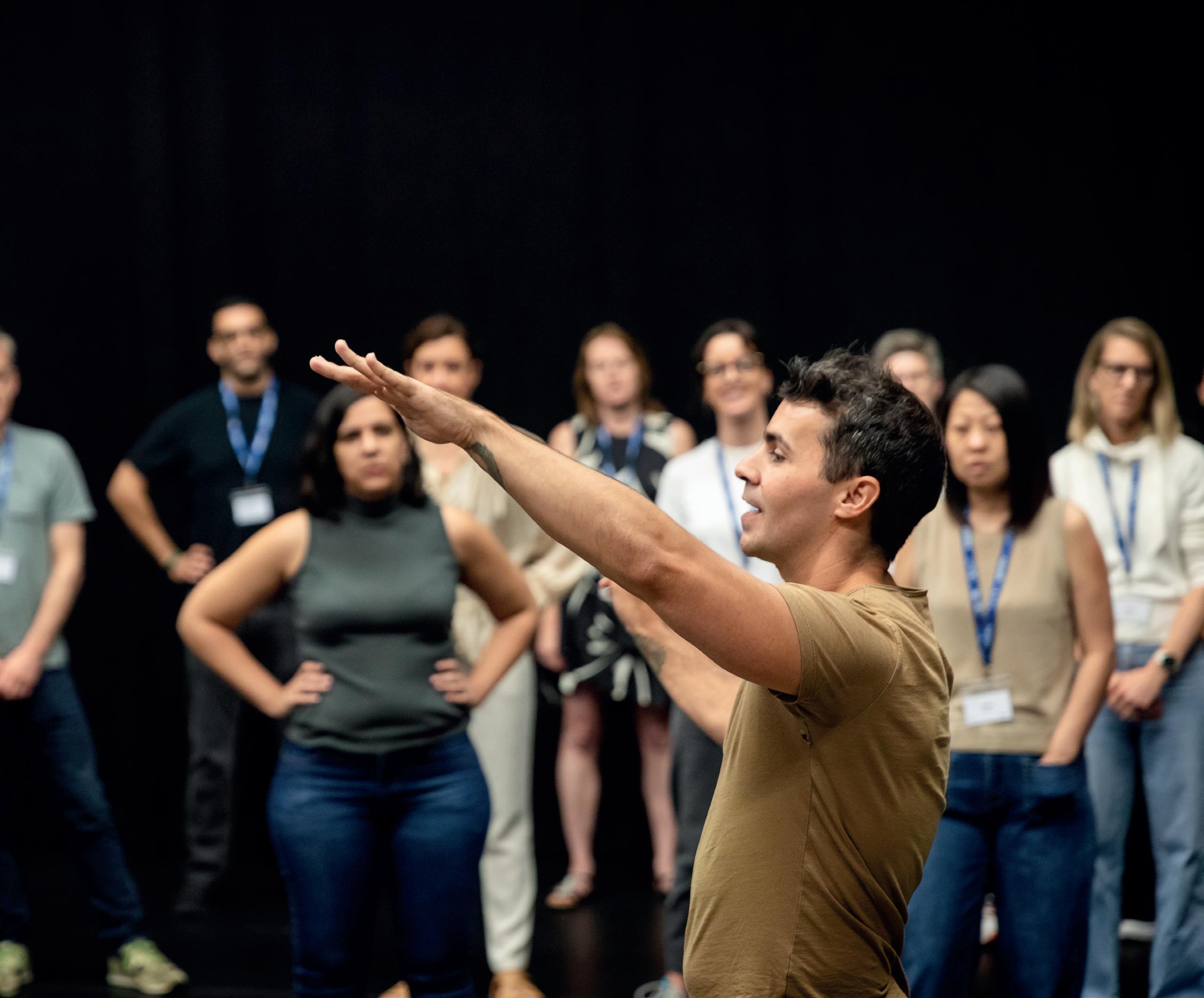
of the issue. “To really master executive presence, you can’t leave it too late – it’s about dismantling what’s emerging as the default. Once someone has a mature leadership style, it’s much harder to unlearn something as mercurial as presence.”
Drawing on their respective experience of leadership development, Sanofi and Duke CE worked together to create a three-step, 12-month program focused on presence.
Part 1: from self-reflection into intention
In the first part of the program, participants reflected on their leadership journey so far, identifying ways to adapt and energize their personal brand and explore aspirations for the next stages in their careers. Before the program, Lijun Huang was site head of Sanofi China’s plant
Above Sano leaders on stage at Sadler’s Wells Theatre, London
in Hangzhou, leading 200 people to deliver 350 million boxes of life-saving medicines every year.
Drawing inspiration from both pharmaceutical and technology leaders in the region, Huang led digital transformation at the plant. “In just six months, we introduced a collaborative robot line to package drugs with leaflets into a folding box,” she says.
So what was Huang’s intention for the program? “The Hangzhou transformation involved multiple stakeholders at every level,” she says.
“Coming from an engineering mindset, I tended to prioritize technical accuracy and data-driven insights. I needed to get better at translating that into a narrative for senior leaders and diverse teams across Sanofi.”
“At the same time, I wanted to build on my leadership foundation – focusing my energy
Overleaf On court at Duke’s campus, Durham, North Carolina (bo om le ); and in session with Olivier Mythodrama (top right)
on meaningful impact while also leading authentically,” adds Huang. “I’m Chinese, but I grew up in Germany, so I’m more direct than is typical in Greater China. Being bold for me sometimes is stepping back, waiting for others. I wanted to get better at that.”
Delivering and transforming
Prior to the program, Jonathan Starck was also learning a lot in his first major leadership role. In June 2024, he became Type 1 diabetes franchise head for Australia, New Zealand and South Korea. “Going from managing just two people to leading a team of 13 was a big step,” he says. “Especially as, in addition to my team, I also had to bring multiple stakeholders onboard to hit our goals.
“The biggest shift for me was going from delivering KPIs, to creating a culture of innovation… So a key goal for this program was learning how to deliver and transform simultaneously.”
Longer term, Starck wanted to push on to a bigger leadership role. “You have to be strategic about that. How do I get the skills I need? Who can help me find the opportunities I need to develop?”
He also had a third intention. “When it comes to high-stakes situations, how do I manage self-doubt? Take presenting an annual budget to global leaders, for example… often, I would hear this little voice saying, ‘You’re not good enough for this.’”
Part 2: step forward
Techniques to manage that inner voice were explored in the second section of the executive presence program, which focused on how participants bring their intentions to life. It had two parts. The first explored ways to build connections to unlock the opportunities participants need to grow – the sort of connections
To really master executive presence, you can’t leave it too late – it’s about dismantling what’s emerging as the default
Anna Evstropova, global leadership programs director
that I picked up along the way during my career, but could have developed much faster if I’d had a roadmap. The second focused on building leaders’ storytelling muscle: a vital capability for influence and impact – and one that, for most of us, starts with the stories we tell ourselves.
Juan Vargas Zambrano is Sanofi’s global medical product lead for polio, pertussis, and some forms of meningitis and pneumonia vaccines. “My confidence used to depend a lot on who was in front of me,” he says. “With more senior people, my language – and my body language – would shift. My inner critic would get all fired up; like, ‘Huh. Take a step back.’”
For three days on the program, participants gathered at Duke’s campus in Durham, North Carolina, embedding what they’d learned and accelerating development through a range of oneto-one and group sessions with experts from Duke and beyond.
“One of the most memorable was the ‘Inner Critic to Inner Coach’ session,” says Zambrano. “Working in small groups, we explored how to respond to inner negativity, with simple phrases like: ‘I hear you, I acknowledge you, but I’m up for this challenge.’
“I could feel the fear release physically – in the shoulders, the breath, the voice. And since I’ve started doing it regularly, I see how it stops the inner critic sinking back into the unconscious to cause more trouble. You create new circuits.”
When Zambrano returned to Lyon, he looked for opportunities to put these skills to work. After being invited to a webinar on intercultural di erences, he was asked to lead a workshop with his manager, his manager’s manager, and peers from other areas. “I felt comfortable being myself. And I think that showed. I’m now leading a project to explore more synergies in this space, with sponsorship from senior leadership.”

Stand-out performances
Looking back, Starck reflects on why the time on campus was so transformative. “I still can’t quite work out how they did it,” he smiles. “But some elements stand out: expectations were high and clear from the start. We all bought into that. Also, there’s something about being far from home and a bit jet-lagged. Barriers come down. And the session we did with actors from Olivier Mythodrama (OM) was also very powerful.”
OM was set up by actor Laurence Olivier’s son, Richard, and uses Shakespeare and other great playwrights to explore the art of leadership via stories and characters that mirror our own traits.
“It helped us lower our guards very quickly,” says Starck. “The vulnerability that creates is such a powerful bond. You feel established in the same
soil. Intentions take root. You grow together.” Starck has since applied some of the tactics learned in that session to build trust within his team.
“Rehearsing our annual budget presentation, I asked my team to role-play senior leadership and challenge me hard on the proposals. I wouldn’t have had the confidence to be that vulnerable before. Exercises and conversations like that add up to create the culture we needed to deliver and transform.”
Keeping doors open
For Huang, the learning she put into the storytelling and stagecraft sessions at Duke gave a quick return. Just a few weeks later, she was on stage at a top 200 manufacturing and supply (M&S) leadership session.
“When I stepped onto that stage and paused, connecting with the audience, I felt a profound shift. Thanks to the techniques we’d learned on the program, I was grounded, occupying the space I belonged in. I knew more than ever that presence isn’t about size – a lot of it is about purpose,” reflects Huang.
She was amazed by the response. “Person after person came over, saying how my story had shifted their thinking and inspired them. That authentic moment of connection on stage synced with what we achieved in Hangzhou to become a powerful catalyst.”
A few weeks later, she took on a new role as supply chain head, Greater China. “This wasn’t a direct result of the Presence Program, but what we learned gave me the confidence to aim higher and take on a big challenge.”
Part 3: move the needle
Ultimately, the goal of the program is impact for Sanofi. “We want participants to find or create the opportunities they need to progress toward their aspirations,” says Evstropova. “And as champions for next-generation leadership, it’s important they demonstrate systemic impact within the business.”
Starck worked hard to build good relationships with the leaders he identified in the mapping sessions. Taking on their feedback, implementing it and going back for further discussions gave him credibility and built his reputation.
“When I applied for my first country manager role, two of the leaders I’d reached out to were on the succession planning team and remembered me. The personal story work we did on the program, plus the strength I found in the peer group after the o -site at Duke, really boosted my interview performance.”
He became general manager for UK and Ireland in May 2026 and taps into what he learned on the program most days. “I’m clearer on the

I’m clearer on the value I bring. And that gives me the con dence to step forward and take calculated risks
Jonathan Starck, general manager for UK and Ireland
value I bring. And that gives me the confidence to step forward and take calculated risks.”
A compass for complexity and volatility
The program’s later phases empowered Huang to lead through complexity and uncertainty while staying true to her authentic self and her leadership principles. “My role sits between M&S and commercial. In the Chinese market, that’s an incredibly dynamic and complex space,” she says. “China’s national volume-based procurement creates a high-stakes competitive bidding environment. Companies compete on both volume and price. Winning can mean volumes surge tenfold overnight – or decline by more than 70% in weeks.”
The di erent functions have very di erent lead times, she points out. “Commercial teams face incredible volatility, but M&S require six to twelve months’ planning to deliver.”
Huang tackled this challenge by enhancing scenario planning capabilities and implementing governance processes that connect global and local teams, accelerating communication and decisionmaking. “We’ve already captured substantial business opportunities for one of our key products, including an €85 million win,” she reveals.
“The Presence Program played a pivotal role in that success.”
Huang’s story is not an isolated one. The first three cohorts of the executive presence program have been very successful. The journey from formal authority to leading through influence can be a long one – but it takes you to a much more productive, engaged and innovative place. The earlier you learn what’s required to build executive presence, the sooner you can master it, and the more impact you can make.
Audrey Clegg is chief talent and learning o cer at Sanofi
In their unique ways, the program alumni are doing precisely what we need our enterprise leaders to do: working across silos, bringing together stakeholders, and creating a common agenda to tackle complex challenges. That was our thinking behind this program – and it’s great to see the results coming through.
organization; framing best practice; and conducting honest self-evaluation. It’s crucial that this mindset be cemented in the DNA of teamwork.
Infrastructure and mindset
Unleashing team potential
Leaders can improve organizational culture by spending just 10 minutes daily on the right things
Writing Kevin Mark-Watts
Most of us involved in leading businesses will have a fond recollection of our formative years in leadership. It can feel like riding a wave of raw energy – a desire for success fueled by collective belief, with deep involvement in almost every team interaction. Then, with triumphs and promotions, the team expands; the hands-on approach becomes unsustainable. We find ourselves embracing the corporate structure as a new reliance on remote team development emerges.
As the lines of authority grow, channels of communication start to become fragmented. A ‘glass bottom’ emerges: some team members find themselves swimming underneath this glass, experiencing a disconnect from their leaders and from the overarching plan. Exactly where this glass bottom forms in the hierarchy varies by company, but the higher it forms, the greater the number of rank-and-file employees that feel disconnected – and the harder it becomes for leaders to maintain progress.
To address this division and reconnect employees with the organization’s goals, leaders must nurture a growth mindset in individuals. It requires controlling our intentional focus; aligning personal goals and values to those of the
I advocate applying the techniques of introspective performance analysis to corporate leadership
Senior leaders face a quandary. The dominant schools of thought in much of business education teach corporate infrastructure, but don’t deal with the leadership mindset. On the other hand, leadership teaching deals with mindset, but doesn’t relate it to the infrastructure. Many aspiring executives complete their business courses or leadership development programs yet are left with gaps in their understanding.
The key lies in linking operating tools with mindset and behavior to create a holistic solution. I advocate applying the techniques of introspective performance analysis – commonly used in sport, from where I draw inspiration – to corporate leadership. Its value lies not just in learning about processes, but in actively engaging in selfanalysis and synthesizing disciplined systems with behavioral science.
At its heart, the approach means establishing a profile of best practices across each component of the business infrastructure. Individual strengths are measured against each area, revealing areas for improvement. It is an approach that promotes both greater self-awareness and consistency across teams.
In sport, this is relatively common. Take the meteoric rise of the English football club Aston Villa over the past three seasons, which saw them secure their highest Premier League place in almost 20 years in 2024 before winning the Europa League in 2026. Their success has been attributed in large part to manager Unai Emery’s highly detailoriented – even obsessive – approach. He uses extensive data and video analysis to meticulously prepare his team, focusing on tactical execution, regardless of a win or loss.
But it is not only the head coaches of elite teams that deploy introspective performance analysis e ectively. Sports physiotherapists, for example, use performance analysis to reduce injuries, bringing together GPS, video and biometrics to monitor athletes’ workload, identify faulty movement patterns, detect fatigue and predict risk. Business leaders can learn much from such sporting examples. It starts with these key components.
Communication and meeting momentum
Maintaining alignment and driving progress hinges on how we communicate – and particularly how we manage productivity in meetings. Using tools such as an annual plan, 90-day reviews and weekly touchpoints is crucial. In meetings, adhering to a structured agenda with clear objectives is key. Allocate one-third of any meeting to tracking

progress and use the remaining two-thirds for qualifying new opportunities and resolving issues.
People and the organization Aligning people’s skills to organizational requirements starts with establishing the key performance drivers for each role, and then matching individuals based on their personal skills. Each can then focus on their own most important number: the one metric they own that contributes most to the business’s overall most critical number. Reviewing a cross-department scorecard with these numbers in weekly meetings ensures that progress is monitored consistently and areas needing attention are identified quickly.
Team e ciencies and peak performance
Maximizing productivity begins with intentionally scheduling time for high-impact work. Aim for 2-4 hours of ‘zone time’ daily, prioritizing single-tasking on creative, high-value projects.
This level of focus requires peak cognitive e ciency, which can be sustained through a diet rich in fiber and protein to nourish brain cells. Integrating movement – such as walking meetings, ergonomic sit-stand adjustments and midday strolls – further enhances creativity and functionality.
It’s also important to protect the final hour of your day by disconnecting from media and work. The transition into purposeful relaxation ensures the seven hours of quality sleep necessary for the brain to restore itself and recalibrate the day’s acquired knowledge.
Culture: shared vision, purpose and values
Culture thrives when 80% of the team acts as
By helping team members see the business as a vehicle for their own life goals, leaders create a powerful shared purpose
social influencers for the brand. To reach this critical mass, integrate your ‘reason why’ and core values into the employee journey. By helping team members see the business as a vehicle for their own life goals, leaders create a powerful shared purpose.
The blueprint for team acculturation
As you work through each component, you can start to embed self-analysis and evaluation in the team mindset, by applying a daily 10-minute rule to team members’ routines. The goal is to turn intentions into actions, using Donald Schön’s Reflective Model, in four steps: Frame (analyze best practices); Action (initiate a 10-minute exercise); Reflect (evaluate progress); and Reframe (develop changes).
Kevin
Mark-Wa s is a former HR and commercial director at Crystal Palace Football Club, and author of The 10 Ten-Minute Rules: A Mindset for Creating Winning Teams in Business (LID Publishing)
For the analysis, teams work in small groups to agree on a set of 10 best-practice statements for a particular area of their work. For instance, they might create their blueprint for running meetings. They then candidly evaluate their performance against the best practices, identifying one area for improvement for their personal development. Using a journal, they a rm a commitment to a small, 10-minute action that will improve their performance in that chosen area. Finally, they reevaluate their progress, revisiting their a rmation daily to see how their performance is developing. By empowering individuals to engage in self-analysis and applying the daily 10-minute rule, leaders can turn the ambition of a few into measurable, accountable action among the majority. As success in sport has proven, this approach creates coherence across every level of the organization – and unleashes true team potential.
Taking the monkey
Leaders must resist the temptation to solve every problem that their team encounters
Writing Julie Smith
ambiguity. Unfortunately, the extreme pressure often encourages leaders to interact with team members in ways that inadvertently end up undermining confidence.
Why the monkey matters
What is a monkey and how might it instill confidence in your team? Well, a monkey is the responsibility for the issue at hand. When a team member brings you a problem and you tell them what to do, or say, “I’ll sort that out,” you’ve taken the monkey.
As a one-o , that’s no big deal. Sometimes, it’s absolutely the right thing to do. There will be problems flagged by your team that are yours to take on – monkeys that belong to you. You might also make a judgment that there’s good reason to step forward and pick up something that is usually a team member’s responsibility; perhaps the individual is in the midst of a high-stakes project and doesn’t have the capacity to take on anything more. The problem comes when taking the monkey becomes a pattern. Team members bring problems and you solve them. You become a very busy problem-solver. Your team becomes good at escalating and implementing – but never builds the confidence-enhancing skills of problemsolving, ownership and initiative. You accidentally convey the message that they aren’t capable of figuring things out on their own, giving them reason to question their own abilities. That’s confidence-sapping.
Five monkey grabbers
There are five common reasons why leaders find themselves reaching forward and grabbing a monkey that rightfully belongs to a team member. They pop up frequently because there’s a positive intention embedded in all of them.
Pace You want to deliver speedy results (and assume it’s quicker to do it yourself)
Standards You want to deliver high-quality work (and assume the best way to guarantee high standards is to do it yourself)
External volatility, emergent strategy, ambitious targets, organizational restructuring and redundancies: this is the context I hear about in my coaching room, from leaders across geographies and industries. Against this backdrop of challenge and unpredictability, you need your team to be confident. You need them to make decisions without you, to solve problems without escalating them, and to keep moving forward through
When you coach your team members, you demonstrate your con dence in them
Problem focus You want to put your skills to good use (and assume your team members can’t solve the problems themselves)
Accountability You want to fulfill your leadership responsibility (and assume that it’s your job to fix things)
Helpfulness You want to support your team (and assume that by taking the monkey you’re being helpful)
It’s the text in brackets that is problematic – the assumption that leads us to believe that taking the monkey is the way to fulfill our positive intention to deliver pace, maintain high standards, and so on. If any resonated with you, consider potential alternative assumptions to keep your monkeygrabbing instincts in check.
Pace If I coach today, I’ll free up my time in the future
Standards Clear expectations plus coaching will drive high standards in the team
Problem focus Practice is the only way for the team to strengthen their problem-solving skills
Accountability It’s my job to develop my team’s capacity to fix things
Helpfulness The best help I can o er is to support them to find their own answer and build their skill
O er coaching
Of course, the alternative to grabbing the monkey is not to abandon your team members to grapple with tricky problems alone. Instead, leave the monkey with them and o er your support through three powerful coaching habits.
Favor asking over telling Most of us bristle when we’re told what to do. Telling carries an unspoken judgment: you need to be told because you can’t figure it out for yourself. Asking signals interest and respect: it assumes the other person has something worthwhile to contribute.
Listen up Your thought-provoking questions will elicit thinking out loud by your team member. Your job, when they are sharing their emergent thinking, is to tune out distractions and listen carefully.
Allow silence Just because your team member has stopped speaking doesn’t mean they have stopped thinking. A few moments of silence may enable them to grasp an idea that was previously just beyond their reach.
When you coach your team members, you demonstrate your confidence in them and transmit powerful messages: “I value your experience and expertise; I’m interested in your point of view; I know that you can figure things out.”
Over time, this kind of demonstration of confidence becomes infectious, bolstering the individual's self-trust. By giving them the opportunity to work their way through something

challenging, rather than merely executing your instructions, you o er them access to new information about themselves. They might surprise themselves with their ability to do tricky things, growing their confidence with an ever-expanding mental list of reasons to think: “If I can do that, then I can do more.”
That’s exactly the kind of self-belief and openness to possibility that’s needed as you and your team face challenge and uncertainty together.
Julie Smith is founder of Talent Sprout and author of Contagious Confidence: A Leader’s Guide to Building Belief and Powering Potential (Practical Inspiration Publishing)
















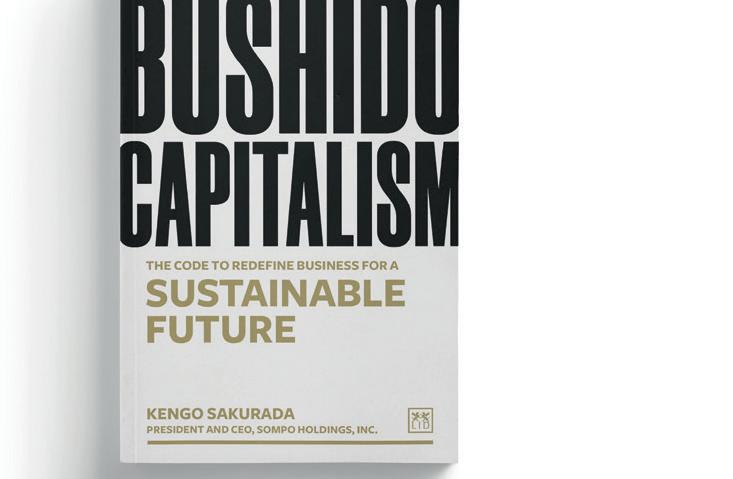


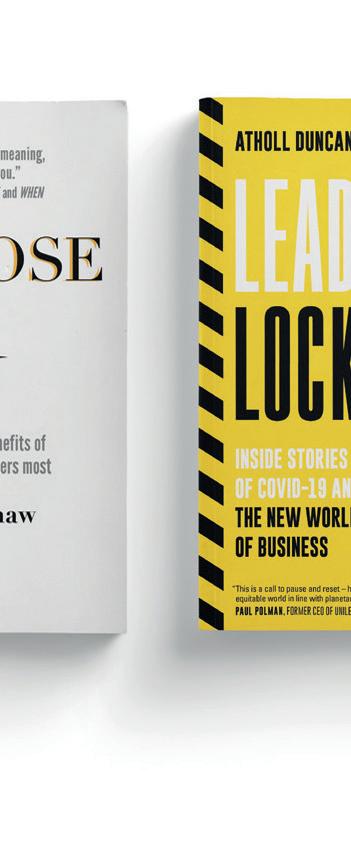














SHARING KNOWLEDGE







































































only a relatively small share of companies report capturing substantial financial value from their AI deployments. The algorithms work. The models perform. Tech capabilities improve. But somewhere between technological success and organizational impact, the expected value often fails to materialize.
Studies from MIT Sloan Management Review and Boston Consulting Group point to a similar challenge: while many organizations experiment with AI, only a small proportion succeed in scaling it to deliver meaningful business impact. Leaders find themselves asking a persistent question: why does so much promise produce so little visible value? The answer may lie not in the technology itself but in the way organizations define value.
The hidden complexity of AI value
When leaders discuss artificial intelligence, the conversation typically begins with purpose: Why are we investing in AI? Why does this initiative matter now? Why will it improve our competitive position?
Start with who
For successful AI adoption, leaders need to focus on a consideration all too often viewed as secondary
Writing Edosa Odaro
Artificial intelligence now sits at the center of many corporate strategies. Boards expect it to unlock productivity, improve customer experience and create new sources of growth. Organizations are investing heavily in data platforms, machine learning models and generative AI tools in the hope of gaining competitive advantage. Yet despite impressive technological progress, many AI initiatives struggle to produce the value leaders expect. McKinsey’s The State of AI report consistently finds that while AI adoption has accelerated across industries,
AI reshapes outcomes across multiple stakeholders simultaneously
This way of thinking reflects a widely adopted leadership principle – begin with purpose before defining action. In many situations, this works well. A clear sense of purpose can align teams, inspire commitment and guide strategic choices. AI, however, introduces a complication that traditional leadership models rarely address.
AI systems rarely a ect only one group. Unlike many traditional technology investments, AI reshapes outcomes across multiple stakeholders simultaneously. A single AI initiative may a ect employees, customers, shareholders, regulators and society at large. When this happens, value is not simply created. It is redistributed.
Consider a few familiar examples. A customer service chatbot may allow an organization to respond to queries more quickly, creating value through speed and e ciency – but at the same time, reducing the role of human agents, reshaping employment and changing the nature of customer relationships. An automated pricing system may optimize revenue and improve margins for shareholders – yet customers may experience the resulting price adjustments very di erently. A predictive hiring system may allow organizations to screen candidates faster and identify useful patterns in recruitment data – but the criteria embedded within that system may also influence who gains access to opportunity.
In each case, the technology may perform exactly as intended, but the value created by the system will be experienced di erently depending on who is a ected. In that sense, AI does not only automate decisions. It also automates the priorities and assumptions embedded within those decisions.
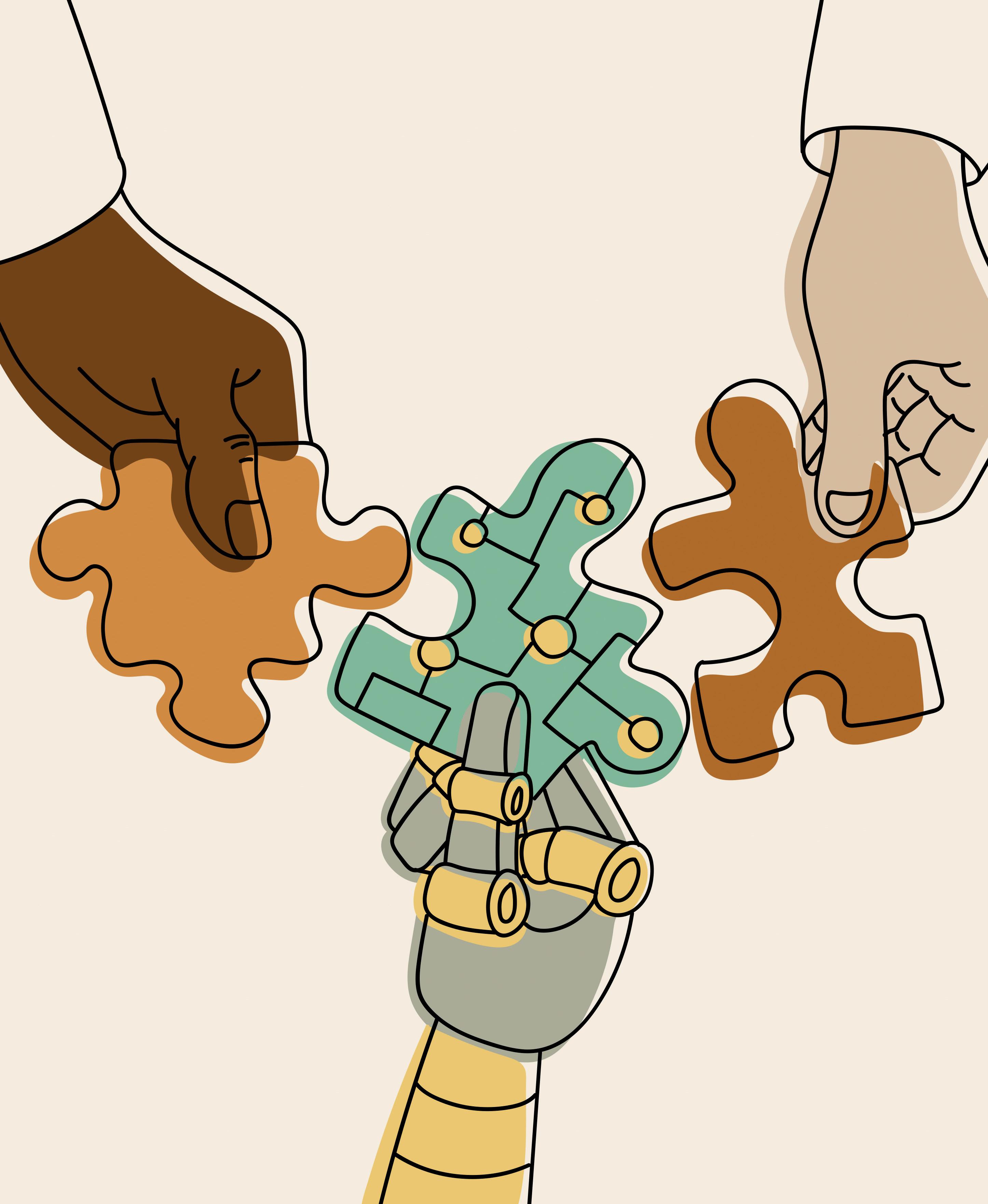
Why the value question becomes di cult
This multi-stakeholder reality creates a challenge that many organizations underestimate. Di erent groups often define value in very di erent ways. For executives, value may be measured through growth, productivity or market advantage. For employees, it may be linked to meaningful work, professional development or job security. For customers, it may involve fairness, trust and experience. For regulators and society, it may encompass accountability, transparency and safety. When AI systems are introduced, these perspectives can intersect in complex ways; an initiative that appears successful from one vantage point may create tensions from another.
Yet in practice, many organizations proceed as if value were a single, universally shared objective. AI strategies are often designed around capabilities, roadmaps and technical milestones without fully exploring how the resulting value will be distributed among stakeholders. This can create a subtle but powerful misalignment. Technical teams focus on model performance and scalability; business teams focus on operational outcomes; executive leadership focuses on strategic positioning. Meanwhile, the broader implications of the system remain implicit.
The result is not necessarily failure in the technical sense: the models may perform well and the infrastructure may operate e ectively. But the organization struggles to convert those capabilities into value that is clearly recognized, trusted and supported across stakeholders.
The question most AI strategies avoid
At the heart of this challenge lies a question that many AI strategies overlook. When artificial intelligence creates value, who benefits from that value? And equally important: who might bear the costs?
These questions are not always comfortable, because they reveal the trade-o s embedded in technological progress. AI systems often improve e ciency by automating tasks previously
While many organizations experiment with AI, only a small proportion succeed in scaling it to deliver meaningful impact
performed by people, increase predictive accuracy by analyzing patterns in historical data, and optimize decisions by prioritizing certain outcomes over others. Each of these design choices reflects a set of priorities. AI does not simply automate decisions: it scales the priorities embedded within them, and those priorities inevitably influence how value is distributed.
The important point is not that these tradeo s exist; trade-o s are inherent in every strategic decision. The problem arises when organizations fail to examine them consciously. When assumptions about value remain implicit, they become embedded within systems by default rather than by design. Once operationalized through algorithms and automated processes, these assumptions can shape outcomes at scale. By the time tensions become visible – through employee resistance, regulatory scrutiny or public concern – the system may already be deeply embedded in operations.
Why organizations avoid the question
There are understandable reasons why organizations hesitate to confront the distribution of value in their AI initiatives. The first is speed. AI has moved rapidly from experimental technology to strategic priority. The pace of adoption has accelerated dramatically; the Stanford AI Index reports sustained year-on-year growth in global AI investment and enterprise deployment across nearly every industry. Boards expect visible progress, competitors announce ambitious AI programs, and leaders feel pressure to demonstrate momentum. In such an environment, implementation often takes precedence over reflection.
The second reason lies in organizational structure. AI initiatives frequently originate within technical or data teams who naturally focus on model performance, data quality and system scalability. While these are essential considerations, they do not always capture the broader organizational consequences of the systems being developed.
THE BRIEFING
How AI redistributes value
Arti cial intelligence does not simply create value; it redistributes it. An AI initiative can a ect shareholders, employees, customer relationships in di erent ways, yet most AI strategies are designed as if value were a single, shared objective. Trade-o s remain implicit, becoming embedded in AI systems by default rather than by design – leading to problems down the line.
Ask who, not why
When it comes to AI, forget the usual advice to start with ‘why,’ and begin with ‘who’. Before de ning the purpose of an AI system, consider who it would a ect: who stands to bene t, and who might bear the costs? Then, focus on values alignment, on surfacing trade-o s, and implementing cross-stakeholder governance.




The third reason is accountability. Questions about who benefits and who might lose from AI often cross organizational boundaries, and no single department fully owns these outcomes. As a result, the broader implications of AI systems can remain unexamined.










This is not necessarily the result of poor leadership – in many cases, it reflects the complexity of the systems themselves. Artificial intelligence introduces subtle shifts in how decisions are made, how work is organized and how value is distributed. But avoiding these questions carries its own risks. When trade-o s are not examined explicitly, they tend to surface later, when the costs of putting things right may be much higher. Addressing these questions early on allows leaders to shape AI initiatives deliberately rather than reacting to consequences after they appear.

A di erent starting point
When it comes to AI, leaders should not start with purpose – asking why a system should exist – but with an understanding of who it would a ect. The priorities: who, what, and then why.
1
Start with who Begin with stakeholders. Who benefits from the value the system creates? Who might bear the cost of that value? Whose interests must be safeguarded? Understanding these stakeholder dynamics reveals the broader context in which the system will operate and makes it possible to define the system’s purpose in a meaningful way, rather than in the abstract.
2
De ne what Once the stakeholder landscape is clear, the ‘what’ will be clearer. What capability should the AI system deliver? What decisions will it influence? What outcomes should it improve? These questions can now be answered with the stakeholder context in mind, rather than in isolation from it.
3 Clarify why Only after these questions are addressed does the final question, the why, emerge. Why does this initiative matter strategically? Why is it important for the organization’s long-term direction?
This sequence does not diminish the importance of purpose. Instead, it recognizes that in the context of AI, purpose cannot be defined meaningfully without first considering the stakeholders involved.
Leadership responsibility
Because AI intelligence redistributes value
When it comes to AI, leaders should not start with purpose, but with an understanding of who it would a ect
Edosa Odaro is an AI and data transformation leader and author of The Values of Artificial Intelligence: How Smart Leaders Capture and Connect AI Value to Human Values (Auerbach Publications)



across stakeholders, AI strategy is fundamentally a leadership responsibility. Technology teams can build powerful systems, data scientists can develop accurate models and engineers can scale infrastructure – but determining how these capabilities translate into value requires leadership judgment. Three responsibilities are particularly important.


Value alignment Leaders must ensure that AI initiatives connect clearly to the outcomes the organization seeks to achieve, translating technical capabilities into language that resonates across business units, operational teams and executive leadership.


Trade-o visibility Every AI system reflects priorities embedded in its design. Leaders must make those priorities explicit: who benefits from the system, who might experience unintended consequences, what safeguards are necessary to maintain trust. Making these considerations visible does not slow innovation; it strengthens the foundation on which innovation occurs.
Cross-stakeholder governance Because AI initiatives influence multiple groups simultaneously, they require oversight that extends beyond any single department. E ective governance brings together technical expertise, business leadership and broader stakeholder perspectives.
When these three elements are aligned, AI becomes more than a technological capability –it becomes a coordinated e ort to create value that is both economically meaningful and socially sustainable.
From technology strategy to value strategy
Artificial intelligence will undoubtedly reshape many industries in the years ahead. But the organizations that succeed will not necessarily be those with the most advanced models or the largest data platforms.
They will be the ones that recognize a simple truth: AI does not only create value. It redistributes it. Leaders who acknowledge this reality early can design systems that align value across stakeholders rather than allowing unintended consequences to emerge later.
In doing so, they move the conversation beyond technology. AI becomes not just a tool for automation, but a strategic instrument for shaping how value is created, shared and sustained. And that process begins with a question that many AI strategies still avoid: not simply why an AI system should exist, but who it is truly designed to serve.





“The bible for the life-centred economy.”
STEVEN D’SOUZA
Senior Partner, Korn Ferry, and author of the award-winning Not Knowing
“The future of work requires us to break free from preconceived notions of how organizations are shaped and managed. Paul’s insights spur us to think about organizations as living organisms, providing a fresh perspective and roadmap to create thriving, sustainable organizations.”
MARY CIANNI
Clinical Associate Professor of Organizational Consulting, New York University
“Just as artifcial intelligence threatens to further dehumanize organizations, Alive is an urgent reminder that businesses thrive when they are built around motivated and engaged people. I love the analogy to a living organism –in an era of digital transformation, it brings back into focus the need for humanity at the heart of our organizations.”
STEPHEN GRAHAM
Executive Vice President and General Manager, Hexagon


Reading between the numbers
Financial metrics are only ever part of the real story of a company’s value
Financial acumen is often mistaken for the ability to recall formulas, ratios and technical definitions. In reality, it is far less about memorization and far more about interpretation. Numbers in finance are not answers in themselves: they are signals shaped by context, behavior and expectation. The true skill lies in understanding what those numbers are trying to say and – just as importantly –what they are not.
Take the price-to-earnings (P/E) ratio, one of the most widely cited metrics in investing. It appears straightforward: simply divide a company’s share price by its earnings per share. Yet this is deceptive. The P/E ratio is not a static measure of value; it is a dynamic reflection of two fundamentally di erent forces. Earnings represent the company’s actual performance, its profitability, e ciency and operational strength. The price reflects the market’s perception, its expectations, optimism, fears and, sometimes, irrational sentiment.
This dual nature is critical. Executives and investors who focus only on earnings are only seeing half the picture, when the price component introduces a collective judgment about the future. A high P/E ratio often signals that the market expects strong growth ahead, while a low P/E ratio may reflect skepticism about the company’s prospects. Consider a technology firm with a P/E ratio of 30. In isolation, this might seem high. Yet is it overpriced? If the market expects rapid earnings growth due to innovation or expansion into new markets, the
premium is understandable. A mature utility company with a P/E of 10 may look cheaper – but this likely reflects limited growth potential. Interpretation is essential.
This brings us to the second critical dimension of financial interpretation: relativity. Financial metrics mean little in isolation. A company’s P/E ratio must be assessed within the context of its industry and market conditions. Comparing a retailer with a pharmaceutical firm is not merely unhelpful, it can lead to
A company’s P/E ratio must be assessed within the context of its industry and market conditions

fundamentally flawed conclusions. But within a given industry, relativity is a powerful analytical tool. Say the average P/E in a sector is 20 and a given company trades at 12. It is undervalued? Or is the market pricing in hidden risks, such as declining market share, regulatory challenges or weak management?
An energy company with a low P/E ratio might appear attractive, but perhaps it faces regulatory uncertainty or declining demand. A rival with a higher P/E might be benefiting from operating in a region with more favorable policy frameworks, or from superior operational e ciency. The di erence is not just in the numbers – it is in the narrative behind them.
Financial acumen therefore requires a shift in mindset. Instead of asking, “What is the P/E ratio?” ask, “Why is the P/E ratio what it is?” This question opens the door to deeper analysis through exploration of expectations, risks and competitive positioning. Think of financial metrics as a language rather than a formula. Just as words derive meaning from context, tone and intent, financial numbers gain significance from the environment in which they exist. A single ratio, taken out of context, is like a sentence fragment: it may be technically correct but incomplete in meaning.
This interpretive approach also highlights the need for skepticism. Markets are not perfectly rational – prices can deviate from underlying fundamentals. A high P/E ratio might signal over-optimism; a low one, undue pessimism. The role of the financially astute individual is not to accept these signals at face value, but to interrogate them.
Financial acumen is less about calculation and more about judgment. It is the ability to connect numbers with narratives, to balance quantitative data with qualitative insight, and to recognize that every figure represents a blend of reality and expectation. Those who master this interpretive skill do not simply read financial statements, they read between the lines.
Joseph DiVanna is managing director of Maris Strategies and a Duke CE educator
JOSEPH DIVANNA ON FINANCE
transforming resource management and maritime security; satellite data also enables early warnings about environmental changes. For nations facing severe climate threats, space capability is essential for survival.
The space economy
Investment is going extraterrestrial as orbital technology advances
Writing Terence Tse
On June 12 2026, SpaceX completed the largest Initial Public O ering (IPO) in history, almost overtaking Amazon among the world’s most valuable public companies. The ripple e ects reached well beyond one company: the debut reframed the entire space sector as an investable theme, and a cohort of space shares rallied in its wake. Some commentators considered it an inflection point for the space industry. For many investors, it was their first real exposure to the space economy after years that have been focused on all things AI. But what exactly is the space sector and why are investors now paying attention?
Beyond rockets and billionaires
Many associate space with astronauts, rocket launches, billionaire tourism or settlements on Mars. Yet today’s space industry extends far beyond these activities and is considerably more relevant to our daily lives. Note some of the technologies that have already emerged from space research, such as smartphone cameras, insulation and memory foam. In fact, the true value of the space economy lies in addressing our global challenges here on Earth. Satellite networks monitor deforestation and track illegal fishing with unprecedented accuracy,
The true value of the space economy lies in addressing our global challenges here on Earth
Another emerging area is pharmaceutical R&D in low Earth orbit, where microgravity –that is, near-zero gravity – allows more precise studies of biological molecules and processes. This can accelerate drug discovery beyond what is possible in terrestrial laboratories. Currently, at least 10 companies are engaged in microgravity pharmaceutical R&D. Leaps are being made forward on autonomous manufacturing of medicines in space, too: weightlessness can enable certain production methods impossible under normal gravity.
A range of other products has also been produced in microgravity environments, including artificial retinas, high-performance optical fiber, high-purity crystals, and industrial and aerospace materials. These are not speculative enterprises – they are functioning businesses with demonstrated outcomes.
In many cases, the modern space economy is powered by AI. Satellite imagery analysis, supporting applications from precision agriculture to insurance underwriting, relies on machine learning algorithms to process petabytes of Earth observation data. Performing inferences in orbital data centers means much lower latency than sending satellite data to earth stations. Companies developing AI tools for space data are building advantages that pure AI firms cannot easily replicate.
Capital in the space century
Understanding where AI and space sit on their respective maturity curves is crucial for investment timing. AI is likely near its peak: while some companies will undoubtedly deliver transformative returns, history suggests that periods of extreme optimism often precede significant corrections.
The space sector, on the other hand, has already gone through its correction. The Special Purpose Acquisition Company (SPAC) boom of 2020-2021 brought many space companies, such as Rocket Lab and Planet Labs, to public markets at high valuations. Many subsequently dropped – some by 70% or more. Undoubtedly, many space economy companies are still on the upward slope heading to the peak of inflated expectations of the Gartner hype cycle. Yet these business are often far more robustly grounded in real science than the many AI companies that o er only vague applications.
As a result, new forms of capital have been steadily flowing into the sector. Historically, space exploration was the exclusive preserve of

government agencies supported by vast public funding. That model still prevails in many countries, but in others budgetary restraint and emerging commercial opportunities have seen private investment take the lead. Elon Musk and Je Bezos opened private funding pathways that reshaped the landscape. Now, venture capital is accelerating innovation. For example, Seraphim VC, a leading investor in the field, grew its assets under management by about 23% from 2024-2025. Export credit agencies are also now involved in the market, covering political and sovereign risks with government guarantees and direct loans, allowing banks to participate in orbital infrastructure projects that they would otherwise deem too risky. Intriguingly, the new space economy may be relatively insulated from broader economic cycles. One recent study found the space sector is uncorrelated with major market indices; another identified a marginally negative correlation with broader equity markets. Low correlation in a portfolio means that assets don’t move in tandem: when one declines, others may hold steady or rise, o -setting losses. These studies suggest the space sector will prove particularly attractive for investors seeking diversification to balance high concentrations in technology stocks.
Elon Musk and Je Bezos opened private funding pathways that reshaped the landscape
Looking ahead, looking up
One of the most useful ways to think about space investment is as infrastructure. In the 19th century, railways created enormous wealth for early investors and transformed global business. In the 20th century it was telecommunications. Today, Starlink and its competitors are building orbital broadband networks that will connect billions of people currently underserved by terrestrial infrastructure. Earth observation satellites are becoming the backbone of vital monitoring systems. In future, we might find that space data centers, leveraging the natural cooling of space and proximity to solar power, represent a new infrastructure category. As with previous infrastructure revolutions, the firms that build and operate these networks may generate returns for decades.
Terence Tse is professor of finance at Hult International Business School, and co-founder of the AI Native Foundation
The space economy promises a combination of enhanced opportunities and strong social benefits. Space has evolved from a speculative frontier into critical infrastructure. As orbital capabilities become foundational to global commerce, security and climate resilience, early positioning in this sector may o er asymmetric upside. The space economy is on its way to becoming mainstream, and many investors are finding it is a good time to look to the skies.
HOW BRANDS CAN SAVE THE WORLD








“ We know that brands change behaviour. We know that if the world is to have any kind of a sustainable future, our behaviour must change. This book shows how sustainable, regenerative brands can be that future. So this might be about the most important book this decade about human behaviour and how to change the world.”
JONATHAN CHENEVIX-TRENCH
be about the most important book this Morgan Co-owner, Madresfeld Court and



Former Chairman, Morgan Stanley, Co-owner, Madresfeld Court and Co-founder, Mad About Land



“Brands and branding are concepts that everyone seems to know about today, but the diference between brands as veneer and brands we can believe in has never been more stark or more important. Bob’s book gives valuable guidance on how to build brands that will succeed and last.”
SIMON MOTTRAM

“Brands and branding are concepts that but the diference between brands brands







Founder, Rapha Performance Roadwear
Founder, Rapha Performance Roadwear







“Sheard is a marketing savant who mutually benefcial relationship brands action for global unity to protect our
“Sheard is a marketing savant who channels his expertise by exploring the mutually benefcial relationship brands must embrace to ensure their legacies. His passion for this union is a call to action for global unity to protect our one shared gift.”
PHYLICIA FANT
Global Head of Music, Amazon






You say you want a revolution
AI is poised to usher in the fourth era of branding
We have entered the fourth Industrial Revolution. The first saw a shift from a rural to an urban economy and the adoption of machine-led production. The second saw the move to mass production and assembly lines; the third was digital. Today, we are entering the age of artificial intelligence.
Branding emerged from the second Industrial Revolution. Since then, it has had its own four eras. The original era was the birth of the age of products, epitomized by Coca-Cola, Marlboro and Ford. In the second era, service brands came to the fore, including financial services, transport and utility brands. The technologies that drove the digital revolution were mirrored by the growth of digital brands, which shaped the third era of branding. The leading brands here make for a familiar list: they include companies such as Amazon, eBay and Microsoft. Such companies rapidly became the world’s most valuable brands.
Today, the emergence of AI is ushering in another era in marketing. We are entering a new age of branding, characterized by empathy and intelligence. It may prove to be a genuine revolution. One of the biggest implications is likely to be better and deeper personalization. AI’s capacity to analyze huge amounts of data on individuals will allow the creation of much more tailored experiences. Amazon’s recommendations for other products based on your shopping history, and Netflix’s suggestion of content based on past viewing habits, could quickly seem basic and out of date. If branding becomes more personal and less social, our fundamental ideas about what branding is are likely to be rewritten, especially if a new type of mass production emerges.
At a practical level, AI’s ability to handle repetitive tasks at scale will mean that time and resources can be freed up, allowing marketers to focus on more creative and strategic work.
We are entering a new era of branding, characterized by empathy and intelligence
Automation is already commonplace for scheduling social media posts, responding to customer emails and analyzing feedback. Yet there is a negative side: it may result in less work and fewer jobs.
Creative content work is unlikely to shift back entirely to humans, as AI already generates marketing copy, blog posts, images and video content, and can speedily create logos, color palettes and visual identities that adapt to di erent platforms. AI can also power AR tools that are creating immersive experiences for customers in retail, events, tourism and education. It is moving heavily into market research: AI tools can assess attitudes towards brands, analyzing consumer feedback and reviews, as well as social media mentions of a brand. And it is increasingly used in company chatbots: when customers interact with a brand, their experiences are already commonly being shaped by AI, not by other humans.
Given the speed of developments in AI, perhaps the biggest outstanding question is whether AI’s role in tactical marketing operations will evolve. Will AI become a strategic partner, not just an acceleration tool? Will it move beyond data analytics, lower-level applications and recommendation systems, into actively participating in high-level planning and decision-making?
The AI industrial revolution is only just getting under way. AI’s impact on marketing and branding could be profound – and the brands that best understand its possibilities will likely be the ones that shape the new era.
Giles
Lury is an independent brand consultant and writer

When aspiration backfires
The explanation lies in what a luxury feed actually shows. Scroll through one and you see a stream of perfect homes, designer wardrobes, first-class travel and e ortless beauty – a life most followers cannot match. Seeing it again and again invites an unflattering comparison between their life and the one on screen. Psychologists call that gap a self-discrepancy, and the wider it grows, the more inadequate people tend to feel.
The dark side of the ‘like’
The race for clicks and shares risks undermining customer wellbeing. It’s time for a more responsible approach to social media engagement
Writing Ra aele Filieri
Engagement is the metric every marketer is taught to chase. Likes, comments, shares and follows are read as proof that a brand has captured attention, built a nity and created a relationship worth having. The logic is seductive: the more customers interact, the stronger the bond, loyalty and love.
However, a new study* on customer engagement on social media, which I led with a team of European colleagues, suggests that this logic is dangerously incomplete. Focusing on luxury houses, whose Instagram and TikTok feeds attract some of the highest engagement rates of any sector, we found that engagement can come at a cost.
In a study of more than 1,000 UK luxurybrand customers, we found that engaging with luxury brands on social media quietly erodes customers’ self-esteem, inflames their materialism and deepens a compulsive pull back to their screens. Each of these e ects, in turn, pushes people toward impulsive, unplanned purchases. The very behavior brands celebrate may be undermining the wellbeing of the customers they depend on most.
The very behavior brands celebrate may be undermining the wellbeing of the customers they depend on most
Our study demonstrated how that discomfort takes shape. The more customers engaged with luxury brands on social media, the lower their self-esteem fell, the more materialistic they became, and the more compulsively they used the platforms to make impulse buys. Engagement with brands’ social media content did not simply accompany these states; it helped drive them.
Customers who were low in self-esteem made purchases to lift their mood. Those high in materialism bought to close the gap between their lifestyles and the lifestyles they desired. The more addicted they were to scrolling, the closer they were to their next purchase. Materialism proved the strongest driver of impulsive spending, followed by addiction and then self-esteem.
Our findings suggest a cycle that is hard to break. Engagement makes customers more aware of the gap between their real selves and their ideal selves. That gap pushes them to buy. But buying only eases that discomfort briefly, and the feeling returns – as does the pull of the feed. The cycle begins again.
A gender twist
One of the more striking findings challenges a longheld assumption: that women are more exposed to the emotional pressures of status consumption, while men are more rational shoppers. In our study, the pattern looked di erent.
Among the men in the sample, low self-esteem and high materialism both significantly predicted impulsive buying. Among the women, neither did. For men, particularly younger ones, luxury engagement appears to activate status anxiety and pressure to display material success, making wounded self-esteem and material values direct triggers for unplanned spending. The men were, in e ect, buying their way out of feeling inadequate.
This matters for any brand that segments audiences or designs campaigns on the assumption that the psychological risks of aspirational marketing primarily a ect women. The evidence suggests that young male customers are now a highly exposed group – one that most brands are not watching closely enough.
Why this matters for brands
There is a clear reputational risk here. Brands

that build customer loyalty by quietly amplifying inadequacy will be left exposed the moment that the mechanism becomes visible. Regulators are becoming increasingly focused on influencer marketing and digital wellbeing, and a gap between a brand’s stated values and its actual e ect on customers poses a real reputational liability.
There is also the question of what happens after the purchase. Impulse buying is often followed by regret or guilt. A customer base built around moodrepair spending is likely to be more fragile – and more prone to buyer’s remorse – than one built on considered, confident purchases. Short-term conversion can disguise a slower erosion of trust.
Finally, there is the question of talent and legitimacy. Younger consumers and employees increasingly expect brands to act responsibly. A marketing model that relies on making people feel worse sits awkwardly with the ethical positioning that many brands now claim.
Three principles for responsible engagement
The answer is not to retreat from social media; engagement can still build genuine loyalty. The challenge is to pursue it with greater care, via three principles. First, shift the message away from pure status. Content that emphasizes craftsmanship,
A gap between a brand’s stated values and its actual e ect on customers poses a real reputational liability
quality, longevity and meaning closes the aspiration gap rather than widening it, and tends to produce more confident, less regretful buyers.
Second, identify and protect vulnerable segments. If self-esteem and materialism are driving impulsive spending among younger male followers, that group deserves greater care, not more triggers.
Third, invest in digital wellbeing – and do so visibly. Usage prompts, healthier content design and partnerships with mental health organizations are no longer fringe gestures. They di erentiate a brand as responsible and can deepen loyalty precisely because they signal that the brand values its customers beyond their wallets.
Ultimately, brands must ask themselves what kind of engagement they are really creating. If online interaction strengthens a relationship while making customers feel worse about themselves, something is wrong. The answer is not to abandon engagement, but to build it more responsibly – in ways that leave customers feeling better, not worse.
Dr Ra aele Filieri is professor of digital marketing at Audencia Business School
* Bazi, S, Filieri, R and Gorton, M (2026) ‘The dark side of customer engagement on social media: e ects on self-esteem, materialism, technology addiction, and impulsive buying’, Internet Research
is that as both consumers and employees, we no longer believe the big stories organizations tell us until we see proof – and the only proof that matters is personal stories from people like us.
The good news is that people still believe in truth, still respond to authenticity and still want to be part of something larger than themselves. The problem isn’t that they don’t want to believe. It’s that most organizations are not believable, because they show up di erently in di erent places. What’s needed instead is to build the accumulated weight of real stories that prove the same truth, over and over, in di erent contexts.
The problem with one story
Selling the truth
Grand narratives don’t build belief – only the accumulated weight of authentic personal stories
Writing Bryan Adams
Most organizations spend months finding their one big story, craft the perfect mission statement, brief the leadership team, and then wait for belief to follow. But it doesn’t. Working with global companies like Nike and Apple, I’ve learned that belief doesn’t come from one grand narrative. It comes from the accumulation of personal stories that prove the philosophy is real. It’s not simply your story about why you exist. It’s the 10, 50 or 100 smaller stories that show what your philosophy looks like when people live it authentically.
One Nike athlete’s story about a moment of impact isn’t enough. But when hundreds of athletes tell versions of that same truth playing out in completely di erent contexts – di erent sports, di erent continents, di erent challenges – that’s when belief takes hold. That’s when it becomes relevant and real.
We live in a cynical moment. We’re exhausted by polished marketing and corporate spin. We’ve heard so many grand narratives that don’t match what actually happens on the ground. The result
The problem isn’t that people don’t want to believe. It’s
that most organizations are not believable
One story can’t carry the weight of belief across an entire organization. You need a minimum of three types of story, all working together.
Your reputation story is what people hear about you before they ever interact with you
Your expectation story is what you promise during hiring or onboarding
Your experience story is what people actually live once inside the organization
Unfortunately, most organizations think about these three stories in silos, with the result that they are all completely di erent. If your reputation says you’re innovative and bold, and your expectation promises autonomy and impact, but your experience is bureaucratic and risk-averse, then people notice. Belief collapses. The organizations that win aren’t those with the best individual story in any one layer. They’re the ones where all three layers tell the same truth – authentically, reinforcing each other. That’s when belief has the best chance of taking hold.
The companies that understand this shift are already pulling ahead on talent, retention and culture. They’re not trying to convince people with one big story – they’re building belief through the authentic stories their own people are already living and sharing. The story starts with your company, but until a micro version of the same idea comes out of the mouths of your people, it’s not believable.
How belief builds
When I analyzed the organizations where culture stuck – where belief was genuine, where people made decisions aligned with the philosophy without needing constant supervision – I found the same pattern every time. The philosophy showed up authentically across all three layers. What people heard about the company before

they joined matched what they were promised during hiring, which matched what they actually experienced once inside.
Imagine that a new hire sees a decision the CEO made that no one else saw. It aligned with the philosophy they heard about and were promised; they’ve now experienced it firsthand. That person becomes a believer. They tell the story to someone else, who also becomes a believer. The philosophy cascades through the organization: not because leadership announced it, but because people witnessed it as true across all three layers.
This is what I call the Truth Cascade. The organizations that win at culture are deliberately building these stories, not waiting for them to happen by accident. They are teaching leaders how to recognize when truth is being lived authentically, and creating systems to amplify those stories so they cascade through the organization. This is where competitive advantage is waiting to be leveraged.
The work ahead
Organizations that learn to sell truth systematically,
The philosophy cascades through the organization not because leadership announced it, but because people witnessed it as true
through the cascading personal stories that prove their philosophy, are building competitive advantages that can’t be easily replicated. They’re attracting talent that already believes in the organization and retaining people longer. They’re moving faster because alignment is genuine, not mandated.
The question for senior leaders right now isn’t “What’s our best story?” It’s “What’s the system we’re building to encourage, capture and amplify the true stories our people are already living?”
Bryan Adams is founder and CEO of Happydance, and author of Sell The Truth (LID Publishing)
The Truth Cascade is the di erence between organizations where people choose to stay and organizations where they’re just passing through. Your philosophy is already real. Its stories are likely already being lived. The question is whether you have the discipline to recognize them, capture them, and let them cascade through everything you do. With an intentionally designed culture, you can consistently inspire the belief needed to cultivate the capability required to win. Your truth could become your competitive advantage, as soon as you recognize how to leverage it.
Image Mike Lewis / Unsplash
Uncovering your authentic identity
Over the past three decades working in international marketing, executive coaching and leadership development, I have observed a recurring challenge among talented professionals. Many know how to manage businesses, lead teams and deliver results, yet struggle to articulate what truly distinguishes them as leaders. This observation became the foundation of the iBrand Method, a six-step framework designed to help individuals uncover their authentic identity and transform it into meaningful influence.
1
Beyond reputation
Modern leaders need a personal brand built from within
Writing Daria Dmitrieva
In today’s business environment, leaders are more visible than ever. Employees, customers, investors and partners no longer evaluate organizations solely by their products, services or financial performance. Increasingly, they look to the individuals behind the organization – the leaders whose decisions shape culture, whose values influence strategy, and whose behavior ultimately determines whether trust is built or lost.
As a result, personal branding has become an essential leadership capability. Yet it is often misunderstood. For many executives, the term still evokes images of self-promotion and social media visibility. In reality, the most powerful personal brands are not created through exposure alone. They emerge from within, through the development of a deep understanding of who we are, what we stand for, and how we create value for others.
The most in uential leaders are not necessarily the loudest voices in the room
Honestly audit your resources Most leaders think immediately about qualifications, networks and professional achievements. Yet the most valuable resources are often internal: strengths, values, experiences, resilience and emotional intelligence. Technical expertise alone rarely creates di erentiation. What makes a leader memorable is the unique combination of experiences and perspectives they bring to challenges. Before asking how others see you, ask yourself: who am I when I’m at my best? What strengths and experiences have shaped the leader I am today?
2 De ne meaningful goals Many professionals spend years pursuing objectives inherited from their organizations, industries or societal expectations, without asking whether they align with their own aspirations. A compelling personal brand requires more than ambition; it requires purpose. Leaders who understand the impact they want to create communicate with greater clarity and conviction. The essential questions are: what contribution do I want to make? What impact do I want my work to have? What legacy do I hope to leave behind?
3 Understand your environment and clarify what makes you di erent Just as organizations conduct market analysis before launching products, leaders must understand stakeholder expectations, industry trends and emerging opportunities. At the same time, they must identify their unique contribution. In a world where knowledge is increasingly accessible, di erentiation comes less from expertise and more from perspective, values and the distinctive way a person solves problems. The critical question becomes: what makes me uniquely valuable?
4
Communicate strategically Many highly capable professionals remain invisible because they assume their work will speak for itself. While excellence is essential, visibility often determines whether opportunities arise. Strategic

communication is not about self-promotion; it is about consistently sharing ideas and insights that create value for others. Over time, familiarity creates trust, and trust creates influence. Leaders should ask: what do I want to be known for? What conversations do I want to lead?
5 Build relationships and create value At its core, personal branding is not about attracting attention; it is about serving others. The strongest leaders build trust by listening, supporting, mentoring and helping others succeed. Networking is therefore not the accumulation of contacts, but the cultivation of meaningful relationships. People rarely remember every detail of a conversation, but they remember how someone made them feel. A useful reflection is: how do people feel after interacting with me – more confident, more inspired, more capable?
6
Monetize your expertise and expand your impact While monetization is often associated with financial return, its deeper meaning is the creation of sustainable value. Many professionals underestimate the breadth of their knowledge and the potential applications of their experience. This is where the Japanese concept of ikigai becomes valuable – the intersection between what you love, what you are good at, what the world needs, and what people are willing to pay for.
In uence does not come from visibility alone, but from credibility, authenticity and trust
When leaders align these dimensions, they often discover opportunities to create greater impact while experiencing greater fulfillment. The final question is simple yet powerful: am I fully using my potential?
The future is personal
Ultimately, the future of leadership is personal. In an age of transparency, stakeholders want more than competence; they expect authenticity too. Employees want leaders they can trust. Customers want organizations with genuine values. Investors increasingly recognize that leadership and culture are powerful drivers of long-term success.
The most influential leaders are not necessarily the loudest voices in the room. They are the individuals who have taken the time to understand themselves deeply, articulate their purpose clearly, and align their actions consistently with their values. Their influence does not come from visibility alone, but from credibility, authenticity and trust.
Daria Dmitrieva is a branding expert and author of The Personal Branding Book: Transform Your Identity and Unleash Your Potential (LID Publishing)
A personal brand is not a logo, a social media strategy or a carefully managed image. It is the visible expression of an authentic identity – the bridge between inner truth and external impact. In this sense, personal branding is not about becoming someone else. It is about becoming more fully yourself and using that authenticity to create value for others. That is where meaningful leadership begins.

WHY TIME MANAGEMENT IS CRUCIAL FOR ANY COMPANY’S SUCCESS


“The book provides a classic methodology that extends from personal time management to leveraging time management as a tool for corporate strategic management…In the opening passage of the book, Guo writes that ‘Resources are limited, while human desires and needs are infinite.’ It is a fact too easily forgotten. The role of business leaders is to find ways to meet demand with a finite supply of this most precious resource. The Power of Time is a great place to start.”

PATRICK WOODMAN Editor of Dialogue leadership magazine

“Time is the scarcest resource for everyone. Guo Wei is an expert in time management, and his book can inspire courage and strength on the battlefield of time, helping you achieve more. It is also an excellent and practical guide for both personal and corporate time management, especially for entrepreneurs… The Power of Time not only helps individuals achieve excellence in the race against time but also provides significant opportunities for business growth.”
MICHAEL YU
Founder and Chairman, New Oriental Education & Technology
Group


Boom, bust or a golden age?
History suggests an AI financing crash is on the cards. But at what scale – and what comes after?
The Bank for International Settlements – the central banks’ central bank – has put an AI bust at the top of its list of threats to the global financial system, naming the unwinding of “circular” AI deals alongside inflation and sovereign debt. There is roughly $1.8 trillion in opaque, often o -balance-sheet financing woven through the AI build-out. Chipmakers have stakes in the labs buying their chips, infrastructure is leased back on contracts with hidden exit clauses, government money is involved, the same collateral is quietly pledged more than once.
History is instructive. Every technological revolution – railroads, electricity, fiber, the dot-coms – has paired game-changing technology with a bubbly financing cycle. The tech survives even as its financiers go bust. We now know with a high degree of confidence that AI will create an inflection point; a moment when order-of-magnitude change takes place. That makes point predictions useless. Instead, consider the robustness of your strategy against multiple possible futures.
There are two questions we cannot yet answer. The first is whether AI’s economic payo arrives roughly on the promised schedule. The capital being committed assumes a steep productivity curve, yet a recent NBER study found a large majority of firms report little measurable impact on output so far. The second is the question the systemic-risk analysts are circling. When the financing unwinds, does the damage stay largely contained inside the technology sector, creating a sharp but bounded repricing, as in 2000? Or does
leverage, private credit and rehypothecated collateral create a wider crash, as in 2008?
Cross the two questions and four distinct futures appear. In The Productive Shakeout, the froth burns o and overleveraged players fail, but the technology and its strongest operators endure, with the wider economy collecting the dividend. The Long Hangover is quieter and slower: no Lehman moment but the gains don’t arrive on schedule, valuations deflate over years, data centers are left half-empty and a tech recession lands.
Every technological revolution has paired gamechanging technology with a bubbly nancing cycle

Governments might decide AI should be managed like critical infrastructure, running data centers like public utilities.
The third scenario is Crisis, Then Cornucopia. The financial sca olding cracks, credit freezes and a real recession follows – yielding, in the long run, to societally beneficial results. The Reckoning is its nightmare twin: no productivity gains and full systemic contagion, like an AI-flavored 2008 with nothing to cushion the fall. Emergency responses from policymakers would be required – or societal disaster would unfold.
In all scenarios, the big question is whether we emerge with an AI deployment boom. This is Carlota Perez’s turning point in textbook form: a crash marking the transition between the installation frenzy and the golden age of deployment. The point is not to pick the scenario you believe in, but to find moves that pay o across several. Three things can be done now.
Separate the two bets The technology and financing questions are distinct. You can be convinced AI is durable and still refuse to wager your balance sheet on circular financing holding together.
Watch the edges, not the headlines Inflection points announce themselves at the fringes first. AI’s leading indicators are already visible. These numbers will move long before problems become obvious.
Stress-test your own place in the loop Are your unit economics quietly subsidized by below-cost compute that will one day reprice? Have you signed take-orpay commitments that turn into anchors the moment demand softens? Preserve optionality: in any scenario, it’s the firms that survive that get to buy the upside.
Seeing around this corner does not mean predicting which future will arrive. It means being solvent, and ready, for all four.
Rita Gunther McGrath is professor of management at Columbia Business School and a Duke CE educator
The age of Pandora
Leaders
can overcome tech paralysis by developing situational awareness and building an exponential governance mindset
Writing Andrea Bonime-Blanc

We are at the threshold of the Fifth Industrial Revolution – the Exponential Industrial Revolution. The rise of exponential technologies and the intensification and convergence of several multiyear megatrends is creating an inflection point in human history – and challenging organizational governance in ways unlike anything that has come before.
Exponential technologies can be seen emerging in multiple fields: materials, AI and data science, computing, autonomy, biotechnology, communications and energy. These technologies are intertwining, overlapping and a ecting each other in ways known and unknown, intentional and unintentional – giving rise to both potentially existential risks (autonomous weapons, bio-engineered toxins) and unprecedented opportunities (new cures to dreaded diseases, weather super-forecasting) at scale.
Leaders should neither cower nor despair. They should learn and embrace. Escaping polyrisk paralysis involves the disciplined adoption of two major practices: engaging in continuous 360º situational awareness and adopting an exponential governance mindset (EGM). Here’s how.
Adopting 360° situational awareness
Situational awareness is critical to understanding why we are here and what is going on around us. Looking around us – and yes, looking back – helps us to look forward more clearly. Consider the 2026–2027 Global ESGT Megatrends.
Grinding geopolitical tectonics Political and geopolitical ruptures are upending traditional expectations of leaders. Material geopolitical risks need to be integrated in enterprise risk management and risk governance reporting and implementation systems.
Eroding leadership trust and integrity Trust in all kinds of leaders worldwide is falling rapidly. Without it, organizations will lose their stakeholders. Leaders must integrate business conduct and trust risk into their assessments.
Surging exponential technologies The speed and scale of tech change is outpacing our ability to govern it, and without good governance, tech risks could become severe and material. Smart leaders are continuously educating themselves and their teams, scanning the tech risk and opportunity horizon.
Deepening socioecological polyrisk An increasingly warm planet, biodiversity loss and dire societal impacts are leading to planetary tipping points. Without climate governance at every level,
1 The exponential governance mindset
2 ETHOS Embedding responsible tech culture
3 IMPACT Integrating stakeholders into the tech loop
4 RESILIENCE Deploying polyrisk and polycrisis preparedness Five elements of the exponential governance mindset
5 FORESIGHT Unleashing a future-forward tech strategy
appropriate resource, talent and budget allocation, and performance incentives aligned with the tech governance vision.
2
Ethos: embedding a culture of tech responsibility Ethos is about leaders – the CEO and the board – creating the right structures and incentives to embed tech ethics, responsibility and accountability into organizational culture. It means understanding the ethical implications of the tech you create or use and providing performance incentives and safeguards (especially to sta ), including processes making it safe to speak up without fear of retaliation.
Source: Governing Pandora
business strategy becomes fraught. Companies that do not fold proper climate risk assessments into their climate risk footprint will not survive the climate polycrisis.
Competing models of capitalism Traditional market, state, stakeholder and regenerative forms of capitalism are giving way to new forms of centralized state capitalism and tech-turbocharged oligarchical and plutocratic capitalism. What was previously economically predictable is becoming much less so. Smart leaders understand the downsides of abandoning stakeholder capitalism and engaging in plutocratic and corrupt market practices.
Forging an exponential governance mindset
The EGM provides a way for leaders to address and embrace the complexity and promise of our times – what I call the Age of Pandora. Adopting an EGM is about engaging in a meaningful and bold pivot from a tired old governance and risk governance approach to one that embraces rapid and unrelenting change. It consists of five major pivots or shifts.
1 Leadership: turbocharging 360º tech governance
The first element is about creating fully integrated top-down, bottom-up and middle-out technology governance. Leaders and sta should be encouraged and incentivized to engage in a lifecycle approach to the responsible creation, deployment and sunsetting of tech. Organizations need to develop a tech governance philosophy encouraging 360o integration, with
The rise of exponential technologies is
creating
an in ection point in human history
3 Impact: integrating stakeholders into the tech loop Leaders need to know their key stakeholders and incorporate their needs, interests and expectations into the tech loop. This means understanding the downside impacts and risks of your technology on your stakeholders. Before you do anything with untested new tech, ask: do you understand who has a stake in it? Do you know what stakeholders’ expectations are once you release your tech into the wild? Have you ‘red teamed’ and otherwise tested your tech, and do you have plans and tools to address and prevent the downsides?
4
Resilience: deploying polyrisk and polycrisis preparedness Resilience is about understanding the organization’s risk and crisis context. Today’s polyrisk and polycrisis world requires an integrated resilience posture that includes robust enterprise risk management, crisis management, business continuity and continuous improvement practices.
5
Foresight: unleashing a future-forward tech strategy This is where polyopportunity comes into play. Every company is now a tech company; developing an e ective future-forward tech strategy means incorporating broad situational awareness, systems thinking, tech risk intelligence, tech-opportunity readiness and scenario planning. Leaders must emulate the mindset of someone like Jensen Huang 10 years ago, before he and Nvidia became the giants they are today.
Preparedness and futureproofing
Andrea BonimeBlanc is CEO and founder of GEC Risk Advisory and author of Governing Pandora (Georgetown University Press)
The purpose of adopting 360o situational awareness and the EGM is to reboot and repurpose how leaders understand context and do governance, culture, impact, resilience and foresight. These are concepts we understand and have worked with for years. We do not need to get rid of them. What we do need to do, urgently, is to make them fit for future purpose at the frontiers of exponential technology.
Baghai, Stephen Coley and David White. Growth may be found by improving processes, products and services; by expanding into new markets; or by innovating products and services to disrupt markets and rapidly gain market share.
Resilience and growth
The ability to anticipate disruption determines whether leaders fail, survive or thrive in tumultuous times
Writing Ron Robinson
Leaders need an enhanced business model to bring their organizations together and navigate today’s fast-evolving ecosystems.
There are four unfolding dynamics, in particular, that demand strategic responses. First, it involves improving operations to counter climate disasters. Second, it means strengthening financial margins to cope with disruptive political actions. Third, it compels actions to retain and develop the workforce as complex social changes reduce labor resources. And fourth, it challenges us all to devise processes for delighting customers while wrestling with constantly changing AI technology.
A living strategy that strengthens the company, updated and revised regularly, leads to a brighter future, even while organizations are challenged by these increasingly disruptive forces. It enables leaders to chart possibilities, innovate and thrive in an unpredictable economy. The approach to building such a strategy involves four components: study, design, build and adapt.
1 Study Achieving resilience involves disciplined planning. It begins with the executive team becoming clear on the three growth horizons outlined in The Alchemy of Growth by Mehrdad
A living strategy enables leaders to chart possibilities, innovate and thrive in an unpredictable economy
Nvidia grew across all three horizons: first improving its gaming o erings, then expanding gaming and chip services, and finally innovating AI chip development to disrupt markets and gain major market share. Cisco Systems first improved its operations before expanding its markets through business acquisitions.
Leaders who create new o erings without thoughtful consideration of these three options may experience early success, but tend to face headaches later as problems emerge. To avoid di culties, be clear about the growth objectives being pursued, taking account of the organization’s culture and evaluating critical factors such as how the company’s board and leadership teams balance the pursuit of wealth with adherence to principles. Are the company’s principles visible to everyone? Are financials shared internally? How well is management working to enhance the wellbeing of employees? Leadership integrity contributes to organizational resilience.
Other examples of the importance of the study phase include McDonald’s, where strategy incorporated all three growth options: improving its operations, growing its market with more restaurants across an expanded geography, and building new restaurant designs. Study teams consisting of managers and crew members visited competing restaurants, counted cars in parking lots, tasted meals and recorded the time from food orders to delivery. They compared the results to their own restaurants, using the results to inform the design phase of strategy development. Another example comes from the early days of Intel when cross-functional teams of marketing, finance and engineering professionals met with clients to understand their product development plans, incorporating these findings into a two-year planning process.
Study is the foundation on which the subsequent elements of resilient strategy are built.
2
Design The design component involves processing information obtained in the study stage through the lens of past, present and future events. It is important to include stakeholders –employees, management, suppliers, investors and customers – in designing solutions that resolve the problems restraining the company from becoming resilient. The structure of deliberations shifts from basic SWOT analyses to enhancing company financials and operations by resolving the constraints and roadblocks presented by the four

intensifying sources of disruptions – from climate disasters to social complexity, political action and technological change.
In the design phase, McDonald’s focused on four areas: record-setting restaurant construction, improving operational e ciency across regions, driving employee development, and increasing customer satisfaction.
3
Build After devoting time, energy and resources to designing innovative strategies, it is important to prevent them from gathering dust on a shelf. The build component is the stage for implementing tactics and achieving goals, involving the creation of action plans that address four key elements.
State the strategy – the what
List the names of participants assigned to deliver results – the who
Record the timing for delivery – the when Record the status of the strategy
To drive progress, form ‘mastermind teams’ that extend beyond specific departments: for example, a customer satisfaction team might consist of sta
Ron Robinson is a turnaround consultant and author of Practices of Resilient Companies: Overcome Disruption with Compassion, Collaboration and Knowledge (Business Expert Press)
from operations, marketing, sales and accounting. Teams assigned to each component establish regular meetings to implement action plans and update other teams. McDonald’s four teams met monthly to review action plans, coordinate with other teams and celebrate successes together.
4
Adapt It is not enough to anticipate and prepare for disruptions. The key to resilience rests on adapting plans to changing conditions. When Covid-19 disrupted the operations of one insurance agency, leadership coordinated a retreat at which everyone helped design a plan for moving forward, creating a more e cient operation that included a customer newsletter, daily and weekly communications, and improved lead generation tools. Their adaptations enabled growth to continue even as social restrictions were enforced.
Survival and growth
Failure to assess, plan, execute and revise plans in response to changed circumstances is a prescription for failure in turbulent times. Survival and growth come from building a system that enables the company to continually innovate and succeed, regardless of what disruptions may occur.
Stewards of coherence
Distraction and fragmentation risk undermining performance, but leaders cannot fall back on command-and-control
Leadership fashions come and go.
For decades, leaders were expected to be planners, organizers and controllers. More recently, they have been encouraged to become coaches, facilitators and change agents.
Yet as organizations become increasingly complex, distributed and adaptive, a di erent leadership capability appears to be emerging. The most e ective leaders today are becoming stewards of coherence.
The problem facing organizations is frequently misdiagnosed. It is not simply about managing uncertainty, or a lack of strategy, engagement or innovation. The real challenge is distraction and consequent fragmentation.
The value of coherence
Today, teams work across locations, time zones and technologies. AI creates more information than any individual can process and new initiatives emerge constantly. People have greater autonomy than ever before. Teams move in slightly di erent directions and priorities become blurred. Local optimization takes precedence over organizational value. People remain busy, but their e orts become less connected to a shared purpose.
The result of all this is not necessarily chaos – it is drift. It is a familiar picture in many organizations. In this environment, coherence becomes more valuable than control. Note that it is di erent from alignment, which suggests everyone moving together in the same direction. Rather, coherence allows people to act independently while remaining connected through a shared purpose, common principles and collective understanding.

The role of leadership therefore shifts. Rather than directing every action, leaders create the conditions that allow people to make good decisions without constant supervision – which is where the idea of stewardship becomes useful.
A steward of coherence does five things. First, they continually clarify purpose. People rarely need more instructions; they need a stronger understanding of why their work matters. Purpose becomes the organizing force that guides decisions when circumstances change.
Second, they curate meaning rather than simply distribute information. In an age of information abundance, leaders help people understand what matters, what is changing, and what deserves their attention.
Third, they cultivate shared narratives. Humans make sense of uncertainty through stories. E ective leaders help people understand where the organization has come from, what it is learning and where it is heading next.
Fourth, they design for connection. Coherence is a social phenomenon. It emerges through trust, dialogue and shared understanding. Leaders create
opportunities for people to learn from one another rather than relying solely on formal reporting structures.
Finally, they hold tightly to principles while loosening their grip on rules. Clear principles provide consistency. Local autonomy provides adaptability.
Elements of this approach can be observed in some of today’s most successful organizations. Take Jensen Huang and Nvidia. It would be simplistic to attribute Nvidia’s extraordinary success solely to leadership style; market timing, technological innovation and strategic decisions have all played significant roles. Yet consider Huang’s approach. He has spoken openly about maintaining a very large number of direct reports, reducing hierarchical layers and encouraging broad information-sharing across the organization.
This is evidently less about controlling activity than about creating shared understanding. Rather than relying on bureaucracy to coordinate work, Nvidia places considerable emphasis on ensuring people understand the mission, the priorities and the realities facing the business. In other words, coherence is doing some of the heavy lifting.
That observation may hold an important lesson for leaders everywhere. As organizations become more networked, knowledge-driven and AI-enabled, leaders will find it increasingly di cult to coordinate performance through oversight alone. The scale and speed of modern work simply outstrips the capacity of traditional management.
The challenge is no longer ensuring everyone follows instructions. It is ensuring people understand enough about the purpose, priorities and principles of the organization to make good decisions when nobody is watching. In a fragmented world, that may become leadership’s most important contribution: not as controllers of activity, but as stewards of coherence.
Perry Timms is founder and chief energy o cer of PTHR, a consultancy aiming to create better businesses for a better world. He is a TEDx speaker, top-selling author, and a member of HR Magazine’s Most Influential Hall of Fame
The problems of power
A new critique of modern management confronts executives with di cult questions, but lacks convincing answers of its own
Henry Snow’s Control Science is an angry, ambitious book about the ideas behind modern management. It is not a conventional history of business practice; readers looking for case studies of corporate strategy, organizational design or leadership theory will not find them here. Snow, a labor historian at the University of Connecticut, is interested instead in the intellectual and political machinery that has justified the control of workers, wages and markets.
His central argument is that “control science” is not science at all, but ideology dressed as neutrality. In Snow’s account,
“Control science” is not science at all, but ideology dressed as neutrality

modern capitalism has repeatedly presented its preferred arrangements as natural, rational and inevitable. Individuals are self-interested; markets are superior to planning; labor must be disciplined; collective resistance must be contained. These ideas, he argues, did not simply emerge from the neutral pursuit of e ciency. They were developed, refined and promoted by people with interests to defend: plantation owners, industrialists, economists, corporate leaders and political funders. He traces this outlook through figures including Jeremy Bentham and Charles Koch, ending with today’s Silicon Valley billionaires.
At its best, the book is a useful corrective to managerial innocence. Snow reminds business readers that management tools are never purely technical. Systems of measurement, surveillance, incentives and performance control always embody assumptions about power: who decides, who benefits, and who bears the cost. His strongest passages connect modern managerial thinking to older histories of coercion, especially slavery and the plantation economy. That is uncomfortable territory, but Snow is right to insist that the history of productivity cannot be separated from the history of domination.
The book is also persuasive on the weakening of labor’s collective voice. Snow argues that when people are encouraged to understand themselves primarily as consumers rather than workers, trade unions lose cultural and political force. For international executives in particular, labor relations are not a legacy issue; they remain central to questions of resilience, inequality,
legitimacy and trust. Yet the book’s force is also its weakness. Snow’s polemic is so relentless that it sometimes narrows the argument. Opponents are too often mocked, not analyzed. The result is a book that may energize sympathetic readers but is unlikely to persuade skeptical ones.
There are also important omissions. Despite the title, “management” itself remains underdefined. Snow focuses heavily on capitalism, wage control and industrial labor, but says much less about management as actually practiced inside organizations. The tools and techniques of contemporary o ce surveillance receive too little attention, even though algorithmic monitoring, performance ranking and AI-enabled management are now reshaping work.
The book is also strikingly UScentered. Britain before 1850 and Japan before 1914 appear, but Europe, China and other economic systems are largely peripheral. For an international readership, this matters. If Snow’s thesis is that management made the modern world, the world outside the US needs a fuller place in the story. Most disappointing is the thinness of Snow’s alternative. He gestures toward love, cooperation and trade unionism, but these remain slogans rather than a developed program. After such a fierce critique, the conclusion feels underpowered.
Even so, Control Science is worth reading. It is combative, uneven and sometimes unfair, but it asks a question business leaders should not avoid: when we speak of e ciency, productivity and control, whose freedom is being reduced, and to what end? Snow reminds us that management is never only about performance. It is also about power.
Control Science: How Management Made the Modern World Henry Snow (Verso)
Piers Cain is a management consultant
Join the dots
We need to rediscover the spirit of the Renaissance
During a recent lunch with several military generals, conversation turned to the future of defense in an era of unprecedented change. Two common threads emerged.
First, new contexts require problem reframing. In defense that means thinking not just about attack prevention, but about building systems resilience. Attacks are inevitable; from cyber threats to natural disasters, it is impossible to predict and prevent every single threat, so we need systems that can quickly recover when disruption hits.
Second, this resilience requires a leadership mindset shift: from individual platforms to interdependent systems and ecosystems. What interdependencies exist between di erent parts of the system? How do non-adjacent parts impact each other? How do you create systems that scale good impact to maximize positive outcomes – and distribute bad impacts to minimize harm?
What struck me was how widely these threads apply. Every industry faces similar challenges. And a critical part of the puzzle is the role of people. How can we upskill people to face these evolving challenges? Ekta Chopra, chief AI o cer at e.l.f. Beauty, argues that as AI becomes ever more competent in specialized work, humans’ comparative advantage is shifting. Knowledge is abundant; context and discernment are scarce. As AI goes deep, humans need to go wide, both in knowledge and in connectivity with each other.
This is a dramatic shift. Since the Industrial Revolution, society has rewarded specialization. Organizations became e ective at dividing work into small areas of expertise. That worked in a relatively stable world, but todays challenges render it vulnerable. Siloed work leads to siloed thinking, to blind spots and increased risk. It is not enough for leaders to be experts in one narrow area alone. Instead, leaders need to translate between disciplines, providing context and wisdom to bridge di erent functions. Knowing what to do with knowledge is more valuable than the knowledge itself. Digital teams might be building powerful
I urge leaders to spend time with people with varied expertise; to study history, nature, sociology and technology
agentic AI tools – but achieving widespread adoption requires leaders who understand how people think, decide and embrace change. The leaders we need are not the ones who know the most about one subject, but those who understand how the many subjects interact. We need a modern Renaissance.
The Renaissance ideal celebrated wide-ranging intellectual interest. Leonardo Da Vinci was an artist, scientist, inventor and architect. Centuries later, Benjamin Franklin was at once an inventor, diplomat, writer and philosopher. They shared an extraordinary ability to recognize patterns across disciplines – precisely the talent we need today. Solutions to modern problems will not be found in a single discipline, but by asking: “Where have I seen this before? How can this be applied in new contexts? Who else should I include in the conversation?” This is an invitation to be endlessly curious about the world beyond your current role, and to serve as connective tissue within your organization. I urge leaders to spend time with people with varied expertise; to study history, nature, sociology and technology.
Inherent to this is a deep sense of love and optimism stemming from awe and wonder at humanity. The resilient organization will be built through stronger connections among teams of broad expertise, with leaders who embrace the spirit of the Renaissance: connecting ideas, recognizing patterns, and weaving innovative solutions out of seemingly unrelated disciplines. We need the return of the Renaissance leader.

Sanyin Siang is a Pratt School of Engineering professor and leads the Fuqua/ Coach K Center on Leadership & Ethics at Duke University
MAKE MANAGEMENT
Better is the yardstick for management with agile, people-centric and dynamic features. As such, it turns management into a competitive advantage – one of the few advantages left in a time where they dissolve faster than ever before. Better Management gets work done, creates value; it is unique and hard to copy, it prevents short cuts and is deeply rooted in culture. That’s why it deserves the attention of every manager.
COMPETITIVE






“Better management is badly needed. We learn about it daily from the media. Failures in management are often attributed to managers. Lukas Michel makes the case that theory and practice need an upgrade and o ers six principles for the fix.”







MICHAEL KÜHNER CEO, Strametz & Associates


“Lukas Michel’s new book provides every leader with compelling insights and tools and serves as a time-tested and validated blueprint that will help to shift an organization from activity-based leadership to true and sustainable organizational e

MARK W BELICZKY, President and CEO, ProHome Holdings, LLC

Print edition:


978-1-911687-27-6 Published by LID Publishing (www.lidpublishing.com)











































SMART THINKING AND SELF-DEVELOPMENT FOR A NEW GENERATION
• Dynamic and practcal
• Concise and to the point
• Clever, smart and savvy advice
• Relevant to all levels of readers – from students to CEOs
• Appeals to diferent generatons and age groups
Publisher: LID PUBLISHING (info@lidpublishing.com)









































Distributor: HACHETTE UK DISTRIBUTION www.lidpublishing.com/product-category/concise-advice-series