Katie Burkholder, Logan C. Ritchie, Sarra Sedghi, Hayden Sumlin
Contributors
Sally Bethea, Lucia Rodriguez Cuevas, Sherri Daye Scott
Intern
Rachel Spooner
Follow
@RoughDraftATL on Instagram.
Published By Rough Draft Atlanta
Keith Pepper
Publisher keith@RoughDraft.news
Neal Maziar
Chief Revenue Officer neal@RoughDraft.news
Rico Figliolini
Creative Director
Circulation
Each month, 27,000 copies of Atlanta Intown are mailed to homes and distributed to businesses in and around ZIP codes 30306, 30307, 30308, 30309, 30324 and 30329. For delivery information, delivery@RoughDraft.news
To subscribe to home delivery, ($75 / year) email delivery@RoughDraft.news
Advertising sales@RoughDraft.news
Deborah Davis Account Manager | Sales Operations deborah@RoughDraft.news
Jeff Kremer Sr. Account Manager jeff@RoughDraft.news
Linda Ostrowski Sr. Account Manager Linda@RoughDraft.news
The City of Atlanta is double-timing the resurfacing of streets, adding bike lanes, and installing “no turn on red” signage at intersections ahead of the FIFA World Cup matches this summer.
EDITOR'S NOTE
I was happy to see West Peachtree Street get a new layer of asphalt, as well as new striping for parking and a bike route. The street had been pockmarked with sunken manholes and potholes for ages.
Collin Kelley
The crane and barricaded lanes have finally disappeared outside Alina, the tallest new tower to be built in Atlanta in more than 30 years, which means repaving can continue on that portion of West Peachtree.
The Juniper Complete Street project wrapped up in April, adding protected bike lanes and more greenery, but also narrowed the roadway to two lanes. Many residents and frequent travellers don’t like it, but as a Midtowner, I think it looks pretty nifty.
The city is spending $80 million to resurface 32 miles of Atlanta streets before the World Cup, an effort not seen since the 1996 Olympics.
The aforementioned installation of “no turn on red” signs appears to be catching many motorists off guard, or maybe they’re just ignoring them.
Back in 2024, the Atlanta City Council passed an ordinance calling for the signage in the Castleberry Hill, Downtown, and Midtown districts.
The Atlanta Department of Transportation is installing the “no turn on red” signs at roughly 250 intersections. After the signs are up, motorists caught by law enforcement violating the " no turn on red” could face a $70 fine.
If you’re driving Downtown or along Hank Aaron Drive, there’s also MARTA’s new Rapid-A Line lane to watch out for. The new bus rapid transit service connects Five Points Station to the Beltline’s Southside Trail with stops in Summerhill and Peoplestown.
The line opened in mid-April, and despite signage and media coverage, motorists were still parking in the “bus only” lane, impeding the new service.
While we’re on the topic of roadways and bike lanes, I encourage everyone who rides a bike or scooter to be more mindful at intersections.
For some reason, some cyclists don’t want to ride in bike lanes and continue to ride in the vehicle traffic lanes. I’ve noticed this especially on 5th Street, with many folks ignoring the protected bike lane that now stretches from Piedmont Avenue across the Georgia Tech campus.
Cyclists who are using the bike lane also seem to think that stop signs and traffic signals don’t apply to them at intersections. I’ve had several near misses with both bikes and scooters.
I’ll try not to get too old man ranty about scooter riders, but the weaving in and out of traffic, across multiple lanes, and at breakneck speed is going to get someone killed. The rules of the road still apply.
Stay stafe out there.
Plans unveiled for ‘Midtown Green’ public space on 14th Street
By Collin Kelley
Conceptual design plans for the new Midtown Green on 14th Street were unveiled on April 14 during the Midtown Alliance annual meeting.
Planned as an open, programmed public space, the project will include immersive art, a pavilion and outdoor performance venue, a restaurant and café, a community building with public restrooms, and a wide range of flexible gathering spaces.
The project name “Midtown Green” is a working title and is subject to change, according to officials. Midtown Alliance will advance final design, engineering, and cost planning while preparing to launch a capital campaign to build out the property, which was formerly planned as the site of a condo tower.
“This is a chance to create one of Atlanta’s next great civic landmarks … a place people don’t just pass through, but go out of their way to experience,” Kevin Green, Midtown Alliance President and CEO, said. “We’re looking to create a cultural destination without walls. Open, accessible, and always evolving.”
To date, more than 6,000 Atlantans have contributed input through community engagement efforts that helped shape the design.
Midtown Alliance officials said the space is designed to support a full day of activity — morning yoga on the lawn, lunch at the café while children play
nearby, and evening performances under the stars.
At the center of the property will be a pavilion inspired by the form of a magnolia blossom, with soaring arches and curves influenced by the sculptural work of Alexander Calder. The pavilion is flanked by a flexible amphitheater with terraced seating that can accommodate casual use or events with up to 800 attendees.
The concept was designed by Field Operations, the firm that has created signature outdoor projects around the world, including the High Line in New York City, Taopu Central Park in Shanghai, and Tongva Park in Santa Monica, among others.
A deep bench of experts, including architect Tom Phifer, art and cultural strategist David Van Der Leer, programming and revenue consultants HR&A, acoustics research company Threshold, cost estimating by Dharam, and others also informed specific design amenities.
“Cities compete on experience now, and opportunities like this are very rare. As we see it, the biggest risk is not being bold enough,” Green said.
For more information on the project, including the results of community engagement efforts and the strategic vision for the site, visit MidtownATL. com/MidtownGreen.
Renderings of Midtown Green courtesy Field Operations/Midtown Alliance.
Primary set for May 19, with governor’s race leading ballot
By Collin Kelley
Georgia voters are heading into a pivotal May 19 primary that will shape the state’s political direction, with a wide-open governor’s race at the top of the ballot and a host of competitive contests across metro Atlanta and the state.
The race to succeed term-limited Republican Gov. Brian Kemp is drawing crowded fields in both parties and is expected to dominate turnout. On the Republican side, candidates include Lt. Gov. Burt Jones, Secretary of State Brad Raffensperger, Attorney General Chris Carr, and businessman Rick Jackson,
Whether
highlighting divisions between establishment conservatives and those aligned with President Donald Trump.
Democrats are also fielding a large slate, led by former Atlanta Mayor Keisha Lance Bottoms, former DeKalb County CEO Mike Thurmond, former state Sen. Jason Esteves, and former Republican Lt. Gov. Geoff Duncan, who switched parties over differences with Trump and his adherents in Georgia.
The size of both fields raises the likelihood of July runoffs if no candidate secures a majority.
The primary unfolds as Georgia remains a closely divided battleground, with both parties viewing the governor’s race as critical to shaping policy on issues including economic growth, voting laws, and education.
Beyond the governor’s contest, the U.S. Senate primary is another major draw. Incumbent Democratic Sen. Jon Ossoff faces multiple Republican challengers
competing to unseat him in November, ensuring heavy spending and voter engagement statewide.
Several down-ballot statewide races are also competitive, including lieutenant governor, secretary of state, and attorney general. These contests will determine leadership over elections administration, legal policy and legislative priorities, with candidates from both parties competing in contested primaries.
In metro Atlanta, voters in Fulton, DeKalb and Gwinnett counties will also weigh in on legislative and local races that
could influence state politics. Competitive Georgia House and Senate primaries in these heavily populated counties are expected to play an outsized role in determining party control and ideological direction at the Gold Dome.
Early voting for the primary began April 27 and runs through May 15, with Election Day set for May 19. A likely runoff is scheduled for June 16.
Be sure to check your voting status at the GA My Gov Voter Page at mvp.sos. ga.gov/s/ and follow our primary coverage at RoughDraftAtlanta.news.
Atlanta Beltline officially opens Southeast Trail
By Collin Kelley
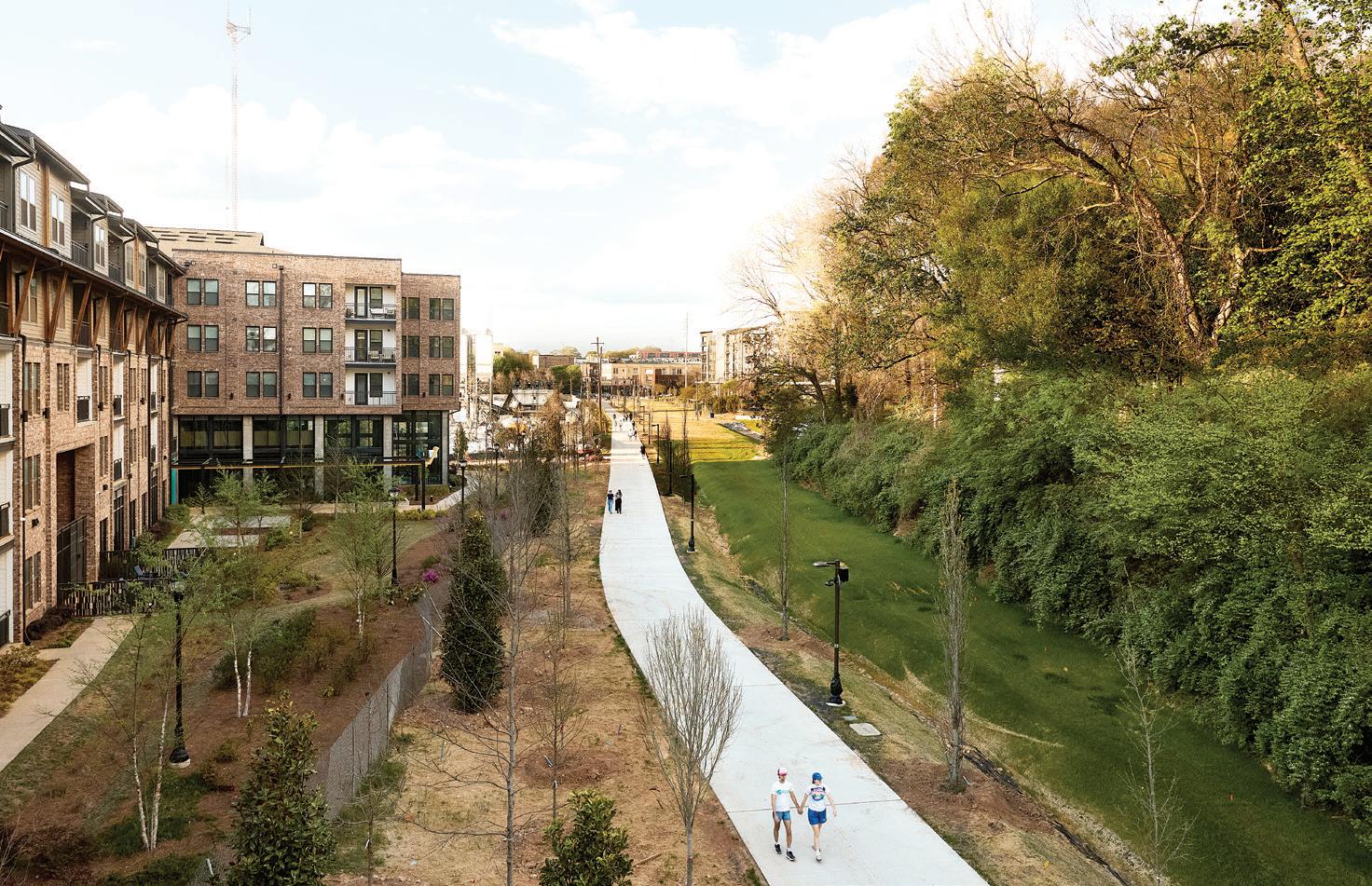
The Atlanta Beltline reached a new milestone on April 16 as city leaders cut the ribbon on the final segments of the Southeast Trail.
Segments 4 and 5 complete the 2.5mile Southeast Trail, which now runs continuously from the Krog Street Tunnel to Boulevard Southeast. The 1.2-mile addition links the path to Glenwood Park, Grant Park, Ormewood Park and Boulevard Heights, expanding access for
walkers, runners and cyclists.
With the opening, the Beltline now totals about 14.8 miles of completed trail out of its planned 22-mile loop. The goal is to finish the entire loop by 2030.
Mayor Andre Dickens called the expansion another step toward a “more connected and accessible” Atlanta, adding that another segment is expected to open by early June. That would bring the continuous trail closer to 18 miles in time for the FIFA World Cup matches this summer.
City officials gathered for the ribbon-cutting of the Beltline Southside Trail. (Photos courtesy ABI)
A Nostalgic Summer Vacation at Lake Oconee
Looking for things to do at Lake Oconee this summer or planning a weekend getaway near Atlanta? Just over an hour away, Lake Oconee is one of Georgia’s top summer destinations, offering everything from boating and fishing to berry picking and small-town charm.
Get Out On The Water
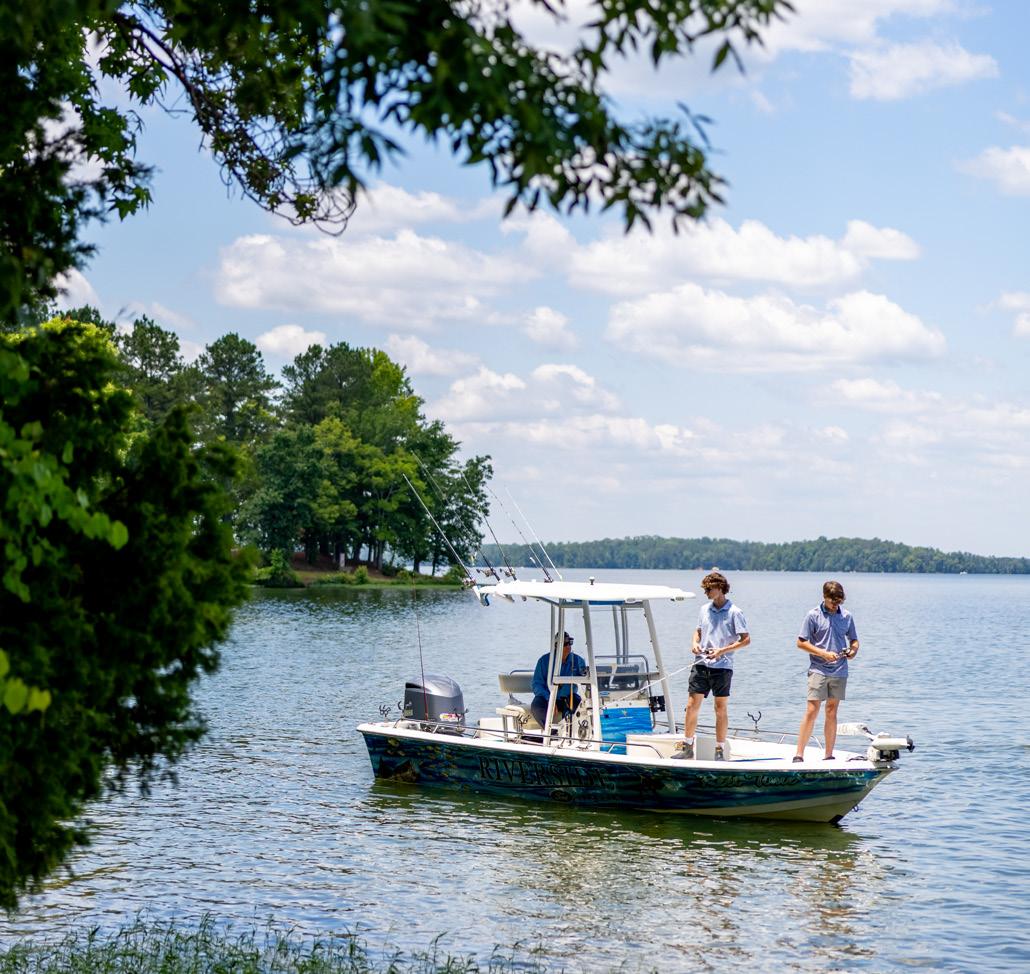
No classic summer is complete without a little time on the lake—and at Lake Oconee, there are countless ways to make a splash. Whether you’re cruising the shoreline on a pontoon boat, tubing behind a ski boat, or paddling out in a kayak, the water is where summer memories are made.
Jump Into Summer
For many, the thrill of a summer day isn’t complete without a leap into cool waters from a favorite rock. Jumping Rock at Lake Oconee is just that place—a timeless spot where kids (and adults) can channel their inner daredevil and jump from the iconic rock ledge into the refreshing lake below. It’s an exhilarating throwback to simpler days when fun was measured by how high you could leap and how much laughter echoed across the water.
Cast a Line
For those looking to enhance their fishing experience, Reel Time Guide Service, led by Captain Smith, offers expert-guided trips on Lake Oconee. With over 30 years of experience, Captain Smith specializes in targeting species like striped bass, hybrid bass, and crappie. He provides tailored trips that cater to all skill levels.
Georgia Department of Natural Resources requires a license to fish in all public lakes in Georgia so, make sure you have one before you get on the water.
Soak In Live Music By The Lake
All resort guests at The Ritz-Carlton Reynolds, Lake Oconee are invited to The Backyard this summer for their Summer Concert Series. The resort will be hosting a wide variety of live musical entertainment on select dates from early May through Labor Day Weekend. Firework displays will occur on holiday weekends.
Camp Under The Stars
If your idea of the perfect summer includes sandy toes, grilled hot dogs, and nights under the stars, Greene County’s campgrounds deliver all the throwback charm. Old Salem Park, Parks Ferry Campground and the KOA offer peaceful lakeside settings where you can swim at the beach, cast a fishing line off the dock, and spread out a checkered blanket for a picnic beneath the pines.
A Day of Classic Summer Flavors in Greensboro
Morning:
Start your day the way summer mornings should—with a slow, satisfying breakfast at Café 44. Order the chocolate chip pancakes and a hot cup of coffee, and ease into the day with classic comfort food and a welcoming, small-town atmosphere.
Lunch:
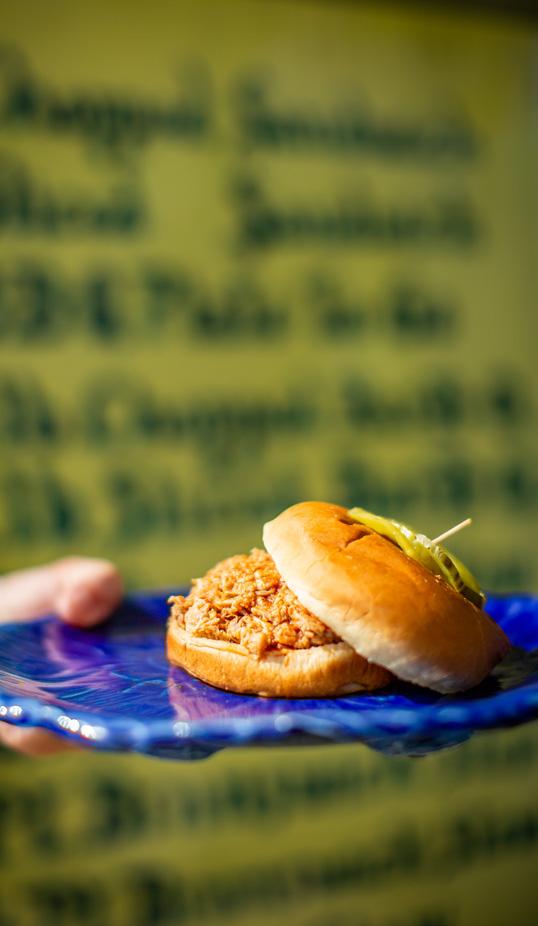
By midday, follow the unmistakable scent of hickory smoke to Holcomb’s Bar-B-Que, a local favorite since 1971. Grab a plate of tender pulled pork, tangy sauce, and all the classic sides—it’s the kind of no-frills, full-flavor meal that defines a Southern summer.
Don’t Skip Dessert:
Before the day gets away from you, stop by The Yesterday Café for a slice of their famous buttermilk pie—rich, custardy, and unforgettable.
Dinner:
End your day with a relaxed evening at Table at the Lake. Dine under twinkle lights in the courtyard, enjoy locally inspired dishes, and soak in the peaceful breeze—it’s the perfect way to wind down after a full summer day.
Go Berry Pickin’
Few summer memories are sweeter than picking sun-ripened berries straight from the bush—and at Hemi Blueberry Farm, that tradition is alive and thriving. Nestled just outside Greensboro, this charming, family-owned farm invites visitors to wander the rows, bucket in hand, and gather plump, juicy blueberries by the handful.
Snap The Past
Step back in time with a slow stroll through historic downtown Greensboro, where every sidewalk and vintage storefront tells a story. With a Polaroid camera in hand, you can capture the charm of this small Southern town the old-fashioned way—one instant photo at a time.
Slow Down And Soak It In
Sometimes the best summer moments are the quiet ones—rock on a porch swing, listening to the water lap against the dock, or feeling the warmth of the sun on your face with nowhere to be. At Lake Oconee, relaxation isn’t just encouraged—it’s part of the lifestyle.
Find your reason to linger longer this summer.
At press time, a $15,000 reward was being offered for information on the fatal shooting of Tianah Robinson, 16, in Piedmont Park on April 4. Three persons of interest are being sought for allegedly shooting multiple weapons in the park that evening following a 404 Day concert.
The FBI and Atlanta Police Department are warning parents about an extremist group called “764,” which authorities say targets minors through online platforms. Once contact is made, authorities said, the group coerces victims into acts of animal cruelty, self-harm, or harming others.
Brady Lum, the former COO of the High Museum, was arraigned in federal court on April 14, pleading not guilty to allegations that he used his position at the High to steal more than $600,000 from the museum by doctoring invoices and approving transactions for personal purchases.
After 23 years as president of Central Atlanta Progress (CAP), A.J. Robinson will step down later this year when a successor is found. Robinson will transition to chair of the Atlanta Downtown Improvement (ADID), which works in partnership with CAP. Current board chair Craig Jones will transition to chair of the newly formed Stitch Board, overseeing the development of the Downtown Connector-capping park.
Midtown International School closes amid financial crisis
By Logan C. Ritchie
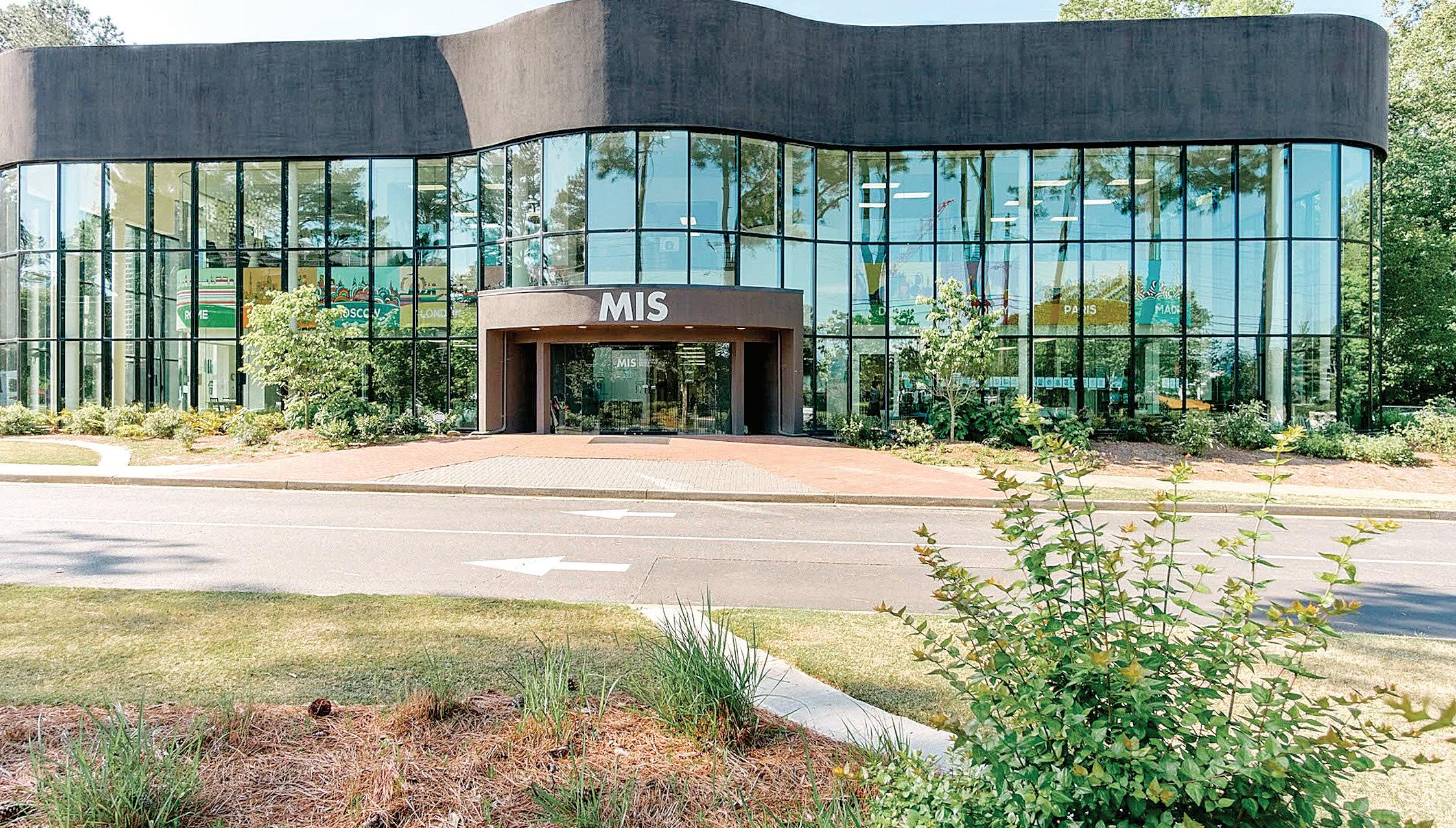
When Midtown International School (MIS) abruptly announced its immediate closure on April 3—six weeks before the end of the academic year—parents were left scrambling for answers and questioning the school’s financial management.
Parents soon discovered that newly recruited MIS board member Brett Curry had purchased the building to help financially save the school.
In a letter to families, board members Anneke Bates, Chaitra Chambers and Curry said declining re-enrollment and rising demand for financial aid had made operations “unsustainable.” But during an April 2 virtual meeting with roughly 90 attendees, parents pressed for more transparency about the school’s finances and decision-making.
“I joined the board as a parent … because I care so much about this place,” Bates said, at times weeping. “We recognize we owe you an explanation of how we got here.”
Curry told parents the school planned to enter Chapter 7 bankruptcy and outlined mounting financial pressures, including a $45,000 monthly mortgage he described as “unsustainable.” MIS had operated at a deficit for at least eight of its 12 years, according to tax filings, including a $200,000 shortfall in 2024, when revenue was $3.63 million against $3.83 million in expenses.
In late 2025, the school sought mortgage relief and was granted temporary forbearance, subject to selling its building. The property on Sheridan Road was ultimately sold in December to Midtown 1575 LLC, a company formed by Curry. He said he recused himself from related board decisions. The new ownership waived nearly $100,000 in rent to keep the school open temporarily.
Despite those efforts, enrollment continued to fall. Curry said MIS lost more than 20 full-tuition students and saw a 30% drop in applicants for the 2026–27 school year. After reviewing updated projections on March 26, the board voted the next day to close.
“We realized … if we tried to push to next school year, we will be taking more money from parents and still have a high likelihood that we wouldn’t be able to have school in the fall,” Curry said.
Many parents, however, say the board failed to warn them about the severity of the situation. Some had recently paid deposits—one parent cited a $9,200 payment in March—and are now considering legal action.
“They took our money, ostensibly knowing that they’d be closing,” the parent said. “How is that not fraud?”
Others questioned why tuition already collected for the current year did not carry the school through May. Head of School Ashley Scott responded bluntly: “I inherited a lot of debt.”
Scott, who said he had no vote in the closure decision, added: “Tomorrow I don’t have a job. I have committed 13 years of my life to this school … It was not my decision to close.”
The school’s governance structure has also come under scrutiny. MIS operated with just three voting board members and no formal committees or treasurer, a lean structure compared to similar independent schools. Experts note nonprofit boards are expected to provide financial oversight, strategic guidance, and transparency.
As the school begins liquidating assets, it has halted payments to creditors, including tuition reimbursements. Bates said the school expects to provide an update to families in late May.
Meanwhile, many families have formed informal pods with former teachers to finish the academic year. While MIS says students have met instructional requirements for full credit, frustration remains high.
“I want accountability,” one parent said. “I want the board to explain how and why this happened—and why we were left in this position with six weeks left in the school year.”
Scan the QR code to read the full story online.
Courtesy MIS
MARTA launches first BRT line, new bus route network
By Collin Kelley
MARTA’s Rapid A-Line, the city’s first bus rapid transit (BRT) line connecting Downtown to the Atlanta Beltline Southside Trail launched on April 18.
The five-mile Rapid A-Line will
connect Downtown Atlanta to Capitol Gateway, Summerhill, Peoplestown, and the Southside Trail, with connections to MARTA trains at Five Points, Georgia State, and Garnett Stations.
Phase one of the BRT line has service hours from 5 a.m. to 1 a.m.Construction is still underway on some of the line,
meaning not all stations and the dedicated bus lane are complete.
In areas under construction, temporary bus stops located near stations will be used, including at Convocation Center, Summerhill, Ormond Street, Peoplestown, and Carver. Temporary stops near unfinished stations are farefree.
MARTA cautioned motorists that the red “bus-only” lanes are to be used by the Rapid A-Line dedicated buses, regional transit partner buses, and emergency vehicles.
According to a press release, there are multiple intersections where buses receive priority to pass through the intersection ahead of other vehicles. Drivers should observe all traffic signals and wait for the bus to clear before proceeding through the following intersections:
■ Martin Luther King Jr. Drive at Forsyth Street
■ Mitchell Street turning right onto Washington Street
■ Washington Street turning left onto Memorial Drive
■ Hank Aaron Drive at Haygood Avenue
Since its groundbreaking, the project has experienced challenges, including the discovery of old infrastructure during excavation, and a battery recall on the New Flyer batteryelectric buses purchased to operate on the line.
These unforeseen circumstances have delayed completion of BRT stations and necessitated a phased opening. Phase 2 of the Rapid A-Line launch is scheduled for fall when all BRT stations are complete.
The launch of the new BRT line coincided with MARTA’s new bus route plan, the first since the service began in 1972.
The NextGen Bus Network redesign overhauled nearly every bus route, aiming to create a simpler, more frequent, and more efficient network. The plan consolidated and streamlined routes, eliminating more than 30 lines while shifting service to high-demand corridors so buses arrive more often.
At the same time, MARTA introduced “Reach,” an on-demand, rideshare-style service in multiple zones to cover lower-density areas.
One of the new Rapid A-Line buses. (Courtesy MARTA)
B u i l t D i f f e r e n t . B y D e s i g n .
Y o u r A t l a n t a - B a s e d B o u t i q u e B r o k e r a g e
3
2 1 0 6 N P o n c e d e L e o n A v e N E , H i s t o r i c D r u i d H i l l s
O f f
3 2 0 H a m m o n d D r i v e , S a n d y S p r i n g s O f f e r e d
1
J U S T S O L D 6 6 1 A u b u r n A v e N E # 1 9 , O l d F o u r t h W a r d U N D E R C O N T R A C T
h e y d o s s i e r . c o m
m : 4 04 3 1 4 4 2 1 2 / / o : 4 04 4 6 5 4 3 3 3
h a r vi n @ h eyd o s s i e r.c o m
@ h eyd o s s i e r
Your MARTA Experience is Improving
Bus routes have changed!
Bus service is more consistent and more frequent, with easier connections and less waiting. Find a map of your new route and more at itsmarta.com/nextgen
SUSTAINABILITY
The nurdles in our brains and elsewhere
The news about nurdles is not good. These manufactured plastic pellets–the building blocks of the plastics industry–are finding their way into our bodies, even deep into our brains. Less than five millimeters across, nurdles are about the size of lentils.
ABOVE THE WATER LINE
Sally Bethea
Other microplastics (nurdle-size fibers and beads) and invisible nanoplastics (molecule size) primarily originate from the degradation of larger plastic items, such as packaging, clothing, tires, and other everyday items. Some are directly added to products like paint, cleansers, and toothpaste. Minuscule nanoplastics are particularly dangerous. They can cross biological barriers and enter human organs, even penetrating the blood-brain barrier.
A groundbreaking paper published last year by Nature Medicine found that the amount of microplastics in human brains appears to be increasing over time. Concentrations rose by 50 percent between 2016 and 2024. Astonishingly, the study also determined that the human brain may contain up to a spoon’s worth of tiny plastic shards: about seven grams, or the weight of a plastic spoon. Other scientists have estimated that adults ingest the
equivalent of one credit card per week in microplastics.
“Plastic never goes away–it just breaks down into finer and finer particles,” says a Stanford pediatrician. (“Microplastics and our health: What the science says.” January 29, 2025, Stanford Medicine News) These particles are in our water, air, food, clothes, and ecosystems. They don’t dissolve in water and can’t be filtered out during sewage treatment.
Whether manufactured or the product of weathering and use, plastic fragments have been found everywhere–from Mt. Everest to the Mariana Trench, the Earth’s deepest ocean trench. They’ve shown up in blood, baby poop, lungs, placentas, breast milk, and reproductive organs. The health impacts of microplastics are largely unknown, but early research has linked them to higher risks of heart attack, cancer, stroke, reproductive problems, and death.
We need less plastic in our brains and in our lives–not more. Yet, the fossil fuel and chemical industries are investing billions in expanding plastic production; it’s their “Plan B” for new growth to maintain profits in the face of declining fuel sales. Over 99 percent of plastic is made from petrochemicals.
Throwaway Living
When I was a child in the postwar 1950s, the mass production of plastics exploded. My parents, who
Courtesy Turtle Island Restoration Network
“Plastic never goes away–it just breaks down into finer and finer particles."
Stanford Pediatrician “Microplastics and our health: What the science says.” January 29, 2025, Stanford Medicine News
lived through the Great Depression, were savers and reusers, but they were also enamored with the new products manufactured with plastic. “Better living through chemistry,” proclaimed the enticing advertisements.
“Throwaway Living” was the title of a story in Life magazine (1955) that extolled the virtues of single-use plastics as a “godsend for housewives drowning in chores.” At the same time, plastics became essential for modern medicine, construction, clothing, and more. As the environmental movement gained traction in the 1960s, researchers and activists warned about plastic trash in oceans and the tiny pieces observed in marine plankton.
Of uncertain origin, the whimsical term “nurdle” appeared in the 1970s. The term “microplastics” was coined in 2004, as plastic trash proliferated on beaches, in drinking water supplies, and in human bodies–and as nurdles continued to spill into communities from accidents and sloppy handling
during transportation. Two decades later, there are still no federal regulatory limits for microplastics in waterways and no standardized thresholds to define what concentrations are considered “acceptable” or “too high.” Industry lobbyists are good at what they do.
In early April, Trump’s Environmental Protection Agency and Department of Health and Human Services announced (surprisingly) that the EPA would include microplastics as a priority on its Contaminant Candidate List, a tool under the federal Safe Drinking Water Act. Such a listing indicates there may be new research, funding and future decisions about this class of pollutants. This is a good first step, but given the abysmal record of the Trump regime on environmental issues, I’m not holding my breath for any meaningful progress.
How to Reduce Microplastics
In the research for this column, I learned that I have been unintentionally aiding the introduction of microplastics into my body and that of my family. (Mother guilt never goes away, even when children are grown.)
I regularly reuse old plastic containers–storing, freezing, and microwaving food in them. Ditto for take-out food. Plastic food storage bags can apparently release thousands of microplastics and millions of nano per square centimeter into food. Also, I occasionally use a plastic cutting board. I don’t always rinse rice. I use tea bags that probably have some plastic in them. I often buy fruit and vegetables unnecessarily wrapped in plastic. Grocery store packaging of food has got to change. And, I’ve got to change too!
On the positive side, I minimize my purchase of highly processed foods and never drink water in plastic bottles. A single liter of bottled water can contain 240,000 nanoplastic particles: a high concentration. Breaded shrimp is a big no-no, but I don’t buy it. I do love seafood, including filter-feeding shellfish. I eat a pretty high fiber diet, love Greek yogurt (probiotics), and consume antioxidants–all of which help remove microplastics from our bodies through natural excretion.
There’s more we can do. Refuse excessive plastic packaging and singleuse plastics. Prioritize the purchase of clothes made from 100% natural, biodegradable fibers. Where possible, buy cotton (organic), linen, wool, hemp or silk, and avoid polyester, nylon, acrylic, and spandex.
Finally, we must demand that industry leaders and policymakers invest in the monitoring of our drinking water supplies for microplastics, to be followed by actions to disclose and reduce these contaminants. We need more facts, data, and science to protect ourselves, our families, and the environment.
From Porch to Porch
Take A Look Inside Virginia Highland Porchfest
By Sarah Gardiner
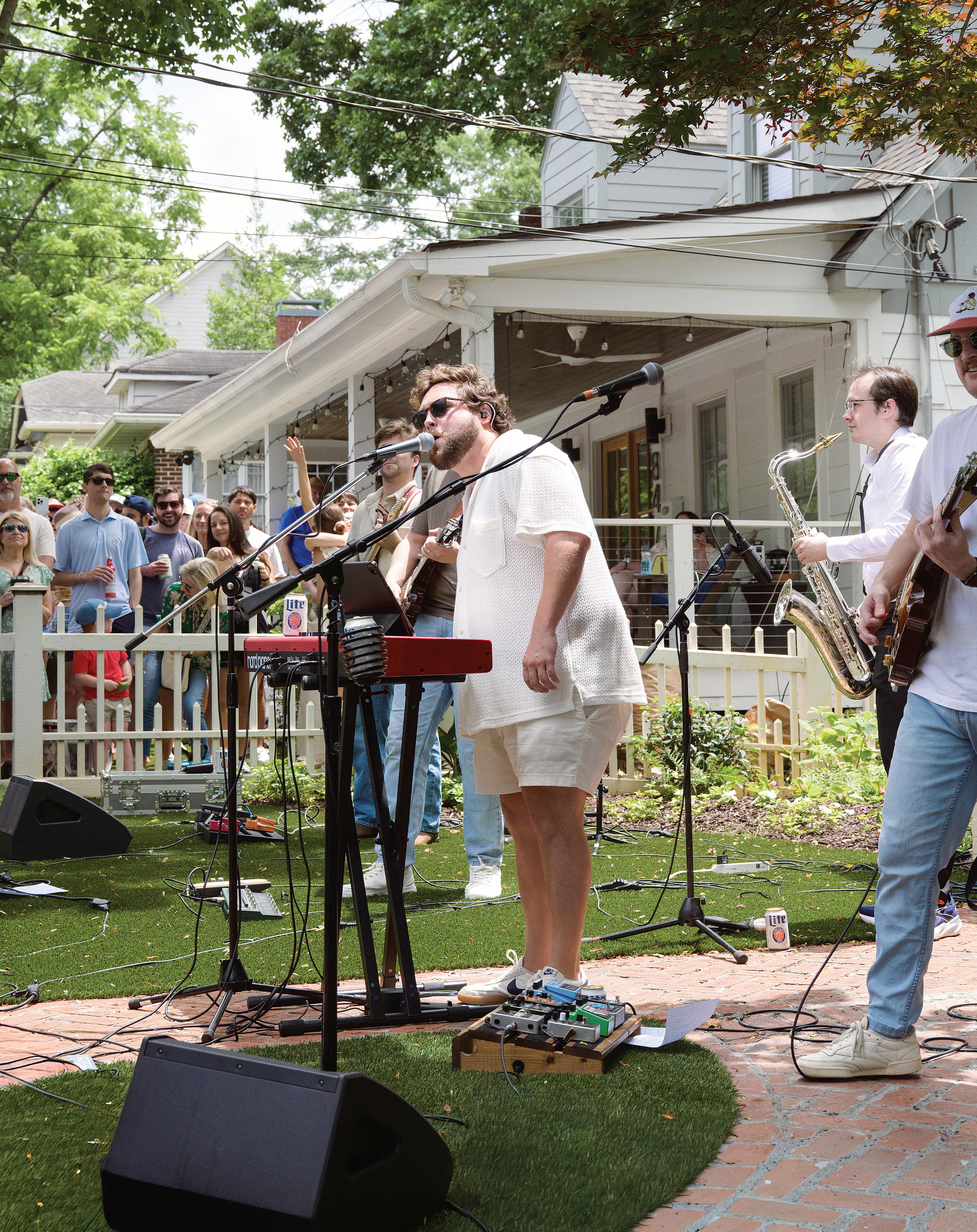
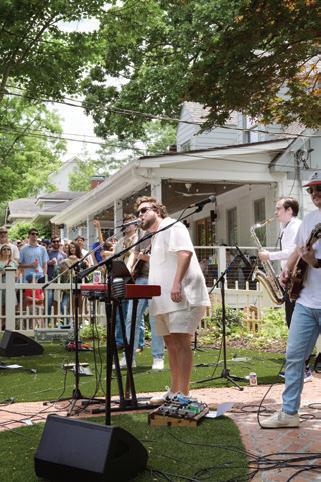
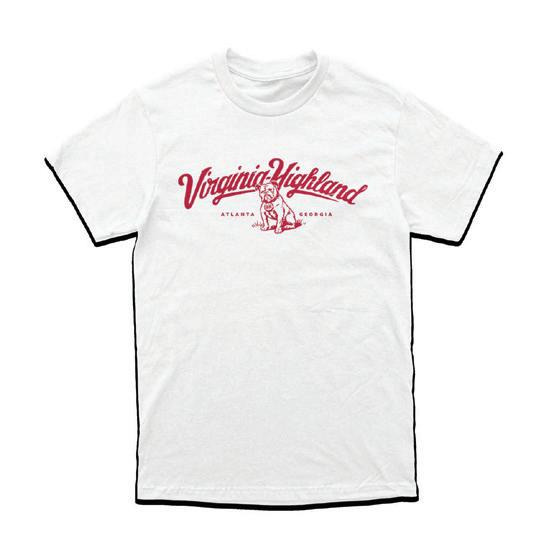
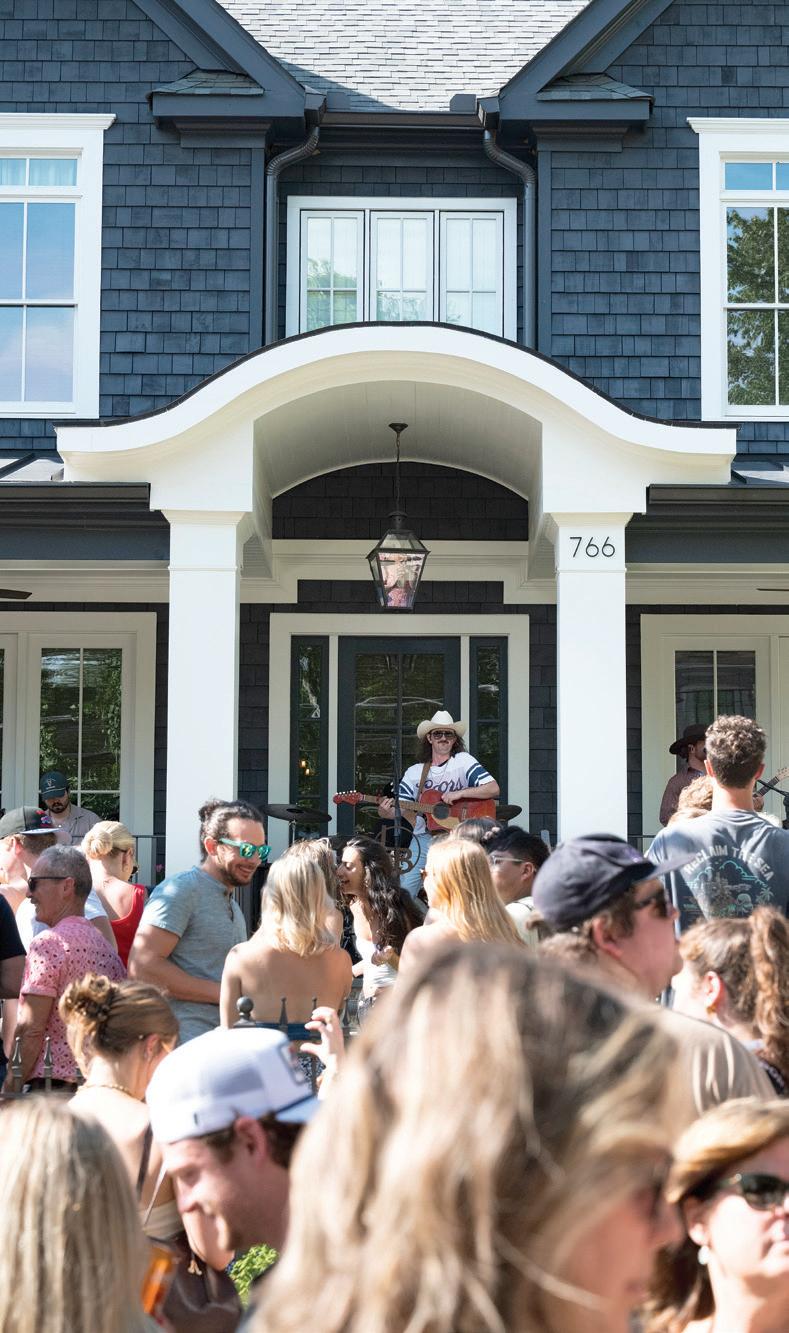
On May 16, 2026, Virginia Highland Porchfest returns for its sixth year, turning more than 50 neighborhood homes into stages for over 100 bands and drawing tens of thousands of people from across Atlanta and beyond. Even at that scale, Porchfest still holds onto the intimate, front-porch feel that defines the neighborhood. Same Tune, Better Backstage
Support
As the event continues to grow, 2026 introduces thoughtful changes designed to improve the overall experience for attendees and neighbors alike. A new ticketed model with capped attendance will help manage crowds and offset the rising costs of hosting a large-scale, grassroots event, while also supporting expanded infrastructure. This includes doubling security, staffing, and restrooms to create a safer, cleaner, and more sustainable festival.
In addition, a more spread-out footprint will help with crowd flow, featuring a dedicated pedestrian corridor and four zones, each with its own bands, vendors, restrooms, EMS, and water stations, so attendees are never far from what they need. Early bird tickets are $10 before May 2, $15 after, and $20 day-of.
The goal is simple: spend less time navigating crowds and more time jamming from porch to porch, catching a favorite
Continue on page 18
from page 16
local band or discovering a new one. Attendees are encouraged to walk, bike, or rideshare, as street parking will be limited.
“We strive to make Porchfest better every year without losing what makes it special,” says Virginia Highland District Association (VHDA) Executive Director, Katie Voelpel. “That’s always the balance.”
A Moment of Need Turned Neighborhood Tradition
The festival has evolved significantly since its debut in 2021. During the COVID-19 pandemic, residents were looking for a way to gather safely.
Founded by Nina Carrick and the VHDA board, Porchfest started as a vision for a small, neighborhood block party with live music on a few porches. Yet in its inaugural year, the festival
brought together more than 40 porches, 50 bands, and roughly 20,000 attendees, striking a chord with locals and visitors alike.
“It felt like something the neighborhood needed at the time, and the way people showed up for it and continue to show up for it really says everything,” says Carrick.
What began as a modest gathering has grown beyond its original scope, becoming one of Atlanta’s most anticipated spring events. Each year, the event continues to reflect the energy of a neighborhood that has been encouraged to dream a little bigger.
From Prelude to First Chord
In the days leading up to May 16, aptly named the “Porchful Prelude,” the excitement starts to build. Local businesses will host pop-ups, live music, and special events, turning the week into a lead-up celebration.
By Saturday, that excitement spills into the streets. Starting at 11 a.m., families gather at John Howell Park for the Kids Corner sponsored by Children’s
Healthcare of Atlanta. The littlest festival goers can enjoy face painting, bounce houses, and even a free soccer clinic hosted by Atlanta United.
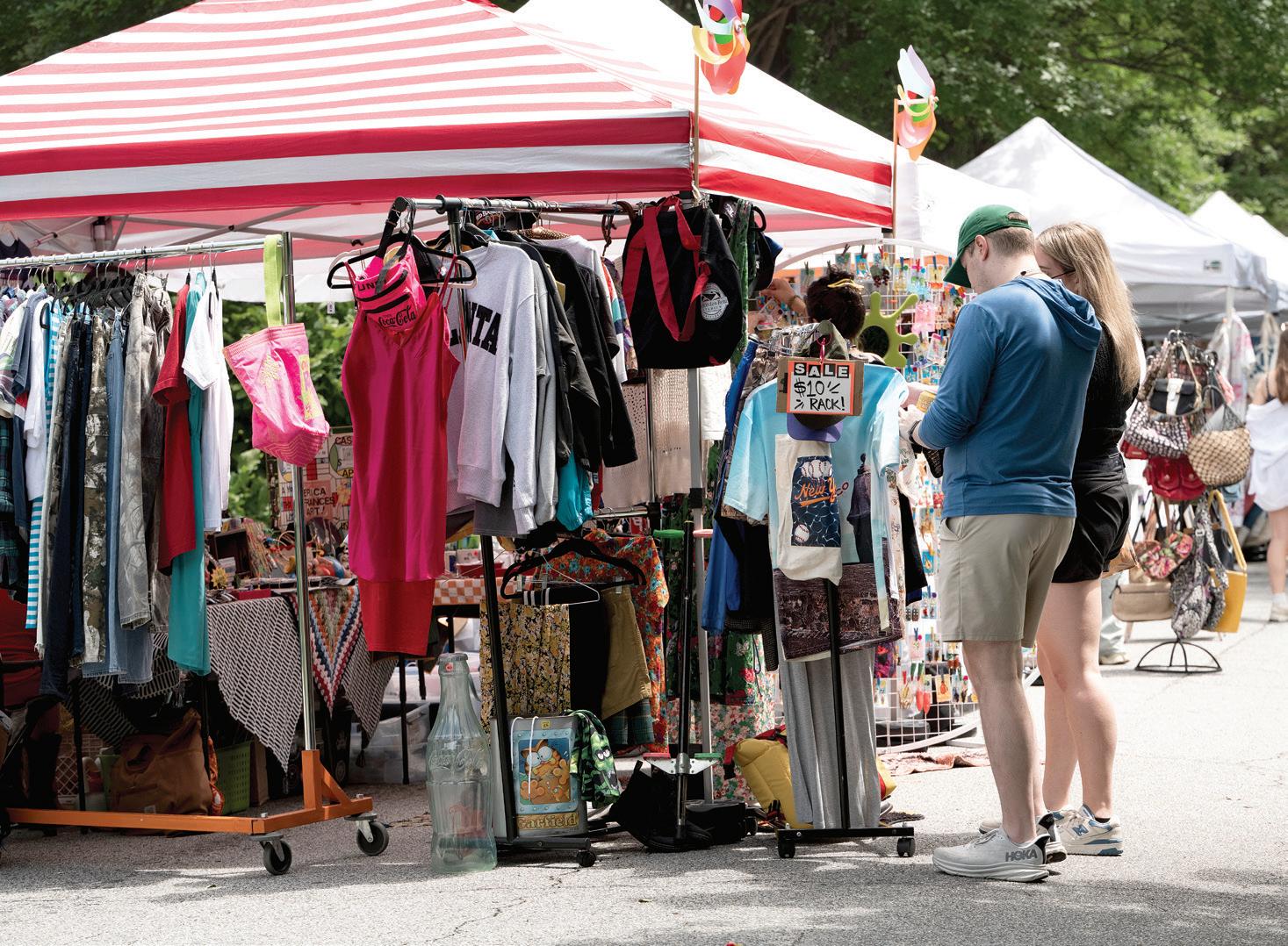
At the same time, the first chords carry across the neighborhood, with bands starting their 1-hour sets on porches from Virginia Circle to Drewry Street. Crowds of all ages drift from one performance to the next. Between sets, attendees can grab food from 30+ trucks serving everything from barbecue to Cuban cuisine and browse handmade goods, art, and merchandise from 50+ local vendors.
“There’s really something for everyone,” says VHDA President, Lindsay Wheeler. “Every year we’re thinking about how to further support our local businesses and add things people will enjoy beyond just the music.”
Every Porch, A Stage
Today, the festival features over 100 musicians, with genres from indie rock and Americana to country and funk. This year’s lineup includes exciting bands such as The Gringos, Hallpass, The
Continue
Ocho, Kobanova, and many more. A detailed map and performance schedule will be available online before the event.
“One of the best parts is showcasing the depth of Atlanta’s local music scene,” says Porchfest Music Chair Charlie Hecht. “You can listen to a group of UGA students on the verge of their big break, and then turn a corner and it’s a group of local dads jamming for fun. That mix is what makes it so cool.”
Grounded in Local Impact
Porchfest is the largest annual fundraiser for the Virginia Highland District Association, a 501(c)(3) nonprofit dedicated to helping small, locally owned businesses thrive through marketing, beautification, safety, and community programming. Last year alone, Porchfest raised $95,000, funding everyday improvements in the community like cleaner streets,
added tree lighting, and enhanced public safety, while also sustaining events such as the VaHi Farmers Market, North Highland Restaurant Week, and Winterfest that keep the neighborhood active year-round.
Thank You Sponsors TO OUR
For all its growth, Porchfest remains grounded in music and community. As more people join each year, the focus stays on honoring the neighborhood and residents, supporting local businesses, and creating an experience that reflects the spirit of Virginia Highland at its best.
To get the latest updates on Virginia Highland Porchfest, visit virginiahighlanddistrict. com or scan the QR code.
PRESENTED BY
ZONE SPONSORS
KIDS CORNER SPONSOR
MILLION-DOLLAR MARKETING AT
ARTS & ENTERTAINMENT
Atlanta Jazz Festival returns May 23-25
By Katie Burkholder
The 49th annual Atlanta Jazz Festival returns to Piedmont Park on Memorial Day weekend, May 23-25.
Along with three days of live jazz from several Grammy-nominated and -winning artists, the weekend will also include a special ticketed event on Friday, May 22.
The Miles Electric Band will perform at Atlanta Symphony Hall to honor jazz legend Miles Davis’ centennial and kick off the festival.
The festival will also include a familyfriendly space filled with games and interactive activities for kids of all ages, food vendors, and VIP opportunities.
To learn more, visit atljazzfest.com.
Donnie performing The
Section: 5p.m.
Saturday
Buddy Red: 1 p.m.
Aja Monet: 3 p.m.
Nate Smith: 5 p.m.
Christian McBride & Ursa Major: 7 p.m.
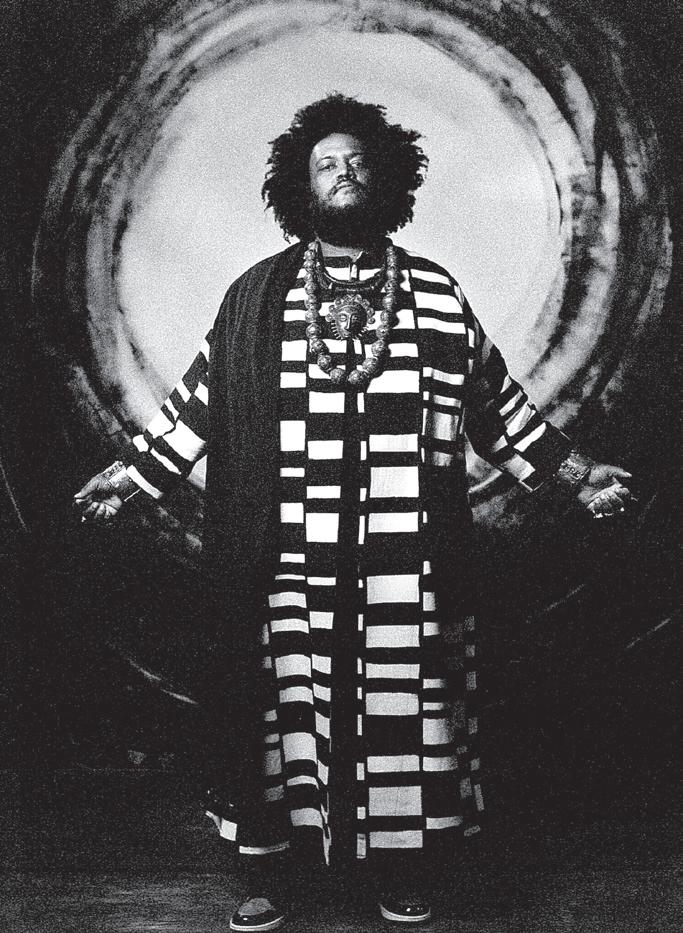
Kamasi Washington: 9 p.m.
Sunday
Cleveland P Jones: 1 p.m.
Esperanza Spalding: 7 p.m.
The Roots: 9 p.m.
Monday
Cody Matlock: 1 p.m.
Nicole Zuraitis: 3 p.m.
Destin Conrad: 5 p.m.
Butcher Brown: 7 p.m.
PJ Morton: 9 p.m.
Tayari Jones overcame writer's block to pen new novel 'Kin'
By Collin Kelley
Award-winning Atlanta author Tayari Jones earned an even more unique distinction earlier this year when she joined the elite club of writers who’ve had more than one book chosen for Oprah’s Book Club.
Oprah Winfrey had already chosen Jones’ lauded fourth novel, “An American Marriage,” in 2018, but then surprised her in February by selecting the newly published “Kin.” The novel debuted at
number three on the New York Times bestseller list.
“Kin” follows Annie and Vernice (Niecy), two motherless girls raised together in 1950s Honeysuckle, Louisiana. After losing their mothers under different circumstances, the
girls form a deep bond. As they become teenagers, Niecy leaves for Spelman College and marries into an affluent Black family, while Annie sets out across the Jim Crow South in search of the mother who abandoned her.
Jones said the creation of “Kin” began as a word doodle during the height of the COVID-19 pandemic and Black Lives Matter protests in 2020.
“There were so many problems in the world, and everything seemed so urgent,” Jones recalled. “I had a hard time plugging into fiction and creativity, so I was not doing the work. I had writer’s block.”
One day, she started doing a world doodle on a notepad, penciling in words and phrases that came to mind without thinking too much about them. Out of that exercise, Niecy and Annie began to emerge.
“These characters just appeared, and the setting immediately became the 1950s, which I knew nothing about. I’m a contemporary author.”
Before she knew it, Jones had 100 pages of the story.
The novel is told through Niecy and Annie’s alternating perspectives, so Jones wrote 100 pages in each woman’s voice, creating two distinct characters in the process.
Writing a book set in the 1950s and 60s also gave Jones the opportunity to research more about the city she grew up in. She drew on her own time at Spelman College, where she was class historian, to flesh out Niecy’s experience, and also revisited the life of noted Spelman alum Dovey Johnson Roundtree, who worked three jobs to put herself through college before becoming a famed civil rights attorney and activist.
Jones is a stickler for details, so she also pored over old Sears catalogs to get clothing details just right for the time periods.
She also didn’t shy away from exploring queer characters in an era where their lives and relationships were hidden. School teacher Raynelle and her partner, Ola
Continued on page 24
49th Annual Jazz Festival Lineup
Myron McKinley Trio: 3 p.m.
Colored
The Roots
Kamasi Washington
Tayari Jones (Photo by Julie Yarborough/Courtesy of Knopf)
Esperanza Spalding PJ Morton
How reading changed my life
EDITOR’s NOTE: This story is a partnership with VOX ATL, a youth-led nonprofit media organization that prepares teens for life, career, and community by harnessing the power of youth voice and uncensored self-expression. Find out more at voxatl.org.
By Lucia Rodriguez Cuevas
The COVID-19 pandemic is widely regarded as a period of grief, desolation, and isolation. While most people spent their time helplessly scrolling on their phones or anxiously awaiting a return to society, I found solace in one of humanity’s greatest creations, books.
Around October of 2020, thanks to DracoTok — a TikTok trend that started with Draco Malfoy edits but quickly evolved into a community of Harry Potter fans — I decided to finally pick up the “Harry Potter” books and read them for the first time. Even though I had already seen all the movies and was a big fan, nothing could have prepared me for the emotional connection I developed towards the Wizarding World and all its characters. After finishing the series in under a month, I was immediately catapulted into a world of literature in search of the next great novel.
I quickly found myself finishing a new book every three to four days, putting everything aside and focusing on the story in front of me. By the end of 2021, I had read 74 captivating novels, ranging from fantasy to biography, each of which further expanded my knowledge and vocabulary.
One of my favorite parts of reading is the benefits I gain from such a simple activity.
The science of reading
According to research conducted by the University of Sussex, reading can lower your heart rate, ease muscle tension, and reduce stress levels by 68% in as little as six minutes. A study by Robert S. Wilson, published by the Fisher Center for Alzheimer’s, shows that reading, writing, and engaging in other mentally stimulating activities can help maintain memory and thinking skills. It also helps preserve brain health and avert symptoms of Alzheimer’s in old age. Researchers also found that it is beneficial in discovering new words, especially for grade school students.
Children’s Healthcare of Atlanta partnered with the DeKalb Public Library for their Raising Resilience campaign.
After speaking to Gina Jenkins, the Youth Services coordinator for DeKalb Public Library, she emphasized the true meaning behind the campaign.
“That’s all about picking up a book, reading a book, and learning from the characters in the book. How they face problems, their challenges, learning from that, and how they handle things,” Jenkins said. “Reading about other people, whether they’re real or fiction, and how they would handle things, is a very positive movement.”
Even with all the research showing that reading can positively affect one’s brain in multiple ways, the number of people reading has declined exponentially over the past 20 years. Researchers from University College London and the University of Florida found that the number of people who read for pleasure has dropped by 40% from 2003 to 2023.
Competing with tech
With the continual rise in technology and social media, fewer and fewer people are turning to books for entertainment. It is hard to compete with the constant stream of content on those platforms,
especially since it tends to be personalized for each viewer.
“Social media is very impactful, distraction-wise. People are doing that more so than reading, and then the kids, a lot of our kids don’t think of reading for pleasure,” Jenkins said.
After leaving social media twice this year, I have happily retreated to reading and media entertainment. Leaving those platforms has exponentially increased my attention span, which research by Alina Poles for Scientific Research shows is negatively affected by social media use. Instead of doomscrolling on TikTok or Instagram, I spend my free time watching those “must-watch” movies or TV shows and catching up on the hundreds of books on my TBR (to be read) list.
“If you’re stuck on your phone a lot and you feel like you just have to have something in your hand, download a book on your phone,” Jenkins said.
Personalize it
Readers can now personalize their reading experience to suit their interests, whether that’s audiobooks, e-books, or physical books. While each method
provides the same result of reading and finishing books, they offer different experiences.
Audiobooks are an excellent option for multitaskers and auditory learners; e-books are super convenient and accessible. But physical books are seemingly best for comprehension and don’t require screens.
Having tried the different methods myself, Kindles are definitely the most convenient, and you can purchase practically any book, and it’ll stay in your library forever. Audiobooks made it harder for me to pay attention to the storyline, but made doing tasks more enjoyable.
But for me, nothing will ever compare to the feeling of picking up a tangible book and immediately immersing myself in the story. From the crisp scent of the paper to the sound of the pages turning, there is a familiar feeling of warmth every time I pick up a book. With each novel that I read, my personal world of literature expands, and my love for reading grows.
MEDLOCK
Mae, are sassy, self-appointed guardians for Niecy, who later has her own queer relationship with a female student at Spelman.
“I didn’t want to write a world where queer people had no possibilities for pleasure in their lives,” Jones said. “Queer people are under siege just for living their lives – they’re putting their bodies on the line. It felt important to write these characters’ stories, and not be afraid of writing them.”
A professor of English and Writing at Emory University, Jones moved back to Atlanta almost a decade ago after a stint in New York City. She was surrounded by writers and would-be writers (“There is something in the water up there.”), but felt the itch to be back in the place she was writing about.
At home in Grant Park, Jones had a contract to write a novel dealing with the
gentrification of East Atlanta and was facing a deadline, but Niecy and Annie had fully taken hold of her imagination.
An early morning writer, Jones moved her workspace to the kitchen. “It’s a hard chair and a hard table,” she said. “I didn’t want to get comfortable somewhere and start daydreaming. I needed a situation room, and that was my kitchen.”
She knocked out the rest of “Kin” in two months, sitting in that “situation room.” Her publisher was surprised, but trusted Jones’ storytelling.
Jones said she plans to return to the gentrification novel after promotion work for “Kin.” She said “surrendering to the muse” helped bring that story into more focus as well.
“You hear about writers who wait for the muse to arrive, surrender to the muse, but that was never me,” Jones laughed. “I didn’t feel like I was in control of writing ‘Kin,’ so I’m ready to go back to my normal writing place.”
Movie Review: Performativity and perception are our ruination in ‘The Drama’
By Sammie Purcell
Early on in “The Drama,” Charlie (Robert Pattinson) and Emma (Zendaya) are practicing for the first dance at their wedding. They’re doing one of those oldtimey, heavily choreographed routines. You know the type – the kind where you’re too busy thinking about the next step to worry about the fact that everyone is watching you during what’s meant to be an intimate moment. Charlie and Emma giggle their way through it, doing fairly well – but not well enough for their “Full Metal Jacket”esque dance instructor.
The good, the bad, and the ugly
They’re good, she says, but still have a lot of room for improvement. It’s here where Emma breaks, wondering out loud why they can’t just dance normally to a song they love. The whole thing just feels a little performative. Miss “Full Metal Jacket” shoots back with the unfortunate truth that all weddings are performative – less about the bride and groom than the hundreds of people they’ve invited to witness just how perfect and in love they are. And for Charlie, that performativity is kind of the point.
There are little nods to Charlie’s obsession with how others see him, leading up to the first act reveal in Kristoffer Borgli’s black comedy, the reveal that forces Charlie, for the first time seemingly ever, to consider how he feels about something rather than how the world at large does. When a game of sharing secrets goes a little too far – recontextualizing everything Charlie thought he knew about his beautiful, perfect, kind fiancé – “The Drama” becomes a darkly funny, cringe-tastic, and chaotic takedown of
humankind’s obsession with the way we’re perceived.
Charlie has been dutifully, painstakingly crafting a perfect love story since day one. When he first sees her in a coffee shop, he manufactures a meet-cute worthy of Nora Ephron. As Emma steps away from her seat, he sneakily snaps a photo of the book she’s reading and quickly looks up a few talking points on Goodreads. When he leans over to tell her how much he loved that book, she doesn’t react. He tries again, but it turns out Emma is deaf in that ear, and barely hears what he’s saying. His perfect moment ruined, Charlie begins to spiral, but Emma lets him off the hook – let’s start over, she says. We can control how this moment plays out.
Narrative control
Maybe Charlie and Emma can control their own story, but when Emma lets loose the darkest secret from her past during a wine tasting for their wedding – in front of their best couple friends, Rachel (Alana Haim) and Mike (Mamoudou Athie), no less – Charlie can’t control the fallout. Everyone at the table is dared to say the worst thing they’ve ever done (if we’re being honest, Rachel, played with detestable bitchiness by Haim, kind of forces the point). Rachel’s is the worst (she locked a special needs kid in a closet and left him there for hours), and Charlie’s is essentially non-existent (he says he cyberbullied a kid, but it kind of feels like he’s making it up just to have something to say). Emma’s, however, is interesting both because of what it is, and because, as much as she thought about it, she didn’t actually go through with it. Nonetheless, it turns the mood sour.
A big secret
I would be remiss to spoil the surprise of Emma’s secret, but Borgli chose the one thing you might learn that your partner thought about – but, and I must stress this, didn’t actually do – that you wouldn’t be able to dismiss. It is shocking, and terrible, and I’m not surprised it took a non-American filmmaker to even consider broaching the subject. But, the film is less interested in Emma’s psychological state (beyond the fact that it has the utmost empathy for her) than it is Charlie’s reaction to the news – less interested in what this revelation says about Emma than what it says about Charlie, and how it changes what others think about his relationship.
From the moment he appears in “The Drama,” Charlie – and this is all a credit to Pattinson’s specificity as a performer –comes across as a faux-intellectual dingbat. He’s the type of guy who’s never had an
original thought in his life, who squints with confusion and laughs off Emma’s suggestion that they should go to their favorite diner after the wedding because that’s not what people do on their wedding night. It’s interesting to think about how Charlie would have reacted had Emma shared this secret with only him. But, the reaction of his friends – in particular, Rachel’s snarling disdain – seals the deal. Borgli’s script tries to tackle a number of threads, leading to a movie that feels a bit like it’s throwing a bunch of ideas at the wall. Not all of those ideas stick, but the ones that do –namely, Charlie’s downward spiral towards something resembling a human being – are fascinating to watch unfold and think about later.
Read the full review online by scanning the QR code.
Robert Pattinson and Zendaya in “The Drama.” (Photo courtesy of A24)
A daughter remembers: Leslie Parks Bailey on Gordon Parks’s ‘The South in Color’
By Sherri Daye Scott
Leslie Parks Bailey is chopping as she talks about her father, noted American photographer Gordon Parks.
It’s the Friday before his latest exhibit, “The South in Color,” opens at Jackson Fine Art, and Parks Bailey is at work in an Atlanta kitchen, prepping lunch. She’s a personal chef. Four days a week, two and a half hours a day, she cooks. So, as we move through a conversation that spans family memory, historical images, lasting legacy, and the state of American civic discourse, her knife keeps moving. Slicing. Stripping. The rhythm of a woman who uses her hands to nourish people, in the same way her father used his eye to nourish something in all of us, too.
“It makes it more touchable,” Parks Bailey says of the color photographs at the center of “The South in Color.” “More real. Because we do live in color, right? So it’s not so distant.”
Parks Bailey will be at the exhibit’s opening reception Thursday evening, April 2, among longtime friends and collectors who love her father’s work, too. Organized in partnership with The Gordon Parks Foundation, “The South in Color” brings more than forty photographs from Parks’s landmark 1956 “Segregation Story” series to Atlanta, in honor of the foundation’s 20th anniversary and the series’s 70th. Shot in the summer of 1956 in and around Mobile, Alabama, for Life magazine,
of “Gordon Parks: Segregation Story,” a reexamination of the original Life photo essay that deepened both its historical and artistic context. Bey wrote that Parks’s deliberate choices of tool, material, and sensibility lend the Black Southern presence “a sense of lives fully and expressively lived.” The exhibition is built around the idea that these photographs should be viewed not only as documents of injustice, but as works of extraordinary artistic intention.
Growing up Gordon Parks’s daughter
Parks Bailey was not yet born when her father traveled to Alabama in the summer of 1956. She grew up knowing him less through his work than through the way the world responded to him.
“We couldn’t make it down the street without someone stopping him,” she says. “I knew that he was different. He was different than other dads.”
says. “I went to private school. I didn’t really understand.”
That understanding came later, and it is still coming. Parks documented American life for more than two decades, from his early work with the Farm Security Administration through his long tenure as a staff photographer at Life, but he never sat his youngest daughter down and walked her through any of it. “It was just kind of an understanding,” she says, “that he did something important.”
What the photographs hold
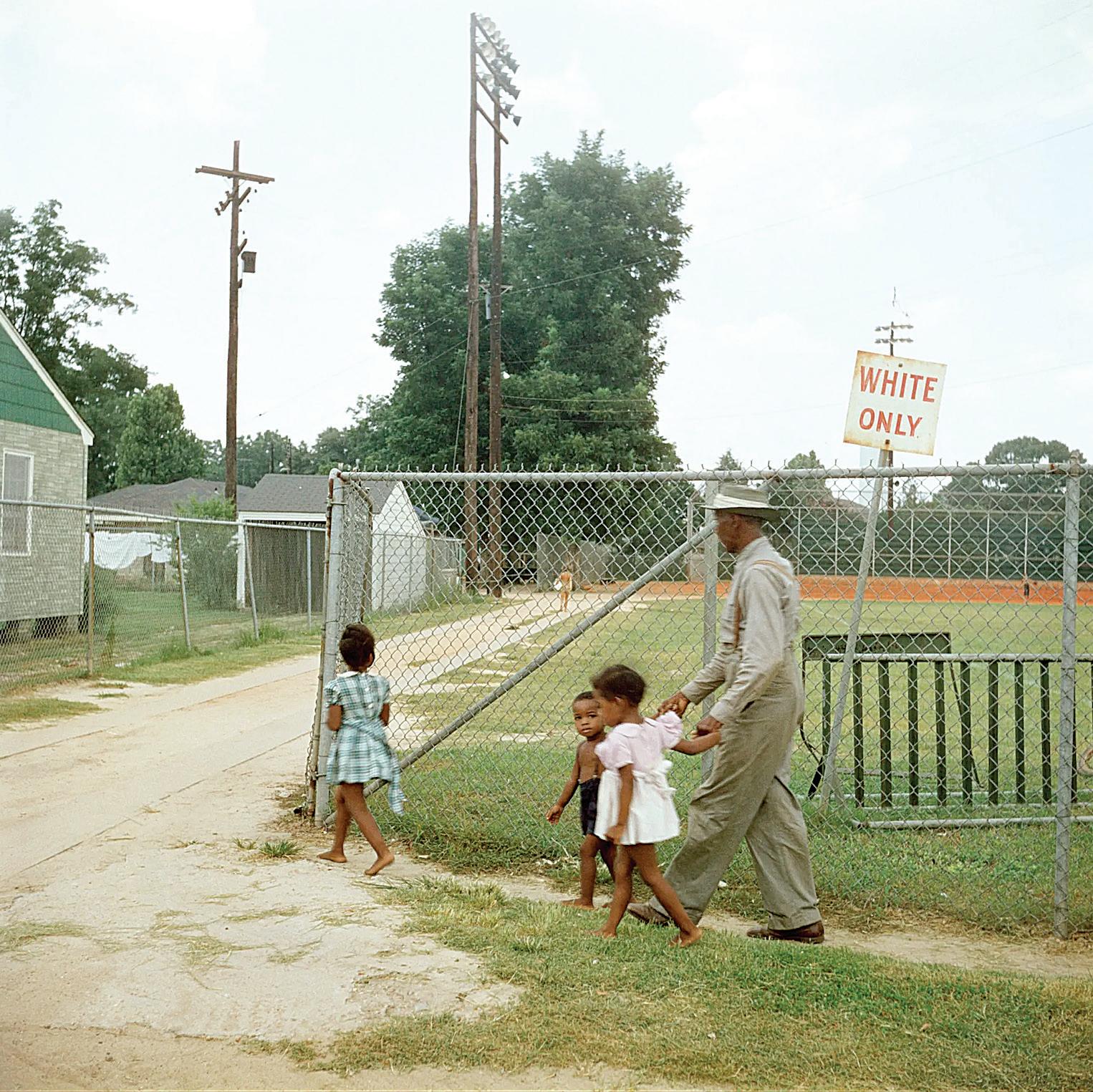
When asked which images from “The South in Color” stop her cold, Parks Bailey describes a photograph of young Black girls standing at a fence, watching white children play on the other side.
the exhibition’s images document the daily lives of the Thornton family and their relatives, the Causeys and Tanners, through a novel choice, at the time — color film. Parks shot the series on a handheld twin-lens Rolleiflex camera. The resulting square-format images are lush, intimate, and composed with the understanding that how you show people is itself a political act.
How color changes everything
Many people’s mental images of the American Civil Rights era are in black and white. The past flattened into stark contrast. Color complicates that. It insists on the fullness of a life.
And for Parks Bailey, encountering these photographs as an adult meant confronting a side of her father’s work that felt genuinely new. The images included in the exhibition were among those rediscovered by the Parks Foundation in 2011.
“Seeing the photographs in color, they really kind of popped at me in a different way,” Parks Bailey says.
“I’ve seen his fashion photos in color, but this … it made the work feel less distant. Less like history and more like something happening right now.”
Parks knew exactly what he was doing. Curator Dawoud Bey, the acclaimed American photographer and MacArthur Fellow who curated “The South in Color” for the Parks Foundation, explores this in his title essay from the 2022 expanded edition
Her parents separated when she was young, and visits to her father were occasional, including once to the set of “Shaft,” which he directed in 1971. Her mother, Elizabeth Campbell, a model who was among the first Black women signed to the Eileen Ford agency, was photographed alongside a young Leslie by Slim Aarons, the American photographer celebrated for his images of socialites and jet-setters. It was a world of achievement and visibility. But her father’s Civil Rights work existed at some remove from the life she was living.
“My family wasn’t struggling,” she
“Everybody wants to be included,” she says, her chopping pausing for a moment. “But knowing that you can’t cross that fence. Knowing that you will get in trouble. Knowing that you can lose your life at such a young age … that’s crazy.”
She connects it immediately to the present. Her two sons are in their mid- to late twenties. She worries about them moving through the world as young Black men. She is not sure the dial has moved so much from when her father was their age, a notion that lends additional meaning to the work being showcased this spring by the Parks Foundation and Jackson Fine Art.
“It’s important to understand what’s happening now,” Parks Bailey says.
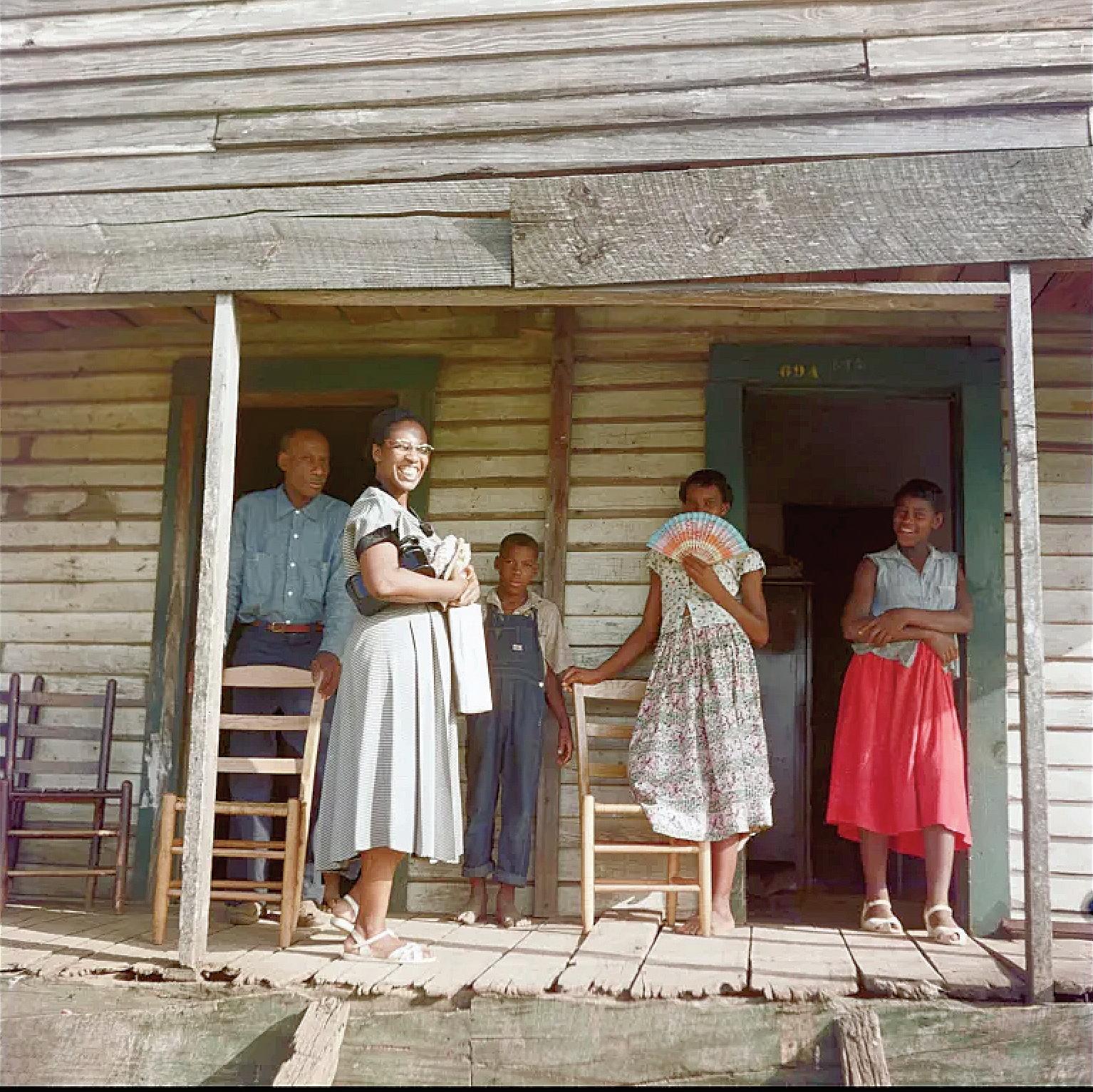
A woman laughs on a front porch surrounded by family in Gordon Parks’s “The South in Color,” his landmark 1956 “Segregation Story” series. (Courtesy of and copyright The Gordon Parks Foundation)
A man guides young children past a chain-link fence marked “White Only” in Mobile, Alabama — one of more than forty photographs in Gordon Parks’s “The South in Color.” (Courtesy of and copyright The Gordon Parks Foundation)
“We’re still there. It’s important for young people to see. It’s important for collectors to understand that beyond putting a piece of Gordon Parks’s work on their wall, it’s important to remember history. Our history.”
Atlanta, grief, and coming home to the work
The opening of “The South in Color” arrives at a particularly layered moment for Parks Bailey. She is the widow of Radcliffe Bailey, the mixed-media artist whose large-scale work drew deeply from African diaspora history and whose career was closely intertwined with Atlanta’s arts community. She moved down South to Atlanta from New York for him — and she is still here, finding her footing in a place where his absence is ever present.
“It’s part of my healing,” she says. “Re-entering the art world a little bit.
Without Radcliffe. He would have been at the show. He would have done whatever he could to support it.”
She pauses. “I wish that Radcliffe could be here. He never met my father. And I know he always wanted to.”
In his autobiographies, Gordon Parks wrote about hope as something he reached for repeatedly, in his work and in life. His daughter carries that same reach forward, from a kitchen in Georgia, knife in hand, talking about photographs taken almost twenty years before she was born.
“I’m happy that his voice is still here,” she says, “to say these things for us. And for the world.”
“Gordon Parks: The South in Color” continues at Jackson Fine Art through June 13. Get more information at jacksonfineart.com.
By Rough Draft Staff
The National Center for Civil and Human Rights in Downtown Atlanta has opened anew interactive experience for children
“Change Agent Adventure: Children’s Gallery” is designed for children ages 12 and under, designed as a “secret headquarters” where they’ll discover how kids throughout history have challenged injustice and made a difference.
The immersive experience will offer hands-on activities, storytelling, and creative play that explore the ideas of empathy, fairness, and courage in ageappropriate ways. From designing their own change-agent identity to learning from real young advocates, every
moment is designed to inspire action and imagination, according to center officials. Visitors begin their journey in a “magic elevator,” where they discover how young people across generations have helped challenge unfairness and push for change.
Inside this interactive gallery, children explore activities that build civic and social skills, such as empathy, belonging, justice, and “upstandingness” – the courage to stand up for what’s right.
Children can also create a Change Agent Badge to take home and design a Change Agent Hat, inspired by ones worn by Martin Luther King Jr. and Eleanor Roosevelt.
For tickets and information, visit civilandhumanrights.org.
Isamu Noguchi’s modern design at the High Museum
By Sherri Daye Scott
As you enter the High Museum’s latest exhibition, “Isamu Noguchi: ‘I am not a designer,'” a small placard at the entrance poses a question to carry through the galleries: Was Noguchi indeed a designer, despite his proclamations to the contrary?
The answer, the show makes clear, is no. The case the retrospective makes — through nearly 200 objects spanning architecture, industrial design, ceramics, furniture, lighting, stage sets and landscape design — is that Noguchi approached everything he created from the perspective of an artist. Purpose and usability mattered to him, but they were always in service of expression. And what the exhibit also makes clear is how much Noguchi’s art has shaped modern American life.
A career of collaborations
“Making Multiples,” the first section of “’I am not a designer,” explores Noguchi’s forays into industrial manufacturing and his experiments with reproducibility. It opens with the Radio Nurse — a bakelite baby monitor he designed for Zenith Radio Corporation in 1937, small, dark and rounded, a now familiar silhouette that was considered radical at the time. Turn left and the room declares itself: a centerpiece grouping of Noguchi-designed coffee and side tables, a chair or two. Then,
continuing around, your first introduction to the Akari paper lantern lamp.
Around the corner, a wall maps the extraordinary web of collaborators Noguchi moved through over his career. The breadth of it is the argument. He was not a man with a specialty. He was an artist who went wherever the muse moved him.
Galleries of movement
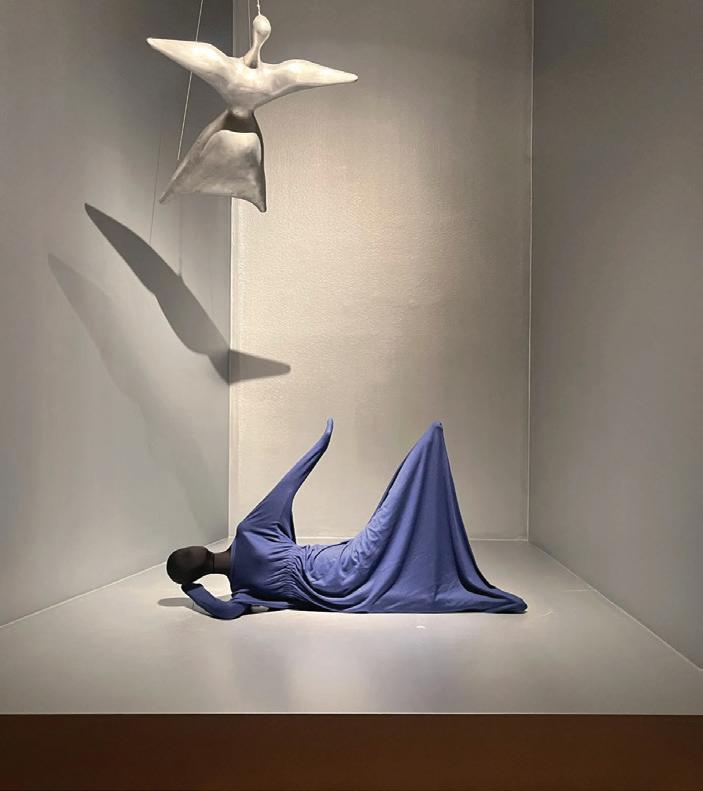
But it was the gallery devoted to Noguchi’s collaboration with Chicago dancer and choreographer Ruth Page — his one-time lover and artistic partner — that stopped me cold. It features the sculpture “Miss Expanding Universe” (1932), a gleaming aluminum suspension figure radiating her limbs outward, hanging alongside the blue jersey sack costume Noguchi designed for Page to wear in performance. I grew up in the Black Baptist church. My sister once led the praise dance troupe. I recognized that silhouette — and the figure above it — from the pulpits and stages of my youth.
Further into the exhibit, in an alcove devoted to Noguchi’s five-decade collaboration with choreographer Martha Graham, stands “Seraphic Dialogue” (1955), a brass rod-and-steel-wire structure evocative of an altar. “This set is only effective with light — moods to be varied by changing intensities between the
various elements,” Noguchi wrote in his notes on the set. Standing before it, you see how Noguchi viewed a dancer’s body in motion and his sculptures as the same conversation, held in different materials.
Play as art
I heard it the moment I stepped off the elevator into the exhibition: Children’s voices. Screaming, shrieking. I stopped. My heart stopped. A sign of the times, perhaps. Then it registered. Those were sounds of pure joy. A gallery attendant promised all would be revealed. It was.
In the second-to-last gallery is a large, red-painted, steel Noguchi play piece.
Live Brilliantly.
INTOWN’S TRUSTED DESIGN &
Signs encourage you to sit. Oversized screens surround the piece, projecting images and audio designed to mimic the experience of playing in a city park. The screams. The shrieks. The pure joy. That gallery turned out to be my favorite room in the exhibition.
Shaping memories
The final gallery of “I am not a designer” belongs to Atlanta.
In 1973, a High Museum volunteer named Frankie Coxe proposed building a children’s playground that was also a work of art. Noguchi was always the first choice. He visited Piedmont Park in the fall of 1975 and completed the designs for Playscapes by December. It opened in May 1976, Noguchi’s first playground built in the United States during his lifetime.
The final gallery holds a large-scale architectural model of Playscapes at its center. A panoramic photograph of the playground’s climbable blocks, asymmetric swings, its swirling painted-steel slide spans the wall behind it. Sketches, footage, and a photograph by celebrated Atlanta photographer Lucinda Bunnen, taken at the playground’s 1976 opening, complete the installation.
“Isamu Noguchi: ‘I am not a designer’” runs through Aug. 2 at the High Museum of Art. Get tickets at high.org.
“Miss Expanding Universe” by Isamu Noguchi. (Photo by Sherri Daye Scott)
DAILY ADMISSION
PHOTOGRAPHY BY DAVID CHRISTENSEN
Check out the 2026 James Beard Awards finalists from Atlanta
By Beth McKibben
The James Beard Foundation announced the 2026 finalists in the chef and restaurant categories, including a number of Atlanta and Georgia favorites.
Out of the 11 semifinalists for 2026, Chef J. Trent Harris of Mujō and the team from Aria, along with Meherwan and Molly Irani of Chai Pani Restaurant Group (Asheville/Atlanta), will head to the ceremony in June as finalists. Lucky Star, Madeira Park, Taurean Philpott (Avize), Claudia Martinez (Bar Ana), and Carlo Gan and Mia Orino (Kamayan ATL) were among the semifinalists from Atlanta this year.
2026 finalists headed to the awards
Best Chef: Southeast
■ J. Trent Harris, Mujō, Howell Mill Road
Outstanding Hospitality
■ Aria, Buckhead
Outstanding Restaurateur
■ Meherwan Irani and Molly Irani, Chai Pani Restaurant Group (Chai Pani and Botiwalla), Asheville, Charlotte, Atlanta, and Decatur.
Other 2026 semifinalists
Outstanding Professional in Beverage Service
■ Taurean Philpott, Avize, Westside
Outstanding Professional in Cocktail Service
■ Miles Macquarrie, Kimball House, Decatur
Outstanding Pastry Chef or Baker
■ Claudia Martinez, Bar ANA, Poncey-Highland
Best Chef: Southeast
■ Carlo Gan and Mia Orino, Kamayan ATL, Chamblee
■ Freddy Money, Atlas, Buckhead
■ Todd Schafer, Abel Brown, Augusta
Best New Bar
■ Lucky Star, Star Metals
■ Madeira Park, Poncey-Highland
The Castellucci Hospitality Group opened Mujō in 2022 on Howell Mill Road next door to its Basque-style restaurant Cooks & Soldiers. Harris led the intimate omakase restaurant to
critical acclaim, including helping it earn one Michelin star three years in a row. The Castellucci Group and Harris hope to follow up on Mujo’s breakout success with Koshu Club, a Japanese supper club opening in Buckhead this spring.
Backed by Meherwan and Molly Irani, Chai Pani-Asheville won Outstanding Restaurant at the James Beard Awards in 2022. The couple also own a location of Chai Pani in Decatur, as well as locations of Botiwalla in Charlotte, Asheville, and at Ponce City Market in Atlanta.
This becomes Aria’s second consecutive trip to the James Beard Awards, nominated again for Outstanding Hospitality. In 2025, Aria was the lone representative from Georgia at the awards. The medal ultimately went to Atomix in New York City.
But the James Beard nod in 2025 served as a parting tribute to Aria owner
Gerry Klaskala and his decades-long restaurant career. The Atlanta chef had officially retired from the industry earlier that year. Klaskala handed ownership of Aria over to his longtime general manager Andrés Loaiza, with the kitchen now led by Chef Joseph Harrison.
In 2024, Talat Market chefs Parnass Savang and Rod Lassiter were the lone Georgia representatives at the James Beard Awards, nominated for Best Chef: Southeast. The award went to Paul Smith of 1010 Bridge in Charleston, West Virginia.
Terry Koval, who won Best Chef: Southeast in 2023, also ended up being the only representative from Georgia that year. The Best Chef: Southeast category encompasses chefs from Georgia, the Carolinas, Tennessee, Kentucky, and West Virginia.
The voting body for the James Beard Awards comprises around 500 judges, many of whom are past winners from both the food media and restaurant industries. Voting takes place anonymously online. Restaurant, chef, and media awards submissions open in the fall for consideration by the various James Beard Foundation nominating committees. Check out the complete list of the 2026 James Beard Awards chef and restaurant finalists from around the country. Winners are announced during an awards ceremony at the Lyric Opera theater in Chicago on June 15.
Chef J. Trent Harris. (Photo by Andrew Thomas Lee)
Courtesy Aria Atlanta
Andrés Loaiza of Aria. (Photo by Sara Hanna)
8
America @ 250: Spano Conducts Bernstein + Rachmaninoff’s Third Piano Concerto
America @ 250: Spano Conducts Berlioz + Bernstein + Zhenwei Shi performs Harold in Italy
Heard: Kitchen playlists from Atlanta chefs Max Hines and Jarrett Stieber
By Beth McKibben
This story kicks off a series on restaurant kitchen and back-of-house playlists, featuring music selections from local chefs and bartenders.
Did you know that what you’re listening to in a restaurant dining room is likely not what the chefs are listening to in the kitchen? The dining room playlist is curated to set the mood for guests, carefully choreographed to follow the peaks and valleys of service.
But music in a restaurant kitchen plays an equally important role, and one that starts well before the first people are seated in the dining room.
Starting hours ahead of service, music keeps the kitchen energized as staff prep ingredients, accept deliveries, and take inventory. When service begins, music provides the rhythm for chefs to keep pace while cooking and expediting umpteen dishes per hour. At closing, music soundtracks cleaning and powering down kitchen equipment for the day.
For this installment of “Heard,” Atlanta chefs Max Hines and Jarrett Stieber share their thoughts on the importance of music in the kitchen before, during, and after service, along with songs playing in the back of house at their restaurants.
Chef Max Hines of Breaker Breaker
Dining on the patio or open-air bar at Breaker Breaker along the Beltline in Reynoldstown, you’ll hear a medley of 1980s rock, light hip hop, and country music songs pumping through the sound system. But in the kitchen, it’s all rhythm and beats.
“Most of the music you want playing
in the dining room is going to be a happy medium for the guests. The music you hear in the back of the house is typically going to be reflective of the staff,” Hines said of the difference between music in the dining room versus the kitchen. “I have worked in kitchens with trap music, R&B, oldies, 80s punk rock, reggaeton, mariachi and norteño playlists.”
Hines, who also founded Atlanta chefs collective Stolen Goods, tries to democratize choosing the music for the kitchen. Sometimes he uses music choice as a reward for the best cook or person working the hardest station in the kitchen. Other times it’s the kitchen manager choosing the music, or the person deemed to have the best taste in music. Hines usually has the final say on the kitchen
Continued on page 34
The Breaker Breaker playlist
■ Prep for service: “God is Perfect” by Freddie Gibbs & The Alchemist
■ Kicking off service: “Euphoria” by Kendrick Lamar
■ In the weeds: “Gangsta Music” by Young Jeezy
■ Winding down service: “Mr T” by Westside Gunn
■ Post-service: “Check” by Young Thug
■ Kitchen theme song: “Steady Mobbin” by Young Money and Gucci Mane
Chef Max Hines finishing a dish. (Via Max Hines/Instagram)
Congratulations to the Clas s of 2026!
You did it!
Go Knights! Paid for by the Midtown
Continued from page 32
playlist.
When Hines selects music for brunch service, he leans into 1990s R&B, oldies, and uptempo tunes for the kitchen playlist.
“It’s probably nostalgia for me, but we listened to a lot of Anita Baker when cleaning on the weekends or making breakfast, so that kind of vibe still lives on in the Breaker Breaker kitchen during brunch.”
On high-volume days like Fridays and Saturdays, however, Hines and his team lean into hardcore hip hop and trap music, since much of the Breaker Breaker kitchen staff hails from Atlanta.
“Music is so important in the kitchen because a lot of the work is muscle
The Little Bear playlist
■ Prep for service: “Rosalie” by Thin Lizzy
■ Kicking off service: “Tell It to My Heart” by Taylor Dayne
■ In the weeds: “Forever My Queen” by Pentagram
■ Winding down service: “Mainstreet” by Bob Seger & The Silver Bullet Band
■ Post-service: “Wildlife” by Nuovo Testamento
■ Kitchen theme song: “Booty Man” by Tim Wilson
memory. If you are in a good flow and setting a good pace, you can cook more off instinct than having to stop and think too much,” Hines explained, comparing the experience to listening to music while exercising.
“I am pretty sure it’s been scientifically proven that music helps you get that last rep in or cut down on time in a mile run. I feel like the pace of cooking in a professional kitchen has a lot of parallels to sports,” he added.
Jarrett Stieber of Little Bear
Unlike Breaker Breaker, the kitchen at
Little Bear in Summerhill shares its playlist with the dining room. The kitchen at Little Bear opens onto the dining room, making it difficult to separate music between the two spaces. Chef and owner Jarrett Stieber tries to strike a good musical balance at Little Bear to keep staff and guests happy throughout service.
“While it’s important to have good music that we all enjoy and think is cool playing in the dining room for guests, it also has to be palatable,” Stieber said.
“I love everything from Philip Glass’s ‘Koyaanisqatsi’ soundtrack to Paul Chain’s ‘In the Darkness’ to Miles Davis’s heroin years, but all of that is God-awful music to play in a dining room.”
Curating the playlist at Little Bear comes down to whomever gets to the restaurant first. Sometimes the prep team arriving early in the morning chooses the music for the day. On non-prep shift days, the kitchen manager picks the pre-dinner service playlist. Once dinner service begins, the host for the night selects the music heard in the dining room at Little Bear.
Since opening in 2020, Stieber has compiled several playlists for Little Bear, which they rotate each week and add songs to based on what’s working well during service. Songs tend to be upbeat, starting off lighter in the morning with folk, outlaw country, or tropicalia/samba/bossa nova. Music gets faster and dancier in the early afternoon when most of the staff arrive for work. It gets everyone energized.
“A lot of our staff love to play 2000s booty pop and butt rock, and sometimes that hits when it’s a weekend during the middle of the night when we’re full and on a wait for bar seats and the crowd is younger,” Stieber explained. “But 5:45 p.m. on a Tuesday when there’s fewer people in the dining room, maybe older and more subdued, that music will flop so hard.”
Stieber said it comes down to feeling the vibe in the dining room and pairing that vibe with the right music.
Listen to the playlists by scanning the QR code.
Lazy Betty co-founder Aaron Phillips no longer executive chef, but retains ownership stake
By Beth McKibben
The Atlanta Business Chronicle reported on April 20 that Lazy Betty co-founder Aaron Phillips had left the Michelin-starred restaurant in Midtown.
That same day, Lazy Betty no longer listed Phillips on its website as the executive chef of the tasting restaurant he helped found with Chef Ron Hsu. The website then briefly listed Chef de Cuisine Austin Goetzman as executive chef. By that evening, Goetzman’s name and photo also disappeared; the site now lists Hsu as executive chef and owner. Hsu’s title prior to April 20 was culinary director and owner.
Phillips retains ownership stake
Rough Draft spoke with Phillips on April 21 about the changes at Lazy Betty. When asked, Phillips confirmed that he’s no longer the executive chef, or involved in daily decision-making for the restaurant –and hadn’t been for a few weeks. However,
the restaurant. Both chefs declined to comment on what prompted the recent changes at Lazy Betty, including Goetzman, who started as a sous chef at the Candler Park location when the restaurant opened in 2019.
In March, Phillips told Discover Atlanta (the city’s official travel guide operated by the Atlanta Convention and Visitors Bureau) that Goetzman was “a major creative engine” in the Lazy Betty kitchen. At the time, Phillips and Goetzman were taking part in a one-night collaborative dinner at Avize with chefs Karl Gorline, Freddy Money, and Nicolas Grosse.
When asked what’s next, Phillips said more will be revealed and that he’s focused on the future and energized about potential opportunities. He didn’t elaborate any further.
“I’m in the efforts business, not the results business. That’s my philosophy. I’m proud of Lazy Betty, of the people there,” said Phillips. “Awards like Michelin are great, but the greatest achievement for me was my Lazy Betty experience and growing into a leader and mentor.”
he still retains an ownership stake in Lazy Betty, something Phillips said he takes as seriously as he did his role as executive chef.
“Whether I’m in operations or not, as an owner, I have a fiduciary responsibility to our investors and a moral obligation to that restaurant and its staff,” Phillips said.
“I’m proud of what we all accomplished, and am grateful for the relationships built and of the team I helped nurture for closing in on a decade now,” he added. “I feel really, really blessed. Lazy Betty is something that will always be a part of me. My heart runs through it. I can say that with a lot of positivity.”
Rough Draft also reached out to Hsu, who confirmed his new role as executive chef and Phillips’s ownership stake in
“Just because I’m not there in the kitchen, or at the restaurant day to day, doesn’t mean that I’m not still those things to people,” he continued. “My phone’s on. My door is open. I’m available.” Rough Draft will continue to follow developments in this story.
Founding Lazy Betty
Hsu and Phillips first met while working for Chef Eric Ripert at Le Bernardin in New York City. Their time with Ripert at the three-star Michelin restaurant would lay the foundation for Lazy Betty, which Hsu and Phillips opened in Atlanta’s Candler Park neighborhood seven years ago.
Named for Hsu’s late mother, an Atlanta restaurateur, the “lazy” in the name refers to a family joke about the matriarch’s need to stay busy, even after retirement. Betty Hsu died just three months after Lazy Betty opened in 2019.
In 2024, Hsu and Phillips relocated Lazy Betty to the former Empire State South space at 999 Peachtree in Midtown. By that time, the restaurant had already earned one star from Michelin in 2023. Michelin awarded Lazy Betty one star again in 2024 and 2025.
Last month, Hsu debuted his first cookbook, “Down South + East,” based on his childhood growing up as a ChineseAmerican and Southerner in metro Atlanta.
Chefs Jarrett Stieber (left) and Mykel Burkhart (right) working in the kitchen at Little Bear. (Via Little Bear/Facebook)
Chefs Aaron Phillips (left) and Ron Hsu (right). (Photo by Andrew Thomas Lee)
Ansley Park’s arts-filled legacy comes to life
In Atlanta, proximity matters, but in Ansley Park, it becomes something more: a living, breathing connection to the arts. This Fall, that connection takes center stage as the Ansley Park Tour of Homes unveils a collaboration that feels both inevitable and extraordinary, bringing together the Alliance Theatre, the Woodruff Arts Center, and the brand new Goizueta Stage.
“Ansley Park: An Arts-Filled Legacy” is more than a theme. It is an identity rooted in geography, history, and daily life. Just steps from front doors and garden paths, residents live alongside one of the most significant cultural campuses in the Southeast. The Woodruff Arts Center, home to the Alliance Theatre, the High Museum of Art, and the Atlanta Symphony Orchestra, has long served as both neighbor and muse.
And now, for the 2026 Tour of Homes, that relationship is being strengthened even further.
A Natural Evolution
Following the success of the 2024 Tour of Homes, planning for 2026 began with a shared goal: to build on that momentum
and elevate the experience even further.
Co-chairs Anne Herren and Heide Grieb, alongside a deeply engaged committee, set out to reimagine the Tour’s traditional Preview Party, not simply as a celebration, but as a meaningful expression of the neighborhood’s connection to the arts.
That vision led naturally to the Woodruff Arts Center.
Even early on, the idea carried a sense of ambition. Ansley Park Civic Association President, Derrick Brown, recalls, “When the idea of hosting at the Alliance was raised, it felt like a long shot. Happily, it turned out to be exactly the right fit.”
Where Collaboration Takes Shape
In 2024, Herren and Grieb connected with the Alliance Theatre, which generously provided actors for a historical re-enactment at the Tour’s preview party. The experience was a highlight of the weekend and sparked a natural opportunity to deepen the collaboration. For 2026, that partnership expands in exciting ways. The Preview Party will be hosted at the Alliance Theatre and will feature a multimedia presentation
at the state-of-the-art Goizueta Stage, spotlighting the Women of Ansley Park - celebrating individuals whose contributions have shaped both the neighborhood and the broader cultural landscape of Atlanta. Professional actors will showcase these historic figures in an immersive format that blends performance with visual storytelling.
During Tour weekend, Oct. 3 - 4, guests will also be invited to explore the space firsthand, with the Alliance Theatre open for tours each morning from 10:00 am - 12:00 pm. Historical vignettes are also woven throughout the weekend as a special ticket add-on, further bringing the neighborhood’s rich past to life.
With the support of Hala Moddelmog, President and CEO of the Woodruff Arts Center, and an Ansley Park resident, the vision quickly gained momentum. Building on the success of the 2024 collaboration, the expanded partnership felt both organic and inspired. Leadership at the Alliance Theatre embraced the idea from the outset. Co-Creative Director, Christopher Moses, and Managing Director, Brandon Kahn, were enthusiastic partners, even suggesting the theatre be incorporated more fully into the Tour experience - an idea that reflects the depth and creativity of the collaboration taking shape.
“We’re excited to be partnering with our neighbors in Ansley Park and to bring this event to life in its fullest form,” says Daviorr Snipes, Director of Community and Internal Engagement at the Alliance Theatre. “It’s going to be a fantastic evening.”
Elizabeth Blumer returns this year as co-chair alongside Herren and Grieb, bringing continuity from the 2024 event and helping guide this expanded vision with thoughtful planning and execution. What began as a neighborhood gathering has evolved into a black-tie-inspired evening at the world-class Goizueta
Stage, an event that captures the creative energy of Ansley Park and the vibrant arts community just beyond it.
A Reflection of Community
While the Preview Party offers a striking beginning, the broader significance of this collaboration lies in what it represents.
Ansley Park is uniquely positioned alongside one of the country’s premier arts campuses, and that proximity has long influenced the character of the neighborhood, from the way homes are designed to the way art is lived with and appreciated.
This year’s Tour brings that relationship into clearer focus, highlighting not just beautiful homes, but a way of life shaped by creativity and cultural access.
Proceeds from the 2026 Tour will support the Ansley Park Civic Association and its ongoing efforts to fund safety and walkability improvements throughout the neighborhood, ensuring that the community continues to thrive for years to come.
In that sense, the Tour of Homes is more than an event. It is a celebration of place, partnership, and the enduring role of the arts in shaping a neighborhood’s identity.
All are welcome to attend the Preview Party, however, space is limited and last year’s event was a sell-out.
Purchasing tickets early is recommended, and more details can be found on the Tour of Homes website at www. ansleytourofhomes.com or via the QR code below.
Photos courtesy Woodruff Arts Center
Courtesy Ansley Park Civic Association
Vine City mixed-use development will include new facilities for Morris Brown College
By Rough Draft Staff
Resurgence Commercial Partners, a consortium of Atlanta-based developers, plan to transform a long-vacant site in Vine City into a mixed-use development that will include new educational facilities for historic Morris Brown College.
Located at 50 Sunset Ave. and 41 Griffin St., the 8-acre property will be anchored by a hotel, retail, and education spaces, according to a press release.
Preliminary plans call for a 100-room boutique hotel, structured parking, and a mix of retail uses aimed at addressing community needs. Proposed tenants include a small grocery store, nonprofit and mission-driven businesses, as well as retail and other long-term neighborhood services.
Residential development will be led by Prestwick Companies, Mercy Housing and Cityscape Housing and will include more
than 200 mixed-income rental units and 15 for-sale homes, along with green space extending north into Vine City.
The project also includes a planned 30,000-square-foot learning and innovation facility developed in partnership with Morris Brown College. The facility is designed to support business and technology incubation, workforce development and conference programming.
In 2011, 35-acres in Vine City, including the Sunset Avenue property, was declared a historic district.
The homes of civil rights leader Dr. Martin Luther King Jr. (234 Sunset) and Atlanta
educational, and social progress. The site sits just blocks from
Invest Atlanta, the city’s economic development arm,
Upgrades planned for Atkins Park commercial buildings
Local real estate company Third & Urban plans to attract new retail tenants and beautify commercial buildings along North Highland Avenue in the Atkins Park neighborhood.
According to a press release, the plan for the 61,120-square-foot retail portfolio, which they’ve dubbed the Atkins Park Collection, includes beautification efforts, enhanced safety, a better pedestrian experience, and new retail tenants.
Third & Urban purchased the first phase of the Atkins Park Collection, a 35,370-square-foot retail collection at N. Highland and St. Charles Avenue, in December 2024. The firm acquired the second phase, which includes Neighbors, City Church, and infill pieces of the block between Greenwood and St. Charles, in September 2025.
The firm said it has planned more than $3 million in building and streetscape improvements to the retail collection. Additionally, Third & Urban is working with the Virginia Highland District business association on safety and
beautification initiatives.
Third & Urban recently completed improvements to the 842 North Highland building, which includes new signage, railings, upgraded light fixtures, a new front stair entry and a new mural by local
Hardware side of the building.
As seen in renderings, building upgrades for 780 N. Highland will include updated facades and an indooroutdoor courtyard surrounded by retail suites ranging in size. The firm plans to attract community-focused food and beverage tenants that enhance the neighborhood, according to the press release.
Third & Urban is known for its other metro Atlanta projects, including Common Ground with New Realm Brewing, Westside Paper, Armour Yards, and the forthcoming Northbend mixeduse community in Brookhaven.
Mayor Maynard Jackson Sr. (220 Sunset) were hubs of Black political,
Mercedes-Benz Stadium, the Georgia World Congress Center, Centennial Yards,
the Russell Center for Innovation and the Reverb and Signia hotels.
By Rough Draft Staff
artist Janice Rago on the Intown
A rendering of the new Morris Brown College educational facilities. (Courtesy McMillan Pazdan Smith Architects)
A rendering of the new Morris Brown College educational facilities. (Courtesy McMillan Pazdan Smith Architects)
Rendering of the upgrades to 780 N. Highland. (Courtesy Third & Urban)
A new mural at 842. N. Highland. (Courtesy Third & Urban)
Beltline reaches 79% of its affordable housing goal
By Collin Kelley
Atlanta Beltline, Inc. (ABI) said it has reached 79% of its goal to create or preserve 5,600 affordable housing units by 2030,
According to a press release, 4,425 units have been delivered within the Beltline Tax Allocation District (TAD).
The Beltline and its partners delivered 299 affordable housing units in 2025, and are preparing to break ground on more in 2026.
Since 2018, the Beltline has more than doubled the number of completed affordable housing units along the corridor, with nearly three-fourths of these reserved for people earning 60% or
Answers for puzzles on page 31
less of the Area Median Income (AMI).
The Beltline moved several major projects forward this year, advancing sites from planning to implementation across the corridor. 356 University Avenue, 350 Chappell Road, 425 Chappell Road, Murphy Crossing, and 579 Garson Drive all saw progress, with community feedback helping guide each step, according to ABI.
Major developments advanced through collaboration in 2025 include Brownsville Point, Englewood Multifamily, the Residences at West End, Waterworks, and Oakland Exchange.
In January, ABI launched a new Affordable Housing Dashboard and web-based mobile app to improve access
to affordable housing information and strengthen transparency around progress toward its 2030 goal. The interactive platform allows residents, partners, and stakeholders to explore affordable housing developments along the Beltline through an interactive map and search tools that identify units within the Beltline Planning Area.
Launched in 2020, the Legacy Resident Retention Program (LRRP) helps longtime homeowners remain in neighborhoods adjacent to the Beltline by covering the cost of property tax increases through the 2030 tax year. In 2025, 276 homeowners in neighborhood stabilization areas on Atlanta’s Westside and Southside received tax relief through the program, according to ABI.
The Beltline also offers residents guidance on filing homestead exemptions, appealing property tax assessments, managing finances, and buying a home for the first time. Now marking a decade of connecting community members to these critical resources, the Beltline continues to expand access to financial education and housing stability tools.
Information on these workshops and additional resources can be found at beltline.org/live/resident-support.
Virgin Hotel coming to Centennial Yards
By Collin Kelley
Virgin Hotels will open a 261-room location at Centennial Yards in 2027 – just across the street from State Farm Arena and Mercedes-Benz Stadium.
CIM Group, Centennial Yards Company, and Drew Company announced on April 22 that the new Virgin Hotel will serve as a cornerstone in Centennial Yards’ Entertainment District.
The 261 rooms will feature Virgin’s “Chambers” concept, with each room offering a multi-functional space that allows for “rest, work, and play,” including
21 “Grand King Chambers” and 21 one-bedroom suites. There will also be a penthouse suite and “Richard’s Flat” — the brand’s ultra luxury suite named after founder Richard Branson.
The hotel will also feature a groundfloor lobby bar, signature restaurant and pool bar, and a rooftop bar and lounge.
The pool deck will offer 10 private cabanas, a seasonal exterior bar, and an adjacent event lawn. For the business and creative community, the hotel offers approximately 2,900 square feet of flexible meeting space across three rooms.
356 University Avenue is one of the affordable housing projects completed by Atlanta Beltline Inc. (Courtesy ABI)
A rendering of the new Virgin Hotels at Cenennial Yards in Atlanta. (Provided)