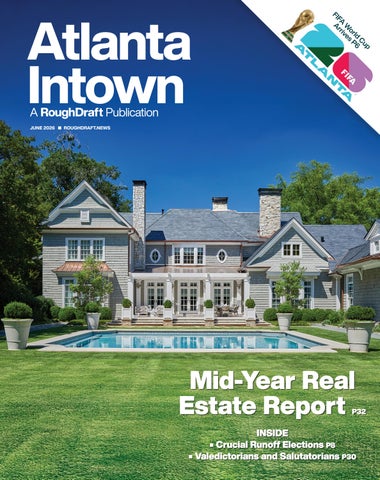
Each month, 27,000 copies of Atlanta Intown are mailed to homes and distributed to businesses in and around ZIP codes 30306, 30307, 30308, 30309, 30324 and 30329. For delivery information, delivery@RoughDraft.news
To subscribe to home delivery, ($75 / year) email delivery@RoughDraft.news
On Sept. 18, 1990, I was standing in the newsroom of the Marietta Daily Journal with my colleagues watching a television suspended from the ceiling. We were waiting for the announcement from Tokyo on which city would host the 1996 Summer Olympics.
EDITOR'S NOTE
Collin Kelley
When the head of the International Olympic Committee announced Atlanta had won the games, the newsroom erupted in cheers. On the TV, then-Mayor Maynard Jackson rubbed his hands through his hair in relief, and the camera cut to ecstatic crowds at Underground Atlanta.
Fast forward to June 16, 2022. I was sitting on my sofa watching a live stream from New York City when Atlanta was announced as a host city for the 2026 FIFA World Cup. Not quite as exciting as being in a busy newsroom, but still a moment to celebrate.
Stadium is a great venue. The surrounding Centennial Olympic Park, World Congress Center complex, and newly opened hotels, businesses, and restaurants at Centennial Yards and South Downtown make for a great welcome mat for Atlanta.
I was a mere child in 1996 (okay, I was 26) when the Olympics rolled into town for 17 days that summer. In the four years leading up to the opening ceremony, Atlanta underwent a dramatic transformation – and I’m not just talking about repaving streets.
The creation of Centennial Olympic Park reclaimed a derelict piece of property in Downtown and spurred the transformation of the Westside. An Olympic Stadium (now Center Parc Stadium), a natatorium, and athlete housing (now Georgia Tech dorms) were some of the venues built for the games, but the overall glow-up of the city remains a distinct memory.
The 1996 Olympics were marred by the pipe bombing at Centennial Park. I was in a car with friends just a block away when the detonation occurred. We saw people running and heard sirens blaring, but didn’t know what was happening as
Like the Olympics, the news and promotion of the World Cup has saturated social media, television, news, and most discussions about the future of Atlanta for the past four years. And just like 30 years ago, I was sick of hearing about it.
Don’t get me wrong, I’m thrilled the World Cup is coming to Atlanta, but the relentless buildup really does wear you down. But I have noticed that the mood in the city doesn’t seem to be quite as excited about the World Cup as it was with the Olympics.
Maybe it’s the state of the world, the economy, or politics, but the palpable excitement is missing for this next sporting event that will shine a global spotlight on the city.
The question I hear and see most asked about the World Cup: “Is Atlanta ready?” Say what you want about traffic, infrastructure, nightlife, or the city’s international appeal, Atlanta is more than ready.
The world-class Mercedes-Benz
we sat in an hours-long traffic jam as law enforcement tried to clear the area.
Security will be extra tight for the World Cup, especially with all the political upheaval and animosity toward the U.S. these days, and I trust that the Atlanta Police Department and partner agencies will have the stadium and other venues secure for the matches.
I have two other memories of the Olympics that stand out: Standing on the side of a road down in Fayetteville, GA as the Olympic torch passed by, and standing on Peachtree Street as some running event took place. What really stands out about both those recollections is the crowds cheering and a feeling of kindred spirit that we were witnessing history together.
I hope we can somehow recapture that same feeling and spirit for the World Cup at the various fan events happening across the metro (turn to page 6) and recognize that these matches are another evolution in Atlanta’s growth and place on the global stage.
Free FIFA World Cup watch parties, festivals, and fan events around Atlanta
By Sarra Sedghi
No World Cup tickets?
No problem. There are plenty of fan activation events taking place throughout metro Atlanta this summer. These events highlight what makes Atlanta and soccer so special, welcoming people to join in on all the World Cup excitement at no cost.
Celebrate the World Cup without setting foot inside Mercedes-Benz Stadium by attending one of the following watch parties, fan festivals, or soccer events around ATL.
Decatur WatchFest
This 34-day festival located in Decatur Square emphasizes live music, with 21 different acts performing between June 11 and July 19. While tickets to the concert series opener (Big Boi) and closer (Indigo Girls) are no longer available, you can still obtain free tickets for Grammy-winning duo The War and Treaty’s performance on June 25. In addition to these larger
acts, Decatur WatchFest will also include 18 free concerts featuring local musicians, along with outdoor screenings of World Cup matches. Check out the complete list of concerts and match screenings at decaturwatchfest26.com.
FIFA Fan Fest
Centennial Olympic Park will host FIFA Fan Fest
June 11-15, June 17-21, and June 24, 26, and 27, as well as July 1, 7, 11, 14, and 15. Register for free general admission passes, plus passes ($45-65), and VIP packages ($225-325). Each day of the festival will include a main stage for watching World Cup matches and feature a small community soccer pitch, playground, and the Georgia Street marketplace. Passes and details at atlantafwc26.com/fan-fest.
Mutation Brewing
Mutation Brewing and Distilling Company in Sandy Springs will screen every single World Cup match on a projection screen and on all of the brewery’s TVs. In addition to craft beer and cocktails, expect a full food menu, ample indoor and outdoor seating, and free parking. Check visitsandysprings.org for more details.
ATL Beltline Fest
Revel in World Cup excitement right on the Southwest Beltline at this free, two-day festival at Pittsburgh Yards. On June 20, soccer fans can catch the Netherlands vs. Sweden match and enjoy an extensive vendor marketplace, live performances, DJ sets, food trucks, soccer clinics, field games, cooking demos, and kid-friendly activities, starting at 10 a.m. On June 21, expect the same lineup, but with screenings of the Spain vs. Saudi Arabia and Belgium vs. Iran matches. Visit beltline.org for more details.
Ashford Lane
Ashford Lane in Dunwoody is offering a series of World Cup events on the lawn throughout June and July. A World Cup kickoff party takes place on June 6, starting at 4 p.m. Watch the USA vs. Australia match on June 19 and the World Cup final on July 19. These events are free to attend and will include food and drink specials, soccer experiences, and familyfriendly activities. Get more information at ashfordln.com.
Funwoody watch parties
Michelob Ultra and Funwoody restaurants will host a series of World Cup watch parties during the first round to include USA vs. Paraguay on June 12, England vs. Croatia on June 17, USA vs. Australia on June 19, England vs. Ghana on June 23, and USA vs. Turkey on June 26. Funwoody will show the matches on The Lawn’s big screen. These soccer events will also feature a raffle for two tickets to a local match and two tickets to either a semifinal or final World Cup match in Atlanta. Get more information at discoverdunwoody.com.
“A Celebration of Soccer & Sound” at Piedmont
Park
Showcase Atlanta and ONE Musicfest will throw a collaborative festival event on July 19, starting at 11 a.m., in conjunction with the World Cup final. In addition to a live screening of the final World Cup match, the festival will feature live performances, a market with local food and merchandise vendors, interactive fan zones, and a family-friendly kids zone. The event is free to attend, but RSVPs are required at showcaseatlanta.com.
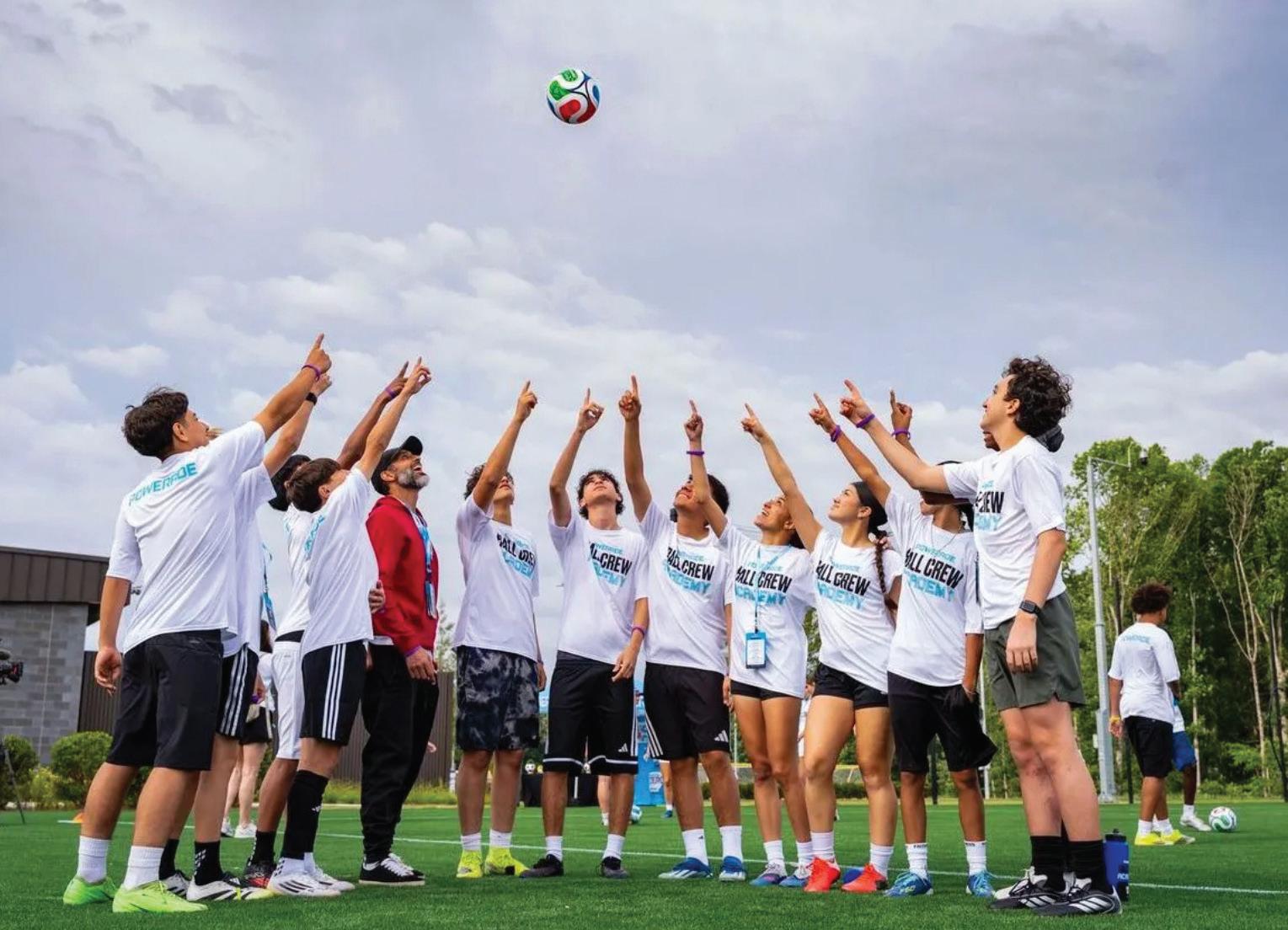
FIFA and Powerade held a training camp for the 2026 World Cup’s official ball crew on May 12. (Photo courtesy Powerade)
Crawford Jones, Governor Brian Kemp, Carles Puyol, Henrique Braun, Mayor Andre Dickens, and Bea Perez pose with the World Cup trophy. (Photo by Sarra Sedghi)
Candidates prepare for highstakes runoff election on June 16
By Collin Kelley
Georgia voters set the stage for a series of high-stakes runoff elections on May 19 as crowded Republican contests for governor and U.S. Senate failed to produce outright winners in the state’s primary.
Republican Lt. Gov. Burt Jones and healthcare executive Rick Jackson advanced to a June 16 runoff in the GOP race to succeed Gov. Brian Kemp. Jones, who was endorsed by President Donald Trump, finished ahead of Georgia Secretary of State Brad Raffensperger and Attorney General Chris Carr in one of the country’s most closely watched gubernatorial primaries.
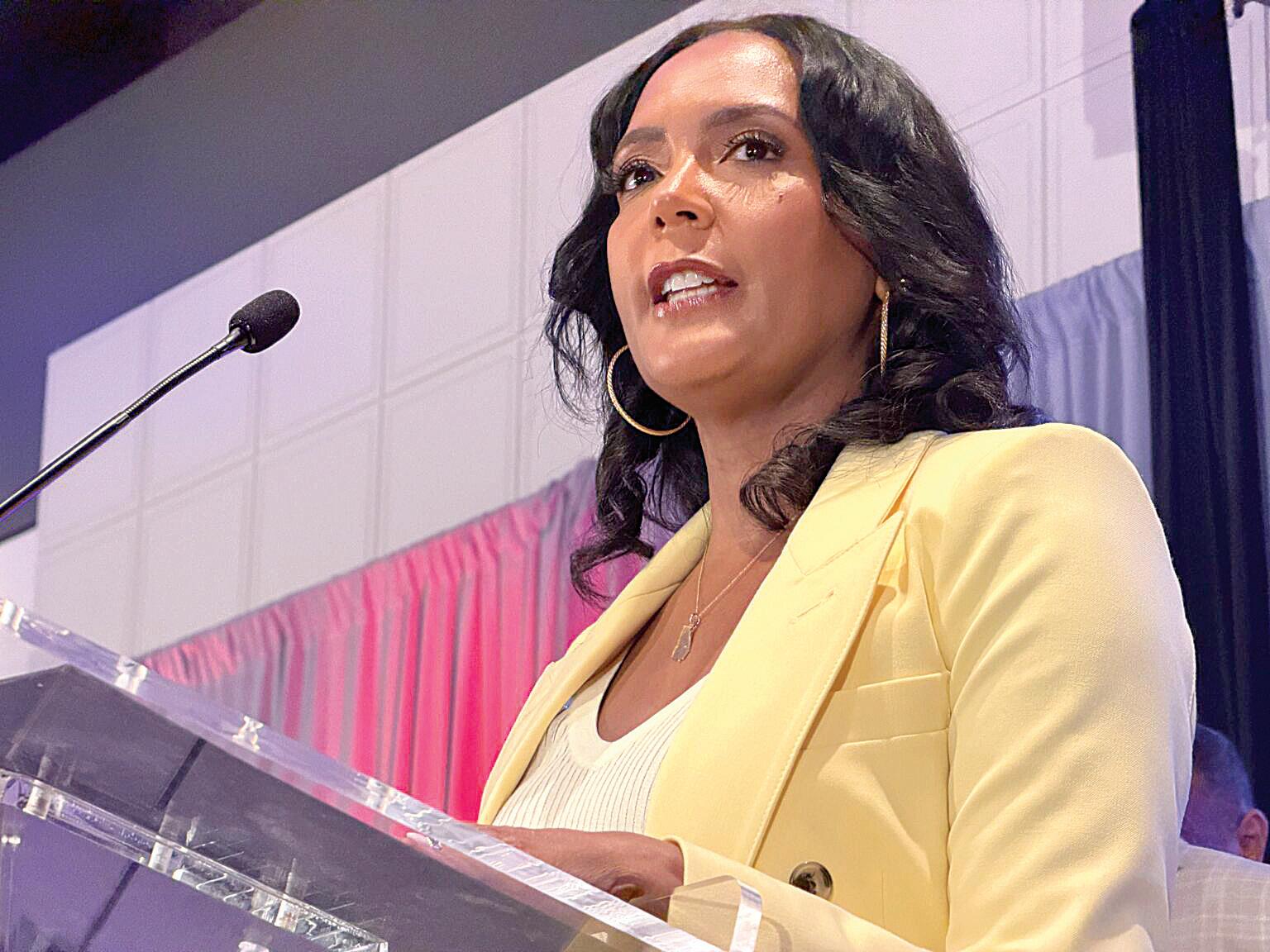
On the Democratic side, former Atlanta Mayor Keisha Lance Bottoms blew past six other candidates to secure the nomination for governor without a runoff, going straight to the November ballot.
Georgia’s Republican U.S. Senate primary also headed to a runoff, with U.S. Rep. Mike Collins and former college football coach Derek Dooley advancing to the June contest. The winner will challenge incumbent Democratic Sen. Jon Ossoff in November.
Several other statewide races also remained unsettled. Democratic candidates Josh McLaurin and Nabilah Islam Parkes advanced to a runoff for lieutenant governor, while Republicans John F. Kennedy and Greg Dolezal moved on in the GOP contest.
In judicial races, incumbent Georgia Supreme Court justices Charlie Bethel and Sarah Warren held off challengers in expensive statewide campaigns.
Here are the major metro Atlanta-area candidates who advanced to Georgia’s June 16 primary runoff elections after no candidate secured more than 50 percent of the vote.
Governor (Republican runoff)
Burt Jones
Rick Jackson
U.S. Senate (Republican runoff)
Mike Collins
Derek Dooley
Lieutenant Governor
Democratic runoff
Josh McLaurin
Nabilah Islam Parkes
Republican runoff
John F. Kennedy
Greg Dolezal
Secretary of State
Democratic runoff
Dana Barrett
Penny Brown Reynolds
Republican runoff
Tim Fleming
Vernon Jones
Insurance Commissioner (Democratic runoff)
Keisha Sean Waites
DeAndre Mathis
Labor Commissioner
(Democratic runoff)
Nikki Porcher
Michelle Sanchez
State School Superintendent
(Republican runoff)
Richard Woods
Fred Longgrear
Public Service Commission
District 5 (Republican runoff)
Josh Tolbert
Bobby Mehan
Fulton County Commission Chair (Democratic Runoff)
Robb Pitts
Mo Ivory
Keisha Lance Bottoms (Provided)
Atlanta Police charged Jahmare Brown, 21, with the stabbing death of Alyssa Paige, 23, on the Atlanta Beltline Northeast Trail. Police said Brown randomly attacked Paige after assaulting a postal worker with a rock at a nearby post office on May 14.
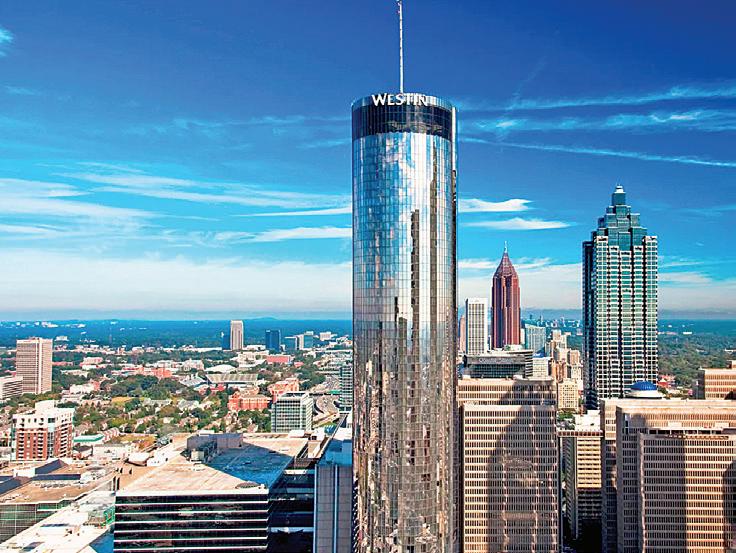
Portman Hospitality Fund has acquired the Westin Peachtree Plaza from Marriott International, bringing Atlanta’s most recognizable hotel tower back under the control of the firm that designed and built it nearly 50 years ago. Portman plans renovations to rooms and public spaces in the tower.
Fulton County Sheriff Pat Labatt called for the GBI to review the case of an inmate at the county jail who lost his legs to an infection after alleging a lack of medical treatment while incarcerated. Labatt made the move after members of the Fulton County Commission suggested he be suspended over the incident.
Work is underway on a controversial $10 million pedestrian bridge connecting the Georgia State Capitol building to a new legislative building over Martin Luther King Jr. Drive. The bridge is slated to be installed this month.
Pushback stalls proposed second Beltline trail for bikes, scooters
By Logan C. Ritchie
Dozens of supporters showed up to speak in favor of rail on the Atlanta Beltline at the May 18 Atlanta City
Council meeting – a direct reaction to Council member Mary Norwood’s proposal to pave a second trail for bicycles, e-bikes, and scooters.
“The legislation to pave a separated
bike path in the transit lane would be an enormous mistake,” one Atlanta resident said. “Not only would it be wasteful to pave it and then rip it up later, but Atlanta is not known for temporary fixtures being anything other than permanent.”
Norwood’s resolution had already been tabled after enormous pushback from the community, with light rail advocates calling her plan to pave a second trail “illconceived.”
Norwood made the resolution to pave a second trail “to enhance safety, reduce collisions, and support multi-modal transportation options” at the May 3 council meeting. At the May 13 Atlanta City Council’s Transportation Committee meeting, Norwood made a motion to hold the resolution until late summer.
“We are not going to do anything to even look at this legislation until after FIFA, and we will do it with a lot of people at the table and have a very important conversation,” Norwood said. “I’ve heard from both sides of the aisle, but there will be nothing done until late summer after FIFA.”
Several constituents spoke at the committee meeting, calling Atlanta’s lack of light rail “embarrassing” and “NIMBYism.”
Paving over the Beltline corridor would be a huge mistake, and the city cannot afford a project of that size, resident Michael Keith said during public comment.
The “wheels and heels” resolution claims the growing popularity of bicycles and motorized devices on the Beltline has increased congestion and created safety concerns. The plan includes signage, pavement markers, and enforcement.
Beltline Rail Now – a nonprofit organization advocating for 22 miles of light rail – said a second paved trail would preclude mass transit plans and change the purpose of the Beltline. As they see it, the Beltline light rail would connect schools, neighborhoods, and other forms of transportation.
“You won’t find disagreement with us about improving the safety on the Beltline. Where you will find disagreement is whether killing the transit is the answer,” Beltline Rail Now Chair Matthew Rao
said.
A press release from the organization said Atlanta is facing an unparalleled transportation crisis of mobility, affordability, sustainability, and equity.
Instead of using her position to solve that problem, the press release asserts that Norwood has advanced a motion that will prevent the solution that voters have approved and have paid for: Beltline rail mass transit.
Opposed to Beltline rail because of its “astronomical” cost, the Better Atlanta Transit organization said the project is set to cost approximately $3.5 billion. “There are absolutely no studies that show that there’s the amount of ridership on the Beltline to justify a $150 million per mile rail system,” Better Atlanta Transit spokesperson Ken Edelstein said.
“The mix of pedestrians, cyclists and scooters along congested segments of the Beltline has created a public-safety hazard that cannot be ignored,” Edelstein said. “Norwood deserves credit for addressing this concern in a way that would enhance what’s best about the Beltline while building on its explosive success as a micro-mobility greenway.”
Better Atlanta Transit generally supports Norwood’s vision – with suggestions.
“We would advocate wheels-and-heels along the most congested segments of the Beltline, most obviously the Eastside Trail. It’s not clear that a second track is needed at this point all the way around the loop,” Edelstein said. “Council should pair the project with operational changes such as ensuring that speed limits and vehicle restrictions are posted and enforced on the wheels.”
Edelstein said he’s in favor of design professionals exploring a new walking path through the trees and meadows on undeveloped Beltline land rather than a new track for wheeled vehicles. Greenspace preservation should be encouraged as part of any improvements, he added.
Rao questioned why Norwood would propose the resolution without meeting stakeholders.
Norwood did not respond to Rough Draft’s requests for comment.
Hot J une Listings
RESULTS
By Logan C. Ritchie and Collin Kelley
Atlanta Mayor Andre Dickens is scaling back a plan to funnel up to $10 billion to affordable housing and wrap-around services through the Neighborhood Reinvestment Initiative (NRI), a plan that’s been under scrutiny for a year.
NRI was created to revitalize underserved neighborhoods in Atlanta by freezing the property tax base in tax allocation districts (TAD) and feeding new revenue into affordable housing developments, healthcare, transit, and early childhood education centers.
Months of collaboration with stakeholders, elected officials, and the NRI commission went into the “living document,” Dickens said.
Now, Dickens wants to drop two of the original eight TADs when they expire: the Beltline TAD, the largest in Atlanta and set to expire in 2030, and Perry-Bolton TAD, which expires in 2041. The Beltline TAD brings in around $80 million in annual revenue.
Westside, Eastside, Campbellton Road, Hollowell–Martin Luther King Jr., Metropolitan Parkway and the Stadium Area TADs would be renewed under Dickens’ proposal.
At the May 18 Atlanta City Council meeting, Dickens said the plan represents one of the most comprehensive neighborhood investment strategies in the city’s history.
“This package includes the largest neighborhood stabilization investment proposal in Atlanta’s history … to help residents remain in their homes, preserve affordability, stabilize neighborhoods and create pathways to opportunities,” Dickens said.
Preliminary results from the TAD audit – out in June – identify
“a need for stronger accountability structures, clearer measurable goals, more consistent reporting and greater transparency around how outcomes are tracked and communicated to the public,” Dickens said.
“Inequity in Atlanta did not happen overnight, and it will not be solved overnight. But this package represents one of the most comprehensive neighborhood investment strategies in our city’s history,” Dickens said. In other council action:
The council unanimously supported a resolution to study the potential of privatizing security screening at Hartsfield-Jackson. If the Department of Aviation agrees to study a private screening model under the TSA Screening Partnership Program (SPP), it will be conducted by an independent third-party consultant.
Also, a rezoning request to build a controversial apartment building for homeless senior citizens in Kirkwood was approved by the council under its consent agenda. There was no discussion by council members or public comment. The 0.66-acre property located at the corner of Howard and Hallman streets is being rezoned from single-family housing to planned development housing for the apartment building on the property owned by Turner Monumental AME Church.
The project was originally pitched to the neighborhood by the church and its development partner, Stryant Investments, as permanent supportive housing (PSH) for homeless seniors aged 62 or older with social services on-site. By the time the zoning request reached the city’s Zoning Review Board on April 30, the project was summarized as “multi-family residential units” with no support services.
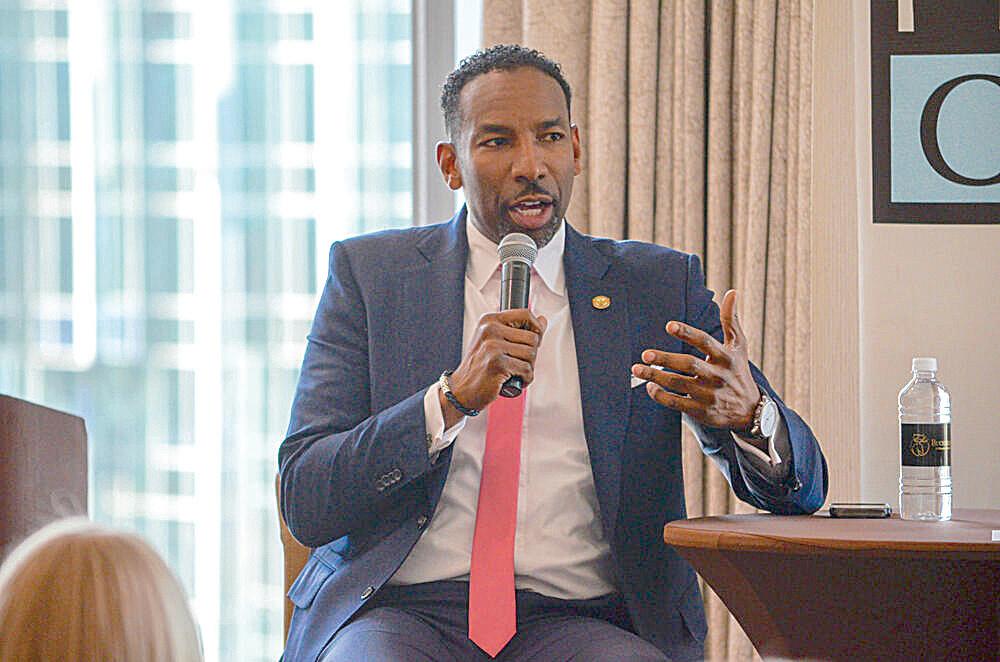
Mayor Andre Dickens (File)
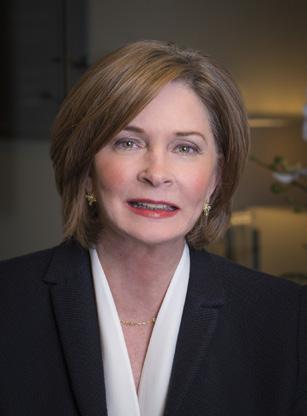
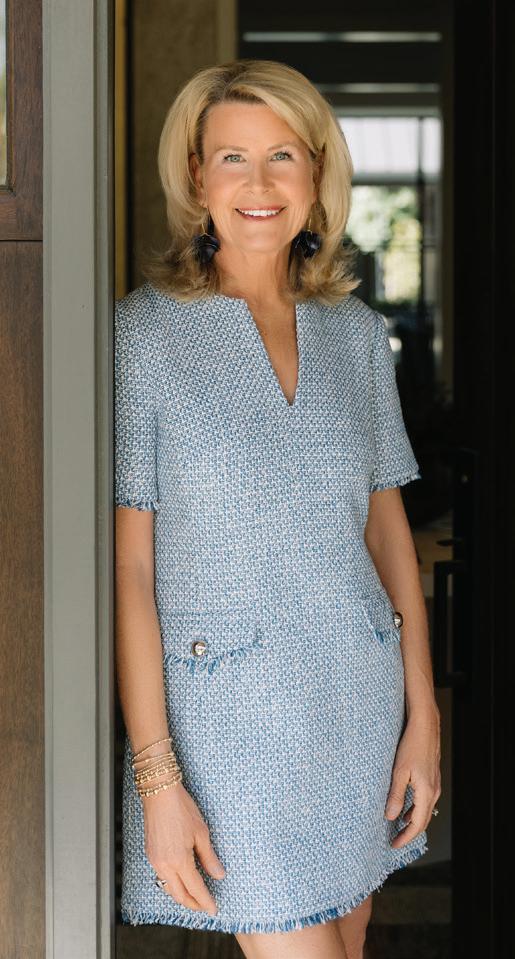
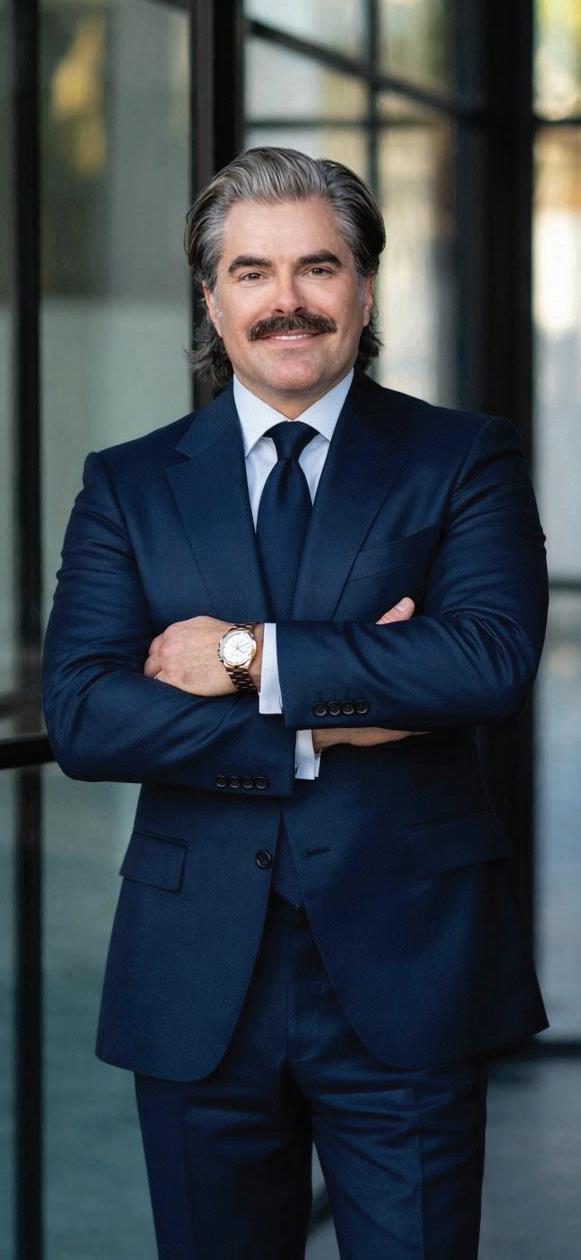
Since 1998, I have had the privilege of helping clients across Atlanta navigate life’s biggest investments. I lead with integrity, attention to detail and a deep understanding of the market.
Whether you're buying or selling, you deserve representation at the highest level.
Carmen Pope
FOUNDING PARTNER
SUSTAINABILITY
Birdsong, land conservation, and Ted
By Sally Bethea
m. 404.625.4134 o. 404.874.0300 carmenpope@atlantafinehomes.com carmenpope.atlantafinehomes.com
ABOVE THE WATER LINE
At 5:20 a.m. on a Monday morning, I sat in my car in a large, empty parking lot surrounded by pitch-black darkness and wondered if I was crazy. Should I walk alone down the forested trail beside the Chattahoochee River, as planned? No other vehicles or people were in sight. The midMay sunrise was still well over an hour away. A reflection of the waning crescent moon created a moonglade on the river’s surface. In the far distance, I could see an orange streak: the headlights of cars and trucks speeding across a highway bridge over the river. Overcoming my trepidation, I locked my car, turned on a small flashlight, and proceeded down the public walking trail in the darkness. The sound of thundering traffic on a nearby interstate highway retreated. But for the slap of river water against rocks and a few singing tree frogs, chirping crickets, and buzzing insects, the path into the Cochran Shoals unit of the Chattahoochee River National Recreation Area was quiet. The morning air was still. It was simultaneously spooky and calming.
Feathered Orchestra
From deep in the forest, I heard a barred owl with its distinctive hooting call, memorably described as “Who cooks for you?” Turning onto a smaller
trail through wetlands, I paused on a boardwalk, listening to the deep, “jug-orum’ calls of a bullfrog, and admired the silhouettes of trees against the dawning sky.
Suddenly, a Northern Cardinal in a bush near me pierced the early morning with one of its sixteen different calls. It was 6:08 a.m., half an hour before the official sunrise. The dawn chorus had begun! Slowly, and then more swiftly, the twitterings, tweetings, and chirps of wild birds joined together in song to herald the first light. Hope and promise for a new day.
My Merlin app – a mobile application developed by the Cornell Lab of Ornithology – lit up with names to match the mostly male birdsong. Wood thrush, vireo, warbler, scarlet tanager, eastern bluebird, indigo bunting, carolina wren, hawk, swallow, woodpecker, yellowthroat, eastern kingbird, goldfinch, heron, and more. Thirty-two distinct bird voices in all.
Researchers believe that the dawn chorus, which peaks in May, is primarily about courting female birds, defending territory, and communicating food locations. This theory holds that only the strongest, best-fed males will produce the loudest songs, attracting females and deterring rival males.
I much prefer to believe, as Terry Tempest Williams writes in “When Women Were Birds,” that wild birds sing at dawn to heal the world through joy. To remind us of the wonder of life and that the world is meant to be celebrated. Land Conserved For All
America’s public lands, like the Chattahoochee River National Recreation Area, are places where we can experience the dawn chorus in protected forests and along rivers that belong to all of us: our natural heritage. Set aside for public use and enjoyment over the past 150 years, these federal, state, and local lands offer natural history lessons, natural beauty, and stories about our shared past. They safeguard the wondrous variety of species that live on our planet.
Alarmingly, our cherished public lands in the United States are under siege by the Trump administration. Over the
Sally Bethea
past year, actions have been taken that will harm the places that inspire us, enrich our well-being, provide exceptional recreation opportunities, serve as havens for wildlife, and sustain local economies. Trump’s federal agencies are exploiting the public trust and selling our natural heritage to the highest bidder. The list of outrages is staggering and ongoing.
Visit Alaska now, before it is ravaged by mining companies, loggers, and climate change. Ditto the Boundary Waters wilderness and its lakes, where Trump’s people have opened the door for sulfide-ore copper mining in its watershed. Think heavy metals and sulfuric acid draining into pristine waterways. In time for Mother’s Day this year, officials repealed the “public lands rule,” eliminating the (overwhelmingly popular) requirement that conservation be considered alongside mining, drilling, timber, and grazing across 245 million acres of public lands.
Despite strong opposition to these attacks on the lands that belong to all of us, we are losing our country–one national park, forest, river, wildlife species, desert, mountain range, and cultural site at a time.
Hero for Atlanta and the World
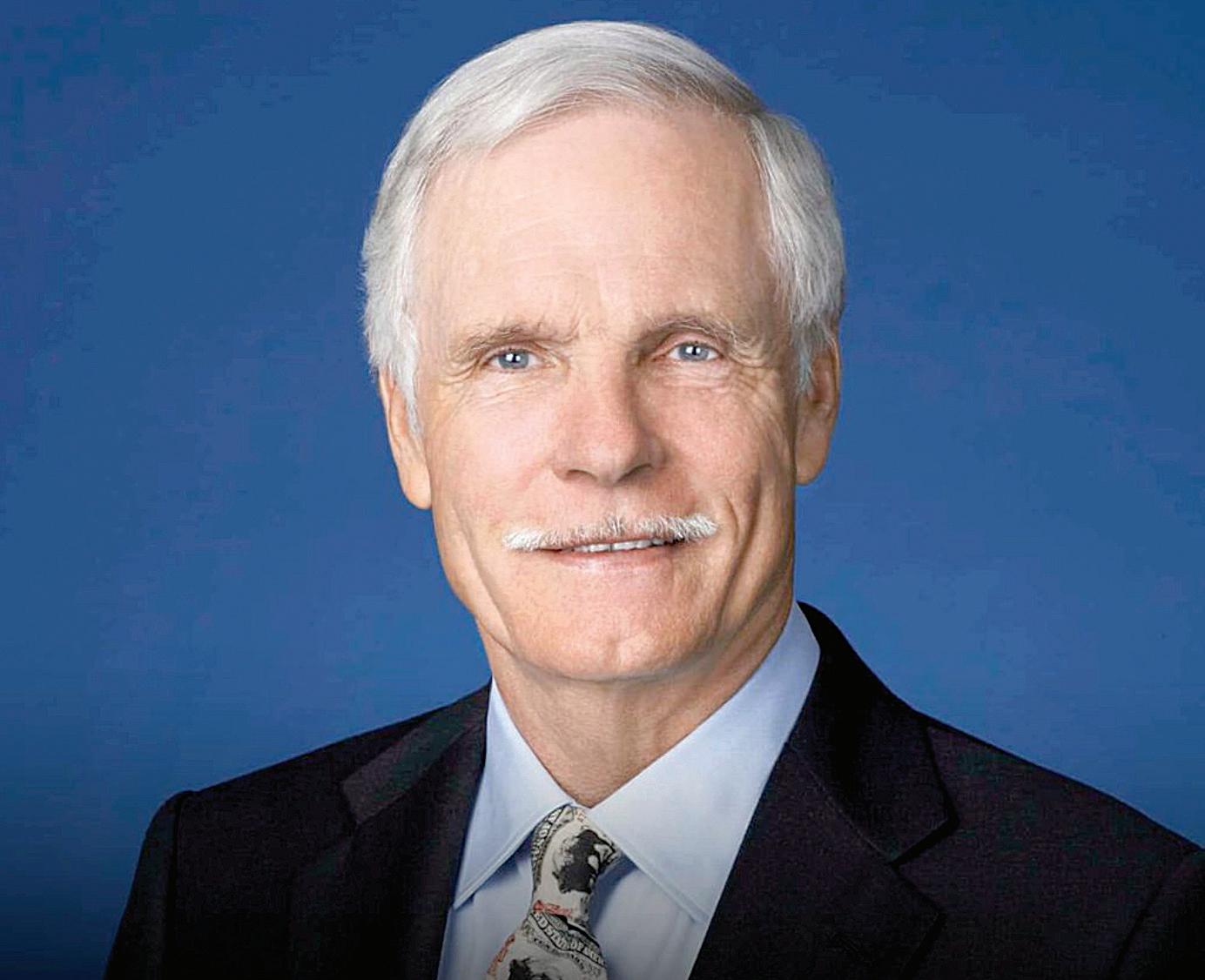
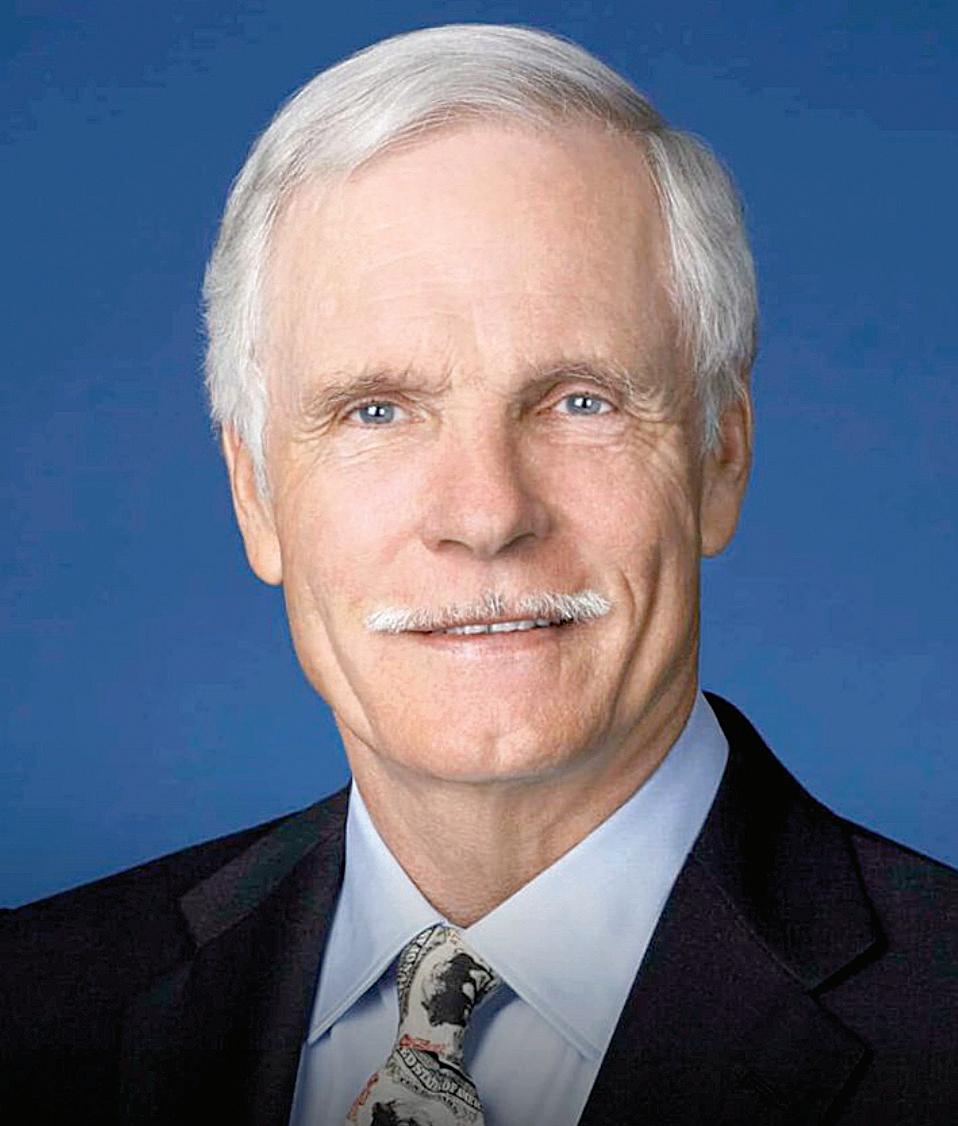
Like many Atlantans and millions of people around the world, I’ve been thinking and reading about Ted Turner since he died on May 6. In fact, I can’t
stop. Ted was our city’s bigger-thanlife hero: an authentic, fun, complex, steadfast believer in saving all life on this fragile planet. With his outsized vision for the world, Ted could see the dangerous trajectory of our overexploitation of nature – what it would do to all species on Earth, including humans.
“Save Everything” was not just the bumper sticker on Ted’s small electric car; it was what he tried to do as he conserved millions of acres of land and invested in habitat protection and restoration for rare and endangered species. Public lands are important for environmental protection, but so is private land. Ted revived entire ecosystems. His conservation successes helped the recovery of grizzly bears and wolves, prairie dogs and black-footed ferrets, birds, sea turtles, native trout, large mammals, plants, and the American bison.
Ted approached life with a relentless belief that even the most impossible goals were achievable, be they global communication, peacemaking, or the protection of all life on Earth. His greatest legacy may be this fearless conviction that dreams can be realized, if we “work like hell,” and don’t let setbacks stop our forward movement. I can’t imagine a more important time in our country’s history than now to embrace his philosophy.
For our July issues we will be feature photos of our readers with their beloved furry and feathered friends in the annual Pets & Their People issue, sponsored by Scenthound.
Grab your pup, kitty, rabbit, guinea pig, parrot, or other critters and pucker up for the camera.
Send your high-resolution images (1MB or higher) by June 12 to pets@roughdraftatlanta.com.
Be sure to include your name and your pet’s name.
Atlanta Intown A Publication
ARTS & ENTERTAINMENT
By Sherri Daye Scott
Eric Barnes has spent the better part of a decade building toward this moment. As founder of the Atlanta Music, Arts, and Culture Foundation (AMAAC), Barnes now launches what might be the most ambitious public art initiative this city has seen, timed – not coincidentally – to Atlanta’s biggest summer on the international stage as the 2026 FIFA World Cup arrives.
I’M SO ATL makes one thing clear from the start: this is not a festival. It’s bigger than that. It’s a three-phase series of large-scale art installations by Atlanta artists, rotating throughout more than 400 area parks this summer, in partnership with the City of Atlanta Parks and Recreation. The campaign kicks off at Piedmont Park, Shirley Clarke-Franklin Park, Cleopas R. Johnson Park, and Grant Park. Activations in smaller neighborhood parks and surrounding counties follow.
There is a festival involved, though. The campaign culminates with the free ARTlanta Festival of Culture at Piedmont Park, Aug. 7–9.
Rather than asking Atlantans to seek out art in a gallery or a ticketed venue,
Barnes and AMAAC are bringing it directly into the parks, on the sidewalks, and into storefronts. ” … truly unifying the city with homegrown beauty,” as Barnes describes it.
That philosophy traces back to AMAAC’s origins. Barnes founded it as a mechanism to provide access to cultural experiences for Atlanta creatives. Originally launched in 2017 as the nonprofit Hand Over Fist Foundation, AMAAC’s goal has always been, in Barnes’s words, to “unlock the gates that keep too many brilliant creatives from fulfilling their dreams.”
I’M SO ATL aims to bring together 1,000 artists across varying genres, disciplines, and backgrounds. Artists can submit work for consideration through July 31.
“Our goal is to give as many artists as possible a platform while encouraging commerce through it — whether for T-shirts, prints, mugs, etc.,” Barnes said. “Funding and commerce help these artists more than we realize.”
The ARTlanta Festival of Culture serves as the campaign’s flagship event. Its three days event at Piedmont Park promises live music, DJ sets, ensemble performances,
murals, paintings, photography and painting exhibits.
Partners in the I’M SO ATL campaign include The Trap Museum, Atlanta Indie Market, The Center Atlanta, Rolling Out magazine, and The Hype Magazine, among others. For Barnes, those partners represent Atlanta’s broader definition of creativity.
many creative communities, one that holds space for transplants and natives alike.
“Being creative isn’t just about putting brush to canvas,” he said. “A creative is someone who sees what is and imagines what isn’t.”
Beyond August, Barnes envisions I’M SO ATL as a unifying thread for Atlanta’s
“Whether you took a Delta flight here or rode MARTA to school,” he said, “we are all SO ATL.”
Artists of all ages and disciplines can apply at ImSoATL.org. Follow the I’M SO ATL campaign on Instagram at @im.so.atl.
A rendering of an I’M SO ATL public art campaign installation in a city park this summer. (Courtesy I’M SO ATL Campaign)
A Nostalgic Summer Vacation at Lake Oconee
Looking for things to do at Lake Oconee this summer or planning a weekend getaway near Atlanta? Just over an hour away, Lake Oconee is one of Georgia’s top summer destinations, offering everything from boating and fishing to berry picking and small-town charm.
Get Out On The Water
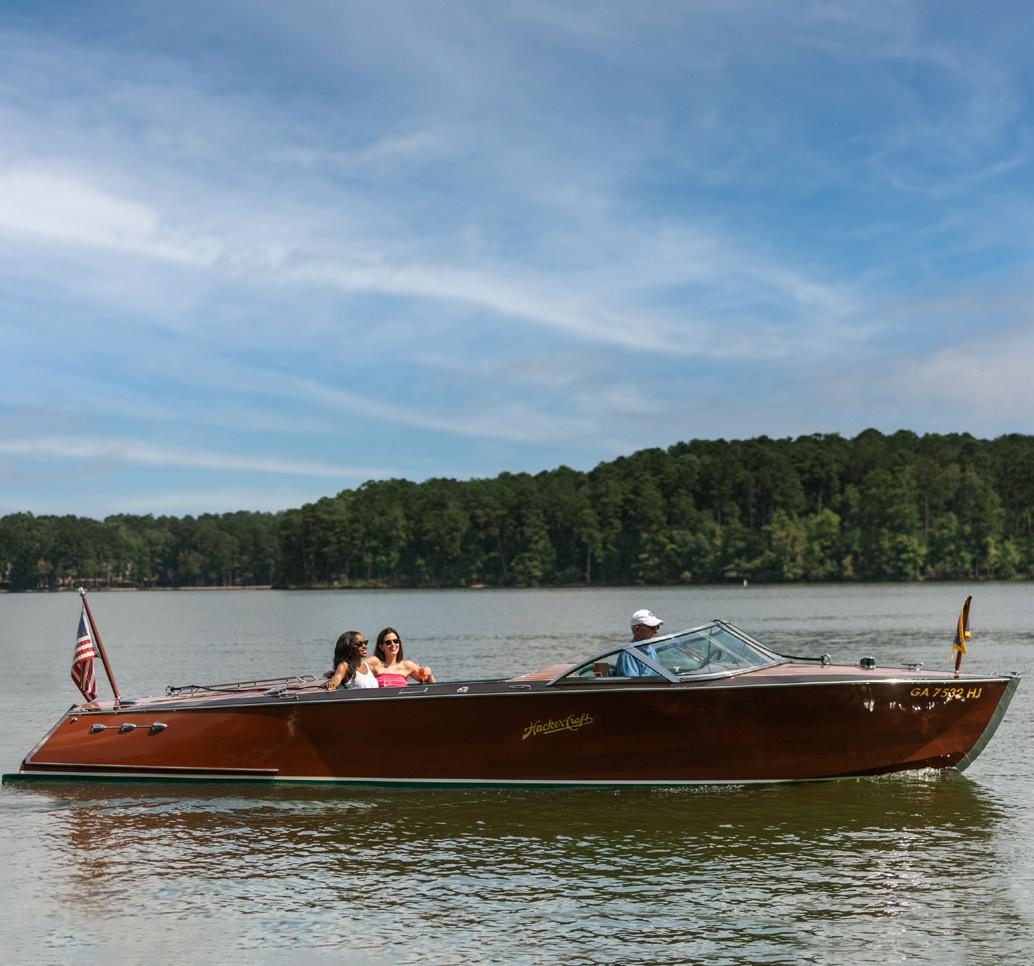
No classic summer is complete without a little time on the lake—and at Lake Oconee, there are countless ways to make a splash. Whether you’re cruising the shoreline on a pontoon boat, tubing behind a ski boat, or paddling out in a kayak, the water is where summer memories are made.
Jump Into Summer
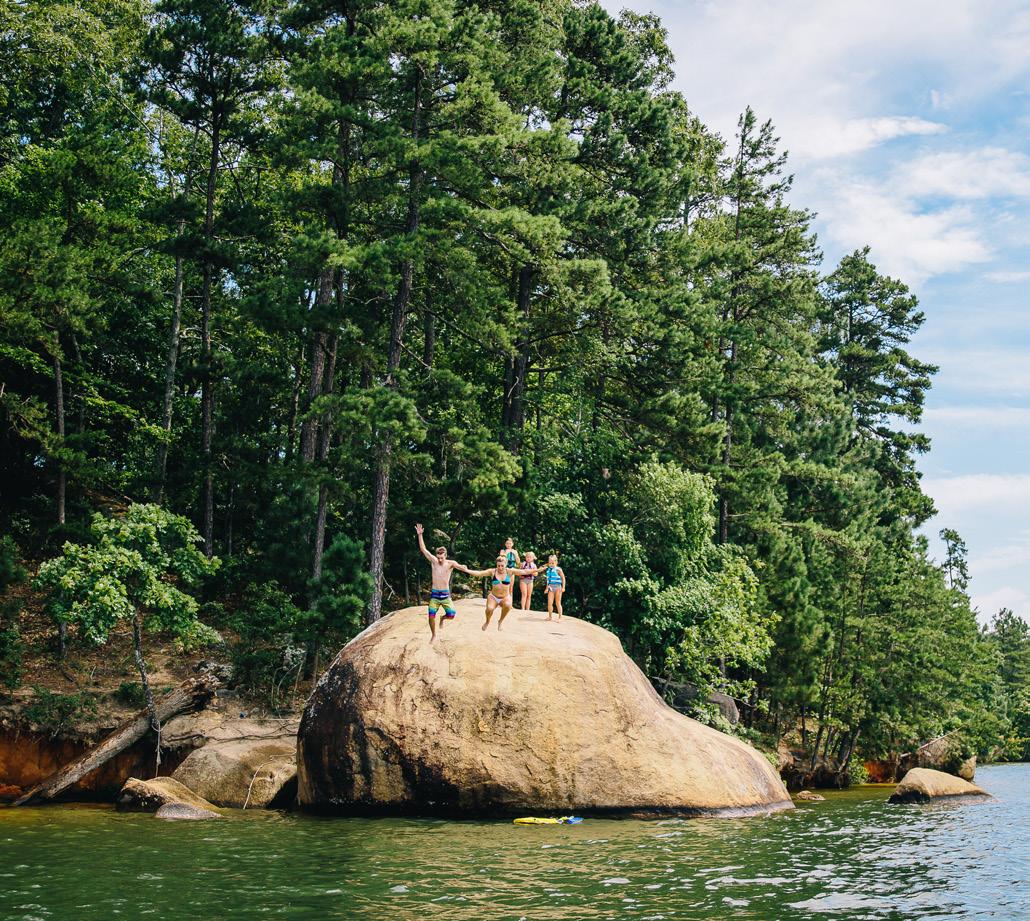
For many, the thrill of a summer day isn’t complete without a leap into cool waters from a favorite rock. Jumping Rock at Lake Oconee is just that place—a timeless spot where kids (and adults) can channel their inner daredevil and jump from the iconic rock ledge into the refreshing lake below. It’s an exhilarating throwback to simpler days when fun was measured by how high you could leap and how much laughter echoed across the water.
Cast a Line
For those looking to enhance their fishing experience, Reel Time Guide Service, led by Captain Smith, offers expert-guided trips on Lake Oconee. With over 30 years of experience, Captain Smith specializes in targeting species like striped bass, hybrid bass, and crappie. He provides tailored trips that cater to all skill levels.
Georgia Department of Natural Resources requires a license to fish in all public lakes in Georgia so, make sure you have one before you get on the water.
Soak In Live Music By The Lake
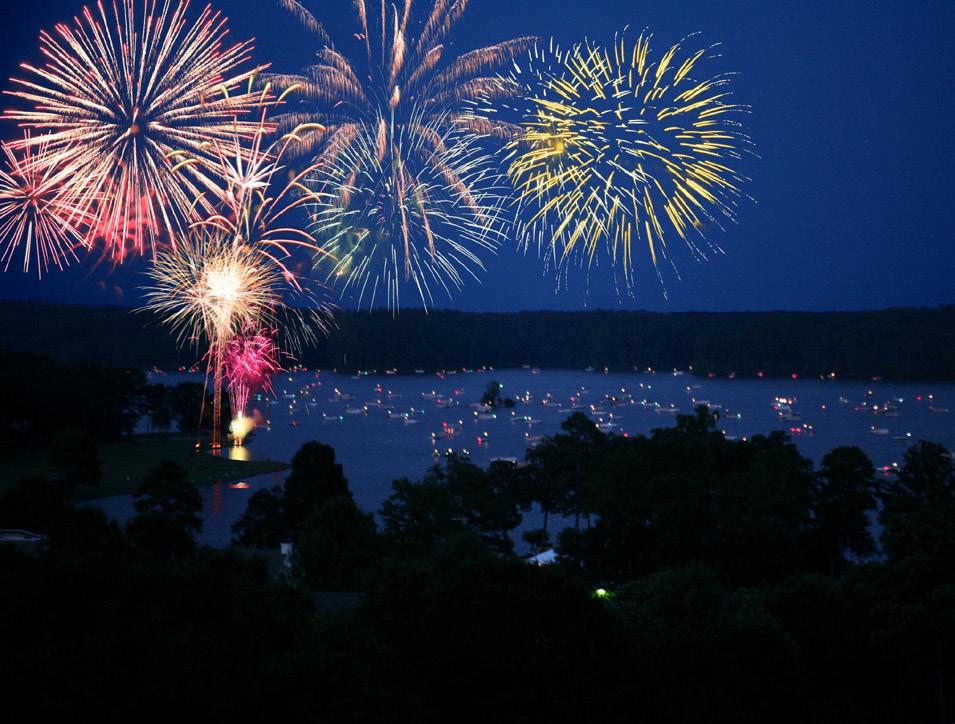
All resort guests at The Ritz-Carlton Reynolds, Lake Oconee are invited to The Backyard this summer for their Summer Concert Series. The resort will be hosting a wide variety of live musical entertainment on select dates from early May through Labor Day Weekend. Firework displays will occur on holiday weekends.
Camp Under The Stars
If your idea of the perfect summer includes sandy toes, grilled hot dogs, and nights under the stars, Greene County’s campgrounds deliver all the throwback charm. Old Salem Park, Parks Ferry Campground and the KOA offer peaceful lakeside settings where you can swim at the beach, cast a fishing line off the dock, and spread out a checkered blanket for a picnic beneath the pines.
A Day of Classic Summer Flavors in Greensboro
Morning:
Start your day the way summer mornings should—with a slow, satisfying breakfast at Café 44. Order the chocolate chip pancakes and a hot cup of coffee, and ease into the day with classic comfort food and a welcoming, small-town atmosphere.
Lunch:
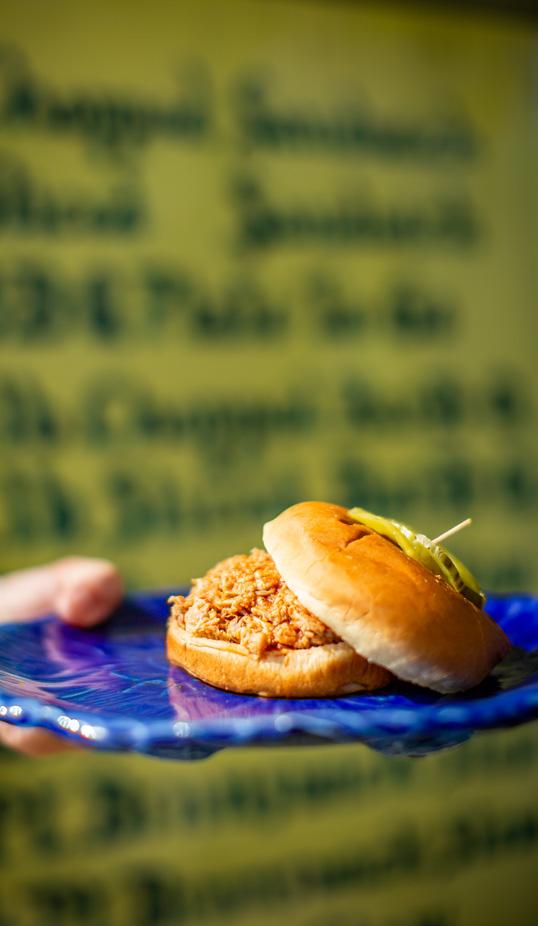
By midday, follow the unmistakable scent of hickory smoke to Holcomb’s Bar-B-Que, a local favorite since 1971. Grab a plate of tender pulled pork, tangy sauce, and all the classic sides—it’s the kind of no-frills, full-flavor meal that defines a Southern summer.
Don’t Skip Dessert:
Before the day gets away from you, stop by The Yesterday Café for a slice of their famous buttermilk pie—rich, custardy, and unforgettable.
Dinner:
End your day with a relaxed evening at Table at the Lake. Dine under twinkle lights in the courtyard, enjoy locally inspired dishes, and soak in the peaceful breeze—it’s the perfect way to wind down after a full summer day.
Go Berry Pickin’
Few summer memories are sweeter than picking sun-ripened berries straight from the bush—and at Hemi Blueberry Farm, that tradition is alive and thriving. Nestled just outside Greensboro, this charming, family-owned farm invites visitors to wander the rows, bucket in hand, and gather plump, juicy blueberries by the handful.
Snap The Past
Step back in time with a slow stroll through historic downtown Greensboro, where every sidewalk and vintage storefront tells a story. With a Polaroid camera in hand, you can capture the charm of this small Southern town the old-fashioned way—one instant photo at a time.
Slow Down And Soak It In
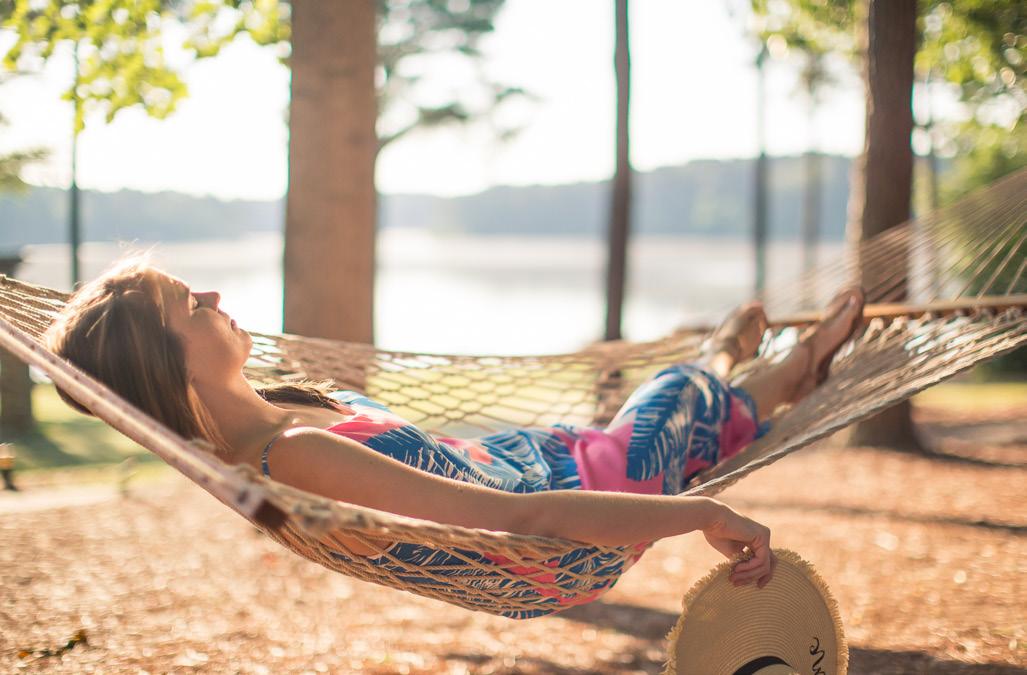
Sometimes the best summer moments are the quiet ones—rock on a porch swing, listening to the water lap against the dock, or feeling the warmth of the sun on your face with nowhere to be. At Lake Oconee, relaxation isn’t just encouraged—it’s part of the lifestyle.
Find your reason to linger longer this summer.
MILLION-DOLLAR MARKETING
Shaping communities by utilizing TikTok
By Joanna Rhee
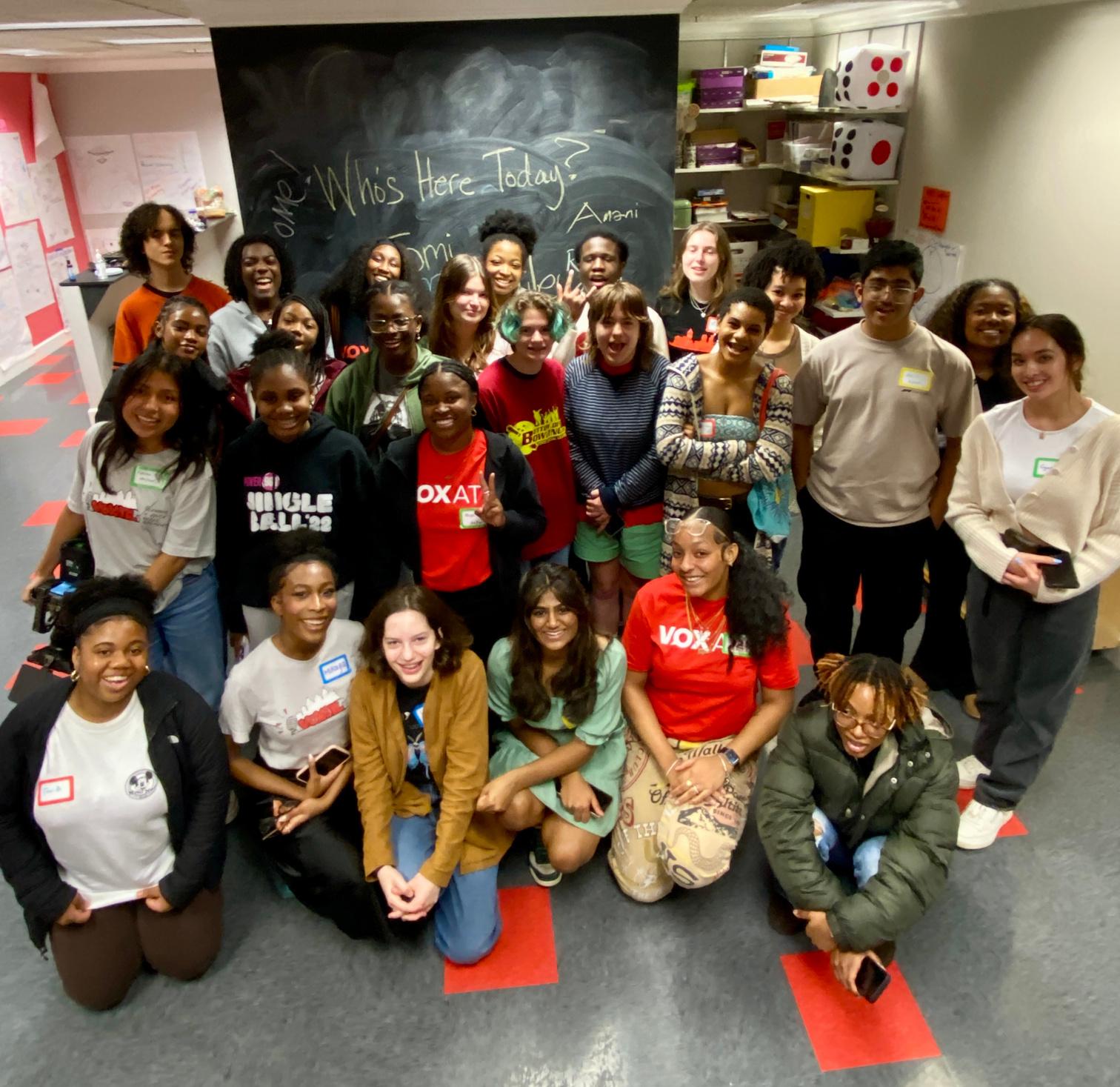
EDITOR’s NOTE: This story is a partnership with VOX ATL, a youth-led nonprofit media organization that prepares teens for life, career, and community by harnessing the power of youth voice and uncensored self-expression. Find out more at voxatl.org.
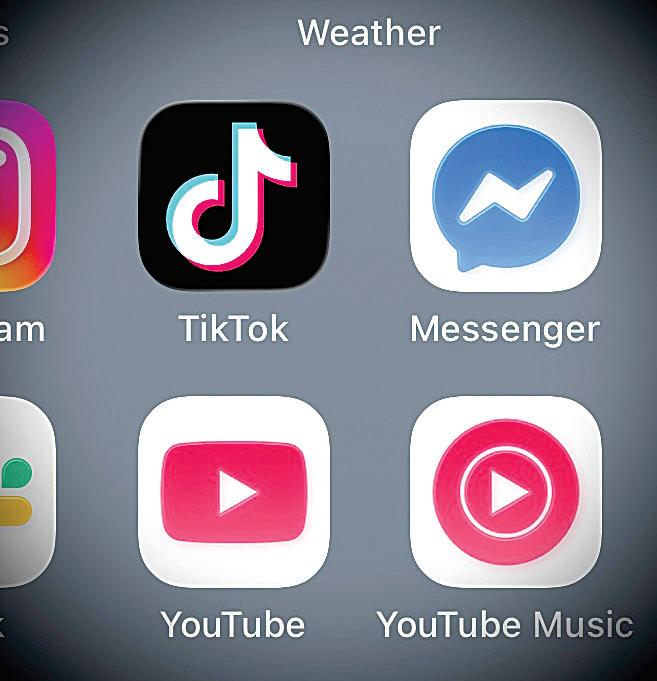
For years, adults have viewed TikTok as just another social media platform, an app where kids lip-sync and dance. But ask almost any teen in Atlanta, and they’ll tell you a different story. TikTok is a platform where youth can bond through shared experiences, but, most importantly, it’s a tool. A tool teens can utilize to voice their opinions and build a community.
Part of TikTok’s influence stems from its design. Unlike previous social media platforms, where content mostly reaches those who already follow you, TikTok’s algorithm pushes videos out to strangers through the FYP (For You Page). According to The Guardian, “Even if you have no followers at all, your video will eventually make it on to someone’s For You Page, and if they are deemed to have engaged positively, you can reach thousands or millions of viewers extremely quickly.”
TikTok is already a massive aspect of many Atlanta teens’ lives. According to a
2023 Pew Research Center study, 63% of teens aged 13 to 17 use TikTok, with 17% describing their use as almost constant. TikTok plays an “outsized role” in shaping the ways teens learn and communicate with one another.
In Atlanta schools, that impact shows up constantly, especially within student organizations. Kayla Holland, a sophomore at the Georgia Institute of Technology, is particularly familiar with navigating this app to help keep her campus informed in ways simple flyers can’t. “A lot of the clubs I’m in this year definitely try to use TikTok to promote any upcoming events or fundraisers we’re hosting,” she said, “It’s the easiest way to get information out to the students fast in my opinion, because, you know, almost everyone has TikTok nowadays.”
Her experience reflects a national shift not only toward promoting social events but also toward advancing social activism.
A 2024 article by a student at the Berlin School of Business and Innovation delves into how TikTok has proven to be a powerful tool for raising awareness about social and cultural Issues. They go on to explain how hashtag challenges and trends are commonly used to spread messages related to activism and inclusivity.
TikTok has played a central role in organizing movements. During the 2020 Black Lives Matter protests, the hashtag
changemakers across the globe, including Sofia Ongele, a nationally recognized Gen Z activist and software engineer who has used digital platforms like TikTok to mobilize youth around civic issues. Ongele first gained attention for her coding work during the Trump administration, when she built tools to streamline hate crime reporting and fight online misinformation. But she also uses TikTok to make civic education more digestible for teens. She explains topics ranging from voting rights to Supreme Court decisions in short videos that circulate widely among youth. Her advocacy has amassed over 300,000 followers on TikTok and earned her national recognition, including being named UNiDAYS Student Woman of the Year and a CES Young Innovator to Watch.
Youth-led organizations across Atlanta are now leaning more into short-form content, using behind-the-scenes videos to highlight volunteer work, highlight events, or introduce board members. This content feels a lot more personal and builds trust with the audience, the teens, than polished marketing that is often seen within content posted through Instagram or YouTube.
Experts continue to remind teens to use the platform responsibly. But for most Atlanta teens, TikTok’s benefits far outweigh its risks. The platform gives youth a way to voice their opinions and showcase their ideas that can directly shape communities right from their bedrooms.
#BlackLivesMatter surpassed 4.9 billion views on TikTok, according to CNN. TikTok empowers young
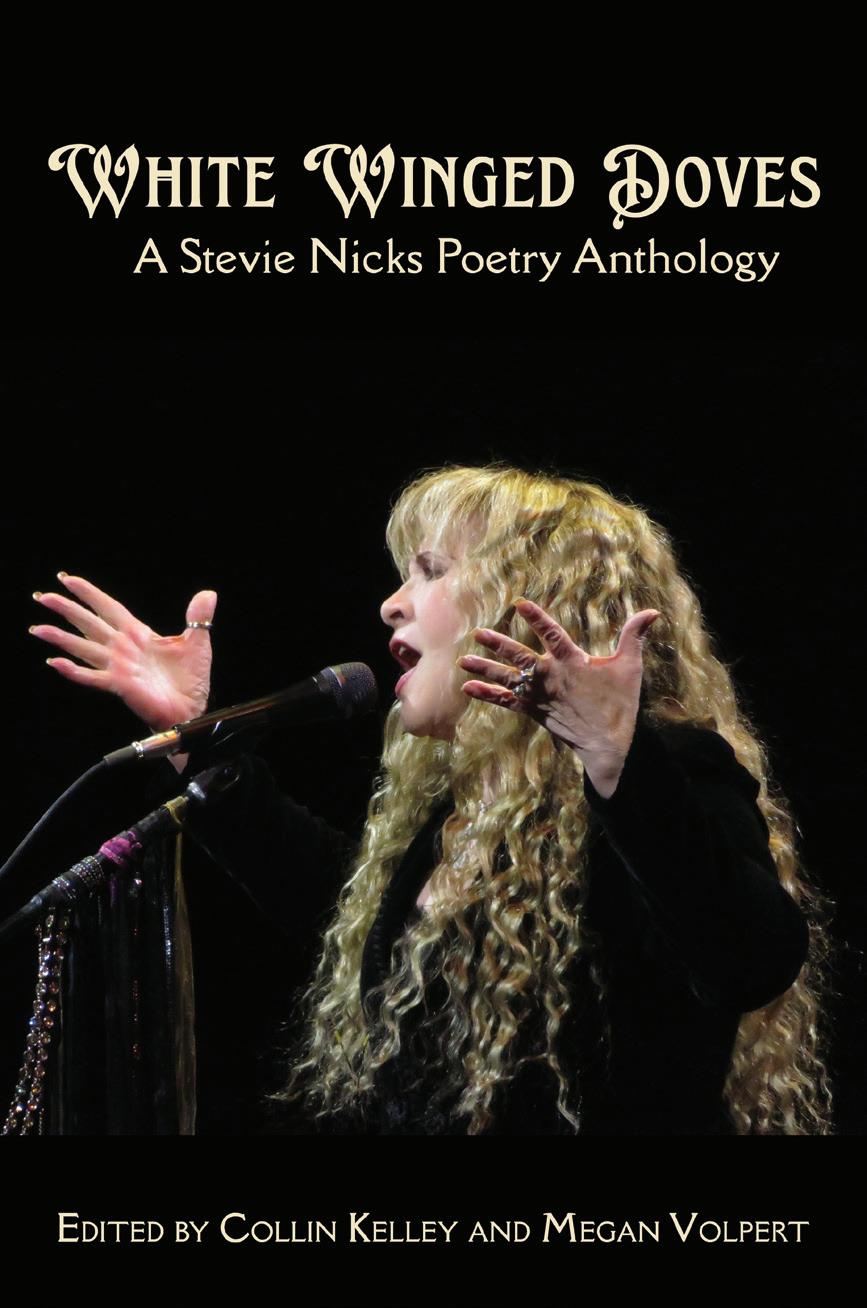
‘White Winged Doves’ celebrates Stevie Nicks through poetry
By Sammie Purcell
Reading through the introduction of “White Winged Doves: A Stevie Nicks Poetry Anthology,” it’s clear that its editors have very different relationships with the queen of rock and roll.
“I’ve grown up with her, the older sister I never had,” writes Collin Kelley, poet and executive editor of Rough Draft Atlanta. “Her poetry turned into songs that have sustained me for fifty years.”
“Rumours” was the first album Kelley ever bought, and Fleetwood Mac was his first concert. At this point, he said, he has seen Nicks in concert at least 15 times, maybe more. In contrast, his co-editor, author Megan Volpert, has seen Nicks live exactly once – and the only reason she was there was because Chrissie Hynde was the opener (Kelley was also at that show).
So, Volpert comes to Nicks from a slightly different angle.
“It’s a simple fact that no one has done more to advance the mainstream proliferation of witchcraft in America than Stevie Nicks,” Volpert writes in her introduction. “For this service, she is my sister, and this book is in honor of that. We don’t always like our sisters, but we
love them no matter what.”
Despite the different perspectives that Kelley and Volpert hold about Nicks, they can agree that however they feel, she’s someone who has forced them –
who has forced the world at large – to sit up and pay attention.
“Even though our opinions are disparate, I would say that we’ve both paid Stevie attention over a sustained period of time,” Volpert said. “Whether you call that cultural criticism or fandom is a matter of debate, and hair-splitting at some point. But we have both paid immense attention to her over time.”
After roughly two years of work, “White Winged Doves” will be released on June 16 by Madville Publishing. With more than 60 poets featured, the anthology touches not only on Nicks’ witchy persona, lyrics, and style, but also how her music has shaped their lives.
For the more than 50 years that Nicks has been in the spotlight, she has continued to command the public’s attention – whether it be through her work, her personal life, or her public persona. The longevity alone makes her worthy of an anthology.
Earlier this month, she popped up at the Met Gala to sing a surprise rendition of the Fleetwood Mac hit “Landslide” with
pop star Sabrina Carpenter.
“As evidenced by her appearance at the Met Gala [on May 4], which is all anybody is talking about – that dress, the performance with Sabrina Carpenter – she looks amazing, she sounds amazing, she’s back out on tour,” Kelley said. “She remains a relevant icon, just judging by the number of posts I’ve seen everywhere.”
When it came to how to honor Nicks, poetry was a no-brainer. Kelley and Volpert first met through poetry at the Austin International Poetry Festival. They’ve worked together on other poetry projects, but this is the first time that both of their names have appeared on the cover.
“It is special to us in terms of a commemorative portrayal of our similarities and differences and our friendship,” Volpert said.
But for as much as poetry means to the co-editors and their relationship, it was also the perfect medium for Nicks and her work. Kelley pointed out that so many of Nicks’ lyrics started as poems in her notebooks. The song lyrics stem from those poems, and then different collaborators help round out the music.
Lights, Camera, Action!
SCAD students write about ATL’s film & TV industry
By Collin Kelley
For our fourth collaboration with the Savannah College of Art and Design, we once again worked with the students in Paige Gray’s spring semester writing class. Last year’s partnership produced a special section with stories on Atlanta’s bustling food and dining scene.
This year, we’re going to the movies.
There’s been plenty written about Georgia’s film and television industry being in flux due to studios moving productions to Europe and other states with better tax incentives. While that change has left many creatives scrambling for work, there’s been an upswing in television and independent productions, plus the D.C. Universe has set up shop at Trilith Studios in Fayette County.
Outside the Gold Rush: How Georgia’s independent films miss out on tax incentives
By Callum Grobler
Metal armor sinks into mud as a knight, bloodied from battle and breathing hard, tries to regain his step. A roar erupts as a horse leaps at the knight, its rider swinging his sword down at him. The knight is quick, dodging the blow and returning with a swing to the man’s arm, knocking him from the horse.
The knight stands sword raised for the kill as the rider screams, “Cut!”
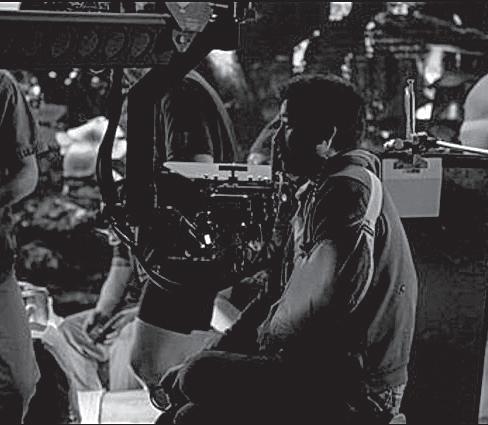
The knight drops his sword. Van Dinh, the assistant director of this independent film set and an experienced unit production manager, runs over to see the shallow laceration cut into the rider’s skin. Dinh, who is not a certified nurse, has just become the set medic.
“I came in super last minute as an AD because they didn't know what an AD was,” Dinh said. It was a small-budget indie film that did not have the money to hire a set medic. Van Dinh had warned the prop master, who was also the producer, that the swords they were using were too heavy and risked injuring one of the stunt actors.
you're good. You are supported by the state, but if you can't … you won't get any assistance from the state,” said Dinh.
“The [tax incentive] statute is set by the legislature,” said Lee Thomas, the deputy commissioner for the Georgia Film Office. “Legislators gave us more leeway on how productions can qualify. … [productions] that wouldn’t meet the budget requirements initially can still qualify if they reach the $500,000 mark within the year.”
The students were given free rein to explore different aspects of the industry, which produced reporting on the aforementioned tax incentives, a feature on the Latinas in Media organization, a special screening of “Purple Rain” and Prince’s lasting influence, Gen Z’s embrace of physical media, and much more.
I, along with editor-in-chief Beth
McKibben and associate editor Sammie Purcell, met weekly with the students for more than a month to help guide them in the creation of their stories. The students in the class are working toward careers in screen and fiction writing, but Professor Gray encourages her students to study other forms of writing, including journalism.
As with previous cohorts, the students were engaged and came prepared with stories they wanted to share with the community. So, not only will you read a sample of their efforts here, but you can visit RoughDraftAtlanta.news or simply scan the QR code below to read even more.
Read More Online
The stories presented here are part of a larger body of work created by the SCAD writing students during this collaboration. Scan the QR code or visit RoughDraftAtlanta.news, and you’ll find additional reporting and features related to the film and television industry in Atlanta. The stories include features on dine-in movie theaters, indie filmmakers at the Atlanta Film Festival, and how changes in U.S. visa policy have affected SCAD’s film students.
Scarce budgets are nothing new to independent filmmakers. Georgia has risen to fame in recent years for becoming the home of major productions such as Marvel Studios and has recorded $4 billion in direct spending in 2022, but this money rarely makes it into the hands of local independent filmmakers.
Georgia experienced a production slump in 2025 as major studios left the state due to union strikes and better tax incentives abroad. The exodus of production resulted in a slash in direct spending to just over $2 billion, and the underfinancing of local above-the-line filmmakers meant that independent productions were not able to step in and ease the downturn.
“In the indie space, we have to kind of fend for ourselves,” said Dinh, “which is really hard, because to even get close to half a million dollars, that's not really indie level budgets at that point.”
The $500,000 mark is significant because it’s the minimum budget requirement that productions need to qualify for Georgia’s tax incentives, which offers 30% transferable tax credit with no cap.
“Georgia's 30% tax incentives, I kind of see as a wall. If you can throw half a million plus $1 to get over that wall, then
Even with the added flexibility, many independent productions still struggle to meet the qualifying budget. “What most indie filmmakers have to do is rely on charitable donations from crowdfunding or massive discounts through vendors,” said Van Dinh.
Organizations such as Film Impact Georgia are among the few nonprofit organizations filling the funding gap, but with the highest grants only reaching $100,000, and fierce competition for these grants, many films still fail to qualify for the state tax credit.
“We have the infrastructure here, but we don't have the above-the-line crew to take advantage of the tax credits and create productions,” according to Darius Evans, the co-president of the Georgia Production Partnership, an organization that first lobbied for a film tax credit in the state.
The Georgia Production Partnership recently announced the formation of a new non-profit called the Georgia Production Partnership Alliance (GPPA). The new branch aims to fill the gaps for local creatives by opening new career opportunities and education initiatives.
“Our focus is to build Georgia’s creative economy so that we can survive the ups and downs,” Evans said, “building opportunities for indie producers, writers, and directors is how we can sustain the industry and make Georgia more robust.”
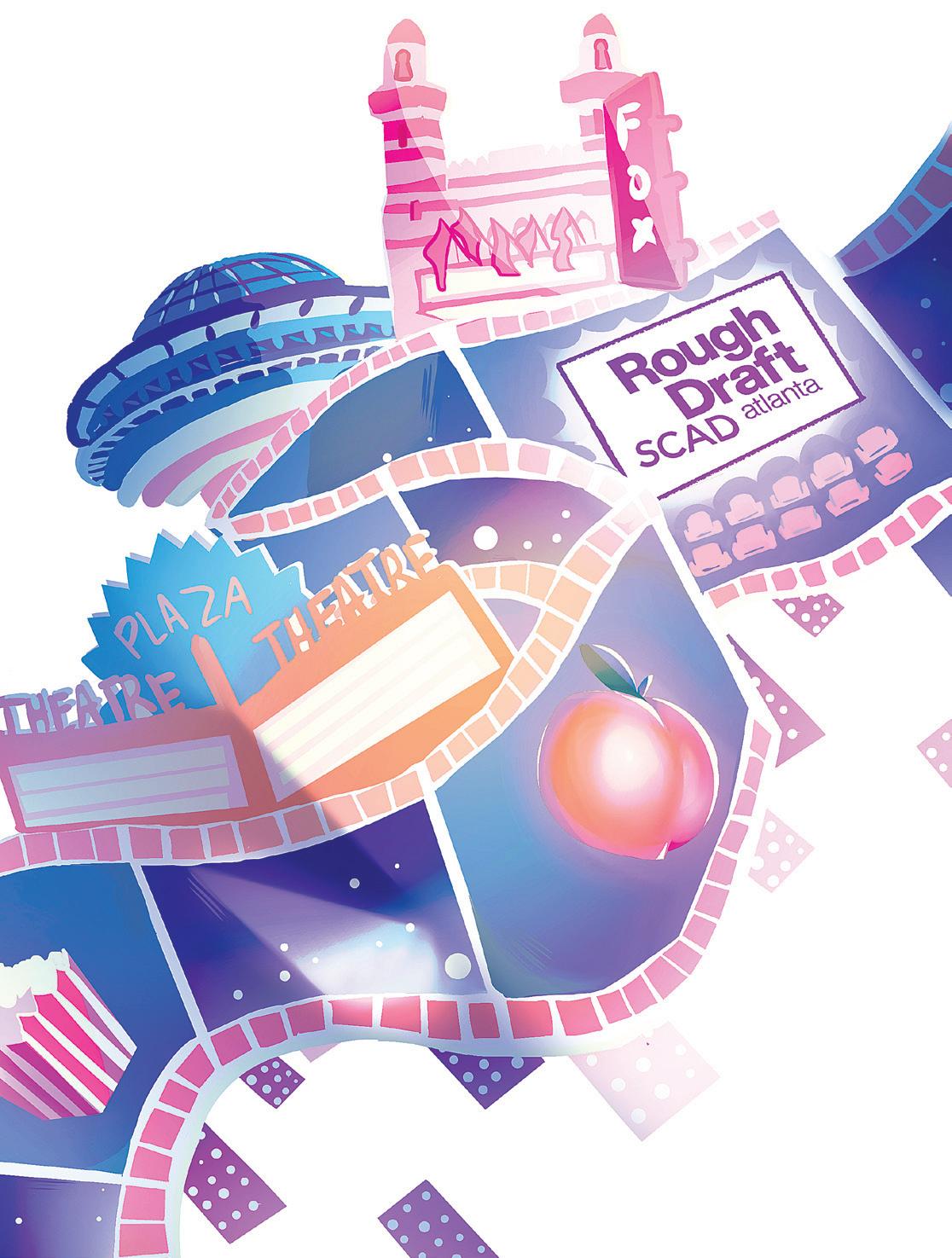
Illustration by Hannah Poon
Van Dinh on set. (Courtesy SCAD Film)
COME for the concert, STAY for the free after-party with Rough Draft readers
WED, JUNE 17 | 8 PM ATLANTA SYMPHONY HALL
Broadway, the blues, fiddle tunes, and cowboy songs—come celebrate America@250 with the ultimate all-American playlist, from Bernstein’s unforgettable West Side Story to Copland’s breathtaking classic Appalachian Spring, iconic Fanfare for the Common Man, and a heel-kicking “Hoe-Down.”
Tickets start at only $17
Free event limited to the first 100 tickets purchased Media support provided by Rough Draft
to
Atlanta On Film: What makes a city
By Bryant Nelson
Atlanta can be thought of as a city centered around travel. Its origins began in railroad expansion, and the airport is the busiest in the world.
Perhaps this connectivity (in addition to a lucrative film and television tax credit) is why the city has become a reliable movie location, with countless film productions using Atlanta as their backdrop over the past several years. With the recent news of Disney and Marvel taking their productions elsewhere, I wanted to take a look at a few Atlanta locations that have appeared in films and see firsthand what makes them special.
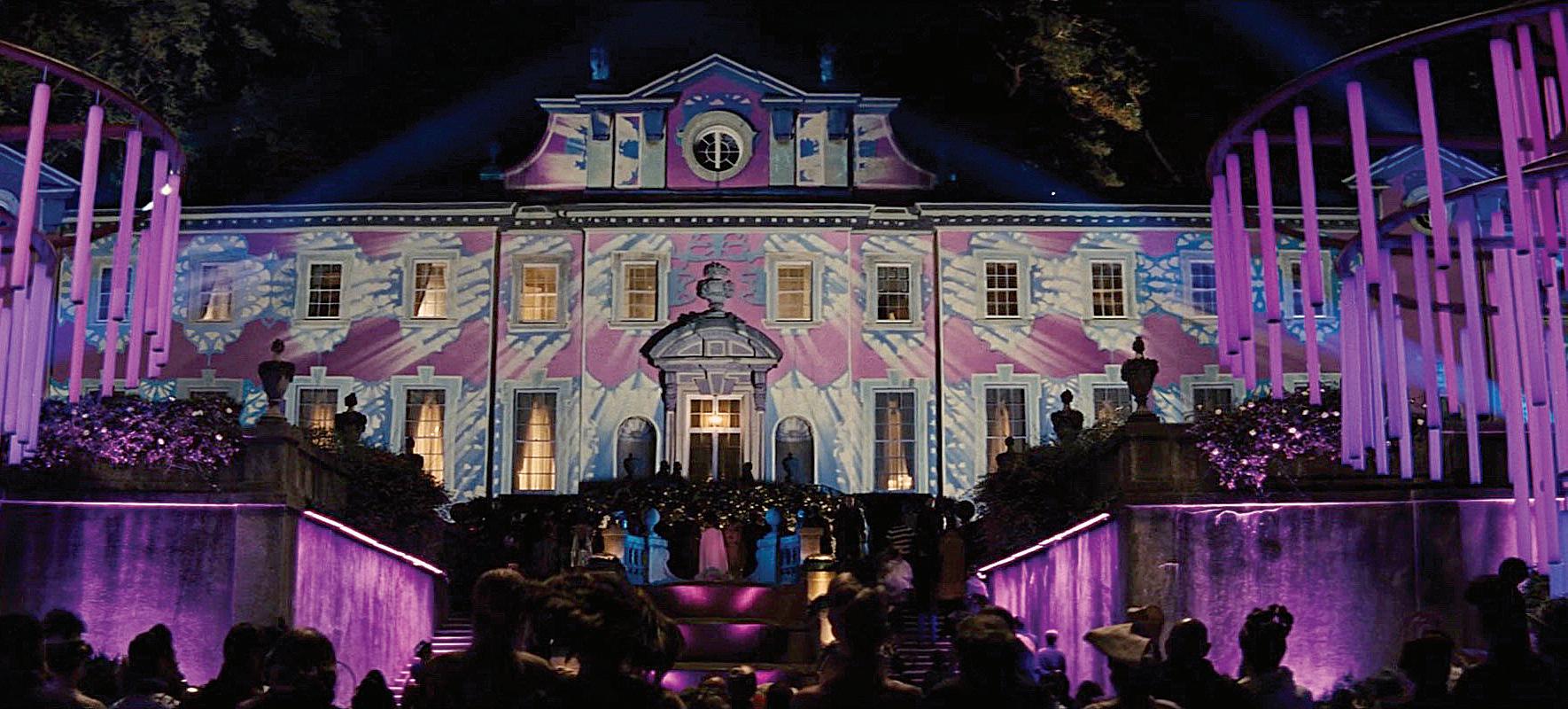
First on my list was the Swan Coach House, located at the Atlanta History Center. Famously used as President Snow’s mansion in “The Hunger Games: Catching Fire,” the Swan House has been a beacon of architecture in Atlanta since it was constructed in the 1920s. In 1966, the Atlanta Historical Society bought the mansion to restore and preserve it, making it the centerpiece of the Buckhead campus.
The Swan House gives visitors “a glimpse into what life was like in 1930s Atlanta,” said Cydni Adams, an attendant at the Atlanta History Center. So, it’s fitting that the house is now recognizable within “The Hunger Games” universe, representing an alternate reality that feels
Prince’s legacy holds strong in Atlanta ten years after artist’s
death
By Cindi Frazier
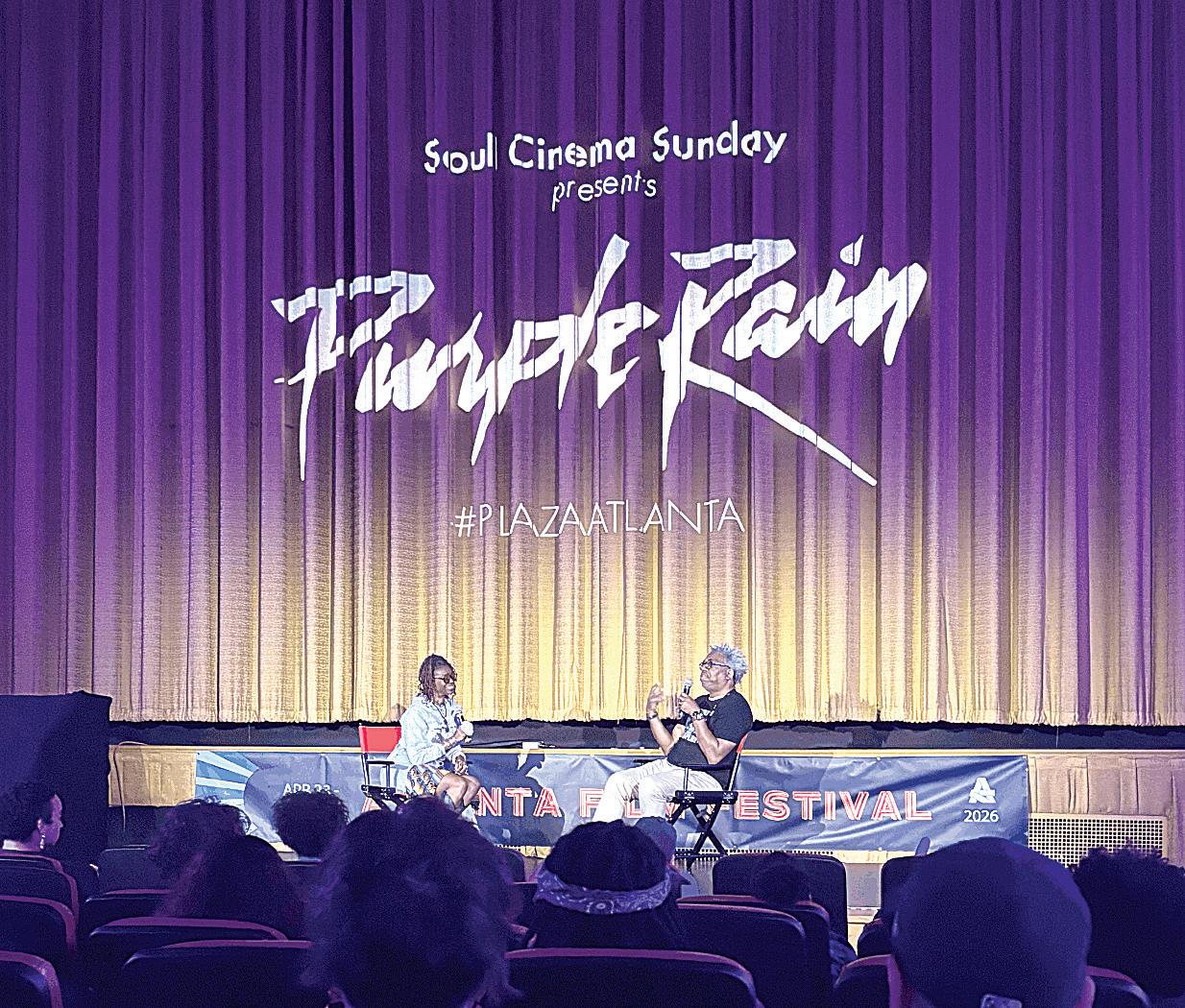
Tiffany Goode moderating the Purple Rain post-movie discussion with Ernie Suggs (Photograph by Cindi Frazier)
Despite his hometown being Minneapolis, there’s a lot of love for Prince in Atlanta. And though he died ten years ago, that love remains steadfast.
At least that was the vibe at the Plaza Theatre, which held a special 4K screening of “Purple Rain” (1984) in April as part of its Soul Cinema Sunday series, inviting fans to commemorate the 10th anniversary of his death.
The Soul Cinema Sunday series aims to highlight films that center Black cinematic and cultural influence. The screening, hosted by poet Abyss Graham, drew over 100 attendees, some dressed in purple attire, and others decked out in Prince merchandise and costumes as a tribute. During the “Purple Rain” musical number, fans sang along in full voice, some raising and waving their flashlights.
“If you’ve never seen ‘Purple Rain,’ especially in theaters, see it, enjoy it, and be sure you open yourself up to Prince’s other albums as well,” said Robin Sillers, an admin for the Atlanta Prince Collective Facebook group “He was so experimental
like today, but slightly off. The mansion is also a popular venue for weddings, one of which was happening the day I visited. As I walked through the garden, the bride passed by in her flowing dress. I felt a strong sense of unity, how people from all around, for various reasons, migrate to this house in Atlanta to build things together –whether that be movies or marriages.
This feeling became even stronger at my second stop, the Marietta Square. The Marietta Square has been the center of the community since 1848 and houses a bevy of restaurants, shops, and a history museum. For movies looking for a more residential and suburban feel, like “I, Tonya” and “Hidden Figures,” the square provides a great setting that’s only about 30 minutes from downtown Atlanta.
Leah Burgin at the Marietta History Center thinks the square got the opportunity to be in these films because of Marietta’s “classic small town” feel. Similar to the Swan House, Marietta Square preserves a piece of history while also feeling current.
I couldn’t help but notice that most of the workers I talked to weren’t originally from Atlanta.
“The Canadian Consulate is downtown, so there’s a big pocket of Canadians here as well as East Africans and
Indians,” Burgin said. Again, that feeling of community and unity jumped out to me, as the story of Marietta is a story about migration. Resident Amy Reed, who came to Atlanta about 10 years ago, noted that “diversity and community are what Marietta is built on.” It should be no surprise, then, that film producers would want to emulate that in their productions by coming to Atlanta. A film like “Selma,” which used Marietta Square as a stand-in for segregated Alabama, captures the diversity of the Civil Rights era in countless communities across the South – all represented by Marietta.
With fewer productions using Atlanta as a backdrop these days, the Swan House and the Marietta Square may not find themselves on the big screen as frequently. But for the people in these communities, there has been a lasting impact left by the films. Personally, growing up and attending high school near Marietta while these films were being shot gave me perspective on the careers of those in film production. These films have brought people together from all corners of the country to this little town in a forest and created a wave of creativity that is still in full effect.
as an artist and grew so much over time.”
“Purple Rain,” Prince’s film debut, featured a soundtrack that became one of the best-selling albums of all time, producing hits like “When Doves Cry” and “Let’s Go Crazy.” The film won an Academy Award for Best Original Song Score and was inducted into the National Film Registry by the Library of Congress in 2019.
A post-film discussion moderated by local radio personality Tiffany Goode featured Atlanta Journal-Constitution reporter Ernie Suggs. They reflected on the ways Prince’s legacy continues to shape culture, identity, and musical storytelling.
Suggs attended Prince’s final performance at the Fox Theatre in April 2016 just before he died.
“He did look frail, and he came out walking with a cane,” Suggs recalled.
“But in a moment like that, you’re just thinking about the music and your history with him. So the fact that he died a week later makes you ask all these questions like why was Atlanta the place for his last performance?”
Local musician, writer, and directing student Dakari Holder sees the impact of Prince and ‘Purple Rain’ throughout cinema, sometimes in unexpected films.
“I always reference films like Krush Groove, that came out just a year after ‘Purple Rain,’” Holder said. “Even movies like ‘ATL’ that aren’t musical, but still follow that semi-autobiographical theme. You could even tie ‘Purple Rain’s’ influence to a film like ‘Sinners’ that’s loosely based on real events and has a lot of raw musical aspects involved.”
The Plaza Theatre’s Soul Cinema
Sunday series is ongoing, with upcoming screenings that continue to spotlight Black storytelling and cinema. Showtimes and future film selections can be found through the theater’s official website and social media pages. ‘Purple Rain’ is currently available to stream on multiple platforms.
The Swan House was used in “The Hunger Games” franchise. (Courtesy Atlanta History Center)
“The Purple Rain” screening at Plaza Theatre. (Photo by Cindi Frazier)
Latinas in Media connects emerging filmmakers in the industry
By Kelly Quintana
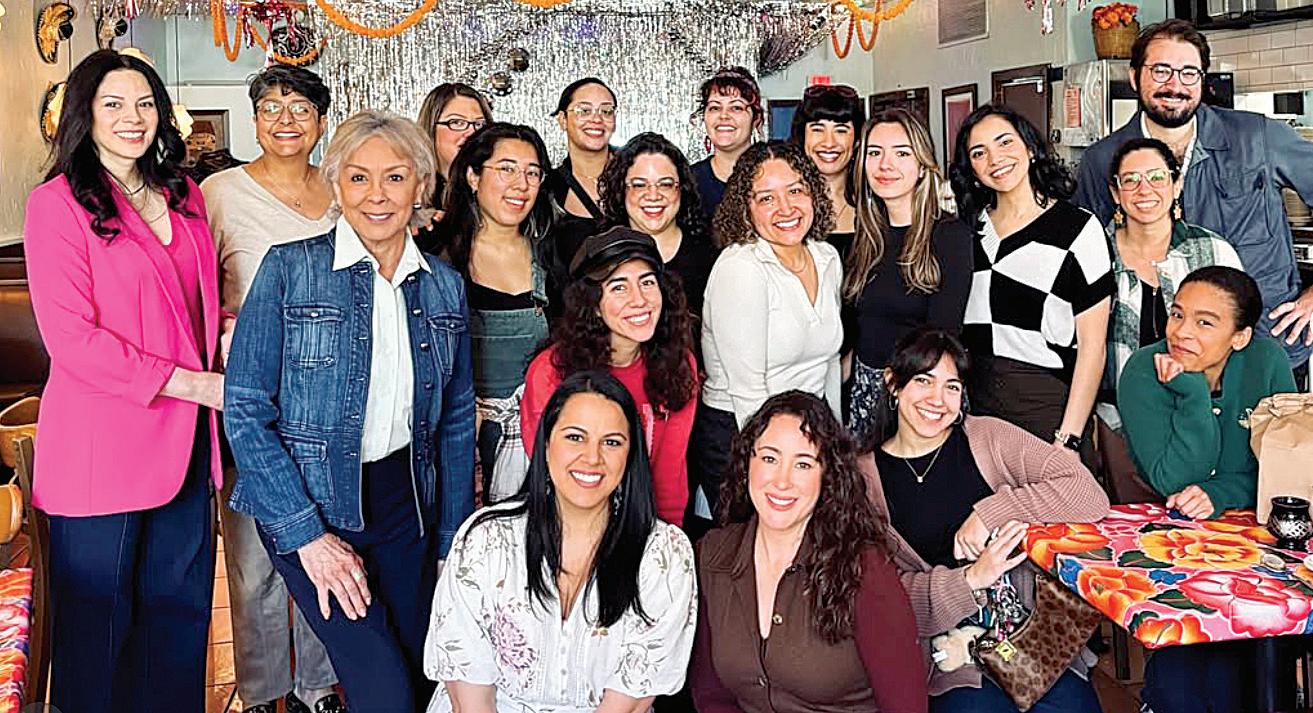
Latinas in Media Atlanta (LIMA) returned to the Atlanta Film Festival in April for the third consecutive year with a panel discussion on the step-bystep process of developing a film. A networking mixer called “Paso a Paso” held at El Ponce in Atlanta followed the panel, aimed at uplifting Latine voices in the Atlanta film industry during a time of heightened concern for Georgia’s immigrant communities. The mixer helped extend conversations from the panel, while creating space for Latine creatives to connect and collaborate.
Both Atlanta film industry events underscored the challenges facing Latine communities, especially in Georgia. Last month, the Deportation Data Project ranked Georgia fifth nationwide for arrests
-
Size: 10" w x 8.25" h
conducted by U.S. Immigration and Customs Enforcement. In February 2026 alone, there were 41 immigrant arrests per day in Georgia.
Denise Santos, co-founder of LIMA, emphasized the importance of solidarity and self-expression in the current political climate. “More than ever, leaning into your community, to the people that can use their voices and lend their voices, it's so important that we don't step down, that we don't stay quiet,” Santos said. “That we use our voices that we can, because that's something that they can't take away.”
The evening brought together a cross-section of professionals, including emerging filmmakers, seasoned actors and actresses, film distributors such as Marco Medina, and established media professionals like event attendee Angel Fabian Rivera. He hosts a podcast that
showcases Latine voices and stories.
Rivera described the gathering as reflective of Atlanta’s diverse creative identity. “It's very much Atlanta, very Latino, very queer,” Rivera said. “It's been a beautiful thing to watch people be able to connect and also feel like they are included.”
As a recent graduate film student, Victor Munive said the panel and networking event were an incredible resource. His film career is just starting, and it’s hard to know what his next steps should be. “I loved the variety of perspectives that were brought to the panel,” Munive said. “And it was great to be around other emerging filmmakers
and industry professionals with similar backgrounds as me.”
Viviana Chavez, one of the event's main organizers, said the impact of these events extends beyond a single evening. “We've had a number of people who have met and started creating their own projects
Continued on page 26
Job: 311166
Dior Crafting Fashion: Winter 2026: Print Ads
Atlanta InTown - Junior page
OPTION 2
Photo by Bellini. All rights reserved.
Courtesy Latinas in Media Atlanta
together because they met through Latinas in Media,” Chavez said. “Yeah. And that always feels good. It's really good to know that we've put people together, they clicked, went off and created what they wanted to make together.”
Even as concern grows over antiimmigration rhetoric and policies, LIMA’s leadership remains focused on building opportunities within Atlanta’s film industry. Chavez, born and raised in Atlanta, pointed to the city’s potential as a hub for Latine storytelling.
“Atlanta is a really special place,” Chavez said. “It really is. I always think that Atlanta has so much potential, like untapped potential to be whatever it is, honestly, to be whatever it wants to be, or whatever we want to make it. I feel like a lot of other communities have done that in Atlanta. And I think Latinos have the opportunity to do that.”
Latines in Atlanta who love film, whether they’re filmmakers or just film lovers who want to connect with Latinas in Media Atlanta, can do so through their website and by following them on social media. Their website and Instagram are continuously updated with educational and networking events, highlighting what Latine Atlanta filmmakers are working on.
The old Regal in Marietta binds memories to a place and space
By Willis
In 1995, my cousin Antonio got a job at the Regal Cinema movie theater on Powder Springs Road in Marietta.
My Uncle Tony had just taken us to see “Mortal Kombat.” As we were leaving the theater, Antonio walked up to the manager and asked if they were hiring. He got the job on the spot.
Antonio was excited to make his own money. The 12-year-old version of me was excited because it meant I could go to the movies all the time.
I remember when he came home with a 30-second trailer reel for “Star Wars Special Edition.” We did not even have a projector. I just remember holding the film in my hand and being in awe. Our grandmother, whom we called Maw Maw, was a strict disciplinarian and was far less
impressed.
Antonio ran away from home in 1996 and joined the military. He has not set foot in our childhood home since.
After he left, Maw Maw refused to take me to the Regal. She said it was too far away, but I think it reminded her of what she saw as a failure in parenting, or maybe it reminded her of Antonio.
Regardless of the reason, I did not go back to the Regal until 1999, when “The Matrix” came out, and I spent the rest of that day questioning reality.
Once I was old enough to get a parttime job at Ms. Winners, I started taking myself to the Regal. I saw “Pitch Black,” “Gone in 60 Seconds,” “Battlefield Earth,” “American Psycho,” “How High,” “The One” and “Osmosis Jones” there.
In 2002, I joined the military. While I was overseas, Regal Cinema was slowly disappearing.
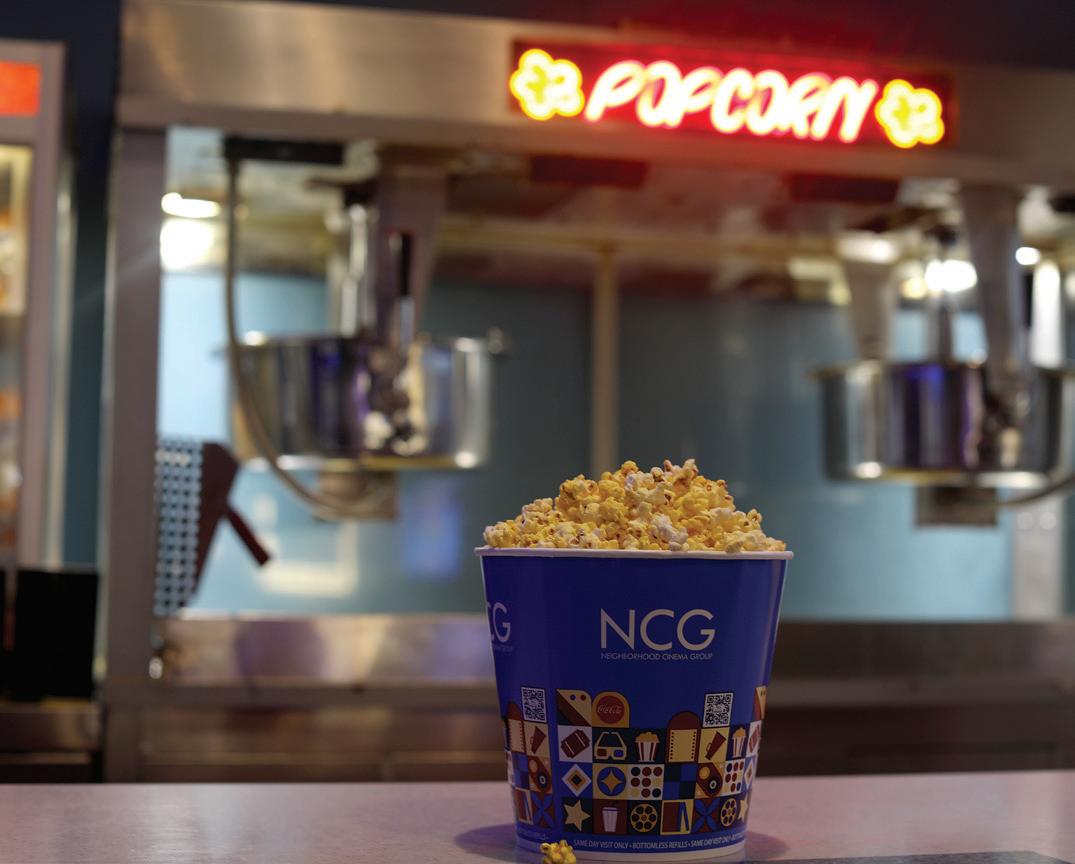
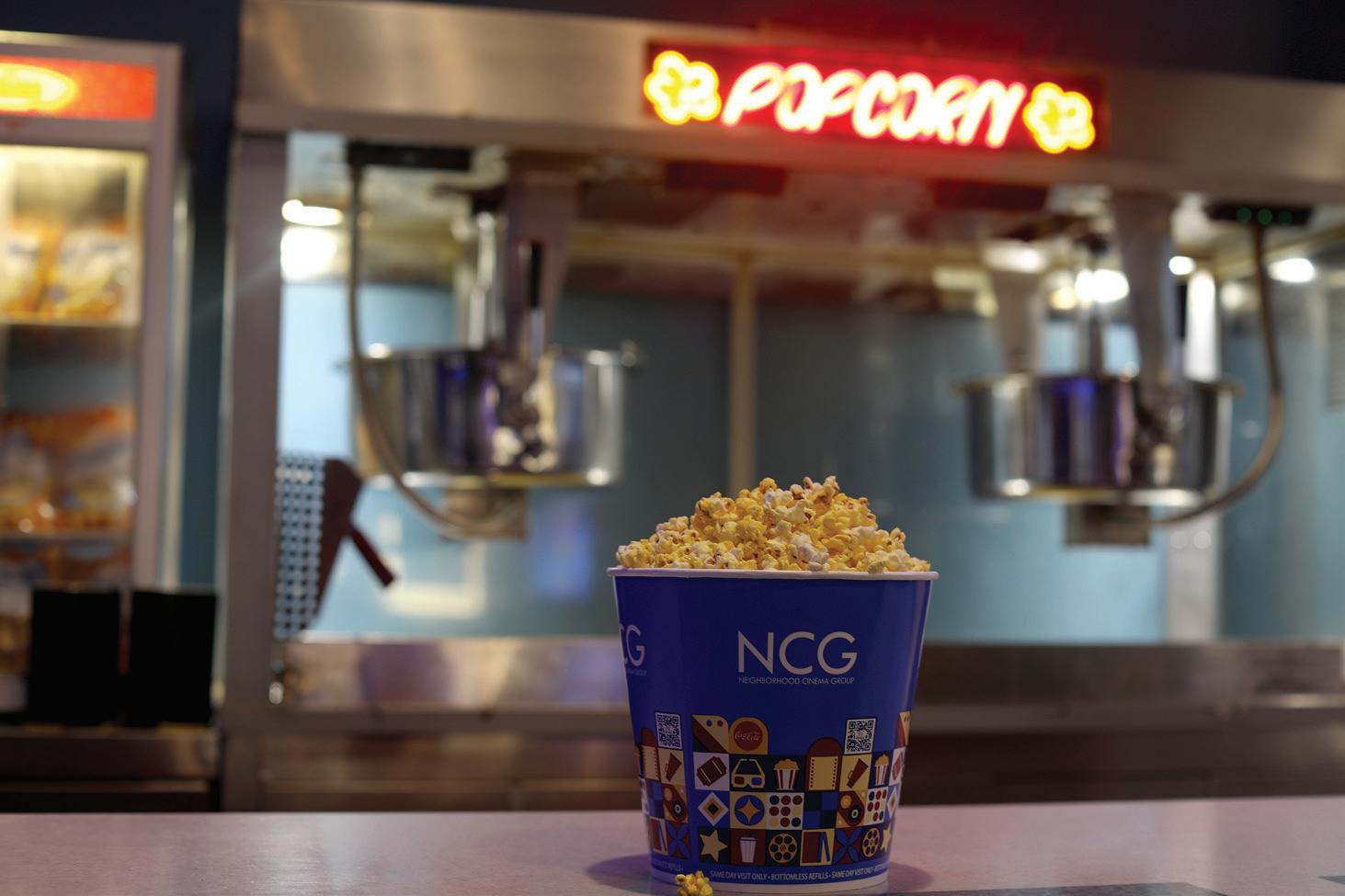
President George W. Bush declared “mission accomplished” in 2003, but the fighting continued. In 2012, Regal Cinema lost its own war. But out of the ashes came NCG Cinema, a newer and more modern moviegoing experience. The seats had motorized reclining features, and the theater upgraded to Dolby surround
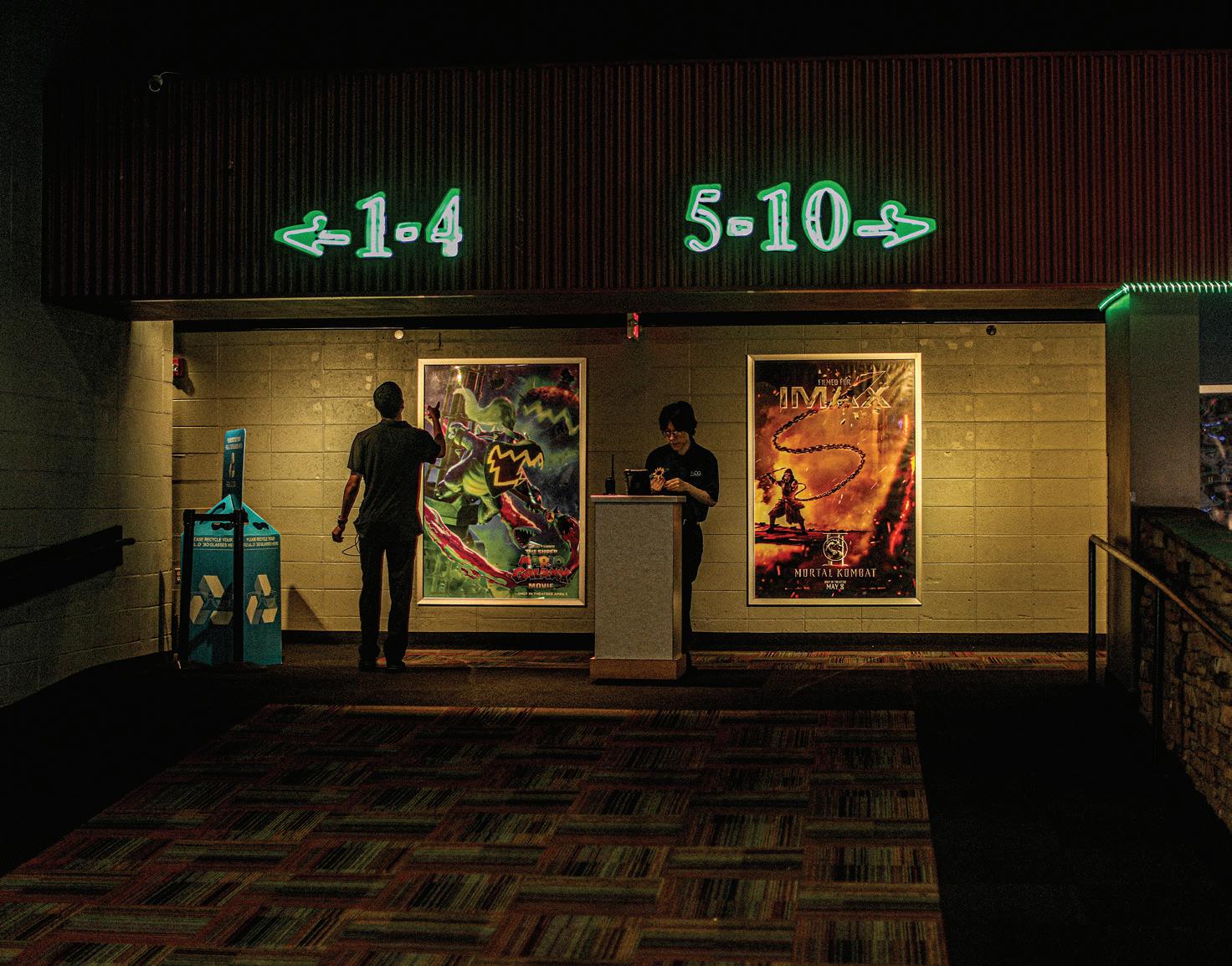
Inside the Regal Cinema in Marietta. (Photos by Willis)
When my enlistment ended, I moved back to Marietta. The economy was not great, but I used to go to the Sunday matinees at NCG Cinema. They were cheap, and it was a way to escape.
I spoke with the NCG Cinema manager, a man named Mike. When I asked how long he had worked there, he told me five years. I remembered how much Antonio loved working there. When I asked Mike whether he liked working there, he looked at me and said, “It’s a job.”
I understood exactly what he meant. People would always ask me about my service in the military, but for me, it was just a job.
For me, the Regal houses memories. It is about place and space. It is about the ghosts that linger and the history that remains attached to a building long after people leave it behind. But for Mike, it is just a place where he spends eight hours a
day.
Movie theaters have seen a 35% decline in ticket sales between 2019 and 2024.
But even as streaming services overtake traditional theaters, that moviegoing spirit still lives within me. There is something magical about going to the movies. You walk through the door and suspend disbelief for a couple of hours. You forget about what is outside. It is nice.
The night I took these pictures, my fiancée and I were going to see the remake of “Mortal Kombat.” It all came full circle—the movie that started it all. There is something there, though I do not know exactly what it is. I am 12 years old again. I am with Antonio again. I remember Uncle Tony making all kinds of sound effects during the fight scenes and the people behind us shushing him.
But I guess that is what movies do. They transport us elsewhere. That is the reason we go.
Gen Z embraces physical media with a little help from Videodrome
By Hannah Poon
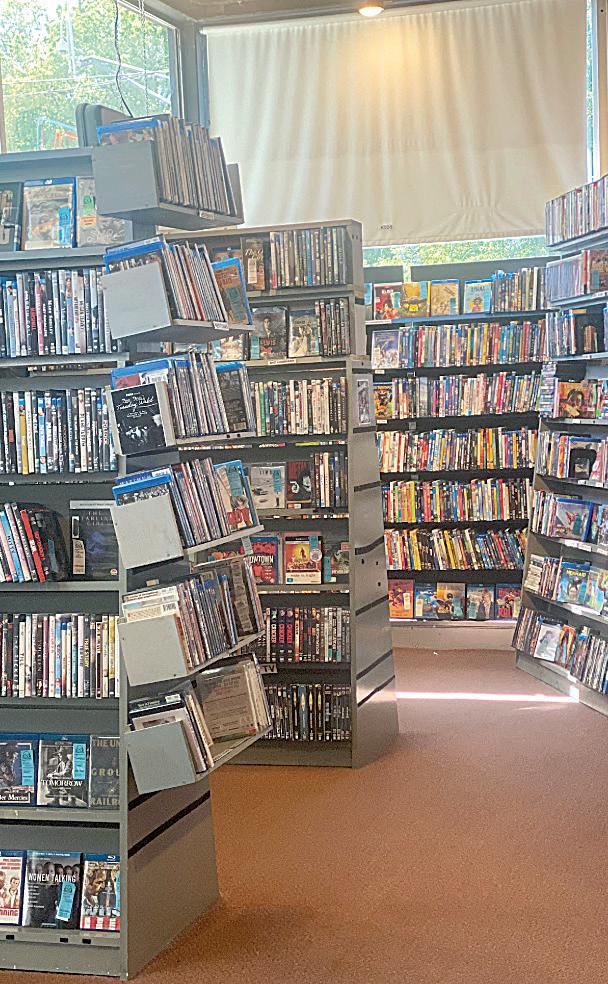
Scrolling through her phone, film student Penelope Park’s fingers paused midswipe on a post advertising Videodrome. She walked by the PonceyHighland rental stop often, so she figured it was time to check it out.
Named after David Cronenberg’s science fiction horror film “Videodrome,” the store opened in 1998. While it once faced stark competition from major retail chains and other independents, Videodrome is one of the last remnants of a different time – the last video store in Atlanta.
While it’s long had committed fans and customers, COVID-19 created a new wave of DVD devotees amid the streaming age.
The necessity of living on our laptops through Zoom meetings and streaming platforms during lockdown seemed to create a longing for something physical— something to hold, be it books, vinyl, or DVDs.
The Los Angeles Times reported that DVDs are the new vinyl records, with Gen Z embracing physical media. ‘I want something I can put on my shelf,’ Aidan Gannon said, having recently collected 200 discs. ‘I can go shopping in my closet
and grab something and pop it in, instead of spending an hour scrolling through Netflix to find something and then just turning on the same TV show.”
Owner Matt Booth explained that more people were watching niche movies, and it led to a renewed interest in physical media, especially amongst Gen Z.
“The people that want to be here, they want something more transgressive, more hidden, not available anywhere, not in any category,” Booth said. Additionally, during the quarantine, many of Gen Z found themselves craving something to pass the time, many of whom discovered Letterbox, and other movie list sites.
“Letterbox and collecting went crazy during COVID,” said SCAD Atlanta alumnus and Videodrome customer Amanda Seay. She and her friend, Jacob Trauscht, discovered the store through friends. “So much media is shoved at you by mainstream, it's refreshing to pick things out yourself,” Seay said. Trauscht agreed. “Choosing on your own for the first time makes you realize just how much is usually being shoved in your face.”
“People who are drawn to Videodrome are people who have a strong interest in the arts, super into film, and film students who really like indie and retro,” said Park. There are things you can find here that you cannot find online, genres regulars have never heard about.
Videodrome additionally has many indie movies in stock. Showing off the hard work of independent creators. “It's not just coming for physical media, it's also supporting the indie film community,” Seay continued.
Customers appreciate Videodrome’s commitment to being a film library as well as its affordability.
“The best part? The $3-dollar rentals," Seay said.
‘Wake Up’ music video shows nostalgia in a new light
By Chase Corallo
The 50th Atlanta Film Festival presented an array of incredible projects that showcased how far Georgia filmmaking has come over the last few years while also highlighting the past's influence on the industry's current state. However, one project stood above the rest as a cautionary tale of what can happen when you linger in the past for too long.
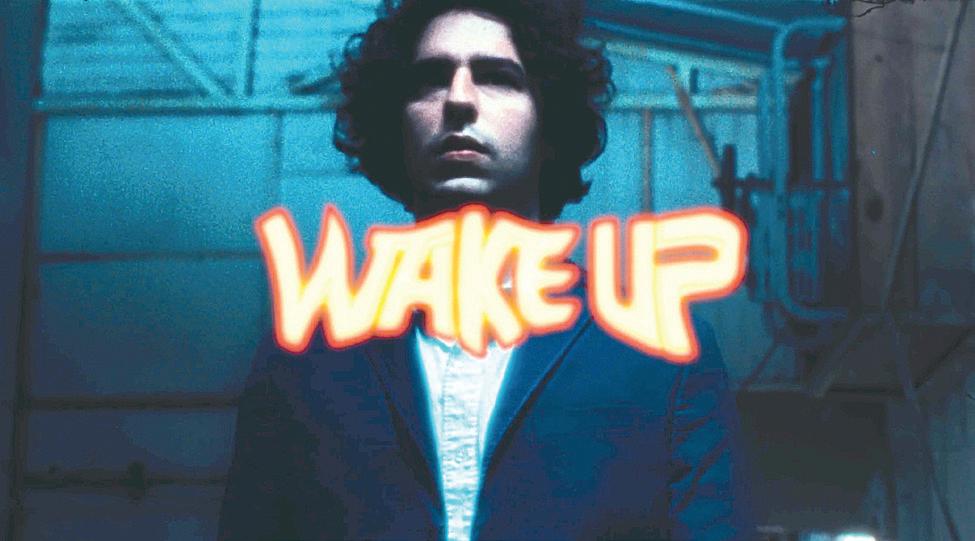
Through the use of an eerie, liminal warehouse, synths, and intentionally flawed graphics, Sebastian Peoples’ music video for Pedro Gayo’s song “Wake Up” gives insight into why the past is so appealing, but also why living in it can be detrimental.
Gayo, a Florida musician and alum of the Savannah College of Art and Design Atlanta, teamed up with Peoples and other student filmmakers to make a music video for his song, “Wake Up.” The music video was shot similarly to a film, differentiating it from the standard flashy visuals of modern music videos and allowing it to convey a meaningful message.
“I knew we definitely had something very unique, something no one else had done,” Gayo said about the music video’s inclusion in the festival. “What I want to accomplish is just a good form of escapism and good chords.”
Gayo sees Atlanta as a main source of inspiration for his music. Attending school in Atlanta gave Gayo the perspective he needed to write the song.
“Everyone knows Atlanta music, especially with hip-hop, but it’s so much grander than that,” Gayo said. “There are so many shows constantly going on that a lot of cities and towns don’t have.”
Though his song is what got him into the festival, music isn’t Gayo’s main occupation.
“Film is the main thing I do and get paid for,” he said. “I’m a [camera operator], steadicam, drone op.”
Gayo’s work in film is how he met Peoples and his other collaborators, like producer Estella Bentley. Bentley took on the project after hearing its unique story and mission.
“The story of this danger that can happen when you're looking back on the past a little too much, or at least that's how I perceive it,” Bentley said, “This unhealthy relationship you could have with a younger version of yourself, and wanting to go back to that time.”
Bentley has been producing since her freshman year at SCAD and claims to have “a little bit of a knack for it,” crediting that to her time doing show choir in high school. She was able to assemble a crew
for the music video because of the various connections she’d made through college and living in Atlanta.
“Having that instant access to really lovely, talented, interesting people is a massive privilege,” she said.
One of those talented people is Peoples, who worked closely with Gayo to make the best product imaginable. Peoples said the idea for the video stemmed from his own experiences.
“I’m a very nostalgic person, and I like to look to the past a lot,” he said. “When you get depressed and when you don't know where else to look to feel something, sometimes you can find yourself looking back into your memories.”
Peoples sees this sense of nostalgia as a potentially negative thing.
“If you get stuck there and you're not worrying about what's happening now and the present and how you can make things better, how you can make yourself better, then you're just stuck,” he said.
The filmmaker took advantage of a 16mm camera to create a contrast with modern music videos. He wanted the video to look gritty rather than too clean, intentionally creating moments of imperfection. He even went so far as to leave dust specs in the camera sensors.
“I wanted [the crew] to make it feel like it was living, when every image was dirty and had a touch to it that looked like it was filmed,” he said.
Peoples was raised in Atlanta and became connected with the city’s music industry. Atlanta music is his main inspiration. The director has a lot of love in his heart for the city that inspires him to create, which comes through in “Wake Up”.
"I was growing up around music, and interesting artists, and people that had things to say about the world, whether it be relationships or politics, or anything else,” he said.
Peoples saw the music video’s inclusion in the Atlanta Film Festival as an opportunity to meet other filmmakers in Atlanta.
“I think filmmakers really do have an interesting look on society as a whole, and I think I can connect with them a lot easier because of that,” he said. “We all want connection with people.”
Videodrome (Photo by Hannah Poon)
A scene from the “Wake Up” video. (Supplied)
Love. Challenge. Lead. Change.
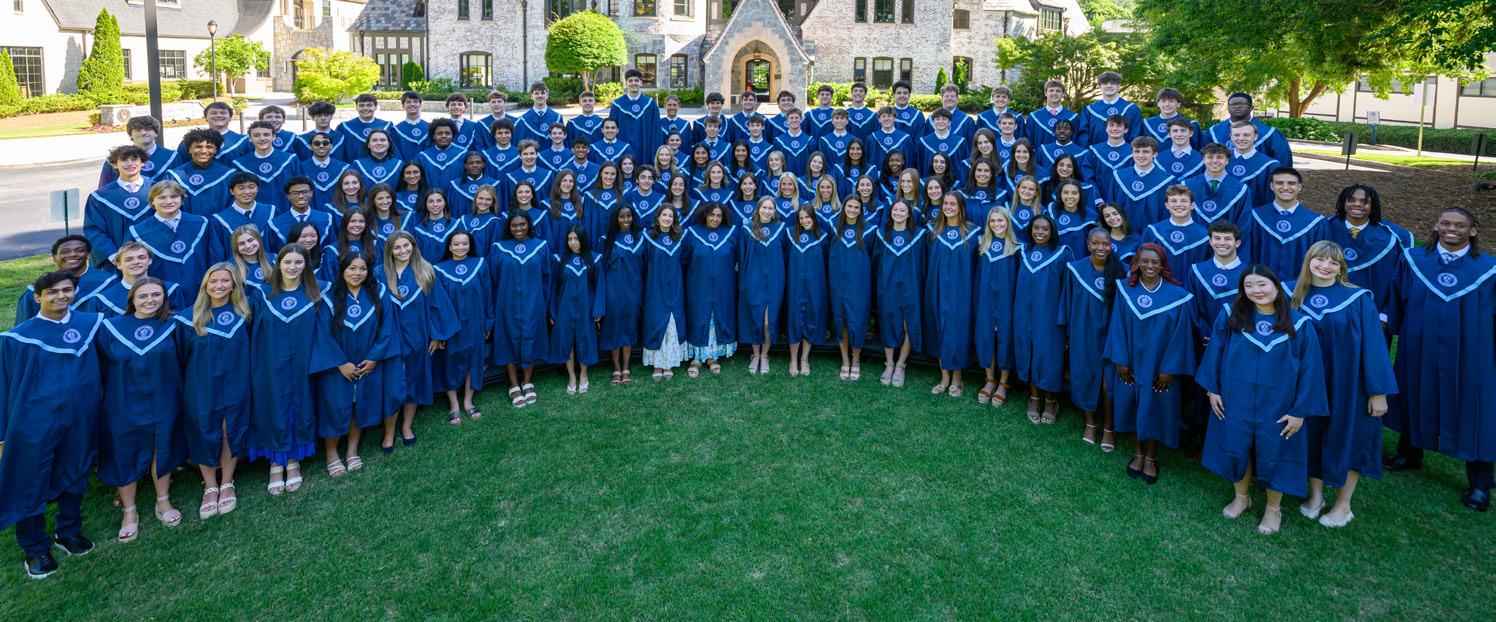
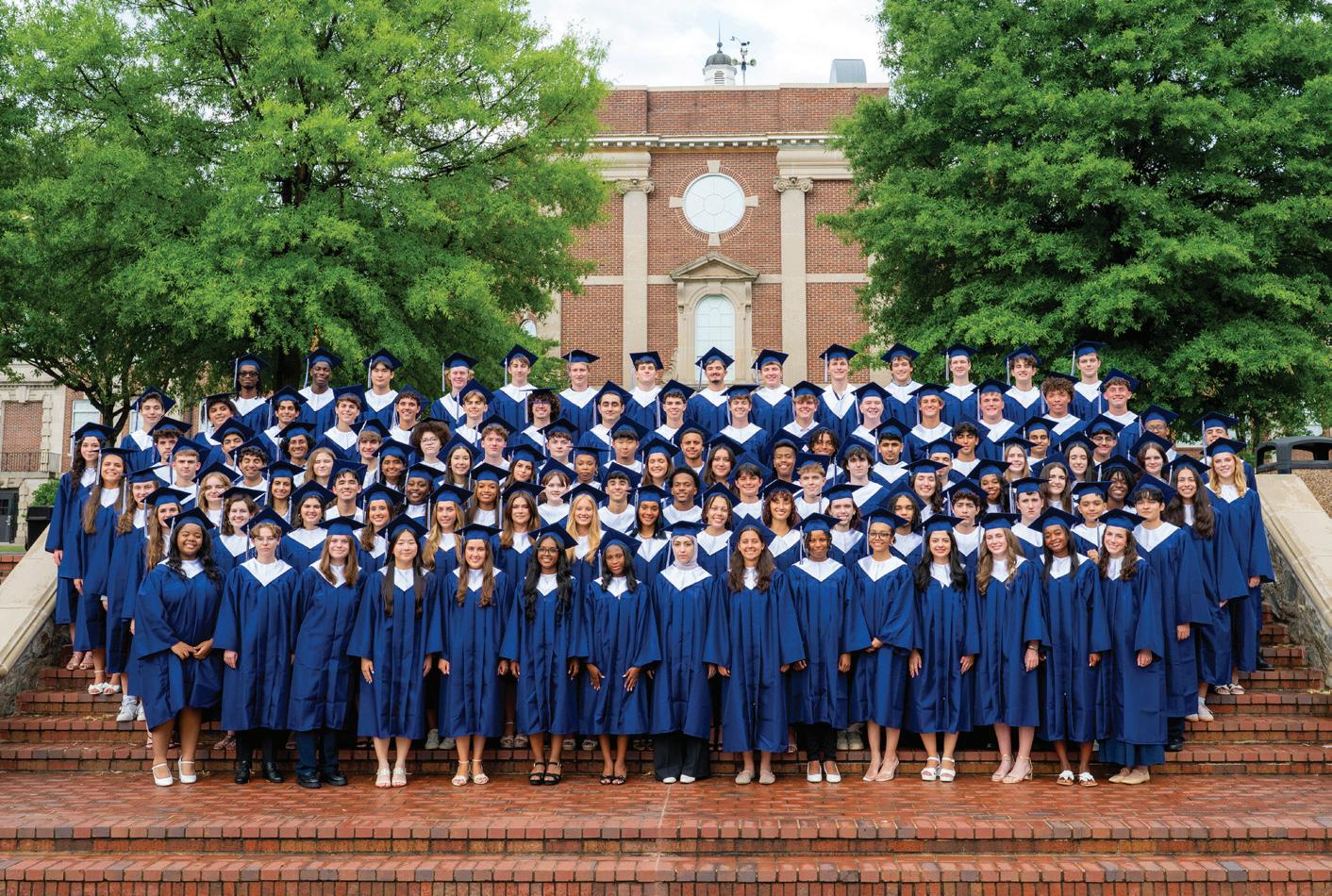
Class of ‘26: This year’s valedictorians and salutatorians
Congratulations, graduates! Metro Atlanta families recently gathered to celebrate the graduating class of 2026. Here are the top students honored as valedictorians and salutatorians for local public and private schools in Rough Draft’s coverage area.
Atlanta Public Schools
Atlanta Classical Academy
(V) Adelaide Huffman (S) Aleck Carter
Drew Charter School
(V) Lucinda Peterson (S) Jordyn Jennings
Benjamin E. Mays High School
(V) Bethany Momon (S) Justin Allen
BEST Academy
(V) MyKel Smith (S) Mariyo Majette
Booker T. Washington High School
(V) Joseph Rosser III (S) Kai Edwards
Carver Early College
(V)Ayanna Thomas-Scott (S)Arianna Hollins
Carver STEAM
(V) Gabriel Olagbegi (S) Shamyra Burden
Coretta Scott King YWLA
(V) Keirstyn Smith (S) Sacarria Burts
D.M. Therrell High School
(V) Parker
(S) Robert
Frederick Douglass High School
(V) Nevaeh Robinson (S) Grace
KIPP Atlanta Collegiate (V) Brooke Smith (S) Zemirah Skinner
Maynard Jackson High School
(V) Regan Saffel (S) Audrey Craighead
Midtown High School
(V) Brennan Fritts (S) Eric Snell
North Atlanta High School
(V) Claire Collins (S) Arjun Mitra
South Atlanta High School
(V) Kayla Mathews-Smith (S) Laniya Collins
Fulton County Schools
North Springs High School
(V) Peyton Frank (S) Grace Lumpkins
Riverwood International Charter School
(V) Alexander Royal (S) Mylie Henssge
Photo by George Pak/Pexels
DeKalb County Schools
Druid Hills High School
(V) Melanie Stauffer and Sawyer Szews
(S) Jasmyn Joslin
Decatur High School
(V) Neve Marston
(S) Liora Yustein
Chamblee High School (Magnet)
(V) Plamena Alexandrova
(S) Shreya Sehgal
Chamblee High School (Resident)
(V) Quynh Nguyen
(S) Kathleen Mattison
Cross Keys High School
(V) Nafisha Karim
(S).Samira Yasmin
Dunwoody High School
(V) Faith Lanham
(S) Jacob Miller
Tapestry Public Charter School
(V) Benjamin Radford
(S) Cesar Alex Salazar
Tucker High School
(V) Akosua Baah
(S) Jaenelle Milice and Shaila Thomas
Gwinnett Schools
Norcross High School
(V) Joanne Lu
(S) Eva A. Ballerstedt
Wesleyan School
(V) Brendan Wright
(S) Cole Creel
Private Schools
Atlanta International School
(V) Catherine Hasell
(S) Emma Katsitadze
Ben Franklin Academy
(V) Eli Jutan
(S) Devin May
Greater Atlanta Christian School
(V) Noah An
(S) Madeline Austin
Holy Innocents’ Episcopal School
(V) Gavin Mark Miles
(S) Thomas Douglas "Nick" McKay III
Holy Spirit Preparatory School
(V) Edward Gage Druham
(S) Lauren Wilhelm
The Lovett School
(V) Robert Wynne
(S) Ellie Ziglar
Marist School
(V) Ava Marsh
(S) Hunter Nguyen
Mount Vernon
Presbyterian School
(V) Cameron Bogdanchik
(S) Christian D. Foster
Pace Academy
(V) Leena Phoenix
(S) David Halsey
St. Pius X
(V) Julianna Esper
(S) Cate Chandler
The Weber School
(V) Scott Silverman
(S) Adrianna Castiglione
Wesleyan School
(V) Brendan Wright (S) Cole Creel
The Westminster School
(V) Samanyu Ganesh
(S) Max Scholle
Whitefield Academy
(V) Robert Wynne
(S) Ellie Ziglar
Woodward Academy
(V) Carson Connors, Reagan Gary, and Robert Tharp Jr.
(S) Elliana Hartman
REAL ESTATE
Mid-Year Report
‘Marry the house, date the rate,’ real estate experts advise
By Logan C. Ritchie
Driving around Intown, it’s hard to miss the for-sale signs popping up like spring flowers.
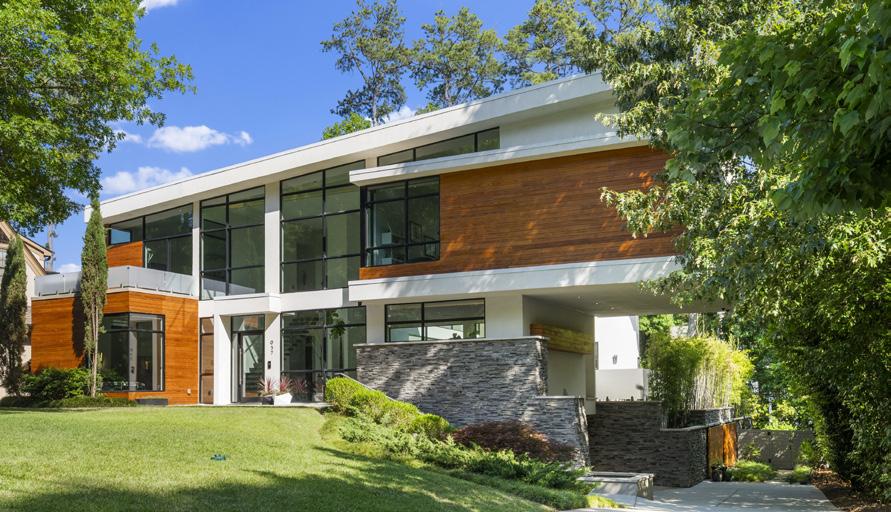
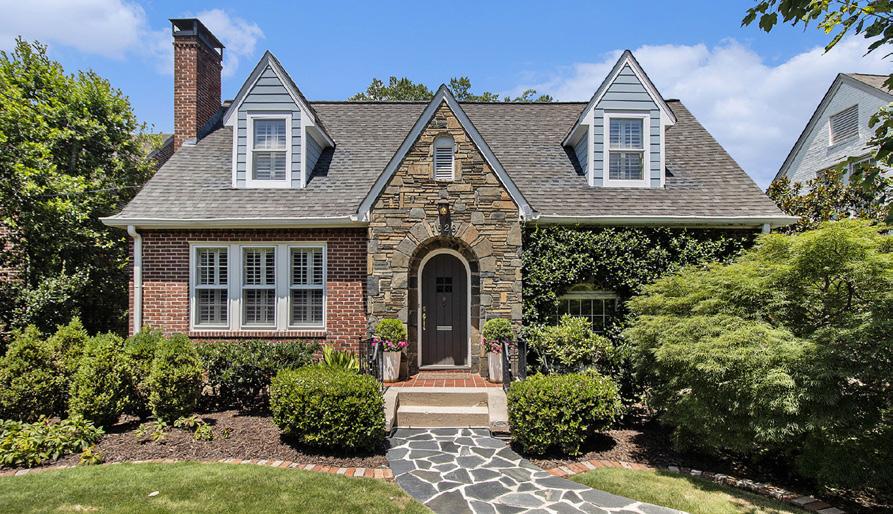
Four seasoned real estate agents weighed in on the Intown market: who’s selling and buying, how mortgage rates are affecting sales, and how last year compares to 2026.
“Real estate has always been hyperlocal, and there’s a real disconnect between the national narrative and what we’re experiencing across many of Atlanta’s Intown neighborhoods,” real estate agent Molly Carter Gaines said.
Is it a seller’s or buyer’s market?
Is the market better for sellers or buyers? That’s difficult to answer for
Calloway of Harry
who said there are two different trends in the real estate market this spring.
Single-family detached home inventory is down significantly compared to last
year to the tune of 32%, which has led to a low supply, so it is considered a seller's market. The condo market is a different story. Inventory change year-over-year is basically flat. Total closings year-to-date are down 20% with a nine-month supply of inventory, so the condo market is very much a buyer's market.
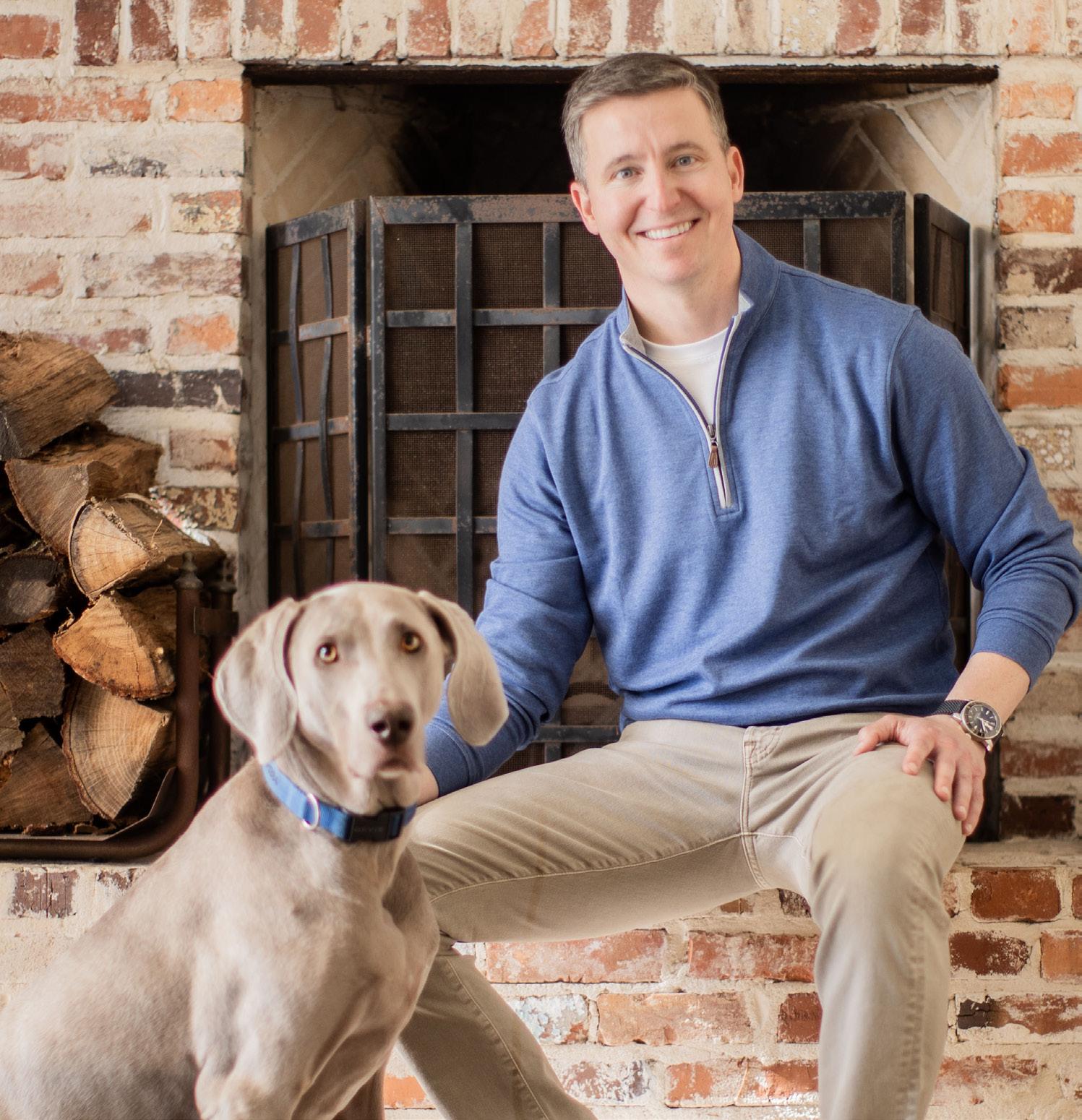
real estate advisor Annie Bartz of Atlanta Fine Homes Sotheby's International Realty works with first-time homebuyers and younger individuals and couples. To this demographic, Bartz suggests: "Marry the house, date the rate" because there’s never a perfect time to buy a house. Homeowners can refinance later.
“Every penny matters of course when you purchase a home, but especially when it is your very first home. Higher interest rates have definitely made the majority of my current buyers more hesitant to pull the trigger … but even when rates do drop, it simply means more buyers in the pool,” Bartz said.
“I never know which way it's going to go until I sit down with my buyer,” Bartz said. “That tells me everything I need to know: Will this be a competitive, multiple-
offer situation on every house or will this be a few weeks or months of having the luxury of being picky until we find the house? It's one or the other these days.”
Gaines, who works with Ansley Real Estate Christie's International Real Estate, said the Intown market has remained remarkably competitive this spring –particularly in neighborhoods with walkability, Beltline access, great schools and distinctive housing stock.
“Buyers are still very lifestyle-driven, but I’m also seeing a continued desire for larger lots, outdoor space and homes that feel move-in ready. A huge part of Intown Atlanta’s appeal continues to be the lifestyle itself — outstanding restaurants, strong neighborhood culture, festivals, home tours, parks, and the connectivity of the Beltline,” Gaines said. “Even with changing market conditions, buyers continue to prioritize location and quality over sheer size, and homes that are thoughtfully prepared and well marketed
are standing out quickly.”
Ken Covers of Engel & Völkers agreed. Intown neighborhoods are charming, convenient and friendly.
“In this day and age when everyone's in a hurry, I find buyers also crave stability and a sense of belonging and being a part of a neighborhood provides that,” Covers said.
Let’s talk about mortgage rates
When mortgage rates dropped below 6% in February, there was strong buyer activity across the Atlanta market, Calloway noticed. As rates started to creep back up closer to 6.5%, agents have seen a slight slowdown in pending activity: down about 2% compared to March, but over 4% on a year-over-year basis.
“It's worth noting that interest rates this spring are still lower than they have been the previous two years, and buyers are simply becoming more accustomed to rates in the 6% range as more of the
Carolyn
Norman Buckhead,
Global
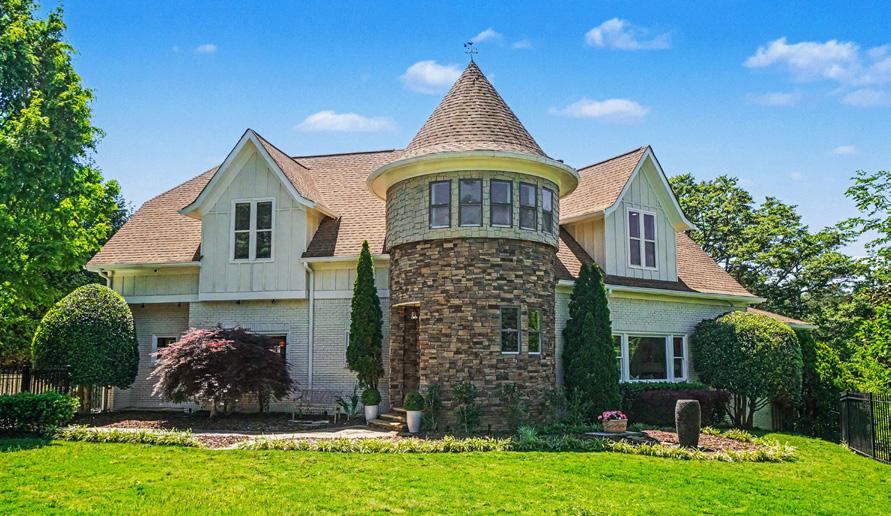
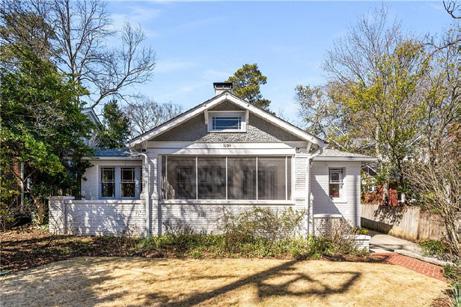
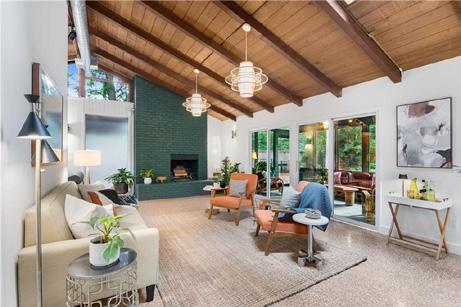
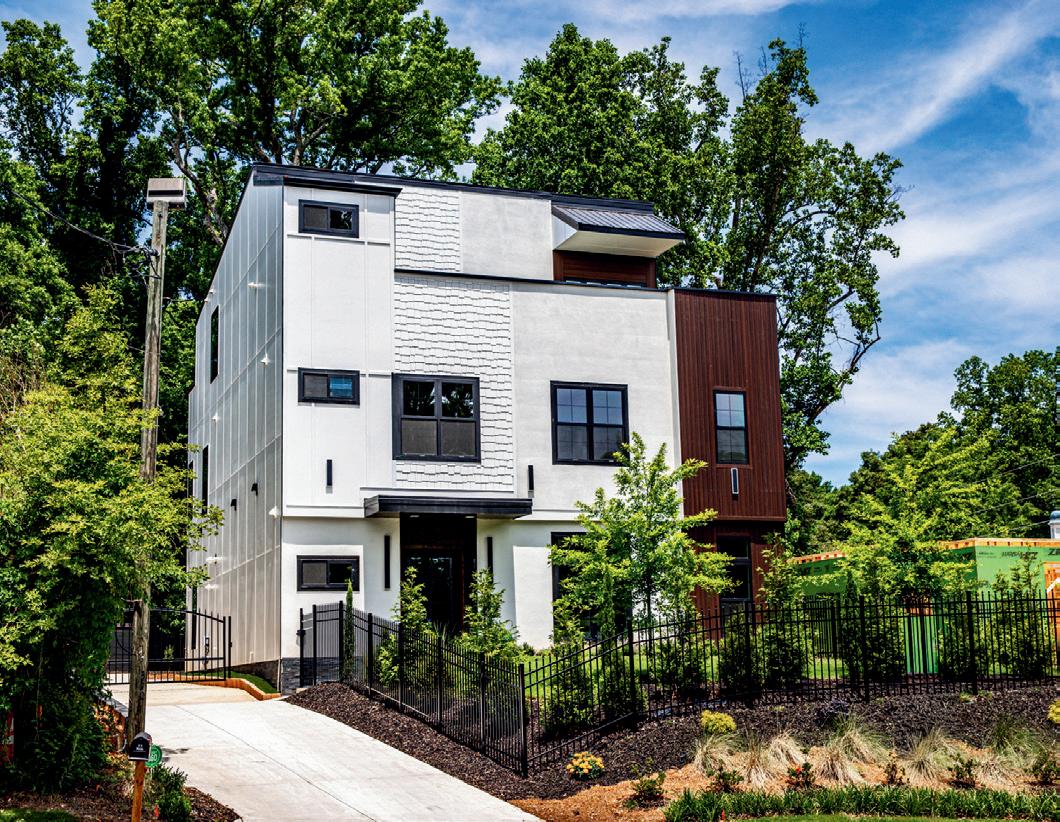
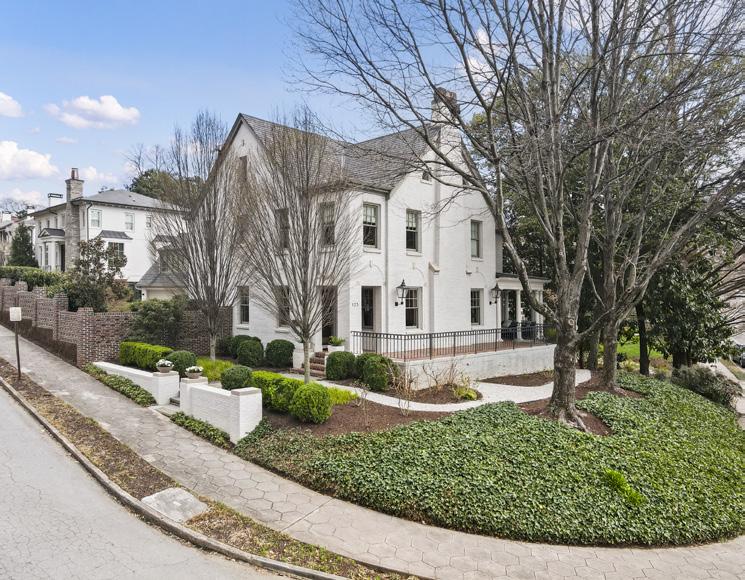
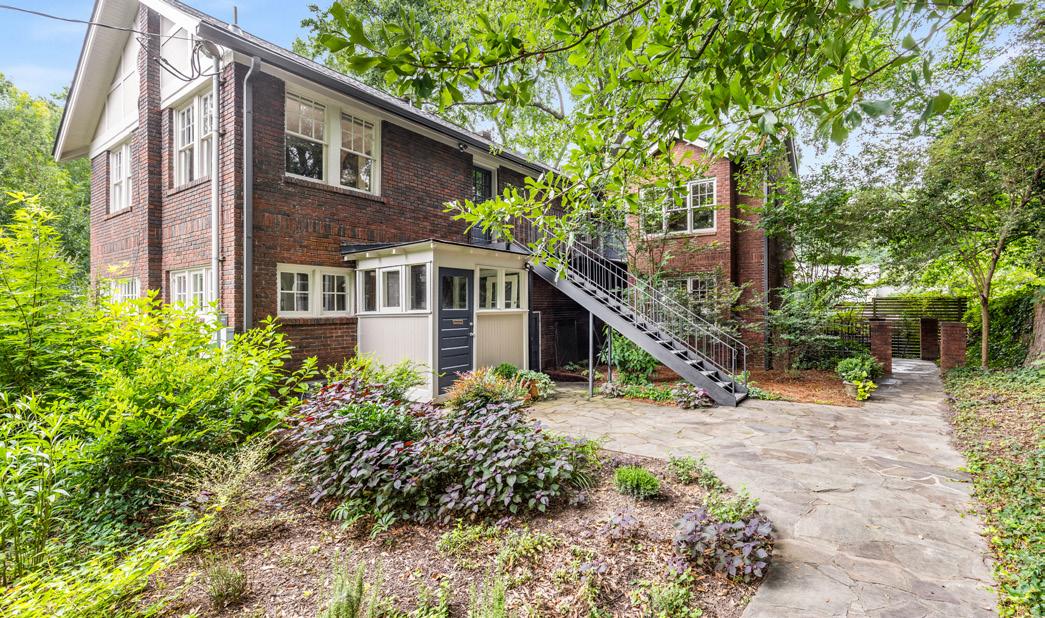
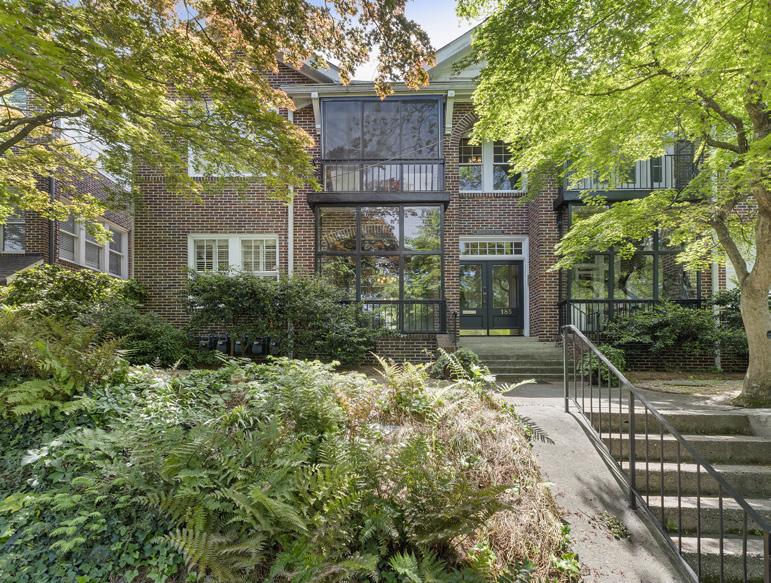
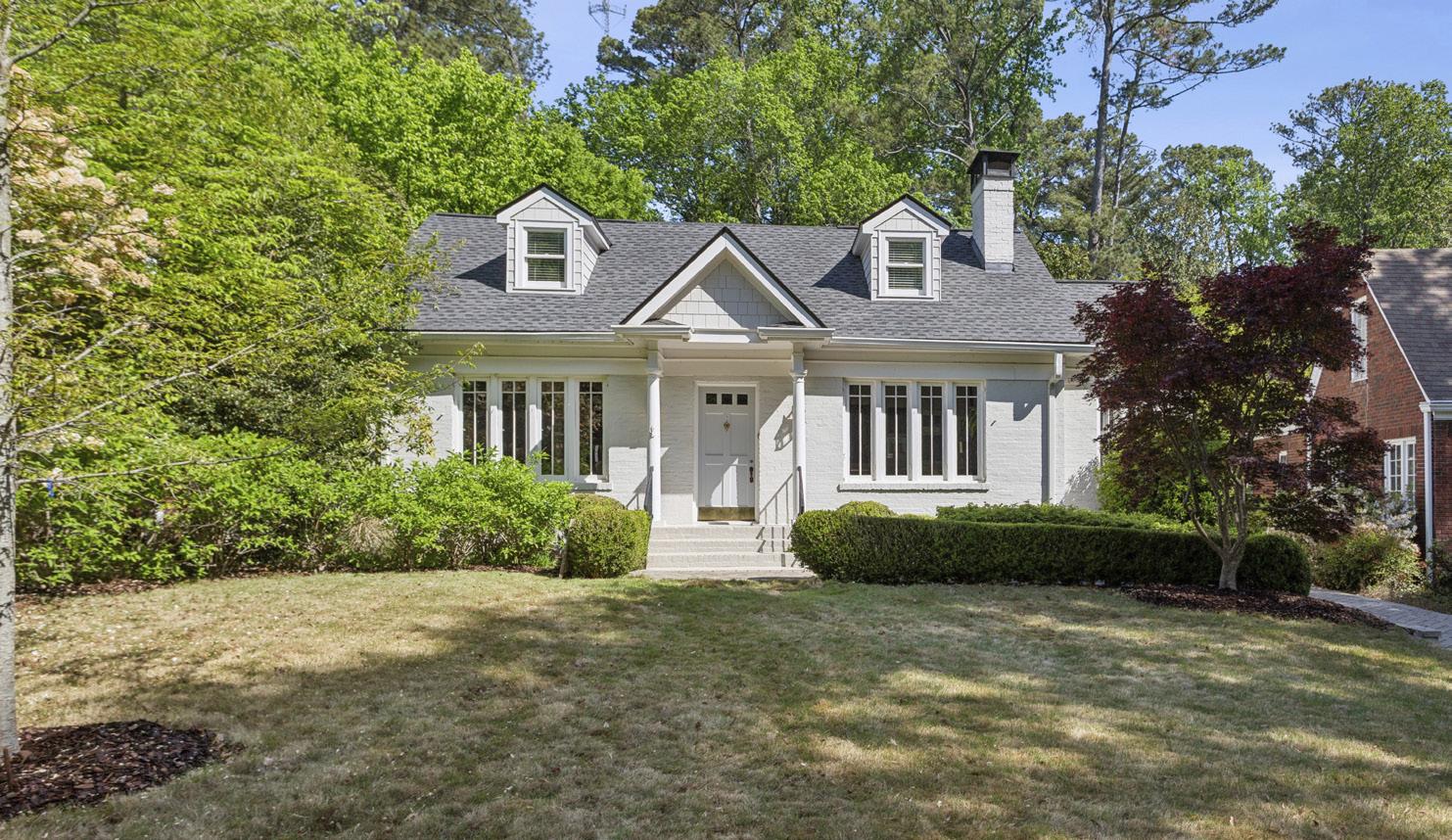
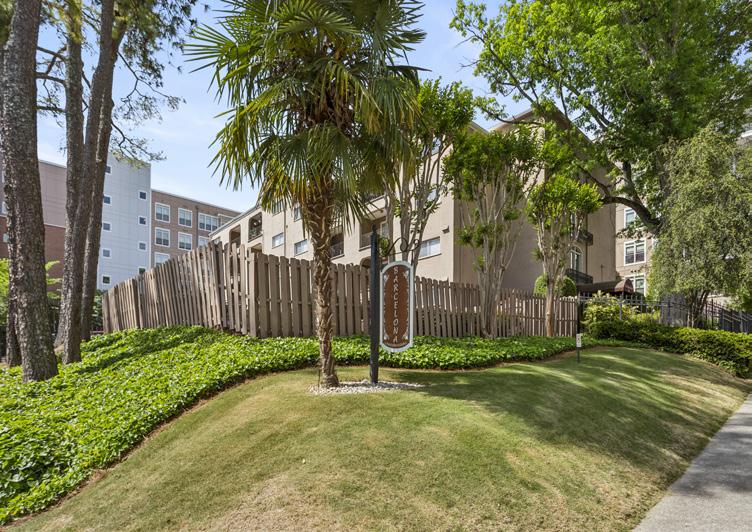
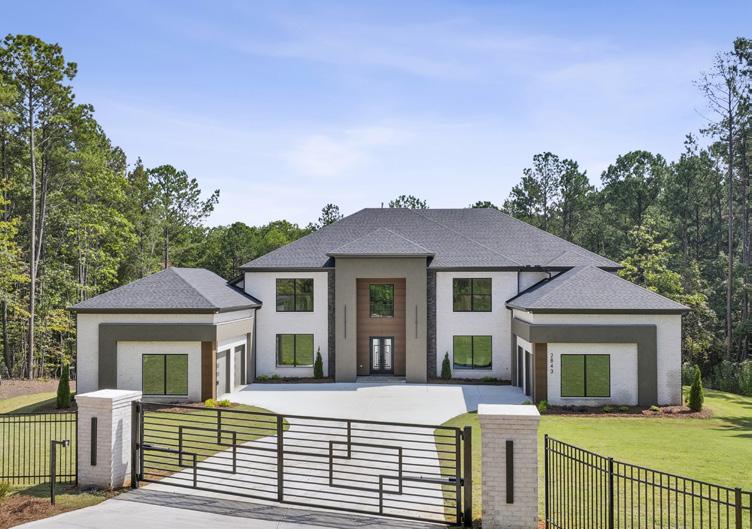
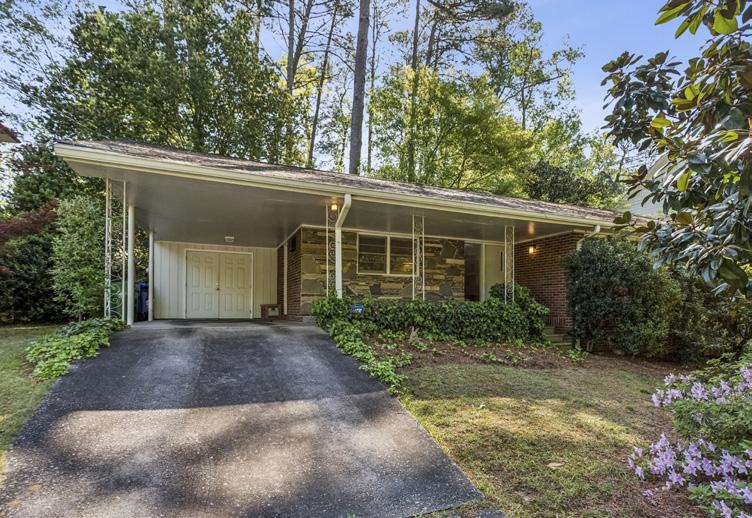
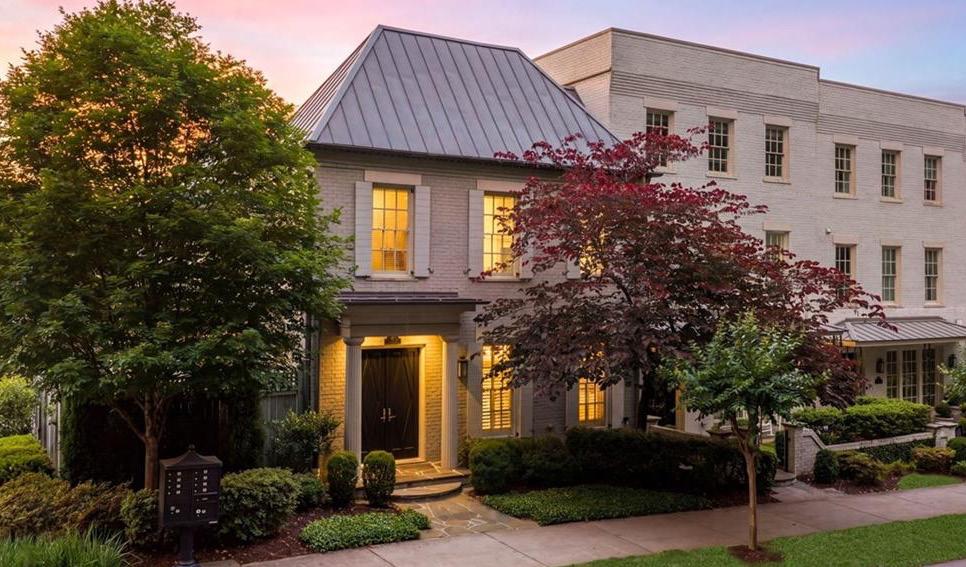
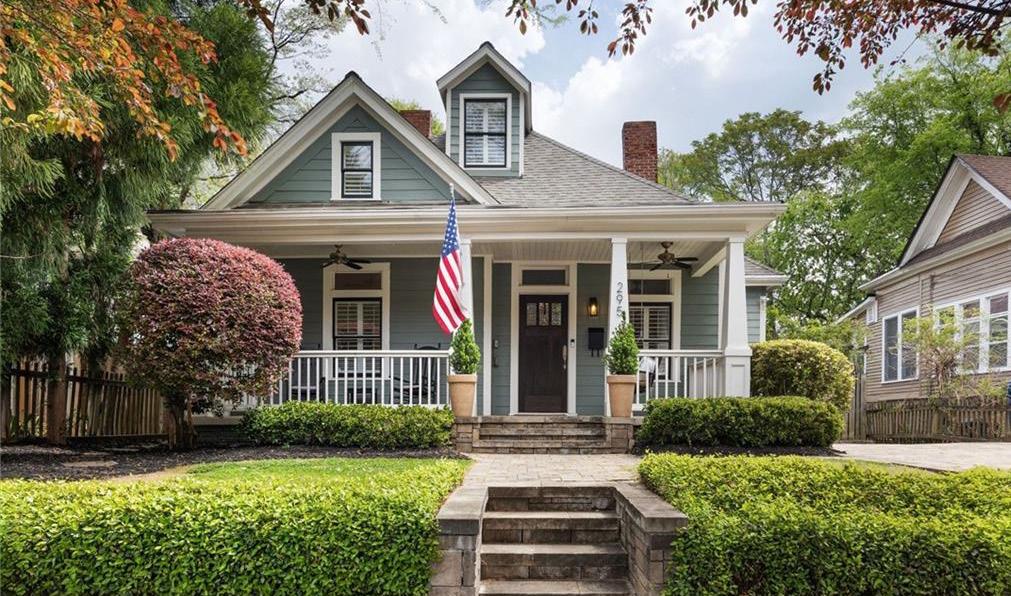
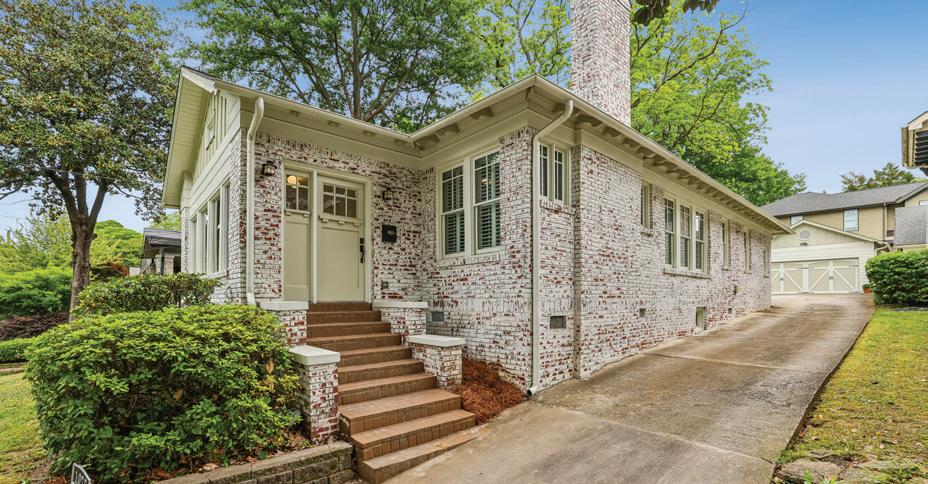
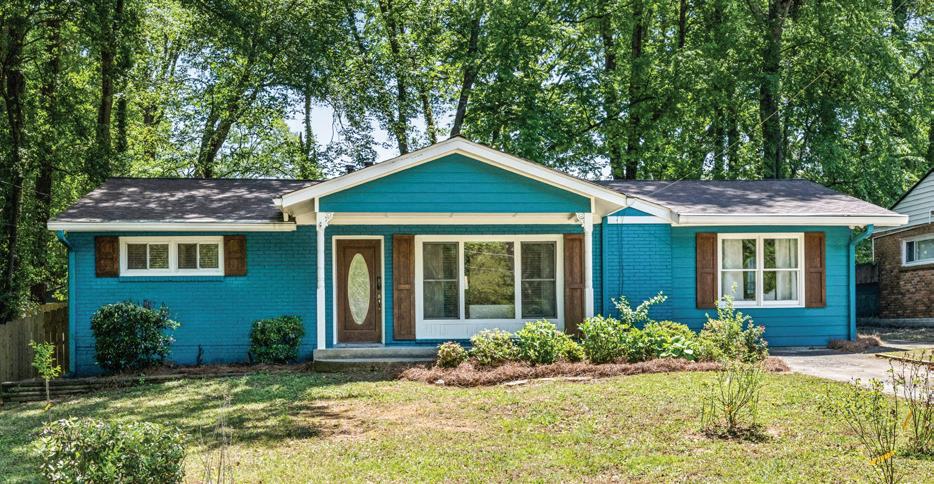
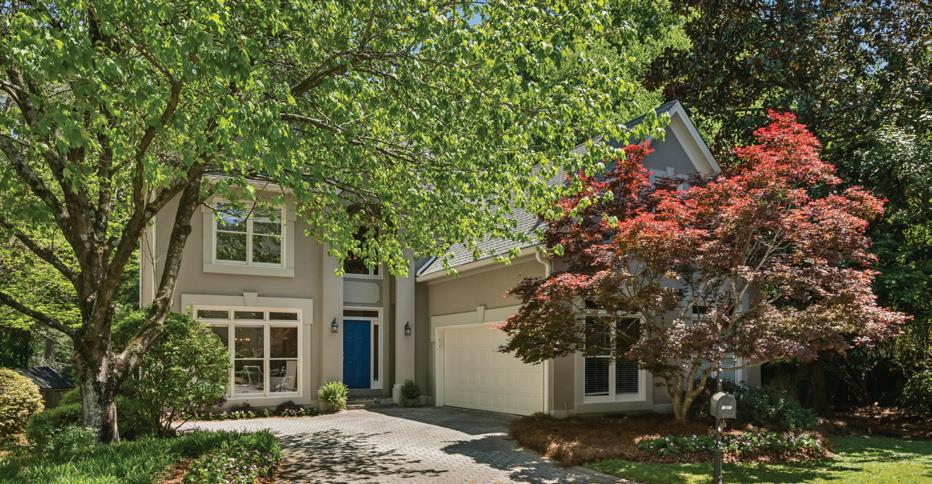
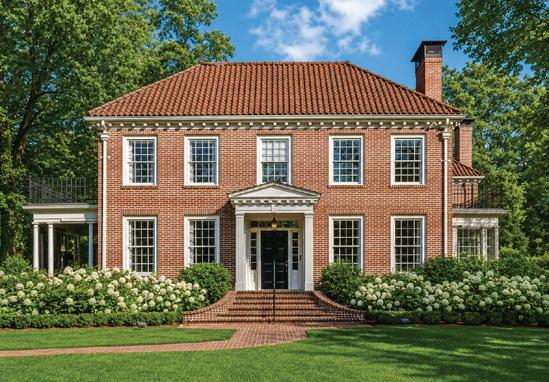
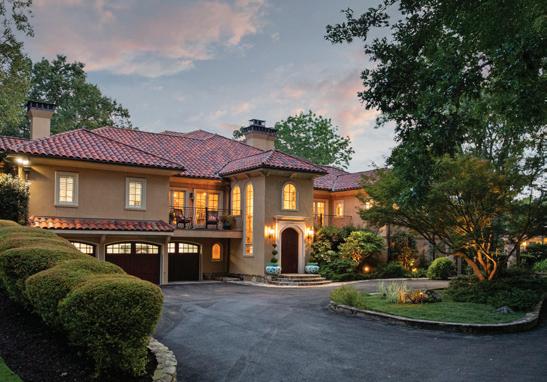
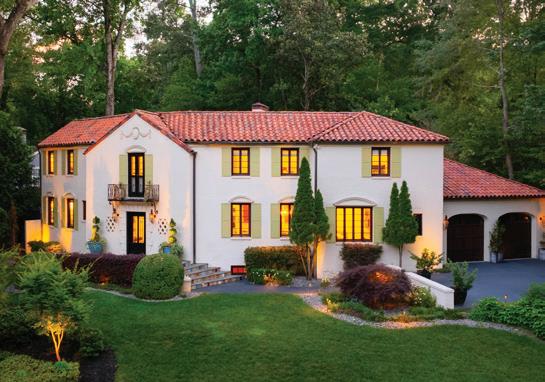
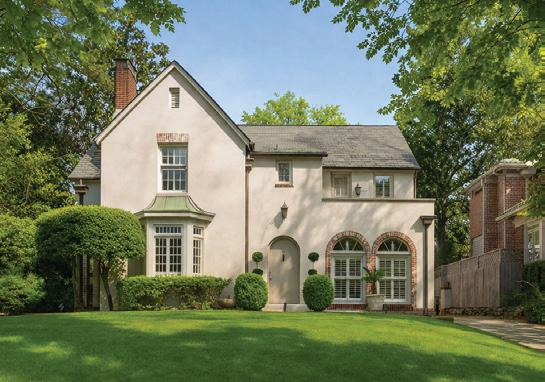
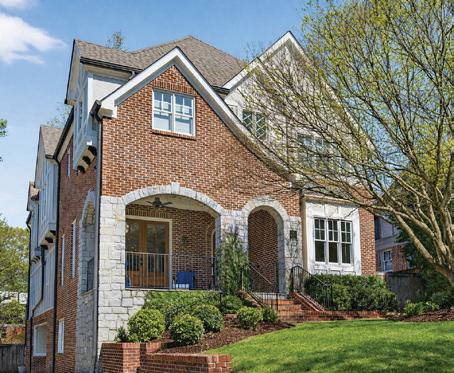
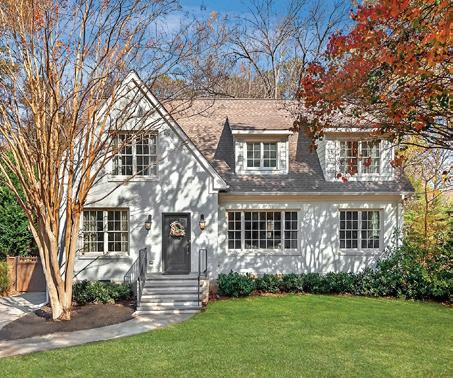
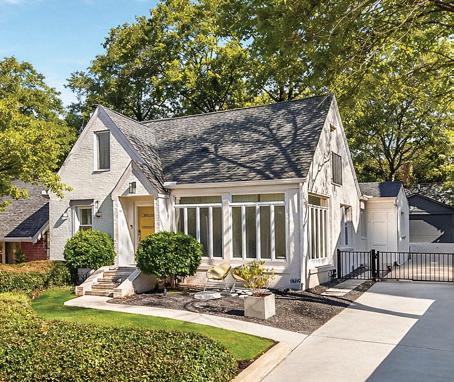
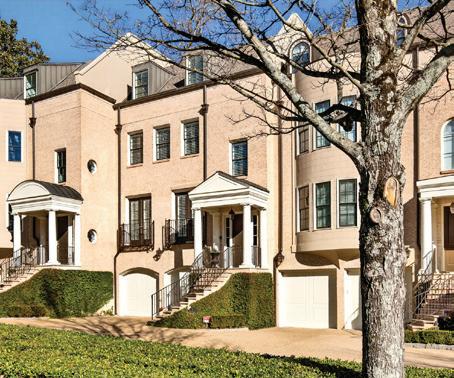
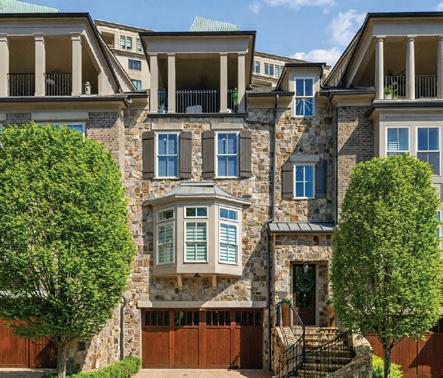
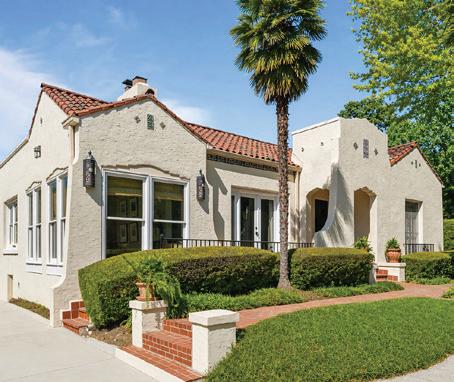
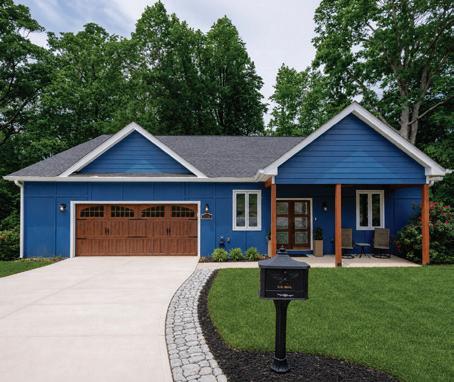
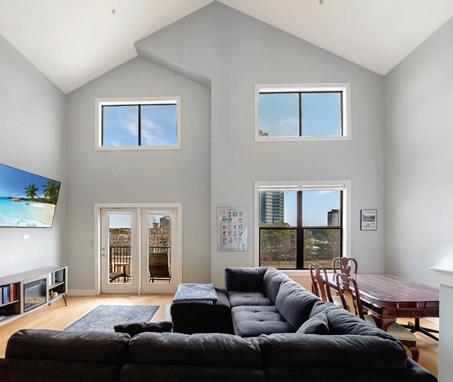
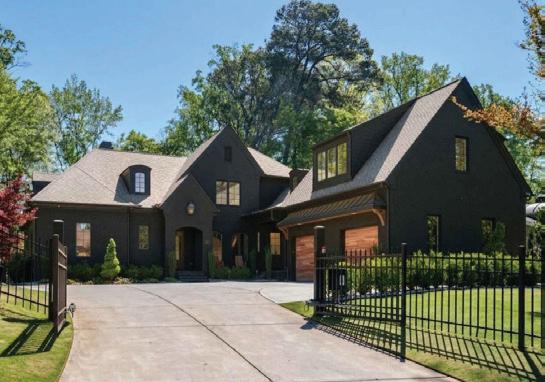
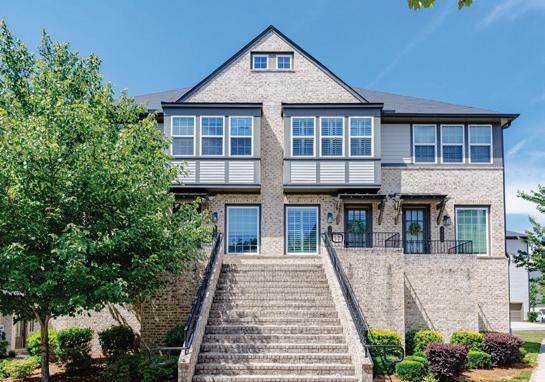
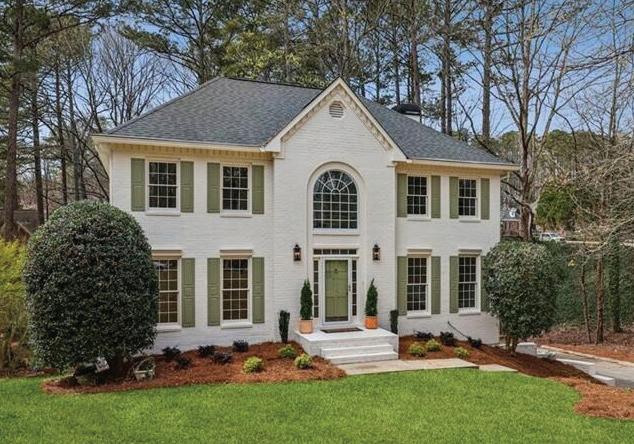
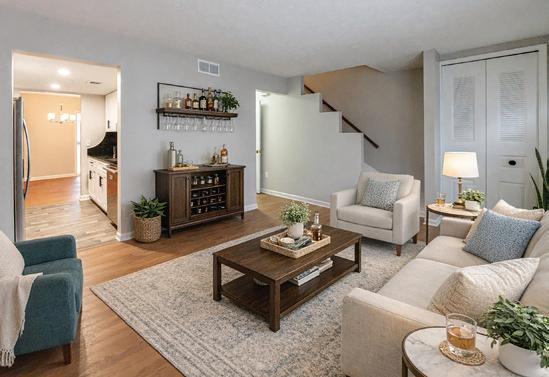
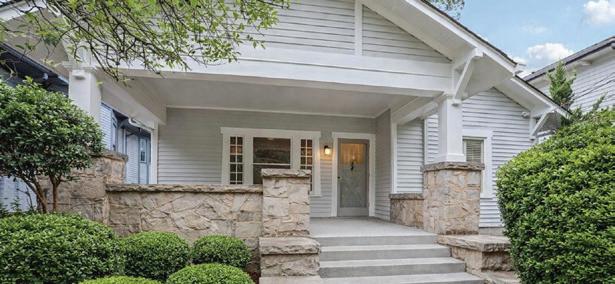
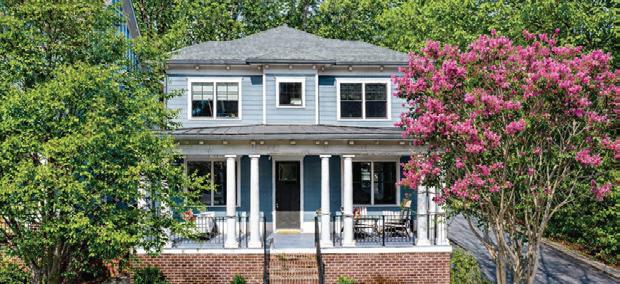
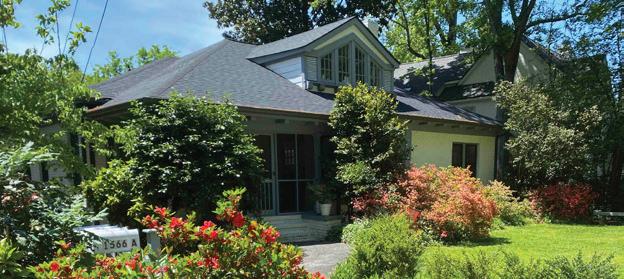
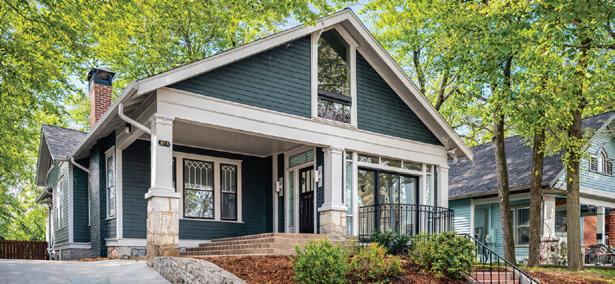
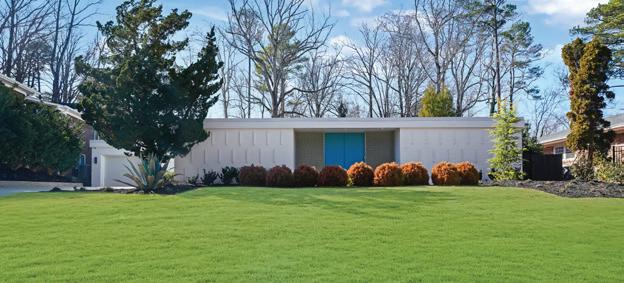
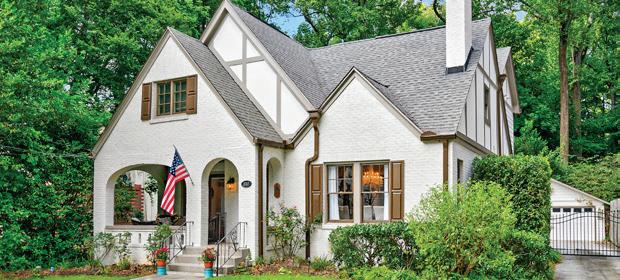
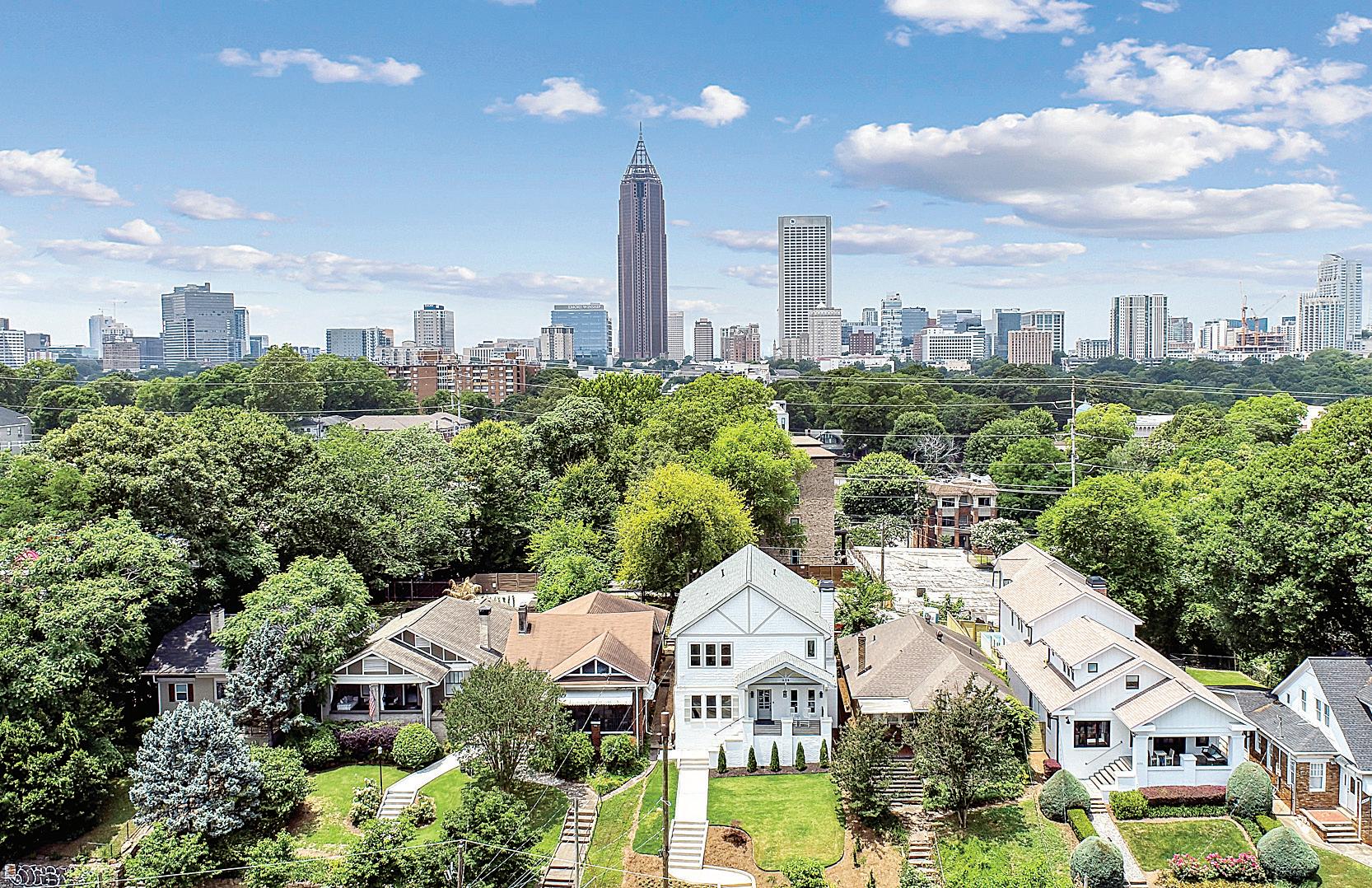
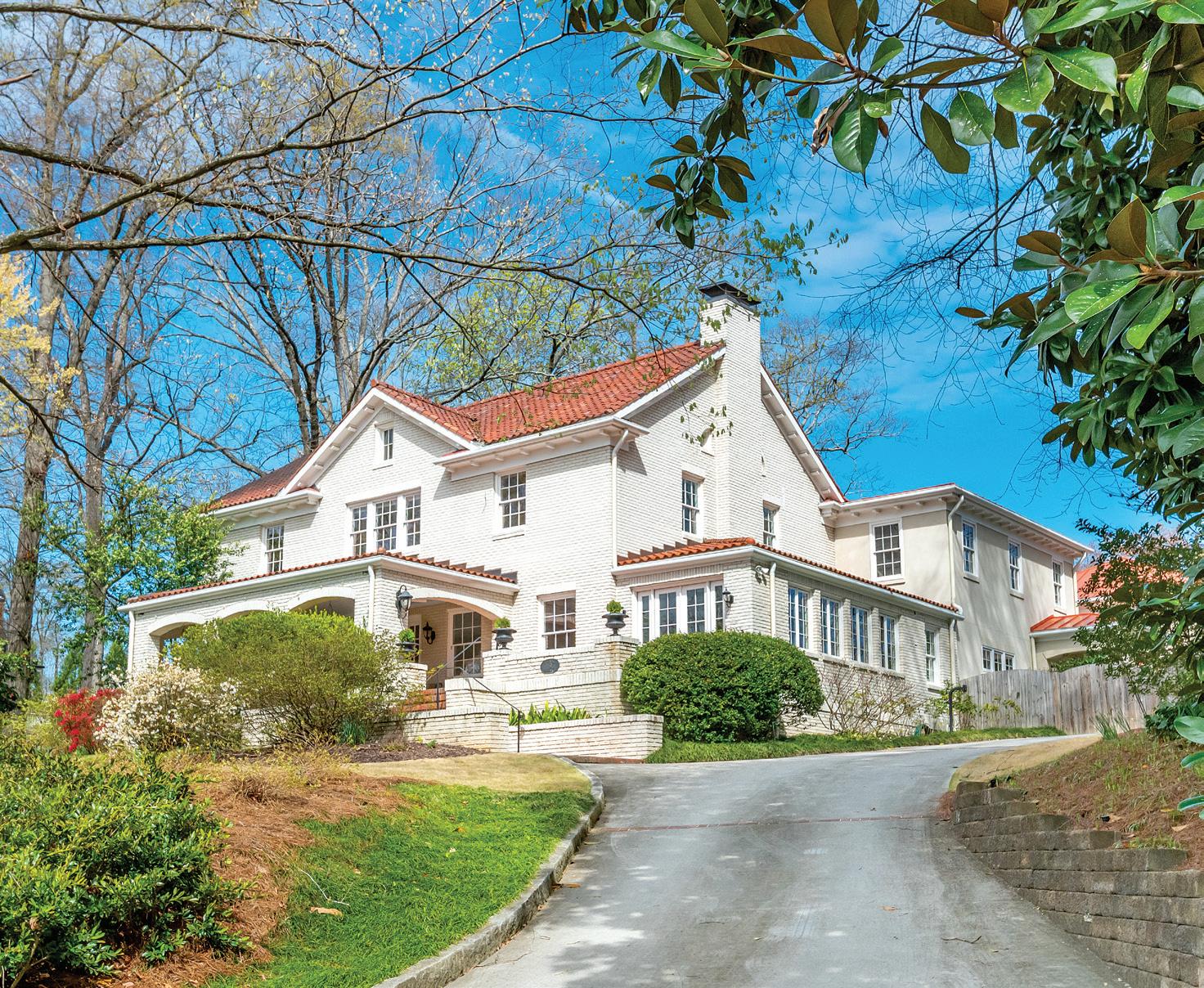
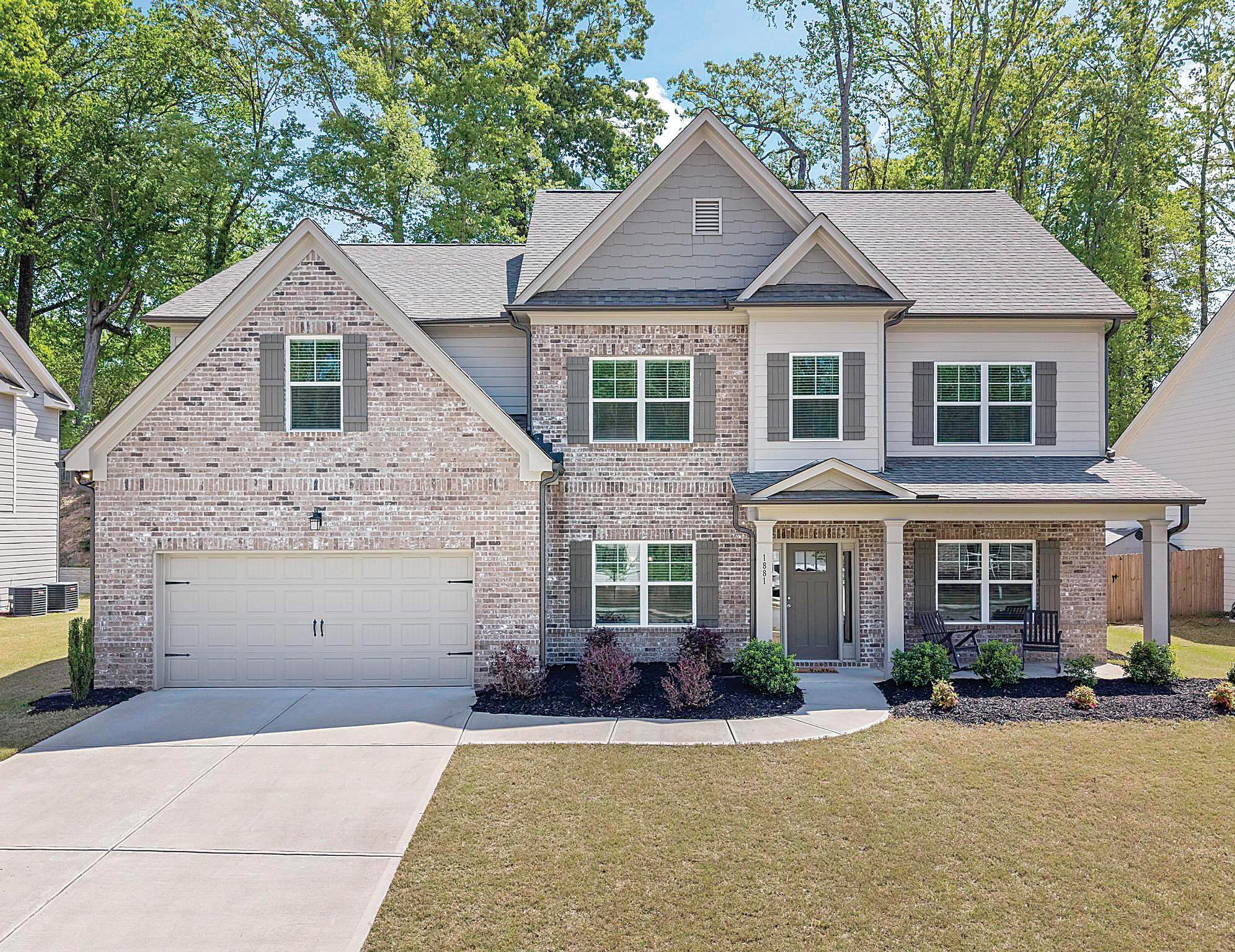
628 Kennesaw Ave. in Midtown. (Courtesy Carolyn Calloway)
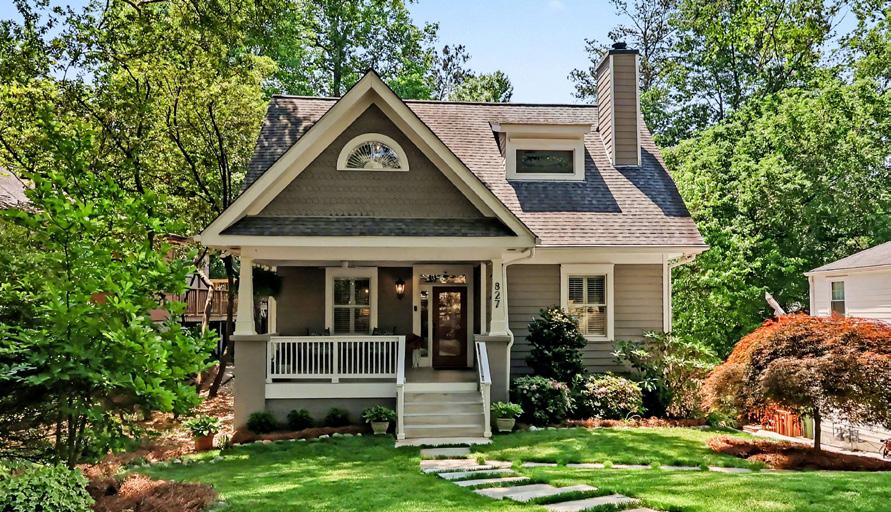
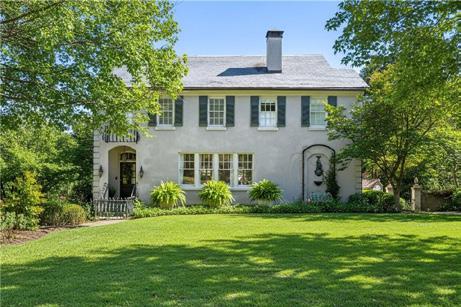
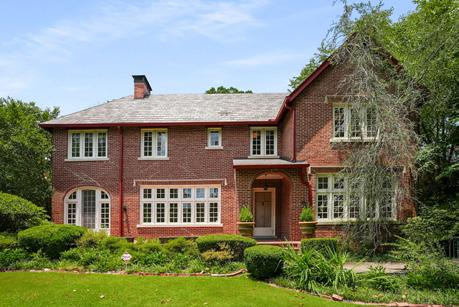
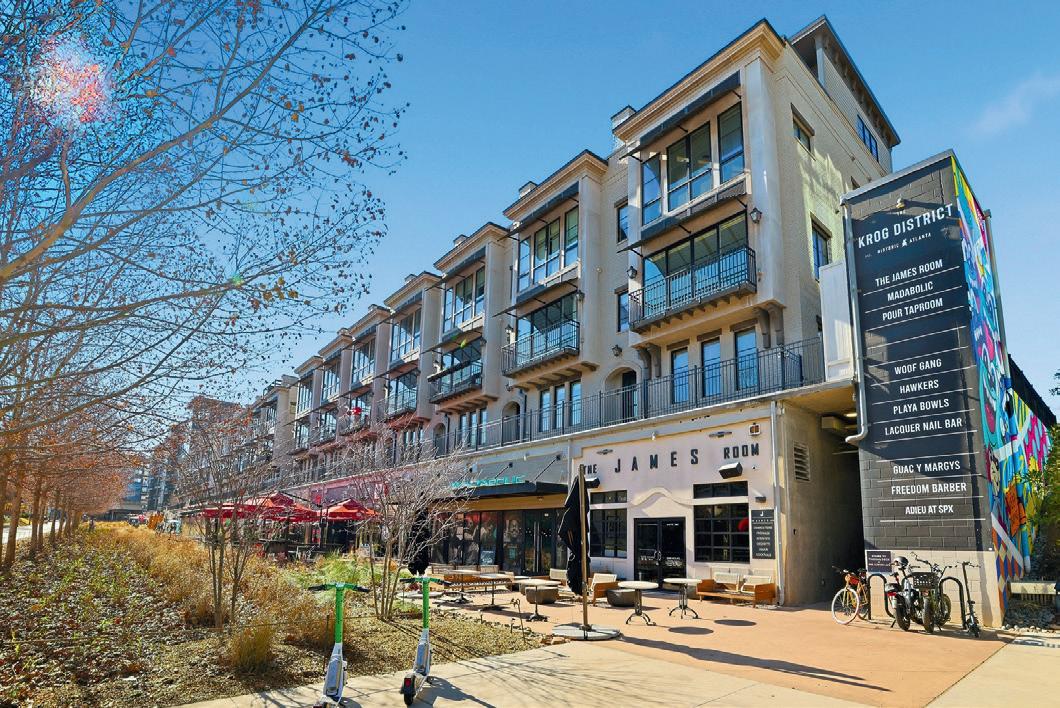
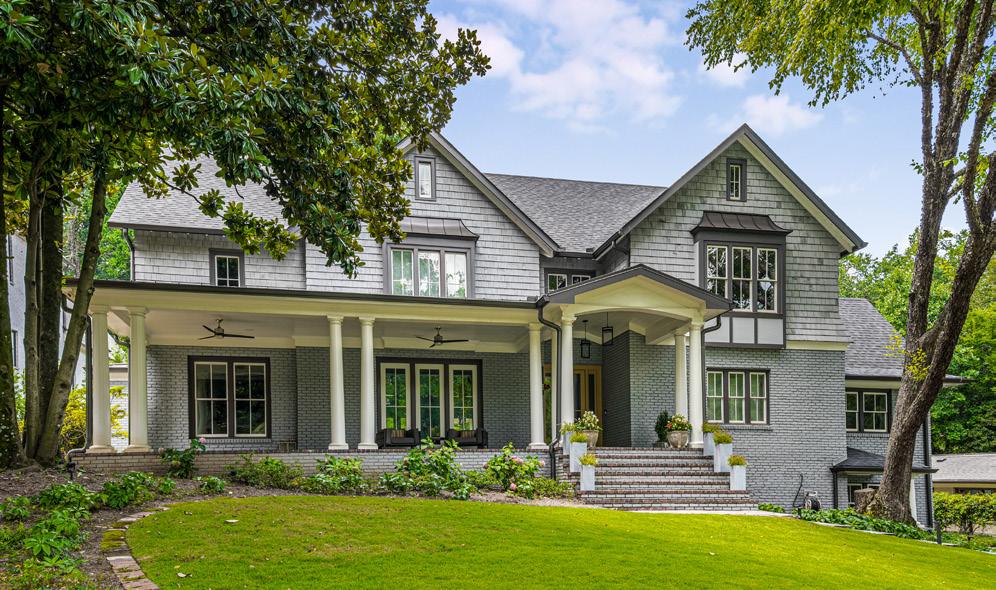
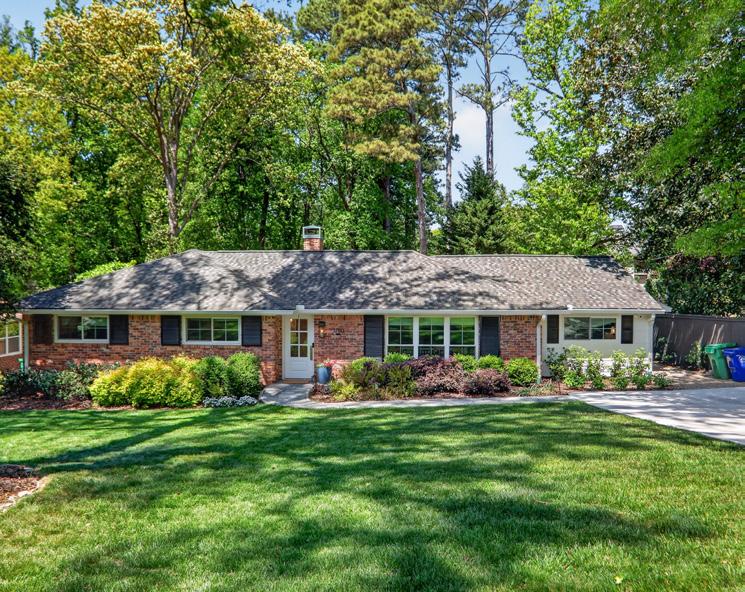
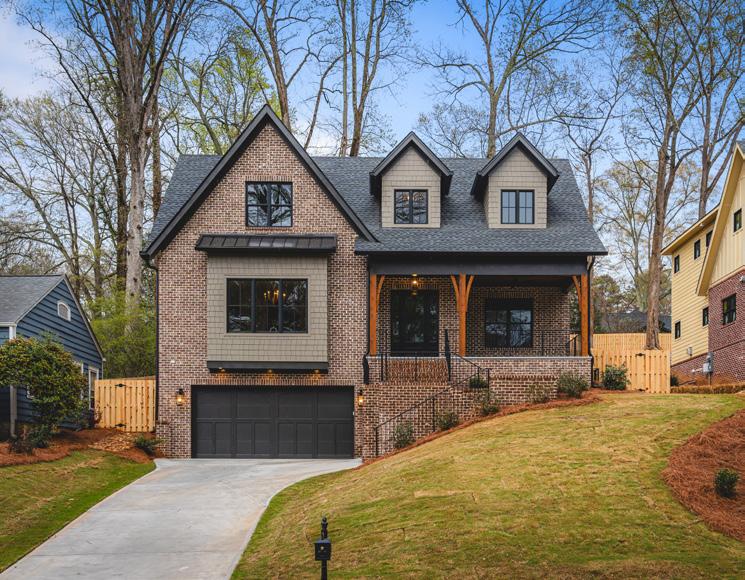
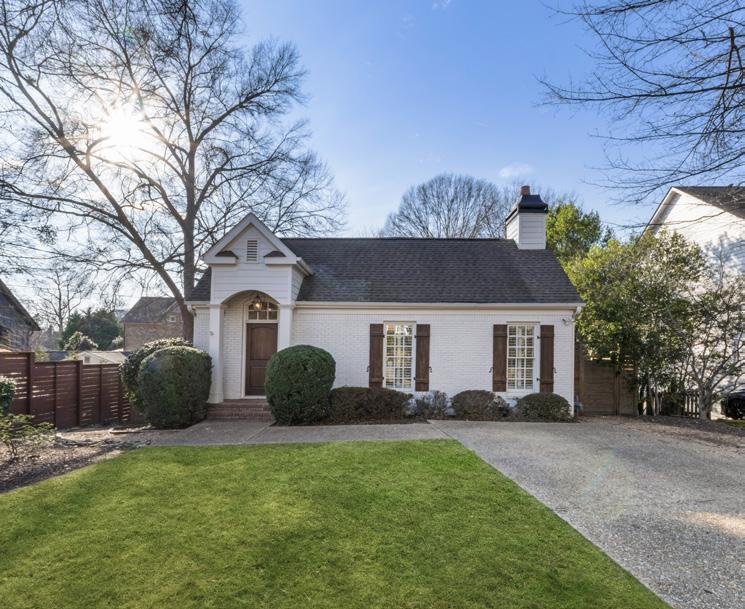
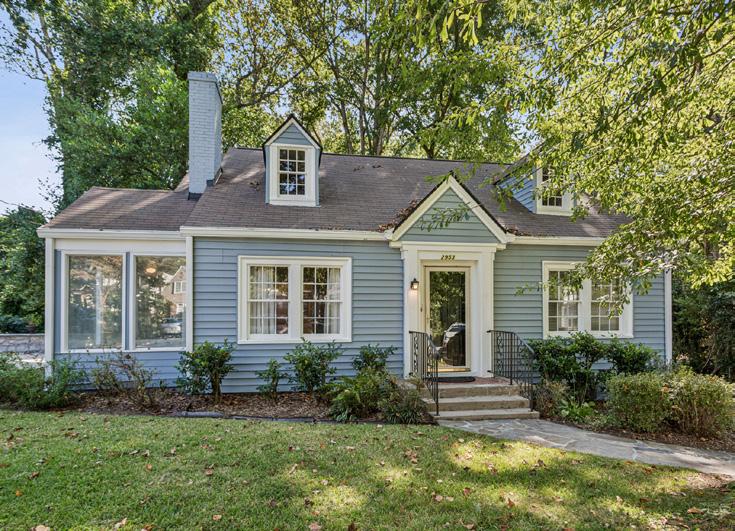
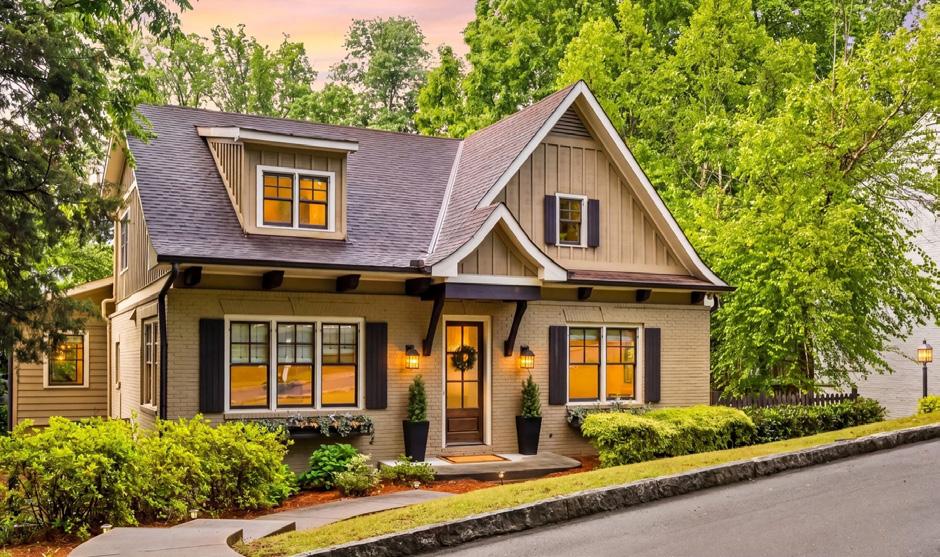
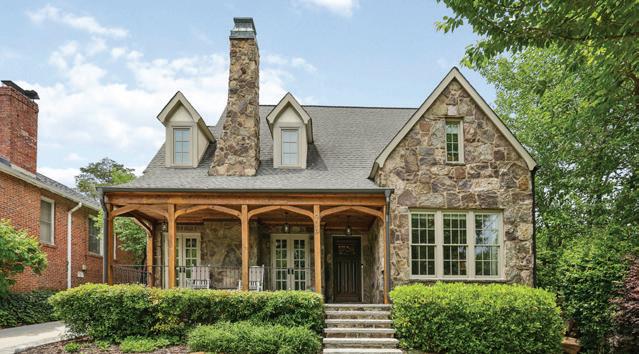
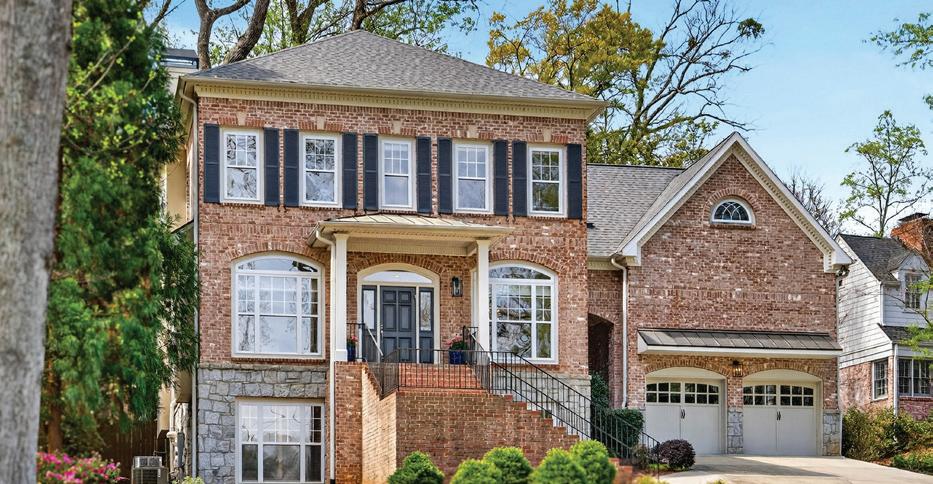
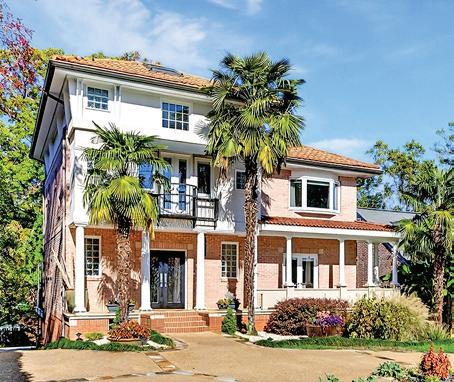
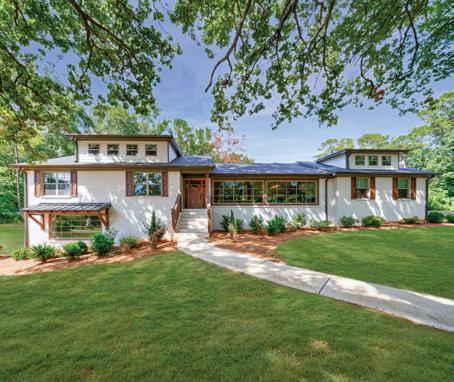
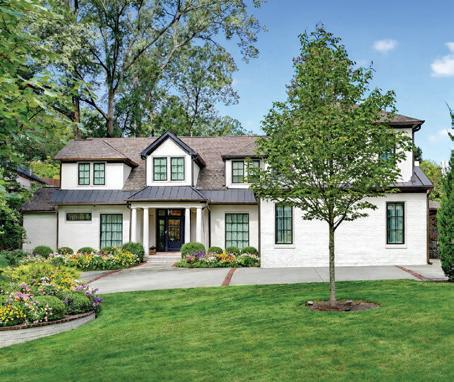
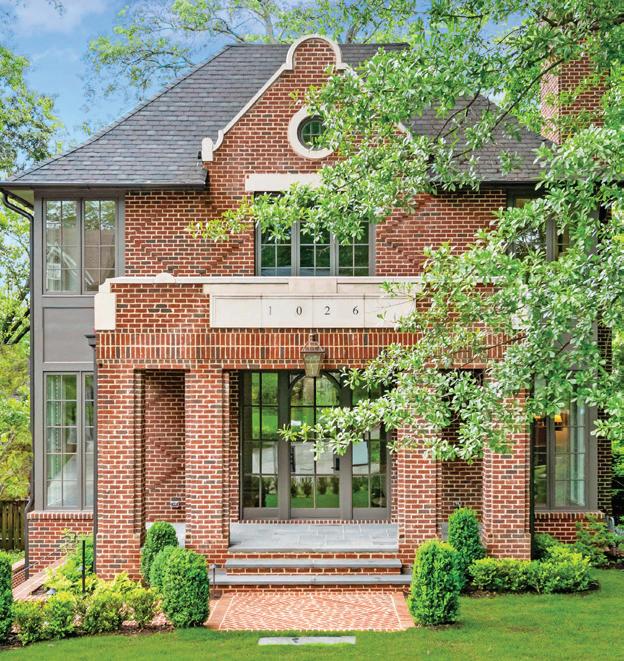
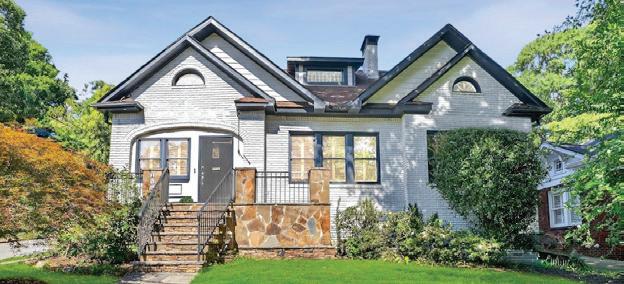
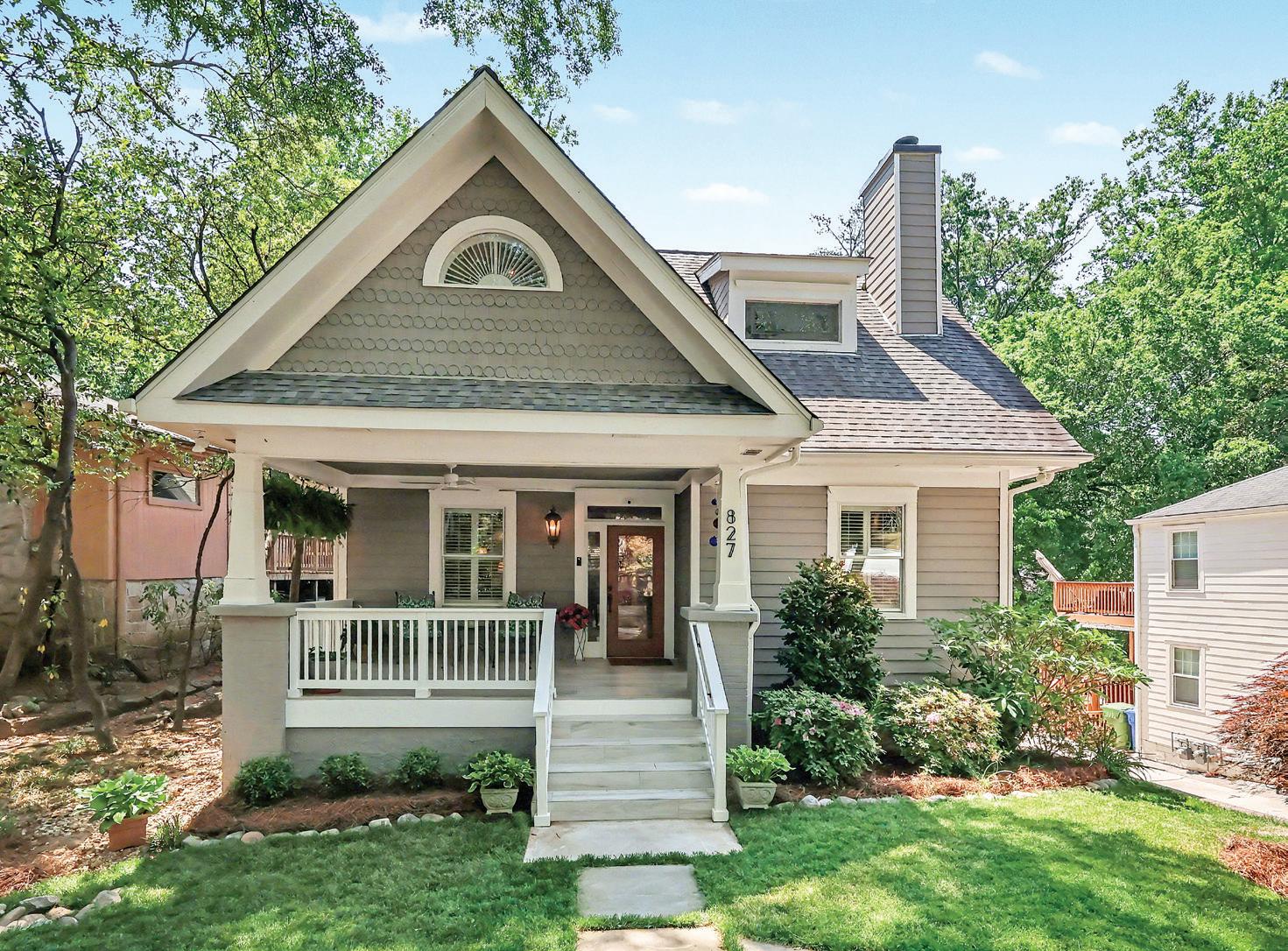
827 Highland Terrace in Virginia-Highland. (Courtesy Ken Covers)
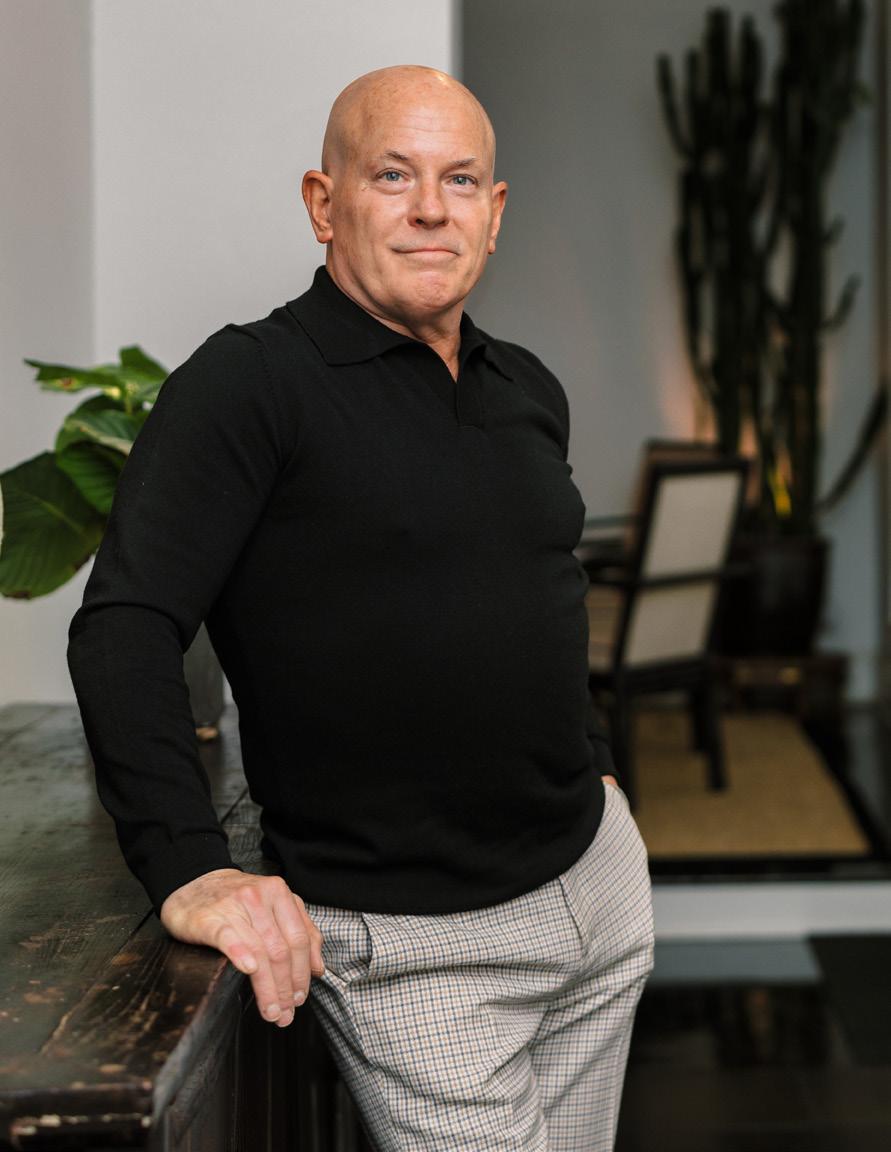
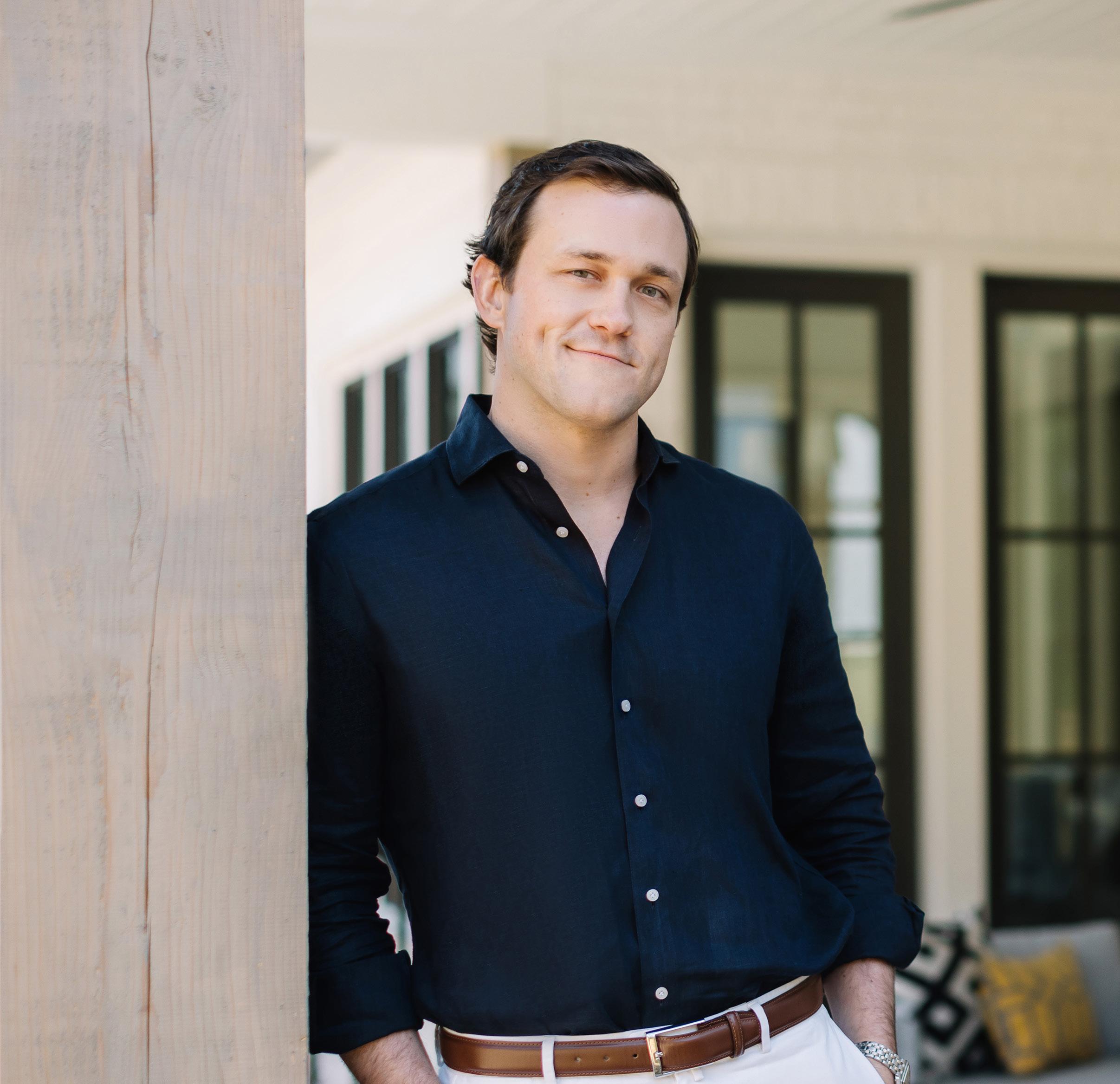
Ken Covers
Annie Bartz
Molly Carter Gaines
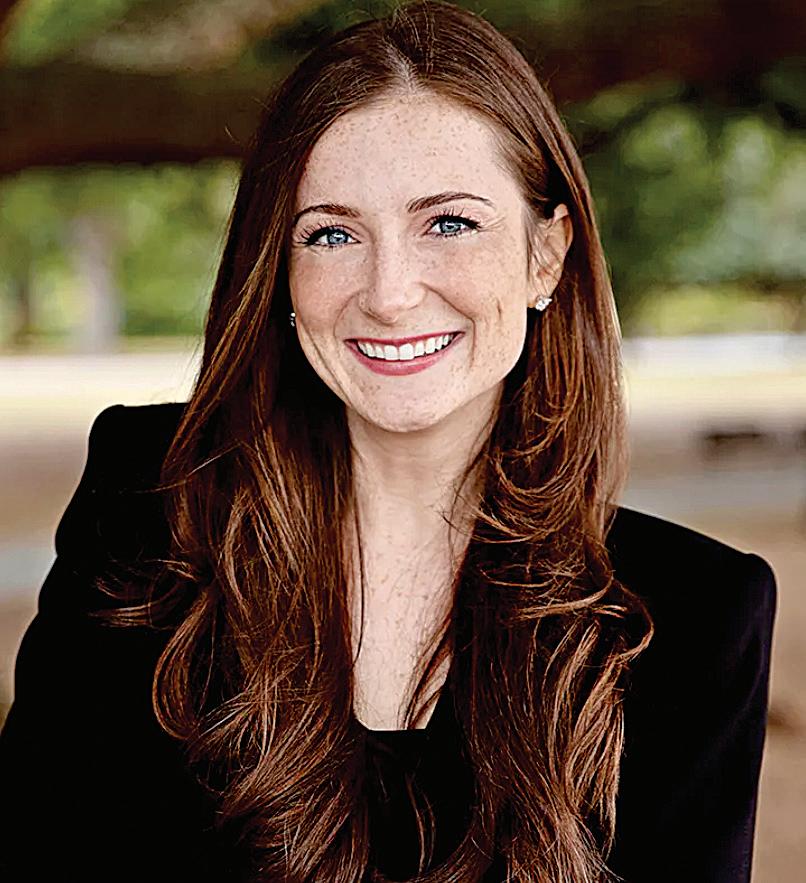
Carolyn Calloway
norm,” Calloway said.
Covers believes “interest rates are everything” in residential real estate. With rates being higher, the market has slowed but it’s also become more expensive to live. The uncertainty of the war in Iraq contributes to uncertainty in the market.
How does 2025 compare?
Gaines said she hasn’t seen much of a slowdown compared to last year, largely due to limited inventory for updated homes in prime neighborhoods.
“We continue to see intense competition for the same types of homes,
and when a property hits the market that checks the right boxes, the response is often immediate and aggressive,” Gaines said.
Year-to-date closed sales are down a little over 6% over the last year, Calloway noted, but pending sales are up.
“As we continue moving through
the spring market, we will likely see the year-over-year comparison of closed sales improve. The month's supply of current inventory is 4.5 months, which places Atlanta – generally speaking – in a balanced market,” Calloway said.
Fairview Road in Druid Hills (Courtesy Molly Carter Gaines)
An Intown home listed by Annie Bartz. (Provided)
Former CNN Center opens as The CTR, with Atlanta’s newest food hall
By Sarra Sedghi
At the literal push of a button on May 20, the revamped atrium at the former
CNN Center in downtown Atlanta opened as The CTR. A public grand opening will take place in June, ahead of the World Cup in Atlanta.
City officials, including Mayor Andre Dickens, and The CTR developer CP Partners hosted a launch party for media and invited guests that included presentations, DJs, drinks from the new atrium bar, and self-guided tours of the FIFA merch shop and CTR Food Works. Stalls at the food hall, backed by Robert Montwaid of Chattahoochee Food Works, will begin opening in June.
The CTR Food Works will include a mix of local and nationally recognized chefs.
■ Southern Belle Chicken Co.: Chicken dishes from Atlanta chef Joey Ward of Southern Belle and Georgia Boy.
■ Flora d’Italia: Italian dishes, pastas, and pizza from Michelin-recognized chef Steven Ferdinand.
■ Dessert Box: Bakery and desserts, also backed by Ferdinand.
■ The Sparrow: Szechuan Chinese, backed by team from The Sparrow in Midtown.
■ La Tropical: Puerto Rican, Cuban, and Latin cuisine.
■ Fuzzy’s: Lobster rolls, ceviches, oysters.
■ Patty and Frank’s: Burgers and hot dogs, backed by Montwaid with Chef Andrew Zimmern. Original location at Chattahoochee Food Works.
■ Mimi Taqueria: Tacos, Mexican street food.
■ Yet-named cheesesteak stall
■ CTR Bar: Georgia’s “largest bar,” led by Tiffany Howell, expect wine, beer, cocktails.
The atrium will also feature steak and seafood restaurant Mastro’s Ocean Club.
Over at the neighboring FIFA shop, people will find branded t-shirts and jerseys, hats, pins, scarves, and other merch like stadium-friendly clear bags and key chains.
ATL Culture House, an arts initiative led by the Mayor’s Office of Cultural Affairs, will move into the atrium ahead of the World Cup next month.
Down the road, plans for The CTR call for converting former hotel rooms to affordable apartments, which could provide housing for Downtown’s growing service industry workforce.
The building at 190 Marietta St., with its 14-story atrium, has been many things over the years. It once housed a hockey arena and was home to Burt Reynolds’ 1970s nightclub. In 1985, Ted Turner claimed it for CNN, where the 24-hour news channel remained headquartered until 2024.