WW1 British Army Uniforms History Design and Key Features
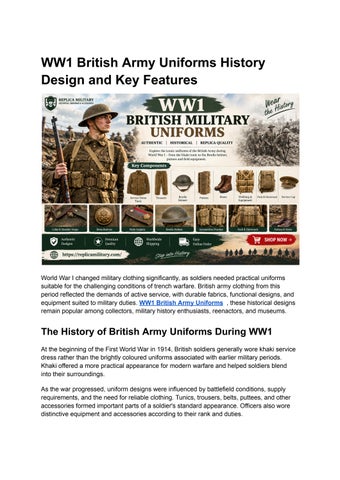
World War I changed military clothing significantly, as soldiers needed practical uniforms suitable for the challenging conditions of trench warfare. British army clothing from this period reflected the demands of active service, with durable fabrics, functional designs, and equipment suited to military duties. WW1 British Army Uniforms , these historical designs remain popular among collectors, military history enthusiasts, reenactors, and museums.
The History of British Army Uniforms During WW1 At the beginning of the First World War in 1914, British soldiers generally wore khaki service dress rather than the brightly coloured uniforms associated with earlier military periods. Khaki offered a more practical appearance for modern warfare and helped soldiers blend into their surroundings. As the war progressed, uniform designs were influenced by battlefield conditions, supply requirements, and the need for reliable clothing. Tunics, trousers, belts, puttees, and other accessories formed important parts of a soldier's standard appearance. Officers also wore distinctive equipment and accessories according to their rank and duties.
Those interested in historical military clothing can browse WW1 British military uniforms to find reproduction styles inspired by the British Army's First World War era.
Key Features of WW1 British Military Clothing British military uniforms from the First World War were designed around practicality and service requirements. Although details varied according to the wearer's role and the period, several features were commonly associated with British Army clothing.
1. Khaki Service Dress Tunics The service dress tunic was one of the defining garments of the British soldier's uniform. It typically featured a structured design, a front button closure, pockets, and a collar suitable for military insignia. Its practical construction made it an essential part of the standard uniform. A British WW1 SD Service Dress Tunic reproduction can be a useful reference for reenactors and collectors looking to represent the appearance of British soldiers during the period.
2. Officers' Uniforms and Equipment British officers' clothing could differ from enlisted soldiers' uniforms in tailoring, accessories, and personal equipment. The Sam Browne belt, for example, became strongly associated with British officers and was commonly worn with a shoulder strap and supporting military equipment. Those researching a WW1 British Military Officers Uniform can compare uniform styles and accessories to understand how officers' dress differed from standard service clothing.
3. Practical Accessories Uniform accessories helped complete the historical appearance of a soldier. Depending on the uniform and role, these could include belts, puttees, badges, insignia, and military headgear. Each component contributed to the overall appearance and could vary according to regiment, rank, and service requirements. When selecting reproduction clothing, it is worth checking historical references to ensure that the uniform and accessories correspond to the intended period and military role.
Why WW1 British Uniform Reproductions Remain Popular Historical military clothing continues to attract interest for several reasons. Reenactors use period-inspired uniforms to represent historical events, while collectors appreciate the craftsmanship and details associated with military garments. Museums, educational
displays, and historical productions may also use reproduction clothing to help illustrate the appearance of soldiers during the First World War. When researching British uniforms of World War 1, buyers should consider fabric, construction, sizing, available accessories, and the level of historical detail offered by the manufacturer.
How to Choose a WW1 British Army Uniform Reproduction Before purchasing a reproduction uniform, consider the following factors: ● Historical accuracy: Check whether the design reflects the intended year, rank, and military role. ● Material and construction: Look for suitable fabrics, stitching, buttons, and other period-inspired details. ● Fit and sizing: Review the sizing chart and measurements before placing an order. ● Accessories: Confirm whether belts, insignia, headgear, and other components are included or sold separately. ● Intended use: Choose a suitable design for reenactment, collecting, display, or historical photography. A little research before purchasing can help ensure that the selected uniform matches your historical interests and practical requirements.
Conclusion British Army clothing from the First World War reflects an important period in military history, when practicality and changing battlefield conditions influenced uniform design. From khaki service dress tunics to officers' equipment and supporting accessories, these garments provide valuable insight into the appearance of British soldiers between 1914 and 1918. Whether you are a collector, reenactor, or military history enthusiast, researching historical references and comparing reproduction details can help you select a uniform that suits your needs. Shop now more products : https://replicamilitary.com/cart/