FAREWELL TO ‘THE RENO GAY PAGE’
After 33 years, Paco LaChoy has moved on. News • Page 10
FAREWELL TO ‘THE RENO GAY PAGE’
After 33 years, Paco LaChoy has moved on. News • Page 10
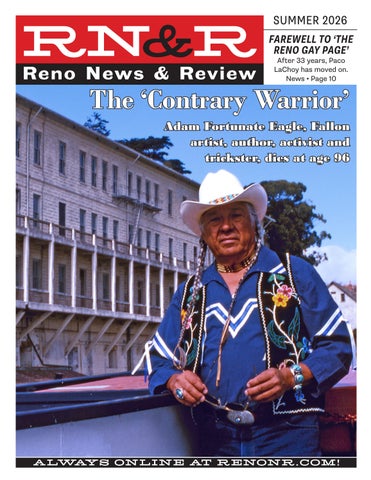
Adam Fortunate Eagle, Fallon artist, author, activist and trickster, dies at age 96
Mailing address: 31855 Date Palm Drive, No. 3-263, Cathedral City, CA 92234 775-324-4440 • RenoNR.com
Publisher/Executive Editor
Jimmy Boegle
Managing Editor
Kris Vagner
Editor at Large
Frank X. Mullen
Photo Editor
David Robert
Contributors
Matt Bieker, Mark Earnest, Bob Grimm, Helena Guglielmino, Matt Jones, Matt King, Kelley Lang, Chris Lanier, Lynn Lazaro, Michael Moberly, Alice Osborn, David Rodriguez, Sarah Russell, Jessica Santina, Jason Sarna, Max Stone, Marc Tiar, Delaney Uronen, Robert Victor, Matt Westfield, Leah Wigren, Susan Winters
The Reno News & Review quarterly zine is published in March, June and December, with the Best of Northern Nevada issue published in September. The RN&R is online every day, all the time, at RenoNR. com. All content is ©2026 and may not be published or reprinted in any form without the written permission of the publisher.
The RN&R is a proud member of the Association of Alternative Newsmedia, the Nevada Press Association, and the Local Independent Online News Publishers.



AI has been one of the hottest topics at every news-publishing conference I’ve attended in recent years.
How should we use it? Should we use it at all? How should we deal with the fact that most of these large language models use/used our content, without our permission? Will AI eventually cost us our jobs or our publications?
Additionally, the use (or, rather, misuse) of AI by some news outlets has led to some big problems. Here are two recent headlines:
• “Reporters at McClatchy Withhold Bylines in Dispute Over A.I. Content.” As reported by The New York Times: “McClatchy, the newspaper chain behind publications including The Sacramento Bee, The Miami Herald and The Idaho Statesman, has started to use a new artificial intelligence tool that can summarize traditional articles and spit out different versions for different audiences. Its reporters aren’t happy about it. Journalists in many of the company’s newsrooms are now withholding their bylines from articles created by the new tool, meaning that those articles will run with a generic credit rather than a reporter’s name, as is customary.”
Independent), has developed an AI policy, and we’re requiring all of our employees and contributors to agree to its terms. We used the AI policy by The Beacon, a Kansas City-based news outlet, as our inspiration, with their permission.
The Reno News & Review is dedicated to being the source of independent news, arts coverage, commentary and culture for the greater Reno/ Sparks area.

We, like many news publications, are continuing to explore how we use the fast-evolving tools of our trade—including artificial intelligence (AI) and large language models. Our goal is to use these technologies to improve efficiency while upholding our editorial integrity.
• Transcribing interviews using tools like Otter.ai. Transcriptions are always reviewed by a human for accuracy.
• Transcribing and summarizing public meetings. Transcriptions are always reviewed by a human for accuracy.
• Checking spelling and grammar.
• “Sports Illustrated Just Deleted Every Article by One of Its Writers After Accusation of AI Plagiarism.” As reported by Futurism: “Sports Illustrated deleted an author—and his entire archive of articles—from its website following allegations of AI plagiarism. … The sports news site Sportico published an article featuring an original analysis of parlay bets made via the prediction market Kalshi. Two days later, on May 15, Sports Illustrated published an article—titled ‘Who is really winning on Kalshi parlays according to the data’— that regurgitated the same figures, without ever attributing the analysis to Sportico, as would be the normal and ethical thing to do.”
Yikes.
To be clear, I don’t think writers/ reporters should use AI to write or construct their articles. That said, AI can be very helpful to journalists; for example, many of us use AI interview-transcription services, while some use AI to summarize public meetings.
Therefore, the RN&R, along with our sister publication (the Coachella Valley
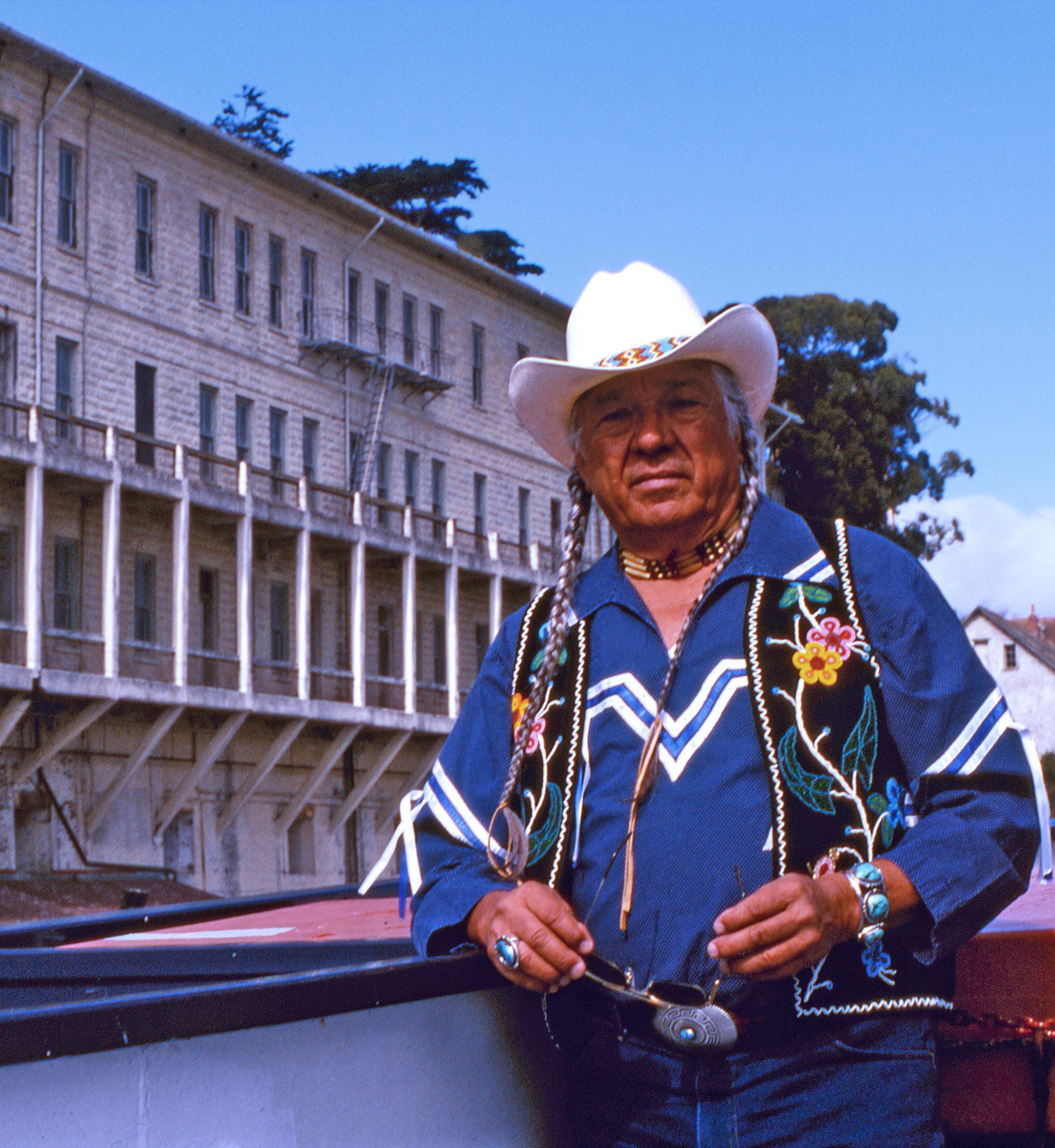
On the cover: Adam Fortunate Eagle at Alcatraz Island, circa 1998. Photo/Ilka Hartmann
• To brainstorm story angles, possible sources, potential questions and possible headlines—always with oversight and review by reporters and editors.
• AI does not write our stories. Every story is researched, written and edited by human journalists. In rare cases where a portion of a story is crafted by AI (such as a public meeting summary), it will be disclosed.
• We do not use AI for fact-checking or editorial judgment. Our reporters and editors are responsible for verification and for all conclusions.
• We do not use AI-generated photographs or illustrations. All visuals used in our reporting are created by human photographers, illustrators or designers. We are committed to using AI thoughtfully and responsibly. Any uses of AI will be to enhance productivity, and never to replace writing and reporting—while always maintaining the highest standards of accuracy, transparency and editorial independence.
Welcome to the Summer 2026 RN&R quarterly! Our next print edition will be our Best of Northern Nevada edition—on newsprint, large-circulation—in September. In the meantime, make sure you’ve gone to vote.renonr.com to cast your Best of Nortnern Nevada ballot!

Thirteen years later, the state’s tax system, alas, remains crappy
Longtime RN&R news editor Dennis Myers wasn’t a flashy writer—but he knew things.
“Dennis should have worn a battered fedora with a press pass peeking from the hatband,” Frank X. Mullen wrote in the RN&R when Dennis was inducted into the Nevada Newspaper Hall of Fame in 2020. “The motto ‘if your mother says she loves you, check it out!’ would not have been out of place on his business cards.” (Frank would join Dennis in the Nevada Newspaper Hall of Fame a year later.)
An RN&R cover story from 13 years ago is a perfect illustration of the late Dennis Myers’ encyclopedic knowledge of Nevada and its political history. It involved Nevada’s tax system, its myriad problems, and how it got so messed up. The first portion of the piece:
It was sweltering. Januaries in Carson City are cold, of course, but the Nevada Assembly hall was jammed with bodies and television lights. Even on a weekday evening people traveled to the capitol for these occasions.
Gov. Robert List entered the hall to applause, as most governors do. He held in his hand the text of his 1981 message to the legislature. It contained a proposal that would have impact on the state for the next 32 years, and continues its work today.
“I call for a dramatic slash in property taxes and a massive program of tax reform,” he said. “I propose that we adopt a tax reform plan which will save property owners $150 million on property taxes the first year alone. Let us shift the tax burden to all the people who utilize state services through the sales tax. And finally I propose that we revise the gasoline tax system to enable the state to better meet the needs of the growing number of citizens.”
List called for a 65 to 75 percent cut in
property taxes and a 64 percent increase in sales taxes, from 3.5 percent to 5.75 percent. His language was designed to sell with its talk of “reform.” One person’s reform is another’s regression. When List said the tax burden should be shifted onto “all the people who utilize state services through the sales tax,” he neglected to mention that the sale tax does not apply to services—and he wasn’t proposing to extend it that way.
The proposal was not a surprise, though List’s embrace of it was. He had promised not to raise the sale tax and had run for governor saying that the 3.5 percent sales tax should be lowered to 3 percent.
Two legislators—Republican Robert Rusk and Democrat Steve Coulter—were already promoting a similar plan before List’s message, but until the governor got behind it, its chances were uncertain at best.
After Democrats and the press took a fall, List won enactment of his tax package—and then literally within days, the state paid the price. Ever since, Nevada has been more vulnerable to economic downturns, less competitive with other states, hard pressed to stay ahead of the curve—and workers in the state have been soaked.
Soon, the latest Nevada Legislature not to deal with the problem created in 1981 will adjourn and go home for two years, kicking that can down the road one more time.
Every Nevada Legislature since then has continued to kick that can down that road—and the state is hurting, in many ways, as a result.
To oversimplify things: In progressive tax systems, richer people pay a higher percentage of their income in taxes; with regressive tax systems, lower-income people pay a higher percentage of their income in taxes. According to the Institute on Taxation and Economic Policy

(ITEP), Nevada has the fifth-most regressive tax system in the nation.
“Ten states—Florida, Washington, Tennessee, Pennsylvania, Nevada, South Dakota, Texas, Illinois, Arkansas, and Louisiana—are particularly regressive, with upside-down tax systems that ask the most of those with the least. These states tax their poorest residents—those in the bottom 20 percent of the income scale—at rates averaging three times higher than those charged to the wealthy,” says the most recent ITEP “Who Pays?” report.
Nevada, which famously does not have an income tax, heavily relies on sales tax revenue and gaming tax revenue—both of which tend to get hard by recessions.
Meanwhile, because of the aforementioned restrictions the state has on property taxes, local governments have their hands tied regarding that important revenue source. The result, as our clever cover 13 years ago declared, is a crappy tax system.
In June 2025, The Nevada Independent looked at the latest failed effort to alter the state’s property-tax system:


AJR1, sponsored by Assm. Natha Anderson (D-Sparks), would have (tweaked) the state’s property tax structure. It’s one of only two funding mechanisms—sales tax is the other—that a Legislature-commissioned panel of finance experts said is broad enough to get education funding close to the national average.
Instead of raising property taxes outright, AJR1 would have made a property ineligible for tax abatements the first year after it is sold, and revise the state’s tax code so that a property’s taxable value would reset when sold.
The measure could have generated millions in additional funding for schools. An analysis of a near-identical 2017 measure found that it could have generated as much as a half-billion
dollars annually for operating funds in about a decade. A 2024 report by the state’s school funding commission had similar findings.
In order for AJR1 to become law, it would have needed legislative approval in both 2025 and 2027, and then voter approval in 2028. But after passing in the Assembly last year, it died in the Senate.
Nevada’s property-tax system is unquestionably uneven and unfair. Back to that Nevada Independent piece:
The bill faced strong opposition from the real estate industry, which argued AJR1 could have raised constitutional issues, going against an “equal and uniform” taxation provision codified in state law.
This is in part because of the state’s depreciation formula, which reduces the taxable value of real estate at a rate of 1.5 percent annually over a 50-year period. This means that a home with a lower market value can have a significantly higher taxable value than a more upscale property, simply because of its age.
Dylan Shaver, a representative for the progressive group New Day Nevada that supported AJR1, offered two Northern Nevada properties as an example. One of them, a historic mansion, was listed for $2.4 million but was valued at $75,000 for property tax purposes. That’s in comparison to a newly built home listed for $550,000 with an assessed value of about $84,500.
This means that homebuyers of less-expensive properties can end up paying significantly more in taxes.
“That depreciation ends up creating pretty significant holes and gaps at the local level that can not be resolved,” Shaver testified.
Nevada is the only state to apply a depreciation formula to real estate, bill proponents point out. By resetting depreciation at the point of sale, advocates such as Shaver argue that the state’s tax system would not only become more fair, but could bring in more revenue.
The state’s education system is struggling and, even after a big boost from the Legislature in 2023, underfunded. The state’s health system is one of the nation’s worst-performing.
Nevada’s tax system needs an overhaul—it’s not going to happen anytime soon. Regarding AJR1, The Nevada Independent said: “Even proponents said that tweaking the state’s property tax structure is a politically unsavvy move—it could rankle homeowners, who are more likely to vote than their counterparts who rent—and could very well threaten lawmakers’ shot at re-election if the measure passed.”
Most Republicans promise there will be no new taxes. Most Democrats want to preserve their power. To paraphrase what Dennis Myers wrote 13 years ago: Barring something very unforeseen in 2027, the Nevada Legislature will not solve the problem created in 1981, and will instead kick that can down the road yet again.
BY DAVID ROBERT
Is there a new technology that is beneficial for you? That you find intrusive? Asked at Dolce Vida psychic shop, 351 S. Wells Ave., Suite 200, Reno
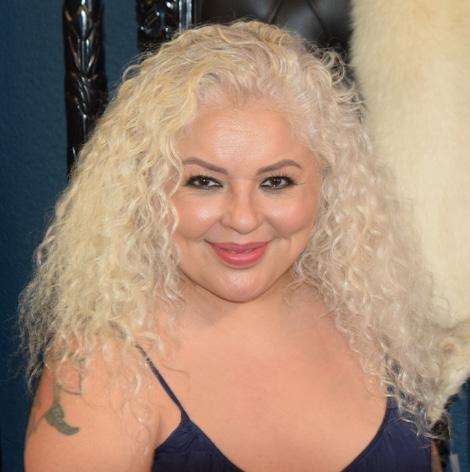
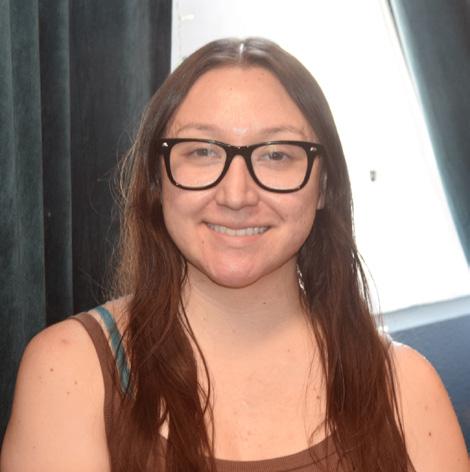
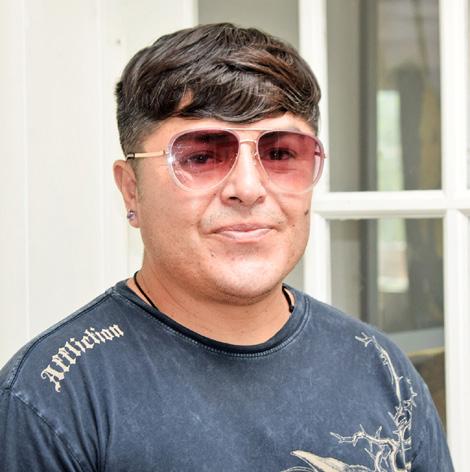
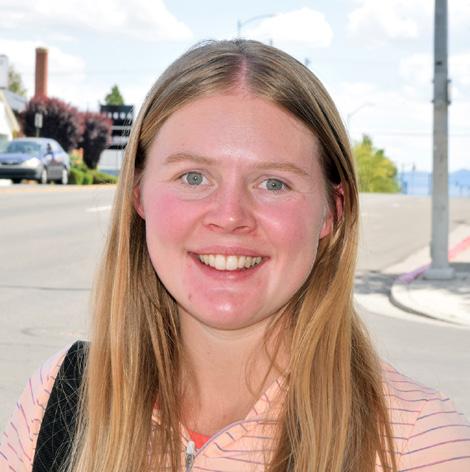

Star Monreal Medium
AI helped a lot when I was writing my book. It gave me ideas for the title and the structure. It also helps me with dream analysis; it gives me a second view. I don’t like that when I purchase online, my info is sold to or shared with other companies.
Bianca Martinez Nursing student
VR (virtual reality). With VR, you can make mistakes that you shouldn’t in real life—like medication dosage errors, cleaning a trach line, and placing an NG (nasal line). You can practice this in VR and not hurt your patient. I don’t like the fact that AI can be used for bad purposes, such as fake nudes.
Junior Rose CEO of Dolce Vida
AI. Ask AI, and it’ll point you in the right direction. It’ll tell me when the right days and times of day are to post on social media. It’s been very reliable for me. There is no technology out there that’s intrusive for me personally.
Marte Jeilen Realtor
I’m seeing more and more Realtors using AI for property listings and descriptions. They’re writing the whole thing in AI. I can tell, because they don’t even edit—they just copy and paste. I don’t use it. I find data centers intrusive—bad for water usage and horrible for the environment.
Michael Atilano Bartender
Social media is very good for getting stories out there. For me personally, I like to see stories that help with missing and exploited children. Also, LGBTQ stories. I have friends in the drag community, and social media lets me see the dates and times of the drag shows. I don’t like that data centers are being built and the way they’re impacting water usage.
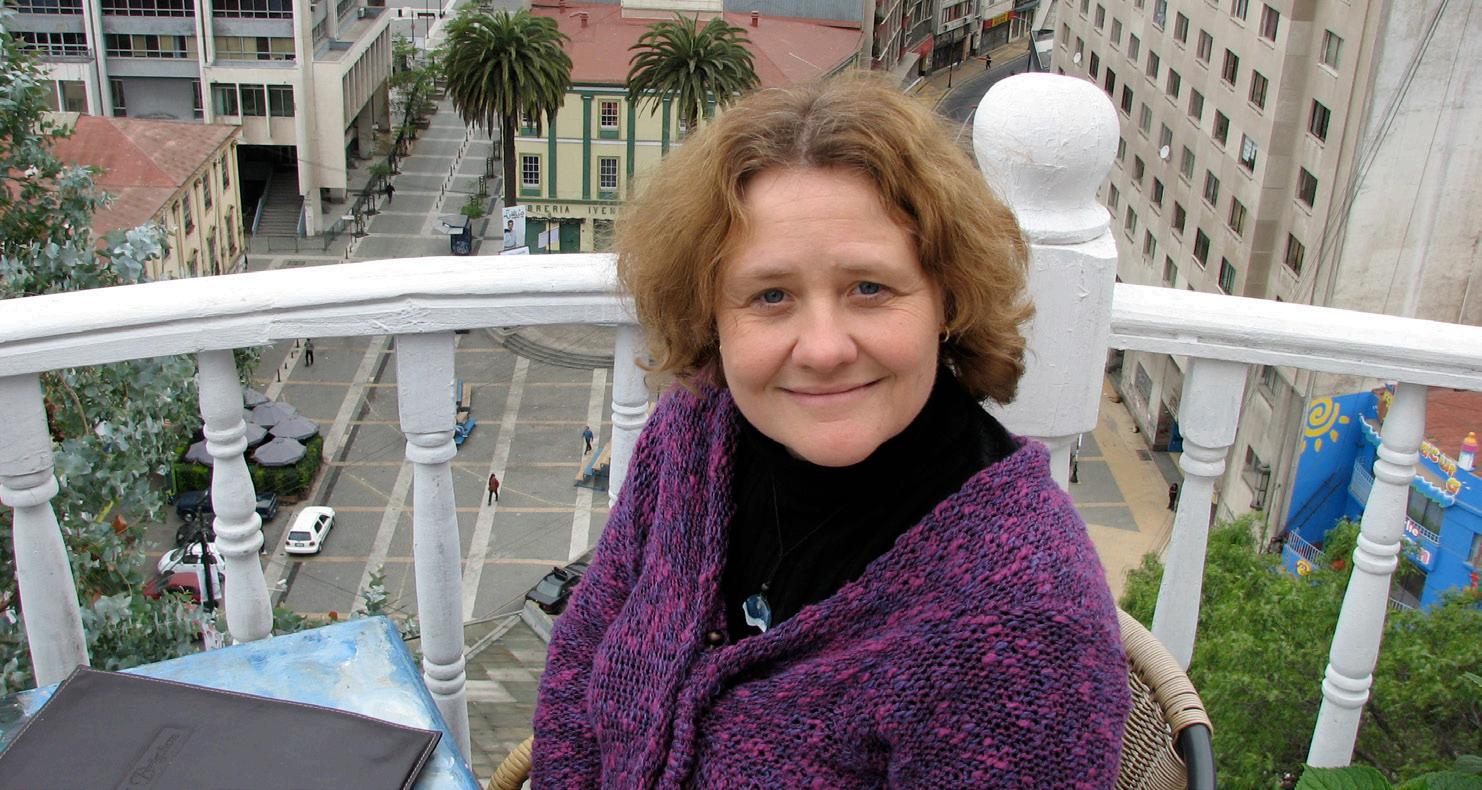
Trump said he won’t even try to learn Spanish. A former ‘RN&R’ editor recalls what it felt like to try very hard.
“(Marco Rubio) has got a language advantage over me, ’cause I’m not learning your damn language,” Trump continued. “I don’t have time. I was OK with languages but I’m not gonna spend time learning your language. That much I won’t do.”
—Donald Trump to Latin American leaders, March 2026
October 2008. I walk into a French restaurant in Santiago de Chile feeling out of place. Casual slacks and an untucked blouse, my hair a frothy mass of curls, too long. My face damp and make-up smudged. Alone.
I feel thousands of miles from my Nevada home and a lifetime away from the comfort of speaking English. So few chilenos speak English. This makes Santiago an excellent place to immerse myself in language learning. That said, I’m tired of working so hard to communicate.
Estoy sola. Estoy cansada. Tengo hambre. So hungry. The restaurant’s foyer is narrow, dark, humid. Still air. Shuttered. No one greets me or acknowledges my presence. It’s 7 p.m. Mas temprano. Too early for self-respecting chilenos to be dining out. Two or three men sit alone in booths, reading newspapers, drinking pisco sours topped with frothy egg whites.
Today’s El Mercurio is folded under my arm. I catch the eye of a bustling waiter, setting up for the night. He’s placing carefully folded white cloth napkins on tables. Arranging forks. Aligning wine glasses for
white and for red.
I straighten my back.
“¿Permiso?”
Nothing. I try a more commanding, confident tone. Soy profesora.
“¿Perdón?”
He finally looks at me. I gesture to a table. He shrugs. I sit. Unfold my paper. Wait for a waiter. I stare at the closest, willing el mesero to come to the table. I catch the gaze of another, walking briskly out of the kitchen. He sees me. Catches my eye. Looks away.
Unlike me, the waiters seem cool in the heat of the late spring evening. No discernible sweat. Brisk in pleated pants and crisp white shirts. Collared like coiffed French poodles.
Mas temprano.
It was a Friday night, and my students had taken a bus to Viña del Mar en la costa. My plan was to force myself to get out and practice language skills. I decided on dinner at a French bistro, highly recommended by students, a block from metro Estación Manuel Montt. With a population of more than 6 million, Santiago is the largest city I’ve lived in, by far. I’m teaching two university classes for a study abroad program at La Universidad Andrés Bello. I’m enrolled in four semesters of Spanish compressed into five months. Como reportera necesito hablar español. I rent an apartment in Providencia, close to metro Estación Salvador. My place is equidistant between the university campus and fine dining, galleries and clubs where my mostly U.S. students dance until 4 a.m. One wanders into my morning classes in the clothes she wore
| BY DEIDRE PIKE
In 2008, Deidre Pike spent five months in Santiago, Chile, teaching two university courses and studying intensive Spanish, along with more than 50 University of Nevada, Reno, students as part of the University Studies Abroad Consortium. Photo/courtesy of Deidre Pike
the night before.
I’ve dined by the pool at a renowned Peruano restaurant Barandiaran, ordering ceviche, the best I’ve ever tasted. But that night, I was with people, some of them men. And it had been the right time for dining—after 9 p.m. But I was raised in the U.S. Midwest, where we enjoy an evening meal at 5 p.m. So, I wait to go out until 7 p.m.
Which is still desmasiado temprano Ahora estoy sola. Me siento cohibida. Feeling self-conscious. Every hair out of place, keeping my arms at my sides so pit sweat doesn’t show. I lean into the aisle and practically trip a waiter.
“Un cerveza, por favor,” I ask. Looking at his eyes. Which are averted. And he repeats the order, correcting my careless gender mistake, as much for the lurking staff as for anything.
“Una cerveza, por supuesto,” he said, pronouncing the “ah” in “una” distinctly. A beer is a girl, not a boy. “Una cerveza para la señora. Claro.”
I wish I were home in my 11th-floor condo overlooking Parque Balmaceda, tucked in safe with a pot of boiling water on the stove, a plastic sack of elbow macaroni and The Daily Show to watch on my Macbook. I’d cook the noodles al dente and stir in grated cheese. A crushed clove of garlic, pat of butter, squirt of sriracha. Porque tengo hambre. Hey, estoy pensando en español. I catch myself thinking in Spanish for a few seconds almost every day. For weeks, I have had to focus hard and plan ahead, memorizing words to accomplish life’s simple tasks—eat, drink, buy groceries, travel. I panic before opening my mouth to speak. I stand in line at el supermercado, rehearsing answers to the standard questions. Do you have an account here? Do you want paper or plastic?
The workers speak fast, so I have to guess the questions and often give up and answer no, no. If I hear language that sounds like the standard “how are you paying for this?” I respond with efectivo, gracias, and whip out chileno pesos Given occasional confused looks from clerks, I likely give this answer to the wrong question.
“How are you doing today?”
“Cash, thank you.”
Most days, I want to be back in Reno, where I don’t have to remember to tip the young person who packs my food items into bags. Where I don’t have to ride the metro home with bags on my arms. Where I can drive my car to Safeway, type my phone number into a keypad for deals, pay with my credit card, and load groceries into my trunk. Where I don’t have to rehearse my orders at the deli counter and remember that half a kilo is a pound of cheese. Medio kilo, I would
say, and point to el queso. I point so much. When you can’t speak a language, you point and point. When you can’t speak a language, you can’t understand directions to the store that sells towels, and you can’t find café entero or la machina in which to grind whole beans. My first week in Santiago involved attempting to find good coffee or a grinder for the whole beans that I’d packed in my luggage.
After many frustrating quests, I bought a jar of Nescafe. Instant coffee is easy. Add a little cocoa powder, and you’ve got a gas station mocha. My new chileno friends joke about this, about my weird affection for No Es Café
But tonight, tengo hambre. I plan to order delicious French cuisine. I will point to menu items and the pretentious chileno waiters will not try to hide their scorn for my 43-year-old female solitude. I will read the paper to hide from them. But my belly will be full.
I wait and I wait. Espero y espero. The gorgeous verb “esperar” means “to wait” and also “to hope.” My beer arrives, and I drink it. But no menu. The waiters have disappeared. I give up. I fold my paper, leave the equivalent of $10 on the table and walk out. It’s two blocks to a shop with 50 flavors of helado. I like frutas del bosque the best. Fruits of the forest.
Next to me in line, a chileno starts a conversation in English. He introduces himself.
“Hello, I am Geraldo.”
“Didra,” I say. If a Spanish-speaker looks at those letters, they will pronounce my name exactly right.
“Are you of the U.S.?”
“Si, soy estadounidense.” Weird to me that we don’t have a word in English for a UnitedStates-ian. We are all americanos, of course, from Canada to Patagonia. It takes travel to learn the reality of this.
I order frutas del bosque
“Sabe a moras.” I explain to Geraldo that it tastes like blackberries. He asks for the English translation. He likes to practice English and says he studies my language by watching The Simpsons
“Black, how you say, berry?”
“Blackberry, si, perfecto.”
He asks where I live in the estados unidos, and I say, “Nevada, Las Vegas.” I’ve tried telling people I’m from Reno but Las Vegas is more widely known in sudamerica
“Las Vegas!” Geraldo’s eyes light up. “It is my dream to go there for one weekend. I would, I think you say, clean up.”
“Buena suerte!” I tell him. “If you get to Las Vegas, Geraldo. I hope you do. Espero.”
We part ways. Fueled by frozen dairy, I walk to the bar district in Bellavista and slide into a dark dive with live music. It’s almost 9 p.m., and the place is starting to fill.
“Una cerveza,” I say at the bar, fucking nailing the gender this time. “Guinness, por favor.”
New language, new soul, new window to the world. Familiar Irish beer.
El barman responds without delay. I will tip him well. Men are smoking at the bar. I light a Lucky Strike. Inhale. Exhale. Fumar es una dicha. Bliss to my lungs. Nicotine surges into
my bloodstream, heightening senses and mental acuity. I lean back, smile and take in the scene.
In a dark corner of the room, a teen sings from a tall stool, long bangs drooping over his face. He plays an acoustic guitar plugged into an amp and leans into a microphone, singing mostly 1990s covers from U.S. bands. He’s learned the sounds of words, stringing together unfamiliar consonants and vowels memorized. Language is a cryptic mesh of noise that we learn to decipher, to unglue meaning. So many people learn English by watching and listening to U.S. popular media. I’m impressed. The singer throws his heart into the lyrics of Pearl Jam, Sublime, Guns and Roses. Channeling Cobain, he strums and sings: “Come as you are, as a frand as a nold enemy.” I realize I don’t know the lyrics to “Come as You Are,” or I might sing along. Because I’m drinking.
Alcohol is a universal language. I sink into the spell of warm imported beer, overpriced and only slightly better than the local macrobrew Cristal. The men next to me, I guess early 50s, are tipsy from beer and whiskey. They look like shorter, heavier versions of Robert DeNiro, with an extra chin, and Harvey Keitel, balding with a comb-over. We engage in small talk but soon launch into inquiries about U.S. politics and the upcoming election.
“¿Las elecciones en estado unidos? ¿Te gusta McCain?”
They want to know how will I vote. Do I like John McCain? Do I support the right—and perhaps by extension Pinochet-style dictatorships—or the left, this Obama guy, this wannabe Salvador Allende. In Chile, it boils down to this. Fascism or socialism. Security or equity. I try my best to express my ideology en español
“La gente de mi país tiene miedo.” The people in my country have fear. I don’t have the right words to describe my nation’s growing terror of The Other—immigrants, women, people of color. I don’t know how to say I think George W. Bush’s administration exploits those fears.
No tengo el vocabulario para describirlo. I
bungle it.
Double Chin DeNiro stumps out his cigarette, sips his whiskey neat and asks me: “¿Ellos piensan que Obama es peligroso?”
“Ah, no. Disculpe. La gente piensan que todos es peligroso.” The people think that everything is dangerous. “Me gusta Obama. Espero que gane.” I like Obama. I hope he wins. Espero. Espero.
Double Chin DeNiro laughs at this, pats my shoulder, changes the subject. Combover Keitel leans in close and chides me for smoking Lucky Strikes. The Luckies have too much nicotine for a girl.
“Demasiada nicotina,” Keitel says. He furrows his brow. “Deberías fumar algo menos.” You should smoke something less. I observe that nicotine, like beer, is also a girl.
I use my Lucky to light another Lucky. Keitel and DeNiro cackle at this and shake their heads. I lean back to watch Chileno Cobain cover Michael Jackson’s “Thriller.” I feel comfortable. Me siento a gusto, I think, I feel OK in this moment.
“Una cerveza mas, por favor,” I ask el barman “Una mas.”
A month later, eight of my travel writing students gathered in my Santiago 11th-floor apartment to watch election returns. We made a huge pot of a traditional chileno stew charquicán and drank pisco sours and vino tinto chileno. I cried as we watched Barack Obama’s acceptance speech. It had been eight long years. Espero y espero.
Deidre Pike, former Reno News & Review contributor, all-around rockstar and, from 2001-2002, editor, is now the chair of the journalism department at Cal Poly Humboldt in Arcata, Calif. Ella pide disculpas por los errores en español. She apologizes for any Spanish errors.
This article was originally published in the Lost Coast Outpost.
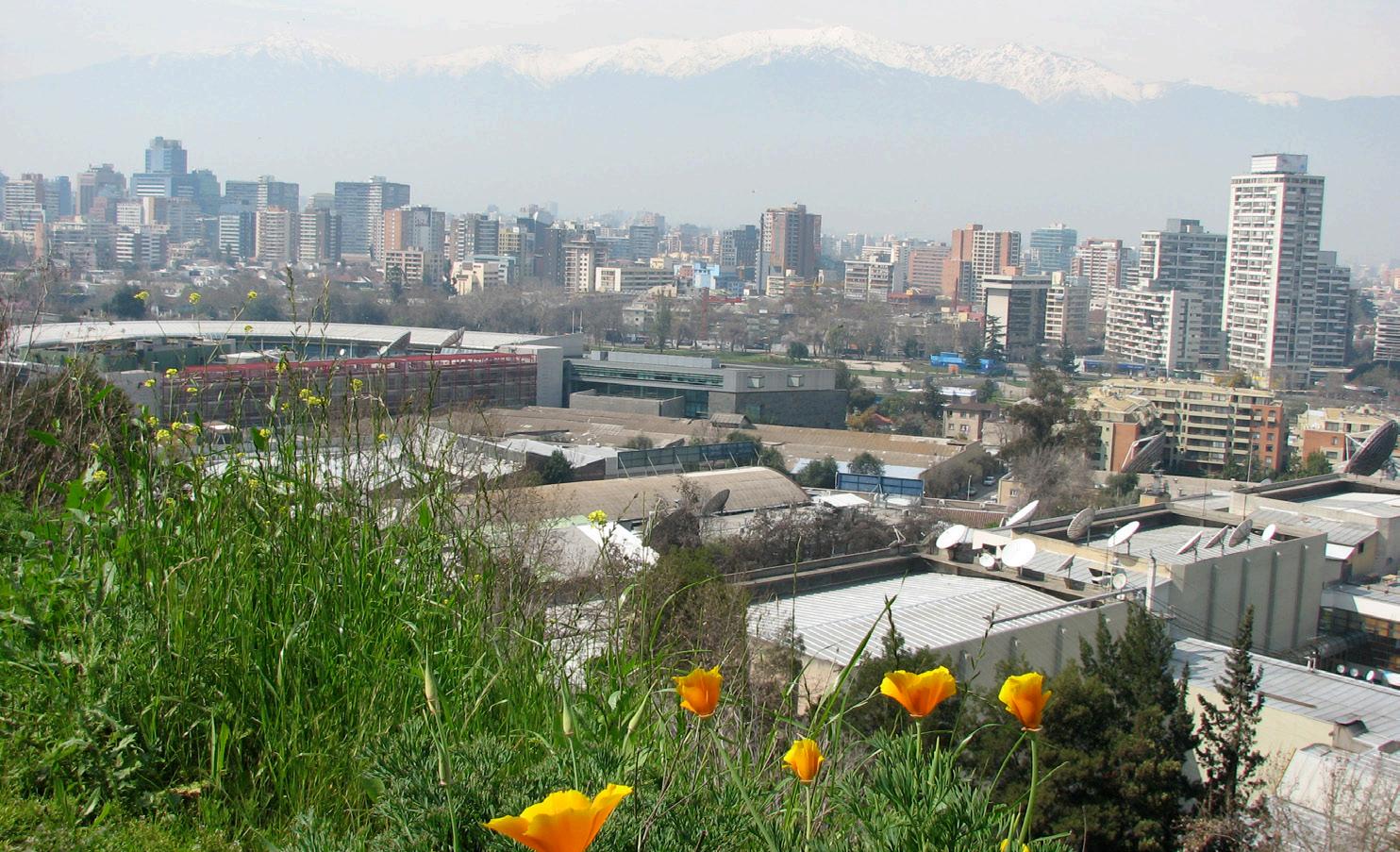
In the 2000s, Santiago, Chile, was a city of more than 6 million—just one of the many details that made life there feel massively different from life in Reno, then Deidre’s hometown. Photo courtesy of Deidre Pike
Adam Fortunate Eagle, Fallon artist, author, activist and trickster, dies at age 96
Adam Fortunate Eagle, a human whirlwind who spun amazing stories, was a newspaperman’s dream.
Fortunate Eagle “scalped” Columbus in San Francisco in 1968. Later, he landed in Europe, in Chippawa Indian regalia, to “discover”—and claim—both Italy and Sweden for Native Americans. He once offered his ring to the Pope to kiss. He was the architect of the American Indian takeover of Alcatraz Island in 1969. The FBI then labeled him an “enemy of the state”—a designation that pleased him.
At his home on the Fallon Paiute-Shoshone Reservation, he sculpted intricate ceremonial pipes and carved monumental statuary. He wrote books about the Alcatraz protest, articles about many other Native American issues, and penned a memoir about his childhood in a Minnesota Indian boarding school.
Reporter’s stories about him “wrote themselves,” as journalists say. Fortunate Eagle, 96, died in Fallon on May 11 after a short illness.
“He was larger than life,” said his daughter, nila northSun, an award-winning poet. “He kept reinventing himself. He packed so many lives into one lifetime—artist, activist, writer. He even did some acting.”
He loved to laugh and enjoyed mischief.
The late Vine Deloria Jr., author of Custer Died for Your Sins: An Indian Manifesto, wrote in 1992: “Fortunate Eagle is the trickster incarnate, skipping through swamps and glades where mere mortals feared to tread. It’s hard to think of him as an elder because in my latest encounter with him, we looted one of his relatives’ fish smoke houses at Red Lake, Minnesota, and had to flee the county before the Tribal Police incarcerated us.”
Fortunate Eagle, whose birth name is Adam Nordwall, was born on the Red Lake Indian Reservation in 1929. He attended the Pipestone Indian School in Minnesota. In the 1960s, he was living in San Francisco with his wife, Bobbie, a member of the Shoshone Tribe, and their three children. He owned a termite extermination business. Fortunate Eagle became involved with the American Indian community there, eventually becoming chairman of the United Bay Area Council of American Indian Affairs. He soon became an activist.
Each Columbus Day, San Francisco’s Italian community held an event featuring residents in costume as Columbus and his crew. The Navigator and his entourage would land on the beach at Aquatic Park. The participants would be greeted by friendly Indians who would shower Columbus with gifts after he planted the Spanish flag in the sand and “discovered” America.
In 1968, Fortunate Eagle played the role of
| BY FRANK X. MULLEN
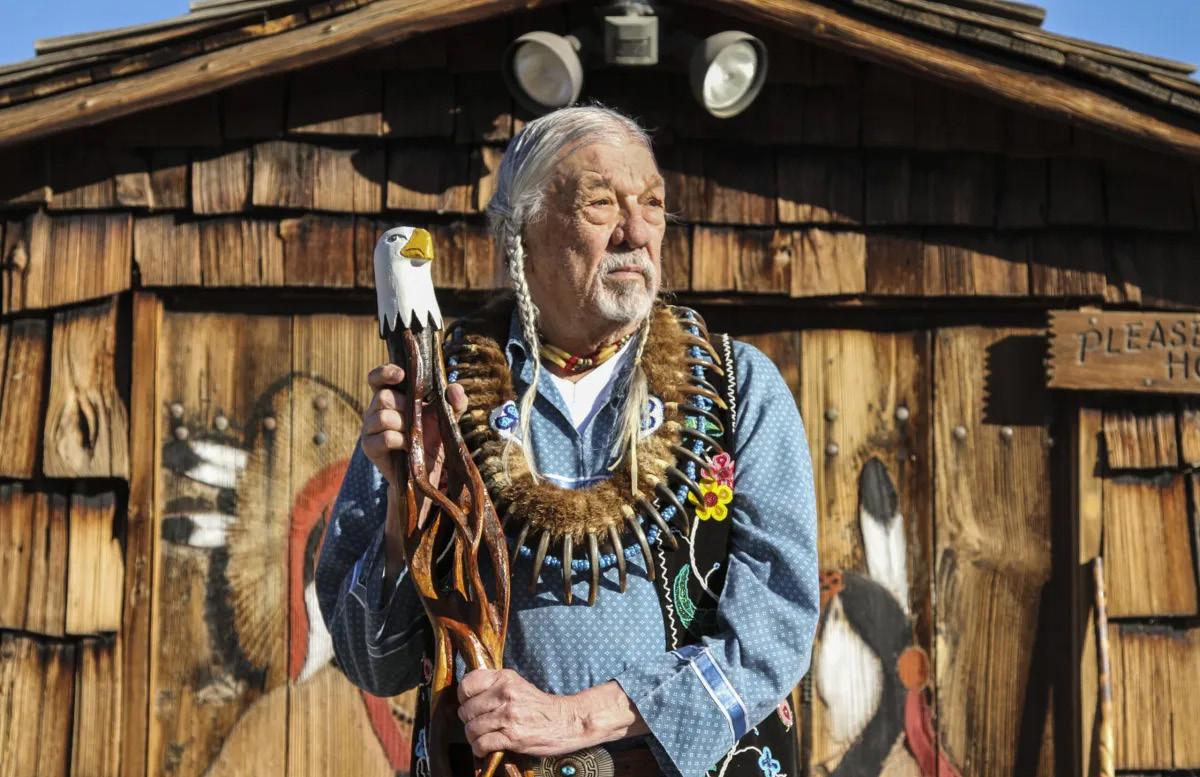
Adam Fortunate Eagle holding one of his sculptures in 2018. Photo/Jarrette Werk, Indian Country Today News
the Indian chief at the ceremony. Columbus approached the “chief” for his annual hug. “Not this year,” Fortunate Eagle wrote in an article in the St. Thomas Law Review in 1997. “Instead, I took my coup stick and pushed him down to the sand. When we grabbed his page-boy wig and pulled it off, the old boy was bald headed.”
Some audience members cried, “My God, the Indians have scalped Columbus!” Fortunate Eagle wrote. The faux Columbus grinned, but the following year, a cadre of police were on hand to protect the Admiral of the Ocean Sea from another uprising.
Soon after, Fortunate Eagle helped plan an Indian occupation of Alcatraz Island, which had been abandoned by the Federal Bureau of Prisons. In November 1969, a group of Indians led by Richard Oakes and Ed Castillo landed on the island and read a proclamation written by Fortunate Eagle, who was out of town during the protest. Upon his return, Fortunate Eagle coordinated the logistics of the 19-month protest from the shore and was the point man for the media. He wrote about the experience in two books: Alcatraz! Alcatraz! The Indian Occupation of 1969-1971 in 1992, and in Heart of the Rock: The Indian Invasion of Alcatraz in 2008, which describes the protest’s effect on U.S. Indian policy.
“We woke up the media, the government and the people,” Fortunate Eagle told a Reno reporter in 2004. “Indians were not a vanished race. We were alive and active. We were warriors without weapons.”
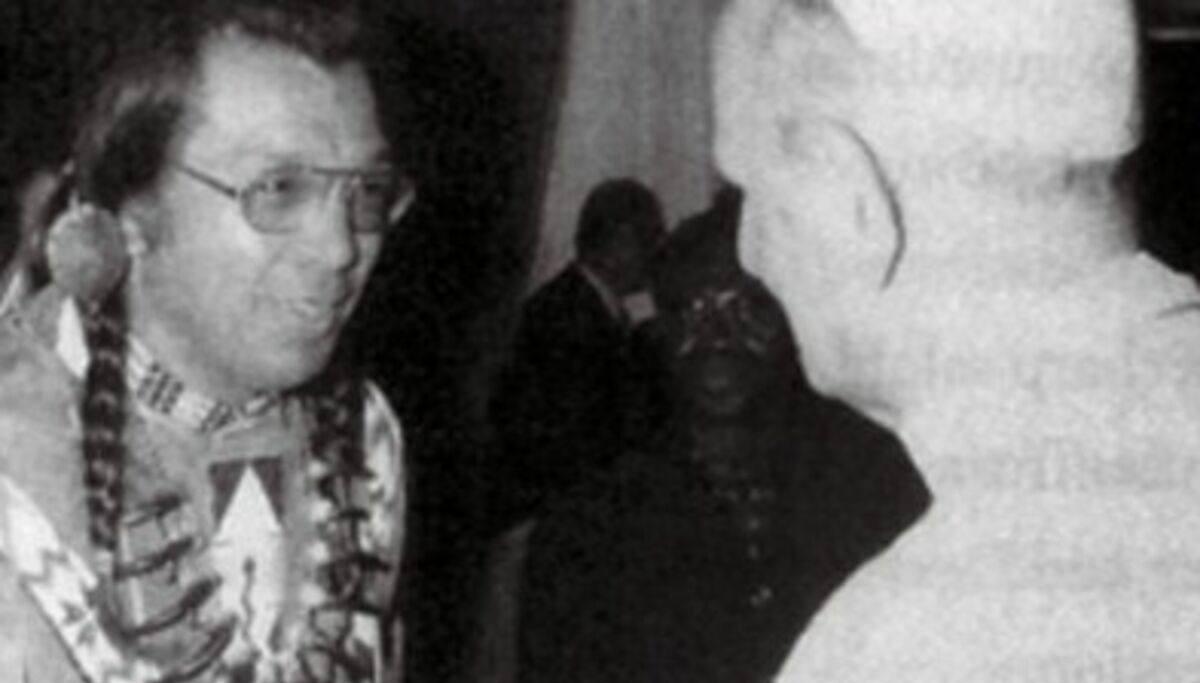
Fortunate Eagle later taught Native American studies at California State University, Hayward. In September 1973, on his way to a European conference, he exited the plane in Rome in Chippawa regalia and claimed the country for the American Indians. The story ran around the world, prompting Pope Paul VI to invite him to the Vatican. The Pontiff offered Fortunate Eagle his ring to kiss; Adam responded by extending his own ring to the prelate, who smiled and clasped his hand.
In keeping with the new American Indian ownership of Italy, the activist announced the creation of a “Bureau of Italian Affairs” and appointed Italian actress Gina Lollobrigida as the “titular head” of the agency.
There are scores of other stories about Fortunate Eagle; they all show that when he got passionate about an injustice, he didn’t get angry— he got satirical. In 2009, a Reno reporter asked him about some other activists who complained he wasn’t serious enough about Indian issues. “They can kiss my ass,” he replied. “I don’t give a damn about my critics. They don’t live my life. I don’t make any apologies.”
Fortunate Eagle and his family moved to the
Fallon Paiute-Shoshone Reservation in 1975. He and Bobbie built the Roundhouse Gallery on the property, a structure made of used tires packed with sand. The gallery, with Aztec, Maya and Toltec designs carved around its entrance, is a showcase for Indigenous art, including Fortunate Eagle’s pieces. He carved ceremonial pipes, now prized by collectors, and sculpted large and small statuary.
“He really began to learn how to sculpt in Italy, when he went to the marble mines, the quarries,” northSun said. “Eventually, he carved in wood, because that’s a lot easier than the stone.”
A reporter who interviewed Fortunate Eagle many times over the decades always had the same experience at Fortunate Eagle’s home: Adam would be in his office, surrounded by artwork in progress, as well as stacks of file folders and legal pads, news clippings, photos and faxes. Each time, he had a batch of ideas for new projects and artwork, breathlessly describing them to his visitor and hopping from one topic to another at lightning speed. Sometimes he’d go off on tangents about history or politics, geology or astronomy.
His mind seemed to work at the speed of a computer, which is lucky, because he never owned one. Instead, family members printed out whatever research he needed from their own machines. Over the years, his daughter and others unsuccessfully tried to get him interested in the internet.
“I tried to tell him,” northSun said. “But he didn’t use the washing machine or operate the microwave (either). He was an artist and a storyteller and wasn’t interested in anything that required pushing buttons.”
Fortunate Eagle piled up accolades, awards and honors during the last half-century, including a Nevada Governor’s Arts Award in 1996 and an honorary Doctorate of Humane Letters from the State University of New York, New Paltz, in 2001.
His daily grind of research and artistry continued well into his 80s, when he started to slow down, but he continued to write every day, filling legal pads with project ideas and stories. His other books include Pipestone: My Life in an Indian Boarding School and Scalping Columbus and Other Damn Indian Stories: Truths, Half-Truths, and Outright Lies.
Fortunate Eagle fell at his home about two weeks before he died and went to the hospital. He apparently suffered a brain injury, but the stories kept coming as he rested in his room.
“He talked for 24 hours and did not sleep,” northSun said. “He talked to everybody and anybody who would listen.”
He was relating the odyssey of his life one last time. The hospital employees thought they were listening to tall tales or delusions, northSun said. “Google him,” she told the nurses.
His condition worsened, and he died on May 11, six months to the day after his wife, Bobbie, passed away. His ashes will be divided to be scattered at the Red Lake Reservation, where he was born, and Alcatraz, where he first gained
national attention, and where his family will hold a ceremony.
His legacy abides with his family and friends, his art, his videos and his writings. Each day, tourists gaze upon a larger-than-life poster of Fortunate Eagle displayed at the wharf on Alcatraz, where the museum contains artifacts and photos of the Indian occupation. Soon, his story will be part of the school curriculum in Minnesota.
“In the state’s new sixth-grade textbooks, they are including a section that talks about him and boarding schools and Pipestone,” northSun said. “He was really excited to see that come out in
the next year or so.”
Robert Scider, who worked with Fortunate Eagle on the documentary Contrary Warrior: The Life and Times of Adam Fortunate Eagle, released by Lillimar Pictures in 2010, told a Reno reporter in 2009 that the activist was “a natural” for a movie about his life.
“He’s energetic; he’s vibrant; he’s got a great mind,” Scider said. “He’s amazing, a real Renaissance man. He’s always positive, never strident. Humor is his weapon. … Activist, writer, artist, storyteller, statesman and trickster. All the pieces fit together. He’s one of our American gems.”
After 33 years of publishing the main source of LGBTQ news in Reno, Paco LaChoy is moving on
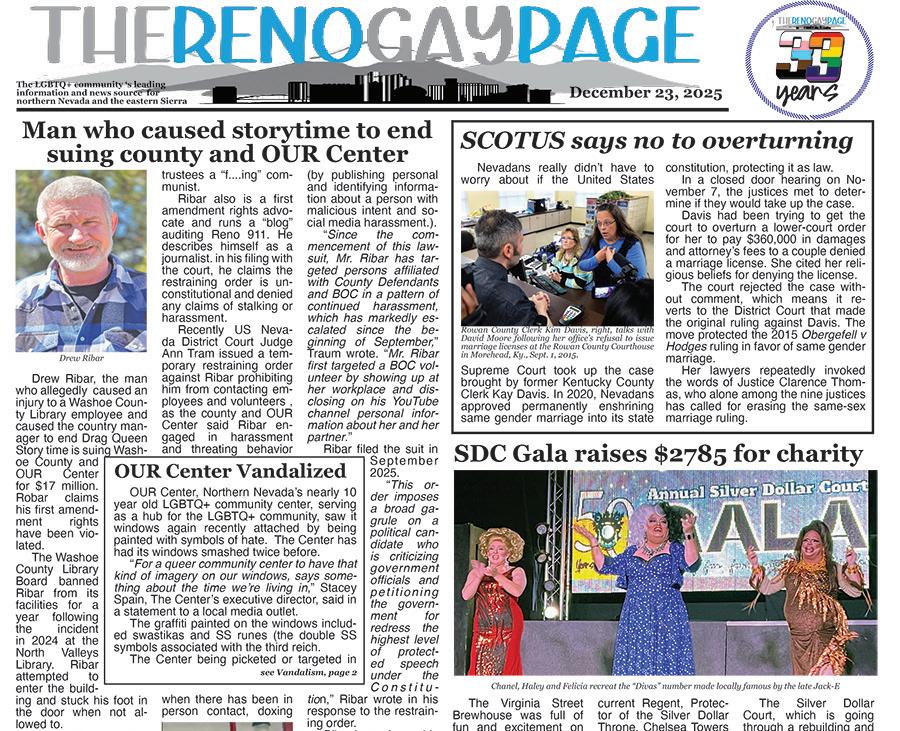
In late December 2025, reporter/editor/ publisher Paco LaChoy announced that his one-man publication, The Reno Gay Page, had released its last issue.
Among that issue’s headlines:
“Man who caused storytime to end suing county and OUR Center”
“SCOTUS says no to overturning” (Gay marriage, that is.)
“OUR Center Vandalized”
It was clear that the flow of LGBTQ news was by no means slowing down—but two weeks earlier, LaChoy had moved to Oklahoma with his partner of six years, who had started a new job there.
‘Newspapers have always been in my blood’
If you count the Gay Page’s predecessor, the Sierra Voice, which LaChoy launched in 1993 (and a few readers who spoke with the RN&R definitely do count it), this leg of his run as an independent journalist lasted 33 years. But his penchant for news publishing goes back decades further.
“Newspapers have always been in my blood,” LaChoy said in a phone interview. (“LaChoy is a given name from the gay community,” he explained. It’s the only name he goes by publicly.) He grew up in
the east San Francisco Bay Area with a journalist mother who worked for a Hearst newspaper in Oakland. His grandparents gave him a Tom Thumb typewriter, a metal toy typewriter popular in the 1950s and ’60s.
“When I was probably 10 or 11, I did a street newspaper,” LaChoy said. “Back in the day, there wasn’t a lot for anybody to do.” The neighborhood kids would make their own fun, hosting street carnivals, pet shows or lemonade stands, and he would report on them.
As an undergrad at the University of Nevada, Reno, in the early 1970s, he published a daily, mimeographed newspaper called the Morning Desert Free Press
“It just contained campus news, but it was daily, and sometimes it was one page, sometimes it was two pages—it just depended on what’s going on,” LaChoy said.
As a schoolteacher in Battle Mountain in the early 1980s, he launched the Reese River Valley Times. “It competed against the Battle Mountain Bugle,” he said. “Mine was done on a typewriter.”
‘Nobody else would cover any of that’
LaChoy said that in 1993, while he was working on his doctorate in journalism, he and his classmates each received a $500 grant to develop a publication for a marginalized group. That’s
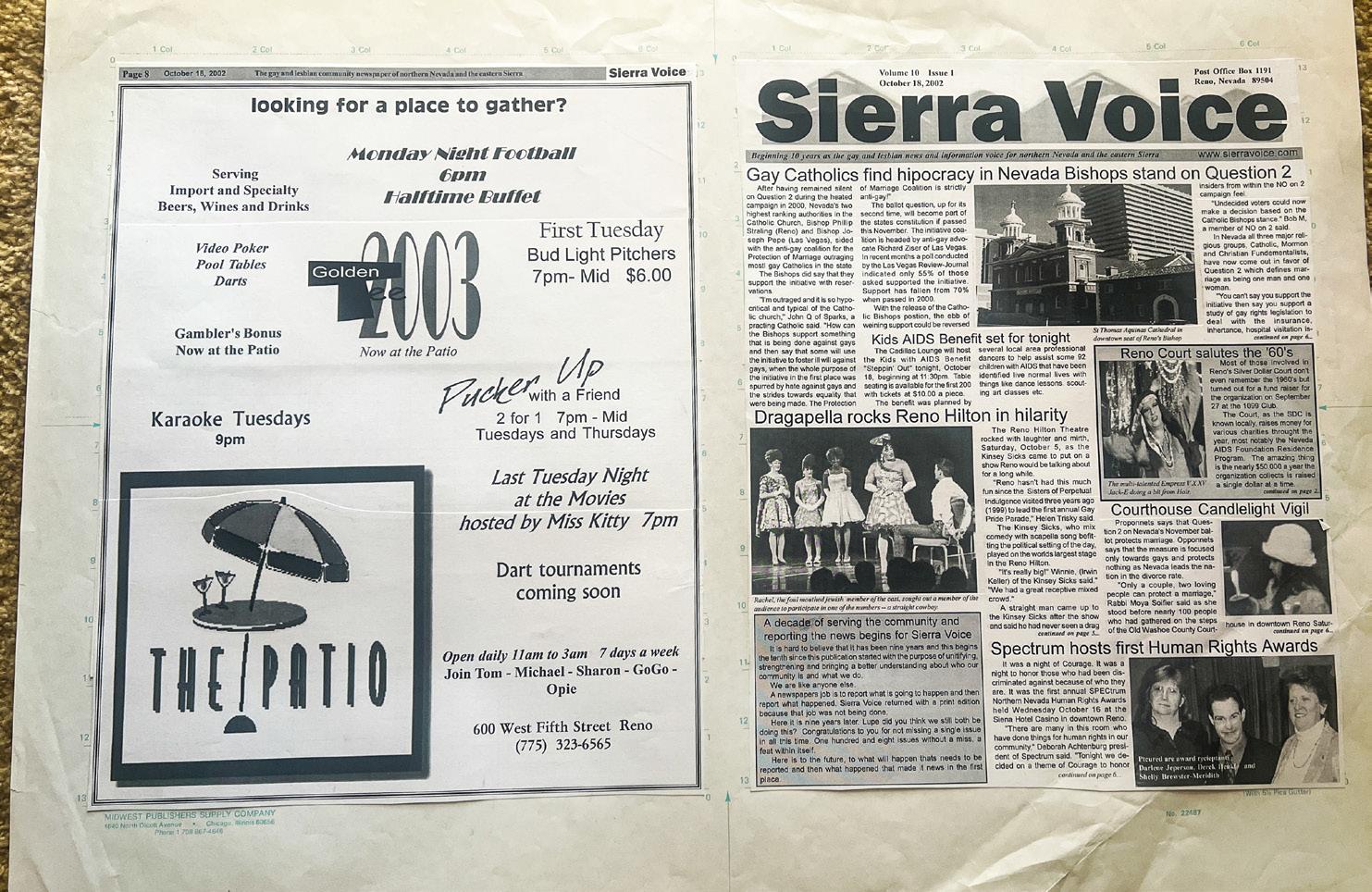
In the early days, LaChoy made a mockup of each spread, rubber-cemented it to tabloidshaped sheets of paper, and drove them to Fallon to be printed. Photo/Paco LaChoy
when he launched the Sierra Voice, the Reno Gay Page’s precursor.
The most affordable printer he could find was the Lahontan Valley News in Fallon, 60 miles from Reno, so he would drive there to drop off the paper—in the form of dot-matrix prints, rubber-cemented onto tabloid-shaped sheets of paper—and drive back to pick it up the following day.
On the first-ever pickup run in October 1993, LaChoy met Anne Pershing, the paper’s editor and then-president of the Nevada Press Association.
“They took me into her office, and she’s sitting there reading the paper, and it was only a fourpage tab,” he recalled. “They introduced me, and she put the paper down, and I sat down, and she said, ‘It’s a real newspaper!’ I don’t know what they were expecting. … I was always at everything with a notebook and a camera.”
Still, Pershing’s approval put some wind in LaChoy’s sails. “She was probably my best mentor,” he said.
The two other LGBTQ publications in Nevada at the time were The Bohemian Bugle, published in Las Vegas and covering Reno topics only sporadically, and the Reno Informer, which LaChoy called “primarily a bar rag,” so there was a hunger for more LGBTQ-specific, Reno-area news.
“Probably until 2019, 2020, our community wasn’t well respected or accepted,” LaChoy said. “Now all the TV stations cover it; the newspaper covers it. You know, it’s on the radio stations.”
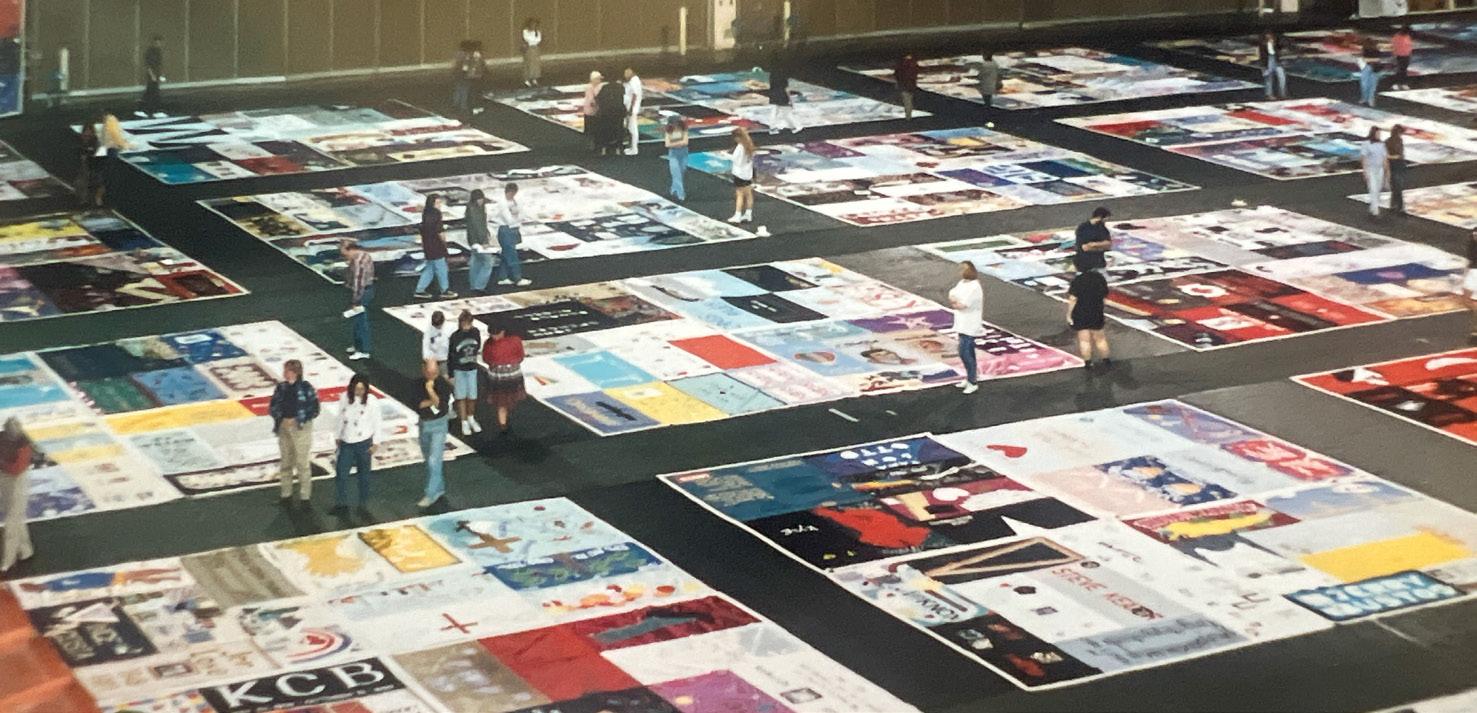
The Sierra Voice appears to be the only publication that covered then-Gov. Bob Miller’s 1994 visit to Bad Dolly’s, a lesbian bar on East Fourth Street, to oppose a group that was trying to ban gay people from being teachers, doctors and lawyers. It covered the AIDS Memorial Quilt’s Reno stop on its national tour in 1995 and the first local gay pride celebration, held in Wingfield Park in 1997.
The paper discussed countless topics over the years. For B Fulkerson, a longtime local activist, one in particular came to mind: “When A Rainbow Place, the first LGBT center in Reno, got started (in 2000), there was extensive coverage (by LaChoy) of the goings-on there. Some of the support groups that were offered and some of the other events you could never read about anywhere else. Because Paco came from the community, he was really embedded in the real community happenings and knew where the events were, particularly in the drag community, in the court community.” (The “court” is the Silver Dollar Court, a drag and charity organization whose Reno branch started in the 1970s and is still active.)
“And the fundraisers,” Fulkerson said—”and food drives that the court would do every year,
faithfully bringing thousands of pounds of food and delivering it to people who were sick or who couldn’t get to it. Nobody else would cover any of that.”
At first, LaChoy was unsure how much demand there would be for a small, LGBTQ newspaper. He had 1,000 copies printed and put them out at bars and other businesses, like Grapevine Books on Wells Avenue.
“All the copies in town disappeared within three days,” he said. “I increased it to 2,000, and eventually it was running 5,000 copies every time it was printed, and there would hardly be any left when I went to pick them up at the end of the month.”
One big reason for the early demand was this: “You have to remember in 1993, the sodomy law had just been done away with in the Legislature, and so that started changes,” LaChoy said. This was one victory in Nevada in a long movement to destigmatize queerness.
“I think that between both papers that we had—the bar rag and mine—we built community,” LaChoy said. “The community started getting more involved, being more out.”
Tony Pratt, who moved to Reno in 1991 and started reading the Sierra Voice as soon as it launched, agrees.
“Back when he started, we didn’t have social media,” Pratt said. “We really didn’t have (a place) where you could put up a poster for a drag event or charity event. … (In the paper), you could see different people, see what was going on in the community. … I could see where all the different charity events were and the drag shows or the car washes or whatever they were having at that point. … It really seemed to help drive attendance.”
As much as readers appreciated the Sierra Voice, printing costs were expensive. LaChoy worked in the hotel industry all along to help the project pencil out. When the 2008 recession hit, the purse strings got even tighter as businesses struggled to pay their advertising bills. In 2009, he shuttered the paper.
In 2010, he resurrected it as The Reno Gay Page, which existed mostly online, still in the format of a monthly page tabloid. Some friends helped the new publication establish a presence on Facebook—still relatively new at the time— and LaChoy printed about 100 copies “so people could see that there was a paper.”
He continued working his day job and continued to be basically the sole reporter, editor and publisher of the Reno Gay Page until 2025.
“Yes, friends have helped at times, and that has been greatly appreciated,” he wrote in his farewell post.
What kept him working double duty the whole time was a mission he was determined to carry out: “Newspapers build community,” LaChoy said. “It doesn’t matter what community it is. But if there’s a newspaper reporting on the events and activities of that community and its people, it builds community.”
LaChoy said he’s been wanting to retire from The Reno Gay Page for quite a while.
“And the community just kept saying, ‘You can’t. You can’t. You can’t,’” he said. “And then with the political climate at the present time, (The Reno Gay Page) was a very important piece to the community.”
But in December, the time finally came to close up shop.
These days, LaChoy is settling into his new hometown—Enid, Okla., population circa 50,000, with lower gas and housing prices than Reno, and what he described as “an adorable downtown. He’s still getting used to Central Time and the flatter landscape, and learning what to do when the tornado sirens go off.
“So far, I’m enjoying it,” he said. “And I found out that there’s even a gay pride celebration here in Enid. … This county is considered one of the reddest in the state. There are not all the protections in Oklahoma that there are in Nevada for gays and lesbians, but I think it’s very much a live-and-let-live place here, too. That’s my feeling so far.”
Naturally, he’s started working on a book about his time as an independent journalist. Its working title is 30-Plus Years and Thousands of Stories. Northern Nevadans have been writing to thank him for his 33 years of service.
“I don’t think that I’ve done anything other than disseminate information,” he said, in response to the stream of accolades. “That’s my job. It’s what I like to do. When I’m upset, that’s what I do. I put together the newspaper.”
In B Fulkerson’s words, The Reno Gay Page “was a voice that uplifted the community, by a very well-respected member of the community. … Movements and communities, always, are made by ordinary people who do extraordinary things. And that’s Paco.”
Markets by The Funktion showcase Chicano art, music, food, fashion and dance
Some people think the only purpose of arts and crafts fairs is to purchase handcrafted items for their house.
Those people haven’t been to an event by The Funktion.
This Reno-Sparks organization specializes in markets that feature arts, culture and commerce from the Chicano/Mexican-American community. The Funktion’s events are more than just row after row of vendor booths; they extend into the evening hours, often feature live performances or DJs, and can feel more like festivals or musical shows.
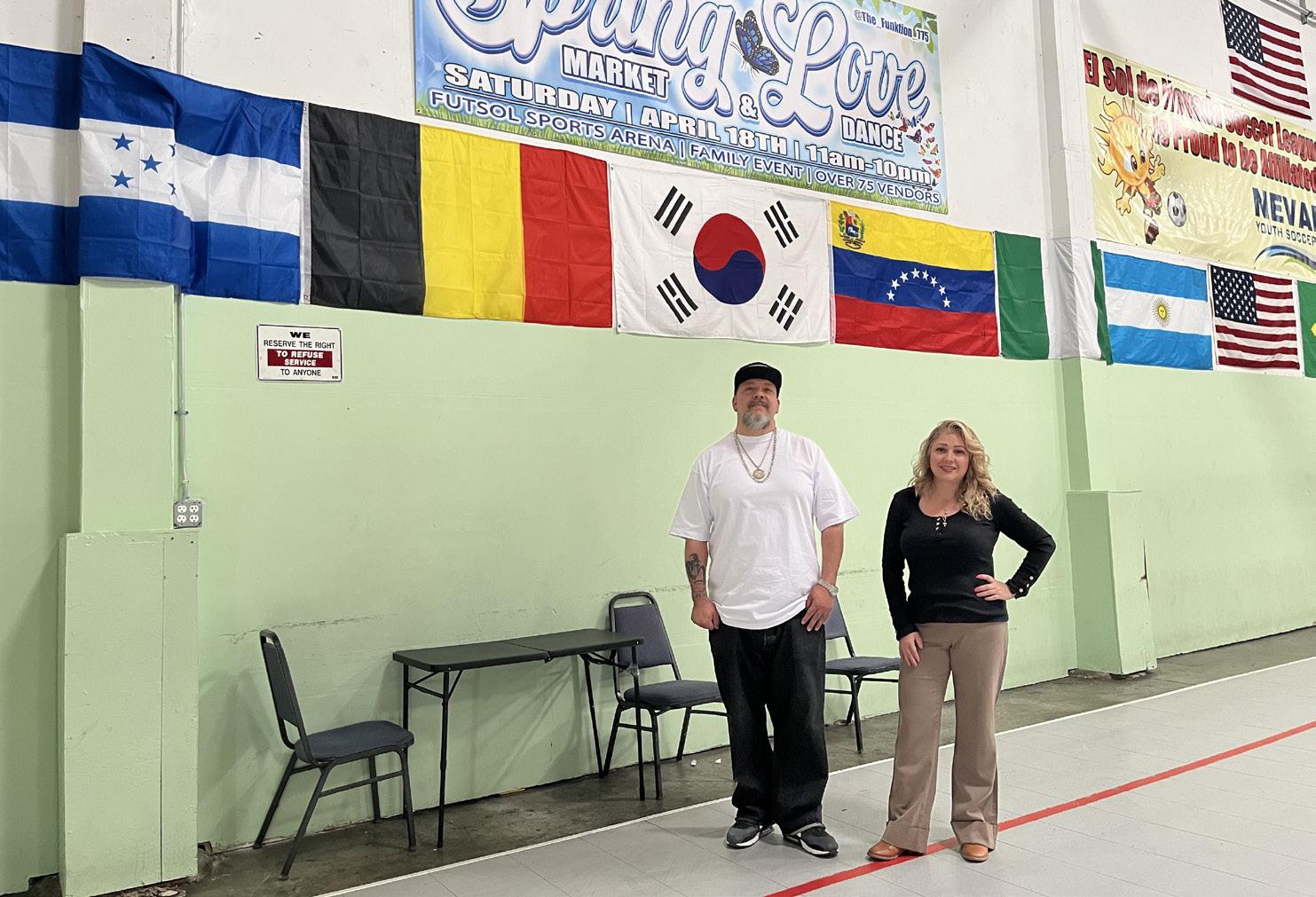
“We wanted to create a place that the Chicano community could have a sense of ownership over,” said Jorge Chacon, owner of The Funktion. “We felt very underrepresented in art, social and recreational lanes.”
Chacon said while The Funktion is dedicated primarily to Hispanic and Chicano culture, it’s not exclusive to that community.
“Our supporters, our vendors, our family and friends come in all shapes, sizes, colors and backgrounds, and we welcome everybody to come celebrate and enjoy our culture with us,” he said. “The culture, the music, the food, the people, fashion—these are all things that we are proud of. To celebrate it amongst ourselves is awesome, but what I really hope for is to give a world that might not otherwise understand us an opportunity to see and experience the best parts of who we are as people.”
Chacon started The Funktion in August 2024 with his friend, Amy Rios. He said they wanted to create a vendor space for Chicano and Mexican artists and vendors with low fees.
“I have a background in coordinating events and throwing concerts and things of that sort, so for me, it was easy to apply my resources and experience with her vision to create this,” said Chacon, who occasionally writes and performs hip-hop as Guilty One, and owns a retail discount business, West Coast Liquidators.
The Funktion started modestly, with five to 10 vendors, a DJ and some custom lowrider vehicles, all outside of the Oak Room Lounge, a nightclub in Sparks that has since closed. The organization then partnered with the Reno-Sparks Indian Colony in November 2024 for the Chicano Holiday Market at RSIC’s Reno gym.
“That was what we would consider our first large-scale event, with 25 vendors, and then from there, we moved straight to Futsol (Sports Arena in Sparks, which is also known as El Sol), and now we have 75 vendors.”
The also Funktion produces musical events at The Alpine, including recent shows from national Hispanic rap artists such as NB Ridaz, Conejo and Clika One. There was also a threemonth DJ/dance show series at The Alpine in 2025 called Domingos Latinos, with music and dance styles such as banda, reggaeton and cumbia every Sunday. Chacon said he is looking into re-approaching that series sometime in the
“We wanted to create a place that the Chicano community could have a sense of ownership over,” said Jorge Chacon, owner of The Funktion Chicano market.
“We felt very underrepresented in art, social and recreational lanes.” Monce Perez, owner of Studio74 dance studio, has been collaborating with The Funktion since its early days in 2024. Photo/Mark Earnest
future, but nothing is confirmed yet.
There are also regular events at the West Wind El Rancho Drive-In in Sparks, including film nights with a Latino/Hispanic theme, and a “Trunk or Treat” event around Halloween with family films and treats for the kids, lowriders and a classic car contest. The inclusion of music and movies from the ’60s through the ’90s is purposeful, Chacon said.
“The Chicano community has a timeless and classic taste, and we carry our loves and interests into the next generation,” he said. “We don’t follow trends as much. We’re pretty much locked into who and what we are. We do grow in terms of business and different ventures, but in terms of cultural interest, we’re pretty old-school.”
All kinds of art and music
There is another mission beyond nostalgia: Chacon wants The Funktion to promote young artists and businesspeople in all types of disciplines. His vendors include Morgueanisms and Muerte Preservada, both of which use insects in their art pieces; Sonshine Arts, a pottery studio that also hosts classes; and Heidi and Fleur, who create artistic jewelry and floral arrangements.
“We want to create opportunities for artists of
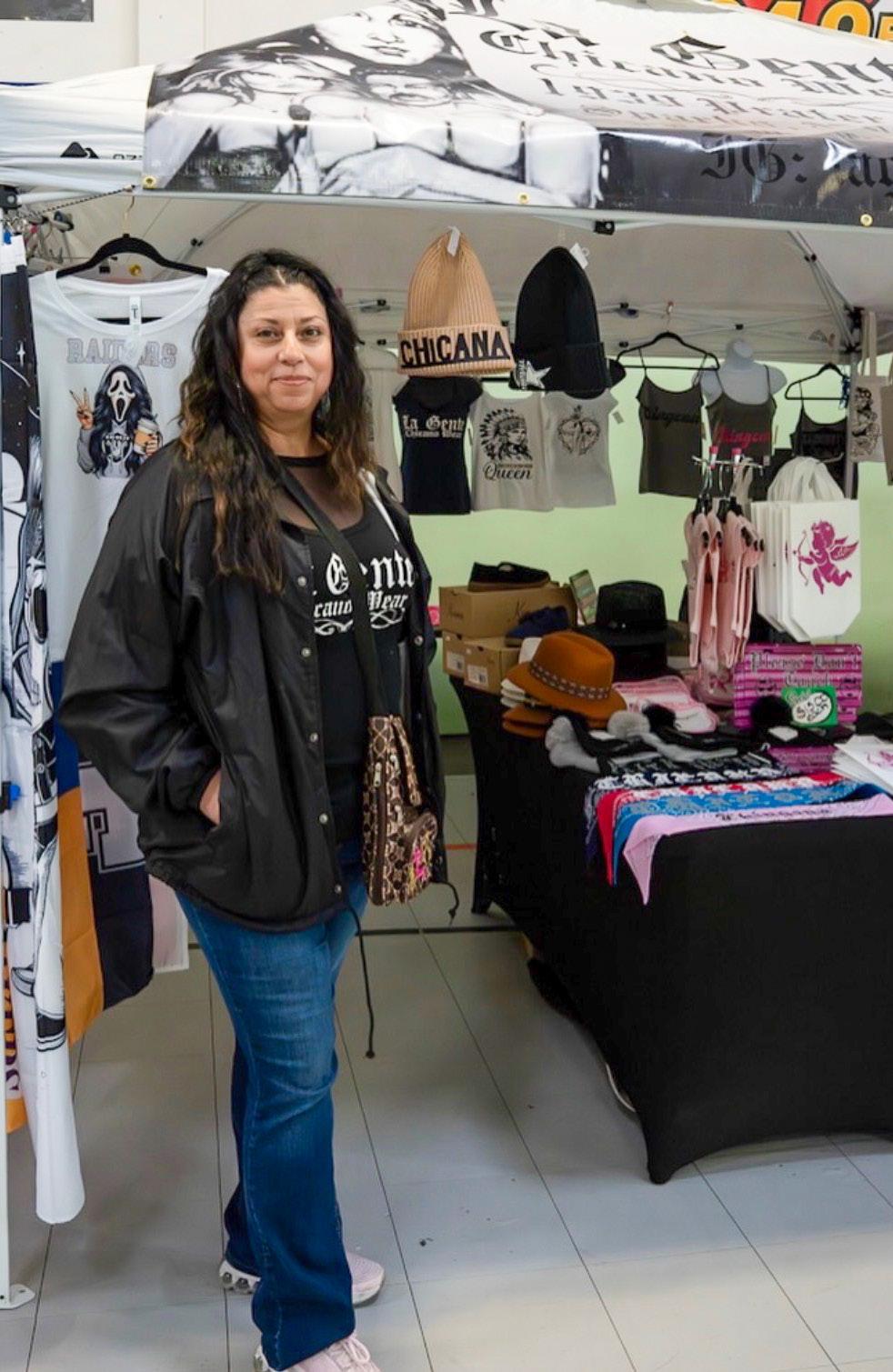
all kinds,” Chacon said. “So creators, bakers and candlestick makers and everything else—but also the local hip-hop scene. The Chicano scene has been growing, and there are a lot of artists who we feel are talented and deserving of the spotlight.”
Chacon noted that the local Chicano hip-hop scene has “always had a very spotty presence in Reno. We might get a headliner or (hip-hop acts at) a car show once every year or every couple of years. But right now, it feels like we’re on the upswing, and we’re trying to create more opportunities to cater to the Chicano crowd—not just for business owners, but for any artist.”
Chacon said networking with local talent in arts and music is an important reason why he wants to keep building on The Funktion’s success.
“It’s just awesome to be a part of people’s journey as artists, especially when they are on the ground level, and you can give them that first opportunity,” he said. “It’s great to watch what they make of it and where they go from there.”
Chacon also believes that the participants in The Funktion give younger Mexican-Americans positive examples.
“Oftentimes, what’s discouraging to a teenager or a young adult who comes from a certain background is that everything outside of that looks foreign and often scary,” Chacon said. “So we’re trying to soften that and make art or business look attainable and accessible. It also gives the youth examples of positivity within their community when a younger Mexican American comes to the market and sees the place alive and thriving, full of business owners, vendors and just good people making good decisions. They realize there’s a place for them in that world, and a place for them in entrepreneurship.”
Monce Perez, one of The Funktion’s longtime vendors, is the owner and operator of Studio74, an artists’ space and community center that also sponsors her dance troupe, MVP Performing Arts, where teens and adults perform hip-hop, reggaeton, folklorico and other dance styles. She said that the community-building aspect of The Funktion is what drew her to join up in summer 2024.
“There are still a lot of politics going on, and there is some fear in the Latino community because of that, so that’s why whenever there’s anything involved in bringing people together, we’re willing to be there,” Perez said. “We wanted to try to get everyone’s morale up in our community and let them know our city is safe. … We want our dancers to be able to release any frustration or anxiety or stress through dance.
“I’m pretty much driven by all art, anything artistic—and if it’s also opening and expanding art to other people, that’s even better,” she said.
Visit www.instagram.com/the_funktion_775 to learn more.
| BY KRIS VAGNER
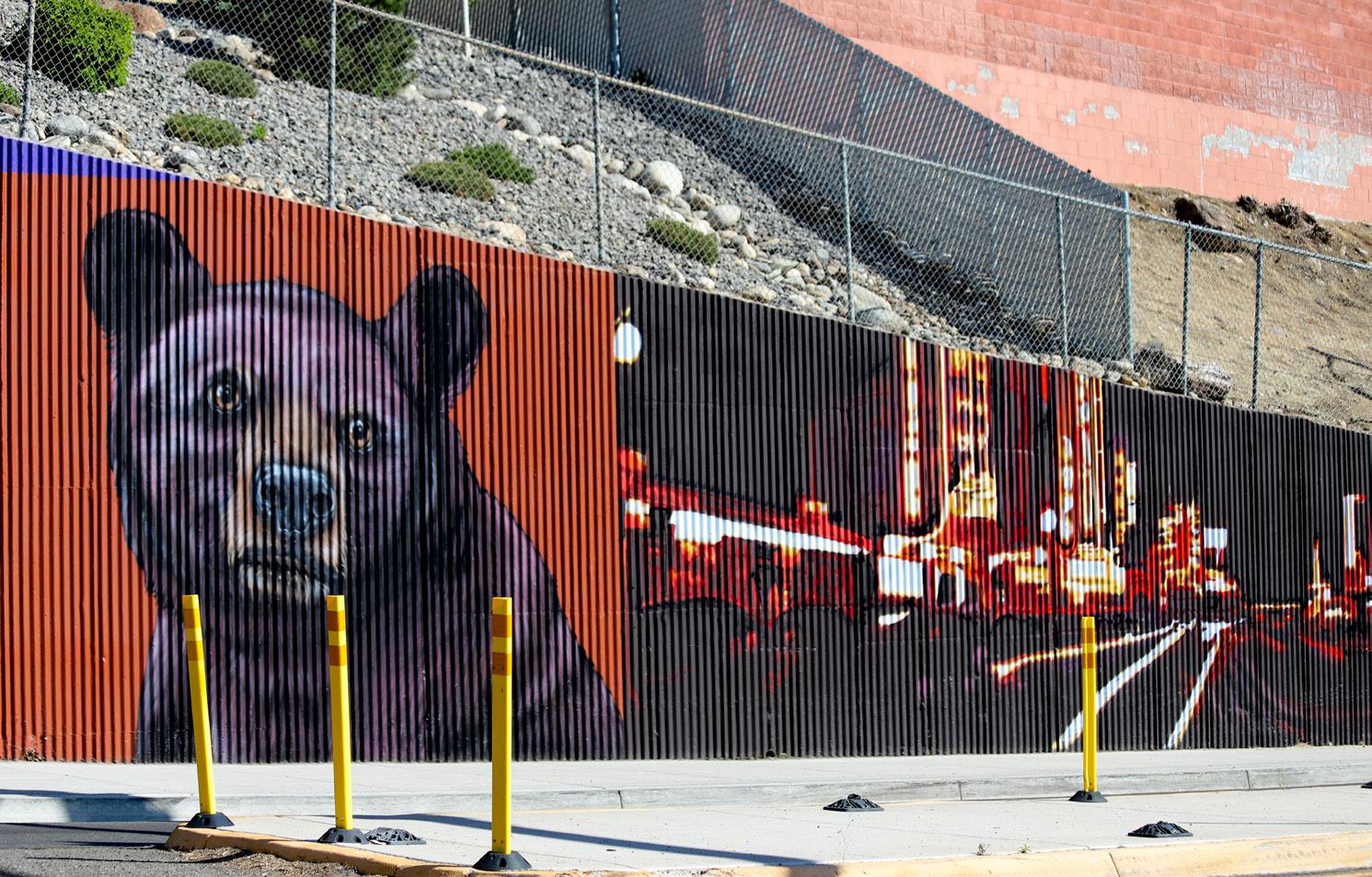
The new mural on California Avenue stretches almost 1,000 feet and depicts iconic local imagery including a black bear and a vintage downtown Reno night scene.
The lead artist behind the new California Avenue mural talks about developing its Reno motifs
The leaders of ABG Art Group—an Oakland, Calif., nonprofit that consults on and produces large art installations—have a knack for getting their finger on the pulse of a given community’s tastes. You can tell just by looking at their bold outdoor paintings in Bay Area locales—like the confident clutter of flowers, pottery, reds and golds on the wall of a dim sum restaurant in Oakland, or the rainbow-colored walkway at a Marin County outdoor shopping center.
In May, they completed their first-ever mural in Reno.
It’s nearly 1,000 feet long, stretching down the corrugated cement wall on California Avenue, near where it meets Keystone Avenue, on the slope that connects the Reno High School neighborhood with the Old Southwest.
“I think that Reno has a strong sense of identity, and they definitely wanted (the wall) to reflect their values, their vision, their sense of culture,” said the project’s lead artist, who introduced himself as Sorell Raino-Tsui and also goes by his Chinese name, Tsui Xiao Rui.
To help determine the mural’s content, the City of Reno Arts + Culture team surveyed locals and hosted two in-person workshops in 2025. Representatives from the Reno-Sparks Indian Colony also were consulted on some design elements, according to a
city of Reno press release.
“The community had a lot to say,” said RainoTsui. “They definitely wanted to voice their opinion. They had strong opinions.”
People requested elements such as a sense of calm, something not too busy, and images of our natural surroundings, he said.
“We tried our best to do that, not to be too jarring, for it to have a soothing, kind of natural feel, and I feel like we’ve accomplished that in this piece,” said Raino-Tsui.
The imagery is split up into panels—some filled with squares and quarter circles in lowkey, cheery hues like creamsicle, olive, mint and milk chocolate.
“I wanted to tell a color theory story, then also a linear story that’s a bit historical and moves from day to night,” he said.
Other panels depict an Indigenous female dancer, a cowboy riding beneath a low-hanging sun, a steam train, a mountain bluebird (Nevada’s state bird), the abstracted Sierra Nevada peaks from Reno’s city flag, a black bear and a view of downtown neon at night, circa 1960s.
Raino-Tsui’s co-designer for the project was “Elliot” Trent Thompson, and four other artists helped with the painting—Patric Oneill from Oakland, Louka Lannois from France, Earnest Doty from Tennessee, and Kalani Ware, who is from the San Francisco Bay Area and lives in the Netherlands.
In ‘Bridget’s Gambit,’ a 59-year-old Irish widow leads her family overland to California in 1849—and builds a fortune
In tales of the Gold Rush, the few pioneer women who traveled west are often relegated to the roles of secondary characters: Their jobs were to care for children, prepare meals and otherwise support the men who captained wagon trains and blazed trails.
In 1849, Bridget Miranda Evoy, 59, smashed through those Victorian conventions. Perched on the saddle of her horse, the Irish immigrant led her extended family—which included two toddlers—from St. Louis to California, across 1,800 miles of plains, desert and mountains. Once there, she, and later her daughters, started businesses and made real estate deals across Northern California. In the rough-and-tumble gold fields, Bridget’s family made a fortune and rose to the top of the region’s social pyramid.
“She was a farmer and eventually a businesswoman,” said Craig S. Harwood, author of the recently published Bridget’s Gambit: A Saga of Family Enterprise in Gold Rush California. “She was very pragmatic and very no-nonsense. (While) running a boarding house, for example, she would have to deal with some pretty tough characters, but I would imagine she put them in their place pretty quick. She wouldn’t put up with any nonsense from anybody.”
Harwood—a great-great grandson of Ellen Montgomery, one of Bridget’s daughters— had heard anecdotes about Bridget while he was growing up, but found there were few primary sources that could provide specifics about her life. Beginning in 2021, he scoured public records, trail diaries of 1849 and other
sources to add flesh and bone to an ancestor who had been “a ghost on the periphery of our family’s history.” He is a geologist rather than a historian, but he said his profession provided a good foundation for historical detective work.
“In my job, I do a lot of research and sort of put together a scenario of earth history, what’s happened in the geologic scale,” Harwood said. In researching Bridget’s story, he said, he pored over the diaries of other “forty-niners” who sometimes traveled with them or “a day or two ahead or behind Bridget’s family, so they’re moving through the same period of time and the same situations.”
Deeds and other legal documents, historic newspaper accounts and mentions of the family from Bridget’s contemporaries filled out the tale of the family once they arrived in California, after taking a “cut-off” on the California Trail and nearly dying in the Sierra snow on the last leg of their journey. Their experience was similar to the Donner Party’s ordeal three years earlier, but with a happier ending. The arc of Bridget’s life is one of frequent hardships overcome by her determination and intelligence.
In 1828, Bridget Miranda Evoy left famine-plagued Ireland with her children to join her husband, James, who had already emigrated to America. The couple farmed property near St. Louis, but within two years, James died, leaving Bridget with five children. Instead of remarrying, she managed the farm herself and bought and sold property around the fast-growing city. When gold was discovered in California in 1848, Bridget saw an opportunity to get in on the ground floor of the boom.
| BY FRANK X. MULLEN
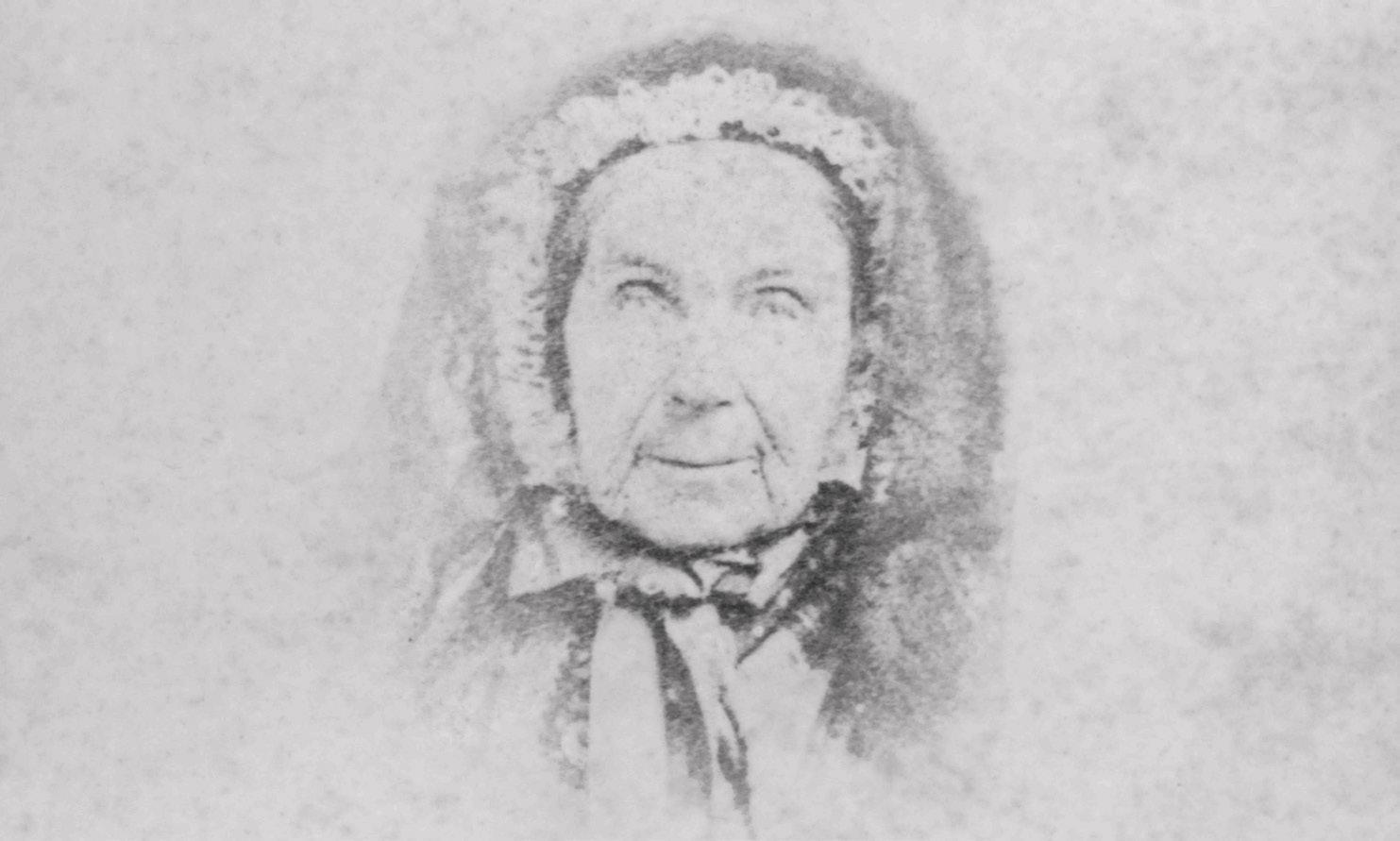
A drawing of Bridget Miranda Evoy in the mid1860s, when she was about 75 years old.
“They never intended to go after gold mining,” Harwood said. Instead, Bridget and her family started a trading post, built a toll bridge, and established a farm, boarding house, lumber mill, general merchandise store and blacksmith shop. Gold dust was the currency of the time, and they used their profits to buy and sell land, often in relatively quick transactions to take advantage of booms and avoid the busts that came when gold strikes petered out.
On their journey, Bridget’s party made a side trip to the Mormon settlement at Salt Lake for supplies and then rejoined the California trail at Steeple Rock, Idaho. In the middle of Nevada’s Humboldt River Basin, they decided to take an alternate route across the basin and Sierra, the Applegate-Lassen Trail. That “shortcut,” which avoided Donner Pass, snaked through the Black Rock Desert and High Rock Canyon and became known as the “Death Route.” It was 200 miles longer than the Truckee Route.
Once free of the desert and in the high country, Bridget’s party faced terrible snowstorms and had to abandon their wagons, but were eventually assisted by a government rescue party sent from California. Under Bridget’s leadership, her family had reached its goal after six months of brutal travel.
“What I love about Bridget is her boldness and the fact that she didn’t see herself as a second-class citizen, the way most women were treated in that period of time,” said Harwood, whose first book was the award-winning Quest for Flight: John J. Montgomery and the Dawn of Aviation in the West. “She moves so boldly doing all of this stuff; it seemed like (Victorian conventions) were never a factor for her.”
Harwood’s meticulous research and his ability to weave a compelling story from a wide variety of sources resulted in a dramatic portrayal of a woman who previously had been overlooked by historians. In a genre often obsessed with the “soiled doves” and saloon girls of the Gold Rush, Bridget’s Gambit focuses on the often-forgotten contributions of women in California history and the American West.
“The detective work involved in researching the story was considerable, but it was fun,” Harwood said. “I really enjoyed it, and I really enjoyed writing it, too.”
Here’s an excerpt from the book describing the last leg of the trek to California as snow blanketed the Sierra in 1849:
As the emigrants struggled through the Sierran winterscape, a new reality emerged for the group: Get out of the mountains or perish! What livestock had not already succumbed to the elements soon met their end as the nighttime temperatures dipped into the twenties or below. Bridget’s party was realizing that travel by wagon would soon come to an end and, with it, the means of
transporting the majority of their supplies. Once that happened, they would either have to shelter in place in the wagons or advance through the snowdrifts on foot. At night, as the windblown snow enveloped their tents and wagons, they couldn’t know if the snow would snuff out their lives by morning, the heavy flurries being the last sight they would ever see. As the evening hours passed, the wind and the wolves howled. Bridget, Ellen, and Margaret would have kept their anxiety in check and comforted the children more than ever. Somewhere along this section of trail, the last of their oxen perished, and they were forced to abandon their last wagon. Their mules, too, were failing and could no longer carry any weight. Ellen’s daughter Jane later recalled, “Finally, it was impossible to carry all their belongings—they were told to take only what they could carry themselves. Not wanting to leave their prized dresses Mother (Ellen) and Aunt Margaret McCourtney decided to wear all their best dresses—my aunt even put on her wedding dress—Mother put on four of her best dresses and trudged along on their journey.” The donning of multiple dresses was also helpful in fending off the cold. Bridget also considered what she could carry on her back and the absurdity of carrying heavy coinage. Jane recounted, “Grandmother (Bridget) found carrying money was too much of a burden—she offered some to one of the men—but he said, ‘No Madam I have all I can carry.’ With that she just threw a pile of it on the ground.” Dressed “to the nines” and liberated of most of their belongings, the Evoy women steeled their nerves and made the final push to get out of the mountains. In this deadly winter wonderland, the frail and timid “weaker sex” of the Victorian conception was nowhere in evidence.
The snow flurries that began on Oct. 30 continued unabated for days. On Nov. 2, Peoples’ train reached the northern edge of the Feather River Valley. As the wind-driven snow swept the Sierras that evening, Joseph Bruff, hunkered down in his tent just a few miles to the west, focused his thoughts on the suffering of the emigrants, “It roars like the angry surges on a stormy coast. Alas for the sick & helpless, in these hills tonight.” On the morning of Nov. 4 the government relief team departed the Feather River Valley. That day, at the south end of the Feather River Valley, Peoples, leading emigrants down the main trail, encountered three additional families who were attempting an icy river crossing. It is believed this was the small train of the Evoy, McCourtney, and Root families. With this chance encounter, Peoples was certain he had gathered the last of the emigrant families attempting the mountain crossing. He and his men assisted most of the women and children onto mules and placed the invalid travelers in the remaining wagons for the last trek out of the snowbelt.
Bridget’s Gambit: A Saga of Family Enterprise in Gold Rush California, by Craig S. Harwood (University of Oklahoma Press, 2026).
I was traveling back from Carson City, and though I was tired and feeling particularly lazy, I felt guilty making a trip through Washoe Valley without stopping for a hike.
Deadman’s Creek suited this mood perfectly, as it is only around 1.2 miles round-trip, with just less than 300 feet of elevation gain—a low commitment for a day of running errands.
From Carson, I took exit 10 toward Eastlake Boulevard, decelerated to 45 mph on the calm, two-lane road, and drove three miles. Cattle occupied plots of land between the road and lake. In the distance, wild horses dotted the landscape, as if an ode to a simpler time.
The trailhead is a dirt lot on the east side of the road, just before the entrance of Washoe Lake State Park (about 0.3 miles south of the park). I remembered it being easy to miss, so I kept an eye on the hillside for the gazebo that sits at the summit of the hike to guide me.
There was no one else in the parking lot, which added to the appeal of the hike. Clouds overhead created dramatic shadows and kept the air cool. When I opened the door, the sound of the creek and cacophony of birdsongs replaced my true crime podcast.
A while back, I recommended Deadman’s Creek as a Best of Northern Nevada staff pick—I deemed it “Best Hike for When You Just Need to Scream.” I stand by the designation, but this hike is also a fantastic place to find wildflowers, songbirds, peace and incredible views, whether or not you have grievances to release.
| BY HELENA GUGLIELMINO
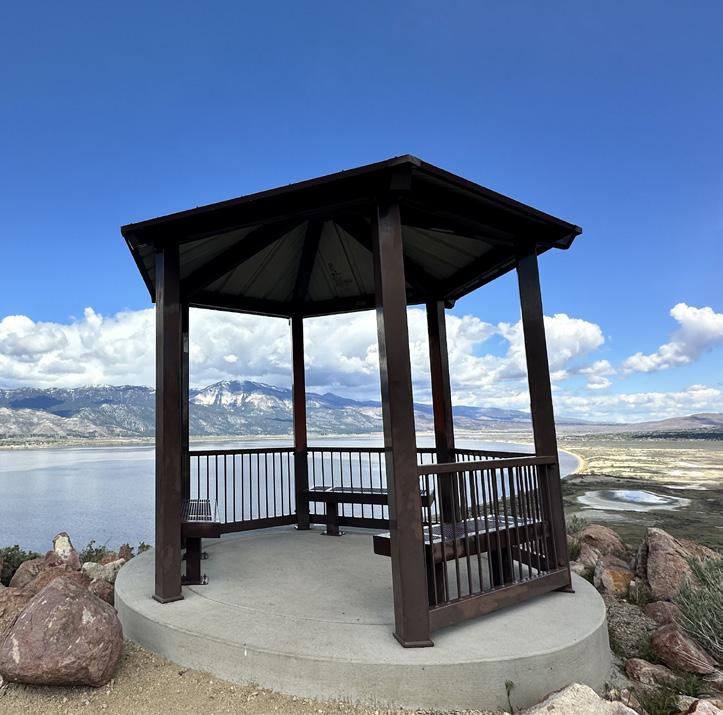
The gazebo at the end of the short Deadman’s Creek trail offers grand views of Washoe Lake and Slide Mountain. Photo/Helena Guglielmino
Birds and other small animals rustled the Woods’ rose and desert peach bushes. The tang of fresh horse excrement beckoned my dog down the trail. Shaded under aspens, this creek and its surrounding drainage host an incredible variety of native blooms and plants. (Visit iNaturalist.org for a guide.) Though this year’s weather has been tough, in the spring, the app’s users reported sightings of Washoe phacelia, bulbous woodland star, and Utah serviceberry. In previous years, users reported seeing blooming Aspen onion, daggerpod, desert figwort, sulfur buckwheat, desert gooseberry, woollypod milkvetch and Anderson’s buttercup. A bit later in the year, there have been sightings of the mariposa lily and the imperiled (meaning the species is at a high risk of extinction) Carson Valley monkeyflower.
During my spring hike, the hillside was dotted with yellow western groundsel, with pops of desert paintbrush and phlox—the red hills contrasting the delicate petals and bright colors.
The trail itself looks like a deformed, uppercase “B” with a spine that extends east along the stream canyon, and a few side trails that spurt off toward the southwest, the first flirting around the creek about 0.1 mile into the hike, and the second making a loop of the uphill climb splintering off just 120 feet from the end of the first loop.
Most of the trail is well-marked, especially these offshoots, but there are a few “social” (user-created) trails that spur from the main line that can cause confusion. Luckily, the gazebo at the top of the hill acts as a steady marker for the confounded.
To my delight, as we moved up the switchbacks toward the gazebo, this section had fewer horse droppings and more flowers, including purple stalks of lupine. The presence of animals remained top of mind, though: The first time I hiked this trail, it was dusk, and I was alone. Once I neared the gazebo, my heart stopped as a full-grown deer (that blended quite well into the environment) was startled and sprinted away from me. This time of year, I thought about rattlesnakes, especially when bushes rustled as we passed them.
The gazebo was ours to enjoy in peace, and the views of Slide Mountain across the lake were stunning, especially with the changing definition given by the clouds. My dog whined to keep moving (she is not one to enjoy a view), but I was wrapped in the greatest sense of gratitude.
“This—this is my home,” I thought, reveling in the grandeur that comes from unexpected adventures.
Find more information about the Deadman’s Creek Trail and Washoe Lake State Park at parks.nv.gov/parks/washoe-lake.
Dining out in Reno has gotten expensive. A casual weeknight meal that used to run $25 now hits closer to $45. Entrees often start at $38; salads cost $15 or more; and have you yet met the $20 appetizer? The check can make you do a double-take.
That said, Reno’s dining scene still has plenty of places making great meals that won’t break the bank. Here are 10 restaurants where you can dine well for $40 or less per person. This list includes hidden gems, Reno institutions, ethnic restaurants offering amazing value, and upscale spots where smart ordering can help you avoid a three-figure check.
My parameters:
• The all-in price is about $40 or less per person, including tax and a 20% tip.
• Sit-down dining is required—counter service is fine, but there must be a place to enjoy your meal on-site.
• A minimum of two menu items—an appetizer and entrée, entrée and drink, or entrée and dessert.
Prices were accurate as of this writing, but can always change.
999 Phô Vietnamese Cuisine
9780 S. Virginia St., Reno 775-686-6599
On any given evening at 999 Phô, you’ll find the warm scent of star anise and slowroasted bones in the air. The kitchen doesn’t take shortcuts—broth simmers for hours,
and the menu goes beyond phô to showcase Vietnamese cooking at its best.
What to order: Start with the spring rolls with grilled pork paste (#2, $8.75)—nem nướng cuốn, which showcase Southern Vietnamese technique and pay homage to the legendary rolls at Brodard Chateau in California’s Orange County. Follow with flame-broiled beef steak with lemongrass (#50, $18)—tender and fragrant with the edges of the meat caramelized to perfection.
The alternative: If you came for phô, pair those spring rolls with a large bowl of rare beef phô (#12, $16). The broth shows hours of patient roasting and an abundance of fresh herbs.
Pro tip: Don’t sleep on the Thai iced tea ($5)—it’s the perfect complement to spicy dishes. 999 Phô shares parking spaces with IHOP, and it can be tight, but the nearby WinCo lot provides easy overflow. Come prepared for a wait during peak dinner hours.
PJ & Company
1590 S. Wells Ave., Reno 775-323-6366
Walk into PJ & Company on a Saturday evening, and you’ll understand why this Wells Avenue institution has thrived for more than 30 years. With sports on multiple screens, bartenders who greet regulars by name, families squeezed into booths and solo diners at the bar, PJ & Company stays packed. It’s boisterous in the best way, the kind of place where everyone seems welcome, and nobody’s trying too hard. Steve Erickson has
| BY DAVID RODRIGUEZ
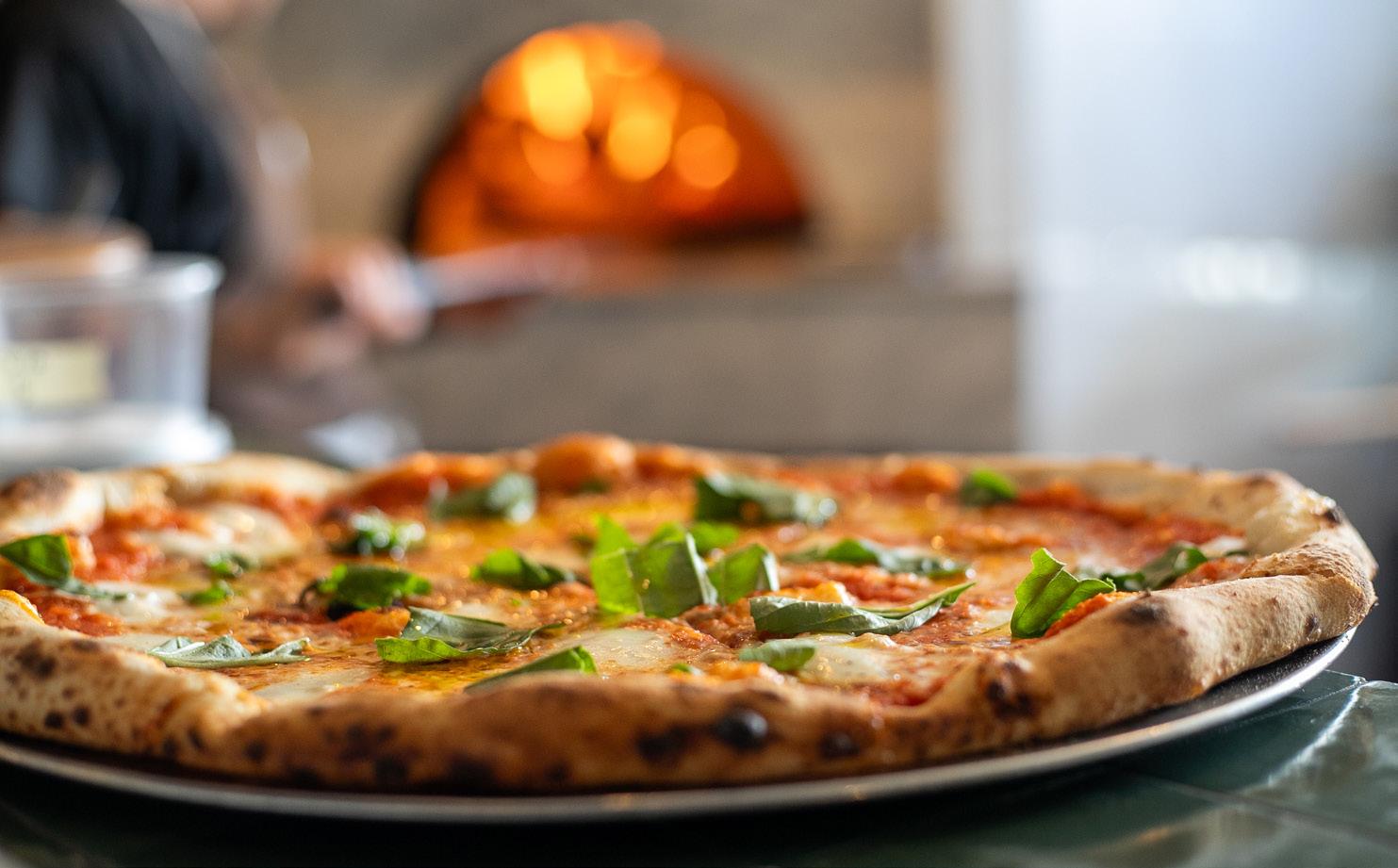
A margherita pizza at Cosmo’s Snack Bar, fresh from the wood-fired oven. Photo/ Kris Vagner
run this family-owned restaurant and saloon since 1987, and the rustic Americana vibe remains: checkered floors, wood paneling and portions so generous you might be taking half your meal home. This is old-school comfort food—juicy beef burgers cooked to order, huge sandwich platters, and the kind of no-fuss meals that keep three generations coming back.
What to order: The biker burger ($18.50)—a bacon burger with jalapeño jack cheese, sliced jalapeños and mayo-Dijon dressing, served with French fries. Add a soft drink ($4). It’s bold, satisfying and exactly what you want from a neighborhood pub.
The alternative: The chicken taco salad ($19)—grilled chicken, black beans, mushrooms, tomatoes and cheese served in a crisp flour tortilla bowl with guacamole and sour cream.
Pro tip: The full bar features creative cocktails like the Bitchin’ Bloody Mary (PJ’s house mix with bacon vodka in a pint glass) and the Mexican Holiday (Peerless Coffee, Sauza Conmemorativo Anejo Tequila, Bailey’s Irish Cream and boozy whipped cream).
Bistro 7
7111 S. Virginia St., Reno 775-851-9463; www.bistro7reno.com
Bistro 7 feels like the kind of place where the food should cost more than it does, with high ceilings, thoughtful lighting and a sophisticated vibe that lets you settle in with a glass of wine and relax. A wood-fired oven anchors the open kitchen, and there’s a sense of occasion here without the pretense.
What to order: The lamb lollipops ($22)— grilled medium rare with chimichurri sauce— paired with a glass of Argentine malbec ($10). It’s a complete dinner that feels indulgent without the guilt of blowing your budget.
The alternative: If you’re not in a lamb mood, the beet salad ($19)—greens, roasted beets, fennel, orange, pistachio and goat cheese, with a whole-grain mustard vinaigrette—with that same Malbec delivers something lighter but equally satisfying.
Pro tip: Bistro 7 has a thoughtful wine program with bottles and by-the-glass options that won’t wreck your budget. Request the patio when the weather’s nice—it makes a regular Tuesday feel special.
Thali
148 West St., Reno
775-470-5898; thalithalireno.com
Thali’s regulars keep coming back, for very good reasons: The thali plate format gives you multiple dishes to explore, and you can ask for refills of anything. The food is vegetarian, often vegan, and it blends northern and southern Indian. The menu changes daily based on what’s
seasonal and local—and yes, it’s organic—but that’s almost beside the point when the food tastes this good.
What to order: The limited thali ($21.99)— you get two vegetable entrée, one lentil or bean entrée, two roti flatbreads (wheat or corn), roasted cumin basmati rice, yogurt sauce and dessert, plus salad, chutney and pickled vegetables. Top it off with a chai ($6.99) or a lassi ($5.99).
Pro tip: The menu changes daily, so ask what the three main dishes are before ordering. Even the “mild” options run spicy by some standards. Thali is in West Street Market with shared seating. Street parking can be tight.
Moo Dang
1565 S. Virginia St., Reno 775-420-4267; www.thaimoodang.com
When Vipawan “Opal” Rahm opened Moo Dang, she wanted to cook the vibrant, spicy, memory-laden dishes from her middle-class Bangkok upbringing—the street food she grew up eating and couldn’t stop thinking about. Rahm uses tamarind, palm sugar and fish sauce from Thailand, because shortcuts don’t exist in her kitchen. The menu is authentically spicy, never too sweet and built around fresh ingredients. It’s Bangkok street food served in a Midtown strip mall with ample parking and old Thai movie posters on the walls.
What to order: Start with the moo ping ($11.99)—three skewers of marinated grilled pork with tangy, funky jaow sauce. Follow with the moo dang soup ($14.99)—ba-mee egg noodles with red roasted pork, minced pork, bok choy and bean sprouts in a broth that shows patience and care. Those chewy, springy noodles make the dish.
The alternative: Swap the soup for the lemongrass salad ($17.99)—grilled shrimp, fresh lemongrass, mint, cashews, peanuts, red onion and cilantro tossed with fresh chili lime sauce. It’s all acid in the very best way: tangy, tingly, with just a touch of sweetness. Addictive.
Pro tip: The spice levels run slightly milder than at other places. If you like heat, don’t be afraid to bump up your order by a level. The Thai iced tea ($4.99) is excellent and can be made vegan with coconut milk. Order the mango and sticky rice ($8.99) for dessert if it’s mango season. It’s a satisfying classic.
Skyline Kitchen and Vine
2995 Skyline Blvd., Reno 775-507-7377; skylinevine.com
Since new ownership took over Skyline Kitchen and Vine in April 2025, it’s earned fresh buzz for good reason. The team behind Sierra Street Kitchen brings their food-serious approach— hand-crafted cocktails, attentive service and a menu that doesn’t phone it in. Entrees run from $26 to $45, but here’s the insider move: The small plates are generous.
What to order: Start with the pork pot stickers ($14)—vegetables, garlic, onion, and ponzu that arrive beautifully plated. Follow with the chicken tacos ($14), which are far more than bar food, topped with house slaw, cheese and chipotle aioli. Pro tip: The wine program is well curated, and one can often find smaller labels or unique varietals at a very good price.
Cosmo’s Snack Bar
253 E. Arroyo St., Reno cosmosreno.com
If you drive too fast down Arroyo Street, you’ll miss it—which is exactly how the regulars like it. Cosmo’s Snack Bar sits tucked in a refurbished Midtown house with Depeche Mode on the sound system and industry folks unwinding after their shifts. Tony Costa built Cosmo’s around a few pizzas and small plates done exceptionally well. The wood-fired pizzas show perfect leoparding. Build-your-own spritzes, draft negronis and softserve ice cream flavors change every couple of weeks. This place gets the little details right.
What to order: Start with a margherita pizza (small $16; large $21; $5 off both sizes on Mondays)—you can add toppings like garlic ($1) or Calabrian chilies ($2)—and pair it with soft serve ($6). The limited menu means everything gets attention. Specialty pies change, but the classics deliver every time.
The alternative: If you’re not in a pizza mood, the kale Caesar salad ($13) and meatballs ($14) make for a delicious dinner.
Pro tip: Wednesday’s Pizza Lambo deal is exceptional—a two-topping pizza and a bottle of Lambrusco for $55. The affogato ($9) pushes the budget slightly but is worth it—it’s espresso over rotating soft-serve flavors. Grab your own plates and silverware from the self-serve station; settle into the refurbished house vibe; and let the evening unfold.
Casale’s Halfway Club
2501 E. Fourth St., Reno 775-323-3979; casaleshalfwayclub.com Walk into this unassuming building on East Fourth Street, and you’re stepping into history. The dining room holds just 10 tables with checkered tablecloths; the walls are lined with family photographs and vintage advertisements; and an arched doorway bears the motto: “If Mama Ain’t Happy, Ain’t Nobody Happy.” Generations of the Casale family have rolled ravioli using the same wooden presses Elvira Casale brought from Genoa, Italy, in the 1920s. What started as a Depression-era fruit stand became a ravioli takeout counter, then a full restaurant. Every morning, someone stands at that press making ravioli by hand—the same motion, the same filling, the same care.
What to order: Start with the Kellames special ($10)—garlic bread served with Mama’s signature red sauce for dipping, and follow with the “small(ish) lasagna” ($17), a still-generous portion. As every entrée includes minestrone soup or house salad with vinaigrette, this is an exceptional value.
The alternative: Ravioli with meatballs ($20.50)—Casale’s signature dish, with soup or salad included.
Pro tip: Reservations are essential.
DC Cafe at Tamarack Casino
13101 S. Virginia St., Reno 775-852-3600; www.tamarackcasino.com/ DC-Cafe
Finding a quality steak dinner for under $40 in Reno? Nearly impossible. Casino restaurants today can be pricey—when tourists are willing
to pay, why charge less? But at DC Cafe in the Tamarack Casino, a 12-ounce New York strip with mashed potatoes or fries, vegetables, and soup or salad costs $21.99 total—not a typo. DC Cafe sits under the same roof as Nevada Steak, one of Reno’s better steakhouses, and the quality connection shows. DC serves great beef in a clean, comfortable diner setting with railroad-themed decor.
What to order: The 12-ounce New York steak ($19.99) grilled to order with seasonal vegetables and your choice of mashed potatoes or fries. Add a cup of soup or house salad ($2), and you have a complete steakhouse dinner that would cost much more anywhere else.
The alternative: Steak and eggs ($18.99)— an 10-ounce steak with two eggs any style, hash browns and toast. It’s breakfast for dinner, generous and satisfying.
Pro tip: Friday and Saturday bring a prime rib special—10 ounces for $19.99, served with a baked potato, vegetables, au jus and creamed horseradish. The Classic Plates menu (available 11 a.m. to close) offers exceptional variety; selections include chicken parmesan with spaghetti and garlic bread ($12.99), Southern fried chicken with mashed potatoes and country gravy ($9.99) and chicken enchiladas ($7.99).
Dahlia’s Mexican Grill
9570 S. McCarran Blvd., Suite #113, Reno 775-357-8671; dahliasmexicangrill.com Finding cheap Mexican food in Reno? Easy. Finding elevated Mexican food that’s still a great value? That’s the challenge. At Dahlia’s Mexican Grill in northwest Reno, beautiful murals line the walls; colorful decor fills the space; and the dining room feels alive with energy. But what sets Dahlia’s apart isn’t just the atmosphere. It’s their approach to value: dedicated “dinners for two” designed to be shared family-style.
What to order: La Parrillada ($40.99)—a family-style platter with flank steak, chicken, carnitas, chorizo, shrimp and grilled vegetables, served with rice, beans, guacamole, pico de gallo, sour cream and six tortillas.
The alternative: Solo diners aren’t forgotten. The vegetarian Dahlia’s burrito ($14.99) becomes something special when you order it enchilada-style ($3). Green tomatillo sauce and melted cheese add complexity and richness. Pair it with horchata ($4.99) and tres leches cake ($7.99) for a complete meal.
Pro tip: Parking is plentiful, and the margaritas are excellent.
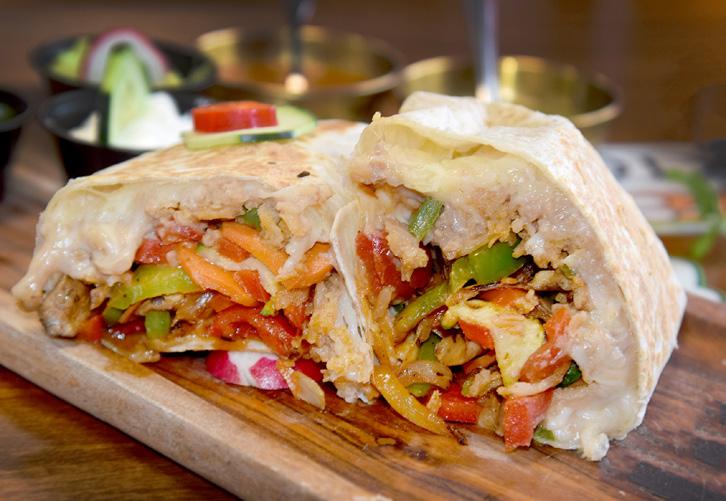
Monika Marsh
Owner, Edelweiss Pizza Pub and Pastries

Monika Marsh grew up in Truckee, the daughter of an Austrian father who spent 32 years coaching ski racers, including Monika herself, at Alpine Meadows. Before opening Edelweiss, she built a career as a marriage and family therapist while raising four children as a single mom. The restaurant came about almost by accident. Her husband found a space for lease, and Marsh knew immediately what she wanted to do with it: Serve the food she grew up eating—like schnitzel, goulash and apple strudel, the dishes her father, Hans, learned from his own mother, a pastry chef at the Hotel Post in Innsbruck. Edelweiss Pizza Pub and Pastries opened in December 2023, and it remains exactly what Marsh set out to build—a restaurant rooted in family memory. Edelweiss is located at 13979 S. Virginia St., No. 505, at the Shayden Summit mall. Visit www.edelweisspub. com Photo by David Robert
What’s the best thing you’ve eaten locally in the last month?
I never miss a chance to go to Perenn and have a little French food. I always get my favorite walnut chocolate-chip cookie and the brunch potatoes.
Your kitchen is on fire!
(Metaphorically.) What are you cooking?
I’m a baker at heart, but I’ve learned to cook most things. I’d say a very rich pasta dish with mushroom cream sauce. I cook everything with heavy cream and a lot of butter—just like Dad did.
Who is/was your strongest culinary influence?
My strongest influence will always be my father, Hans. He learned to cook at
the knee of his mother in Austria, who was a pastry chef at the Hotel Post in Innsbruck. He taught me to cook when I was a young girl. We always ate fresh fish out of the Truckee River, goulash, apple strudel, schnitzel and fresh mushrooms—king boletes (that my father would hunt and pick on Donner Summit), a highly prized edible mushroom. We grew up with the best food!
What is your go-to midnight snack?
Usually, a big bowl of sugary cereal with half and half—probably the worst thing I could eat, but it tastes so good! I’m a junkfood junkie.
Which local restaurant deserves more attention, and why?
The Cup is my favorite breakfast spot in town. Their pumpkin pancakes are to die for; the staff is always lovely; and they never mess up my over-medium fried egg.
How does food contribute to our community?
I don’t think many people knew about Austrian food when we started. Now people come in all the time asking about dishes from Austria and Germany. I love that. Any restaurant that celebrates food from around the world brings people together, and I love teaching our patrons about Austria.
What is the one thing you won’t eat?
I have never liked sushi and never will— though my kids absolutely love it.
Please share your favorite food memory from growing up.
My father used to make me liver and onions, served with a little ketchup on the side. I loved it.
What is the one kitchen tool you can’t live without?
My espresso machine—and a good spatula.
What has been your most memorable meal?
Traveling to Aruba at 16 and eating goat stew. It was the best thing I’d ever tasted, rich and unexpected, in a tiny hole-in-thewall on a back street I’d likely never find again.
Owner of Eclipse Pizza Company
Dave Fish grew up in Rhode Island, a hockey and swimming kid who eventually found his way into hotel work before landing, improbably, in northwest Reno with a vision. He co-founded Eclipse Pizza Company in 2005, and in the time since,
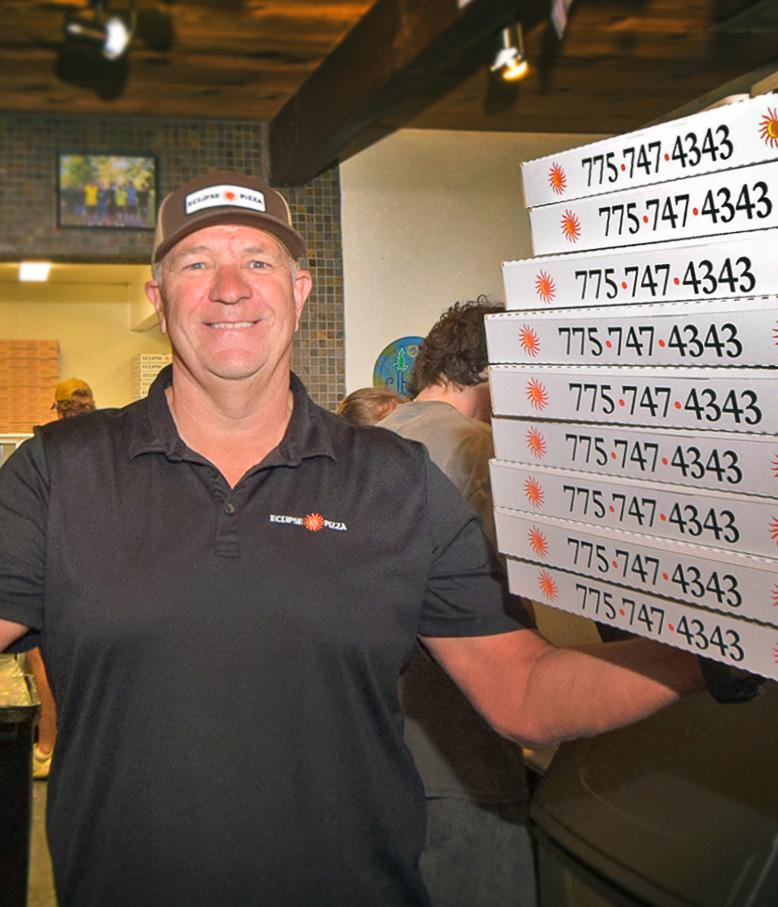
more than 200 young people from the neighborhood have cycled through—learning to work hard, treat customers right, and be part of something before heading off to whatever came next. Today, he runs Eclipse as majority owner alongside Joe Parker and Steven Mahaffey, and the place is casual, unpretentious and deeply woven into the fabric of the neighborhood. Eclipse is located at 3950 Mayberry Drive; learn more at www.eclipsepizza.net. Photo by David Robert
What’s the best thing you’ve eaten locally in the last month?
The filetto balsamico (beef tenderloin in a balsamic vinegar reduction) at Mario’s Portofino. I’ve been going there for years, and it’s one of those dishes I never feel the need to stray from.
Your kitchen is on fire!
(Metaphorically.) What are you cooking?
We are probably making a custom halfand-half pizza with all kinds of additions and substitutions that a long-time customer has fine-tuned over the years. It’s great to see customers tailor their orders and to deliver to every request.
Who is/was your strongest culinary influence?
My mother. The meals were nothing fancy, but the love and effort that went into every plate left a mark—one I hope carries into every pizza we make.
What is your go-to midnight snack?
Coffee chip ice cream.
Which local restaurant deserves more attention, and why?
PJ’s—an old-school Reno institution without the fanfare and glitz. Just good food and nice people.
How does food contribute to our community? Gathering around a good meal is one of
the oldest forms of community there is. We see it on our patio every week—friends, neighbors and people just happy to be together. And when we can support a worthy cause through a fundraiser, that’s just more of the same spirit.
What is the one thing you won’t eat? Sketchy, undercooked chicken!
Please share your favorite food memory from growing up. Mom’s tomato soup spaghetti—it was a family delicacy. I didn’t know how simple it was at the time, but the lure of it would get us to do any job around the house, no matter how involved.
What is the one kitchen tool you can’t live without?
Our pizza oven. It’s got war wounds and has been rebuilt many times, but always delivers. Cooking with it is more of an art than a science, which gives it personality.
What has been your most memorable meal? Birthday gatherings growing up. Family crowded around a favorite meal, then the cake—there’s nothing complicated about it, but those moments stick with you forever.
Owner and chef at Pho La Mint
Khanh Huynh didn’t grow up dreaming of owning a restaurant. She came to Reno from Vietnam in the late 1990s with her mother and her brother to build a new life from scratch. She went to hair school, a practical choice, but cooking and creating always pulled at her. Life brought marriage and motherhood, and some hard times—challenges learning English, people judging her, her mother’s illness and passing, and financial struggles. She said there were times when she simply wanted to walk away from everything—but she stayed with it. She and her husband opened La Mint in 2019, and now it is a successful restaurant. She wishes her mom was alive to see it. Pho La Mint is located at 770 S. Meadows Parkway, No. 101, in Reno. Learn more at www. pholamint.com. Photo by David Robert
What’s the best thing you’ve eaten locally in the last month?
Steamed clams at Edelweiss—(they were) pretty good size and fresh. My husband and his friends are big fans of the old fashioneds, too.
Your kitchen is on fire. (Metaphorically.) What are you cooking?
Our wok-fired shaking beef or fried rice. Both need extremely high heat!
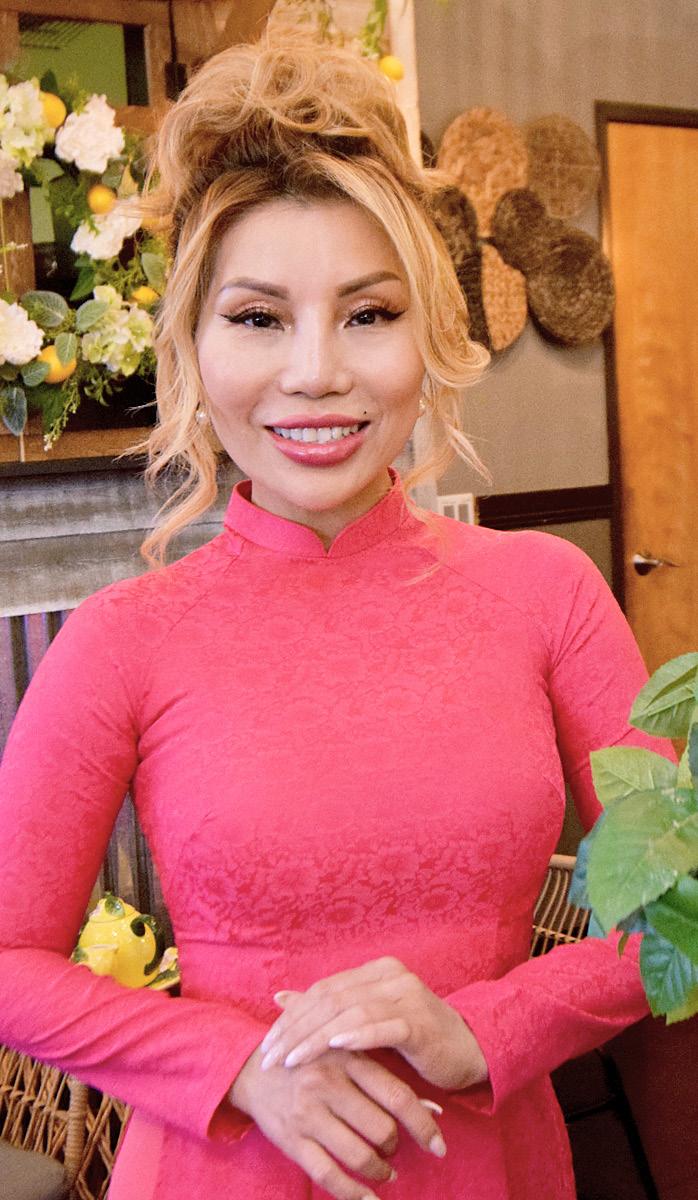
Who is/was your strongest culinary influence? My late mom—I miss her. Her family is from Northern Vietnam; my dad’s family is from the south. I grew up in Saigon, and her cooking was a perfect blend of both regions.
What is your go-to midnight snack?
Hao Hao (Vietnamese brand) instant noodle. I have it with kimchi from Yim’s Market, fresh Thai basil, cilantro and scallion.
Which local restaurant deserves more attention, and why?
Great Full Gardens on South Meadows. They’re our neighbors, and the food is healthy and delicious. Owners Juli (Scala) and her husband, Gino, are incredibly kind and generous people.
How does food contribute to our community?
Vietnamese cuisine has been shaped by Chinese and French influences but is also a culture with deep plant-based roots— driven in part by our Buddhist faith. That
love of vegetables, herbs and fresh ingredients is a big part of what makes Vietnamese food so approachable and nourishing. It’s why I love sharing it, and why I joined the Reno Vegan Chef Challenge.
What is the one thing you won’t eat?
Sashimi or any raw meat preparation.
Please share your favorite food memory from growing up.
The first day of Lunar New Year was the best day of the year. First stop was my maternal grandma’s house for a big northern feast, then on to my dad’s side for a southern one. I came away stuffed and with a big bag full of red envelopes with lucky money.
What is the one kitchen tool you can’t live without?
My little step stool. I’m a whole 5 feet of me on a good day, and those giant broth pots are not coming down to my level!
What has been your most memorable meal? I grew up poor and used to save up my money for one particular udon soup I loved. I’d order just plain broth and noodles—I couldn’t afford the toppings. The lady behind the counter was so kind and would often slip in a few slices of pork anyway. Now I can make an exceptional udon with any toppings I wish, but nothing compares to that bowl from my childhood.


Owning a bar is not for the faint of heart. It requires vision, attention to detail, patience and a willingness to be metaphorically kicked in the head by a litany of problems you did not see coming.
Now take most of the headaches of owning a bar—and put that collage of challenges on wheels.
Mobile bartender services are booming, with annual sales at roughly $1.8 billion nationally; that number is expected to more than double by 2034.
This growth in mobile bars is driven by a few factors. One is that people are looking for more immersive experiences at weddings. With mobile bars, you get the luxury of a quality cocktail and bar experience—all while chatting it up with your weird uncle. The other factor is the festival effect: the idea that people want Coachella-style drink experiences that they can photograph and post on social media. The world is bursting with demand for unforgettable signature cocktails and drink experiences.
I chatted with two intrepid mobile bar teams—one with a few summers under their belt, and another that is just getting started.
For the past five years, John and Shannin Blomquist, owners of Pizen and Wine Mobile Thirst Parlor, have spent their summers in a renovated vintage horse trailer serving cocktails. They decided to take their years of bar experience on the road for a simple
reason: “We have always wanted to be our own bosses,” John said. “We wanted to be able to choose our own schedule, build a brand, connect with customers, make friends and have financial freedom.”
In 2019, they found themselves a vintage 1973 Miley horse trailer, and its personality began to shape their concept.
“We were writing down quotes from the movie Tombstone as cocktail names and thinking in a more rustic and rural fashion about our aesthetic,” John said.
This rustic vibe quickly became a hit, and soon, they both quit their full-time jobs to focus on growing their business. With their dream of working for themselves fulfilled, John and Shannin now faced a new challenge: working for themselves.
“Turns out, when you’re your own boss, you schedule yourself double, work harder and always focus on growth and improving your product,” John said.
The Pizen and Wine planning season starts in November, when John and Shannin meet with engaged couples, venues, event planners and others. Then the fun starts when the weather warms up.
“The truck is a lot of planning, organization, shopping, cocktail prep, cutting, juicing, loading, lifting, traveling, unloading and setting up,” John said. “After the event, we are tearing down, reloading, returning to base, unloading, emptying the trailer, cleaning coolers, dishes, kegs,
| BY MICHAEL MOBERLY
John and Shannin Blomquist, the owners of Pizen and Wine Mobile Thirst Parlor, converted a 1973 Miley horse trailer into a portable cocktail bar. Photo courtesy of Pizen and Wine
containers, sleeping—and back to planning for the next event.”
Think of it like preparing for camping—but for 200 people, and sometimes four times a weekend.
“We don’t do it because it’s easy work and easy money,” John said. “We work hard, and we like to take someone’s vision of their events and make it great.”
New to the scene is Fresh Out Bev Co., a mobile cocktail truck from co-owners Marcos Leon and Reno Tischler. They have a vintage Ford C750 tap truck, which had a previous life as an event truck for a local beer distributor.
“This truck has seen more booze being consumed than Reno’s and my lifetime combined,” Leon said.
Unlike many other trucks in the mobile bar space, Fresh Out Bev Co. features all drinks on draft, with eight tap handles and room for 15 to 25 kegs in the back. The truck is a walk-in fridge on wheels.
“It is a beast meant for this exact purpose— draft cocktails, draft soda, wine, beer. You name it; we want to have it,” Leon said.
The Fresh Out Bev Co. concept is not only to focus on events like weddings, but also to help expand the beverage footprint for other local businesses.
“Our mission at public events is more of a grab-and-go concept, and making sure we always try to collaborate with other local food vendors or local restaurants so people can enjoy our drinks with their meal,” Leon said.
I asked Leon how they prepared for the season.
“With this being our first year, we are figuring everything out,” Leon said. “We are learning so much before we launch the truck this May. We are making some real progress, getting into the final stages with the painting of the exterior and installing the draft system.”
It fills me with so much joy to see these teams take their visions for amazing cocktails to the people—but it is also important to recognize their hard work. It takes planning, discipline, vision and a love of drinks that most people will never understand to bring the bar to you. But as the artist Tom Sachs said, “The reward for good work is more work.”
So, here is to more work from some great people.
Learn more about Pizen and Wine Mobile Thirst Parlor at www.PizenandWine.com and @ PizenandWine on Instagram.
Learn more about Fresh Out Bev Co, at freshoutbev.com and @freshoutbevs on Instagram.
| BY MICHAEL MOBERLY
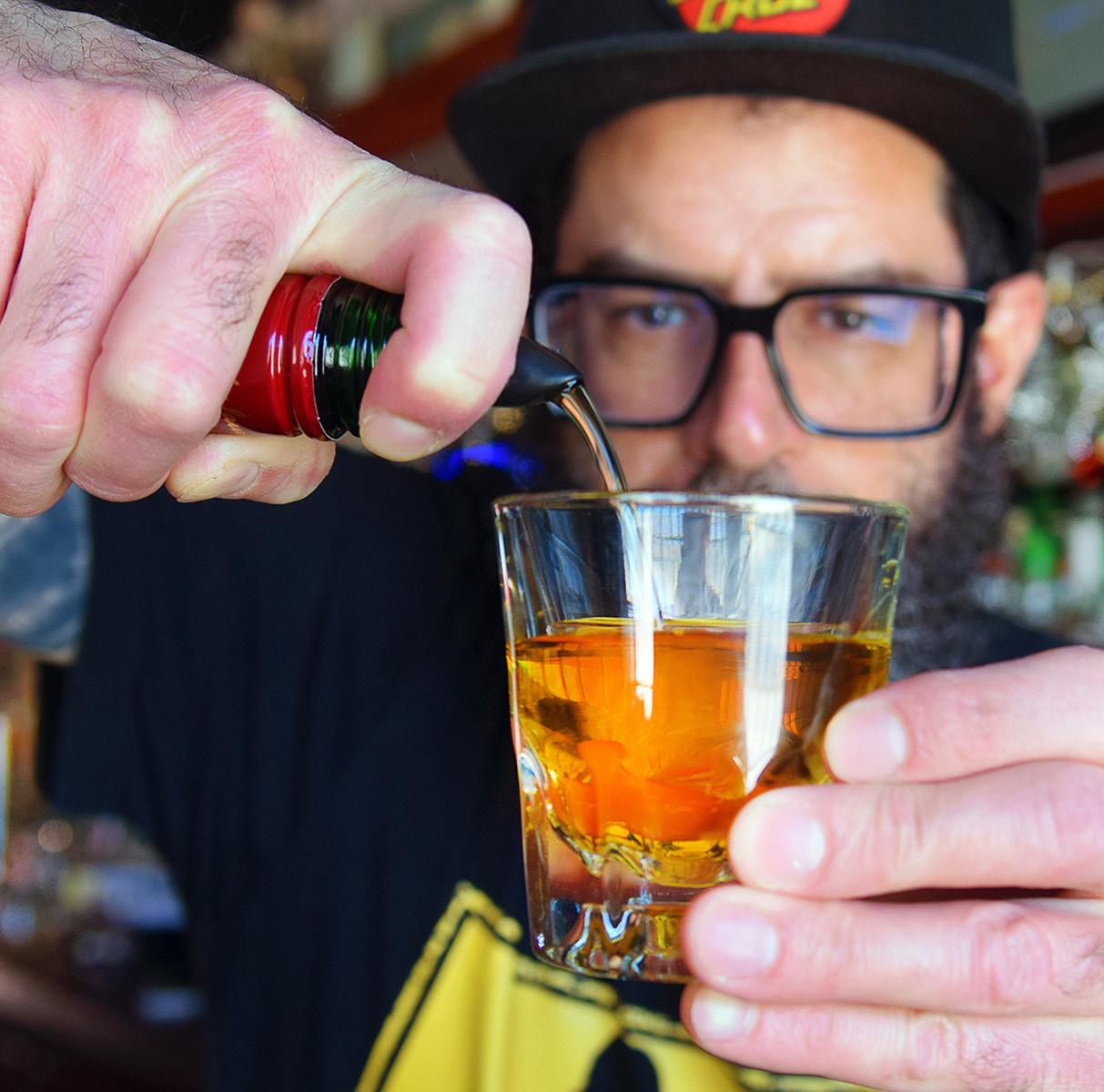
There was a time in Reno when every bar offered a Jameson and Pabst Blue Ribbon special. It was the hipster handshake that defined drinking in our community in the 2010s.
Because of these long nights of countless shots and beers, paths were carved in our brains that now make it harder to enjoy Irish whiskey. When we overindulge in a spirit, it creates a response that can lead us to eat $45 worth of Taco Bell, which, in itself, is a traumatizing experience. A lot of what I do as a beverage educator is reintroduce people to the categories of spirits that caused them to make new friends in bathrooms and make the kinds of bad decisions that lead to a road cone in their bed when they wake up.
So, with that in mind, take my hand, and let me reacquaint you with my very dear friend, Irish whiskey.
Not many people know that some of the very first distilled, grain-based spirits were
made in Ireland, and depending on the source you believe, they may have been the first ones to do it. Distilling practices arrived on the island in the 12th century (though many contend that they were distilling 200 years before this). Back then, monks figured out that if you put fermented liquid into a still, the result would be medicinal spirits; due to the lack of vineyards and grapes found in other distilling cultures, the Irish turned to grain to make their distilled beverages.
This first beverage was not the caramel-colored, barrel-aged product we know today; it was what the Irish call poitín, an unaged Irish grain whiskey. In 1556, whiskey production in Ireland got so out of hand that the government had to step in and issue licenses, which did little to curb production. It was not until 1779 that the Irish lords said “no more” to the wild and weird producers making all kinds of (very unsafe) whiskey, and the number of distilleries went from 1228 to just 246 in a year. This consolidation highlighted the need to produce more whiskey at fewer distilleries to meet demand, so in 1831, the Coffey still was born.
The Coffey still, or continuous still, allowed producers to make more whiskey, more efficiently and at a lower cost. This still is used today in almost every distillery in the world—so if you like bourbon, vodka, tequila, gin or pretty much anything distilled, you can thank the world’s demand for Irish whiskey.
Many people assume that Irish whiskey is a harsh, steely product that must be gulped down in a shot, with their nose plugged, or followed by the strongest possible chaser, like pickle juice. These people are missing out on a world of soft and subtle flavors that the Irish do so well.
Irish whiskey is malt-based and must be aged for a minimum of three years by law; these practices yield a lighter, softer whiskey that holds a world of creamy, floral flavors. While the continuous still was born in Ireland, their real art is in the pot still, which almost all Irish whiskey uses in some way. This still style is the most basic in design, but it yields an artful blend of oily texture and spicy flavors. So, if you overcome the fear you may feel about drinking Irish whiskey, you will find a spectrum of flavors that goes from spiced rye bread to clover honey to creme brûlée.
If you are looking for that spicy boy, Jameson is your best bet. If you are looking for that honey kiss, try Tullamore D.E.W. And if you want to see what creamy body Irish whiskey can have, look no further than Bushmills.
Now you may be thinking that you want to dip your toe back into the Irish whiskey pond—so where do you start?
One of the great joys in my life is the flavor of Irish whiskey and Irish cheese together. It’s a match made in a culture that does both of those specific arts with a particular rustic cottage-core charm. This is, in part, due to the grassy boldness of Irish cheese and the inherent honeyed creaminess of Irish whiskey. Bringing a creamy, bold Irish cheese and a bottle of Redbreast to your next get-together might just make you seem like the greatest culinary mind in your friend group.
But if the food pairing is a little too much for you, try replacing the bourbon in your favorite cocktail with Irish whiskey, and you will see a difference in how light the drink is. An Irish whiskey old-fashioned is like the spring cousin of the traditional bourbon version, which is heavier in corn and barrel flavors. (Bourbon is 51% corn by law.)
Knowledge is power, and knowing more about the spirits that have broken your heart (and mind) can help give you the power to find a love for them again. So sláinte, and enjoy a glass of Slane or Tullamore D.E.W. for me—especially if you have a slice of cheese in the other hand.
| BY LYNN LAZARO

Have purple drinks and desserts made of ube (pronounced “oo-beh” or “oo-bay”) been popping up in your social-media feeds?
According to Google Trends, search interest for “ube” in the United States has gone up 80 percent in the last five years. The highly pigmented purple yam, mostly grown and processed in the Philippines, is having its matcha moment.
As a Filipino American, I have mixed feelings.
One concern is that global demand for ube has made it harder and harder for Filipino farmers to keep up. Exports have quadrupled in recent years, and more than half of their product is sent to the United States, according to The New York Times. The Philippines can’t even meet its own local demand and has been forced to import some ube from Vietnam. I worry about Philippine farmers.
I’m also concerned that Filipino-owned businesses might be left behind as American corporations like Starbucks use the flavor (or a weak approximation of the flavor) for profit. In March, Starbucks announced its spring drink menu, which includes an iced ube coconut macchiato alongside other popular Asian flavors like yuzu and matcha. The iced ube drink contains coconut milk, ube coconut cold foam, and a sprinkle of coconut flakes on top.
Some of Starbucks’ own baristas and customers claim they can’t taste the yam’s signature nutty vanilla flavor. One Reddit user posted: “As a Filipino barista, I expected bold, nutty goodness, not just aesthetics. Ube isn’t just a color palette. It has a distinct, RICH flavor that should stand out. … This isn’t how you introduce a cultural icon to the world.”
On the other hand, the beloved tuber is a food I’ve been eating my whole life. I remember eating dark purple ice cream during family movie nights at home; when the
lights came back on, our lips would be stained the same color.
As a kid in American schools, others often made fun of me for enjoying ube. It is now something that everyone can appreciate and enjoy.
While I’m wary about the effects that the popularization of Filipino food and culture may have on farmers and small businesses, my heart, and the hearts of my Philippine-born counterparts, swell with pride when non-Filipinos fall in love with our food for the first time.
If you really want authentic ube flavor, your best bet is to visit a local Filipino-owned grocery store or eatery. There are a handful of places in the Reno/Sparks area. Here are my top two.
At Dream Cakes in northwest Reno (www.
dreamcakesnv.com), a custom cakes business-turned-Filipino bakery, the most popular menu item is the ube croissant. The light, buttery pastry is filled with a fluffy, slightly sweet ube cream.
“People are coming in from Fernley and Carson City, and we had these customers from South Dakota,” said owner Wilbert Saludares.
He said the demand got so high that Dream Cakes was selling out of ube croissants after lunchtime. People complained, and he had to hire another baker.
“(Ube) is not just an opportunity to grow (my business), but also an opportunity to educate other people—which is what we really love,” said Saludares, who migrated from the Philippines six years ago.
At Malaya Eats (malayareno.com), a Filipino eatery on Wells Avenue that has been gaining in popularity since it opened in January, manager Perryn Angelo Sta Cruz (pronounced “Santa Cruz”) said customers are excited about the ube creamsicle, a non-alcoholic play on a piña colada.
“The color is really pretty, and to (customers), it’s just new and delicious,” Sta Cruz said.
The pastel purple drink has a distinct ube flavor and also contains juice from the sweet, tart Philippine lime known as calamansi.
Sta Cruz believes that Gen Z and millennial diners are adventurous and eager to try new flavors like ube—and he’s here for it.
“It’s just really heartwarming,” he said. “Filipinos are really passionate with sharing their culture.”
Picon punch—the sweet, bitter, boozy Basque-bar staple that Nevada’s Legislature declared the official state drink last year—has been beloved in these parts since Basque boarding houses popularized it in the early 1900s.
But did anyone ever expect it to one day swagger out of its lane and become part of a red-hot cocktail trend? Well, that day has come.
On May 2, Ferino Distillery (at 541 E. Fourth St., in Reno) launched its new picon punch in a can with a celebration at the JT Basque Bar and Dining Room in Gardnerville. Now, four-packs of the 29% alcohol-by-volume libation (the actual product name is The Official State Drink of Nevada) are available at the JT, Ferino, and Craft Wine & Beer.
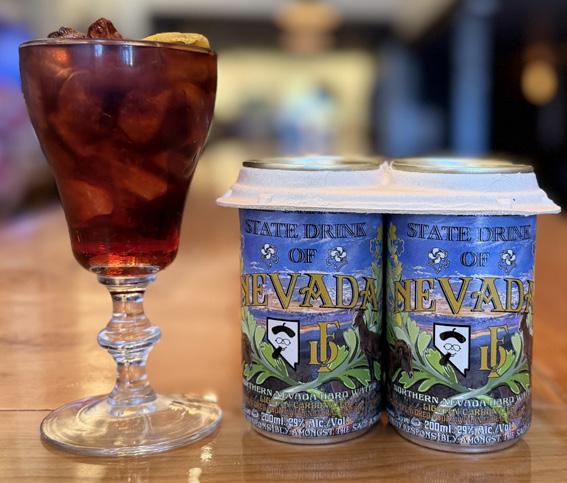
The cans are a diminutive sized 200 milliliters, but Joe Cannella, Ferino’s owner/distiller, advised that each one contains three servings.
“It’s a partnership with the JT,” he said. “We’re the manufacturer, and they’re the brand partner.”
In December 2024, Ferino Distillery acquired the rights from the Torani company to produce amer, the bitter liquor that provides the backbone of the picon’s flavor. Then, in June 2025, in a stroke of what he called “dumb-luck timing,” the momentum swelled when picon punch became the state drink. A few months later, Etienne Lekumberry, the JT’s bartender and part of the family that owns the legendary bar/restaurant, reached out to Cannella to raise the idea of a canned picon.
“A legit representative of the Basque community was reaching out to me and proposing it to me,” said Cannella. “I said, ‘Absolutely, we’ll do it together.’”
—Kris Vagner
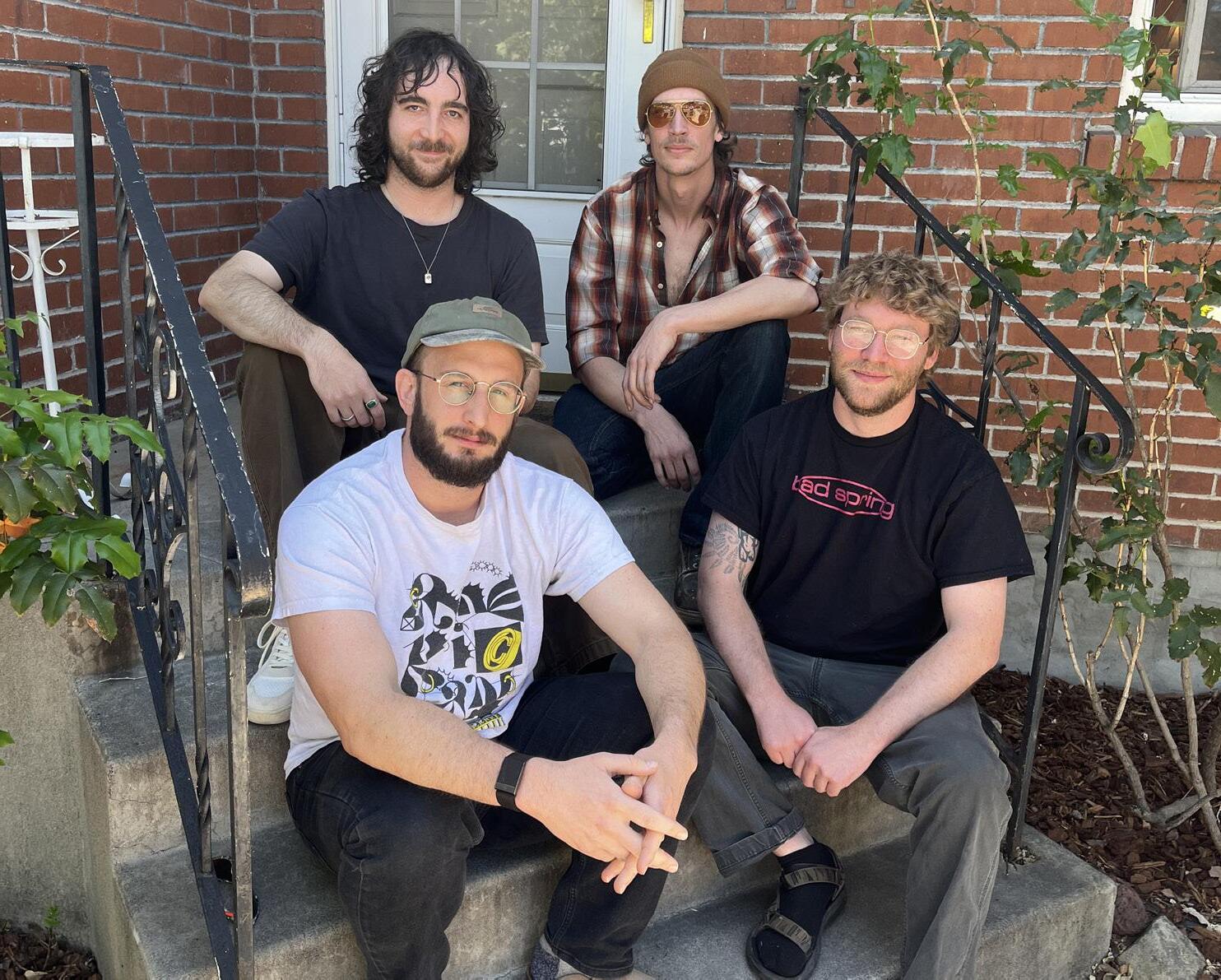
Whatever you call it, the music of indie-rock band Blackstallion is evolving
There’s a lot to unpack with local indie-rock band Blackstallion—and this is meant as a compliment. The band is in the midst of an interesting musical evolution that makes it one of Reno’s most distinctive groups.
That, and three-quarters of the members are trying to be in a band while working as schoolteachers. Dylan Greist (bass and saxophone) teaches fifth-grade; Nic Graver (drums and mandolin) teaches sixth-grade English; and Nathan Lachner (guitarist and singer/songwriter) teaches high school. With lead guitarist Jonathan Agnew working full-time as a maintenance man, they all acknowledged that playing out of town can be a challenge—although they do play in Reno often.
“Trying to get us all on the same schedule can be tough,” Agnew said. “It has to be an extended weekend or something like that.”
Said Greist: “I think our dream tour would be to go to beautiful places. We all love a lot of outdoors stuff. Nathan loves running and hiking, and we love rock climbing and doing stuff like that. It’s like if we could build a tour where we get to
experience nature and then go play a show at a bar close to there, that would be incredible.”
A blend of old and new
Day jobs aside, the biggest element of intrigue involves the group’s sound evolution. Lachner has been recording as Blackstallion since 2016. He started it as a side project from an emo-punk band he was in called Skinwalkers, and during his tenure as bassist in the indie band Pry.
“I’ve recorded songs since I was 12,” Lachner said. “I’ve always been pretty handy with a computer. So, I just recorded songs completely for fun and put them on Bandcamp.”
Lachner eventually played solo shows as Blackstallion—but he didn’t like it.
“It’s fun to make songs alone, but it’s a lot more fun to play music with friends,” he said. “So I gathered a group of people together to play with me, and it’s become a lot more fun.”
The current Blackstallion lineup has been together for two years, and two members also play in other local bands. Graver is in Night Rooms, while Greist plays for Bug Bath, Spitting Image and Cross Stitch. All agreed that a love for Lachner’s songwriting paved the way for them to
|
Roots-rock-meets-indie/shoegaze band Blackstallion features, clockwise from top left, Nic Graver, Jonathan Agnew, Dylan Greist and Nathan Lachner. Photo/Mark Earnest
play together.
“I’m the newest member, and I was always bugging Nathan: ‘I love Blackstallion so much. Let me play. I’ll play guitar; I’ll play drums, whatever you want,’” Graver said. “And then he finally needed a drummer.”
Recording as a band has led to a move away from the solo, lo-fi sounds of Blackstallion’s early work. The band’s latest album, Blackstallion 5000, mixes modern indie-rock styles with elements that harken back to late ’60s and early ’70s roots rock. Still, Lachner said it’s hard to pin the band down to a specific genre or sound.
“I’ve just tried to unconsciously make music that feels true to me,” he said. “But I’m also starting to get way into the classics as I’ve gotten older. I feel like in every genre, you’ve got to appreciate and respect the roots and the tradition of the music. It’s like folk music, bluegrass, rock ’n’ roll … there’s so much wisdom to be gained from the classics.”
Said Agnew: “Once we started playing with bands from the Northwest, they started throwing around the term ‘bootgaze.’ But I kind of consider our music neo-traditional. There’s a lot of Grateful Dead in there. There’s a lot of Eric Clapton, a lot of traditional blues. I take a personal influence from a lot of B.B. King. And then we’re finding a way to incorporate that with a modern, almost emo/shoegaze kind of vibe. That’s why the new record is called Blackstallion 5000, because it’s the culmination of all of these things.”
Lachner said he’s realized that he doesn’t have to “do everything” to create good songs.
“I’m able to write a song and compose the ideas, and then everyone around me is smarter and more talented when it comes to gear and the sound and all that kind of stuff,” he said. “So together, we’re creating something much better than we could independently. It’s a beautiful thing.”
Said Greist: “One of my favorite things that we’ve been doing lately as a band has been going through the back catalog and finding stuff that’s on Bandcamp that never even made it to Spotify, and then turning something that was just a ‘Nathan computer project’ into something for the full band, and seeing what we can do with it.”
As for the future, Lachner said he’s “slowly chipping away” at writing new material.
“We’ve been a band for 10 years, so I’m not dying to rush and put another album out,” he said. “It probably will happen, because I’m probably going to make songs until I die.”
All of Blackstallion’s albums, including Blackstallion 5000, can be found on Bandcamp. Learn more at instagram.com/blackstallion.nevada.

Cyanate gears up to perform at a massive metal fest in Canada this summer
Cyanate is a familiar name to local metal fans, but the group those fans saw when Cyanate started in 2011 is vastly different from what the band is about right now.
This progression isn’t just about leaving and returning band members, even though founding guitarist Scott Schlingheyde has been the only constant since the beginning; it’s more about the music and stage show. Cyanate writes epic songs—sometimes reaching close to 10 minutes—blending progressive rock, groove metal and metalcore influences, and the band’s shows have become more elaborate, featuring video and lights that are synchronized to cues in the music.
All of these evolutions have led to some opportunities that most Reno metal bands dream about. Take the band’s summer plans, for instance: a 16-day tour centered around the Loud as Hell Open Air Festival, taking place July 31-Aug. 2 in Calgary, Alberta.
“I mean, that has been about really manifesting the shit out of all this,” Schlingheyde said. “We all wanted this to happen, and this is the best group of guys that I could think of doing it.”
Among the bands playing with Cyanate at the Loud as Hell festival are metal heavy-hitters such as Allegaeon, Summoning the Lich and Fallujah. It’s the first time that Cyanate has played internationally, and they’ve earned a good slot for it, too, playing late in the afternoon on the second day.
When I asked the band who was planning the tour around Loud as Hell, everyone pointed to guitarist Jerad Mochel and chuck-
led. Mochel is indeed the organizer of much of what’s helped Cyanate get to this crucial point in its career. He said this was Cyanate’s second try to get into the festival.
“Last time, they said we were super-close, in the top 5 percent, but there were just a couple of things in our submission that we could work on,” Mochel said. “So this year, we really focused on all of that, and then when they made the announcement video (for all the festival bands), he said, ‘These guys’ submission was absolutely bulletproof. We’re super-excited to have them on.’”
This journey for Cyanate was a long time in the making. Joining Schlingheyde and Mochel in the current lineup are Robert Landers on drums and Dimitri Macouin on lead vocals. Colin Kyger is the group’s touring bassist. Landers and Mochel are prodigal members: Both joined in 2012 and then left in 2013. Macouin joined in 2019, right in time for Landers to return on drums that same year. Finally, Mochel came back in 2022 after what he called “a 10-year hiatus” from music.
With this lineup in place, Cyanate set about transforming itself. This includes the use of video and lighting rigs, as well as keyboard/synthesizer parts, written and performed by Mochel, that are used as onstage backing tracks for live shows.
“The professionalism and the production of what we have going now is just something that no Reno bands, that I know of, have ever done,” Landers said.
Added Schlingheyde: “I was a MESA/Boogie (amp), blow-your-ears-out type of guy for many years,” he said to a chorus of “this goes to 11” jokes from his bandmates. “But it’s so refined now. We all have in-ear (monitor systems). We’re so much tighter as a unit, and the produc-
Cyanate has been evolving for 15 years now, honing their craft the whole time. Photo/ David Robert
tion is over the top.”
All of the band members have participated in sourcing video and bringing in ideas for Mochel to edit together. That teamwork to make this dream work is something the band agreed is taking a lot of time, but the rewards have been great.
“Every other band that I’ve been a part of, there’s this element of wanting it to go somewhere, but mostly doing it for fun,” Macouin said. “But in this band, once Jerad came back, we all sat down and really focused on what we wanted out of it.”
Said Landers: “It’s more professional, but still has that super-fun element in it, always.”
That more polished look is apparent from the use of synchronized lighting and video systems in Cyanate’s shows. Mochel estimated the band members have put in 250-300 manhours to figure out the systems and find the right visuals to go with their songs.
“It wasn’t just like, ‘Here you go; plug in, play it,’” Mochel said. “It was more like having to make it work yourselves. It was a big learning curve, and a lot of nights of just screaming at the computer and pulling out my hair and reaching out to people on Reddit, which really helped.” Cyanate’s music has changed, too. The members agreed that their current sound is more technical and dynamic, with twists and turns in the songs, and not just aggressive roars.
Mochel writes most of the new songs, but the members all have freedom to add parts and help arrange them before they decide to add them into their sets.
“As I have grown, my songwriting has evolved as well. I tend to look at a song as a thread, and I try to find some kind of a through-line from the start to the middle to the end,” Mochel said, adding with a laugh: “And sometimes I end up with a beautifully knit sweater, and sometimes I end up with a pile of yarn on the floor.”
With all the proper stitching in place—both musically and visually—Cyanate has seen some strong results from the DIY crafting. After several years, they are now at the point where they can headline a medium-sized club show in Sacramento, something that’s a rarity for a band from Reno.
“There’s a competitive thing between California bands and Reno bands, and it’s been like that ever since I can remember, but Cyanate has broken through that,” Schlingheyde said. “We don’t feel any of that competition; it’s just like friends playing. It’s a whole other level of camaraderie.”
For more information, visit instagram.com/ cyanate.band.
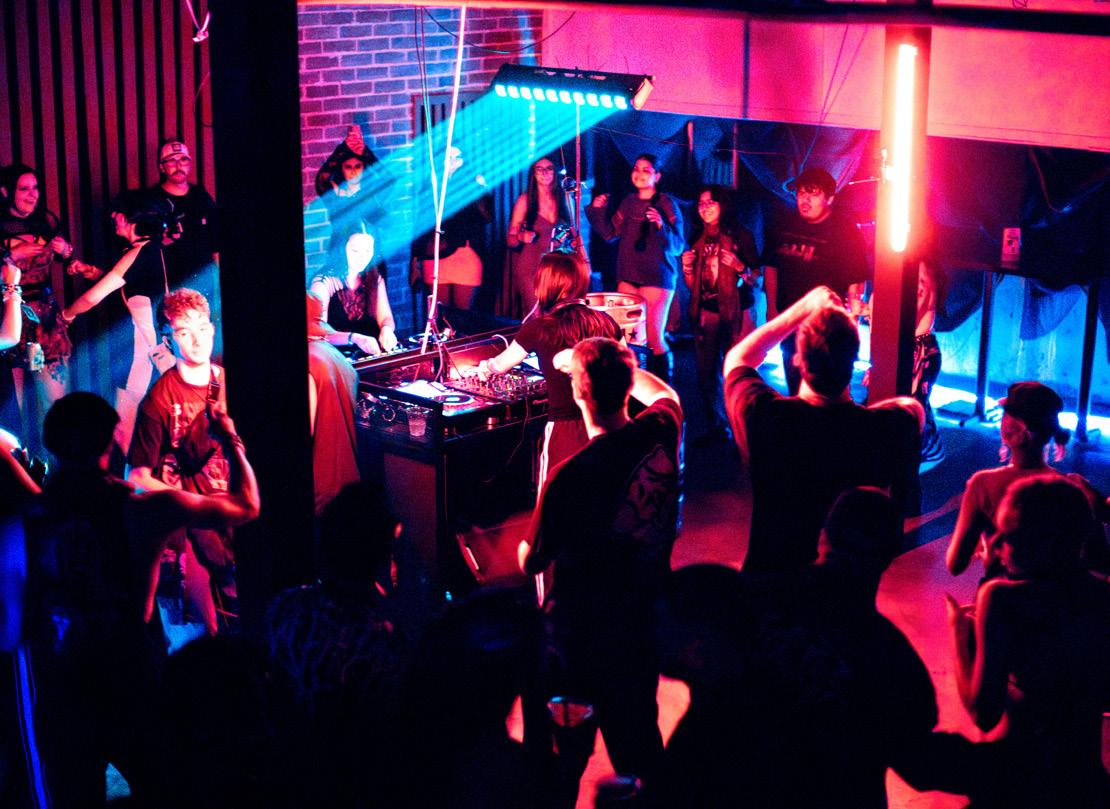
Reno has a history of music venues that don’t follow the traditional bar model. The house-show scene is still going on for punk and metal fans, and there have been some speakeasies in town that required a password or online conversations for entry.
As of earlier this year, a new Reno venue called The Krypt is hosting dance nights and other events.
Izzy Brewer, owner and director, doesn’t give the Krypt address out until someone purchases a ticket. “It’s not necessarily the exclusivity of it, because everyone’s welcome,” she said. “But, it’s like this fun scavenger hunt. I personally loved when (downtown Reno bar/nightclub) Shim’s was operating as a speakeasy. People noticed that we didn’t really have anything like that in Reno.”
Brewer’s show production experience includes booking shows in local venues, stage managing and production for local casino and theater shows, and doing production assistance and show management on regional tours. She is one of the promoters of Belfry, which puts on goth/post-punk DJ and live music events at several venues around town, including Holland Project.
Brewer said she developed The Krypt, for starters, because she wanted to work at shows closer to home instead of being on the road all the time.
“Talking to the new local promoters and everybody in the scene, they were like, ‘We have a lot of holes that need to be filled,’” Brewer said. “So, I said, ‘OK, let’s do that with The Krypt and be really intentional with the space.’”
Brewer said those gaps in the scene include booking opportunities and spaces for younger promoters to learn on the job.
“This is an opportunity to bring new promoters—and promoters that already exist—together to start creating opportunities, but also to provide education and training on how to start elevating their professionalism and work on a level that’s more compatible with the productions they are trying to get,” she said. To help, she offers low rental fees and support with production elements.
So far, most shows at The Krypt have featured electronic music from techno to industrial. But Brewer described the upcoming June 6 show—from Conjured Events, a “witch-owned” event planner—as “fully immersive, more like a theatrical show. They bring in actors; you show up in costume; you’re playing along with the games. Everything is themed.”
As far as live bands go, Brewer said The Krypt has the capacity to host them, but only if they can provide their own equipment— which might be a challenge.
“We’re in a basement, and as somebody who has carried bass amps up and down three-story venues in San Francisco and New York … yeah, I wouldn’t personally want to do that here,” she said.
For more details, visit www.thekryptreno.com.
—Mark Earnest; photo courtesy of Izzy Brewer

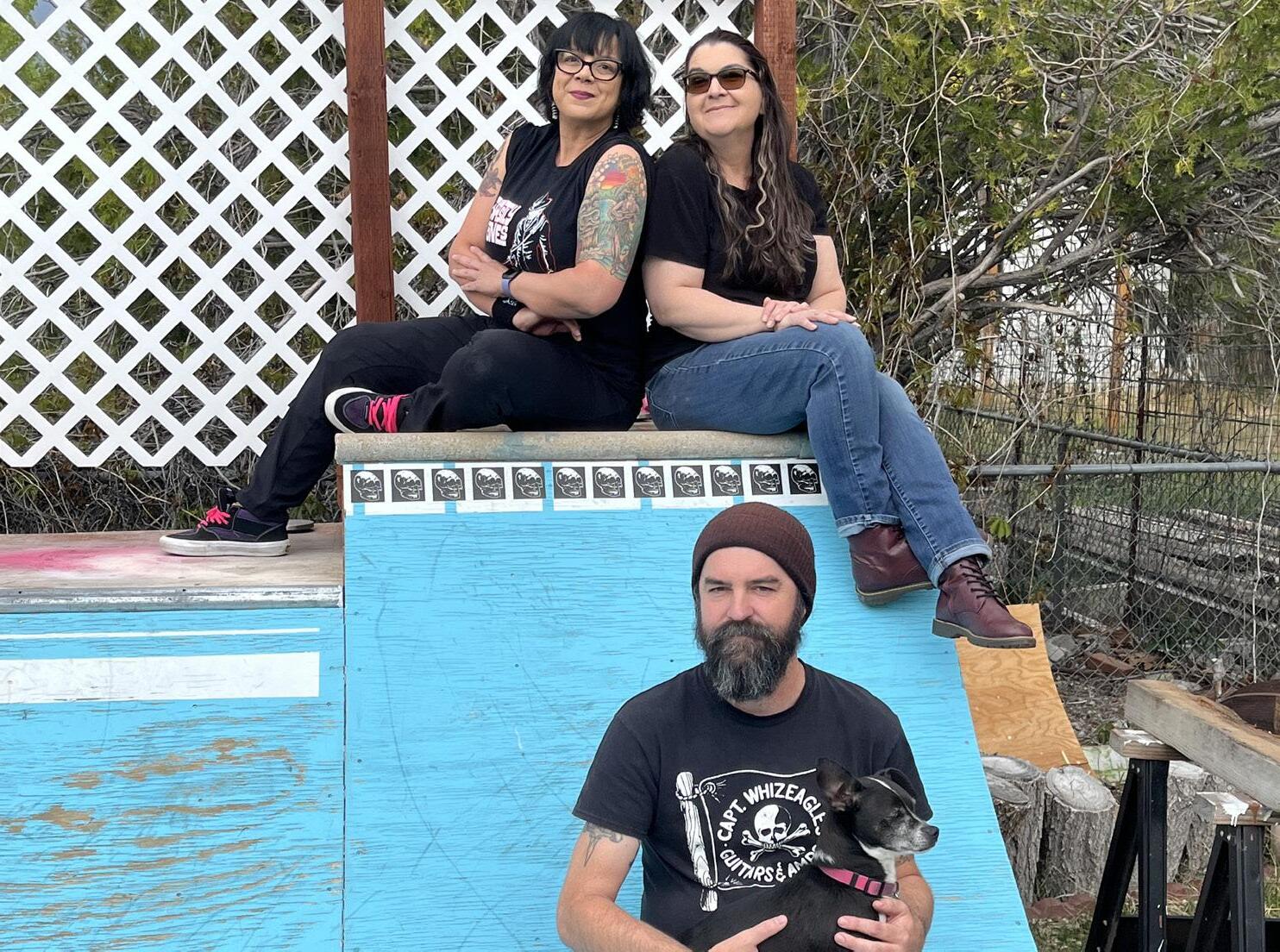
Introducing Nosebone—musicians you may already know, but with a whole new sound; think multifaceted punk with refinement
When you see the new Reno indie-rock band Nosebone, you might get a strong sense of déjà vu.
All three members—Mikie Ramirez on bass and vocals, Penny Notasquare on guitar and vocals, and Scaught Bates on drums— used to be in The Shames, a popular punk band in town that was together for 15 years. But Nosebone is a different prospect from The Shames in many ways. With renewed energy, a change in lyrical direction and some musical curveballs, it truly is a new band with the same three members. Notasquare describes her band this way: “It’s punk discipline with the bad decisions from all the other genres.”
The style nuances between Nosebone and The Shames are apparent when you hear its new material. Songs like “28 Days” and “Brain-Dead” still have roots in punk, but they are more refined and arranged, and their topical lyrics poke through with more urgency. “It’s My Soul” in particular is an urgent song with great quiet-to-loud dynamics, with lyrics such as “we need to trust the women” and “we don’t owe you shit.”
There are also some interesting left turns musically that go beyond punk or indie music. “Officer Zero” is closer to cowpunk with a cowbell part and a jauntier shuffle rhythm, while “Cops in My Head” manages to
sound like early U.K. goth/post-punk and Agent Orange-style surf-punk at the same time.
“We wanted to have something louder and tighter than our old projects,” Notasquare said. “And the chemistry was there, so we just kept going.”
The new songs are fresh—to the point where you can only hear them when the band plays live, although Nosebone wants to release at least a 7-inch single by the end of the year.
Nosebone debuted at the annual Loud at the Lair rock/punk festival in Blairsden, Calif., last October. This was after writing new material for most of 2025 after their work as the backing band in Eddie and the Subtitles ended in December 2024. They had been playing with that group since 2018.
“Eddie and the Subtitles broke up, and we just kind of immediately decided to keep having practice,” Ramirez said. “Then we just started coming up with new songs right away and just started building from that.”
That new music didn’t just feel like a do-over of The Shames, who ended in February 2020.
“To me personally, it feels like a totally different band since we’re actually writing new songs and then playing them,” Bates said.
Added Notasquare: “I think there is more anxiety and more confusion in this existence
Nosebone takes a breather from practice at its own backyard skate ramp. Clockwise from top left: Penny Notasquare, Mikie Ramirez and Scaught Bates. Photo/Mark Earnest
we’re in right now. It seems like the name change is the right thing to do, because nothing is really making sense anymore. It’s kind of more dreadful, wouldn’t you say?”
Bates: “Right, like, a lot of the old Shames songs are about partying and stuff.”
Notasquare: “Yeah, and being naughty.”
Bates: “Yeah, some of these new songs are about life experiences under your belts. More reflection.”
Notasquare: “Or just being out of control— whether that’s internal or external.”
That sounds like more of an existential angst band than a party band.
Notasquare: “Because how can you not have angst right now?”
At the same time, the band members emphasized that the songs aren’t completely about social issues.
“It’s like we can’t pretend we’re not paying attention to all the bullshit out there, but we are also writing about escaping it,” Notasquare said.
The changes in subject matter also reflect the differences in the way the songs are written.
“A lot of the songs in The Shames were written with me and Penny, drinking beers and playing guitars together late into the night or whatever,” Ramirez said. “Now we live separately and write the songs and come to band practice to show the songs to everyone.”
Added Notasquare: “When we collectively arrange the song ideas together, it really brings out a different outcome.”
Ramirez and Notasquare have been playing music together for 21 years, a pretty astonishing feat in local music. They started in a group called The Primes in 2005, which soon evolved into The Shames. Bates joined the group in 2018.
The trio of friends shared some secrets on how they’ve all played together for so long.
“You’ve got to give enough space to the person to be independent themselves and create,” Notasquare said. “While also … it’s like, I depend on (Ramirez’s) magic. When I make a song, I’m like, ‘Yo, listen to this and put on your sauce.’ Like, what can she do to kick this up a notch?”
Added Ramirez: “I think when you make friends with someone and love them for so long and play music with them, it’s just natural. And Scaught’s just, like, a really good friend, and a fucking rad drummer, and we’ve just played music for so long that I want to keep doing that, you know?”
Bates: “It feels really easy with you guys.”
Notasquare: “Yeah, we don’t have to fake it.”
Learn more at instagram.com/nosebonereno.
Co-leader of Wait
Until 8th Reno-Sparks
Brandi Vesco of Sparks is the mom of an 8-year-old and a co-leader of Wait Until 8th Reno-Sparks, a group that encourages families to have kids wait until the end of eighth-grade to start using smartphones. In April, the group hosted a screening of the documentary film Childhood 2.0, which looks at harms linked to social-media use among children—including suicide, mental-health crises and sexual predators—from the points of view of dozens of kids, parents and experts. Learn more at instagram.com/waituntil8th_renosparks.
One thing that stood out to me in the film was parents talking about how completely different it is to raise a child in the social-media age. How has that played out for you as a parent? A big thing is that kids don’t go outside and play all the time like they used to. There are pockets where it is still happening, but it’s rare now … where it used to be—the sky is blue; children are outside playing. It’s been hard. I’ve had to actually
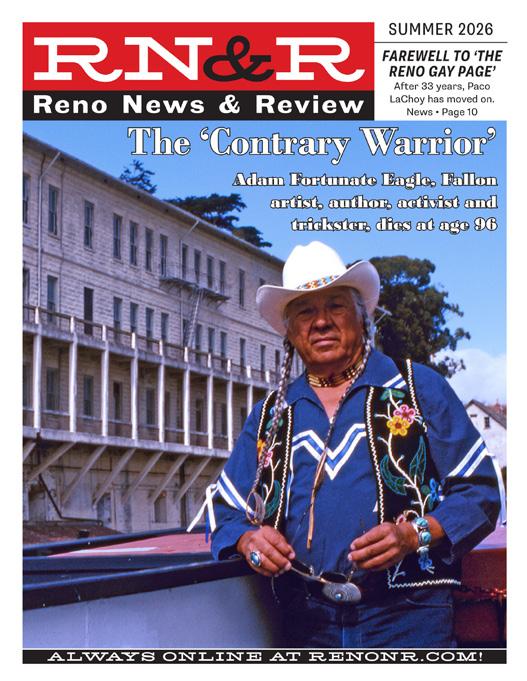
create that atmosphere here on our block, where I go around and say, “Hey, are you willing to let your kids come outside and play without us watching them?”
Are people amenable?
Yeah, they are. But a lot of times, the kids are busy on screens or at first want to go play video games. They’re kind of addicted to it. So, when they’re outside, it’s like, “What do we do?” When I was a kid, you didn’t tell me what to do. I put a backpack on, got on my bike, and I was gone all day. You almost have to teach them, this is how you play. And they start getting better at it. My daughter’s now able to spend, like, four or five hours outside with her friends.
Another thing discussed in the film is how easy it is for sexual predators to access children and teenagers online. What kinds of conversations do you have with parents about that?
I don’t think most parents realize. That’s why we want people to see this film. As a parent, you don’t know, because their world changes really rapidly, and it’s not like you’re looking over their shoulder that entire time. We can’t even grasp it. It’s completely different from our online world, and so most parents are in the dark. They think their kid’s safe because they’re in the bedroom, and they’re not out on the block. It’s the opposite.
The first thing I say (to parents) is that we’re a group of parents who are banding together to say “not yet” to the smartphone together, until at least the end of eighth-grade, to crush that social pressure on kids to have one. Some of them are like, “That ship sailed,” and I’m like, “Well, here are some things you can do if you want to dial it back, if it doesn’t feel good. No. 1, keep it out of their bedroom at night.” … Most parents, I think, are vaguely aware of addiction issues—the things we experience as adults; we can feel our concentration spans diminishing. We can feel ourselves not able to put the phone down. So, I think we know that’s
going on for our kids, too, but we don’t quite understand how much harder it is for them because of where they are developmentally.
How does the pledge work?
Typically, you’d go to www.waituntil8th. org and click “take the pledge,” and you’d enter your child’s school name, school zip code and grade level. Once 10 people from the same school and grade have signed, those parents get an email with a list of all the others in their child’s same grade in school. … They get connected. It creates a community. They can then have each other’s emails and say, “Let’s get together for a Sunday play date.” What I’ve been doing is going to schools with a table and with my volunteers and having them sign up on paper—just making it as easy as possible for people to hear about this.
What else do you want people to consider?
We just saw Meta and YouTube both found guilty for creating products that harm children’s health. Snapchat and TikTok both settled before those cases went to trial. That tells you a lot. We’re now getting definitive proof of stuff we’ve always suspected and seen correlative evidence of. The Adolescent Brain Cognitive Development Study is a massive National Institutes of Health-funded study looking at more than 10,000 kids across the United States. Those results are starting to roll in, and they’re showing direct links between adolescent smartphone use and depression, obesity, sleep deprivation and attention deficits.
Australia banned social media use for children under 16. Is there something that you would like to see happen in the U.S. in terms of legislation of tech for kids?
There’s a long list of countries that are now starting to do this. I don’t see that happening here. These companies make a lot of money off of kids. So, getting them to change this—I would love to see that, but it’s really going to be up to us to take practical steps and give our kids the tools they need, teach them what misinformation is, and teach them, “this is social comparison, and it’s going to make you feel like crap. This is sextortion. If someone comes to you with this, come tell me”—because a lot of kids don’t.

Sextortion is ending in suicide a lot of the time, because we’re in this period of very vulnerable brain development, where the impulsivity is hitting the gas. The porn is extreme and easily accessible. But the biggest scare to me is this is consuming our children’s time and crowding out developmentally critical, real-world experiences. And that’s bad.
America 250 Nevada Program
Lexington, Concord & Nevada: The Militia Tradition and Its Evolution in the Silver State
Emerson Marcus | Historian, Public Affairs Officer, Nevada National Guard
Discover the history of citizen-soldiers in Nevada. SAT. JULY 4 • 1–2 PM
America 250 Nevada Program
Nevada in Literary Fiction of the Iraq & Afghanistan Wars
Caleb S. Cage | Historian, Author
Explore Nevada stories and characters in literary fiction. SAT. JULY 4 • 2:30–3:30 PM
SAT. JULY 11 • 1–2 PM
From Rick’s Resort to a $120 Billion Entertainment Industry…And How Reno Got Left Behind
Buddy Frank | Gaming Historian
Why did Las Vegas become Nevada’s gaming capital?
Finding Nevada Wild: Stories of the Terrain, Culture, & People of the Most Mysterious State in the West
Sydney Martinez | Author, Photographer
Explore stories from Nevada’s hidden corners. SAT. JULY 18 • 1–2 PM
SAT. JULY 18 • 2:30–3:30 PM
Sliding Bones on Historic Smith Creek Playa in Central Nevada
George D. Baumgardner, Ph.D. | Curator of Natural History, Nevada State Museum, Carson City
Uncover the mystery of bones that move in the desert.
SAT. JULY 25 • 1–2 PM
DMV: A Cautionary Tale
M. Christina Schlosser | Retired Branch Manager, DMV
Get a behind-the-scenes look at life inside the DMV.
Nevada’s Participation in Expositions & World’s Fairs
Jean-Guy Tanner Dubé | Historic Preservation Specialist, State Historic Preservation Office
Learn about Nevada’s role on the global stage. SAT. JULY 11 • 2:30–3:30 PM
SAT. JULY 25 • 2:30–3:30 PM Visit NVhistoricalsociety.org/events for more details
Historical Mining in the Military Lands of South-Central Nevada
Joe Tingley | Mining Engineer, Historian, Author
Discover what lies beneath Nevada’s military land.