




Staff
General Manager
Rick Nelson
Editor
Wayne Price
Editorial Assistant
Tina Schweitzer
President Vance McCoy
Midwest Electric Cooperative Corporation
Vice President/Secretary Dan Scheer
Howard Greeley Rural Public Power District
Treasurer Stewart Huneke
Norris Public Power District
Published monthly by the Nebraska Rural Electric Association, 1244 K Street, Box 82048, Lincoln, Nebraska 68501, (402) 475-4988.
Advertising in the Nebraska Magazine does not imply endorsement for products by the Nebraska Rural Electric Association. Correspondence should be sent to Wayne Price, Editor, Nebraska Magazine, Box 82048, Lincoln, NE 68501.
The Nebraska Magazine is printed by the Aradius Group, 4700 F Street, Omaha, NE 68117. Form 3579 should be sent to Nebraska Magazine, Box 82048, Lincoln, NE 68501.
Periodicals postage paid at Lincoln, Neb.
POSTMASTER: send address changes to Nebraska Magazine, 1244 K Street, Box 82048, Lincoln, NE 68501.
Publication numbers are USPS 071-630 and ISSN 30697549.
Subscriber Services: Cost of subscription for consumers of participating member-systems is $2.14 per year (17.8 cents per month), plus periodicals postage paid from equity accruing to the consumer. For nonmembers, a subscription is $10 per year or $20 for three years, plus local and state tax. Single copy, $2.50.

6 ON THE COVER
South of Beatrice, Linden Fields Flower Farm has blossomed into a unique destination where fresh flowers, local products, and community-centered experiences come together to create meaningful connections and lasting memories.
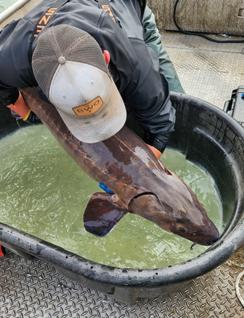
Nebraska biologists made a rare and remarkable discovery this spring when they netted a 70-pound lake sturgeon in the Missouri River, a threatened “living fossil” that had traveled 681 miles upstream since being tagged in Missouri in 2017.
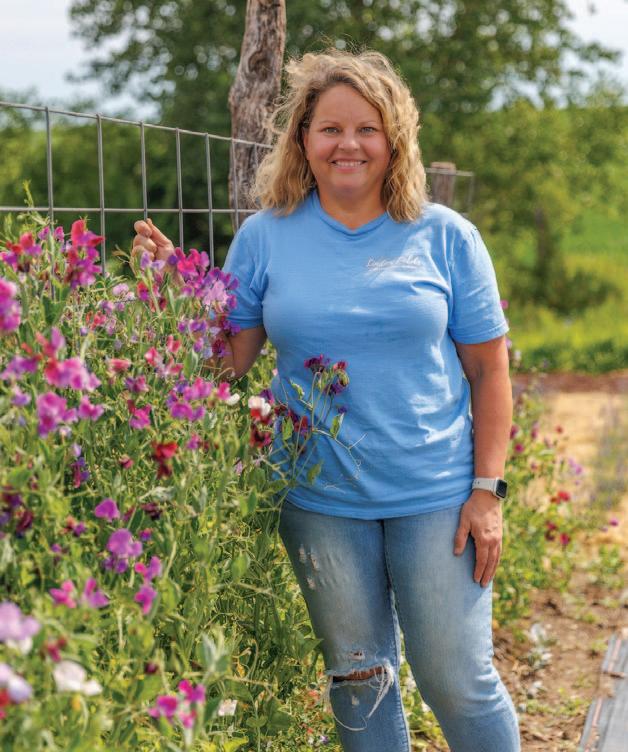
Joleen Wrightsman holds a freshly picked bouquet on her flower farm near Beatrice. See the related article on Page 6. Photograph by Susan Penner

If you are anything like me when you think about electricity you probably do not think about innovation. We flip on the switch and the lights come on. We continue on with our day. But behind the scenes, Nebraska’s public power utilities are working every day to bring new technology and better service to the areas they serve.
From its beginning in the 1930’s, public power in Nebraska has always been about local control and putting customers first. Today, that same commitment is helping public power districts and electric cooperatives lead the way in modern energy solutions.
One of the biggest changes is the growing use of smart meters. These advanced devices provide more accurate readings and help public power districts and electric cooperatives identify outages faster. Instead of waiting for a phone call, crews can often pinpoint problems and respond more quickly. That means the lights come back on sooner and better service for customers by providing access to electric use information via an online app.
Nebraska utilities are also investing in stronger and more reliable electric systems. New equipment and advanced monitoring tools help operators keep electricity flowing safely and efficiently. These improvements may not be visible from the road, but they make a real difference during storms and other challenges.
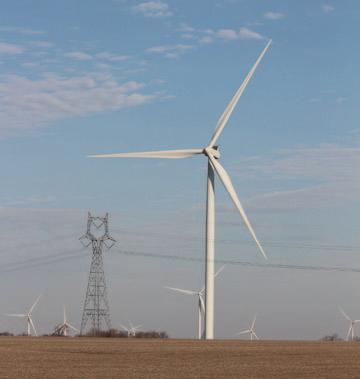
Renewable energy is another area where innovation is making an impact. Wind turbines across Nebraska capture one of the state’s greatest natural resources. Solar projects are expanding as technology becomes more affordable and efficient. Together, these resources help diversify the state’s energy supply.
What makes Nebraska’s approach unique is that innovation is not pursued for its own sake. Public power utilities focus on practical solutions that benefit the people of Nebraska. Every investment is made with reliability, affordability, and local communities in mind.
Visit our website at nebraskamagazine.org
The future of energy is arriving right here at home. Thanks to public power, Nebraska is embracing new technologies while staying true to the values that have powered the state for generations.

Zac Bryant
Zac Bryant is the General Manager of Panhandle Rural Electric Membership Association, headquartered in Alliance, Neb.
Safety is always the top priority from your local utility protecting and informing the public. You have likely heard the message come over the local radio or tv stations. These messages range from looking up when near overhead lines, calling in locates when digging, or staying clear of down lines and poles. These messages are commonly shared to heighten awareness to the public and some tips of what to do if a situation occurs. Safe practices and communicating outages and damage to your local utility helps protect the public, prevent damage, and restore power.
The lineman and field techs start their day with a safety brief “tailgate” to identify hazards and go over the job scope. This is a group collaboration to share ideas, identify the obvious hazards, and those latent hazards. This is a time to identify energy sources, everyone’s task, and truck location. Each employee has extensive training in multiple areas including switching, hot-work, pole top and bucket rescue, first aid, and CPR. Every job includes what could happen and what would be done if there was severe weather, medical emergency, or unplanned event in the job. This is a time to Plan, Prevent, and Prepare.
Office safety is just as important as in the field. The employees constantly review the hazards and plan of where to go in case of severe weather, fires, medical emergencies, etc. The locations of exits, fire extinguishers, first aid kits and AEDs. The employees are trained annually in how to provide care in these situations. These safety briefs are important not only to the staff but to visitors so everyone is aware of the locations and practices. The office uses communication from phones, radios, truck locating to monitor the crews and their locations. This makes everyone accounted for, and to make sure they have returned to their work locations safely. Technology has greatly improved the capabilities to maintain constant communication.
Since electricity came into much of Nebraska in the 1930’s, safety has dramatically improved. Practices and procedures have evolved, training has increased, and accidents and injuries have declined. Your local public power districts and electric cooperatives work together to share their safety success, near misses, and accidents/injuries so as a team we continue to strive to improve and prevent. The customers and your local utility work together today just like they did in the beginning to serve those existing customers and welcome the new. Safety is achieved when everyone works together.
Nebraska is the only state that is an all-public power state, meaning it is owned by the people right here and not by investors. The board members are elected to represent the members. We invest back into the infrastructure to ensure a reliable system. The employees take pride in their work and safety. We support each other in times of storms and restoring power. It is our mission to provide a safe, reliable electrical service at an affordable price to those we serve.
By Susan Penner
What started as a dream rooted in family, flowers, and community has quickly blossomed into something much bigger for Joleen Wrightsman and her family.
In 2024, Joleen, alongside her husband Brian and their family, launched Linden Fields Flower Farm south of Beatrice with a vision of creating more than just a flower farm—they wanted to create an experience.
Today, visitors to Linden Fields can stroll through rows of vibrant blooms, hand-select flowers directly from the field, and create personalized bouquets while enjoying the charm of rural Nebraska. The farm’s popular U-pick experience allows guests to choose between two options: a small-mouth mason jar bouquet for $20 or a wide-mouth mason jar bouquet for $30. Guests are provided with snips, water pitchers, and even guidance from Joleen herself, who enjoys helping customers create beautiful arrangements to take home.
“People love the experience of creating something themselves,” says Wrightsman. “It’s more than flowers—it’s making memories.”
While flowers remain at the heart of Linden Fields, their farm stand has quickly become a destination all its own. Open for approximately a year, the stand features not only fresh flowers but also a growing collection of locally sourced products including farm-fresh eggs, honey products, tallow items, and sourdough products—one of

today’s most sought-after homemade staples. The farm stand also features other locally made and seasonal items, creating a true farm-to-community experience. They also added u-pick vegetables and herbs this year near the farm stand.
Supporting local remains central to the Wrightsman’s mission. The farm stand currently features products from approximately ten vendors, creating opportunities for local makers and producers to connect with customers.
Linden Fields’ flowers are also making their way far beyond the farm. Joleen supplies fresh blooms to florists throughout southeast Nebraska, including Beatrice, Fairbury, Tecumseh, and Lincoln, helping bring locally grown flowers into communities across the region.

Left: Sweet peas grown by Joleen offer a sweet, fragrant scent to any bouquet.
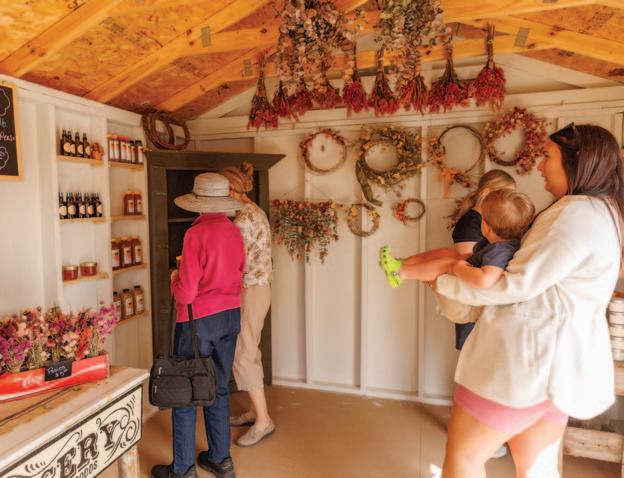
Above: Visitors gather in the farm stand to check out the many varieties of items made by local vendors that are also available for purchase.
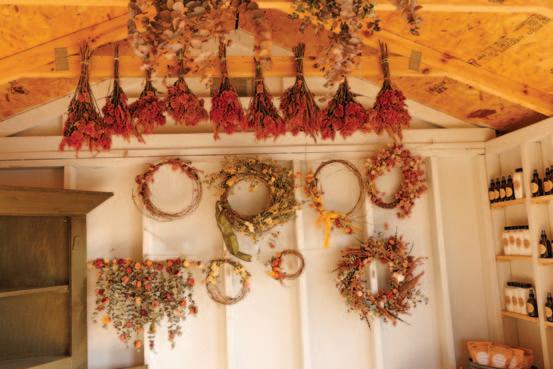
Top right: Flowers that aren’t picked are dried by Joleen and used in a variety of decorations and wreaths that can be purchased in the farm stand.
Flowers from big-box stores are often treated with toxic chemicals to keep pests away and extend shelf life. These chemicals are not just harmful to the environment, but they also linger on the flowers.
Though customers come from many backgrounds, one thing remains consistent: women of all ages have embraced the experience.
“There’s something special about flowers,” Wrightsman says. “They bring people together.” She has customers who will stop at the field early on a Saturday morning, put in their ear buds to play music, and will head to the field for some quiet reflection time.
While the public is welcome at Linden Fields, the farm has also built a growing community around its

experiences. Customers can join a VIP group for early access to ticket sales, announcements, and special events simply by giving their email address. Throughout the season, the farm hosts gatherings designed to create connection and community. A Mother’s Day market brought visitors together in May, while future plans include yoga sessions among the flowers, sound bath experiences in the field, and even a midweek Bible study hosted by Joleen’s church. The flower farm welcomes visitors to enjoy the beauty of the fields, offering opportunities to slow down, connect with nature, and create lasting memories. The farm is located at 1760 W. Linden Road in Beatrice and shares updates, events, and seasonal offerings through its website (Lindenfields.net) and Facebook page (Linden Fields).
For Joleen, the busy season begins around mid-July when the fields begin to truly come alive. While customers often see the beauty, they may not see the months of preparation behind it.
Every flower begins with seed trays carefully nurtured during winter and early spring. Joleen starts almost all her flowers from seed before spending countless hours hand planting each row with help from family and friends.
“Beginning the season and ending the season are

Continued on Page 8

probably the hardest parts,” she says. “Somewhere in the middle is when it becomes magical.”
Among all the blooms, dahlias remain one of the most labor-intensive flowers to grow—beautiful but demanding. When asked what her favorite bloom is, Joleen said it would have to be the Lisianthus, a rose like bloom which is beautiful in cut arrangements, bridal bouquets and has a vase life of about 5-7 days.
Before launching Linden Fields, Joleen spent countless hours researching, learning, and visiting other flower farms across Nebraska. Even now, she continues learning while balancing another reality: she still works full-time outside of the flower farm.
Yet despite the hard work, the long days, and the unpredictable nature of farming, the flower fields have become something much deeper.
For Joleen and Brian, now empty nesters who both grew up with strong work ethics and never had much interest in traveling, the farm has become their destination.
“This is what we love,” she says.
She believes fresh flowers offer something customers simply cannot find elsewhere. Fresh-cut local flowers, she believes, provide something different— something more natural, more vibrant, and more connected to the season.
The best time to pick? Early mornings and evenings, when temperatures are cooler and flowers are at their freshest.
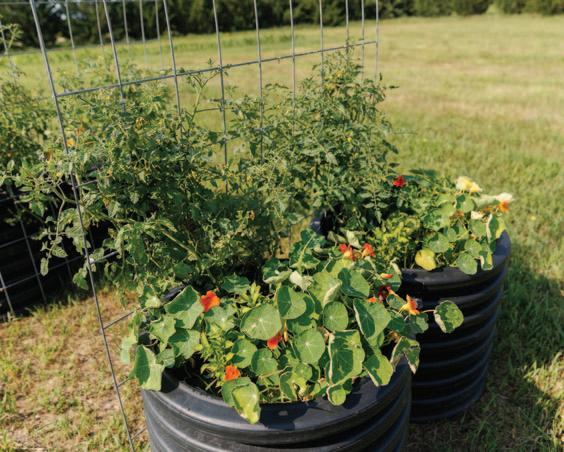
Above: Raised beds were added to the farm in 2026 offering visitors to hand pick their own herbs and vegetables near the farm stand.
Below: Dried flowers from the farm are just a few of the many things you can find inside the farm stand.
pieces. These one-of-a-kind creations can be found in the farm stand alongside seasonal offerings, giving visitors the opportunity to take home something beautiful long after the flowers in the field have faded.
Beyond fresh-cut blooms, Joleen also preserves the beauty of the growing season by drying many of her flowers to create handcrafted wreaths, bouquets, and floral décor
As flowers begin winding down, Linden Fields hosts a popular “Sweep the Fields” event, inviting customers back one last time to gather whatever blooms remain for a freewill offering. Participants are entered into a drawing for a free flower pass for the following season, creating excitement while giving customers one final opportunity to enjoy the fields before winter returns.
While Linden Fields may still be young, the future is already taking shape. The flower farm is more than a business venture—it is a place where Joleen feels most connected, most peaceful, and most herself. Joleen often says she isn't just growing flowers—she's growing experiences. A dream of hers would be to add a high tunnel to help extend the season and a pavilion space tucked near the blooms where guests can gather for classes, workshops, celebrations, and simple moments together among the flowers. Because at Linden Fields, the dream has always been about creating something people feel, not just something they see.
As Linden Fields continues to grow, one thing is certain: what started as seeds planted in 2024 is already blooming into something much bigger.
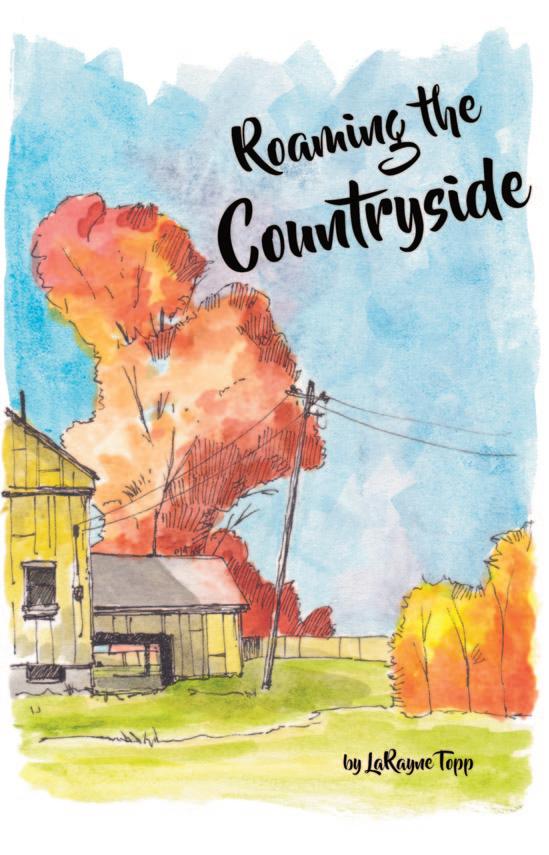
Invented in Persia, giant wind-catching contraptions—with their lofty frames and cloth-covered sails—blew across Eurasia. They whiffed to the Netherlands, wafted to the United Kingdom, and puffed into Northern Europe. Eventually, the shorter, sturdier cousins of these earliest windmills breezed in to North America, some of them ending up in Nebraska. These American-bred inventions made living possible on land once referred to as a Great American Desert. The Native Americans had figured out years before how to make people and even crops thrive in this wilderness, plants like the three sisters: squash and climbing pole beans on trellises of stalks bearing colorful ears of Indian corn.
But to white settlers the land seemed perfectly unfit for cultivation or even civilization until windmills began to dot the landscape. These tall structures soon became a staple on the plains and one of the homesteader’s most prized property, right alongside his spouse, especially if he had wooed a sturdy one and one that could cook.
With their comforting creaking sound, the tin or wooden sails of Nebraska’s windmills encouraged their drive shafts to pump-pump, pump-pump. The resulting fresh water satisfied the thirst of people, cattle and milk cows, quenched the parched cravings of pigs and chickens, saturated gardens, filled washtubs and scrubbed the knees and elbows of dirty, little kids.
An entire county could claim bragging rights if a steady supply of water was pumping through the veins of farmers, ranchers and railroad engines, providing there was an accompanying supply of wind. Windmill blades purred like a contented momma cat right up until the 1930s when rural electrification made kerosene lanterns, wood stoves and hand pumps obsolete.
While the work of these pumpers resulted in mechanical energy, their descendants, today’s giant turbines, produce electrical energy. Rows of them mosey through Nebraska landscapes, like Deer Creek Valley in Northeast Nebraska. Once upon a time in the early 1880s, Deer Creek was named for an abundance of deer horns, scattered over the prairie as effortlessly as breezes strewed puffs of silky milkweed down.
As poet Carl Sandburg might tell you, sometimes fog creeps in to Deer Creek Valley on little cat feet, sitting on silent haunches and looking at rows of wind turbines, cut off at the neck by soft clouds of haze such that the upper blades disappear. The high-waisted banks of Deer Creek meander through the unsuspecting feet of the towers, each one’s aircraft detection lights peeking faintly through the mist, reminiscent of a cat’s eyes shining in the dark.
Even though the fog might hide them, these blades are busy nonetheless, transforming placid breezes into electrical force. The longer the blade and taller the tower, the more wind can be captured from the mewed-up area surrounding it, and the more electricity it can generate.
Early on, even dreamers were uncertain about the heights that electrification could take. After all, modernization sometimes sneaks in on little cat feet and surprises us with its inventiveness, all the while other things—meandering creeks, milkweed down, wild deer, and cats’ eyes—remain the same. We are as comfortable in their familiarity as we are in our own skin, or in the silent fog creeping into Nebraska valleys.
As sure as the morning sun.
As welcome as a rain-filled cloud on a July day.
And as constant as a Nebraska breeze.
This is LaRayne Topp, just roaming the countryside.
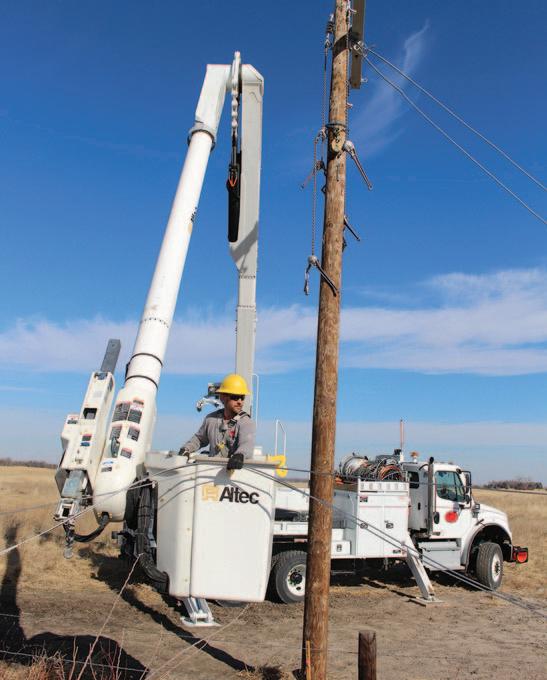
While most electric utilities are not regulated by NERC, the organization’s authority over the bulk power system is critical to maintaining reliability in every part of the country, including rural areas.
The country’s electric grid with its hundreds of thousands of miles of high-voltage powerlines is often described as a bowl of spaghetti. Yet 99.9% of the time when you flick a switch, the lights come on.
So, who is the bulk power system’s chief detangler?
That would be the North American Electric Reliability Corporation, the official watchdog of the North American bulk power system. The international nonprofit known as NERC sets mandatory reliability standards for all users, owners and operators of the electric transmission grid.
To maintain reliability, NERC oversees and evaluates grid conditions with support from six regional reliability organizations that serve as its on-the-ground partners in identifying potential problem areas. Each summer and winter, NERC releases seasonal grid assessments that evaluate whether electricity supply is sufficient to meet expected demand and highlight regions at risk of shortfalls.
These periodic reports analyze conditions that can increase demand, such as heat waves and severe cold, as well as factors that can constrain generation, including fuel or equipment shortages. They also include recommendations to address current risks and help prevent future problems. When unforeseen threats emerge, NERC issues special assessments as needed.
Every year the organization also provides a long-term grid assessment looking ahead 10 years at what innovations or circumstances may impact the reliability of our interconnected electric energy transmission network.
Providing the electric power industry with timely insight into grid reliability, potential power shortfalls and strategies to address them is essential to keeping the lights on.
But wait, there’s more.
NERC holds workshops, technical conferences and trains industry personnel on how to maintain a secure grid and audits owners and operators of the bulk power system to ensure they meet all reliability standards.
NERC also operates the 24/7 Electricity Information Sharing and Analysis Center (E-ISAC) that provides the power industry with the latest information on cyber threats, trends and possible solutions with alerts and advisories. E-ISAC develops and executes GridEx, the largest cyber and physical grid security exercise in North America.
Overall, NERC has come a long way from its humble

beginning as an industry-led, voluntary grid watchdog. The big Northeast blackout of 1965 that impacted 30 million people led electric utilities to set up the entity to better coordinate grid dynamics.
Today, NERC is the nation’s Electric Reliability Organization that oversees the operation and planning of the grid throughout North America. Empowered by the Energy Policy Act of 2005, NERC develops mandatory, enforceable reliability standards backed by the Federal Energy Regulatory Commission.
Utilities like Nebraska’s rural electric utilities, for the most part, are not regulated by NERC. State agencies oversee the distribution power lines that deliver electricity to your home and surrounding communities. But NERC’s authority over the bulk power system is critical to maintaining reliability in every part of the country,
including the most rural areas.
Public power districts and electric cooperatives that participate in NERC activities advocate for regulations that enable utilities to plan, maintain and operate a reliable grid.
So how does NERC impact you? NERC helps ensure the electric grid remains reliable, secure and resilient for the millions of people who depend on it every day. By developing and enforcing reliability standards, monitoring the bulk power system and identifying emerging risks, NERC plays a critical role in supporting the safe delivery of electricity across North America.
For rural electric communities, the work that NERC conducts means greater confidence that homes, schools, farms and businesses will have reliable power around the clock.
By Cory Fuehrer
Andreas Stihl became known as “The Father of the Modern Chainsaw” when he patented and began production of his first electric-powered unit in 1926. While advertised as portable, the saw weighed a whopping 116 pounds. Surprisingly, the first gas-powered chainsaw was not marketed until the following year by Emil Lerp. It weighed 125 pounds. It was not until the end of World War II that all chainsaws had to be carried and used by two people.
Finally, in 1950, the first one-person chainsaw became commercially available. Although these saws were initially gas-powered, Stihl began producing corded electric models in the late 1960s. Due to their limited power range, need for an outlet nearby and safety risk associated with cutting their power cord, they were not very popular. But by the late 2010s, battery technology advanced far enough to place cordless electric chainsaws ahead of gas-powered saws in many ways. Today, we can consider these advantages:
Fueling – Simply slide the battery into the unit. This eliminates the need to mix gasoline with two-stroke oil, which often leads to unintended spill. Because cordless chainsaws do not use a gasoline mixture, you never have to worry about old fuel gumming up or fouling a carburetor during long storage periods. To refuel a cordless unit, recharge the battery and re-insert it into the saw.
Less maintenance –
Ask your local utility about rebate incentives on electric equipment.
Starting – Have you ever grown frustrated trying to start a stubborn gas-powered saw by pumping the primer bulb, flicking the choke and pulling the cord again with no results? You will find that a cordless electric chainsaw starts the second you pull the throttle trigger.
Less vibration –
Electric motors used in cordless chainsaws generate significantly less vibration than combustion engines used in gas-powered saws, which reduces the amount of hand and arm fatigue created during extended cutting sessions. There are no spark plugs, air filters, or carburetors to clean and replace on a cordless electric chainsaw. For smooth operation, you only need to keep the chain sharp and add chain oil when the reservoir runs low.
Reduced noise – Cordless electric chainsaws operate significantly quieter than gas engines by averaging 80 to 95 decibels compared to 100 to 115 decibels for gas-powered saws. Several cordless models are rated at 70 decibels or less, which is comparable to the average faceto-face conversation.
Lightweight – Though cordless electric chainsaws have the added weight of a rechargeable battery. The absence of a heavy engine block and a full gas tank makes them lighter than their gaspowered counterparts.

















Fisheries biologists for the Nebraska Game and Parks Commission were collecting paddlefish for a study this spring when a large and rare fish for Nebraska showed up in the net.
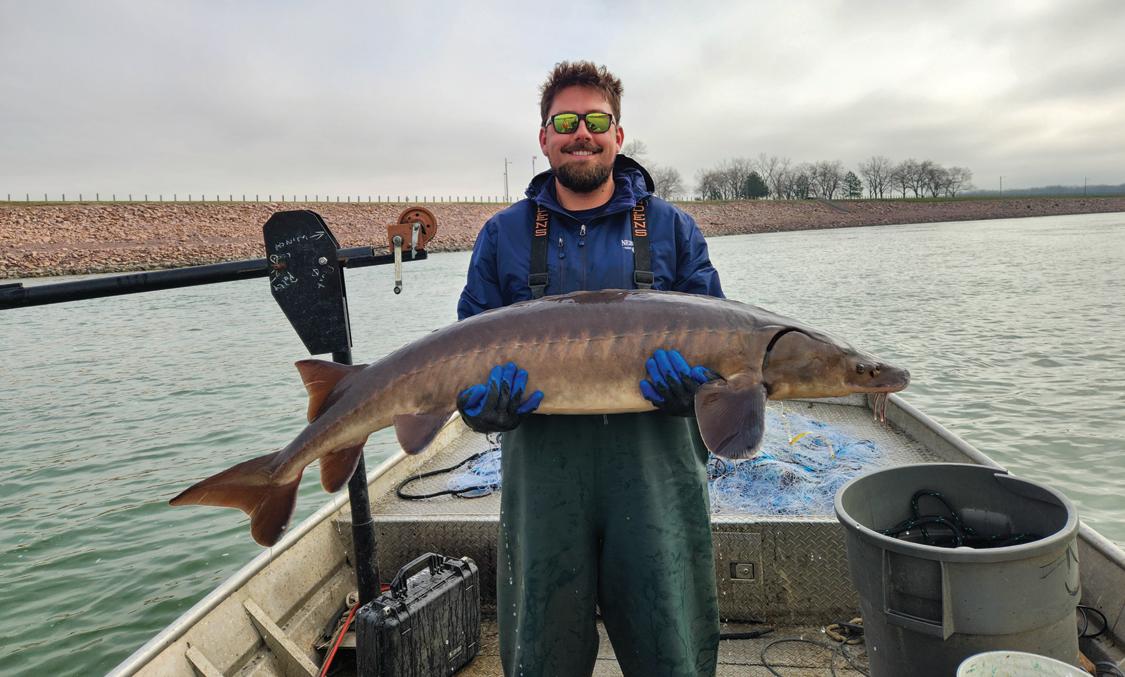
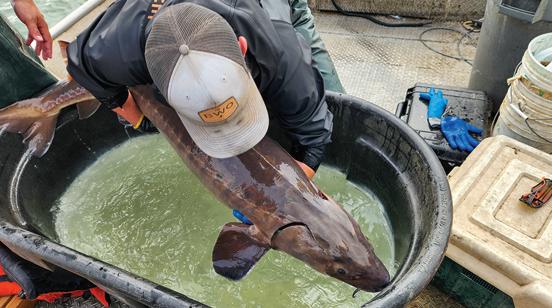
A 70-pound lake sturgeon was pulled from the Missouri River at Gavins Point Dam on April 14.
Nebraska biologists made a rare and remarkable discovery this spring when they netted a 70-pound lake sturgeon in the Missouri River, a threatened “living fossil” that had traveled 681 miles upstream since being tagged in Missouri in 2017.
Blake Logan and his fellow Missouri River Program biologists pulled in the net with the fish, which is listed as threatened in Nebraska. They photographed it, weighed it, and measured it at 59.6 inches in length.
“Our sampling crews in the Missouri River Program handle thousands of fish each year from March through November but rarely see lake sturgeon,” Logan said. “I would say we catch one individual every other year.”
Before this sturgeon was released, it was found to have been fitted with a PIT (Passive Integrated Transponder) tag, a small, cylindrical tag used to identify and track individual animals.
Biologists with the Missouri Department of Conservation had captured and tagged the fish at the Missouri River's confluence with the Osage River in 2017. At that time, the sturgeon measured 47 inches in length and weighed 29 pounds.

From where it was captured in the Osage River, to where it was netted at Gavins Point Dam, the fish would have swam 681 miles upstream.
In addition to studying paddlefish, the Missouri River Program samples other species, including sturgeon.
Far left: Blake Logan, a fisheries biologist with the Nebraska Game and Parks Commission’s Missouri River Program, holds a rare lake sturgeon after it was captured from the Missouri River at Gavins Point Dam.
Below: Tanner Kerner, a fisheries biologist with the Nebraska Game and Parks Commission’s Missouri River Program, holds a rare lake sturgeon in a tub of water after it was captured from the Missouri River at Gavins Point Dam.
Photographs provided by Nebraska Game and Parks Commission
In Nebraska, the lake sturgeon and the endangered pallid sturgeon are illegal to harvest and possess. If caught by an angler, they should be immediately released into the water unharmed. The only sturgeon that is legal to harvest in the state is the shovelnose.
“We’ve been extensively sampling for sturgeon species since 2002, when we started as a partner under the U.S. Army Corps of Engineers’ funded sturgeon monitoring projects,” Missouri River Program Manager Kirk Steffensen said.
“Lake sturgeon have always been a rare capture in Nebraska, and the few we’ve sampled were never the size that Blake sampled,” he said. “We capture far fewer lake sturgeon compared to pallid sturgeon, and shovelnose sturgeon are by far the most common.”
As a species, sturgeon have been around for more than 150 million years and existed during the Jurassic Era, when dinosaurs roamed the earth. These fish are considered living fossils, having changed little from their ancestors.
Lake sturgeon were reportedly more common in the Missouri River before the 1900s but were nearly or completely extirpated due to overharvesting, Logan said.
In Missouri, where the lake sturgeon is listed as endangered, the MDC has been working for several decades to reintroduce fish to the Mississippi and Missouri river systems through hatchery spawning and stocking. It also has documented natural spawning but is unsure if the young are surviving.
“Presumably, all lake sturgeon in Nebraska are progeny of the Missouri Department of Conservation's lake sturgeon recovery program,” Logan said.
They grow to be much larger in other areas of the country, too. For example, the Wisconsin Department of Natural Resources in 2012 tagged and released a 240pound lake sturgeon that measured 87.5 inches.
Lake sturgeon often live to be 30-50 years old, with some individuals approaching 100 years. Logan estimated the fish the crew netted was at least 20 years old.
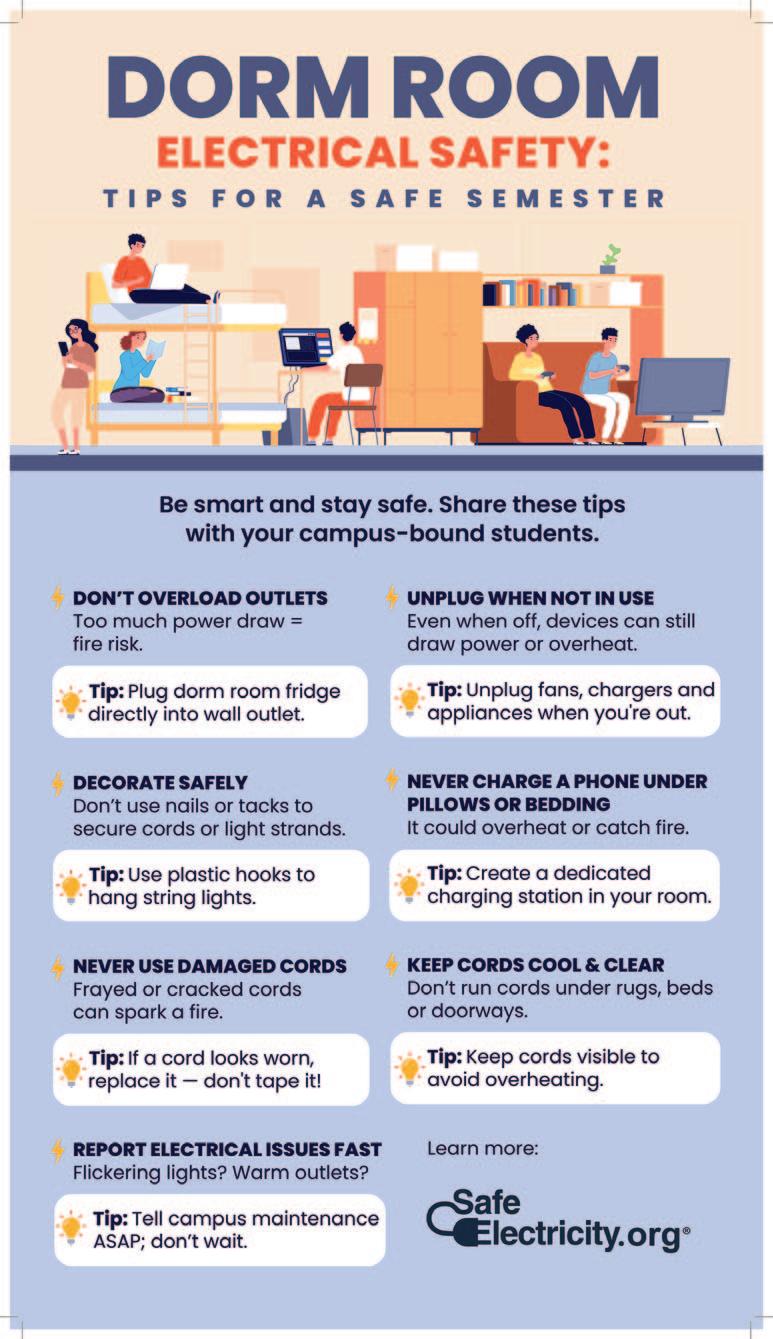
As students head back to school, e-bikes and escooters are becoming almost as common as backpacks. They offer a fast, convenient way to get to class, work and activities. While these devices provide freedom and flexibility, they also come with important safety concerns, especially when it comes to battery use.
Most e-bikes and e-scooters are powered by lithiumion batteries, the same type found in smartphones and laptops. These batteries are generally safe, but improper charging, storage or disposal can increase the risk of overheating and fire.
Safe charging habits are one of the best ways to prevent battery fires. Always use the charger that came with your device. Chargers designed for other products may damage the battery or cause overheating. Charge batteries on a flat, dry surface away from anything that could catch fire, such as bedding, paper or clothing. Plug chargers directly into a wall outlet rather than using extension cords or power strips. Once the battery is fully charged, unplug it.
Proper storage also matters. Batteries should be kept at room temperature whenever possible. Avoid leaving an e-bike, e-scooter or battery in direct sunlight or inside a hot vehicle. Heat can damage battery cells and increase fire risk. Store batteries away from flammable materials and in a safe location.

It is also important to recognize warning signs of battery trouble. Stop using a battery immediately if you notice unusual odors, leaking, smoking, strange noises, swelling, discoloration or excessive heat. If you identify a failing or damaged lithium battery stop using it immediately and do not attempt to charge it.
Never throw lithium-ion batteries in the trash. Damaged or used batteries should be taken to a certified recycling center for safe disposal.
Smart battery habits can prevent fires and help keep students safe all school year long.
Source: National Fire Protection Association

by Miranda Boutelle
Everybody wants a comfortable home. Did you know energy efficiency upgrades not only help you save energy, but can make your home more comfortable, too? If you find yourself continually returning to the thermostat on cold winter days or unable to find relief from heat on summer days, these are signs your home needs an efficiency upgrade.

No matter the home, energy efficiency upgrades often start with the same basic principle: Keep outside air from coming inside and keep conditioned inside air from leaking out. Insulation, air sealing, duct sealing and heating, ventilation and air conditioning upgrades can dramatically improve the comfort of your home.
A fully insulated home, including attic, walls and floor, is more comfortable. It’s like a blanket for your home. Air sealing is a lesser-known efficiency upgrade that keeps air from entering and exiting the home through cracks and gaps. Some air sealing can be done from inside the home, such as using expanding foam around plumbing pipes and drains under sinks, adding gaskets to outlets on exterior walls, caulking around windows or weatherstripping around doors.
Attics and crawl spaces offer additional opportunities to reduce air leakage and increase comfort. In the attic, sealing gaps around top plates, open soffit areas, cove ceilings and balloon framing can help keep conditioned air where it belongs. In the basement or crawl space, seal around plumbing pipes and drains, vents and electrical wires. If you need help, contact a local contractor.
As a self-proclaimed energy geek, you probably aren’t surprised that my first move when my husband and I bought our first home years ago was to air seal and insulate. We sealed and insulated the attic, walls and rim joists in the basement. The difference in comfort was instant. Our house felt cozier and much more comfortable. The temperature swings from the furnace
cycling on and off were dramatically reduced. The home felt warmer in the winter and cooler in the summer.
Another benefit from insulation was a surprising reduction in noise from outside. We lived about 15 minutes away from the airport and close to a busy road. When the windows and doors were closed, we could no longer hear the airplanes, and the traffic noise was almost unnoticeable.
Duct sealing can also improve the comfort of your home. Your ductwork delivers heated or cooled air in a forced-air HVAC system. If there are disconnections or leaks in the ducts, the air you paid to heat or cool may not end up where you want it. Disconnects and leaks can cause hot or cold spots in the home. An HVAC professional can inspect or test your ducts to make sure they are connected and sealed properly.
Air sealing and duct sealing can also improve the air quality in your home. Air leakage between the conditioned area of the home and the attic or crawl space can introduce dust, pollen, mold or other allergens you don’t want to breathe. Reducing air leakage can reduce the chance of these things circulating throughout your home.
Upgrading to a heat pump can also boost comfort and efficiency. Heat pump technology is often about three times as efficient as electric resistance heat because it uses refrigerant to move heat instead of creating it. If you’re upgrading from electric or gas heat, a heat pump can efficiently heat and cool your home, making it comfortable year-round.
If you already have a heat pump or any forced-air HVAC system, annual maintenance and regularly changing your filter maximizes system operation and comfort.
Consider improving your home’s comfort by completing these energy efficiency upgrades. Your family––and energy bills––will thank you.
By Larry Oetken

Copper theft continues to pose a serious threat to homes, businesses and electric utilities, creating costly damage and dangerous safety hazards. Thieves often target copper wiring, air conditioning units, construction sites, farm equipment and utility infrastructure because copper remains valuable on the resale market.
Utilities across the country are taking stronger measures to prevent theft. Many have added surveillance cameras, motion sensors and warning signs around substations and other electrical facilities. Increased law enforcement patrols, along with tougher penalties and stricter rules for scrap metal transactions, are also helping reduce theft.
Consumers can take important steps to protect their property as well. Secure vacant homes and construction sites, and keep scrap metal stored in locked areas. External equipment, such as air conditioning units, should be enclosed or otherwise protected from easy access. Some property owners are also choosing copperwelded wiring as a less attractive alternative to pure copper.
Staying alert is one of the most effective ways to prevent theft. Pay attention to unusual activity in your neighborhood and report suspicious behavior to local authorities. If you plan to be away for an extended period, ask a trusted neighbor to watch your property. Security cameras can also serve as both a deterrent and a valuable tool for identifying suspects.

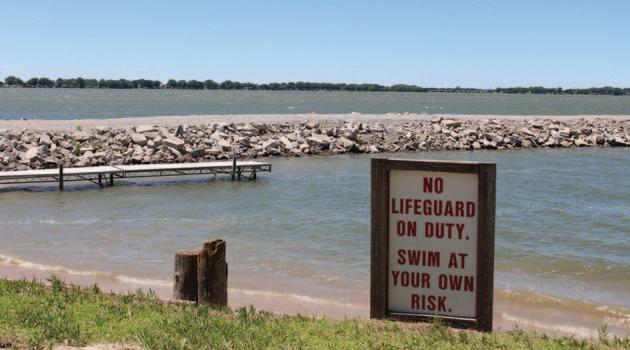
Greg Medo never expected a summer job on the water would shape the rest of his life. Yet more than three decades after opening a restaurant at Johnson Lake, he is still greeting customers, preparing meals, repairing buildings, and watching the sun set over the water that first drew him there as a young boy.
Built in the early 1940s, the restaurant carries a long history. The date "1944" is still visible in the concrete, a reminder of generations who have gathered there. Medo can recall three previous owners, but the resort has become closely tied to his own family since he purchased it in 1995.
Growing up in Kearney, Medo spent summers camping and boating at Johnson Lake with his family. Friends owned cabins nearby, making the lake a familiar getaway. While attending the University of Nebraska at Kearney and studying recreation leadership, he worked in restaurant kitchens, construction, and plumbing. After a successful crab fishing season in Alaska with his best friend, the pair returned home with enough money to help purchase the restaurant alongside Medo's father.
The business has changed dramatically over the years. Originally, it included a grocery store stocked with bait and tackle. In 1996, Medo removed the store shelves and built a full-service bar. As restaurant business continued to grow, more retail space became dining space. Today, the restaurant seats about 80 guests.
Medo still wears many hats. On any given day, he may be cooking in the kitchen, tending bar, fixing a leaky roof, or building a new deck. He oversees about 15 employees during the busy season while keeping the restaurant open year-round.
Guests return for favorites like handmade pizzas, nightly Flat Iron and Ribeye steaks, and

.


the popular prime rib served on Friday and Saturday evenings. For Medo, however, the greatest reward is simpler.
"I like serving the people from the lake and the area," he said.
"I don't get to use the lake much, but I like seeing it every day."
His wife, Michelle, and their daughter, Madison, remain part of the family business, helping ensure the welcoming tradition continues for years to come.
Medo’s Resort is served electrically by Dawson Public Power District.

4 medium sweet potatoes
2 tablespoons light or regular mayonnaise
2 tablespoons plain, nonfat Greek yogurt or light mayonnaise
1 lime, juice only
2 green onions, sliced
1/3 cup chopped cilantro
1/3 cup fresh shredded Parmesan or Cotija cheese
1 tablespoon butter
2 ears fresh corn on the cob, husked, corn removed from stalk or about 1 1/2 cups frozen or canned corn
1 jalapeno, seeds and pith discarded, minced
1 teaspoon minced garlic
1/4 teaspoon chili powder
1/4 teaspoon smoked paprika
1/4 teaspoon salt
To cook sweet potatoes: Use fork to poke holes and place on microwave-safe plate. Microwave potatoes 6-9 minutes, depending on size, until tender. Set aside. In medium mixing bowl, mix mayonnaise, Greek yogurt and lime juice until well combined. Add green onions, cilantro and Parmesan; set aside.
Heat large skillet over medium heat. Add butter and melt. Add corn then cook 2 minutes.
Add jalapeno to skillet with corn, stir and cook 2 minutes.
Add garlic, chili powder, smoked paprika and salt. Stir and cook 1-2 minutes, until corn starts to lightly brown.
Remove from heat. Add skillet ingredients to bowl with mayo-yogurt mixture. Stir until well combined.
Slice cooked sweet potatoes open and stuff with corn filling.
2 lbs. ground sausage
8 oz softened cream cheese
Diced onion
1 small can diced jalapenos or 1/2 cup fresh jalapenos 12 well beaten eggs (a splash of milk and salt & pepper to taste) 1 cup shredded cheese
Preheat oven to 350. Brown sausage and drain. Press into bottom of greased 9 x 13 pan. Break cream cheese into pieces and sprinkle over sausage. Sprinkle with onions and jalapenos. Pour eggs over sausage mixture. Top with shredded cheese, bake for 30 minutes or until eggs are set. **Optional-Break a tube of refrigerated biscuits into pieces and sprinkle on mix BEFORE adding the egg mixture.
2 cups cooked chicken, cubed
2 cans Cream of Chicken soup
2 cans Rotel tomatoes (mild) or your preference
1 medium onion
1 medium green pepper
3-4 large flour or corn tortillas or 8-10 small tortillas, cut into bite size pieces
2 Tablespoons margarine
2 cups cheddar cheese or fiesta/Mexican cheese
Sauté onion and green pepper in margarine. Mix all ingredients in crock pot, add onion and pepper. Cook on low 3-4 hours, add cheese last 30 minutes. You can also make in oven, bake 350 degree, 30 minutes.
1 can tomato soup
1 cup canola oil
1 cup white vinegar
1 cup sugar
1 teaspoon dry mustard
1 teaspoon celery seed
1 teaspoon salt
1 teaspoon pepper 1/4 teaspoon garlic salt
We have discovered that we like it better when we decrease the white vinegar, oil and sugar to 1/2 cup each. My family likes this version better than the Nebraska-made brand name you buy in the store.














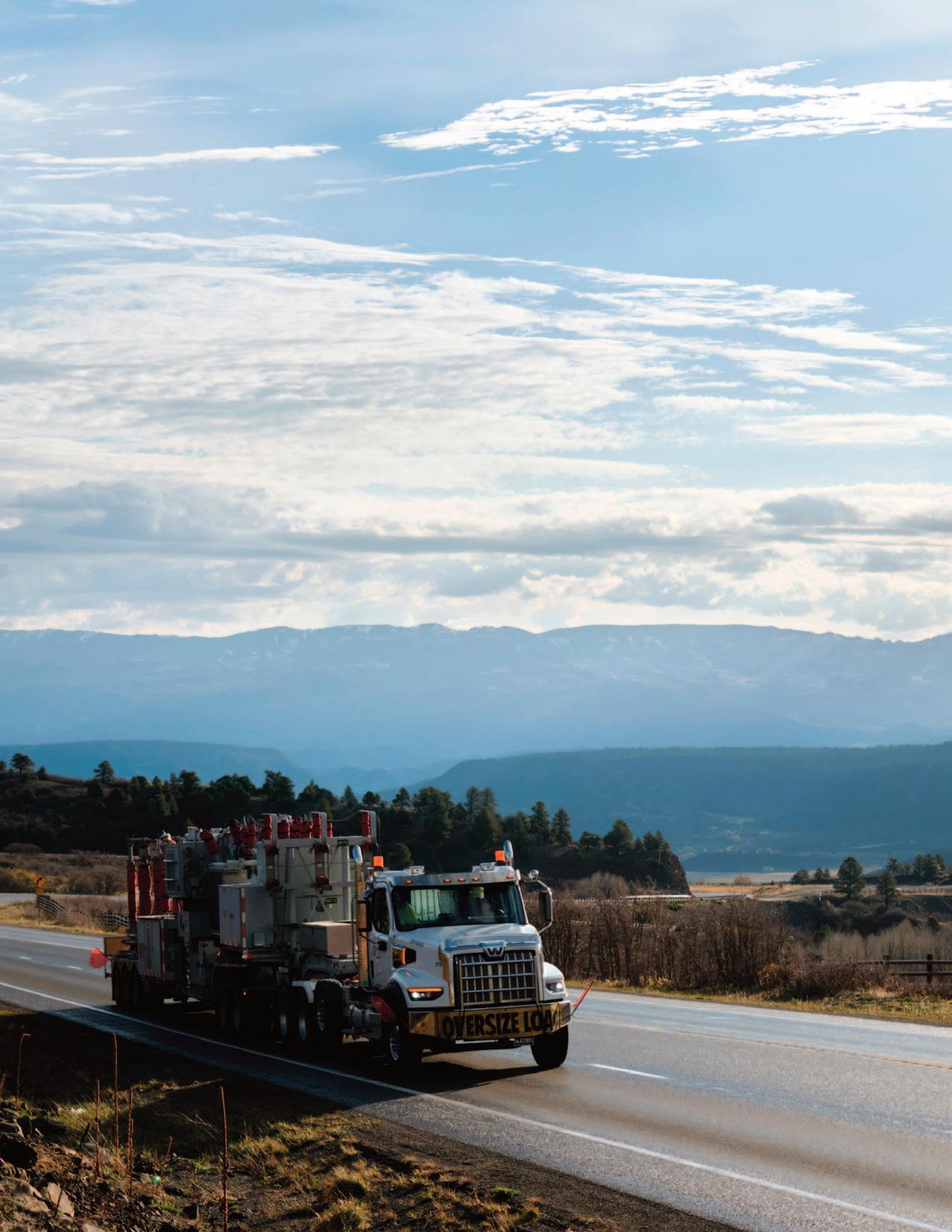
Reliability means showing up — for today and tomorrow. We’re here before the sun rises and we’re working all through the night, 24/7/365. Why? Because every community our members serve deserves power they can count on. We work as one connected cooperative family to share resources, expertise, and solutions like mobile substations. When disaster strikes or equipment fails, these portable, quickly deployable substations can restore power fast, helping minimize outages and keep communities running when they need it most.
It’s all part of the strength that comes from standing together so your PPD can deliver what matters most: reliable, affordable electricity for every moment of life.
Scan to learn more or visit www.tristate.coop/powering-future

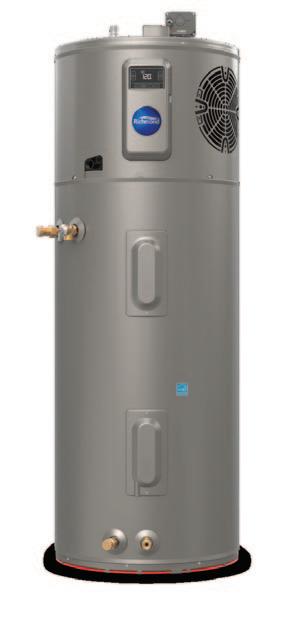
As a member of your local electric co-op, you know the value of smart energy choices. A Heat Pump Water Heater uses far less energy than a traditional water heater — meaning dependable hot water with lower monthly bills. Ef昀cient for your home. Good for your wallet. Better for your community.