COLISEUM
HAMMER/DISCUS CAGE
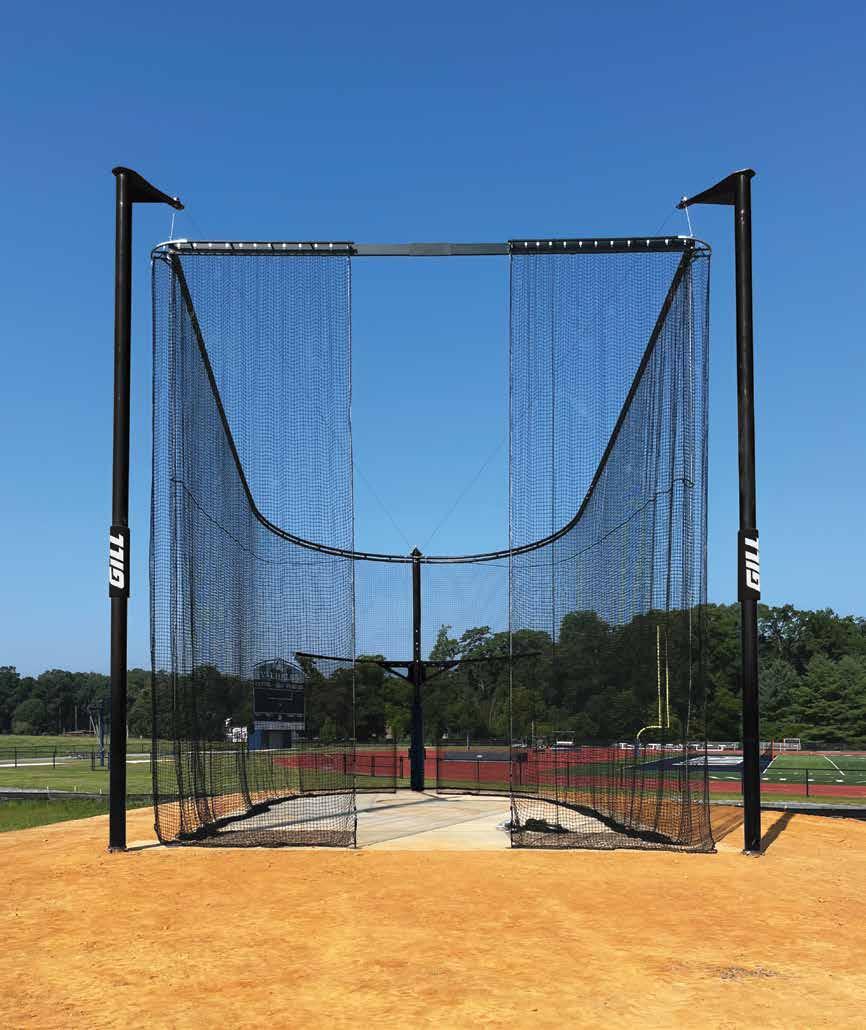
We understand you prioritize your athlete’s safety, as much as their ability to compete. That’s why Gill Athletics® is proud to offer the next generation of throwing cages, because it keeps your focus where it belongs.


• Single or Double Ring for the same cost
• Sliding Net Doors
• Single-operator U-NET frame & winch
• 3-Pole Super Structure
• Rear Door Access Option

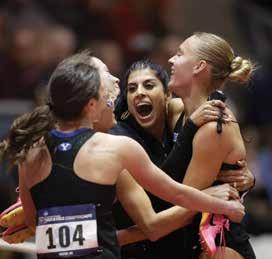
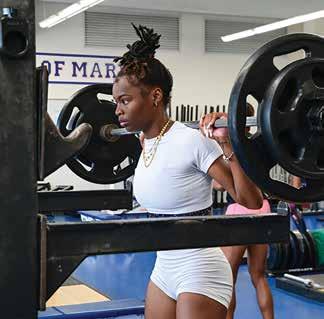
SAM HURLEY OF TEXAS TECH PLACES SIXTH IN THE MEN’S POLE VAULT WITH A HEIGHT OF 5.23M (17-1.75) DURING THE BIG 12 CONFERENCE CHAMPIONSHIPS AT THE UNIVERSITY OF ARIZONA, FRIDAY, MAY 15, 2026 IN TUCSON, ARIZONA.

THE LEADING SURFACE OF TRACK & FIELD


FULL CONTROL ON QUALITY
Beynon controls all aspects of the manufacturing value chain. From start to finish, your project doesn’t leave our hands.
PROVEN DURABILITY
Manufactured and installed with the highest attention to detail, Beynon systems showcase proven durability.
TRUSTED
For indoor or outdoor venues, Beynon is the trusted surface of leading NCAA Div I programs, thousands of high schools and distinguished municipal facilities.
FINANCIALLY STRONG
Part of Tarkett Sports, a division of the Tarkett Group, a worldwide leader of innovative flooring and sports surface solutions, Beynon has unprecedented financial support and stability. You can rest easy.
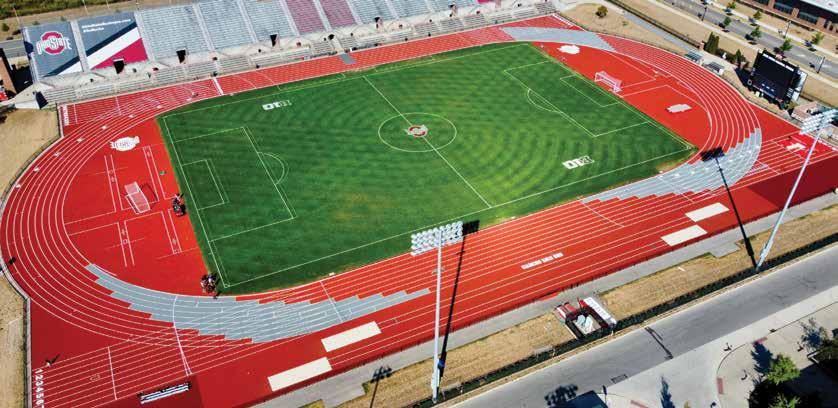
OHIO STATE UNIVERSITY, OH

DIVISION PRESIDENTS





CONNIE PRICE-SMITH
USTFCCCA President
Connie is the Head Coach of Men’s and Women’s Track and Field and Cross Country at the University of Mississippi. She can be reached at cmprices@olemiss.edu
VIN LANANNA
Track & Field
Vin is the Director of Track and Field and Cross Country and Associate Athletics Director for Administration at the University of Virginia. He can be reached at coachvin@virginia.edu
TINA DAVIS FERNANDEZ
Track & Field
Tina Davis Fernandez is the Head Cross Country and Track & Field Coach for CAL State LA. Tina can be reached at Tina.DavisFernandes@ calstatela.edu
CHAD GUNNELSON
Track & Field
Chad Gunnelson is the Director of Track and Field and Cross Country at Augustana College. Chad can be reached at chadgunnelson@augustana.edu



CALEB SNYDER
Track & Field
Caleb Snyder is the Head Men’ and Women’s Track & Field Coach at Indiana Wesleyan University. Caleb can be reached at caleb.snyder@indwes.edu

CHIP GAYDEN
Track & Field
Chip Gayden is the Head Men’s and Women’s Track & Field Coach at Meridian Community College. He can be reached at hgayden@meridiancc.edu

STEFANIE SLEKIS
Cross Country
Stefanie Slekis is the Head Coach of Track and Field and Cross Country at Nicholls State University. Stefanie can be reached at stefanie.slekis@nicholls.edu
PUBLISHER
Sam Seemes
MEMBERSHIP SERVICES
Nick Lieggi, Kristina Taylor, Dave Svoboda
COMMUNICATIONS
Garrett Bampos, Tom Lewis, Tyler Mayforth, Howard Willman
PHOTOGRAPHER
Kirby Lee
EDITORIAL BOARD
Tommy Badon, Scott Christensen, Todd Lane, Derek Yush
ART DIRECTOR
Tiffani Reding Amedeo
PUBLISHED BY
ERIC PHILLIPS
Cross Country
Eric Phillips is the men’s distance assistant coach for track and field and cross country at Saginaw Valley State University. He can be reached at edphilli@svsu.edu.
RYAN CHAPMAN
Cross Country
Ryan Chapman is the Head Coach of Men’s and Women’s Cross Country at Wartburg College. Ryan can be reached at ryan.chapman@wartburg.edu
Renaissance Publishing LLC
110 Veterans Memorial Blvd., Suite 123, Metairie, LA 70005 (504) 828-1380 myneworleans.com
GRIER GATLIN
Cross Country
Grier Gatlin is the Head Coach of Track and Field and Cross Country at Southern Oregon University. Grier can be reached at gatling@sou.edu
DEE BROWN
Cross Country
Dee Brown is the Director of Track and Field and Cross Country at Iowa Central CC. Dee can be reached at brown_dee@iowacentral.edu
USTFCCCA
National Office 1100 Poydras Street, Suite 1750 New Orleans, LA 70163 Phone: 504-599-8900 Website: ustfccca.org
If you would like to submit content for, or advertise your business in Techniques, please contact 504-599-8906 or techniques@ustfccca.org.
Techniques (ISSN 1939-3849) is published quarterly in February, May, August and November by the U.S. Track & Field and Cross Country Coaches Association. Copyright 2025. All rights reserved. No part of this publication may be reproduced in any manner, in whole or in part, without the permission of the publisher. techniques is not responsible for unsolicited manuscripts, photos and artwork even if accompanied by a self-addressed stamped envelope. The opinions expressed in techniques are those of the authors and do not necessarily reflect the view of the magazines’ managers or owners. Periodical Postage Paid at New Orleans La and Additional Entry Offices. POSTMASTER: Send address changes to: USTFCCCA, PO Box 55969, Metairie, LA 70055-5969.



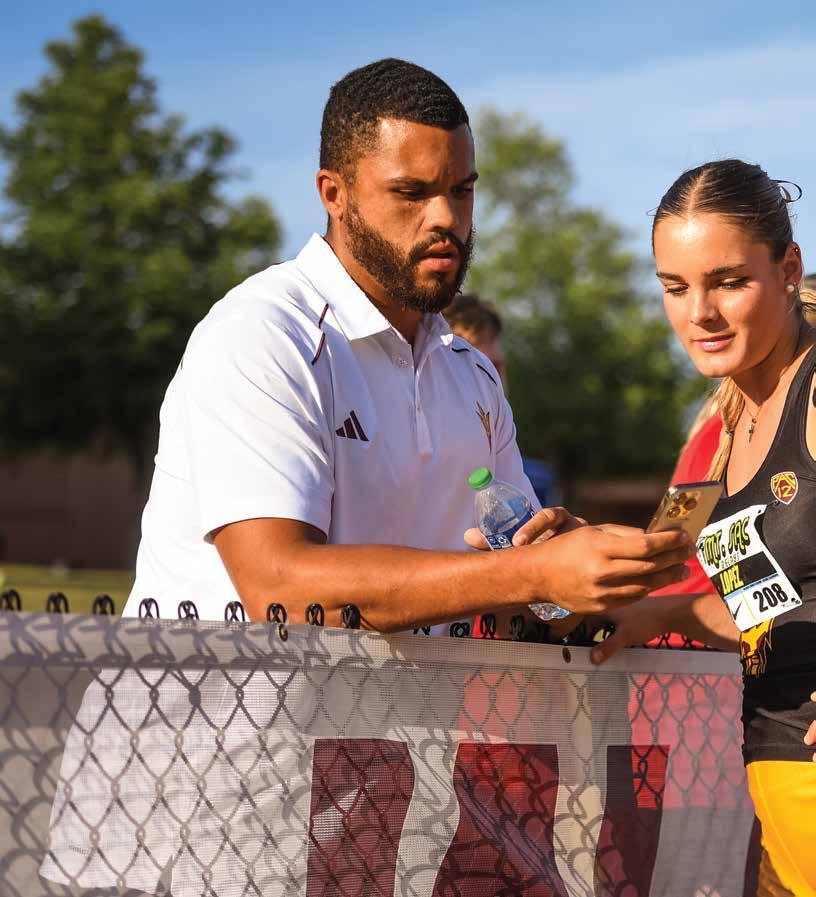
When Coaching Gets in the Way
How Information Overload and Poor Timing Disrupt Skilled Performance
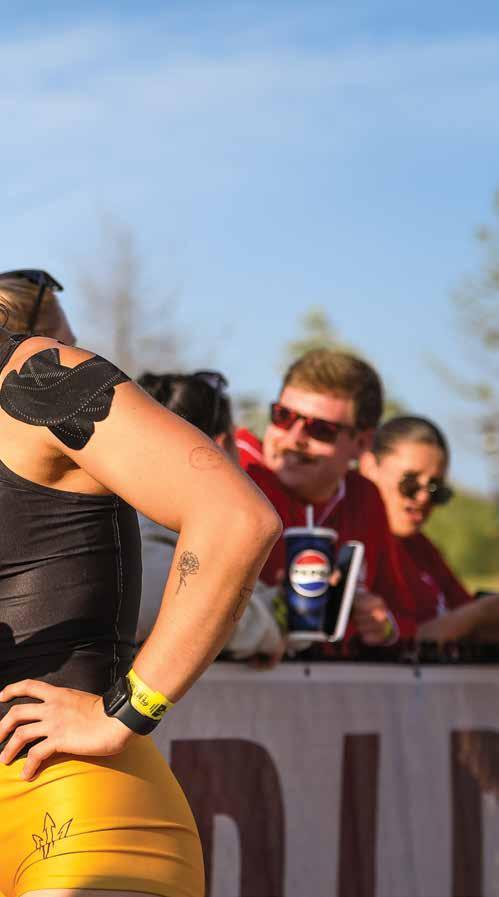
INTRODUCTION
Every coach recognizes this moment: an athlete is in the zone, moving with fluidity, perfect timing, and apparent ease. But as the stakes rise or fatigue creeps in, something changes. Stride tightens, rhythm falters, coordination slips away, and suddenly performance suffers. In these moments, the coach’s urge is to offer a quick cue:
“Stay tall.”
“Drive your knees.”
“Relax.”
“Fix your arms.”
Motor learning research explains why this instinct can backfire. Skilled performance is typically governed by automatic, implicit processes developed through practice (Wulf & Lewthwaite, 2016). Under stress, attention can shift inward, and athletes attempt to consciously control movements that are normally automatic. This process — referred to as reinvestment (Masters & Maxwell, 2008) — disrupts timing and coordination at precisely the wrong moment.
In these situations, coaching input can either stabilize performance — or amplify the breakdown. Effective coaching requires knowing when to intervene, how to intervene, and when to deliberately do less.
THE HIDDEN CONSTRAINT: THE BRAIN UNDER PRESSURE
Performance is constrained not only by physical capacity but also by processing capacity. Working memory is limited (Baddeley, 1992), and high-speed movement, fatigue, and competitive stress further reduce available bandwidth.
Automatic motor control allows complex actions to run with minimal conscious input. These processes are most stable when attention remains externally focused (Wulf, 2013). Under pressure, however, athletes may shift toward conscious control. This increases reliance on working memory, slows processing, and fragments coordination.
Research has associated this shift with increased activity in brain regions linked to deliberate control (Beilock et al., 2002). Practically, this means that adding instruction in high-demand moments can overload the system rather than improve it.
Coaching implication: Under pressure, the system often needs less input — not more.
TABLE 1. DIAGNOSING PERFORMANCE BREAKDOWNS UNDER PRESSURE
Event Group
Sprinting
Long/High Jump
What Coaches See (Kinematic Symptom)
Late-race mechanical breakdown; stride opens up, backside mechanics increase, bounding.
Common Instinctive Reaction
Cue specific technique: “Knees up!” or “Claw the track!”
The Misdiagnosis
A loss of technical knowledge or a localized conditioning issue.
What’s Actually Happening (System Disruption)
Fatigue and competitive stress disrupt the autonomic control system. The athlete is shifting into conscious reinvestment to fight fatigue, which freezes degrees of freedom and destroys natural elasticity. The resulting mechanical breakdown is a symptom of this neurological overload.
The Coaching Shift (Intervention)
Protect the rhythm. Reduce explicit verbal inputs. Use simple external cues (e.g., “Run over the track”) or manipulate the practice environment to safely guide the athlete back to implicit control without overloading their working memory.
Inconsistent board steering, stutter-stepping, or dropping hips prematurely.
Add focus cues: “Push off!” or “Hold your speed!”
A lack of focus, effort, or a “mental weakness” on the runway.
The athlete is attempting to consciously process too many variables (velocity, spatial awareness, technical takeoff) at maximum speed. This pushes them past their optimal Challenge Point, forcing a regression to deliberate processing, which ruins the fluid rhythm required for accurate visual steering.
Simplify the approach. Remove technical cues to reduce cognitive demand. Shift the athlete to a purely external focus (e.g., listening to the rhythm of their spikes) or temporarily remove the board constraint entirely in practice to restore autonomous velocity.
Distance Tightening late in the race; shoulders rising, rigid arm carriage, choppy stride.
Yell internal cues: “Relax your shoulders!” or “Open your stride!”
An effort/toughness issue, or localized muscular tension.
As systemic fatigue peaks, the brain manages the stress by shifting to an internal focus. Adding a cue like “relax” paradoxically increases this conscious, internal monitoring. This stiffens the muscles further and actively worsens the kinematic breakdown.
Distract the conscious brain. Minimize internal inputs. Direct the athlete’s attention entirely outward to the environment— cue them to “chase the shadow” ahead of them or lock onto a specific competitor to let the body self-organize through the fatigue.
Throws (Rotational)
Timing is off; upper body striking early, poor separation, rushing the finish.
THE KINEMATIC ILLUSION: MISREADING THE PROBLEM
When performance breaks down, coaches see the symptoms: stiffness, disrupted rhythm, altered mechanics. The challenge is interpretation. Under cognitive load or stress, the nervous system may simplify control by restricting movement variability — often described as “freezing degrees of freedom” (Bernstein, 1967). This can present
Cue arm speed or upper body positioning: “Keep it back!”
A localized technique issue with the upper body or release point.
The athlete is trying to explicitly control the complex sequencing and rotational momentum. This conscious interference disrupts the kinetic chain, causing the athlete to rely on upperbody kinematics rather than ground force production and rotational inertia.
as tension and reduced coordination. At the same time, conscious control interferes with automatic sequencing.
The key insight is this: What you see is not always the problem — it is often the signal of a system under load. Not all breakdowns are purely processing-related. In many cases, capacity and processing interact (e.g., fatigue reduces force production while increasing cognitive strain). However,
Restore kinetic flow. Stop cueing the symptom (the arm). Use a constraint or external target that forces the correct timing (e.g., aiming for a specific release focal point or using a heavier implement) so the sequential transfer of momentum emerges implicitly.
misidentifying a processing limitation as a technical flaw often leads to ineffective intervention.
THE TWO COACHING ERRORS
Misreading control system disruptions as technical flaws leads to two major coaching errors. The first is information overload. Working memory — the system responsible for real-time processing — has limited




•
•
•
•






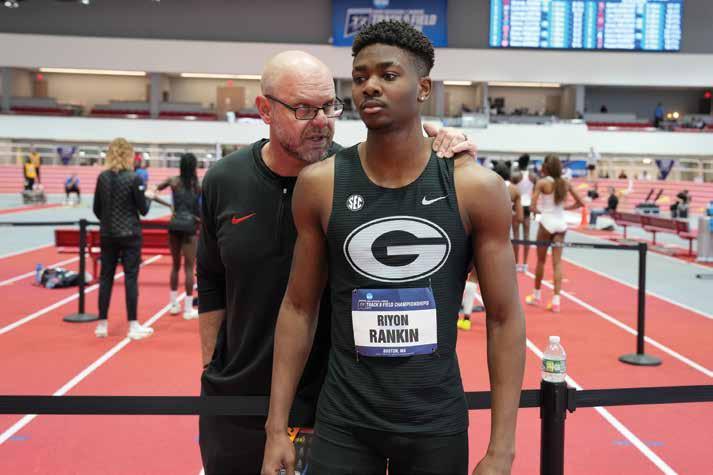
capacity (Miller, 1956; Baddeley, 1992). When coaches layer on multiple cues, they overwhelm this system, forcing athletes out of automatic control and into slow, conscious processing — a shift that reliably degrades performance under pressure (Beilock & Carr, 2001).
The second error is poor timing. Even well-intended cues can backfire if delivered during high-speed action or peak stress. This triggers “reinvestment” (Masters & Maxwell, 2008), where athletes begin consciously monitoring movements that should run automatically, disrupting coordination and timing. Neuroimaging research shows that this shift activates brain regions linked to deliberate control, interfering with fluid performance (Beilock et al., 2002).
These errors compound each other: information overload raises cognitive demand, and poor timing delivers it when athletes have the least capacity to manage it. Together, they override well-trained control systems and undermine execution at the moments that matter most.
REFRAMING THE PROBLEM
A breakdown under pressure usually reflects a change in the stability of the system controlling the movement. This distinction shifts how the coach interprets what they see. The same visible error — loss of rhythm, poor timing, mechanical breakdown — can emerge from two very different sources:
Capacity problem → They can’t do it. The athlete lacks the strength, coordination, mobility, or technical foundation required for consistent execution. The limitation is structural or developmental, and it will appear consistently across conditions.
Processing problem → They can’t organize it under current demands. The athlete has the underlying capacity, but performance degrades when speed, fatigue, or pressure increases. The limitation is not the movement itself, but the system’s ability to organize it in real time.
The key difference is context sensitivity: If the problem appears consistently, it is likely capacity-driven.
If it appears under pressure, fatigue, or
speed, it is often processing-driven.
In practice, these systems interact. Fatigue can reduce force output while simultaneously increasing cognitive load, making organization more difficult. However, the coaching error occurs when a processing limitation is treated as a technical deficiency.
This leads to a predictable pattern:
The athlete tightens or loses rhythm
The coach adds instruction
Cognitive load increases
The athlete shifts further into conscious control
Performance continues to degrade
What appears to be a technical problem becomes amplified by the intervention itself.
Coaching implication: Before giving a cue, identify the limiting system. If the issue is capacity, instruction and development are appropriate. If the issue is processing, the priority is different — reduce demand, simplify the task, and allow automatic coordination to re-emerge. The decision is not whether to coach — it is how to coach based on what is limiting performance.
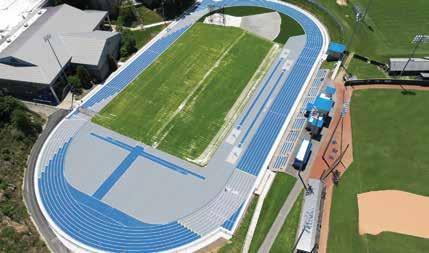
HIGH-PERFORMANCE TRACK DESIGN AND SURFACING
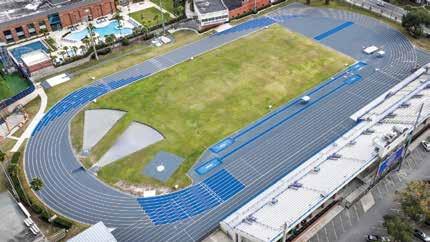
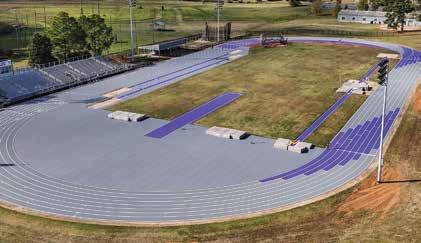
With decades of experience working with top-ranked programs across the country, TenCate brings the latest in surfacing, design and construction technology to the track market.
James G. Pressly Stadium
University of Florida, Gainesville, Florida
Host of the Tom Jones Memorial Invitational
Walter P. Ledet Track Complex
Northwestern State University, Natchitoches, Louisiana
Southland Conference Outdoor Track & Field Championships
Karl Straus Track
University of North Carolina, Asheville, Asheville, North Carolina
Host of the 2026 NAIA Men’s and Women’s Outdoor Track & Field National Championships
tencategrass.us
Building healthier, more beautiful communities.

PRACTICAL COACHING FRAMEWORK:
OBSERVE → DIAGNOSE → INTERVENE
Effective coaching in high-pressure moments begins with disciplined observation, grounded in movement science and applied neuroscience.
Step 1: Observe
Recognize that something has changed — without immediately trying to fix it. Breakdowns often appear as subtle shifts in velocity, rhythm, or visible tension. These are not explanations; they are signals that the athlete’s motor control system is under load.
Step 2: Diagnose
The key question is: What kind of problem is this?
Coaches must distinguish between two fundamentally different issues:
Capacity problem → They can’t do it
The athlete lacks the strength, mobility, or technical foundation required for correct execution.
Processing problem → They can’t organize it under pressure
The athlete has the capacity, but cognitive overload is disrupting coordination and timing.
This distinction is critical — because the wrong diagnosis leads to the wrong intervention.
Step 3: Intervene (Manage the Challenge Point)
Intervention must match both the athlete’s learning stage and the demands of the environment. The Challenge Point Framework provides the lens: performance is optimal when task difficulty matches the athlete’s skill level and processing capacity. Under pressure, that balance shifts. Fatigue, speed, and competitive stress increase cognitive demand, pushing the athlete closer to their limit. In these moments, adding instruction doesn’t help — it overloads the system.
When coaches inject cues into an already maxed-out system, they push the athlete past their optimal challenge point. Automatic execution breaks down, and performance regresses to slow, conscious control. This requires a shift in coaching behavior:
From instructing → to guiding
From adding information → to protecting execution
Rule of Thumb: As speed and complexity increase, instructional input must decrease. The most effective intervention is often not what you add — but what you deliberately withhold, allowing automatic systems to
operate without interference.
APPLIED EXAMPLES: WHAT IT LOOKS LIKE IN REAL COACHING
The errors caused by cognitive overload and conscious reinvestment appear across all event groups. While the outward kinematic symptoms look entirely different — a stuttering high jumper, a tight distance runner, a bounding sprinter — the underlying control system disruption is identical.
Table 1 presents a matrix outlining how to look beyond the superficial mechanical breakdown to identify the true kinetic and neurological reality. It is designed to shift the coaching response away from adding technical noise and toward interventions that protect the athlete’s automatic execution.
APPLIED CASE SNAPSHOTS
Across event groups, performance breakdowns present with different visible mechanics — but often share a common underlying feature: the athlete’s control system is operating under increased cognitive and physiological load. As speed, fatigue, or pressure rise, the system’s ability to coordinate complex movement patterns is reduced. The result is a shift toward more rigid, less efficient movement organization. What differs is the surface expression of the breakdown; what remains consistent is the mechanism.
Sprinting. Late-race breakdowns often appear as overstriding, increased backside mechanics, and longer ground contact times. These changes are frequently interpreted as technical failure or lack of effort. Fatigue lowers force output and disrupts the timing and stiffness needed for high-speed running. As coordination degrades, athletes may attempt to consciously “fix” their mechanics, further slowing the system.
Jumps (Long/High Jump). Stutter steps, inconsistent board contact, or premature lowering of the center of mass are commonly attributed to focus or confidence issues. More often, they reflect overload in spatialtemporal processing at high approach speeds. The athlete is attempting to manage velocity, stride regulation, and takeoff preparation simultaneously. As demand exceeds capacity, rhythm breaks down and visual steering becomes less reliable.
Distance Running. Late-stage tightening — elevated shoulders, rigid arm carriage, shortened stride — is often interpreted as muscular tension or lack of relaxation. Under fatigue, however, attentional focus
tends to shift inward. Increased conscious monitoring interferes with automatic coordination, leading to inefficient movement patterns that further increase energetic cost.
Throws (Rotational Events). Disruptions in sequencing—early upper-body involvement, loss of separation, rushed delivery — are often coached as isolated technical errors. In many cases, they reflect a breakdown in the timing of force transfer through the kinetic chain. Under pressure or increased speed, the athlete attempts to consciously control a highly complex sequence, which interferes with the automatic coordination required for efficient momentum transfer.
Across all events, the sequence is similar: Increasing demand (speed, fatigue, pressure)
Reduced processing capacity and coordination stability
Shift toward conscious control
Loss of timing, rhythm, and efficiency
Visible mechanical breakdown
The critical coaching error is consistent: Treating the visible mechanics as the root problem rather than the outcome of a system under load. Effective intervention targets the system, not just the symptom. This requires a shift in coaching behavior:
Reduce cognitive load rather than add instruction.
Direct attention externally rather than internally.
Manipulate constraints (task, environment, rhythm) rather than cue isolated mechanics.
Protect coordination rather than overcorrect form.
The goal is not to “fix” movement in the moment, but to restore the conditions that allow the movement to organize itself. When the system is overloaded, better performance does not come from more information—it comes from better organization.
COACHING TAKEAWAYS
These principles protect performance. Ignore them, and you risk disrupting it.
Thinking slows movement. High-speed execution and conscious control cannot coexist. The moment an athlete starts processing instructions, timing and coordination break down.
Don’t add — subtract. When performance falters, the instinct is to add cues. The solution is usually the opposite: reduce input, simplify the task, and let the system reset.
Cue less as competition approaches. As

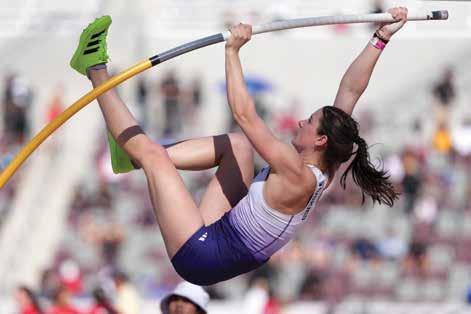
speed and pressure rise, processing capacity shrinks. What works in practice can interfere in competition. Shift from giving instructions to practicing restraint.
Match instruction to learning stage. The right input depends on the athlete’s stage of learning:
Cognitive: provide clear instruction
Associative: refine with targeted feedback
Autonomous: minimize input and protect automaticity
Protect automaticity under pressure. Automatic skills are built through repetition but are fragile under stress. Your role is not to control them — but to protect them.
Bottom line: Effective coaching isn’t measured by how much you say — it’s measured by how well your athletes perform when you say less.
SUMMARY
Let’s return to the moment where the athlete is in rhythm — until pressure hits, and performance begins to unravel. The instinct was to step in, correct, and add feedback. Now you understand why that often makes things worse.
What looks like a technical breakdown is a disruption of the system that produced the performance. Under pressure, the athlete is overloaded trying to consciously control what should remain automatic. Every added cue in that moment increases that load and deepens the breakdown. The solution is not more instruction — it’s better judgment. Your role is not to correct every movement,
but to protect the system that drives high performance. That means recognizing when the problem is processing, not capacity, and responding by reducing input, simplifying the environment, and allowing automatic control to re-emerge.
This is the difference between practice and performance: it’s about how much thinking the system can tolerate before it breaks down. Effective coaching isn’t about saying more — it’s about knowing when saying less produces more.
REFERENCES
Baddeley, A. (1992). Working memory. Science, 255(5044), 556–559.
Beilock, S. L., & Carr, T. H. (2001). On the fragility of skilled performance: What governs choking under pressure? Journal of Experimental Psychology: General, 130(4), 701–725.
Beilock, S. L., Carr, T. H., MacMahon, C., & Starkes, J. L. (2002). When paying attention becomes counterproductive: Impact of divided versus skill-focused attention on novice and experienced performance of sensorimotor skills. Journal of Experimental Psychology: Applied, 8(1), 6–16.
Beilock, S. L., Kulp, C. A., Holt, L. E., & Carr, T. H. (2004). More on the fragility of performance: Choking under pressure in mathematical problem solving. Journal of Experimental Psychology: General, 133(4), 584–600.
Bernstein, N. A. (1967). The co-ordination and regulation of movements. Pergamon
Press.
Davids, K., Button, C., & Bennett, S. (2008). Dynamics of skill acquisition: A constraints-led approach. Human Kinetics. Masters, R. S. W., & Maxwell, J. P. (2008). The theory of reinvestment. International Review of Sport and Exercise Psychology, 1(2), 160–183.
Miller, G. A. (1956). The magical number seven, plus or minus two: Some limits on our capacity for processing information. Psychological Review, 63(2), 81–97.
Schmidt, R. A., & Lee, T. D. (2011). Motor control and learning: A behavioral emphasis (5th ed.). Human Kinetics.
Todorov, E., & Jordan, M. I. (2002). Optimal feedback control as a theory of motor coordination. Nature Neuroscience, 5(11), 1226–1235.
Wulf, G. (2013). Attentional focus and motor learning: A review of 15 years. International Review of Sport and Exercise Psychology, 6(1), 77–104.
Wulf, G., & Lewthwaite, R. (2016). Optimizing performance through intrinsic motivation and attention for learning: The OPTIMAL theory of motor learning. Psychonomic Bulletin & Review, 23(5), 1382–1414.
FOR MORE THAN 17 YEARS, DR. CHRISTINE BROOKS HAS INSTRUCTED COACHES ON APPLYING SPORT SCIENCE TO THEIR DAILY PRACTICE. SHE DEVELOPED SEVERAL USA TRACK & FIELD SPORT SCIENCE COACHING COURSES INVOLVING TOPICS SUCH AS BIOMECHANICS, PHYSIOLOGY, TRAINING DESIGN, AND SKILL ACQUISITION. SHE ALSO LED THE REDESIGN OF THE USATF LEVEL 1 AND 2 SPORT SCIENCE CURRICULUM, FOCUSING ON HANDS-ON, SYSTEMS-BASED LEARNING FOR TRAINING AND DIAGNOSTICS ACROSS ALL EVENTS.
KIRBY LEE IMAGE OF SPORT

Beyond Penn Relays
Is It Time for the Outdoor NCAA Distance Medley Relay?
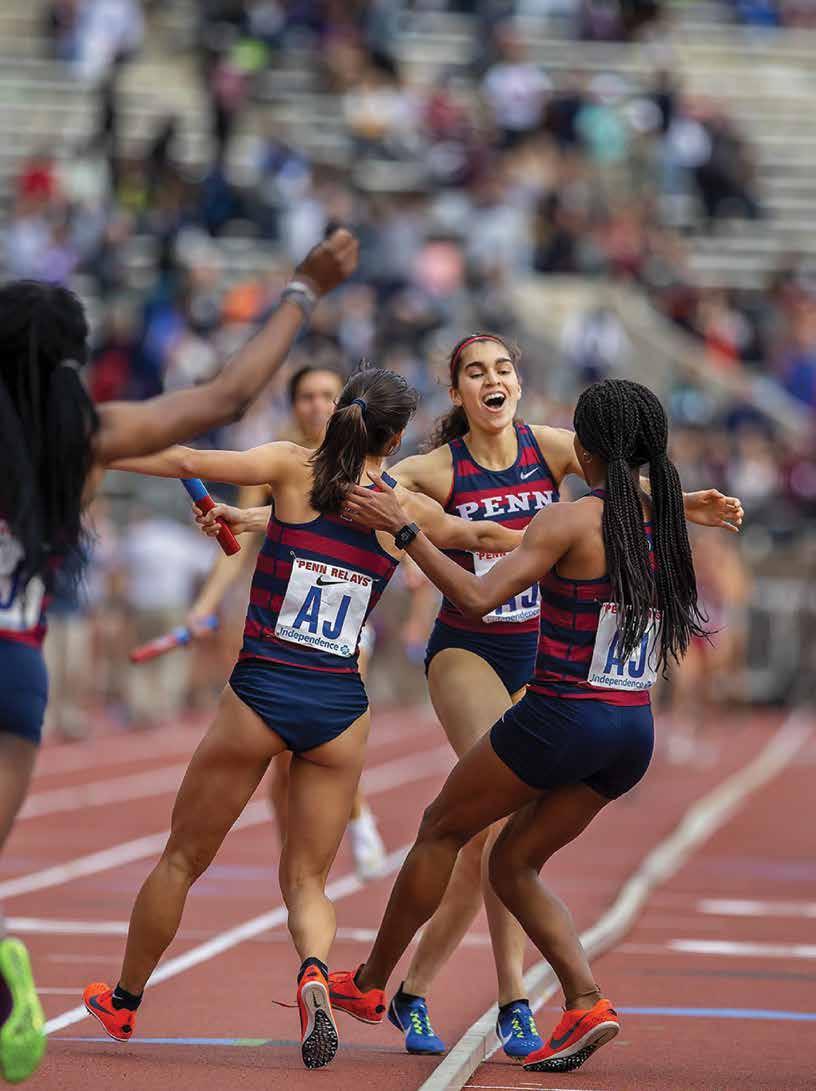
Few events in collegiate track and field generate the atmosphere, unpredictability, and emotional energy of the Distance Medley Relay (DMR). Whether it is the roar of the crowd at the Penn Relays, the tactical complexity of the NCAA Indoor Championships, or the drama of a tightly contested anchor leg, the DMR consistently produces some of the sport’s most memorable moments. Athletes embrace it. Coaches strategically build around it. Fans understand it. Yet despite its popularity and long-standing role in indoor collegiate track and field, the DMR remains absent from the outdoor NCAA Championship program.
At first glance, this omission may seem understandable. The NCAA Outdoor Championships already feature a demanding event schedule, and the outdoor season has historically prioritized traditional relay structures such as the 4 × 100 m and 4 × 400 m relays. Yet collegiate track and field has never been static. Championship programs have evolved alongside the sport itself, adapting to changes in participation, competitive depth, athlete interests, and championship presentation. As the DMR has grown from a specialty relay into one of the
most anticipated events at the NCAA Indoor Championships and major relay competitions, such as the Penn Relays, it is reasonable to consider whether its continued absence from the outdoor championship program still reflects the modern structure and culture of collegiate track and field.
The modern DMR occupies a unique space within the sport because it brings together athletes from multiple disciplines within a single competitive framework. Sprinters, middle-distance athletes, and distance runners all contribute to the final outcome, creating a relay that rewards not only fitness and speed, but also roster balance, tactical awareness, pacing judgment, and coaching strategy. In many respects, the DMR reflects the collaborative structure of collegiate track and field better than perhaps any other event. As the NCAA continues to evaluate ways to enhance championship competition and athlete experience, it is worth considering whether the DMR represents a natural next step in the evolution of the outdoor championship program.
MORE THAN A RELAY: THE DMR’S CHAMPIONSHIP PEDIGREE
One of the strongest arguments for add-
ing the DMR outdoors is that the event has already demonstrated its value on some of the sport’s biggest stages. Unlike experimental relay formats still seeking identity and consistency, the DMR already possesses history, tradition, prestige, and widespread recognition within collegiate track and field culture.
The Penn Relays provide perhaps the clearest example. Each year, the DMR attracts substantial attention from athletes, coaches, alumni, and fans. The event routinely produces emotionally charged racing environments that stand out even within one of the world’s most relay-centered competitions. For many athletes, competing in the Penn Relays DMR represents a defining collegiate experience.
Similarly, the NCAA Indoor Championships have demonstrated the relay’s ability to function as a true championship event. The DMR regularly influences team scoring while producing some of the meet’s most memorable moments. Tactical decisions carry immediate consequences, momentum can shift dramatically within a single leg, and anchor legs frequently culminate in dramatic head-to-head finishes.
Part of the relay’s appeal is its accessibil-
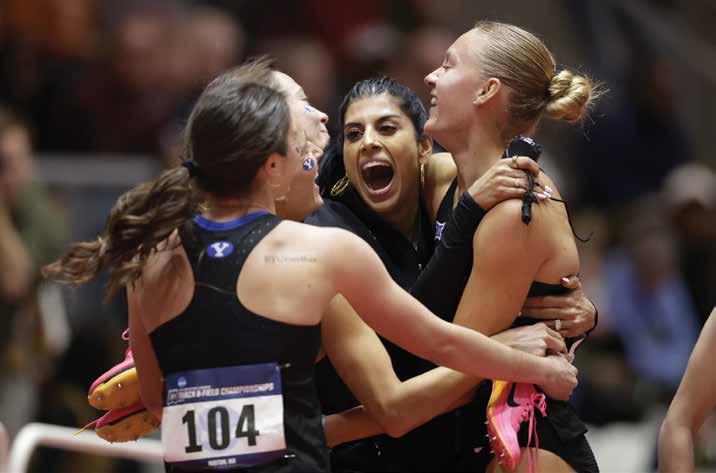
ity. The event unfolds in clearly identifiable stages, allowing spectators to follow the action without needing deep technical knowledge of pacing strategy or exercise physiology. Lead changes, tactical decisions, and closing kicks are immediately recognizable, creating a viewing experience that is both competitive and engaging.
In an era when collegiate track and field increasingly competes for attention, visibility, and institutional support, the DMR already possesses many of the characteristics administrators, coaches, and fans seek in championship competition: team identity, strategic complexity, emotional investment, and memorable finishes. The event does not require reinvention or marketing campaigns to generate interest. It has already demonstrated its ability to do so.
A MISSING PIECE OF THE OUTDOOR CHAMPIONSHIP STRUCTURE
Although the DMR has historically been associated with the indoor season, there are several reasons why the outdoor environment may actually enhance the event and championship meet.
First, outdoor track and field represents the highest level of collegiate competition. By championship season, athletes have accumulated additional months of training, race experience, and tactical refinement compared to the indoor calendar. If the outdoor season is intended to showcase the sport at its highest level, it is reasonable to question why one of its most compelling relay events remains absent from the championship program.
Outdoor tracks may also provide a racing environment better suited to the relay’s tactical complexity. Indoor tracks often constrain movement through tighter turns, lane compression, and aggressive cut-ins. Outdoor facilities provide more space for positioning, smoother transitions, and greater opportunities for tactical decisions to unfold naturally. Wind exposure, weather variability, and pacing fluctuations could further increase the strategic complexity of the relay, requiring coaches and athletes to make more nuanced decisions regarding athlete order, pacing distribution, and workload management.
There is also a broader structural argu-
ment worth considering. Outdoor track and field already places substantial emphasis on relay competition as part of championship identity. The 4 × 100 m and 4 × 400 m relays routinely serve as emotional anchors of NCAA championship competition because they combine individual performance with collective team outcome.
Yet while sprint athletes currently have two relay opportunities outdoors, middledistance and distance athletes have none.
This creates an interesting imbalance within the championship structure. Sprint programs have multiple relay-based pathways to contribute to team scoring and program identity, while middle-distance and distance athletes rely exclusively on individual events despite often possessing the roster depth and tactical versatility necessary for relay competition.
The current NCAA championship structure illustrates this imbalance particularly clearly when scoring opportunities are examined across event groups (Tables 1 and 2). At the NCAA Indoor Championships, sprint and distance event groups each account for five scoring events and 195 pos-
sible championship points. Distance athletes also have access to a relay-based scoring opportunity through the DMR, creating a relatively balanced distribution of championship opportunities between the two event groups (Table 1).
By contrast, the outdoor championship structure provides sprint athletes with seven scoring events and 273 possible points through a combination of individual events and two relays, while distance athletes compete for 195 points across five individual events and have no relay-based scoring opportunity (Table 2).
The NCAA Indoor Championships already recognize the value of the DMR as a championship event capable of producing meaningful scoring dynamics, strategic diversity, and high spectator engagement. That relaycentered opportunity simply disappears during the outdoor season. While the proposed addition of the DMR would not create scor-
ing parity between sprint and distance event groups, it would increase distance-event scoring opportunities from 195 to 234 points while creating the first relay-based championship scoring pathway for middle-distance and distance athletes.
The addition of the DMR would therefore do more than add another event to the championship schedule. It would strengthen the relay component of the outdoor championships while moving the championship structure closer to the balance that already exists indoors.
BUILDING PROGRAMS, NOT JUST RELAYS
From a coaching perspective, the DMR offers something increasingly valuable within modern collegiate athletics: an event that rewards complete program development rather than isolated specialization. Many collegiate programs naturally divide into separate event cultures. Sprint
groups, middle-distance groups, and distance groups often train differently, compete differently, and sometimes even operate with distinct coaching philosophies. The DMR creates a rare competitive environment where those groups intersect directly. Success requires collaboration across event disciplines and often reflects the overall balance, depth, and cohesion of a program rather than dominance within a single event category.
Constructing a successful DMR lineup involves far more than simply selecting the four fastest available athletes. Coaches must consider tactical versatility, pacing tendencies, athlete strengths, and how different event groups complement one another within the broader relay structure. Some teams may emphasize early positioning and raw speed, while others may rely on tactical patience and anchor-leg strength. This strategic flexibility is part of what makes the
TABLE 1. CURRENT NCAA INDOOR CHAMPIONSHIP SCORING OPPORTUNITIES BY EVENT GROUP
TABLE 2. PROPOSED NCAA OUTDOOR CHAMPIONSHIP SCORING OPPORTUNITIES BY EVENT GROUP WITH THE ADDITION OF THE DISTANCE MEDLEY RELAY
TABLE 3. NCAA DIVISION I SCHEDULE OF EVENTS
Men’s and Women’s Outdoor Track & Field Championships
Day 1 (Men and Women)
4×100 Relay Semi
1500 m Semi
Steeplechase Semi
100 m/110 m Hurdle Semi
100 m Semi
400 m Semi
800 m Semi
400 m Hurdle Semi
200 m Semi
A) DMR Final
10,000 m Final
4×400 Relay Semi
B) DMR Final
Day 2 (Men and Women)
4×100 Relay Final
1500 m Final
Steeplechase Final
100 m/110 m Hurdle Final
100 m Final
400 m Final
800 m Final
400 m Hurdle Final
200 m Final
5000 m Final
C) DMR Final
4×400 Relay Final
Note. For simplicity, field events, wheelchair events, and the men’s decathlon and women’s heptathlon are not shown. Proposed schedules are illustrative and intended only to demonstrate potential placement options for the Distance Medley Relay within the existing championship structure. Models were developed using the 2026 NCAA Division I Outdoor Championship schedules and are intended for conceptual discussion purposes only.
event so compelling from both coaching and competitive perspectives.
From a developmental standpoint, the DMR may also provide one of the most valuable opportunities currently missing from the outdoor championship structure. Relay participation often serves as a bridge between developmental and elite competition levels, allowing athletes who may not yet be able to qualify individually for NCAA Championships to contribute meaningfully to team success on a national stage in a relay.
In many programs, these experiences become important moments in athlete progression, exposing younger competitors to the pressure, atmosphere, and expectations of championship competition earlier in their collegiate careers. While anchor legs are often carried by established performers, earlier relay segments frequently provide opportunities for emerging athletes to gain valuable championship experience while contributing directly to team outcomes. The event may also reward one of the defining characteristics of successful collegiate programs: depth. Championship scoring often favors programs built around elite
individual performers capable of producing major points in isolated events. The DMR introduces a complementary dimension by rewarding roster balance across multiple event groups. Programs with strong developmental systems, broad middle-distance depth, and effective collaboration between coaches and athletes may therefore become more competitive within the championship landscape.
In many ways, the DMR reflects what makes collegiate track and field distinct from professional competition. While professional track often centers on individual event specialization, collegiate programs are built around team scoring, roster depth, and collective identity. The DMR reinforces those characteristics by requiring athletes from different disciplines to contribute to a shared outcome.
In an era where roster management, transfer movement, and event specialization increasingly shape collegiate athletics, the DMR offers something refreshingly different: a championship event that values cohesion, depth, and collective success.
FINDING A PLACE ON THE CHAMPIONSHIP SCHEDULE
One of the primary concerns surrounding the addition of the DMR to the NCAA Outdoor Championships involves scheduling and athlete workload. The outdoor championship program is already dense, particularly for athletes competing across middle-distance, distance, and relay events. While true doubling between individual events is relatively uncommon at the NCAA championship level, many potential DMR participants already navigate demanding schedules involving events such as the 400 m, 800 m, 1500 m, 5000 m, and occasionally the 4 × 400 m relay.
Any serious discussion regarding the outdoor DMR therefore requires consideration not only of whether the event belongs, but also how it could realistically fit within the existing championship structure.
Importantly, the question may be less about whether the DMR can fit and more about where championship organizers believe it would add the greatest value. As illustrated in Tables 3–5, multiple scheduling models exist across the NCAA Division I, II, and III championship formats. These examples are not intended to represent definitive schedules, but rather to demonstrate that viable implementation options exist without fundamentally restructuring the championship program.
One option would place the DMR early in the championship meet as a featured scoring event. In Division I (Option A or B), this model positions the relay on the opening day alongside semifinal rounds and the 10,000 m final (Table 3), closely mirroring the role the DMR currently plays at the NCAA Indoor Championships. In Divisions II and III (Tables 4 and 5, respectively), a similar opening-day placement would allow the relay to establish early team-scoring implications while minimizing conflicts with later championship finals.
A second option, available within the less compressed Division II and III championship formats, would position the relay as a featured standalone event during the intermediate day of competition (Option B in Tables 4 and 5). This approach maintains many of the recovery advantages associated with an earlier placement while allowing the DMR to function as a focal point of the championship schedule.
Perhaps the most intriguing possibility is a

relay-centered championship finale (Option C in Tables 3–5). Under this model, the DMR would be contested immediately before the 4 × 400 m relay, allowing the championships to conclude with back-to-back relay events. Such a structure would preserve the traditional role of the 4 × 400 m relay as the final event while simultaneously creating a showcase opportunity for middle-distance and distance athletes. The result would be a championship conclusion that highlights both sprint and distance relay competition while reinforcing the team-oriented nature of collegiate track and field.
This final option may offer the greatest spectator appeal. Relays routinely produce some of the most memorable moments of championship competition because scoring implications, team identity, and direct head-to-head competition converge within a single event. Ending the meet with the DMR followed by the 4 × 400 m relay would create a uniquely collegiate championship atmosphere while showcasing the full spectrum of relay racing within the sport.
Ultimately, the scheduling models presented in Tables 3–5 illustrate a broader point: the DMR appears logistically feasible across all three NCAA divisions. The existence of multiple viable implementation options suggests that the discussion may be less about scheduling constraints and more about championship philosophy. The question is not simply whether the DMR can fit within the outdoor championship structure, but where it can most effectively enhance the athlete experi-
ence, spectator engagement, and overall identity of collegiate track and field.
THE CHALLENGES—AND THE OPPORTUNITIES
The preceding discussion suggests that multiple viable scheduling pathways exist for incorporating the DMR across NCAA Divisions I, II, and III. If scheduling feasibility is not an insurmountable obstacle, the conversation naturally shifts to a different question: what other concerns might justify keeping the DMR out of the outdoor championship program?
Determining how teams would qualify for an outdoor DMR championship field would require thoughtful planning, particularly given regional variability in racing opportunities and seasonal scheduling patterns. Yet the NCAA already administers qualification systems for relay events, and several potential models could be adapted for the DMR. While qualification logistics would require careful consideration, they do not appear fundamentally different from challenges already addressed within existing championship structures.
Some may also argue that the addition of the DMR would create excessive overlap with existing distance events. Yet this perspective arguably overlooks what makes the relay unique. The DMR is not simply another distance race, nor is it merely an extension of existing relay formats. Its appeal emerges from the interaction between sprint, middle-distance, and distance ath-
letes within a single tactical structure. No other outdoor championship event currently occupies that competitive space.
Moreover, event overlap is already a recognized feature of championship competition. Sprint athletes routinely navigate decisions involving individual events and relay participation, particularly in the 4 × 100 m and 4 × 400 m relays. Coaches regularly balance athlete workload, recovery, and scoring priorities when constructing relay lineups. The addition of the DMR would introduce similar strategic considerations for middledistance and distance athletes rather than creating an entirely new challenge. If relay participation is viewed as a valuable component of championship competition for sprint programs, it is reasonable to ask whether comparable opportunities should also exist for distance-oriented programs.
Others may question whether adding another championship event would unnecessarily expand scoring opportunities. Yet the outdoor championship structure already provides sprint athletes with two relay-based scoring opportunities through the 4 × 100 m and 4 × 400 m relays, while distance athletes have none. As illustrated in Tables 1 and 2, the proposed addition of the DMR would not create scoring parity between event groups, but it would move the outdoor championship structure closer to the balance already present at the NCAA Indoor Championships. Perhaps the most common counterargument is simply tradition. The outdoor NCAA Championships have operated without the DMR for decades, and many may view the existing structure as sufficient. Yet championship programs have never remained static. Throughout NCAA history, events have been added, modified, and expanded as participation patterns, competitive depth, athlete interest, and the broader culture of track and field have evolved. The introduction of events such as the steeplechase, hammer throw, pole vault, and mixed relay formats at the high school, collegiate, Olympic, and World Athletics levels illustrates that championship programs are periodically refined to better reflect contemporary participation and competition trends.
Collegiate athletics has also entered a period of significant change. NIL opportunities, revenue-sharing models, conference realignment, roster limitations, and financial pressures continue to reshape the landscape in which Olympic sports operate. While no single event can solve those challenges,
TABLE 4. NCAA DIVISION II SCHEDULE OF EVENTS
Men’s
and
Women’s
Outdoor Track & Field Championships
Thursday Friday Saturday
Men’s 4×100 Relay Prelim
Women’s 4×100 Relay Prelim
Men’s 1500 m Prelim
Women’s 1500 m Prelim
Men’s 400 m Prelim
Women’s 400 m Prelim
Men’s 100 m Prelim
Women’s 100 m Prelim
Men’s Steeplechase Prelim
Women’s Steeplechase Prelim
Men’s 400 m Hurdles Prelim
Men’s 200 m Prelim
Women’s 200 m Prelim
Men’s 800m Prelim
Women’s 800m Prelim
Men’s 110 m Hurdle Prelim
Women’s 100 m Hurdle Prelim
Men’s Steeplechase Final
Women’s Steeplechase Final
Men’s 4×400 Relay Prelim
Women’s 4×400 Relay Prelim
B) Men’s DMR Final
Women’s 400 m Hurdles Prelim B) Women’s DMR Final
Men’s 10,000 m Final
Women’s 10,000 m Final
A) Men’s DMR Final
A) Women’s DMR Final
Men’s 4×100 Relay Final
Women’s 4×100 Relay Final
Men’s 1500 m Final
Women’s 1500 m Final
Men’s 110 m Hurdle Final
Women’s 100 m Hurdle Final
Men’s 400 m Final
Women’s 400 m Final
Men’s 100m Final
Women’s 100 m Final
Men’s 800 m Final
Women’s 800 m Final
Men’s 400 m Hurdle Finals
Women’s 400 m Hurdle Final
Men’s 200 m Final
Women’s 200 m Final
Men’s 5000 m Final
Women’s 5000 m Final
C) Men’s DMR Final
C) Women’s DMR Final
Men’s 4×400 Relay Final
Women’s 4×400 Relay Final
Note. For simplicity, field events, wheelchair events, and the men’s decathlon and women’s heptathlon are not shown. Proposed schedules are illustrative and intended only to demonstrate potential placement options for the Distance Medley Relay within the existing championship structure. Models were developed using the 2026 NCAA Division II Outdoor Championship schedules and are intended for conceptual discussion purposes only.
championship structures should continue evolving in ways that strengthen competition, athlete engagement, and the overall presentation of the sport.
Ultimately, implementation challenges should not automatically be interpreted as arguments against innovation. Championship formats evolve when sports identify opportunities to strengthen competition, athlete experience, and the overall championship product. The DMR presents one such opportunity.
RELAY INNOVATION AND THE DIRECTION OF THE SPORT
The discussion surrounding the outdoor DMR ultimately extends beyond a single relay event. At its core, the conversation reflects a broader question about how championship structures should evolve alongside the sport itself.
Recent developments at the international level provide a useful example. In 2014, World Athletics introduced the World Relays Championships, creating a global event centered entirely on relay competition. Since then, the championship has continued to evolve through the addition of new relay formats and expanded international participation. Mixed relays have likewise gained prominence at the Olympic Games and World Championships, including the mixed 4 × 400 m relay and newer relay formats introduced through World Relays competition.
Although these events differ substantially from the DMR, they reflect a broader recognition that relay competition can create compelling formats capable of enhancing athlete engagement, spectator interest, and team-centered storytelling. Rather than viewing relays solely as supplemental events, governing bodies increasingly rec-
ognize their ability to showcase competition in ways that resonate with athletes, coaches, and fans alike.
The DMR fits naturally within that broader trend because it is not an experimental concept seeking relevance. Decades of competition at the Penn Relays, NCAA Indoor Championships, and other major relay meets have demonstrated both its competitive value and its enduring popularity within collegiate track and field.
Viewed within the context of the sport’s continued evolution, the outdoor DMR appears less like a radical departure and more like a logical extension of trends already occurring throughout track and field.
THE NEXT STEP FOR COLLEGIATE TRACK & FIELD
Ultimately, the argument for the outdoor DMR is not simply about adding another
TABLE 5. NCAA DIVISION III SCHEDULE OF EVENTS
Men’s and Women’s Outdoor Track & Field Championships
Thursday
Men’s 1500 m Prelim
Women’s 1500 m Prelim
Men’s 400 m Hurdle Prelim
Women’s 400 m Hurdle Prelim
Men’s 200 m Prelim
Women’s 200 m Prelim
Men’s Steeplechase Prelim
Women’s Steeplechase Prelim
Men’s 4×400 Relay Prelim
Women’s 4×400 Relay Prelim
Men’s 10,000 m Final
Women’s 10,000 m Final
A) Men’s DMR Final
A) Women’s DMR Final
Friday
Men’s 4×100 Relay Prelim
Women’s 4×100 Relay Prelim
Men’s 800m Prelim
Women’s 800m Prelim
Men’s 110 m Hurdle Prelim
Women’s 100 m Hurdle Prelim
Men’s 400 m Prelim
Women’s 400 m Prelim
Men’s 100 m Prelim
Women’s 100 m Prelim
Men’s Steeplechase Final
Women’s Steeplechase Final
B) Men’s DMR Final
B) Women’s DMR Final
Saturday
Men’s 4×100 Relay Final
Women’s 4×100 Relay Final
Men’s 1500 m Final
Women’s 1500 m Final
Men’s 110 m Hurdle Final
Women’s 100 m Hurdle Final
Men’s 400 m Final
Women’s 400 m Final
Men’s 100m Final
Women’s 100 m Final
Men’s 800 m Final
Women’s 800 m Final
Men’s 400 m Hurdle Finals
Women’s 400 m Hurdle Final
Men’s 200 m Final
Women’s 200 m Final
Men’s 5000 m Final
Women’s 5000 m Final
C) Men’s DMR Final
C) Women’s DMR Final
Men’s 4×400 Relay Final
Women’s 4×400 Relay Final
Note. For simplicity, field events, wheelchair events, and the men’s decathlon and women’s heptathlon are not shown. Proposed schedules are illustrative and intended only to demonstrate potential placement options for the Distance Medley Relay within the existing championship structure. Models were developed using the 2026 NCAA Division III Outdoor Championship schedules and are intended for conceptual discussion purposes only.
event to the championship schedule. It is about recognizing an opportunity to strengthen a championship format that already values team competition, strategic decision-making, and competitive depth.
As this article has illustrated, the DMR is neither a new concept nor an untested experiment. It has established a longstanding place within collegiate track and field culture through its success at the Penn Relays, NCAA Indoor Championships, and other major relay competitions. The event offers a unique competitive format that brings together athletes from multiple disciplines while rewarding roster balance, coaching strategy, and program depth. Equally important, practical pathways for implementation already exist. The scheduling models presented in Tables 3–5 demonstrate that the relay could be incorporated across all NCAA Divisions without fundamentally restructuring the championship
program. Questions regarding qualification procedures, scheduling logistics, and competitive balance deserve thoughtful consideration, but they do not appear fundamentally different from challenges the sport has successfully addressed in the past.
At a time when collegiate athletics continues to evolve, championship formats should be evaluated not only on tradition, but also on their ability to enhance competition, engage participants, and strengthen the identity of the sport. The DMR represents an opportunity to do all three.
Whether the relay is ultimately added to the outdoor NCAA Championships remains uncertain. What is increasingly clear, however, is that the conversation itself is no longer about whether the DMR belongs in collegiate track and field. That question has already been answered. The remaining discussion centers on whether one of the sport’s most successful and enduring
championship events should continue to be limited to the indoor season.
DR. KYLE BARNES IS A PROFESSOR OF EXERCISE SCIENCE AT GRAND VALLEY STATE UNIVERSITY AND A FORMER HIGH SCHOOL AND COLLEGIATE TRACK AND FIELD AND CROSS COUNTRY COACH. HIS PROFESSIONAL INTERESTS CENTER ON THE INTERSECTION OF COACHING, SPORT SCIENCE, AND ATHLETE PERFORMANCE. BARNES HAS AUTHORED NUMEROUS PEER-REVIEWED PUBLICATIONS RELATED TO RUNNING PERFORMANCE, EXERCISE PHYSIOLOGY, AND TRACK AND FIELD COMPETITION, WHILE ALSO TEACHING NUMEROUS COURSES IN EXERCISE SCIENCE. THROUGH BOTH COACHING AND RESEARCH, HE IS PARTICULARLY INTERESTED IN HOW CHAMPIONSHIP STRUCTURES, TRAINING METHODS, AND PERFORMANCE ENVIRONMENTS INFLUENCE ATHLETE DEVELOPMENT AND COMPETITIVE OUTCOMES.
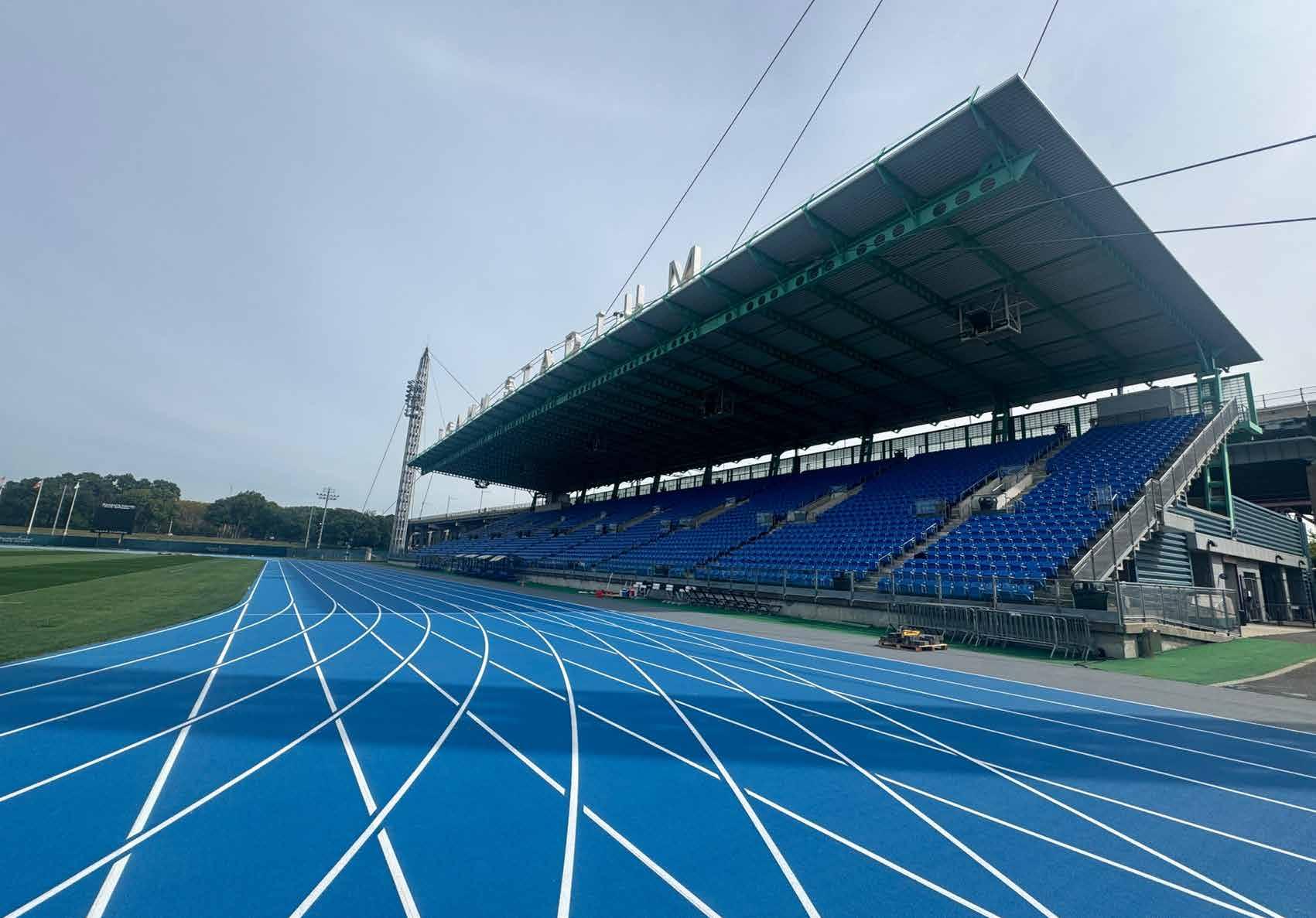
HIGH-PERFORMANCE TRACKS YOU CAN COUNT ON, RAIN OR SHINE
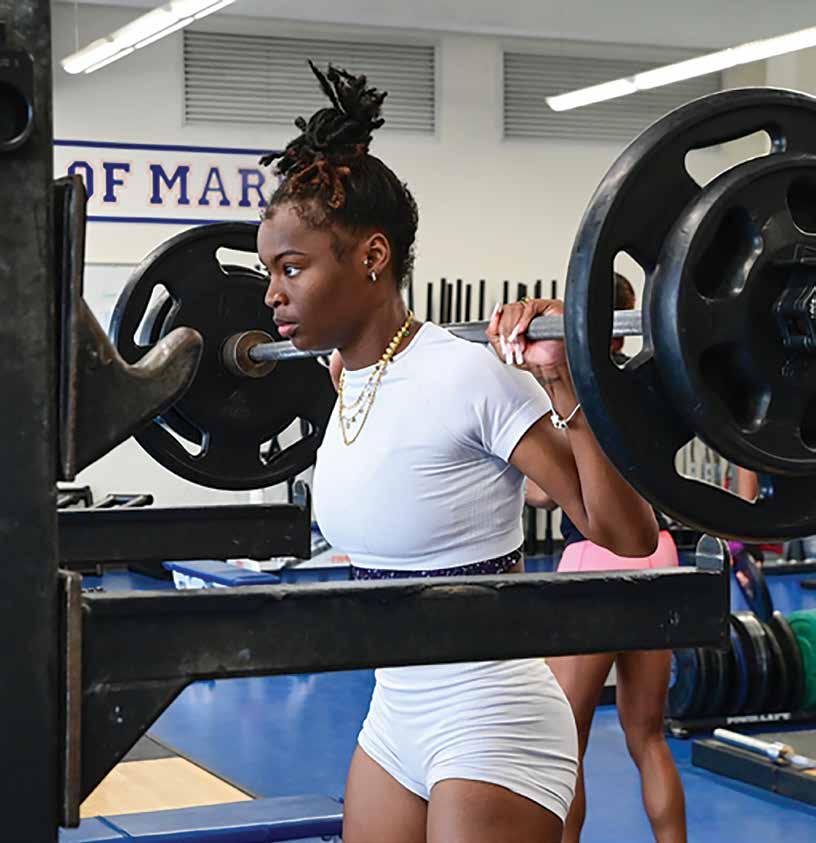
Worth the Weight
Strength Secrets for Sprinters and Hurdlers
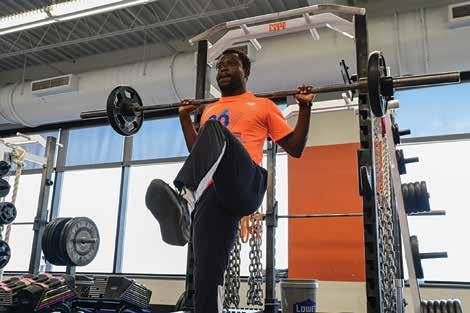
Fne of the most interesting topics that always seems to spark good debate and discussion in track and field training is the subject of strength training for sprinters and hurdlers. There is a great deal of variance and opinions among coaches and athletes on what is the “right way.” There are numerous stories of conflicts between track and field mentors and strength and conditioning coaches as to what this way should be. And like many training components, there really is no one right way. There is certainly no shortage of coaches that are willing to weigh in on the subject.
Most of the noted authorities and coaches have very strong opinions on what the training should be. “Sprinters need useable strength — strength that shows up in ground contact, posture, and rhythm,” noted Vince Anderson, one of the premier sprint/ hurdle coaches in the world who coached at Tennessee and Texas A & M. “If it doesn’t transfer to the track, it doesn’t matter.”
Dan Pfaff, one of the most respected coaches in the world, added this: “Sprinters need strength that supports stiffness, posture, and elastic return,” said the semi-retired Hall of Fame coach from ALTIS. “If the strength work disrupts those qualities, it is the wrong strength.”
Our objective with this article was to explore, examine and present what coaches are doing with their sprinters and hurdlers in the world of strength training. It was certainly interesting. Eye-opening at times. Surprising. Due to some of my concerns about strength training throughout the years, this was a very interesting article for me to engage in. I
was often accused of neglecting the weight room and not placing enough importance on strength training during my career. However, nothing could be further from the truth. Strength training is essential for the sprinter and hurdler. My biggest concern has always been that strength training in the weight room transfer to the track. Strength training should be intentional, functional and a lot of strength work can be done outside of the weight room. The bottom line for me: The strength training in and out of the weight room should service what happens on the track. Certainly not the other way around.
With that being said, let’s find out what track and field coaches and strength and conditioning coaches had to say about the subject. Our survey poll included nine questions on a variety of topics related to strength training for sprinters and hurdlers. The answers were briefly summarized by the author and then followed by some of the individual comments and thoughts from the coaches. The coaches participating in the poll were both young and veteran mentors representing all levels of collegiate track and field, including NCAA Division 1, II, III and NAIA.
Let’s delve into the questions and comments.
QUESTION 1: IN VERY SIMPLE TERMS, WHAT IS YOUR PRIMARY OBJECTIVE FOR YOUR STRENGTH PROGRAM FOR SPRINTERS AND HURDLERS? The consensus answer among the coaches was that their main concern was creating a high transfer of training from the weight room to the track, to build strength and power, and to reduce risk of injury.
“The primary objective of our strength program is to build power and stability that directly transfers to faster, and more efficient sprinting and hurdling,” said Reece Vega, a highly successful sprint/hurdle coach from North Dakota State University.
Oregon associate head coach, Curtis Taylor, had an even more direct answer: “The primary objective is to build a “bigger engine” and reduce injury risk,” noted one of the NCAA’s top sprint/hurdle coaches whose athlete, Aaliyah McCormick, just recently won the NCAA championship in the 100-meter hurdles.
“The weight room helps build a foundation for athletes to not break down during a long season,” said Sacramento State’ Kyra Jefferson, an assistant coach who was a former professional sprinter, talking about one of her primary objectives.
Calvin Robinson, the associate head coach and a successful sprint/hurdle coach from Texas Tech, had an interesting take: “The primary objective of strength training in our program is for the weight room to coordinate and enhance what we do on the track,” he said. “Too often coaches look at each of these as isolated trainings when in fact there should be cohesiveness between what you do on the track and what you do in the weight room.”
Not all of the coaches were in agreement. “We lift weights,” said Tommy Badon, the head track and field coach of the Ragin’ Cajuns from the University of Louisiana. “For us, strength and conditioning are an auxiliary component in our entire sprint development model, with increasing power output ability being the main concern for our sprint program.”
Jim Vahrenkamp, the University of North Dakota head coach, had similar views. “Simply put, the goal is to compliment what we are doing on the track. There isn’t a lot of direct transfer from what happens in the weight room to what we do on the track. That being said, however, there are some great things that happen at the cellular level that influence motor learning, neural drive, and hormonal responses.”
Most of the strength coaches were on the same page as the coaches. A good example was Mike Silbernagel: “The primary objective is to increase in the weight room the qualities that carry over to performance on the track,” expressed the former Colorado State and University of Mary strength and conditioning coach. “The strength program should complement what is happening on the track,” he added.
QUESTION 2: HOW DOES STRENGTH TRAINING CHANGE AS THE SEASON PROGRESSES, SPECIFICALLY FROM YOUR FALL TRAINING TO COMPETITION? All of the parties were in general agreement on this one. Fall training, most said, was used for general strength and power, with an emphasis on high volumes. Lifting in many of the programs was done on four days of the week. Speed and much higher intensity was the focus as the season progressed into the competition phase of the season.
Colton Razon, a strength and conditioning coach from The Ohio State University, and who is in charge of the Buckeyes track and field strength program, summed it very well: “Our training progresses from general
to specific as we look at training means from fall (preseason {GPP 1 -2 and SPP 1}) to inseason and peak competition phases (SPP 1-2 and Peaking),” he revealed. “The general to specific being in terms of intensity (i.e., Force, velocity, and/or mechanical/neuromuscular similarity to sporting demands), not submaximal movements that merely “resemble” the sporting movements. Bondarchuk’s training pyramid, which provides a relatively scalable way to look at training and categorization of menu items, can be very helpful to better understand this.”
Coach Vega, who has been at NDSU for six years, expounded on Coach Razo’s explanation. “In the fall, our strength training is focused on building a foundation of general strength, movement quality, and power capacity. We use heavier loads, lower velocities, and more multi-joint lifts to develop strength and resilience. As the season progresses and we move toward competition, our strength work becomes more specific and speed-oriented. The goal shifts from building strength to expressing it quickly. We reduce total volume, increase movement velocity, and emphasize power and neural output. By the championship season, the weight room supports performance. The lifts are lighter, more explosive, and complement what we’re doing on the track, so the athletes feel fresh and powerful, and not fatigued.”
Coach Robinson, a seven-time Mountain Region assistant coach of the year, noted the change from four days of lifting in the fall to only two during competition. “Our strength training changes significantly throughout the course of the season, with changes in sets/
reps schemes,” he explained. “More specifically, we move from four days of strength training in the fall to two days during the competition season. Another big change is in variation of movements, and speed and intensity at which we complete those movements. In simplest terms, we go from slow, full range movements to fast movements over shorter ranges of motion.”
Kyle Grossarth from BYU had a great explanation for what they are doing: “Our strength coach has done a phenomenal job in helping our athletes buy into getting more powerful,” voiced the Cougar sprint/hurdle coach. “We are always pushing intensity in our Olympic lifts throughout the season, including during the competition phase. The biggest change there would be to their volume, but the intensity is always high. Stronger and more veteran athletes will see an adjustment to their program during the competition season to more ballistic and speed emphasis with some lighter weights in the auxiliary lifts, but still maintaining a high intensity (high percentage of max) in their Olympic lifts. The younger athletes will maintain a similar program in the fall and throughout the season.”
Ashland sprints/hurdles coach, Logan Sharpe, put it very simply, saying, “We go from general strength, higher volume, lower intensity lifts to specific lifts of high intensity and low volume.”
QUESTION 3: DO YOU INCLUDE FUNCTIONAL TRAINING OUTSIDE OF THE WEIGHT ROOM AS A PART OF YOUR OVERALL STRENGTH PROGRAM?
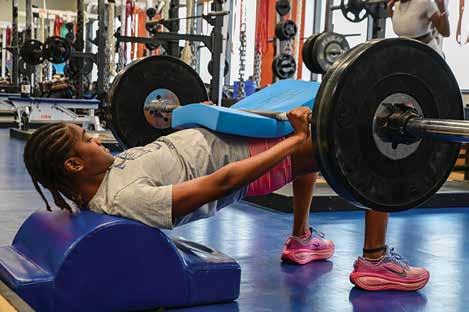
Nearly all of the coaches place a great deal of importance on functional activities outside of the weight room. Band work, plyometrics, bounding, medicine ball exercises and circuits, recovery circuits, hip mobility circuits, core work, and body weight exercises were all listed by the coaches on their “functional training” menu.
Auburn coach Kenneth Harnden, the 2026 Division 1 indoor assistant coach of the year, and the coach of Ja’Kobe Tharp, the new world record-holder in the 110-meter hurdles and the NCAA national champion, was very candid. “Absolutely,” stated the coach, who also coached NCAA 100-meter champion Kanyinsola Ajayi, when asked the question about functional training. “We train the athlete.”
Many of the coaches went into a lot of detail, including Cale Korbelik from the University of Mary. “Functional training movements are extremely important to

our plans. Especially on our hard workout interval days where the quality in the weight room would not be ideal. We do many things like med ball circuits, body weight circuits, strength/mobility circuits, isometric circuits, eccentric circuits, and core routines. We want to improve our functional movements and mobility. This also plays a role in using our bodies in different ways at different loads and intensities to help benefit strength and health. I would say this type of training has allowed us to stay much healthier than without the use of functional training.”
Julia Hammerschmidt, the head coach at Bismarck State College (ND), echoed many of the same thoughts as Korbelik. “We do body weight, med ball, and plate circuits on our general days where we have low intensity work,” said the former All American hurdler who is going into her third year as head coach at BSC. “Typically, this would be twice a week during preseason and 1-2 times a week in season. These circuits work on accessory exercises with a focus on the glutes, hamstring, and hip flexors for our sprinters to stay healthy.”
Vahrenkamp, the seventh-year coach of the Fighting Hawks program, was very specific in what the purpose of functional training is for his program. “There are always general strength and specific strength exercises that exist within the context of our programming. The purpose of these activities changes throughout the year. At the beginning of the year, we may be looking at tissue health, recruitment patterns and range of motion while looking at work capacity. At the end of the year, the focus may be primarily on restoration.”
QUESTION 4: DO YOU WORK WITH YOUR STRENGTH AND CONDITIONING COACH, OR SET UP YOUR OWN PROGRAMMING FOR YOUR STRENGTH TRAINING FOR SPRINTERS AND HURDLERS? OR IS IT A COLLABORATIVE EFFORT? EXPLAIN.
Both groups of coaches agreed that it should be a collaborative effort and that this is critical to the success of the sprint/hurdle groups. They all said communication and being on the same page was a must. They all agreed, too, that all parties need to “stay in their lane” to assure success for athletes. Most of the coaches involved said they had good working relationships with their strength coaches. But not all.
One coach that had some reservations and apprehensions was Korbelik. He was quite blunt about it. “It depends on who our coach is,” declared the coach, who took over
the Marauder program in 2022. “Over time, we have had a lot of different coaches for strength. This is not ideal for the student athlete. It is important to have a program that fits my system. I have worked to educate myself for over 15 years in strength training. Within this system, there have been adjustments to work and perfect our program. I then work with the strength staff to collaborate and give them ownership. If I do not believe and trust the program, then we do not do it and find other means of strength training on our own. In a perfect world, it would be an understanding of the program I have worked on for 15 years, and then collaborate and learn from a strength coach to make our program even better! I have spoken with many coaches in the world of track and field. They say their strength program is a difference maker for them if done correctly. But far too often it is an area of frustration. I stick to my core value of training: ‘Do what is best for the studentathlete, not your ego.’”
Another coach with some concerns was Vahrenkamp, and a lot of that too was the constant turnover of strength coaches. “In the last year I have had four different strength and conditioning coaches,” he said. “Ideally, we would work hand in hand with our strength coach, but turnover necessitates that I write the training for our groups. Ideally, our strength coach would execute the lifts and report any concerns in our staff meetings on Monday. However, I find myself present in the weight room to ensure that things are functioning in conjunction with our efforts on the track. I do not view the weight room as a separate thing from the more sport specific movements. Each input has to be judiciously managed and observed.”
Most of the track coaches were very pleased with their strength and conditioning coaches. None more than Harnden, the Tiger sprint/hurdle mentor from Auburn, and a two-time Olympian himself. “I believe I have the best strength and conditioning coach (Tyler Gay) in the country. We work very well together through constant communication. In addition, he is willing to spend time on the track watching the athletes there, and I’m in the weight room every day. This ensures we’re on the same page at all times.”
Another coach that was very complimentary of their strength coach was Grossarth. “I spent 5 1/2 years of my career as a strength and conditioning coach working with various sports,” noted the coach, who was a conference champion 400-meter hurdler and who started his coaching career at BYU in 2013. “That time was a great learning experience for
me to get a good perspective of the strength coach vs. the track coach. My strength coach is very knowledgeable, and I trust him with our team. I think it is important to know what your strength coach’s philosophy is on strength training before you begin, and then have constant communication throughout. In the end, the athletes are your primary responsibility, but I believe that the right strength coach can enhance your team.”
Some of the other coaches explained they worked very well with their strength coach, too. One was Jordan Andreassen, an assistant coach from Missouri. “I work directly with our strength and conditioning coach to make sure that both of us are on the same page when it comes to training. We make sure that the workload and reps are not duplicated or overused either on the track training, or in the weight room. For example, plyometrics. If on the track we are doing jumps or bounds, I would recommend that our strength coach implement those on a different day or supplement those with a different type of plyometric movement. I ask our strength coach to make training their own, and then we both talk openly about what we both are looking for in each athlete and how to better their overall training.”
Coach Jefferson also explained her collaboration with her strength coach. “Short answer, yes. I’ve learned that both he and I bring different expertise and experience (what I have learned as a coach of a sprinter and what I have learned as a former professional athlete myself), said the former four-time NCAA national champion. “ We collaborate. I allow him to lead the way for a vast majority of the program, but I also give my input on what specific aspects I’d like to have implemented with my group because I see them train outside daily. He knows how to program/progress the weightroom and I know how to program/progress the training, so we collaborate.”
The strength and conditioning coaches were very much on board with collaborative efforts. One of those was Coach Gay, who Coach Harden was so complimentary of. “We collaborate on everything. We have daily meetings about who is where and how the group is training, how we are looking physically, and where we are mentally,” said the Auburn strength coach. “ We ask these questions to each other and make adjustments as needed. We write in pencil, and erase when needed.”
Buckeye Coach Razo explained even further: “I collaborate with my sprints/hurdles coach to ensure that training is both compli-

mentary in both the short and long-term (following complimentary phases of training and have training schedules that best pair with neuromuscular demands of the day). In track and field, I believe this to be imperative. Silos and broken glass aren’t conducive to high performance. The strength coach needs to be allowed to do his job, but the strength coach also needs to understand the global training demands.”
QUESTION 5: DO YOU TREAT MEN AND WOMEN DIFFERENTLY AS FAR AS STRENGTH TRAINING AND THE PROGRAMS THAT YOU USE IN THE WEIGHT ROOM?
This was one of the most interesting questions, as it sparked considerable debate and a wide range of answers. Research and science have shown that men and women should be trained differently, both on the track and in the strength areas, but that didn’t hold a lot of significance for a lot of the coaches. There were a number of different “camps” on this issue. Some coaches said yes, they did treat men and women differently regarding training strength. For other coaches, it was a definite no. The majority of the coaches, however, were of the opinion that they didn’t train by gender as such, but by individual athlete, taking into account things like training age, injuries, and background experience. Some coaches explained too that they felt the biggest training differences come in the championship segment of the season.
One of the coaches who felt there should be noticeable differences in the training of men vs. women in the “peak” phase was Coach Silbernagle, the author’s former
strength coach at the University of Mary. “The differences come primarily when it comes to peaking towards bigger competitions or in the championship phase, “noted the longtime coach, who is now the director of Sanford Power in Bismarck, ND. “Men seem to need a longer taper, while the women have benefited from a shorter taper.”
Coach Robinson, the Red Raiders coach, said basically the same thing. “The short answer is yes,” he said, when asked the question. “But for us, this mostly shows up during championship time within our taper and is rooted in the fact that women do not retain strength levels as long as men, so we tend to keep the women in strength training longer during this period. This mostly looks like high speed movements for over shorter rep schemes to facilitate stimulation.”
Many coaches had strong feelings about training the athlete and not gender. One of those was Coach Harnden, who said, “There is no delineation between genders. There is, however, most definitely delineation between athletes. No two athletes are identical.”
Coach Jefferson was in agreement with Harnden. “I treat athletes based on their skill levels and abilities, not by gender. It’s important to understand that just because men are typically stronger, it doesn’t mean they will be in a particular exercise. I have seen this many times. Training age, mobility, and injury history all play a factor, and gender doesn’t determine that.”
Coach Vahrenkamp was on the same side of the issue as Harnden. “Fundamentally no. I coach each group of people with the necessary accommodations that they require.
Depending on training age, it may mean that I do less with a young group of male sprinters, versus an older more experienced group of females. The programming, however, is essentially the same.”
Some of the coaches were very emphatic about treating women and men differently. One of those was Armando Payan, the sprint coach at Wisconsin-Platteville. “Yes, I treat men and women differently because their bodies are different, but the main goal is the same: to help them get stronger and faster. I change the exercises or how hard they work based on what each person needs, not whether they are a man or a woman. It’s the same with track training. Women will do a little more volume than men because of power output levels, and different drills depending on what athletes need.”
Another yes was Coach Korbelik. “Yes. There are physiological differences between the two. Often, I stick to the components of strength and power for the women longer or more of an emphasis. With the men, I can progress them to velocity based training quicker and see great benefits. The emphasis per periodization is just a little different. I do this as well with our track training for the sprint/hurdle group. Based on experience, men have or achieve strength and power quicker than women, and they respond better to velocity and more frequently. Women see great gains with continuous improvement with strength and power but will always need velocity as well.”
A few of the coaches said no but offered explanations. One was Ducks coach, Taylor: “No difference EXCEPT to be mindful of the fact that women’s maximal strength levels will decrease at a faster rate that the men’s, so it may need to be monitored or touched on occasion,” said the many-time assistant coach of the year who is in his ninth year at Oregon. “This can be built in as the program is being developed.”
“There are not any large scale differences,” offered Chris Parno, the Mankato State University ultra successful sprint/hurdle coach. Coach Badon was brief and to the point too. “We may do some minor tweaks to the women’s programming, but all the major stuff stays the same,” he noted.
QUESTION 6: DO YOU INDIVIDUALIZE TRAINING IN YOUR STRENGTH TRAINING PROGRAMS, DEPENDING ON IF YOUR ATHLETE IS A “STRENGTH” ATHLETE OR A “BALLISTIC” ATHLETE? EXPLAIN.
This was a topic where there was a broad







































range of answers and opinions. Some coaches were a definite yes. Some were a very direct no. And some said they would like to be training ballistic and strength athletes differently, but because of certain limitations they could not do that (one of the major limitations that made it difficult was the large number of athletes in their groups). Some coaches also said they didn’t see the difference in distinguishing between the two because they were already customizing and individualizing their programs for their athletes.
Two coaches who were into the ballistic/ strength component of training them “differently” were Vega and Korbelik. “Yes, there’s definitely an individualized component,” explained Vega, who is his 21st year of coaching. “We recognize that not every sprinter or hurdler responds the same way to strength training. Some are naturally more strengthbased, while others are more elastic or ballistic. We adjust the focus based on how each athlete produces force. Some athletes might need to work on the rate of force development, while others need more foundational strength. The overall program stays consistent, but the emphasis changes based on individual qualities.”
“Yes. I really enjoy the periodization of ballistic training,” said Korbelik, who has carried on a long tradition of excellence at the University of Mary. “But this isn’t always the best for everyone, or at the same time of the year. I think you have to really focus on what the athlete needs, and track what they respond to as well. Once you get that information or data, you can paint a greater picture on what they will need to focus on or respond to the best when it matters the most during the season.”
Coach Jefferson was in the yes category as well. “Yes — we’ve done testing and evaluation with ForceDeck and have found some athletes are strong, but need more explosiveness,” stated the coach who is in third year at Sacramento State. “Others are the opposite (or balanced). Those individualized programs come after that analysis and can be simple or complex additions to the program.”
Some coaches said in an ideal world they would. Some said limitations didn’t allow them to. “While this is a great idea, it tends to get challenging in large group settings, so as we understand our athletes over time, we find ways to make sure each individuals’ needs are being met, whether that be in the weight room or on the track,” declared Coach Robinson.
Coach Vahrenkamp was a yes, but with some explanation. “I think I would like to say
that the answer is yes,” he said. “However, the training is written in ranges so that athletes and coaches can work together to adjust volume and intensity based on what is actually happening on the day. What is on paper is generally a theme, but what actually happens is based on the present state of the organism and reality.”
Coach Andreassen said the Tigers take an individual approach. “As stated earlier, each athlete has a more individualized training program in the weight room,” disclosed the former Iowa State athlete. “For example, a young athlete who has never cleaned or snatched, may be learning the movement patterns of those lifts, while an upperclassman may be fully cleaning or snatching. We try to train each athlete to become more powerful and faster. Again, it depends on their skill set and what we as coaches see in their movement patterns and where we need to play off their strengths and weaknesses. It also depends on whether they need more ballistic work, more strength work, and what they can handle. Some athletes need more ballistic lifts versus strength lifts to see and feel better results and vice versa.”
Coach Badon, a veteran coach, had a remarkably simple explanation. “Our strength programming assumes all sprinters/hurdlers are speed-power athletes and the weightroom work mirrors that assumption.”
Coach Razo had a much longer explanation and rational. “Yes. Training adjustments should be made based upon general strength levels, anthropometrics of the athlete, training age, and the “type of athlete” that they are (I tend to look at this as more power/ muscular driven or more elastic/fascial driven). I think a mistake that we often see is making broad generalizations with exercise selection and we try to force square pegs into round holes. The barbell back squat is a great exercise. So are power cleans from the floor, as are snatches, and push jerks are excellent, but that doesn’t mean you should start there, nor is it in the best interest of the individual. In the case of squatting, you may have an athlete with a long torso (long torso being in relation to femur length), in which case they have restrictions that prevent proper back squatting mechanics. In this case, an option such as a heel elevated Zercher squat (often the most accessible squat variation), or a hands-free front rack squat may be better suited to begin loading the pattern and teaching mechanics while fixing restrictions to later allow them to back squat appropriately.”
Coach Silbernagel explained his rationale on the subject. “It depends. The training age
of the athlete and physical development plays a role, but you also need to know what type of athlete he or she is on the track. The goal of the program is to build upon the athlete’s strengths while bringing up their weaknesses. In the off-season, I may do more strength work for the ballistic athlete, but more ballistic work for the strength athlete. As they get closer to the season and competition, I will match what they use the most in the sport”
QUESTION 7: DO YOU BELIEVE THAT AN ATHLETE CAN GET TOO STRONG? BETTER PUT, DOES WEIGHT/MASS MANAGEMENT PLAY A ROLE IN YOUR STRENGTH TRAINING PROGRAMS? HOW DO YOU MAKE SURE AN ATHLETE DOES NOT GET TOO MUSCULAR AND GAIN TOO MUCH UNNEEDED MASS? There were many excellent and well thoughtout responses to this question. The answers were mixed, but a majority of the coaches, especially strength and conditioning coaches, were of the opinion that you couldn’t get “too strong,” but unneeded mass could certainly be a concern. Adding unwanted mass and hypertrophy were all issues, according to nearly all of the coaches.
Trevor Schier, the strength and conditioning coach at the University of WisconsinPlatteville, summed this up very well. “I know that based off what we do in the weight room, it would be hard to consistently put on mass throughout the entire season. I don’t address weight management with the track and field team simply because I don’t push the need to put on copious amounts of mass throughout the year. I see it as I am training athletes and not bodybuilders, and I believe my training reflects that for the team. That being said, if an athlete goes through a full semester of training and ends up gaining three to five pounds of lean mass/muscle, I will not discourage them from continuing down that path. I don’t believe an athlete can get too strong if there is an emphasis on mobility in the areas of necessity for sprinters and hurdlers. Those areas tend to be the hip, knee, and ankle. If I can maintain or build on an athlete’s mobility while improving their strength throughout the entire year, I believe an athlete can continue to get stronger and more athletic. When addressing athletes on getting ‘too muscular,’ it really comes down to a simple conversation between the athlete, coach, and myself on a good healthy weight for the athlete to be at to compete at their best. It would serve no purpose for a sprinter who is at a comfortable weight for their height/build to put on 20 pounds that inhibits their ability to sprint as fast as they previously

have.”
Coach Silbernagel continued Coach Schier’s thoughts. “Too strong, maybe not,” he offered. “Too much mass that does not translate into performance, yes. You see many lightweight lifters in Olympic weightlifting and powerlifting do extraordinary things when it comes to strength. With that being said, carrying weight in the wrong places can hinder performance. An example would be too much upper body mass for the sprinter/ hurdler. This could create not only extra weight to carry but could change the center of mass that affects mechanics and efficiency of movement as well. A program must be designed to train the upper body while looking to minimize hypertrophy and emphasize upper body power and force development exercises.”
BYU coach, Grossart, basically agreed with the strength coaches, saying he didn’t think athletes could get too strong. “I don’t think an athlete can get too strong, but I do think an athlete can get too big. We focus on strength to weight ratio. We are trying to build a really big engine with a frame that is sufficient to carry that big engine. That is mainly addressed through the programming and how our strength coach is managing the volume of each exercise.”
Coach Badon was in full agreement: “One saying in the sprint world is, “lean muscle mass matters,” noted the coach. “So, power output ratios based on BMI indexes is important. Hypertrophy can be an issue and must be managed. Our strength training routines are based on lifts that produce a high degree of power output or some recovery effect. So, doing kinds of lifts that cause excessive hypertrophy are not part of our programming.”
Coach Robinson had a nice explanation for his feelings on athletes gaining too much strength. “Too strong” only becomes a concern when we are no longer seeing the transfer of those strength gains in terms of on track success. If an athlete is putting up great weight room numbers, but yet struggling on the track, then something has gotten lost in translation. This may or may not present itself in weight/mass form, so we must be careful when we qualify this as the only or primary issue by getting too strong or too muscular. Loss of coordination is typically the biggest detriment to becoming “too strong.”
Coach Harnden also agreed that explosive athletes can’t get too strong and went on to explain his thoughts. “I don’t believe an ath-
lete can get too strong; I do believe that you can push an athlete too far. There’s no such thing as an injured athlete who is successful. Diet, meals, timing, and preparation are what allow an athlete to stay at the correct weight for them. If we feel an athlete is gaining too much mass, then obviously we will make adjustments. However, it’s normal to be heavier in the preseason than during the season.”
The head coach from UND (Vahrenkamp) had this take: “Yes, I think that an athlete has the capability to train one biomotor ability too much. In this case, absolute strength gains in the weight room can ultimately have a negative impact on what happens on the track. There are common sense guidelines that exist in the literature, but it is essential for a coach and athlete to operate as a team to achieve common goals. Observing general physics principles also makes sense. It costs energy to move mass. Thus, we are looking for increased power output without increased mass.”
QUESTION 8: WHAT DO YOU CONSIDER SOME OF YOUR MAJOR LIFTS?
Cleans, squats, snatches, and deadlifts were on the menu of nearly every coach who responded to the survey. There were many different versions of the squat and deadlift. Cleans were by far the most popular lift that was on the strength repertory. And different versions of the bench press were listed as the most popular upper body lift. The trap bar deadlift, according to research, is ranked as the top lift for sprinters and explosive athletes, with the trap bar jump a close second. Interestingly enough, only four coaches listed the trap bar deadlift as one of their top lifts: Vega (NDSU), Korbelik (University of Mary), Taylor (Oregon), and Harnden (Auburn). Many of the coaches offered explanations and details about their primary lifts.
Coach Parno, who has coached three Olympians and 24 national champions, offered this about his program: “Squats/ deadlifts with variations of both are big for us,” said the 13-time Central Region assistant coach of the year. “Olympic lifts with main clean variations, too. We usually look to pair a lift with some sort of explosive movement after it.”
Coach Grossarth said his primary lifts were Olympic lifts, too. “The primary lift of each lifting session is an Olympic lift,” disclosed the coach. The athletes will sometimes spend up to two-thirds of their time during the
workout on either cleans or snatches. I would also consider the back squat and front squat as major lifts in our program.”
Coach Robinson agreed with Grossarth. “Some of our major lifts consist of hang clean and squats, with variations on all these movements. I am a big believer in simplicity and learning to do the basics really well when it comes to strength training.”
Coach Badon agreed with Coach Robinson concerning keeping it simple: “We try not to complicate things,” said the veteran coach. “Standard power lifts like cleans and snatches and derivates of those lifts (pulls, complexes, etc.) We also incorporate absolute strength movements (squats etc.) in the program but adapt those to the time of year. We generally have two power days a week, and one day dedicated to circuit training for recovery.”
Coach Payan had a detailed explanation of his lift program: “Some of my major lifts are squats, deadlifts, power cleans, singleleg lifts, hip and glute exercises, and bench press because they help develop the strength, power, and explosiveness that sprinters and hurdlers need to perform their best.”
Coach Jefferson agreed on the Olympic lifts but added the importance of lifts for the hamstrings. “Olympic lifts like cleans (power, hang, off a box), snatches, dumbbell bench press, squat variations,” stated the former elite sprinter. “Hamstring strengthening is important to me, so Nordics are a staple, too.”
Coach Schier added the strength and conditioning coach perspective: “My major lifts tend to revolve around the Olympic lifts, the snatch and the clean. Offseason, I look to peak each movement before the start of the indoor season and then provide variations throughout the season training. Rarely will any of the track programs not feature an Olympic barbell exercise in each training phase. As far as the squat and pressing variations that I include, there isn’t one in particular that stands out simply because I will provide variety in what we do from an in season and offseason perspective. I don’t tend to use a specific squat or press exercise longer than 6-8 weeks, compared to year-round with the Olympic lifts.”
QUESTION 9: WHAT DO YOUR STRENGTH PROGRAMS LOOK LIKE IN YOUR CHAMPIONSHIP PHASE? HOW DO THEY CHANGE FROM YOUR “REGULAR SEASON,” IF INDEED THEY DO?
Both the track and field coaches and the strength mentors were in agreement on this

particular issue. Just about all concurred that volume is lowered, bar speed and intensity increased, the number of sessions per week reduced, and that the strength routines in the championship phase were much more of a maintenance phase where the coaches were preparing their athletes to run fast. Notably, not one coach addressed the issue of the differences between how men and women should train strength in the peak phase of the season. Research has revealed a number of factors that indicate how men and women should be treated and trained differently. Surprisingly, none of the coaches dealt with that subject. They did, however, cover a number of other topics related to strength in the championship segment.
“I think, as a general rule of thumb, the movements stay the same in the championship phase,” said Coach Harnden. “The changes are with intensity and/or volume, depending on the athlete. In addition, some athletes require a gradual step down approach towards a peak, while others are more successful with the significant drop in X number of days prior to competition.”
Coach Vega explained what the Bison program does during their peak segment: “In the championship phase, our strength program shifts from building to maintaining and refining power,” said the mentor. “Earlier in the year — the fall and regular season — we focus on developing strength, building tissue resilience, and increasing force output. As we get closer to championship season, the goal becomes to keep athletes feeling fast, fresh, and powerful. Volume drops while intensity and velocity stay high.”
Coach Korbelik was very blunt in his assessment: “Quality, quality, quality, “ stated the coach. He went on to explain, “Everyone is different. Some people will not go to the weight room in the championship season, but do functional training, med ball throws, etc. Others will stay in the weight room because they need to keep their strength. There will be an emphasis on velocity and ballistic training. The workload is less, but sometimes the confidence they need for championship meet day comes in the weight room. I have seen this the mostly from my women, jumpers, and multis. Giving them what they really enjoy can really bring out the confidence!”
Coach Taylor put it very simply too, in talking about what the Ducks do: “Competition season, we cut the weights down to 60% or below the max lift level, touch on the heavier lifts every fourth week, and with the lighter weights, focus on increasing bar speed.”
Coach Hammerschmidt went into considerable detail. “We lower the sets and reps to 2-4 sets of 2-3 reps,” she explained. “Focus on moving the weight fast. Explosive Olympic lifts and transition our squats and split squats into more ballistic movements. For example, squat jumps paired with back squats. Lunge jumps paired with split squats. The range of motion also decreases. We change our full squat to a quarter squat.”
Coach Andreassen vocalized reducing the lifting days, much like many of the other coaches. “We do change our strength programs in the championship phase,” revealed the sprint/hurdle coach. “We normally lift three times a week, with three ‘full days’ of weights. In the championship phase, we do two ‘full days’ in the weight room, with our third day being more of a prep/primer day. Again, the intensity stays high while the reps stay low.”
The strength coach angle was summed up very well by Coach Gay and echoed much of what the track and field coaches were doing in the peak part of the year. “Volume and range of motion,” said the coach very distinctly. “We full squat in the fall with lots of volume. We do a quarter squat with high intensity and a little volume in the season. But switch to a pin squat with high intensity during championship phase.”
SUMMARY
It certainly isn’t uncommon for great coaches to have a lot of commonalities in their training, and this was certainly the case in this expose. There were many differences as well. There always are when it comes to training in track and field. I am always reminded of the great Coach Pfaff quote when it comes to different ways to train athletes. “There are many roads to Rome in this sport,” said the legendary coach. “The key is knowing why your road works.”
The coaches in our strength training for sprinters and hurdlers had a lot of things that “worked.” Some of their key points:
There was a wide variance in the primary lifts that the coaches employed, but the Olympic lifts were in nearly all of the coach’s repertory.
It was very clear that a strong majority of the coaches were step in step with the importance of functional training outside of the traditional weight room.
The most sensitive subject was athletes adding too much mass, with some coaches revealing that the subject of weight is off limits at the collegiate level.
Most of the coaches didn’t follow most of the research regarding training differences between men and women, preferring to train athletes as “individuals” and not by gender.
All of the coaches were adamant that it is extremely important that the track and field coach work hand in hand in a corroborative effort with the strength and conditioning coach, with most saying the key is communication amongst the individual parties.
There were fairly dramatic changes from beginning to end of the strength programs, as the athletes progressed through the year and into the championship peak phase.
It was very apparent that all of the coaches had a very definite plan, purpose and philosophy for what they were attempting to accomplish with their strength programs and athletes. It reminded me of a quote that Roman philosopher and statesman, Senecca, said regarding clarity of purpose that read like this: “If you do not know which port you are seeking, no wind is favorable.”
As always, we are thankful to the expertise, the knowledge, and the information that the coaches contributed to this article. It always renews our faith in the coaching profession when we see coaches who wish to improve their craft and profession through education. It is exciting to see that there are many coaches that view our profession as I do: “Coaching is a lifelong learning experience for coaches who want to continue to improve, grow, and be the best they can be for their athletes.”
REFERENCES
Anderson, Vince, formerly Texas A & M (Retired), Clinics, articles
Pfaff, Dan, ALTIS, Clinics, articles, conversations
A special thanks to all of the coaches that contributed to this article.
Thank you to Ann Thorson for her contributions and technical guidance
MIKE THORSON IS A FORMER DIRECTOR OF TRACK AND FIELD/CROSS COUNTRY AT
























The U.S. Track & Field and Cross Country Coaches Association (USTFCCCA) is pleased to present the Collegiate Track & Field/Cross Country Athlete Hall of Fame Class of 2026.
This year’s class features some of the greatest names in collegiate track & field and cross country history. With 44 national collegiate titles, 37 collegiate records, five Olympic/World Championships medals, and seven world records while in college, these athletes have left an indelible mark on the sports.
“The USTFCCCA is proud to honor these exceptional athletes for their achievements and contributions to collegiate track & field and cross country,” said Sam Seemes, CEO of the USTFCCCA. “Their accomplishments have inspired countless athletes and fans, and their induction into the Collegiate Athlete Hall of Fame serves as a testament to their enduring legacy.”
The Collegiate Athlete Hall of Fame was established in 2022 to honor the best of the best in collegiate track & field and cross country. The Hall of Fame recognizes the achievements of athletes who have left a lasting mark on the sport during their time in college.
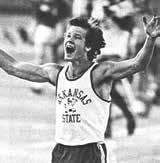
Earl Bell
Arkansas State 1974-1977 Jumps
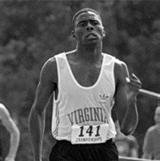
Paul Ereng Virginia 1988-1989 Mid-Distance
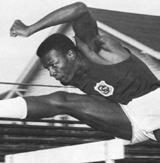
Earl McCullouch Southern California1965-1968 Hurdles
Dawn Sowell LSU 1985-1989 Sprints
John Carlos San Jose State 1967-1969 Sprints
John Godina UCLA 1992-1995 Throws
Dave Patrick Villanova 1965-1968 Mid-Distance
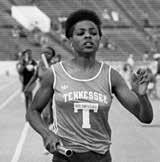
Delisa Walton Tennessee 1980-1983 Mid-Distance
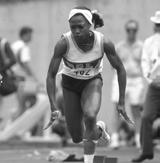
Gail Devers UCLA 1985-1988 Sprints/Hurdles/Jumps
Carol Lewis Houston 1982-1985 Jumps/Hurdles

Candice Scott Florida 2001-2005 Throws

Leann Warren Oregon 1980-1985 Mid-Distance

The U.S. Track & Field and Cross Country Coaches Association is proud to recognize the outstanding efforts of the country’s top high school coaches.
One boys coach and one girls coach from 50 states – as well as the District of Columbia – were honored for their successes during the spring of 2026, as selected by a committee of experts from around the nation (two coaches are honored, if they share coaching responsibilities).
State-by-state winners were selected based on their teams’ performances throughout the 2026 outdoor track & field season. Among the factors taken into consideration were team score and placement at the state championships, margin of victory, performance against rankings if available, individual championships, and how their teams’ performances stacked up to previous years (e.g. first title in school history, consecutive titles, etc.).
Each honoree will receive a trophy from the USTFCCCA recognizing their achievements.
Winners from each state were in consideration for the Association’s National High School Track and Field Coach of the Year award. One boys coach and one girls coach were chosen by a panel of experts to be named National High School Track and Field Coach of the Year.


2026 USTFCCCA HIGH SCHOOL BOYS TRACK & FIELD STATE COACHES OF THE YEAR
Alabama
Luke Robinson Scottsboro High School
Alaska
Robert Ostrom
Homer High School
Arizona
Alicia LaDuke Snowflake High School
Arkansas
Hays Lemley Van Buren High School
California
Brandon Thomas Servite High School
Colorado
Jeff Brennan Fort Collins High School
Connecticut Yvonne Grimes Bethel High School
Delaware
David King Laurel High School
District of Columbia
Ted Findler St. Albans School
Florida
Steve Bellamy
William M. Raines High School
Georgia
Parker Nail Carrollton High School
Hawaii
Chayse Tamaki
H.P. Baldwin High School
Idaho
Doug Fry Sandpoint High School
Illinois
Don Michelin
Evanston Township High School
Indiana
Justin Helmer
Bloomington High School North
Iowa
Luke Ossman
Alburnett High School
Kansas
Tyler Ryan
Andale High School
Kentucky
Jeremy Mosher
Covington Catholic High School
Louisiana
Sean Brady
Catholic High School
Maine
Wayne Whitcomb
Bangor Christian School
Maryland
Stacy Severtson
Crofton High School
Massachusetts
Zach Lankow
St. John’s Preparatory School
Michigan
Mike Roberts
Hillsdale Academy
Minnesota
Thomas Reigstad
Winona Cotter/Hope Lutheran High School
Mississippi
Charles Green
Hattiesburg High School
Missouri
Jeffrey Mannon
Poplar Bluff High School
Montana
Brandi Fox
Laurel High School
Nebraska
Sara Domeier
Lincoln North Star
High School
Nevada
Dorian Williams
Centennial High School
New Hampshire
Jade Gizzi
Pelham High School
Sean Brady Boys’ National Coach of the Year
Catholic High School (Louisiana)
Ben Duea Girls’ National Coach of the Year
Waukee Northwest High School (Iowa)
New Jersey
Schwann Grimes
North Brunswick Township High School
New Mexico
Adam Kedge
Albuquerque Academy
New York
Mike Potter
Warwick Valley High School
North Carolina
Samuel Willoughby Mallard Creek High School
North Dakota
Chris Clements Legacy High School
Ohio
Jeremy Rodgers New Philadelphia High School
Oklahoma Todd Ledford Duncan High School
Oregon Nick Slenning
Oregon Episcopal School
Pennsylvania
Justin Blose Fort LeBoeuf High School
Rhode Island
Eldon Santiago La Salle Academy
South Carolina
Calvin McCullough South Pointe High School
South Dakota
Jim Jarovski Lincoln High School
Tennessee
John Cochran
Millington Central High School
Texas
Anthony Escamilla
Obra D. Tompkins High School
Utah
Doug Soles Herriman High School
Vermont Kaitlin White Essex High School
Virginia Quinton Harper Churchland High School
Washington Casey Monahan Lakeside High School
West Virginia
Angela Johnson Wahama Senior High School
Wisconsin Kraig Western Winneconne High School
Wyoming Bret Engdahl Cody High School
2026 USTFCCCA HIGH SCHOOL GIRLS TRACK & FIELD STATE COACHES OF THE YEAR
Alabama Luke Robinson Scottsboro High School
Alaska
Melissa DeVaughn Hall Chugiak High School
Arizona Muhammed Oliver Canyon View High School
Arkansas Randy Ramaker Bentonville High School
California
Shannon Fisher Woodrow Wilson High School
California Neil Nelson Woodrow Wilson High School
Colorado Kelli Kunz
Mountain Vista High School
Connecticut Anne Burrows Bloomfield High School
Delaware
Maiya Dendy
Odessa High School
District of Columbia
Desmond Dunham
St. John’s College High School
Florida
Ricky Fields Creekside High School
Georgia Fyrone Davis Buford High School
Hawaii
Anue Santiago Kahuku High School
Idaho
Brett Welch
Kimberly High School
Illinois
Tywon Green
Homewood-Flossmoor High School
Indiana
Jill Rensink
Bloomington High School South
Iowa
Ben Duea Waukee Northwest High School
Kansas
Kieran Wurtz
Clifton Clyde Senior High School
Kentucky Mike Wicker Calloway County High School
Louisiana Bill Jones Episcopal School of Baton Rouge
Maine
Denise Curry
Scarborough High School
Maryland
Joey Young Woodlawn High School
Massachusetts
Scott Arsenault
Billerica Memorial High School
Michigan
Charissa Dean
Hackett Catholic Prep High School
Minnesota
Jeff Portugue
Saint Peter High School
Mississippi
Shane Baltz
Senatobia High School
Missouri
Wesley Ambruster Festus High School
Montana
Lars Schmidt Billings West High School
Nebraska
Jocelyn Suing
Bennington High School
Nevada
Josh Grubb Coral Academy of Science
New Hampshire
Mark Roskamp Hopkinton High School
New Hampshire
George Sabol Hopkinton High School
New Jersey
Shawnnika Brown-Self Winslow Township High School
New Mexico
Cody Lee Legacy Academy
New York
Rob Cloutier Shenendehowa High School
North Carolina
Phillip Bush Corvian Community High School
North Dakota
Brennan Doan Century High School
Ohio
Sam Ulery Avon High School
Oklahoma
Kami Beller
Washington High School
Oregon
Rob Frank Banks High School
Pennsylvania
Derek Jennings
JP McCaskey High School
Rhode Island
Jen Chabot
North Kingstown High School
South Carolina
Frank Holland
Hilton Head Island High School
South Dakota
Justin Risse
Bennett County High School
Tennessee
Ryne Sexton
Station Camp High School
Texas
LaKeidra Hayes
Lancaster STEM High School
Utah
Marcus Dickson Riverton High School
Vermont
Cory Coffey
Champlain Valley Union High School
Vermont
Dave Kogut
Champlain Valley Union High School
Virginia
Marco McKoy
Nansemond River High School
Washington
Stacy Edwards
Mercer Island High School
Washington
Amy Posner Wolf Mercer Island High School
2026 OUTDOOR TRACK & FIELD
NCAA DIVISION I









Ja’Kobe Tharp
Track AOY
Adaejah Hodge
Track
Sanu-Jallow
NCAA DIVISION II

William Opare Angelo State
Track AOY

Emily LaMena Colo. School of Mines
Track AOY
NCAA DIVISION III

Kai Smith






Field AOY







NATIONAL AWARD WINNERS

Nicholas Altheimer
St. Thomas (Fla.)
Men’s Track AOY

Heather Murphy Montreat (N.C.)
Women’s Track AOY

Carson Krack Carroll (Mont.)
Men’s Field AOY

Sydney Duncan IU Kokomo
Women’s Field AOY

Bradley Sowder Cumberlands (Ky.)
Men’s COY

Laurier Primeau British Columbia
Women’s COY

Derek White Cumberlands (Ky.)
Men’s Assistant COY

Grant Gaylor IU Kokomo
Women’s Assistant COY

Raynier Galvez Indian Hills (Iowa) CC
Men’s Track AOY

Juliana Sakat Iowa Western CC Women’s Track AOY

LeBron James New Mexico JC
Men’s Field AOY

Xylavene Beale Hutchinson (Kan.) CC
Women’s Field AOY

Terry VanLaningham New Mexico JC
Men’s COY

Kathleen Raske New Mexico JC Women’s COY
Kathleen Raske New Mexico JC
Men’s Assistant COY

Jeff Becker New Mexico JC
Women’s Assistant COY

Tristan Weaver Thaddeus Stevens (Pa.)
Men’s Track AOY

Tyliyah DiazCruz Thaddeus Stevens (Pa.)
Women’s Track AOY

Makai Gordon Hudson Valley (N.Y.) CC
Men’s Field AOY

Mckensie Collins Mineral Area (Mo.)
Women’s Field AOY

Jeoffrey York Hudson Valley (N.Y.) CC
Men’s COY

Mallory Dominguez DuPage (Ill.)
Women’s COY

Floyd Turner DuPage (Ill.)
Men’s Assistant COY

Gustavo Alvarez DuPage (Ill.)
Women’s Assistant COY