Welcome to the first 2026 issue of REGION Magazine. This edition highlights the partnerships, investments, and leadership helping position Southeast Louisiana for long-term success. From regional collaboration and transformative development projects to global trade and workforce readiness, the stories in this issue demonstrate how our communities are working together to compete and win in today’s dynamic economy.
The issue begins with a look at a growing spirit of regionalism across Greater New Orleans. The leaders of all 10 parishes are embracing a more coordinated approach to economic development, recognizing that the region's greatest strengths emerge when local assets are aligned behind shared goals. Whether attracting new investment, advancing major infrastructure projects, or improving quality of life, this renewed commitment to collaboration is creating a stronger foundation for growth.
That collective vision is already taking shape through several transformational developments which are reshaping the region's economic landscape. The next conversation explorse major projects including the redevelopment of the former Naval Support Activity East Bank, the restoration of Charity Hospital, the continued evolution of Gulf South Commerce Park, and new investments at Churchill Technology and Business Park. Together, these projects are creating opportunities for innovation, housing, workforce development, entrepreneurship, and business attraction that will influence the region for decades to come.
The focus then shifts beyond the region’s borders with Louisiana Global Connect, a new partnership between the World Trade Center New Orleans and Louisiana Economic Development designed to unify the state's international trade and investment efforts. By targeting key markets such as Japan and Australia and presenting a coordinated "Team Louisiana" approach, the initiative aims to strengthen the state’s position in the global economy and attract the next wave of foreign direct investment.
Of course, none of these opportunities are possible without a strong talent pipeline. That's why the issue also highlights the work of ABC New Orleans/Bayou, which is helping train the next generation of skilled construction professionals through apprenticeship and craft training programs. As demand for skilled labor continues to grow across Louisiana, these efforts are creating pathways to rewarding careers that align with expanding workforce needs.
The issue also features a profile of NextGen Council Chair Lauren Mastio, a partner at Jones Walker LLP, whose career reflects the importance of preparation, leadership, and civic engagement. Her story offers insight into the next generation of leaders helping shape the future of New Orleans and the institutions that serve it.
Together, these stories tell the story of a region that is thinking bigger, acting collectively, and investing strategically in its future.
Thank you for your continued support of GNO, Inc. and the transformative work happening across our region.
Sincerely,
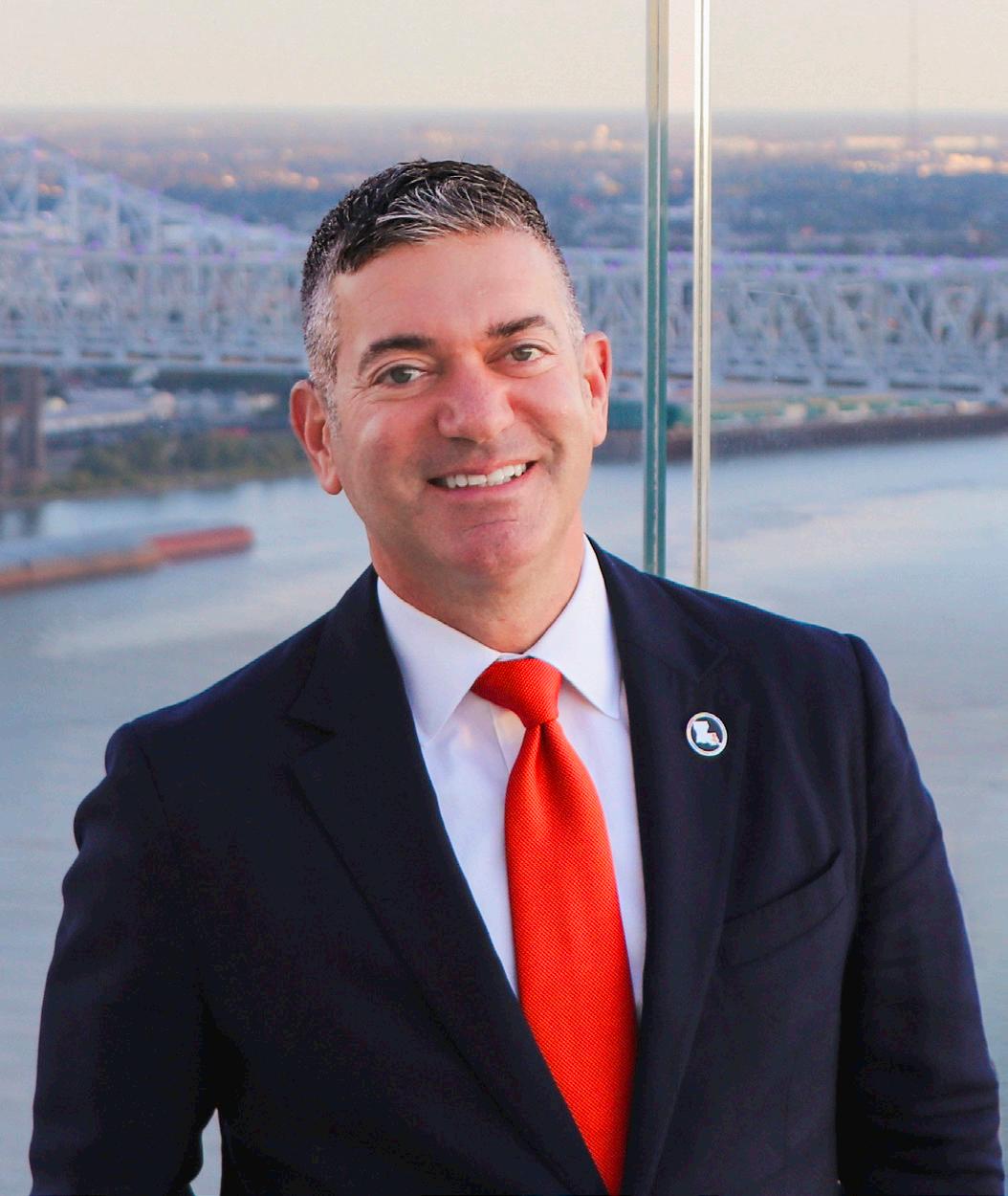
MICHAEL HECHT
Greater New Orleans, Inc. President & CEO
RELATIONSHIPS . RELEVANCE. RESULTS .
Greater New Orleans, Inc. (GNO, Inc.) is the economic development nonprofit for the 10-parish region of southeast Louisiana.
GNO, Inc. is built on a simple but broad mission: To create a region with a thriving economy and excellent quality of life for everyone.
The key is GNO, Inc.’s two-pronged approach to economic growth: by focusing on business development, the alliance aims to attract, retain and develop businesses that will employ our future workforce, propelling our economy forward and upward. This initiative is coupled with a concurrent nurturing of the business environment: by proposing, promoting and facilitating policies that improve conditions for business operations, GNO, Inc. ensures that businesses and corporate leaders are
positioned for long-lasting success.
For GNO, Inc., it is not enough to simply serve the community: we must also be a part of it. Real influence and significant change starts from within, and the alliance’s presence in the community is evident and expanding. Working together with the business community, regional stakeholders and all levels of government allows GNO, Inc. to coordinate, consolidate and catalyze action on key issues and opportunities, effectively maximizing job and wealth creation and creating systemic impact.
From workforce development and coastal stabilization to fiscal and criminal justice reform, GNO, Inc. is driven by results. It’s helping to create a robust and growing middle class and, in the process, ensuring our region’s continued prosperity.
PARISHES
Greater New Orleans
BY THE NUMBERS Q4 2025
An economic snapshot of Greater New Orleans’ 10-parish market
EMPLOYMENT & ECONOMY STATISTICS
POPULATION
1,420,653
31% of Louisiana’s population resides in Greater New Orleans
SOURCE: LIGHTCAST
EMPLOYMENT STATISTICS
$76,200
Regional Average Earnings
SOURCE: LIGHTCAST; ECONOMY OVERVIEW
ECONOMY
54,403 Private Establishments
SOURCE: LIGHTCAST; INDUSTRY TABLE – PAYROLLED BUSINESS LOCATIONS
679,300
Civilian Labor Force
SOURCE: LIGHTCAST; ECONOMY OVERVIEW
7,682 AVERAGE EARNINGS $131,075 GDP $1.4B
SOURCE: 2025 LIGHTCAST
692,239
Total Regional Employment
SOURCE: LIGHTCAST; ECONOMY OVERVIEW
4.51%
Regional Unemployment
SOURCE: LIGHTCAST; ECONOMY OVERVIEW
RECENT ANNOUNCEMENTS
Louisiana and Persona AI signed an MOU to pilot humanoid robotics at SSE Steel Fabrication's St. Bernard Parish facility, positioning the state as a national testbed for embodied AI in heavy-industry environments.
Southern Energy Renewables announced a $1.4 billion investment to build a green methanol and sustainable aviation fuel production facility in St. Charles Parish, converting regional wood-waste biomass into low-carbon transportation fuels and creating an expected 514 jobs.
Associated Wholesale Grocers will invest $110 million to upgrade and automate its Gulf Coast Distribution facility in Pearl River, retaining 334 jobs while modernizing the supply chain for independent grocery retailers across the Southeast.
Air Liquide is investing more than $350 million in St. James Parish to expand industrial gas production and pipeline infrastructure along the Mississippi River in support of the Hyundai-POSCO Louisiana low-carbon steel facility.
RANKINGS
RECENT RANKINGS
Louisiana Ranks first among states in reading growth, second in math on latest national education scorecard
New Orleans ranked #2 on Travel + Leisure’s 15 Favorite Cities in the U.S. of 2025
GNO, Inc.’s mission is to create a Greater New Orleans with a thriving economy and an excellent quality of life, for everyone. For more information about the market, or help with your business, please contact our Research and Business Development team:
Harrison Gitz
Policy and Research Manager hgitz@gnoinc.org
Grady Fitzpatrick
Chief Business Development Officer gfitzpatrick@gnoinc.org
100
SOURCE: LIGHTCAST; INDUSTRY TABLE COMMUNITY INDICATORS Households
660,504 Median Monthly Rent $1,165 Vacant Housing Units 87,143 Median Age 39.1
SOURCE: LIGHTCAST, COMMUNITY INDICATORS MAP
*Due to data collection methods, previous GNO By the Numbers are not directly comparable COST OF LIVING & REAL ESTATE OVERALL COST OF LIVING GNO Region 99.4 U.S. Average
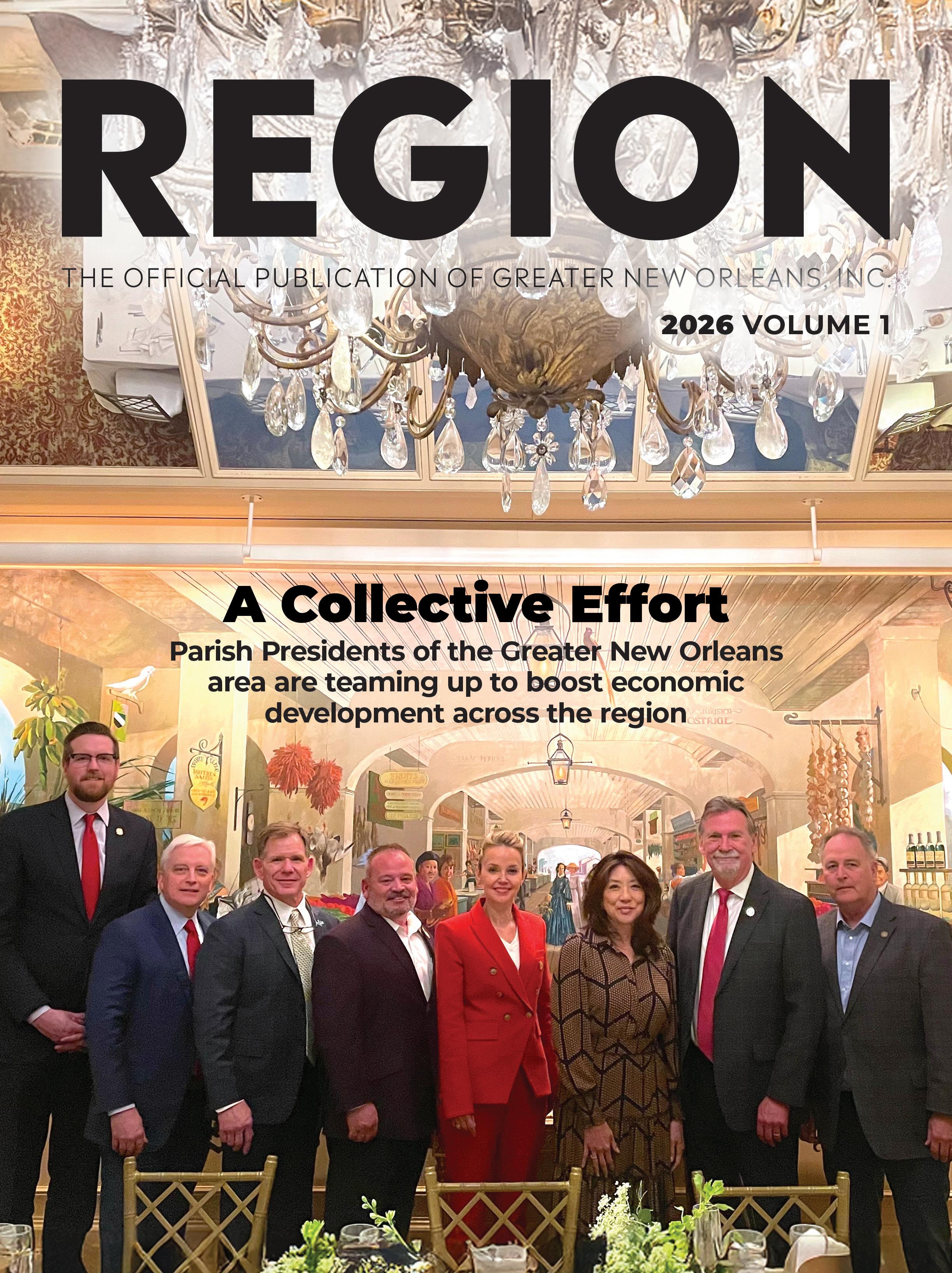
A Collective Effort
Leaning into a grander sense of “regionalism” when addressing matters important to their individual constituents, the 10 parish presidents of the Greater New Orleans area are teaming up to boost economic development across the region.
BY WILLIAM KALEC
As much as New Orleans serves as the cultural and economic ‘face’ of South Louisiana, its stature as such is entirely dependent on the vital, unique, and beneficial attributes found in its neighboring parishes.
The industrial heft found in the River Parishes – St.
Charles, St. James and St. John – forged from the region’s greatest economic chess piece, the Mississippi River.
The quaint lifestyle, abundant space for growth and development, plus the advantageous logistical framework of St. Tammany, Washington, and Tangipahoa Parishes on the Northshore.
Collaboration and regionalism create a stronger Louisiana, where we all win. When parishes and municipalities align around infrastructure, the workforce and economic growth, we create better opportunities for business investment, jobs and long-term prosperity for everyone in the region.”
St. Tammany Parish President Mike Cooper
The thriving energy sector of St. Bernard Parish. The multi-generational cultural significance of the seafood industry in Plaquemines Parish. The residential diversity and suburban affordability of Jefferson Parish.
Collectively, as a hub for economic development, the Greater New Orleans region has a lot to offer...when local leaders and civic advocates all pull the rope in the same direction.
With plenty of credible data and analytics supporting the “economic attractiveness” of a unified region willing to work together in finding interparish solutions for established and prospective businesses, the 10 parish presidents (mayor in Orleans Parish’s case) have recently opened lines of communication in hopes of blurring local political/geographic borders and deleting long-standing parochial mindsets.
“When you have a collective vision, there’s so much that can be accomplished and, yes, that sounds very ‘Pollyanna’ but there’s a truth to it,” Jefferson Parish president Cynthia Lee Sheng said. “Because we’ve seen what not having it does. It gums up the system. But when you’re house is in order, it’s more inviting for outside business to come into the fold.”
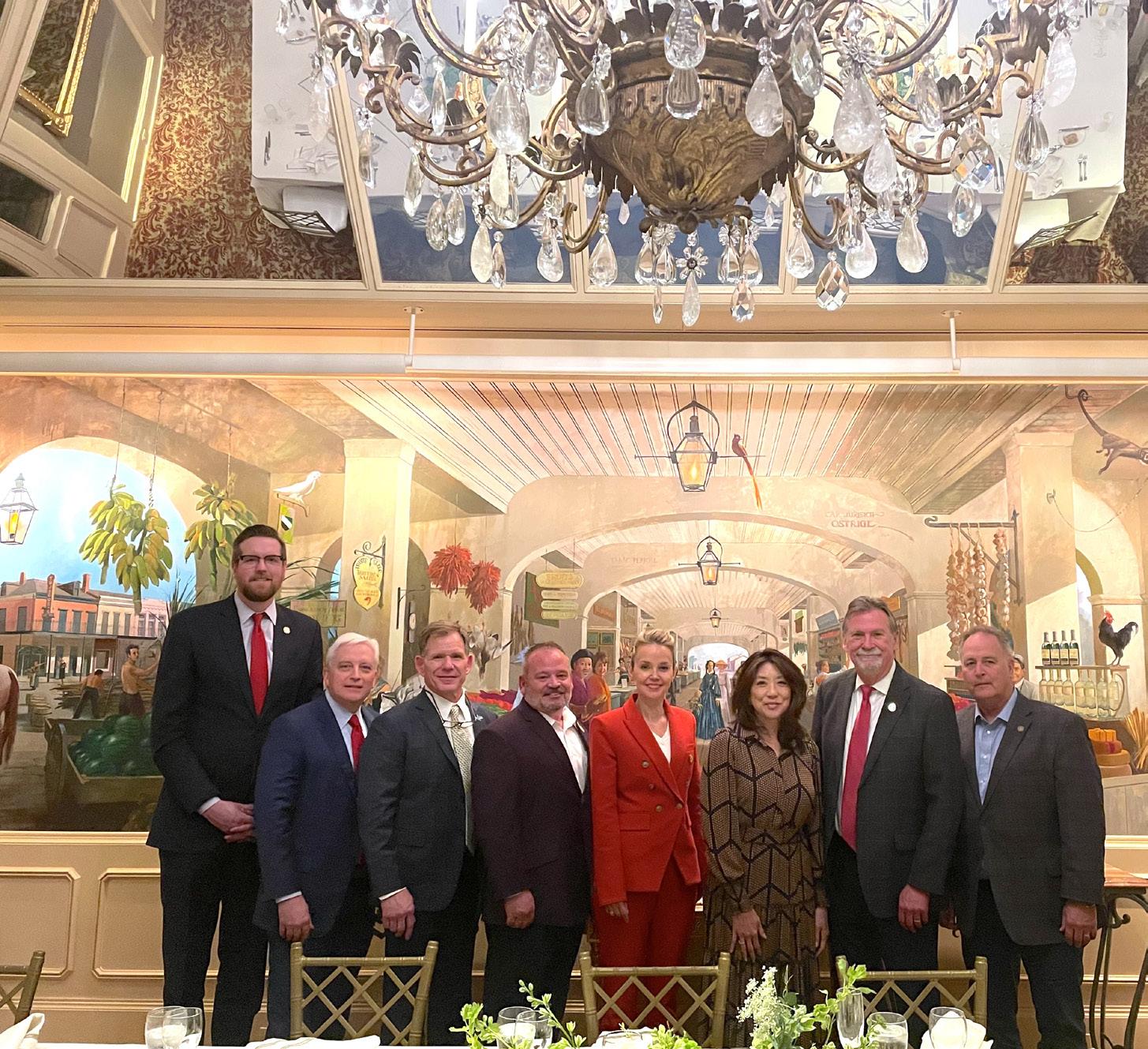
In January 2026, several local parish presidents attended the inauguration of New Orleans mayor Helena Moreno (note: Orleans Parish does not have a parish president), where the seedlings of adopting a newfound spirit of “regionalism” were first planted, and then sprouted a month later at a dinner attended by every local parish leader along with economic advocacy groups from those same parishes.
As communication and face-toface interaction among parish presidents has expanded, we’ve had meaningful conversations about shared concerns such as roads and bridges, workforce needs, housing, drainage, and long-term economic opportunities. Those discussions have helped create stronger partnerships, better coordination, and a greater understanding of how we can support one another. At the end of the day, regional cooperation is simply about building relationships and working together when it makes sense to improve opportunities for our citizens and strengthen our communities.”
Washington Parish President Ryan Seal
One of the biggest things that’s come from stronger communication between parish leaders is realizing just how many common concerns we all share. Infrastructure, transportation, insurance costs, workforce development, permitting, drainage and flood protection, and attracting new investment are issues affecting every parish in one way or another. The ongoing communication between parish presidents has created a real network where ideas and information are constantly being shared. Sometimes it’s formal meetings, and sometimes it’s as simple as a phone call or group text. That level of communication has been an extremely valuable resource, allowing us to learn from each other, identify common goals, and work together toward solutions that benefit not just one parish, but the entire region.”
St. Bernard Parish President Louis Pomes
“There were so many items that I call “low-hanging fruit” - opportunities for collaboration that would benefit the people of New Orleans - and all it took was picking up the phone,” Mayor Moreno said. “Again, transportation, public safety, economic development - it all crosses parishes and affects people across the region. It turns out when you reach out, when you open your hand and join with others in collaboration, people around the region show you that New Orleans has so many fans and supporters. People across our region want us to succeed and I believe that we should be in direct conversation with them to achieve our joint goals.”
In a domestic and global marketplace that continues to get more competitive as it evolves, packaging ???
For instance, in Jefferson Parish – where “new” economic development is restricted because of natural geographic barriers (Mississippi River, Lake Pontchartrain) and existing commercial/residency density, President Lee Sheng and staff have found creative ways to drum-up new business. Home to an expansive multi-sport recreation facility catalog, Jefferson Parish has aggressively (and successfully) promoted itself as a youth sports tourism hub.
A regional mindset unlocks a larger, more competitive economic footprint — attracting employers, workforce, and investment that no single parish could secure alone. When the region wins, every parish wins, because jobs, infrastructure, and prosperity don’t stop at parish lines.”
Tangipahoa Parish President Robby Miiller
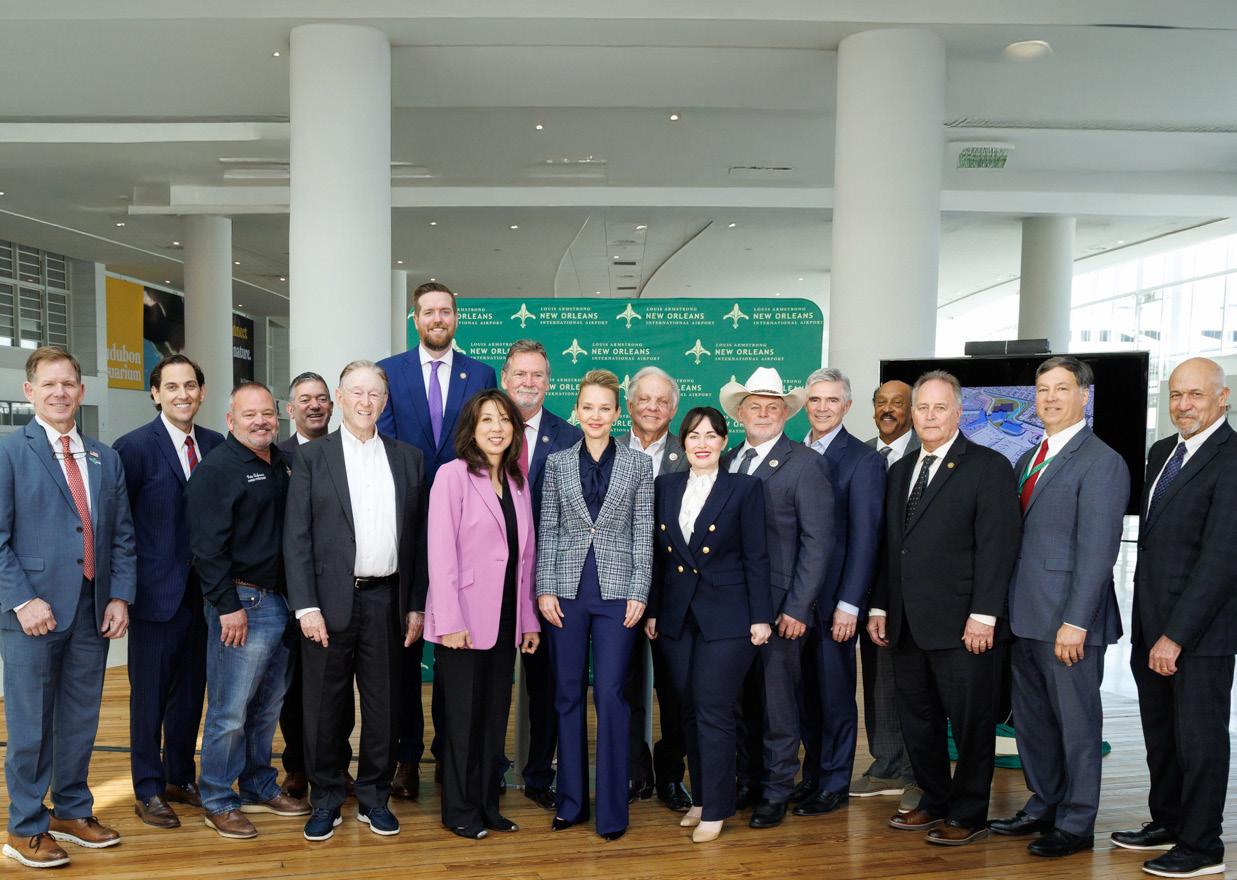
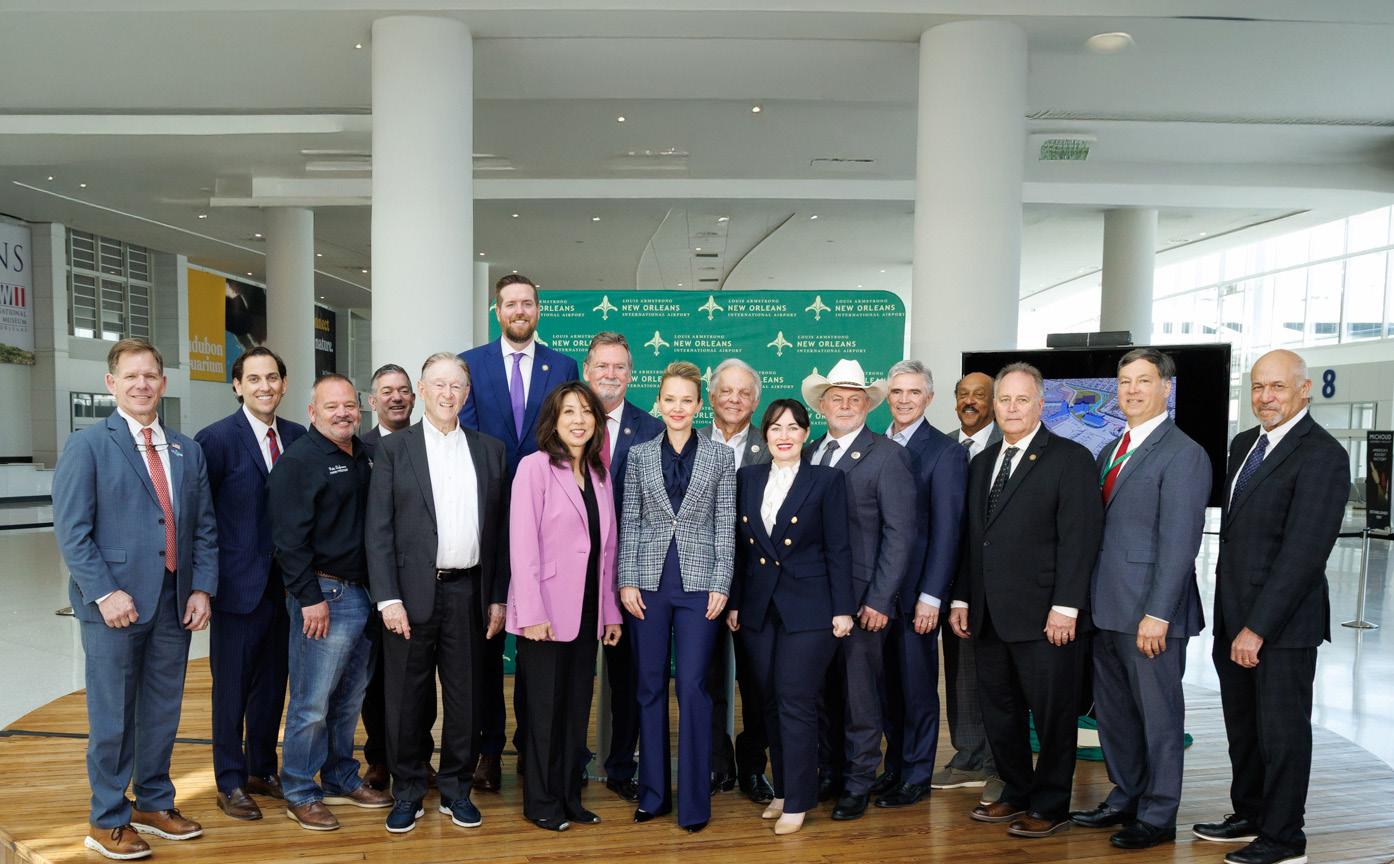
But in these pitches to regional and national leagues and tournaments, Jefferson Parish doesn’t advertise “Jefferson Parish” as the host, but rather the “New Orleans region” as the host, and goes out of its way to push and promote the unique and enticing aspects of neighboring parishes – restaurants, accommodations, attractions, etc. –to land these youth sports events. Another example of local leaders coming together and supporting a specific project that will benefit the entire region in parish-specific ways occurred in March 2026 when Mayor Moreno and her nine parish contemporaries attended a press conference announcing New Orleans International Airport’s 20year Master Plan. The long-term strategic vision – which consists of facility additions and infrastructure improvements to meet the demands
When we approach economic development as a region instead of as individual parishes competing against one another, we create a stronger and more compelling case for investment. As parish leaders, we’ve realized a lot of the challenges we face are the same across the board. Whether it’s infrastructure, workforce development, housing, or coastal issues, none of those stop at parish lines. The more we communicate and work together, the easier it becomes to share ideas, coordinate efforts, and find practical solutions that benefit the entire region instead of just one community.”
St. James Parish President Pete Dufresne
A collective regional approach multiplies economic strength, widens access to opportunity and lays the groundwork for a workforce pipeline built to last.”
Plaquemines Parish President Keith Hinkley:
of increased travel volume – was made possible, in part, thanks to the alignment of leaders around the greater New Orleans region.
“It’s about one parish complementing another,” St. Charles president Matthew Jewell said. Here, we have the land, the river, the existing multi-modal infrastructure to accommodate any and every manufacturing footprint imaginable.
“But while the ‘hands-on work’ happens here, a lot of these international companies want to have an executive presence headquartered in a known financial center. Well, we don’t have that in St. Charles, but we have that just to the east of us. So that’s a benefit and just goes to show when we can pool together the strengths and resources of the entire region, one parish doesn’t win. We all win.”
Beyond rallying together, sharing assets, and finding solutions to meet the needs of businesses, parish leaders are also beginning to exchange ideas, share best practices, and even inviting representatives from other parishes to observe the re-imaging/ re-sculpting of compliance and procedural steps required of industries, such as zoning, planning and permitting.
“Though they have a purpose, in a lot of ways these (parish lines) are imaginary lines. Lives, livelihoods, and commerce don’t stop at a parish line,” GNO Inc.’s Matt Wolfe said. “Everyone benefits when we bring our collective puzzle pieces together and make them fit.
“When you look at metro markets that are doing well, this is their blueprint – unified as a region, rather than representing one sliver of your entire pie.”
Economic development does not stop at parish lines. When we approach growth regionally, we strengthen our ability to compete for investment, talent, infrastructure, and opportunity. A regional mindset allows us to leverage each parish’s strengths while presenting the greater New Orleans area as a connected, competitive, and forward-looking region. Collaboration also creates consistency and stronger relationships, which is important for businesses making long-term investment decisions.
St. John the Baptist Parish President Jaclyn Hotard
Louisiana Global Connect Unites State’s International Trade and Investment Efforts
The World Trade Center New Orleans and Louisiana Economic Development launch a coordinated strategy targeting Japan and Australia for foreign direct investment.
BY MISTY MILIOTO
Louisiana has long positioned itself as a gateway to global commerce, but for years the state’s international outreach efforts moved on parallel tracks rather than a unified front. That is now changing.
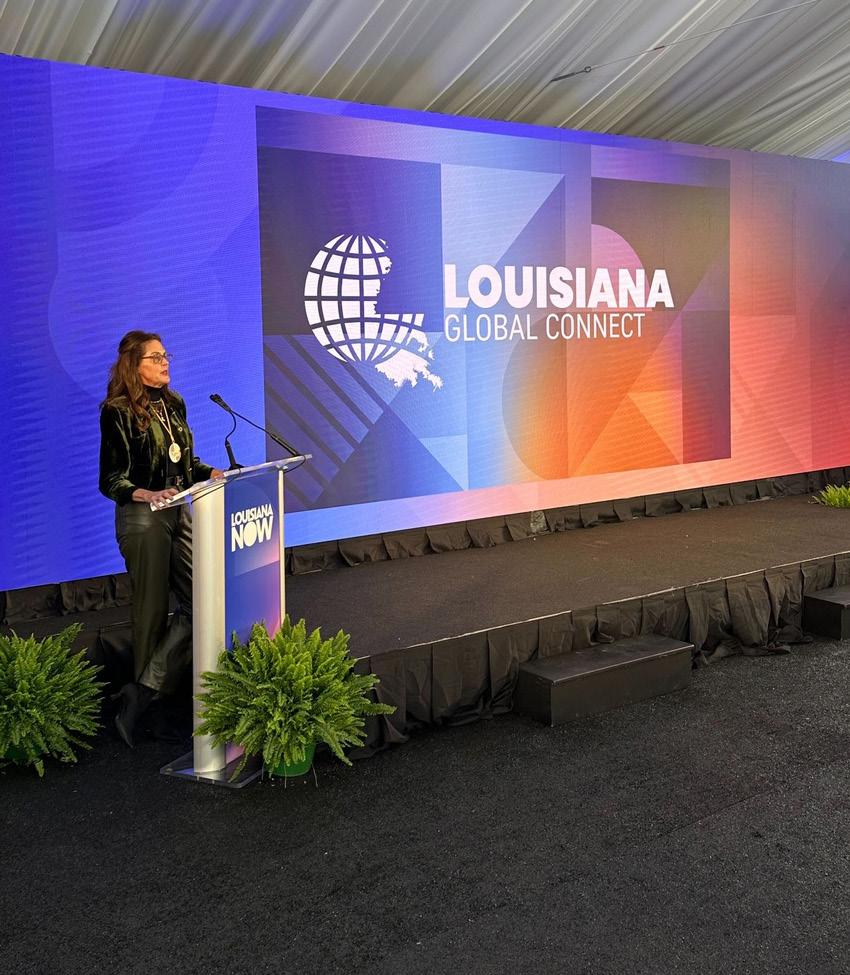
The World Trade Center New Orleans and Louisiana Economic Development have launched Louisiana Global Connect, a joint initiative designed to consolidate the state’s foreign direct investment attraction and international trade expansion under a single, coordinated strategy. With Japan and Australia identified as key target markets—and a trade delegation to Tokyo planned for the end of May—the initiative represents the most integrated international economic development effort in Louisiana’s recent history.
“The catalyst for Louisiana Global Connect was the need to shift from parallel tracks to a singular, aggressive ‘Team Louisiana’ approach that matches the speed of global business,” says Harrison Crabtree, executive director of the WTCNO, who is co-leading the initiative alongside Paige Carter, chief development officer at LED.
“By combining our networks and expertise, we are able to maximize our resources and signal a unified front to businesses and governments across the world.”
FROM SILOS TO STRATEGY
Previously, WTCNO and LED operated with overlapping but uncoordinated international efforts. Under Gov. Jeff Landry’s administration, LED has prioritized a more disciplined, whole-of-government model. Louisiana Global Connect formalizes that alignment, combining LED’s pipeline development, project management, site selection and incentive tools with WTCNO’s private-sector agility and diplomatic network.
“What gets left on the table in a siloed model is not just
efficiency—it is momentum,” Carter says. “When international engagement is not fully aligned, you can end up with overlapping outreach, fragmented intelligence and missed opportunities to move a company from interest to investment. Louisiana Global Connect creates a more disciplined model that allows us to present Louisiana to international partners in a more unified way.”
Crabtree describes the on-the-ground shift as one of both structure and culture. “Historically, WTCNO and LED worked closely but often moved with different priorities,” he says. “Louisiana Global Connect replaces those independent tracks with constant communication and a synchronized strategy—we no longer operate in silos, but instead act as a force multiplier.”
WHY JAPAN AND AUSTRALIA?
The selection of Japan and Australia as priority markets was not arbitrary. Japan has been Louisiana’s third-largest source of foreign direct investment over the past decade, with more than 15 projects accounting for more than $7.6 billion in capital expenditures and nearly 7,000 direct jobs, according to figures from Opportunity Louisiana and confirmed by Crabtree. Major Japanese firms including Shintech, UBE Corporation and Mitsui have made sustained investments in high-tech manufacturing across the state.
Louisiana Global Connect aims to build on that foundation rather than simply maintain it. “We are now unlocking a deeper level of integrated partnership that goes beyond traditional manufacturing,” Crabtree says. “This initiative is about securing Louisiana’s place as a primary partner for Japan’s next generation of precision manufacturing and energy security. By establishing a permanent presence in Tokyo, we are ensuring Louisiana is the first choice for Japanese firms looking to expand their global footprint.”
Australia, while a less traditional focus for Gulf South economic development, has emerged as a significant and fast-growing trade partner. Crabtree points to investments from Woodside Energy, Syrah Technologies and Birdon as evidence of deepening ties. Carter frames the selection around strategic alignment: “We see strong overlap in energy, advanced manufacturing and export-driven industries, along with shared advantages in resources, infrastructure and large-scale project delivery—creating a clear pathway for Australian companies looking to establish or expand a U.S. presence.”
Crabtree also cites the AUKUS defense partnership among the United States, the United Kingdom and Australia as an opening for collaboration in aerospace and shipbuilding—two sectors where Louisiana already has established capacity. “Australian firms are increasingly looking to the U.S. to scale their world-class expertise, and we want to ensure Louisiana is their first stop,” he says.
A NEW PITCH FOR A SHIFTING WORLD
Both Crabtree and Carter emphasize that Louisiana Global Connect is not simply repackaging familiar assets. While the state’s port infrastructure, energy sector and agribusiness have long underpinned its international appeal, the initiative seeks to leverage those foundations for emerging opportunities.
“We aren’t just building traditional vessels—we are a hub for autonomous naval technology,” Crabtree says. “We aren’t just exporting energy; we are scaling the fuels the world is demanding through the state’s ‘Whole of Louisiana’ energy strategy.”
Global trade uncertainty and tariff pressures, rather than dampening investor interest, appear to be working in Louisiana’s favor. “Multinational companies are now prioritizing stability and supply chain resilience above all else,” Crabtree says. “Louisiana serves as a ‘safe harbor’ where our world-class port infrastructure and unified approach provide the predictability and speed that global investors require.”
LED brings to the partnership a range of performance-based incentive tools, including workforce training, tax and payroll incentives, and site and infrastructure support. The agency also operates Louisiana Lightning Speed, a whole-of-government approach that serves as a single point of contact for foreign companies navigating the U.S. permitting, infrastructure and regulatory landscape.
TOKYO BOUND
The initiative’s most immediate visible milestone is a delegation trip to Japan planned for late May. Crabtree says the mission will follow the model WTCNO has developed
for previous trade trips, including a 2023 visit to Ireland and a 2025 scouting trip to Australia.
“Every trade mission that we lead is structured as a tactical, data-driven operation designed to maximize lead generation,” Crabtree says. “We rely heavily on our in-market representatives to pre-qualify companies that are prime for U.S. expansion. During a mission, we prioritize high-level meetings with executives in our target sectors, but we also maintain face-to-face relationships with long-standing investors to encourage reinvestment at their existing Louisiana sites.”
Carter describes the pre-mission preparation as determinative of its success. “The value of a mission like this is determined well before the delegation gets on a plane,” she says. “The groundwork is in identifying the right companies, aligning around priority sectors, coordinating messaging and ensuring meetings are built around real areas of mutual interest.”
Both leaders are candid that trade missions are not endpoints. “A trade mission does not create a pipeline on its own,” Carter says. “It creates the opportunity to start or deepen relationships that then move into ongoing engagement. The key is making sure the mission is not treated as the finish line. It is an entry point into a longer process of building trust and moving a prospect toward a decision.”
MEASURING WHAT MATTERS
Louisiana has ranked among the top two states in the nation for per capita foreign direct investment for much of the past decade, according to LED. Both Crabtree and Carter say the goal of Louisiana Global Connect is not simply to defend that ranking but to strengthen the state’s long-term position in the global economy.
“Rankings are useful because they signal competitiveness, but they are not the strategy,” Carter says. “The focus is on building a durable international strategy that supports sustained growth over time—attracting the right kinds of investment, deepening relationships with key markets, and expanding opportunity across sectors and regions.”
For Louisiana businesses looking to participate in or benefit from the initiative, Crabtree points to Source Louisiana, a platform launched by LED that allows in-state companies to showcase their services, certifications and capacity to incoming foreign investors. “When we attract foreign direct investment to Louisiana, the impact extends far beyond the physical project site,” he says. “These global companies are eager to tap into our local economy through procurement, construction and specialized services, creating a massive ripple effect for our homegrown businesses.”
Find more information about Louisiana Global Connect at wtcno.org/laglobalconnect.
Reshaping & Redeveloping the New Orleans Region’s Economic Landscape
A blend of ‘brand new’ and ‘old-but-new’ major mixed-use developments in and around the city are already making a substantial transformational impact on the local economy:
BY WILLIAM KALEC
NAVAL SUPPORT ACTIVITY EAST BANK (REDEVELOPMENT)
A strategically located swath of riverfront property brimming with history is in the beginning stages of its second act – a multi-stage, multi-layered site reinvention that upon completion will serve the modern needs of the New Orleans community.
Home to a variety of military operations serving different branches since World War I, the expansive East Bank Complex of the Naval Support Activity (located in
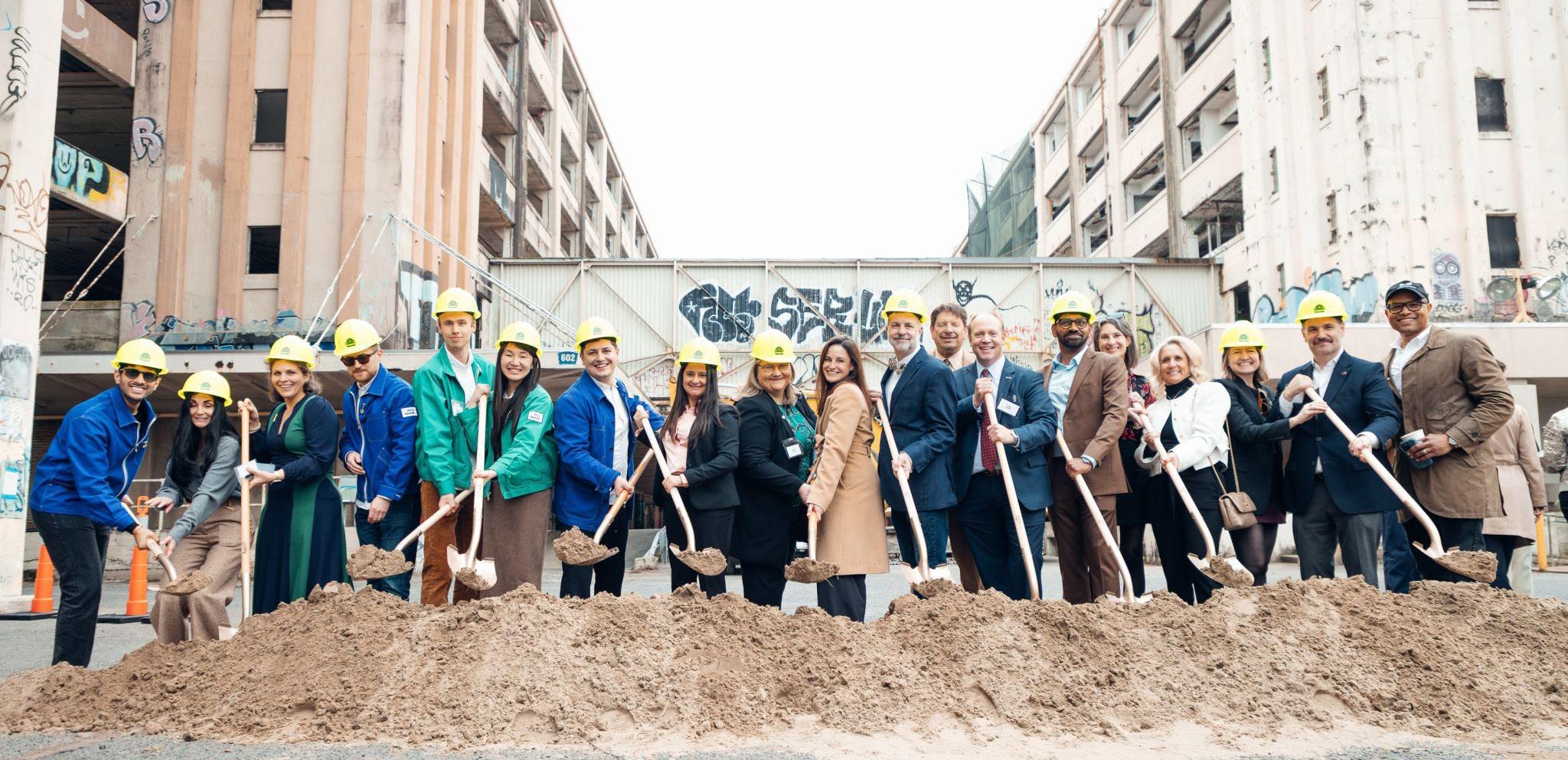
the Bywater) has sat dormant since 2011 and, frankly, aged exponentially ever since its closure. However, after an extended (and, at times, exhausting) planning period, shovel finally punctured dirt this past January, marking step one in arguably the most ambitious economic development project in south Louisiana this century.
The story of the re-imagined Naval Support Activity East Bank project will unfold in chapters, as construction crews execute designs to bring affordable housing, innovation/ technology centers, and retail space that will serve as a
commercial conduit linking the old, isolated military site and the vibrant neighborhood surrounding it.
“The community has waited a long time for this moment, but ‘it takes a village’ and a lot of time and cooperation to manifest it into reality,” said Brian Gibbs, whose firm is the lead developer of the site. “The state and its agencies, the city/parish and its agencies, the neighborhood itself, and all the other various stakeholders have been incredibly supportive and instrumental to this project’s ultimate success.”
From an economic standpoint, the site will serve as the future home of ‘Newlab New Orleans,’ an innovation and technology epicenter primed to shepherd the region’s long-standing economic cornerstones (specially energy production) into that industry’s next evolutionary stages, thus ensuring south Louisiana’s reputation and standing in that field for generations to come.
Additionally, while meeting the economic demands of tomorrow, this project is also aggressively tackling the needs of today’s working class and their families through the largest affordable housing investment in Louisiana history. Existing military structures on site will be renovated into near 300 affordable housing units targeted to be the future households of working individuals/ families who earn less than the local medium income.
GULF SOUTH COMMERCE PARK (DEVELOPMENT)
Spurred on by the Northshore’s growing reputation as a strategic logistics hub positioned between the major markets of the Gulf South, Gulf South Commerce Park is uniquely positioned to mature into “Louisiana’s Global Gateway for Business.”
“Gulf South Commerce Park fills an important role in St. Tammany Parish’s portfolio of development opportunities,” said Russell Richardson, President and CEO of St. Tammany Economic Development Corporation. “As part of the Greater New Orleans region, St. Tammany adds capacity to one of the nation’s most important trade and logistics gateways. Companies evaluating Southeast Louisiana increasingly need options that provide room for growth, access to transportation networks, and long-term development potential. Gulf South Commerce Park expands the menu of sites available to the market and strengthens the region’s ability to compete for investment opportunities that might otherwise go elsewhere.”
Recently, Gulf South Commerce Park earned a few zoning victories that will aid its marketability. In late 2025, the U.S. Department of Commerce approved the Port of New Orleans’ request to expand Foreign Trade Zone No. 2 into St. Tammany Parish, meaning businesses that establish a presence in Gulf South Commerce Park are now permitted to defer, reduce, or forego duties on imported materials. Secondly, Gulf South Commerce Park is now classified AML—a zoning distinction that permits large-scale manufacturing, research and development facilities, logistics operations, and warehousing.
“The expansion of Foreign Trade Zone No. 2 into St. Tammany Parish is a significant milestone because it further integrates the Northshore into the global trade ecosystem anchored by the Port of New Orleans,” Richardson said. “Combined with the planned Louisiana International Terminal and the continued growth of the I-12 corridor, we are seeing the emergence of a logistics network that connects global markets to available land, workforce, and infrastructure opportunities throughout the region. Gulf South Commerce Park is well positioned to benefit from that growth.”
“The vision for this project has always been larger than a single industrial park,” Richardson added. “The Northshore sits at the intersection of I-10, I-12, and I-59, providing connectivity between New Orleans, Baton Rouge, the Gulf Coast, and major Southeastern markets. As freight movement, manufacturing, and distribution continue to evolve, sites like Gulf South Commerce Park give the Greater New Orleans region additional capacity to accommodate growth while creating new opportunities for businesses and residents alike.”
CHURCHILL TECHNOLOGY & BUSINESS PARK (DEVELOPMENT)
Considering Jefferson Parish consists of 296 square miles of land, making it the largest parish in Louisiana if you exclude water and wetlands, it’s crazy to think that the Churchill Technology and Business Park might be the ‘final blank canvas’ when it comes to new economic development hubs.
“The rapid success in Jefferson Parish’s growth as a ‘First Ring’ suburb (of New Orleans) resulted in a scarcity of land or green spaces to develop, so in many ways Churchill Park is that Last Frontier,” JEDCO President and CEO Jerry Bologna said. “Knowing the importance of education and job-training, for many years our focus with Churchill has been institutional uses, but now we’re really at that tipping point in regard to sustainable and impactful economic development.”
Envisioned more than 20 years ago, Churchill (a nearly 500-acre mixed-use campus located on the West Bank of the Mississippi River) is already the home of the Patrick F. Taylor Science and Technology Academy – a magnet school that in its short history has become one of the topperforming secondary/college prep schools in Louisiana – and Delgado Community College’s. River City Site and Advanced Manufacturing Center – a hands-on satellite campus specializing in training students to meet the immediate workforce demands on foundational regional industries that traditionally offer high-paying careers.
With educational and government agencies anchoring the site, infrastructure development was taking place at Churchill to ready it for “future phases” of development, which, as Jerry Bologna mentioned above, are now “current” phases.
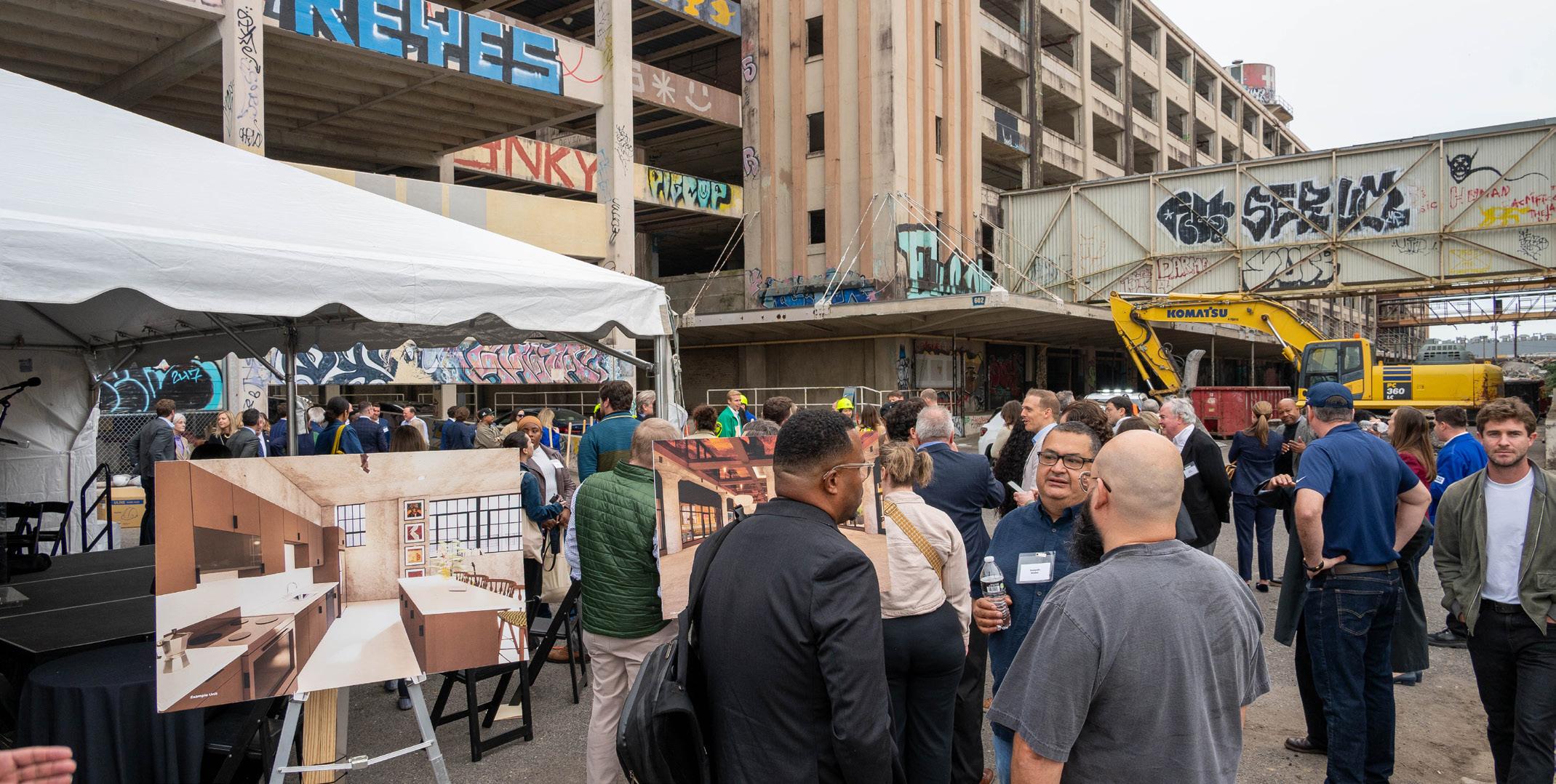
Most notably, in April 2026, local and state officials formally announced and unveiled design plans for a new, state-of-the-art Food & Beverage Incubator at Churchill that will foster culinary entrepreneurs from around the Gulf South. Once completed, the 12,500 Sq-foot facility will house four
kitchens (three commercial, one teaching/demonstration), able production space, equipment for bottling, multiple freezer/room temperature storage areas, loading docks suited to handle raw materials and the staging of finished products, and on-site training and support staff.
OLD CHARITY HOSPITAL (REDEVELOPMENT)
An iconic and vital part of New Orleans history (and, frankly, survival during several of its darkest moments) the old campus of Charity Hospital is set to serve the needs of the community once again.
Restoration specialists have begun work on re-imaging the vast 1 million sq-foot facility while preserving its architectural heritage, artistic integrity. Once finished this $600 million major renovation will be a modern mixed-use setting that serves both public and private interests. Located in New Orleans’ medical hub, the reborn Charity site will create 2,000 new jobs, be the epicenter of Tulane’s medical research division, feature up to 300 residential units for middle-income earners, and public spaces.
Lauren Mastio and the Future of Bold Leadership in New Orleans Law
How Jones Walker’s youngest women ever elected to the firm’s board signifies a broader shift in the legal industry.
When Lauren Mastio talks about the law, she doesn’t sound like someone who stumbled into a career.
She sounds like someone who was built for it.
Mastio is a litigator at Jones Walker LLP, where she handles some of the most technically complex and financially consequential cases in Louisiana’s energy and construction sectors. She’s also the youngest woman ever elected to Jones Walker’s board of directors — a distinction that speaks not just to her individual trajectory, but to a broader shift in how the legal profession is reckoning with who gets a seat at the table.
But before any of that, there was her father.
“He worked incredibly hard,” she said, “but what always stood out to me was that he genuinely loved what he did.”
Watching him shaped her philosophy in ways that no law school lecture could. He instilled in her an ethic of preparation — not as a coping mechanism, but as a form of confidence. “I believe that if I am always prepared, then I know I’ve done everything within my control to put myself and my clients in the best possible position.”
It’s a simple idea. But in a field where careers are won and lost on the difference between almost ready and truly ready, it turns out to be everything.
Mastio’s practice centers on Louisiana’s energy industry — a sector she describes as “a critical aspect of our state’s economy and, quite frankly, its future.” The cases she handles involve high-stakes exposure and dense technical subject matter: the kind of litigation that requires a lawyer to become, in some ways, a subject matter expert before she can become an effective advocate.
The key, she said, is distillation. “You have to find a way to make issues understandable,” she said, “and that starts with you fully understanding them yourself.”
Mastio describes advocacy not as argument for its own sake, but as connection between a lawyer and her audience, between a set of facts and the people weighing them. “and when you see that connection,” she said, “that’s when you know: I’ve got this.”
She is, by any measure, a trial lawyer. But she’s also quick to note that winning isn’t always synonymous with a verdict. “There’s nothing as exhilarating as spending weeks in trial and hearing a jury return a no liability, no damages verdict,” she said. “However, while I love trying cases, it’s just as rewarding when a case is favorably resolved on a dispositive motion or settled on favorable terms.”
The measure of success, she said, is the result and whether the client is happy.
That client-first orientation shapes how she thinks about what separates a good lawyer from a great one. Technical skill is the baseline. Clients assume their lawyers know the law. What they’re really evaluating is something harder to quantify: trust, judgment, genuine investment.
“The most trusted advisors are not just focused on winning a motion,” she said. “They are focused on helping the client succeed long term.”
It’s the kind of counsel that takes years to deliver well — and a certain kind of character to deliver at all.
That character has also drawn Mastio toward leadership beyond the courtroom. Her election to Jones Walker’s board is about more than a personal milestone. Many firms still operate with governance structures that reflect an older, more traditional model — one where
younger attorneys and women remain underrepresented in decision-making roles.
Her presence at the table is, in part, a deliberate argument against that model. “By serving on the board, I am able to serve as an advocate for the future of law firm governance,” she said, “where younger voices are essential to shaping the firm’s strategic direction.”
Firms that bring younger attorneys into leadership see stronger retention, better client responsiveness, and a culture that attracts the next generation of talent, she argues. It’s not just the right thing to do, it’s smart business.
Outside the firm, Mastio has invested herself in the Bureau of Governmental Research, the nonprofit watchdog organization dedicated to informed public policy in greater New Orleans. The reason is personal. She has three children, and she wants them to see a future here.
“We need to have high-functioning cities, economic and business opportunities, and a great quality of life,” she
By serving on the board, I am able to serve as an advocate for the future of law firm governance where younger voices are essential to shaping the firm’s strategic direction...We need to have high-functioning cities, economic and business opportunities, and a great quality of life.”
said. Organizations like BGR, she believes, are part of what makes that possible by turning civic data into informed decisions and accountable governance.
There’s also the version of Lauren Mastio that her résumé doesn’t capture. She loves cooking. She takes long walks with her husband and children through the neighborhood as a daily ritual of decompression.
“It’s my time to unwind,” she said. “Walking, playing on the playground, or scooting through the neighborhood is a time to connect with my husband and kids and watch the joys of life through their eyes.”
Despite the courtrooms and boardrooms and civic boards, she said she’s a homebody at heart.
“As extroverted as I may appear,” she said, “I really love being at home, having quiet time and the opportunity to just relax.”
It’s a reminder that the people reshaping institutions, whether it’s in law, leadership, or in the city itself, are also just people. People with children they love to walk with, a favorite dish on the stove, and a philosophy learned not from a textbook, but from watching a parent love their work.
Lauren Mastio is building something in New Orleans. In the courtroom. In the boardroom. In the neighborhood.
And she’s prepared for all of it.
Training the Next Generation of Builders
As demand for skilled labor grows across South Louisiana, ABC New Orleans/Bayou is training the next generation of construction professionals.
BY LAURYN HINTON
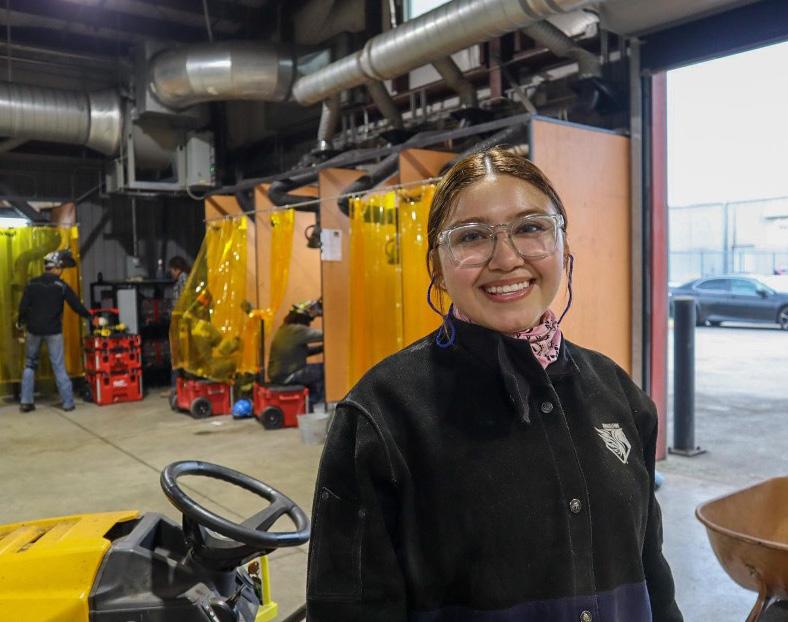
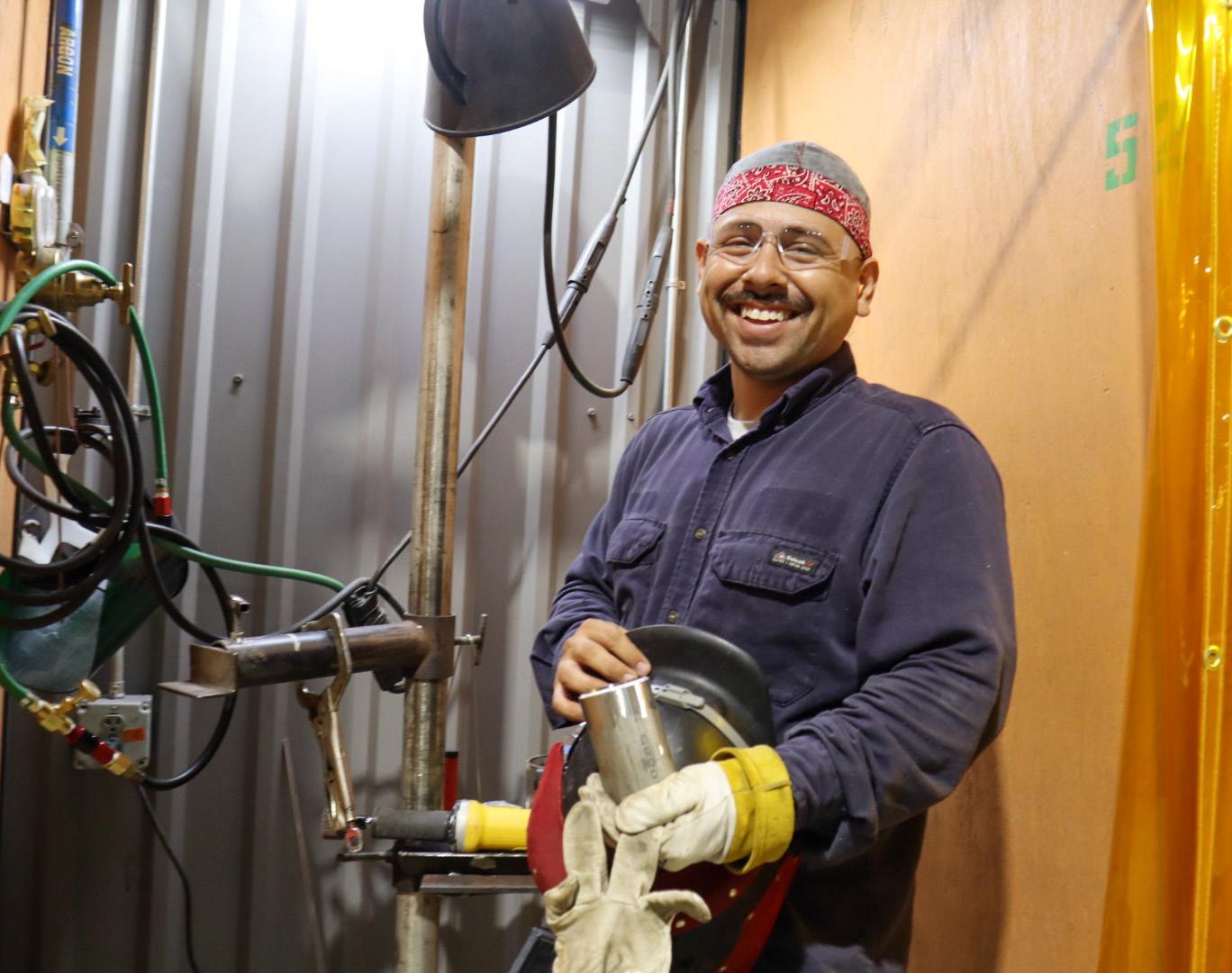
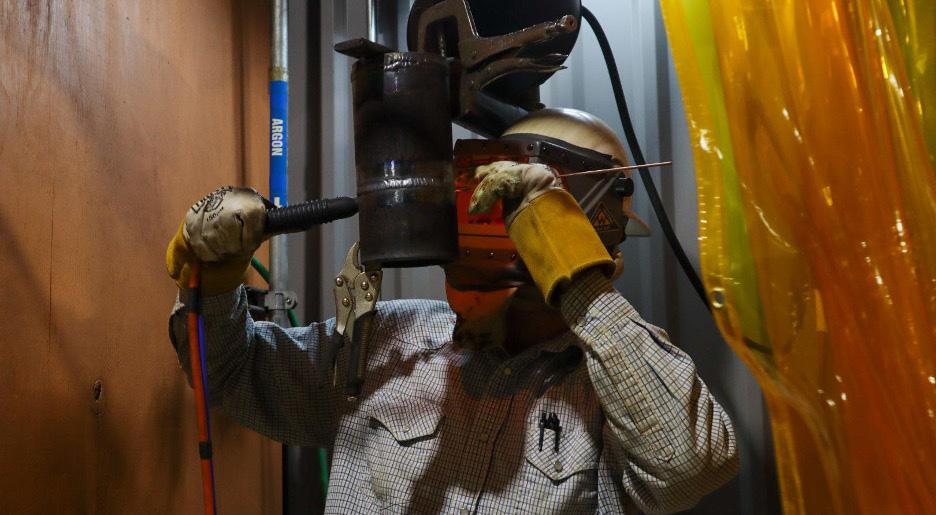
On a weeknight in St. Rose, sparks fly across rows of welding booths as students in heavy gloves and face shields lean over steel joints inside ABC New Orleans/ Bayou’s training campus.
Among them is Evelyn Galdamez, who first entered the program as a high school senior with no prior welding experience. “I really enjoy it here,” she said. “The teachers actually really care.”
Now in her third year at the campus, Galdamez says the program gave her direction at a pivotal moment in her life. Coming from a school focused primarily on health sciences, she entered the welding program unsure of what to expect, especially in a male-dominated field.
“I was pretty nervous starting,” she said. “But the women here have been the nicest people ever. And honestly, the guys are really nice too. No one hesitates to help each other.”
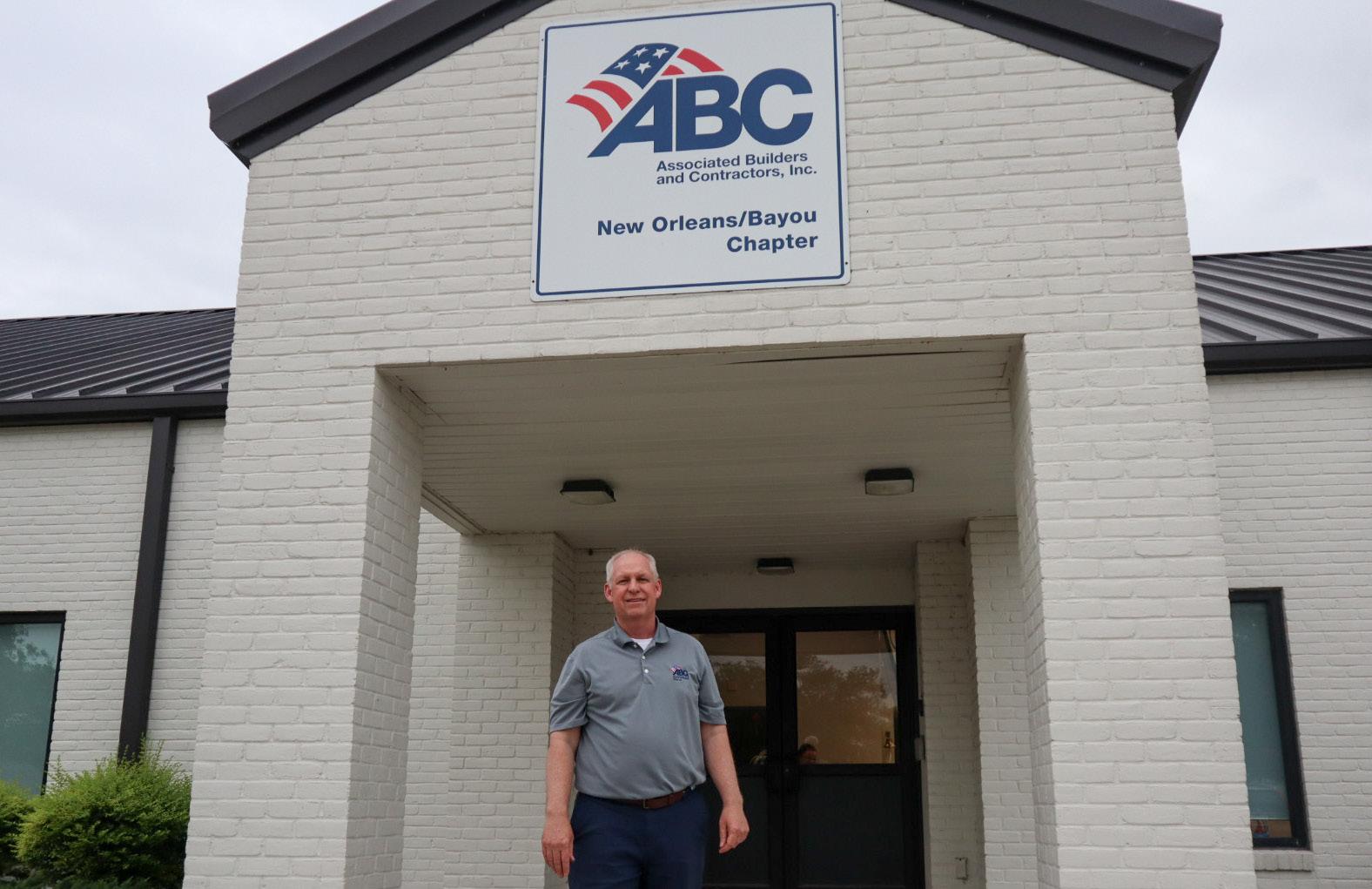
For Associated Builders and Contractors (ABC) New Orleans/Bayou Chapter, stories like Galdamez’s are increasingly important to the future of South Louisiana’s construction industry.
Founded 56 years ago, the chapter serves 12 parishes across southeast Louisiana as part of a national network of 67 ABC chapters. The organization provides workforce training, safety programs, political advocacy and networking opportunities for commercial and industrial contractors throughout the region.
“The biggest challenge facing the construction industry right now is workforce,” said Jeb Bruneau, president and CEO of ABC New Orleans/Bayou. “There are more people aging out of the construction profession than there are people coming in.” ABC leaders say demand for skilled trade workers is expected to continue rising statewide as industrial expansion, infrastructure projects, energy sector growth, and large-scale development continue across Louisiana.
In response, ABC New Orleans/Bayou has expanded its apprenticeship and craft training programs, preparing students for careers in welding, electrical, instrumentation, and other skilled trades.
At its St. Rose campus, classes run four nights a week from 6 to 9 p.m., allowing many students to work during the day while earning industry credentials at night.
“We firmly believe college is not for everybody,” Bruneau said. “This is a way to get into a great career, make a good living, and do it without massive debt.”
The organization currently serves around 400 students across its training programs and satellite locations throughout southeast Louisiana. Students range from high school seniors to adults changing careers later in life.
“We treat our training facility like you would be treated on a job site,” Bruneau said. “We try to prepare you to be job ready when you finish a program with us or get a credential from us.”
That emphasis on hands-on training and accountability is part of what instructors say sets the program apart.
Vice President and campus operator Chris Weber, who has more than 30 years of industry experience, said students are trained not only in technical skills, but also in the expectations of the profession itself.
“The rules are different here,” Weber said. “It’s run like the construction industry.”
Students are expected to follow safety protocols, show up on time, and develop the discipline needed to succeed on active job sites. According to Weber, many students move directly from the classroom into construction jobs.
There are four students here who graduated high school
on May 15th. and went into the office on the 18th to do the application and get interviewed to go on the job site,” he said.
For some students, those opportunities can quickly become life-changing careers. Weber pointed to a former student turned instructor who, at 19 years old, was already working in the field, earning more than $40 an hour.
“What you put into it is what you're going to get out of it,” Weber said. “You have to work for everything–safety, work ethic, showing up on time, and furthering your education.”
For Evelyn Galdamez, that culture of support and mentorship has been one of the most meaningful parts of the experience.
“I really feel at home here,” she said.
Though the physical demands of welding were difficult at first, she said the experience has pushed her to grow both personally and professionally.
“If you’re really passionate about something, it doesn’t really stress you as much,” Galdamez said. “I really find it’s worth it.”
Beyond workforce development, ABC New Orleans/ Bayou also plays an active role in advocacy and economic development throughout the region. The organization works with state and local officials on issues affecting the construction industry, including workforce policy, infrastructure development, and public bidding processes.
Bruneau sees construction as deeply tied to the future growth of southeast Louisiana itself.
“If the business climate is good and we’re growing as a region, as a city, as a state, then construction will also follow that and grow,” he said.
For ABC New Orleans/Bayou, that future depends not only on major development projects, but also on changing perceptions around skilled trades and creating sustainable career pathways for younger generations entering the workforce.
“If you’re looking for a great way to find a trade or a craft and perfect it,” Bruneau said, “you can make a nice living debt-free.”
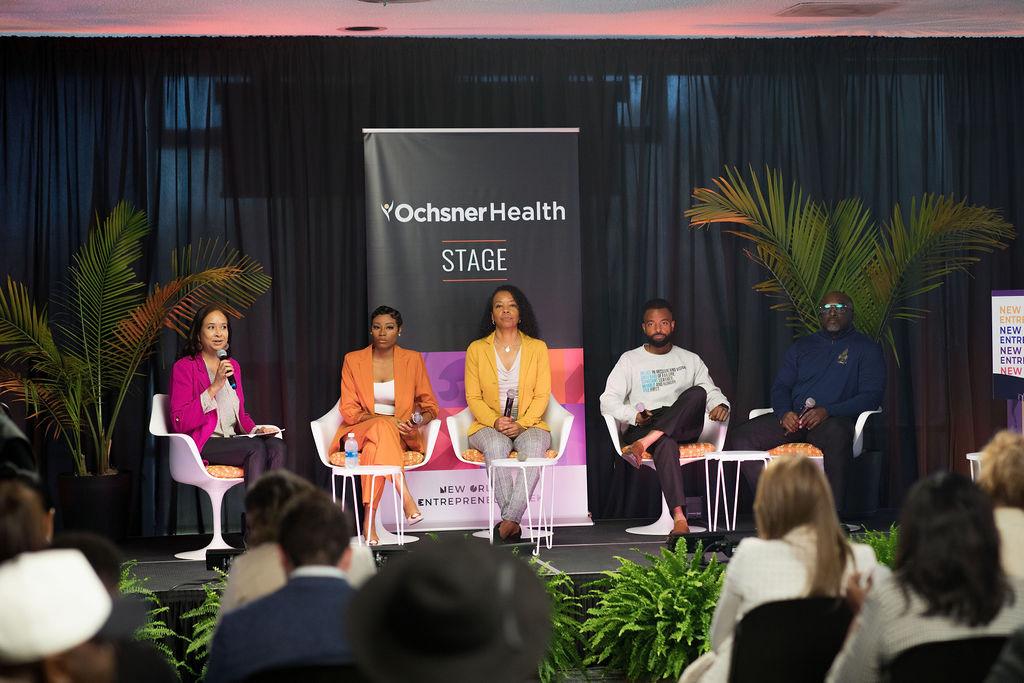
STARTUP NOIR NOLA SUMMIT
Black founders and funders took center stage at the second Startup Noir NOLA Summit for conversations about capital, growth, and what’s possible when New Orleans’ entrepreneurial community shows up in full.
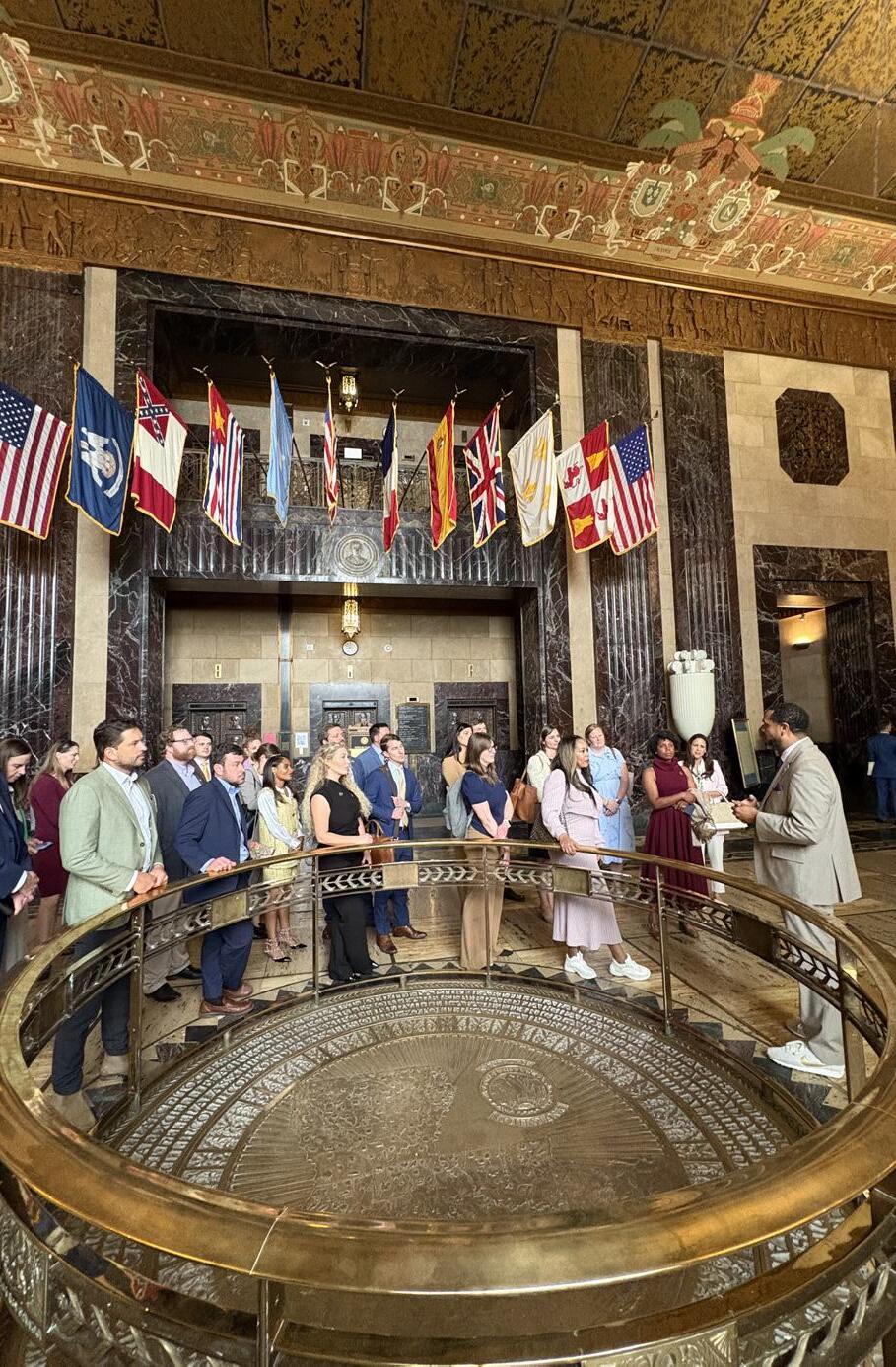
NEXTGEN DAY AT THE CAPITOL
The next generation of Greater New Orleans leaders made the trip to Baton Rouge, hearing from legislators on workforce, innovation, and public service, then watching it all play out from the House floor.
GNO, INC. ANNUAL LUNCHEON
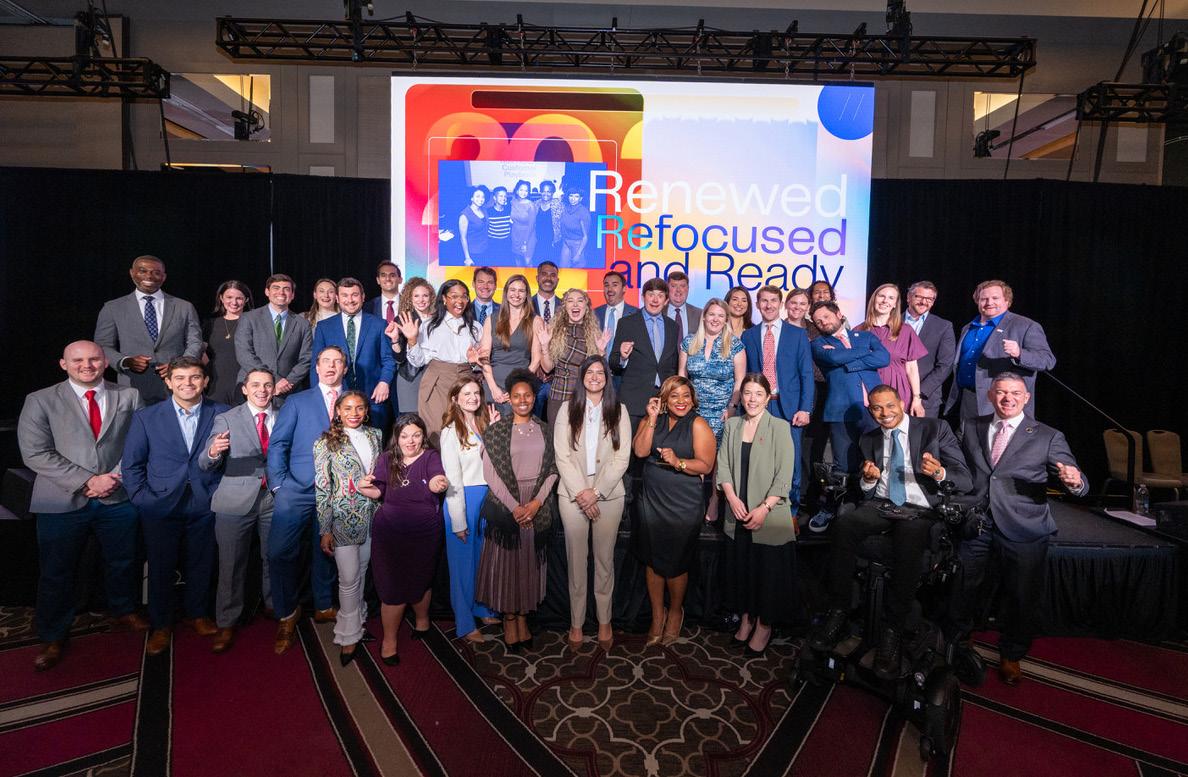
1,200 business leaders, elected officials, and community members gathered for the 2026 GNO, Inc. Annual Luncheon. The theme was “Renewed, Refocused, and Ready” and the room felt it.
ARTEMIS LIGHTS
New Orleans lit up its skyline to salute the Artemis II crew for a tribute to a mission built, in no small part, right here at Michoud Assembly Facility.
CERAWEEK
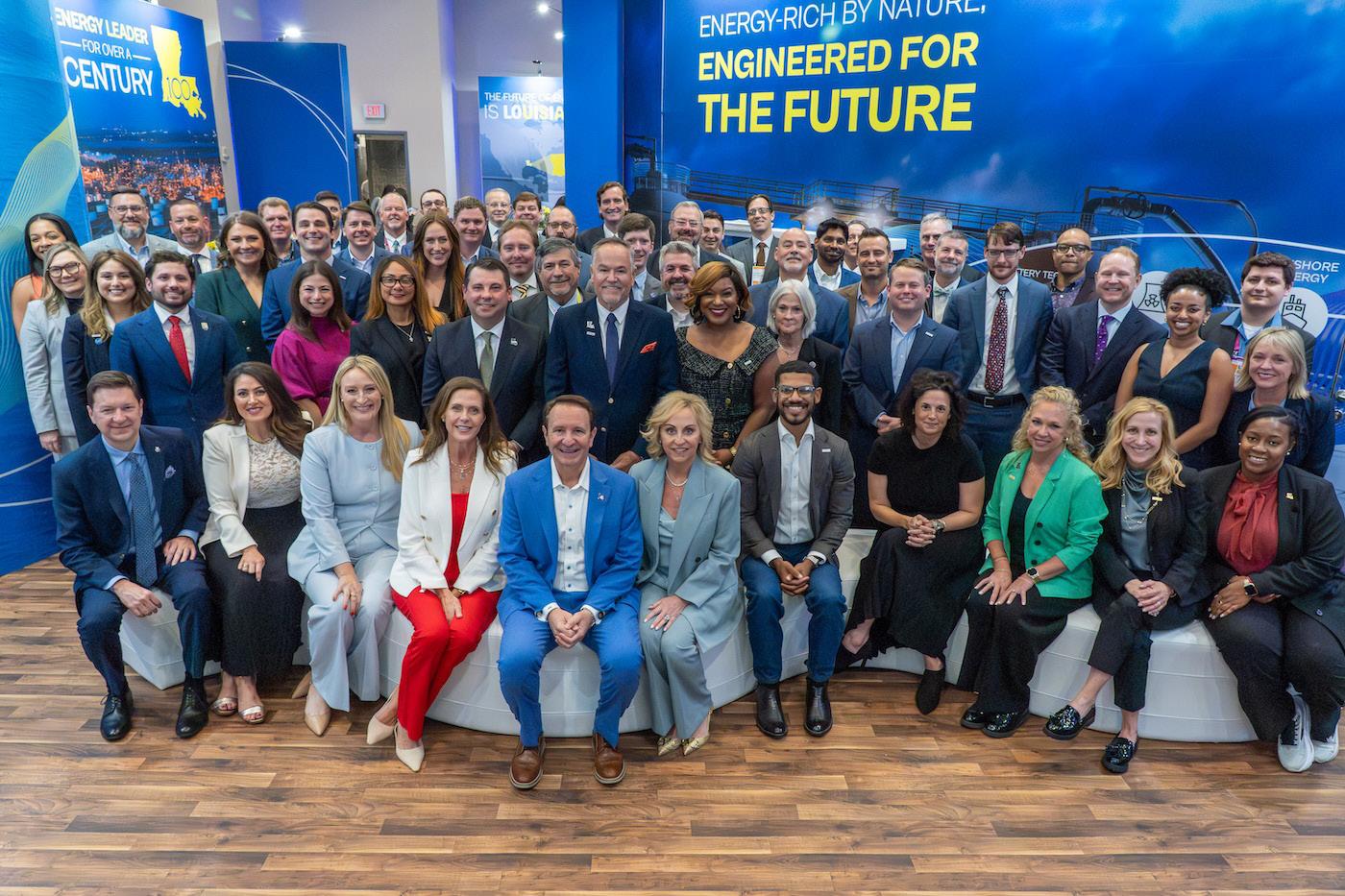
Louisiana made its case at CERAWeek in Houston, one of the world’s largest energy conferences. The message to 10,000+ attendees: the energy future runs through here.
DOMINO SUGAR GROUNDBREAKING
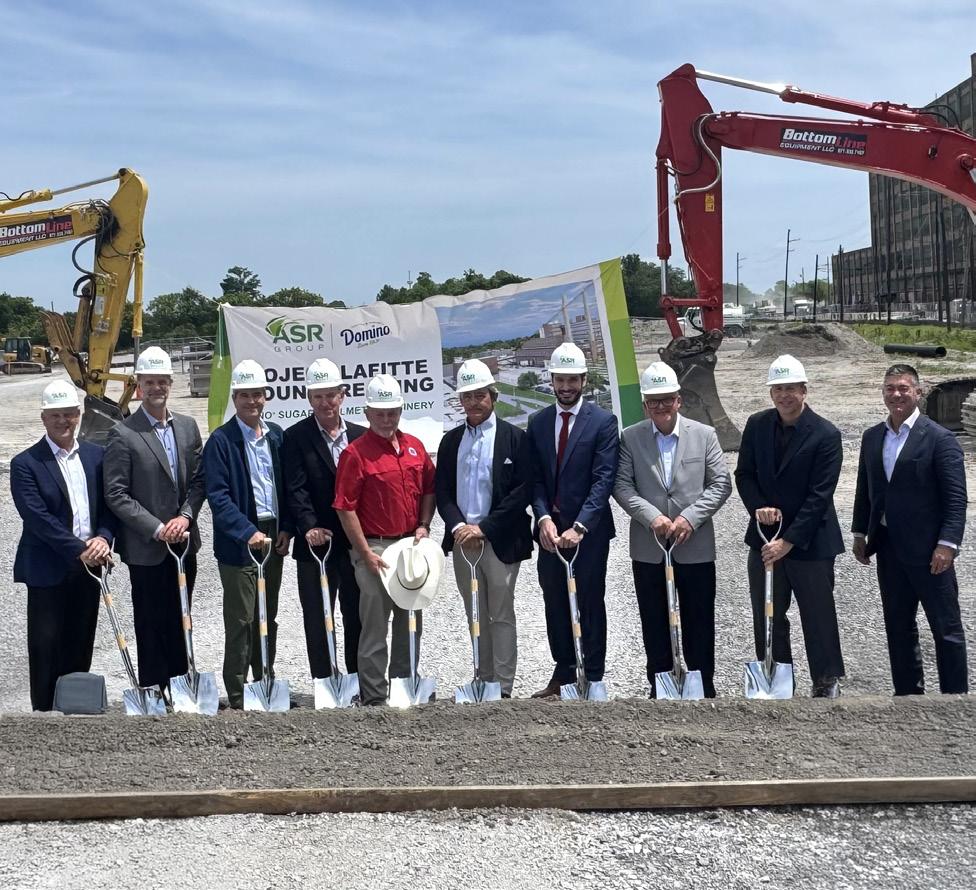
A $200 million investment and 117 years of history, the Domino Sugar Chalmette Refinery broke ground on a new Filtration Building, securing the future of one of Arabi’s most iconic employers.
2026 INNOVATION INTERNSHIP PROGRAM
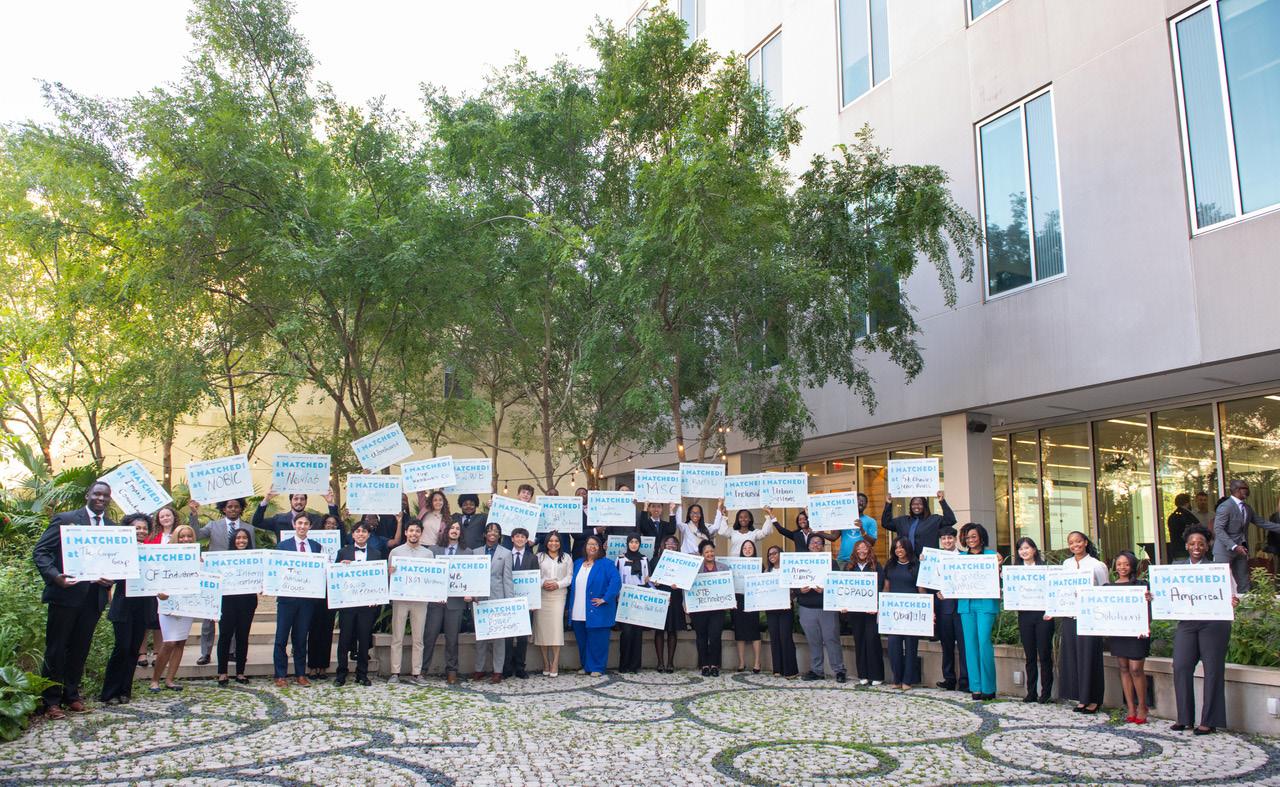
45 college students. 39 regional employers. The 2026 GNO Innovation Internship Program cohort is placed and ready to get to work.
GNO AFTER DARK
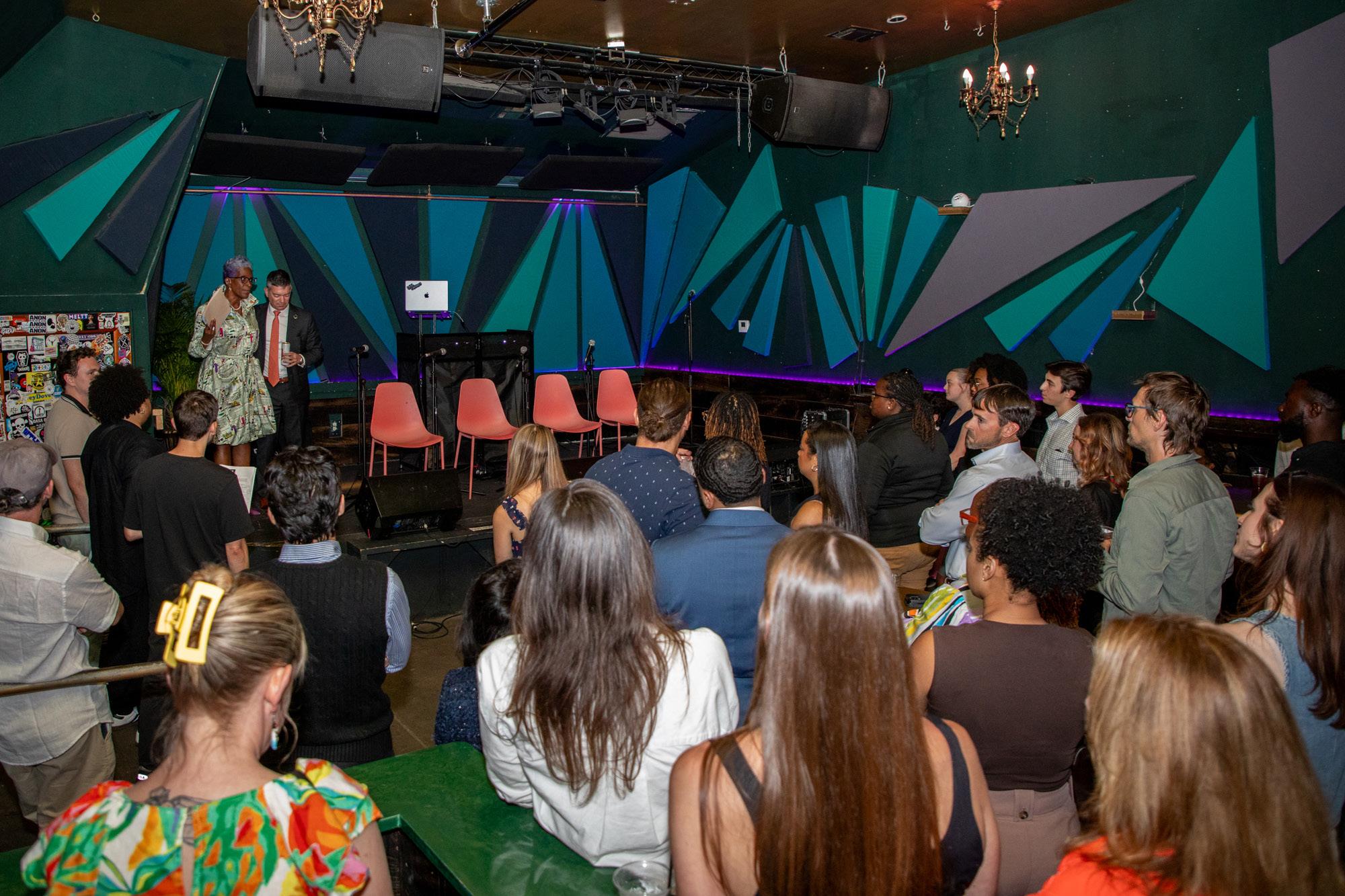
New Orleans has always led in music, food, hospitality, and technology; GNO After Dark’s CultureTech program brought together the people figuring out what happens when they converge.
JOBS REPORT RELEASE
GNO, Inc. and Bank of America released the 2025 Greater New Orleans Jobs Report, a datadriven look at where the regional economy stands and where it’s headed.
NEWLAB GROUNDBREAKING
New Orleans broke ground on a $300 million transformation of the former Bywater Navy base, a site for affordable housing, retail, and a tech startup hub rising from a longabandoned military complex.
2026 LEGISLATIVE LUNCHEON
Industry leaders and policymakers gathered at the Pentagon Barracks in Baton Rouge for GNO, Inc.’s Annual Legislative Luncheon, making the case for a region on the move.
Q2 2026 INVESTOR BREAKFAST
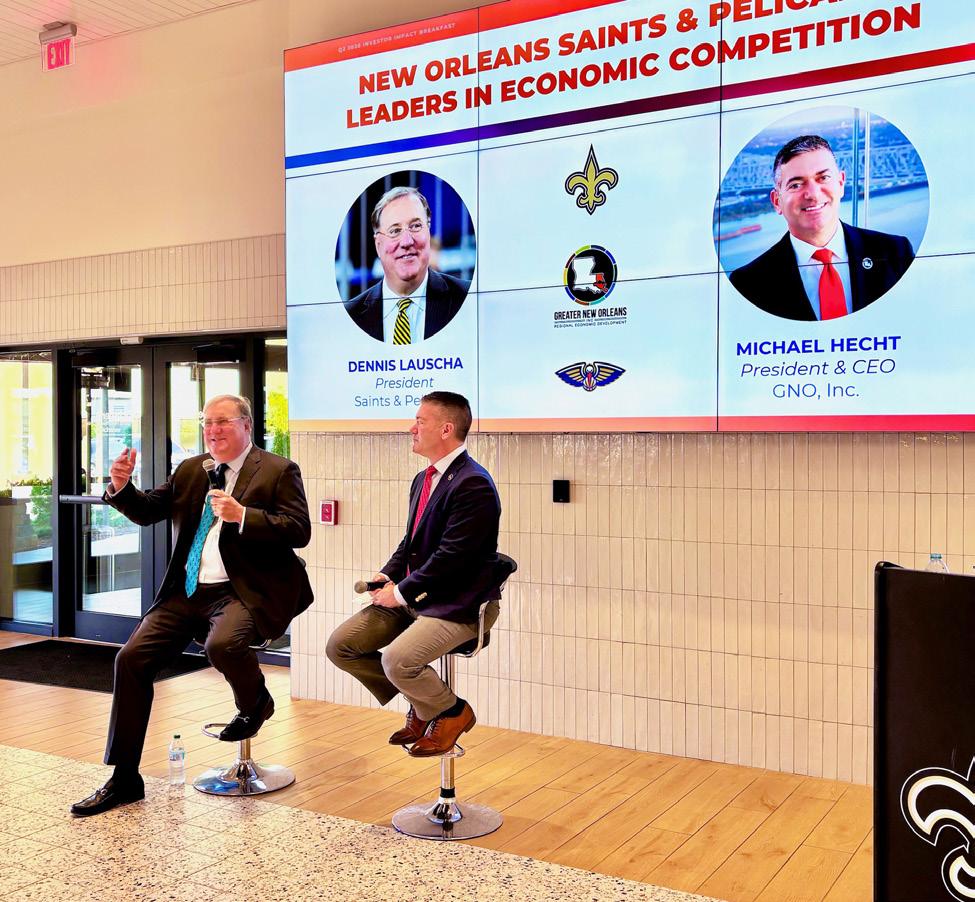
GNO, Inc. investors kicked off the year with a deep dive into how the Saints and Pelicans drive economic growth across the region, proof that sports and economic development are more connected than you might think.
New Orleans recorded one of its safest years in modern history in 2025 — 108 murders (excluding the January 1 terror attack), the lowest in 50 years, and just 260 shootings, the fewest ever documented. That marks a nearly 60% drop from the 2022 peak, far outpacing the national 17% decline. Robberies, carjackings, and property crimes fell sharply too — some by more than half. Credit goes to a broad ecosystem: better agency coordination, violence interruption programs, higher conviction rates, and advances in trauma response.
Louisiana closed 2025 with the largest year of capital investment and job creation in state history — $61 billion in announced investment and 9,300 new jobs averaging $91,000, about $30,000 above the state average. Highlights include Saronic Technologies’ $300 million autonomous vessel facility in Franklin, SLB’s $30 million Shreveport expansion, ElementUSA’s $850 million rare-earth refining facility in St. John and St. James Parishes, and Hut 8’s planned $10 billion AI data center in West Feliciana Parish.