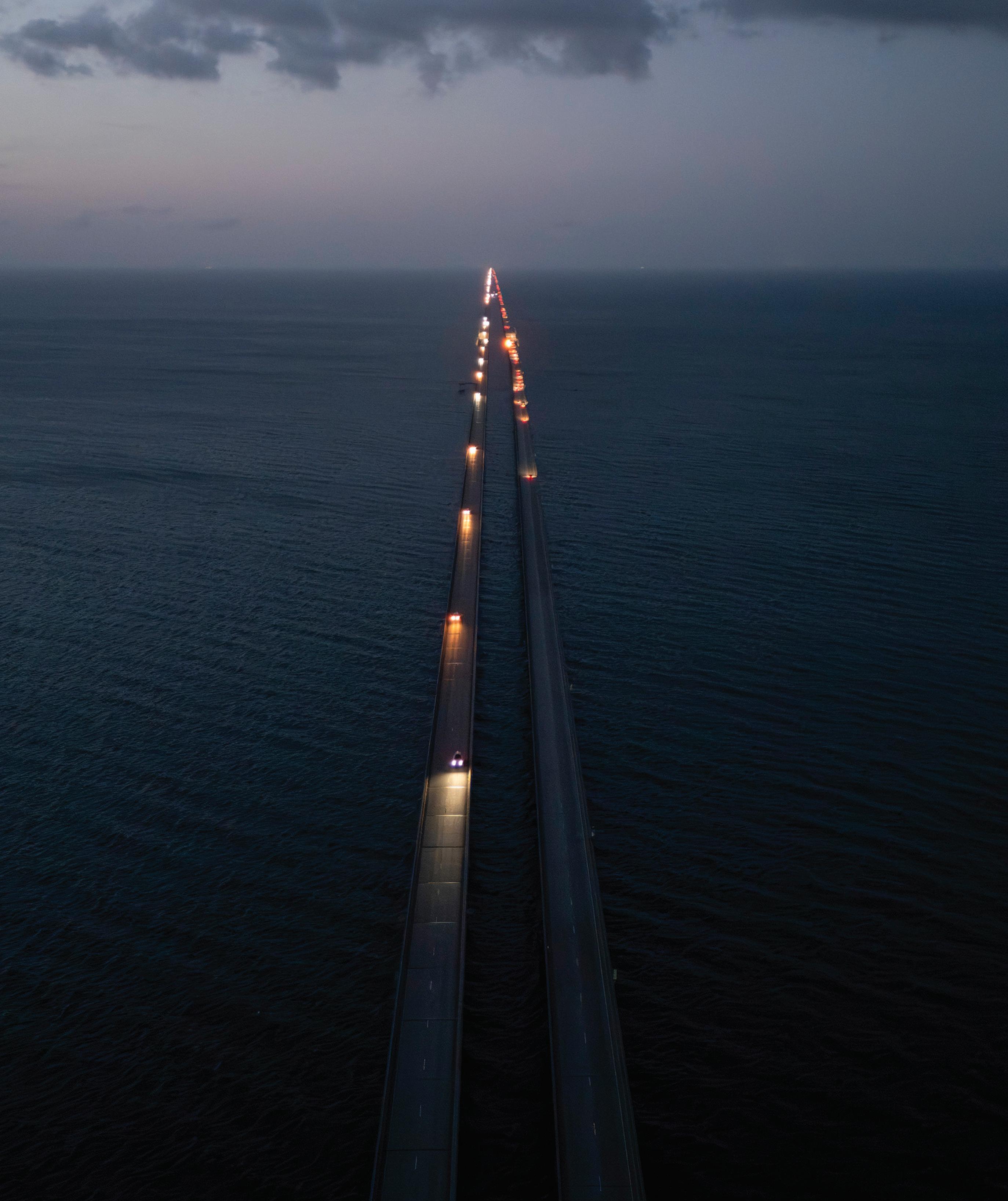
Celebrating 70 years this year, The Causeway’s world-
record title is only the start of what makes it remarkable.
PLUS
New and Notables
These 8 professionals are bringing their skills to big roles in our region
Our Way
Celebrating 70 years this year, The Causeway’s world-record title is only the start of what makes it
Notables
These 8 professionals are bringing their skills to bigx roles in
Waterbound Wonder
Ever since my parents moved to Mandeville 12 years ago, I’ve taken countless trips back and forth across The Causeway.
There have been some stressful trips, like the first time taking a potty-training toddler across 24 miles of no bathroom options, or when the suspension went out on my car right as I got on the already bumpier southbound side. I had to drive the whole way across at about 10 miles an hour just to keep all four wheels on the ground.
But most of the time, getting on the bridge has this instant calming effect on me. I think for one, it’s the proximity of the water. Water has always been my happy place, and the ability to just drive out onto it with no land in sight just feels magical. (Apparently, from multiple people I’ve shared this with, that is not the case for everyone). Now, really high bridges? That’s a different story. No thank you.
But have you ever been driving across when the water so exactly matches the sky that you can’t tell where one stops and the other begins? Have you ever had a giant pelican pull up beside you and share your commute?
As much as I love the bridge, though, I admit that when Todd suggested we might want to do a piece on it, I wondered if there would be enough of a story there for a whole feature. Just on one bridge?
Boy was I wrong.
After just a few minutes talking with the bridge’s general manager, Carlton Dufrechou, I realized this one bridge was packed with fascinating facts and trivia. But more than that, it holds its own rich stories of courage, innovation and dedication. It is operated like its own little island by passionate, hard-working people while also serving as a vital connector for our region.
In New Orleans we live surrounded by so many sights, sounds, tastes and experiences that just don’t exist anywhere else — so much so that we can take it for granted. My hope is that when you read about our Causeway, you’ll gain a more complete view of why this bridge is certainly another jewel in our crown.
And speaking of jewels! This month we also recognize our 2026 class of New & Notables, area professionals that have taken on big new roles over the past year — many at familiar names and one in an exciting new endeavor. Please join me in congratulating these incredible standouts.
Stay cool out there and thanks for reading,
KIMBERLEY SINGLETARY
Editor Kimberley@BizNewOrleans.com
Biz Talks
Each week, “Biz Talks” reaches beyond the pages of Biz New Orleans’ magazine to bring you in-depth conversations with leaders in our community.
Episode 285
Funny Business — The Business of Comedy with National Touring Comedian and Producer Ryan Rogers
Native New Orleanian Ryan Rogers recently became the first comedian from the Gulf South to headline a global network comedy special. He is also the founder of the LGBTLOL Queer Comedy Fest, returning next month here in New Orleans June 4-7. This week he helps us understand where New Orleans fits in with the national comedy scene, along with what it takes to succeed in this industry and how he’s helping local businesses capitalize on people’s deep need and desire to laugh.
Episode 284
Northshore Brand YumMum Offers a Unique Answer to Nausea
Nausea is one of the most common complaints for expectant mothers, and one Northshore mom-turned-entrepreneur has created a tasty remedy for it. Jamie Steele is the creator of YumMum, ginger-based gummies designed to get the job done while tasting like an actual treat. Not just for pregnancy, these gummies are good for all forms of nausea — traveling kids, chemotherapy treatment, you name it. Steele shares the lessons she learned creating her innovative product and the surprising other ingredients she insisted they include.
Publisher Todd Matherne
EDITORIAL
Editor Kimberley Singletary
Art Director Sarah E.G. Majeste
Digital Media Editor Kelly Massicot
Associate News Editor Kelly Hite
Research Alex Jorns
Contributors John Besh, Walt Leger III, Ashley McLellan, Misty Milioto, Chris Price, David Shapiro, Damian Simoneaux, Keith Twitchell,
ADVERTISING
Senior Account Executive
Meghan Schmitt
504-830-7246 Meghan@BizNewOrleans.com
Senior Account Executive
Lauren McCanse
504-830-7249 Lauren@BizNewOrleans.com
RENAISSANCE PUBLISHING
PRODUCTION
Digital Director Rosa Balaguer Arostegui
Senior Production Designer Ashley Bravata
MARKETING
Marketing Manager Haley Nash
Sponsored Content Coordinator Jeremy Marshall
ADMINISTRATION
Office Manager Emily Ruiz
VP of Sales and Marketing Kate Henry
Chief Executive Officer Todd Matherne
For subscriptions, call 504-830-7231
Midyear Momentum
As summer arrives and New Orleans shifts from festival to vacation season, one thing remains constant — the momentum of our business community. Across the region, I continue to see leaders, entrepreneurs and organizations moving forward with optimism. It’s one of the many reasons I remain incredibly bullish about this year and the future of our city and region.
June is often viewed as a slower month in business, but I’ve found it can also be one of the most productive. It offers an opportunity to reflect on the first half of the year, evaluate where we’re headed and focus on the opportunities ahead. This month, our staff will gather for a midyear review, adjust where needed and position ourselves to finish the year strong.
At Renaissance Publishing, this year continues to hold special meaning as we celebrate our 20th anniversary. Looking back to our beginnings in 2006, just months after Hurricane Katrina, it’s incredible to see how far both our company and our region have come. What started as a small, passionate team with a belief in the power of local storytelling has grown into a platform dedicated to highlighting the people and organizations driving the renaissance of our region.
One of the privileges of publishing Biz New Orleans is having a front-row seat to the individuals shaping our economy and community.
Every month, we share stories of innovators, nonprofit leaders, business owners and civic champions who are making a meaningful impact. Their success reminds us that the future of New Orleans will not be defined by our challenges, but by the determination of the people who choose to invest here and make a difference.
This month’s issue continues that mission with stories that spotlight growth, leadership and innovation across our region. I encourage you to support local businesses, attend networking events and continue building the partnerships that strengthen our economy.
The energy across New Orleans feels different right now — more collaborative, more hopeful and more forward-looking. Progress happens when people believe in the future, and I truly believe the best chapters for our region are still ahead.
TODD MATHERNE CEO and Publisher Renaissance Publishing
SALES TEAM
KATE
VP of Sales and Marketing
504- 830-7216
kate@bizneworleans.com
MEGHAN SCHMITT
Senior Account Executive
504- 830-7246
meghan@bizneworleans.com
LAUREN MCCANSE
Senior Account Executive
504-830-7249
Lauren@BizNewOrleans.com
IN THE BIZ
12
SPORTS
The FIFA World Cup kicks off June 11, and billions of dollars are coming with it.
16
ENTREPRENEUR
Entrepreneurs share the perks and challenges of operating in Australia
14
TOURISM
New Orleans has so much going on during the summer months. Mark your calendar now with these can’tmiss opportunities.
IN THE BIZ SPORTS
World Cup Fever Is Here
The FIFA World Cup kicks off June 11, and billions of dollars are coming with it.
BY CHRIS PRICE
In the summer of 1990, soccer grabbed the attention of Americans when, for the first time in 40 years, the United States qualified for the World Cup.
While the U.S. didn’t escape the first round that summer in Italy, soccer’s popularity stateside began a steady increase that has lasted decades.
The game’s popularity was boosted four years later when the United States hosted the tournament, and a cast of characters — including John Harkes, Alexi Lalas, Marcelo Balboa, Tony Meola, Cobi Jones and Eric Wynalda — led the team to the round of 16 before losing to eventual champions Brazil. Within two years, Major League Soccer, a professional league, was launched and has continued to grow and improve its standing among domestic soccer leagues.
The biggest sporting event in the world returns to America’s golden shores this summer, and its potential impact on the game could be exponential. The '94 FIFA World Cup set total and average attendance records that still stand but are expected to be broken this summer.
The 2026 World Cup — the 23rd quadrennial international men’s soccer championship contested by the national teams of the Fédération Internationale de Football Association (FIFA), or International Federation of Association Football — kicks off June 11 and will run for 39 days until July 19.
This year’s tournament will be bigger than ever before. For the first time, the tournament will be played across three nations, with 11
cities in the United States, three in Mexico, and two in Canada hosting games. American host cities include Atlanta, Boston, Houston, Dallas, Kansas City, Los Angeles, Miami, New York/New Jersey, Philadelphia, San Francisco and Seattle. The tournament has also expanded from 32 to 48 teams, and the total number of matches played will rise from 64 to 104.
The World Trade Organization has estimated that the tournament is projected to create more than $40 billion in global GDP, with an estimated $80.1 billion in gross output across Canada, Mexico and the U.S., including $30.5 billion within the U.S. alone.
This year, there will be 12 groups of four teams, with the top two teams in each group and the eight best third-placed teams progressing to a new knockout round of 32.
2026 WORLD CUP GROUPS
There are 12 groups of four teams in this year’s tournament. The top two teams in each group and the eight best third-placed teams will progress to the knockout round of 32.
Group A: Mexico, South Korea, South Africa, Czechia
Each team is guaranteed to win $9 million for their national association, with earnings increasing for every round they advance. Those that reach the round of 32 will receive $11 million. Teams in the round of 16 get $15 million. Those that reach the quarterfinals get $19 million. There is a significant increase for the final four. The fourth-place team will get $27 million, third place $29 million. The runners-up will earn $33 million, and the champions will win $50 million.
Favorites include Spain, Argentina, France, England, Brazil and Portugal. Like all major tournaments there will be Cinderellas who achieve glory by besting more established teams. Matchups that feature nations with historic rivalries are especially entertaining. This will likely be the final World Cup for two legends of the game — Argentina’s Lionel Messi and Portugal’s Cristiano Ronaldo, but young players, including Lamine Yamal (Spain), Florian Wirtz (Germany) and Joao Neves (Portugal), are ready to make their mark.
The United States hasn’t played well coming into the tournament but is expected to reach the knockout rounds. Their group stage games are all on the West Coast, so travel lag shouldn’t be an issue. They have the talent to make a deep run. With the nation celebrating its 250th anniversary, hopefully patriotic pride will propel them to the top. T
Group B: Canada, Switzerland, Qatar, Bosnia & Herzegovina
Group C: Brazil, Morocco, Scotland, Haiti
Group D: United States, Australia, Paraguay, Türkiye
Group E: Germany, Ecuador, Côte d’Ivoire, Curaçao
Group F: Netherlands, Japan, Tunisia, Sweden
Group G: Belgium, Egypt, Iran, New Zealand
Group H: Spain, Uruguay, Saudi Arabia, Cape Verde
Group I: France, Senegal, Norway, Iraq
Group J: Argentina, Austria, Algeria, Jordan
Group K: Portugal, Colombia, Uzbekistan, DR Congo
Group L: England, Croatia, Panama, Ghana
CHRIS PRICE is an award-winning journalist and public relations principal. When he’s not writing, he’s avid about music, the outdoors, and Saints, Ole Miss and Chelsea football.
Yes, It’s Hot, But…
New Orleans has so much going on during the summer months, so mark your calendar now with these can’t miss opportunities.
BY WALT LEGER III
It may be surprising to hear that Travel + Leisure Magazine declared New Orleans as one of the top places in the United States to visit during the month of August. When the New Orleans & Company PR team invited travel journalist Patricia Doherty for a press trip to experience our culture in August 2024, the magazine found multiple reasons to plan a late-summer visit. Doherty's takeaway?
“Summers are hot and humid in New Orleans, but August is a great time for a family visit with lots to do, hotel room bargain, and restaurant discounts with the annual COOLinary program. The Audubon Zoo features a real swamp in the middle of Uptown New Orleans with elephants, bears, snakes, orangutans and a rare white tiger. In the Audubon Aquarium, there are interactive exhibits, sharks, alligators, penguins and fascinating insects. The Satchmo Summer Fest, at the New Orleans Jazz Museum, celebrates Louis Armstrong with music and food. There’s
WALT LEGER III is president and CEO of New Orleans & Company, the official destination sales and marketing organization for the New Orleans tourism industry. He may be reached via email at walt@neworleans.com.
live music everywhere, and during the annual Red Dress Run, runners and walkers don their best red dresses for the charity event. Another favorite during my visit was the must-see National World War II Museum.
Where to Stay: The Higgins Hotel New Orleans, adjacent to the National World War II Museum, is convenient and comfortable; I enjoyed my stay and the view from Rosie’s on the Roof. The historic Eliza Jane, Kimpton Hotel Fontenot and Ritz-Carlton New Orleans are great places to stay, too.”
This journalist’s experience proves that summer in New Orleans is full of culture, connection and opportunity, especially for our local residents.
With a full calendar of events and fewer peakseason crowds, it is an ideal time to support local businesses, host clients and rediscover the experiences that make New Orleans unique. A few examples:
• Juneteenth brings powerful cultural celebrations, music, art, and community events that reflect the city’s rich Black heritage. The New Orleans Juneteenth Festival is held on June 19 at Louis Armstrong Park. It’s also a great opportunity to support a Black-owned restaurant or shop, visit the New Orleans African American Museum or Congo Square.
• The 2026 Essence Festival of Culture, held from July 3–5, features headliners including Cardi B, Latto, Brandy & Monica, Kehlani, and Patti LaBelle. There are more than 20 curated experiences that celebrate the brilliance of Black culture — from music and art to wellness, style, cuisine and commerce. Tickets are on sale now.
• Beloved local traditions like Creole Tomato Festival (June 6-7) and Satchmo SummerFest (Aug 1-2)offer ways for residents to support neighborhood vendors and musicians.
• Tickets are available for the first-ever X Games Championship event, the final stop of the inaugural MoonPay X Games League
(XGL) Summer Season, coming to the Caesars Superdome July 24-26, 2026. The three-day action sports festival features 18 competitions across skateboard, BMX and moto X, with more than 100 of the world’s top action sports athletes competing. New Orleans will serve as the championship finale of the global 2026 season, following stops in Sacramento and Japan. Events like this reinforce the city’s ability to deliver world-class experiences and continue to position New Orleans as a destination that is Built to Host.
• Seasonal promotions further encourage exploration across the city. Restaurant Week New Orleans (June 8-14) and COOLinary New Orleans (Aug. 1-31) invite diners to experience top restaurants at accessible price points.
• New Orleans Museum Month, held annually throughout August, allows anyone with an active membership at any participating local museum to receive free admission for themselves and a guest to more than 25 participating institutions across the city.
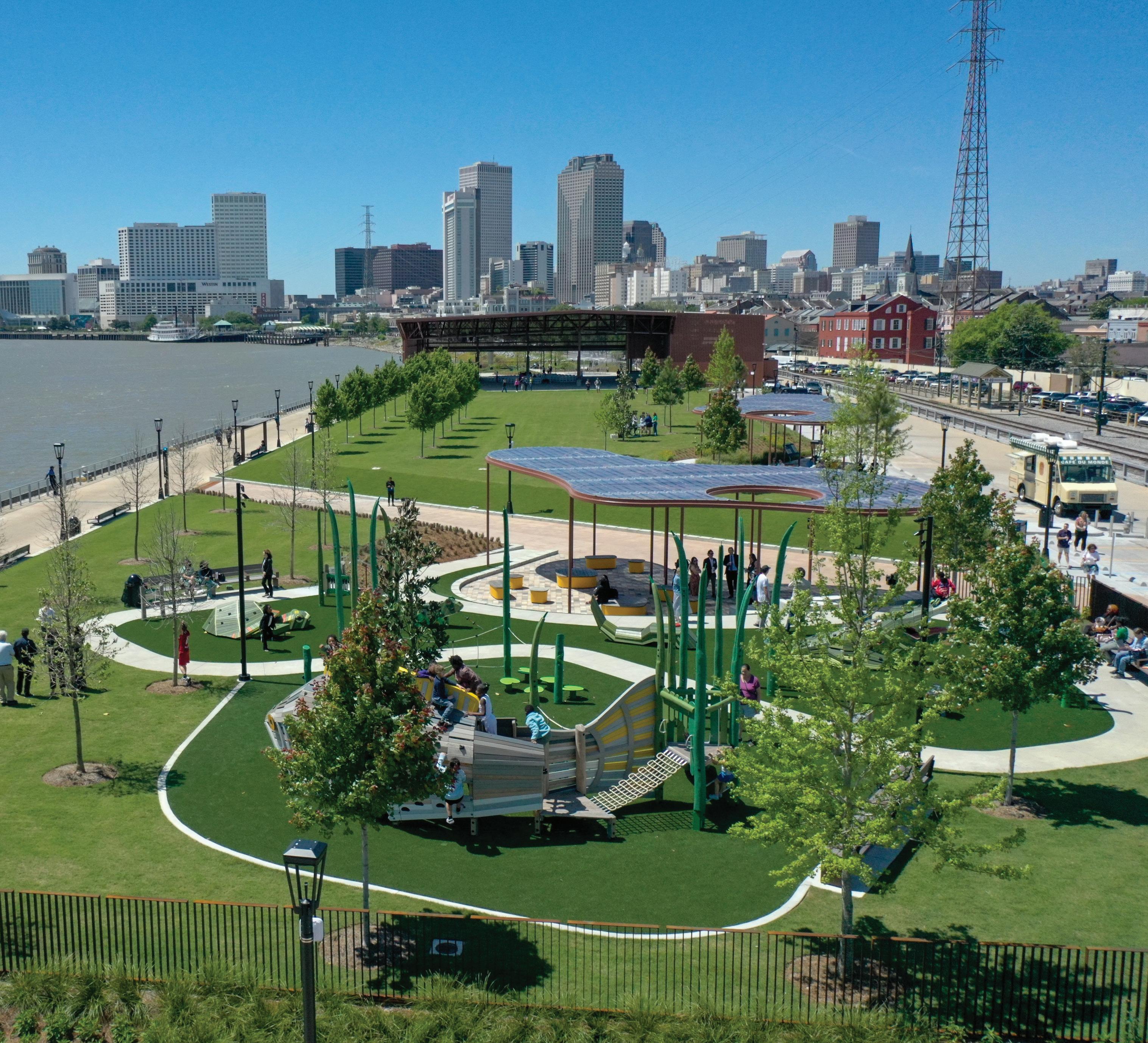
• New developments are shaping the summer experience. The recently opened Audubon Goldring Woldenberg Riverfront Park provides a revitalized connection to the Mississippi River, with expanded public space, walking paths, and areas to gather along the waterfront.
Summer also presents a strategic opportunity for the business community to lean in. Whether companies host clients in a private dining room at an iconic restaurant or organize planning retreats around festivals, the season creates natural touchpoints to do business while supporting our city’s largest industry.
For those of us who are lucky enough to live and work here, the message is simple: Now is the time to rediscover the magic of New Orleans. Visit a museum for the first time, attend a festival or explore a new neighborhood this summer. It's the perfect time to show up and support the people and places that make New Orleans thrive.
Make your plans today at neworleans.com T
IN THE BIZ ENTREPRENEUR
KEITH TWITCHELL spent 16 years running his own business before serving as president of the Committee for a Better New Orleans from 2004 through 2020. He has observed, supported and participated in entrepreneurial ventures at the street, neighborhood, nonprofit, micro- and macro-business levels.
Doing Business Down Under
Entrepreneurs share the perks and challenges of operating in Australia
BY KEITH TWITCHELL
One great thing about traveling is meeting people and learning about their way of life. For me, that includes learning about entrepreneurism in the countries I visit.
Earlier this year, I had the privilege of spending five weeks in Australia where I found a strong entrepreneurial spirit. Though challenged by both geography (only Southeast Asia offers a nearby international market) and population (26 million people in the entire continent), Aussie entrepreneurs in fields ranging from finance to healthcare, agriculture to climate technologies are doing well at home and having increasing presence on the world stage.
“Whether this is the lingering influence of a relatively young country that needs the efforts of those willing to take the personal risks of starting a new business so that the broader community is able to build and develop, or the interaction of this and other factors, I feel Australia generally welcomes and supports entrepreneurs initiating small, medium and large business
ventures,” observed Stuart Muir, owner with his wife Judy of the Beaumaris Beach Guest House in Tasmania. True entrepreneurs, the Muirs also have a gift shop onsite and have decorated much of the place with Judy’s art, which is for sale. They also helped found the Tasmania’s Best Bed and Breakfast Association, a collaborative that promotes lodgings like theirs.
Stuart Muir described government support at the national, state and local levels as readily available. Among other tools, the Australian government has a website that gathers and organizes information and resources from all three levels for easier access.
“The site also provides links and information on registering a business name in Australia, applying for an Australian Business Number, and registering companies, trademarks, licenses and permits. It also provides details and support for planning and operating a business, particularly in the early stages of operation when these things are new to the enterprise and there may be aspects which the entrepreneur has yet to think about.”
Australian cities in general are doing well, and according to Elijah Ponte of the family-owned Unique Opal Mine, Adelaide in particular is booming. Selling opal jewelry and specimens, the business has grown to the point where it now employes six jewelers and cutters full time. Yet they have one recurring hurdle that will sound familiar to many New Orleans-area companies.
“The biggest challenge we face as a business is our winter season and the lack of international tourists during this time,” Ponte reported. “International tourists being our main customer base, when the busy season ends, we always find a decline in our sales.”
The current tariff situation roiling world trade is also challenging enterprises that export some of their products. Kevin O’Brien, owner of the esteemed Kangarilla Road winery, noted that shipments to the United States used to comprise about 40% of his international market; that number is now below 10%.
One constant subcurrent I encountered in Australia is the relationship between the descendants of the European settlers and the indigenous Aboriginal people. Recognition of the Aborigines as the first Australians is universal – even the in-flight safety message on Qantas led off with an acknowledgment of this.
From a business standpoint, this is reflected in the growing number of Aboriginal art collectives around the country and the prevalence of indigenous people in inner-country tourism. One strange aspect of this, however, was that many tourist-targeted items that proudly proclaimed themselves as “Aboriginal Design” turned out, upon closer inspection, to have been made in Vietnam. This questions their authenticity and the benefits to Aboriginal craftspeople.
Friendly people, gorgeous scenery and more make Australia a great place to visit. The wideopen spaces are an apt metaphor for the wideopen business opportunities, backed by a strong entrepreneurial support system and the can-do Aussie spirit. T
PERSPECTIVES
20 TECH
The STEM talent gap isn’t coming, it’s already here. But events like this month’s Stem Fest in Covington are aiming to bridge it.
22 INSURANCE
Every company can learn from this local business when it comes to creating and living by a good safety plan.
26 ECONOMIC DEVELOPMENT
A look at the latest economic trends for St. Tammany Parish
28 GUEST
BRG’s two newest restaurants are on the same block of one of the most compelling small-city dining markets in the Gulf South.
24 CONSTRUCTION
Three Northshore construction firms share details on current projects.
DAVID SHAPIRO is board president of NorthShore Robotics, an organization dedicated to fostering and encouraging a passion for STEAM education in students and the community. He may be reached via email at BoardPresident@NorthshoreRobotics.org.
The STEM Talent Gap Isn’t Coming
It’s already here. But events like this month’s Stem Fest in Covington are aiming to bridge it.
BY DAVID SHAPIRO
If you work in technology, you already feel it. Roles stay open longer. Projects slow down waiting on the right skill sets. And while we talk about AI, automation, and digital transformation, we’re missing a more fundamental issue: We are not building a broad enough pipeline of people prepared to work in and shape modern technology. This isn’t just a hiring challenge, it’s a systems problem.
Every industry today is a technology industry. Ochsner Health continues to innovate care for our communities, Saronic technologies brings remote control ships to our shipyards, Chevron makes new discoveries in the gulf and AI is rapidly becoming embedded in everything.
But here’s the disconnect: While technology is accelerating, access to the skills needed to participate in it is not.
Across Louisiana, the data tells a clear, and urgent, story. Students in low-income communities consistently have less access to STEM education, including fewer advanced courses and limited exposure to technology. Louisiana ranks near the bottom nationally in math and science proficiency, with fewer than one-third
of students meeting grade-level expectations. That’s not just an education issue; it’s a future workforce issue.
That gap compounds over time. Students without early access to math, computing and hands-on problem-solving are far less likely to pursue STEM pathways later. By the time we’re hiring for technical roles, the pipeline has already narrowed — significantly.
When we talk about a shortage of talent in areas like software development, cybersecurity, data science, or robotics we’re really talking about a shortage of opportunity earlier in the system.
And that’s where technology leaders need to pay attention.
Because this isn’t just about education, it’s about infrastructure for the future workforce.
We don’t solve this problem by competing harder for the same limited talent pool. We solve it by expanding the pool, and that starts with exposure.
I’ve spent my career in IT operations and enterprise systems, working on everything from service platforms to automation. But some of the most important work I’ve seen isn’t in a data center or a boardroom, it’s when a student first interacts with technology in a meaningful way.
Not passively. Not watching. But doing so with excitement and mentorship.
Give a student a robot to program, a problem to solve, or a system to explore and something changes. Technology stops being something abstract and becomes something they can understand, control and eventually create.
Without that moment, many students — especially in underserved communities — never see themselves in technology at all.
That’s why efforts like our STEM festival on June 6, in the West 30's of Covington matter. This isn’t just an event; it is a proof point.
We are bringing hands-on robotics, engineering and interactive technology experiences directly into a community that doesn’t typically have access to them. From underwater robotics in a full-sized pool to live demonstrations and high-energy activities, students don’t just watch technology, they engage with it.
We also connect families with over 20 nonprofits, creating a bridge between curiosity and continued support. Because access to technology doesn’t exist in isolation, it depends on the broader ecosystem around a student.
But here’s the reality: A single event, no matter how impactful, isn’t enough. Exposure creates the spark, but sustained opportunity builds the future.
If we’re serious about closing the STEM gap in Louisiana, we must move beyond one-day experiences and invest in ongoing pathways — robotics teams, mentorship, competitions and consistent access to tools and guidance.
For businesses, especially those investing in digital transformation, this is more than a social good; it’s a strategic imperative.
AI, automation and advanced systems will continue to evolve. But without a broader, more inclusive pipeline of people who understand and can work with these technologies, growth will be constrained — not by ideas, but by capacity.
There are students in communities like the West 30's who could become developers, engineers, data analysts or system architects. But potential without access doesn’t become capability — it stays unrealized.
The encouraging part is that this is solvable.
We know what works: early exposure, hands-on learning, and sustained engagement through programs like competitive robotics. When students are given the chance to build, compete and collaborate over time, you don’t just see interest, you see transformation.
Technology doesn’t just shape the future. It reflects who is included in building it. Right now, that inclusion is uneven.
Closing that gap means investing not just in moments, but in pathways.
Supporting organizations like NorthShore Robotics helps stand up and sustain competitive robotics teams for underserved youth, turning early exposure into long-term opportunity.
Because the question isn’t whether technology will define the future, it’s who will be prepared to build it — and whether we chose to invest in them early enough. T
PERSPECTIVES
INSURANCE
Does Your Company Prioritize Safety Like This?
Every company can learn from this local business when it comes to creating and living by a good safety plan
BY DAMIAN SIMONEAUX
As National Small Business Month gets underway, it’s a great time for entrepreneurs across Louisiana to take stock and recommit to company priorities and purpose.
While growth goals and performance metrics often lead these conversations, this moment also presents an important opportunity to focus on something foundational: workplace safety. A clear, intentional safety plan does more than prevent injuries. It protects workers, strengthens workplace culture, and supports the long-term success of Louisiana businesses and communities.
Louisiana has made meaningful progress in workplace safety in recent years and now ranks among the safest states in the country for private
sector workers. These results did not happen by accident. They reflect the commitment of workers who take safety seriously and the employers that make safety planning a top priority.
Sustaining and building on that progress requires continued focus. As Louisiana’s largest workers’ compensation company, LWCC partners with employers across industries to help build practical, effective safety plans that protect workers and strengthen businesses across the state. A strong plan follows a simple but proven approach: inspect, analyze, evaluate, plan and train. Together, these steps encourage employers to walk worksites, review past incidents, assess existing controls, clearly document policies, and ensure employees are consistently trained.
One example of what intentional safety looks like in practice is Demo Diva, a residential and commercial demolition company and LWCC policyholder based in New Orleans. For owner Simone Bruni, safety is not a checklist or a compliance exercise; it’s a core leadership responsibility woven into every task, conversation, and decision. And it’s her key to success.
Bruni launched Demo Diva after Hurricane Katrina with limited resources but a clear mindset. Early on, a mentor shared advice that continues to guide her today: “You can’t manage safety from the sidelines.” From the beginning, Bruni made safety visible and participatory, leading from the jobsite and setting expectations through action.
After 20 years in business, Bruni has learned the importance of strategizing safety before and after every shift. Each day, Demo Diva crews spend time at the jobsite documenting what happened the day before, from weather-related shutdowns to equipment use and job conditions. These conversations build accountability, reinforce communication and help teams anticipate risks before work begins.
Teams focus on the work ahead with a “toolbox talk” and a job hazard analysis focused on the specific tasks at hand. Topics may include hydration, power lines, or equipment operations, depending on the job. A groundman leads the discussion, and every team member
signs in to acknowledge participation, helping reinforce shared responsibility.
Training at Demo Diva is continuous. Crews regularly participate in lunch-and-learn sessions covering changing regulations and best practices, and Bruni invites industry experts to share insights. Safety, in her view, is learned collectively and reinforced through consistency.
That sense of ownership extends to equipment and appearance. Demo Diva employees purchase and maintain their own personal protective equipment (PPE), while the company invests in high-visibility uniforms, upgraded cab shields, and a meticulously organized, hot-pink tool trailer that travels from site to site. When their trucks arrive, fully stocked and clearly branded, they signal professionalism, preparedness and pride.
“We invest in the right equipment and take pride in using it and showing it off,” said Bruni. “We know we are a high-visibility company, and we want people who see us working to know we are taking safety seriously in a very visible way.”
Creating a culture of safety like Demo Diva starts with a clear safety plan. Not a document that sits on a shelf, but an actionable guide that drives accountability and protects employees. An effective safety plan should:
• Establish clear policies and responsibilities;
• Outline hazard-specific procedures;
• Require thorough documentation;
• Identify training schedules;
• Define emergency response and reporting steps;
• Include drug-free workplace protocols; and
• Protect workers from environmental hazards like heat, sun exposure or dehydration.
LWCC supports employers at every stage of this process by providing templates, checklists, self-evaluation tools and training guides to turn safety planning into daily practice.
Small Business Month is an ideal time for companies to revisit and strengthen their safety plans, not out of obligation, but with intention. The most effective safety cultures are communicative, engaged, and built into the work itself. When safety is prioritized every day, it protects workers, strengthens businesses and helps Louisiana thrive. T
DAMIAN SIMONEAUX is the safety services manager for LWCC. He may be reached via email at damian.simoneaux@lwcc.com.
JEREMY MARSHALL was born and raised in Baton Rouge before moving to New Orleans with his wife, Kristin, in 2018. Beginning his career in the Film/TV industry, Marshall worked steadily on over a dozen projects before transitioning to Renaissance Publishing as their sponsored content coordinator. You can reach him at jeremy@myneworleans.com.
WORK IN PROGRESS
The Northshore continues to experience aggressive growth with no slowdown in sight. At the Northshore Business Council’s February Tri Parish Development Meeting this past February, Russell Richardson, president and CEO of St. Tammany Parish Economic Development announced that St. Tammany Parish alone had 23 active economic development projects, with another four or five announcements yet to come for 2026.
Three Northshore construction firms share details on current projects
BY JEREMY MARSHALL
Area construction companies are benefiting from that growth, with their work laying the groundwork for the future of Southeast Louisiana. The following three firms are currently at work on projects aimed at making an impact with charitable organizations, infrastructure expansion and even historical restoration.
REBUILDING BRIDGES
As part of a push to reverse the slow erosions of bridge structures throughout the state, last September the Louisiana Department of Transportation and Development (DOTD) — in partnership with the Office of Louisiana Highway Construction (OLHC) — launched a $100.1 million initiative to renew more than 60 bridges.
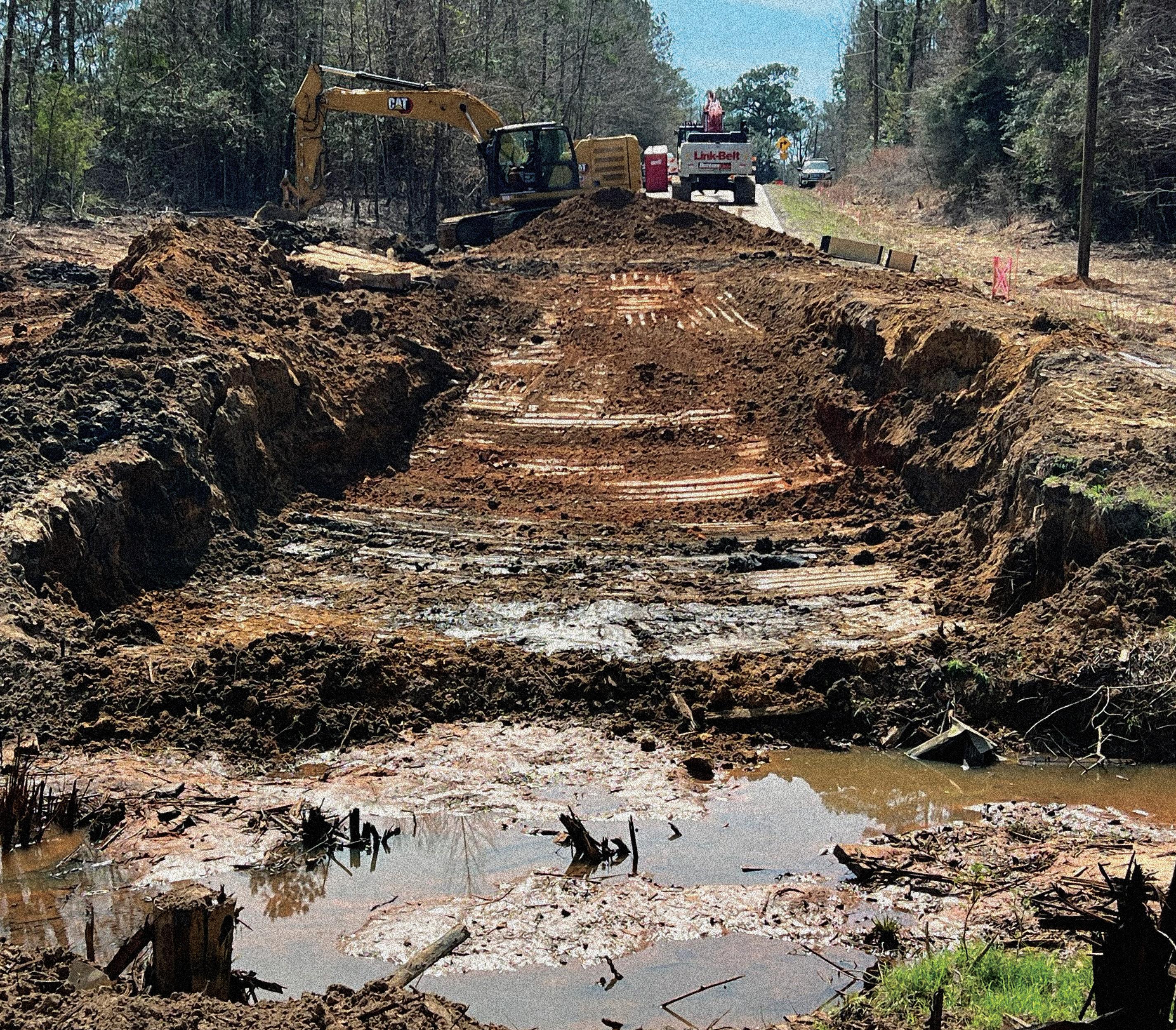
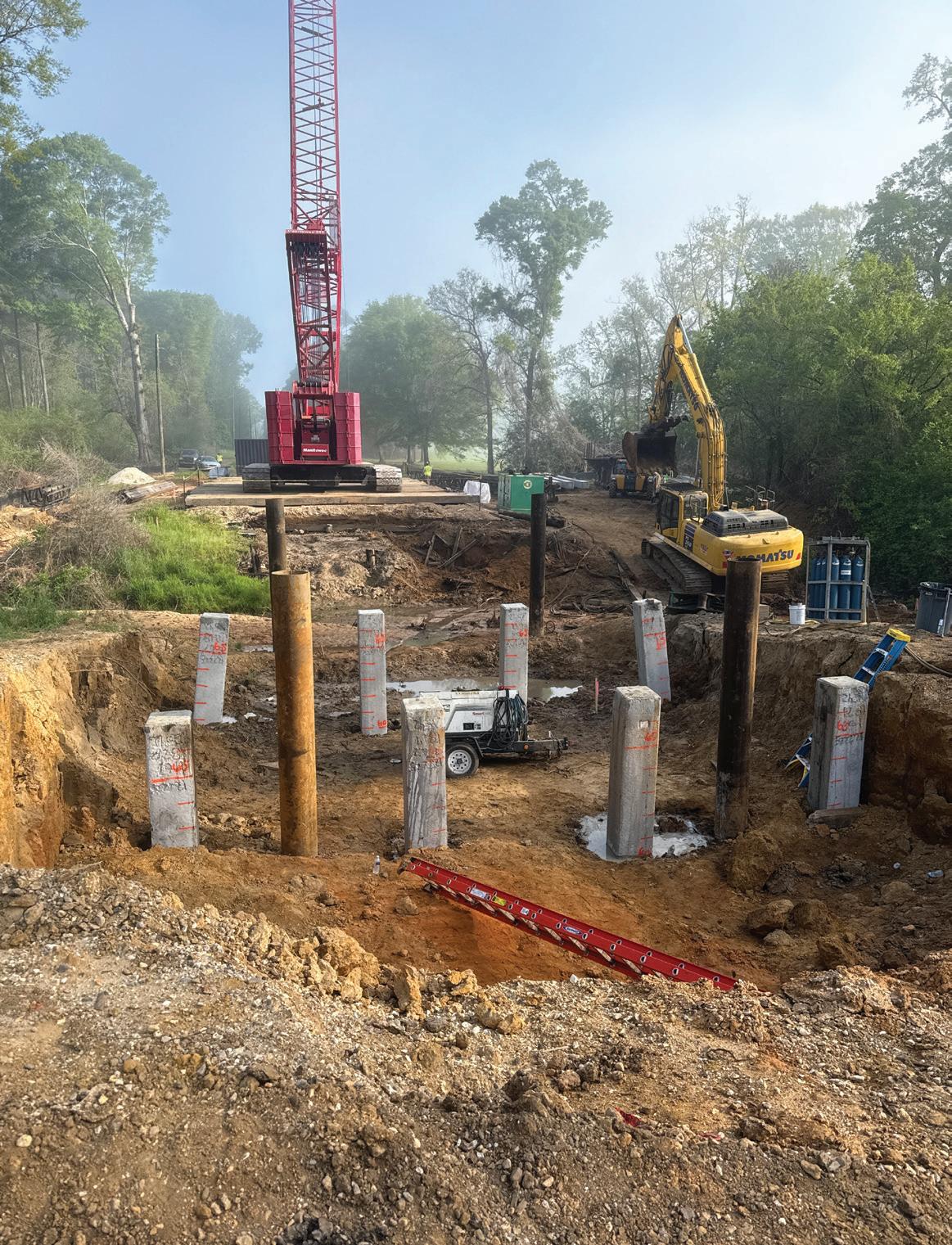
Enter RNGD, a firm that prides itself on out-of-the-box thinking and a “renegade” approach to traditional construction challenges. Based out of New Orleans, RNGD is currently rebuilding two bridges on the Northshore, one in Tangipahoa Parish and one in Washington Parish. Both are ground-up modernizations designed to replace the previously deteriorating concrete foundations with sturdier asphalt ones.
“The process requires us to remove the existing bridge, cut the existing pile down below grade, drive in new piles and build the new bridge on top,” explained Bret Ellis, sector leader for heavy civil and bridge with RNGD. “The concrete piles we are driving are about 18 inches square and 85 feet long, driven to depth with concrete casts that can support the bridge deck on top of that. Both of our bridge builds include a shoulder, so the deck grew from a 24-foot-wide pathway to a 36-foot pathway.”
By using hydraulic studies to determine the acceptable number of spans and the length that the bridge can accommodate, along with drainage plans to best counteract the effects of the Louisiana climate for rural bridges spanning water, RNGD said it is “utilizing a higher safety threshold to protect both themselves and the integrity of their projects without cutting corners.”
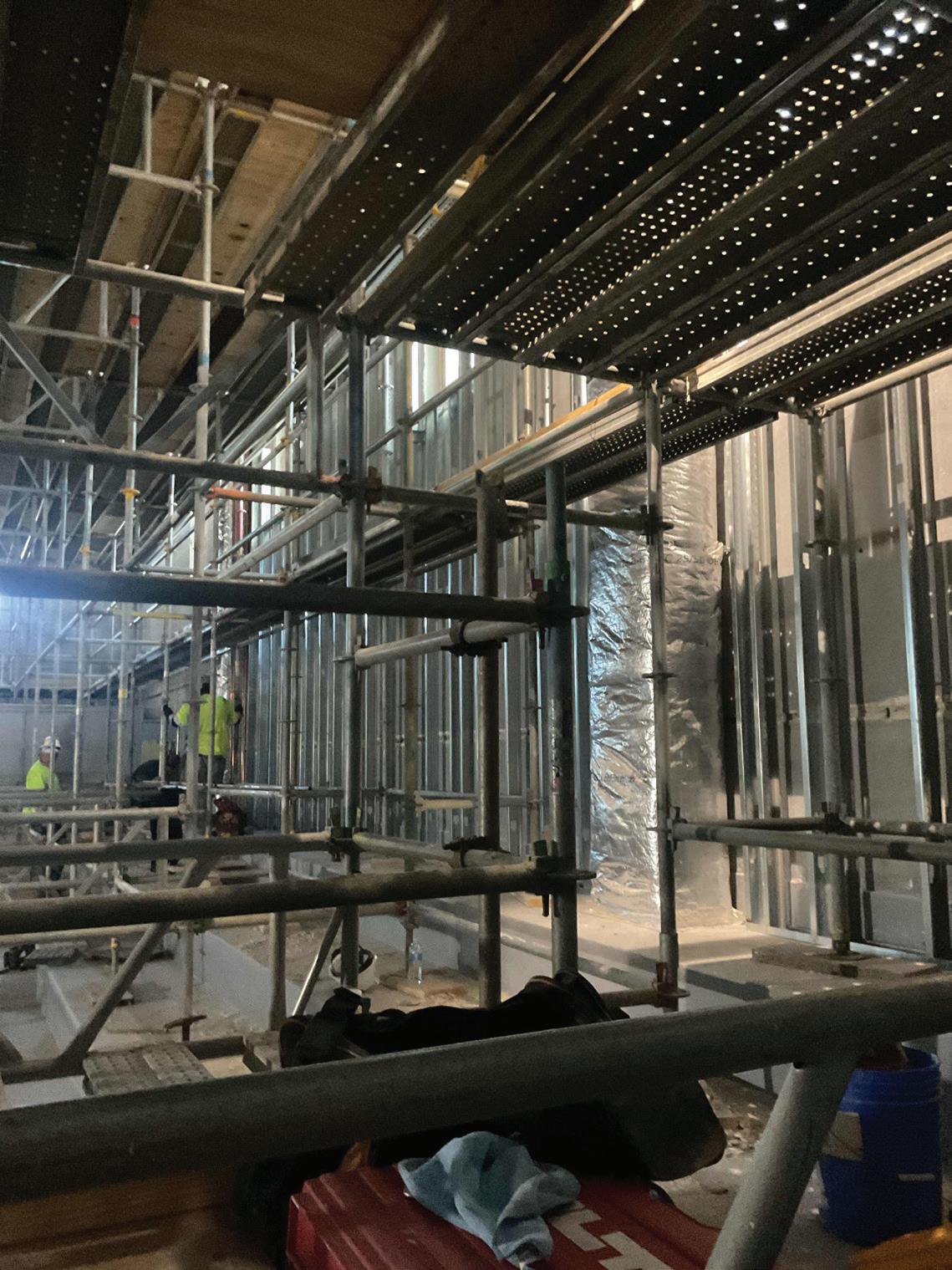
HOLY HISTORIC RENOVATION
While Covington-based Gulf States Real Estate and Construction Services, Inc., mostly focuses on new builds, it also takes on historical restorations — with the latest currently in progress in the heart of New Orleans.
The Jerusalem Temple has sat sentinel on St. Charles Avenue for more than 100 years. Once a Shriner’s Temple in the early 20th century, its usage was cut at the knees by the floodwaters of Hurricane Katrina.
In 2006, Mandeville-based Church of the King purchased the historical landmark property from The Way Church. In 2018, the church announced plans to renovate the property into a new worship center with the goal of opening in the winter of 2019. Multiple roadblocks, including a global pandemic, caused the work to stretch on and costs to almost double, totaling more than $31 million. The church’s website
Our new building will be a game changer for our ability to meet each child’s unique needs related to safety, justice and recovery.
Thomas Mitchell, LPC-S, executive director of Hope House
now says it anticipates a September 2026 opening.
Four years ago, Church of the King brought on Gulf States. With the basic footprint of the building remaining the same, Gulf States is charged with completing two additions to the building’s rear, adding an elevator shaft, and constructing a housing for utilities and a generator. A team well-versed in working in aging properties, Gulf States Construction’s portfolio includes (name a few other reno projects?).
“A lot of planning and design go into maintaining the building’s heritage,” said Jason Reibert, vice president at Gulf States Construction Services, Inc. “Given the age of the (1918) building, we knew that this renovation would be a challenge. Even though we were able to find the original plans for the building from 1917, we still found things that were not noted as we began to open up walls — things unseen for 50 to 60 years. That is to be expected with this kind of job, but it doesn’t make things easier.”
Plans are in place for the church to eventually host different services and offerings
from the basement to the penthouse of the 50,000-square-foot building.
“To be in this project and to help bring The Church of the King back to its place as a functional public offering and gathering place is quite remarkable,” said Reibert. “The church has a great vision for this project that is much needed in the community, and we are happy to be part of the team."
A NEW HOPE
For CM Combs Construction Company, based in Madisonville, projects across the Greater New Orleans area are nothing new, with their handiwork visible in everything from historic renovations of restaurants like DiCristina’s in Covington to The National WWII Museum’s star-spangled canopy in the Central Business District.
A little closer to home, CM Combs is lending their expertise to more philanthropic efforts by helping to construct Brooke’s Place at the Oscar J. Tolmas Charitable Trust Campus, a new facility operated by Hope House, a nonprofit organization dedicated to ending the cycle of child abuse in their community.
“This has been one of the best projects for Hope House since our inception in 1994,” said Thomas Mitchell, LPC-S, executive director of Hope House. “Our new building will be a game changer for our ability to meet each child’s unique needs related to safety, justice and recovery.”
Built next door to the existing Hope House headquarters in Downtown Convington, the new building is set to open this summer. By creating a more private, child-centered environment for families in crisis, and a dedicated space for community training and outreach, Brooke’s Place at the Oscar J. Tolmas Charitable Trust Campus aims to allow Hope House the chance to facilitate simultaneous forensic interviewing with multiple agencies while providing additional space for much-needed therapy services that promote healing from PTSD.
“During my first year of working at the Hope House, we performed 282 forensic interviews with child abuse victims. Last year, we performed 571 forensic interviews. Due to the increase in demand, our limited infrastructure no longer meets the demand of our community,” said Mitchell. “Chris and Michael (Combs) with CM Combs Construction are both longtime community partners of the Hope House, and it’s been an honor to work with them on completing this project.” T
By The Numbers
A look at the Latest Economic Trends in St. Tammany Parish
In the most recent publication of The Analyst — St. Tammany Economic Development Corporation’s economic research publication — the parish organization reported on trends seen through the fourth quarter of 2025 in multiple economic areas. The following is a snapshot of some of the findings:
GOOD NEWS
Unemployment — St. Tammany’s unemployment rate in December 2025 was 3.5%, the lowest level it had been in seven months, and lower than the 4.4% rate seen pre-pandemic. It remains lower than national, state and Greater New Orleans unemployment rates.
Self-employment — The parish has a strong entrepreneurial segment, with 36.5% of all jobs classified as self-employed in 2025. That rate has mostly risen each year since 2005. A whopping 83% of those reporting as self-employed in St. Tammany fall under the entertainment and media industry.
GETTING BETTER
Labor Force — The parish saw the highest number of residents employed or actively seeking
employment ever recorded in November 2025 at 132,461, but St. Tammany’s 59.8% labor employment rate still falls behind the national average of 62.8% and Greater New Orleans’ 61.4%.
NOT SO GOOD
Poverty Rate — Between 2010 and 2023, the number of parish residents living in poverty increased by 2 percentage points (8.8% to
UNEMPLOYMENT RATES BY AREA
10.8%). It declined slightly to 10.5% in 2024. In that year, the poverty threshold was $31,800. Wages — St. Tammany Parish employees overall are paid less than their Southshore counterparts. Average wages in the parish are lower than averages reported nationally, statewide and in Greater New Orleans.
To see the full report, contact stttammanyedc.org. T
St. Tammany
JOHN BESH is the co-owner and co-founder of BRG Hospitality, which includes 10 restaurants in the Greater New Orleans area. He may be reached via email at marketing@brg-hospitality.com.
The Northshore Locale We Couldn’t Ignore
BRG’s two newest restaurants are on the same block of one of the most compelling smallcity dining markets in the Gulf South
BY JOHN BESH
For most of our history, BRG Hospitality has grown deliberately within New Orleans. That decision was rooted in both opportunity and our philosophy of serving from the heart. New Orleans is one of the most culturally rich and culinarily significant cities in the world, and there has always been more to explore, refine and contribute there.
But growth, when done thoughtfully, requires paying attention to how communities evolve. Over the past several years, Covington has become impossible to ignore.
Long before BRG Hospitality considered opening restaurants on the Northshore, this part of Louisiana helped shape the way I understood food and hospitality. Some of my most formative lessons came working under a fiery French chef at La Provence in Lacombe, followed by my first national recognition as Food & Wine’s “Best New Chef” while cooking at Artesia in Abita Springs. Those early experiences sharpened my belief that great restaurants are built by the local farmers, fishers, crabbers, shrimpers and foragers who make our work possible.
Downtown Covington has experienced a meaningful wave of reinvestment, and as a result, the area has developed into one of the most compelling small-city dining markets in the Gulf South. New businesses have opened, and there is a noticeable increase in independent operators and hospitality-focused spaces.
One leading example is The Southern Hotel, whose restoration more than a decade ago brought ‘history back to life,’ reestablished the downtown corridor as an overnight destination and helped support restaurants, retail and cultural activity within walking distance.
Anyone in the business knows that restaurants do not succeed in isolation. They benefit from proximity to other complementary retail, a consistent flow of local and regional guests and access to great ingredients. Covington has all three. Some of the best farming and fishing in Louisiana are minutes away. The area’s dynamic farmers’ markets give chefs access to exceptional produce, seafood, dairy and other ingredients that reflect the region. It is that access that keeps the menu seasonal and how we support local purveyors.
At BRG Hospitality, we evaluate expansion through a few core ideas: long-term viability,
alignment with our culinary philosophy and the ability to contribute meaningfully to the community. Covington checked each of those boxes.
As a Northshore native, this presented an opportunity to explore new ideas with intention and authenticity.
Our three concepts in Downtown Covington reflect that approach. Since 2023, Tavi has served modern Levantine cuisine built around shared plates, fresh ingredients and a wood-fired oven.
Just next door is the new Feliciana, where French culinary elegance meets the curious, contemplative world of late author and longtime St. Tammany Parish resident Walker Percy.
Upstairs, Paradise Cocktail Lounge is designed as a social space where guests can linger, and atmosphere plays as much of a role as the menu.
None of these concepts was developed in isolation from the community. The goal was to build something that feels part of the Northshore’s identity while still meeting the standards we hold as a company. Our broader philosophy has always been centered on using local ingredients, supporting regional purveyors and creating spaces that feel connected to their surroundings. Covington allows us to extend that philosophy in a way that is both operationally sound and culturally relevant.
The decision to expand more into Covington was about recognizing a community that is investing in itself, one that values quality and creativity, and deciding to be part of that momentum.
Covington’s restaurant scene has come into its own, which is what made it compelling. It is a market where thoughtful ideas can have an impact and where the future of the Northshore’s culinary identity is actively being shaped. For us, it felt like the right place, at the right time, to take a measured step forward.
For those who have not spent time there recently, it is worth experiencing firsthand. What is happening in Downtown Covington reflects a broader shift in how and where people choose to gather, dine and invest. It is a redefinition of what a regional dining destination can be within the Greater New Orleans area.T
NoTaBles nEw
BY SAMANTHA HINDMAN AND MISTY MILIOTO
BY
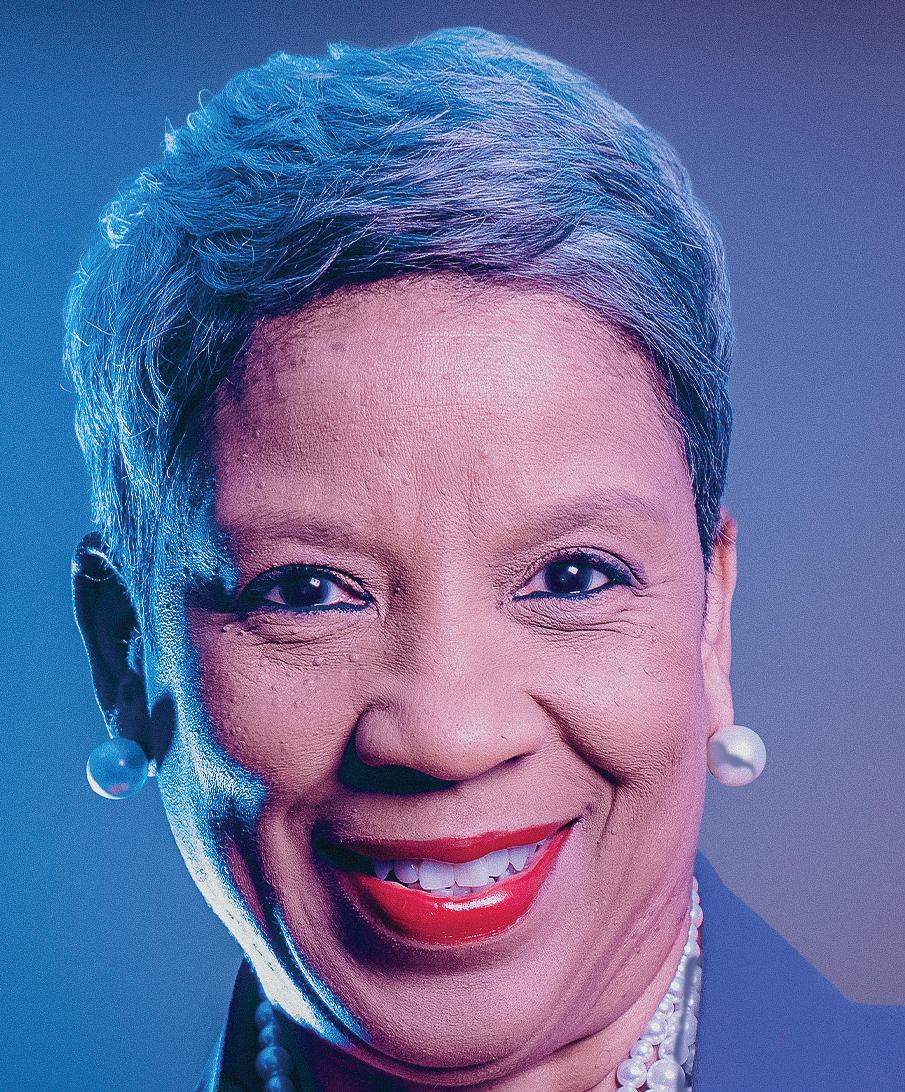
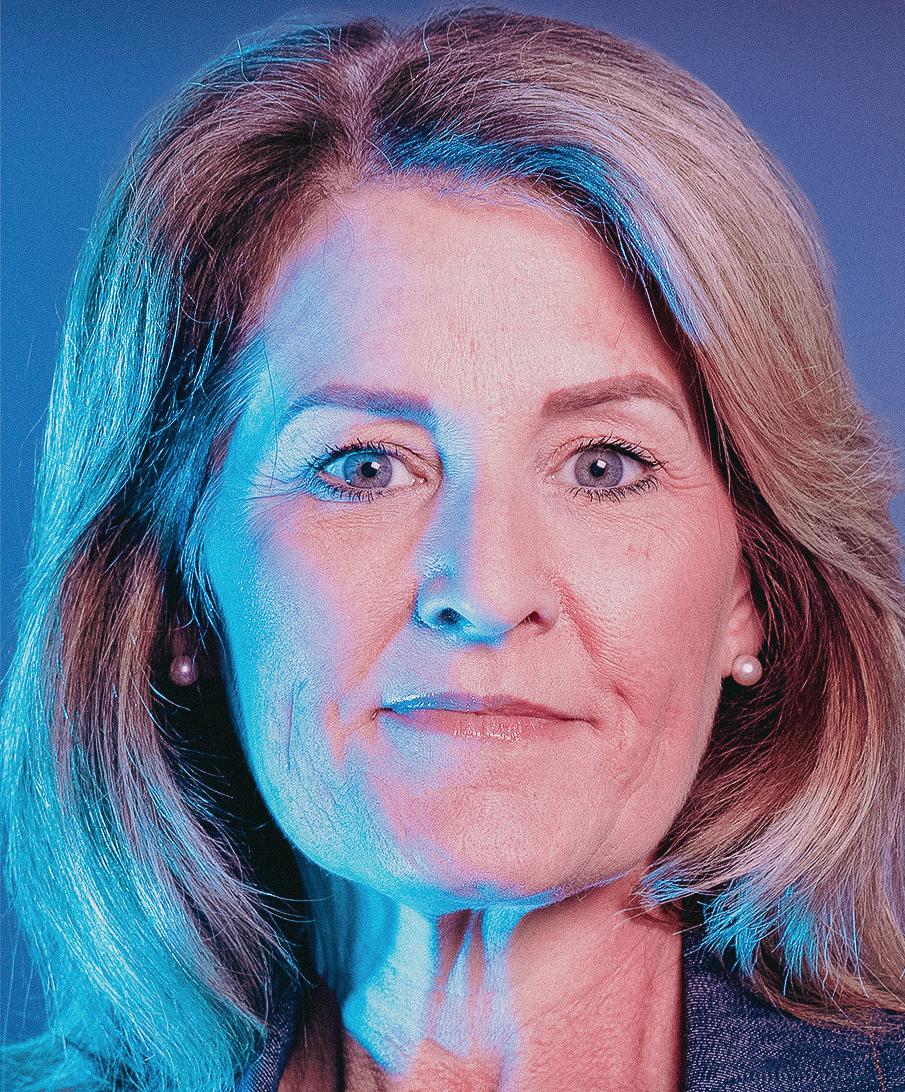
THESE 8 PROFESSIONALS ARE BRINGING THEIR SKILLS TO BIG ROLES IN OUR REGION
aNd
NoTaBles
PORTRAITS
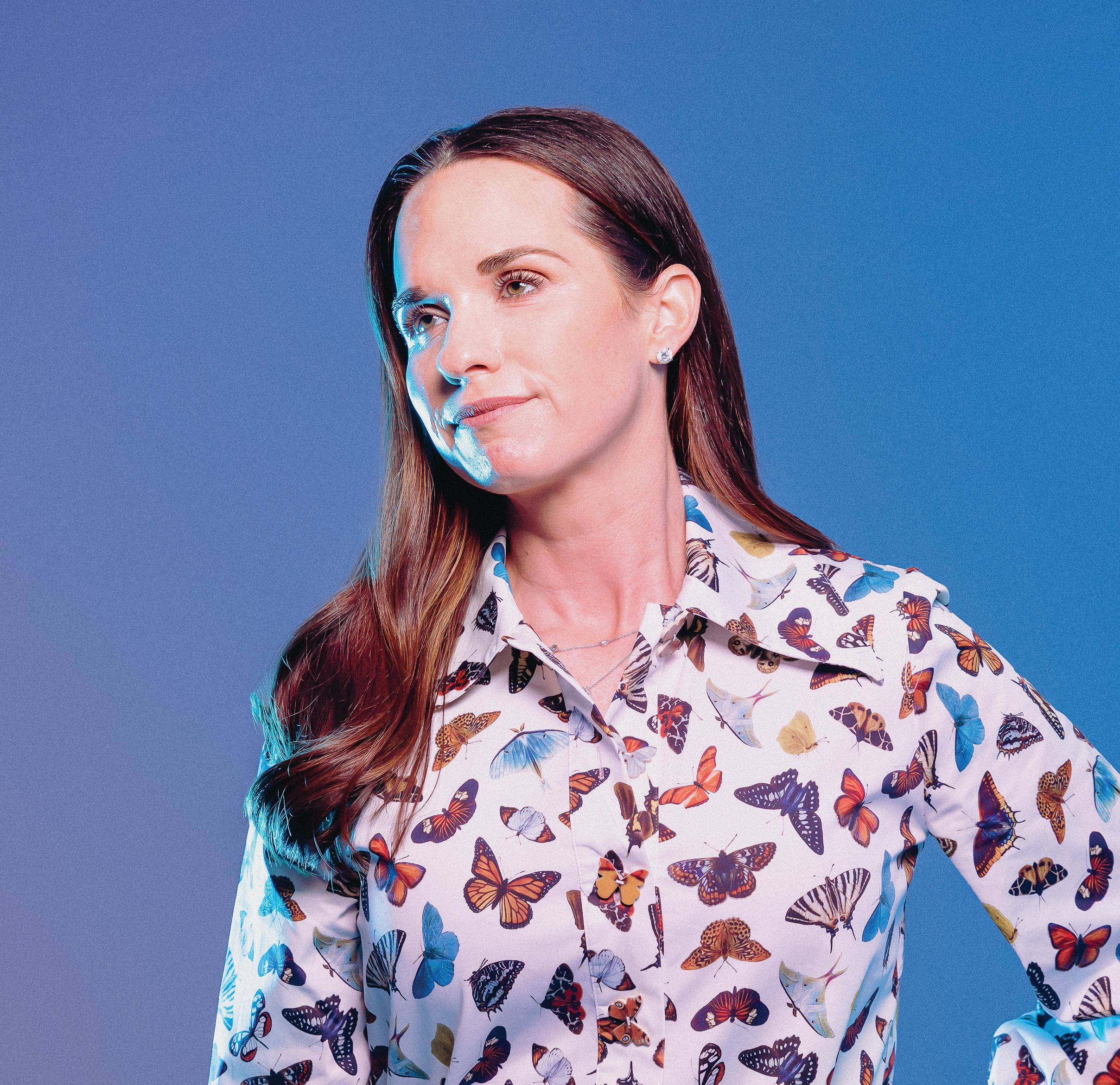
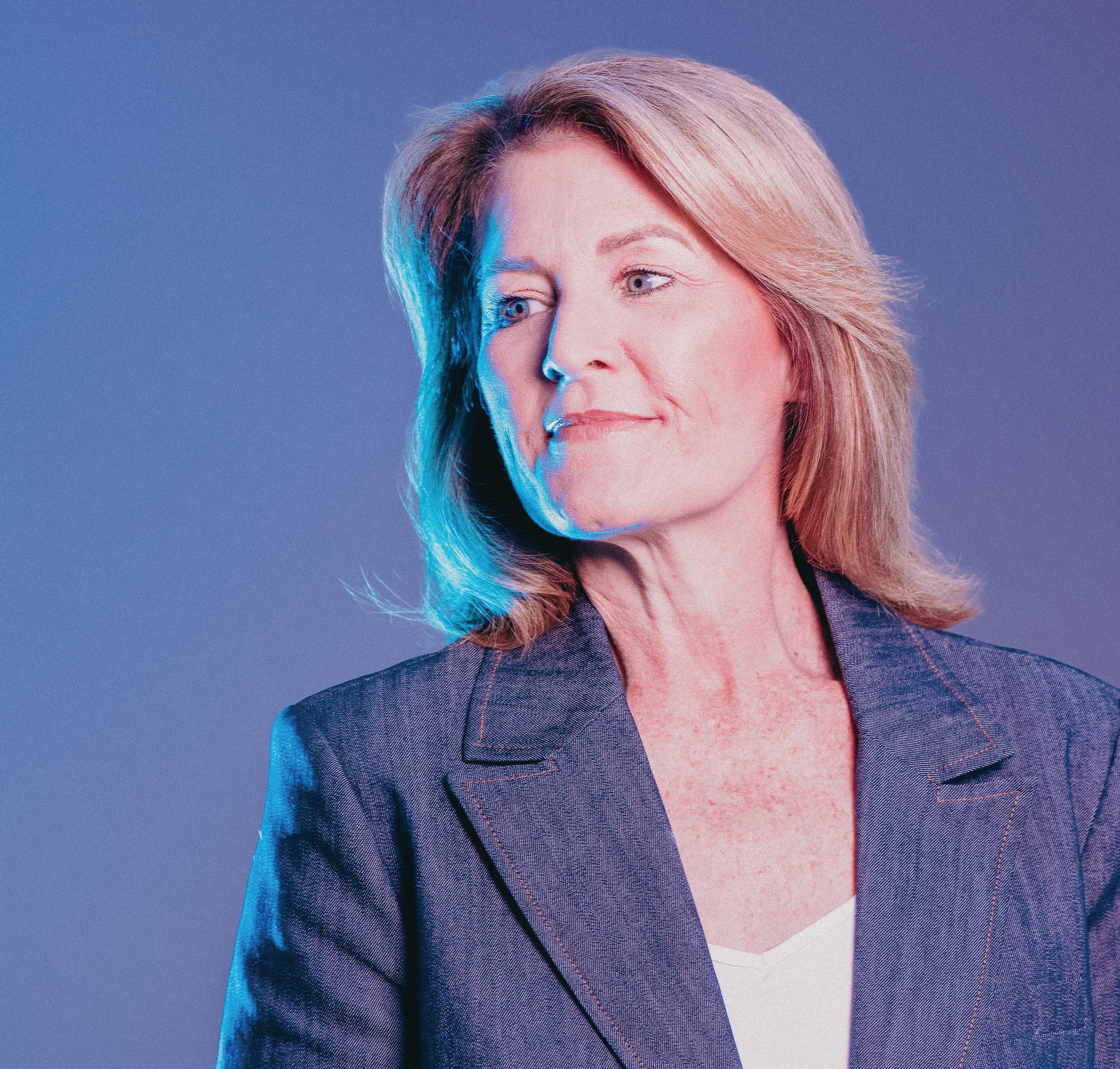
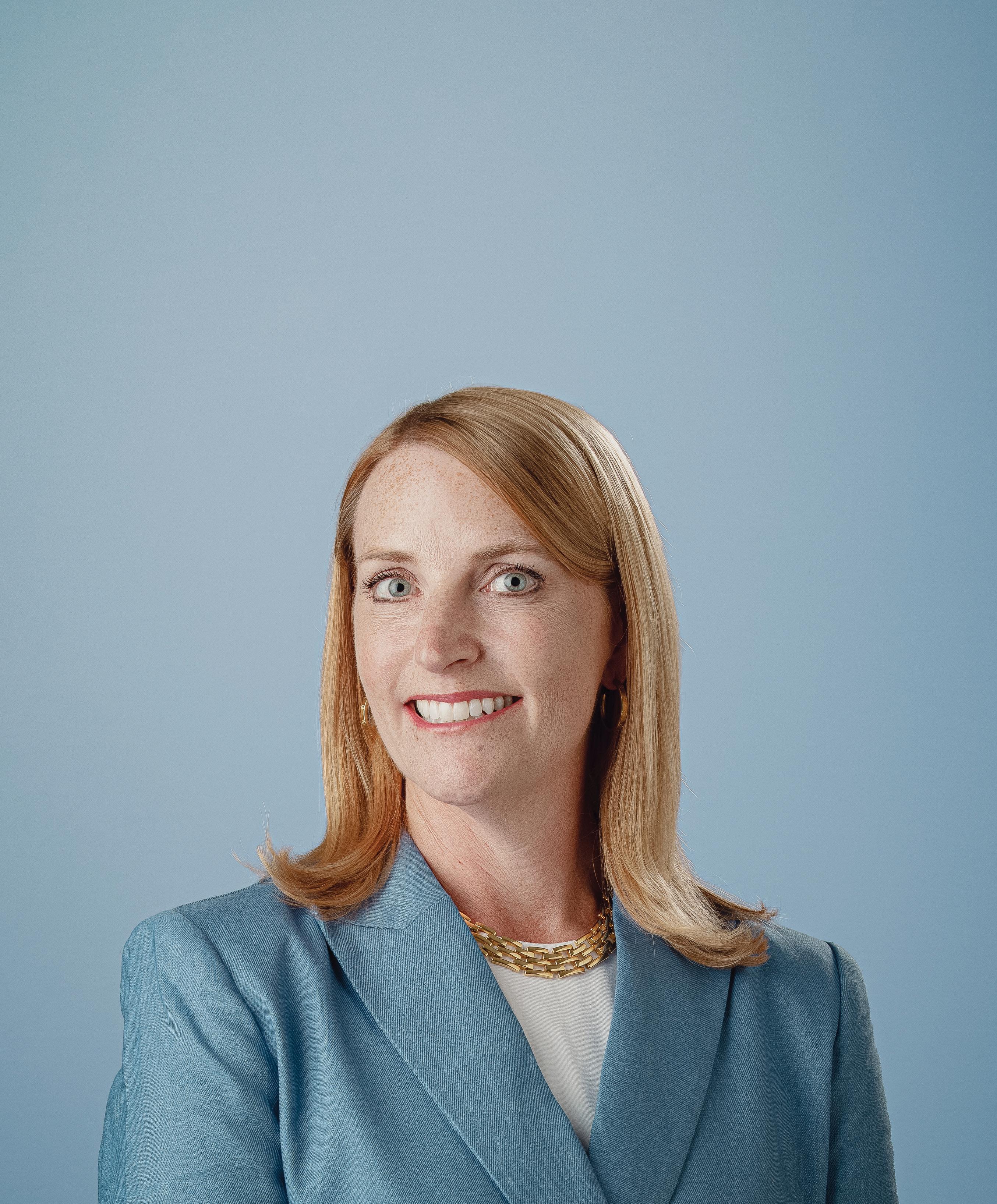
THERESA CASSAGNE
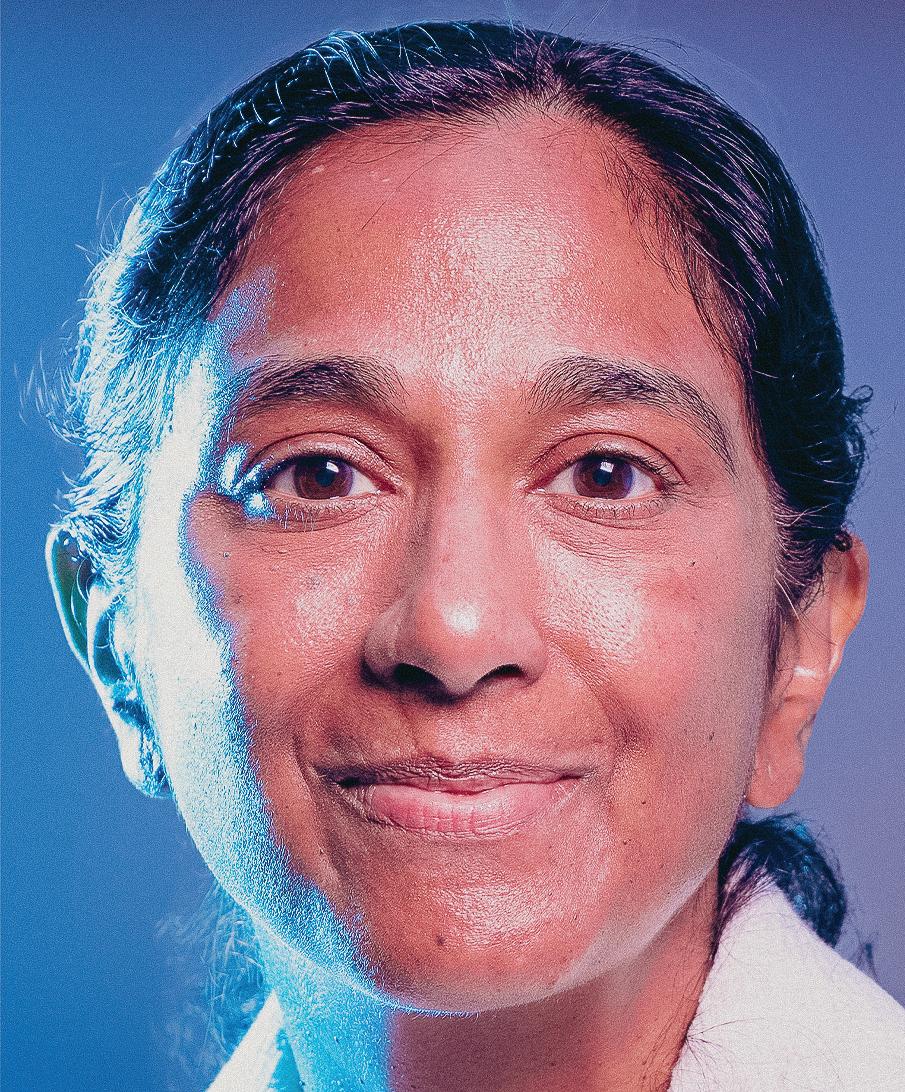
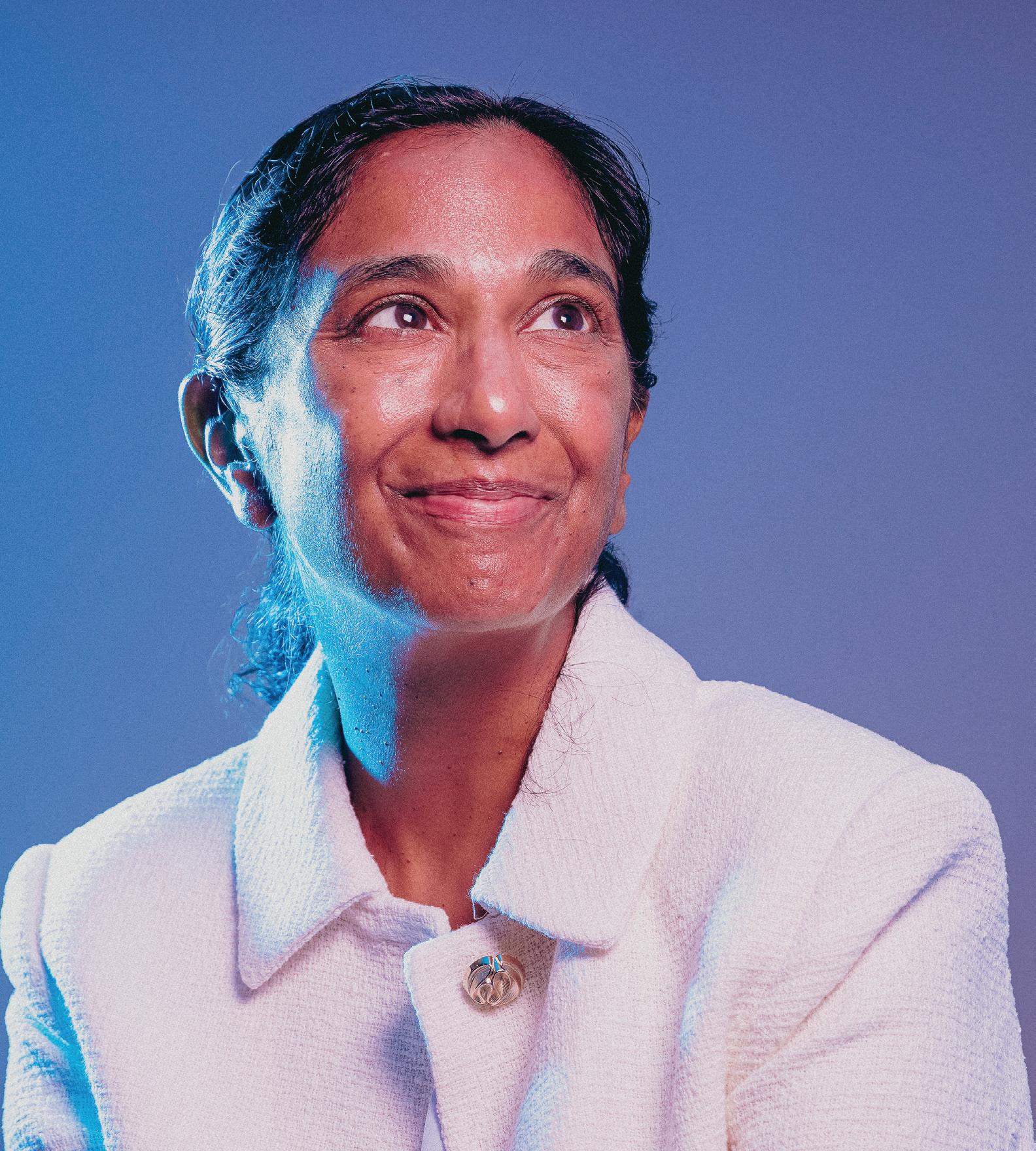
SHALINI KULASINGAM TRACES
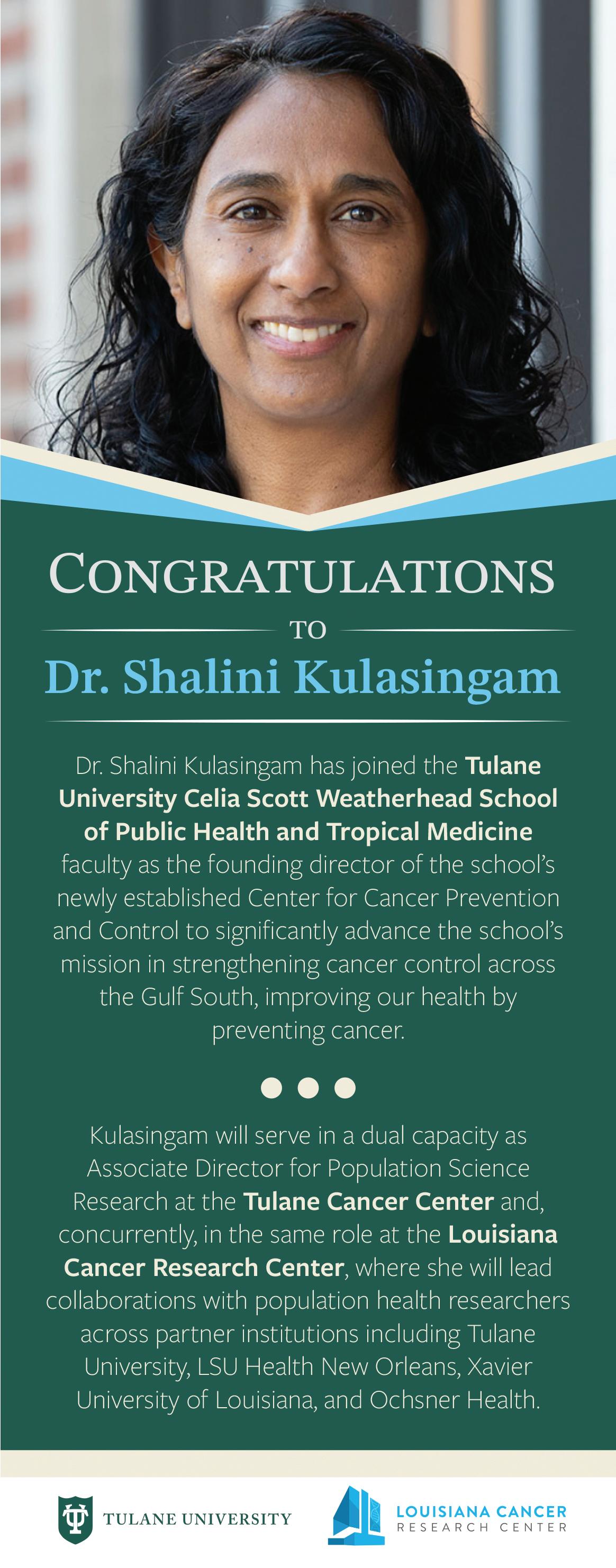
THE arc of her career to Dr. Laura Koutsky, a mentor at the University of Washington, whose work on human papillomavirus opened a window onto one of public health’s most complex and consequential puzzles.
HPV is often acquired in late adolescence, yet the cervical cancer it can cause may not emerge until a woman is in her 40s or 50s — resulting ina profound challenge and a remarkable window for intervention.
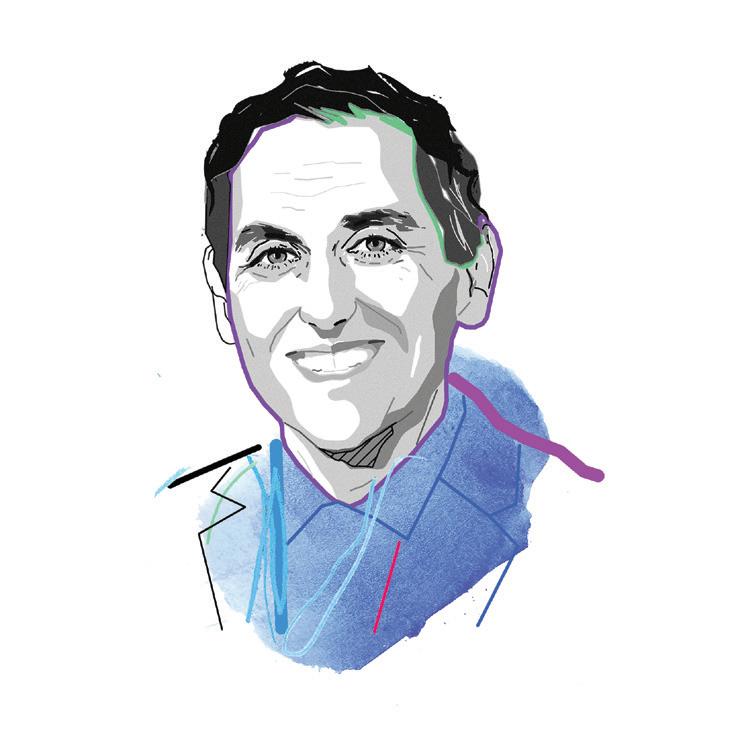
That intersection of virology, epidemiology and prevention policy has defined Kulasingam’s research ever since. Her modeling work has shaped cervical cancer screening and vaccination strategies across the United States, Canada, Singapore and several African nations, and she
SHALINI KULASINGAM, PH.D., MPH
contributed to Australia’s adoption of the HPV vaccine — a move that positions the country to eliminate HPV as a public health threat within the next two decades.
Kulasingam counts one of her proudest professional moments as presenting her research to the U.S. Preventive Services Task Force while pregnant with her second child. The experience of influencing national screening policy for American women was, she says, something she never envisioned when she started out as a student.
Now, as founding director of Tulane’s new Center for Cancer Prevention and Control — as well as associate director of population science at both the Tulane Cancer Center and the Louisiana Cancer
COMPANY
Center for Cancer Prevention and Control, Tulane University School of Public Health and Tropical Medicine
Research Center — Kulasingam has brought that global perspective to the Gulf South, collaborating with researchers across Tulane, LSU Health New Orleans, Xavier University of Louisiana and Ochsner Health. Her near-term priorities are grounded and practical: building cross-institutional partnerships; advancing at-home screening options for cervical and colorectal cancer; and exploring the emerging field of multi-cancer detection tests. She’s also candid about the headwinds — federal research funding has grown increasingly scarce, requiring creativity and new revenue strategies that she’s determined to learn. BY MISTY
TITLE Founding Director ASSUMED NEW POSITION July 2025
O n I q U e R od RI g U
e r I c CI
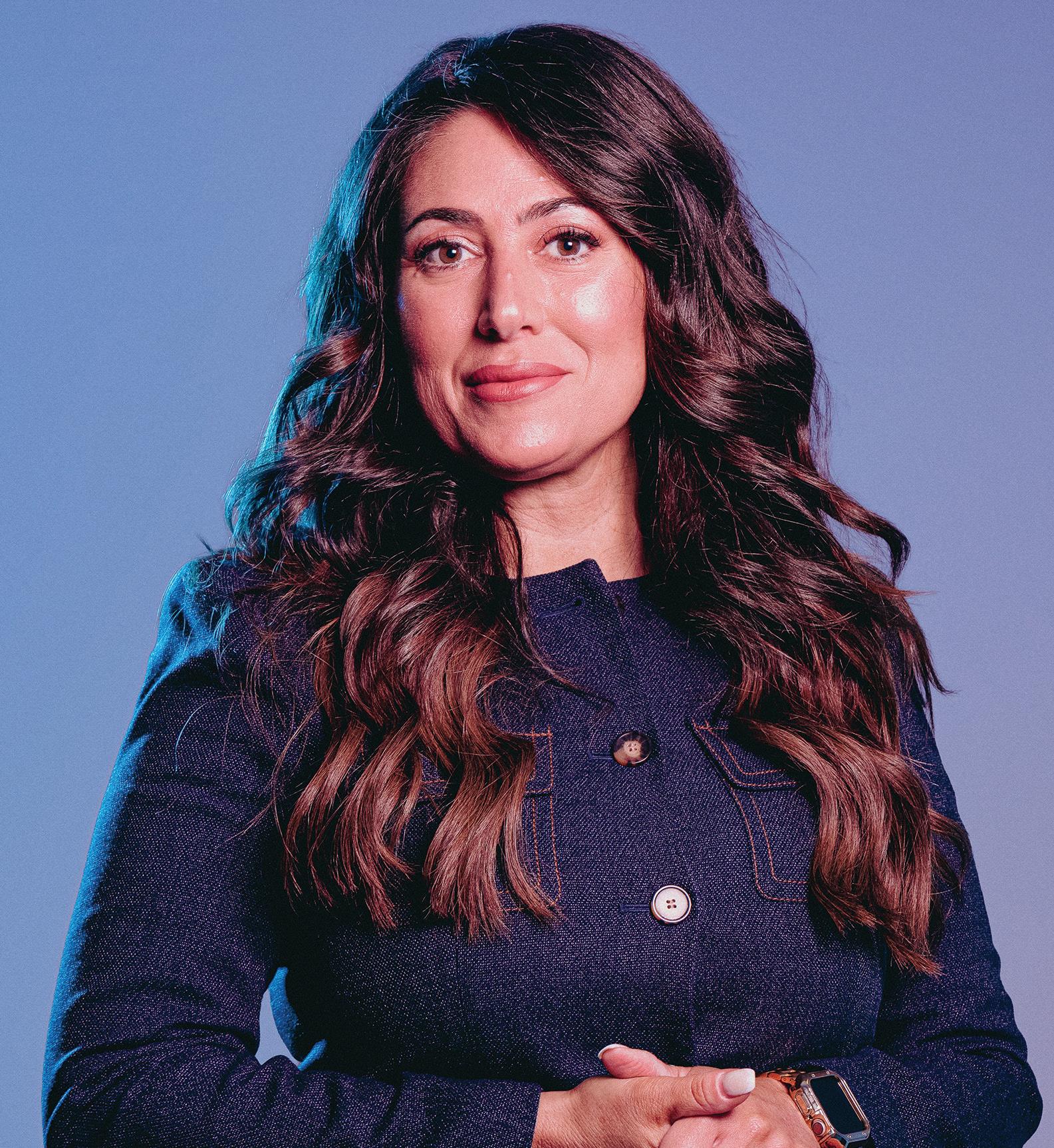
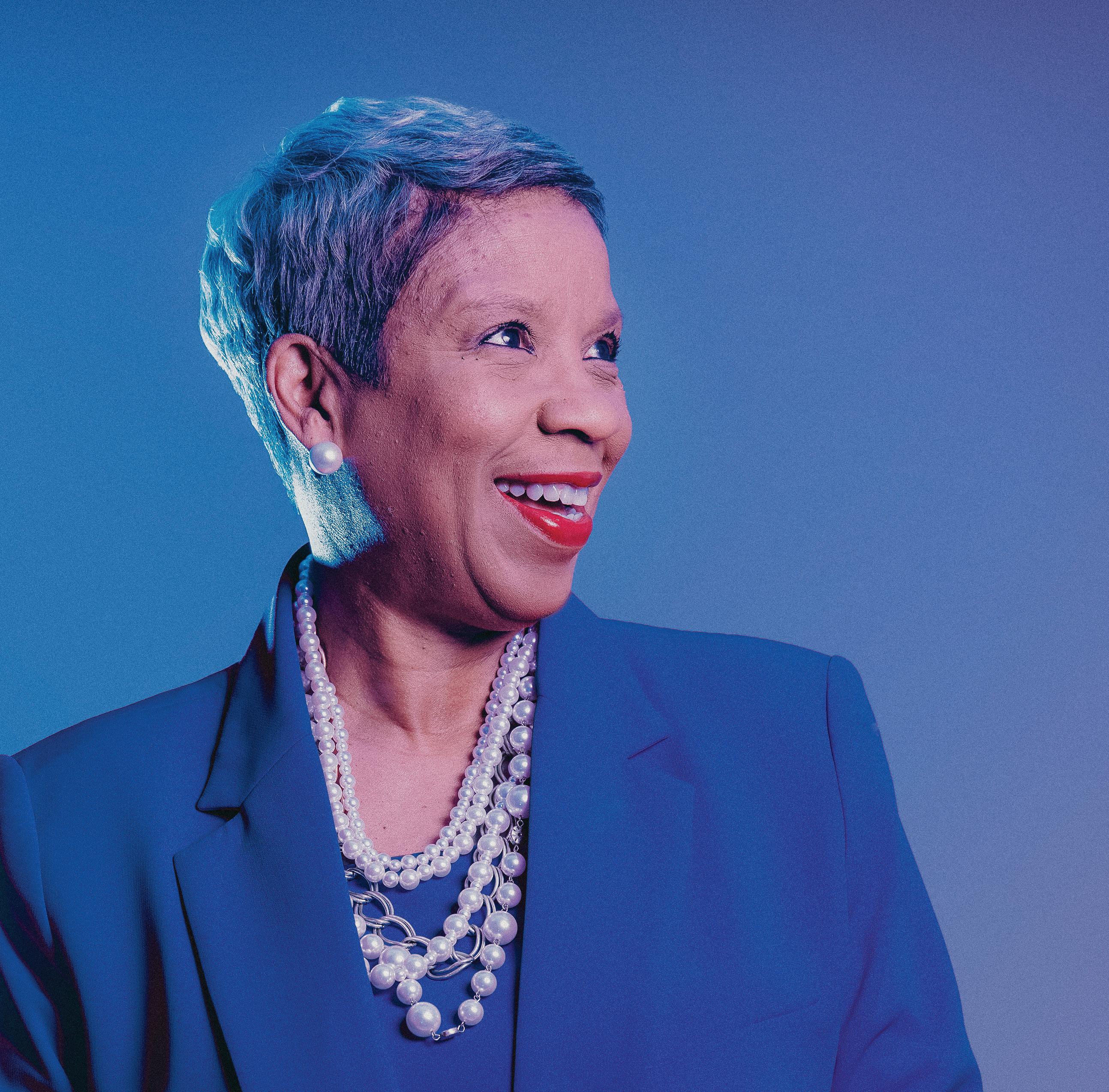
Acme Oyster House has outlasted two world wars, Hurricane Katrina, a catastrophic oil spill and a global pandemic. After more than a century, it’s clear that the brand is here to stay.
The only question now is whether it can stay relevant to the next generation of New Orleanians while holding onto everything that made it an institution in the first place. That’s the challenge Monique Rodrigue Ricci stepped into when she became CEO last summer.
COMPANY
TITLE
Chief Executive Officer
ASSUMED NEW POSITION
June 2025
Ricci grew up with Acme in her blood. Her father, Mike Rodrigue, purchased the then-dormant French Quarter landmark in 1985 and rebuilt it into the multi-location operation it is today. But she didn’t arrive at the top of the family business by proximity.
After earning a graphic design degree from Loyola, she worked at Peter Mayer Advertising on accounts like Ruth’s Chris and Louisiana Tourism before joining Acme in 2010. She spent the next 15 years moving from marketing manager to
director of marketing, developing a deep fluency in the brand before stepping into the CEO role.
“What started as curiosity developed into a passion for problem-solving and a desire to take on a larger leadership role,” she explained.
The task she inherited is one she understands intimately.
“We truly value the heritage behind our brand,” Ricci said, “but we know it’s important to keep a pulse on the emerging generations.”
Ricci graduated from the University of New Orleans this May with a master’s degree in Hotel, Restaurant, and Tourism. Her studies have focused specifically on what drives younger audiences and how to convert that engagement into longterm loyalty.
The opportunities she’s pursuing reflect that thinking. A new merchandise line developed with Bonfolk and Bayou Brands, the team behind Dirty Coast, is set to launch soon, alongside an e-commerce store. A Goldbelly partnership
is already shipping chargrilled oysters nationwide. And this fall, Acme plans to test new Southern markets through food truck pop-ups.
“This approach would allow us to explore growth opportunities with relatively low risk,” she said, “while building brand awareness in new areas.” By Samantha Hindman
Acme Oyster House
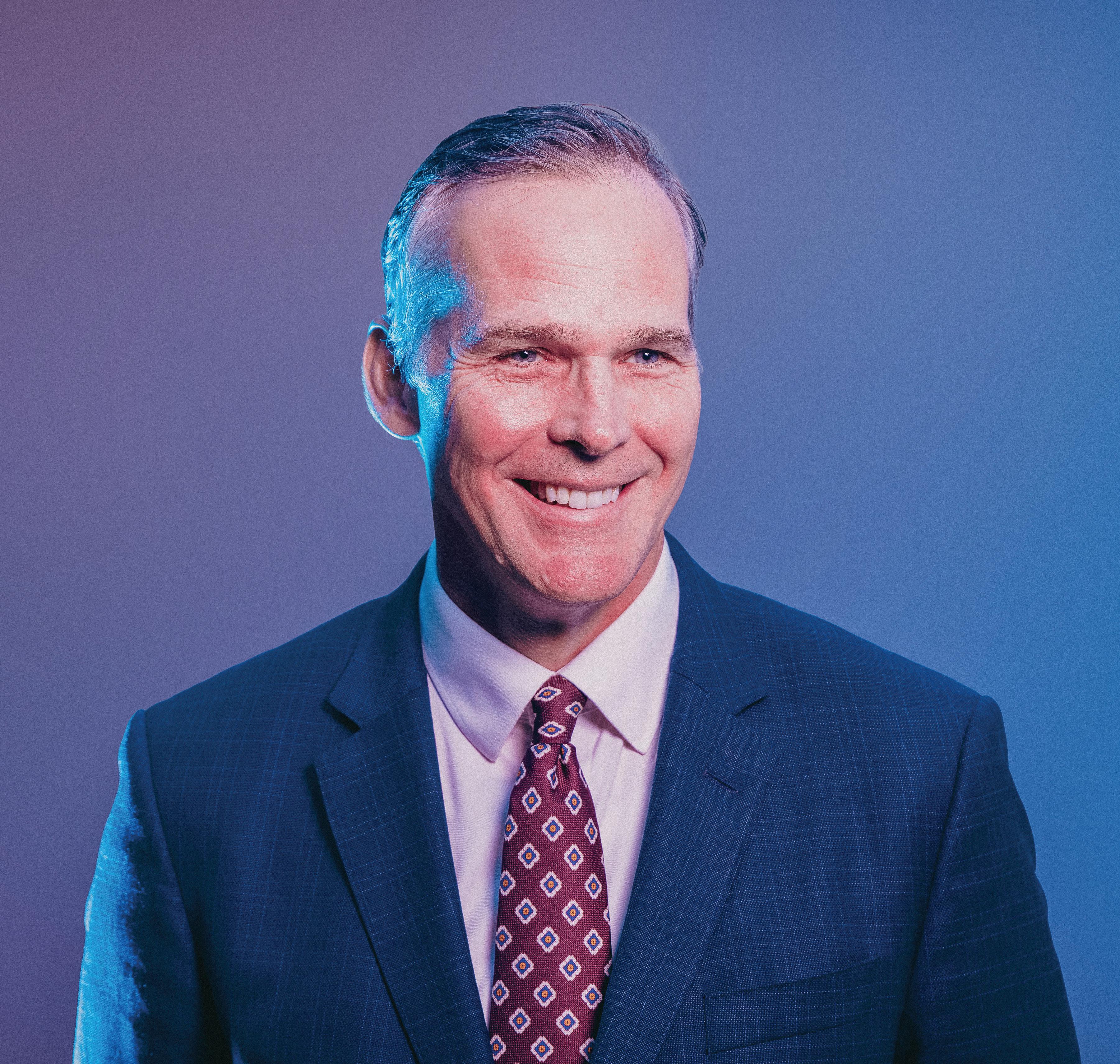
ToM patRIas
Tom Patrias came to hospital administration through an unlikely door. A Tulanetrained electrical engineer, his first job took him to an architectural engineering firm working on hospital construction projects across Michigan, Wisconsin and Colorado. The work gave him a window into healthcare operations, but it was the people around him who changed his trajectory.
His wife is a registered nurse. His brother, a respiratory therapist. His sister-in-law, a urologist. Many of his Tulane friends became physicians. What
they all shared, regardless of title, was a visible passion for making a difference in people’s lives and their communities.
“This unwavering enthusiasm to mission was the draw for me,” he said. Unsure how to channel that fervor without clinical training, he sought out physician executives at his wife’s hospital, who steered him toward healthcare administration. He landed his first hospital administration role 20 years ago and hasn’t looked back.
Patrias joined UMC nearly two years ago as chief operating officer, after previously serving as CEO of Tulane
Medical Center and Lakeside Hospital, and in senior leadership roles with Community Health Systems.
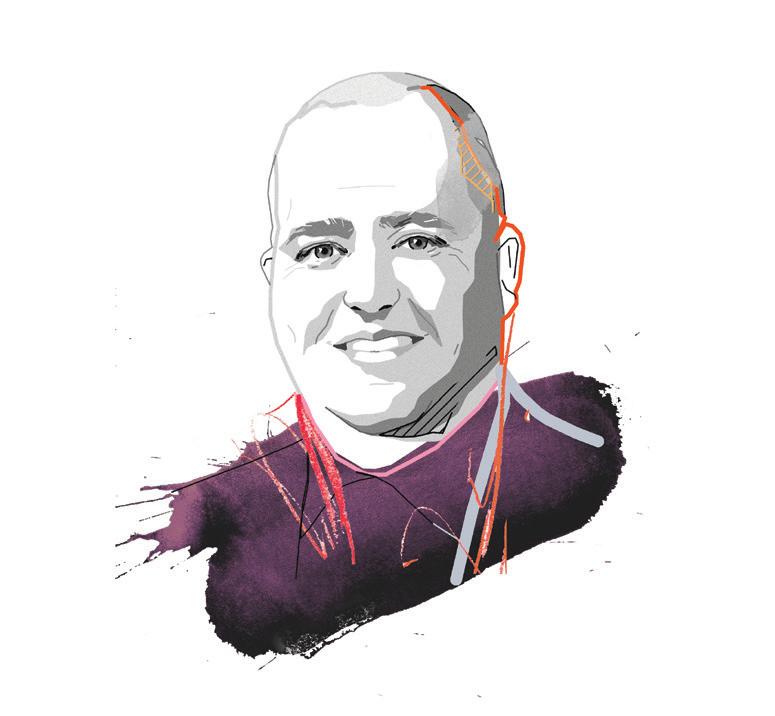
Since Aug. 1, 2025, Patrias has served as CEO of University Medical Center New Orleans — the region’s only Level 1 Trauma Center. He succeeded John R. Nickens IV, who now serves as CEO of Phoenix Children’s Hospital.
Patrias is currently at work on several initiatives, including opening a new 12-bed cardiovascular surgical ICU, completing the expansion of a cancer center clinic, adding 28 behavioral health inpatient beds in partnership
with New Orleans East Hospital and deepening the hospital’s food security work with Second Harvest Food Bank. He said one of the hospital’s biggest opportunities lies in UMC’s academic partnerships with LSU Health New Orleans and Tulane. The collaboration is already bearing fruit. In January, UMC earned “triple crown” status in emergency care, becoming the only facility in the Gulf South to hold all three of the region’s highest national emergency care designations (Level 1 Trauma Center, Verified Burn Center and Comprehensive Stroke Center).
University Medical Center New Orleans
His biggest challenge? Stabilizing leadership at every level while connecting UMC’s nearly 5,000 employees, contractors, physicians and learners to the mission that drew Patrias himself into this work decades ago.
Patrias said he is particularly proud of the young talent he has helped to develop over the course of his career. More than a dozen leaders he has mentored now hold CEO, COO or CFO positions at hospitals across the country — a legacy he considers more meaningful than any single operational achievement. By Misty
Milioto
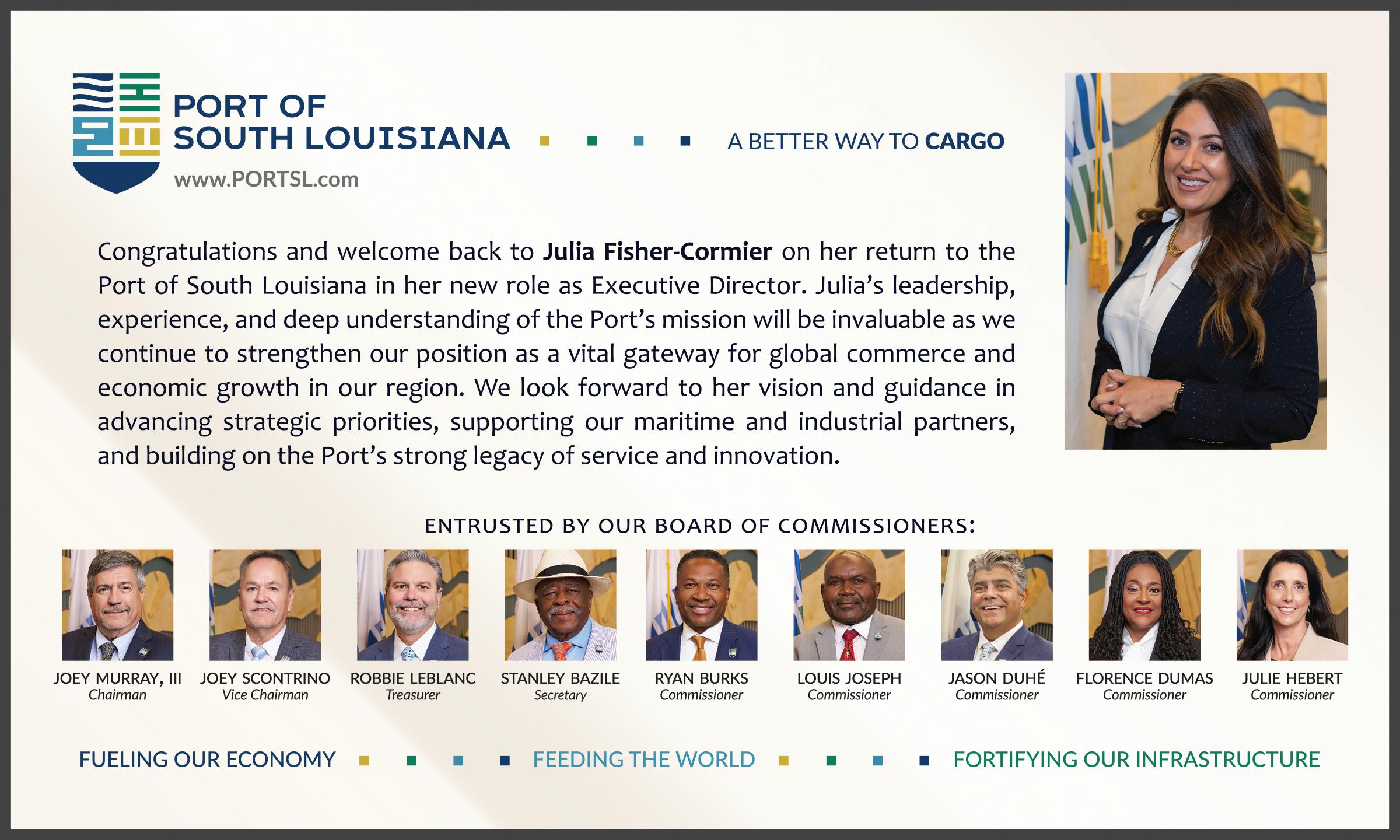
JULIA FISHER-CORMIER HAS SPENT her career at the intersection of infrastructure, policy and place. Now, it seems, that "place" is home.
A third-generation St. Charles Parish resident and lifelong Luling native, Fisher-Cormier was appointed executive director of the Port of South Louisiana following a national search and a unanimous vote by the board of commissioners.
It's a homecoming of sorts: Fisher-Cormier served as the port's chief commercial officer, where she helped launch more than $1 billion in new foreign direct investment, revitalized the Globalplex Intermodal Facility and reversed a decade-long tonnage decline.
In between, she worked under Gov. Landry's administration as deputy secretary of DOTD, leading the Office of Transformation and
JULIA FISHERCORMIER
overseeing over $120 million in port and aviation infrastructure funding. She also advanced state-funded passenger rail routes and secured a federal planning grant covering the state's 32 active ports.
Now she’s back, with a greater challenge and sharper skills to handle it.
"My passion for public service has deepened my commitment to build a more resilient and competitive infrastructure and logistics network that has historically been the backbone of our region," she said.
The Port of South Louisiana is no small assignment. The largest port in Louisiana and second in the Western hemisphere, it stretches 54 miles along the Mississippi River and serves as the nation's top grain exporter. Fisher-Cormier is aware of both
COMPANY
Port of South Louisiana
the scale of the opportunity and the discipline required to capture it.
"Balancing speed with stewardship, being bold without sacrificing discipline is a constant challenge," she said. "There's also the responsibility of ensuring that growth brings value not just to industry but to the surrounding communities."
Her vision for the port extends beyond tonnage figures. Louisiana, she argues, has a rare convergence of assets (deepwater access, multimodal connectivity, industrial capacity, and global relevance in agriculture, energy and manufacturing), and the moment calls for thinking bigger.
"The opportunity is to move beyond being seen solely as a point of transit," Fisher-Cormier said, "and into a role as a strategic platform for economic development." BY
SAMANTHA HINDMAN
TITLE Executive Director ASSUMED NEW POSITION
December 2025
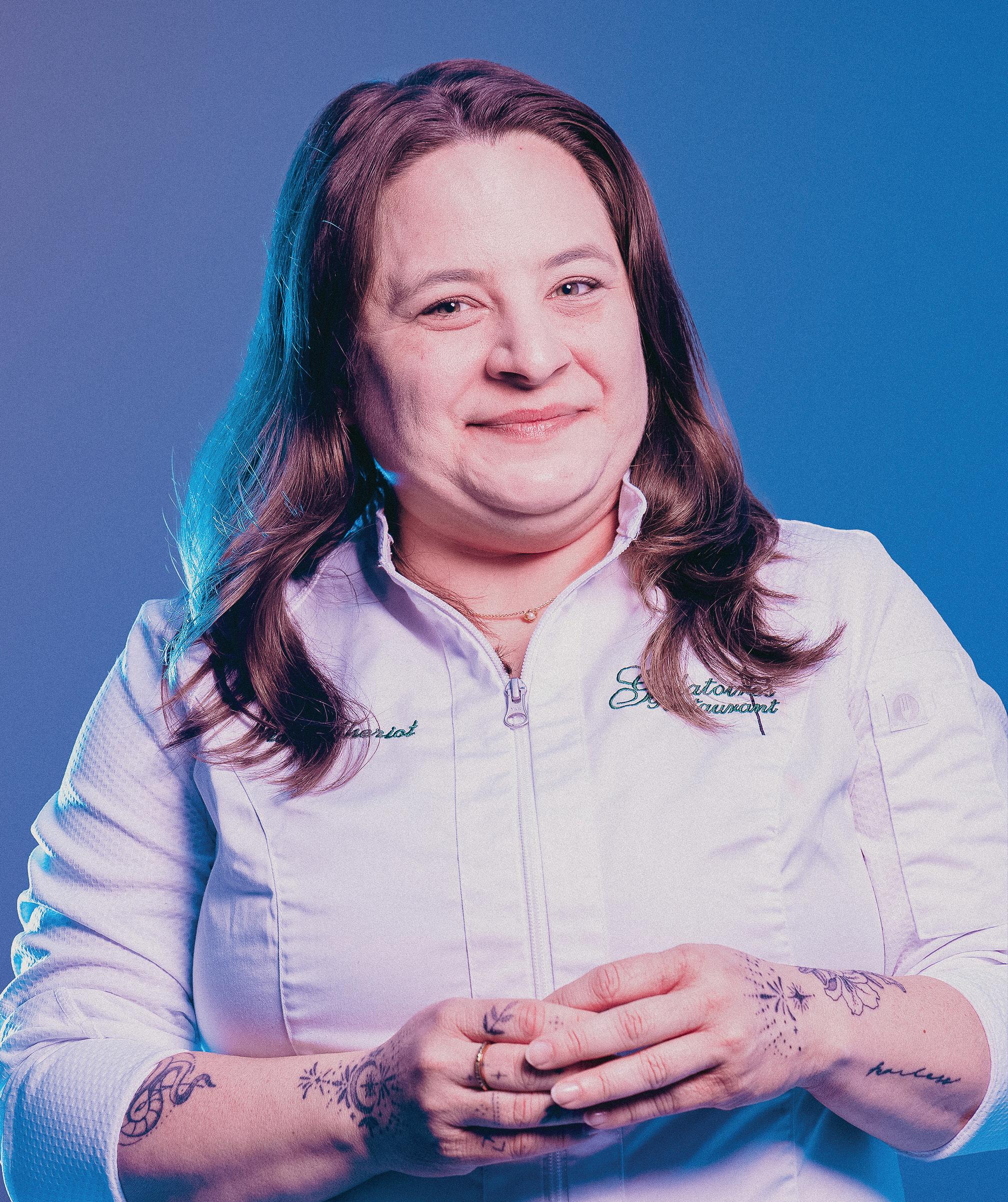
NICOLE THERIOT HAS SPENT her career moving between two worlds that rarely overlap: the traditions of fine dining institutions and the scrappy, generative energy of teaching kitchens.
At Galatoire’s, she’s been asked to blend both experiences.
In March, the restaurant named Theriot its director of culinary operations, making her the first woman to lead the kitchen in the establishment’s more than 120-year history.
Born and raised in Terrebonne Parish, Theriot trained at the Chef John Folse Culinary Institute at Nicholls State, mentored by James Beard Award-winning chef Nina Compton at Compère Lapin, and seasons annually as executive chef of Augusta’s Restaurant at the Masters Tournament.
“I feel like my work at Galatoire’s primes me for the Masters Tournament,” she said, “and then my work at the Masters Tournament inspires me to take things home to Galatoire’s.”
Her approach to one of New Orleans’ most storied kitchens is deliberate and, by design, not flashy. She has no interest in rewriting the menu.
“My perspective has never been to change recipes or add dishes or take them away,” Theriot said. “I just want to refine and elevate the style of what we do, focusing on the execution of every plate, from plating to cooking to garnishing to sauces.”
The goals she’s set for herself in year one are largely internal. She wants tighter alignment between front and back of house. She wants to absorb the institutional
knowledge her long-tenured team carries and offer them exposure to techniques and perspectives they may not have encountered working within a single kitchen for years.
And, perhaps most notably, she wants to open the doors to culinary students.
“I love experiencing their passion and sharing with them,” she said, “and hope to bring some of that excitement into our team.”
That impulse traces back to her own early career, when Compton took Theriot under her wing fresh out of culinary school.
“Being in her operations always feels like coming home to me,” Theriot said. “I would love to be that chef to someone… or many someones.”
BY SAMANTHA HINDMAN
THERIOT ERI n BI g N e R
TITLE Director of Culinary Operations ASSUMED NEW POSITION March 2026
COMPANY
St. Bernard Chamber of Commerce
TITLE Executive Director
ASSUMED NEW POSITION March 2026
Erin Bigner has spent nearly two decades building something in St. Bernard Parish: first a business and now a platform.
Before stepping into her role as executive director of the St. Bernard Chamber of Commerce this spring, Bigner spent almost two decades running Personalized Bayou, a custom design business she founded and operated largely on her own, serving fairs, festivals and organizations across Louisiana.
“My proudest accomplishment is operating a successful one-woman business
in St. Bernard Parish for nearly 19 years,” she said, “where I managed every aspect from client relationships to production and growth, while building a trusted reputation across the region.”
That hands-on, community-rooted approach carried over into her volunteer work, where Bigner became a fixture in St. Bernard’s civic life. As the pageant director and founder of the LCF Ball for the Louisiana Crawfish Festival (which has earned multiple statewide honors), she developed a knack for connecting people and advancing large-scale events.
Now she’s channeling all of it into leading the chamber’s 300-plus member organization.
“I enjoy connecting people, supporting local businesses and being part of something bigger than myself, something that strengthens St. Bernard. This role allows me to do that every day.”
She’s clear-eyed about the challenges ahead. Member engagement, she said, is the real work. Growing the rolls is important, but she’s focused on making sure existing members actually use what they’re paying for.
“I’ve found that once [members] join, they’re not always sure what comes next,” she said. “So, the challenge isn’t just recruitment; it’s engagement, retention, and making sure every member sees a return on their investment.”
To that end, she’s building programming like Chamber 101, expanding networking and professional development opportunities, and developing a membership directory to raise visibility for local businesses across the parish and region.
The bigger picture, she said, is collaboration. She wants to align the chamber with parish government, tourism and economic development partners to present a unified front for St. Bernard’s business community.
“I’m working to fully learn and maximize the tools and systems we have in place,” she said, “so we can operate as efficiently and effectively as possible moving forward.” By Samantha Hindman
when Dr. Arnel W. Cosey stepped into the CEO role at Clover (formerly Kingsley House), she described it as a full-circle moment — and the phrase rings true on multiple levels.
A New Orleans native shaped by the very community Clover serves, she has now become the first African American and person of color to lead an organization that has been a cornerstone of the city’s social fabric for 130 years. Serving individuals at every stage of life, Clover helps break the cycle of poverty by
providing critical support to children, parents, seniors and veterans.
Cosey came to the position through an unusually wide lens. Before joining Clover’s executive team as strategy and impact officer in 2020, she served on its board of directors — a vantage point that gave her an intimate understanding of the organization’s mission, its strengths and its potential. Add more than 25 years at Delgado Community College, where she rose to vice chancellor of student affairs, and her
transition to the top seat reads less like a leap than a natural arrival.
In her five years as strategy and impact officer, Cosey deepened Clover’s Whole Family framework — an integrated model that supports both children and the adults in their lives rather than addressing either group in isolation. She counts this shift toward in care among her proudest professional accomplishments.
“By aligning our support for both children and the adults in their lives,
COMPANY Clover
TITLE Chief Executive Officer
ASSUMED NEW POSITION
April 2026
we’ve moved beyond fragmented care toward a more holistic, impactful approach,” she said.
This spring, Clover launched The CORE (Collaborative of Resources and Empowerment), a multi-partner initiative that brings together 14 community organizations to deliver two-generation, whole-family programs to New Orleans families. It’s a model Cosey sees as emblematic of the opportunity ahead to leverage the organization’s deep community trust to drive systemic
Arnel W. Cosey, Ph.D.
change that no single organization could achieve alone.
While excited about the organization’s wins, Cosey is clear-eyed about the challenges, including navigating fiscal and policy uncertainty while protecting the families who depend on uninterrupted services. She said she is focused on disciplined resource diversification, elevating participant voices to shape programming and strengthening the internal culture that makes it all possible. By Misty Milioto
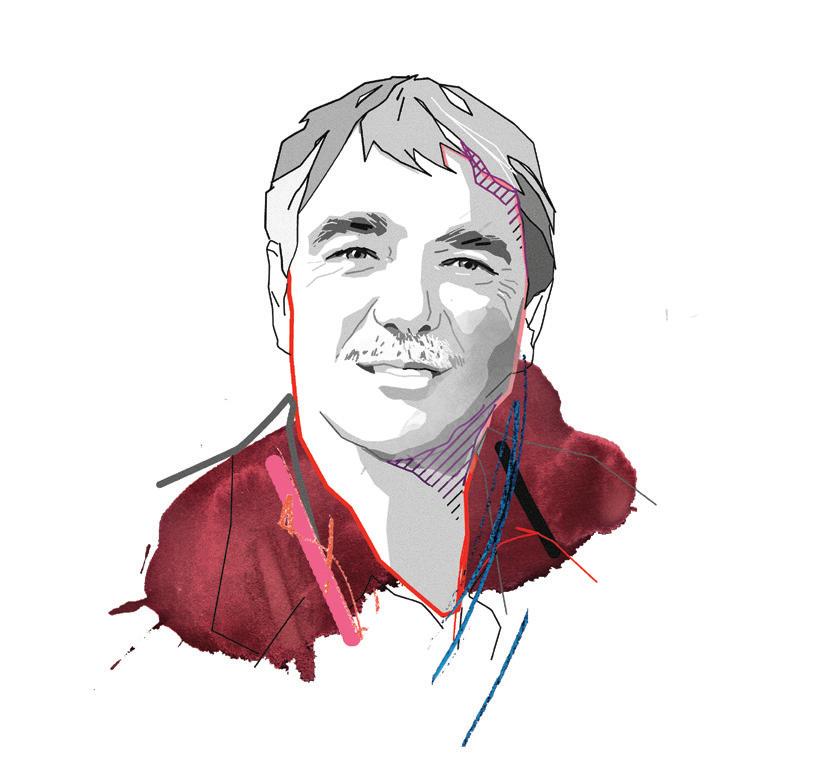
RUSSELL RICHARDSON KNOWS
WHAT it feels like to be on the other side of the table.
Before building a career in economic development, he ran a small timber brokerage on the Northshore, navigating the same market pressures and infrastructure realities that he now helps companies manage as a professional.
“As I’ve grown in this field, I’ve come to appreciate how much a company’s success depends on the quality of the community it operates in,” he said. “Today, what motivates me is helping businesses navigate that landscape while also working to strengthen the communities that support them.”
Richardson arrived at St. Tammany Economic Development Corporation last September after nearly a decade at the Baton Rouge Area Chamber, where, as senior vice president of business development,
RUSSELL RICHARDSON
he helped secure $20 billion in new investment and more than 7,800 jobs across a nine-parish region.
Some key wins from his tenure there included Hyundai Steel Group’s $5.8 billion steel production facility and Amazon’s automated distribution center at the former Cortana Mall site.
The early returns in St. Tammany have been promising. Since September, the EDC has announced six projects representing more than $200 million in capital investment and over 1,100 new and retained jobs, a pace Richardson describes as both unexpected and energizing.
“I’m eager to work alongside these companies as their investments take shape,” he said, “and to ensure our communities are connected to the opportunities they create.”
His near-term agenda is grounded in fundamentals. Competitive sites, reliable utilities, functional permitting, a workforce pipeline —
COMPANY
St. Tammany Economic Development Corporation
Richardson is direct about what it takes to win projects and equally direct about what gets in the way.
“If those pieces aren’t in place, it’s hard to win,” he said.
He’s also focused on alignment, aiming to keep business, government and community stakeholders pulling in the same direction. Recent investments from Ampirical, Textron Systems and Associated Wholesale Grocers signal that companies are taking notice.
Despite the large scale of his endeavors, Richardson has emphasized the importance of a human touch.
“I’m continuing to get out and meet with local companies — introducing myself and making sure they understand how we can support their growth,” he said. “If we can continue strengthening our local business climate, we’ll be in a strong position for long-term growth.”
BY SAMANTHA HINDMAN
TITLE President and CEO ASSUMED NEW POSITION September 2025
OUR
Celebrating 70 years this year, The Causeway’s world-record title is only the start of what makes it remarkable.
WAY
photos by EDMUND D. FOUNTAIN
IFyou think for a moment about all the things Louisiana is known for, you’d be unlikely to find its bridges on most people’s list, yet in that infrastructure category the state is both a national and global standout.
While we may not be home to the most bridges in the nation — Texas handily takes that title with a whopping 56,729 bridges — maybe unsurprisingly, the “Pelican State” boasts the most bridges over water in the nation. And while Texas may beat us on quantity, when it comes to bridges, you could say everything’s bigger in Louisiana as the state claims four of the five longest bridges in the nation.
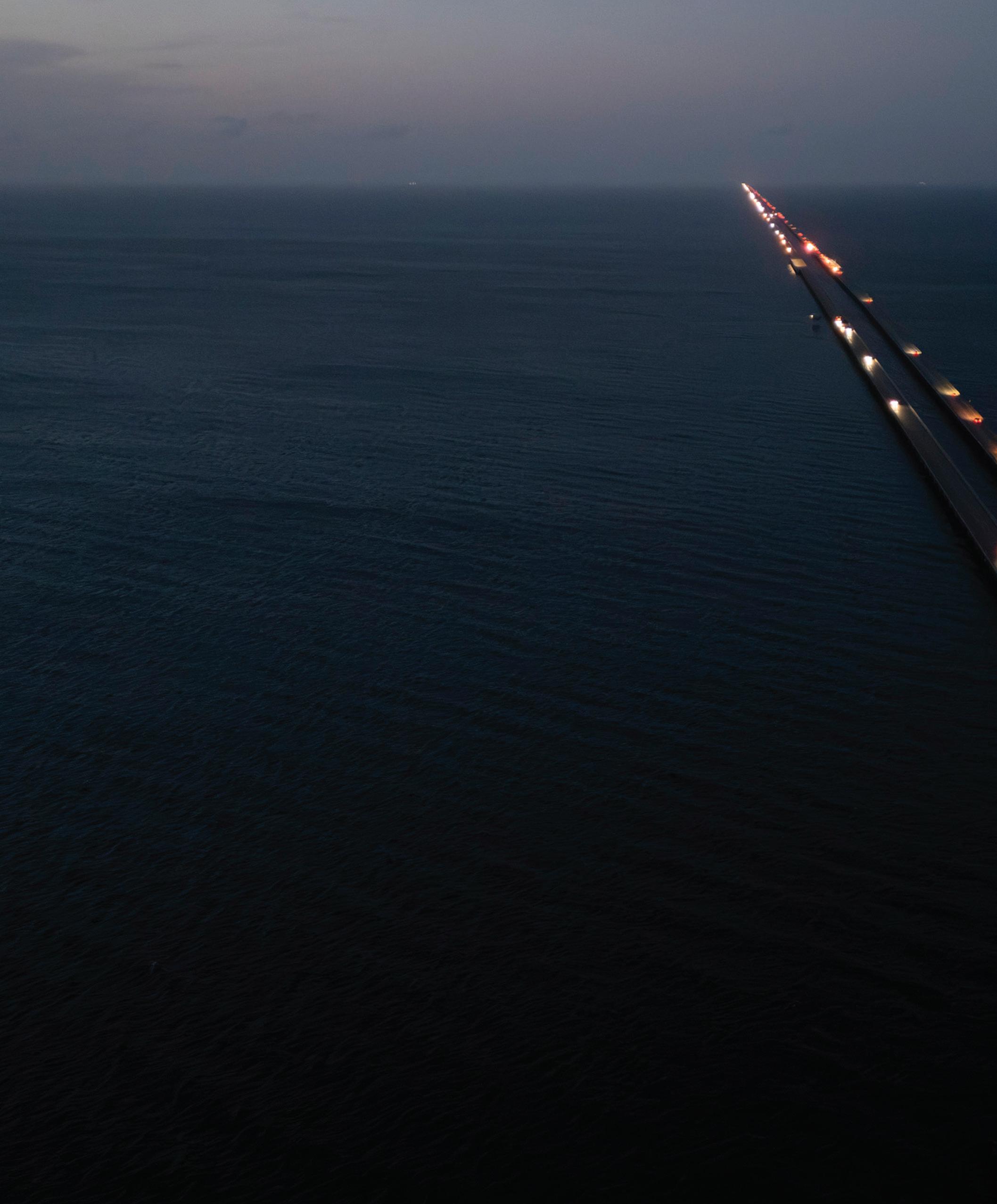
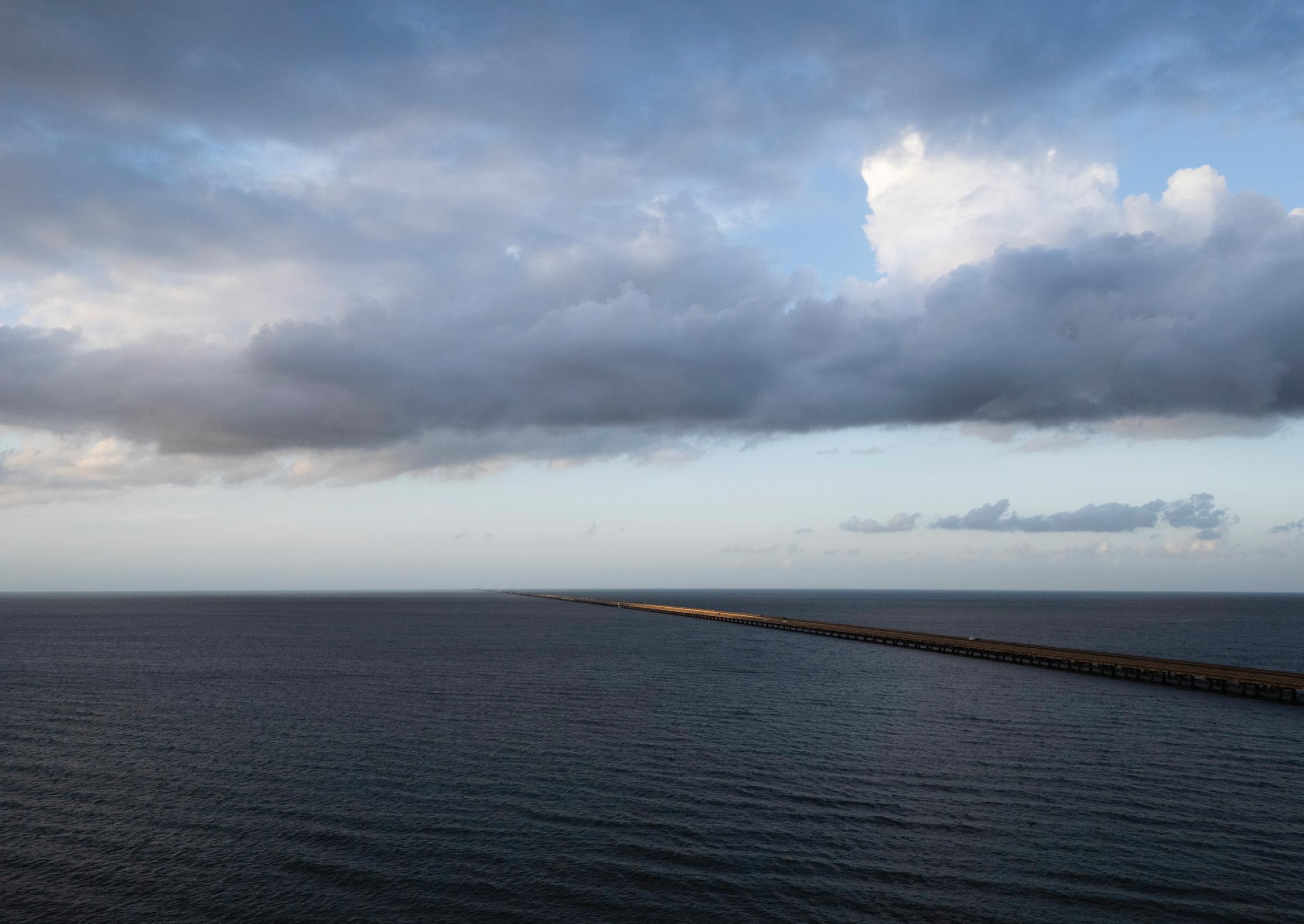
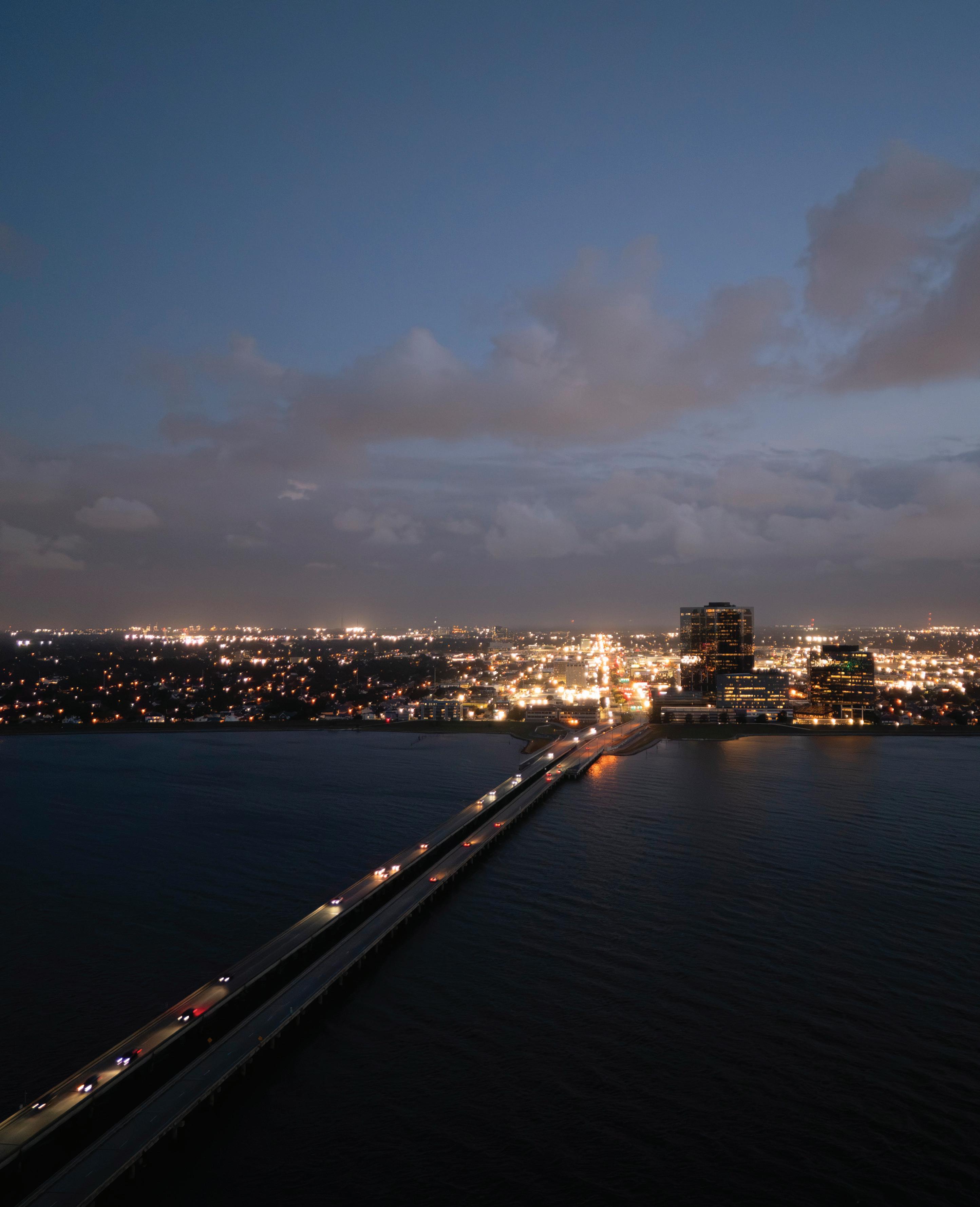
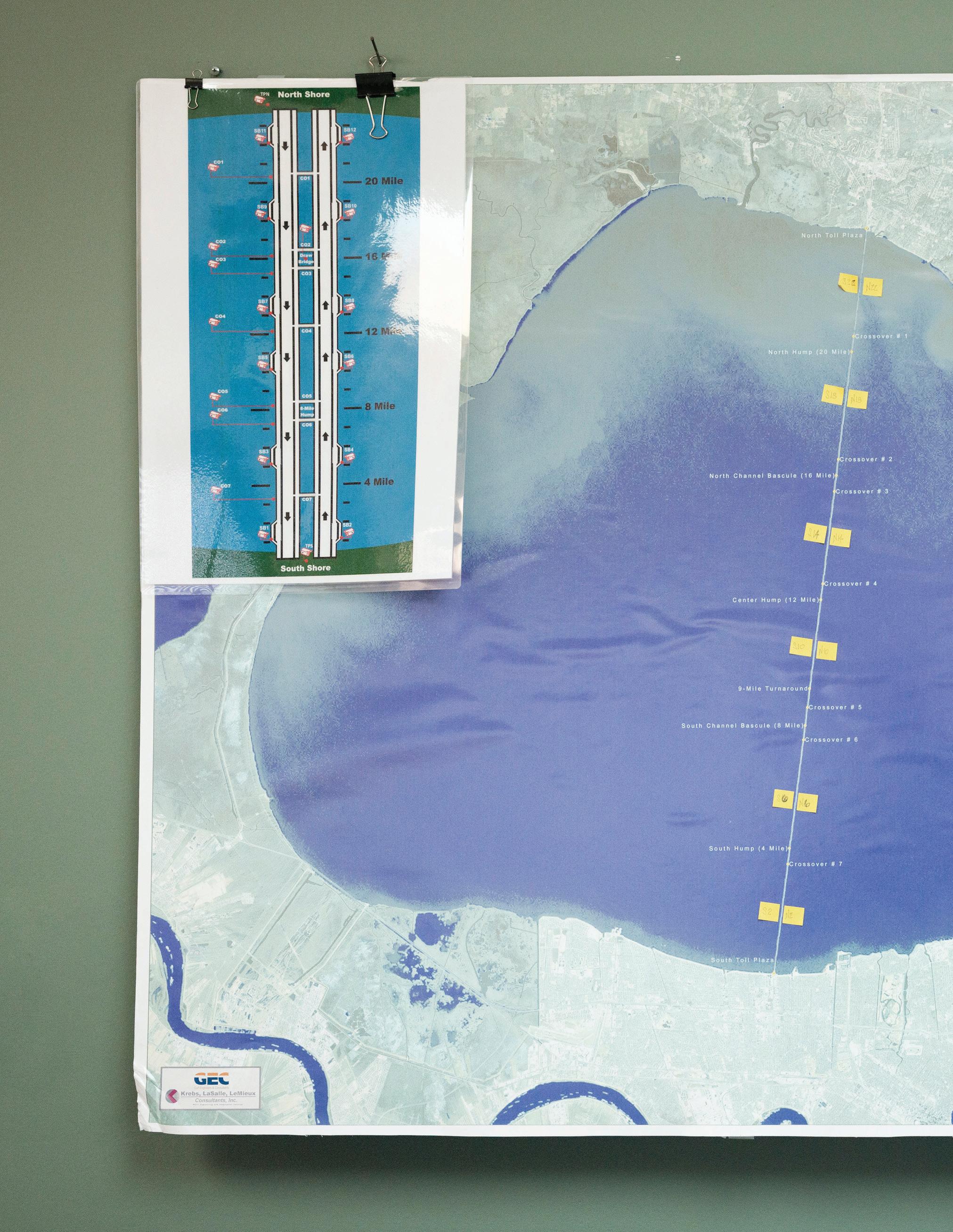
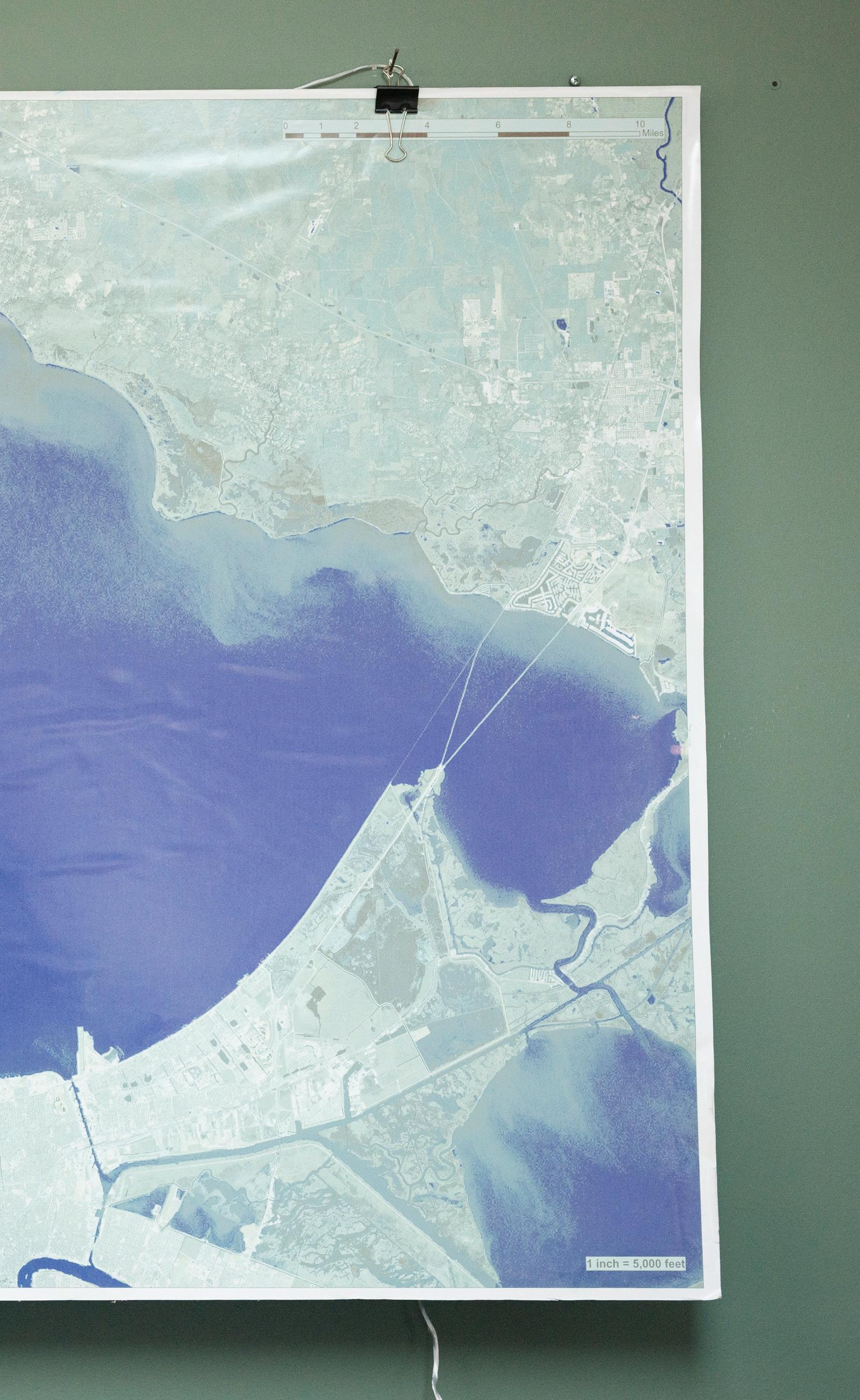
We like to build our bridges long and over water, and the ultimate example of this is the Lake Pontchartrain Causeway, known more commonly as The Causeway. A feat of engineering, The Causeway holds both the titles of the longest bridge in the United States and the Guinness Book of World Record distinction of the world’s longest continuous bridge over water at 23.87 miles.
While these are fun pieces of trivia, and ones that draw visitors from around the globe, when you take a closer look at The Causeway — from its construction to its daily operation — you get a more complete picture of how truly unique a creation it is and how fortunate we are to have it continue to serve as a critical connection between the third- and fourthlargest parishes in the state.
THE MAKING OF A MARVEL
IN 1956, NEW ORLEANS WAS THRIVING In fact, that year’s population count of 627,525 remains the highest the city has ever seen. Starting in 1957, population levels in the city started declining, and among the likely reasons was the rise of the Northshore, made possible by the opening of The Causeway.
Before the bridge, access between Lake Pontchartrain’s north and south shores was limited to ferries and steamboats or a long drive around the lake. At that time, St. Tammany Parish was a rural area dominated by farming, timber and boat building with a population of only about 35,000.
To connect the two shores in a more efficient manner, Louisiana’s constitution was amended in 1952 to allow Jefferson and St. Tammany parishes to come together and finance and construct a toll bridge that would not rely on federal funds or state general obligation taxes. Charged with making this dream a reality, in 1954 the Greater New Orleans Expressway Commission (GNOEC),
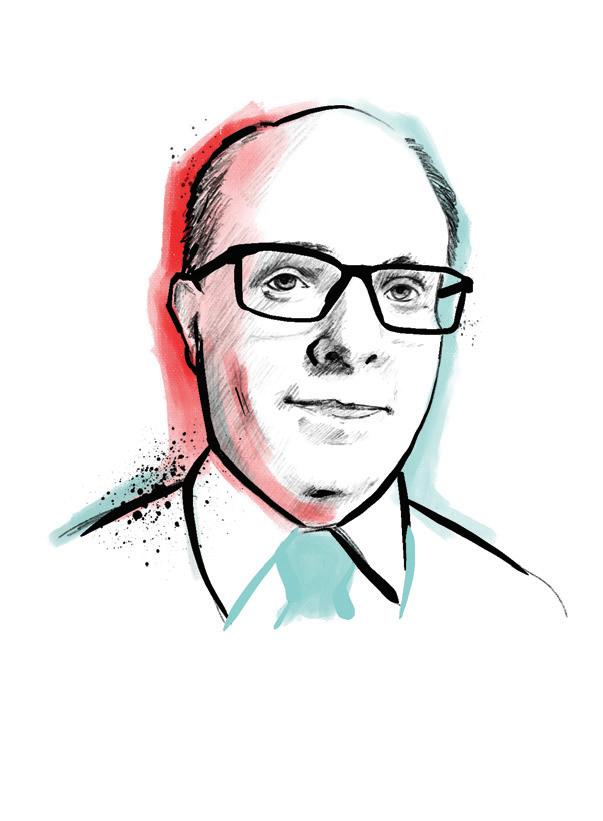
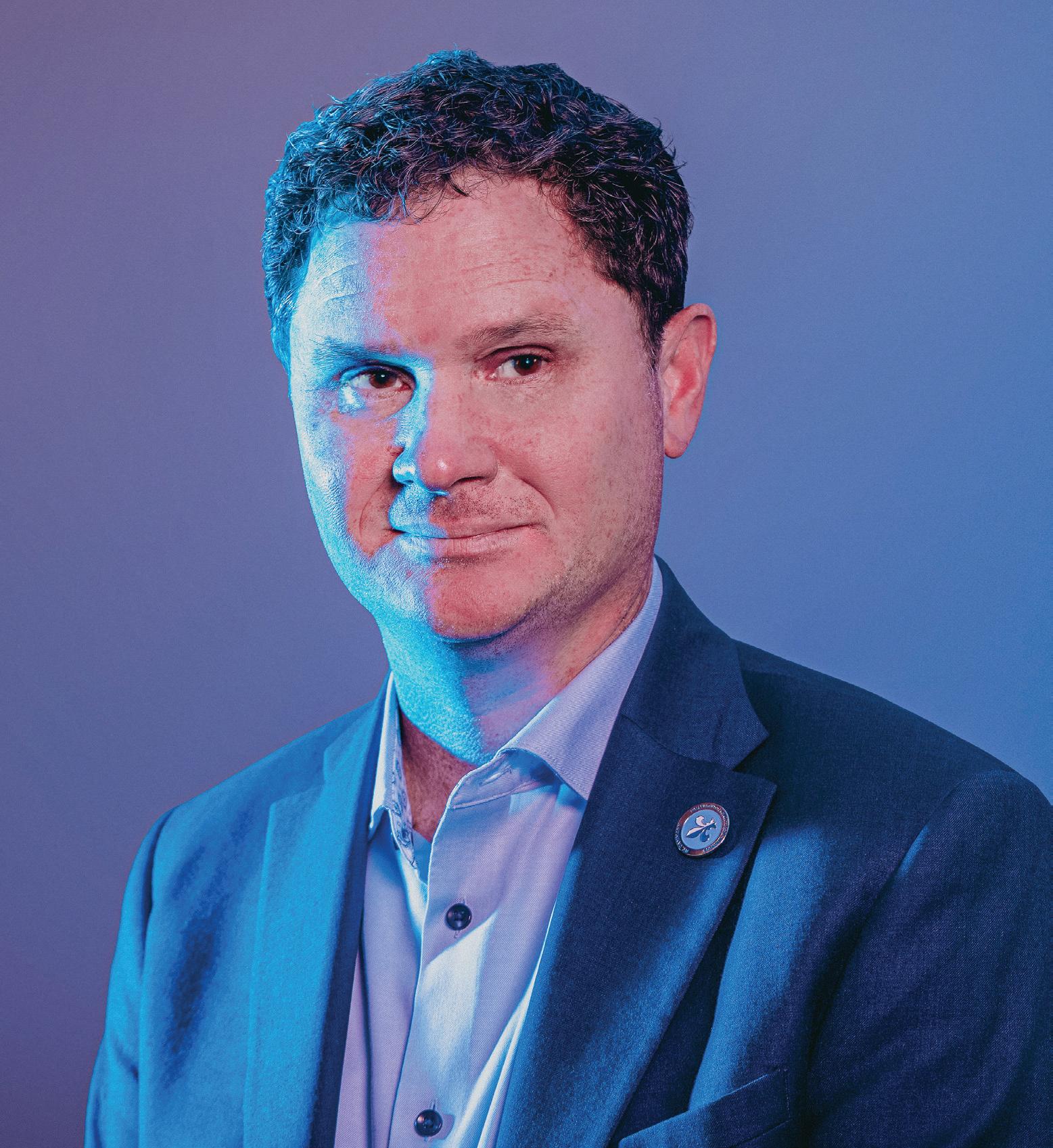
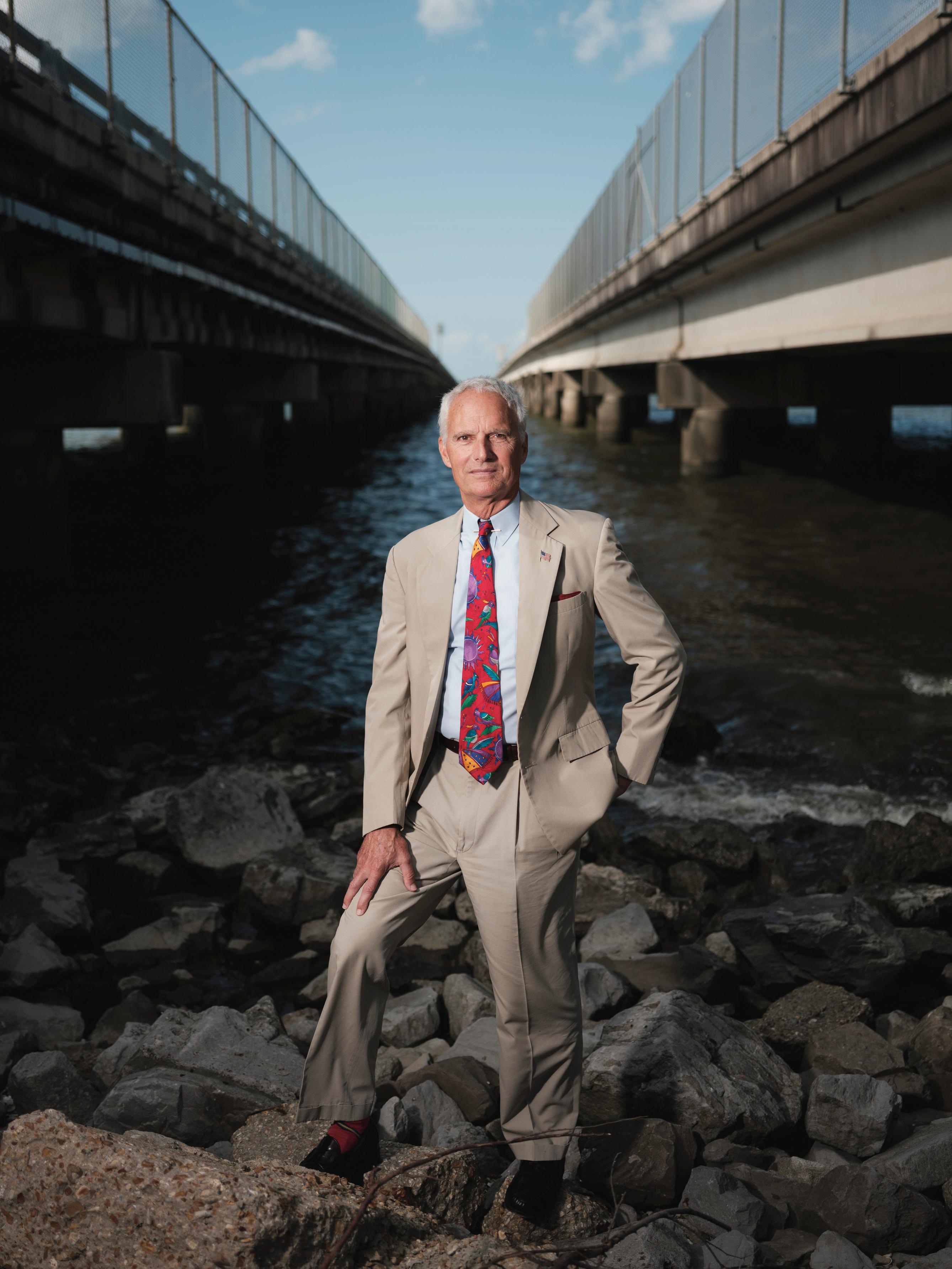
Described by Tim Coulon, chair of the Greater New Orleans Expressway Commission as "a humble and great leader," Carlton Dufrechou has led The Causeway's approximately 90 person staff as general manager for 16 years.
HOLLYWOOD FAMOUS
The bridge has a feature film named for it — “Causeway,” a 2022 movie starring Jennifer Lawrence that was distributed by Apple TV+. The movie stars Lawrence as a soldier who served in the war in Afghanistan struggling to return to life in New Orleans. Lawrence ends up befriending a man who lost a leg in a car crash on the Causeway. Surprisingly, none of the filming for the movie was done on the bridge. “That’s my fault,” said General Manager Carlton Dufrechou. “They wanted to shut down traffic, so I had to say no. A mission is a mission.”
formed with the purpose of overseeing the construction, operation and maintenance of the bridge.
At the time, the longest bridge in the world spanned just 8.26 miles — Germany’s Wuppertal Schwebebahn steel suspended monorail, which ran mostly above water. The Causeway would be almost three times its length and built not above the water but in it.
The question was, how do you build a bridge unlike any in the world? The answer: You create a new way of building bridges, and to do that, you create your own company.
What the Ford Motor Company did for the automobile, the Louisiana Bridge Company did for bridges — they both changed their industries by harnessing the power of assembly-line mass-production for the first time.
BREAKING THE MOLD
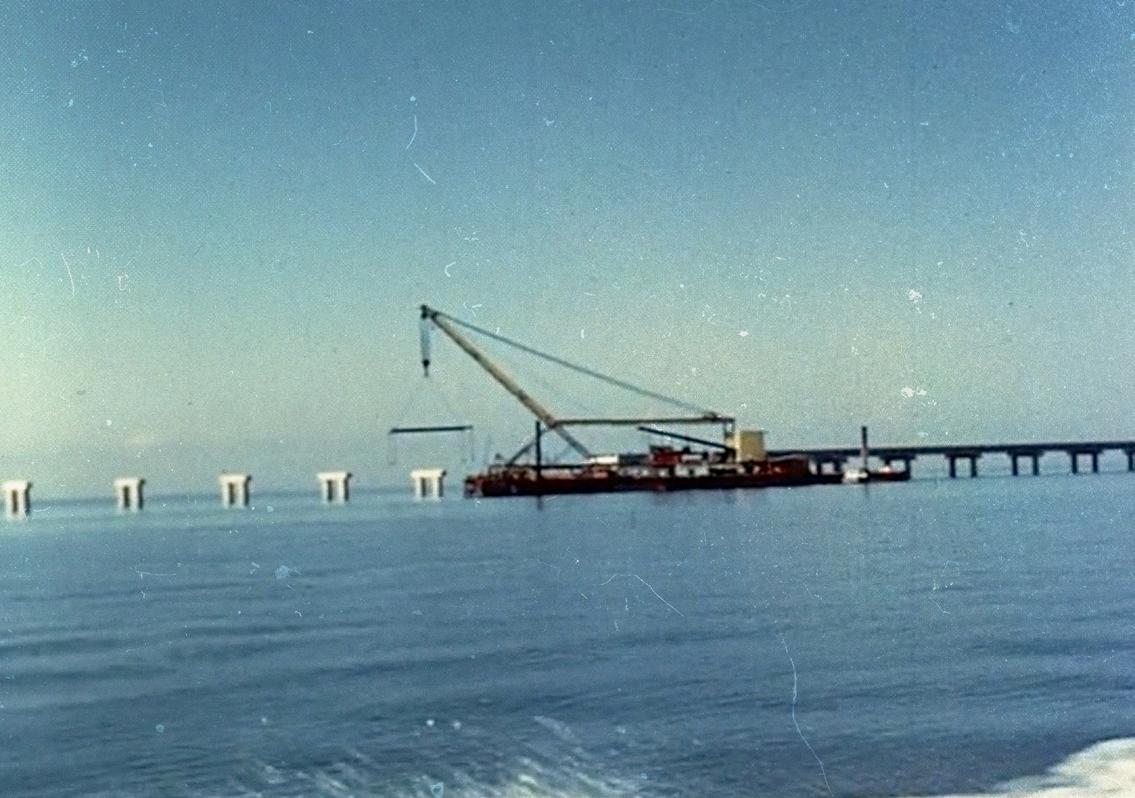
IF YOU’RE CLOSE TO EXITING the northbound side of The Causeway and you look to the right, you’ll see some blue-roofed structures. That is where the Louisiana Bridge Company — a joint venture between Brown and Root, Inc. of Houston and T.L. James Company of Ruston, Louisiana — partnered with a company out of Omaha, Nebraska called the Raymond Concrete Pile Company to build a yard where the pieces for the bridge would be constructed.
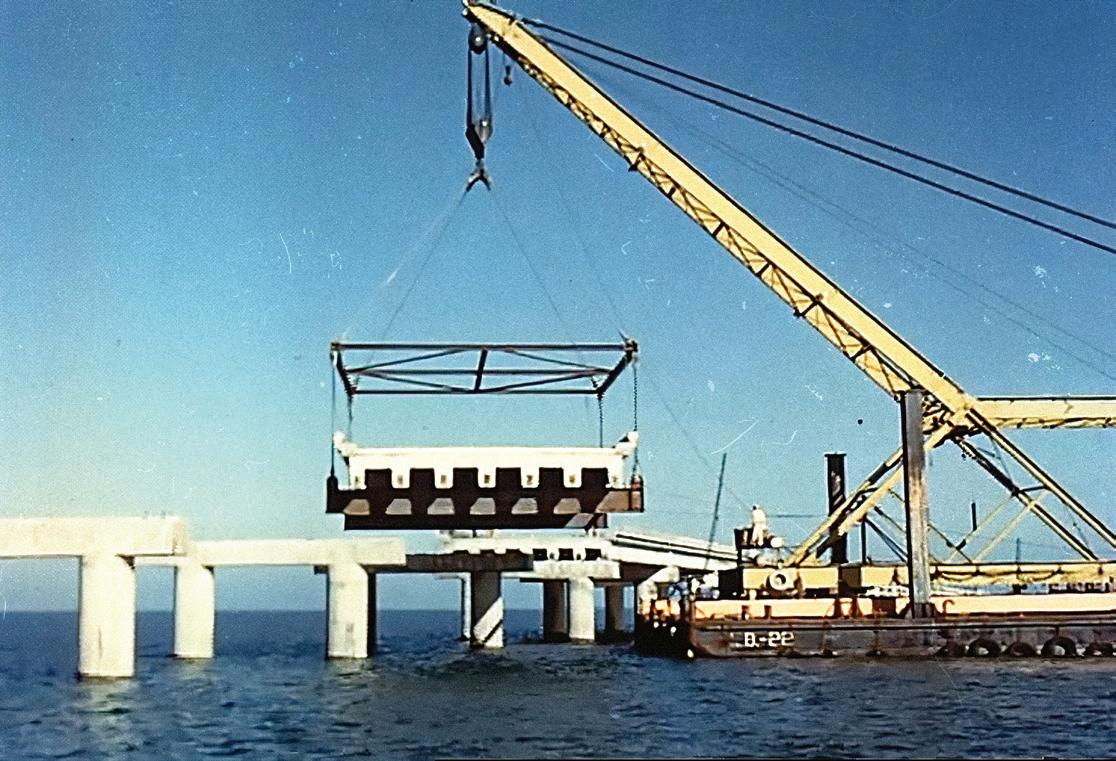
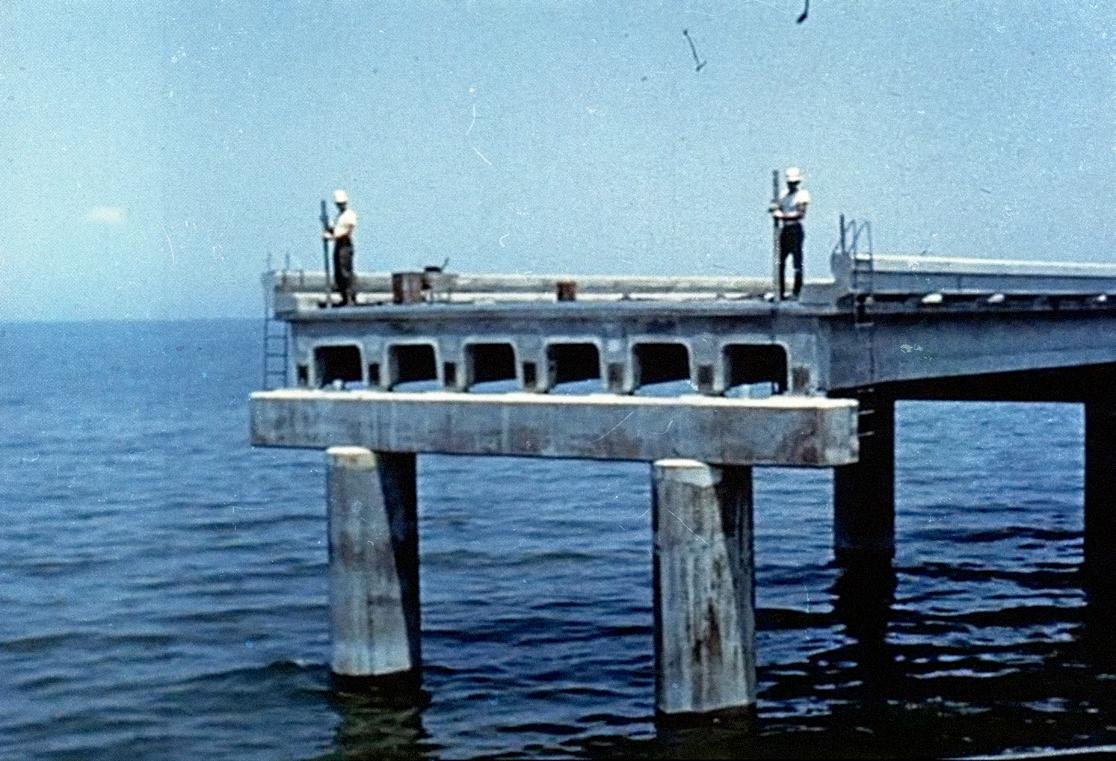
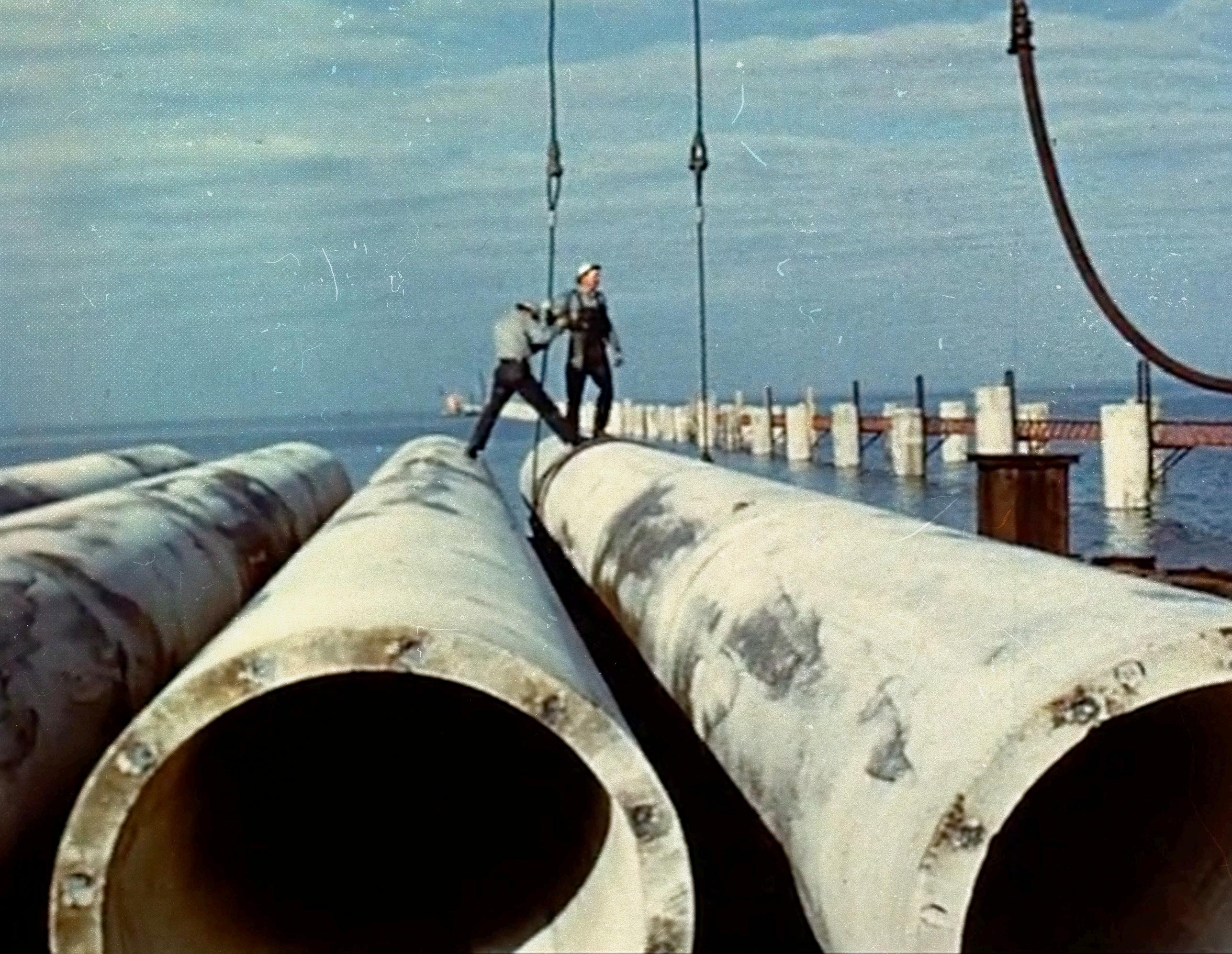
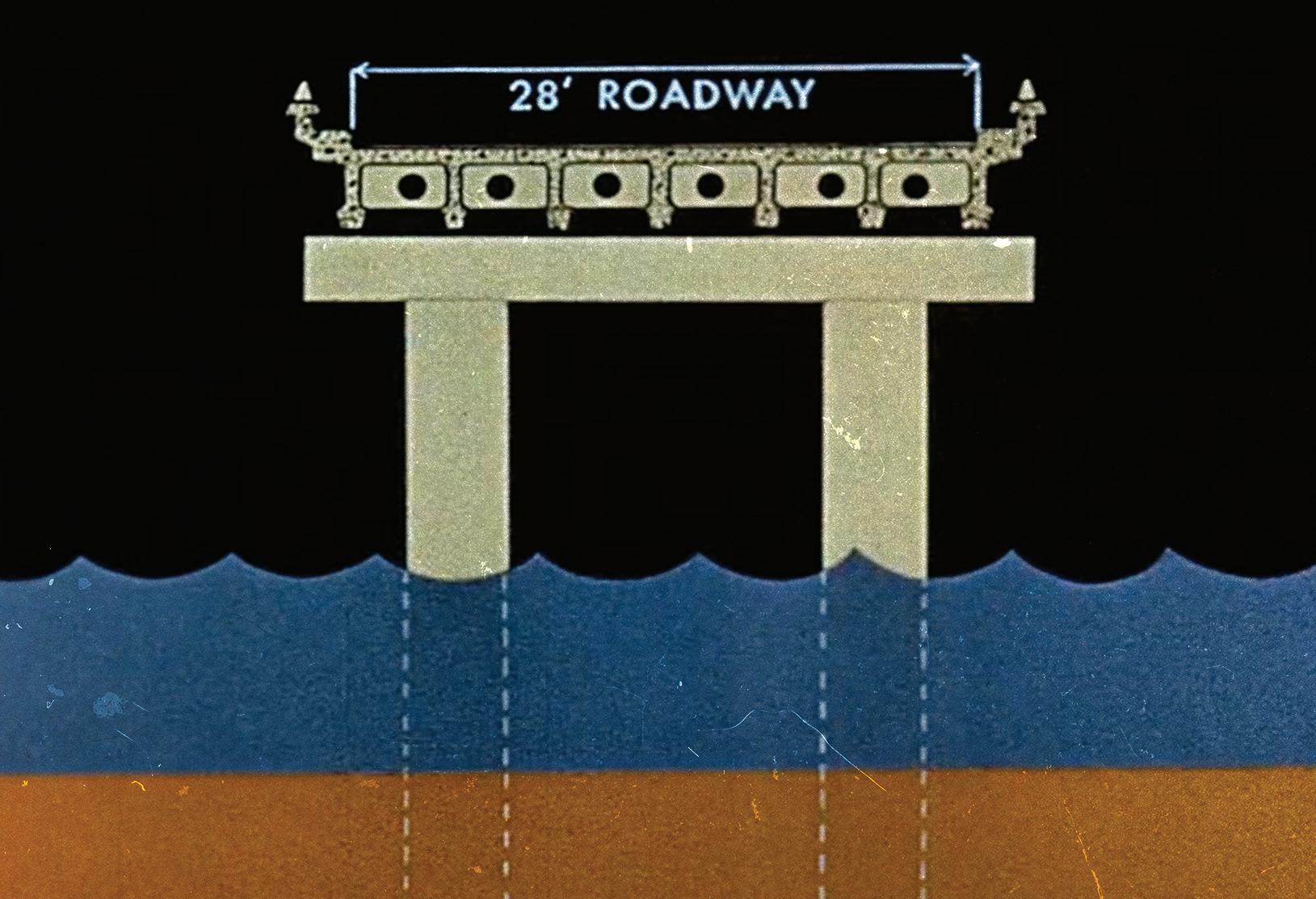
Using Raymond Concrete’s innovative techniques in prestressed concrete, the 40-acre yard’s approximately 750 employees worked to craft very dense, 54-inch, hollow prestressed concrete cylinder piles by spinning concrete at a high speed inside a form. The result was building blocks that were more than twice as large and significantly stronger than standard piles at the time. Precast concrete was also used to create the pile caps and concrete decks for the bridge.
The Causeway was designed by engineering firm Palmer & Baker, a Mobile, Alabama-based company that had previously used prefabricated concrete to construct the totally submerged, halfmile-plus Bankhead Tunnel in Mobile Bay in 1941 in 22 months. Just like with the tunnel’s construction, fabricated pieces for The Causeway were barged out for assembly in the lake.
The first large-scale use of prestressed concrete, The Causeway wasn’t just built big, it was built fast. The contract for the first span of the bridge (now the Southbound bridge) specified 23 months for construction — it was completed in just 19 and opened on August 29, 1956.
NO RISK, NO REWARD
“T he bridge was a really risky endeavor,” explained Carlton Dufrechou, who has served as the general manager of the Greater New Orleans Expressway Commission for 16 years. “This was an almost $50 million investment back in 1956 (about $184 million today). That’s a lot of money to do something that had never been done before.”
Fortunately, the investment quickly paid off. In its first year, The Causeway welcomed 50,000 transits; by the mid-to-late-1960s, it was up to about 2 million a year.
To handle the increased demand, a second bridge would be built just for Northbound traffic. At a cost of $30 million, it opened on May, 10, 1969.
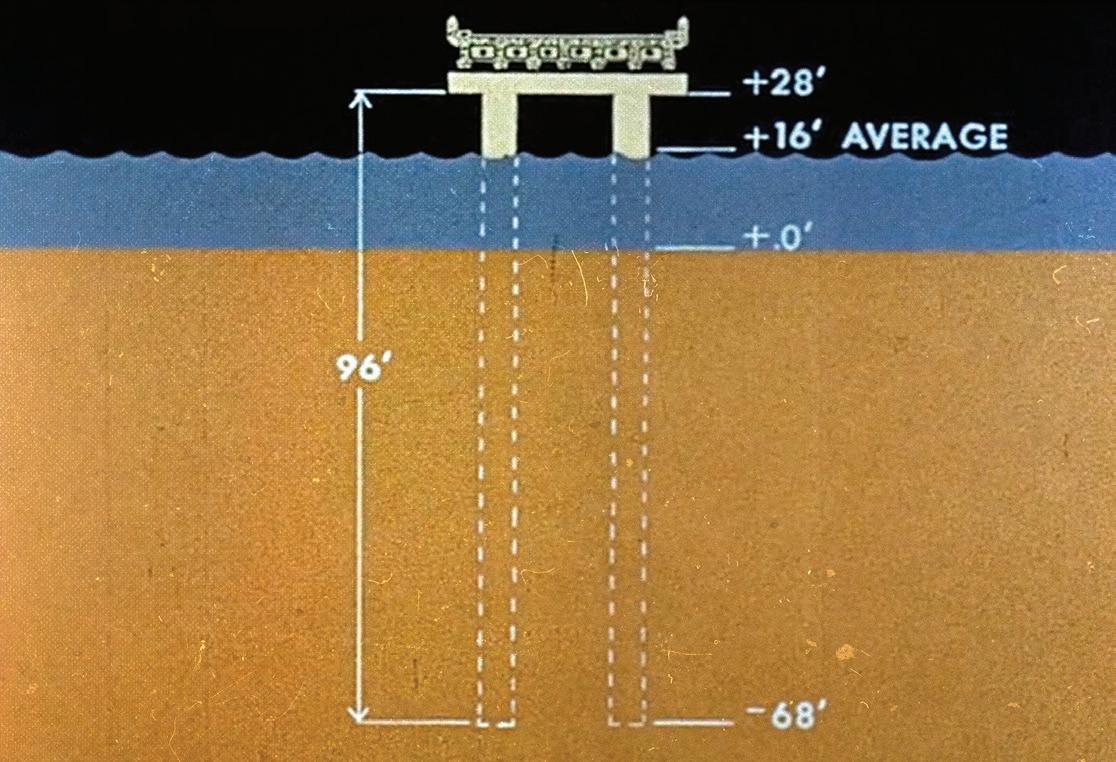
Riders will notice that the original, now southbound bridge is a bumpier ride. That is due to the differences in construction. The deck sections on the original bridge are 56 feet long and 28 feet wide, while the northbound sections are 84 feet long.
“The engineers built the original decks with more of a camber (a predesigned curve) because they thought the decks would start to sag a little after a while, but they never did,” explained Dufrechou. “So when the second bridge was built, they make the sections longer with less camber which makes for a smoother ride.”
On Nov. 8, 2013, the bridge’s engineering achievement was recognized as an American Society of Civil Engineers National Historic Civil Engineering Landmark with a plaque at the Northshore toll plaza office building. It includes a quote from the Engineering News-Record praising the bridge as “a bold venture requiring unusual foresight, ingenuity and resourcefulness.”
LIFE ON THE WATER — IT CAN GET CHOPPY
THE CAUSEWAY NOW FACILITATES about 12 million transits a year — with about 19,000 every weekday and about half that on weekend days. Unsurprisingly, a lot can happen when you put that many people above open water for 24 miles.
Nobody knows that better than Thea Andras. Andras has served with the Lake Pontchartrain Causeway Police for 30 years, the last two years as its chief. A native of Washington Parish, she started out her law enforcement career at the parish’s sheriff’s office.
“Back then, there were no females in law enforcement in Washington Parish,” she explained. “There had never been a woman on patrol, so I was fighting against that. Eventually, I got [the sheriff’s office] to send me to the academy, and at the time the gentlemen’s agreement was that you’d be expected to put in at least a year of service. I served exactly a year as a dispatcher there and then started looking for somewhere else. I didn’t want to be stuck in a room.”
One of Andras’ old sergeants helped her find a job on The Causeway, where she became the department’s first female sergeant, then lieutenant, then captain, then chief, where she now oversees about 30 officers.
Far from being “stuck in a room,” officers are trained to handle a wide array of situations on the bridge, aided by a separate team called the Motorist Assistance Patrol (MAP).
“When anything happens on the bridge, the dispatchers call us both and we back each other up,” explained Andras. Dispatchers working from GNOEC headquarters on the Southshore monitor 37 cameras for any issues.
“Every day we have at least maybe 10 breakdowns,” said Dufrechou, who shared that other issues on the bridge have ranged from heart attacks and attempted suicides to escaped animals including chickens, horses, alligators
A BIG TARGET
and a burro. Rescuing drivers that have run out of gas is a very common occurrence, he noted, especially with rising gas prices. During a particularly eventful breakdown on May 6 of this year, the southbound lanes of The Causeway were closed for about an hour when a carjacking suspect fleeing police from Mandeville ran out of gas and jumped into the lake near mile marker 10.
Andras said her team is always prepared for the chance that a road issue goes aquatic.
“All of our vehicles have life jackets, Jacob's ladders and life rings,” she said. “We also have our own trucks with rescue baskets, and everyone has water rescue training.”
The distance between the deck of the bridge and the water is typically about 16 feet, and the water under the bridge is about 12 to 14 feet deep, enough to be an issue if a vehicle goes over the railing, which was something Dufrechou said became more common starting in the mid-1990s.
The Causeway has been hit 15 times by commercial water traffic, including once before it was opened. In three cases the bridge sustained damage. In two, vehicles went into the lake.
“We started seeing over boards become much more common then, especially on the southbound bridge, because of the popularity of pickups and SUVs on the road,” he said. “The original bridge was built with just a 25-inch rail barrier, while the Northbound barriers are 31 inches.”
Around 2016, the bridge began looking at increasing the rail heights and also adding shoulders to help decrease rear-end collisions and increase overall safety.
“We looked at the cost of adding a shoulder to the whole bridge and it was about $2 billion, which would have pushed the toll price from the $2 at the time to $24,” he said. “Obviously, that wasn’t feasible, so we opted instead for a $1 increase that allowed us to bond out $100 million to add over 12,000 feet of shoulders – tripling the emergency stopping area on the bridge — and increase the southbound rails went up by two feet. The project started in 2018 and was completed in 2021.”
A big part of keeping the bridge safe, Dufrechou noted, is keeping speed down. The Causeway Police issues about 8,000 citations a year for speeding; however, the bridge doesn’t see any money from that work.
“If a car is radared in the first 12 miles of the bridge, then that money goes to Jefferson Parish,” explained Andras. “If it’s in the second half, it goes to St. Tammany Parish.”
POWER POSSIBILITIES
The first half of the bridge is powered by Entergy, while the second half is powered by Cleco. However, if either side experiences any issues, the bridge can switch to being fully powered by one utility.
LA LEADS
Louisiana is home to four of the five longest bridges in the country.
23.87
MILES
Lake Pontchartrain Causeway
22.8
MILES
Manchac Swamp Bridge
18.29
MILES
Louisiana Airborne Memorial Bridge (formerly Atchafalaya Basin Bridge)
17.6
MILES
Chesapeake Bay Bridge-Tunnel (not in LA)
11
MILES
Bonnet Carre Spillway Bridge
Andras said the Causeway Police experiences the same recruitment and retention issues shared by most police forces around the country but added that one element specific to her force might present an extra challenge for some.
“You really have to be OK with yourself to work here,” she said. “You’re by yourself a lot out here — all our units are solo, and your backup may be 12 to 24 miles away, not like the typical two miles with other forces. You need to know what you’re doing and be OK with you. Plus, it’s not like you can go somewhere and grab something to eat like other officers can. Our job is to get people from one end of this bridge to the other as safely as possible, and if you’re somewhere else, you can’t do that.”
SELF SUSTAINING
IN ADDITION TO ITS OWN POLICE FORCE and Motor Assistance Patrol, The Causeway also boasts its own fueling station near the Northshore toll booths — double-walled tanks that hold about 2,000 gallons of gas and diesel.
“Our ability to buy gas in bulk definitely helps when it comes to servicing our fleet of about 100 vehicles,” noted Robert Graham, who has worked as director of operations for the bridge since 2017. A Madisonville resident for 62 years, Graham worked as a mechanic with the Ford Motor Company for 12 years before joining The Causeway in 1995, when it was just starting its own automotive division. In his first six years, he moved from mechanic to supervisor of The Causeway’s maintenance facility located behind Mandeville High School.
“We’ve grown from what was a one-room stall to now eight stalls and four lifts,” he said. “It’s big a big cost savings to be able to handle everything ourselves, from our police vehicles to our 20 maintenance trucks.”
As director of operations, Graham handles a wide array of duties every day — from tallying up toll deposits for pickup by Brinks Security to ensuring the bridge’s drawbridge at the 16-mile marker can lift and lower more than 30 times to facilitate traffic to Madisonville’s annual Wooden Boast Festival every October.
And Graham’s work doesn’t end where the bridge does. A littleknown fact is that the building of the bridge encompassed the construction of roadways on both sides of the lake reaching to Jefferson Highway on the south end and Covington on the north. While Jefferson Parish took back the roads on the south shore long ago, The Causeway still maintains five miles of roads on the Northshore, the maintenance of which (including signage, landscaping and maintaining seven traffic lights) eats up about $1 million of its annual $7.5 to $8 million operations budget.
The Causeway’s total annual budget is about $30 million, which Dufrechou said is fairly equally split between maintenance, staff, debt service and operations, adding “about half of the last one goes to insurance.”
Dufrechou said the bridge’s original construction debts of $46 million and then $30 million have been refinanced seven times and that the total is set to be retired in 2033. The $100 million safety program that was finished in 2021 will be paid off in 2047.
About 80% of the budget's funds comes from tolls. The rest comes from Highway Fund No. 2. The Causeway has been a toll bridge from day one, when booths on both sides of the bridge collected $1 each way. The toll booths on the south side of the bridge were removed to ease congestion in 1999.
The current toll is $6 for those without a toll tag and $3.40 with a tag. But even with this substantial savings, Dufrechou noted that only about 64% of regular commuters have a toll tag, a number he’s always looking for ways to increase. The bridge is also actively looking at the feasibility of all-electronic tolling.
BEYOND MEASURE
WHETHER SPEAKING WITH DUFRECHOU or Andras or Graham, the message remains the same: The Causeway is so much more than a span of concrete over water.
“It’s got a soul,” said Dufrechou. “It will always be this primary connector but it’s also this living entity of its own and that’s because of the dedication of our staff, who are here 24 hours a day, and the motorists who are always reaching out to let us know if there's an issue. The result is a bridge that I’d say is four to five times safer than any other interstate system on the Gulf Coast. Here, you know that no matter the weather, if something happens, someone will be there to help within minutes. It’s our job. It’s our passion. The people are the real wonder of this bridge.” T
KATRINA MARKS REMAIN
At the 9-mile marker heading south, travelers will see what looks like unfinished work on the bridge — an offshoot that goes nowhere. This is the
remnant of what used to be a clover-shaped turnaround that wound under the bridge. It was destroyed during Hurricane Katrina.
B2B SERVICE GUIDE
Whether you are searching for accounting expertise, accomplished project managers, or IT wizards, these B2B service providers can ease pain points in your company and prove that New Orleans businesses are better when they work together.
METAIRIE BANK
Since 1947, Metairie Bank has proudly served the community with the strength of a trusted local institution and the personalized service customers deserve. With more than $650 million in assets and eight convenient locations across Jefferson and St. Tammany Parishes, we make banking simple, welcoming, and focused on your financial goals.
“At Metairie Bank, community has always come first,” said John LeBlanc, CEO of Metairie Bank. “For generations, we have built lasting relationships by providing dependable service, supporting local businesses, and investing in the people and communities we serve.”
Our experienced team is committed to helping individuals, families, and businesses grow and succeed through friendly, reliable banking and personalized financial solutions. Beyond banking, Metairie Bank remains deeply invested in the community through local partnerships, volunteer efforts, and ongoing support of community initiatives. Experience the difference of a true community bank dedicated to helping you thrive.
LOUISIANA BLUE – PUTTING LOUISIANA FIRST!
GULF COAST BANK
ARTHUR J GALLAGHER RISK MANAGEMENT
JEFFERSON PARISH ECONOMIC DEVELOPMENT COMMISSION
Louisiana Blue Reminds You to Consider Health Needs During Hurricane Season Louisiana Blue reminds you to consider health needs as part of hurricane season planning. Keep your health plan information handy, and get a digital member ID card if possible. Louisiana Blue members can get digital ID cards and see their health plan information through the MyLABlue digital platform. Log in online, with the app or through your MyChart account. Keep track of healthcare coverage and benefits, find in-network providers and securely message the Customer Service team.
Make a list of your family’s health information, including which medications everyone takes. Store the list in your phone or keep a written copy with you. If you take prescriptions regularly, ask for a 90-day supply to have on hand in case of evacuations or extended closures. Sign up for telehealth services, so you have options for remote care.
GULFBANK.COM
With $3 billion in assets, Louisiana-based Gulf Coast Bank & Trust Company serves its business and personal banking clients through its bank branches, loan production offices, trust and investment offices, and business credit offices.
Gulf Coast Bank & Trust Company has 24 branch locations in Southeast Louisiana, as well as branches in Miramar Beach, Florida and Orange Beach, Alabama with plans to open in Hattiesburg and Gulfport, Mississippi and Panama City, Florida soon. Locally, Gulf Coast Bank & Trust Company branch offices are in Orleans, Jefferson, St. Bernard, St. Tammany, Tangipahoa, and East Baton Rouge cities.
As a community bank, Gulf Coast Bank & Trust Company commits itself to nonprofit organizations in Southeast Louisiana through sponsorships and charitable giving. Each year, Gulf Coast Bank & Trust Company hosts a fundraising event, Auctions in August, for local and national organizations, schools, churches, and community groups. Since its inception in 2008, Auctions in August have raised almost $1.7 million for nonprofits.
Gallagher is one of the world’s largest insurance brokerage, risk management and consulting firms and is the largest broker in Louisiana. As a community insurance broker and trusted local consultant, we help people and businesses move forward with confidence. We have over 53,000 people working around the globe, who are connected to the places where we do business. Managing risk with customized solutions and a full spectrum of services is what we do, we help our clients foster a thriving workforce, and our team always holds ourselves to the highest standards of ethics to help you face every challenge – that’s The Gallagher Way.
As an internationally accredited economic development organization, Jefferson Parish Economic Development Commission (JEDCO) is a leader in building a resilient, equitable, diverse, and competitive economy for Southeast Louisiana. JEDCO drives the retention and creation of quality jobs, entrepreneurship, innovation, and investment in Jefferson Parish by providing a mix of resources, support, and connections to partners. JEDCO also attracts new businesses to the community and supports existing businesses through a variety of services, including small business financing, tax incentive guidance, site selection, and Parish interface.
AJG.COM
JEDCO.ORG
FROM THE LENS
62
GREAT WORKSPACES
At Southern Interior Solutions’ new Downtown Covington showroom every design decision doubles as a demonstration.
70
NEIGHBORHOOD GEM
As crawfish season ends, this almost 50-year-old staple is getting creative.
72
NEW ORLEANS 500
Rebecca Dietz, President and CEO of City Park Conservancy
66 WHY DIDN'T I THINK OF THAT?
Lake Isabel Farm — a Northshore paradise whose creation was anything but
BUILT TO WORK
At Southern Interior Solutions’ new Downtown Covington showroom, every design decision doubles as a demonstration
BY MISTY MILIOTO
PHOTOS BY SARA ESSEX BRADLEY
When Southern Interior Solutions outgrew its previous office in downtown Covington, the commercial interior design and furniture dealership didn’t just find a bigger space, it designed and built its own. The resulting second-floor office and showroom at 409 E. Gibson St. is equal parts design laboratory and working headquarters.
“Our previous office was across the street, and we simply outgrew it, which is a great problem
to have,” said Andrew McIver, a principal at SiS. “From day one, we designed the new secondfloor office the way we always wanted, [with] room to do great work, room for the team to grow and a showroom we use every day.”
For director of design Melissa Edmonds, the process began not with a concept board but with the building itself.
“The first space taught us a lot,” she said. “We learned what we actually needed versus what we thought we needed. This time, we let the building lead. Tall windows, generous proportions, beautiful Covington light — those gave us
the bones, and we worked back from there. Every choice we made was the same way we’d make for a client — [with] function first, then design-aesthetic — never the other way around.”
That philosophy is legible in every corner of the finished space. The natural light from the large windows, Edmonds noted, does more than illuminate — it activates the materials themselves.
“I love the balance between the neutral architectural elements and the way color is introduced through the furniture,” she said. “It allows the furniture to become a major part of the design story.”
Lighting and acoustics, often afterthoughts in commercial design, were approached here with equal intentionality, adding a strong architectural element that helped create flow throughout the office.
The layout of the new office reflects a post-Covid understanding of how work actually happens. At its center is a collaborative, living-room-style gathering area that Edmonds described as one of the most active parts of the office. It is used for casual meetings, client conversations, continuing education presentations, material reviews and informal collaboration.
QUICK LOOK
Number of years in operation 11
Square footage
3,000
Number of Employees 8
Persons in Charge
"Tall windows, generous proportions, beautiful light — those gave us the bones and we worked back from there," said Director of Design Melissa Edmonds on the process of transforming the space.
Surrounding that central hub, a range of settings accommodates different work styles, personalities and client needs.
“That was intentional, especially given how much the workplace has changed post-Covid,” said Edmonds. “The office demonstrates how open collaboration areas, private offices, focused work zones and formal meeting environments can coexist.”
One of the standout elements is the formal conference and boardroom, where high-end finishes, integrated technology, modular walls and sound masking come together to create a room that doubles as a demonstration of what SiS can do for its clients.
“It gives clients a firsthand look at solutions that are applicable to many of the environments we serve,” said Edmonds.
Andrew McIver and Patrick McMath
Architect
Eskew Dumez Ripple (Building)/Greenleaf
Architects (Interior Buildout)
General Contractor McMath
Construction
Interior Décor
SiS
Initial Brand Development
SiS
Art and furnishings
SiS
20-25 words
The office includes an array of different work setups to accomodate various personalities and work styles, from large gatherings to more private spaces.
The materials library rounds out the experience.
“It is what dreams are made of for an interior designer,” said Edmonds. “It is organized, accessible and highly functional, but it is also a beautiful part of the space. It supports the way we work every day and gives clients a better understanding of how materials, color and texture come together in a finished environment.”
The space is not a static showroom but a rotating, evolving example of how spaces can function.
“Products come in, live with us for a while, and either earn their place or they go into storage,” said McIver. “Since we are constantly refreshing the space, it is always evolving and gives clients the opportunity to experience furniture in a real working environment.”
That approach also functions as a quality filter.
“We are not showing products under perfect showroom conditions; we are using them every day,” said McIver. “If a chair is not comfortable, functional or well suited for the way people
actually work, that becomes obvious pretty quickly. You cannot confidently recommend something to a client that you would not want to use yourself.”
Flexibility was a priority from the start. Patrick McMath, a principal at SiS, said the team made deliberate choices to ensure the space could evolve with the company.
“We used modular walls to create flexibility within the space, and we chose furniture solutions in place of permanent millwork wherever possible,” he said. “That allows the office to move, change and be reconfigured over time.”
The commitment to adaptability extends even to leadership’s spaces.
“There may come a day when the team decides my office needs to be repurposed, and that is a very real possibility,” said McMath. “The space should serve the team first.”
When clients walk in, the team hopes the space speaks for itself.
“We want clients to have that ‘wow’ moment when they walk in — the realization that a
space can feel warm, polished and highly functional without being overdone,” said Edmonds. “More importantly, we want them to see that thoughtful design starts with understanding their core needs and wants.”
For McIver, designing the firm’s own workplace a second time brought a particular kind of clarity.
“It is one thing to guide clients through those decisions, but it is another to live inside your own work and experience those decisions firsthand and every day,” he said. “There is a real humility in that. Every shortcut catches up with you, and every small detail you get right rewards you over time.”
Those lessons, McIver said, make SiS better for the clients it serves. And for a firm now celebrating a decade in business, with a planned Austin office opening in 2027 and a growing footprint across the Gulf South, the new showroom is both a reflection of where SiS has been and a foundation for where it’s headed. T
A LONG ROAD TO PARADISE
The owner of Lake Isabel Farm shares why the journey to creating this idyllic destination was the most challenging of his career
BY ASHLEY MCLELLAN
PHOTOS BY EDMUND D. FOUNTAIN
Crystal-clear water and white sand beaches drew more than 3,000 visitors last summer to Lake Isabel Farm in Bogalusa — each paying either $40 or $55 for entry — and that was during the private lake’s abbreviated inaugural summer season.
With gas and airline ticket prices hitting especially hard right now, owner Anthony Sedlak, operating as Quail Prices LLC, has every reason to expect a banner second season.
Praised by Travel + Leisure as “the prettiest beach in Louisiana,” Lake Isabel Farm spans 422 acres of land, upon which sits a 35-foot deep, 125-acre lake created from a former sand and gravel pit that supported the construction of local roads and hospitals. There’s also a mile-long beach area for lounging, private cabanas available for rent, walking trails, kayaking and volleyball.
New additions for the 2026 season, which opened in April, are seven A-frame shade structures along the beach, two new cabanas that bring the total number to seven, a swimsuit changing room and baby changing station, and a covered grilling and dining area.
For Sedlak, Lake Isabel Farm’s opening last year was the culmination of years of dreaming about life outside the office as a CPA.
“After too many years of white-collar life and city living, the intention was to find a rural investment property to get me back into nature, learn rural and infrastructure development, and to create a meaningful place that others could use as a retreat and reset to reconnect with nature, themselves and others,” he said. “I was seeking a large — maybe about 100 acre — property with a water feature. In my mind, that meant some river frontage or a pond. I didn’t set out to buy over 400 acres with a mile-long private lake.”
The first step was finding the perfect spot.
“I followed the land market casually for years before beginning my search in 2020,” Sedlak said. “After work each day, I spent hundreds of hours searching property listing databases, researching specific properties, then walking them on weekends.”
In the end, the perfect fit almost didn’t happen.
“Lake Isabel was improperly listed and didn’t pop up in most searches; the agent didn’t have a working voicemail and took five times to even get on the phone,” he said. “It then took three hours and a walk across a large, rusted-out pipe above a canal that surrounds the property to figure out how to get into the property during a site visit, as there was no legal or road access.”
Sedlak had finally found what he wanted, but then the real work began.
“I have worked on large, multi-billion-dollar transactions over my career, and this was the hardest purchase and close process I’ve ever worked on,” he said. “It took 40 days of negotiating and eight iterations of the contract with the seller (Weyerhaeuser, one of the largest landowners in North America) to finally come to agreeable terms. Then it was seven months to close, extensive due diligence and environmental testing and a new survey which took nearly three months to complete alone due to the size and number of corners of the tract, but voila, we finally closed in 2021, a few weeks after Hurricane Ida hit.”
Building out the property and launching the project provided a unique set of challenges for Sedlak, who lives and works on the property.
“In the first year alone, it took about six months to even be able to drive into the property, as it was barely accessible on foot at acquisition,” he said.
Sedlak relies on a team of seasonal employees and a long list of contractors to help keep the ship afloat.
“Technically, [I have no full-time employees] but myself and tens of contractors have made this place happen over the years,” he said. “This summer, we will have about 10 to 15 team members. My neighbor, Mr. James (Brown), has been a massive part of assisting on a daily basis, spending years and countless hours alongside me to help build this dream into a reality for others to enjoy.”
Those looking to enjoy a day at Lake Isabel Farm need to plan ahead. Tickets are only sold online and are limited to 100 full-day and 25 afternoon passes. Upcoming dates become available about once every three weeks; the best way to find out about ticket sales is to follow the property on social media.
Day passes are currently available Fridays, Saturdays and Sundays (with holidays occasionally open throughout the summer). Tickets are $55 for adults over 13, and $40 for children (3 to 12 years old) and seniors (ages 65+). Children under age 3 get in free.
Looking to bring a big group? A solar-powered cabana is included free with a group reser-
vation of 15 or more adult tickets. Cabanas are equipped with fans, furnishings and ice coolers.
Food and drink are not currently available for purchase and visitors are advised that lifeguards will not be provided, so swimmers should take note. Children should be always accompanied by an adult. Looking ahead, Sedlak said he’s excited about adding a short-term rental property to the property.
“This means, guests and groups will be able to stay with us for a longer period and really take advantage of all of the amenities we have to offer,” he said.
Plans also include on-site farming with eventual farm-to-table dinners, land conservation activities and education, additional recreational activities such as diving and scuba activities, and an events center for weddings, corporate gatherings and more.
“While Lake Isabel Farm is still in its infancy compared to the master plan for the property, I’m proud to say that I have met and already exceeded the vision by being able to welcome so many wonderful guests in and share this unique place,” said Sedlak. “Guests have shared that they’ve been able to unwind and be present, sometimes for the first time in many years.” T
A CPA, Anthony Sedlak put years of work into creating the "prettiest beach in Louisiana" in Bogalusa.
CAPTAIN SID'S SEAFOOD 1700 Lake Ave.// Metairie 504-831-2840 /CaptainSids.com
@captain-sids-seafood // @capt sids
Captain Sid’s Sails On In Bucktown
As crawfish season ends, this almost 50-year-old staple is getting creative.
BY KEITH TWITCHELL
If New Orleans is the capital of the seafood universe, then Bucktown is the capital of New Orleans-area seafood. And among the many purveyors of the fruits of the sea, nobody serves it better than Captain Sid’s.
At 1700 Lake Avenue, Captain Sid’s Seafood is truly in the heart of Bucktown. It was founded in 1979 by the eponymous Sid Patrick, who had developed his own unique seafood seasonings and wanted a showcase for them. Captain Sid retired in 2015, handing the wheel to his nephew Ray Schlaudecker.
According to Schlaudecker, “Our signature seasoning blend is still what sets us apart. We ship it all over the country.”
Schlaudecker is committed to maintaining the same standards set by his uncle.
“All our seafood is, if not from around Bucktown, from Louisiana,” he noted. “We sell quality products, and most important, we have great customer service. If you read about us on social media, that’s what comes up most often, and that’s what I’m most proud of.”
The seafood business in Southeast Louisiana is surprisingly seasonal. During the 90-day March through May crawfish season, the staff at Captain Sid’s grows from five people to 12, and
Schlaudecker estimates that 70% to 80% of his annual revenue comes in at that time.
“The name of the game the rest of the year is to find a way to break even,” he said, adding that the difficult economy of the past five years has only made that challenge greater. “Government support for small businesses is nonexistent, but the local community has supported us as much as they can. But they get affected by the economy too.”
Sales during the leaner times rely heavily on boiled crabs and boiled shrimp. Additional valuable revenue generators are Captain Sid’s popular potato salad and shrimp salad.
“We can’t even keep up with making enough of it,” said Schlaudecker with a smile.
To give customers another reason to come into the store outside of crawfish season, Schlaudecker recently decided to step outside of the seafood box and begin smoking barbecue and selling barbecue platters, which, he reported, has been a big help.
One advantage of being in business for nearly 50 years is that Captain Sid’s has built a long-
standing, loyal customer base, who in turn are the store’s best promoters.
“Word of mouth, and of course with the world we live in now, social media – that’s all the advertising you need,” Schlaudecker said. “We do all the social media. Any business that doesn’t is going to be left behind.”
Having a national fan base is also useful; Captain Sid’s ships everything from its proprietary seasonings to sacks of live crawfish. A recent day had deliveries marked for Salt Lake City, Chicago, Tampa and Los Angeles. Schlaudecker brings the squirming mudbugs to the airport himself, where the flat $75 overnight shipping rate gets them to their intended destinations. No reports on what the cargo holds smell like after …
Despite the challenges, Captain Sid’s is truly a mainstay of the No. 1 local seafood neighborhood, an unassuming institution with a great tradition.
“This business has been in the family since 1979,” Schlaudecker pointed out proudly, “and I don’t see an end in sight.” T
ORLEANS 500
EDUCATION
Tulane University Law School (JD), University of Arkansas
Rebecca Dietz
President and CEO of City
Park
Conservancy
PHOTO BY JEFFERY JOHNSTON
GOAL FOR 2026
A personal goal is to get back into horseback riding
I
Drawing on over 20 years of leadership in parks, nonprofits and government, Dietz leads City Park — overseeing a $30 million annual budget and more than 300 employees. As CAO, she was instrumental to the park’s growth and successes and facilitated its transition to a 501c3 organization. Previously, Dietz held leadership roles at the Audubon Nature Institute and served as a former New Orleans city attorney and general counsel for the Louis Armstrong New Orleans International Airport.
TRAVEL BUCKET LIST Anywhere in Italy
FAVORITE CONCERT
saw Dave Matthews in the rain years ago at JazzFest with my husband and close friends — a wonderful memory!
HOBBY Gardening, watching baseball, taking long walks