NONPROFIT
AREA SCHOOLS SUFFER FROM A LEADERSHIP GAP. THIS NEW NONPROFIT AIMS TO FILL IT, AND IT’S BEING BACKED BY ROYALTY PLUS WHAT'S NOUS? AND HOW IS IT STEPPING UP TO SAVE OUR CULTURE?

NONPROFIT
AREA SCHOOLS SUFFER FROM A LEADERSHIP GAP. THIS NEW NONPROFIT AIMS TO FILL IT, AND IT’S BEING BACKED BY ROYALTY PLUS WHAT'S NOUS? AND HOW IS IT STEPPING UP TO SAVE OUR CULTURE?

Louisiana’s maritime industry has had some big recent wins
David B. Payton, Executive Director of Goldman Sachs 10,000 Small Businesses

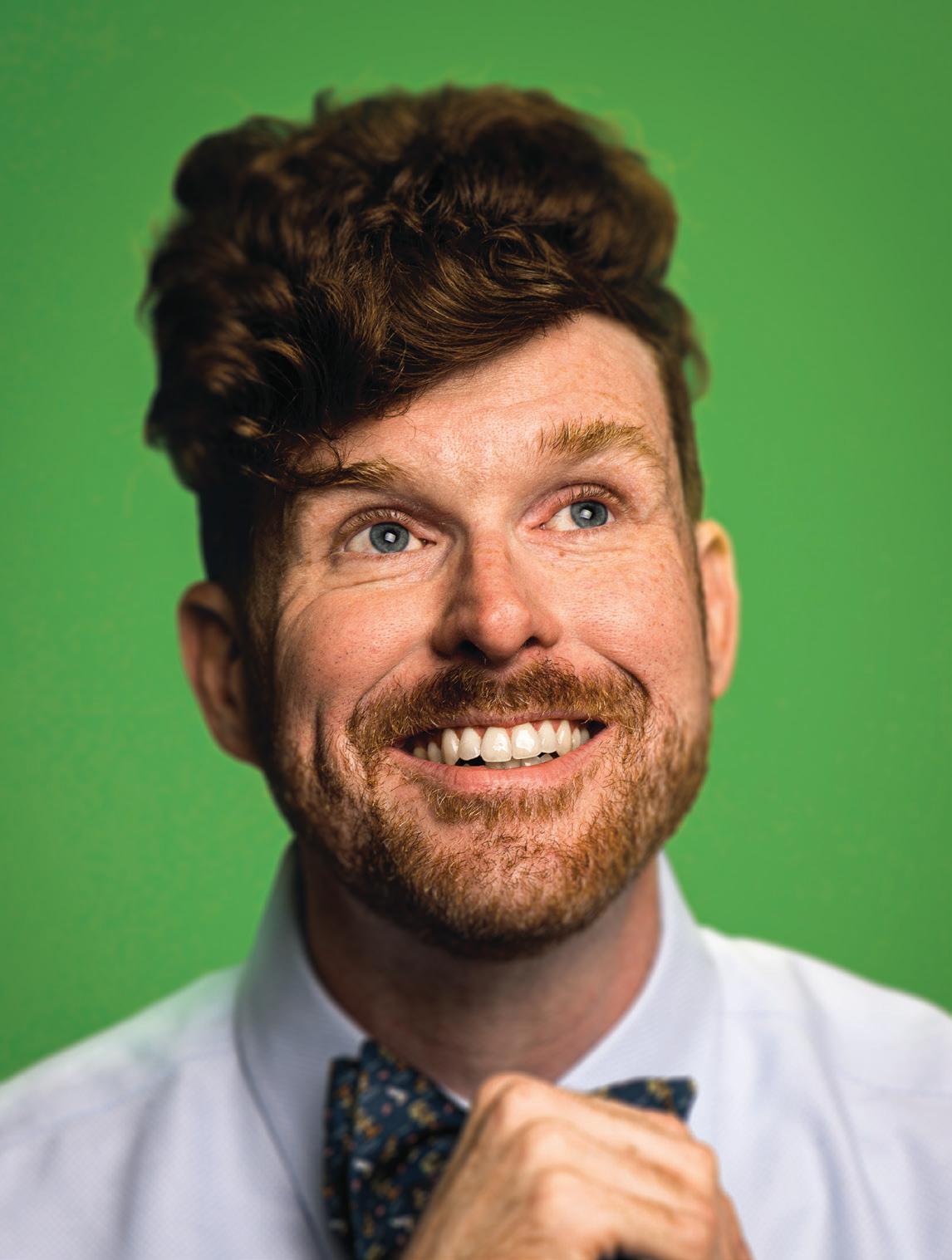
New Orleans has long been celebrated as one of the frenchest cities in America. This native New Orleanian and French transplant are taking action to make sure it stays that way
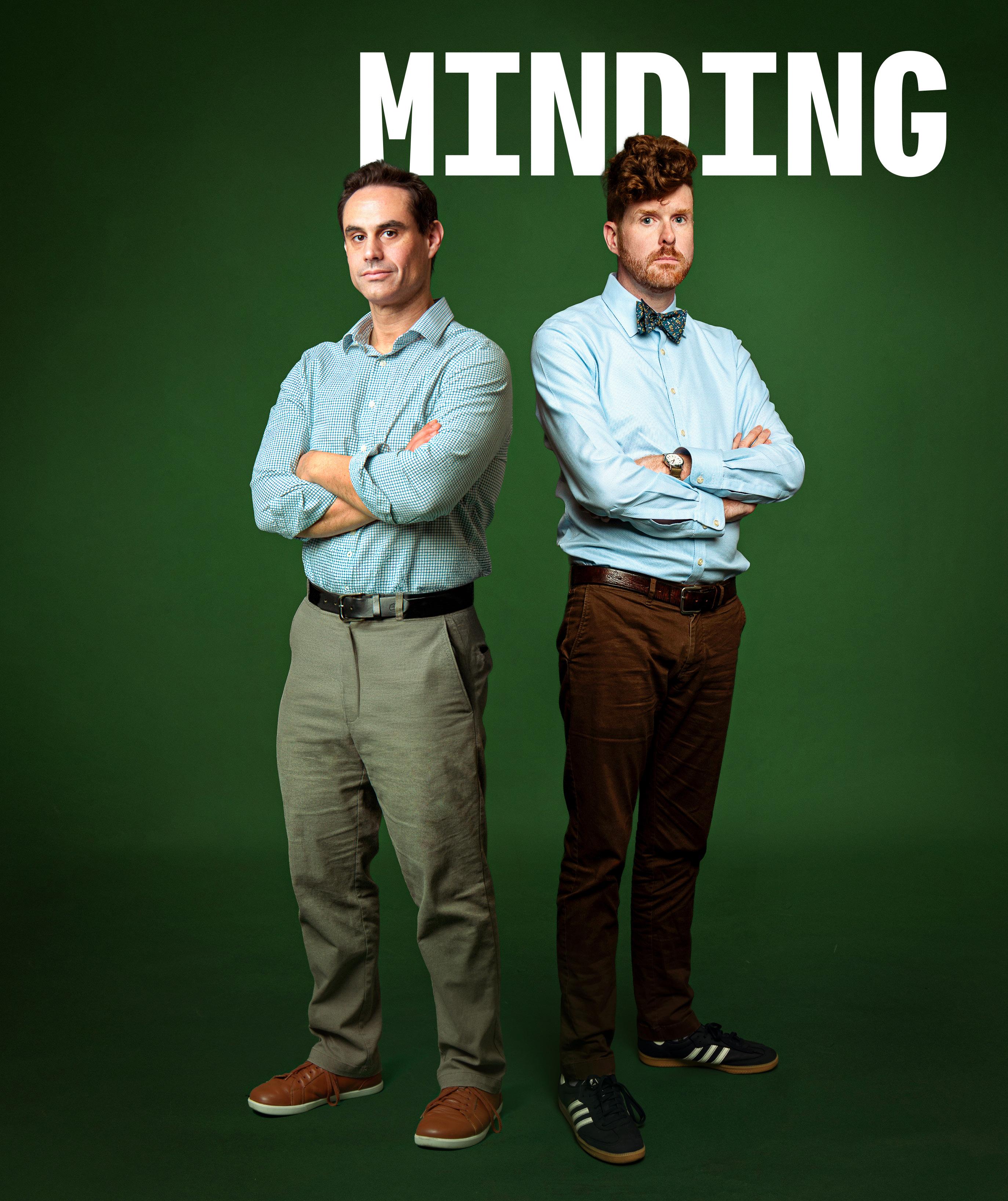
Area schools suffer from a lack of leadership development. A new nonprofit called Lift All Boats is determined to fix that, and the King of Carnival is betting big on their success.

I’m very proud of the fact that over the past almost 12 years, Biz New Orleans Magazine has been a voice of hope in New Orleans. I have long repeated that the thinking with this magazine has always been that everyone in our city knows what the problems are — ask any New Orleanian and they will quickly rattle them off. Turn on the daily news or pick up the paper and you will read all about them. Our problems are not news; what is news are the people doing something about them.
In every issue, our goal is to — just like Mr. Rogers once said — “find the helpers.” Through our website, our two daily newsletters, our weekly podcast BizTalks, and this magazine you hold in your hands we aim to introduce you to those helpers and share what they’re doing in our region and why.
I’m participating in Loyola’s Women’s Leadership Academy this year — run by my friend and constant source of joy and light, Amy Landry — and the first session talked a lot about purpose. The question we were to ask ourselves was “What is the lasting influence you want to leave behind through your actions, decisions and contributions?”
It’s a big question — maybe the biggest. When it comes to me personally, I think I’m still trying to solidify my answer, but when it comes to what I do, what I want Biz to do, it’s pretty simple: I want to foster hope and connection. I want everyone who reads and listens to
us to realize all the work that is being done every day by people on their street, in their neighborhood, in their hometown or adopted home to make sure this unbelievably unique — and straight out magical at times — part of the world that we inhabit not only survives but thrives.
I am fortunate enough to spend my days talking with people who have found their passion and are living it. I hope you have too. And if you’d like to share it with us, please reach out to editorial@bizneworleans.com.
Thanks for reading,
Editor Kimberley@BizNewOrleans.com
Each week, “Biz Talks” reaches beyond the pages of Biz New Orleans’ magazine to bring you indepth conversations with leaders in our community.
Episode 276
Loyola Students Are Now Running a Live Music Club
A new partnership between Loyola University and Freret Street live music club Gasa Gasa is offering students the opportunity to get direct, real-world experience by participating in every part of the process of operating a live music venue. The forces behind Gasa U —Loyola’s director of the School of Music and Theatre Professions Kate Duncan, and industry veteran and endowed professor Jonathan McHugh — share how Loyola’s commitment to reinventing education experiences is aimed at giving students a leg up in the competitive entertainment industry.
Episode 274
New Entrepreneurship Council Brings All Big Players Together for the First Time
A new collaborative effort launched this fall called the New Orleans Entrepreneurship Council (NEC). The council is designed to bring area stakeholders and organizations together to unify and amplify their efforts with the goal of attracting, retaining, and growing entrepreneurial talent in the region. NEC Chair Kimberly Gramm, chief innovation and entrepreneurship officer at Tulane University’s Innovation Institute, shares all the details.
Anchor, Overcast, Pocket Casts
Publisher Todd Matherne
EDITORIAL
Editor Kimberley Singletary
Art Director Sarah E.G. Majeste
Digital Media Editor Kelly Massicot
Associate News Editor Kelly Hite
Research Alex Jorns
Contributors Carla Marie Cochran, Jesse Hoppes, Ralph Howerton, Andy Kopplin, Ashley McLellan, Misty Milioto, Chris Price, Keith Twitchell, Ralph Whalen
ADVERTISING
Senior Account Executive
Meghan Schmitt
504-830-7246
Meghan@BizNewOrleans.com
Senior Account Executive
Lauren McCanse
504-830-7249
Lauren@BizNewOrleans.com
PRODUCTION
Digital Director Rosa Balaguer Arostegui
Senior Production Designer
Ashley Bravata
Production Designer Czarlyn Ria Trinidad
MARKETING
Marketing Manager Haley Nash
Sponsored Content Coordinator
Jeremy Marshall
Visual Media Producer Mallary Wolfe
CIRCULATION
Distribution John Holzer
ADMINISTRATION
Office Manager Emily Ruiz
VP of Sales and Marketing Kate Henry
Chief Executive Officer Todd Matherne
For subscriptions, call 504-830-7231

April is shaping up to be one of my favorite months of the year. It begins with the celebration of Easter and ends on a magical note.
As a Catholic, Easter is the highlight of my faith — a celebration of Jesus’ sacrifice and His victory over sin through His death and resurrection. It’s also a special time for our family. Each year we celebrate Easter mass with our grandchildren, followed by a joyful tradition that has grown into something truly remarkable.
Four years ago, my wife Andrea started an Easter egg hunt at St. Rita Church Uptown. What began as a simple way to celebrate with families attending mass has grown into a massive community event filled with laughter, excitement and the joy of children running across the church grounds searching for eggs.
Later in the month, I’ll travel to Chicago for a publishing roundtable with 11 other media companies from across the country. Our group of 12 independent publishers gathers twice a year to exchange ideas, share challenges and discuss best practices. The conversations are candid, confidential and incredibly valuable. As a business owner, I encourage every leader to find their own “group of 12” — trusted peers who challenge you, support you and help you grow. The lessons learned through these relationships are immeasurable.
April 22 marks Mayor Helena Moreno’s 100th day in office. If I had to give a grade so far, it would be an “A.” Yes, we’ve had our share of challenges — including water main breaks — but the shift in morale across the community is noticeable. Her consistent communication and honest assessments have helped set a tone of accountability and optimism. Last month, our neighborhood organized a multi-block cleanup and beautification effort — something we hadn’t done in years. It feels like people are inspired to do their part to make New Orleans better and more beautiful.
As I mentioned, my month ends on a magical note. In celebration of one of our granddaughter’s birthdays, Andrea and I are taking her on a quick trip to Disney World — the “happiest place on earth.” We’re looking forward to a little Disney magic and the chance to create memories we will cherish forever.
TODD MATHERNE CEO and Publisher Renaissance Publishing

KATE HENRY
VP of Sales and Marketing
504- 830-7216
kate@bizneworleans.com

MEGHAN SCHMITT
Senior Account Executive
504- 830-7246
meghan@bizneworleans.com
LAUREN MCCANSE
Senior Account Executive
504-830-7249
Lauren@BizNewOrleans.com

10
NONPROFIT
GiveNOLA Day returns on May 5 and area nonprofits need your support now more than ever.
12
ENTREPRENEUR
Requirements for citizenship, collateral, insurance, credit scores and more can have a big impact on securing funds
SPORTS
Will New Orleans ever be home to pro baseball again?
not writing, he’s avid about music, the outdoors, and Saints, Ole Miss and Chelsea football.
Will New Orleans ever be home to pro baseball again?
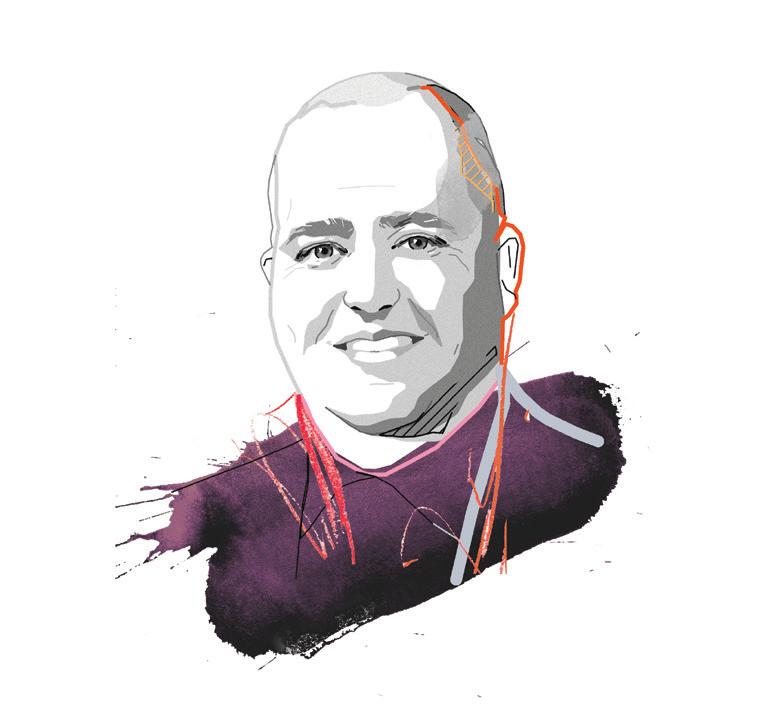
BY CHRIS PRICE
It’s hard to believe that it’s been just six years since New Orleans has had a professional baseball team.
In many ways, it seems like it’s been longer since the Baby Cakes left for Wichita, Kansas.
Baseball has had a presence in the Crescent City dating back to the end of the Civil War. The club that eventually became the New Orleans Pelicans started in 1865. The team turned pro in 1887 and was a fixture in Mid-City until 1957 when it moved to Little
Rock, Arkansas. The Pelicans returned in 1977, when they played in the cavernous Superdome for a lone season before leaving the city.
In 1993, Major League Baseball expanded by two teams and awarded Denver the Colorado Rockies, which forced their AAA (Triple-A) team, the Zephyrs, to blow into town.
The Zs originally played ball on the Lakefront at the University of New Orleans’ diamond before moving to Zephyr Field in Metairie, where they played through the 2019 season. Of course, those who remember the latter years of that franchise, with the horrific name change to the New Orleans Baby Cakes before the 2017 season, saw the handwriting on the wall that the team was slipping out of the region’s grasp.
At the end of the 2019 campaign, the Baby Cakes moved to Wichita, Kansas, where they continue as the Wichita Wind Surge. There was talk of trying to attract a Double-A Southern League team to the city, but with the COVID-19 outbreak and Major League Baseball (MLB)’s reorganization of Minor League Baseball (MiLB), the movement fizzled.
And so it has been for six years. Today, MLB is considering adding two expansion teams, but there is virtually no chance that the city will land one. Nashville, Tennessee.; Salt Lake City, Utah; and Portland, Oregon; are the frontrunners to join the big leagues.
Nashville is currently home to the Triple-A Sounds, Salt Lake City has the Triple-A Bees, and the High-A Hillsboro Hops play in Portland. Each city has plans to build a new multimillionto billion-dollar ballpark, should it be awarded a team. There are several other cities, many with MiLB teams, that are willing to cough up the dough needed to land a team, including:
• Austin, Texas (Round Rock Express, AAA)
• Buffalo, New York (Bisons, AAA)
• Charlotte, North Carolina (Knights, AAA)
• Orlando, Florida (no MiLB team)
• Raleigh, North Carolina (Durham Bulls, AAA)
• Sacramento, California (River Cats, AAA)
• Vancouver, British Columbia (Canadians, High-A)
However, there is hope that pro expansion could bring baseball back to NOLA by way of a new team being formed or an established team moving here. That’s because MLB restructured MiLB in the 2021 season, cutting the number of minor league teams by 120 (four per each of the 30 MLB franchises) across four full-season divisions of play: Single-A, High-A, AA (or Double-A) and AAA (or Triple-A).
In total, 43 teams lost their MLB affiliations and ceased play. In the process, the Wichita Wind Surge, formerly the Baby Cakes, dropped from Triple-A to Double-A status.
With the addition of two MLB teams, as many as eight teams could be added across the minor leagues, and two teams would be forced to find a new home. This is where New Orleans could get back into the game.
The first question is, is New Orleans an attractive place to locate a minor league team? And if so, will the city support one? With the NFL’s Saints and NBA’s Pelicans, a potential baseball ownership group may think supporting a AAA team’s 75 games, AA team’s 69 games, or High-A and Single-A’s squad’s 66 home games may be difficult. With NCAA baseball powerhouse LSU a major regional draw, as well as year-in, year-out contender Tulane, it may be tough.
The second question is, where would they play? A new Downtown facility would definitely help but would be costly. The Shrine on Airline might be better for drawing fans from the North Shore and River Parishes, but it will need upgrades. Does the state have the stomach to push for them?
If New Orleans does vie for a team, it seems a AA club in the Southern League or Texas League would be the best fit both regionally and economically.
The opportunity is coming. Will the Crescent City take a swing? T

ANDY KOPPLIN is president and CEO of the Greater New Orleans Foundation (GNOF), dedicated to driving positive impact through philanthropy, leadership and action in the Greater New Orleans Region. He may be reached via email at Andy@GNOF.org.
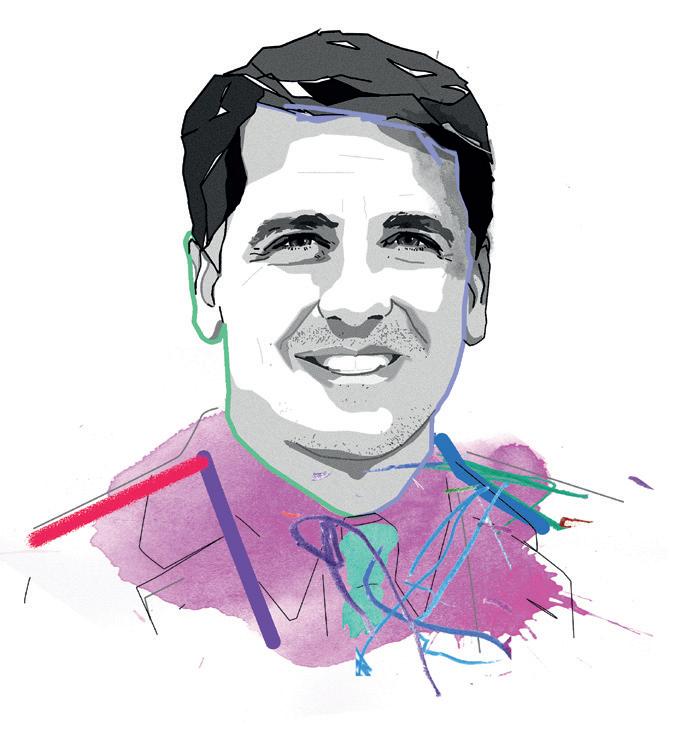
GiveNOLA Day returns on May 5 and area nonprofits need your support now more than ever
BY ANDY KOPPLIN
GiveNOLA Day, hosted annually by the Greater New Orleans Foundation, is more than just a 24-hour day of giving. It’s a civic tradition that unites friends, neighbors, nonprofits and local businesses to support the causes that embody the strength and vitality of our region. The event’s impact is felt across our 13 parishes because it:
• Has raised over $71.2 million for regional nonprofits since 2013
• Mobilizes thousands of residents to give generously, creating a shared sense of purpose. It’s a day where everyone gets to be a philanthropist!
• Elevates local nonprofits, many of which utilize this day for essential operating support
• Builds regional pride, reminding people that their contributions — large or small — shape the community they call home. When thousands of people in our region and beyond give at once, even the smallest donations resonate as a larger movement.
• Increases visibility of community needs, as so many of our nonprofits often work quietly behind the scenes. GiveNOLA Day creates an
opportunity for them to share their stories and reach new supporters.
• Creates a sense of belonging, giving our friends and neighbors the opportunity to see themselves as active contributors, creating a more just and equitable community for us all. The collective momentum is part of what makes GiveNOLA Day so powerful. When the entire region rallies together, even a $10 donation becomes part of a much larger story.
Many nonprofits are facing challenging times, often operating with limited resources, and GiveNOLA Day can provide an injection of financial support and visibility. GiveNOLA Day helps to provide:
• Critical funding that supports programs, staff, and emergency needs
• Donor engagement opportunities and new donor relationships, especially from those who may not have known about the nonprofit’s work or impact before
• Public awareness and visibility, which can be just as valuable as direct financial support
• Opportunities to learn and execute new outreach tactics, as the Greater New Orleans
Foundation offers virtual trainings and shares best practices to help organizations amplify their reach and the effectiveness of their fundraising efforts
For many organizations, the visibility gained during GiveNOLA Day lasts long after the event ends, making GiveNOLA Day more than just a moment of generosity, but a strategic investment in the long-term sustainability of our region.
The benefits extend beyond nonprofits. GiveNOLA Day helps energize our entire region:
• Many of our local businesses, big and small, leverage GiveNOLA Day as an opportunity to show their deep investment in our community through sponsorships and matching gifts, which strengthens their connection to our community. We extend our sincerest thanks to our host sponsor, Baptist Community Ministries, along with Entergy, Ochsner Health, and the dozens of organizations and individuals who give selflessly to make GiveNOLA Day a success
• Civic pride swells as our generous donors see the collective impact of their contributions
• Volunteerism and engagement increase, since donors often become more engaged after learning about new causes through GiveNOLA Day
These ripple effects help create a more resilient and connected community.
As GiveNOLA Day enters its 13th year, its importance and impact only deepens. It’s more than just a one-day fundraising event, it’s our community’s annual reminder of what we can accomplish when we all show up for one another. And at the Greater New Orleans Foundation, we are honored to keep playing our part. Together, on GiveNOLA Day 2026, let’s again show the world that Greater New Orleans is the most generous region in America! T



KEITH TWITCHELL spent 16 years running his own business before serving as president of the Committee for a Better New Orleans from 2004 through 2020. He has observed, supported and participated in entrepreneurial ventures at the street, neighborhood, nonprofit, micro- and macro-business levels.
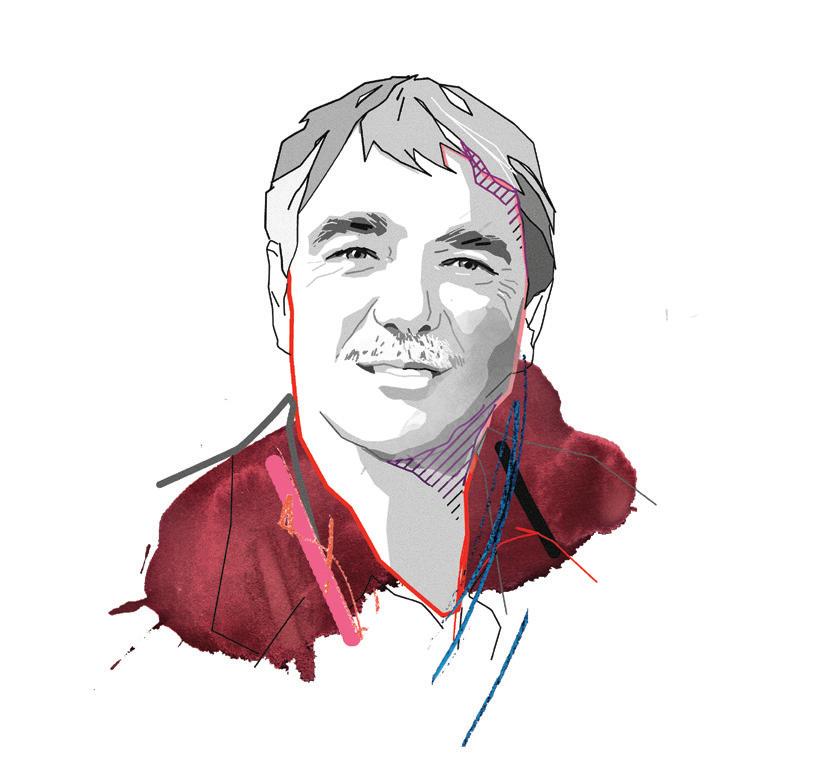
Requirements have changed for citizenship, collateral, insurance, credit scores and more, which can mean a bigger struggle to secure loans
BY KEITH TWITCHELL
The U.S. Small Business Administration (SBA) has long been a key source of funding for entrepreneurs, whether they are looking to launch an enterprise, expand, or navigate economic difficulties. It has also been a vital resource for homeowners rebuilding after various natural disasters.
For businesses, SBA loans — primarily made through the “7a” and “504” programs — are obtained through financial institutions, not directly from the agency itself. The loans are made and managed by local banks, backed by a guarantee from the SBA.
Recent changes have significantly altered the SBA’s approach to lending to businesses, including new restrictions and narrower eligibility requirements.
According to Nimi Natan, president and CEO of Gulf Coast Small Business Lending, a division of Gulf Coast Bank & Trust, one driver of this change was a surge of bad loans in 2023, 2024 and early 2025, when banks were encouraged by the SBA to make smaller/riskier loans in the name of “capital access.”
The most impactful changes can be found in new SBA regulations imposed last year. As explained on the U.S. Congress website, “SBA loans will be restricted to small businesses with 100% of direct and indirect owners, loan guarantors, and key employees (such as top-level managers) who are U.S. citizens, U.S. nationals, or lawful permanent residents (LPRs).”
This rule then was dialed back somewhat, allowing up to 5% of investors and/or key employees to be foreign nationals. Then, just recently, part of that change pertaining to ownership was rescinded. The new guidance is that “all direct and/or indirect owners of a small business applicant must be U.S. citizens or U.S. nationals who have their principal residence in the United States, its territories, or possessions.”
It is important for entrepreneurs considering seeking SBA-backed funds to be aware of this rule and to be sure that they are not in violation of it. The requirement is retroactive for six months, meaning that even if a business makes changes to come into compliance, there will be a half-year waiting period before a loan can be obtained.
Another key change relates to the personal assets of the individual(s) applying for SBA
funding. While there has long been a restriction on lending to those who could likely find funding elsewhere, the personal resources of applicants were not factored into the process. The new rules require a certain amount of means-testing during the application process, while continuing the mandate to supply documentation to support a claim of not being able to find other funding sources.
Additional new restrictions limit both the type of businesses that may seek SBA loans, and the eligibility of specific individuals to receive them. The threshold at which a borrower must provide loan collateral was vastly reduced, from $500,00 to $50,000, which may be challenging for some applicants.
Insurance requirements increased in the new rules, including increases in hazard and flood insurance. Minimum credit score standards also went up.
Another change is that local financial institutions that process most applications for the SBA must now undertake a considerably larger percentage of the verification and documentation necessary to move the loan process forward. Applicants themselves will be required to provide more information than was needed previously.
Natan sees these as changes as being for the better.
“The added requirements for both lenders and borrowers are improving the soundness of the program and saving many borrowers from taking on too much debt,” he said.
One small but important change with potential benefit to a certain subset of entrepreneurs is that applications from military veterans will be given a higher priority.
With most of the SBA rule changes in place for a year or less, the impacts cannot yet be truly assessed. In the meantime, entrepreneurs looking into SBA funding should be aware of the current changes, keep abreast of any future changes and consult at the beginning of the process with their financial institution.

14 MARKETING
What type of paid ad should I be using? How do I get the best ROI? Advice from a marketing professional.
Deutsch Kerrigan shares lessons learned over 100 years in business 21 GUEST
A first-of-its kind report highlights opportunities to strengthen the city’s future
Populations are shrinking, which means schools are under-enrolled and that hurts our students. 20 ECONOMIC
18 MARITIME + PORTS
Louisiana’s maritime industry has had some big recent wins
WENDY DOLAN is the founder of Get Online NOLA, a digital marketing agency dedicated to helping businesses and nonprofits take control of their online presence and grow their bottom line through strategic website development and data-driven marketing. She may be reached via email at Wendy@GetOnlineNOLA.com.
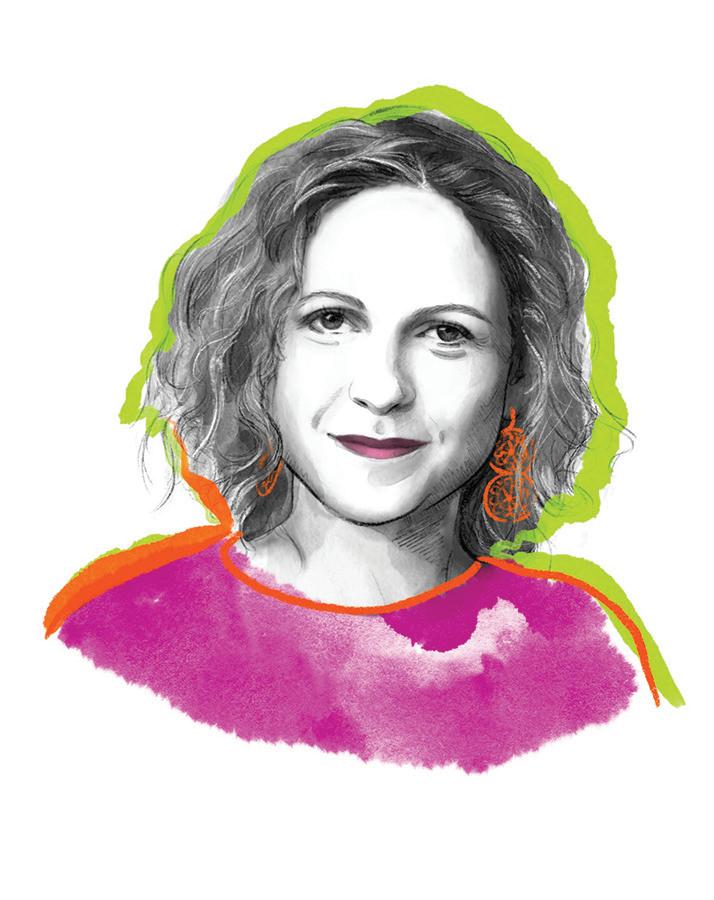
What type of paid ad should I be using? How do I get the best ROI? Advice from a marketing professional.
BY WENDY DOLAN
The average person spends more than six and a half hours on the internet every day, so winning attention online is a crucial part of any business strategy. When used correctly, paid ads are a reliable way to get discovered by individuals seeking your products and services because they reach users when they are actively searching.
Search engines are the No. 1 way that consumers find new brands, and being at the top of the page is the best way to ensure visibility. When a person starts researching a purchase, they might ask friends for recommendations or recall ads they’ve already seen, but they will almost certainly do a few online searches too.
Search ads can help users discover your brand early on, building trust with “what is” type questions. A well-designed landing page can engage users further through informative resources, email collection forms and other calls to action. When the buyer is ready to convert, ads can shift toward high-intent keywords that drive action.
More than 90% of clicks happen on the first page of search results, so brands that invest in a robust ad strategy will usually win the race for consumer attention.
B2C Companies: Direct-to-consumer marketing demands immediacy and visual impact. Use display ads to build brand awareness through thousands of display partners and generate high-click volume with attention-grabbing shopping at the top of search pages.
Service Based Businesses: B2B marketing requires trust building. Use search ads to answer user questions during the research stage of the buying cycle, building trust early on. Incentivize email signups through valueadded whitepapers, checklists and other downloads on your landing page and continue the relationship through email marketing.
Nonprofit Organizations: Take advantage of Google’s Ad Grant which offers up to $10,000 per month in search ads. This free grant is available to registered 501(c)(3) organizations (except hospitals and schools) and can have a huge impact on gaining supporters, but many nonprofits fail to utilize it fully. For best results, make sure ads are set up with appropriate keywords and conversions
to maximize their effectiveness. Google is particularly strict about quality when it comes to ads paid for with the grant.
• Start with goals that inform strategy. Every ad campaign should have specific targets beyond “we need more money.” Determine measurable goals from the start such as increasing qualified leads, growing your email list, driving ticket sales or expanding program awareness.
• Be specific about keywords and targeting. Successful organizations know they can’t be everything to everyone. Choose keywords that reflect your core offerings and express true intent. Segment audiences to reach people who are most likely to find value in your brand. The goal isn’t maximum impressions; it’s reaching the right people at the right time with the right message.
• Optimize user experience. Well-constructed ads are just the beginning. Once you’ve paid for a click, make sure the user finds value in your landing page. Answer their questions with clear copywriting and provide an easy path for conversions through frictionless design.
• Measure conversions and iterate. Increasing clicks feels great, but if you aren’t tracking results, you could be wasting money. Use the KPIs (key performance indicators) defined at the outset to refine strategy. Paid ads are not a “set it and forget it” tactic; they require ongoing optimization. At the same time, allow campaigns enough time to generate meaningful results before making major changes. For businesses and nonprofits alike, the question is not if people are searching, it’s whether your organization shows up when they do. When managed correctly, paid ads reach users at every stage of the sales funnel, and support awareness, sales and advocacy. Organizations that approach ads with clear objectives, disciplined keyword strategy, and measurable outcomes are better positioned to capture attention and achieve their goals. T


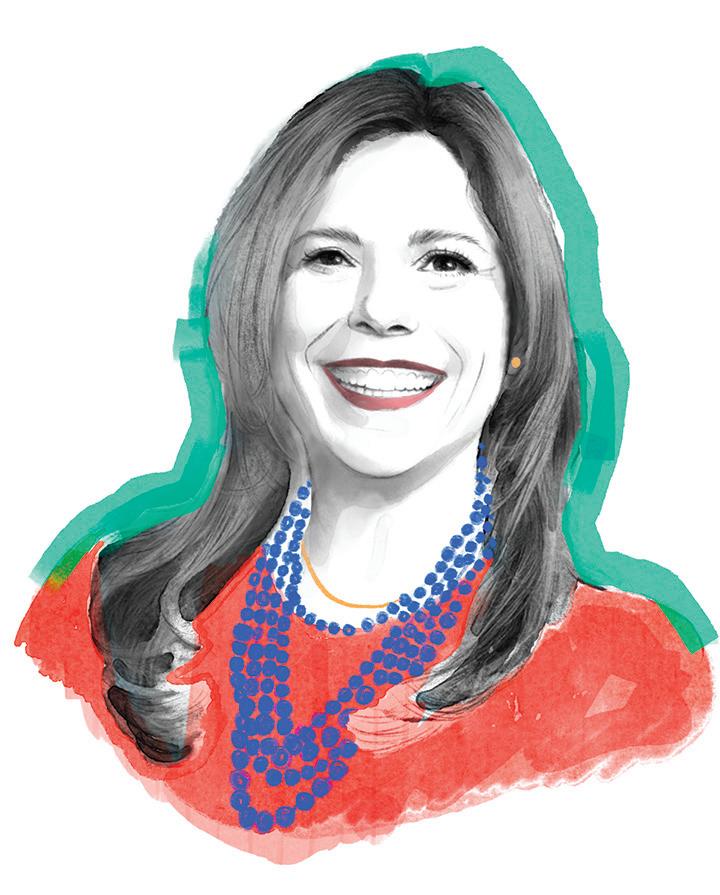
LAW KELLY THEARD is managing partner at Deutsch Kerrigan. She may be reached via email at ktheard@deutschkerrigan.com.
Deutsch Kerrigan shares lessons learned over 100 years in business
BY KELLY THEARD
This year marks 100 years since Deutsch Kerrigan opened its doors in New Orleans. Anniversaries invite reflection, and they also create an opportunity to look forward. A century in business does not happen by accident. It is a result of steady leadership, strong relationships and a willingness to evolve while staying grounded in core values.
When I think about what sustains any organization over time, relationships stand out.
LONG-TERM THINKING WITH EACH CLIENT
Experience has shown us that enduring relationships are the foundation for long-term business success. Clients stay with people they
know, people who understand their businesses and people who show up consistently. That kind of loyalty is earned slowly through performance, honesty and reliability. It takes a long time to build and can be lost quickly.
From its earliest days, the firm placed relationships at the center of our practice. Many client relationships span decades and, in some cases, generations. That continuity exists because the work has never been treated as transactional. The focus has always been on collaboration and long-term partnership.
Another lesson that applies broadly across the legal profession is that adaptability matters.
We have not resisted change; we have worked with it. Adaptability is not simply about being tough. It is about being willing to pivot. Over the past century, like the city we call home, our firm has navigated economic downturns, natural disasters, technology shifts and major changes in industries we serve. One of our biggest lessons has been that resilience is not just about bouncing back. It is about coming back better based on what we learned.
Tradition has value, but tradition alone does not ensure relevance. We try to take the experience and judgment built over decades and apply it in ways that reflect today’s realities. That mindset has allowed the firm to grow alongside the region’s evolving economy and the needs of our clients.
Culture has long been one of Deutsch Kerrigan’s most valuable assets. It influences which colleagues the firm attracts and retains, how teams collaborate and how clients experience our work. That culture is shaped by people who return each day with professionalism, energy and a shared sense of purpose. Even after a century of service, the firm feels forwardlooking and engaged — grounded in its values, confident in its people and unafraid to evolve as the legal profession and the communities it serves continue to change.
One of the most important cultural choices the firm has made over time is consistently
investing in the next generation of leadership.
Long before I became managing partner, the firm established a clear path to partnership and a philosophy that potential matters. Attorneys who demonstrate skill, work ethic, judgment and leadership are given opportunities. They are encouraged to take ownership.
I started as a law clerk with Deutsch Kerrigan. I became an equity partner at 35, started serving on management at 37, and made managing partner at 41. That did not happen by accident. It happened because leaders before me believed that giving younger attorneys a seat at the table strengthens the organization, doesn’t threaten it. When people feel valued, they invest themselves in the enterprise. They think differently. They care deeply about outcomes. They see their future intertwined with the firm’s future. I did then, and I still do.
That philosophy continues today. We make partners when we see potential, not simply when a calendar says it is time. We create opportunities for attorneys to grow their practice and step into leadership roles. We view succession planning as an ongoing process, not a one-time event. And we put our clients first with every decision that we make.
Age has not slowed Deutsch Kerrigan down. Rather, it has given us a platform to grow in a smarter, more intentional way.
We benefit from the perspective that only time can provide. Today, our leadership is not defined by one individual or moment — it’s driven by the collective strength of our team. Attorneys and professionals bring together deep institutional knowledge with fresh ideas and modern approaches. This balance of experience and forward momentum creates a dynamic that feels energized, collaborative and unmistakably focused on the future.
Relationships matter. Culture matters. Adaptability matters. Investing in people matters.
Those principles are not unique to any one firm. But they are essential for any organization that hopes to build something lasting. This is how we reached 100 years, and it’s with that same drive, excitement and readiness that we step confidently into the next.T

MARITIME+PORTS
JEREMY MARSHALL was born and raised in Baton Rouge before moving to New Orleans with his wife, Kristin, in 2018. Beginning his career in the Film/TV industry, Jeremy worked steadily on over a dozen projects before transitioning to Renaissance Publishing as their Sponsored Content Coordinator. You can reach him at jeremy@myneworleans.com.
Louisiana’s maritime industry has had some big recent wins
BY JEREMY MARSHALL
Last August, Nunez Community College in St. Bernard Parish was one of only six colleges from across Louisiana, Mississippi and Alabama chosen by the Society of Manufacturing Engineers (SME), to begin offering a Certificate of Technical Studies in Maritime Operations, with concentrations available in equipment and transportation operations, maintenance and utilities, and safety and logistics.

Additional concentrations will be added in response to industry needs, which are already forecasting as many as 75,000 new shipbuilding and naval defense jobs by 2028.
“Nunez Community College stood out to us for its strong commitment to serving both students and industry, particularly a community that has demonstrated remarkable resilience over time,” said Cara Pattison, SME maritime manufacturing workforce pipeline Gulf Coast program manager.
Nunez has been offering both academic and vocational classes since 1992, with an ever-expanding curriculum that partners with emerging industries in the region, including nearby NASA, designed to set students on a path to success in a constantly evolving job market.
“Given the burgeoning labor demands to support and escalate the maritime industry for our state, being a partner in this multi-state, federal program initiative allows us to bring visibility to both the demand and the opportunities that our institution can address and help close the gap through training,” said Nunez Community College Chancellor Tina M. Tinney, Ed.D.
Nunez is committed to bridging the gap between industry and education. On January 14, the college and SME hosted the Gulf Coast kickoff meeting for the new program at Nunez’s Student Testing and Career Counseling Center with a goal of connecting stakeholders from K-12 education, higher education, employers, industry organizations, and community partners to begin formulating a plan for the region.
In addition to the Nunez and SME teams, the meeting drew representatives from Venture Global, LED FastStart, GNO, Inc., Boeing, Vivace, LSU at New Orleans, the Crescent River Port Pilots Association, Port NOLA, St. Bernard Parish Government, and the Office of Juvenile Justice (OJJ).
K-12 partners in attendance included St. Bernard Parish Schools, New Orleans Public Schools, Jefferson Parish Schools, Plaquemines Parish Schools, St. Tammany Parish Schools and KIPP.
Through brainstorming and problem-solving activities, industry leaders and educational leaders discussed how they could help meet each other’s needs.
“Filling the maritime manufacturing workforce starts with the right people in the room,” said Cara Pattison, program manager for SME of the meetup. “By bridging these conversations, they helped lay the groundwork for a maritime manufacturing workforce pipeline shaped by employers, aligned with local education part-
This region has long been a hub for shipbuilding, repair, energy and maritime manufacturing. The demand for skilled workers is already here — industry can’t afford to wait.
Dr. Deb Volzer,SME VP of Workforce Development
ners, and rooted in community connection. That kind of connection is what turns partnerships into progress.”
The new programs soon to be available to Nunez Community College students promise to offer applications for vessels of both private industry and military usage.
“A strong maritime workforce supports both commercial industry and military readiness,” noted Dr. Deb Volzer, SME vice president of
workforce development. “The skills required— welding, machining, advanced manufacturing, electronics, and systems maintenance—are often the same, whether someone is working in a private shipyard or supporting defense-related operations. That shared demand is what’s driving the industry-wide push to build talent pipelines now, rather than reacting later when shortages become critical.
“This region has long been a hub for shipbuilding, repair, energy and maritime manufacturing,” said Volzer. “The demand for skilled workers is already here — industry can’t afford to wait. What’s driving growth on the Gulf Coast is a shared understanding among industry, education partners, and local communities that investing in talent and training now is essential to sustaining the region’s economic strength and maritime legacy.”
Saronic Technologies, an Austin-based firm specializing in autonomous seagoing vessels for the U.S. Department of Defense, Navy, Coast Guard, and allied nations, announced in December that it is investing $300 million toward the expansion of the Franklin Shipyard in Franklin, Louisiana, which is rapidly enriching its capacity to produce unmanned surface vessels.
The construction in Franklin of three new slips, a larger warehouse, and a modernized production line for large-vessel assembly will “create 1,500 new jobs with an average annual salary of $87,936 at full employment, which is 46% above the average St. Mary Parish wage,” according to Louisiana Economic Development (LED).
Saronic Technologies — which also purchased the Louisiana shipbuilder Gulf Craft and their 100 acres of facilities in 2025 — was recently awarded a $329 million Navy contract to build a fleet of its Corsair autonomous surface vessels, which are capable of performing “missions ranging from maritime domain awareness to kinetic and non-kinetic strike roles.”
In January, the company announced that it had formed a strategic partnership with Hornbeck Offshore Services to advance the use of autonomous vessels in offshore energy operations.
“Our autonomous maritime capabilities can increase the safety, efficiency, and effectiveness of offshore operations,” explained Dino Mavrookas, co-founder and CEO of Saronic. “Through our partnership with Hornbeck, we will work to responsibly deploy autonomous maritime systems to improve offshore service delivery – advancing energy security, and, in turn, economic and national security.” T
A first-of-its kind report highlights opportunities to
BY LIZ SHEPHARD
The United States spends more on healthcare than any other high-income nation, yet life expectancy is declining. Americans spend roughly $3.5 trillion annually on healthcare, and an estimated 85% of that spending goes toward chronic illnesses that are largely preventable. At the same time, the United States ranks just 27th among high-income nations for economic mobility, with opportunities for upward mobility stagnating since 1980.
What happened to the “land of opportunity”?
Something isn’t working.
On a state level, the picture is even more challenging. Louisiana ranks last among U.S. states for health outcomes, with these burdens falling disproportionately on Black and Brown communities. New Orleans consistently ranks among the lowest U.S. cities for upward economic
LIZ SHEPHARD is the founder and CEO of LifeCity. Since 2011, LifeCity has helped businesses track, report and market their positive community impact. She may be reached via email at Liz@MyLifeCity.com.
mobility, and income inequality remains stark. In 2024, the highest earners in New Orleans made nearly eight times more than the lowest earners — one of the widest income gaps in the nation.
For decades, statewide economic development strategies have focused on attracting companies, creating jobs and offering tax incentives. Yet many companies today struggle to find workers, residents continue to leave the state, and shrinking tax revenues limit our ability to invest in the infrastructure and services that support long-term prosperity.
So, what comes next?
LifeCity, in collaboration with the Regional Sustainability Committee — representing more than 25 local civic organizations — recently released the first biennial Love Your City New Orleans State of Sustainability Report. The report offers a community-driven assessment of our city’s progress and highlights key opportunities to strengthen New Orleans’ long-term resilience.
While New Orleans faces profound challenges — from coastal land loss to rising costs of living — it is also a city defined by extraordinary social capital. The civic pride, grassroots leadership and cross-sector collaboration that define this community are powerful assets. The report builds on that strength by offering a systemic look at the conditions shaping our city’s future.
Three core findings emerged. First, equitable access must be at the center of sustainability.
It is impossible to build a truly sustainable community if large portions of the population cannot access essential resources. Healthcare, housing and energy costs place heavy burdens on many New Orleans households, limiting economic mobility and participation in sustainable solutions, from recycling to housing and clean energy.
Second, investing in children and nature secures long-term prosperity. Upstream investments in early childhood education, strong public schools and environmental resilience produce long-term economic benefits. Research shows that regions with stronger schools, lower income inequality and less segregation experience higher economic mobility and lower crime

rates. Strengthening our education systems not only supports families, it helps attract businesses, build a stronger workforce and reduce long-term healthcare costs. We must address the elephant in the room: White students have better access to high quality schools than Black students, and this is a problem for all of us.
Third, stronger collaboration and trust will accelerate progress.
New Orleans has extraordinary civic energy, but too often our efforts occur in silos. Greater transparency, collaboration and partnership among government, business and community organizations can help align resources and scale solutions that benefit the entire city, not just special interest groups.
Most importantly, many of the steps needed to move forward do not require massive new spending. They require alignment, cooperation and courageous leadership.
At a time when New Orleans faces one of the most significant municipal budget deficits in recent memory, our greatest asset remains the connective tissue of this community: the networks of residents, organizations, businesses and institutions committed to building a better future — and the trust between them that can unite us all.
This moment calls for leadership that recognizes a simple truth: When we invest early — in our children, our communities, and the natural systems that protect us — we reduce long-term costs and strengthen our collective resilience. We can be more than resilient — we can plan for the future.
Ensuring every child has access to a strong education, every neighborhood has access to clean energy and green space, and every resident has the opportunity to thrive is not only a moral imperative. It is also a sound economic strategy.
As we mark Earth Day this April, the State of Sustainability Report invites all of us — business leaders, policymakers, and residents alike — to imagine new partnerships, new solutions, and new pathways toward a more resilient New Orleans.
Our future depends on it.T
LESLIE JACOBS is the founder of Educate Now! a nonprofit organization focused on education reform. Jacobs is consed She may be reached via email at Leslie.EducateNow@gmail.com.
Under-enrolled schools are bad for our students
BY LESLIE JACOBS
Because New Orleans births declined by 25% between 2014 and 2024, our classrooms have experinced a direct loss of students.
Between 2019 and 2025, the number of K-8 students enrolled in Orleans Parish public schools dropped from 34,007 to 29,793 — a reduction of more than 4,200 children.
As a result, districts across the country are being forced to merge or close campuses due to shrinking student populations:
• Jefferson Parish: Consolidated several schools in 2024, including Grace King and Helen Cox high schools.
• Baton Rouge: Currently enacting a plan to close 9 schools
• Austin: Will close 10 schools in 2026
• San Antonio: Shuttered 15 schools in 2024
• Jackson: Has closed or consolidated 13 schools since 2024
• Denver: Closed 7 schools in 2024 and restructured 3 in 2025
New Orleans must do the same...and soon.
THE FINANCIAL REALITY OF “EMPTY SEATS”
Our K-8 schools are currently grappling with 2,000 to 3,000 empty seats. When a school is under-enrolled, it creates a structural deficit. The Leah Chase School’s recent deficit was driven not by any financial mismanagement or over-spending, but under-enrollment.
To see how under-enrollment impacts school finances let’s use a simplified example, in which we assume open-enrollment K-8 schools average around $15,000 per student, including state, local and federal funds. Suppose there are seven schools that would be fully enrolled at 700 students but are all under-enrolled by 100 students. Each of these schools has 600 students and receives $9 million in funding.
If one of these schools were to close and each of the remaining six enrolled 100 more students, they would each receive $1.5 million in additional funding. However, the cost of adding these additional 100 students would be significantly less than $1.5 million because:
• There is no cost to fill empty seats in classrooms that already have a teacher;
• The administrative staff is already in place;
• The building occupancy costs (insurance, utilities, maintenance, grounds, custodial) remain the same; and
• The increase in cost is mostly focused on adding teachers and paraprofessionals to serve more special education students and some increased transportation costs — the total cost would likely be no more than $500,000.
The bottom line: Fully enrolled, these six schools would each have about $1 million — or $400 per student — in additional funding to spend. This money would allow the school to provide the supports and opportunities our students deserve — things like more extracurricular and specialized course options, staff to support mental health needs, and much-needed teacher pay-raises to allow our best teachers to stay in the classroom longer.

For the past few years, pandemic-era federal funding and rising local revenues masked the financial pressure of declining enrollment. Those buffers are gone. This year, many schools have been forced to cut staff and spend money from their reserves to maintain sufficient supports for their students. This is not sustainable, and the outlook for 2026 is even more challenging.
Revenues will plateau or decline while expenses continue to rise:
• State funding: It is unlikely the state will be a source of new money. It has not increased the base per-pupil amount of $4,055 since 2019. (Adjusted for inflation, it should be $5,227 today.)
• Local sales tax: The city expects a 2.5–3% reduction in sales tax revenue compared to 2025, a total decline of 6.8% since 2024. (See below.)
• Property tax: The recent fire sale of some landmark hotels suggest future assessments may be lower.
Without a plan to consolidate three to four schools soon — and likely three to four more over the next five years — our schools will be forced to cut “to the bone.” This means losing social workers, art, music and academic supports. Academic achievement and student well-being will suffer.
How do we support the NOLA-PS in confecting a plan? Inaction will force too many of our schools to sink from the weight of empty seats. No one wants to see a neighborhood school close its doors, but there is not a silver bullet that makes this problem go away. Fewer students equal fewer schools. And as fewer babies are born, the problem will only get worse. The superintendent and the school board need to spearhead a process where various opinions are heard and options weighed and then adopt a set of criteria to guide their decisions on consolidation. Now is the time to begin this incredibly difficult task so we can continue to have thriving schools and thriving classrooms. T

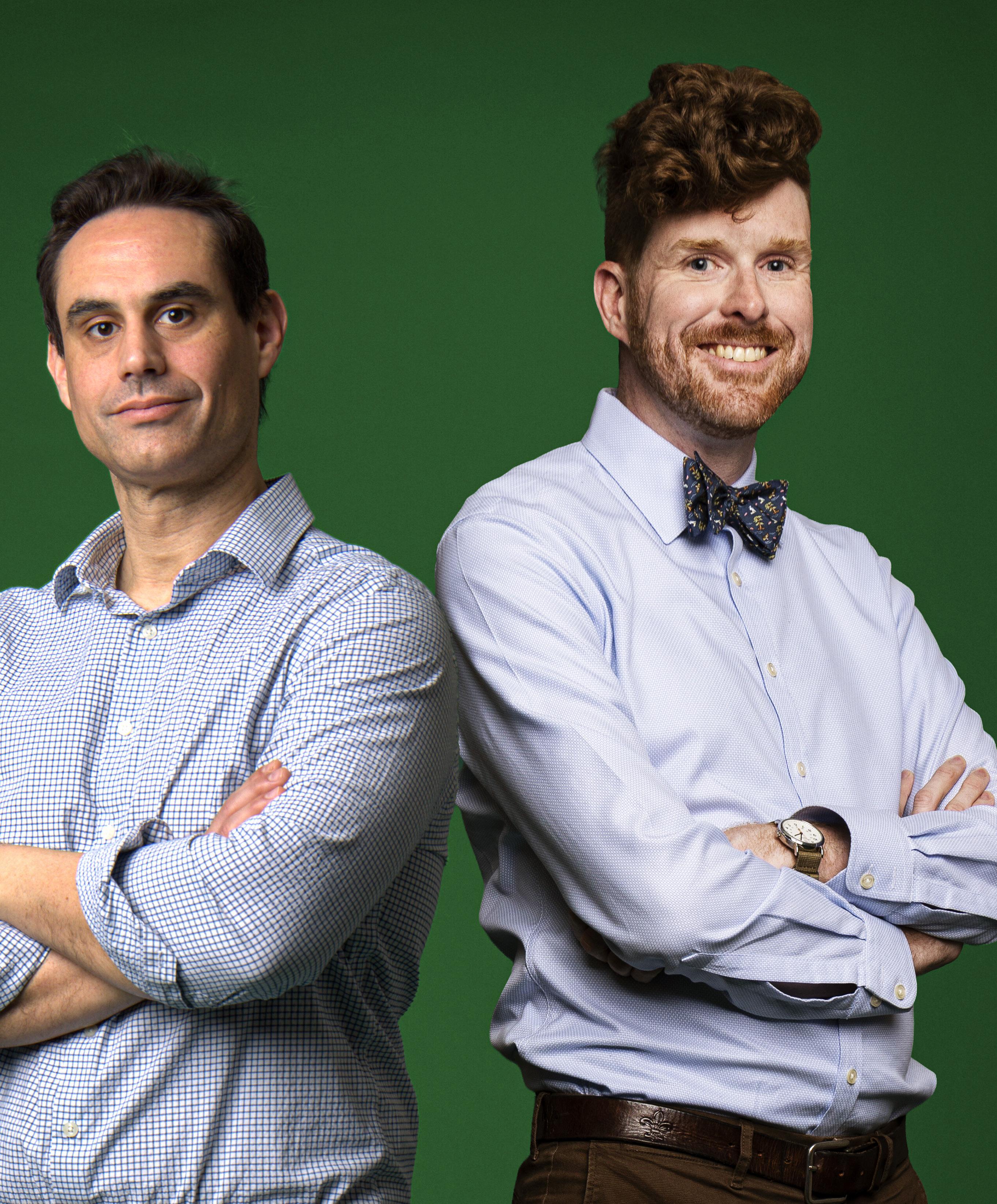
New Orleans schools suffer from a lack of leadership development. A new nonprofit called Lift All Boats is determined to fix that, and the King of Carnival is betting big on their success.
NEW ORLEANS HAS SPENT TWO DECADES LIVING INSIDE ONE OF THE COUNTRY’S MOST WATCHED EXPERIMENTS: A POST-KATRINA ECOSYSTEM BUILT LARGELY ON CHARTER SCHOOLS AND A CONSTANT UNDERTOW OF URGENCY.

The system moves fast because it must. And because it moves fast, it asks a lot of the people inside it. That’s the part an organization founded in called Lift All Boats aims to make less precarious.
The young nonprofit (known by the shorthand “LAB”) focuses on a deceptively unflashy constraint: leadership capacity.
In January, Lift All Boats became one of the most visible signs of local confidence in that mission when it caught the attention of the Pro Bono Publico Foundation, the charitable arm of the Rex Organization. Created after Hurricane Katrina, the foundation has distributed more than $16 million to area nonprofits focused on improving schools and education since 2006.
Pro Bono Publico is distributing more than $1.3 million in grants for 2025-26 to 77 local organizations, with longer term funding promised in three strategic grants aimed at addressing “more pressing challenges and high-leverage opportunities.” One went to Manning Family Children’s Hospital’s ThriveKids program, which received $50,000 as part of a two-year, $125,000 grant; another went to New Schools for New Orleans, which received $100,000 as part of a three-year, $300,000 grant.
The third strategic grant, and the largest, was awarded to nonprofit newcomer Lift All Boats, which received $100,000 this year as the first installment of a three-year, $400,000 strategic grant.
The idea, put simply, is that creating better leaders will lead to better schools.
“Sustainable improvement in education starts with strong institutions and strong leaders,” noted J.P. Hymel, board member of the Pro Bono Publico Foundation. “The Pro Bono Publico Foundation is
proud to support Lift All Boats as it builds permanent, internal leadership pipelines that will continue developing educators long after the program ends. This investment reflects our commitment to measurable results and to strengthening the long-term future of New Orleans schools.”
While the organization may be new, its two leaders have spent years working in the region’s educational system.
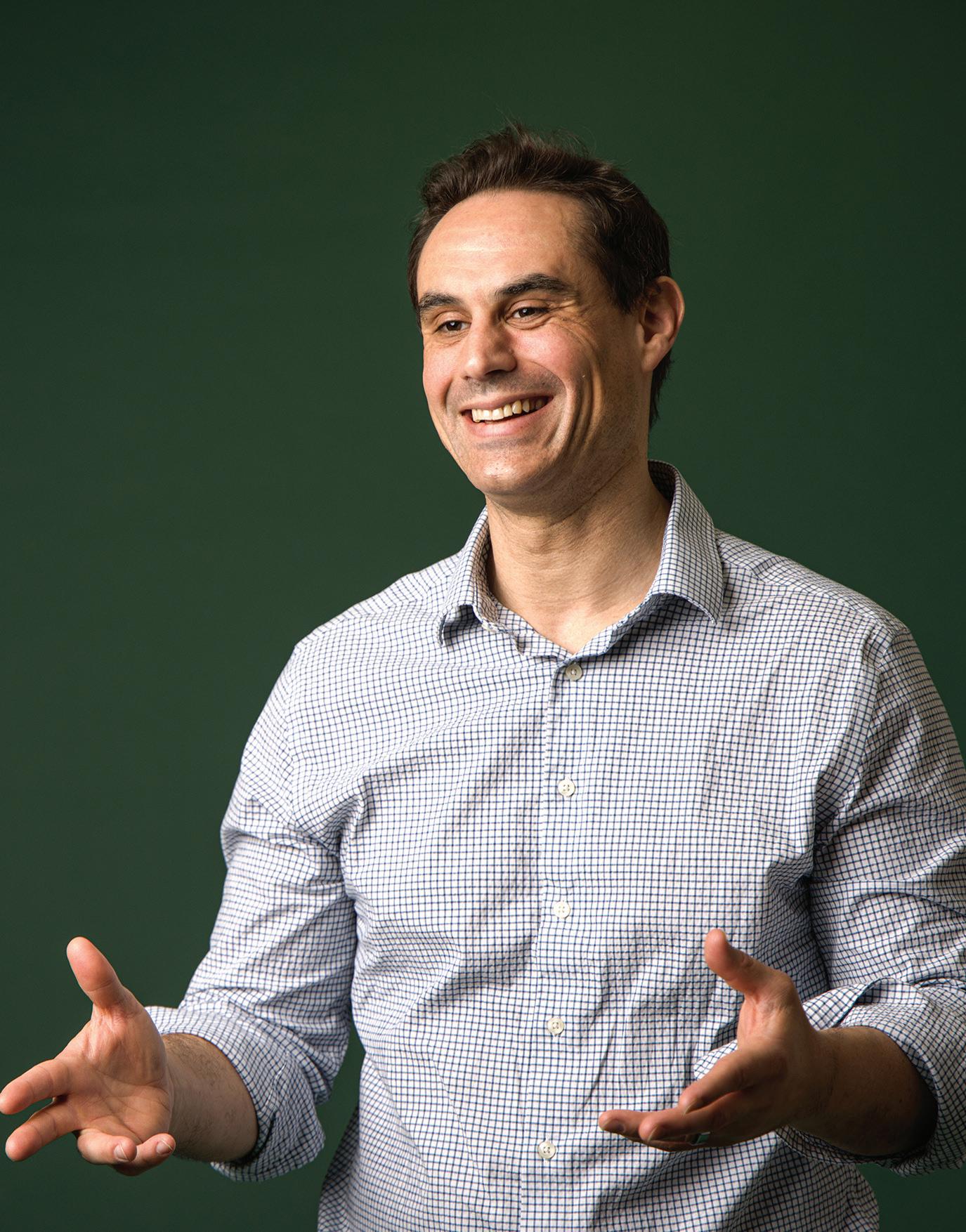
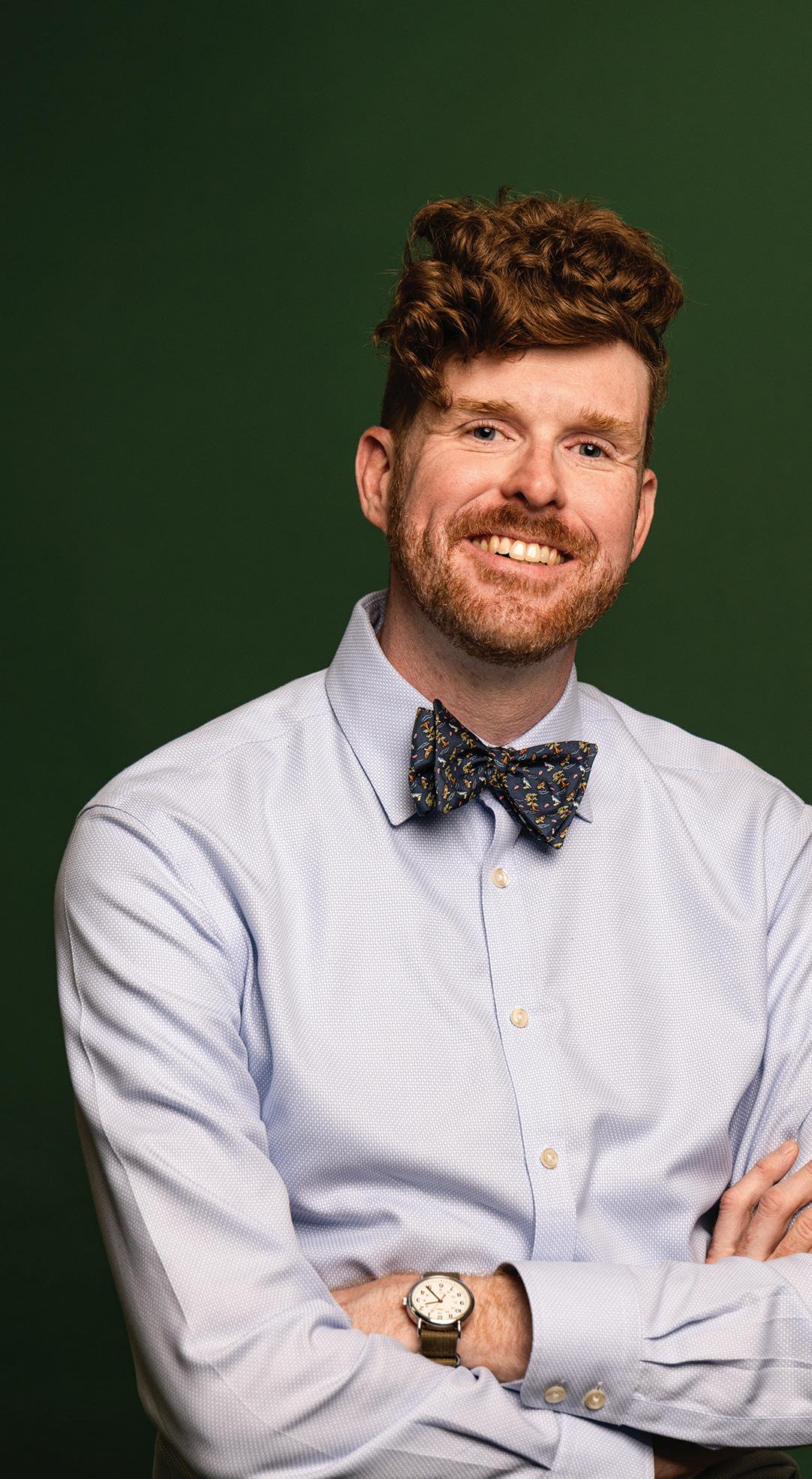
Benjamin Marcovitz, the organization’s executive director, previously founded Collegiate Academies, a network of public high schools in New Orleans and Baton Rouge, and has spent years coaching leaders across education and nonprofit sectors.
Aidan Kelly, Lift All Boats’ program director, served as Collegiate Academies’ chief academic officer and led post-pandemic reopening efforts while overseeing academic growth across multiple campuses.
Both are passionate about tackling the leadership gap that exists in New Orleans’ educational system but acknowledge that finding support to fill that gap can be challenging. Establishing a strong leadership pipeline doesn’t make headlines the way a new building or a new program might. Yet in its absence, no organization can reach its potential.
WHAT DID IT MEAN TO YOU (PERSONALLY AND PROFESSIONALLY) TO BE SELECTED FOR SUPPORT BY PRO BONO PUBLICO?
AIDAN KELLY: It’s really exciting that Pro Bono took a chance on us as a new organization and believed in the vision. But it’s also a validation of the work we’ve been doing for years in New Orleans. Ben founded Collegiate Academies in 2008, I joined in 2010, and we did this kind of work there, develop -
ing leaders. With Lift All Boats, we’ve been able to do that same thing for others.
BENJAMIN MARCOVITZ: I’ve had this tension in my professional life for a while. I started in public education in New Orleans, and I’ve watched how the business sector thinks about talent and succession. In a lot of organizations serving kids, leadership development is not treated like essential infrastructure — it’s treated like a luxury.
When I got the announcement, I felt particularly fulfilled because I’m often waiting for people in the business sector to recognize how important this is for the education sector. I’m not always clear that there is that understanding. So, it was enormously validating to see business leaders recognize that education infrastructure should be strengthened in this way.
BM: I used [our leadership content resources] a lot at Collegiate Academies, and other networks would ask for the curriculum. I’d tell them, ‘If you teach leadership skills you’re not going to model on Monday morning, it could actually be worse for you.’
The response was then, “I’d like you to teach it to us.” That’s what started Lift All Boats.
Aidan and I grew ourselves with this content, and the conversations we can have about improving it and adapting it are deeper and more nuanced than I’d have with someone else. What I suspected has come to pass: Aidan makes it better than I could have imagined, and now I’m learning from him. It’s also been a lot more fun to do it with him.
AK: Ben has been a mentor and leader for me for 17 years. This is the most effective thing I’ve ever been able to share with
people. It helps everyone in different ways depending on what they’re facing. Getting to provide it and share what worked for us and for kids here in New Orleans is the absolute best.
SYSTEMS: WHAT IS THE “LEADERSHIP TRAINING GAP” YOU ARE TRYING TO FILL?
BM: A lot of school improvement is a leadership capacity problem. New products and technologies can help students, but only with strong leaders driving implementation. Every school wishes it had a bench of great leaders, and so many don’t. There’s also a tendency for organizations serving kids directly to focus on immediate needs, which makes sense. But if you don’t build internal pipelines, you end up in a cycle where leadership turnover resets the work. We don’t think we can be the infrastructure for everybody, but we believe everybody deserves to think about leadership with the ambition and foresight that a Fortune 500 business would bring to talent development. We help organizations develop those internal pipelines.
AK: And in day-to-day reality, what that means is: generating student results requires lots of skilled leaders. It takes people who can set goals, organize adults, monitor what’s working, respond to problems and still keep kids at the center.
AK: The typical school leader in New Orleans has likely had development from a number of places — a master’s degree, a certificate program, an apprenticeship. And there’s a strong informal mentorship system
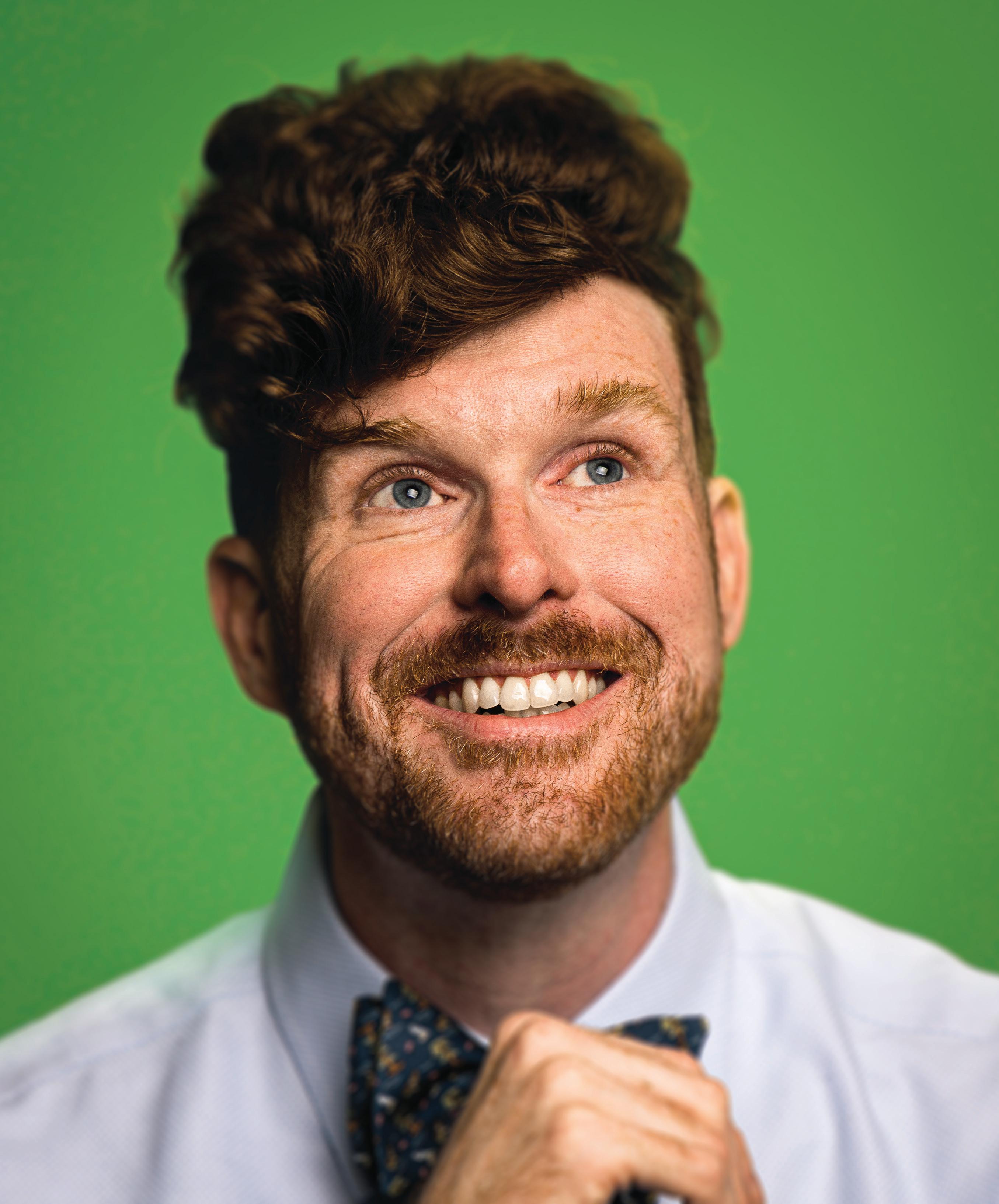
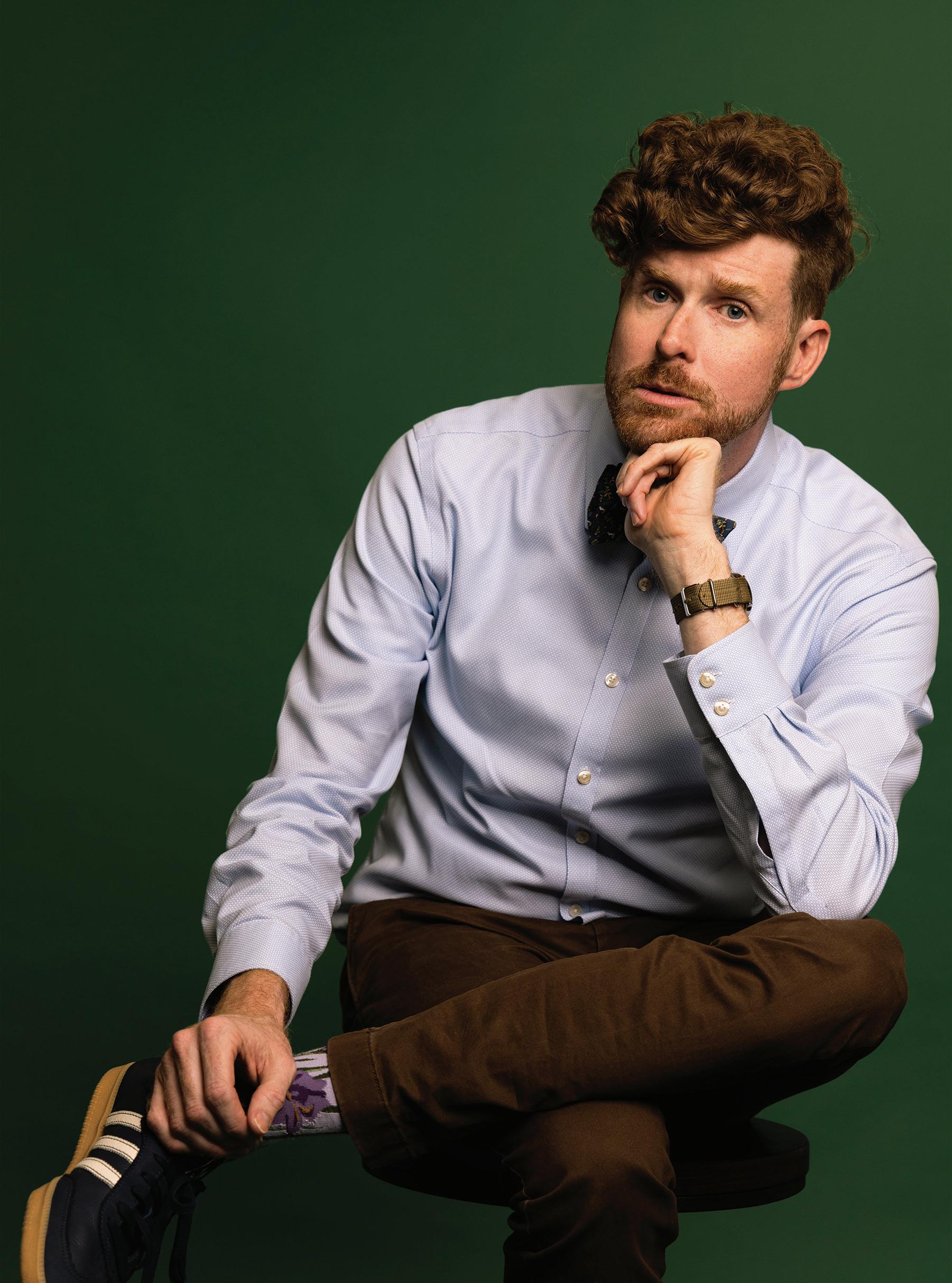
LAB's 18-month program is designed to develop 15-25 leaders at a time and then support those leaders as they teach six to 10 more leaders at their school. LAB also helps schools develop their own self-sustaining internal leadership programs. The goal is to have maximum impact while ensuring schools are set up for success.
here: Many school leaders who persist in the role have someone, within their network or outside it who helps them along. Where it splits is the leaders under the school leader: assistant principals, directors of curriculum and instruction, deans. They’re often new to the role and selected because they were excellent classroom instructors. So, you remove
your best teacher and put them in a leadership position without training for that job.
There aren’t really programs that teach you how to be the dean of students at a school.
A school of, say, 700 students has five or six essential midlevel leaders whose work does not overlap. Each role requires technical skills and people skills every single day or the school just doesn’t work.
Lift All Boats trains that level, and we also help schools build resiliency by developing multiple people around each role, so if someone leaves, a school is not left to start from scratch.
THE PANDEMIC WAS A TOUGH TIME FOR SCHOOLS. WHAT DID THAT PERIOD TEACH YOU ABOUT LEADERSHIP?
AK: During the pandemic, schools were maxed out. The ones that were most successful at maintaining student achievement were those that had lots of leaders, not only the principal. They had people throughout the school who could do what leaders do: set goals, organize the efforts of adults, monitor data, and make sure students are seen and loved and have their needs met so they can flourish.
I was chief academic officer of a network of high schools then, and it was tremendously hard. I felt all the time like I was failing. I would talk to people in similar roles, and we’d compare notes — open roles, staff shortages, disruptions — and you’d realize some places had even fewer people with the capacity to lead through chaos.
The investment we had made in leaders didn’t make that time easy, but it meant we had more adults who could keep our focus on kids even as everything was happening. I want that for every school leader, in New Orleans and beyond.
BM: There’s no replacing human connection, and leadership is the infrastructure that protects that connection when circumstances change.
CHARTER ECOSYSTEM. HOW DOES THIS ELEMENT SHAPE WHAT LAB AIMS TO ACCOMPLISH?
BM: Post-Katrina, the landscape became essentially an all-charter ecosystem, and it created an incentive to collaborate more. When I was a leader in that sector, we would call each other up for anything we needed. We’d form a team collectively against bureaucracies that had failed the system before, and as a result, we were able to remove a lot of challenges for students and families.
In other cities with robust charter sectors, it can be the opposite: Leaders worry about approaching each other’s people; they don’t enter into conversation. That’s not what I’ve experienced here.
For our work, that collaborative vortex matters because leadership pipeline work depends on trust, the ability to talk openly about talent, development and long-term health. Without that, it falls flat. And even then, a major barrier is cost. Pro Bono is helping with that.
ON LAB’S WEBSITE, IT NOTES THAT PARTICIPATING PRINCIPALS AND CEOS HAVE USED LAB SKILLS TO IMPROVE HIRING. WHAT DOES THAT LOOK LIKE ON THE GROUND?
AK: We think hiring and selection, not only hiring from outside, but selecting internally, is so important. One example we talked about is making the hiring process more real and more aligned to what the job actually is.
If a school’s culture involves kids being outside, playing in
nature, learning in a hands-on way, then the hiring process should include that, not just sit-down questions. It gives you more data on whether candidates interact with kids the way you want. And it tells the candidate, concretely: ‘If you work here, it’s like this every day. If you love that, great. If you don’t want to be wet or dirty, then it’s not the school for you.’
We’ve found that partners see that when people join the team they’re better prepared because they know what they’re heading into.
A LOT OF NONPROFITS TALK ABOUT “SCALING.” YOU BOTH TALK ABOUT SOMETHING SLIGHTLY DIFFERENT: BUILDING SYSTEMS THAT REDUCE DEPENDENCY ON YOU. WHY IS THAT IMPORTANT?
AK: We say all the time: When you leave Lift All Boats, we hope we hear from you. We’d love to be helpful, but we don’t want you to need us anymore. We’re not hoping to be contracted year after year for the core product. That would be a sign we failed.
When leaders design their internal programs, and we help them launch, once those programs are running, they should work. Then you build your own leaders. And you make it authentic to your staff, your students, your families, your community in a way that lasts.
BM: That’s the hope, a multiplier that becomes self-sustaining.
IF THIS REX-BACKED GRANT DELIVERS EVERYTHING YOU WANT IT TO, WHAT DOES NEW ORLEANS LOOK LIKE FIVE YEARS FROM NOW?
AK: We want every school in New Orleans to have the same leadership depth, so there are a lot of people preparing to do the work. That means every day, leaders walk into the building with a sense of
peace because they know they have people who can help them handle challenges, both expected and unexpected.
And when they look into the future, they have peace because they can say, in five years, in 10 years, I don’t know exactly who will be in these roles, but I know they’ll be amazing because we’ve built the bench.
We also want to keep scaling. We’re already working in New Orleans and Baton Rouge, Washington state, Washington, D.C., and Milwaukee, and we want to bring this to a bunch of other places, especially places without the resources that some major markets have.
BM: And I think specifically we want it to be offered at the same level across different school types, not just charters. There’s no reason it couldn’t be for traditional public schools, private schools, all of it. Introductory costs are often the barrier, and organizations like Pro Bono can nudge schools past that so they can build something sustainable long-term.
DO YOU HAVE YOUR SIGHTS SET ON ANY SPECIFIC REGION NEXT?
BM: We’d like it to be across the country, honestly, and maybe not limited there. Our approach has been “coalition of the willing” first: whoever is eager to work with us. That’s why the list of places is kind of ragtag and all over the place; those are the folks most excited to jump in. We know no bounds otherwise, and we’d love for anyone interested to reach out.
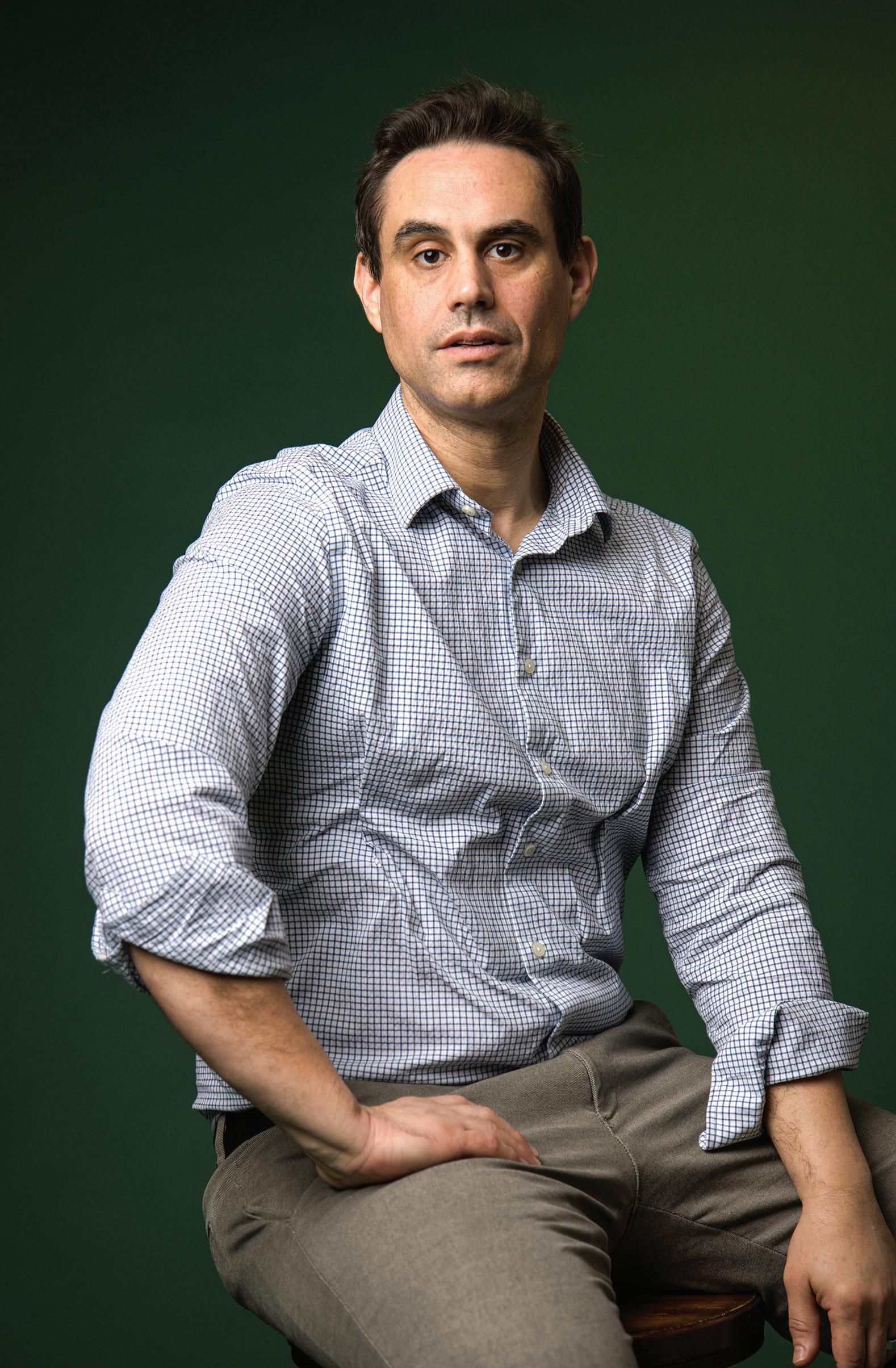

NEW ORLEANS HAS LONG BEEN CELEBRATED AS ONE OF THE FRENCHEST CITIES IN AMERICA. THIS NATIVE NEW ORLEANIAN AND FRENCH TRANSPLANT ARE TAKING ACTION TO MAKE SURE IT STAYS THAT WAY.
BY KIM SINGLETARY
JEFFERY JOHNSTON
BY



NNEW ORLEANS is often referred to as the most French city in America. But the city’s magic, its international draw — its je ne sais quoi, if you will — goes deeper than just being French.
The Crescent City is French in a way no other city on earth is. Its food, its music, its traditions, even its trademark motto, “Laissez les bons temps rouler” — all recognized and celebrated throughout the world — can largely be credited to two unique cultures, Creole and Cajun.
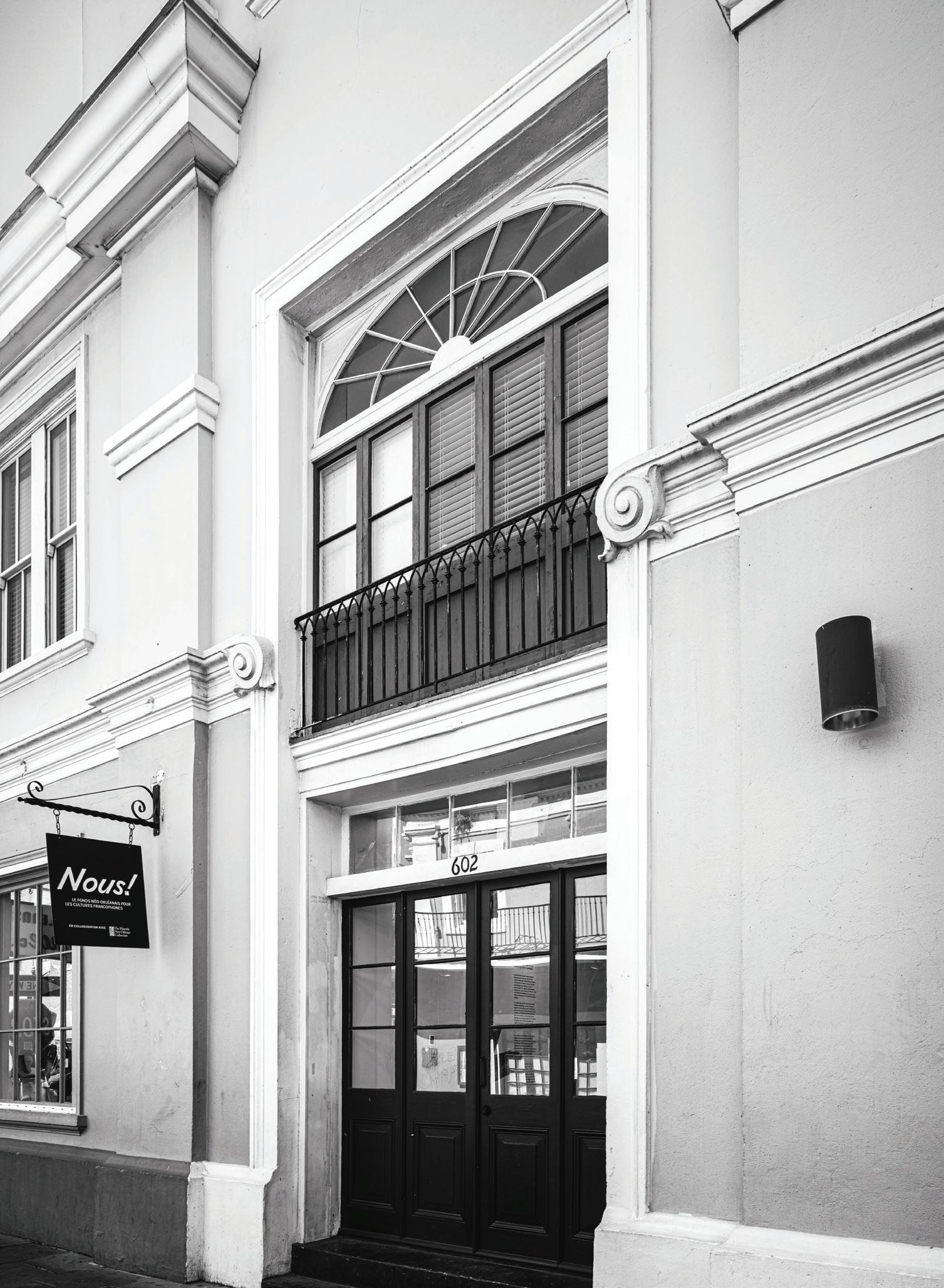
A tourism-driven city, New Orleans has long capitalized on its heritage cultures, but this past December, a small space opened in the French Quarter with the goal of protecting, caring for and preserving them, and with them, the city’s unique identity.
Just off the corner of Chartres and Toulouse streets, the New Orleans Foundation for Francophone Cultures (Nous) has opened the first cultural center in New Orleans dedicated specifically to celebrating Cajun and Creole heritage cultures. Not just the newest member of the French Quarter Museum Association, Nous is home to only the third French bookstore in the nation, along with a publishing house, a record label that has already produced an album that was up for a GRAMMY, and an independent film studio whose short films have resulted in a trip to the Cannes Film Festival. Since Nous’ founding, it has racked up approximately $1.1 million in grants.
It's an impressive list of accomplishments for a nonprofit that was founded just five years ago this spring by a young couple whose paths happened to cross halfway across the world.
Nous Foundation Executive Director and Co-Founder Scott Tilton is a native New Orleanian who can trace his father’s French Creole family history back for hundreds of years. Tilton’s grandfather spoke French as his native language and passed that along to his son, Tilton's father, who chose not to do the same.
That is, until the world changed.
After Hurricane Katrina, when Tilton was in his early teens, his father suddenly began speaking to him in French.
“I think it was a combination of things,” he said. “My family got a house in the French Quarter because our house flooded, and I think just being in proximity to the Quarter inspired him to practice a little bit more with me, and I started becoming more interested in the language.”
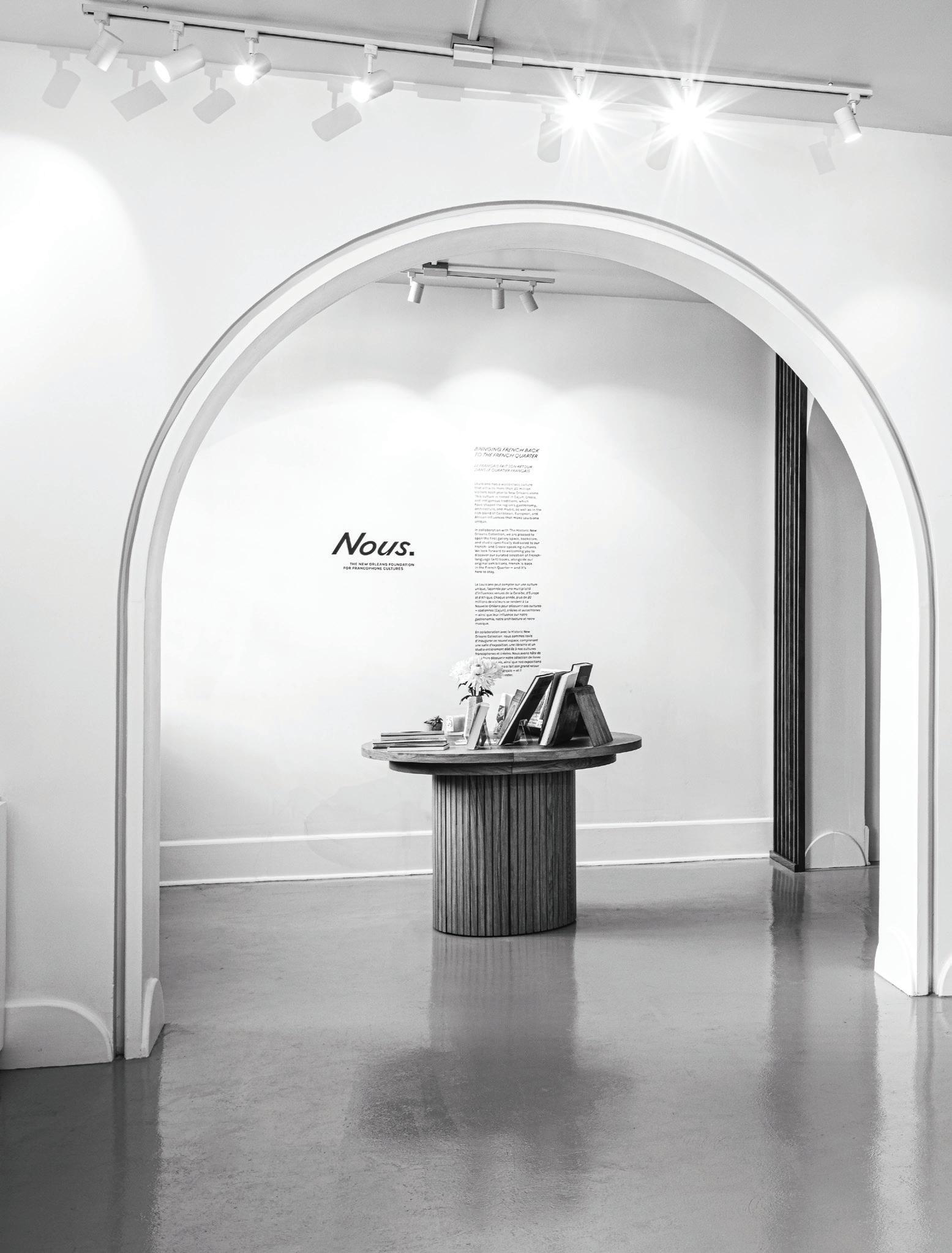
Around the same time, Tilton said he also met a woman who spoke Creole, so he started to learn that as well.
“I think it was a case of when you have nothing left to lose, it sort of changes your outlook on what you need to conserve,” he said. Speakers of Louisiana French, Creole and Indigenous languages have plummeted in the past 50 years, from over 1 million speakers in 1970 to about 150,000 today.
After completing his undergrad at University of Virginia, Tilton followed his French heritage to France to study political science at Sciences Po in Paris, where he lived from 2015 to 2021.
“It was so interesting to see how in France they really consider Louisiana to be part of the French-speaking world in a way that we don't
always acknowledge here anymore,” he said. “I just became very attuned to that.”
WHILE ATTENDING a conference by the Organisation Internationale de la Francophonie — a global organization that promotes the French language and develops economic cooperation among its 90 member states and governments — Tilton questioned why a French state like Louisiana was not taking advantage of the opportunities provided by the Francophonie.

As fate would have it, he had just started dating a diplomat for the French Foreign Service named Rudy Bazenet. A native of France, Bazenet started his career working for the French Foreign Service with a posting in Los Angeles. He was then posted in Slovenia for two years before moving back to Paris to work for the Foreign Service there.
“He had a lot of insight into the world of diplomacy,” said Tilton. “So, working hand in hand, we started the two-year process of getting Louisiana into the Francophonie.”
The two started by making connections back in the states.
“We worked with the U.S. Senate, the governor of Louisiana, with CODOFIL Lafayette — we got this whole coalition together to get Louisiana the permission to join,” explained Tilton. “We then applied, and we were accepted.”
In 2018, Louisiana became the first U.S. state to join the Francophonie.
“It was a huge symbolic recognition and a new door opening for us as a culture,” said Tilton.
As a member, Louisiana was now eligible for grants to promote the French language, but for Tilton, the biggest benefit was the possible exposure for Louisiana on an international stage.
“The ability to go to these major conferences that [Francophonie] hosts, that’s big in terms of economic outreach and programs to support schools,” he said. “It really is a major forum, and I think that's what a lot of countries use it for…I also think being a part of the Francophonie helped influence [French president Emmanuel] Macron’s recent trip to New Orleans.”
Louisiana's membership in the Francophonie also played a part in New Orleans by designated a UNESCO Creative City of Music this past fall. It is one of only 10 U.S. cities with that recognition. Tilton and Bazenet helped with that application as well.
FRESH OFF their big Francophonie win, the couple began to think even bigger.
“We wanted to do something for people in Louisiana and connect them to other French speakers and give them the capacity to build projects in French and Creole in Louisiana,” explained Bazenet, who had never been to Louisiana at that point but said he was drawn in by Tilton’s love for his hometown.
The idea for the Nous Foundation came to them while picnicking one evening by the River Seine.
“We have a lot of different cultural institutions in Paris which are not necessarily museums, but rather places where you have a bookstore, coffee shop, exhibitions, or a place where you can reflect on your specific culture or specific theme as well,” Bazenet explained. “We wanted to create something like that. The example we always use is the Finnish Institute for Finland in Paris. It was always packed in there because they had this beautiful coffee shop, they had this beautiful conference room, movie theater. They had a lot of cool events on design and culture."
In February 2021, Tilton and Bazenet made the move to New Orleans. They formed a collaboration in 2022 with the BK House and Gardens — a museum focused on the past residents of the 1826 French Quarter home, which included some French Creoles of the pre-Civil War era.
“We had our offices in the back of the house, and we hosted some exhibitions for them,” said Tilton. “We had an exhibition on 300 years of history in French and Creole in Louisiana, and then the following year, in early 2024, we curated and presented a major exhibition called “Haiti, Louisiana, Tides of Freedom.” It was 120 artworks by contemporary artists from Louisiana and Haiti reimagining the heritage of the Haitian revolution here in Louisiana and how so many people emigrated from Haiti via Cuba to Louisiana. We ended up presenting it at the United Nations in New York City.”
TILTON AND BAZENET were creating successful exhibitions, but they had yet to hit the next stage in their development, securing their own space. That opportunity came with a call from The Historic New Orleans Collection in the fall of 2024.
THNOC President Daniel Hammer said he is excited about what Nous is doing and was was happy to welcome them as a tenant at THNOC's property on Toulouse Street.
“We share a commitment to helping the French Quarter become more of a place of cultural engagement for both visitors and residents,” he said. “Since the 18th century, the French influence here has been constant.”
I think sometimes the downside of a tourism-based economy is that our culture is viewed as a commodity. And if you're not investing in the language, and you're not investing in the artist and the cultural keepers, then it goes away over time. Scott Tilton, co-founder and executive director of Nous
Hammer said the relationship has been symbiotic.
“We were able to offer them a rate that works for them as they grow, and they are providing French language lessons for our staff and the opportunity to collaborate programmatically,” he said. “For our annual history symposium this March, Nous was a collaborator, and they were able to secure an NEH grant for that project.”
Nous actually secured two NEH grants totaling $75,000 relating to America 250 — this year’s 250th anniversary of the founding of the United States. The THNOC collaboration Hammer referred to is an exhibition called “Becoming Louisiana.” The project included a symposium with Walter Isaacson that was held March 20-21 at THNOC called “One Single Place.”
“'Becoming Louisiana' is the role Louisiana played in shaping the early American republic,” explained Tilton. The exhibition will then open on April 8 at Nous, which will feature historic maps that have been deconstructed. It will run through August 20.
“Early maps were kinda all over the place, but by looking at what is present and what is absent in them you see Louisiana as a place starting to come into focus,” he said.
Following on its heels will be the second NEH-funded exhibition at Nous, "Vie, Liberte et la Recherche du Bonheur," which translates to “Life, Liberty and the Pursuit of Happiness.” For this project, Nous pulled items from the Williams Research Center (part of THNOC), as well as the Library of Congress and archives in France.
“The focus is on how Louisiana received the news of the American Revolution and the Declaration of Independence told through letters, pamphlets and newspaper articles,” said Tilton. “It also looks at the huge impact the French Revolution had in Louisiana. It essentially covers the time between the signing of the Declaration of Independence and Louisiana becoming a state — the underpinnings and ideas that shaped Louisiana.”
HAVING THEIR OWN CENTER and hosting exhibitions was always part of the plan, but Tilton and Bazenet have also taken on a few roles they didn’t originally plan on — film and music producers.
Over the past four years, Nous has produced six short films, all in Louisiana French and Creole. Its 2023 breakout documentary “Voices of Renewal” — told through five advocates of Louisiana Creole that share how the culture is in the midst of a renewal — was aired on PBS, French public television network TV5Monde and at multiple film festivals. Because of their work in French filmmaking, Tilton and Bazenet were invited to the Cannes Film Festival in May 2024 as part of a celebration of Louisiana filmmakers.
Having dipped their toes into filmmaking, the duo received an opportunity to jump into the music industry in February 2024 when the Library of Congress awarded Nous a $60,000 community development grant to document an
aspect of culture in the community. They used it to record an album called “Musique” that was released in May 2025.
“French has been erased from a lot of aspects of everyday life, but in music, it hasn't,” said Tilton. “Louisiana musicians are racking up Grammys every day and they’re doing it singing in French and Creole.”
Musique showcases the talents of six ensemble groups, a total of 28 artists, all singing in Louisiana French and Creole. It was preselected for a GRAMMY — in the top 20 for albums for consideration this year.
In March 2025, two of the artists on the album, Leyla McCalla and Lost Bayou Ramblers' Louis Michot, performed a sold-out show at the Library of Congress, and two more — Sam Craft and Alexis Marceaux from the band Sweet Crude — were invited to perform this past September at the UN General Assembly.
The foundation also documented the making of the album — four days of recording at Esplanade Studios — in a 20-minute documentary film and created a book of interviews with the artists. The album, documentary and publication are all now a part of the Library of Congress’ permanent archives.
Breaking into the entertainment industry, Tilton said, has been another way that Nous can accomplish its mission.
“That $60,000 we got, almost all of it went to Louisiana artists, to a Louisiana studio,” he said. “All of this is about investing back in those who keep the culture alive. I think sometimes the downside of a tourism-based economy is that our culture is viewed as a commodity. And if you're not investing in the language, and you're not investing in the artist and the cultural keepers, then it goes away over time.”
Yet another way Nous is investing is through a program called Le Lab. Similar to cohorts held by area nonprofit incubators, Le Lab works with culture keepers who are creating businesses and nonprofits or one-off projects by helping them write grants and directly sponsoring their work.
Le Lab has worked with 12 groups in three annual cohorts. Last year, they helped the Baby Dolls — who also recorded on the Musique album — raise $125,000 in grants and sponsored members in learning or relearning Louisiana Creole.
A current Le Lab member, Melange Dance Company — a contemporary dance company formed in 2014 that performs works inspired by history — received aid in adapting one of their works, “Love Letter of World War II” to include letters they found from Cajun speakers. After Nous featured the show in one of its newslet-
ters, the Library of Congress reached out and offered to pay Melange to bring the performance to them.
“We’re all so excited — it’s going to be a dream moment on September 10, at the Coolidge Auditorium in Washington, D.C.,” said founder Monica Ordonez. “We’re bringing 20 dancers and nine band members with full costuming — a big production. It will be our first time traveling as a company. Plus, it’s going to be recorded for the archives of the Library of Congress, and some of the letters in the show will be donated to the archives. If it weren’t for Nous, none of this would have happened.
VISITORS TO NOUS will likely meet Bazenet and Tilton, as they purposefully placed their workspace in the middle of the center. The rest of the team includes an artistic design fellow — currently in France on a Fulbright scholarship that the foundation helped her secure — a contract film director, and an 11-member board.
The space, they said, stays busy with school group visits, French-speaking tourists (many from Louisiana) and locals.
“A lot of locals come in because they're curious. They want to know more about what we're doing,” said Bazenet. “They want to see the bookstore. It's been great seeing people walk into the space and get excited when we say, ‘Bonjour.’ We get a lot of ‘Oh, I didn't think we could speak French anywhere in the city.’”
A big part of the draw of the new French cultural center has been its bookstore.
“We have all the kinds of books you would find an any bookstore in France,” said Tilton. “All the classics and history books. Our main idea was to showcase the creativity of different Francophone spaces, like Quebec, France, Switzerland, etc., so we have the catalogs for exhibitions that are currently on display in these places. We also have history books on Louisiana, Louisiana French literature and contemporary poetry, and we're going to start ordering children's books as well.
Bazenet said he is enjoying curating Nous’ more than 500 titles.
“The goal is to keep extending the collec tion,” he said. “When we opened, we had so many people come in and buy books that we had to add some more shelves right away. We’re going to add some more soon.”
Nous has also been authoring their own educational publications for area French schools. As most of the teachers at these schools tend to be from other countries, that means students are learning French, but not Louisiana French.
“Sometimes people pitch it as this sort of either/or thing: You either have intercultural French or Louisiana French, but that's just not how language works,” said Tilton. “I think you can have a teacher who speaks Louisiana French teach one class, and the student's ear will be trained to it.”
Nous has been providing schools with teaching manuals and programs to encourage more Louisiana French in the classroom.

“Long term, for the continuation of the language, that's mission critical,” said Tilton, who added that things get a little trickier with Louisiana Creole because it has fewer than 10,000 speakers.
“It's considered critically endangered by UNESCO, and there's been no impulse at the state level to put Louisiana Creole in the classroom yet, but we've been working with other nonprofits to try to create resources that at least can give the idea that Louisiana Creole is out there, which is a baby step in the right direction.”
accelerator program through her work with the Baby Dolls.
“Working with communities to preserve cultural records like these that would be otherwise inaccessible is a huge step forward for the visibility of Louisiana’s heritage cultures,” noted Tilton.
AMONG ITS BIG GOALS is changing how New Orleans is viewed on the world stage.
WININ EARLY MARCH, Nous announced that it had received its largest grant award to date, $100,000 from the Mellon Foundation. The money will be used for a multi-year, community-driven initiative called “Archives Funèbres” (Funeral Archives) aimed at collecting, digitizing and preserving thousands of Louisiana funerary materials, second-line programs, obituaries and photographs.
The foundation will work with local families, funeral directors, genealogists and historians to create an archive that will live on Nous’ website to be accessible to anyone.
Fieldwork will be led by Dr. Kim Vaz-Deville, a renowned scholar of Black Carnival traditions in New Orleans, current Nous board member, and a past recipient of Nous’ Le Lab cultural
“Cities like Montreal have pulled off bilingualism and invested in the arts, and they are viewed as a global city,” said Tilton. “There's no reason why New Orleans can't achieve the same magnitude, because we already have a culture that is instantaneously recognizable, and a lot of the reasons why are because of the contributions of heritage cultures.”
Tilton said the goal is to create an organization that will live on, so that Louisiana’s unique culture doesn’t disappear.
“Usually when it comes to culture, especially when it comes to French in Louisiana, there's a lack of funding that exists. So ultimately, we want to have an endowment so we can make sure that we'll always have the capacity to support projects and to support artists, culture bearers, musicians and community leaders. We've laid some solid foundations — we’re starting to get the attention of national foundations. Now we need to build on this momentum.”

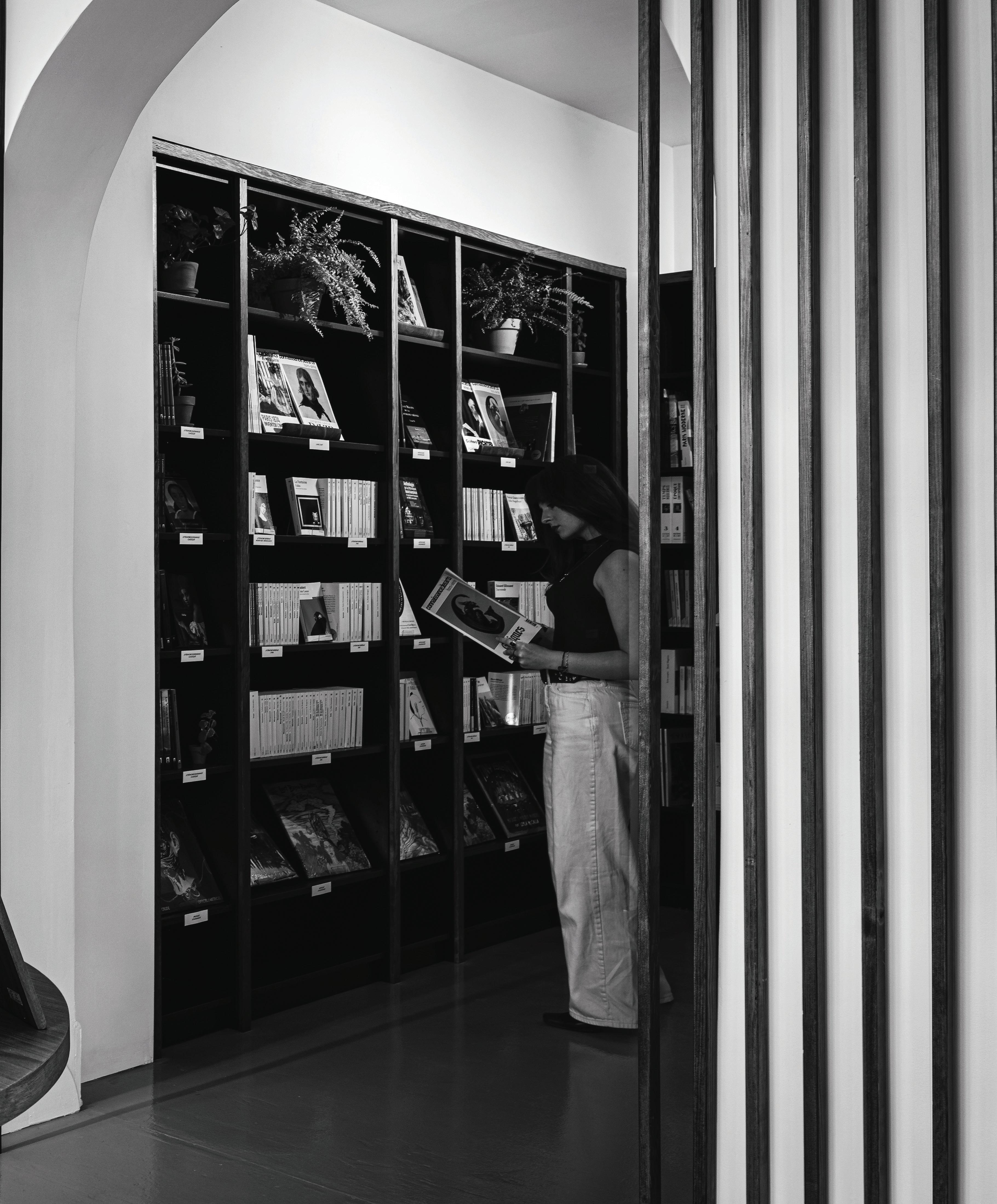
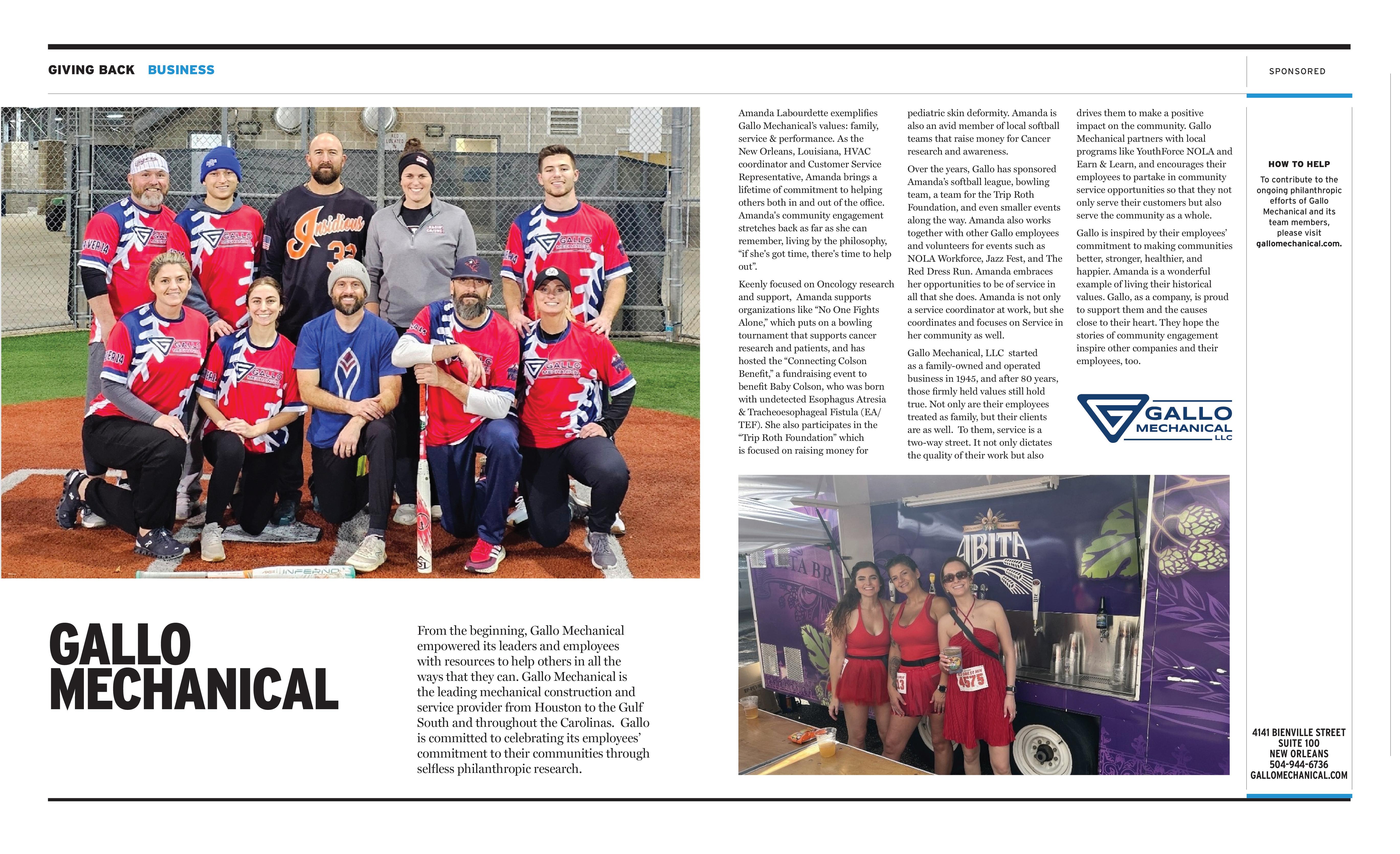
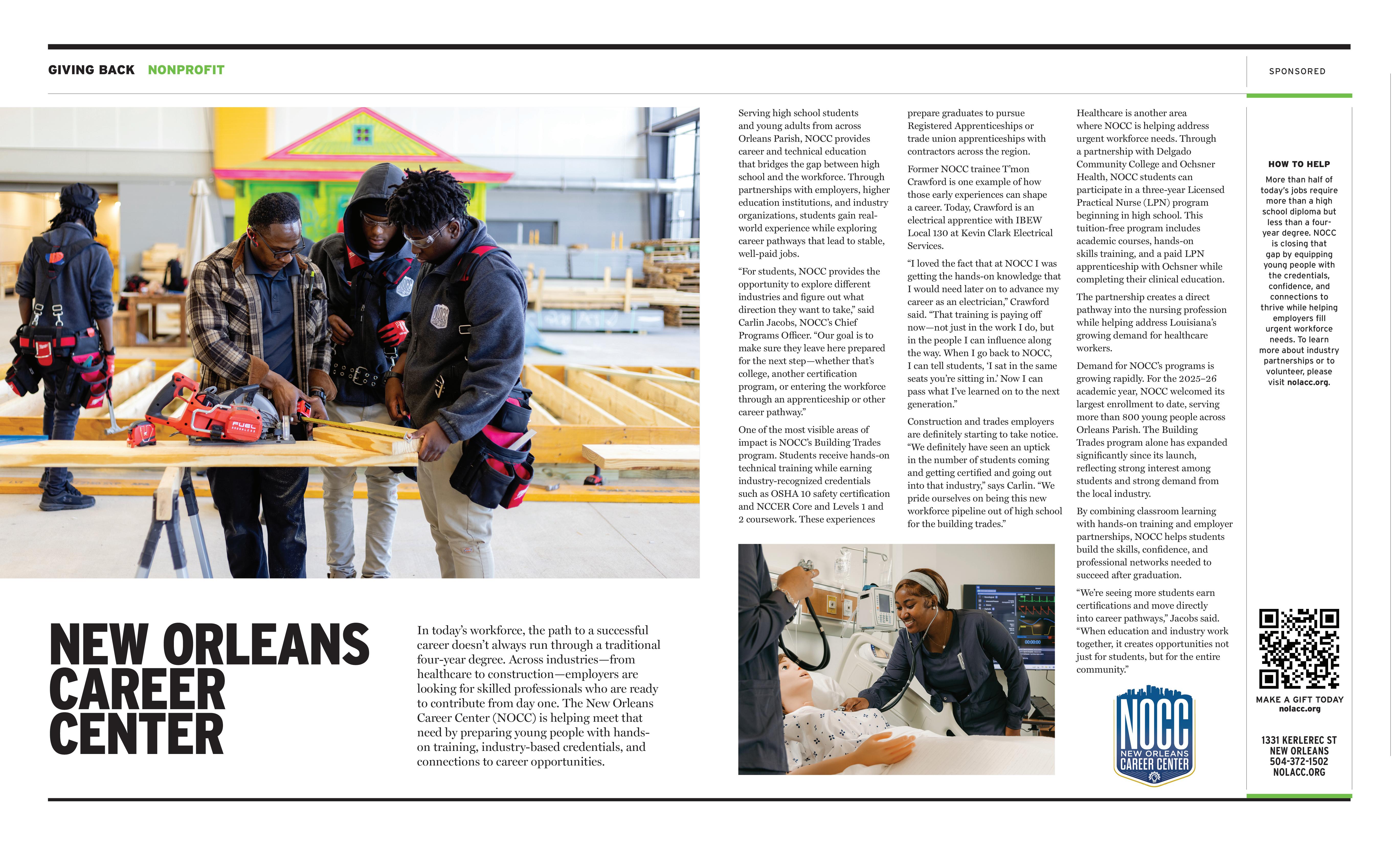
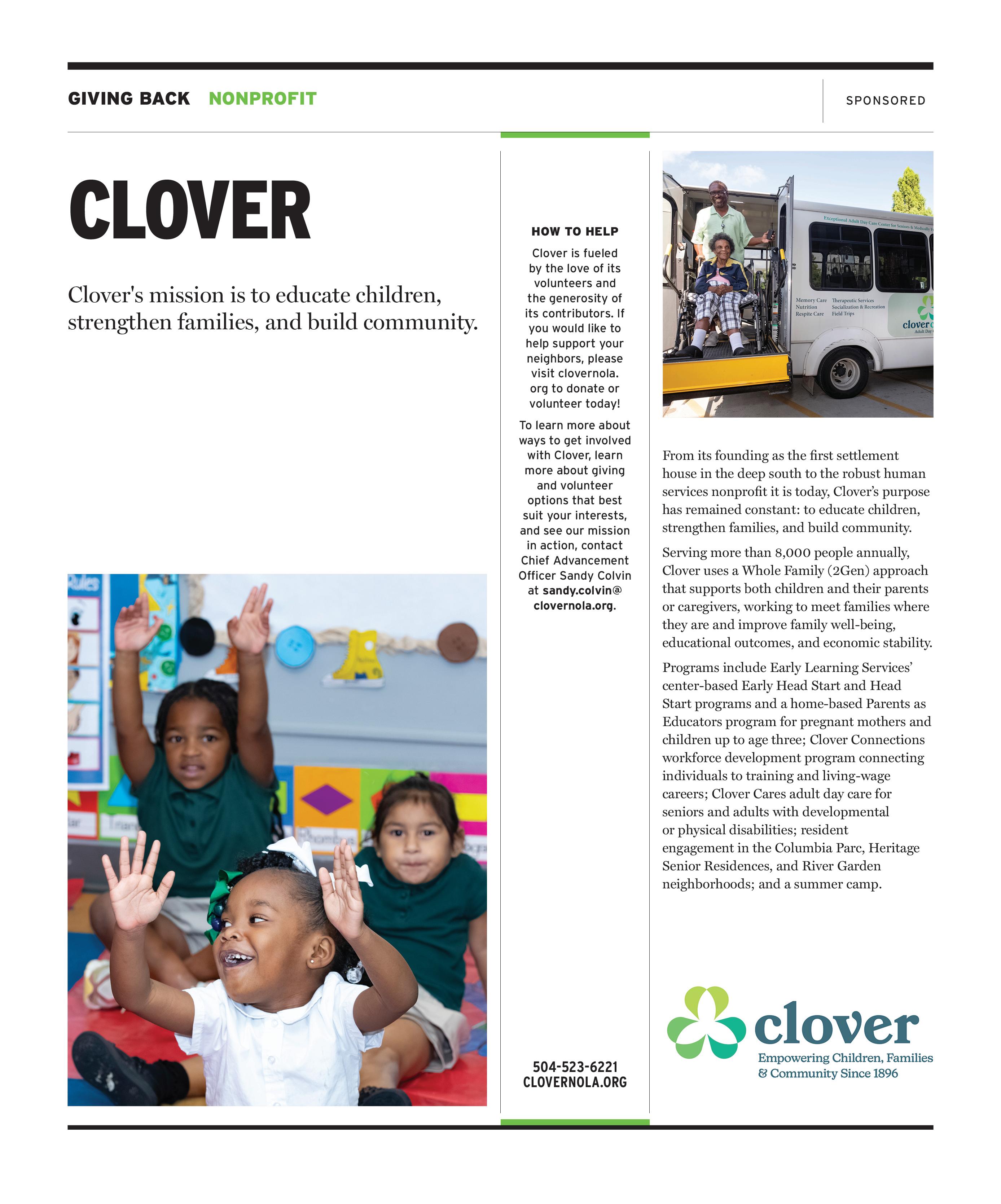
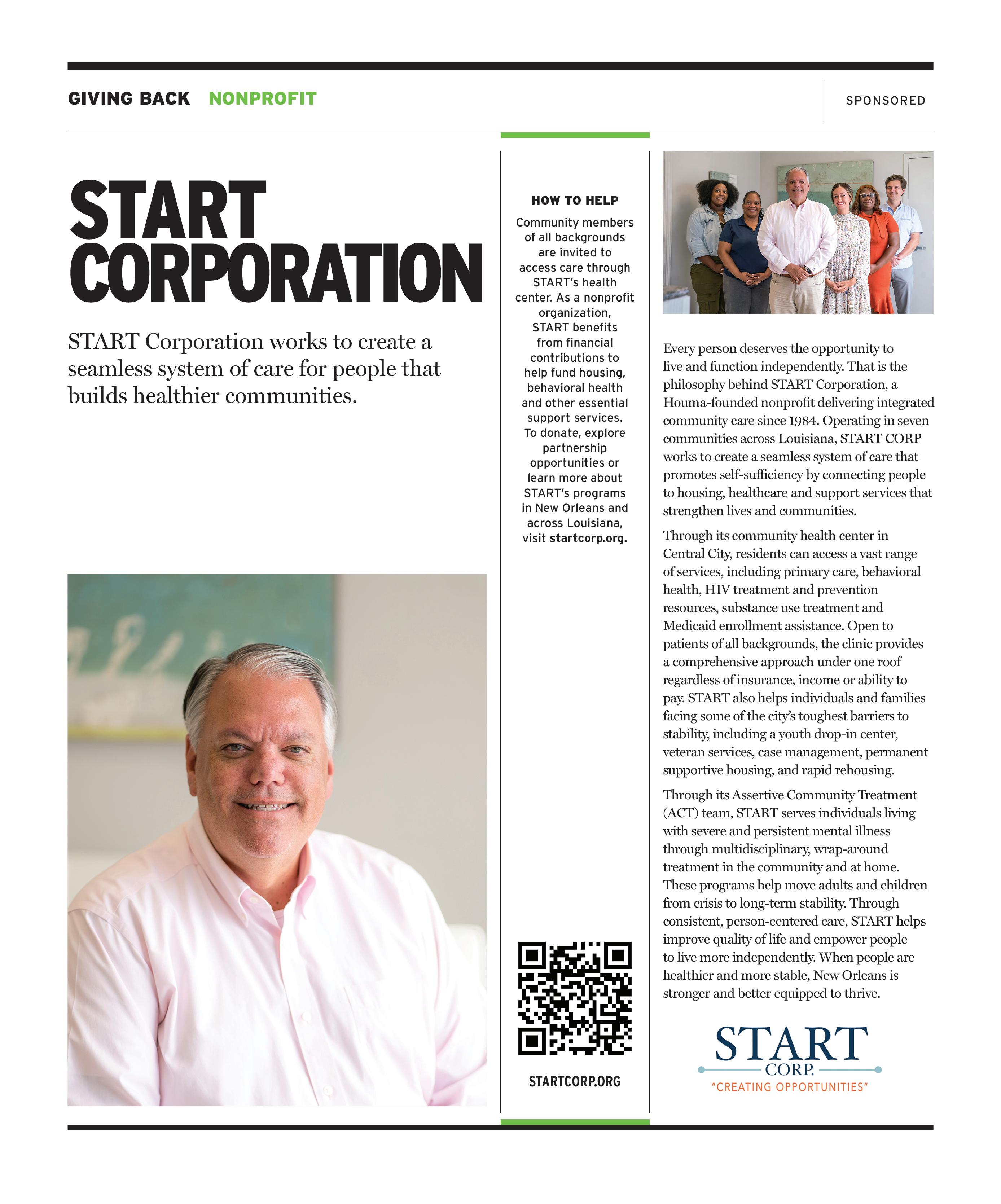
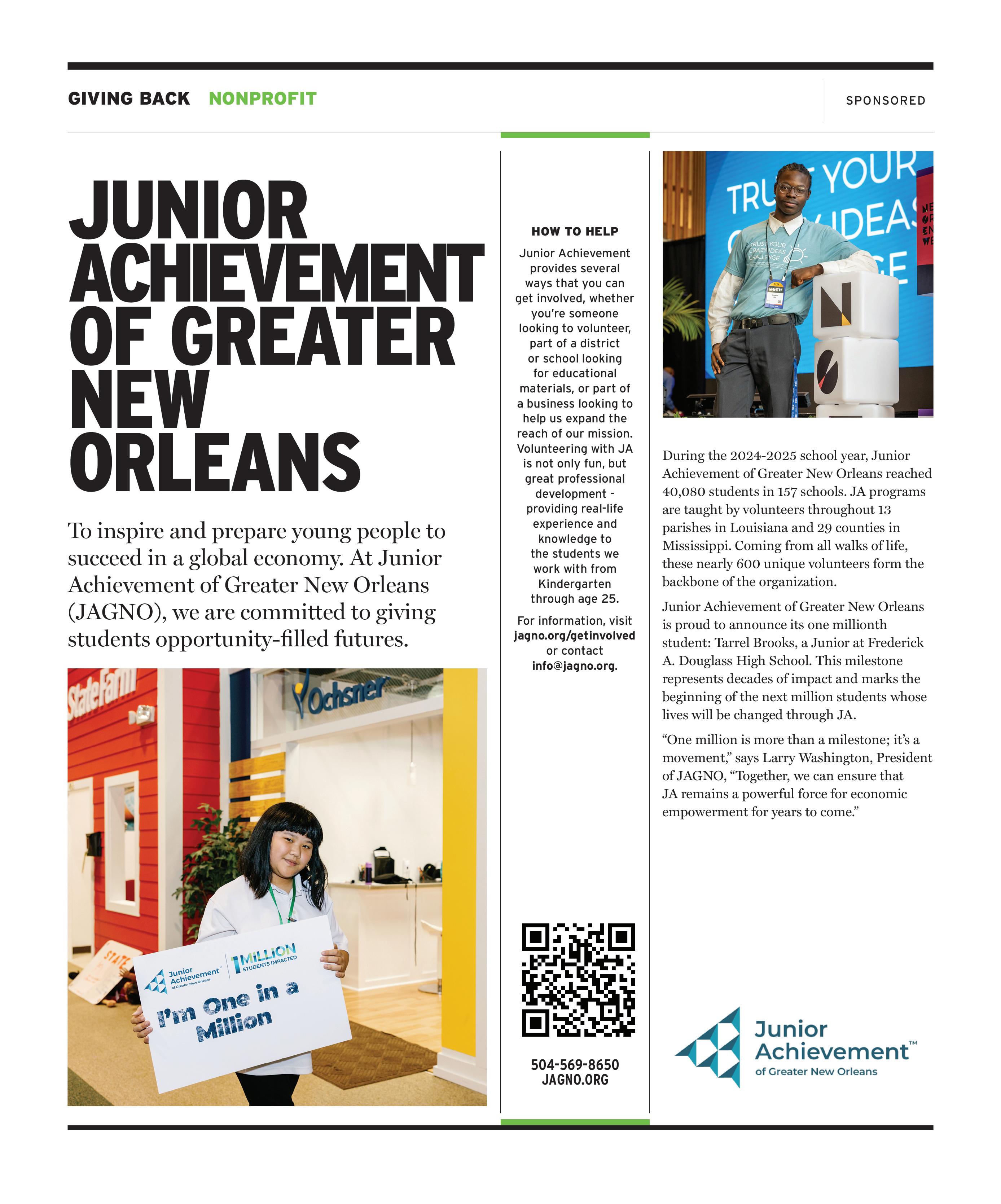
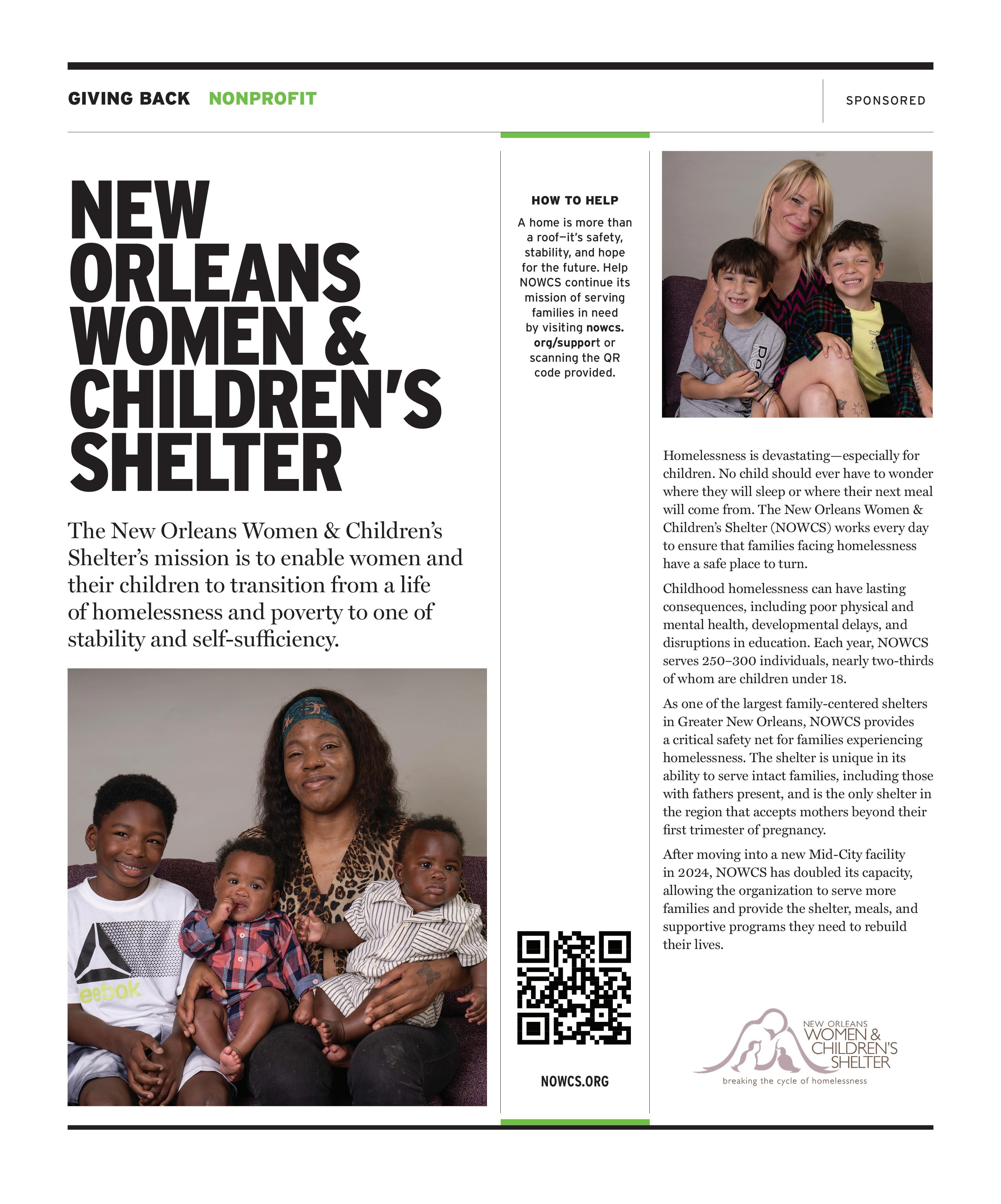
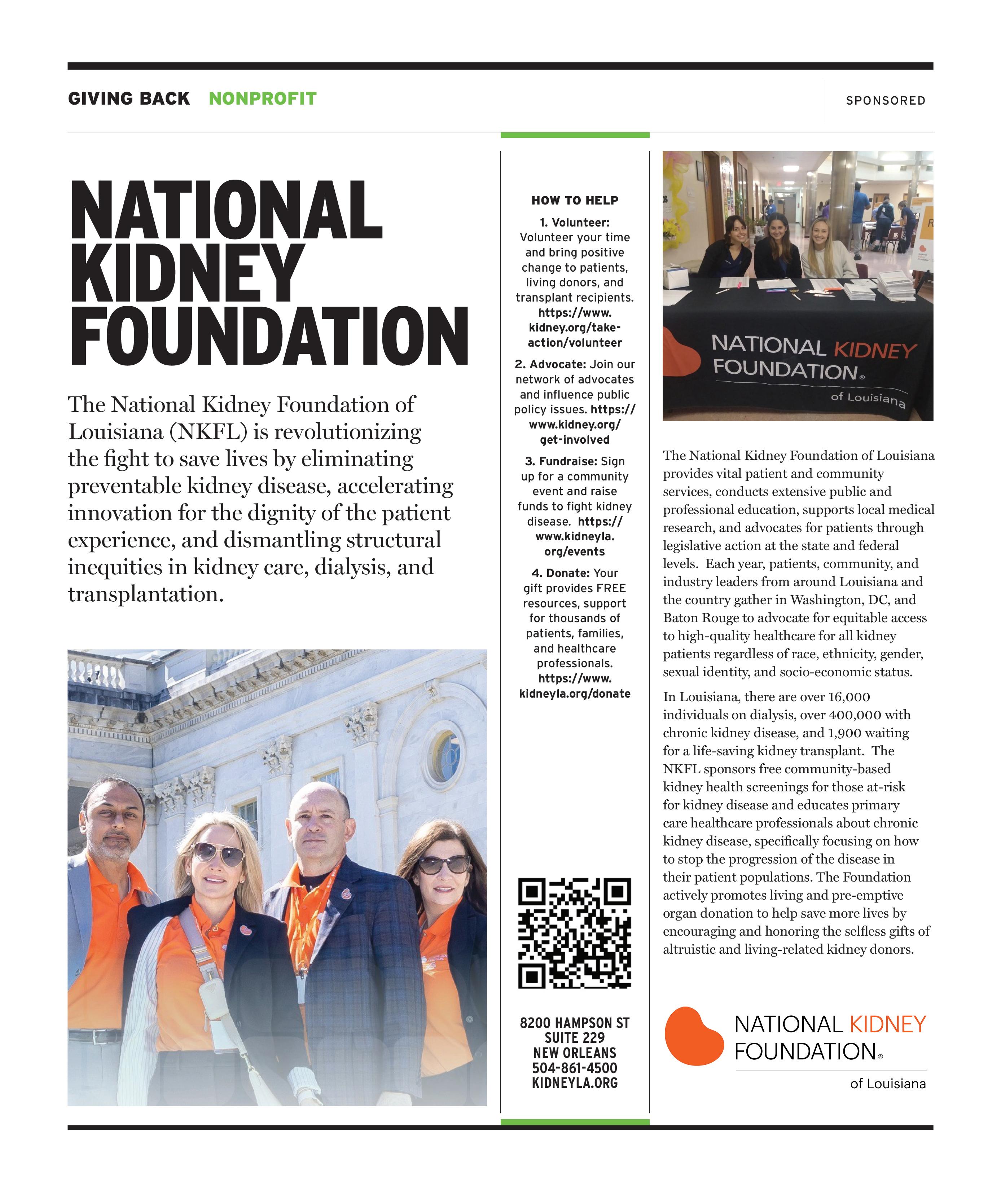
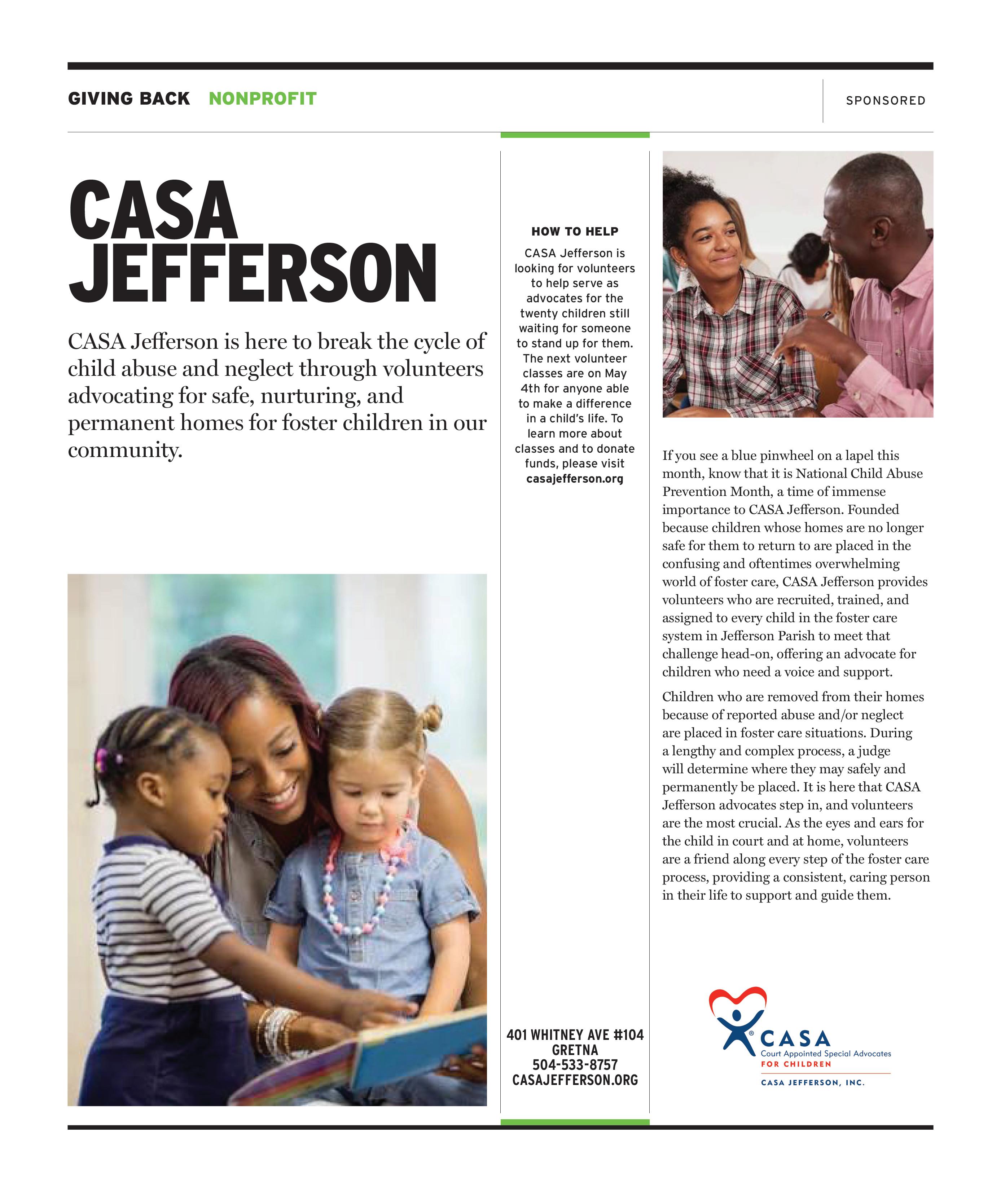
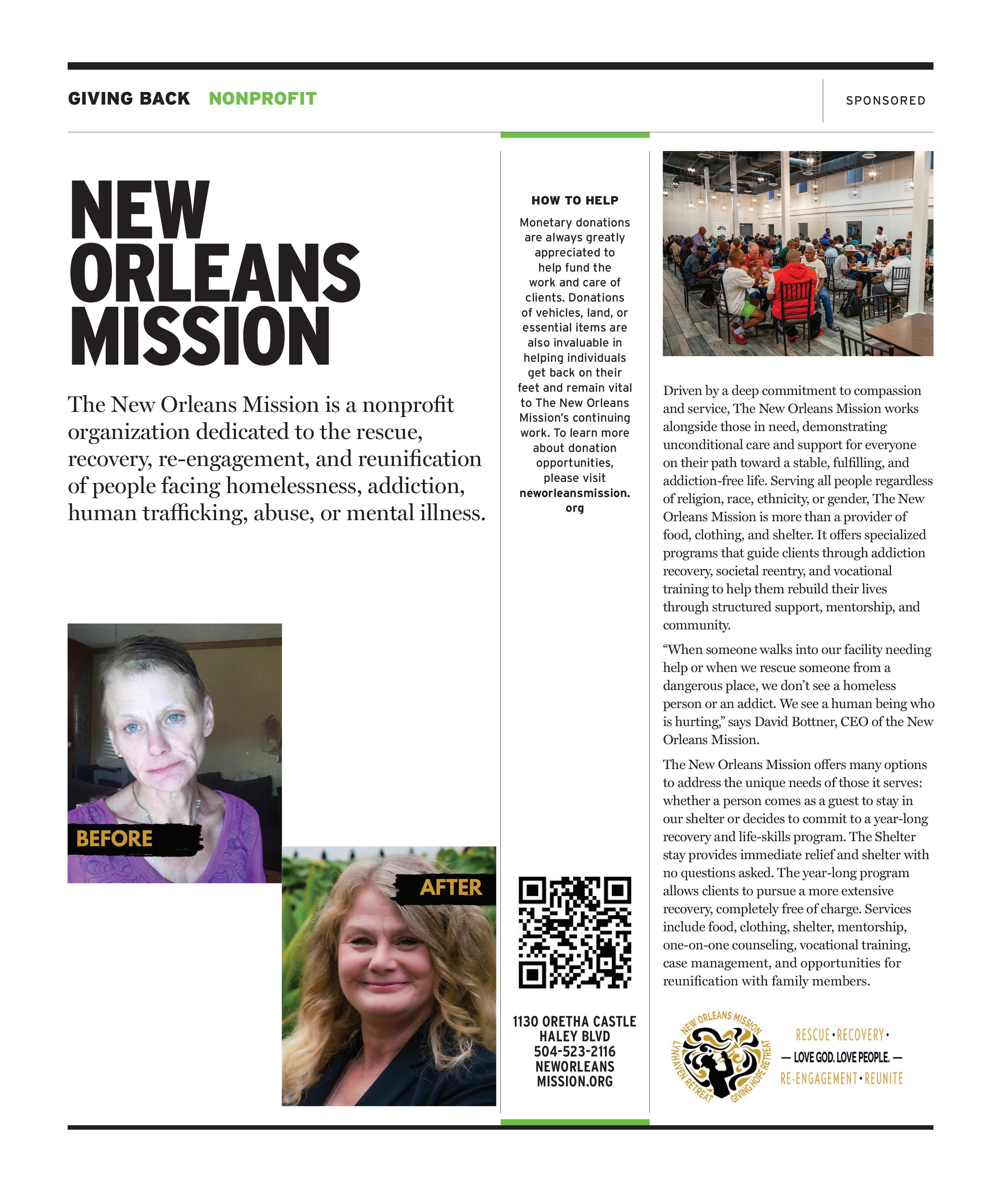
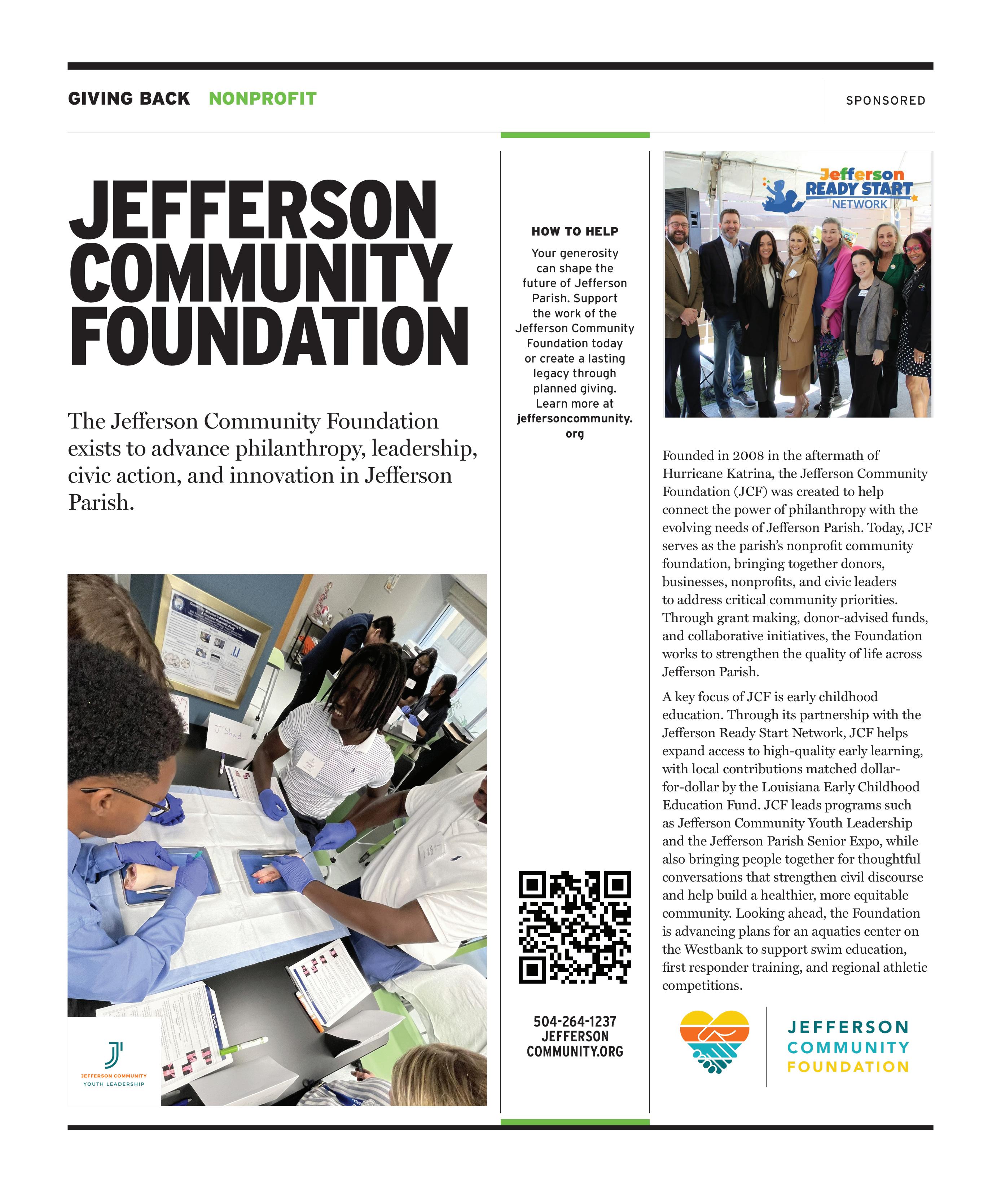
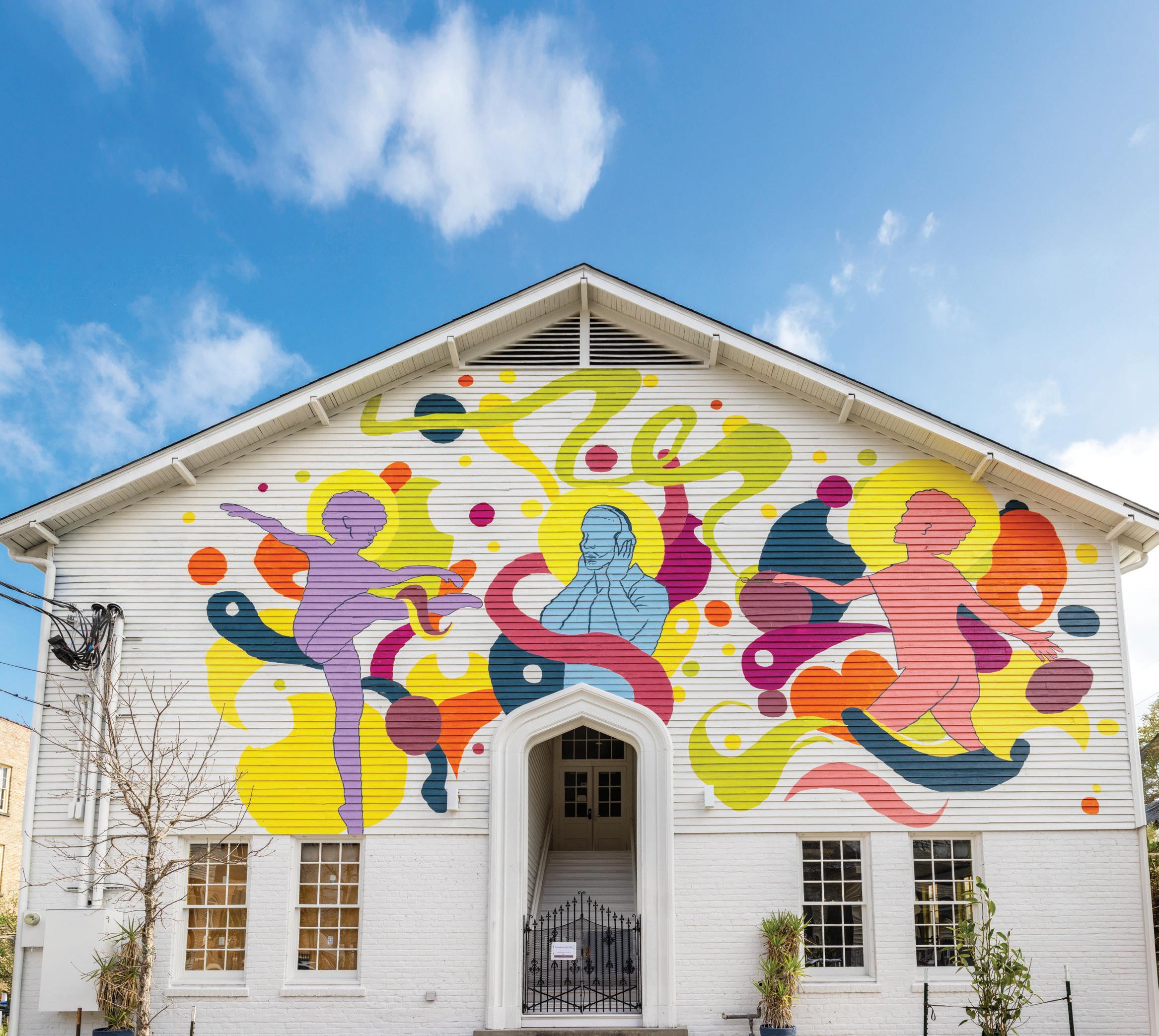
A 1938 church school returns to its educational roots as a center for arts integration

BY MISTY MILIOTO
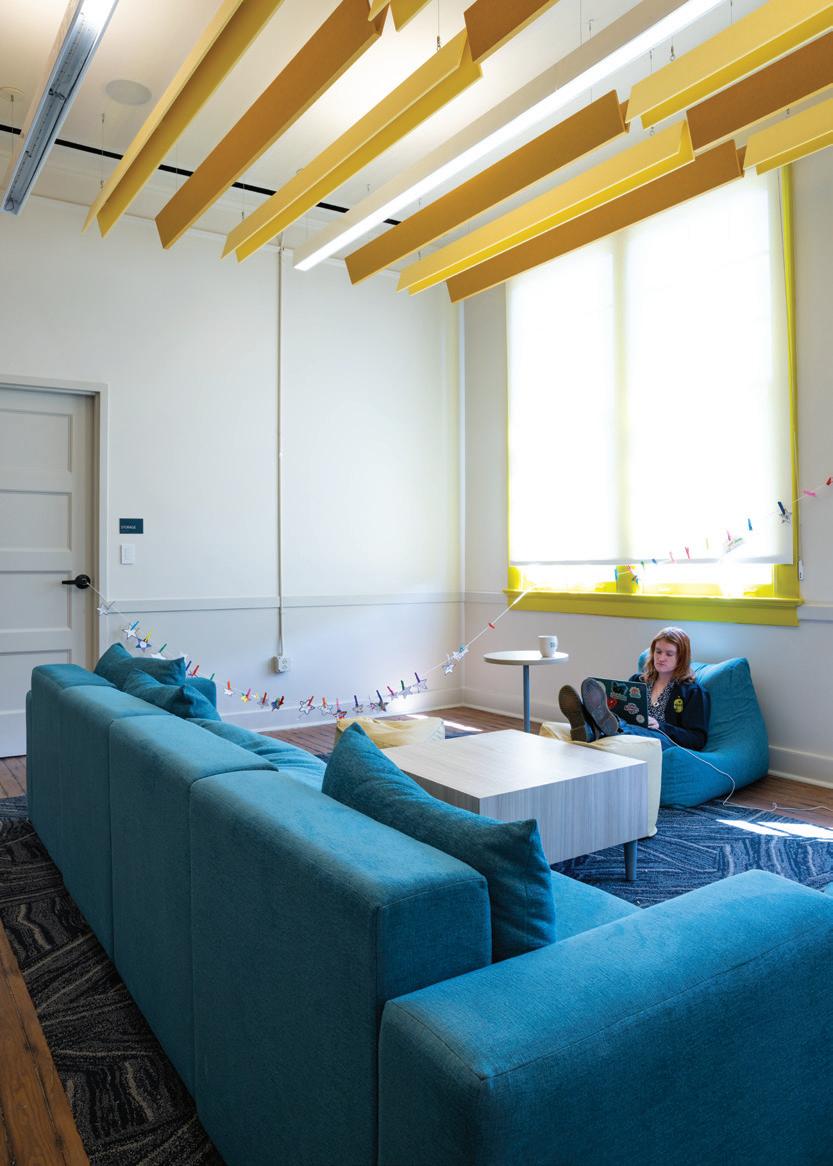
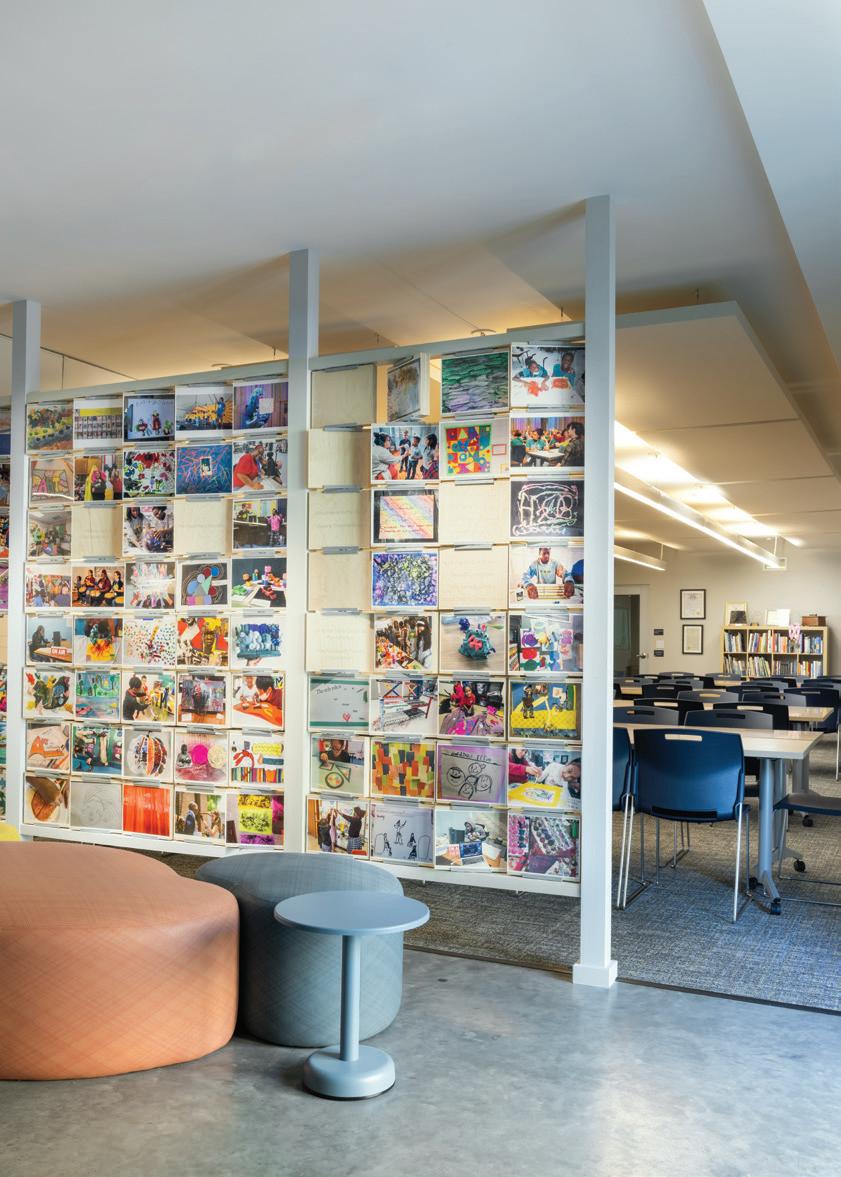
In the heart of New Orleans’ historic Bayou Road/7th Ward neighborhood, a former 1938 parish hall has been transformed into a vibrant hub for creative learning.
Completed on February 6, the KID smART Center for Arts & Education represents more than a renovation — it’s a homecoming for a building returning to its original purpose and a bold vision for the future of arts integration in New Orleans.
Since 1999, KID smART has brought joyful learning through the arts to more than 80,000 students and educators throughout Louisiana. The nonprofit works in area public schools to reach underserved children in many different ways, including deploying teaching artists into classrooms to co-plan and co-teach the arts in partnership with teachers. KID smART offers year-round professional development for educators and hosts events to engage local families and community members.
Now, with a permanent 10,730-square-foot home, the organization will more than double its impact, growing from serving 3,200 to 8,200 individuals annually.
“We believe in joyful learning for all ages,” said Elise Gallinot Goldman, executive director of KID smART.
The building’s transformation was guided by architectural firm EskewDumezRipple, with Principal and Director of Interior Design Jill Traylor leading the project. Construction began in August 2025.
“There’s something especially meaningful about returning this historic building to its original purpose as a place of learning,” she said. “Seeing it come full circle is incredibly rewarding.”
The design challenge was multifaceted — to transform a historic structure into a flexible learning environment supporting everything from quiet individual work to energetic performances while also serving as KID smART’s headquarters.
“From the start, our goal was to transform a current office building (also built in 1938) into a joyful, flexible home for arts-integrated learning,” said Traylor.
Six creative studios comprise the center, including two visual arts studios, a performing arts studio, an innovation studio, a dance and movement studio, and a podcasting studio. Each space was designed with specific programmatic needs while maintaining cohesion.
“Color has a remarkable ability to tell a story, guide us through spaces, and create an element
In addition to serving as the nonprofit’s headquarters, the 10,730-squarefoot building is home to six creative studios. Color is used to differentiate spaces but is careful never to draw from the real focus — student art.
of surprise and delight,” said Traylor. “Likewise, the absence of color can provide a canvas for self-expression and engagement.”
The strategic use of color became a defining element of the project. Drawing from KID smART’s branding, the design team used color to differentiate spaces and support wayfinding, particularly on the second floor, where classrooms are color-coded with matching acoustic baffles.
“The history of the building as the parish hall for St. Rose of Lima Church meant that there were already gorgeous light-filled classrooms occupying the second floor,” said Goldman. “Our team from EDR worked with us to figure out the best use of each space, and the results are magnificent.”
Throughout the center, playful moments like colorful stair risers, vibrant transoms and trim are paired with neutral backgrounds, allowing student artwork to become the primary visual focus.
“Ever since I saw her TED Talk, I’ve been really drawn to the work of Ingrid Fetell Lee on the aesthetics of joy,” said Goldman. “I shared her talk with everyone working on the building, and I think you can really see how some of the
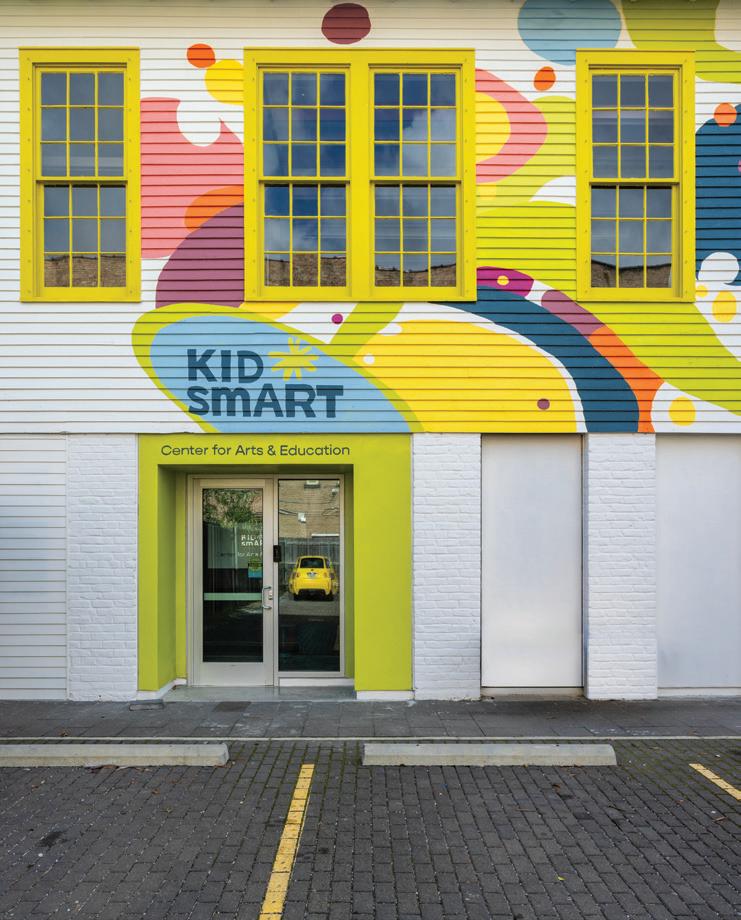
Number of years in operation
27
Square footage
10,730 SF
Number of Employees
22
Persons in Charge
KID smART: Elise Gallinot Goldman, executive director
Architecture & Interior Design
EskewDumezRipple
EskewDumezRipple Design Team
Members
• Jill Traylor Principal-inCharge
• Regina Davis Project Architect/ Project Manager
• Aidan Taylor Designer
• Matt Kymes Architect & Construction Administration
Initial Brand Development
Through the EDR Day of Service
Art and furnishings
Furniture from AOS, artworks from a long list of artists who have supported KID smART throughout the years, starting with co-founders
Allison Stewart and Campbell Hutchinson, and artists Clifton Webb, Ron Bechet and John Scott
The original building boasted light-filled spaces that served as classes when it was a parish hall. The team at EDR worked with KID smART to determine the best use of each nook and cranny —resulting in a contem porary center for arts integration.
elements of color, shape and surprise have been woven into the design.”
The innovation studio, which has been designed to feel more like a lounge, features couches, flexible seating and workstations.
“[It will be] used for creative writing, digital media, brainstorming sessions, and most importantly, it will be the home base for our Bloomberg Arts Interns — a growing cohort of high school students who do paid internships at arts and culture organizations throughout the city,” explained Goldman.
Meanwhile, community spaces reinforce KID smART’s vision as a neighborhood hub.
A reception gallery welcomes visitors while doubling as an exhibition space for student work. The community kitchen and coffee and snack bar were intentionally expanded to support events and informal gatherings.
“We want folks to feel welcomed from the moment they see the building, before they even walk through the door,” said Goldman.
A key feature of the architecture and interior design is accessibility.
“Universal design — making the space inherently accessible and usable by all people to the greatest extent possible — is one of the guiding principles not just of our space design, but of our teaching design,” said Goldman.
As an example, the team installed an elevator to provide full access to second-floor studios.
“We focused on creating welcoming, legible spaces that support a wide range of users,” said Traylor. “Generous corridors, transparent storefronts and visual connections between spaces help create a sense of openness.”
Professional development remains at the core of KID smART’s mission. Conference rooms and flexible training space — with movable furniture, large screens and tackable wall space — allows for collaborative learning among teachers.
“Our teacher training has always been incredibly interactive — we want teachers to experience the learning we want for their classrooms,” said Goldman. “Teachers will not only learn in the training space but also have small-group workshops in the studio classrooms.”
The design team used neutral backdrops and open layouts to ensure the building could be altered without major renovations, prioritizing long-term adaptability.
“We approached the center as a flexible framework rather than a fixed solution,” said Traylor. “Studios, classrooms and offices are designed to be reconfigured as programming evolves, while infrastructure is organized to support future technology upgrades.”
For Goldman, the building represents both a culmination and a beginning. After more than 25 years of transformative work, KID smART now has a permanent foundation to expand its vision of joyful learning through the arts.
“To me, the most important aspect of arts integration, and all arts learning, is the creative thinking skills that are developed,” she said.
“Working with the arts helps us be flexible problem-solvers, better communicators and more expansive thinkers. These are skills for life, not just the classroom.” T
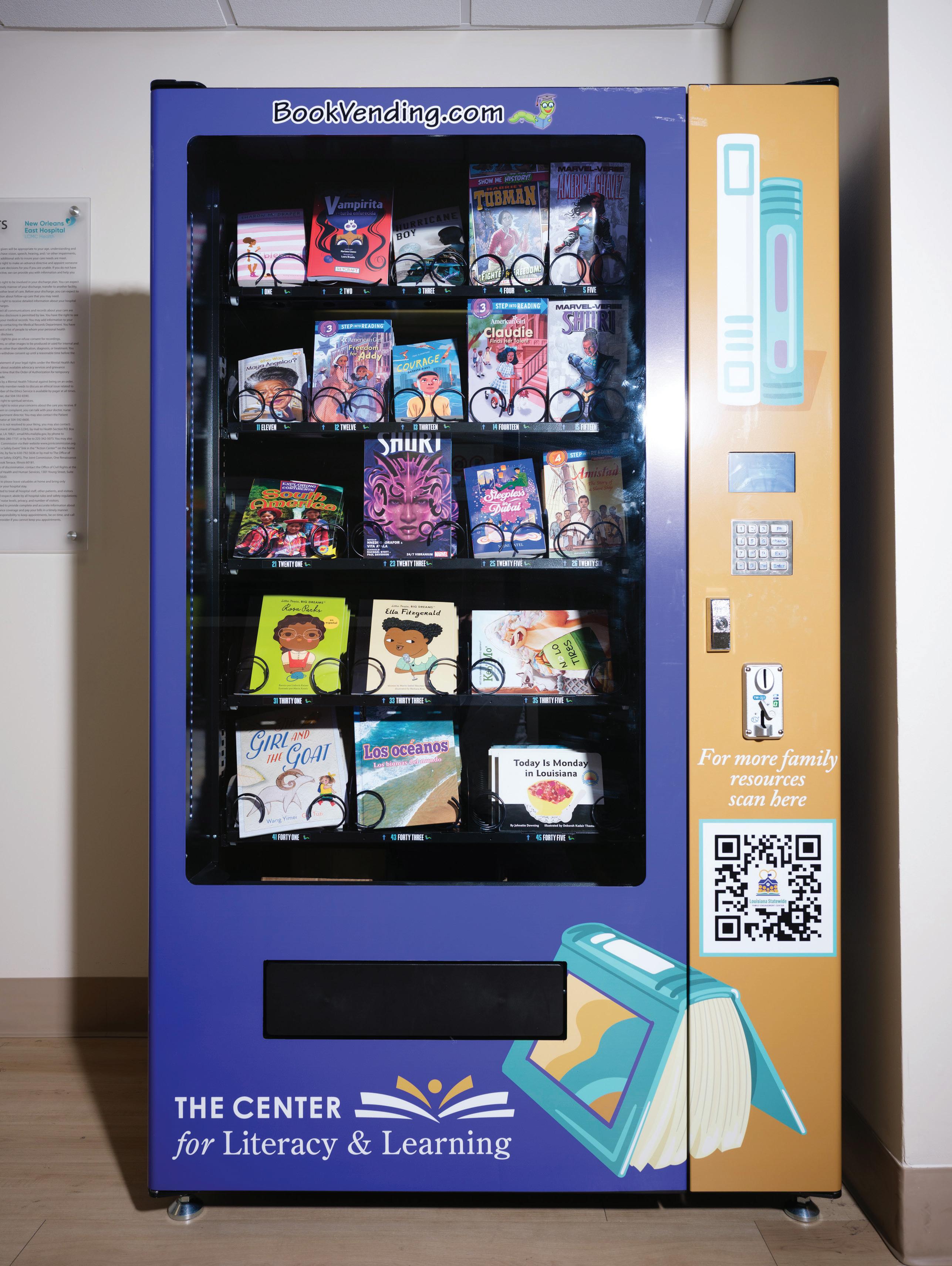
BY ASHLEY MCLELLAN PHOTOS BY EDMUND D. FOUNTAIN
Vending machines in hospitals have long been used to provide snacks and drinks to friends and family of patients, but as of January 16, young visitors to the emergency room of New Orleans East Hospital will be offered a different kind of sustenance — a book of their choice.
The no-cost book vending machine (children are given a token for a free book) is the first of its kind in a New Orleans hospital and the third in the state to be located in a health care setting — joining the Open Health Care Clinic in Denham Springs, launched in October 2025, and Ochsner LSU Health – St. Mary Medical Center in Shreveport, which opened in February. It is the result of a partnership between New Orleans East Hospital and The Center for Literacy & Learning, a Louisiana-based national nonprofit dedicated to supporting educators and families with reading tools and support. Founded in 1992, the organization has worked with multiple facilities statewide to provide books to children in new ways.
“The idea really grew from our commitment to addressing the whole health of the communities we serve — not just the medical needs that bring families through our doors,” explained Dr. Takeisha Davis, president and CEO of New Orleans East Hospital. “When we learned about The Center for Literacy & Learning’s book vending machine program, we immediately saw an opportunity to do something meaningful for the children and families in New Orleans East.”
Books are chosen to appeal to a wide range of ages — from the earliest readers up through pre-teens and young adults.

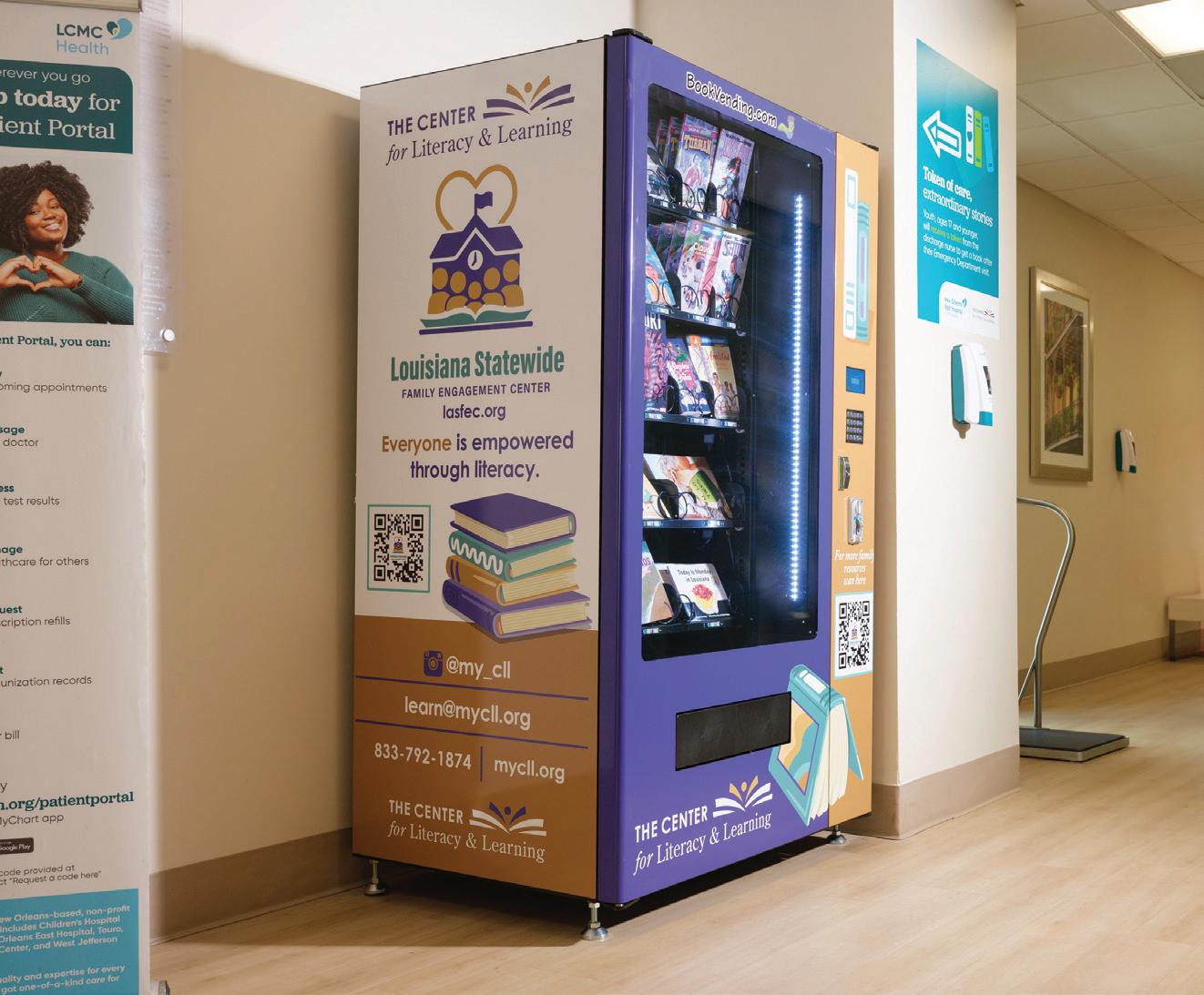
According to the national literacy program Reading is Fundamental: 25 million children in the U.S. cannot read proficiently; 61% of U.S. children living at or below the poverty line have no books at home; and 1 in 3 children entering kindergarten lack the basic skills they need to learn how to read.
More than 80% of children from economically disadvantaged communities lose reading skills over the summer because they lack access to books
Davis said the placing of the machine was strategic.
“The ED is often the primary point of healthcare access for many families in our community, and we see over 4,000 children a year for emergency health needs,” she said. “We wanted to meet families exactly where they are — in a moment of stress and uncertainty — and offer something positive and lasting. A book can bring comfort and calm to a child who may be frightened, and it goes home with them as a reminder that even in a difficult moment, someone cared enough to invest in their future.”
For Davis and the team at New Orleans East Hospital, the installation of the vending machine is the first step in addressing literacy concerns for those that use the hospital as a vital health hub.
“That book goes home,” she said. “It joins a family’s shelf, gets passed to a sibling, or gets read again and again. We know that access to books and frequent reading at home play a pivotal role in a child’s academic success.”
The books that are offered in the vending machine are chosen by the Center for Literacy & Learning to ensure that choices exist for everyone.
“The selection spans a range of reading levels to ensure that every pediatric patient who visits us — from our youngest patients to older children and young teens — can find something meaningful,” said Davis. “We want every child to leave with a book that speaks to them, whether they are just beginning to read or already exploring chapter books. The center handles acquisition and ensures the collection reflects the diverse backgrounds and experiences of the families we serve.”
For Davis, the simple reward of watching families and children using the vending machine has been one of the best aspects of launching the program.
The machine was strategically placed in the emergency department, where the hospital sees more than 4,000 children a year.
“The response has been incredibly heartwarming,” she said. “To watch a child — who moments earlier was anxious or uncomfortable — light up when they receive a token and walk up to that machine to choose their very own book is something truly special. Parents have expressed deep gratitude, and our clinical staff have shared how much the machine has helped ease tension. It creates a positive shared experience at a time when families need it most. We are still in the early stages, but the enthusiasm from our community has only reinforced our belief that this was exactly the right initiative for New Orleans East Hospital.”T
Mid-City Veterinary Hospital celebrates 15 years of caring for area pets.
BY KEITH TWITCHELL
When I was 10, my neighbor’s cat died in my lap,” recalled Dr. Audrey Hess, founder and owner of the Mid-City Veterinary Hospital. “I never wanted to see that again. I wanted to be empowered to prevent it.”
After graduating from Louisiana State University School of Veterinary Medicine, Hess completed a one-year internship in small animal medicine and surgery in New York. She stayed and practiced there for four years and then worked another year in Miami Florida before returning home to New Orleans where she worked for a few years at VCA Airline Animal Hospital.
When Hess decided to launch her own practice she was inspired in part by the fact that the community where she grew up and had returned to in Fauborg St. John, did not have an animal hospital.
Finding the location was serendipitous: While on maternity leave, Hess asked a real estate agent to look for appropriate buildings. On her last day of leave, the site — the former Tyler’s Oyster Bar — became available. Hess was even able to save the large marble bar, using pieces for her examination tables.
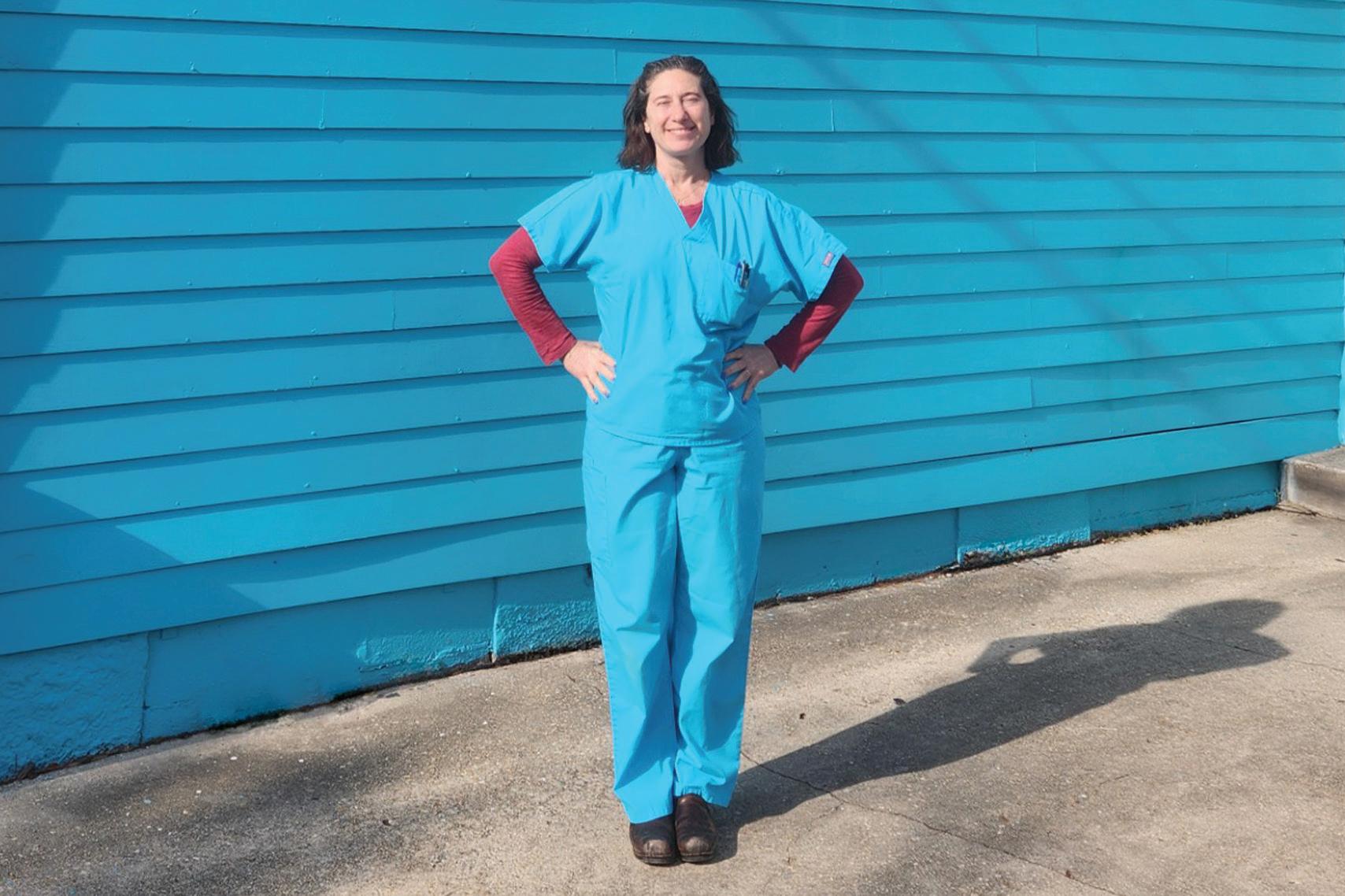
Today the hospital has a staff of 17, with four examination rooms, an operating room, in-house lab and pharmacy, and X-ray and ultrasound capacity.
Clients walk into the bright, spacious waiting area, with a bulletin board highlighting lost pets and adoption opportunities. Boarding is offered, but only for pets who need special care.
Grooming is also available.
“There is an essential connection between grooming and health,” Hess noted. “And they walk in wooly and walk out fabulous!”
Over the past 15 years, the hospital has been welcomed by the community.
“The vast majority of our clients come from the immediate area around us,” said Hess. “It is not uncommon for our parking lot to be empty, but we are super busy inside since the majority of our clients and patients walk to us.”
Hess estimates that 60% of her patients are dogs and 40% are cats. The most common afflictions she treats are skin problems resulting from flea infestations, a year-round issue in the New Orleans climate. Heartworms and ear infections are also frequent ailments.
Perhaps surprisingly, the hospital performs relatively few spay and neuter procedures, which Hess attributes to many people getting their pets from shelters.
“This is a heavy rescue community,” she observed.
Dental cleanings, another important part of animal health, are also common. These require anesthesia because, as Hess pointed out, “They’re not very good at saying ‘Ahhh.’”
One major challenge she faces as a business owner is balancing inventory, particularly medications. For example, heartworm meds come in six different sizes for cats and dogs. To manage this, the hospital has its own pharmacy, which also accepts online orders and provides “fast, affordable shipping.”
Hess stresses the need for regular pet checkups, pointing out that with shorter lives, animals’ health issues can progress as much as four times faster than in humans. Clients can email the hospital at any time and expect a rapid reply.
“Email me before following Dr. Google’s advice,” Hess recommended wryly. “We might save you a trip to the emergency room.” T
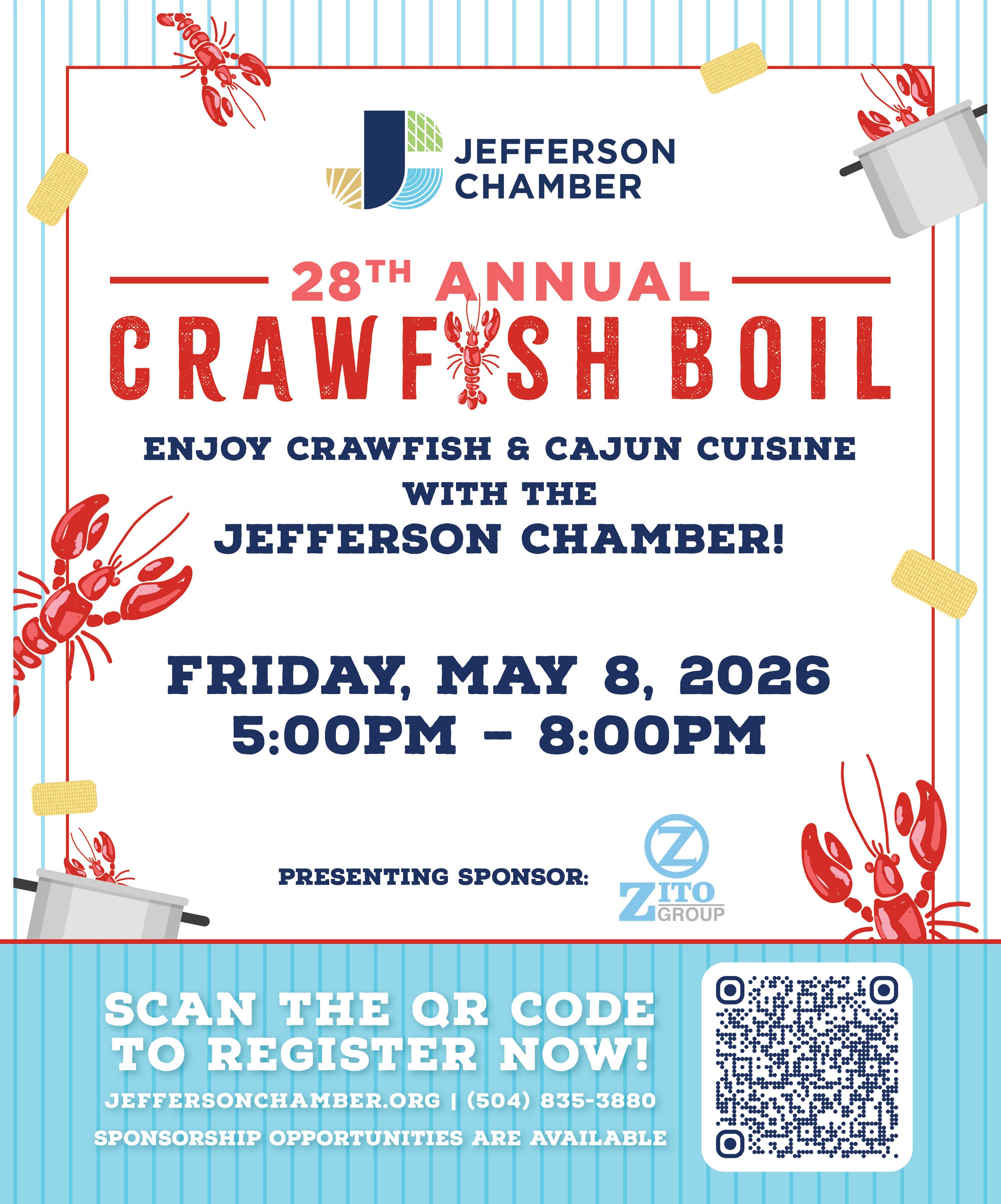
FROM THE LENS NEW ORLEANS 500
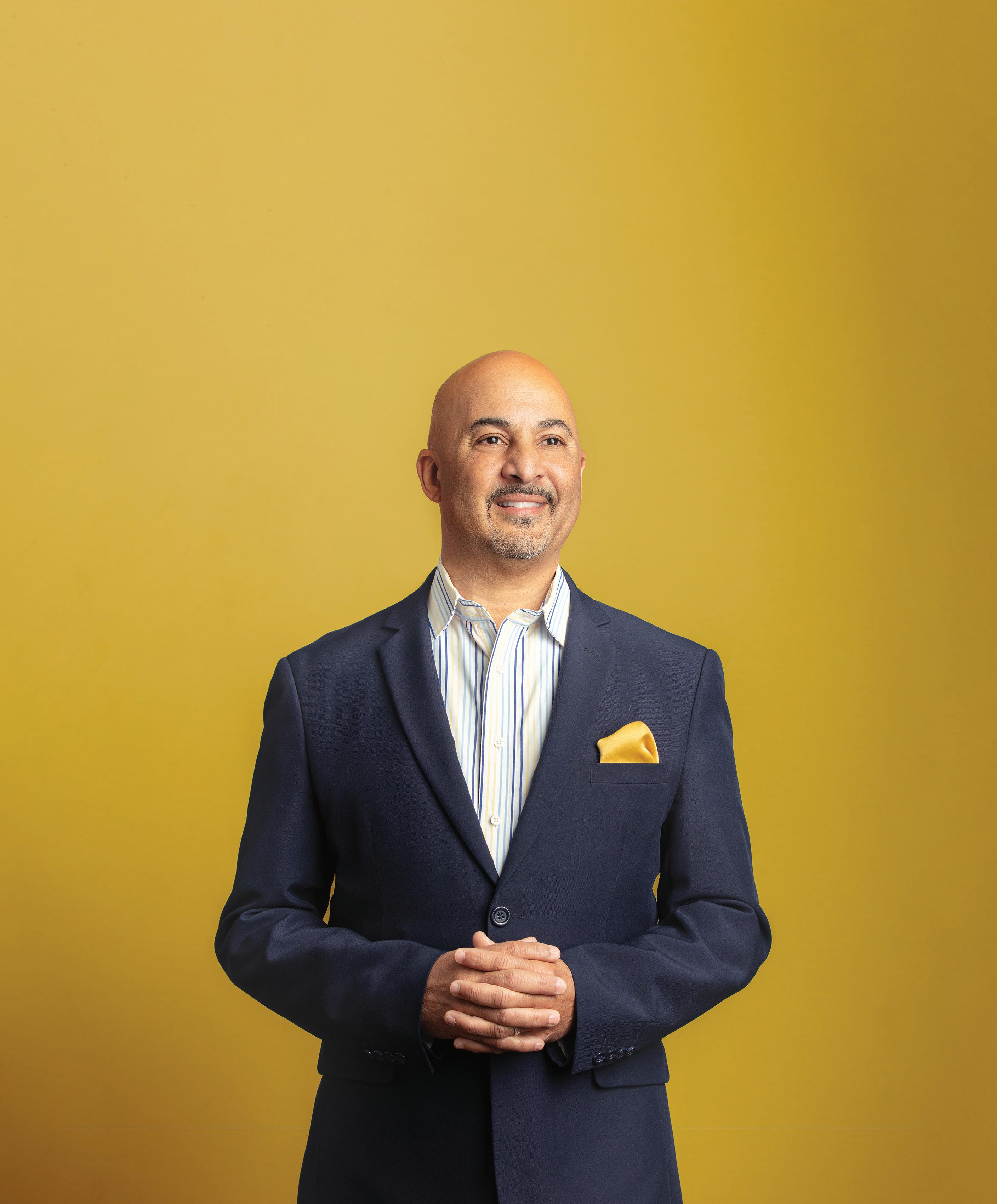
EDUCATION
University
FAVE PRODUCTIVITY HACK Using Windows button + H which allows speak and write capability
David B. Payton
Executive Director of Goldman Sachs 10,000 Small Businesses Program at Delgado Community College
Payton began his career with the 10,000 Small Businesses program as a business advisor during the time of its launch in April 2012, bringing with him 25 years of professional, leadership and consulting experience in multiple industries. He proudly serves on several local boards and commissions, including The New Orleans Chamber Foundation and the Greater New Orleans Sports Foundation Executive Board.