
Arrow Bronze is Australia's leading supplier of bronze and aluminium plaques for the funeral industry and memorial specialists.
For over 85 years, Arrow Bronze has been Australia’s leading manufacturer of bronze memorial plaques, proudly supporting cemeteries, crematoria and memorial professionals across Australia and New Zealand with quality Australianmade memorialisation solutions.
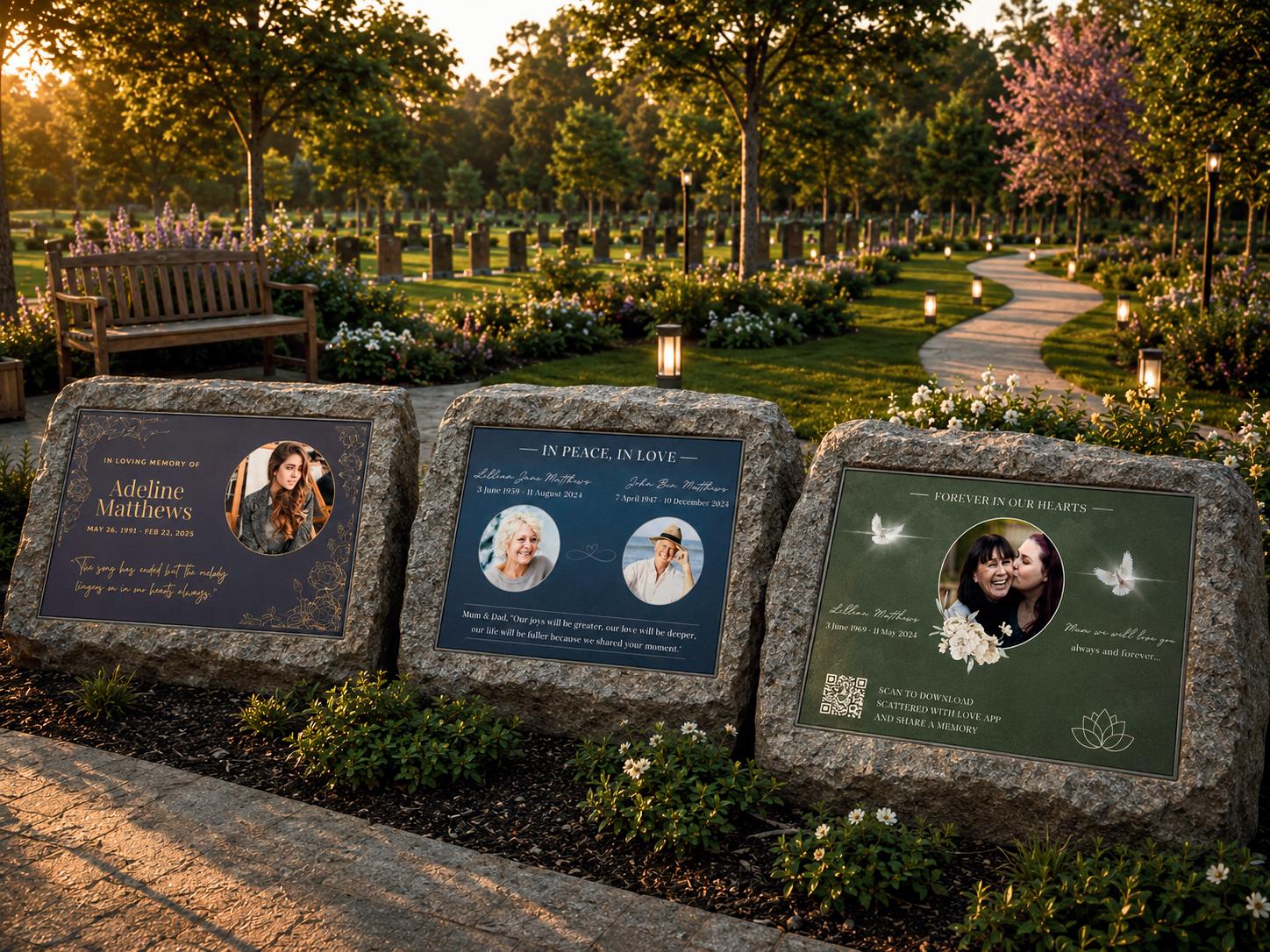
Today, Arrow Bronze is proud to introduce the next generation of memorialisation with our new premium Aluminium Memorial Range, combining exceptional durability, high-definition clarity and contemporary design flexibility.
Developed specifically for the unique demands of cemetery and memorial environments, the range utilises advanced bonding and pneumatic heat-press technology to permanently fuse artwork, photography, text and personalised designs directly into the aluminium substrate. The result is a visually striking memorial product engineered to withstand harsh Australian conditions including UV exposure, heat, coastal environments and daily public interaction.
Designed for both memorial and operational applications, the range is ideal for graves, cremation memorials, niche identification, directional signage, commemorative displays and bespoke tribute installations. Lightweight, corrosionresistant and low maintenance, aluminium provides a practical and elegant alternative for modern memorial spaces.
The new collection reflects Arrow Bronze’s continued commitment to innovation, preservation and personalised memorialisation, delivering products that not only honour loved ones, but also enhance the presentation and longevity of memorial environments.
We invite you to discover how the Arrow Bronze Aluminium Memorial Range can elevate memorial spaces with contemporary design, exceptional durability and meaningful visual storytelling.

Scan to view our Service Booklet and visit our website at www.arrowbronze.com.au.
For more information and wholesale pricing, contact our Customer Care team today.
Founded December 1985
ACN 009 555 426
PRESIDENT
Dean Matthews
Geelong Cemeteries Trust
CEO
p: (03) 5249 3939
e: dm@gct.net.au
VICE PRESIDENT
Denise Ora
CEO, NSW Metropolitan Memorial Park
p: (02) 9661 5655
e: denise.ora@mmplm.com.au
EXECUTIVE DIRECTORS
Kristy Constantine
Chief Executive, Bunbury Cemetery Board
p: (08) 9721 3191
e: ce@bcb.wa.gov.au
Michael Robertson
Adelaide Cemeteries Authority, CEO
p: (08) 8139 7400
e: michael.robertson@aca.sa.gov.au
Kerena McDonald
Coordinator Cemetery Services
Toowoomba Regional Council
p: (07) 4688 6686
e: kerena.mcdonald@tr.qld.gov.au
Debbie Hedger
Coordinator Cemetery Services Sunshine Coast Regional Council
p: (07) 5459 2300
e: debbie.hedger@sunshinecoast.qld. gov.au
Richard Runde
General Manager - QLD Invocare
e: richard.runde@InvoCare.com.au
ACCA SECRETARIAT
552 Victoria St, Wurundjeri Country, North Melbourne Victoria 3051
p: (03) 9969 7780
For information on advertising in ACCA News or to contribute content, please contact:
Alison Ronaldson, Editor at: admin@accaweb.com.au
Unless expressly stated the views put forward in ACCA News are not necessarily the considered views or policy of the Association or the Publisher, nor is the Association or the Publisher responsible for the claims of its advertisers.
Graphic Design by Dean O’Brien, NEO
Published by ACCA Secretariat











C Ashton Shirley (Dec)
October 1985 - June 1987
Graeme MacGill (Dec)
June 1987 - October 1987
Ian Roddick
October 1987 - October 1990
Kevin Crowden (Dec)
October 1990 - October 1993
David C Blake OAM
October 1993 - October 1997
Peter MacLean AM PSM JP
October 1997 - October 1999
Koos Adrichem
October 1999 - October 2001
Bruce Macumber
October 2001 - October 2003
James McKay
October 2003 - October 2005
Pieter den Boer
October 2005 - October 2007
Darryl Thomas OAM
October 2007 - October 2009
Brendan O’Connor
October 2009 - October 2010
Bryan Elliott
October 2010 - October 2012
Armen Mikaelian
October 2012 - October 2014
Peter O’Meara (Dec)
October 2014 - October 2016
Peter Deague
September 2016 - June 2017
Darryl Thomas OAM
June 2017 - October 2019
David Molloy
October 2019 - October 2022
Lauren Hardgrove
October 2022 - September 2025
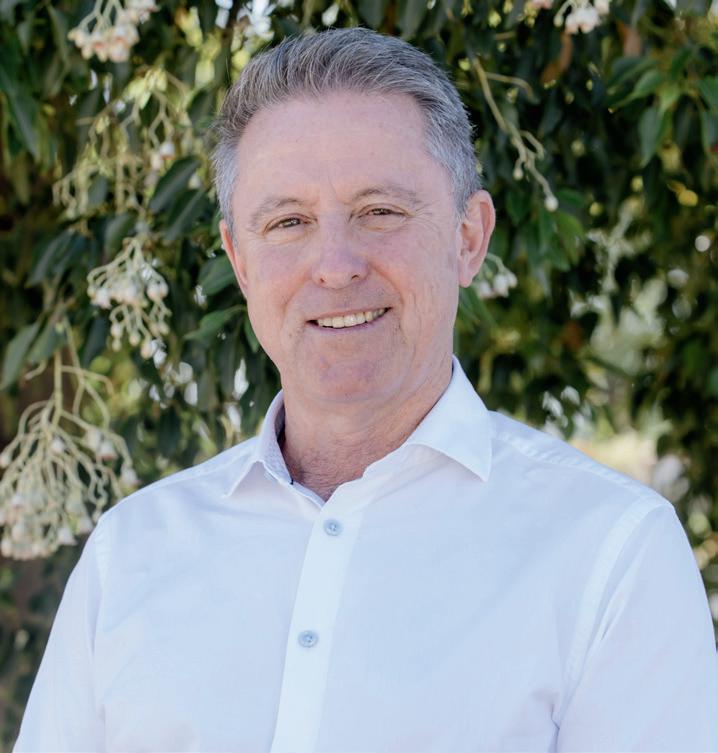
Across Australia and New Zealand, cemeteries and crematoria have long served as custodians of memory, history, and community identity. They are places where stories are preserved, generations are remembered, and the lives of those who came before us continue to shape our understanding of the present.
Every cemetery holds a rich tapestry of local history. Some of those interred played significant roles in shaping our towns, cities, and regions, while others provide valuable insight into the everyday lives of past generations. Together, these stories form an important part of our collective heritage.
Today, our industry is entering an exciting new era. Advances in artificial intelligence, digital technology, drones, 3D mapping, and interactive storytelling are transforming the way cemeteries engage with communities and preserve history for future generations.
There is a saying that we all die twice — first when we pass away, and second when our name is spoken for the last time. The innovative projects now being undertaken by cemeteries across Australasia and around the world are helping ensure those stories continue to be shared and remembered.
From online memorial platforms and immersive virtual tours to digitally mapped cemeteries and drone technology, innovation
is creating opportunities to connect people with local history in ways never before possible. Visitors can now explore cemeteries online, uncover the stories behind historic graves, and gain a deeper appreciation of the people who helped shape their communities.
Artificial intelligence is also opening new possibilities for education and engagement. ACCA members are beginning to explore interactive experiences that allow visitors not only to hear and view stories of those interred, but also to interact with digital content and ask questions in real time. These initiatives are making historical interpretation more engaging, accessible, and meaningful for people of all ages.
Importantly, these innovations are helping to reshape perceptions of what a cemetery can be. Ensuring they are recognised as important community assets that provide opportunities for reflection, education, heritage preservation, and connection. They help communities better understand their own history and identity.
This is particularly relevant when engaging younger generations. Many ACCA members are developing programs that encourage schools and students to explore local history through cemeteries, fostering both historical understanding and respect for these important spaces. Technology provides a powerful platform to support this work and make these stories more accessible and relevant.
It has also been encouraging to see ACCA’s suppliers and sponsors embracing innovation and supporting our members on this journey. Through online memorialisation, digital record management, mapping technologies, and AI-driven tools, the broader industry is helping drive positive change across the sector.
As President of ACCA, I am proud of the leadership shown by our members as they embrace new technologies while continuing to honour the dignity and heritage of the communities they serve. ACCA strongly supports this work and recognises the important role innovation will play in shaping the future of cemeteries and crematoria across our region.
One of the greatest strengths of being part of a national association is the opportunity to learn from one another. Across Australia and New Zealand, ACCA members are undertaking innovative projects, trialling new technologies, and developing new ways to engage their communities. By sharing these experiences, successes, and lessons learned, we can help lift standards across the entire sector. Whether through ACCA News, social media, industry forums, or our national conference, the exchange of ideas and exposure to better practice strengthens our profession.
We are at a pivotal moment for our industry profession. By embracing technology thoughtfully and responsibly, we can broaden our community engagement and industry relevance, ensuring the stories of our communities continue to live on for generations to come.
On behalf of the entire ACCA team I look forward to championing these important developments in virtual remembrance, by ensuring members are kept abreast of ongoing developments and innovation, now, and in the future.
Dean Matthews ACCA President
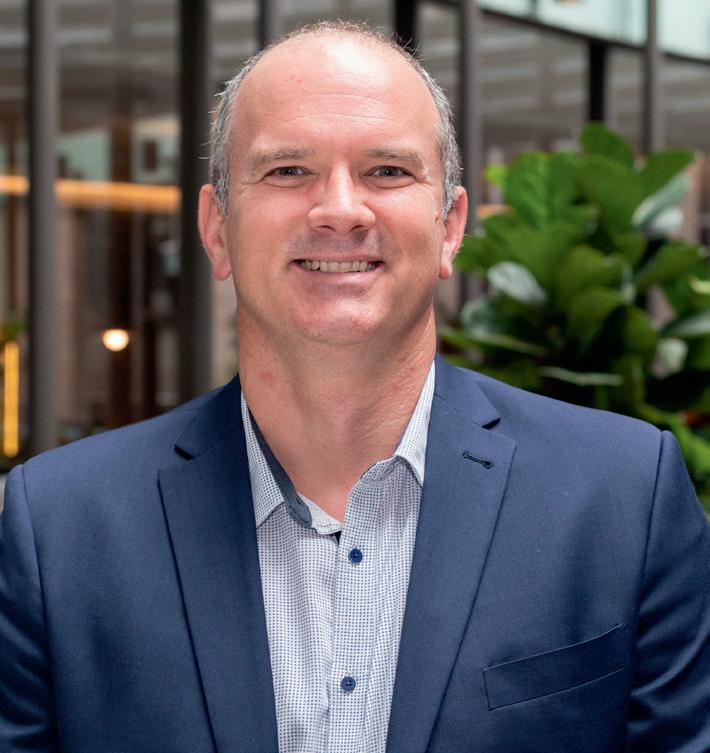
Over the past few months, I have spent a great deal of time talking about death and dying. One would assume that is a natural part of my role, and of course it is. What has excited me most, however, is not the topic itself, but who I have been having these conversations with.
They have not been industry colleagues, but members of the community who are genuinely curious about what happens when we die.
For many people, death and dying remain topics to be avoided. Yet I am increasingly finding that more members of the community are willing to engage in these conversations. They do not fear discussing their mortality. They are interested in exploring what they want to happen when they die, how they wish to be remembered, and what legacy they hope to leave behind.
Many of us have experienced the awkward pause when we explain what we do for a living. Increasingly, however, I am finding the opposite. People are genuinely curious. They have questions and are eager to learn more about death, memorialisation, cemeteries and cremation.
A few months ago, I had the opportunity to attend the launch of Dr Hannah Gould’s book, How to Die in the 21st Century. It is a fascinating exploration of how our society views and talks about death, and of the professions that support communities through one of life’s most significant transitions.
Throughout the book, Hannah encourages readers to be curious—to ask questions and to talk openly with their families about what they would like to happen when they die.
One story that particularly resonated with me was Hannah’s description of how she and her mother used Post-it notes on the fridge with prompts such as “Burial or cremation?” to break the ice and start important conversations. It is a simple idea that shows these conversations need not be formal or intimidating.
Of course, discussing death with a loved one can be confronting and highly emotional. Some people may feel that having these conversations with someone facing a serious illness is somehow giving up hope. Yet these discussions can also create some of the most meaningful moments we share with those closest to us. They provide an opportunity to connect, embrace the inevitable, and plan for an experience that has, so far, touched every human being who has come before us.
At our recent mid-year event in Hervey Bay, we were privileged to hear a powerful presentation from Louise O’Neill, CEO of Palliative Care Queensland. The team at Palliative Care Queensland does remarkable work educating and supporting healthcare workers, individuals, families and communities navigating end-of-life care.
Louise often speaks about the concept of “a good death”—the ability for an individual to die with dignity, minimal suffering, surrounded by loved ones, and with their personal wishes and medical preferences respected. While not everyone will experience a perfect death, the idea challenges us to think differently about dying. It encourages us to consider how we can support individuals and families not only in death, but in the time leading up to it. It is a philosophy that aligns closely with the values many of us share across the cemeteries, crematoria and memorialisation sectors.
I have also had the pleasure of attending several events organised by the State Library of Queensland as part of the Dearly Departed exhibition. These events demonstrated the growing public interest in exploring death, remembrance and the stories that connect us
across generations.
As part of the program, I participated in a Death Café and answered questions from community members about what happens when we die. More importantly, it provided an opportunity for me to listen. Participants openly discussed their feelings about death and dying, their views on green burials and alternative forms of disposition, and their thoughts on how we, as a society, should care for and remember our loved ones.
It was a powerful experience that helped me see our profession through a different lens. Beyond managing places and services, our most important role may be helping people navigate conversations society has traditionally avoided.
I am always encouraged to hear about the incredible work our members and the broader profession undertake every day to improve death literacy and create greater awareness of the role our sector plays in supporting communities. Whether it is hosting remembrance events for Mother’s Day and Pregnancy and Infant Loss Awareness Month, facilitating Death Cafés and guided cemetery tours, or commissioning projects such as Metropolitan Memorial Parks’ excellent Dead Famous series, these initiatives foster understanding, connection and engagement.
Every one of our members has the ability to build stronger connections with their community. Together, we can help change perceptions of what cemeteries and memorial parks are and what they can be. They are places of remembrance, reflection and healing. They are keepers of history, custodians of stories, and spaces where communities come together to honour those who have gone before us.
Most importantly, they provide an opportunity to start conversations—conversations that, more than ever before, people are ready and willing to have.
That curiosity gives me great optimism for the future of our profession.
Ben Kelly Chief Executive Officer









“Leading with integrity, innovating with purpose and prioritising sustainability to set the global standard for environmentally responsible and technologically advanced cremation solutions.”


Contact us


and filtration systems installed annually.
1,500+ DEVICES installed and maintained globally.




+61 (0) 4770 577 99


>20 YEAR average cremator lifespan- with regular servicing and maintenance.







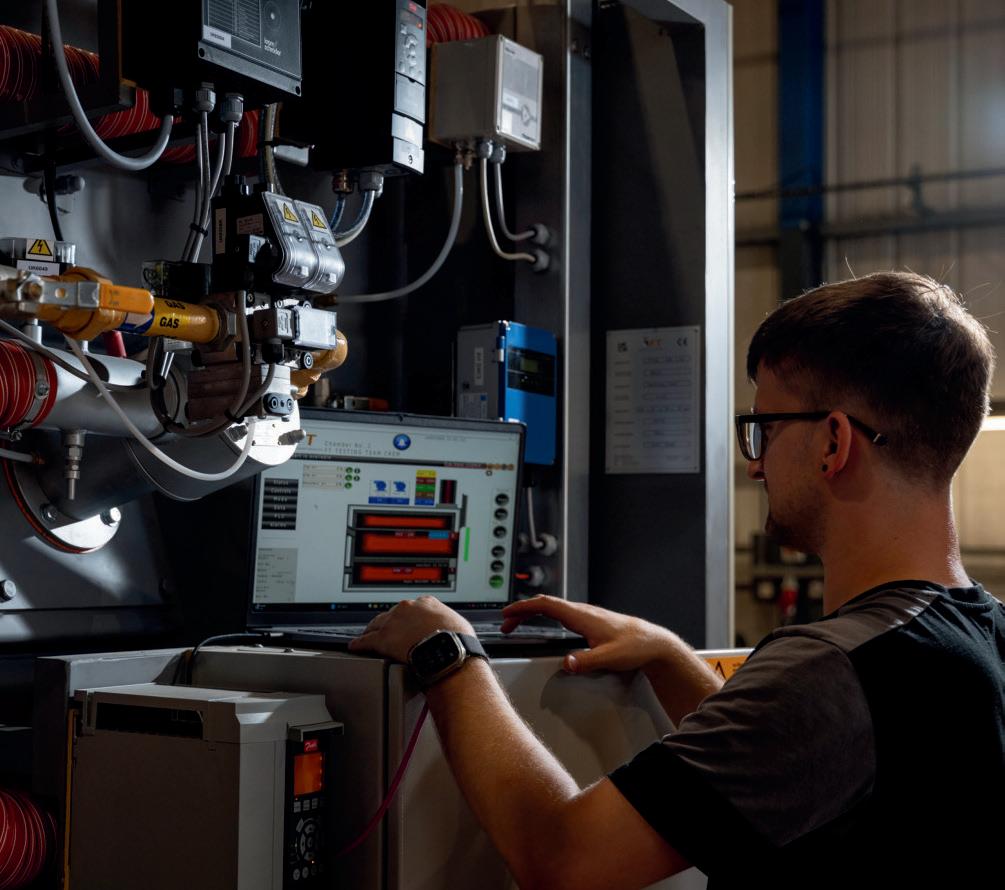
FT is the specialist in the design, manufacture, and installation of cremators, abatement systems, and a comprehensive range of ancillary equipment. With some of the most efficient cremators in the world, Ready to Filter Solutions, and up to 24/7 global support, FT delivers unparalleled performance and reliability. Innovative technology, trusted for generations, reliable by nature.
Cemeteries And Crematoria, Funeral Directors, Industry Corporates And Businesses!
The Australasian Cemeteries & Crematoria Association (ACCA) is a non-profit professional organisation that exists to provide leadership, professional services and development, communication and networking platforms to the cemetery and crematorium industry.
Full Membership:
Organisations that administer the affairs of a Cemetery and/or Crematorium in Australasia.
SUITED TO CEMETERIES AND CREMATORIA
Corporate Membership:
Shall be incorporated organisations or trading enterprises considered worthy of membership associated with the burial or cremation industry who satisfy the Board that one or all of their activities assist and complement the work of the association and/or other members.
SUITED TO INDUSTRY SUPPLIER COMPANIES
Affiliate Membership:
Shall be persons considered worthy of such classification associated with the burial, cremation or allied industry who are not otherwise qualified to become an associate fellow, associate member or corporate member of the association.
SUITED TO FUNERAL DIRECTORS
ACCA MERCHANDISE
How to Order
Please visit our webpage at accaweb.com.au/publications/resources to download the Order Forms and return to the Secretariat.
ACCA Brochures



The ACCA News magazine is published 4 times per year, and is dedicated to the cemeteries and crematoria industry in Australasia. Via electronic distribution, the readership is estimated to be over 2,000 within Australia and also internationally. The only magazine in Australia dedicated to the Cemeteries and Crematoria industry, it also promotes the latest in innovation, safe work practices, industry equipment and also events designed to help communicate the message of memorialisation and comfort to our communities.
Advertising in this publication is the ultimate way to promote your business or services to the cemeteries and crematoria industry and to increase your exposure. If you are interested in advertising in the ACCA News please contact the Secretariat on (03) 9863 6914 or email: admin@accaweb.com.au
ACCA also uses its magazine to encourage members to contribute summaries of interesting events or information pertaining to our industry that you believe other members would find beneficial. Please feel free to forward your articles to us for consideration of inclusion in the ACCA News.















LIFE MEMBER HONOUR ROLL































The quality print brochures ACCA produces, offer cemeteries a way to inform their customers on the subjects of memorialisation and cremation in a take-home brochure. Our members find this extremely valuable in conveying to the public this sensitive, and sometimes complex information in the form of reading material that can be easily understood, allowing informed decisions to be made about the services available to them.
Koos Adrichem
David Beames
John Campbell
Pieter Den Boer
Keith Joyce (Dec)
Karen Hinrichsen
David Lusby (Dec)
Peter Maclean AM
Bruce Macumber
James Mckay
Lawrie Miller OAM
Brendan O'Connor
Tony O’Connor (Dec)
Greg Taylor (Dec)
Darryl Thomas OAM
Armen Mikaelian
Bryan Elliott
David Molloy
Full Memberships, Corporate Memberships and Affiliate Memberships
Available. Contact the Secretariat today via emailing admin@accaweb. com.au
ACCA SECRETARIAT:
552 Victoria St, Wurundjeri Country, North Melbourne Victoria 3051
T: +61 3 9969 7780
E: admin@accaweb.com.au
W: accaweb.com.au


The quality-print brochures ACCA produces offer cemeteries a way to inform their customers of the subjects of memorial and cremation in a takehome brochure. Our members find this extremely valuable in conveying to members of the public this sensitive, and sometimes complex, information in the form of reading material that can be provided to customers, where they may absorb the information at home and make informed decisions
ASK ABOUT
die? given to the person when you die. unless personwritten you carry out yourexecutors. must I cremated remains is the estate. They various means, to provide a respects. kept in strewnan a memorial at Bereavement memorialwill and future range

































































HOW TO ORDER
Please email admin@accaweb.com.au for an order form. Simply complete and return via email where our friendly staff are waiting to process your order. Order Today! CEMETERY/CREMATORIUM
The 2026 ACCA Mid-Year Seminar, held in Hervey Bay, Queensland, proved to be an outstanding success, bringing together cemetery and crematoria professionals from across the country for two days of education, networking, and industry discussion.
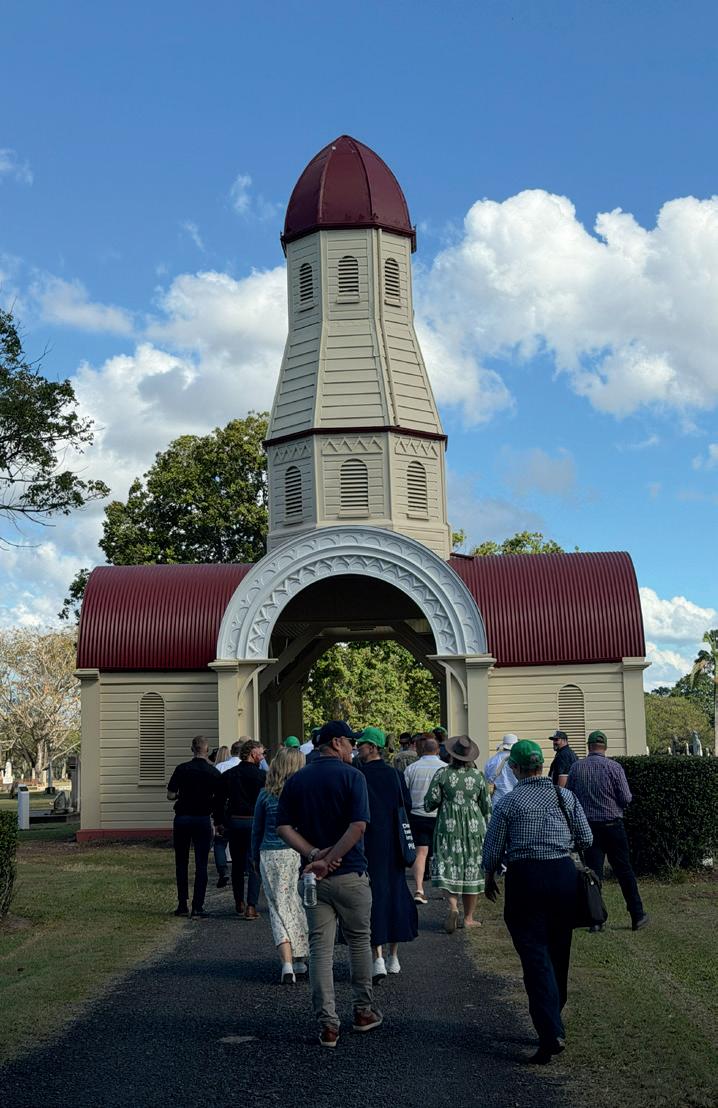
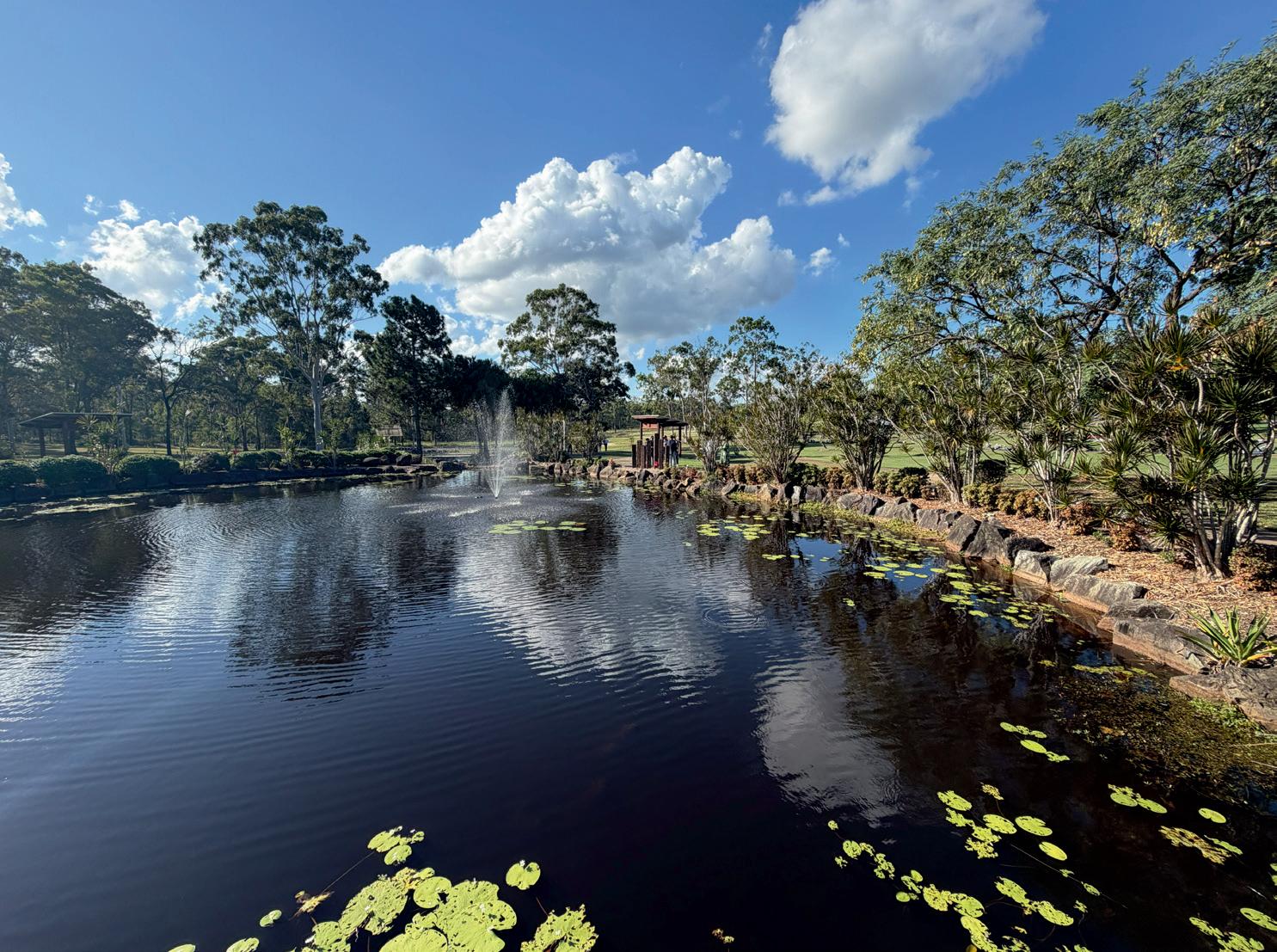
Held at the Mantra Hotel Hervey Bay combined with a tour of the historic Maryborough Cemetery, this year’s seminar delivered a fresh and engaging program designed to inform, inspire, and support professionals working within the cemetery and memorial park sector.
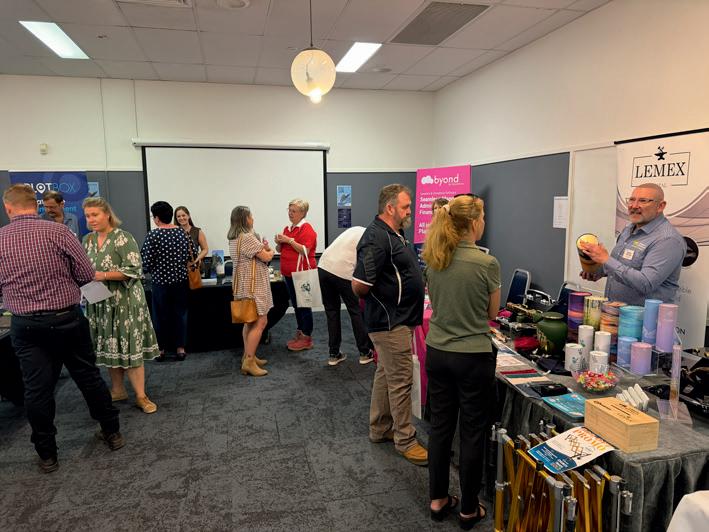
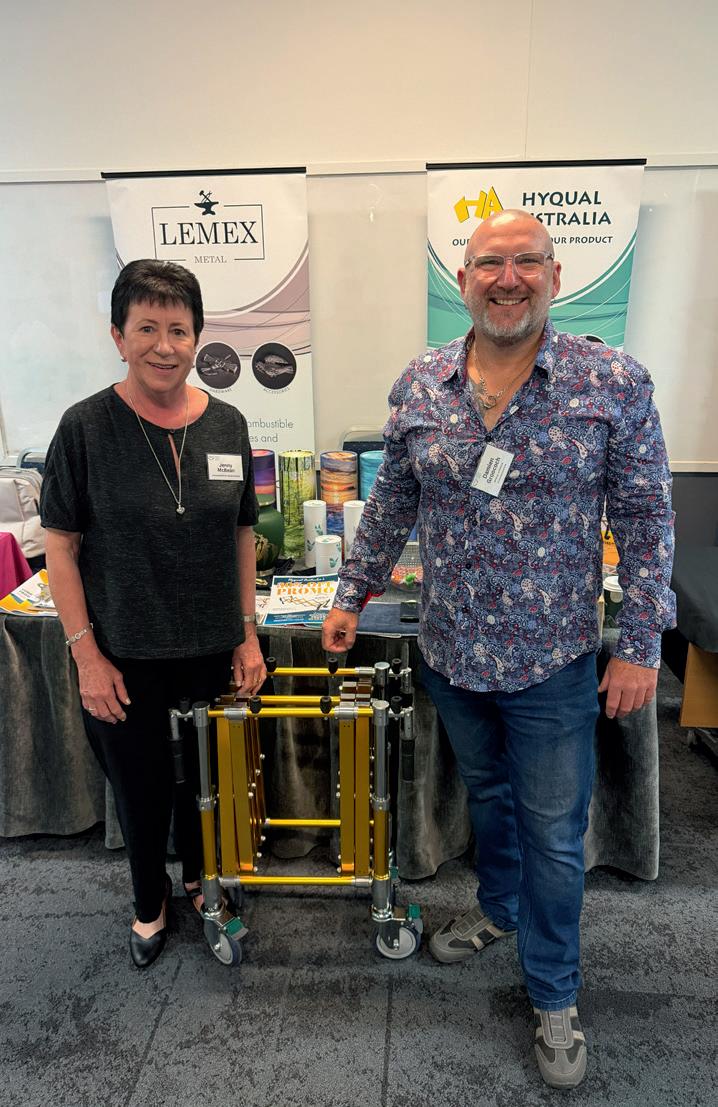
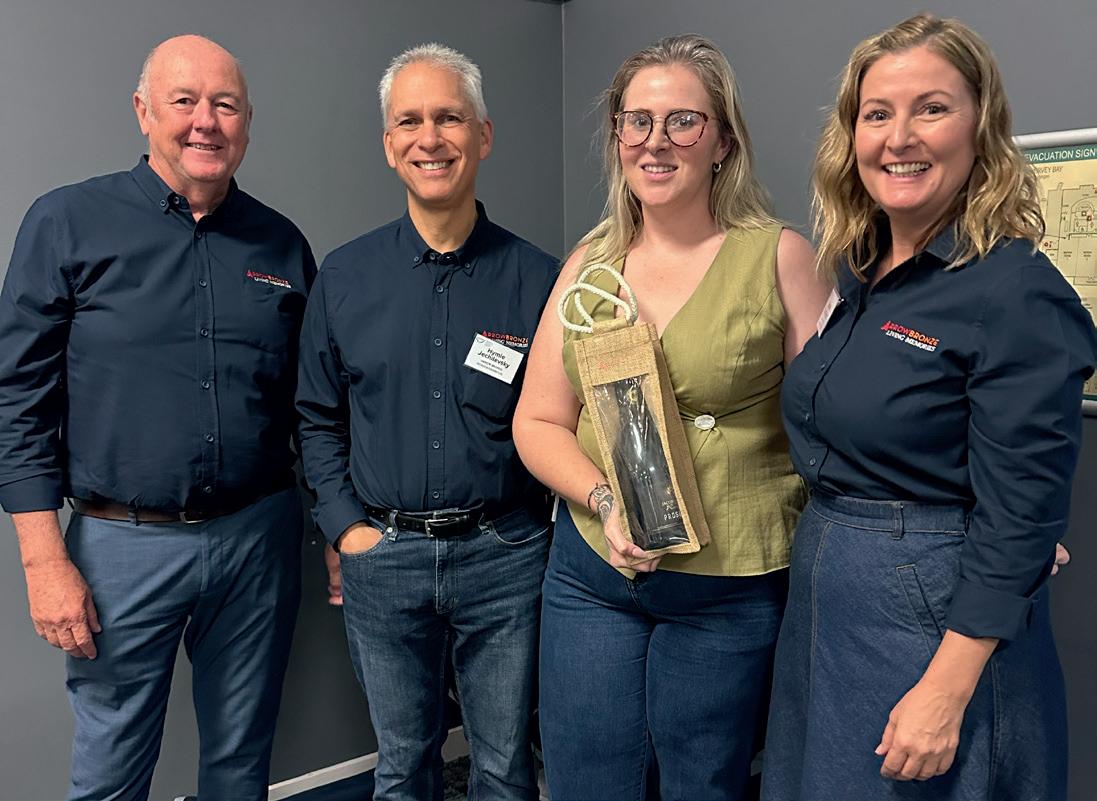
The program commenced with educational sessions and a trade style exhibition where delegates had the opportunity to connect with industry suppliers, colleagues, and presenters while exploring products and services relevant to our sector. ACCA would like to thank the generous support of its Corporate Sponsors, whose ongoing contributions continue to make these important professional development events possible.
Opening proceedings included welcome addresses from Fraser Coast Regional Council Mayor George Seymour and Ben Kelly, setting the tone for a highly engaging and collaborative seminar.
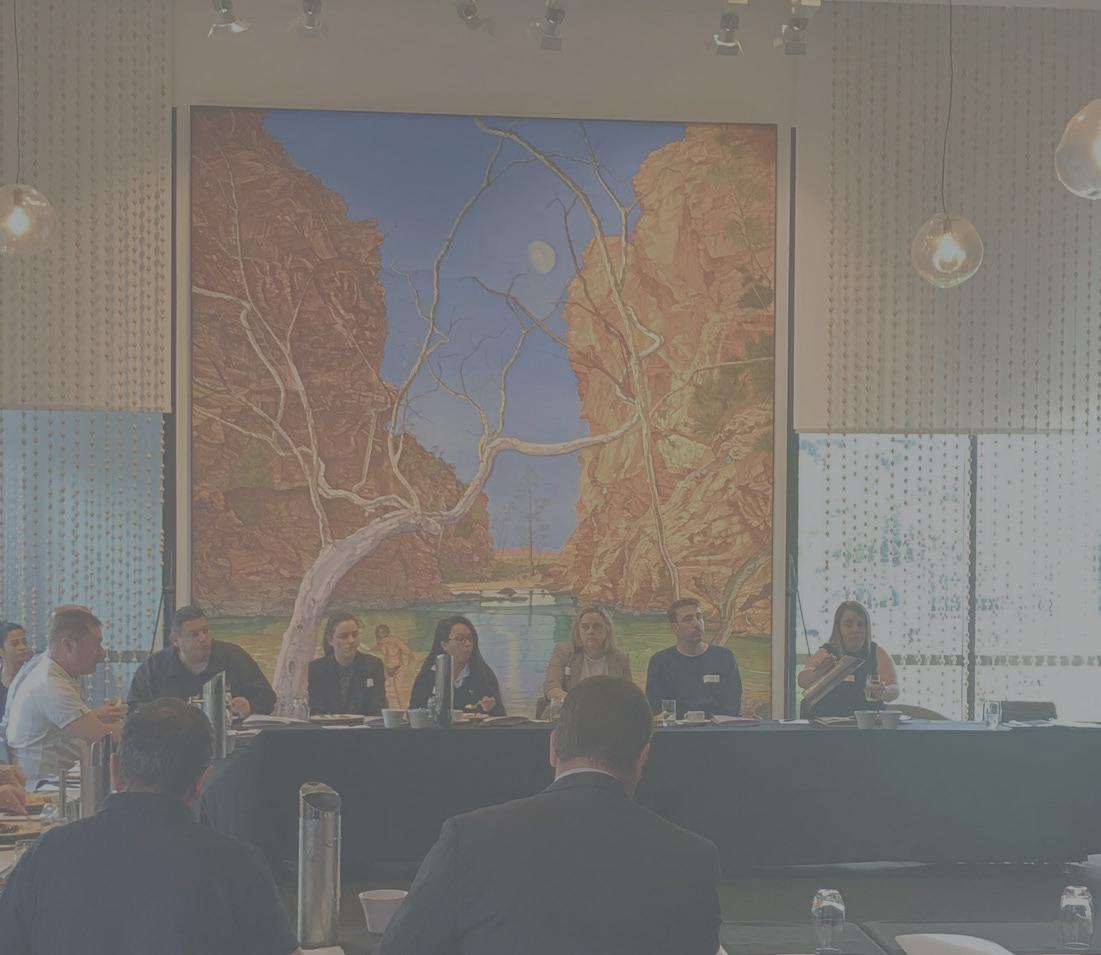
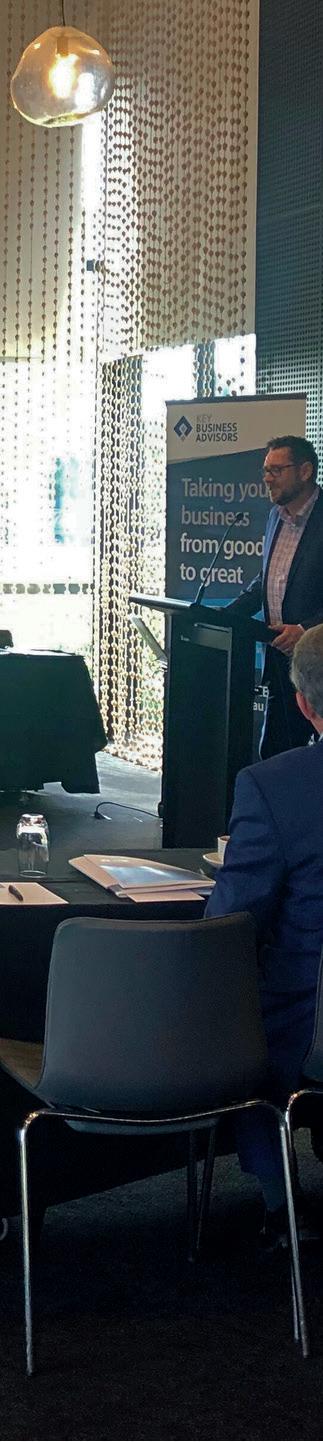
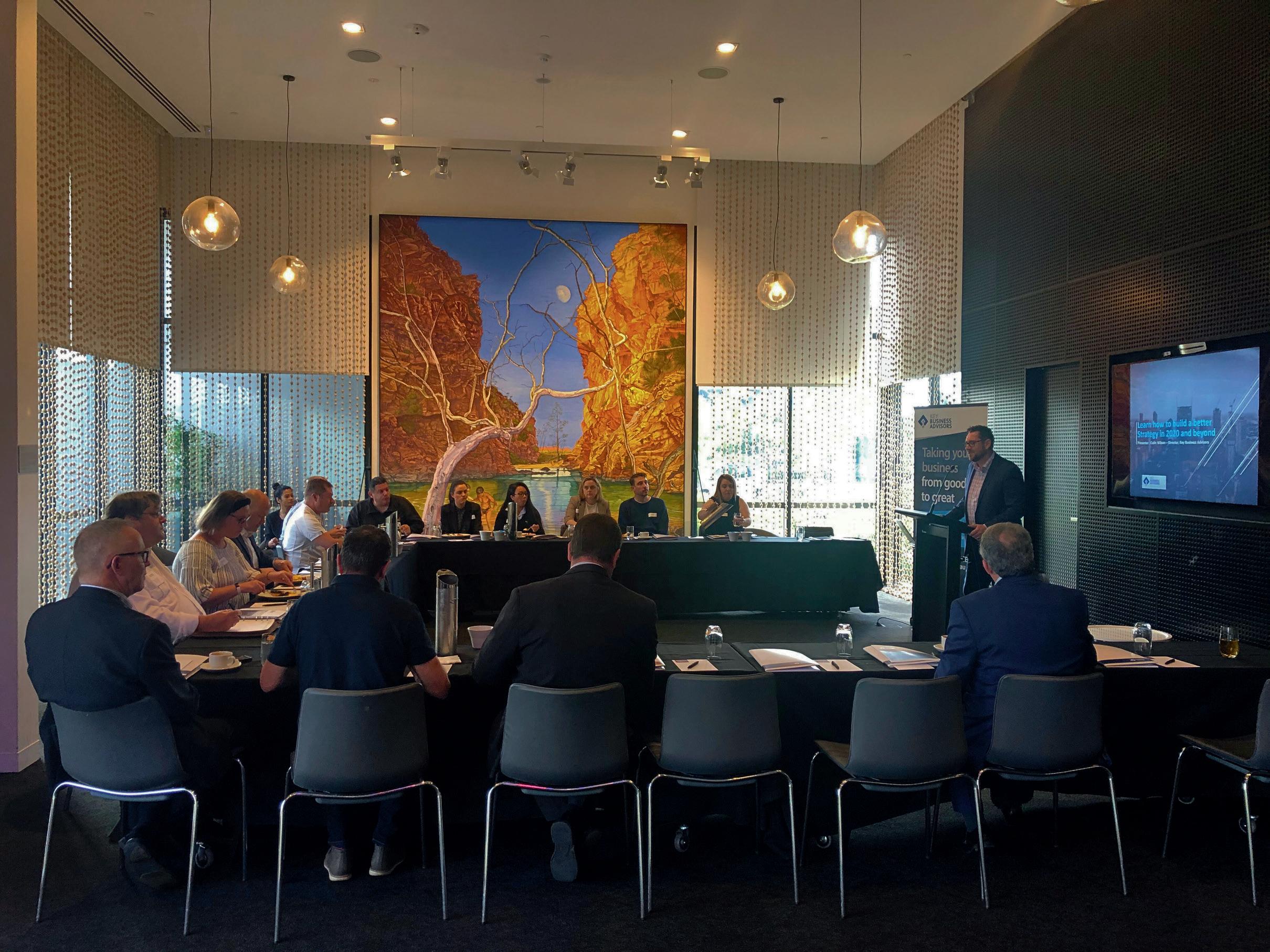
One of the standout sessions from the first day was Team Culture is Everything, presented by Key Business Advisors. This session focused on the importance of building strong workplace cultures and developing high-performing teams, sparking meaningful discussion among attendees around leadership, communication, and staff wellbeing.
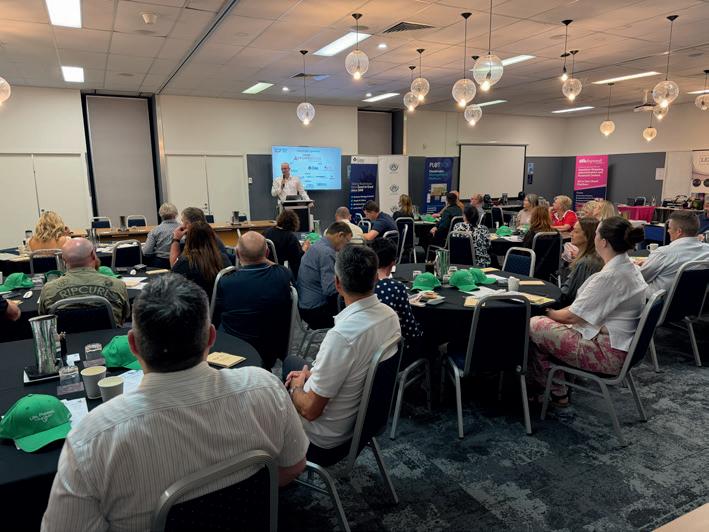
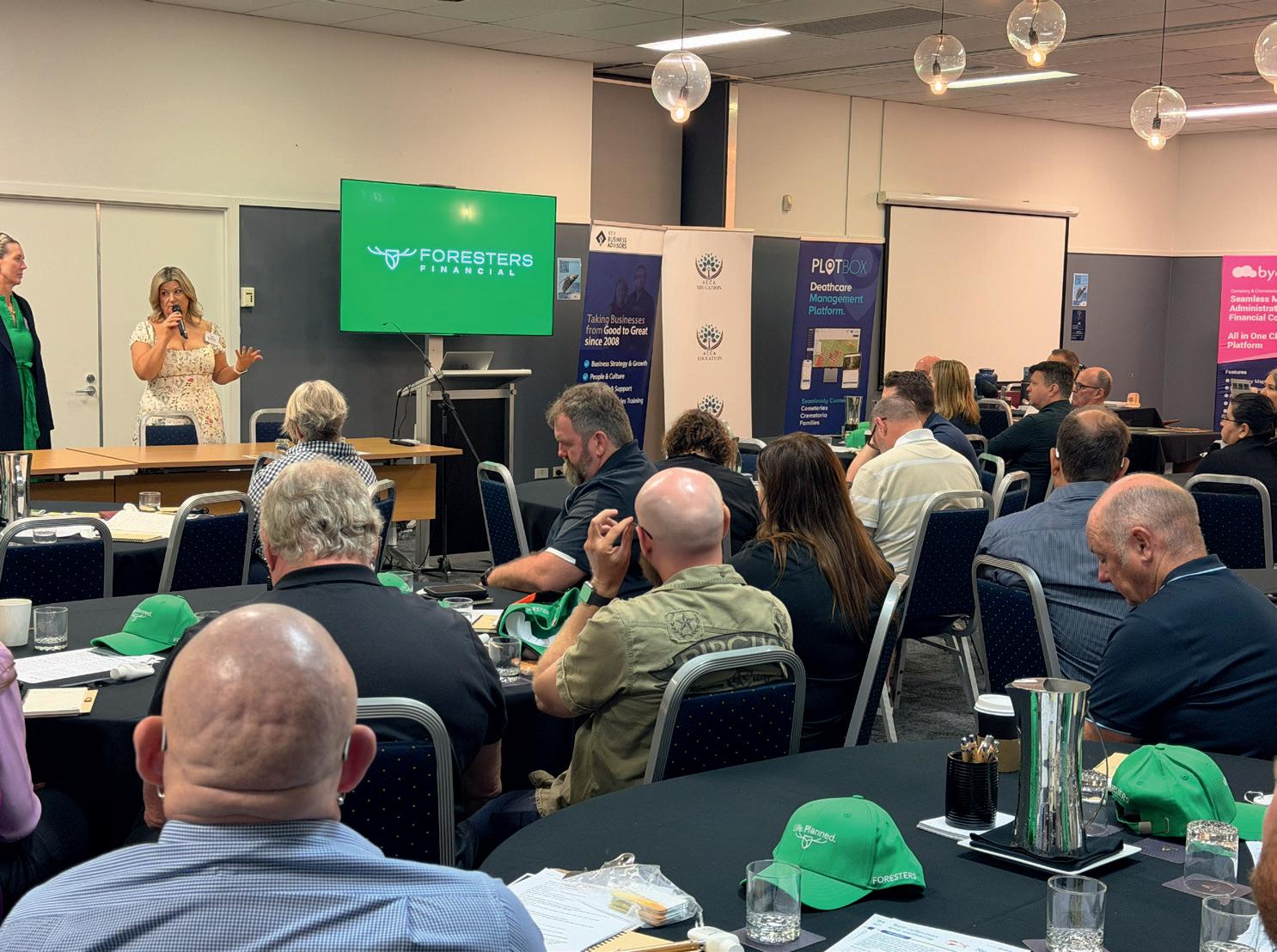
Delegates also heard from Foresters Financial on best practice approaches to managing prepaid cemetery funds, with practical insights into governance, financial management, and long-term sustainability within cemetery operations.
A panel discussion featuring Lisa Herbert, Debbie Hedger, and Kerena McDonald explored the importance of engaging communities and councils to better showcase the value of cemeteries. The discussion highlighted how historical storytelling, heritage interpretation, and meaningful visitor experiences can strengthen community understanding and appreciation of cemeteries as important public places.
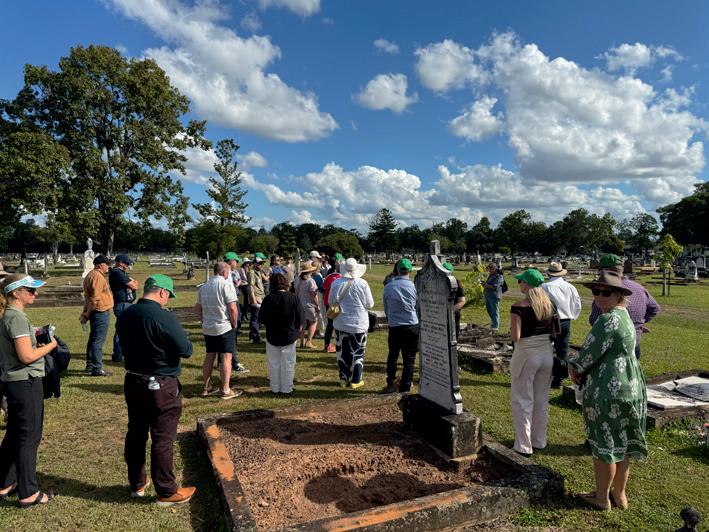
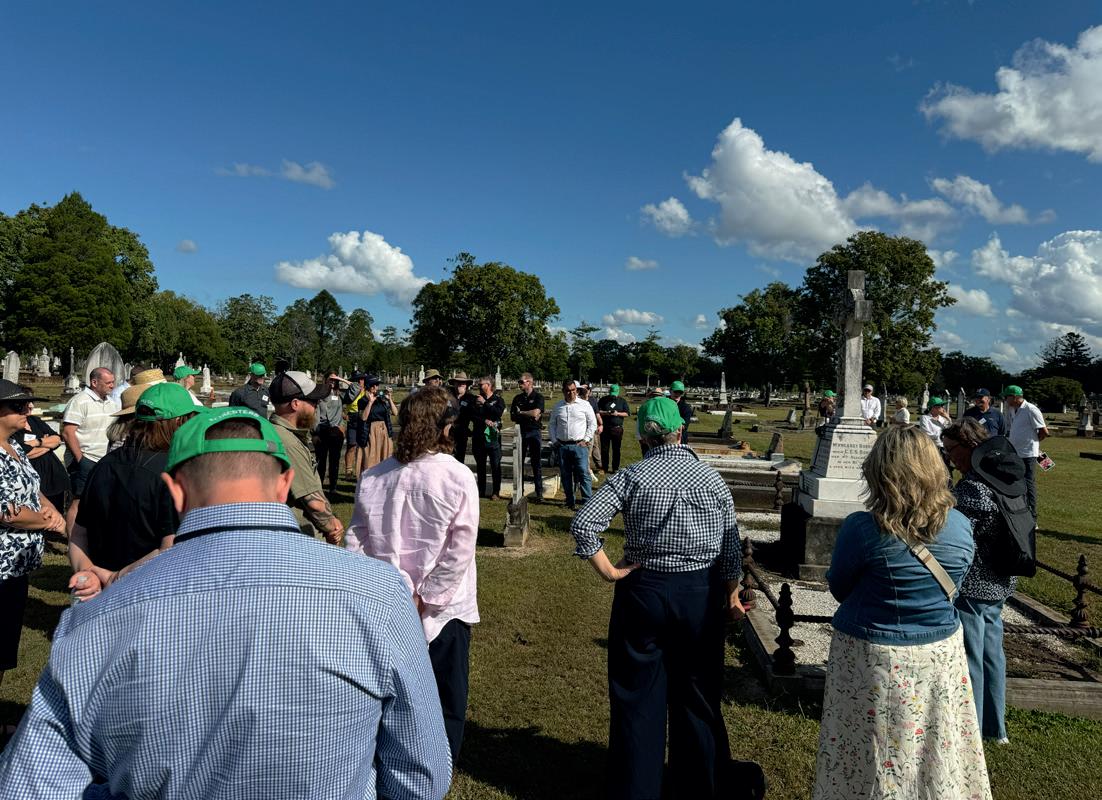
The afternoon Maryborough Cemetery tour was a major highlight of the seminar. Hosted by Rob Moore and the Fraser Coast Regional Council team, delegates were provided with a unique opportunity to explore one of the region’s most historically significant cemeteries. The guided tour examined cemetery heritage, symbolism, monument preservation, operational insights, and community engagement initiatives. Attendees particularly valued the practical and real-world learning opportunities that the tour provided. A big thank you to Rob and the team for hosting us.
Adding to the success of the seminar was the networking dinner held at the Waterfront Restaurant in Hervey Bay. The relaxed beachfront setting provided the perfect opportunity for delegates, sponsors, presenters, and ACCA representatives to connect, share experiences, and strengthen industry relationships.
Day two continued with a strong lineup of educational sessions and industry updates. Louise O’Neill from Palliative Care Queensland delivered an insightful presentation on the important role of palliative care and how cemetery and crematoria professionals can work alongside support services to better assist families during end-of-life care.
Jordan Pritchard from Geelong Cemeteries Trust also delivered a highly practical session on shrouded cremations, exploring emerging funeral practices and operational considerations within crematoria environments.
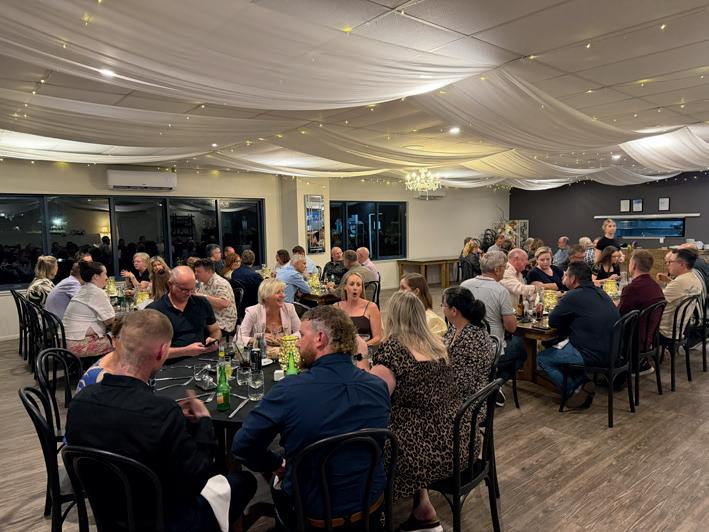
Throughout the seminar, attendees consistently praised the practical content, diverse speaker lineup, collaborative atmosphere, and opportunities to network with industry colleagues.
The success of the 2026 ACCA Mid-Year Seminar once again highlighted the importance of professional development, collaboration, and industry connection within the cemetery and crematoria sector. ACCA looks forward to continuing to deliver valuable educational opportunities and bringing the industry together through future events and training initiatives.
Join us for the 37th Annual ACCA Conference





40 years
AUSTRALASIAN CEMETERIES & CREMATORIA ASSOCIATION
Registrations are open for the Annual Conference, and ACCA is proud to unveil an exciting and thoughtprovoking program bringing together an outstanding lineup of speakers, workshops, industry leaders, and practical learning opportunities from across Australia and beyond.
This year’s conference theme, Creating Connections and Understanding Your Customer, will serve as a strong and consistent thread throughout the program, with sessions designed to explore community engagement, customer connection, leadership, communication, innovation, and the future direction of the cemetery and crematoria sector.
The 2026 conference program has been carefully curated to provide delegates with practical insights, contemporary perspectives, and meaningful discussions that attendees can immediately apply within their organisations and communities.
ACCA is excited to welcome an exceptional lineup of keynote speakers and industry experts from a wide range of disciplines including leadership, behavioural science, placemaking, palliative care, death studies, risk management, history, communications, and community engagement.
One of this year’s headline presenters is Winitha Bonney OAM, who will deliver a keynote and workshop focused on Risk-Ready Leadership: Closing the Implementation Gap in High-Scrutiny Environments. Winitha’s session will explore how leaders can develop highperforming teams while navigating complex and emotionally demanding environments. Her presentation will focus on balancing compassion with commercial realities, strengthening team capability, and turning strategy into practical action that improves performance and reduces risk.
Consumer advocate and journalist Christopher Zinn will provide practical insights into building trust and engagement with customers, particularly when supporting families through emotionally sensitive and high-stakes decisions. Drawing on decades of experience advocating for consumers, Christopher will explore how expectations are changing and how organisations can better align their services to community needs.
Human behavioural profiler and leadership coach Natalie Waters will deliver practical frameworks for understanding behavioural patterns, communication styles, and decisionmaking triggers. Her session is designed to help delegates improve communication, reduce conflict, and strengthen relationships with both customers and colleagues.
Marketing expert Andrew Hoyne will examine the evolving role of cemeteries within the global “place economy.” His presentation will explore how cemeteries contribute to community identity, liveability, and social connection, while showcasing international examples of innovative placemaking and community-focused design.
The conference program will also feature several highly regarded academics and subject matter experts exploring contemporary issues shaping the future of deathcare and memorialisation.
Dr Kate Ariotti from the University of Queensland will present insights into Australia’s approach to commemorating war dead, while also exploring the lived experiences of Australian prisoners of war during WWII and how they cared for their deceased under extreme conditions.
Leading academic Dr Georgina Robertson will provide delegates with insight into emerging methods of alternative body disposition, including alkaline hydrolysis. Her session will examine the scientific, environmental, social, and regulatory considerations influencing the adoption of these emerging practices.
Renowned death studies academic and author Dr Hannah Gould will bring a contemporary and thought-provoking perspective on death literacy, modern dying practices, and the changing relationship society has with death and memorialisation.
Delegates will also hear from Dr Kristy Wright, Forensic Biologist and Squadron Leader with the Royal Australian Air Force. Drawing from her experience across major crime investigations, disaster victim identification, and military recovery operations, Dr Wright will share compelling insights into the science and human impact of identifying and returning the deceased to their families.
In addition to keynote presentations, the conference program includes a strong focus on practical workshops and operational learning opportunities.
Wayne Middleton from Reliance Risk will facilitate an interactive Business Continuity Management Workshop designed specifically for cemetery and crematoria operations. This hands-on session will help participants prepare for and respond to operational disruptions, natural disasters, and reputational crises through practical risk management tools and business impact analysis exercises.
A major highlight of the conference program will be this year’s Australian Death Studies Society Lecture, delivered by Distinguished Professor Ben White
Professor White’s presentation, Death, Choice and Evolution: The Experience of Voluntary Assisted Dying in Australia, will provide a comprehensive exploration of voluntary assisted dying (VAD) legislation and implementation across Australia.
Drawing on his extensive research and direct involvement in policy development, Professor White will examine how VAD is being experienced by patients, families, and healthcare professionals, while exploring the ethical, legal, and societal questions continuing to shape this evolving area of end-of-life care.
This session promises to deliver one of the most thought-provoking discussions of the conference.
A strong feature of the 2026 conference program will be the breakout sessions showcasing the innovative and communityfocused work being undertaken by ACCA members across Australasia.
Representatives from Townsville City Council, Centennial Park, Metropolitan Memorial Parks, Metropolitan Cemeteries Board, and Boroondara Cemetery Trust will share practical examples of how their organisations are building stronger community relationships, reshaping perceptions of cemeteries, and creating more engaging customer experiences.
These sessions are designed to provide delegates with practical ideas and confidence to implement similar initiatives within their own organisations and communities.
Alongside the educational program, delegates can explore the ACCA Trade Exhibition, featuring a wide range of valued industry sponsors and suppliers showcasing innovative products, services, technologies, and solutions supporting the cemetery and crematoria sector.
The trade exhibition provides an excellent opportunity for attendees to connect directly with suppliers, discover new innovations, discuss operational challenges, and strengthen relationships with businesses supporting the industry. From memorial products and cremation technologies through to software, safety solutions, and cemetery infrastructure, the exhibition will once again be a key feature of the conference experience.
ACCA sincerely acknowledges and thanks all conference sponsors and exhibitors for their ongoing support and contribution to the success of the event.
Prior to the official conference commencement, delegates will also can participate in optional workshops and training sessions.
One of the featured pre-conference workshops is Psychological Wellbeing & Supporting Grieving Clients, an immersive full-day session designed to strengthen workplace wellbeing and improve confidence when supporting grieving families.
Delivered by Relationships Australia Victoria (RAVs) the morning component focuses on psychological wellbeing within the workplace and explores evidence-based approaches for creating safe, resilient, and supportive work environments aligned with current legislative obligations.
The afternoon session shifts focus to supporting grieving clients, equipping participants with practical communication skills, active listening techniques, and strategies for responding compassionately and professionally to individuals experiencing grief.
Another specialised workshop, delivered by Xyst - Asset Management for Cemeteries and its Facilities, will focus on moving organisations toward industry best practice in cemetery asset management. Based on the International Infrastructure Management Manual and IPWEA Practice Notes, this practical course will explore asset management objectives, service levels, data management, condition assessment, risk management, and optimised decision-making within cemetery operations.
The ACCA Annual Conference is shaping up to be much more than a traditional industry event. It is an opportunity for professionals from across the sector to come together, share ideas, strengthen relationships, and explore the future of cemeteries, crematoria, memorial parks, and end-of-life services in Australasia.
Through its strong focus on connection, communication, leadership, innovation, and community engagement, this year’s conference promises to deliver meaningful insights, practical strategies, and inspiring conversations that will continue long after the event concludes.
A major highlight of this year’s event will be the special dinner event celebrating 40 years of ACCA, proudly sponsored by ACCA Platinum Sponsor Arrow Bronze. This milestone celebration will bring delegates, industry leaders, sponsors, suppliers, and long-standing members together for a memorable evening recognising the growth, achievements, and evolution of the cemetery and crematoria sector over the past four decades.
The celebration dinner will provide an opportunity to reflect on ACCA’s history, acknowledge the individuals and organisations who have contributed to the Association’s success, and celebrate the strong sense of community that continues to shape the industry today. Delegates can look forward to an evening of connection, entertainment, and celebration as ACCA marks this significant milestone alongside colleagues and peers from across Australasia.
At Melbourne General Cemetery, one of Victoria’s oldest and most significant cemetery landscapes, Project Cultivate is reshaping how we think about memorial spaces.
What began as a pilot is now a large-scale demonstration that cemeteries can deliver biodiversity, climate resilience and community connection while still meeting the operational and amenity needs of an active public place.
The question was simple: can we move away from intensive, herbicide-reliant maintenance and create landscapes that are more functional, resilient and lower-input over the long term?
So far, the answer is yes.
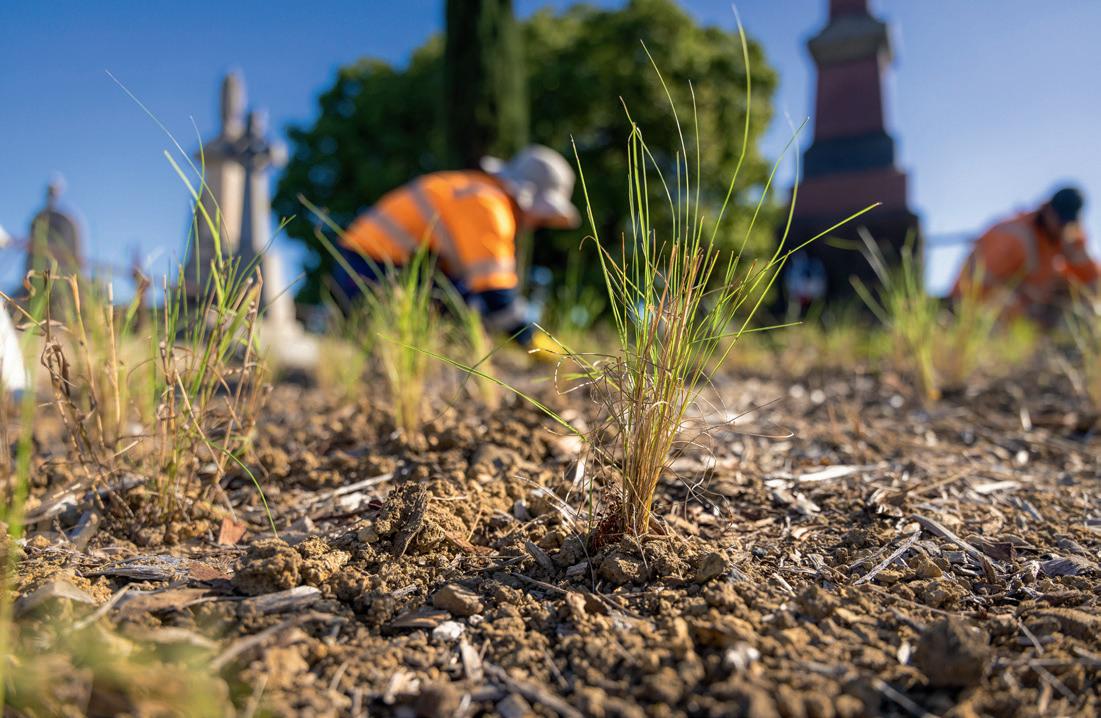
Across 56 acres, we’ve established 500,000+ indigenous grassland plants, reduced herbicide use by 98 per cent, increased beneficial insects, birds and reptiles, and lowered ambient air temperatures in revegetated areas by an average 3 per cent.
A key storytelling shift has been redefining “canopy”. In cemeteries, large trees can conflict with memorials, infrastructure and long-term asset management.
Canopy is any living cover that shades and protects bare earth—understorey grasses, wildflowers and groundcovers that cool soil,
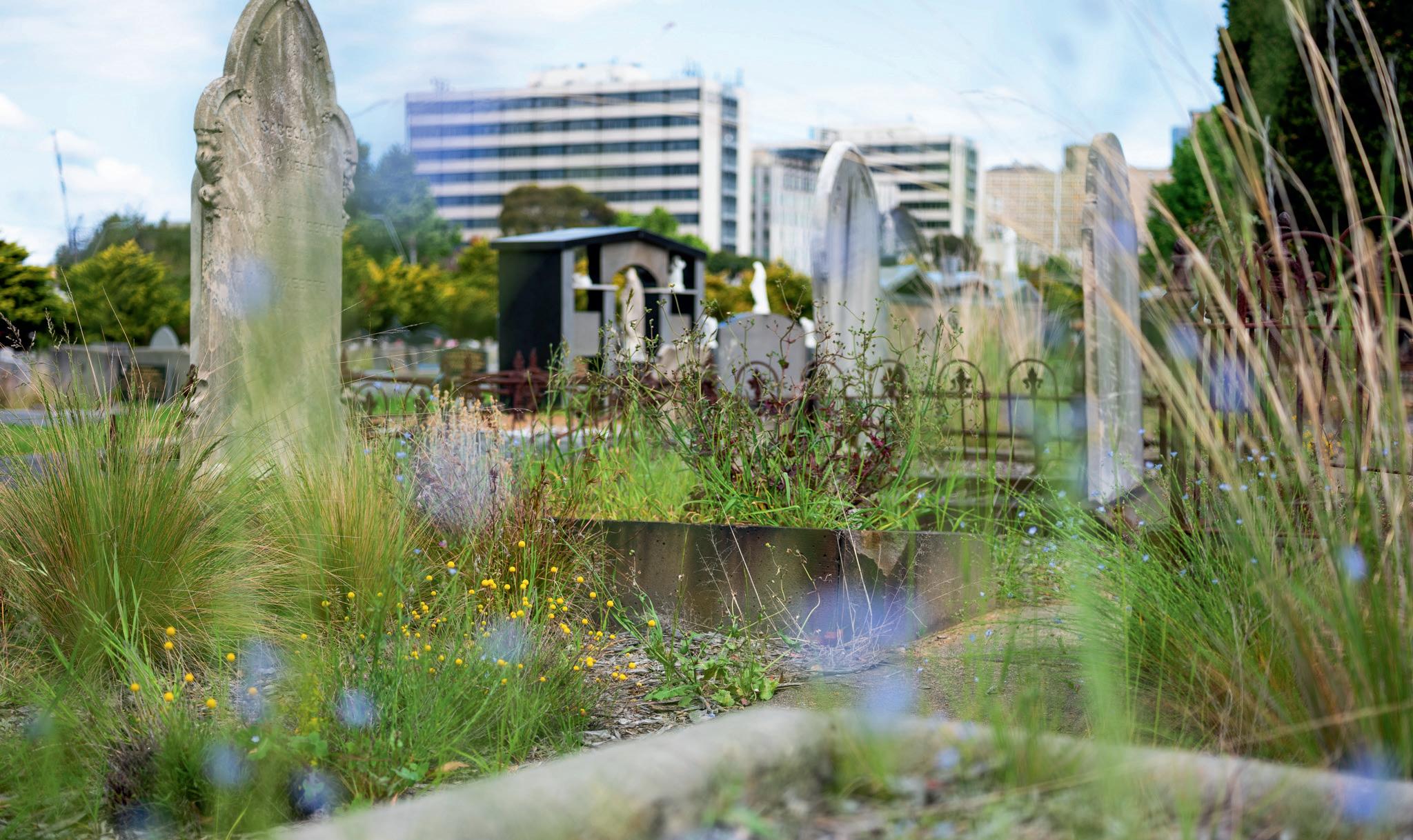
suppress weeds, retain moisture and create habitat. Cultivate proved that the most effective intervention can happen at ground level.
Like any large-scale revegetation project, we learned fast—and adjusted often.
Early on, soil disturbance triggered fleabane from a dormant seedbank beneath decades of compaction. It reinforced that establishment is where the real work starts. Plant ID, early weed control and responsive management matter in the first growth cycles.
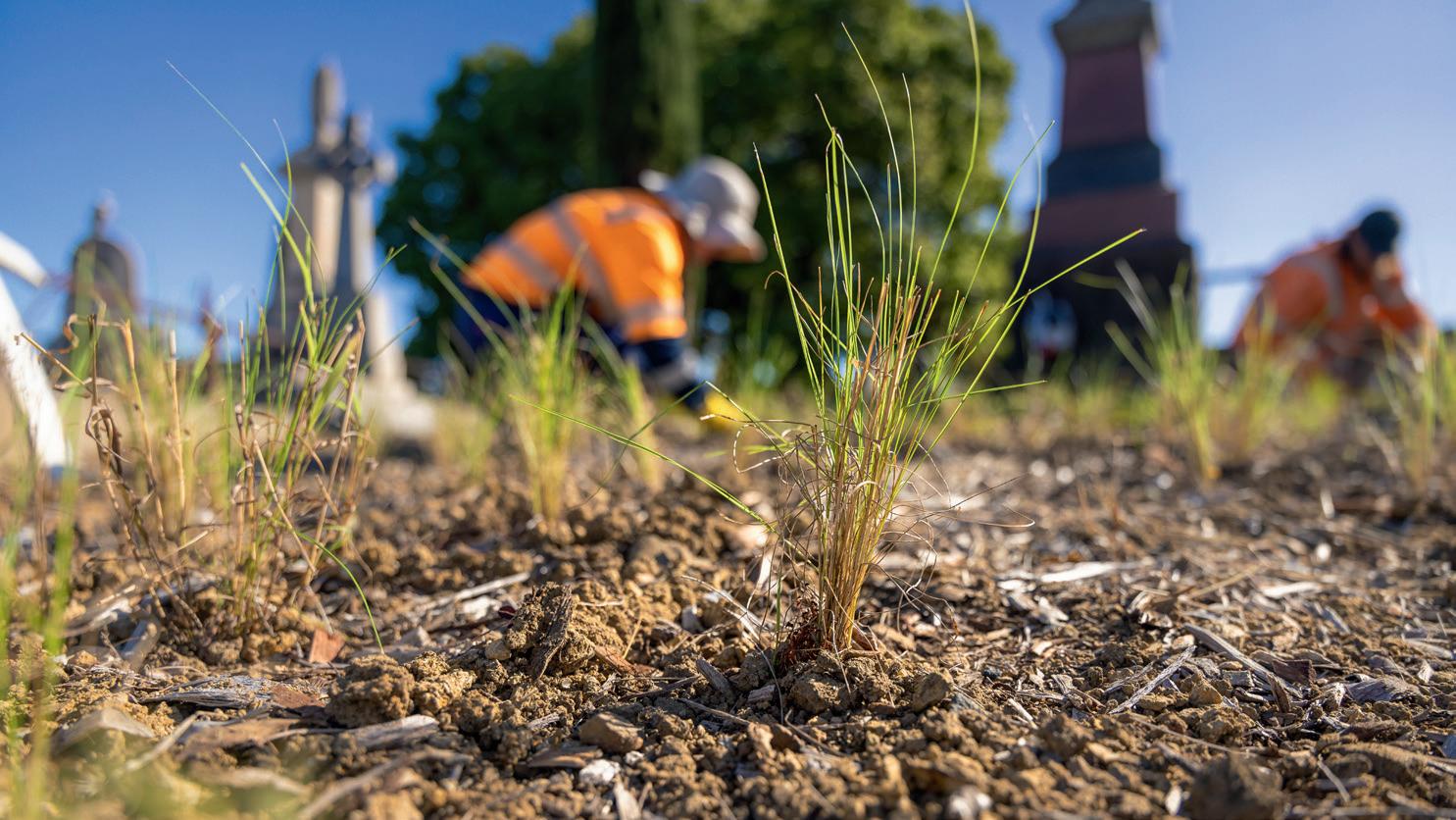
We also learned ecological planting in public space needs flexibility. Some early mixes leaned heavily into grasses, which challenged sightlines and presentation in highly visited memorial areas. Later palettes shifted to more flowering forbs and wildflowers with less grass dominance.
This delivered stronger seasonal colour, softer visual appeal and better public acceptance while still achieving biodiversity outcomes.
Naturalistic landscapes still need to look intentional. Crisp path edges, tidy interfaces and scheduled works such as biomass reduction help visitors see the space is actively cared for—especially in a cemetery, where presentation carries deep emotional significance.
Biomass reduction is planned cutting-back at key times to manage build-up of grasses and stems, reduce dry matter and support native regeneration—mimicking seasonal grazing or fire while maintaining access and safety.
It’s an ecological management tool, not a simple tidy-up. Done well it keeps landscapes healthy, legible and regenerating rather than overly dense or seemingly unmanaged. Visible management has been essential in bridging the gap between ecological function and public expectation.
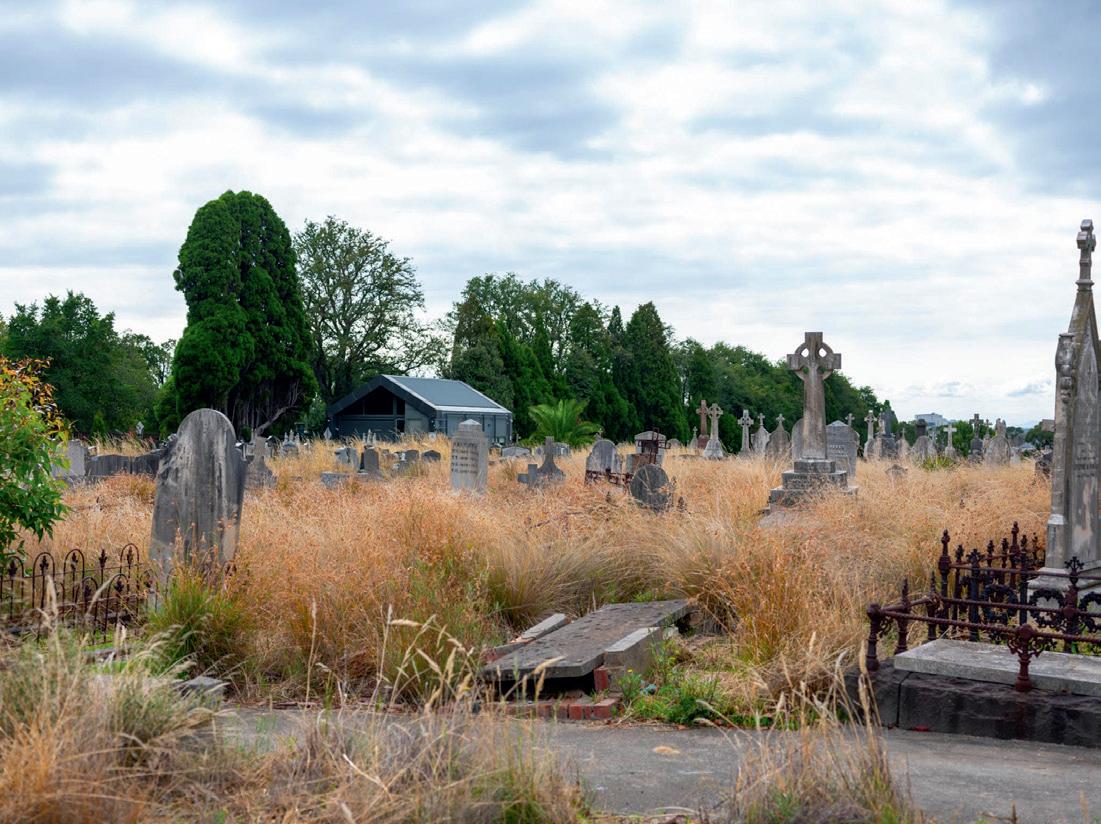
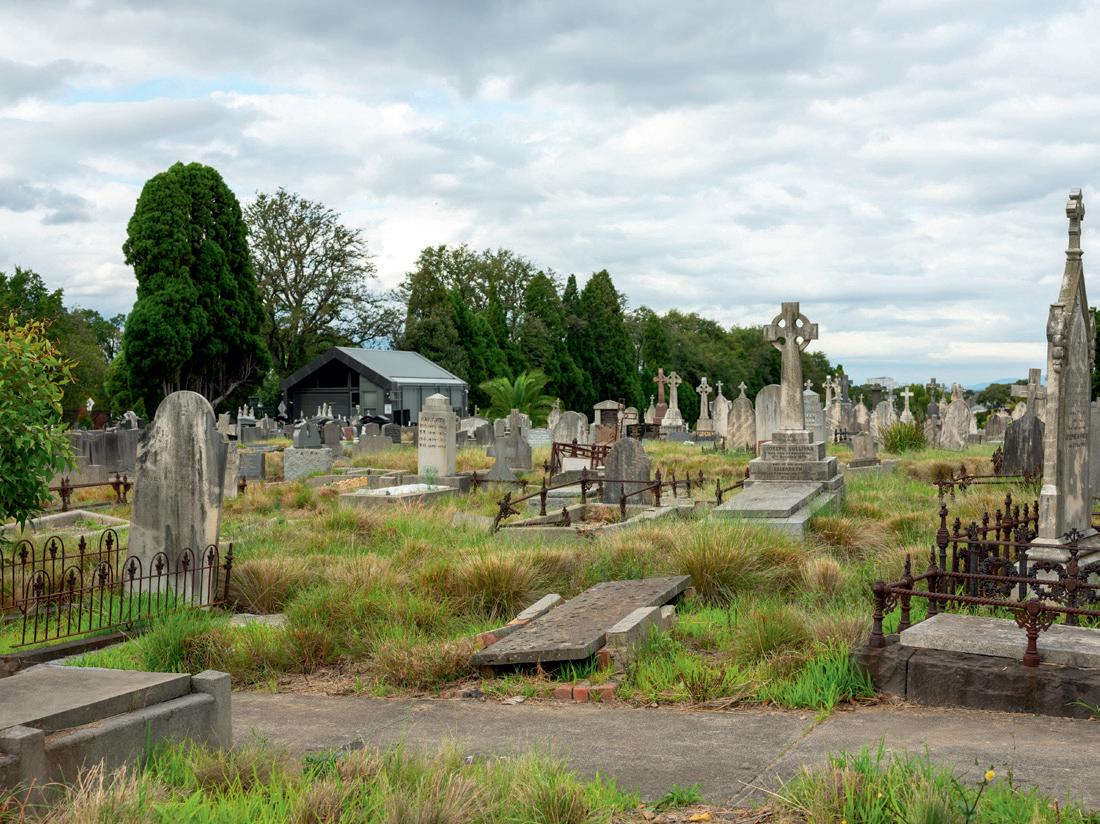
Our biggest lesson: revegetation is as much a communications project as a horticultural one.
Early feedback was challenging. Naturalistic planting can look unfamiliar and, without context, transition is easily mistaken for neglect. Our response was to explain the “why”.
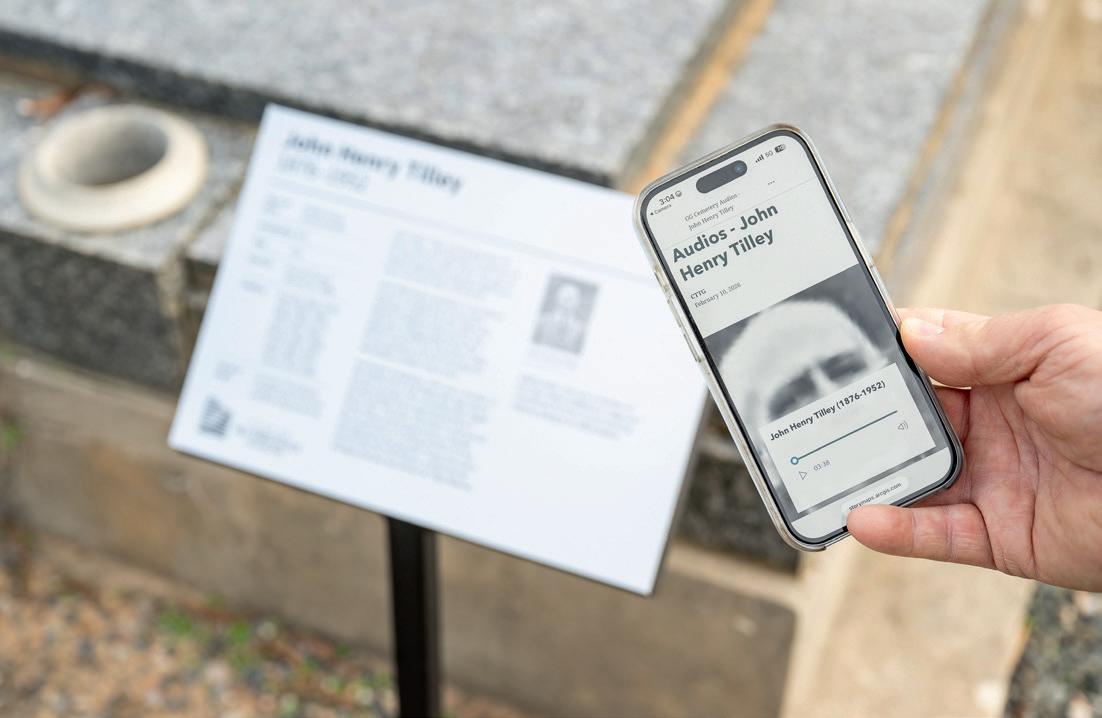
Through onsite signage, direct engagement, citizen science, planting events and education, we’ve helped visitors understand what they’re seeing and why it matters.
Working with Traditional Custodians strengthened how we interpret these
landscapes. Increasingly, we draw on the seven Wurundjeri Woi-wurrung seasons—rather than a European four-season frame—to describe cycles of flowering, dormancy, biomass buildup and regeneration, grounding the project in place and Traditional Ecological Knowledge.
This has shifted questions from “why does it look different?” to “what is the landscape doing right now?”, helping people see a living system rather than a static garden.
Concerned feedback has dropped, visitors ask informed questions, and some families now request indigenous plants for graves—an encouraging sign that people are engaging with these spaces in new ways.
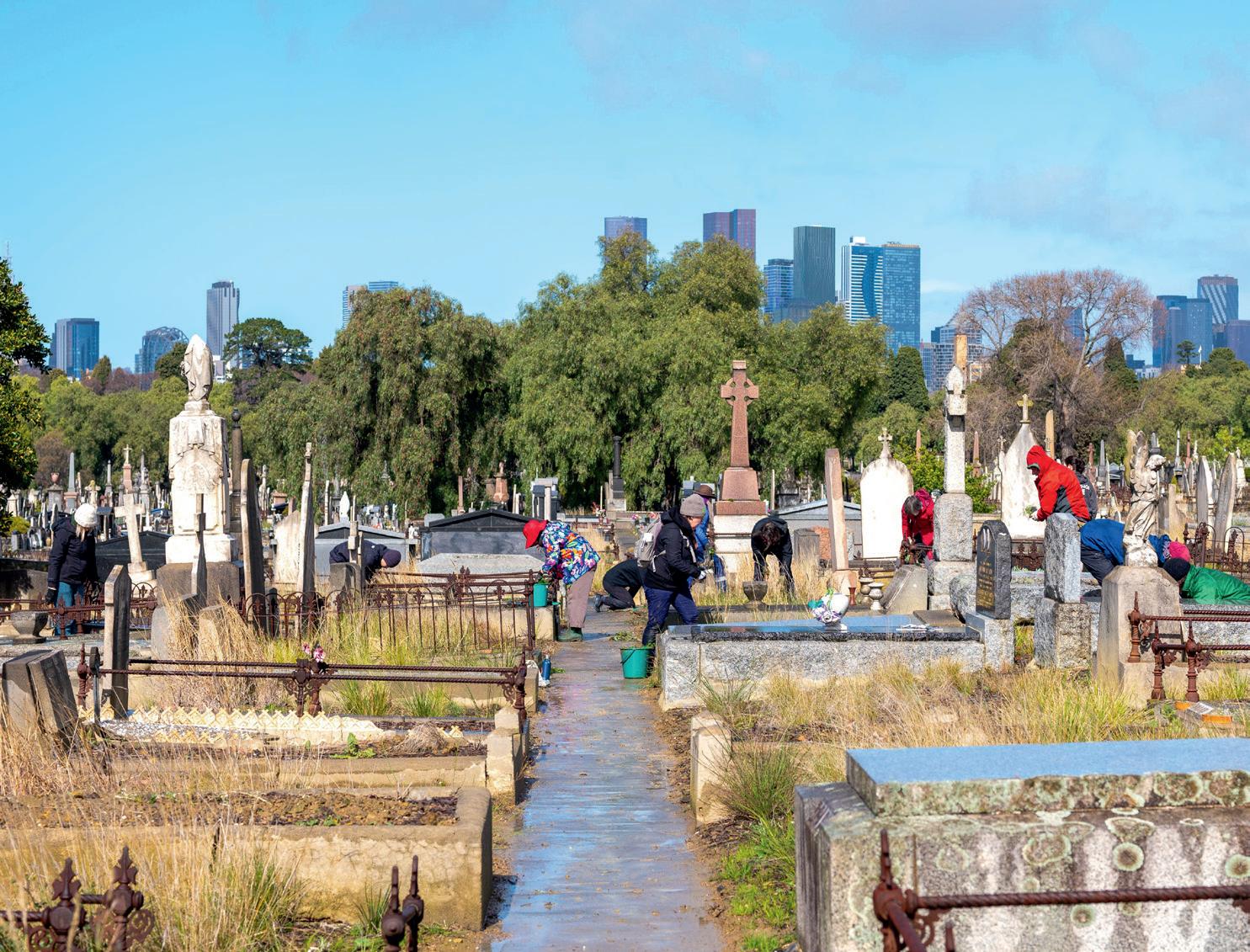
Project Cultivate has shown that cemetery landscapes can be so much more than passive green space. They can cool cities, support biodiversity, restore ecological function, create opportunities for education and community participation, and still remain dignified places for remembrance.
Perhaps the biggest lesson: ecological projects are never about getting everything perfect from day one. They’re about observing, adjusting, listening, refining and continuing to learn. That adaptability has been the real success story.
Project Cultivate hasn’t just changed the landscape at Melbourne General Cemetery. It’s changed how we think about what cemetery landscapes can be. It is an evolving landscape — and an evolving conversation.
Visit smct.org.au/cultivate or contact environment@smct.org.au for more information on Project Cultivate.
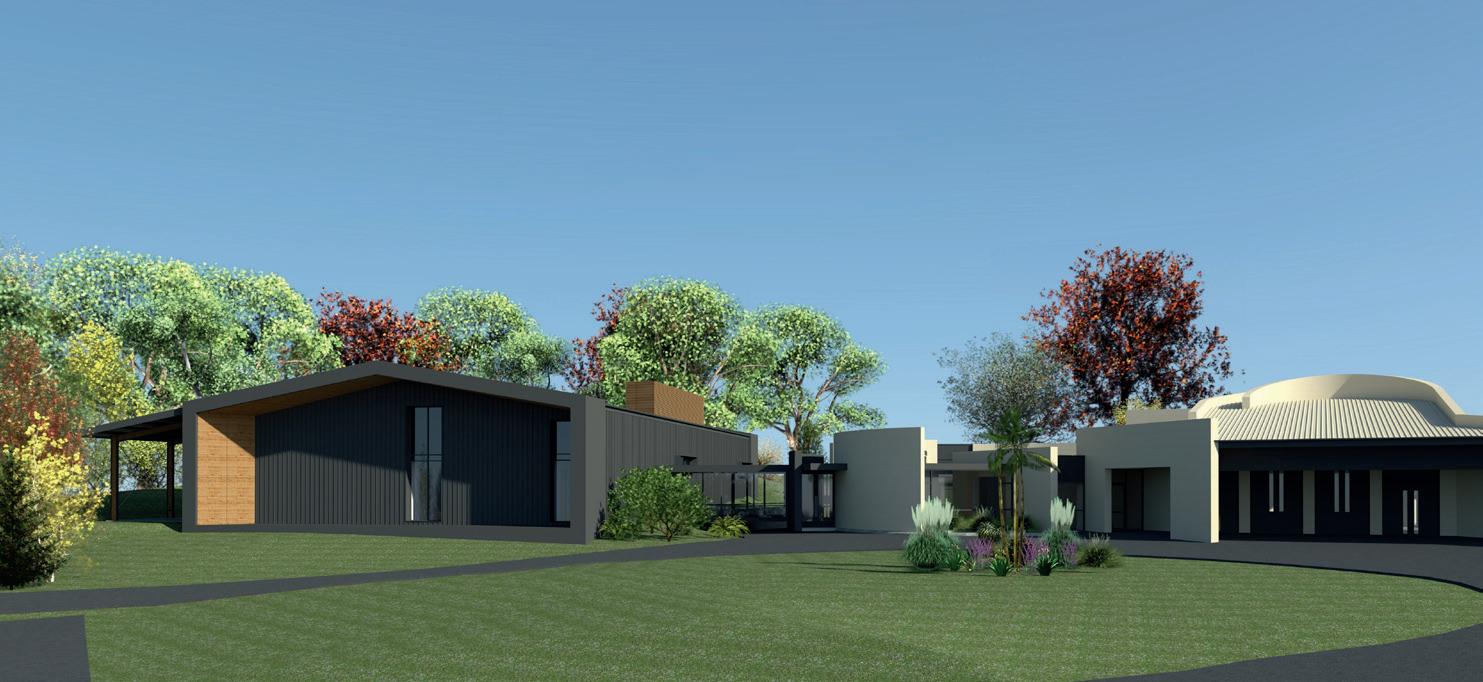
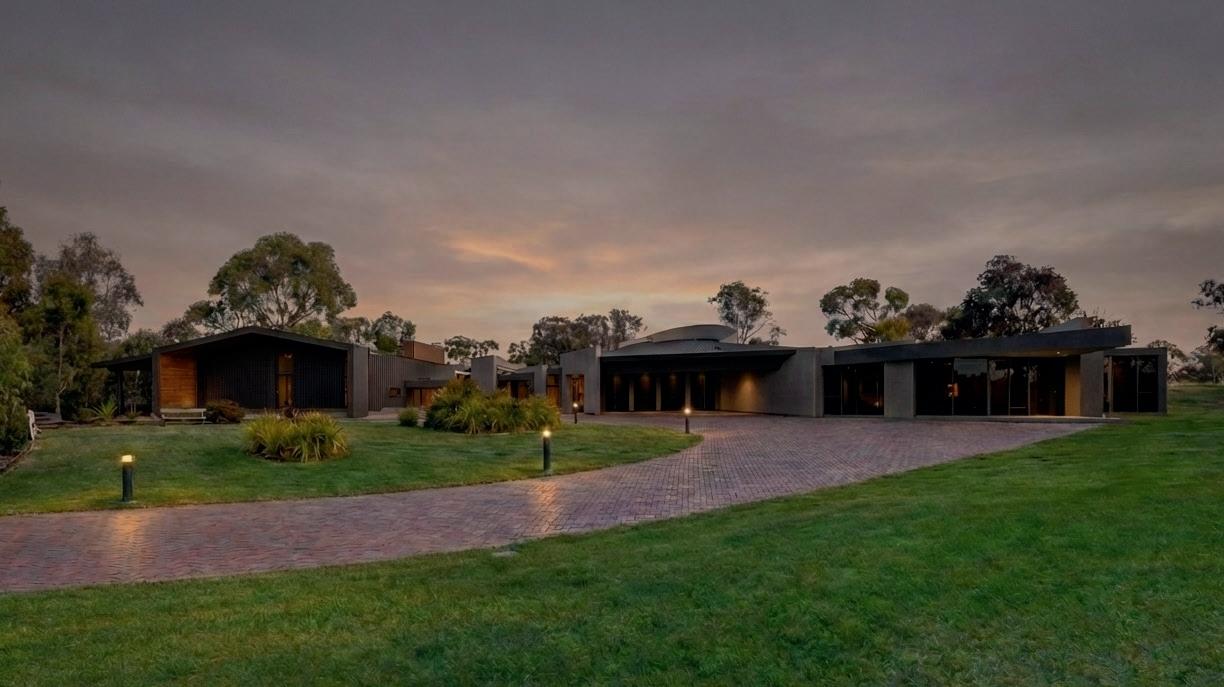
Geelong Cemeteries Trust has announced a major refurbishment of the crematorium at Geelong Memorial Park, marking a significant step forward in sustainable cremation services. The multi-stage project, scheduled to commence mid-2026, reflects a growing industry focus on balancing capacity, environmental performance, and community expectations. This is in line with its Net Zero Emission Reduction Plan.
CEO Dean Matthews frames the ambition clearly: “This project demonstrates that increasing cremation capacity and reducing emissions are not mutually exclusive. They can be achieved together through considered design and technology.”
At the centre of the project is the installation of an FTIV Electric Hybrid cremator, the first of its kind in Australia, supplied by Facultatieve Technologies. Operable in both electric and gas modes, it supports a transition towards loweremission cremation without compromising reliability.
Delivered over three years, the project encompasses far more than this technology upgrade. Works will include the construction of a new furnace facility alongside updates to the existing facility, including additional office space and a dedicated witness room to support more personalised services.
The new furnace facility will also incorporate a drive-through hearse arrival area, designed to streamline coffin unloading and onward transfer to refrigeration, reducing congestion, improving safety, and enabling capacity for increased demand.
From an emissions perspective, the project is particularly notable. Following the lead of Adelaide Cemeteries, the refurbishment will introduce advanced flue gas treatment technology aligned with European standards and evolving international benchmarks. This is complemented by the planned installation of a solar farm, expected to generate a significant portion of the energy required for cremation operations.
A further key component of the project is an agreement with Origin Energy, for Geelong Cemeteries Trust to be an early adopter of BioLPG (bio-propane) — co-processed LPG produced with the incorporation of biogenic feedstocks. With the ability to be introduced into existing systems without modification, this bio-propane offers a practical and immediate step in reducing emissions from the existing cremators.
While cremation capacity at Geelong Memorial Park will increase, overall greenhouse gas emissions are expected to decline: a combination possible through integrated planning, technology, and fuel transition.
The knowledge gained from this trial will be shared across the industry in Australia as a potential pathway to fast-track carbon reduction through the cremation process. In doing so, Geelong Cemeteries Trust contributes to a broader shift across the industry, providing a practical example of how sustainable cremation can be delivered at scale.
A New Place of Reflection, Connection and Community on the Bellarine
Geelong Cemeteries Trust officially opened Bellarine Memorial Park on Friday 29 May 2026, marking a significant milestone for the Bellarine Peninsula and the wider Geelong region.
Located in Marcus Hill on the Bellarine Highway, the new 42-hectare memorial park has been thoughtfully designed to serve the needs of a growing and diverse community, now and for generations to come. The memorial park will provide space for more than 60,000 interments and memorials when fully developed.
The official opening was followed by a community open day, delivered in partnership with Wadawurrung Traditional Owners Aboriginal Corporation and Bellarine Catchment Network. The event invited the public to explore the location, connect with the landscape, and learn more about its environmental and cultural significance.
The design reflects a contemporary approach to memorial parks — balancing remembrance with community connection and care for the natural environment. A cultural trail will link key areas of the site, leading to a dedicated First Peoples burial area near Yarram Creek, while significant revegetation efforts will protect and enhance the surrounding landscape.
Geelong Cemeteries Trust Chair John Mitchell said the opening represents an important step in planning for the region’s future.
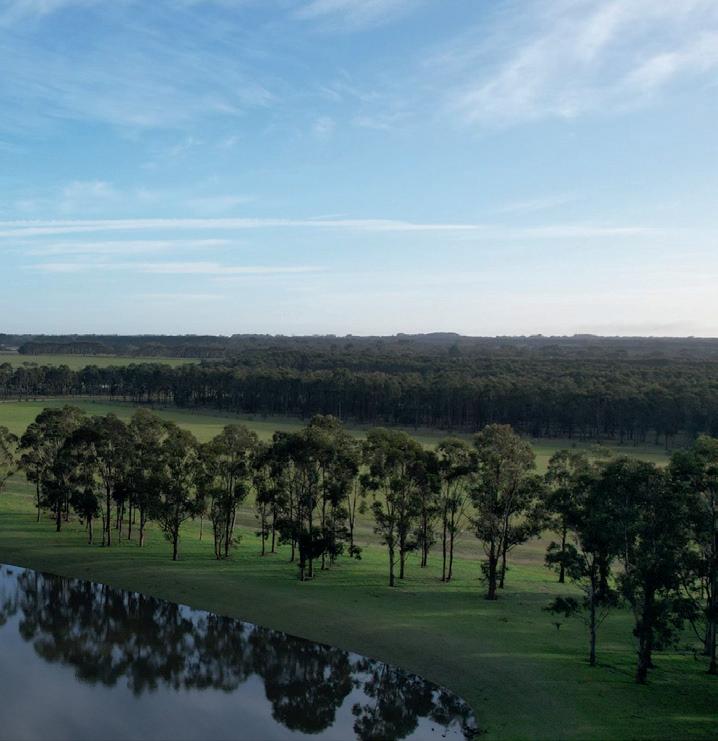
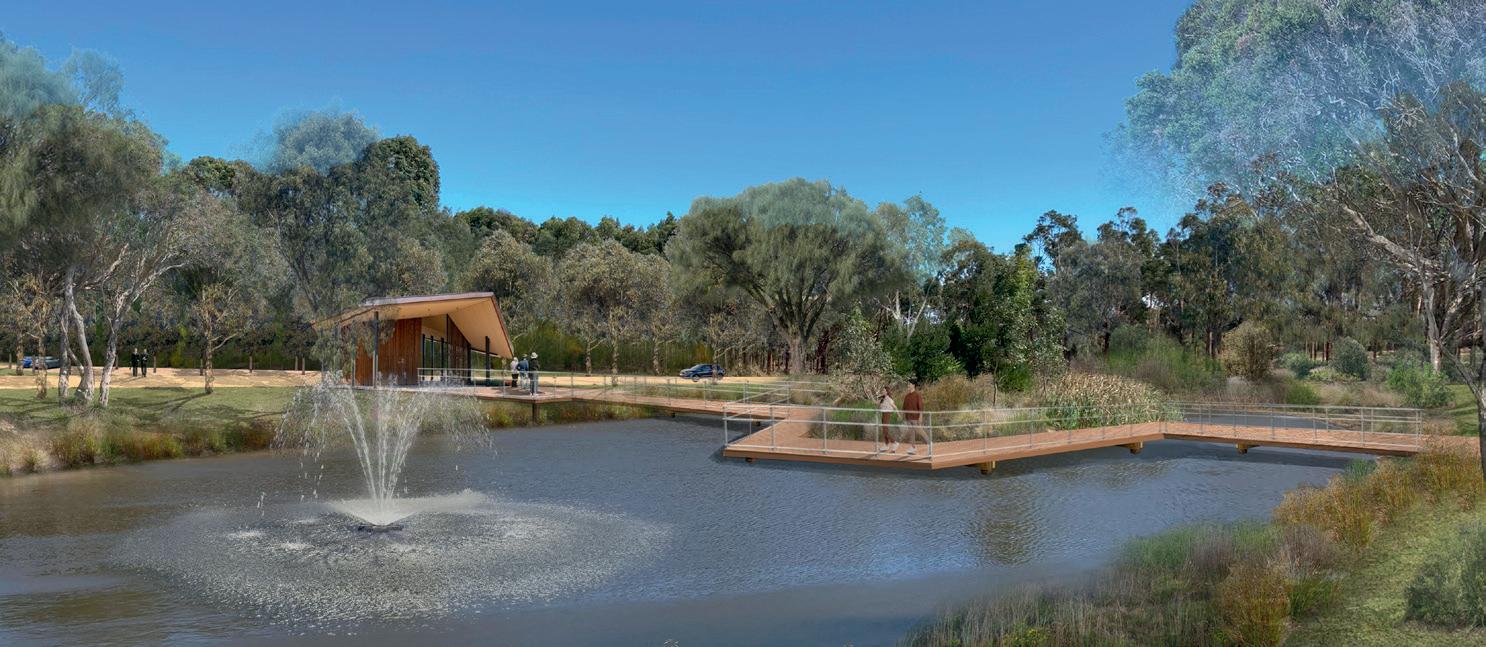
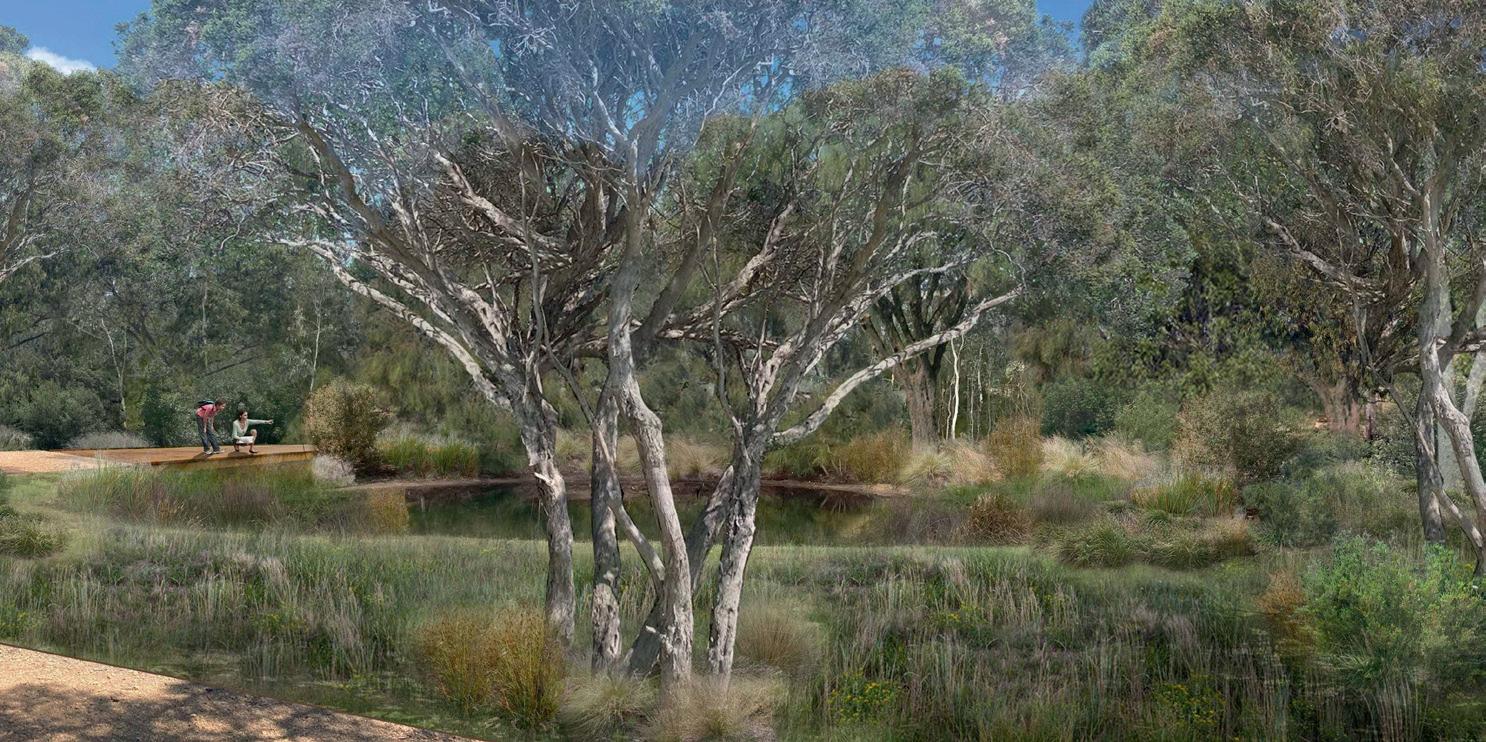
“Bellarine Memorial Park has been carefully planned to support a growing community over the long term, while recognising the locations cultural and environmental significance,” Mr Mitchell said. “It ensures our community will have a place for remembrance that is inclusive, sustainable, and here for generations to come.”
The memorial park will offer a diverse range of burial and memorial options, including lawn graves, parkland settings, bush burial areas, a dedicated Feng Shui section, and extensive cremation memorial spaces, with these areas delivered progressively over time.
Geelong Cemeteries Trust Chief Executive Officer Dean Matthews said the memorial park has been designed with both people and place in mind.
“This is a place where people can come not only to remember, but to feel connected — to nature, to community, and to those they love,” Mr Matthews said. “Through walking
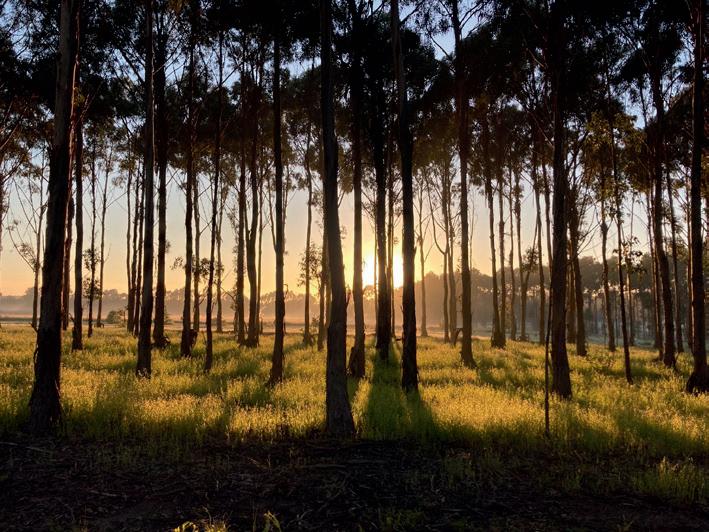
paths, revegetated spaces and quiet areas for reflection, it has been designed to feel open, welcoming and part of everyday life, and will continue to evolve alongside the community it serves.”
Future development will introduce boardwalks, feature gardens and continued planting of native species to support biodiversity and protect the natural environment.
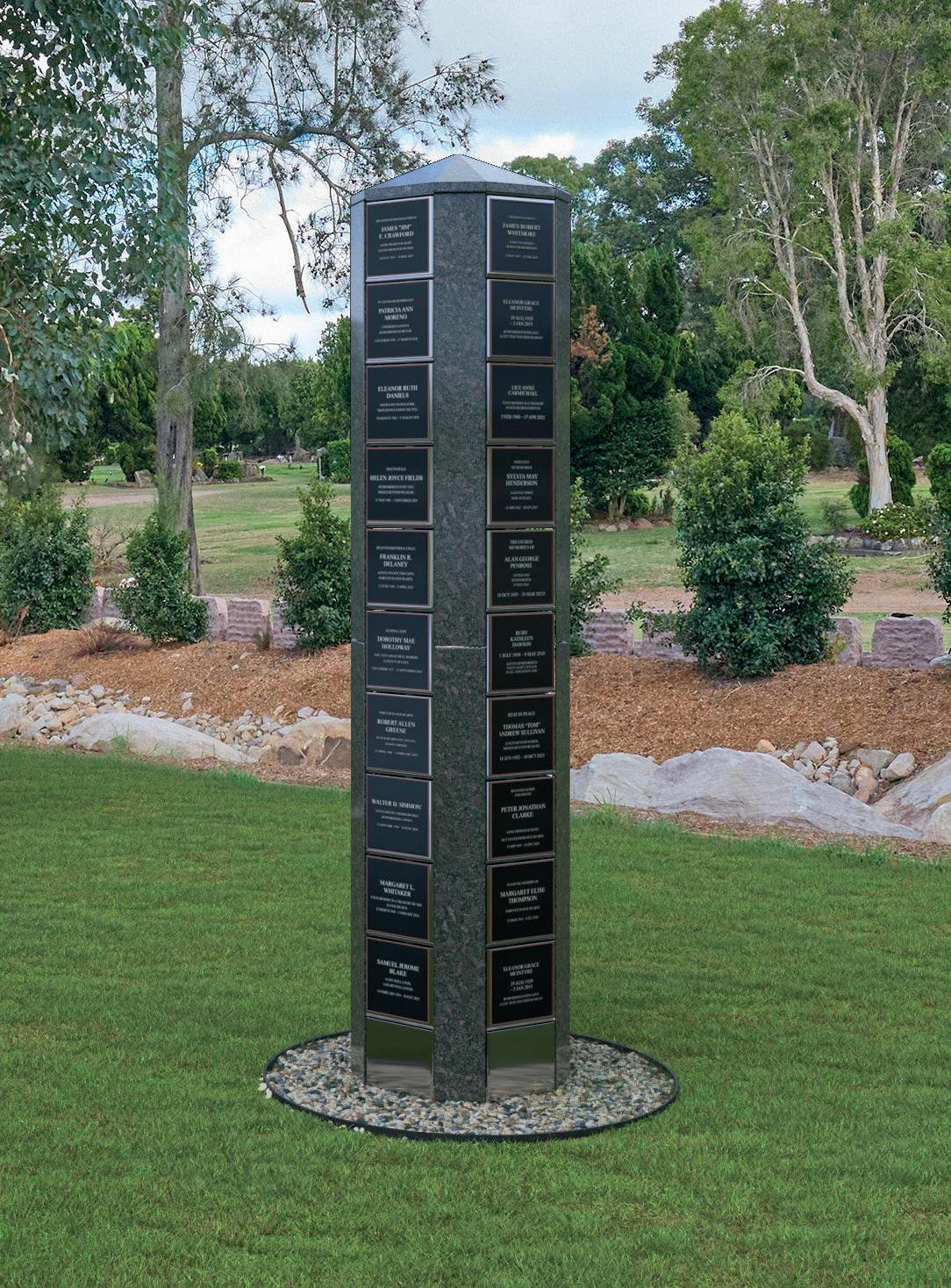
Memoria Quinrose: Ash interment, thoughtfully scaled
Combining scale with elegance, the Memoria Quinrose features five-sided, freestanding pillars designed to deliver exceptional spatial efficiency. A refined new approach to memorialisation.
2.4 metre, five-sided column
Holds 50 ash vessels
Designed for high-capacity placements in cemeteries
Granite exterior available in a curated selection of colours to suit regional and cultural preferences
Provision for bronze plaque personalisation
Patented, tamper-proof interment system with secure, never-fail closure
Low maintenance & lawn mower friendly
Installation consultation and advice available from Zinnia
Proudly engineered and manufactured in Australia
0419 290 768 | info@MemoriaByZinnia.com.au memoriabyzinnia.com.au












We











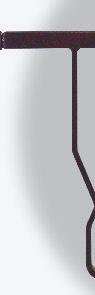
Aluminium + stainless steel bars with a sleek ergonomic design, soft-grip handles, adjustable sizing for coffins and caskets, and a seamless disengagement mechanism for safer, more comfortable pallbearing.

Rubber-grip, round handles with a square centre load section (dressed with nonslip rubber).
Can be custom-made + custom quantities available to suit your requirements.




Carrying

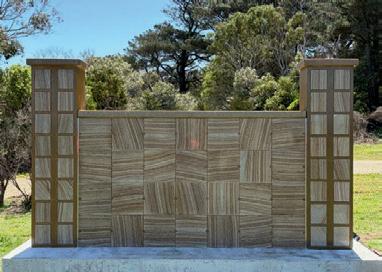






South Australia is set to welcome its first dedicated Asian garden at Enfield Memorial Park, creating an inclusive and culturally respectful place for families to honour their loved ones for generations to come.
Located within Enfield Memorial Park, this new development has been carefully planned to meet the needs of South Australia’s growing multicultural communities, including Chinese, Vietnamese, Cambodian, Laotian, Korean and Bhutanese families.
Stage one will feature up to 150 burial sites and 200 cremation sites, guided by strong Feng Shui principles with advice from renowned Feng Shui Master, Edgar Lok Tin Yung who visited Enfield Memorial Park late last year.
During Edgar Lok Tin Yung’s visit, an undeveloped section of the cemetery was identified as the ideal location for the new garden. The land naturally and deeply aligned with Feng Shui principals, including its orientation, gentle elevation, proximity to water and tranquil surroundings.
The new garden will offer families balance, peace and positive energy for those who visit and those laid to rest.
Planned in stages, the garden is expected to eventually include around 1,000 burial sites and 2,000 cremation sites, set to support the end-of-life needs of South Australia’s multicultural communities for at least the next decade.
The new garden builds on the success of the existing Buddhist Garden which features prominent Buddha statues and 315 burial sites, with the next stage sites being quickly secured. While originally designed for the Buddhist community, the peaceful setting has
also attracted people from a range of cultural backgrounds.
The Asian Garden will offer a range of burial and cremation options, respect diverse cultural and faith traditions and remain open to people of all backgrounds. The development is expected to feature traditional Chinese architectural elements, including ornate entrance gates and water features guided by Feng Shui principals.
Adelaide Cemeteries is proud to create another peaceful garden will that will provide families a place of comfort, reflection and connection. This project reflects Adelaide Cemeteries’ ongoing commitment to serving South Australia’s diverse communities with care, dignity and respect, today and for future generations.
Follow Adelaide Cemeteries on Facebook, Instagram and LinkedIn to keep updated about the garden development, interment options and future availability.
Don’t forget to follow and share your content on socials

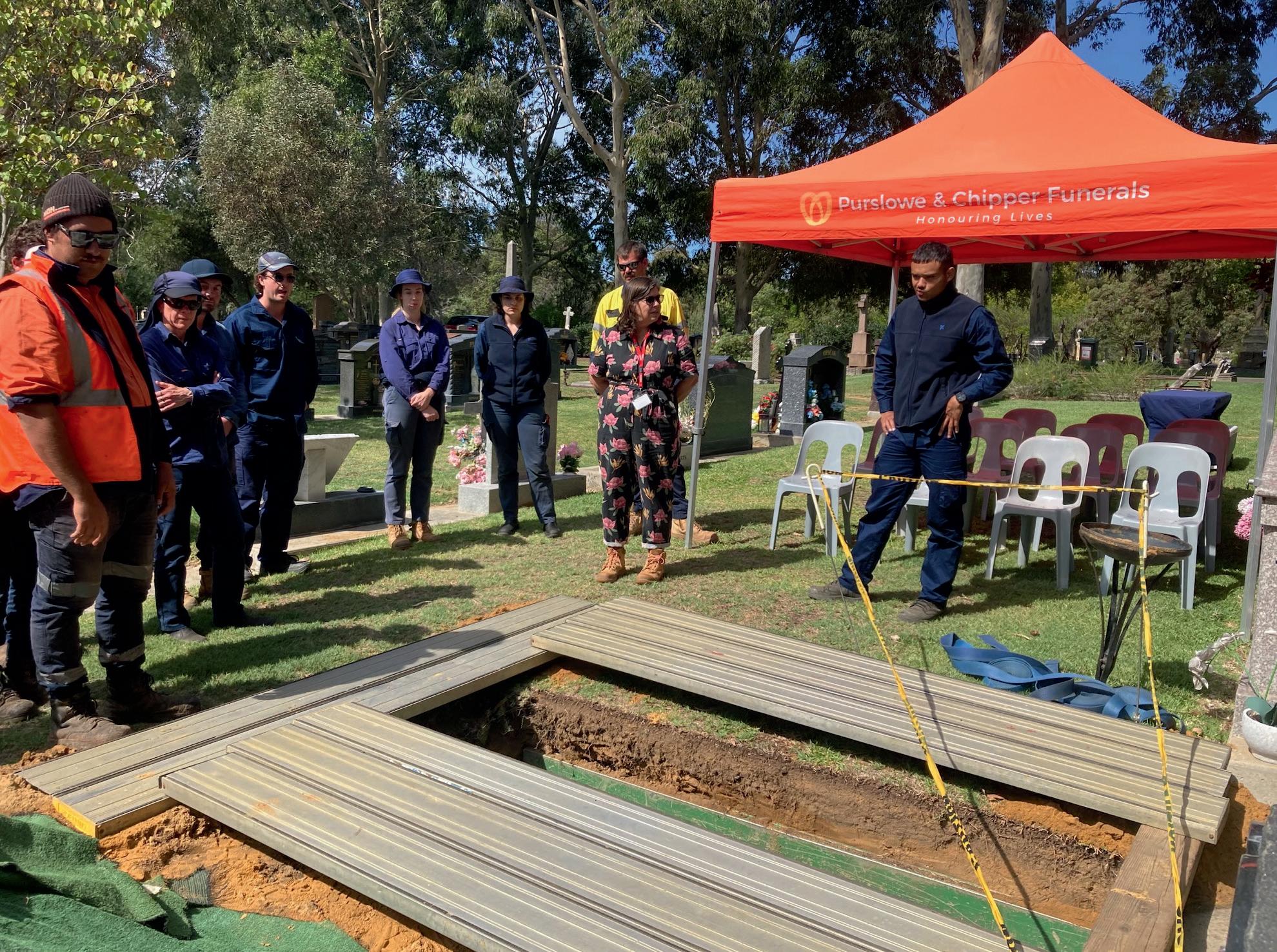
The CCAWA in conjunction with Fiona Hurst from Footprint training were once again pleased to offer two successful sessions in April, one at Karrakatta Cemetery and one at the Kalgoorlie-Boulder Cemetery. Both two day sessions were well attended with twenty seven people attending, representing cemetery staff, funeral directors and local government/ shire council employees, both grounds and administrative.
From feedback received to date, the course was once again well received with attendees finding the information and content highly valuable.
Overall the number of participating shire councils represented is in excess of forty with Fiona travelling to many parts of the state including Karratha earlier in the year where she was required to take cover from Cyclone Mitchell as it hit Exmouth in the north west of WA. Thankfully Fiona, like many others was able to escape without injury, the town was not quite so lucky.
The CCAWA acknowledge Fiona for her continuing support and look forward to welcoming her back to WA in the future.
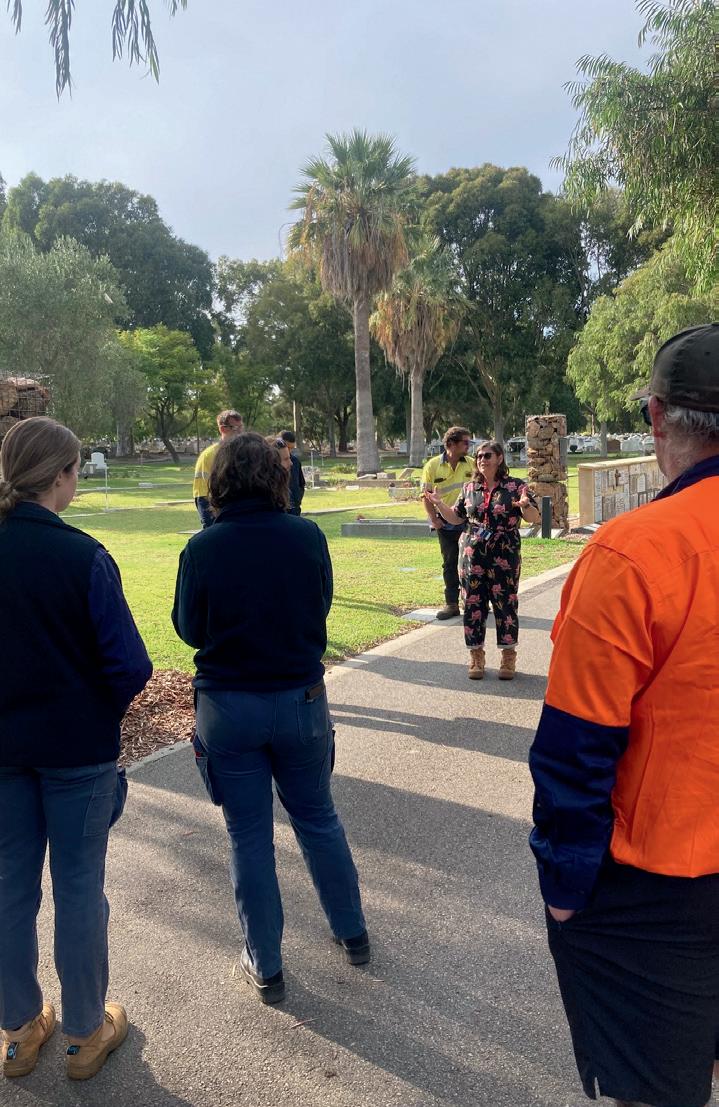
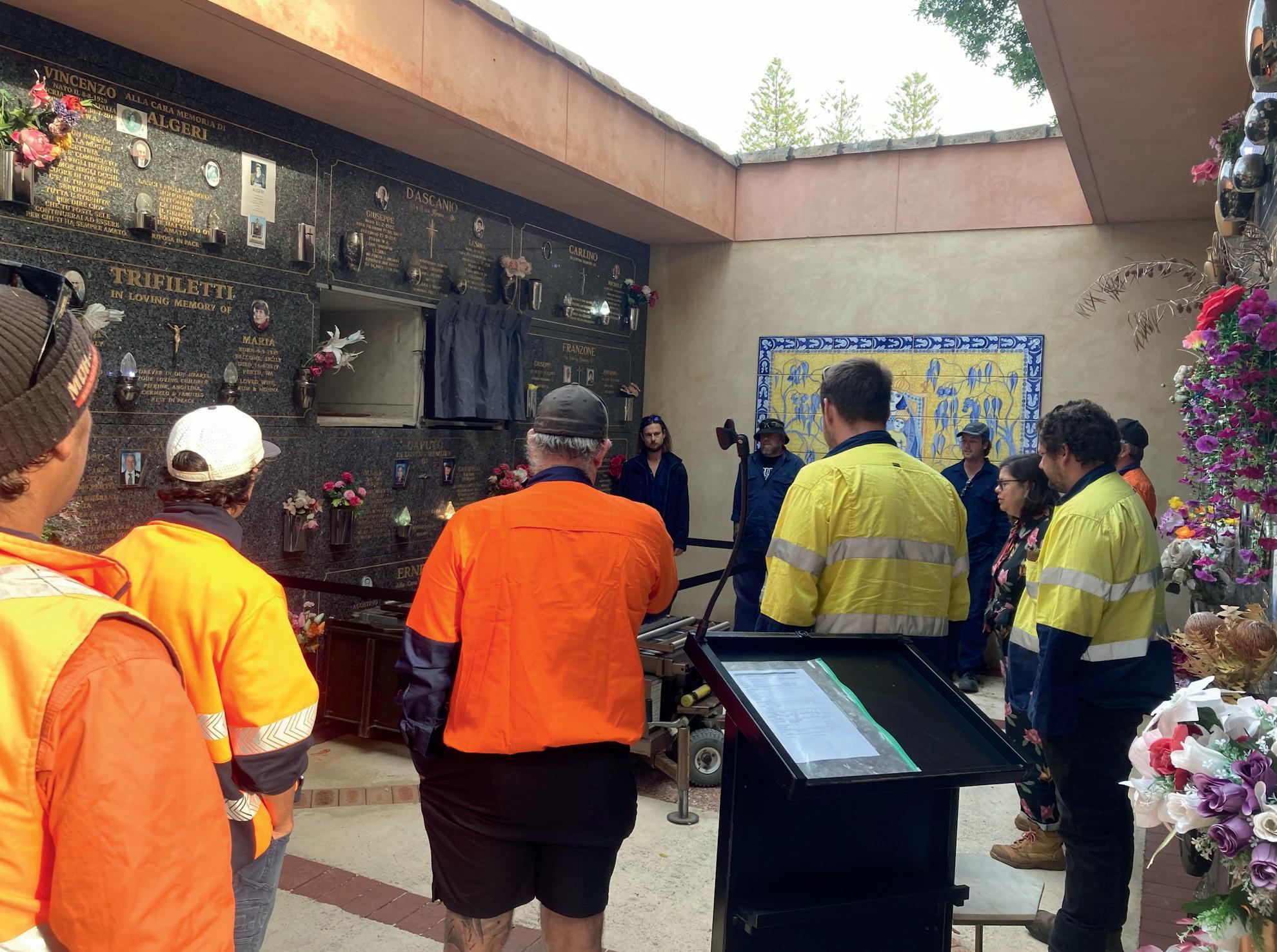
On Thursday 16th April the Cemeteries and Crematoria Association of Western Australia held an afternoon workshop in conjunction with the annual seminar and AGM.
Facilitated by CCAWA President, Christine McGrath and Board Director, Krisha Rowcroft the afternoon was a success with interaction from the floor seeking clarification on processes and procedures coinciding with a slide presentation.
The workshop was well attended by shire councils and Boards from throughout WA. The afternoon covered completion of documents associated with burials, application forms, Grant of Right of Burial documents, transfers and renewals, and licencing of funeral directors and monumental masons.
With many smaller shires throughout WA not having dedicated cemetery only staff, the workshop proved a valuable resource for those attending, with positive feedback.
Thursday night was once again a great icebreaker and introduction for the many new delegates attending for the first time. This was
an opportunity to share a meal and join in some fun activities that was sure to have left lasting memories with some.
The keynote speaker for this years seminar and AGM titled, “People Caring For People” was Gary Crombie and his service dog “Levi.” Gary, an ex Vietnam Veteran suffering PTSD said that the thought of getting a dog when he could barely look after himself was the furthest thing from his mind, however after some persuasion, making the enquiry and taking on what he thought may be a challenge, Levi turned his life around in more ways than Gary could have ever imagined. Gary and Levi are weekly visitors to the palliative care and general wards at Bunbury Regional Hospital and St. John of God hospital giving patients comfort especially those nearing end of life. Levi charmed delegates at the seminar once his service jacket was removed and he became an everyday dog. Feedback has been amazing with delegates feeling that Levi cast a calming feel across the room as he mingled with his toy ‘monkey’ around, through, and under tables with many requests for both Gary and Levi to be annual participants at the seminar.
Another positively received presentation on the day was from Michelle Moriarty. Michelle
touched on her personal experience as well and life after the loss of the love of her life, what happened after the funeral and life for her now. Out of tragedy Michelle has found a new direction in life that not only helps her but many others suffering loss and their way navigating a future.
Another well received presentation was from Jessie Piper-Lilley on life as a mortician and in the mortuary. Jessies passion for her work to leave families with a beautiful and lasting memory of their loved ones at the time of death resonated through her words and presentation.
It was a full program with additional presentations on drugs and alcohol in the workplace, grave safety and headstones and who qualifies for war recognition with the Office of Australian War Graves. Throughout the day there were presentations from the Major sponsors, ACCA and Funerals Australia updating delegates on the year to date and what is still to come.
Completing the 2026 seminar was the closing dinner on Friday night that was also well attended and an opportunity for more networking.
Once again, the Ingot Hotel was the perfect location for the seminar with service and food being faultless.
The CCAWA President and Board of Directors acknowledge everyone for their attendance and an extra special thanks to the sponsors ,
both Major and Minor, without them all the seminar could not be the success that it is.
The Board would also like to make a special mention to first time Major Sponsors, Hyqual, sadly they could not be in attendance this year, however their gift bags for delegates were appreciated and we look forward to building continued relationships with them in 2027.
Overall feedback from those that returned their seminar surveys, stated that this years was one of the very best!
The CCAWA were very pleased to have Peter and Kaye MacLean in attendance at the seminar this year, with Peter presenting the 2026 Peter MacLean Award to Felicity Anderson from the Shire of Meekatharra, 762 kilometres mid west of Perth.
Felicity is a tireless and dedicated employee of the Shire, consistently focused on ensuring they have the right processes and supports in place for their community.
Felicity’s commitment extends strongly to the shires cemetery operations, where she has demonstrated genuine care and professionalism in supporting families during difficult times.
Following her recommendation, the shire are currently progressing the acquisition of shoring frameworks to ensure graves are constructed safely and appropriately, particularly in the
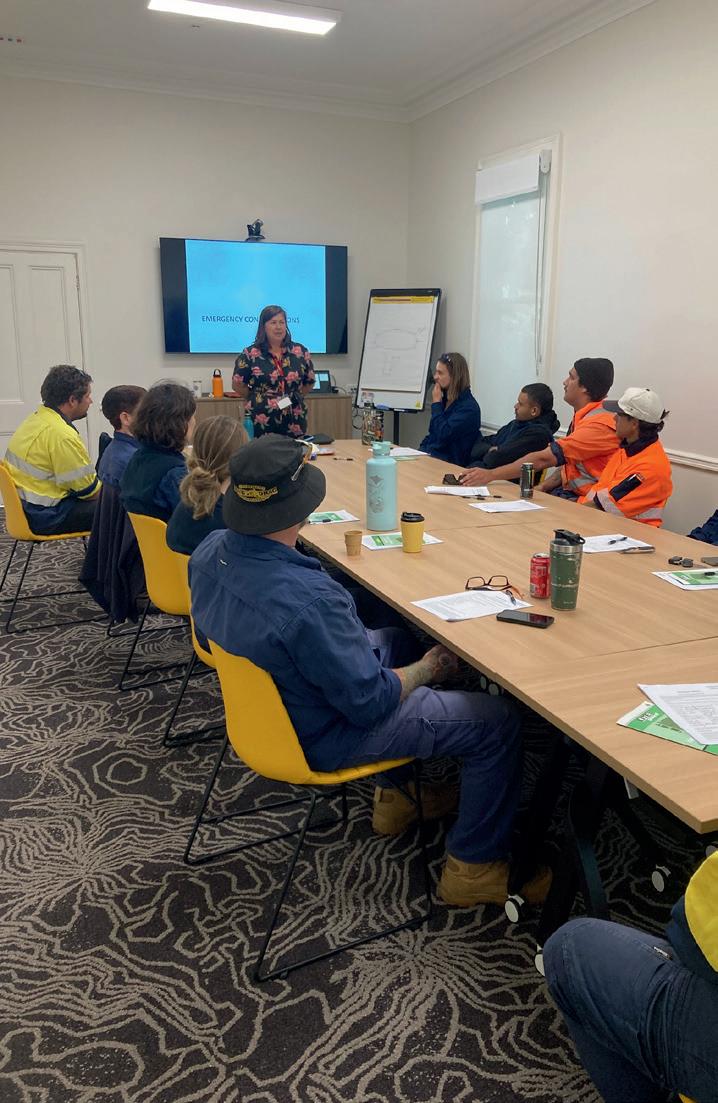
more sandy sections of the cemetery. This initiative reflects Felicitys proactive approach to safety, compliance, and best practice.
Felicity is well respected by upper management and all staff involved with the shire who recognise her dedication and hard work.
Congratulations is extended to Felicity by the President and CCAWA Board, together with members and sponsors.
Felicity now has the opportunity to attend the forth coming ACCA conference on the Gold Coast as well as having her name forever etched on the perpetual award.
Well done, Felicity!
CCAWA were also fortunate to have the 2025 Peter MacLean Award winner, Anthony Marriott on hand to give a brief overview of being a recipient of the award together with his personal experience in attending ACCA in Sydney last year. Unfortunately Anthony was not able to attend the CCWA seminar last year for the presentation, so it was pleasing to have him attend this year and meet with him in person and for Anthony to meet with Peter MacLean. Anthony is a well respected staff member from the City of Busselton in the south west of WA.
The 2026 CCAV Conference was a great success, with a refreshed format and a strong mix of industry engagement, keynote presentations, site visits, and social events across the three days.
The conference opened on Wednesday with a revised welcome event, restructured as an Industry Partner “get to know you” session. CCAV President Rob conducted interviews with Platinum and Gold Partners, providing a more interactive and relationship-focused start to the program.
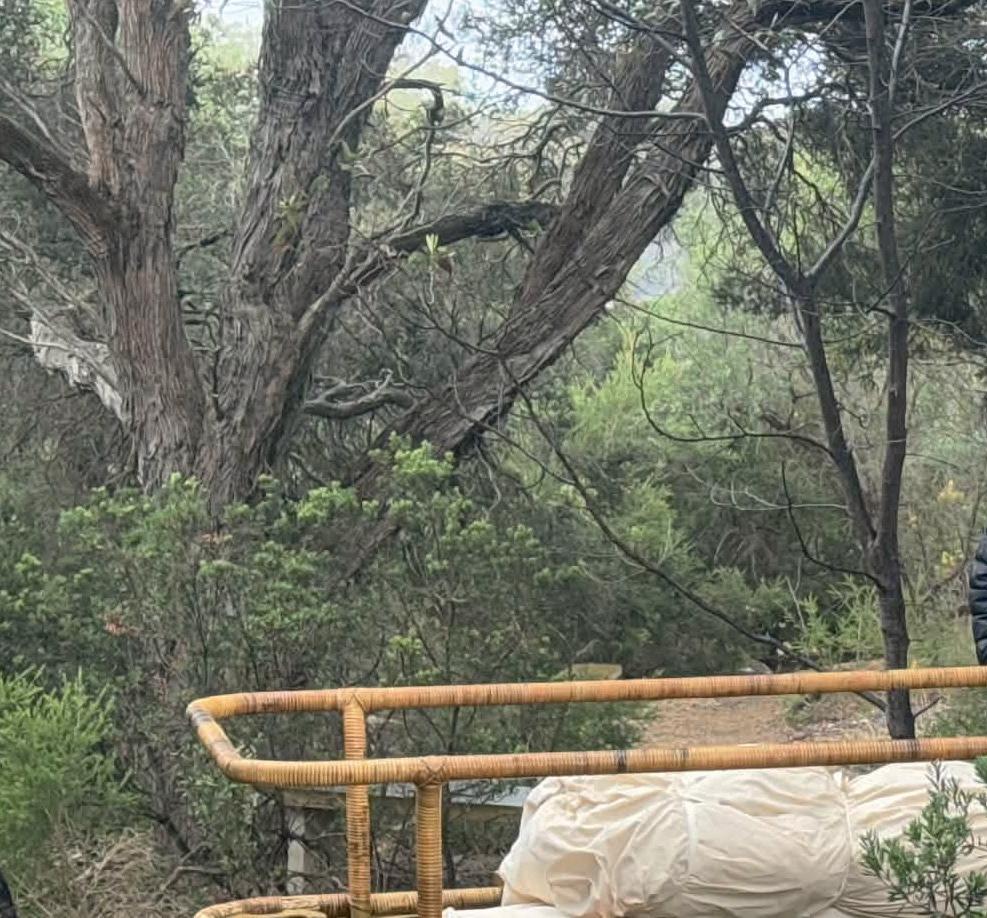
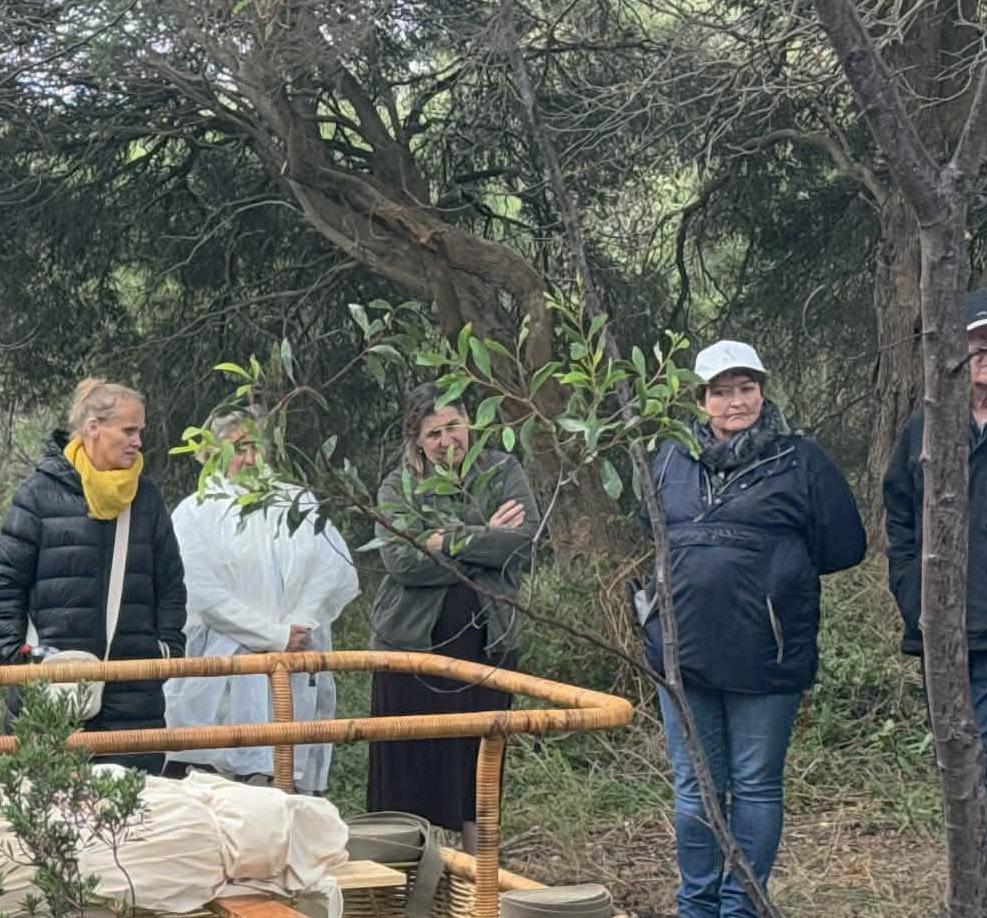
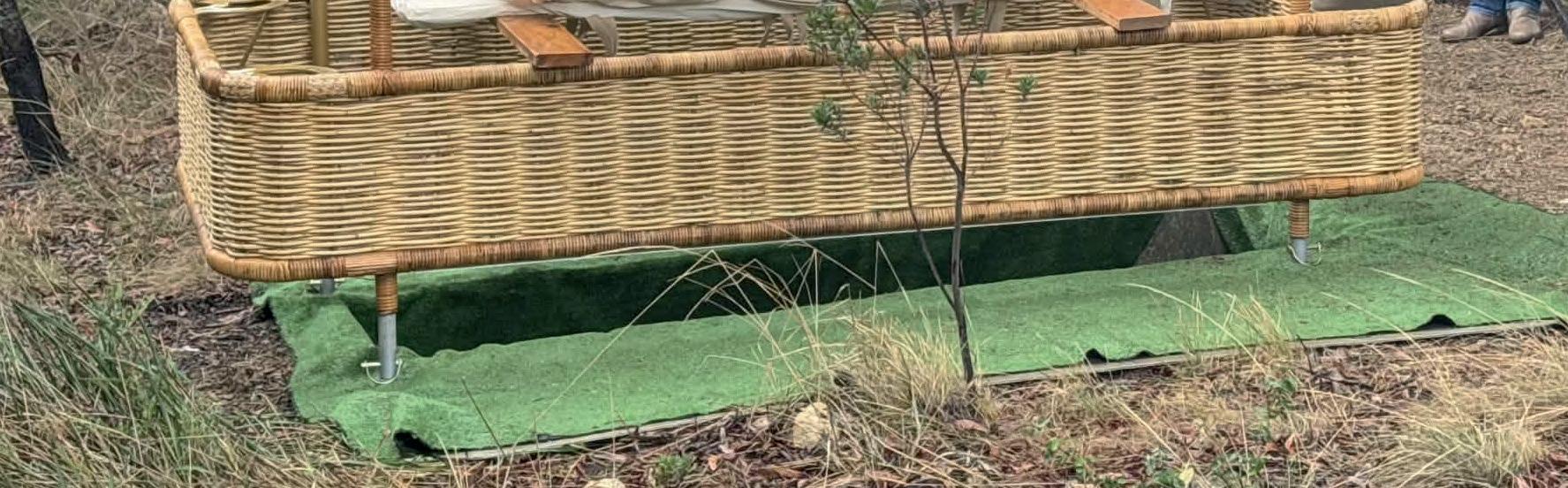
Thursday morning commenced with an address from the Minister for Health, followed by a visit from the Deputy Mayor of Surf Coast Shire. The formal program included a keynote presentation by Kamal Sarma, along with contributions from Sach Killam of Monument Safety, the Victorian Rabbit Action Group, and a visit to both Geelong Eastern Cemetery and Queenscliff Cemetery. Unfortunately, the weather was not favourable during the cemetery site visits, but the program continued successfully.
The conference dinner embraced a beach theme, with strong participation in costumes and a lively atmosphere.
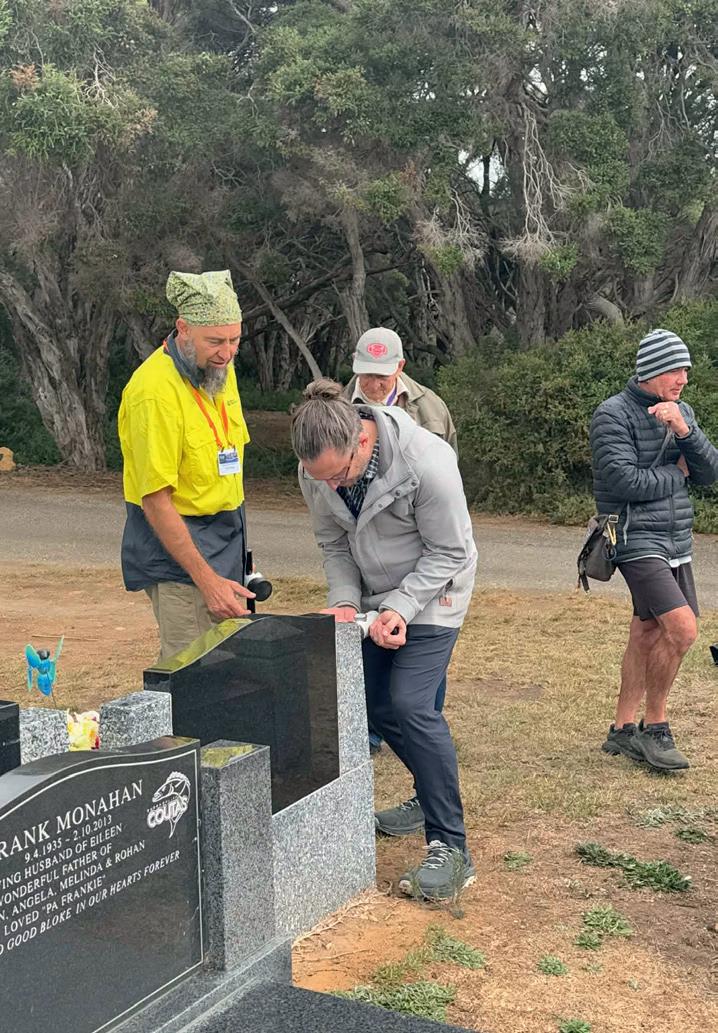
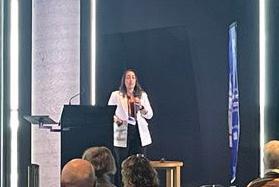
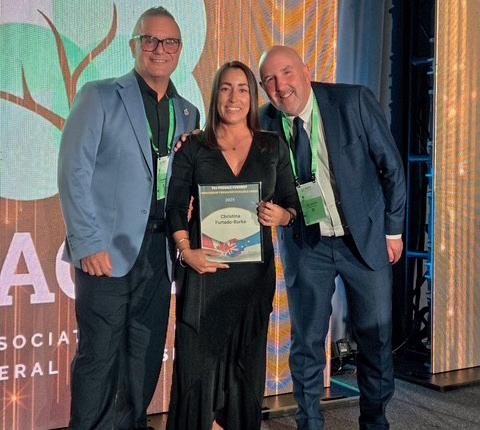
Friday’s sessions featured presentations from Allyson Fletcher (HR information), Christina Furtado-Burke, who shared insights from managing a cemetery in Ontario, Canada and experiences preparing graves in snow conditions, and Rita Woolley and Julia Drew, who reflected on their visit to cemeteries in Italy. Additional presentations included the Office of Australian War Graves, Dr Maiken Ueland from the Australian Facility for Taphonomic Experimental Research (AFTER), presenting forensic studies on body decomposition, and Nicole McDonald from the Department of Health, who provided updates relevant to the sector.
Overall, the conference delivered a strong program of international perspectives, technical expertise, and valuable industry connection opportunities.
CCAV’s “In Conversation” in-person sessions recommenced in Bendigo and Ballarat in February and April, with four additional regional Victorian sessions planned in the coming months. These sessions have been generously sponsored by Platinum Industry Partners Arrow, PlotBox, Phoenix, IFISS, Everlon and Glory Marble and Granite.
The “In Conversation” online sessions have also adopted a refreshed approach this year, with the introduction of guest speakers who have shared their expertise and knowledge with members on each month’s featured topic.
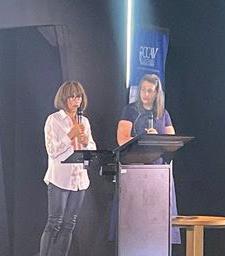
It is hard to believe we are already approaching the midpoint of 2026. Following a busy and productive first half of the year, Funerals Australia continues to focus on supporting members through advocacy, education, professional development and industry leadership.
We were pleased to welcome ACCA President Dean Matthews, CEO Ben Kelly and a number of ACCA members to the 2026 Funerals Australia National Convention on the Sunshine Coast. With almost 300 delegates in attendance, the event provided an outstanding opportunity for members, suppliers and industry stakeholders to connect, learn and share ideas. The convention featured a highcalibre education program with presentations covering leadership, innovation, business management and emerging trends shaping the future of funeral service.
A particular highlight was keynote speaker Dr Chadden Hunter, the renowned wildlife biologist and filmmaker who captivated delegates with stories from some of the world’s most remote locations. Equally important were the many opportunities for networking, collaboration and strengthening professional relationships across the industry.
The convention also provided an opportunity to recognise outstanding service to the profession through the presentation of Life Membership to Andrew Pinder. Andrew’s contribution to the funeral industry and Funerals Australia spans decades, and his leadership, mentorship and commitment to advancing the profession continue to leave a lasting legacy.
Looking beyond Australia, I recently had the privilege of representing Funerals Australia at the Asia Funeral Expo in Hong Kong, participating as both a speaker and panellist in discussions on funeral leadership and the role of women in funeral service. The opportunity to share Australian perspectives and learn from international colleagues reinforced the
important contribution our profession makes on the global stage.
Planning is also well underway for the 2027 Funerals Australia International Convention & Expo, which will be held at the Western Sydney Convention Centre, Penrith, from 10-13 March 2027. The 2027 International Convention & Expo will deliver a fresh and engaging blend of professional development, industry collaboration and hands-on expo experiences. Bringing together funeral professionals, cemetery and crematorium operators, suppliers, thought leaders and key stakeholders from across Australia, Europe, USA, Canada, Asia and beyond, this event will showcase the very best of the deathcare profession under one roof.
Delegates can look forward to a comprehensive education program featuring leading industry experts, emerging trends, practical business insights and future-focused discussions, alongside a vibrant industry expo showcasing the latest products, services, technology and innovations in funeral service and care. Complementing the professional program will be a range of networking and social events designed to foster connection, collaboration and industry camaraderie. We encourage all ACCA members to join us for this landmark event.
Advocacy remains a key focus for Funerals Australia. In recent months the Association has been actively advocating for funeral providers to be recognised as an essential service within future fuel contingency and emergency planning frameworks. Rising fuel costs and concerns around fuel security have highlighted the critical role funeral providers play in supporting families and communities.
The Association also continues its broader advocacy efforts, including progressing discussions around nationally consistent regulation and strengthening relationships with government and industry stakeholders. These initiatives are designed to support high professional standards, improve consistency across jurisdictions and ensure the interests of funeral providers are represented.
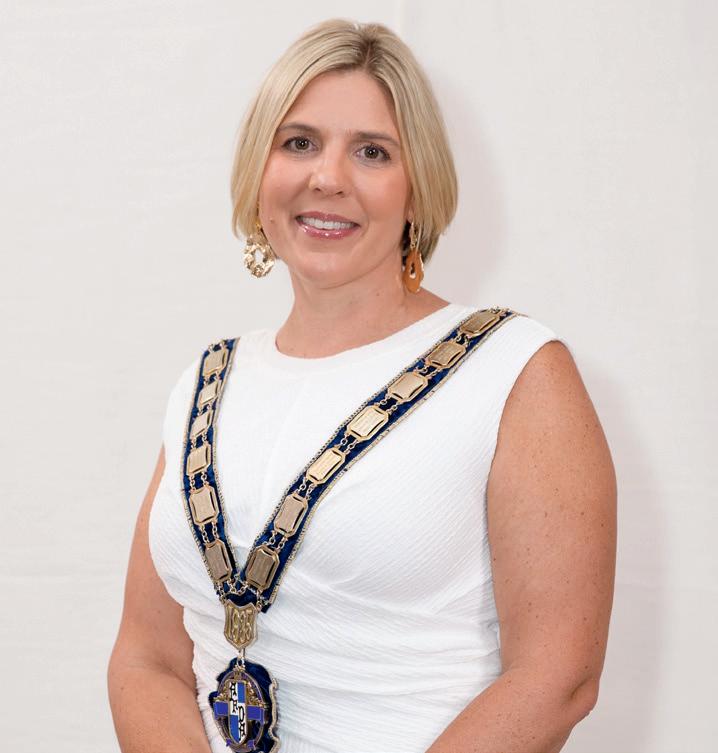
Following the successful rebrand from AFDA to Funerals Australia, work also continues on strengthening the Association’s digital presence and public profile. Investments in search engine optimisation, content development and social media are helping to increase awareness of Funerals Australia and position the Association as a trusted voice on issues affecting the profession and the communities we serve.
As AGM season approaches, I look forward to connecting with members and industry stakeholders across Australia. These events provide an important opportunity to share updates, hear directly from members and stakeholders and continue building a strong, united and professional industry.
We thank ACCA for its ongoing support of Funerals Australia and look forward to continuing our strong relationship throughout 2026 and beyond.
Warm regards

Asha Dooley National President
At Arrow Bronze, memorialisation is about more than preserving names and dates. It is about preserving stories — the stories that shape communities, inspire generations, and become part of Australia’s cultural identity.
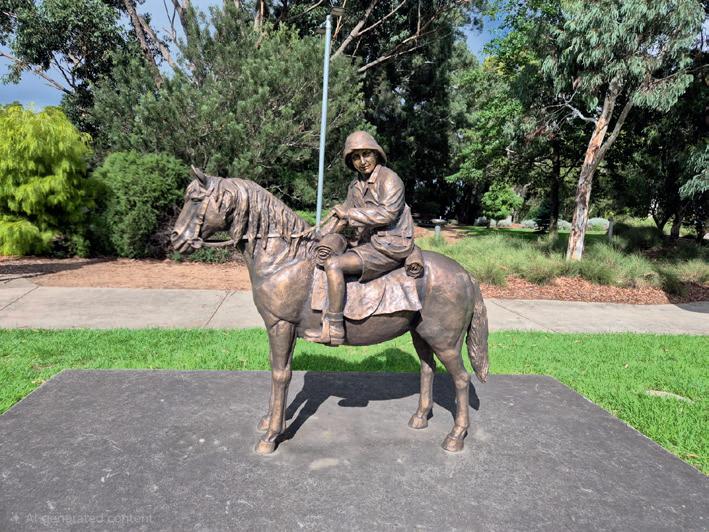
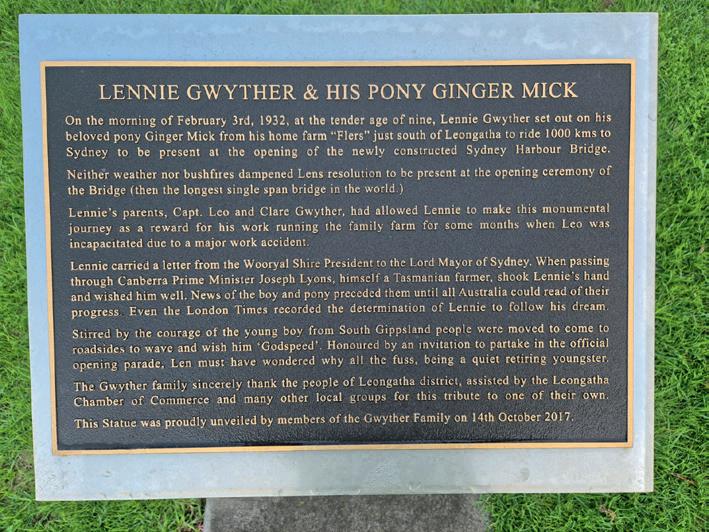
One such story is that of Lennie Gwyther, the remarkable young boy from Leongatha whose extraordinary horseback journey captured the imagination of a nation during one of Australia’s most defining moments.
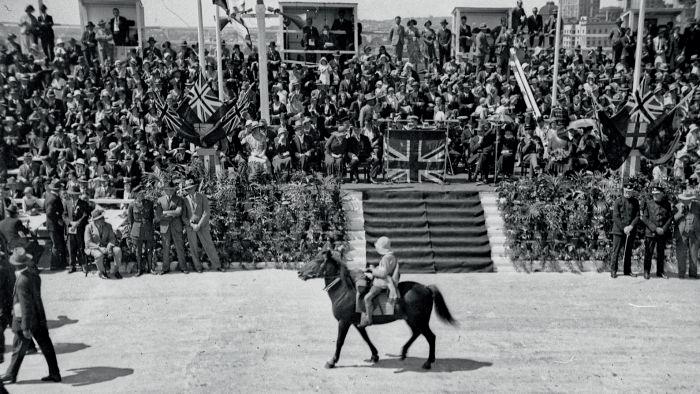
In 1932, at just nine years of age, Lennie rode more than 1,000 kilometres from regional Victoria to Sydney on his beloved pony, Ginger Mick, to witness the opening of the iconic Sydney Harbour Bridge.
It was an adventure born not from rebellion, but responsibility.
While his father recovered from a broken leg, Lennie took over duties on the family farm near Leongatha. As a reward for his hard work and maturity beyond his years, he asked for permission to attend the opening of the Harbour Bridge, a structure he had become fascinated with through newspaper stories and engineering updates.
Armed with little more than determination, a hand-drawn route map, and the companionship of Ginger Mick, Lennie set off on what would become one of Australia’s most celebrated childhood adventures.
His journey quickly became national news.
Along the way, Lennie met local communities, school children, councillors, farmers, and even
Minister
across the country followed his progress daily as Australians rallied behind the brave young rider travelling the dusty roads between Victoria and New South Wales.
By the time Lennie arrived in Sydney, he was greeted by thousands of cheering spectators and escorted into Martin Place by mounted police. Days later, he proudly rode Ginger Mick across the newly opened Sydney Harbour Bridge as part of the official celebrations, forever cementing his place in Australian folklore.
For generations, Lennie’s story has symbolised resilience, innocence, curiosity, and the pioneering Australian spirit.
Today, thanks to the craftsmanship of Arrow Bronze, that spirit has been captured permanently in bronze.
Arrow Bronze was honoured to create the commemorative bronze statue, celebrating Lennie Gwyther and Ginger Mick, a tribute designed to ensure future generations can connect with this uniquely Australian story in a meaningful and tangible way.
The project reflects the enduring value of bronze as a storytelling medium.
For centuries, bronze has been chosen to commemorate figures of cultural, historical, and community significance because of its strength, beauty, and permanence. In the memorial and civic landscape, bronze offers something few materials can, the ability to convey emotion, movement, and humanity while standing resilient against time and the elements.
For Arrow Bronze, projects such as the Lennie Gwyther statue represent the intersection of artistry, heritage, and community connection.
Each bronze memorial produced by the company is the result of skilled craftsmanship, technical precision, and a deep understanding of how physical memorials contribute to collective memory. Whether through plaques, sculptures, architectural memorials, or contemporary commemorative products, the purpose remains the same: to preserve stories that matter.
As Australia’s leading bronze memorial manufacturer for more than 85 years, Arrow Bronze has seen firsthand how memorialisation continues to evolve. Communities increasingly seek memorials that do more than mark a place they seek experiences that educate, inspire, and emotionally connect visitors with history.
The story of Lennie Gwyther does exactly that.
It reminds us that courage can come in small packages, that adventure can shape a life, and that ordinary Australians can leave extraordinary legacies.
Through bronze, that legacy now stands proudly for future generations to discover.
Phoenix
My name is Christina FurtadoBurke, and I am the Family Services Coordinator at Woodlawn Memorial Park. In 2025, I was honoured to be selected as the recipient of the Phoenix Foundry Bereavement Excellence Award, an opportunity that provided an incredible professional and personal experience focused on career growth, international collaboration, and cultural exchange.
Traveling across the world independently was an adventure in itself — navigating airports, adapting to Australian terminology like “lift,” “rubbish,” and “boot,” and even learning to drive on the opposite side of the road, which quickly became part of the adventure. Experiencing everyday life in Australia while traveling solo pushed me outside of my comfort zone and made the journey even more rewarding.
My journey began in Sydney, where I had the privilege of touring several Metropolitan Memorial Parks Cemeteries. I met with staff members across multiple departments to better understand their roles, operational policies, and how each team works collaboratively to support families during times of loss. I also visited the historic Rookwood Cemetery, where I learned about monument restoration projects, burial scheduling, and grounds operations. Visiting Waverley Cemetery was equally inspiring, with its breathtaking coastal setting, remarkable monument sculptures, and the craftsmanship reflected in every memorial.
One of the most interesting professional insights was learning the operational differences between cemeteries and funeral practices in Australia compared to Canada. Australian cemeteries are designed for doubledepth casket burials, and in some cases even triple-depth burials, maximizing cemetery space in a way that differs greatly from our cemetery operations in Canada, where singledepth burials are more the standard with a few options for double depth. I also learned that
embalming is far less common in Australia and is generally only completed when specifically requested or required, whereas embalming is much more of a standard practice in Canada unless families request otherwise. These differences provided valuable perspective on how cultural practices, legislation, and available land influence cemetery and funeral operations internationally.
Outside of the professional exchanges, I also had the opportunity to experience the culture and history of Sydney firsthand — visiting Sydney Harbour, taking the ferry to Taronga Zoo, and completing the Sydney Harbour Bridge Climb while taking in the incredible views and history surrounding the city.
From Sydney, I traveled to Uralla, where I spent time touring Phoenix Foundry. This was an invaluable hands-on learning opportunity, allowing me to observe the complete process of bronze memorial creation — from initial layout design and negative form preparation to polymer moulding, sand casting, bronze pouring, and the final polishing and finishing stages. Seeing the craftsmanship and dedication involved in producing each marker and plaque gave me a deeper appreciation for memorial manufacturing and preservation. Traveling through regional Australia also provided unforgettable personal experiences, including seeing kangaroos in the wild for the first time — something that truly highlighted the uniqueness and beauty of the Australian landscape.
My travels then continued to Melbourne, where I visited several South Metropolitan cemeteries. These cemeteries reflected a beautiful blend of culture, tradition, and memorialization, with expansive granite monuments representing many diverse communities. One of the most impactful experiences was meeting with the Environmental Strategy Team to learn about their initiatives surrounding climate change, environmental protection, pollution prevention, and sustainable resource management. Their efforts to reintroduce biodiversity into cemetery spaces were inspiring, including the innovative use of goats
for vegetation management in older cemetery sections to reduce environmental impact. This is an idea I look forward to exploring further with our own team, particularly within green burial and historical in active burial areas within.
The experience also provided valuable insight into the legislative and operational differences between the cemetery and funeral industries in Canada and Australia, including learning that funeral directors in Australia are not required to hold licenses in the same way they are in Canada. Another unique perspective was seeing cemeteries designed as welcoming community spaces, complete with cafés and playgrounds, encouraging families and visitors to engage with the space in new and meaningful ways.
Being selected as the recipient of the Phoenix Foundry Bereavement Excellence Award was truly a once-in-a-lifetime opportunity. The professional relationships and connections formed throughout this experience continue to be meaningful, and I am incredibly grateful for the knowledge, mentorship, and hospitality shared along the way.
I would highly encourage others in the profession to apply for this opportunity and consider it as part of their own career journey. It was a goal on my personal career bucket list, and the experience exceeded every expectation. My sincere thanks go to Phoenix Foundry and the Australasian Cemeteries & Crematoria Association, especially Ben and Joe, for their guidance, generosity, and support throughout this unforgettable professional exchange experience.

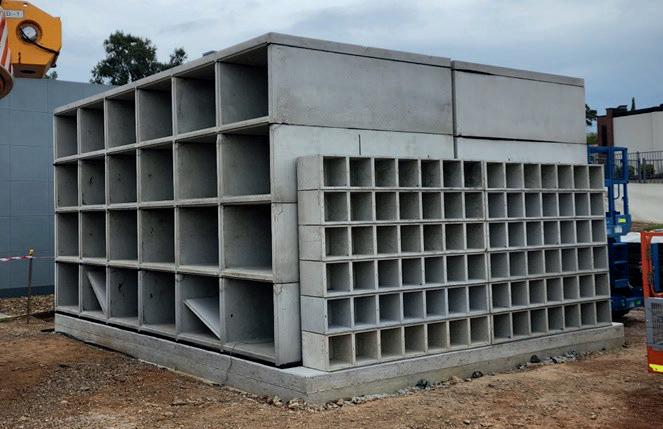
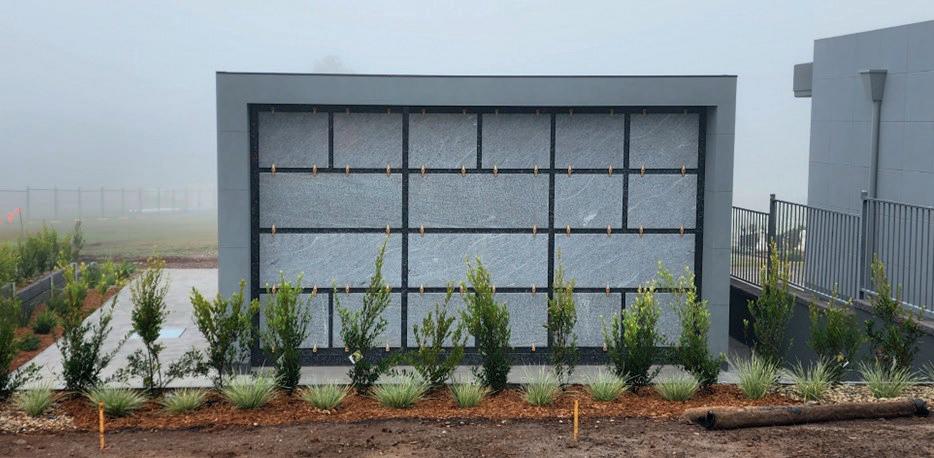
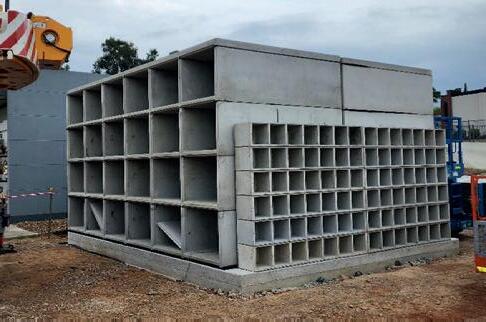
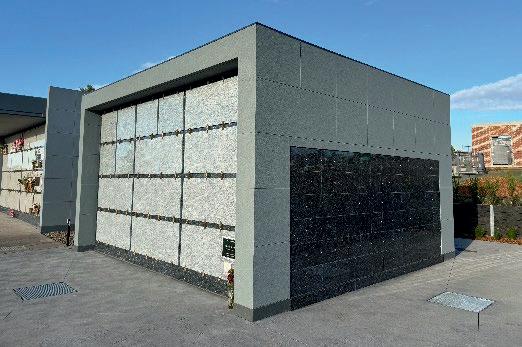
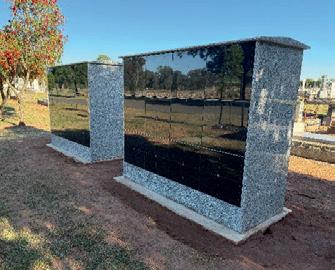
The successful collaboration between Norwalk Precast Burial Systems and Invocare continues to grow, with four mausoleum projects now completed or underway together across Australia.
The partnership began in 2025 when Invocare approached Norwalk seeking a mausoleum solution that was simple, cost effective, quick to install, easily replicated and compliant with Australian Standards. At the time, Norwalk had recently completed development of its new Pod Mausoleum system an innovative precast solution designed to significantly reduce on-site construction time and disruption to cemetery operations and visiting families.
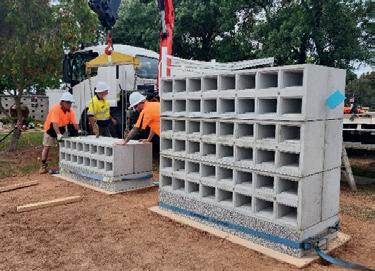
The first project delivered under this partnership was the new Pod Mausoleum development at Castlebrook Memorial Park. Using Norwalk ’s Multi Mausoleum Crypt system, the project incorporated 48 crypt spaces and an 84 -space columbarium wall, all manufactured in approximately 15 working days and installed on site over just three days.
The project demonstrated the key advantages of precast mausoleum construction, including faster installation, consistent quality and minimal disruption compared with traditional cast-on-site methods. From initial site cut through to completion, the entire project was delivered in approximately seven weeks.
“The team at Norwalk have been fantastic to work with - their ability to deliver quality outcomes quickly and efficiently has helped make these projects a great success.”
— Gerard Moses
Following the success of Castlebrook, Norwalk and Invocare have since delivered a 60-space public mausoleum and two private mausoleums at Albany Creek Memorial Park. Norwalk is also currently working on two further Pod Mausoleum projects with Invocare one at Forest Lawn Memorial Park and Stage 2 at Castlebrook Memorial Park. With four successful projects now completed or underway, the ongoing partnership between Norwalk and Invocare highlights the value of innovative precast systems and strong collaboration in delivering high-quality mausoleum developments efficiently and with minimal disruption to families and cemetery operations.
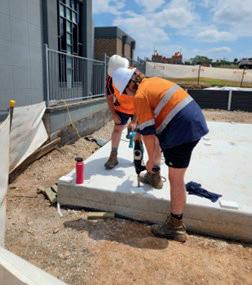
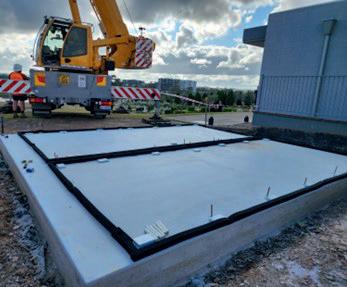
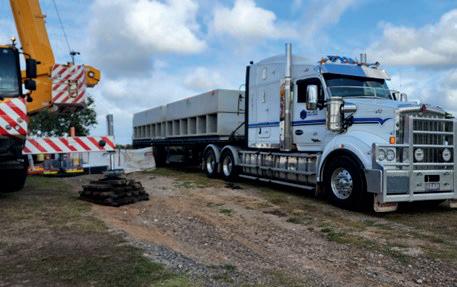
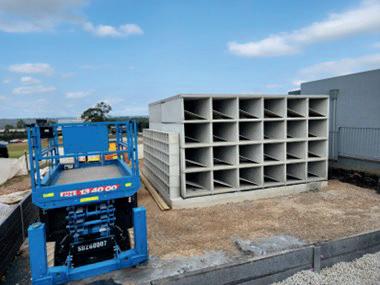
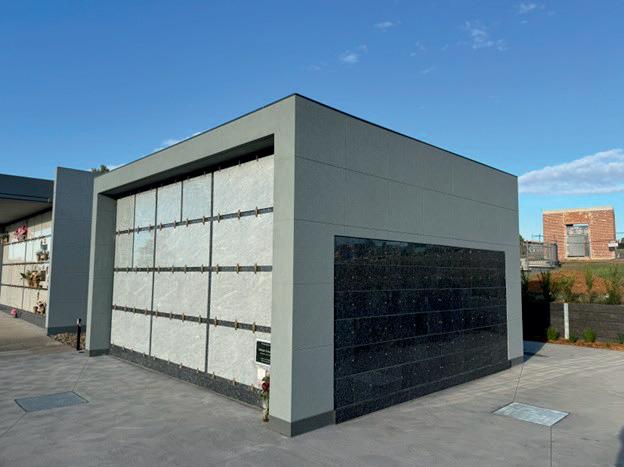
No job too big, no job too small. We can supply and install a 1 space mausoleum or as many spaces as you require, chat to us today about your cemeteries needs.
In today’s world, it’s not unusual to be working with up to five generations in your workforce, often across multiple nationalities, cultures and personality types. If this complexity isn’t managed well, it can quickly become a recipe for disaster. As a leader, taking the time to engage with and understand your colleagues is essential. This is where your leadership needs to stand out, keeping your team focused on what matters, while helping them see the value of working cohesively together, linked to the strategic direction of your cemetery organisation.
A diverse workforce brings many benefits. Communication is the key, supported by the right platforms and technologies aligned to your mission, vision and values. Your team must be aligned and trust one another, as this contributes to performance, culture and job satisfaction.
Through the way you lead and manage, it’s important to coach and mentor your team to bring out the best in them. You must ensure your team is aware of what behaviour is acceptable and what is not in the way they interact with one another.
Baby Boomers: (1946 -1964) - This generation brings valuable experience and knowledge and can play a powerful mentoring role. Many have held senior positions and are strong contributors when sharing insights with others. However, they did not grow up with today’s technologies and may require additional support in this area.
Generation X: (1965 – 1979) - Often in leadership roles, this generation demonstrates leadership qualities and a willingness to take on responsibility in coaching, managing and mentoring others. They are hands-on and thrive on sharing knowledge. Having
experienced the introduction of computers and mobile phones, they are generally comfortable adapting to change.
Millennials / Generation Y: (1980 -1994) –A significant portion of today’s workforce, Millennials drive innovation and adapt quickly to new technologies. They value collaboration and are comfortable sharing knowledge through digital platforms, having grown up during rapid technological advancements.
Generation Z: (1995 - 2009) - A growing part of the workforce, this generation embraces technology and works at a fast pace. They value collaboration and seek early leadership and career progression. They are often the most confident in navigating new technologies.
Generation Alpha: (2010 – 2024) - This emerging generation is only beginning to enter the workforce, mostly through casual or parttime roles, as they seek to gain experience.
A multicultural workforce offers many benefits. Sharing experiences and perspectives from different cultural backgrounds enhances team morale and fresh ways of thinking. While generational differences may influence perspectives, people across all groups are ultimately seeking a sense of belonging and purpose. They want to contribute meaningfully, work toward shared goals, and enjoy what they do. Embracing both cultural and generational diversity strengthens inclusive and effective teams.
Employees are often one of the biggest investment for a cemetery organisation, so it is critical to get the best out of every individual. DiSC profiling provides a practical and costeffective way to do this. It helps people understand why others behave the way they do and why individuals respond differently in certain situations. When teams recognise each other’s strengths and challenges, collaboration improves, and misunderstandings are reduced.
At Key Business Advisors, we recommend and facilitate DiSC workshops to support this understanding. These sessions help individuals gain insight into their own personality and behaviour, as well as those of others. No personality style is better than another - we all have traits - but each person has a primary style they feel most comfortable using at work. Completing a DISC profile can be a real eye-opener, particularly in understanding your impact as a leader.
For more information, please visit https:// keyba.com.au/disc-profiling/
At KBA, we develop tailored strategies that help organisations go from good to great. With over 18 years of experience, we have built strong, long-lasting relationships with clients across Australia.
If you need support, we’re here to help. Let us help you to enhance the performance and culture of your business. Contact Key Business Advisors on 1300 4 ADVICE or email us info@keyba.com.au today!
Colin Wilson KBA Director

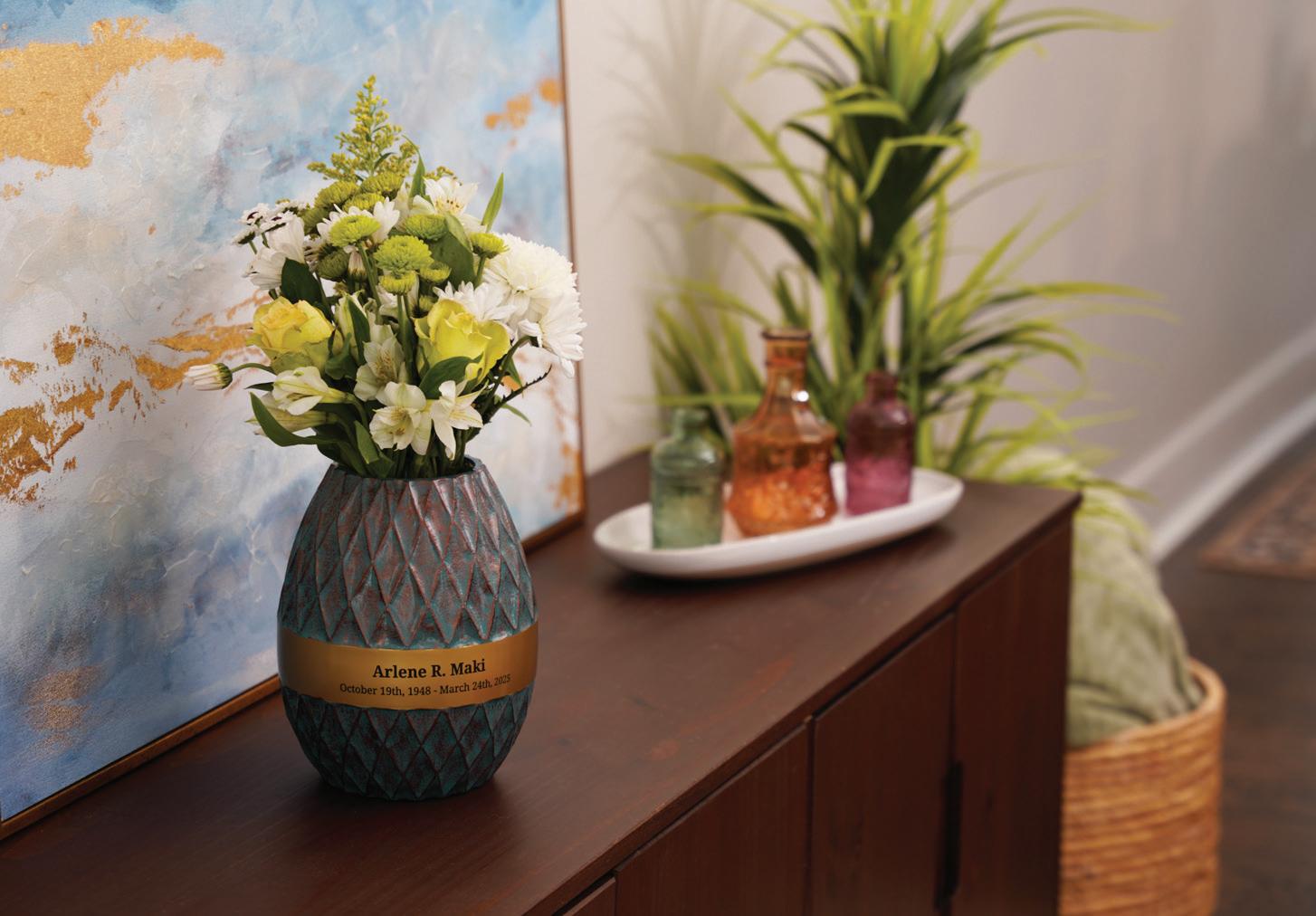
























Is it essential or an add on?
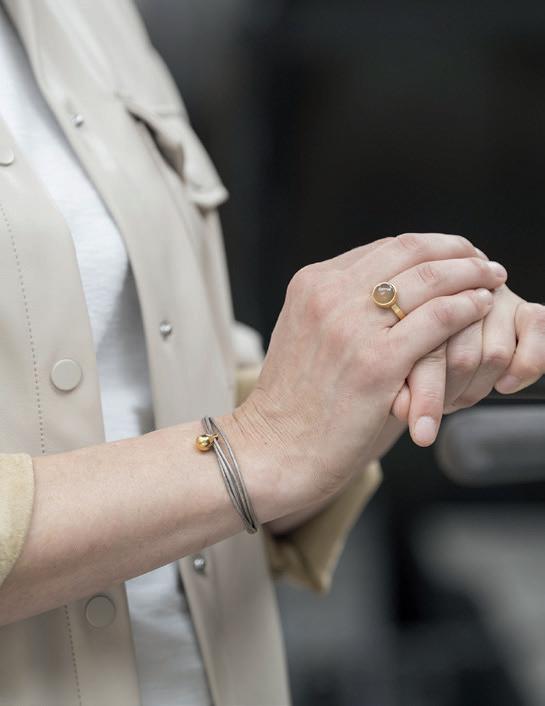
“It is more than just a vessel” is a statement we say daily as a team when speaking with clients about offering urns to families.
For years, urns have often been considered the “extra” rather than the essential when it comes to memorialisation. In the cemetery and memorial park space, while urns are usually available, when clients ask for support in growing this side of their business, I often start by asking one simple question:
“How much importance does each customer service team member place on the urn itself?”
The answer often surprises people, as personal opinion is rarely considered a contributor to sales or family outcomes.
The truth is, we naturally feel more confident offering the things we personally see value in. Without realising it, we ask questions that lead us toward the answers we expect or feel most comfortable with.
For one person, a family saying “we’re going to scatter the ashes” may signal the end of the conversation, perhaps followed by offering a simple scatter tube. For another client service representative, that same statement becomes an opportunity to gently explore further options, traditions, keepsakes, or ways the family may wish to memorialise in the future.
As our industry continues to evolve and preferences shift across generations, it has never been more important to think beyond what we have always done. Memorialisation is becoming increasingly personal, flexible, and reflective of individual lifestyles, homes, beliefs, and stories. Families are looking for options that feel authentic to the person they are remembering, not simply what has traditionally been offered before them. In saying this, it is also important to remember, it is not enough to just have a great range, you need to be the expert.
Considering the growth of online marketplaces such as Etsy and Amazon, which our article The Elephant in the Room referenced last year, one of the most powerful tools any cemetery
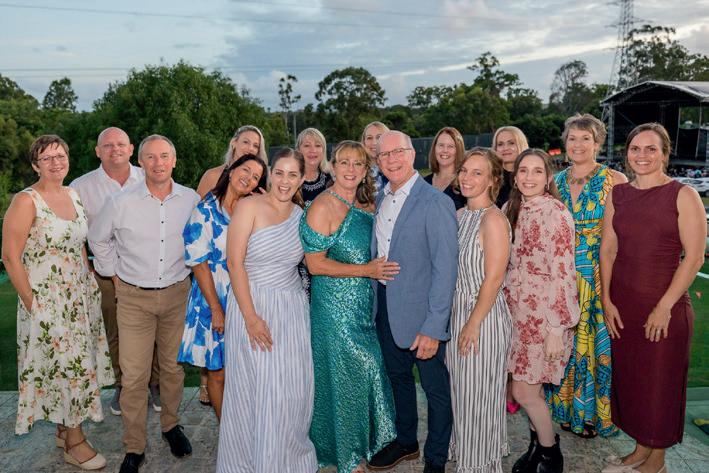
or crematorium still has is the confidence and knowledge of its team. Families are searching online not just because of price, but because they are curious, researching, and trying to understand what is possible.
This raises an important question for all of us: are families receiving the same level of information and exploration from us before they begin searching elsewhere?
Offering options is not about “selling more.” It is about ensuring families leave with confidence that they understood the choices available to them. Time and time again, families tell us, “I didn’t know that existed,” or “I wish someone had told me earlier.”
Sometimes the most meaningful outcomes come from a simple follow-up question:
• “Would you like to hear what some other families have chosen?”
• “Is there something about their personality or life that you would love reflected?”
These conversations create opportunities not only for memorialisation, but for connection, storytelling, and informed decision-making.
There are also practical considerations businesses can reflect on as memorialisation continues to evolve:
• Are you working with brands who ethically source product? Are they crafted with quality and longevity in mind? Last year we added a page about us to our urn catalogue, to help you share this with families. Scan the QR code below!
• Does your range reflect different lifestyles and preferences? Do you need a refresh of your urn display?
• Are your staff confident explaining memorial options without feeling like they are “selling” or unintentionally making assumptions about what families can afford or value?
• Are memorialisation conversations continuing beyond the immediate interactions itself? Do you re engage families who were not yet ready to make a choice?
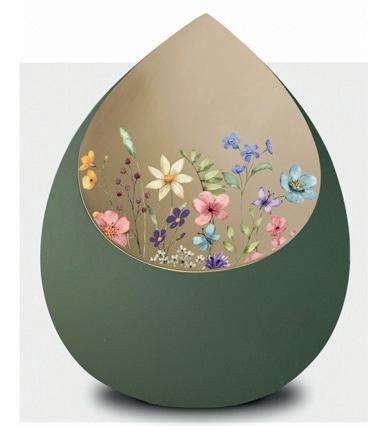
The future of memorialisation will continue to change, as it always has. Tradition still holds an important place within our industry, but alongside it sits a growing desire for something new. And with the constant exposure and fast paced nature of our world, families will continue to challenge this. It’s not enough to simply do what we have always done.
The truth is that the most important part of our jobs is to inform families. And now, more than ever, ensuring they know an urn is not just a vessel. It is an essential part of the service you offer.
Flexible shelter design for evolving memorial park environments
As memorial parks continue to evolve into more landscaped, community-focused environments, operators are increasingly looking for infrastructure that supports both long term durability and visitor experience.
Covered walkways, sheltered seating areas, and protected gathering spaces can help improve usability across changing weather conditions while supporting the quiet, reflective nature of memorial environments.
Felton Industries has recently expanded its shelter range with the introduction of new modular and cantilever shelter solutions designed for high use public environments. The flexibility of the systems makes them well suited to cemetery and memorial park settings.
The modular shelter system has been designed to support scalable layouts that can evolve over time. Built using pre-engineered sections assembled on site, the shelters can begin as a single covered area before expanding into larger connected spaces as site requirements change.
Within cemetery environments, this could include covered visitor seating areas adjacent to memorial gardens, shaded pedestrian walkways between service areas, or sheltered gathering spaces for outdoor ceremonies and remembrance events. The modular approach also supports staged infrastructure planning, which can be beneficial for memorial parks undergoing expansion or redevelopment over time.
Felton’s cantilever shelter range provides a different design approach through a single sided support structure that removes the need for front posts. This design creates open, unobstructed space underneath the shelter while improving visibility and movement throughout high traffic areas.
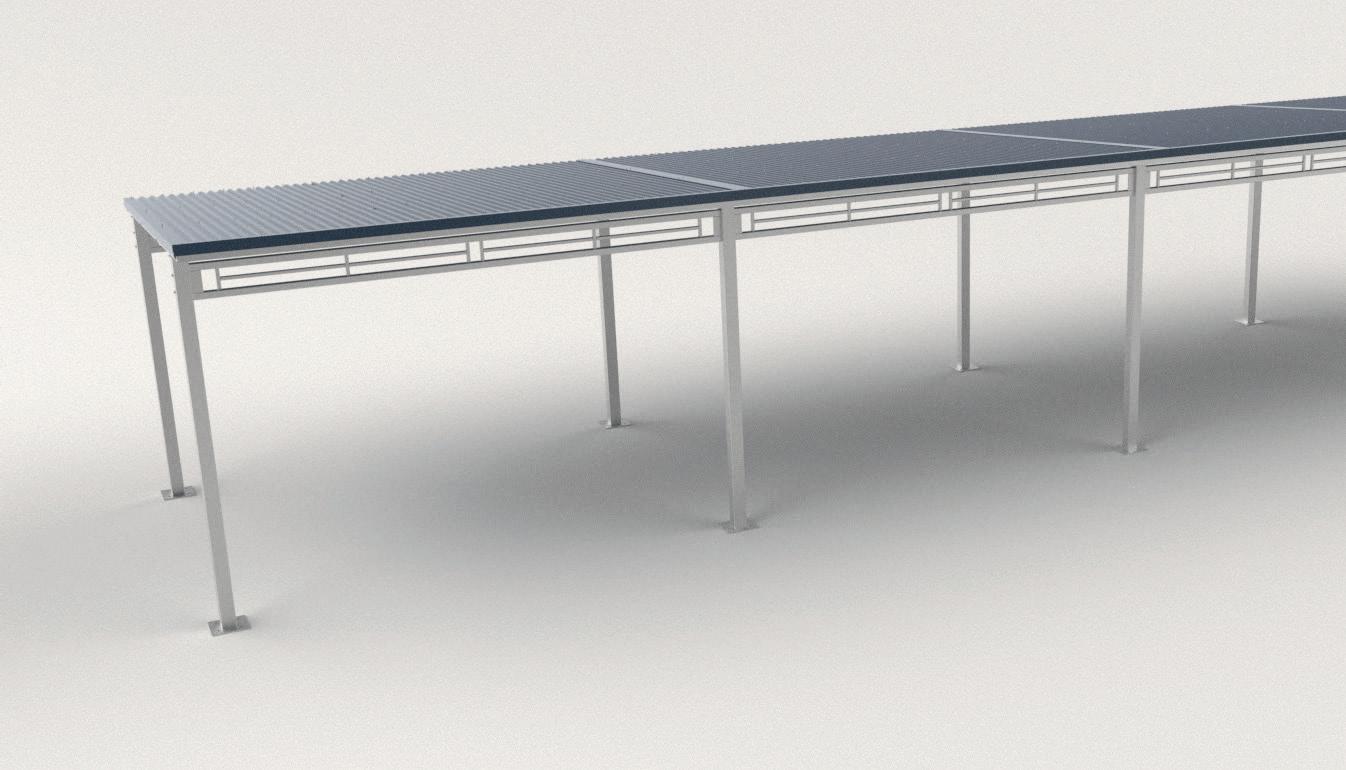





For memorial parks, the cantilever shelter may be suited to covered seating overlooking landscaped reflection areas, sheltered transition spaces near chapels, or pathways connecting visitor amenities. The open design can also improve accessibility for visitors using mobility aids and support easier movement for funeral processions and maintenance equipment.
Both shelter systems are constructed from aluminium and designed for Australian conditions, providing a low maintenance solution for public outdoor environments. The modular system is also structurally certified for public use and wind rated for higher wind regions.

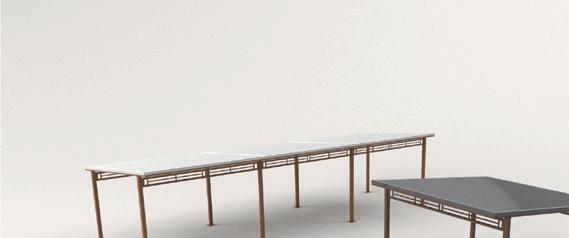

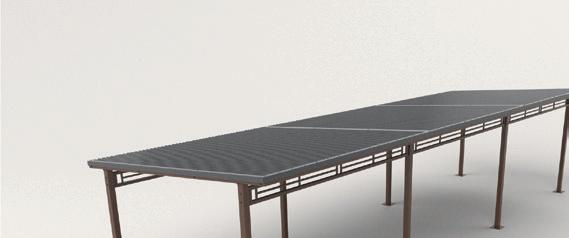




Importantly, the shelters are designed to integrate with broader outdoor infrastructure including seating, tables, and communal outdoor settings. This lets cemetery and memorial park operators create cohesive outdoor environments that support comfort, usability, and long-term site presentation.
Early settlers now speak from the grave at the historic Golden Grove Cemetery in Adelaide, South Australia.
Tea Tree Gully Council worked with actors from a local theatre company, Tea Tree Players, to give voices to 13 of the district’s early settlers, as part of a self-guided tour.
Their graves now feature a plaque with a QR code linking to a dramatised first-person monologue – allowing visitors to hear each ‘settler’ tell their own story.
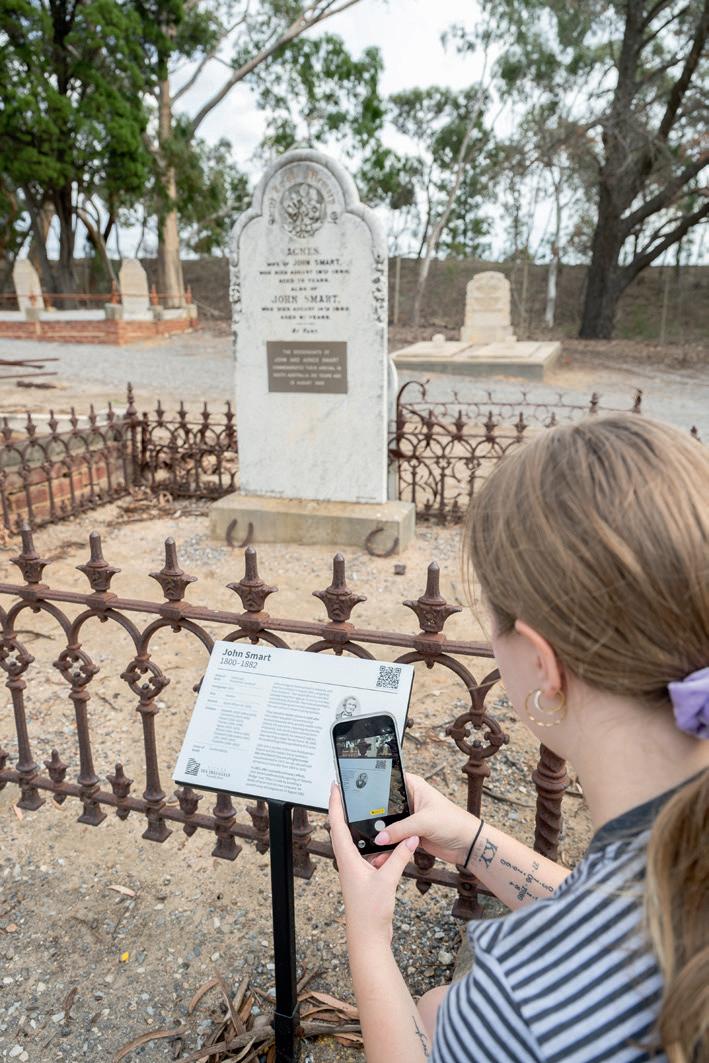
And these stories are anything but tame –including a runaway sailor who went on to father 15 children to two wives (who were sisters) to stories of hardship and even the odd gruesome death.
Each settlers histories were fact checked by Carole Simmonds and the Tea Tree Gully & District Historical Society, with the monologues based on these facts.
People can take the self-guided tours themselves – a unique way to connect with the past.
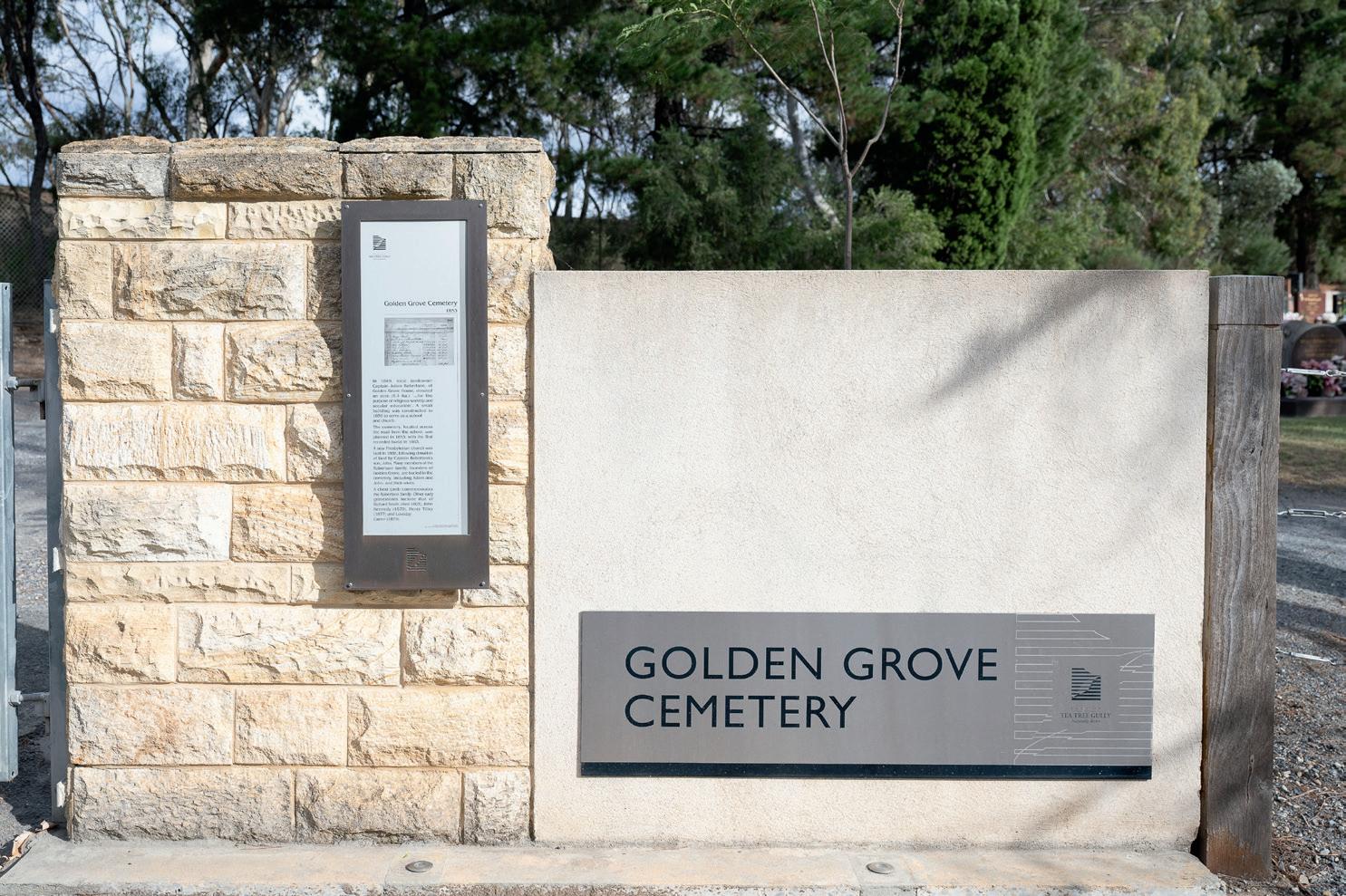
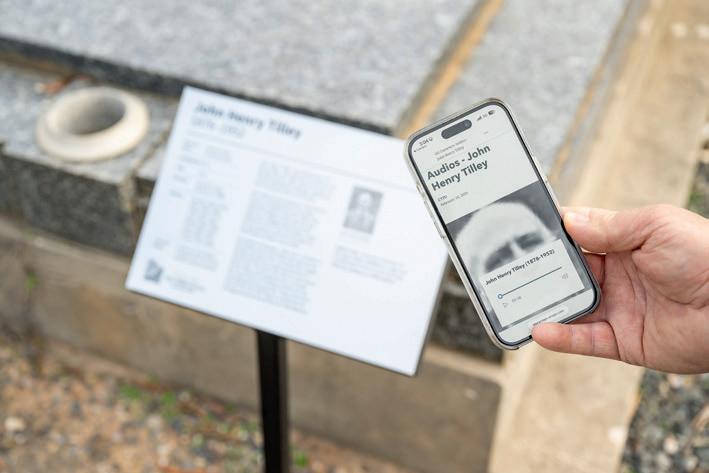
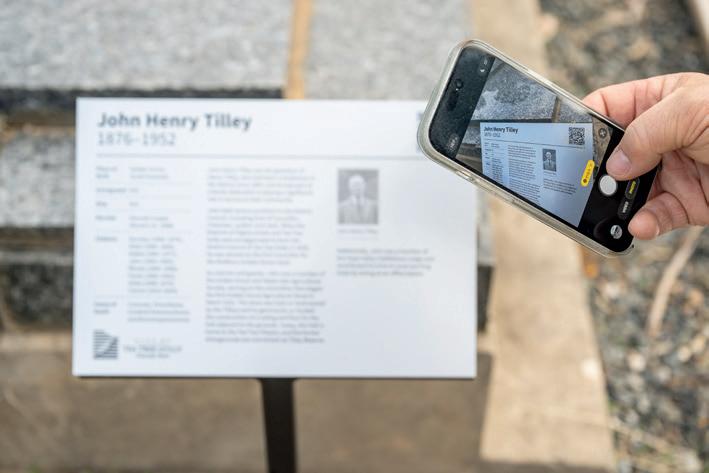
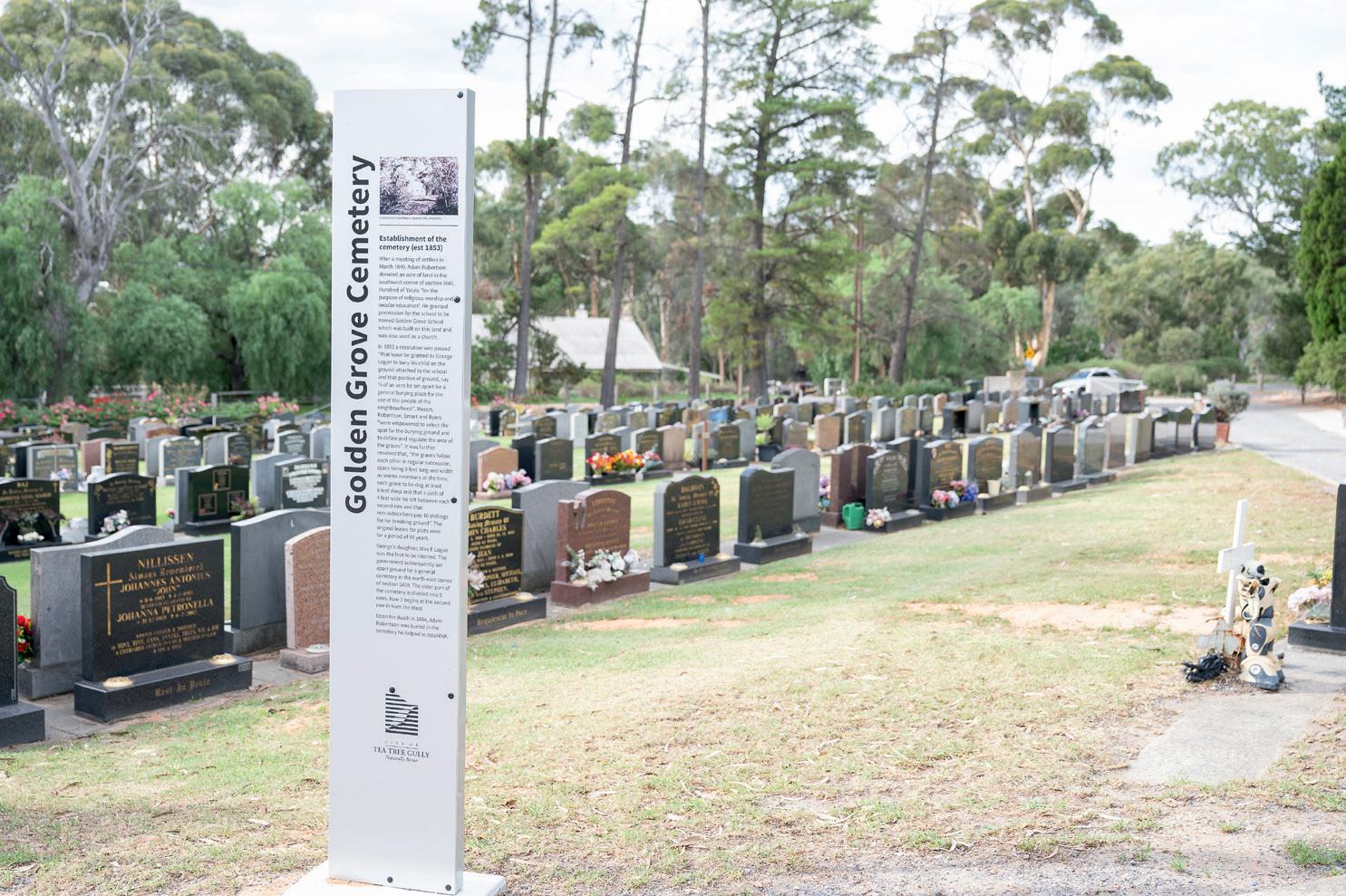
The New Zealand Government has introduced significant changes to its cremation regulations through the Cremation Amendment Regulations 2026, modernising requirements around battery-powered medical devices and reducing unnecessary burdens on families, healthcare professionals and crematorium operators.
The reforms recognise advances in medical technology, particularly the growing use of leadless cardiac pacing systems, while maintaining appropriate safeguards for public and workplace safety.
The reforms follow reactive consultation between government, industry stakeholders and healthcare professionals. The New Zealand Cemeteries and Crematoria Collective (NZCCC), Funeral Directors Association NZ (FDANZ) and New Zealand Embalmers Association (NZEA) worked collaboratively and played a significant role in advocating for the reforms, working closely with government and industry representatives to ensure the regulations reflected contemporary healthcare practices and the realities faced by crematorium operators.
Among the amendments are important clarifications regarding battery-powered medical devices. The updated regulations recognise that some modern batterypowered devices, including certain leadless pacemakers, can safely remain in situ during cremation and do not require removal prior to the cremation process.
The amendments also clarify that the role of a medical practitioner or nurse practitioner is to identify and record the presence of a pacemaker or other battery-powered device, rather than undertake or arrange its removal.
This represents a significant step forward for the New Zealand sector. It removes uncertainty for practitioners, reduces the need for invasive procedures and aligns regulatory requirements with current medical advice and technological advancements.

The reforms also demonstrate the value of industry organisations working collaboratively with government to ensure legislation remains practical, evidence-based and responsive to community needs.
For the Australian sector, these developments will be familiar.
Transcatheter and leadless pacing systems have been in use for several years, with access increasing following the introduction of Medicare Benefits Schedule items for leadless permanent cardiac pacemakers in 2023. Since the introduction of these devices, ACCA has worked with device manufacturers and cremator suppliers to better understand their implications for cremation operations.
The artificial cardiac pacemaker remains one of the most common active implantable medical devices. As pacemaker implantation rates continue to increase and cremation remains the preferred choice for many families, crematorium operators are increasingly likely to encounter these devices.
For many years, cremation documentation has required medical practitioners to identify whether a deceased person contains a cardiac pacemaker or other implanted device. This requirement exists because traditional pacemakers contain batteries that can explode when exposed to the extreme temperatures within a cremator, potentially damaging equipment and creating safety risks for personnel.
However, advances in medical technology have introduced a new generation of leadless pacing systems, including the Medtronic Micra Transcatheter Pacing System. These devices are significantly smaller than conventional pacemakers and are implanted directly into the heart via a minimally invasive catheterbased procedure.
Recognising that these devices would become more common within the cremation sector, ACCA commenced discussions in 2018 with Medtronic and Facultatieve Technologies (FT) to better understand the potential outcomes should these devices be cremated.
In response to questions from operators, Facultatieve Technologies conducted testing using the Micra Transcatheter Pacing System within its cremation equipment. The testing focused on three key areas:
• Whether crematorium operators faced any increased risk when cremating a deceased person with this type of implant.
• The effect of the device on the structural integrity of cremation equipment, both internally and externally.
• The environmental impact of cremating the device.
The results were encouraging.
Testing demonstrated that the device combusted after exposure to direct heat, producing what was described as a “small pop” rather than the violent explosion historically associated with traditional pacemakers.
Importantly, the testing found no damage to cremation equipment, no additional risk to crematorium personnel, negligible environmental impact and no requirement for additional operational procedures when cremating the device within FT equipment.
The study concluded that cremating the Micra device, whether intentionally or inadvertently,
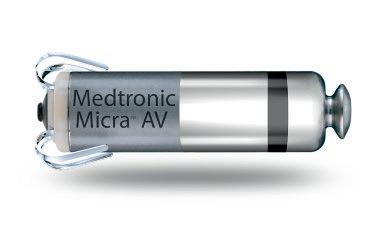
posed minimal risk to personnel, equipment and the environment.
At the time of the initial study, some cremator manufacturers and suppliers were reluctant to accept the findings. However, following further discussion and the sharing of test data, there is now broader acceptance that these leadless devices pose little risk during cremation.
It is important to note that this acceptance relates specifically to smaller leadless pacing systems and should not be interpreted as applying to traditional pacemakers.
Conventional pacemakers contain substantially larger batteries and continue to present a potential explosion risk during cremation. Crematorium operators must therefore continue to ensure that traditional pacemakers are identified and removed in accordance with manufacturer recommendations and local regulatory requirements.
Medtronic has advised that removal of leadless devices may present greater clinical and procedural risk than leaving them in situ, further supporting the rationale behind the recent New Zealand regulatory changes.
While the findings regarding leadless pacing systems are positive, operators should continue to exercise due diligence.
ACCA recommends that crematorium operators consult directly with their cremator manufacturer regarding the suitability
of cremating these devices within their equipment.
Operators should also be aware that other leadless pacing systems and implantable devices exist and may not have undergone the same testing. In addition, local legislation may continue to restrict the cremation of batterypowered medical devices.
Medical documentation may not always distinguish between a traditional pacemaker and a newer leadless pacing system. Where a pacemaker is identified, the specific device type should be confirmed prior to cremation.
ACCA, state associations and organisations such as Funerals Australia (FA) and the British Institute of Embalmers Australia Division continue to work with state health departments to improve awareness of these devices and enhance the quality and accuracy of information provided on medical certification forms.
The recent New Zealand regulatory update demonstrates how legislation can evolve alongside advances in medical technology. It also highlights the importance of evidencebased policy development, with regulators, healthcare professionals, manufacturers and industry bodies working together to maintain public safety while avoiding unnecessary procedures.
The success of the reforms should also be recognised as an example of what can be achieved when industry organisations, such as
the New Zealand Cemeteries and Crematoria Collective, work collaboratively with government agencies to address emerging challenges and modernise regulatory frameworks.
Importantly, the reforms recognise that regulatory frameworks must remain responsive to technological change. As implantable medical devices continue to evolve, ongoing collaboration between government, healthcare providers, manufacturers and the death-care profession will be essential to ensure regulations remain practical, proportionate and fit for purpose.
ACCA will continue to monitor developments in this area and provide guidance to members as further information becomes available. ACCA is also sharing information with our funeral industry associations to support consistent understanding and practice across the profession.
As medical technology continues to advance, it is essential that regulatory frameworks evolve alongside it, balancing safety, practicality and the needs of the communities we serve.



Right for single cemeteries and multi-site organisations.





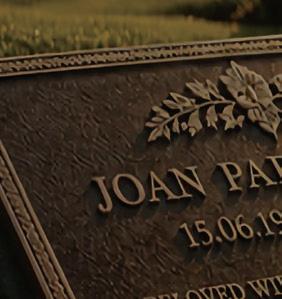
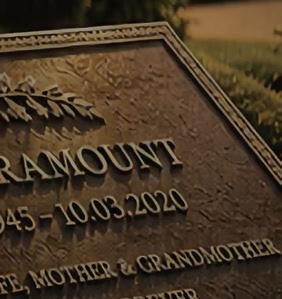


The response to this year’s national workshop series delivered by Relationships Australia Victoria in partnership with the Australasian Cemeteries & Crematoria Association (ACCA) has reinforced just how strongly conversations around psychological wellbeing, grief support and workforce resilience are resonating across the sector.
The response to this year’s national workshop series delivered by Relationships Australia Victoria in partnership with the Australasian Cemeteries & Crematoria Association (ACCA) has reinforced just how strongly conversations around psychological wellbeing, grief support and workforce resilience are resonating across the sector.
Earlier this year, Relationships Australia Victoria expanded the delivery of its full day Psychological Wellbeing in the Workplace and Supporting Grieving Clients workshops nationally for ACCA members, with sessions delivered across Victoria and Western Australia. Designed specifically for professionals working daily alongside grief, loss and trauma, the workshops have generated strong engagement and positive feedback from participants around the country.
In response to this demand, an additional Queensland workshop session will now be delivered ahead of the ACCA Conference in September, providing members with an opportunity to continue these important conversations as interest across the sector continues to grow.
The workshops were developed in direct response to the realities of working within cemeteries and crematoria services. These are not generic wellbeing sessions. They recognise both the legislative responsibilities surrounding psychological wellbeing and the emotional demands placed on professionals supporting grieving individuals, families and communities every day.
The morning session, Psychological Wellbeing in the Workplace, explores practical prevention strategies and evidence-based approaches for recognising and responding to psychosocial hazards, workplace stress and vicarious trauma. The afternoon session, Supporting Grieving Clients, focuses on communication frameworks and practical approaches for supporting bereaved clients whilst maintaining professional boundaries and personal resilience.
One of the strongest themes to emerge throughout the national program has been the openness of discussion within the sessions themselves. Across locations, professionals have spoken candidly about increasing emotional demands, workforce pressures, leadership responsibilities and the challenge of balancing compassionate care with personal wellbeing.
Participants have reflected on the value of training that feels directly relevant to the realities of the profession. Many have highlighted the benefit of practical tools, structured frameworks and the opportunity to learn alongside peers who understand the unique nature of this work.
These conversations were also reflected more broadly at the Funerals Australia National Convention held on the Sunshine Coast in March. Whilst separate to the ACCA workshop program, the convention reinforced the growing focus across bereavement related services on resilience, staff wellbeing and sustainable professional practice.
What is becoming increasingly clear is that the sector is evolving in how it approaches workforce wellbeing and professional support.
For many years, the focus within the industry understandably centered on operational delivery, compliance and service excellence. Those foundations remain essential. However, organisations are increasingly recognising that supporting the wellbeing of staff is equally important to maintaining healthy workplaces, retaining experienced professionals and continuing to provide high quality care to grieving communities.
The additional Queensland session ahead of the ACCA Conference reflects that shift. It is encouraging to see so many organisations across the sector investing time in these conversations and recognising the importance of supporting the people doing this work every day.
We are looking forward to continuing the conversation with ACCA members in September and building on the strong engagement already seen throughout the national program. For those attending the ACCA Conference, the additional session will provide another opportunity to explore practical strategies, share experiences and connect with others navigating similar challenges across the profession.
The work undertaken across the cemeteries and crematoria sector is both highly skilled and deeply human. Supporting the wellbeing of the workforce behind that work is an important part of ensuring the sector can continue providing compassionate care to families and communities into the future.
Donna Plavljanić
Senior
Manager,
Learning and Innovation Relationships Australia Victoria



Connect
That


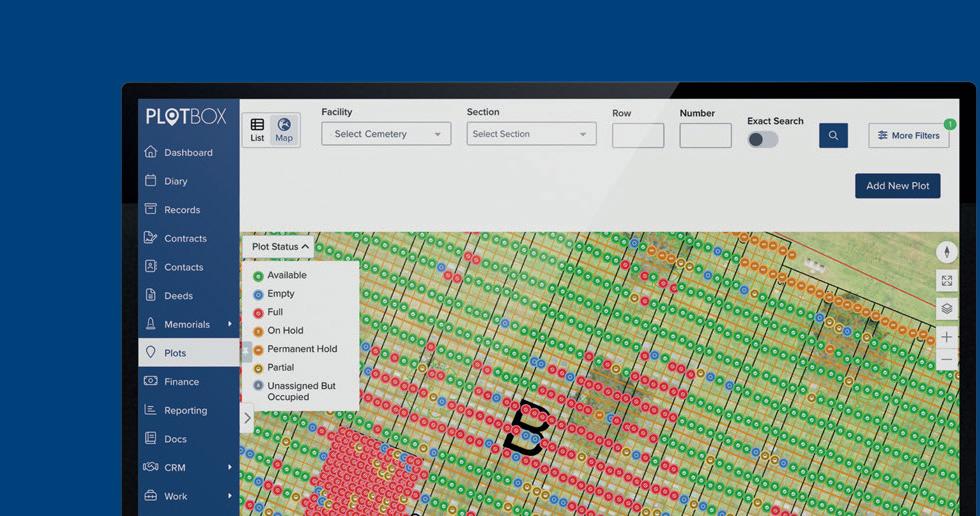







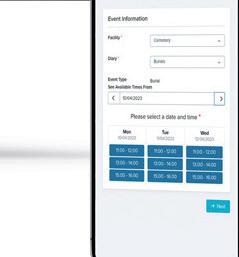
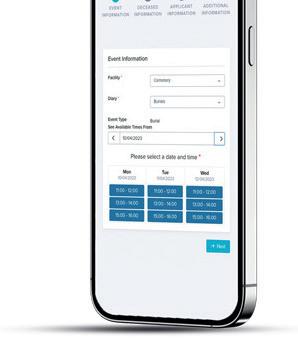

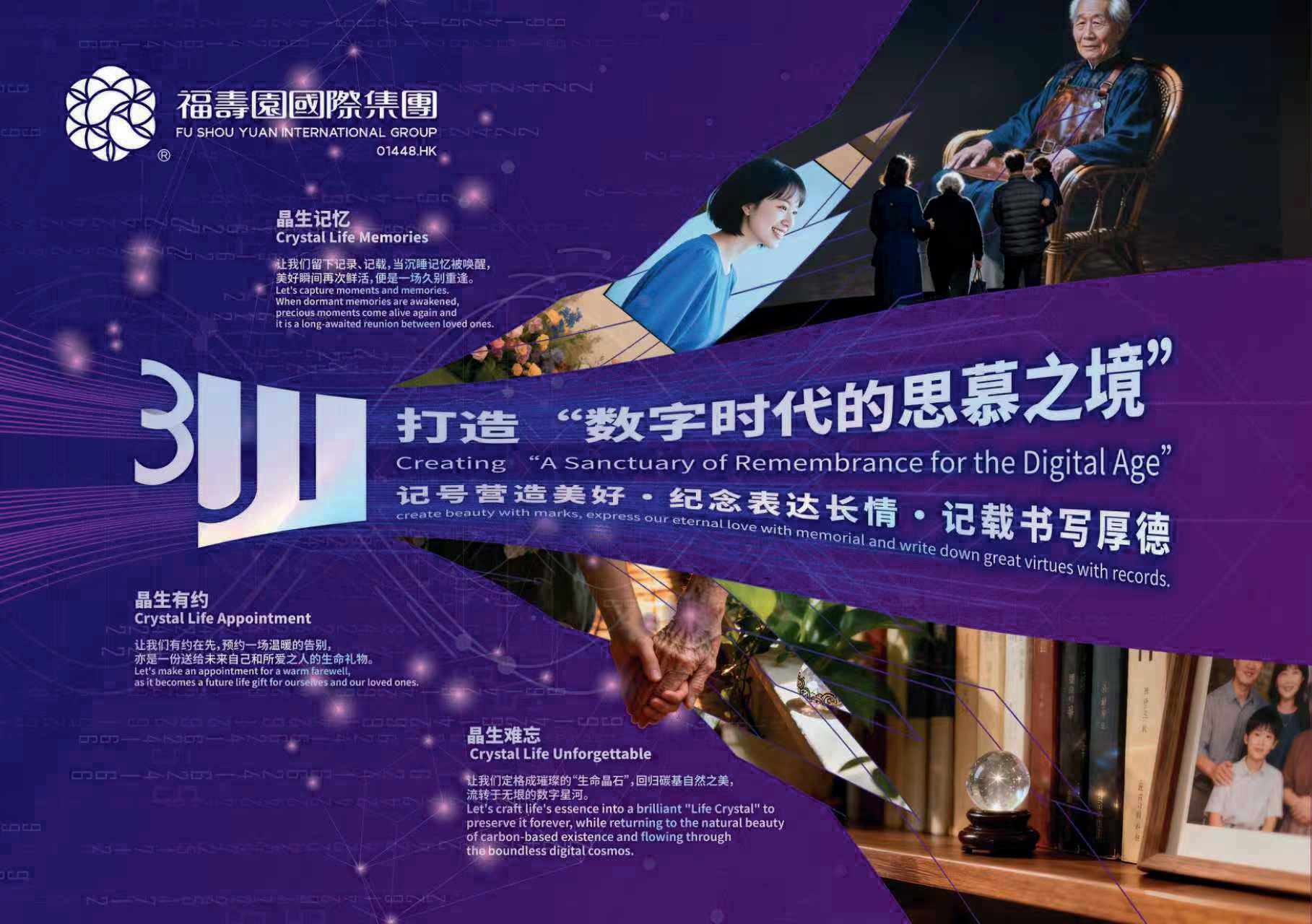
Memoria Sentinel: A contemporary approach to ash interment
Transform quiet or underutilised areas into serene sanctuaries with the slender Memoria Sentinel. Elegant, freestanding pillars that represent a new category in memorialisation.
Industry-tested second generation design
2.4 metre, single-sided column Holds 10 ash interment vessels
Granite exterior available in a curated selection of colours to suit regional and cultural preferences
Provision for bronze plaque personalisation
Patented, tamper-proof interment system with secure, never-fail closure
Low maintenance & lawn mower friendly
Installation consultation and advice available from Zinnia
Proudly engineered and manufactured in Australia
0419 290 768 | info@MemoriaByZinnia.com.au memoriabyzinnia.com.au
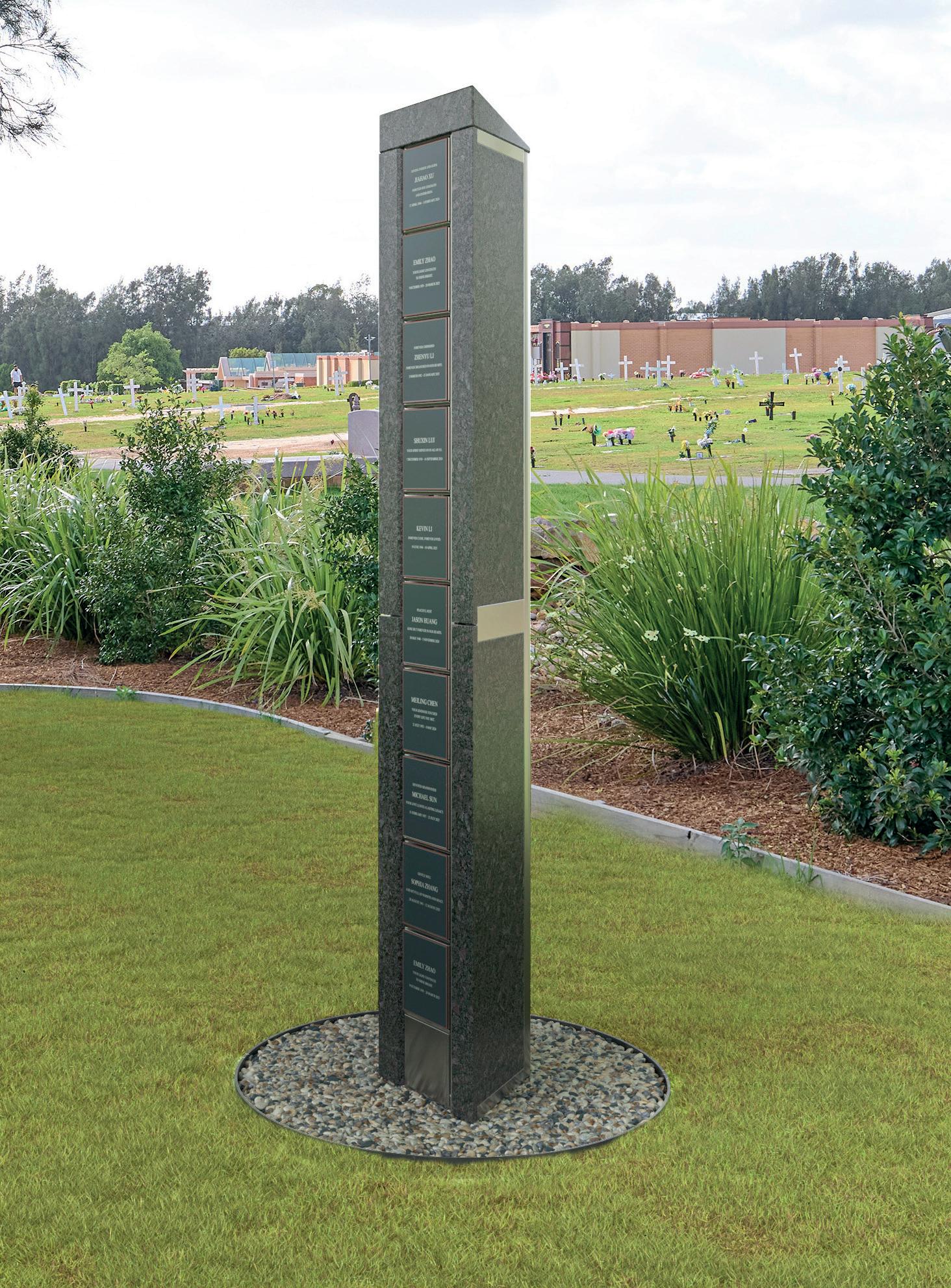
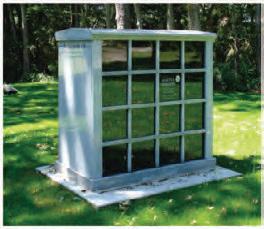
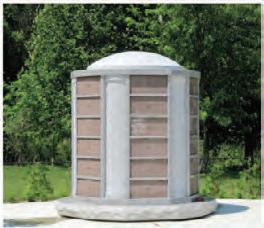
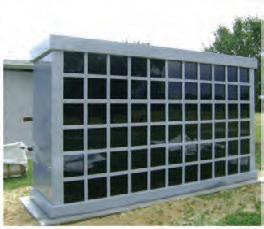
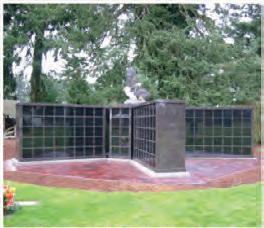
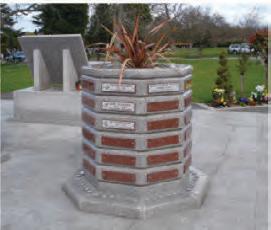
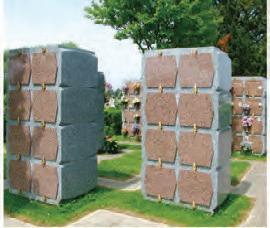

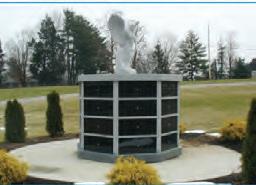
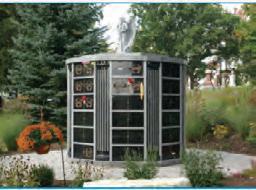
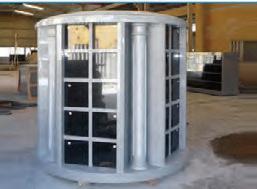
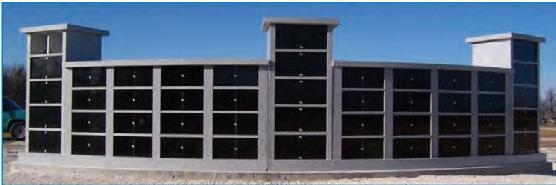
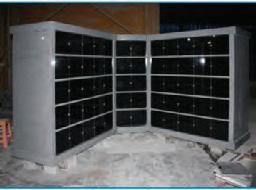
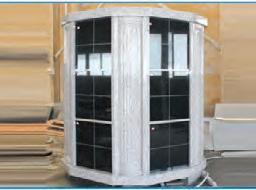
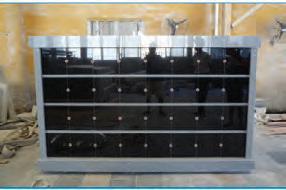
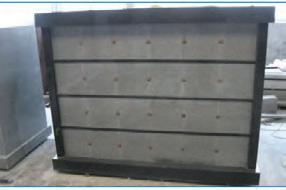
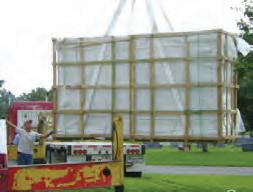
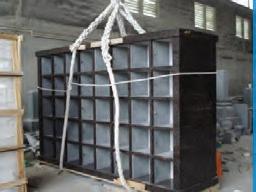

We are increasingly becoming an international/global business community. The following is a snapshot of the industry conferences and seminars we have been informed of for 2026. Web links to the organisations are below. If you would like further contact details of any of the organisations listed, please contact the Secretariat Office.
Do you have any upcoming event you would like us to promote, or did we miss an event?
Please email admin@accaweb.com.au
Some of the events listed on this page may be cancelled or postponed. Please contact each organisation directly if you have any uncertainty or questions.
NFDA Conference
23-25 July 2026 | Crown Casino Melbourne VIC
ACCA
40th Annual Conference
1-4 September 2026 | Royal Pines Resort, Gold Coast Australia
Mid-Year Seminar 2027
Event information to be confirmed
IAOPCC
North American Conference
Scottsdale, Arizona
September 24 -26 2026
CCAV
Annual General Meeting
16 October 2026 - Venue TBC
Annual Conference 2027 Event information to be confirmed
CCAWA
Annual one day seminar & AGM
29–30 April 2027- Venue TBC
AFE
Asia Funeral and Cemetery Expo and Conference Event information to be confirmed
CBCE
Cremation & Burial Communication & Education Event information to be confirmed
FUNERALS AUSTRALIA
National Convention 2027 Event information to be confirmed
CCANSW Event information to be confirmed
CCASA Event information to be confirmed
CANA Event information to be confirmed
ACCA accaweb.com.au
AFE asiafuneralexpo.com
AIE aieptyltd.org
CANA cremationassociation.org
CASA cemeteriessa.com.au
CBCE cbce.org.uk
CCANSW ccansw.org.au
CCAV ccav.org.au
CCC catholiccemeteryconference.org
CSGB cremation.org.uk
Devota devota.at
FA funeralsaustralia.org.au
FBCA fbca.org.uk
FDA (NSW) fdansw.com.au
FDANZ fdanz.org.nz
FIAT-IFTA thanos.org
IAPCC iaopc.com
ICF int-crem-fed.org
ICCFA iccfa.com
ICCM iccm-uk.com
MBNA monumentbuilders.org
NAFD (UK) nafd.org.uk
NFDA nfda.org
NFDA (RSA) nfda.org.za
NFDA (Aus) nfda.com.au
NZCCC nzcemeteriescrematoria.co.nz
TanExpo tanexpo.com
ASSOCIATE MEMBERS
Animal Welfare League SA
PO Box 1525, Port Adelaide, SA, 5015 p: (08) 8256 3110
Auckland Memorial Park
PO Box 391, Silverdale, Auckland, New Zealand e: gm@ampl.co.nz p: 64273003707
Besi Belalis
Locked Bag 5123, Parramatta, NSW 2124 e: besi.belalis@cemeteries.nsw.gov.au p: (02) 9842 8473
Mark Forgie
PO Box 711, Gawler, SA 5118 e: bookings@northernrc.com.au p: (08) 8522 1734
Lucy Millena
26 Westfield Street Earlwood, NSW 2206 e: msmillena@yahoo.com.au p: (03) 9787 6993
ASSOCIATE FELLOW
Warwick Hansen OAM
16 Akala Avenue, Forster NSW 2428 e: warwick@warwickhansen.com.au p: 0418 421 421
EMERITUS FELLOW MEMBERS
Lynwood Davis
VIC, Australia e: lhd1952@bigpond.net.au p: 0419 321 993
Shirley Cooke VIC, Australia e: shrlcooke11@gmail.com
Peter O’Meara (dec) NSW, Australia
FULL MEMBERS
NEW SOUTH WALES
Broulee Memorial Gardens
195 Broulee Rd, Broulee NSW 2537 p: (02) 4471 5867 w: www.bmgc.com.au
Castlebrook Memorial Park
712-746 Windsor Rd, Rouse Hill NSW 2155 p: (02) 9629 1477 w: www.castlebrook.com.au
Catholic Cemeteries & Crematoria Trust
Level 2/11 Murray Rose Ave, Sydney Olympic Park, NSW 2127 e: enquiries@catholiccemeteries.com.au p: (02)8713 5726
Cessnock City Council
PO Box 152, Cessnock, NSW 2325 e: cemetery@cessnock.nsw.gov.au p: (02) 4993 4300
Forest Lawn Memorial Park
Camden Valley Way, Leppington NSW 2179 p: (02) 9606 5822
w: www.forestlawn.com.au
InvoCare Australia Pty Limited
Level 5, 40 Mount Street,
North Sydney NSW 2060
e: info@invocare.com.au
p: (02) 9978 5200
Lake Macquarie Memorial Park
405 Cessnock Rd, Ryhope NSW 2283
p: (02) 4950 5727
w: www.lakemacquariecrem.com.au
Lakeside Memorial Park
230 Kanahooka Rd, Kanahooka NSW 2530 p: (02) 4261 1200
w: www.lakesidecrem.com.au
Lincoln Grove Memorial Gardens & Crematorium
1040 Gunnedah Road, Tamworth NSW 2340 e: info@lincolngrove.com.au p: (02) 6760 7311
Lithgow City Council
PO Box 19, Lithgow, NSW 2790
e: council@lithgow.nsw.gov.au
p: (02) 6354 9999
Melaleuca Station Memorial Gardens
Tweed Valley Way Chinderch NSW 2487
e: wes@heritagebrothers.com.au p: (02) 6674 3777
Metropolitan Memorial Parks
C/- Eastern Suburbs Memorial Park
12 Military Rd, Matraville NSW 2036
e: esmp@mmplm.com.au p: 02 9661 5655 w: www.metropolitanmemorialparks.com.au
Newcastle Memorial Park
176 Anderson Dr, Beresfield NSW 2322 p: (02) 4944 6000 w: www.newcastlecrem.com.au
Northern Suburbs Memorial Gardens & Crematorium
199 Delhi Rd, North Ryde NSW 2113 p: (02) 9887 2033 w: www.northernsuburbscrem.com.au
Pinegrove Memorial Park Kington St, Minchinbury NSW 2770 p: (02) 9625 8066 w: www.pinegrovecrem.com.au
Queanbeyan-Palerang Regional Council PO Box 90, Queanbeyan, NSW 2620 e: anna.corcoran@qprc.nsw.gov.au p: 0408 247 019
Rookwood Memorial Gardens & Crematorium Memorial Ave, Rookwood NSW 2141 p: (02) 9746 8945 w: www.rookwoodcrem.com.au
Sapphire City Crematorium (Horder Family Funerals)
2 Delvyn Drive Inverell NSW 2360
e: phorder@horderfamilyfunerals.com.au p: (02) 6732 5911
Tweed Heads Memorial Gardens
176 Kirkwood Road, Tweed Heads South NSW 2486 p: (07) 5524 2428 w: www.tweedheadscrem.com.au
Tweed Shire Council
PO Box 816, Murwillumbah, NSW 2484 e: cemeteries@tweed.nsw.gov.au p: (02) 6670 2400
Walkers Crematorium
75 Smith Street, Kempsey NSW 2440 e: rbwalkerpl@gmail.com p: (02) 6562 4329
Wollondilly Shire Council
62-64 Menangle Street, Picton NSW 2571 e: cemeteries@wollondilly.nsw.gov.au p: (02) 4677 1100
QUEENSLAND
Albany Creek Memorial Park
400 Albany Creek Road, Bridgeman Downs QLD 4035 p: (07) 3263 3033 w: www.albanycreekcrem.com.au
Allambe Memorial Park
129 Nerang Broadbeach Rd, Nerang QLD 4211 p: (07) 5578 1699 w: www.allambe.com.au
Balonne Shire Council
PO Box 201, St George, QLD 4487 e: debbie.green@balonne.qld.gov.au p: (07) 4620 8888
Brisbane City Council Cemeteries & Crematoria 40A Kitchener Road, Kedron, QLD 4031 e: jade.sime@brisbane.qld.gov.au p: (07) 3178 4144
Bundaberg Crematorium and Memorial Park & Branyan Garden ‘Garden of Rest’
PO Box 768, Bundaberg QLD 4670 e: info@brownsfunerals.com.au p: (07) 4151 3357
Bundaberg Regional Council
91 Takalvan Street, MillBank, Bundaberg, QLD 4670 e: nicholas.burfield@bundaberg.qld.gov.au p: (07) 4130 4477
Burdekin Shire Council
145 Young Steet, AYR, QLD 4807 e: tonia.marano@burdekin.qld.gov.au p: (07) 4783 9800
Cairns City (Regional) Council
PO Box 152 Cairns QLD 4870
e: regadmin@cairns.qld.gov.au p: (07) 4044 8378
Cassowary Coast Regional Council PO Box 887, Innisfail QLD 4860 e: hayley.accatino@ccrc.qld.gov.au p: (07) 4043 8829
Centenary Memorial Gardens
PO Box 3363, Mt Ommaney, QLD 4074 e: taniahoward@centenarymemorialgardens.com.au p: (07) 3271 1222
City of Moreton Bay
PO Box 159, Caboolture, QLD 4510
e: darren.meinen@moretonbay.qld.gov.au
p: (07) 3205 0555
Darling Downs Cremation Service
1020 Ruthven Street Toowoomba 4358
e: trevor@burstows.com.au p: (07) 4636 9600
Fraser Coast Crematorium (Ross Funerals) PO Box 1072, Hervey Bay QLD 4655
e: info@rossfunerals.com.au p: (07) 4124 7521
Fraser Coast Regional Council
PO BOX 1943, Hervey Bay, QLD 4655 e: cemeteries@frasercoast.qld.gov.au p: (07) 4190 5857
Gladstone Regional Council
PO Box 29, Gladstone, QLD 4680 e: parks@gladstone.qld.gov.au p: (07) 4970 0700
City of Gold Coast
Chris Stockley e: CSTOCKLEY@goldcoast.qld.gov.au p: 0466 861 614
Great Northern Garden of Remembrance 31-35 Tallowwood Drive, Deception Bay, QLD 4508 e: info@gngor.com.au p: (07) 3888 3535
Great Southern Memorial Park 1774-1794 Mount Cotton Rd, Carbrook QLD 4130 p: (07) 3829 9999 w: www.greatsoutherncrem.com.au
Gympie Cemetery Trust
93 Cartwright Rd, Gympie, QLD 4570 e: supervisor@gympiecemeterytrust.com.au p: (07) 5482 2199
Gympie Regional Council
PO BOX 9, Liklivan, QLD 4600 e: nadia.bannerman@gympie.qld.gov.au p: (07) 5487 2311
Haigslea Lawn Cemetery
Haigslea Road, Haigslea QLD 4306
e: sue@norwoodpark.com.au p: (07) 5464 3145
Heritage Brady Funeral Directors & Crematorium
PO Box 58, Gordonvale, QLD 4865 e: chris@heritagebradyfunerals.com.au p: (07) 4056 1627
Hinchinbrook Shire Council
PO Box 366 Ingham QLD 4850 e: vrusso@hinchinbrook.qld.gov.au p: (07) 4776 4607
Ipswich City Council
1 Nicholas Street, Ipswich QLD 4305 e: graham.schultz@ipswich.qld.gov.au p: (07) 3810 7680
Ipswich Crematorium
12 Anderson Day Drive, Willowbank QLD 4306 e: sue@norwoodpark.com.au p: (07) 5464 3145
Ipswich General Cemetery
Cnr Warwick Rd & Cemetery Road, Ipswich QLD 4305
e: sue@norwoodpark.com.au
p: (07) 5464 3145
Kandanga Cemetery Trust
PO Box 102 Kandanga QLD 4570 p: 07 5484 3302
e: secretary@kandangacemetery.com.au
Livingstone Shire Council
PO Box 2292, Yeppoon, QLD 4703 e: cemeteries@livingstone.qld.gov.au p: (07) 4913 5000
Lockyer Valley Regional Council
PO Box 82 Gatton, QLD 4343
e: bsippel@lvrc.qld.gov.au
p: (07) 5468 4989
Logan City Council
177 Chambers Flat Road, Marsden QLD 4132 e: kirstyquinn@logan.qld.gov.au
p: (07) 3804 4609
Mackay Regional Council
PO BOX 41, Mackay, QLD 4740 e: graham.day@mackay.qld.gov.au p: 1300 622 529
Maryborough Crematorium
140 Adelaide Street, Maryborough, QLD 4650 e: jks1865@bigpond.net.au p: (07) 4121 4183
Mount Isa City Council
PO Box 815, Mount Isa, QLD 4825 e: city@mountisa.qld.gov.au p: (07) 4747 3200
Mt Thompson Memorial Gardens
329 Nursery Rd, Holland Park QLD 4121 p: (07) 3349 2001 w: www.mtthompsoncrem.com.au
Noosa Shire Council
PO Box 141, Tewantin, QLD 4565 e: troy.andreassen@noosa.qld.gov.au p: (07) 5329 6454
Norwood Park Pty Ltd, Operating as Ipswich Cemeteries
PO Box 4206, Raceview QLD 4305 e: sue@integrityfunerals.com.au p: (07) 5464 3145
Nudgee Cemetery & Crematorium
493 St Vincent Road, Nudgee, QLD 4014 e: webbm@bne.catholic.net.au p: (07) 3324 3499
Redland City Council
PO Box 21, Cleveland QLD 4163 e: cemetery@redland.qld.gov.au p: 07 3829 8570
Rockhampton Crematorium
PO Box 3015, North Rockhampton, QLD 4701 e: rockycrem@gmail.com p: (07) 4928 2126
Rockhampton Regional Council
PO Box 1860, Rockhampton, QLD 4700 e: joanne.stratford@rrc.qld.gov.au p: (07) 4934 8374
Southern Downs Regional Council PO Box 26, Warwick, QLD 4370 e: mark.mcgowan@sdrc.qld.gov.au p: 1300 697 372
Stone Quarry Cemetery
Lot 207, Stone Quarry Road, Jeebropilly QLD 4340 e: sue@norwoodpark.com.au p: (07) 5464 3145
Sunshine Coast Regional Council
Locked Bag 72, Sunshine Coast Mail Centre e: cemeteries@sunshinecoast.qld.gov.au p: (07) 5459 2300
Tablelands Regional Council
PO Box 573, Atherton, QLD 4883 e: trcfacilities@trc.qld.gov.au p: 1300 362 242
Tallegalla Cemetery
Rosewood Marburg Road, Tallegalla QLD 4340
e: sue@norwoodpark.com.au p: (07) 5464 3145
Toowoomba Garden of Remembrance 1001 Ruthven St, Toowoomba QLD 4350 p: (07) 4635 4866 w: www.toowoombacrem.com.au
Toowoomba Regional Council PO Box 3021, Toowoomba, QLD 4350 e: cemeteryofficer@toowoombarc.qld.gov.au p: (07) 4688 6686
Townsville City Council
PO Box 1268 Townsville QLD 4810 e: townsville.cemeteries@townsville.qld.gov.au p: (07) 4727 9754
Warrill Park Lawn Cemetery 12 Anderson Day Drive, Willowbank QLD 4306 e: sue@norwoodpark.com.au
p: (07) 5464 3145
Western Downs Regional Council
PO Box 551, Dalby, QLD 4405
e: info@wdrc.qld.gov.au
p: (07) 4679 4123
Whitsunday Regional Council
PO Box 104, Proserpine, QLD 4800 e: info@whitsundayrc.qld.gov.au p: (07) 4761 3823
Woongarra Crematorium
PO Box 2510, Idalia, QLD 4811 e: kyliem@woongarra.net.au
p: (07) 4778 1476
SOUTH AUSTRALIA
Adelaide Cemeteries Authority
PO Box 294 Enfield PlazaSA 5085
e: Michael.robertson@aca.sa.gov.au
p: (08) 8139 7400
City of Salisbury
PO Box 8, Salisbury, SA 5108
e: CGrocke@salisbury.sa.gov.au
p: (08) 8406 8222
Drumminor Gardens Cemetery
61 Golden Grove Road, Ridgehaven, SA 5097
e: brenton@harrisonfunerals.com.au
p: (08) 8265 6060
Mount Gambier Cemetery Trust
PO Box 56, Mount Gambier, SA 5290
e: cmccombe@mountgambier.sa.gov.au
p: (08) 8725 3099
North Road Cemetery
1A Cemetery Avenue Nailsworth, SA 5083
e: cemetery@adelaideanglicans.com
p: (08) 8344 1051
Payneham & Dudley Park
Cemeteries Trust Inc.
Exeter Terrace, Dudley Park, SA 5008
e: admin@dudleyparkcemetery.com.au
p: (08) 8344 2973
West Coast Memorial Park
PO Box 1415, Port Lincoln, SA 5606
e: jennifer@westcoastfunerals.com.au p: (08) 8684 2001
Yorke Peninsula Council
PO Box 57 Maitland, SA, 5573 e: sue.beech@yorke.sa.gov.au p: (08) 8823 0000
Boroondara Cemetery Trust
PO Box 565, Kew, VIC 3101 p: (03) 9853 7025
BoxHill Cemetery Trust
395 Middleborough Road, Box Hill VIC 3128 VIC p: (03) 9890 1229 e: admin@boxhillcemetery.com.au
Geelong Cemeteries Trust
141 Ormond Road, Geelong East, VIC 3219 e: ah@gct.net.au p: (03) 5249 3939
Rememberance Parks Central Victoria
P.O. Box 268, Eaglehawk VIC 3556 e: emma.flukes@rpcv.org,au p: 1300 266 561
Southern Metropolitan Cemeteries Trust
PO Box 1159, Clayton VIC 3169 e: ingrid.harvey@smct.org.au p: (03) 8558 8204
TASMANIA
Carr Villa Memorial Park (City of Launceston) 36 Nunamina Avenue
Kings Meadows 7249 TAS e: carrvilla@launceston.tas.gov.au p: (03) 6323 3604
Millingtons Cemeteries
The Cottage, Queens Walk, Cornelian Bay, TAS 7008 e: twhitehead@millingtons.com.au p: (03) 6278 1244
AUSTRALIAN CAPITAL TERRITORY
Canberra Memorials Parks (formerly Canberra Cemeteries) PO Box 37, Mitchell, ACT 2911 e: kerry.mcmurray@act.gov.au p: (02) 6207 0029
NORTHERN TERRITORY
Alice Springs Town Council PO Box 1071, Alice Springs, NT 0871 e: astc@astc.nt.gov.au p: (08) 8950 0500
Thorak Regional Cemetery, Litchfield Shire Council PO Box 446, Humpty Doo, NT 0836 e: anthony.vanzeeventer@litchfield.nt.gov.au p: (08) 8947 0903
WESTERN AUSTRALIA
Albany Cemetery Board
PO Box 469, Albany, WA 6330
e: admin@acb.wa.gov.au p: (08) 9844 7766
Bunbury Cemetery Board
PO Box 1115, Bunbury, WA 6231
e: info@bcb.wa.gov.au
p: (08) 9721 3191
City of Busselton
Locked Bag 1, Busselton, WA 6280
e: city@busselton.wa.gov.au
p: (08) 9781 0444
City of Mandurah
3 Peel Street, Mandurah WA 6210
e: council@mandurah.wa.gov.au p: (08) 9550 3777
Geraldton Cemetery Board
130 Eastward Road, Geraldton, WA 6530 e: ce@gcb.wa.gov.au p: (08) 9921 2707
Kalgoorlie - Boulder Cemetery Board
PO Box 79, Kalgoorlie, WA 6430
e: admin@kbcb.wa.gov.au
p: (08) 9091 1693
Metropolitan Cemeteries Board
PO Box 53, Claremont, WA 6910
e: kathlene.oliver@mcb.wa.gov.au
p: (08) 9383 5213
Shire of Meekatharra
PO Box 129, Meekatharra, WA 6642
e: dceo@meekashire.wa.gov.au
p: (08) 9980 0600
INTERNATIONAL
Ninness Funeral Home
PO Box 50-347 Porirua New Zealand NZ 5240
p: (64)3042374174
P Day and Son Ltd
41 Nile Street, Nelson, New Zealand 7010 e: bevan@daysfuneralservices.co.nz p: 64 3 548 2770
Purewa Cemetery Trust Board
4a Parsons Road, Meadowbank Auckland, New Zealand 1071 e: alastaircrombie@purewa.co.nz p: 64 9 528 5599
Celeste Catering Pty Ltd
5/481 Willoughby Rd, Willoughby NSW 2068 e: annie@celestecatering.com.au p: (02) 9808 1088
Everlon
Unit 7/1-3 Nicholas St, Lidcombe, NSW 2141 e: info@everlon.com.au p: (02) 9646 3886
Frank Dimarco & Son Pty Ltd
14 Production Avenue, Kogarah, NSW 2217 e: alf@fgagranite.com.au p: (02) 9588 5477
Glory Marble & Granite
165 Hume Hwy, Greenacre, NSW 2190
e: mel@glorymarble.com.au p: (03) 9460 9066
Greenworx
2/23 Bearing Road, Seven Hills, NSW 2147
e: john.kalocsai@greenworx.com.au p: (02) 9676 5110
Hickey & Co. Pty Ltd
PO Box 13, Petersham, NSW 2049
e: paul@hickeyandco.com p: (02) 9564 1888
L.S. Piddington & Sons Pty Ltd
PO Box 4424, Armidale, NSW 2350 e: allan@piddingtons.com.au p: (02) 6772 2288
Keepsakes by Nicoleta
Level 5/4 Columbia Ct, Baulkham Hills NSW 2153
e: nicoleta@keepsakesbynicoleta.com.au p: 0420 409 342
Mountain View Crematoria
34 Belmore Street, Woolongong, NSW 2500
e: alan@hparsons.com.au
p: (02) 4228 9622
National Granite Pty Ltd
PO Box 183, Sydney Markerts, NSW 2129 e: steve@nationalgranite.com.au
p: (02) 9748 8567
OpusXenta Pty Ltd
Tower 2, Level 14, 101 Grafton St, Bondi Junction NSW 2022
e: lea-annm@opusxenta.com
p: 1300 994 853
Phoenix
44 Duke St (PO Box 5), Uralla, NSW 2358
e: orders@phoenixfoundry.com.au
p: (02) 6738 2200
PlotBox
Level 12/64 York Street, Sydney NSW 2000 and The ECOS Centre, Kernohans Lane Ballymena, Co. Antrim BT43 7QA Northern Ireland
e: info@plotbox.com
p: 0401 123 897
p: (02) 7228 7971
Reliance Risk Pty Ltd
Suite 604, Harley Place, 251 Oxford Street, Bondi Junction NSW 2022
p: (02) 8377 1818
m: 0478 351 757
e: andrew.constantinou@reliancerisk.com
Russell Investments
GPO Box 3279, SYDNEY NSW 2001
e: jhampshire@russellinvestments.com
p: (02) 9229 5375
SpyderTech International Pty Ltd
2a/8 Reliance Drive, Tuggerah, NSW 2259
p: (02) 9308 1523
m: 0448 032 306
e: michaelshade@spydertech.net.au
Tyrrells Macquarie Park Memorials Pty Ltd
PO Box 176 North Ryde NSW 1670
p: (02) 9878 1714
e: nathan@tyrrellsmemorials.com.au
Zinnia Operations Pty Ltd
Level 32, 1 Market Street, Sydney, NSW 2000
p: (02) 9212 2255
m: 0419 290 768
e: andrew@memoriabyzinnia.com.au
Daisybox Australia Pty Ltd
PO Box 346, Peregian Beach, QLD p: 1300 801 248
Final Touch Australia
Unit 3/13, Strathwyn St, Brendale, QLD 4500 e: chantelle@finaltouchaustralia.com.au p: (07) 3889 9607
Heritage Stonecraft & Design
4 Madison Court, Toowoomba QLD 4350 e: robert.heritagestone@gmail.com p: 0428 231 449
Hyqual Australia
31 Enterprise Street, Caloundra QLD 4551 e: office@hyqual.com p: 1800 77 77 44
Office of Australian War Graves GPO Box 9998, Brisbane, QLD 4001 e: Sheena.Lambie@dva.gov.au p: 1800 555 254
Worssell & Co Pty Ltd
70 Mica Street, Carole Park, QLD 4300 e: jade@worssell.com.au p: (07) 3271 1511
Monumental Masons Association of SA Inc
PO Box 10289, Adelaide BC, SA 5000 e: secretary@monumentalassociationsa.com.au p: 0439 276 461
Arrow Bronze
P.O. Box 4576, Dandenong South, 3164 e: hymie.j@arrowbronze.com.au p: (03) 9794 2922
Austeng Pty Ltd
78-80 Douro Street, North Geelong, VIC 3215 e: lyn@austeng.net.au p: (03) 5278 2044
DP Jones & Co
PO Box 486, Kyabram, VIC 3619 e: info@dpjones.com.au p: (03) 5852 2661
Giannarelli Holdings Pty Ltd
303-305 Spring Street, Reservoir VIC 3073 e: ag-sons@iimetro.com.au p: (03) 9359 2142
John Stonemart Pty Ltd
310 Mahoneys Road, Thomastown, VIC 3074
e: jacky@johnstonemart.com p: 03 9359 0898
Key Business Advisors
Level 2, 445 Keilor Road, Niddrie, VIC, 3042 p: 03 9325 5900
e: colin@keyba.com.au
Major Furnace Australia
92 Fairbank Road, Clayton South, VIC 3169
e: andrew.north@majoreng.com.au p: (03) 8558 1800
Memories Group Limited
Level 1, 11-19 Bank Place
Melbourne VIC 3000
e: ben.cukier@memories.net
p: 0413 400 522
Morello/ Ashcroft Pty Ltd
Unit 1, 33-35 Commercial Drive, Thomastown, VIC 3074
e: mandyr@cmorello.com.au
p: (03) 9464 1700
Nelson Bros. Funeral Services
PO Box 2237, Footscray, VIC 3011
e: nelsonbros@nelsonbros.com.au
p: (03) 9687 1301
Norwalk Precast Burial Systems
47 Highlands Road, Seymour, VIC 3660
e: info@norwalk.com.au
p: (03) 5799 0083
Paramount Bronze
303-305 Spring Street, Reservoir 3073 p: (03) 9654 3460
WESTERN AUSTRALIA
Australian Federation of Civil Celebrants
21 Aerolite Way, Beldon, WA 6027
e: funerals@afcc.com.au p: 0422 741 222
NORTHERN TERRITORY
Territory Funerals
PO Box 2711 Palmerston NT 0831
e: admin@territoryfunerals.com.au p: 0438 637 258
Canterbury Memorial Gardens & Crematorium
P O Box 19795, Woolston Christchurch 8241, New Zealand
Facultatieve Technologies
80 Armstrong Way, Highland Park QLD 4211
Fu Shou Yuan Industrial Group Co Ltd
No. 500, Lane 7270, Waiqingsong Road, Qingpu District, Shanghai 201700, China e: shuting@shfsy.com p: 86 21 5425 5151
Hamilton Park Cemetery
Morrinsville Rd, Private Bag 3010, Hamilton 3240 New Zealand
e: michelle.rivers@hcc.govt.nz p: 647 856 9604
Maunu Crematorium Ltd
PO Box 8043, Kensington, Whangarei, New Zealand 0145 e: info@maunucrematorium.co.nz p: 64 9437 5799
Milne Construction Australia Pty Ltd
Level 7 / 114 Williams Street, Melbourne, VIC 3000
e: info@milneaustralia.com p: 0404 456 223
Mongolian Funeral Association
301 “New Mind” Building, Undsen Huuli Street 9/1, 5th Khoroo, Sukhbaatar District, Ulaanbaatar Mongolia 14253 e: info@mfa.mn p: +976 7011 1343
Ninness Funeral Home
PO Box 50-347 Porirua New Zealand NZ 5240 (64) 3042374174
OrthoMetals
Eekhorstweg 32, 7942KC Meppel, The Netherlands e: hidde@orthometals.nl p: +31 6 4306 6196
Taiyo Chikuro Industries Co Ltd
6-21 Higashi-koen, Hakata-Ku, Fukuoka, Japan e: s-eguchi@taiyochikuro.jp p: 0 8 92 651 4131
Xiao En Memorial Park Bhd
Xiao En Centre, No.1, Jalan Kuari, Cheras, 56100 Kuala Lumpur, Malaysia e: kuan@xiao-en.com.my p: +603-9145 38