Introducing a New Standard in Personalised Memorial Urns
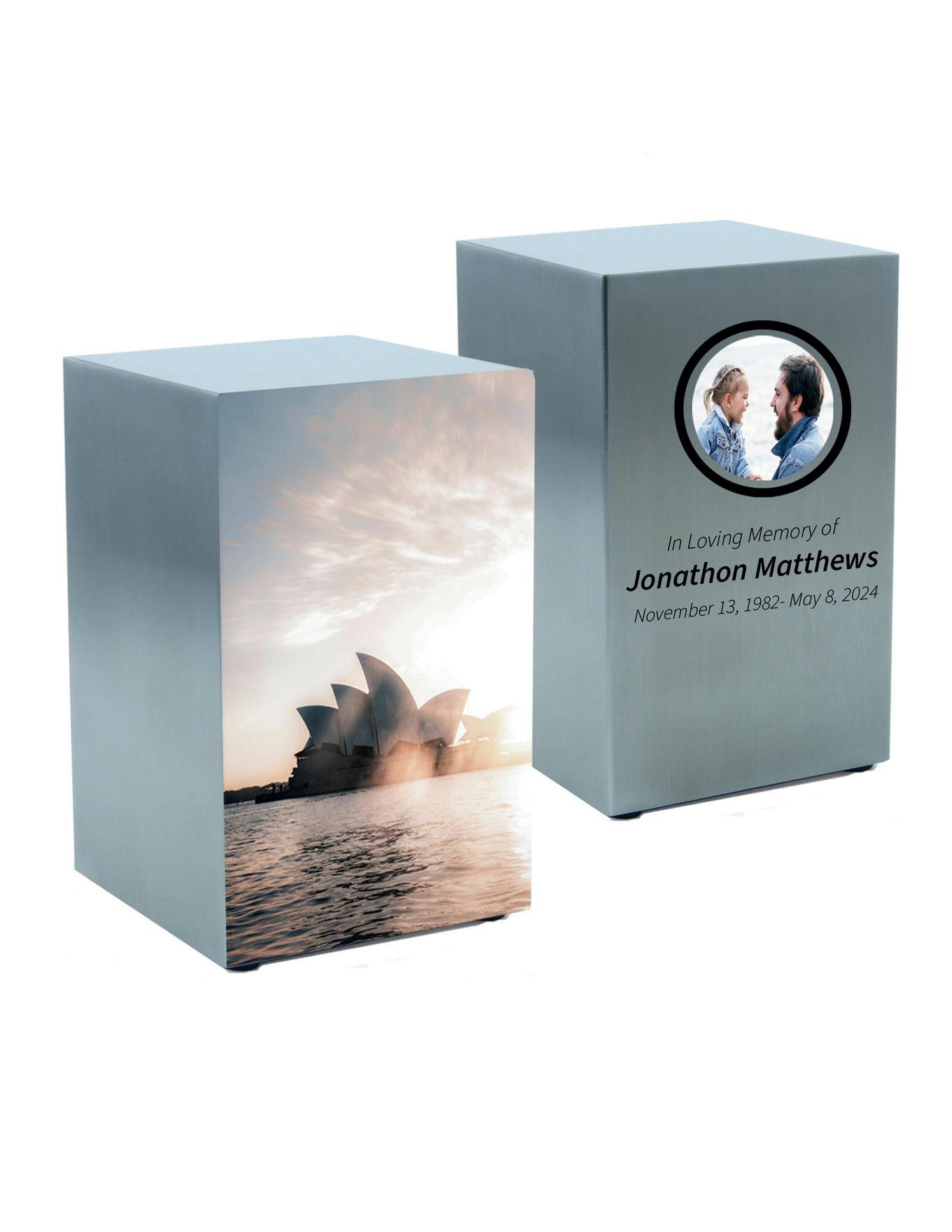
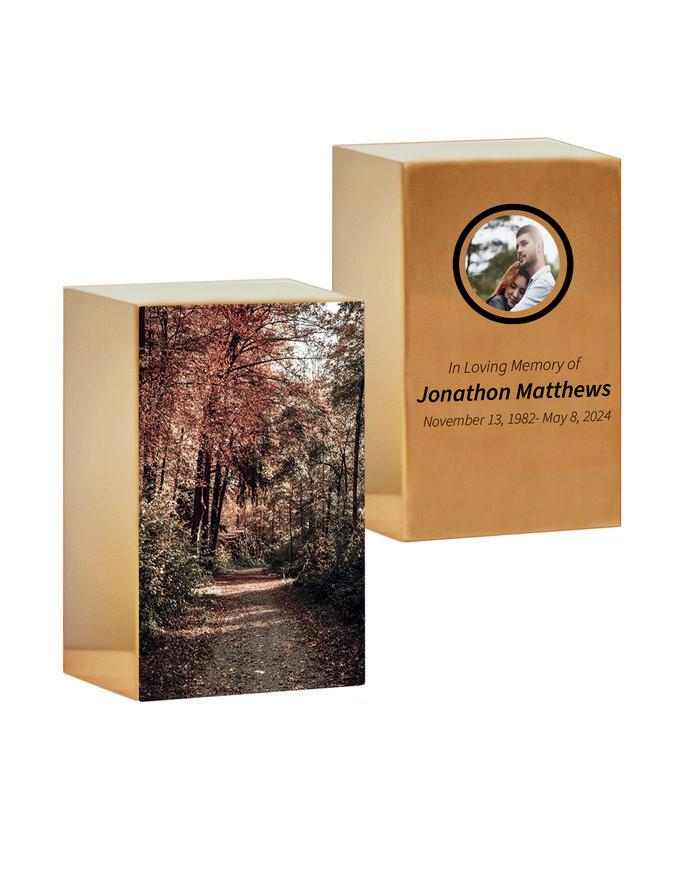
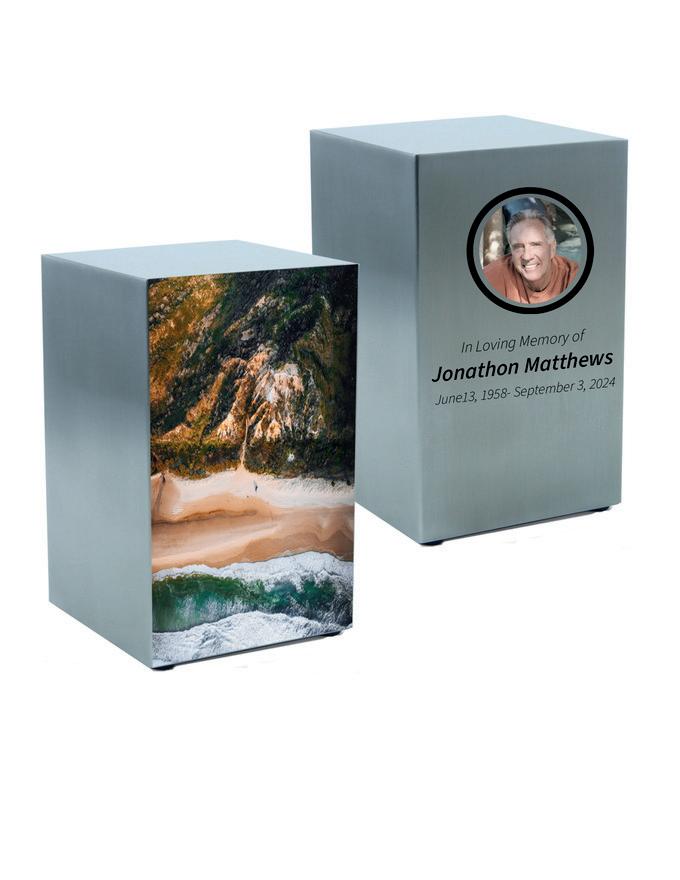
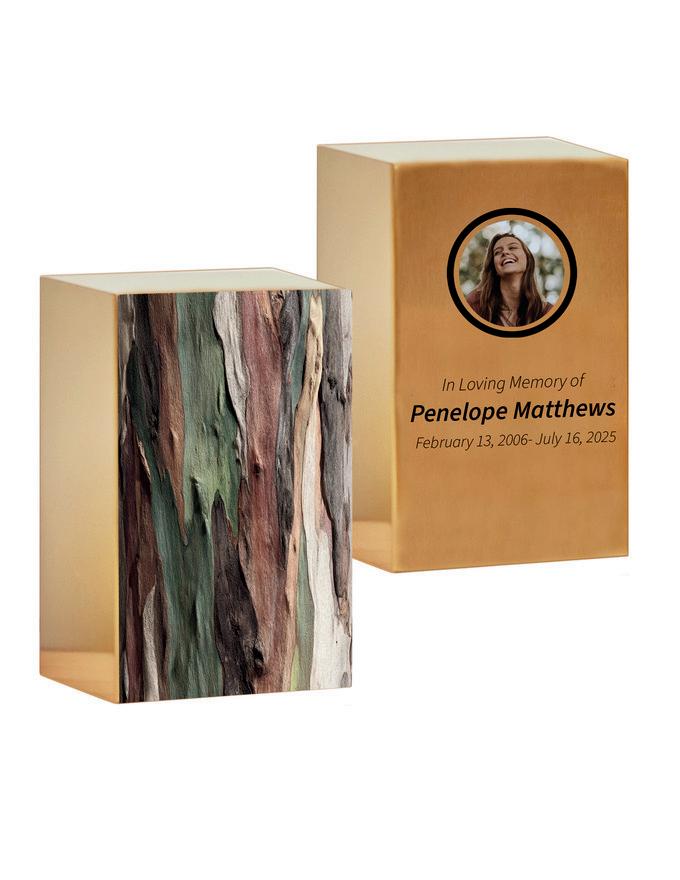
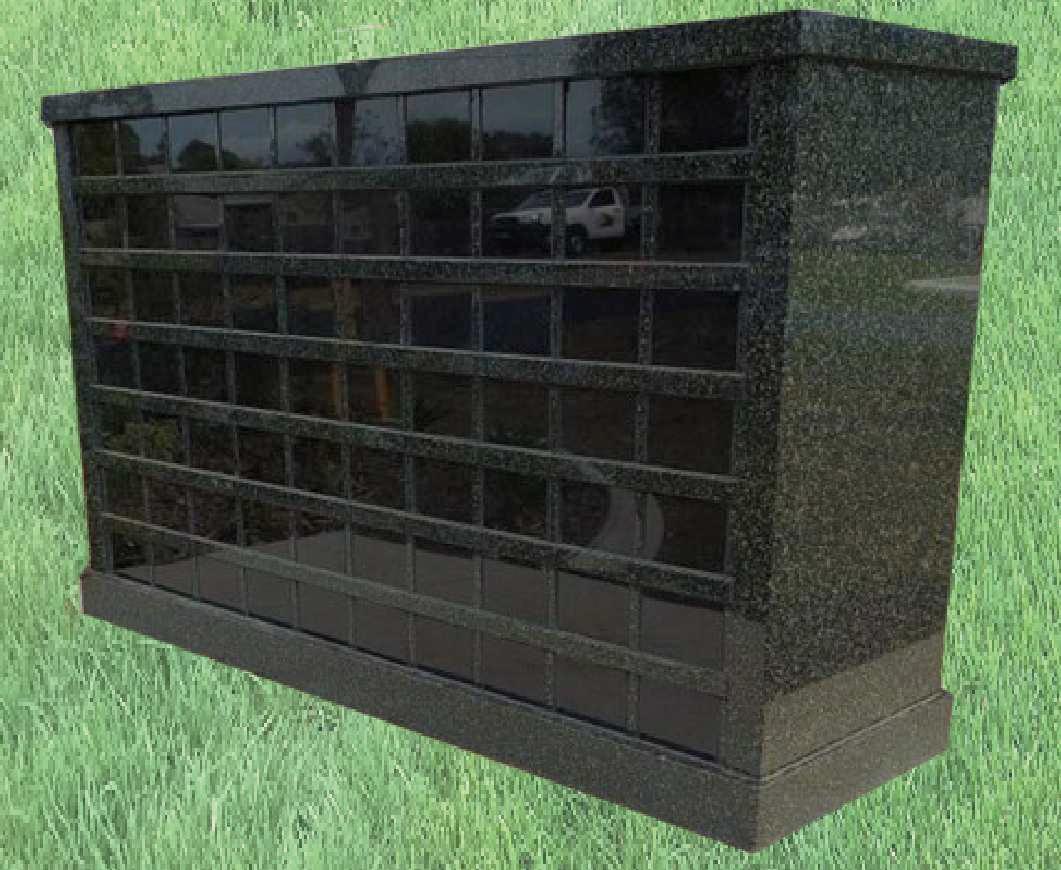
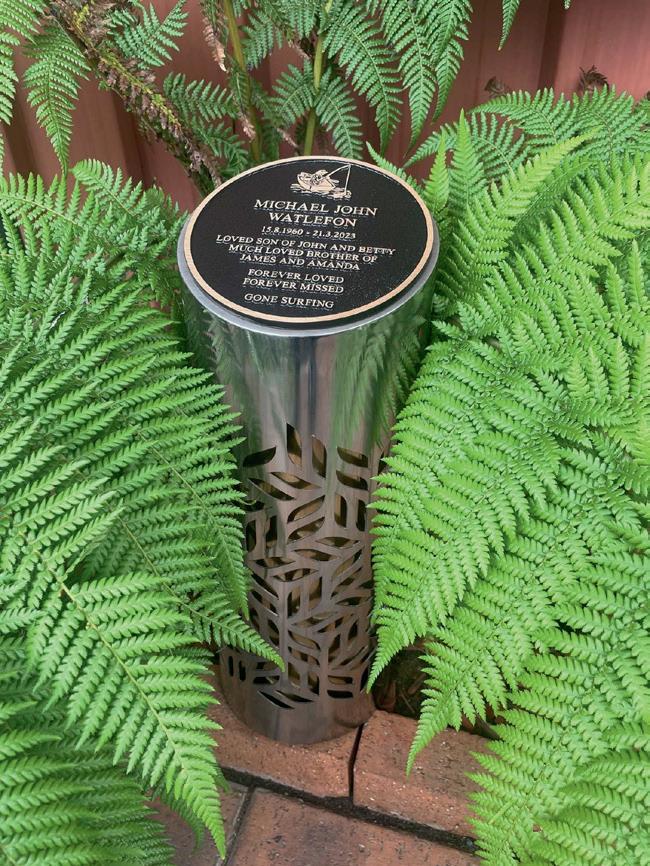
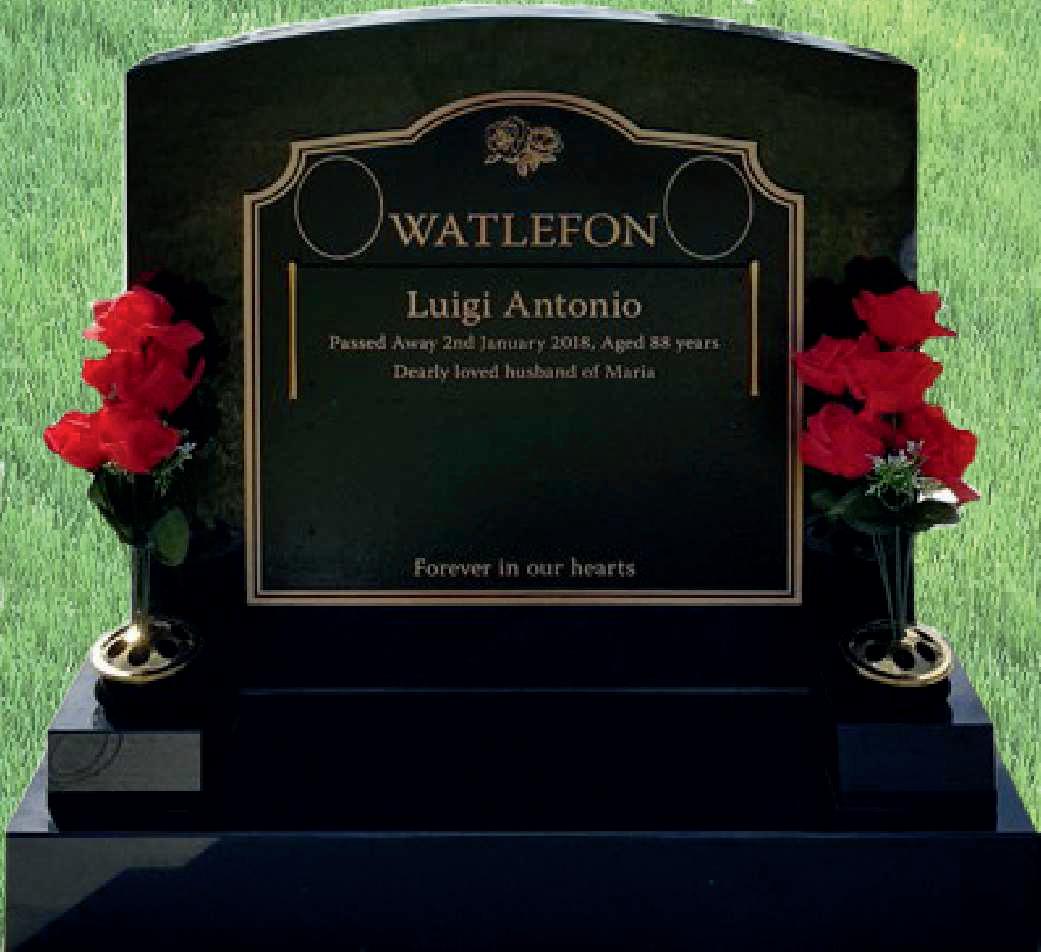
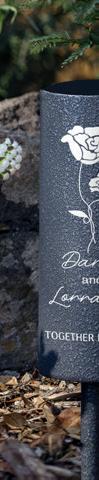
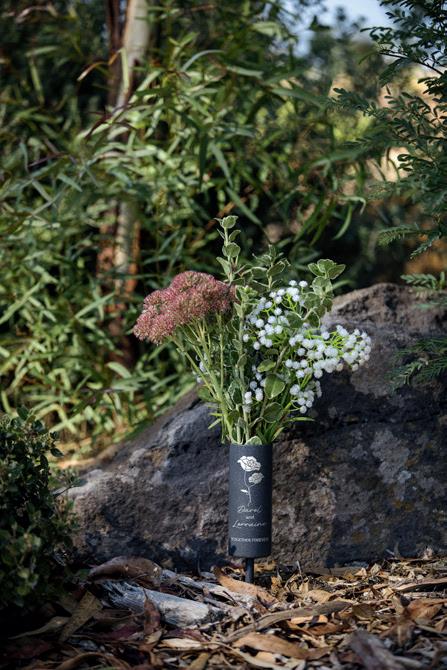
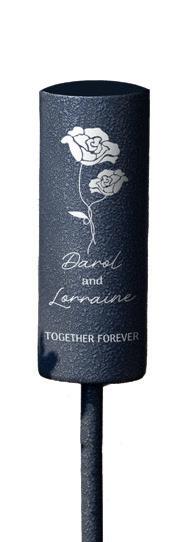
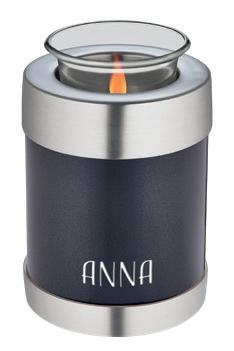
Arrow Bronze is proud to introduce “Australis” a new generation of premium, highly personalised urns thoughtfully engineered for cemetery niches, open‑front memorials and crematoria environments, where dignity, design and longevity matter most.
Crafted for families who value individuality and for professionals who demand quality, this urn redefines how remembrance is expressed within permanent memorial spaces. With its refined proportions and contemporary form, the urn presents beautifully from every angle - respectful, understated, and visually harmonious within both traditional and modern memorial s
Designed for Cemeteries, Crematoria & Memorial Spaces
Created specifically to integrate seamlessly into:
Standard and open‑front niches
Columbarium walls
Memorial cabinets and crematoria displays
Specifications:
Ashes Capacity: Full size – 3.2 litres
Dimensions: 210x130x130mm
Materials: Steel C500, Stainless Steel C551/C552
Finishes: Bronze or Pewter Colour effect.
These materials ensure the urn remains structurally sound, visually elegant, and corrosion‑resistant, even over extended periods in niche and memorial environments.
A Meaningful Addition to Your Memorial Offering - Created for Professionals Designed for Families
This new urn range empowers memorial professionals to offer higher personalisation, premium materials, distinctive design and confidence in long‑term performance. Every life is unique and every memorial should be too. The Australis Urn range is fully customisable using high‑definition UV printing technology trusted for fine memorial photography, delivering rich colour, exceptional detail and long‑term durability printed directly onto the urn surface.
Arrow Bronze - where craftsmanship, technology and remembrance come together.
Contact us to learn more about this exciting new product and discover how the Arrow Memorials Design Bureau can assist you in creating exclusive custom artwork, tailored to reflect your:
Region or Location
Brand and or Style Guide
Religious Iconography
Cultural or Environmental Themes
Executive Committee 2026
Founded December 1985
ACN 009 555 426
PRESIDENT
Dean Matthews
Geelong Cemeteries Trust
CEO
p: (03) 5249 3939
e: dm@gct.net.au
VICE PRESIDENT
Denise Ora
CEO, NSW Metropolitan Memorial Park
p: (02) 9661 5655
e: denise.ora@mmplm.com.au
EXECUTIVE DIRECTORS
Kristy Constantine
Chief Executive, Bunbury Cemetery Board
p: (08) 9721 3191
e: ce@bcb.wa.gov.au
Michael Robertson
Adelaide Cemeteries Authority, CEO
p: (08) 8139 7400
e: michael.robertson@aca.sa.gov.au
Kerena McDonald
Coordinator Cemetery Services
Toowoomba Regional Council
p: (07) 4688 6686
e: kerena.mcdonald@tr.qld.gov.au
Debbie Hedger
Coordinator Cemetery Services Sunshine Coast Regional Council
p: (07) 5459 2300
e: debbie.hedger@sunshinecoast.qld. gov.au
Richard Runde
General Manager - QLD Invocare
e: richard.runde@InvoCare.com.au
ACCA SECRETARIAT
552 Victoria St, Wurundjeri Country, North Melbourne Victoria 3051
p: (03) 9969 7780
For information on advertising in ACCA News or to contribute content, please contact:
Alison Ronaldson, Editor at: admin@accaweb.com.au
Unless expressly stated the views put forward in ACCA News are not necessarily the considered views or policy of the Association or the Publisher, nor is the Association or the Publisher responsible for the claims of its advertisers.
Graphic Design by Dean O’Brien, NEO
Published by ACCA Secretariat
Granite
Granite Walls
Corporate Sponsors 2026
Past Presidents Honour List
C Ashton Shirley (Dec)
October 1985 - June 1987
Graeme MacGill (Dec)
June 1987 - October 1987
Ian Roddick
October 1987 - October 1990
Kevin Crowden (Dec)
October 1990 - October 1993
David C Blake OAM
October 1993 - October 1997
Peter MacLean AM PSM JP
October 1997 - October 1999
Koos Adrichem
October 1999 - October 2001
Bruce Macumber
October 2001 - October 2003
James McKay
October 2003 - October 2005
Pieter den Boer
October 2005 - October 2007
Darryl Thomas OAM
October 2007 - October 2009
Brendan O’Connor
October 2009 - October 2010
Bryan Elliott
October 2010 - October 2012
Armen Mikaelian
October 2012 - October 2014
Peter O’Meara (Dec)
October 2014 - October 2016
Peter Deague
September 2016 - June 2017
Darryl Thomas OAM
June 2017 - October 2019
David Molloy
October 2019 - October 2022
Lauren Hardgrove
October 2022 - September 2025
An update from the President
As this edition of ACCA News goes to print, we are already well into a new year, bringing with it a fresh set of opportunities to explore. I am pleased to report that things are progressing well, thanks to the excellent leadership of Ben Kelly, our CEO, who continues to build strong and productive relationships across the industry.
It is critical to ACCA’s ongoing relevance that we actively listen to our members, grow our membership, embrace innovation, and remain true to our ethos of being the best member association we can be.
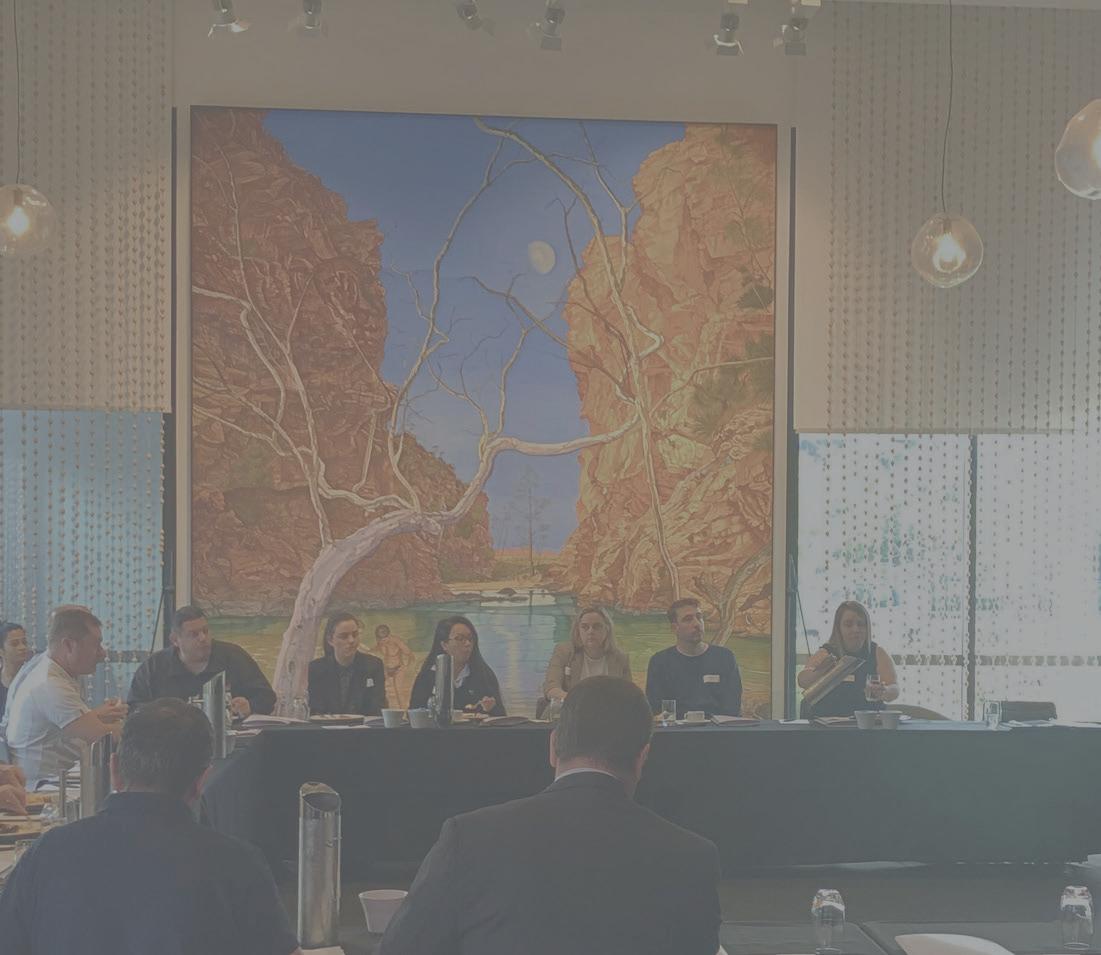
Recently, the ACCA Board and team undertook a comprehensive review of our strategic goals and plans (noting that the previous strategic review was completed in 2022). Regular reviews are essential to ensure we remain aligned with our mission, continue to deliver on our commitments, and evolve to meet the changing needs of our members and the broader cemeteries and crematoria sector. This review provided an important opportunity to pause, reflect, and confirm that our priorities remain relevant and forward focused.
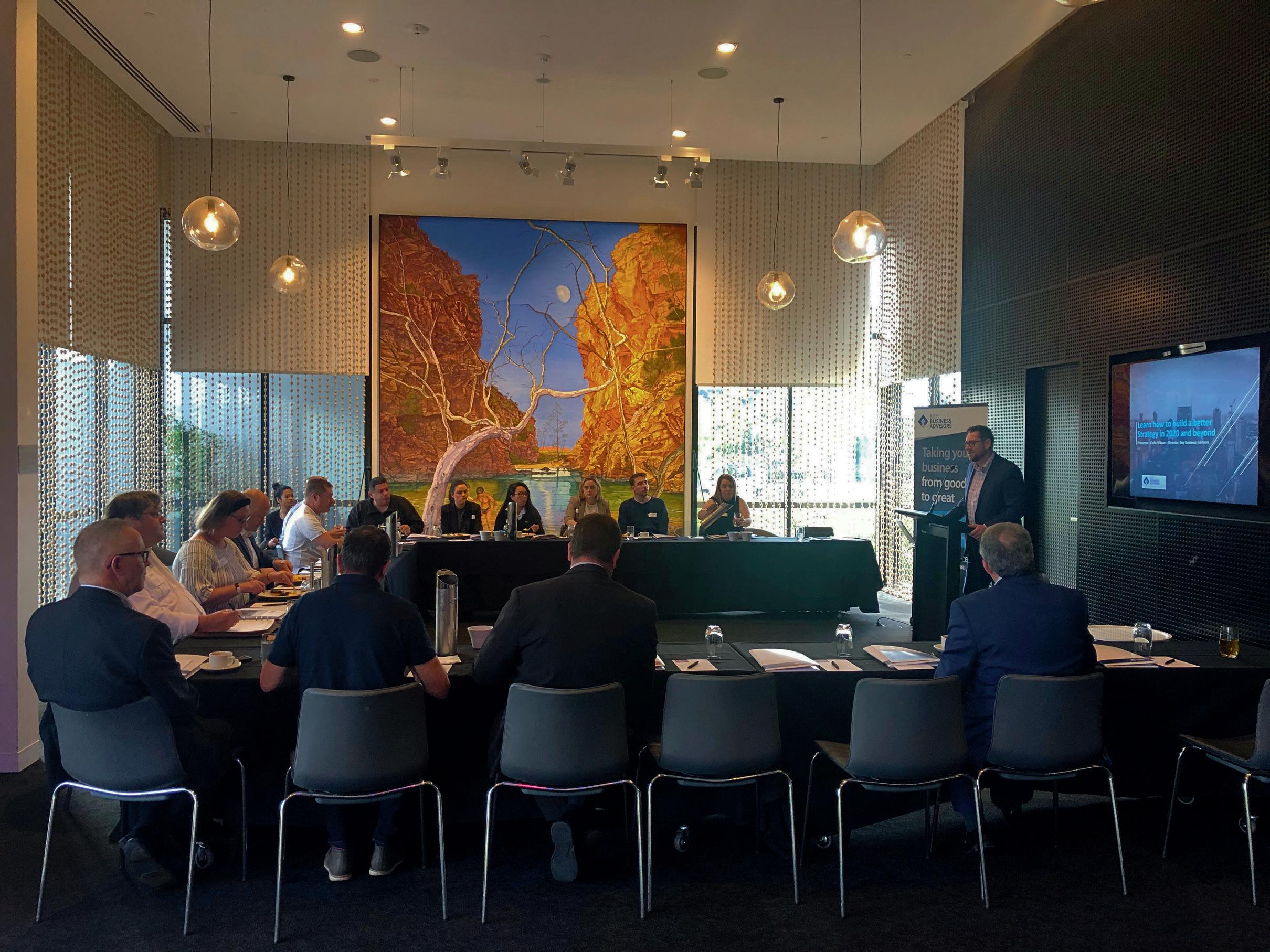
This year’s review was facilitated with the professional support of Mark and Colin from Key Business Advisors (KBA), who have recently joined ACCA as our newest Silver Sponsor. Their external perspective, experience, and structured approach helped guide thoughtful and robust discussions, and we are grateful for their contribution to what was a valuable and
constructive process.
The review allowed us to look back over the past three and a half years and assess ACCA’s progress against its goals - considering what has worked well, what has been achieved, and where there is room for improvement. Importantly, it also enabled us to examine whether our efforts are genuinely supporting and advocating for this remarkable sector, and whether we are effectively meeting the needs of our members.
The death care industry is diverse, complex, and continually evolving. Regulatory requirements change, community expectations shift, and new technologies and practices continue to emerge. As one example, recent regulatory changes allowing pet interments in cemeteries in both New South Wales and Victoria have created an opportunity for ACCA to assist in aligning approaches across the two states. As the peak body representing cemeteries and crematoria across Australasia, it is essential that ACCA remains engaged with broader issues and helps facilitate consistency through the sharing of better practice.
One of our major areas of focus in recent years has been relationship building. We have worked hard to strengthen connections with State cemetery associations, Funerals Australia (FA), and the National Funeral Directors Association (NFDA). We have also deepened our relationships with international partners, including the New Zealand Cemeteries and Crematoria Collective (NZCCC), the Institute of Cemetery & Crematoria along with other related associations, agencies, and stakeholder groups.
These relationships are vital. They enable knowledge sharing, collaboration on shared challenges, and the presentation of a united voice on issues affecting our sector. They also ensure that ACCA remains engaged not only nationally, but internationally, learning from global best practice while contributing our own expertise to help guide the way forward.
Over the past few years, we have also prioritised delivering greater value to our members. This has included the development of new training opportunities across a range of relevant subjects, the launch of the ACCA
Learning Hub, and the delivery of events. Our national conference continues to grow and influence, with the 2025 National Conference proving a tremendous success. It brought together representatives from across Australia, as well as delegates from New Zealand, Asia, South Africa, the United Kingdom, and Europe. The strength of attendance and engagement demonstrated the importance of coming together as a sector to learn, share, and connect.
While work is still underway to finalise our strategic goals for the coming years, we have already identified several key pillars. These include:
• continuing to advocate strongly on behalf of our members at local, state, and federal government levels
• expanding training and professional development opportunities for members
• strengthening collaboration with State and related associations, and
• ensuring ACCA supports the full diversity of our membership.
Our members range from small local government and community trust cemeteries through to the largest operators in the country. It is essential that our strategy reflects this diversity, and that our services and advocacy remain inclusive, practical, and relevant to all.
As always, please remember that this is your association. ACCA exists to serve and represent you. If you require assistance, have suggestions, or see opportunities for improvement, I encourage you to reach out to Ben Kelly and the team in the office, myself, or any member of the Board. Your input is invaluable as we shape the next phase of our journey together.
Thank you for your ongoing support and commitment to this extraordinary sector. We look forward with confidence and enthusiasm to the opportunities and successes the coming years will bring.
Dean Matthews ACCA President
An update from the CEO
Our industry continues to evolve - shaped by changing community expectations, emerging challenges and new opportunities for collaboration. At ACCA, our focus remains firmly on ensuring we are well positioned not only to respond to this change, but to help lead it. The past few months have been centred on thoughtful planning, strengthening relationships and laying the groundwork for an exciting year ahead.
Much of this recent period has been about planning for the future - both in terms of the events we will deliver this year and the longerterm direction of ACCA. While much of this work happens behind the scenes, it is critical to ensuring that our association remains relevant, resilient and responsive to the needs of our members and the communities we serve.
The end of last year was a flurry of activity, highlighted by the first official meeting of the current ACCA Board. It was a significant milestone and an opportunity to reset our focus, confirm our priorities and strengthen our governance foundations. I am fortunate to work alongside a group of committed and thoughtful board members who bring diverse experience from across our sector. There was a strong sense of shared purpose in the room - a recognition of both the responsibility we carry and the opportunities ahead of us as an association.
We were also delighted to participate in the Boroondara General Cemetery Christmas event in Melbourne. Boroondara is not only a beautiful and historic cemetery, but also an outstanding example of how our spaces can embrace community engagement in meaningful ways. The team there has done an exceptional job creating an environment that invites the public in - not only at times of need, but throughout the year. Their work is a reminder that cemeteries are places of connection, reflection and storytelling. If you find yourself in Melbourne, I would highly recommend taking the time to visit and see firsthand how they are bringing their space to life.
In recent months, I’ve had the privilege of spending time with several outstanding organisations across the broader deathcare sector. Palliative Care Queensland stands out for its remarkable work in community education and support for individuals and families at the end of life. Their commitment to compassionate care and open conversations about planning strongly aligns with the values our members uphold every day. There is powerful opportunity for us to learn from one another as we work to improve community understanding and experience.
I also attended the annual conference of the Australasian Division of the British Institute of Embalmers - an eye-opening experience. While I’ve previously worked in cemeteries and crematoria, I gained a far deeper appreciation for the extraordinary skill, precision and care involved in embalming. The professionalism and passion on display were inspiring and reinforced the depth of expertise within our sector and the vital role each contributes to delivering dignified, respectful farewells.
The Board and I have met with the leadership of Funeral Australia and the National Funeral Directors Association, as strengthening relationships across our industry bodies remains a priority. While each organisation has its own focus, we share a common goal: serving our communities with integrity and excellence. By working collaboratively, we strengthen our collective voice and ensure consistent, high-quality advocacy and support across the sector.
The ACCA Board also recently came together for a productive Strategy Day. This provided an important opportunity to reflect on the past three years - acknowledging our achievements, identifying areas where we could have achieved more, and discussing opportunities for improvement. The session was facilitated by our newest Silver Sponsor, Key Business Advisors, who provided valuable expertise and guidance throughout the process. While our updated strategic plan remains a work in progress, we are excited about the direction ahead and look forward to sharing our strategic priorities with members soon.
Planning is well underway for both our Mid-Year Event and our Annual Conference. Delivering these events is a significant undertaking, and I am incredibly grateful for the dedication of Alison and Helena in the ACCA team, alongside the support of our Board members. We are building a packed and exciting program featuring world-class speakers, as well as several of our own members who will showcase the innovative and meaningful work they are doing in their communities.
Tickets for the Mid-Year Event are now available, and registration for our Annual Conference on the Gold Coast will open shortly alongside the full program release. These gatherings are more than just dates on the calendar - they are valuable opportunities to connect with peers, share knowledge, and strengthen the networks that underpin our industry.
I encourage you to join us. By coming together, we not only learn from one another, but we reaffirm the shared commitment that defines our profession: supporting families and communities with care, respect and professionalism, now and into the future.
Ben Kelly Chief Executive Officer
Facultatieve
TECHNOLOGIES
“Leading with integrity, innovating with purpose and prioritising sustainability to set the global standard for environmentally responsible and technologically advanced cremation solutions.”
Contact us
and filtration systems installed annually.
1,500+ DEVICES installed and maintained globally.
+61 (0) 4770 577 99
>20 YEAR average cremator lifespan- with regular servicing and maintenance.
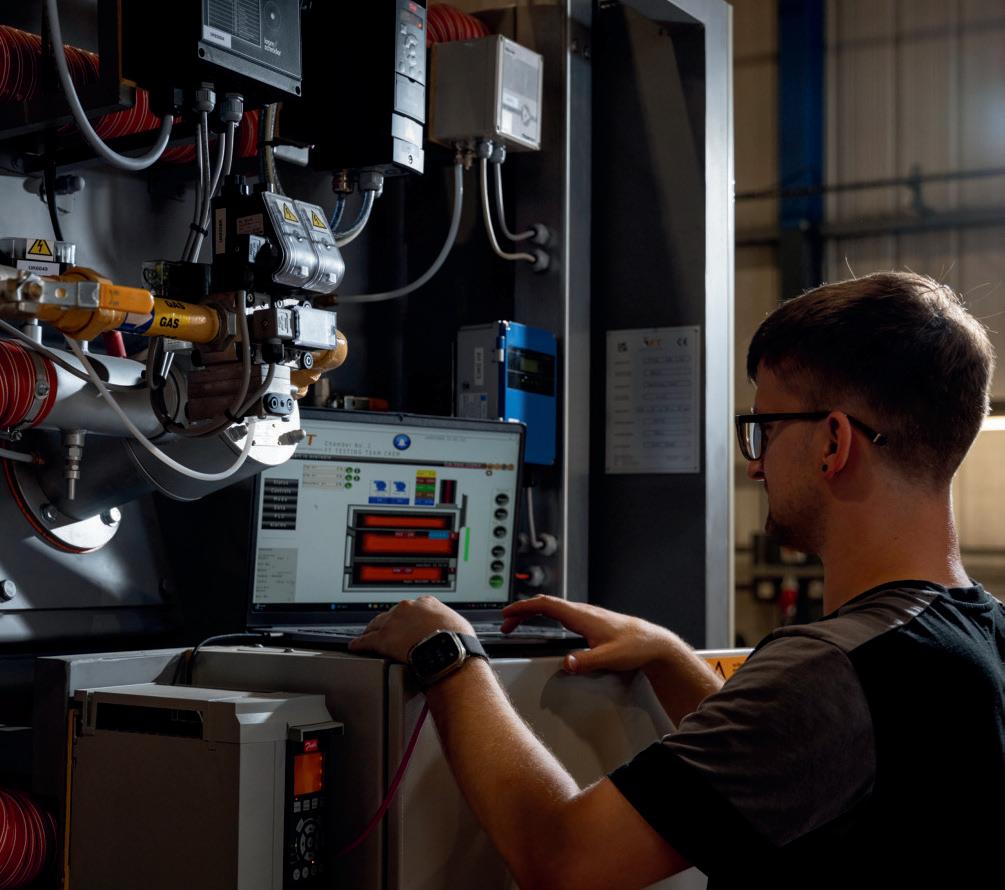
FT is the specialist in the design, manufacture, and installation of cremators, abatement systems, and a comprehensive range of ancillary equipment. With some of the most efficient cremators in the world, Ready to Filter Solutions, and up to 24/7 global support, FT delivers unparalleled performance and reliability. Innovative technology, trusted for generations, reliable by nature.
Your Association ACCA Membership
Cemeteries And Crematoria, Funeral Directors, Industry Corporates And Businesses!
The Australasian Cemeteries & Crematoria Association (ACCA) is a non-profit professional organisation that exists to provide leadership, professional services and development, communication and networking platforms to the cemetery and crematorium industry.
MEMBERSHIP CRITERIA
Full Membership:
Organisations that administer the affairs of a Cemetery and/or Crematorium in Australasia.
SUITED TO CEMETERIES AND CREMATORIA
Corporate Membership:
Shall be incorporated organisations or trading enterprises considered worthy of membership associated with the burial or cremation industry who satisfy the Board that one or all of their activities assist and complement the work of the association and/or other members.
SUITED TO INDUSTRY SUPPLIER COMPANIES
Affiliate Membership:
Shall be persons considered worthy of such classification associated with the burial, cremation or allied industry who are not otherwise qualified to become an associate fellow, associate member or corporate member of the association.
SUITED TO FUNERAL DIRECTORS
ACCA MERCHANDISE
How to Order
Please visit our webpage at accaweb.com.au/publications/resources to download the Order Forms and return to the Secretariat.
ACCA Brochures
ACCA NEWS Complimentary to all Members
The ACCA News magazine is published 4 times per year, and is dedicated to the cemeteries and crematoria industry in Australasia. Via electronic distribution, the readership is estimated to be over 2,000 within Australia and also internationally. The only magazine in Australia dedicated to the Cemeteries and Crematoria industry, it also promotes the latest in innovation, safe work practices, industry equipment and also events designed to help communicate the message of memorialisation and comfort to our communities.
ACCA News Advertising
Advertising in this publication is the ultimate way to promote your business or services to the cemeteries and crematoria industry and to increase your exposure. If you are interested in advertising in the ACCA News please contact the Secretariat on (03) 9863 6914 or email: admin@accaweb.com.au
ACCA News Contributions
ACCA also uses its magazine to encourage members to contribute summaries of interesting events or information pertaining to our industry that you believe other members would find beneficial. Please feel free to forward your articles to us for consideration of inclusion in the ACCA News.
LIFE MEMBER HONOUR ROLL
The quality print brochures ACCA produces, offer cemeteries a way to inform their customers on the subjects of memorialisation and cremation in a take-home brochure. Our members find this extremely valuable in conveying to the public this sensitive, and sometimes complex information in the form of reading material that can be easily understood, allowing informed decisions to be made about the services available to them.
Koos Adrichem
David Beames
John Campbell
Pieter Den Boer
Keith Joyce (Dec)
Karen Hinrichsen
David Lusby (Dec)
Peter Maclean AM
Bruce Macumber
James Mckay
Lawrie Miller OAM
Brendan O'Connor
ARE YOU READY TO BECOME A MEMBER?
Tony O’Connor (Dec)
Greg Taylor (Dec)
Darryl Thomas OAM
Armen Mikaelian
Bryan Elliott
David Molloy
Full Memberships, Corporate Memberships and Affiliate Memberships
Available. Contact the Secretariat today via emailing admin@accaweb. com.au
ACCA SECRETARIAT:
552 Victoria St, Wurundjeri Country, North Melbourne Victoria 3051
T: +61 3 9969 7780
E: admin@accaweb.com.au
W: accaweb.com.au
The quality-print brochures ACCA produces offer cemeteries a way to inform their customers of the subjects of memorial and cremation in a takehome brochure. Our members find this extremely valuable in conveying to members of the public this sensitive, and sometimes complex, information in the form of reading material that can be provided to customers, where they may absorb the information at home and make informed decisions
die? given to the person when you die. unless personwritten you carry out yourexecutors. must I cremated remains is the estate. They various means, to provide a respects. kept in strewnan a memorial at Bereavement memorialwill and future range
HOW TO ORDER
Please email admin@accaweb.com.au for an order form. Simply complete and return via email where our friendly staff are waiting to process your order. Order Today! CEMETERY/CREMATORIUM
ACCA Mid-Year Seminar 2026
22–23 April 2026 | Mantra Hervey Bay QLD
The 2026 ACCA Mid-Year Seminar will bring cemetery and crematoria professionals together in Hervey Bay for two days of practical learning, sector updates and meaningful industry connection. This year’s program focuses on positioning cemeteries for long-term success through stronger governance, improved operational systems and deeper community engagement.
The seminar opens with a trade style exhibition at the Mantra Hotel, creating a dynamic environment where delegates can engage with presenters, connect with colleagues and explore innovative products and services supporting the sector. Education sessions will address key operational and governance matters, including establishing and managing effective monument and memorial permitting systems, practical approaches to administering pre-paid interment fees, and managing and facilitating shrouded cremations within cemetery facilities. These discussions are grounded in real-world experience and are designed to help organisations streamline processes, manage risk and build sustainable practices.
A strong emphasis will also be placed on community connection. Presentations will explore how cemeteries can increase visibility within councils and the broader community through initiatives such as historic tours, death awareness events and other engagement activities that build trust and relevance. Delegates will also receive an important update on the Queensland Cemetery Project, including legislative developments and emerging best-practice standards shaping
the future of the sector. In addition, Palliative Care Queensland will share insights into supporting individuals and families at end-oflife, highlighting opportunities for collaboration and strengthened community care.
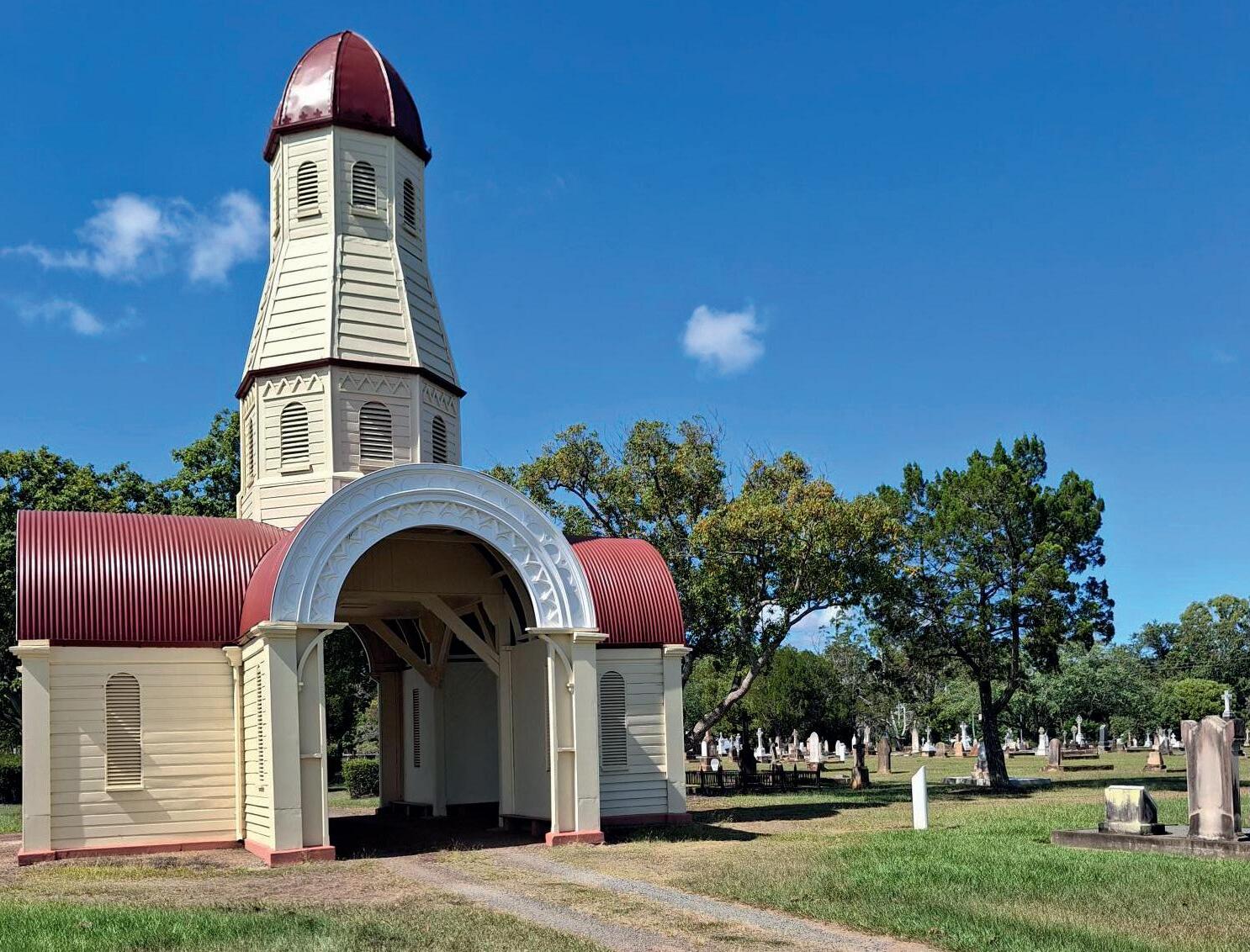
On the afternoon of Day One, delegates will visit Maryborough Cemetery for a guided tour exploring its heritage, operations and significant areas, including the Monumental section and the Garden of Rest. The visit provides valuable context for discussions around heritage management, interpretation and cemetery presentation in practice. A networking dinner will be held that evening at the Hervey Bay Boat Club, offering a relaxed opportunity to strengthen professional relationships and continue conversations in an informal setting.
The seminar concludes at midday on Day Two, allowing delegates time to travel home comfortably.
The ACCA Mid-Year Seminar continues to deliver high-quality, practical content in a collaborative and supportive environment, and we look forward to welcoming members and industry colleagues to Hervey Bay in April 2026.
ACCA Education
ACCA Educations Roadshow Launches with Strong Engagement and Practical Impact
ACCA’s roadshow training series has commenced with outstanding success, with strong attendance and engagement across its opening programs focused on Monumental Safety and Psychological Wellbeing.
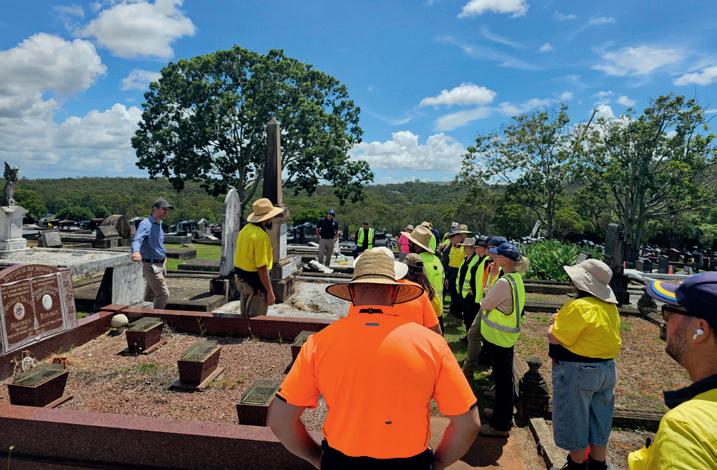
The Monumental Safety course, delivered by Sach Kilam, provided a practical and highly informative overview of the Metropolitan Memorial Parks (MMP) Monument Safety Program. Held within an operational cemetery environment, the training combined theory with in-field demonstrations, allowing participants to observe and take part in both visual and physical monument inspections.
The program explored common monument defects and safety risks, physical stability testing methods, monument permitting and construction management, and the documentation supporting the MMP Monument Safety Framework. Relevant Australian Standards and key compliance considerations were also examined in detail.
By the end of the session, participants were equipped to confidently conduct visual and physical inspections, identify risks in historic and modern memorials, apply Australian Standards to permit assessments, and adapt monument safety documentation within their own organisations.
Sach brought exceptional depth of experience to the training. A monument heritage specialist with Metropolitan Memorial Parks in NSW, his practical insights and hands-on demonstrations were consistently praised by attendees.
Strengthening Wellbeing and Supporting Grieving Clients
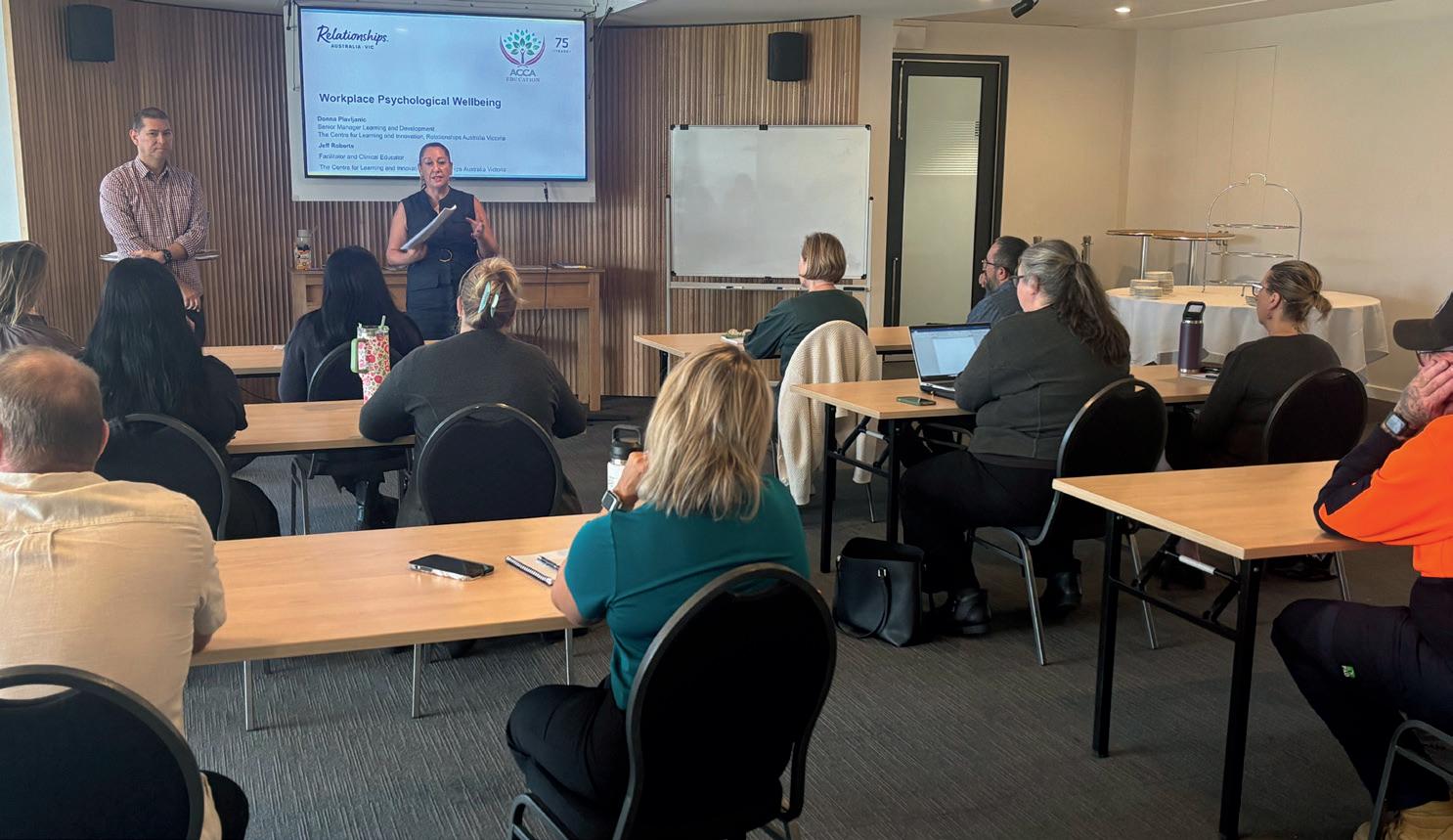
Industry professionals also gathered at Geelong Memorial Park and Crematorium for a highly engaging full-day workshop focused on Psychological Wellbeing and Supporting Grieving Clients. Facilitated by Donna Plavljanic and Jeff Roberts from Relationships Australia Victoria (RAVs), the program delivered practical, evidence-based strategies tailored specifically to the cemeteries and crematoria sector.
The morning session examined Psychological Wellbeing in the Workplace, addressing the growing focus on psychological hazards, legislative obligations and the shared responsibility of leaders and staff in fostering safe, supportive environments. Through interactive discussion and real-world scenarios, participants explored burnout, compassion fatigue, stress and vicarious trauma, alongside practical prevention strategies to strengthen resilience and actively monitor wellbeing within teams.
The afternoon session turned to Supporting Grieving Clients, focusing on how grief presents differently in individuals and
the importance of sensitive, professional communication. Attendees were introduced to structured frameworks for providing basic grief support, recognising when further intervention may be appropriate, and maintaining professional boundaries while remaining compassionate and present. Importantly, the session reinforced the need for staff to prioritise their own wellbeing to ensure sustainable frontline practice.
The day created valuable space for open and thoughtful discussion, with the interactive format encouraging strong participation and peer learning. Participants left with practical tools, renewed confidence and a strengthened capacity to support both colleagues and clients.
Together, these opening roadshow events reflect ACCA’s commitment to raising professional standards while supporting the wellbeing of those working within our sector. We extend our sincere thanks to Sach Kilam for generously sharing his expertise, to Metropolitan Memorial Parks for their support and contribution to the Monument Safety training and to Donna Plavljanic and Jeff Roberts for delivering such an engaging and practical wellbeing program.
The success of these sessions is a testament to the strength of collaboration across our sector, and we look forward to continuing this momentum as the roadshow progresses.
Echoes of Love
A Letterbox for the Heart at Centennial Park
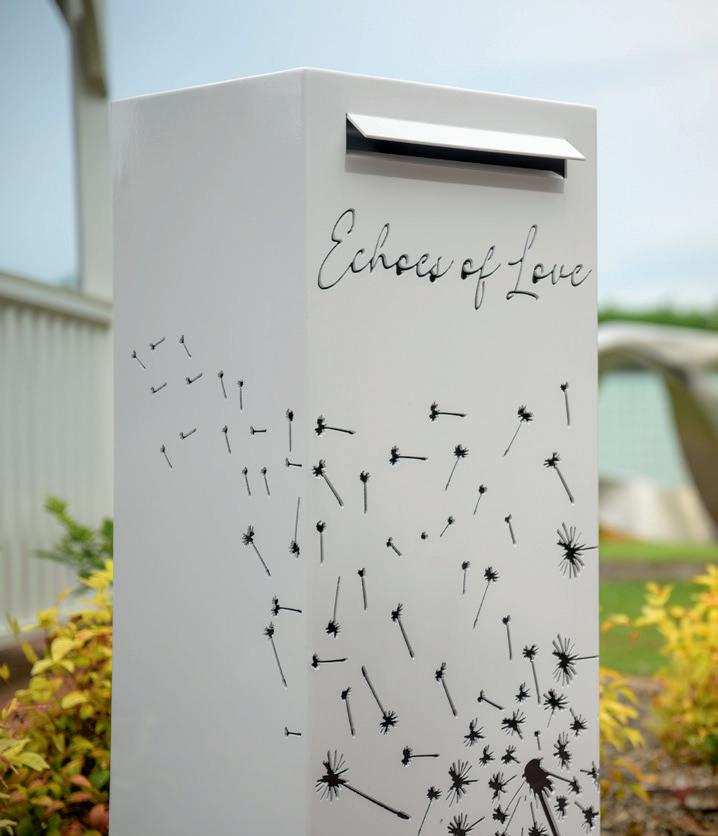
Centennial Park has launched Echoes of Love, a special community letterbox inviting people to write personal letters to loved ones who have died.
Located in the Park’s tranquil Contemplation Court, the letterbox offers a gentle new way to reflect, remember and reconnect.
The initiative was created in collaboration with Annaliese Holland, whose own experience of grief inspired a space where people can continue the conversation with those they miss.
Visitors can place a note in the letterbox during their time in the gardens—sharing memories, gratitude or the words left unsaid.
As South Australia’s premier cemetery and memorial park, Centennial Park is a beautifully landscaped natural sanctuary that welcomes people from all backgrounds. Echoes of Love builds on the Park’s commitment to care and community—offering a simple, meaningful ritual that supports healing.
Echoes of Love is now open in Contemplation Court at Centennial Park.
Shrouded Cremation
A new, safely delivered service offering available at Metropolitan Memorial Parks
Metropolitan Memorial Parks has introduced shrouded cremation as a new service offering, expanding the choices available to families seeking a more meaningful, culturally aligned or personalised end of life care. This new service reflects Metropolitan Memorial Parks’ commitment to inclusivity and contemporary funeral practice, while also demonstrating the organisation’s capacity to innovate responsibly within a highly regulated environment.
From 1st February 2026, Metropolitan Memorial Parks has offered shrouded cremation at their four crematoria at Rookwood, Eastern Suburbs, Macquarie Park and Woronora.
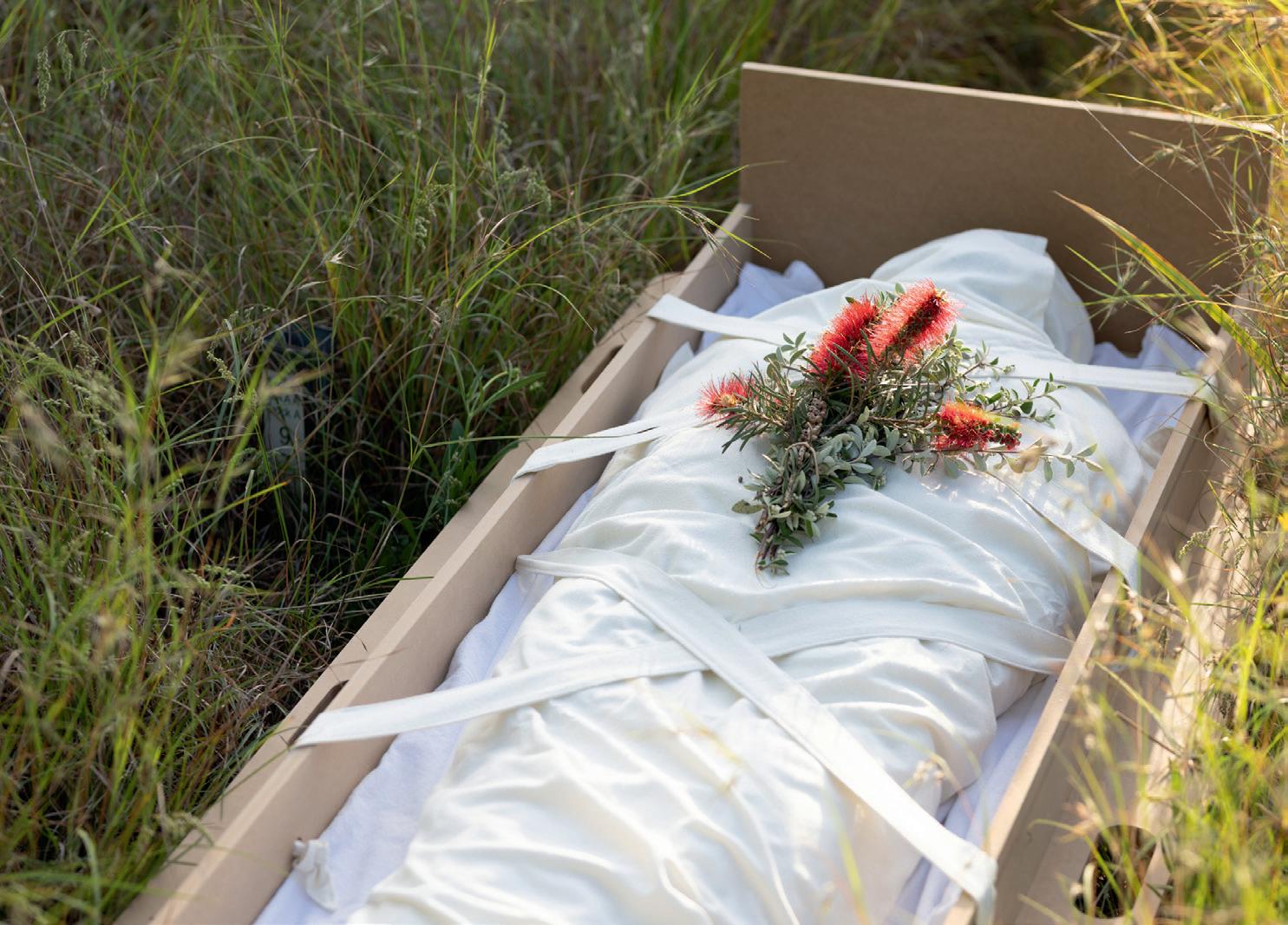
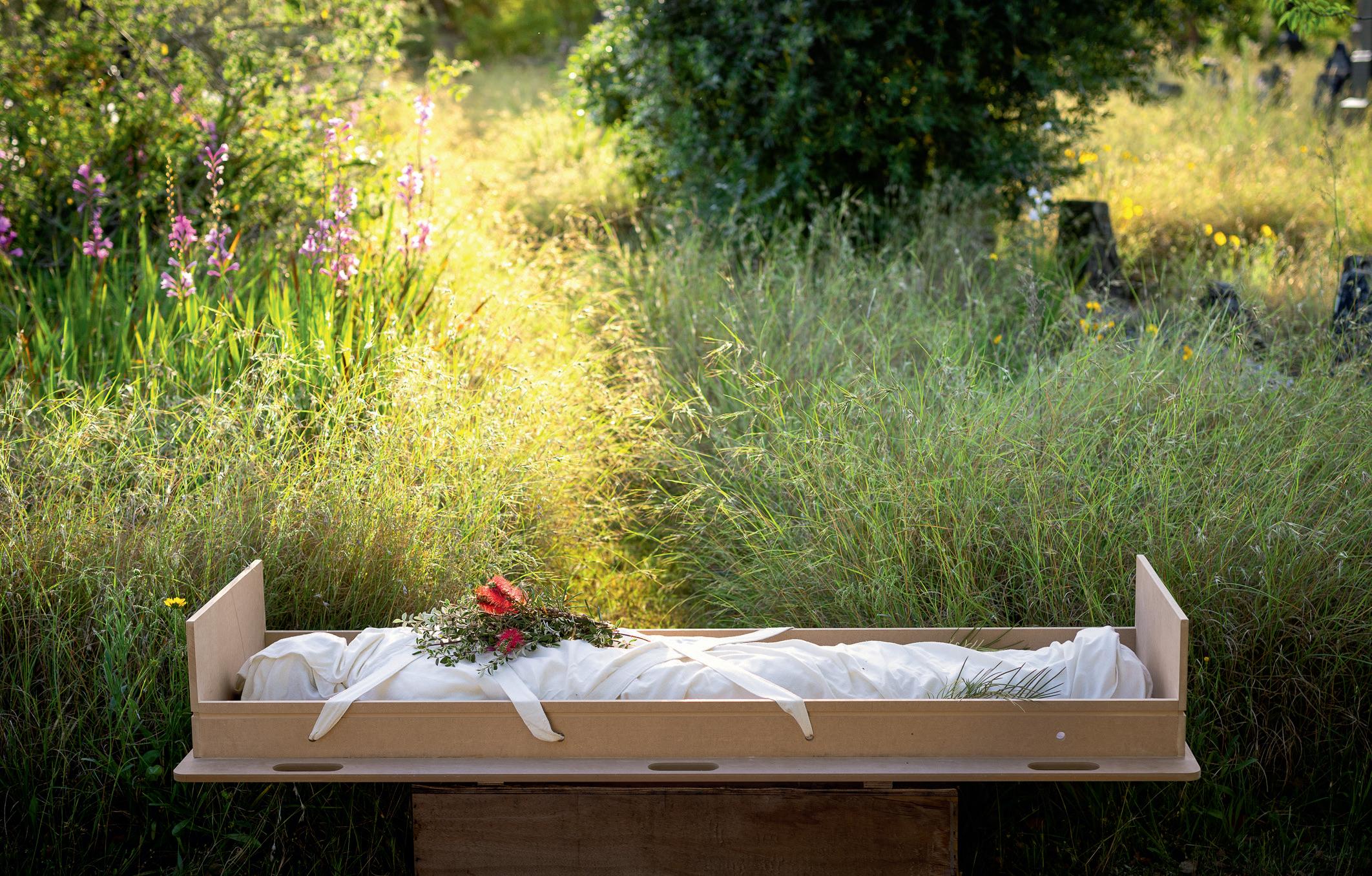
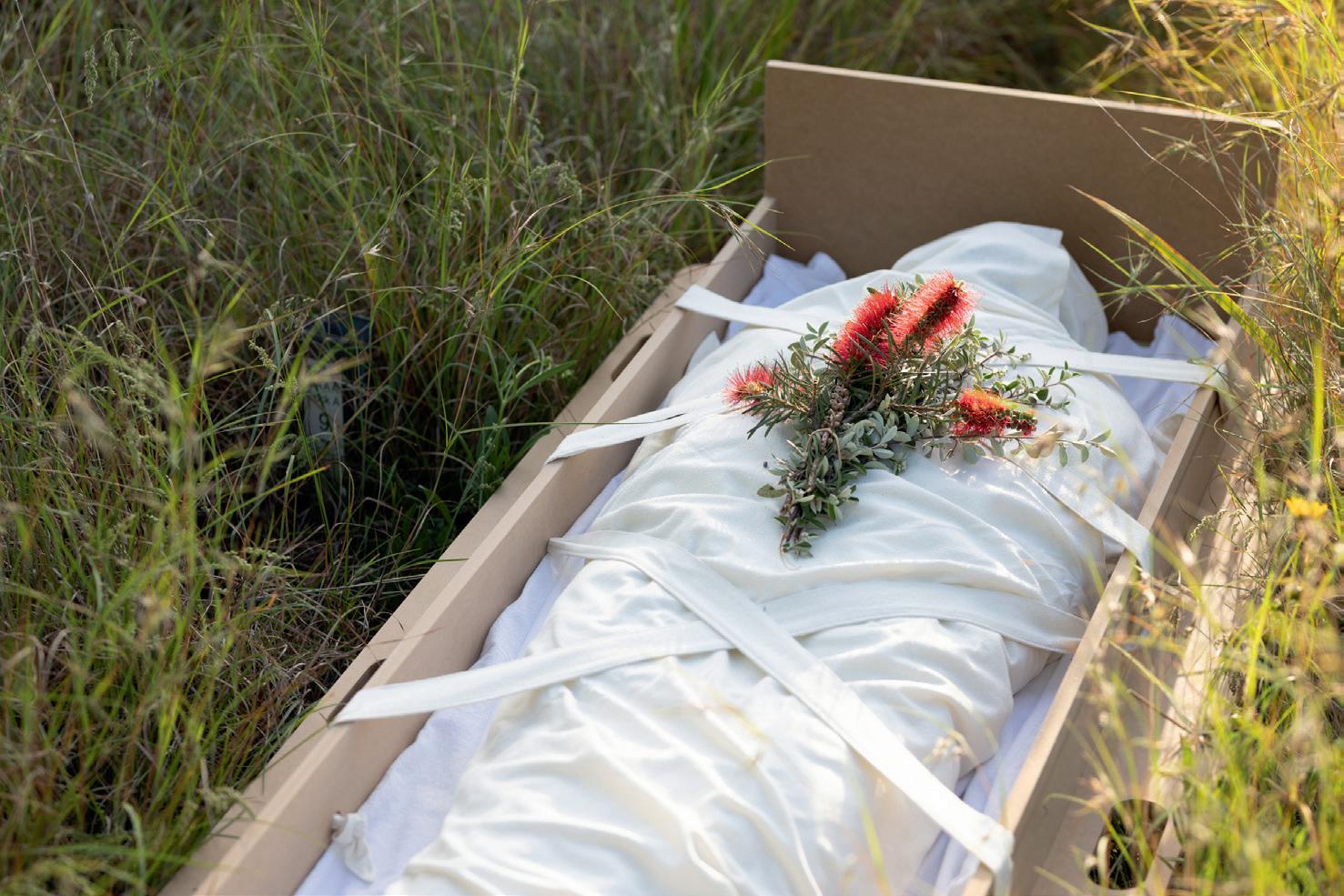
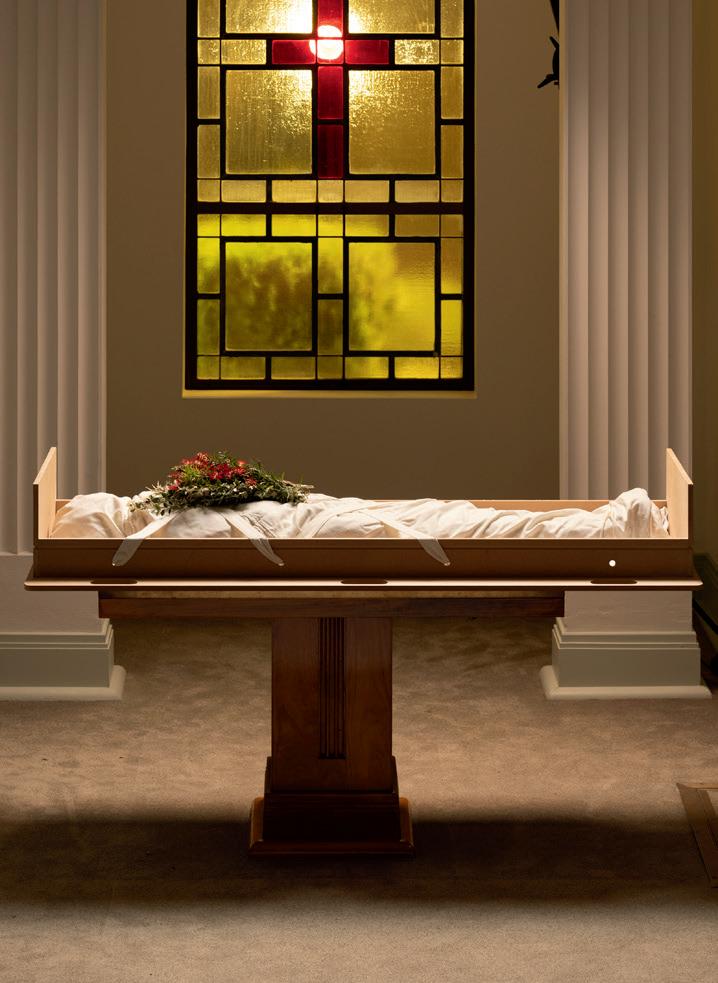
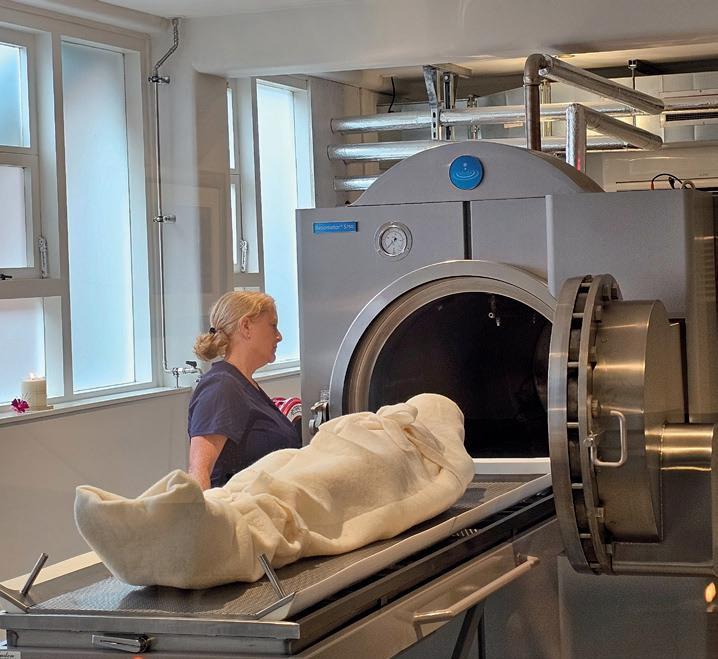
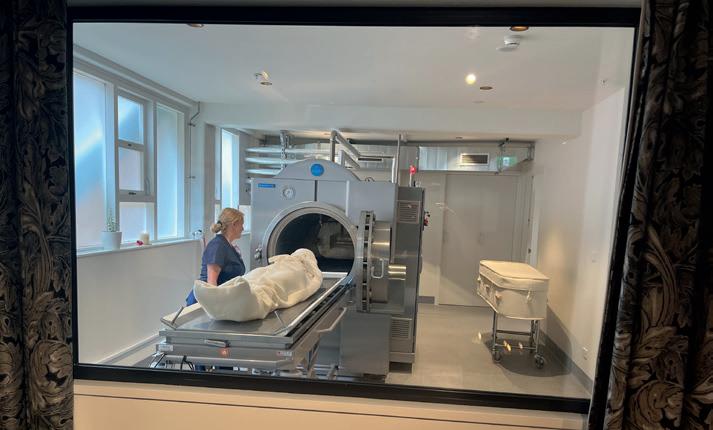
Shrouded cremation involves the practice of wrapping the deceased in a specially designed fabric shroud and placing them on a purposebuilt shroud bearer, rather than in a coffin or casket. While shrouded burial and shrouded cremation have long been practised as a tradition in parts of Australia and around the world, prior to July 2025, shrouded cremation was not an approved service under NSW legislation.
Industry collaboration and regulatory change
Metropolitan Memorial Parks engaged in sustained advocacy to modernise these regulations alongside funeral directors and other sector stakeholders. This included:
• developing evidence-based risk assessments and mitigation practices
• demonstrating international precedents
• outlining community demand for culturally responsive options
• collaborating with NSW Health to develop safe, compliant procedures
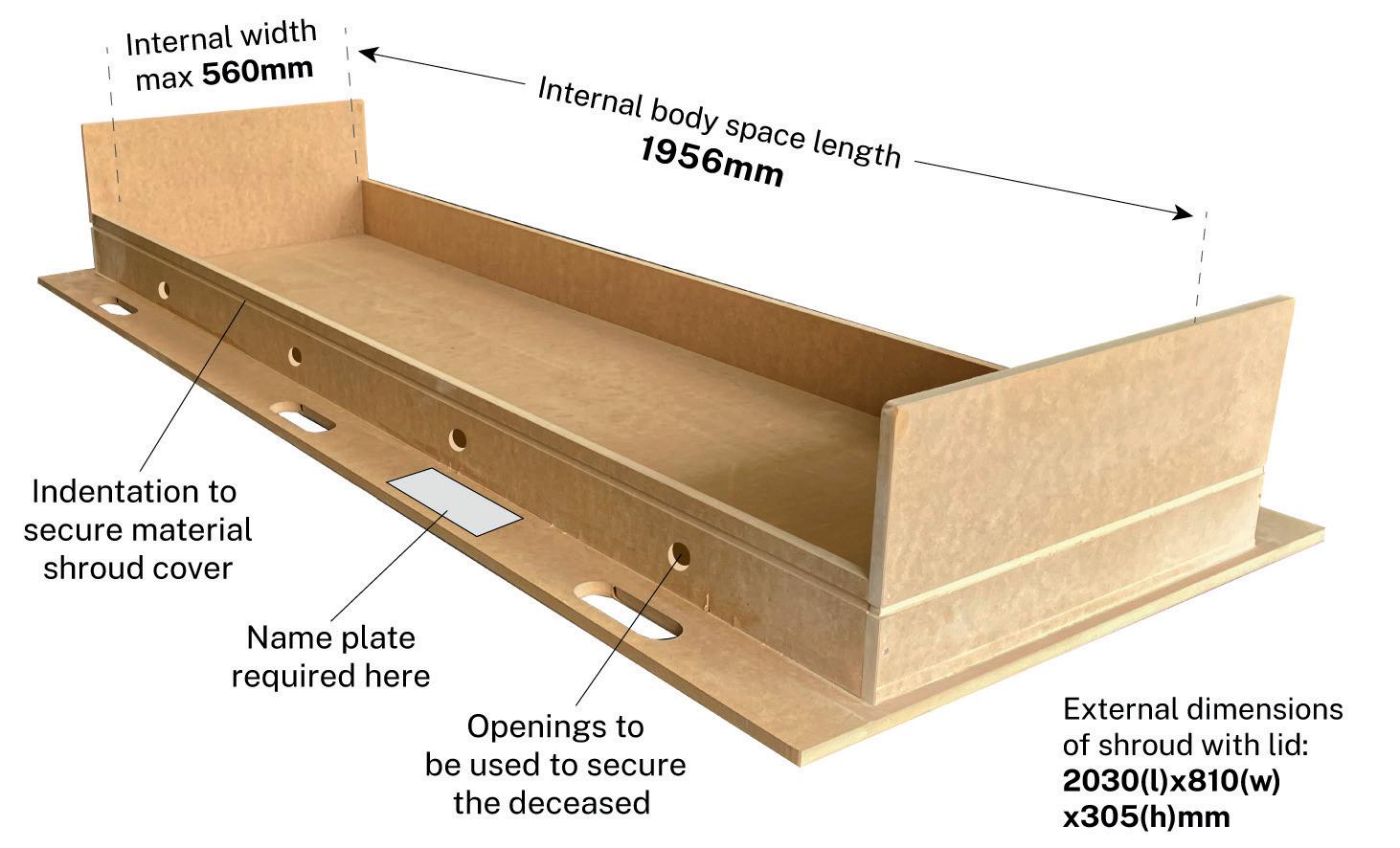
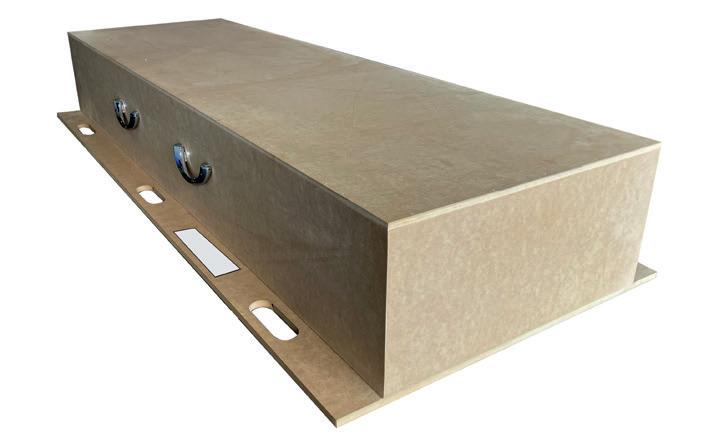
approved shroud bearer with dimensions
Following the regulatory change, Metropolitan Memorial Parks undertook a structured 6-month trial at Woronora Memorial Park. Seven shrouded cremations were completed without incident during the trial, validating the safety, workflow and psychosocial protocols developed prior to the trial. With the trial’s success, shrouded cremation was then extended to all four of Metropolitan Memorial Parks’ crematoria.
Designing the shroud bearer: engineering for safety, dignity and operational efficiency
A central component of the service is the shroud bearer - a timber platform engineered specifically to support the deceased during transport, chapel services and cremation. Metropolitan Memorial Parks led a cross functional working group to design, test and refine the bearer in partnership with funeral directors and coffin manufacturers.
Multiple prototypes were developed before the final design was approved. Key safety and dignity features of the final prototype include:
• Integrated transport handles to reduce manual handling strain.
• Securing points for cloth ties to ensure the deceased remains safely positioned.
• A mandatory timber lid used during transport and public movement to protect both the deceased and the public. The lid also allows removal during services and viewing.
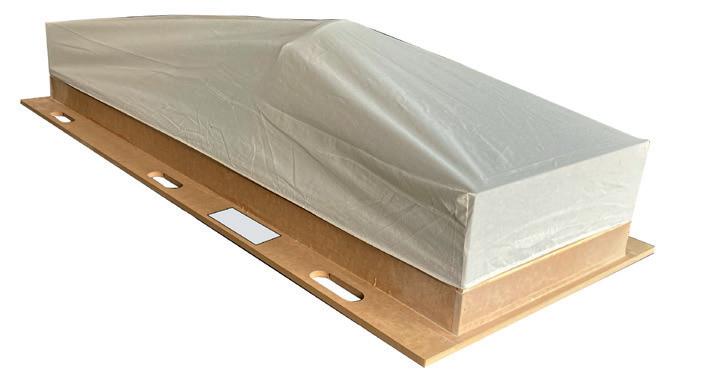
• The timber lid is removed and retained by the funeral director upon delivery to the crematorium, after which an internal cloth cover is used.
• Strict shroud bearer dimensions to meet safety requirements.
While physical safety was a major consideration, Metropolitan Memorial Parks identified psychosocial risk as equally critical. Exposure to the visible form of a shrouded deceased person, particularly outside the context of a coffin, can create emotional strain, distress or cumulative fatigue for chapel and crematoria staff.
“The introduction of shrouded cremation to Metropolitan Memorial Parks has been a seamless extension to our cremation services”
Dan Schafer – Cemetery Operations Manager
The
Shrouded Cremation
A new, safely delivered service offering available at Metropolitan Memorial Parks
To mitigate safety and psychosocial risks, Metropolitan Memorial Parks undertook extensive team consultation to implement a comprehensive psychosocial risk management framework, including:
1. Clear, enforceable preparation standards
Funeral directors must follow detailed procedures for shrouding, presentation and transport. Metropolitan Memorial Parks employees are empowered to decline a shrouded cremation if:
• the shroud is torn, soiled or improperly fitted.
• the deceased has not been prepared in accordance with agreed protocols.
• weight limits, age or other safety parameters are exceeded.
2. Visual protection measures
The timber lid, internal cloth cover and shroud bearer design prevent unnecessary exposure to the physical form of the deceased, reducing the risk of distress for crematorium operators.
3. Role specific training and support
Staff across chapels, crematoria and transfer teams received:
• training on the new procedures
• guidance on psychosocial hazard recognition and management
• escalation pathways for concerns
• reinforcement of their right to stop work if conditions are unsafe.
4. Controlled workflow and environment
Movement of the shroud bearer through public and staff only areas is tightly managed and Shrouded cremation is a ‘same day’ service only, further minimising potential exposure for to the public and employees.
Industry rollout: collaborative engagement and structured implementation
“Our partnership with Metropolitan Memorial Parks in pioneering shrouded cremation across Sydney has been built on shared values, community care, and a commitment to best practice standards. Together, we’ve guided families through the first shrouded cremations with professionalism, safety and trust. Establishing strong SOPs (Standard Operating Procedures) and drawing on national experience has ensured confidence in this new offering. Practice standards. Together, we’ve guided families through the first shrouded cremations with professionalism, safety and trust. Establishing strong SOPs
(Standard Operating Procedures) and drawing on national experience has ensured confidence in this new offering.
It has been a rewarding process that highlights the real value of providing shrouded cremation as a meaningful choice for our communities.”
Victoria Spence, Founder and director of Life Rites Funerals
Effective communication with the funeral sector has been central to the successful introduction of shrouded cremation at Metropolitan Memorial Parks. Recognising that funeral directors play a critical role in both the preparation and presentation of the deceased, Metropolitan Memorial Parks designed a deliberate, staged engagement process to ensure the industry was well informed, confident and operationally prepared.
During the trial period at Woronora Memorial Park and Crematorium, Metropolitan Memorial Parks hosted two dedicated funeral director forums – the first at Woronora Memorial Park and Crematorium and subsequently at Macquarie Park Cemetery and Crematorium. These sessions served multiple purposes: to outline the regulatory changes underway; to introduce the operational requirements of shrouded cremation; and to gather practical feedback from those who would be working directly with families.
The approved shroud bearer demonstrating the timber lid
The approved shroud bearer demonstrating the internal cloth over the deceased
Shrouded Cremation
A new, safely delivered service offering available at Metropolitan Memorial Parks
Funeral directors were invited to interact with the prototype shroud bearer, examine its construction, and discuss the workflow implications of the new service. This hands-on engagement allowed industry professionals to raise questions, identify potential challenges and contribute to refinements that would support a smooth transition once the service became widely available.
As Metropolitan Memorial Parks moves into full implementation across all four crematoria, industry support remains a priority. Through the Industry Engagement Manager, funeral directors and the broader Metropolitan Memorial Park’s employees have access to one-on-one consultation and information sessions. This ensures they can confidently guide families while meeting preparation standards. This personal engagement has been a positive point of collaboration between Metropolitan Memorial Parks and our funeral directors.
Next steps for Metropolitan Memorial Parks
Current NSW regulations require crematoria to obtain approval from NSW Health for each individual service. This involves submitting a brief application prior to the cremation, with approvals typically issued within 24 hours.
Metropolitan Memorial Parks is now actively working with NSW Health to secure a general approval to a standard procedure, that would allow shrouded cremations to be conducted at all four crematoria sites without the need for case-by-case authorisation. This change would streamline operations for both Metropolitan Memorial Parks and funeral directors, reducing administrative burden. Approval is anticipated in the coming months.
Why families choose shrouded cremation
Families may select this option for reasons including:
• Simplicity - a minimalistic, natural approach
• Cultural or religious alignment - many traditions prefer or require shroud-based practices.
• Environmental considerations - reduction in cremated material and a more natural aesthetic to a traditional coffin
• Personal values - humility, authenticity or connection to nature
When asked why more families are choosing shrouded cremation, Victoria Spence, Founder and director of Life Rites Funerals said
“Families who choose shrouded cremation consistently describe it as a deeply humanising and beautiful experience. Seeing their loved one simply and elegantly shrouded, surrounded by greenery and flowers, brings a sense of peace and often inspires others to say, ‘I want this’. We’re proud to offer this meaningful option to our community, fostering trust and enriching our work as holistic funeral directors”.
A thoughtful, professionally delivered service
The introduction of shrouded cremation at Metropolitan Memorial Parks is the result of extensive planning, industry collaboration and a strong commitment to employee wellbeing. By addressing both physical and psychosocial risks, Metropolitan Memorial Parks has ensured that this service is delivered safely, respectfully and sustainably - providing families with greater choice while maintaining the highest professional standards.
If you would like to learn more about shrouded cremation please contact Jason Cooper, Industry Engagement Manager for Metropolitan Memorial Parks, jason.cooper@ mmplm.com.au
Article written by Natalie Acevski and Jason Cooper
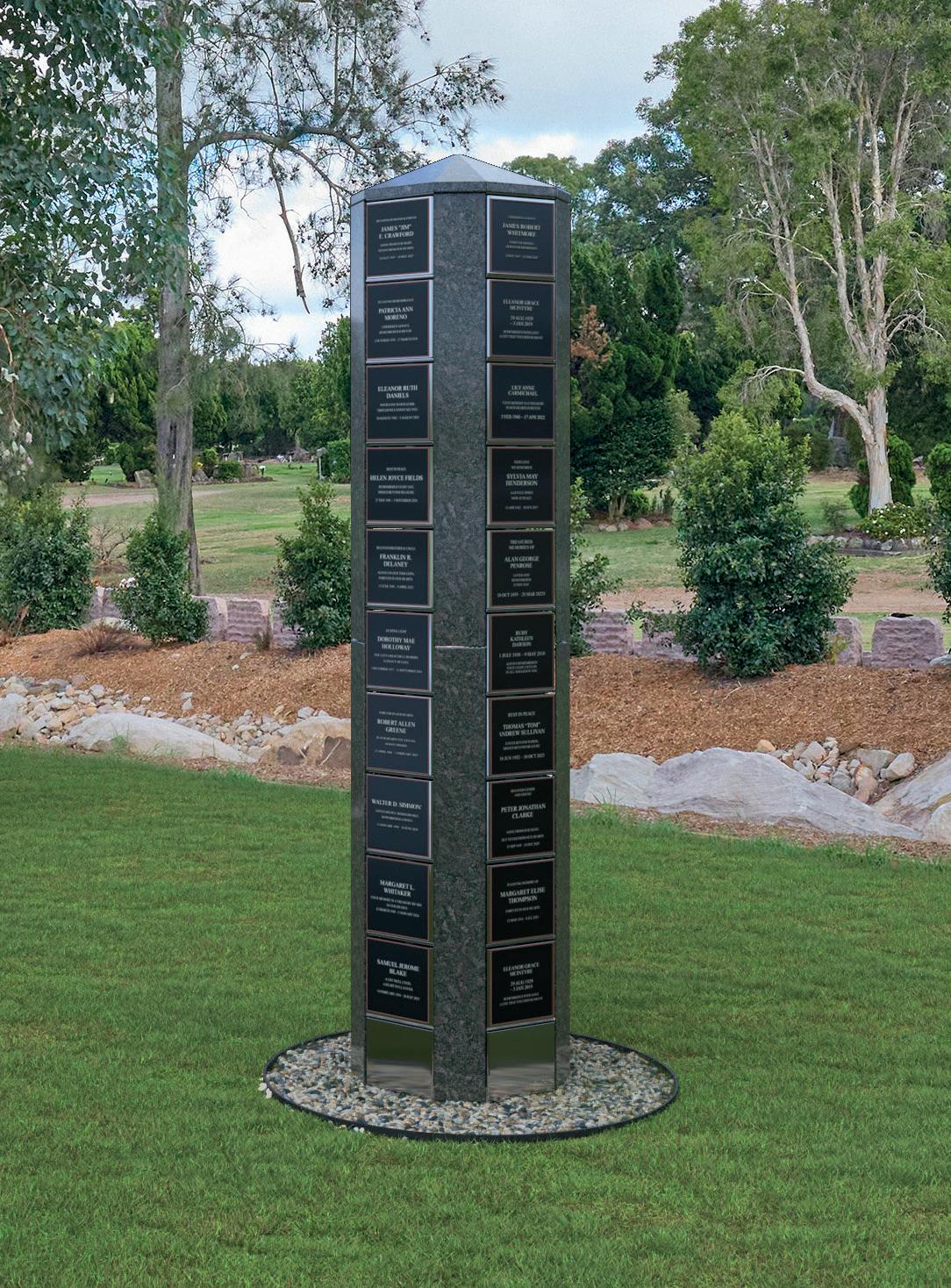
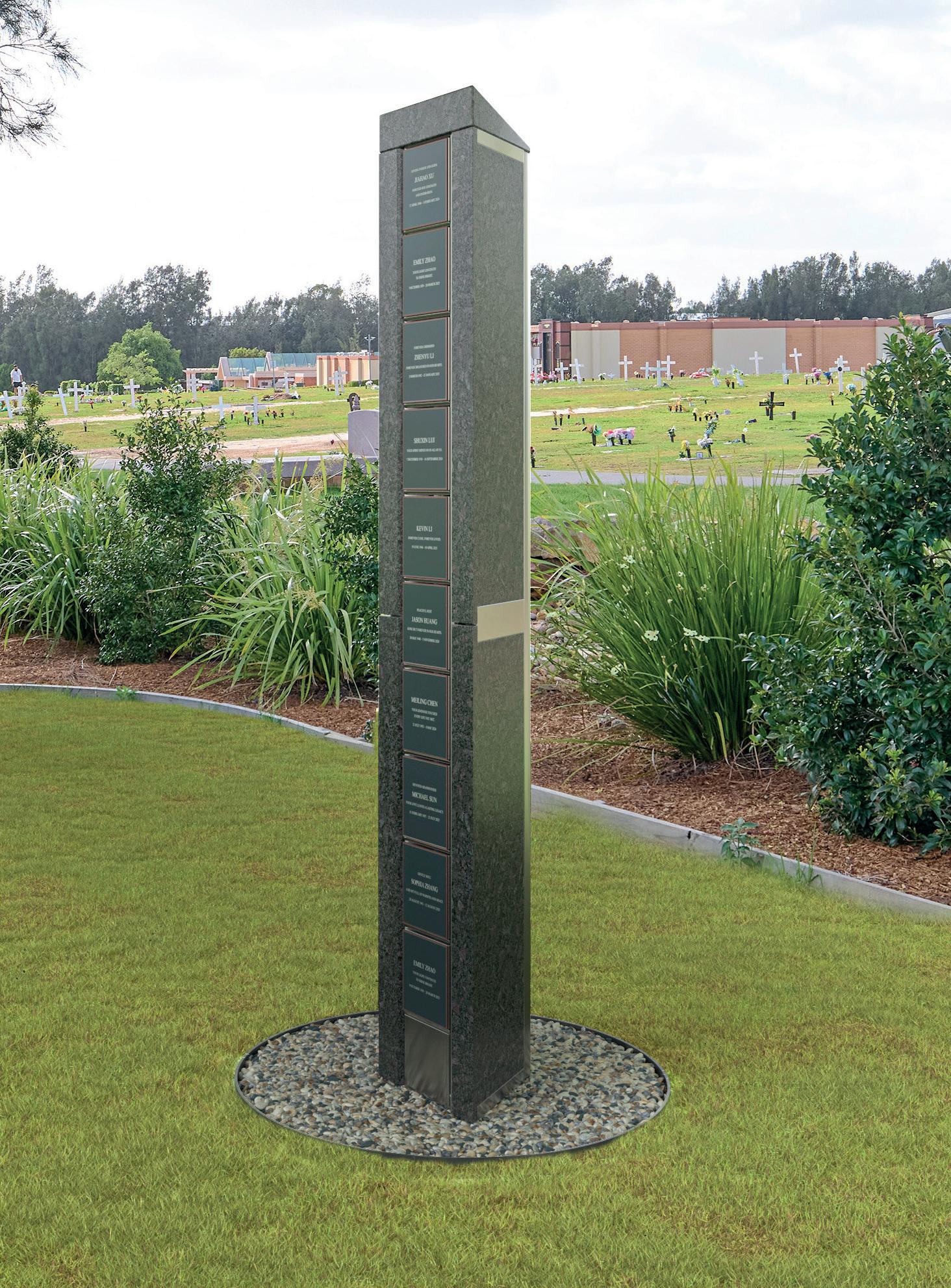
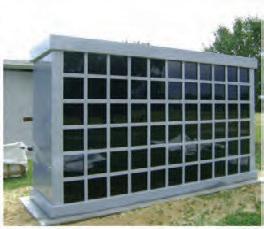
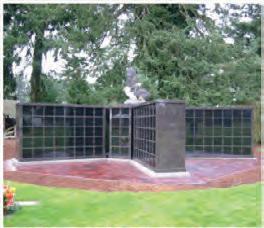
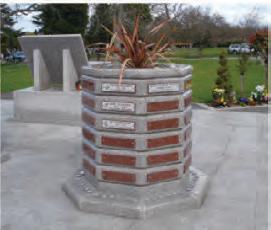
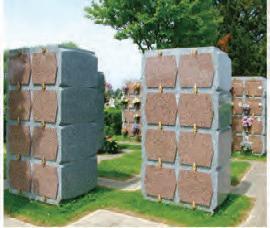
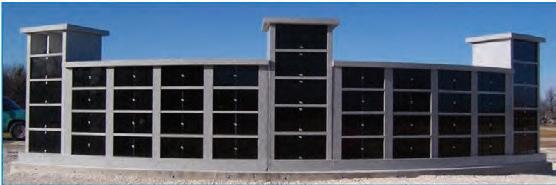
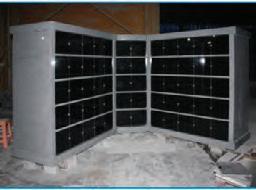
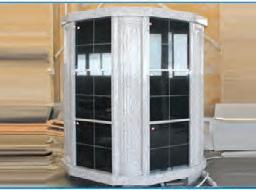
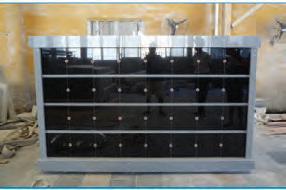
Combining scale with elegance, the Memoria Quinrose features five-sided, freestanding pillars designed to deliver exceptional spatial efficiency. A refined new approach to memorialisation.
2.4 metre, five-sided column
Holds 50 ash vessels
Designed for high-capacity placements in cemeteries
Granite exterior available in a curated selection of colours to suit regional and cultural preferences
Provision for bronze plaque personalisation
Patented, tamper-proof interment system with secure, never-fail closure
Low maintenance & lawn mower friendly
Installation consultation and advice available from Zinnia
Almost Forgotten stories find new life at Colac Cemetery through virtual memorialisation experience
Geelong Cemeteries Trust (GCT) is set to launch an engaging virtual memorialisation experience at Colac Cemetery that brings together history, legacy and community.
Developed in collaboration with Arrow Bronze and the Colac & District Family History Group (CDFHG), the Virtual Memorialisation Pilot project draws on CDFHG’s Almost Forgotten initiative — an extensive research project containing more than 1,800 life stories, historical records and images of individuals interred at Colac Cemetery prior to the 1900s.
The pilot project aims to preserve and celebrate life stories and create a meaningful, enduring and accessible way for families and the broader community to honour local lives and legacies.
“For many families, these graves have long been silent,” says Merrill O’Donnell, President of the Colac & District Family History Group. “By uncovering and sharing these stories, we are restoring names, lives and dignity to people who helped shape our district. We are pleased to partner with Geelong Cemeteries Trust to ensure these lives are respectfully preserved and remembered.”
Set to launch in mid-2026, the experience will initially feature up to 200 stories from the Almost Forgotten collection, available through a free mobile app. Visitors will be able to download the app and, as they move through the cemetery, view stories connected to grave locations.
“This is an exciting initiative for Geelong Cemeteries Trust,” says John Mitchell, Chair of Geelong Cemeteries Trust. “We’ve always known a person’s story is more than the words on a headstone, and this project offers a new, meaningful way for people to connect with the past while honouring the work of local historians.”
“This initiative reflects a careful balance between embracing new technology and preserving the integrity and dignity of memorialisation,” says Dean Matthews, Chief Executive Officer of Geelong Cemeteries Trust.
“Our collaboration with Arrow Bronze and CDFHG reflects a shared belief that every story deserves to be remembered.”
Arrow Bronze is working closely with GCT and CDFHG to deliver the digital experience, with careful consideration to the cemetery’s historical and community significance.
“At Arrow Bronze, memorialisation is fundamentally about honour — honouring lives lived, respecting families, and preserving the stories that shape a community,” says Hymie Jechilevsky, Managing Director of Arrow Bronze.
“We are proud to collaborate with Geelong Cemeteries Trust and the Colac & District Family History Group on this significant Colac initiative, helping ensure the lives and stories uncovered are respectfully preserved, shared and honoured for generations to come.”
The Virtual Memorialisation Pilot reflects GCT’s commitment to inclusive and innovative memorialisation, creating a digital space where local stories can continue to be discovered and shared into the future.
For more information about the project, visit gct.net.au
Helping you manage risk
Risk Management
We help organisations anticipate and control risks across operations. Using proven methodologies, we deliver strategies that protect people, assets, and performance.
Emergency & Crisis Management
We give clients the confidence to respond effectively in emergencies. Our plans, exercises, and training ensure readiness for rapid recovery when it matters most.
Business Continuity
We prepare organisations to withstand disruption and recover quickly. Through impact analysis, recovery strategies, and training, we embed resilience into operations.
We provide flexible risk and safety resources to suit client needs. Options include embedded consultants, projectbased support, or experienced venue safety officers. Our services Partnering with organisations across Australia, New Zealand, and the Pacific since 2007
Tourism Consulting
We improve the safety, efficiency, and sustainability of tourism operations. Drawing on sector expertise, we enhance visitor experience while strengthening operator resilience.
Health & Safety
We build safer workplaces by improving compliance and reducing hazards. Our audits, assessments, and training programmes strengthen safety culture at every level.
Security Consulting
We help clients safeguard people and assets against threats. Our services include vulnerability assessments, hostile vehicle mitigation, and practical protective measures.
On-site support / Secondments
Operations Consulting
We optimise planning, logistics, and performance to improve efficiency. Services include on-site reviews, operational audits, and tailored advice that delivers measurable improvements.
Evergreen Community Precinct
Redefining community spaces in South Australian cemeteries
In every community, there is a need for spaces that bring people together, not only in times of loss but also in moments of celebration, connection and collaboration. Adelaide Cemeteries established Evergreen Community Precinct with this exact vision in mind: a modern, multi-purpose venue that welcomes everyone.
Traditionally, memorial facilities have been viewed solely as places for funerals. While Adelaide Cemeteries continues to provide beautiful and dignified spaces for memorial services, Evergreen offers so much more to the local community.
When Adelaide’s B-HART Human Rights Day Symposium required a venue capable of matching the significance of the occasion, Evergreen stood out with distinction. Located 10 minutes from the Adelaide CBD, the precinct’s versatile function spaces aligned with B-HART’s accessibility requirements. Ample parking, step-free access, wide corridors and a thoughtfully considered layout ensured guests of all abilities could navigate the venue with comfort and ease.
When guests arrived for the symposium, they were welcomed to Evergreen’s professional yet inviting ambience. The main conference suite, equipped with modern audiovisual technology and flexible staging, comfortably hosted keynote speakers and panel discussions along with 300 attendees. Configurable seating arrangements allowed guests to seamlessly transition between the multiple spaces; plenary sessions, collaborative breakouts and meal service, demonstrating Evergreen’s adaptability for events of varying scales and requirements.
Attended by service providers, policymakers, advocates and community leaders, B-HART’s symposium brought together leading voices from government, academia, advocacy arts and lived experiences to explore how disability services can move beyond compliance and embed human rights into everyday practices.
Participants gained an insight into rights-based reform, connected with influential sector leaders and engaged in conversations about creating genuine autonomy and inclusion for people with disability.
Beyond functionality, ambience played a significant role in the symposium. Soft, natural lighting, refined finishes and comfortable furnishings presented a polished yet calming environment. Catering was also equally memorable, with a curated Evergreen function menu, prepared and served by the in-house hospitality team.
The event aimed to inspire action and equip attendees to lead change within their organisations and communities. Evergreen was delighted to provide its function spaces for B-HART’s symposium and is proud to offer a versatile and accessible space for the community to enjoy for generations to come.
Importantly, Evergreen represents more than just a venue. It reflects Adelaide Cemeteries’ commitment to rethinking perceptions and redefining what cemetery spaces can mean to a community. By bridging tradition with contemporary design and purpose, Adelaide Cemeteries remains at the forefront of the cemetery industry by transforming spaces into welcoming places for reflection, learning, celebration and connection. Evergreen stands as an integral part of this, helping alter how cemeteries are seen within communities,
challenging stigma and fostering open conversations about life, remembrance and community.
For those who would like to explore Evergreen’s spaces, we invite you to view our virtual walkthrough tours available online at: bit.ly/EvergreenCP. These interactive tours allow you to experience the layout, ambience and versatility of the spaces from the comfort of your own home.
For more information about Evergreen as a function venue, availability, packages and tailored event options, please contact Evergreen’s hospitality team. Evergreen is proud to offer meaningful and memorable experiences in a contemporary setting, designed especially for connection and community.
Evergreen Community Precinct Gordon Avenue, Clearview SA 5085
P. (08) 8139 7477
E. hello@evergreen.community
Fu Shou Yuan International Group
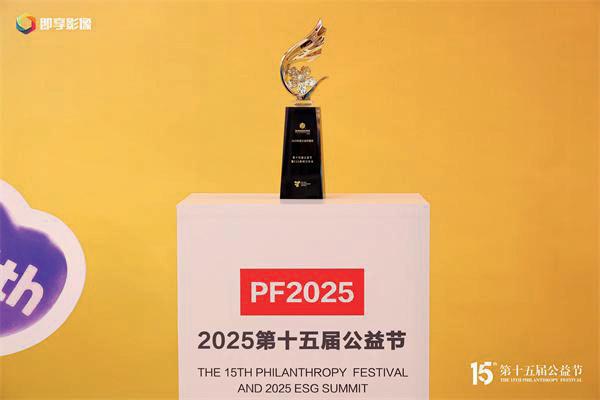
Wins “Annual Public Welfare Communication Award” at China’s 15th Philanthropy Festival
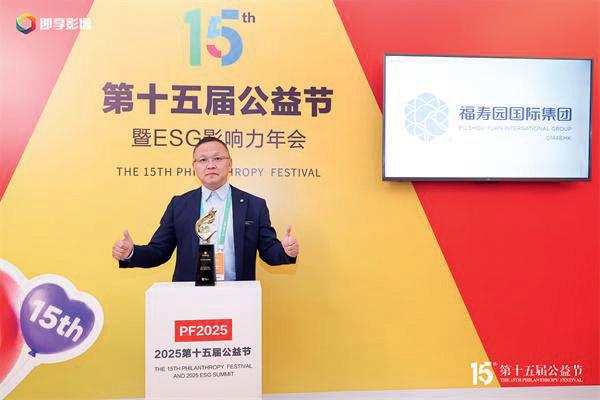
As a pioneer in China’s funeral and interment industry, Fu Shou Yuan International Group was honored with the “2025 Annual Public Welfare Communication Award” at the 15th Philanthropy Festival and 2025 ESG Impact Annual Conference, held in Beijing from January 22 to 23. The award recognizes Fu Shou Yuan’s three decades of dedicated public welfare practices in humanistic care, hospice care, life education, and environmental protection.
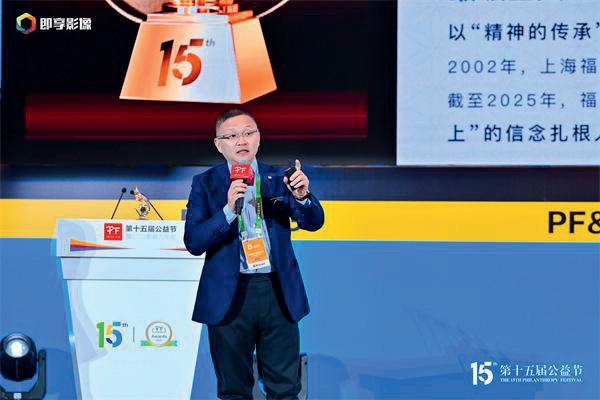
Wu Yibo, Chief Brand Officer of Fu Shou Yuan International Group, accepted the award on behalf of the company and delivered a keynote speech titled “Honor Life, Promote Civilization,” sharing the group’s insights on integrating public welfare into the funeral and interment industry.
Fu Shou Yuan’s 30-Year Public Welfare Process: Redefining the Funeral and Interment Industry
Since its founding in the early 1990s, Fu Shou Yuan has actively organized and participated in various social welfare activities, covering charitable assistance, psychological support, hospice care, preferential care for exservicemen and student aid, life education, environmental protection and other fields.
In October 2024, the group collaborated with the Shanghai Academy of Social Sciences (SASS) and The Paper (China’s leading digital
news platform) to release the White Paper on Fu Shou Yuan’s Public Welfare Undertakings. This white paper presents a systematic, quantitative and standardized assessment of the Group’s 30-year growth journey and capacity-building in advancing social welfare, and delivers an incisive, clear and accurate portrayal of its commitment to fulfilling social responsibilities and engaging in public welfare initiatives.
The release of the white paper’s outcomes serves as a phased summary of Fu Shou
Yuan’s public welfare undertakings, and provides insights for the Group to further develop a sustainable and regular public welfare system featuring the “enterprise–industry–society” model.
In 2025, Guangming Daily APP, Guangming Net and Abstracts News ran a series of reports on Fu Shou Yuan’s public welfare practices across four consecutive issues. This also marks the first time that state-level media have showcased Fu Shou Yuan’s 30-year public welfare journey in a continuous, systematic and panoramic way.
Wu Yibo, Chief Brand Officer of Fu Shou Yuan International Group, stated that Chapter I “General Provisions” of the Regulations on Funeral and Interment Administration issued in 2025 specifies that “The funeral and interment sector is an important public welfare cause.”
Having devoted itself to public welfare for more than 30 years, Fu Shou Yuan has broken prejudices with “parks”, warmed people’s hearts with “public welfare”, and moved toward the future with “ecology”. It has used concrete actions to interpret that funeral and interment services are not just services for “handling after-death affairs”, but a cause of “paying tribute to life”.
About the Philanthropy Festival
Established in 2011, the Philanthropy Festival is China’s first festival bearing the name of “public welfare” co-launched by mainstream media.
The event aims to carry forward the public welfare spirit, advocate public welfare practices, and build a platform for in-depth dialogue, cooperation and communication among multiple parties. After 15 years of exploration and practice, the Philanthropy Festival has become one of the most influential annual events in China’s public welfare and charity sector.
Over the past 15 years, more than 800 public welfare institutions, over 1,000 public welfare projects and over 680 video works have been showcased at the Philanthropy Festival. Each year, more than 3,000 responsible brands and over 1,000 role models compete for awards at the festival. Over 150 top celebrities have spoken up for the Philanthropy Festival to convey the power of goodness. The total number of people reached, covered and influenced by the event has exceeded 60 million.
Wu Yibo, Chief Brand Officer of Fu Shou Yuan International Group, delivers a keynote speech
Annual Public Welfare Communication Award at the 15th Philanthropy Festival
Wu Yibo, Chief Brand Officer of Fu Shou Yuan International Group, accepts the award on behalf of the Group
Cemeteries and Crematoria Association South Australia
Retirement Announcement of Mike Rusby
After nearly 20 years of dedicated service, Mike Rusby has announced his retirement from Centennial Park, with his final day being Friday, 8 May 2026.
Mike joined Centennial Park on 23 May 2006 as Gardens Manager, bringing with him a strong background in natural resource management and an early passion for environmental stewardship. Over the past two decades, he has become a highly respected leader with both Centennial Park and the wider cemetery and crematoria sector.
At Centennial Park, Mike has made an extraordinary and enduring impact. He played a pivotal role in the development of Centennial Park’s Environmental Sustainability Plan and Cemetery Master Plan, guiding key decisions that will shape the future of the Park for years to come. His leadership influenced many significant operational improvements, including the development of Centennial Park’s Operations Complex, the Café and Function Rooms, and more recently, the Jubilee Complex refurbishment. His collaborative approach, calm leadership style, and generosity in sharing knowledge have earned him deep respect from colleagues.
Mike’s commitment to Work Health and Safety has also set an exceptionally high benchmark. His focus on embedding a proactive safety culture helped Centennial Park achieve best
practice recognition in WHS and positioned the organisation as a safety leader within the sector. His compassion, integrity, and breadth of experience have supported numerous families, funeral directors, and staff throughout his tenure.
Beyond Centennial Park, Mike’s contribution to the cemetery and crematoria industry has been equally significant. His longstanding involvement with CCASA – serving as a committee member, Treasurer, and ultimately as President for two terms has strengthened the association’s governance, advocacy, and member engagement. He has been a strong advocate for sector collaboration and continuous improvement, generously sharing his expertise with peers across Australia.
We can all agree it has been a privilege for our sector to work alongside him. His legacy of environmental leadership, operational excellence, and unwavering care for people will continue to shape our sector long after his retirement.
Mike will be greatly missed by colleagues and peers across the cemetery and crematoria industry. We thank him sincerely for his remarkable contribution, his leadership, and his friendship over many years. We wish him every happiness as he embarks on this welldeserved next chapter, and we look forward to hearing about his adventures across Australia and beyond.
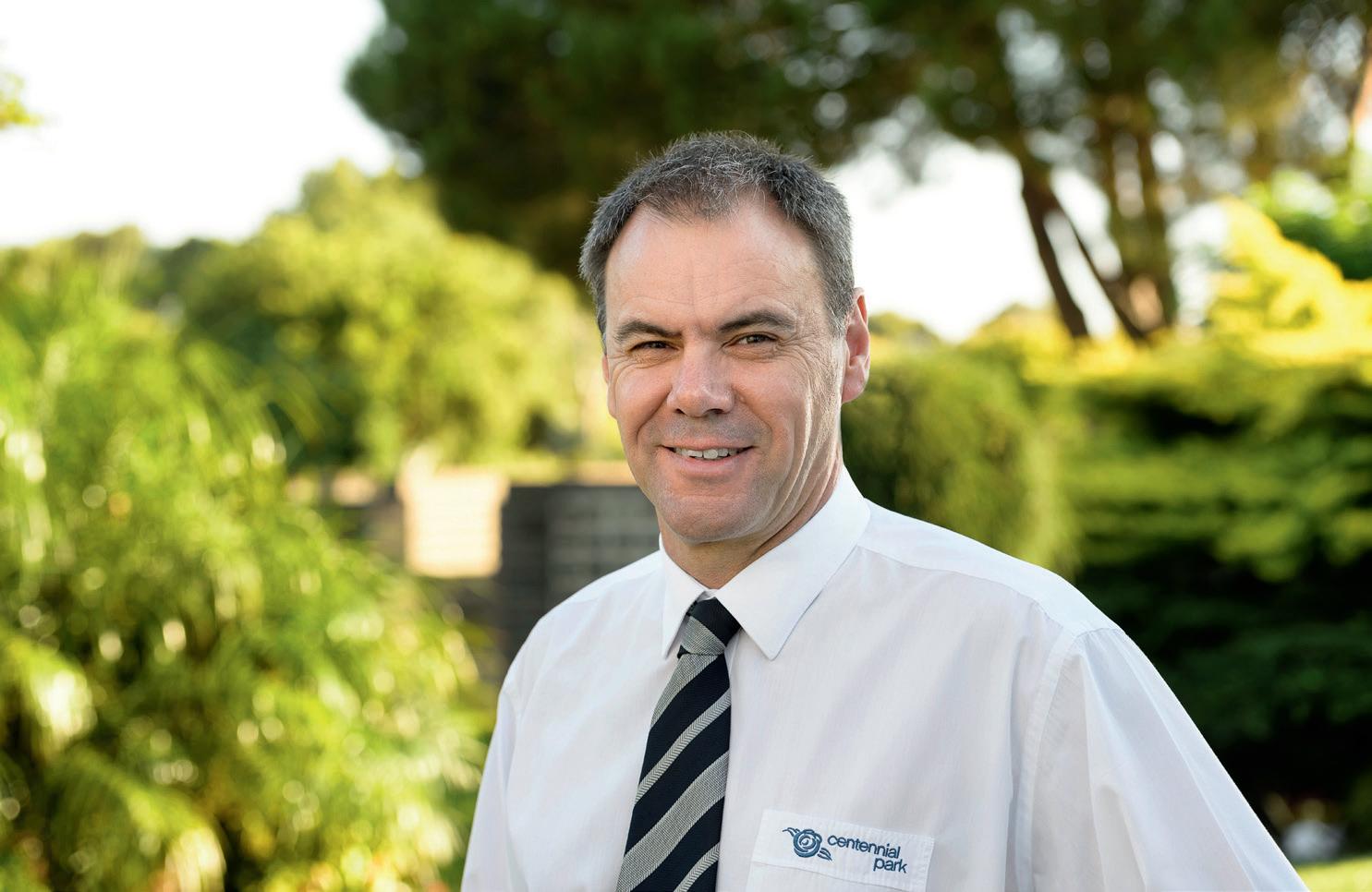
Mike Rusby, 20 years dedicated at Centennial Park
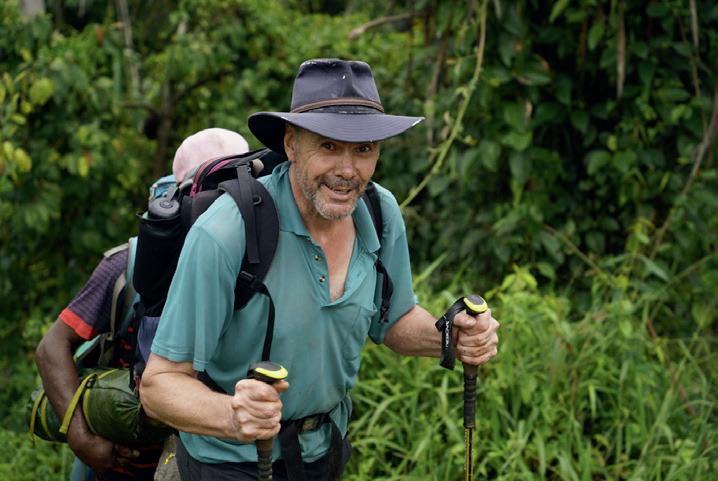
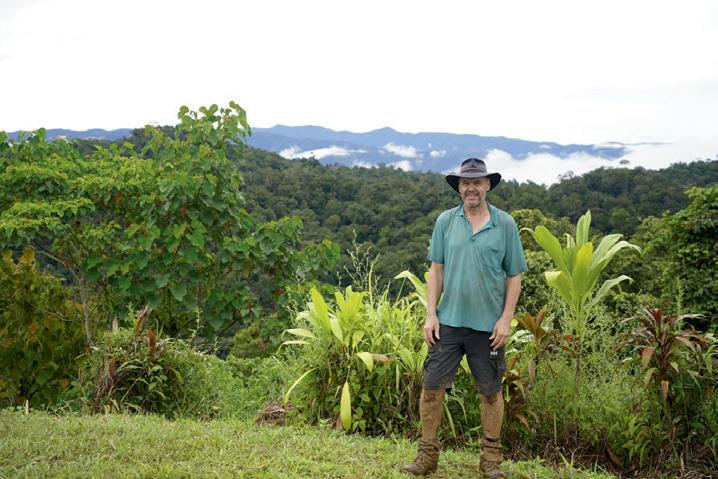
Mike recently trekked the demanding Kokoda Trail (96 kilometres of intense endurance) and is setting his sights on Mt Kilimanjaro, Tanzania (a height of 5,895 metres) later next year as he embarks on his new retirement career of travel and adventure.
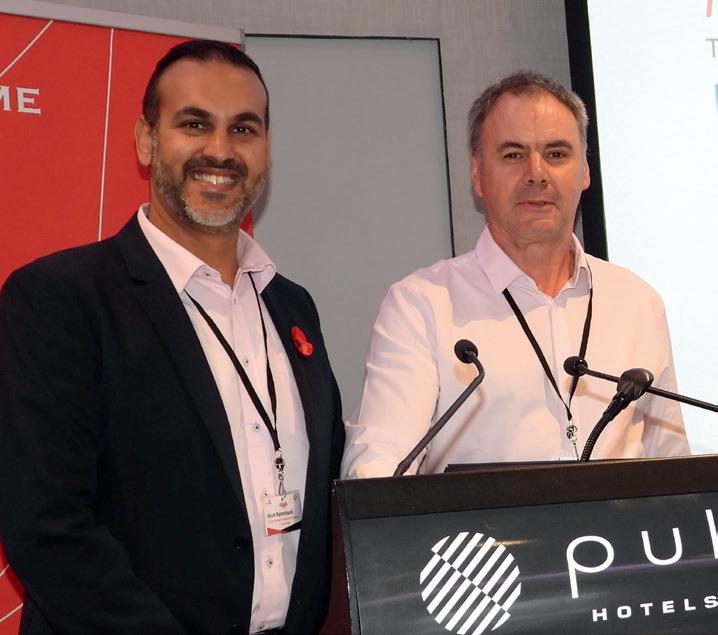
CCASA - past Presidents Mike Rusby and Arun Ramchand - both volunteering their professional time to serve members of CCASA.
Cemeteries and Crematoria Association Western Australia
CCAWA ANNUAL SEMINAR 2026
The Cemeteries and Crematoria Association of Western Australia are please to extend a warm welcome to any ACCA members to attend the annual CCAWA one day seminar and AGM titled
“People Caring for People” on Friday, 17th April 2026 at the Ingot Hotel in Belmont.
The seminar has a jam packed program of presentations and Major sponsor updates that will be of interest to all.
Keynote speaker for 2026 is Gary Crombie and his best friend “Levi” who you will all fall in love with. Gary is a returned serviceman from the Vietnam war suffering PTSD and when it was suggested he get a dog, he thought to himself that he struggled to look after himself let alone a dog! Listen to Gary’s story and you will soon realise it was the best decision to be made.
Other presentations on the day include, dealing with life and normality after a funeral, grave safety, Office of Australian War Graves and who qualifies for memorial recognition, what happens in the mortuary, the use of drugs and alcohol in the workplace and the impact of musco skeletal disease in industry workers. There will be updates from Funerals Australia and ACCA and we will also hear from SaCSA and their industry connection.
Major sponsors for 2026 will also showcase what is new and exciting in their organisations that can assist in ours.
Lock the dates into your diaries now and register your attendance through the CCAWA secretary, the Board would love to welcome you to WA for this event.
NEW TOILET FOR WA REGIONAL CEMETERY
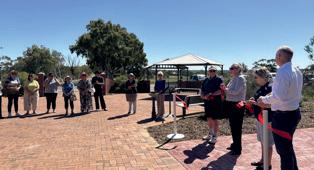
The Shire of Wongan-Ballidu recently conducted the official opening of their new cemetery toilet with nearly 40 community members in attendance. Shire President Cr Mandy Stephenson spoke about the cemetery’s rich history and the strong community effort behind the project.
Representatives from local groups joined the ribbon-cutting, including Wongan Hills Rotary Club, Progress Association, Kondut Sports Council, Wongan-Ballidu Development Group, and Wongan Hills Community Association.
Guests enjoyed a sausage sizzle provided by Rotary, celebrating what can be achieved when Council and community work together.
The project attracted attention online and on WA radio, highlighting our community spirit. A plaque was installed to acknowledge generous contributions.
Looking ahead, exciting works continue at the cemetery with the introduction of Chronicle, a digital program that will allow families to easily locate loved ones’ plots, view headstone photos, and even create online memorials.
Special thanks to Lorna and Paul for the idea, and to the Regulatory Services and Works & Services teams for creating accessible, welcoming surroundings.
OLD BUSSELTON CEMETERY PROJECT
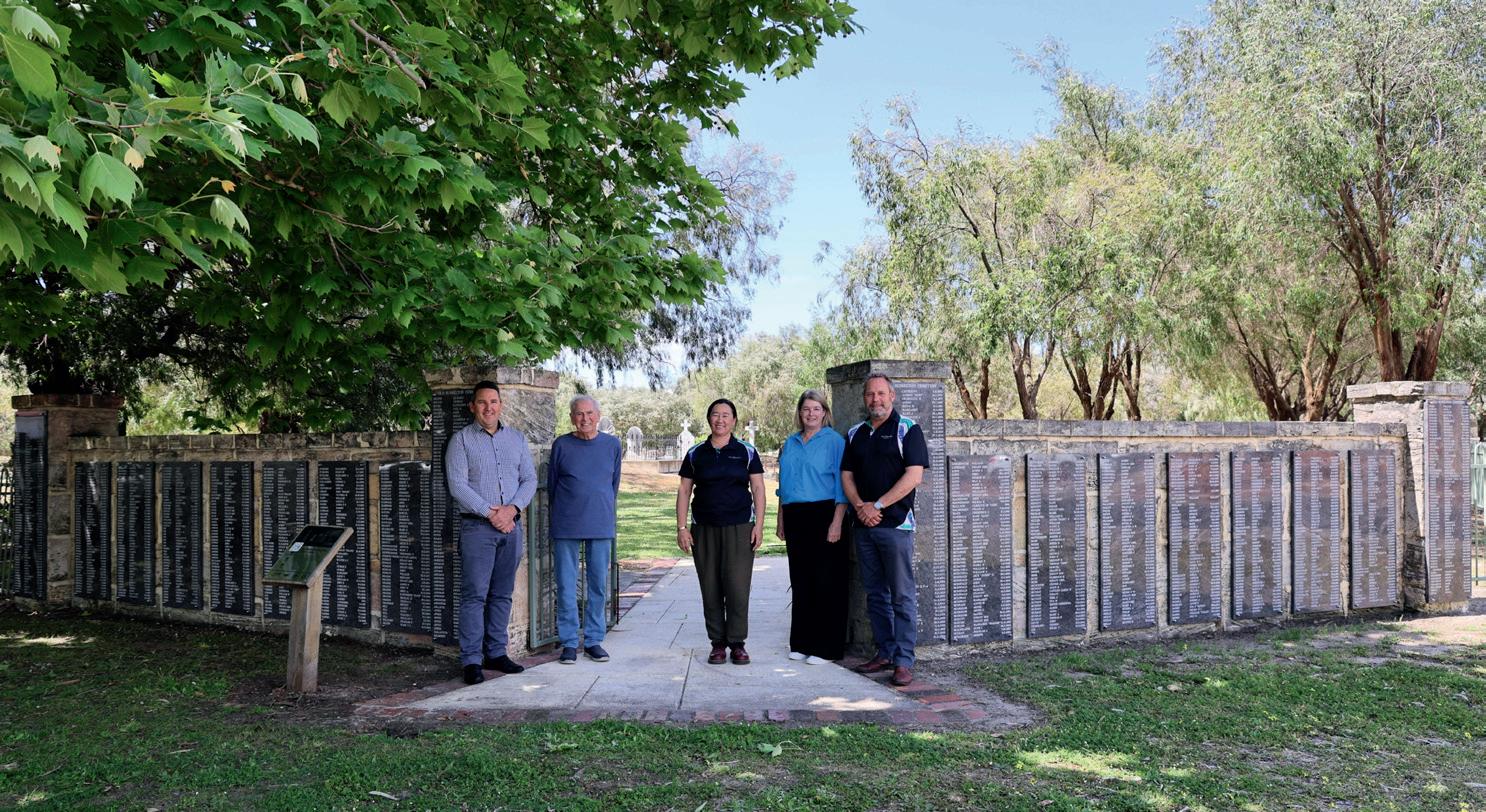
The City of Busselton has completed a major restoration at the Old Busselton Cemetery, honouring nearly 1,000 individuals who shaped the region’s early history.
• Granite plaques now mark the site, recording names and stories once lost.
• Research uncovered 750 additional burials, expanding the known record from 250 to almost 1,000.
• Local historical societies and families worked together to verify names and preserve heritage.
• The cemetery, dating back to the 1860s, is now a dignified memorial and educational resource.
This project ensures the contributions of Busselton’s pioneers are remembered and accessible for generations to come.
Cemeteries and Crematoria Association New South Wales
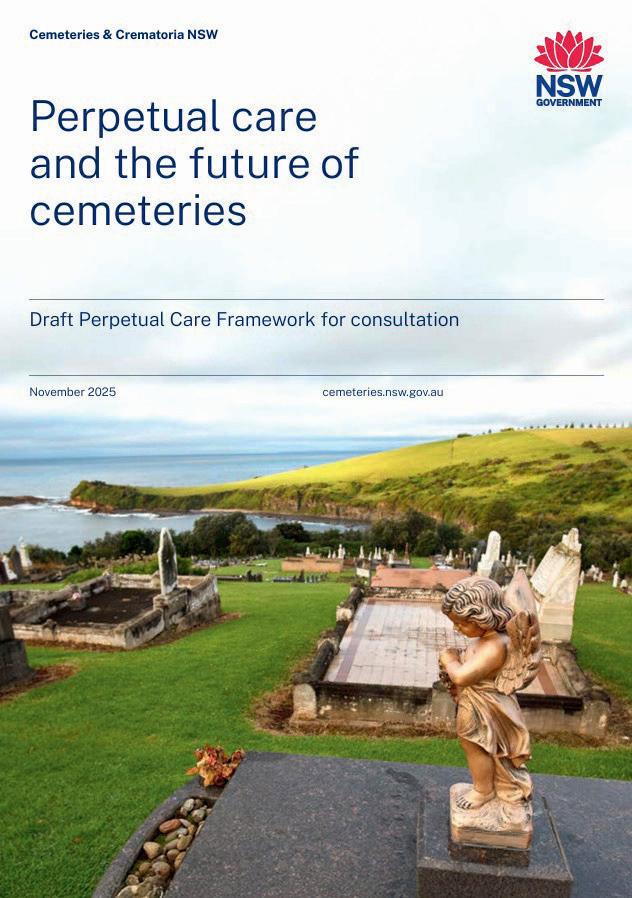
PERPETUAL CARE: REIMAGINING THE FUTURE OF CEMETERIES IN NSW
As communities grow and urban life continues to intensify, cemeteries across New South Wales are facing a pivotal moment. The NSW Government’s draft Perpetual Care Framework invites the cemetery and crematorium sector and the community it serves to rethink how these significant places can be sustainably cared for and meaningfully integrated into our future landscapes.
Cemeteries have always held a dual identity: sacred resting places and valued public spaces. Research commissioned by Cemeteries & Crematoria NSW (CCNSW) found that 75% of people have been involved in arranging an interment, while nearly 2 in 5 NSW residents have visited a cemetery in the past year. These numbers underscore the enduring importance of cemeteries as cultural, historical and personal landmarks.
Why perpetual care matters
Perpetual care refers to the ongoing, respectful maintenance of cemeteries after they have reached capacity or are closed to new interments. This responsibility extends far beyond mowing lawns. It ensures that the dignity of those interred is upheld, that cultural and religious practices remain respected, and that cemeteries continue to offer public value—whether as quiet places of remembrance or as precious green spaces within dense urban areas.
But perpetual care presents a challenge: once cemeteries stop generating revenue, how do operators fund the ongoing maintenance required? Without thoughtful planning, this financial gap risks compromising both public expectations and heritage values.
A modern cemetery life cycle
The draft framework encourages operators to look beyond the traditional “from-active-toinactive” cemetery model. Instead, it proposes a modern cemetery life cycle with three possible future pathways:
1. Unlocking new supply
Cemetery renewal and renewable tenure can extend the active life of cemeteries. Examples such as Karrakatta Cemetery in Western Australia show how respectful redevelopment—without disturbing remains—can create thousands of new burial spaces. Renewable tenure, now common internationally, also offers a sustainable approach to reusing individual interment sites.
2. Becoming inactive
Operators of inactive cemeteries may choose to maintain current standards, taper maintenance over decades, or adopt innovative approaches such as “rewilding” with low-maintenance native plantings. Melbourne General Cemetery’s Project Cultivate demonstrates how ecological restoration can enhance amenity, improve biodiversity and lower costs.
3. Complementary uses
After many decades, some inactive cemeteries may be suited for conversion into public parks. Places like Camperdown Memorial Rest Park illustrate how these conversions can create vibrant and valuable urban green spaces while retaining historical and cultural significance.
Community expectations are changing
CCNSW’s research shows that while the longterm future of cemeteries is not something many people routinely think about, they are open to new possibilities once these are explained. For example:
• Tapered maintenance becomes broadly acceptable after 50–75 years
• Naturalised landscapes are welcomed when thoughtful and well-planned
• Park conversion after at least 50 years is the most accepted form of reuse.
Communities place strong value on dignified care, cultural inclusion and environmental responsibility—principles that are at the heart of the proposed framework.
Looking ahead
Under the Perpetual Care Framework, all operators would remain responsible for basic maintenance and safe access in perpetuity. In addition, larger operators would be required to prepare Perpetual Care Statements outlining direction, maintenance pathways, and funding strategies.
CCNSW thanks cemetery operators, community members, cultural groups and industry partners for their input in helping to shape a sustainable, respectful and forwardthinking approach to perpetual care.
The draft framework remains available for review, along with supporting materials, at www.cemeteries.nsw.gov.au/industryregulation/perpetual-care-framework
Arrow Bronze Memorials
Supporting Cemeteries in a Changing Market
As the memorialisation landscape continues to shift, cemeteries and crematoria across Australia are adapting to new pressures especially from online marketplaces offering inexpensive, generic memorial items. Families searching for ways to honour their loved ones often explore these platforms, sometimes without realising the difference in quality, durability, and emotional significance that professionally crafted memorial products offer.
At Arrow Bronze, we deeply respect the role cemeteries and crematoria play in supporting families during difficult times. Our goal is not to change your approach, but to walk alongside you collaboratively and with genuine care, to help strengthen your on-site plaque and memorialisation offerings and reinforce the trusted connection you already have with your community.
Why Unique, Thoughtfully Crafted Products Matter
With almost everything now available at the click of a button, offering memorial pieces that cannot be found on online platforms has become increasingly valuable. Families often respond strongly to items made by skilled artisans, master jewelers and specialist craftspeople; products that feel considered, lasting, and personal.
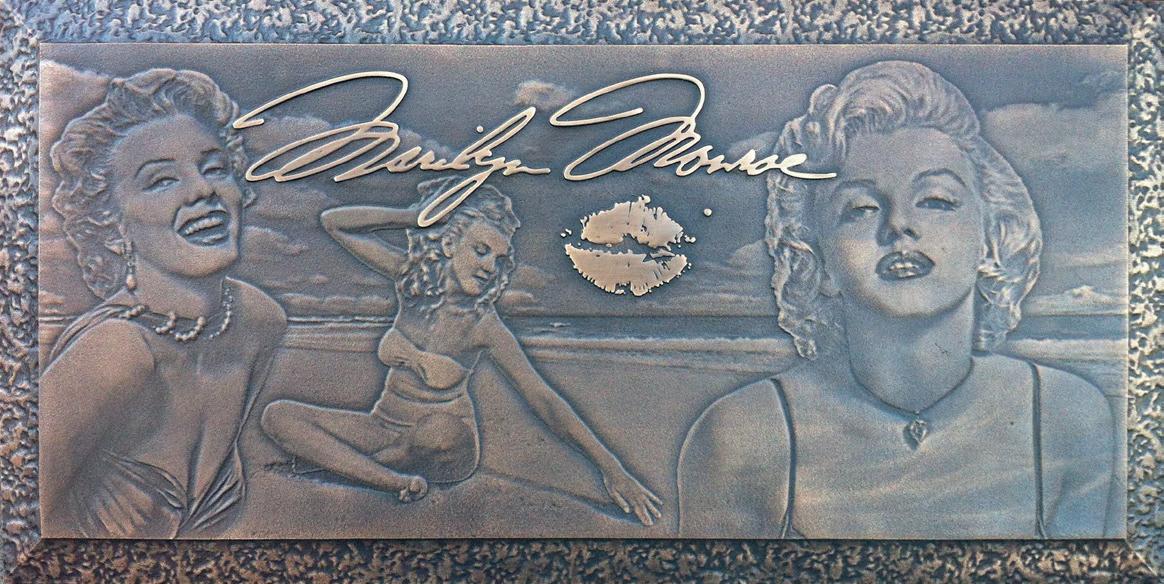
By introducing distinctive plaques with options for creative borders, emblems, colour infills and beautiful fonts as well as exclusive memorialisation pieces, cemeteries can move beyond competing on price with online sellers. Instead, you can offer families something they won’t encounter anywhere else: authenticity, artistry, and memorials that genuinely resonate.
A Range That Supports Every Family
We understand that every community is different, which is why a balanced, tiered product range is so important. From approachable entry-level keepsakes and urns to premium memorial pieces, having options ensures that:
• Every family can find something meaningful within their budget
• Memorialisation remains accessible and inclusive
• Families feel welcomed, supported, and understood
Our team works with you to review existing stock, identify best-sellers, and curate a complementary mix that suits your demographic and cultural needs without overwhelming your shelves or your team.
The Growing Role of Personalisation
Personalisation has become an increasingly important part of memorialisation. Families look for engraving, imagery, symbols, fingerprints, colour accents, and unique design elements that help tell their loved one’s story.
Arrow Bronze offers support in expanding or refining your personalisation services, enabling you to provide families with something truly special, an item that honours their memories in a deeply meaningful way.
A Supportive, Collaborative Partnership
Our approach is simple: we collaborate and
are guided by you. We spend time with your organisations service managers, arrangers and staff to understand what resonates with your community, explore challenges, and offer practical solutions - including navigating the rise of low-quality online items.
Our memorials team is delighted by the positive feedback and experiences our customers have shared.
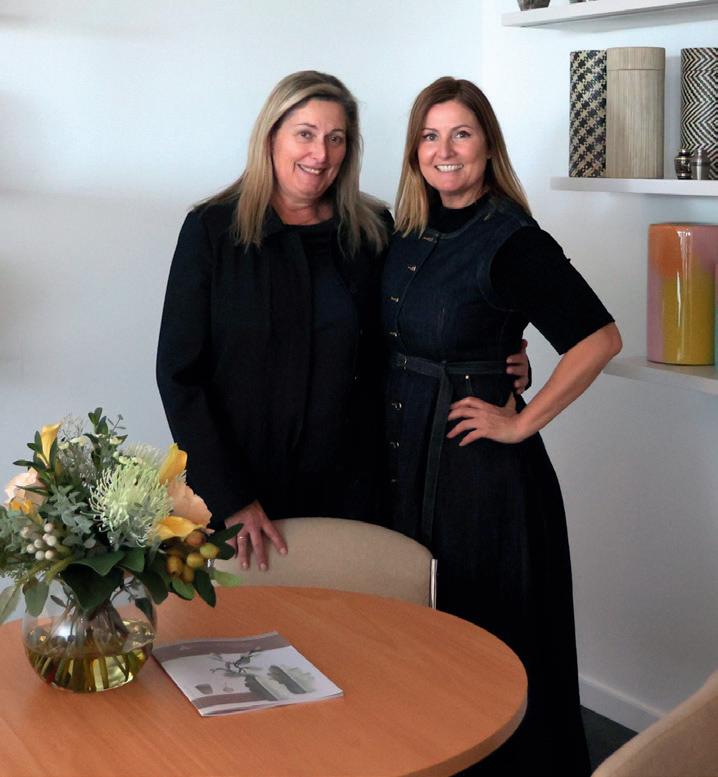
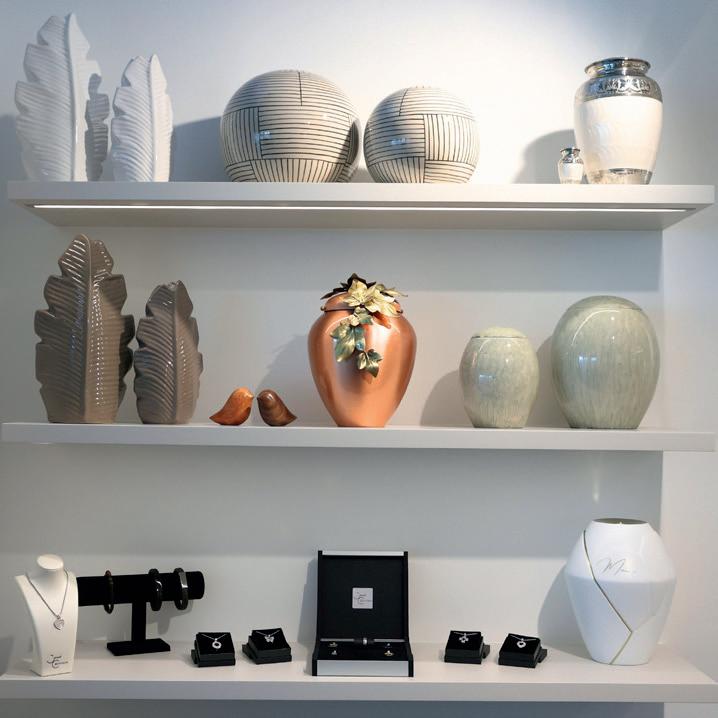
“We know memorialisation is an important part of remembrance, and the environment in which families make these decisions matters. Through this collaboration, we have created a tranquil and elegantly presented space that supports families as they thoughtfully explore a range of options in a way that feels both accessible and meaningful.”
Irene Galanakis, Client Services Team Leader
Shaping the Future of Memorialisation Together
If you’re looking to refresh your memorial range, introduce new pieces, or simply explore possibilities, we would be honoured to support you. Arrow Bronze is here to help you continue offering families comfort, connection, and quality during life’s most delicate moments.
Contact: Arrow Bronze - Business Development Manager – Sonia Vachalec sonia.vachalec@arrowbronze.com.au
Hyqual Australia
Hyqual Australia’s Open Doors Behind-the-Scenes Factory Tours
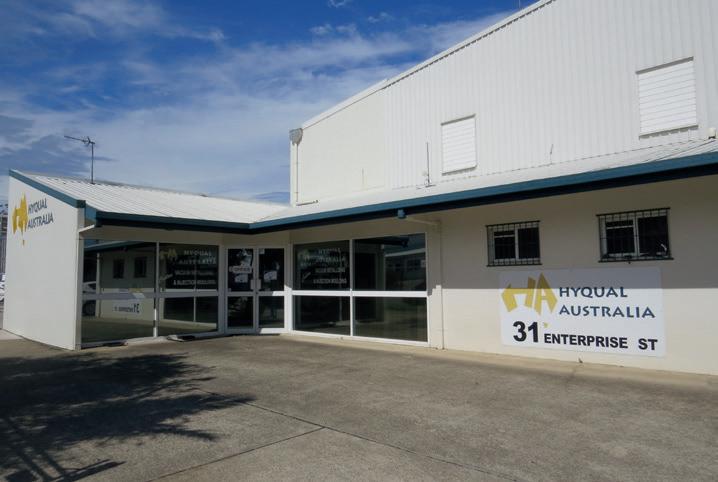
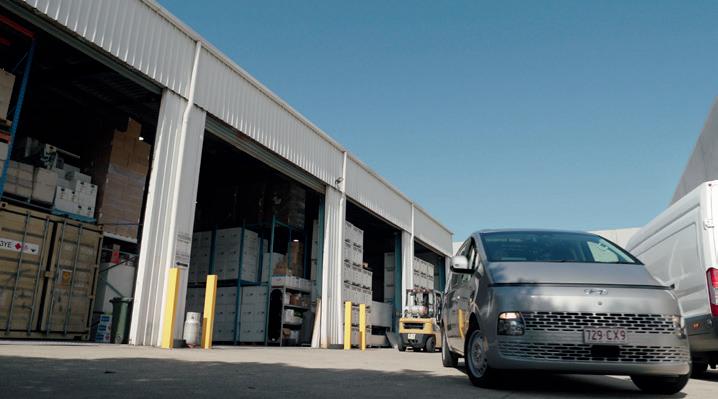
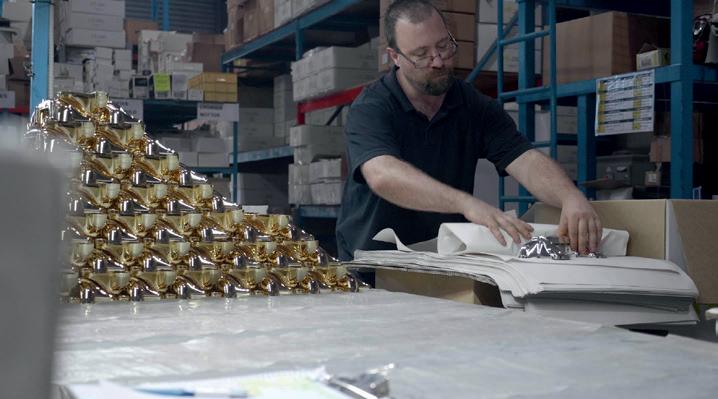
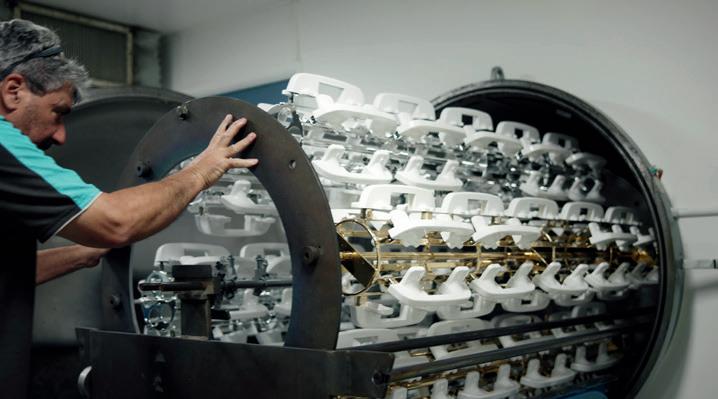
Hyqual Australia is excited to open the doors of our Sunshine Coast factory for an exclusive tour during the Funerals Australia National Convention 2026! This is a rare opportunity to witness the dedication and precision that goes into an Australian-made business, showcasing the care behind our trusted quality hardware.
From production through to thorough final inspections, every Hyqual product is crafted for reliability and purpose, truly living up to our promise: “The strength is in our product.” Visitors will have the chance to see, touch, and experience the local craftsmanship that the Funeral Industry relies on every day.
While you’re in the Sunshine Coast, make the most of your visit! Our factory is just minutes from some of the region’s stunning beaches:
• Bulcock Beach - enjoy the calm bathing reserve or walk to the northern end of Bribie Island.
• Kings Beach - enjoy the waves or a dip in the local saltwater pool.
• Moffat Beach - take a scenic half-hour headland walk with stunning coastal views all the way to Point Cartwright.
The heart of town, Bulcock Street, offers everything from local cafés and restaurants of diverse cuisines to award-winning gelato, boutique shops, and surf stores. If your visit extends through the weekend, don’t miss the local street market from 8:00AM to 1:00PM on Sunday!
Our location also makes it easy to explore the Sunshine Coast’s iconic spots: a 30-minute drive north to Mooloolaba Beach, 40 minutes west to the hinterland towns of Maleny and Montville, or 20 minutes south to Australia Zoo.
Adding a local touch to your visit, we’ll be hosting tastings from Beach Tree Gin – a local Sunshine Coast gin distillery – with opportunities to purchase products and merchandise on the day.
Tours during the convention are pre-booking only, but Hyqual factory tours are available by appointment year-round. Simply email sales@ hyqual.com or call 1800 77 77 44 to arrange a time. Outside of tours, visitors are always welcome during our open hours: 7:30AM –5:00PM Monday to Thursday, and 7:30AM – 1:30PM Friday
And remember, if you’d like Hyqual Australia products for your families, you can request them through your coffin manufacturer or order directly – we’ll ensure you’re well taken care of. For over 40 years, we have proudly manufactured and delivered the highestquality products to the Australian funeral industry, supporting both its growth and that of Australian families.
Major Furnace Australia Pty Ltd and Crematech B.V. Announce Strategic Partnership for Electric Cremation Technology in Australasia
Major Furnace Australia Pty Ltd (Major), a century-old leader in industrial combustion and cremation technology, and Crematech B.V., an innovative developer of electric and alternative-fuel cremators, have announced a new partnership set to reshape the cremation equipment market across Australia, New Zealand, and neighbouring regions.
Electric Cremation Focus
Crematech specializes in electric cremation technology, emphasizing energy efficiency, user-friendly operation, and strict environmental compliance. Their electric cremators feature advanced control systems and innovative filtration solutions, which help minimize operational costs and environmental impact. Crematech’s electric cremation systems have been successfully installed at multiple sites throughout Europe, demonstrating proven performance and reliability in diverse operational environments.
Partnership Overview
Under this agreement, Major will represent Crematech as its official sales agent, manufacturer, supplier, and service provider for Crematech’s advanced cremation equipment in the region. This collaboration leverages Major’s extensive manufacturing capabilities, local expertise, and established service network, while introducing Crematech’s cutting-edge electric, hydrogen, and bio-propane cremators to a broader market.
Complementary Strengths
Major brings over a century of experience in designing, manufacturing, and servicing combustion equipment, including its own suite of high -performance cremators such as the HD120, HD90, and HD60 models. These units are renowned for their reliability, cost efficiency, and compliance with stringent environmental standards.
Crematech, meanwhile, is at the forefront of electric cremation technology, emphasising energy efficiency, user-friendly operation, and adherence to the highest environmental regulations. Their electric cremators feature advanced control systems
and innovative filtration solutions, minimising operational costs and environmental impact.
Regional Impact
With Major acting on behalf of Crematech, customers in Australia, New Zealand, and surrounding regions will benefit from:
• Local manufacturing and support: Faster delivery times, tailored solutions, and responsive service.
• Expanded product range: Access to both Major’s proven cremators and Crematech’s innovative electric and alternative -fuel models.
• Comprehensive service: Installation, commissioning, preventative maintenance, and spare parts supply for all cremation equipment.
Commitment to Sustainability and Innovation
Both companies share a commitment to sustainability, technological advancement, and customer satisfaction. The partnership aims to provide crematoriums with equipment that not only meets but exceeds international standards for emissions, energy efficiency, and operational reliability.
Looking Ahead
This strategic alliance positions Major and Crematech as the go -to providers for modern cremation solutions in Australasia. By combining Major’s local expertise and manufacturing strength with Crematech’s innovative technologies, the partnership promises to deliver exceptional value and support to crematorium operators and the communities they serve.
Facultatieve Technologies
The FTIV Hybrid
What is the FTIV?
The FTIV is a true multi-fuel hybrid cremator, capable of utilising both gas and electric to optimise energy usage, improve emissions output and carbon footprint contributions whilst reducing operational costs for the crematorium, all while maintaining the same cremation times.
The FTIV is an industry-impacting invention that allows operators to run the cremator on both electricity and gas simultaneously, adapting in real time to the operational requirements of the machine. By intelligently balancing fuel sources, the cremator significantly reduces gas consumption by up to 50 percent, delivers carbon footprint reductions of up to 50 percent, and lowers cremation operational costs by up to 20 percent. * This represents a revolutionary step in sustainability within the funeral sector and establishes a new benchmark for alternative fuel cremation technology.
Why is the FTIV is a sustainability revolution?
The FTIV enables crematoriums to operate more sustainably whilst maintaining performance outcomes. Its hybrid design supports a transition away from reliance on a single fuel source, allowing crematoriums to take advantage of cleaner energy where available and protect their facilities against evolving environmental legislation and energy market volatility.
Beyond measurable reductions in emissions and fuel usage, the FTIV contributes to long-term environmental responsibility by supporting decarbonisation strategies without compromising on throughput, reliability, or service quality. The system’s flexibility allows crematoriums to align with local sustainability targets, renewable energy initiatives, and council or organisational climate commitments, positioning them as leaders in responsible funeral service provision.
The FTIV is not simply an efficiency improvement but a strategic sustainability initiative. It demonstrates how innovation, technology, and environmental initiatives can coexist, delivering tangible benefits for operators, managers, and the environment while setting a clear direction for the future of cremation.
What if the local infrastructure means it is not possible to operate in a hybrid model.
The average lifecycle of an FT cremator is approximately 20 years. Over this period, global electricity infrastructure is expected to transition towards more accessible and environmentally sustainable energy sources, in line with Net Zero objectives. As a result, greater energy accessibility is anticipated in the coming years.
With this in mind, we have developed the FTIV Ready solution for operators whose current infrastructure is not yet optimised for hybrid operation, but who want to be prepared for the future. FTIV Ready incorporates the core FTIII technology, with additional space engineered within the secondary chamber to accommodate the future electrical elements, with a small modification to the hearth, and a new front-mounted control panel. This enables a streamlined conversion to an FTIV Hybrid at a significantly reduced cost when infrastructure conditions allow.
FTIV Ready: ready for today, prepared for tomorrow.
*Based on studies conducted in France when comparing the FTIII and FTIV performance and throughput.
Plotbox
The Hidden Risks of Unsupported Software (And How to Avoid Them)
If it works it must be OK, right? Wrong.
Using outdated or unsupported software to manage your back office is costing you now and in the long run.
From data breaches to lost opportunities, the cost of doing nothing adds up - hitting your pocket, your reputation, and your potential for growth.
So what’s the cost of doing nothing?
1. Data breaches and security failures
Outdated software dangers often begin with the security of your data.
The cost of doing nothing? Cyber attacks, data loss, ransomware, lawsuits, reputational damage, financial penalties.
Burial records, family contact information, contracts, financial data, and more - all open to unauthorised access without the critical patches and updates to keep them secure.
There are 600 million cyberattacks per day (and rising).
Vulnerable servers increase the risk of unauthorized access to your critical information; the tampering with or destruction of irreplaceable data; the interruption of important functions and daily operations; or even a complete shutdown of your network.
The solution? Cloud-based software solutions can reduce many of these risks by providing modern security features, including: encryption, multi-factor authentication or single sign-on, and proactive monitoring, with regular patches, updates, or fixes.
2. Instability
The cost of doing nothing? System failures, irrecoverable records, interrupted operations, unexpected costs.
If you do have someone providing ongoing support to your system then it’s likely costing you, but it still doesn’t mean you’re 100% safe from a system failure.
You may be running software that’s supported by the vendor or a third party IT support provider, but if that software is built on a database that’s retired then you’re still at risk.
An unstable system is a problem waiting to happen.
3. Surprise! Unexpected costs
Unexpected costs can wreak havoc on your cashflow and leave an unwelcome dent in your bottom line.
The cost of doing nothing? Rising maintenance bills, unpredictable expenses, lengthy downtime.
And by continuing to use outdated or unsupported software that’s exactly where you’re headed.
It might feel that sticking with the system you already have is cheaper, being ‘already paid for’, but in reality, that could become a false economy.
Hidden costs soon pile up - emergency IT fixes, countless hours spent troubleshooting, staff overtime, lawsuits due to mistakes made, implementing a new system.
4. Limited growth and future planning
The combination of outdated software and an unsupported infrastructure can mean you’re constantly firefighting - battling the limitations of your old systems, instead of seizing
opportunities to modernise.
The cost of doing nothing? limited scalability, compatibility, integration, missed opportunities, misalignment with digital strategies.
Overcoming the Risks
The good news is that you don’t have to keep living with the dangers of unsupported or outdated systems. Modern cloud-based software solutions can help to eliminate all of these risks and replace them with stability, security, and room for growth.
Here’s how:
Stronger protection = fewer data breaches and security vulnerabilities;
Automated backups and reliability = less data loss and system instability;
Predictable budgeting = no surprises and money saved in the long-term;
Real-time access anywhere = no accessibility issues;
Scalability and integration = fewer limitations;
Alignment with the future = no missed digital strategy opportunities.
The bottom line
Every risk of outdated or unsupported management software - from instability to financial strain - has a direct solution in the cloud.
Cemetery and crematoria can move from fighting old problems to building a foundation for growth, confidence, and long-term digital success.
Graeme Arthur - Senior Marketing Communications Executive, Plotbox
Workplace Culture Is Everything
Written by Key Business Advisors Director, Colin Wilson
It does not matter where you work or what position you hold in a cemetery, workplace culture is everything. Across the Australian cemetery sector, organisations now operate in environments where multiple generations work side by side, from Baby Boomers through to Gen Alpha. When this generational mix is combined with different nationalities, values, and personalities, it is no surprise that some organisations find it challenging to create and sustain a positive workplace culture.
The key to getting this right comes down to leadership and communication. Strong leadership sets the direction and creates a clear pathway for teams to follow, while effective communication ensures every team member feels informed, valued, and part of the solution. In the cemetery industry, this is particularly important, as the outcomes delivered do not just affect internal operations. They directly impact families, mourners, councils, funeral directors, volunteers, and the broader community you serve.
In today’s world of work, creating a positive workplace culture and building a cohesive team where everyone is aligned plays a vital role in a cemetery’s success. A strong, people focused culture drives engagement, productivity, and job satisfaction, while also lifting the standard of service delivered. This applies equally to paid staff and volunteers, who are often the backbone of cemetery operations across Australia.
This article explores practical ways cemetery managers and supervisors can strengthen workplace culture and build genuine team commitment. The goal is to create an environment where people are proud of what they do, feel supported in their roles, and remain focused on delivering respectful and compassionate service to grieving families.
Leadership and Communication
Effective leadership and communication sit at the heart of a healthy workplace culture. Leaders at every level must inspire and motivate their teams by setting clear expectations, providing constructive feedback, and recognising achievements.
Transparent and open communication builds trust and encourages employees and volunteers to share ideas, raise concerns, and contribute to improvement. Regular team meetings, one on one conversations, toolbox talks, and operational updates help reinforce alignment with organisational values and goals. When feedback is genuinely encouraged and listened to, engagement increases and teams become more committed to their work.
Empowerment and Autonomy
Empowering employees and volunteers through appropriate autonomy and decision making authority has a significant impact on workplace culture. When people feel trusted and have ownership over their responsibilities, it builds confidence, accountability, and pride.
Encouraging team members to contribute ideas and participate in problem solving creates a more inclusive and collaborative environment. In cemetery operations, this can lead to practical improvements in safety, maintenance, service delivery, and family engagement.
Work–Life Balance and Wellbeing
Cemetery work carries unique emotional pressures, making work–life balance and wellbeing more important than ever. Leaders must be mindful of the impact this work can have on their teams.
Where possible, offering flexible work arrangements allows people to better manage personal commitments. Providing access to wellbeing initiatives such as mental health resources or employee assistance programs demonstrates genuine care for your people.
Diversity and Inclusion
Building a diverse and inclusive workplace is essential to creating a positive and resilient culture. The cemetery sector attracts people who care deeply about supporting their communities, and this diversity of age, background, and experience is a real strength.
Actively promoting inclusion means creating an environment where everyone feels respected, valued, and heard.
Improve your workplace culture
Improving workplace culture is not a one off initiative; it is an ongoing commitment that requires the involvement of leaders, employees, and volunteers alike. When people feel connected to their work and supported by their organisation, teamwork and service quality naturally improve, strengthening the long term sustainability of your cemetery.
Key Business Advisors can support your cemetery to create a better workplace environment to enhance team culture.
Building Resilience Together
RAV’s 2026 Program for the ACCA Sector
As we move into 2026, we are excited to share what Relationships Australia Victoria has planned for our partners across the Australasian Cemeteries and Crematoria sector. The momentum we built together last year, from our session at the ACCA National Conference in Sydney to our keynote in Auckland, has reinforced something we have always believed: this industry understands the critical importance of caring for those who care for others working through grief.
The feedback we received throughout 2025 was both humbling and instructive. Members told us they wanted practical, evidence-based tools they could implement immediately, training that acknowledged the unique psychological demands of their work, and ongoing support beyond one-off sessions. We’ve listened, and our 2026 program reflects this.
We’re expanding our workshops, bringing our full-day Psychological Wellbeing and Supporting Grieving Clients sessions to seven locations across Australia, from Geelong to Perth, Bunbury to Tasmania. These aren’t generic wellbeing workshops. They’re specifically designed for professionals who navigate grief, loss and trauma daily, addressing both legislative obligations and the emotional toll this work takes.
The morning sessions focus on psychological well-being in the workplace, exploring practical prevention strategies and tools for recognising vicarious trauma before it takes hold. The afternoon equips participants with frameworks for providing compassionate support to grieving clients whilst maintaining professional boundaries and personal resilience. It’s about sustainable compassion, the kind that protects both your team and the families you serve.
Beyond the roadshows, we’ve developed a comprehensive suite of online workshops. Our Vicarious Trauma for Leaders session in May addresses what we’ve heard consistently from
management: they need specific strategies for monitoring team wellbeing and fostering resilient work environments. We’re also running multiple dates for our Introduction to Grief and Vicarious Trauma workshops, plus our Managing Challenging Behaviours session in June, which tackles supporting families when grief manifests as anger or frustration.
We are particularly proud of our expanded offering to you via the ACCA Education Hub. We’ve added new self-paced courses that complement our live workshops, allowing staff to learn at their own pace. From understanding professional boundaries to leading difficult conversations, these courses provide practical, accessible learning that fits around demanding schedules.
All our training, whether face-to-face roadshows or online sessions, is delivered by experienced practitioners who understand this sector. Linda Russell, who many of you have already worked with, brings not just psychological expertise but genuine respect for the work you do.
The partnership between RAV and ACCA continues to grow because it’s built on mutual respect and shared values. Every workshop, every course, every framework we develop is informed by your feedback and designed for your reality.
We invite you to explore the full 2026 program on the ACCA website and in the Learning Hub. Whether you’re looking to support new staff, strengthen your team’s resilience, or develop your own leadership capabilities, there’s something designed specifically for your needs. And if you can’t find exactly what you’re looking for, please get in touch.
This work matters. The families you support during their darkest moments deserve professionals who are equipped, resilient and genuinely care. That’s what this partnership is about.
Donna Plavljanic Senior Manager, Learning and Innovation Relationships Australia Victoria
Phillip Island Cemetery Trust
Finding our Way
When I took on the role of Secretary of the Phillip Island Cemetery Trust 13 years ago, one issue became apparent almost immediately: visitors struggled to find the graves of loved ones. It sounds like a simple problem to solve - but in a historic cemetery, it rarely is.
The Phillip Island Cemetery covers 25 acres, with the main burial area occupying around six acres. Established more than 150 years ago, it developed organically. Early burials were not laid out with strict symmetry, and headstones were often positioned with little regard for alignment. In fact, it was more than 30 years after the first burial that the cemetery’s first formal survey plan was drawn.
The cemetery was originally divided into six religious divisions. Each division contains 16 sections, and each section holds between 36 and 44 grave plots. Over 157 years and approximately 2,873 burials later, navigating the grounds - particularly in the older, unmarked areas - can be challenging.
We regularly receive enquiries from people searching for ancestors, friends and family members. To assist, we use Chronicle’s online mapping system, which allows users to locate a grave from home - provided they have a name. However, we quickly realised that understanding a map on a screen is one thing; translating it on the ground is another, especially when standing among hundreds of headstones with little visual guidance.
Some years ago, we installed street-style signs along internal roadways to assist with wayfinding. These were helpful to a point - but once visitors stepped into the centre of a division, often containing around 700 graves, the signage stopped being useful. At that stage, navigation relied entirely on headstones.
The solution was obvious: section identification signs. The challenge was how to install them in a way that respected the cemetery’s heritage character. With strict height controls and a strong desire to avoid anything modern or intrusive, the last thing we wanted was bright or glitzy signage.
We approached Arrow Bronze, who worked closely with us to design and manufacture cast iron section signs that were durable, understated and entirely in keeping with the historic setting. The result was exactly what we had hoped for - but cost quickly became the next hurdle.
With the number of signs required, and competing demands such as maintenance and ongoing improvements, we calculated that relying solely on our modest annual surplus would see the project take many years to complete. Instead, we applied for grant funding through Bass Coast Shire Council.
That funding proved to be a turning point. It allowed us to complete the majority of the project in a relatively short time and has transformed both the accessibility and appearance of the cemetery.
The Phillip Island Cemetery Trust is entirely volunteer-run. Our volunteers manage grounds and gardens, meet legislative and compliance responsibilities, and support families at difficult times. Caring for the cemetery is a responsibility we take seriously and with great pride.
The impact of the project has been immediate and lasting. Visitors can now navigate the cemetery with confidence, and feedback has been overwhelmingly positive. Families frequently comment on how practical the signs are - and how beautifully they sit within the landscape.
This project demonstrates what can be achieved when councils and communities work together: a clear vision, local commitment and timely support delivering a meaningful outcome.
Cemeteries are more than places of remembrance - they are living records of our communities. Every name and inscription tells a story of those who shaped our island. By improving access while respecting heritage, we ensure those stories remain visible and connected to the present.
Pamela Rothfield Secretary Phillip Island Cemetery Trust
How to Die in the 21st Century
Hannah Gould
Below is an excerpt from Hannah Gould’s forthcoming book, ‘How to Die in the 21st Century’, to be published with Thames & Hudson in March 2026. Described as “the most comforting book about death you’ll ever read” it explores how we should respond to death – from funerals to cemeteries to grief – in the context of immense social, cultural and economic shifts.
In city-planning video game SimCity 4, once a settlement reaches over 2500 people and there is at least one House of Worship, players can choose to build a cemetery. As a public green space, the cemetery reduces air pollution in the surrounding area but does generate a small amount of water pollution. It is also welcomed by local residents, thereby raising the overall approval rating for the city mayor. As a further incentive, players receive a ‘U-Drive-It-Hearse’ to control on missions, and cemeteries help contain the ghosts and zombies that spawn throughout the city.
SimCity, at least, understands how important cemeteries are. Cemeteries are fundamental social infrastructure. As populations expand and new suburbs are built, governments and developers design public hospitals, schools and libraries. What is all too often left off the list of planning priorities is where people will die. As such, cemeteries around the world often struggle to secure new land. The dead make for particularly poor lobbyists, and ghosts and zombies seem to have less real-world political force than in SimCity.
Humans have devoted extraordinary swathes of land to the dead. The largest cemetery in the world by geographic size, Wadi al-Salam Cemetery in Najaf, Iraq, covers an area of 9.17 square kilometres. In continuous use since the 7th century, it is believed to contain millions of sets of remains. Vienna Central Cemetery is one of the largest in Europe, spanning over 2.5 square kilometres and containing over 330,000 graves. Vienna is lucky to have room to continue to accept burials at this historic site. However, the same can no longer be said
of many urban cemeteries around the world. Good news! The contemporary housing crisis is no longer just for the living! In Australia, while rising rates of cremation have eased demand for new plots, the state of grave provision in our cities is deeply troubling, especially for religious and ethnic groups that strongly preference burial.
One contributing factor to this shortage is the burial system in much of Australia, which makes graves and cemeteries into singleuse resources. The widespread system of ‘in perpetuity’ interment rights means that once a body is in the ground, that ground is a grave forevermore. This system also places an extraordinary financial burden on cemeteries as organisations responsible for caring for graves. And it is highly unusual worldwide. In Germany, graves are rented for about twenty years, after which time the right of interment is renewed or left to lapse, bones are removed to a communal area, and the headstone is removed. In Singapore, the maximum tenure for a burial plot is fifteen years. Indeed, many of Singapore’s historic cemeteries, have been threatened with closure due to public infrastructure projects, leaving very little space for interment on the island.
I do not desire a permanent grave. For me, the idea of an ever-lasting monument to my tiny life in the full scheme of the universe is a rather extraordinary thing to propose. The burial shortage thus provokes rather conflicting emotions. On the one hand, I am perplexed at the strain of hubris running through the human spirit that, when faced with mortality decides to claim a single plot of land and label it with a name, forevermore.
On the other hand, I am sympathetic to the romantic human desire expressed in building a monument against oblivion, of so desperately wanting to prove that the people we love matter that we divide up the world to do so. What are we to do but to rage, rage, rage, against the dying of the light, as Dylan Thomas invited? And I would hate to see cemeteries disappear entirely or be pushed further into the margins. We cannot hope to better contemplate death by making the dead even more invisible in our lives.
What we could do is design and use cemeteries differently…
To read more pre-order a copy of How to Die in the 21st Century at: https://thamesandhudson.com.au/products/ how-to-die-in-the-21st-century
The Cremation Society
Rooted in history: committed to the future
In 2024, The Cremation Society marked its 150th Anniversary. The Cremation Society of England (as it was originally known) was established in January 1874 by Sir Henry Thompson and a group of like-minded free thinkers, who recognised the need for an alternative to burial at a time when increasingly over-crowded cemeteries posed a risk to public health.
There were also concerns over the cost of funerals at a time when flamboyant Victorian funerals were in fashion. There were also concerns over the experience of the bereaved of all classes. Sir Henry Thompson explained that the Society was ‘organised expressly for the purpose of obtaining and disseminating information on the subject [cremation] and for adopting the best method of performing the process, as soon as this could be determined, provided that the act was not contrary to law’.
Jump forward to 2026 and using data collected and published annually by the Society, we know that in 80% of deaths in the UK result in cremation. There is no doubt, therefore, that the Society’s work over the past 152 years in promoting cremation, has achieved its aim. You might think that would be the end of the story. But what of the original concerns of its founding members? Have the concerns over funeral poverty, or the environment, or the experience of bereaved families been resolved satisfactorily? How different does the cremation sector look today, when compared with that at the time of the first cremation in Woking Crematorium in 1885?
The cost of funerals was tackled, to an extent, with the Competition and Market Authority’s Funerals Market Investigation which saw a range of measures introduced for funeral directors and crematoria, largely around transparency and the need for clear pricing for bereaved families. The Society’s cremation data formed a significant part of the CMA’s evidence base.
The environmental impact of cremation is at the forefront of the minds of crematoria teams, now more than ever, with crematoria facing revised abatement and monitoring requirements following the update of the Process Guidance notes for crematoria. The Society had already shown its concern for the environment when in 2012, with the Federation of Burial and Cremation Authorities (FBCA), it established a national burden-sharing scheme (CAMEO) to facilitate the reduction of mercury emissions by crematoria ensuring considerable benefit to both the sector and the environment. Pharos International, the official journal of both The Cremation Society and the International Cremation Federation, and The Society’s joint annual conference programme (CBCE), continue to play a crucial role in disseminating information on current policy and procedures and in supporting crematoria teams in the sharing of good practice.
The experience of bereaved families is an area which is being revisited from a different perspective, with the significant increase over the past few years, in the direct cremation market in England, Scotland and Wales (data suggests the direct cremation market has had less of an impact in Northern Ireland). The responses, including those prompted by the many marketing campaigns by those offering these services, have revealed many differing opinions on the impact of direct cremation on
bereaved families. There is little doubt that direct cremation is changing the way the public discusses funeral choices, as well as the way in which crematoria will operate in the future. The Cremation Society strongly believes in supporting the public in making informed decisions and in response published ‘Thinking about Direct Cremation?’ to tackle some of the questions the public might think about before choosing direct cremation.
These three areas: environment, cost and experience, were explored as part of a substantial research project commissioned by the Society to mark its 150th anniversary. The research, which explores and interrogates the public perception of cremation and crematoria, will be published in spring 2026 and is intended as a ‘state of the nation’ marker as to where cremation sits in today’s society.
The Cremation Society’s strapline ‘Rooted in history: committed to the future’ acknowledges its continuing role and responsibilities. Having campaigned successfully to see cremation introduced as a necessary alternative to burial at a time of great need, The Society believes it imperative that cremation continues to evolve with the environment, that funeral costs continue to be addressed, and the experience of the bereaved, remain priorities.
Plot 2153: Why Memorialise Paupers?
Everyone deserves to be remembered. Most paupers die forgotten.
In the summer 2025 ACCA Newsletter I introduced Plot 2153, a project aiming to memorialise paupers buried in and outside cemeteries throughout Australia.
This project began when I found my ancestor Dennis Francis in plot 2153 in Ararat Cemetery, Victoria. Statistically I carry 6.25 percent of his DNA, I feel a connection with him, I am connected to him and owe him something. His story is sad and tough. He found himself alone, in a strange place and died with a whisper I suspect unbeknown to his three offspring.
There are thousands like Dennis across the country, sometimes there are multiple paupers in a grave. Paupers were frequently impoverished, estranged, unable to provide for themselves through circumstance, many had mental or physical health challenges or left no next of kin.
Work on Plot 2153 has exposed me to many stories of lost relatives each one an unclosed family chapter. Plot 2153’s memorial projects are a significant way to recognise, acknowledge, apologise, remember and even bring them back to the family fold.
Motivations to mark pauper plots are personal, often intangible and complex. We remember people in different ways, quiet reflection, visiting a site, a tombstone or a tree, a place, creating or celebrating an event, perhaps through conversation, sifting through photographs or displaying keepsakes.
It seems timely to memorialise them now due to the bourgeoning interest in ancestry, increased accessibility of records, greater acceptance and understanding of mental health. How would the paupers have wanted to be remembered? Heard and acknowledged with compassion is at least a start. This leads to pondering how we see ourselves and raises questions of how we would like to be remembered.
Some people remember a pauper relative, for others it’s out of sight and out of mind, perhaps even convenient to ‘forget’. The aim of Plot 2153 is to create state-wide
memorials, or even cemetery by cemetery as Ararat has done and as already exist in some instances. Wonderful work is already being done in this field, let’s pull it together, include all paupers and make a strong statement. Perhaps this work could result in a government acknowledgement of some sort.
New questions have arisen for me, what is a soul? The evolution of emotions, personal expectations, morals, values and practices. It’s been challenging to avoid imposing today’s thinking to the past.
These memorials will reflect who we are today. If we do not memorialise paupers they will slip further away, through the passage of time, recognition will one day be too late and too difficult. Learning Dennis Francis’s story has taught me greater compassion, connection and acceptance. There’s much to learn from pauper’s stories, this work gives them a voice, a voice that may have eluded them in life.
Hopefully this work will lead to changes for today’s paupers too.
Plot 2153 provides a platform to air, ponder and discuss these issues. Although the website is yet to come, the Facebook page is operative. Encouragement and support from ACCA, DeathTech, other groups and individuals have provided great guidance and reassurance as momentum builds.
I would really appreciate involvement from ACCA members to join with Plot 2153 to help make these memorials a reality. If you have a moment to spare, please visit and ‘Like’ my Facebook page, leave a comment or ask a question and let me know your contact details so we can keep in touch.
PLOT
Nick Nicholls Founder of Plot 2153 Plot2153@gmail.com
Biomethane and Crematoria
Same Equipment less Emissions - Why Biomethane Can Help the Crematorium Industry
Biomethane is a renewable gas produced by upgrading biogas generated from organic waste streams such as food waste, agricultural residues, wastewater sludge, and landfill gas. Through a cleaning and refining process, carbon dioxide and impurities are removed, leaving a methane-rich gas that is chemically equivalent to natural gas. Because of this equivalence, biomethane can be injected into existing gas networks or supplied directly to facilities and used in conventional gas-fired equipment without modification.
For crematoria, this compatibility is critical.
Cremation requires sustained, hightemperature heat delivered in a controlled and reliable manner. Retorts are engineered around gaseous fuels that provide predictable combustion characteristics and rapid thermal response. While electrification is advancing in many sectors, delivering the required temperature profiles consistently and costeffectively remains challenging in high-heat, batch-based processes such as cremation. Biomethane provides a lower-carbon alternative without compromising operational performance.
One of the strongest advantages of biomethane is that it works within existing infrastructure. Crematoria connected to the gas grid do not need to replace retorts or redesign core systems to benefit from renewable gas. Where renewable gas certificates or similar market mechanisms exist, operators may be able to contract biomethane-backed supply through their retailer. In other cases, direct supply agreements or on-site production partnerships may be possible, particularly where facilities are located near wastewater treatment plants, agricultural operations, or organic waste processors.
From an emissions perspective, the opportunity is material. Combusting fossil natural gas produces carbon dioxide as part of Scope 1 emissions. Switching to biomethane does not eliminate combustion emissions at the point of use, but it changes the carbon accounting significantly. The carbon in biomethane originates from recently captured atmospheric carbon through biological processes rather than from fossil reserves.
For crematorium owners and operators, this offers a credible pathway to reducing Scope 1 emissions while maintaining regulatory compliance and service reliability.
Importantly, this is not a traditional carbon offset. Biomethane certificates represent renewable gas physically injected into the gas network and used by the energy system. You are supporting real fuel switching—from fossil gas to renewable gas—rather than compensating for emissions after the fact.
Biomethane also supports broader circulareconomy outcomes. Organic waste from households, food processors, farms, and wastewater facilities becomes a source of renewable energy rather than a disposal liability. In this sense, crematoria that choose biomethane are participating in a wider system that reduces landfill, recovers nutrients, and strengthens regional energy resilience. Importantly, biomethane is dispatchable.
Unlike intermittent renewable electricity, it can be stored within existing gas networks and delivered on demand. Crematoria operate to scheduled services and cannot tolerate energy variability. A firm gaseous fuel remains operationally attractive, and biomethane preserves that advantage.
Australia has built its first biomethane injection facility in Malabar in NSW and there are more projects planned or underway to start to make renewable biomethane available for purchase in the form of Renewable Guarantee of Origin (RGGO) certificates to match consumption. So the time horizon is the next 2-5 years for supply to increase as the biomethane industry is built out.
If you would like to find out more about Biomethane please come along to the Victorian Bioenergy Networks Biomass to Biomethane Webinar Series. Please register here https://us06web.zoom.us/ webinar/register/5317706968897/WN_ GKqdIRj6QCGMmu0u_oVDsw
If you would like to know more about the Victorian Bioenergy Network you can head to our website to learn more about our policy advocacy and bioenergy community building activities. The VBN is a not for profit charitable organisation with DGR status.
https://vicbioenergy.com.au/ or contact Operations Director Shaun Scallan at shauns@vicbioenergy.com.au
First Light Widowed Support
After the service ends: hope, community and understanding for widowed Australians
Every day, crematorium and cemetery professionals witness the moment a partner says goodbye for the last time. In the days surrounding a funeral, widowed people are often encircled by family, friends and practical support.
But when the service ends, practical demands increase while emotional support often fades and the reality of living alone - or raising children alone - can settle in with unexpected force.
In 2016, four young Brisbane widows found themselves in this exact situation, trying to navigate solo parenting, financial instability, and the daunting task of rebuilding a new life they didn’t want and couldn’t fathom.
Looking for guidance, information, support and connection, they struggled to find the help they needed, which led to the creation of First Light Widowed Support.
First Light remains Australia’s only national charity dedicated to supporting and advocating for all widowed people, regardless of age, gender identity, cultural group, background, relationship structure or the circumstances of the death.
Their mission is grounded in the belief that no one should walk the path of widowhood alone, and they provide understanding, validation and support well beyond the early days of grief.
First Light offers free and accessible traumainformed programs and resources designed to improve mental wellbeing, build resilience, reduce depression and anxiety, and ease isolation and loneliness.
Central to its approach is peer connection, bringing together people who share lived experience of partner loss and understand its life-altering impact.
Co-founder and CEO of First Light, Rebecca Adams, said while grief affects everyone differently, widowed people often face a particularly complex journey and experience unique challenges.
“Alongside the loss of their partner, they may experience profound isolation and loneliness, loss of identity, financial instability, changes to routine and the loss of a future planned together,” Rebecca said.
“Those widowed at a younger age can experience additional challenges, including a lack of understanding from others about early widowhood, the complexities of raising grieving children and/or teens alone, and navigating work and financial responsibilities.
“Left unsupported, widowed people can face compounding social, emotional, and economic vulnerabilities that not only impact them, but ripple through families and communities.
First Light exists to fill a critical gap in the bereavement landscape for widowed people after the official process and memorials are complete and the reality of living with loss begins.
“We provide monthly peer-led community meets ups throughout Australia, grief support events, newly widowed information packs, moderated online forums and resource-rich digital tools.
“Our goal is that every widowed person in Australia knows about First Light within the first month of bereavement, has access to a free Newly Widowed Pack and knows there is a peer community available to support them when they are ready.”
Many members describe the moment they connect with others who “just get it” as a turning point. One member shared that before finding First Light, they felt invisible in their grief, unsure where they belonged in a world built for couples. Through peer support, they found understanding, practical guidance, and reassured that their experience was valid.
“We don’t just help widowed people survive their grief, we walk beside them as they navigate life after loss, reminding them that they are not alone and offering community and understanding as they move forward in ways that honour both their loss and their life,” Rebecca said.
While grief does not disappear, peer connection and shared experience can ease isolation and help widowed people regain confidence, purpose, and hope over time.
For more information about First Light’s programs and support for widowed people visit www.firstlight.org.au
Christchurch Water Crematorium
Our experience so far…
*Disclaimer – this article contains images depicting what appears to be a human body; however, the images feature a training mannequin used for demonstration purposes and do not show a real deceased person.
It’s fair to say that establishing New Zealand’s first water crematorium has been a long, difficult process. Only those very passionate about the technology would undertake it! After 7 years of working towards bringing water cremation to our community, there’s huge joy in making it available as an option for people (since May 2025) and that now it will be easier for others to provide.
What is water cremation and why?
Instead of soil hydrolysis where the body is broken down and returned to the water cycle under earth, alkaline hydrolysis (water cremation, Resomation, aquamation) uses alkali, heat and steam pressure to achieve the same result in 4-5 hours. Inside the Resomator filled with 95% water and 5% potassium hydroxide a body is reduced to its basic building blocks. Water from the process containing amino acids, sugars, peptides is sterile, DNA free and returned to the water cycle via the local wastewater treatment system. Families receive loved one’s bones back as white bone “ash” (dried and cremulated), or intact if they want this, in an urn of their choice. Anything not of the body such as hip or knee implants,
pacemakers, dental implants are in good condition and recycled. The reason for offering this is reduced carbon emission, to address environmental impact, a response to climate change. An option that cares for the environment as well as the person. Apart from the embedded carbon in production and transport of the Resomator, there’s no carbon emission from the process itself.
Gaining approval
We began this in August 2018 after forming the company Water Cremation Aotearoa New Zealand. We started with our local MP who advised discussing the non-recognised process with the NZ government’s Ministry of Health. They told us to work with our local city council on regulating the process, so we did. Our relationship with Christchurch City Council has evolved well, over time. Initially we were met with a lot of resistance and intense scrutiny (to be expected) and after much discussion, collaboration and transparent sharing of research and information we were granted our water permit to operate. One of our biggest hurdles was gaining a “no objection” from mana whenua, local iwi (tribe) Māori.
Christchurch Water Crematorium is situated within a funeral home, Bell, Lamb and Trotter in central Christchurch.
Some of the details
The amount of water used varies between 1400-2000L per process. Some of the water is reclaimed for use in heating and cooling the following process, around 800L. It is heated to 150deg C but does not boil due to steam pressure. There is a weight limit of 150kg. Essentially the unit works as a steriliser. The body is wrapped in a pure wool shroud
and families can witness placement inside the Resomator through a viewing window from the funeral home’s chapel. A number of families have chosen this option and found it a positive, dignified, meaningful experience.
There is about 30% more “ash” than flame cremation returned due to more of the bones being preserved. Bigger urns are often required.
Once the process is completed, caring for the remains is hands on. The bones are collected by hand, dried, cremulated and placed in a sustainable urn for return to the family. The unit and associated equipment are thoroughly cleaned between each person. The amount of time required for each person/process is 3-4 hours.
Response
We have had a very good response from our community to our service. Where families choose between flame and water cremation, there is a significantly higher preference for water cremation, around 70-80%, it is perceived as gentler as well as cleaner. We have been operating for nearly 8 months now and have had two well attended Open Days where Christchurch Water Crematorium and Bell, Lamb and Trotter funeral home opened to the public. We are so glad that introducing this technology has backed up our hopes that people want to care for the environment as well as the body when we die, that it can be done, and people do support it.
Technology is from resomation.com and relates to this type only.
Christchurch Water Crematorium is collaborating with ambassadors/agents Austeng to bring Resomation to Australia.
Debbie Richards
Christchurch Water Crematorium
debbie@watercremation.co.nz
Resomation is represented in Australia by wellknown engineering company Austeng. Any inquiries can be directed to Managing Director Ross George.
Cemetery Management Software.
Seamlessly connecting Cemeteries | Crematoria | Funeral Homes | Families
Connect
That
Tour ECN 2026
Join us for an inspiring week of technical visits, industry networking, and international exchange in the Netherlands, Belgium, and Germany, culminating in the European Cremation Network Conference in Düsseldorf.
Following the success of last year’s trip, Orthometals is excited to offer another exceptional learning experience in 2026. Don’t miss this opportunity to connect, learn, and explore.
Memoria Sentinel: A contemporary approach to ash interment
Transform quiet or underutilised areas into serene sanctuaries with the slender Memoria Sentinel. Elegant, freestanding pillars that represent a new category in memorialisation.
We are increasingly becoming an international/global business community. The following is a snapshot of the industry conferences and seminars we have been informed of for 2025/2026. Web links to the organisations are below. If you would like further contact details of any of the organisations listed, please contact the Secretariat Office.
Do you have any upcoming event you would like us to promote, or did we miss an event?
Please email admin@accaweb.com.au
Some of the events listed on this page may be cancelled or postponed. Please contact each organisation directly if you have any uncertainty or questions.
ACCA
Mid-Year Seminar
22-23 April 2026 | Mantra Hotel, Hervey Bay, QLD Annual Conference
1-4 September 2026 | Royal Pines Resort, Gold Coast Australia
AFE
Asia Funeral and Cemetery Expo and Conference
12-14 May 2026 | Hong Kong Convention & Exhibition Centre.
CBCE
Cremation & Burial Communication & Education
23-25 June 2026 | Hilton Southampton, Utilita Bowl For more information: www.cbce.org.uk
CCAV
Annual Conference
25-27 March 2026, Torquay, Victoria Australia
CCAWA
Annual one day seminar & AGM
16-17 April 2026 | Ingot Hotel, Belmont Western Australia
PO Box 201, St George, QLD 4487 e: debbie.green@balonne.qld.gov.au p: (07) 4620 8888
Brisbane City Council Cemeteries & Crematoria 40A Kitchener Road, Kedron, QLD 4031 e: jade.sime@brisbane.qld.gov.au p: (07) 3178 4144
Bundaberg Crematorium and Memorial Park & Branyan Garden ‘Garden of Rest’ PO Box 768, Bundaberg QLD 4670 e: info@brownsfunerals.com.au p: (07) 4151 3357