
There is no question that challenges are constant in agriculture. Whether due to the whims of an ever-changing market, regulatory pressures, rising costs, a new pest, or any number of other factors, Imperial Valley agribusiness has overcome many challenges.
It is again a time of uncertainty and challenge.
The latest Imperial County Agricultural Commissioner’s Crop Report, based on 2024 data, gives a glimpse of the bottom-line result of some of the challenges facing the region. The report shows a 7.57 percent decrease in gross crop production value from the previous year–an unusual shift for Imperial County, which typically sees an increase.
In this ninth annual Imperial Valley Agribusiness Magazine, a publication that celebrates local agriculture, we are keenly aware of the troubling challenges the Valley’s agriculture faces. Yet we nd much to rejoice in, thanks to the resilience of Valley agriculture. It is driven by forward-thinking, innovative growers who leverage the region’s year-round growing conditions to cultivate a diverse range of crops.
With that in mind, this edition indeed celebrates Valley agriculture through stories that capture that resiliency.
Within these pages is a story about local e orts to develop new crops, which takes on added importance following the closure of the Spreckels Sugar Plant after a century of producing sugar in the Valley. The closure wasn’t due to a failure of the local crop but was rather a business decision made far from the Valley. Yet the action e ectively ends California’s sugar beet production, which came almost exclusively from the Valley.
Those interviewed for the article o er a reminder that the Valley has faced major crop losses before and has always found a way to rise above them, a clear and constant sign of its resilience.
We also see the innovative spirit shining through in a story about a new generation of Valley farm leaders who share their family stories in a social media campaign that highlights the importance of Valley agriculture to consumers.
Innovation also shines through the story of Calipatria-based Earthrise Nutraceuticals aquaculture farm, which has become a leading producer of the blue-green algae superfood, spirulina. The Imperial Valley Economic Development Corp. (IVEDC) recently named Earthrise its Project of the Year after the farm’s recent opening of an $8 million, state-of-theart harvest facility.

And you will want to read the stories about the Imperial County Farm Bureau’s 2025 Farmers of the Year. These awards celebrate the innovative work of late farmer Ed McGrew and his wife, Patty, as well as Friends of the Farmer honorees Tina Shields and Mike Pacheco. Shields and Pacheco are the co-water managers for the Imperial Irrigation District who ght for local water rights and ensure the district meets its daily water needs.
Additional stories mark the 25th anniversary of the University of California’s Desert Research and Extension Center’s Farm Smart Program, based near Holtville, and highlight the center's e ort to promote its Farm to School Initiative to help bring locally produced fruits and vegetables into area schools.
These and more articles in the edition, along with important statistics and graphics provided by the Imperial County Agricultural Commissioner's O ce and IID. Altogether you will nd a magazine full of the details and spirit that make Imperial Valley agribusiness exceptional.
You cannot measure Imperial Valley agriculture solely by the numbers or allow the loss of a crop to de ne it. Valley agriculture remains a multibillion-dollar industry that feeds the nation and fuels the local economy. It is the unshakable, innovative, and resilient spirit of generations of growers who make Valley agribusiness great.
We hope you enjoy the edition as much as we enjoyed bringing these stories to you. Sure, there have been challenging times, and there will likely be more to come.
But the stories in this edition highlight that agriculture remains as strong as ever.
EDITORS & PUBLISHERS
Bill Gay
Sue Gay
Susan Giller
Bill Amidon
CONTRIBUTING EDITOR
Darren Simon
CONTRIBUTORS
Bill Gay
Susan Giller
Kayla Kirby
Blake Nelson
Rachel Magos
Robert Schettler
Darren Simon
COVER PHOTO Farm Smart
GRAPHIC DESIGNER S
Alejandra Noriega
Alejandra Pereida
PHOTOGRAPHERS
Bill Amidon
Susan Giller
Kayla Kirby
Joselito N. Villero
WEB DESIGNER S
Jesus Uriarte
Sergio Uriarte
SALES
Bill Amidon
John Lovecchio
ADVERTISING
bill.amidon@reliancepr.com
760-693-5330
SUBSCRIPTIONS
(Includes Valley Agribusiness and quarterly Imperial Valley Alive!)
Send name address and email address with $21.70, includes tax, to:
Reliance Public Relations, Inc.
P.O. Box 1944 • El Centro, CA 92244 VOLUME 9
www.ValleyAgriBiz.com
Valley Agribusiness is published annually by Reliance Public Relations, Inc. All rights reserved. No part of this publication may be reproduced or transmitted in any form or by any means, electronic or mechanical for any purpose without the written permission of Reliance Public Relations, Inc.

Page 3 Publishers’ Message
Page 6 Ag research looking for alternatives to benefit the Valley
Page 8 Valley growers go live to put a face on produce harvest
Page 10 Farmer of the Year honors the McGrews’ legacy of giving
Page 12 Earthrise Farm grows spirulina and innovation
Page 14 IID Column calls grower commitment key to recordbreaking conservation
Page 18 Friends of Farmers: Shields and Pacheco fight for ag
Page 20 Farm Bureau column: Providing advocacy at a critical time
Page 24 Farm Smart celebrates 25 years of growing ag appreciation
Page 28 Valley farm to school nutrition initiative sows seeds of change
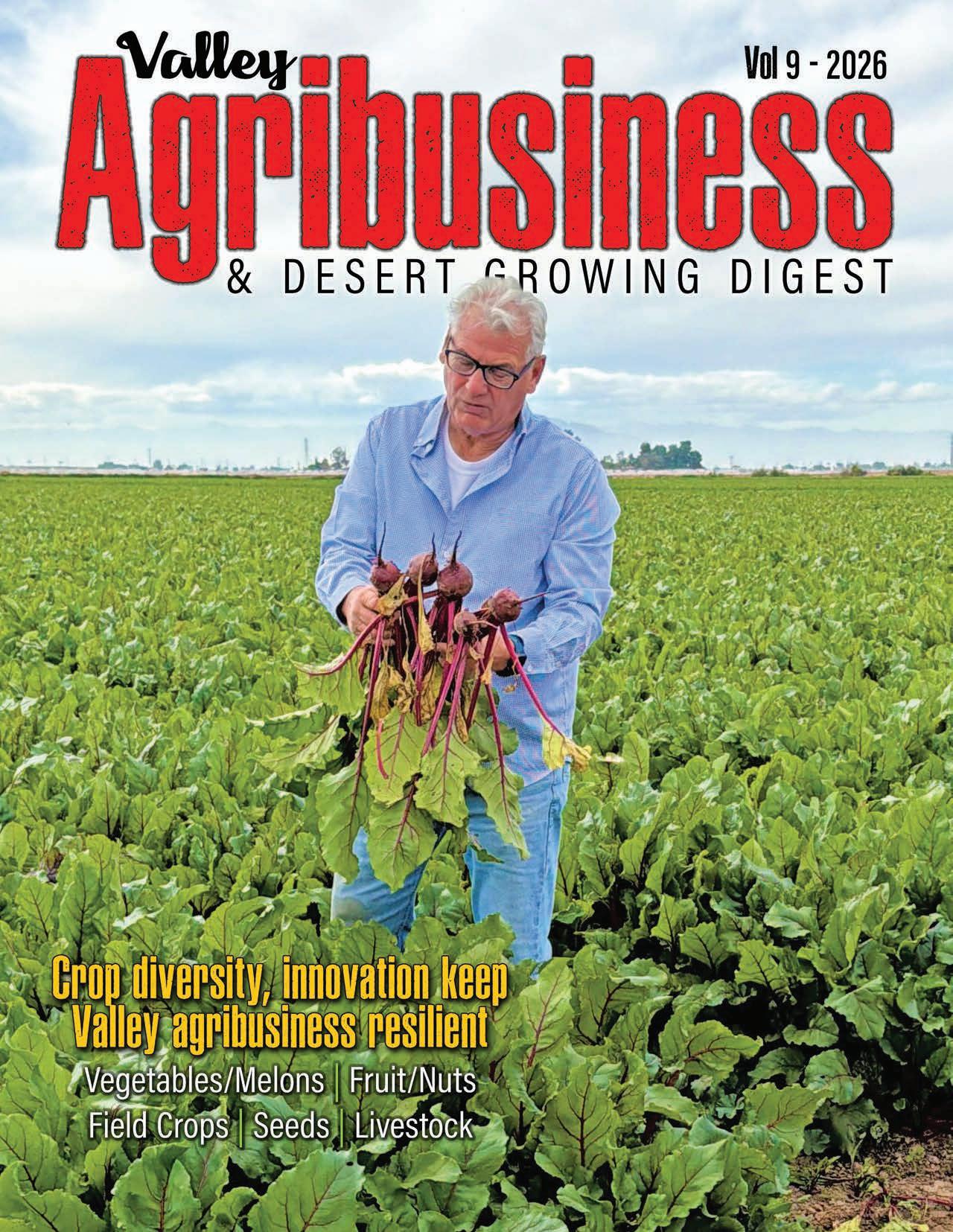
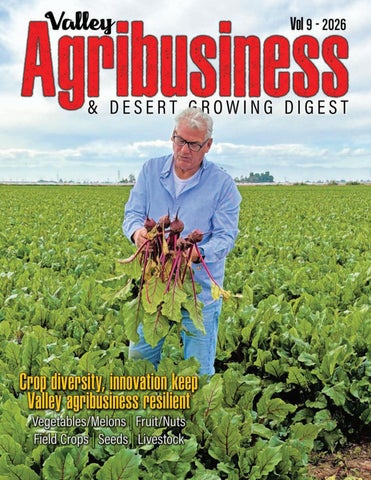
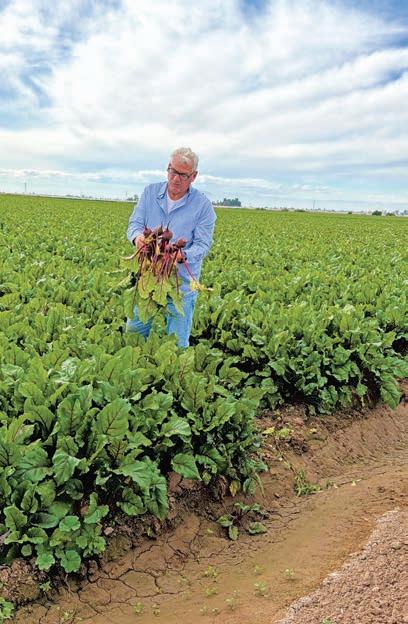
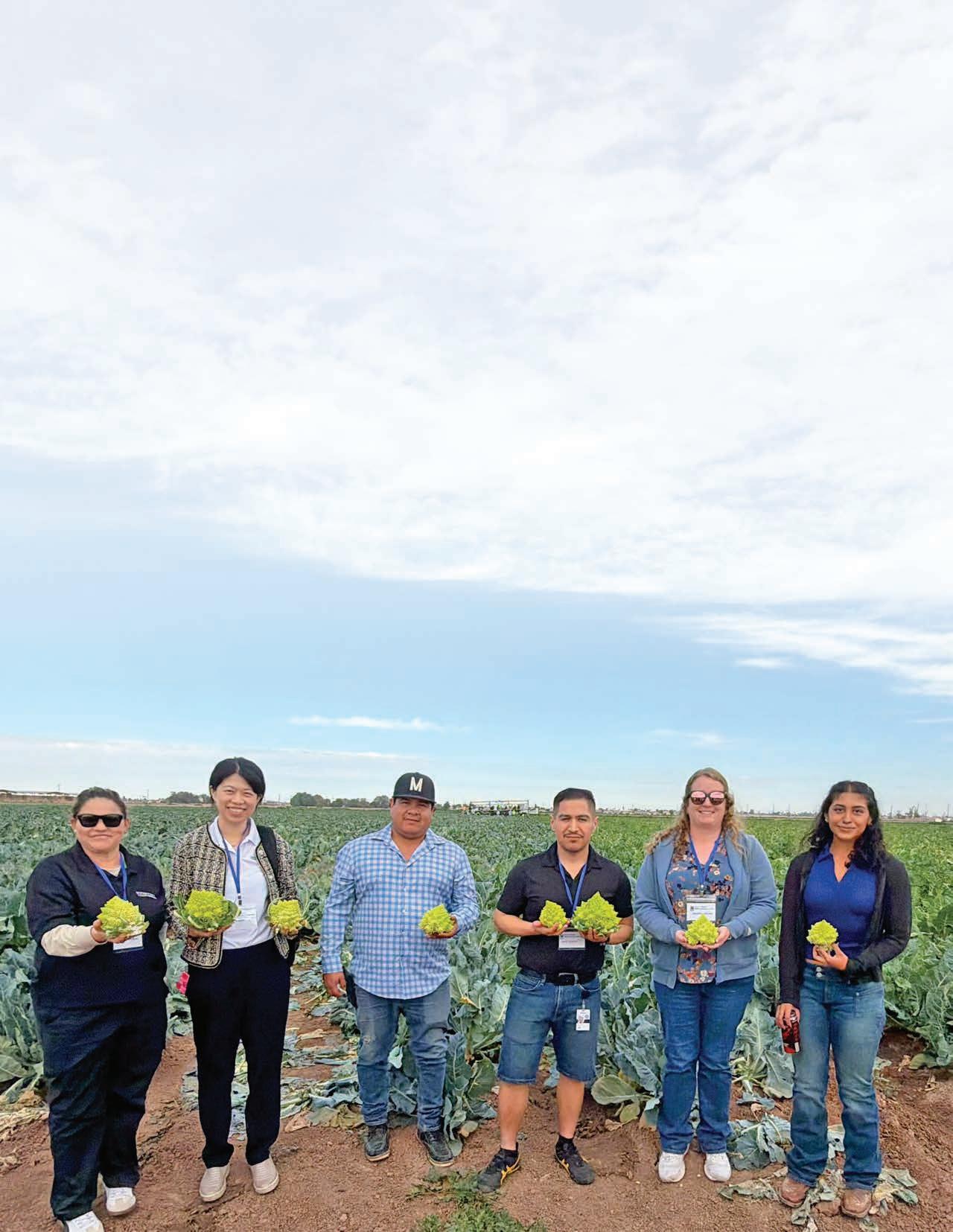
COVER PHOTO: Grower Scott Howinton shows o a crop to a group of educators.
- Photo courtesy of Farm Smart





By Darren Simon
During World War II, when the U.S. military had a demand for rubber for machinery to support the war e ort, one particular shrub that produces natural rubber became an important crop in the Southwest, including the Imperial Valley.
After the war, the need for the crop diminished, and it was never grown in the Southwest for commercial use again.
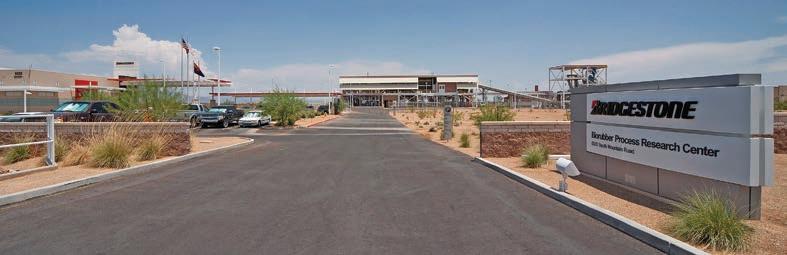
However, today, in Arizona, under crop production led by the tire company, Bridgestone, there has been a resurgence of the rubber-producing plant—the guayule shrub. Now, there may be interest in bringing the crop to the Imperial Valley.
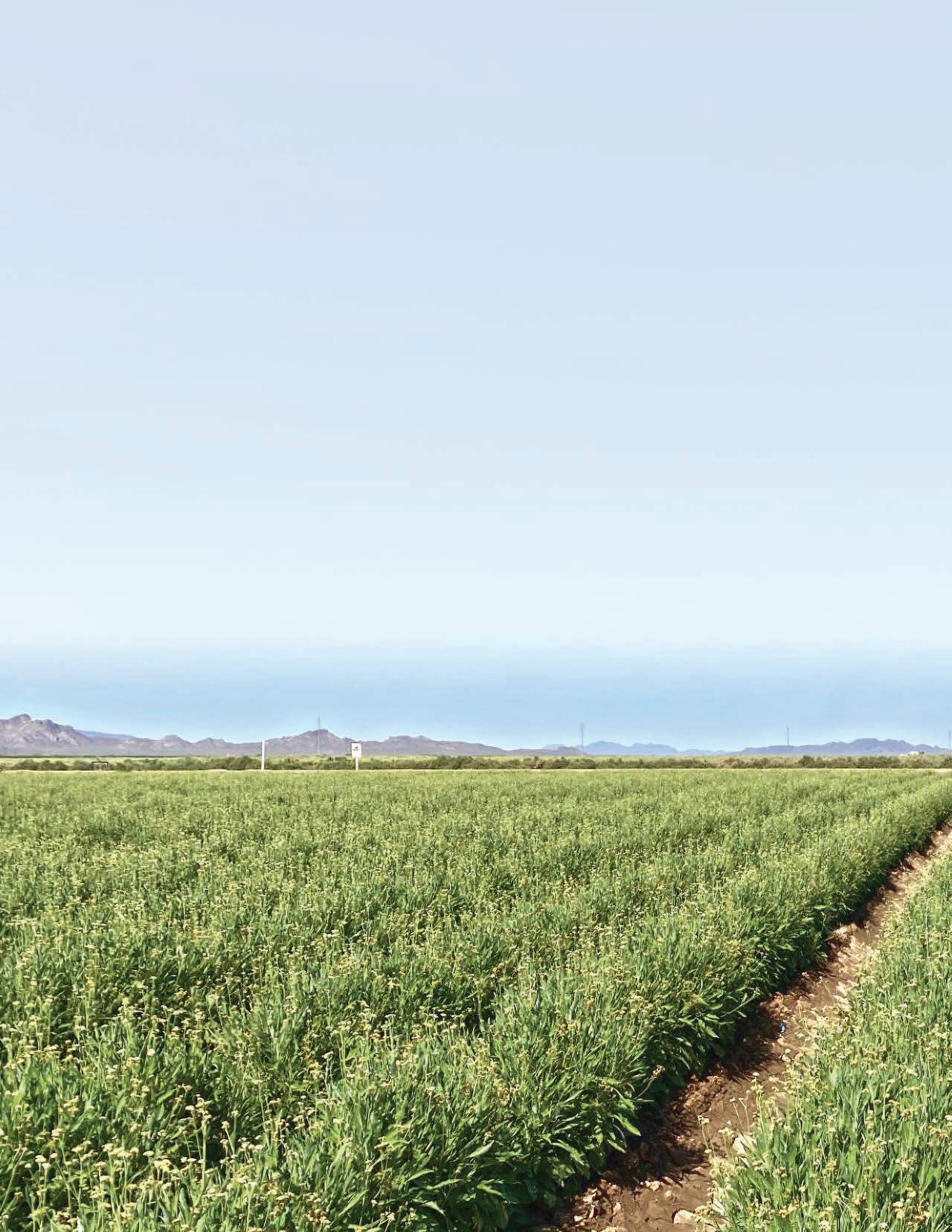
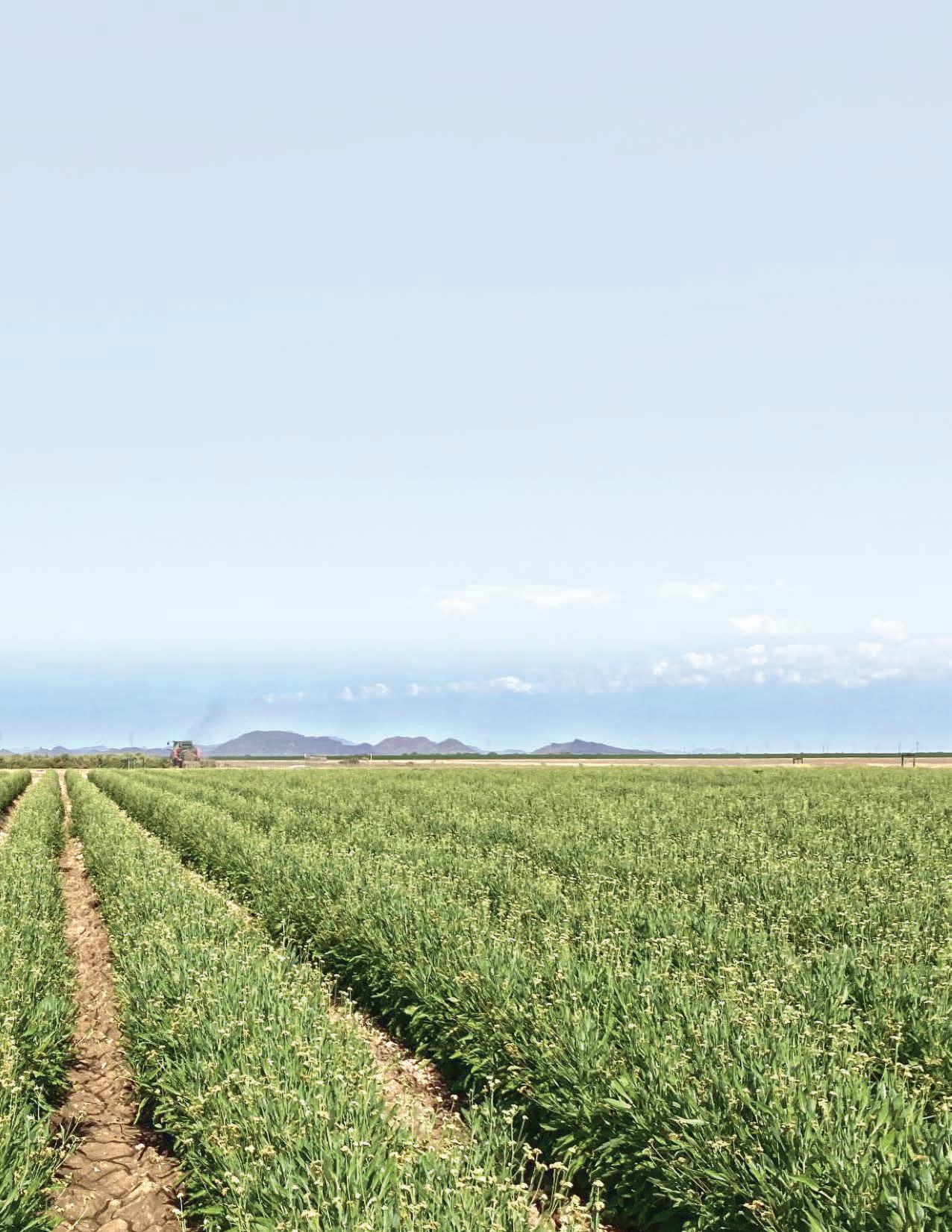
In 2025, the University of California Desert Research and Extension Center (DREC) near Holtville grew guayule as part of a eld study supported by Bridgestone to determine whether the crop could thrive in the Valley and to identify suitable pre-emergent herbicides to
help manage weeds.
The guayule represents just one of the exploratory crops the Holtville research center has studied over the years, and this year the center will be studying moringa, a shrub crop that can grow into a tree. All parts of the moringa are edible for humans. In fact, the leaves can be a substitute for spinach. The crop can also be used to produce livestock feed.
Given the loss of the Valley’s sugar beet industry with the closure of the Spreckels Sugar Plant in 2025 and the resulting economic hit to the region, considering the potential of new crops—rather than saturating markets with existing crops—has taken on new importance.
“If all sugar beet growers were to produce alfalfa, imagine what would happen to the alfalfa market because of the saturation,” said Dr. Oli Bachie, who led guayule research in Holtville. “The research I’m doing is on crops that can thrive in the low desert and that I think could be a good candidate for growers in the Valley.”
“But there is a lot to consider,” he said. “You have to look at the water usage of a commodi-
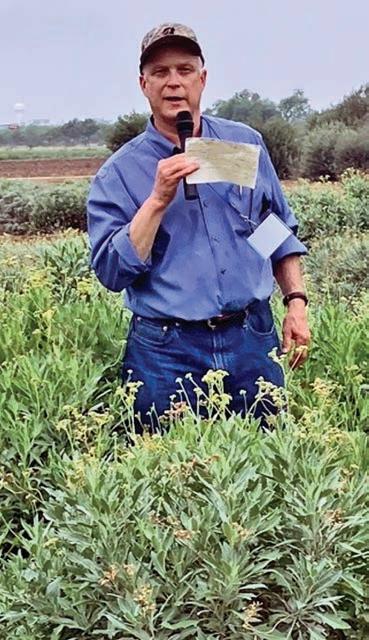
ty, how it ts with the local soil and climate, and there has to be a market value for the incoming commodity.”
The guayule crop has shown promise. Bachie’s research focused on determining the best herbicides to protect guayule, should it be
grown in the Valley.
Guayule could be ideal for the Valley climate. It is a heat and drought-resistant shrub native to the Chihuahua Desert. The bark, branches, and roots are a source of natural rubber. It has a 2-year growing cycle.
In a 2022 press release, Bridgestone reported that since 2012, it had invested $100 million in guayule research as part of its e orts to achieve carbon neutrality and 100 percent renewable tires by 2050.
The release also announced plans to invest an additional $42 million to establish commercial operations, with further investment and expansion planned through 2030. The company stated it planned to partner with local U.S. farmers and Native American tribes to plant and harvest guayule.
Today, the company operates a research facility in Eloy, Ariz., and a demonstration facility in Mesa, Ariz.
Del Craig, senior manager for agricultural scaling and biomass integration at Bridgestone, said the company’s focus remains on research toward commercial-scale production of the crop.
Of California, he said, “We know it can grow there.” However, he said there are considerations unique to growing in California, including higher production costs, additional regulatory constraints for building a biore nery, and registration requirements for materials used in crop production.
Despite the challenges, Craig, who is based in Arizona, added, “We will continue to test and gain approvals to grow in California.”
Local farmers say new crops, such as guayule, are worth exploring, but the economics must make sense.
“We’re just looking for something to grow that could at least break even or make a profit,” said grower Jack Vessey. “We’re open to

anything that is a possibility, but we’re not just going to plant something to say we planted something. It’s hard to roll the dice. The costs of production are too high. You can’t a ord to do that.”
While the future of guayule in the Valley remains uncertain, it highlights the need to consider alternatives to the loss of the sugar beet crop.
The 2024 Imperial County Agricultural Commissioner’s Crop Report stated 22,667 acres of sugar beets were grown in the Valley with a value of nearly $90 million.
The loss of the industry is not due to any failure of the crop. It comes as the owners of the Speckels Sugar Plant, Southern Minnesota Beet Sugar Cooperative, opted to shutter the plant in 2025. All California sugar beet production, almost entirely in the Imperial Valley, was de-
CONTINUED ON PAGE 33


Totals do not add due to rounding.



By Blake Nelson
When the average American shopper reaches for a crisp head of romaine, a bright lemon, or a crunchy ear of corn in the produce aisle, they aren’t thinking about the 1950s Bracero program, the intricacies of food safety, or the political challenges surrounding the Colorado River. They are thinking about dinner.
But in the Imperial Valley—the desert region that is one of the world’s most productive agricultural hubs —the "dinner" on America's table is the result of a relentless, multi-generational dedication to an ever more complex process to



get the freshest, safest commodities to market.
Today, a new wave of Valley agricultural leaders is stepping out from the elds and onto social media screens to bridge the widening gap between the farm gate and the grocery cart.
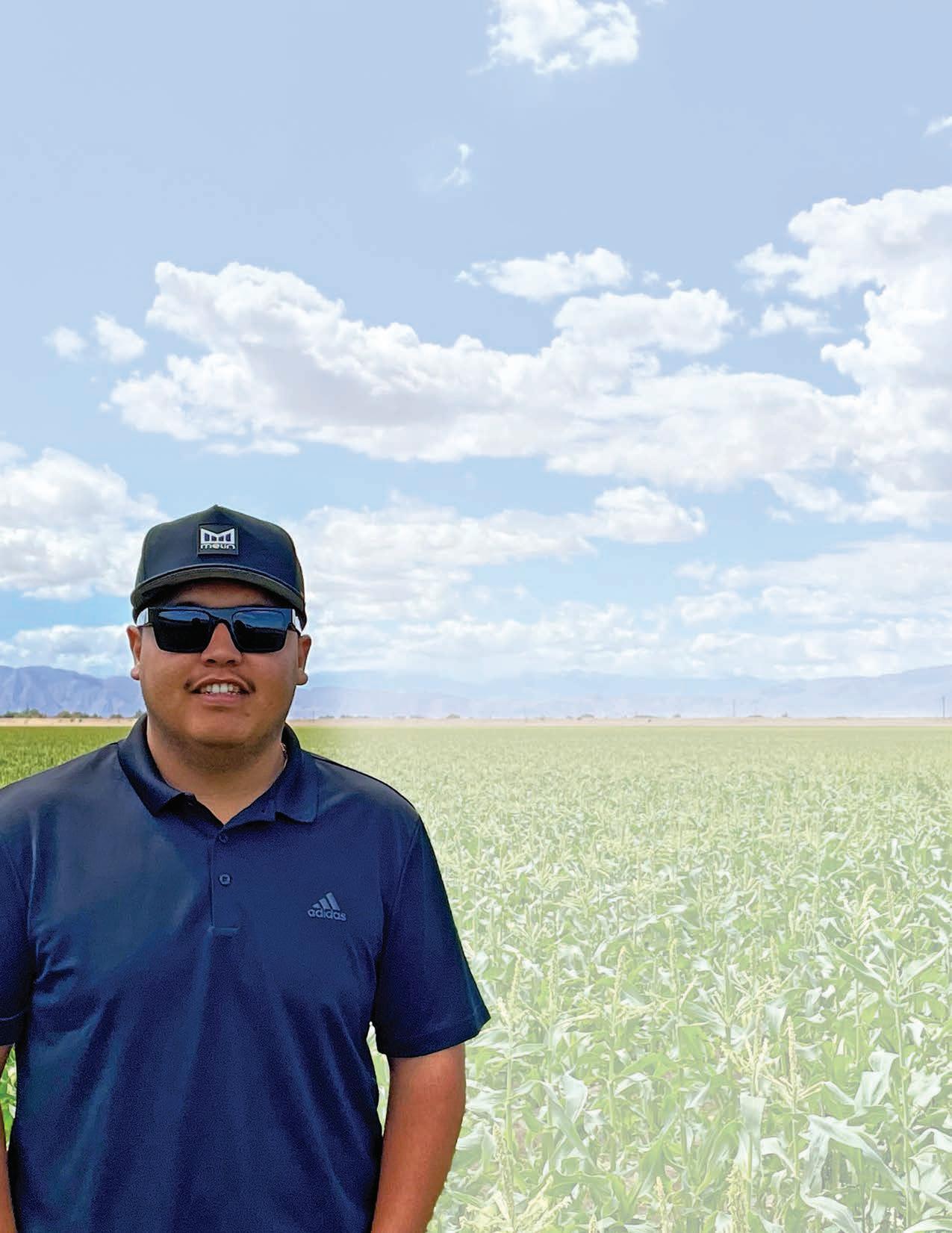
For Isaac Chavez, agriculture isn't just a business; it’s his family's DNA. At 27, he is CEO of the Chavez Family of Companies, based in Calipatria, which he guides with his grandfather and cousin. He represents the fourth generation of a story that began with his great-grandfather, who arrived from Mexico as a farmworker in the 1950s Bracero Program.
“His ambition and perseverance cemented the foundation,” Chavez says in a reel posted on Facebook and TikTok. “The organization is founded in his values: hard work, innovation, and commitment to community.”

Chavez shares his family’s story as part of an e ort to humanize the complexities of the agricultural supply chain through the #ImperialValley video series, produced by the Western Growers Association in partnership with the Imperial Valley Vegetable Growers Association (IVVGA).
The goal is simple: show the faces of the people who keep the nation fed. The Valley is often billed as part of the nation’s winter Salad Bowl for its winter produce harvest. Yet as the videos make clear, it takes a diverse, dedicated group of growers to reap an exceptional harvest from a unique climate.

each o ering a di erent perspective on the region’s dynamic, growing industry, which reaps annual harvests valued at more than $2 billion.
While each story is unique, they all speak proudly of their deep family roots in Valley agriculture.
“Showcasing the families and farmers who have built this industry over decades is at the heart of what we do, and this partnership with Western Growers allows us to tell those stories in a meaningful way,” said Shelby Trimm, executive director of IVVGA.
For Chavez, participating in the videos was a chance to share his family’s role in agriculture from the past to the present and with an eye to the future.

“The hard-working farmers of the Imperial Valley have worked relentlessly to help maintain our food security year-round,” said Cory Lunde, vice president of external a airs at Western Growers. “We are honored to show our social media audiences how these growers help keep our nation fed with fresh produce during the winter months."
So far, about 10 Valley agribusiness professionals have been featured in the video series,
Unlike the "traditional" farmer image—a lone man on a tractor—the Chavez family represents the modern sophistication of agribusiness. They operate a vertically integrated network: labor contracting, forage production, and packing. When a landowner hires them, they are a one-stop shop for all land maintenance needs. It’s a complex, high-stakes puzzle aimed at solving the industry’s biggest headaches: intensi ed food safety programs to protect against pathogens such as E. coli contaminating produce and harvest e ciency.
“We aren’t traditional farmers,” Chavez said, “but our businesses serve a critical part of the ag sector.”
In his role as CEO, Chavez focuses on some of the brand’s biggest priorities: the bottom line, protecting produce against foodborne pathogens, and maximizing harvest e ciency. Another priority for Chavez and his family is supporting the local economy.

“We understand the importance of maintaining a strong, local workforce,” Chavez said. “We hire locally and focus on job creation and retention in the Valley.”
Helping people outside the industry understand all the integral players and pieces that go into keeping food safe and stocked in stores is part of why Chavez said he participated in the video series.

“I’d like consumers to know how much planning goes into the farming system,” Chavez said.
While the #ImperialValley video series makes clear that the region’s farming tradition CONTINUED ON PAGE 36





































By Darren Simon
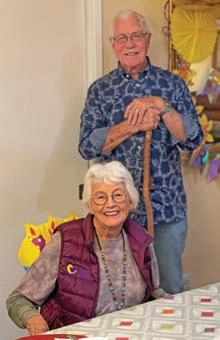
Growing up as one of three daughters of Ed and Patty McGrew, Jennifer McGrew-Thomason remembers her parents working as a team to support their community and Imperial Valley agriculture.
She said it was second nature to them to serve the community.
“They are both so community serviceminded and advocates for the community,” Jennifer said. “They never really thought
about not serving their community.”
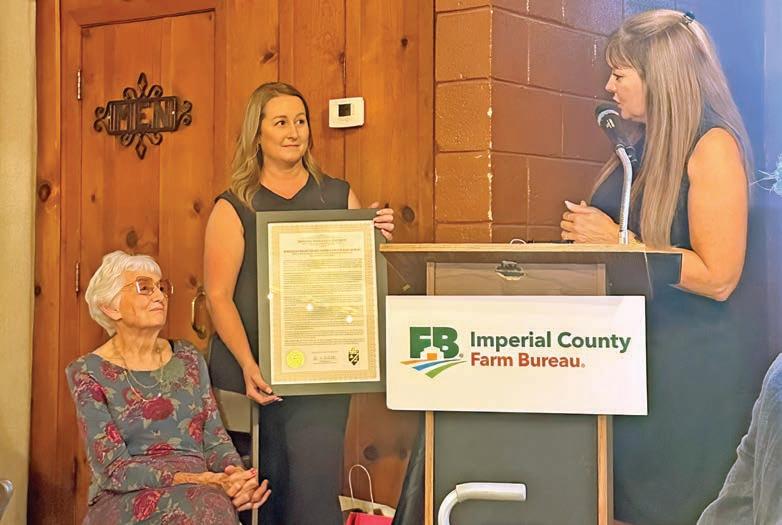
For their lifelong dedication to agriculture, innovation, and community service in the Imperial Valley, the McGrews received the 20th annual Jim Kuhn Memorial Farmer of the Year Award from the Imperial County Farm Bureau during its annual dinner held in October. For her father, the honor was posthumous following his passing in April 2025.
Patty McGrew, who remains active in the community, was on hand to receive the award along with members of the McGrew family.
“Ed and Patty McGrew’s story is one of hard work, innovation, and heart,” said Imperial Farm Bureau Executive Director Rachel Magos. “Their leadership in agriculture and their decades of community service have helped shape the Imperial Valley into what it is today.”
Jennifer said of her parents, “I am so very proud of them, and it’s very humbling to me

to see my parents recognized for what they have done their entire lives.”
Ed was born and raised in the Valley. He attended Meloland School and Acacia School, then Central Union High School in El Centro. He continued his education at Imperial Valley College before transferring to California Polytechnic University, San Luis Obispo.
It was there that he met the woman who would be his wife for 65 years, Patricia Soule, or as she is known today, Patty McGrew.
After graduating with a degree in farm management, Ed’s career began with Culver
Farms before he founded MAGCO, with which he farmed across both the Imperial Valley and Yuma, Arizona. His focus on innovation led to the creation of C-Taps, an irrigation tool still used today, and to partnerships that advanced the region’s agricultural development.
In a press release, the Farm Bureau states that his “in uence reached deep into agricultural advocacy and education.”
He was a founding member of the Imperial Valley Vegetable Growers Association (IVVGA), an advisor to the California Department of Food and Agriculture, and a steadfast supporter of 4-H, Future Farmers of America, and youth agricultural programs.
“His e orts not only strengthened local farming but also inspired generations of young agricultural leaders,” the Farm Bureau states in its release.
Jennifer shared that it was important to her father to mentor the next generation of Imperial Valley farmers.
“I received so many notecards and texts from those who shared about conversations my dad had with them that made such a di erence in their lives,” she said.
It also meant a great deal to Ed that he was a second-generation farmer who built his farming operation and other business ventures in the Valley. “He was an Imperial
Valley patriot. He wanted to give back because he loved the Valley for all it gave to his family,” she said.
Patty McGrew has also been as ercely driven to serve the community, both in ventures with her husband and on her own, Jennifer said. Patty and Jennifer worked
together to build the Heart & Hand Assisted Living Facility in El Centro.
Patty, like Ed, attended Cal Poly San Luis Obispo, where she earned a degree in home economics. Jennifer shared how Ed and


By Susan Giller
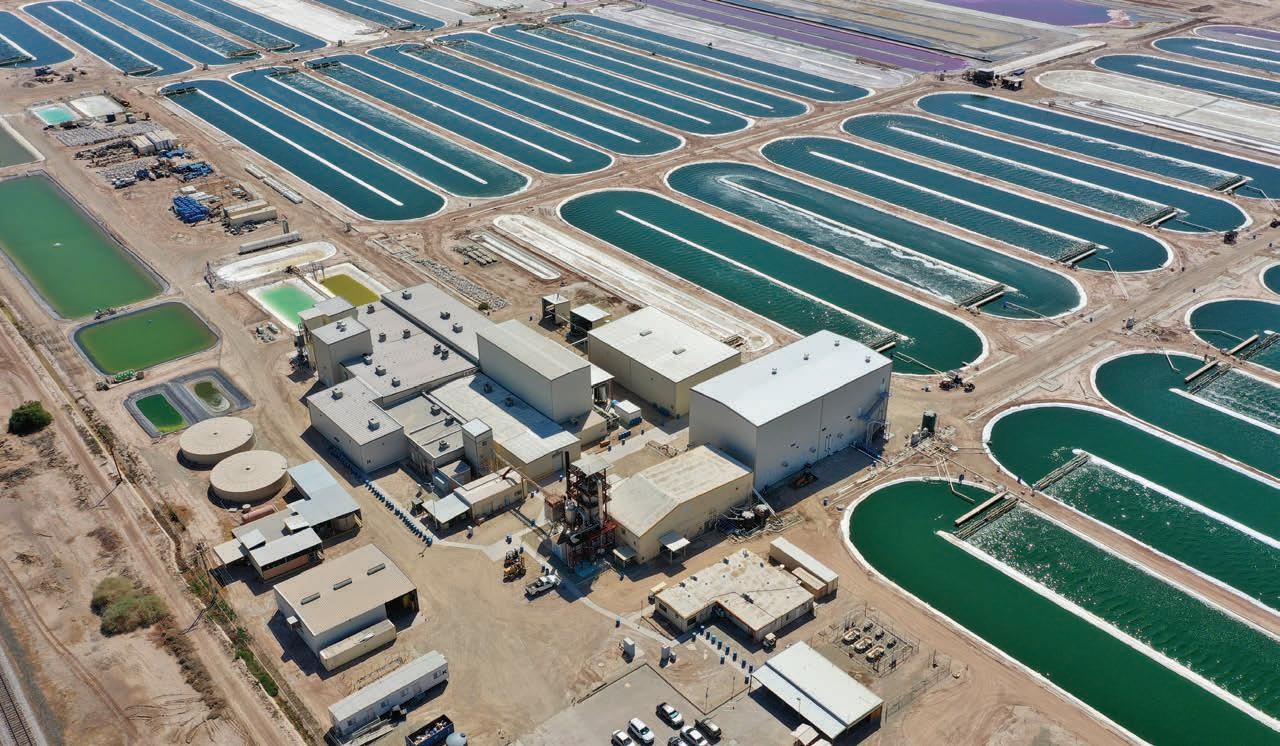
Behind its vibrant entrance sign and tidy rows of ponds, the Earthrise Nutraceuticals farm near Calipatria has grown into a leading producer of spirulina, the blue-green algae superfood and source of LINABLUE®, a natural blue food coloring.
Despite its global reach, Earthrise has remained relatively unknown locally – until recently.
Earlier this year, the Imperial Valley Economic Development Corp. (IVEDC) named Earthrise its Project of the Year after the farm’s recent opening of a new $8 million, state-of-the-art harvest facility in 2025 to enhance its processes and increase energy sustainability.
“Earthrise was given the award to recognize the innovation and the increased eciencies it implemented in its new harvest building,” said Sean Wilcock, IVEDC vice president. “It is one of the most innovative and entrepreneurial companies in our Valley.”
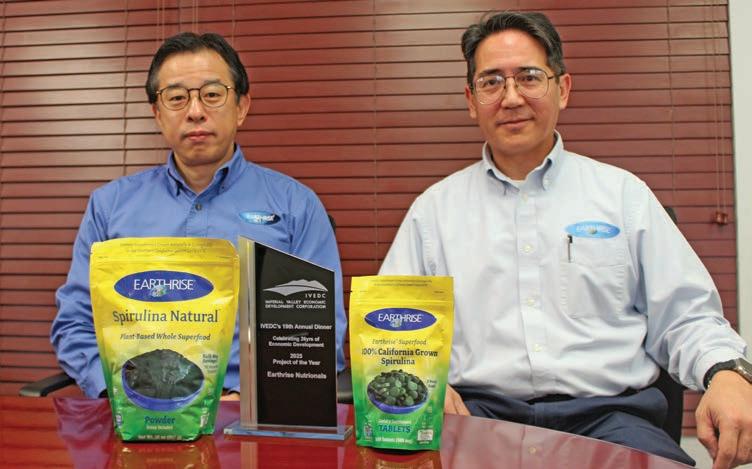
Takaaki Ono, president and CEO of Earthrise Nutraceuticals, expressed his gratitude for IVEDC’s support and noted that Earthrise’s commitment to producing premi -
um-quality California-grown spirulina requires constant improvement.
“We harvest two things here, algae and innovation,” added Tomomatsu Maguchi,
Earthrise’s Calipatria plant manager and director of engineering. Earthrise produces the only California-grown spirulina and LINABLUE®, the natural blue food coloring extracted from the blue-green algae. It is a wholly owned subsidiary of the DIC Group, one of the world’s leading producers of premium spirulina.
In 2025, Earthrise unveiled its new harvest plant, featuring state-of-the-art “Smart Agriculture” technologies that improve the e ciency and sustainability of agricultural practices.
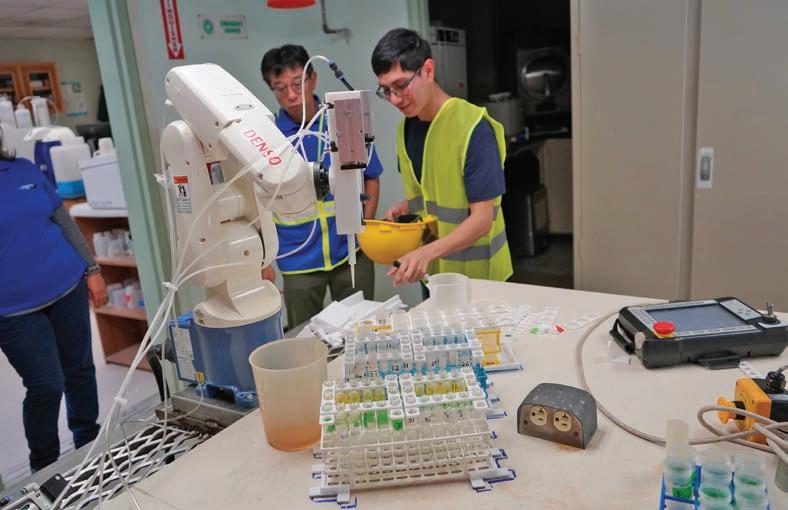
The new facility features a centralized, data-driven cultivation system, collaborative robotic arms to reduce costs and improve safety, and uses AI to help assess algae growth. A new centralized water management system maintains high product quality and eliminates o -site industrial wastewater discharge. Additionally, more than 50 percent of the facility's power comes from renewable sources, helping the company meet its sustainability goal.
Also, last year, the company launched an Earthrise Engineering Center (EEC), which its website describes as “a hub for innovation, research, and collaboration for smart agriculture and more.” The center partnered with Imperial Valley College, San Diego State University, Imperial Valley, and CETYS in Mexicali to o er students summer internships focused on real-world process improvements and innovations.
“This center is designed not as an academic exercise, but as an opportunity for the students to work with us long enough to see the results of their projects,” Maguchi said. “These interactions not only bene t the students but also contribute positively to Earthrise's initiatives.”
The rst group of student interns worked at the center last summer on some of the systems now in use in the harvest building, he said.
One of the interns was Alexia Jones, an
Imperial Valley College student, who enthusiastically recommended the program to others.
thusiastically recommended the program
“It was the best part of my summer,” stat-

“It was the best part of my summer,” stated Jones, who interned as an engineer. “This internship pushes you to critically think and problem solve in ways that I had not ever thought about.”
The Engineering Center is more than a technical pursuit, the Earthrise website states, “it’s a philosophical commitment to understanding and improving the world.”


This spirit of innovation is not new.
and willingness to venture o the beaten path led the early developers of mod-

More than 40 years ago, a similar vision and willingness to venture o the beaten path led the early developers of modern-day Earthrise Farm near Calipatria to cultivate spirulina, the tiny blue-green algae superfood.

cultivate spirulina, the tiny blue-green al-
Spirulina is “packed with vitamins, minerals, antioxidants, and protein,” according to
als, antioxidants, and protein,” according to
CONTINUED ON PAGE 32




By Robert Schettler
Imperial Irrigation District
Strategic Communications Specialist
With the Colorado River serving as Imperial Valley’s sole water source and the River continuing to face historic, prolonged drought conditions, your Imperial Irrigation District remains steadfast in its commitment to protecting this critical resource.
Through e ective collaboration, strategic conservation e orts, close partnerships with fellow Colorado River stakeholders, and de nitive action by local growers, IID is actively working to safeguard the longterm stability and sustainability of the River system.
By working together with its growers, the District set a record in 2025, achieving the highest annual water conservation yield in history—700,000+ acre-feet of total water conservation anticipated — an unprecedented milestone that underscores the Valley’s commitment to protecting the River system while supporting the ag economy.
In total, conservation for 2025 is estimated at about 23 percent of the Valley’s annual entitlement, with cumulative conservation exceeding 9.1 million acre-feet since 2003.
IID expects 2026 to be another strong year with high water conservation yields. For Lake Mead alone, IID will have generated over 800,000 acre-feet of system conservation water over a four-year period (2023-2026) – the largest conserved water
contribution on the Colorado River by any water contractor. This is enough water to increase the reservoir’s elevation by more than 12 feet. When combined with water savings from Lower Basin partners, collaborative conservation e orts will add about 50 feet to the reservoir.
The success in the Imperial Valley last year was due in large part to outstanding grower participation in IID’s voluntary De cit Irrigation Program (DIP) and OnFarm E ciency Conservation (OFECP) programs. These temporary federally funded conservation e orts implemented to raise Lake Mead’s elevation include an extensive drain-water monitoring program, along with $250 million in federal funding to support California’s Salton Sea Management program negotiated by IID in 2022.
The DIP program concluded its second year, with participation from more than 159 growers and enrollment of over 150,500 acres. A total of 222,384 acre-feet of water was conserved in 2025 through this program alone.
Overall, growers have helped IID conserve more water than any other individual contractor on the River, while still maintaining one of the world’s most productive agricultural economies. IID is grateful for this collaborative partnership and looks forward to continuing to implement its successful on-farm conservation programs while actively working on enhancing them.
While the ongoing federal planning processes for Colorado River operations
beyond 2026 continue, IID rea rms that the District remains actively engaged, fully prepared, and committed to protecting Imperial Valley agriculture, its senior water rights, and the Salton Sea.
Final decisions regarding post-2026 operating guidelines have not yet been determined for River operations or impacts to state water allocations., IID approaches the federal process with focus and discipline and will work to ensure that any post-2026 framework is lawful, durable, and provides for a sustainable Colorado River, while respecting the critical importance of Imperial Valley agriculture and our environmental resources, including the Salton Sea.
IID remains committed to voluntary negotiated solutions that protect the local community while helping shape a workable path forward for the River, and Imperial Valley growers have led by example through participation in voluntary programs that have delivered real water to the system and to our intrastate partners, providing Southern California water supply reliability for over 20 years.
As the Lower Basin has put real reductions on the table to stabilize the system, the District stands behind the premise that any durable solution must include shared responsibility across the Basin states.
Your IID is clearly leading, not reacting, and will continue to engage transparently with local growers, the community, and our partners on a durable, lawful path as the federal process moves forward.













www.iid.com


Thanks in part to the Imperial Irrigation District and Imperial Valley farmers, California’s Colorado River users will have conserved over 1.5 million acre-feet of water over the last three years to help stabilize Lake Mead. The cumulative system conservation resulting from the Lower Basin Drought Plan totaled nearly 3 million acre-feet in 2025, raising Lake Mead by more than 40 feet so far — with even more conservation expected in 2026. Through 2025, IID and Imperial Valley growers contributed 12 feet of this raised elevation, about 21% of the cumulative conservation and will contribute more than 806,000 acre-feet by year-end 2026, in total, to help stabilize Lake Mead.


For generations, farmers in the Imperial Valley have provided food for the nation while also serving as vital partners in water conservation — improving crop water use efficiency and reducing water use (by more than 23% in 2025 alone ≈ 675,000 acre-feet), while ensuring the local agricultural community continues a strong production output.
Imperial Valley farmers are leading the way in sustainable irrigation and conservation practices, and IID is proud to stand with them to support our rural economy, strengthen local agriculture while ensuring the long-term sustainability of the Colorado River.




Imperial Valley Farmers in Action!
Check out IID’s What’s Growing On in Imperial Valley? video series to see how Imperial Valley farmers are combining tradition with innovative farming practices to conserve water and ensure agriculture continues to thrive.







By Darren Simon
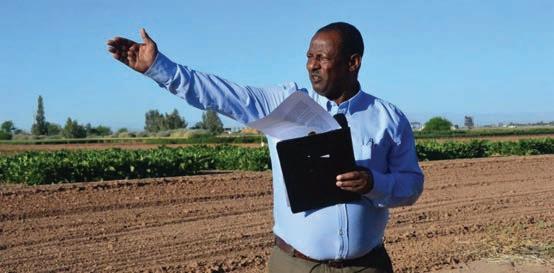
For a combined 78 years, Imperial Irrigation District Water Managers Tina Shields and Mike Pacheco have defended the Valley’s water rights, ensuring water supplies are delivered efficiently every day.
Both Shields and Pacheco cite their deep respect for the Valley’s agricultural community and the growers who overcome daily challenges to produce the food that feeds the country and the world.
For their efforts, the Imperial County Farm Bureau presented Shields and Pacheco with the Betty Young Memorial Friend of the Farmer Award during its annual meeting in October.
“Tina Shields and Mike Pacheco have dedicated their careers to protecting the lifeblood of Imperial Valley agriculture, our water,” said Farm Bureau Executive Director Rachel Magos. “Their leadership at the Imperial Irrigation District has ensured that our farms continue to thrive, even through some of the most challenging times.”
The Friend of the Farmer Award recognizes individuals who, though not farmers themselves, have made significant, lasting contributions to local agriculture and have had a meaningful
impact on the agricultural community.
“Tina Shields and Mike Pacheco truly are the epitome of ‘Friends of the Farmer’,” said Farm Bureau President Paula Pangle. “Through their leadership and dedication, they protect, manage, and deliver our most precious resource, water. This responsibility requires expertise, commitment, and constant vigilance, and both Tina and Mike have demonstrated these qualities at the highest level.”
Shields oversees Colorado River resources, water planning, conservation, and management. She represents Imperial Valley’s water interests at the local, state, and federal levels and has played a vital role in protecting the region’s water entitlement.
Pacheco leads the operational side of IID’s water delivery system. He oversees the engineering, construction, operation, and maintenance of more than 3,000 miles of irrigation and drainage canals, as well as the Imperial Dam and All-American Canal.
Both Shields and Pacheco expressed how honored they feel to have received the Friend of the Farmer Award.
“Personally, it is heartwarming to know the farming community appreciates our efforts – and it was a nice moment to recognize how far we have come as well in our conservation efforts and
the programs IID has developed handin-hand with our ag water users,” said Shields, who has worked for IID for 34 years.
“I am extremely grateful for the trust the growers have put in us, and their willingness to share their perspectives and keep us on our toes to help us continually improve at what we do,” she said.
Pacheco, who has worked for IID for 45 years, said, “To be named a Friend of the Farmer means a great deal to me. It’s a reminder of the deep respect I have for the people who work tirelessly to provide food, preserve our land, and strengthen rural communities. This honor motivates me to continue learning from farmers and doing my part to support a more sustainable and thriving agricultural future.”
Pacheco added, “Ensuring farmers have access to the water they need is absolutely essential to the stability of our food system. Water is the foundation of agriculture; without it, crops fail, livelihoods are threatened, and food security is at risk.”
During the October event, Pangle spoke about both Shields and Pacheco. Of Shields, she said, “She represents our water interests at the local, state, and federal levels. She has a significant role in ensuring that our farmers, our
community, and our way of life remain protected.”
Of Pacheco, she said, “His leadership and expertise have ensured that the water our farmers rely on is delivered dependably, efficiently, and with care for both the system and the people it serves.”
Part of protecting the Valley’s water involves planning for the Colorado River’s uncertain future in the face of drought and climate change.
“On top of the physical delivery of the water, IID has to work on a much broader level to ensure the Colorado River remains healthy and resilient for many years to come, particularly given the current reservoir elevations at Lakes Mead and Powell and amidst ongoing drought conditions,” Shields said.
“IID’s goal is to make sure our agricultural producers can continue to grow crops through efficient water use practices that support our community’s economy and feed the nation; we don’t want a water shortage to devolve into a food shortage,” Shields added.
She spoke of her partnership with Pacheco as co-managers as key to serving the Valley.
“We have a real management
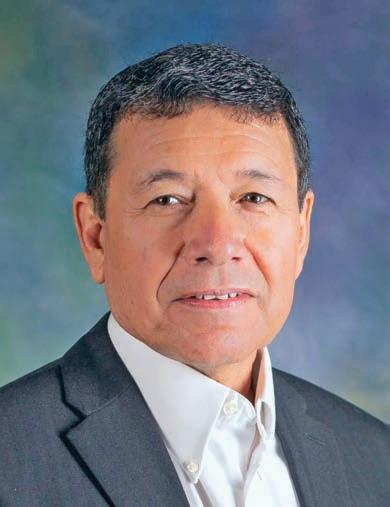
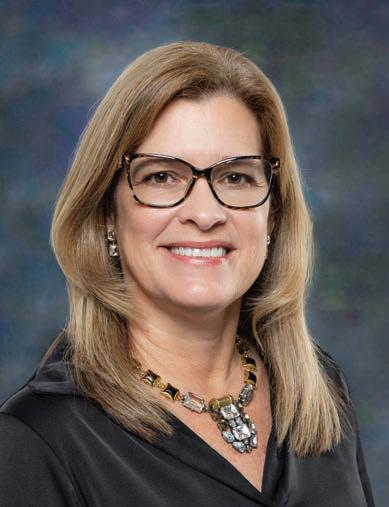
Tina Shields, IID Water Department Manager Mike Pacheco, IID Water Department Manager
partnership and always have each other’s backs, not to mention we both tend to live and breathe our jobs 24/7,” Shields said. “The Water Department is a second family to both of us after all of these years, and we have an entire team that pulls together every day to make the Water Department shine.”
Pangle credited both Shields and




Pacheco for not only ensuring farmers have the water they need today, but also for their efforts to ensure future generations of farmers have water.
“Their combined leadership, wisdom, and stewardship make them true guardians of our water, our agriculture, and of our community’s future in this great valley,” Pangle said.



By Rachel Magos Executive Director
Imperial County Farm Bureau (ICFB) exists for one core reason: to advocate for, support, and protect Imperial Valley agriculture. As a grassroots, member-driven organization, Farm Bureau serves as a trusted voice for local farmers and ranchers, bringing agricultural perspectives directly into policy discussions, regulatory processes, and decision-making.
In an area where agriculture faces increasing pressure from land use con icts, water and environmental regulations, and political uncertainty, the Farm Bureau’s role has never been more critical. Over the past year, ICFB has remained actively engaged on key issues that directly a ect our members’ ability to farm and plan for the future.
Much of Farm Bureau’s work is guided by active committees that meet regularly and focus on key issue areas, including water, county issues, and political a airs, to name a few. These committees provide members with a direct role in shaping Farm Bureau priorities and advocacy positions.
Water remains one of the most signicant and ongoing focus areas. The Water Committee and Board of Directors have discussed and taken positions on a range of issues, such as the Colorado River, the OnFarm E ciency Conservation Program, the De cit Irrigation Program, and the Equitable Distribution Plan. These discussions ensure Farm Bureau’s advocacy re ects both technical understanding and real-world farming experience.
Land use remains a growing concern in Imperial County. Farm Bureau has consistently advocated against the conversion of productive agricultural land for large-scale solar development, emphasizing the importance of preserving farmland for food production, economic stability, and longterm community sustainability.
In addition, ICFB has led e orts to reinstate the Williamson Act in Imperial County, recognizing its value as a tool to keep land
in agricultural production while providing greater certainty for growers and future generations. These e orts re ect Farm Bureau’s commitment to protecting agriculture not just today, but well into the future.
Through the Imperial Valley Irrigated Lands Coalition (IVILC), Farm Bureau has played a central role in advocating against regulatory requirements set forth in the Regional Water Board’s Irrigated Lands Regulatory Program. One particular area of focus has been groundwater monitoring requirements that fail to re ect the unique hydrology and geology of Imperial Valley.
We have worked to educate the Regional Water Quality Control Board and the State Water Resources Control Board on local conditions, including Imperial Valley’s soil characteristics, farming practices, and water delivery system, which does not rely on groundwater. The Farm Bureau has been clear that regulatory compliance for water quality cannot be approached with a onesize- ts-all framework, particularly in an area as distinct as Imperial Valley.
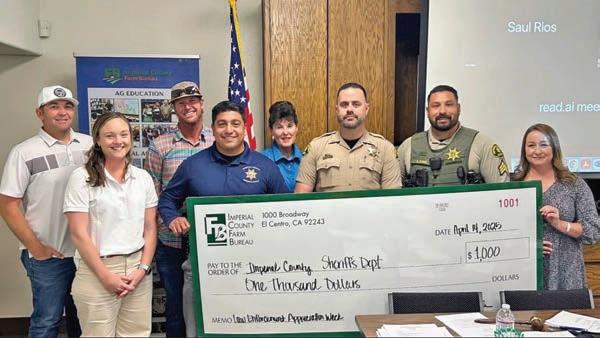
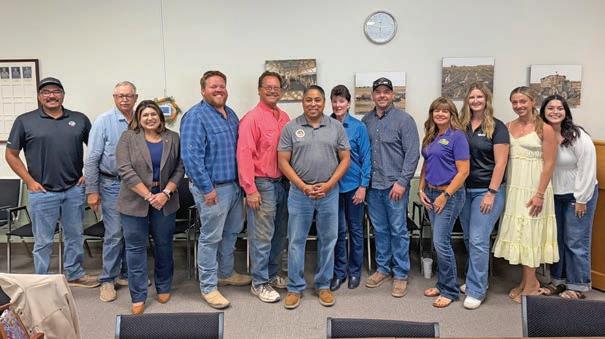
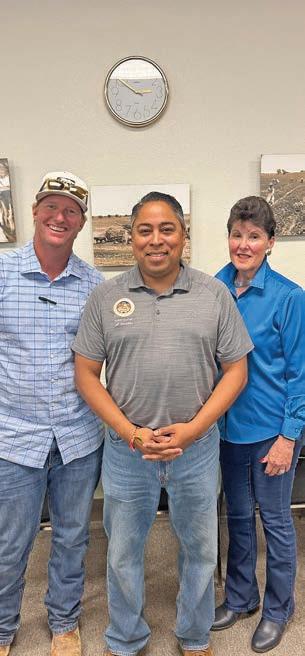
Farm Bureau prioritizes direct engagement with elected o cials and policymakers. This past year, ICFB hosted Congressman Raul Ruiz, along with several other elected o cials and leaders, for an agricultural tour of the Imperial Valley, o ering rsthand insight into local farming operations and the challenges growers face.
Following the tour, ICFB hosted an agricultural roundtable with Congressman Ruiz, providing growers an opportunity to share concerns, discuss regulatory and policy challenges, and engage in constructive dialogue about potential solutions. These opportunities are critical to ensuring decision-makers understand how policy decisions translate on the ground.
ICFB remains actively involved in elections and political a airs, carefully evaluating candidates and issues that a ect agriculture. Endorsements are approached thoughtfully and deliberately, with member interests guiding the process. One recent example includes Farm Bureau’s support of Je Gonzalez, re ecting a commitment to candidates who demonstrate an under-
standing of agriculture and a willingness to engage with the farming community.
Political engagement is a necessary part of protecting agriculture’s interests, and Farm Bureau approaches it with diligence, transparency, and accountability.
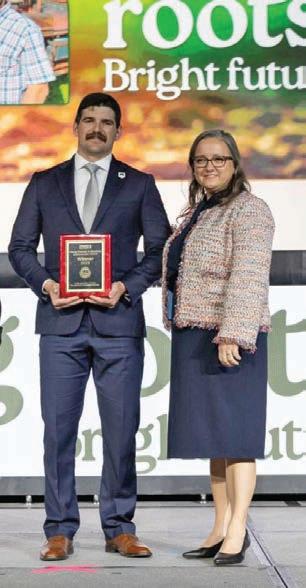
Supporting the future of agriculture is also a priority. Farm Bureau’s agricultural education e orts include a scholarship program featuring ve memorial scholarships, as well as the ICFB Scholarship funded through the annual scholarship barbecue.
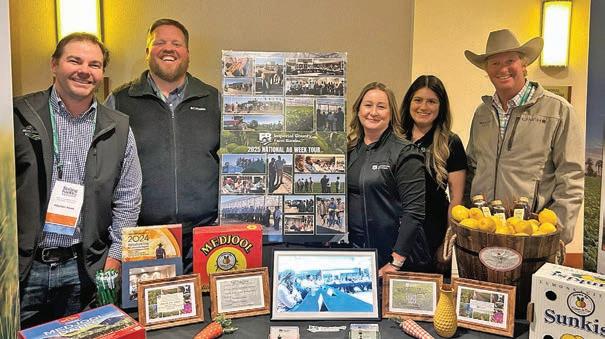
In addition, Farm Bureau participates in school career days, delivers classroom presentations for students from elementary through high school, and hosts an annual “Read with a Farmer” event. These e orts help connect young people with agriculture, providing an educational experience and highlighting the opportunities available within the industry.
The work of the Imperial County Farm Bureau is made possible by the strength and support of the agricultural community it represents. Every issue addressed, every position taken, and every voice elevated aim to represent the collective involvement of our members.
As the challenges facing Imperial Valley agriculture continue to grow, so does the importance of organizations like Farm Bureau and active participation. Whether it is by becoming a member, increasing membership support, serving on a committee, participating on the board of directors, or engaging in Farm Bureau events and programs, member involvement is what gives Farm Bureau its credibility and in uence.
Imperial County Farm Bureau also recognizes the importance of maintaining strong working relationships. Collaboration with local governments, agricultural and nonpro t organizations, other industries, and community members helps ensure agricultural perspectives are included in broader discussions and decision-making. These partnerships allow Farm Bureau to share our story and practical insight, and work toward solutions that consider the needs of agriculture alongside other local priorities.


$ 705,759,000
$ 697,769,000
*Misc. Livestock may include: Aquatic Products, Calves, Replacement Cattle, Dairy Animals, Milk, Mixed Cattle, Manure/Compost, Sheep, Wool. Cwt = 100 Pounds 1/ 2023 and 2024 Aquatic Products (Fish and Algae) were included in Misc. Livestock . Totals do not add due to rounding.







By Kayla Kirby
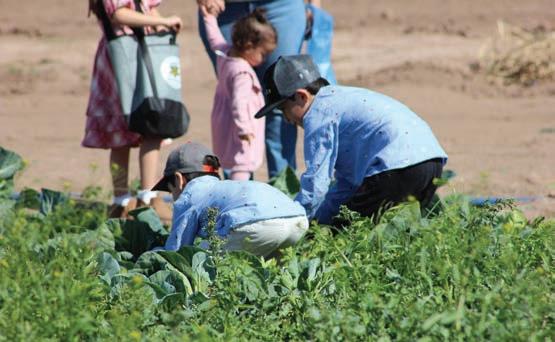
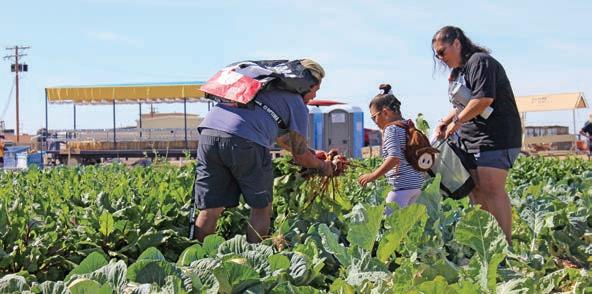
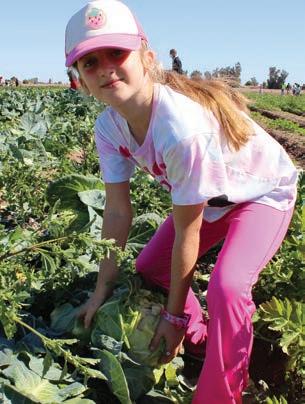
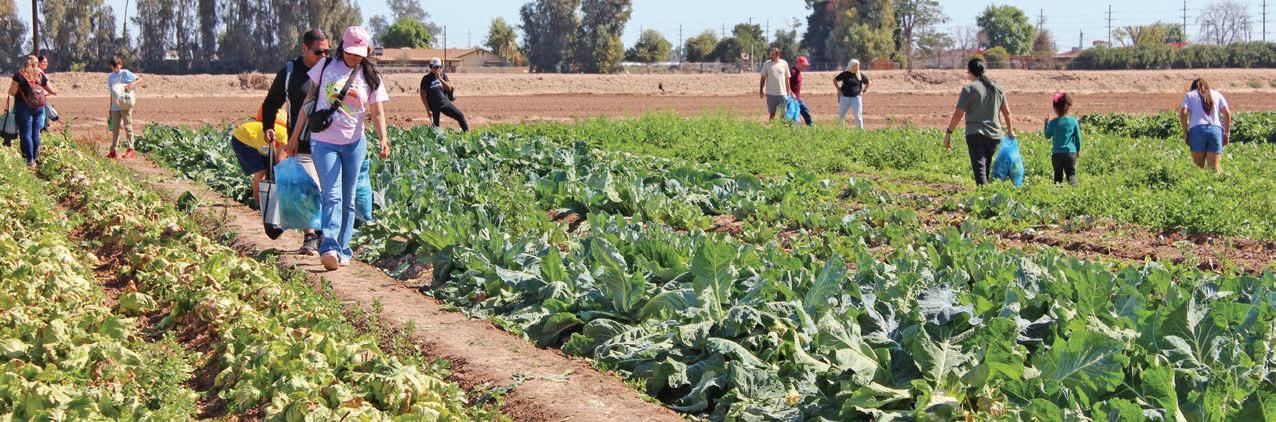
Parents followed children through rows of various winter vegetable crops growing at the Desert Research and Extension Center in Holtville. Soon, small, dirty hands pulled away at dirt around bulging red beets before triumphantly calling to parents to admire their harvest.
The sight of children in the garden on a warm Valentine’s Day morning reminded Farm Smart Community Education Supervisor Mariana Gonzalez Castro of the joy of her rst visit to the facility as a kindergartener. On this Feb. 14, more than 20 years after her own childhood experience, Castro and her sta welcomed a new generation of children to the Farm Smart program’s 25th anniversary celebration - and a chance to form their bond with agriculture.
Children weren’t the only ones enjoying the free community celebration. More than 400 seniors, families, and couples from around the Valley experienced a day of growing love at the Farm Smart celebration.
Guests took a quick
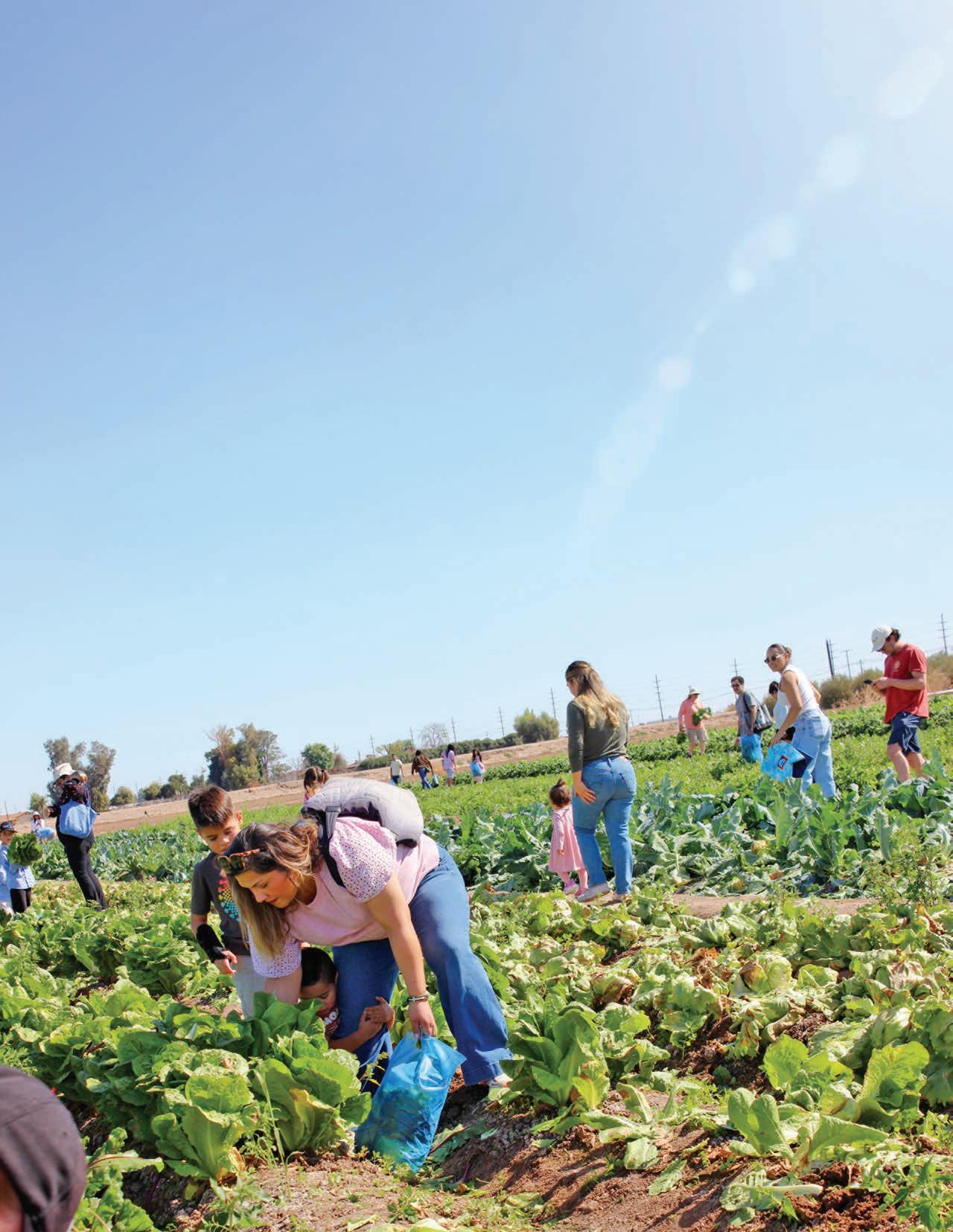
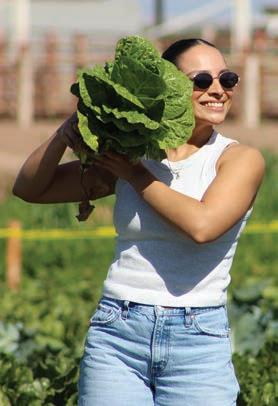
hay-wagon ride to a U-Pick Garden, where they were encouraged to harvest as much as they could carry in their bags. Farm Smart highlighted local bees with an opportunity to taste di erent kinds of local honey. Guests were also invited to play lawn games, “milk” Farm Smart’s wooden cow, learn about di erent species of bugs, and visit vendor booths where Farm Smart’s partners presented information and local resources.
Master Gardener AJ Gaddis attended the event with the Imperial County Master Gardener program to demonstrate how to plant tomatoes from transplants collected from Farm Smart’s garden. Gaddis is also the lead gardener for the Farm Smart garden.
While Gaddis said she gardens simply for the joy of it, she also enjoys sharing basic gardening knowledge with beginner gardeners.
“We support Farm Smart by providing planting activities,” Gaddis said. “At this event, using transplants o the garden, in this
case tomato clippings, we showed participants how to plant their own tomato plants in their gardens.”
She added, “We used magnifying glasses for the little ‘sprouts’ to look for bugs and identify the di erent plants in the garden. We planted ladybugs and grasshoppers so they were easily found. We also gave away transplants that included cantaloupe, zinnias, and cilantro.”
The Valley Farm Smart program was launched with a grant from the University of California Desert Research and Extension Center (DREC). Now, 25 years later, it has grown to reach more than 200,000 people with continued support from the community.
Many students who once visited Farm Smart have grown into parents who continue the tradition by bringing their own children. Educating the public about agriculture, natural resources, and environmental stewardship has also
produced generations of adults who understand the program's lasting impact.
“We're reaching the second generation of students,” Castro said. “I think that's really important to highlight, because our interns, our community college students, our sta , have experienced Farm Smart when they were in elementary school.”
She added, “I just feel that this is something that is kind of like passing the torch. That's what makes the Farm Smart special: the impact continues.”
Former Farm Smart Community Education Supervisor Stacey Amparano said the program leaves a lasting impact on the students it reaches.
“Watching students return years later or remember their visit, … those hands-on experiences,” Amparano said. “That was a really special moment for me when I got to see those kids light up when they remembered their visits.”
Amparano said Farm Smart is still near and dear to her heart, and she is grateful to see passionate personnel continuing to carry the program’s mission.
“I love it because I know they have that same passion for our community and agriculture that I had. So it makes me feel good to be handing over the reins to the next generation,” Amparano said.
She spent almost nine years with the program and recalls many highlights. She said she enjoyed teaching children about where their food comes from, inspiring future ag careers, and showing the future voters some of the impacts they’ll one day have on local agriculture, natural resources, and even water.
“It's really important for all people to really get that education on where our water comes from, where our food comes from, and the importance of agriculture in Imperial County, in California, and the United States as a whole,” Amparano said.
Castro said the popularity of the Farm Smart program and community participation in the 25th-anniversary celebration serve as a reminder of the importance of moving the program forward.
Partnerships have been critical to connecting with Valley communities. Castro highlighted that a partnership with the Imperial County Probation O ce was important to ensure at-risk youth, ages 9 to 13, get the chance to experience Farm Smart. Extending
CONTINUED ON PAGE 38
































BY:


















































Thank You to the buyers at the auction and to all the residents of our Valley and nearby communities for your support!


































*Misc. Fruit & Nut Crops may include: Grapes, Olives, Oranges, Sweet Limes, Tangelos, Tangerines. 2023 Tangerines were included in Misc. Citrus, Fruit & Nut Crops. Totals do not add due to rounding.






By Kayla Kirby
In Imperial Valley, a quiet revolution is taking root to transform how schoolchildren eat and learn. The Farm Smart program, based at the University of California Desert Research and Extension Center (DREC) in Holtville, has launched a farm-to-school initiative dedicated to channeling locally grown produce into school cafeterias and cultivating a new generation of educated, healthy eaters.
This endeavor, however, is not a fast crop.
Farm Smart representatives anticipate a twoyear “growing season” for the concept to take root and ourish into a sustainable program. Bolstering this commitment is nearly $350,000 from the California Department of Food and Agriculture (CDFA). The grant funds intensive community outreach and comprehensive training resources for local educators, with the goal of establishing the necessary connections between local farmers and local students.
For those leading the charge, the purpose is profound. Dr. Chandra Richards, University of California Cooperative Extension Area Director for San Diego and Imperial counties, calls the program a “meaningful, educational opportunity to connect youths, families, and
communities with local produce and healthy habits”.
Overseeing the massive logistical e ort is Farm Smart, which is partnering with the Imperial County O ce of Education and area schools to deliver targeted professional development and specialized training.
Farm Smart Community Education Supervisor Mariana Gonzalez Castro views
the initiative as a long-term overhaul. “It's a monumental e ort,” she said. “Hopefully, over time, schools will be able to try to bring (in) local produce”.
While Farm Smart previously focused on basic agricultural literacy for students, this new e ort concentrates on equipping educators with training in nutrition and on linking schools with local producers.
“It's us trying to plant the seed to encourage the schools to be able to bring local produce, by emphasizing the importance of students learning about Imperial Valley agriculture, and not just the global impact we have, but locally as well,” Castro said.
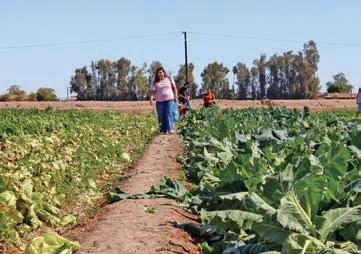
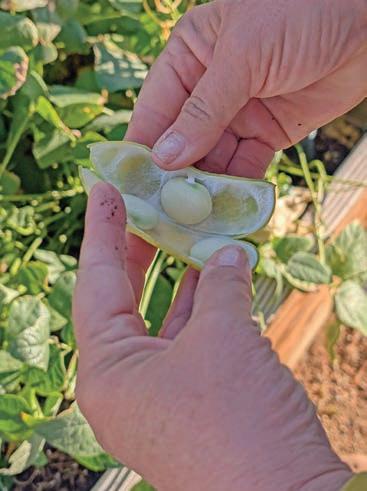
The initiative wasted no time in breaking ground with an annual conference held in mid-January at Barbara Worth Country Club in Holtville, followed later that month by a CDFA Farm to School Resource Fair at the Cooperative Extension Center. Conference attendees were treated to an immersive, onfarm agricultural tour led by grower Scott Howington at Lakeside Organic Gardens in Holtville, recognized as the largest familyowned, solely organic vegetable grower in the nation.
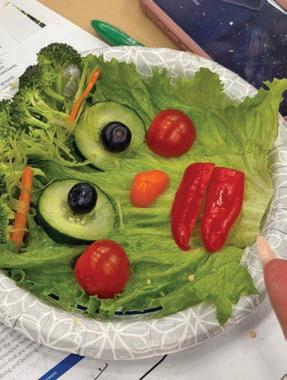
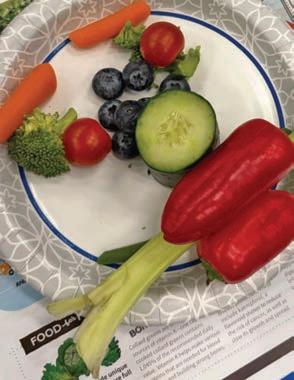
The hands-on learning continued with activities such as a Master Food Preserver Workshop, a “Portrait on a Plate” activity, and - Photos courtesy of Farm Smart
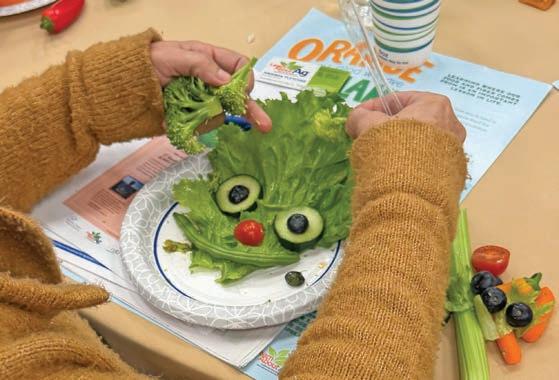
an opportunity for event-goers to mix their own vinaigrette.
Howington said the participants—ag teachers, nutritionists, and biology teachers—had thoughtful questions about agriculture and how to enact changes in their schools. He noted that even those raised in the Valley often don't fully grasp the farming process. "I think that they kind of opened their eyes to everything that has to happen, from the time you plant a seed to the time it gets to the store," Howington re ected.
"It's just a whole lot that goes into it,” he said. “I think that they, like most people, don't realize everything that it takes to make all that happen".
Despite the challenges, Howington said that Lakeside Organic Gardens is eager to participate, believing the outcome would be a "tremendous, tremendous gain for everybody."
Castro also agreed that the challenges are enormous because, among other things, many schools are simply not equipped to handle the shift, often lacking necessary kitchen equipment, appliances, or updated cafeterias. This is where the Farm Smart initiative is critical: it builds food and ag literacy, supports local farmers, and connects schools with the resources—including future state grant funding that schools will need to realize long-term changes to their nutrition programs.
“We're trying to bring curriculum, training resources to schools, food service sta , and teachers to bring nutrition education through the cafeteria, but also through the teachers so that they can encourage nutrition to the students,” Castro said.
She stressed the importance of capitalizing on funding opportunities to ensure that Valley students can bene t from local nutrition that is currently just out of reach.
“There are still students that are not too familiar with the impact of our culture and what we do for the rest of the world. So, we're continuing to bridge that gap,” Castro said.









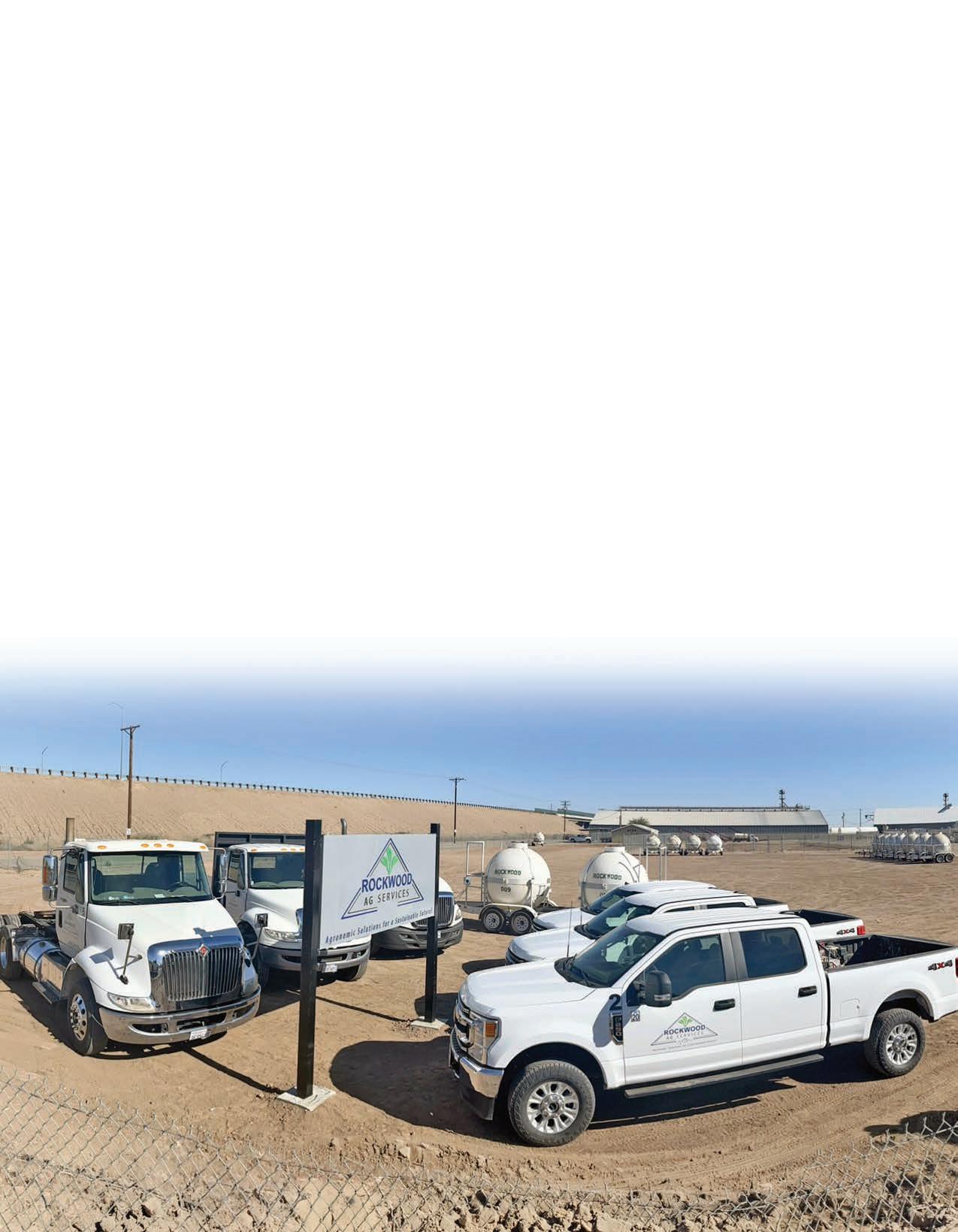
Rockwood Ag Services is a leading independent supplier of crop protection and crop nutritional products in the Desert Southwest.
Rockwood Ag Services provides up-to-date crop consulting with knowledgeable licensed pest control advisors and certified crop advisors. Our team maintains close relationships with manufacturers, universities, private researchers and regulatory agencies to access current information on crop protection methods.
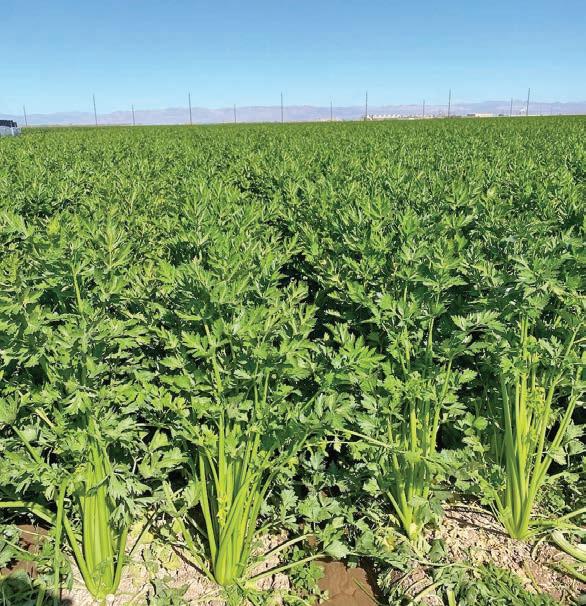
Our PCAs are knowledgeable about farming both conventional and organic crops with sustainable practices. Our crop advisors help create crop nutrition programs for your fields to help them thrive.
To learn more about us, please check out our website at www. rockwoodagservices.com . The website provides a chance for you to meet our team, learn more about our services, and peruse a whole host of resources and link to connect you to helpful information.

and two paid internships to county students pursuing a career in agriculture.

Rockwood Ag Services works hard to meet the needs of the growers. The firm also is proud to be part of and support the community where we live. That is why you will find us in the stands at the Imperial Valley Mid-Winter Fair & Fiesta’s annual livestock auction supporting local 4H and Future Farmers of America participants. Rockwood Ag Services awards four scholarships
Our sta can also be found participating in California Association of Pest Control Advisors, California Weed Science Society, Rotary, and sponsoring local events around the Imperial Valley, including holding our Rockwood Community Walk and Run 5k and our Annual Desert Agronomy Seminar.
Let Rockwood Ag Services provide all your crop nutrition and crop protection needs in the Imperial Valley.


Rockwood AG Services Company is a leading independent supplier of crop protection and crop nutrition products in Imperial Valley, providing up-to-date crop consulting with knowledgeable licensed pest control advisors and certified crop advisors.
Rockwood AG Services, formerly known as Rockwood Chemical & Imperial Grain growers, has been serving Imperial Valley since 1922
Licensed Pest Control Advisors and Certified Crop Advisors
Owner-member of Independent Agribusiness Professionals

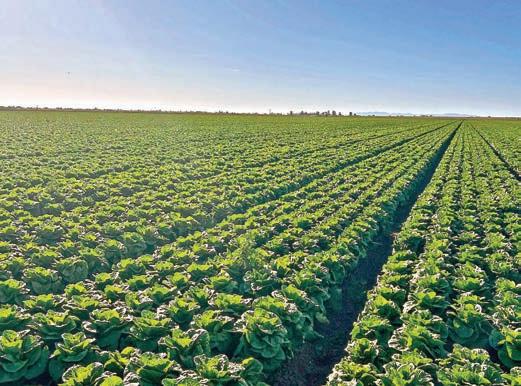

Crop nutritional programs custom tailored to your crop
Specializing in the right blends of herbicides, pesticides, fungicides and fertilizers
Knowledgeable licensed pest control advisors
All fertilizer product lines and blends, conventional and organic

the WebMD website. “It has a long history as a superfood. First eaten by the ancient Aztecs for its nutrition, spirulina was used more recently as a supplement for NASA astronauts on space missions.”
Spirulina is known to be a rich source of protein, containing essential and non-essential amino acids, gamma-linolenic acid (GLA), vitamin A (beta-carotene), B12, iron, calcium, chlorophyll, and phycocyanin.
And, Maguchi said, it grows 10 times faster than soybeans on three percent of the land while using 25 percent of the water.
The 180-acre Earthrise farm opened in 1982 with 10 ponds for growing the spirulina.
“They were visionaries,” Maguchi said. “And looking back, I think they found the best place, the perfect spot, because of the temperatures. High temperatures are very suitable, and dryness is also very important. There is no place else quite like this.”
The sun, the mineral-rich, high-alkaline water supplied by the Imperial Irrigation District, and the low humidity that allows su cient evaporation to keep the ponds at a steady warm temperature all contribute to an environment in which spirulina thrives.
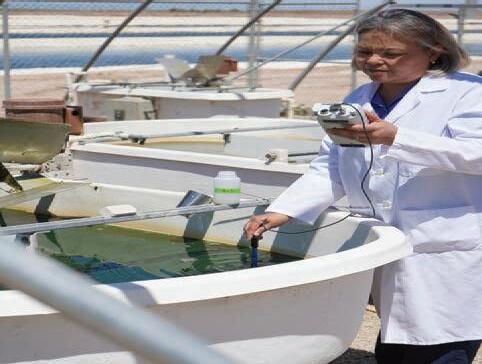
Earthrise has grown, too. Today, it has 37 ponds, each protected by white, foodgrade plastic liners and equipped with long paddles to maintain the perfect environment for blue-green algae growth.
Spirulina grows so rapidly during Valley summers that it is harvested every three days, Maguchi said. The farm runs around the clock during peak season to harvest, process, and package all the spirulina it
needs for the year.
From the ponds, the algae is processed through an automated, stainless-steel ltering and drying system in the new harvest building.
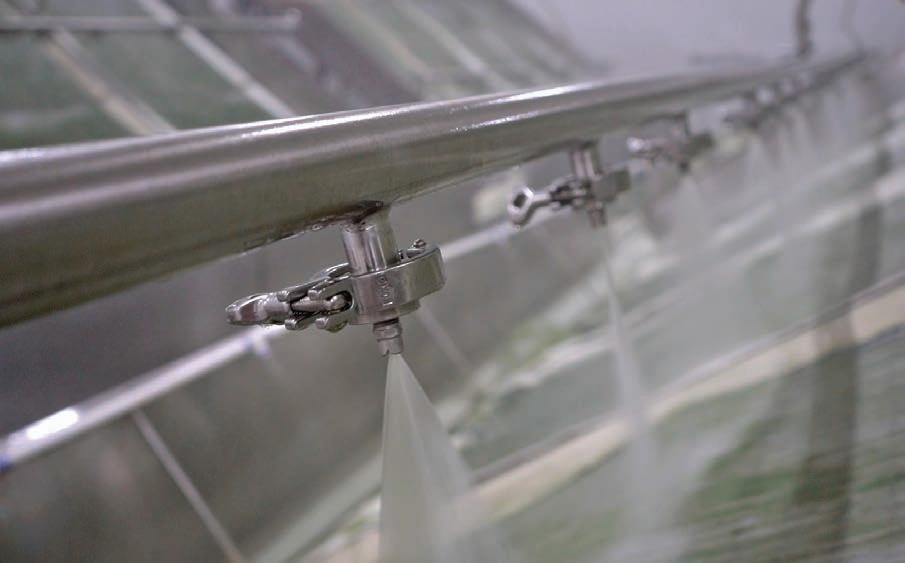
Then, spirulina droplets are sprayed into a drying chamber to undergo ash evaporation. The resulting powder is exposed to heat for several seconds as it falls to the bottom of the chamber, preserving sensitive nutrients, pigments, and enzymes without the use of preservatives or stabilizers. It is then packaged and distributed to businesses and consumers in more than 20 countries worldwide. Consumers can also purchase the Earthrise spirulina powder and tablets on Amazon.
The public's growing interest in improving the food supply by removing chemical food coloring from packaged foods created new opportunities for innovation at Earthrise.
Earthrise responded by developing a natural process to extract the blue pigment from spirulina using only water and a small amount of salt. In 2014, Earthrise’s vivid skyblue food natural coloring, trademarked LINABLUE®, became the rst natural blue food coloring approved by the Food and Drug Administration (FDA) for use in candy and gum. In the following years, Earthrise built and expanded an extraction plant at the Calipatria farm to meet the growing demand for its natural blue food coloring.
Over the years, the FDA expanded the types of products in which the spirulina blue extract food coloring can be used. The latest expansion came this year.
A Feb. 5 FDA press release announced

https://www.earthrise.com

https://earthrisetoll.com
the expansion of spirulina extract use across almost all food categories and detailed food-labeling rule changes intended to help Americans eat real food.
“We are making it easier for companies to move away from petroleum-based synthetic colors and adopt safer, naturally derived alternatives,” Health and Human Services Secretary Robert F. Kennedy Jr. stated in the release.
Though Earthrise may not be a widely recognized name in the Valley, its spirulina-extracted natural food coloring is becoming increasingly common in local households, used in staples such as our ready-to-eat cereals, dry beverage mixes, yogurts and puddings, cottage cheese, and much more.
pendent on the sugar plant to process the crop. Without the plant, there is no crop.
While the loss of the sugar beet industry is concerning, history shows the Valley has adapted to past crop losses, though it took time.
The cotton industry was once an important commodity for the Valley, with 140,000 acres under cultivation. However, the crop was almost entirely wiped out by the pesticide-resistant pink bollworm and the white y. As of the 2024 Crop Report, the Valley grew just over 2,000 acres of cotton valued at more than $3 million.
“It took huge adjustments when cotton went away,” said Imperial County Supervisor John Hawk, who is a Holtville grower. “It took years to replace that crop.”
Bermuda grass began to ll the gap along with an expansion of alfalfa, Hawk said, adding there were also expansions in the vegetable crops grown in the region.
Over the years, new alternative crops for the Valley have been studied. Quinoa, a hearthealthy grain that has gained worldwide popularity, has been considered. Of the 35 varieties of quinoa tested by the desert research center in Holtville. Bachie said that most of them produced good yields. Hemp has also been an experimental crop in the Valley, but to date has not found the success farmers had anticipated.
Sugar cane has also been a crop studied for Valley production, spurred by California Ethanol & Power’s e ort to build an ethanol plant in the Valley. While the e ort dates back to 2013, it has had stops and starts along the way. Over the last six years, the company has renewed its e orts to develop a 160-acre renewable energy and fuel facility campus under the moniker, Sugar Valley Energy. This has led to planting new sugar cane test crops in the Valley.
Separately, this spring, Bachie expects to begin a eld study of moringa, a fast-growing, drought-tolerant crop noted for its livestock nutritional value, with all parts of the plant, leaves, pods, seeds, and owers, edible.
When considering alternative crops, Bachie said, it is critical to remember that as important as the sugar beet has been as a rotational crop, it also was once a new crop in the Valley.



“Sugar beets established over a long period of time. When they started, they were not at full capacity,” he said, making the point that any alternative crop introduced in the Valley would also need time to fully develop as a staple crop as it would bring a change to planting and harvesting systems.
However, he said, the Valley is an ideal region for crop growth and productivity, given its ample water and ecological systems that support crop production.
“We have the ability to have many di erent kinds of cropping systems,” he said, adding that is what makes the Imperial Valley such a unique region in which to grow crops and why agriculture remains such an important part of the economy.











Patty met inside the university cafeteria by the milk machine. Though from Susanville, Patty—once married to Ed—followed him back to the Imperial Valley to build their lives together. She attended San Diego State University, Imperial Valley in Calexico. After earning her teaching credential, she went on to teach home economics in Holtville.
“Teaching is her passion,” Jennifer said. “It means everything to her.”
The Farm Bureau noted Patty McGrew’s leadership in education and civic life. In addition to teaching in the classroom, she served for decades as a 4-H foods and nutrition leader, helped revitalize the Imperial Valley Community Foundation as a board member and vice chair, and served 18 years on the California Mid-Winter Fair & Fiesta Board.
“Her volunteerism and mentorship have impacted countless youth and families across the Valley,” the Farm Bureau release states.
“Ed and Patty McGrew represent the core of our agricultural community,” the Farm Bureau further states. “Their work has shaped not only the elds of the Imperial Valley but also the future of the people who live and work here. Their legacy of leadership, family, and community service will continue to inspire generations to come.”
Jennifer said she and her sisters learned a great deal from their parents’ spirit of giving. She said their parents taught them, “honesty, integrity, and character, but the biggest lesson was just about hard work and perseverance.”
She noted that her father was a Rotarian and that the Rotarian creed is “Service Above Self.”
“That describes both of my parents,” she said. “They were a unit—a team—and they just had that mindset to serve.”

Seed and Nursery Products may include: Aloe, Artichoke Seed, Broccoli Seed, Cilantro Seed, Cut Flowers, Grass Seed, Onion Seed, Palms,
Totals do not add due to rounding.

runs deep, the faces of today’s farmers are diverse.


In one video, Gina Young Dockstader, a fourth-generation farmer and co-owner of Doc’s Organics in Brawley, takes viewers into the packing facility to show the meticulous care with which lemons are processed for shipment to Japan. She looks forward to her son following in her footsteps.

studying political science at the University of San Diego, Strahm returned to the family business in 2002. In 2007, he co-founded Artesia Farms with his father, Cli ord.
video, she says, “I farm alongside my dad, unare
Then there is Kate Elmore McCutcheon, whose great-great-grandfathers came to the Valley in the early 1900s to farm. In the video, she says, “I farm alongside my dad, uncle, cousins, and my husband. We are very excited to be continuing this rich tradition in the Imperial Valley.”
Another reel features Brian Strahm, 45, of Holtville, who navigates the 3,500 acres of Artesia Farms with a perspective shaped both by the soil and the classroom. After
For Strahm, the job is a constant evolution. “Competition and regulation contribute to innovation,” he explains. On any given day, he balances the logistics of 16 employees and a diverse crop rotation that includes carrots, cantaloupe, and wheat, while also focusing on water e ciency and employee safety.
“So much work goes into getting food from the elds to people’s tables,” Strahm says. “But it feels good to know we are helping create a safe, reliable food supply for the country.”




The future of the Imperial Valley depends on whether the next generation sees a "good future" in the dirt. Strahm, the father of four, gives it a "50/50 chance" that his children will follow his lead.
“I want them to be whatever they want to be,” he says with a smile, “but I would be proud to have some fth-generation farmers at Artesia Farms to keep the momentum going.”
For now, as the sun sets over the Valley every day, the work doesn't stop. The logistics continue, the trucks roll out, and the "invisible" labor of these families ensures that when the grocery store doors open in the morning, the shelves will be stocked with Valley produce.





























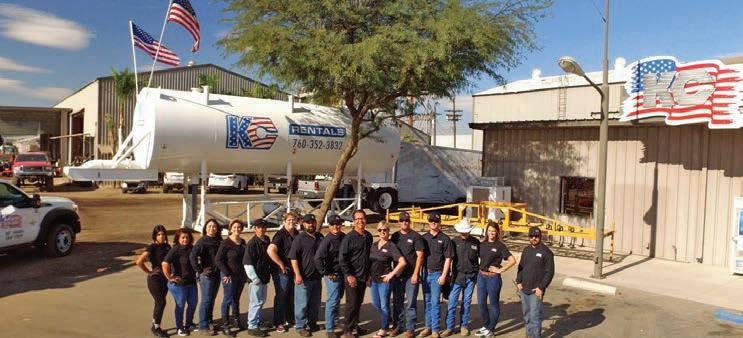
KC Welding and Rentals rst opened its doors to serve the people of the Imperial Valley in 1954. Founder Casey Mostrong brought his mechanical skills and ingenuity to the Imperial Valley and opened up shop on Fourth Street, laying the foundation for what is now KC Welding and Rentals.
KC Welding and Rentals later relocated to its current main location at 1549 Dogwood Road, El Centro, in 1963. KC was founded with the vision of producing and supplying top quality agricultural tools and equipment. Casey Mostrong invented and patented various original agricultural tools including vegetable planters, tillage equipment, sled shapes, and cultivators, among other farming products. The company’s agricultural products are a key component in the process that puts fresh, American-grown produce on dinner tables across the nation. It
o ers equipment rentals for large-scale commercial applications and small-scale homeowner needs, as well as being an extensive welding and fabrication shop that manufactures custom and original agricultural implements and undertakes any custom fabrication jobs customers
bring in.
KC stocks a wide variety of products in its industrial/agricultural parts supply store. As a provider for industrial applications it also carries and provides commercialgrade steel. The retail store carries popular brand names like Carhartt, Yeti, Traeger, and more.
In 2015, KC expanded, opening a second location in Brawley. A small-scale version of the main facility in El Centro, the Brawley location o ers rentals, a retail store, and fabrication services.



Farm Smart to at-risk youth has been Castro’s personal goal since she began working with the program in September 2024. The partnership has enabled Farm Smart to connect with the youth at sites in Westmorland, Heber, and Niland.
Castro and her predecessor, Amparano, share the view that Farm Smart is like a crop that grows stronger in the presence of others.
“Partnerships were always a foundation
of Farm Smart success,” Amparano said, adding that community donations are also essential to support the program.
Some of the key partnerships noted by Farm Smart over the last 25 years include the Imperial Irrigation District, Imperial Valley College, AgWest Farm Credit, Pioneers Museum, and others. Through the example set by those partnerships and the many other partners have helped the program through the years,
Castro looks forward to these and additional community partnerships forming to allow Farm Smart to continue enhancing its programs and sharing ag literacy with Valley residents.
“This 25th anniversary event had me reecting on the past and what our impact is with our students,” Castro said. “We've reached a second generation, and hopefully, we're going to reach a third in another 10 or 15 years.”












Same old gets you same old. That’s why Fendt does things differently. Always innovating new and better ways to improve your bottom line, from the fuel-maximizing Fendt iD low-speed concept to VarioDrive stepless CVT making manual all-wheel drive a thing of the past. The only question left is, are you looking to the future?
e Gr ow bold .