Commercial Services (pg 24):


Commercial Services (pg 24):
By Brandi Smith
Walk into the right building in Chicago’s West Loop and the lobby hums: coffee bar, concierge, a fitness center that would not look out of place in a boutique hotel. Walk into the wrong one and the vacancy signs do the talking. Same city, same quarter, same market … entirely different reality.
“Trophy towers are seeing vacancies below 10% while Class B and C properties are experiencing vacancy rates of 30% or more,” said Jeff Skender, managing director at Cushman & Wakefield’s Chicago office. “Flight to quality continues to be the trend through Q1 2026.”
That gap of more than 20 percentage points between the top of the market and the middle is the defining characteristic of Chicago office in 2026 and the forces driving it show no signs of reversing. CBD direct vacancy reached 27% in Q1 2026, a 40-basis-point increase quarter-over-quarter, according to CBRE Research. Suburban direct vacancy climbed to 28.7% over the same period. Those topline figures, however, flatten a more fragmented reality: within both markets, a small tier of well-located, well-amenitized buildings is outperforming the broader numbers by a substantial margin.
Geographically, the West Loop remains the undisputed center of gravity for CBD leasing. Skender said the submarket captured more than 60% of new Class A leasing activity in Q1, a dominance driven by proximity to Ogilvie and Union Stations and a concentration of trophy and newer Class A product. CBRE research data shows West Loop direct vacancy at 22.8% — elevated by historical standards, but well below the CBD average, while the submarket recorded 1.4 million square feet of leasing activity during the quarter.




PUBLISHER Mark Menzies menzies@rejournals.com
EDITOR Dan Rafter drafter@rejournals.com
VICE PRESIDENT OF SALES & MW CONFERENCE SERIES MANAGER Ernie Abood eabood@rejournals.com
VICE PRESIDENT OF SALES Frank E. Biondo frank.biondo@rejournals.com
CLASSIFIED DIRECTOR Susan Mickey smickey@rejournals.com
MARKETING & EVENTS COORDINATOR Allison Kim Allison.kim@rejournals.com 8
TWO MARKETS IN ONE: HOW CHICAGO’S OFFICE SECTOR IS SPLITTING ALONG QUALITY LINES Walk into the right building in Chicago’s West Loop and the lobby hums: coffee bar, concierge, a fitness center that would not look out of place in a boutique hotel.
BEYOND THE AMENITY ARMS RACE: HOW CHICAGO IS REDEFINING TENANT
EXPERIENCE When PNC Centre at 1 North Franklin unveiled Vue36 in 2025, the results were swift and measurable. The building renewed its 100,000-square-foot anchor tenant on a long-term basis and tour activity more than doubled compared to prior years.
EXPERIENCE REQUIRED: HOW RESTAURANTS AND ENTERTAINMENT ARE RESHAPING CHICAGO-AREA RETAIL
1 16 20 24 4 8 12
When 76,249 square feet became suddenly vacanct, CBRE vice president Sean McCourt and his team backfilled those spaces with Raising Cane’s, Slick City Action Park and Crunch Fitness, bringing the center to full occupancy.
OFFICE-TO-APARTMENT CONVERSIONS GAIN GROUND NATIONWIDE, WITH CHICAGO EMERGING AS A KEY MARKET Office-to-apartment conversions are gaining traction as a source of new housing across the U.S., with more than 90,000 units currently in the pipeline.
TURF TALK: COMMERCIAL LANDSCAPING & SNOW REMOVAL STRATEGIES: What High Performing Properties Do Differently With Their Landscaping
BENEATH THE SURFACE: HOW CHICAGO’S OFFICE MARKET IS REALLY PERFORMING
At first glance, downtown Chicago’s office market still looks like a tenant’s market. Beneath those top-line numbers, the first quarter of 2026 reveals a market that has become increasingly uneven in ways that matter most to occupiers actively searching for space.
COMMERCIAL SERVICES

www.rejournals.com www.rejournals.com
EDITORIAL ADVISORY BOARD
ALISSA ADLER Colliers
GEORGE KOHL Savills Jeff Krusinski Krusinski Construction Co.
RONALD C. LUNT Hamilton Partners
JOHN M. MOYSEY Avison Young
NANCY A. PACHER CBRE
JONATHAN STEIN Inland Real Estate Group
GREGORY T. WARSEK Associated Bank
CHRIS WOOD Cushman & Wakefield

By Brandi Smith
Arooftop bar with a dedicated barista. A 30-foot ceiling-height viewing lounge on the 36th floor. An executive conference room, a gaming corner, a music lounge and a fitness center all wrapped in a multi-million-dollar renovation that gave a Class A downtown Chicago office tower a new identity and, more importantly, a new competitive position.
When PNC Centre at 1 North Franklin unveiled Vue36 in 2025, the results were swift and measurable. The building renewed its 100,000-square-foot anchor tenant on a longterm basis and tour activity more than doubled compared to prior years.
“The weighted average leasing rate increased over 14% from the prior year as tenants demonstrated their willingness to pay premiums for properties offering genuine experience upgrades,” said Kim Doyle, JLL senior vice president of agency leasing.
PNC Centre is among the more dramatic examples of a broader recalibration underway across Chicago’s commercial real estate market, one in which tenant experience has evolved from a differentiator into a discipline.
For years, the conversation centered on what a building had: a fitness center, a conference room, a tenant lounge. That baseline, according to Jeff Venable, regional property management leader for CBRE’s Midwest operations, is largely table stakes now. What is changing is not the presence of amenities, but the expectation that they perform.
“The next phase of amenities will not solely rely on the physical amenity,” Venable said. “We are starting to see a differentiator in how we activate an amenity.”
That activation (programming, staffing, hospitality-minded management) is what separates buildings generating genuine engagement from those with amenities that sit underused. At CBRE, that philosophy is embodied by the firm’s HOST Team, which develops building-wide programming designed to energize common areas and connect tenants to the daily life of the building, part of a broader shift among institutional operators toward service-driven management models.
Underpinning the experience layer is a technology infrastructure that, until recently, was considered a premium offering. That framing has changed.
“Smart building technology is no longer a luxury, but an essential building infrastructure,” said Hope Tate, executive vice president and regional operations manager for JLL’s Midwest region.
311 Huron - Courtesy Roost Photography
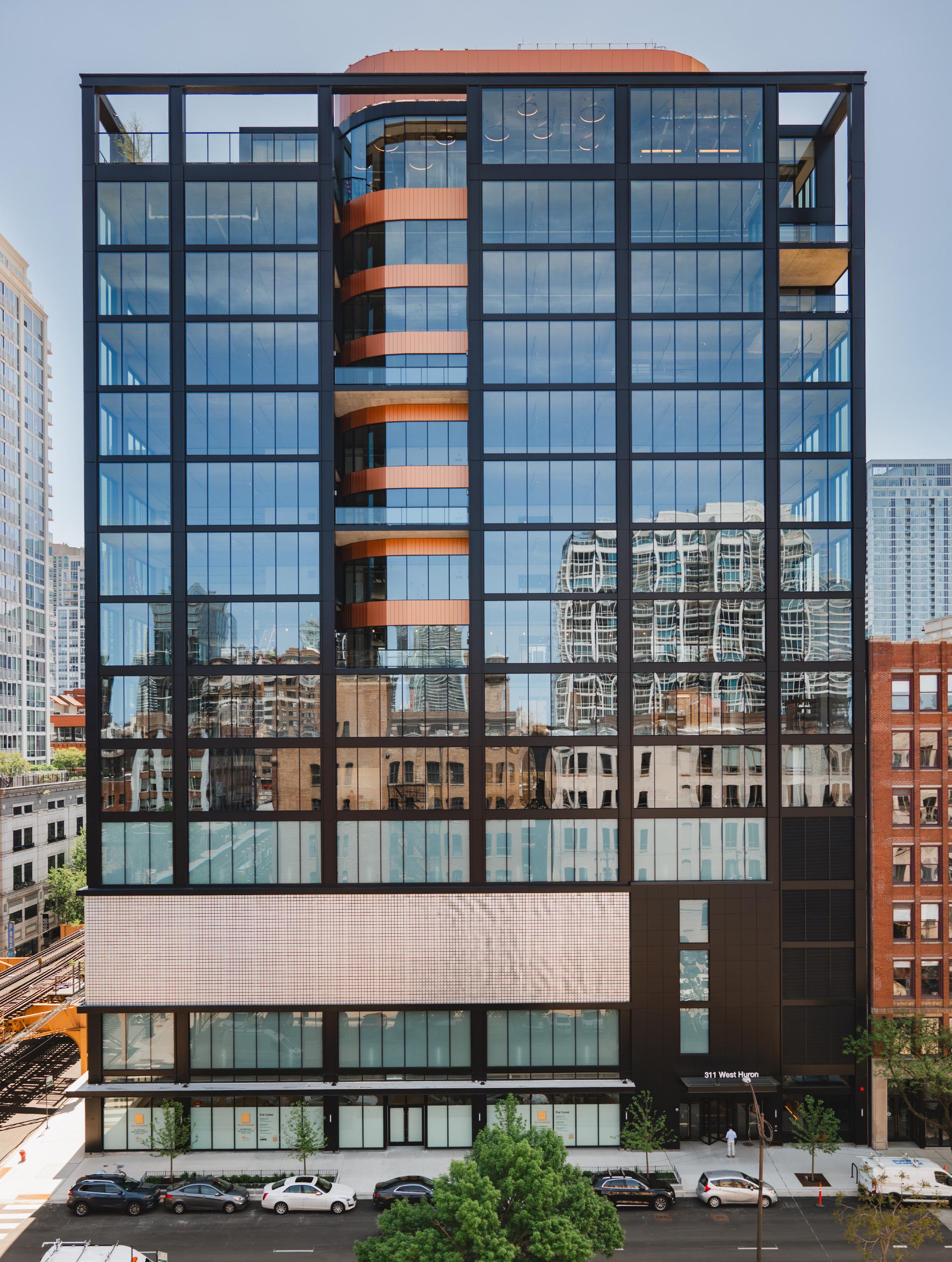
When physical upgrades are paired with a deliberate repositioning strategy, the impact on leasing can extend well beyond the improvements themselves. Doyle, who worked on the PNC Centre transformation, said the combined effect of capital investment and narrative rebranding can move a building into an entirely different competitive tier, often repositioning
assets to compete with higher-performing submarkets and newer product.
“When a prospect can see a tangible differentiation, decision velocity increases,” Doyle said.
Faster decision-making reduces downtime, improves tour-to-lease conversion and, in some
cases, limits the need for aggressive concession packages.
For new developments, the calculus is slightly different. At 311 W. Huron in Chicago’s River North neighborhood, a boutique office devel-
(continued on page 6)
“We view tenant relationships and enhanced tenant experience as an ongoing service commitment rather than a one-time transaction”

(continued from page 4)
opment managed by Urban Innovations that is actively leasing space, the goal was never to overcome a dated perception. It was to establish a strong one from the start.
“In a competitive market, tenants are drawn to buildings that know who they are and communicate value clearly,” said Joi Harrell, a principal at Urban Innovations, the fully integrated development firm behind the project.
That clarity runs through everything from the building’s wellness-focused design and sustainability credentials to its move-in-ready spec suites and in-house interior design support. Harrell points to the consistency of the people tenants interact with every day as equally important. Urban Innovations’ engineering and operations staff includes team members with nearly three decades of tenure, a longevity that generates institutional knowledge no new hire can replicate.
“We view tenant relationships and enhanced tenant experience as an ongoing service commitment rather than a one-time transaction,” Harrell said.
In Chicago’s industrial sector, where DarwinPW Realty/CORFAC International operates a portfolio running at 98% occupancy across roughly 300 tenants, the retention formula looks different on the surface but rests on the same foundation: relationships built before they are needed.

“The worst thing a property representative can do is only communicate with their tenants right before their lease expiration,” said Mandy Lewandowski, vice president at DarwinPW.
Consistent contact throughout the lease term, she said, allows property managers to understand tenant needs before they become problems. At DarwinPW, that commitment extends to 24/7 access to both property management and ownership, a practice that generates measurable goodwill in a sector where that level of accessibility is rare at scale. On the concessions side, DarwinPW structures deals based on credit quality and lease term length, with stronger tenants earning greater investment from ownership. The approach treats the deal itself as a foundation for the working relationship, not just a transaction to close.
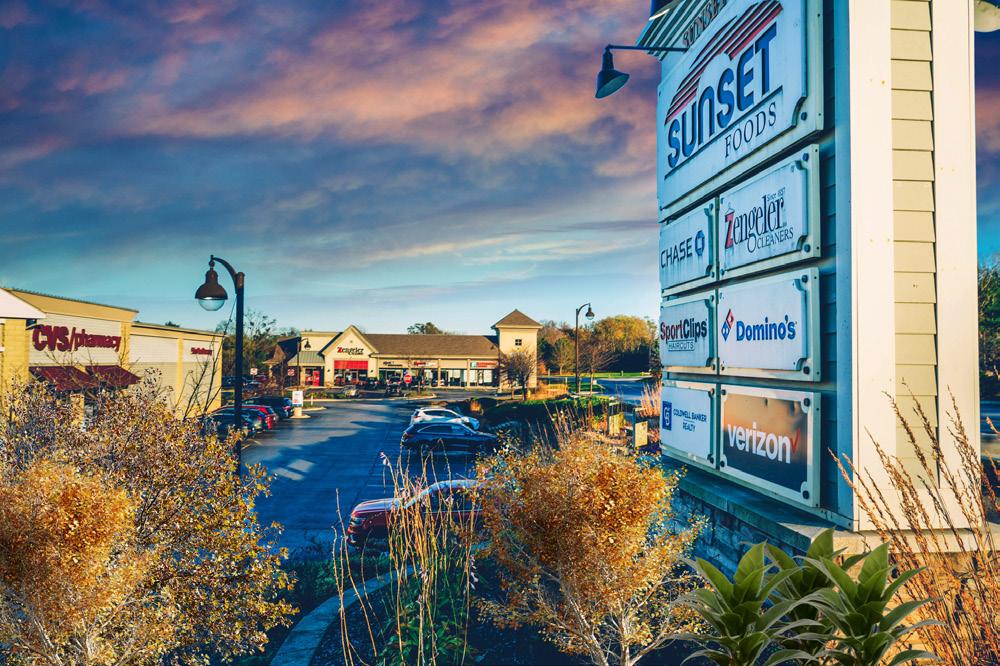
For Sandy Sigal, CEO and president of NewMark Merrill Companies, which owns and operates shopping centers across the Chicago area including Winston Plaza in Melrose Park, Bricktown Square and Stratford Crossing in Bloomingdale, the experience conversation starts not with amenities but with identity and a genuine investment in the people behind every business a center attracts.
“The key is to make sure that our centers connect with shoppers through both the head and the heart,” Sigal said.
That means curating the right tenant mix, activating the physical environment through placemaking such as murals, landscaping, dining areas and colors and making clear to both


tenants and the surrounding community that ownership is a long-term partner. According to Sigal, tenants are looking for investment from the outside of their stores to complement what they do inside, not rent concessions. NewMark Merrill’s capital goes toward traffic-building and community outreach rather than cash incentives. The approach has driven measurable results: Winston Plaza has become the top choice for merchants in Melrose Park, and the firm is now applying the same philosophy to Lake Meadows, with plans to re-tenant the property, upgrade its environment and deepen its connection to the surrounding neighborhood.

Chicago’s office market continues to carry elevated vacancy and tenants have more options today than they did five years ago. That dynamic has forced a reckoning: properties that treat experience as a line item are losing ground to those that have made it a core operating philosophy.
In practical terms, that shift is showing up in renewals secured earlier, leasing velocity improving in repositioned assets and tenants demonstrating a measurable willingness to pay for environments that support productivity and culture.
The amenity arms race was always going to plateau. What’s replacing it is harder to replicate and, for the properties getting it right, considerably more durable.

In the realm of real estate, the intersection of intention and execution is where strategic plans, market insights, financial considerations, and operational efforts merge to deliver successful outcomes We blend entrepreneurial agility and vision with institutional expertise to deliver strategic, full-service commercial real estate solutions
On bustling urban street corners to tranquil suburban settings, Xroads Advisors manages office, medical office, retail, and industrial properties across Chicagoland and in select markets nationally

PROPERTY MANAGEMENT - PROPERTY ACCOUNTING
ASSET MANAGEMENT - RECEIVERSHIPS - BROKERAGE
www xroadsadvisors com

By Brandi Smith

When three tenants filed for bankruptcy within the same power center along Route 41 in Schererville, Indiana, the result was 76,249 square feet of sudden vacancy: two anchor boxes and a freestanding restaurant pad sitting empty. Within months, CBRE vice president Sean McCourt and his team had backfilled those spaces with Raising Cane’s, Slick City Action Park and Crunch Fitness, bringing the center to full occupancy and signaling a broader shift in how retail space is being absorbed.
“The attitude toward these uses has shifted 180 degrees,” said Charles Margosian III, principal at Highland Management. “Users like this are seen as complementary to traditional retailers
and retailers recognize they drive traffic to their stores.”
Across the Chicago area, that shift is redefining what it means to anchor a retail center. Restaurants, fitness operators and entertainment concepts are no longer ancillary uses; they are increasingly driving leasing strategy, foot traffic and long-term performance.
The demand side of this equation is running hot. McCourt, who tracks expansion activity across the region, said the pool of restaurant and entertainment users competing for space has deepened considerably in the past 24 months.
“The Chicago market remains tight and you could argue it is more landlord favorable, especially the best positions in the top markets
where you’ll find several prospects competing for the same space,” McCourt said.
Large-format entertainment and recreation users are actively targeting former anchor space. McCourt said concepts such as Slick City Action Park, Urban Air Adventure Park and Andretti Karting are pursuing big-box locations that would have historically been reserved for traditional retailers. Fitness operators including Life Time, Planet Fitness and Crunch remain aggressive, while training facilities and sports concepts continue to expand their footprints.
At the smaller scale, demand is just as active but more fragmented. Social gaming venues, wellness concepts and service-oriented tenants from contrast therapy to med spas are compet-
ing for inline space and helping to diversify the tenant mix.
Restaurant demand remains uneven across categories. Fast casual and quick-service operators continue to expand, with drive-thru locations among the most sought-after formats. Coffee concepts are particularly aggressive, according to McCourt, who noted that 7 Brew and Dutch Bros are scaling rapidly alongside a wave of emerging Middle Eastern operators. Full-service dining, however, has slowed, as many operators reassess existing locations before committing to new deals.
Not all tenants are competing on equal footing. Landlords and capital partners are placing
(continued on page 10)



(continued from page 8)
a premium on experienced, well-capitalized operators, creating a widening gap between established groups and newer entrants trying to break into the market.
“The strong are getting stronger and the weak are getting weaker,” McCourt said.
Rising costs are reinforcing that divide. Construction pricing remains elevated, labor is difficult to secure and occupancy costs (particularly real estate taxes) continue to climb. Those pressures are forcing tenants to be more selective and landlords to be more disciplined.
“Deals are still getting done, but they often take longer and require more creativity than they once did,” McCourt said.
Many operators are narrowing their focus to A+ locations and turning to second-generation space to reduce buildout costs. Landlords, in turn, are adjusting expectations, balancing strong demand with more rigorous underwriting and longer deal timelines.
Beyond leasing activity, the shift toward dining and entertainment is reshaping how retail centers function within their communities. David Strusiner, vice president and owner at Craig/ Steven Development Corporation, points to suburban markets where clusters of restaurants have created new nightlife destinations outside the city.



a year — we’ve taken the space off the market. It’s a great corner, but either you’re going to sign your lease or you’re not.”
that some of these entertainment users might not be the ‘hot’ thing in 5-10 years when their leases expire.”
Strusiner is working to replicate that dynamic at a mixed-use center in Highland Park, where a long-pursued upscale restaurant concept is on the verge of signing. Highland Park currently has two dinner options with a bar. If the deal closes, it will bring a full-service dining and nightlife option to a community that, by Strusiner’s account, has been waiting for one and it will push the center to 100% occupancy in the process.
Getting there required patience. Strusiner’s team has been in active pursuit of the right food tenant for over a year, a timeline he treats as standard practice rather than exception.
“Certain communities have done very well with this,” Strusiner said. “Highwood is a great example. They put restaurant after restaurant with outdoor seating and did a fantastic job. Now some of the younger crowd doesn’t have to go to the city to go out at night. They go to Highwood.”
“We reach out to food users as soon as we know a space is available,” Strusiner said. “We’ve been working with one restaurant tenant for over
For landlords, the shift requires a greater willingness to rethink traditional leasing assumptions.
“When you have vacant spaces, you have to be willing to get a little creative,” he said. “It can’t hurt to try different things — if it works in your business model and you’re comfortable doing it.”
That creativity, however, comes with risk. Margosian said the rapid rise of entertainment concepts requires careful evaluation, particularly as trends evolve.
“As a landlord, I think you need to be really careful of which entertainment users you choose,” Margosian said. “You have to curate a mix of different uses in a center that are complementary to each other, but it’s also good to be conscious
Pickleball, he noted, is a specific concern not because the sport is fading, but because the number of facilities opening in the Chicago area may be outpacing the durability of consumer interest. Space that works today for a pickleball operator could become a liability if the category saturates before the lease runs its course.
It is the kind of nuance that separates landlords who are reacting to the market from those who are managing it and in a retail environment that is still finding its footing, that distinction matters. Experiences are redefining what it means to anchor a retail center. The challenge for landlords is no longer whether to embrace that shift, but how to do so without overcommitting to trends that may not last.


By Florin Petrut, Real Estate Writer and Researcher at RentCafe.com
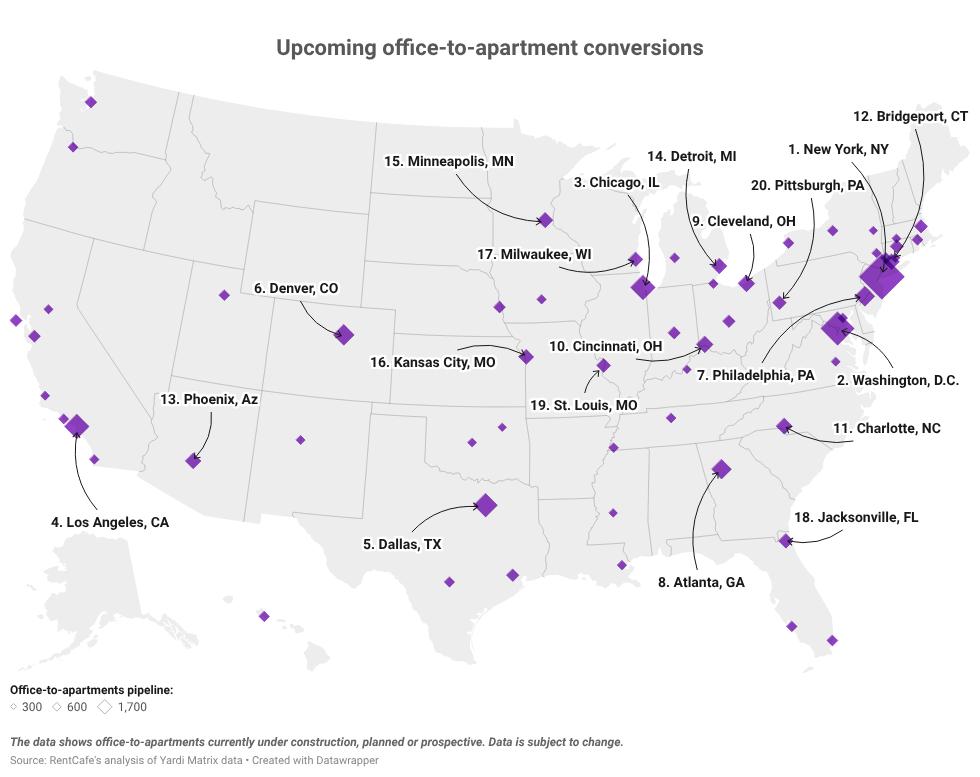
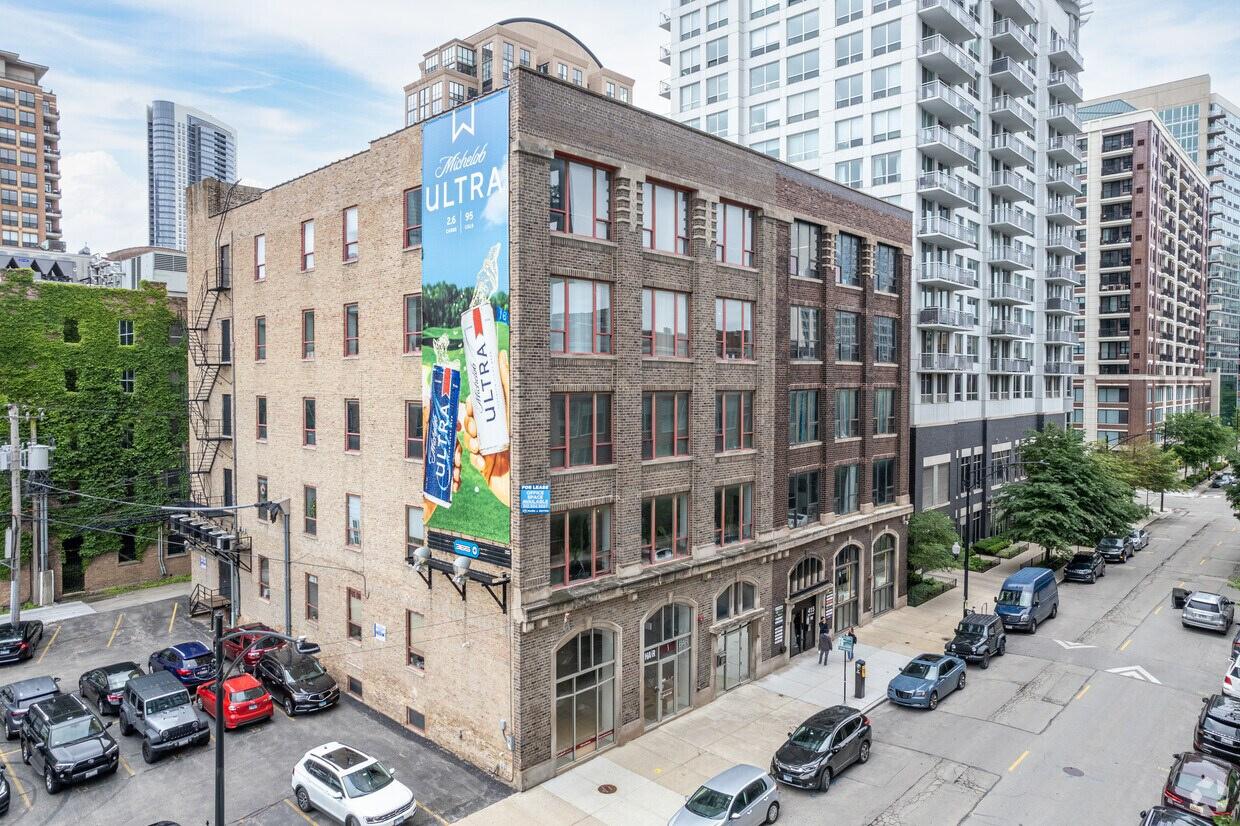
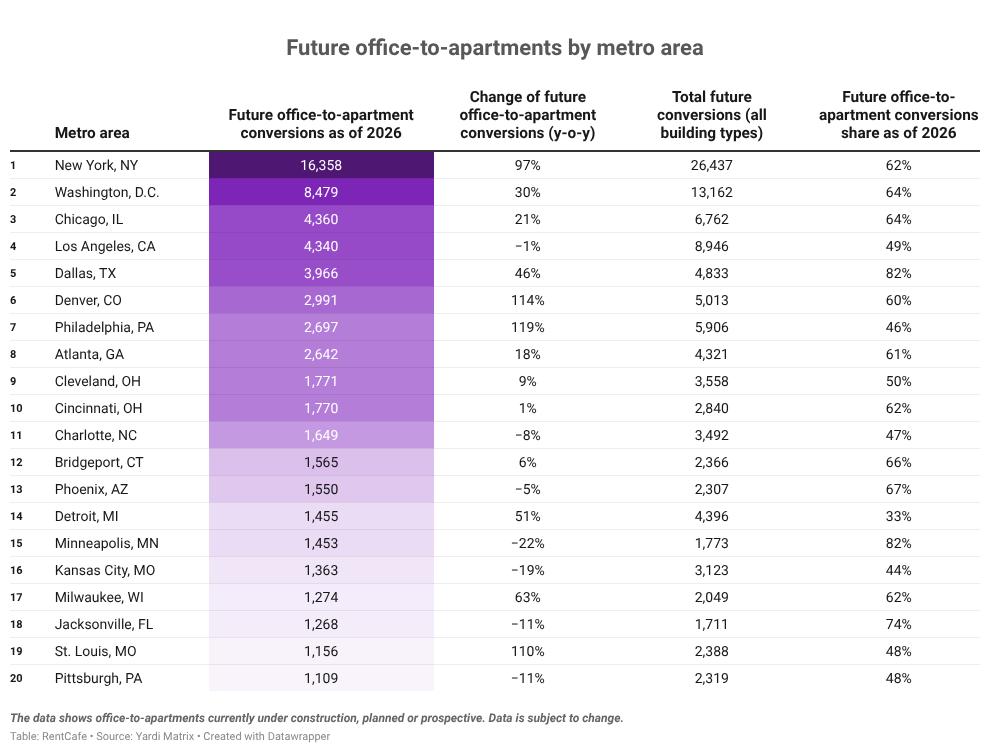
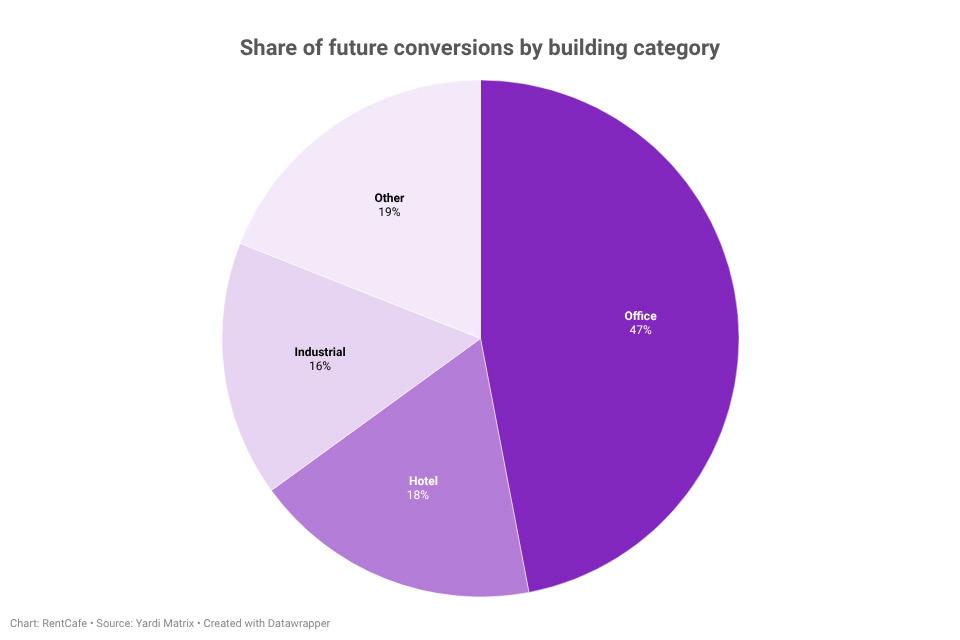
Office-to-apartment conversions are gaining traction as a source of new housing across the U.S., with more than 90,000 units currently in the pipeline — a record high and a 28% increase year-over-year.
While still a small share of overall multifamily development, conversions are expanding quickly, driven by declining demand for some office space and ongoing housing shortages in many cities.
“Office-to-residential conversions are no longer just a workaround for distressed buildings — they’re becoming a strategic tool for adding
housing in supply-constrained markets,” says Doug Ressler, Business Intelligence Manager at Yardi Matrix.
This increase in activity reflects a combination of factors. As companies reassess their office space needs, some buildings — particularly older ones — are seeing lower demand. At the same time, many cities are working to address housing shortages, especially in central locations where new developments can be challenging.
However, not every office property is suitable for conversion. “The feasibility of office conversions depends heavily on building design — factors like floor depth, window access, and
structural layout can make or break a project,” notes Peter Kolaczynski, director Commercial Data & Research at Yardi.
Because of these constraints, most conversion projects involve office buildings built several decades ago, which are more likely to have narrower floor plates and window configurations suited for residential layouts. Newer office buildings, by contrast, often require more extensive and costly alterations, which can limit their conversion potential.
Against this national backdrop, Chicago has emerged as one of the most active markets for
office-to-apartment conversions, with a pipeline that ranks among the largest in the country.
Chicago Ranks Among Top Markets for Office Conversions
Chicago ranks third nationwide for future office-to-residential conversions, with 22 projects in various stages of development and 4,360 units in the pipeline as of 2026. These projects account for 64% of all adaptive reuse activity in the metro area, underscoring their central role in local redevelopment efforts.
(continued on page 14)
(continued from page 12)
Furthermore, Chicago also stands out for its potential to support future conversions. The metro has almost 95 million square feet of office space considered suitable for residential use — the fourth-largest such inventory in the country and about 26% of the area’s total office stock.
This figure is based on the Conversion Feasibility Index (CFI) developed by Yardi Research, which evaluates how well office buildings can be adapted for residential use. The model takes into account factors such as building age, size, layout, and location — including access to transit and walkability — to identify properties that are most likely to support successful conversions.
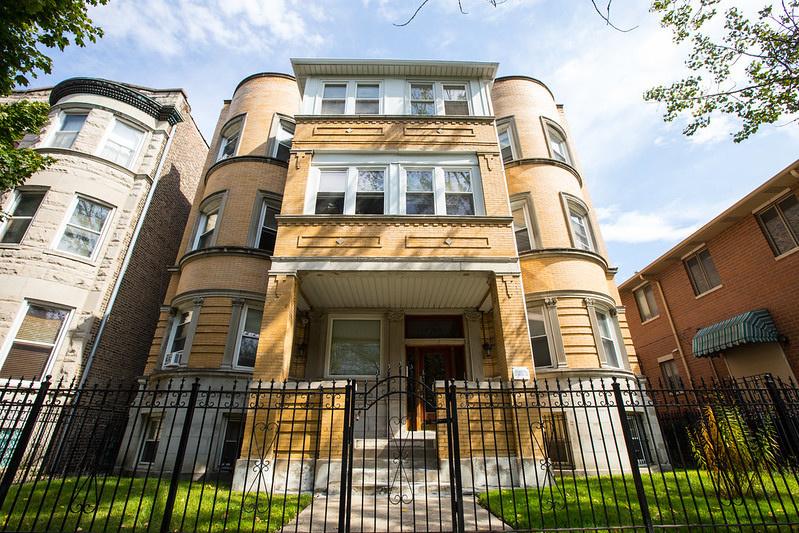
The city’s conversion pipeline leans heavily on older buildings, with the average property slated for redevelopment approaching 90 years old. By comparison, the national average is closer to 72 years, highlighting Chicago’s reliance on historic office properties as candidates for adaptive reuse.
LaSalle Street Reimagined Initiative Drives Downtown Activity
Much of Chicago’s current pipeline is concentrated in the central business district, particularly along LaSalle Street, where a cluster of projects is set to bring a significant number of new residential units to the Loop.
The largest project tied to the LaSalle Street Reimagined initiative is the conversion of the Clark Adams Building at 105 West Adams Street, which is expected to deliver 400 apartments. Close behind is the redevelopment of the Field Building at 135 South LaSalle Street with 386 units, followed by 30 North LaSalle Street, a 44-story tower slated to add 349 apartments.
Additional projects include the Monroe Residences and Hotel at 111 West Monroe Street, which will contribute 345 units through the conversion of 12 floors, as well as the landmark building at 208 South LaSalle Street with 226 apartments and the Rector Building at 79 West Monroe Street, expected to add another 117 units.
Together, these six projects will bring roughly 1,800 new apartments to the Loop, concentrated within a relatively small section of downtown and aimed at increasing residential presence in the area.
Beyond the LaSalle Street corridor, several other projects are adding to Chicago’s broader conversion pipeline. These include the redevelopment of a 24-story building on the Magical Mile at 500 North Michigan Avenue (320 units); the art deco tower at 65 East Wacker Place (252 units), and a range of smaller-scale projects across downtown and nearby neighborhoods.
Suburban Projects Add to Regional Momentum
Several suburban projects are also moving forward and expanding the reach of adaptive reuse across the metro area.
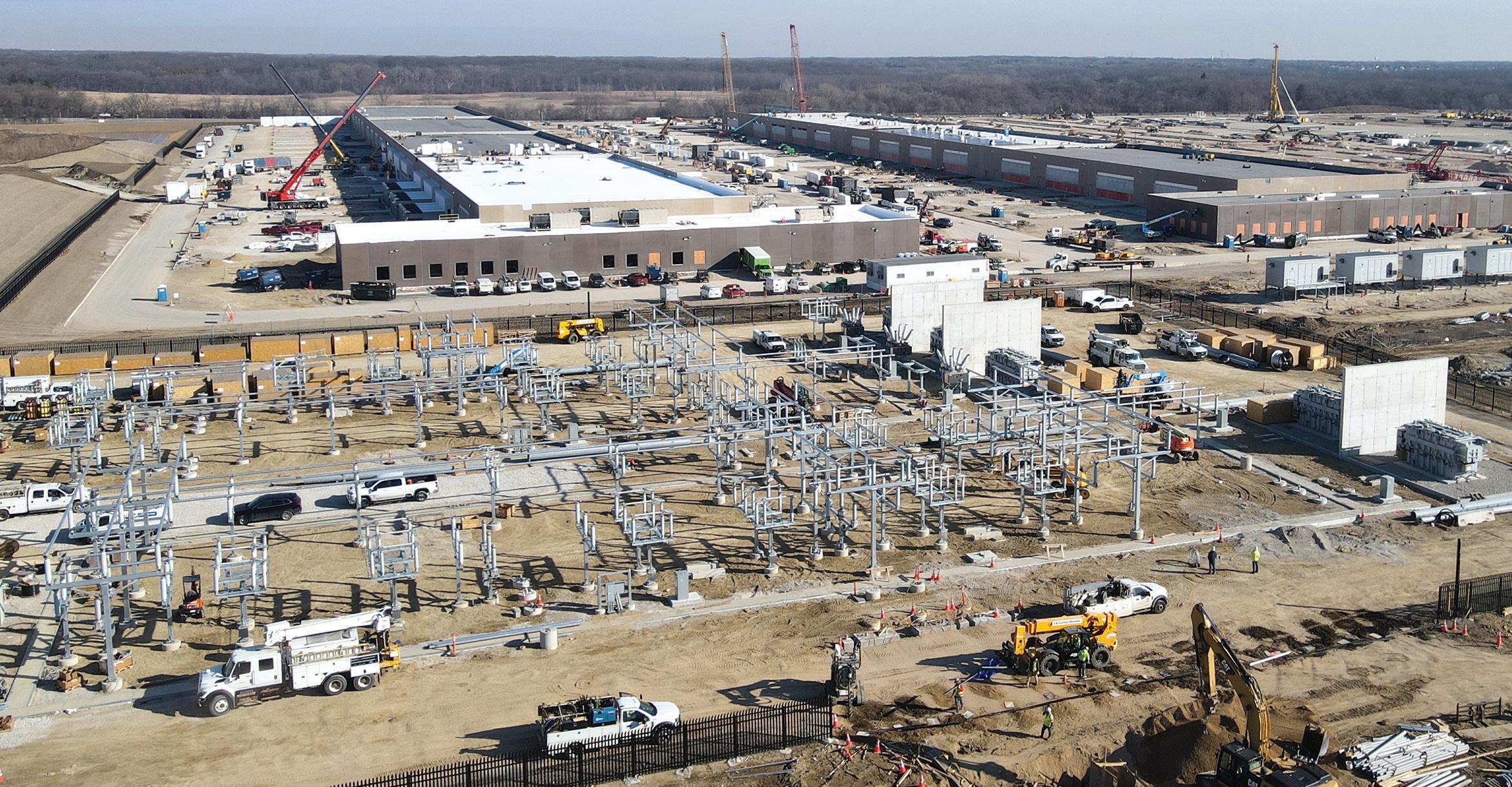
In Hoffman Estates, Bell Works Chicagoland — the former headquarters of AT&T — is one of the largest suburban conversion efforts currently underway. The former Motorola Solutions campus is being redeveloped into a mixed-use complex that will include 375
residential units alongside office, retail and community space.
Further north, in Skokie, the project at 5202 Old Orchard Road is expected to add 245 apartments across the two towers’ 395,000 square feet of space upon completion. These developments highlight how office-to-residential conversions are not limited to downtown environments but can also help reposition suburban office campuses.
A Growing Part of the Development Landscape
With 22 projects underway, a pipeline of 4,360 units, and nearly 95 million square feet of office space that could support future conversions, Chicago is positioned to remain a key market for adaptive reuse in the coming years.
Office-to-apartment conversions are unlikely to replace traditional multifamily development, but they are becoming an important complement, particularly in areas where new construction faces challenges. By repurposing existing buildings, these projects can help bring additional housing to established locations
while also supporting efforts to revitalize business districts.
As national trends evolve, Chicago offers a clear example of how office conversions can scale when market conditions, building characteristics and policy support align.
For more insights, charts, and a detailed methodology, read our full report on RentCafe.com.
RentCafe is the only fully integrated renting platform that supports renters at every stage. It helps them search and find apartments that match their preferences, apply, and sign a lease online. It guides renters through the move-in process. After the move in, residents can manage tehir rental in one place, from setting up utilities to paying rent and submitting maintenance requests. Renters can also earn rewards benefits along the way.
RentCafe, LLC is part of Yardi Systems, a U.S.based real estate technology company founded in 1984. Because many properties on RentCafe run on Yardi’s property management software, listing data flows directly from the source, keeping availability, pricing, and unit details accurate and up to date.
Yardi Matrix is a comprehensive real estate data and market intelligence service providing verified, detailed data on over 185 U.S. multifamily
markets, primarily focusing on properties with 50+ units. It helps investors and managers analyze rent, supply, and property performance, while offering specialized research for affordable housing, self-storage, industrial, and office sectors.
The Conversion Feasibility Index (CFI) is a proprietary tool within the CommercialEdge suite that evaluates how suitable an office building is for conversion into multifamily housing. It uses a weighted scoring system that analyzes key building characteristics and location factors, including
age, total square footage, floor depth, mid-block positioning, primary use type, number of stories, floor plate layout, ceiling height, sustainability features, walkability and access to public transit.
Each factor is assigned a weight based on its relative importance in determining conversion potential. Buildings earn points based how they perform across these criteria. The weighted scores for each factor are then added together to generate a final CFI score, indicating overall conversion feasibility.
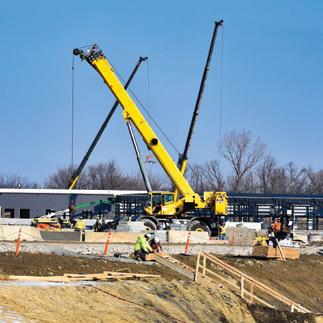
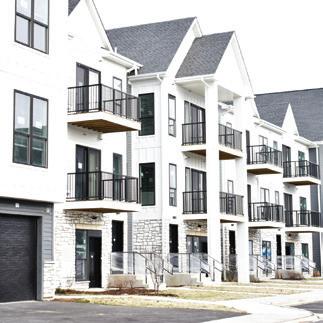
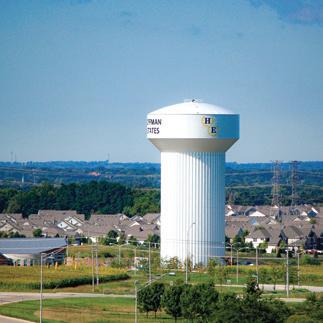
Here in Hoffman Estates, sites are ready for development and redevelopment. Companies are breaking new ground. People are building careers. Families are building lives. With our talented workforce, our location, our vision, and our momentum, Hoffman Estates is a community where you don’t just dream about the future, you build it.


A higher CFI score suggests a greater likelihood of a successful conversion, while a lower score indicates potential challenges or limitations. To provide a clear and actionable assessment of a building’s conversion potential, the CFI score is classified into three tiers:
• Tier I: Top Conversion Candidates (90-100 points) These buildings exhibit the most favorable characteristics for conversion, suggesting a high likelihood of success with minimal challenges.
• Tier II: Quality Conversion Candidates (75-89 points) While not as ideal as Tier I candidates, these buildings still possess strong potential for conversion and may require some modifications or adjustments to optimize their suitability for residential use.
• Tier III: More Difficult Conversion Candidates (0-74 points) These buildings face significant challenges or limitations that may hinder their conversion potential and require extensive modifications or creative solutions to achieve a successful transformation.
By classifying buildings into these tiers, the CFI provides a comprehensive and nuanced assessment of their conversion potential, allowing CRE professionals to make informed decisions and prioritize projects with the highest likelihood of success.






By Tom Marsan
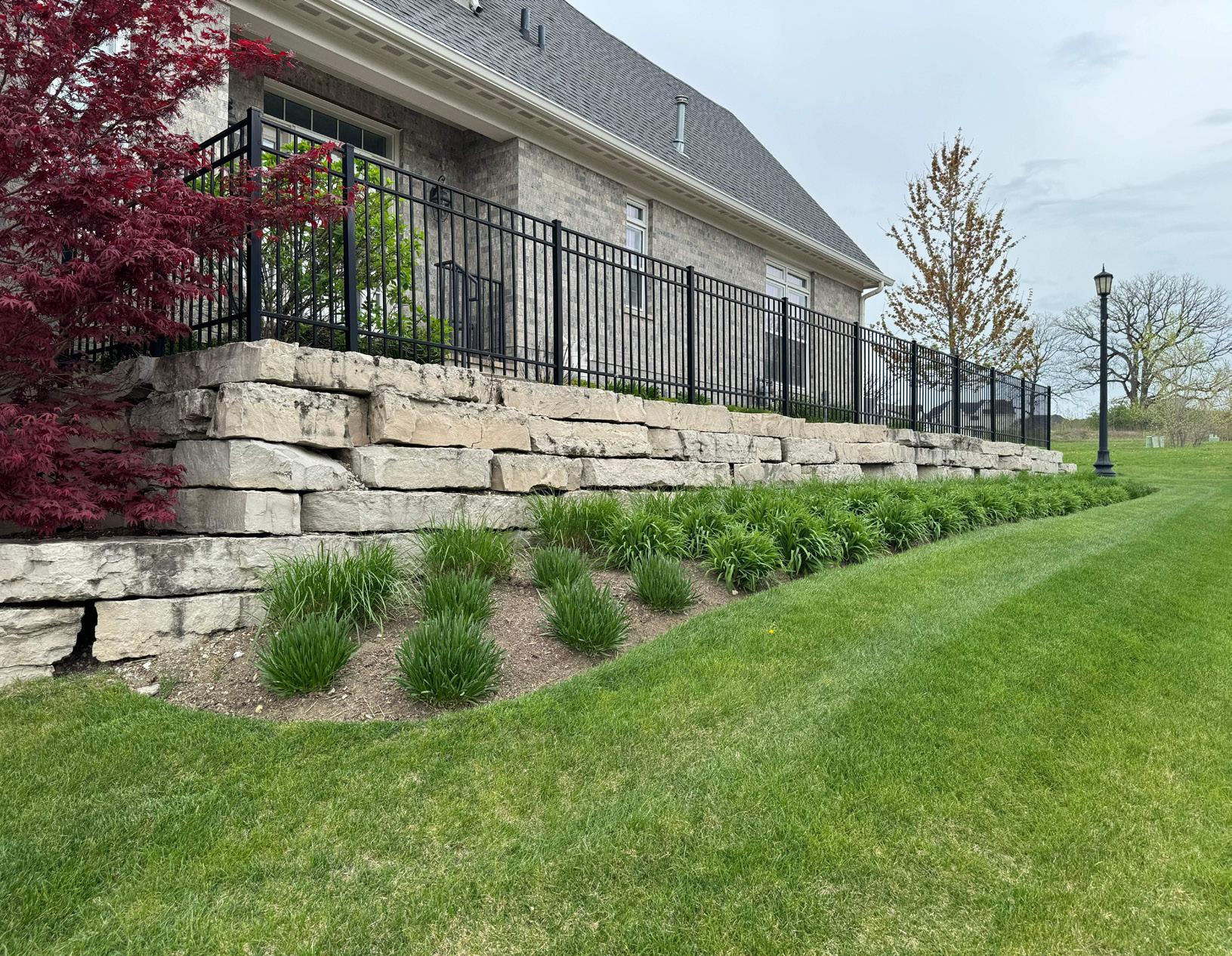
Tom Marsan is a certified snow professional who has been in the landscaping and snow removal industry for about two decades. He is an active member of ILCA and SIMA and is currently the general manager at Beverly Companies in Chicagoland.
A 372,000-square foot office campus known as Granite Park made a relatively simple change to its landscape operations. It involved upgrading irrigation controls, improving monitoring, and aligning maintenance practices with actual site conditions.
Within a year, the property reduced outdoor water use by roughly 40%, saving millions of gallons and tens of thousands of dollars annually.
At the same time, across the country, many otherwise well-located retail centers and commercial properties continue to struggle with the same recurring issues like declining curb appeal, inconsistent maintenance, drainage problems, and rising costs.
These aren’t distressed assets. In many cases, they’re stabilized properties with strong tenants and steady traffic. But their landscapes are managed reactively, not strategically.
The difference between these two outcomes isn’t budget, location, or tenant mix. It’s approach.
High performing properties treat landscaping as an operational system with measurable outcomes, not a cosmetic line item. That means tracking a few KPIs and tying them to clear standards and
accountability. This is similar to how performance based facility programs evaluate exterior spaces as part of overall property quality.
In Chicago, good landscaping is not just subjective. Parking lot screening, trees, and interior landscaping are governed by zoning requirements, and ongoing maintenance. This includes prompt replacement of dead material and a consistent maintenance schedule.
The best operators also engineer landscapes to reduce inputs of water, labor, and rework by using low-maintenance plant choices and smarter irrigation controls. This is especially important today, as labor costs are projected to rise significantly in the next several years.
KPIs and benchmarks that separate high performers
High performing sites use a small dashboard that management can review monthly during the season and quarterly during the off season.
Start by coming up with a site condition score of 0 to 100 with photo standards. Many property rating frameworks explicitly include “site/landscaping/exterior spaces” as a quality dimension. Include aspects like clear entrances, exterior gathering spaces, defined connections to parking, and well maintained greenery.
A practical benchmark is a score that stays stable across seasons.
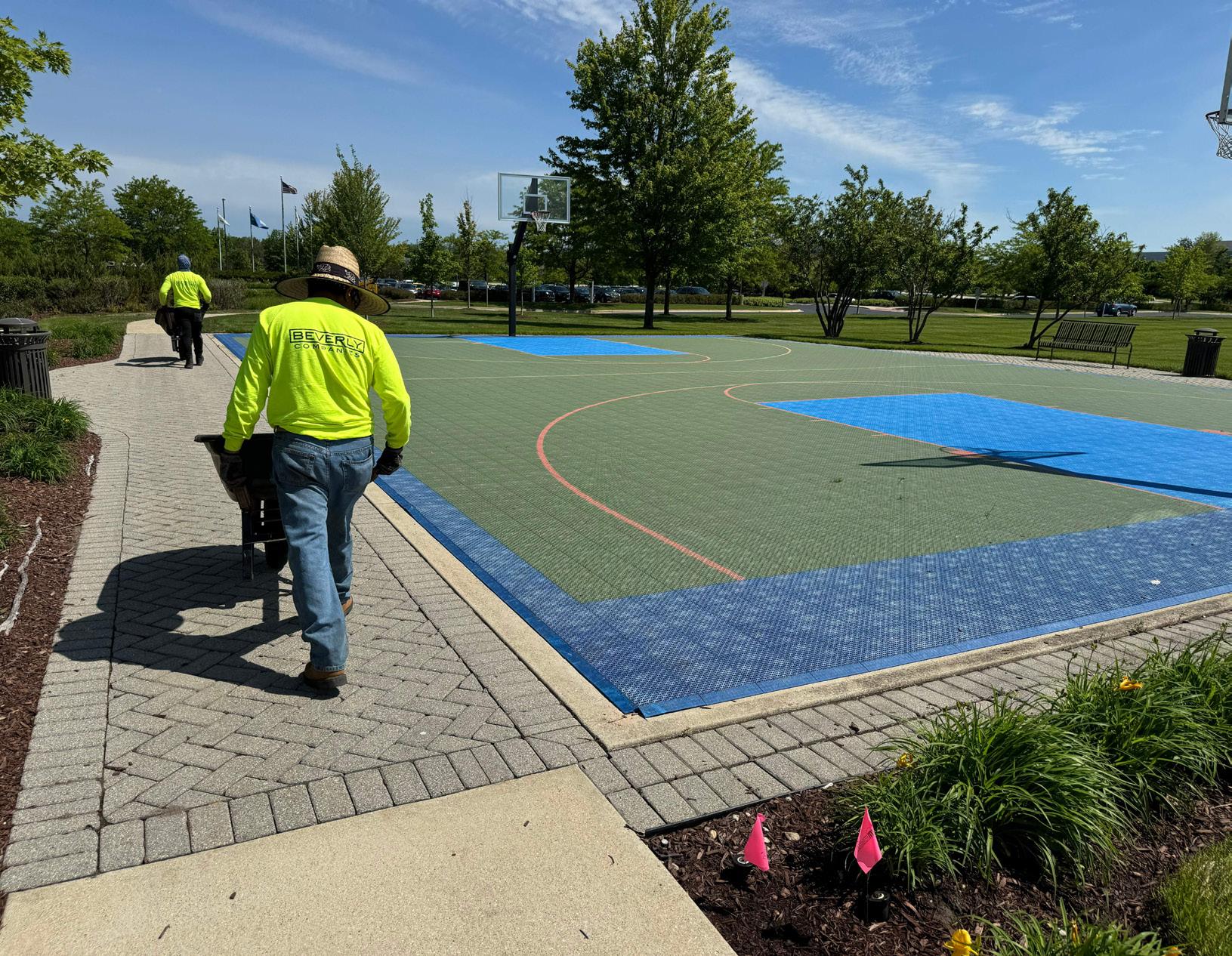
Response time and closure rate needs to be considered as well. High performers define “hazard” vs. “service” response in the contract and track percent closed within SLA. Performance based contracting guidance recommends measurable standards with an acceptable quality level (AQL), rather than vague language.
High-performing properties don’t just look at the total landscaping budget. They break it down into two buckets:
Ongoing maintenance (OPEX): weekly mowing, spring/fall cleanups, trimming, weeding, irrigation checks
Improvements and upgrades (CAPEX): new plantings, drainage fixes, irrigation upgrades, reworking beds
Instead of guessing if costs are high or low, they track what they’re spending based on the size of the property either per square foot or per acre. This makes it much easier to compare one property to another and spot issues.
Plant survival rate for new installs is another important thing to measure. Chicago zoning requires dead/damaged landscape material be promptly replaced, and continuous maintenance is binding on current and future owners.
For trees, recent Chicagoland research tracking newly planted parkway trees underscores why survival and condition should be a measured KPI in the establishment period. Most research ref-
erences 1–2 year survival and a 2-year warranty window.
Tenant and guest satisfaction surveys are essential. Formal programs used in CRE operations commonly require recent tenant surveys as part of operational excellence, and federal quality assurance plans explicitly use tenant satisfaction scores and interviews to evaluate contractor performance.
Concrete performance examples like the one mentioned in the intro exist for big landscape properties. Learn from stories like this so your property can flourish as it should.
Proactive operational practices that prevent mid-season surprises
High performers run landscaping like preventive maintenance.
Seasonal audits are non-negotiable in Chicago because codes and conditions for snow damage, salt, and drainage surface problems fast. The Chicago Landscape Ordinance requires a filed maintenance schedule and continuous operations for weeding, mowing, pruning, pest control, and access to water via hose bib within 100 feet of perimeter landscape areas.
Drainage is managed as a landscape and liability program. Chicago’s Stormwater Management Ordinance requires regulated developments to maintain an approved plan that includes rate
(continued on page 18)




Public and private sectors call upon RSHC’s real estate team to handle their toughest transactions. Whether it be complex commercial leasing and development, land use and zoning, or acquisitions and dispositions, RSHC’s real estate team is ready to support clients with a broad range of legal proficiency, experience, and practical knowledge in all facets of real estate law.
LaVon M. Johns Partner
Business Transactions Team Leader
Commercial Real Estate & Finance
2026 BISNOW Chicago Women
Leading Real Estate
2026 GlobeSt. Woman of Influence
Commercial Real Estate Legal Counsel
2026 REjournal Illinois Real Estate
Lawyer of the Year – Female, Finalist




control, volume control (including capture of one-half inch of runoff from impervious surfaces as an option), sediment/erosion control, and operations/maintenance provisions. New owners must also comply and be provided the plan at sale.
Integrated pest management (IPM) is the operational backbone of clean landscapes without constant chemical reaction. The U.S. Environmental Protection Agency defines IPM as an environmentally sensitive approach built on monitoring, thresholds, prevention, and least-hazard controls.
Mini examples include:
Commercial facilities (campus/office): Monthly irrigation inspections plus controller programming verification drove measurable water and cost savings in the Granite Park case study.
Shopping plazas: A WaterSense shopping-mall case study replaced ~50,000 SF of turf with xeriscape and upgraded ~85,000 SF of irrigation, reporting ~60% reduced water use (≈14M gallons/year) and $84,000 annual savings (case study published 2017; older than 5 years but quantified).
Design choices that reduce inputs without lowering curb appeal
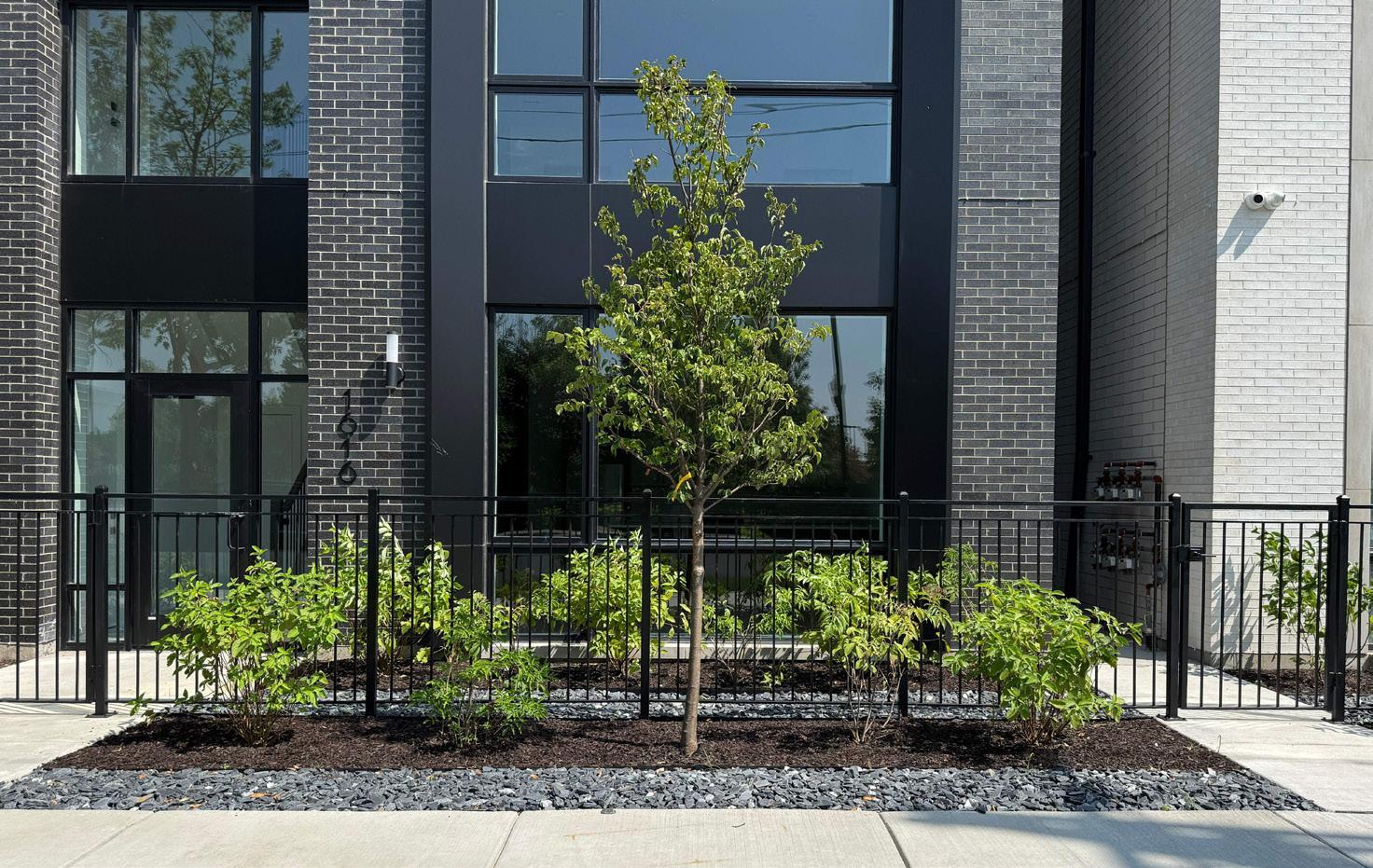
Design is where high performers win. A good design has fewer problems and better perception.
Low input palettes are selected for durability, fewer pest/disease issues, and climate fit. The University of Illinois Extension provides guidance and lists of relatively low-maintenance native plants and notes that perennial native plant beds generally require far less watering than turf once established.
Smart irrigation is designed around zoning/ hydrozoning and verified performance. The
“We implement strategic plans driven by client collaboration.”
For over 45 years, DarwinPW Realty/ CORFAC International has been a leader in industrial and commercial real estate. The company specializes in brokerage, property management, investment and development services primarily in the Midwest. DarwinPW Realty’s highly qualified professionals are problem solvers and utilize a breadth of tools and knowledge to serve our clients best.
U.S. Department of Energy summarizes that advanced irrigation controller savings vary widely, but finds controlled research averaging ~50% water savings and case studies on home/ commercial landscapes averaging ~30%.
The EPA’s controller guidance also highlights the scale of overwatering waste and positions smart controllers as applicable to businesses, not just homes.
Hardscapes and access also need to be integrated deliberately. The U.S. Access Board notes that changes in level on accessible routes can be
up to ¼” without treatment (½” if beveled), and bigger changes must be handled as ramps/curb ramps. This means edging, pavers, settling, and root heave are not aesthetic issues, but they are compliance and risk issues.
It’s important to make retail designs specifically for Chicago. Parking lots over 1,200 SF trigger screening/setbacks and hedge/tree requirements, and interior landscaping is required starting at 3,000 SF (5%–10% interior landscape area depending on size).
Good vendor management can turn service into performance
High performing property managers buy outcomes, not visits.
Contract language should be structured like performance based service. Define measurable standards, define the AQL (what error rate is acceptable), and define what happens when performance misses (credit, rework at contractor cost, or escalation).
Practical grounds examples of measurable standards include defined turf height ranges, debris removal before mowing, and documented pest identification/notification in formal performance work statements.
The snow to landscape handoff should be explicitly managed. Snow & Ice Management

|
Rick Daly President

Association publishes ANSI snow procurement standards emphasizing early RFP timing, written contracts, defined level of service, site assessments with hazard elimination, and detailed event documentation.
When landscaping and snow are separate vendors, high performers require a single shared preseason photo set, stake-out plan, and a documented damage triage process.
Budgeting, risk mitigation, and tenant experience impact
Budget strategy is where high performing becomes repeatable. The National Association of Landscape Professionals notes labor pressure is expected to climb roughly 20% through 2029, which is a strong argument for reducing labor-dependence via turf reduction, simplified beds, and smarter irrigation monitoring.
CAPEX vs. OPEX discipline matters here. Irrigation controller retrofits, drainage corrections, and hardscape resets often behave like CAPEX with measurable payback, while weekly maintenance is OPEX. Federal life cycle costing tools emphasize evaluating alternatives with higher initial costs but lower operating costs over time, especially for water conservation projects.
Risk/liability mitigation is operational, not reactive. The Occupational Safety and Health Administration requires walking and working
surfaces be maintained free of hazards including snow/ice, and that hazards be corrected before use or guarded until repaired. These are principles that map directly to spring trip hazards, drainage-related icing, and settlement around walk edges.
Tenant/guest experience is definitely measurable. Third-party CRE quality frameworks explicitly connect landscaping and exterior space quality to tenant experience and retention, and top-tier operations programs require tenant engagement and surveys.
Recent hospitality research on biophilic/nature elements in hotel settings links these features to guest well being and patronage intent. Context varies by market and design scope, but landscaping is always one component.
At the end of the day, landscaping is one of the few parts of a property that touches cost, risk, compliance, and tenant perception all at once. The properties that consistently perform well are not necessarily spending more, they’re making more intentional decisions and holding those decisions accountable over time.
As operating costs continue to rise and expectations increase, the gap between properties that manage landscaping strategically and those that don’t will only become more visible.


By Anders Klein, Senior Director of Research, Savills
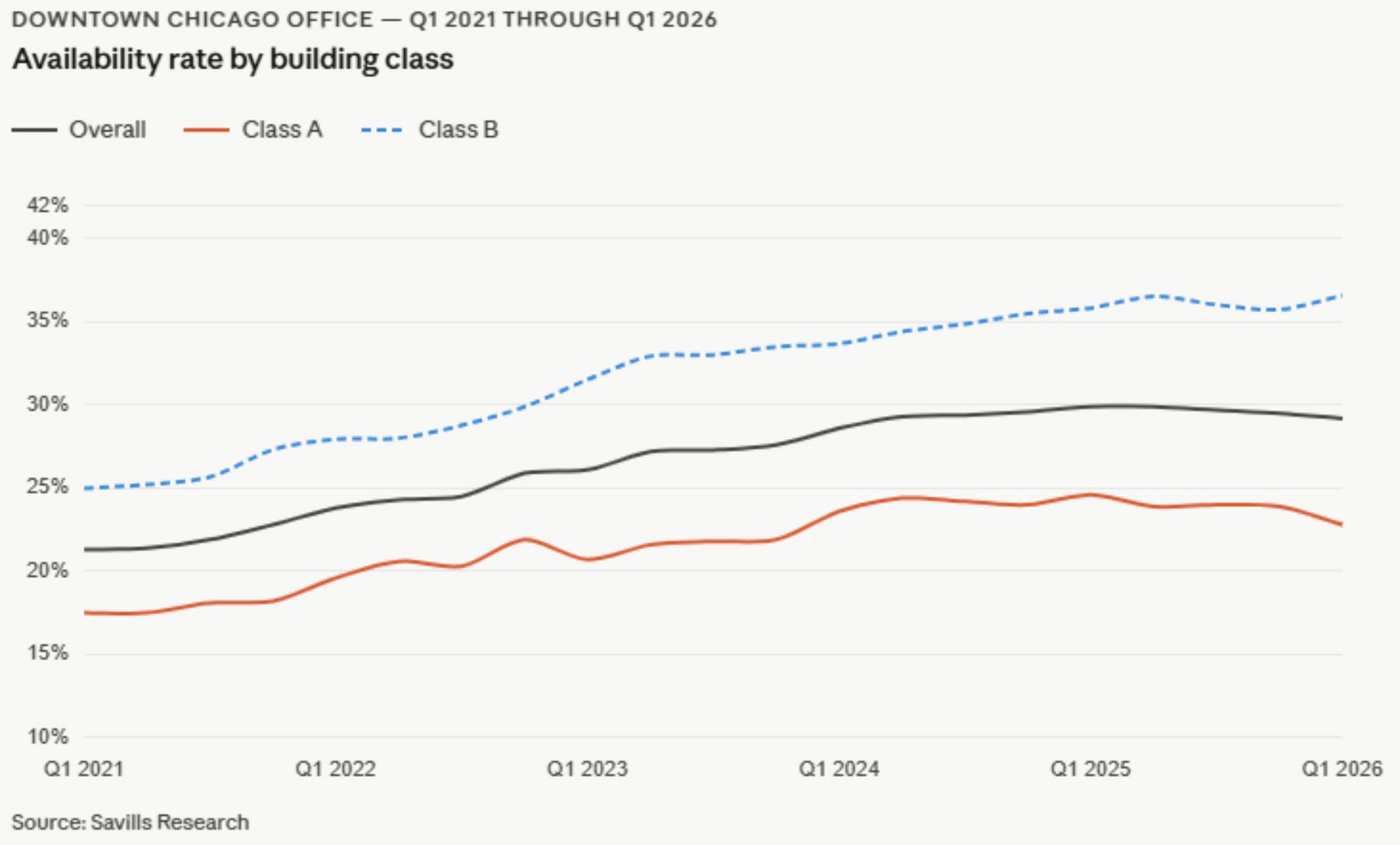
At first glance, downtown Chicago’s office market still looks like a tenant’s market. Availability remains elevated despite a modest decline over the past year, and asking rents continue to rise, now sitting at record levels across both the overall market and Class A space. But headline availability and actual availability are not the same, and the gap between them is widening. Beneath those top-line numbers, the first quarter of 2026 reveals a market that has become increasingly uneven in ways that matter most to occupiers actively searching for space.
A company entering the market today may assume that downtown offers a wide range of options. In a broad sense, that’s still true. But once a search narrows to newer buildings, strong transit access and space that’s already built out, the number of viable choices drops off quickly. This is most exemplified in the West Loop, Fulton Market and River North, where leasing activity remains concentrated and many of the most desirable buildings have limited availability. A meaningful portion of the space that contributes to overall availability either doesn’t meet current tenants’ expectations or is controlled by landlords who cannot compete
“Taken together, these trends describe a market that is becoming more selective rather than simply improving or deteriorating.”
aggressively for new deals. For tenants focused on quality, location and speed to occupancy, the practical option set is significantly smaller than the market statistics would suggest.
Much of that shift is tied to how companies are defining their space requirements. The office is
no longer just a place to house employees; it must give people a reason to come in, support collaboration and reflect a company’s brand and culture. That has pushed demand toward a narrower slice of inventory: buildings that can deliver a higher-quality workplace experience without requiring a full reset of space. Tenants are placing more weight on how quickly they can occupy it, how well the space functions dayto-day and how easily it supports hybrid work patterns. Within that segment, built-out space has become increasingly valuable as tenants attempt to balance cost, timing and flexibility. Many are also seeking to avoid the time and
capital required for a full build-out, which has become significantly more expensive in Chicago in recent years and can approach $400 per square foot for higher-end fit-outs. Move-inready space in newer buildings tends to draw outsized interest, and in some cases, multiple tenants are evaluating the same opportunities simultaneously.
The market becomes even more constrained when the focus shifts to higher-floor space in the newest buildings. Availability in those environments has remained limited, particularly for tenants requiring larger blocks or contiguous space. For a subset of occupiers, especially in professional and financial services, these floors carry a different level of importance—both for views and for the overall workplace experience they are trying to create. What catches many tenants off guard, however, is the gap between what the headline numbers suggest and what’s available once floor, size and build-out condition are all factored in. A market that looks open on paper can feel considerably tighter the moment real requirements are applied.
That tightening at the top end is also beginning to influence how tenants think about timing. Over the past several years, many occupiers took a deliberate approach to decision-making, using market conditions to their advantage while working through longer-term workplace strategy questions. That flexibility still exists in parts of the market but is less available in the segments where demand is most concentrated. Leasing volume in the first quarter was relatively light compared to recent periods, more reflective of timing than of any shift in underlying demand. Many tenants remain active, touring space and making decisions, even if those transactions have not yet appeared in headline totals. For tenants targeting top-tier buildings, waiting is no longer a neutral strategy. The best options are not as easily replaceable as they were even a year ago, especially when built-out space is involved.
Ownership structure is also playing an increasingly important role in determining which buildings are competitive. While availability remains elevated across the market, not all of it is equally viable. Several properties are facing capital constraints tied to maturing debt, limited access to financing or broader repositioning challenges. The ability to fund tenant improvements, offer meaningful concessions or execute deals efficiently can be limited in these cases. In practice, that often manifests as slower deal timelines, thinner improvement packages or simply less willingness to engage creatively on structure—all of which tenants notice, even when the space itself looks attractive on paper. Leasing activity is increasingly concentrated among a smaller group of well-capitalized owners with a clear leasing strategy. These properties are better positioned to respond to tenant needs and offer greater execution certainty.
On the supply side, contraction is underway, though not in the way typically associated with a recovering market. There is little meaningful office development in the pipeline, and limited near-term expectations for new deliveries. Instead, inventory is being reduced through conversions and repositioning efforts in areas such as the Central Loop, where older buildings are being removed from the competitive
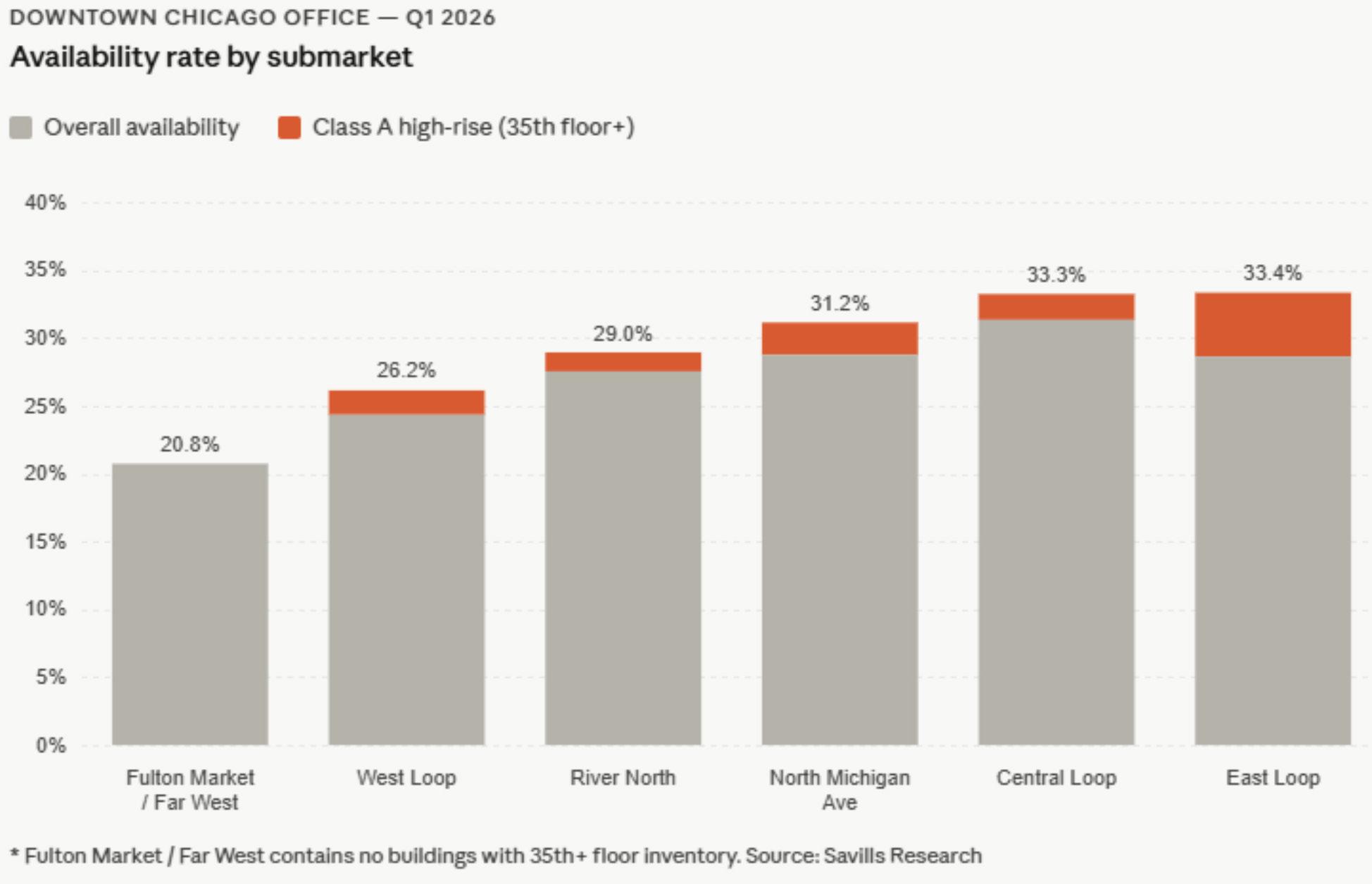
office market in meaningful numbers. That reduction in supply, combined with the prospect of a major new anchor, is beginning to shift the area’s perception. The Central Loop is not yet seeing the same level of tenant demand as the West Loop but is instead re-entering the conversation in a more substantive way, most notably in the submarket’s northern half. Google’s redevelopment of the Thompson Center has become a focal point in leasing discussions, even well ahead of its expected completion, because it introduces a modern, large-scale workspace option into a part of downtown that has seen limited new investment for years. Alongside this, office-to-residential conversions are gradually reshaping the area’s composition, removing older office stock while beginning to build the residential base that could support additional retail and amenities over time. The trajectory points more toward long-term repositioning than a near-term rebound. Still, it is a dynamic that occupiers are starting to factor into their evaluation of the broader downtown market.
Taken together, these trends describe a market that is becoming more selective rather than simply improving or deteriorating. Availability remains high but unevenly distributed. Demand remains measured but increasingly focused. New supply is limited, and existing inventory is being reshaped in ways that will influence leasing decisions well beyond the current cycle. For occupiers, that means the opportunity set is still broad in theory but more constrained in practice. The challenge is no longer just identifying available space but also identifying the right space and moving at the most opportune time in a market where the best options are becoming more targeted and competitive than the headline numbers imply.




















The lone CBD bright spot in absorption terms was Fulton Market, which posted 221,384 square feet of positive net absorption in Q1, the only downtown submarket to record gains. The delivery of 919 W. Fulton, a 369,008-square-foot building, contributed to that activity and marks the last new office delivery expected in the CBD for the foreseeable future.
On the other end of the spectrum, River North recorded direct vacancy of 34.4%, among the highest in the CBD, while the East Loop sat at 31.8%.
The suburban picture follows similar contours. The O’Hare and North Suburbs submarkets are leading demand, according to both CBRE Research and Steve Degodny, executive vice president of Transwestern’s agency leasing team, who cited O’Hare’s central location and transportation access as structural advantages that have kept the submarket competitive across cycles. That momentum produced concrete results in Q1: Claire’s Essentials LLC signed a 43,214-square-foot new lease at Columbia Centre III in the O’Hare submarket, one of the quarter’s largest suburban transactions.
Downtown leasing is being driven primarily by professional services, law firms, financial services and trading companies, according to Jon Milonas, senior vice president at CBRE. Not all demand is contraction. One of the more counterintuitive dynamics of the current market, he said, is a resurgence in expansions from tenants who misjudged their space needs in the immediate post-pandemic period.
“In 2025 and into 2026 we have seen a surprising resurgence of expansions, often from tenants who ‘over-indexed’ post pandemic by leasing too little space or not carrying enough static vacancy to account for headcount growth or a higher return to office,” Milonas said.
That correction is adding demand at the margins, but it is not reversing the broader structural shift in how tenants approach space. Hybrid work has permanently altered the calculus.
“Tenants aren’t necessarily looking at space needs in terms of one-head to oneseat anymore, given hybrid work models and the success tenants have had finding talent outside of their traditional office hubs during the pandemic,” Skender said.
The result is a market where headcount growth no longer automatically produces proportional footprint growth and where the quality of a building carries more weight in the leasing decision than it did a decade ago. Growing AI and fintech companies are adding incremental demand downtown, according to Milonas, though large requirements from out-of-market



“You work within the framework of the ownership, and creative structures to make it a win-win for both sides are happening.”
tech companies have not returned in meaningful volume.
The landlord response to bifurcation has two tracks: capital investment in amenities and creative deal structures designed to move tenants who might otherwise stay put.
At 200 S. Wacker Drive in the West Loop, Glenstar and a private investor are in the midst of a $25 million redevelopment of the 40-story, 761,775-square-foot Harry Weese-designed tower. The project spans five levels of amenities including a riverfront bar and lounge, river-level golf simulators, a full-floor wellness center with cold plunges and infrared saunas, a 34th-floor conference center accommodating more than 180 people and more than 52,000 square feet of move-in-ready spec suites. Delivery is expected by the end of 2026.
In River North, 300 N. LaSalle, a 60-story, 1.27-million-square-foot tower spanning 200 feet of Chicago River waterfront, offers on-site dining anchored by Chicago Cut Steakhouse, a 24-hour fitness center, riverfront terrace and LEED Platinum certification. Milonas cited both buildings as examples of landlords leaning into what distinguishes their assets rather than competing on rate alone.
New ownership at reset valuations is enabling some of that investment, according to Milonas, who noted that buildings selling at historically low prices are allowing new owners to reinvest in amenities
and offer more competitive lease terms, which is generating leasing activity on a building-by-building basis that cuts across traditional submarket lines.
On the deal structure side, Skender described a mechanism his team has used with tenants carrying lease obligations they want to exit early.
“Competing landlords willing to defer the rent commencement of a lease for a relocating tenant which allows our clients to occupy a new space, thereby immediately accomplishing their real estate goals without paying double-rent,” Skender said.
“There are various owner types,” explained Degodny. “Buildings that have been reset — where a new buyer has come in at a lower basis — are generally able to fund higher concessions in a way that distressed properties simply can’t. You work within the framework of the ownership, and creative structures to make it a win-win for both sides are happening.”
That kind of structural flexibility reflects a market in which landlords with the financial capacity to be creative are winning deals that more rigid competitors cannot close.
Underlying all of it is a construction cost environment that has not meaningfully eased. According to CBRE Research cited in Milonas’s commentary, construction commodity pricing remains 57.48% higher than at the start of the pandemic — a reality that is reshaping lease economics.
Landlords are pushing for longer lease terms on larger deals to justify high tenant improvement allowances, while tenants are increasingly gravitating toward spec suites to avoid buildout costs.
The supply side offers a measure of relief that will take years to materialize. After 919 W. Fulton’s Q1 delivery, no additional new office projects are under construction in the CBD, according to CBRE Research. That pipeline absence will eventually become a constraint.
“The lack of new construction downtown is creating a bottleneck of Class A space between now and 2030,” Milonas said.
For tenants requiring large, contiguous Class A blocks, the window for options may narrow considerably before new product arrives. Pre-leasing activity well ahead of any 2030 delivery is a likely outcome.
Against that backdrop, Degodny sees reasons for measured confidence. The fundamental demand for office from employers who want their people together and employees who need a reason to show up remains intact. What has changed is the standard a building must meet to capture it.
“I’m optimistic about office,” Degodny said. “Companies want to be in the office. It’s a matter of finding the right space to balance a smaller footprint with a property that provides a compelling amenity package.”


MID-AMERICA
One Parkview Plaza, 9th Floor Oakbrook Terrace, Illinois 60181
Primary Contacts
Jean Zoerner-Illinois, JMZoerner@midamericagrp.com; Brad Lefkowitz-Michigan, blefkowitz@midamericagrp.com; Brandon O’ Connell-Minnesota, boconnell@midamericagrp.com; Jim Vaillancourt-Wisconsin, jvaillancourt@midamericagrp.com
Core Services
Mid-America provides strategic consulting services that maximize net operating income, net cash flow, and accelerate property appreciation. We provide property and construction management, leasing, due diligence, and market analysis. Additionally, we offer MA Building Services, a self-performing porter and maintenance company offering our clients cost savings and improved accountability for related services.
About Mid-America
Mid-America Real Estate is #1 in retail real estate services in the Midwest, with fullservice offices in Illinois, Michigan, Minnesota, and Wisconsin. Our exclusive focus on retail property, combined with cutting-edge technology and unsurpassed service, distinguishes Mid-America within the industry and provides clients with a competitive edge. The total consideration value of leasing and investment sales transactions facilitated in 2025 was $2.6 billion. Mid-America leases and manages more than 50 million square feet of retail space, provides comprehensive self-performing facility services, and represents over 270 retailers and other tenants. For more information, visit www.midamericagrp.com.
MERIDIAN DESIGN BUILD
9550 W. Higgins Road, Suite 400 Rosemont, IL 60018
P: 847.374.9200
info@meridiandb.com
meridiandb.com
Primary Contacts
Paul Chuma, President
Howard Green, Executive Vice President
Core Services

9450 West Bryn Mawr Ave., Suite 120 Rosemont, IL 60018
P: 847.615.1515 | F: 847.615.1598 pccdb.com
Primary Contacts

Mark L Augustyn, COO, maugustyn@pccdb.com, James A. Brucato, President, jbrucato@pccdb.com
Core Services
Since 1999, Principle Construction Corp. has been a leading design-build general contractor serving the industrial markets of Chicago Metro, Southern Wisconsin, and Northwest Indiana. We specialize in designing and constructing exacting solutions for our clients, including:
• Built-to-Suit Facilities • Speculative Facilities
• Warehouse and Distribution Centers
• Logistics and Cross-Dock Facilities
• Industrial Outdoor Storage
•Industrial and Manufacturing Plant • Tenant Improvements
• Expansions and Additions• Food Processing Facilities
• Specialty Projects
Selected Projects
• 8,205 SF animal shelter for Heartland Animal Shelter, at 586 Palwaukee Dr., in Wheeling, IL.
• 12,560 SF showroom and outdoor pool park for Doheny Enterprises, at 5307 Green Bay Rd., in Kenosha, WI
• Phase 1 renovation project for SMW Autoblok, at 285 Egidi Dr., Wheeling, IL
DEIGAN & ASSOCIATES, PLLC
28835 N. Herky Drive Lake Bluff, IL 60044 P: 847.682.7381 www.deiganassociates.com
Primary Contact

Michele Brady, Director Business Development & Real Estate Services mbrady@deiganassociates.com
Core Services
Meridian Design Build provides construction and design/ build construction services on a national basis with a primary focus on industrial, office, medical office, retail and food and beverage work.
Company Overview
With a team of in-house professional project managers, Meridian has extensive experience coordinating the design and construction of new buildings, tenant improvements, and additions/renovations from 15,000 square feet to 1,000,000+ square feet. Meridian Design Build has been a Member of the U.S. Green Building Council since 2007.
Selected Projects
University Park Logistics Center, University Park, IL - 970,123 sf speculative multitenant industrial distribution/warehouse facility for Clarius Partners and Hillwood Investment Properties. Silesia Flavors, Huntley, IL - 134,075 sf food production, laboratory, research and development, and office facility for Venture One Real Estate and a global leader in confectionery and beverage flavors. FedEx Ground, Gary, IN324,901 sf package sorting and distribution center on a 78-acre redevelopment site for Scannell Properties and Transport Properties.
The Deigan Group provides client responsive, results oriented environmental consulting and remediation services, with a focus in land-based work, including Brownfield Redevelopment, Power Plant Decommissioning/Redevelopment, Strategic Environmental Planning, Property Assessments and Site Remediation, Compliance/ Permitting, Employee Exposure Testing/Safety Monitoring Asbestos Surveys/Mold/ Indoor Air Quality, Waste Minimization/ Recycling/ Sustainability Plans, Successful Grant Writing.
Firm Overview
A full-service environmental consulting organization specializing in defining environmental business risk and removing environmental uncertainties for property development sites. Our wide range of experience within the environmental industry helps us provide realistic cost-saving strategies for our clients with the goal of reducing their overall environmental liability and obstacles to redevelopment.
100 N. LaSalle St., 10th Floor
Chicago, IL 60602
P: 312.782.8310
Sarnoffpropertytax.com
Primary Contact

James Sarnoff, jsarnoff@sarnoffpropertytax.com, P: 312.448.5337
Core Services
Since 1986, Sarnoff Property Tax has been a leading and recognized law firm concentrating solely in the field of property taxation. We help clients secure favorable taxes in Illinois through property tax appeals, incentives, and consulting.
Firm Overview
Sarnoff Property Tax’s clients include Owners, Developers, Managers, REITs, Fortune 500 Companies, Private Equity Firms, etc., in connection with commercial property, high-rise and low -rise apartment buildings, condominium associations and singlefamily home portfolios.
1628 W. Irving Park Road, Unit 1D Chicago, IL 60613
P: 708.873.8639
emarquettebank.com
Primary Contacts
Bill Hinsberger, Executive Vice President, bhinsberger@emarquettebank.com; Patrick Tuohy, Senior Vice President, ptuohy@emarquettebank.com
Core Services
Multifamily/apartment building lending for all Chicagoland. Fast, local decision making. Dedicated local servicing staff. Simple, no-hassle paperwork. Quick close. Flexible terms. All clients enjoy ZRent – an automated, hassle-free, no-cost way to collect monthly payments from tenants.
Company Overview
Marquette Bank has 20 branches, 2 loan offices and $2 billion in assets. Independently owned/operated since 1945. Offering clients full-service, banking, financing, insurance, trust and wealth management services.
WORSEK & VIHON, LLP
180 North LaSalle Street, Suite 3010 Chicago, IL 60601
P: 312.917.2307 P: 312.917.2312
F: 312.596.6412 wvproptax.com
Primary Contacts

Francis W. O’Malley, Managing Partner, fomalley@wvproptax.com; Jessica L. MacLean, Partner, jmaclean@wvproptax.com
Core Services
Worsek & Vihon, LLP represents taxpayers in Illinois by limiting their property tax liabilities through ad valorem appeals resulting in lower tax bills. We have over 40 years of experience and can handle basic to the most complex assessment issues while offering the dependable, personalized attention our clients deserve. We have experience representing owners of all property types. In addition to filing thousands of appeals with the Cook County Assessor, we have been involved in numerous proceedings before various Boards of Review, the Illinois Property Tax Appeal Board, and the Circuit Court of Illinois, and have appeared before the Illinois Appellate and Supreme Courts.
Firm Overview
Worsek & Vihon LLP, is a team of highly experienced attorneys singularly focused on Illinois real estate tax law. The firm is dedicated to minimizing property tax liabilities through strategic tax portfolio management, well researched, creative appeal preparation and aggressive advocacy.