
NATIONAL ENVIRONMENTAL SERVICES
Houston, Texas • Redlands, California


Houston, Texas • Redlands, California
National Environmental Services, with offices in Houston, Texas and Redlands, California, is an environmental consulting company, established in 1995, that conducts a full range of reliable and cost-effective environmental assessment and corrective services, with competitive pricing and convenient turnaround.
• Phase I Environmental Site Assessments (ASTM E1527-21)
• Transaction Screens (ASTM E1528-22)
• Asbestos & Lead-Based Paint Inspections (Licensed Texas Asbestos Consulting Agency)
• RSRAs (Records Search with Risk Assessments)
• Phase II Subsurface Investigations*
• Remediation and Corrective Activities*
• Soil, Water, and Air Testing Services
• Remediation and Corrective Activities*
• Indoor Air Quality/Mold Surveys (Licensed Mold Consulting Agency)
• Underground Ground Storage Tank Testing Services*

National Environmental Services 5773 Woodway Dr, Suite 96, Houston, TX 77057: Phone (281) 888-5266
700 East Redlands Blvd, Suite U618, Redlands, CA 92373: Phone (951) 545-0250 Toll Free: (833) 4-Phase1 www.nationalenv.com • www.gabrielenv.com

THE TEXAS COMMERCIAL REAL ESTATE NEWS SOURCE
PRESIDENT & CEO
Jeff Johnson jeff.johnson@rejournals.com
PUBLISHER
Mark Menzies menzies@rejournals.com
TEXAS MANAGING DIRECTOR
April Daniel April.Daniel@rejournals.com
BUSINESS DEVELOPMENT EXECUTIVE
Rob Tippler rob.tippler@rejournals.com
CLASSIFIED DIRECTOR
Susan Mickey smickey@REDnews.com
Texas Brokers: 8,150
Texas Leasing/Tenant Rep: 6,232
Texas Investors: 4,979
Texas Developers: 4,710
Outside Texas Investors, Brokers, Developers etc: 26,387
TOTAL QUALIFIED ONLINE RED news DISTRIBUTION: 50,458
To subscribe to REDnews call (713) 661-6300 or log on to REDnews.com/subscription.
Trophy Divide: How Texas office split into two markets running on different rules Trophy office rents in Dallas now average about $77 per square foot, more than double the roughly $37 per square foot landlords command in the rest of the Class A market, according to Cushman & Wakefield research. The spread between the two has grown from $25 to $40 per square foot since 2020 and national firms shopping Dallas from gateway markets like Manhattan are calling the trophy product cheap.
The Can Gets Heavier: Texas multifamily hopes for shift in capital For most of 2025, multifamily owners across Texas told themselves the same story: hold on, ride it out, refinance when rates ease. The Fed cut three times. Construction starts fell roughly 75 percent nationally. The math should have rewarded their patience. Instead, inflation crept back, treasury yields drifted higher and the phrase echoing through capital markets shifted to “higher for longer.”
Power, Chips and a Tale of Pipelines: A look at the Texas industrial market When semiconductor logistics specialist Infinity Link Logistics signed for 87,000 square feet near Samsung's Taylor plant in the first quarter of 2026, it joined a parade of suppliers chasing the chipmaker into Central Texas. Scoop/People on the Move

BY BRANDI SMITH
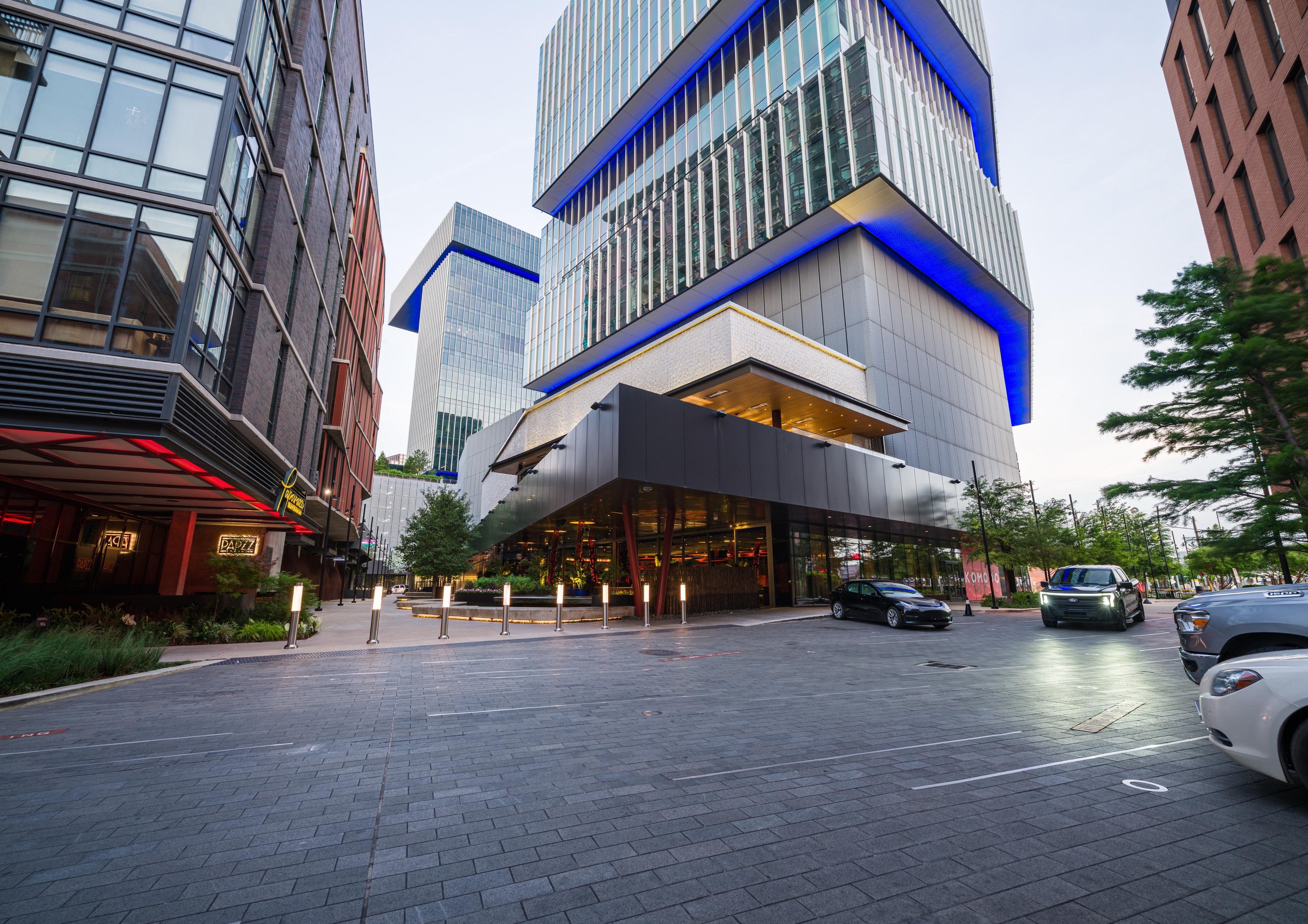
Trophy office rents in Dallas now average about $77 per square foot, more than double the roughly $37 per square foot landlords command in the rest of the Class A market, according to Cushman & Wakefield research. The spread between the two has grown from $25 to $40 per square foot since 2020 and national firms shopping Dallas from gateway markets like Manhattan are calling the trophy product cheap.
“There is currently no ceiling on trophy rents in Dallas,” said Andrew Matheny, Senior Research Manager at Cushman & Wakefield. “National and global firms based in expensive gateway markets such as Manhattan
view Dallas trophy space as relatively economical at $110.00 psf or even $150.00 psf or more.”
That pricing power is the clearest signal yet that Texas office has split into two markets running on different rules. Dallas-Fort Worth vacancy improved 40 basis points year over year to 24.5 percent in the first quarter, according to Newmark. Matheny said Cushman & Wakefield’s tracked inventory has now logged five consecutive quarters of positive absorption. Houston vacancy held at a record 25.8 percent with first quarter absorption of negative 287,336 square feet, according to Newmark,



though the firm characterized the dip as seasonal rather than structural. Austin's vacancy dropped 120 basis points quarter over quarter to 22.3 percent, the first meaningful reversal after years of supply outpacing demand. Across all three metros, the buildings winning are the same ones: newest, best-located, most amenitized. Everything else faces hard decisions.
“Options dwindle” in DFW
Cushman & Wakefield's Quantitative Insight Group forecasts Dallas Class A net absorption will exceed 4.8 million square feet through 2028 while new supply over those three years totals just 638,000 square feet. Demolitions, conversions and user purchases are pulling inventory out of the market faster than construction is replacing it.



“As options dwindle in trophy and top tier buildings, tenants will move down the quality spectrum to the next best options and bolster office fundamentals across the board,” Matheny said.
He offered the example of Jones Day, which recently signed for 76,000 square feet at the Class A Knox & McKinney development, anchoring a building that won't deliver until 2028, calling it a “prime example of trophy tenants kicking off a new building with a pre-lease to overcome uncertainty around future supply.”
“Fierce competition” in Houston
In Houston, the same dynamic shows up in deal size rather than rent. Class A leasing accounted for 66 percent of the market's first-quarter
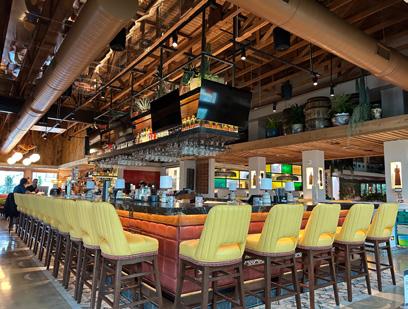
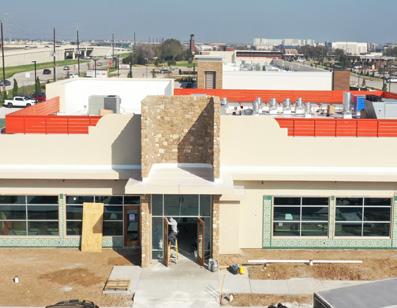
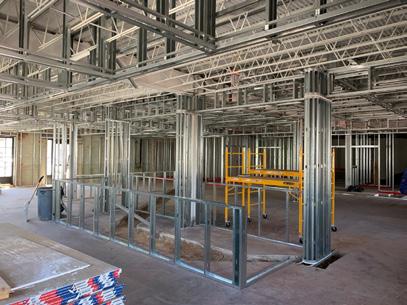
KT Ventures believes successful projects are built on more than concrete and steel. Clear communcation between owners, architects, subcontractors, vendors, and field teams keeps projets aligned, reduces delayes, and helps deliver results clients can trust.

“Tenants haven't been as price sensitive as they have in previous decades. There is fierce competition to recruit and retain the best talent and companies are rationalizing a premium office environment as a competitive advantage.”
activity but only about 30 percent of deal count, according to Newmark. The average Class A lease ran 8,332 square feet against a market-wide average of 3,832 square feet. Tenants are signing bigger commitments in better buildings.
“Tenants haven't been as price sensitive as they have in previous decades,” said Jon Lee, Executive Vice President of Leasing Services with CBRE in Houston. “There is fierce competition to recruit and retain the best talent and companies are rationalizing a premium office environment as a competitive advantage.”
Return-to-office mandates have layered onto that talent equation. Newmark data showed three of Houston's five largest first-quarter transactions landed in the CBD, a submarket that has spent most of the past five years on the wrong side of the migration story. Boardwalk Pipeline Partners signed the largest Houston deal of 2026’s first quarter, taking 143,253 square feet at 990 Town & Country Boulevard and leaving 9 Greenway Plaza behind. Crescent Energy committed to 125,000 square feet at 609 Main and is spending $27 million on its buildout before a 2027 move-in.
“Companies have also decided that while mandating in-person work may not be a popular decision amongst many employees, they are trying to offset this by offering newer, more highly-amenitized office spaces in newer buildings,” Lee said.
“A few large deals” in Austin
Austin's recovery looks different because the market is still working through a wave of speculative deliveries from the tech boom years. Newmark reported NXP Semiconductors signed the quarter's largest lease, relocating its U.S. headquarters into 225,000 square feet at Champion Office Park. The pipeline behind that headline is thicker than it appears with 13 active requirements over 100,000 square feet and a 41 percent year-over-year increase in tenant demand, according to Mark Harris, Executive Vice President for JLL’s Office Tenant Representation Team in Austin.
“Austin is a small market, so all it takes is a few large deals to land, and it can change the absorption and overall market dynamics,” Harris said.
He noted that tenants are gravitating toward second-generation space because subleases and spec suites carry the lowest capital outlay, but that inventory is thinning fast.
“There aren’t many of those opportunities left, so tenants are having to make longer term decisions to help cover the upfront capital costs,” Harris said.
What those tenants are asking for has shifted.
“The biggest thing we're seeing now is flexibility and minimal to no upfront capital expenditure,” said Jake Ragusa, Executive Vice President at JLL.
In practice, that means tenants are pushing harder on landlord-funded build-outs, shorter-term commitments, and shells priced to move. Ragusa said true conversion activity in Austin remains rare because the math is still cost-prohibitive on most older buildings, leaving landlords to wait for demand to return rather than reposition aggressively.
“... chasing redevelopment opportunities …”
The question hanging over every Texas market is what happens to the buildings that can't compete on that quality curve. Capital is sorting itself by both asset and intent, per Matt Murphy, Director of Office Investment Sales at Cushman & Wakefield.
“The buyer profile for Class A buildings in Dallas is largely institutional capital, the bulk of which is value-add in nature,” Murphy said. “The buyer profile for Class B buildings is largely private capital, split between value-add office operators and investors chasing redevelopment opportunities.”
That redevelopment bucket is reshaping submarkets in real time. Matheny said downtown Dallas holds the metro's most obsolete inventory, with
vacancy gaps against Uptown pushing owners toward conversion math. Las Colinas, once dense with back-office and call-center product, is being eyed for industrial and multifamily redevelopment, he said. Texas Senate Bill 840, passed last year, could act as a policy lever to accelerate office-tomultifamily conversions further over the next 18 months.
“... what truly sets it apart …”
Westdale Real Estate Investment and Management took a different bet years ago, anchoring its trophy play in Deep Ellum rather than the conventional flight-to-quality submarkets like Uptown or the Tollway corridor. The firm was founded in Deep Ellum more than 30 years ago and still calls the neighborhood home. The Epic now houses DLR Group, Kimley-Horn, Uber and Westdale's own corporate headquarters. AI 4Minds recently moved into one of the building's spec suites. Down the street, The Good E announced its office space was fully leased last month.
Jeff Allen, Executive Vice President of Commercial at Westdale, said Deep Ellum holds its own on the conventional office fundamentals brokers tend to lead with including central location, highway access, structured parking and walkability.
“What truly sets it apart is its character,” Allen said. “The neighborhood has a history, authenticity, and creative identity that cannot be manufactured.”
That thesis sits at the heart of how Westdale evaluates older product
across its portfolio. According to Allen, the term “mixed-use” has become shorthand for nearly every new development, but tenants asking for it are really asking for help making the office attractive to employees. They want walkability to lunch, fitness on site, common spaces that encourage people to gather and ownership that stays close enough to the property to respond when needs change.
“Older office buildings must evolve from a traditional view that they are just settings for desks and people, and into highly-amenitized destinations that provide service and convenience for a modern workforce,” Allen said.
Westdale continues to invest in gyms, tenant lounges, micro-marts, golf simulators and rooftop amenities across its portfolio. Properties with shallow floor plates, high ceilings and floor-to-ceiling windows in core submarkets remain viable when ownership commits the capital, according to Allen. The buildings that lack those bones are the ones owners are now evaluating for residential, hotel or storage conversion.
The buildings caught in between, neither trophy nor truly obsolete, are where the next phase of the story plays out. Some will get the capital infusion Allen described and join the winners. Others will trade to the private redevelopment buyers Murphy identified and become something other than office. The middle is shrinking either way.
“We think the race for the premium office space experience is just beginning,” Lee said.

BY BRANDI SMITH
For most of 2025, multifamily owners across Texas told themselves the same story: hold on, ride it out, refinance when rates ease. The Fed cut three times. Construction starts fell roughly 75 percent nationally. The math should have rewarded their patience. Instead, inflation crept back, treasury yields drifted higher and the phrase echoing through capital markets shifted to “higher for longer.”
"Owners and investors would like to kick the can down the road again, but the can has gotten a lot heavier," said Patton Jones, Vice Chairman of Multifamily Capital Markets at Newmark.
That weight is showing up in the listings pipeline. More owners are choosing or being forced to sell while the supply picture they were waiting on finally arrives. Dallas-Fort Worth delivered a record 44,218 units in 2024 before stepping down to 30,868 in 2025 with deliveries projected at 23,091 in 2026, a 48 percent drop from the peak, according to Newmark research. Austin reported its first quarter of rent growth since the second quarter of 2023. San Antonio's annual absorption has outpaced deliveries for two straight years.
What’s emerging is not a uniform recovery, but a capital-driven reset where operating fundamentals are improving unevenly while refinancing pressure is dictating when assets actually trade.
“We have seen very few distressed asset sales that are suffering from vacancy, high collection loss and physical capital needs,” Jones said. “Most sales have been smoothly operating properties with a distressed capital stack.”
Many of those stacks were assembled between 2021 and 2023 when floatingrate debt looked cheap and rents looked unstoppable. As rates climbed and rents softened, refinancing became a problem to solve. Lenders granted extensions early. Mezzanine providers and preferred-equity holders bought owners more time at a higher price. In 2026, that patience is running out. Paydowns and payoffs are being demanded, and owners without fresh equity

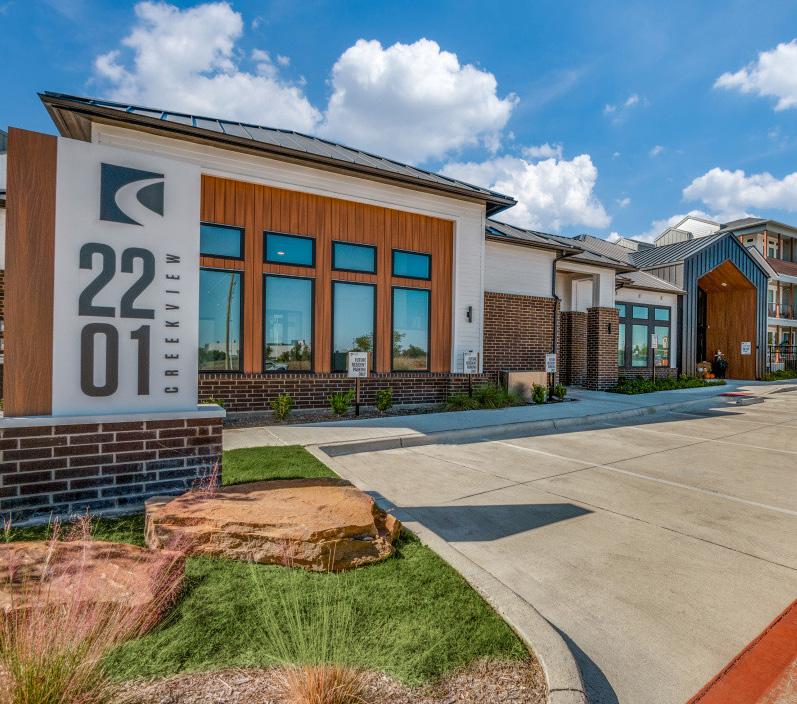
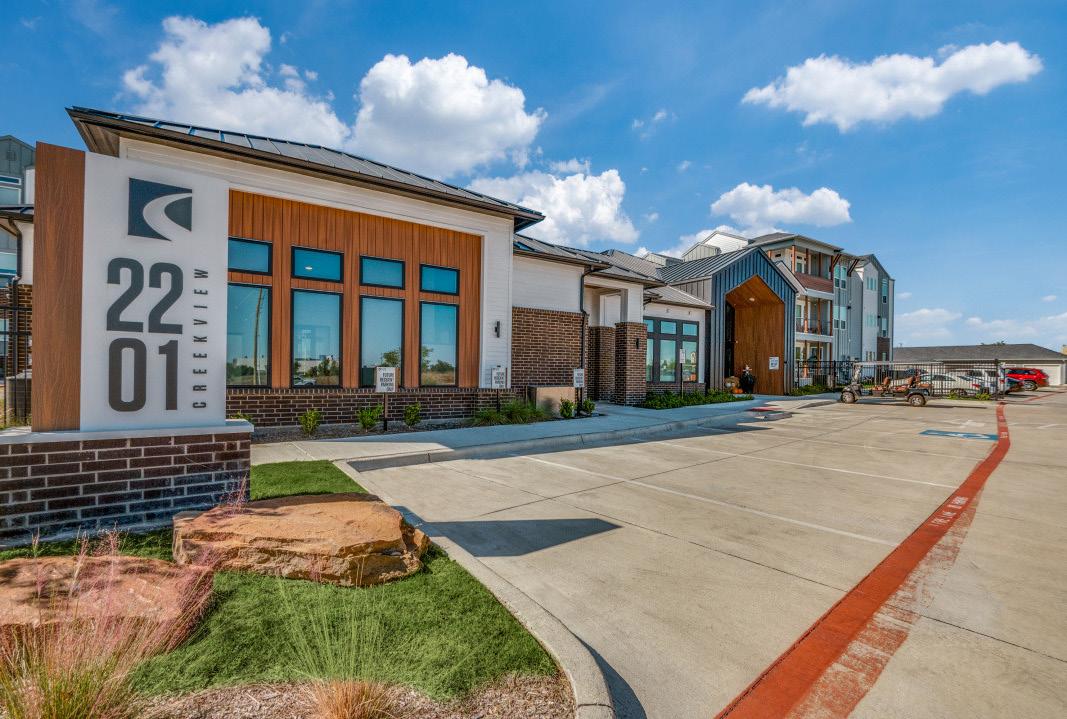
to inject are listing. At the same time, assumable low-rate debt has become its own selling point. 2201 Creekview, a 300-unit 2024-built property in Waco that Cushman & Wakefield is currently marketing, carries an assumable HUD loan at 67 percent leverage and an all-in fixed rate of 4.14 percent, well below where new financing prices today.
On the buy side, capital has been waiting. Jones said there are plenty of buyers in Central Texas and not enough sellers with most investors underwriting conservatively
in years one and two and aggressively in years three through five. The expectation, he said, is a hockey-stick recovery with year-one pro forma cap rates trending to 5 percent or higher and exit caps around 5 percent.
“Buyers have moved away from headline cap rate pricing toward more yieldon-cost frameworks and underwriting what the asset can produce today, not as much as what it is theoretically worth at stabilization,” said Grant Raymond, Senior Director with Cushman & Wakefield's Texas Multifamily Advisory Group.


Sparrow Studio combines design, strategy, and operational insight to create places people choose, remember, and return to.
The shift matters because of what is sitting on rent rolls. In DFW, the gap between asking and effective rent widened to $38 per unit per month in the first quarter, nearly five times the 2022 normalized level of $7 with about 35 percent of the market still offering concessions, per Newmark data.
“Submarket divergence is the defining characteristic of this cycle,” said Asher Hall, Senior Director with Cushman & Wakefield's Texas Multifamily Advisory Group.
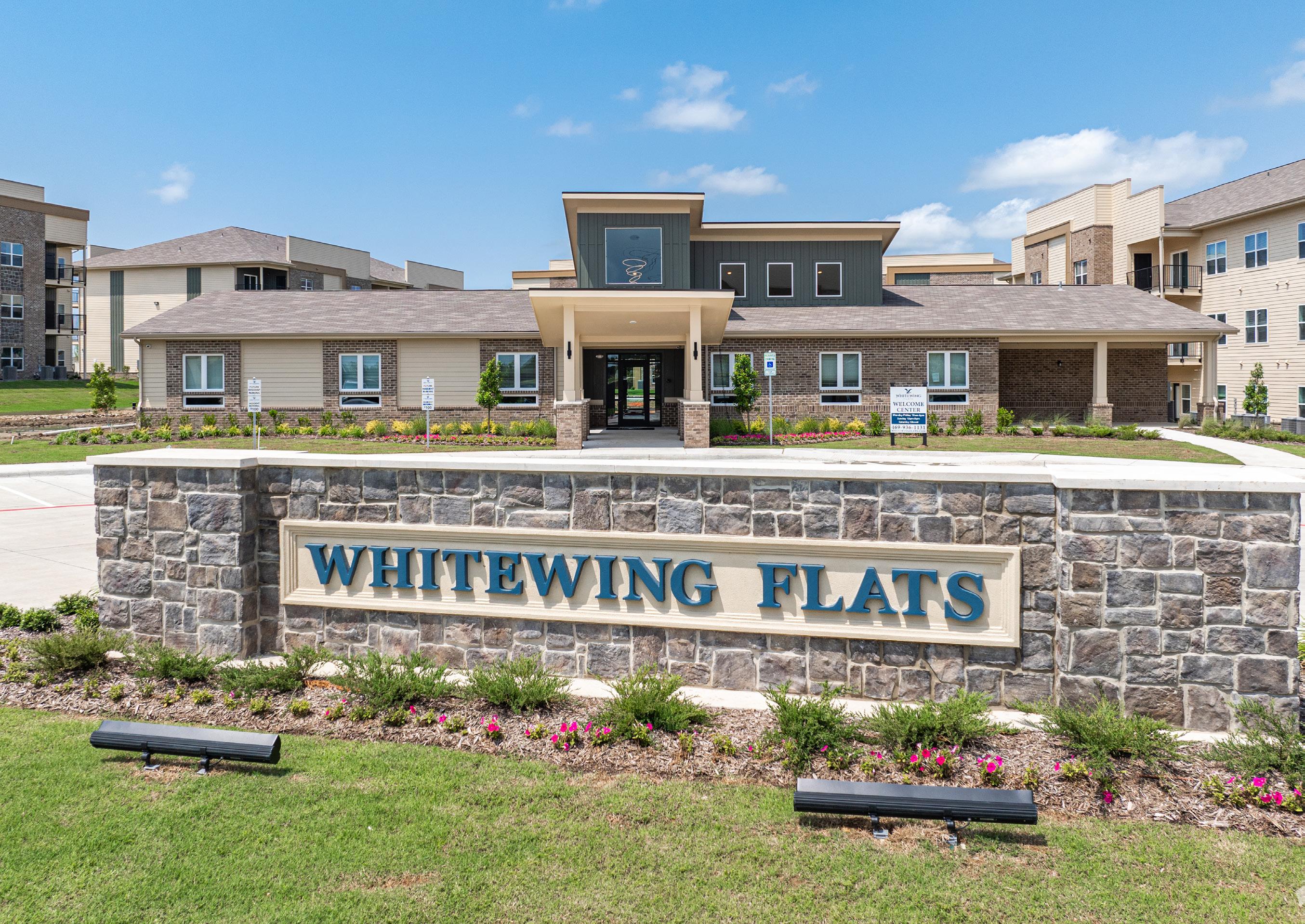
Northwest Dallas posted approximately 5.7 percent effective rent growth in 2025 and Southeast Dallas about 5 percent, according to Cushman & Wakefield's tracking, both outperforming a metro that posted slightly negative annual rent change overall. High-growth suburbs including Frisco/Prosper, Allen/McKinney and Northwest Fort Worth continued absorbing supply on the strength of school quality, employer proximity and household formation. Cushman & Wakefield recently closed the sale of Whitewing Flats, a 192-unit 2024-built property in Princeton, just east of McKinney, the type of newer suburban asset finding buyers even as the broader recovery remains uneven. North Dallas, which alone accounted for roughly half of the DFW units under construction, has six to eight
The same divergence exists between metros. Austin and San Antonio are moving through the same cycle phase but trading at meaningfully different prices with San Antonio cap rates running roughly 25 basis points higher than Austin.
“Investors are split: some like the Ferrari (Austin), and some like the Toyota Camry (San Antonio),” Jones said.
The Ferrari draws institutional and fund capital betting on Austin's long-run trajectory. The Camry draws private investors who prefer San Antonio's slower, steadier rhythm and the spread that comes with it. Both metros are transitioning from oversupply to undersupply, but the buyer pool, hold strategy and pricing math diverge from the moment underwriting begins.
“Retrading is most prevalent on value-add and workforce deals where due diligence surfaces bad debt, deferred maintenance or occupancy issues, and that level of buyer scrutiny isn't going away soon,” Raymond said.
Class B vacancies have been running around 12.5 percent metrowide in DFW, with mid-tier rents off 0.7 percent year-over-year, while immigration policy has introduced fresh uncertainty around Class C and workforce renter demand that few sponsors had modeled. The deals getting done at the top of the market look nothing like the deals struggling at the bottom.
“Owners of older suburban product are effectively competing against near-new Class A on concession-adjusted terms, which is an increasingly difficult position to hold,” Hall said.
Houston offers a parallel data point. Occupancy across all classes climbed 2 percent in 2025 to reach 90.4 percent in December, the highest mark since June 2022, with Class A absorbing more than 16,000 units against a 10-year average closer to 13,900, per Apartment Data Services. Total transaction volume rose 4 percent over 2024 and transaction count climbed nearly 15 percent, signs that buyers and sellers are starting to find each other.
The cleanest signal of when the broader Texas market turns is the supply chart. DFW deliveries are forecast at roughly 17,000 units in 2026, the lowest in more than a decade. By the back half of 2026, deliveries are expected to drop further while demand stabilizes near 24,000 units annually, the first year of supply-demand balance since 2021. Class A
infill, where vacancies were already near 5 percent entering this year, likely moves first. Workforce and Class B will take longer, on Raymond's read, with concessions persisting through mid-to-late 2026.
Texas multifamily is being governed by the timing of refinancing and the repricing of exit expectations as much as by the speed of rent growth. The narrative has changed faster than the operating numbers. The operating numbers are starting to follow. The owners still waiting are running out of room.



BY BRANDI SMITH

When semiconductor logistics specialist Infinity Link Logistics signed for 87,000 square feet near Samsung's Taylor plant in the first quarter of 2026, it joined a parade of suppliers chasing the chipmaker into Central Texas. Two submarkets over, electronic components manufacturer Baer Manufacturing pre-leased 606,060 square feet at Crosspoint Phase II for a facility that will eventually employ 200 people. In Houston, solar manufacturer T1 Energy took 627,637 square feet at Port 99 Logistics Park, sharing the building with a third-party logistics firm. In North Fort Worth, DSV Contract Logistics inked a 1.05 million-square-foot deal, the largest in the Dallas-Fort Worth metroplex.
What ties these transactions together is the infrastructure they require: modern bulk warehouses with heavy power capacity, speed to occupancy and proximity to the advanced manufacturing hubs reshaping Texas industrial demand. Buildings that once competed primarily on rate and clear height are now competing on electrical infrastructure and delivery timing.
According to Newmark's research for the first quarter of 2026, Houston posted 3.7 million square feet of positive absorption against 4.7 million square feet of deliveries with vacancy ticking up just 10 basis points to 7.5 percent. DallasFort Worth absorbed 10.4 million square feet against 5.7 million square feet of new supply, dropping vacancy 40 basis points to 8.8 percent. Austin took

the opposite path with vacancy climbing to 22.9 percent even as leasing activity improved.
In Houston, the math is pretty straightforward.

“We continue to see strong momentum across the Houston industrial market, with tenant demand largely keeping pace,” said Joseph Smith, Senior Vice President on the CBRE Industrial Service Team in Houston. “We have the tenant demand to take over all the space currently under construction or recently delivered.”
That confidence shows up in the construction numbers. Newmark reports Houston's pipeline grew 9.6 percent during the quarter to 27.9 million square feet with 25.3 percent already preleased. Developers are still betting on Houston, but increasingly on a different kind of tenant than the market historically served.
“While we haven't seen a significant return of petrochemical-driven requirements, demand from a broader base of manufacturing users has
strengthened,” Smith said. “In particular, chip manufacturers and data center manufacturers are driving demand.”
The implication for landlords is operational, not just aspirational. Power capacity has become a dealbreaker on assets that used to compete on rate and clear height.
“Delivery timing and available power are two of the most critical factors influencing tenant decisions today,” Smith said. “Buildings that can offer near-term occupancy and enhanced power capacity are seeing the strongest interest.”
Submarket performance within Houston reflects that shift. Smith pointed to South Belt as the runaway leader for user activity, while the Southeast/ Port submarket has softened on a third-party logistics slowdown. Newmark data backs the divergence: the Southwest submarket led the metro with more than 2.1 million square feet of positive absorption in the quarter, while the Southeast posted negative 229,113 square feet despite holding 6.4 million square feet of the construction pipeline.
In Dallas-Fort Worth, the demand profile is even more concentrated. Newmark reports that four of the top five leases signed during the quarter went to logistics and distribution tenants and Class A product captured 68 percent of total leasing activity, a 280-basis-point jump from the prior quarter. The market posted its highest first-quarter leasing volume on record at 21 million square feet.
The North Fort Worth submarket has become the construction story within that story. Newmark counted 8.8 million square feet underway there, 28.1 percent of the entire DFW pipeline, with five of the eight buildings over 750,000 square feet under construction in the submarket.
The concentration reflects where large-scale users can still find the land, highway connectivity and building scale required for modern distribution networks. As more occupiers consolidate operations into fewer, larger facilities, developers continue pushing toward the metro's outer industrial corridors where mega-box product remains feasible.
Working through the wave in Central Texas
Austin's situation is more complicated, according to Jeff Graves, Research Director for Austin and San Antonio at Cushman & Wakefield, who said the
disconnect between healthy leasing and rising vacancy is largely a timing problem.
“Even with steady leasing activity, it hasn't been enough to keep up with all the new buildings hitting the market,” Graves said. “The silver lining? Construction is starting to slow, which should give demand a chance to catch up and chip away at the excess supply over time.”
Austin's industrial market is experiencing an unusual imbalance: the buildings tenants want most are also the ones driving vacancy higher. According to Graves, post-2020 product in Austin is sitting near a 34 percent vacancy rate while older inventory holds closer to 13 percent.
“The newer buildings are clearly the ones tenants prefer,” Graves said. “They're seeing stronger leasing activity and are driving most of the market's recent absorption, even if it's not yet enough to fill all the new space that's been added.”
Graves said more than 43 million square feet of new industrial space has come online in Austin since 2020, accounting for roughly 40 percent of total inventory, with another 4.5 million square feet still under construction and most of that slated for completion by the end of 2026.
“Absorption is projected to strengthen over the next three quarters as tenants






who signed leases in the past year begin moving into their spaces,” Graves said. “Overall vacancy is expected to peak in the third or fourth quarter of 2026.”
South of Austin, San Antonio is evolving on a different industrial trajectory. The market posted 403,140 square feet of positive absorption in the quarter, per Newmark with the South submarket alone delivering 1.4 million square feet of occupancy gains.
“San Antonio's industrial market has stayed pretty diverse in terms of who's driving demand and what type of space they need,” Graves said. “There's still solid activity from traditional 3PL users, but we're also seeing more growth from the automotive sector, both on the distribution side and with light manufacturing.”
The pipelines look different and the vacancy curves look different, but the buildings winning deals across all four markets increasingly share the same traits: immediate occupancy, significant power capacity and the scale to accommodate manufacturing and infrastructure users that barely factored into Texas industrial demand a decade ago.
“Absorption is projected to strengthen over the next three quarters as tenants who signed leases in the past year begin moving into their spaces.”



Oxford Partners adds EVP in Houston office

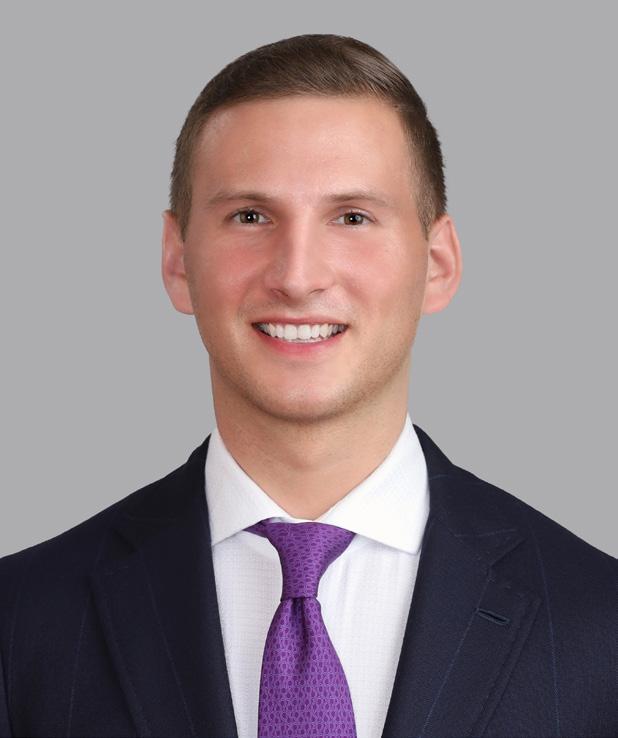
Oxford Partners hired Trey Martin as Executive Vice President, strengthening the firm’s office and industrial tenant representation practice in Houston.
Trey brings more than 20 years of commercial real estate experience and more than $900 million in closed transactions across office, industrial, and land. He spent his career at Partners Real Estate, where he built an extensive practice representing tenants and buyers across the Houston market. His background spans lease negotiations, site selection, acquisitions, investment property transactions, and land deals, with a client base that spans local, national, and international organizations.
Trey’s practice expanded organically over the course of his career. Beginning in office tenant representation, he developed expertise in industrial leasing and land transactions as client relationships grew to encompass broader real estate strategies. He served on the Board of Directors of the Houston Office Leasing Brokers Association (HOLBA) and has been a member of NAI Global’s North American Sales Team, with experience managing corporate portfolios across multiple markets.
Partners Real Estate adds SVP in federal leasing practice

Partners Real Estate—a private partnershipled fully-integrated commercial real estate firm—announced that John McFadden has joined its Federal Leasing practice as Senior Vice President.
Mr. McFadden joins the team led by Charlie Johnson, Executive Vice President and Head of Federal Leasing.
Mr. McFadden brings more than four decades of experience at the U.S. General Services Administration (GSA), where he served as a Contracting Officer responsible for negotiating, awarding, and administering high-value commercial leases on behalf of the federal government. In that role he held the authority to bind
the government to its lease contracts and to manage them through every stage—award, modification, renewal, and close-out—giving him a firsthand view of how federal leases are written, valued, and enforced.
Among the most significant assignments of his career, Mr. McFadden served as Contracting Officer on the IRS’s lease at the historic U.S. Post Office building in downtown Philadelphia—a six-floor space totaling roughly 680,000 sq. ft.—where he oversaw a $40 million tenant-improvement construction budget and all subsequent change orders.
Over his tenure he also led negotiation strategy sessions, built training programs, and mentored hundreds of professionals across the agency — work recognized in 2016 when he was named Mentor of the Year, an honor reflecting his standing as one of the most sought-after and valuable mentors for Lease Contracting Officers across GSA.

Seyfarth Shaw LLP continues to expand its real estate capabilities in Texas with the addition of Consuella (Connie) Simmons Taylor to the firm’s Houston office as a partner in its Real Estate department.
Taylor previously served as firmwide chair of the Real Estate & Construction practice at Baker Botts L.L.P.
Taylor is the 11th Real Estate partner to make a lateral move to Seyfarth since the start of 2025 – and the fifth since the beginning of 2026, including three in Texas. Seyfarth’s Real Estate practice is among the largest in the country.
Taylor brings more than 30 years of experience to Seyfarth, having counseled clients on commercial real estate transactions of all asset types, primarily representing developers and owners. Clients have entrusted Taylor with a wide range of significant matters involving office and retail leasing, acquisitions, dispositions, financing, and development of real property.
Taylor is widely recognized in the industry and has held leadership roles with the planning committee for the ICSC +US Law Conference presented by the International Council of Shopping Centers (ICSC) and with the American College of Real Estate Lawyers (ACREL). In 2025, she was inducted into the Texas Women’s Hall of Fame by the Greater Houston Women’s Chamber of Commerce, an honor
recognizing women who “innovate, uplift communities, break ceilings, and redefine leadership.”
Taylor counsels both buyers and sellers of office and retail assets in major metropolitan and suburban areas across the United States, ranging from single assets to multi-asset portfolios.
She also represents clients in financing, refinancing, and loan assumptions involving office buildings, retail shopping centers and industrial/logistics projects in Houston and other large US cities. Her work includes several portfolio financings for development funds.
Taylor has represented landlords in office and retail leasing transactions involving up to one million square feet in a single deal. Taylor’s tenant representations include the lease of approximately half-a -million square feet for a major utility company, as well as leases ranging from 10,000 to over 100,000 square feet for energy companies and other corporate clients.
“Seyfarth’s nationally integrated real estate platform presents a compelling opportunity to expand the way I serve my clients,” said Taylor. “The firm’s collaborative approach and strength in Texas and across the country position it for continued growth. I am excited to join the team in Houston and contribute to that momentum.”
Taylor’s leadership and industry impact have earned significant recognition. She is recognized as one of the “500 Leading Real Estate Lawyers” by Lawdragon and was named “Lawyer of the Year” in Real Estate Law by The Best Lawyers in America in 2023. She is consistently ranked by Chambers USA and Best Lawyers. Taylor earned her JD at Tulane University Law School and her BA at the University of Houston.
Total Office Solutions names branch manager for Fort Worth office

Total Office Solutions, LLP, appointed Zorin Luttrull to oversee operations of its new Fort Worth, Texas, office.
As branch manager, Luttrull’s responsibilities include sales and new business development, and the delivery of tailored office solutions that meet client needs.
Having worked in big city markets such as Houston, San Antonio, and the DFW area, Luttrull brings more than 25 years of experience in the office furniture industry, focusing primarily on sales and new business development. He’s also active in multiple professional networks, including the Fort Worth Rotary Club, the Metroport Chamber of Commerce, and currently serves as an ambassador for the Regional Hispanic Contractors Association.
McAdams names Dallas-Fort Worth metro lead

McAdams, a multidisciplinary planning, design and engineering firm specializing in site/ civil design, geomatics, planning and design, transportation, water resources and construction administration, promoted Ryan Akers to DallasFort Worth Metro Lead, positioning the firm for continued growth across North Texas. Former Metro Lead, Bobby Dollak, will transition to the role of principal.
The announcement reflects McAdams’ long-term investment in North Texas, where the firm continues to expand its team, capabilities and project portfolio to meet growing demand across its core sectors, including K-12, higher education, residential, mixed-use, municipal, healthcare, industrial and energy.
Akers, who previously served as director of engineering, brings more than two decades of experience in civil engineering, land development and operational leadership, including a strong background in complex residential, mixed-use and infrastructure projects. In his new role, Akers will oversee McAdams’ operations and strategic growth throughout DFW, with a focus on strengthening client relationships, expanding multidisciplinary service offerings and enhancing McAdams’ footprint across various North Texas independent school districts (ISDs), along with its locally based transportation, water resources and energy capabilities to meet the infrastructure and utility needs of the rapidly growing North Texas region.
McAdams has been involved in a robust portfolio of prominent projects across the North Texas region over its three-decade regional presence. This includes significant work on notable mixed-use developments and masterplanned communities in Collin, Denton, and Tarrant counties, including Flower Mound’s Furst Ranch, River Walk at Central Park and Lakeside Crossing, as well as numerous K-12 projects for school districts such as the Lewisville and Greenville ISDs.

Kelly Agent, who has led property services across the firm’s national portfolio since 2022, will be promoted to Chief Operating Officer. Lee Moreland, a Griffin principal since 2006 and a 38-year industry veteran, will assume the newly created role of Chief Portfolio Officer. Both will continue to report to Edward Griffin, CEO and Chief Investment Officer.
The expanded leadership structure strengthens Griffin’s vertically integrated investment platform, which spans acquisition, development, property and construction management, asset management, and disposition across more than 6.7 million square feet of industrial, office, and mixed-use real estate. Since its founding in 1980, the firm has acquired or developed 60 projects representing more than 18 million square feet and $2.7 billion in total capitalization.
“As Griffin grows across the Sunbelt and Mountain West, we are expanding the institutional platform our partners expect,” said Edward Griffin. “These promotions allow for the expansion of our investment committee and elevate our long-tenured executive leaders into roles that bring complementary disciplines across acquisitions, development, portfolio strategy, and operations to scale Griffin’s national platform.”
As Chief Operating Officer, Agent will be responsible for translating investment strategy into execution to deliver consistent performance across the platform. She will oversee property and construction management, risk management, and human resources, including talent, culture and organizational effectiveness. Since joining Griffin in 2022 as Senior Vice President of Property Management, she has implemented a portfoliowide, data-driven benchmarking strategy to improve performance and elevate tenant retention as a core pillar of the firm’s operating model, protecting revenue and reducing capital investment. She began her real estate career in asset management before leading operations and teams in Chicago, Indianapolis, and Washington,
D.C. She holds a Bachelor of Business Administration and a Master of Business Administration from Mississippi State University.
“Effective execution ultimately drives investment outcomes,” said Agent. “Griffin’s exceptional talent is the foundation of our performance, enabling successful execution and strong, consistent results.”
cohesive, scalable, and high-performing real estate portfolio. He will be responsible for ensuring that portfolio execution and asset-level decisions align with the Investment Committee’s approved strategies and standards. Moreland joined Griffin Partners in 2006 and has overseen the strategic direction of properties totaling more than 9 million square feet. He previously held asset management roles at multiple institutional real estate platforms and, prior to Griffin, served as Vice President, Asset Management at Crescent Real Estate Equities, where he led the performance of more than 8 million square feet of Class A office. He holds a Bachelor of Business Administration in finance and real estate from the University of Texas.

Avison Young announced that Scott Carter has joined the firm as Principal, where he will serve as the Healthcare and Life Sciences lead for Texas. Carter brings more than 20 years of experience dedicated exclusively to the healthcare and life sciences sectors, further strengthening the firm’s specialized advisory capabilities across the region.
Carter provides comprehensive commercial real estate advisory and transaction services for a broad range of clients, including hospital systems, physician groups, post-acute and behavioral health operators, and both public and private healthcare and life sciences investors. Prior to joining Avison Young, Carter served nearly a decade as Senior Vice President at CBRE where he focused on acquisitions, dispositions, tenant and landlord representation for medical office buildings across Texas.
Recognized as one of Texas’s leading healthcare real estate specialists, Carter advises clients on the acquisition and disposition of medical office buildings, ambulatory surgery centers, lab research facilities, and hospitals. His entrepreneurial approach, deep industry relationships, and extensive market knowledge enable him to align real estate strategies with long-term organizational goals in a complex and evolving sector.
Carter will work closely with Jay Johnson, Principal and Executive Managing Director of Avison Young’s Healthcare Services to drive healthcare strategy and drive market growth for the firm.
Houston’s Griffin Partners adds chief operating officer, chief portfolio officer
Griffin Partners, the Houston-based commercial real estate investment and development firm, expanded its executive leadership staff to support the firm’s continued growth.
As Chief Portfolio Officer, Moreland will step into a newly created role designed to scale with Griffin’s national platform growth. He will continue to lead the firm’s asset management team in the disciplined execution of approved business plans and long-term value objectives, while serving as the CEO’s primary partner in translating Griffin’s strategic vision into a





KDS de stijl interiors, LLC
2006 E Cesar Chavez St. Austin, TX 78702
P: 512.457.1332
Website: kdsaustin.com
Key Contacts: Jill Laverentz, Owner, jill@kdsaustin.com; Clark Kampfe, Principal, clark@kdsaustin.com

Services Provided: Programming & Client Process Analysis – Due Diligence & Building Analysis – Schematic Design – Test Fit & Pricing Notes – Project Scheduling Goals – Consultant Team Formation – Cost Analysis & Value Engineering – Design Development – Construction Documentation – Racking, Commodity, & Equipment Coordination – Permit Processing – Project Management – Construction Administration – Project Budgeting & Cost Tracking – As-Built Documents
Company Profile: KDS is a full-service commercial design firm with 30+ years of experience including 25,000,000+ SF of Industrial/Flex and 3,000,000+ SF of Office Projects. We are committed to responsiveness and to providing well designed and implemented solutions. Our extensive knowledge base and adept management of critical milestones creates consistently successful projects.
Notable/Recent Projects: American Canning – Austin, TX – 101,000 SF –Manufacturing & Distribution
FlightSafety International – TX & OK – 186,000 SF Combined – Manufacturing GT Distributors – Pflugerville, TX – 58,000 SF – Retail, Office, Fabrication, Storage & Distribution
280 E. Levee Street Dallas, TX 75207
P: 469.498.0998
Website: lgedesignbuild.com

Key Contact: Ray Catlin, Regional Vice President, rcatlin@lgedesignbuild.com
Service Provided: LGE Design Build provides comprehensive design and construction services, including architecture, engineering, and interior design. LGE specializes in commercial, industrial, retail, healthcare, and tenant improvement projects. Utilizing a client-centric, design-build model, LGE ensures streamlined processes, reduced costs, and sustainable building practices for customized, high-quality results.
Company Profile: LGE, with dual headquarters in Phoenix and Dallas, provides full-service architecture, design, engineering, budget control, permits, and construction. Renowned for integrity and craftsmanship, LGE has completed over 1,200 projects across industries like industrial, office, hospitality, medical, and more, delivering award-winning designs. Notable/Recent Projects: LGE Dallas Headquarters, Mesquite 635, Fort West Commerce Center, Houston Point 290, Cypress Creek Distribution Center, McKinney Trade Center II, Sunridge Industrial Park, Park West Phase III, Bottled Blonde / Backyard Fort Worth.
CMI BROKERAGE
820 Gessner, Suite 1525
Houston, TX 77024
P: 713.961.4666

Website: cmirealestate.com
Key Contacts: Trent Vacek, tvacek@cmirealestate.com; James Sinclair, jsinclair@cmirealestate.com
Services Provided: Central Management, Inc. is a full-service commercial real estate firm providing Brokerage Services; Property, Facility, Construction and Asset Management Services; Landlord and Tenant Representation; Land Sales; Receivership and Real Estate Recovery. Services are available for Industrial, Land, Multifamily, MOB, Office and Retail. Licensed in Oklahoma and Texas.
Company Profile: Central Management, Inc. (CMI) was founded by Houston real estate professional Vic Vacek in 1978. Our team understands the intricacies of the markets that offer investors an edge both from a leasing and an asset management perspective. Certified AMO® 1984, IREM, CPM, CCIM, NAR, HAR, NALP, ICSC, and TREC.
Notable Transactions/Clients: Armada Big Springs Ptnrs, Barbour Invts., Baytown ISD, Core Real Estate, Hoffpauir Estate, JLC Properties, KBR, Prudential, Rawson Blum & Leon, Subway, Texas Hearing Institute, Triple Crown Invts., US Oncology, Vigavi Realty, Walgreens.
ROOFING COMPANIES
HIGHUP ROOFING
6620 Isabelle Dr. Austin, TX 78752
P: 512.566.9989
Website: highuproofingllc.com
Key Contact: Nasir Hussain, Owner, highuproofing94@gmail.com
ALSTON CONSTRUCTION COMPANY
HOU: 1300 W. Sam Houston Pkwy S
Suite 225, Houston, TX 77042
DAL: 10440 North Central Expressway
Suite 720, Dallas, TX 75231
Website: alstonco.com

Key Contact: HOU: Nick Dwyer, Director of Business Development, ndwyer@alstonco.com
DAL: Brittany Schneider, Director of Business Development, bschneider@alstonco.com
Services Provided: Alston offers a diverse background of design-build experience, general contracting and construction management of industrial, commercial, healthcare, retail, and municipal projects.
Company Profile: Alston Construction’s success begins and ends with our approach to planning, scheduling, and choosing the right team. We have been adhering to an open and collaborative approach since our founding more than 35 years ago.
Notable/Recent Projects: Innovation Ridge Logistics Park, a 1.1 million SF 3 building industrial business park in Forney; 610 Business District, a 388,795 SF industrial park located in Houston; 1.2 million SF logistics facility located in Conroe.
98 San Jacinto Blvd, 4th Floor
Austin, TX 78701
P: 512.872.6698
Website: summitdb.com
Key Contacts: Adam Miller, President, amiller@summitdb.com;

Doug Hayes, Project Executive, dhayes@summitdb.com; Amber Autumn, Business Development, aautumn@summitdb.com
Services Provided: Summit Design + Build, LLC is a provider of full service general contracting, construction management and design/ build construction services for the commercial, industrial, multifamily residential, office/tenant interiors, hospitality and institutional markets.
Company Profile: Located in downtown Austin and with offices in Tampa, FL, Chicago, IL and North Carolina, Summit Design + Build has been involved in the design and construction of over 400 buildings and spaces totaling more than 10 million square feet over the firm’s 18 year history.
Notable/Recently Completed Projects: Montage – 2323 S. Lamar (Multifamily), Congress Lofts at St. Elmo (Multifamily), UpCampus Student Housing Tallahassee (Multifamily), WeWork (Office TI), Eli’s Cheesecake (Industrial), Lockheed Martin (Industrial), Stadium Lofts North Carolina (Multifamily).
PUREFYT COMMUNITY CARE
14205 N MoPac Expy, Suite 570 PMB #565290 Austin, TX 78728
P: 512.775.3704
Website: purefytcc.com

Key Contact: Ge'O-Vanna Smith, Owner, mobileivtherapyaustin@gmail.com
Services Provided: Mobile Medical Services; emergency medical services; medical service company; emergency medical services; family health medical services; behavioral health services; behavioral mental health; behavioral healthcare services; behavior health services; behavior health service; advanced behavioral health services; mobile iv therapy; mobile iv therapy near me; mobile iv therapy austin; community medical services.

Services Provided: Flat Roof Coating, Roof Repair, Roof Installation, Roof Maintenance, Torch Down Roofing, Commercial Roofing, Residential Roofing.