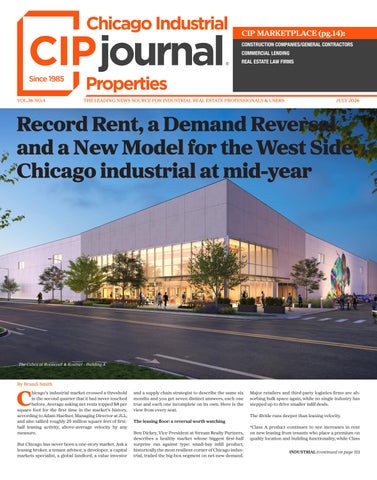
and a New Model for the West Side: Chicago industrial at mid-year
By Brandi Smith
Chicago's industrial market crossed a threshold in the second quarter that it had never touched before. Average asking net rents topped $8 per square foot for the first time in the market's history, according to Adam Haefner, Managing Director at JLL, and also tallied roughly 25 million square feet of firsthalf leasing activity, above-average velocity by any measure.
But Chicago has never been a one-story market. Ask a leasing broker, a tenant advisor, a developer, a capital markets specialist, a global landlord, a value investor
and a supply chain strategist to describe the same six months and you get seven distinct answers, each one true and each one incomplete on its own. Here is the view from every seat.
The leasing floor: a reversal worth watching Ben Dickey, Vice President at Stream Realty Partners, describes a healthy market whose biggest first-half surprise ran against type: small-bay infill product, historically the most resilient corner of Chicago industrial, trailed the big-box segment on net-new demand.
Major retailers and third-party logistics firms are absorbing bulk space again, while no single industry has stepped up to drive smaller infill deals.
The divide runs deeper than leasing velocity.
“Class A product continues to see increases in rent on new leasing from tenants who place a premium on quality location and building functionality, while Class
INDUSTRIAL (continued on page 10)
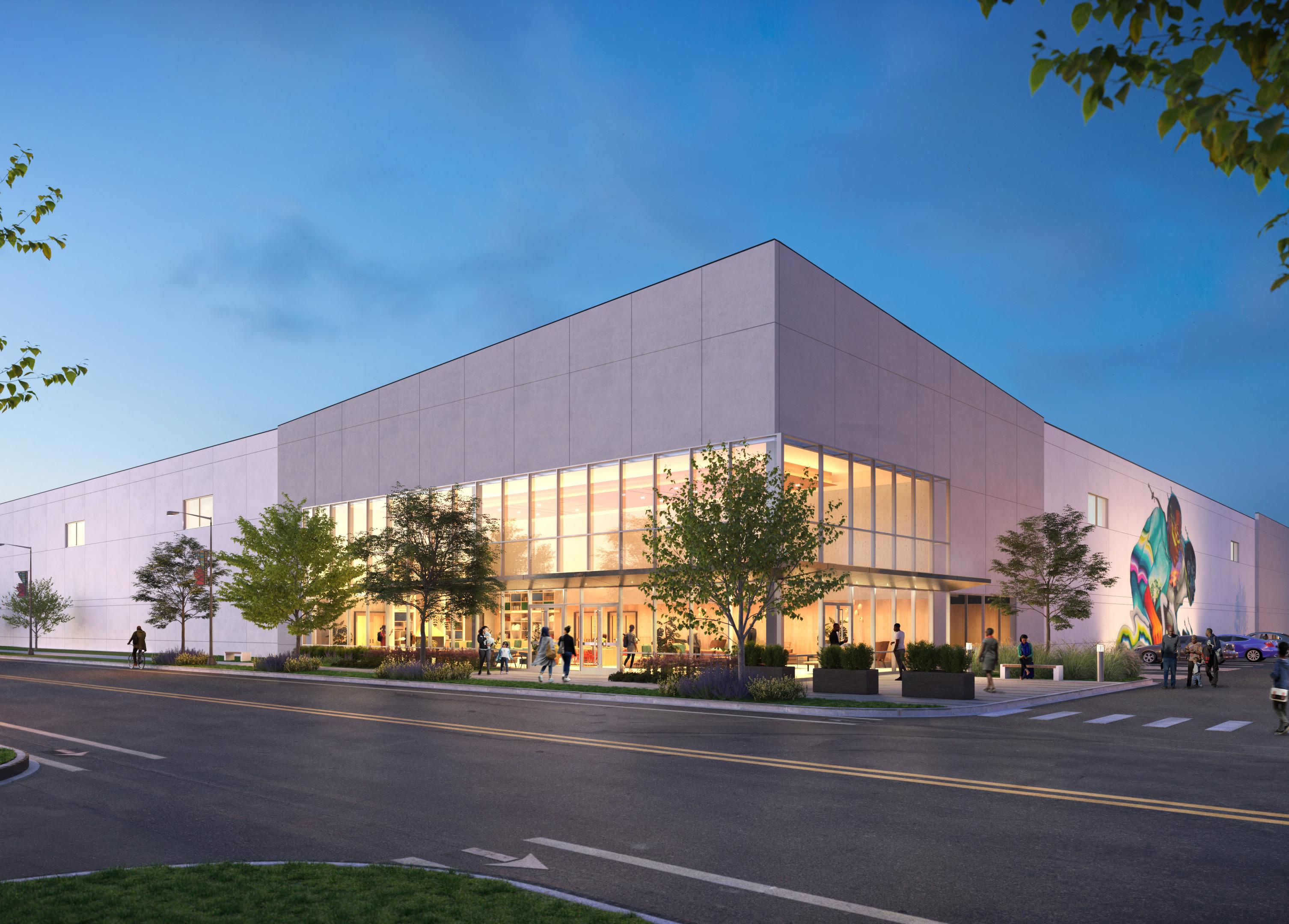
The Cubes at Roosevelt & Kostner - Building A

1
PUBLISHER
Mark Menzies menzies@rejournals.com 312.933.8559
MANAGING EDITOR Dan Rafter drafter@rejournals.com
VICE PRESIDENT OF SALES & MW CONFERENCE SERIES MANAGER Ernie Abood eabood@rejournals.com
VICE PRESIDENT OF SALES Frank E. Biondo Frank.biondo@rejournals.com
CLASSIFIED DIRECTOR
Susan Mickey smickey@rejournals.com
Chicago Industrial Properties® (ISSN 1546-377X) is published bi-monthly for $59 per year by Real Estate Publishing Corporation, 7767 Elm Creek Boulevard, Suite 210, Maple Grove, MN 55369. Contact the subscription department at 312.933.8559 to subscribe. © 2026 by Real Estate Publishing Corporation. All rights reserved. No part of this publication can be reproduced or transmitted in any form or by any means, electronic or mechanical including photocopying, recording or by any information storage or retrieval system.
2026 EDITORIAL BOARD CONTENTS
Dan Barrins Associated Bank
Ron Behm Colliers International
Susan Bergdoll CRG
Corey Chase Newmark
Dan Fogarty Stotan Industrial
Barry Missner The Missner Group
Adam Moore
First Industrial Realty Trust Inc.
Joe Pomerenke Arco/Murray National Construction Company, Inc
Adam Roth NAI Hiffman
Mike Yungerman Opus Group
A Record Rent, a Demand Reversal and a New Model for the West Side: Chicago industrial at mid-year Chicago's industrial market crossed a threshold in the second quarter that it had never touched before. Average asking net rents topped $8 per square foot for the first time in the market's history.
4
Deep Pockets, Sharper Pencils: Capital crowds into Chicago industrial When 50 S. Fairbank traded earlier this year, the building carried no investment-grade tenant and no single-tenant profile to reassure buyers. What it offered was a shallow-bay, multi-tenant layout in an infill location that would be nearly impossible to replicate. It sold for a record price per square foot.
8
‘Small Cities,’ Big Expectations: Property management turns strategic across Chicago's industrial market When one of NAI Hiffman's property management teams completed 45 interior and exterior lighting upgrades across one of Chicago's largest industrial portfolios, the total cost to the client came to $23,000. But the value of the improvements exceeded $2 million before incentives and rebates and the projects generated immediate operational savings while sharpening the appearance and marketability of the buildings.
COMMERCIAL LENDING/ REAL ESTATE LAW FIRMS 14
CIP MARKETPLACE: CONSTRUCTION COMPANIES/GENERAL

Deep Pockets, Sharper Pencils: Capital crowds into Chicago industrial
By Brandi Smith
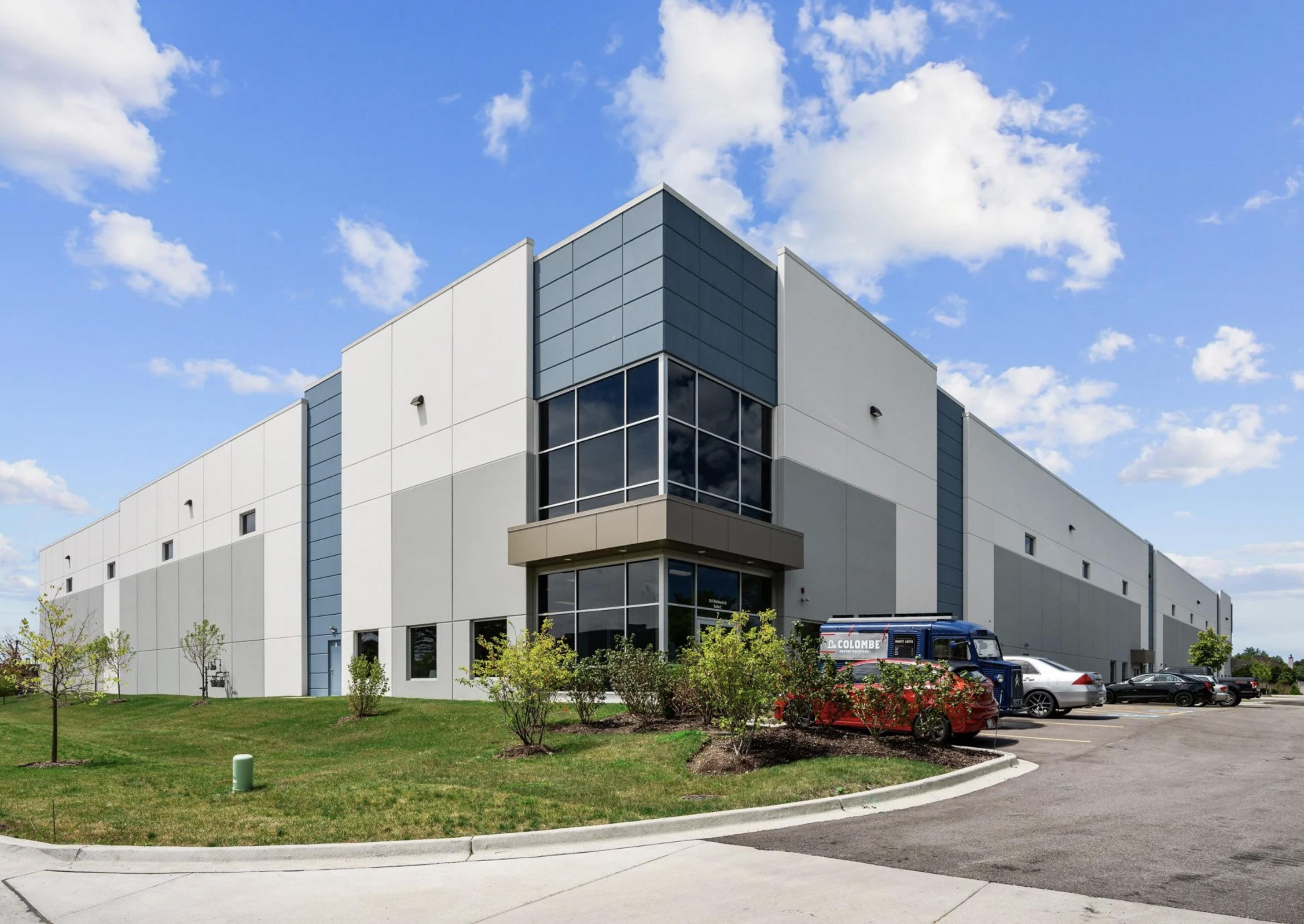
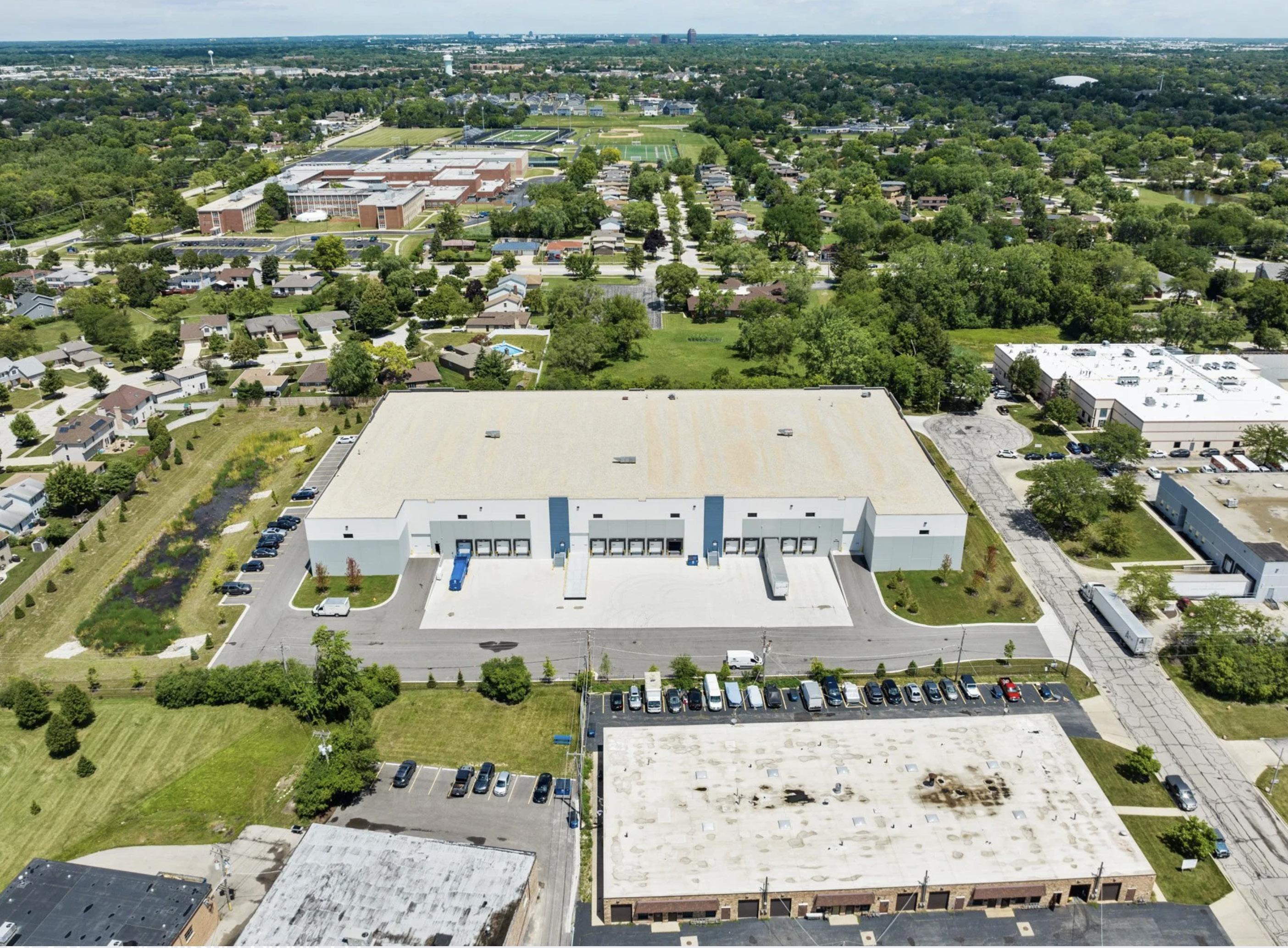
When 50 S. Fairbank traded earlier this year, the building carried no investment-grade tenant and no single-tenant profile to reassure buyers. What it offered was a shallow-bay, multi-tenant layout in an infill location that would be nearly impossible to replicate. It sold for a record price per square foot.
For Maxx Kossof, Vice President of Development and Acquisitions at The Missner Group, the sale captures where Chicago’s industrial capital markets stand at midyear 2026.
“Speculative development remains attractive because core buyers con-
tinue to pay premiums for high-quality assets,” Kossof said. “That premium is really a reflection of the broader flight to quality happening across the market, with capital increasingly concentrated on the best assets in the best locations and less patience for anything that doesn’t clear that bar.”
The capital behind that competition is deeper than it has been in years and lenders may be the most eager participants of all.
Lenders line up
Matt Robertson, Senior Vice President of Byline Bank’s Commercial Real
Estate Group, said banks are seeing higher payoff levels this year than in the previous two and are hunting for new business to backfill their books. Activity runs from community banks through the largest institutions with private capital growing more aggressive and pressuring bank lending.
“Themes continue to be the same, which is that lenders are bidding aggressively in the same deals, which drives down pricing and loosens structure,” Robertson said.
The data backs up the anecdotes. Jaime Fink, Senior Managing Director and Managing Broker at JLL’s Chicago Of-
fice, said JLL’s proprietary credit index hit an all-time high in April 2026 with a near-record number of distinct lenders, from banks and credit funds to insurance companies, quoting simultaneously across every capital source.
“Debt is not the constraint right now — conviction is,” Fink said.
Borrowers feel it. Robin Stolberg, Executive Director of Acquisitions at Clear Height Properties, said local, regional and national lenders are actively financing small-bay industrial and debt today, which limits neither pricing nor Clear Height’s ability to close acquisitions.
50 S Fairbank - courtesy Missner Group

Pricing that refuses to budge
Where all that capital lands on pricing depends on whom you ask. Robertson called cap rates relatively steady with no significant compression or expansion. Fink sees industrial cap rates down from fourth-quarter 2025 levels with Class A infill pricing tightest of all. Noel Liston, Managing Broker at Core Industrial Realty, expects any second-half compression to be slight given the re-

cent rise in the 10-year Treasury yield. And Bryn Feller, Senior Vice President and Managing Director at Northmarq, pegs stabilized, well-located Chicago product in the mid-5% to low-6% cap rate range, down from the sub-5% deals of two years ago, a reset she reads as a market normalizing.
On one point our CIP sources agree: Pricing has proven sturdier than the rate environment suggested it would be.

Richard Prokup, U.S. CEO of Mapletree, has watched the disconnect with three decades of Chicago perspective.
“There’s a strong argument that prices should be going down right now because of interest rates, but they’re not,” Prokup said. “They’ve held and arguably have gone up a little bit. The increase in demand because of the market fundamentals is offsetting the impact of interest rates.”

Matt Goode, Managing Partner and Head of Investments at Venture One, said cap rates on core transactions have held steady in part because the rate cuts the market penciled in never arrived.
“If you went back six months, we were expecting rates to come down. That’s what the forward curve showed,” Goode said. “Sitting here today, I don’t know that our expectations are that rates are coming down. We’re all coming to terms

Bryn Feller
Jaime Fink
Matt Goode
Maxx Kossoff

with living in an interest rate environment that’s going to be flat, plus or minus, in the coming months.”
Small bay, big appetite
If the panel splits on cap rates, it speaks with one voice on product type: investors want small and infill. Goode said the steadiest activity is in core stabilized assets, tilting toward mid-bay buildings of 75,000

to 300,000 square feet, while warehouses of 700,000 square feet and up remain less liquid.
“Demand right now is greatest for true infill industrial where there are historically low vacancy rates and constrained development options that limit new supply,” Liston said.

The competition for that product is crowded but not indiscriminate. Stolberg said light-industrial, small-bay deals in Chicago consistently draw three to four local buyers plus another two to three regional or national players who participate selectively.
“Not every buyer has the experience and the expertise to underwrite these types of assets effectively,” Stolberg said. “These

buildings are more complicated than core and core+ industrial.”
Institutional capital has noticed. Fink pointed to JLL’s Lucas Borges arranging $35.6 million in acquisition financing for a four-building, 411,781-square-foot infill portfolio across the O’Hare, Northwest Cook and North DuPage submarkets for a new joint venture between Matterhorn Venture Partners and TPG Angelo Gordon.
Noel Liston
Richard Prokup
Matt Robertson
Robin Stolberg
50 S Fairbank - courtesy Missner Group
Money in motion
The next wave of capital is already forming. Venture One expects to launch its eighth investment fund within the next 30 days targeting $250 million to $350 million in equity for an acquisition strategy focused on deals between roughly $3 million and $30 million, Goode said. The firm is also expanding its land portfolio, including a recent site purchase along Interstate 80 in Morris.
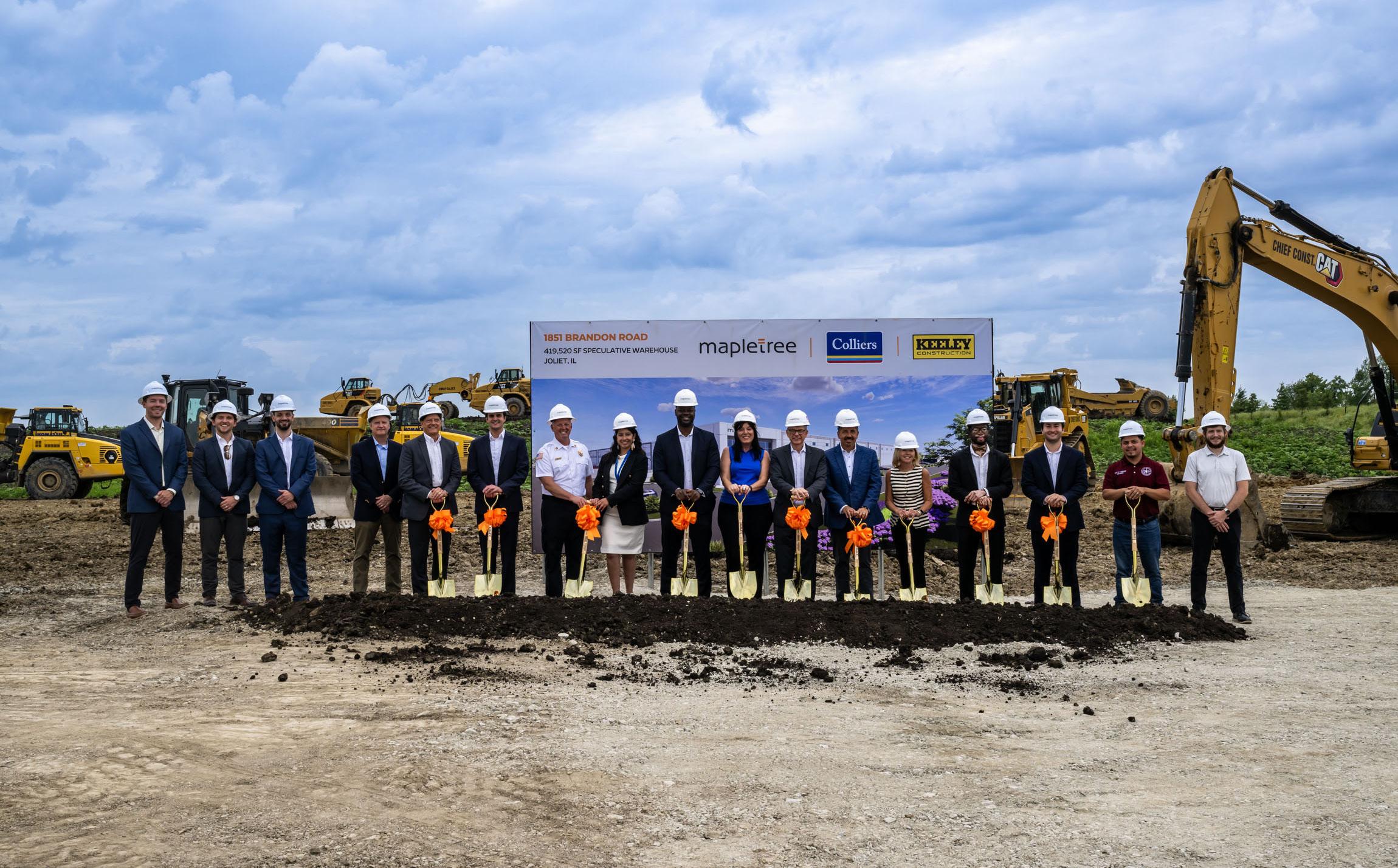
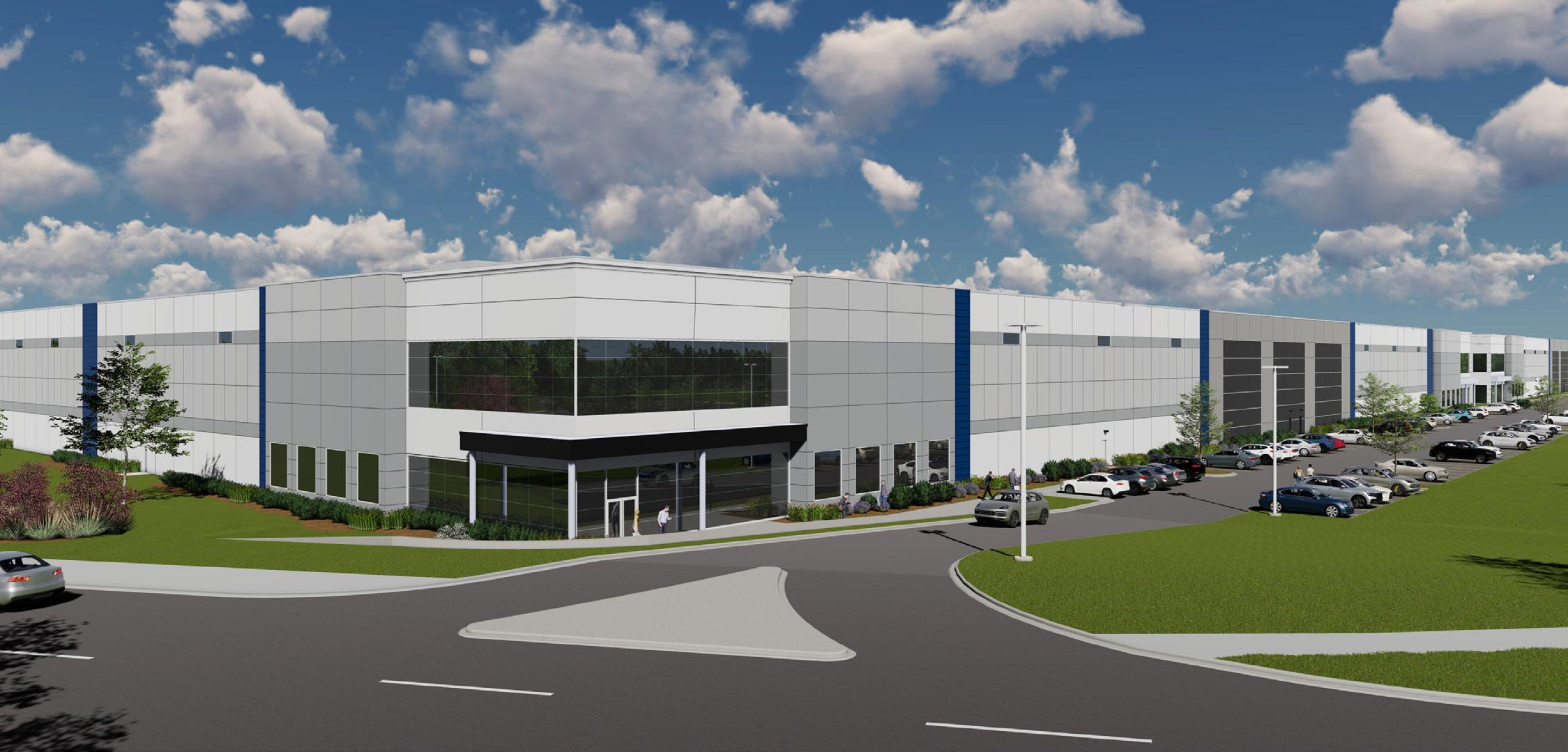
Mapletree, meanwhile, has assembled roughly $500 million in development projects nationally that it plans to roll into a fund expected at or north of $1 billion, launching this fall, Prokup said. About 900,000 square feet of that pipeline sits in Chicago: a 150,000-square-foot light industrial building in Bartlett and two Joliet projects near the intermodal, a 312,000-square-foot rearload building and a 420,000-squarefoot cross-dock facility that broke ground last week.
Spec development is stirring as well. Liston said Core Industrial Realty is marketing a new project by High Street Logistics Properties in the I-88 submarket, where he pegs
historical vacancy around 2%. The 147,000-square-foot building, expected to deliver at the end of 2026, will offer 32-foot clear heights and divisibility down to 40,000 square feet, aimed squarely at the sub100,000-square-foot demand he calls the strongest in the market.

Principle builds the foundations for your future.
The risks worth watching
Not every signal points up. Feller describes her second-half outlook as cautiously constructive, with the caution rooted in trade policy.
“Companies that were actively in the market earlier this year have extend -
ed their timelines. They’re waiting for clarity on input costs and trade policy before they commit,” Feller said. “That doesn’t show up in vacancy data right away but it absolutely shows up in leasing velocity and if that hesitation carries into the fall it could soften the second half more than the headline numbers currently suggest.”
Liston is watching inflation. He noted that consumer prices in May 2026 ran 4.2% higher than a year earlier while average wages rose just 3.4% and said the combination of recent labor market strength, renewed Middle East volatility pushing up oil prices and a hawkish tone from the June FOMC meeting points toward a rate increase before a decrease.
Prokup, for his part, sees a structural driver gathering underneath the near-term noise.
“Historically, real estate has been considered a lagging indicator, but in this instance I think it’s actually a leading indicator,” Prokup said. “Manufacturing leasing is up 50% year over year. You’re going to start seeing all of this activity in jobs and economic growth over the next five to 10 years. But it is very real and we’re experiencing it in our portfolio.”

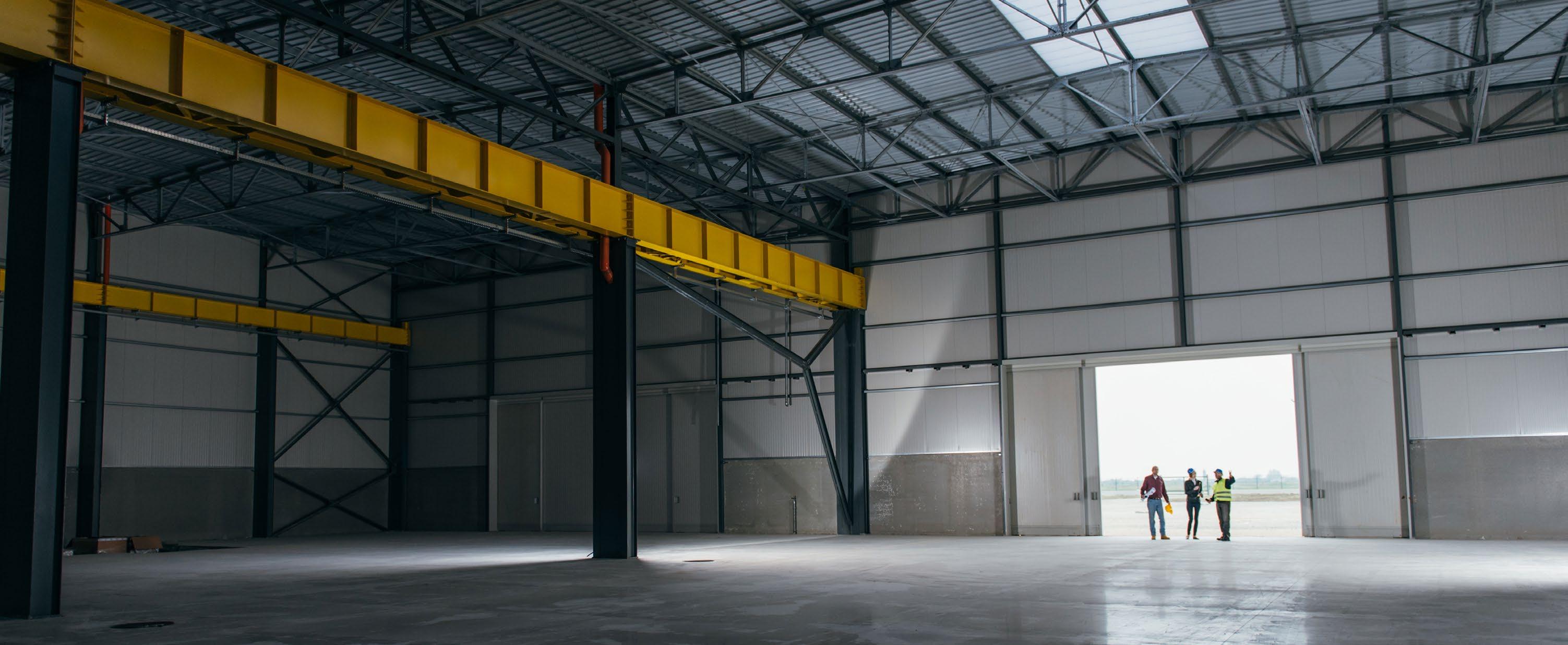
As a leader in commercial and industrial construction, Principle Construction Corp. specializes in a wide range of projects, from custom build-to-suit facilities to complex food processing plants and efficient cross-dock logistics centers. Our expertise also extends to developing business parks, constructing retail spaces, and executing strategic expansions and tenant improvements.
Building Chicago since 1999
50 S Fairbank - courtesy Missner Group
‘Small Cities,’ Big Expectations: Property management turns strategic across Chicago's industrial market
By Brandi Smith

When one of NAI Hiffman's property management teams completed 45 interior and exterior lighting upgrades across one of Chicago's largest industrial portfolios, the total cost to the client came to $23,000. But the value of the improvements exceeded $2 million before incentives and rebates and the projects generated immediate operational savings while sharpening the appearance and marketability of the buildings.
Projects like that one illustrate what ownership groups now expect from the teams running their industrial assets. Maintaining a property and collecting rent no longer clears the bar. In a market defined by rising expenses and tenant-driven leasing conditions, property managers are being asked to find value and defend it.
“Property managers are now expected to be trusted advisors to ownership groups and act as a partner more than a service provider,” said Michelle Grana, Director of Management Services at NAI Hiffman.
According to Grana, that means owners want real-time data, proactive financial oversight, long-term capital planning and insights that help them make informed decisions with managers expected to identify trends and present solutions before issues affect property performance. Reporting on what happened last month is no longer enough.
Victoria Knudson, Leader of Industrial Property Management and Partner at Stream Realty Partners, has watched the same pressures reshape her teams' work, driven in large part by ownership's focus on the expense line.
“One of the biggest changes has been the need to do more with less, which varies depending on the asset class,” Knudson said. “Owners are placing a strong emphasis on keeping operating costs as low as possible to remain competitive in a tenant-driven market.”
That emphasis is colliding with an expense environment that keeps testing budgets. Knudson points to insurance and utilities as the most challenging line items with weather playing a major
role in their unpredictability. Security costs have climbed as well, reflecting heightened safety concerns, additional on-site presence during peak hours and investments in new technologies. Labor has been the rare bright spot with year-over-year growth holding within approximately 5%.
Grana sees a similar split between costs that can be managed and costs that simply must be absorbed. Insurance premiums have risen across the industry on market conditions, severe weather and replacement costs while competition for qualified talent has pushed labor upward. Her teams have responded with a more disciplined, data-driven approach: competitively bidding contracts including mass bidding of snow removal and landscaping across the entire portfolio, leaning on preventive maintenance to head off emergency repairs and engaging alternative utility providers where available.
“The goal isn't simply to spend less, it's to spend creatively while protecting the long-term value of the asset,” Grana said.
During extended vacancy periods, that creativity has meant working directly with utility providers and vendors to trim holding costs while positioning assets more competitively for lease-up. The lighting modernization program, often completed at little to no cost to clients, grew out of the same playbook.
Technology has become one of the most reliable tools in that effort, though both executives draw a sharp line between platforms that perform and platforms that merely promise. Grana said building automation systems, smart metering, utility monitoring and predictive maintenance tools have delivered tangible results by catching issues earlier and reducing waste while integrated management platforms have given tenants, managers and owners better access to real-time information.
“I've found that the most valuable investments are often the ones that solve a specific operational challenge rather than simply adding another platform to manage,” Grana said.
Photo by Taylor Vick on Unsplash
Knudson has seen the payoff in greater connectivity between building systems, from building automation to tenant-facing apps.
On artificial intelligence, both are measured optimists. According to Knudson, AI is gaining traction for lease abstraction and other administrative functions, where it can deliver meaningful time savings depending on the platform. Grana believes the newer AI and analytics tools carry tremendous potential but argues their value today lies in helping teams make better decisions, not in replacing the human relationships at the core of the business.
Tenants, meanwhile, keep raising the bar. Knudson said expectations around amenities and engagement continue to climb across asset classes from property-wide Wi-Fi and access control to environmental and wellness features that tenants can experience firsthand. Even so, she noted that location and rental rates remain the top priorities and her teams have observed a shift back toward traditional security services over customer-service-oriented roles.
Looking toward the second half of the year, Knudson said the biggest challenge will be preparing 2027 operating

budgets that keep assets competitive while managing rising expenses, alongside supporting leasing efforts and maximizing revenue generation. Her teams are approaching both proactively to capture every opportunity.
If budget season represents the predictable side of the job, the day-to-day supplies everything else. In the course of normal operations, Knudson's teams

have managed swarming bees on an amenity rooftop after a storm displaced their hive, handled pop-up protests at building entrances, resolved AV failures during heavily attended events and responded to HVAC and elevator outages.
“Each situation requires quick decision-making, adaptability and creative problem-solving,” Knudson said.
That range of demands, from capital planning to displaced beehives, explains why the best managers operate less like landlords and more like municipal administrators.
“Buildings function much like small cities, and property managers rely on a broad range of knowledge and experience to keep them running smoothly,” Knudson said. “You don't have to be an expert in every discipline, but successful property managers know how to bring together the right resources to solve problems quickly and effectively.”
For Grana, that same breadth defines the profession's new identity. Property management in 2026, she said, is about strategically managing assets, using technology to improve efficiency, controlling costs where possible and delivering an exceptional experience for both clients and tenants with managers combining operational expertise, financial insight and customer service to maximize value.
The lighting upgrades, the mass-bid snow contracts and the rooftop bees all point to the same conclusion. The buildings may be industrial, but the job description keeps expanding.

Michelle Grana
Victoria Knudson
B and C product has plateaued in rent and in some cases decreased compared to similar counterparts 12-24 months ago,” Dickey said.
The dynamic he is watching most closely, though, is users buying buildings again. The trend rode the manufacturing and reshoring wave across the Sun Belt over the past 12 months and is now surfacing in the Chicago area, with federal tax legislation giving occupiers with heavy infrastructure requirements fresh confidence to own.
“Occupiers are stepping up to buy at aggressive values, both speculative product in secondary submarkets and second-generation space in primary ones,” Dickey said.
Inside the tenant's head
Nick Feczko, Vice President at NAI Hiffman, sees the strongest activity in the 50,000- to 150,000-square-foot range, along with renewed momentum among occupiers seeking 500,000 square feet or more in corridors such as I-55 and I-80. Decision timelines have stretched, he noted, but what tenants want has never been clearer.
"When a community sees a development that delivers jobs, green space, clean energy and dedicated community facilities, the conversation changes entirely."
“Tenants in 2026 are prioritizing one thing above all else: operational efficiency,” Feczko said. “Every requirement ultimately comes back to how a building can help improve productivity, reduce costs and support long-term business objectives.”
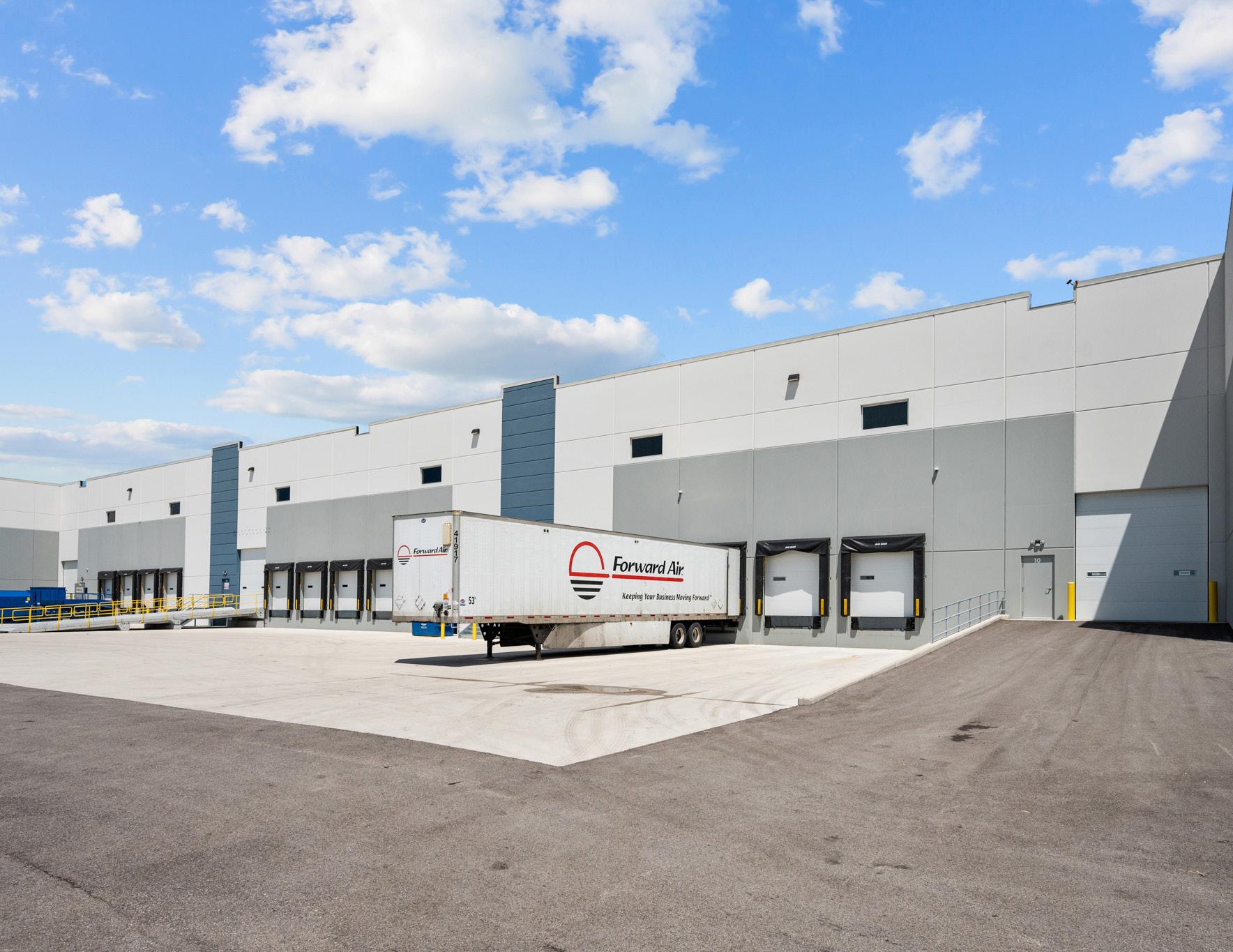
In practice, that means power capacity to feed automation and electric vehicle infrastructure, trailer parking that can decide a competition between otherwise comparable buildings and labor access weighted as heavily as highway access. Feczko points to 390 O'Hare Logistics Park in Schaumburg, a two-build-
ing, 443,000-square-foot Class A development he is leasing alongside NAI Hiffman Executive Vice President David Haigh on behalf of Logistics Property Company, as proof that developers still believe in that demand. The project recently broke ground along I-390 and is targeted for completion in the third quarter of 2027.
The developer: proof of concept in North Lawndale
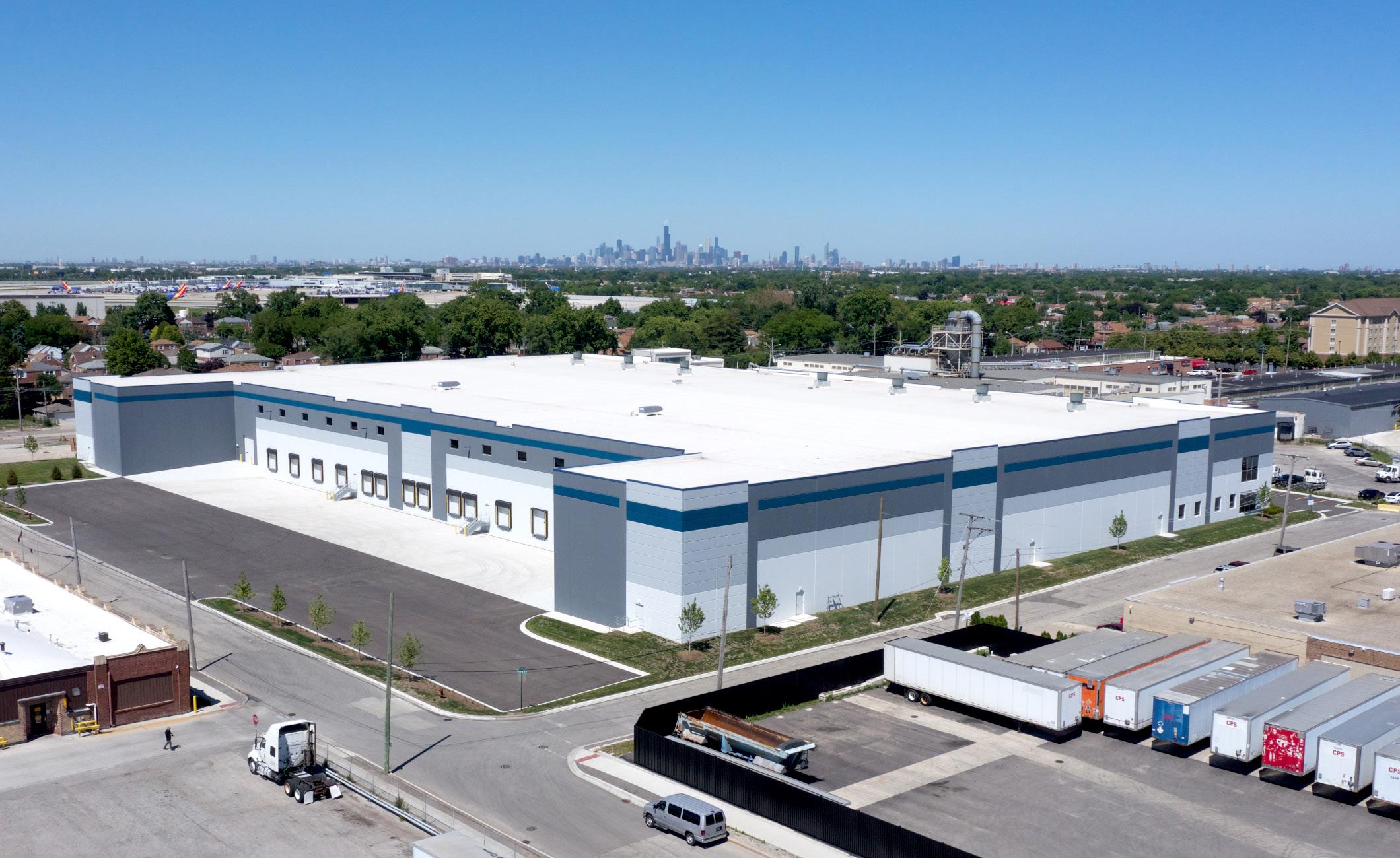
Few projects in the country say more about where urban industrial development is headed than CRG's The Cubes at Roosevelt & Kostner. Precast is complete on both buildings and Steve Schnur, Chief Operating Officer at CRG, confirms the project remains on track for its first deliveries in the third quarter. The site sat vacant for decades before a partnership with Related Midwest, 548 Development, the City of Chicago and North Lawndale community organizations unlocked it. The finished development will include two donated Innovation Centers operated by Black Men United and the New Covenant Community Development Corporation, a 3-megawatt rooftop solar array delivering discounted clean energy to roughly
INDUSTRIAL (continued from page 1)
CRG Cubes at Cicero
500 low-income West Side households and an estimated 125 construction jobs and 250 permanent positions.
“When a community sees a development that delivers jobs, green space, clean energy and dedicated community facilities, the conversation changes entirely,” Schnur said.
He argues that approach will decide who gets to build in the city.
“The best infill sites in Chicago sit adjacent to neighborhoods, and developers who treat community benefit as a core part of the deal — not a concession — are the ones who will get these projects entitled, financed and delivered,” Schnur said.
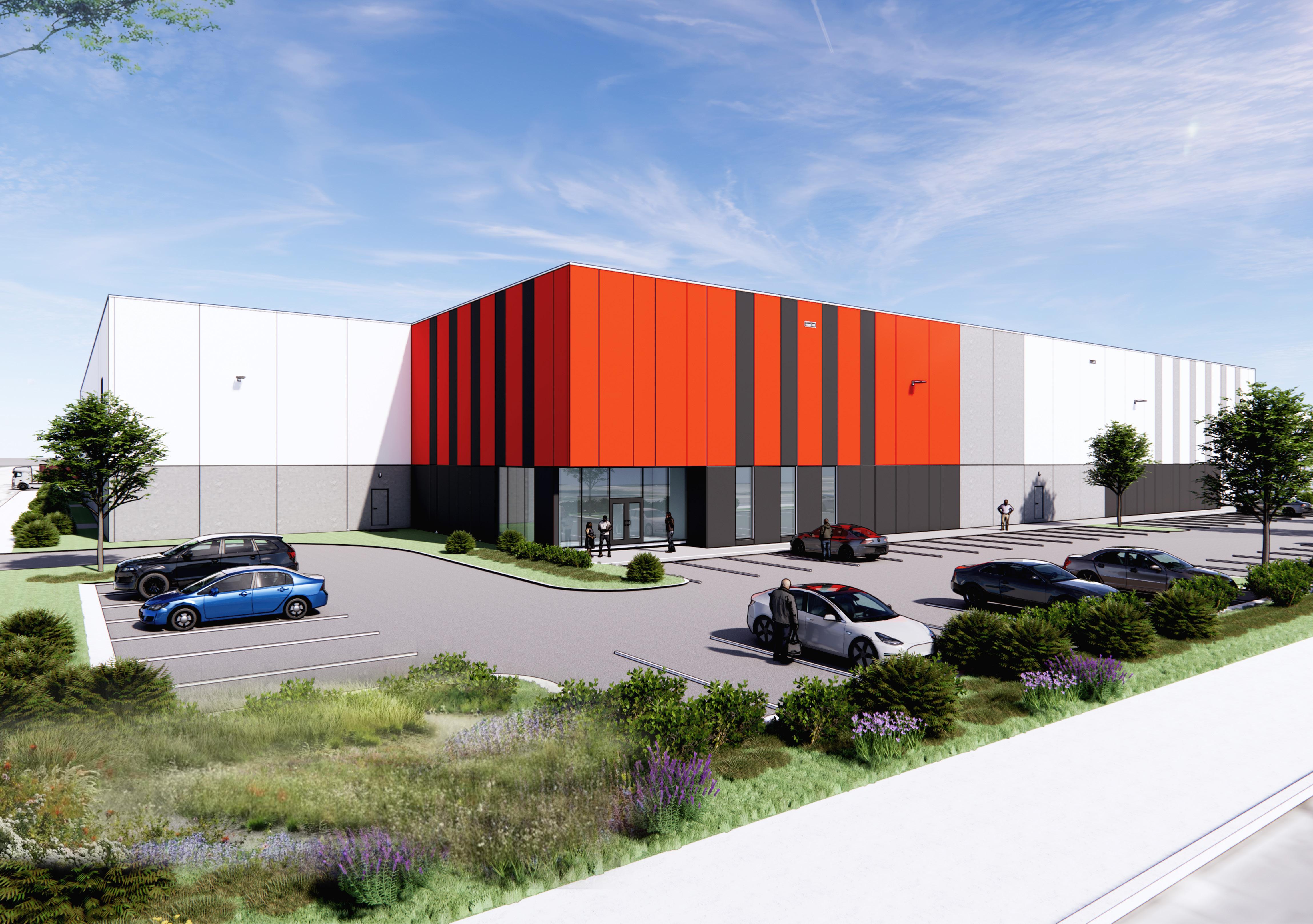
CRG is testing the same infill conviction at smaller scale with The Cubes at Cicero, a speculative project in the underserved 80,000- to 100,000-square-foot segment, and recently delivered and sold the fully leased Cubes at ORD near O'Hare's South Cargo Area.
Capital markets: the CFO's calculation
Sale-leaseback volume climbed significantly from 2024 to 2025 and Haefner says 2026 is tracking well against that pace as corporate owners take a fresh look at their balance sheets.
“What's driving it is pretty straightforward: Companies are sitting on assets that have appreciated substantially and their CFOs are starting to ask hard questions about why that capital is tied up in
“We put our market expertise to work to empower our clients and help maximize their growth.”
For over 45 years, Darwin Realty has been a leader in industrial and commercial real estate. The company specializes in brokerage, property management, investment and development services primarily in the Midwest. Darwin’s highly qualified professionals are problem solvers and utilize a breadth of tools and knowledge to serve our clients best.
moving out.”
Chris Mergenthaler Vice President
The buyer pool chasing those deals is deep. Private and 1031 exchange capital remains active, institutions have returned and non-traded REITs have been aggressive on well-structured transac-


real estate,” Haefner said. “A sale-leaseback lets them unlock it without
1851 Brandon Road - Courtesy Marian Kraus Photo








"For businesses moving raw materials or finished goods, the Chicago region offers transportation advantages that can
directly reduce costs, improve service levels and ultimately strengthen enterprise value."
tions, per Haefner, a mix of demand that has compressed single-tenant net lease cap rates by about 25 basis points over the past year.
“My advice to anyone thinking about a sale-leaseback: Don't wait for a perfect moment that may not come,” Haefner said. “Cap rates are compressed, buyer demand is strong, and the combination we're seeing right now isn't guaranteed to hold.”
The global landlord: betting bigger on bulk
Few vantage points cover more of the market than the one at Prologis. Josh Zemon, Senior Vice President and In-
vestment Officer at Prologis, reports demand improving fastest in the bulk category of 750,000 square feet and up while new supply stays muted, with less than 15 million square feet under construction across the market, and notes the Midwest is generating some of the strongest rent growth in the company's national portfolio. That conviction is playing out through ground-up development and redevelopment of older assets in core submarkets including O'Hare, Central DuPage, I-55 and I-80, according to Josh Bauer, Vice President and Investment Officer at Prologis.
The clearest recent signal came in Glendale Heights, where Prologis acquired more than 26 acres to develop
two Class A logistics facilities totaling 454,000 square feet.
“Unlocking an opportunity of this scale in the Central DuPage submarket is extremely rare, and we look forward to delivering much needed Class A space to the market while also supporting the local community, businesses and the region's supply chain,” Zemon said.
The demand side is cooperating.
“In general, customer conversations feel constructive and point to a strong second half of the year for leasing,” Bauer said. “We are seeing faster decision making from some customers,
as well as more interest in investing in their supply chains.”
The investor: betting on the blue-collar backbone
While institutional capital chases clear heights, Alfredo Gutierrez, CEO of Sparrowhawk, is buying the workhorse buildings that keep the regional economy running: multi-tenant and shallow-bay industrial leased to the contractors, distributors, fabricators and service companies that need to stay close to customers and labor.
“Industrial real estate is a lot like an old pickup truck,” Gutierrez said. “It doesn't
Josh Bauera
Adam Haefner
Ben Dickey
Rusty Parris
Nick Feczko
Steve Schnur
Alfredo Gutierrez
Josh Zemon
have to be shiny. It has to start every morning.”
Scarcity powers the thesis. Infill land is hard to find, zoning is restrictive and replacement costs keep climbing, so every year the existing inventory of functional buildings becomes harder to reproduce. Buying them at the right price is another matter.
“The bid-ask gap has definitely narrowed, but it hasn't disappeared,” Gutierrez said. “Sellers are no longer living in 2021—but some of them still own a vacation home there.”
Heading into the second half, he describes Sparrowhawk's posture as cautiously constructive, waiting for deals where value can be created at the property level rather than inherited from the market.
“In this environment, conviction matters. So does humility. You win this cycle with a calculator, not a trumpet,” Gutierrez said.
The strategist: why the numbers keep pointing here
Rusty Parris, Managing Director of Operations Improvement at TriVista, advises companies on supply chain networks rather than buildings and,
from that vantage point, the first half's defining shift is that facility location has become a financial decision as much as an operating one. Companies that quantify what proximity to O'Hare, rail infrastructure and the interstate network does for transportation costs, inventory turns and lead times, he says, move decisively when the right building appears.
“At the end of the day, companies don't choose locations simply because they're well known—they choose them because the numbers work,” Parris said.
“For businesses moving raw materials or finished goods, the Chicago region offers transportation advantages that can directly reduce costs, improve service levels and ultimately strengthen enterprise value.”
Seven seats, seven readings of the same six months. They split on product type, price point and strategy, yet they settle in the same place: quality and function earn a premium, and discipline has taken over where the last cycle rewarded guesswork. For a market clearing $8 for the first time, that may be the most durable signal of all.

390 O’Hare Logistics Park

CIP MARKETPLACE
CONSTRUCTION COMPANIES/GENERAL CONTRACTORS
MERIDIAN DESIGN BUILD
9550 W. Higgins Road, Suite 400 Rosemont, IL 60018
P: 847.374.9200
info@meridiandb.com
meridiandb.com
Primary Contacts
Paul Chuma, President
Howard Green, Executive Vice President Core Services

Meridian Design Build provides construction and design/ build construction services on a national basis with a primary focus on industrial, office, medical office, retail and food and beverage work.
Company Overview
With a team of in-house professional project managers, Meridian has extensive experience coordinating the design and construction of new buildings, tenant improvements, and additions/renovations from 15,000 square feet to 1,000,000+ square feet. Meridian Design Build has been a Member of the U.S. Green Building Council since 2007.
Selected Projects
University Park Logistics Center, University Park, IL - 970,123 sf speculative multitenant industrial distribution/warehouse facility for Clarius Partners and Hillwood Investment Properties. Silesia Flavors, Huntley, IL - 134,075 sf food production, laboratory, research and development, and office facility for Venture One Real Estate and a global leader in confectionery and beverage flavors. FedEx Ground, Gary, IN - 324,901 sf package sorting and distribution center on a 78-acre redevelopment site for Scannell Properties and Transport Properties.
PRINCIPLE CONSTRUCTION CORP.
9450 West Bryn Mawr Ave., Suite 120 Rosemont, IL 60018
P: 847.615.1515 | F: 847.615.1598
pccdb.com
Primary Contacts

Mark L Augustyn, COO, maugustyn@pccdb.com, James A. Brucato, President, jbrucato@pccdb.com
Core Services
Since 1999, Principle Construction Corp. has been a leading design-build general contractor serving the industrial markets of Chicago Metro, Southern Wisconsin, and Northwest Indiana. We specialize in designing and constructing exacting solutions for our clients, including:
• Built-to-Suit Facilities • Speculative Facilities
• Warehouse and Distribution Centers
• Logistics and Cross-Dock Facilities
• Industrial Outdoor Storage
•Industrial and Manufacturing Plant • Tenant Improvements
• Expansions and Additions• Food Processing Facilities
• Specialty Projects
Selected Projects
• 8,205 SF animal shelter for Heartland Animal Shelter, at 586 Palwaukee Dr., in Wheeling, IL.
• 12,560 SF showroom and outdoor pool park for Doheny Enterprises, at 5307 Green Bay Rd., in Kenosha, WI
• Phase 1 renovation project for SMW Autoblok, at 285 Egidi Dr., Wheeling, IL
COMMERCIAL LENDING
MARQUETTE BANK
10000 W. 151st Street
Orland Park, IL 60462
P: 708.364.9131
emarquettebank.com
Primary Contact
Gene Malfeo, Executive Vice President, Chief Lending Officer
gmalfeo@emarquettebank.com
Core Services
Full line of Commercial, Business and Real Estate loans customized to your individual needs including: commercial and residential construction loans, commercial mortgages, equipment loans and working capital lines of credit.
Company Overview
Marquette Bank started in Chicagoland in 1945 and is still locally-owned/operated. Expect quick decisions, competitive rates, easy application and personal service. Personal/business banking and lending, home mortgages, land trust services, estate planning, insurance services, wealth management and multifamily lending.
REAL ESTATE LAW FIRMS
SARNOFF PROPERTY TAX
100 N. LaSalle St., 10th Floor Chicago, IL 60602
P: 312.782.8310
Sarnoffpropertytax.com
Primary Contact
James Sarnoff
jsarnoff@sarnoffpropertytax.com, P: 312.448.5337
Core Services

Since 1986, Sarnoff Property Tax has been a leading and recognized law firm concentrating solely in the field of property taxation. We help clients secure favorable taxes in Illinois through property tax appeals, incentives, and consulting. Firm Overview
Sarnoff Property Tax’s clients include Owners, Developers, Managers, REITs, Fortune 500 Companies, Private Equity Firms, etc., in connection with commercial property, high-rise and low -rise apartment buildings, condominium associations and single-family home portfolios.
WORSEK & VIHON, LLP
180 North LaSalle Street, Suite 3010 Chicago, IL 60601
P: 312.917.2307 P: 312.917.2312
F: 312.596.6412
wvproptax.com
Primary Contacts
Francis W. O’Malley, Managing Partner, fomalley@wvproptax.com; Jessica L. MacLean, Partner, jmaclean@wvproptax.com
Core Services

Worsek & Vihon, LLP represents taxpayers in Illinois by limiting their property tax liabilities through ad valorem appeals resulting in lower tax bills. We have over 40 years of experience and can handle basic to the most complex assessment issues while offering the dependable, personalized attention our clients deserve. We have experience representing owners of all property types. In addition to filing thousands of appeals with the Cook County Assessor, we have been involved in numerous proceedings before various Boards of Review, the Illinois Property Tax Appeal Board, and the Circuit Court of Illinois, and have appeared before the Illinois Appellate and Supreme Courts.
Firm Overview
Worsek & Vihon LLP, is a team of highly experienced attorneys singularly focused on Illinois real estate tax law. The firm is dedicated to minimizing property tax liabilities through strategic tax portfolio management, well researched, creative appeal preparation and aggressive advocacy.