Safe Spaces for Youth
gen
Helping the next generation navigate the world
Refuge for Refugees
Providing critical care for newcomers
Seeds of Security
Protecting farmlands and sharing resources for food access

gen
Helping the next generation navigate the world
Refuge for Refugees
Providing critical care for newcomers
Seeds of Security
Protecting farmlands and sharing resources for food access
Caregiver Alan Rae looks forward to Calgary’s first dementia-inclusive park
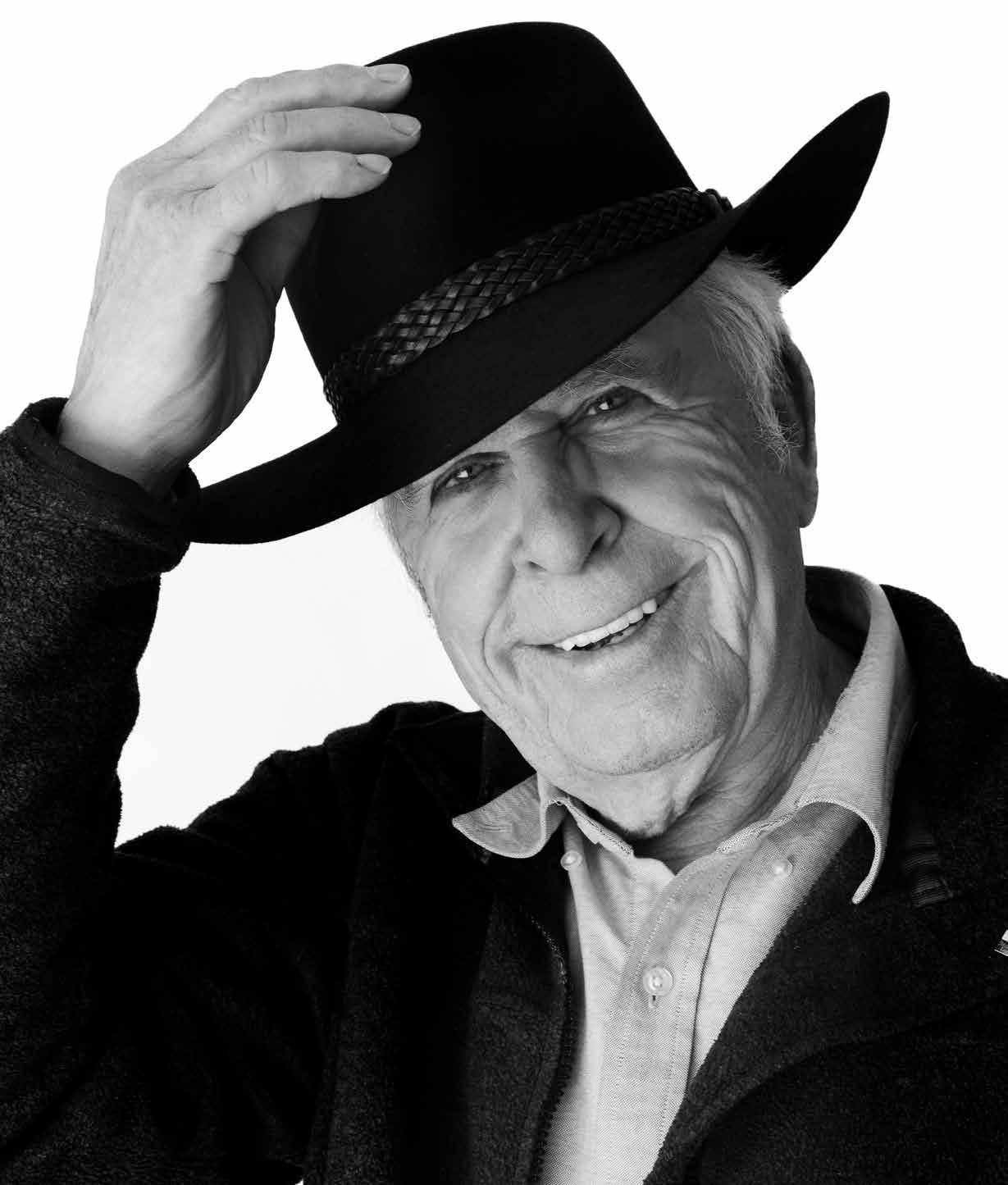
Recently, we lost a dear colleague, leader and community builder — a loss felt deeply by all of us at Calgary Foundation. From 2001 to 2016, Dan Thorburn served as our Vice-President, Grants & Community Initiatives, and
his impact continues to resonate across the charitable sector he cared about so deeply.
Dan was known for his commitment to his work, visionary leadership, artistic sensibilities and love for the fine arts, as well as his passion for outdoor adventure and world travel. Widely admired as a mentor to those who had the privilege to work with him, Dan was kind, generous, wise and had a fantastic sense of humour.
During his time with the Foundation, Dan worked closely with countless charities and nonprofit organizations. Among his many contributions, he championed the creation of cSPACE Marda Loop, leaving a lasting legacy as a dedicated supporter of the arts in Calgary.
Dan believed in the power of community and lived that belief every day through the relationships he developed at Calgary Foundation as well as in his personal life. To honour his life, those who wish may
consider a donation in his memory to the Parkinson Association of Alberta, the Canmore Hospital Foundation or the Nana Fund, an environmental fund for the Eastern slopes, which Dan established at Calgary Foundation. Dan Thorburn is, and will forever be, deeply missed by all who had the privilege of knowing him.
Eva Friesen
President
& CEO, Calgary Foundation
In the spirit of respect, reciprocity and truth, we honour and acknowledge Moh’kinsstis, and the traditional Treaty 7 territory and oral practices of the Blackfoot confederacy: Siksika, Kainai, Piikani and the îethka Nakoda Nations: Chiniki, Bearspaw, Goodstoney and Tsuut’ina Nation. We acknowledge that this territory is home to the Otipemisiwak Métis Government of the Métis Nation within Alberta Districts 5 and 6. Finally, we acknowledge all Nations — Indigenous and non — who live, work and play on this land, and who honour and celebrate this territory.
2026 - 2027 Board of Directors
Michael Mezei
Narmin Ismail-Teja
> Calgary’s youth-dedicated spaces help the next generation navigate the world.

04 A New Focus Calgary Foundation board member
David Phillips helps non-profit organizations make an impact.
06 Life-Changing Moments
Longtime philanthropists
Brenda and Greig Nicholls support brain research.
08 Hatching a Legacy of Giving
After helping others build philanthropic legacies, Don Hatch sets up his own legacy fund.
14 Growing Food Security
Local organizations help secure food access through protecting farmlands and sharing resources.
20 Critical Support for Newcomers
The Calgary Refugee Health Clinic cares for vulnerable patients.
22 System Reboot
Three community organizations make systemic changes to better meet their missions.
28 Making the Outdoors DementiaFriendly
The Martin Family Legacy Garden will be Calgary’s first dementiainclusive park.

“
We can play our small part ... to make the wheels turn and the deals go ahead on affordable housing projects.”
—David
By Tim Querengesser • Photograph by Jared Sych
For Calgary Foundation board member David Phillips, retirement has given him the time and space to dedicate to new projects that weren’t possible while he was working as a lawyer. “Now that I'm retired, it's giving me an opportunity to do more of the things I wanted to do when I was in practice.”
Despite his busy career, Phillips supported communitybuilding projects while working at Bennett Jones, one of Canada’s largest law firms, where he was partner and practiced corporate finance law. Nowadays, he finds himself a fully booked volunteer. Aside from contributing to the Foundation board, he also sits on two Foundation committees, serves on a condo board and guest lectures at the University of Calgary’s Haskayne School of Business. Despite having more free time now, Phillips still finds it hard to fit in all his passions, like travelling. “There's frankly more opportunity to do things than time available,” he says.
To understand his drive, consider what Phillips is helping to build. He knew about Calgary Foundation because his late father, Ross, served on the board and chaired it in the 1990s. His own connection with the Foundation officially began in 2016, when a Foundation director recruited him onto a committee launching the Impact Investment Program. The Foundation has a sizable endowment that it invests, and investment earnings are granted to deserving groups, he says. “The thought was, ‘How can we further the objectives of the Foundation by better accessing that invested money?’”
The solution was to not only provide grants as most traditional community foundations do, but to carve out a chunk of the endowment funds to offer as community loans to drive change. These impact loans support a variety of non-profit organizations and are eventually repaid with interest. They’ve been as large as $5 million and customtailored for organizations that may struggle to qualify for bank loans.
Phillips, who now chairs the Impact Investment Committee, is particularly enthusiastic about how the impact loans help to unlock affordable housing. Many affordable housing projects rely on government grants that don’t necessarily line up with when financing is needed to move the projects along. “It's money that is drawn from a whole bunch of sources, and it takes a great deal of coordination to bring these things all together,” Phillips says. “We can play our small part in providing bridge loans to make the wheels turn and the deals go ahead on these affordable housing projects.”
Ultimately, Phillips is passionate about his Foundation work because of how it helps people — a legacy he shares with his father. He remembers how deeply Ross felt about the Foundation. “He told me that the Calgary Foundation was the most successful thing that he was involved with during what was already a very successful career,” he says. “It illustrated the type of guy that he was, and the type of person I aspire to be.”
By Olivia Piché • Photograph by Jared Sych
Sometimes, it takes a life-altering moment to remind you of what’s important. That was the case for Brenda and Greig Nicholls. In 2000, Brenda experienced a brain bleed from a ruptured aneurysm. It was located in a surgically challenging part of the brain, meaning a highrisk surgery was necessary.
Brenda came under the care of renowned neurosurgeon Dr. Garnette Sutherland, who performed the surgery successfully. “If I had not had Dr. Sutherland as my doctor, I’m not sure if I would be here,” she says.
“It redefines your life when you go through an experience like that. It takes you off on a different path, and you change your priorities,” says Greig. “That was really the start of leaning more towards charity.”
The beginning of a giving journey
Once recovered, Brenda adjusted her will to include a donation to brain research. The couple then established the Nicholls Family Fund through the Calgary Foundation in 2004. Brenda and Greig wanted to support local charities focused on children’s education and well-being.
Having grown up in Calgary, the Nicholls wanted to support kids and give them opportunities to reach for their dreams and find success as they had been able to.
“Living in Calgary made it possible to feel like we had the ability to give back to our city,” says Brenda. “We felt like we had enough to share, and so we thought, ‘Let's make a plan on how we want to do that and follow through with it.’”
And so they did, providing major gifts to the Calgary Public Library, Wilder Institute/Calgary Zoo and TELUS Spark Science Centre, as well as programs like Brown Bagging for Calgary's Kids and Calgary Apraxia.
While the Nicholls have had decades of impact supporting young Calgarians, their major philanthropic efforts recently shifted because of a second life-changing moment. In 2024, Brenda had another brain aneurysm, despite the slim possibility of recurrence.
Although Dr. Sutherland did not perform Brenda’s recent brain surgery, he ensured her treatment was safely executed by consulting with his colleagues. Brenda once again recovered well, and this time around, she didn’t want to wait to make a difference.
After touring Dr. Sutherland’s research facility with his robotic system, Project neuroArm, the Nicholls decided to significantly contribute towards his work. That includes supporting research and innovation projects for improved and safer brain surgery, such as a digital platform for interconnected collaboration between international surgeons.
“Whatever they can do to make surgeries safer going forward is definitely welcome,” Brenda says.
The Nicholls understand this research will not only improve the future for Calgarians but also for all those who suffer from neurological diseases around the world. Still, the duo is proud to be part of the philanthropic fabric of Calgary, a city with a can-do attitude and a drive for world-leading institutions, as Greig explains. He adds that anyone can start their philanthropic journey.
“The Calgary Foundation is fabulous at providing information on charitable needs in our city, making it easy to enter the world of philanthropy,” he says.
Brenda adds, “We grew up here, and we have been successful here. Thus, it feels like this is where we should be giving back to show appreciation for what we have experienced and the opportunities Calgary provided us.”

“ It feels like this is where we should be giving back to show appreciation for what we have experienced and the opportunities Calgary provided us.”
—Brenda Nicholls

“ Calgary Foundation offers a wonderful vehicle for people who are interested in doing charitable things . ”
—Don Hatch
By Elizabeth Chorney-Booth • Photograph by Jared Sych
As a lawyer who practiced in Calgary for over 50 years, Don Hatch, who is now retired, has helped many clients figure out what to do with their wealth once they were no longer around to enjoy it themselves. Specializing in wills and estate law meant getting well acquainted with the concept of legacy philanthropy. For Hatch, that led to a long-term and deeply rewarding relationship with the Calgary Foundation. Not only has he encouraged many of his clients to include the Foundation in their estate planning, but Hatch is also creating a legacy of his own now.
Convinced by the Calgary Foundation’s demonstrated ability to responsibly manage funds, Hatch often referred clients who wanted to donate money either during their lifetimes or through their wills to the Foundation. His advice always came with the assurance their money would be used efficiently and meaningfully, whether they wanted to direct the giving themselves or not.
“Calgary Foundation offers a wonderful vehicle for people who are interested in doing charitable things,” Hatch says. “I was really impressed that the Foundation was there to facilitate whatever they wanted to accomplish.”
While every client of Hatch’s who donated to the Calgary Foundation made a difference, two have had a particularly long-lasting impact. In the early 1990s, Hatch helped Esther Honens set up an international piano competition — that has become world-renowned — still bearing her name. Honens wanted to ensure the competition could continue forever, and Hatch knew
Calgary Foundation could serve as a long-term steward to provide a platform to young pianists.
Similarly, Hatch connected Eleanor Luxton to Calgary Foundation to help her preserve and educate about Banff's history through the Eleanor Luxton Historical Foundation. The daughter of prominent pioneers of Banff and the Bow Valley, Luxton wanted to use her wealth to do good while also building a legacy. She donated her historical properties in Banff as well as artifacts gathered by her family to establish her foundation, which is overseen by Calgary Foundation.
“One of the questions with these clients was, ‘Who will look after my legacy in perpetuity?’” Hatch says.
“The Calgary Foundation fits the bill perfectly.”
Hatch’s role hasn’t just been as a connector; he’s donated countless hours as well as financial contributions over the decades. He joined the Foundation’s board of directors in the late 1990s and stayed on for the maximum nine years before being named an honourary director. Now in his retirement, Hatch and his wife took his own advice, setting up the Don and Janet Hatch Family Fund through the Foundation to build their own legacy of philanthropy. As a donordirected fund, the Fund grants to causes near and dear to the Hatch family’s hearts, including school lunch programs and charities supporting women and children affected by domestic abuse.
“Calgary Foundation makes it so easy,” Hatch affirms. “You can have so much confidence that the funds are being invested and managed in a prudent way. It just ticks all the boxes.”
Calgary’s youth-dedicated spaces help the next generation build confidence, strengthen skills and navigate the world authentically
By Olivia Piché
At a stage in life full of changes and uncertainty, teens and young adults find themselves trying to shape their identities and search for belonging. Safe and supportive spaces are important to guide them through this formative time, especially for at-risk youth. Here are two community spaces, supported by Calgary Foundation, committed to supporting young Calgarians.
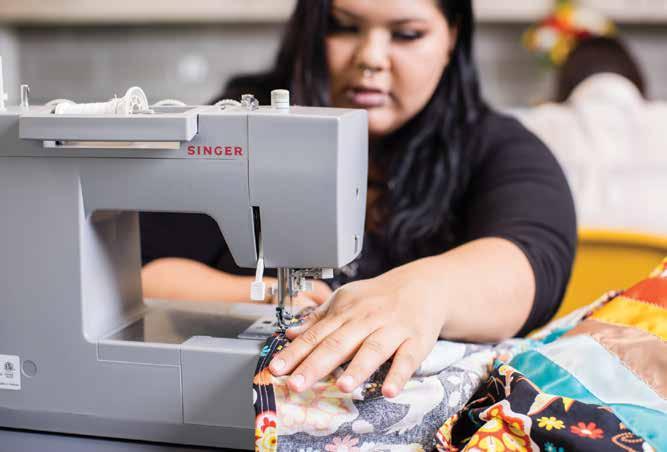
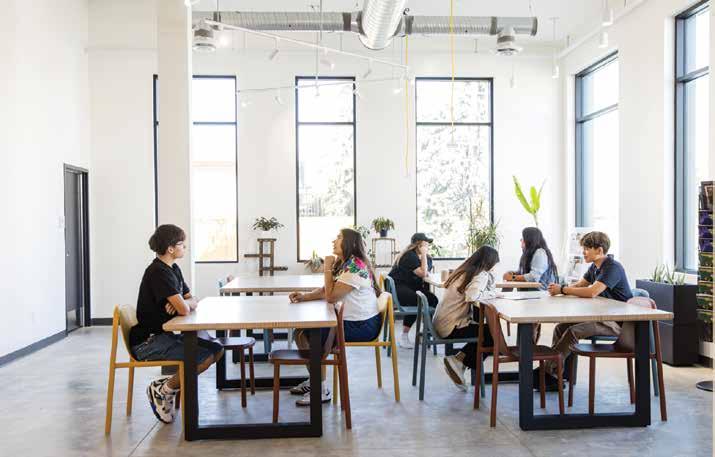
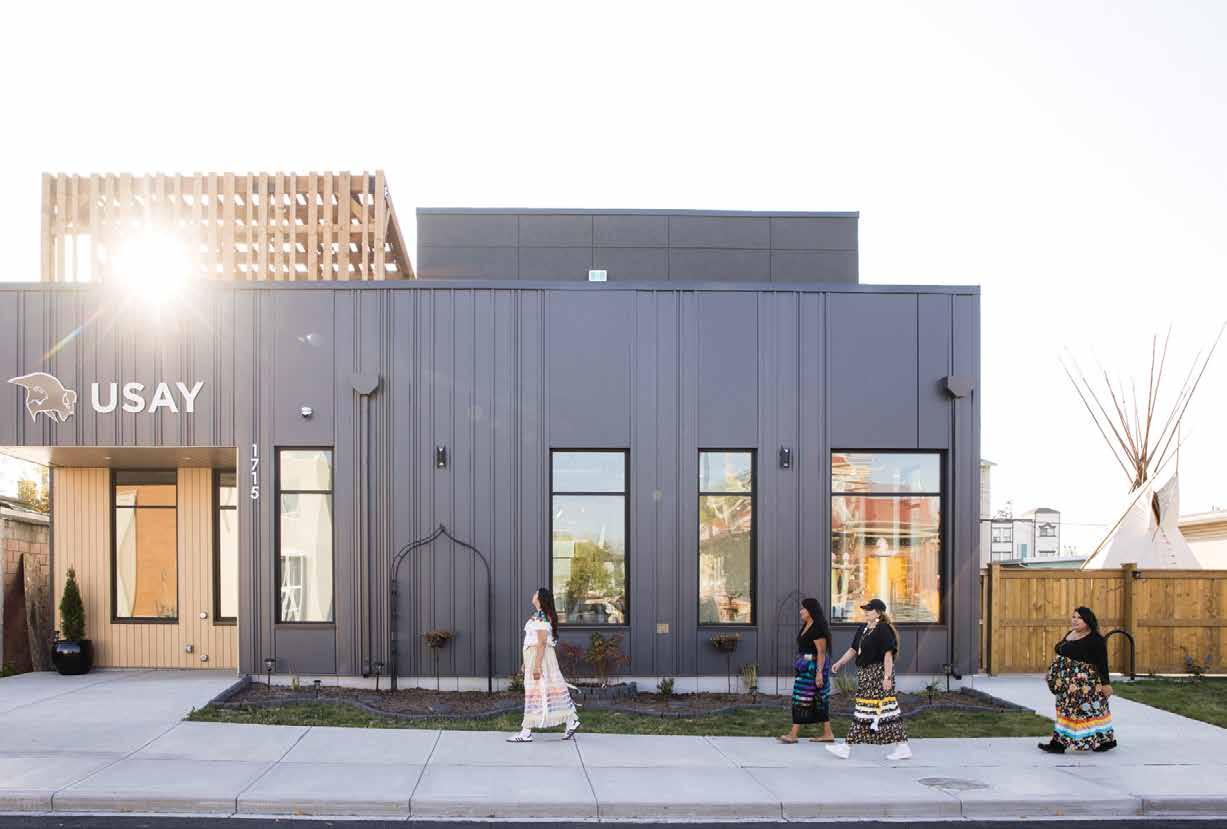
Just over a year ago, Urban Society for Aboriginal Youth’s (USAY) tiny office was crammed to the max, overflowing with the supplies needed for hosting its 30-plus programs at various community centres and schools. For decades, the Indigenous youth organization had dreamed of building a youth centre. This dream became a reality when USAY opened its new, permanent youth centre in the city’s southeast in September 2025.
The USAY Youth Centre has been a long time coming, explains executive director LeeAnne Ireland. It’s been part of the organization’s strategic plan for over 15 years. Now that USAY finally has a permanent, 5,000-squarefoot home, it can accommodate staff offices, youth spaces and the many programs USAY offers.
“The biggest feedback is that the youth call the centre their home,” says Ireland.
This response is a sign of success — the space was intentionally built to feel cozy and welcoming. There’s a dining and kitchen area, a makerspace and
comfortable seating. With no reception or formal check-in, kids are free to make themselves at home, join in the programming and leave their projects until the next session.
And, USAY can now also offer more basic needs support. The kitchen allows staff to cut up fresh fruit and veggies instead of convenient processed snacks, and next to the bathroom, there’s hygiene storage with items like deodorant, toothbrushes and period products — that frequently get used.
Pre-teen, teenage and young adult years are a pivotal, formative time. “Young people have to figure out who they are, and there's already that natural developmental milestone of looking to your peers and to your community members for guidance and support,” says Ireland. USAY steps in to offer resources — and now a place — for that muchneeded support.
Having a physical space with positive influences is vital to helping young people feel safe in their own skins, especially Indigenous youth. “Indigenous youth experience discrimination. This is a space to let that go and just be your true, authentic and urban Indigenous self,” says Ireland.
This is especially important at a time when there are fewer spaces where youth can go without the expectation to buy something or the prejudgment that they will cause trouble.
Ireland emphasizes: “Youth centres, like USAY, and others throughout the city, represent a free, nopressure place to come for positive peer relationships; it's safe, clean and there to support well-being.”
→ Learn more at usay.ca
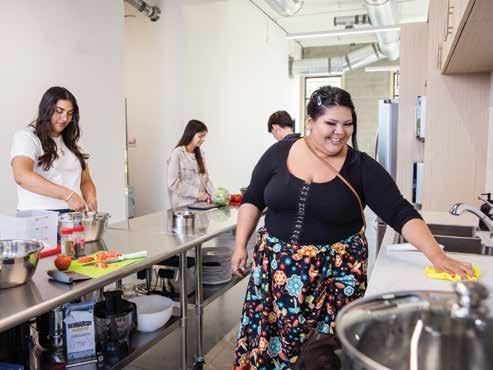

Roughly 10 per cent of those experiencing homelessness in Calgary are youth. This means hundreds of young people have nowhere to call home. Safe Haven Foundation works to support at-risk girls and young women by providing shelter and resources.
In 2000, Safe Haven purchased an eight-bedroom duplex in the city that became Haven’s Way, a residence that houses at-risk girls aged 14 to 26. The girls are given direct support services, such as financial and career planning, life skills and individual development, and connected to counselling for mental health, trauma and addictions.
Haven’s Way helped get girls off the street, but the team at Safe Haven recognized that the transition out of the residence is difficult.
“Stepping out from such in-depth, wraparound programming into the real world is a big step and a scary one,” says Krystyna Lloyd, CEO of Safe Haven. “We didn't have a shared community space to bring our alumni back for continued programming.”
Thanks to funding and a generous anonymous gift, Safe Haven opened Haven’s Harbour as a transitional residence for youth. Haven's Harbour, a three-level apartment building with eight units, acts as a bridge, helping girls apply the life skills they learned at Haven's Way as they learn to live and work on their own. At Haven’s Harbour, they pay affordable rent and have access to a transition coach for support.
“We've really seen a lot of increased confidence for our youth who have transitioned into more independent living,” says Lloyd.
The community hub at Haven’s Harbour serves as a place where girls from Haven’s Way, Haven’s Harbour and alumni can gather. Lloyd says it’s been an organic merge of Safe Haven’s two streams, with Haven’s Harbour youth taking on mentorship roles with the younger girls. Together, they can heal as they participate in sharing circles and workshops.
“Foundations such as Safe Haven change lives,” says a current Haven’s Harbour resident. “They have given me a chance to not just live, but thrive. I was able to leave an abusive household and was welcomed into a space that values safety, community and independence. I could not be more grateful.”
Since joining Haven’s Harbour, this resident has been able to rebuild her life and do things that bring her joy, such as achieving high university grades and getting a driver’s license.
“We're not just preventing homelessness,” says Lloyd. “We're ensuring that the youth who receive our support are entering the community as influencers, decision makers and high earners. They can bring their worldview and become a contributor who is going to bring empathy and reshape the kind of community that we all live in.”
→ Learn more at havensharbour.ca



Local organizations help secure food access through growing fresh produce, protecting farmlands and sharing knowledge and resources
By Olivia Piché
Nearly one in three Calgarians is food insecure.* That means they cannot consistently access or afford enough nutritious and/or culturally appropriate food for a healthy lifestyle. On top of that, food security through traditional systems has become increasingly uncertain because of fluctuating geopolitical climates along with transportation and trade issues.
The following three organizations work to ensure more Albertans have access to appropriate food.

Having local, fertile farmland is vital for food security, in order to be able to respond to unpredictable food disruptors. However, preservation of farmland is not guaranteed.
“Farmland is essential to ensuring food security and food system resilience for current and future generations of Alberta, because, at its core, food security depends on the growth of food and access to it,” says Lisa Kennedy, executive director of Alberta Farmland Trust (AFT).
Driving through the outskirts of major cities like Calgary or down Alberta’s highways, it’s evident that the province’s population and industries are growing. When agricultural farmland

“
Agriculture needs agricultural land, so it's important to provide an option for landowners who want to conserve their farmland for agricultural production.” —Lisa Kennedy
is converted into other uses, such as housing or industrial development, it's no longer available for food production. This is often a permanent and irreversible conversion, ultimately threatening local food security.
Established in 2022, AFT is a new land trust, focused on long-term, strategic conservation of farmland. The trust does this through easements. Landowners can work with AFT to register a conservation easement for agriculture on their property title, protecting the land from conversion to non-agricultural uses.
“It is long-term protection. Once the conservation easement is in place, landowners can maintain private ownership, continue farming it, sell it or gift it, with the assurance that it will remain in agriculture and that it won't be subdivided,” says Kennedy.
Ralph Nelson, president of AFT, recognizes that Alberta exports a significant portion of its cattle and grain, and that some would argue we’re a long way from not being able to provide food for Albertans. But AFT looks at that ability for our long-term future. Due to high costs, Nelson notes that it is already almost impossible to break into agricultural farming.
“We're not making any more farmland, so every acre that we lose, we're having to make up for that somehow,” he says. “It's a cumulative thing. It may not appear to be that threatening now if you just look at an annual loss. But if you look over time, the accumulated loss of agricultural farmland is significant.”
In less than four years, AFT has already helped conserve 640 acres of Alberta’s agricultural land, and it hopes to continue growing. Since it’s still early days for AFT, Calgary Foundation’s Community Grant will help build AFT’s internal capacity and policy by developing clearer templates and guidelines for easement selection, drafting, monitoring and reporting; updating internal policies; and creating awareness-raising plans and materials.
“Access to adequate, healthy food is a basic human need, and a lot of our food supply is dependent on agriculture, particularly in landlocked areas like the prairies,” says Kennedy. “Agriculture needs agricultural land, so it's important to provide an option for landowners who want to conserve their farmland for agricultural production.”
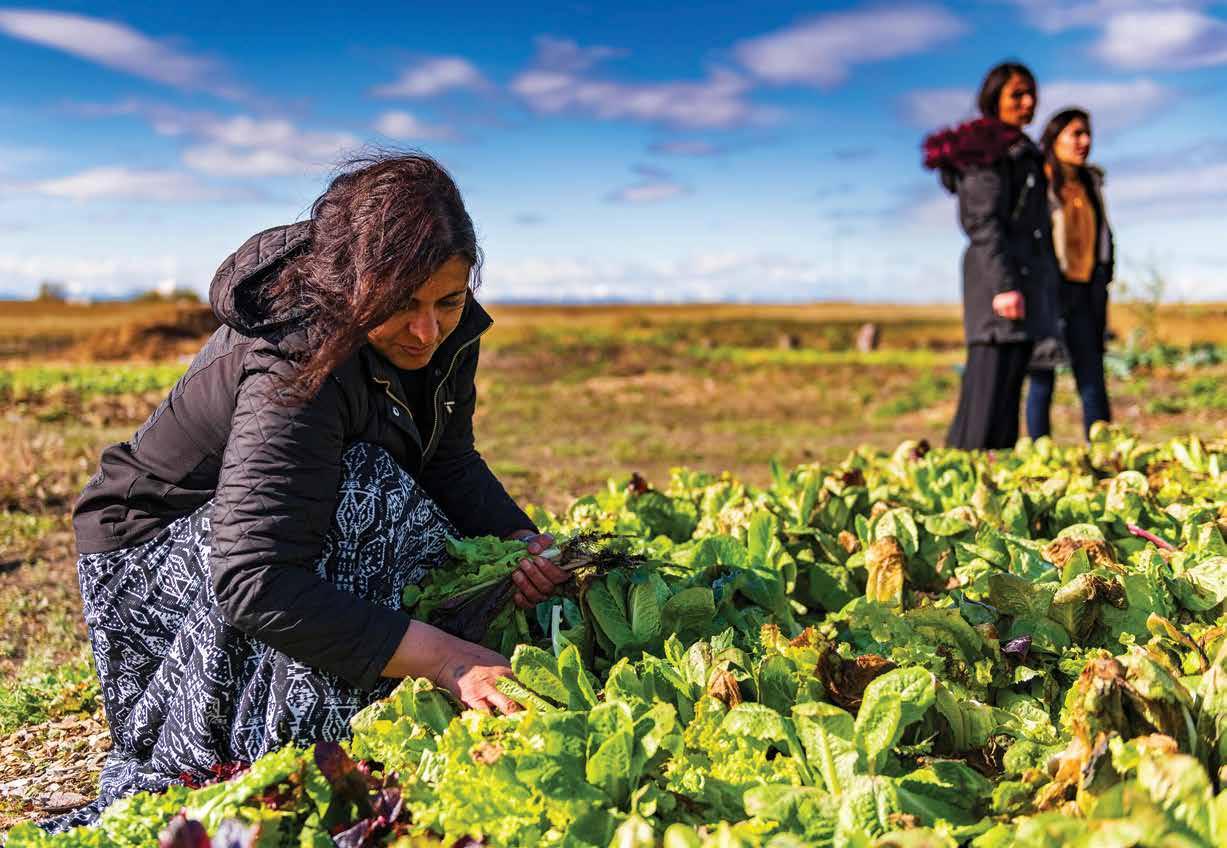
Many of Calgary’s newcomers have deep agricultural knowledge and traditions, yet they don’t have the ability to put them into practice in the city. To address this, Calgary Catholic Immigration Society (CCIS) established Land of Dreams, an urban farming initiative that helps newcomers grow and harvest healthy food through community gardens.
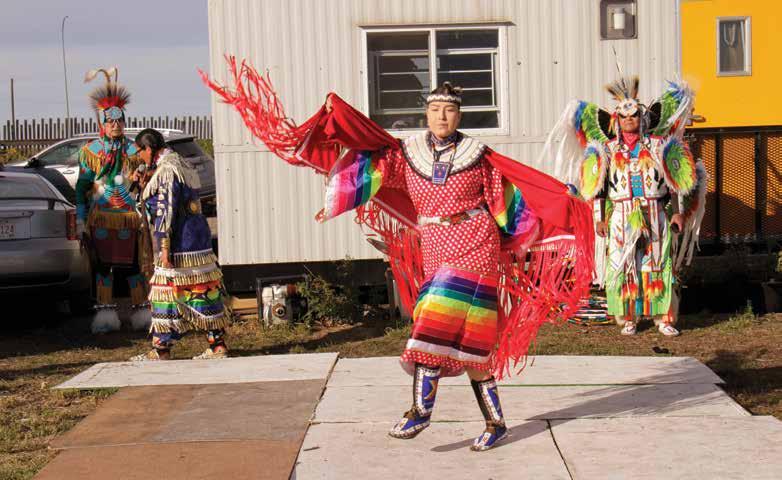
Kicked off in 2019, the initiative creates a sense of belonging in the community, offers opportunities to connect with and learn from Indigenous peoples, and addresses food insecurity.
“At Land of Dreams, our food security conversation starts with empowerment, and that empowerment comes through access to land,” says Rod Olson, Land of Dreams project manager. “Providing people who have this deep kind of agricultural background to land, where they can employ their skills, is the biggest way Land of Dreams is a support system for food security.”
The central design of Land of Dreams is a medicine wheel, with 32 plots of land located within Calgary’s southeast city limits. Groups of newcomers and families tend to their own plots, growing what they’d like with seeds from the initiative, and they learn Alberta’s
Indigenous history and ways of harvest through the guidance and oral teachings of Indigenous Elders who meet with them at the farm. Families get to take home what they grow, and there’s also a Saturday market open to all Calgarians for access to fresh-grown food.
In 2020, Land of Dreams established its beekeeping program, funded in part by Calgary Foundation. The program invites participants to join weekly workshops to learn about bees and their importance as pollinators, and to harvest honey.
This past year, Land of Dreams had participating families from over 20 countries, and the harvest demonstrates
“ At Land of Dreams, our food security conversation starts with empowerment, and that empowerment comes through access to land.”
—Rod Olson
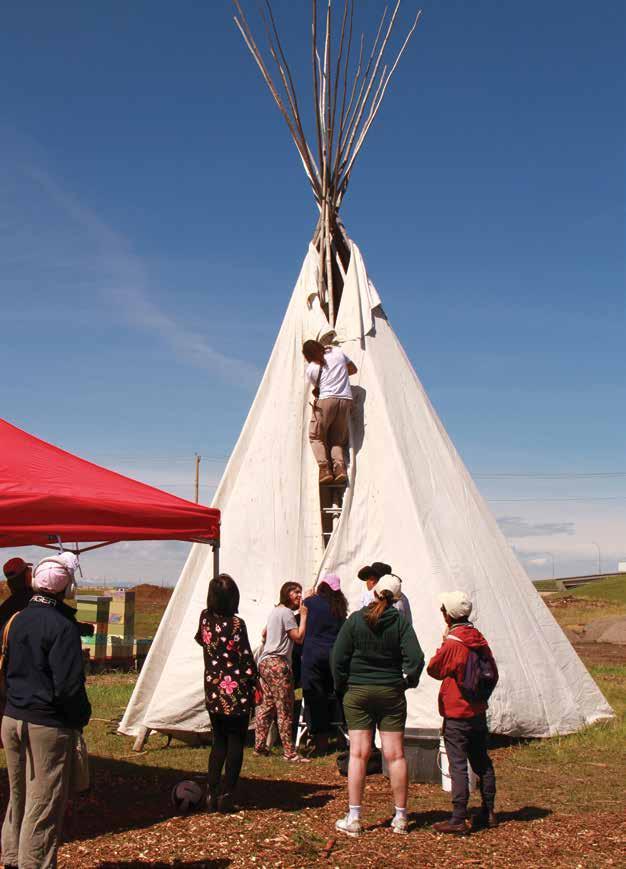
that diversity, too. Olson says onions, carrots and garlic are popular, along with sorrel and amaranth, and plans are in place to help participants grow okra, which is native to Africa and requires more heat to cultivate.
Through access to food, Land of Dreams also gives newcomers a space to connect more deeply with the community as well as their own sense of culture, place and belonging. Bozana Sljuka, settlement manager at CCIS, says she sees the impact when newcomers come to the farm, referring to it as a “magical” place. “We use it to de-stress. For our clients from war-torn areas, it’s a place where they heal. We do heal together, through Indigenous teachings,” she says.
Olson recounts a story of a woman, originally from Iraq, who ate purslane, a plant often used in Iraqi cuisine, grown at the farm. “You could just see this sense of belonging wash over her being, almost like ‘I’m home.’ That's part of the impact that we're trying to create for folks,” he says. “Food is culture, across the globe, and being able to celebrate that has a huge impact.”
→ Learn more at ccisab.ca/land-of-dreams
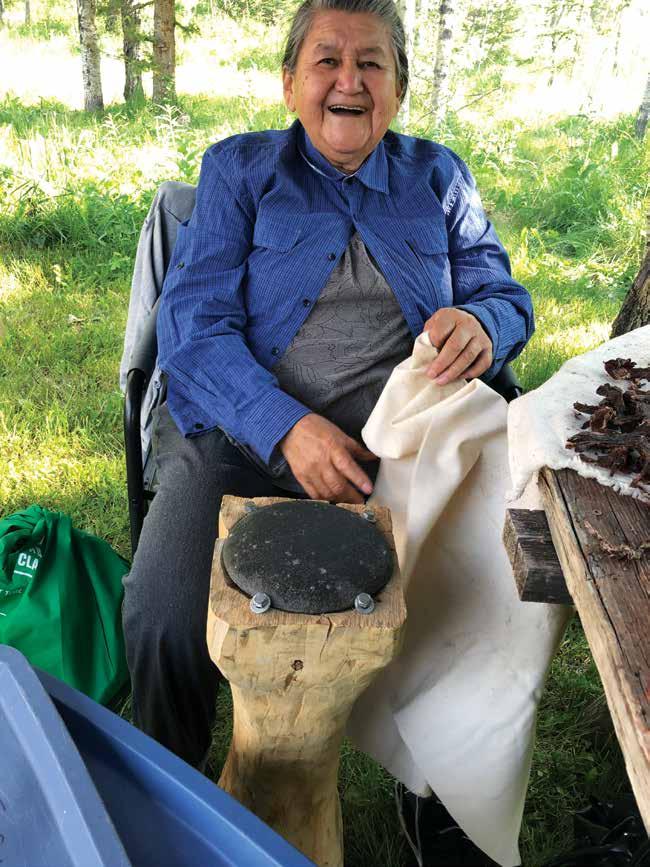
Indigenous Elder Phillomene
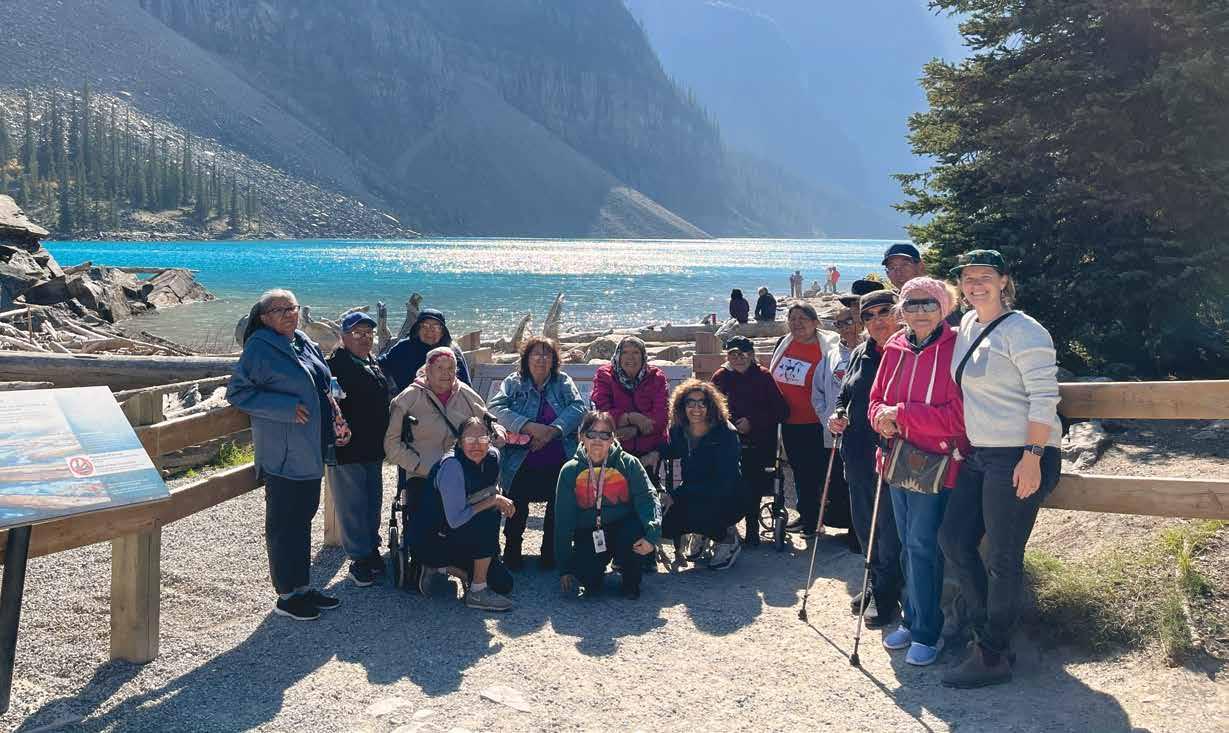
Stevens had a vibrant and prominent presence in the Bow Valley. She taught many how to prepare Indigenous traditional foods, cooked meals at events and community gatherings, and she always emphasized how food is medicine. Sadly, she passed away at the end of 2024, forcing the Bow Valley community to consider the next generation of teachers and leaders.
“She really raised the bar in making it accessible for anyone in the community to learn how to grow, harvest and prepare food, and the importance of breaking bread together,” explains Jillian Harrison, chair of the Bow Valley Food Alliance (BVFA) board.
“ There's incredible Indigenous traditional knowledge, and if we share how they have looked after and nurtured the land, we can have local food systems.” —Jillian Harrison
Ensuring that such teachings and shared knowledge continued was the inspiration behind BVFA’s Food is Our Teacher program. When it comes to food security, Harrison says, “people need to understand that food just from a grocery store isn't enough. We can grow our own food. There's incredible Indigenous traditional knowledge, and if we share how they have looked after
and nurtured the land, we can have local food systems.”
Food is Our Teacher aims to support local food systems. With funding from Calgary Foundation, the program was established in 2025 and serves as a digital hub to connect people with Indigenous food systems knowledge.
The BVFA is currently building relationships and learning from Indigenous peoples through ceremonies and celebrations.
BVFA and Indigenous community members are co-creating a digital asset map (projected to be online by the fall of 2026). It will provide information to people in the Bow Valley, such as details about the

mobile butcher on the reserve and Indigenous medicines. The hope is that it will be a living map where community members can input and share food information, such as upcoming events.
In particular, BVFA sees significant potential in sharing this knowledge as the Bow Valley prepares to welcome the new YWCA Banff and SAIT School of Hospitality and Tourism Banff campus — a great opportunity for the school to work with its Indigenous neighbours.
“Our work in the Bow Valley is to make sure there's an ecosystem of organizations, grassroots groups, institutions and all players within the food system, with a close relationship, so that there are safety nets, guardrails and food security,” says Harrison.
→ Learn more at bvfa.ca

The Calgary Refugee Health Clinic receives crucial bridge funding to care for vulnerable patients
By Alicia L’Archevêque
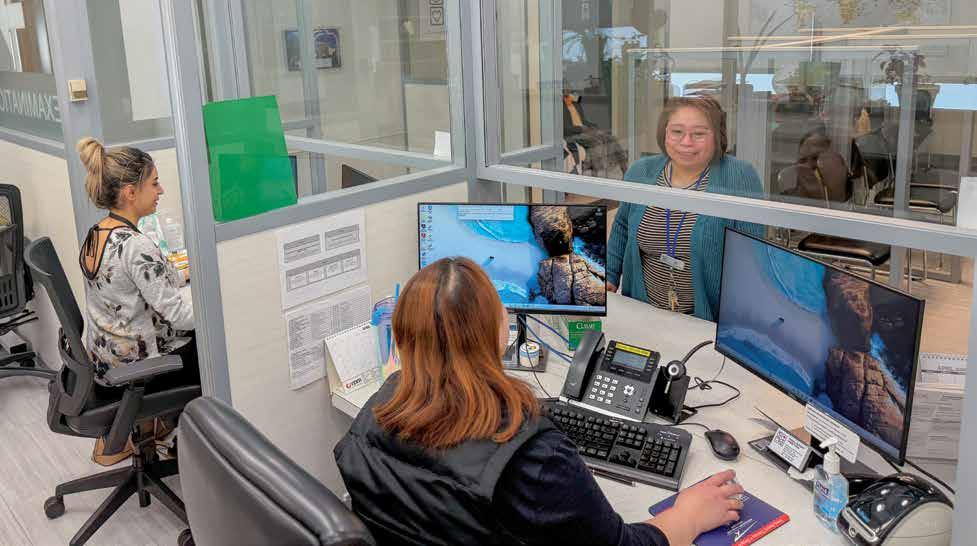
Refugees arrive in Canada after experiencing war, persecution and displacement, often from parts of the world where health screening is a luxury. Those arriving without medical records and with untreated physical and mental health needs can face hurdles in navigating the traditional healthcare system, such as language barriers and presumed health literacy (the ability
to access, understand, evaluate and apply information to make informed decisions about health).
For more than 20 years, the Calgary Refugee Health Clinic has provided critical healthcare services for newly arrived refugees. Working closely with resettlement agencies, the clinic offers specialized and interdisciplinary care to 2,500 patients annually, including approximately 1,000 new arrivals each year.
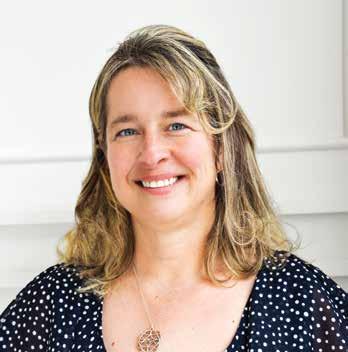
“Our goal is to help them in a traumainformed, culturally sensitive way,” says Dr. Rachel Talavlikar, the clinic’s medical director. “We approach their immediate health needs, as well as triage and identify the things that they're going to need.”
In order to provide this essential care, the clinic's staff have undergone specialized training, and many speak the languages used in some of the communities the clinic serves. To further ensure clear communication and accessible care, the clinic also uses LanguageLine, a speed-dial service in every clinic room that connects patients to medically certified interpreters around the globe, with access to 170+ languages.
“We need to be very careful to get accurate and complete information, and that we follow all the rules and regulations based on the Canadian health system’s confidentiality,” says Shayesta Noori, clinic manager. Noori herself was a former patient and is pleased to now be part of the very clinic that helped her. “I was a refugee, and I was a patient, so I knew that they were doing a great job.”
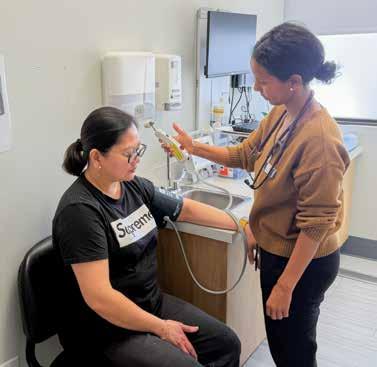
The Calgary Refugee Health Clinic comprises a team of 25 physicians (15 family doctors and 10 visiting specialists) and offers all patients at least two post-arrival health assessments, with the first appointment lasting 45 minutes. This generous time slot is made possible by funding through a ministerial alternative relationship plan model, allowing for flexibility in how visits can be structured.
“There is a level of health literacy that these patients don't have when they arrive, that the rest of our system just inherently assumes that you have,” says Talavlikar. Understanding the challenges of navigating healthcare, clinic staff often go above and beyond, such as accompanying patients to the pharmacy for prescriptions.
Beyond providing care for newcomers, the Calgary Refugee Health Clinic tangibly alleviates financial burden on the regular health system.
“We have good evidence that if patients come see us and are transitioned out, the risk of them ending up being referred to specialists or landing in the emergency room is less,” says Talavlikar. “If they see me 30 times, that’s the cost of one emergency visit.”
Starting as a two-room clinic in the basement of the Margaret Chisholm Resettlement Centre in Bridgeland, the Calgary Refugee Health Clinic moved to Marlborough Mall in 2014 with the financial support of Mosaic Primary Care Network. After 10 years under Mosaic, a change in funding left the clinic facing an urgent funding gap, starting April 1, 2025.
Though support for the clinic through the healthcare system seems
“ Our goal is to help [patients] in a trauma-informed, culturally sensitive way ”
Dr. Rachel Talavlikar
promising, the timeline and what that funding will actually look like remains uncertain. In the interim period, securing bridge funding has been critical to sustaining operations and preventing service cuts that would leave refugees struggling to access care. Luckily, the Calgary Health Foundation (CHF), a community-based charity working to advance healthcare, stepped in.
"The clinic is an invaluable service for refugees," says Paul Rossmann, CHF's president and CEO. "It reduces strain on the healthcare system itself by caring for the city's vulnerable newcomers. There was a bit of a crisis, where they had a funding gap ... so we stepped in. It enabled them to upgrade the clinic and expand services for the next two years, and that wouldn't have been possible without TD Bank. They've committed about $700,000 since 2022 and have agreed to support to the tune of $400,000 over the next two years."
“We wouldn’t have been able to continue to provide care if CHF and TD Bank hadn’t come forward with the operational funding to help bridge us,” says Talavlikar. “We’re immensely grateful to them and their support.”
Looking forward, the clinic hopes to find a home permanently anchored in the healthcare system alongside philanthropic support.
“When you meet these patients and hear their stories, you want to do anything in the world for them,” says Talavlikar. “We have such a committed team, and we will find a way to continue to care for these patients.”
By Tim Querengesser
Think of a system like an iceberg. Up top is visible to everyone. Beneath the water, though, is the core ice — the values, beliefs, ways of thinking, ways of working and feedback loops that support what everyone sees.
Systems that work to fix problems often need fixing themselves. Here’s how three Calgary organizations are diving below the surface to create better outcomes — by challenging and changing their systems.

ctionDignity knows that policies and systems only work if they work for everyone. Created in 2001, ActionDignity assists ethnocultural and equity-deserving groups (communities that often experience social and financial disadvantages as a result of systems of oppression) to thrive. Collectively, those organizations serve roughly 300,000 people.
For the past decade, ActionDignity has focused on improving mental health and wellness for racialized and newcomer communities in Calgary. It does this by collaborating with institutions, service providers, grassroots organizations and community members to help transform the mental health system.
“ The Foundation has provided us the ability to really develop the expertise and invest time in terms of strategizing what policy advocacy might be.”
—Aurelio "Jun" Naraval
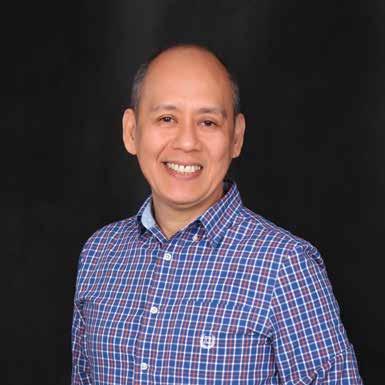
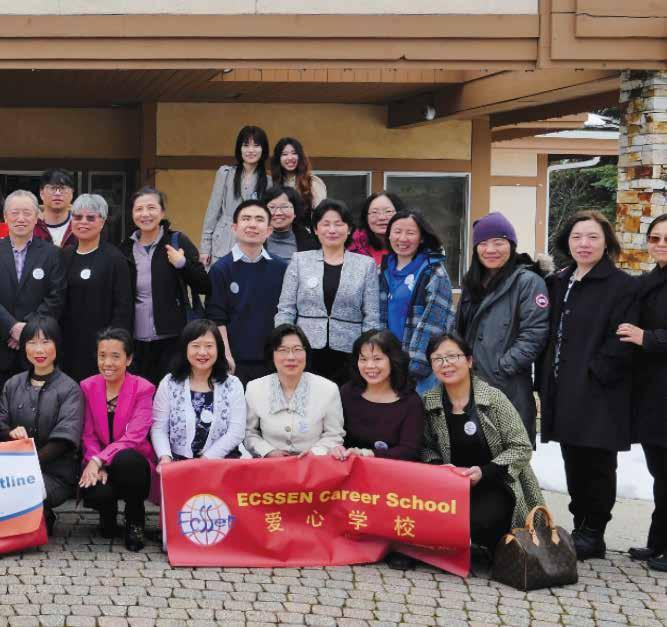
practices for volunteers. Naraval points to this work with ECSSEN as a prime example of how ActionDignity provides systemic support to address broad and complex issues like racism, which is known to affect newcomers’ mental health.
ECSSEN approached ActionDignity to determine if its hotline — mental health support in one’s preferred language — was effective. After examining how the school operates its hotline, ActionDignity helped ECSSEN create an internal hotline policy, determine what data to use to evaluate its progress and implement mental health checks for its volunteers. These systemic changes put the mental well-being of the organization’s volunteers at the forefront of ECSSEN’s work alongside that of the communities it supports.
The work ActionDignity takes on varies based on the needs of the groups it’s supporting. Current efforts include creating a workers’ rights program for racialized workers to educate about employment rights, advocating for employers and policymakers to remove Canadian work-experience requirements and, to ensure public safety, gathering realworld experiences of bias in public institutions to make improvements with The City of Calgary.
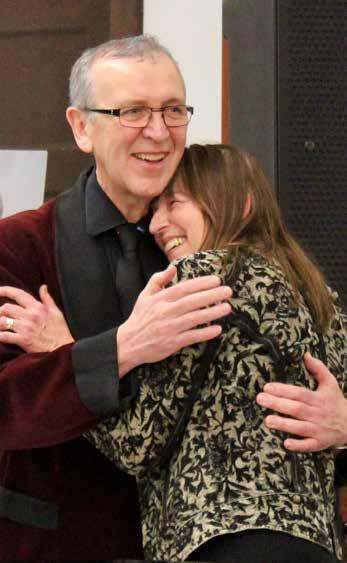
Aurelio “Jun” Naraval, ActionDignity’s director of programs and policy, explains that his organization works to support groups to better respond to community concerns. Take the case of the ECSSEN Career School in Calgary, which created an emotional support hotline in 2021. The service answers roughly 1,000 calls per month in Mandarin, Cantonese and English, supporting the mental health of Asian immigrants and newcomers. This work is vital, but the school had not considered how its processes might affect both callers and those answering the call.
That’s whenActionDignity stepped in. ActionDignity examined ECSSEN’s hotline processes and helped develop policies and create resources for evaluation, as well as sustainable
ActionDignity’s work with ECSSEN created spin-off benefits, too. Its Community Leadership Team brings together likeminded organizations so the ECSSEN hotline has been shared as a model for similar hotlines for both a Vietnamese and a Filipino cultural organization. Further, Naraval says Distress Centre Calgary is exploring how it can support ECSSEN’s volunteers, and help find new call responders who speak Mandarin or Cantonese.
Naraval emphasizes that Calgary Foundation’s grants have given ActionDignity the time and space to help organizations work on broader systems challenges, such as advocacy. “The Foundation has provided us the ability to really develop the expertise and invest time in terms of strategizing what policy advocacy might be,” he says.
→ Learn more at actiondignity.org
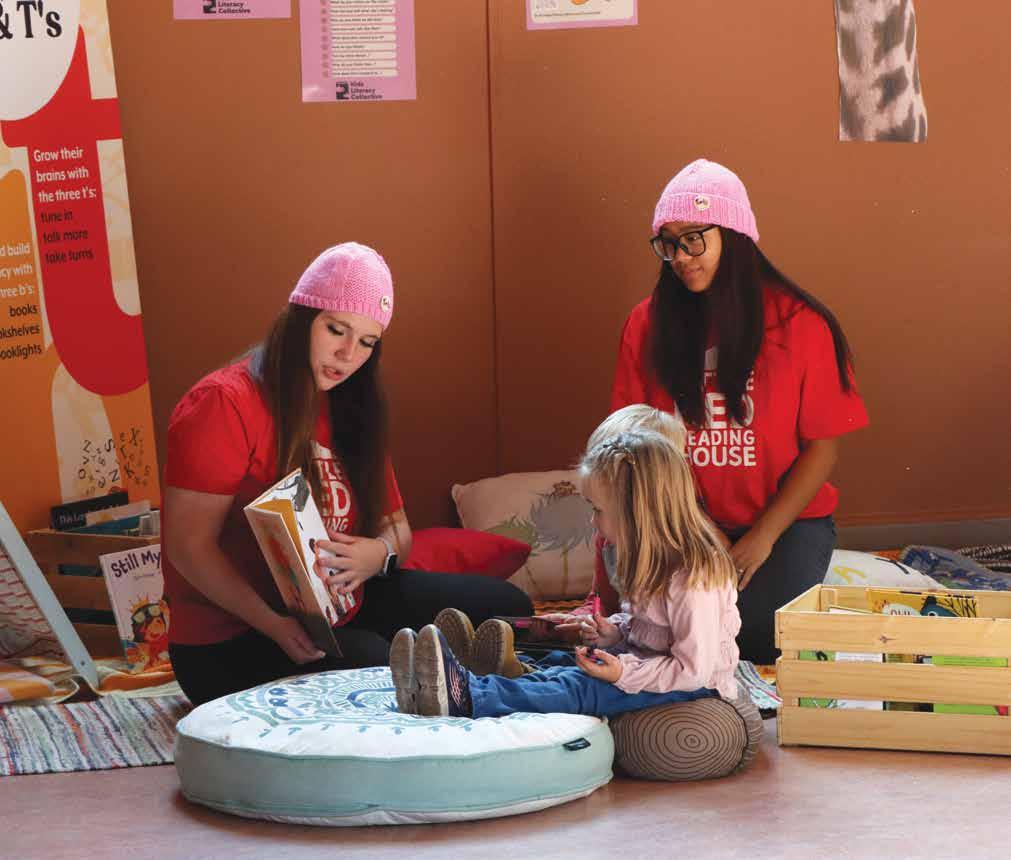
For a child to learn to read, multiple systems must work — school, government, families and social systems. Our beliefs in those systems, especially school, can lead to why kids fail to learn to read, says Meaghon Reid, a trustee with the Kids Literacy Collective (KLC).
“We have this assumption that our kids go through the education system and know how to read,” Reid says. “And because of that assumption, it's made it very difficult to mainstream this idea that a lot of children can't
read.” According to a 2020 Deloitte study, about one in eight Canadian children struggle with below gradelevel literacy skills.
How does this assumption lead to illiteracy? If a parent assumes their child is learning to read at school, they may not prioritize reading with them at home. That means they don’t check if their child is actually able to read or they don’t prepare them to be ready to read. Add to this the pressures of making ends meet, and some families simply can’t afford the time, effort or


“It’s eerie how you can make the correlation between a kid who can’t read when they’re in grade three and their likelihood of being in poverty when they’re an adult.” —Meaghon Reid
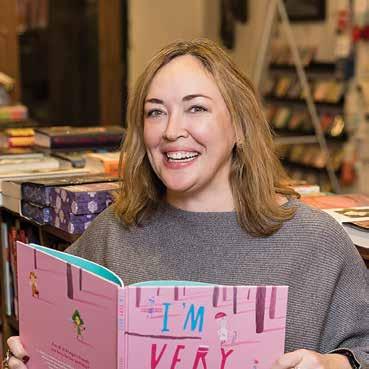
even the books to read in the first place.
Reid, who also worked in poverty reduction, understands these complexities. She says literacy’s window is small. If a child isn’t reading by grade three, multiple challenges await them. “It’s eerie how you can make the correlation between a kid who can’t read when they’re in grade three and their likelihood of being in poverty when they’re an adult,” she says.
The Kids Literacy Collective, a Calgary-based network of educators, community leaders and program

that coordinating everyone’s work and methods is essential to solving illiteracy, as it continues to be a lingering challenge despite decades of effort to address it.
Finding a grant to work on systems is rare, she notes, even though “it’s the most important work you can do because it solves a big problem with finality and doesn’t just throw band-aids at it.”
providers committed to literacy, takes this work very seriously. It has roots in the former Calgary Reads organization, which dissolved in 2022 in order to scale the literacy system across the city. The idea was to employ a “dandelion” strategy to spread Calgary Reads’ seeds into numerous legacy organizations throughout the city to carry on the literacy work.
Reid says the collective has hired resources, convened experts and “brought all those brains in a room to solve this complex problem.” She adds
The collective is considering the entire literacy problem. How are kids who can’t read being discovered and supported, rather than shamed? How are their parents supported? How is money going to where it helps? Thinking needs to change. Policy needs to change.
That’s precisely why the collective is working to ensure that multiple systems are in place to support young people to become readers. “There's real power in bringing illiteracy out of the shadows and into the light, saying, ‘This is not your fault,’” Reid says.
→ Learn more at kidsliteracycollective.ca
It’s not an uncommon scenario.
Someone who wants to get a job, or a better job, sees an opportunity — and a promise — to make that happen through a private career college. So they sign up, pay up, but never move up the job ladder.
Jeff Loomis, executive director at Momentum, an organization that combines social and economic strategies, including employment training, to reduce poverty, says that he’s heard too many concerning stories from students who have attended private career colleges in Alberta in hopes of finding a job.
“We have lots of experience with learners that have paid tens of thousands of dollars in tuition — and that is debt-based financing — and it just does not lead to a job,” Loomis says. “Essentially, it is a real gamble that can lead to nowhere.”
Private career colleges offer students training programs, diplomas and certificates, often with direct suggestions of employment opportunities upon completion. Roughly 50,000 Albertans (many of whom are new to Canada) attend these colleges yearly. The schools are a growth industry, popping up over the last 15 to 20 years, at a count of more than 220 as of 2023 in Alberta, and growing quickly.
But Loomis says there are too many instances of the worst-case scenario, where not only does the student not find a job after attending the college, but they are now saddled with crushing student debt with no way to repay it — a situation that can send them on a crippling downward spiral.

“ We have lots of experience with learners that have paid tens of thousands of dollars in tuition ... and it just does not lead to a job.”
—Jeff Loomis
Through its Better Job Pathways Project, Momentum is working to change systems that allow these arguably exploitative situations. First, the project addresses how to finance education and second, it’s revising the regulations the schools must abide by.
On the financing side, Momentum is testing a different way for students to pay for college programs, shifting the incentive structure. In the pilot model being applied in IT programs, students pay a small deposit and grant money covers roughly half of their tuition.
And the rest? Loomis describes the model as a systems shift toward “shared risk” — the student only has to repay the loan portion if and when they get a job after the program.

“That’s a simple, basic idea for training providers like ourselves — that they only get paid once the learner gets a job,” Loomis says. “That creates a powerful realignment of incentives.”
When it comes to regulations, an update is much needed. Previous legislation overseeing career colleges is more than 20 years old and pre-dated the explosion of recent college offerings. But important change is happening with the likes of Bill 3, the Private

Vocational Training Amendment Act from 2025, which Momentum helped inform. The bill bans most commission-based recruitment for career colleges and creates a student tuition protection fund.
“When it comes to moving up the career ladder, hard work should be what matters the most, and that it shouldn't be too risky and unaffordable for people to move into a better job,” Loomis says.
→ Learn more at momentum.org
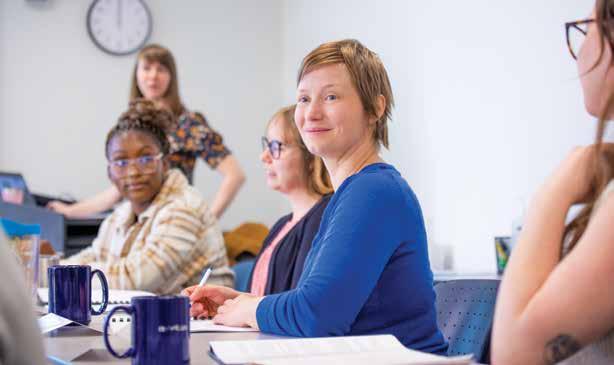

The Martin Family Legacy Garden will be Calgary’s first dementia-inclusive park, designed specifically for individuals living with dementia and their caregivers
Alan Rae is a proud dementia advocate. His wife, Joan Connor, was diagnosed with Alzheimer’s 15 years ago, and Rae is her primary caregiver. Over the years, he’s seen what kind of programs, outings and interactions help his wife through this journey — he even founded Dementia Network Calgary’s Conversation Cafés to reduce isolation and increase socialization.
But he’s also seen what’s missing. Currently, there is no outdoor space in Calgary specifically designed to support the cognitive challenges dementia brings, allowing individuals with dementia to walk freely and independently.
That will change this year. Construction on the first dementiainclusive park in Calgary — and quite possibly, in all of Canada — began in May 2025. Thanks to many donors, just under $5 million has been raised for the park’s creation; it will open to the public near the end of 2026. The Martin Family Legacy Garden, named in honour of major donors Greg and Joanne Martin, will be located in Dover, a southeast neighbourhood already associated with community care due to its proximity to senior homes like Bethany Riverview and centres like the Greater Forest Lawn 55+ Society.
Filling a gap in dementia needs
The project first began in 2022 when staff from Parks Foundation, Alzheimer Calgary and Dementia Network Calgary, and researchers from the University of Calgary and Mount Royal University (MRU) came together to discuss how to better serve individuals with dementia and their caregivers. Community members, like Rae, were brought into discussions, too.
“We identified that there was a major gap in park infrastructure and we designed this park with dementia research in mind, incorporating features to make it a dementia-inclusive park,” says Dr. Michael Giuffre, a Parks Foundation board member who also works as a cardiologist at Alberta Children’s Hospital and as a professor at UCalgary. “We wanted it to be interactive and sensory.”
Research suggests that when individuals with dementia engage their senses — particularly sight, touch and smell — behaviours like agitation, restlessness, sleep disturbances and aggression can decrease.
“Going to the average park that just has some trees and a few benches doesn't necessarily stimulate the senses,” says Rae, explaining why existing parks aren’t inclusive or stimulating for individuals like Connor.
Wildflowers, plants and trees will be planted specifically in the Martin Family Legacy Garden for their smell and tactile surfaces, making the area engaging for individuals living with dementia. The park is also thoughtfully designed with wayfinding features, like colours painted on pavement and simple signage, as well as wide, looped pathways to support individuals who have difficulty with direction. Parts of the park will be fenced to help guide and enhance safety. Smooth rails, for individuals with dementia to hold as they walk, assist with balance and direction, while also being tactilely engaging.
“This is a park where people with dementia can wander freely and safely,” says Rae. “And it’s a place where caregivers can have some respite, just take a breath.”
Making the Martin Family Legacy Garden dementia-inclusive means it will
be a park for all. Additions like a pergola, various seating options and public art make the park a restful and engaging place for all citizens. Giuffre adds that the park was intentionally designed to be intergenerational. There will be a playground and outdoor musical instruments, an amphitheatre and lawn for events, performances or exercise classes and a community plaza.
“This is a park where people with dementia can wander freely and safely. And it’s a place where caregivers can have some respite, just take a breath.” Alan Rae
According to an Alzheimer Society Canada survey, 50 per cent of respondents believe they can’t live well with dementia, and 25 per cent believe their life is over after getting the diagnosis. Isolation and stigma feed these stereotypes and misinformation.
Giuffre says purposefully designing the park to be open to all and intergenerational will hopefully reduce isolation and dementia stigma — among individuals with dementia, their caregivers and family members — and improve dementia awareness.
At the park, people living with dementia and their caregivers and families can also connect with others on dementia journeys to share experiences and feel less alone.
“Intergenerational, interactional design incorporates the caregiver and the family into the space, too.

“Nature teaches us to grieve: there's continual cycles and seasons of life that we are confronted with in parks and natural settings.”
Sonya Jakubec
Having families do activities with their loved ones, incorporating individuals with dementia into a community environment and having people together in a supportive scenario destigmatizes dementia,” says Giuffre. “This will be a place of feeling safe and a place of interaction.”
Creating this dementia-inclusive park will help highlight how individuals living with dementia can be, and should be, incorporated within communities.
“A person with dementia is still a person. Their ability to communicate and connect and do things has changed, but there's still a real person in there,” says Rae.
The physical benefits of getting outside are well-proven. Fresh air and movement are good for everyone, including those living with dementia.
Sonya Jakubec, professor in MRU’s School of Nursing and Midwifery and a community mental health nurse, is researching nature connectedness in palliative care, dementia and grief. For caregivers of people living with

dementia, connecting with nature can have a profound impact on their mental health.
“The research I've done in this area really shows how engagement with nature — for people with disabilities, at end of life, handling grief — shifts your sense of self,” says Jakubec. “When we're experiencing any kind of disability, injury or disease, we experience anticipatory grief; you grieve for the future that is changing and unfolding differently than you hoped and imagined. But in park settings, there’s an incredible amount of restoration and reconciliation. Nature teaches us to grieve: there's continual cycles and seasons of life that we are confronted with in parks and natural settings.”
Ultimately, the Martin Family Legacy Garden will be an inclusive outdoor space for caring, connection and acceptance.
20,000
Calgarians living with dementia
34,000
Calgarians expected to live with dementia by 2030
1 in 2
Canadians who think living with dementia means they can’t live well
26
Average number of hours per week that caregivers across Canada spend caring for individuals with dementia
45
Percentage of caregivers of people living with dementia in Canada who experience distress
Our endowment earns interest each year, which flows to every corner of our city supporting causes as myriad as our citizens.
YOUR gifts become part of our endowment, ensuring our city continues to flourish.

calgaryfoundation.org