
HAS CALGARY’S NIGHTLIFE GONE DARK?



HAS CALGARY’S NIGHTLIFE GONE DARK?


First Home? Let’s get you there.
DECADES OF TRUST, BUILT INTO EVERY HOME. We don’t have to say much, our homeowners sing our praises for us. Laned Homes From the


Room to Grow? We’ve got you.
Front Drive Homes From the
$400s $600s
Whether it’s your first home or your next, you’ll love coming home.

Where others followed. You forged your own path... I ’ s

YOU’RE INVITED! GRAND OPENING NEW SHOW HOMES APRIL 25th








As
Rivalries.




























Calgary’s newest place to stay longer than planned. A garden-wrapped dining room, a hidden speakeasy, and spaces designed for everything from long lunches to late nights. Bungalow Club brings together elevated dining with original cocktails, a customizable event space built for whatever your needs are. Plus a Private Dining Room and a Boardroom downstairs. Truly a diverse experience for every occasion.
And soon, a patio worth cancelling other plans for. Open for lunch through late night.






















Aspen Landing Shopping Centre features top retailers and services in unique, locally-owned storefronts sprawled across a distinctive landscape in southwest Calgary. Whether you need a quick check-up, a mouth-watering lunch, or need to complete an extensive to-do list, you can get it all done at Aspen Landing! FREE INDOOR PARKING.


















Inspired by Calgary’s architectural heritage, this development community features beautiful executive homes, breathtaking views, walking and biking paths, as well as west Calgary’s premier shopping destination Aspen Landing Shopping Centre.





Greatness is all around us. Sometimes it’s quiet and unassuming. Other times bold and unmistakable. But wherever a strong sense of purpose takes root, greatness flourishes.
Just look at MacEwan University graduate Nafaa Haddou, BSc ‘16. He’s one of tens of thousands of alumni who take the experiences they had at MacEwan and use them to fuel new ideas and spur economic growth.
This is greatness at work.
A phone call from his father about a devastating wildfire back home in Algeria left Haddou with a choice. “I could sit and wonder if I was the right person to do something about it, or I could just do it.”
That decision sparked FireSafe AI, an Edmonton-based company Haddou co-
founded with his brother, which combines satellite and drone footage with AI to detect and assess wildfires.
Haddou believes success happens by bringing people together.
“I don’t always have to be the expert in the room. I can surround myself with experts, connect the dots and build off of that.”
It’s one of the messages Haddou shared when he launched the Griffin Challenge –which brings MacEwan students from diverse programs together to tackle specific FireSafe AI business problems.
Whether he’s working with students, creating employment opportunities or saving communities from hardship, Haddou will do whatever he can.
“If I’m in a position where I can help others, why wouldn’t I?”
Visit MacEwan.ca/Greatness for more stories of innovation and impact.

“If I’m in a position where I can help others, why wouldn’t I?”
Nafaa Haddou, BSc ‘16













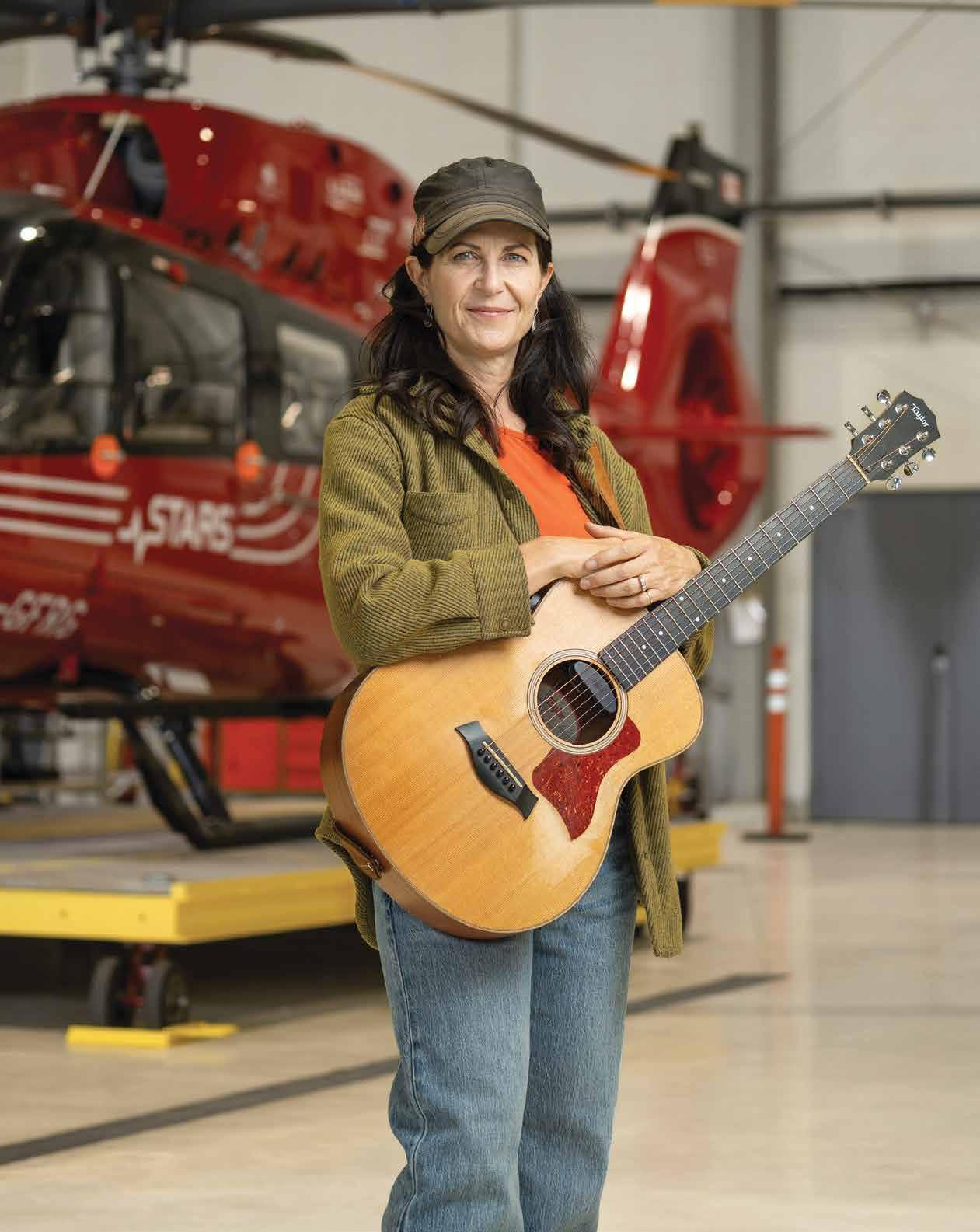


When Jacquie found herself in a life-threatening situation, help couldn’t wait. Thanks to STARS donors, she didn’t wait long for the critical care she needed.


The answers to many diseases are hidden in our DNA.






PreventGene is a pilot project researching the early detection of disease using our genes. Your gift accelerates this type of research and advances preventative medicine so generations of Calgarians can live longer, fuller lives.





Experience a showcase of art, music, culture and Western hospitality.
Located in the Western Oasis
Kick up your boots after the rodeo or midway and discover the Calgary Stampede Art Show, a celebration of art, culture, and Western hospitality.
The Art Show offers a distinctly refined cultural experience, live music, an award-winning wine bar, and a curated showcase spanning emerging student artists to internationally recognized names.










planned redevelopment can offer thoughtful city building.
78 Long Live the Night A brief history of Calgary’s nightlife and what comes next. Plus fun-night-out itineraries. 96 Dining A past restaurant gives rise to a new generation: Paper Lantern and Prosperity Bar.
equestrian venue cum multi-purpose sport and entertainment facility builds community.
The Inspiring Business Leader Award Gala brings leaders together to celebrate the Hunter family’s impact and support student success.
Calgary’s business community will soon gather to celebrate one of its most influential families, while also investing in the leaders who will follow in their footsteps.
The Haskayne School of Business and Calgary Chamber of Commerce have announced the Hunter family as the 2026 recipient of the Inspiring Business Leader Award.
Selected for a legacy of entrepreneurial thinking that has shaped business, philanthropy and innovation in Calgary, the Hunters have built a reputation for pairing business success with meaningful community investment.
Bluesky Equities, a three-generation firm run by the Hunter family, has helped build and back business in industries ranging from real estate to energy for more than two decades. The family has notably become a driving force within the Western Canadian innovation ecosystem where it has invested in more than 100 seed-stage businesses since 2012.
That legacy is reflected not only in their business ventures, but also in the family’s sustained commitment to community impact. Through the Hunter Family Foundation, the Hunters have fostered transformational change through a wide range of initiatives in education, health and community well-being.
The Hunter family’s inspirational leadership will be formally recognized at a gala on June 17 at the Calgary TELUS

Convention Centre. Doug, Derrick and Adam Hunter will take the stage for an insightful, intergenerational fireside chat and join an esteemed group of past recipients whose impact has shaped Calgary’s economic and civic landscape.
The gala event, which is open to the business community, also serves as a powerful platform for tomorrow’s entrepreneurial thinkers. Proceeds from

“This award has reinforced my belief that I can create a lasting impact and build something that creates real value.”
that improve quality of life.
“This award has reinforced my belief that I can create a lasting impact and build something that creates real value,” says Boury, who was among six students to receive the 2025 scholarship.
Oto Uffort shares a similar experience. Uffort notes that donor support has enabled her to immerse herself in courses she is passionate about while volunteering as a technology mentor. The opportunity, says Uffort, has strengthened her ability to make a meaningful impact through her future career.
“This support not only eases my financial responsibilities, but also inspires me to continue pursuing excellence and making a meaningful impact,” says Uffort. “I am sincerely thankful for your investment in my education and for empowering me to grow both as a student and as a community mentor.”
table sales directly support scholarships for business students at Haskayne, and provide Chamber memberships for postsecondary students.
Since the event’s launch in 2008, nearly $500,000 in scholarships has been awarded to more than 100 aspiring business leaders.
For scholarship recipients, the support can be transformative. Rita Boury, a dualdegree student in finance and software engineering, describes the scholarship as an investment not only in her education, but in her aspirations to build innovative technology ventures
The 2026 Inspiring Business Leader Award Gala takes place June 17 from 5 p.m. to 8:30 p.m. in the Macleod Hall Ballroom at the Calgary TELUS Convention Centre.
Tickets, tables and sponsorship opportunities are now available. Tax receipts will be provided for the charitable donation portion of each ticket price.


TSERING ASHA LEBA SENIOR EDITOR tleba@redpointmedia.ca
ere at Avenue, we make it our business to know about going out — where to eat, drink, listen to live music and party in Calgary. Many of us on the editorial team have fond memories of nights out on the town, so, this issue, we wanted to explore Calgary after dark. It feels just like yesterday that I was out on a Friday evening, hopping from bar to club to lounge on Stephen Avenue, 1st Street or 17th Avenue. Dancing, drinks, live music, a bite at any time of the night — Calgary’s streets were teeming with people similarly enjoying a night out.
Hin the creation of the Calgary Wild FC, Calgary’s women’s professional soccer team.
Contributing editor Karin Olafson profiles the team's formation on page 40 and how this powerhouse lineup of women, on and off the field, is shaping Canada’s emerging women’s professional soccer scene, along with the support of local partners.
"THERE’S SOMETHING FOR EVERYONE IN THIS CITY — AND THE REST OF THE WORLD IS TAKING NOTICE."
Calgary’s nightlife scene has changed from having a plethora of options on any given night. Certainly, pandemic restrictions in the early 2020s majorly impacted the going-out culture and the longevity of entertainment establishments. While nightlife in Calgary may have dimmed, we discovered through Jess Arcand’s story on the new nightlife (page 78) that more than a flicker of life remains. Plus, Evelina Pak, in collaboration with our sister publication, The Scene, gives readers several night-out-on-thetown itineraries to try.
Beyond nightlife spots, entertainment and sports are alive and well in Calgary. It’s apparent
Fifty years young, Spruce Meadows is a significant part of Calgary’s entertainment landscape, too. The internationally renowned equestrian venue has invested in a culture of entertainment with year-round dining facilities, one of Calgary’s most popular Christmas markets and a thriving summer concert series. And it’s home to Calgary’s professional men’s soccer team, the Cavalry FC. Read about it on page 100. We also know Calgary is a world-class city, hosting industry leaders from around the globe.
That reputation, especially regarding the energy transition, is growing. Writer Christina Frangou rounds up local experts to discuss how Calgary can continue to be an energy leader in Canada and the world on page 50.
I hope what you take away from this issue is that there’s something for everyone in this city — and the rest of the world is taking notice.
BY JARED SYCH







RedPoint Media Group
1721 29 Ave. S.W., Suite 375
Calgary, Alberta T2T 6T7
(letter mail only)
Phone 403-240-9055
Toll Free 1-877-963-9333 x0
Fax 403-240-9059
info@redpointmedia.ca
AvenueCalgary.com
Facebook Avenue Magazine — Calgary
Instagram @AvenueMagazine
Subscriptions
(Prices do not include 5% GST)
3 issues: $18
1 year (6 issues): $30
2 years (12 issues): $50
3 years (18 issues): $65
1 year (USA): $40 US
To subscribe, visit AvenueCalgary.com/shop subscriptions@redpointmedia.ca Advertising Inquiries
Phone 403-240-9055 x0
Toll Free 1-877-963-9333 x0
advertising@avenuecalgary.com AvenueCalgary.com
Published six times a year by RedPoint Media Group. Copyright (2026) by RedPoint Media Group. No part of this publication may be reproduced without the written consent of the publisher.
Canadian Publications Mail Agreement No. 40030911.
Publisher Käthe Lemon, klemon@redpointmedia.ca
Executive Editor Colleen Seto, cseto@redpointmedia.ca
Consulting Editor Meredith Bailey
Design Director Steve Collins, scollins@redpointmedia.ca
Digital Managing Editor Alana Willerton, awillerton@redpointmedia.ca
Senior Editor Tsering Asha Leba, tleba@redpointmedia.ca
Assistant Editor Chris Landry
Contributing Editors Karin Olafson, Olivia Piché
Staff Photographer Jared Sych
Graphic Designer Sofía Velásquez
Editorial Intern Rylie Perry
Contributors Carl Abad, Jess Arcand, Shahana Chawdhry, Carmen Cheng, Julie Claire, Mackenzie Clark, Sarah Comber, Bryan Francisco, Christina Frangou, Ximena González, Alyssa Hirose, Tyler Lemermeyer, Déjà Leonard, Evelina Pak
Contributing Fact-Checkers Alicia L'Archevêque, Riley Fonger
Copyeditor Alex Rettie
Proofreader Alex Frazer-Harrison
Land Acknowledgement Advisors Elder Edmee Comstock, Elder Reg Crowshoe, Elder Rose Crowshoe
Print/Digital Production Manager Mike Matovich
Digital Producer Paula Martínez
Client Support Coordinator Alice Meilleur
Senior Account Executive Jocelyn Erhardt
Account Executives Nadine Benoit, Vicki Braaten
Events & Community Coordinator Dare Maurik
Printing Transcontinental RBW
Distribution City Print Distribution Inc.
REDPOINT MEDIA GROUP INC.
CEO, Co-owner Roger Jewett
President, Co-owner Käthe Lemon, klemon@redpointmedia.ca
Director Strategy & Content Meredith Bailey, mbailey@redpointmedia.ca
Art Director, RPM Content Studio Veronica Cowan, vcowan@redpointmedia.ca
Accountant Jeanette Vanderveen, accounting@redpointmedia.ca
We acknowledge the financial support of the Government of Canada and the Government of Alberta.

We acknowledge the traditional territories and the value of the traditional and current oral practices of the Blackfoot Confederacy, the Tsuut’ina and Stoney Nakoda Nations, the Otipemisiwak Métis Government of Alberta (Districts 5 and 6), and all people who make their homes in the Treaty 7 region of Southern Alberta.
Avenue is a proud member of the Alberta Magazine Publishers Association, Magazines Canada and the International Regional Magazine Association, and abides by the editorial standards of these organizations.

The Avenue Editorial Advisory Council
Laura Anderson, Julianne Beatty, Chrysta Benning, Alexis Berezan, Erin Best, Robert Blood, Shalini Bhatty, Brian Boulanger, Victoria Bradbury, Heather Campbell, Danielle Carrafo, Melinda Channon, Hildy Chong, Nicole Claiter, Amy Cooper, Steve Cordick, Michal Cote, Sidney Craig Courtice, Carolyn Cox, Brett Decarie, James DeKryger, Grant Doyle, Tania Drews, Brian Duggan, José Duchesne, Nicole Dyer, Russell Erickson, Meaghan Farquharson, Will Freeman, Janice Froese, Drew Gillson, Briggitte Gingras, Giono Studio Design, Naomi Grattan, Kelsey Hahn, Jillian Haneiph, Amanda Hamilton, Cat Hackman, Mark Heard, Lindsay Hill, Alayne Hing, Tara Hluchy, Rameez Husseini, Kyla Ilic, Tania Kaschl, La Klayman, Michelle Lee, Jamie Leong-Huxley, Jolene Livington, Brad Lohman, Quan Ly, Jil MacDonald, Leah Makin, Jodie Masikewich, Kris Matthews, Tammy McCorkell, Loni McDonough, Trina Morison, Heather Morris, Anna Murphy, Jeff Nechka, Melissa Norris, Maxim Olshevsky, William O'Yeung, Viktoria Paulovich, Kelly Pitaoulis, Colleen Pound, Natalie Preer, Rithesh Ram, Becky Rock, Paul Salvatore, Nolandeep Sangha, Ranny Shibley, D Smith, Mandy Smith-Haber, Cynthia Solano, Rachelle Starntes, Janet St Germain, Heather Stubbs, Ian Sutherland, Anila Umar, Gail Urquhart, Edie Vlooswyk, Janet Wakal, Andrew Ward, Christa Welsh, Wendy Winder, Naomi Withers, Kevin Wong, Stephanie Wozniak, Conrad Yeung
Members of Avenue’s A-List become a part of our team and have the opportunity to get a seat on Avenue’s Editorial Advisory Council and see their names here in the masthead of the magazine.

Gain access to unparalleled behind-the-scenes tours, intimate dinners, secret tastings and exclusive parties. The A-List is more than a membership, it’s your passport to the extraordinary.


BEST NEIGHBOURHOODS
We present our annual list of the city’s top communities.
HOT HORSE SUMMER
Equine curious? Our guide to exploring Calgary’s equine sporting activities.
BEST THINGS TO EAT
Local foodies Carmen Cheng and Chanry
Thach share their latest list of must-try eats and sips.





Postcards from Italy 8 May 2026








Star Wars: Return of the Jedi in Concert 15 + 16 May 2026


Broadway Hits: Hamilton, Rent + More! 29 + 30 May 2026




Lionheart Foundation transforms youth mental health in Calgary and beyond.
Mental health issues are among the most prevalent health concerns young people face, and unfortunately, it’s a growing crisis. Lionheart Foundation seeks to support adolescents, young adults and their families by providing affordable access to specialized mental health services. Through its initiatives, including the annual Youth Power Hour fundraiser, the organization increases access to life-changing mental health care.
For Peter Williams, co-founder of Lionheart Foundation, supporting the organization is
deeply rooted in his family’s journey. His daughter’s struggles with disordered eating, and difficulty finding therapists trained in the unique challenges of the adolescent brain, gave rise to a simple but powerful belief: Every young person deserves access to expert care, compassion and the opportunity to recover and thrive.
Families searching for help often encounter hurdles, like inexperienced therapists, long waitlists, limited resources and financial barriers that can place specialized care out of reach. For parents, the experience is often isolating and overwhelming. And for young people, the consequences shape the course of their lives.
Before the creation of Lionheart, Williams knew something had to be done, and his family’s conviction has not waned as the mental health challenges for youth have grown. What began as a shared commitment among a group of concerned families became a collective effort to strengthen access to care, ensuring families would never have to face these challenges alone.
That initial commitment helped shape and expand what is now Lionheart Foundation.
Over the past two decades, Williams, his fellow founders and the board members of Lionheart have witnessed firsthand the growing mental health challenges facing adolescents and young adults — and continue to address them.
$545,000 IN FINANCIAL SUBSIDIES 3,770 THERAPY HOURS
Lionheart Foundation started with a simple collective of three families, which included Julie and Rick George, Robyn and Gord Ritchie, and Peter and Carol Ann Williams. They were joined by a local therapist and her husband, who set out to address the critical shortage of trained therapists with expertise in the unique mental health challenges adolescent girls and young women face. They also saw the need to prioritize subsidizing therapist fees for families unable to bear the full cost of care.
Today, Lionheart provides specialized therapy and financial support to adolescents and young adults facing anxiety-based disorders, including depression, eating disorders, self-harm, suicidal ideation and trauma. Under the leadership of executive director Jamilah Edwards and her team, along with a dedicated board of directors, the foundation has become a trusted and essential resource for families in Alberta.
Each young person supported represents more than a statistic. They represent a life redirected, a family strengthened and a future restored.
Early on, Williams realized that in order to meet the need for mental health care, the foundation required more than a vision; it required community. Williams launched his first, rather simple fundraising event in 2012, calling it Girl Power Hour, with 180 guests and a handful of corporate sponsors. It has since evolved into Youth Power Hour,
95% OF CLIENTS REPORTED IMPROVEMENTS IN OVERALL WELL-BEING
Behind Lionheart’s work are stories of resilience, healing and hope. Over the past year alone, the foundation supported nearly 400 individuals, provided more than 3,770 hours of therapy and distributed over $545,000 in financial subsidies.
Lionheart’s annual luncheon event with inspiring speakers, attracting over 1,100 guests and 90 corporate sponsors. Today, it’s the driving force behind the foundation’s ability to provide care.
Now in its 14th year, Youth Power Hour has raised more than $6 million, enabling thousands of hours of therapy to help young people access life-changing support and to fund training for therapists in the unique challenges of the adolescent brain. What began as a small gathering has grown into a powerful demonstration of Calgary’s commitment to its youth.
Each year, community leaders, donors and supporters come together with a shared purpose: to ensure that every young person has access to the mental health care they deserve. This year’s Youth Power Hour is being held on Tuesday, October 27, 2026, at the Calgary TELUS Convention Centre.
The results are profound. Ninety-five per cent of clients report improvement in their overall well-being — evidence of the life-changing impact that timely, specialized care can provide.
As demand for youth mental health services continues to grow, Lionheart Foundation remains focused on expanding access while maintaining the highest standard of care. This work is made possible through the dedication of its leadership and therapists, the generosity of its donors and the strength of the community it serves.
Youth Power Hour stands as a powerful reminder of what can be achieved when a community comes together in support of its youth. With continued support, Lionheart will remain a vital source of hope, helping young people heal, families rebuild and futures unfold with strength and confidence.
To learn more, visit lionheartfoundation.ca and youthpowerhour.com




BY OLIVIA PICHÉ PHOTOS BY JARED SYCH
By day, Alice Lam works in commercial real estate, managing dozens of buildings in Calgary, but, by night, she’s a community builder. For as long as she can remember, she’s been passionate about making Calgary a greater city — one that’s inclusive and holds opportunities for all. When she sees a gap in services, she tries to fill it. That’s why she’s established so many accessible, low-cost or free programs across the city.
Lam founded one of Calgary’s first community fridges and pantries, and helped create a low-cost ceramics club, a book and gift store that invests in local artists, Calgary’s first non-profit acupuncture clinic, and Canada’s first pay-what-you-want thrift store, Good Neighbour Market. As an avid volunteer, she also created Volly, a website to connect volunteers to city-wide openings. And her work as a volunteer tour guide with Friends of Chinatown earned her a White Hat Award in 2025. To say she’s busy would be an understatement, but her love for Calgary keeps her motivated to do more.

Community builder Alice Lam reflects on why inclusion and accessibility help make Calgary a great city.
“Community building is all about making people feel successful in the city that they live in — supported and seen.”

1
What do you love most about Calgary?
I love Calgary for its beautiful scenery and neighbourhoods. But I also love the entrepreneurial and philanthropic spirit of the city. I love bragging that Calgary is a city where people show up and lend a hand.
2
Why are you passionate about community building?
It helps showcase the power that an individual has to build a great city. Community building is all about making people feel successful in the city that they live in — supported and seen — and ensuring that there are opportunities for all to pursue their passions.
3
Why do accessible resources matter?
Having accessible, low-cost or free activities ensures that [those with lower incomes are] involved in the story of community building. Calgary is not only for people who can afford it, but for everybody who calls it home.
4
If there was one thing that you would change about the city, what would it be?
Something that we can definitely improve on is making sure that we have more affordable housing across the spectrum.
5
Events are a great way to build community. What’s your favourite Calgary event to attend?
The annual fundraiser at Kiyooka Ohe Arts Centre. You get to experience art and nature, and it showcases what amazing contemporary art talent we have in the city.
WORDS AND PHOTO BY CHRIS LANDRY
Tucked away in the community of Dover, Ahinke serves up a fresh take on Nigerian cuisine. Started by Nigerian chef and owner Kunbi Olalere Jesse in 2019, primarily as a catering business, Ahinke made the switch to a dining space after major renovations in 2024, launching a brunch program with Nigerian-inspired versions of Canadian comfort dishes. The restaurant still offers catering and features Nigerian staples like jollof rice, but also serves dishes that fuse Nigerian cuisine with North American classics. Here, we unpack what makes Ahinke’s ultra-delicious suya fried chicken and waffles so craveable.

The Gravy
A flavourful pepper- soup gravy tops this dish. Pepper soup is a spicy Nigerian dish often made with goat, chilies and plenty of warm spices like coriander, cumin, fennel and allspice. Ahinke has turned its pepper soup into a gravy — less spicy, but still packs heat.
Eggs
The chicken is finished with perfectly poached eggs and hollandaise to bring in brunch vibes.
Served with a tropical bliss garden salad on the side to balance the flavours.
Made in-house — think classic buttermilk waffles with a crispy exterior and a soft, fluffy interior — these waffles perfectly complement the fried chicken and soak up all the pepper soup gravy.
Before dredging and frying, Ahinke marinates its chicken in a secret seasoning. After cooking, the chicken is sprinkled with a suya barbecue seasoning, a popular Nigerian spice blend of ground peanut, bird’s eye chilies, ginger, garlic and paprika. The suya spice blend brings a touch of heat and a slightly smoky sweetness. Also available in a peanutfree version.
With an abundance of restaurants, cultural epicentres and hidden gems, this neighbourhood offers unparalleled dynamism.
BY SARAH COMBER
While much of Calgary retains a small-town feel, stepping into the Downtown Commercial Core offers an intoxicating taste of big-city life. Folks in suits walk briskly to business lunches on Stephen Avenue or grab coffee from popular spots like Cafe Alchemist or one of Deville Coffee’s six downtown locations. Arts lovers check out an exhibition or a Calgary Phil performance at the recently rebranded Werklund Centre. Students flow through the crowds, studying at the SAIT, Bow Valley College or University of Calgary downtown campuses. Restaurants, galleries and shops clamour for attention among the office and residential highrises. And public art dots the core’s tidy grid of streets and avenues. Notably, the Wonderland sculpture outside The Bow building turns many a head. Amid all of
the action, people do live here, mostly in high-rise apartments.
The Downtown Commercial Core dates back to around 1883, when Stephen Avenue was part of the Canadian Pacific Railway (CPR). The nearby Fairmont Palliser Hotel opened in 1914 as a CPR hotel to accommodate the tourists the railway brought to town. Indeed, the area still hosts a mix of historic and contemporary architecture. The currently vacant Hudson’s Bay building (1913) and the Historic Fire Hall No.1 (1911), likely to become a public arts venue, rest alongside Brutalist structures like the Glenbow Museum (1976) — which is undergoing a revitalization and is set to reopen in 2027 as the JR Shaw Centre for Arts & Culture.
Whether to live, work, study or play, the Downtown Commercial Core offers a bit of everything. It’s the ideal place for Calgarians or visitors looking for shopping, dining and entertainment.
Population: 8,225
Median Household
Income: $51,200

Housing Types: 15 row houses, 50 apartments in buildings less than five storeys, 4,860 apartments in buildings more than five storeys
Percentage of Owners: 8 per cent

Located at Five West, one of Calgary’s premiere executive condo buildings, this two-bedroom, two-bath corner condo, listed by Richard Bergeron in October 2025, features stunning city views and a south-facing balcony. The living area includes a den, a gas fireplace, huge windows and hardwood floors. The kitchen is equipped with granite counters and stainless-steel appliances. The spacious primary bedroom has a walk-in closet and ensuite bathroom, while the second bedroom also has a private bathroom. Also includes an in-suite laundry room, storage locker and parking stall.

While Calgary’s Plus 15 Skywalk — a sprawling network of 86 bridges — officially started construction in 1969, the city has a long history of elevated pedestrian bridges. The first appeared on record in 1914 connecting retail buildings to warehouses across alleyways. Now, they offer climate-controlled access between downtown buildings, muchappreciated refuge on harsh winter days. You could even catch a pop-up art exhibit.
Did you know that amidst the core’s multitude of exceptional cafés, there’s one hovering way up, well above street level? MobSquad Café is located on the 21st floor of The Edison building. Spacious yet cozy, this hidden gem is part coworking space, part eatery. Enjoy light bites and expertly made beverages while taking in astonishing views of downtown Calgary. 2100, 150 9 Ave. S.W., @mobsquadcafe
Residing in the old Calgary Herald building, FinePrint has become renowned for creating memorable dining experiences since it opened in 2022. Steered by executive chef J.P. Dublado, a bronze-medal winner at the 2024 Canadian Culinary Championship, FinePrint’s menu seamlessly blends French cuisine with local ingredients, such as the braised short rib bourguignon and the Alberta bison tartare. Beneath the restaurant sits Heavily Redacted, which until recently was an invitation-only lounge. Now offering a limited number of public reservations, Heavily Redacted maintains its mystery by forbidding phones and photos. 113 8 Ave. S.W., fineprintyyc.com @fineprintyyc

It’s impossible to write about Calgary’s Downtown Commercial Core without mentioning one of its most pleasant escapes, especially in winter — the Devonian Gardens. Located on the top level of the Core shopping centre, the humid, artfully designed gardens are ideal for enjoying a post-shopping treat from nearby French patisserie Les Moulins La Fayette or Caffe Trieste. Opened in 1977, the space underwent major renovations in 2012. The result is one hectare of botanical gardens, including more than 500 trees, 50 plant varieties and a 900-squarefoot living wall — along with multiple fountains and fish ponds.
Located in the CORE Shopping Centre at 317 7 Ave. S.W., 4th Floor, @coreshopping

Get a good night’s sleep with the help of these Calgary products.

SHREDDED NATURAL LATEX PILLOW
by Black Sheep Mattress Co.
This company makes a range of products to help you sleep well, including mattresses, mattress toppers and pillows. Filled with shredded natural Talalay latex, this pillow comes in low and high profiles to support different types of sleepers. $190. 601 Manitou Rd. S.E., blacksheepmattress.com

At the end of each day, we all want to decompress before hitting the sack. These local companies can help you do just that, whether with a tea to help unwind or a pillow to lay your head on.

from Lusomé
Stay cozy and stylish while winding down for the night with a lined linen robe by Affine. The unisex robes are made in Calgary and come in colours including black, light blue and pure white. $225. affinefibers.ca
Suffer from night sweats? This company uses “moisture management technology” to produce sleepwear with a special fabric that removes sweat and dries quickly. The sleepwear comes in options including pyjama shorts, pants, camis, T-shirts and nighties. Lusomé also makes cooling bedsheets to help you stay fresh through the night. Prices vary. Available at multiple Calgary retailers and online at lusome.com

by Tender Living Farm
Based in Diamond Valley, Tender Living Farm’s owner Isis VelkovaAndrus forages ingredients from the Sheep River Valley to make special tea blends. Sleep Tight Tea features chamomile, lavender and lemon balm, and it’s said to support “a full night’s rest by bringing peace to mind and body.” $25. Available at CampLand, 1119 10 Ave. S.E., campbrandgoods.com and at tenderlivingfarm.ca.

MODULAR MATTRESS by Halstead
Getting a good night’s sleep is easy when you have a mattress made specifically for your body and your sleep preferences. Calgary company Halstead crafts modular mattresses that allow you to customize the style and materials to ensure the right comfort and support for your nighttime needs. Starting at $2,800. 5, 6325 11 St. S.E., halstead.ca





Gum disease, also known as periodontal disease, is a leading cause of tooth loss. Periodontists are gum disease specialists. Early detection and treatment will prevent your teeth from becoming a part of the fossil record. Contact a periodontist today at albertaperiodontists.ca


Spark a scientist.

Calgary's next innovators are already asking why. We're the lab where they find out.






BY SANNAH CHAWDHRY
With warmer days rolling in, it’s the perfect time to explore what’s happening around town.
Stock up on summer reads
May 8 to 17
The Calgary Reads Big Book Sale fills the Calgary Curling Club every May with more than 200,000 gently used books across every genre. Every purchase supports programs that help kids discover the joy of reading. bigbooksale.ca
Celebrate Japanese anime at Otafest
May 15 to 17
Otafest takes over the Calgary Telus Convention Centre and the Marriott Downtown Hotel with anime screenings, cosplay, workshops, panels and a lively exhibitor hall. This homegrown, volunteer-run, all-ages Japanese anime and pop-culture festival keeps spirits high all weekend. otafest.com
Race the Calgary Marathon
May 23 and 24
The Servus Calgary Marathon Race Weekend brings energy to the city as runners of every level take over the course. It’s Canada’s longest-running marathon, with a range of other distances, too: half-marathon, 10 km and five km, plus a kids’ race and the playful Diaper Dash. Not a runner? Join fans along the course to cheer on racers. calgarymarathon.com
Head down to East Town Get Down
May 23
International Avenue comes alive for East Town Get Down, a one-night mix of live music, food and nonstop exploring. Venues up and down the six-block stretch host bands and DJs, so go stumble onto something new while enjoying $5 food plates and drink specials. easttowngetdown.org
Kick off summer at Lilac Festival
June 7
Lilac Festival turns 4th Street S.W. into a full-on block
party from 10 a.m. to 6 p.m., with live music, local vendors and a bustling crowd that keeps the whole street buzzing. Drift between six stages, discover new bands and grab a sunny patio spot. It’s a lively kickoff to summer at one of the city’s most popular events. lilacfestival.net
Watch The Verdict at Vertigo Theatre
May 9 to June 7
The Verdict brings a gripping courtroom showdown to the Vertigo stage as a lawyer risks everything to take on a powerful hospital in a malpractice case. Based on the best-selling novel by Barry Reed and the iconic film starring Paul Newman, this local premiere is a tense, twist-filled fight for justice you won’t want to miss. vertigotheatre.com
Boot stomp at Country Thunder
June 26 to 28
Get ready for a weekend of full-on country music as Country Thunder rolls into town. This year’s lineup includes The Red Clay Strays, Kane Brown, Lainey Wilson and more, bringing a mix of heavy hitters and rising names to the stage. Make your way to The Confluence Historic Site & Parkland and enjoy the tunes at one of summer’s biggest festivals. countrythunder.com
Get your groove on at the JazzYYC Summer Festival
June 23 to 29
The JazzYYC Summer Festival showcases swing and rhythm as local and international jazz artists descend upon the city to perform live. Whether you prefer low-key sets or higher-energy shows, it’s a fun way to learn about the world of jazz. jazzyyc.com





“We were the first club in the league to release our brand name, which we’re really proud of. It reflects the wild west, our western heritage and the wild rose. There’s a wild spirit in our city. And there’s beautiful wilderness all around.” —
Lara Murphy, Wild FC CEO

WILD
(CLOCKWISE
GRACE STORDY, FARKHUNDA MUHTA, SERITA THURTON, MEIKAYLA MOORE, MEGGIE DOUGHERTY HOWARD AND SARAH GRIFFITH.
Canada f inally has a women’s professional soccer league — and Calgary Wild FC is one of six teams blazing a trail for this historic change.
BY KARIN OLAFSON
History was made on May 11, 2025. That day marked the very first home game for Wild FC, Calgary’s women’s professional soccer team, only one year after it was announced that the Northern Super League (NSL), Canada’s inaugural women’s pro soccer league, would get a Calgary team. McMahon Stadium was filled with more than 8,500 fans on that gorgeous, blue-sky day. The cheering was deafening and the action on the field was tense and exciting. The game against Ottawa Rapid FC ended in a scoreless draw, but it felt like a win.
That historic game happened in large part because of Lara Murphy, Wild FC’s CEO, and Deanna Zumwalt, the team’s founder and board chair. Both were former high-performance athletes who loved women’s team sports. Yet Murphy, who played varsity soccer at Mount Allison University as well as high-level games in Europe, never dreamed of playing professionally. It just wasn’t a path available to women in Canada.
When talks of starting a women’s professional soccer league began in 2022 — led by soccer superstar Diana Matheson, with fellow Canadian soccer hero Christine Sinclair as advisor — Zumwalt and Murphy committed to putting in the work to get a Calgary team up and running.
Wild FC is one of six teams in the Northern Super League (NSL) — the others are based out of Vancouver, Montreal, Toronto, Ottawa and Halifax. After just one season, Wild FC is making waves in Calgary’s sporting landscape.
See the athletes play live and cheer them on. Single tickets start at $25 and season memberships start at $360.
Declare your fan status by wearing a Wild FC-branded hoodie, T-shirt, toque or baseball cap.
Cover your favourite water bottle with Wild stickers or add a decal to your car. shop.calgarywildfc.com
According to Zumwalt, a professional women’s soccer league in Canada — and a pro women’s team in Calgary — were both long overdue. Gone are the days where women’s athleticism is shrugged off as being less impressive or less exciting than men’s. In fact, revenue from women’s professional sports is growing 4.5 times faster across the world than revenue in men’s sports. Brands are investing in women’s sports 50 per cent faster than in men’s. And, when it comes to viewership, participation and media attention, the growth in men’s professional and elite sports simply can’t catch up to the growth on the women’s side.
In Canada, women soccer players perform at an exceptional level. For the 2020 Summer Olympic Games (which took place in August 2021 due to the COVID-19 pandemic), Team Canada won gold in women’s soccer. Countless Canadian women play professionally in the U.S. and across Europe. Yet, prior to 2025, Canada was the only country that ranked in the top 10 in FIFA Women’s World Ranking that didn’t have a professional women’s league.

“WOMEN
THAT PLAY SPORTS ARE THE WOMEN THAT END UP AROUND THE BOARDROOM TABLE. SPORT BUILT MY TENACITY: MY ABILITY TO LOSE, GET BACK UP AGAIN AND TO WORK WITH A TEAM.” Lara Murphy, Wild FC CEO
“It was time for a Canadian women’s pro league. The public was demanding it,” says Zumwalt. “Finally, the capital has come. Finally, it’s being broadcast. Finally, it’s accessible. And because it's accessible on TVs and in stadiums, people are showing up to watch.”
Even with only one full season under the Wild’s belt so far, the numbers already reinforce that Calgarians were more than ready for them. For the 2025 season, 46,000 people came out to see home matches at McMahon Stadium, with an average of 3,750 fans attending each game. The Wild has more than 1,500 season ticket holders, the second-highest number across the NSL. The NSL ranks in the top five in the world for women’s pro soccer attendance and it’s in the top eight in the world for revenue, having generated $30 million last season.
“I believe our average attendance is higher than Cavalry’s [Calgary’s men’s pro soccer team] first-season attendance was,” says Murphy. No doubt a reaction to the on-field action. In the first season, “85 per cent of the games were decided by two goals or less. Competition was not lopsided — it was exciting," she adds.
Getting Wild FC operational was not an easy feat. But in true Calgary fashion, individuals from industries across the city came together. All the many moving pieces required to run a professional soccer team were organized in only one year.
“There's no playbook to launching a women’s pro team in Canada, so we were all leaning on resources that either the league would bring in or that we knew personally,” says Murphy. “We had a lot of really wonderful local partners that stepped up to make sure that they could help us launch.”
While the league is supported by big-name brands like Coca-Cola and Canadian Tire, Murphy points out the team also has generous local partners like Cenovus Energy, Bow Valley College and Maillot Homes. These local investors made all the difference by providing essential capital and resources. For instance, local agency Daughter Creative worked on the Wild’s branding and logo.
“We worked with Canada Soccer and FIFA
on sanctioning, raise capital, build a team, and recruit players, coaches and staff,” says Murphy. As well as hiring Canadian athletes, putting together a world-class team meant organizing visas for international players from countries like the U.S., New Zealand and Venezuela.
Wild FC is essentially a women-led startup, changing the landscape of women’s pro sports in Calgary and finally providing the opportunity for local female soccer players to make their living as athletes on home soil.
Take Grace Stordy. She was born and raised in Calgary and played college-level soccer at the University of Memphis, then professionally in Portugal. When the opportunity came up to play professionally in her home city, she knew she had to be part of the team.
“The start up of this team in my hometown is a really cool opportunity,” says Stordy, who is in her third year of professional play. “In our first home game, I was able to play in front of two of my best friends for the first time — we grew up playing soccer together. I played in front of my immediate family, my extended family — everyone I knew and loved was there. It’s amazing knowing it wasn’t just me that was a part of something big, but everyone I cared about was also part of this moment.”
The Wild’s impact on the city goes far beyond the joy of watching professional women’s soccer. While it’s still early days, Murphy says the team’s presence already shows that it’s an economic driver. Out-of-town fans travelling to Calgary for games mean more hotel stays, and celebrating fans lead to food and beverage sales.
The new team generates new jobs, from those working in marketing, managing uniforms and training equipment (also known as kit people) to field maintenance, coaching and medical staff. And for the players who choose to stay in Calgary, this experience will help them contribute to the city long after their soccer careers are over.
“Women that play sports are the women that end up around the boardroom table,” says Murphy. “Sport built my tenacity: my ability to lose, get back up again and to work with a team.”
For Zumwalt and Murphy — and, really, every woman on the team — the biggest hope is

“IT WAS TIME FOR A CANADIAN WOMEN’S PRO LEAGUE. THE PUBLIC WAS DEMANDING IT.”
Deanna Zumwalt, Wild FC founder and board chair
that Wild FC inspires young girls in Calgary and around the world to get active and dream big.
That girl power is part of what brought Jorian Baucom, an attacker from Scottsdale, Ariz., to the team. She has an impressive resume, having played professionally for several American teams as well as in Czechia and Portugal. She had options when it came to where she wanted to play, yet she chose Calgary.
“This is the first professional team I’ve been on that’s coached and led by women, which is pretty cool. And the Wild, and the whole Canadian league, is inspiring young Canadian girls and showing them they can do this, too,” says Baucom. As a Black female athlete, she points out there still aren’t very many Black women pro soccer players, so her interactions with young Black girls is particularly meaningful.
“To see the impact that we really do make on young girls is a special thing about being a professional athlete. Now they have that avenue to not only join a club team, but they have the opportunity to play at the pro level in their home country. That's awesome.”


As Calgary accelerates a plan that promises billions of doll ars and t housands
o f j obs, P latform Calgary is shaping the city’s bold a mbition to become C anada’s l eading d estination for innovation.
BY DÉJÀ LEONARD
PHOTGRAPHY BY JARED SYCH
Every city chasing innovation talks about talent, capital and scale — few manage to align them. With momentum on our side, Calgary is staking its claim as the national leader in innovation.
In late 2025, amid economic uncertainty and high unemployment, Calgary Economic Development (CED) reiterated its commitment to Calgary’s Innovation Strategy, a longterm economic plan to add 187,000 jobs and more than $28 billion to Calgary’s economy by 2034. The investments are intended to support growth and commercialization across the tech, agri-food, energy-transition and creative services sectors.
At the centre of that ambition sits Platform Calgary. It’s a striking physical space, a non-profit, member-based organization, and, increasingly, the connective tissue of the city’s innovation ecosystem.

For Jennifer Lussier, CEO of Platform Calgary, the organization’s role is simple to articulate, but complex to execute.
“Platform Calgary’s job is to connect and grow the tech sector here in the city,” she says. “We are that collision infrastructure for ideas, talent and capital.”
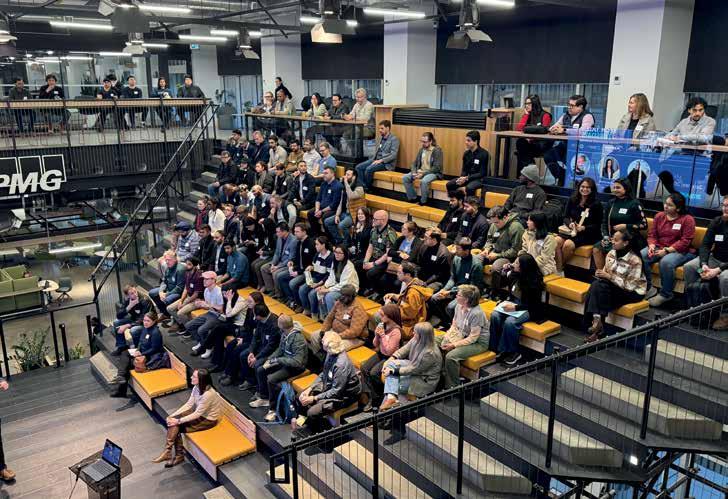
That collision happens daily. Since 2022, more than 370,000 people — including regular members working out of the building, community groups using the space and members of the public grabbing coffee from the café — have passed through Platform Calgary’s doors.
While some programs require a membership, the majority of Platform’s programs are intentionally free or low cost. They’re funded through a mix of municipal support, Alberta Innovates, federal funding, sponsorships and revenue from events, to remove friction at the earliest stages of entrepreneurship.
“When you’re a startup, you don’t want to be spending money you don’t have,” Lussier says. “We want to make sure it’s a neutral and trusted place for founders to get advice that is unbiased.”
That neutrality is part of what makes Platform Calgary a place where first-time founders, seasoned operators, students, investors and policy-makers share the same space.
Platform Calgary occupies a striking, 50,000-square-foot space in the Platform Innovation Centre in East Village, anchored by high ceilings, exposed concrete and large industrial windows. It hosts pitch competitions, workshops, meetups, talent programs and large-scale civic events.
The organization’s roots stretch back decades. In 2019, Platform Calgary evolved from a rebranded Calgary Technologies Inc., a non-profit innovation centre tracing back to 1981 that had a partnership with Innovate Calgary, an organization focused on commercialization
driven through the University of Calgary. Terry Rock, Platform Calgary’s president and CEO from 2018 to 2025, said it became clear through talking to local entrepreneurs that Calgary’s growing startup and technology community needed a neutral, open-door hub focused on founders, builders and operators — one not tied to any single institution.
“My first six months was just talking to people and I heard one common message, which was, ‘There’s no centre of gravity. It’s fragmented,’” he says of the tech scene in Calgary at the time.
Rock, now senior vice-president, operations & COO at Alberta Innovates, describes Platform as the outcome of years of ecosystem building. He says that locals such as the former board chair of Calgary Technologies Inc., Evan Hu, and entrepreneurs Brad Zumwalt and Peter Kinash played key roles in bringing Platform Calgary to life through advice, investment and connections.
Volunteer board members like Ray DePaul make a difference, too. DePaul, the executive director of the Institute for Innovation and Entrepreneurship at Mount Royal University (MRU) and a longtime Platform board member, says he was interested in being a part of Platform because of the “rainforest” approach the organization was committed to, based on the book, The Rainforest: The Secret to
Building the Next Silicon Valley by Victor W. Hwang and Greg Horowitt.
“You’re going to get these sprouts everywhere, and the goal is to just let them grow. It isn’t to try to control them. It isn’t to knock them down and to make the lawns perfect,” he says, noting how it was important to him that Platform allows entrepreneurs to host their own events, test ideas publicly, and connect organically with talent, capital and customers.
Between 2021-2024, Calgary experienced the highest tech job-growth rate in North America, at 61 per cent.
“Ten years ago, no one would have believed that Calgary could be one of the fastest-growing ecosystems in the world, and it’s all because of the investment of time, more than anything else, that a bunch of people put into the city. And now we really seem to be hitting our stride,” DePaul says.
For entrepreneurs like Mary Llaneta, cofounder and CEO of software company Hoodo, which provides a workflow automation platform to help auto dealerships streamline vehicle reconditioning, makeready and delivery processes, Platform Calgary is less about any single program than the environment it creates.
“The most valuable part of Platform
“WE
ARE THAT COLLISION INFRASTRUCTURE FOR IDEAS, TALENT AND CAPITAL.”
–Jennifer Lussier, CEO, Platform Calgary

370,000
Since 2022, more than 370,000 people have passed through Platform Calgary’s doors.

50,000
Platform Calgary occupies a 50,000-square-foot space, with high ceilings, exposed concrete and large windows.
is the building itself and the people that are in it,” Llaneta says. “The environment is like a real-life think tank. You’re constantly hearing in real time what is working for others, how they’re solving problems, and you can apply that to your own business.”
Llaneta participated in multiple Platform programs, including the Velocity program and CEO Roundtable, crediting those experiences with accelerating her growth as a founder.
Prabh Paul Parmar, the CEO at AI-powered rental pricing platform TraceRent (and self-described “Chief Laughter Officer”), connected to the Platform Calgary community before he even planted roots in the city.
What began as an email exchange with a Platform Calgary member whose advice he needed quickly turned into Parmar reconsidering where he wanted to create his next business. “We said, ‘You know what, we’ve got to shift. If we’re going to build our company here [in Canada], we’ll make it Calgary,’” he recalls.
As our innovation economy matures, Platform Calgary’s focus must shift.
Lussier points to access to customers as the next major hurdle, with many startups struggling to find companies willing to bet on their product or service.
“We want to be the place where a startup comes in and knows they can find their community, their peers and mentors, and catch the investor, but we also want it to be the place where they can know they’re going to get help commercializing an idea faster for that customer they’re trying to reach,” she says.
“WE WANT IT TO BE THE PLACE WHERE THEY CAN KNOW THEY’RE GOING TO GET HELP COMMERCIALIZING AN IDEA FASTER.” –Jennifer Lussier
Talent is another pressure point.
While Calgary has become one of North America’s fastest-growing tech talent markets, sustaining that growth requires clear career pathways.
“We don’t want people to see tech as a stepping stone out of Calgary,” Lussier says. “We want them to see a future here.”
DePaul, who helps identify gaps in support for scaling businesses and provides programs that grow entrepreneurial talent at MRU, says that building strong networks will help keep talent around.
“Degrees are mobile; you can take them anywhere in the world. Networks aren’t. So, if we can make sure that students graduate with a network that they feel is there for them, they may not leave,” he says.
If Calgary reaches two million people with a cohesive innovation ecosystem intact, the economic upside will be substantial. More importantly, the city will have something harder to quantify: a culture that tells ambitious people they can build their future here.
*According to the experts in this story.
1
AMBYINT
AI-powered production optimization platform for oil and gas, helping companies boost output, lower costs and operate more efficiently.
2
INSPIREDGO
A meal-delivery service providing fresh, ready-to-eat salads made with high-quality ingredients.
3
NANOTESS
Skin health technology to speed up the of healing wounds, from small skin tears to chronic wounds and a wide range of dermatological challenges.
4
CO2BREW
An engineered carbon dioxide-recovery system designed for smaller breweries to reduce greenhouse gas emissions.
5
ORAQ AI
A clinical intelligence platform for dentists that uses AI to unify patient data for better, more holistic care.

Five years ago, Calgary’s city council declared a climate emergency. Many praised the move, others criticized it as an attack on the energy sector.
Since then, a lot — so much, so freaking much — has happened.
Geopolitical instability has increased. New leaders came in at the federal, provincial and municipal levels. Donald Trump returned to the White House. AI got huge. Life in Canada got really expensive, with inflation, grocery and fuel prices and housing costs rising faster than wages — pushing affordability to the centre of political debate. And, along the way, the idea of an energy transition that would move us toward net-zero emissions became more complicated.
And that has reverberations in Calgary. We’re
at a pivotal moment for the future of energy and the future of the planet. The city is grappling with the role it will play: Should it defend its oil-and-gas foundation, reinvent itself around low-carbon innovation, or find a credible path that does both?
Avenue reached out to local climate, energy and policy experts to share their thoughts on Calgary’s role in an energy transition and what work needs to be done to continue to be an energy leader. (Editor’s note: answers have been edited for length and clarity.)
L EOR ROTCHILD sustainability expert and founder, Calgary Climate Week
Leor Rotchild is CEO of Kavana Partners, a
strategy and sustainability consulting firm.
“Climate change has been, unfortunately, a divisive topic and hyper-politicized. It’s because the consequences are great. The impact is tremendous, and people want to put pressure on those in authority to create more willpower to act. Then, that action has potentially positive but seemingly negative consequences on the business community.
“Since the Donald Trump 2.0 era [began], we’ve seen pushback on anything environmental. Some of that is ideological, but some I’ve seen before. We’re moving back towards the start of my career, where we had to make a strong business case for climate. That’s not terrible. There’s an opportunity to restart these important conversations around the kind of
Calgary is at a pivotal moment for the future of energy and the future of the planet. We asked five local climate, energy and policy experts to share their thoughts.

material impact that climate risk could have on your business. That’s something any investor will want to know. We are entering into a more pragmatic kind of energy transition — energy transformation or even energy addition. It’s not about phasing something out. It’s about bringing more onto the grid, more energy abundance, with the advent of data centres and AI. The world needs significantly more energy.
“In the past, major conversations around climate and energy have taken place at COP (Conference of the Parties) summits in Brazil, or in cities like New York and London that hosted local climate weeks. The idea was that those are the places that could deploy large amounts of capital towards things like renewable energy.
“In this next cycle of driving the conversation, London, New York and COP summits might be less relevant in terms of driving conversation compared to the places that deeply understand energy and how food is produced and distributed. Calgary is ground zero for those two topics.
“There is a lot happening here. Many people


will be surprised by that because they hear climate skepticism coming from this part of Canada. But this has been a jurisdiction that has led the way in pricing industrial carbon, and that served as the model for how to price carbon across the country and other parts of the world. We have innovated. And, when Alberta has innovated, Canada was seen as a climate leader. And, when Alberta decided it was going to sit this one out and label things a hoax and say it’s not possible, then Canada has been labelled the climate laggard.
“So what Alberta decides matters, and Calgary is the business heart of Alberta.
“We need oil for now. We need gas for now and probably for the foreseeable future. Coal we probably don’t need at all now or ever. And we also need everything else — geothermal, solar and wind and hydrogen — ideally in combination with other technologies. Alberta knows how to do this stuff.
“We need to be investing in the next growth areas. Do we want to continue to double down
on one industry that is not going to produce significantly more jobs than it has in the past? Or do we invest in where the puck is going?”
P ETE R TERTZ AKIAN e nergy e conomi st and a uthor
Peter Tertzakian is the CEO and founder of Studio.Energy, a hub for corporate leaders, finance professionals and policy-makers to develop creative insights into the business of energy.
“In 2021, climate change and the mitigation of emissions were viewed as a problem. A problem has a solution. The solution was simple: tax the fuels that create emissions, do things like bike lanes, swap out power sources with renewable sources, and that will take us to a net-zero future [where the amount of greenhouse gases released into the atmosphere would be equal to the amount removed] by 2050.
“Now, given the state of the world, we have a set of dilemmas. That’s different from a problem. A dilemma has no solution, only difficult
“We’re coming out of an era where addressing the climate problem was driven by aggressive policy. We’ve learned the effectiveness of that was limited. Emissions around the world are not going down.” — P ETER TERTZAKIAN
choices. We have difficult choices to make about what we spend our money on. For example, are you spending money on carbon-mitigation infrastructure or on repairing the water pipe? When it comes to energy transition, putting excessive taxes on vital commodities that we use every day is challenged by affordability.
“Five years ago, people said things like, ‘I really want to get off fossil fuels, but it’s expensive.’ Today, there’s plenty of choice. I understand if you don’t have money to buy a new car or put up solar panels, but to say that it’s very difficult to do these things is no longer true.
“Civil society, if it chooses to address this problem, has more control than it did five or 10 years ago. Yes, driving all of society on renewables is very challenging, particularly in northern climates such as ours. But, at a minimum, it’s a shared responsibility, and the shared responsibility is much easier today because consumers have a lot more choice.
“We’re coming out of an era where addressing the climate problem was driven by aggressive policy. We’ve learned the effectiveness of that was limited. Emissions around the world are not going down.
“Carbon policies were supposed to encourage the energy transition from an established paradigm of energy systems to more electrification. What we see now, though, is that electrification isn’t being facilitated so much by policy, but by the steep pull on electric power by data centres and other factors.
“AI is a surprise accelerator of technological
advancements in ways policy was not.
“Renewable energy is feeding into [electrification], and that’s positive. Adoption of new technological paradigms, like renewable energy, gains momentum with scale because their costs go down. Those costs have come down dramatically and will continue to go down. But the AI world is not just drawing on renewables. It’s drawing upon everything. Over the next 10 years, the draw of AI will help renewables and other energy alternatives related to electrification achieve more scale and greater cost competitiveness, potentially faster than any carbon policy could have accomplished.
“I don’t know if we’ll see net zero, but we could see substantial emission reductions by 2050 by virtue of accelerated adoption in the electrification world. It doesn’t necessarily mean oil and gas is going away.”
Arlene Strom joined MRU as chancellor in 2025 after a career at Suncor, where she’d served as chief sustainability officer, general counsel and corporate secretary. She’s on the advisory board of Portage Energy, a company producing sustainable aviation fuel from municipal waste.
“One of the most important things that Calgary can do is foster the conditions that support collaboration and appropriate risk-taking. When I think about collaboration, it’s not just about getting in a room and working towards achiev-
ing our respective goals; it’s about the hard work that comes with aligning interests and sitting in the uncomfortable space where we can make significant progress on big challenges like climate change.
“As Calgarians, we’re proud of our entrepreneurial culture and expertise. We can apply that to expanding our ability to offer low-carbon energy and improve our resource-sector performance, and also to develop new large-scale projects. For example, Calgary’s landfills are a large source of methane. If we could actually divert waste before it reaches the landfill, that’s a very low-cost way to eliminate emissions.
“We have the infrastructure and capital that comes from being an oil and gas power centre. We have the opportunity to build infrastructure that could significantly improve our carbon footprint.
“Broad-based education will also play an important role. At MRU, we are thinking about problem-solving skills that help to position students for the future. Most of our students stay in Alberta, and about 94 per cent are employed when they graduate. These are students who are going to make significant contributions here. Our post-secondary institutions are a part of Team Calgary [a public-private economic partnership] that’s working with organizations like Calgary Economic Development. That positions us really well for Calgary to be a hub for convening and collaborating.
“This moment is a ‘yes, and’ opportunity for Calgary. It does involve change, but it doesn’t

mean we have to leave people behind. We must embrace the discomfort of understanding where we need to change. If we can be a place where we have some of the biggest oil sands companies and we’re developing sustainable aviation fuel companies, that’s huge. It doesn’t mean we’re leaving behind an industry that has contributed to our success. It means we’re willing to sit in the discomfort of the question: Where do we need to change to build even further?”
MYRLE BALLARD Canada
R esearch Chair in Weaving I ndigenous Science and S ustainability Science
Myrle Ballard was named the first director of the Indigenous Science Division at Environment and Climate Change Canada. She’s an associate professor at the University of Calgary.

“I grew up on the rez. I grew up with a knowledge of the environment that was passed onto me — things like the way birds behave when there’s going to be changes in the weather. It wasn’t until I started my master’s that I recognized this is a science.
“My mother tongue is Anishinaabemowin. I study the names of places. The Indigenous names of places are named after their original role in the ecosystem. For example, in the Indigenous language, Saskatchewan is called kisiskâciwan, which means where the water drains.
“Now, I’m doing research that stretches from the Rockies to Manitoba, studying the watershed and identifying the Indigenous names of places. We can learn a lot from the Indigenous name of an area. Those names identify what a place was in the original naming of the ecosystem — was it always prairie?
“Indigenous Peoples’ knowledge is really important as Calgary transitions from oil to something else. Decision makers need to rely on their knowledge of the peoples, of the lands and waters. Their knowledge is not superficial. They know what’s underneath. Indigenous people know when something is abnormal because of the connection that they have with the land. They are the first to observe the real-time changes happening with the land and the species. But a lot of times, they’re not respected for their knowledge.
“I’ve written about a framework, Three-Eyed Seeing, which uses bridging, braiding and weaving of Indigenous science, Western science and all our relations (meaning everything else besides humans) to help make predictions about weather and climate change. Bridging is where the two sciences meet. Then braiding is when





















































“Indigenous Peoples’ knowledge is really important as Calgary transitions from oil to something else. Decision makers need to rely on their knowledge of the peoples, of the lands and waters. Their knowledge is not superf icial.”
—
MYRLE BALLARD
you start to work with other knowledge streams, and weaving is when they start to incorporate Indigenous science with Western science into decision making. It’s very important to use Indigenous science and decision making at all levels of government moving forward.
“We need to be more in tune with what the water is saying, with what the species are saying, because we can learn a lot from them. And using these three voices will be stronger in managing energy and transitioning.”
CHRIS SEVERSON-BAKER, executive director, Pembina Institute
Chris Severson-Baker has been instrumental in key climate-action campaigns, including the phase-out of coal power and mapping a path to carbon-neutral oilsands. He is a leading expert on responsible energy development.
“Calgary is the energy city in Canada. It’s located in the energy province. That has been our identity for a long time. But the world is moving into an energy revolution. We’ve entered the age of electricity. If Alberta wants to continue to be the energy province and Calgary the hub of the energy industry in Canada, we need to embrace what’s happening globally.
“There’s no reason why we can’t continue to be the energy hub of Canada. We should be welcoming energy innovation and new technologies with open arms. We should use the wealth, knowledge and skilled folks that we have here to continue to be leaders in energy.
“There are things happening globally that we could do here. In some jurisdictions, utilities encourage households to install smart thermometers, and you can voluntarily enter
into a contract with the utility where they can draw down energy from your battery and charge it back up again to avoid peak demand times. This is a way to avoid having to build expensive infrastructure like power lines and power plants. We could do this. We could set our mind to being the place that has the most liberal policy and regulations. People could do what they want in their homes in terms of generating electricity, storing electricity and participating in these types of demand-side management programs.
“We want people to set up their Canadian headquarters in Calgary, prove their new technology and scale it up here, rather than do those projects elsewhere. We should do what we can to make sure that innovative projects don’t have to go somewhere else to do a full-scale commercial demonstration project, which is what’s been happening in Alberta lately.
“We could bring back the renewable energy sector. We were seeing increasing growth of
renewable energy until the moratorium happened. So far, it’s not showing any signs of coming back. We have an open market for electricity, and that was part of the reason why companies from around the world were interested in developing renewable energy projects here.
“We could do more for electric vehicles in Calgary. EV uptake is taking off. More models are going to come onto the Canadian market, and they’re going to be more affordable. The thing that is going to be standing in the way of EV adoption is concern over where drivers can recharge. The city can address that by having an abundance of options and advertising them.
“If you drive around Calgary, you don’t see a lot of signs indicating EV charging stations. You don’t see much advertising for fast charging available. That would be a real, tangible thing, because, when people are making that decision to buy an EV, they get tripped up by the fear that they’re going to get stranded.”


Avenue’s Community Story Development Fund creates a new way to support important stories about Calgary.
At Avenue, our mission is to engage audiences and create connected communities through trusted storytelling. Beyond where to eat, where to shop and what to do, we’re also deeply interested in issues facing Calgarians, such as mental health, intimate partner violence, addiction, the housing crisis and the environment.
We’ve always explored these subjects thoughtfully and through a solutions-focused lens, highlighting the Calgarians who work to improve life here. These complex stories address difficult truths with meaningful context and insights — content we know our readers care about.
The challenge is that there isn’t always enough support through advertising for us to do these types of cost-intensive stories. The average editorial cost for a feature-length story of 2,500 words is approximately $12,000. This does not include printing and distribution. By their nature, these issues-based stories require more research and reporting.
That’s why we’ve created an innovative new model to tell these crucial stories. We need community engagement to make sure they get told more often and more thoroughly.
Avenue’s Community Story Development Fund gives local organizations and community members the ability to directly support coverage of important concerns.
Community builders like Calgary Foundation are already helping us tell stories that matter. “A Silent Violence” (July/August 2025) delved into intimate partner violence, specifically coercive control and how it increases the likelihood of homicide by nine times. “Plan Ahead” (September/October 2025) examined what Calgary’s groundbreaking 10 Year Plan to End Homelessness taught us and where we go from there. And most recently, in the March/ April 2026 issue, “Food Fight” tackled food insecurity and how local organizations address its root causes.
“Sharing stories does something powerful — it makes the invisible visible,” says Taylor Barrie, vice-president communications for Calgary Foundation. “When we recognize ourselves in each others’ experiences, we strengthen our connections. Every story is a bridge, and when enough bridges are built, we can start asking, ‘how do we fix this together?’”
That is what Avenue’s community sto-
ries aim to do — bring awareness, understanding, empathy and solutions to civic matters to light, so we can collectively build our city for the future.
Through the Community Story Development Fund, community builders of all kinds help us pay writers, editors and fact-checkers to tackle these critical issues with care and sensitivity, while reflecting a diversity of voices and incorporating rigorous research and engaging design.
We’re honoured that you continue to see us as the source for Calgary’s stories. We’re committed to finding new ways to tell our city’s stories, and we hope you’ll join us in this endeavour. avenuecalgary.com/storyfund


Building a successful neighbourhood, where young professionals lay down roots, parents raise their kids and seniors age in place, requires more than just an array of dwelling types and sizes. People thrive in complete communities with ready access to schools, childcare, green spaces, recreational centres, libraries, as well as shops, services and eateries located within a short walk or bike ride.
Complete communities can develop organically, over time, or developers can try to purpose build them from the outset with a comprehensive master plan. The master-planning process blends the priorities of real estate stakeholders with the social and environmental needs of community members.
“When you think of a building in isolation, you’re compartmentalizing people’s lives,” says Antonio GómezPalacio, partner and chair of design firm Dialog. “The real opportunity with master planning is that we can connect the dots between the places where people
BY XIMENA GONZ

live, go to school, recreate and shop.”
Until relatively recently, master planning in Calgary was an approach used only in suburban communities on the city’s outskirts, where urban planners and developers have a blank slate to showcase the design trends of the day.
But master planning communities within established areas presents an opportunity to create walkable neighbourhoods with ready access to existing services and amenities inside the existing city footprint. In the mid-’90s and beyond, comprehensive plans drove the creation of smarter, denser suburban
neighbourhoods such as McKenzie Towne and West Springs, both of which incorporate New Urbanism principles that prioritize housing density, walkability and a mix of uses and activities. But they didn’t address urban sprawl. With new communities on the edges of the city, not only do homeowners potentially need to commute more often and for longer, but the whole city needs to pay for extending power and sewer lines as well as longer routes for everything including snow plows, garbage pickup, transit and more.
“We need to flip our urban policies and economic models to incentivize sustainable cities that contribute to more healthy, sustainable lifestyles and benefit the community,”
structure in established areas.
“Redevelopment offers the opportunity to add thousands of people and housing choices in areas where the infrastructure already exists,” Goldstein says. “The opportunity for master planning in established areas is to ensure that the community is part of [creating] a vision.”
REDEVELOPMENT OFFERS OPPORTUNITIES TO ADD HOUSING IN AREAS WHERE INFRASTRUCTURE ALREADY EXISTS.
Gómez-Palacio says. “There’s a huge catch-up for us, the policies of the ’50s, ’60s and ’70s need to be updated to get us there.”
Calgary is working to catch up. Over the past couple of decades, there have been increased opportunities to create new master-planned communities inside of city limits. Teresa Goldstein, chief planner and director of community planning at The City of Calgary, says the municipal government is consistently modernizing its planning policies to ensure they aren’t obstacles to redevelopment. Since 2014, The City has rolled out a number of initiatives — including the Main Streets Program and Local Area Plans — to guide incremental redevelopment while revitalizing existing amenities, services and infra-
Redevelopment in established areas remains largely piecemeal — mostly because large swaths of inner-city land don’t come up for sale often. And, without a strong vision, piecemeal redevelopment can overwhelm existing infrastructure, from roads and sewage to garbage collection, and trigger community opposition.
Not long ago, City Council turned down a proposal to revitalize Glenmore Landing, an aging southwest shopping complex located next to a new bus rapid transit (BRT) hub, and create at least 1,800 apartments. Similarly, plans to transform the site of a decommissioned high school into a residential hub in the southwest community of Richmond Knob Hill came to a halt after neighbours launched a lawsuit against The City for approving the construction of more than 1,000 homes on the 11.5-acre parcel.
In cases where master-planned communities have moved forward, they offer a chance to accommodate growth and change in established areas. Here’s a look at five neighbourhoods that demonstrate the advantages of master planning new communities inside the city’s borders.

Calgary’s first masterplanned community completed in an established part of the city’s southwest, Garrison Woods provides a solid example not only of the benefits of this redevelopment model, but it also highlights the importance of collaboration among interested parties from the get-go.
Bordered by Altadore, on the eastern part of a decommissioned Canadian Forces Base military site, Garrison Woods now boasts roughly 1,300 dwellings and close to 3,000 residents, according to the 2021 census.
Single-family homes, row houses and green spaces stand side by side along narrow streets, whose tree-shaded sidewalks are designed with the comfort of pedestrians in mind, a key principle of New Urbanism.
In the spring, cherry and crabapple trees bloom across the boulevards and parks that lead to Garrison Woods’
commercial strip, where local shops and restaurants, anchored by a grocery store, cater to the needs of residents. This didn’t happen by chance, or in isolation. The neighbourhood’s success stems from a vision devised by developer Canada Lands Company, local residents and businesses, City administrators, as well as urban planners, architects and designers, whose collaboration set a high bar for developing complete communities in Calgary’s established areas.
Since the neighbourhood was built out in 2004, Garrison Woods has become a desirable place to live, shop, learn and play. The influx of new residents has also supported the ongoing success of Marda Loop, a vibrant commercial district comprising businesses along 33rd and 34th avenues S.W. And the amenities the development introduced — a grocery store, two parks and several playgrounds — also helped bolster the appeal of adjacent neighbourhoods.
The City’s first foray into transit-oriented development in an established

On any summer afternoon, Murdoch Park, in Bridgeland-Riverside, is bustling.
Families out for a stroll stop by Village Ice Cream for a scrumptious scoop, while youth shoot hoops at the basketball court and children run around the playground. Overlooking the 3.5-acre park where the Calgary General Hospital formerly stood, now sit nine buildings, whose human scale and eclectic façades create a modern, yet charming tableau.
This isn’t a happy coincidence. Roughly 30 years ago, when the hospital was demolished, Bridgeland-Riverside’s vibrancy stymied. The neighbourhood’s population reached an all-time low of 4,403 residents in 1998 — barely enough people to sustain the businesses on 1st Avenue N.E., the area's main street.
Rather than selling the land to a private developer, City Hall directed the transformation of the roughly 37-acre site into Calgary’s first transit-oriented
community in the inner city. Planned to attract new residents, The Bridges today features more than 1,300 apartments and 200 townhomes located in proximity to services and amenities, including the Bridgeland CTrain station and the Bow River Pathway.
More than two decades since residents moved into the first completed building, Bella Citta, the four expansive blocks linking the CTrain station and 1st Avenue N.E. are now effectively connected by a mix of multi-family buildings and retail ground floors, including two built by Bucci Developments.
“We like the master-planned community because it allows us to be innercity developers with the advantages of greenfield development,” says Mike Bucci, vice-president of Bucci Developments, referring to the ability to build brand-new projects on undeveloped inner-city land. “Everything is laid out and ready for infrastructure, parks, shopping and transit.”

East Village is a hip destination to meet up with friends for some shopping, a classy pit stop for after-work drinks or simply a space to relax by the Bow River. And, for more than 4,000 people, East Village is home. They live in new and resale condos suitable for firsttime buyers, young families and empty nesters. The iconic Central Library acts as their living room, while the River Walk and the redeveloped St. Patrick’s Island provide a front yard of sorts.
Rather than buying a suburban home, these Calgarians choose to stay in their city’s centre and enjoy the perks of living within walking distance to everything they might need. Less than half of East Village residents drive to work; they walk, wheel, take transit or work from home.
Getting East Village off the ground took several attempts, as it’s made up of an assemblage of land parcels. Eventually, The City cracked the code
and, in 2007, launched the Calgary Municipal Land Corporation (CMLC), a wholly owned subsidiary, to lead redevelopment in East Village. To fund the infrastructure required to attract private investment to the area, CMLC implemented Canada’s first community revitalization levy, a financial tool that allows The City to borrow against future tax revenue.
But transforming this seedier area into a complete community required more than a compelling vision concocted by CMLC experts. The collaboration of City administrators, community groups and industry partners has been essential to attract close to $4 billion in private investment, and breathe life back into Calgary’s downtown east end.
“East Village had seen fits and starts for decades,” says Kate Thompson, president and CEO of CMLC. “Without a great master plan, we wouldn’t have been able to create a vision for everyone to buy into.” evexperience.com

We are a locally owned, fine casual restaurant on Stephen Avenue called FinePrint. A year of construction, lost parking, and restricted access has made getting here far harder than it should be. It has taken a real toll on independent restaurants like ours and we’re still here... somehow.
Create a clean, slightly ironic and defiant ad that acknowledges the frustration, stays diplomatic, and reminds people we are still here and worth the effort. Highlight that our chef is a national culinary bronze medalist and that our new spring menu is exceptional.
































Beverage Container Management Board (BCMB) proudly regulates Canada’s best-performing beverage container recycling system, helping turn today’s containers into tomorrow’s resources.

bcmb.ab.ca








niversity District has become a central hub for Calgary’s northwest, and home to more than 4,000 Calgarians. That's according to University of Calgary Properties Group (UCPG), the development company created by UCalgary’s Board of Governors to develop a 200-acre property adjacent to campus.
“University District was a way for the university to take excess land that it didn’t need for its academic mission, and create something that would optimize a return, and benefit students and staff by having a place where they could live, work and play,” says Novy Cheema, president and CEO of UCPG.
Cheema notes that because UCalgary continues to hold title to the land, an unusual ownership structure was adopted to give certainty to both homeowners and investors. Rather than hold title to their property, property owners hold a sublease title issued for a 99-year term
that can be renewed and transferred to new buyers.
Designing the neighbourhood from scratch enabled UCPG to lay out buildings and amenities in a way that not only encourages spontaneous activities, but also fills amenity gaps in the northwest.
Stretching between the university campus and Shaganappi Trail N.W., University Avenue is the new community’s social hub, whose mix of sleek apartments complement 50-plus shops, services, restaurants and entertainment venues, all flanked by wide sidewalks, creating an inviting space for pedestrians to linger. Along the neighbourhood’s edges, row houses and townhomes give young families an opportunity to live in an urban setting with ready access to nature, including 40 acres of greenspace and 12 kilometres of pathways.
Upon completion, University District expects to welcome more than 13,500 residents. myuniversitydistrict.ca
Attracting urban amenities and dense housing to an established suburb.

Up Old Banff Coach Road, at its intersection with 77th Street S.W., a somewhat unexpected urban village is taking shape — the nascent West District.
Rising amidst an expanse of single-family homes built out in the early 2000s, a dense array of mid-rise apartment buildings and townhouse complexes broaden the housing choices available in an otherwise thinly populated area — close to the mountains, but far from everything else.
In the last 10 years, Truman, West District’s developer and primary builder, transformed a series of countryside properties into a mixed-use, walkable neighbourhood whose restaurants, shops and a state-of-the-art central park serve more than 28,000 Calgarians on the west side. Up until recently, residents of West Springs, Aspen Woods
and Cougar Ridge had limited shopping and dining choices, outside a handful of car-centric centres.
West District is a rarity, however. In Calgary and elsewhere, undeveloped sites this size tend to be found exclusively on a city’s outskirts. For this reason, when Truman came across the opportunity to purchase a 95-acre land assembly within the city’s boundaries, the developer sprang into action.
“This last big undeveloped pocket of west-side suburbia needed a master plan that was laser focused on one principle: with density must come amenity,” says Tony Trutina, Truman’s chief operating officer. “Key for us was our mixed-use pedestrian main street, Broadcast Avenue, and Radio Park as our urban living room packed with enhanced programming.” hellowestdistrict.com
Calgary is rapidly emerging as the next leading innovation hub, and at the heart of this evolution are leaders paving the way. Across the city, movers and shakers are establishing revolutionary pathways to make it better. Whether it’s modern leadership training programs, exciting medical research or recent grads creating systems of support, Calgary is seeing an innovative change for the better. Here, discover just some of the leaders in innovation spearheading the shift.


The Haskayne School of Business offers leadership programs with real-word impact.
Great leaders build successful companies, and with ongoing skill development, they sustain that success. The Executive and Professional Development (EPD) programs at the Haskayne School of Business offer ongoing development to anyone looking to hone their leadership skills.
As part of the non-credit professional development arm of the business school, Haskayne’s EPD meets leaders where they are. For individuals who want to take their professional development to the next level, EPD has open-enrolment programs — no prerequisites required — with short-format programs that include strategy, leadership, finance, negotiation, AI, innovation and more. The governance stream of EPD offers board-ready programming, designed to prepare leaders to shape oversight and long-term strategy. And for businesses ready to invest in their leaders, Haskayne’s custom programs are tailored to all company needs.
Tanya Verhulp, the director of Executive
and Professional Development, recognizes that many organizations offer leadership development programs for companies, but what sets Haskayne apart is how it works with its clients to custom-create programs. Not to mention, the programs are backed by an accredited university institution.
“It’s the how that’s innovative,” she says. “We focus on the impact and return on investment, but the innovation is in the pieces that we build with organizations by tailoring programs together.”
When organizations approach Haskayne for custom leadership development in their business, the process begins with a needs analysis. “We really want to understand the strengths of the organization, what challenges they’re facing and what’s currently happening. We work with them to understand their strategy and goals,” explains Loriel Anderson, learning and development programs manager.
From there, Haskayne designs and
develops programs suited to individual business needs. EPD looks at big-picture themes, such as strategy execution and effective decision making. The programs also offer action learning projects that tackle real business challenges. This process creates cross-functional teams, mentors the learners and pushes projects forward, providing a significant return on investment for the organization.
“Leadership development is no longer a nice-to-have; it’s a strategic move for an organization to invest in this way, given the world’s pace of change and complexity,” says Verhulp. “It gives learners a structured space to step back from dayto-day operations and think strategically about a bigger picture — how to create value, foster innovation and lead through uncertainty.”
Haskayne built EPD’s custom leadership development model around a simple but powerful principle: Education must move performance. The principle has proven successful in delivering real-world impact — EPD has seen participants go on and create millions of dollars in revenue thanks to strategies such as new asset utilization. One example of impact is Spartan Controls, an industrial automation company that has participated in EPD programming for six years.
Haskayne custom-developed the Emerging Leaders Program for Spartan, helping mentor and upskill more than 200 individuals across the company, with many receiving promotions and taking on additional leadership responsibilities with these new skills.
“Investing in your people is probably the biggest return on investment you can get,” says Anderson. “When you have leaders who understand strategy, execution and why they’re doing what they do — not just how to do it — the potential for impact is huge.”
To learn more about Haskayne EPD, visit haskayne.ucalgary.ca/epd
Choose the right program for you


Premier Staffing Agency curates exceptional teams that elevate the event experience.
Well-executed events have the power to create lasting impact — whether through raising funds for charitable causes, strengthening brand awareness or delivering memorable guest experiences. While event planning often prioritizes logistics

such as venue selection, entertainment and timelines, front-of-house staffing is often underestimated, despite its critical influence on the overall event experience.
Booke Nistor, CEO of Premier Staffing Agency, understands that these roles carry significant strategic value. Premier Staffing takes an innovative and highly intentional approach to staffing by aligning talent with each client’s marketing objectives, visual identity and operational needs. From trade shows that require charismatic, knowledgeable brand ambassadors to entertainment-driven events that need trained dancers, models or special talent, every staffing decision is made with purpose.
Interactions with front-of-house staff are often the first — and most memorable —

Intentionally curated teams aligned with your brand, audience, and event goals.
human connection a guest or consumer has with a brand. With a roster of more than 1,800 experienced professionals, Premier Staffing carefully curates teams that help create those defining moments.
Since launching in 2017, Premier Staffing has strategically supported a wide range of events while witnessing a noticeable shift in how clients view staffing: no longer as simply a support function element, but as an essential component of event success.
“When you introduce structure, professionalism and intentional brand representation into an undervalued space, you don’t just improve events — you help redefine industry standards,” says Nistor.
Whether a client requires polished brand ambassadors, promotional models, hospitality staff or guest-facing support teams, Premier Staffing integrates logistics, presentation standards and structured training so that its staff operates as a seamless extension of the client’s brand.

SECURE YOUR TEAM
premierstaffingagency.com
info@premierstaffinga.com @premierstaffingagency

As the fastest-growing tech talent hub in North America, Calgary has seen increasing innovation across industries in recent years, creating a call for deeper, more coordinated collaboration between sectors.
“We need to work together, collaborate as a community, and make sure that we can identify new company formations, developments and opportunities that will strengthen our sectors as our city continues to grow,” says Brad Parry, president and CEO of Calgary Economic Development (CED). “That was the genesis of Calgary’s Innovation Strategy.”
Launched in April 2025, Calgary’s Innovation Strategy is a multi-step plan developed by CED to create a connected network of innovation support that drives investment and economic diversification. With all the pieces in place, the end goal is for Calgary to be Canada’s leading destination for innovation.
A key tool pushing the plan forward is the Opportunity Calgary Investment Fund (OCIF), a City of Calgary-owned fund that makes strategic investments to grow and diversify our economy. For every dollar invested by OCIF, Calgary experiences a
12x return on funding committed.
“OCIF is creating an environment where innovation starts to take hold and growth materializes, and then we see more money coming in, more companies forming, more jobs created and more opportunities to grow in other sectors,” says Parry, who is also the CEO of OCIF.
Since the launch of the strategy, OCIF has made significant investments in organizations across industries, including ETC Foundation, a hub that unites startups, industry leaders and investors in the energy sector; the Xpand Commercialization Hub, an initiative that accelerates dualuse technologies for civilian and defence applications; AgSphere, a hub that connects and strengthens the agriculture ecosystem; and the Alberta Logistics Centre of Excellence, which boosts innovation in the transportation and logistics industry.
These investments support the development of what CED calls nodes, which are dense concentrations of sectorspecific innovation supports. For example, life sciences — which encompasses the discoveries of solutions in health care and technology, agriculture and food sciences — is a node that has recently seen success

in Calgary, thanks in part to OCIF funding. CED aims to establish nodes that align with its right-to-win sectors, including aerospace, agriculture, creative industries, defence, energy, transportation and logistics, and quantum.
Having nodes streamlines venture capital funding processes and opportunities by offering a closer circle of well-aligned supports, including funders, operating spaces, academic institutions and innovation incubators. “The idea is to put like-minded companies with like-minded companies, and then, you see this collision of ideas and new companies start to form,” says Parry.
With the strategy in place and a shared direction and commitment, CED estimates successful implementation could generate 187,000 new jobs and contribute over $28 billion to the local economy by 2034, paving the road to becoming an internationally recognized innovation hub.
“It's absolutely achievable given who we have in our community, the leaders we have and the amazing talent that is building new companies across all these sectors,” says Parry. “We had an opportunity to set this lofty goal and get everybody rallying around it and, ultimately, become the innovation capital of this country.”
Learn more about OCIF at opportunitycalgary.com. To learn more about the strategy, visit calgaryeconomicdevelopment.com
Mount Royal University’s annual ScaleUP Week empowers founders and leaders of small and medium-sized businesses.
For many Canadian founders, the greatest challenge isn’t starting a company — it’s scaling one. The scale-up phase, often defined as sustaining annual employee growth of more than 20 per cent over three years, forces leaders to evolve quickly as teams expand and systems stretch, and strategies must continually adapt to keep pace with growth.
While startups can tap into the energy, fundraising and incubation initiatives available in their local ecosystem, scale-ups and growth-phase companies often see significantly less coordinated support. To address this gap, Mount Royal University’s Institute for Innovation and Entrepreneurship launched ScaleUP Week.
“There is a disproportionate number of startups compared to firms that successfully transition from small to mid-size or large-size, with only 0.1 per cent of small companies becoming mid-sized,” says Dr. Simon Raby, founder and executive director of ScaleUP Week. “I launched ScaleUP Week because Western Canada didn’t need another startup event — it needed a scale up movement.”
ScaleUP Week includes an annual summit and awards gala that brings together key players in the city’s business ecosystem: founders, CEOs, operators, investors, policy leaders and support organizations. Last year, ScaleUP Week saw 80+ expert speakers and 1,500 attendees, primarily welcoming growth-stage founders and CEOs of companies with existing traction that are now looking to scale.
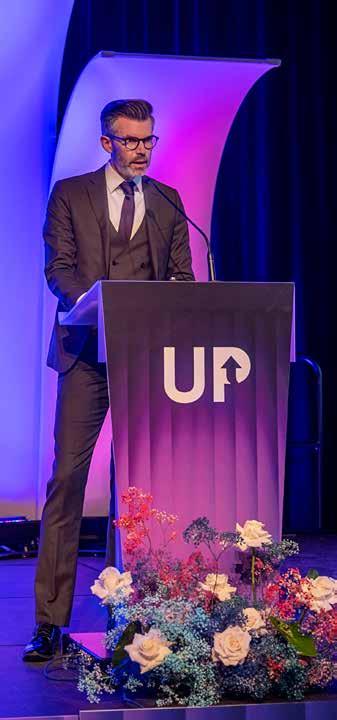
Having recently been named the fastest-growing tech talent hub in North America, Calgary is home to a flourishing innovation and growth community. ScaleUP Week empowers companies to build big futures from Western Canada by positioning Calgary as a place where businesses are not only started, but are surrounded by fertile soil for scaling up.
“A scale-up journey is moving from ‘we can grow’ to ‘we can grow on purpose — again and again,’” says Raby.
ScaleUP Week offers big-picture keynotes alongside panels, roundtables and one-on-one advisory sessions. Some of these are structured around topics like scaling leadership and talent to build teams that operate beyond their founders, innovation and AI adoption, and market expansion. Two prominent themes are RevGen, which looks at the commercial engine — including revenue
systems, sales architecture and go-tomarket strategies — and ProfitGen, which focuses on productivity and operational leverage.
Celebration is a vital component of building a movement; this is why ScaleUP Week’s grand finale is the ScaleUP Awards Gala, an evening spent celebrating the achievements of Western Canadian companies and their leaders. Presented at the gala are eight Pathway Awards, which highlight excellence achieved along specific pathways, such as sustainability, social impact and BIPOCled, and the Main Awards, including Company and Entrepreneur of the Year.
“Recognition creates momentum, and momentum creates more companies that scale,” says Raby.
“Simon’s research into small and medium-sized enterprises has itself seen enormous growth, and ScaleUP Week is the kind of bold and innovative approach Mount Royal’s Bissett School of Business thrives on and the Calgary economy needs now more than ever,” adds Kelly Williams-Whitt, the dean of the Faculty of Business, Communication Studies and Aviation at Mount Royal University.
This year, ScaleUP Week will take place June 8 to 12, boasting a main program in Calgary, a Summit in Vancouver and regional events in Edmonton and Winnipeg. In 2026, the program’s keynotes, panels, roundtables and leadership gatherings will focus on mindset, scaling pathways, AI adoption and growth mechanics. “We’re seeing momentum, not just attendance,” says Raby. “When people come once, they tend to come back with their leadership team, their partners or their peers — because scaling up is a team sport.”
Avenue readers get a 10 per cent discount for Calgary Summit tickets with the code AVENUE. For more information and tickets, visit scaleupweek.ca









At Mount Royal University, students ignite ideas, challenge assumptions and learn by doing. Along the way, they push boundaries and uncover how far their potential can go.

The Prostate Cancer Centre’s Innovation Suite brings next-generation bladder cancer trials to Alberta patients.
Advances in cancer treatment often begin in clinical trials, where researchers explore new therapies and approaches that could shape the future of care.
At the Prostate Cancer Centre (PCC), a new Innovation Suite helps expand those research opportunities and services for Alberta patients.
As a purpose-built research hub designed to support advanced studies, the Innovation Suite strengthens the centre’s ability to conduct procedurebased clinical trials and provide patients with access to emerging therapies through research.
That also means the Prostate Cancer Centre has broadened its research beyond prostate cancer, strengthening its broader genitourinary research program and opening the door to new areas of study.
“The Innovation Suite allows us to support more research studies as we move into new areas of urological disease, namely bladder cancer,” says Jeff Davison, Prostate Cancer Centre CEO.
In 2025, the Prostate Cancer Centre supported 300 research patients across 24 prostate cancer clinical trials. Because the Innovation Suite allows for more complex and procedure-based studies, the PCC was able to begin enrollment in its first bladder cancer trial. That first study focuses on the effectiveness of EG70, a type of gene therapy, in combating bladder tumours. Three bladder cancer studies are now open for enrollment, with another expected to launch this year.
“Bladder cancer treatment hasn't really changed for decades,” says Dr. John
Dushinski, CMO at the Prostate Cancer Centre. “Now, there are exciting new possibilities for treatment with a variety of agents that may improve survival and decrease recurrence and morbidity.”
Dushinski and his team build some of the research hub’s approaches from existing treatments, but they also explore entirely new options.
“Traditional treatment of non-invasive bladder cancer involves stimulating the body's immune system to attack the cancer cells,” says Dushinski. “We are looking at novel ways of stimulating it, such as gene therapies and drug-eluting bladder implants.”
“This spaces ensure that we're staying at the forefront of urologic innovation,” adds Davison, “and ultimately helping more patients and improving their experiences.”
Certain trials require additional standard treatments, which eligible patients within the research program can now receive at the Innovation Suite as part of their care. This includes procedures such as a cystoscopy or bladder instillation — both used in the surveillance and treatment of bladder cancer.
Dushinski says what excites him most about the Innovation Suite is that they can provide cancer patients with new treatments that may decrease recurrence and morbidity and increase survival.
While the PCC has begun research and treatments in the new Innovation Suite, the space still needs cabinets, paint and other small details to make it more welcoming for patients. The public can donate to help the space develop.

“The Innovation Suite allows us to support more research studies as we move into new areas of urological disease, namely bladder cancer.”
Jeff Davison, Prostate Cancer Centre CEO

Rendering of the proposed vision for the completed suite.
To learn more about the Innovation Suite and bladder cancer care, visit ProstateCancerCentre.ca
Meet Declan
Declan Sander is on a mission to support the health of Indigenous communities. In Canada, more than 30 per cent of First Nations people face barriers to health care. For Sander, the University of Calgary’s Hunter Hub for Entrepreneurial Thinking offered him the space to take bold ideas and transform them into actions that address that need. In 2023, with the help of Hunter Hub’s Launchpad, he co-founded Birchbark Health — a not-for-profit that turns volunteers into primary care ambassadors.
Launchpad, a six-month program at Hunter Hub, guides students through every step of launching an early-stage tech venture. It also provides students with a small startup fund.
Sander joined Hunter Hub in his third year of university and was able to conduct discovery work and secure crucial seed funding for Birchbark. “It was a really good opportunity to flesh out the idea,” says Sander. “They helped us sit down with our ideas, see what systems were already in place and how we could work within them.”
Hunter Hub promotes entrepreneurial thinking, teaching students to identify problems and take initiative to create meaningful solutions, explains Guy Levesque, Hunter Hub’s executive director. “Birchbark Health is a great example of that mindset in action,” says Levesque. “Declan recognized a real gap in health care access for underserved Indigenous communities and took the initiative to build something that addresses that challenge directly.”

During his fourth year at the Haskayne School of Business, Sander pitched Birchbark Health as a virtual telehealth platform through the Launchpad program. Using the problem-solving skills he learned at Haskayne, he has since pivoted from Birchbark’s original telehealth format to a boots-on-the-ground operation to address a more pressing need.
“We noticed that the biggest place that we could have an impact was directly in the communities,” says Sander. “We had a full software development team, but we realized that Lethbridge had one of the worst opioid crises in Alberta, and took a step back from the virtual health platform to actually work directly within our community.”
Birchbark now works with nearly a dozen Blackfoot community groups and not-forprofits in Lethbridge, having trained 300 people in naloxone administration and addiction and recovery education, and certifying 48 people in first aid.
The leadership team is small but mighty, composed of Sander, his brother Aidan and Dr. Esther Tailfeathers, the medical director of the Blood Tribe and assistant dean of Indigenous Health at the University of Calgary. Birchbank is also backed by a board of members, the majority of which are Indigenous.
“The most meaningful impact of the work of Birchbark is proving that something like this can be done in the face of many challenges, bringing

together organizations who would not normally collaborate to help people in a most meaningful way, saving and improving lives,” says Tailfeathers.
An important aspect of Hunter Hub’s mission is to enable its entrepreneurial community to drive positive global change.
“If we want to build a more innovative and resilient future, we need to support the people who are willing to tackle complex problems and turn ideas into solutions,” says Levesque. “Students like Declan demonstrate what’s possible when young innovators are given the tools, mentorship and confidence to act on their ideas. By investing in them early, we’re not only supporting individual ventures; we’re helping build a generation of leaders who will create new opportunities and positive impact in their communities.”
To learn more about Hunter Hub and how it supports future changemakers, visit ucalgary.ca/hunter-hub
Discover how Calgary’s Leaders Circle has been instrumental in the development of local companies, including Earls Kitchen + Bar.

Mo Jessa says the key to building a successful company is growing the people within it. And, you can take his word for it — Jessa, the former president of Earls Kitchen + Bar, who retired in 2024 and now serves as President Emeritus, held various management positions at Earls for many years before ultimately leading the organization for over a decade. Under his guidance, Earls expanded to more than 70 restaurants across North America. The key to his success? A commitment to developing leaders internally.
When Jessa first stepped into senior operational leadership, he participated in a leadership program that he found transformational. He believed a similar approach could benefit the whole company. Soon after, he discovered The Leaders Circle, a Calgarybased leadership consultancy led by founder Brian Lanier, who brings deep expertise in leadership development and corporate training. The Leaders Circle offered something Earls needed: the ability to scale transformational leadership training across large groups. Jessa felt an instant partnership with
Lanier and the program he offered.
“The breakthrough for Earls and me was that leaders are not born; they are made,” Jessa says. “The will, the motivation, how to work with resilience and even creativity, building trusting relationships and empowered teamwork — all of that can be taught, and that’s where The Leaders Circle came in. Its transformational learning broke open a whole new way of getting people trained to become master leaders.”
Earls’ management teams began participating in recurring leadership sessions through The Leaders Circle’s Being a Leader program, learning the skills and practices required to build lasting and trusting relationships across the organization. Frontline staff increasingly felt heard, supported and empowered to bring issues forward, knowing leaders were committing to working on solutions. Jessa began to see the culture shift.
“People start believing that they can bring concerns up and that we can solve
It empowers your team to: Illuminate blind spots that limit results and learn how to interrupt unspoken assumptions, hidden commitments and the performanceblocking patterns that are holding you back from achieving results. Learn through personalized, highimpact conversations where people discover how to be a leader instead of doing outdated tips and tricks. Elevate your capacity to be accountable by shifting your perspective from one of all about “Me” to leading for “We.”
problems together,” says Jessa. “The company started to grow differently. There’s a lot of momentum from small wins turning into big wins, and that momentum then just has a velocity of its own.”
As results continued to build, Earls maintained its partnership with The Leaders Circle over two years. “People think training is episodic, but when you want to be fit mentally or physically, would it work if you went to the gym once?” asks Jessa. “It’s a practice that needs to be maintained.”
Through consistent leadership development sessions, Earls strengthened a culture of learning, accountability and empowerment — an environment intentionally designed to elevate its people.
“Without an incredibly articulate, well-thought-out system, it limits your growth,” affirms Jessa. “And The Leaders Circle helped create the systems that took Earls to the next level.”
To learn more, visit leaderscircle.com




A
short history of Calgary’s long nights and what comes next as social drinking culture continues to evolve.

n a weekend night in the late 1980s, 11th Avenue S.W. — then also known as Electric Avenue — had a party-hard momentum. Friends lined up outside the Warehouse, Coconut Joe’s and other night clubs, taking flash-camera photos while waiting for their stamps to join the fervour inside. Between DJ sets, they’d pour back onto the sidewalk, scanning for the next venue with the shortest line or the loudest bass. Cheap drinks helped, as did the proximity of the clubs where you could navigate easily on foot in search of a good time and new friends.
Policy shifts helped fuel Electric Avenue’s rise — and its eventual decline. Nightlife boomed after the age of majority dropped from 21 to 18 in 1971. By 1974, Calgary had nearly 100 establishments with live entertainment — up from six just a decade earlier.
But, over time, stricter liquor laws and increased policing dismantled the conditions that allowed Electric Avenue to even exist. Redevelopment and rising property values meant many venues were priced out. The idea of a single centralized nightlife neighbourhood, where you could efficiently bar-hop, never fully returned.
There’s still a hunger for nightlife in Calgary, but it shows up differently now. Lines can still form early, but they’re more scattered under the lights of Stephen Avenue or the corner of 9th Avenue S.W., where alt-punks congregate at the gates outside Dickens Pub. People of different ages check their phones for cheap nighttime deals and Uber rates as they decide whether to stay or move to a new venue.
The energy that was once concentrated on Electric Avenue is spread across downtown, the Beltline and beyond. The nightlife experience now is less about a single destination and more about finding the right room on the right night. That fragmentation is not new. In fact, it might be Calgary’s defining nightlife trait.
y the mid-2000s, Calgary’s nightlife started to take shape in the form of smaller rooms, tighter communities and a growing appetite for curated experiences, with the The Hifi Club in particular leaving an influential mark on the city.
“Hifi was a DJ-founded venue,” recalls Paul Brooks, who worked as a manager at the club and is now CEO and director of publicity at Take Aim Media. “It became a place that showcased DJ culture and underground dance music production.”
Its impact extended beyond music programming.
“It became a place for weirdos and misfits to connect and find their chosen family,” Brooks says. “There were weekend warriors coming in from the suburbs, but there was also a group of people who just started hanging out together in the club and outside of it. Sharing ideas. Dating. Talking about culture.”
Hifi functioned as both venue and incubator, inspiring promoters, artists and adjacent events across the city. Its success wasn’t rooted in the extravagant glamour associated with nightclubs, but rather with DJs that you couldn’t see anywhere else and the community that showed up to support it.
The club closed in 2020 due to COVID-19 affecting operation costs. But, during its run, Hifi placed Calgary on the touring map for international DJs and electronic artists, often well before they became festival headliners. Montreal beatmakers and experimental electronic artists were frequent visitors, as well,

helping bridge scenes between cities.
“I assumed other places had scenes like this,” Brooks says. “Then I realized Calgary was actually on the radar for some of these people because of Hifi or because of the spinoff events and communities that formed around it.”
For Brooks, the club’s significance was less about star power than access. “That window of opportunity doesn’t really exist anymore,” he says. “Artist fees went up, drinking went down, and suddenly the math stopped working.”
Calgary is struggling to provide an underground nightlife corridor for breakthrough artists since Hifi’s closure, and, according to Brooks, that evolution was inevitable. Industry consolidation and the disappearance of mid-sized
venues have reshaped the economics of nightlife. “Live Nation is making it impossible for talent buyers and bookers,” he says, plainly. At the same time, drinking culture itself has shifted.
“Alcohol is the economic driver,” Brooks adds. “DJs are the loss leader. People drink significantly less now than they did in the penny-highball days of Electric Avenue. That alone makes the old nightclub model unsustainable. The industry is cyclical, however. Something gets big, it gets bought and then scrappier things pop up to fill the gaps.”
That “scrappier” phase is evident in how clubs operate now, especially as venues try to build sustainable programming amid tighter budgets and rising talent costs.

Commonwealth Bar & Stage
For nights that call for a crowded energy, Commonwealth Bar & Stage fits the mood. Known for its simplicity and underground feel, it was built with a clear purpose: good music and a good time. When it opened, it filled a gap in Calgary’s nightlife — a mid-size downtown venue that could bridge club culture with live performances and creative programming.
Last year, the venue underwent a major renovation. Updates include an expanded stage, upgraded LED lighting, a larger dance floor, and new murals by Calgary artist Rhys Douglas Farrell. The changes also marked the official launch of Common UNDRGRND, the lower-level space, now equipped with its own bar. VIP areas have been reworked as well, with a larger mezzanine offering clearer sightlines to the stage.
Weekly programming includes World Famous Fridays, which spotlights the best hip-hop DJs from across the city, and Modern Vintage Saturdays, blending throwbacks with current hits alongside rotating special events. —Evelina Pak
731 10 Ave. S.W., commonwealthbar.ca @commonwealthyyc
To see the full itinerary for every kind of night out, scan this code.
Betty Lou’s Library

Betty Lou’s Library is a speakeasy whose name pays tribute to owner Blaine Armstrong’s mother. After you whisper the password (often a writer’s name), the hidden doors open into another era: Prohibition glamour with a dash of Paris’s Lost Generation. Velvet chairs, crystal chandeliers and patrons dressed in cocktail attire make it easy to imagine F. Scott Fitzgerald and Gertrude Stein walking in at any moment.
Beyond live jazz, the bar hosts burlesque shows, where feather boas and theatrical flair add a playful edge to the atmosphere.
The Library’s “collection” deserves special attention. Classic cocktails, many of which are named after writers, are crafted with exceptional care. The bar notes, “please be patient, our cocktails take time.” But there’s no need to rush — this is the place to linger and savour every moment.
Like Owen Wilson’s character in Midnight in Paris, we’re prone to romanticizing the past and looking for ways back into it. Instead of 17 rue Malebranche, head to our local counterpart, 17th Avenue S.W., where you can be transported to another era, if only for a couple of hours. —Evelina Pak
908 17 Ave. S.W., 403-454-4774 bettylouslibrary.com, @bettylouslibrary
istorically, nightlife served a purpose far beyond entertainment, particularly for marginalized communities.
“Gay bars had their heyday in the ’70s and ’80s,” says Kevin Allen, one of the founders of Calgary Queer Arts Society and a historian with Calgary’s Gay History Project.
“When the community faced the most oppression, they became safe spaces. You have to remember — this was before the internet. People didn’t have ways to connect online. They had to meet in real places.”
Those spaces were also information hubs where identity could be explored. “Bars kind of became community centres, in addition to places to drink and dance,” Allen says.
Allen’s research traces queer gathering spaces in Calgary back as far as the 1930s, when informal clubs operated as “house parties” of sorts. As laws around homosexuality shifted in the late ’60s and early ’70s, licensed gay bars became more visible, though still heavily shaped by provincial regulation.
In the 1970s, Alberta’s liquor system also tightly controlled how nightlife could operate.
A 1974 Herald Magazine feature outlined five categories of liquor licences, noting that only dining lounges and cabarets were permitted to combine dancing and live entertainment. Food service was mandatory and alcohol sales could not exceed food sales. Operators adapted, but regulation defined what nightlife could be with rules that fundamentally shaped the business of nightlife.
When Calgarians talk about nightlife his-
tory, Electric Avenue looms largest. The clubcrowded stretch of 11th Avenue S.W. became known for packed dance floors, cheap drinks and late nights throughout the ’80s and early ’90s.
But Electric Avenue was never the whole story. Queer nightlife, in particular, existed elsewhere. “Our bars tended to congregate more on 17th Avenue,” Allen says. “We weren’t physically located in the same spaces, and that made a difference.”
Reflecting on history, Calgary’s nightlife is better understood as a variety of scenes rather than a single strip. According to Allen’s research, spaces like Kings Arm Tavern, Club Carousel and Detours (located in the former Model Milk building) served as essential gathering places for Calgary’s gay community, while places like The Texas Lounge, Goliath’s, The Backlot and Twisted Element remain active.
The social ritual of lining up and dancing until close became a rite of passage for young Calgarians — queer and straight alike. “There’s something universal about that 18-to-25 experience in Calgary,” Allen says. “Spending weekends at bars, I went to all kinds of bars with friends — not dressed for the weather — trying to find your favourite places.”
Beyond queer spaces, Calgary’s broader nightlife ecosystem included venues like Manhattan’s, The Warehouse, Habitat and The Night Gallery — a club whose personnel and ethos would later influence the formation of Hifi Club. These spaces supported after-hours parties, DJ culture and experimental program ming.


























ack Southiphong, a DJ and one of the operators behind The Velvet Room, moved to Calgary from Toronto in 2020.
From his perspective, Calgary’s nightlife is “a little slower” than Toronto’s — not necessarily in spirit, but in how people spend.
“In Toronto … the bottle [service] scene there is crazy and there’s afterhours clubs,” he says, recalling a friend paying nearly $2,000 for three bottles.
Southiphong has observed how the customer base favours pre-drinking at home, and is increasingly selective about where they show up. The Velvet Room, Southiphong explains, focuses more on its intimate atmosphere with 155-person room capacity, which, in turn, limits the economics of booking major talent.
At the same time, the small-room model can offer something bigger rooms can’t: proximity to artists on the rise.
“If we could [book] DJs that are bigger than our room and have them in for an intimate night, it really changes the club experience,” Southiphong says. “If we get them just before they hit bigger venues, we can ensure a different experience that people will remember.”
Programming becomes a balancing act between culture and cost, but Southiphong says nostalgia is one tool that reliably brings people out — he’s also planning an Electric Avenue-themed event that nods to the era’s music and chaotic energy.
Pop-up dance parties and collectives like Pansy Club host events across the city, transforming pubs, clubs, galleries

and DIY spaces into temporary queer gathering points in response to the loss of queer venues in the city.
Rather than operating as a permanent venue, Pansy Club preserves local spaces like Bells Cafe and the EMMEDIA gallery that prioritize inclusivity outside of traditional nightlife scenes.
“They curate a great experience,” Allen says of Pansy Club. “It feels safe and community-led.”
Hybrid venues like Dickens have also existed over the decades as both a destination for alt-scenes and drag queens
— a reminder that many of Calgary’s longest-running nightlife spaces have survived by leaning into the audiences that sustain them and the rising desire for live entertainment in the club scene.
“Every generation puts their own stamp on the bar scene,” Allen says. “There’s something about that emerging adult experience — congregating, celebrating, becoming yourself.”
While the venues and spaces may change, the atmosphere remains the same — Calgarians desire to gather and find connection after dark.
The Palomino Smokehouse
An alternative to both the big club party and the glamorous intimate night, the Palomino feels like an old friend: straightforward, a little rough around the edges and reliably good company.
It’s very open about its winning formula: BBQ, Bands, and Beer. The barbecue runs year-round and comes in a serious variety, with brisket, pulled pork, chicken wings, Spolumbo’s sausages — all served with house-made fixings.

The space is flexible and practical. With a capacity of up to 310, it accommodates everything from casual gatherings to private events and business lunches. While booking any show, the website features punk-leaning posters and a quick reminder: “No jerk policy always in effect.”
The Palomino hosts hundreds of bands and artists each year and regularly partners with local music festivals, including Bob-Sled. Upstairs is the restaurant; downstairs, the Showroom,
is where local and international acts move through a wide range of genres.
The interior stays stripped back with wood finishes, round tables and the steady smell of smoked meat creating a distinctly Western atmosphere. And then there’s the patio, another reason to stay longer with a good glass of beer on warmer days. —Evelina Pak
109 7 Ave. S.W., 403-532-1911
thepalomino.ca, @palominosmokehouse

The Hexagon Board Game Cafe “Coffee. Games. Community.” That’s the motto of The Hexagon Board Game Cafe. Located in the heart of Kensington, the cozy spot hums with energy from morning to night, whether people are popping in for a quick coffee or settling in with friends for a night of games.
Hexagon started in Edmonton in 2014, with owners Kellie Ho and Randy Wong’s shared love of board games and countless rounds of Catan. At the time, the pair were living abroad together, but games were always a universal language.
Eventually, they brought their passion to Canada — first to Edmonton, then to Calgary in 2016. Over the years, the team has worked to introduce Calgarians to the world of modern board gaming, building a collection of more than 1,000 games.
The café hosts regular events, including a biweekly Catan League, Puzzle Playoffs (a race to complete a 500-piece puzzle) and ongoing Dungeons & Dragons sessions. No matter what your game preference, there’s always something to dig into. And for those new to board game culture, the “Hexperts” are ready to recommend a game and walk players through the rules, making everyone comfortable from the first roll of the dice. —Evelina Pak
1410 Kensington Rd. N.W., 403-209-2881 thehexcafe.com, @thehexcafe


E L E M E N .





How a decades-old staff pick-me-up became one of Calgary’s signature drinks.
BY ELIZABETH CHORNEY-BOOTH
alk into a bustling bar on a busy night in Calgary and you’ll likely see at least one group of people slurping back creamy coffee cocktails with a collective whoop of enthusiasm. The Shaft has become ubiquitous in Western Canadian bars over the last few years thanks to the drink’s social nature (you’ll rarely see anyone drinking a Shaft alone) and ability to pep people up enough to brave another cocktail or stop on a marathon bar crawl. Quicker and usually cheaper than the more refined espresso martini, The Shaft is a drink for revellers who mean business.
The Shaft undoubtedly has roots in Calgary, but the history of its invention is up for some debate (do not suggest to anyone in Victoria that the drink is a Calgary invention unless you want to be met with a heated argument).
The most generally accepted story is this: while working at the now shuttered Cilantro on 17th Avenue S.W. in the mid-’90s, bartender Mark Smith concocted what was basically a long shot consisting of Kahlúa, chilled espresso and a touch of milk to help keep his co-workers awake through the late shift and post-work partying. He named it after iconic 1970s movie character John Shaft in honour of the drink being “tall, dark and cool.”
Smith and some Cilantro co-workers migrated down the street to the then newly launched restaurant, The Living Room (which is celebrating its 25th anniversary this year), and started selling Shafts to
customers. While the drink has never been — and still is not — on the official Living Room menu, the restaurant stakes a reasonable claim as the birthplace of The Shaft.
“The idea behind it was that we were always in a bit of a rush as service staff,” says Living Room owner Patrick Hill. “It was designed to be a onetimer, top to bottom. You give it a stir with the straw and slurp the whole thing back.”
The off-menu nature of the original Shaft gave it a “if you know, you know” status with most Calgarians for the better part of two decades, though it managed to become a phenomenon much earlier in both Victoria (where vodka and often Baileys are added to the official Shaft mix) and Banff/Lake Louise. So why has this underground beverage suddenly become a regular sight in Calgary bars? The answer is simple: easier access through pre-mixed, on-tap Shaft products.
“Now, bartenders change a keg and there’s 250 more Shafts on the line. It revolutionized the drink,” says Matthew Hendriks, operations director of byHendo, which sells kegs to more than 100 bars across Western Canada. This new convenience means Shafts are available everywhere from fancy cocktail lounges to Stampede party tents.
There are variations: Proof, for example, has been known to do a handcrafted bourbon and sherry riff in the past, while Brazen in Banff offers a version with Frangelico and maple cream. Most bars take a reverent “if it ain’t broke” approach, which is what this exceedingly simple and surprisingly practical drink deserves.
The Shaft may be an unlikely contender for a canned cocktail, but there are two readyto-drink Shafts on the market: Park Distillery’s Mountain Joe and byHendo’s Shaft, the latter of which also comes in a non-alc version. Hendriks says the cans have brought the Shaft to a new audience — those who would rather nurse their Shafts around a campfire than slam them standing in front of a bar. “It really opened our eyes to a market that we didn’t realize existed,” he says. “People are really just enjoying it as a hard coffee.”


“It was designed to be a onetimer, top to bottom. You give it a stir with the straw and slurp the whole thing back.”
PATRICK HILL







As Calgary continues to grow, so do its living options. With developing communities popping up and new home styles emerging, Calgarians can find the perfect home for all their needs.
For those looking for convenience, affordability and comfort, condos and townhomes offer it all. Perfect for first-time homebuyers and downsizers, Calgary’s condo and townhome market has something to suit every lifestyle.
Discover some of the properties offering amenity access and low-maintenance living in conveniently located communities.

Vesta Properties is launching two upcoming master-planned condo communities that will offer residents everything at their fingertips.
Condo living comes with perks — integrated amenities like a gym, essential services and access to common living spaces. Vesta Properties takes in-house amenities to a whole new level, offering residents a robust range of facilities and services.
“We’re seeing a lot of purchasers who want walkability and livability,” says Brandon Groenveld, multi-family sales director. “Now, they just have to go out their front door.”
Vesta is designing Aspen Village and Broadway on 17th to offer everything from restaurants and coffee shops to doctors’ offices, childcare and state-ofthe-art fitness and wellness facilities, conveniently located only steps away.
Located in highly sought-after Springbank Hill, Aspen Village is a master-planned mixed-use 13-acre community currently under development, with move-in dates next year. Boasting 1,200 homes spread across 13 six-storey condos, buyers can choose from one-, two- and three-bedroom condos and loft-style townhomes, starting from $299,000.

The real clincher is the communal Urban Village, bustling with services.
Throughout the community, residents and visitors will have access to a medley of boutique shops, restaurants, a grocer, gyms, a medical clinic, pet services, childcare and more. Beyond trendy cafés where you can gather among friends over a cup of coffee, Aspen Village will offer many outdoor spaces to encourage community connection. Meet with neighbours in the landscaped courtyard, bring your family to parks, and take a stroll down the tree-lined walkways.
For those looking for a home in the heart of Calgary, Broadway on 17th redefines urban living, welcoming residents in 2030. Located on the corner of 4th Street and 17th Avenue S.W., Broadway on 17th will feature three residential towers, one of which will be the tallest residential tower in the city, standing at 46 storeys.
Broadway will offer living options from studio suites to one-, two- and three-bedroom units and penthouse residences, with introductory pricing
in the $290,000s. Residents can enjoy luxury amenities, including high-end spa features such as a salt room, sports simulators, an arcade and a sky lounge where you can gather at the bar with epic city and mountain views.
At street level, Vesta is developing the plaza at Broadway on 17th for convenient amenities for residents and for the public. The plaza will be home to childcare, retailers, restaurants, coffee shops and more — not to mention, the liveliness of 17th Avenue is just a few steps away, with great dining spots like Model Milk and Shokunin nearby.
“We’re breaking industry standards with the amount of amenities and the style of amenities that we’re putting in,” says Groenveld. “This isn’t your run-ofthe-mill amenity package. We’re going above and beyond, and we’re really filling a need that’s been overlooked.”


To learn more about Aspen Village and Broadway on 17th, and to learn about investor opportunities, visit vestaproperties.com




















Shane Homes’ townhomes offer privacy and quality near lively urban amenities.
Whether you’re a first-time buyer or looking for a simpler lifestyle with more manageable upkeep, choosing a townhome provides the perfect balance of attainability, space and privacy.



With a variety of condo and townhome options available in the Calgary area, Shane Homes brings quality construction, long-term livability and layouts designed with the same care they would put into a home of their own.
To showcase a commitment to privacy and quality of life, each Shane townhome is YELL Test approved, verifying that no noise transfers between homes, supporting a quieter living experience.
“That’s not something most buyers know to ask about, but it directly impacts their day-to-day experience,” says Melanie Gowans, vice-president of sales, marketing and interior design for Shane Homes. “What’s behind the walls matters.”
Shane Homes’ multi-family division offers a range of condo and townhome options in both higher-end, designforward communities in southwest Calgary and more attainable products in
the northeast.
Find refined townhome living experiences in Shane Homes’ multifamily project in Cornerpark, located in Calgary’s northeast Cornerstone community, and their newest townhome project in Elowen, situated in Springbank Hill in the southwest. Street townhomes are also available in Esker Park and Vermilion Hill — all without condo fees — under Shane Homes.
Locally owned in Calgary and building new homes in the city for more than 45 years, Shane Homes understands the evolving needs of Calgarians and those new to the city.
“Beyond location, Shane Homes is invested in the communities we build in,” says Gowans. “We support local schools, sports teams, events and youth programs while helping create spaces that bring people together.”




Crystal Creek Homes expands its living options in two vibrant communities.
Crystal Creek Homes has long brought quality craftsmanship, innovation and exceptional service to Calgaryarea homebuyers. Now, Crystal Creek customers can land in two unique communities, marking milestones in Taza Park and the city’s University District.
Developed in partnership with Tsuut’ina Nation and real estate company
Canderel, Crystal Creek Homes is launching Black Birch Heights this spring, the first multi-family condominium community in Taza Park.
Located just west of Calgary on Tsuut’ina Nation, the culturally rich community will connect residents to nature while providing easy access to urban amenities.

Black Birch Heights will offer 345 condos across two six-storey, mid-rise buildings with one- and two-bedroom layouts. With modern, nature-inspired architecture, rooftop spaces and private balconies, the development is ideal for those seeking low-maintenance living, including urban professionals and residents looking for proximity to shops, dining and a future retail street in Taza Park.
For those with elevated urban living on their wish list, Crystal Creek’s GUILD townhomes in Calgary’s University District offer a blend of contemporary architecture and city convenience.
GUILD features three- and four-
bedroom luxury townhomes with multilevel layouts, open-concept designs, private elevators, attached double garages, chef-inspired kitchens and rooftop patios in select homes.
With walkable streets and a vibrant urban atmosphere, the University District offers restaurants, shops, markets, parks and pathways. The community is an ideal spot for professionals, downsizers, investors and seniors seeking a lockand-leave lifestyle in a live-work-play environment.
GUILD’s show home opens May 2, with prices starting at $1,299,900, while Black Birch Heights condos launch May 23 and start in the $300,000s.
Discovery Centre - 5894 Tsuut’ina Parkway SW
Phone: 587.287.1818
Email: BlackBirchHeights@crystalcreekhomes.ca

Growing up working at Orchid Room with her family gave Nhi Tran, co-owner of both Paper Lantern and Prosperity Bar, a love for hospitality and inspired her to start a new generation of restaurants.
For Nhi Tran, operating a business is truly a family affair. Growing up, her mom, Nguyen Bui, and dad, Nguyen Tran, along with her aunt and uncle, Huong Hong and Duong Tran, owned the Orchid Room restaurant in Bankers Hall. The entire family, including Nhi, her three siblings and their cousin, pitched in to help with various aspects of the restaurant. Today, Nhi and her husband, Tanner Ennis, continue the legacy, owning and operating Paper Lantern and Prosperity Bar in Calgary’s Chinatown, alongside her sister and brother-in-law.
From a young age, Nhi recalls hearing her parents, aunt and uncle discuss their shared dream of one day owning a pho shop. In 2005, Nhi’s family decided to make their restaurant dreams a reality and purchased Orchid Room, a Vietnamese-fusion restaurant.
“Calgary was absolutely booming, so it was really fun,” Nhi recalls. “My parents loved the restaurant business. They loved everything about it. In Vietnamese culture, you hang out at your business all day — which they loved. Whereas for us kids, who were raised in Canada, we’re not used to the idea of growing up in a restaurant.”
Nguyen Bui reflects on her dream of owning a restaurant. “I like to cook, and I wanted people to come and enjoy good food,” she says.
“Yeah, we’re happy when we see people ordering food they like,” her husband, Nguyen Tran adds. “When we cook for people, they

become like family.”
The couple shared a love of feeding others and fostered a deep connection with their customers that fuelled Orchid Room for more than 13 years. Their community-minded values left a lasting impression on their children and shaped the way Nhi and her sister would approach their own restaurant business.
The younger generation all lent their support by working at Orchid Room when help was needed. Two years in, the manager left to pursue a personal business venture, creating a sudden void in management. The family felt that one of the children would be best suited to take on
the role and navigate the demands of the downtown Calgary corporate crowd. With the older kids already embarking on professional careers, the responsibility fell to young Nhi. She found herself managing the family restaurant while also juggling university studies. “It was crazy, because I had to learn how to run a restaurant at the age of 19, having been appointed to the job,” she recalls.
Despite the steep learning curve, Nhi discovered a genuine passion for the hospitality industry, leaning into her family’s values of treating customers like family. She credits the fast-paced nature of the restaurant with growing her comfort in managing unfamiliar situations, which shaped who she is today. Nhi recalls the vibrant energy of Calgary’s downtown when her family took over Orchid Room. The Plus 15 walkways were bustling, generous expense accounts were the norm, and Bankers Hall was thriving. Orchid Room experienced intense lunch rushes, and, through this daily rhythm, the family cultivated a strong sense of community with customers and long-term tenants at Bankers Hall.
The recession of the 2010s brought significant changes to Calgary. Energy company Encana’s departure from Bankers Hall in 2013 resulted in a significant loss of Orchid Room’s customer base. By 2018, Nhi, her siblings and cousin recognized that the restaurant would require a significant evolution of its business model and marketing strategy to continue. They persuaded their parents to close the business.

“WE HAVE A SAYING AT THE BARS NOW — THAT THIS COULD BE THE BEST NIGHT OF SOMEONE’S LIFE AND YOU GET TO BE A PART OF IT.”
Nhi Tran







“WHEN WE COOK FOR PEOPLE, THEY
Nguyen Tran
During the Orchid Room days, Nhi’s family collectively worked at the restaurant to get the job done. But that often meant balancing other obligations, such as school and other jobs. For example, while Nhi’s mom and aunt did all the cooking, her dad and uncle drove taxi cabs, but would help during lunch hours.
This familial approach and dedication to serving people continued into what would become the second generation of the family’s restaurants. Nhi and Tanner opened Paper Lantern in June 2020 with her sister and brother-in-law as silent partners.
Paper Lantern was created as a love letter to Nhi’s Vietnamese heritage with a tropical twist. It was Tanner who led the charge to centre the bar around the family’s Vietnamese culture. The cultural influence shows up in the warm hospitality, the menu and the décor, which includes black lacquer décor that once belonged to Nhi’s paternal grandfather.
Nhi’s mom and aunt continue their cooking role at the new restaurant, crafting dishes in the kitchen with a small team. Paper Lantern’s menu highlights traditional Vietnamese dishes such as Bánh Xèo (crispy Vietnamese crepes filled with pork, shrimp and mung bean) and Thit Bò SÔng uóp (thin slices of raw beef carpaccio dressed in a fish sauce vinaigrette with fresh herbs) — a departure from the upscale Vietnamese fusion menu at Orchid Room. While Orchid Room mostly tailored its dishes to suit a corporate crowd, Nhi believes that diners are now looking for a more authentic culinary experience. That’s what Paper Lantern delivers.
A few beloved dishes have made their way over to Paper Lantern as a nod to Orchid Room,

including the crackling salmon spring rolls and signature fish sauce. Nguyen Bui is proud to be a part of her children’s business now, and she’s happy she still gets to cook food for people to enjoy. Nhi proudly shares that some of the Orchid Room’s former customers come to visit her mom at Paper Lantern.
In February 2024, Tanner and Nhi expanded to a second establishment: Prosperity Bar opened in a historic building a stone’s throw from Paper Lantern. Prosperity Bar significantly builds on the tropical theme, paying tribute to tropical drink culture with grandiose garnishes and fun dishes (hello Big Mac Egg Rolls!).
Two generations of Nhi’s family have woven their culture, passion and community into
Calgary’s hospitality industry. Through Paper Lantern and Prosperity Bar, they continue to offer both incredible food, drink and genuine connections with their guests.
The friendly hospitality at Paper Lantern reflects the values of customer service instilled in Nhi years ago at Orchid Room. As she puts it, “I just really loved that you could create a place that could be part of a fun memory in someone’s existence.”
Paper Lantern, 115 2 Ave S.E. basement, 403-457-7765, paperlantern.ca, @paperlanternyyc; Prosperity Bar, 107 2 Ave S.E., 825-540-1232, prosperitybar.ca, @prosperitybar
THIS SUMMER MARKS 50 YEARS SINCE SPRUCE MEADOWS HOSTED ITS FIRST EQUESTRIAN COMPETITIONS. NOW IT IS AN INTERNATIONALLY RENOWNED DESTINATION.

T he prestigious equestrian venue has transformed into a m ulti-purpose sport and entertainment facility with a focus on building community at home.

On a spring morning, Spruce Meadows feels like a mirage at the edge of the city. Just past the city’s southwest suburbs, across bustling Stoney Trail, sit 500 acres of emerald fields, glinting ponds and towering trees broken only by ribbons of immaculate white fencing.
Though just outside Calgary’s city limits, it feels a world away — a European oasis in the foothills. Riders clad in white breeches and tall black leather boots lead regal horses along tree-lined paths. Families settle beneath the shade. The competition rings are set for elite show jumping.
“People come here and say, ‘I had no idea,’”
energy, utilities and infrastructure company. Their motivation was not commercial, but community oriented. Their daughters, Linda and Nancy, were avid equestrians, but the impact of Spruce Meadows’ growth would ultimately reach far beyond the Southern family.
Over five decades, the Southerns transformed acres of raw grassland into a worldclass sports and entertainment venue hosting international equestrian sport, professional soccer matches, concerts and festivals. Yet the founding purpose has never shifted.
“The vision is simple,” Southern-Heathcott says. “It’s a place for the community, but it also gives local athletes the chance to compete on an international stage, here at home.”
“It’s a place for the community, but it also gives local athletes the chance to compete on an international stage, here at home.” Linda Southern-Heathcott
says Spruce Meadows president and CEO Linda Southern-Heathcott. No idea that a world-class competition venue like this exists 30 minutes from downtown, or that it’s free to enter most days.
Fifty years ago, in 1976, Spruce Meadows hosted its first two tournaments, the National and Masters equestrian competitions. Today, the founding vision remains clear: it’s a place built for Calgary as much as for sport.
Spruce Meadows opened in 1975 — the project of Marg Southern and her husband, Ron, the founder of ATCO, the Calgary-based
It is neither cheap nor easy to fly your horse to competitions. Spruce Meadows helped local riders punch above their weight in a sport dominated by European circuits. The same philosophy later guided the decision to bring Cavalry FC, Calgary’s men’s professional soccer team, to the site, creating a domestic pathway for Canadian athletes to find professional opportunities.
“Competitors travel from all over the world to compete in the International Ring, and Calgarians have access to amazing sport in their backyard,” says Samara Heinrichs Prak. The Calgary trainer has been at Spruce Meadows since 2009 and has been bringing her students
and horses there since 2016. “As a kid, it’s a facility I aspired to compete at, and I moved to Calgary specifically to be involved in the industry it provides for us.”
The international reputation of Spruce Meadows grew through a series of strategic partnerships. Early competitions such as the Nations Cup — one of the most prestigious team show-jumping events in the world — helped put Calgary on the global equestrian map.
Calgary hosted the Winter Olympics in 1988, a pivotal moment for Spruce Meadows. NBC used the facility as a hospitality hub, staging nightly rodeos in the indoor ring. “They taught us how to host sponsors,” Southern-Heathcott says.
Soon after, the facility lifted the roof of the West Grandstand and added skyboxes, professionalizing hospitality and cementing long-term partnerships; roughly 20 sponsors have now been with the venue for 50 years.
Today, Spruce Meadows is one of only four venues that make up the Rolex Grand Slam of Show Jumping. To earn that privilege, a venue must demonstrate operational excellence, rigorous safety standards and world-class care for both human and equine athletes.
Those high standards are visible in Spruce Meadows’ springy turf footing designed to reduce strain on the joints of horses, full on-site veterinary facilities (staffed throughout competitions), and a robust emergency-response system that includes a helicopter pad, dedicated first-responder teams, and co-ordinated protocols for both riders and horses during events and competitions.
In 2025, Her Royal Highness Sophie, Duchess of Edinburgh, took on Royal Patronage of Spruce Meadows — a formal acknowledgement of its sporting excellence and community initiatives.
Equestrian sport has long carried a reputation for exclusivity, and SouthernHeathcott is candid that more work is needed to reach new audiences. Her approach is practical: lowering barriers,
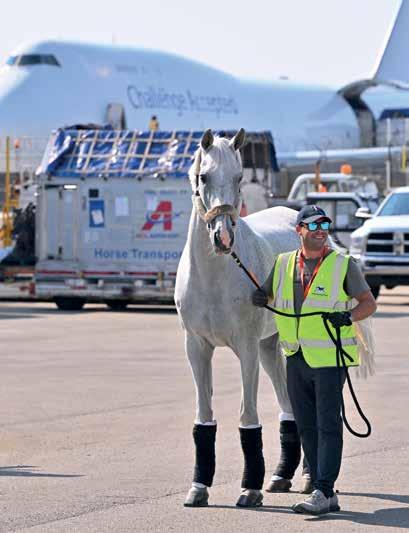
IN 2025, A RECORD 98 HORSES CAME BY TWO CHARTERED AIRCRAFT TO CALGARY FOR THE MASTERS TOURNAMENT.


creating more points of entry and making people feel they belong.
Spruce Meadows isn’t just for the horsey set. “Not everybody’s going to like show jumping or horses,” SouthernHeathcott acknowledges. “But they may like to walk around the grounds and sit on a bench by a statue and just love the green space that my mom planted.”
For many Calgarians, Spruce Meadows is not discovered through elite sport at all, but through everyday life — playground visits, seeing horses train, a stroll beneath nearly 5,000 trees that Marg Southern planted or having a green space to let children run around. Spruce Meadows also hosts school tours, church
gatherings and family programming.
When there is no ticketed event, entry is free, and visitors can bring their own food. “You don’t have to buy a hot dog from us,” Southern-Heathcott says. “You can bring your own picnic.”
Despite its prestige, Spruce Meadows has remained a genuinely public space, built by one family for all families to enjoy. “You typically see three generations here — children, parents and grandparents,” Southern-Heathcott says.
Operating year-round, Spruce Meadows is now anchored by the restaurant Foxtrot at Spruce Meadows and Café Foxtrot — a deliberate shift toward making it part of everyday Calgary life.

Despite its prestige, Spruce Meadows has remained a genuinely public space, built by one family for all families to enjoy.
Southern-Heathcott places the venue alongside the National Music Centre, the Calgary Stampede and WinSport as part of the city’s identity.
“Calgarians shoot for the stars,” she says. “We dream big — and attain big.”
A sustainability program led by Southern-Heathcott’s son, Ron Heathcott, has helped Spruce Meadows’ environmental impact. In recent pilot projects, 62 per cent of waste, and then 89 per cent, was diverted from landfill through recycling and composting; all horse manure is composted.
The venue also has an internal water
supply system. During Calgary’s 2024 water crisis, Spruce Meadows operated without drawing on city water. Electric and hybrid vehicles are gradually replacing older fleet vehicles, and charging stations are part of the site’s infrastructure.
As Spruce Meadows enters its next 50 years, Southern-Heathcott believes the next generation — including her own children — will reshape the venue in ways she cannot fully predict, just like when she took over leadership from her parents. “Globally, I’d like Spruce Meadows to be a household name,” she asserts. With the work that has been done so far, Southern-Heathcott’s shot at the stars certainly does seem attainable.

CAVALRY FC HOME MATCHES
Starting in April, ATCO Field becomes the soccer pitch for Cavalry FC home games, transforming the equestrian grounds into a lively stadium.
THE NATIONAL TOURNAMENT, PRESENTED BY ROLEX
One of the crown jewels of the summer calendar, the National Tournament from June 10 to 14 draws elite riders from around the world to compete in the International Ring.
SPRUCE MEADOWS INTERNATIONAL CHRISTMAS MARKET
In November and December, the grounds are transformed into one of Calgary’s largest and most popular European-style Christmas markets.
BRIELLE WEARS
Jacket We The Free $398
Shirt Frame $484
Skirt Thom Browne $1,480
Belt Valentino Garavni $745
Earrings Alexis Bittar $535
Bag Balenciaga $6,150
Above available at Holt Renfrew.
Shoes Adidas, at Gravity Pope $140





BRIELLE WEARS
TOP LEFT
Coat Lamarque $375
Tank Bobo Choses $135
Shorts AGOLDE $228
Choker A Bronze Age $65
Earrings Jenny Bird $168
Above available at Leo Boutique. Bag Loewe, at Vespucci $797
Shoes Adidas, at Gravity Pope $120
Blazer Balmain $3,895
Track pants Adidas $110
Necklace Simons $29
Above available at Simons.
Shoes Christian Louboutin, $395 Bag YSL, $6,497 Both at Vespucci.
Track top Gucci, at Vespucci $1,495
Jersey Calgary Wild FC $110
Skirt BOY, at Gravity Pope $265
Shoes Adidas, at Gravity Pope $120
Frames Kuboraum, at Chinook Optical $595
Earrings at Simons $19
FASHION SOURCES
Calgary Surge calgarysurgeshop.ca
Calgary Wild FC shop.calgarywildfc.com
Chinook Optical 813 49 Ave. S.W., chinookoptical.com
Gravity Pope
1126 17 Ave. S.W., gravitypope.com Holt Renfrew 510 8 Ave. S.W., holtrenfrew.com
Leo Boutique 810B 16 Ave. S.W., 1006 9 Ave. S.E. leoboutique.com
Manriquez Atelier manriquezatelier.com
Simons The CORE
100, 304 8 Ave. S.W., simons.ca
SMYTHE Chinook
6455 Macleod Tr. S.W., shopsmythe.com
Vespucci Consignment
8244 Elbow Dr. S.W., vspconsignment.com




Track Top Marni $1,450
Tank Djab $39
Slides Nike $50
Above available at Simons.
Shorts Manriquez Atelier, manriquezatelier.ca, contact for pricing.
Jacket Loewe $9,650
Shirt Thom Browne $1,540
Shorts Amiri $1,060
Shoes Christian Louboutin $1,445
All available at Holt Renfrew.
Shirt Wax London $270
Shorts Still By Hand $280
Above available at Leo Boutique.
Shoes New Balance, Gravity Pope $110
Frames Saint Laurent, at Chinook Optical $635
Bag LE 31, Simons $175


Designer Amanda Hamilton on why the powder room deserves more attention and how to design it with intention, confidence and personality.
Apowder room might be one of the smallest rooms in the house, but it plays an important role. It is usually the bathroom guests use, and often the only one they see, which makes it the ideal place to make a lasting impression. At the same time, it needs to function well and feel connected to the rest of the home. Local designer Amanda Hamilton shares her approach on how to design powder rooms in a way that feels thoughtful, intentional and slightly unexpected. Here are three ways to make these small spaces stand out.
Powder rooms are one of the few places in a home where stepping away from the overall aesthetic actually works. Because they are used briefly, there’s latitude to focus on mood and experience, rather than uniformity.
“Given that no one is lingering in there very long, you have permission to create an experience — a deliberate departure from the rest of the house,” says Hamilton.
This can be done in many ways, such as using dark, moody colours in an otherwise light and airy home, complete colour drenching with bold shades, or using a wallpaper or material that does not appear anywhere else. The goal is to surprise guests in a way that feels intentional.
But, even with this contrast, the space should still feel connected. Hamilton refers to small design cues that subtly tie the room back to the rest of the house.
“The direction may shift, but it still speaks the same design language. We intentionally weave subtle elements from the rest of the home into the powder room, so the contrast feels curated, not chaotic,” Hamilton says.
Achieve this contrast and continuity with sculptural mirrors, expressive stone, bold fixtures and statement lighting.
Another way to elevate a powder room is to think about it in the context of a polished boutique hotel. “We treat powder rooms like mini hospitality suites: intimate, immersive and designed to surprise,” Hamilton says.
That might mean creating thoughtful amenities for guests. A place for fresh flowers, curated art pieces, and custom millwork that discreetly hides everyday essentials all contribute to a boutiquehotel feeling. And, because storage needs are minimal, vanity and lighting choices can be more expressive.
“I love a floating vanity or one with a decorative, sculptural leg in a powder room. These details instantly elevate the space,” Hamilton says.
Similarly, a singular pendant or sculptural wall-mounted fixtures can feel more like art than utility. Of course, function still matters. Sightlines, ventilation and flooring choices all need to be considered so the space works just as well as it looks.


“YOU DON’T SPEND MUCH TIME IN A POWDER ROOM, A ND THE FOOTPRINT IS USUALLY SMALL , SO THE RISK I S LOW, A ND THE REWARD IS HIGH .” — AMANDA HAMILTON
Powder rooms are a great place to take design risks. With limited daily use, bold choices tend to feel less overwhelming and more impactful.
“You don’t spend much time in a powder room, and the footprint is usually small, so the risk is low and the reward is high,” Hamilton says.
This is where vivid colours, dramatic wallpapers and strong patterns and textures really make sense.
“Powder rooms are the perfect canvas for drama — spaces where saturated hues, oversized motifs or tactile finishes feel at home. It’s where we encourage clients to embrace the unexpected and let their design alter ego have a little fun,” Hamilton says.
Plus, there’s freedom in knowing that bold choices need not be permanent.
“If you decide to go bold or lean into something more trend-driven, and you tire of it in three to five years, the ‘renovation’ is usually as simple as swapping wallpaper or updating a light fixture. It’s far easier and far less costly than undoing a bold move in a kitchen or dining room,” Hamilton explains.
Ultimately, a powder room is a lowstakes place to take design risks. Treated thoughtfully, it can be one of the most memorable rooms in the home.
THE CALGARY STAMPEDE IS EXCITED TO ANNOUNCE THE CHAMPIONS OF THE 2026 STAMPEDE CELLAR SHOWDOWN INTERNATIONAL WINE COMPETITION.
SHOWCASING THE BEST-OF-THE-BEST IN CANADIAN AND INTERNATIONAL WINE.
A year-round initiative, Stampede Cellar events offer opportunities for producers to showcase their products, and for our community and beyond to experience inspiring, world-class agri-food and beverage programming throughout the year.
Sip, swirl and savour the top wines of the 2026 Stampede Cellar Showdown at the Stampede Cellar Champion Wine Experience during the Calgary Stampede, July 3-12, 2026!





Two Calgary-based athletes share their love for endurance sport and what carries them through to the finish line.
Calgarians are known for their love of the mountains and outdoor life. A leisurely walk along the Bow River, an easy hike just west in the Rockies or a short trail jog — incorporating outdoor activity into everyday life is part of Calgary’s culture.

BY OLIVIA PICHÉ
Our proximity to the mountains and their attendant pleasures is also a big part of what attracts people to the city. For most of us, that fun is a welcome addition to life, not the main attraction. But for others, the extreme side of sport, which requires an elite level of drive and endurance, is where they thrive. To the average
weekend warrior, the reasons these athletes willingly partake in ultra challenges might be hard to imagine.
“Yes … but why?” still hangs in the air.
So we asked two Calgary-based endurance athletes to share what motivates them to chase new records and push the limits of their sport.

Sport climbing — a style of rock climbing where anchors are already fixed to the wall or rock face and climbers clip in as they go — calls for stamina both on the climb and in the years of planning it can take to complete a route.
Sport-climbing routes are classified by decimals and letters, starting at 5.0 and inching up to 5.15 in difficulty. Between 5.10 and 5.15, the grading scale also includes the letters “ a ” to “d” for further distinction. Factors, such as the number of moves required to complete the route or the spacing between the holds, affect the grading. A 5.15 route, no matter the letter that follows, is extremely challenging and strenuous, and can take years to complete.
In 2020, Calgary sport climber Evan Hau became the first Canadian to complete a
5.15a route. It took him seven years of attempts to complete it from start to finish.
When he was younger, Hau used to climb every day. Today, at 40, he splits his time between his tutoring business and climbing every second day.
“I like the challenge of it. It’s challenging physically, but it’s challenging mentally to figure out how to move my body to make progress on the climb,” he says. Hau’s passion for climbing runs deep — he moved to Calgary from Ontario in 2008, specifically to be closer to the Bow Valley’s renowned climbing routes. In 2011, he left his engineering career to pursue climbing full time.
“I wanted to just do what I loved,” he says. “I was starting to get pretty good, and that was part of why I wanted to pursue it. For enjoyment, but also to see how far I could take it.”
In 2013, Hau completed a 5.14d, his most challenging route up to that date and one of the most memorable accomplishments in his climbing career. Soon after, he set his sights on achieving a 5.15a. Seven years later, he completed Sacrifice, a 5.15a route he developed in Canmore by fixing its anchors himself.
“It felt amazing,” says Hau. “But it’s interesting how rock climbing goes.” He explains that, while long, technical climbs require mental and physical stamina, the years that lead up to a full ascent require endurance, as well. “There’s endurance in just accepting that I’m going to be working on this for multiple years.”
Currently, Hau has been attempting Fight Club, a 5.15b route in Banff. He doesn’t know when or if he will ever fully ascend it — he does it simply for the love of the climb.
Calgary ultra-runner Evan Birch was 160 kilometres into a Los Angeles-to-Las Vegas race when he felt what he describes as a “big flash” in the back of his leg. He paused at an RV, got his leg taped, did a few rehabilitation exercises and then ran another 304 kilometres to complete his run.
After a 94-hour race with no more than six hours of sleep, Birch crossed the finish line. When he got home, he realized he had a torn fascia in his calf.
“When I say that we’re more capable than we believe, I look back at that,” says Birch. “It’s in those moments that really challenge you,
that you find out what you’re made of.”
Birch, now 40, has been running in the mountains since his early 20s, but what motivates him to lace up and hit the trails has changed drastically over the years.
At 18, he began his 20-year career as an emergency dispatcher, unaware of the mental toll it would take on him. Slowly, his casual runs became an escape from the stress of the job. A typical weekend involved a 30- to 50-kilometre run in the mountains.
Eventually, years of intense, emotional work caught up to Birch. Near the end of 2021, he began experiencing panic attacks, night terrors and sleepless nights.
“It was Boxing Day of 2021 when I finally went to [my girlfriend] and said, ‘I can’t do this by myself anymore. I need help.’”
Within two weeks of seeing a therapist, Birch was diagnosed with PTSD, depression and anxiety. His diagnosis changed the role running plays in his life.
“I began to understand that running, for a long time, was an escape for me,” he says. “I had to make a conscious decision, ‘Do I want to keep running for myself, or do I want to keep running away from things?’”
Birch shifted his perspective and started using running as a growth tool instead of a coping mechanism.

PHOTO BY DYLAN LEEDER


















Three Calgary leaders share the insight they’ve gained from joining the Entrepreneurs’ Organization.
Entrepreneurship can be hard, and going at it alone can make it even harder. The Entrepreneurs’ Organization (EO) Calgary offers local leaders a chance to gain insight and advice from others who have faced similar challenges on their entrepreneurial journeys.
EO has a global network across 59 countries, with over 220 chapters and 18,000 ambitious entrepreneurs. In the Calgary chapter, many great local leaders come together to grow their businesses. Here, they share just some of the valuable lessons they’ve learned along the way.
A central part of EO’s offerings are its member forums, composed of eight entrepreneurs from non-competitive companies. Forum members get together on a monthly basis for meet-ups, retreats and experiences, where they create trusted relationships and share personal and professional challenges with other entrepreneurs who just get it.
The forum experience is what drew Friday Sock Co. CEO Adam Thompson to EO. Since becoming a member six years ago, Thompson says his forum members have not only become friends but also his confidants. In sharing tidbits of his entrepreneurial journey — the wins and the challenges — his forum confidants have reminded him that great leaders come as they are.
“Being a leader is sometimes just being yourself. One size doesn’t fit all, and the most important thing is just being genuine,” says Thompson.
Rochelle Dvorkin, owner and CEO of Dvorkin Personnel Executive Search and Practical Divorce Solutions, has been an EO member for 23 years. She joined based on a friend’s advice. “He told me not to reinvent the wheel; instead, meet your peer group and share experiences,” she says. “I did exactly what he suggested and have never looked back. It has been amazing!” EO’s structure, with the forum experiences and regional and global events, fosters
“I have learned that it is okay to be human and that it’s okay not to know the answer to something. You will figure it out and pivot as necessary.”
—Rochelle Dvorkin
opportunities to engage with like-minded people. Entrepreneurs bounce ideas off one another, share real challenges they are facing and learn from others’ journeys.
“I have learned that it is okay to be human and that it’s okay not to know the answer to something. You will figure it out and pivot as necessary,” says Dvorkin. “Leadership is an evolving journey with curiosity as the destination. When you are willing to really listen and help people who look to you for direction, you will grow leaders, including yourself, in the process.”
For Shawn Freeman, CEO of Always Beyond and EO Calgary president, EO reshaped the way he viewed leadership. Early in his entrepreneurial career, he wore busyness as a badge of honour and thought that being overwhelmed meant his company was growing.
Thanks to EO, he’s learned that scaling a business doesn’t mean becoming busier — it should allow entrepreneurs to become less necessary day-to-day.
“Real growth means building a team capable enough that your calendar actually gets lighter. If you’re scaling and still drowning, that’s not a capacity problem — it’s a leadership or product problem worth sitting with. The best thing I ever did was stop being the bottleneck and start being the architect,” says Freeman.




For more information or to become a member, visit eocalgary.com

“T HAT
NDURANCE
YOU CAN LEARN
YOURSELF IN A VERY CONDENSED AMOUNT OF TIME . ” — Evan Birch
These three running trails aren’t just for endurance athletes — they’re easy to tailor to any activity level.
PRAIRIE
MOUNTAIN TRAIL
in Kananaskis has a nearly nine-kilometre trail with more elevation (about 700 metres) than a flat city run. The trail offers a steady climb with lots of places to take breaks as needed.
RUNDLE RIVERSIDE runs from the Canmore Nordic Centre to Banff, totalling about 20 kilometres. The trail is quiet, with great views of the Bow River, so it makes for a great spot even if you want to run a few kilometres and turn back.
“That’s the power in running, and in sport and endurance in general: you can learn a whole lot about yourself in a very condensed amount of time,” he says.
And what Birch learned was that he had always been more capable than he thought.
In 2022, he competed in a 100-mile run because he wanted to, and not because he had to in order to cope with his stress. In 2023 and 2024, he completed the Divide 200, a 200-mile run in the Castle and Crowsnest Pass mountains, with many other runs of 100 km or more in between, including an attempt at a 100-mile run with his dog, SuperNova.
Birch carries what he learns on the trail into his day-to-day life. It’s never been about
wins or titles, only about running for himself.
Throughout his toughest challenges, Birch says he has had steadfast support, and it’s part of what has helped endurance sport become a way to grow, not escape.
“Find the people who are willing to sit with you in the dark,” he says. It’s a message that he now shares through his work as a coach for ultra-runners, a public speaker and an ambassador for KidSport Calgary.
“You can run for the joy of it,” says Birch. “You don’t have to always be doing these endurance events to hide away pain or to put yourself through suffering. It can be the complete opposite. It can be an opportunity to grow and learn about yourself.”
GOAT CREEK TRAIL is another Banff-toCanmore trail, slightly more popular than Rundle, with a gravel path. As with Rundle, you can opt for a shorter out-and-back, turning around when you’ve hit your halfway mark, or you can challenge yourself to the 19-kilometre run and then bus back to your car.


Discover world-class wineries in Thompson Okanagan.
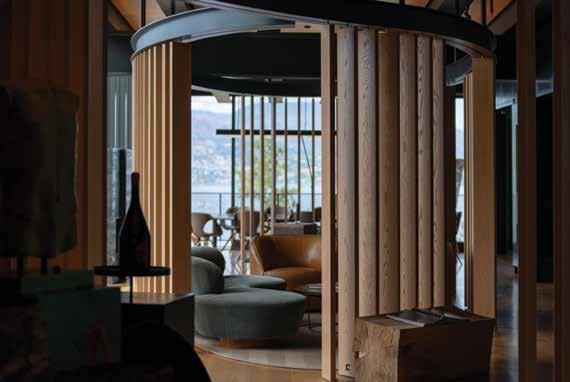
Stretching from the Canadian Rockies to the U.S. border, B.C.’s Thompson Okanagan (TO) region offers verdant vineyards, clear lakes and mountain peaks. The destination is also home to more than 200 different wineries. In fact, vineyards surrounding the towns of Oliver and Osoyoos, located at the TO’s southern end, produce approximately 50 per cent of all of B.C.’s wine grapes. Queen Elizabeth II even proclaimed Oliver as the wine capital of Canada. With so many wineries to choose from, a day of tasting in the TO is fun and largely accessible — many wineries welcome walk-in tastings. But there are a few tasting experiences that are worth making reservations and a special trip for. RENOWNED

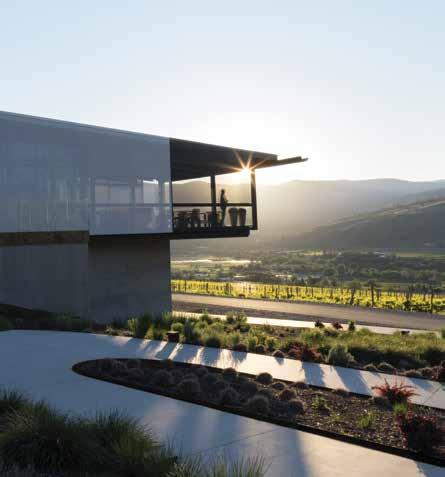
Martin’s Lane Winery is known for producing two varietals: pinot noir and riesling. Both are exceptional — its pinot is considered one of the world’s best. Located on the eastern side of Okanagan Lake, about 20 minutes from downtown Kelowna and steps from its sister property, CedarCreek Estate Winery, the winery is built on six levels. The grapes are grown in ancient volcanic and glacial soils, which help produce intense and concentrated flavours. The winery building, designed by architect Tom Kundig, draws inspiration from the surrounding landscape. Its weathered, corrugated steel siding is meant to resemble the tree bark of the ponderosa pines, and a multi-level steel staircase represents a spiralling vine. Limited tasting experiences are offered each day, and reservations are required. 5437 Lakeshore Rd., Kelowna, B.C. 250-707-2263, martinslanewinery.com
EXPERIENCE AT MISSION HILL
Mission Hill Family Estate Winery sits on the slopes of Mount Boucherie in West Kelowna. Winner of the WineAlign Winery of the Year award six times, Mission Hill’s wines are delicious — especially the Bordeaux-style reds and crisp rosés. However, like a visit to Martin’s Lane (also owned by Anthony von Mandl), a visit to Mission Hill isn’t just about wine. You’ll find stunning architecture and sculptural artwork throughout the grounds, including striking metal human figures by Icelandic artist Steinunn Thórarinsdóttir The 90-minute Tour and Tasting experience offers a deep dive into the winery’s history, a trip into the underground barrel cellar, and concludes with a curated wine and food pairing. 730 Mission Hill Rd., West Kelowna, B.C. 250-768-6400, missionhillwinery.com
Located in the southern Okanagan approximately 12 minutes outside of Oliver, the Red Barn Winery at Jagged Rock is a jewel of a winery, offering fruit-forward, highly innovative wines. It’s named for the distinct red colour of its building and sits on the Black Sage Bench with a backdrop of jagged rocks. The patio features a pergola and water feature, and, when it’s quieter, is often visited by some of the animals that call the area home, including rattlesnakes, wild horses and red-tailed hawks. “The Ride” tasting experience includes a tour of Red Barn’s production area, complete with concrete egg-shaped fermentation tanks, followed by a seated tasting.
4305 Black Sage Rd., Oliver, B.C. 778-739-1000, redbarn.wine
CheckMate Artisanal Winery in Oliver, B.C., is committed to two varietals — chardonnay and merlot — and it excels in both, regularly receiving 100 points from wine critics. Book The Grandmaster’s Table, featuring four wines paired with canapés. checkmatewinery.com
You can bring your pooch to JoieFarm Winery on the Naramata Bench, a stretch of fertile land between Penticton and the town of Naramata. JoieFarm features a dog-friendly tasting room and a dog-and-kid-friendly picnic lawn, complete with tables, Adirondack chairs and heritage fruit trees. Reserve the classic tasting for a sampling of five JoieFarm wines. joiefarm.com
Located in Summerland, Dirty Laundry is named for a local laundry business that was rumoured to be a front for a brothel and gambling den in the late 1800s. Today, the legend informs Dirty Laundry’s slightly cheeky brand of award-winning wines. dirtylaundry.ca

Super Lime Margarita from Surfy Surfy
The icy, citrusy zing of a lime margarita is the only drink I want in summer. Luckily, Calgary’s margarita game is strong, with lots of restaurants slinging the classic drink. The version that’s at the top of my early summer sipping list is the super lime margarita from Surfy Surfy, featuring fresh lime and kafir leaf for a super-concentrated drink from beginning to end. Go during happy hour, weekdays 2 p.m. to 5 p.m., and pair with a taco for perfect summery vibes.
—Meredith Bailey, director of strategy and content


Aurelia Necklace by Petite Gold
I stumbled upon a Petite Gold vendor stand and was instantly drawn to its minimalist-style jewellery with thoughtful details. The Aurelia Necklace, with its square mother-of-pearl pendant and a unique sparkle to its chain, was an easy purchase. I’ve been wearing and loving it ever since. It’s the perfect everyday piece if you’re looking for a gold-plated, locally made necklace with an approachable price point.
Olivia Piché, contributing editor


Signature Curry from Kondattam I eat a lot of curry, so I was excited when Kondattam, a new pan-Indian restaurant, opened up. The Kondattam Signature Curry is made with 16 different spices, and is one of the most complex and flavourful curries I’ve had in a long time. It’s warm, and just spicy enough to make you sweat a little. My choice would be chicken, but it is also available with other proteins, like egg, red snapper, beef and goat. Chris Landry, assistant editor




With a limited number of ridge facing homes on 300 acres of green space, bring your plans to life with award-winning builders Morrison Homes or Veranda at Legacy. Our estate home builders can make your dream home into a reality.
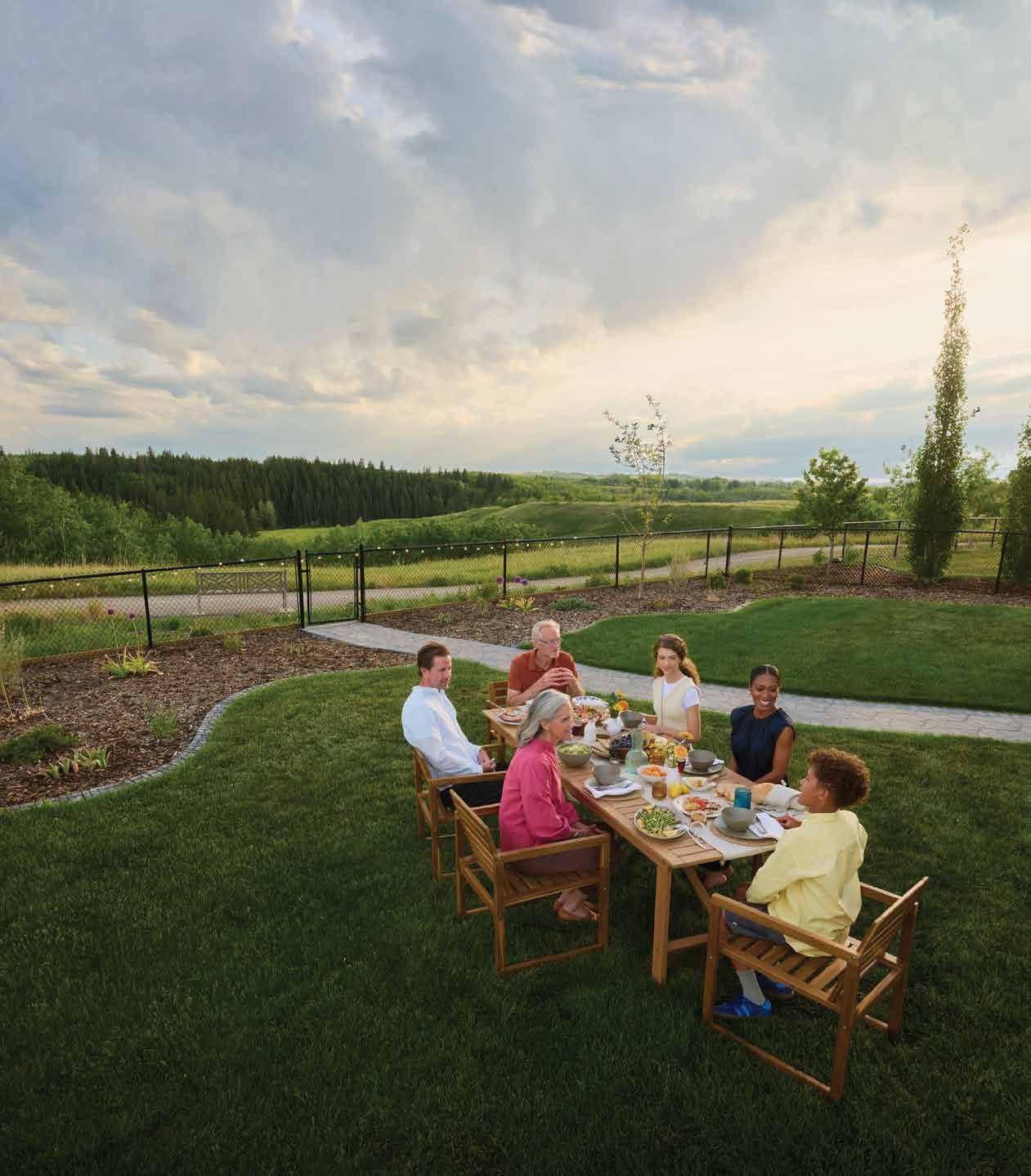

The Pointe is Legacy's newest phase, offering Legacy's