
PICKING RIPE
publisher Alex Mulcahy
senior editor Bernard Brown
associate editor Gabriel Donahue
associate editor & distribution
Timothy Mulcahy
tim@gridphilly.com
deputy editor
Julia Lowe
art director
Michael Wohlberg
writers
Sophie Aanerud
Ilan Ackelsberg
Marilyn Anthony
Tim Bennett
Bernard Brown
Dawn Kane
Emily Kovach
photographers
Matthew Bender
Taylor Ecker
Tracie van Auken
illustrator
James Boyle published by Red Flag Media
1032 Arch Street, 3rd Floor Philadelphia, PA 19107
215.625.9850
GRIDPHILLY.COM

A Lost Season
Some people turn to the ocean for philosophical reflection. The vastness, the rhythm of crashing waves — it gets the mind pondering. But for me, farms teach the same lesson on a more human scale. On a farm, a particular crop may only be around for a few weeks or months. You have a limited window to enjoy what the world offers. Gather ye blueberries while ye may.
That’s why, when I ran into Joshua Smith of Frecon Farms at the opening of the new Kimberton Whole Foods in Exton on April 24, I was stunned, and then heartbroken, to hear that Frecon’s apple trees were unlikely to produce fruit this year. A stretch of warm weather followed by a hard freeze had doomed the crop.
And it wasn’t just Frecon. A week later, The Philadelphia Inquirer reported that apples and peaches at Linvilla Orchards were either lost or in jeopardy. Soon after, New Jersey officials estimated that the state had suffered roughly $300 million in crop losses.
In a press release, representatives from Linvilla said, “For a farm deeply rooted in pick-your-own traditions and seasonal harvests, the impact is both emotional and economic.”
I feel that.
Visiting Frecon Farms has become one of our family traditions. Beyond the apple picking (love those Jonagolds!), there are donuts, cider and a fantastic play area. Hay bales are stacked high enough to challenge kids, but not so high that parents panic. With all the little passageways cut through them, it’s the perfect setup for a game of tag.
When my children were little, I worried that some monstrously large seventh grader would topple my toddlers. Now my hope is
that my monstrously large seventh grader doesn’t plow into somebody else’s little kid.
The seasons keep changing.
Apple picking is woven into the rhythm of our year. Summer weekends disappear quickly, so we often end up visiting near the tail end of the season. Still, the year somehow feels incomplete without those apples.
At Grid , we try to strike a balance between clear-eyed reporting on climate change and stories that uplift and inspire. Months ago, we thought it would be refreshing to publish something lighthearted this summer — a simple guide to pick-your-own fruit farms. (Though, admittedly, Bernard Brown also wrote a troubling story in this issue about biosolids and PFAS contamination in the food supply.)
What we didn’t know then was that a devastating crop failure was already on its way.
This isn’t the first time fruit growers in the Philadelphia region have suffered catastrophic losses, but experts say this year may be among the worst in decades. And, of course, it’s connected to climate change — the great disruptor of the rhythms we once took for granted.
So go pick berries if you can. Or flowers. Or pumpkins later in the season. Do it not only because farmers need the support — though they certainly do — but because synchronizing ourselves with the seasons nourishes something essential in us. It reminds us what we’re fighting for.







Flying Colors
Contemporary art comes to roost at the Audubon Center story by sophie
aanerud
Most birders have a “spark bird,” the species that ignited their passion for nature. Visual artist
Deirdre Murphy, whose work blends scientific data with bird observations, has a “spark ornithologist.”
Murphy credits John James Audubon, who revolutionized the field of ornithology with his detailed illustrations, as an early source of inspiration. “He’s my spark for giving myself permission to delve into art and science through ornithology,” she says.
Considering Audubon’s influence on Murphy’s artistic journey, it’s fitting that her work is now on display at Montgomery County’s John James Audubon Center at Mill Grove. Titled “Home Making” as an homage to bird nesting practices, the exhibition sits on the very land where Audubon first honed his craft.
“This Audubon Center is unique because it’s sited on the place where one of the foremost figures in the history of ornithological art lived,” Heather Moqtaderi, senior coor-
dinator of museum and collections for the National Audubon Society, explains. “So we have a unique confluence of art and bird studies as part of our interpretation.”
When Moqtaderi needed a lead artist for the spring-summer art exhibition series at the Center, she instantly thought of Murphy.
“Deirdre’s art has this wonderful balance of artistic expression and emotive feeling conveyed through color and design paired with accuracy in interpreting bird biology,” Moqtaderi says.
Steps from a display of one of the few complete volumes of Audubon’s celebrated book, “The Birds of America,” visitors to the center can view Home Making’s centerpiece, “Trill for Tomorrow,” commissioned by the National Audubon Society. The painting features a golden-winged warbler, its beak open wide in territorial alarm, set against a map tracing its 800-mile migration from South America up the Eastern Seaboard.
Knowing that she wanted to represent
data reflecting the bird’s journey, Murphy incorporated colors used by scientists modeling migration routes. “With each painting, I like to take a color problem to try and riddle or solve.”
Like the brilliant feathers of the tanagers and warblers that congregate in the woods surrounding the center, the dynamic jewel tones in Murphy’s painting draw the eye, while the bird itself, depicted “sounding the alarm,” encourages conversation about environmental conservation.
“My work’s about art and climate change, so I always feel like, by making beautiful paintings and prints, that will kind of lure the viewer in with honey,” Murphy says. “Then, when they hopefully sit with the work enough … they’re like, ‘how might I change my behavior, change our human behavior so that we can better help all species?’”
Adjacent to the visitor center, the three-story 1762 farmhouse where Audubon lived from 1803 to 1806 serves as a secondary gallery space featuring “Field Notes: Learning to See,” a collaborative three-dimensional installation by Murphy and sculptor Yvonne Love. Alongside antique egg collections and ephemera from Audubon’s time at the property, “Field Notes” highlights a pivot toward conservation-based bird appreciation, inspired by birdwatching checklists maintained by Love’s father and stepmother.
For a year, the two artists exchanged the checklists, painting, cutting and sewing into the canvases on which they were printed. “The only rule was that there’s no rules,” Murphy says of the collaborative process. “It was just really freeing to work with [Love].”
Coming on the heels of 2025’s “State of the Birds” report, which indicated that more than one-third of American bird species are of “high or moderate conservation concern,” there is an emphasis on conservation across the four spring-summer exhibitions, each of which explores the relationships between birds and humans, considering our shared fates amid ecological upheaval.
“I think there’s a sense of sadness about climate change and environmental degradation, but also a hopefulness,” Moqtaderi observes.
The exhibitions are on display at the Audubon Center at Mill Grove through August 16.
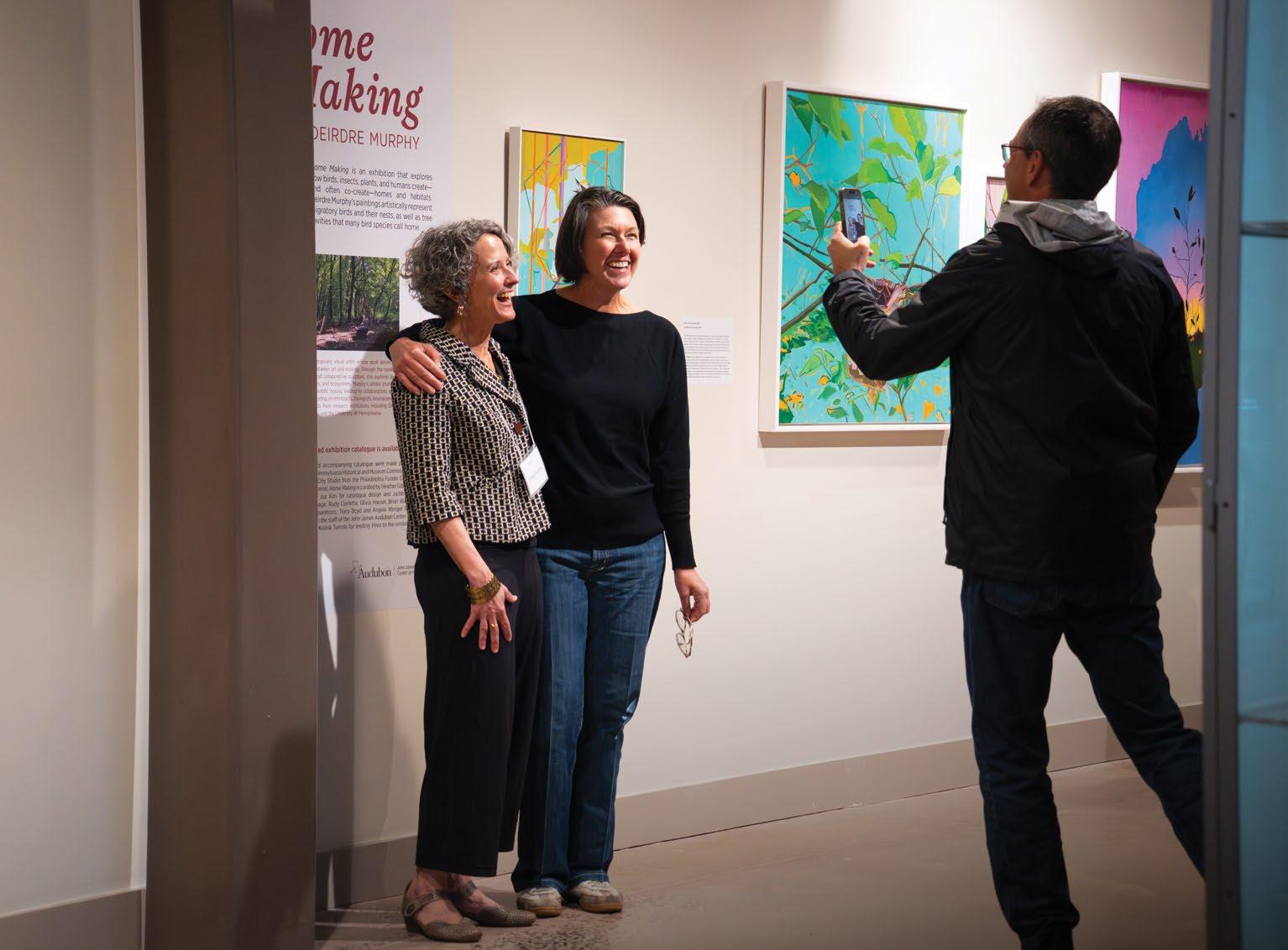
The Audubon Center exhibits feature the artwork of Deirdre Murphy (left), pictured here with Kat Hassinger of Lower Merion Conservancy.
Watts Going On?
The moment for leasing solar panels has finally arrived by
micah gold-markel
If you’ve been following energy news across the region, or even just looking at your electric bill each month, you know that rates are up. Again. Last year, PECO asked regulators for permission to charge you more while it reported $814 million in profit. Not revenue. Profit.
Here’s what that means in practical terms for your electric bill. The average residential rate has climbed steadily for years, and, due to the cost of maintaining or replacing aging infrastructure coupled with the intensely high energy demands from data centers, prices are climbing at a faster rate than they have in the past. This seems unlikely to reverse. Solar has always been a hedge against runaway prices, but the way you access that hedge has changed significantly in the last 12 months.
The tax credit is gone.
Here’s what replaced it.
For years, the 30% federal Investment Tax Credit made the math simple: Install a system, get 30% back on your taxes. That credit expired at the end of 2025.
But the expiration of the tax credit didn’t kill solar economics. It changed them. And in some cases, it created better options for working families who didn’t have the tax liability to claim the credit in the first place.
Today, there are three main paths to going solar:
1
Cash purchase. Still a great value proposition. Without the tax credit, the payback period is longer — roughly six to 15 years depending on your system size, roof, usage and a range of other variables. You own it outright, and every kilowatt-hour it produces is a kilowatt-hour you don’t purchase at the utility’s escalating rate.
2
Loans. Market rates are hovering around 9%. Candidly, without the 30% credit to offset the interest, loans don’t offer the same monthly savings story they used to. For some

homeowners, it still makes sense. For others, the next option is better.
3 Lease. This is new for Solar States in 2026, and it’s the option I’m most excited about. A third-party provider installs and owns the system on your roof. You buy the power it produces at a locked rate that’s guaranteed to be lower than what you are currently paying the utility. You can lock in that rate for 25 years, no matter how high the utilities’ rates go. What’s so appealing about this option is that you avoid the less glamorous sides of ownership: upfront costs and maintenance responsibility. And because the tax credit situation didn’t change for third-party ownership the way it did for homeowners, lease providers can still offer very competitive pricing. Our lease options have been a game-changer for families who
With the federal tax credit expired, solar economics have changed; however, it is still a viable and smart investment.
want solar but couldn’t justify the upfront investment.
So what should you do?
That depends on your roof, your bill and your financial situation. There is no onesize-fits-all answer, which is exactly why we’re hosting a free online presentation and Q&A on Wednesday, June 17, at 6:00 p.m. — a casual session where our team will walk through all of this in plain language, answer your questions live and help you figure out whether solar makes sense for your home right now. Just an honest conversation about what’s changed and what your options are in 2026.
Register at wattsupphilly.eventbrite.com. Bring your PECO bill and your questions. We’ll bring the answers! ◆
Micah Gold-Markel is the founder of Solar States, a Philadelphia-based solar and storage installer. Learn more at solar-states.com.
bennett
MAKE YOUR OWN BLACK GOLD
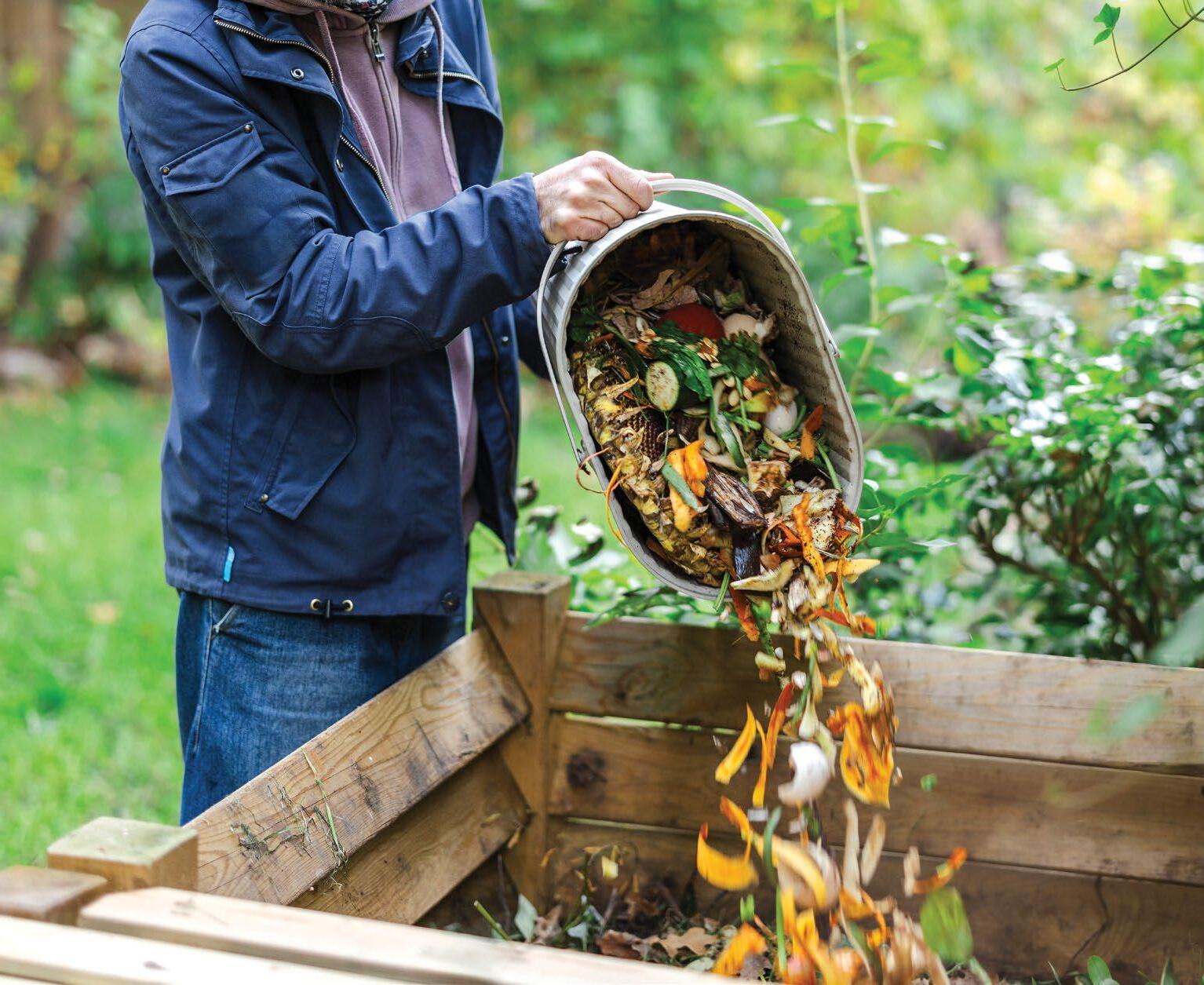
One of the most common questions I get is, “Why should I pay for a composting service when I can compost on my own?” And my answer is, “If you can compost on your own, you should!” Many people don’t have the time, space or inclination to compost — that’s why our business exists — but making your own compost can be magical. So let’s talk about the three primary ways you can compost at home.
The most common way people compost is with a bin system. The classic system uses three bins (although I have seen people make do with two or one, depending on their setup). The idea is you build (or buy) a bin — think of a cube or other container — and you layer your greens and browns in it. Everytime you add material, you turn the material in the first bin with a shovel
or pitchfork. When the first bin is full you move the contents to the second bin, and then move it back and forth between the other two bins until the first has filled up again. A single bin system would require you to be able to remove the material at the bottom of the bin.
The advantage of this method is that it is relatively simple and easy to make good compost. It is the method Bennett Compost used when we first started in a South Philly community garden 17 years ago. The disadvantage is that it is the most labor intensive of all the composting methods. It also requires an outdoor space and access to an adequate amount of browns (leaves, woodchips, shredded newspaper) to mix with your food scraps. If you live in Fishtown, maybe it’s not the right fit. If you are in Mount Airy or Fox Chase, this could be a great option.
A second way to compost is with a tumbler. A tumbler is an enclosed container that sits off the ground and spins, either by turning a crank or spinning with your hand. Tumblers can be purchased, or you can build them yourself. Tumbling mixes browns and greens together and ensures all parts are getting an appropriate amount of air. It significantly reduces the amount of labor needed when turning a pile by hand. If you only have one tumbler, you won’t be able to continue to add new food scraps and get finished compost out (because all the material is constantly being mixed together). You will need a second tumbler that you don’t add new material to, so you can rotate between the two or another kind of container that you add your food scraps (and browns) to while you are composting in the tumbler. Like the bin system, you need space for a tumbler and the browns. Depending on where you live, these could be at a premium.
A third way to compost is with vermicomposting. Vermicomposting involves obtaining a special kind of composting worm (red wigglers), building a home (worm bin) for them and feeding them your food scraps. Like other composting systems, worm bins can be purchased or built. Vermicomposting can be done indoors without a lot of space, and the worms make an incredibly rich compost. Vermicomposting requires patience and attention to detail. It is animal husbandry, after all, and the worms are living creatures that need to be cared for. Feed them too much, and the food will start to rot before they eat it. Feed them too little, and they will die. Additionally, worms are not able to handle as many kinds of food scraps — no garlic or onion peels, for example, as in other types of composting.
A warning to people considering composting: It can be addictive. There is something awe-inspiring about watching your food scraps transform into rich compost. A good reminder that anything society considers disposable — food scraps, people or ideas — can often have a beautiful second life building the future with a little love, labor, persistence and patience. Let’s get composting! ◆
COMPOSTING by tim













Network Effect
Thousands of radio receivers track birds as they migrate across North and Central America
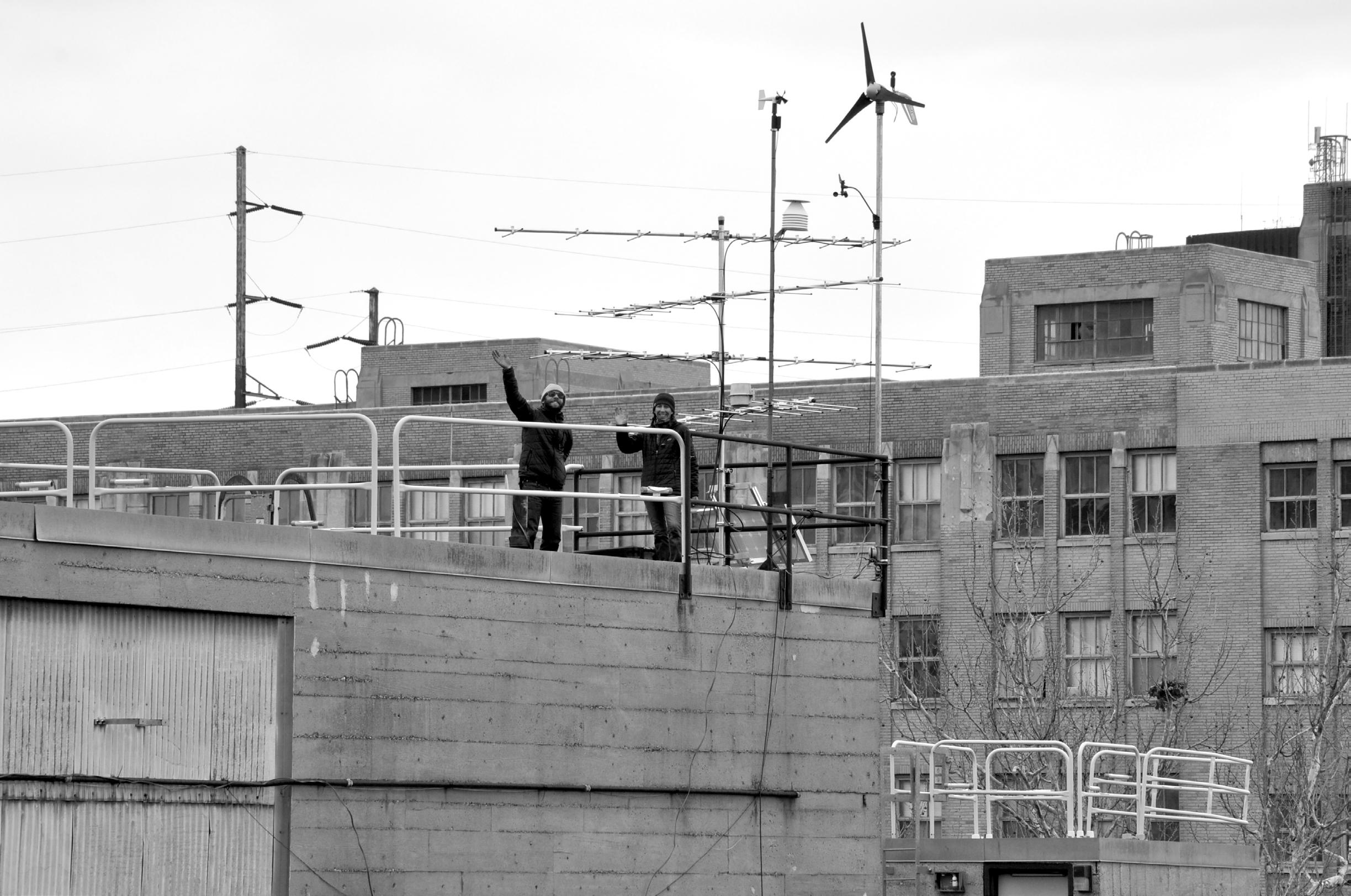
On sept. 27, 2025, a wood thrush flew past the David Rittenhouse Laboratory at the University of Pennsylvania on its way to Central America. We know this because a tiny solar-powered radio transmitter on the bird’s back sent out a signal that was picked up by a receiver on the roof of the building. That ping landed in the database, enabling researchers to follow the bird’s migration. Now, the data from that wood thrush (known as #63179) can help shape conservation efforts from Canada to Central America.
Motus, a collaborative effort run by Birds Canada, consists of a network of more than 2,400 receivers called stations. Those stations pick up signals from radio transmitters (“tags”) that researchers attach to birds and bats. Researchers interested in a partic-
story by bernard brown
ular species’ migration can now collect data as their animals fly all over the hemisphere.
Thrush #63179 had been caught at the end of May 2025 at the Wachusett Meadow Wildlife Sanctuary in central Massachusetts and fitted with its transmitter. In September, it headed south. The last Motus station to pick it up was in Alexandria, Virginia.
Wood thrushes aren’t much to look at. They have a brown back and a white underside dotted with black. But their song, like three notes played on a flute, is one of the most beautiful in the forest. Philly hikers and birders can hear wood thrushes sing in mature forests from Cobbs Creek to the Pennypack.
Although they’re widespread, wood thrush populations have declined by about 1% per year from 1966 to 2023. That adds up to a total 45% decline. Understanding how
they use their entire range, including the migratory path between their summer and winter habitats, is crucial to reversing their population decline.
A Need Meets a Network
Willistown Conservation Trust (WCT), based in Chester County, started setting up Motus stations in 2016. “We got involved with this because we have been running a bird-banding station since 2010,” says Alison Fetterman, avian conservation biologist with WCT. At banding stations, scientists attach uniquely numbered bands to birds so they can be identified if caught again. The problem is that that seldom happens. “Songbirds are only ever captured again about 1-3% of the time,” Fetterman says. Radio transmitters have revolutionized the study of bird migration, making it much more likely that a bird will be heard from again.
“The signal is constantly emitted from the tag, and every station is just listening for it,” Fetterman says. “And so you’re getting a data point every time it passes by a station. You never have to recapture the bird again.” The tags are designed to fall off after a few
seasons so that the birds aren’t saddled with them for life.
Seeing the value of the technology, Willistown joined with three other conservation groups to launch the Northeast Motus Collaboration , setting up more than 150 stations to date. “We planned the stations strategically so that they would create a line across states or regions,” Fetterman says. The range of a station receiver is 15 kilometers, so the collaborative tries to space them 30 kilometers apart to detect any tagged birds flying between them. The station on Penn’s campus went up in 2018.
Scaling Up
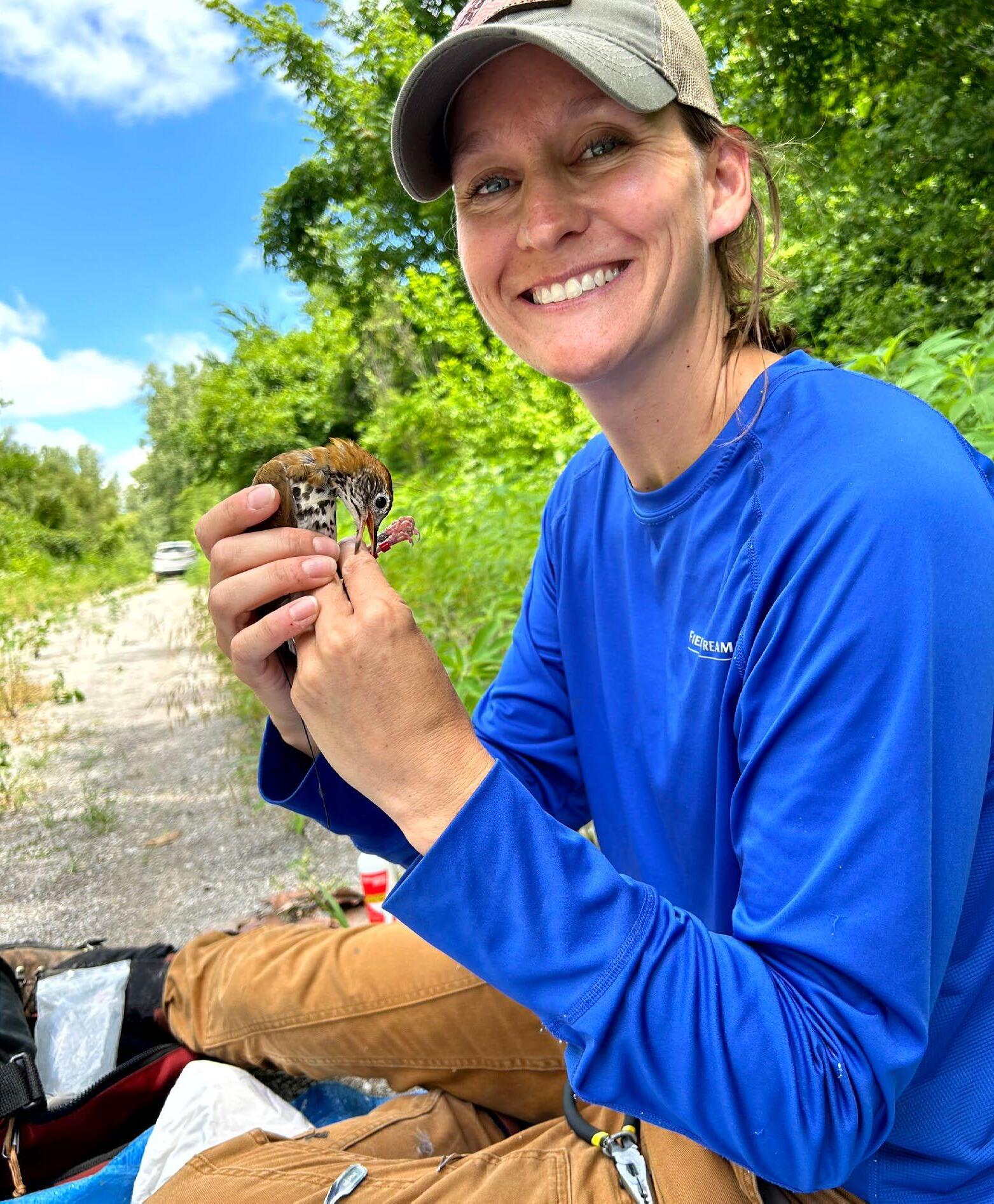
Sarah Kendrick, a migratory bird biologist with the U.S. Fish and Wildlife Service, started setting up Motus stations in Missouri in 2017, while working for the Missouri Department of Conservation. At U.S. Fish and
Opposite: The University of Pennsylvania’s David Rittenhouse Laboratory is home to one Motus station in a network of over 2,400. Left: Sarah Kendrick is a biologist who helps tag birds, like this wood thrush, with migration-tracking transmitters.

and seven academic institutions.
Wildlife, she partnered with Nick Bayly at SELVA, a conservation organization based in Bogotá, Colombia, on a pilot project to put transmitters on golden-winged warblers and wood thrushes. “We were able to tag them from both ends of the range,” Kendrick says.
In 2023, again partnering with SELVA, Kendrick expanded the pilot into the RangeWide Wood Thrush Motus Project to tag wood thrushes and use Motus stations to track their movements. SELVA worke d with agencies and organizations spanning six countries from Mexico to Costa Rica, where the birds overwinter. Kendrick recruited state wildlife agencies in the Mississippi and Atlantic flyways. (Flyways are concentrated routes along which birds migrate, and agencies along the flyways coordinate efforts.) She signed up 17 state and provincial (including Ontario) agencies, two federal agencies, 22 nonprofit organizations
Altogether, 65 partners (including Willistown Conservation Trust) tagged 1,300 wood thrushes across their breeding and winter territories. The project won’t be able to start releasing findings until 2027, but Kendrick hopes information on wood thrush migration will be able to shape conservation strategy. Species that spread out in migration can be flexible in the face of hazards along the way. However, “if they’re going along the same route at the same time, it makes them vulnerable to habitat changes,” Kendrick says.
Wood thrush #63179 was on its way back north as of early May, picked up by Motus stations in Chester County before arriving back in Massachusetts. Since last fall, the bird has been picked up on 15 Motus stations overall. Seven of those are managed by the Northeast Motus Collaboration, Fetterman says.
Like the collaboration, the wood thrush project demonstrates the benefits of working together across a wide area. “I’m hoping it does provide a template for people to coordinate projects at a scale this size,” Kendrick says. “It only works together.” ◆
Stay at Home
Southwest Philly residents rally to save affordable housing
by sophie aanerud
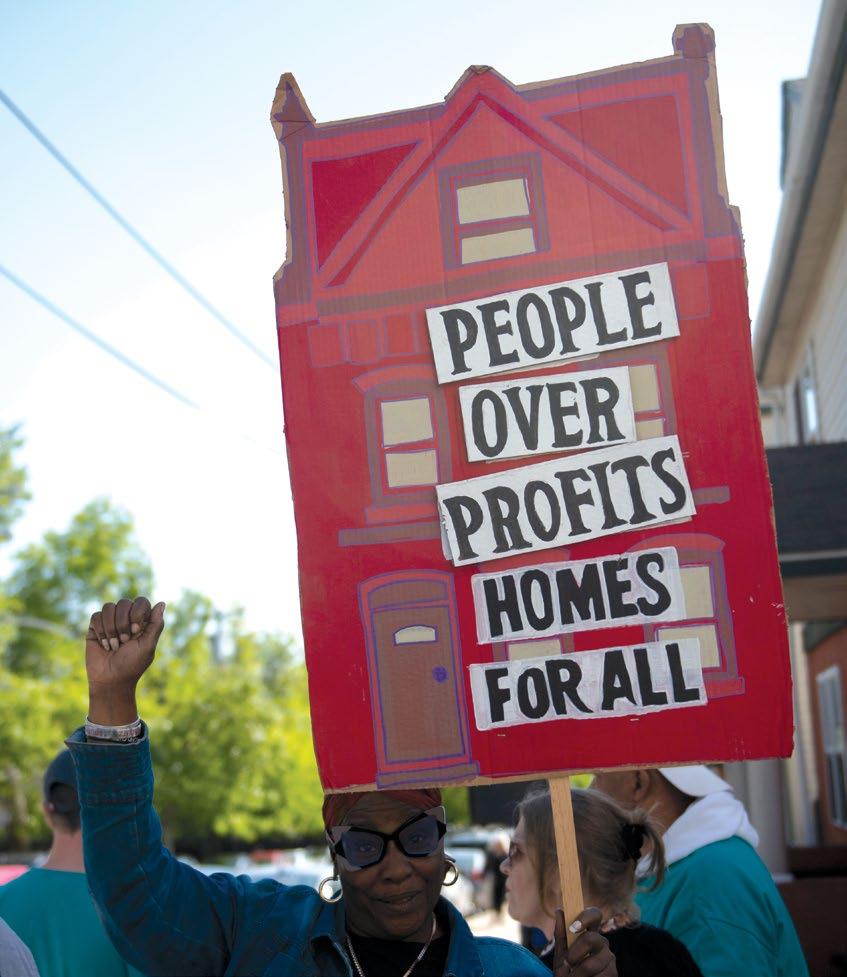
When a crowd comprised of more than 60 renters, homeowners, organizers and representatives gathered on May 7 in Southwest Philadelphia’s Kingsessing neighborhood, they had one message: “The renters united will never be defeated.”
Led by One PA, a statewide community organizing group, the rally was the latest move in the ongoing effort to secure 925 affordable rental units managed by Neighborhood Restorations, a private developer. The units, spread across West and Southwest Philadelphia, were cast into the spotlight last July when Neighborhood Restorations released a letter announcing its intentions to sell the properties as a single portfolio in the near future.
Such a sale could result in major displacement for the approximately 3,000 people who call Neighborhood Restorations properties home, according to Councilmember Jamie Gauthier, who represents Philadelphia’s Third District, where most of the units are located.
“These are long-term tenants that are very rooted in their communities,” says Gauthier. “This is about people who have been contributors to their blocks, to their communities, asking their city, asking their government to help them from being displaced and having their lives shattered.”
Gauthier and One PA are advocating for the City of Philadelphia to purchase the portfolio with the goal of making the properties permanently affordable.
“We need [the City] to be able to say, ‘We will purchase the 925 units that will make this city affordable,’” Neighborhood Restorations resident Carlos Booth said at the event, which came after months of mobilization and organizing.
The Neighborhood Restorations portfolio differs from much of Philadelphia’s affordable housing in that the units are mostly single-family rowhomes and duplexes integrated into city blocks.
“I had never heard of [Neighborhood Restorations] until this happened,” says Eric Braxton, project director for One PA West/ Southwest Rising, a local chapter. “But I now know that many of my neighbors — people that I’ve worked with in the community for a long time — live in these properties.”
Following the letter’s release, members of One PA West/Southwest Rising, representatives from Gauthier’s office and volunteers from other community advocacy organizations went door to door informing tenants of the impending change to their housing situation.
“Only about half the tenants we spoke to actually got the letter, and nobody understood what it said,” Braxton recalls.
Christie Davis, who has been a resident of a Neighborhood Restorations home for 21 years, was one of those confused tenants.
“You had to be a rocket scientist to figure out the terms and the different codes that were used,” says Davis, adding that she “didn’t think anything of it” until ap-


PHOTO BY TRACIE VAN AUKEN
proached by a One PA representative.
“I was like, ‘Why would this stranger come knock at my door and give me this message about the home that I’ve been living in for 21 years?’” says Davis. “So I stuck in there with One PA, and I went to the meetings, and the eyes just got wider and wider into what really is going on.”
The Neighborhood Restorations properties were developed using federal low-income housing tax credits as part of a push to encourage private development through time-restricted tax incentives, according to WHYY News.
“All of these low-income housing tax credits get started in the ‘80s, and most of them had 30-year expiration dates, so guess what? They’re all expiring,” Braxton explains.
The Neighborhood Restorations properties account for approximately 12% of the affordable housing in Philadelphia that have subsidies set to expire within the next decade, according to Gauthier. Some of them have already expired, but Neighborhood Restorations has chosen to keep them affordable. There is no guarantee, however, that rents of these properties wouldn’t be raised to market value if they were sold to
a different developer, making them inaccessible to most current residents.
The influx of subsidy expirations comes in conjunction with a significant rise in property prices. Many of the Neighborhood Restorations properties are in rapidly gentrifying parts of the city where prices have gone up “by hundreds of percents,” according to Gauthier.
Booth, who lives in a Neighborhood Restorations-managed apartment building for older adults, worries about what would happen if it were sold to a developer. “This building would present a developer or a speculator with a gold mine,” he says. “They really know that they can get market value for rent here, and that would really displace a lot of seniors and elders.”
While the median income in Philadelphia has risen only 7% since 2000, the median home value rose 120%, according to a March report from The Philadelphia Coalition for Affordable Communities.
“Gentrification and displacement is not just some ideological talking point: it is happening in West and Southwest Philadelphia,” Gauthier says. “We need to use the resources available to us to make sure that people aren’t displaced from the communities that they’ve stewarded and called home for decades.”
Davis, who grew up in West Philadelphia, recognizes that change in the neighborhood is inevitable, but hopes it doesn’t have to come at the expense of the long-term residents.
“This is where I grew up,” she says. “This is all that I know. This community is changing. It’s changing right before my very eyes, and it can be for the good, if we’re also included in the change.”
Just over a mile from the rally, a fencedoff vacant lot at 39th and Market streets exemplifies the ongoing process of displacement in West Philadelphia. The block was occupied by the University City Townhomes, a 70-unit complex constructed to provide affordable housing for largely Black and working-class residents who were displaced when the City demolished homes in the 1960s and ‘70s to build a science and technology campus, WHYY News reported.
The complex made headlines in 2021 when the property management company announced that it would not be renewing the site’s affordable housing contract. After a protracted legal process, those residents were relocated and the structures demolished on
the condition that a half-acre of the property would go to the City to serve as the future site of 70 permanently affordable units.
Responding to the University City Townhomes demolition, Gauthier worked with the City to pass the People’s Preservation Package, which requires owners of government-subsidized affordable housing to give a year’s notice to tenants and the City before putting properties up for sale. Hypothetically, the City could use this time to secure funding through the Housing Opportunities Made Easy (H.O.M.E.) initiative, designed to enable the City to purchase more housing for low-income residents.
“By the time we found out what was happening [with University City Townhomes], it was too late,” Braxton reflects. “What we hope is different this time is that we had time for the community to come together and for elected officials to come together and build a plan.”
The City has until early July to make an offer on the Neighbor Restorations properties.
Neighborhood Restorations owner Jim Levin told WHYY News that his first choice would be to sell to the City so the properties can remain affordable.
“I want to be clear that if the City doesn’t come to the table with the H.O.M.E. initiative, then we probably can’t do this,” Gauthier says. “Parker and her administration need to look people in the eye and say, ‘Why do we do H.O.M.E.? If we’re just going to let 3,000 people get displaced from some of the most gentrifying neighborhoods in the city, what was this all for?’”
Jamila Davis, communications supervisor for the City’s Department of Planning and Development, commented that there are “no current plans” to work with the H.O.M.E. team, adding in a written statement that the City is “collaboratively working with [the Local Initiatives Support Corporation] and other housing leaders … to come up with various scenarios.”
A mayoral spokesperson did not respond to Grid’s request for comment.
To Christie Davis and many other Neighborhood Restorations residents, the only option is to continue organizing with the hope that the City comes to the table.
“It feels good going to City Hall and meeting with these politicians and sitting with them and bringing this awareness to them,” Davis says. “I’m in it for the long haul to see what we can do to save these properties.”
Opposite: City Councilmember Jamie Gauthier, who represents the district where many affordable rental units managed by Neighborhood Restorations are located, is helping lead the fight to keep them affordable. Below: A rally attendee calls for housing rights over displacement, which is likely to happen if the properties are sold to a private developer.
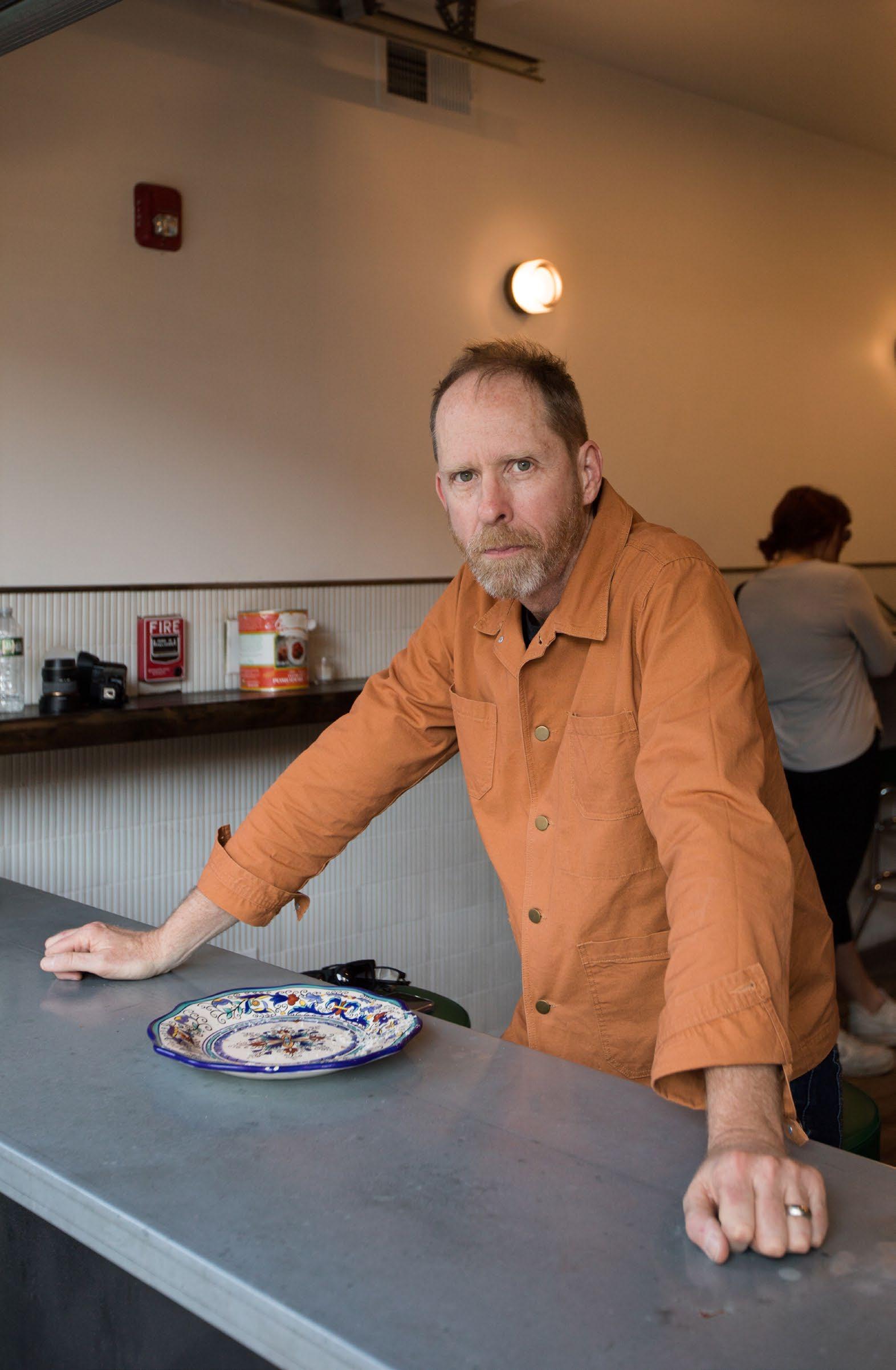
Patrick Berkery has eaten many slices of pizza across Philadelphia, including Marina’s in Fishtown.
Expert Taste
Rock ‘n’ roll drummer and pizza lover surveys the slices of Philly and beyond
by marilyn anthony
Patrick Berkery didn’t always love pizza. His first memory as a youngster in Willingboro Township, New Jersey, was of a “typical neighborhood flavorless garbage pizza with rubbery cheese.” It wasn’t until his parents discovered Marra’s, the legendary Passyunk Avenue brick-oven Neapolitan-style pizzeria, that the then-8-year-old Berkery had a pizza epiphany.
In December 2025, Berkery, a senior newsletter editor for The Keystone and an in-demand professional musician, turned his passion into a biweekly newsletter, “Pizzavania: The Only Delivery That’s Better Than Pizza.”
His intent is not to review pizza places, but to share the interesting stories of regionally distinct pizzerias in a fun-fact-filled, chatty report. The newsletter provides a regular outlet for the field research Berkery has been informally conducting for decades, often aided by readers’ suggestions.
As a young adult and touring musician, Berkery explored the pizza landscape everywhere he ventured, following leads from the many folks who told him about places he had to check out in New York City, New
Haven, Connecticut, and even Tokyo and Lima, Peru. Berkery readily chronicles his many influential pizza pilgrimages with an enthusiasm that seems visceral, as if he is remembering the pleasure of every slice.
In his younger days, he ate pizza or “something pizza-adjacent like calzone” nearly every day. These days, he tries to ration his pizza consumption to when he is
working on Pizzavania — though recently, he couldn’t resist getting a couple of slices in Emmaus, Ambler and Elkins Park, all in one afternoon. Berkery clearly knows what he is talking about, whether the style is Detroit, New Haven, New York or Old Forge. “My pizza palate is really refined. It sounds kind of silly, but I can spot the differences,” he says.
PHOTOS BY TAYLOR ECKER
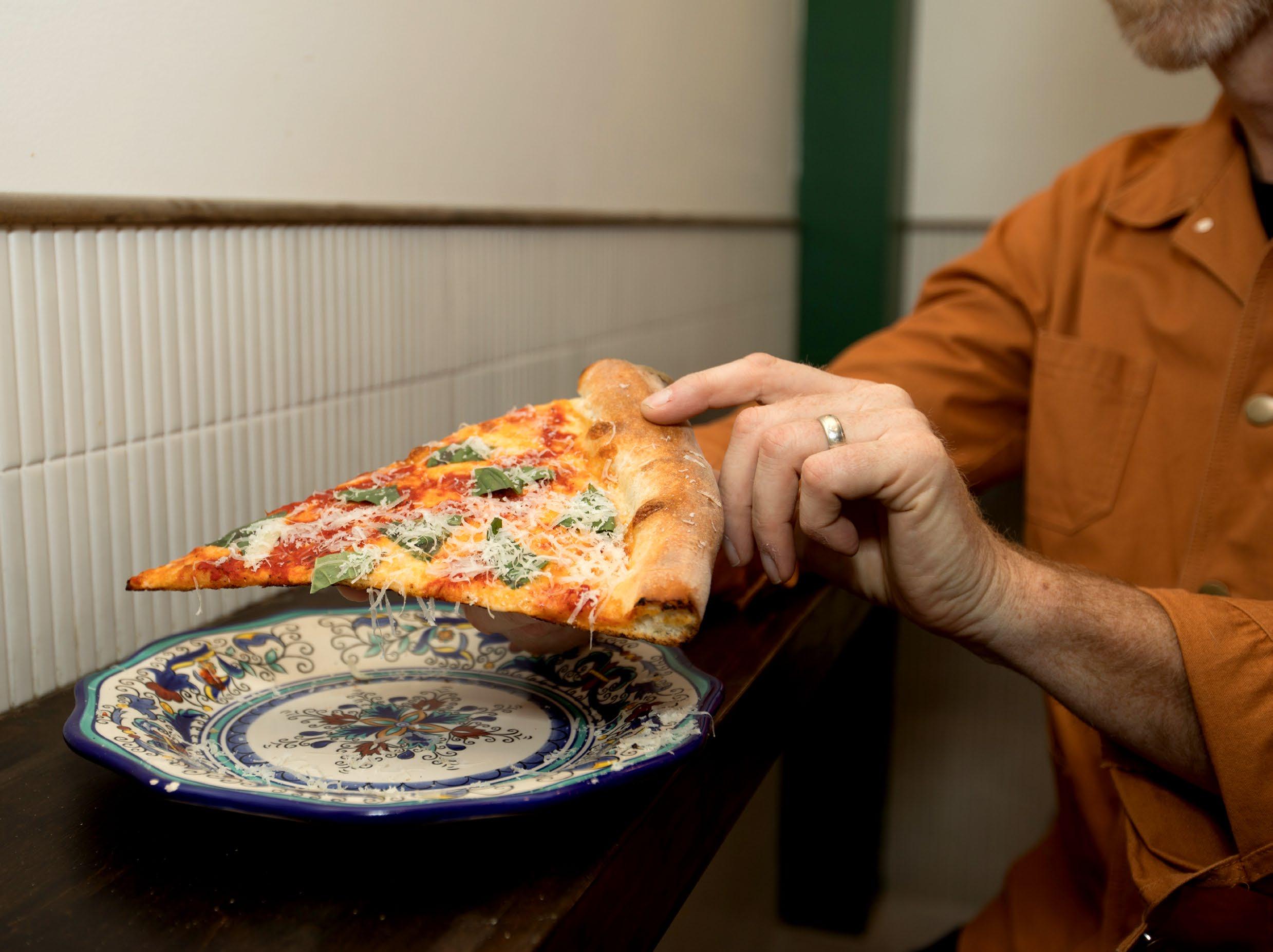
Aside from the flavor profile, [pizza] is a very approachable, universally loved kind of food.”
patrick berkery
Chasing pizza leads can take Berkery far beyond Philly, but he rates our local offerings as “pretty wild and pretty great.” With so much excellent pizza across the city, can it ever overtake our reputation for cheesesteaks? Berkery doesn’t think so. “The cheesesteak is as synonymous with Philadelphia as the Liberty Bell. [It’s] a cultural touchstone, because in Philly, there was always sports, cheesesteaks and history. It would take a whole generation becoming vegetarian to say, ‘Cheesesteak, you had your moment. Pizza, come on up.’”
While he prefers eating in over ordering takeout (“you always lose something in the box”), even frozen pizza has a place in his repertoire. If he gets snowed in or comes home late from a gig, a Trader Joe’s white pizza with rosemary is a good backup plan. For Berkery, the enduring pleasure of pizza has less to do with place and more to do with what he sees as its unique characteristics. “Aside from the flavor profile, it’s a very approachable, universally loved kind of food. … I like the social aspect — everybody enjoys eating pizza.” ◆
A RECIPE FOR ENJOYING THE PERFECT PIE
Pizza, at its essence, is dough, sauce and cheese. Here are some of Patrick Berkery’s tips for having a great pizza experience.
1. Don’t go in with a completely empty stomach so you can avoid overeating.
2. Avoid any carbohydrate-heavy appetizers.
3. Find a good beverage to pair it with: wine, beer, seltzer or artisanal soda.
4. Be open to trying different things.
5. Always order a plain slice first. It’s going to tell you if the pizza is any good. If the plain doesn’t hold up, none of the other toppings will make up for it.
6. Go for the thin crust. Some people enjoy the deep-dish, doughy version, but my goto is always thin.
7. Look for a crispy and charred crust. Nothing pale, limp or soggy.
8. Savor the sweet, garlicky tomato sauce.
9. Top your second slice with classics like pepperoni and roasted red peppers.
10. Enjoy the cheese, of course, but not in excess. Don’t get too fancy with the mozzarella. Maybe a mix of shredded and creamier mozzarella, topped off with a bit of sharp Parmesan.
Fast and Furious
86 year-old runner is shattering world records — and advocating for radical changes at races by dawn kane
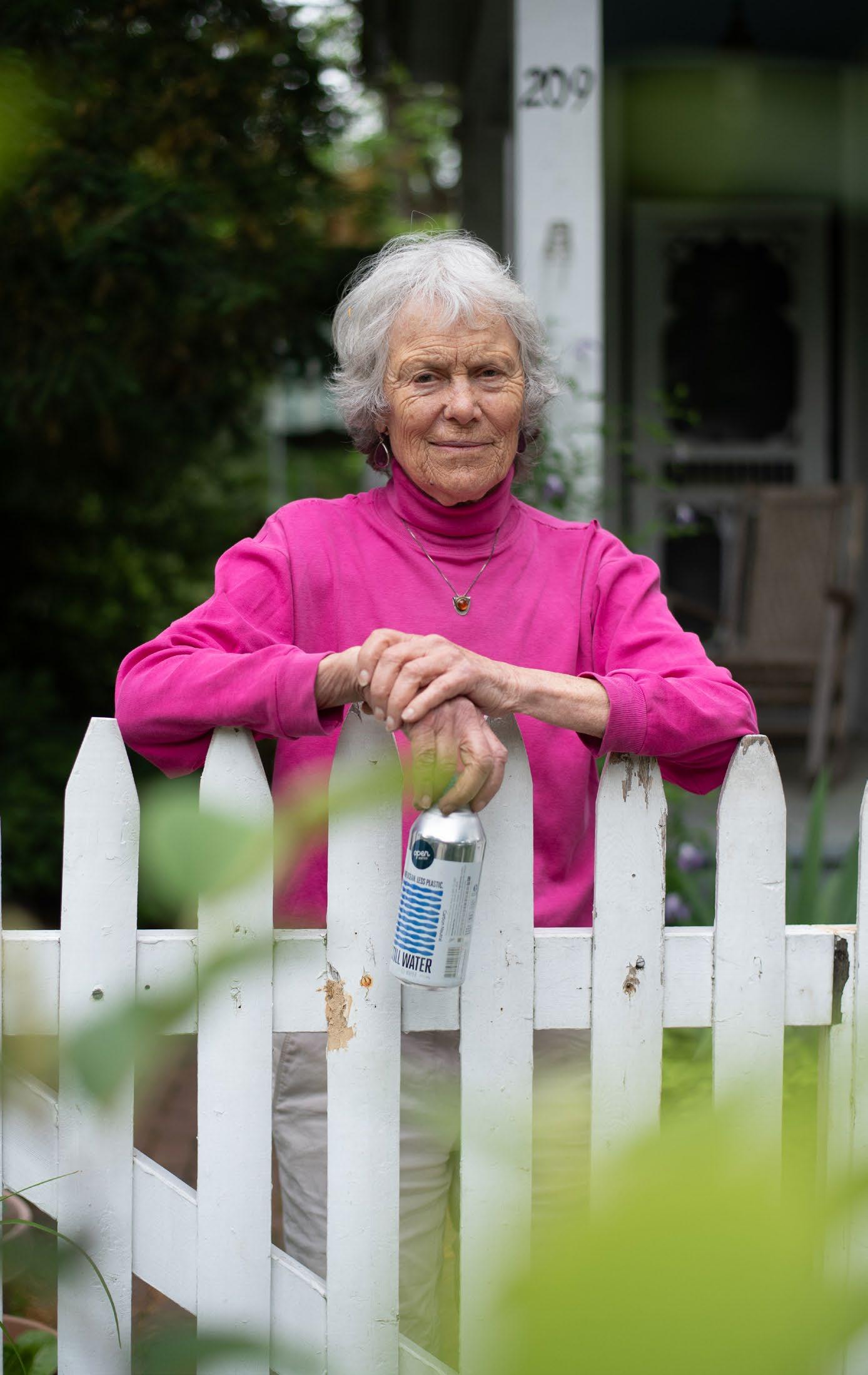
At 86, chestnut hill resident Sandra Folzer regularly smashes running world records, but her pursuit of physical excellence is secondary to her environmental goal: to remove single-use plastics from racing.
In 2024, Folzer, a breast cancer survivor, shaved an astonishing 30 minutes off the 12K record in the women’s masters 85-89 age category. The next year, she set new world records in the Rothman 8K (50:39), where she finished 702nd out of 2,114 women and set a record for the indoor mile. This January, she broke that record, and then did it again in March, when she also set an 800-meter record. Folzer just keeps getting faster.
It started in 1976, when a friend told her that if she could run the Schuylkill River loop twice, she could run a marathon. She tried it and then ran the Philadelphia Marathon, finishing fifth. Three years later, she ran a 50mile ultramarathon in Maryland and has run various distances ever since, incorporating training alongside her career as a licensed psychologist and raising her three daughters, Amma, Laura (a running partner) and Victoria, all of whom live nearby.
When she isn’t blazing a trail with her feet, she is advocating for social change. She frequently prints flyers and pens letters to the editor, getting published locally and near Mansfield, Tioga County, where

PHOTO BY TRACIE VAN AUKEN
Octogenarian runner Sandra Folzer wants races to offer aluminum water bottles rather than plastic. Folzer ran her first race, the Philadelphia Marathon, 50 years ago and finished fifth.
she owns a farm. Among several causes, her fight against single-use plastics has been a constant that she speaks out against at every race she attends.
“Because they don’t recycle them, that’s been an ongoing campaign for me,” Folzer says.
According to statistics from 2018 published by the Environmental Protection Agency, 8.7% of plastics were recycled in the U S , 15.8% incinerated with energy recovery and 75.6% sent to landfill.
“The prevalence of single-use water bottles at road races is troubling,” David Velinsky, professor and senior scientist at Drexel University’s Academy of Natural Sciences, wrote in an email. “The plastic bottles that are disposed of will accumulate in landfills (and other areas) and eventually break down into smaller and smaller pieces into microplastics. The smaller particles tend to accumulate various contaminants like PCBs and heavy metals that can be ingested by fish or birds,” which, when consumed, also endanger humans.
Folzer wants a widely adopted green certification program for races, which would include the eradication of single-use plastics, giveaway T-shirts and plastic prizes. “It would be nice to work with some kind of environmental group to back me up, but if not, I’m just going to go ahead, because what I’d love to do is have some kind of standard,” she says.
Alan Braverman, a longtime friend and fellow runner, recalls a group run in Wissahickon Valley Park years ago where Folzer kept stopping everyone to pull invasive weeds. Braverman, the president of the Ambler Area Running Club, plans races like the Phil’s Tavern 5K charity run and gets compliments for asking racers to bring refillable water bottles and for not giving away T-shirts. Just to make sure they don’t forget, Folzer sends reminders each year. Last month, she spoke to his group about sustainable running.
The Broad Street Run, which attracted approximately 40,000 in May, piloted WaterMonsters, large water containers for refilling bottles.
Broad Street Run organizers offered paper and compostable cups at water stations, and 50 volunteers and additional staff served as waste watchers, helping people

It would be nice to work with some kind of environmental group to back me up, but if not, I’m just going to go ahead.”
sandra folzer
separate trash, recycling and compost
Discarded clothing and leftover food were donated to local charities. Organizers also continue to collect plastic ponchos and heat blankets at the finish line, and Acme Markets, a race partner, recycles them into plastic lumber. In 2025, the diversion rate for race waste was 25%, beating the residential rate, says Natalie Walker, sustainability director for Philadelphia Parks & Recreation.
Folzer says there’s room for improvement and expressed disappointment that many plastic bottles still littered the pavement after the race. She suggests a water station at the race’s end.
The City is listening. “We are exploring the feasibility of adding a water stop at the finish line,” Walker says. They are planning for more disposal stations and improved signage. She added that they expect to see a “10% increase in overall waste diversion compared to last year,” based on post-race data.
Since Folzer says that some races run green one year and then backslide the next, she continues her campaign.
“It’s rare that we hear from someone like Sandra,” Walker says. “She really has been very outspoken and has reached out to us every year. I think that’s very unique.” ◆
Rolls Downhill
Treating wastewater isn’t easy, and forever chemicals are making it harder
by bernard brown
Every human produces a little more than 4.5 ounces of excrement per day. Multiplied by the 2.2 million customers of the Philadelphia Water Department’s wastewater system, the cumulative daily dump equals about 620,811 pounds, or about 310 tons.
The story of biosolids (treated sewage sludge) starts with clean water in the toilet bowls of the residents of Philadelphia and surrounding suburbs. That water carries away the 310 tons of what people deposit, joined by water from sinks and showers — not to mention everything that washes down the drains of car washes, small fac-
tories, dry cleaners and other businesses. Where old sewer lines are combined with stormwater drainage, rain and melting snow flow in as well.
Those toilet contents splash into the sewers and, driven mostly by gravity, roll downhill through more than 3,000 miles of pipes and tunnels to one of the city’s three water pollution control plants: Northeast, Southwest or Southeast.
As the name implies, those plants are tasked with removing pollution from roughly 400 million gallons of wastewater (about 500 Kelly Pools) per day before discharging it into the Delaware River.
It’s up to the PWD to separate the clean water back out and then dispose of what people put in it. A recent biosolids-processing failure at the Southwest Water Pollution Control Plant made plain that treating wastewater is an inherently complicated task made more difficult by aging infrastructure and staffing shortages. And as demands grow to filter out forever chemicals and reduce the environmental impact of treated sewage sludge, it’s unlikely to get any easier.
Much of the infrastructure at the Southwest plant is not new. The core dates back to the 1950s, and other features were added in the early 1980s when the sewage treatment plants were expanded to comply with the Clean Water Act.
Today, sewage treatment is an intricate process dealing with variable inputs and conditions. Because much of Philadelphia’s sewage system is combined with its stormwater system, wet weather sends a surge of
sewage into the plant. And if one piece of equipment fails, it can send shock waves through the rest of the system.
The Separation Process
“Wastewater treatment is basically a separation process,” says Andy Kricun, retired executive director and chief engineer at the Camden County Municipal Utilities Authority.
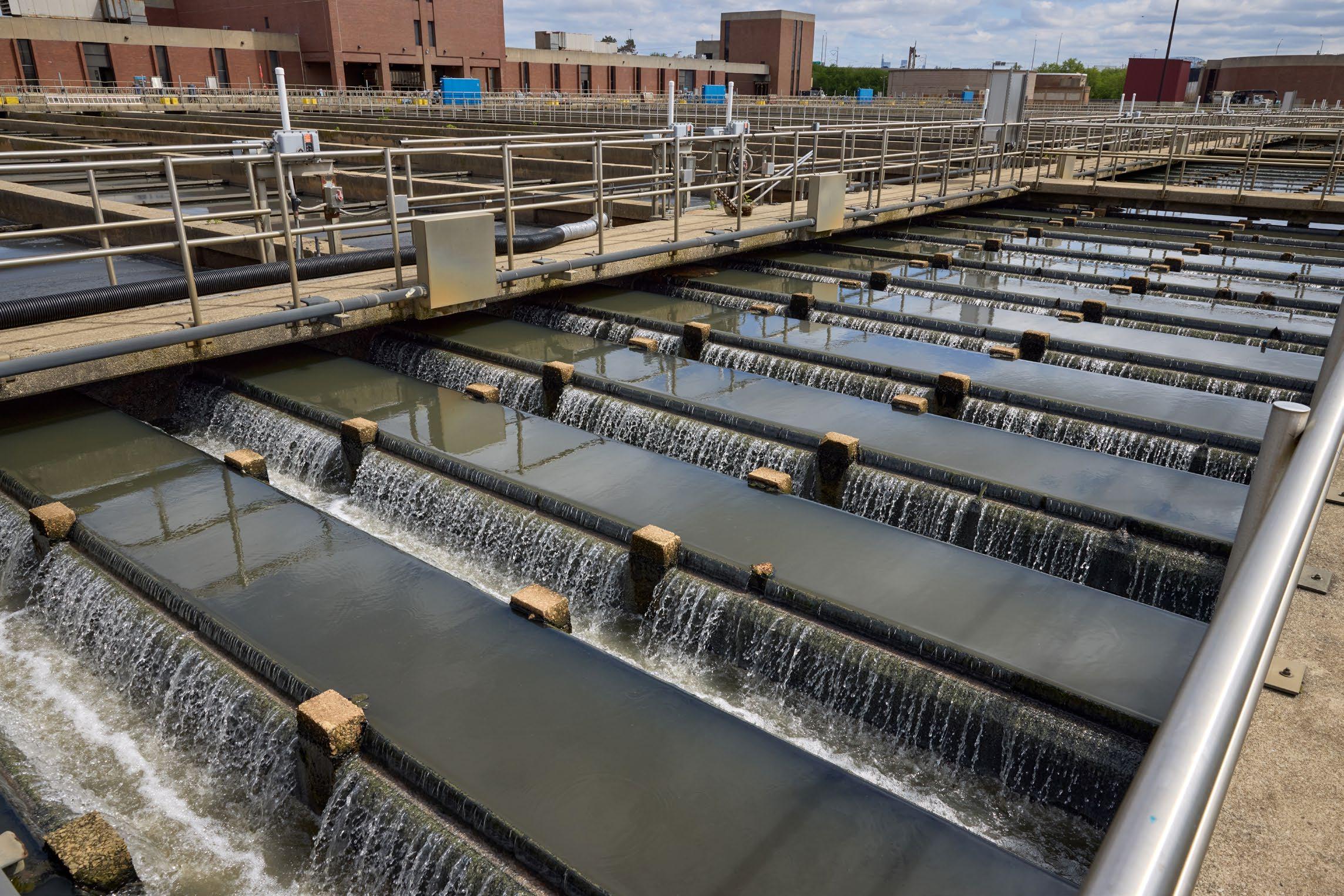
It starts by screening out trash and removing heavier grit that quickly falls out. Along with oily scum that floats to the top, these products go to a landfill. The watery sewage then flows very slowly through an expansive grid of concrete tanks that allow sludge to settle to the bottom.
While the water continues on to be treated before it is released into the Delaware
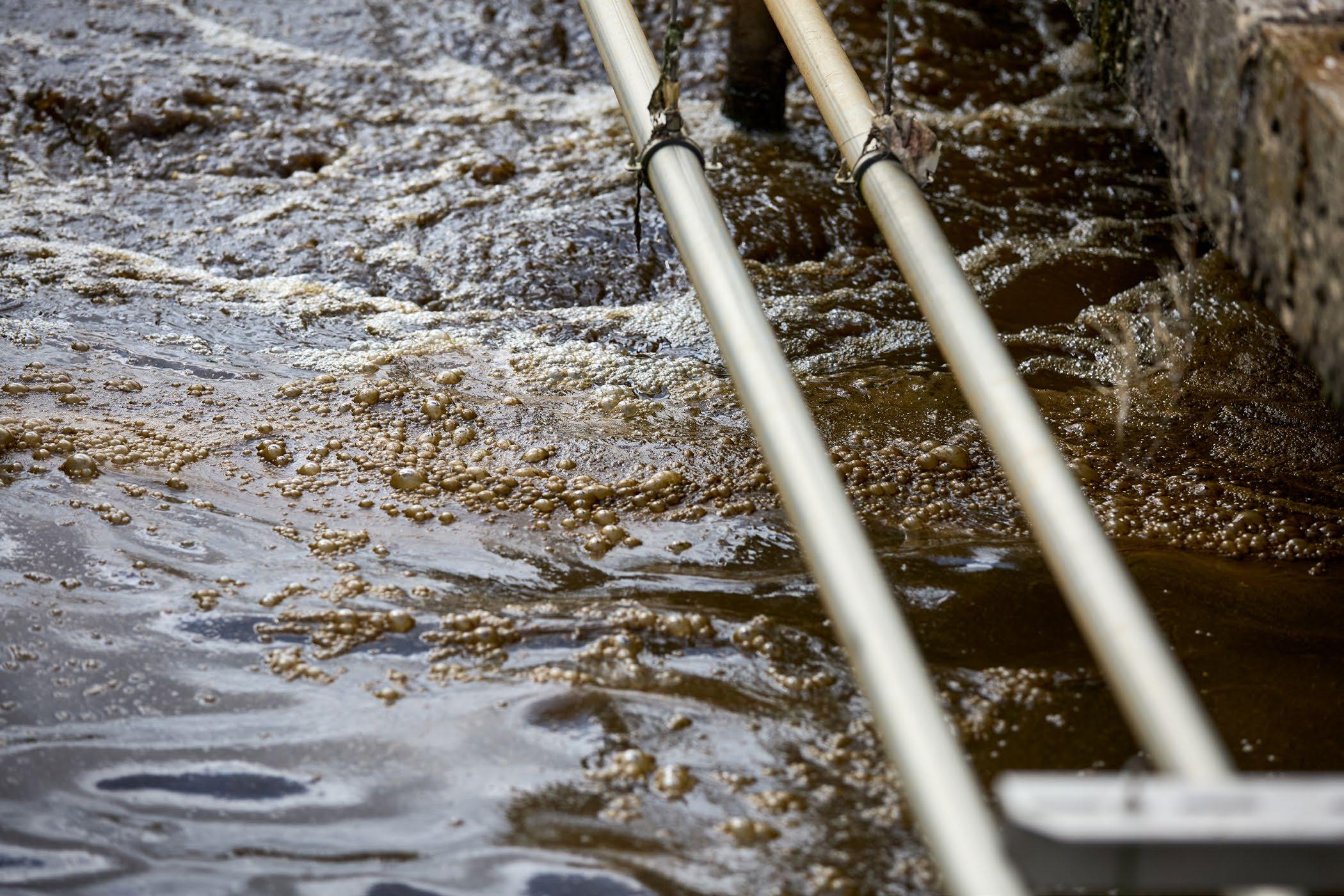
River, the sludge is far from finished. It’s more like chocolate milk at this point and about 98%-99% water, as seen on a May visit to the Southwest plant. “The second half of the job is … to get as much of the water as
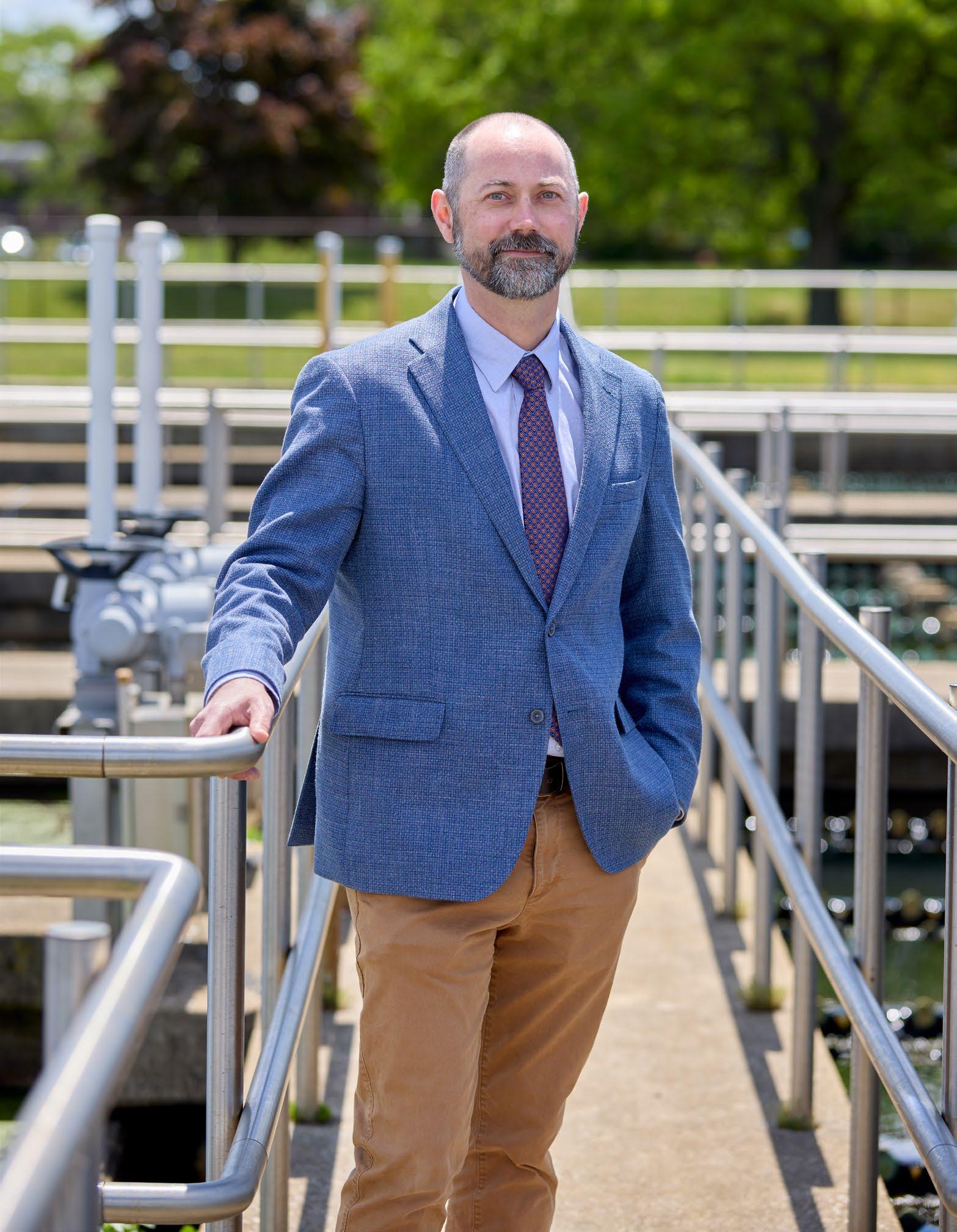
Philadelphia Water Department commissioner Ben Jewell says the department is planning how to adapt biosolids processing for the future.
possible out of the biosolids, because the drier that it is, no matter how you’re disposing of it, the easier and less costly it is to do so,” Kricun says.
The Southeast plant pumps its still-watery sludge through pipes to the Southwest plant. There, air is blown into the sludge from both plants, creating a froth so the solids can be skimmed off the top. The now less-watery, mousse-like sludge is then treated inside the Southwest plant’s 12 anaerobic digesters — house-sized tanks kept close to 95 degrees to stimulate bacteria to convert much of the organic matter into methane gas. The methane is siphoned off and burned to help heat the digesters. Outgoing biosolids pass through heat exchangers to warm up the incoming sludge.
The digestion process kills pathogens and reduces chemicals that might attract flies or rats (aka “vectors”). The material can then be classified by the EPA as Class B biosolids and legally applied to fields as fertilizer.
The sewage sludge from the Northeast plant is digested on site and then shipped in barges down the Delaware river to the Southwest plant. At this point all of the biosolids are pumped next door to the Biosolids Recycling Center (BRC), operated under contract by a national company called Synagro Technologies Inc.
Wastewater treatment is basically a separation process.”
andy kricun, retired environmental engineer
In the pungent and deafeningly loud BRC, the biosolids are then run through hippo-sized centrifuges dating back to the 1980s that spin out yet more water, producing a thick “cake” that holds its shape when plopped onto conveyor belts below. Finally, the cake moves through two massive gas-powered dryers that yield hard pellets that are then loaded into silos. After the additional processing at the BRC, which further reduces pathogens, the EPA considers the pellets to be Class A biosolids, which can be applied in places where humans might come into contact with them, such as parks and golf courses. When the volume exceeds what the BRC can dry, Synagro distributes Class B biosolids to farms, where it is used as fertilizer, or to mine reclamation sites, where it is used to build up a layer of soil that can support vegetation. At every stage, water separated from the biosolids is piped back to the water treatment flow at PWD’s plant.
Hits the Fan
The Philadelphia Water Department (PWD) “became aware of data anomalies” in the processing of Class B biosolids at the Southwest treatment plant in March 2024, as the department said in an emailed response to questions from Grid. An internal investigation revealed that the anaerobic digesters had been failing since January 2022, but the plant manager had instructed workers to fudge the numbers to make it appear that the biosolids had been properly processed to reduce pathogens and not attract vectors, when in fact they had not.
Improperly processed biosolids distributed as Class B violated permits allowing land application. Liquid output was tainted as well. Contaminated water separated from the underdigested biosolids had flowed back into the plant’s water treatment system. During especially heavy storms, the overloaded system flushed the undertreated soup into the Delaware, increasing water pollution from the plant and violating permits that allow PWD to discharge water into the Delaware.
When PWD learned of the breakdown, the department immediately told Synagro and government regulators. PWD had to notify 25 farmers and other land managers who, unbeknownst to them, had used the noncompliant Class B biosolids.
As PWD investigated, it set up an operation to dry biosolids at the Northeast plant so they could be distributed directly from there, relieving some of the load at Southwest. The department also heaped improperly processed “cake” on covered concrete pads at the Southwest plant and began shipping about 200 to 400 tons a day of the sludge to the Fairless Landfill in Bucks County, according to documents obtained by Grid through a right-to-know request.
“The primary factors affecting digester performance were related to inefficient heat transfer and aging equipment within the digestion system,” PWD explained in its written response. “As digestion performance declined, solids weren’t broken down as effectively, which increased strain on downstream processing at the BRC and created an operational feedback loop, which had nega-
tive impacts on plant treatment processes.”
Staffing, or shortage thereof, might have played a part. At the start of 2024, 20% of the positions at PWD were unfilled, and it is particularly difficult to recruit the specialized workers who run treatment plant equipment. “At a wastewater or drinking water plant, you have two main kinds of employees: water operator-centric jobs and support jobs,” Kricun says. “Operators are maybe 10% of the total staffing. You have accountants, engineers, electricians and maintenance people — 90%. Those people you can get from other sectors. But it’s very difficult to find qualified operators.” An aging workforce means the problem isn’t going away anytime soon. A 2021 Brookings Institution analysis found that 88% of water treatment plant operators were 45 or older.
“Staffing challenges do not excuse compliance failures,” PWD responded when asked how staffing contributed to the biosolids breakdown. “After identifying the issue, PWD implemented additional oversight measures by bringing in staff from other units to support plant operations,
Sewage mixes with microorganisms in the Southwest Water Pollution Control Plant.
process control, data quality assurance and reporting compliance.”
Ultimately the PWD and the EPA entered into a consent decree, a legal agreement under which the City paid the agency $203,563 to settle the matter. PWD also fired the plant manager and another supervisor and hired consultants to review the biosolids process. Their recommendations included “both immediate operational improvements and longer-term infrastructure upgrades, including improvements to digestion system performance.” These included cleaning out the 12 digesters and replacing the digester heating system.
New Contaminants
The water department says the issue is behind it now and that it has launched a biosolids master plan expected to be completed in the summer of 2027. PWD Commissioner Ben Jewell said the plan will assess current infrastructure conditions and help guide renovations and replacements over the next 25 years. It will also prepare the department to address “emerging contaminants of concern.”
Perhaps the most concerning emerging contaminants are per- and polyfluoroalkyl substances (PFAS), often called “forever chemicals” because they break down slowly and can endure for years in the environment and in bodies, where they have been linked to some cancers and reproductive problems
The chemicals can end up in household wastewater as they wash off clothing and other items. Larger amounts end up discharged by industrial sources. Once in the sewers, the chemicals bind to organic matter so that they end up spread on fields with treated biosolids.
“Industrial sources or the military are going to be some of the largest sources. Residential plays a smaller role,” says Jared Hayes, senior policy analyst with the Environmental Working Group.
The Pennsylvania Department of Environmental Protection (DEP) is currently studying high levels of PFAS in drinking water in Columbia County. According to a DEP website, “Based on the information that DEP has collected so far, it appears likely that a source of contamination is the historic spreading of sewage sludge on agricultural properties in the area.“
EPA regulations require sewage treatment plants to monitor biosolids for metal pollutants such as arsenic and cadmium. So
far, forever chemicals have mostly escaped federal oversight, although the agency released an assessment of p ossible health impacts of PFAS in biosolids in early 2025.
“We’re really seeing the beginning stages at the state level of PFAS in biosolids,” Hayes says. Maine is one of the few states that has taken action on PFAS in biosolids.
In 2016, a dairy farm in Arundel, Maine found high levels of perfluorooctane sulfonate (PFOS) in its milk. In 2020, the state found high levels in milk and soil from dairy farms in another area, near Fairfield. The state also found high PFAS levels in wildlife in 2021, leading to advisories against eating hunted deer and turkey. In both areas, the chemicals were traced to contaminated biosolids spread on farm fields.
PFAS have also found their way into milk and meat from nearby wastewater treatment plants, as has happened in Michigan, and from an air force base where PFAS-containing firefighting foams were used in New Mexico.
In 2024, Consumer Reports tested 50 samples of milk from California, Michigan, New Jersey, Texas and Virginia, bottled under five brands. The magazine detected PFAS in six of the samples spanning four brands and three states. Milk from multiple producers is often mixed together, so the magazine could not trace the samples to specific farms.
The mixing of milk and other agricultural products from multiple farms means that PFAS substances in them end up diluted by the time the products reach consumers. However, local, single-farm products could be more vulnerable to high levels of contamination, Hayes says.
Maine has responded by testing soil on farms and by restricting land application of biosolids containing PFAS. Five other states have joined Maine in regulating how biosolids containing PFAS can be used. Pennsylvania is not one of them. That could change soon.
DEP announced in March that it would propose changes to biosolids permits to require testing for PFAS, with different requirements for land application depending on the results. Biosolids with high PFAS levels could not be applied to land. Biosolids with lower levels would be limited in how much and how often they could be applied.
“Utilities are concerned that if PFAS is regulated in biosolids, it would be a huge problem because disposal costs would go
way up,” Kricun says.
Synagro is clearly concerned. The company’s 2024 sustainability report uses the term PFAS 27 times. In 2024, a group of Texas farmers sued Synagro, alleging the company had distributed PFAS-tainted biosolids.
(Synagro, whose website lists 34 sites across the country where it operates, has a checkered past. In 2009, an executive of a Michigan Synagro subsidiary was convicted along with a Detroit city council member of bribing officials to secure the city’s biosolids contract. No one was convicted in connection to Synagro landing the contract with the PWD, but, as detailed in a 2012 Philadelphia Inquirer article, the company tried to have a consultant paid $400,000 per year as part of the 20-year contract. The consultant, Hiriam Hicks, coordinated a lobbying effort directed at Philadelphia elected officials as well as the union representing workers at the existing sludge processing operation so they would drop their opposition to privatization. Hicks’ compensation was later removed from the contract following a City ethics review.)
Although utilities and contractors such as Synagro might get stuck with the PFAS tab, the solution to contamination lies upstream. “One thing utilities can do is optimize industrial pre-treatment. It’s a lot easier to catch the stuff coming into the system before it’s mixed in,” Kricun says.
So far, PWD does not test biosolids for PFAS, but Jewell says that PWD is closely following the proposed DEP rules, which also would limit nutrient runoff from biosolids, particularly phosphorus, from farms. If DEP moves forward with the discussed rules, Jewell says, “We would expect that it would increase the cost of our land application system.”
Seven to 10 trucks pull up to the three silos at the BRC to fill up with class A biosolid pellets every weekday. These drive to any of 280 sites in Pennsylvania: mostly farms but also composting facilities and landfills, based on a list of DEP permits linked to Synagro. Limits on how much biosolids could be applied to a given field could “decrease available land for beneficial reuse of biosolids,” Jewell says.
They’ll have to go somewhere. As long as 2.2 million people keep flushing their toilets, the task of doing something with the biosolids will remain, even as it grows more complicated and expensive. ◆
Foul Fair
Philadelphia’s woebegone and long-forgotten sesquicentennial exhibition turns 100 by ilan ackelsberg
On june 5, 1926, a family of five from Iowa, the McHenrys, arrived in Philadelphia to visit the recently opened Sesquicentennial International Exhibition. John Wanamaker, who had proposed the idea 10 years earlier, envisioned the greatest world’s fair in history — an “astounding presentation of the capacity and productive power of the United States,” he wrote in The Philadelphia Inquirer — in celebration of the 150th anniversary of the signing of the Declaration of Independence. On the day of the McHenrys’ visit, the “Sesqui,” as
it was colloquially called, had been open in South Philadelphia for about a week.
With a reporter from The Philadelphia Bulletin tagging along, the McHenrys breezed through the two exhibition halls, where only 5% of all pavilions had been constructed, in under 30 minutes. After that, they visited the few completed exhibits scattered across the fairgrounds — a model post office, a replica of the Washington family home in England. By early afternoon, the family had seen all there was to see.
Mr. McHenry was quoted in the Bulletin, saying:
This thing reminds me of a guy I knew in Ioway [sic]. He invited a raft of friends and family to a big birthday dinner and surprise party one time. He got so darned excited about how many he was going to have, invitations, his speech of welcome, and the program of entertainment, he plumb forgot to order any grub. When he thought of it, everybody was there, the stores closed, and he in a heck of a fix! But the fellow had a sense of humor. “Come around next birthday and we’ll have something to eat,” he said.
The underwhelmed Midwesterner’s anecdote is one of hundreds dug up from the archives and compiled by historian and Temple University professor Thomas H. Keels in his 2017 book, “Sesqui! Greed, Graft, and the Forgotten World’s Fair of 1926.” Keels’ “Sesqui” is a kind of tragicom-
edy of idealist ambition and chutzpah: a noble idea delayed by war, hamstrung by infighting and undermined by outside interest groups; propped up and milked for cash by corrupt politicians and their business cronies; shoddily thrown together months behind schedule; and finally, soon after the gates closed, bulldozed and forgotten.
The numbers reflect the chaos of the event. By opening day, less than a third of all buildings had been completed, note E. L. Austin and Odell Hauser in the fair’s official record, published in 1929. According to the Encyclopedia of Greater Philadelphia, it rained on 104 of the 187 days the fair was open to the public, and by closing day, only 4.5 million of a predicted 30 million visitors had actually bought tickets. When all the fun was over, the Sesqui owed creditors a total of $5,098,172. (Keels’ own estimated total losses, in today’s dollars, is close to $400 million.) A 1926 New York Times headline put it bluntly: “Philadelphia Fair Never Had Chance.”
Fairs have existed since antiquity, for as long as people have been buying and selling goods and traveling from place to place. World’s fairs, on the other hand, are relatively new.
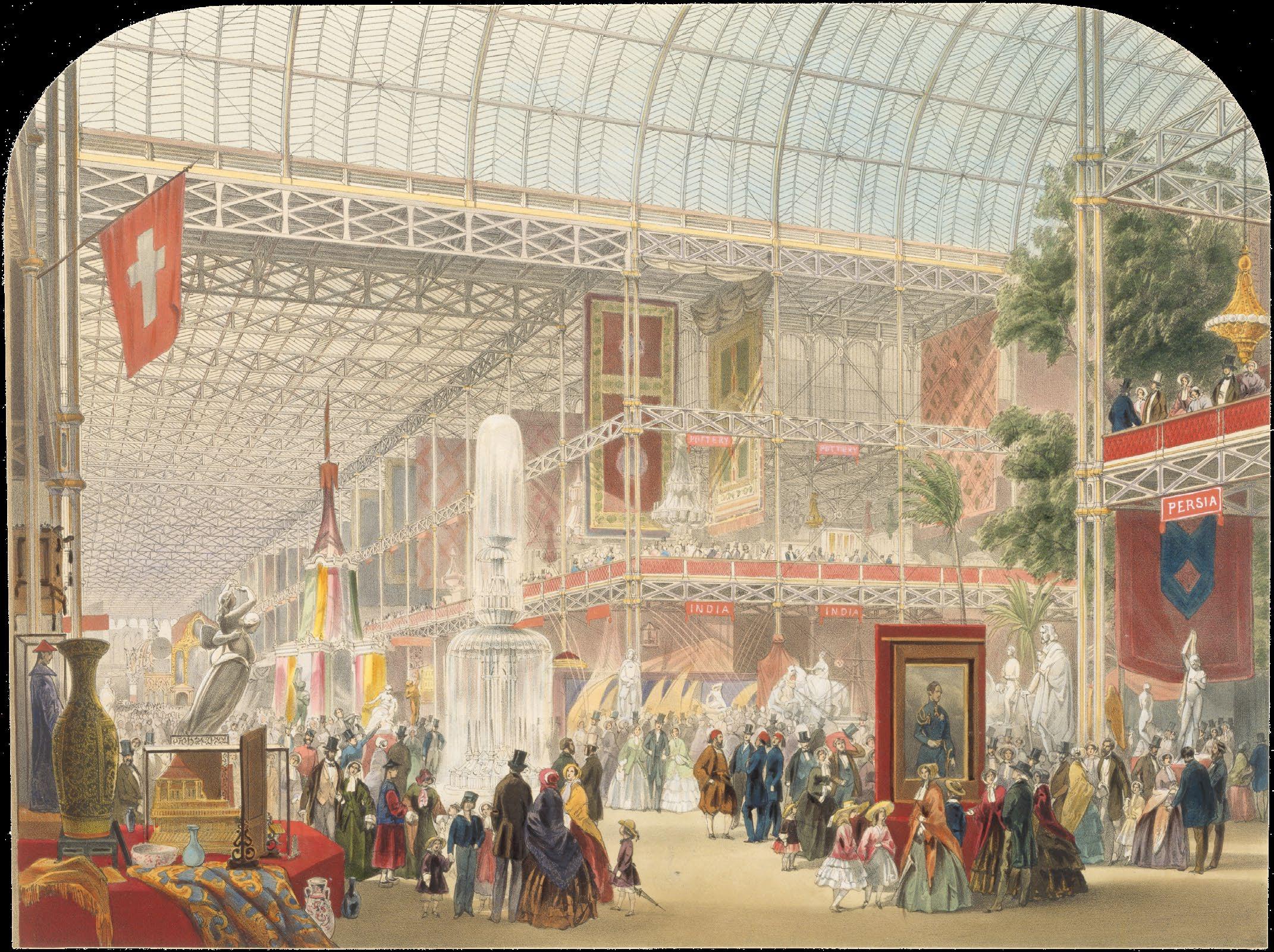
The “Great Exhibition” of 1851 in London’s Hyde Park was the first of its size, international reach and cultural importance. From June to December, some 100,000 objects from 44 countries and colonies were put on display for 6 million visitors, equivalent to one-third of Britain’s population at the time, according to The Gazette, the U.K.’s official public record.
“It is a wonderful place,” Charlotte Brontë wrote in a letter to her father. “Vast, strange, new and impossible to describe. Its grandeur does not consist in one thing, but in the unique assemblage of all things.”
More valuable than its 186,000 pounds in profits — about 20 million pounds today, or $27 million — was the narrative that the fair successfully pushed to the public, one in which Britain’s technological and cultural supremacy dwarfed the rest of the world and justified its imperial ambitions.
According to historian Sylvi Johansen, the
Great Exhibition sold the general public on the destiny and logic of industry at a time when large-scale industrial production was still rather novel. “The show was therefore rhetorical and argumentative in intention,” she writes in an article in Victorian Review. It was never “a neutral documentation of the state of Britain. It intended to persuade.”
Soon after the Great Exhibition closed its gates, the world quickly realized that these kinds of spectacles could change attitudes and shape discourse. Hundreds of fairs followed.
By 1920, much of Europe was busy reckoning with the uncomfortable idea that industrialization and progress could also lead to novel, large-scale and extremely efficient ways to kill and destroy. But fairs and exhibitions did not die with the war. At home, after a four-year pause, Wanamaker led Philadelphia civic and business leaders in support of a reimagined Sesquicentennial celebration in the spirit of postwar international amity.
Over the next five years, competing factions within the Sesqui-Centennial Exhibition Association (SCEA) — the Sesqui’s official governing body — argued over how, when and where the fair would take place. With Wanamaker’s death in 1922, the SCEA lost its most spirited advocate and best fundraiser. By early 1925, with a bit over a year to go before opening day, they had yet to decide on a location.
Not long after W. Freeland Kendrick was elected mayor, the Sesqui was officially moved from the Benjamin Franklin Parkway, Fairmount Park and the banks of the Schuylkill River to the swampy flats of South Philadelphia — an act widely understood as blatant political patronage. The New York Times, for example, derided the move, calling it “a giant real estate scheme” to line the pockets of the machine bosses who helped win Kendrick the mayor’s office.
After five years of false starts, the Sesqui’s architects and designers were suddenly faced with the impossible task of building halls, structures, monuments and fairgrounds that were grand and spectacular enough to dazzle visitors, yet cheap and spare enough to build on a squeezed construction timeline. Final plans still called for two hangar-sized main halls, a 100,000-seat stadium and 10,000-seat auditorium, several smaller exhibition palaces and administrative buildings, a colonnaded Forum of the Founders, manicured gar-
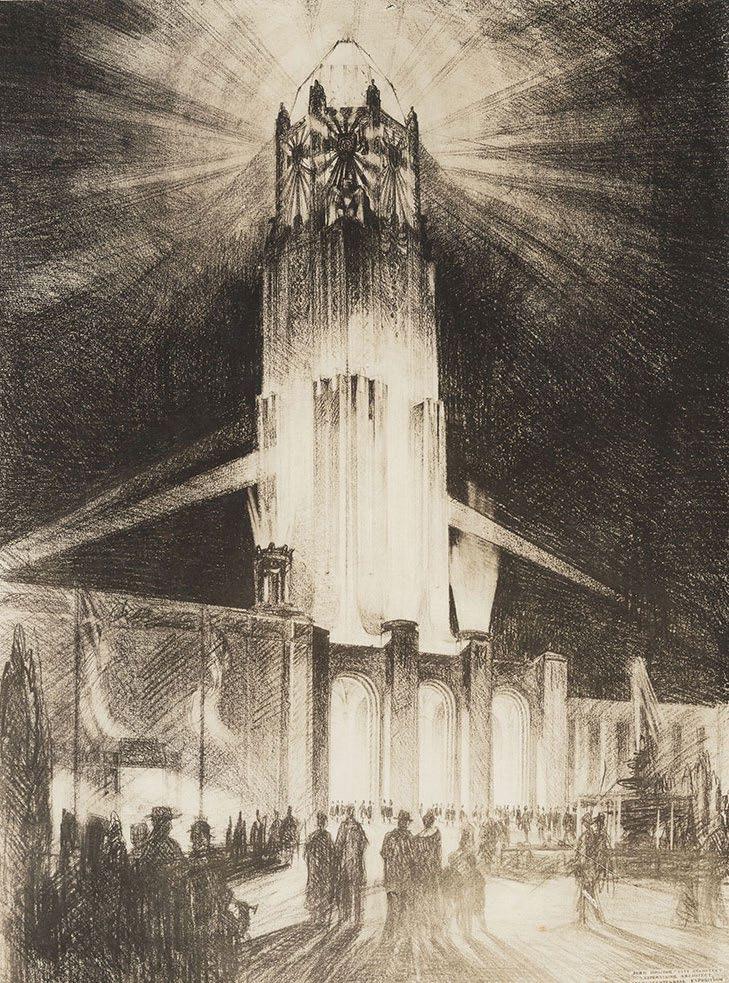
dens and lakes, aviation fields, public transit infrastructure and parking lots. In the very center, a Tower of Light would be built “of such searing intensity,” wrote a Philadelphia Bulletin reporter, “that it would instantly ruin any human eye accidentally touched by it at close range and would burn the skin far worse than any tropical sun.” Kendrick, refusing to postpone the Sesqui, gave everyone just over a year.
By early 1926, there was little evidence that the site would soon host upwards of 30 million visitors. Keels illustrates this well: “Aside from the half-finished Stadium, the Sesqui grounds were a barren plain, interrupted by gaping foundations for the main structures and mounds of landfill trucked in to bolster the waterlogged soil.”
And yet, in an “almost miraculous achievement by engineering staffs,” as then-former Mayor Kendrick wrote in his 1929 brief forward to the official record, most of the Sesqui’s buildings, monuments and attractions were completed and open to the public by July 4. In the Palace of Liberal Arts and Sciences, visitors encountered a celebration of all things new and available for purchase. Austin and Hauser, waxing a bit poetic, list some of these items:
machines making women’s silk hosiery; furniture in the making; caskets that would make King Tut envious; the giant “loud speaker” of the ill-fated dirigible Shenandoah, wrecked near Columbus, Ohio, September 1, 1925; a reproduction of “Tom Thumb,” the first American built locomotive; an electric safety razor; bathrooms de luxe; a statue of the modern ice man carrying a cooling coil instead of a cake of ice…
Many of the items on display were couched in allusions to the past. According to the official record, the Monroe Calculating Machine Company exhibited a contemporary office furnished with “all the appliances of today” alongside a reproduction of an office and its wares from 1776. The Underwood Typewriter Company looked back even further. Its latest portable typewriter was the final of seven stages of “writing history,” beginning with the Stone Age. One company exhibited its goods in a “log cabin, the typical home of the early settlers and pioneers of this country,” to “emphasize the fact that the medical preparations of Dr. David Jayne have been used in America for more than a century.”
General View of the Interior, from “Recollections of the Great Exhibition, 1851,” John Absolon.
Across the 250-foot colonnaded Forum, the Palace of Agriculture and Foreign Exhibits housed the latest innovations in agribusiness and processed foods alongside art and artifacts from 17 foreign countries. The Battle Creek Food Company’s booth, in the words of Austin and Hauser, featured “one hundred varieties of health foods such as crackers and biscuits, beverages, cereal foods, confections, diabetic and reducing foods, laxative foods, marmalades, nut butters, vegetable meats, malted nuts, vegetable gelatine, fruits, and vegetables.” One of the foreign exhibits from Tunis, then a French protectorate, was the “quaint booth of Allala Belhadj Bey,” where “exotic perfumes” were on display alongside “preparations for whitening the teeth and reddening the gums and lips, brightening the eyes, hair dyes, musical instruments, wooden shoes, jewelry and charms.”
Up Broad Street stood the Palace of United States Government, Transportation, and Military, filled with planes, trains, trucks and tanks alongside pulleys, pistons and valves. Outside, the pavilions of a few foreign nations and six U.S. states were located between the lakes and footpaths of what is today Franklin Delano Roosevelt Park. A Palace of Fine Arts displayed some 12,000 works, including about a hundred of “the finest Rodins,” according to the record. Most of the art on display was traditional and representational. (For reference, Cubism was nearly 20 years old by 1926.) The Palace of Education and Social Economy seemed, according to Keels, “bathed in a nostalgic haze, as if the mass slaughter of 1914-1918 had never occurred. Inside the palace, the early twentieth-century Progressive vision of a steady and earnest march toward human perfection was still an engaging reality.” Nostalgia, of course, is one of the most soothing of soporifics.
Gertrude Stein, in a book on Picasso, discusses the artist’s anticipation of the truths of modern living later made conscious by World War I. People are always the same, she says, but everything surrounding people — buildings and the natural world, modes of transportation and communication — these things all change, and Picasso saw this. With every passing generation, “a change, a complete change, has come about, people no longer think as they were thinking but no one knows it, no one recognizes it, no one really knows it but the creators,”
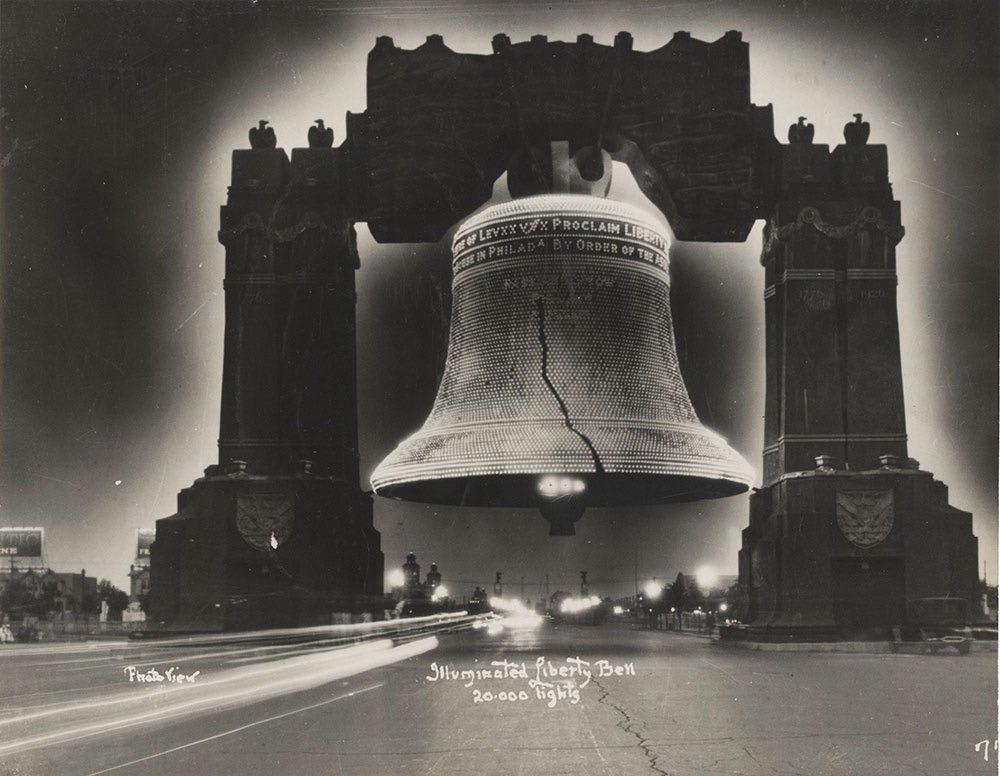
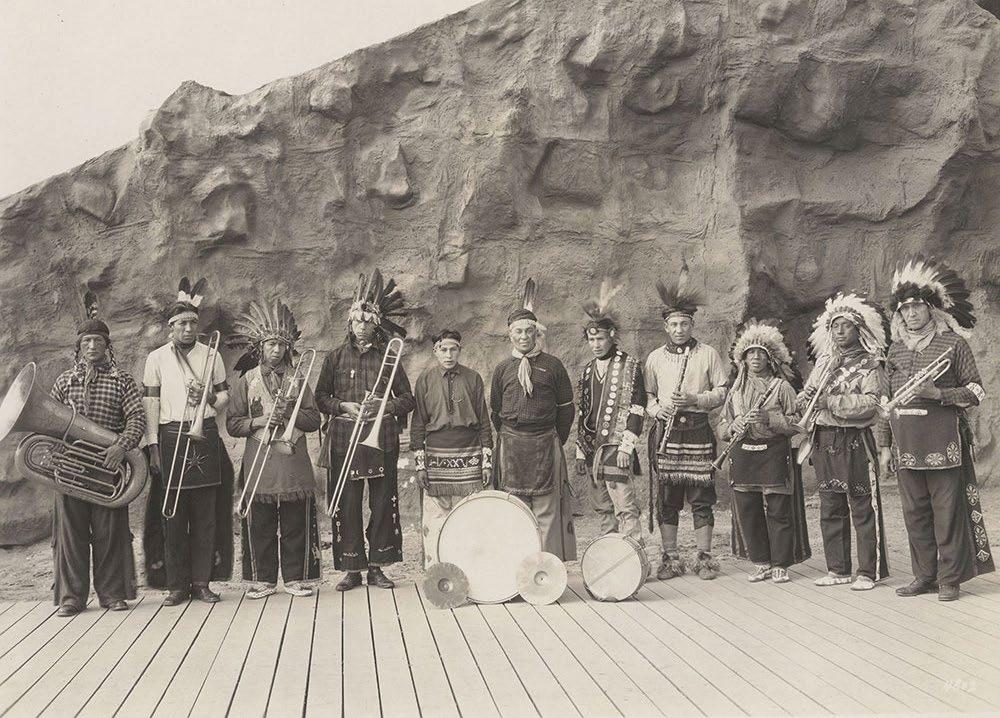
Clockwise from left: A monumental Liberty Bell spanning Broad Street, illuminated by 26,000 individual light bulbs; Rendering of the central “Tower of Light,” which, due to lack of funds, was only partially constructed; Colonel Cummins’ Indian Congress (Wild West Show).
she writes. “War is a means of publicising the things already accomplished.”
If Stein is right that great art reveals what is known but has never been articulated, then the inverse can be said of the Sesqui: Perhaps it failed because by the time the gates were opened, the truths revealed by World War I had become common knowledge, and the fair’s planners and participants instead chose to ignore them. Even if you can’t fully articulate the way things are now, you can still know, intuitively, that what you’re looking at is not it.
The Sesqui closed its doors on Nov. 30, 1926. By the early ‘30s, nearly all of the fair’s exhibition halls and buildings, besides the Stadium and a few smaller structures, were torn down.
Now, 100 years later, Philadelphia is gearing up for its Semiquincentennial summer. There will be new museum exhibits, parades, concerts and a “Rocky Fest,” among other events. The MLB All-Star Game and FIFA World Cup matches, held in stadiums built on the former fairgrounds, will attract sold-out crowds. The “Semi” is everything the Sesqui wasn’t: The choices are safe, the costs low. It uses mostly existing infrastructure. If it fails, it will do so quietly.
It might be a stretch to say that the humiliation of the Sesqui lingers in Philadelphia’s collective memory like a traumatic event — long repressed and plunged into the city’s subconscious, it nonetheless still affects behavior and character, for better or for worse. It could explain the skepticism many still feel towards grand and ambitious projects, why your average Philadelphian always checks twice for grift or corruption in the shadows of big promises — the nixed Center City 76ers arena and the forever-delayed Roosevelt Boulevard subway extension being just two more recent examples. But the Sesqui would never fail today, because it would never happen at all. There is something lost when ambition and imagination always lose out to cold pragmatism. Messy failures, at the very least, are interesting. Kendrick, for one, was glad the Sesqui happened. He concludes his forward to the record thus:
“To the many it has brought imperishable memories of colorful events and delightful associations. These memories persist and gradually obliterate the recollections of the difficulties, as is the way with humankind.” ◆









PICKY EATERS
Nine regional farms where you can pick your own produce this summer
BY EMILY KOVACH
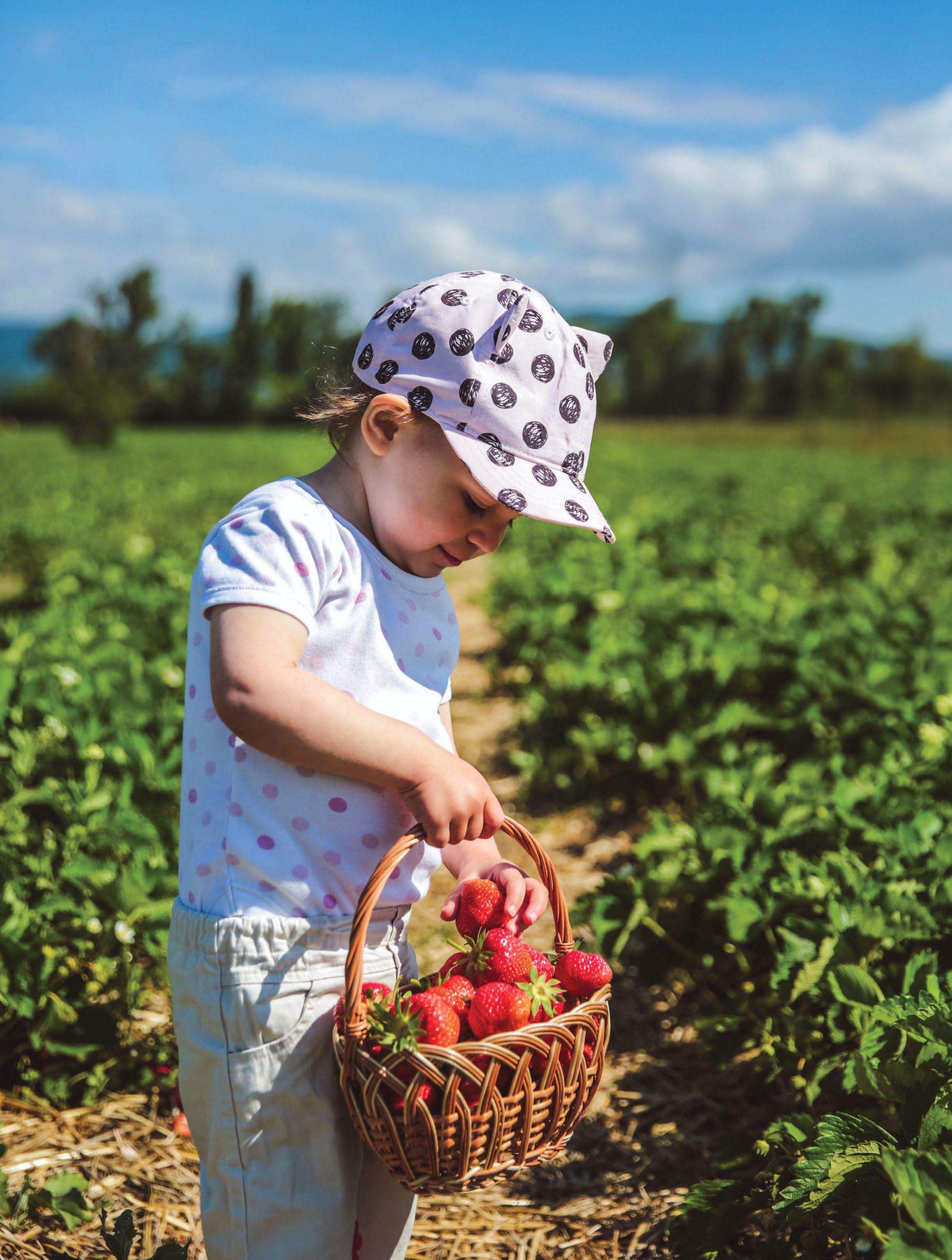
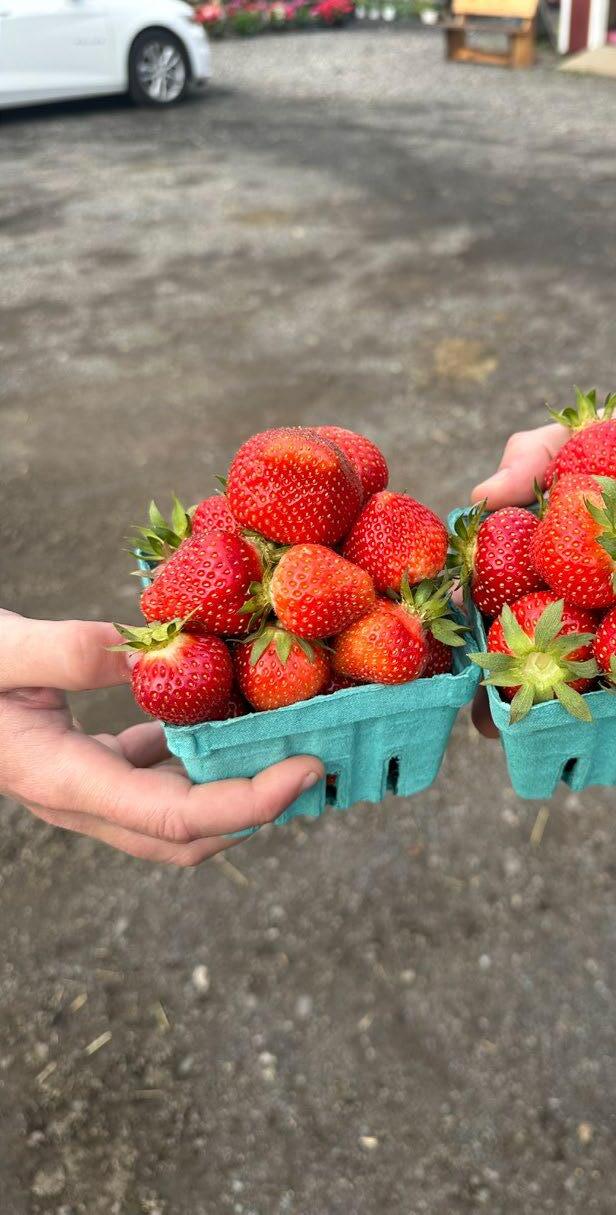
Here’s a recipe for a lovely summer day: Pack a little picnic, grab your best floppy hat or Phillies cap, slather on some sunscreen and take a mini road trip to a nearby farm to go fruit picking. This fun outdoor activity is a life-affirming blend of frolicking in a field and getting access to the freshest local fruit available — sun-ripened and honey-sweet, practically unrecognizable compared to what comes from a conventional supermarket. It’s also a great way to teach kids (and maybe even remind yourself) about the remarkable amount of labor
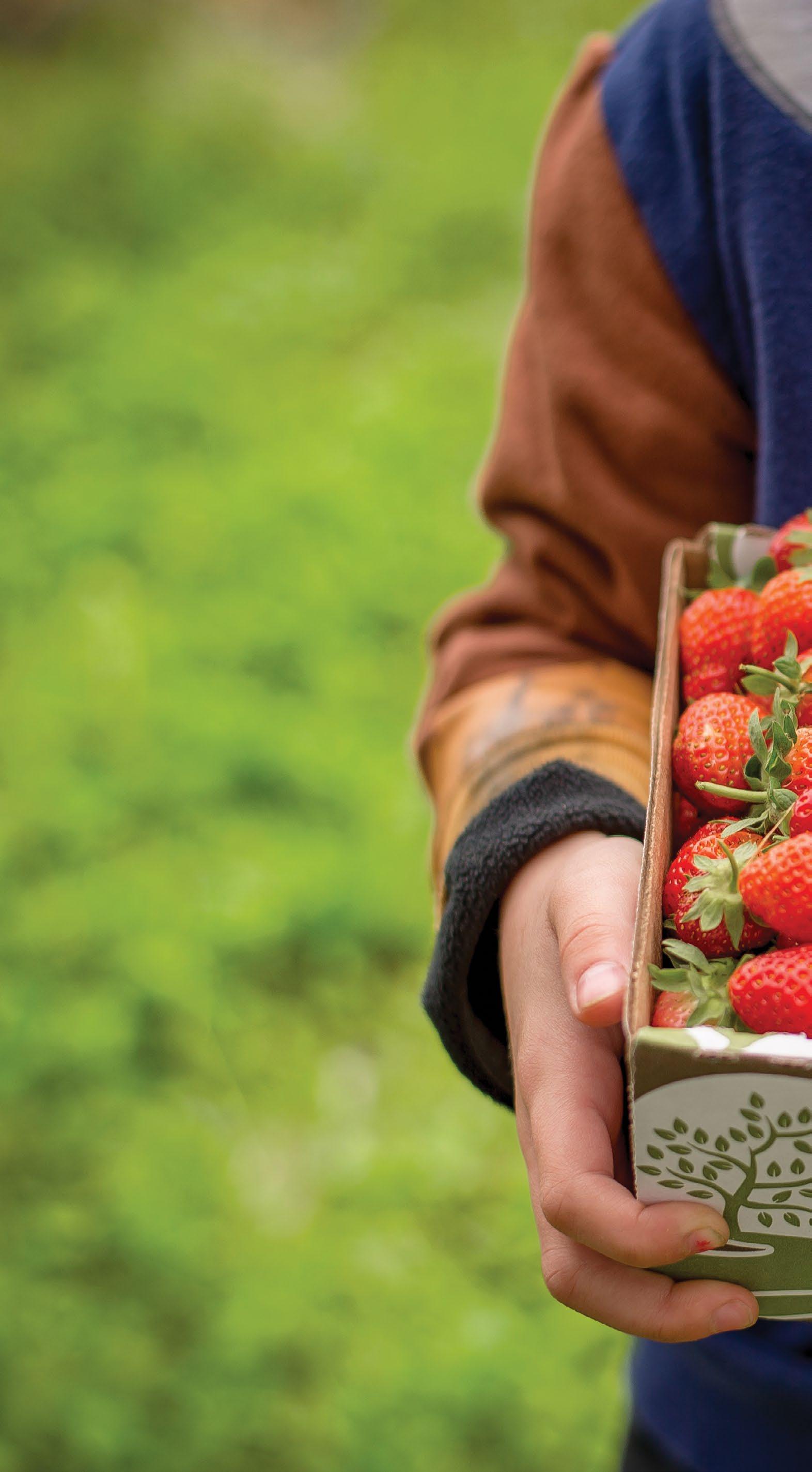
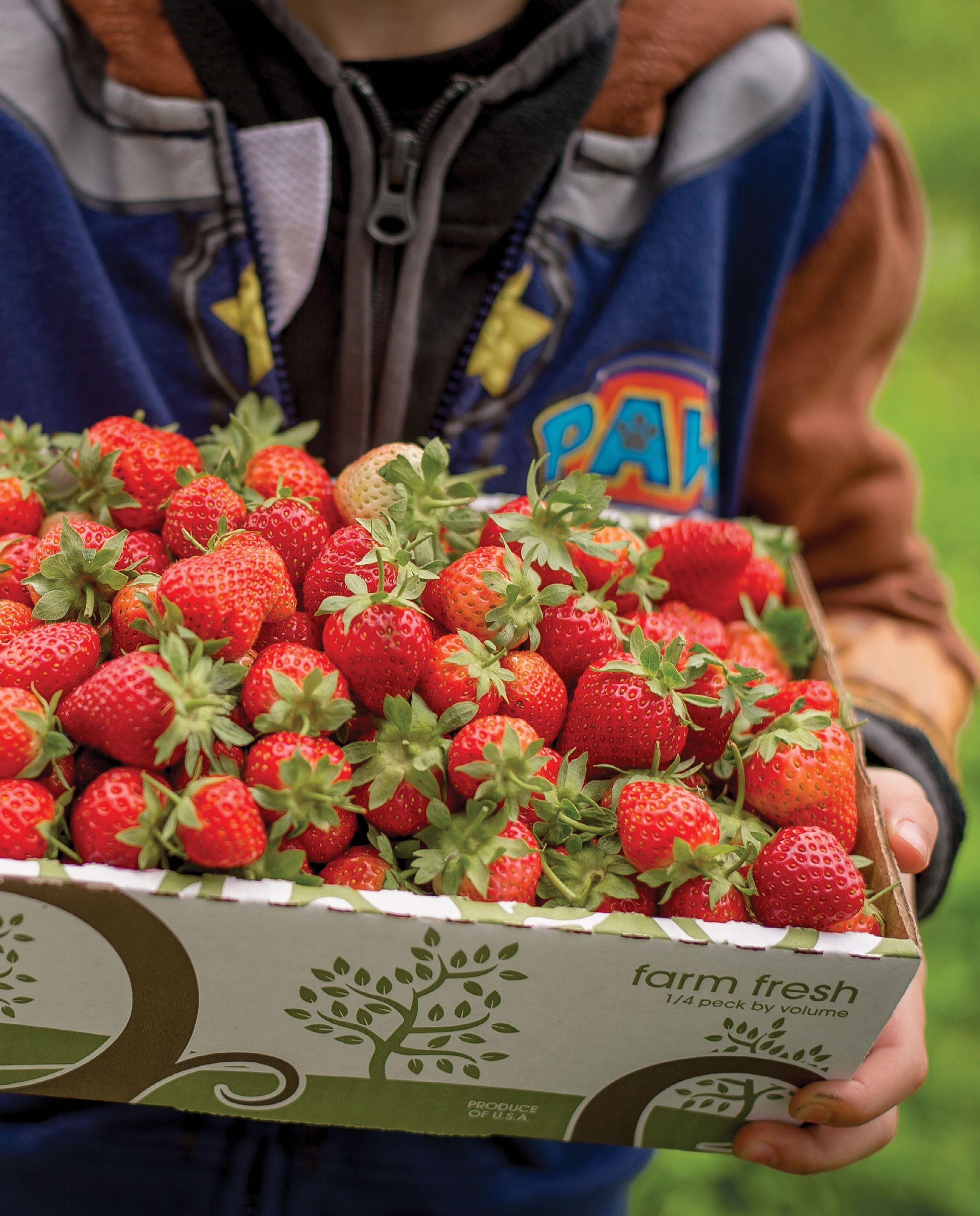
U-Pick produce is available by the container at Linvilla Orchards, where patrons can find activities for all ages.
that goes into harvesting crops by hand. There are a number of U-pick, or pickyour-own (PYO), farms within an hour or so of Philadelphia, and visiting them is a compelling way to get acquainted with growers in the area. To make a day of it, see if the farm has a produce stand or market with an events calendar, and stop in to see what’s going on — many farms host classes and workshops.
Between increasingly-extreme weather events, skyrocketing fuel and fertilizer prices, and labor complications due to immigration policies, farms of all sizes are feeling immense pressure and uncertainty and need our support now more than ever. The single greatest challenge this year is due to unseasonably cold temperatures in April. The Philadelphia Inquirer reported that the late-spring freezing temperatures destroyed most of Linvilla Orchards’ peach and apple crops. Farms across Pennsylvania and New Jersey are feeling the devastating effects.
When to Go
When is the best time to go fruit picking? That depends on what crops you’re looking for. The general picking windows for summer fruits look like this: strawberries in late May through early June; cherries in mid- to late June; raspberries in early to late July; blackberries in mid- to late July; and blueberries from early July to mid-August.
What to Bring
• Many U-pick farms are working farms, and visitors should prepare accordingly. Wear sunglasses, weather-appropriate clothes and comfortable walking shoes that can get dirty.
• Bring ample water and sunscreen.
• A hat, rain jacket and snacks are also worth packing (“sampling” berries in the field is a big no-no).
• Nearly all ripe fruit can be removed from the vine/bush/tree by hand, so bringing knives, shears and other tools is not necessary.
• Most U-pick farms provide containers to fill, plus boxes or bags to transfer your harvest into to take home, so there’s no need to bring those.
• Pets are prohibited at nearly all farms. Leave the pup at home.
U-PICK FARMS AROUND PHILADELPHIA
Linvilla Orchards
Perhaps the most “agri-touristy” farm in the Philadelphia region, Linvilla Orchards is an institution. This 300-acre family farm offers a year-round slate of family-friendly activities, from hayrides and trout fishing to mini golf and pony rides. There’s plenty for adults, too: The event calendar is perpetually packed, there’s a breezy beer garden, and the on-site garden center, farm market and bakery are bigger than most you’ll find at other farms.
Linvilla also grows a lot of food, much of which is available to pick throughout the seasons. Asparagus, peonies and strawberries arrive first in spring, followed by cau-
liflower, lettuces, fresh herbs, cherries and blueberries in June; blackberries, apricots, plums, eggplant, sweet corn, sunflowers and garlic in July; and grapes, cucumbers and pears in August. No matter the crop, tickets are required ($11-$13 per person), a base container is provided and additional containers can be purchased.
Although the crops are sprayed, Linvilla incorporates other sustainability measures, including rainwater collection, recycling, composting, geothermal heating and cooling for its buildings, and solar panels that power its greenhouse.
linvilla.com
137 W. Knowlton Rd., Media, PA; (610) 876-7116.

Ramsey’s Farm
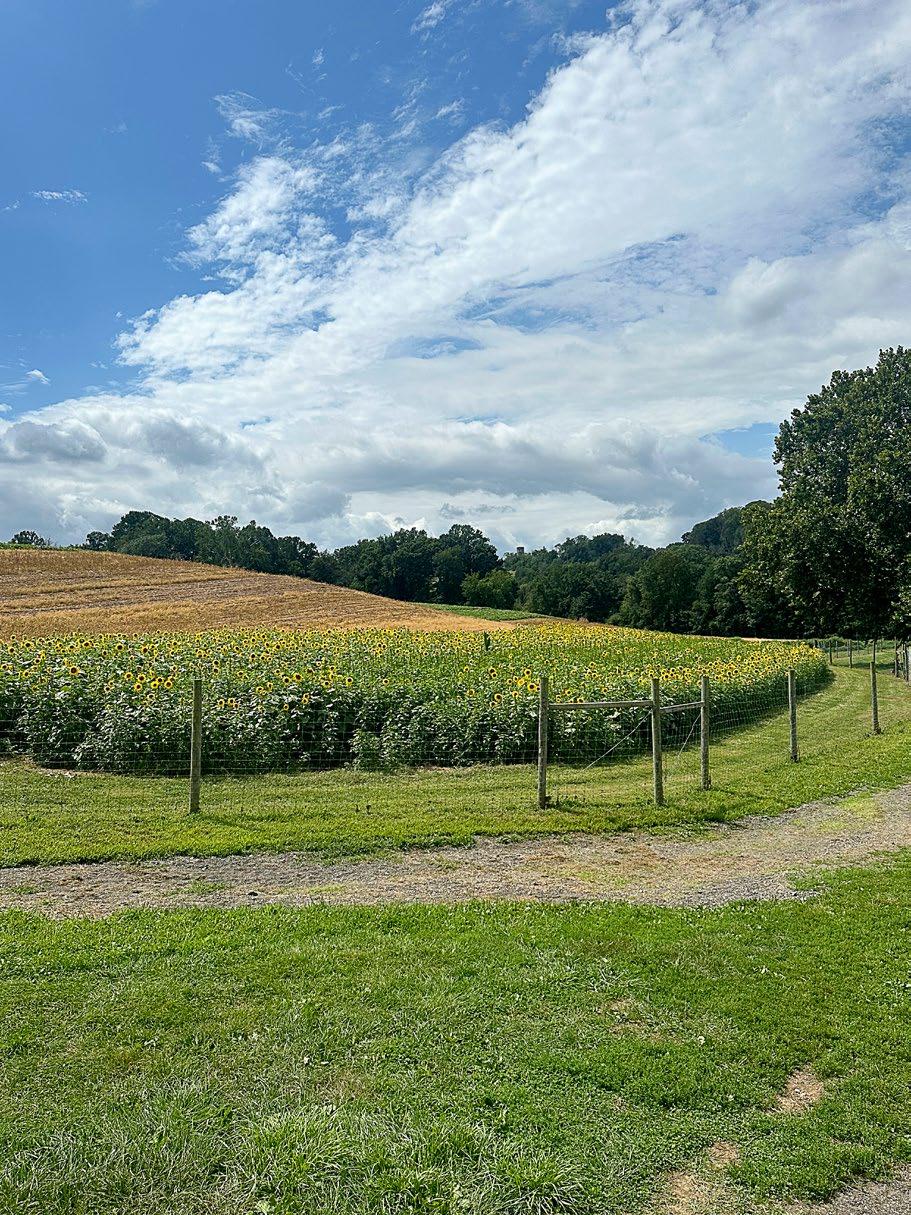
Tucked into the Brandywine Valley in Delaware, just minutes from the Pennsylvania border, Ramsey’s Farm is a sixth-generation operation that was founded in 1860. Its 12acre pumpkin patch is perhaps Ramsey’s main draw, but the farm stays busy in the summer, too, with PYO strawberries, blueberries, blackberries and raspberries. The owners estimate that U-cut flowers — including sunflowers, zinnias, snapdragons and more — will be ready this year in early June and continue through mid-October.
Summer also brings the opening of the farm stand, complete with fresh produce, local goods, Ramsey’s own wagyu beef and ice cream from nearby Woodside Farm. Floral arranging classes and weekly goat yoga with the farm’s herd of mini goats are also popular events. When the weather turns cooler, bonfire nights, a massive corn maze and the annual Pumpkin Run offer the community even more reasons to visit.
ramseysfarm.com
440 Ramsey Rd., Wilmington, DE; (302) 496-6426.
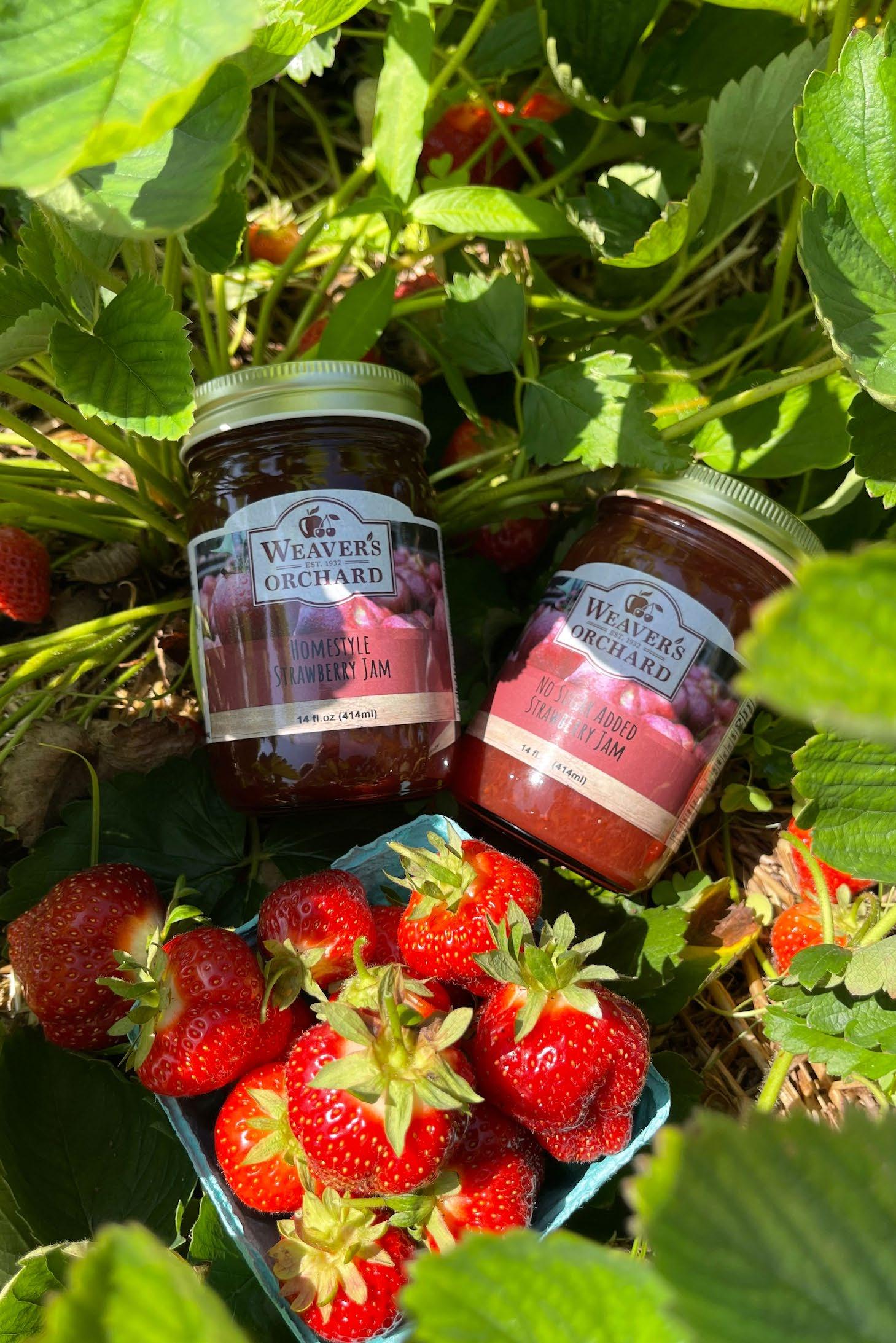
Opposite: Berries, flowers and pumpkins can be found in the sprawling fields of Ramsey’s Farm. Jam made from fresh Weaver’s Orchard berries is available for purchase at its farm market.
Weaver’s Orchard
Weaver’s Orchard traces its history back to 1932, when Daniel Weaver purchased the farm’s Berks County property. Today, it’s a bustling destination for pick-your-own excursions, children’s activities and an array of agricultural programming.
Berries are the main event at Weaver’s: Strawberry, black raspberry, red raspberry and blueberry bushes, along with cherry trees, stay busy throughout the summer. Stone fruits, apples, pears and kiwiberries stretch into the autumn. All adults 16 years and older must obtain a wristband before heading into the fields and may only use the pre-paid containers provided by the orchard. Repeat visitors may consider the PYO club, which costs $15 for the season and awards a 10% discount on all PYO fruit. While picnicking in the fields is not permitted, a day spent berry picking can be extended with a trip to the farm market, which is stocked with homegrown produce, fresh baked goods and local groceries. A scoop or two at the Orchard View Ice Cream Deck, open May through October, ends the experience on a sweet note.
weaversorchard.com 40 Fruit Ln., Morgantown, PA; (610) 856-7300.
Highland Orchards
Highland Orchards’ local claim to fame is undoubtedly its apple cider donuts, but there’s a lot more to explore at this Chester County farm, including a number of pickyour-own fruits. You’ll find most of the usual suspects here, like summer berries and cherries, plus some slightly rarer options, such as rhubarb (available mid-May through mid-June) and sweet corn (late July through early September).
The farm has a relatively large footprint, and navigating the various buildings can be a little tricky on busy days. For PYO on weekends, make a beeline for the Red
Shed; on weekdays, start at the Farm Market. There, you’ll pay the $3 field access fee, receive a token for the shuttle and purchase containers. Shuttle service is offered only on weekends; on other days, guests may drive themselves. The shuttle makes the rounds to the various fields where crops are in season, and guests are welcome to hop on and off as they wish.
highlandorchards.net
1000 Marshallton-Thorndale Rd., West Chester, PA; (610) 269-3494.
Strawflower Farm
Strawflower Farm is a four-acre regenerative family farm just 45 minutes outside of Philly. Its PYO fruit operation is on the low-key side: There are herbs, blueberries and blackberries. The farm’s main specialty, as its name implies, is flowers — wander the fields of fiery snapdragons, elegant larkspur, multicolored scabiosa, bright cornflowers and many more. Flowers can be snipped into bouquets or toted home by the bucketful.
The farm doubles as a venue space for small gatherings, like bridal showers and birthday parties, and its tables and chairs are available to everyday guests for relaxing or enjoying a picnic. Guests are invited to meet the farm animals, including alpacas, miniature and Angora goats, and a large pet turkey named Jack. Workshops and gatherings, like writers retreats, meditation circles, painting classes and sound baths, populate the events calendar.
Strawflower Farm uses organic and Korean natural farming techniques, including making soil amendments from farm materials like eggshells, vermiculture compost, leaves and wood chips. In 2023, it received the first-place award for “Best Regenerative Agrarian Garden” from Penn State Extension Master Gardeners of Delaware County.
strawflowerfarm.net
51 Broomall Ln., Glen Mills, PA; (610) 566-7210.
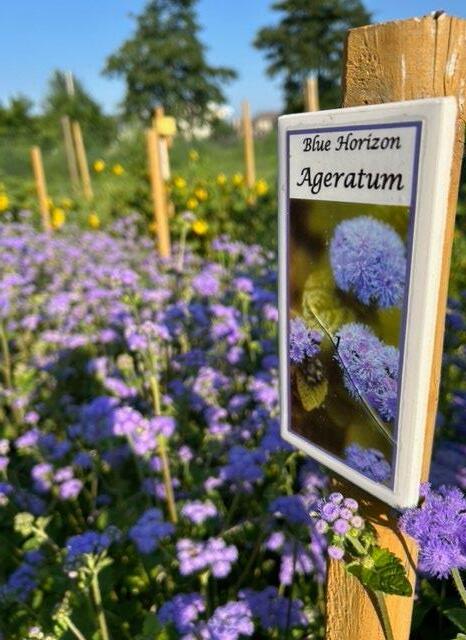
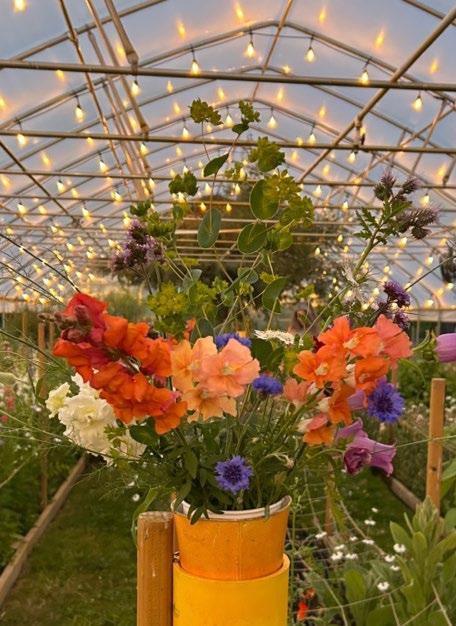
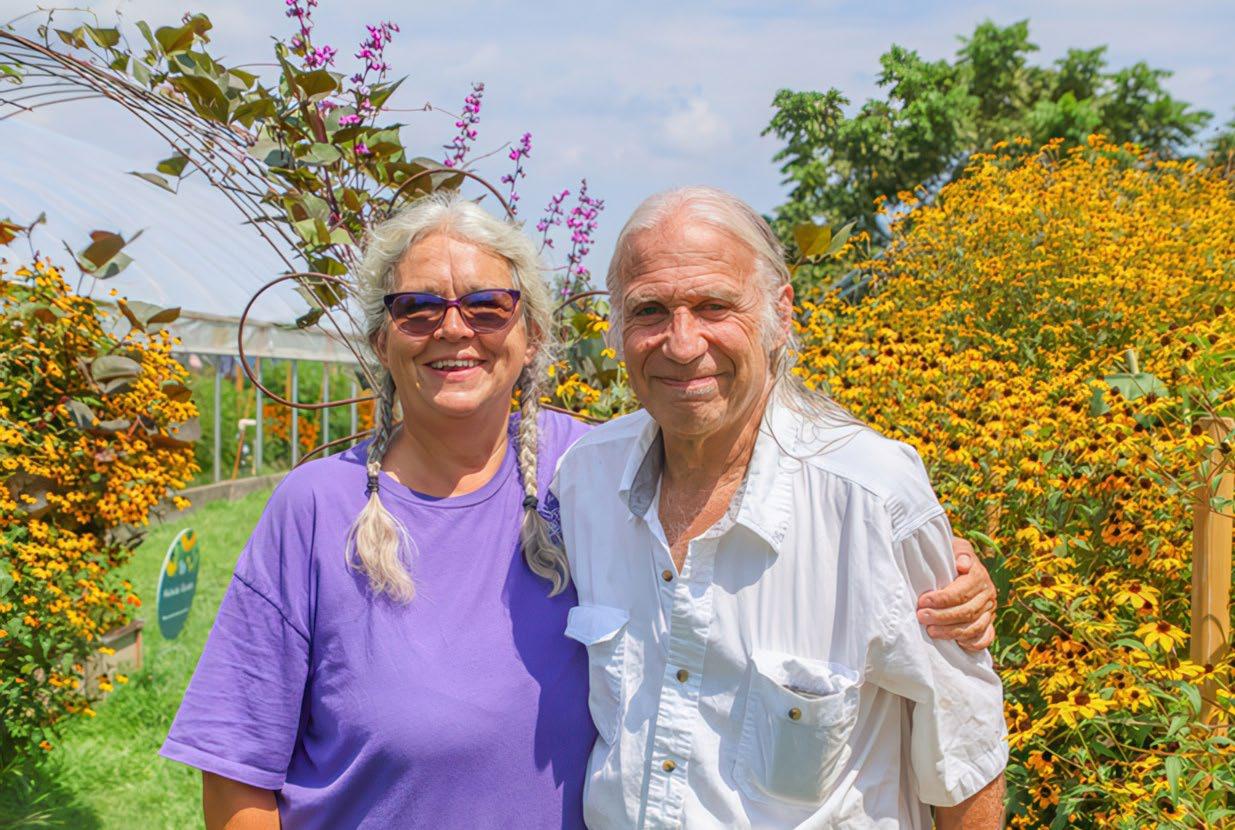

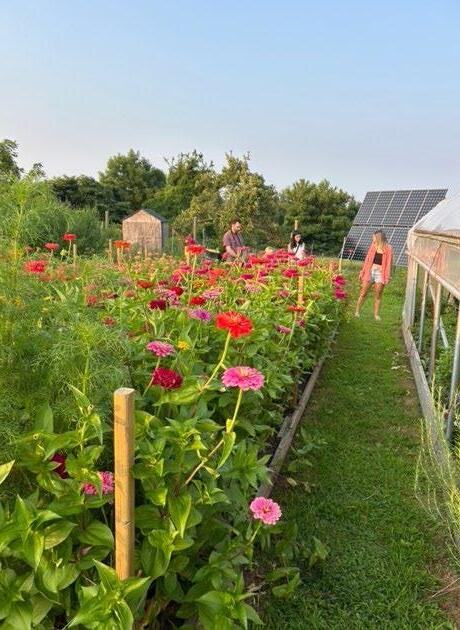
Strawflower Farm specializes in flowers, which are available for picking, and also hosts events.
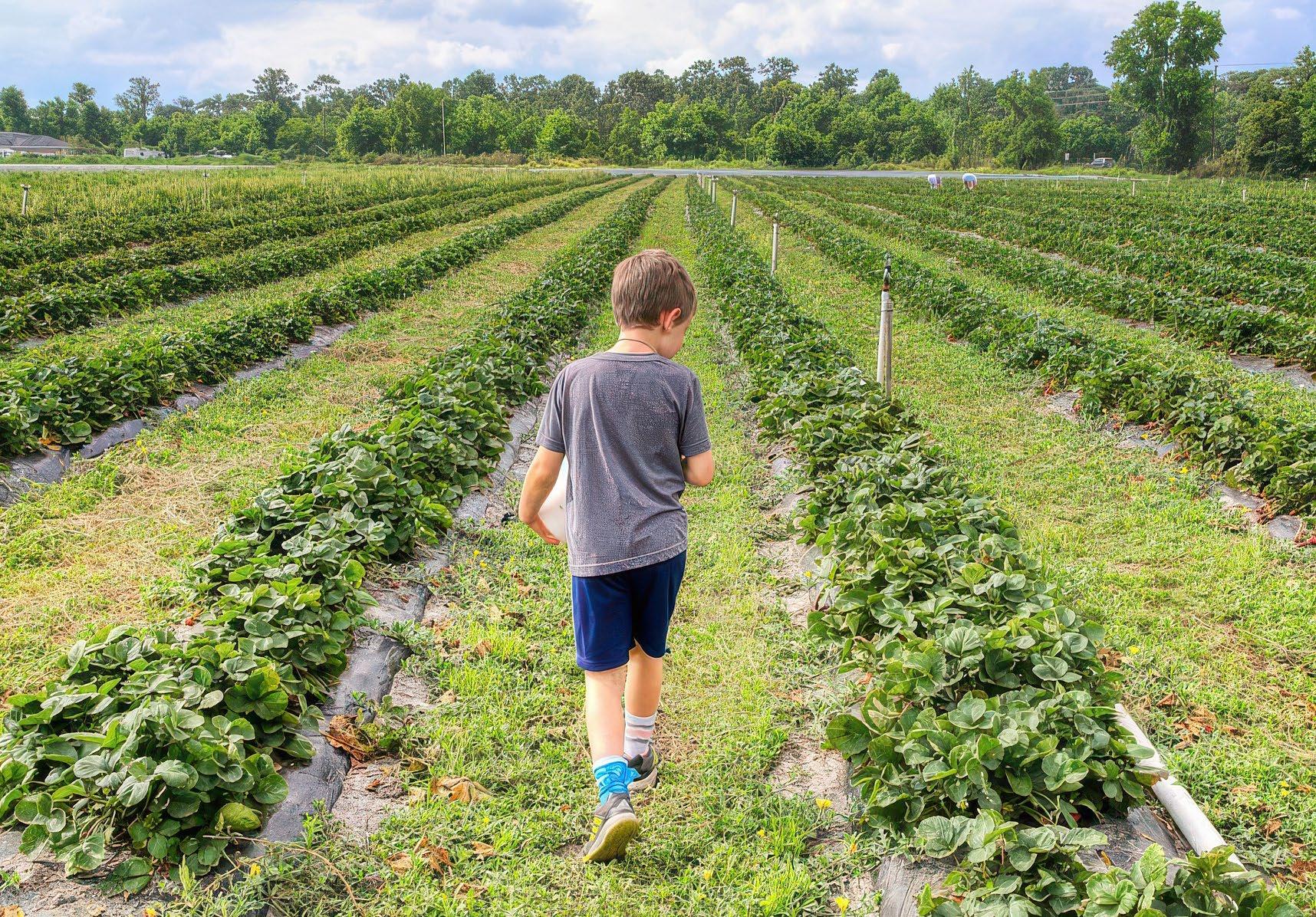
Penn-Vermont Fruit Farm
Not far from Doylestown, find Penn-Vermont Fruit Farm, a working PYO farm with fewer commercialized activities and less infrastructure than some of the others on the list. Set amid miles of verdant hills and farmland, driving there truly feels like a trip to the countryside. The farm is open every day, and whatever is ripe and in season is what’s available for picking — strawberries, wildflowers, black raspberries and peaches are usually growing in the summer, as well as some vegetables.
In the fall, apples and pumpkins are a big attraction, as is the fresh apple cider, which is milled right on-site. The farm stand, which is set up along the side of a historic stone barn, vends homemade goods, including salsa, spaghetti sauce and jam, as well as local brown eggs and honey. Please note that Penn-Vermont Fruit Farm is cash or check only. Come prepared.
While you’re in the area, it’s worth checking out some stunning nearby natural at-
tractions like the Nockamixon State Park waterfall and Lake Galena in Peace Valley Park. Both are an approximate 15-minute drive from the farm.
Find Penn-Vermont Fruit Farm on Facebook 831 Rolling Hills Rd., Bedminster, PA; (215) 795-2475.
Indian Orchards Farm
Just south of Media, find Indian Orchards Farm, a fifth-generation family-owned farm that’s been in operation since 1913. Its PYO season kicks off mid-June, and the list of crops available is long. In addition to berries and cherries, you can pick summer vegetables like zucchini, heirloom tomatoes, onions, peppers and cucumbers, as well as stone fruits such as peaches and nectarines. While the farm is not certified organic, it does utilize sustainable, pesticide-free growing methods and sprays minimal chemicals, with a focus on soil health and long-term stewardship of the land.
Before you hit the fields at Indian Orchards, stop by the farm stand to pay the admission fee ($3.50 per person), acquire a picking basket and find out what’s in season that day. All the fruit is priced by the pound or pint, and you only pay for what you pick. The rustic farm stand also stocks extra produce and locally made goods, such as honey, jam, maple syrup, cider and firewood.
indianorchardsfarm.com
29 Copes Ln., Media, PA; (610) 324-2484.
Frecon Farms
If you’ve visited Frecon Farms at any of its farmers market stands in Philly, you are likely acquainted with its scrumptious fruit, baked goods and hard cider. This summer, visit its sprawling, third-generation farm to see where these delights originate and pick fruit in the cool of the evening with a festive atmosphere, to boot. Starting July 10, Frecon Farms will host Sunset Blueberry Picking Fridays from 4 to 8 p.m. Guests will have
Pick your fill of strawberries and more at Indian Orchards Farm.
access to the blueberry fields, wagon rides and a kids’ play area. A hard cider tap truck, lawn games, live music and dinner concessions make it a party.
On Friday, Aug. 7, a similar weekly Orchard Happy Hour will launch, also from 4 to 8 p.m., with U-pick zinnias, access to over 20 acres of orchards and the same festivities as the blueberry-picking nights. Regardless of when you go, pay a visit to the farm market and bakery, abundant with seasonal produce, scratch-baked pastries, pies and breads, canned and bottled hard cider, deli sandwiches and much more.
freconfarms.com
501 S. Reading Ave., Boyertown, PA; (610) 367-6200.
Specca Farms
Driving down the country roads of Bordentown, New Jersey, it could be easy to miss Specca Farms. There isn’t a huge parking lot, no playgrounds or a giant barn to tip you off, and only a simple wooden sign heralds the entrance to the property. But while there are few bells and whistles at this family farm, there are bountiful fields to wander through and pick from.
Despite the chilly spring, strawberry picking season at Specca Farms opened during the second weekend in May and is projected to last through early-to-mid June. Later in the season, the green acreage is bursting with flowers, herbs, beets, melons, kale, tomatoes, peppers, cucumbers, corn, cauliflower, eggplant, snow peas and more. Specca’s roadside stand, The Corn Stop, sells a variety of produce right from the farm.
For strawberries, picking passes are $5 per person, and each person who plans to enter the fields must purchase one. The fee can be paid at the small farm stand near the farm’s entrance, and staff are available to answer questions and show visitors around. No payment is required for all other crops; those prices are set by weight. ◆
speccafarms.com
870 Jacksonville-Mount Holly Rd., Bordentown, NJ; (609) 267-4445
GREEN PAGES
BEAUTY
Hair Vyce Studio
Multicultural hair salon located in University City servicing West Philly & South Jersey since 2013. We specialize in premier hair cuts, color & natural hair for all ages. (215) 921-9770 hairvyce.com
BOOKS
Books & Stuff
The Giving Book Shop! Help me donate books next month by purchasing books I donated this month! books-stuff.com
COMPOSTING
Back to Earth
Compost Crew
Residential curbside compost pick-up, commercial pick-up, five collection sites & compost education workshops. Montgomery County & parts of Chester County. First month free trial. backtoearthcompost.com
Bennett Compost
The area’s longest running organics collection service (est 2009) serving all of Philadelphia with residential and commercial pickups and locally-made soil products. 215.520.2406 bennettcompost.com
EATS
Fifth of a Farm
Our jams are a tribute to Philly, capturing its rich heritage in every jar. Whether you’re a longtime resident or passing through, take home a taste of the local tradition. Find yours @ fifthofafarm.com
EDUCATION
Kimberton Waldorf School
A holistic education for students in preschool-12th grade. Emphasizes creativity, critical thinking, nature, the arts & experiential learning. Register for an Open House! (610) 933-3635 kimberton.org
ELECTRICIAN
Echo House Electric
Local electrician who works to provide high-quality results on private & public sector projects including old buildings, new construction, residential, commercial & institutional. Minority business. echohouseelectric.com
FARM
Germantown
Kitchen Garden
Urban farm with farm stand and plant nursery selling locally grown produce, bread, eggs, veggie and herb seedlings, perennials, trees and shrubs. 215 East Penn St., 19144 germantownkitchengarden.com
GREEN BURIAL
Laurel Hill
With our commitment to sustainability, Laurel Hill Cemeteries & Funeral Home specializes in green burials and funerals, has a variety of eco-friendly products to choose from, and offers pet aquamation. laurelhillphl.com
GREEN CLEANING
Holistic
Home LLC
Philly’s original green cleaning service, est 2010. Handmade & hypoallergenic products w/ natural ingredients & essential oils. Safe for kids, pets & our cleaners. 215-421-4050 HolisticHomeLLC@gmail.com
GROCERY
Kimberton Whole Foods
A family-owned and operated natural grocery store with seven locations in Southeastern PA, selling local, organic and sustainably-grown food for over thirty years. kimbertonwholefoods.com
MAKERS
Mount Airy Candle Co.
Makers of uniquely scented candles, handcrafted perfumery and body care products. Follow us on Instagram @mountairycandleco and find us at retailers throughout the region. mountairycandle.com
Makers, small businesses and green entrepreneurs: Place your ad
Shine On, Summer Produce
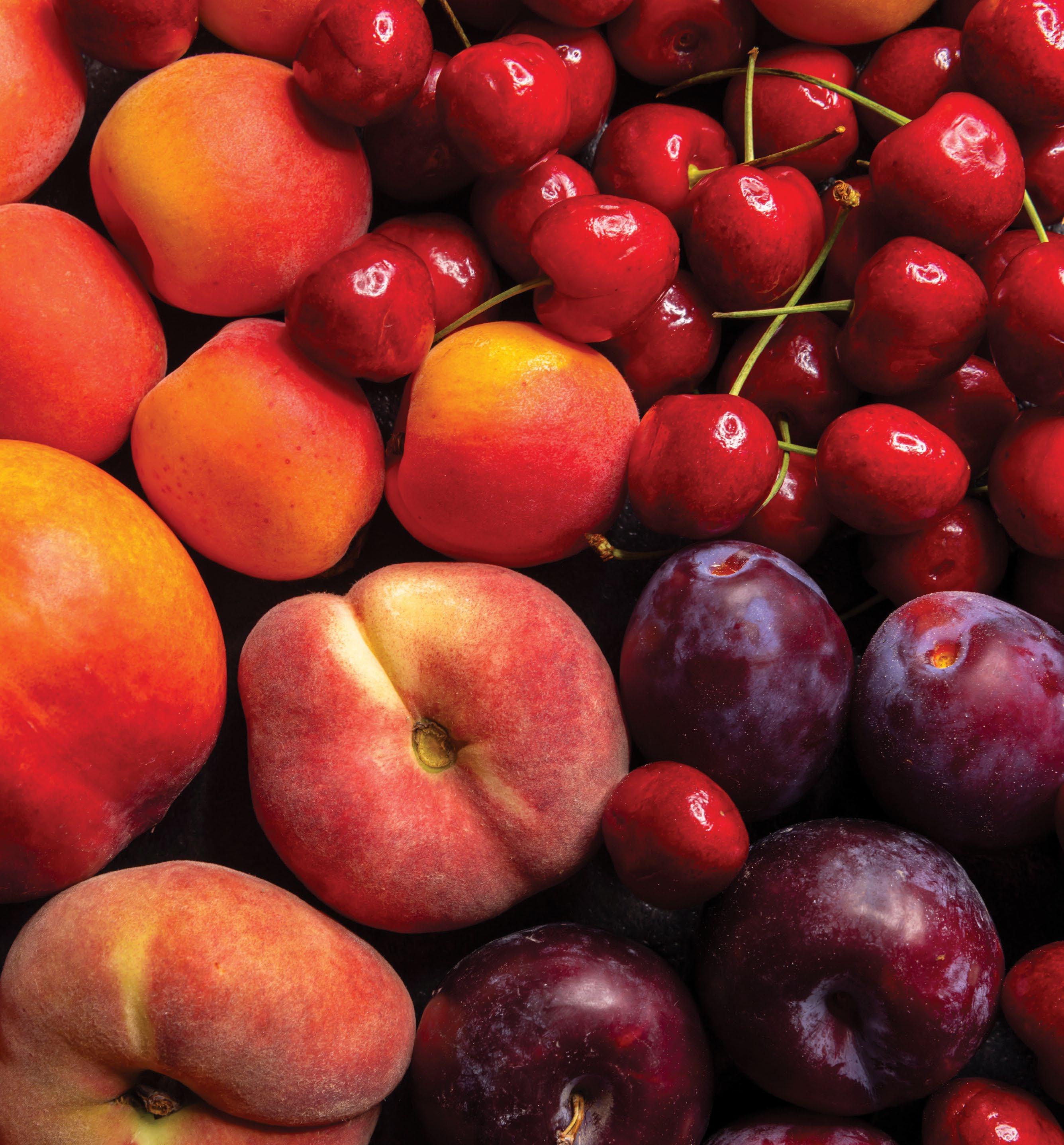
Summer is sweeter with fresh, local peaches, plums, berries and more! Stop by and see what we have in store.
Ambler • Chestnut Hill • Germantown • Mt. Airy

Turning trash into treasure
Three years after launching her professional career in the waste and resource recovery sector, Penn undergraduate Erica Higa (BSE ’18, MES ’25) was ready to return to her alma mater to advance her education “I absolutely loved the work that I was doing and all I was learning about—from both the waste world and from the corporate sustainability world—and wanted to dive deeper into that area of expertise, so I applied to Penn’s Master of Environmental Studies [MES] program,” she says.
At Penn, Erica knew she would find interdisciplinary and applied learning opportunities, environmental expertise, and a commitment to student success. For the next three years, she continued to work at her waste management company remotely while completing her master’s degree part time. During her MES, Erica took courses in ecology, environmental justice, business, and behavioral and decision sciences, all relevant to advancing her knowledge base in corporate sustainability and resource management. Applied learning opportunities allowed her to bring real-world challenges from her employer into the classroom. And her culminating capstone project covered scope 3 emissions reporting in the waste industry, research she presented at the Global Waste Management Symposium this past winter.
Shortly after graduating in May 2025, Erica started a new job as a project engineer with Waga Energy, a company that recovers landfill biogas, upgrading it into renewable natural gas. As she continues a career she is passionate about, she credits Penn for offering the resources to discover her path. “The flexibility of the MES program really allowed me to explore a lot of different avenues in terms of the science side of environmental studies, but also the business side of bringing environmentalism into the corporate world.”
To learn more about Erica’s journey, visit: www.upenn.edu/grid
the MES program team from 12-1 p.m. on the first Tuesday of every month for an online chat about your interests and goals. Log in with us.