















John Cuddeback
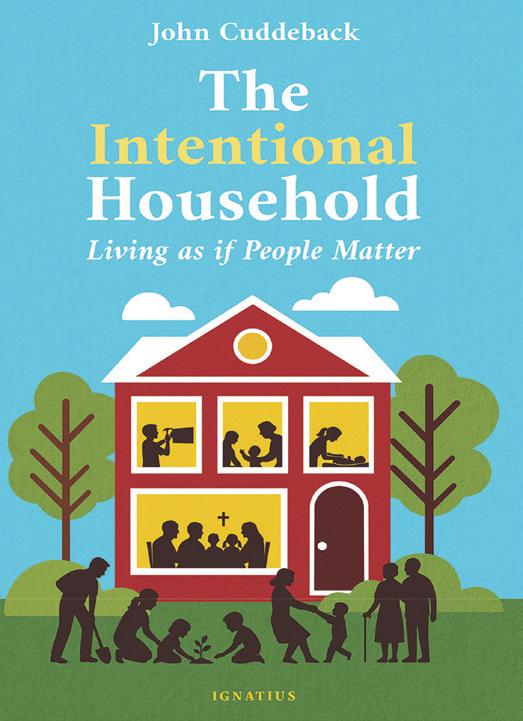
The household is the center of daily life, where relationships thrive through shared work and leisure. Focusing on 8 simple principles, Cuddeback invokes timeless wisdom to help breathe new life into our homes with profound insights for cra ing the shared life we naturally crave for ourselves and family.
Utilizing great thinkers from all ages— from Plato, Aristotle, Cato, Cicero, to Wendell Berry and Leonard Sax—he de ly reveals the inner workings of a vibrant home. With care and clarity, he grounds the practical cornerstones of shared life in the perennial principles of human nature and ethics to bring what truly matters, true happiness. INHP Sewn So cover, $17.95
“Sheds light on how families can approach work, leisure, technology and the Sabbath in a more spiritually life-giving way to encounter God and each other more by truly living as if people matter.” Edward Sri, Author, e Art of Living
“Cuts neatly through the cultural battle of the sexes. Drawing on ancient wisdom, Christian tradition, and lived experience, Cuddeback sketches a way forward for the restoration of culture, one home at a time.” —Carrie Gress, Author, eology of Home
“Cuddeback o ers enduring principles for reclaiming home as the place where we ourish as creatures.” Gregory Pine, O.P., Author, Your Eucharistic Identity
Sam Guzman
What does it mean to be an authentic man in our confusing times? e Catholic Gentleman is a solid and practical guide to manhood and holiness in the modern world.
CGEP .Sewn So cover, $17.95



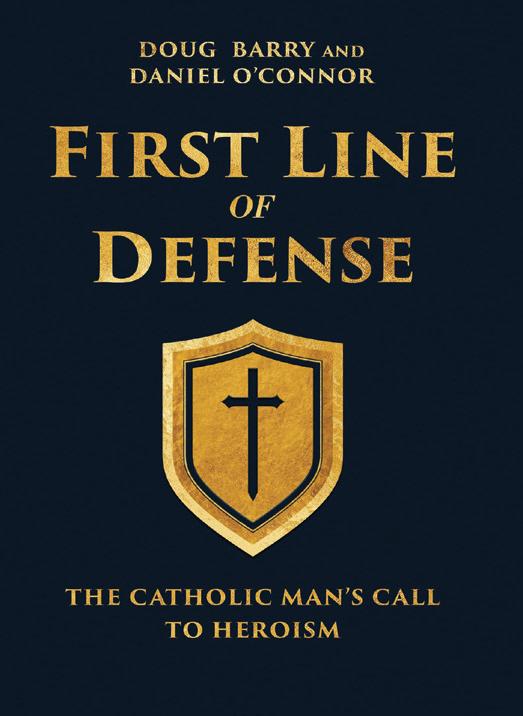

A man—especially a father —is called to defend, protect, and foster what is noble and good. It is for this he was created, not only spiritually, but physically. Men can only be truly happy when they have laid down their lives for the Kingdom of God. is work aims to spark a revolution, reawakening men to their deepest identity as soldiers of Christ. Men must rediscover the courage of the apostles, who risked pain, humiliation, and death in defense of the truth. With directness and clarity, Barry and O’Connor show what it means to live a heroic life of duty, courage, strength, sacri ce, and dedication—that is, to be a saint. FLDFP . . . Sewn So cover, $17.95
“An outstanding resource that speaks directly to a man’s heart. Filled with sage advice and practical wisdom, it equips men for spiritual battle.” —Deacon Harold Burke-Sivers, Author, Behold the Man
“ is is exactly the clarion call we need. It challenges men to shake o their apathy and heroically combat the rising tide of evil threatening all that is good and true.”
Sam Guzman, Author, e Catholic Gentleman
“Holiness and heroism are united in Christ. In this book, we are shown how men can become truly masculine by becoming true heroes of holiness.”
Joseph Pearce, Author, Great Books for Good Men
◆
John Cuddeback




De ly weaves the timeless wisdom of the Greeks, Sacred Scripture, and great saints to show you the path to the most rewarding of human achievements—being a true friend. TFP Sewn So cover, $16.95


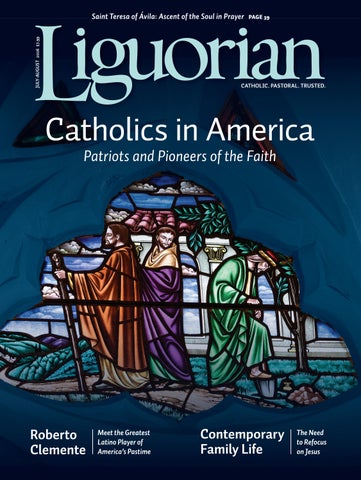
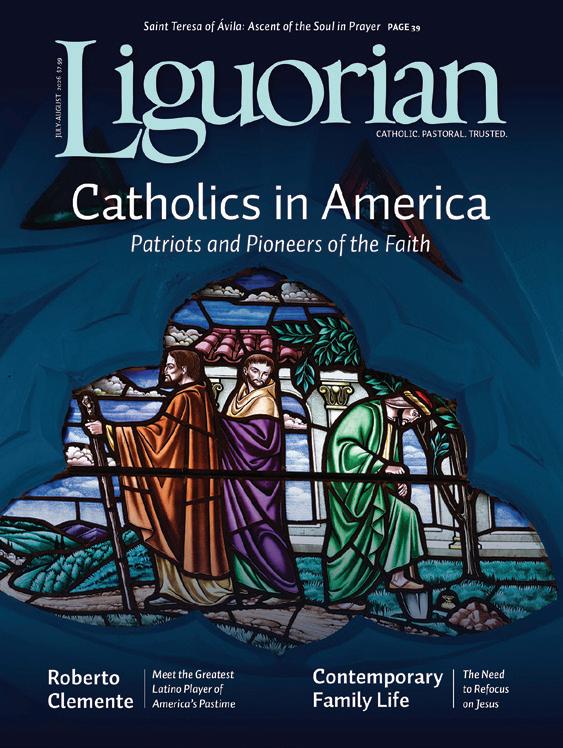
CATHOLICS IN AMERICA
Patriots and Pioneers of the Faith
Part four of a six-part series: A look at what the situation was like for our ancestors in the faith when the new republic was born
MEDITATION
Grace in the Ordinary
A grocery store parking lot becomes holy ground
LESLIE WILLIAMS
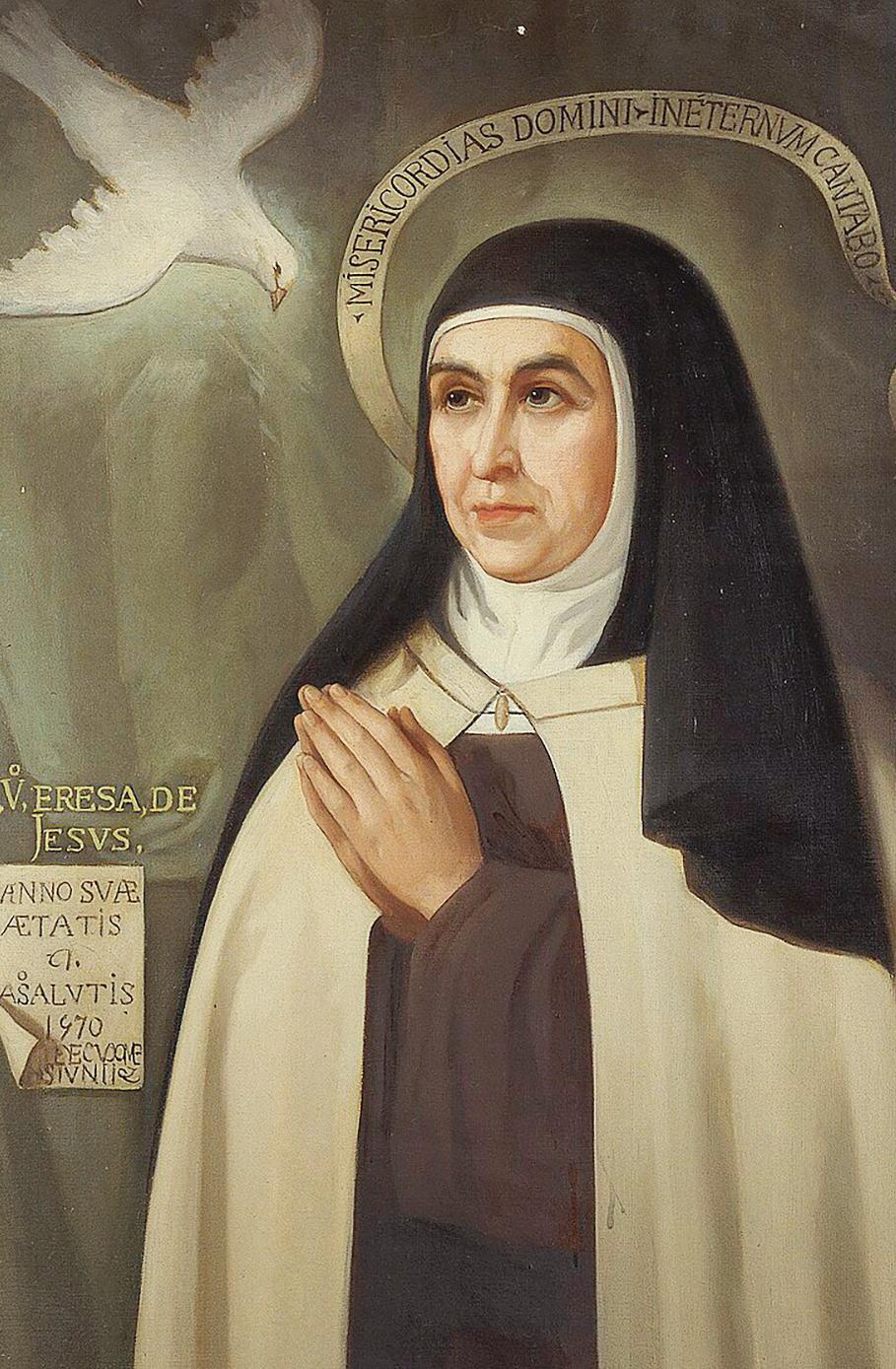
PRAYING WITH THE MYSTICS Saint Teresa of Ávila
Ascent of the soul in prayer
LIGUORI PUBLICATIONS STAFF
the created second
What Do Catholics Believe?
A hierarchy of beliefs and practices
FR. THOMAS M. SANTA, CSs R
¿Santo Roberto?
Meet the greatest Latino player of America’s pastime
WILLIAM D. TOWNSEND
The Eucharistic Question on My Driver’s License
A checkbox on a form leads to a lifegiving decision
THE CATHOLIC OBSERVER Your independent source of news and views on the Catholic Church GARY GATELY
[Prayer]
EUCHARISTIC POETRY
Let Me Be Bread
JEANETTE MARTINO LAND 40
FICTION
Plain Old Frank
A thrift shop owner and a shoppingcart pusher work for the same cause
DAVE BACHMANN
PRAYING WITH THE MYSTICS PAGE 39
WORD FROM THE PUBLISHER
MIGRANTE
Many, One”
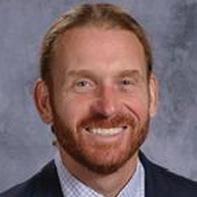
Scott Czarnopys (“Face to Face”) brings sixteen years of Catholic education leadership to his role as education ministry director at Saint Patrick Parish in Parnell, Michigan. He is married to his beautiful wife, Arley, and has two children, Haven and Daxton. His columns are drawn from the everyday moments of faith, fatherhood, and community that shape his life.
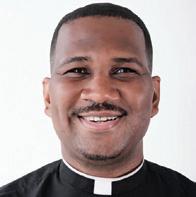
Fr. Peter D. Hill, CSsR (“Plain Talk”), is a Redemptorist missionary who has served as parish priest of Holy Cross Roman Catholic Church, Santa Cruz, Trinidad and Tobago; director of Holy Redeemer Retreat House, Dominica; and formation co-director at North American Redemptorist Formation House in San Antonio, Texas.
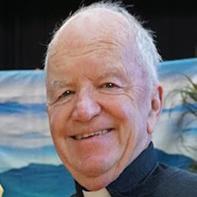

youth ministry, bilingual parish missions,
Fr. Michael McAndrew, CSsR (“Padre Migrante”), has served for thirty-plus years in Redemptorist Hispanic ministry initiatives, youth ministry, bilingual parish missions, and farmworker ministry. He works with the Catholic Migrant Farmworker Network, has directed a Campesino ministry, and recently published a book with Liguori Publications: Walk With My People: A Life in Migration Ministry (828720).
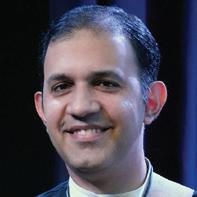

Fr. Sandeep Menezes, CSsR, (“Social Media Perspectives”) is a Redemptorist priest of the Bangalore Province, India. He currently serves as the assistant director of the Redemptorist Media Center under the Holy Redeemer Foundation and as chief editor of Redemptorist Publications in India. Widely recognized as a dynamic youth minister and missionary, he engages in ministry that extends beyond traditional preaching into the digital space, where he is an active social in uencer, using media as a powerful tool for evangelization.
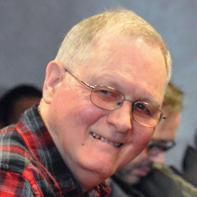

Br. Raymond Pierce, CSsR (“The Lighter Side”), is a native of Saint John, New Brunswick, Canada. His ministry is storytelling via email. Every week, he sends “Morning Smiles” emails of humor and personal stories to nearly 1,000 senior citizens.
Research shows that reading whole books boosts comprehension, leads to improved empathy through imagination, and builds intellectual stamina through concentration.
FR. SANDEEP MENEZES, CSsR
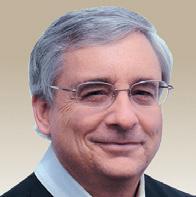
Fr. Thomas M. Santa, CSsR (“A Word from the Publisher”), was named president and publisher of Liguori Publications in January 2024, his second assignment as the company’s leader. Professed as a Redemptorist in 1973, his ministries have included retreat work and writing re ections for the Scrupulous Anonymous newsletter.
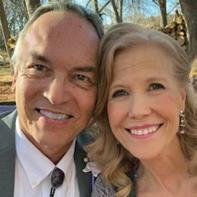
Tim and Julie Smith (“Kitchen Table Gospel”) have been professional music ministers in the Phoenix area for more than thirtyve years. They have written and recorded dozens of music collections, including liturgical music, theater music, children’s music, and bilingual music, and their songs have been published in multiple hymnals.
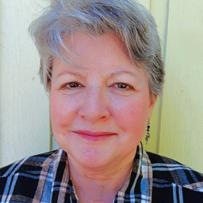
Vinita Hampton Wright (“Redemptive Living”) worked in religious book publishing for more than three decades. She is retired and continues to write, edit, and present retreats and workshops on creativity, writing, and prayer. She works as a spiritual director in Northwest Arkansas.




Publisher

Wendy Barnes


Since 1913



Fr. Thomas M. Santa, CSsR
Director of Digital and Creative Services
Associate Editors
Fr. Byron Miller, CSsR
Paige Byrne Shortal
Andrew Tran-Chung, CSsR
Manuscript Editor
Amy Deputato
Director of Media
Fr. Charles Kumar, CSsR
Journalist
Gary Michael Gately
Design, Production, and Post-Production
Kate Brown
John Gantz
Kathy Lane
Director of Sales and Marketing, Liguorian Ad Sales
Chuck Healy
Circulation
Emily Drury
Sales and Customer Service Coordinator
Donna Hurley
Contracts, Rights, and Permissions
Jeffrey Morrison
Editor-In-Chief, India
Fr. Sandeep Menezes, CSsR
Editorial O ces
United States
200 Liguori Drive, Liguori MO 63057 India
Thomas Town Post, Bengaluru, India, 560084 © 2026 Liguori Publications, a ministry of the Redemptorists. All rights reserved. 636-464-2500. Liguori.org.
Unless noted, Scripture quotations are from The New American Bible, Revised Edition © 2010, 1991, 1986, 1970 Confraternity of Christian Doctrine, Washington, DC. Used with permission.
Subscription Questions?
Visit Liguorian.org. Call: 800-325-9521
Email: Liguorian@Liguori.org
Write: Customer Service, 200 Liguori Drive, Liguori MO 63057
Print + Digital Subscription
One year: $38; Outside US: $53 (US funds only).
If you prefer that your name and address not be available to select organizations, please mail your address label to: Mail Preference Service, Liguorian, 200 Liguori Drive, Liguori MO 63057
Liguorian is available on CD from Xavier Society for the Blind, 154 E. 23rd Street, New York, NY 10010, or call 800-637-9193 for materials for the blind only.
Advertise in Liguorian
Call Oremus Advertising at 781-822-0680 or email evelyn@oremusadvertising.com.
Publication Mail Agreement #40112731.
Canadian Return Mail Request: PO Box 122, Niagara Falls, Ontario L2E 6S8 Canada ISSN 0024-3450
Printed in the US at Kingery Printing.
Support Our Ministry
Please help us continue Liguorian and other Liguori Publications ministries by making a tax-deductible donation or remembering us in your will. Our legal title is Redemptorist Fathers dba Liguori Publications, Federal ID 43-0653409.
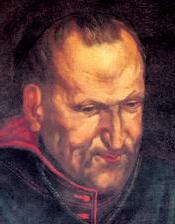
Liguorian is named after our founder and patron saint, St. Alphonsus Liguori (1696–1787), Doctor of the Church, bishop, patron of confessors, moral theologian, proli c writer, pastoral theologian par excellence, and founder of the Redemptorist Congregation. It is in his spirit and inspired by the charism he shared with us, “With him there is plentiful redemption for all,” that this magazine and all pastoral educational products of Liguori Publications proudly claim we always strive to be Catholic, Pastoral, Trusted.
To learn more about the Redemptorists,visit Redemptorists.com
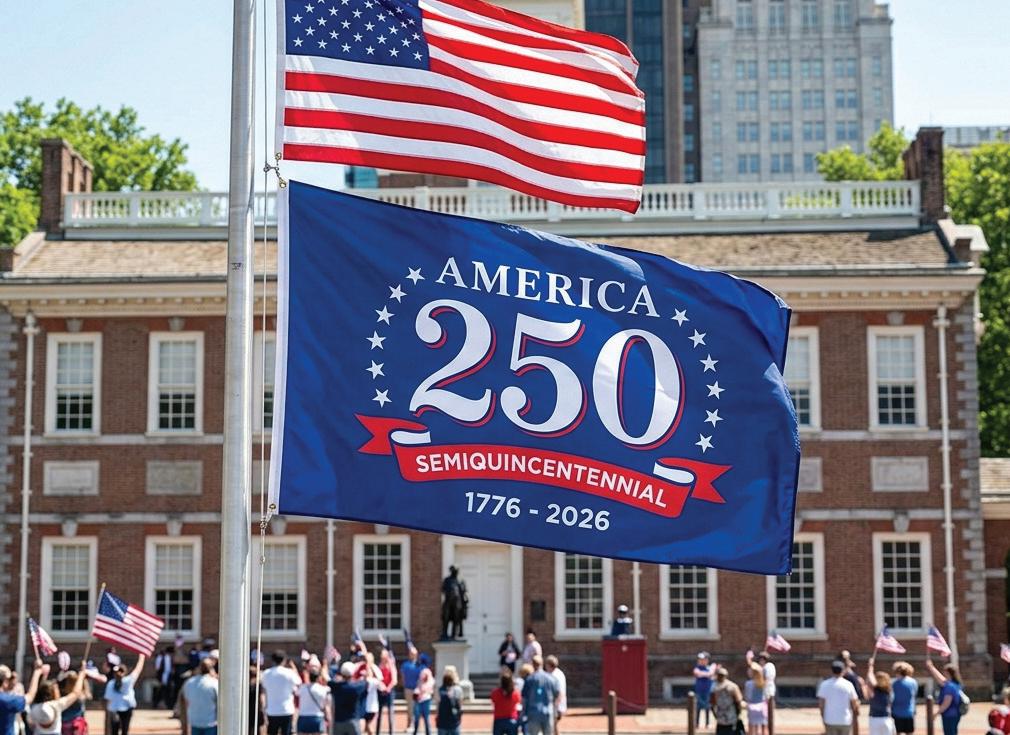
It’s surprising to realize that we are celebrating our nation’s 250th birthday (the semiquincentennial). It feels like only yesterday that we celebrated the bicentennial. I vividly remember the 1976 celebration of our 200th birthday. It’s hard to believe the country is now fifty years older. What does that mean for the country? What does it mean for me as an individual citizen?
I hope I have learned a few things over the past fifty years. I’ve spent most of that time as a priest, and that is hard to grasp. It doesn’t feel like I’ve been a priest for that long—I am still learning every day. Each day brings a new adventure, a new sign of God’s grace, and a deeper awareness and understanding. At the same time, I know I am slowing down. I no longer have the energy I once had. I value quiet moments more, take greater joy in the life around me, and spend more time listening and giving thanks.
Just for fun, I spent some time on YouTube, watching news reports from 1976. Things were certainly different then. Jimmy Carter won the presidential election, defeating Gerald Ford, who had succeeded Richard Nixon. Casey Kasem was counting down the Top 40, and “Silly Love Songs” by Paul McCartney and Wings was the number-one song of the year. Apple and Microsoft were both founded. At the Montreal Olympics, the world watched Nadia Comăneci become the first gymnast to earn a perfect 10. So many memories are woven into the fabric of life in these United States.
Today feels different. Memories and experiences feel sharper and, perhaps because they are still so fresh, more intense. It is hard to imagine the events of today’s headlines one day fading into history and, fifty years from now, being remembered with nostalgia for a time that seemed simpler. That may not be a silly love song, but perhaps it is a silly thought.
FR. THOMAS M. SANTA, CSsR
Will life ever seem simpler and less complex, or are we always on the verge of something new? Judging from predictions about what is to come, we may be in for quite a ride. AI—artificial intelligence—speeds up everything, and we are not sure if we can keep up with the pace it sets. Our Holy Father Pope Leo XIV offered us some essential guidance in his first encyclical, Magnifica Humanitas (Magnificent Humanity). Signed on May 15, 2026, it addresses the rapid growth of artificial intelligence, the protection of human dignity in the digital age, and the risks AI poses to labor, human relationships, and creative industries. We should pay attention to his perspective—it is the voice of authentic truth that is so needed today.
In this edition of Liguorian, we celebrate some of the experiences that make us proud to be American. We went a little outside our comfort zone with our feature on Roberto Clemente. The author shares an interesting point of view that we felt was appropriate for this edition. After all, baseball is part of the history of American life, and some baseball players use their gifts and talents not only in the sport but also in the service of others. As
usual, our columnists provide us with more than enough “food for thought”—not the usual fare for a Fourth of July barbecue, but something more essential for our spiritual growth and development.
happens to be, to this day, the favorite Italian Christmas carol. It is a wonderful meditation. You will fi nd stories so rich in meaning that I think you will want to read them several times. And, of course, what would Christmas be without a fruitcake? You’ll fi nd one here!
I also extend to each of you, on behalf of our authors, editors, sales team, customer service representatives, IT technicians, and service providers—in short, the entire Liguori Publications family—our hopes and prayers for you this Christmas. May your family be blessed and safe, not only during the holiday season but also in the New Year to come.
If you enjoy this issue of Liguorian, please do not hesitate to share it with family, friends, and your parish community. In our digital age, the printed word is still welcomed and appreciated. We are grateful that you support this ministry with your subscription. If it is time to renew, please do so. If there is someone you know who might benefit from Liguorian, please consider a gift subscription. Regardless, take time to reflect, to pray, and to celebrate during this festive time. We have much to be grateful for and even more to hope for. A
There are, unfortunately, so many places in our fragile world where a prayer of blessing and safety would be welcomed, but where hope seems dim. I think you will agree with me when I say that too many people, too many of our brothers and sisters in the human family, are deprived of what we take for granted each day. I hope this somber reality makes us even more grateful and encourages us, each in our own way, to help fi nd a way of peace for all of God’s people, no matter where they are.
Merry Christmas! (English)
¡Feliz Navidad! (Spanish)
Joyeux Noël! (French)
Frohe Weihnachten! (German)
Buon Natale! (Italian)
So many memories are woven into the fabric of life in these United States.
Feliz Natal! (Portuguese)
To sign up for the free digital edition of Liguorian magazine, send an email to Liguori@liguori.org.
To sign up for the free digital edition of Liguorian magazine, send an email to Liguori@liguori.org.


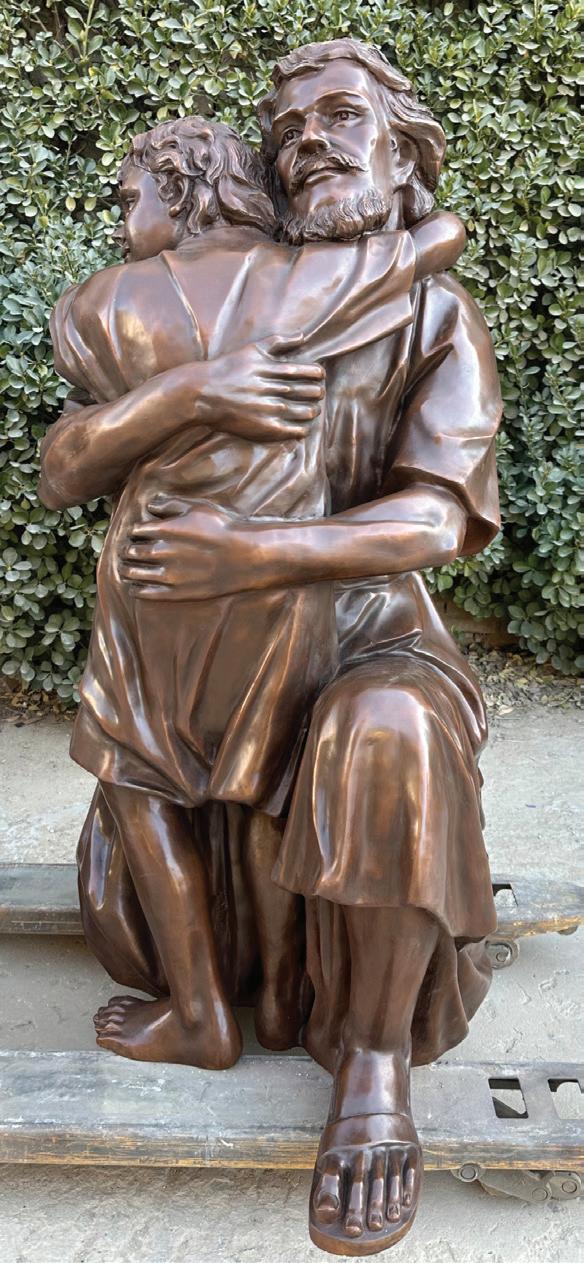


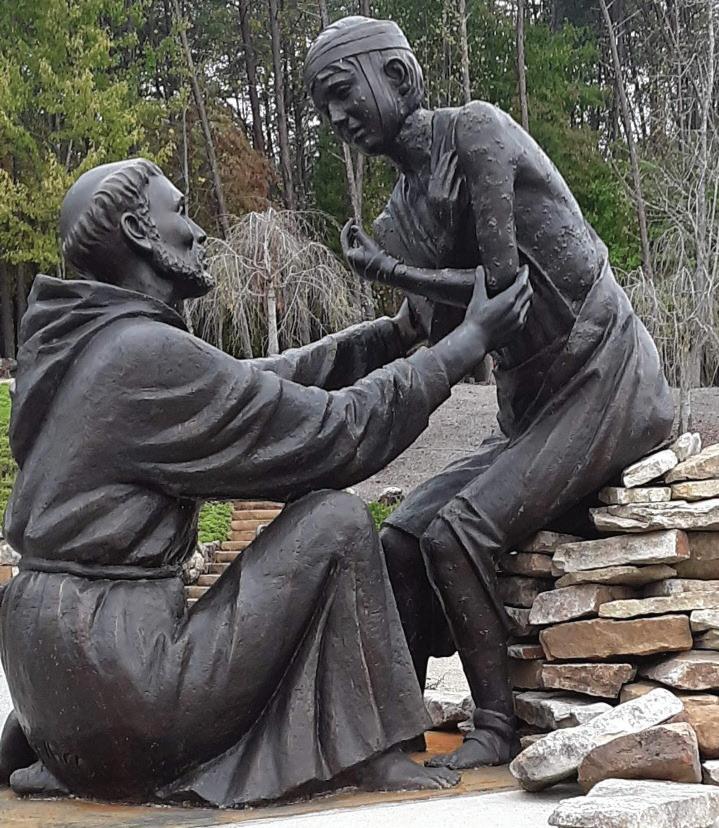

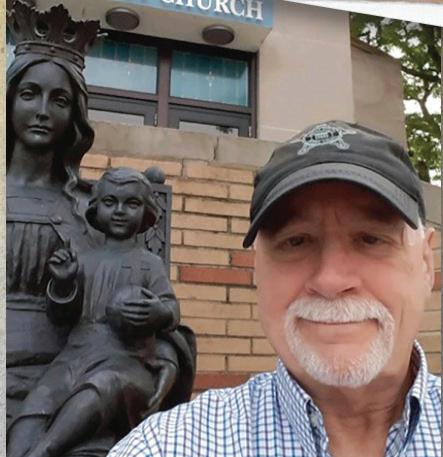






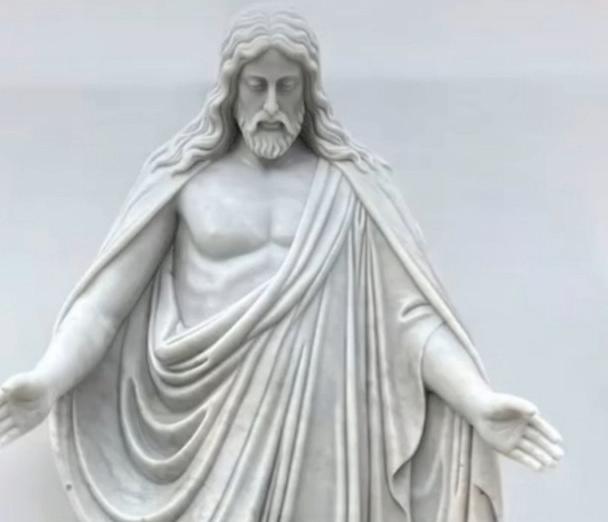



We can create one-of-a-kind sacred masterpieces for your parish or organization. And it is surprisingly affordable. Delivery in just 120 days.
Send Us Your Feedback!
Write: Liguorian Editor, 200 Liguori Drive, Liguori, MO 63057 E-mail: Liguorianeditor@Liguori.org
The opinions expressed don't necessarily reflect the opinions of the editors. Letters must be signed and include the writer’s full address and daytime phone number. Names will be withheld from publication upon request. The editors reserve the right to edit letters for length, clarity, and style.
Dear Liguorian Editor,
The article “He Shows Up Anyway” by Pascaline Odogwu (March-April 2026) is beautiful and touched me deeply. Thank you for such thoughtful content.
Bonnie S. (via email)
Dear Liguorian Editor, Fr. Matthew O’Toole’s “Catholics in America” series has been a real blessing. Reading about the Church’s many contributions makes me even prouder to be Catholic. I especially liked the March-April issue on Catholics in media and popular entertainment, with the mention of Archbishop Fulton Sheen. I’m looking forward to the next installments. Janie B. (via email)

Dear Liguorian Editor,

Could you please let Charlene Hoyt know that I really enjoyed “The Perfect Guy”? Good story. Thanks to Liguorian for supporting Catholic fiction.















Blessings, Arthur P. (via email)











“[That fellow citizens throughout the United States] may be blessed in the knowledge and sanctified in the observance of your most holy law; that they may be preserved in union, and in that peace which the world cannot give; and after enjoying the blessings of this life, be admitted to those which are eternal.”
—prayer of Bishop John Carroll, first Catholic bishop in the United States, 1791
Dear Liguorian Editor,
After reading my copy of Liguorian, I enjoy “The Lighter Side” as a little treat.
Thank you to Brother Raymond and your cartoonist, too. I always smile and sometimes even laugh out loud.
Fred H. (via email)
Editor’s Response:
The cartoonist for the 2026 issues is John Sanko. He makes us smile, too!



“ is book is an ideal companion on the path to the Sacrament of Matrimony. Before receiving the Sacrament of Matrimony, there should be a careful preparation because with love one’s entire life is at stake, and one does not kid around with love. ” — Pope Francis, from the Foreword






Love Forever

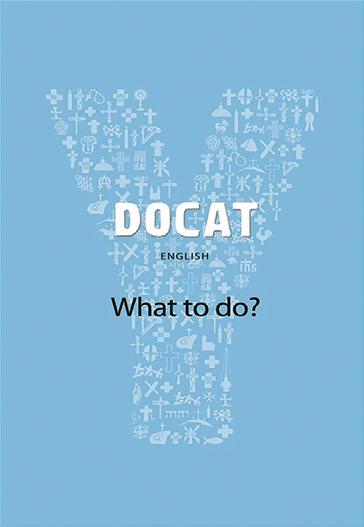


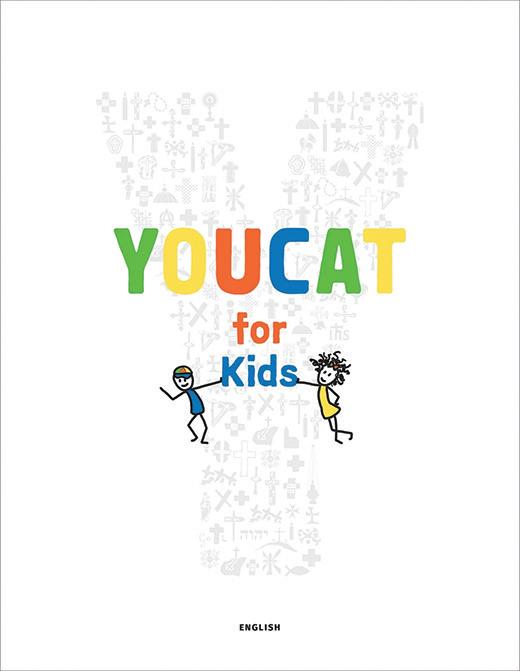


is newest title in the best-selling YOUCAT series is an essential read for anyone who wants to understand the Church’s teachings on love and marriage, especially those who are considering marriage. Based on 1,000 questions and suggestions from young people in over 30 countries around the world, it answers the questions about Christian marriage, gender, and the big questions about human sexuality. It provides practical guidance for looking for a spouse, preparing for marriage, and living as one a er marriage. Illustrated. YCLFP . . . Sewn So cover, $18.95



The YOUCAT series, short for Youth Catechism of the Catholic Church, was developed with the help of young Catholics. An accessible, contemporary expression of the Catholic Faith, the YOUCAT series has been created with an appealing graphic format including Q&As, commentary, definitions of key terms, Bible citations and inspiring and thought-provoking quotes from Saints and others in the margins.






YOUCAT Youth Catechism of the Catholic Church
English YCATP: Sewn So cover, $19.95
Spanish YSPP: Sewn So cover, $19.95 Study Guide: YSGP So cover, $9.95
DOCAT - What to Do?
DOCATP : Sewn So cover, $19.95
Study Guide: DCATSP: So cover, $11.95
YOUCAT Confession







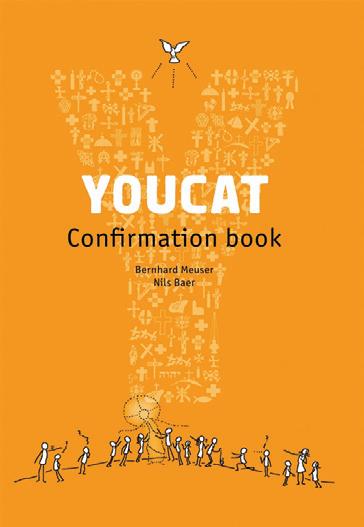


YCCONP: Sewn So cover, $12.95
YOUCAT Bible
English YBIBP : Sewn So cover, $24.95
Spanish YBISPP : Sewn So cover, $24.95
YOUCAT for Kids
YFKP : Sewn So cover, $19.95
YOUCAT Youth Prayer Book
YCATPP : Sewn So cover, $17.95


YOUCAT Confirmation
Student Book YCCSP : So cover, $12.95
Leader’s Handbook YCCTP : So cover, $24.95

Saint John Neumann, a member of the Congregation of the Most Holy Redeemer (Redemptorists), is an example of what it means to be both Catholic and an immigrant in America. His life in the nineteenth century still speaks to the challenges and opportunities the Church faces today.
Neumann was born in what is now the Czech Republic and came to the United States, where he was ordained a priest. He arrived during a time when many immigrants, especially from Germany and Ireland, were coming to America. These newcomers brought their faith, but they often found the country unwelcoming. Language barriers, poverty, and cultural differences made it hard for them to feel at home, even in the Church.
Neumann, an immigrant, knew these experiences firsthand and did not serve immigrants as an outsider, but as one of them. Having learned several languages, he could preach, hear confessions, and celebrate the sacraments in ways people understood. This pastoral sensibility and skill remind us that people cannot fully meet Christ if they feel like strangers.
As Bishop of Philadelphia, Neumann made a lasting impact by building a strong Catholic school system. He believed education was important for faith and for helping immigrant families settle into American life. Under his leadership, Catholic schools increased rapidly, giving children both academic opportunities and a strong foundation in their faith. In many ways, he helped create a model that shaped the American Catholic Church for years to come.
FR. PETER D. HILL, CSsR
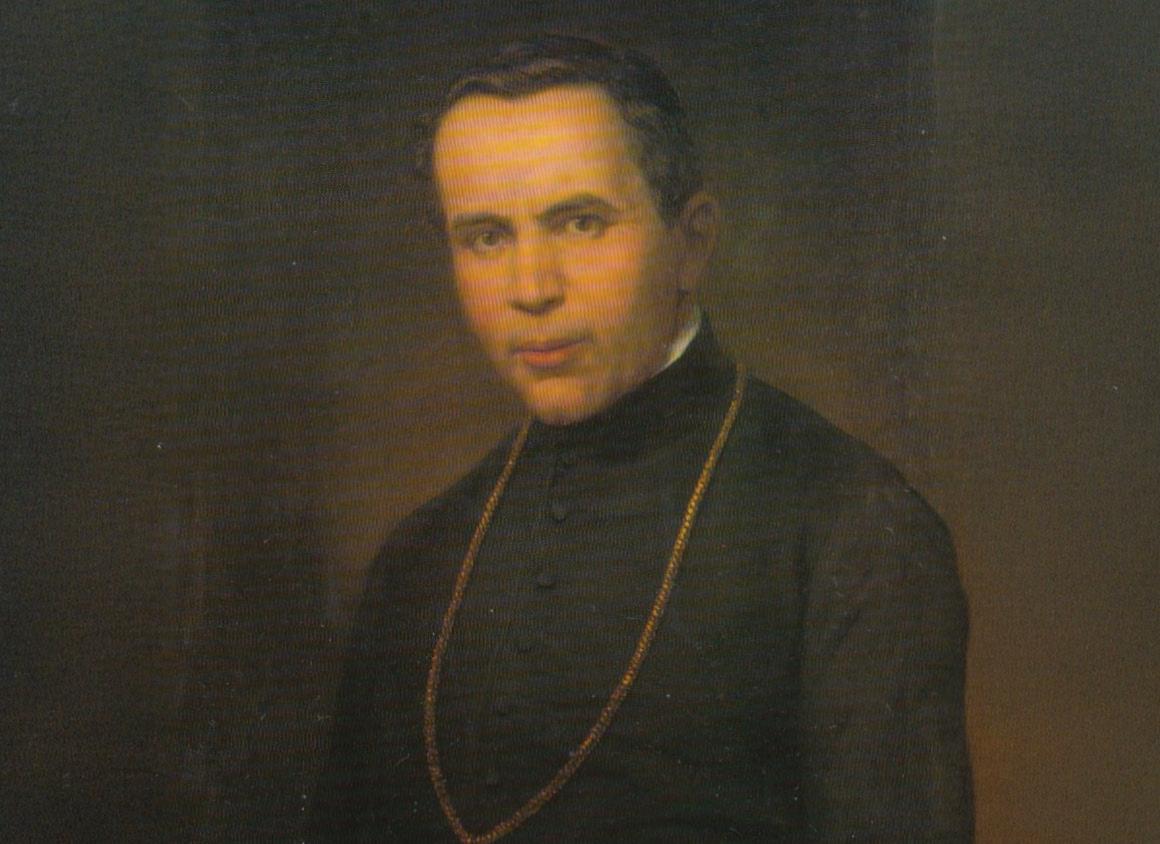
Neumann did not serve immigrants as an outsider, but as one of them.
Neumann also expanded parish life to serve the growing immigrant communities. He started new parishes so people could worship in their own languages, with their own customs and traditions. Instead of insisting on sameness, he saw the Church’s strength in its diversity and universality. For him, unity meant making room for everyone to belong.
His ministry was difficult, as there was a strong anti-Catholic sentiment, and immigrants were often met with suspicion or hostility. Still, Neumann remained focused, serving quietly and faithfully. His holiness showed in daily acts: visiting the sick, organizing parishes, teaching the faith, and staying close to his people.
Neumann’s example is still important for the American Church today, especially as new immigrants arrive. As in Neumann’s time, the challenge is not just to make room for them, but to see them as essential to the Church’s life. Neumann shows us that immigrants are not a problem to be fixed, but a gift to be welcomed. Their languages, traditions, and ways of expressing the faith enrich the Church and help it become truly universal.
In a society still struggling with questions of belonging and identity, St. John Neumann points to a way forward: build communities where people are valued, communicate in ways people understand, and invest in the next generation. Most importantly, stay rooted in a faith that sees Christ in every person, especially the marginalized. A















As the United States of America celebrates 250 years of independence, American Catholics today may wonder what the situation was like for our ancestors in the faith when the new republic was born. Although Roman Catholics were a modest presence in the United States at its infancy, there were ��gures of prominence who played a role in the War for Independence and served as pioneers for our faith’s growth in the country.

In part four of this six-part series, we commemorate America’s 250th anniversary by celebrating Catholicism in the United States.
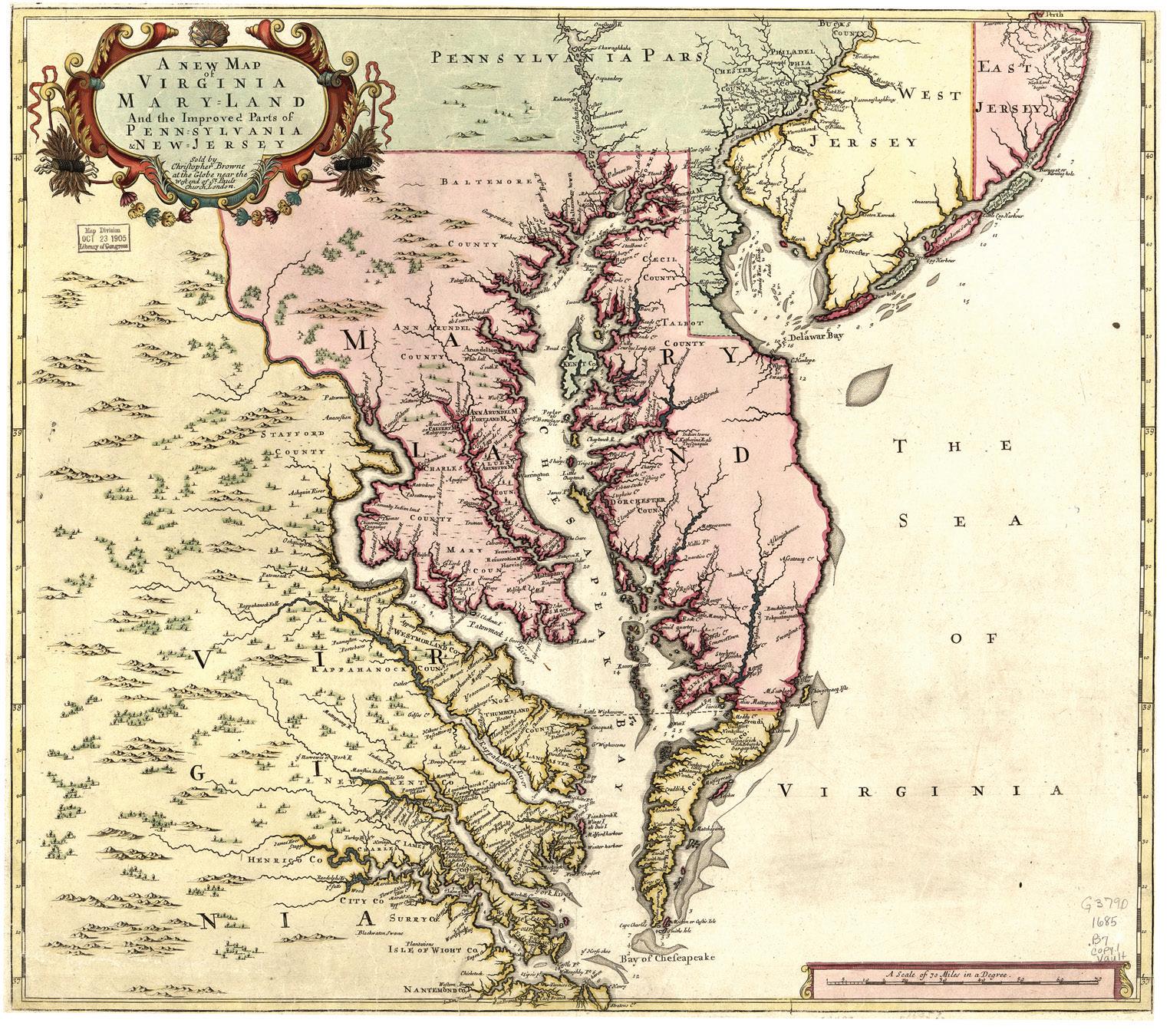
A map of Virginia, Maryland, and the improved parts of Pennsylvania and New Jersey, circa 1685. WIKIMEDIA COMMONS
FR. MATTHEW O’TOOLE
Most of the settlers in colonial America were dissenters from the Church of England who believed that Tradition kept too much Catholic doctrine and liturgy intact. The pilgrims who landed at Plymouth Rock in 1620 were themselves fleeing from the strains of religious conformity in England. Freedom to worship publicly was upheld in the colonies for dissenters, provided they took a simplified version of the oath of allegiance to the Crown.
As for Catholics in the original thirteen colonies, most were recusant— that is, they were loyal to Catholicism and refused submission to the Church of England. For them, public worship and advancement in society came with difficulty.
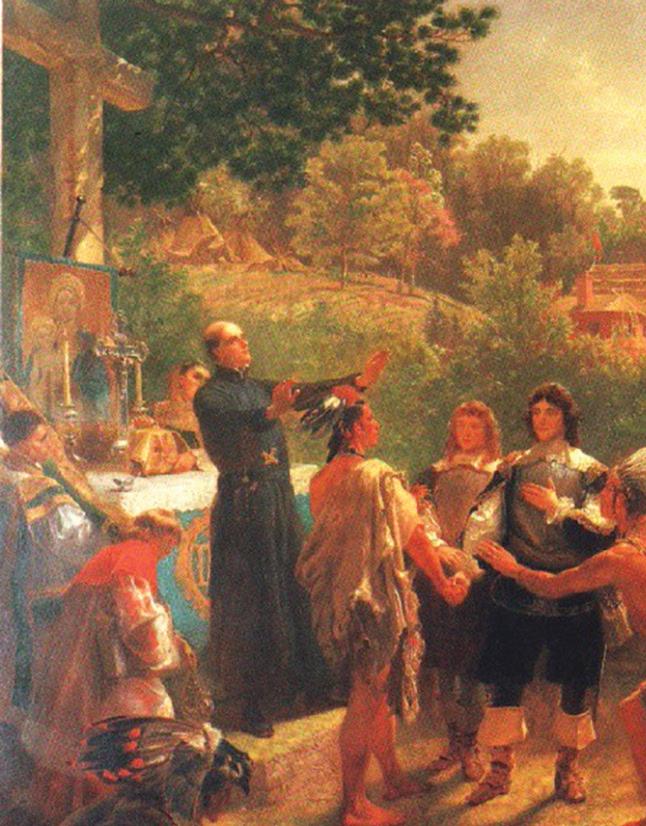
In 1632, King Charles I granted a charter to George Calvert, the Catholic first Lord of Baltimore, giving him proprietary rights to a region east of the Potomac River in exchange for a share of income derived from the land. Two years later, a carefully selected group of Catholic and Protestant English settlers arrived at the new colony of Maryland, so named for the king’s wife, Queen Henrietta Mary, a French Catholic. Fr. Andrew White, a Jesuit, celebrated the first Mass in the American colonies upon their landing. Calvert’s family sought to establish Maryland as a haven for Roman Catholics persecuted in England. They instructed their deputies to practice their religion prudently and to establish good relations with the Protestant majority.
The ensuing years, however, became contentious. The growing number of Puritans arriving from England and the untenable enforcement of toleration created a back-and-forth struggle between religious groups. With England’s “Glorious Revolution” of 1688–1689, resulting in the overthrow of the Catholic King James II, the Calverts’ days were numbered.
Within two years, Maryland had
been seized and declared a royal colony. In 1692, Anglicanism was decreed the official religion of state. Catholics were forbidden from voting, practicing law, and receiving a Catholic education. No formal parishes could be established, and worship was permitted only in pri vate homes. By 1708, Catholics in Maryland numbered 2,974 out of a total population of around 40,000.
The Carrolls: America’s “Catholic First Family”
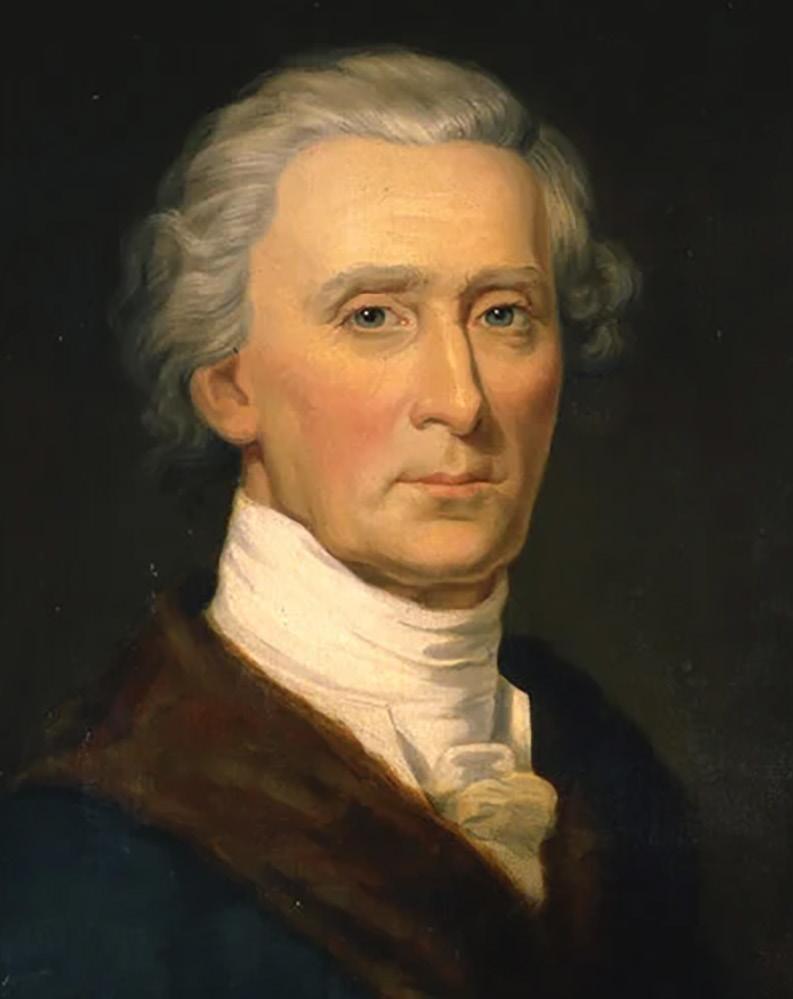
Charles Carroll (b. 1702) of Annapolis descended from rulers of a minor kingdom in Ireland. Having settled in Maryland, he received a commission from Lord Baltimore to serve as attorney general in the colony. He became financially prosperous by managing a large estate, but, despite his office, he was forbidden from participating in political affairs because he was a Roman Catholic. His only child, also named Charles Carroll (b. 1737), received a Catholic education in France and studied law in London. Upon returning to Maryland, he was forbidden to practice law because of his religion.
Instead, he directed his energies toward prospering his family’s estate and furthering other enterprises, eventually making him one of the wealthiest men in the American colonies.
The younger Carroll was initially uninterested in politics, but he was pulled into debates about English taxation. By the 1770s, he was a leading opponent of the Crown’s economic policies. He served on various committees of correspondence that organized opposition to British rule. Carroll came to embrace the idea that only rebellion could break the impasse with their overlords.
In early 1776, the Continental Congress sent the younger Charles Carroll on a diplomatic mission to the Province of Quebec to seek assistance from French Canadians in the coming confrontation with Britain. He was an excellent choice for the negotiations, being a Catholic and fluent in French. He was joined in the commission by Benjamin Franklin, Samuel Chase, and his cousin John Carroll. Although the delegation did not accomplish its mission, a Catholic colonist proved he could be trusted in the enterprise of pursuing independence.
Carroll was elected to the Continental Congress in July 1776 and remained a delegate until 1778. He arrived too late to vote in favor of the Declaration of Independence but was present to sign the official document that survives today.
Despite Carroll’s example, Catholicism remained odious to many of the American revolutionaries. For them, the religion smelled of “old Europe.” The Catholic Church was still associated with traditional monarchic regimes, which were antithetical to the American pursuit of democratic republicanism. Leading thinkers in the colonies were a part of the Enlightenment, and they sought to shake off anything medieval. Many prominent figures and merchants were Freemasons, and their lodges were centers for networking and disseminating enlightened ideas. Catholics were excluded from such clubs, which was just as well, because the Catholic Church imposed the penalty of excommunication for anyone who became a Mason.
Sulpician. His service as chaplain to Catholics in the militia placed him in direct opposition to the bishop of Quebec, who excommunicated anyone assisting the revolution. Lotbinière’s position in the armed forces would be confirmed by Congress in 1776. The American cause was eventually helped financially and militarily by the Catholic nations of France and Spain.
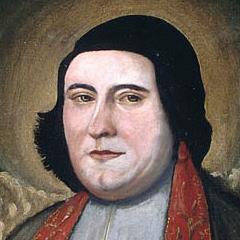
In 1755, Harvard College began the Dudleian lectures, one of which was dedicated to “detecting, and convicting, and exposing” the idolatry, errors, and superstitions of “the Romish church.” Everything about the “Papist” religion was perceived as unenlightened. The use of arcane Latin in Catholic rituals only added to these prejudices. The allegiance of Catholic Americans was viewed as suspect, as the influence of the pope—a foreign power—caused doubt that Catholics who claimed to be citizens would be faithful first and foremost to the republic.
Catholics in Service of the Revolution
Although Canada did not lend support to the American rebels, the Continental Army found assistance in the person of Abbé Lotbinière, a French-Canadian
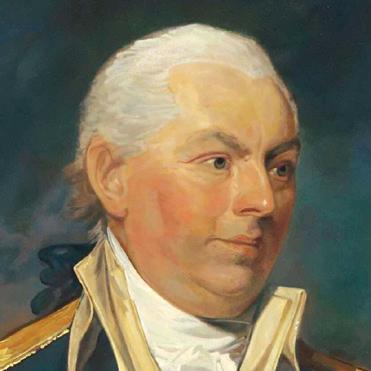
The Irish-born John Barry commanded several American navy ships with distinction during the Revolutionary War. Known to be a devout Catholic, he began each day on deck with a reading from Scripture. President Washington bestowed on Barry the title of Commodore, and he went on in history to share with John Paul Jones the moniker “Father of the American Navy.”
During the war, General Washington discouraged bigotry in his November 5, 1775, order, which forbid “observance of that ridiculous and childish custom of burning the effigy of the pope,” especially at a time when Americans sought Canadian support. “To be insulting their religion is so monstrous as not to be su��ered or excused,” he declared in the order. Washington’s sensitivity to this issue may have been aided by the service of his personal secretary and,
later, Quartermaster General of the Continental Army, Stephen Moylan, a Catholic from Ireland whose uncle was bishop of Cork.
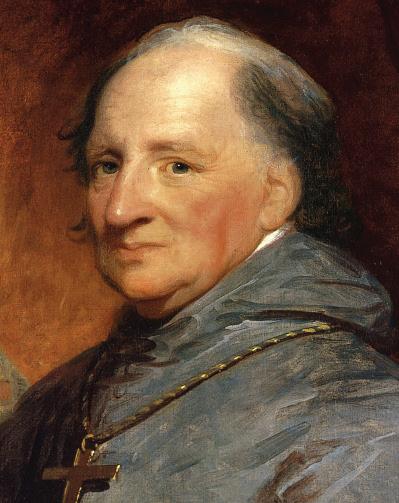
As mentioned previously, John Carroll was a cousin to Charles Carroll and had participated in the diplomatic mission to Quebec. He studied with the Society of Jesus in Belgium and was ordained a priest in 1761. But when the Jesuits were suppressed in 1773, he returned to his family’s plantation in Maryland, where he worked as a missionary.
During the colonial period, Catholic clergy were under the authority of the Apostolic Vicariate in London. After the revolution, anti-British sentiment in the new United States made it important to change that jurisdiction. Benjamin Franklin, then ambassador to France, was asked by the papal nuncio what to do about leadership for the Catholic Church in America. Franklin begged o��, citing separation of church and state, but privately he expressed admiration for John Carroll’s abilities. In 1784, Pope Pius VI appointed Carroll as provisional superior of the missions for the United States; in 1789, the Pope made Carroll the country’s first bishop, with his see established in Baltimore.
Reporting to the Congregation for the Propagation of the Faith in Rome, Bishop Carroll estimated the number of Catholics in the United States to be around 25,000. He had only about twenty-five priests serving the widely scattered Catholic population. He lamented the poor catechetical in-
CATHOLICS helped establish a republic that would give others like them LIBERTY.
struction of the enslaved African peoples. Syn ods were held in Baltimore to establish prescriptions for the exercise of the sacraments. To assuage the impression by some Americans that Catholics were foreigners still tied to old Europe, Bishop Carroll advocated for use of the vernacular language rather than Latin in the Church’s rituals. In 1791, he laid the foundation for Georgetown College in a village that would later be called Washington, DC.
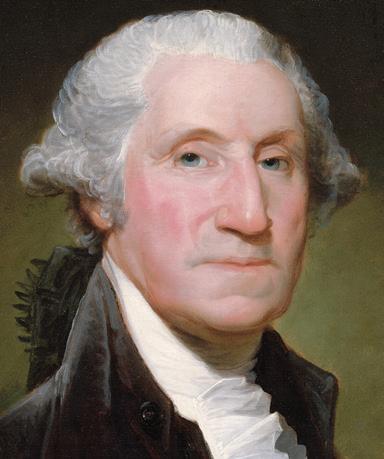
In 1790, President Washington addressed a letter to American Catholics in which he expressed his gratitude for their good wishes upon his ascent to the executive office and gave his support to their place in the new republic.
[It is my hope] that your fellowcitizens will not forget the patriotic part which you took in the accomplishment of their Revolution, and the establishment of your Government, or the important assistance which they received from a nation [i.e., France] in which the Roman Catholic faith is professed.… [And it is my wish that] the members of your Society in America, animated alone by the pure spirit of Christianity, and still conducting themselves as the faithful subjects of our free government, enjoy every temporal and spiritual felicity.
Washington socialized with prominent Catholics both at Mount Vernon and during his presidency. He attended a service at St. Mary’s Catholic Church while in
Philadelphia for the First Continental Congress, and he donated money toward the construction of a Catholic church in Baltimore.
Bishop Carroll, inspired by St. Paul’s instruction that the Church pray for those in high positions (See 1 Timothy 2:1–4), delivered in 1791 his prayer that goes by various titles, including Prayer for Our Government and Prayer for the Nation. Building on Washington’s gesture of mutual respect and deference, he wrote,
We pray, O God of might, wisdom and justice, through whom authority is rightly administered, laws are enacted, and judgment decreed, assist with your Holy Spirit of counsel and fortitude the president of these United States, that his administration may be conducted in righteousness and be eminently useful to your people over whom he presides.
In the Old World, monarchical patronage of the Church typically funded many of the Church’s institutions, including the clergy’s salaries. Most priests were members of the higher estates, which provided them with benefices.
The new Constitution, with its separation of church and state, was both freeing and challenging for the young Catholic Church in America. Under the new system of governance, the Church could not be legally dominated by those with civil power. At the same time, however, it could not depend on revenue from the State to carry out its
ministries. With their privileged positions gone, the clergy and religious orders in the United States turned to their ancestral homelands in Europe to help continue their work.
This financial predicament in the newborn republic brought men and women leaders of the Catholic Church to a situation akin to the Apostolic Church in Roman times. Zeal and initiative were the mode of operation. Shedding clerical decorum and the privilege of previous ages, the priests were now obliged to go to the people and not expect the faithful to run to them. Without the official backing of the State, Catholic leaders had to work at persuasion rather than commanding their flocks, who very often were themselves people without means. Circumstances had indeed made them pioneers of the faith.
Working steadily within the constraints imposed on them and the prejudice they were often shown, Catholics made contributions to help establish a republic that would give others like them liberty. Living peaceably with other Christian denominations helped build tolerance and peaceful coexistence, although Catholics would continue to struggle with acceptance for generations to come. Alexis de Tocqueville, a noted observer of the new nation, would later write in Democracy in America, “The Catholics are faithful to the observances of their religion; they are fervent and zealous in the support and belief of their doctrines. Nevertheless, they constitute the most republican and the most democratic class of citizens which exists in the United States.” A
Rev. Matthew O’Toole is a priest of the Archdiocese of Saint Louis, a pastor, and a past instructor in modern European history.

KEEP THE CREATOR FIRST AND THE CREATED SECOND
FR. RICHARD GRIBBLE, CSC
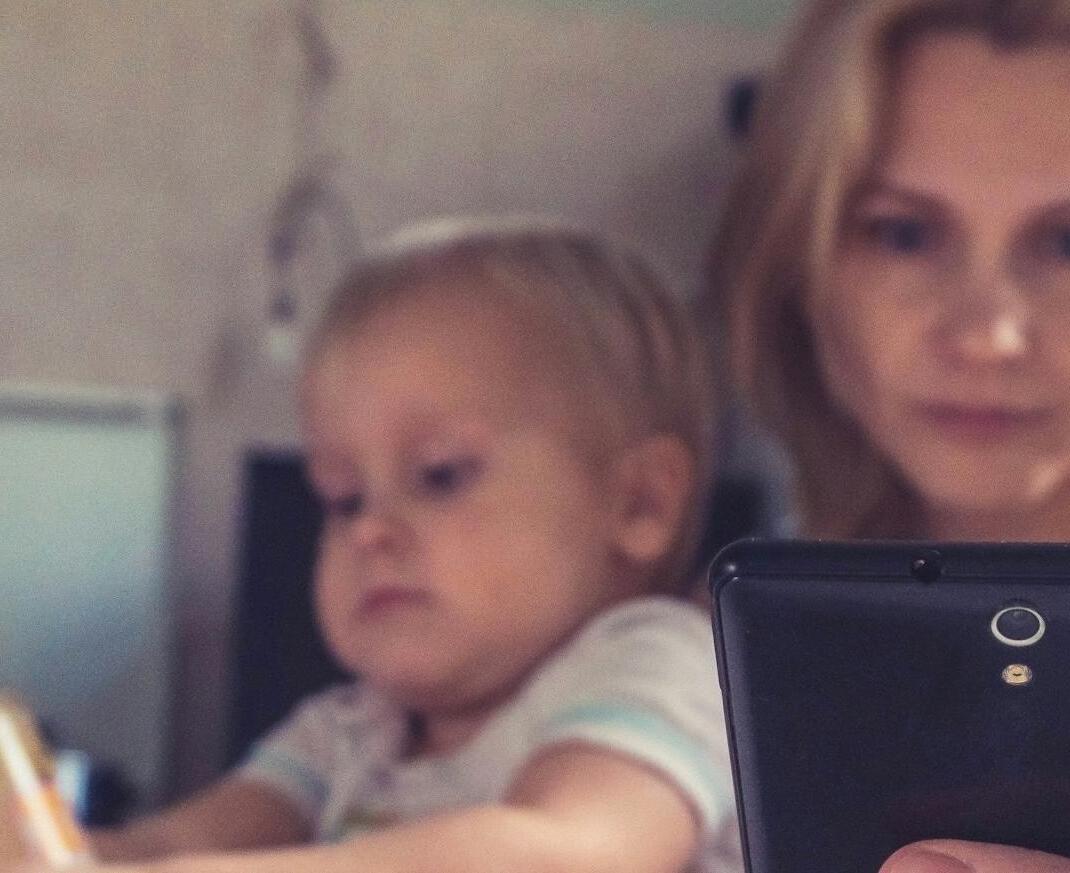
Contemporary family life, while beautiful and fulfilling in myriad ways, experiences significant challenges. Certainly, the pace of life today has accelerated at an almost warp speed. Outside distractions all around us vie for our attention, and, unfortunately, they include negative influences that attract many, such as the widespread use of drugs, the expansion of the internet and problematic social media sites, and the general movement from a Christ-centered society to a more secular one. Amid the challenges of modern life, we need to refocus on the Lord and rethink what we must do to keep Jesus as the center of our attention.
A simple example illustrates how clutter and extraneous things in life do not allow us to focus on what is most important. In an educational methods class, it was a student’s turn to give her presentation to the class and the professor. She walked to the front of the classroom and, before saying a word, erased everything on the whiteboard behind her—everything that was extraneous to what she wanted to present. During the evaluation of her presentation, the professor applauded the student’s effort to first remove everything from the board that might cause her audience to think about some of the ideas from earlier presentations. The presenter allowed her listeners to concentrate completely on what she was saying. They had the opportunity to focus only on her and not be distracted by what others had presented previously. The professor was impressed and suggested that the rest of the class follow the presenter’s lead. In the gospels, Jesus addressed the idea of focusing on what is significant to the exclusion of less important things that compete for our attention.
For example, Jesus foreshadowed the destruction of the Temple: “While some people were speaking about how the Temple was adorned with costly stones and votive offerings, he said, ‘All that you see here—the days will come when there will not be left a stone upon another stone that will not be thrown down’” (Luke 21:5–6). The Lord was suggesting that people were far too fixated on the physical beauty of the Temple and, in the process, missed the rationale for its centrality in Jewish life—namely, for the praise and worship of God. The ruling elite suffered from “tunnel vision,” and thus overlooked the essential reality that Yahweh was more important than the Temple itself.
In John 4:4–42, we see a more positive form of tunnel vision: When Jesus engaged the Samaritan woman in conversation, he was laser-focused on her, not on her rather “checkered” past. Both incidents clearly indicate the need to focus on what is important in the present moment.
These examples from Scripture also suggest the need to set our priorities, both daily and long range, in every aspect of our lives. Some of our time—and, in certain cases, much of our twenty-four-hour days—is controlled by the circumstances of our lives. Work schedules, the needs of our families, and our general routines largely dictate what we must do at specific times of the day. Yet, we still have control over a significant amount of our time, and what we do with those hours is up to us. We can engage the
world and its pleasures, its many opportunities, and its temptations, or we can choose to focus more fully on the higher realm—to “seek what is above” (Colossians 3:1), as St. Paul writes.
We recall Jesus’ words: “Repay to Caesar what belongs to Caesar and to God what belongs to God” (Luke 20:25). We must always make time for the Lord and for what belongs to him.
To refocus our lives in a more positive direction—toward Christ—both as individuals and as families, we must concentrate on the here and now.
In the 1950s, on his popular weekly television program Life Is Worth Living, Bishop Fulton Sheen entertained and challenged audiences with his quick wit and engaging presentations. One of his more famous episodes was
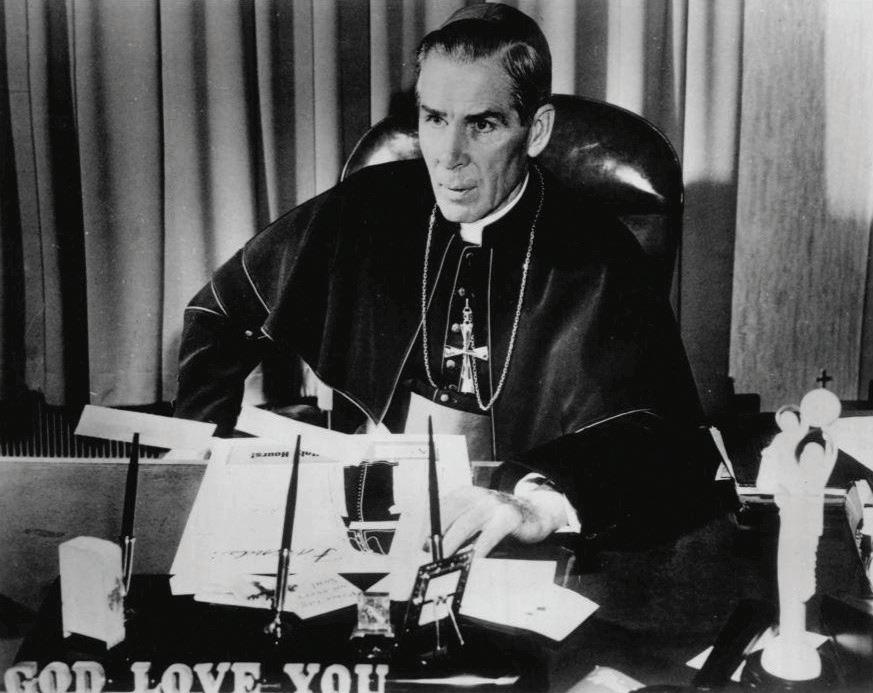
titled “The Theology of the Rat Race.” In this episode, Bishop Sheen showed that people spend far too much time reflecting on the past or worrying about the future; they don’t live in the present moment. He encouraged his audience to reconsider how they spend their days and not get caught up in the “rat race” that society almost inevitably thrusts upon us.
“Seek what is above.”
COLOSSIANS 3:1


We must always make time for the Lor d and for what belon gs to him.
Bishop Sheen’s words, now well over sixty years old, are even more relevant today. We need to seriously consider a new or revised approach to our daily lives. We are familiar with the concept of atonement: the idea that Jesus willingly accepted the cross to atone for the sins of all humanity in the past, present, and future. It is important to understand the roots of this word: atone-ment. What does this mean? Most understand these roots to say that we are to be “at one,” but with whom? Obviously, the answer is to be at one with God. This can only happen when we focus our attention on the source of life: Jesus Christ.
The challenge for families today is equal to, if not greater than, that for individuals. An individual can control his or her personal agenda and refocus his or her life more directly on Jesus Christ, while a family—as a unit of


more than one individual—requires more work. When dealing with the agendas of multiple people, it takes a concerted effort to set priorities that everyone agrees on, which may necessitate some sacrifices and compromises. Nevertheless, the highest priority for the Christian family is its relationship with Christ.
As the education student erased all traces of the earlier presentations so her classmates could focus their attention totally on her, so too must a family remove the significant attractions of the world that draw its members away from Christ. If a family is willing to set priorities together and make a commitment to one another, this refocusing is possible. A family can commit to enjoying dinner together—hopefully daily; if not, at least regularly—spending time in which all family members must be present and engaged with one another. Other types of activities can draw a family closer together, allowing its members to refocus on Christ, whether it’s watching a program on television or streaming a movie, attending a ballgame, or going on a family picnic. Most especially, prayer will greatly assist any family’s efforts to
refocus on Christ. This means not only going to Sunday Mass together but also regularly praying together, such as reciting the rosary or reading the Bible.
In contemporary life, all God’s children must remember to place the Creator first and the created second. Too often, these priorities are reversed, and we lose focus. The extraneous things of life and the “noise” of society are all around us. This reality requires us to block out that which seems so obvious and distracting, concentrating instead on what is less visible but most important in our lives. Despite the challenges, all things are indeed possible with the help of God. The Lord is waiting for our positive response.
Fr. Richard Gribble, CSC, is a priest in the Congregation of Holy Cross and a professor emeritus from Stonehill College in North Easton, Massachusetts, where he taught for twenty-seven years in the Department of Religious Studies and Theology. He is the author of over forty books in the areas of American Church history and spirituality, plus over 400 articles in major academic journals and popular magazines.
In 1776, during the Second Continental Congress, a small committee made up of Benjamin Franklin, John Adams, and Thomas Jefferson was appointed to propose a design for a seal for the United States. Their design, which introduced the Latin motto e pluribus unum (“out of many, one”), was not adopted at the time, but the motto was later included on the Great Seal approved in 1782.
Out of thirteen colonies came one nation: the United States of America. The unity of the patriots of the Revolutionary War prevailed, but the nation’s unity has faced many challenges. This unity has been tested by civil war, foreign wars, cultural challenges, financial upheavals, terrorism, and natural disasters. Guarding civil, human, religious, ethnic, and racial rights has been a constant challenge. As the nation celebrates its 250th anniversary, its people need to reconnect with the hope of those early patriots, who believed that “from many,” the nation could be “one.”
Unity was not only the hope of the founders of the United States; it was an important part of the message of Jesus and the Church. Jesus prayed for his disciples “that they may all be one, as you, Father, are in me and I in you, that they also may be in us, that the world may believe that you sent me” (John 17:21).
The unity was not only for the apostles but also that they would be witnesses to others. Saint Paul called attention to both the unity and diversity of the body of Christ, as he wrote, “As a body is one though it has many parts, and all the parts of the body, though many, are one body, so also Christ” (1 Corinthians 12:12). And, “If [one] part suffers, all the parts suffer with it” (1 Corinthians 12:26).
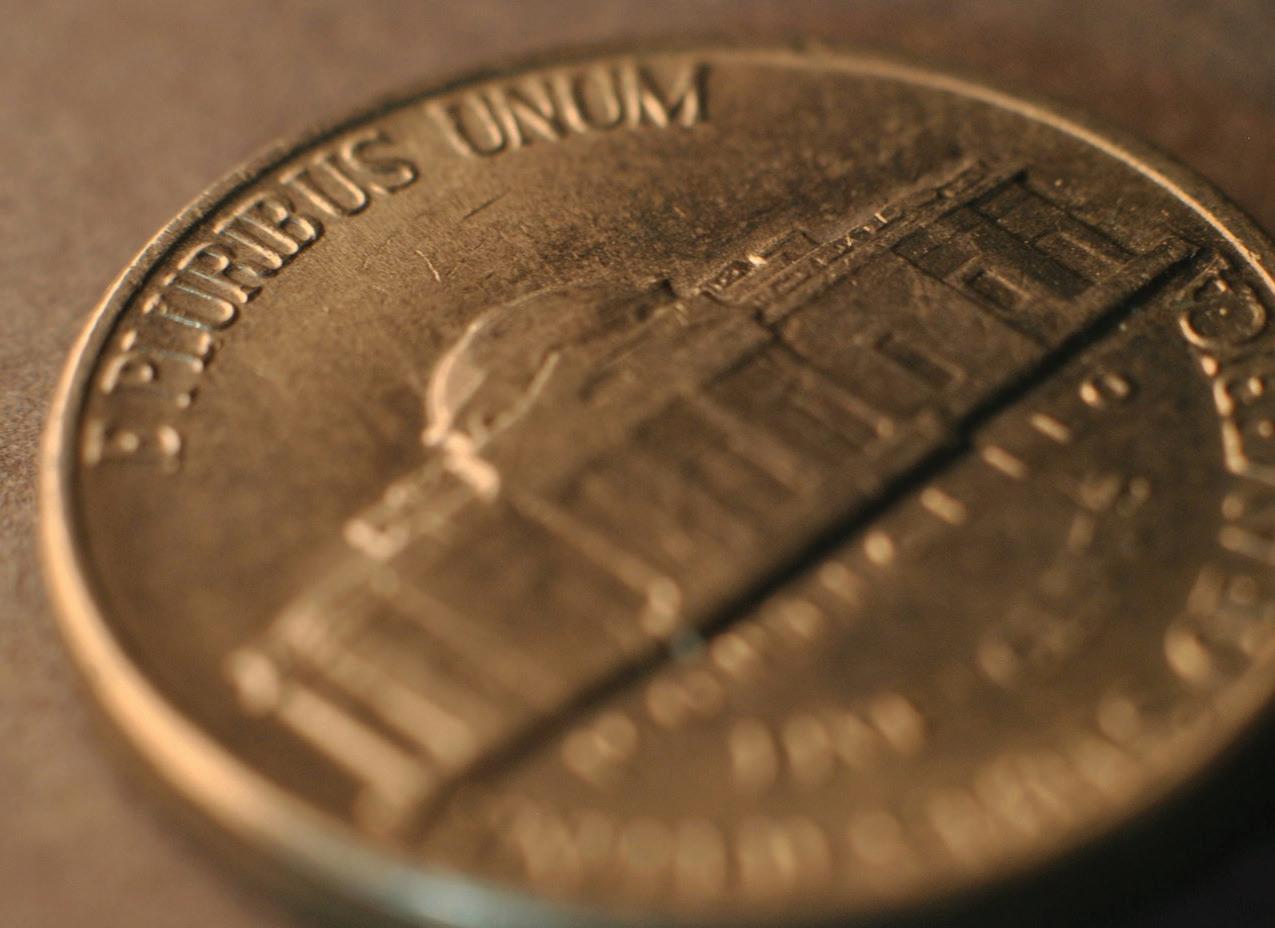
Latin motto e pluribus unum (“out of many, one”) was introduced during the Second Continental Congress.
During the Mass inaugurating his pontificate on May 18, 2025, Pope Leo XIV said, “I would like that our first great desire be for a united Church, a sign of unity and communion, which becomes a leaven for a reconciled world. In this our time, we still see too much discord, too many wounds caused by hatred, violence, prejudice, the fear of difference, and an economic paradigm that exploits the Earth’s resources and marginalizes the poorest.”
On Ash Wednesday, after calling to mind the words of the prophet Joel, “Gather the people, sanctify the congregation” (Joel 2:16), Pope Leo XIV said, “We need to respond by courageously accepting responsibility for [our sins]. Moreover, we must accept that while this attitude is countercultural, it constitutes an authentic, honest, and attractive option, especially in our times, when it is so easy to feel powerless in the face of a world that is in flames.”
The Pope’s message is encouraging and hopeful, while the political reality of the United States today shows no signs of belief in the value of the motto “from many, one.” The unity of the United States and of the Church is only possible when people of good will work together. May people of the Church and the United States seek the oneness that resounds in the aspiration of founders of this nation and in the prayer of Jesus “that they may be one.” A
FR. THOMAS M. SANTA, CSsR
Acommon misconception among Catholics is that everything the Church teaches is of equal importance. Some Catholics believe that all teachings are infallible teachings of the pope or that each discipline, practice, dogma, and doctrine of the Church is directly revealed. It’s as if everything is rooted in the same source, unbroken in context and content, flowing out of the teaching ministry of Jesus or from the apostles.
Understanding what is required to be a “good Catholic” can be overwhelming. Some people, disrespectfully categorized as “cafeteria Catholics,” supposedly choose what they believe and practice, disregarding the rest. Others embrace a form of so-called “traditional”
Catholicism, believing that to find clarity, they must reclaim a purer discipline. It is not surprising that there is often confusion, misunderstanding, and even frustration that lead to a disconnect from Tradition and the Church. This could be the unintended result of poor catechetical training or insufficient education, but the role of dueling socialmedia “talking heads” also cannot be discounted. There is a kind of trench warfare going on in social media, and people who become confused and disheartened are seen as the unfortunate casualties of the battle for theological purity.
“In Catholic doctrine there exists an order or ‘hierarchy’ of truths, since they vary in their relation to the foundation of the Christian faith” (Catechism of the Catholic Church, 90).
If we understand the teachings of the Church within the context of this hierarchy, it may be easier to focus on what is important and necessary— what is essential truth—without feeling like a bad Catholic and without passing such judgment on others. This hierarchy includes revealed truth, dogma, and pastoral application.
There are truths that were revealed through the life and ministry of Jesus: belief in the Holy Trinity; the Incarnation, passion, and resurrection of Christ; the Second Coming and Final Judgment of Christ; the remission of sins; the Church; and eternal life. These subjects are understood as doctrines and are also classified as creedal formulas.
In addition to the revealed truths listed in the previous paragraph, there are dogmas of the Church. These dogmas are found within the constant teaching tradition of the Church and in sacred Scripture, and each dogma has been clarified and explained primarily through the ecumenical councils. Another way to understand them is through the magisterium, the teaching authority of the Church. Dogmas include that Mary is the Mother of God (Council of Ephesus in 431); Jesus is fully God and fully man, with a human body and a human soul (Council of Chalcedon in 451); Jesus has both a human will and a divine will (Council of Constantinople III in 680–681); holy images may be created and venerated, not adored (Council of Nicaea II in 787).
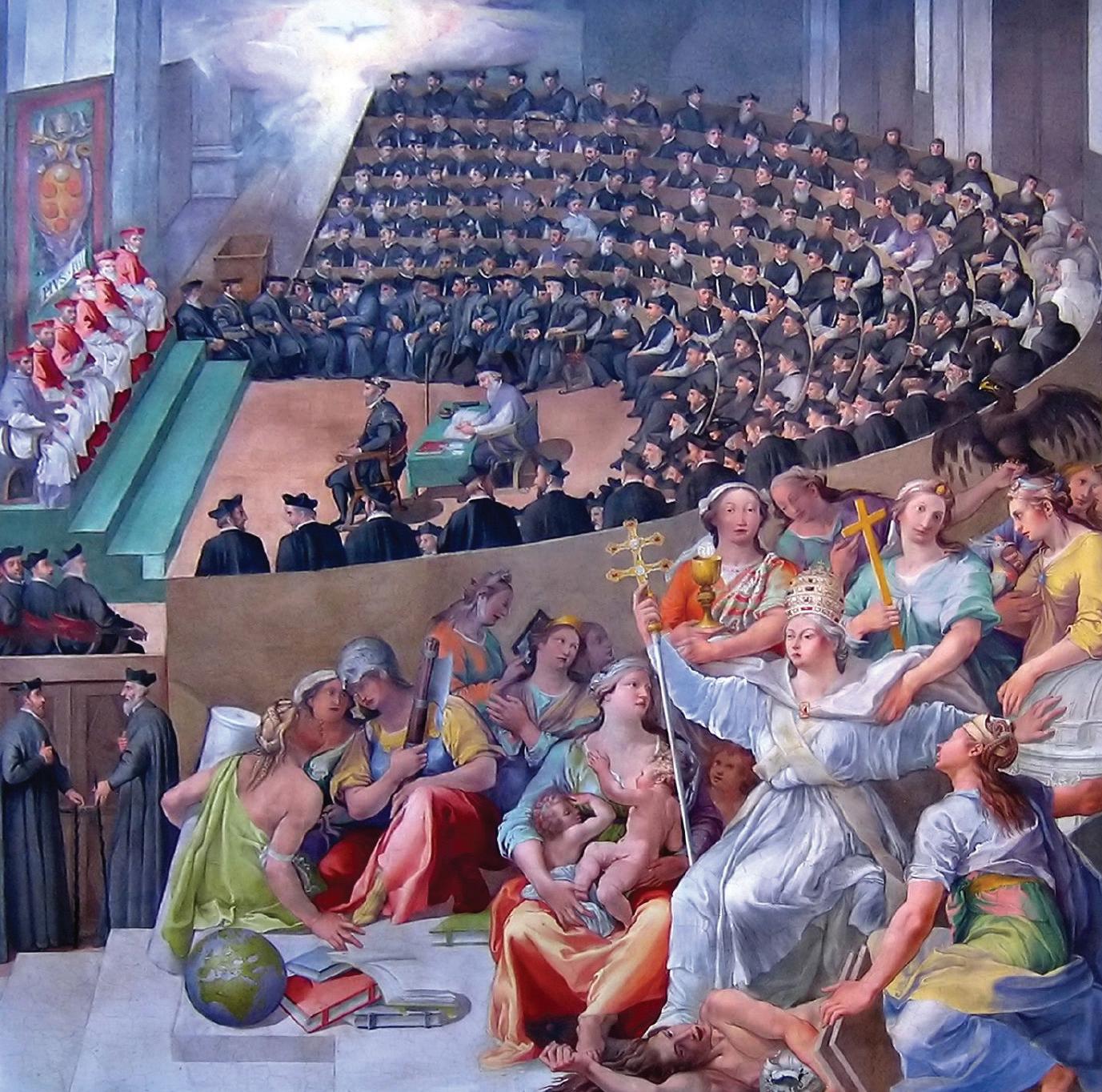
The Council of Trent (1545–1563), in response to the Protestant reformers, made a number of dogmatic definitions about the sacraments and other beliefs and practices of the Church. Many of
these are familiar to Catholics and include, among others, the teachings on transubstantiation, on purgatory, that the “seal” (secret) of confession in the sacrament of penance is inviolable, and that polygamy is a sin. In addition to Scripture, Tradition, and revealed truth, select teachings have been declared dogmatic by the pope, speaking ex cathedra (that is, from the Chair of St. Peter). These include the Immaculate Conception of Mary and the Assumption of Mary. There are a total of 255 dogmas of the Church from all sources.
Flowing from the understanding of the dogmatic and doctrinal traditions of the Church, and clarified by the magisterium over the centuries,
certain precepts, practices, laws, and disciplines of the Church have emerged as central to our understanding of what it means to be Catholic. These are often understood collectively as the “pastoral application” of the Christian faith. In other words, these tenets are applied by official pastors and teachers as well as by individuals who are engaged in day-to-day practice of the Catholic faith.
Pastoral application, as one might assume, is dependent on the individual interpretation and experience of the person who is applying the practice. We assume and hope that these pastoral practices are evenly applied, but that is not always the case. The reality is that different interpretations are possible, which
The Council of Trent made a number of dogmatic definitions about the sacraments and other beliefs and practices of the Church. Many of these are familiar to Catholics.
Pastoral application, as one might assume, is dependent on the individual interpretation and experience of the person who is applying the practice.
should be expected whenever human beings engage in interpretation.
Different interpretations do not mean that one is “right” or one is “wrong,” even though people might assume that different interpretations mean fundamental differences. Some may even argue for their own interpretation, insisting that it is “correct.” No less than a saint and doctor of the Church, St. Alphonsus Liguori correctly argues that this perception is not true. Multiple interpretations, each of which are “equally probable,” are not at all
unusual. In such an instance, a person is free to make a choice.
It is also true that practices, interpretations, and disciplines change often and are dependent on historical context. For example, the holy days of obligation are not the same in all countries. They are often dependent on the local circumstances and lived experience of the people of God. Even in the United States there is not always uniformity: some (arch)dioceses celebrate Ascension Thursday on Thursday, while others celebrate the same feast on the
Sunday before Pentecost Sunday. It is all quite fluid, as it should be, to meet the needs of the people of faith.
Canon law, the codification of the practice of disciplines within the Church, understood as being universal in its application, also allows for interpretation. In fact, the need for interpretation is evident if the law is to be accepted and useful. For example, canon law decrees, “On Sundays and other holy days of obligation, the faithful are obliged to participate in the Mass” (Code of Canon Law, 1247). We understand that the Sunday celebration of the Eucharist is paramount in the life of the Church. It is central to who we are as Catholics. But the law also understands that there are instances when its application is impossible, no matter how important and essential it is. Let’s say a person finds him- or herself in a place where the Eucharist is not celebrated anywhere in the area. In this case, participating in Mass is impossible not because of lack of desire but because of geography. Another example is when a person is very sick or hospitalized. A pandemic may require public gatherings to be canceled, or a natural disaster may make it unsafe for people to leave their homes. This is one of many examples in which canon law makes a strong point and then allows for necessary exceptions.
The Second Vatican Council (Vatican II), convened by Pope St. John XXIII, is directly responsible for embracing the expressed hope that the people of God will be a mature people. Navigating, applying, and living the belief system of the Church demands a certain level of maturity. The Church understands that people, at different points in life and sometimes because of circumstances beyond
their control, must adapt Church laws and recommendations, as there are circumstances that severely limit—and sometimes even prohibit—their application. In these cases, discernment is required, and discernment requires maturity.
Vatican II did indeed change the pastoral application of some aspects of our belief system, just as previous ecumenical councils, in their times and places, responded to the Spirit of God. As Catholics, we fully expect and believe that this is intentional, representative of the tradition that has been passed on to us, and, most importantly, guided by the Spirit of God. Our belief system is not static; rather, it is animated, alive, and grace-filled.
and informed vision are also difficult. It could be argued that a call to obedience produces immediate results: it is easy to determine if the answer is “yes” or “no.” On the other hand, the slow and steady movement of grace, fueled by a belief in the energy of the Holy Spirit, cannot be measured as easily or as quickly. It is not that one approach is good and the other is difficult; rather, it is an acknowledgment that they are different. The council could have chosen the path of enforcing obedience but instead chose a different path. It did not abandon dogma, doctrine, belief, or practices, and it did not rearrange the systematic presentation of what it means to be Catholic. It did, however,
change the vision of how we are to be Catholic and how we are to live in the modern world.
Dogmas, doctrines, beliefs and practices are reflective of the hierarchical system that is in place in the Church. The system, reflective of the prayerful work of many scholars and saints, is intended to direct, form, and inform what it means to be Catholic. A dogma is different from a pastoral practice. A doctrine can emerge from tradition or sacred Scripture or can be discerned by an ecumenical council. Practices and disciplines can change from one place to another, at one time or another. This is what we understand, live, and put into practice each day through the guidance and the inspiration of the Spirit of God.
Vatican II refrained from issuing laws and decrees accompanied by the ominous Latin phrase anathema sit, which means “let him be anathema” or “let him be accursed” and indicates excommunication. Instead, the council favored well-thought-out and reflective exhortations. The pronounced judgment of exclusion from the body of Christ (See 1 Corinthians 16:22.), reinforced with the canonical penalties of mortal sin and excommunication, were not part of the verbiage of the council. The documents of Vatican II present a prayerful and theologically sound vision of the Church in the modern world, divine revelation, ecumenism, and more, intended to reorient and energize the people of God and the mission of the Church.
Ultimately, obedience is a virtue, and it is often difficult. Education, discernment, belief in the Spirit of God, and commitment to a larger

Fr. Thomas M. Santa, CSsR, a native of Grand Rapids, Michigan, was professed as a Redemptorist in 1973 and ordained a priest in June of 1978. He is a graduate of Holy Redeemer College (Waterford, Wisconsin) and the State University of New York (Mount Saint Alphonsus). His work has included teaching theology, directing retreats, and Scrupulous Anonymous ministry, and he is the author of numerous books and articles. Fr. Santa is currently serving his second assignment as the president/publisher of Liguori Publications.
Our belief system is not static; rather, it is animated, alive and grace-filled.



1-888-996-1212 littleflower.org/specialgifts
with a Gift Annuity through the Society of the

provides an 80-year-old individual with annual payments of $410
• Little Flower gift annuities provide fixed payments for life
• Payments are primarily tax-free through life expectancy

• Age 70 ½+: IRA assets can be used to fund a gift annuity
(Call us for the special rules)


Your gift helps those in need through Carmelite ministries and the education of seminarians *Rates are subject to change • Minimum age 60 • For U.S. residents only Please call our office to learn the rates for two-life gift annuities.


My phone buzzed with a group message from my childhood friend, Johnny, to me and another friend, Dom. Johnny’s mother, Tami, had unexpectedly passed away. He asked if Dom and I would do the readings at her funeral Mass.
Dom and I grew up with Johnny. We were the boys who did plenty of dumb things together—not usually at our best—and Tami saw most of them. She was loud, and she laughed often, especially at us wild boys. She welcomed us, fed us, and gave us enough space to have fun. She kept her motherly eye on us to make sure we were safe and taken care of. Her house was one where Johnny’s friends felt welcome. Her love was patient, unconditional, and unearned. This is now how I’ve come to understand God’s love to be. Dom and I replied right away: It would be an honor to take part in the Mass.
As I stood at the ambo to read the first reading and looked out at the congregation, I realized that Dom and I both felt honored but also undeserving. We were two grown men who used to be stupid and reckless boys, and we were now being asked to help support a family through a hard time. And God loved and accepted us anyway. That is the part I keep circling back to.
So many times, we hesitate to participate in our faith because we feel inadequate. It’s easy for our inner voices to tell us to get our act together before we can truly show up. God does not ask that of us. He simply asks us to show up, and he handles the rest.
The mercy of God is greater than any of our failings. I believe deeply that God meets us where we are. When I stood up to read, I finally understood what that meant in practice. Dom and I weren’t there because we were two holy men. We were there because our friend asked us to be; because Tami deserved it; and because God makes room at the altar the same way Tami made room for Johnny’s friends.
SCOTT CZARNOPYS
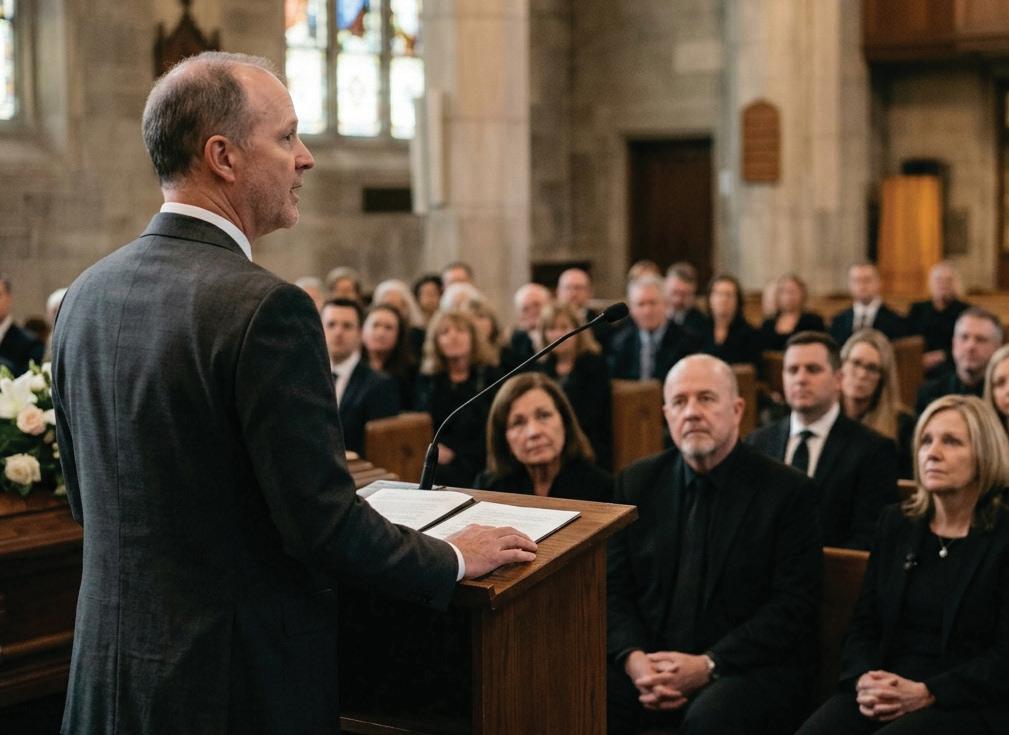
If you are ever asked to support someone in their grief, please say yes.
That day brought Dom and me closer to God, to each other, and to a greater understanding of what the funeral Mass offers a grieving family. If you are ever asked to participate in a funeral Mass or to support someone you love in their grief, please say yes. If a friend is hurting, show up. Do not talk yourself out of it because you feel like you are not Catholic enough or good enough. None of us are. That is the whole point.
Tami, thank you. Johnny, we love you. God is good. A
WILLIAM D. TOWNSEND
Philadelphia, where the Founding Fathers proclaimed America’s independence in 1776, is an appropriate location for the national pastime’s Major League All-Star Game in 2026. The United States’ semiquincentennial—or 250th anniversary—will surely spark extra sizzle at the July 14 matchup between baseball’s National and American Leagues and stir up memories of yesteryear.
For instance, gone too soon but remembered forever is a fifteen-time All-Star whose team played some 300 miles west of Philly. He’s the only Major League Baseball player to die while serving others. And while he earned awards aplenty during his life and after his tragic death, does he deserve more?
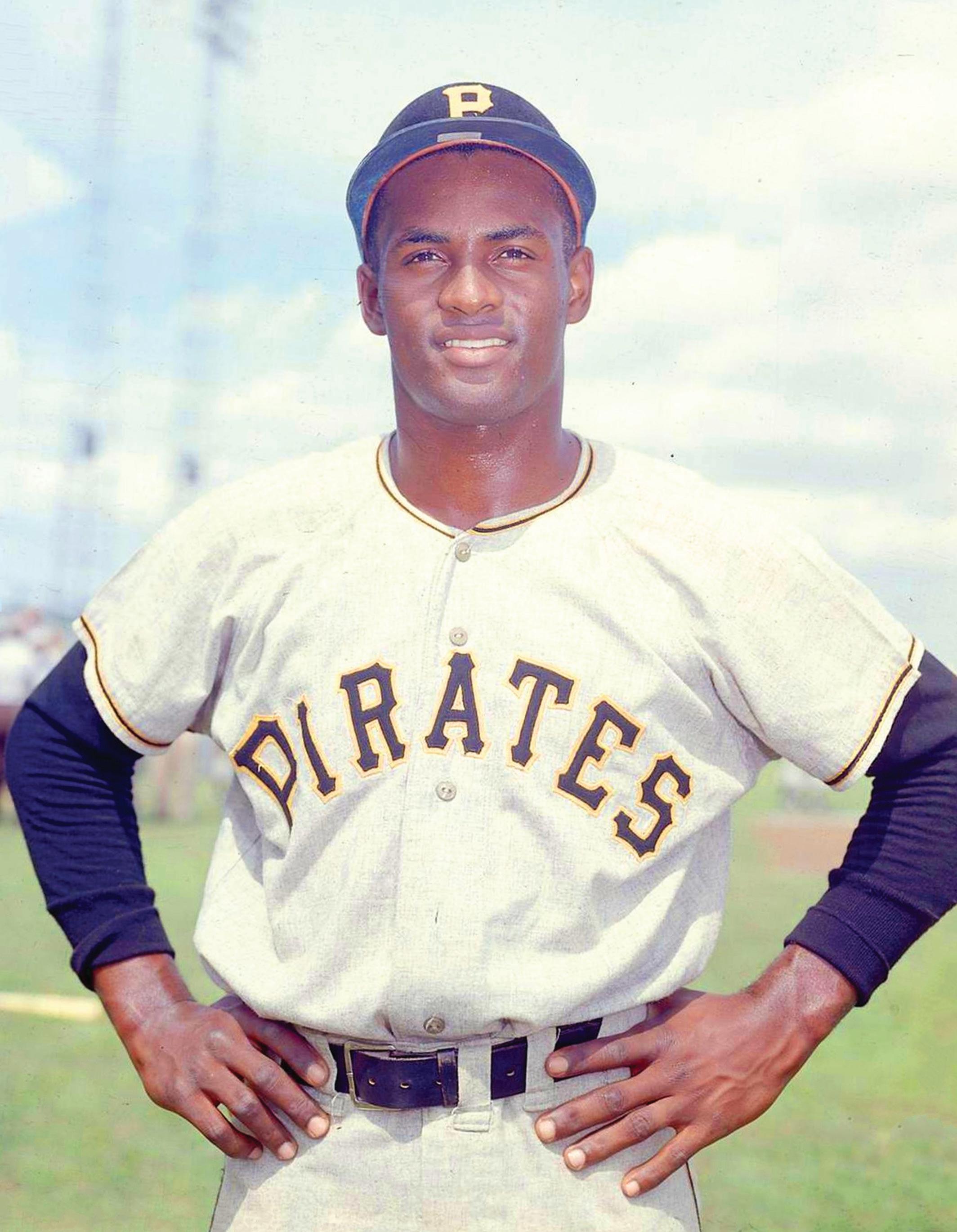
A devout Roman Catholic, Roberto Enrique Clemente Walker (1934–1972) leveraged the fame he gained from eyepopping performances with the Pittsburgh Pirates to serve souls he might never know. “The Lord put me on this earth to help people,” he said.
Begun in 2014, a fan and filmmaker’s efforts to push for Clemente’s canonization have struck out. But that does not shut the door on potential sainthood for the baseball great.
The sport’s salutes to Clemente are legion, and many think the commissioner should retire Clemente’s number in perpetuity, as Bud Selig did in 1997 to honor the Majors’ first black player,
Jackie Robinson. Fans believe it’s important to memorialize Clemente’s legacy by universally retiring the number 21, which “Momen” (a childhood nickname based on the word momentito, said often by Clemente when he needed a moment to think) wore with grace and dignity in eighteen seasons with the Pirates.
Clemente was among the pioneering Latin American big-leaguers and unquestionably the greatest. In his era, he was baseball’s most outstanding right fielder. Nobody ran on his cannon of an arm.
Roberto was born on August 18, 1934, in Carolina, Puerto Rico—smack-dab in the middle of the Great Depression. His parents were Melchor Clemente, a nonpracticing Catholic who worked in sugarcane fields, and Luisa Walker Clemente, a Baptist who raised seven children and served friends and
strangers alike. Baptized a Catholic, Roberto learned about God mostly from his mother, writes Mike Aquilina in a September 18, 2018, article on Angelusnews.com.
Luisa remembered her youngest as “a serious child—and unusually religious,” Aquilina writes. His favorite hymn’s lyrics state, “Life is nothing. Everything passes. Only God makes a man happy.”
Seriousness shadowed Roberto. A sister he’d never know had a lifelong spiritual impact on him. Anairis Clemente begged for a baby brother, and then Roberto came along. Tragically, one day her dress caught fire; she was engulfed by the flames and died. Roberto treasured Anairis, pondering her in his heart. He said he often felt her at his side. The little girl inspired her brother to be like Christ and to help and give to others—for example, at the age of twelve, Roberto dashed to a burning car, rescued a man, and carried him away.
Puerto Rico’s pastime occupied much of young Roberto’s time. “God wanted me to play baseball,” he said. Like fine wine, Momen improved with age.
At the age of twenty, this black Latino signed with the Brooklyn Dodgers and was assigned to their

—ROBERTO CLEMENTE
and Clemente: The Pride and Grace of Baseball’s Last Hero (2006), a deft, thorough 401-page examination by David Maraniss.
minor-league team in Montreal. Clemente was a star, but he seldom played because the Dodgers tried to hide him. It didn’t work. In a 1954 draft, the Pittsburgh Pirates’ Branch Rickey nabbed the gifted youngster, who would be a key to baseball treasure for the “Bucs.”
Clemente’s mind was on serving others as he helped Pittsburgh win two World Series championships (1960 and 1971), hit his way to four batting titles (.317 lifetime average), was named the National League’s Most Valuable Player (1966), and won twelve Gold Gloves for fielding. In his final at-bat in 1972, he doubled, becoming the eleventh bigleaguer to amass 3,000 hits.
Much of Clemente’s service is undocumented because he wanted it that way. He’d read through letters from his fans and scribble plans to visit children in hospitals on road trips. The number of visits was staggering but uncounted. Plus, whenever disaster struck, he did all he could to help the less fortunate. He also aided the cause for civil rights.
Perhaps preternaturally, Clemente told his wife, Vera, that he believed he’d die young. Fittingly, number 21’s last act was his most heroic.
On December 23, 1972, a cataclysmic earthquake annihilated Nicaragua. When Clemente learned that the militia of strongman Anastasio Somoza was stonewalling aid, the lionhearted Puerto Rican vowed to fly to Managua with supplies.
He and his friends overloaded—by 4,000 pounds—an unworthy plane with necessities for those affected by
the disaster. The fiery Clemente was determined to face down the dictator’s men to ensure that those who needed aid received the goods.
But tragedy, thy name is DC-7 N500AE
The Pirates’ “Great One,” as he was known in Pittsburgh, had expressed concerns about the plane but felt it would be good enough. Devastatingly, the rickety DC-7 from Miami Airport’s notorious “Cockroach Corner”—an area of the airport where older planes were kept, repaired, or broken down for parts—barely rose off the ground before plunging into the ocean on the last night of 1972.
A shocked world grieved. For days. Months. Always.
Later, the ocean gave up one lone sock. Vera Zabala Clemente knew immediately that it had belonged to her husband.
Fr. Alvin Gutierrez met Roberto and Vera in 1964, the year they married, and became forever friends with them. In his eulogy, he said, “Wherever there was need, there was Roberto Clemente,” calling him a man “of great convictions who was practicing the art of helping others when he died.” Later, the priest stated that his friend’s convictions were his “Catholic ethos.”
The only dirt you’re likely to find on Roberto Clemente is on his uniform in photos and films. For evidence, check out the documentary Clemente, nominated for a 2026 Sports Emmy Award,
“It is not for me to say whether Clemente should be canonized,” said Maraniss, who is not Catholic, in an interview with Liguorian. “But I do think he was an extraordinary human being who lived with grace and purpose. His motto was ‘If you have a chance to help others and fail to do so, you are wasting your time on this earth.’ What could be more saintly than that? He lived by that motto and died by that motto.”
“No human is perfect,” Maraniss continued. “[Clemente] performed miracles daily on ballfields, and he had magical healing hands.… I think of him as the patron saint of baseball-loving, Spanish-speaking Latin America.”
Filmmaker Richard Rossi solicited Pope Francis in 2017 and Pope Leo XIV more recently, hoping one would name Clemente a saint. Hearsay that Pope Francis had named Roberto “Blessed” was just a rumor. Rossi swung and missed, because the bishop in the diocese where Clemente died must initiate the cause for sainthood. San Juan Archbishop Roberto Octavio González Nieves, OFM, has been quiet about Clemente’s worthiness. In June 2025, he submitted his resignation when he turned seventy-five, following canon law, but Pope Leo hasn’t accepted it yet. Liguorian’s calls to the archbishop went unanswered.
In 1973, baseball writers elected Clemente to the National Baseball Hall of Fame and Museum, bypassing the usual five-year wait after a player’s last game. He was the first Latino to be enshrined.
His family continued his work. Vera established the Roberto Clemente Foundation, which has helped more than 10,000 people through free baseball clinics, scholarships, veteran support (Clemente joined the Marine
Reserves in 1958), and disaster relief. Vera also was a baseball ambassador.
“My husband was a very religious man,” Mrs. Clemente asserted. “His faith guided him to help others.” Roberto had wanted to open a sports center for youth in Puerto Rico, so in 1976, spearheaded by Vera, the Ciudad Deportiva Roberto Clemente was established, according to the Hall of Fame in Cooperstown, New York. Vera died in 2019 at age seventy-eight. Her work also continues.
Roberto and Vera’s three sons—Roberto Clemente Jr., Luis Roberto Clemente, and Roberto Enrique Clemente—co-chair the foundation. “We have that legacy,” said Roberto Jr. “But it is not [just] our legacy. It’s the legacy of all because he was a human being.… The one thing I truly believe we need to focus on is how he lived his life, what it meant to do what
he did. If we choose to emulate what he did, we will be in good shape.”
When Jackie Robinson broke baseball’s color barrier, some argued that his entry would help all players of color. When Clemente debuted eight years after Robinson, a minuscule 5 percent of MLB players was Hispanic. Today, one-third of Major League Baseball is Latin-populated. Hispanic players and fans revere Roberto Clemente.
Despite calls to retire number 21, commissioner Rob Manfred demurs. He has said that permanent honors for baseball greats should reflect their accomplishments. Clemente helped people, so an annual award goes to one player whose excellence on the field and service to humanity reflect the Clemente standard. Both Clemente and Robinson are accorded an annual
Own an original painting by folk artist Linda Schäpper, known for her unique and imaginative interpretations of biblical, Christian, and non-religious subjects.


MLB-hosted “day”—Clemente’s on September 15 and Robinson’s on April 15.
“I think his number should be retired. [Clemente] was to Latinos what Jackie Robinson was to black baseball players, paving the way for all that was to come,” biographer Maraniss said. “But I also think it is an honor whenever a Hispanic player dons the number 21 in his honor.”
The Great One’s 21 is retired in Pittsburgh. Manfred’s mind is made up, but he won’t lead baseball forever.
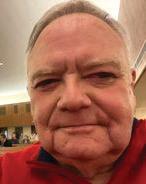
William D. Townsend, a Catholic and a baseball a��cionado, prepared the paper that President Obama read in deciding to award the Presidential Medal of Freedom to Bill’s hero, Stan Musial, in 2011 for excellence on the baseball diamond and service off the ��eld. Before retiring, Bill was an editor on Liguori Publications’ roster for fourteen full seasons, from 2010–2024.
Inset: Clemente in 1957 WIKIMEDIA COMMONS



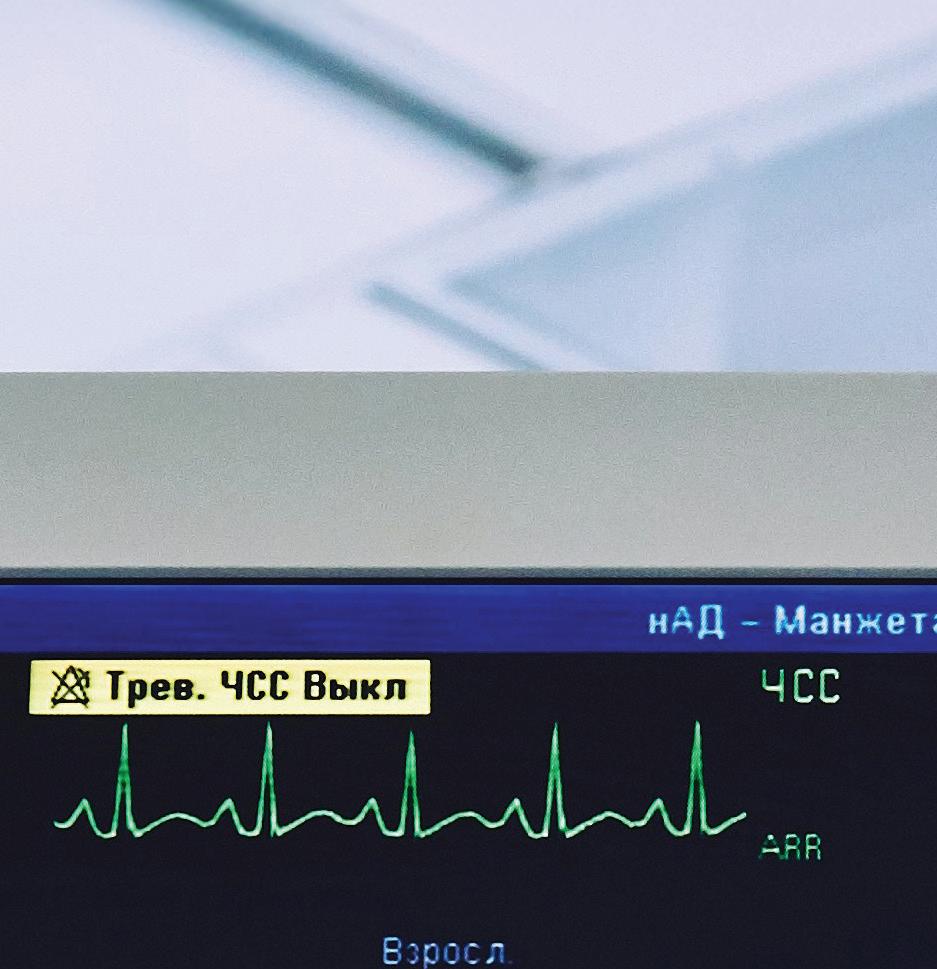









A CHECKBOX ON A FORM LEADS TO A LIFE-GIVING DECISION




The question looked so small on the form that I almost skimmed past it: Organ donor? Yes / No I was sitting in a crowded government o��ce in Istanbul, waiting to renew my driver’s license. Fluorescent lights hummed; numbers blinked on an electronic screen. I had brought a book of prayers to pass the time, but instead I found myself staring at that one line—a simple checkbox about my body after death.
In recent years, I’ve spent time reading about organ donation, brain death, and trust in medicine. I knew the arguments: how organs can save lives, how families cling to hope in intensive care units, how questions about the exact moment of death trouble many consciences. The Catholic Church, the Catechism (2296), and the teaching of Pope St. John Paul II in Evangelium Vitae speak of organ donation as a noble and praiseworthy act when it truly respects the dignity of the person and the reality of death. Yet, in that moment, the question felt painfully simple and very personal. Checking “yes” meant declaring what my body would mean when I could no longer speak for it.
The number board beeped. “A123,” a voice called. Not me. I shifted in the hard plastic chair and glanced at the form again.
That morning, I had attended daily Mass in our small Catholic parish, tucked off a busy street in a mostly Muslim city where the traffic noise lingers as we bless ourselves with holy water. But once the eucharistic prayer begins, the sounds of the city fade into the background like a distant tide.
When the priest lifted the host, he intoned, “This is my Body, which will be given up for you.”
Those words of Jesus lingered. Not “taken” or “used,” but “given.” A gift, not a confiscation. At Communion, I walked forward, hands open.
“The Body of Christ,” the priest said. “Amen,” I replied.
I received Christ—his Body, given for me—and returned to my pew to kneel in gratitude. As I stepped out onto the street after Mass, I prayed simply, Lord, help me live what I have just received.
Hours later, the government form in my lap seemed to echo that same mystery. My own body, at the end of my life—would it be something I clutched in fear, even in death, or something I could offer in love?




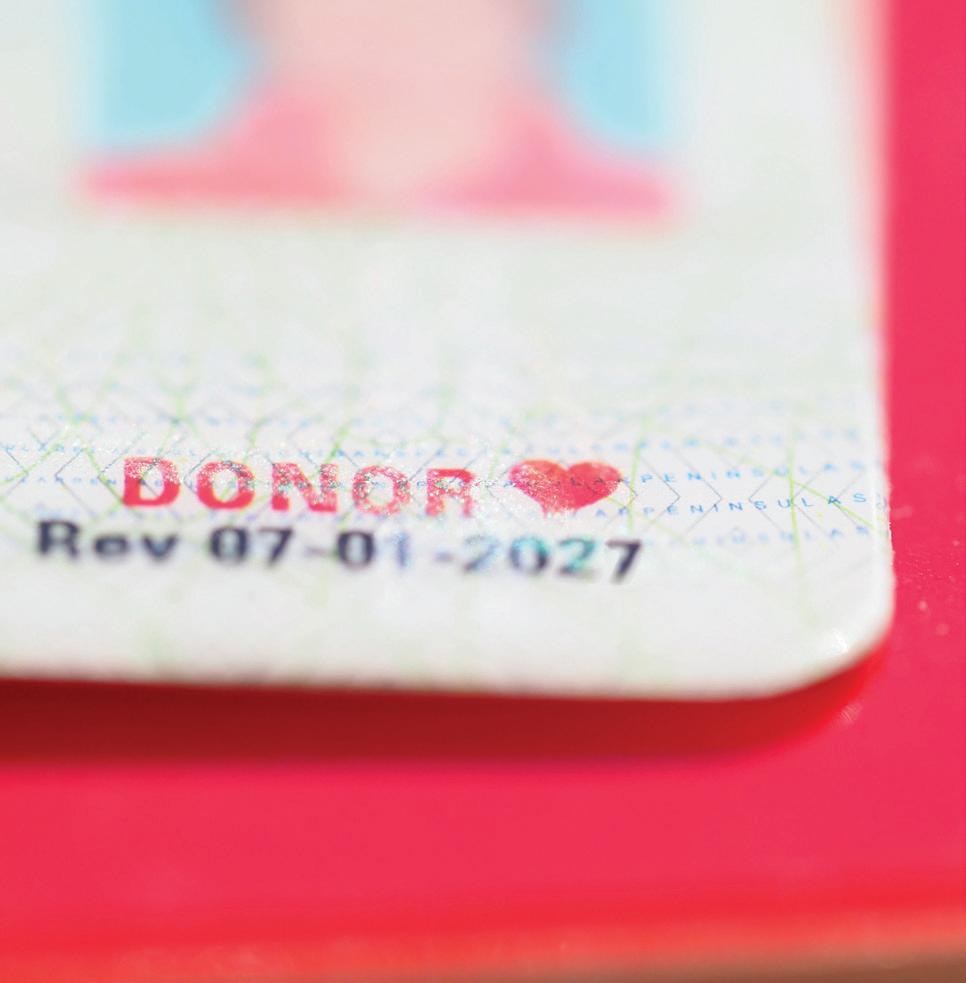
Organ d ati can be a beautiful expressi of charity, but it is ne r f ced.
My first reaction was not heroic. It was anxiety. A flood of what-ifs rushed in: What if the doctors make a mistake? What if I’m not truly dead? What if my organs are used in ways I wouldn’t want? Behind the neat little checkbox on the page, I saw hospital rooms, blinking machines, and families standing at bedsides with tears in their eyes and too many questions in their hearts.
I thought of a friend whose son had died in intensive care. For his parents, organ donation became a strange kind of comfort: in their loss, there was hope that others would live. Another family I knew, however, carried gnawing doubts about a diagnosis of brain death. To them, the process had felt rushed and opaque, and the phrase “brain death” itself remained a wound that never quite healed. These stories reminded me that organ donation is not a slogan but a place where love, grief, medicine, and mystery all collide.
At the same time, I knew I couldn’t be driven by fear alone. The Church does more than praise generosity; it also warns that it must never ignore the truth about death. Death must be
recognized with moral certainty, and the human body, even after death, must never be treated as a mere object or a pile of useful parts. Organ donation can be a beautiful expression of charity, but it is never forced, and conscience matters.
I put the pen down and folded my hands over the form.
Lord, I prayed silently, surrounded by the noise of the waiting room. I am afraid of being used. I am afraid of being reduced to a problem to be solved. But I also remember your Body, given for me. Show me how to be generous without being naive, trusting without being blind. If you want me to say “yes,” place that desire in my heart. If not, give me peace with a “no.”
The prayer was not long. There were no visions or sudden answers. A child nearby dropped a toy; someone argued at the counter; the number board beeped again. But, inside, something shifted—small and quiet, like the silence after the consecration at Mass. My fears did not vanish, but they loosened their grip.
The question in my heart moved,
gently, from What might be done to me? to What might be given through me?
I began to picture faces, not machines: the man on dialysis waiting for a kidney; the mother hoping for a few more years with her child; the doctors and nurses trying, however imperfectly, to do good in systems that often strain them. I thought, too, of my own family, and I realized that this little checkmark was not just about some future hospital room. It was about a promise I needed to make to them as well: that I would tell them my wishes, explain the faith that shaped them, and ask them not to be afraid.
I can’t just check a box and forget about it, I thought. If I say “yes,” I need to talk with the people who might one day be standing by my bed. I need to let the Church’s wisdom, not just my fears or feelings, guide me.
It was not a grand resolution, just a quiet clarity. My “yes” or “no” would still be imperfect. The medical questions would not magically disappear. But I sensed that, for me, this choice could be one small way—among many—to let the Eucharist spill over into the rest of my life.
I picked up the pen again.
In the box next to “Organ donor,” I checked “Yes.”
As I handed in the form, I added another small prayer in my heart: Lord, if this
choice ever matters, be present in that room. Let my “yes” be united to yours. Comfort those who grieve, and let no one be treated as just a collection of parts.
“Catholic health care institutions should encourage and provide the means whereby those who wish to do so may arrange for the donation of their organs and bodily tissue, for ethically legitimate purposes, so that they may be used for donation and research after death” (Ethical and Religious Directives for Catholic Health Care Services, Seventh Edition, directive 64, United States Conference of Catholic Bishops).
I walked out of the building into the late afternoon light. The street was as chaotic as ever. Cars nudged into intersections; vendors shouted; a siren wailed in the distance. I thought again of the Mass: bread and wine lifted up, a Body offered, and a people sent out into the world.
My decision on that form did not solve every ethical question I carry about organ donation. It did not erase the need to keep asking hard questions about how we define death and how we protect the vulnerable. Not everyone
can be an organ donor; age, illness, and circumstance limit what our bodies can give. But all of us, because of the Eucharist, are called to live as gift—to offer our time, our attention, our patience, our homes, our listening hearts.
For me, that small checkmark became one more way, alongside many hidden daily choices, to say in advance and in hope that my body, too, is meant to be given, not grasped.
On Sundays, when I hear again, “This is my Body, given up for you,” I now sometimes add in silence, Teach me, Lord, to give mine—in life, in death, and beyond—in the measure and in the manner you desire.
And when I stand in the Communion line, hands open, I know that somewhere, on a form in a drawer, there is another quiet “yes” written in ink. It is not perfect. It is not fearless. But it is offered in the light of the Eucharist, trusting that the One who gave his Body for me will know what to do with mine. A
Ersun Augustinus Kayra is an Istanbul-based writer whose essays connect eucharistic faith with daily life, mercy, and moral courage. A lay Catholic public ethicist, he contributes to international publications, including Stimmen der Zeit, Plough, Le Devoir, Le Verbe, and Deep Baltic

Sometimes I wonder if religion has passed its sell-by date. Does it truly add to the quality of life in my country, now? Put another way, if there had been no Catholic Church, no Protestant Church, no synagogues or mosques for all the years this country has existed, would it have made a difference?
It’s dangerous to pose theoretical questions, but on the days when I’m most cynical about belief of any kind; when I’m worn out from watching religious systems self-destruct and damage the people they are meant to serve; when I’m fed up with so-called religious folks landing in the news cycle for all the wrong reasons—well, at those times, it’s good for me to do a little review.
I might remember the small-town church that made sure everybody got fed and cared for. Or the patient Catholic chaplain who met tirelessly with university students who were navigating frightening situations and soul-deep questions. I might recall when Muslims stepped up to protect Christians or Christians stood in solidarity with Jews when troublemakers threatened violence. I might call to mind all the ministers of every stripe who helped at Ground Zero within days of the terrorist attack of 9/11.
I might review all the moral arguments I have witnessed over the years—and be oh-so-grateful that people were willing to make moral arguments when staying quiet would have been simpler and safer. I might recall all the adults I’ve known who were formed—and will gladly tell you about it—by wonderful priests, nuns, teachers, and counselors who were there for them when they were six or sixteen. I might remember the city neighborhoods of Chicago, which are still anchored by worship spaces of all kinds, where people still go to pray or think or sit in the quiet and cry.
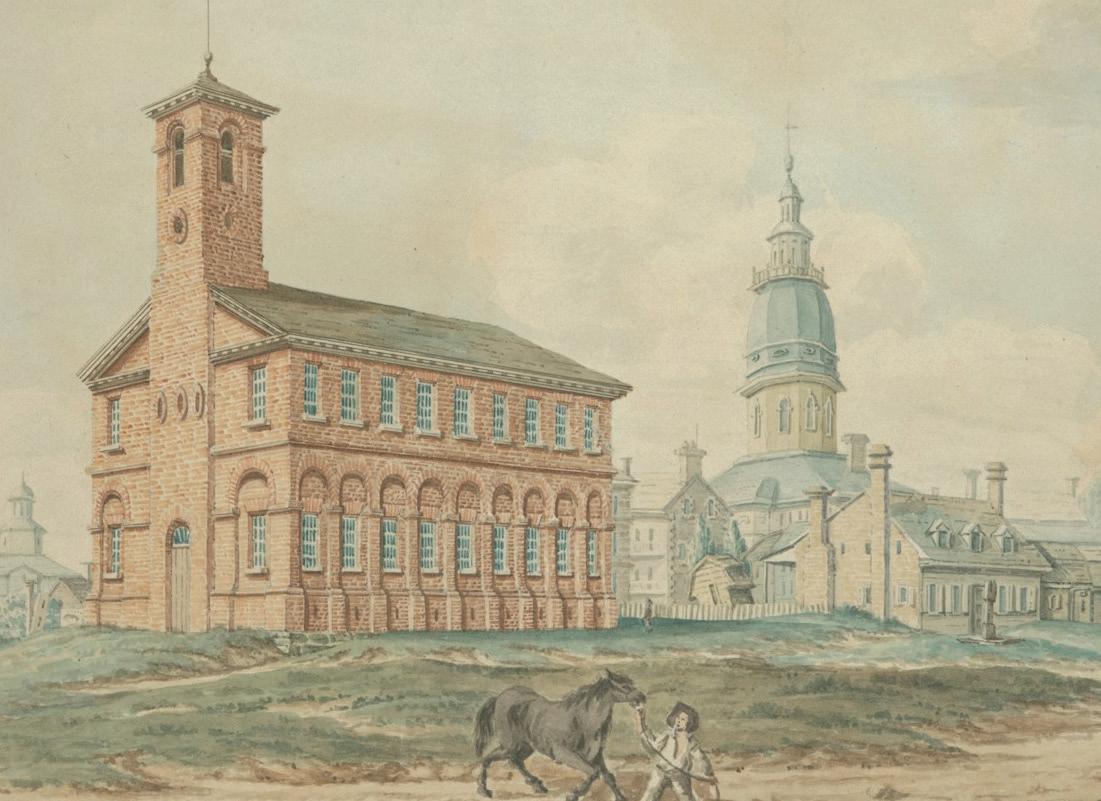
It’s easy to take for granted what real faith has built in this world.
I might remember all the charities, treatment centers, and shelters that were created because people had faith in a God of second, third, and seventieth chances. I can review the long history of hospitals and universities and laboratories that were built because their founders believed that humanity was loved and dignified by its Creator. I can easily see in my memory’s mind how words about love and justice and God’s care have softened the faces of so many people, pulling them out of their anger or despair.
It’s easy to take for granted what real faith has built in this world. Certain qualities we assume to be valuable—such as mercy, justice, human dignity, and truth—did not simply pop up out of the ground. They were named, cultivated, and prayed over by generations of believers. Sometimes people fought for them. Quite a few people died for these bedrock values that came from—yes—religious faith and tradition.
So, it does matter that my country has a history of faith. It matters a lot. A
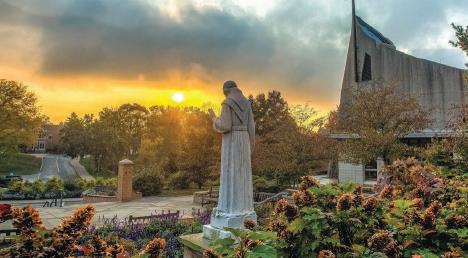
If you missed out on a plenary indulgence during the 2025 jubilee year, Pope Leo XIV has good news for you and your soul: You have until January 10, 2027, to obtain a plenary indulgence—and chances are, you don’t have to travel far.
The Pope has declared a jubilee year of St. Francis, marking the 800th anniversary of the death of the beloved saint of Assisi, and with it comes a
To sign up for The Catholic Observer newsletter at no cost or for a paid individual or group subscription, please type this line into your web browser and follow the instructions. thecatholicobserver.substack.com
Gary Gately is the founder and editor of The Catholic Observer, a subscription-based newsletter. Gately, a lifelong Catholic, is an award-winning journalist who has written for The New York Times, The Washington Post, The Guardian, the National Catholic Reporter, America: The Jesuit Review, Newsweek, The Baltimore Sun, The Boston Globe, the Center for Public Integrity, CNBC.com and United Press International. Please email news tips or suggestions to Garymichaelgately@gmail.com.
new opportunity for the faithful to obtain a plenary indulgence—a full remission of the temporal punishment due to sin. Requirements include, among other conditions, making a pilgrimage to any Franciscan church or place of worship dedicated to St. Francis anywhere in the world.
This extraordinary gift of God’s mercy gives Catholics the opportunity to erase the punishment for sins. Through the sacrament of reconciliation, we receive absolution, of course, removing guilt and the punishment of eternal damnation. But the remnants of sin and its consequences remain, and “temporal punishment,” on earth or in purgatory, serves as a means of purification and a way to make reparations for the damage sin causes.
Bishop Krzysztof Nykiel—regent of the Vatican’s Apostolic Penitentiary, which issued the decree granting the plenary indulgence on the occasion of the 800th anniversary of St. Francis’ death—stresses the need for “detachment from sin” to obtain the indulgence. “A person may confess and at the same time keep in their heart the thought, ‘I know it is wrong, that it is not good, but I do not want to stop doing it,’” Bishop Nykiel tells Vatican Media. “Such an attitude is an attachment to sin that neutralizes grace. By contrast, the detachment from sin that is required is not an emotional sense of purity but an act of the will that says, ‘Lord, I want no sin at all, not even the smallest.’”
Obtaining a plenary indulgence during the Year of St. Francis also requires sacramental confession, eucharistic Communion, striving to imitate “the poor man of Assisi,” reciting certain prayers according to the intentions of the Pope, prayer and meditation in the Franciscan spirit, and daily acts of charity and humility that express the spirituality of St. Francis.
Today, Bishop Nykiel emphasizes that detachment is not a state of sinlessness. “A person may have weaknesses, recurring venial sins, and may even experience painful falls,” he says. “What matters is the intention and the orientation of the heart: the sincere decision to break with sin here and now. If someone says to God, ‘I do not want sin, I hate it, even though I know I am weak,’ then there is no attachment to sin in that person.”
Indulgences got a bad name in the 1500s, when the Church sold them, contributing to Martin Luther’s decision to launch the Protestant Reformation, but the Church banned buying and selling indulgences during the 1562 Council of Trent.
YOUR INDEPENDENT SOURCE OF NEWS AND VIEWS ON THE CATHOLIC CHURCH
For more than eight decades, tens of thousands of pilgrims have made the arduous trek up Mount Cristo Rey in southern New Mexico each year to pray at the feet of the 29-foot limestone statue of Jesus atop the mountain. Now, the federal government is seeking to seize a 14-acre parcel of land at the base of the mountain through eminent domain to extend the southern border wall. But the Catholic Diocese of Las Cruces, New Mexico, which owns the tract at the base of Mount Cristo Rey (Spanish for Christ the King), is challenging its seizure. The diocese argues that the move would violate religious freedom and the right to worship, protected by the US Constitution’s First Amendment and the Religious Freedom Restoration Act, enacted by Congress in 1993 to strengthen religious liberty protections in response to a Supreme Court decision.
The diocese filed a motion contending that the land seizure would place a “substantial burden” on the free exercise of religion, adding, “The erection of a border wall through or along this holy site could irreparably damage its religious and cultural sanctity, obstruct pilgrimage routes, and transfer sacred space into a symbol of division. Any federal action to seize this land, construct physical barriers, or impede access to Mount Cristo Rey would constitute a significant infringement on religious freedom and the rights of worship.”
The federal government counters that the 14-acre strip—the only gap with no border barrier in El Paso— enables human smugglers to bring undocumented migrants into the United States, though the number of migrants encountered by U.S. Border Patrol agents has declined dramatically under the second Trump administration. The administration said in court papers
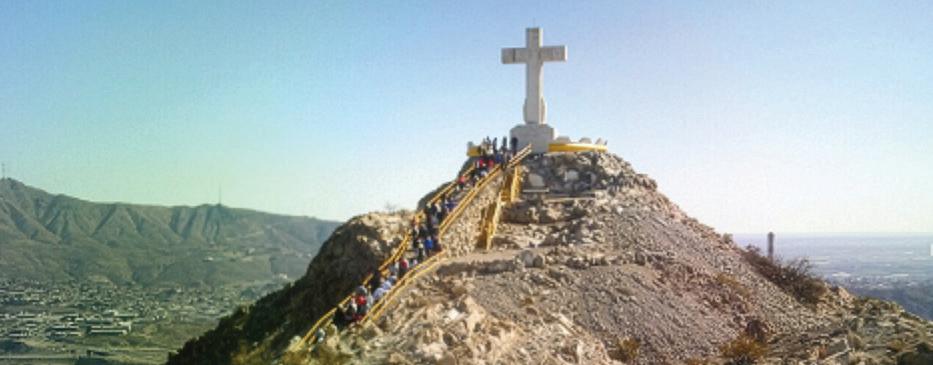
that it would offer the diocese $183,000 for the land, which it called fair market value. The government says it seeks the land for fencing, vehicle barriers, roadways, cameras, and lighting “to help secure the United States/Mexico border.”
Pilgrims have been ascending the 720-foot-high mountain to reach the statue of Christ with outstretched arms since 1940, after the Diocese of Las Cruces commissioned a Spanish-born sculptor to design the statue, and about 40,000 now visit each fall for Mass on the feast day of Christ the King.
U.S. Representative Veronica Escobar, a Texas Democrat, criticized what she called the federal government’s plan to seize the land to build the border wall, saying it reflects the Trump administration’s “blatant disregard for what communities like ours value.” Escobar, who is Catholic, added in a statement, “There are a number of other ways to provide border security. Instead, the Trump administration prefers to destroy this sacred site. I support the Catholic Diocese of Las Cruces in their opposition to the federal government’s actions to degrade a site so significant to our shared identity.”
* Faith Leaders Win Access to Minister to Immigrant Detainees After Months-Long Legal Fight
* Bishops’ Conference, Other Catholic Organizations Appeal Court Ruling on Abortion Accommodations
* Vatican Warns Traditionalist Group That Bishop Consecrations Without Papal Authorization Would Result in Excommunication
* Excommunication and Schism, Explained
* Trump Pledges to Raise Catholic Pro-Democracy Advocate Jimmy Lai’s Imprisonment During China Visit
* Pope Leo Condemns Death Penalty as Trump Administration Approves Firing Squad Executions
* Supreme Court Agrees to Hear Catholic Preschools’ Challenge to Colorado Law Excluding Them from State-Funded Program over LGBTQ Admission Policies
1901–1925 * Feast day: July 4
Patron of students, young adults, and World Youth Day
Saint Pier Giorgio Frassati lived the beatitudes with every breath. Born in Turin, Italy, in 1901, he had a joyful spirit and a deep love for others. Though he came from a wealthy family, his true riches were his faith and his love for the poor. Pier Giorgio gave freely, whether it was his bus fare, his shoes, or his time to help those in need. He considered it a privilege to serve others.
His charity wasn’t just about giving material things; it was about sharing his whole heart and soul. His deep compassion was nourished by daily Communion with Christ and frequent nocturnal adoration, which was the foundation of everything he did.
In addition to his devotion, Pier Giorgio was full of life and laughter. He was known for his practical jokes and natural leadership. He guided his friends back on track when they lost their way and often gave them rosaries as gifts, leading them to Mass and prayer during outings.
Mountain climbing was one of Pier Giorgio’s favorite activities, serving as both a physical challenge and a spiritual journey. He saw each climb as a chance to get closer to God, and he invited his friends to join him. His famous phrase, “to the heights,” wasn’t only about climbing mountains; it was about aiming high in faith and giving our hearts fully to God.


To honor Saint Pier Giorgio Frassati’s love for both physical and spiritual heights, enjoy these “To the Heights” Granola
Bars. Just as Pier Giorgio always aimed to climb higher—both in his faith and on the mountains— these granola bars remind us to fuel our own journeys with the same perseverance and devotion.
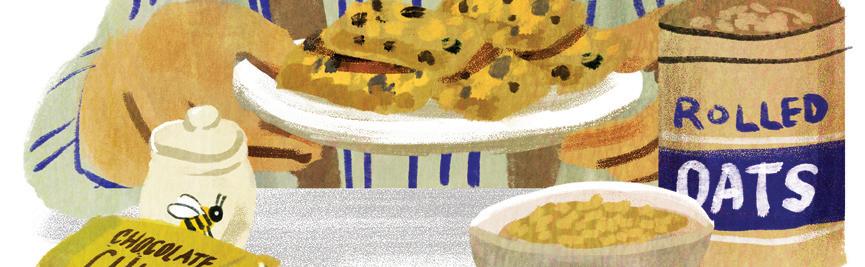

Ingredients (Makes 12 bars)
4 tablespoons coconut oil
¼ cup brown sugar, packed 1/3 cup honey
½ teaspoon vanilla extract
2 cups old-fashioned oats
2 cups crispy rice cereal
½ teaspoon salt
¼ cup mini chocolate chips
Instructions
Saint Pier Giorgio Frassati, pray for us!
Tools Checklist
8 x 8-inch baking dish
Parchment paper
Measuring cups
Measuring spoons
Small saucepan
Mixing spoons
Large bowl
1. Line an 8 x 8-inch baking dish with parchment paper (see note).
2. In a small saucepan over medium heat, melt the coconut oil, brown sugar, and honey together. Stir until the sugar is dissolved.
3. Bring the mixture to a gentle simmer and let it bubble for 1 to 2 minutes, then add the vanilla extract. Remove from the heat to cool slightly.
4. In a large bowl, combine the oats with the rice cereal and salt. Pour the slightly cooled honey mixture over the oat mixture and stir to coat.
5. When the granola mixture is no longer hot to the touch, stir in the chocolate chips. Spoon the granola mixture into the baking dish, then use another piece of parchment paper to press it down rmly (so it won’t stick to your hands).
6. Chill for an hour before cutting the mixture into 12 bars. Store at room temperature.
Note: Lining the baking dish with parchment paper makes it easy to remove the uncut granola bars from the pan when it’s time to cut them.
From Saintly Bites for Children: Mixing Faith, Fun & Family Time in the Kitchen ©2025, Shelby Siegfried; illustrated by Ted Schluenderfritz (828744, Liguori Publications). To order, visit Liguori.org or call 800-325-9521.
We have all faced impossible questions: “Does this dress make me look fat?”
“Have you stopped lying to your customers?” Even Jesus had to contend with “Is it lawful to pay taxes to Caesar?” No easy answers. Damned if you do, and damned if you don’t.
As we celebrate our nation’s 250th birthday, this question is raised: “Can I be both a loyal Catholic and a loyal American?”
Looking to the wisdom of the saints of the summer (Thomas More, Joan of Arc, Maximilian Kolbe, John the Baptist, Charles Lwanga, Teresa Benedicta a.k.a. Edith Stein), there are two things these holy men and women have in common: they chose loyalty to God over loyalty to their governments, and, in losing their lives at the hands of the authorities, they live on forever in our faith as icons of holiness and courage.
The Catholic Church we belong to has endured and thrived beyond the Roman Empire, beyond the Third Reich, and, yes, will be standing long after this 250th year of the “American experiment.”
There is value in looking to the goodness and even the greatness of the United States of America. I (Tim) am a proud veteran. There is virtue in being proud of our children, being proud of our culture, and being proud of our country. We enjoy the incredible blessings of this fragile, imperfect, glorious republic. At the same time, we acknowledge the truth of the inconsistencies and limitations of our leaders and forms of government.
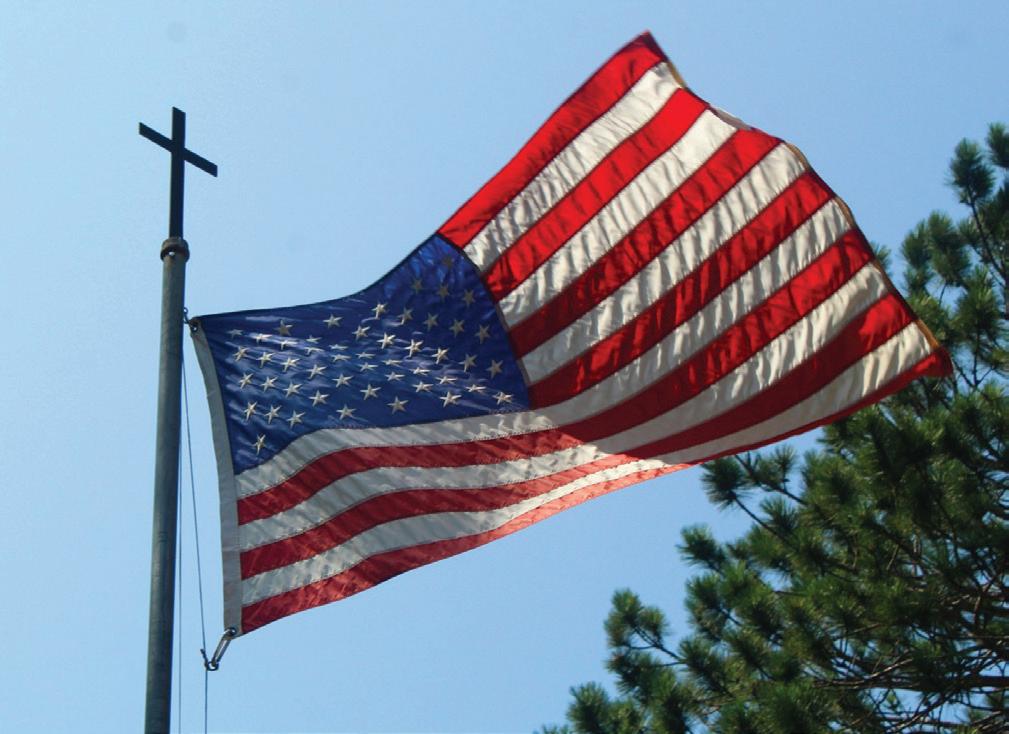
This quandary, which pits healthy patriotism against honest Catholic values, was juggled for decades by our early Catholic leaders. Bishops with last names like Carroll (Baltimore), Hughes (New York), England (Charleston), and Ireland (St. Paul)—all with John as their first name—struggled to build up the Church amidst great suspicions and prejudice. The culture was convinced that Catholics could never become loyal citizens because of their professed allegiance to a Roman pontiff. Blessed Michael McGivney, founder of the Knights of Columbus, chose an Italian hero for the name of the order. Why? Because the prevailing thought was that Irish Catholics could not be true Americans. So, this question of competing loyalties is not a new one.
Loyalty to God helps us become both good Catholics and good Americans.
What is the answer? It is not “either America or the Church,” but it means putting them in the right order. We belong first to Christ and his Church, and, from that place of belonging, we can love our country without turning it into an idol. When our nation lives up to its best ideals, we can rejoice and join in; when it falls short, our Catholic faith calls us to speak, to serve, and to work for justice and mercy. In that way, loyalty to God does not compete with love of country; instead, it purifies it and helps us become both good Catholics and good Americans. A
LESLIE WILLIAMS
At 6:47 on a Tuesday morning, I knelt beside my car in the grocery store parking lot with tears running down my face. Not because I felt sad or hopeless, but because I was thankful in a way I didn’t expect. The early sun made long shadows on the asphalt as shoppers holding their coffee cups hurried to begin their day. No one stopped to ask if I needed help. To others, I looked like I was checking my tires or picking up something I dropped. But I was going through what I can call a deep meeting with God’s grace in a very ordinary place. The day had started like any other. My alarm woke me
too soon, as always. I shuffled through my usual tasks—a shower, some coffee, a quick prayer while I spread butter on my toast—before I left to run errands ahead of work. My thoughts dwelled on the day’s responsibilities: the unfinished presentation, the need to buy materials for my son’s science project, and the nagging question of whether I’d remembered to pay the electric bill. This Tuesday seemed no different from hundreds of others.
Then, in that parking lot moment, everything changed. I had just locked my car door when I saw an elderly woman struggling with her grocery bags. Without a

second thought, I decided to offer help. She looked up at me with real surprise and a warmth that touched my heart. “It’s so nice of you to help,” she said, her wrinkled hand touching mine. “God bless you, dear.”
This simple exchange—one that takes place many times each day worldwide—had a profound impact on me. In that moment, the line between the sacred and the mundane blurred until it vanished. The woman’s soft thanks opened something in my heart that daily tasks and obligations had closed off. I walked her to her car, said goodbye, and returned to my car, then I found myself rooted to the spot. I felt God’s presence all around me, seeming to radiate from every common object—the carts, the early sunlight, even the blacktop beneath my feet.
Saint Thérèse of Lisieux wrote about finding God in small things in what she called “the Little Way.” But I had always pictured spiritual encounters as happening in cathedrals or during deep prayer, not next to a minivan in a grocery store parking lot while fretting about being late for work. Yet there I was, on my knees—not because I chose to be devout, but because my legs couldn’t hold up under the weight of this unexpected blessing.
This insight hasn’t made life easy. I still get annoyed in traffic jams, lose patience with my teens, and worry about money. But even these tough situations change when I see them through the eyes of God’s constant presence. When my son slammed his door after we fought, I stopped to see Christ in him even in his anger. When I got disappointing news about a job I wanted, I felt sad, but I knew I wasn’t alone. I remind myself that God exists in Tuesday mornings and Thursday afternoons, in successful presentations and burnt dinners, in fighting and making up.
To spot God’s presence takes practice. I’ve discovered that simple awareness exercises help—stopping before meals to see the gift of food, taking three deep breaths before picking up the phone, touching my heart when I feel stressed to remember who lives there. These aren’t sophisticated spiritual routines but small nods to a bigger truth that underlies our day-today lives.
God is already in every moment, not waiting to be called but to be seen.
This experience altered my understanding of faith in everyday life. Many of us—me included—have separated our spiritual lives from other aspects of our lives. We have our “God time” (Sunday Mass, evening prayers, religious holidays) and our “normal time,” where we handle work, family duties, and daily chores. We talk about “bringing God into” our everyday lives as if the Divine weren’t in these spaces until we purposely asked him to be there.
But what if we’ve got it wrong? What if we realized that God is already in every moment, not waiting to be called but to be seen?
After my parking lot revelation, I started seeing things I hadn’t noticed before. My daughter’s laugh while doing her homework sounded like pure happiness from above. Dealing with annoying customer service calls gave me a chance to be patient like Jesus. Even washing dishes turned into a kind of prayer when I paid attention to what I was doing.
Scripture says, “Do you not know that your body is a temple of the Holy Spirit within you?” (1 Corinthians 6:19). I used to think this was only a metaphor, but now I see it: we bring God’s presence with us everywhere—to grocery stores, staff meetings, carpool lanes, and kitchen sinks. The sacred doesn’t need special buildings or rituals, though these help us focus. The sacred exists everywhere and all the time.
Saint Augustine once said, “You have made us for yourself, O Lord, and our hearts are restless until they rest in you.” I used to think this restlessness needed fixing through prayer or worship. Now I see that God gives us rest not just in churches or retreats, but in our everyday lives—if we look for it and open our hearts to it.
That Tuesday morning in the parking lot reminded me that grace doesn’t always come with a big show. It often sneaks in through simple kindness, surprising beauty, or moments when we connect with others. The kingdom of heaven is like a mustard seed—easy to miss but with the power to grow into something huge and life-changing.
As I got up from kneeling that morning, dusted off my pants, and went about my day, I felt that everything had changed. Not because the world was different, but because I started to see it for what it really is—filled with God’s presence, each moment brimming with potential, every interaction holy.
In our everyday lives, grace finds us. And at times when we don’t expect it, we find ourselves on our knees— thankful beyond words, realizing what an amazing gift it is to be alive in God’s world. A

Leslie Williams is a writer and person of faith living in Toledo, Ohio. A working parent of teens, she finds her deepest spiritual insights not in churches or retreats, but in the ordinary moments of everyday life—grocery store parking lots included.
In recent months, I’ve been called a “social media influencer priest,” a title that I wear lightly and reluctantly. I joined Facebook in 2004 simply to stay connected, share Catholic content, and keep up with current events while enjoying the occasional surge of likes. In 2017, a young cousin’s remark that Instagram was her generation’s preferred platform prompted me to explore it. My 2020 appointment to the media ministry of the Bangalore Province of the Redemptorists gave clearer purpose to my efforts. Inspired by Fr. Sandesh Manuel, OFM, whose authenticity, humor, and creative catechesis engage over half a million followers, I now see social media as a powerful tool for evangelization.
My confession is this: In the years since I joined the media ministry, I rarely complete a book from cover to cover. This is due partly to busyness with ministry, or occasionally lethargy, but often the reason is distractedness! My involvement with social media has had an adverse effect on my attention span.
Social media algorithms were designed to exploit human preference for convenience, delight, and the easy way out of a challenging task. But to train the mind to read is to train the mind to think. To read at length is, therefore, to think in depth. Research shows that reading whole books boosts comprehension, leads to improved empathy through imagination, and builds intellectual stamina through concentration.
FR. SANDEEP MENEZES, CSsR
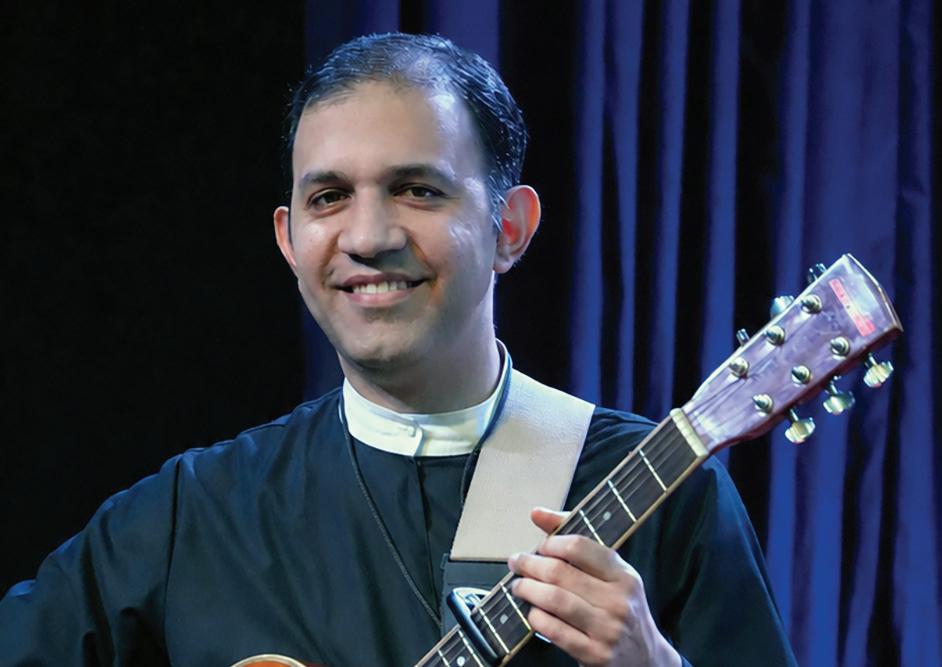
Contemporary authors warn us that we are headed toward a “post-literate” society. Studies have shown that schoolchildren are exhibiting diminishing attention spans, declining academic performance, and a growing intolerance for long, literary forms of texts, like novels. These same voices warn us of “metacognitive laziness,” which decreases the capacity to put forth the cognitive effort and the patience required for deep reading skills.
In the Bible, David would never have discovered his capacity to be a king if he had not faced a Goliath. In the same way, we do not discover our God-given capacities when we abdicate control to machines.
We live in an age when social media influencers often have more clout than governments, corporations, or even the Catholic Church. Social media has become the primary source of information for many. Yet what we notice on all these platforms is the sparing use of text and the absence of nuance and complex reasoning. Instead of provoking deep thought on life’s realities, we are left with emotional reactions and shallow impressions.
How does social media shape our understanding of what is authentically Catholic? When the opinion of a social media influencer (whether a layperson, priest, trained theologian, or zealous Catholic teenager with basic catechetical formation) spreads faster than the magisterium’s authoritative pronouncements, there is going to be confusion. For that reason, Catholics cannot simply “click and believe”—they must test what they hear against trustworthy catechetical resources and the living teaching of the Church. A
Fr. Sandeep Menezes, CSsR, is a Redemptorist priest in India who is active in media ministry and evangelization in the digital space.
b. March 28, 1515, Ávila, Spain; d. October 4, 1582, Alba de Tormes, Spain; canonized in 1622; proclaimed a doctor of the Church in 1970; feast day October 15
Born to parents of Spanish nobility, Teresa grew up reading the lives of the saints and playing a “hermit” in the family garden. She was educated at home due to a crippling childhood disease, which was cured after prayers to St. Joseph. Her mother died when Teresa was young, and she prayed to Our Lady to be her mother. Teresa’s father opposed her entry into religious life, so she left home without telling anyone and entered a Carmelite house at the age of twenty. Seeing her conviction to her calling, her father consented.
Soon after taking vows, Teresa became gravely ill. Her condition was aggravated by inadequate medical care, and she never fully recovered. She received visions, which were examined by Dominicans and Jesuits, including St. Francis Borgia, who pronounced the visions to be authentic.
Teresa considered her original convent too lax in its rule, so she and St. John of the Cross founded a reformed branch of the Order—the Discalced Carmelites.
Whoever has not begun the practice of prayer, I beg for the love of the Lord not to go without so great a good. There is nothing here to fear, but only something to desire. Even if there be no great progress, or much effort in reaching such perfection as to deserve the favors and mercies God bestows on the more generous, at least a person will come to understand the road leading to heaven. And if one perseveres, I trust then in the mercy of God, who never fails to repay anyone who has taken him for a friend. For mental prayer, in my opinion, is nothing else than an intimate sharing between friends; it means taking time frequently to be alone with him who we know loves us (The Book of Her Life).
Prayer is the heart of Teresa’s life and teaching, her “way of perfection.” She teaches us that prayer is:
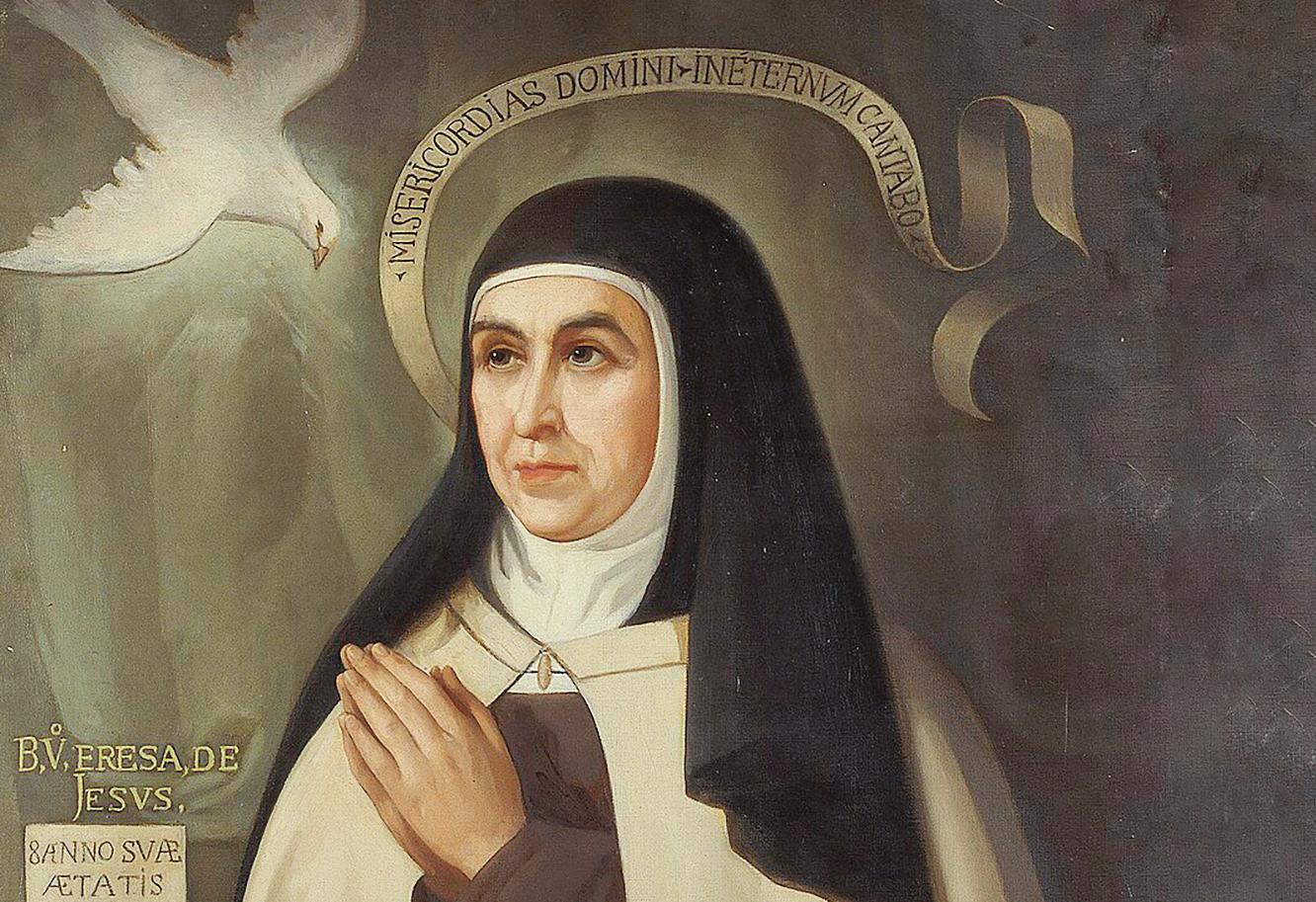
• the supreme meaning and value of human existence, since it is the inner life that animates the exterior, the journey within, that is, the journey into reality.
• life before it is an exercise, a dimension of being before it is an experience.
• in touch with the Center of one’s life, who is “the Divine Majesty.”
The kernel of Teresa’s mystical thought throughout her writings is the ascent of the soul in four stages (The Life of St. Teresa of Ávila):
1. The “heart’s devotion” is that of devout contemplation or concentration, the withdrawal of the soul from distraction, especially through the observance of the passion of Christ and penitence.
2. The “devotion of peace,” in which at least the human will is lost in God by virtue of a charismatic, supernatural state given by God, while the other faculties, such as memory, reason, and imagination, are not yet secure from worldly distraction.
3. The “devotion of union” is not only a supernatural state but also an essentially ecstatic one. Here, there is also an absorption of the reason in God, and only the memory and imagination are left to ramble. This state is characterized by blissful peace, a sweet slumber of at least the higher soul faculties, and a conscious rapture in the love of God.
4. The “devotion of ecstasy or rapture,” a passive state whereby the consciousness of being in the body disappears. (See 2 Corinthians 12:2-4.) Sense activity ceases; memory and imagination are also absorbed in God. The body and spirit are in the throes of a blissful, happy pain, alternating between a fearful fiery glow, a complete impotence, and unconsciousness.
Closing Prayer
Let nothing disturb you. Let nothing frighten you. All things pass away. God never changes. Patience obtains all things. They who have God lack nothing. God alone is enough. Amen. A

Turn me outside in and upside down, Lord. Pummel and purify me; Still me from the world’s noise.
In that sacred space
At the center of my being, Turn me inside out and downside up!

Yeast and ferment me
To be leaven in the marketplace. Commission me
To push past contemplation And embrace action!

Shape me into a loaf of bread
That can be blessed, broken, and shared—
So others may taste
The goodness of your love, Risen And baked in me.

Jeanette







A THRIFT SHOP OWNER AND A SHOPPING-CART PUSHER WORK FOR THE SAME CAUSE
DAVE BACHMANN

The ��rst time I met Frank, he was pushing a Cappelli’s Gourmet Market shopping cart piled high with ballooning black garbage bags. He was wearing a faded red T-shirt, frayed jeans, and broken-down Converse sneakers. He had a stubbly beard and a tuft of graying hair that straddled his head like a lone tumbleweed.
Which is pretty much the way he looked every time I saw him.
I was celebrating the grand opening of my thrift store, The Kind Exchange, which was wedged into the center of a strip mall, bordered on one side by Lily’s Nails and the other by Bobby D’s Tacos (“Buy three, get one free!”). Anchoring one end of the strip was the aforementioned Cappelli’s.
“Sir, can I interest you in a glass of mock champagne?” I called to the disheveled cart pusher. “It’s my not-verygrand opening.”
“I’m not a sir, ma’am—just plain old Frank.”


“Well, Frank, I’m not a ma’am. Just plain old Glenda. Pleased to meet you. How about that champagne?”
Thus began our friendship.
Every morning, just as I was opening up, Frank would pass my thrift store, pushing the now-familiar Cappelli’s shopping cart through the parking lot as if setting out on the most important mission in the world. He would stop when he saw me, smile warmly, and graciously accept a cup of coffee and whatever pastry or cookie I happened to be offering that day.
I would politely inquire about what was on his day’s agenda, and he would pause to give the matter serious thought before responding with something like, “Well, Ms. G, I believe I’ll head over to the homeless shelter on Third, then over to Veteran’s Park around noon. About 3:00 or so, I’ll amble over to the Greyhound station or the blood bank before heading back. How ‘bout yourself?”
On more than one occasion, I tried offering Frank a new shirt. Well, not exactly a new one, but clearly an improvement over the one he wore every day.
“Frank, I’ve got a nice Eddie Bauer long-sleeve shirt here with your name on it. On the house.”
“ No, no, no, Ms. G. Couldn’t take advantage of our friendship like that. Besides, there’s someone out there who needs it more than Frank does.”
The shopping cart was also a concern of mine.
“Frank, I’ve got a cart out back that I’m not using. I think it might work for your daily walkabouts. Don’t want to aggravate the neighbors if we can help it,” I said, motioning to Cappelli’s Gourmet Market.
Frank turned and stared at Cappelli’s as if seeing it for the first time. “Ms. G., I walk by there every day with this cart of theirs. Know quite a few of those fine folks, too. Not one of them
has said a word about it. But thanks for the offer, just the same.”
I never inquired about Frank’s history, not wishing to embarrass him by prying into his past. But there was clearly something special about him.
Which is why I offered him a job.
“Frank, you may have noticed that The Kind Exchange is doing a brisk business these days.”
“Ms. G., it’s a tribute to your hard work and compassion. Your generosity is well known in the neighborhood.”
“It’s my way of helping those in need, Frank. Which is why I’d like to hire you to come work for me.”
Frank stared at me, a look of incredulity on his face. Being offered a job was obviously not something he experienced every day.
“I need someone to sort and categorize the contributions, which, I’m happy to say, are somewhat overwhelming. Interested?”
“Well, Ms. G., that’s a mighty fine offer. Yes, indeed. But it means I’d have to curtail my daily walkabouts, if you know what I mean.”
“I considered that, Frank. It would only be for an hour at the end of the day.” I paused, allowing Frank to fully appreciate what I was asking. “I really could use the help,” I added as further persuasion.
“Alrighty, then,” Frank cheerily responded. “When you put it like that, Ms. G., how could I refuse? What time?”
I told Frank to meet me at the back of the store, where the donations of baby goods were piled, at 4:00 that afternoon. To my surprise, he arrived at 3:59, wearing a clean, collared shirt.
“Why, aren’t you the dapper gentleman!” I greeted him.
Frank laughed. “I’ve been told that I clean up good.”
I showed Frank where to store the donations. Within minutes, he had set up a system to categorize each item, down to the smallest pair of socks. I was impressed.
But when he showed up the next
day, right on time, I was even more convinced that I had chosen the right person for the job. Frank arrived with a hand-drawn grid by which every donation could be categorized, itemized, and priced.
“I never inquired about Frank’s history...but there was clearly something special about him.”
And so it went. Day after day, Frank would appear on schedule, wearing the now-familiar collared shirt, his wisp of hair combed back, ready to tackle the day’s donations. When I tried to pay him $75 after the first week, he told me to bank it for him, which I did.
And then, one day, everything changed.
I was just getting ready to close when a young woman entered. She appeared agitated and moved doggedly toward the front desk.
“I need to speak with a gentleman who I believe works here,” she spoke authoritatively, making it clear that refusing her was not an option. I cringed when I saw a company monogram on the woman’s shirt: Cappelli’s Gourmet Market.
“Look,” I offered in the calmest voice I could muster, “if this is about the Cappelli’s shopping cart, I can compensate you for it. I don’t want any trouble.”
“It’s important,” the woman reiterated, ignoring my plea and losing none of her intensity.
“Janice! Good to see you!” a voice shouted. It was Frank, emerging from the back room where he had been working.
“Oh, there you are, Mr. Cappelli,” the
young woman gushed, smiling for the first time. “I’m afraid we’ve got a little problem.”
Frank approached and placed his hand on my shoulder, evidently sensing my discomfort and surprise.
“In a moment, Janice. First, I need to introduce you to someone special. This is Glenda…my boss, who right about now is in total shock.”
“Pleased to meet you, ma’am.”
“Cappelli?” I asked, looking alternately between Frank and the young woman. “Cappelli? As in Cappelli’s Gourmet Market?”
“What’s the problem, Janice?” Frank asked, ignoring my queries.
“It’s about the D’Angelo wedding tomorrow. We’re catering it, and we’re running low on prosciutto.”
“Well, now, that is a problem. Can’t have an old-fashioned Italian wedding without prosciutto. Tell you what, Janice: contact our other three stores and have them send over half of what they’ve got. I’ll call the vendor tomorrow to make up the difference.”
“Oh, thank you, Mr. Cappelli. I should have thought of that.”
“I put you in charge for a reason, Janice. Don’t ever be afraid to make a decision. I’ll always back you up.”
“Thanks, Mr. Cappelli. I’ll remember that.”
The young woman turned to go.
“And stop calling me Mr. Cappelli!” Frank called after her. “I’m Frank. Plain old Frank.”
Once we were alone, I whirled around and began accosting Frank. “Cappelli?” I sputtered. “Cappelli, Frank? Really? Cappelli? Cappelli’s Market? Cappelli’s Gourmet Market?”
Frank merely smiled, patiently waiting for me to finish.
“I thought you were homeless,” I mumbled, out of breath.
“I kind of figured that,” Frank chuckled. “But I knew that one day the truth would come out, and, when it did, I’d have a great story to tell my employees at Cappelli’s.”
“I discovered that these folks wanted a hand-up, not a handout.”
“But the shopping cart! The garbage bags with your belongings!”
“The garbage bags are filled with food, Ms. G. You see, about a year ago, I decided that throwing out day-old food—or, as I prefer to say, day-young food—was a terrible waste. So, I started collecting it from our stores each day to give to people who were struggling, down on their luck, or homeless.”
“Go on.”
“It didn’t go over well. I pulled up in my car, Mr. Clean-Cut, Tie-Wearing, Successful Businessman, and started trying to pass out gourmet Italian food. Folks were reluctant to approach. That’s when I realized I had to stop being Frank Cappelli, CEO of Cappelli’s Gourmet Markets, and just be me. Frank. Plain old Frank.”
“The next day, I put on my favorite faded T-shirt and some comfortable sneakers, filled one of our shopping carts with food, and tried again.”
“And that worked?”
“It sure did. I discovered that these
Bible Quiz answers from page 44
1-W (Acts 9:11)
2-U (Gn 4:16)
3-B (Jos 8:3)
4-M (Gn 17:19)
5-V (Mk 15:5, 44)
6-I (Mt 16:13-15)
7-H (Mt 23:15-17)
8-K (Lk 13:31-32)
9-G (Mt 26:6-7)
10-Y (Jb 1:1)
11-P (Gn 13:5-11)
12-N (Lk 8:3)
13-X (Gn 11:27-31)
folks wanted a hand-up, not a handout. They’re veterans, people with disabilities, victims of domestic violence— good people. Since then, I’ve made a lot of new friends and hired some hardworking employees for Cappelli’s.”
I shook my head, trying to process the transformation this man had undergone in the last few minutes. “I suppose this means I’m going to lose my one and only employee,” I lamented, “now that I know your secret.”
“Are you kidding? And miss your second grand opening?”
“What? What do you mean?”
Frank laughed. “Ms. G., I’ve seen what you’ve done for this community, the people you’ve helped without expecting anything in return. So, when I heard that Bobby, proprietor of Bobby D’s Tacos next door, was going to retire, I offered to rent his space. You can not only double the size of your thrift store, but you can also double the number of people you help and probably add a few more employees. What do you say?”
14-Q (Ex 10:12-15)
15-F (Jgs 14:5-8)
16-C (Acts 5:1-11)
17-E (Acts 4:36-37)
18-D (2 Kgs 2:23)
19-O (1 Mc 2:1-2)
20-A (Heb 7:11)
21-T (Mt 25:1-13)
22-L (Nm 13:1-3, 25-33)
23-S (Mk 16:1-8, 9-20)
24-R (Lk 1:1-3)
25-J (Lk 1:5)
“Oh, my, I don’t know what to say… except, yes! Let’s do it!”
“Glad to hear it. As for me, I’ve got a boatload of donations to categorize, so, if you don’t mind, I’ll be getting back to work.”
Frank turned and headed toward the back of the store.
“Thank you, Frank!” I called out. “I mean, Mr. Cappelli. I mean, Frank Cappelli. Oh, I’m afraid I don’t know what to call you anymore!”
Frank turned, smiled, and spread his arms wide as if introducing himself for the first time. “It’s Frank, Ms. G. Just Frank. Plain old Frank.” A
Dave Bachmann is a retired teacher who taught writing and reading to special-needs students in Arizona for thirtynine years. He now resides in California with his wife, Jay, a retired kindergarten teacher, writing poems and short stories for children and grown-ups.
Catholic Crossword answers from page 45
1. A street in Damascus
2. Cain settled here
Rate yourself on your knowledge of Scripture. Match the first column with the second. Answers are on page 43.
3. City Joshua and his army attacked
4. God promised to keep an everlasting covenant with him
5. Jesus amazed this man twice
6. Jesus asked, “Who do people say that I am?” here
A. Aaron
B. Ai
C . Ananias
D. Baldy
E. Barnabas
F. Bees
7. Jesus called the scribes and Pharisees this G. Bethany
8. Jesus referred to Herod as this H. Blind guides
9. Jesus was here when a woman anointed him with oil
10. Land of Job
11. Lot chose the whole of this Plain for his own
12. One of those who provided for Jesus and Apostles
13. Place of birth of Abraham
14. Plague of the Exodus
15. Samson found these in a lion’s carcass
16. Sold land and gave only part of the money to the apostles
17. Sold land and gave the money to the apostles
18. Some little boys teased Elisha, calling him this
19. Son of Mattathias, one of five brothers of Maccabees
20. Levitical priesthood was according to the order of ___
21. The Parable of the ten Virgins is in this gospel
22. The scouts of Moses described themselves as this
23. This gospel may have multiple endings
24. This gospel is addressed to Theophilus
I. Caesarea Philippi
J. Elizabeth
K. Fox
L. Grasshoppers
M. Isaac
N. Joanna
O. John
P. Jordan
Q. Locusts
R. Luke
S. Mark
T. Matthew
U. Nod
V. Pilate
W. Straight
X. Ur
25. Wife of Zechariah Y. Uz
“Catholic Crossword” and “Bible Quiz” are produced by Gabriel Publications. Liguori Publications is not responsible for their content. Please direct questions or comments to Gabriel Publications at info@wordgamesforcatholics.com.
Holy water, for example
Specialty
River in central Europe
Lady Chaplin
Coordinator of parish programs (abbr.)
He went to heaven in a whirlwind
Fortunate
Global (abbr.)
Type of cross
Hosp. trauma centers
Build again
Son of Sarah
Type of witness we are not to bear
Bunches
Hole
Wife of a rajah
Car with removable panels
Lion sounds
“…and blessed is the ______ of thy womb…”
Former overseer of the VOA
VCR replacements
Fencing sword
Juan’s “other”
Rave
Biblical tooth action?
Pass by
Religious garb
Playing marble
Vice follower
Fishing net
______ of David
Wife of Tobit (Tb 2:11)
Church divider 51 View from Chamoix, to a native
53 United States farmer’s org.
54 Opposite of pos 55 Benedictine letters
When my three-year-old son opened the birthday gift from his grandmother, he discovered a water pistol. He squealed with delight and headed for the nearest sink. I was not so pleased. I turned to Mom and said, “I’m surprised at you. Don’t you remember how we used to drive you crazy with water guns?”
Mom smiled and then replied, “I remember.”

While a friend and I were visiting Annapolis, we noticed several students on their hands and knees, assessing the courtyard with pencils and clipboards in hand.
“What are they doing?” I asked our tour guide.
“Each year,” he replied with a grin, “the upperclassmen ask the freshmen how many bricks it took to finish paving this courtyard.”
When we were out of earshot of the freshmen, my friend asked our guide, “So what’s the answer?”
The guide replied, “One.”
If you have jokes or amusing stories you’d like to share, please email them for consideration to Liguorianeditor@Liguori.org, or mail them to Liguorian Editor, 200 Liguori Drive, Liguori, MO 63057.

“Take Me Out to the Ballgame” ranks with “Happy Birthday” and “The Star-Spangled Banner” as one of the most familiar songs in America, yet most people know only its chorus. The full 1908 song—jotted on scrap paper by Jack Norworth during a train ride and later set to music by Albert Von Tilzer—actually tells the story of “baseball-mad” Katie Casey, a devoted fan who never misses a game and even argues with the umpire.

Well-known proverbs completed by third graders:


J Love everyone, trust…me!
J The pen is mightier than the…pigs.
J An idle mind is…the best way to relax.
J Where there’s smoke there’s…pollution.
J Happy the bride who…gets all the presents.
Br. Raymond Pierce, CSsR, supplies the humor for “The Lighter Side.”
To receive his complimentary weekly emails, “Morning Smiles,” email him at raymondcssr@gmail.com.
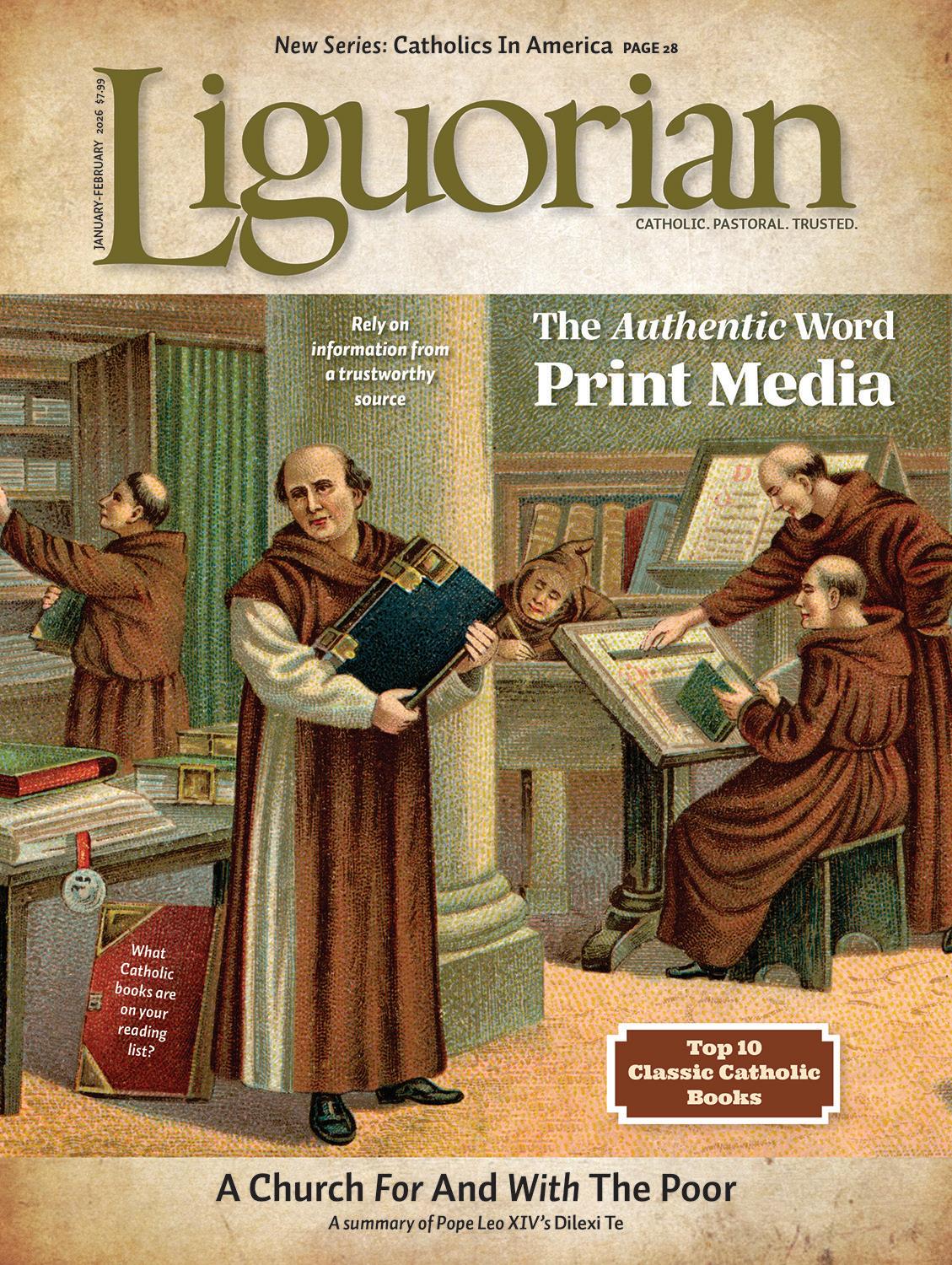
Liguorian magazine shines with hope—inspiring stories, thoughtful reflections, and helpful insights into issues of the day. Give the gift of Liguorian magazine and help spread the joy of the gospel while bringing a message of hope to friends and family.
Each additional subscription is $33.00 Please add $15 if outside the US.
Rate for subscriptions outside the US is $53. Subscriptions outside the US must be prepaid in US funds. First-time access to the digital edition requires registration at Liguorian.org, or send an email to Liguori@liguori.org. Six issues per year.

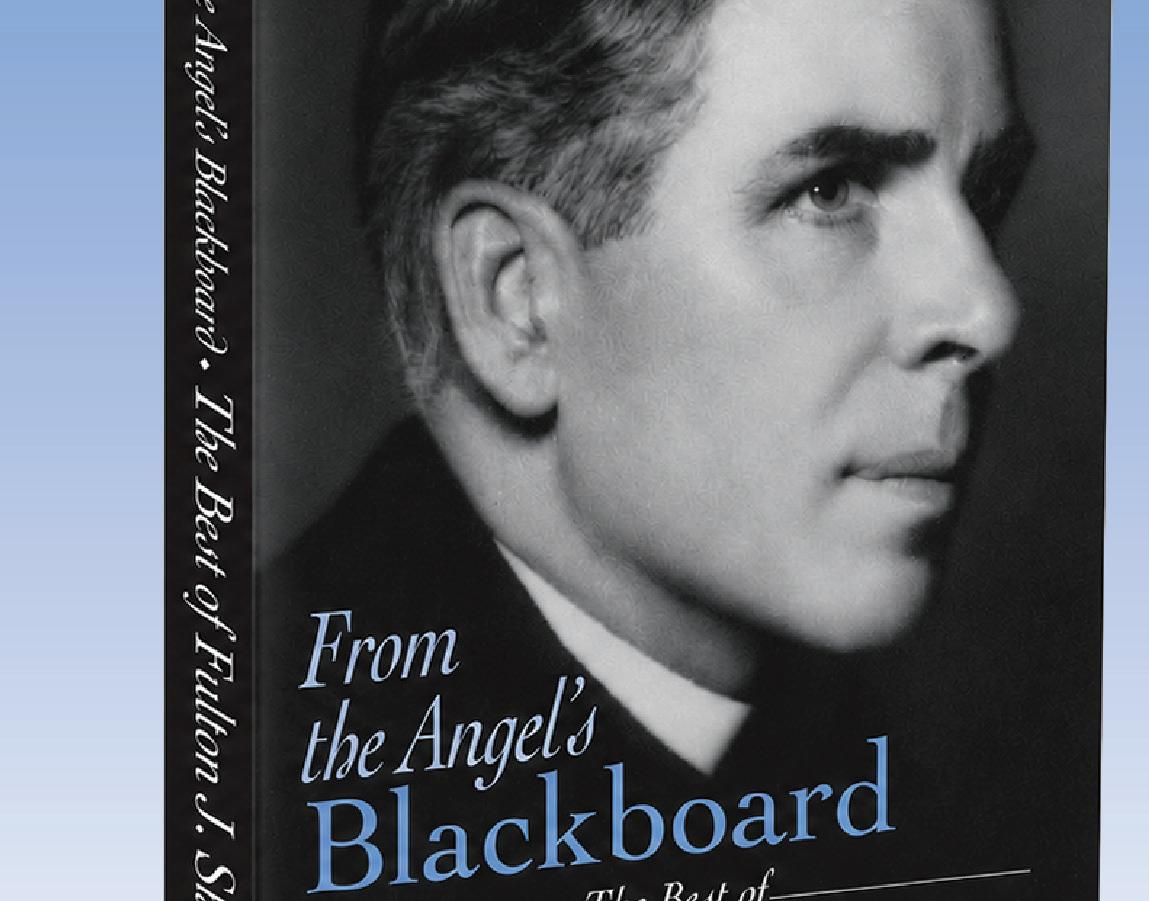






From the Angel’s Blackboard

The Best of Fulton J. Sheen 439256 | $22.99

Peace of Soul


Timeless wisdom on fi nding serenity and joy by the 20th century’s most acclaimed Catholic bishop 439157 | $22.99


Characters of the Passion Lessons on Faith and Trust 802294 | $13.99


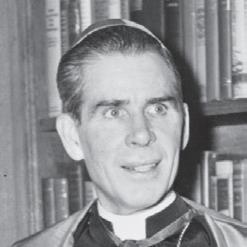
Seven Words of Mary and Jesus Lessons from Cana and Calvary 807084 | $13.99



The Cross and the Beatitudes Lessons on Love and Forgiveness 805929 | $13.99



Learn more about this incredible soonto-be-Blessed with 20% off his books. Use code 26311.