Welcome back to the 23rd edition of the Stag!



Hopefully you have all had a great fortnight, with cycle tests starting back up for year 10s, year 12 busy with HSC preparation and year 11 getting ready for the annual leadership camp.
With the term in full swing and everyone getting used to their workloads, I would like to talk about finding a replacement for the role of Head Editor. With most of the team heading into the preliminary HSC and its intense course, it’s becoming increasingly important to find new members to take over the future of this student newspaper.
Though it’s a reasonable amount of work, I promise that it is absolutely rewarding. Not only is this an amazing extra-curricular opportunity for your resume and job/university applications, but it’s a chance to be a part of a legacy. Taking over the role of Head Editor is great for learning about communication, leadership and commitment, so if anyone would like to take over, I would love to hear from you.

Additionally, there are open spots for any new editors, as well as STEM, Media Reviews, Reddam Affairs and Spotlight On writers.

Keep a look out for the new writers who have done a fantastic job in the latest edition, congratulations and thank you to all who have stepped up!
So, without further ado, Issue 23 everyone.
Read on Reddam, Izzy Lowe
‘Kill Bill’:
With the latest album ‘SOS’ by celebrity musical artist SZA, ‘Kill Bill’ is a killer song – no pun intended. Though the song is fairly simple to understand and the musical composition isn’t that complex, it’s musically well combined with her angelic voice and lofi-like beats.

Metaphorical symbolism really stands out with lyrics “I’m so mature, I’m so mature, I’m so mature”, which is accompanied by her restriction of her vocal range, revealing her denial of her breakup and her fear of its consequences. This is followed by the lyrics “I might kill my ex”, suggesting her true inner thoughts and the freedom she will achieve by getting over her breakup and moving forward. Her vocal range is no longer restricted which further implies her liberty. I could babble more, but then it wouldn’t be a review anymore (this is good IIC material).
As stated before, the lofi-drum beats provide a nostalgic taste and a cosy feeling of relaxation, making a great listening experience to clear your mind of clutter. Peaking at a whopping 2nd on the Billboard Global 200, this song is a must listen due to the simple yet complex nature of the beautiful masterpiece. 5/5.
- Anonymous
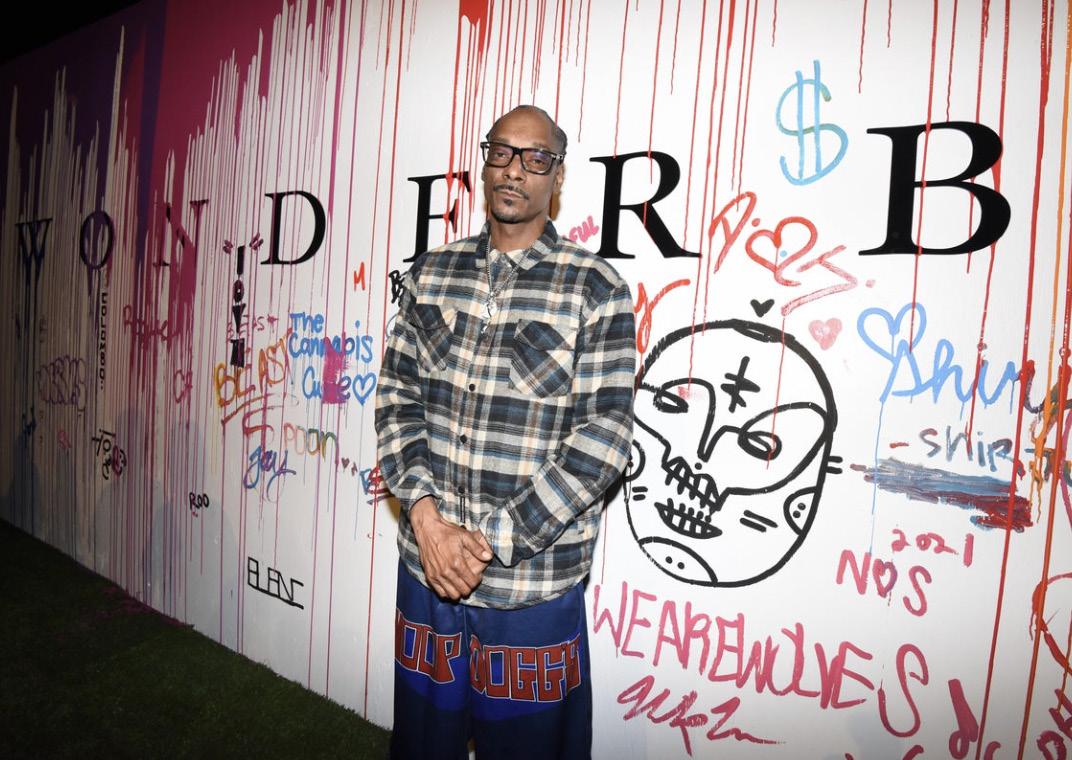
Take a moment to brace yourselves for the following sentence – Snoop Dogg claims to be a secret NFT dealer, Cozomo de Medici with a collection worth $17 million, revealing his secret in a tweet in 2021.
Do NFTs count as art? They do if it’s an excuse for me to talk about this. How did you miss this stunning little tidbit of information, you ask? I have no idea. Stay braced dear readers, because it only gets weirder from here.
Following his twitter revelation, the rapper changed his profile picture to an NFT titled ‘Hazy Nyan Cat’, a weed-themed GIF of nyan cat, which I strongly recommend looking up to see with your own eyes (since regrettably, we can’t print a GIF). This GIF also happens to be owned by Cozomo de Medici, or Snoop Dogg if the tweet is to be believed. On brand for the rapper, who employs a personal blunt roller at $40-50k a year and intends to sell “virtual cannabis products” in the Facebook metaverse (which I still don’t understand the mechanics of).
Another series of sentences I never thought I’d type. Being a charitable individual, the NFT dealer also made a significant contribution to the LACMA (Los Angeles County Museum of Art). I suppose in the eyes of LACMA, NFTs are art (more justification for an entire article about this).

So we come to the final and most important question, is the famous rapper Snoop Dogg really a secret NFT dealer? Dear readers, I do not know. And why would I spoil the fun?


- Poppy Hartley and Adi Alroy
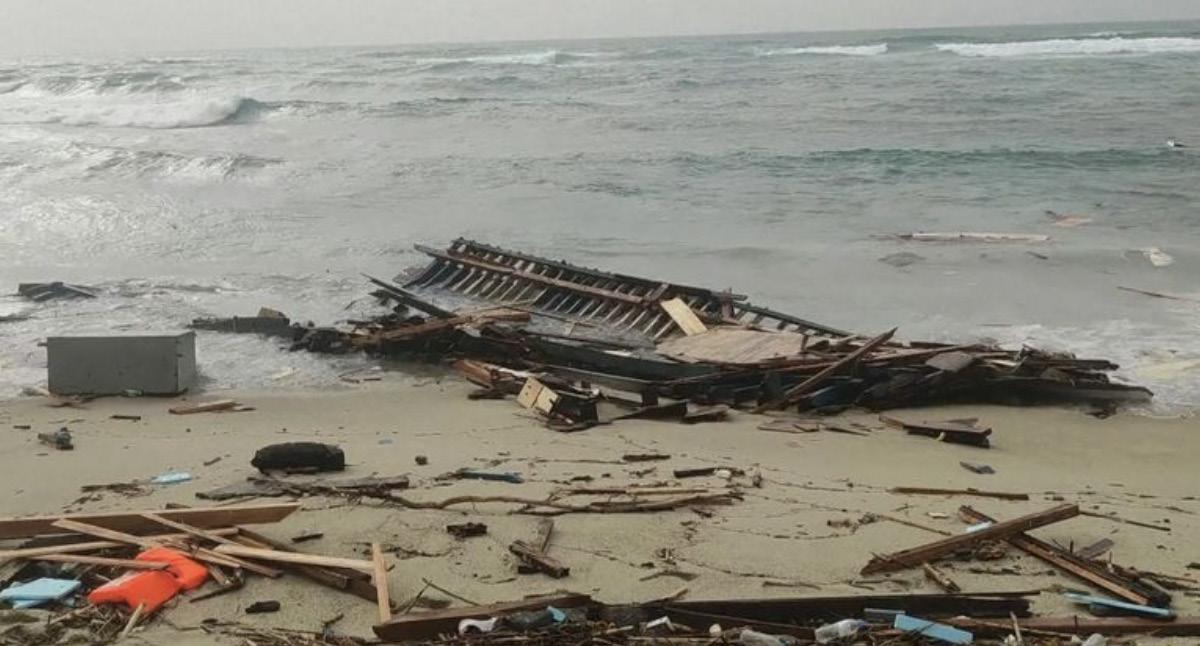
At least 59 migrants from Afghanistan, Pakistan, Somalia and Iran were killed, and dozens more are left missing after their boat capsized in rough seas off the coast of southern Italy.
On Sunday, the ship broke apart while trying to dock near Crotone. The ship sank after colliding with rocks during rough weather, sparking a massive search and rescue operation both on land and at sea. Red Cross volunteers distributed blankets to survivors, and assisted in transporting those injured to hospitals.
According to rescue workers, the ship was carrying “more than 200 people”, leaving more than 60 people’s whereabouts unknown. “All of the survivors are adults,” said Ignazio Mangione, a Red Cross worker. “Unfortunately, all the children are among the missing or were found dead on the beach”. Firefighter Inspector Giuseppe Larosa stated, “It was a chilling scene. Bodies spread out on the beach, so many bodies, so many children.”.
Since 2014, more than 20,000 people have died or disappeared at sea in the central Mediterranean according to monitoring groups, which is quite a concerning fact. Carlo Calenda, Italy’s former economy minister, said people in peril at sea should be saved “whatever the cost”.
“There is still no cooperation among the European states to actively coordinate together to go and help the people in need” Regina Catrambone, director of the Migrant Offshore Aid Station said, imploring governments to work together to improve search and rescue attempts and develop safe and legal routes.
- Victoria ZeritisIt’s that time of year once again. Mardi Gras. It’s one of Australia’s most famous and well-loved events, with tens of thousands of visitors making the journey to Sydney to join in on the festivities. This year is extra special with it being the 45th anniversary.
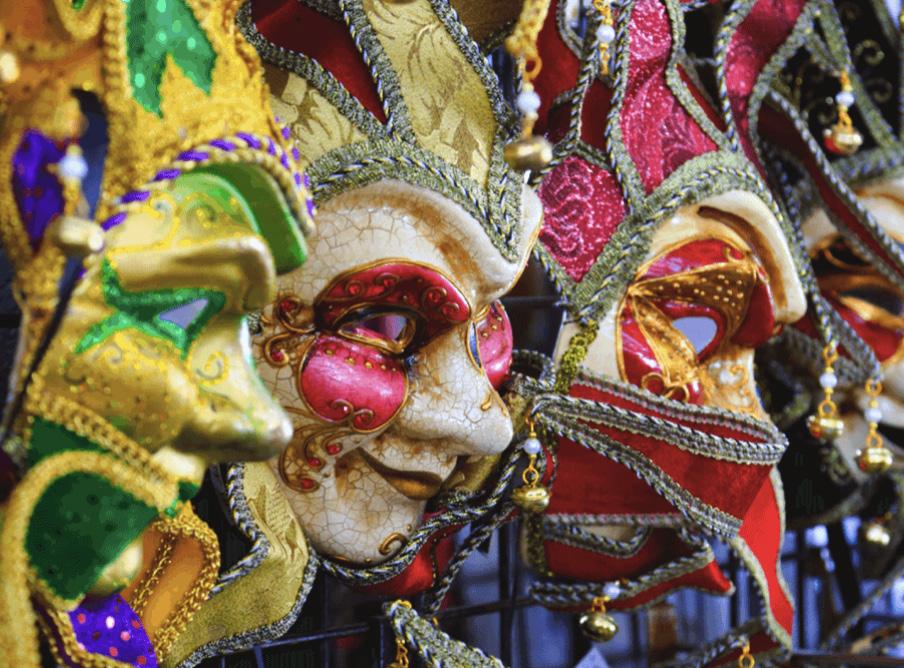
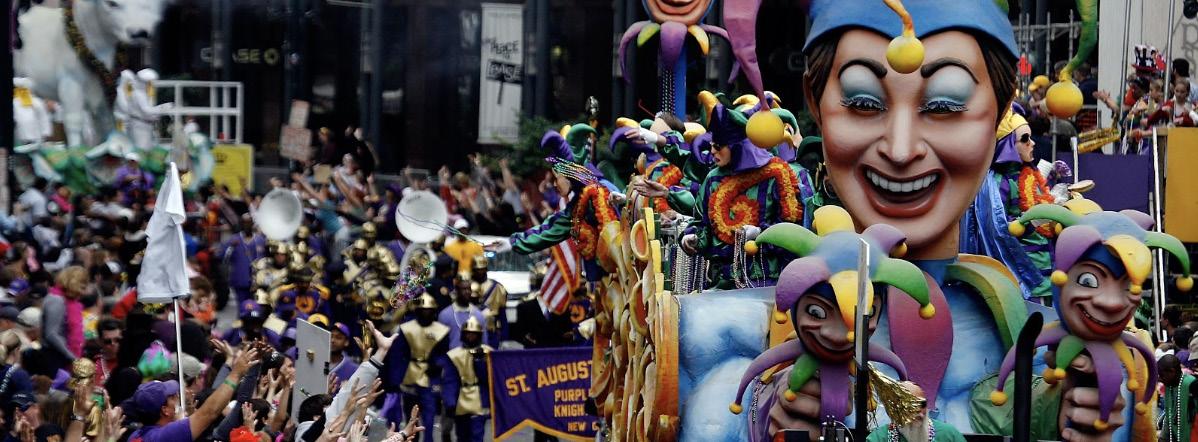
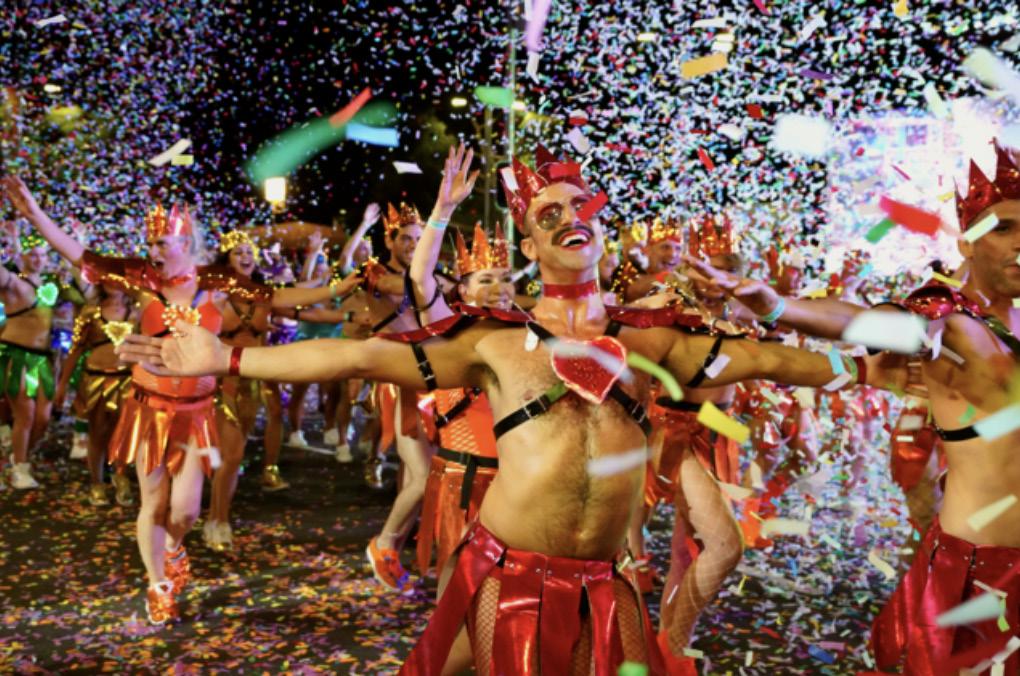
The Australian History of this event hasn’t all been glamorous and well respected. It began on Saturday 24th June, 1978, when the police descended on a street festival bravely celebrating gay rights when homosexuality was still illegal. The gathering was about two to three hundred people and they marched up a section of Oxford street, the part of the city renowned for its gay bars and underground clubs.
Leading up to the big parade, there’s this thing called Pride Week. It’s packed with tons of fun events and activities for LGBTQIA+ people and their supporters. There are parties, performances, art exhibitions and workshops, including ‘Braving Time: Queer Art’ in Contemporary Australia at the National Art School and Queer Screen’s 30th Mardi Gras Film Festival, across multiple locations. For 2023, Sydney WorldPride has a full month of events spanning from
Mardi Gras:
the 17th of February to the 5th of March, so get out there and enjoy the festivities.
Mardi Gras isn’t just about having fun. It’s also about activism and social change. It’s a chance for LGBTQIA+ people and their allies to raise awareness about important social and political issues affecting the community. This year, the themes for the event are GATHER, DREAM and AMPLIFY. These were developed in partnership with our extraordinary First Nations and LGBTQIA+ communities.
The Mardi Gras parade returned to its spiritual home of Oxford street after the last 3 years had to happen in the SGC grounds due to COVID. It was a record year with over 12,500 marchers across over 200 floats. That’s not to mention the record crowds that flocked the streets in Sydney’s city, and the many that couldn’t make it, but showed support by having parties or watching it on tv.
Despite the challenges that the LGBTQIA+ community still faces, events like Mardi Gras and pride week remind us that love, equality and acceptance are possible. They show us that it’s okay to be different, and they encourage us to cele -

brate our diversity. Mardi Gras has grown to become one of Sydney’s most important cultural events and it’s a powerful symbol of the city’s commitment to diversity and inclusivity.
After this weekend’s parade, Prime Minister Anthony Albanese, who attended said “When the first Mardi Gras was held in 1978, you could still be arrested for being gay. In the decades since people dedica
ed their lives towards the campaign for equality.”. He is the first Australian PM to attend a Mardi Gras parade, creating history, showing his push for equality in the LGBTQIA+ community. The way the world is moving forward, he won’t be the last Australian Prime Minister to do so.
- Rocco Buck
Te Tiriti o Waitangi:
As a terrible Kiwi, I forgot about our national holiday on the 6th of February. That’s why you’re suffering through this article in March. Although a national holiday sounds boring (and it kind of is, sorry), this day should be significant for Aussies too.
In 1840, Māori Rangatira (chiefs) and the British Crown signed a treaty called Te Tiriti o Waitangi. Simple, right? But that’s the most important part of this entire article. Our Indigenous Peoples were not afforded the same right.
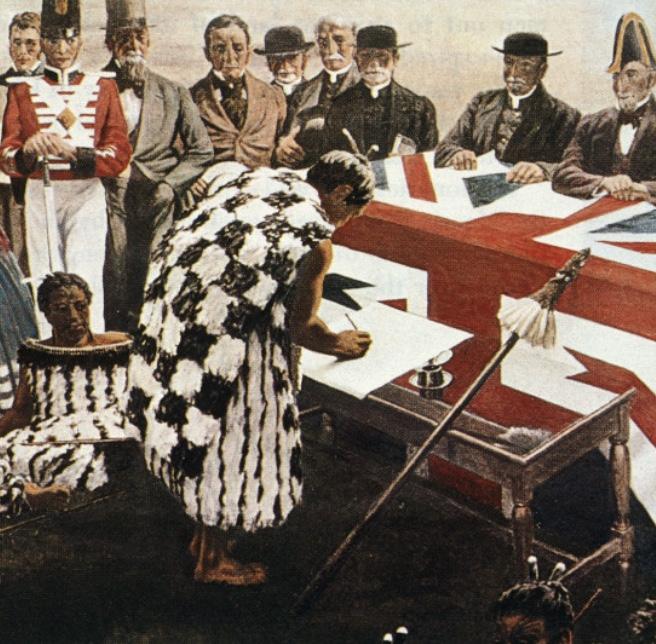
In part, this comes down to timing. Australia was invaded in 1788, whereas Aotearoa/New Zealand was settled in the 1840s, as a separate colony to NSW. By the 1840s, there was enough legal evidence (and competition from France) that the Crown accepted that they couldn’t just ‘claim’ land as theirs. They had to fight a war or sign a treaty with anyone already there. And because the Māori would definitely have won, the British picked the smart option and offered a Treaty.
Currently, there’s heaps of healthy debate about whether we need a Voice to Parliament or Makarrata (treaty) here in Australia. And this is where Waitangi is important, because we have the chance to learn from the past. We can ensure that our Makarrata respects Indigenous cultures, is accurately translated into Language, and that everyone has a chance and choice to sign.
Maybe by this time next year, it won’t be so hard for me to remember Treaty Day because we’ll all be celebrating ours together.
 - Evie Zavos
LGBT-SPQR- Part 1:
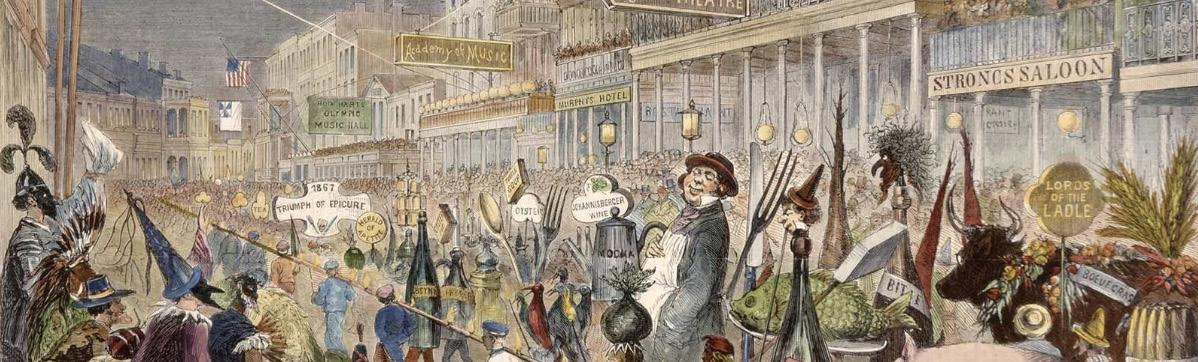


With Mardi Gras over and Sydney World Pride coming to a close, it is tempting to look into the past to view the transformation of historical queerness as a purely straight line (pun not intended). It’s nice to view the present as a bastion of tolerance, an island in a sea of past homophobia. The truth is, our idea of sexuality is extraordinarily new, with the rise of sexuality as a concept only occurring in the past two hundred years.
But that’s all boring contextual nerd stuff, and historiography is for losers and dweebs (take that, History Extension students!). The point is, Roman queerness was not about choosing male, female, or other—rather, it was about the ability of Roman men to uphold their masculinity. In other words (and I pray my lovely editor forgives me), it was less about the who and more about the how. Sleeping around with other men was fine, they said, as long as you weren’t too much of a girl about it. Except for young boys, slaves, prostitutes, and actors (though the Romans liked to blur the lines between the last two), everyone else was expected to uphold Dignatas and act like an empire citizen. Even then, these exceptions were less about it being okay for these men and more about the fact that they couldn’t get any lower in the social hierarchy than they already were, and if there was one thing that the Roman elite truly loved, it was exploitation. It was, as I will discuss in Part 2, political assassination to say a man was on the receiving end of gay sex, something that was effectively aimed at one Julius Caesar by some of his biggest rivals. All that, and less, in part 2.
 - Jo Gilliatt
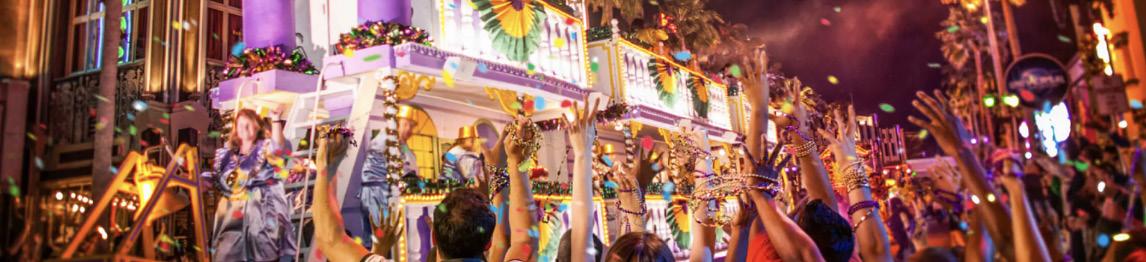
Last Saturday, over 200 floats made their way down Oxford Street as part of the Mardi Gras celebrations, adorned in flags and rainbows and all absolutely wonderful. Looking at that precision, one may start to wonder, how do floats actually work? The simple answer – tons of engineering.
The floats used in Sydney’s own Mardi Gras celebration are actually rather simple compared to what they could be, often mounted on vehicles such as flatbed trucks, which provide the actual form of transportation, or instead are trailers pulled by a car.
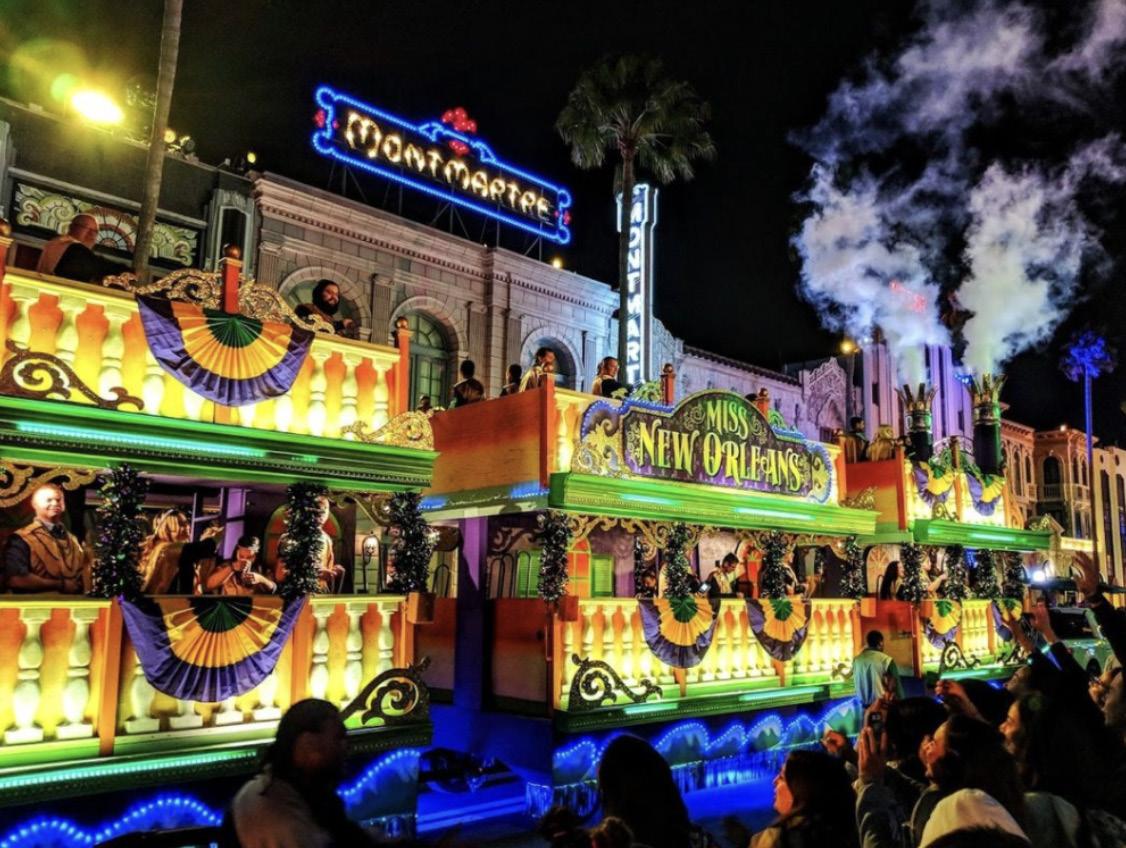
Float Engineering:

tions is a part of the general Carnival festivities before Lent, but it still does have significant ties to the LGBTQIA+ community in the form of the previously-underground “Gay Mardi Gras” culture in relation to the Mardi Gras Balls. There are two main parts of the floats used in New Orleans – the styrofoam decal and the physical mechanism. In order to form the styrofoam props, 50 out of the 52 weeks in the year are taken, using specialised tools such as “robot arm” CNC routers to finely shape the styrofoam into beautiful forms. The main science in the floats comes in with their hydraulic mechanisms, typically found only in the large floats.
mixture of computer-controlled valves and physical spotters down amidst the parade, relaying instructions to those controlling the valves to change the inputs slightly.
The physical route they take also limits their size, as they can’t be larger than 4.2m high and 11m long, or else they will be impossible to manoeuvre, leaving them simpler but still beautiful in the world of floats. If we want to see feats of extreme engineering, we have to turn to America, specifically the New Orleans Mardi Gras Parade.
Interestingly enough, the New Orleans Mardi Gras festival func-
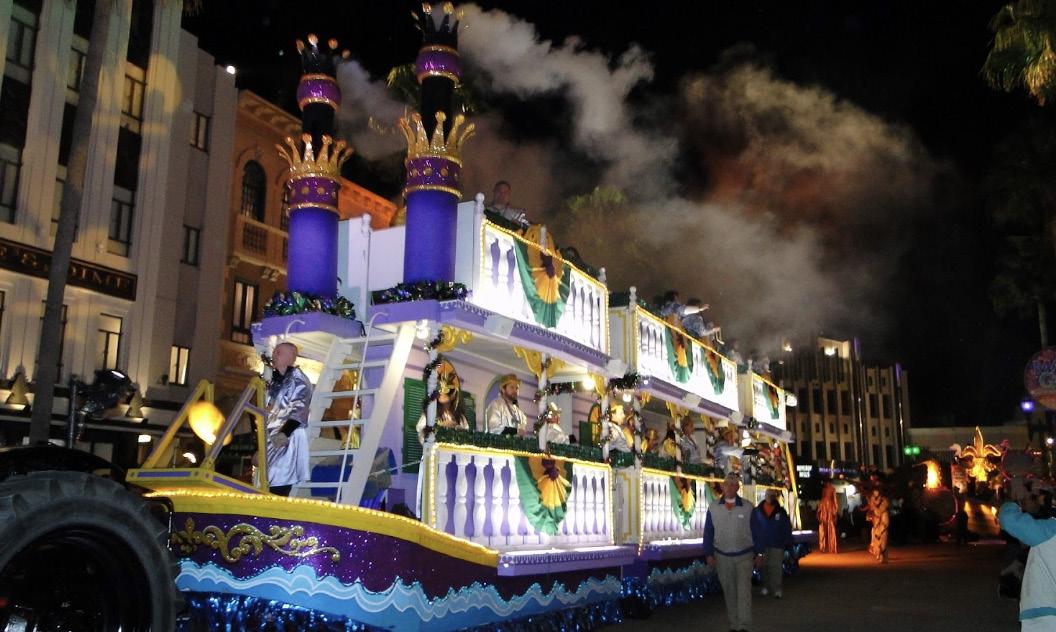
These floats are typically self-steering with an in-built chassis similar to that of a petrol-driven car, but they also typically have complex moving parts which operate on a system of hydraulic pumps to move in a smooth motion. Hydraulic pumps, as a reminder, operate using hydraulic fluid, pushing it through gears in a cycle and converting initial electrical energy into hydraulic fluid energy which is later converted back to mechanical energy to move forward whatever is attached. In order to make sure that these moving parts move in a life-like manner, they are controlled by a
Typically floats require at least 4 operators to man the controls due to the extreme complexity of the system. These machines typically cost at least $500,000, but can oftentimes reach upwards of $2 million USD because of this complicated engineering.
- Sophia BudkinWelcome back to the Integration Portfolio’s Culture column. We have a very ethnically and religiously diverse school, and we wish to keep you up to date with upcoming festivals, cultural events, and religious holidays.

If you have any questions or wish to share an upcoming event, please email me at zoe.littler@reddamhouse.com.au
The Water-Sprinkling Festival:
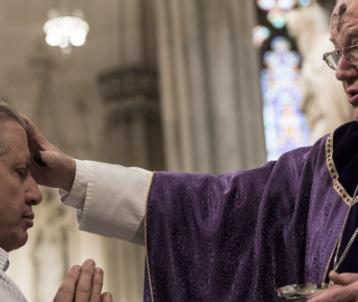
On Wednesday, the 22nd of February, the Christian Holy Day of fasting takes place. Ash Wednesday occurs 46 days before Easter Sunday and is the beginning of Lent (a time of fasting and prayer). Traditionally, a priest applies ashes on the individuals’ heads to symbolise the dust that God made people from – “Remember that you are dust, and to dust you shall return.”
Mardi Gras:
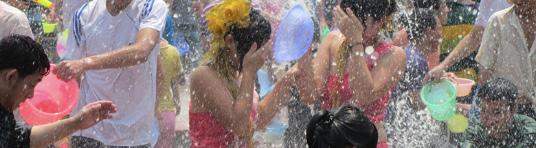
Did you know that China has 56 ethnic minority groups? Today we introduce the Dai People and The Water-Sprinkling Festival. Traditionally, Dai people participate in this activity as a sign of respect to celebrate the Solar New Year. This takes place every year on the 13th of April when it’s midSpring in Asia. There is a standard routine to it – on the first day, people “put to rise” along with cultural performances. On the second day, they sprinkle water in a free fashion. On the third day, the young men and women get together to exchange goods.
Ash Wednesday:
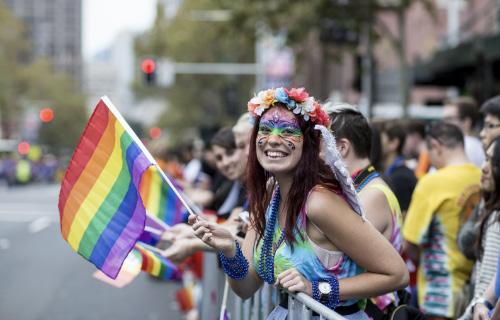
The international, annual parade occurred on Saturday the 25th of February to celebrate the LGBTQIA+ community. In 1978, the first Mardi Gras parade was held, but, instead of the colourful festival of love and diversity and self-expression it is known for today, it was a protest against the Australian Government for not recognizing LGBTQIA+ people as people. As a result of this activism, Australia is now celebrating 45 years of Mardi Gras.
Makha Bucha:
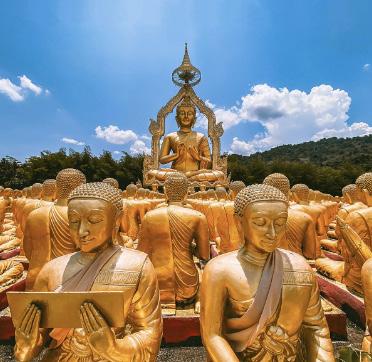
The 6th of March marks the day when Lord Buddha gathered his 1250 disciples and informed them about the principles of Buddhism for the disciples to spread across communities. Makha Bucha is commemorated as ‘National Gratitude Day’ in countries such as Myanmar, Cambodia, Sri Lanka and Thailand. On this day, it is traditional to visit a temple and make offerings. Temples in Thailand also hold a candlelight ceremony.
Fun fact:
Did you know that there are 29 clan groups in the Sydney metropolitan area who are collectively known as the Eora clans? The Eora people are the name of the Aboriginal coastal people around Sydney. Eora means “here” or “from this place”.
Have a religious or cultural event coming up?
Do not hesitate to share your religious or cultural background by writing about an upcoming event to be published in the Stag.
Email zoe.litter@reddamhouse. com.au to help better recognise the diverse culture at our school.

You may have noticed that several classes are slightly emptier than usual over the past few weeks, with our students travelling far and wide across the country for a range of trips and excursions. Here’s a look back on some of what’s happened around Reddam, and what’s still yet to come in the second half of this hectic term.
Last week the year 12 Geography students, accompanied by their teachers Ms Dignan and Mr Garratt, went off to the Great Barrier Reef, much to the jealousy of well, everyone. They were away for four days and we’re sure they did some great Geography-ing amongst the turtles.
Meanwhile, the more theatrically inclined among the year 8s and 9s headed off to the Collaroy Centre in Collaroy Beach for the second annual Middle School Drama Camp. They participated in a range of acting workshops and activities, and by all accounts, it was a success!
Year 11 and 12 students looking to complete HSC Music or Art went to their respective outstanding achiever’s showcase at either Encore or Art Express. There, they were able to see the absolute best-ofthe-best of the class of 2022, and perhaps gain some inspiration for their own projects. Additionally, the year 12 English students went to a performance of Richard III put on by Sport for Jove in Surry Hills.
The Pre-Departure Parent Information night was held at the Bondi Campus for all Year 9s, 10s and 11s heading off on the historic tour of Europe later this year. They’ll visit places like Italy’s Trevi Fountain, the Athenian Pantheon Acropolis and the unbelievably ancient Çatalhöyük in Turkey. Prepare well!


And the excursion excitement doesn’t end there, with the WOMADelaide Music Festival Trip slated to take place next weekend. Year 9 Music students will travel to Adelaide, where they’ll see a range of performances from some of the world’s best musicians.
- Florence Gatt and Jacob AtchisonFor all those people feeling a bit overwhelmed with content and studying, there’s this pretty useful website where you can access free notes and essays.
AceHSC has a library of free HSC notes and essays created and added by previous students. Because of this, some subjects may have more notes than others. There are plenty more HSC notes than Preliminary notes (i.e. there’s more notes for year 12 content than year 11 content), but if you’re doing subjects like Legal Studies or Biology, or you’re interested in English essays by other students, this might be really useful!

Personally, I may or may not have downloaded plenty of Biology notes and 20/20 English essays, since mine seem to be going on a downward spiral currently, but all is totally very well. If you have very content heavy subjects (cough cough humanities kids cough), I’d recommend this, maybe not as your actual notes, but as a guide and additional supplement to your own notes, or even as a little PDF you can read to get a general gist of the topics coming up in class so you don’t feel as lost.
Added side note: You can also find past papers such as Math Advanced papers which may be some helpful revision whether you do accelerated or not.
Keep thriving, Quinn
The smell of hot chips and sunscreen was in the air last Wednesday the 1st of March, as busloads of year 7s, 8s and 9s, as well as the more athletic of the high schoolers, rolled up outside Drummoyne Pool.
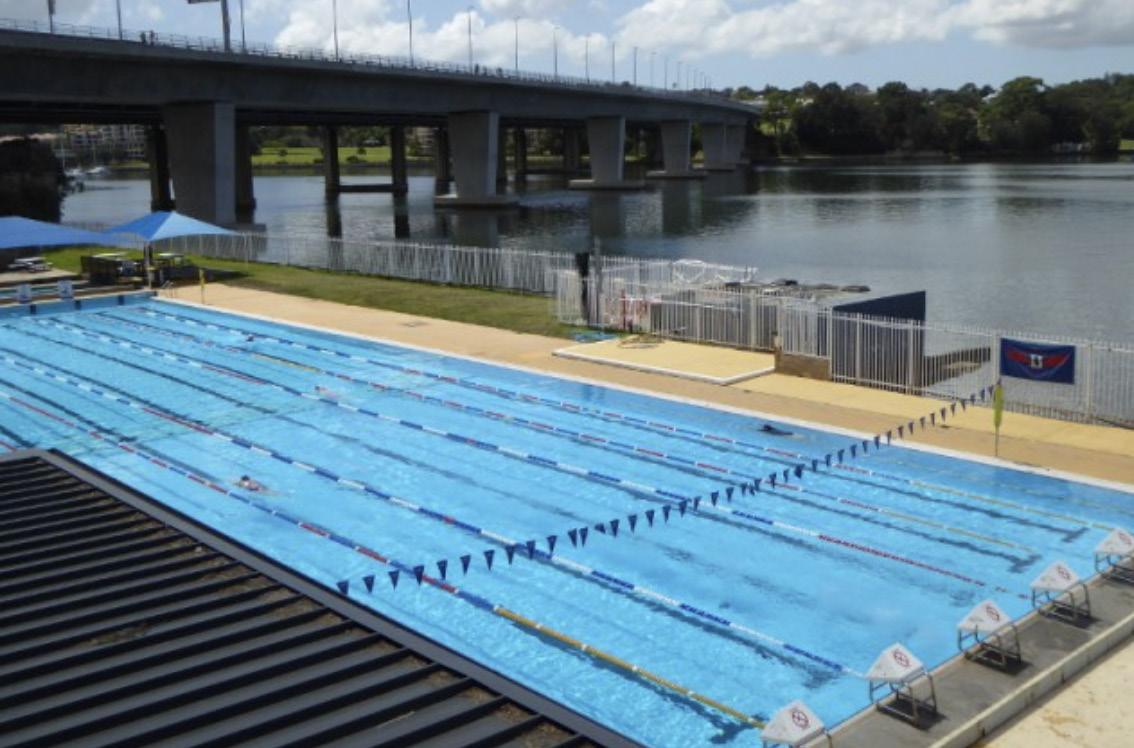
The mindsets of the swimmers emerging from the coaches varied significantly – some were getting into a competitive headspace and were seemingly ready to drown their opponents for a chance at CDSSA on the 6th March, while others appeared to mostly be there for the canteen.
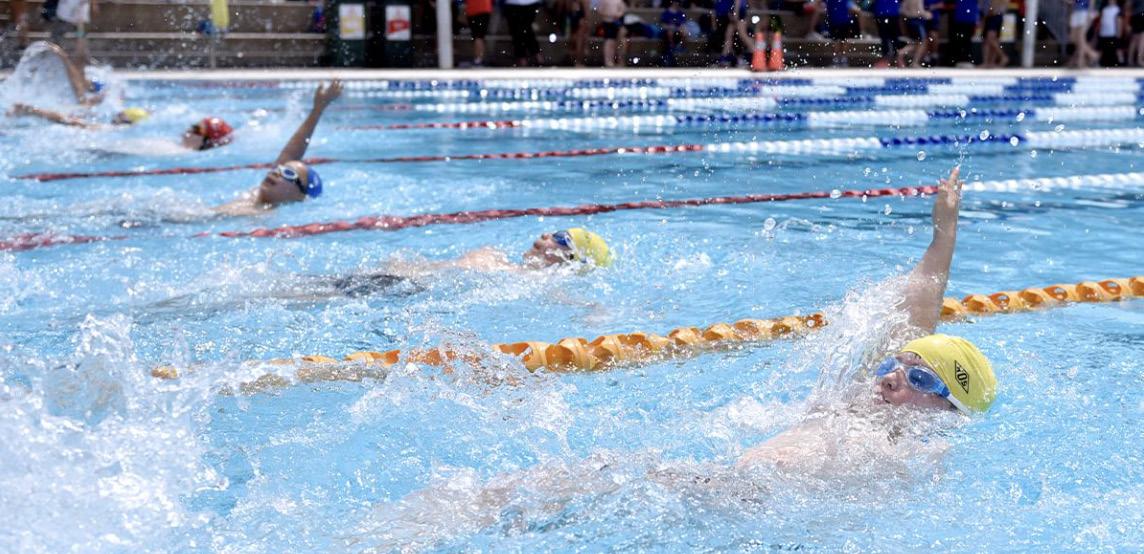
It was a warm, sunny day, with a water temperature estimated by one carnival-goer to be around 19°C. In other words, the perfect conditions for the much-anticipated, long-awaited (at least since Mr Kable sent the email last Wednesday) High School Swimming Carnival. The students were eager to return to the classic riverside venue, the last few carnivals having been COVID-cancelled or absolutely miserable with rain.
The schedule was set with the sport teachers being determined to stick to it, starting off with of course, freestyle. Running through every age group, no matter how fast each race, started to drag the programme behind. Up next was butterfly,
The Swimming Carnival:

for the brave amongst us, then 200m medley. Four laps each race left swimmers absolutely drained but with very little time before breaststroke and backstroke. A break finally came with crowd-favourite participation races which were swum a grade at a time, divided between four house lanes. Every lap completed by a participant would earn their house 1 point, however, a leisurely pace contrary to the competitive spirit hanging in the air was observed. All eyes were on the supervising middle school teachers for the fabled Teacher Race but, yet again, students were left disappointed at the sore lack of pool action on their part.
There was an electric atmosphere within the precipitous spectator stands throughout the day. The newly-elected house captains had a lot to prove to their constituents at this crucial first test of their leadership, and they came through, tossing lollies and chocolate bars into the crowds and leading their houses in enthusiastic cheers and chants. Several house captains lost their voices from screaming so much, and as such, were unable to be approached for comment.
Students and teachers alike were showing their house patriotism –painting their faces, waving banners and posters, and even wearing house-coloured Crocs, tutus, sunglasses and sparkly suspenders. We hear that some swimmers even attempted to wear these accessories during their races, although there is no word
yet on whether this improved their chances. The day was not without its controversies, with several allegations of plagiarism of chants between houses, and several people being observed falling into the pool. But overall, the carnival was a roaring success.
And it wouldn’t be an article about the Swimming Carnival without mentioning the cafe. Students did their bit for the Drummoyne Pool economy, visiting the canteen frequently throughout the day for their selection of lollies, chocolate, drinks, and ice cream to replenish exhausted swimmers and fuel inter-house hostility.
By the time Mr Kable was set to blow the starting whistle for House Relays, the schedule had fallen off the track and into the pool, and it was time to leave. House Captains did their part to encourage begrudging students to clean up the chaos, and before the salty pool’s ripples had settled, Reddam House and their colourful crowd had left the venue, packed onto buses and returned home to warm showers and a minimum of two days vocal rest.
With the Oscars approaching, I thought it would be a good idea to acknowledge some important Oscar moments. Of course, when award shows recognise all talented people regardless of race, ethnicity, gender, etc., it is a big step for the film industry and those associated. February is Black History Month, so I want to take a look back on the story of the first black Oscar winner.
Hattie McDaniel won her Oscar for ‘Best Supporting Actress’ in the film, ‘Gone With The Wind’ in 1939. When Hattie accepted her award she said, “I sincerely hope I shall always be a credit to my race and to the motion picture industry”.
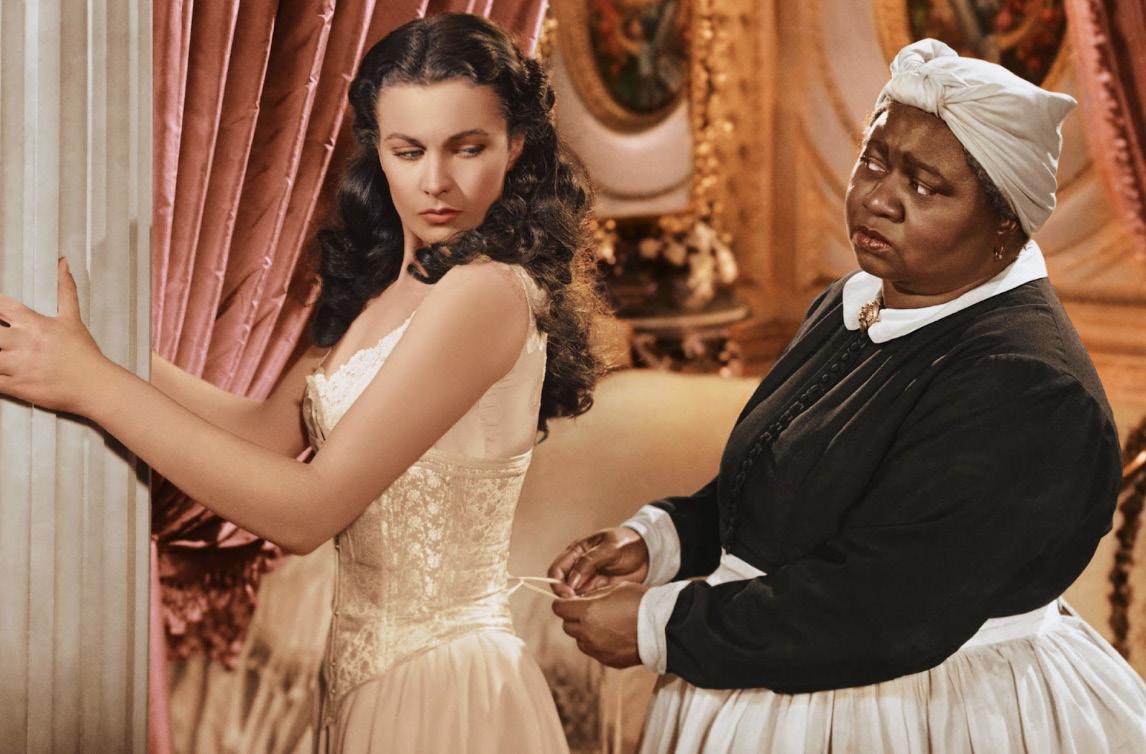
Though Hattie had won an Oscar, it didn’t stop her from being disrespected by the Academy. Originally, she wasn’t even going to be allowed to attend the ceremony until the producer of the movie, David O Selznick, called in a favour to the hotel which had a “strictly white” policy. Hattie was only allowed to spend part of the Oscar ceremony at O Selznick’s table, but was then forced to sit at a segregated table in the back of the room for the majority of the night. However, after Hattie’s victory, Louella Parsons wrote that the ovation for her win will “go down in history as one of the greatest ever accorded any performer”. Hattie McDaniel was certainly an extremely talented woman who undoubtedly deserved her award.

The Oscars:
A popular phrase among film enthusiasts is the “Big Five”. This refers to the awards for best actress, best actor, best picture, best director and best screenplay. Did you know, only three movies in history have won the “Big Five” awards? The first movie to win the award was ‘It Happened One Night’ (1934). Clark Gable, who won best actor for the movie, gave his Oscar to a child who admired it because “It was about the sentiment, not the trophy”. The next film was, ‘One Flew Over the Cuckoo’s Nest’ (1975), in which most of the scenes were filmed without the actors’ knowledge since they
cause of the ongoing mistreatment of the Native American community, not only by the film industry but also by U.S. society. At the time, a great tragedy had befallen the country, when 200-300 Native Americans were killed in a 71 day occupation of the town “Wounded Knee” by U.S. soldiers to repress them, and little action was being taken against it.
had to live in the psych ward. The third and most recent film was ‘The Silence of the Lambs’ (1991). Interestingly enough, the leading man Anthony Hopkins only spent 16 minutes on screen and still won an Oscar, making him the winner with the second shortest screen time.
Hollywood has been known to continuously mistreat Native Americans, pushing harmful stereotypes and discrimination against Indigenous actors and actresses. In 1973, Marlon Brando won an Oscar for ‘The Godfather’, but refused it be -
Instead of Marlon Brando, Sacheen Littlefeather attended to decline the Oscar and give a speech on harm to the Indigenous community. Sacheen was an activist, model and actress. She gave a resoundingly powerful speech although she was booed and escorted off stage after only a minute. Only in August of 2022 was she apologised to by the Academy for the event. Littlefeather stated that the apology was a “dream come true”. She went on to state “We are very patient people - it’s only been 50 years, we need to keep our sense of humour about this at all times”.
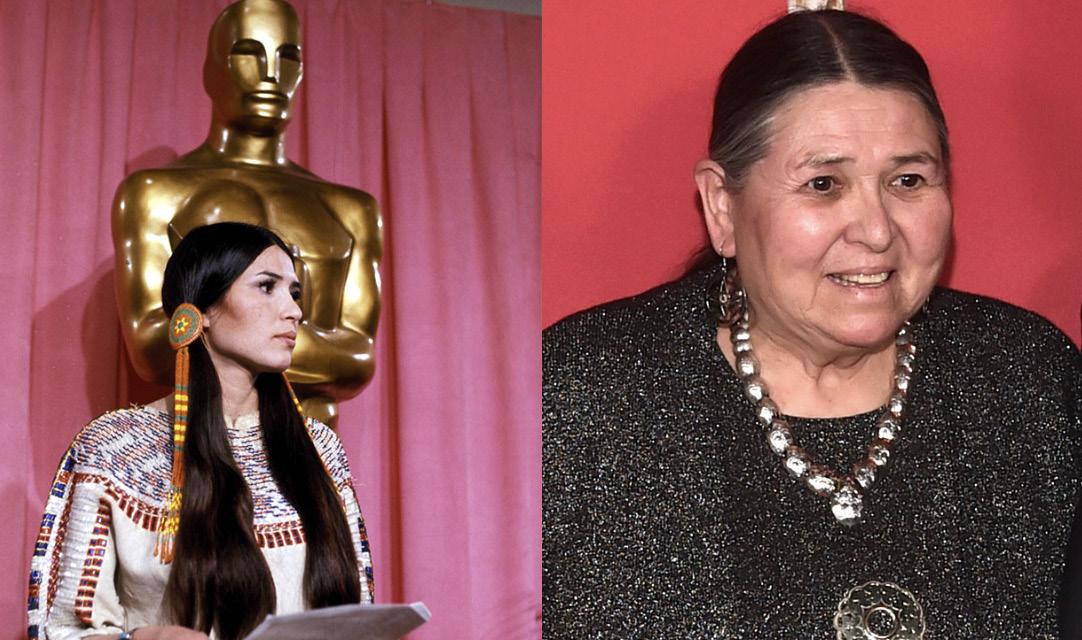
Hattie’s win and Sacheen’s speech will go down in history for their impact on the standards for inclusivity in the film industry.
- Penelope Larkin

T20’s World Cup:
Australia is currently celebrating our sixth Women’s T20 World Cup win after beating South Africa by 19 runs on Sunday. Beth Mooney secured player of the match with an unbeaten 74 runs off 53 balls, making history as the first player to have over 50 runs in successive T20 finals.
There was a sellout crowd in Cape Town, something quite rare for a country which rarely even tickets women’s cricket. Queues filled the street and excitement was in the air. South Africa was in a cricket final! The game was exciting, filled with firsts for both Australia and South Africa. Meg Lanning became the first captain to win five ICC trophies, and Australia has now won three consecutive cricket tournaments.
Australia won the toss and chose to bat first, securing target runs of 157. South Africa had a solid start but faced dot after dot after dot, a truly incredible display of bowling. In the end, Australia prevailed by
School Nurse:
I have one question: If I was at the high school and got a severe wound, not severe enough to need a doctor urgently but not light enough to ignore and leave untreated for an hour or two, where do I go?
We have no nurse’s office. We have no little bed to lie down and take a nap to mentally, emotionally and physically heal as we wait for help.
Must I crawl into a teacher’s classroom and lie in the corner and prepare my soul for God’s taking?
Should I crawl off of school grounds and onto the public pavement so that an unsuspecting human can pick me up and bandage me?
Should I just crawl off of school grounds and act like I was attacked by a magpie at exactly 15:31 or before 9:05 so that the teachers don’t have to deal with the paperwork explaining how I got injured?
Is this not a concern?
As much as I love the thought and consideration behind putting a first aid kit on school grounds, I wouldn’t mind a nurse.
If I dislocate a shoulder and need a nurse to pop it back in and we end up having none, do I just ask my friends to tackle me?
Do I throw my shoulder against the wall and pray?
a comfortable 19 runs.
The Australian women’s cricket team has the most world cups to date – 1978, 1982, 1988, 1997, 2005 and 2013 –, as well as the most T20 World Cups. Australian women’s success in cricket has shown a significant growth in the sport, with 71,300 girls now playing cricket. The Australian Women’s team will be versing England later this year with, hopefully, another victory on the horizon.





- Jade Hastings
Or am I supposed to just sit in the lobby in front of Leanne and feel like a 12 year old getting sent home because she vomited on the classroom carpet?
- Anonymous