BEYOND THE ORDINARY
TEENAGE KICKS SKATEBOARD ACE LOLA TAMBLING LEVELS UP MUD, MULLETS & MAYHEM INSIDE THE UK’S WILDEST OFF-ROAD FESTIVAL WITNESS THE FITNESS GYM WEAR TO INSPIRE YOUR WORKOUT

BEYOND THE ORDINARY
TEENAGE KICKS SKATEBOARD ACE LOLA TAMBLING LEVELS UP MUD, MULLETS & MAYHEM INSIDE THE UK’S WILDEST OFF-ROAD FESTIVAL WITNESS THE FITNESS GYM WEAR TO INSPIRE YOUR WORKOUT
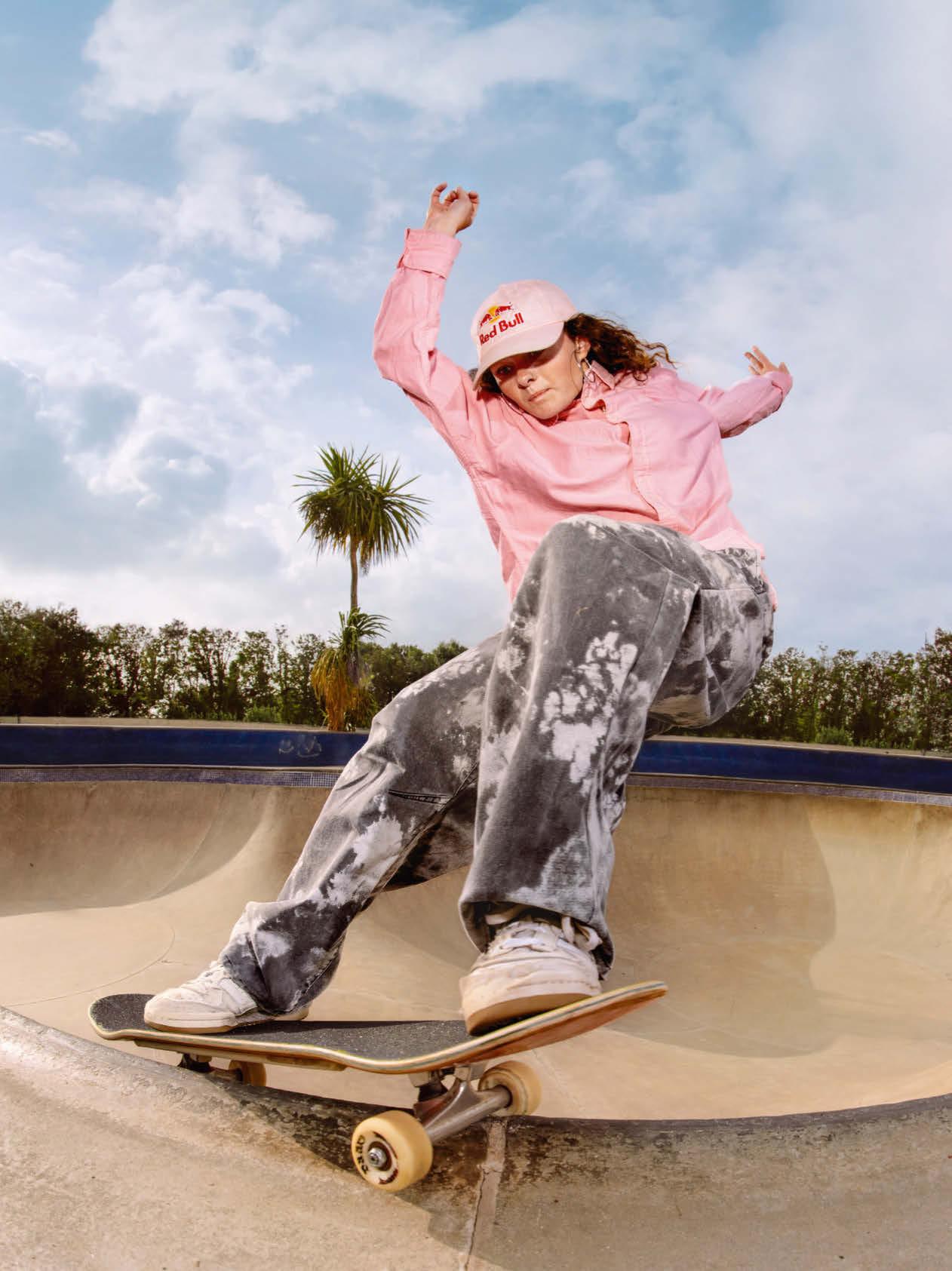
HOMEGROWN SKATE ACE LOLA TAMBLING LEVELS UP
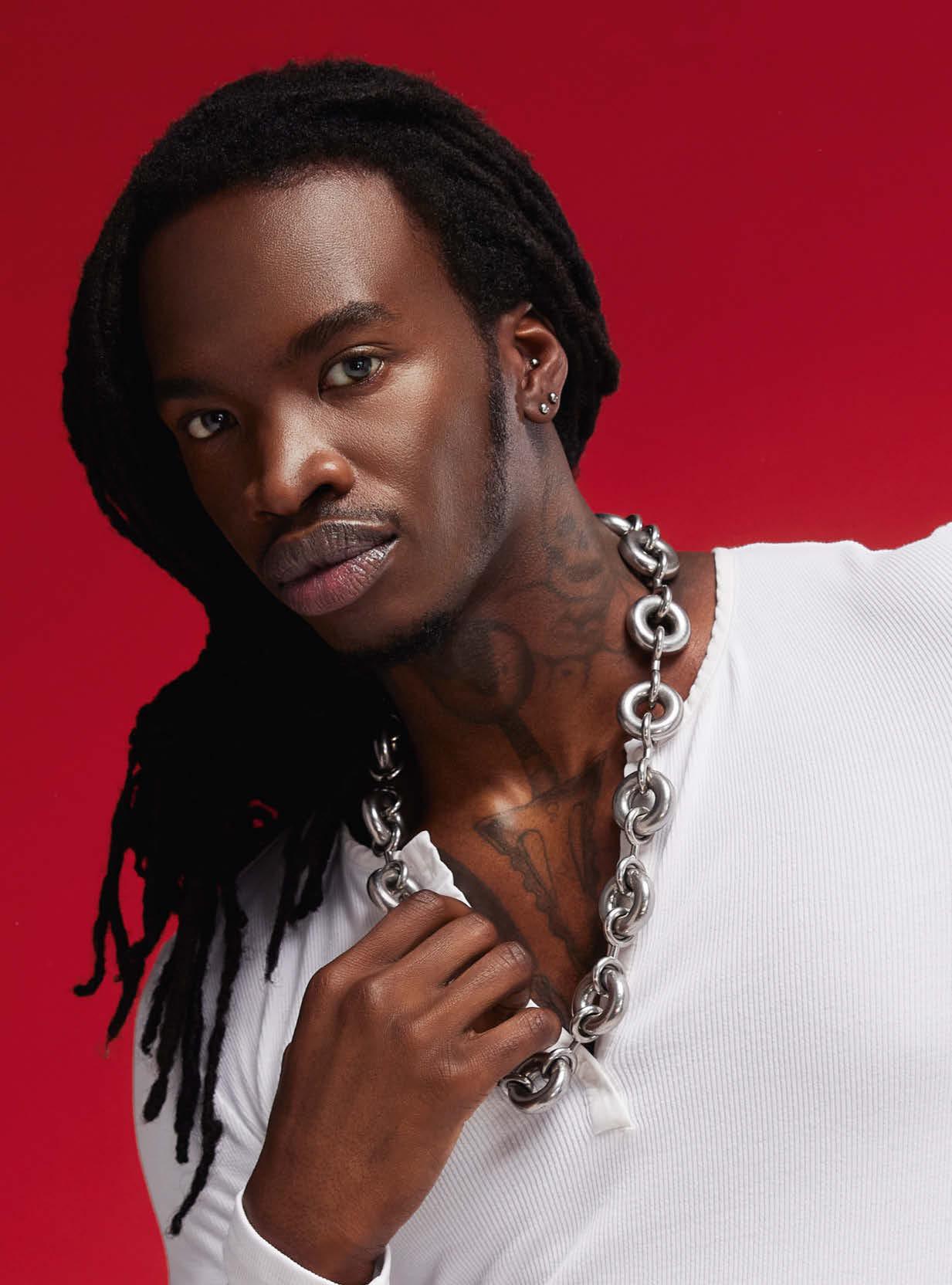
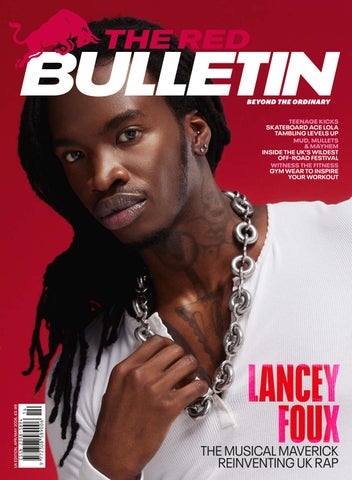
LANCEY FOUX THE LONDONER REWRITING THE RULES OF UK RAP MUD, MULLETS & MAYHEM INSIDE THE UK’S WILDEST OFFROAD FESTIVAL WITNESS THE FITNESS GYM WEAR TO INSPIRE YOUR WORKOUT
It took a 16-hour flight to California for Cornish skater Lola Tambling to find her tribe. Having been bullied for her board obsession back in Britain, once Lola discovered like-minded shredders around the world everything started to fall into place. As she turns 18, the Olympian and national champion reveals where her rare talents may take her next.
Then we meet UK underground rap pioneer Lancey Foux, who had to create the scene he wanted to see. The trailblazing Londoner is now joined by a new generation of rappers at the forefront of a musical movement that’s making waves around the world.
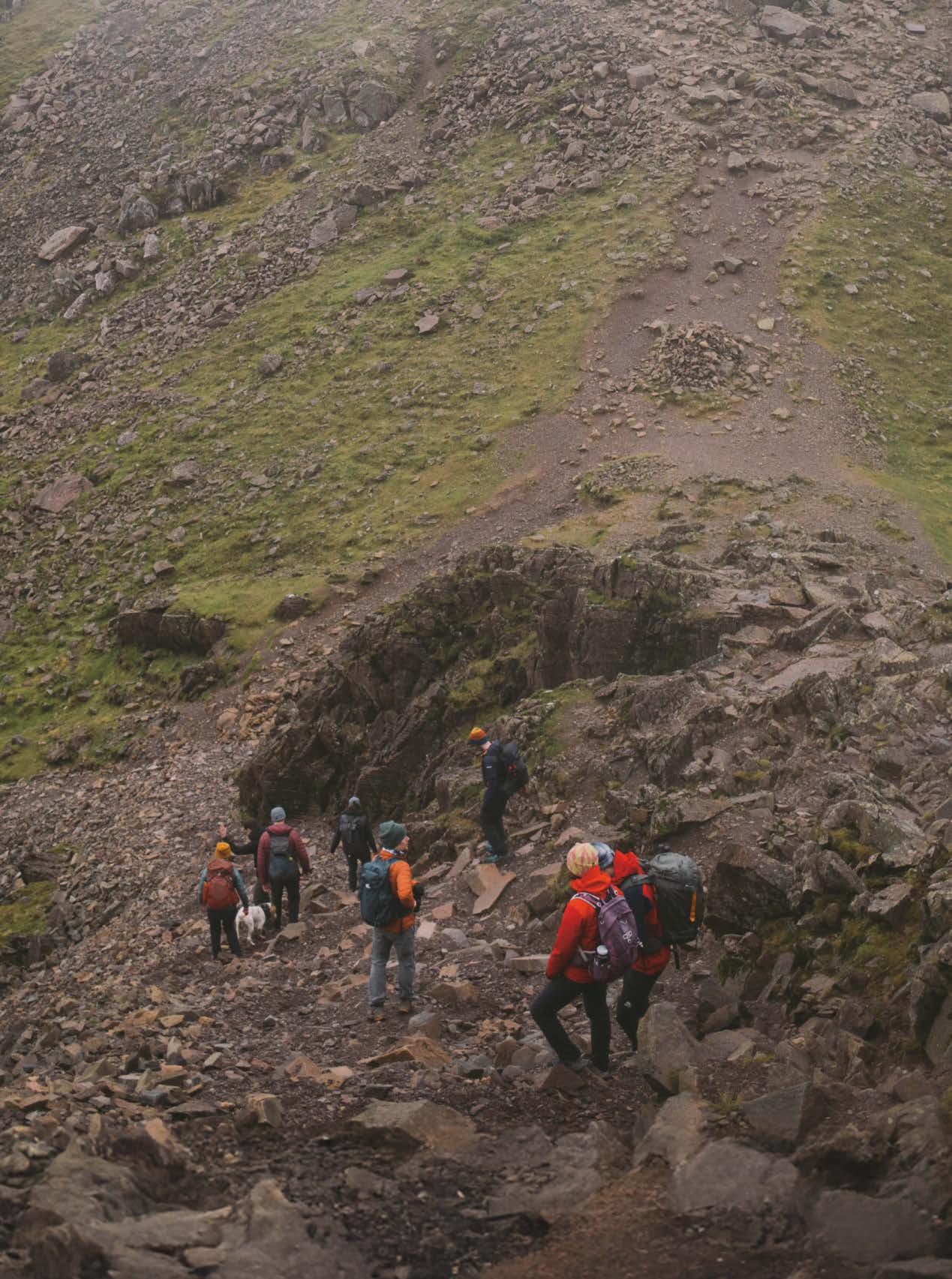
And we head to rural Devon for the Mudbillys festival, where, for one weekend each year, a humble, nondescript field is transformed into a mecca for a community that loves mullets, mud and off-road racing. Enjoy the issue.
Jessica Holland
The skate-loving writer relished the chance to meet skateboarder Lola Tambling. “It was exciting to meet someone pushing women’s skateboarding forward in the UK,” she says. “It shed light on how Lola’s achieved so much – with passion, positivity and support.”

Jessica Eliza Ross UK rapper Lancey Foux was the perfect subject for the photographer. “We’re both 30 and from London,” she says, “so it was great to discuss how transitioning out of your twenties creates space to trust your artistic vision.”
Richard Edwards
“The main thing that struck me about Jack was his sheer bloody-mindedness,” says the sports writer, who interviewed ultra-distance runner Jack Pitcher after he crossed Australia on foot. “That and the size of his food order when he finally stopped running!”































































WHEN ALL IS SAID AND DONE, WAS IT SAID OR WAS IT DONE?

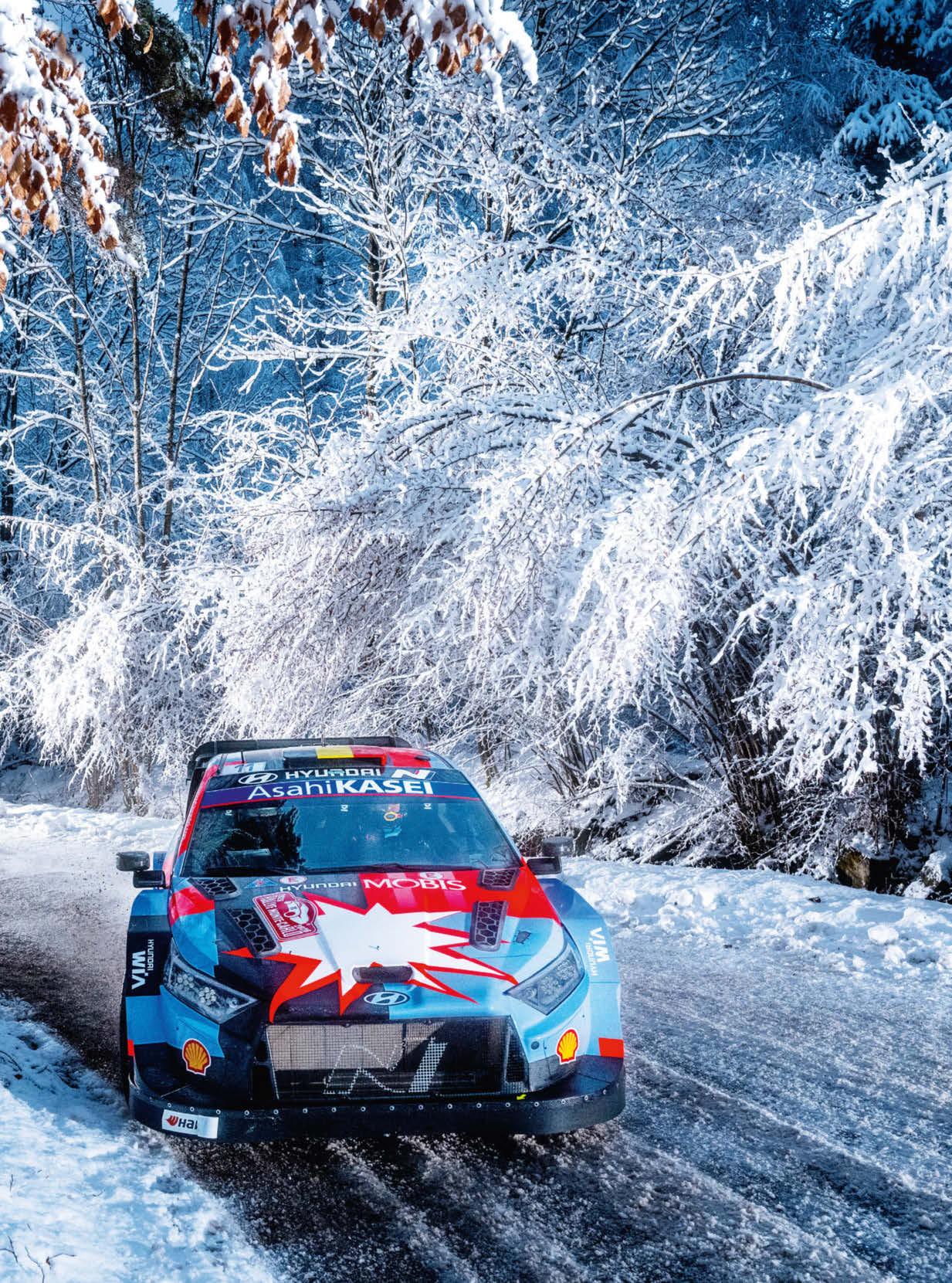
Welcome to Gap, France. No, not that one – this is a land of limestone massifs and glacial valleys rather than branded hoodies. Since 2014, this prefecture in the Southern French Alps has been the base for the iconic WRC Rallye Monte-Carlo. Pictured here are Thierry Neuville and Martijn Wydaeghe in the i20 N Rally1 of the Hyundai Shell Mobis team during race stage one in January this year. A repeat of their 2024 triumph was mooted; however, treacherous conditions contributed to a disappointing fifth-place overall finish for the Belgians. redbull.com
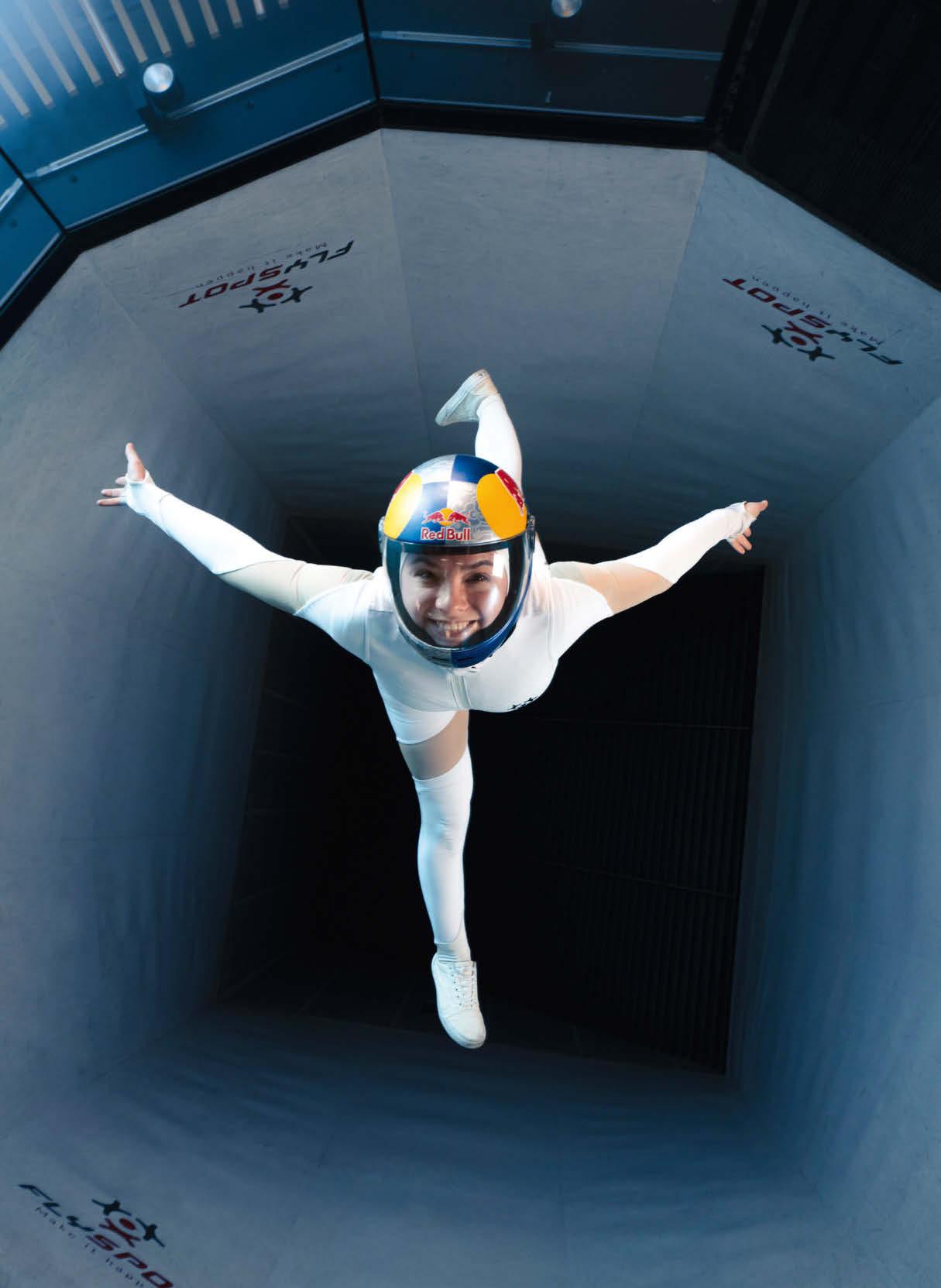
If the expression of joy on Maja Kuczyńska’s face doesn’t make you want to have a go in a wind tunnel, check your pulse: your grey pallor might not be just a hangover. The Polish freestyle indoor skydiving world champion – shown at FlySpot in Warsaw – began the sport at 10; 16 years later, she’s risen to the top. Thanks to her skills. And air. As you can see. Instagram: @kuczynska.maja
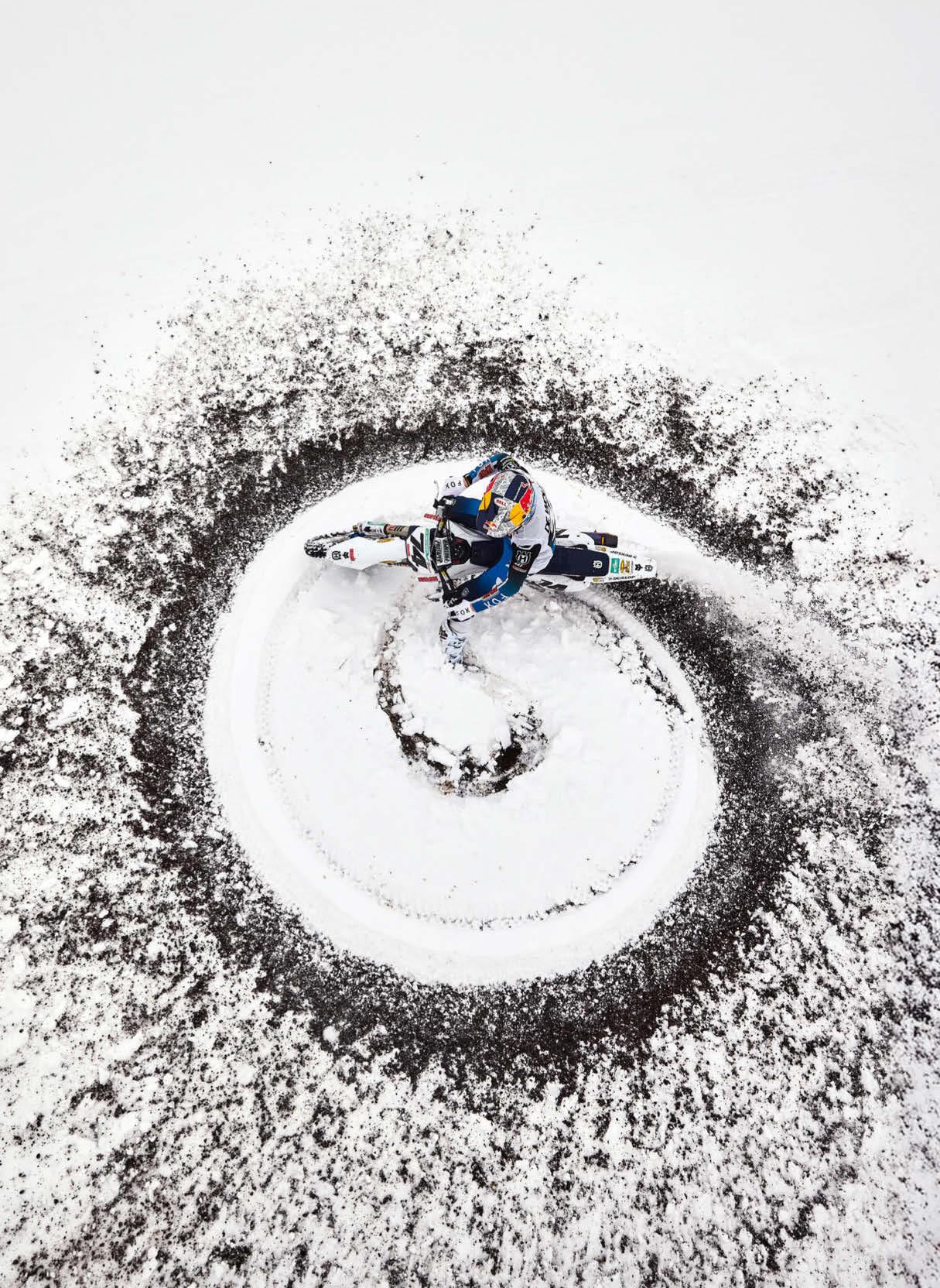
Does anyone else see a chocolate Swiss roll blanketed in icing sugar? Whatever – motocross rider Kay de Wolf doesn’t have time for pudding: the Dutchman is too busy chewing up the competition. But why was he making spirals in the snow at MAC Veldhoven sports club last January? It’s one of life’s mysteries. Like crop circles. Instagram: @kaydewolf
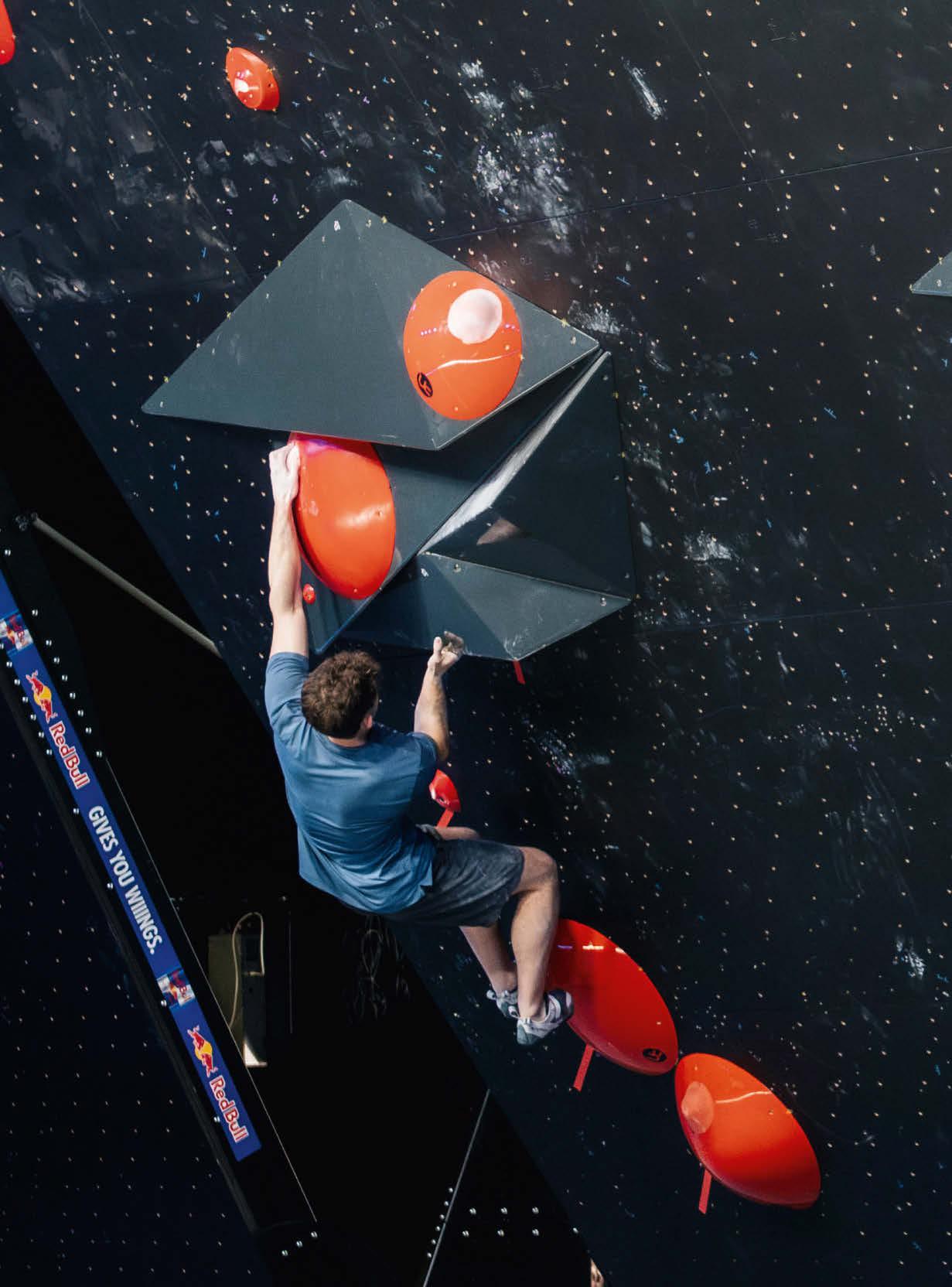
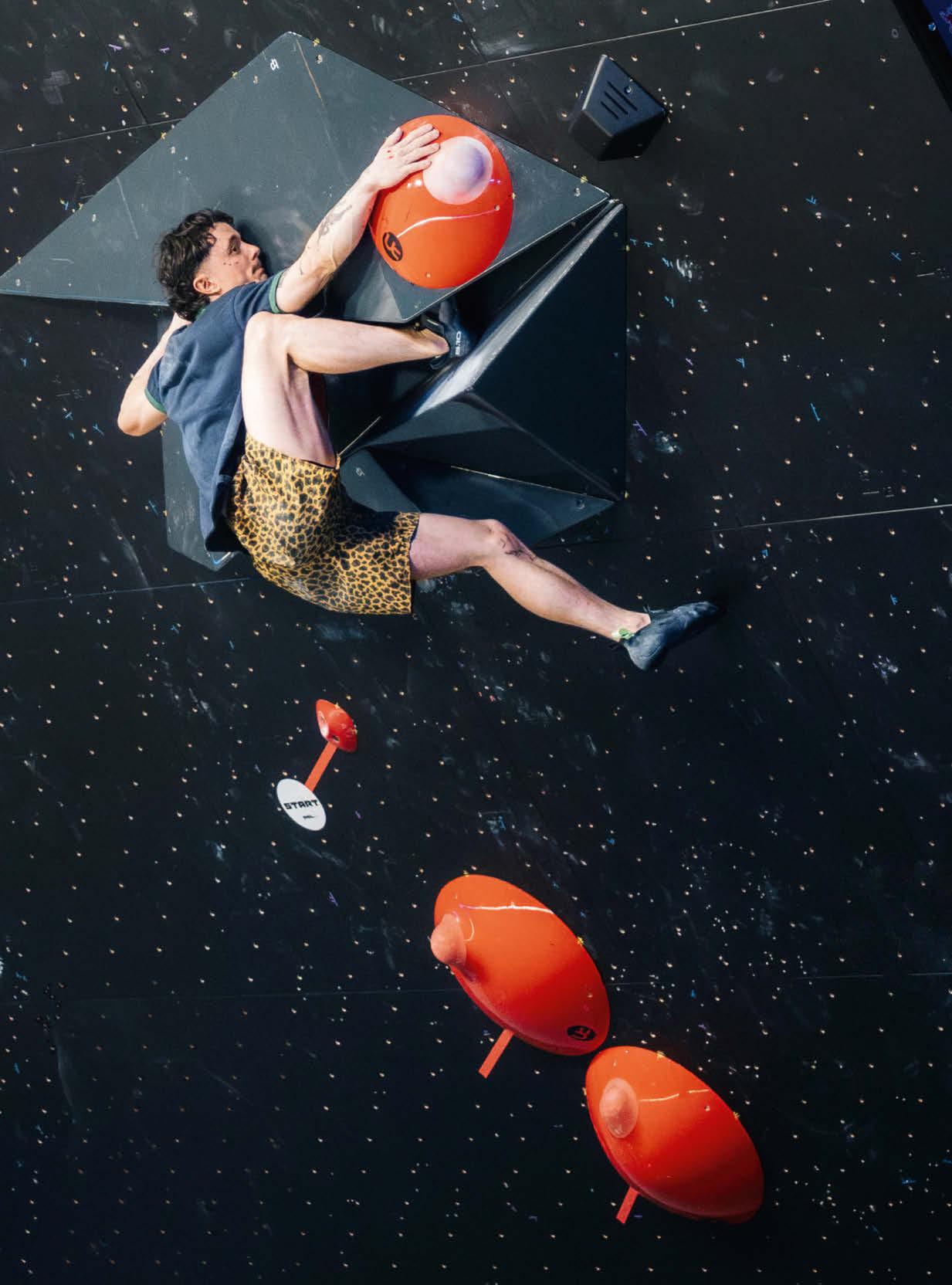
“Hey, guys… jazziest shorts win, right?” Welcome to the inaugural Pro Climbing League competition where, in February, more than 2,400 spectators at Magazine London saw elite climbers go handto-hand across three knockout rounds. In the men’s final (pictured), leopard-hipped Scot Max Milne beat the US’s Colin Duffy to the trophy. Gripping stuff. Watch it on Red Bull TV; redbull.com
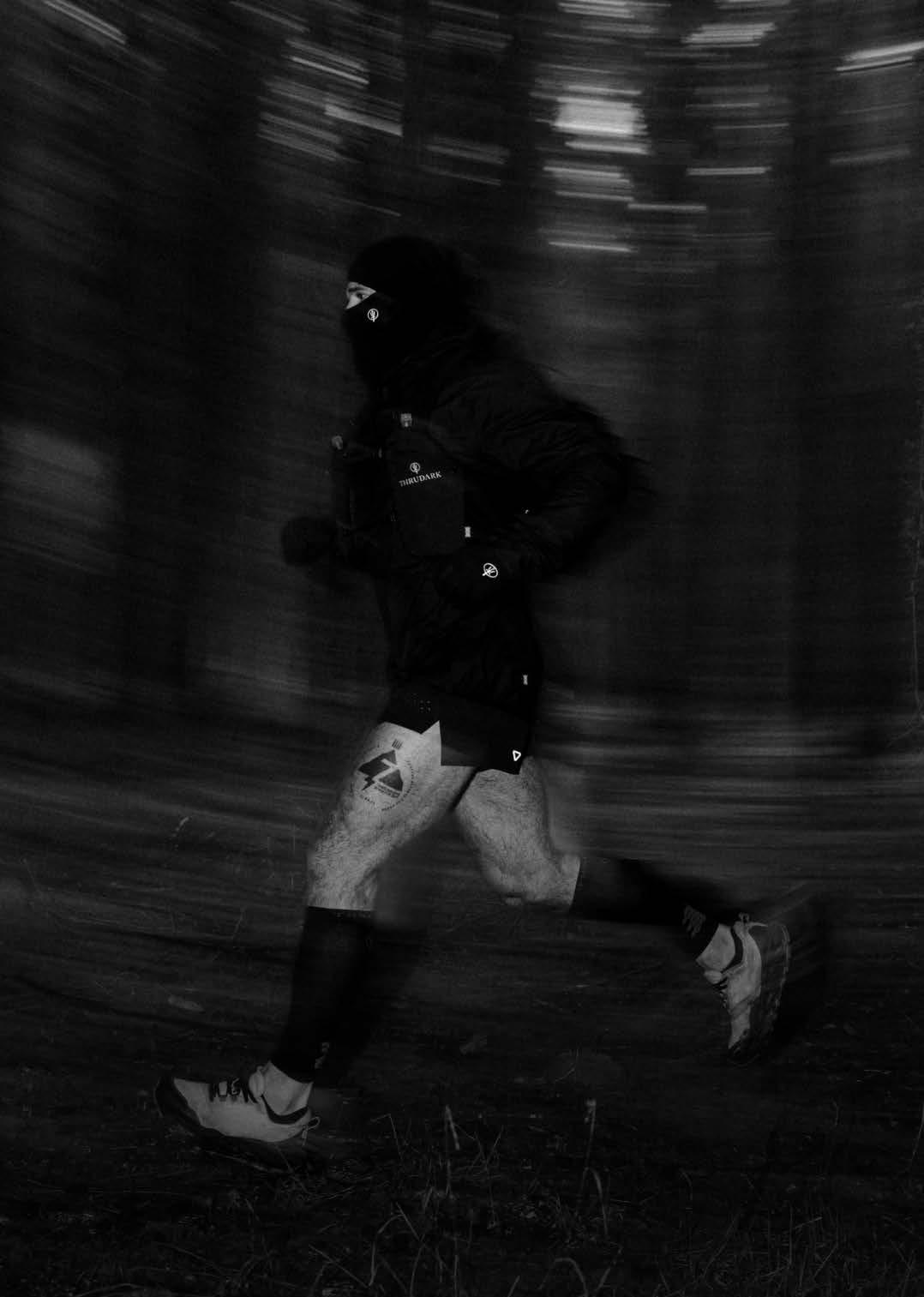
Built for the trail. Designed to lead. Lightweight breathable running clothing for high speed, low drag pursuits
Buck Meek
The guitarist and songwriter with US indie-folk hipsters
Big Thief revisits four tracks that helped shape his craft
Hailing from smalltown Wimberley in Texas, Alexander Buckley ‘Buck’ Meek grew up jamming with local blues musicians. Meek went on to attend Boston’s Berklee College of Music, where he met his future partner-incrime, singer and guitarist Adrianne Lenker. In 2013 the two friends began performing together, and two years later they formed Big Thief with bassist Max Oleartchik and, later, drummer James Krivchenia. Now one of the US’s most critically acclaimed indie bands, Big Thief – minus Oleartchik, who left in 2024 – will perform their biggest UK shows to date in late April and May to support their latest album, Double Infinity; in March, Meek also played smaller gigs to promote his fourth solo release, The Mirror. Here, the 38-year-old guitarist, songwriter and self-confessed workaholic picks four tracks that have influenced his work… buckmeekmusic.com
Otis Redding (Sittin’ on) The Dock of the Bay (1968)
“When I was young, I’d go to my grandmother’s house every Friday. She would always put this song on and dance with me. It was one of my first real, focused experiences with music. Steve Cropper, who plays on this, has become one of my favourite guitar players. He’s a hero of mine.”
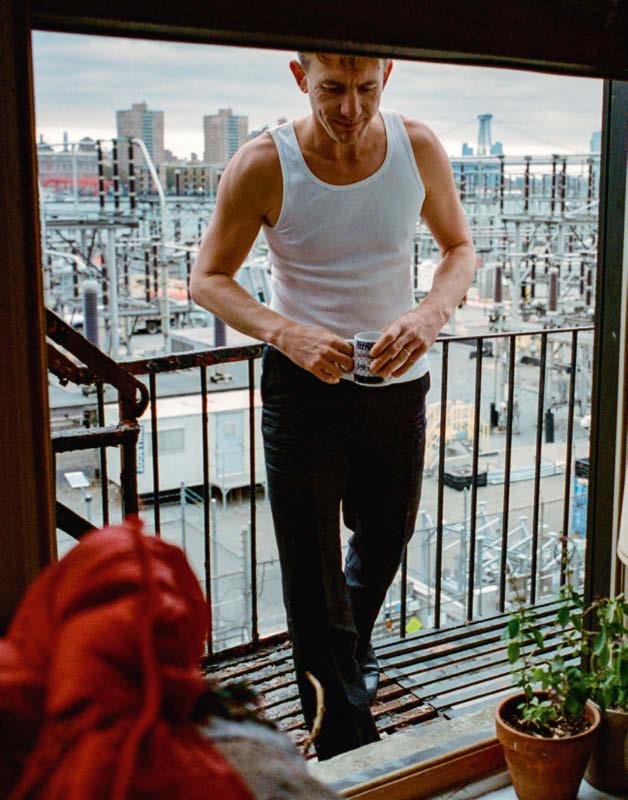

Taraf de Haïdouks A La Turk (2001)
“This Romanian band are incredible. I’ve seen them once, and they started with so much speed, then got faster and faster to the point where it felt like their hands would fly off. That was an impactful moment for me, that they’d put themselves in this trance. And this is my favourite song. I always think about it when making music.”
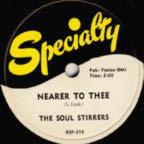
The Soul Stirrers Nearer to Thee (1955)
“My first job was delivering pastries all over Manhattan in this little car. And when this song [with soul legend Sam Cooke on lead vocals] came on the radio, the spirituality of it brought me to tears. I had to pull over and just sit on the side of the highway and cry. It changed my life, making me rethink why I was writing songs, I guess.”
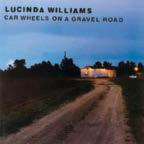
Lucinda Williams
Metal Firecracker (1998)
“When I started out as a songwriter, I’d overthink everything and try to be all poetic. But then I heard this song, which is so brutally honest and to the point. It made me feel a lot, because it’s so relatable, just a kickass break-up song. This song empowered me to write simply, confessionally and really from the gut.”
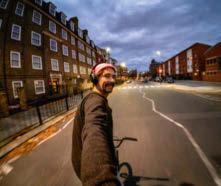
Johno Verity
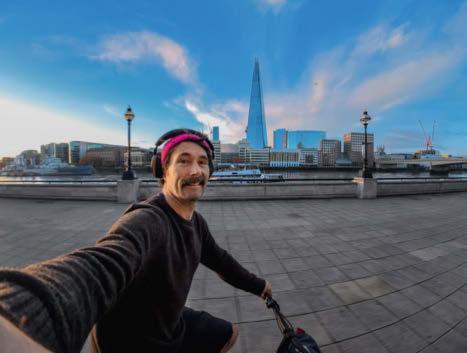
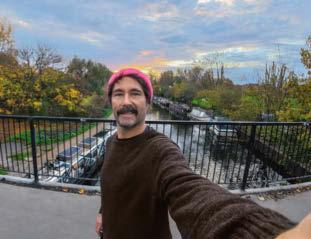
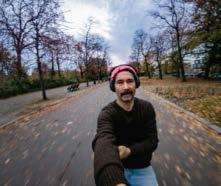
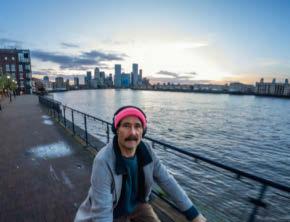
At 5am every morning, this London cinematographer gets on his BMX. His reward? City sights few of us ever experience
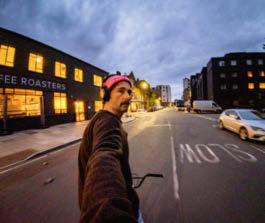
At 5am, London’s Oxford Street is at its quietest and most beautiful – no commuters or tourists, just the odd bus, the sound of birdsong, and the first signs of light glinting over the buildings. This is Johno Verity’s London, a version of the city he cycles through at dawn, filming and sharing the stillness with thousands online.
“I’ve ridden the whole length of Oxford Street in a minute and a half and not seen a single person,” says the cinematographer and former snowboarding pro. “Not many people get to experience that.”
makes [my videos] look consistent. But mostly I just like pink hats.” For the “backend insomniac” (his words), rising early has never been an issue. “I fall asleep easily enough,” he says, “but I can’t sleep past five. Then I’ve got a choice: scroll on my phone or get out into London.”
Verity’s films don’t follow a strict formula; he just cycles one-handed (camera in the other) and talks about whatever comes to mind, adding stories and facts he’s picked up along the way. The idea came to him one day when he was heading for an early flight to France. The Tube wasn’t yet running, so he hired a Lime bike and pedalled into town. “I got to Blackfriars and it was completely empty. The light was beautiful, and I just thought, ‘This is mad. No one is here.’ It felt like the city was briefly mine.” He shot a short video and posted it with little expectation. It travelled far further than anything he’d shared online before.
Which is precisely the point. At an hour when many are still under the covers, Verity leaves his home in Hackney, gets on his BMX and cycles. The direction doesn’t matter; what does is arriving before the dawn. His early-morning films – part history lesson, part meditation, part love letter to the capital – have made him a social media star, recognisable to many simply as ‘the guy in the neon-pink hat’.
It’s hardly surprising his footage has a cinematic aura: Verity has his own production company, Autumn Works, which shoots everything from snowboarding films to car ads. “There’s about 20 minutes when London is unspeakably gorgeous,” he says. “Stand on Waterloo Bridge at the right moment and St Paul’s is still lit as the dark-blue sky lifts behind it. Most people only see this city in a rush. I want to show people what it’s like before the performance starts.”
There’s something deeper driving him, too: “I try not to use Google Maps; I want the map in my head. Learning London’s history turns it into a huge puzzle. And cycling… there’s something about moving forward. If I’m worried about the future or replaying the past, it steadies me.”
By 7am, dawn’s spell lifts. The traffic returns, pavements fill, and London becomes itself again. Meanwhile, Verity’s vision – quiet, golden – begins to drift across the internet.
“That was an accident,” he says. “I wore it in the first video that did well, and it stuck. It pops against the sunrise and Instagram: @johnoverity
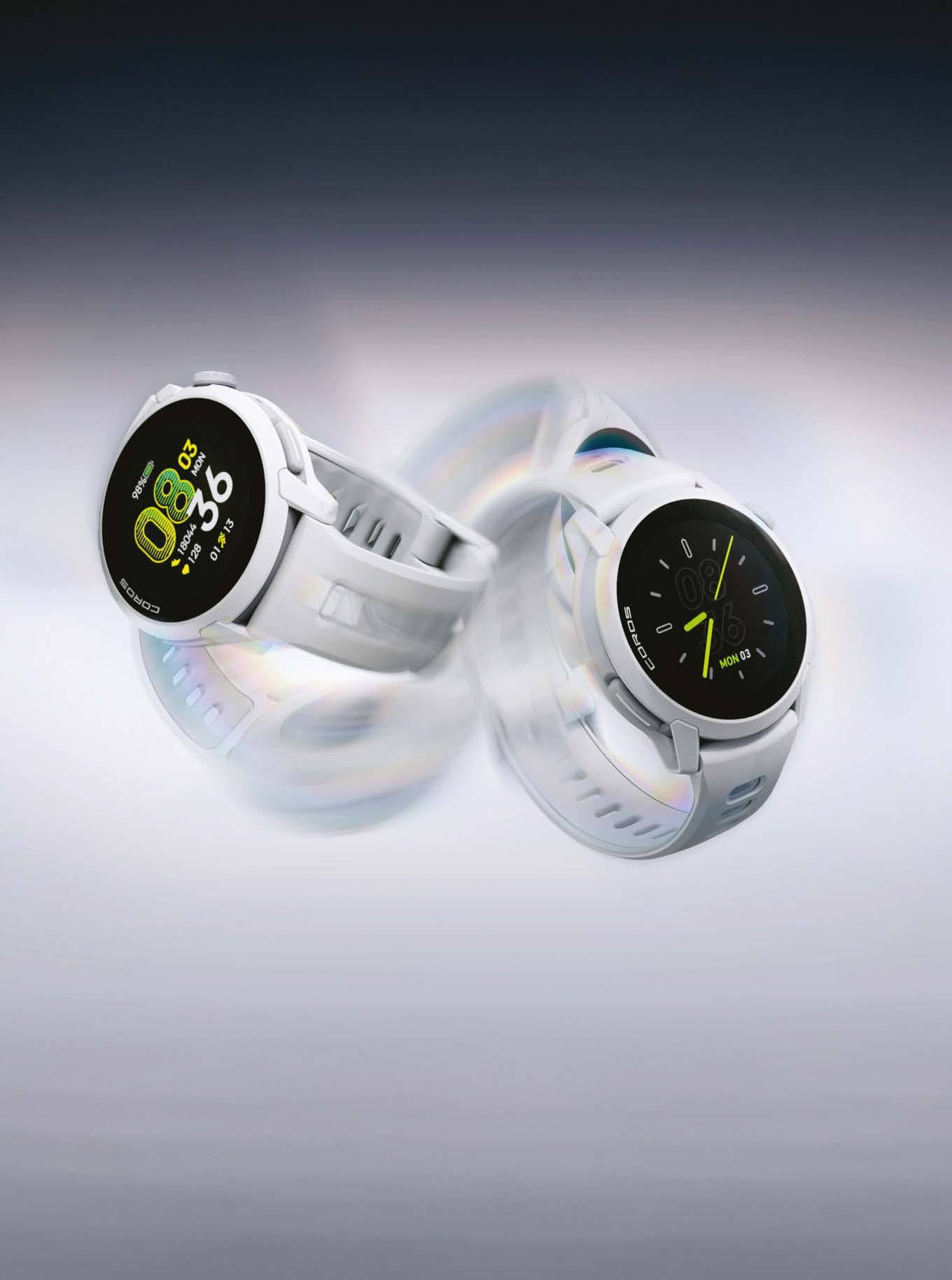
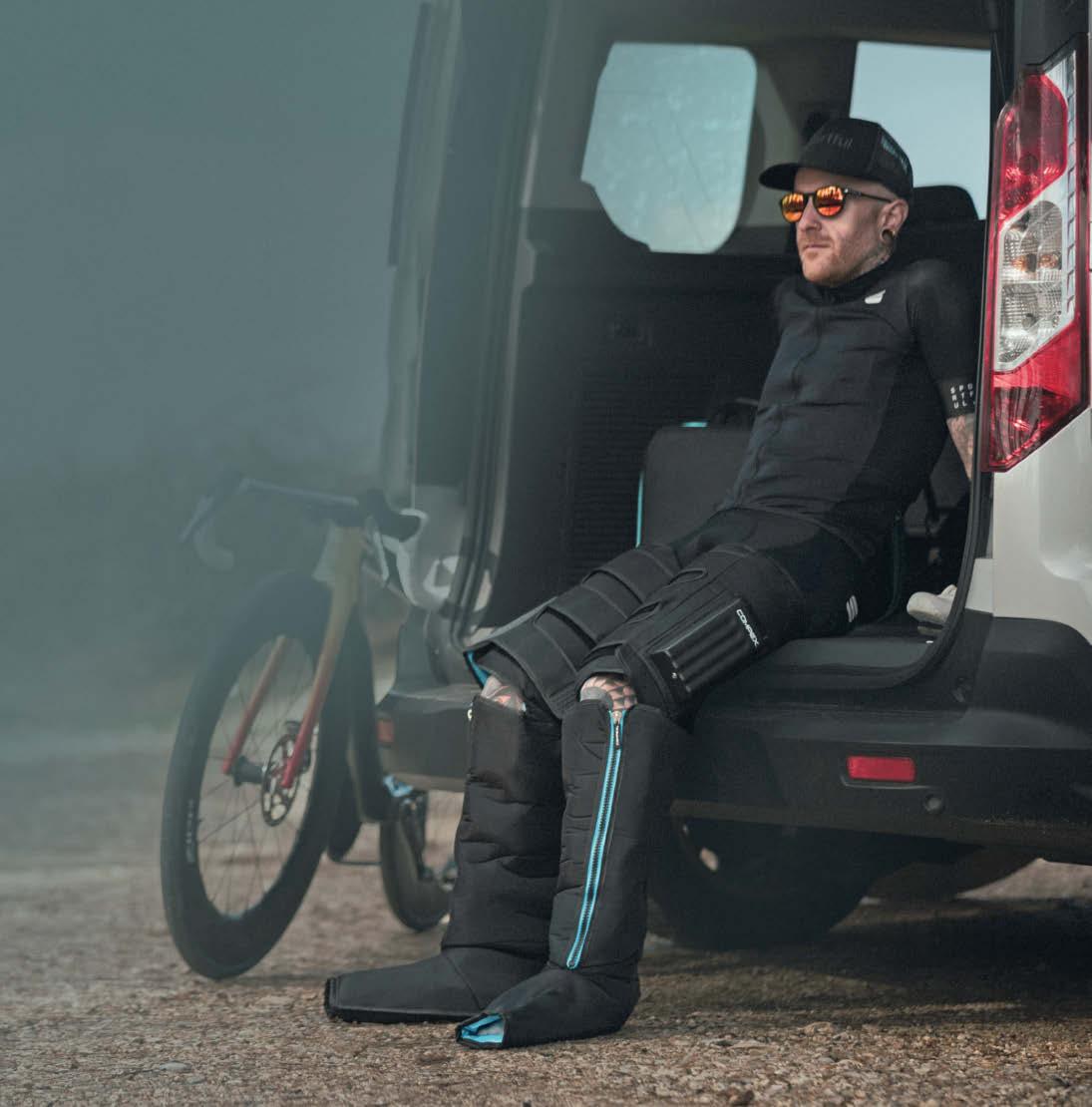
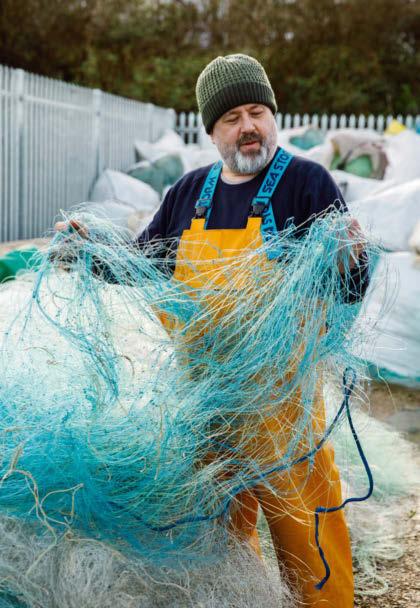
For many, a tangled old fishing net washed up on the shore is nothing but pollution. Cornish entrepreneur Ian Falconer, on the other hand, sees potential. His company, OrCA, collects fishing nets from local harbours, which are then chopped up, melted down and turned into industrial-grade plastic filament for 3D printing. “Our machine breaks them down to the consistency of granulated sugar,” explains the 53-year-old from Penzance, “then we wash, dry and package it and sell it to injectionmoulding companies.”
It’s a simple idea, but a radical one: what was once a deadly hazard for marine life can become anything from sunglasses frames and lampshades to motorbike parts and medical scrubs. “It’s actually a very versatile raw material,” Falconer says.
According to a 2019 report by Greenpeace, gear discarded by the fishing industry accounts for the majority of large plastic pollution in the oceans, entangling wildlife and leaching microplastics. “The working life of the nets we recycle is between three and 12 months before algae build-up makes them unusable,” says Falconer. “Then they’re sent to landfill, burnt, or go overboard. Once nets are out in deep water, they are near impossible to retrieve.”
A university graduate in environmental and mining geology, Falconer worked in heavy industry before moving into recycled materials for 3D printing. “I knew I wanted to apply my knowledge of mining and mineral processing to recycling,” he says. “And given where I live in Cornwall, fishing nets seemed an obvious place to start.”
So, in 2017, Falconer cut a deal with the harbour master at nearby Newlyn to collect old nets before they were thrown away. They also allowed him to set up a ‘micro factory’, where he built his first processing machine. “I convinced the harbour master I had credibility
How one man’s simple
and was low-risk,” he says. “Once they saw what I could do with the nets, they gave me the space to get started.”
Since then, OrCA has raised in excess of £1m from small investors in more than 40 countries. “Once the nets arrive, they’re checked for large contaminants,” Falconer says. “One end is fed into the machine, which threads the material through washing, drying and packaging. Someone oversees the feed at this end, and another handles the finished material at the other, but everything in between is automated.”
It’s a smart solution to a growing global problem. Falconer hopes to franchise the technology to harbours worldwide – if built in the UK, a container equipped with all the equipment necessary to run a small-scale recycling

plant would cost roughly $500,000 (£370,000). “The primary goal is a fleet of these dotted around the world,” he says. “Especially in countries that don’t have established recycling systems.”
And he doesn’t want to stop at fishing nets. In the long term, Falconer hopes to apply the same technology to plastic bottles, a market he says is 75 times larger. “Water bottles are the obvious next step,” he says. “Flexible plastics like bin bags are a tougher challenge, so that will come later.”
For OrCA’s founder, the goal is simple: turn everyday waste into something valuable. “There’s no shortage of material that, with the right equipment, can be turned into profitable raw material,” Falconer says. “We just need better ways to use it.”
Enzo Barracco
This former fashion photographer documents the brutal beauty of the world’s wildest regions
While growing up in Sicily, the Mediterranean was Enzo Barracco’s playground – and his teacher. Freediving off the island’s coasts, he learned to read currents, measure waves and, most important, move with the world around him.
“The ocean has always been my most natural environment,” says the now New York-based photographer. “It’s part of who I am. Whenever I’m near water, I’m reminded we’re all marine animals, we just forgot.”
There were many directions this connection could have taken the Italian, but he chose photography. Or perhaps it chose him. “I knew it was my calling before I ever took a photograph,” he says. At 20, Barracco borrowed a friend’s camera and began shooting the sea, leading to his first exhibition. He then moved to Milan and later London, getting a job in fashion photography almost by accident: “All I had in
my portfolio were landscapes, but they trusted my instinct.”
Barracco became a much sought-after photographer in the world of high fashion, and yet the natural world never left his imagination. After reading a book about polar explorer Ernest Shackleton, he went on his own Antarctic expedition – a month of icy seas, vast tundra and profound isolation. The resulting photobook, The Noise of Ice: Antarctica, marked a turning point. “In fashion, I controlled everything: the set, the timing, the light. In nature it’s the opposite: it controls you. You need to adapt, anticipate and respect its timing.”
As a goodwill ambassador for SEA BEYOND, Prada Group’s ocean education initiative in partnership with UNESCO, he has increasingly traded studios for wilderness. For his latest project, The Fight of the Forest: Alaska, supported by SEA BEYOND, Barracco spent a year
travelling back and forth to the state, watching its landscape change with the seasons. Significantly, this year is the centenary of the first transpolar flight over the North Pole, led by Italian aviator Umberto Nobile. “Alaska played a crucial role in that expedition,” Barracco says. “I loved that narrative, so I contacted the Italian Air Force and proposed we connect that history with the project.”
In Alaska, humanity feels more guest than master, he says – a lesson reinforced by his meeting with Indigenous communities still living in close dialogue with the land. One close encounter with nature left him shaken: “A polar bear in the fog is both beautiful and terrifying. I saw it at a distance, looked away, and when I turned back it was closer, hiding its black nose under the ice, melting perfectly into the landscape. I have swum many times with sharks, but for the first time I felt like prey.”
It was a sharp lesson to respect the wild, he says. “Every time you experience wilderness, it changes you. You realise our responsibility to the natural world.”

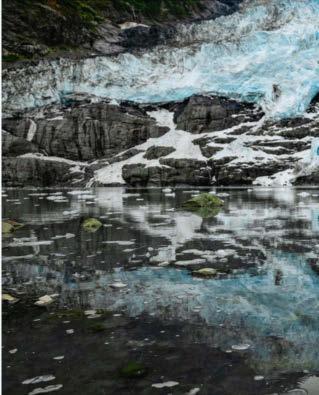
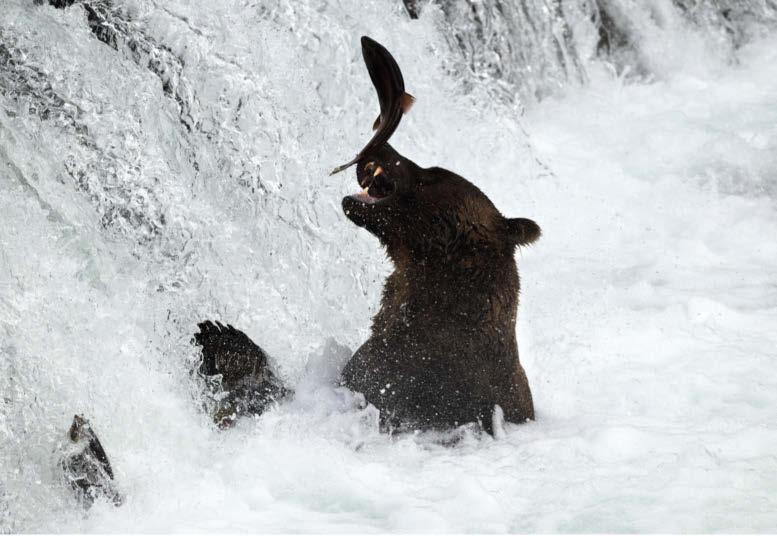
Super nature: (clockwise from left) salmon vs bear (“It was incredible to see the power of the bear, but also the determination of the salmon to never give up and to lay her eggs,” says Barracco); aurora borealis; a stunning rock formation; the fragile beauty of a glacier



Yas Queen!
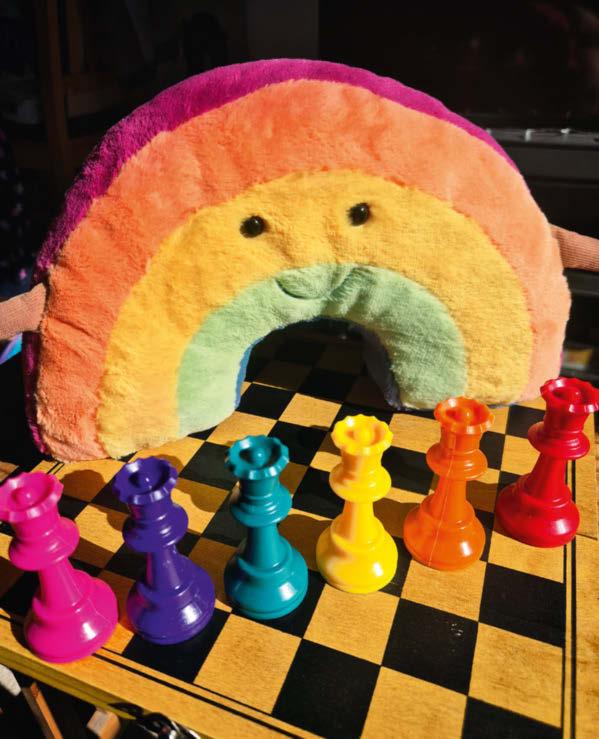
This inclusive LGBTQ+ chess club – one of the frst of its kind in the UK – is making all the right moves
For chess player Annalisa Buontempo, it’s a glaring irony that a game in which the most powerful piece is the Queen has inclusivity issues. It’s a problem that won’t surprise viewers of Netflix’s series The Queen’s Gambit, or Queen of Chess, its 2026 documentary on Hungarian grandmaster Judit Polgár. “It can be intimidating for a woman entering a room of chess players,” says London-based Buontempo, who fell in love with the game as a young girl learning from her grandfather in her hometown near Naples, Italy.
“The energy is often very masculine, sometimes even negative. I’ve heard from little girls of boys kicking them beneath the table to distract them. And many adults I know have experienced microaggressions that made them uncomfortable.”
It’s an environment that can be even more daunting for trans players, Buontempo says. Which is why, last year, she teamed up with five other female players to found Yas Queen!, one of the UK’s first LGBTQ+ chess collectives, with the aim of making the game more welcoming for all.
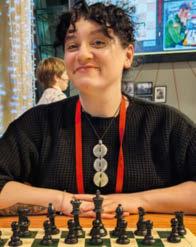
Keeping the game in check: Annalisa Buontempo, co-founder of Yas Queen!
“It’s about creating a space that feels comfortable and supportive,” she says. “We want people to play without worrying about being judged, to learn together, and to see chess isn’t just a competitive arena, it can be a community.”
Yas Queen! isn’t the only chess club in the UK to offer community – many all-female clubs exist – but few others welcome players of all genders and sexualities so actively, making inclusivity central to their mission. There have been challenges along the way, though. At a London Chess League meeting, one attendee publicly questioned the inclusion of the club, citing “safeguarding concerns”.
“It was an awful moment,” Buontempo recalls. “I’m not trans, but imagine hearing that if you were. It proved why we need this space: to show chess has nothing to do with who you are; it’s about your knowledge of the game.” Fortunately, the League affirmed that the views of the individual did not reflect its own values.
Today, Yas Queen! is thriving, with almost 80 active members, a 1,200-strong digital following, and group meets in London pubs every fortnight. “Online chess can be quite insular, anonymous,” Buontempo says. “In person, it becomes human. We share a beer, discuss our blunders, and analyse games together. It’s about the compassion.”
This social approach hasn’t blunted their competitive edge: the club fields multiple teams in the League. But ask Buontempo which chess piece best represents Yas Queen! and she gives an answer you might not expect.
“We discussed the Knight, because it jumps over obstacles,” she says. “Then we realised: it’s the Pawn. Pawns move forward together and support each other. They are often underestimated, but if one reaches the end of the board, it can become anything it wants.”
yasqueen.uk
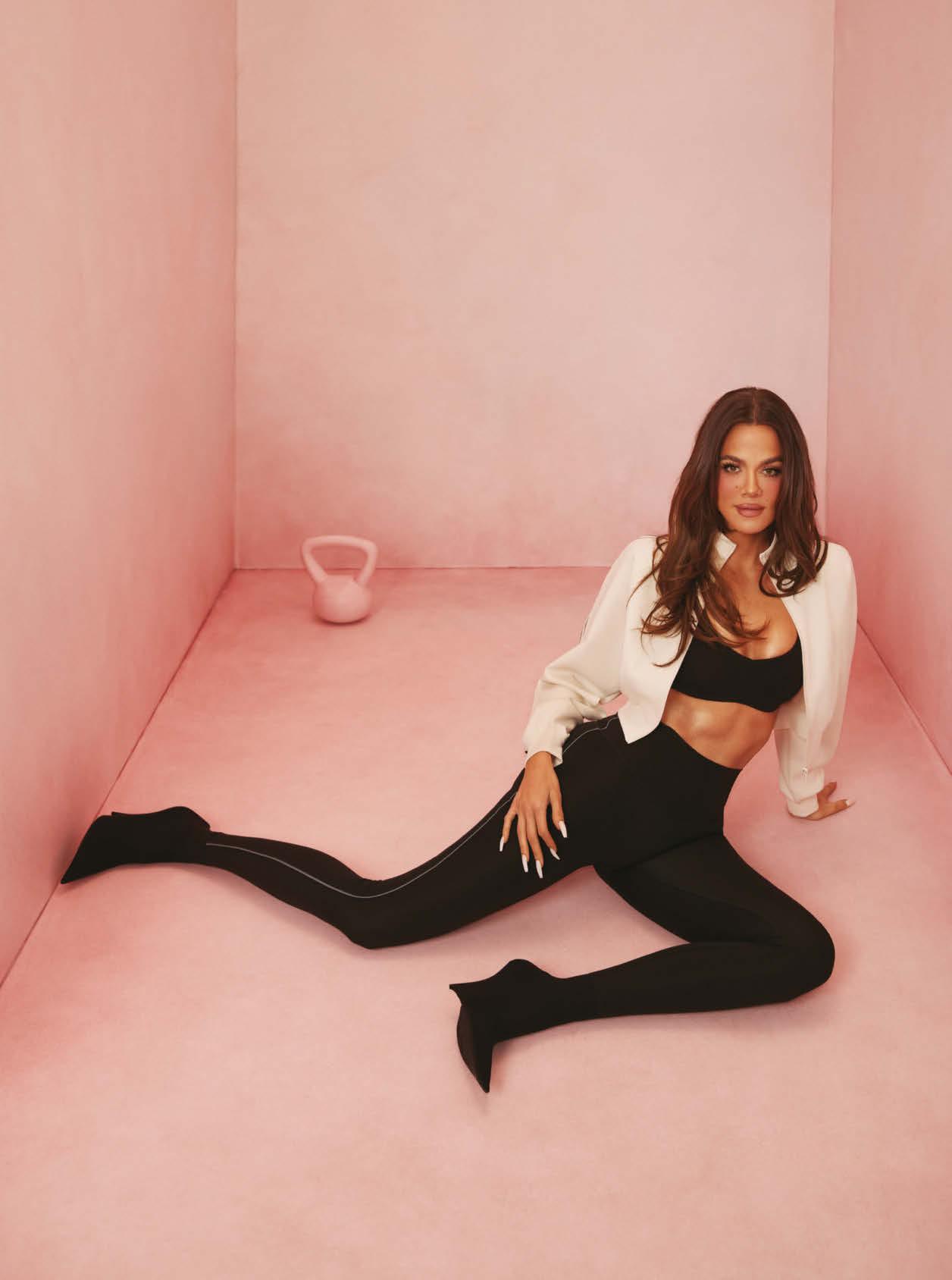
www.fabletics.co.uk/freebra
At the age of nine, the Trinidadian dancer found his passion for ballet. Now he’s democratising the art form on the streets
Words
Jessica Holland Photography Anna-Maria de Freitas
Against the backdrop of St Paul’s Cathedral, a bare-chested Kadeem Hosein, in a black tutu and skin-tone pointe shoes, dances the role of the Fairy of the Breadcrumbs from Tchaikovsky’s ballet The Sleeping Beauty as passers-by watch and film him with their phones. Clips of Hosein’s performance can be seen on all the major social apps as part of his ongoing project En Pointe in Public, which began a decade ago and will tour Europe this summer. Hosein was born in Trinidad and took up modern dance at the age of four, then ballet at nine, after being mesmerised by local shows. The only boy in most of his dance classes, he kept this passion secret from everyone at school, and his biological dad. It wasn’t until he moved to London for uni – studying journalism, then marketing – that he felt able to openly share his love of dancing, which he did by making videos.
Hosein now trains, dances and creates content around a full-time marketing job at an ad-tech company and offers online ballet classes several nights a week. His social channels have soared in popularity in recent months as he’s opened up even more on topics including masculinity, “queer liberation”, and the need to make ballet more accessible.
the red bulletin: Pointe shoes are traditionally only worn by women. How did you learn how dance in them?
kadeem hosein: Growing up, I was the only guy in the [ballet] class, so when all the girls were going on pointes, I asked if I could, too. In professional companies, guys usually only go en pointe for comedic effect, like when Bottom changes into a donkey in A Midsummer Night’s Dream But through my work I try to show that it can be taken seriously.
When you wear a tutu, is that to challenge ideas of masculinity?
I’m a cis man, but I do think that gender is just a construct. Men in Scotland wear kilts, priests basically wear dresses, and society says that’s OK. When I put on a tutu, it’s about becoming a character, like Odette or Odile [from Swan Lake]. I can also play that character in jeans. I think there’s a lot of work to be done on removing the gender from any costume in ballet, be that tights, tutu or whatever.
Do you find the women’s roles more fun than the men’s?
The male roles are fun, but they involve a lot of jumping and spins, which are hard outside without a sprung floor. They’re also more repetitive. The female roles have more variety.
Ballet is all about tradition. Is it also changing with the times?
Yes, but slowly. Five or 10 years ago, we didn’t have skin-tone pointe shoes, or they were hard to find. I had to wear black ones – they were only made in black, white and pink. Now all the major pointe shoemakers do them in different skin tones.
What reactions do you get when you dance in public?
I did have one lady try to stop me dancing outside a church in Australia – I don’t know why. Usually people clap. One lady brought me flowers; another was crying. And I have a lot of conversations about ballet and what the art form has to offer. I realise that I’m fortunate to live in places where this can be done. I couldn’t do it if I was still in Trinidad.
What do you hope people take away from your dancing?
I’d love people to see ballet as something more than this elitist, inaccessible art form, and to inspire people to dance or learn more about it.
What’s your training schedule?
I try to go to the gym at least five days a week, before work or at the weekend. I do a mixture of ballet training and weights, which is important to strengthen muscles that aren’t in my feet and legs. Staying fit helps my dancing tenfold.
Have there been any dark moments that ballet got you through?
In December 2023, my mum passed away. The following year, my stepdad died. Every day when I was like, “I can’t go on,” I’d go and dance and feel so much better. They gave me that gift; they encouraged me to do ballet. That’s why I’m so passionate about people having a passion.
What would you say to people who think, “Ballet’s not for me”?
I’d say that’s a barrier, and, for me, the only barriers I face in my life are the ones I created for myself. My advice to everyone is to remove the barriers in your life that are stopping you from growing.
Where would you like to take things from here?
Everything’s been happening so quickly. I’m trying to be more reactive rather than proactive. If I make a plan, I’ll get obsessed with it, so I’m trying to go with the flow. But all my friends say I can only go with the flow if I know where the flow is going, when it’s leaving and when it’s getting there. So I’m trying very hard to just chill out.
Instagram: @kadeem.enpointe
Juliet in Romeo & Juliet “I’ve really enjoyed doing Juliet’s ballroom solo. It’s less technical, so you can make mistakes and cover them up with the artistry. Every movement has a meaning.”
Manon in Manon “Again, this role is really emotionally driven. A few years ago, my favourites were the technical, classical roles; now I like those that are a little more artistic.”
Kitri in Don Quixote “You have to be very flexible [in this role], and I like to challenge myself. It’s fun, it’s Spanish, and it’s a bit more stylish than your Auroras and Sugar Plum Fairies.”
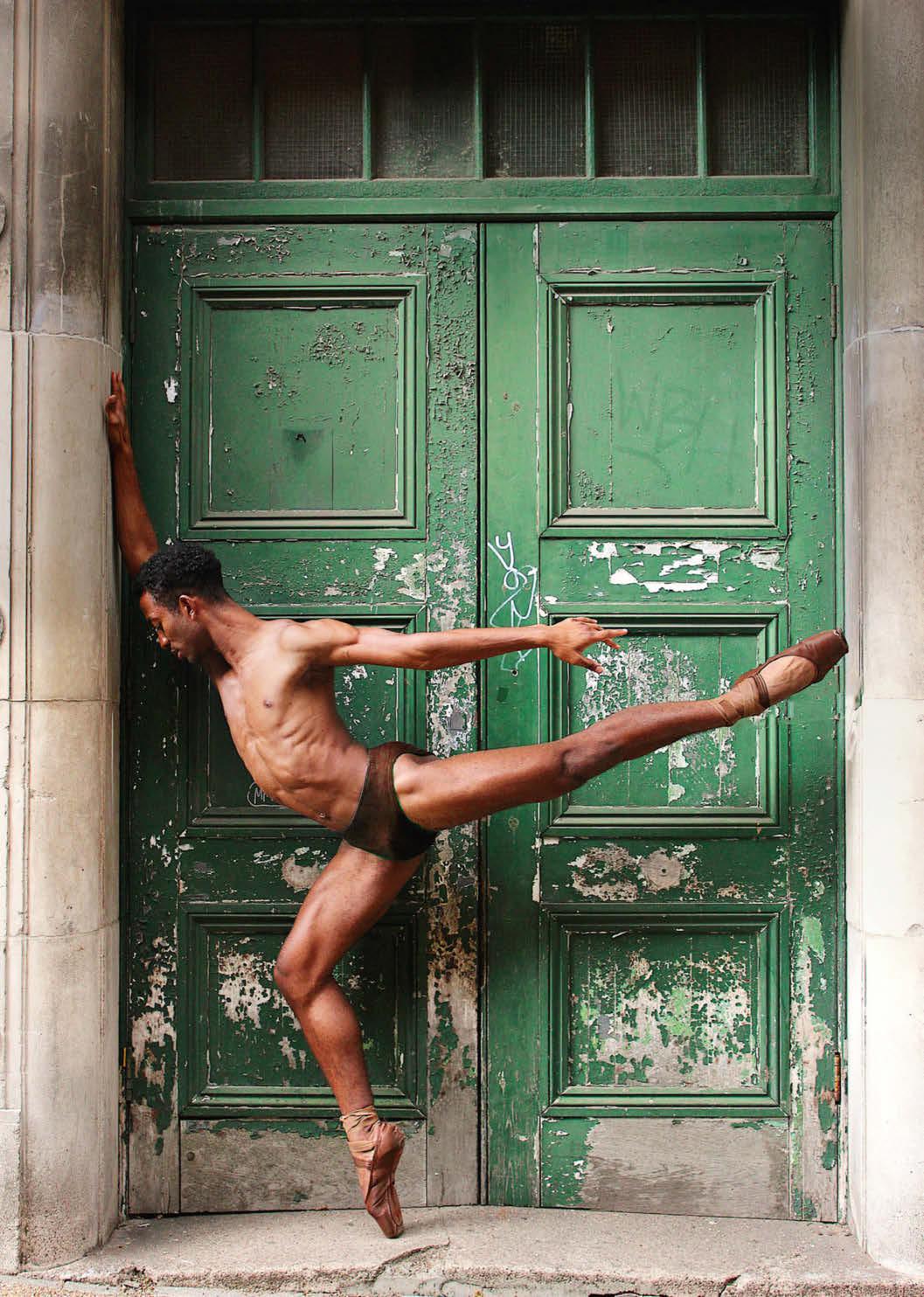
“Remove the barriers in your life that are stopping you from growing”
The Swedish electropop pioneer returns with a new album that cements her status as the ‘queen of the sad banger’
Words Marcel Anders Photography Casper Sejersen
“It’s really difficult to make good pop songs,” says Robyn from a hotel suite in Berlin. “It almost feels like reinventing the wheel sometimes.” And yet somehow the Swedish powerhouse always makes it look easy. Following a hiatus of almost eight years, Robyn is back with a new album, Sexistential, packed with emotive dancefloor fillers that prove she’s still the ‘queen of the sad banger’, that pop music can still deliver emotional depth, and that there’s a reason some of today’s biggest stars consider her an icon.
Over a career spanning four decades, the 46-year-old has become synonymous with authenticity. Initially cast in the teen pop-star mould, in the Noughties Robyn pivoted away from R&B chart hits to forge her own brand of electropop and release it via her new label, Konnichiwa Records. In the 20 years since, her music has won her a global fanbase, Grammy nominations, and influenced the sound of everyone from Rihanna to Taylor Swift.
After a few years of clubbing, exploring, and making the decision to become an independent mother, Robyn says the time was right to make her return. “I got that energy back, and it felt really exciting.”
the red bulletin: This summer, you embark on your biggest tour yet, but first you’ll be opening for Harry Styles on his tour dates in Amsterdam… robyn: Yeah, lots of shows. It’s gonna be fun. I’ve never met Harry – he just called me out of the blue. I’m honoured: he’s a superstar, he plays stadiums and he writes great songs. I really like his stuff. So I had no choice but to say yes.
And you’ve just released your first album in almost eight years. There was a gap of the same length between your previous albums. Why is that?
I don’t know. There’s no strategy behind it. I probably should have made this album a long time ago. I just wanted to explore
other things for a while. I was clubbing a lot. But I just can’t get away from trying to write a good song!
Did making the album feel like documenting a new chapter in your life? Yes, totally. I felt like I kind of re-entered my own life after a long period, a long relationship. I had experiences that were really amazing, like therapy, like clubbing; I explored a lot during the time before I had my son. Trying to become pregnant through IVF was a very specific experience. When I wrote this album, I felt like I was crashing back into myself, without another parent to have a baby with. I was really on my own. The album is like a series of snapshots about things like intimacy, but from a new perspective.
You started writing songs at the age of 11 and had your first record deal at 16. What was that time like for you?
It was a strange environment for me, because I had no clue what the commercial music industry was. I grew up in a very alternative environment with parents who ran an independent experimental theatre, [with] absolutely no interest in having commercial success or making money, so I was naïve. I was still a teenager, I was working with amazing songwriters, and I learned so much during that time. It was just very different from what I wanted to do eventually, so it wasn’t made to last! The industry part of it was very soul-destroying for me.
What was it like to get such a great reaction when you left your label and launched your own, finally allowing you to release the music you wanted to make?
It was mind-blowing, and very satisfying that I could make something I really like myself and that there were people that wanted to engage. Now, as an established artist, the music industry is great – I can pretty much do whatever I want. I just put out my music and it reaches my audience. That’s freedom.
How does it feel to be an icon to the likes of Taylor Swift, Lorde and Charli XCX?
It’s very flattering, but I’m not sure if I deserve any form of admiration. I did what I had to do to get my music out and make my vision come alive. If someone takes me as a blueprint, fine, but I’ve just done what’s best for me, not for all women in music – although it’s a nice thought!
Are you happy to give advice to the new generation of pop stars?
Sure. I’m not a mentor, but I tell them my thoughts and give moral support. I had dinner with Charli before she released Brat, and I told her I really loved the title and the music. In a way, I feel more connected to Charli’s age group in pop music than I do to my peers, because there’s a more fluid way of thinking about pop. I find it cool and interesting. It keeps me updated.
Is that something you’re conscious of?
Sounding up-to-date?
I don’t know if I ever tried to be cutting edge. For me, it’s about something else, something more playful, where I lose the sense of time. It’s not really about a genre or about pushing a sound; it’s more about losing myself in something.
Getting lost in music?
Yeah. [Laughs.] That’s my goal. robyn.com
1995
Aged 16, she releases her debut album, Robyn Is Here 2001
Signs a worldwide deal with Jive Records
2005
Launches her own label and brings out fourth album Robyn 2007
With Every Heartbeat gives Robyn her first UK number one
2010 Releases the Grammynominated Dancing on My Own, the ultimate ‘sad banger’ 2020 Wins Songwriter of the Decade at the NME Awards
2024
Joins Charli XCX and Romy from the xx on stage at Glastonbury
2026
Prepares for the Sexistential world tour, her biggest yet
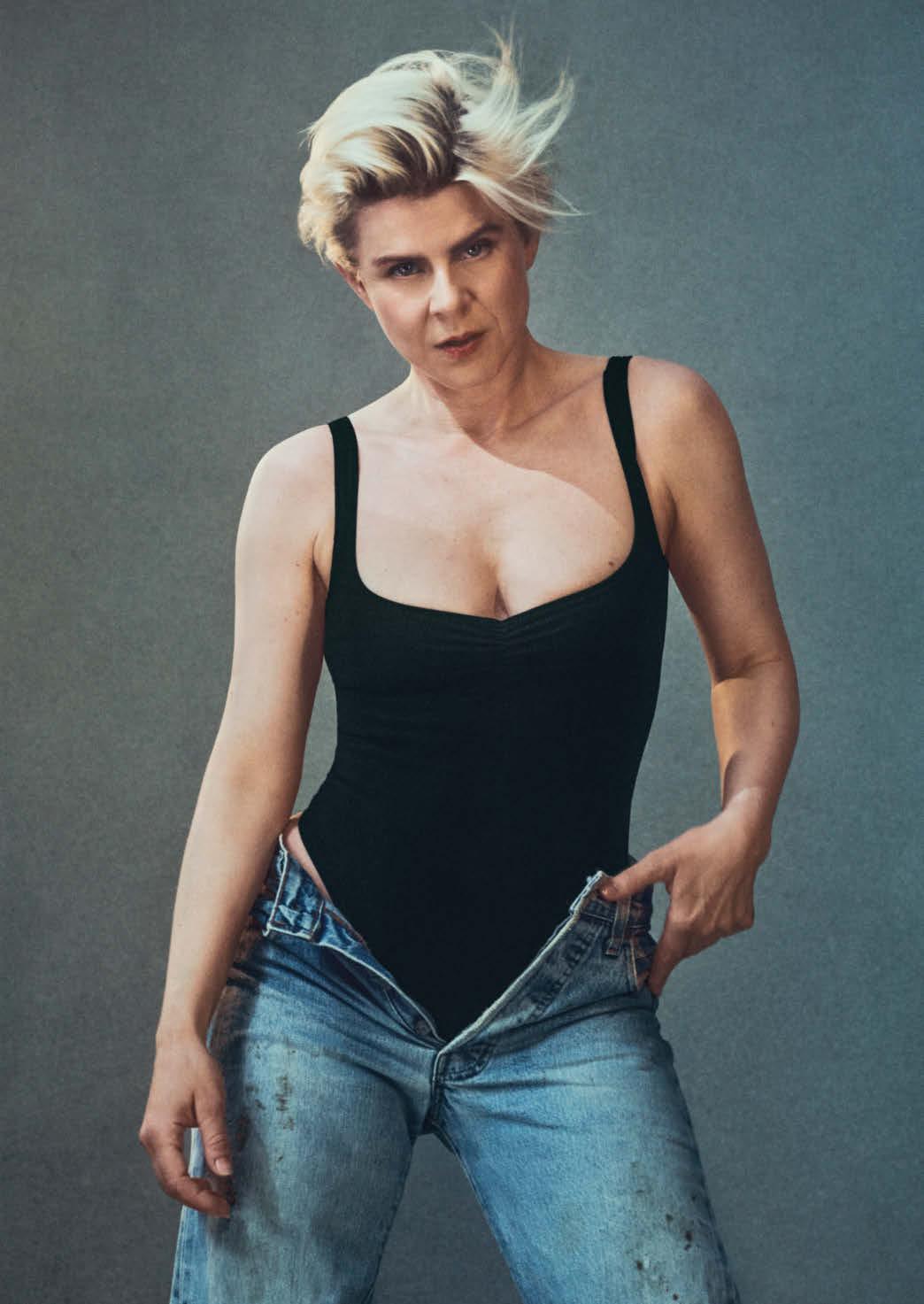
“I did what I had to do to make my vision come alive”
The Berkshire runner is pushing himself to his absolute limit – and proving that it’s possible to dream big in the process
Words Richard Edwards Photography Alaric Storer
“I’m obsessed with finding my breaking point,” says Jack Pitcher, a man who has come closer to achieving that aim than most of us ever will. The flame-haired 30-year-old from Bracknell, Berkshire, hit the headlines in December 2024 when he beat the British record for running across Australia from Perth to Sydney –the small matter of 4,320km, equivalent to 102 marathons – in just 61 days, 16 quicker than the previous best time.
Pitcher describes the experience as “the most physical and mental pain I’ll probably ever endure”, and yet he’s currently gearing up for his next challenge: to run the length of Iceland in record time. For the lifelong amateur runner and former roofer, it’s another opportunity to test himself and, in doing so, inspire others to push their own limits.
“I really do believe we’re all capable of extreme feats,” Pitcher says. “I want to prove that a normal person, with no backing or huge online following, can dream big and chase those dreams. I’m a working-class lad continuing his story, risking it all again.”
the red bulletin: It’s been more than a year since you returned from Australia. Are you recovered?
jack pitcher: I’m getting there! I went to a doctor who told me that my pelvis is slightly out of shape. My feet were just smacking tarmac for 16 hours a day, which obviously placed a huge amount of stress on my joints. I think I lost about three stone [19kg] on the run, and I was only 77kg when I first set off, so I didn’t have that much weight I could afford to lose. I was on a 4,000-calorie deficit for those last 12 days, and it sucked everything out of me – I looked like Tom Hanks in Castaway. When I finished, my
mum got me a massive calzone, then I had a fry-up, a pancake stack and a full McDonald’s. I just didn’t stop eating.
Is it possible to enjoy a challenge like that?
You can’t sugarcoat it. Running through the Nullarbor Plain, where it’s just a dead-straight road, you don’t see a car for two or three hours and there’s no shade and minimal water, the novelty wears off pretty quickly. That said, there were parts I enjoyed, particularly when Aussies found me in the middle of the desert and asked me what on Earth I was doing! They weren’t expecting to see a ginger white guy running down a road on the way to nowhere. They would pass me drinks, and a few of them gave me a couple of tinnies to relax with in the van when I’d finished.
Do you see running extreme distances as a physical challenge or a mental one? It’s all about mindset, about getting your head down and grinding it out. The last 12 days? That was all about survival. I was hallucinating. I was delirious. That was probably the most physical and mental pain I’ll ever endure, but still I got through it. When I was about 12 hours from finishing, I stopped on a bridge to try to get my head together, but all I could see was Spitfires and other World War Two aircraft flying over my head. I should really have gone to hospital, but I just kept going. I want to find my breaking point – in whatever I do, wherever I end up in life, I’m obsessed with it. I thought I’d found it in Australia but, looking back, I don’t think I did. It’s the power of the mind. Let’s see where it takes me.
What drives you to push yourself like this?
I’ve always been into my running; I’ve enjoyed it ever since primary school.
And now, for me, running and pushing myself is survival. I’ve suffered from depression in the past. I wasn’t suicidal, but I really didn’t care if I lived or died. I told myself that if I’m not scared of that, I shouldn’t be scared of failure. And what I do proves my theory is right, that anyone can dream big as long as they’re willing to go through pain. I don’t have some amazing talent. Anyone could do it. You just have to believe you can.
What’s next?
I’d love to be the fastest Brit ever to run from Los Angeles to New York, basically straight across the USA. But this year, in June, I want to become the fastest man to run from the north to the south of Iceland. The distance is 735km, so I’m aiming to run between 110 and 115km on six to seven days. The current record is eight days and six hours. I chose Iceland as it’s the complete opposite to Australia. I’ve swapped that flat, hot, vast landscape for the unpredictable land of fire and ice. In the summer months, Iceland’s weather is a lot more steady and predictable; we want to avoid the strong winds as much as possible. Plus, there’s 20 hours of daylight in summer, which will come in handy. There will be a lot of hills –the inclines look ridiculous. But, for me, a slight element of danger just makes everything a lot more exciting. Instagram: @jack_pitcher_
Pitcher, now also a motivational speaker, shares four tips on how to go the distance…
1. Remember why you started the challenge “That’ll carry you when your legs can’t.”
2. Drink plenty of Red Bull and chocolate milk “Those drinks came through for me so many times in Australia when I needed a kick.”
3. Never be afraid of telling people what you want to achieve “It can add pressure, but pressure works.”
4. Find your motivation “For me, it’s family that makes me keep going. My dad passed away when I was 12, and he’s watching me, so how can I give up?”
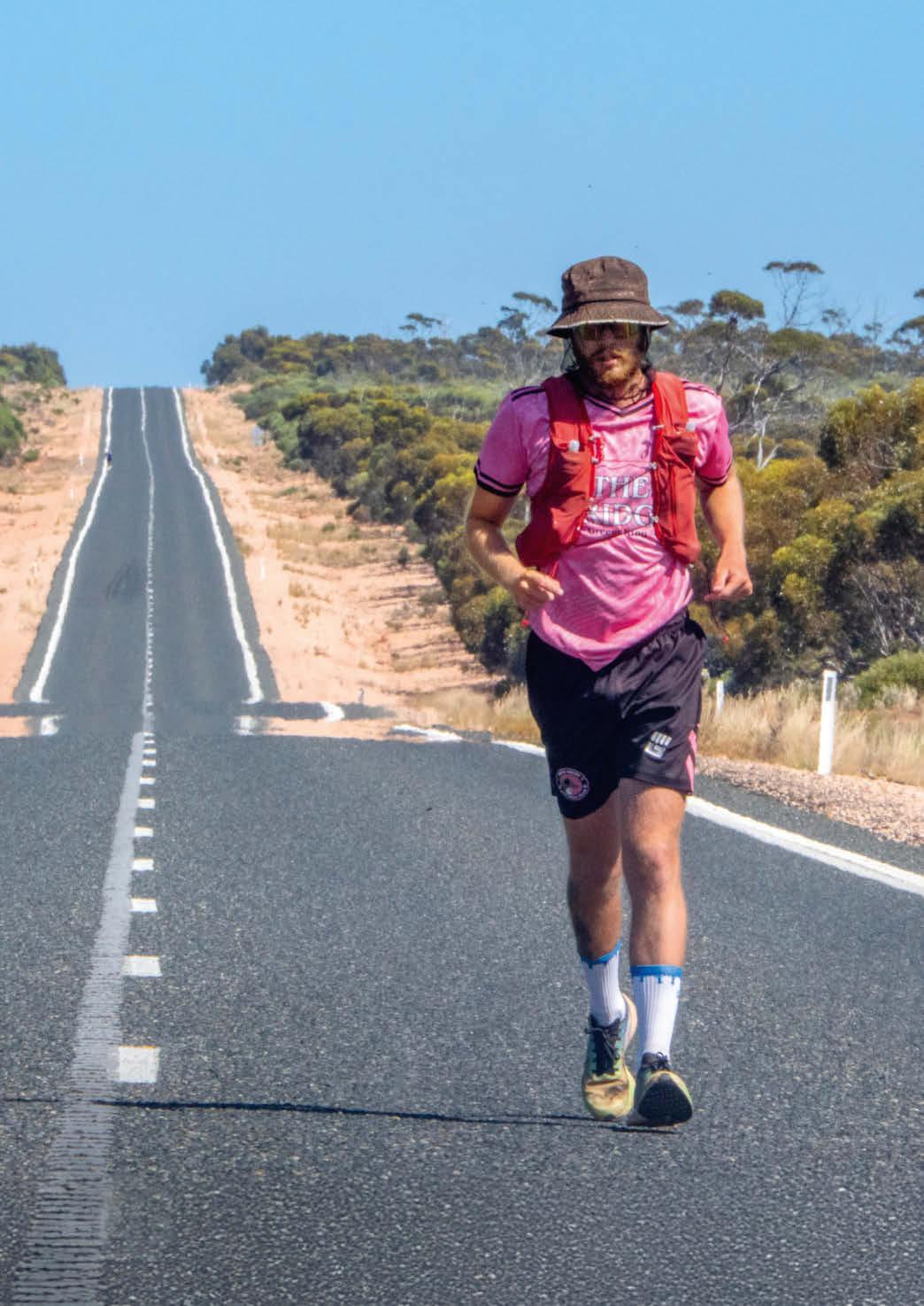
“I was hallucinating. All I could see was WWII aircraft flying over my head”
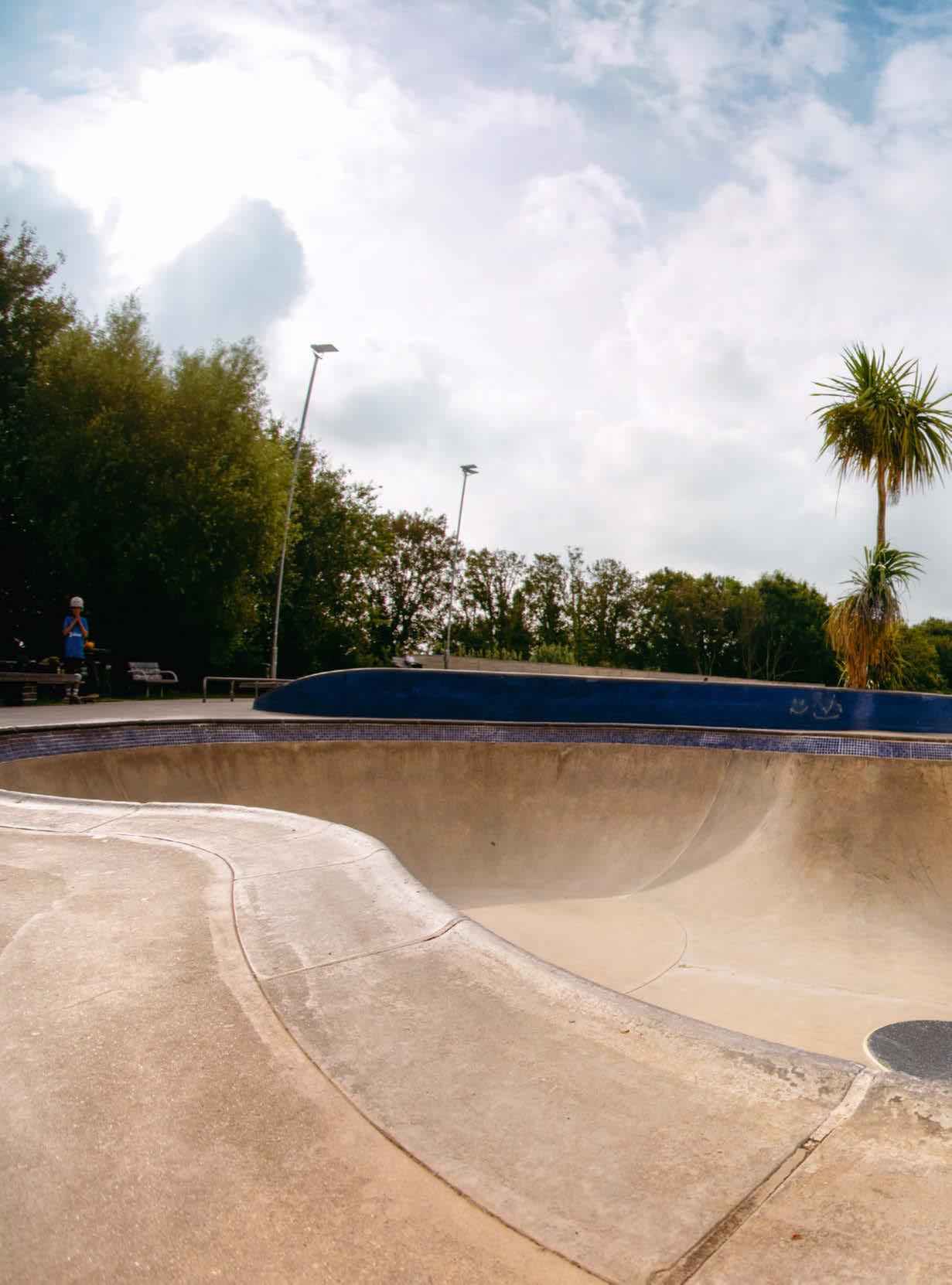
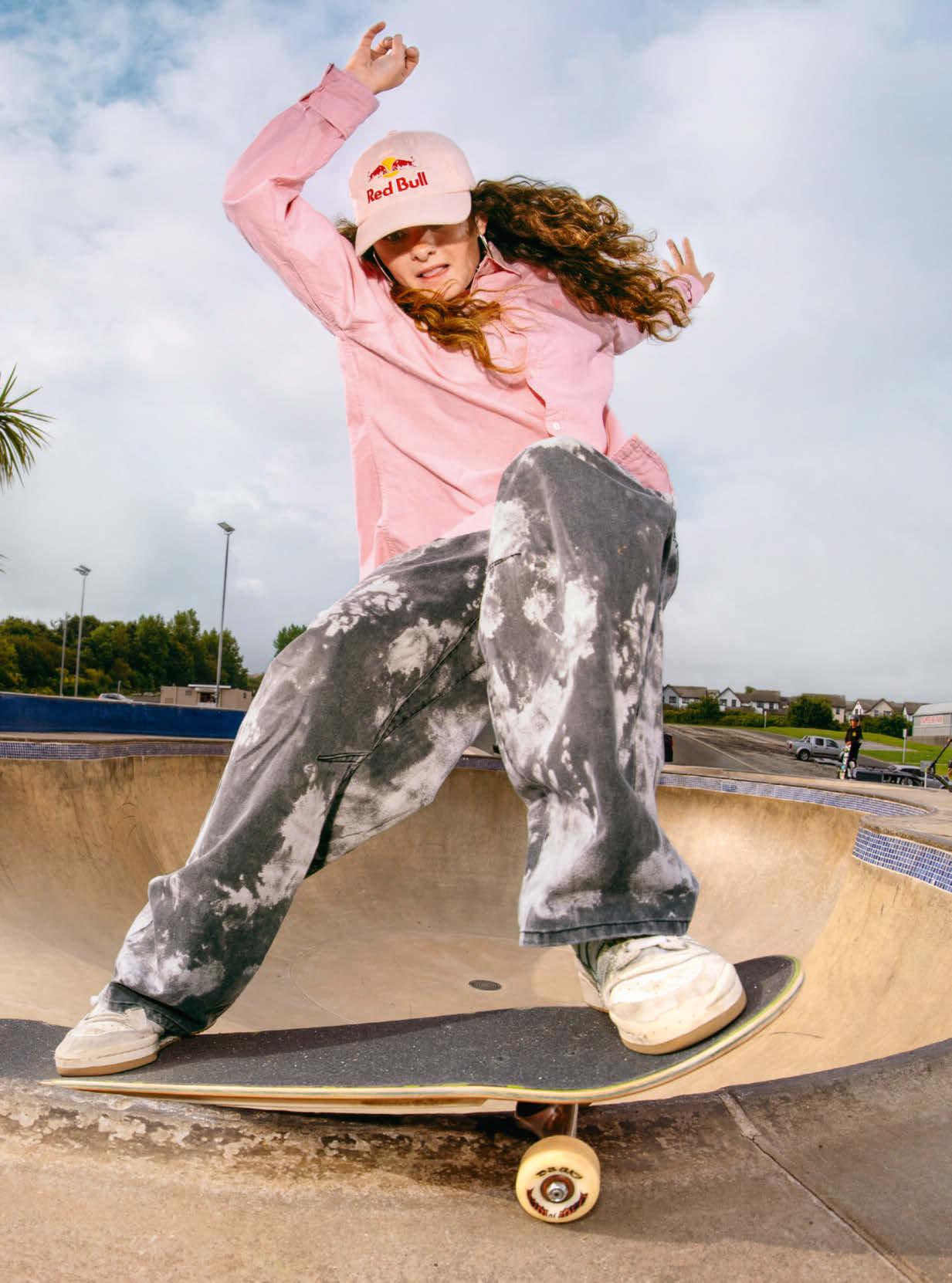
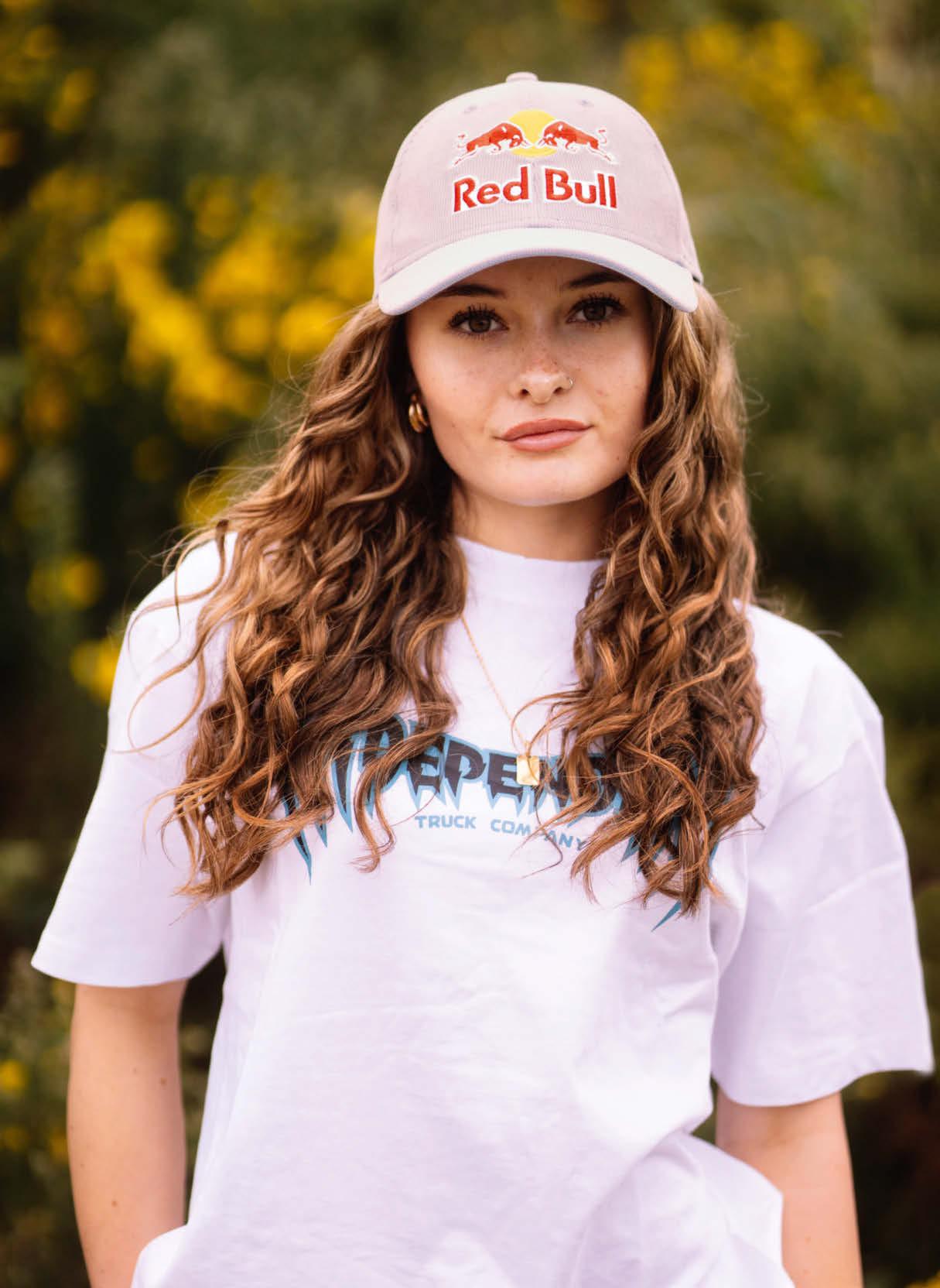
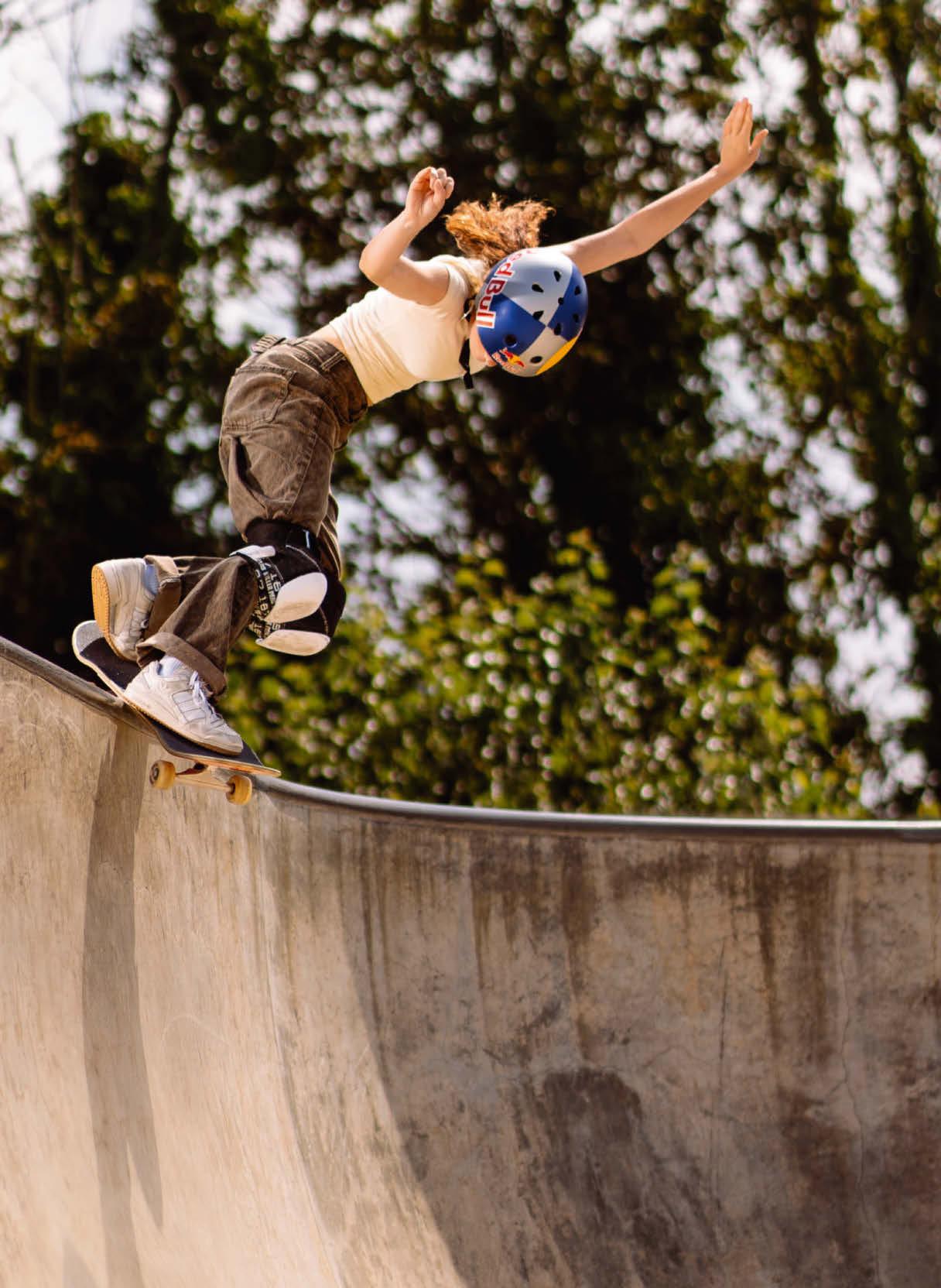
LOLA TAMBLING is the UK’s most successful homegrown skater, honing world-class tricks on Cornwall’s concrete bowls. And as she turns 18, the shredder from Saltash is ready for more…
“I just thought, ‘I’m going to smash it. It’s all I ever wanted; it’s my dream’”
“Just being there is such a vibe.” Skateboarder Lola Tambling is remembering the euphoria of her first visit to California, to skate in an all-female contest, Exposure. “The deck is full – you can’t even move,” she says. “It feels like a rave: girls everywhere, hyping, and the music’s blasting. Everyone’s getting into it. Then you look over to your right and there’s Tony Hawk watching. All these sick dudes come to watch. The whole thing feels so warming and homely.”
For Tambling, skateboarding has been home for as long as she can remember, despite her actual home being thousands of miles from sunny San Diego in Saltash, a small Cornish town near Plymouth. She was just 11 years old on that trip to the US, and she’s travelled the world in the years since to skate and compete, including landing a spot at the 2024 Paris Olympic Games at the age of 16.
Sky Brown, the 17-year-old reigning champion in women’s park, has achieved household-name status after winning two Olympic bronzes for Team GB, but neither she nor Andy Macdonald, the other member of the 2024 skate team, grew up skating in the UK; this makes Tambling the nation’s most successful homegrown talent. Despite the less-than-ideal weather and a lack of world-class facilities, the laid-back teen is showing just how far it’s possible to get in the competitive skateboarding scene while remaining based in England.
“The fact that I’m doing so well skating English parks, I think that’s sick,” Tambling says. She’s sipping tea at the kitchen island of her family’s Cornwall home, sporting camo trousers and an Adidas American football jersey with her name on the back, slightly obscured by her mane of long, curly hair. “It’s underdog vibes. But I love being English. I think it just makes you stand out more. I love my home, and I like the skate parks I’ve grown up with.”
It’s an hour-plus drive from here to Concrete Waves, where last summer, on a perfect blue-sky day, Tambling was confirmed as the country’s best female park skater – for a third time in four years – at the Skateboard GB National Championships with a confident winning run that saw her spin 360° in the air over a jump box and fly over a big gap from one side of the bowl to the other.
It’s a similarly long drive to Mount Hawke, a big indoor park near Truro where she’s spent countless hours honing her tricks. But Tambling has had a few advantages that have helped her set a new bar for homegrown skating. Her dad, Martyn, a serious BMXer for decades, remains her main coach; she’s been homeschooled for most of her teens, which has allowed her to focus on travelling and competing as a skater; and Martyn and his wife Stephanie (Lola’s mum) built and ran a skatepark, Junkyard, here in Saltash between 2014 and 2022.
Tambling was just short of seven years old when her parents opened Junkyard, an indoor facility with a DIY vibe: a whippy wooden bowl, plaza section, cafe, and lots of community classes and events. She remembers falling in love with skating on the day of the opening jam – despite her BMXer lineage – and jumping on a plastic Penny board in Ugg boots and a bicycle helmet soon after. “I’d just go all the time,” she says. “I didn’t want to do anything else.”
She was often the only girl skating, which “could be a bit intimidating,” she says, “but the dudes always had my back.” By the time Tambling was 10, she was competing in jams, and she got to hang out with other dedicated female skaters when she travelled to Girl Skate UK events around the country. Then, on that trip to Exposure – staged at Poods Skatepark in Encinitas, just up the coast from San Diego – she first got to connect with women at the very top of the sport globally.
Anyone would have forgiven 11-year-old Tambling for freezing up amid all that talent and chaos, “but I just got
hyped,” she says. “I like it when they blast good music and other people are doing sick tricks. It’s so fun.”
The following year, in 2020, the pandemic forced Exposure to adapt, taking the form of a video competition where skaters sent in entries from their hometown. Tambling’s opens with the purple-haired 12-year-old carving big arcs inside a huge, rocket-shaped metal pipe that she and her dad had found abandoned, cleaned out and then skated. The video is full of impressive tricks in sketchy, hard-to-skate spots, including a frontside rock’n’roll that’s still one of Tambling’s signature moves: tipping her front truck over the edge of a giant vert wall and then swinging it around 180° – away from her body, into her blind spot – to plunge back down the transition.
The video won the ‘Nora’s Pick’ category, judged by Encinitas-based skater Nora Vasconcellos, who won the Vans Park Series World Championships in 2017 before pivoting away from competitive skating instead of designing boards and shooting videos. “I’ve always looked up to her,” Tambling says. “She’s done all the big competitions, but she’s also been a core skater and made the best video parts. I wouldn’t want to say I want to be on the same path as her, because I want to be on my own, but she’s very inspiring. She’s done skateboarding.”
As well as being a playable character in the video game
Tony Hawk’s Pro Skater 3 + 4 and bringing out a pro skate shoe with Adidas (a first for a woman rider), Vasconcellos skates on the team of an indie, skater-run skate shop, Welcome Skateboards, and she told them to add this little English shredder to the team.
Tambling continued to grow as a skater, soaking up inspiration from an international community that had welcomed her from day one. But it was a different story at school back in the UK: she felt more at home skating in front of big-name pros than being in a classroom with her peers. Things might have been different were she growing up in a laid-back surf town such as Newquay, but here in Saltash, she says, “I was known as the skater, and people just didn’t like it. They bullied me because I was different. Now they’re all wearing baggy trousers!” She laughs in mock outrage. “It’s like, ‘You’re so late to the game!’ Teachers didn’t really support it, either. People just didn’t understand me, and because I was different to them, I got judged.” So, when schools shut during lockdown, this suited Tambling fine, and her parents continued her homeschooling, for the most part, after they had opened again.
Skating may still have a reputation as a form of teenage rebellion, but the sport has only brought Tambling closer to her family. “My dad understood,” she says, “because obviously he was a BMXer. And my mum was a singer in a band. I have cool parents.”
“When we found out I’d made it to the Olympics, it was just tears”
Most kids will only ever dream about sacking off exams to jump on a skateboard, but Tambling took training seriously, putting everything into her passion, making lists of tricks to crack, getting driven to Mount Hawke to drill them, and often skating alone rather than with a crew of friends. The work paid off: in 2022, aged 14, she won the British Championships for the first time. (Brown, Team GB’s highest-achieving skater, splits her time between Japan and the US and hasn’t competed in British nationals since 2019, when she won gold at the age of 10.) The following year, Tambling skated at the World Championships in Sharjah, UAE, and reached sixth in the global rankings. “That was the beginning of trying to get to the Olympics. That’s when I was like, ‘OK, I could do this.’”
After that, Tambling pushed herself even harder, adding more tricks to her repertoire, working on landing them consistently, and skating as many different parks as she could visit, so that she could adapt quickly to new terrain. The teen skater was feeling good as she travelled to Shanghai for a qualifying event just two months before the start of the 2024 Games, but she suffered a horrible fall during warm-ups while attempting a trick that’s usually well within her comfort zone.
“I did a front boneless in the deep end, and I completely missed my board when I went to put my foot back on,” Tambling remembers. “I fell 10 foot [3m] straight onto my head. I think my helmet must have moved, because I totally knocked myself out.” When she regained consciousness, she was seeing stars – “literally, scratchy silver stars” – and was rushed to hospital. “My head was all swollen. It was so scary.””
After that, there was only one more competition – set to take place in Budapest in June – that might give Tambling a chance of qualifying for the Olympics. Concussions require rest to repair, and if the brain gets knocked again while healing, the cumulative damage can be severe, but Tambling never considered giving up. “I still thought, ‘I’m going to smash it. This is all I ever wanted; it’s my dream.’ So I tried not to put any negatives in my head, but deep down I was stressing.”
When competition day came around again, Tambling had to master those fears, telling herself, “Take it easy. Just put a run down. Shanghai was a freak accident. You know how to skate.” She made herself do a front boneless again, mid-run, and landed it. “I was a bit on edge while I was skating. I didn’t
“The fact that I’m doing so well skating English parks is sick”
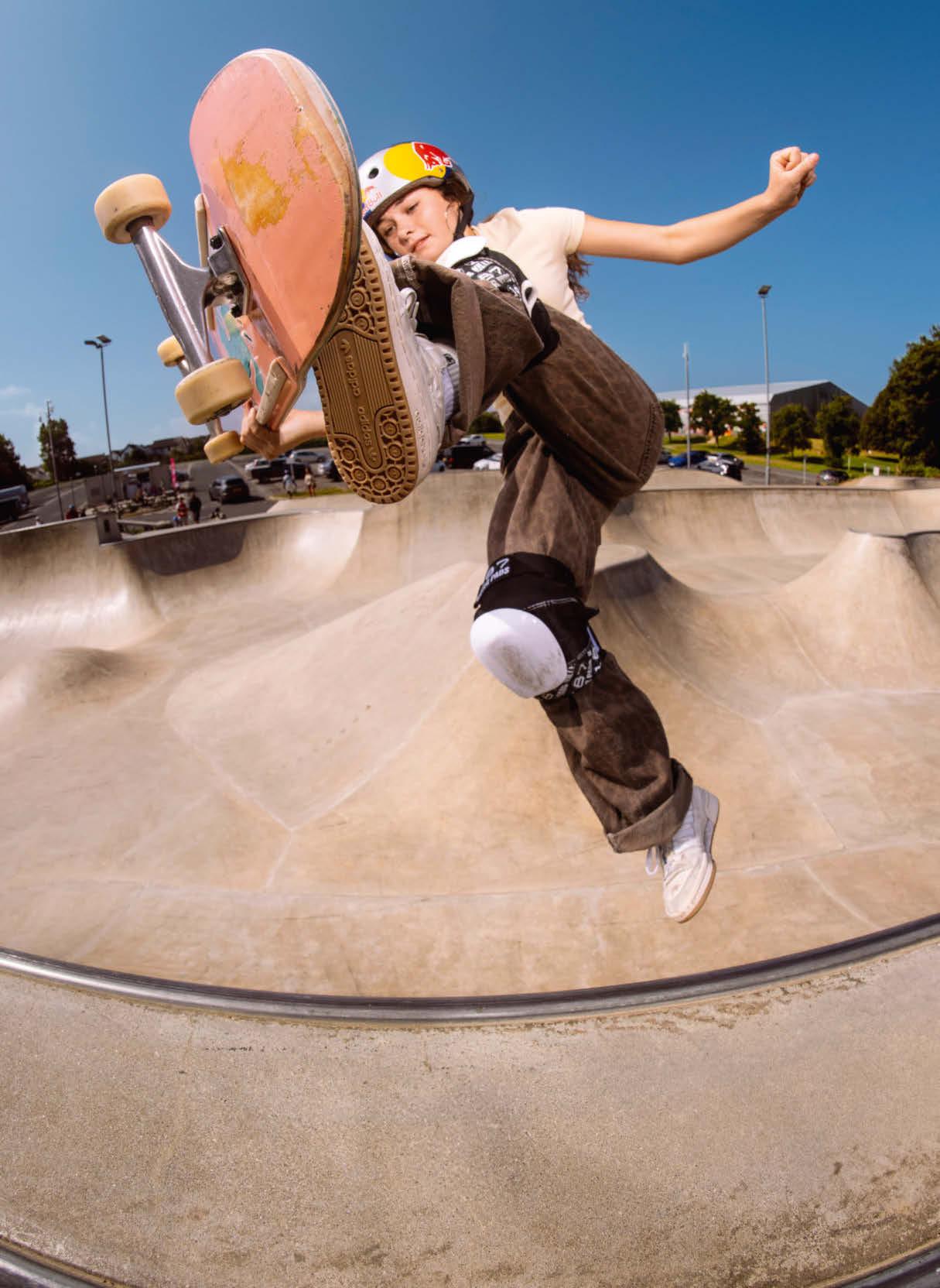
Home advantage: Tambling didn’t have to travel far to hone her skills – her parents built and ran a park in her
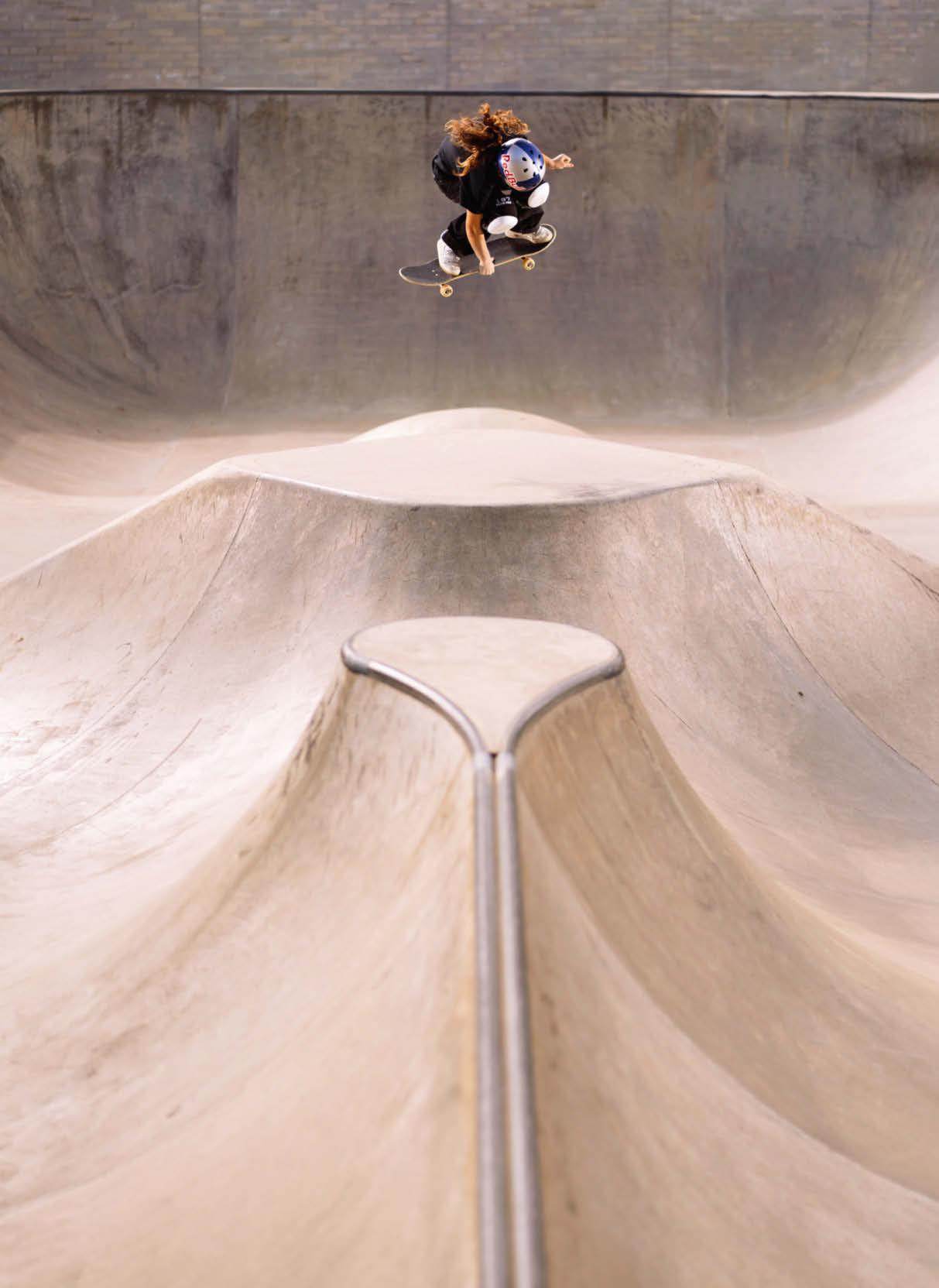
BOWL GOALS
Lola’s favourite skateparks JUNKYARD, CORNWALL, UK (RIP)
“It was my baby, and it got me to where I am today” POODS, ENCINITAS, USA
“I love the vibe, the way the bowl flows, and the sound when you grind the coping” SAINT-JEAN-DEMAURIENNE DIY, FRENCH ALPS
“It was built over eight years by a guy named Jérémy Durand. I was just gobsmacked when I got there; it’s incredible”
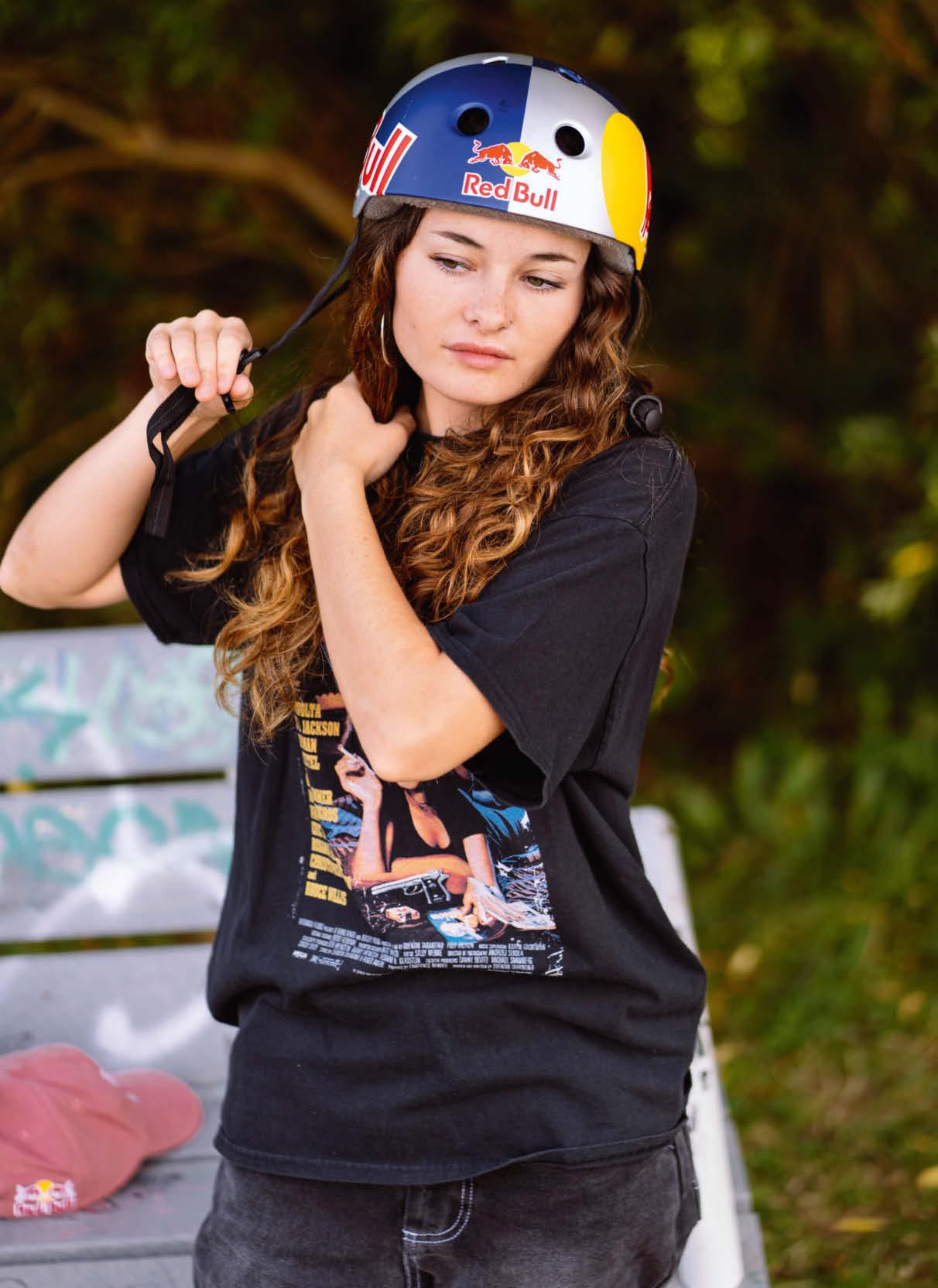
Flipping the future: Tambling’s long-term dream includes coaching others one day, and maybe even opening her own skatepark
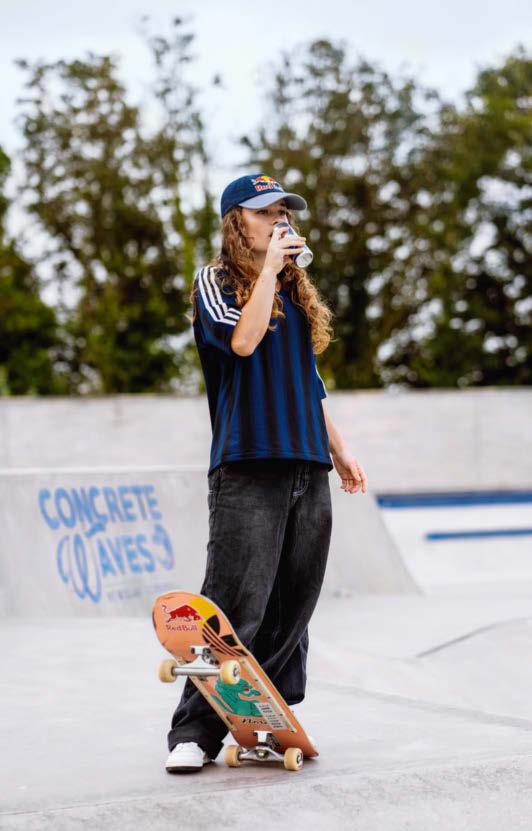
do my best. But we found out that day that I’d made it to the Olympics. They called my name out and it was just tears. I couldn’t believe it.”
The Paris Games themselves were just a few weeks later –preliminary heats, then a final - and this time Tambling had already decided to just enjoy every second. “I actually didn’t feel any pressure,” she says. “I felt so happy and hyper, literally having the time of my life. It felt like being gladiators in the Colosseum: us in the bowl, and everyone thudding their feet on the stands around us. I’ve never experienced anything like it. I was like, ‘I’m just gonna go full send. Let’s go!’”
Park-skating contestants are ranked by their best-scoring 45-second line in a bowl (street skating, on obstacles like rails and stairs, is a separate contest; Team GB has not yet managed to get a street skater to the Olympics). Tambling went big every time. She fell during tricks on two out of three runs, but managed to hang onto her board for one full line, throwing a gap over a channel to a front rock slide, and just about landing a 540 – one-and-a-half spins in mid-air. “I nearly ate it the whole way through,” she says. “I’m dragging my hands down the ramp, looking like a turtle. It looks ridiculous, but… I made a run at the Olympics!” Tambling was ranked 15th out of 22 competitors, meaning she didn’t advance to the final, but she counts the whole experience as “such a huge achievement. I was an Olympian at 16 years old. I’ll remember that for the rest of my life”.
Unlike many other Olympic sports, skateboarding is known for its supportive atmosphere at contests, and you can see Tambling and the others hugging tightly in the contest footage
“Skating wouldn’t be skating without all the hype”
rather than willing each other to fail. “Skateboarding wouldn’t be skateboarding without the hype, without the family feeling, without the cheering and pushing each other,” Tambling says. “It would be so dead if we were all straight-faced.”
This is one of the reasons she loves skating – “It’s creative, you can be yourself, you can have fun with it” – and why competitions are just one part of its broader culture. They’ve provided a showcase for women and girls who might not have been featured by skate mags or included in skate-team videos back in the day, but they’re not always the most important barometer for who’s significant in the sport.
Right now, Tambling is determined to make it to the 2028 Games in Los Angeles – this time with valuable high-level contest experience under her belt, an updated bag of tricks, and more time to fly around the world skating as many big parks as possible – but she doesn’t plan to keep competing at that level afterwards. “I don’t want my whole life to be about that,” she says. “I want it to be pure core skating as well. I want to do more videos, still skate at Exposure and local comps, but also to be a coach, maybe open another skatepark like Junkyard.” She’s already working on new projects and has started filming a video part that she wants to be “very European, very English, very core”.
That word ‘core’ keeps coming up. It means different things to different people and is sometimes associated with a type of elitism that values remaining broke and marginal over embracing money and success. Chewing on a mint protein bar in the kitchen as her mum brews a second cup of tea, Tambling thinks for a moment about what the word means to her.
As she ponders, the young skater is just a few weeks away from her 18th birthday, which she plans to celebrate with a big party full of family and local mates, marking the end of a childhood shaped by the sport she loves. Tambling has already advanced what’s possible for British skateboarding on the international contest circuit while, at the same time, staying committed to the community, creativity and good vibes that make the sport what it is.
As an adult, although she’ll take on new challenges and move in new directions, the passion that first drew her to a board at the age of seven looks unlikely to diminish.
“I think being a core skater means you love skating deeply,” she says eventually. “You love everything about it: you’re into video parts, you’re into mags, you’re into learning new tricks, you’re into going skating with your mates, you’re into comps… You’re into all of it. It’s living and breathing skateboarding.”
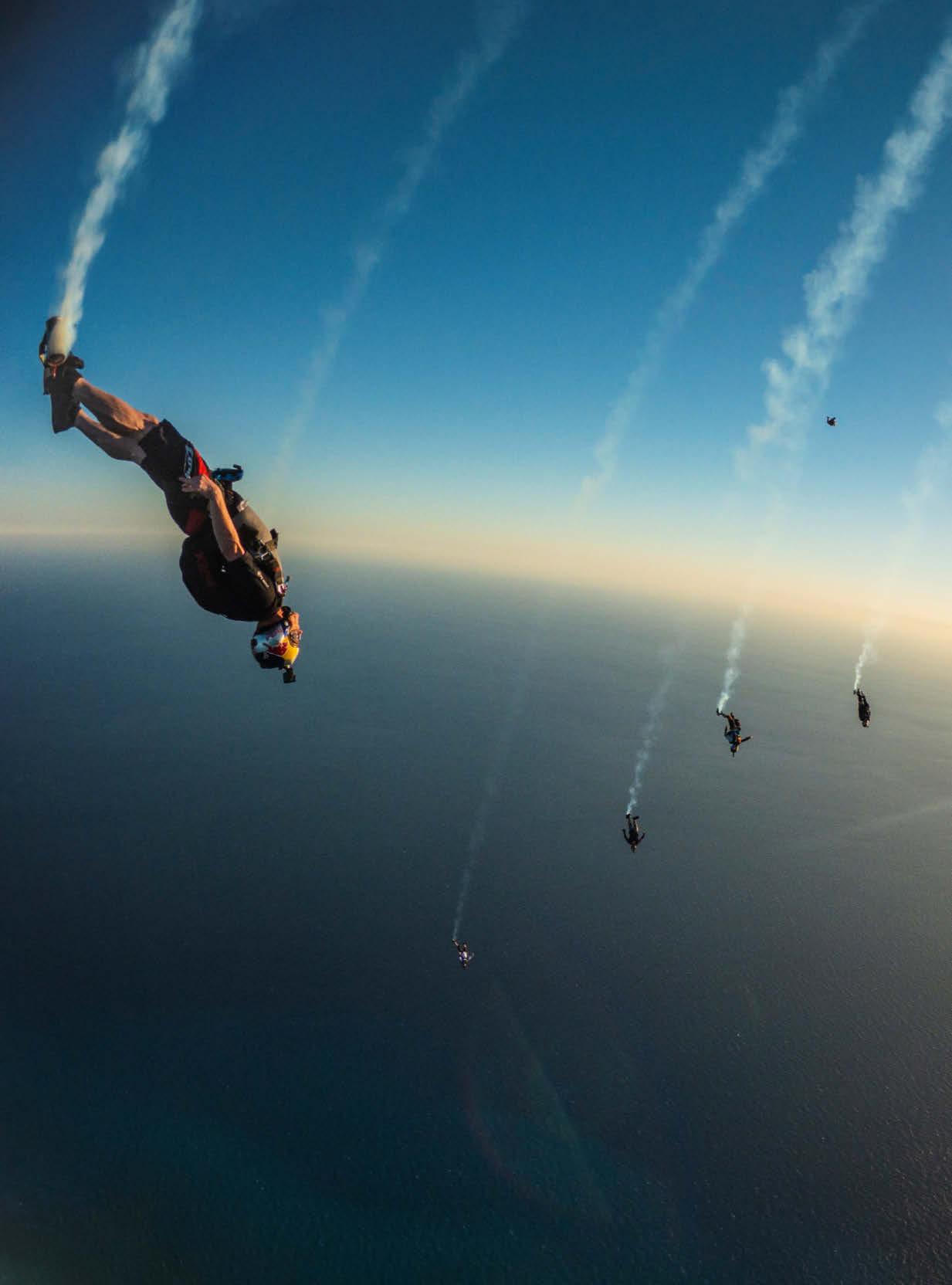
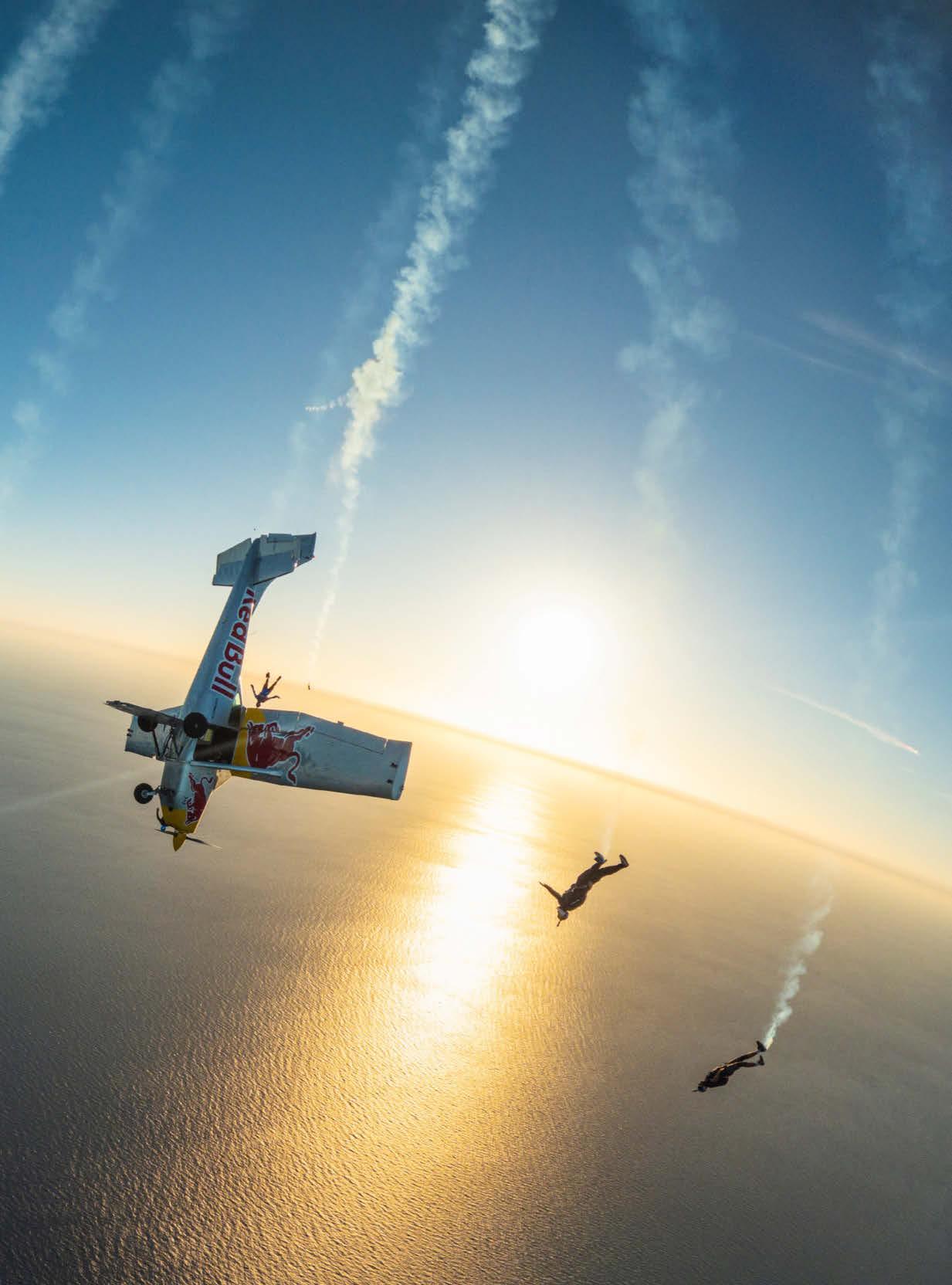
For a quarter of a century, the TAURUS WORLD STUNT AWARDS have celebrated Hollywood’s unsung action heroes. Here, a few of the best reveal what it’s like risking their lives in pursuit of their art
Words Tom Guise
Arnold Schwarzenegger is standing on a stage in LA, clutching a trophy. “You know, there are two ways of getting someone to appear in Hollywood,” he booms. “One is you pay them. The other is to give them an award. So they gave me an award.” The audience, in black tie and evening gowns, laugh. “But they didn’t need to,” he adds with a tombstone grin. “I told them I love coming here anyway.”
The ‘here’ is the Taurus World Stunt Awards, an annual celebration of the stunt industry. Created in 2001 by Red Bull founder Dietrich Mateschitz, its stage has been graced by many big names, such as Harrison Ford, Halle Berry and Jackie Chan. But they’re not the stars of this show; they’re lauding the unsung heroes who take their place when the danger is too great.
This is the 25th anniversary, and Arnie isn’t kidding about his affection for the awards. He was here in 2001 for the first ceremony, and he hosted a year later. Now, in February 2026, he’s here to receive its inaugural ‘Icon’ award. “It took me five years to win the Mr Universe contest. It took me 50 to get the Taurus award,” he remarks. “This award, it’s not easy to get.”
This year there are just nine categories, including Hardest Hit, Best High Work and Best Fight. But that’s a big improvement on what came before. Prior to these awards, there were zero industry accolades for stunt workers. It wasn’t until 2007 that the Screen Actors Guild added a Stunt Ensemble award. We won’t see an Oscar for Achievement in Stunt Design until 2028.
But showing recognition was only one reason why the awards were created; another was for support. Alongside the ceremony exists the Taurus World Stunt Awards Foundation, providing financial assistance to members who experience debilitating stunt-related injuries. “We always talk about the firefighters and the police officers and the military, how they risk their lives to save others, but that’s what you do, too – all of you risk your lives,” Schwarzenegger tells the audience. “I am not the action hero. I play the action hero, but each and every one of you are the action heroes. Thank you very much.”
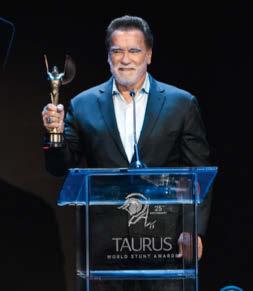
Last action hero: Arnie accepts his 2026 Icon award
“I can drive cars and take hits,” says Jon Devore. “But nine times out of 10, when Hollywood calls, it’s because of my expertise in air sport.”
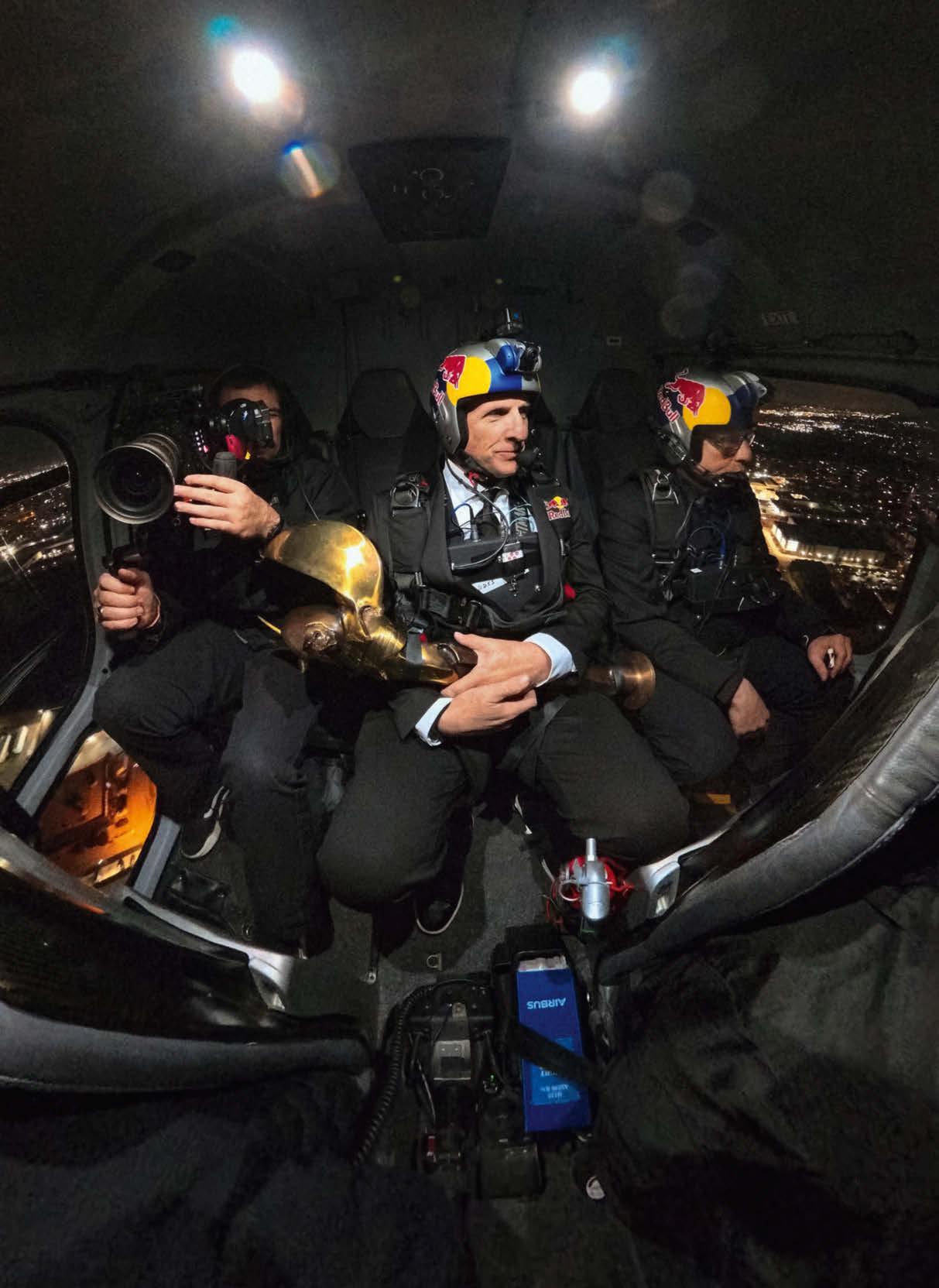
And that expertise is immense. As manager of the elite Red Bull Air Force aviation team, the 50-year-old Alaskan has completed more than 22,000 skydives and 1,500 BASE jumps. So when he and fellow Red Bull Air Force member Luke Aikins got the call for the 2026 Taurus Awards, they knew what it would entail: parachuting in the first trophy of the night. Adding a twist to that opening segment, the trophy they were asked to bring was the one they’d won in 2014 for Iron Man 3 – while Devore is an aerial athlete, he’s also a stuntman and stunt coordinator with two Taurus awards under his belt. “The first film I was called to perform in was Austin Powers in Goldmember [2003],” he says. “But as I was flying to the job, my scene was cancelled. I still get residual cheques for a job I didn’t do.”
In 2012, Devore won the Best Speciality Stunt award for Transformers: Dark of the Moon: “We did the firstever formation wingsuit flight through an urban environment,” he says, “and for that to be recognised by
“I did 31 jumps in one day with Tom Cruise – we broke my record”
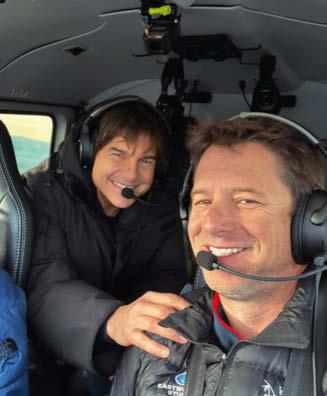
the world of stunts really meant something.”
Then came Iron Man 3.
“If you’ve seen the movie, Air Force One explodes and everybody’s sucked out,” says Devore. “Iron Man’s collecting people that are supposed to be tumbling through the sky. So we had to not look like skydivers, but still fly accurate. We were in suits and ties and skirts and dresses with hidden rigs. I don’t know how many jumps we did, but we shot for a solid month without goggles. Because when you get sucked out of an aeroplane, you’re not wearing goggles.”
Devore was also a runnerup in 2016, for a film that’s particularly special to him.
“When the original Point Break came out in 1991, I was a 16-year-old kid. That got me into skydiving. Flash forward to 2014 and I got hired to be aerial stunt coordinator for the remake, but also to double [main protagonist] Johnny Utah. That was a pinch-me moment, up there with coaching Tom Cruise for Mission: Impossible – Dead Reckoning [Part One].”
You read that right: for two years, he trained Cruise for that iconic motorcycle BASE jump off a cliff. “Before we got there, I wanted to do a ton of skydiving, just to get
110kph], my feet got tangled in my lines, and I crashed again about 300 yards [275m] down from the initial impact. I severed my spine, broke off my sacrum, severed my major artery – the list goes on.”
Devore was told he might never walk again, let alone fly. “But I always had hope,” he says, “because I could wiggle my feet, even though I couldn’t feel much.” He was sent to the Red Bull Athlete Performance Center (APC) in Santa Monica.
his awareness in the air,” Devore recalls. “Tom asked me, ‘What’s the most jumps you’ve done in a day?’. I said, ‘Twenty-seven, but after 15 you’re tired, you’re not learning.’ He goes, ‘OK, we’re doing 20 a day, every day.’ I’m like, ‘We’ll see how that goes…’
“In that first six weeks, we never did under 20 a day. The most we did was 31 – we broke my record. He’d jump with me from 8am to 3pm, then do two hours on the track with the motocross guy. He puts the same passion and energy into everything he does. He’s also an insanely nice person. When I had a really horrible injury, the support he gave me was astronomical. I don’t mean financially, but phone calls – true friendship support. Coming from a guy that has 10,000 people pulling at him, it really showed me what kind of person he is.”
The injury that Devore is referencing happened in 2021, between the filming of Mission: Impossible – Dead Reckoning Part One and its sequel, Final Reckoning “I was supposed to only come home for two weeks, so I went to a bunny ski hill to do a bit of speed flying,” he recalls. “Long story short, I slammed into a mountain at about 70 miles an hour [around
“They had an amazing team, from top-level doctors to nutritionists and psychologists. I did four hours a day, four days a week, with them for a couple years straight, and eventually I got myself to back in the sky. I still have incomplete spinalcord damage – I don’t feel much of my left leg, some of my muscles don’t fire at all, and I can’t get on my toes – but compared to what I was told I’d be, I’m beyond blessed.”
Devore compares the support he received at the APC to the vital work of the Taurus World Stunt Awards Foundation. “Some stunt performers have dedicated their life to the industry; it’s all they know. So when they get injured, they might not have anything else to fall back on. That somebody cares and is not just like, ‘Oh, that guy’s broken – next,’ it’s tremendous for the stunt community.”
After everything he’s been through, performing the opening jump at this year’s Taurus Awards had special meaning for Devore. “They wanted to bring back the live stunt,” he says. “The first Taurus I went to was the second one, where The Rock and his cousin [Tanoai Reed], his stunt double, did a performance. Most the time when I see myself on camera, you can tell that I’m not an actor. Not to pat myself on the back too much, but I think I pulled this one off.”
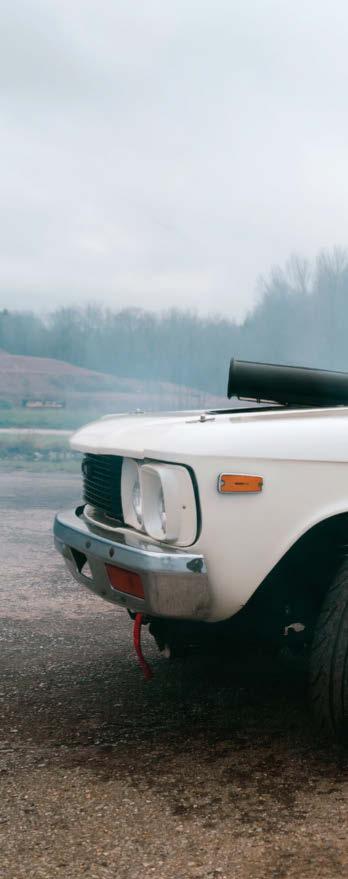
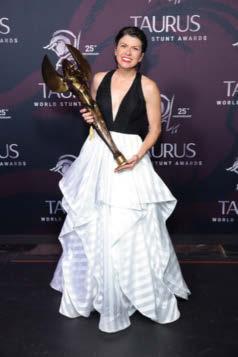
When Crystal Hooks accepted her Taurus award at this year’s ceremony, she opened with a simple exclamation: “Oh, I definitely didn’t think this was going to happen…”
To a casual observer, this might seem like an act of humility. After all, the stunt that won her the award is unquestionably worthy: doubling as Australian actress Samara Weaving in a car chase in the comedy-heist thriller Eenie Meanie, she escapes by drifting 270° around a moving semi-trailer. But to those familiar with her story, Hooks’ words have a deeper resonance.
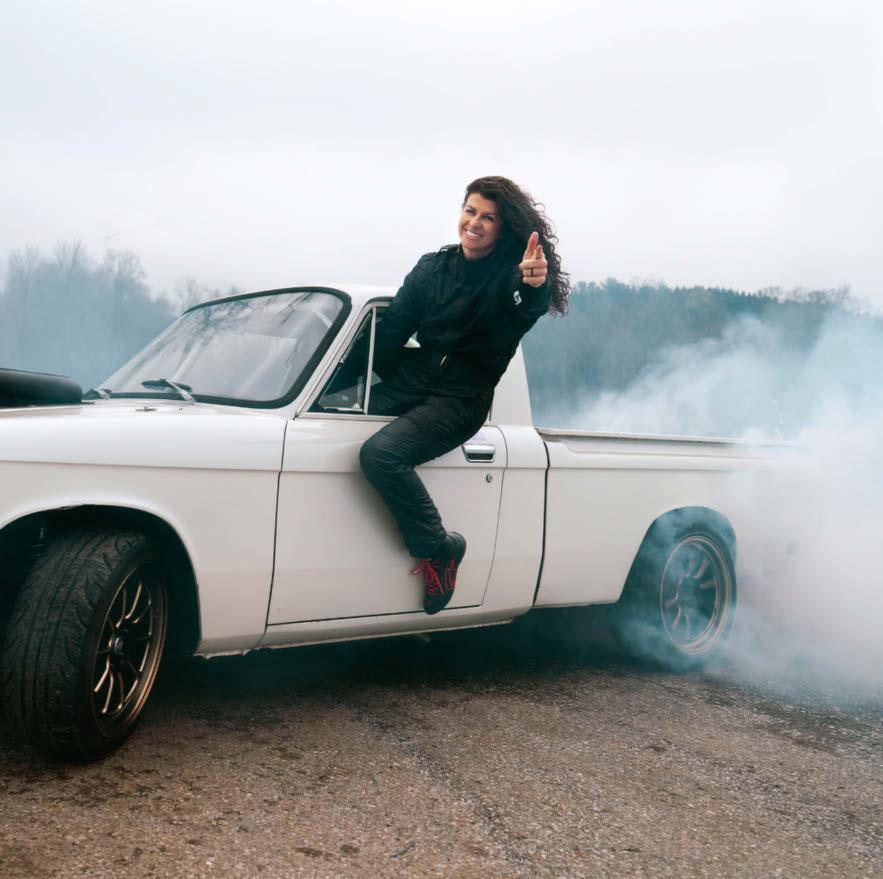
“June 6, 2022, we were on Fast & Furious [2023’s Fast X ] in Italy, the last shot of the day,” she recalls, “and I was in an accident where a cannon plug hit me.” A cannon plug is a steel pipe that’s shot out of the bottom of a car to flip it over – an incredibly dangerous stunt. “That dramatically changed the next three years for me. I went through three surgeries – one in Italy, two here in America – to get back to where I could walk and run again.”
In April 2024, three months after her last surgery, Hooks got the call for Eenie Meanie. “I was still walking with a limp,” she says. “I prayed for that movie. Because I was like, ‘If I can do this justice, it’ll be my comeback.’ But this
business is very cut-throat.” Proving herself, says Hooks, was the hardest thing she’d ever had to do in her career.
If Hooks seems especially candid, that may have something to do with her upbringing in rural Southeast Georgia. “I was raised by a bunch of roughnecks in the woods,” she says. “My brother and I are fourthgeneration farmers. The way I communicate with people, it’s more like a dude than a girl. Sometimes that’s beneficial, sometimes not so much.”
Hooks went from “riding horses and working cows” to buying her first street bike at the age of 17, which led to drag-racing 1000cc motorcycles at her local speedway. By 2010, aged 23, she was living in
“My job is to be one of the best, period”
Orlando, Florida, working at Disney’s Hollywood Studios theme park in a vehicular stunt show titled Lights, Motors, Action!. “We rode supermotos and drifted tube-chassis cars with hybrid [Suzuki] Hayabusa engines three to four times a day,” she says. “It gave me seat time I would otherwise never have been able to support financially.” That was when Hooks got the call for her first movie job.
“It was for the movie Fast Five that was being filmed in Cuba,” she recalls. “I had no idea that a career in film was even a thing; I just drifted cars and stunt rigs with a bunch of hoodlums. That’s when I realised the freestyle shows we’d been doing – I’d been in that world.”
Today, there’s no question Crystal Hooks is in that world and – following her win at the Taurus Awards in February – conquering it, too. “I have so many deep emotional ties to this award, that movie, the people on it, the bosses that hired me,” she says. “I’m so grateful. To see a movie that’s aggressive in car work, and specifically for a woman to be in a demanding situation like that, it’s so rare.”
She also knows where she’s headed. “My job isn’t to be the best girl,” Hooks says. “It’s to be the one of the best, period. And I’m seeing that playing out, where I’m being hired not because I’m a girl but because of me. And that means a lot.”
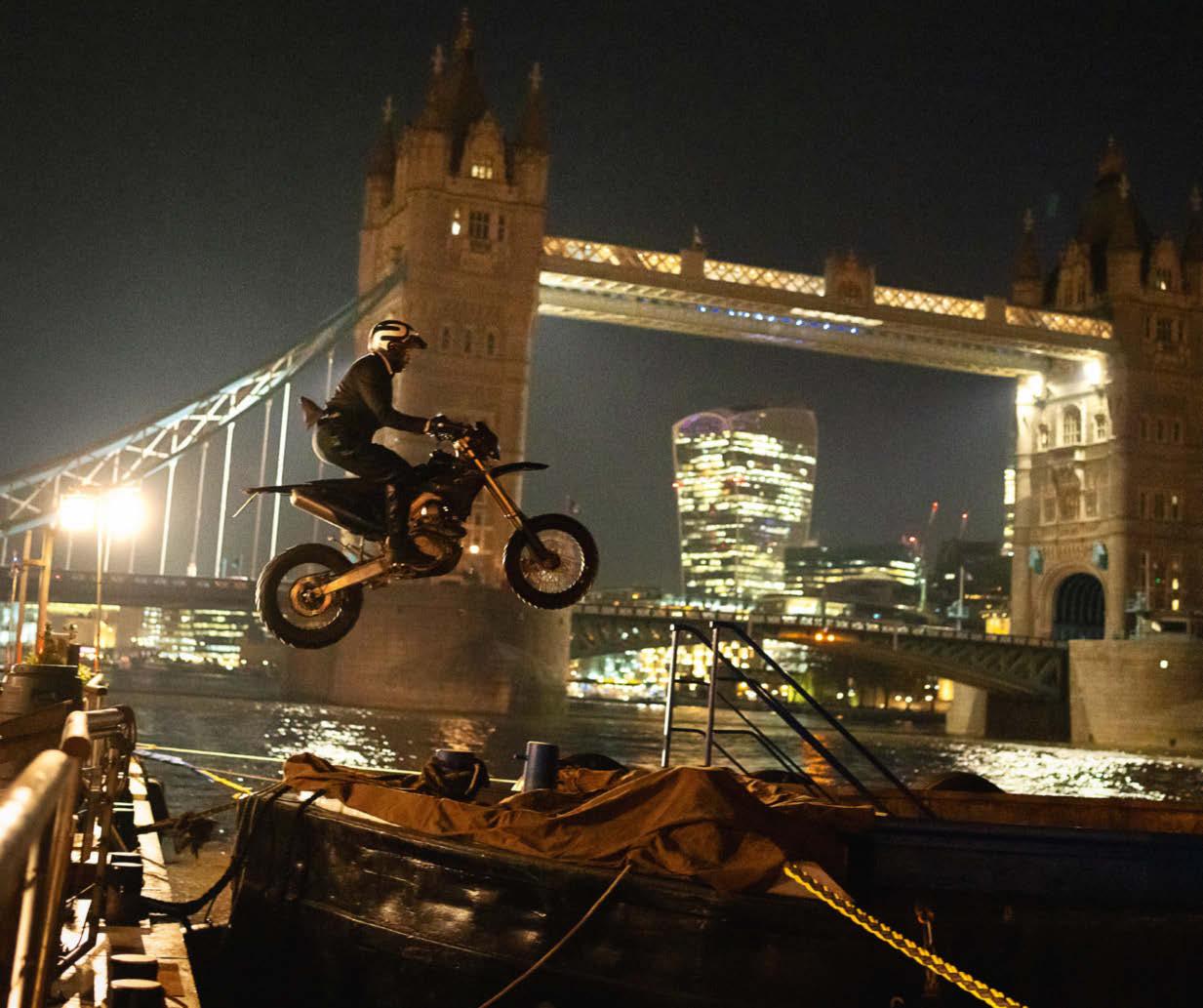
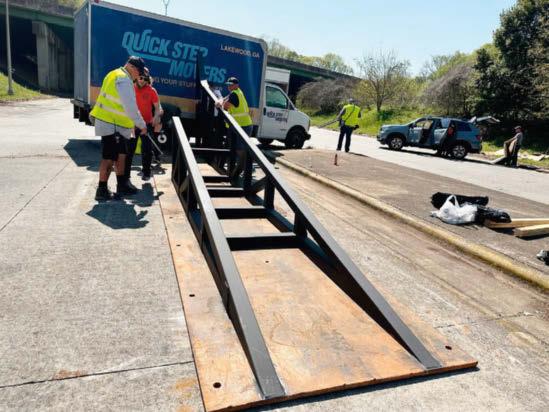
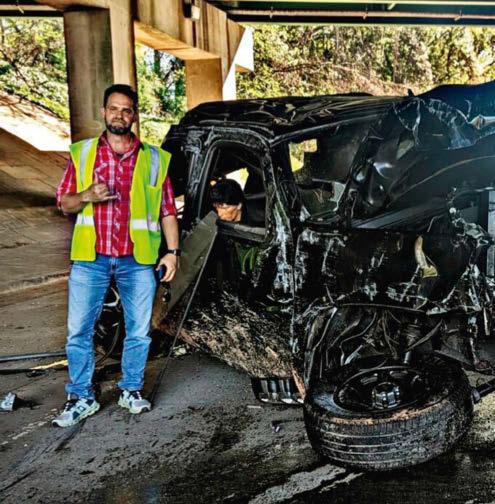
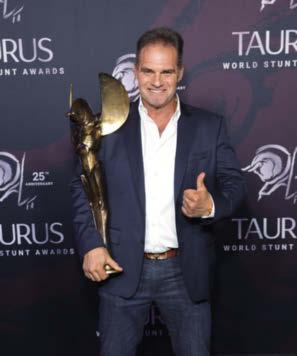
“If action is a diamond, this one had all the facets,” says JJ Perry of filming Back in Action – the Jamie Foxx/ Cameron Diaz Netflix movie that won him and his team this year’s Taurus award for Best Stunt Coordinator and/or Second Unit Director.
“There was an aerial unit for parachuting; a fight on a plane on a gimbal; cars, fire, boats; they let me lock up the Thames, the National Theatre; side streets for the motorcycle chase… everything is in that movie.” It wouldn’t be the first time he’s locked up London, either: “I did a Fast & Furious there, too.”
At 58, Perry is part of a growing generation of stunt performers now shaping the action filmmaking process. Starting out 36 years ago, he appeared in films including 1995’s Mortal Kombat (“I was doubling Johnny Cage”), Batman & Robin (1997) and Blade (1998). Before that, he’d built up quite an eclectic CV: “I was in the army for five years, taught taekwondo, sold cars. If you’d told me then, ‘Hey, JJ, you’re going to direct a bunch of movies,’ I would have laughed at you.”
In fact, it equipped Perry with the perfect set of skills
The second unit rehearses action scenes ahead of time, shooting what’s known as a ‘pre vis’. “We put props in there, film it with stunt men and women and cut it,” Perry says. “Basically, you’re shooting an action sequence. Do that a thousand times and guess what? You’re an action director.”
to lead stunt teams. “As stunt coordinators, we coach actors,” he explains. “That’s when I realised that being in the army and teaching taekwondo was a secret weapon – I could become their sensei.
“I did the action in this movie called Warrior [2011] with Tom Hardy and Joel Edgerton,” he continues. “We trained them for three months to become MMA fighters – body shaping, diet, everything. Same with Keanu Reeves and John Wick: three months of training, gun range, jiu-jitsu with masters, sliding cars. The best way to fake being a badass is to turn them into a badass.”
Then there’s the second unit. “You’re directing the action,” explains Perry. “Same as the director, you need to come in on schedule and on budget, but with the added responsibility of not killing someone at 120 miles an hour with bombs going off.”
“The best way to fake a badass is make them a badass”
Today, Perry has directed three movies of his own, including the 2025 sci-fi actioner Afterburn, starring Dave Bautista and Samuel L Jackson. This places him in an exclusive club of stuntmenturned-directors that also includes Chad Stahelski (the John Wick films) and David Leitch (Deadpool 2).
“I started out with these guys,” says Perry. “We all come from martial arts, which wasn’t the norm back then – most stuntmen were cowboys, bull riders or racecar drivers. But what inspired us was Jackie Chan and Sammo Hung. They were stuntmen, became actors, then directors, because they wanted to control what the action looked like.”
As for what’s coming next, Perry is under no illusions about the spectre of AI. “There’s no stopping it,” he says. “It’s going to grow fast and exponentially. It’s not what I signed up for, but show business is a business, and when they find a way to do stuff cheaper and safer they’re gonna do it. I hope we’ll still be doing car chases in six years.
“I mean, I might not still be doing it – I’ve had a hip replacement, and I need the other one replaced. But I hire these apex humans to go do these things. When you get to lock a city up, and you can smell the gas and the brake dust, you know, that’s the most awesome part.”
Perhaps Perry said it best when he signed off his acceptance speech at the Taurus Awards: “We have the best job in the world, y’all!”
taurusworldstuntawards.com
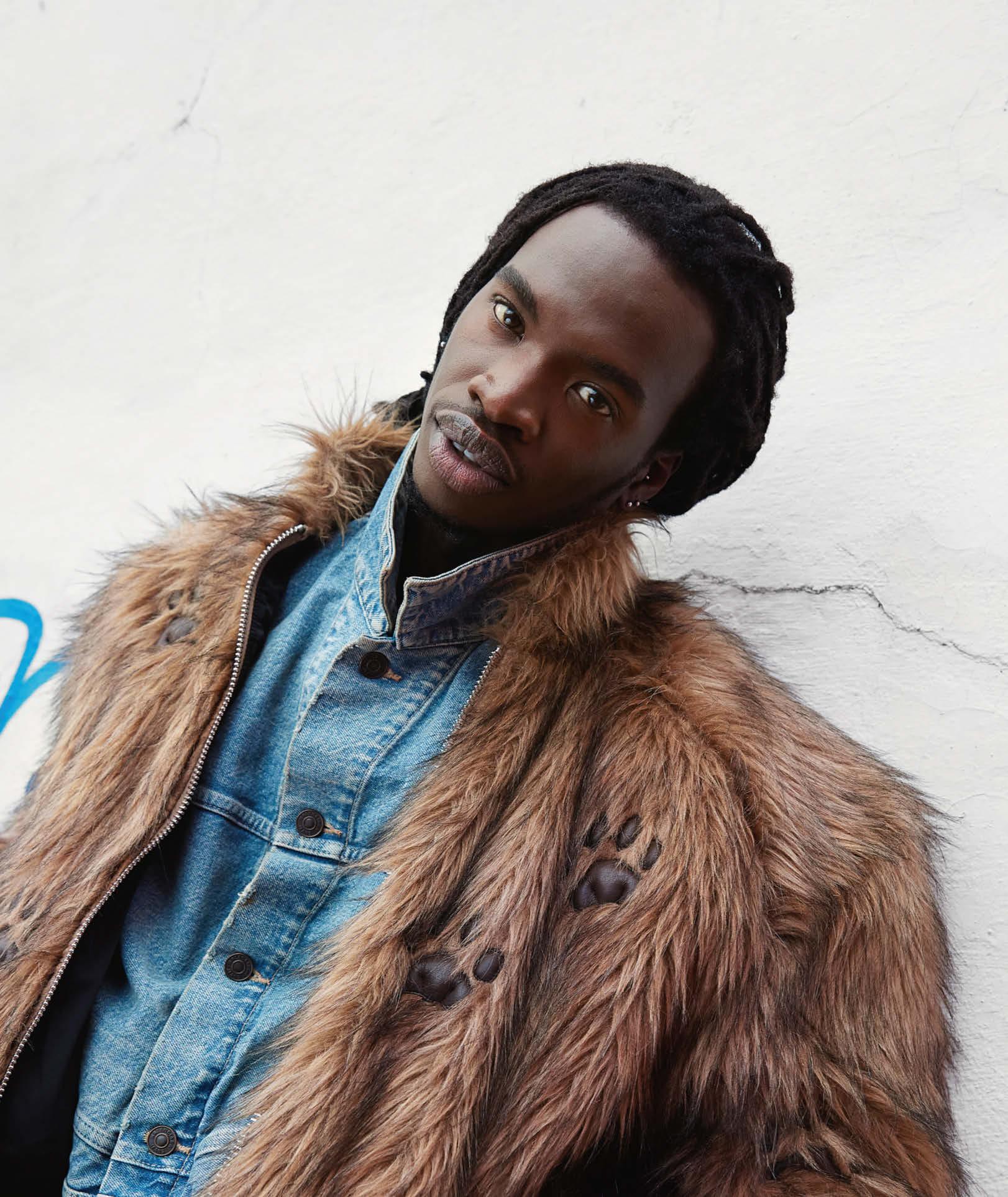
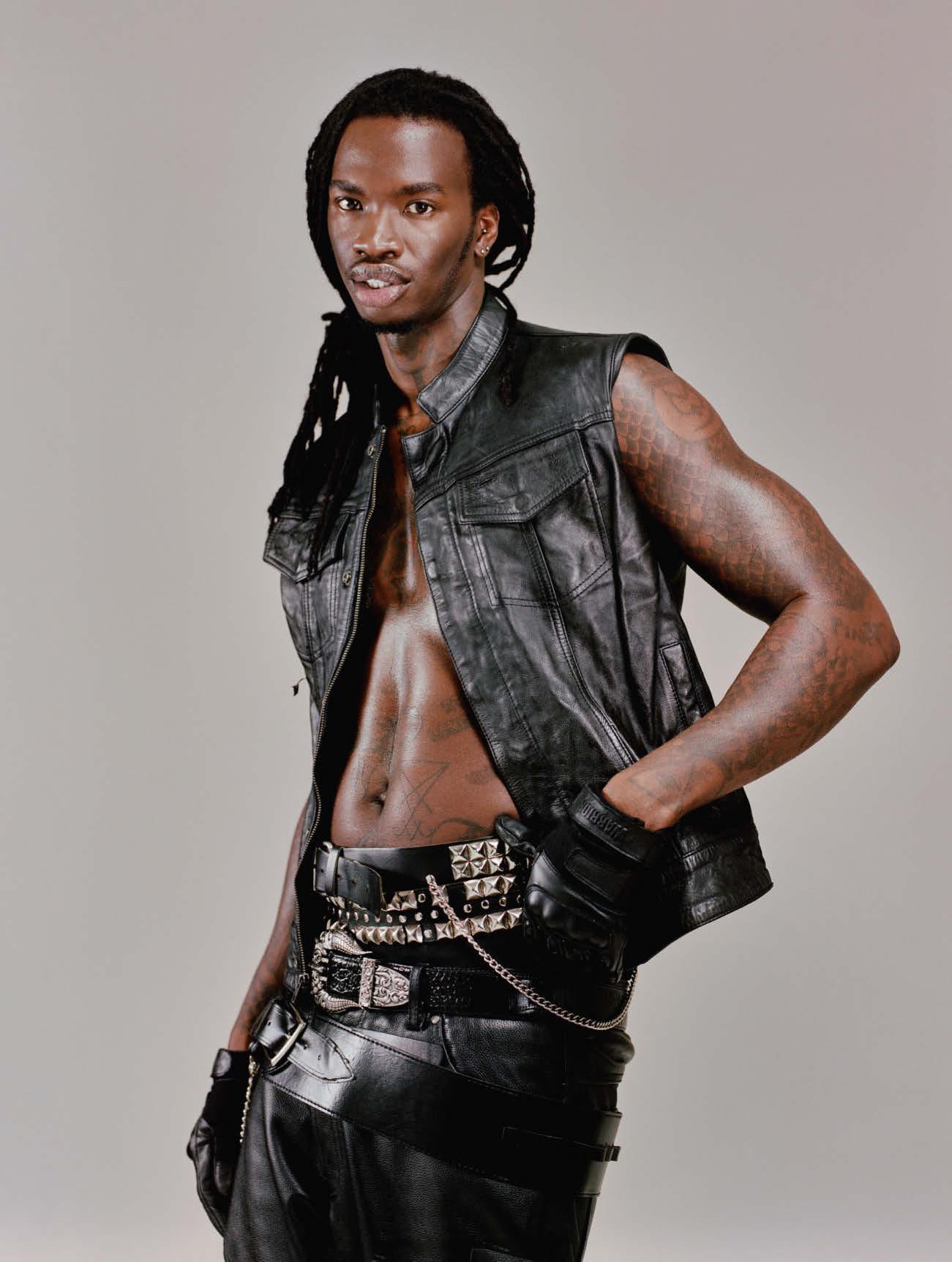
With his genre-defying tracks, musical maverick LANCEY FOUX is rewriting the rules of UK rap. Ahead of the release of his dance-inspired new album, the Londoner talks freedom, euphoria and his club-night fantasy
whether
or
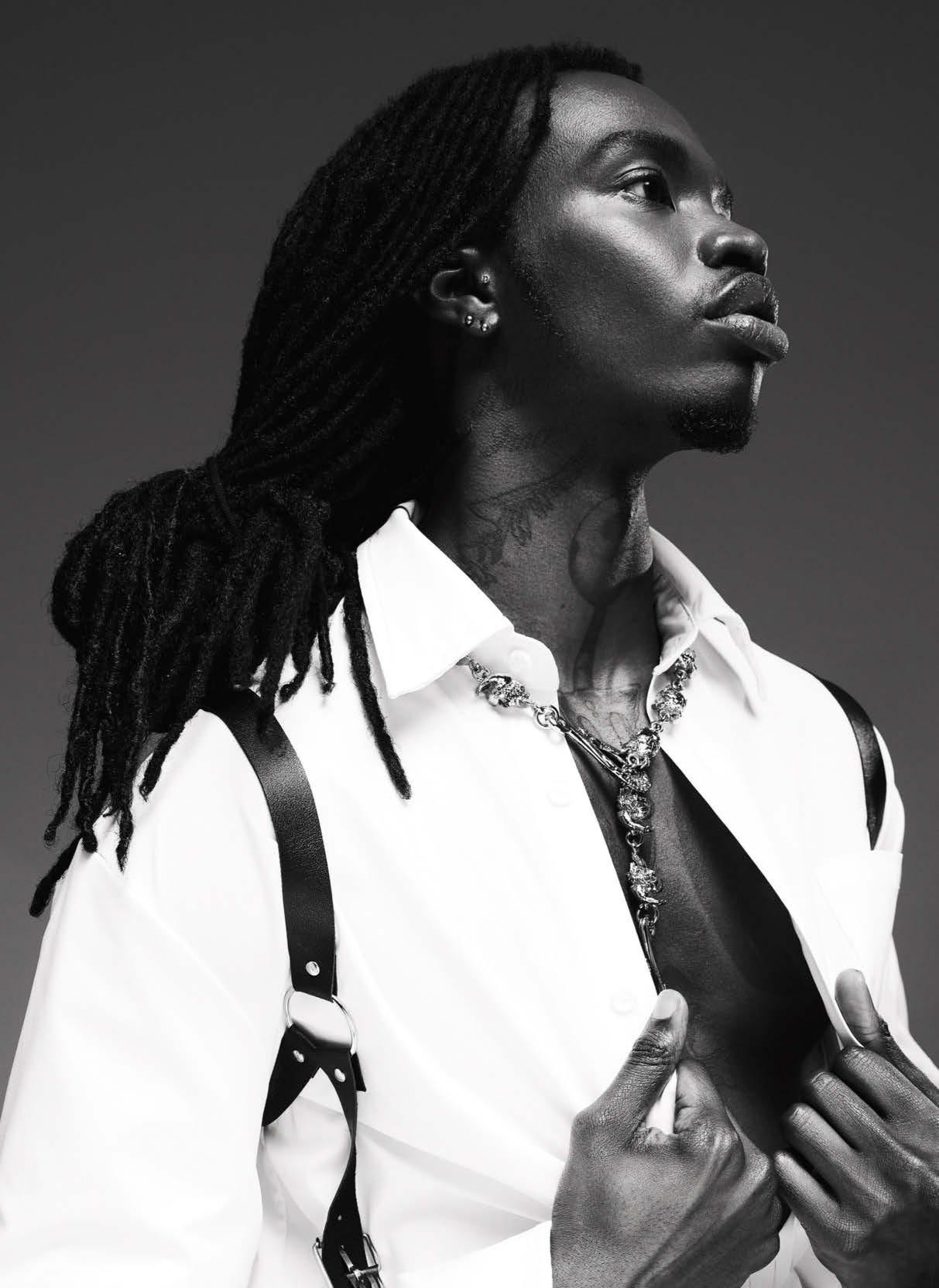
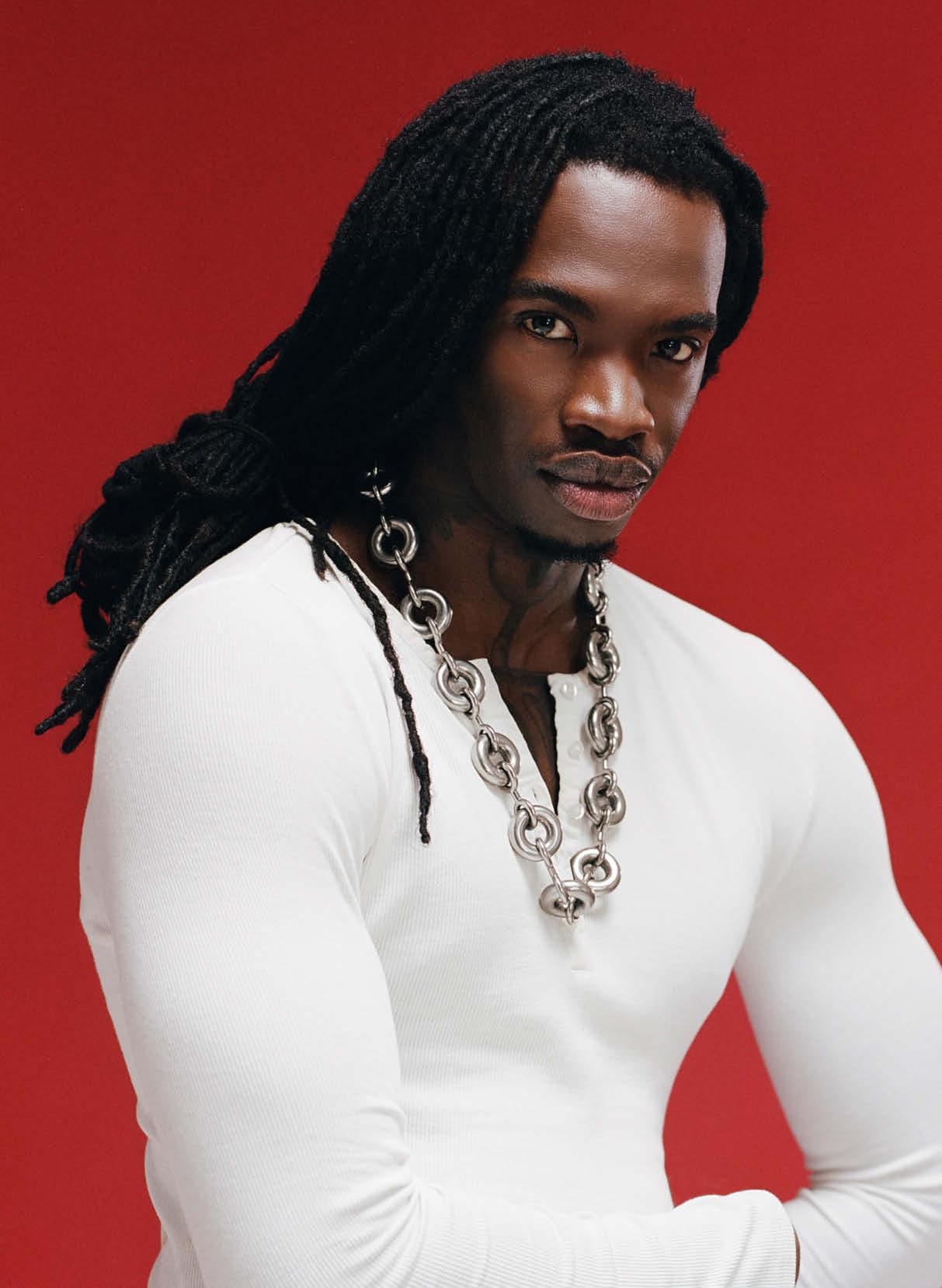
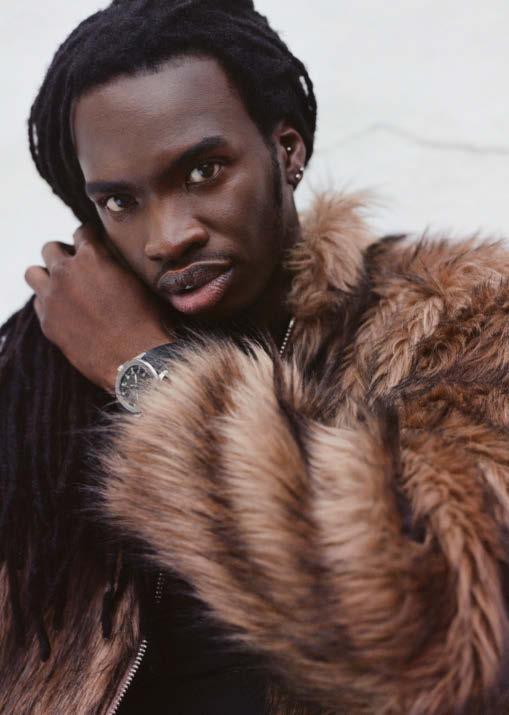
D’Angelo’s Brown Sugar pours from the speakers of a central London studio as Lancey Foux has his lip gloss reapplied and a stylist – practically on tiptoe – adjusts his outfit. Standing 6ft 4in [1.93m] tall, with blade-sharp cheekbones, dressed in an open white shirt and cuffed trousers, with a silver chain dangling on his tattooed chest, the east London rapper cuts a striking figure – he could be a vampire or a pirate straight off a film set. But today, as every other day, Foux is very much himself. While many other artists strive to build a recognisable brand, the 30-year-old is happier swimming against the musical tide, subverting expectations with surprising, genre-defying tracks and waiting for everyone else to catch up. This approach has put Foux at the forefront of UK underground rap, a thriving scene whose urgent mishmash of sounds has captured international attention thanks to artists such as himself, Jim Legxacy, Fakemink and YT.
“My origin in music comes from a place of resistance,” Foux says. “Resistance and the urge to defy whatever is normal at that time. When I was growing up, it was [against] grime and street music and UK rap. I’ve grown up in those environments, but I don’t want to do that. I’m always curious: if I like Skepta, Future, Gucci Mane, Killa Kai, Wiz Khalifa, Michael Jackson, Prince, what does all that sound like meshed together? Musically, I don’t feel confined or bound by anything.”
In person, Foux comes across as a gentle spirit, down-to-earth, thoughtful. But he also possesses a quiet steeliness. Born and raised in Newham, east London, with Ugandan parents, Foux remembers a childhood spent listening to his father, a DJ who Foux describes as “a hustler”, play Lingala –Congolese and Ugandan music – at the parties he threw. He describes his mother, who now owns a cleaning company, as his “guiding angel. Anything gentle and kind about me, I got from my mum. My dad just finds a way to figure everything out. That’s something I’ve taken from him”.
As a teenager, Foux started out releasing cloud rap, trap and experimental hip hop to Soundcloud for fun, switching and mixing genres with each project. In 2015, after building a buzz with his debut release, Pink, a 19-year-old Foux booked his first paid gig – at now-defunct Dalston venue Visions – only to be arrested the night before. He was bailed out mere moments before his show. Foux calls it a crossroads in his life. “I spoke to my mum and she was like, ‘You need to pick [your path],’ and I picked music,” he says. “Where I grew up, it was rough. There were certain instances where I was like, ‘This is crazy, I don’t want to be here.’ But now I’m older, I don’t wish it any other way. [It’s given me] a certain type of street smart that you can’t teach.”
In the past few years, his instinct for innovation has caught the attention of artists including Skepta and Kanye West, and, uncommonly in the age of streaming, he’s built a fanbase the old-fashioned way, through constant touring, playing live sets to real people at club nights and festivals. Fresh from putting out his latest mixtape (First Degree: 2nd Charge) and launching a new party concept (Club Blue), Foux is on the cusp of releasing his third studio album, The Time of Our Lives, which switches things up once again with a more dance-influenced
“My love for music has a lot to do with pure euphoria. When I go to make music, it’s like nothing else matters”
sound. So how does the artist who defies definition describe his approach? “It’s freedom. No limits, nothing in the way. Just freedom.”
What was it about making music that first got you hooked?
My love for music has a lot to do with pure euphoria. When I go to make music, it’s like nothing else matters. Even if I’m having the worst day or week or whatever, making music still feels great. It brings me to the happiest place I can possibly be at.
Did you ever feel self-conscious making the kind of music that people might not expect?
I didn’t come into music trying to achieve anything. There are things to be achieved in music: if you want to get to number one or win an award, there’s a way to do that. But that’s not why I was making music; it just gave me pure happiness to do it. So I was like, “How many different ways can I do this and get the happiness from it?” That allowed me to do it my way every single time and not feel tired or like I’m failing or not reaching my goals.
Who inspires you?
Growing up, David Bowie was one of my favourite people. I feel like every time I’d do research on him, I’d find out something new – a new outfit, or a new character. He could change his mind freely. That’s what I think people don’t want to admit: that they changed their mind. I’m very comfortable with that in terms of how I want to dress, or the type of music I want to make, or who I want to be around. I have the freedom to change, and I exercise that as much as I can. This is the one life we have in this body. I’m gonna try to do as many things as I like, and to experiment as much as I can. I don’t know any other way to be.
You describe your music as ‘genreless’, but you’re a big part of a scene that’s become known as UK underground rap. How do you feel about that label?
I think the wording is lazy. I would call it overground. I liken it to the London transport system. With the underground train, you have to go down [away from the world] to board. But on
Opening up:
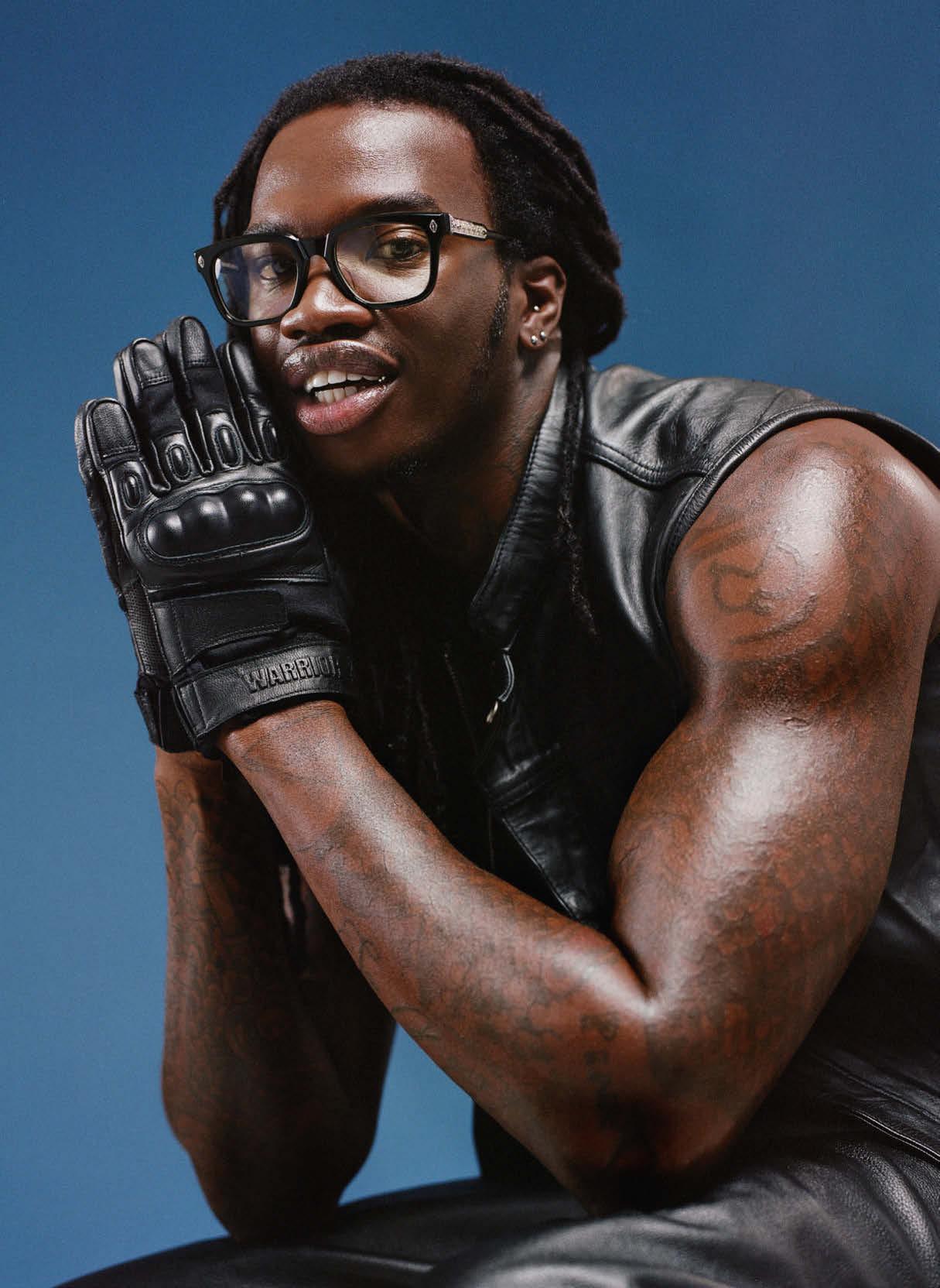
“If I was in deep sadness and someone asked how I was,” Foux says, “I don’t think I could answer it better than by putting on a beat and rapping about it”
[On the ‘UK underground rap’ tag] “I think the wording is lazy. I would call it overground… Some of these kids now are big”
the overground you could be walking through the high street and see the train passing. Some of these kids now are big. The likes of EsDeeKid are on the road, at festivals, [so] it’s not underground. In terms of my inclusion, I’m a massive part of it; it’s partly created by me, and I’m super-proud of it. I think sometimes it takes a group, and I’m proud of all the guys who are making their name and doing big things. I’m always in support of them. I keep my eyes on everyone.
What can we expect from your upcoming album? Well, there are some dance elements in there. It will just be a new world for people, you know? It’s been finished for, like, ages, close to a year. [It was born out of a period of] a lot of fun. A lot of fun, but a lot of realisations, too, about life and the things I’ve been through, situations I’ve been in. I think it’s one of my most personal albums.
You’ve said that music is like therapy for you. Does opening up come more easily in your music than in life?
If I was in deep sadness and someone asked how I was, I don’t think I could ever answer that question better than just thinking about it in my head, putting on a beat and rapping about it. I don’t really tell people a lot of my problems; I just put it in a song and talk to myself about it. That’s probably another reason why I have such a love for music, because it helps me deal with things.
and her friends. We went to Morocco and it changed everything. I thought, “You know what? Let me come out my comfort zone and let’s figure it out.”
You’ve also recently launched your new party concept, Club Blue. Were the two things linked? The idea started a few years ago, because for the last six years or so I’ve toured and performed every single year. It got to the point where I got very bored with the after-show stuff or getting paid to come to [clubs] where I’m listening to the music and feeling like, “This is boring.” Me and my girlfriend and her friends started going out and looking for fun places, and there were a few instances when we had some great nights. While I was recording my album, it got me thinking, “How does [a great night out] look for me? What’s the music I want to hear? What’s the vibe I want to experience?” When we threw our own party for my girlfriend’s birthday in Morocco, we figured it out: this is how we should party. All of that inspired Club Blue.
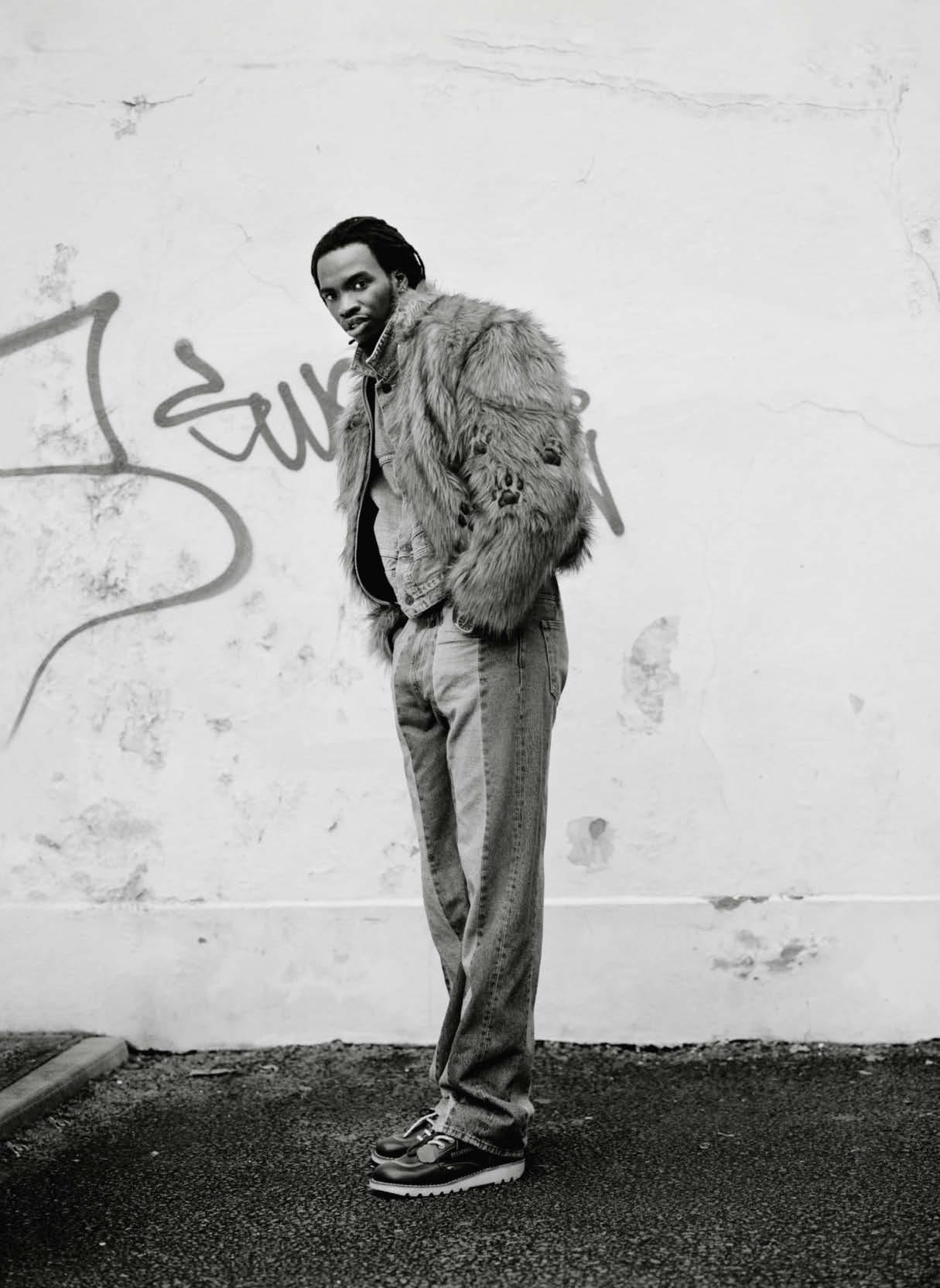
Making his mark: Foux began making music and posting it on Soundcloud while he was a teenager growing up in Newham, east London
Has it ever led you to a breakthrough? When I made [2019 track] Better Alone, [it helped me to understand] how I feel. I didn’t understand why sometimes, as much as I love people, I would just leave. I didn’t understand that about myself – that’s my dawg or that’s my mum, why do I not want to be there? Why don’t I want to hang out with them? It’s because I progress when I’m by myself. I’ve learned that I’m a loner at heart.
How did the dance influence on the new album come about?
It was actually a process, during 2024 and 2025. I’m not someone who likes going out a lot, but I tried to change that. My girlfriend likes going out a little bit more – she’s a DJ – and I got super-inspired by her
What kind of space do you want Club Blue to be? I want it to be super-intimate but super-intense. No phones. We’re going to pack in 100 people and play the best music and have the best time. If you catch it, you catch it; if you don’t, you don’t. My sets were half rap, half dance, and the rap side is all unreleased music. I don’t play any released music; I bring a different artist wherever I’m at, and that artist can come and preview their unreleased stuff and see how people react to it, with no phones, no nothing. It’s not just a dance night, it’s a dance night with mystery, because you don’t know what you’re going to hear.
What do you want to achieve with it?
I want to create more real-life experiences. Snippet culture, internet culture and streaming culture are great, but if we don’t make the right moves to shift away from it, we’re all going to become dormant. We’re going to stop listening to music and start looking at numbers. I’m not saying boycott the internet – it’s essential for all of us in our everyday lives, and I’m super-appreciative of that – but I think that when it comes to art and experiencing real moments and things that bring people together, we need to go back to our roots a bit.
“I’m gonna try to experiment as much as I can. I don’t know any other way to be”
direction
Moving on: Foux’s upcoming album, The Time of Our Lives, sees him explore a more dance-influenced
Is that why you’ve always prioritised touring?
Performing live is the best. It’s what I live for and what I do it for. And it builds resilience. If you can perform in front of a hundred people a hundred times, the day you get to perform in front of a million people you’re not going to be shaken by that – it’ll be your best show ever. Performing is something that, for an artist, will take you further than anything. That’s where you make your money. It’s where you connect with people that listen to your music. That’s the most important thing, aside from making actual music.
You’ve got a foot in the fashion world, having walked the runway for New York label Telfar, collaborated with US brand 1017 ALYX 9SM, and attended shows by Givenchy and Rick Owens. And your look is a big part of who you are as an artist. Where do you get your style sensibility?
My dad had a dry cleaners when I was growing up. He’s handling a lot of clothes, and I’m very observant, especially as a kid. So I’m like, “What’s this dress? What’s this material? What’s this suit?” And my dad had a strong sense of style. He was a suit king. He never really dressed casual – that was lazy. But right
“Performing live is the best. It’s what I live for. And it builds resilience”
now I’m loving minimalism: plain tops and jogging bottoms. I’m not retwisting my hair every five minutes or dyeing it. I’m enjoying being a plain Jane.
All the proceeds from your most recent mixtape are going to a charity that supports independent musicians. What influenced that decision?
A lot of new artists that are unsigned are following label guidelines. Why are you dropping your music on Friday? Why are you worried about Spotify playlists? Build an audience and do things your way! Artists are getting undervalued more and more each day. This is the cause I’m doing it for, but other artists don’t have to do it for charity – you can do it for yourself and pay your people and feed your team. Luckily, I’m in a position to do this.
How have you built the confidence to feel so free from constraints?
Even when I was a baby, I felt the same way I feel now, and I get more confident as I get older, because I feel I’ve withstood certain things. To do some of the things I’ve done, especially when I was younger, you’ve got to have some degree of confidence. Some of the shit I was doing would be considered outlandish. Growing up in Newham, it’s such a wild place, but I enjoyed it – even the bad things. When I travel the world now and I meet people and shake their hand, I have a certain grip I might never have had if I hadn’t experienced my past.
What do you hope people take from your music? Once, I was talking to someone much younger than me, and they said something I never forgot. They were like, “Bro, when I listen to music, I don’t want to think.” I was like, “Damn, I do feel you. I understand what you mean.” But then I was like, “Well, I should make something that makes you want to think.”
What are you looking forward to?
To touring my album this year, with more than 40 shows across four continents. To Club Blue – it’s another way to challenge myself and help build out the world I’m trying to create. Playing a DJ set at a global Red Bull summer party [to be announced soon] is another way I can bring this to life. It’s all about having the best type of fun possible.
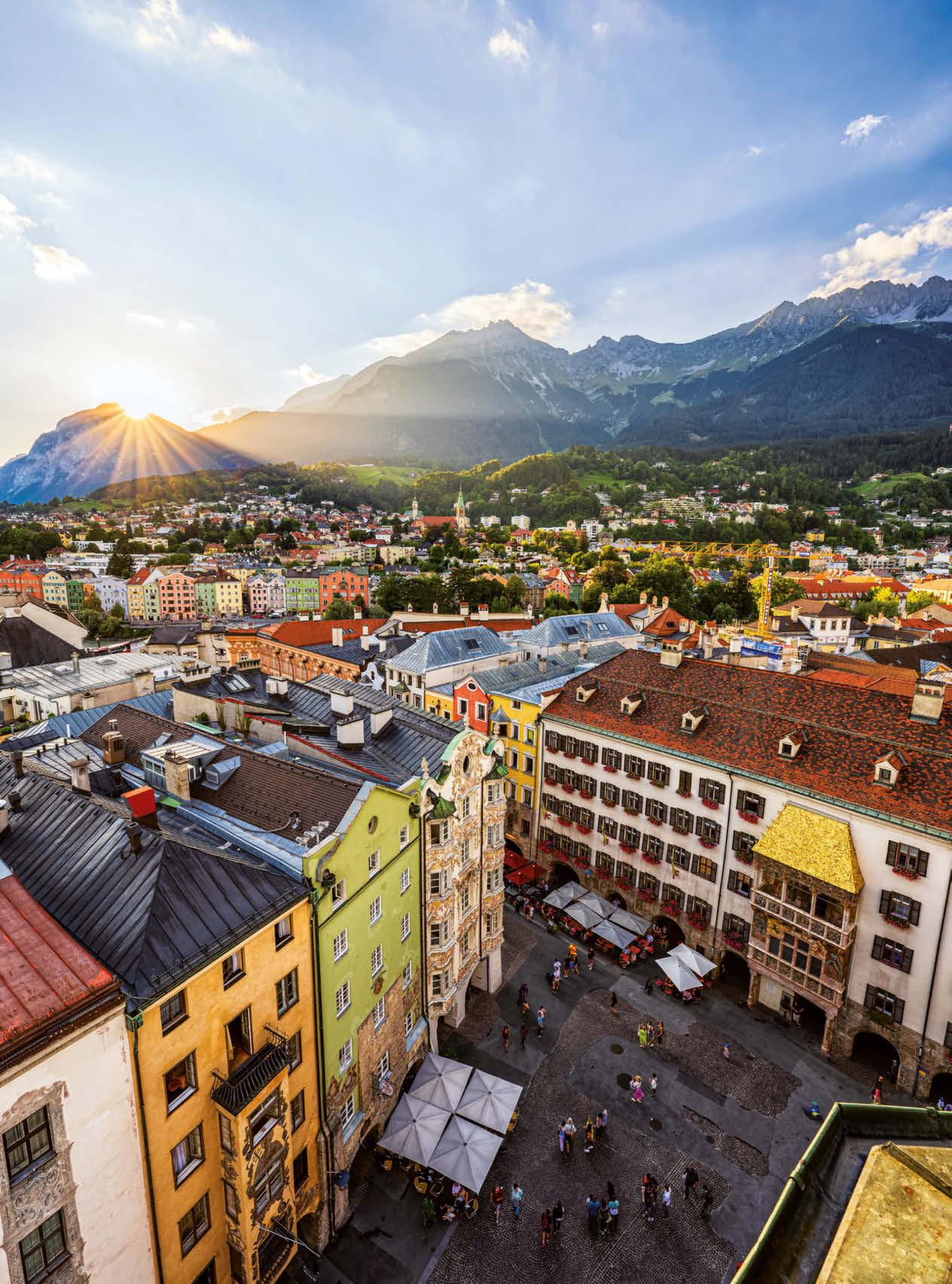
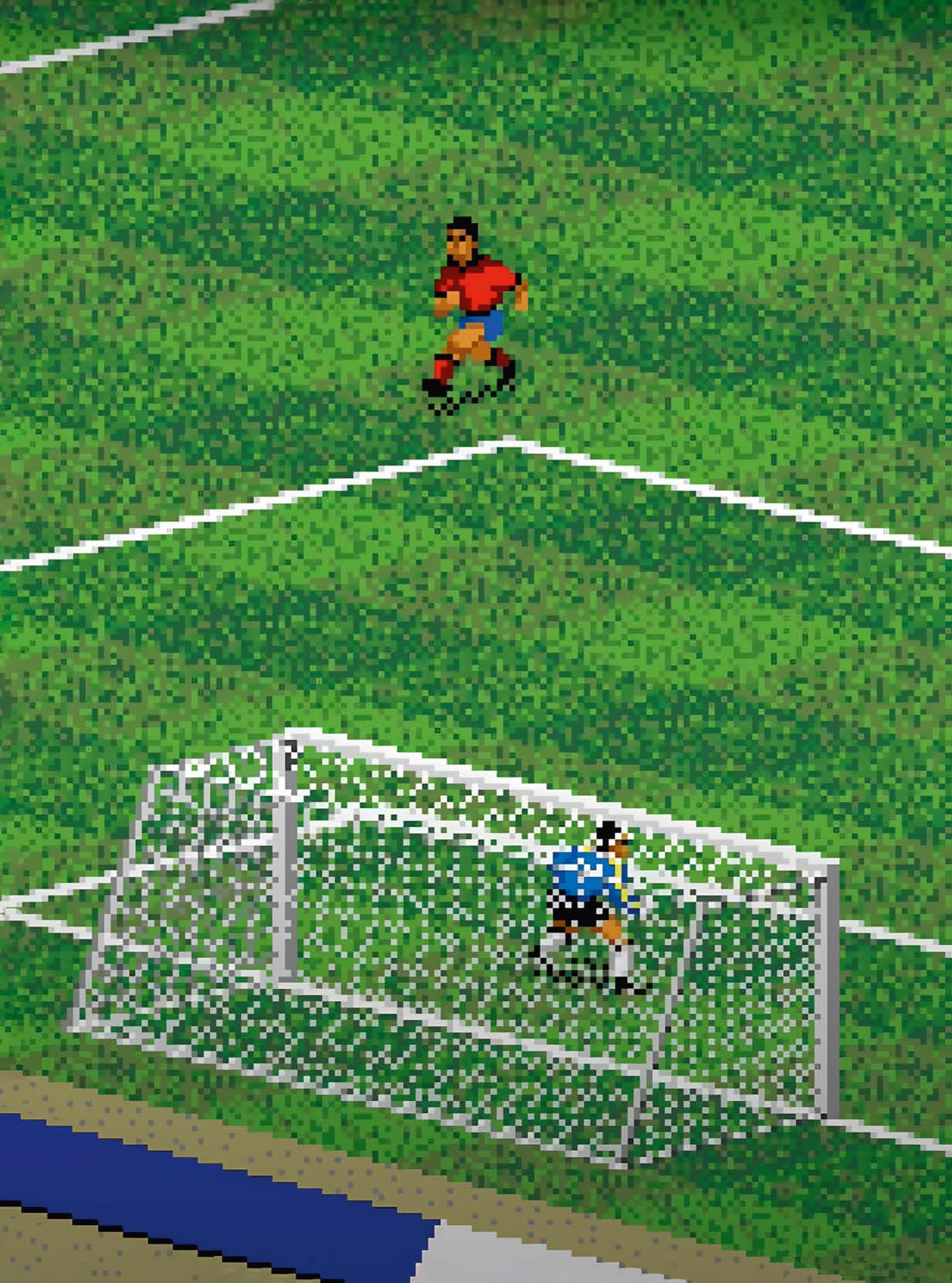
Kickin’ it with the OG: released in 1993, the game FIFA International Soccer was revolutionary for its time
How EA made a soccer simulation so good that it influenced the sport itself, turned fans into millionaires and got pro footballers fighting over their stats
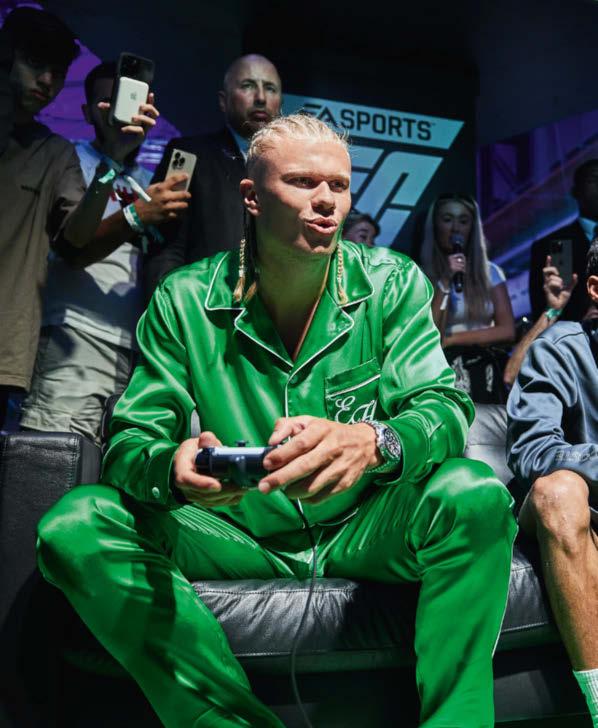
pyjamas tailored by Dolce & Gabbana, the breast pocket monogrammed with his initials. “Every footballer dreams of this,” he tweeted in that moment. “Proud to be on the cover for the first season of a new era @EASPORTSFC #FC24.”
Sweaty goal, OP, pace abuse – the lingo of the FIFA game series is near universal. Almost every football fan has played it over the years, too. Across its three-decade rise to digitised-sport domination, FIFA has been translated into 18 languages and sold more than 345 million copies in 51 countries. Its soundtracks are iconic. It has turned ambitious teenagers into YouTube millionaires. It has been bickered about on professional team buses every weekend, across the world. All of which begs the question: how?
Twenty-nine years before Haaland graced the cover of the world’s bestselling sports video-game franchise, a fellow Norwegian beat him to it. Spurs’ Erik Thorstvedt is the only goalkeeper to ever grace a FIFA box. Sadly, it didn’t prove to be an omen of great things to come: the stopper made just two club appearances that season. Little wonder he’s never publicly acknowledged what has since become a huge honour, bestowed upon the likes of Lionel Messi and Cristiano Ronaldo as FIFA’s cultural impact spread. Perhaps Thorstvedt learned the lesson of fellow ’90s goalie David James, who was widely mocked when he revealed a love of video games. “I was getting carried away playing Tekken II and Tomb Raider for hours on end,” James confessed after a defeat for his Liverpool team against Newcastle United in 1997.
Fresh from thumping in 52 goals in his first season playing for Manchester City, the Viking-blond form of Erling Haaland struts down a floodlit aisle towards a makeshift stage upon which sits the trophies of the Champions League, Premier League, Women’s Champions League and La Liga. Applauding his entrance from the front row are a quartet of pros with 469 international caps between them: Didier Drogba, Ronaldinho, Luis Figo, Alex Scott.
But this isn’t the glitzy Ballon d’Or awards ceremony or a football-themed film premiere. It’s the launch – or rather relaunch – of a video game: the moment FIFA became EA Sports FC. And Haaland is dressed in green silk
Despite James’s embarrassment, his era of gaming did coincide with FIFA flirting with forms of entertainment that eschewed tradition. Blur’s Song 2 was installed as the opening song to FIFA: Road to World Cup 98, where its adrenaline-rush chorus felt like the perfect pacesetter. The track remains a fixture across sports stadia to this day. “That repetitive piece of music got under your skin,” Steve Schnur, EA’s president of music, told media platform Vice. “It became integral to the kid playing the game, and to the gameplay, and then to actual sport.” Robbie Williams was digitised as a player in his music video for It’s Only U, which became the official theme song of FIFA 2000, and the seeds for cultural crossover were planted.
According to EA, three core consistencies have ensured the growth Amsterdam, July 13, 2023, 7.02pm.
It’s in the game: some moments in FIFAhistory


Each iteration of FIFA has brought greater realism to the gameplay. An example: players can no longer dodge being shown a card simply by running away from the referee
With FIFA 96, the series made the big leap to realtime 3D graphics thanks to its ‘Virtual Stadium’ technology. And, having acquired the licence, EA could use real player names for the first time

FIFA Football 2003 was another game-changer, with better player likenesses, a new freestyle control system, and TVstyle highlights at half-time and full-time




Across its three-decade rise to domination, FIFA has been translated into 18 languages and sold more than 345 million copies in 51 countries

Women’s football was included for the first time in FIFA 16, with 12 international teams available to play. Women’s club teams would remain absent until the release of FIFA 23 FIFA 17 saw the introduction of a story mode, The Journey, where players could guide a rising star named Alex Hunter through the highs and lows of Premier League football Harking back to spin-off series FIFA Street, a feature called VOLTA Football was added to the mix in FIFA 20, focusing on smaller teams (3v3, 4v4, 5v5) and futsalstyle matches
If there’s a single catalyst for FIFA’s cultural omnipresence, it’s Ultimate Team, the game’s naggingly addictive squad-building mode
of the game over the past 32 years. “Authenticity, innovation and purpose,” says James Salmon, senior director of franchise activation at EA Sports. “From an authenticity perspective, we have 20,000 athletes, 750 clubs, and partnerships with over 300 different bodies within the sport. Innovation-wise, there are tools that have evolved through the years to enable the crossover into real-world football. As for purpose, there’s always been a role for EA Sports FC in the broader footballing community. The way the sport has evolved, we’ve evolved, too: [the rise of] women’s football, adding national [women’s] teams and, more recently, club teams. That centred approach across those three areas has guided us.”
A study by ESPN illustrates Salmon’s view. In 1980, fewer than one million US youth athletes participated in soccer; by 2014, it was more than three million. FIFA, the study concluded, was the gateway to the sport for 34 per cent of US soccer fans. Europe became similarly hooked, with players openly confessing their gaming affections. A decade after David James self-shamed his love of the console, Italian football icon Andrea Pirlo wrote in his autobiography, “After the wheel, the PlayStation is the greatest invention of all time.”
Sadly, James had long moved on from Liverpool when the team met Pirlo’s AC Milan in the 2005 Champions League Final, squandering any potential for post-match PlayStation banter. Had such a scenario played out a few years later, the focal topic would surely have been Ultimate Team – the game’s naggingly addictive squad-building mode. If there’s a single catalyst for FIFA’s cultural omnipresence, it’s this feature. Introduced as a paid-for addition to FIFA 09, Ultimate Team has since evolved into the perfect blend of Panini stickers, fantasy football league and competitive gaming. Gamers open digital packs of trading cards featuring footballers who are then placed in line-ups to take into matches. Limitededition cards are also released, featuring increases in player ratings, tempting gamers to buy more packs with real money. It made EA more than US$2 billion in its most recent financial year.
Simon Minter was one of the first gamers to spot the game’s abundant potential. In 2012, aged 20, the Brit quit university and, under the alias Miniminter, launched a FIFA YouTube channel. A year later, Minter banded together with some friends to form a
collective of football-obsessed YouTubers known as the Sidemen. Today, their channel has almost 23 million subscribers, and every one of the Sidemen is a multimillionaire. Minter’s rise, alongside that of YouTube rivals such as Castro1021 and NepentheZ, cemented FIFA’s global influence on smartphone-hooked millennials. Alongside regular football fans, celebrities embraced the culture of sharing their fantasy line-ups, and it infiltrated real locker rooms. Whereas the footballers of yesteryear drank, smoked and partied in their free time, their modern counterparts endure regimes of curfews, alcohol restrictions and meticulous diets. FIFA became the outlet for players to relax while, at the same, avoid any in-season
misbehaviour. It also tapped into their natural competitiveness.
Today’s footballers take Ultimate Team incredibly seriously. “We’re lucky to have a team of experts in our ratings department who are clued up with what’s happening across the real world of football,” says Salmon. “However, there’s also an energy that comes from athletes really caring about their ratings – and that energy is a privilege.” Salmon was two weeks into the job when he visited Queens Park Rangers to be met by a furious Rio Ferdinand “completely full of rage, losing the plot on camera about his pace rating and how we’d stitched him up. [He said] it was inaccurate and he was going to come down to [EA HQ in] Guildford and have a rant at the team”.
Leicester City’s Jamie Vardy was even more abrupt when an EA contingent descended on the team’s training ground during their titlewinning 2015-16 season. “As part of a winter upgrade campaign, we were awarding N’Golo Kanté, Riyad Mahrez and Jamie Vardy [placards of] their upgraded items,” says Salmon. “Vardy was so hacked off with his original in-game base rating that he put his head through the [placard]. He then grabbed it, slammed it on the ground, and stormed off the set. After some


For gamers and pro athletes, EA Sports FC has become as synonymous with the sport as the ball itself
coaxing from the staff, he came back, realised we had actually upgraded him following his amazing performances, and we got the shots we needed.”
FIFA had become so entrenched in the lifestyle of both player and fan that it was sometimes tough to decipher where the real-life sport ended and the digital one began. In 2014, when Barcelona drew Manchester City in the Champions League, the point of reference for the greatest footballer on the planet was EA’s video game. “It will be great to play against my friend Kun [Sergio Agüero],” said Lionel Messi. “On FIFA, I always beat him, so let’s see what happens on the pitch.” Such rivalries often became personal, as demonstrated when Man City defender Rúben Dias went viral with his reaction to being rated slower than teammates John Stones and Bernardo Silva in EA Sports FC 24. “I’m slower than who? Bernardo? It’s just…” He trailed off, frustration leaving him speechless. FIFA 23 brought a twist to the tale. Amid rumours that football’s governing body wanted US$300 million per year to renew its licence, EA made the call to go it alone. To outside eyes, it was both a gamble and a flex. “It was obviously a big decision, and big decisions carry jeopardy,” says Charlie Villiers, senior director of EA Sports FC franchise marketing. “But in terms of the 300 partners, the 20,000 athletes, the 750 [teams] – that’s the construct of all of our experiences. Including the mobile game, we had 150 million people using
“Rio Ferdinand lost the plot on camera about his pace rating in the game”
those experiences, which removed some of the jeopardy. This gave us an opportunity to move nimbly and quickly in defining what our fan-first football future looks like.”
“It was an opportunity to grow from being a video game built from football, to being a football platform built for video games,” echoes Salmon. “A great example of that is the work we’re doing with MLS [Major League Soccer, the US’s top league] around livestreaming games. We had an amazing relationship with [the governing body] FIFA. Some of the stuff that was written, the [perceived] acrimony, just wasn’t the case, but we felt this was an opportunity to strike out on our own. The proof points are the FC Pro esports competition, brand partnerships with the likes of Nike, and utilising FC Mobile as a platform that goes beyond gaming.”
Long after Song 2 and Robbie, the musical influence of EA Sports FC is more
formidable than ever. “The soundtrack [to the game] is enormous, and we have an amazing partner in Spotify that helps us bring it to life,” says Villiers. “There are those moments where you listen to a song and don’t know the artist but somehow know all the words. You’re like, ‘How the hell do I know this? Oh yeah, it’s been [playing] in my living room for months on end.’ We have an amazing music team in our LA studio who, every day, are thinking about how it will embody the next year in football. It’s a piece of IP with a massive cultural value that’s been successful at influencing the zeitgeist.”
Yes, you can listen to the EA Sports FC soundtrack on Spotify. Or watch live MLS games on your phone through FC Mobile. Or enter the FC Pro World Championship with a prize pool of US$1 million. In FIFA 23, you could even play as fictional team AFC Richmond, with Ted Lasso on the touchline – a feature that fans continue to clamour for.
Now, EA Sports FC 26 is all about the fanbase that brought the series this far, using community feedback to drive improvements such as tighter dribbling, more realistic keepers, and two game speeds depending on whether you’re playing online or offline. It’s a way of bolstering the sense of inclusivity. For gamers and pro athletes, EA Sports FC has become as synonymous with the sport as the ball itself – although, mercifully, no player has burst one in anger over their shot-power rating. Yet.
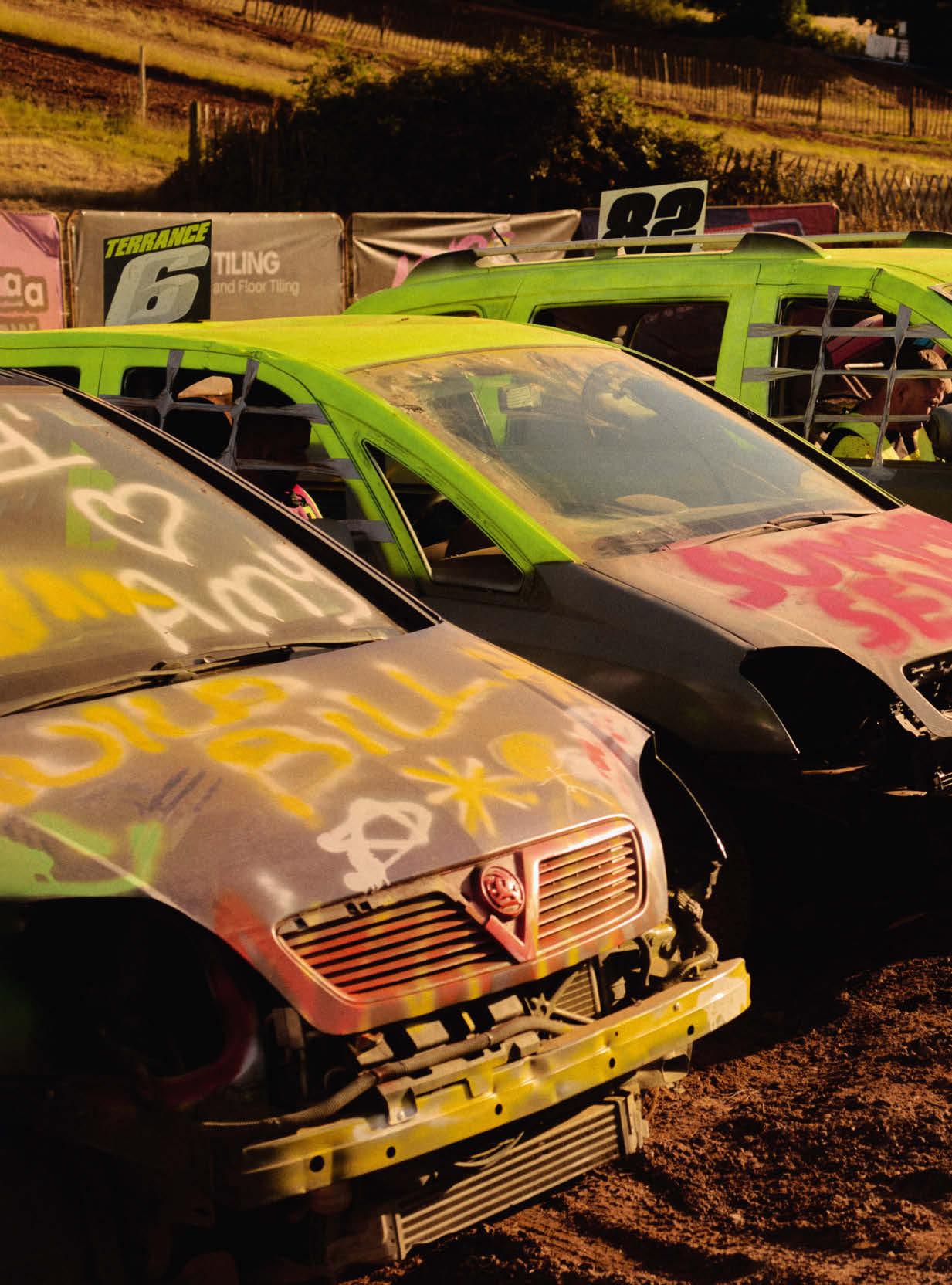
Crowd-pleasing bangers:
“This is just before the start of a crowd favourite, the VanPrix,” says photographer James Parker. “It’s like banger racing. There were, like, 20 of them lined up. There were three or four that weren’t starting, plus mechanics – if you can call them that –rushing out to help. But then, when Josh [Coles] started the race, they all dived into this really tight corner and there’s vans flipping and turning, and somebody’s wheels are flying off… It was chaos.”
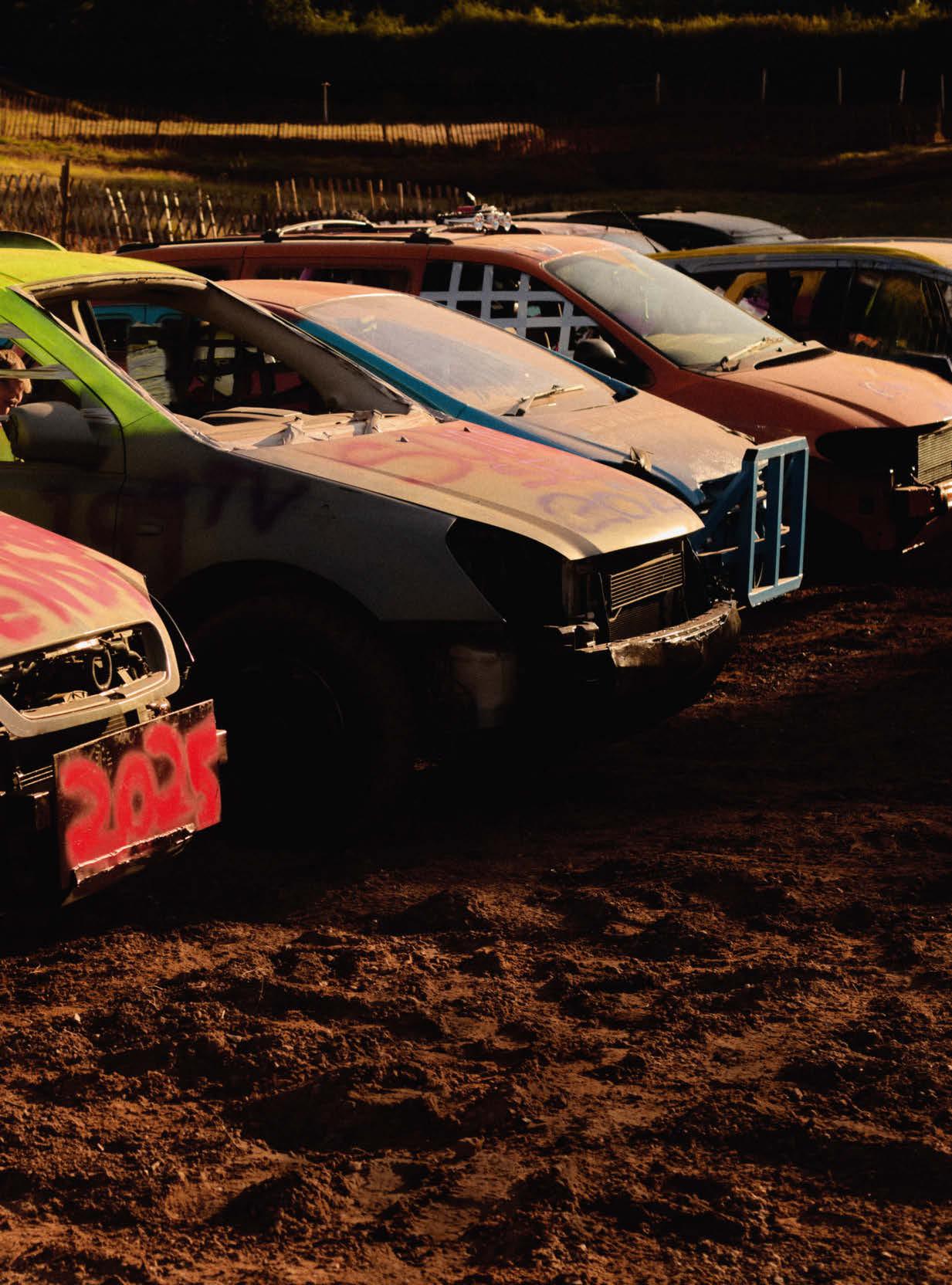
MUDBILLYS is the UK’s wildest annual off-road festival, bringing mullets, music and mayhem to rural Devon
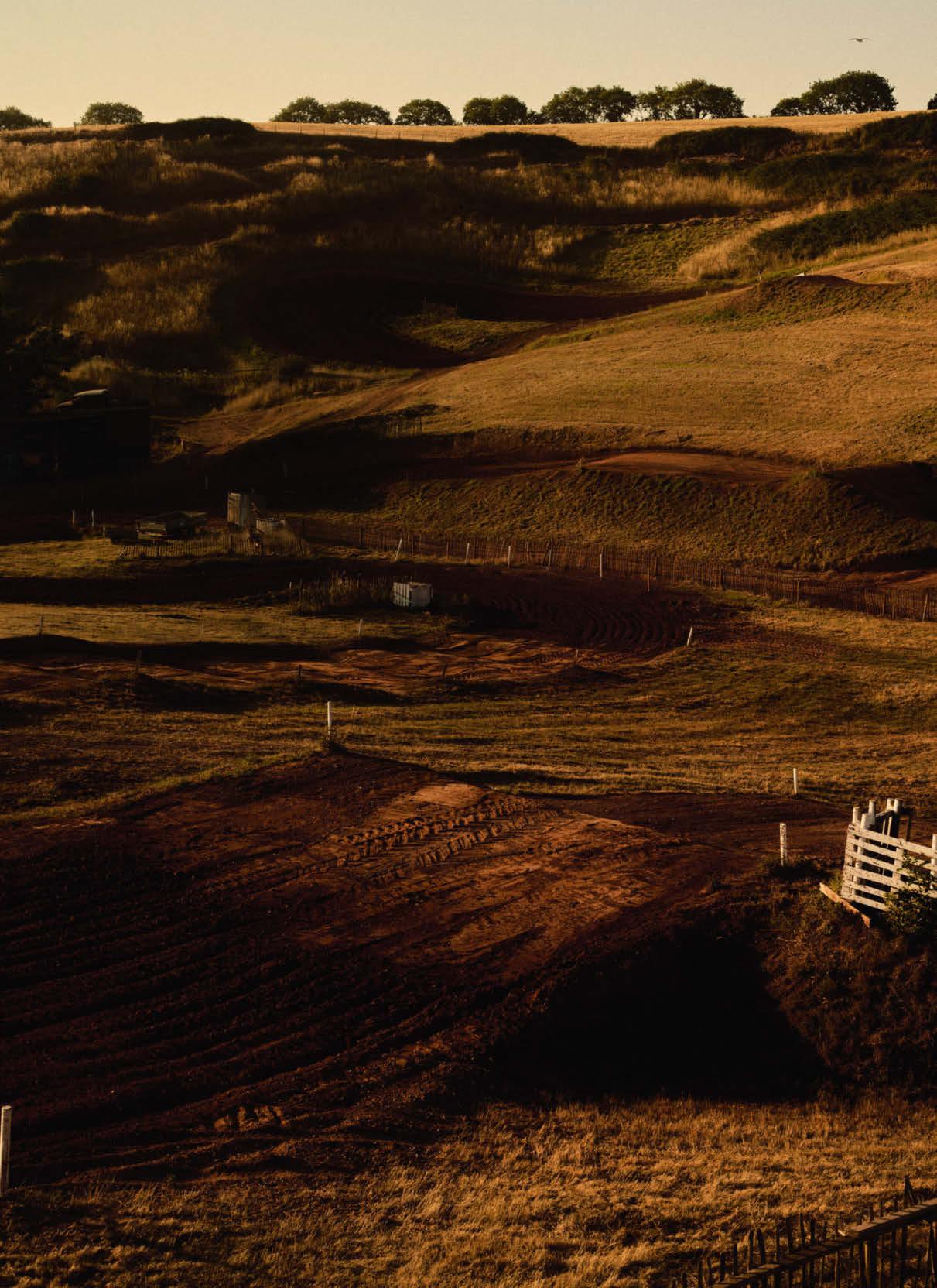
One weekend each summer, the roar of engines mixes with the stench of petrol, cider and freshly churned grass as Mudbillys Summer Sends takes over a field in rural Devon. The event, launched in 2021 and dubbed ‘the UK’s wildest off-road festival’, is summed up by its tagline: mud, mullets and mayhem. Last July, organiser Josh Coles, aka King Billy, invited James Parker along to shoot the barely organised chaos – seven off-road disciplines, from motocross and mud trucks to the VanPrix, raced to a rock-heavy soundtrack. “I turned up in a taxi, looking like a typical London photographer with my nice clean clothes and my equipment,” Parker laughs. “But I soon got stuck in. I definitely had some hairy moments capturing the action.” Mudbillys, he says, is about community – getting involved and, above all, having fun. “It’s not really about the winning but about the experience. There were kids with mullets, lasses with mullets, dogs with mullets… There were eating contests, all sorts of stuff going on. And when someone [in a race] crashed, a whole crowd of people would help them out. The atmosphere was really cool and free. It was the middle of summer, so people would just pass out under the stars then wake up in the morning, have their breakfast and crack on again.”
After a full weekend, Parker says, he looked like a true redneck on account of his sunburn. “I definitely should have packed some sun lotion. And on the journey back I was so caked in mud I was forced to sit on a bin bag. I left sticky, sweaty and smelly but really happy.”
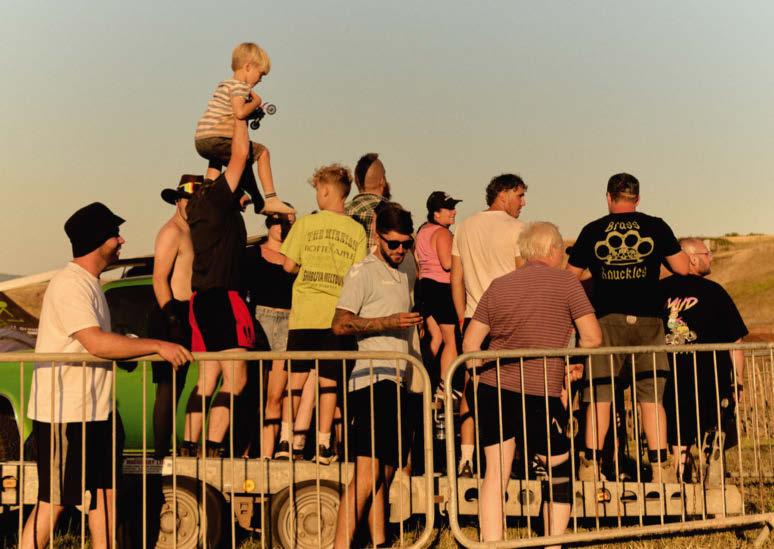
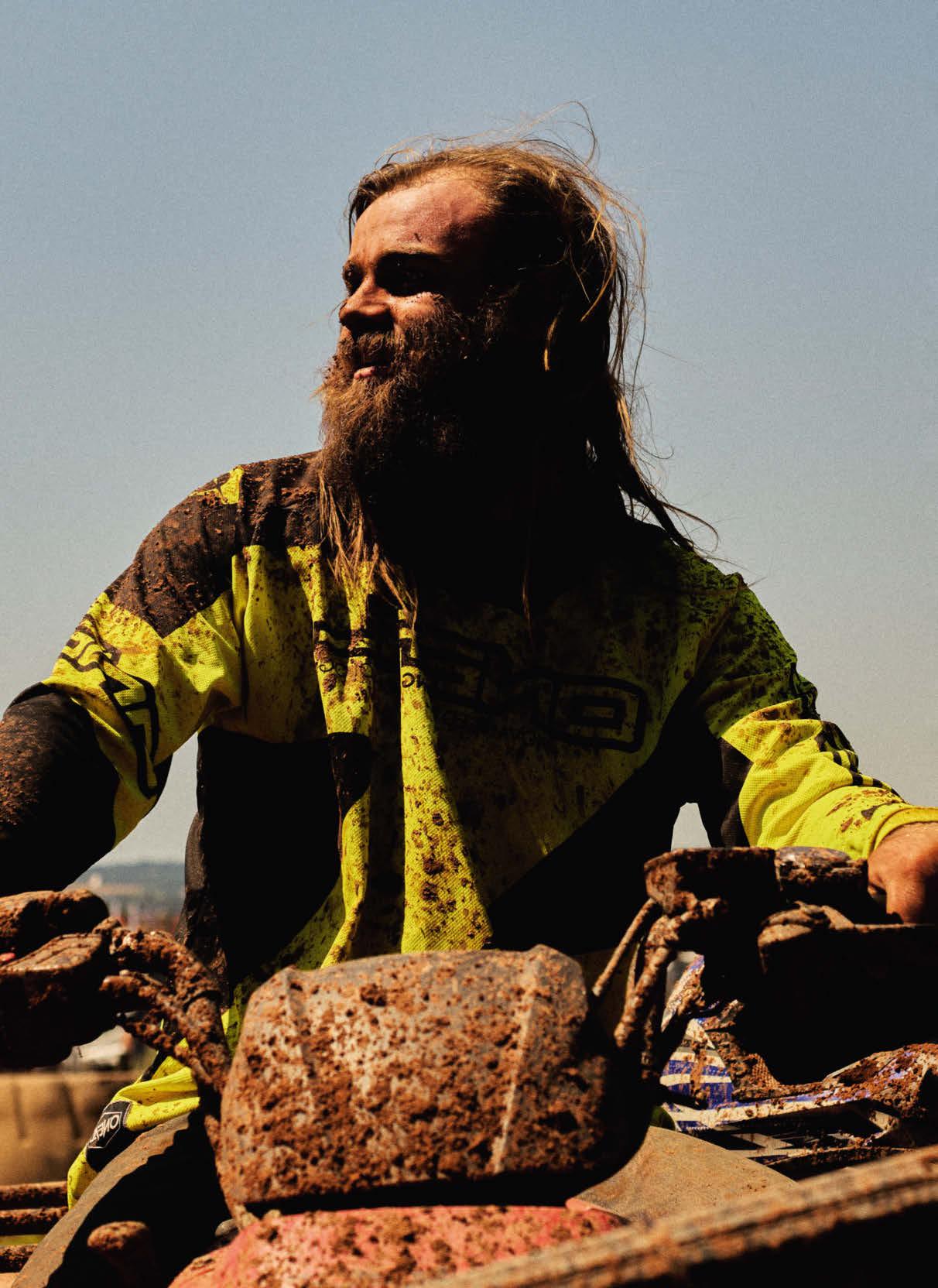
“Mudbillys is much more about being there together than who’s going to win”
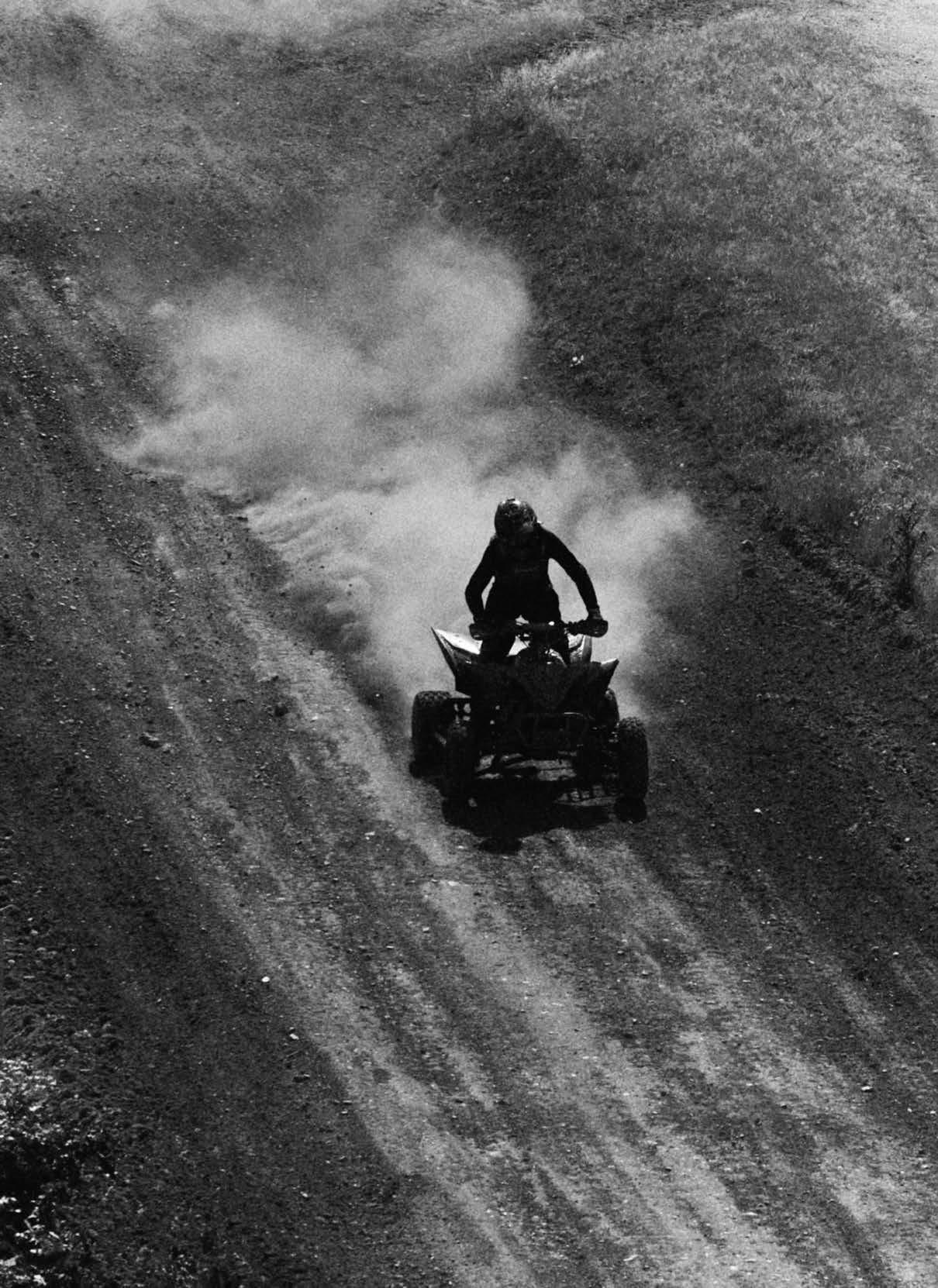
Out of sight: “This hill was, like, the big hill of the race, and racers were just chucking themselves down it like you wouldn’t believe, at high speeds. Everything was superdusty, so the first vehicle that shot down that hill made a massive plume of dust, and then I’m pretty sure none of the racers behind could see much of anything. They just trusted that their quad bike or truck wouldn’t tip, or that somebody would rescue them if it did. Mudbillys is much more about being there together than it is about who’s going to win.”
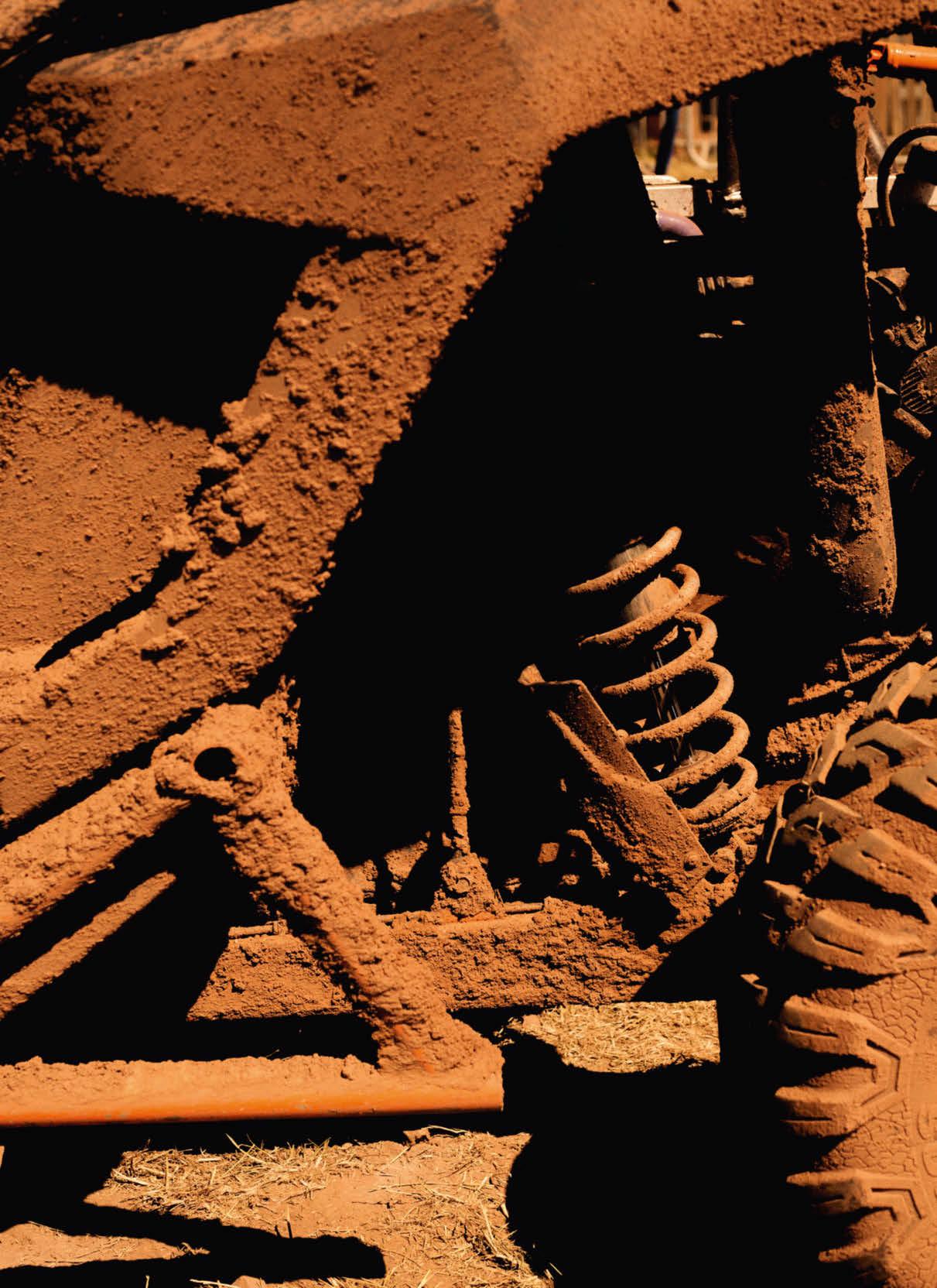
Crust never sleeps: “This one shot pretty much sums up the event, even though I’m focusing in on texture and detail. No one left this field without a muddy souvenir.”
Turning trucks: “With this one, I wanted to play with the viewer’s mind a little bit. Sometimes you want to see a picture and wonder, like, ‘What am I looking at?’ It’s rewriting the flipped truck. It just works.”
Mud brothers (opposite, top): “Watching all the motocross riders move together reminded me of a pack of animals, a herd moving together.”
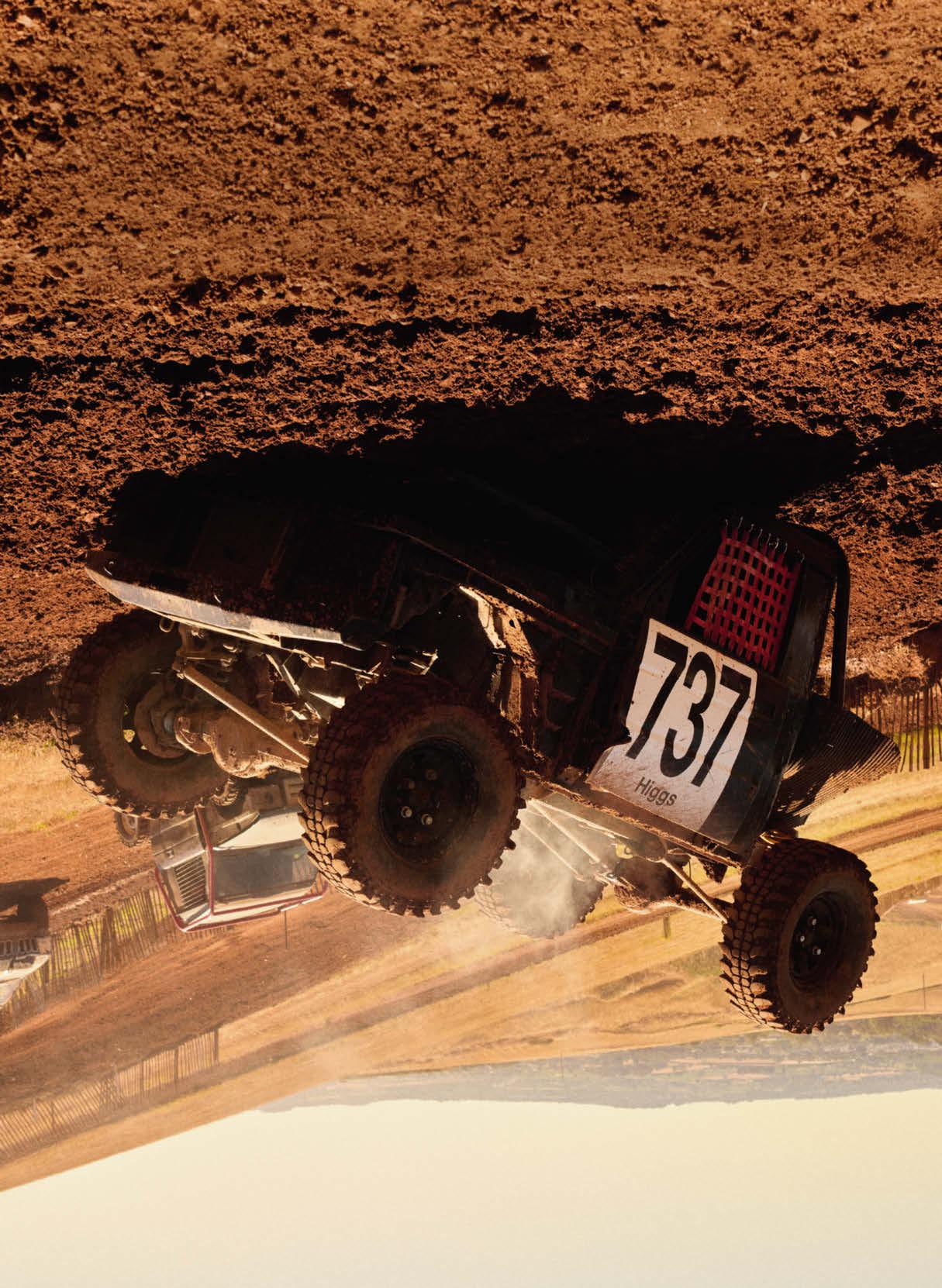
Within range (opposite, bottom): “My dad still has one of these Range Rovers, and I took this to show him what he could be doing with it. One man’s pride and joy is another’s toy to race around a field.”
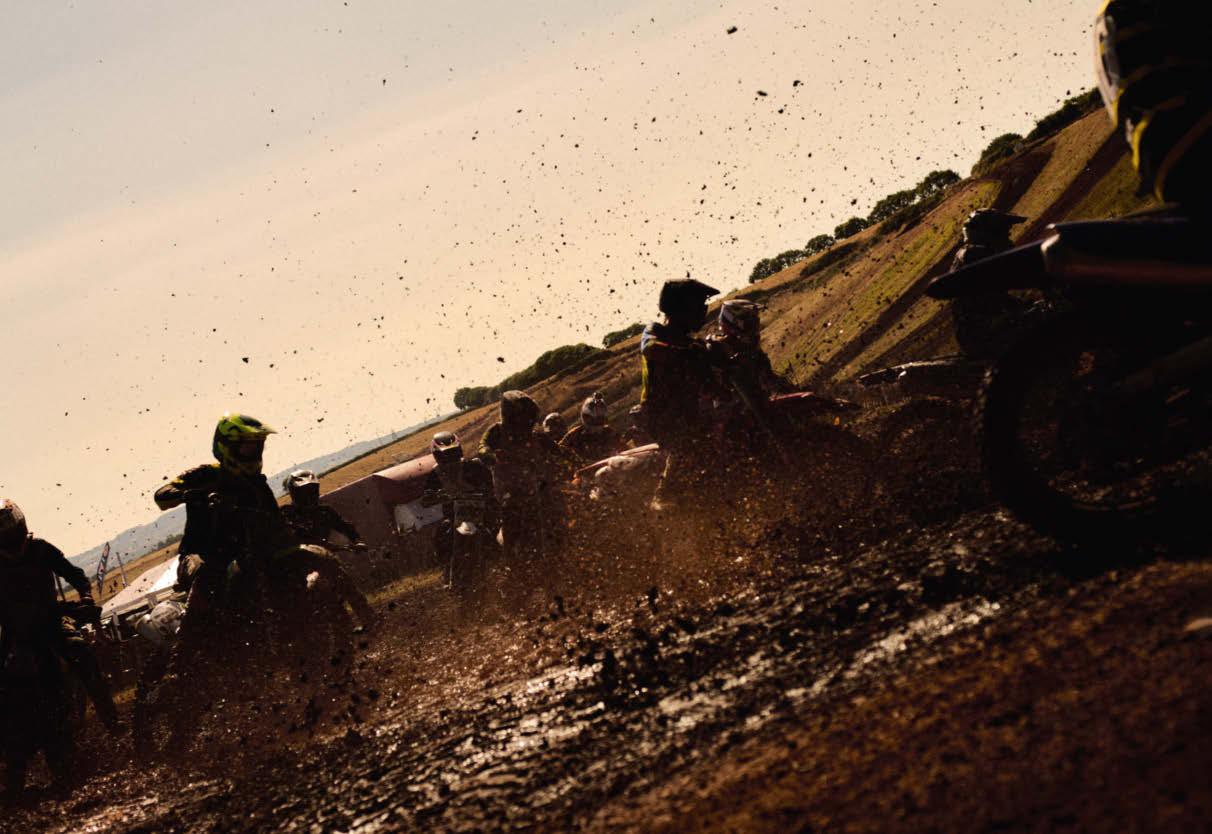
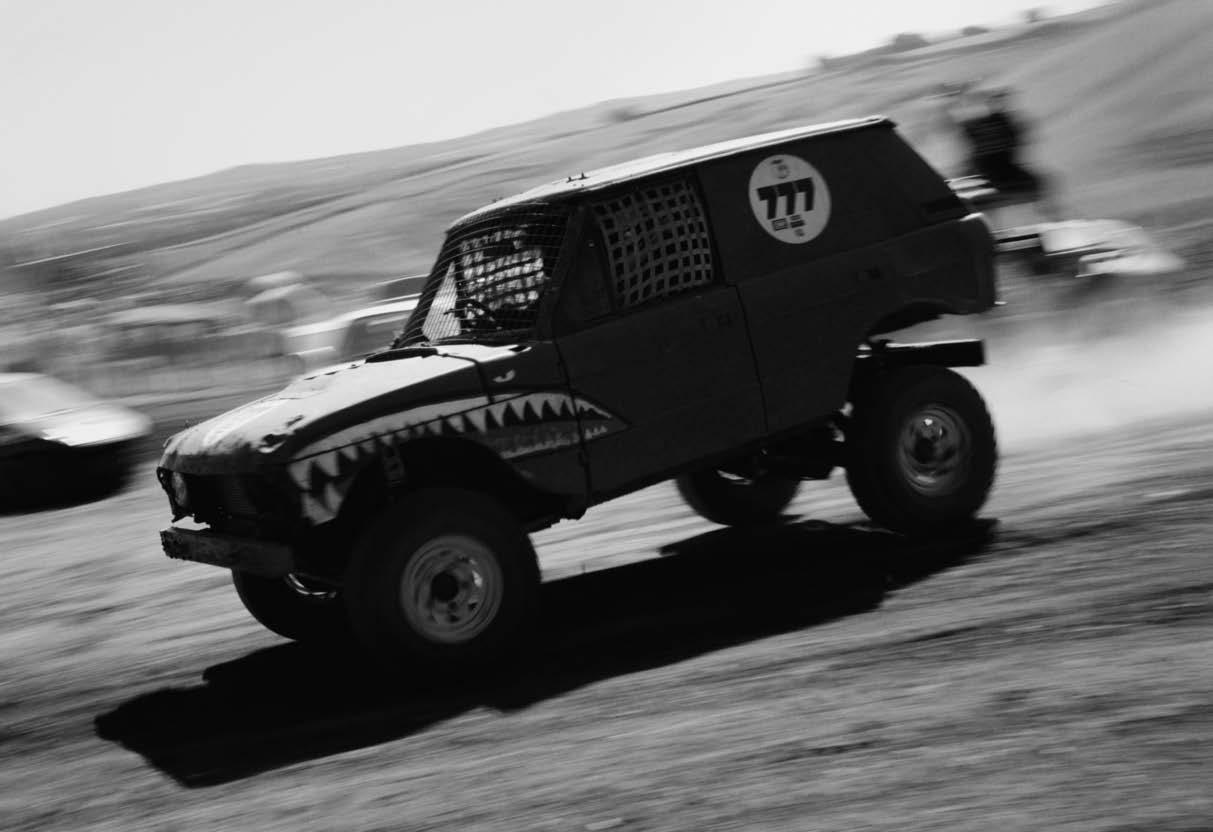
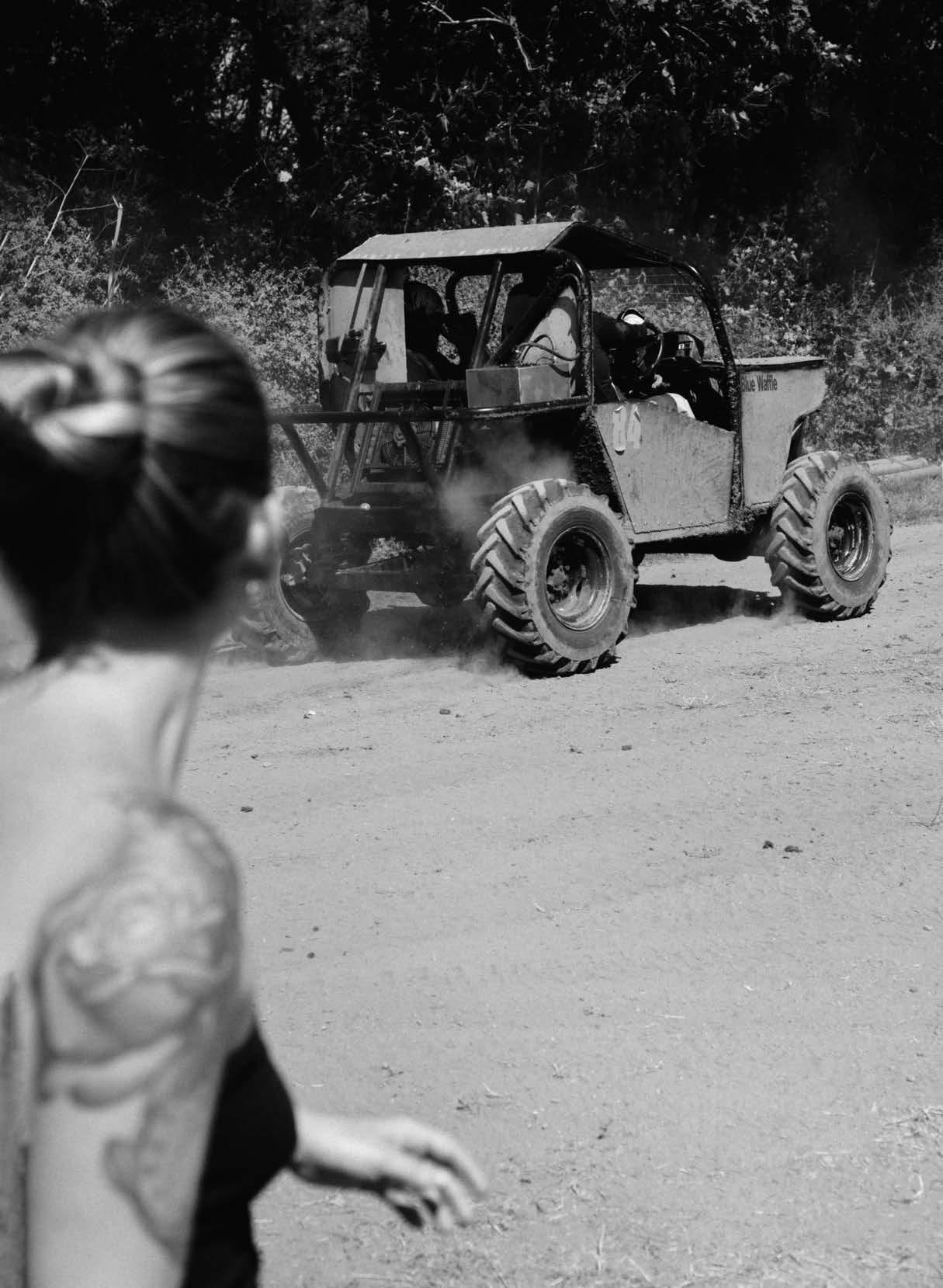
Keeping order: “I’d noticed there were a couple of lasses helping organise the races like the main stewards, trying to bring a bit of order to the chaos, always on their walkietalkies,” Parker says. “I didn’t really want to mess with them, because they were seriously busy. They had a tough job.”
Can’t stop the feeling: “I started Mudbillys as I missed how racing used to feel,” says King Billy (pictured opposite). “It began in a stubble field – no sponsors, no grandstands, just mud and engines. There wasn’t a plan, there was a feeling, and we refused to let it fade. Now, from the moment the gates open, it doesn’t stop – no filler, no polish, just motion. You don’t consume this lifestyle, you build it. And when you stand beside people who feel it the same way, you realise it’s bigger than you. Seeing kids stood in the paddock the way I used to, watching, learning, dreaming, I realise this now belongs to thousands. That’s a legacy.”
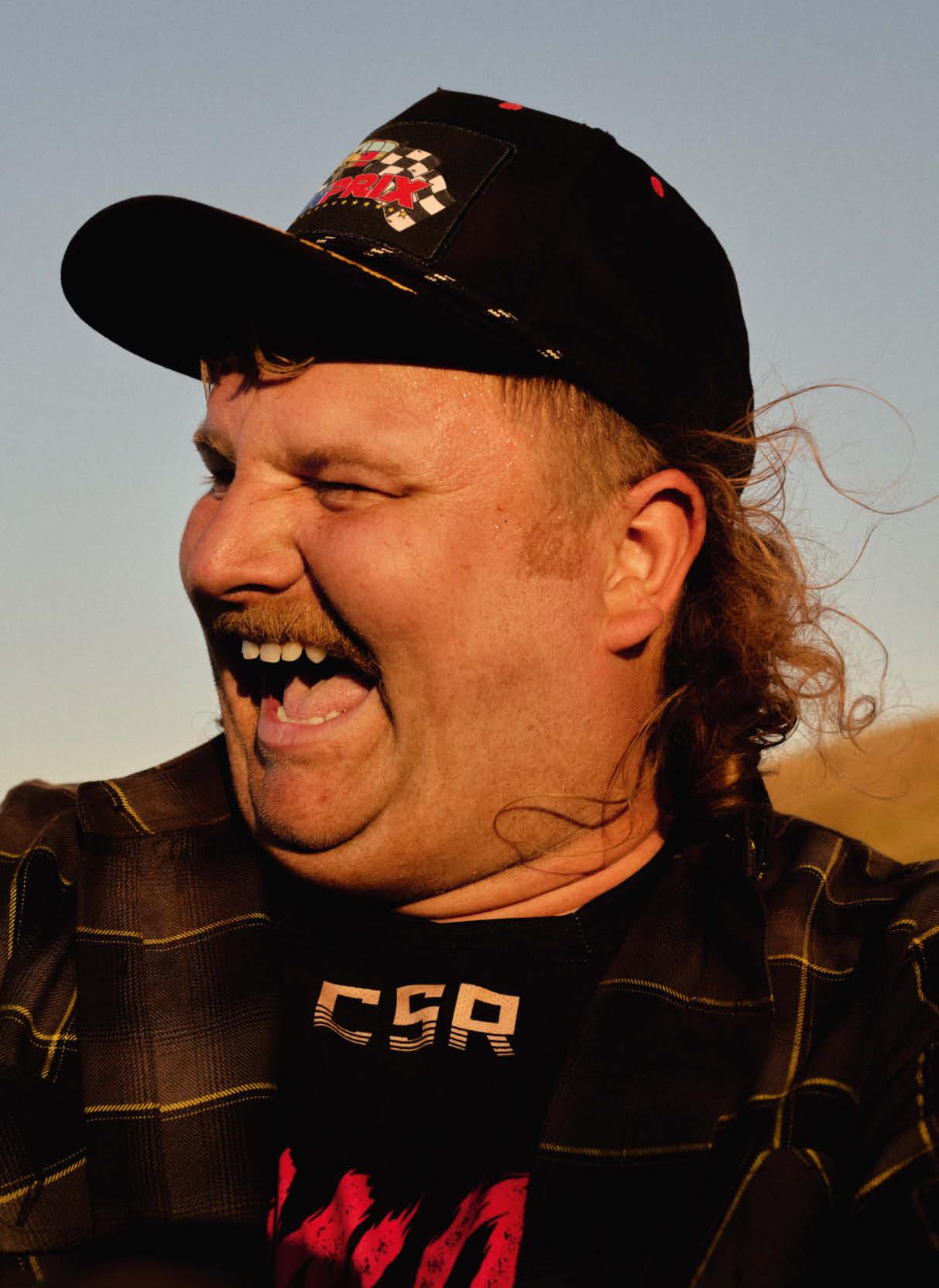
“There wasn’t a plan, there was a feeling, and we refused to let it fade”
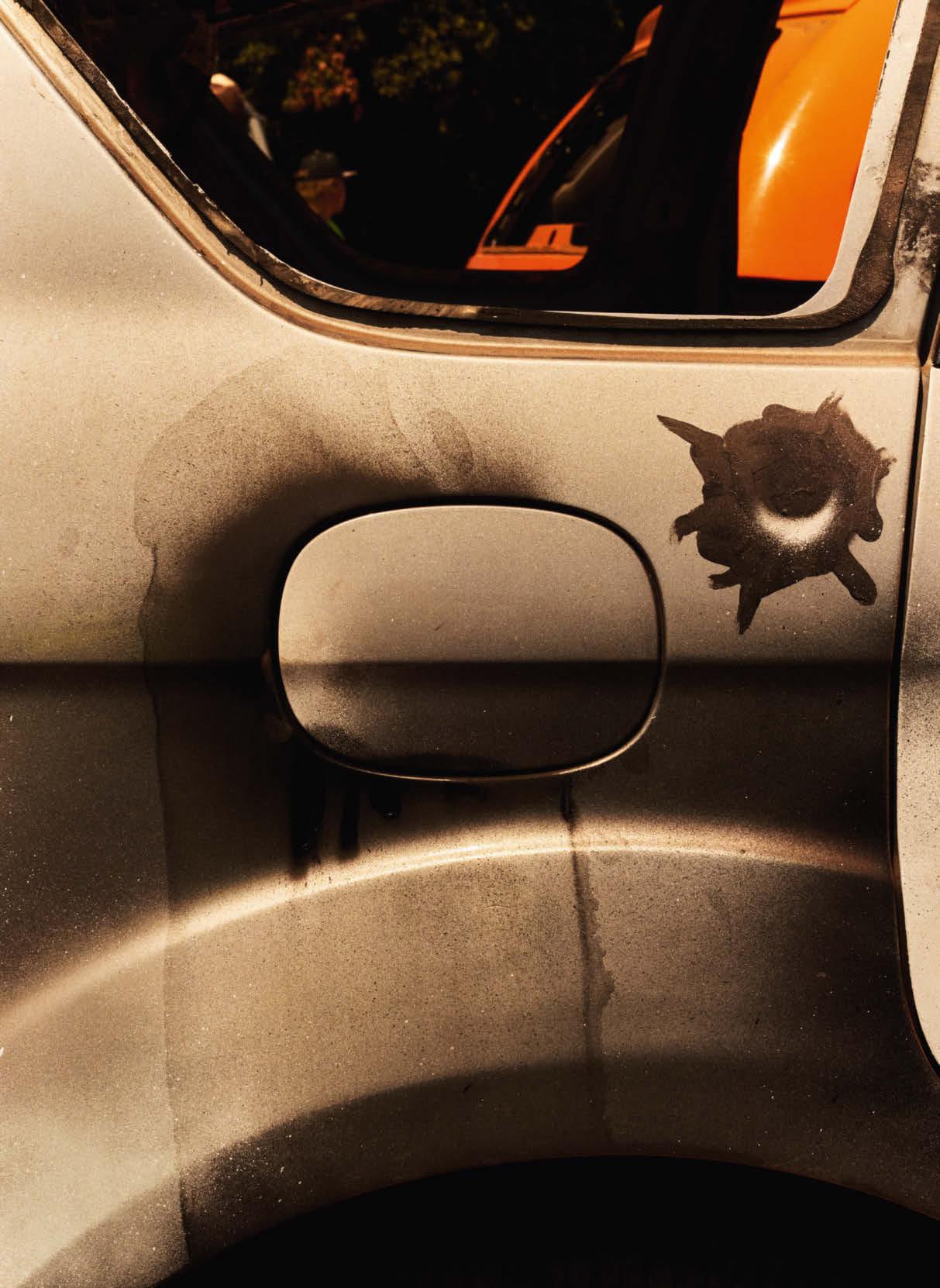
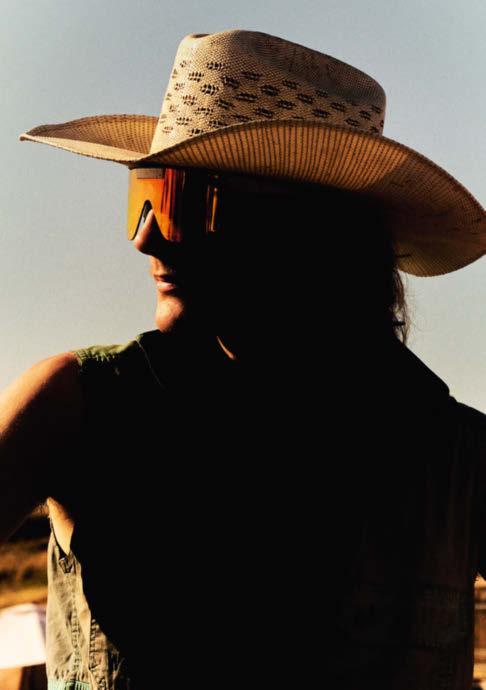
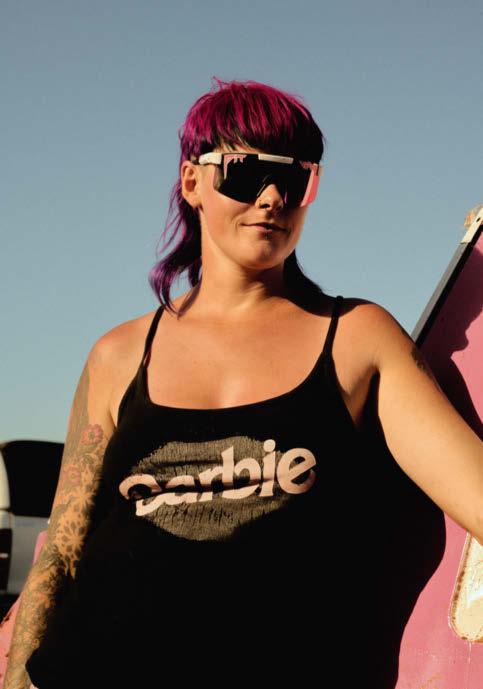
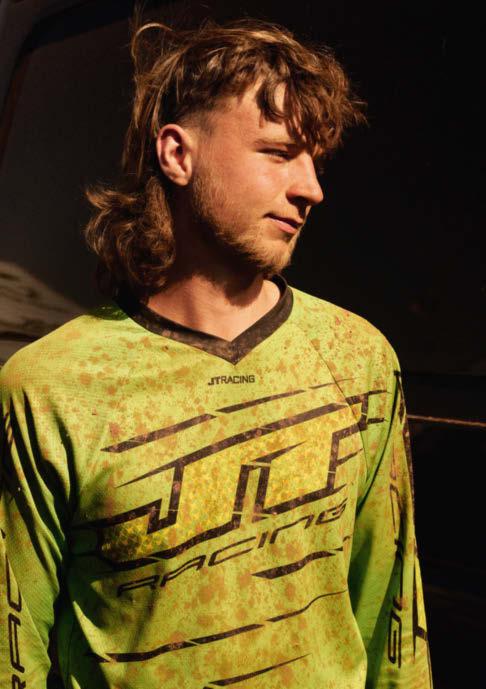
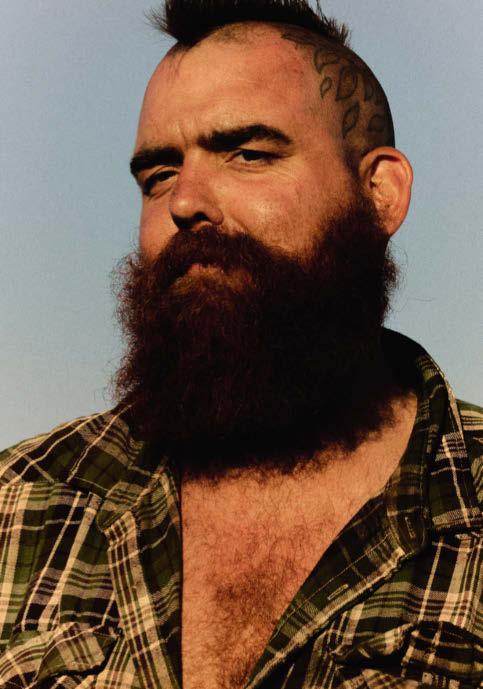
Roar power: “One of the last races was all classes of bike competing together,” Parker says. “It was loud.”
Hair of the dog (opposite, clockwise from top left): John, Joe, Guy and Yazz.
“I’m a farmer by trade and a redneck by night,” says Joe. “Mudbillys is an adult’s childhood dream come true.”
“The vibe is electric,” adds Yazz. “Everyone helps everyone, and we all laugh together. There’s no judgement, and everyone is included. Me and a dog won the mullet competition – if that isn’t inclusive, I don’t know what is! It’s nice to feel seen and heard as a female in a male-dominated world.”
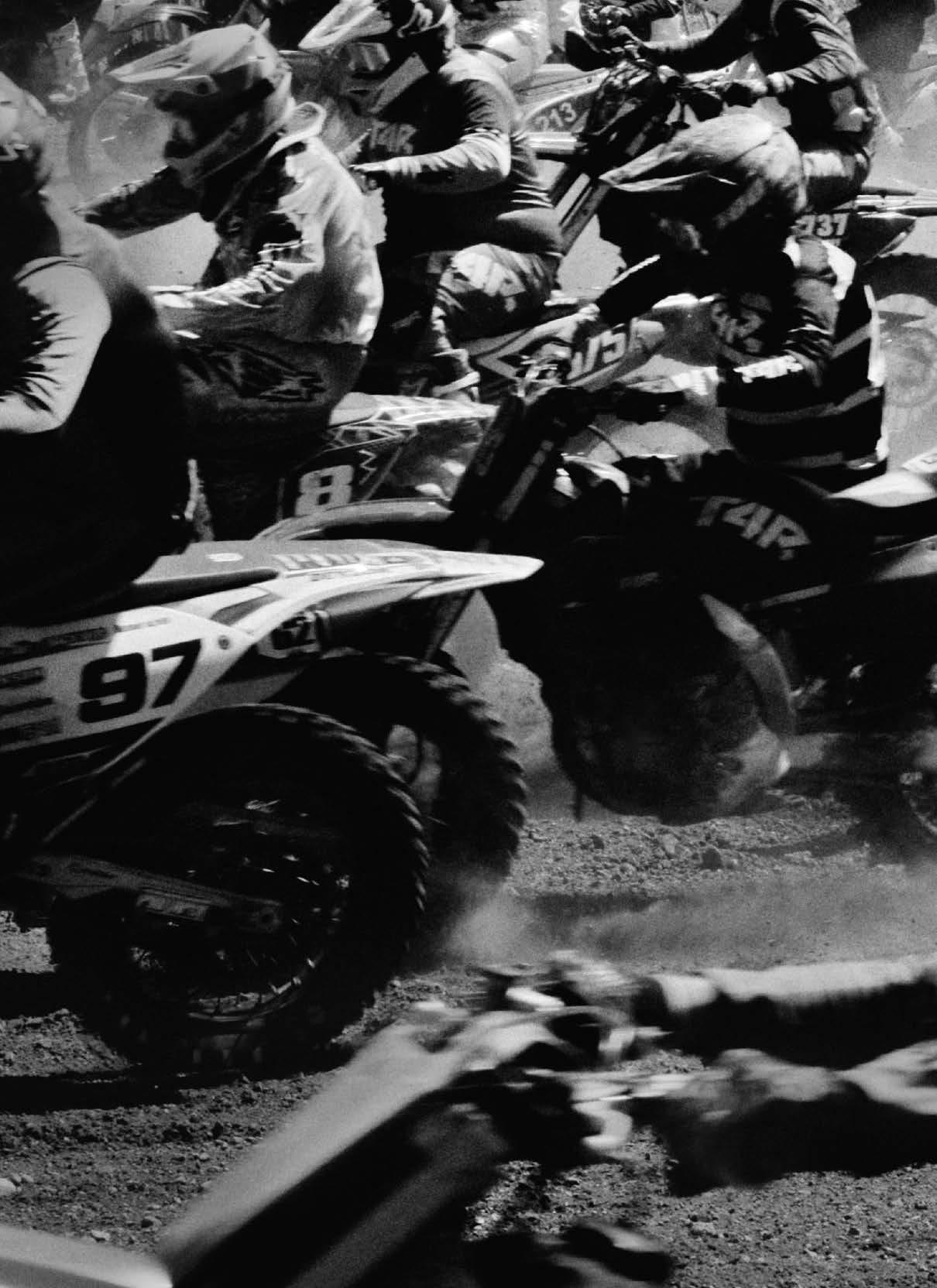
“Mudbillys is an adult’s childhood dream come true”
Spray time: “I just picked out these little details on the cars – the petrol caps. They’re probably my favourite pictures. When you zoom in, you see so much more: little bugs, mud splats. And you’re like, ‘Is that blood, or is it paint? Is that a gun shot?’”
Shot out of the blue (opposite, top): “This was one of those times I was probably a bit too close to the action! I was on top of a big hill, like a blind crest, and the cars were going round and flying over the top. They’d only see me at the last minute.”
Photo finish (opposite, bottom): “This was at the end of a race where I think they literally drove the cars until they stopped working! The commentator was like, ‘One more lap!’, and the crowd would cheer, ‘Yeah, one more lap!’ I saw this couple and thought they were cute.”
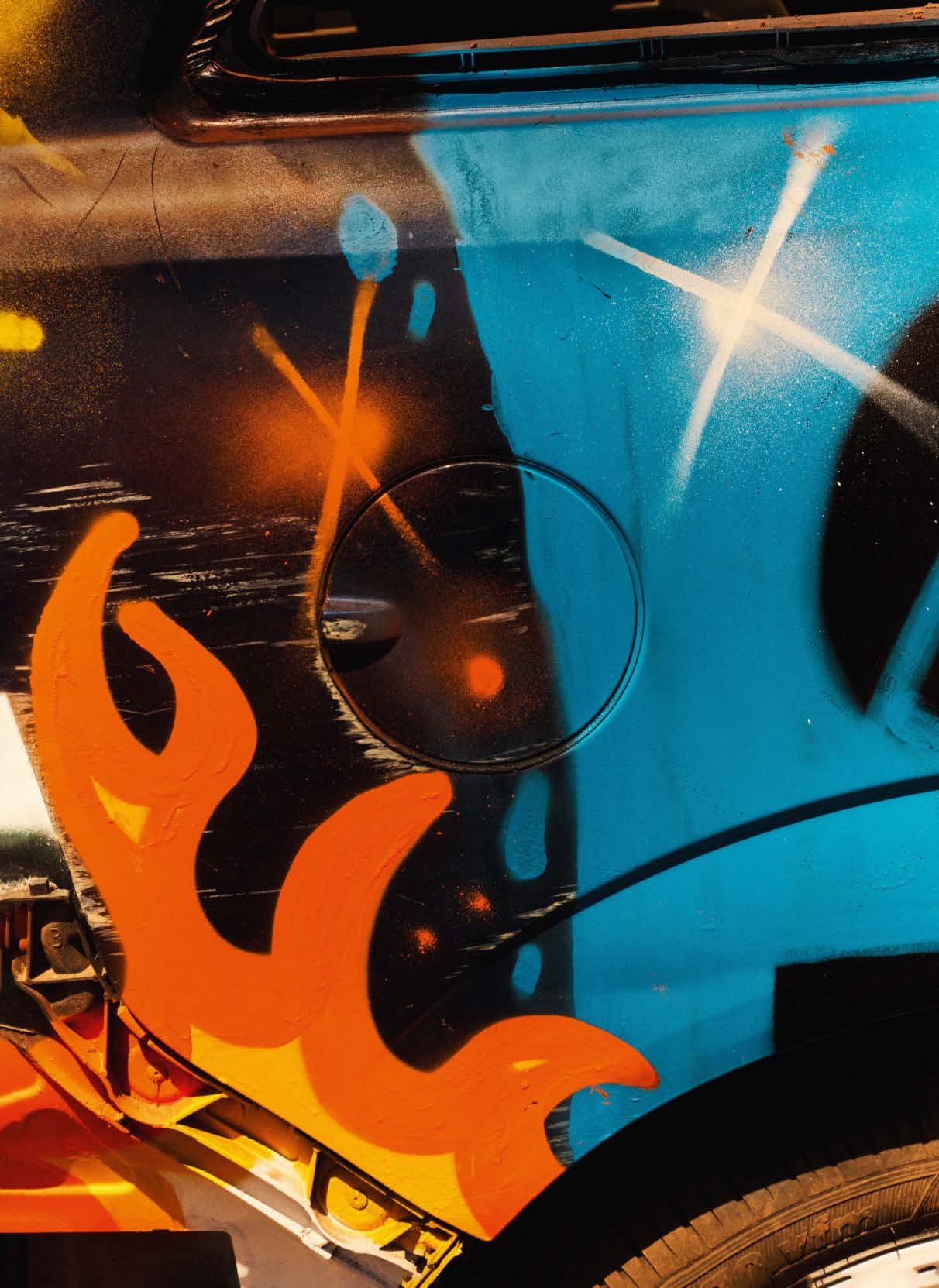
“There was a race where they literally drove the cars until they stopped working”

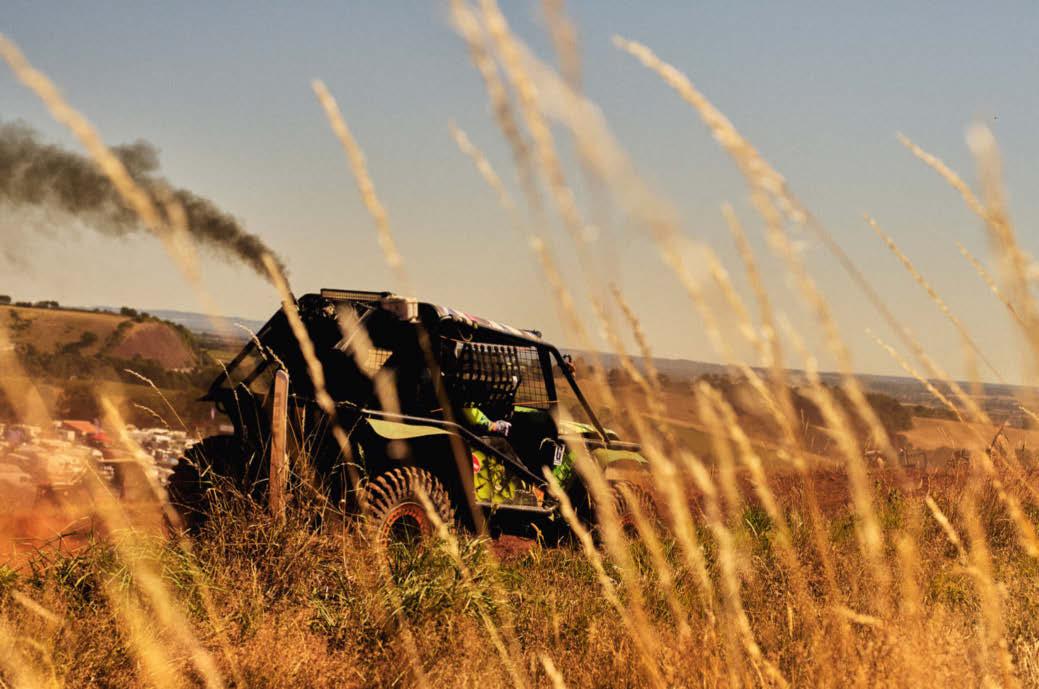
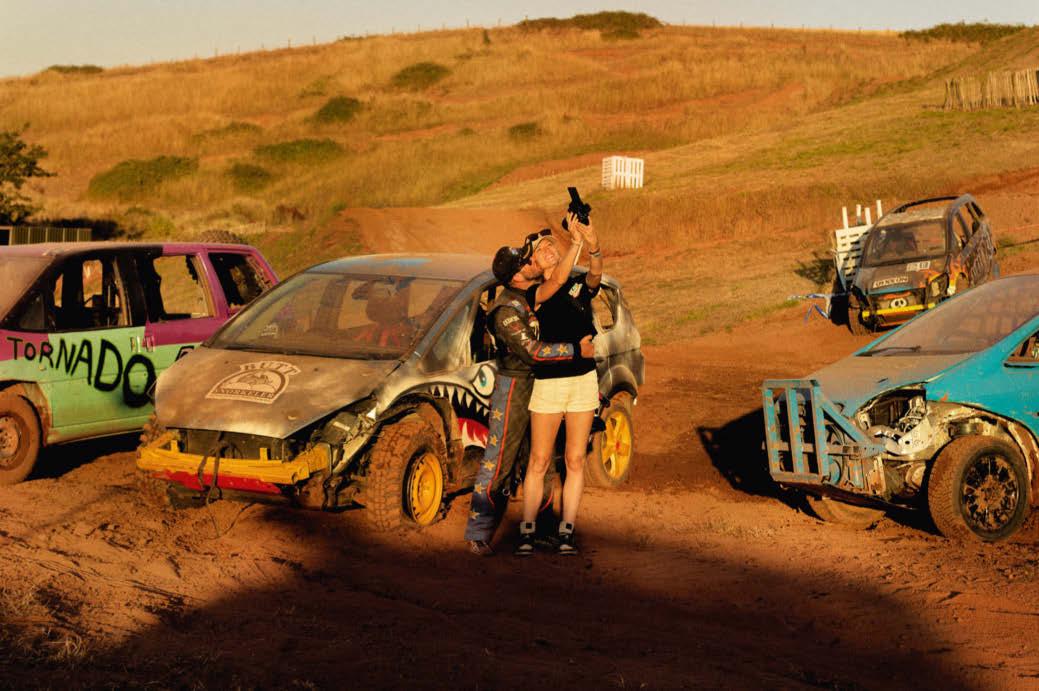
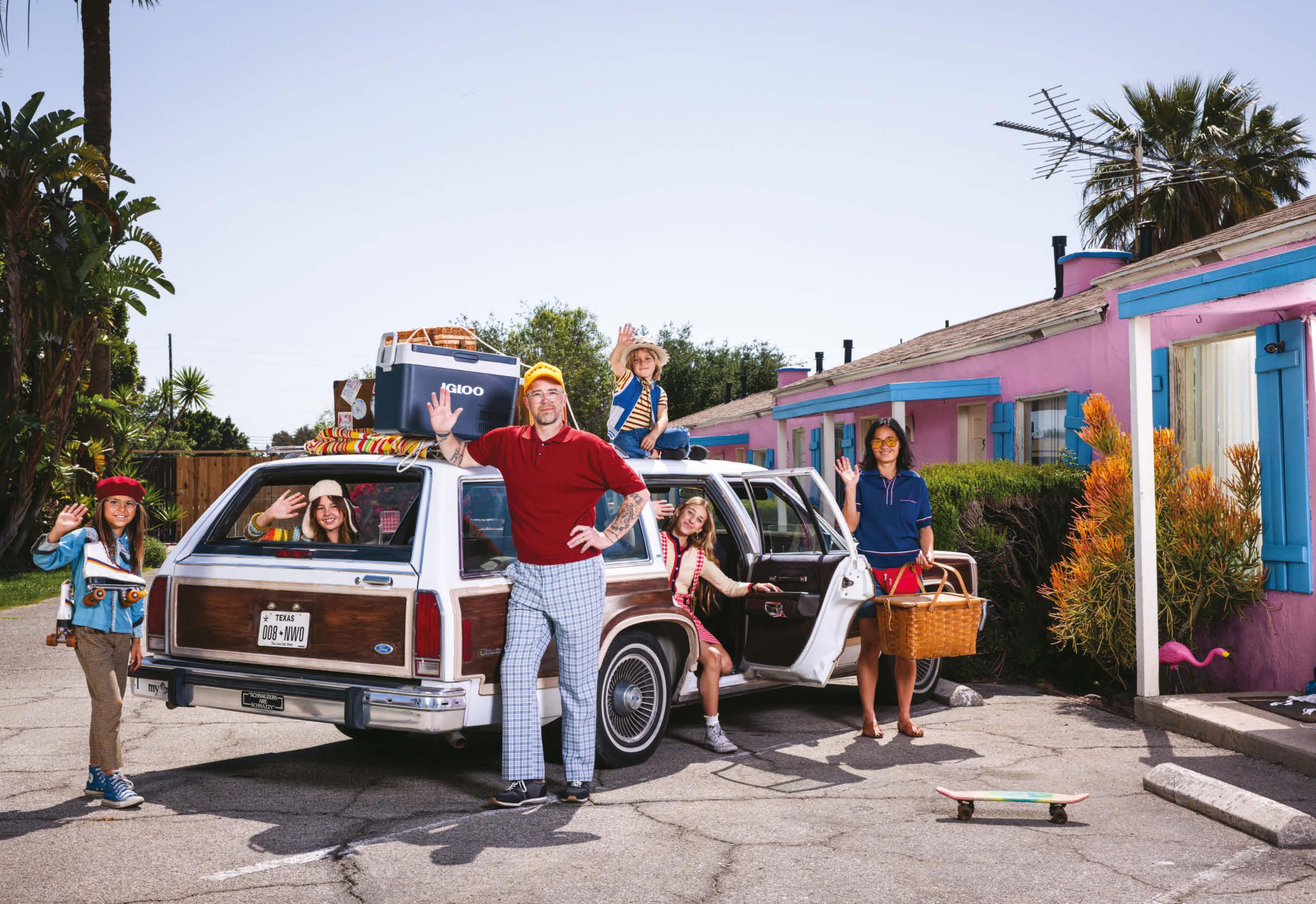
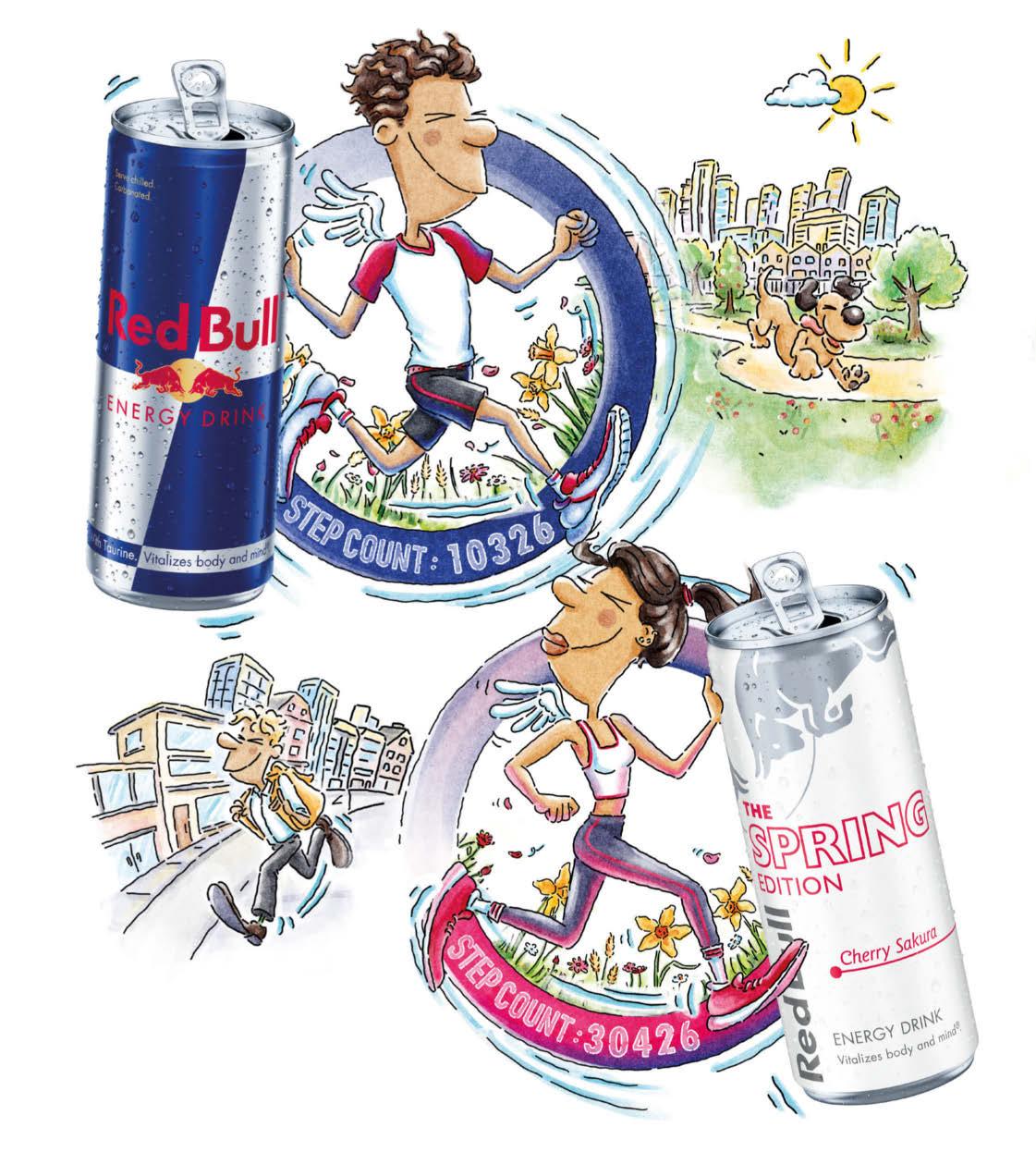
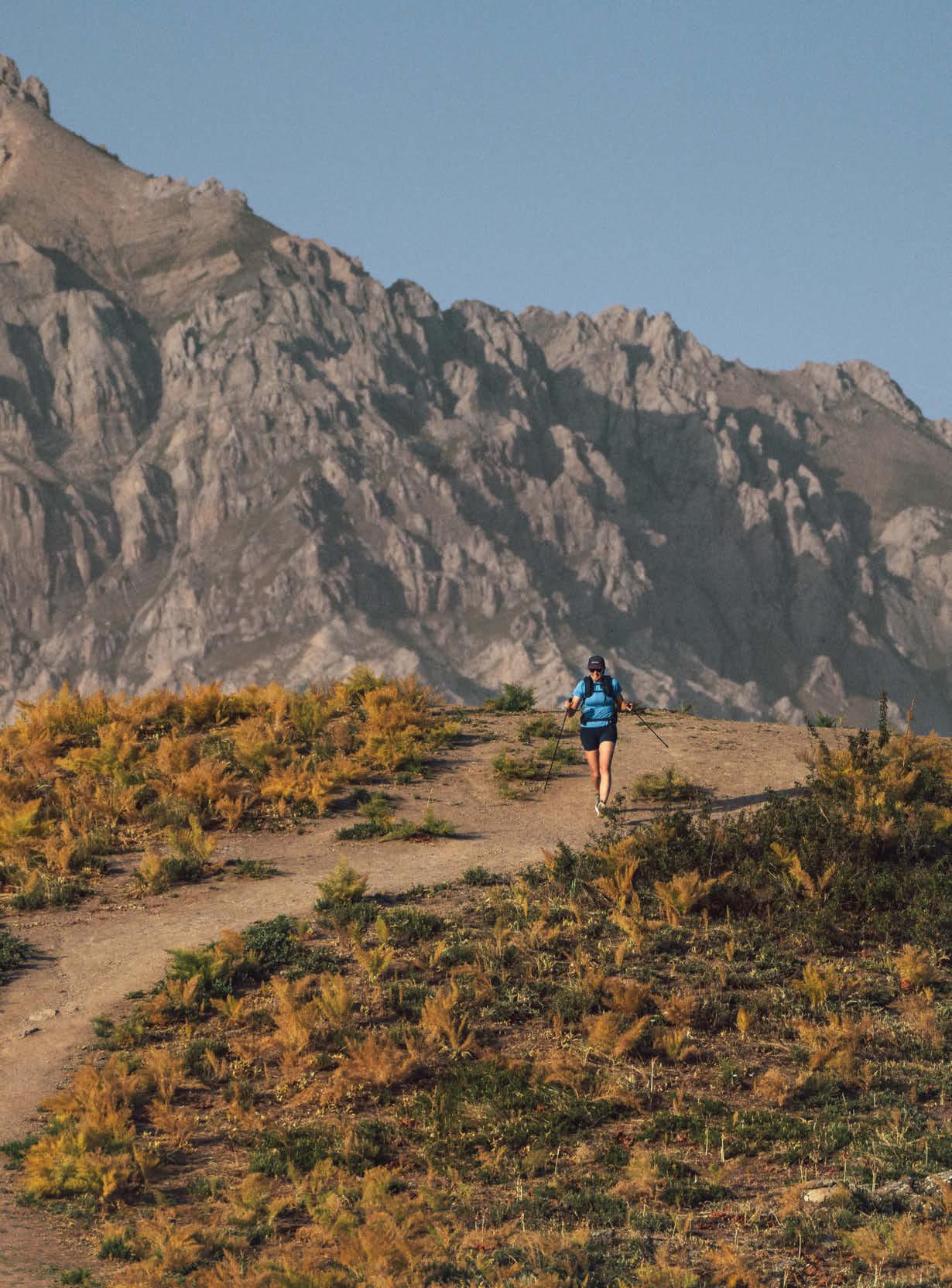
“The knowledge that I’m completely alone is liberating but also scary. No one will be here to rescue me, should I ever need it.
And the descent looks terrifying”
My heart is pounding in my ears as I take another tiny, wobbly step up the steep scree slope. Every advance is immediately halved as my trail-running shoes fight to gain purchase on the loose terrain. Beneath the precarious top layer lies fresh mud, still wet from recent snow melt, which makes it impossible to stand still without sliding back towards the valley more than 1,000m below.
If the ground underfoot weren’t making my ascent hard enough, the altitude on this nameless peak in Tajikistan’s Fann Mountains has edged past 4,000m, and my lungs are being squeezed with every breath. I can see the top of the pass ahead of me – it’s so close I can almost touch it – but with my one-step-forward, half-a-step-back approach, it’s taking an age to summit. There’s also no trail, so I’m forced to make frequent stops to look around me and determine the best, and safest, scramble to the top.
The Fann Mountains are a postcardperfect range with soaring, snowcapped peaks and sparkling blue lakes, located on Tajikistan’s north-western border with Uzbekistan. Despite its obvious beauty, the region remains relatively wild. While there are a few trail networks and a budding tourism industry, many corners remain ‘offpiste’, without any infrastructure at all. It’s the perfect playground.
I’ve come here to fastpack my way across the Fann Mountains and its plethora of peaks. Fastpacking is a
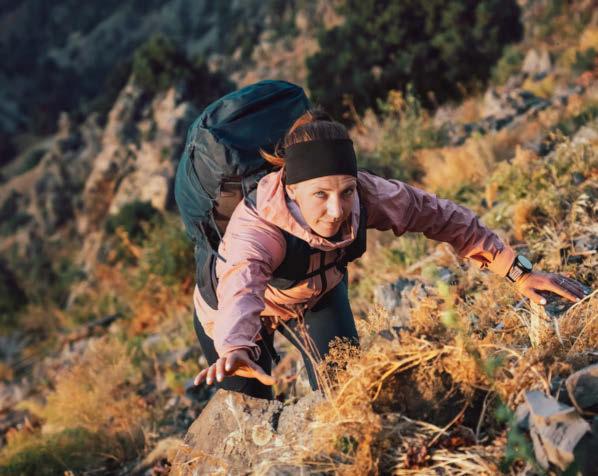
rapidly expanding niche in the outdoors world, combining the freedom of thru-hiking with the athleticism of trail running to form a hybrid style of movement that favours ultralight equipment, big days on the trail, and exploring as much distance as possible (relative to the individual). I’ve been exploring the world’s peaks in this style for a decade, chasing lengthy mountain crossings as well as long-weekend blister-fests closer to home in the Scottish Highlands. For me, this style
of exploration – hard days striving for big distances that end with stunning bivvy spots and a simple outdoor lifestyle – is the ideal way to enjoy the mountains.
When my heart landed on visiting the Fann Mountains, I knew that this was how I would want to explore them. With no resupply points en route, I would have to carry all my kit and food right from the start, and I would push my comfort zone still further by going solo, relying on myself
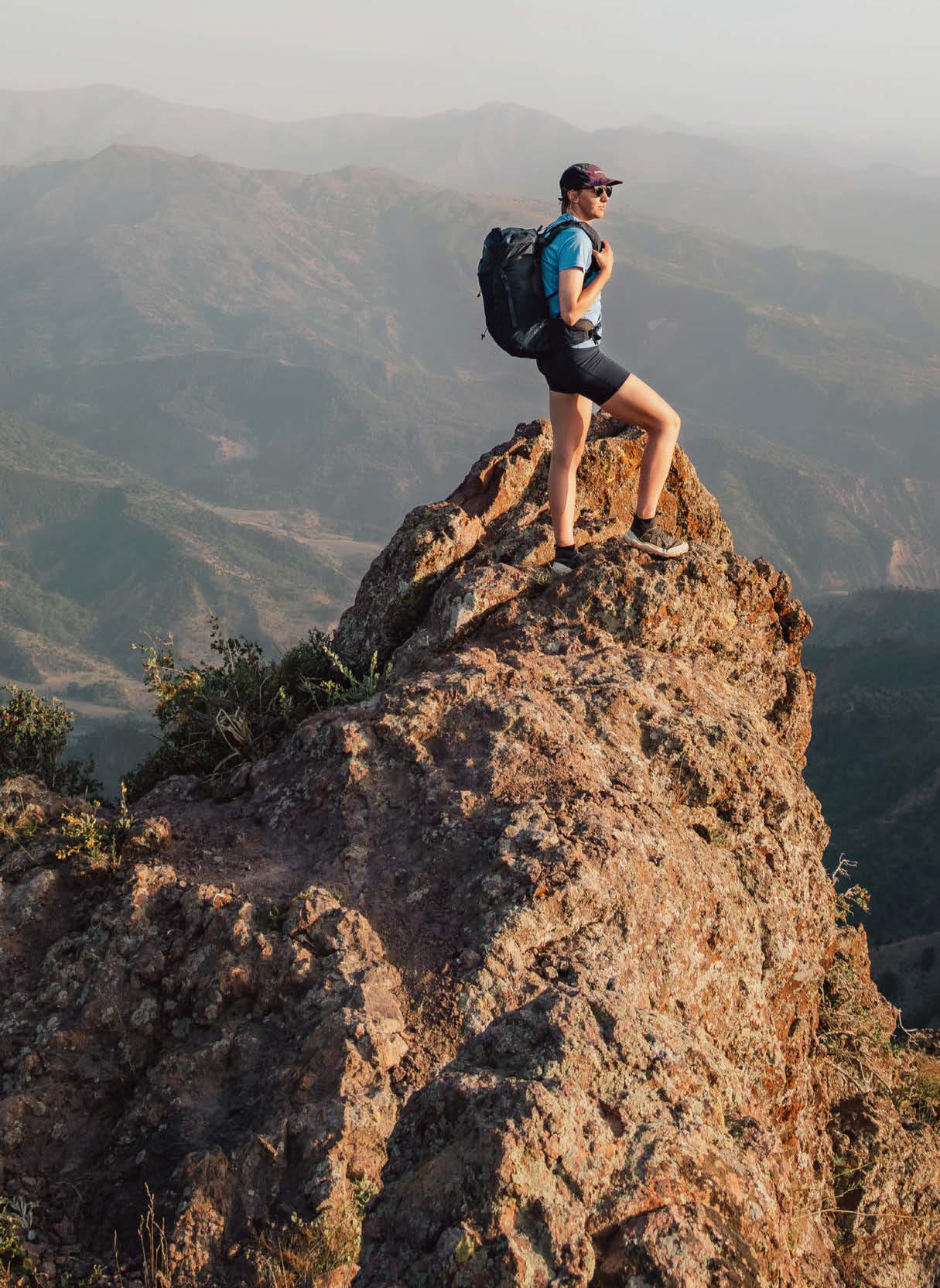
VANTAGE POINT Tough drinks in the views in one of the most isolated regions she’s ever visited; (opposite) a lack of marked trails on her route made scrambling off-piste on all fours necessary at times

Think safety first “Someone should always know where you are. I use either a GPS tracker (SPOT or inReach) or simply Find My Phone, with a handful of people at home who also know my route and expected finish date. Even without phone signal to check in, these measures can reassure loved ones.”
Don’t overshare
“When wild camping by yourself, it’s best not to tell people where you plan to go. I usually lie, or say I have a hotel booked in another direction. Equally, I don’t share the trip online in real time – my social media posts come out a few days later.”
Journal your journey
“I make voice notes as I go, then journal deeper at my campsite. The time alone can be really illuminating!”
Be prepared
“There will likely be numerous scenarios where no one is around to help you. I take headphones to distract myself during scary segments.”
Learn the lingo “Being able to communicate will really deepen your trip and experience. Some basic phrases, or simply having Google Translate for the region you’re travelling, make you far more approachable and allow you to make connections with locals.”

entirely for navigation, logistics, decisions and enjoyment.
I’ve been following a squiggly 400km route between a dirt road south of the city of Panjakent and a small town called Zeravshan, which I devised over hours of looking at maps and satellite images. I didn’t know for certain whether all of my route would ‘go’, but pushing my skills as a mountaineer was a sub-goal of mine, in addition to simply adventuring in this wild place and traversing the distance. Hence how I find myself trying to cross a 4,200m mountain pass on the second day of a six-day expedition with no trail whatsoever.
As I reach the ridge’s summit after five hours of clambering, I’m definitely at the outer reaches of my limits. Elated but shaky, I’ve been in the no-fall zone
for longer than I feel entirely comfortable, and at such a high altitude I need to catch my breath in more ways than one. Here, in one of the most isolated places I’ve found in any of my travels, the view is stunning: snow-capped peaks and blue sky as far as the eye can see, and no sign of humanity in any direction. The knowledge that I’m completely alone is liberating but also scary. No one will be here to rescue me, should I ever need it. And the descent looks terrifying. A cornice of snow clings to the western edge of the ridgeline, and I can’t see any ideal line. The gradient is impossibly steep, and, with the melting snow and loose scree, I know it isn’t risk-free. I sit on the ridge to do some breathing exercises and attempt to steady myself.
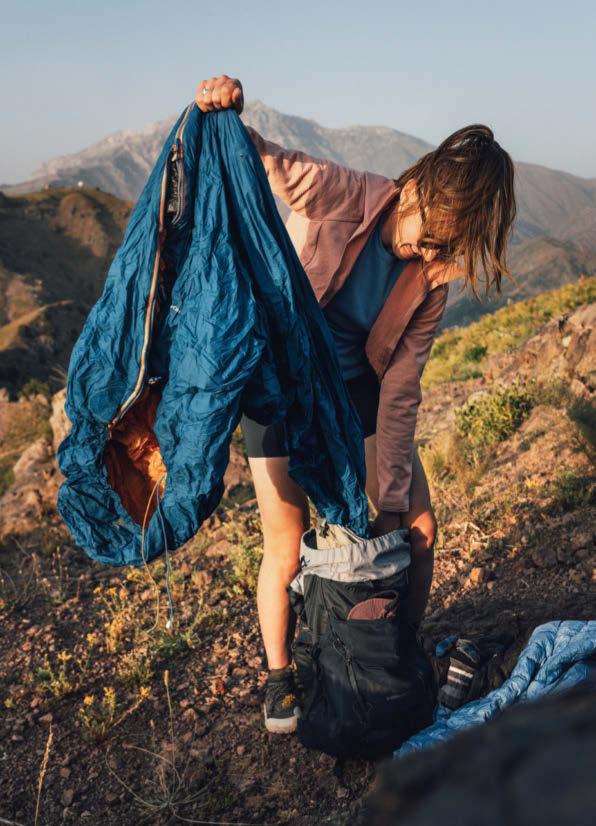
Edging my way off solid ground, my steps are uncertain. If I pick up any speed, I’ll likely slip and tumble into the valley below. Equally, I don’t want to stay up here for too long: the altitude is spinning my brain inside my skull, and I want to get lower to where I can think and breathe better.
These are the moments when being solo feels sketchy. I would love to have someone to follow right now, or at least to reassure me that it’s going to be OK, but I got myself up the mountain and it’s my job alone to get myself down again.
By the time I reach the valley floor, passing green shrubs for the first time since leaving the tree line eight hours ago, I’ve fallen on my arse at least 10 times, but it could be many more;
The Fann Mountains are in the north-west of Tajikistan and can only be accessed, by 4x4, at a few locations. There are almost no facilities in the region, aside from a few guesthouses in small villages where hikers may find a room with meals. There are also few camping outfitters in Tajikistan, so you’re advised to travel with everything necessary to be selfsufficient in high mountains.
“For the most part, fastpacking is the most soothing way to spend time outdoors”
Jenny Tough, endurance athlete and adventurer
I’ve hit the wall – a state where a runner is so depleted of energy that they can move no further. My legs awkward and flimsy, the descent involves as many somersaults as it does respectable running lines.
The very base of the valley is a flowing, pale-blue river with beautiful clean water coming directly from the glaciers above. I stop, finally removing my pack for the first time today, and with trembling hands I rummage for something quick to eat, hoping that a boost of sugar will stop the shaking in my legs. My only remaining task for the afternoon is to find a spot to spread out my bivvy and rest for the night ahead of tomorrow’s travails.
To many people in the outside world, fastpacking might appear to be a gnarly, gruelling, rugged, extreme sport. While I certainly experience moments that feel that way, for the most part I find it the most relaxing, natural and soothing way to spend time outdoors. I run, walk or hike as far as my little legs will carry me; I sit next to beautiful rivers and drink their fresh water while reflecting on my surroundings; and I sleep in a simple bivouac outside, beneath the stars, breathing fresh mountain air and waking peacefully with the sun.
In the unspoilt wilderness of the Fann Mountains, this routine is a merry bliss and, after six days of living out of my small 32-litre backpack on my journey between these immense peaks, my legs are aching but my cup is full.
Jenny Tough is an endurance athlete and adventurer, and the author of SOLO: What Running Across Mountains Taught Me About Life. She has completed world-first solo runs across three mountain ranges and is a two-time winner of the Silk Road Mountain Race; jennytough.com
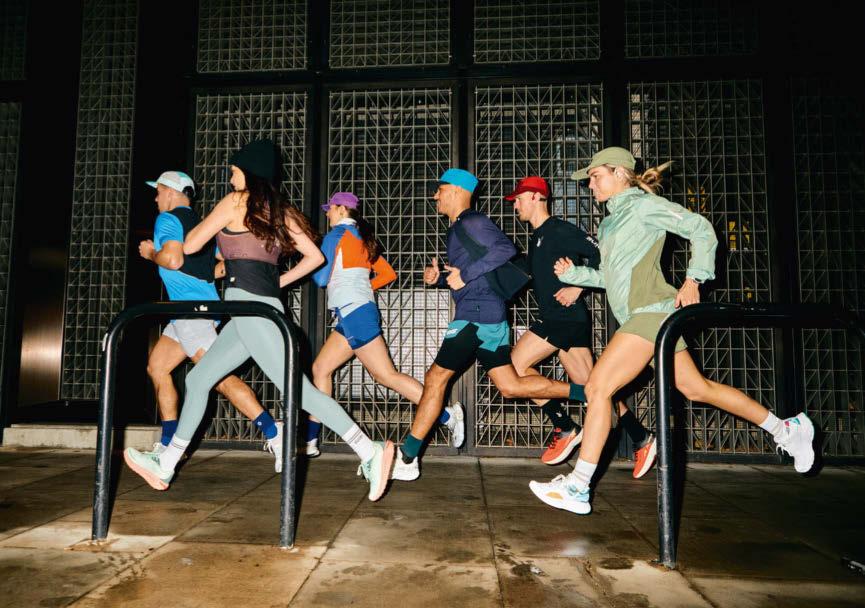
Drinking holes are linking up with run clubs, pairing social training sessions with refreshing session ales. Here are four of the best…
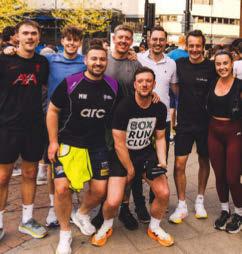
The Leeds City Centre branch of sports bar BOX has launched an inclusive midweek 5K run that starts and ends on Infirmary Street, venturing out on a loop that takes in the Leeds and Liverpool Canal. If that wasn’t enough to tempt you to lace up, you can also get 50 per cent off food and drinks on Wednesdays if you join its Strava community group. BOX, 15 Infirmary St, Leeds LS1
Located in the heart of the Old City, and a stone’s throw from the Harbourside, O’Neill’s Bristol is an ideal spot for a post-run reward, whether you’ve been hitting the hills, returning from a jaunt out west along the towpath to Clifton, or spotting local landmarks such as the SS Great Britain and St Mary Redcliffe in town. O’Neill’s, 7-9 Baldwin St, Bristol BS1

If you’ve been ticking off laps of The Meadows, dodging tourists on the Royal Mile or making a calfbusting run to Arthur’s Seat, you’ll want to make The Three Sisters your finish line. The courtyard of this Cowgate icon is made for post-run debriefs and poring over Strava stats, and there are DJs and live music most nights if you want to shed your running shoes for the dancing kind. The Three Sisters, 139 Cowgate, Edinburgh EH1
Raising the bar: pub run-club communities are increasing in popularity – the humble boozer provides the perfect social space to end a training session
Glasgow’s RIKA Run Club goes big on the social side of the sport, hosting a 5K every Thursday lunchtime from The Social Hub, a hotel and co-working space in Merchant City. A variety of routes explore the Scottish city’s greener side – either on a loop around Glasgow Green or an out-and-back along the River Clyde – and the pace is accessible, with most runs wrapping up in 30 minutes. Coffee and pastries are waiting at the finish line, and there’s a bag drop and showers available to keep your postexercise glow fragrant. The Social Hub, 15 Candleriggs, Glasgow G1

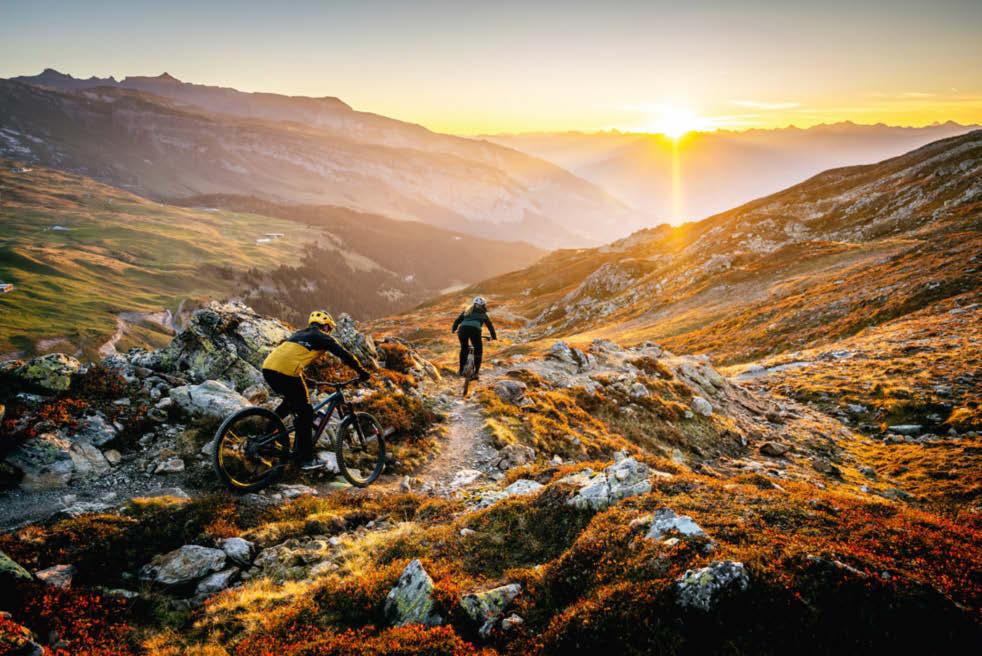
LAAX is renowned as Europe’s freestyle snowsports paradise.
The Grison Alps resort combines five snowparks and the world’s largest halfpipe with 216km of slopes, and every January it hosts one of the biggest freestyle ski and snowboard contests around – the LAAX OPEN.
But the Swiss spot is much more than a winter destination. In fact, its November-to-April ski season is only half the story. During summer, LAAX’s previously snow-covered runs become a vibrant adventure-sports playground as the melt reveals an expansive smorgasbord of trails and tracks, set against a backdrop of towering peaks.
Its 330km of mountain-bike trails are the jewel in the crown, rivalling any other alpine location. Home to a wide variety of routes and runs, LAXX has something for all abilities, whether that’s a mellow cross-country pedal, technical singletrack or gravity-fuelled freeride line. And for adrenaline junkies, Flims LAAX bikepark’s flowing trails –accessed via gondola lift – are made to be sessioned from sunrise to sunset.
The pedal-powered offerings don’t end there: there are plenty of road- and gravel-cycling routes into the heart of the Swiss mountains, and
Swiss resort LAAX is the ultimate summer adventure playground
the rocksresort Park pumptrack and skatepark are great for honing skills.
If your idea of fun takes place not on two wheels but on two feet, LAAX is still tough to beat. Spanning 250km and set against the stunning backdrop of the UNESCO Natural Heritage Site Sardona, its signposted hiking network is ideal for walking or trail running, with a diverse range of distances for everything from a brief pre-breakfast stroll to a multi-day epic. The area’s three mountain lakes also make for a perfect mid-activity cooling-off spot and are a destination in their own right, bringing beach vibes to the mountains.
Whatever your pursuit or passion, the family-friendly rocksresort has modern, eco-friendly apartments and rooms for all budgets. Situated at the heart of the LAAX resort, it’s a stone’s throw from the starting point of any activity, and its range of restaurants, bars and shops will keep you entertained once the sun has set on your daytime mountain adventures. All that’s left is for you to discover what freestyle LAAX can unlock for you. laax.com
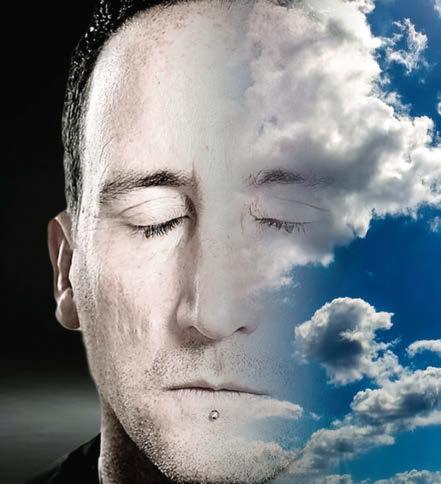
Want to be a superhero? Or to meet Taylor Swift? With practice, your every wish could be granted…
Daniel Love remembers the screaming and the blood, but not the dream. It was the 1970s, and Love was, he says, a “strange little child” plagued by parasomnias. One night, his parents rushed into his bedroom to find their five-year-old screaming, tiny bloody handprints smeared on the walls. “I’d had a nightmare and a nosebleed while sleepwalking,” he recalls. “When I was a child, sleep was a terrifying experience.”
Most kids would have hidden beneath the covers, but Love fought back. Using a child’s logic, he figured that if he caught the exact moment he fell asleep, he could prove the monsters weren’t real. “I tried to fall asleep consciously and hold onto that thread of awareness. Once you know it’s a dream, nothing can harm you.” The nightmares stopped and his dreams became fantasy worlds where he could do anything he wanted, from flying into space to becoming Spider-Man: “Every night was an adventure.”
Love didn’t know it, but he was training in oneirology – the study of dreams. Today, as a lucid-dream educator, he teaches how to recognise when you’re dreaming and create your own adventures. “If you had the chance to have any wish granted, you’d take it, wouldn’t you?” he says.
Lucid dreaming has many practical uses, too, from easing recurring nightmares to tackling real-world fears. Love himself overcame a fear of flying, then took up skydiving and wing-walking to “improve my dream data”. He’s since helped clients work through phobias including a fear of spiders and of heights.
He’s quick to strip away the mysticism, however: “Lucid dreaming drifts into new-age twaddle so often. It won’t solve serious mental health issues, and I’d be very wary of anyone offering astral projection or out-of-body experiences.” For Love (pictured), a lucid dream is a simple biological process. It occurs when the prefrontal cortex – the part of the brain used in critical thinking – is activated while you’re sleeping. “Think of it as an extreme sport of the mind. It’s essentially biological virtual reality.”
The work begins with learning to mistrust your own perceptions. “Every
“Lucid dreaming is like an extreme sport of the mind”
night, five times a night, you believe a false version of reality. Lucid dreaming is just removing that gullibility.” Ultimately, Love says, the real payoff doesn’t come at night but when you’re awake. “When you train yourself to question reality in dreams, you become more self-aware in daily life. Life becomes more lucid.”
The first step is a dream journal, but Love wants analysis rather than a plot summary. “Record your dream journal with the question: ‘Why didn’t I realise I was dreaming?’” This helps you identify your ‘dream personality’. If your teeth keep falling out or you’re being chased by zombies, you’ve found your target. Love calls these ‘fire drill’ dreams: your brain is practising how you’d react if the worst happened. By recognising these stress metaphors while awake, you’re training your brain to spot the ‘glitch in the matrix’ next time they appear during sleep.
Once you know these triggers, you must apply them to your waking life five-to-10 times a day. This is something Love calls “interdimensional spot-the-difference. Whenever I feel stressed, I stop and ask, ‘Could this be a dream right now?’” You must do this with total humility, ignoring the gut feeling that everything is real. “You’re assuming this conversation is real right now... but how do you know?” By challenging your environment while awake, you break the ‘reality arrogance’ that allows you to be a ‘gullible victim’ of your own mind at night.
Because the brain is a master of simulation, your eyes can’t be trusted; you need a physical test that relies on biology. Love suggests the Nose Pinch Test: “Pinch your nose and try to breathe through it. In a dream, you’re pinching a simulation of a nose with a simulated hand. If you can still breathe, you know you’re dreaming.”
For the novice who finally breaks through, Love’s advice is don’t try to be God immediately. Attempting to summon a Ferrari might cause an emotional spike that wakes the sleeper. “For your first lucid dream, just be a tourist,” he says. “Go exploring. Touch things. Talk to what I call the ‘dreamlings’ your mind has created. Once you’re stable, the limits are set only by your own expectations.”
Daniel Love, lucid-dream educator thelucidguide.com
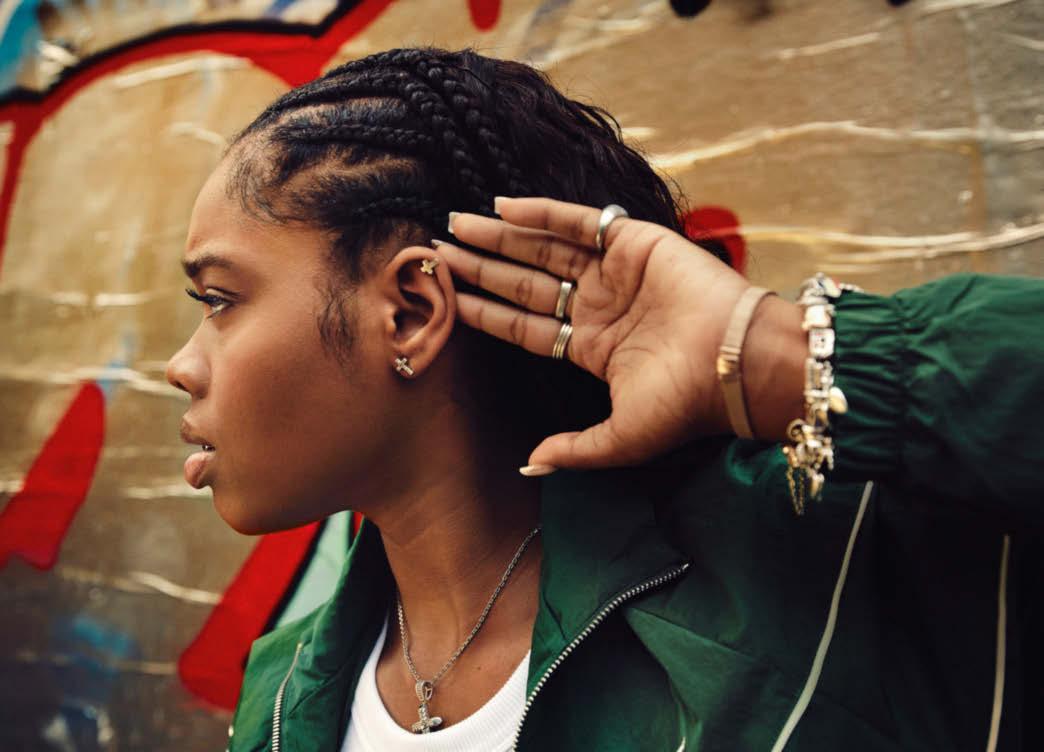
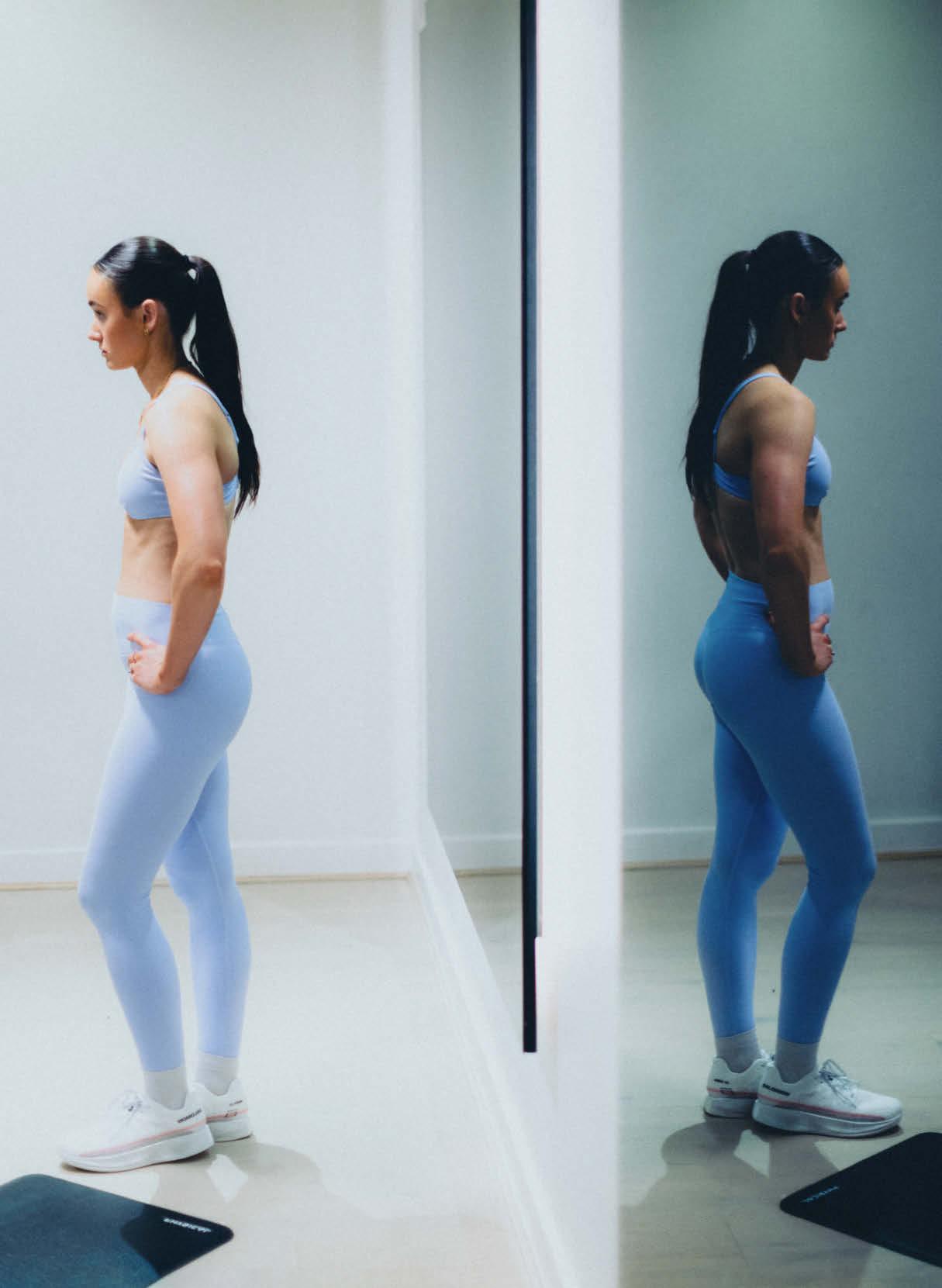
Ellen wears FABLETICS Pureluxe Strappy Low Impact Bra and No-Seam Pureluxe TLC Leggings, fabletics.co.uk; SALOMON INDEX.03 Shoes, salomon.com; COROS Apex 4 Watch, uk.coros.com; socks, model’s own
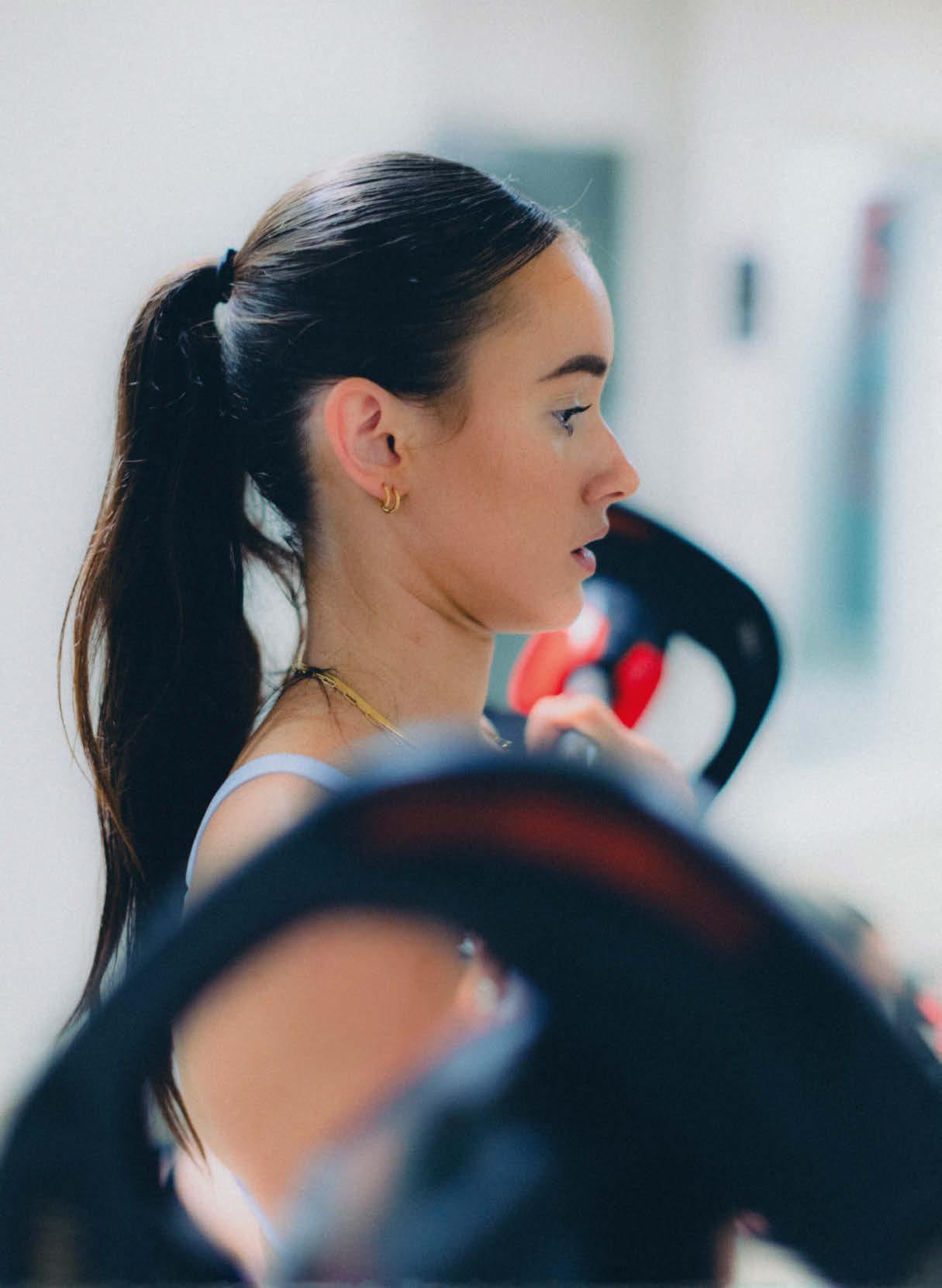
Upper body strength or core, HIIT or HYROX, lift your training sessions to the next level with this high-impact gym gear
Photography Theo McInnes
George wears VUORI Strato
Tech Tee, Kore Short Lined 5” and Crew Socks, vuoriclothing. co.uk; JOMA Fittrainer 25 Shoes, jomasport.com; POLAR Pacer Pro Watch, polar.com
Gwen wears tank top and jewellery as before; DECATHLON Elementals Woven Shorts and Kiprun KD900x LD2 Shoes, decathlon.co.uk; STANCE Icon Sport Crew Socks, uk.stance.com; GARMIN Venu 4 Watch, garmin.com
Holly wears ICANIWILL Nimble Strappy Tank Top, iciw.com; jewellery, model’s own
Thanks to Ellen, George, Gwen, Holly, Shannon, Tiff and human performance coach Lewis Paris; lewisparisfitness. com. Thanks also to Fitness First; fitnessfirst.co.uk
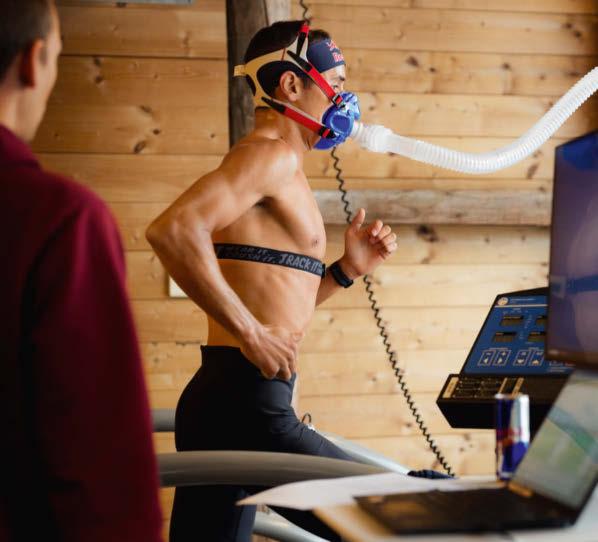
TRIED & TESTED
Whether scaling mountains or chasing PBs, altitude training can unlock new performance highs, regardless of your goals
Altitude training is an important part in the preparation of any high mountain explorer or elite athlete. When exposed to a hypoxic (low oxygen) environment similar to elevations of more than 2,000m, the body adapts by producing more red blood cells, increasing its ability to ferry oxygen to muscles during exercise. As a result, Everest climbers can arrive at base camp pre-acclimatised, shaving weeks off an ascent, while at sea level this extra capacity for carrying oxygen unlocks new performance highs.
Traditionally, altitude training was the preserve of professional athletes who could afford time in the mountains. But thanks to the rise of simulated hypoxic equipment, which mimics a high-altitude environment via a mask, chamber or tent, its benefits are becoming accessible.
James Barber, lead performance specialist at The Altitude Centre, shares how to take your fitness to the next level…
“Rugby players’ repeat sprint ability improved in just four sessions”
James Barber, altitude training specialist
The ‘gold standard’ of simulated hypoxic training, Barber says, requires you to ‘live high, train low’ by sleeping in an altitude tent for weeks at a time and training as usual at sea level. But benefits can still be gained, in a more accessible way, by flipping the formula on its head. The ‘live low, train high’ approach, using a hypoxic mask or chamber for workouts, offers more bang for your buck than standard exercise by putting more stress on the cardiovascular system with the same level of effort expended. This can translate to performance improvements in endurance pursuits such as cycling, where functional threshold power – the highest average sustained for 60 minutes – can be boosted by six-to-seven per cent in just six weeks. And results can appear even quicker in sprint-based sports such as football, tennis and rugby: “Research with international rugby players shows improvements to their repeat sprint ability in as few as four sessions over two weeks.”
Incorporating elevation into your training will involve a trip to an altitude chamber – a specially designed space pumped full
of lower-oxygen air to simulate an altitude of 3,000m – but doesn’t require specific workouts. “The key thing is not to change what you’re doing,” Barber says. “The majority of the benefit of your session comes from the actual training that you’re doing; the altitude is just upregulating your response.” He suggests dropping the intensity by 10-15 per cent on your first session to see how you respond.
Altitude training can also help with sports like triathlon and HYROX, where multiple disciplines bring incredibly high training demands. “There’s an added benefit of being able to do a bit of load management,” Barber says. He suggests that an easy run at altitude would elicit the same heart-rate response as a steady session at sea level while being a lot gentler on muscles and joints, meaning athletes remain fresher ahead of the next workout or competition.
Like all forms of physical fitness, the gains from hypoxic training start to wane once you stop. “If you remove altitude from your training altogether, you can expect to maintain those adaptations for a few weeks before it starts to drop off.” But its performance-boosting aspect could help you break through a fitness plateau, raising your baseline to new heights. “It’s almost like the fitness that you get from altitude training begets more fitness.”
Barber suggests that simply breathing air with a reduced oxygen level could provide health improvements. “There’s been a lot of research around altitude training for people with metabolic diseases – type 2 diabetes, dyslipidemia – and case studies have shown significant improvements. Just breathing high-altitude air seems to favourably change your fuel use to fat at rest, which is also good for weight loss and body composition.”
altitudecentre.com
Getting high: the best altitude chambers in the UK
Glasgow University of the West of Scotland; uws.ac.uk
Hastings HY Altitude Training; hyaltitudetraining.co.uk
Leeds BOXD Altitude; boxdaltitude.co.uk
London The Altitude Centre; altitudecentre.com
Loughborough Loughborough University; lboro.ac.uk
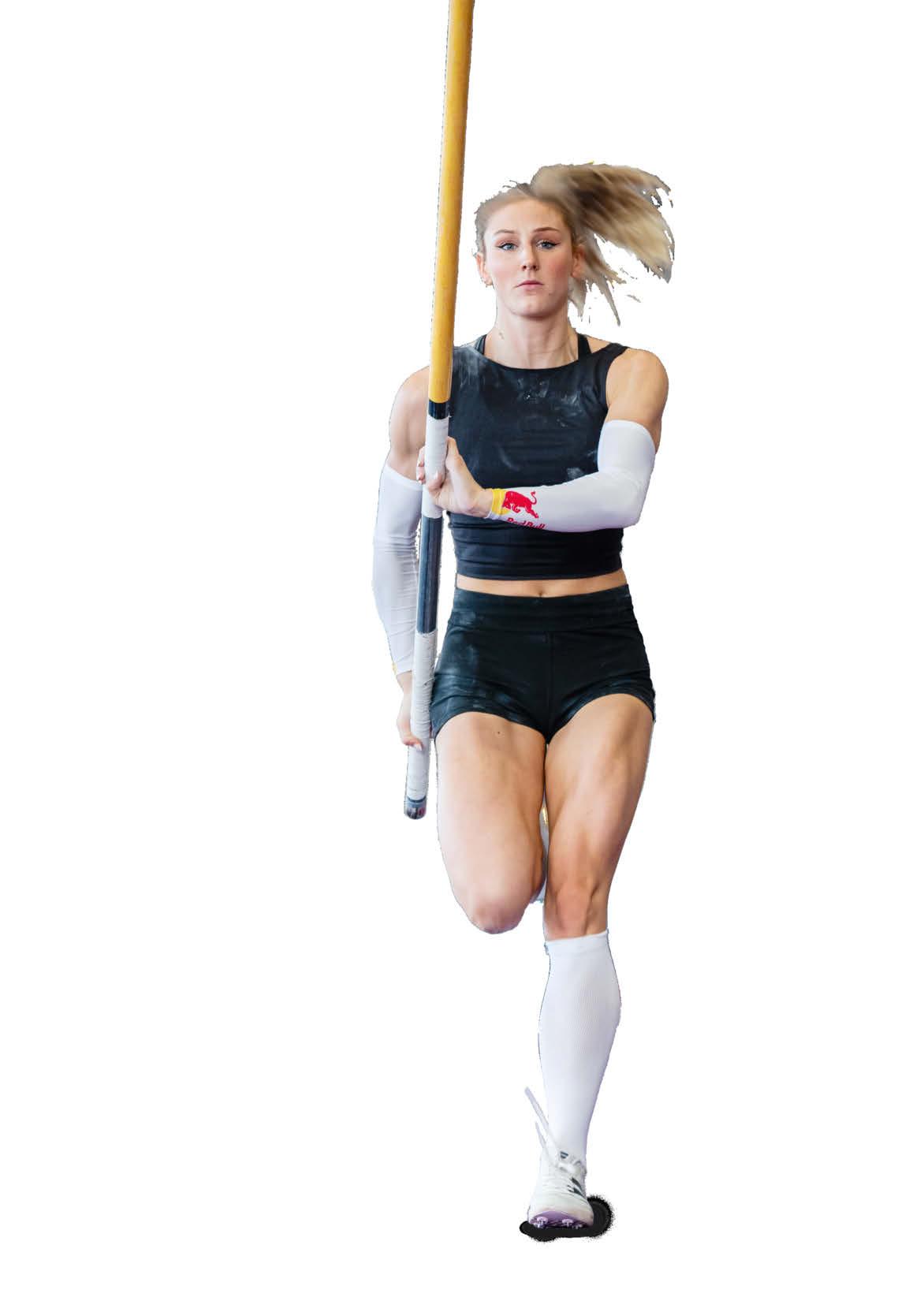
Hand cyclist and para triathlete Claire Danson on the physical fitness that helps fuel her winning mindset
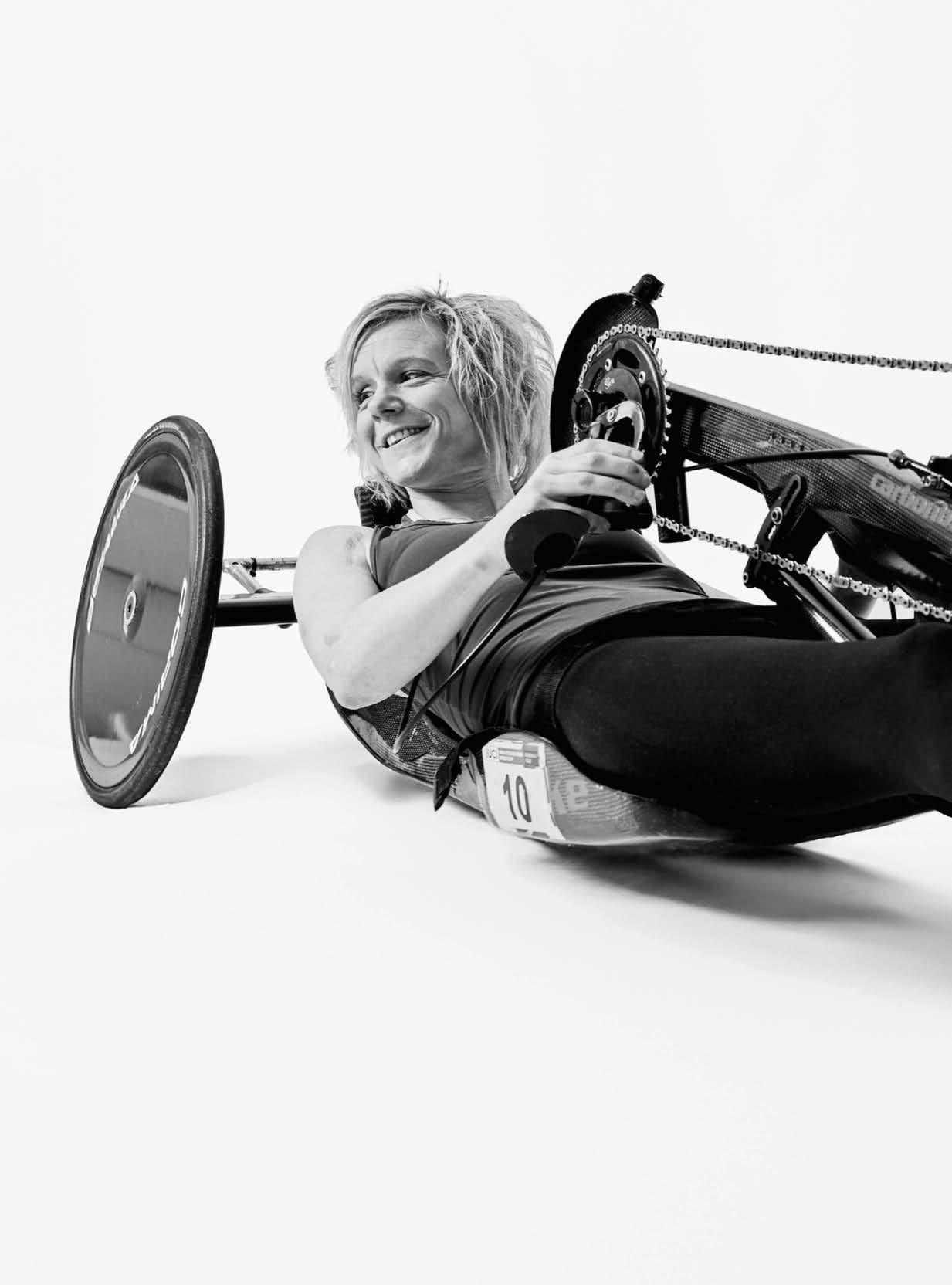
“They’re literally everything now. Your shoulders aren’t designed to do the job of your legs. Most people go for a run and then sit and rest; I do a session with my arms, but I never rest them, because I’m using them to transfer in and out of my chair. I do constant rotator-cuff work so they can handle any stress I put them under.”
On August 28, 2019, Claire Danson was close to realising a dream. Already a European triathlon champion, the 30-yearold from Hampshire was just a day away from a race that would help secure her professional licence. Then, while out riding, she collided with a tractor. “I broke nearly every bone in my upper body,” she recalls, “and my spinal cord was severed at T9, leaving me paralysed from the belly button down. My family were told I probably wouldn’t survive.” But Danson didn’t only survive, she thrived. Today,
she competes as a hand cyclist and para triathlete for Great Britain – wins include the British Triathlon Paratri Super Series and her category at IRONMAN Turkey 70.3 – and has her sights on the Paralympics. Her journey is also a mental triumph: having battled a severe eating disorder in her youth, the accident transformed her relationship with her body. “I used to want to be really skinny,” Danson says. “Now, it’s so much more about what my body can do, rather than what it looks like. I love my body!”
“It’s all upper back and lats. Because I don’t have enough core to stay in my chair unless I’m supported, I use cable machines where I can pull down while seated. You don’t use your back much in the hand cycle itself, but, as a para athlete, any strength you can find anywhere in your body is useful.”
“The accident severed my spine, and the doctors told me I’d be paralysed for life, which was so hard to hear. Soon after, I learned about [spinal cord charity] Wings for Life. It gave me hope that a cure could exist one day. This year I’m doing the Wings for Life World Run, which anyone can join in, from anywhere, with every penny raised going towards spinal cord research.”
“I love my wheelchair. In a way, it’s a part of my body now. People use expressions like ‘wheelchair-bound’, but I’m not bound to it – I can get out! Society has this fear of chairs, but if you speak to any user they’ll tell you how much freedom it gives them. It’s not a cage, it’s the thing that lets me go back into the world.”
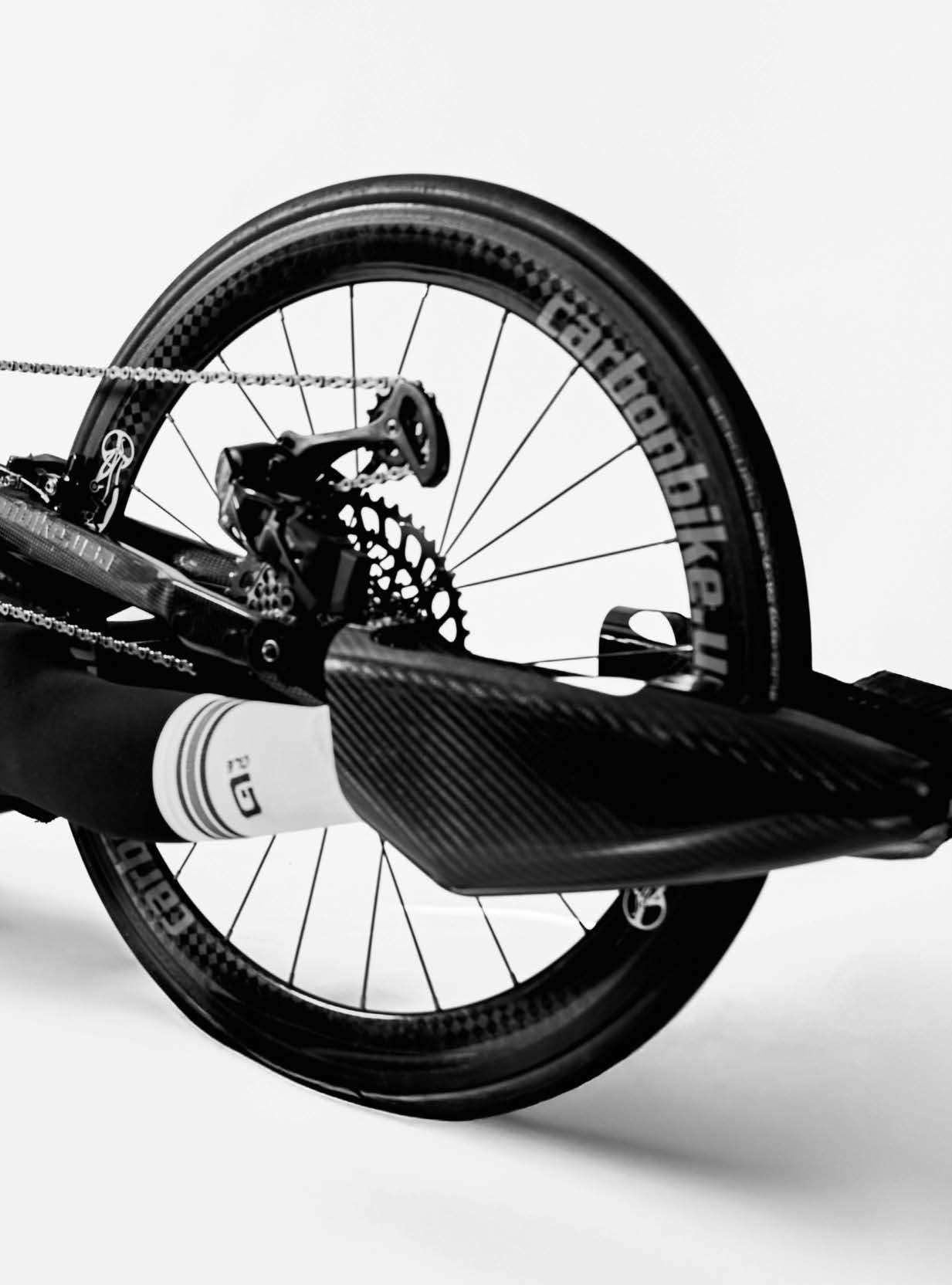
“I don’t train my legs, but I have to look after them. If I don’t exercise, they spasm – they’ll lock out straight or shake so hard they send me off-balance. Exercise actually calms them down. I also use a standing frame to help with bone density. In a wheelchair, you’re never putting weight through your bones, so you have to fight that loss of density.” The Wings for Life World Run is on May 10. Take part and fund
Training takes its toll on your muscles. A slight ache is the sign of a good workout, but, after a particularly hard session, delayed onset muscle soreness (DOMS) can stretch across multiple days, impacting future exercise or making everyday tasks like the stairs a struggle. You don’t have to just endure it, though. Compex’s Ayre Pro compression boots are essentially your own personal masseur, using pneumatic compression technology to pulsate pressure up and down your legs, easing discomfort, improving blood flow and speeding up recovery to get you back on your feet and ready for your next workout. Totally wireless, lightweight, and packing three hours of battery life, they’ll become an essential part of your training routine. compex.com
Traditionally, stationary cardio-focused machines such as rowers and spin bikes have been as much a test of mental endurance as of physical. The rise of platforms including Zwift and Peloton has made the indoor cycling experience more engaging; meanwhile, the humble rowing machine
has remained languishing in the backwaters. Until now.
The Hydrow Arc Rower turns at-home erg sessions on their head, pairing a stateof-the-art machine with a 24in screen that displays on-demand workouts, scenic spots from across the globe, and performance metrics including pace, power, form, and calories burned. Almost silent during use, and easy to manoeuvre and store upright between sessions, it’s an oar-some addition to your pain cave. hydrow.com
Listening to motivational music is scientifically proven to help you reach new fitness highs, but blocking out the world completely has its risks, particularly when exercising outdoors. These OpenFit Pro noise-cancelling earbuds from Shokz manage this delicate balance thanks to their smart open-ear design. Resistant to water and dust, with Dolby Atmos-optimised sound, wireless charging (via the case, also pictured) and a comfortable, secure fit, they’re great for all activities, whether you’re crossing roads or finish lines. shokz.com



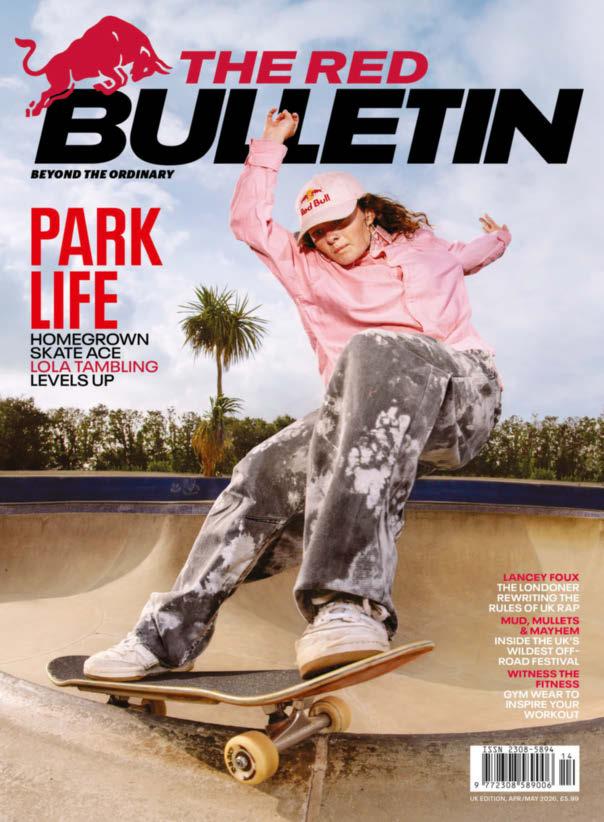
Until September 10
Fatiha El-Ghorri: Cockney Stacking Doll
A rising force in UK comedy, Hackney-born El-Ghorri was the breakout star of Taskmaster series 19 last year, winning hearts with her wit and warmth. Here, she draws on her experiences as a British Muslim hijabi woman to challenge stereotypes and skewer modern life. fatihaelghorri.co.uk
Until May 23
Jessica Fostekew: Iconic Breath
Sheffield-born actor and comedian Fostekew can find laughs in anything, from the trials of motherhood and relationships to modern anxieties… and dolphin-based epiphanies. All are delivered with a blend of righteous anger and playful self-awareness. Instagram: @jessicafostekew
Until May 9
Andy Zaltzman: The Zaltgeist
Zalzman, host of one of the UK’s longest-running political satire podcasts, The Bugle, is on his biggest tour to date. Join the comedian and cricket obsessive as he attempts to get to the bottom of what’s going on with the human race as we stumble deeper into the third millennium. andyzaltzman.co.uk

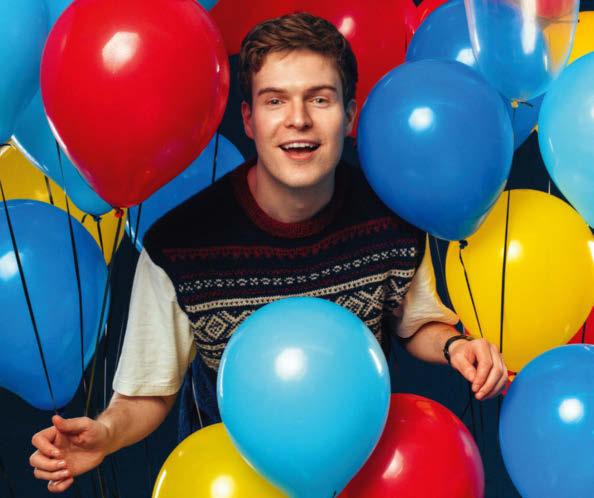
he turned a one-night stand into a stand-up
Thor Stenhaug is a Norwegian-born, London-based comedian whose debut show, One Night Stand Baby, was a smash hit at last year’s Edinburgh Fringe. Here, the 31-year-old talks about growing up in an unconventional family, adapting his comedy for UK audiences, and the very un-British optimism that defines his style.
How would you describe your comedy?
I’m from Norway, and my style is often described as positive and optimistic, though I never set out to be. My parents are very upbeat, so on stage I’m this slightly naïve Scandinavian in a country where people can be more pessimistic. Brits are suspicious of very happy people. Ask someone how they are and they’ll say, “Not too bad,” or, “Can’t complain,” instead of, “Great!” That’s funny to Norwegians. Just to be clear, I love living here and I love British people!
Your debut show is titled One Night Stand Baby. What’s it about?
Well, it’s what I am. My parents raised me together but were never a couple. They met on a night out in Norway, and two months later my mum discovered she was pregnant. She tracked down my dad and they decided to co-parent – just not
romantically. They moved to the same small town, five minutes apart, so I saw them both constantly – birthdays, holidays – just in separate homes. When my dad moved three hours away, my mum, who worked at DHL, arranged for a driver to take me to him on his rounds. Every other Friday, I was literally couriered across Norway in a delivery van. Sounds strange, but I had a very happy childhood.
What’s it like performing for British audiences as a Norwegian?
When I first arrived, I thought no one would remember ‘Thor’, so for two weeks I introduced myself as ‘Ted’. But I soon realised I couldn’t live as a Ted, so I switched back – and all my friends thought Ted had gone crazy. Not all jokes that are funny to Norwegians land in the UK, and vice versa. I once found a lump on my chest. I was terrified. The doctor sent me for an ultrasound and it turned out to be a bug bite! In Norway, audiences love that joke because bites are a normal part of life, but in Britain it sounds scary. British audiences can be quiet at first, but once they warm up they’re fantastic. Winning them over is the best feeling.
One Night Stand Baby is at London’s Soho Theatre from May 20-23; thorstenhaug.co.uk
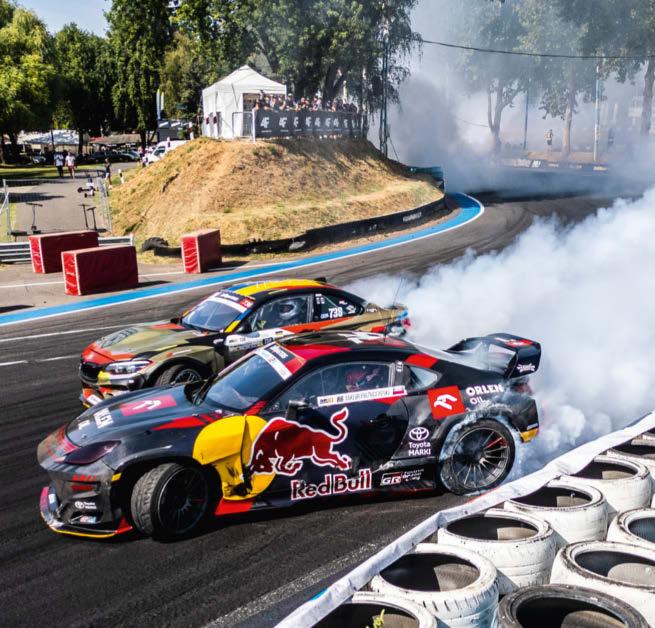
Since its 2014 debut, this tyre-smoking competition car series has grown in stature, earning a world record for the largest-ever attendance at a drift event when, in Poland’s capital Warsaw in 2023, more than 55,000 spectators turned up. The 2026 season is screeching to even greater heights, increasing the previous six stages to seven with an opening Italian round in Rome. It’s a move that was initially planned for 2025, only to be cancelled following the death of Pope Francis. Will Ireland’s Conor Shanahan be able to defend his 2025 title? Follow every round on Red Bull TV and find out. redbull.com
In 2019, the BBC described Australian filmmaker and critical designer Liam Young as “the man designing our futures”, his speculative work combining architecture with the mindset of a sci-fi author to imagine how society might progress. Clearly not one to hang onto past plaudits, Young has now created his first major UK solo exhibition, collaborating with esteemed futurists including TV showrunner Lisa Joy (Westworld, Fallout) and The Handmaid’s Tale costume designer Ane Crabtree to take visitors on a journey through possible futures. With large projections, sets, films, audio stories and more, this immersive experience is inspiring and unsettling – a rehearsal for what may be to come. Barbican Centre, London; barbican.org.uk
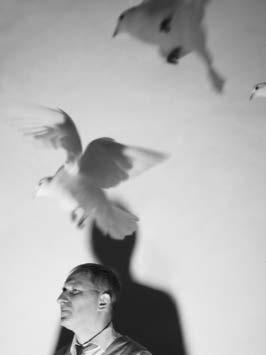
Here’s a theory for you: the movie Inception is actually about how cinema is a shared waking dream, and when we’re captivated by the spinning top at the end, we’ve all been incepted. But before we give Christopher Nolan too much credit, the idea of films as communal dreams harks back to the silent era of cinema. This documentary by BAFTA and Grierson award-winning director Gerald Fox explores how those early filmmakers intentionally mirrored the way we dream. Alongside the world premiere of Kinaesthesia, the BFI Southbank is screening a weekend of dreamy silent classics including Fritz Lang’s Metropolis. Perfect to enjoy whether awake or asleep. BFI Southbank, London; whatson.bfi.org.uk
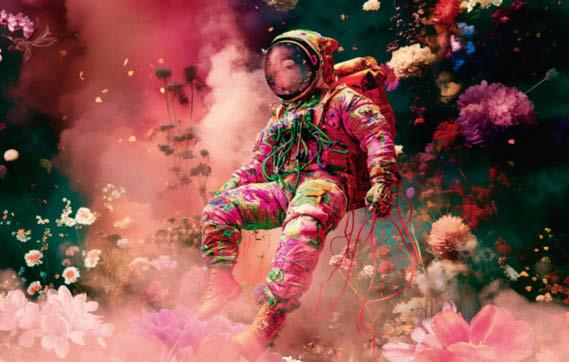
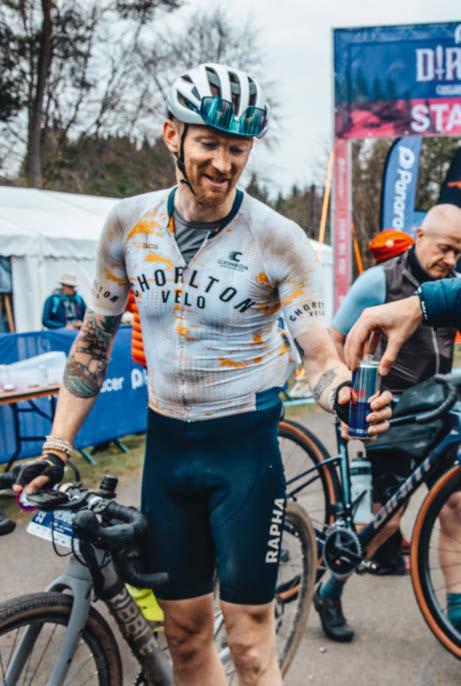
24-26
Reivers were 16th-century bandits operating on the ScottishEnglish border. Thankfully, the risk of running into one during this gravel-riding weekend is low, but getting dirty is definitely on the cards, whether tackling the 65km, 130km or 200km route. Now in its 11th year, Dirty Reiver pledges a portion of its takings to rewilding the area, restoring the good name of reivers everywhere. Kielder, Northumberland; dirtyreiver.co.uk
16-30 April Multitudes
What’s the collective name for a group of orchestras? A symphony? Well, that’s what this festival is: a symphony of orchestras – including all six resident at the Southbank Centre – fusing music with fashion, dance, circus and film. There’s London rapper TaliaBle (pictured) reworking Liszt’s Dante Symphony with the BBC Concert Orchestra,
while John Gosling, former music director for Alexander McQueen, joins the London Contemporary Orchestra to reimagine his soundtracks for the late designer’s runways. Southbank Centre, London; southbankcentre.co.uk
Publisher Andreas Kornhofer
Editor-in-Chief
Andreas Rottenschlager
Global Content
Tom Guise (Manager), Lou Boyd
Creative Directors
Erik Turek (Manager), Kasimir Reimann
Designers
Marion Bernert-Thomann, Kevin Faustmann-Goll, Patrick Schrack
Photo Editors
Eva Kerschbaum (Manager), Marion Batty (Deputy), Susie Forman, Matti Wulfes
Production Editor
Marion Lukas-Wildmann
Managing Editor Ulrich Corazza
Publishing Management
Sara Car-Varming (Manager), Hope Elizabeth Frater
Editorial Design
Peter Knehtl (Manager), Lisa Jeschko, Tino Liebmann, Matthias Preindl, Sophie Weidinger
Magazine Retail
Klaus Pleninger
Subscriptions
Peter Schiffer (Manager), Marija Althajm, Viktoria Schwärzler, Yoldaş Yarar
Production
Veronika Felder (Manager), Martin Brandhofer, Walter O. Sádaba, Sabine Wessig
Repro
Clemens Ragotzky (Manager), Claudia Heis, Nenad Isailovic, Josef Mühlbacher
Editorial Office
Am Grünen Prater 3, A-1020 Vienna
Tel: +43 1 90221-0; redbulletin.com
Servus Media
Dietmar Otti (Head of Servus Media)
Matthias Brügelmann (Head of Content)
Marlene Beran (Head of Operations)
Stefan Ebner (Head of Commercial & Marketing)
Published by Red Bull Media House GmbH, Oberst-Lepperdinger-Straße 11–15, A-5071 Wals bei Salzburg, FN 297115i, Landesgericht Salzburg, ATU63611700
Executive Directors
Dietmar Otti, Marcus Weber
The Red Bulletin UK. ABC certified distribution 285,858 (Jan-Dec 2025)
THE RED BULLETIN
United Kingdom
ISSN 2308-5894
Publishing Manager
Ollie Stretton
Editor-in-Chief, United Kingdom
Ruth McLeod
Art Director
Miles English
Photo Editor
Susie Forman
Chief Sub-Editor
Davydd Chong
Advertising Sales
Mark Bishop, mark.bishop@redbull.com
Printed by P/mint Sp. z o.o., ul. Pułtuska 120, 07-200 Wyszków, Poland
UK Office
Seven Dials Warehouse, 42-56 Earlham Street, London WC2H 9LA Tel: +44 (0) 20 3117 2000
Subscriptions getredbulletin.com
Enquiries and Orders subs@uk.redbulletin.com
Back issues are available to purchase at getredbulletin.com
Basic subscription rate is £20 per year. The Red Bulletin is published six times a year. Please allow a maximum of four weeks for delivery of the first issue Customer Service +44 (0)1227 277248; subs@uk.redbulletin.com
Distributed by Marketforce UK Limited, 121-141 Westbourne Terrace, Paddington, London W2 6JR; marketforce.co.uk
Get in touch via mfcommunications@futurenet.com
THE RED BULLETIN
Austria ISSN 1995-8838
Editor-in-Chief, Austria
Nina Kaltenböck
Editors
Stephan Hilpold (Senior Editor), Lisa Hechenberger
Publishing Management Julian Vater
THE RED BULLETIN
France ISSN 2225-4722
Editor-in-Chief, France
Pierre-Henri Camy
Editors Marie-Maxime Dricot, Christine Vitel Publishing Management Louise Hebbinckuys
THE RED BULLETIN
Germany ISSN 2079-4258
Editor-in-Chief, Germany
David Mayer
Senior Editor
Stephan Hilpold
Publishing Management
Natascha Djodat
THE RED BULLETIN
Switzerland ISSN 2308-5886
Editor-in-Chief, Switzerland Anna Mayumi Kerber
Editors Stephan Hilpold (Senior Editor), Christine Vitel
Publishing Management
Meike Koch
I love the combination of creativity and precision. It’s been 10 years since my first high dive, at the age of 14. But every time I jump off a 27m platform and I’m falling through the air at 80kph, I experience the same adrenaline rush I got that first time. All I’ve ever wanted, since I was a kid training in Plymouth, is to be the best diver in the world. And until recently I thought all I had to do to get there was dive. But that came back to bite me. I’d dreamt of winning the Red Bull Cliff Diving World Series ever since I was a kid, and in 2024 I found myself within touching distance at the final stop in Australia. I’d been experiencing back pain for months, and I’d done that typical man thing of thinking it would just go away. I hadn’t even told my coach about it; I thought I could deal with it on my own. I was in a lot of pain every time I dived, but I refused to give up on my dream – I was going to compete no matter what. Then my dream came true: I won it. At 22, I became the youngestever Red Bull Cliff Diving World Series champion.
to Montreal, where I live. But I also had to finally address the pain I’d been trying to ignore. It turned out to be a herniated disc in my lumbar spine, which required surgery. From the outside I looked like the most dedicated athlete, because I’m always at the pool, but for me that’s fun. Cliff diving is tough on your body, full stop. But one of the reasons why I got this injury was because I wasn’t doing the behind-the-scenes work. I wouldn’t go to the gym, because I just didn’t enjoy it. I had great coaches, trainers and nutritionists
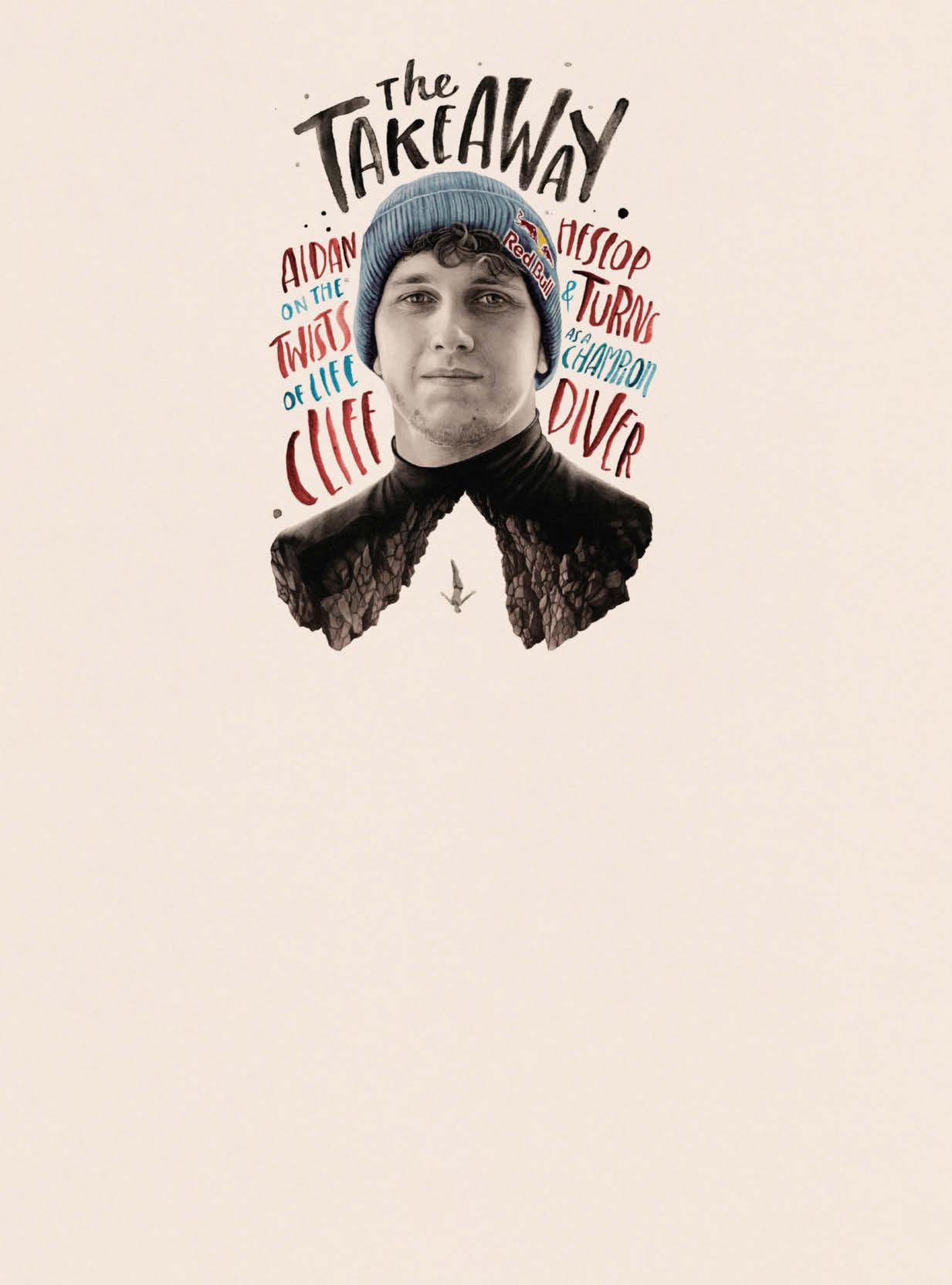
around me, but I didn’t fully listen to them. I didn’t think that anything needed to change, because I was winning contests. It was a bit selfish, a bit naïve. I’d lost sight of the fact that even solo athletes need their team. The injury kicked my arse back into gear. Now I communicate more, and I trust my team know best. I understand I can’t just do the things I enjoy, so I’ve been in the gym and doing what I should be doing. I have a coach who shouts at me a lot, and I do every single rep that I’m supposed to.
444 days since my last. The moment my feet left the platform, I had a split second of uncertainty – would I be OK? Then, when I finished the dive and hit the water, I realised my back felt fine. Underwater, everything is quiet, like life in slow motion, and I just sat on the bottom of the pool for a few calm seconds, relishing the fact that I had done the dive. More than a year of pain, patience and hard work was paying off.
in this year’s competition, after missing the 2025 season completely, I might look the same athlete from the outside. But I’ve changed. What the spectators don’t see is what’s happened behind the scenes to get me there, how much has gone into this comeback. I now know that, as much as I still love cliff diving, it’s not my hobby, it’s my job – one that I want to do for many more years to come. I also know how much dedication me and a whole team of people have put in to get me back to the top of that platform, ready to do battle against the world’s best cliff divers. I’m feeling stronger than I ever have, and I’m ready to prove myself again.
IMAGINE IF YOU COULD GIFT THAT FEELING TO SOMEONE ELSE.