How to... Handle awkward situations at work
Next-level assessment Investigating building design and construction
Competence Misplaced confidence can cost lives

2026
OFFICIAL

Are sustainably constructed buildings more vulnerable to fire?

How to... Handle awkward situations at work
Next-level assessment Investigating building design and construction
Competence Misplaced confidence can cost lives
2026
OFFICIAL
Are sustainably constructed buildings more vulnerable to fire?


We understand your profession almost as much as you do


Anchorman have been arranging Professional Indemnity Insurance for fire safety consultants for more than 15 years. So you know that with us, you’ll be in safe hands. Whether you’re a long-established firm or a start-up, we take the time to understand your business, matching your cover accordingly. info@anchormanprofessions.co.uk
to our
“Always great service!”
Tim Powell, Ergo Consulting, Birmingham, 2026



The UK’s drive towards sustainably constructed housing stock can create additional fire risks
Many fire risk assessors will find themselves needing to investigate more deeply the design and structure of buildings
A fire in modular residential accommodation spread rapidly across an external wall system because of inadequate fire resistance and a lack of cavity barriers
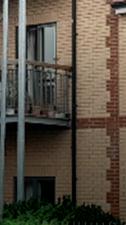
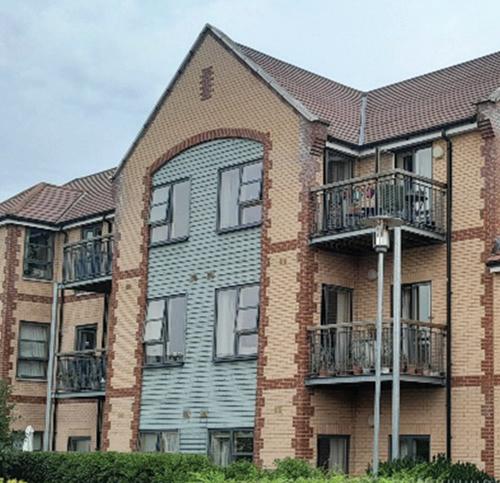

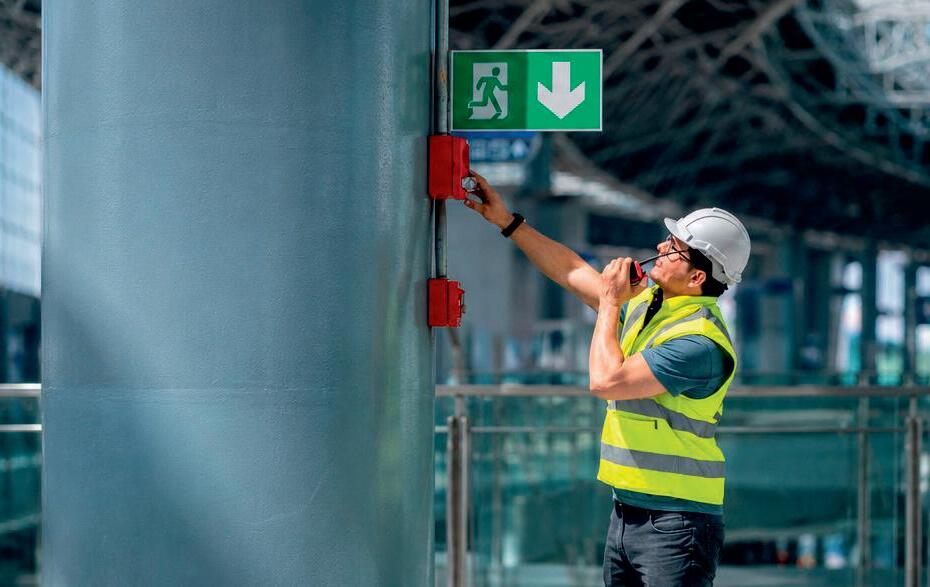
Overconfidence can lead assessors to operate beyond their competence or fail to spot dangers, leaving them at risk of professional and legal misjudgements
Printer



While there is no movement on our application for an apprenticeship scheme at the moment, we have been busy making the case at industry events
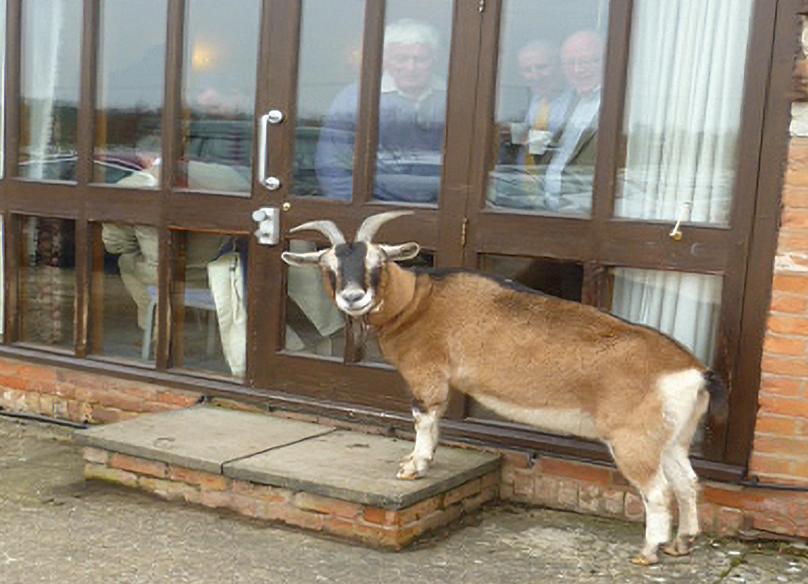
For this blog, I have dug deep into my archive and found this photograph (below) from one of our special technical meetings. It was held at Redhill Christian Centre in Snitterfield, Stratford-upon-Avon, in February 2013, and was to update members on the recent changes at that time to BS 9999, with Dave Berry presenting the update.
This was a cosy little venue, even if I did get a shock when this goat just casually walked past me in the grounds (I’m not used to that sort of thing, coming from Blackpool!). The goat stayed curious and looked like it wanted to get in on the ‘action’ that was going on inside.
We have had a very busy first half of the year. Our membership continues to grow rapidly, and this is always reflected in the number of attendees at our technical meetings. Going back to the meeting at Snitterfield, I think we topped out at around 50. Our last meeting at Kempton Park Racecourse saw us sell out of tickets at 250 and I am sure there were more than that in the room. As always, it was a successful day, thanks to some great speakers, good food and our chair and staff who organised the event.
The last session on the day was very timely as the speakers from RiskBase and Xact gave an overview of apprenticeships. As most of you know, the pursuit of fire risk assessor apprenticeships has been a subject that has been keeping me very busy over the past 18 months or so, as I reported in my last blog.
Our application for an apprenticeship scheme is still sitting with Skills England, but we have had no response
from them since December 2025. This is similar to our application to UKAS which has been with them for around two years (our chair, Dave White, is heading up this initiative) so it’s frustrating times as everything depends on government movement.
Dave and I both presented papers on these items at the recent Fire Sector Confederation (FSC) meeting in London. Needless to say, both our presentations were ‘punchy’ and we let our frustration
be known to the wide-ranging audience that attended. A glimmer of light emerged from this and the chair of the FSC, Steve McGuirk, collaborated with us to write a letter to the chair of the allparty parliamentary group on fire safety. We will keep all members updated when we get a reply.
As an institute, we are still totally committed to creating a visible and accessible career route
Both Dave and I have invested a massive amount of time (on a voluntary basis – some people think we are employed by the Institute) over the past few years, being heavily involved and dedicated to ensuring competence in fire risk assessors. As an institute, we are still totally committed to creating a visible and accessible career route to grow the profession.
In a lighter vein, it was nice to be back on the road again and meet all the members at our technical meeting at Kempton Park and the Fire Safety Event at the NEC in April. Our next technical meeting will be in Coventry, on 2 July, so I look forward to seeing some of you there.
The last couple of years has seen the Institute grow massively and our recognition as a major player in the world of fire safety, I believe, is now universally recognised and secured. This is thanks to all our members, our staff, our council and our chair.
We have been faced with some challenging situations as a professional body during this time so, once again, I thank all members for their continuous loyalty and support.
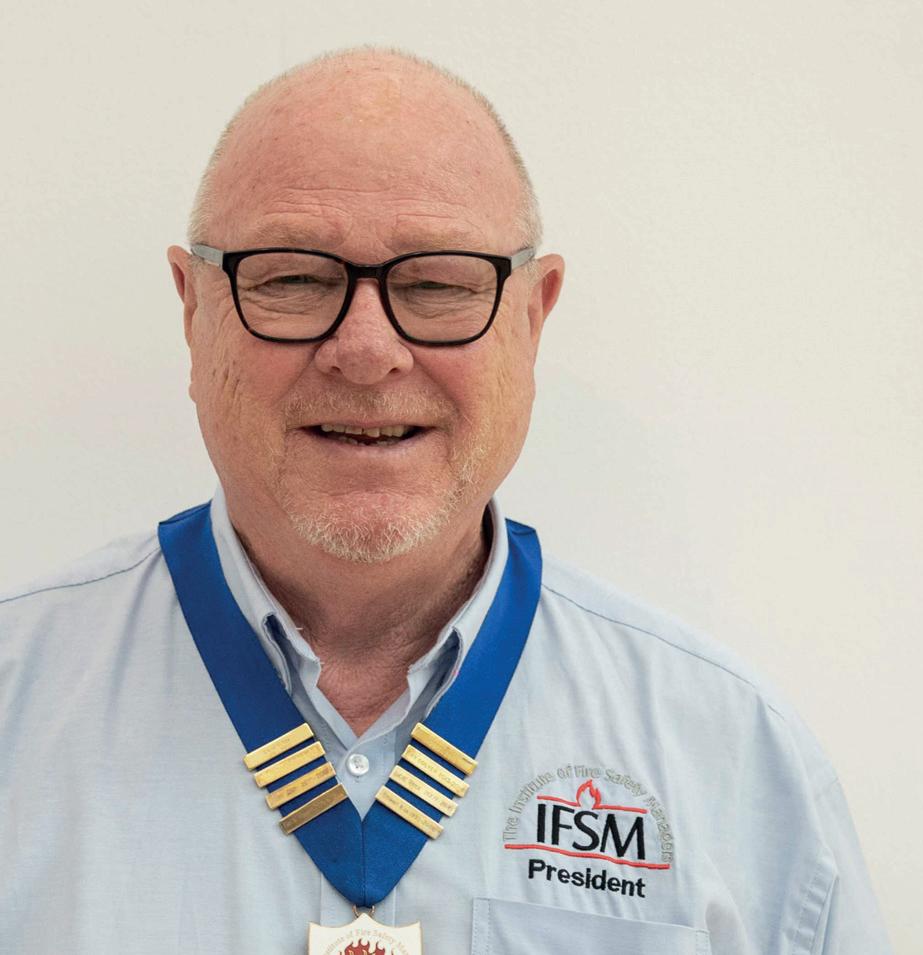
Dr Bob Docherty QFSM, PhD, CEng, FIFSM (Life), FIFireE, MEI is president of IFSM
WHAT YOU NEED TO KNOW THIS QUARTER...



FIRE SAFETY MUST NOT be overlooked in the government’s push to build 1.5 million homes over the next five years, said the National Fire Chiefs Council (NFCC).
The organisation is calling for the planning system to incorporate factors such as safe access routes, dependable water supplies and accurate risk information when designing new housing to reduce the risk to residents in the event of fire.
“We fully support the government’s ambition to deliver more homes, and we recognise the role of planning reform in achieving this,” said NFCC chair Phil Garrigan.
“But new homes must also be safe, sustainable and resilient. Planning decisions shape communities for decades. If fire safety isn’t considered from the very start, the consequences often appear much later, when lives, homes and firefighter safety are at risk.
“It is far better to design safety in from the outset than to try and retrofit solutions
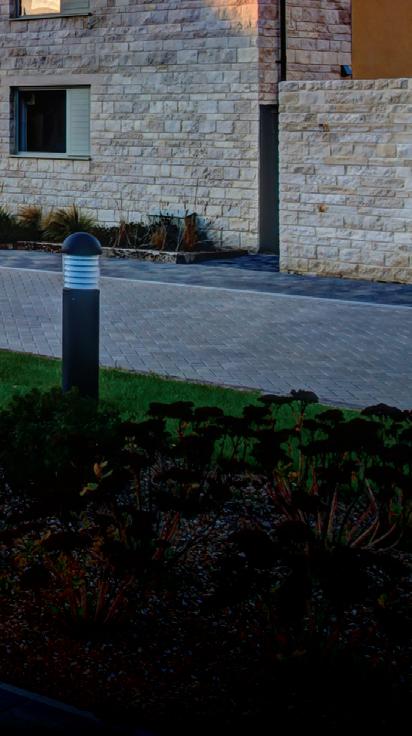
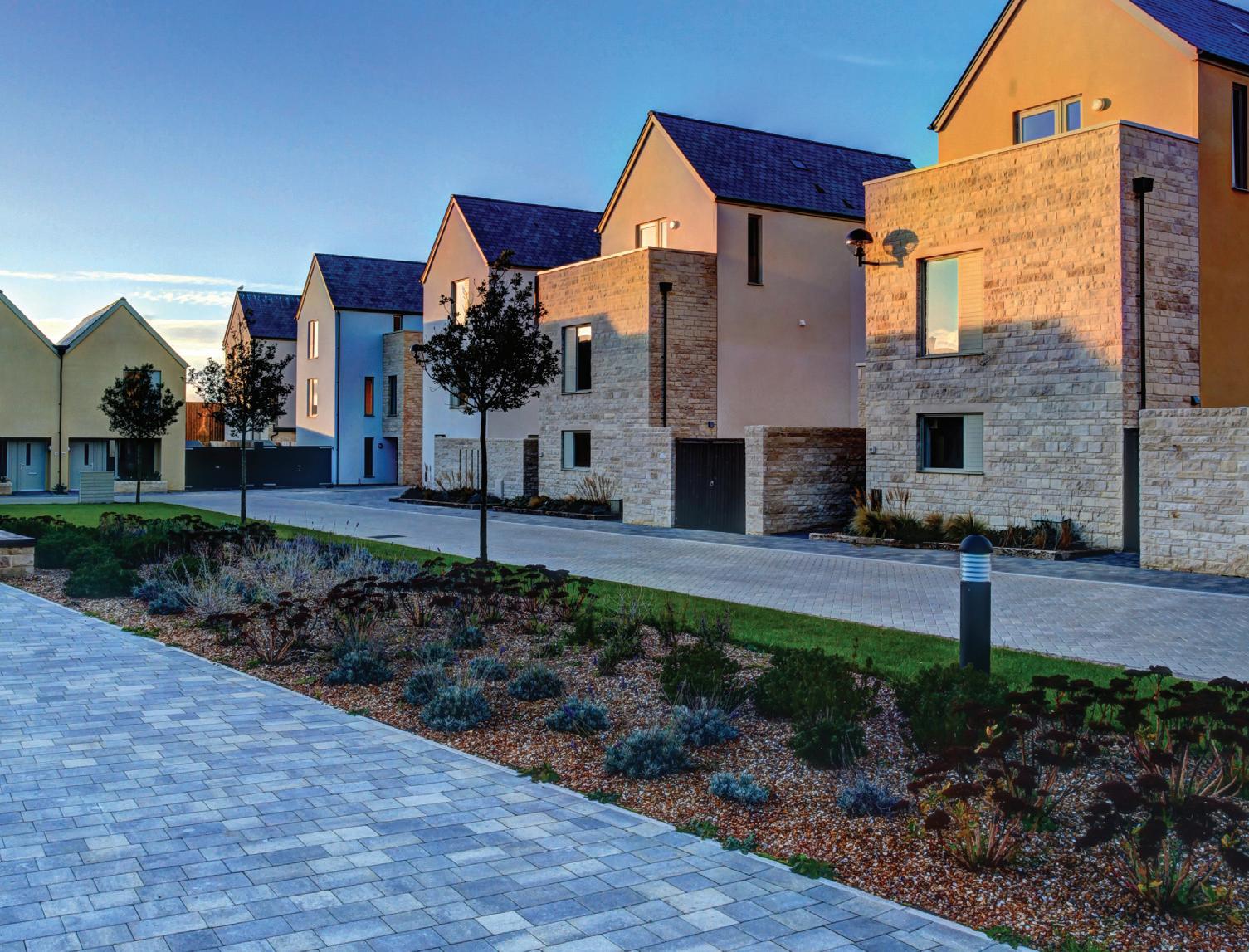
once problems emerge. We are urging government to make fire safety a core part of the planning process, with clear requirements that compel planners and developers to prioritise it from day one.”
The body is also calling for stronger safeguards for residential conversions under permitted development rights, which would prevent commercialto-residential conversions from bypassing full planning scrutiny.
It is also seeking the reinstatement of a formal requirement to consult fire and rescue services on nationally significant infrastructure projects, and for fire and rescue and other emergency services to be seen as essential infrastructure within developer funding mechanisms such as Section 106 and the Community Infrastructure Levy. This would enable new developments to contribute to stations, equipment and other emergency service resources.
The government has allocated £62.7 million to provide fire alarms to residents in buildings that are earmarked for improvements, under the new Interim Measures Alarm Fund.
The funding is part of the Remediation Acceleration Plan (RAP), which launched in July 2025 and followed on from the closure of the Waking Watch Replacement Fund earlier this year.
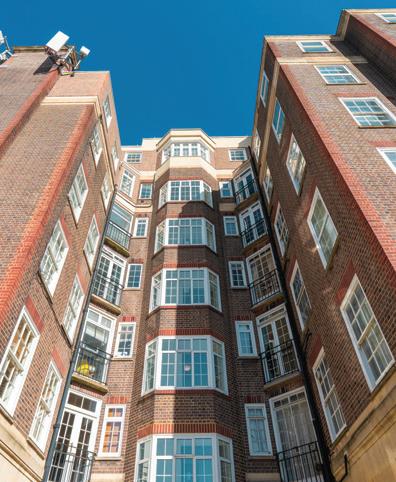
The scheme will enable leaseholders to implement fire alarms in buildings that are waiting for improvements under the government’s remediation schemes that run until 2035.
The RAP was published in December 2024 and committed the government to accelerating remediation programmes in the wake of the Grenfell Inquiry report.
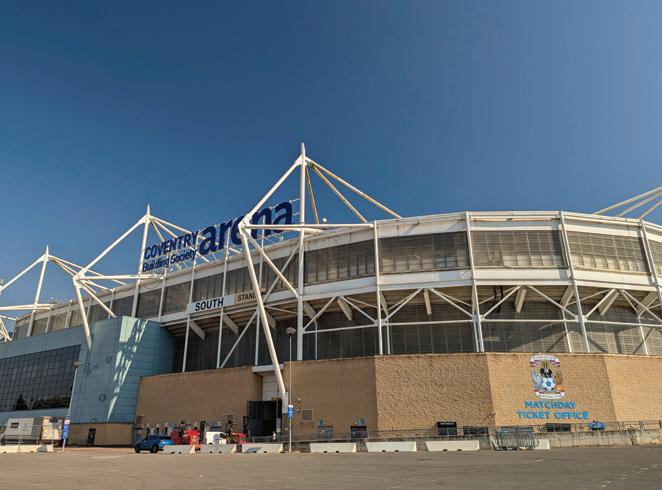
JUST A FEW TICKETS remain for the IFSM’s summer technical meeting and trade event, held at the CBS Arena in Coventry on 2 July.
The event will bring together IFSM members and fire safety professionals for a day of technical presentations, industry insights and networking, designed to bring attendees up to speed on the latest developments in fire safety management, compliance and innovation.
Confirmed speakers at the event include: John Boyce, head of fire safety engineering and technical authority at Network Rail, who will speak on the development of a methodology for undertaking fire risk assessments in rail tunnels Tony McGuirk, chief operating officer at Packattack, who will present on operational fire resilience in the lithium-ion era Daniel Dumbarton, fire safety team manager at authorising engineering firm DRLC, will talk about hospital evacuation, covering design verification through simulation Paul Brunt, fire safety manager at Manchester United, will speak on raising the bar on fire safety.
Tickets are priced at £15 for IFSM members, and £30 for nonmembers. To book your slot, head to ifsm.fsmlive.co.uk/register
The Department for Education has released a new technical manual, updating requirements for school buildings and other educational premises.
The Technical requirements for the design and construction of school and college buildings and outdoor environments document includes a section covering fire safety and security measures. It outlines guidance and best practice around fire detection and alarm systems, horizontal and vertical means of escape, and measures to prevent internal and external fire spread, including from one building to another and over roof coverings.
The new manual signals a move away from reliance on Building Bulletin 100 (BB100) as the primary reference for fire safety design in schools.
STANDARDS
BSI HAS UPDATED THE British Standard code of practice for the specification, design, installation, inspection and maintenance of fireresisting and smoke control doors of all types and materials, including timber, metal, aluminium and composite doors. It aims to ensure that fire doors perform effectively in both newbuilds and refurbishments, helping to protect escape routes and control the spread of fire and smoke within buildings.
The standard supersedes BS 8214:2016 and introduces several important changes:
Expands coverage from timber doors to include fire door assemblies of all materials (timber, steel, aluminium and composite), with annexes for material-specific guidance Addresses the lack of a code of practice for metal and composite fire doors, providing new guidance for installation, maintenance and manufacture Clarifies installation requirements, especially in section 9.4, to prevent misinterpretation and non-compliant installations Updates smoke control guidance
to align with revisions in BS 9991, including best practice for sealing under-door gaps Incorporates changes required by post-Brexit legislation and new regulatory requirements from the Building Safety Act, Fire Safety Act and related legislation
Responds to feedback from industry associations, certification bodies and regulatory authorities
IFSM members can view the document through the member library on the IFSM website

The IFSM Awards, taking place on 1 October, aim to recognise excellence and celebrate the achievements of the best of the fire safety industry. Find out what’s in store and how to get involved
The Institute of Fire Safety Managers is proud to announce the return of the prestigious IFSM Awards 2026, taking place on 1 October 2026 at Old Trafford Cricket Ground in Manchester. This highly anticipated event will once again bring together leading professionals, organisations and innovators from across the fire safety sector to recognise outstanding achievement, dedication and excellence within our industry.
The IFSM Awards continue to shine a spotlight on those who are raising standards, driving innovation and making a lasting impact in fire safety management throughout the UK and beyond.
We are delighted to welcome VTS Fire as our headline sponsor for this year’s awards, supporting an evening dedicated to celebrating the very best in fire safety professionalism. The full award categories and sponsors for the IFSM Awards 2026 are: Fire safety manager of the year, sponsored by Consort: Recognising exceptional leadership, commitment and performance in fire safety management.
Young fire professional of the year, sponsored by Vulcan: Celebrating emerging talent and the next generation
of fire safety professionals making a difference early in their careers.
Fire safety company of the year, sponsored by Axion Consultancy: Honouring organisations that demonstrate excellence, innovation and outstanding service within the fire safety sector.
Fire safety project of the year, sponsored by Fike: Recognising projects that showcase best practice, innovation and measurable impact in fire safety.
Fire safety professional of the year, sponsored by FPA: Awarded to an individual who has shown exceptional dedication, expertise, and influence within the industry.
Fire safety team of the year, sponsored by AFC Fire: Celebrating teams that have delivered exceptional collaboration, performance and fire safety outcomes.
Accredited course of the year, sponsored by Norseal: Recognising excellence in fire safety education, training, and professional development. Lifetime achievement award and chairman’s award, sponsored by WhiteFires: Honouring individuals whose contribution, leadership and commitment have left a lasting legacy within the fire safety profession.
The IFSM Awards are more than just an awards ceremony; they are an opportunity to network with industry peers, celebrate professional achievements and recognise the individuals and organisations shaping the future of fire safety management. We encourage all members to get involved by submitting nominations, supporting colleagues and joining us for what promises to be an unforgettable evening. Further details regarding nominations, tickets and event information will be released soon. Together, let’s celebrate excellence in fire safety.
The awards shine a spotlight on those who are raising standards, driving innovation and making a lasting impact in fire safety management










IFSM’s Trade and Technical Meetings provide a chance for the industry to network and come together to discuss the issues facing the fire safety sector
It hardly seems possible that we are already moving through another busy period for the Institute but, as always, the pace within the fire safety industry shows no sign of slowing down.
Back in March, we held our Trade and Technical Meeting at Kempton Park in partnership with FSM Live and the Western Business Media team. The event proved to be extremely well attended and provided an excellent opportunity for members, affiliated companies and industry professionals to come together and discuss many of the key challenges currently facing the sector.
These technical meetings play an important role in the Institute calendar. They not only provide valuable CPD opportunities and technical presentations but also allow members to network and share experiences with others in all areas of fire safety.
At the end of April, the Institute attended the Fire Safety Event at the NEC in Birmingham. Our stand remained busy throughout the exhibition, giving us the opportunity to speak with existing members, meet prospective new members and discuss the ongoing work of the Institute across a wide range of sectors.
Events such as this continue to demonstrate the growing focus on competency, professionalism and continual improvement across the industry. It was encouraging to see the level of interest surrounding professional recognition, fire risk assessor competency and training pathways, particularly as discussions around future regulation continue to develop.
Events such as this continue to demonstrate the growing focus being placed on competency and professionalism
One of the major discussions currently taking place within the sector is the future framework surrounding fire risk assessor competency and professional recognition. The work being carried out across the industry to create clearer competency pathways is something the IFSM fully supports and has been actively involved in for a number of years.
The development of structured competency frameworks, including Foundation, Intermediate and Advanced levels, is helping to create clearer routes into the profession while also supporting continued professional development for existing assessors.
At IFSM, we continue to support this through the development of training courses, competency pathways and the ongoing growth of the National Fire Risk Assessors Register (NFRAR). The register continues to expand steadily and provides a clear route for assessors to demonstrate competency at different
levels depending on their experience, qualifications and scope of work.
We are also heavily involved in discussions surrounding future apprenticeship routes into the profession, which are essential if we are to encourage and develop the next generation of competent fire risk assessors. Alongside this, we continue to work on improving access to qualifications, training and progression routes to ensure individuals entering the profession can develop in a structured and supported way.
As always, the president and I continue to represent the Institute and its members across numerous committees, working groups and industry forums. I must again thank our president for the tremendous amount of work he continues to undertake on behalf of both the Institute and the wider fire safety profession.
The continued growth of the Institute remains extremely positive. Membership levels continue to rise, our affiliated company network continues to expand, and the demand for professional recognition and competency support has never been greater. While growth is encouraging, my focus remains on ensuring that the standards, values and professionalism of the IFSM continue to be maintained as we move forward.
I look forward to meeting many of you at our forthcoming events over the coming months, and thank you all for your continued support.
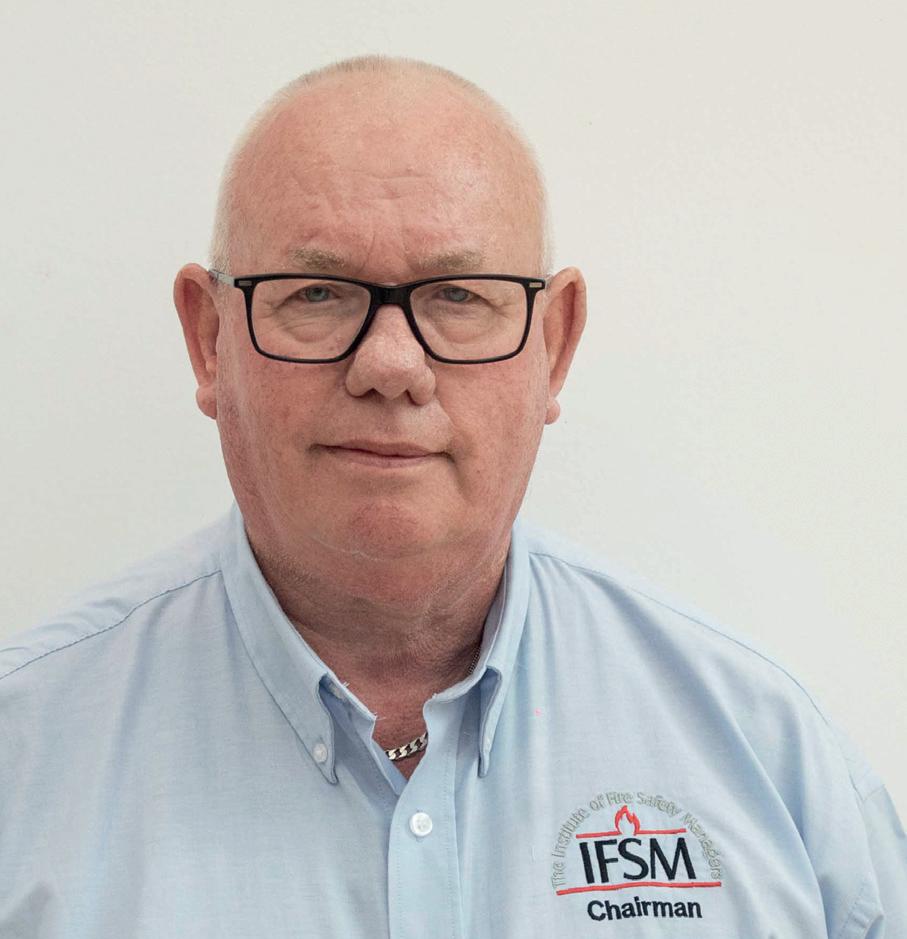
David White FIFSM (Life), MIFireE, MIIRSM, LCGI is chair of
IFSM




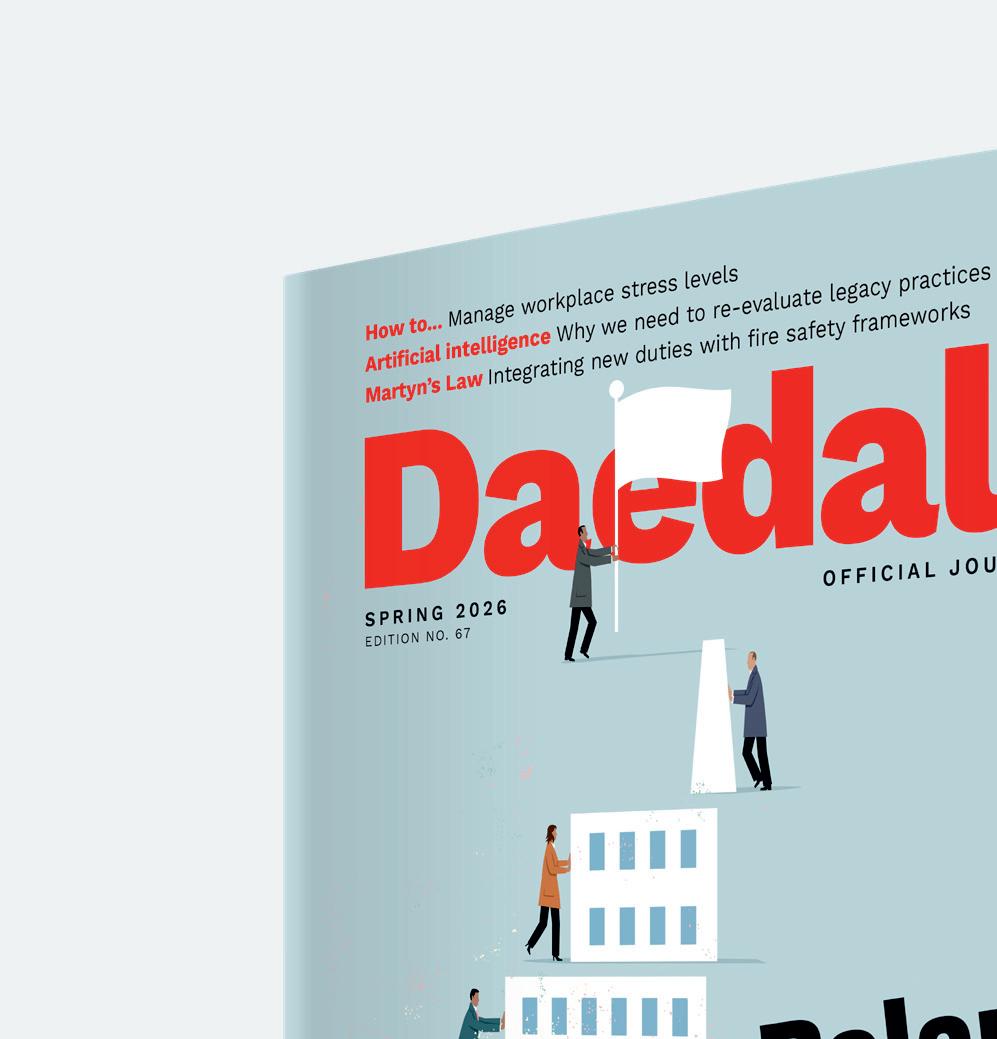
Daedalus is the official magazine of the Institute of Fire Safety Managers, reaching decision-makers, specialists, and thought leaders across the fire safety profession.
When you advertise with us, you place your brand directly in front of the UK's fire safety influencers, specifiers, and consultants.


Reach the readers shaping the future of fire protection.




We’ll all encounter uncomfortable situations in our working lives, whether they affect us or others. The key to handling them, says Anne Maartje Oud, is to remain calm and be clear in any response
Awkward situations aren’t easy. They catch us offguard and might even be stressful. The good news is that we can prepare ourselves for the unexpected. Here are five awkward situations you’re likely to encounter at work, along with brief guidance on what to do when they arise.
1 You say something and the room goes quiet
Sometimes what you say doesn’t land well. It might be a joke that falls flat, a comment that touches on something sensitive, or a point that is valid but comes across too sharp, too vague or at the wrong moment. You can often see it in the room: people go quiet, look away or stop engaging.
In that moment, many people start explaining, softening or talking more to repair it. A more effective move is to stay with what just happened and name the effect you notice: “That didn’t land as I intended.” Or: “That didn’t come out the way I meant it to – my apologies.”
2 You have to give negative feedback
Two things matter when giving feedback: timing and clarity. If you wait, people fill in the gaps themselves and the moment loses its relevance. Give the feedback as close to the situation as possible.
Be specific in what you describe. Focus not on general impressions, but on observable behaviour and its impact: what was said or done, and the effect it
had. Keep it direct and respectful. Your tone, eye contact and pace all show whether you are trying to help or to criticise. For example, a warm voice, steady eye contact and a calm pace make it easier for someone to listen, while a sharp tone or rushed delivery puts them on the defensive before they even process your words. If your feedback doesn’t help the other person move forward, it’s not feedback, it’s judgement.
3
Someone is going on and on in a meeting
When a chair does not actively guide the meeting, you see the same
pattern: one person keeps talking, others withdraw and the conversation loses direction. People often stay silent, but their response is visible: eye rolls, raised eyebrows, checking their watch. The room disengages, even if no one says it out loud. The effective move is to make the process explicit. If there is a chair, use that role: suggest returning to the agenda. If no one takes the lead, step in yourself. Interrupt respectfully, summarise what has been said and redirect: “If I understand correctly, the point is X.” Then open the floor: “Claire, how do you see it?” Or name the constraint: “We’re running short on time, I suggest we move to the next topic.”
A warm voice, steady eye contact and a calm pace make it easier for someone to listen
hoping someone else will speak up. That’s exactly why it helps to pause and ask what’s really meant. Often, others feel relieved you’ve said out loud what they were quietly wondering too and probably didn’t dare to ask.
Also, when you don’t know the answer to a question, stay calm, say so honestly and offer to follow up after you’ve looked into it.
5Emotions happen
When tears show up, yours or someone else’s, you often see people become uncomfortable and try to move away from it. But tears are just a form of communication. A visible signal that something is happening that matters.
4
You have no idea what someone means
Many workplaces use abbreviations and terms that aren’t always explained, especially when you’re new. But even experienced colleagues often assume shared understanding when there isn’t any. It could be terminology, but also about situations where someone explains a project or solution without giving the background, as if everyone already knows what they are talking about. That assumption creates confusion and inefficiency. Most people don’t want to be the person who admits they’re lost, so they nod along while quietly
If you let it happen, it usually settles on its own. If you try to stop it or rush past it, the tension often increases. The most effective response is simple: pause, stay present and give space. You could ask for a moment to collect yourself or, if it’s someone else, you could ask what they need in that moment. It could be something practical like water or a tissue but usually it’s just some time and silence. Be there for the other person and don’t try to fix things.
With all of these awkward moments, the most important thing is to stay calm and give yourself some time to choose a strategy. The calmer you are, the more chance you will have to choose behaviour that gives you an effective outcome.
Anne Maartje Oud is author of What To Do If..? How to Handle Any Situation at Work and Come Out Winning, published by Kogan Page, priced £12.99









Today’s buildings are often held up as shining examples of sustainable construction, making use of environmentally friendly materials and technologies. But does this leave them more vulnerable to fire?
David Adams looks at how to strike the right balance






The average UK citizen, remembering the story of the Great Fire of London, would probably be surprised to find out just how much timber is used on construction sites today. In part, this is because most of it is found in timber frames hidden inside buildings of all kinds, from warehouses to new schools.
“In the modern era we’ve been using load-bearing timber frame construction since the 1960s in the UK, because it is quick and cheap to build with,” says IFSM council member, building surveyor and training consultant Malcolm Thomas. “It fell out of favour a bit in the 1980s, because we realised we were using a lot of untreated timber that didn’t keep rainwater out. But today we use a great deal of it.”


You can question some aspects of the UK’s drive towards making our economy and society more environmentally sustainable, but there is no rational argument against the overall aim. More sustainable business practices and consumer choices will help to cut carbon emissions and pollution, and to protect biodiversity, but they can also generate significant economic benefits.
In the built environment industries, use of sustainable building materials such as timber and installing lowcarbon technologies, including solar photovoltaic (PV) panels and battery energy storage systems (BESS), can boost the bottom lines of construction firms and other businesses, while slashing energy bills for the organisations and consumers who work or live in new or refurbished buildings. But this drive to build, work and live more sustainably can also create additional fire risks.
Timber in building frameworks is often cross-laminated timber (CLT) or glue-laminated timber (Glulam) consisting of layered, dried boards. It is strong, reasonably easy to use, and can be very cost-effective. However, unless enclosed within fire-resistant materials, it is also highly flammable.
Timber concerns Thomas believes many architects and designers have been particularly keen to use timber since the creation of the Building Research Establishment Environmental Assessment Method (BREEAM) certification system in 1990. BREEAM is a useful tool for benchmarking the sustainability of built assets, but Thomas fears some architects and designers have been overly influenced by its requirements, leading them to use sustainable materials, including timber-based products and flammable insultation or cladding, by default, without necessarily paying enough attention to fire risks associated with them.
Leon Wynn, head of fire at Zeta Services (part of compliance services provider Complii), says the most important difference with a construction site based on a timber frame is that, while it is under construction, exposed timber presents a significant potential fire load. So while a small fire that starts in an electrical transformer on a concrete and steel-based building site might simply burn itself out, such an incident is
much more likely to result in a major fire if there is exposed timber nearby.
Wynn and his team use fire safety guidance and resources created by the Structured Timber Association (STA), which include implementation of rigorous security protocols, strict control of smoking on site and integration of fire detection systems.
They may produce a fire spread analysis, assessing potential risks to adjacent properties during the construction period, and suggesting mitigation measures. But these can create further risks, as they could involve the temporary boarding up of exit doors or windows or blocking vents, so obstructing some potential fire escape routes. It all adds up to a complex challenge for the assessor.
Other plant-based building and insulation materials may also create fire risks, says Andrew Pemberton, senior manager of surveying at The Professional Snagging Company. “Wood fibre insulation is becoming more common because it’s low carbon and breathable, but it’s also combustible, and I’m often seeing it installed alongside other combustible materials in timber-frame builds, without enough attention being paid to how they behave together,” he says.
“Timber-frame walls are packed with wood fibre insulation, finished with breathable membranes and sometimes timber cladding. All fine in isolation, but together they increase the fire load. The issue is when the small things get missed on-site – boards not quite fitted tight, gaps left around services, cavity barriers not properly in place –as that’s when fire can get into hidden voids and move around in ways you wouldn’t expect.”
Pemberton lists three priorities for fire risk assessors working on buildings where these materials are present. “First, identify where combustible materials are layered together,” he says. “Second, check cavities and voids, because that’s where fire spreads out of sight, particularly behind cladding or within roof spaces. And third, check things like missing cavity barriers at eaves, gaps around pipe penetrations or insulation boards not fitted tightly.”








These risks are being studied by researchers in industry and academia around the world, including Margaret S McNamee, professor in the division of fire safety engineering and deputy dean at Lund University, Sweden.
Alongside other researchers, she has concluded there is a need to incorporate fire safety considerations from the design phase onwards when constructing new buildings where these materials are used. “Our hypothesis is that, provided you keep on top of both sustainability and the implications of the design for fire safety, you should be able to manage that,” she says.
Probing the danger
McNamee and her collaborators have created a methodology to be used as a basis for dialogue between architects or designers and fire safety (and other) experts during building design processes. It comprises a framework for considering interactions and interdependencies between sustainability and fire safety design objectives. The aim is to balance sustainable construction strategies with fire-resilient construction strategies, enabling the creation of a sustainable and fire-resilient building (SAFR-B).
Strategies and building components might include the building having a set sustainability or carbon-reduction budget, or a strong preference for a particular building material, or for a particular design feature, such as green (planted) walls.
“Materials or features may have different fire safety issues associated with them,” says McNamee. “Maybe building designers haven’t considered what happens to green walls in the winter when they’re not so green and filled with water, for example. It’s about dialogue between different specialists, so we have a balanced, overarching understanding of the different objectives involved when creating really good buildings.”
Fire risks may also be increased through use of low-carbon technologies. In recent years, a number of fires have been blamed on electrical faults linked to solar panels on the roofs of schools. “Fires linked to solar panel
installations could be due to electrical faults or thermal runaway, with fire then spreading through roof voids or facades,” says fireproofing consultant Martyn Young.
Young says it is best practice to use intumescent sealants around wiring for solar PV panels to help prevent the spread of fire into the roof. He also stresses the need for fire risk assessments of commercial or residential buildings to include consideration of exactly where panels, inverters and batteries are located in relation to potential ignition sources and flammable materials.
Dr Phil Wu, CEO of Absolar, a company providing renewable energy solutions for commercial buildings, believes solar PV systems are inherently safe if designed and installed correctly; and that fires tend to be caused by poor electrical design, substandard products and inadequate installation. But he also sees problems where the technology is being installed at scale alongside BESS and other technologies in more complex systems.
He lists some common problems: poorly terminated DC connectors; mixing incompatible connectors from different manufacturers, which can create high resistance points; poorly managed cable runs that create mechanical stress; insulation damage; inadequately protected or incorrectly specified inverters and isolators; and a lack of consideration for long-term degradation, especially on rooftops.
“These issues can lead to DC arc faults, which are difficult to detect and can generate significant heat,” says Wu. “In some cases, this has resulted in localised overheating or fire events. But these are avoidable risks, and we’re now seeing improvements through both better standards and better components. Newer connector systems are designed to reduce installation variability, and we’ve deployed additional protective measures like Arch Box units, which provide an extra layer of containment around DC connections to help mitigate arc fault risks.”
Fire risk assessors also need to understand risks linked to BESS. Young says that domestic BESS should always




be installed outside smaller homes, in a garage, outbuilding or some other external enclosure. If the equipment has to be installed inside a larger residential or commercial building, it should be placed in rooms that are usually unoccupied and separated from other services.
What more could the industry be doing to help fire risk assessors identify and mitigate risks associated with these materials? “There needs to be a stronger focus on how complete systems perform in real fire conditions rather than assessing individual materials in isolation,” says Pemberton.
“There also needs to be consistent enforcement during construction, with staged inspections at key points such as before plaster boarding, at cavity barrier installation, and at roof completion. Inspections need to include intrusive checks where necessary, lifting insulation, checking behind membranes, and verifying that penetrations are properly sealed.”
The fire industry could also be more consistent and precise with the guidance it provides, says Wynn. “PAS 79 won’t go into much detail about solar panels and battery storage being part of a fire risk assessor’s considerations,” he says. “Things like that could be updated.”
As use of these materials and technologies continues to grow, there is clearly a need for additional ongoing training for professionals in all the built environment industries who may be working with them. And there is one more factor to consider: the effects of time. These risks will evolve.
“Ageing of materials – particularly exterior materials – could have a significant impact on their fire performance or other characteristics,” McNamee warns. In this respect, the UK’s drive towards sustainability offers yet another reminder of the growing importance of fire risk assessments in buildings of all kinds, today and for the foreseeable future.























Fire risk assessors need to improve their understanding of how buildings are assembled. Malcolm Thomas outlines what is involved in upskilling to investigate the design and construction of premises



design, construction and maintenance of this building? Consequently, what are the likely risks to life safety arising from external walls, roofs, internal walls, partitions and floors at this property?
Most fire risk assessments tend to be Type 1. If that is presently your level of competence, what should you be recommending with respect to concerns about passive fire safety measures that you observe during your visual inspection? Should you feel confident to upskill to investigate what lies behind surface finishes, what procedures would you then follow to complete a Type 2 or 4? With respect to external walls of residential properties, I am not advocating that all fire risk assessors undertake Fire Risk Appraisals of External Walls (FRAEW) in accordance with PAS 9980.

Imagine you have accepted an instruction to carry out a fire risk assessment of a moderate or intermediate risk level residential property or other premises used for sleeping. You proceed to request the usual range of documentation from the Responsible Person (RP) – by way of an auditable emailed check list –including floor plans, wall sections and specifications.

Upon visiting the property, you should try and establish or validate the likely age and the form of construction – whether it comprises loadbearing masonry walls or a framed structure with cladding for example. Is it purpose-built or an adapted and extended older property? What minimum passive fire safety measures should you expect to observe or establish on-site? Where might the potential failings be found in the
You need to establish the form of construction, whatever type of fire risk assessment you are conducting. This will help you understand the likely compartmentation, means of escape provision, the protection of enclosures or structural elements and fire safety measures expected to be in place.

Knowing the arrangement of the loadbearing structure helps you appreciate what risks might exist in external walls; for example, the presence of cavities in a timber frame structure that might be susceptible to unchecked fire spread, or where you are likely to encounter concealed spaces.
Do not be complacent in defining a building as ‘traditional construction’, as there may be a loadbearing timber frame hidden behind the masonry or rendered board façade. Existing buildings may present concealed voids behind walls and ceilings, complex layouts that hinder evacuation, lack of fire resisting walls and floors or compartmentation, or contain combustible materials.
Those who wish to add value to the service they provide will want to progress beyond purely visual and tactile inspections. The practical aspects of building inspection and investigation follow the process outlined below: Why and where you open up on a sampling basis, internally and externally How to organise and carry out the opening up of the building envelope
and surface finishes (and make good)
What to observe, test and measure
How the findings should be noted and recorded
How to then draw conclusions and phrase recommendations
Each building is different in design and construction and comprises a great variety of external and internal finishes and materials used, particularly those built since the 1980s. Regrettably, we can never assume that a building has been constructed in full compliance with Building Regulation standards and guidance and/or that the standards of workmanship achieved throughout are acceptable. When you arrive, walk around your property systematically, both externally then internally and from top to bottom, observing, tapping and probing as you go to ascertain the loadbearing structure adopted. Note the type and extent of materials used in cladding or finishes and their proximity to windows and vents. Refer to the guidance on criteria applied in the PAS 9980 methodology on façade configuration, fire performance and fire safety hazards and strategy. Compile checklists for this purpose. You may need to open up to investigate the construction materials used, compartmentation details, and whether or not cavity barriers and closers are fitted at appropriate locations. With prior consent, it is generally easier to open up internally rather than work externally off scaffolding, a cherry picker or gondola.
Hidden fixings to panels can make them difficult to temporarily remove; experienced contractors have ways and means of assisting. Some companies are exploring the use of drones to inspect large roof and external wall areas. Carry with you, at least, an extendable ladder, good torch, binoculars, Disto, tape measure and multi-tool.
Where you need a small builder to open up, the RP should directly commission the contractor or arrange for maintenance staff to assist you. If they rely on you to organise this, then seek quotes on the basis of a brief specification and

use a Federation of Master Builders or similar simple form of contract; do not forget the method statement and risk assessment. The more sampling locations chosen, the greater the cost.
You should arrange to inspect a sample of flats internally, using your best endeavours to gain access. Once inside, look for clues on the form of construction and the installation of fire safety measures. Perhaps remove the covers to vents in external walls and certainly tap the surface.
Choose a sample of flats representing different external wall finishes, elevations and storeys. Internal building elements that may require opening up include: boarded enclosure to steel columns and beams, above fixed suspended ceilings, non-loadbearing partitions and roof lofts. Not all investigations require extensive opening up.
Be prepared to record in detail what you see as you open up. Meticulously take photographs, notes and dimensions, using sketch plans and sections. Google Lens may help on-site or you may need to identify or verify materials and products later. Some of the information collected will be used in drafting the report, while the remainder will be kept on file for possible audit purposes. Be aware that you may expose nonfire safety related defects upon which you may have to take advice.
You then apply your professional judgement in drawing conclusions and making recommendations on the adequacy of passive fire safety measures and compliance with regulatory standards in place at the time of construction.
Take care in drafting the narrative in your report. Use AI to generate examples of phrases surveyors might use in drawing conclusions in similar circumstances. Use phrases such as, ‘Based upon our sample locations in opening up, it would appear that the loadbearing structure comprises…’ and ‘The materials used and standard of workmanship in compartmentation appear to be suitable...’
Other useful phrases might be ‘There is visible evidence of…’; ‘The
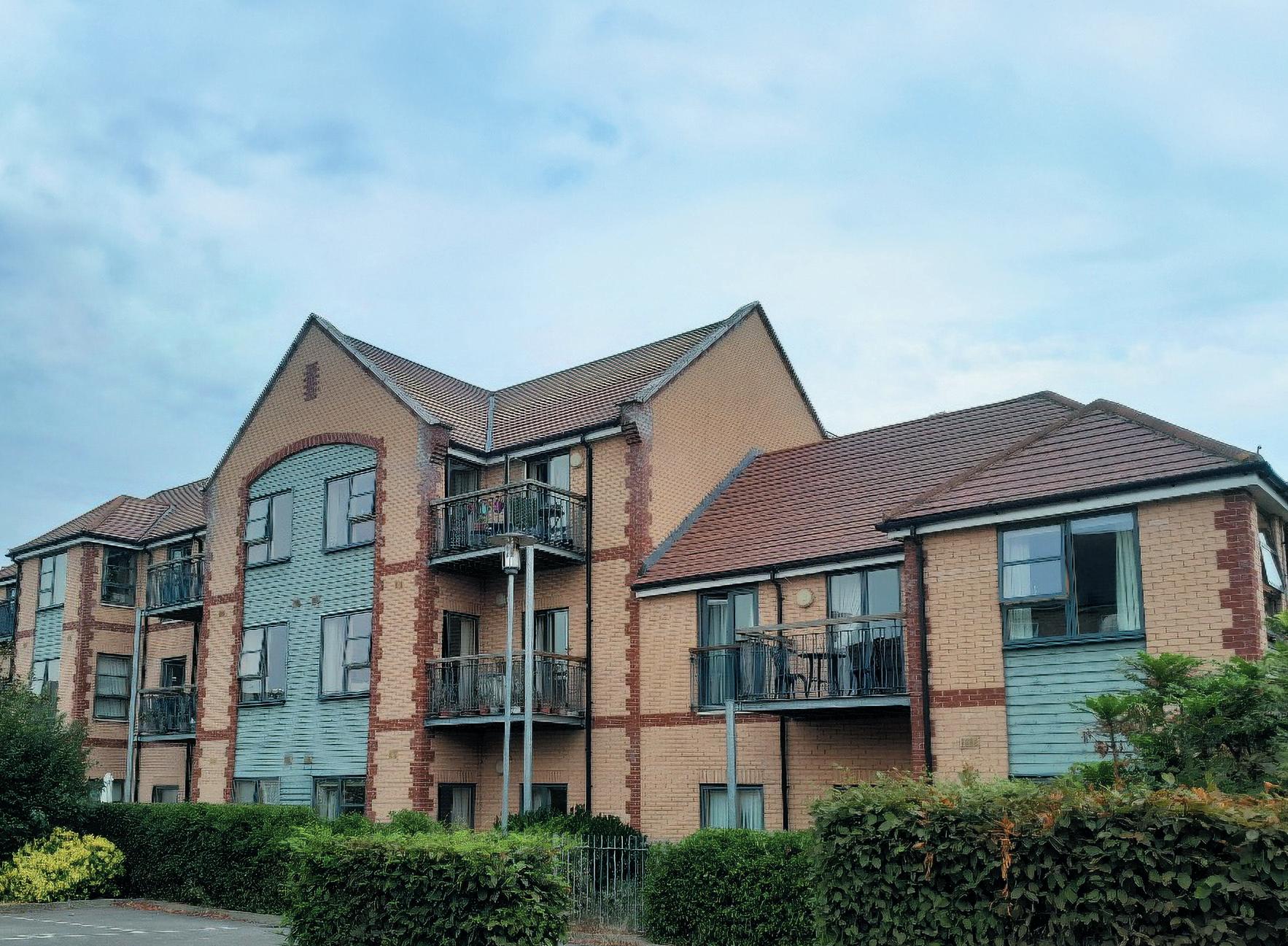
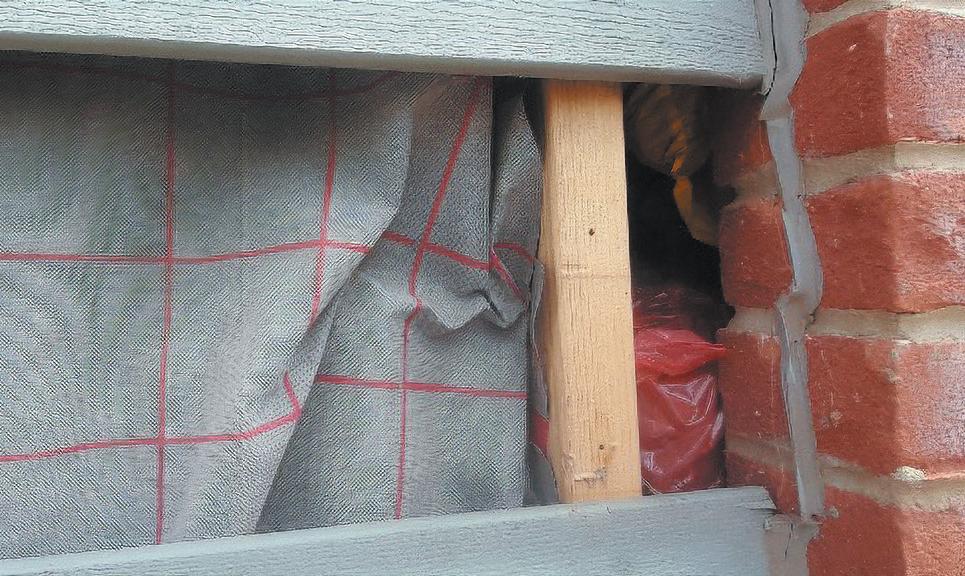
Investigating compartment junctions along party wall and floor lines between apartments, behind the cladding
Sample cladding boards are removed for inspection
Knowing the arrangement of the loadbearing structure helps you appreciate what risks might exist in external walls
evidence suggests…’ or ‘A more detailed investigation by a specialist is recommended to determine…’ Draw conclusions from sampling with care and do not base recommendations on assumptions that cannot be verified. Needless to say, revisit your professional terms and conditions, paying particular attention to scope of works and professional indemnity insurance cover.
Risk assessors need to be particularly aware of the potential fire safety risks in post-1980s reinforced concrete or steel framed residential buildings constructed with layered and lightweight external cladding. Those with loadbearing timber frames are also more likely to have poor design or workmanship issues, whether
by omission or deliberate action. We need to be able to spot these when carrying out fire risk assessments and distinguish them from ‘traditional’ forms of external wall construction in solid and cavity masonry; these latter types are inherently resilient to external fire spread and more tolerant to construction defects and generally pose a low risk.
Malcolm Thomas is a building surveyor, trainer and IFSM council member. Watch out for his new autumn course on ‘Investigating residential buildings and other sleeping accommodation for fire risk assessments (+ PAS 9980 revised)’ available at Eventbrite/IFSM Member Library




The reporter, a fire and rescue service, attended a significant fire in a multi-storey residential building that housed approximately 80 residents in self-contained flats. The incident raised concerns about fire safety, structural integrity and emergency service access.

The reporter tells us that the fire spread rapidly, driven by several deficiencies in the building’s construction. These included non-fire-resistant materials in the communal kitchen extraction system, the presence of Class F insulation in the external wall system and the absence of appropriate cavity barriers, which allowed fire to travel both vertically and laterally across three elevations of the building.


A recent CROSS safety report highlighted a fire in modular residential accommodation, which spread rapidly across an external wall system because of a combination of inadequate fire resistance and lack of cavity barriers, breaching compartments and compromising façade fixings

Fire subsequently breached internal fire compartments, compromising multiple floors, and entered a lower residential flat via damaged kitchen extraction ductwork. This incident placed occupants at considerable risk and increased operational hazards for responders.
The building was constructed using unconventional modular methods, reportedly formed from stacked ISO shipping containers. These were sheathed with plywood fixed to timber battens, externally clad with foam insulation, and finished with either metal sheeting or single skin brickwork.


The façade was secured by mechanical wall ties passing through the insulation to the main structure. During the incident, these wall ties suffered significant thermal damage. The reporter notes that this created a credible risk of façade collapse, which could have resulted in large sections of brickwork detaching from the building and falling.
The building was reportedly designed to comply with the regulations in force at the time. However, the as-built condition is understood to have differed from the approved plans, and the works were not inspected by the local authority building control. Instead, an approved inspector was engaged. The construction method and materials used appear to have deviated from typical practice, contributing to hidden fire spread routes and reduced structural resilience under fire conditions.
Operational crews faced additional hazards because of the unconventional design, which allowed unseen fire spread to unaffected areas. The potential for sudden façade detachment presented an immediate danger to both occupants and emergency responders, especially during the high-rise firefighting operations.
This incident highlights the risks associated with nonstandard building methods and combustible materials in external wall systems, particularly in residential settings. It also demonstrates the importance of effective compartmentation, appropriate material selection and robust oversight during design and construction.
The reporter also identifies a gap in operational awareness of emerging or novel construction techniques, suggesting that such knowledge is essential for both safe firefighting operations and effective risk assessment.
This report highlights multiple concerns with the safety performance of the building, particularly in relation to fire safety and structural resilience. While modular building methods can offer speed, efficiency and consistency, they can also create systemic risks if design flaws or workmanship defects are replicated across multiple units.
There is a risk that important fire safety features such as compartmentation and cavity barriers are either omitted or improperly fitted. Once modules are assembled, joints are often inaccessible, which makes inspection and remediation difficult.
The expert panel notes that simple butt joints may be manageable, but cruciform or more complex intersections present significant challenges in ensuring continuity of fire resistance. This incident therefore illustrates the risk of how hidden fire spread can occur due to latent defects in the built fabric and external wall systems of residential buildings.
The panel also highlights the vulnerability of façade fixings, particularly as in this case they were used in an unusual situation, fixing the façade to ISO containers. Items such as wall ties might appear trivial, yet when exposed to elevated temperatures, they can lose strength and lead to large-scale detachment of cladding. This raises questions about whether the design of fixings should explicitly account for thermal performance in fire conditions.
in external wall systems can create unacceptable risks if not designed or installed correctly.
The panel also observes that regulatory compliance framed as ‘designed to comply with the regulations in force at the time’ is unclear. However, where modular or otherwise non-standard construction methods are used, generic design guidance, whether Approved Document B or the relevant edition of BS 9991, may not provide a sufficient basis for demonstrating compliance without project-specific analysis.
The engagement of a private approved inspector rather than local authority building control does not in itself indicate poor practice; the panel notes that it appears to be the weaknesses in oversight, inspection, and enforcement that are the fundamental failings here.
Panel members express concern that there remains a limited understanding of fire engineering among many structural designers, leading to weaknesses when unconventional methods are employed.
The façade was secured by mechanical wall ties passing through the insulation to the main structure
London Fire Brigade has produced a thematic report on modular construction, available to read and download on the CROSS website. This thematic report states that ‘it is important to first understand the fundamental fire safety design principles of the projects. However, it is often found that crucial details are missing, especially regarding the specific structural elements of projects incorporating MMC.’
The absence of cavity barriers and the use of Class F insulation (either combustible or untested under BS EN 13501-1:2018) are further issues that potentially increased the likelihood of façade failure. Combustible materials
This case illustrates a litany of familiar issues, including poor integration of fire and structural design, deviations from approved plans, questionable workmanship, and inadequate regulatory control. These problems underline
why changes to the regulatory regime were necessary and why the new requirements under the Building Safety Act 2022 are so important.
The panel expects that, as safety case reports and building assessment certificates are implemented, more buildings of this type will come under scrutiny, and systemic issues will become clearer. Many existing buildings, even those still under construction, may lack sufficient evidence of as-built fire safety measures, such as the correct installation of cavity barriers. This uncertainty can lead to the need for intrusive inspections and, where deficiencies are identified, costly remediation.
The Construction Leadership Council has produced some useful golden thread guidance in this area. It should be noted that while ‘golden thread’ information, as defined under the Building Safety Act 2022 only applies to higher-risk buildings, ‘golden thread’ is a recognised term outside this context, and maintaining comprehensive and traceable building information is good practice for all building types. The Institution of Structural Engineers also produced guidance on monitoring and supervision in construction. This report is a significant example of how fire and structural risks can coincide in modular buildings. There appears to be a gap in understanding and responsibility between structural and fire engineers that needs to be closed. It reinforces the need for early fire engineering input, careful design of joints and fixings, robust selection of materials, and effective regulatory oversight to further secure resident and responder safety.
About CROSS UK: This article has been reprinted with the permission of Collaborative Reporting for Safer Structures UK (CROSS-UK), the trusted scheme for built environment professionals to report concerns about fire and structural safety. It aims to help create a safer built environment by improving competence through the sharing of technical knowledge, and by encouraging more open and collaborative attitudes. For more information, see cross-safety.org/uk



Where a premises uses ‘modern’ lighter construction methods, these elements can be more vulnerable to fire than traditional concrete and heavy structural steel frames. Any fire travel within the structure is a critical failure, and these elements should be protected appropriately

Develop operational awareness of modular and non-standard construction methods, recognising the potential for hidden fire spread and structural failure
Incorporate lessons from incidents involving modular buildings into training, pre-incident planning, and risk information systems to enhance responder safety

Integrate fire engineering expertise from the outset of modular projects, with a focus on joint detailing, cavity barriers and compartmentation
Assess the fire performance of façade fixings and insulation systems, considering their behaviour under thermal exposure, not just structural loading
Variations from approved plans, combined with limited oversight, may result in unsafe built conditions that do not meet the intended fire safety performance

Understanding new methods of construction is critical to safe design. Many modern methods of construction should not automatically be regarded as common building situations. Generic guidance, such as Approved Document B or the relevant edition of BS 9991, may not be sufficient without project-specific analysis








Overconfidence can lead assessors to operate beyond their competence or fail to spot dangers, leaving them at risk of professional and legal misjudgements, which could ultimately threaten lives. Neil Edwards outlines what they can do to reduce the risk

recognise complexity, apply judgement and escalate when limits are reached.

The fire safety sector is undergoing rapid expansion, driven by regulatory reform, heightened public scrutiny and increased demand for competent advice. While growth is essential, variation in skills, knowledge, experience and professional judgement has become more visible. In the context of the Regulatory Reform (Fire Safety) Order 2005, such variation has direct implications for life safety and legal compliance.

Bernie Higgins, director of ROAR Consultancy, and Lee Kennedy, compliance director at West Midland Fire Door Inspections, have been particularly active in raising concerns about poor recommendations. Their work poses an important question. Are we witnessing bad actors deliberately providing flawed assessments, or is there a deeper and more systemic explanation?
One explanation may lie in the Dunning-Kruger effect, where newly trained individuals can overestimate their competence, while more experienced professionals, aware of complexity and uncertainty, tend to be more cautious. Confidence often peaks early, before understanding has matured. Only real-world exposure, challenge or failure recalibrates perception. In a rapidly expanding fire safety sector, this dynamic can introduce genuine risk.
This makes structured training, practical exposure and transparent communication essential. Bernie Higgins’s work focuses on how partial understanding, when combined with misplaced confidence, directly undermines both legal compliance and life safety. His position is clear: competence in fire safety is not defined by certainty, but by the ability to
Kennedy’s observations on fire doors demonstrate the dangers of absolute assumptions and unnecessary intervention. Together, their insights reinforce a consistent message. Improving competence requires structured education, realworld application and an honest acknowledgement of uncertainty.
Understanding cognitive bias is arguably as important as understanding regulation. The Dunning-Kruger effect, for example, can affect anyone and may carry risks comparable to failing to maintain CPD. Fire safety decisions are rarely binary; they depend on interpretation, context and an awareness of what is not known. Misjudgement often arises not from negligence, but from unrecognised limitations, which is why systems must support professionals in recognising the boundaries of their competence.
Cognitive bias in fire safety has both professional and legal consequences. Overconfidence can lead assessors to operate beyond their competence, contrary to Article 18 of the Regulatory Reform (Fire Safety) Order 2005, which requires the appointment of competent persons with appropriate knowledge, experience and awareness of their limitations.
Manufacturers and assessors may believe they hold sufficient information to sign off risk, missing indicators that should prompt escalation, testing or specialist input. Responsible Persons may then rely on confident assurance without understanding its limits. Confidence, when unchallenged, can be persuasive but unsafe.
Competence frameworks are beginning to respond to these risks by moving beyond qualifications and time served as proxies for capability. Increasingly, they emphasise decision-making, contextual judgement and the ability to recognise when specialist input is required.
Higgins has consistently advocated for this shift, arguing that competence in fire safety must be demonstrated
through proportionate, defensible decisions rather than procedural compliance alone. This approach deliberately challenges box-ticking cultures and places professional judgement, escalation thresholds and accountability at the centre of competent practice, supported by real-world case learning to counter cognitive bias.
Growth has undoubtedly brought new perspectives and opportunities within passive fire safety. Yet expansion also introduces tension. Conflicting interpretations of standards, divergent advice pathways and misplaced certainty unsupported by depth of understanding are becoming more visible. Two areas illustrate this clearly: fire doors and fire-performance paints. A recurring area of confusion relates to Building Regulations and retrospectivity. Building Regulations are generally not retrospective for existing buildings. Compliance is typically triggered by new work, material alterations or changes of use, not simply by the continued presence of an older product or system. The fact that something does not meet the latest standard does not automatically make it non-compliant or unsafe. This distinction is critical yet it is frequently overlooked, driving unnecessary replacement programmes and misdirected spend.
Fire doors provide a clear example. Fire safety legislation does not require wholesale retrospective compliance with current standards in every circumstance. The test is whether measures are appropriate, proportionate and effective for the building as it exists. Nevertheless, a perception persists that any door not meeting the latest specification must be replaced.
Doors that continue to perform adequately in their original context are sometimes removed without evidence of failure, diverting resources from higher-risk issues and, in some cases, introducing new compliance problems. Replacement itself is not a neutral act. Once work is undertaken, it becomes new design. Replacement or alteration works must consider all relevant Building Regulations, not solely the original fire rating. Parts K and M, for example, may be engaged
alongside Part B, as may duties under the Equality Act. Changes to doorsets, hardware or layouts can unintentionally introduce new breaches, even where fire performance appears satisfactory. Focusing narrowly on fire resistance alone can therefore undermine overall safety and legal compliance.
Paints and surface finishes raise similar challenges. One example is the misconception that Euroclass B is the requirement of Approved Document B when, in fact, our Building Regulations are performance-based and not prescriptive, as in some countries.
Ratings describe surface spread characteristics under controlled test conditions and are highly dependent on substrate, application and system interaction, so competent assessment is key to good results.
Misinterpretation can create both unmanaged risk and unnecessary remediation. Guidance on fire performance paints varies widely. Some is based on legitimate concern, some on partial understanding and some on limited product knowledge. Areas such as multilayer paints and surface fire performance are still evolving. Overconfidence, rather than deliberate misguidance, often drives the spread of incomplete conclusions.
Early confidence can be dangerous. A newly trained assessor may conclude that a door without a current label is unsafe, or that multilayer paints definitively do or do not pose a risk. Without understanding historical testing, field evaluations or maintenance records, such conclusions can result in unmitigated risk, unnecessary replacement and misdirected resources. Confidence often spreads faster than competence and, when unchecked, it can generate industry-wide misconceptions. Passive fire protection is fundamental to building safety, yet it is largely invisible until a fire occurs. Compartmentation, fire stopping, fire doors, structural protection and internal finishes are not routinely tested in daily use. Those with limited understanding may overestimate their ability to assess, install or maintain these measures, while those with deeper expertise tend to recognise their own limitations. Misplaced confidence, compounded
by time pressure, cost constraints and organisational assumptions, can directly compromise outcomes.
Training requirements
Training therefore becomes critical. Passive fire protection is a system, not a collection of independent elements. Each measure limits fire growth, controls smoke and maintains tenable escape conditions. Failure in one component can undermine the whole.
Regulations provide a framework, but they demand informed interpretation. Without structured training, professionals may focus on visible or familiar elements while overlooking less obvious ones.
Drawing on assessment practice, enforcement interaction and postintervention review, Higgins argues that credible training must go beyond knowledge transfer and actively recalibrate professional judgement. He identifies the following areas of focus:
1 Regulatory intent and legal context
Professionals need to understand the purpose of Building Regulations, their interaction with the Regulatory Reform (Fire Safety) Order and the goal of achieving life safety rather than minimum compliance. Nuanced understanding helps identify where flexibility exists and where strict compliance is essential.
2 Passive fire protection as an integrated system
Compartment walls, floors, doors, penetrations and linings function together. Minor defects in one area can compromise the entire system. Understanding cascading consequences reinforces vigilance during inspection and maintenance.
3 Product performance and evidence
Training should support interpretation of test reports, classifications and Euroclass ratings, while recognising limitations such as substrate dependency, installation sensitivity and field performance. Competent professionals must be able to locate and interpret documentation to verify as-built conditions.
Practical steps for fire safety professionals include:
Invest in scenario-based, multidisciplinary and judgement-focused training
Treat passive fire protection as an integrated system
Apply evidence critically and within context
Document and manage change comprehensively
Recognise competence limits and escalate appropriately
Promote cultures that value humility, learning and critical thinking
4 Inspection, verification and change control
Small changes, such as replacement hardware, damaged seals or new penetrations, can disproportionately affect performance. Understanding common failure points and documenting change systematically reduces unnecessary remediation and unmanaged risk.
5
Recognising limits of competence
Most importantly, professionals must recognise when tasks exceed their expertise. The Dunning-Kruger effect shows that overconfidence often stems from not knowing enough to identify gaps. Scenario-based learning exposes these blind spots and helps recalibrate judgement. Effective training is interactive and context-driven. Best practice includes scenario-based learning drawn from real failures, collaborative workshops, reviewing drawings and specifications, multidisciplinary discussions that challenges assumptions, and assessment
focused on judgement under uncertainty. These approaches help align confidence with competence and reinforce the value of knowing what is unknown.
Competence is not static. It must be developed, maintained and reflected upon. Training provides the foundation, while experience and mentorship reinforce system thinking, vigilance and professional humility. For new entrants, this prevents early overconfidence. For experienced practitioners, it sharpens judgement.
Overconfidence affects organisations as much as individuals. Unchallenged assurance can drive costly and unnecessary interventions, such as wholesale fire door replacement. These practices undermine trust, obscure genuine priorities and divert resources from higher-risk issues. Organisations must therefore encourage critical review, reflective practice and awareness of cognitive bias in decision-making.
Passive fire protection is complex, critical and often unseen. The DunningKruger effect provides a useful lens for understanding how overconfidence can emerge from incomplete knowledge. Structured training, practical experience and professional humility help ensure systems perform as intended. Combining rigorous education with scenario-based learning and system thinking reduces error, avoids unnecessary remediation and, ultimately, protects life.
The challenge is ongoing. Buildings evolve, products change and new professionals enter the industry with varying experience. Maintaining effective passive fire protection demands continuous learning, critical thinking and recognition that true competence includes understanding what one does not know and acting responsibly.
Confidence matters but, in fire safety, confidence unsupported by judgement, evidence and an understanding of one’s limits of competence poses a greater risk than uncertainty managed with professional care.
IFSM is a professional body for individuals and companies working in the fire industry. Whether you’re just starting out or have years of experience, joining the Institute offers numerous benefits
The Institute of Fire Safety Managers (IFSM) is a recognised body dedicated to promoting high standards in fire prevention, protection and risk management. Membership can enhance your career, offering access to resources, networking and ongoing professional development.
The great thing about IFSM is that applications are open to anyone, at any level, working within the fire industry. Whether you’re a fire risk assessor, facilities manager, fire alarm installer or involved in fire safety in any other capacity, IFSM membership provides the structure and support to help you grow and develop your expertise.
The following are just some of the main reasons people are joining IFSM:
One of the key reasons to join IFSM is that membership is recognised as a mark of competence. By becoming a member, you demonstrate that you have the qualifications, knowledge and experience at the level of membership you hold and pledge to meet the Institute’s high professional standards.
Members receive a digital downloadable certificate, can use the IFSM post-nominals and display the IFSM logo on their website, marketing materials or email signature, signalling their commitment to quality and professionalism.
IFSM has a range of memberships, many of which come with postnominal letters. These include:
Student (SIFSM)
Technician (TIFSM)
Associate (AIFSM)
Member (MIFSM)
Fellow (FIFSM)
Life fellow (FIFSM (Life))*
*This is the highest grade of membership of the Institute and is by way of nomination only.
CPD is essential for staying up to date in your profession. Through highly discounted technical events, workshops, trade shows, quarterly journals and online CPD events, IFSM helps you stay at the cutting edge of fire safety knowledge and practices. Additionally, IFSM strives to share valuable updates on industry news.
IFSM facilitates attendance at annual technical events that are CPD-accredited, online on-demand webinars, online access to presentations from IFSM technical meetings and regular news bulletins.
IFSM also accredits training centres and courses. A full list of accredited providers can be found at ifsm.org.uk/training-courses
IFSM works closely with government bodies, regulatory authorities and industry leaders to represent the views of its members
Members can use their login details to gain access to the members’ library section of the website. This hosts numerous technical documents, presentations and 18 British Standard documents.
For those involved in fire risk assessments, IFSM membership offers the opportunity to be listed on the National Fire Risk Assessors Register (NFRAR). This recognises the different levels of knowledge and competency that each individual holds, ranging from entry-level assessors just starting out in their career (Foundation level; formerly Tier 1) through to Intermediate and Advanced levels (formerly Tiers 2 and 3).
The NFRAR will help you choose a registered fire risk assessor or company in your area with the requisite skills, knowledge, experience and insurance to carry out any fire risk assessment(s).
Affiliate members are businesses and companies that are associated with the Institute, which offer a range of fire-related services to help your organisations. If your organisation operates in and around the fire safety space, you may decide to apply for affiliate membership. Find out more at ifsm.org.uk/affiliates
IFSM works closely with government bodies, regulatory authorities and industry leaders to represent the views of its members. In an everchanging regulatory environment, having a professional body that advocates for you is crucial. IFSM ensures that your voice is heard, influencing policies and standards that impact the fire safety industry.
Joining the Institute is much more than a transaction; it’s an investment in your future. From enhancing your
professional reputation with a mark of competence to offering invaluable CPD opportunities, the benefits of membership go far beyond the tangible. No matter your level of experience or your role in the fire safety industry, IFSM is there to support you, advocate for you and help you achieve your career goals. If you want to take the next step in your fire safety career, becoming an IFSM member is a smart and rewarding choice.
If you’re interested in joining IFSM, please get in touch through any of the below channels:
info@ifsm.org.uk
0330 355 1286
ifsm.org.uk
Congratulations to the following members and registrants (up to 13 May)
Nationally Accredited Fire Risk Assessors Register
ADVANCED
● Stephen Kain
● John Kearns
● Jack Riley
● Richard Harrington
● Gemma Pawson
● David Moore
● Geraint Morgan
● Luke Anderson
● James Lowe
● Mark Wood
● Rhys Claydon
● Sam Pendray
● Edward Millar
● Sanjay Sagger
● Sean Delaney
INTERMEDIATE
● Victoria Davies
● Paul Christopher
● Farrokh Azad
● Scott Moffitt
● Richard Adrian Lee
● Philip Watkins
● Nazir Ahmad
● Lee Nichols
● Beverley Payne
● Dale Hayward
● Gary Goulbourne
● James Page
● Idris Oyebamiji
● Shane Killick
● Laura Firby
● Andrew Forsyth
● Yehia Abdelzaher
● Daniel Gilchrist
● Richard Wilson
● Stephen Woolf
● Alexei Ghavami
● Shahmore Ali
● Paul Dennis
● Kent Yates
● Jack Ridgill
● Gary Bell
● David Bridgewater
● Tom Horsfield
● Jamie Goddard
● Steve Lewis
● Anthony Guest
● Jason Brunell
● Jack Waghorn
● Helen Borino
● Alexander Riach
● Michael Ransley
● James Crosby
● Alexander Petrovic
● John Taylor
● James Payne
● Chris Winn
● William Carter
● Ruth Griffin
● Tim Lewis
● Graeme Binning
● Benjamin Wynn
● Dale White
● Tendai Chikore Chimutso
● Justin Weston
● Demowe Demulder
● Rachel Steadman
● Chelsey Harrison
● Andy Bathie
● Daniel Ashworth
● Duane Davis
● Kevin Parsons
● Richard Johnson
● Paul Coster
● Rick Charlton
● Michael Burridge
● Robert Hinkley
● Simon Bowman
● Lee Barry
● Makhdum Haider
● Jordan Pope
● Anderson Chericoni
● Jayson Beese
● Andrew Tonkin
● Lee Knigh
● Trevor Williams
● Lorna Neave
● Dylan Hassall
● Andray Polubryukhov
● Tyler Wood
● Emmanuel Ezeocha
● Mark Hanks
● Bailey Scales
● William Hayden
● George Boyle
● Rick Blaney
● Russ Bower
● Craig Beddall
● Andrew Ellitts
● Michael Little
● Farai Mhlanga
● Chin Pang Lau
● Daniel Johnston
● Colin Sampson
● Marcio Goncalves
● Parmjit Ram
● Bryan Harvey
● Alan Scanlan
● Jack Hills
● Jessie Hillman
● Gary Saunders
● Billy Difford
● Charlie Weatherall
FELLOW
● Dennis Davis
MEMBER GRADE
● Thayumanavan Swaminathan
● Katy O’Connor
● Brett Kelly
● Petru Garaba
● Yen-Fang Tu
● Maxwell Fletcher
● Paul Pope
● Paul Coster
● Mohammad Bhuiyan
● Muhammad Khan
● Brian McGuire
● Chris Drumm
● Toby Coates
● Opeyemi Yusuf
● Val Edwards
● Kaloyan Donchev
● Peter Mark Elliott
● Nigel Cornelius
● Scott McPhee
● Seref Irfan
● Peter Van-Huysse
● Emmanuel Oboh
● Kevin Brodie
● Richard Johnson Kenne
● Colin Burns
● Samid Altaf
● Carl Walster
● Mark McMillan
● Brian Claydon
● Jun Christian Silang
● Neil Odin
● Nishal Moheeputh
● Emma Massey
● Anthon Neil
● Matthew Rattenbury
● Stephen Malkin
● Adrian Brown
● Kevin Parsons
● Adrian Manning
● Daniel Quinn
● Alun Evans
● Richard Davy
● Richard Bentley
● Terry Skeggs
● Kuram Gwakyaa
● Howard Timms
● Brian Daley
● Jordan Fleet
● Paul Harrison
● Nurudeen Fagbohun
● Katy Jenner
● Makhdum Haider
● Rebecca Kinson
● Ruth Hawker
● Daniel Kierczuk
● Charlie Kemp
● Stephen Ellis
● Martin Harman
● Terry McMullen
● George Titu
● Nick Lacey
● Geoffrey Dale
● Darrell Hughes
● Michael Gee
● Paul Guinan
● Chris Getty
● Georgina Crawley
● Zinon Papadamou
● Lee Sketchley
● Darine El Mourad
● James Gibson
● Robert Pope
● Rhys Macmillan
● Giles Bolton
● Duane Davis
● Mark Fall
● Lance Sawyer
● Lee Rigby
● Gary Newbold
● Gary Webster
● Andrew Clayton
● Oritsejolomi Amorighoye
● Jason Newby
● Mark Higgins
● Martin Aldred
● Rick Charlton
● Neil Ranson
● Jennifer Roake
● Noel Carroll
● Kane Bliss-Appleton
● Yewande Adeliyi
● John Goggin
● Paul Logan
● Belinda Lewis
● Beatrice Aciro
● Paul Chatwin
● Scott Lynch
● Neil Clements
● John Goodson
● Thomas Bailey
● Nisheel Dharamshi
● Philip Moseley
● Arturas Tarvydas
● Luke O’Leary
● Daniel Kinlen
● Ian Dickie
● Alan Bell
● Nicola Mizon
● Alec Rodwell
● Tony Shepherd
● Neil Stradling
● Abdulaziz Alnoesser
● Prince Saadat Ahmed
● Scott Slater
● Gareth Vickers
● Alan Murphy
● Susanne Williams
● Ben Thornton
● Les Jones
● Dean Partridge
● Rhys Claydon
● Jason Douglas
● Paul Baker
● Stuart Frain
● Lee Ellis
● Andrew Berry
● Joseph Fortune
● James Thomas
● John Wright
● Florin Guzganu
● Peter McGarvey
● Charlie Wood
● Sean Kelleher
● Derek Evans
● Jon Taylor
● Rob Carlin
● Andrew Rivett
● Mohammad Younus
● Simon Smith
● Raymond Maguire
● George Sanda
● Cameron Newman
● Alan Baldwin
● Michael Peters
● Jaimie Cranham
● Julie Newell
● Paul Brough-Slack
● Stephen Taylor-Davies
● Paul Daniels
● Edward Barker
● Lee Blackstock
● David Potticary
● Martin Dickie
● Graham Sergeant
● Mark Forsbrook
● Darren Salisbury
● Mary-Ann Rorks-Barnard
● Crispin Allison
● Gemma Pawson
● Karl Stott
● Elena Orlova
● Graeme Binning
● Sheldon Russell-Priest
● James Slater
● Hilmi Ogulcan Aytac
● Keith Jones
● Marcio Goncalves
● Paul McConaghy
● David Dominic Valtan
● Charleigh Hill
● Stewart Holloway
● Richard Trebilco
● Shae Hyland
● Rahul Rajan
● Tony Humphries
● Andrew Causton
● Rob Gargaro
● Mark Want
● Glenn Whitten
● Mark Foster
ASSOCIATE GRADE
● Dominic Griffiths
● Peter Wilson
● Maria Parsons
● Martin Lally
● Ian Matthews
● Robert Thomas
● Jack Burke
● Ayobami Amole
● Kevin Patterson
● Liam Miller
● Justin Thomas
● Edwin Emakpose
● Andy Mason
● Alfie Buddington
● Tuan Anh Dao
● Carl Taylor
● Fraser Atkinson
● Julie Hayward
● Tristin Morrison
● Gary Hardiker
● Ian Smith
● Richard Watson
● Jon Hobson
● Nick Edmonds
● Hayley Harris
● Karl Chorley
● Mia Bambury
● Mark Dron
● Gregory Dickinson
● Joe Halliday
● Mark Broom
● Michelle Cardall
● Harry Keenan
● Deepshika Luchoomun
● Maralyn Moate
● Gemma Mitchell
● Joshua Hall
● Mark Harris
● Darren Law
● Simona Sapundzhieva
● David Bryant
● Daniel Johnston
● Stephen Mackinlay
● Kieran Fitzgerald
● Usman Mohammed
● Chloe Miller
● Ben Gosling
● Simon Cross
● Ranjith Ram
● Glenn Ball
● Stuart Haven
● Holly White
● Godson Okpidu
● Neil Jowett
● Richard Greene
● Matthew Green
● Steven Poxton
● William Adshead
● Emma Coray
● Robert Faulkner
● Dale Hill
● Myles Easton
● Kostadin Karagyozov
● Hemali Naik
● Stephen Taylor
● David Rowley
● Scott Robson
● Anthony Cocker
● Sven Harris
● Samuel Kelly
● Stuart Turner
● Stuart Stafford
● Mark McDixon
● Kelly-Anne Gibson
● Paige Davis
● Lesane Yohannes
● Billy Reed
● Ismael Perez Martinez
● Peter Janes
● Lisa Reed
● Monika Daborowska
● Susan Morgan
● Anthony Taylor
● Tudor Casian
● Adebayo Ogunmefun
● Gavin Tan
● Christopher Addison
● Ruth Griffin
● Olivia Williams
● Gary Brogan
● Christopher Venmore
● Shane Stevenson
● Andy Dye
● Rick Cullen
● Steve Jones
● Chinyelu Ejikeme
● Andrew Kenny
● Alex Wright
● Darren Coyle-Bartley
● Jamie Robinson
● Benjamin Cooke
● Douglas Callum Noble
● Victor Botezat
● Bradley Goddard
● Ashley Gill
● Callum Pallister
● Wesley Matthews
● Nicholas Morris
● Ravi Nischal
● Kieran Adler
● Mark Glass
● Bradley Heath
● Kevin Naylor
● Theo Wallace
● Ilia Gogovski
● Adam Berry
● Jake Husain
● Lorraine Stone
● Raphael Whitmore
● Demetrios Zorbas
● Marc Reed
● Shoaib Naeem
● James Draysey
● Simon Phillips
● Ellie Wood
● Peter Yeomans
● Alfie Ottley
● Barrington Brown
● Darryl Powell
● Ross Thomas
● Russell Leonard
● Christopher Barnes
● Robert Angel
● Matt Tidball
● David Edmondson
● Ian Goodwin
● Charlie Barker
● Callie Lampard
● Bayzid Hossain
● Kate Sorsby
● James Draysey
● Andrew Berkovitch-Perry
● Adrian Scott
● Mark Morton
● Andy Irvin
● Paul Compton
● Alfie Hill
● Luke Simpson
● Daniel Iwaniak
● Niven Matthewman
● Matthew Coulson
● Iulian Petrusca
● Adam Leyland
● Dan Meadows
● Tobias Gash
● Dean Mcintyre
● Lubna Zakeria
● Wayne Thompson
● Stephanie Ettles
● Josh Allenby
● David Nash
● Susan Smithson
● Patrick Baker
● Dylan Hassall
● Anthony Hossanah
● Guy Atherton
● Scott Anderson
● Harry Starling
● Rizwan Ahmad
● Debasish Chowdhury
● Kelly Richards
● Tanya Springford
● Julia Levett-Faid
● Nina Reilly
● Anna James
● Josephine Uchebgu
● Laurence Lawson
● Paul Bentley
● Matthew Coaley
● Mark Reyes
● Mohammad Usman Ali
● ABC Fire & Safety
● AJM & CO UK
● Aleron Fire Protection
● APT21 Fire Safety
● AQ Fire Solutions
● Aurora Group UK
● Bayliss Fire, Security & Electrical
● Beacon Fire Protection
● Beers Consultancy
● Cinis Group
● Complete Fire Protection Upgrades
● Davis-Lumsden
● DB Fire Safety
● Dorset Fire Safety Solutions
● Empyrean Fire Consultancy
● Erif Fire & Security
● Escape Fire Risk (UK)
● Event Safety Plan
● Falcon Fire Safety
● Fire Guard Compliance
● FireFM Group
● FireStop Technologies
● Fire Safety SME
● FPS Building Solutions
● HS Fire & Risk Services
● Internal Fire Solutions
● Invincible
● JAL Safety Consultancy
● JSW Properties (Fire)
● KNE Fire Protection
● London Building Compliance
● MBE Fire Compliance
● NC Skills & Consultancy
● Norfolk Fire Group
● Project Health & Safety Services
● RB Services
● Roundhall
● Safety Quest Health & Safety Consultancy
● Sentinel Fire Group
● Siren Fire Safety
● Sixteen Sixty Six
● Spycon Security
● TJB Consulting Partners
● Topco 988
● Trexara
● VG Technical
● Vigil Fire Compliance
● W1 Services
TECHNICIAN TO ASSOCIATE
● Benjamin Steel
● Claire Tranter
● James Crosby
● Daniel Ashworth
● Drew Cook
● Joanna Kurczak
● Kurtis Thomas
● Greg Mintern
● James Lanahan
TECHNICIAN TO MEMBER
● Andrew Gardiner
● Karen Henningham
● Chin Pang Lau
● Paula Stevenson
● Samantha Findlay
● Paul Costen
ASSOCIATE TO MEMBER
● William Reeves
● Paul Jennings
● Neil Turner
● Colin Bickerstaff
● Andrew Griffiths
● Alexandra Smith
● Muhammad Khan
● Martin Burgess
● Paul Christopher
● Paul Greenhalgh
● Maddie Witkowska
● Chloe Gallagher
● Jamie Goddard
● Vishal Thapa
● Robert Young
STUDENT TO ASSOCIATE
● Robert Hinkley


A background in firefighting and providing safety advice to the public paved the way for Ryan Beard to launch his own consultancy
Q How did you first get into the industry?
I first entered the fire safety industry as an aviation firefighter, where I built a strong foundation in the core principles of fire safety and emergency response. That gave me practical, hands-on insight into risk and prevention.
Alongside this, I joined my local authority Fire and Rescue Service on a part-time basis within the home fire safety team. I worked directly with some of the most vulnerable members of the community, carrying out home visits, installing fire detection equipment and providing tailored fire safety advice.
Q
Why did you feel this was the career you wanted to pursue?
Working closely with vulnerable members of the community gave me a strong sense of purpose, and I could see the impact that effective fire safety advice can have on people’s lives.
With a background in customer service, I found that communicating with people, understanding their needs and helping them feel safer came naturally. This aligned perfectly with fire safety, where education and engagement are just as important as technical knowledge.
Q How has your career developed to date?
My career has developed from hands-on operational and community-based roles into establishing my own independent fire safety consultancy, 225 Fire Solutions, which now operates across the south-west region.
The experience I gained early on has been invaluable in shaping how I work today. It has enabled

me to communicate effectively with a wide range of people, from business owners and senior managers to frontline staff, ensuring that fire safety is understood, practical and embedded within organisations.
Q What is your current role? It depends on which uniform I’m wearing! As well as my role with 225 Fire Solutions, I continue to
Don’t rush the process; every role and experience builds the foundation for the next
maintain an operational role within aviation fire services, partly because I’ve always had a passion for aviation, and partly because I’m not quite ready to give up the adrenaline just yet.

Q Can you run me through a typical day?
No two days are ever the same, which is one of the things I enjoy most. A typical day will often start with attending client sites, carrying out fire risk assessments or providing on-site fire safety advice. This could involve anything from walking through premises with business owners to identifying risks, reviewing existing control measures and discussing practical improvements.
The afternoons are usually more office-based, focusing on writing up reports, responding to clients and preparing quotations for new work.
Q What’s the oddest situation you’ve encountered?
One that always stands out is carrying out a home fire safety visit for a member of the public in a very remote area of the south-west who happened to have an ostrich in their front room.
Q What gives you the most pleasure from your career?
Educating people who simply aren’t aware of fire safety risks and helping them better understand how to keep people safe.
Q How would you like your career to develop in future?
I’m always focused on continued professional development and expanding my knowledge within the industry. I’ve recently moved into NVQ assessing, and I’m keen to develop further into training and mentoring the next generation of fire risk assessors.
Q What piece of advice would you have for your younger self?
Don’t rush the process; every role and experience builds the foundation for the next. Take the time to learn properly but trust your instincts along the way.
Q What do you get up to outside of work?
Outside of work, I practice Brazilian jiu-jitsu, a grappling-based martial art. The sport is often described as ‘human chess’, as it requires you to constantly adapt, think ahead and make decisions under pressure, something I really enjoy.