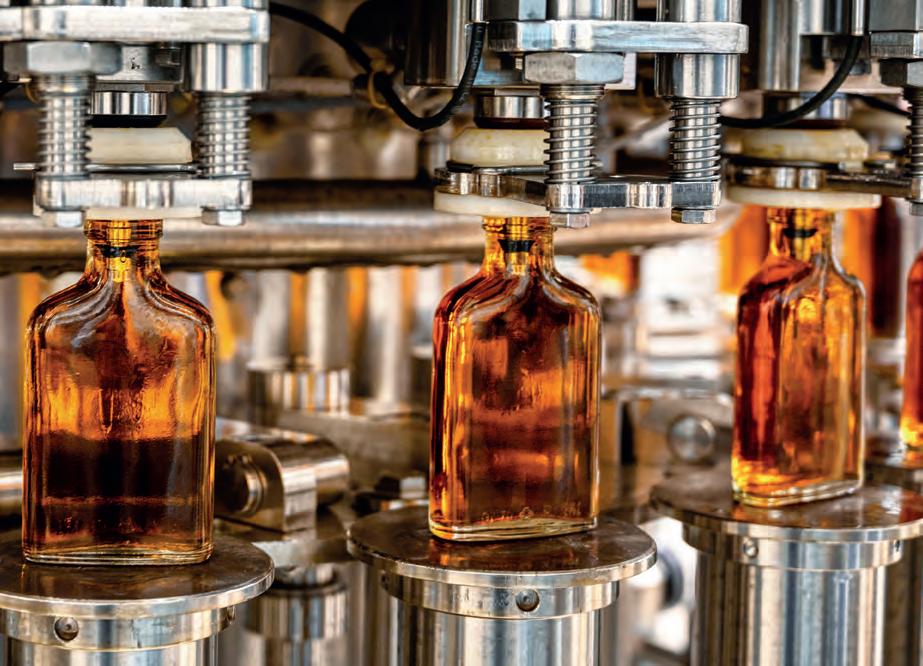
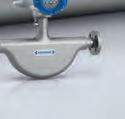
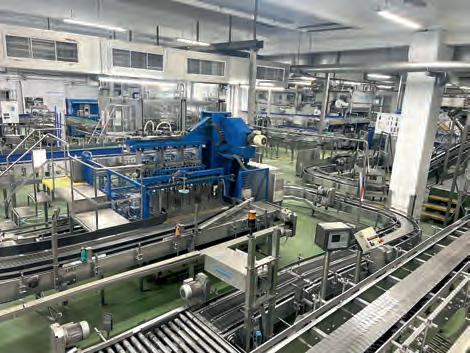
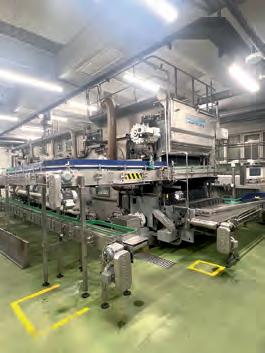
OPTIMASS series – Coriolis mass flowmeter for dstillation applications
• Direct measurement of % Vol. ABV (Alcohol by Volume) without process interruption
• Reliable mass balancing due to high accuracy measurement of mass flow and density (e.g. °Brix)
• Simultaneous loading and measurement in real time, fully compliant with fiscal and custody transfer regulations
• Entrained Gas Management (EGMTM): meters maintain operation with 0...100% gas entrainment, enabling two-phase flow, such as vodka, whisky and tequila
• Reliable measurement of solids and fibres in liquid form
20 Beyond oak and ABV
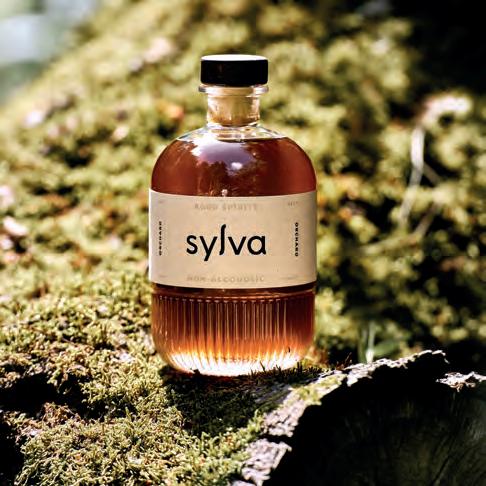
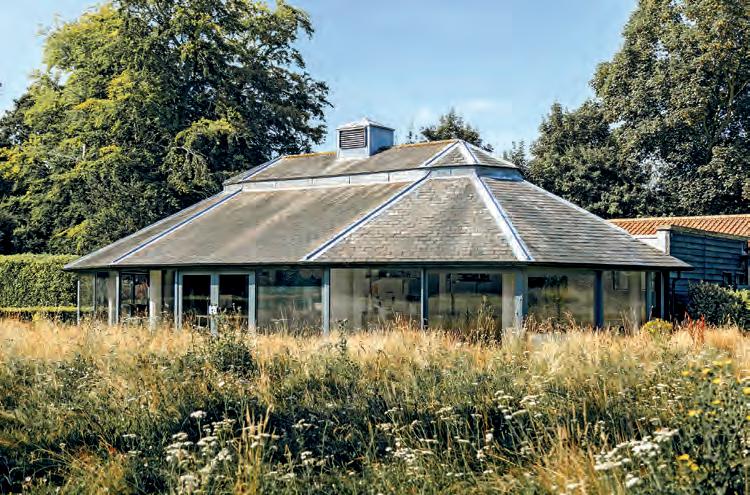
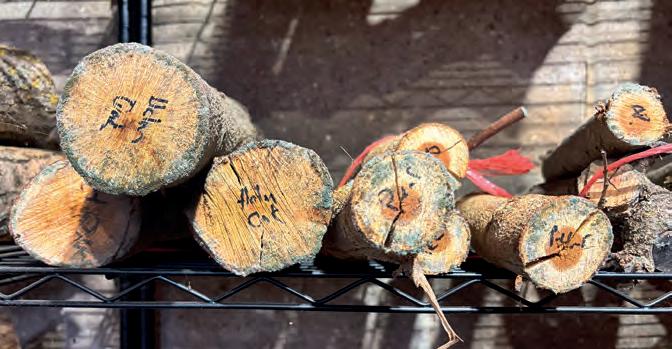
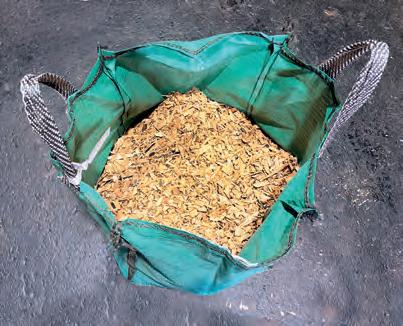
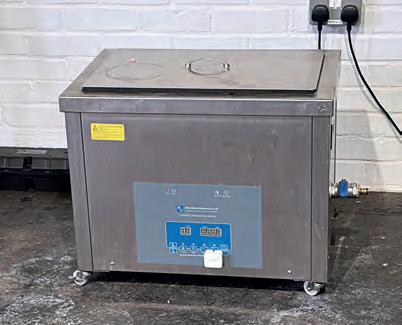
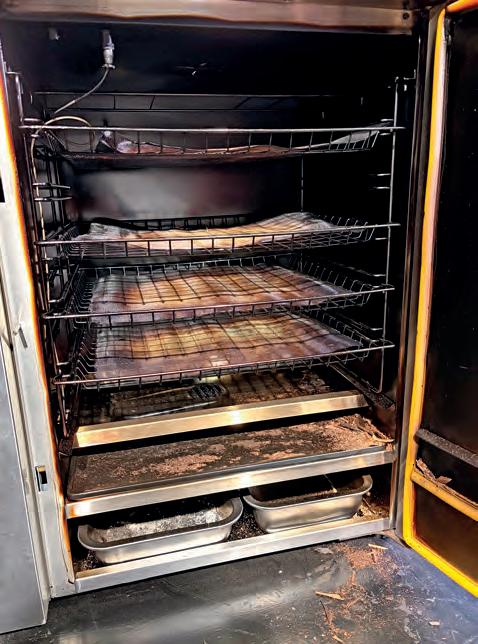
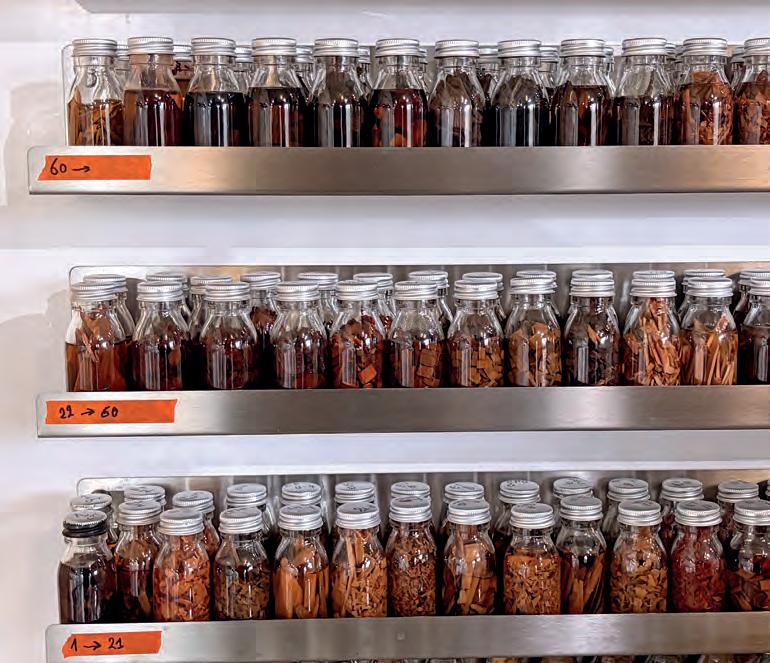
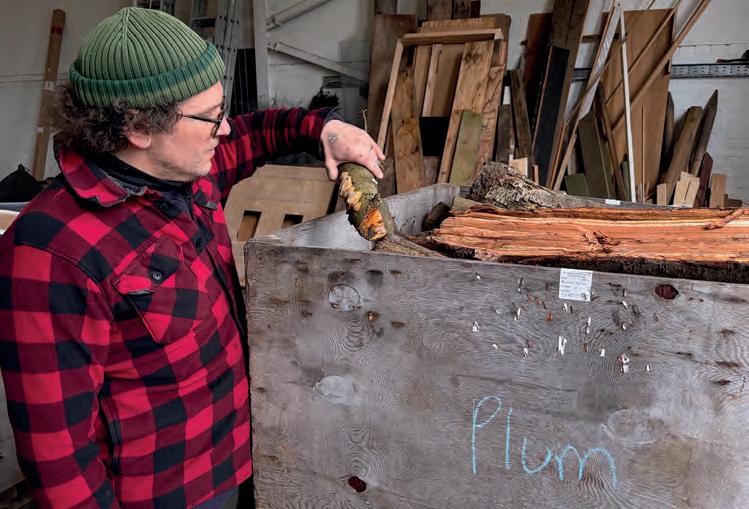
Anthony Gladman visits Sylva, where ultrasonic maturation is used to rapidly extract complex flavours from non-traditional tree species - challenging conventional spirit ageing processes in a non-alcoholic environment.
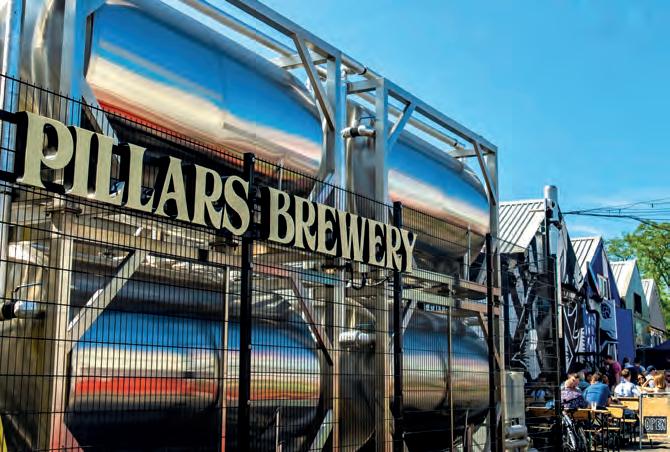
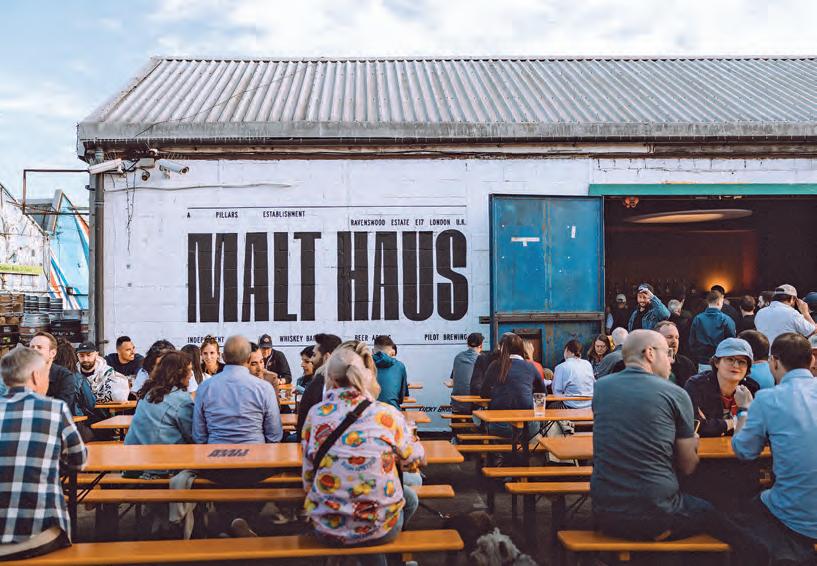
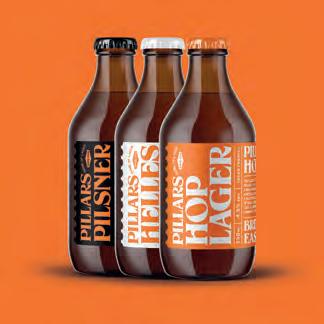
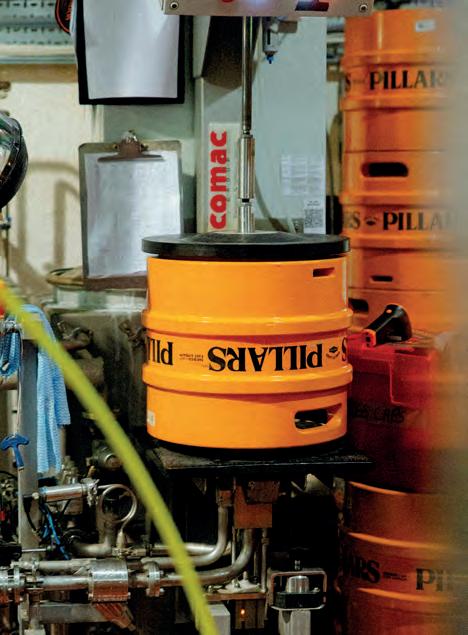
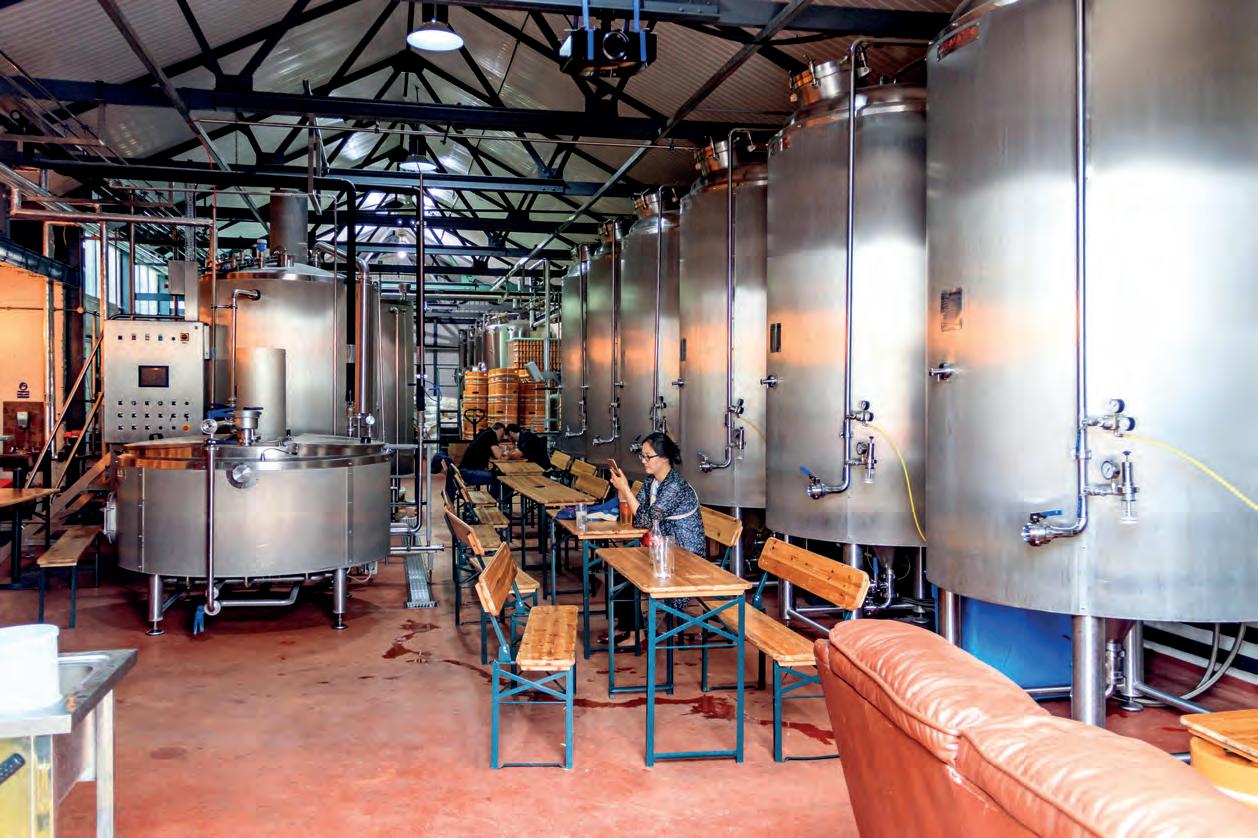
26 Flying the flag at Pillars Brewery
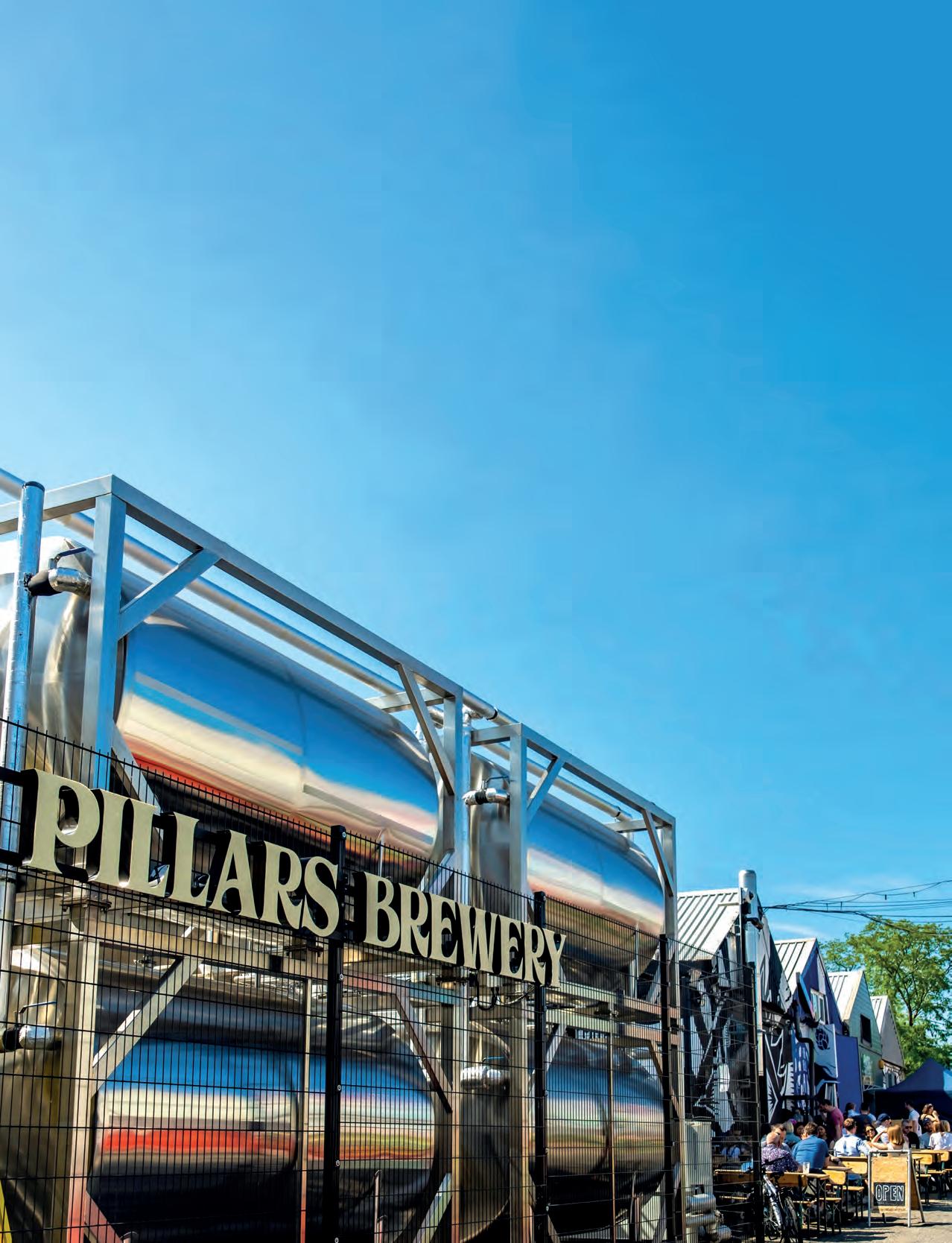
Joe Bevan steps inside the self-proclaimed ‘Home of Lager’ at Pillars Brewery in London.
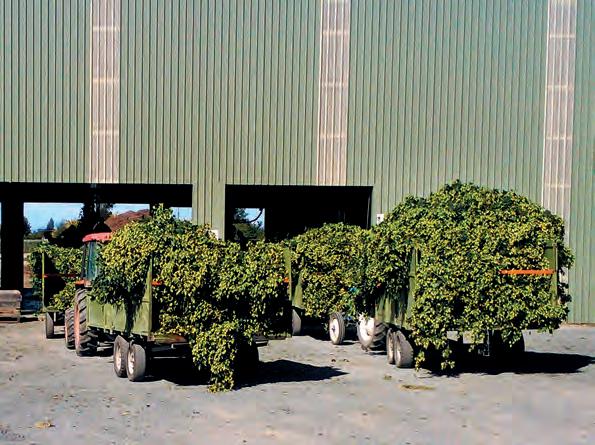
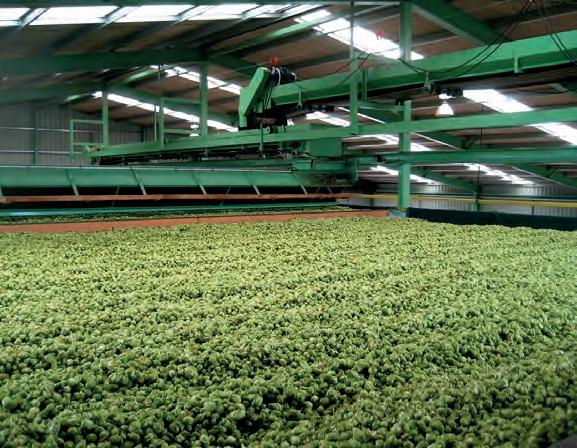
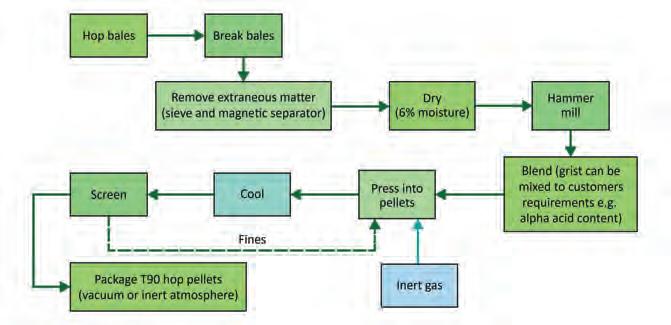
30 Beyond the cone
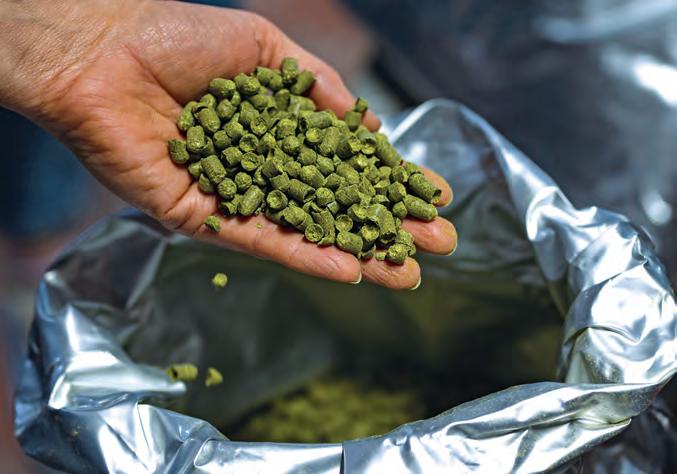
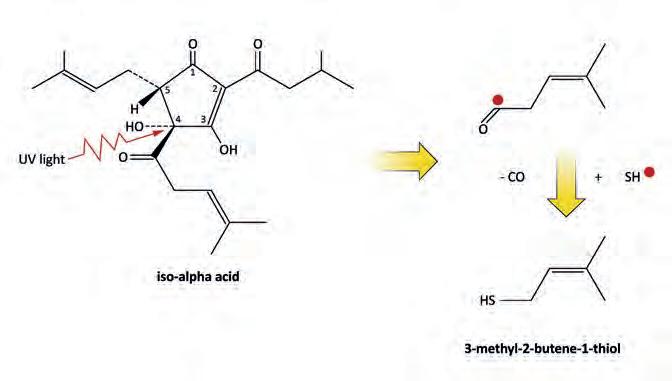
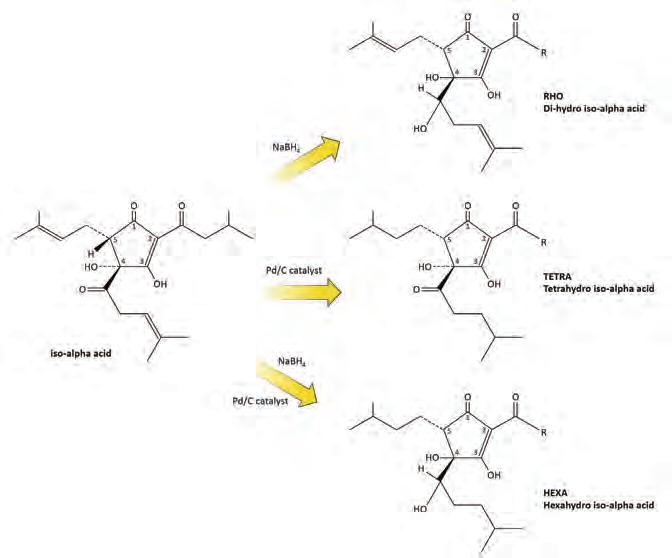
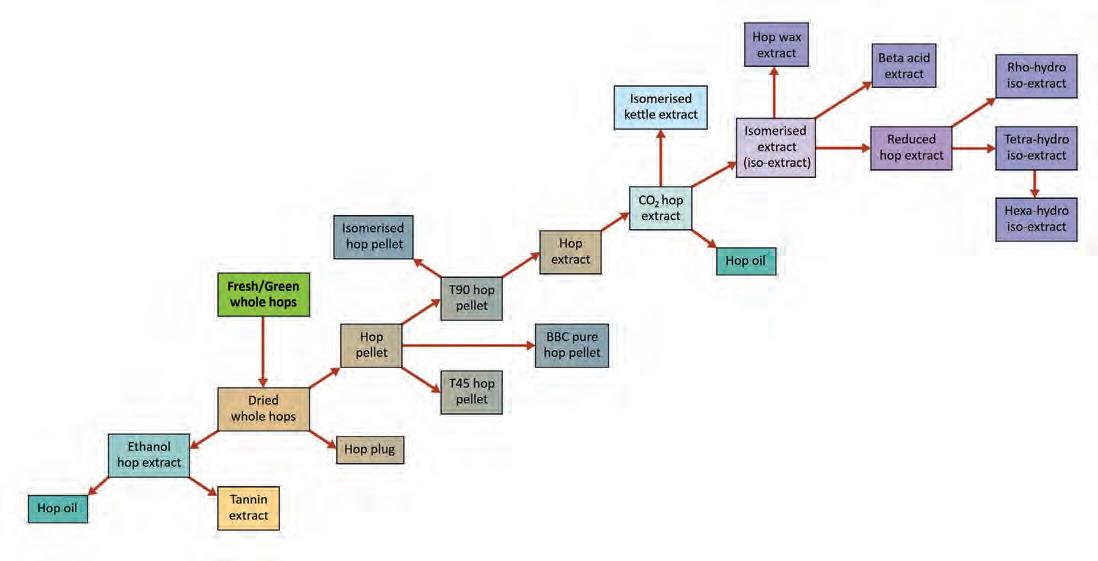
Following last month’s exploration of fundamental hop chemistry, we examine how these complex compounds are harnessed for use through processing and how brewers can achieve unparalleled consistency and efficiency while minimising brewhouse losses.
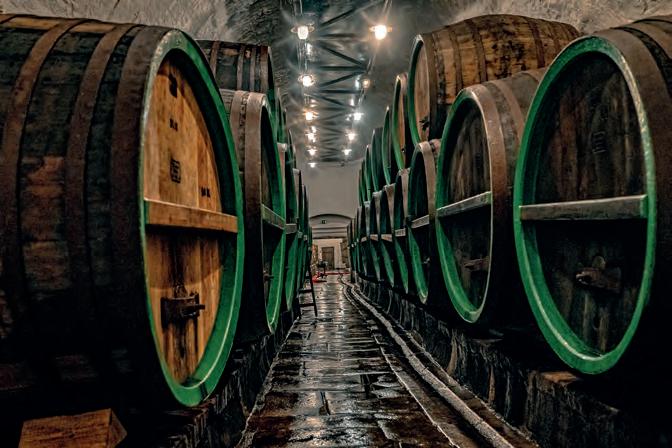
36 The birth of pale lager
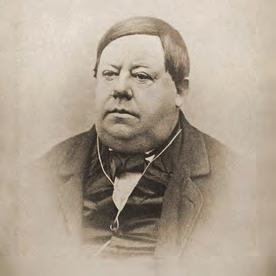
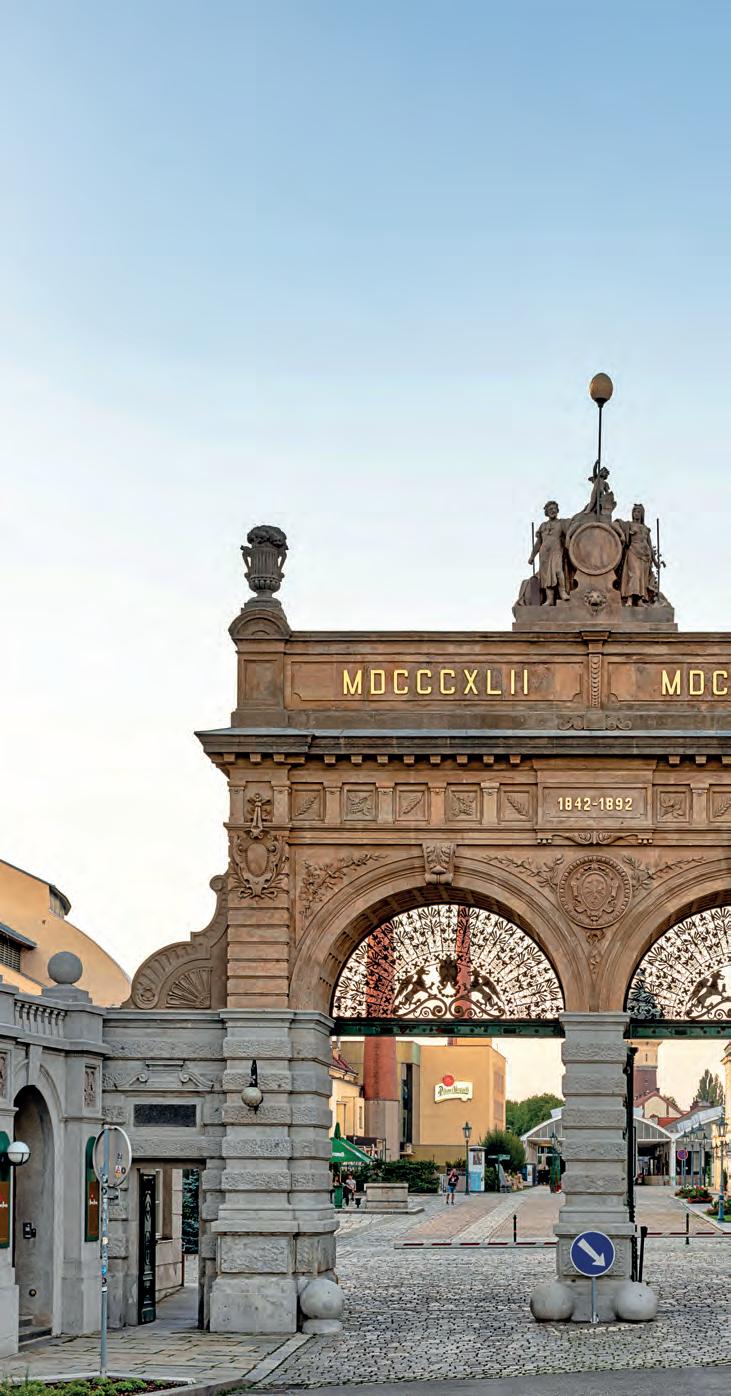
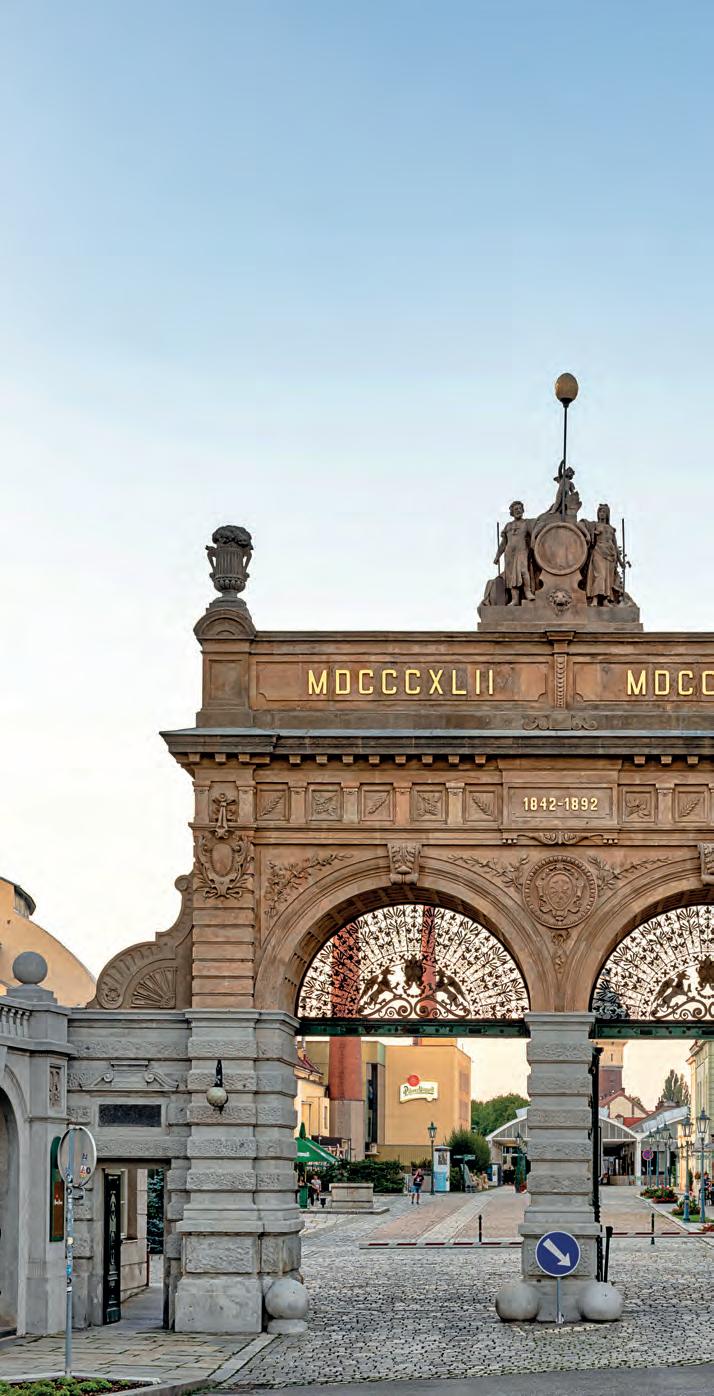
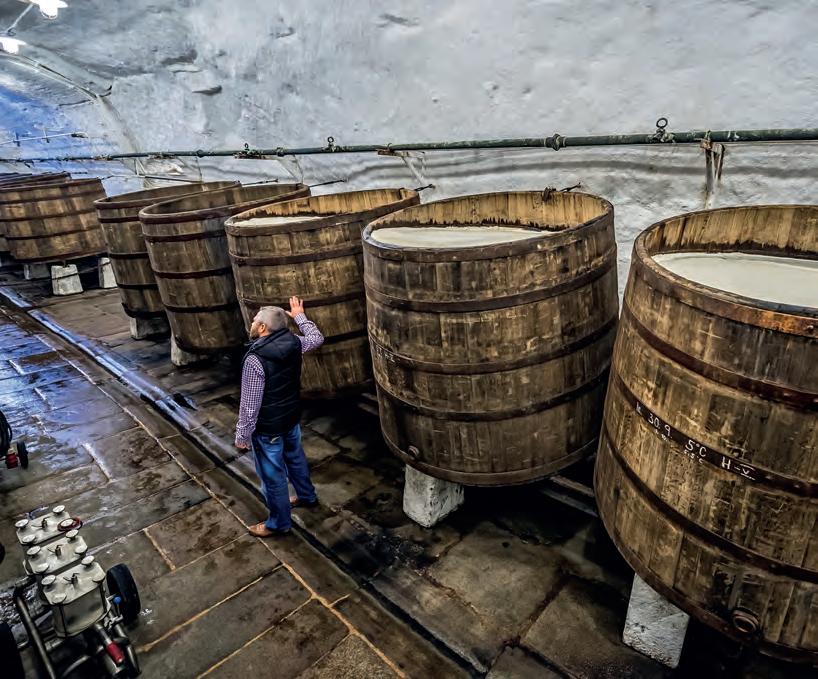
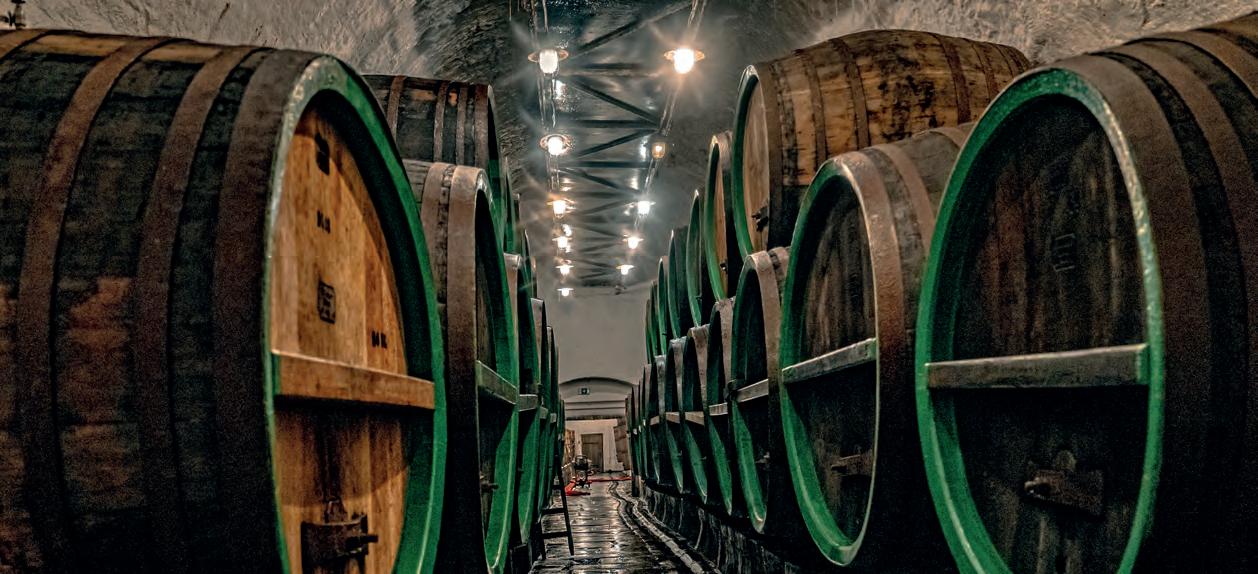
Tim O’Rourke explores how Pilsner Urquell has remained steadfastly unchanged over the (almost) two centuries since its birth in the town of Plzeň
41 Best practices for co-manufacturing
Expanding brewery capacity doesn’t always mean investing in new tanks or facilities. In part one of a new series from First Key Consulting, we explore how to evaluate outsourcing opportunities.
44 The cautionary tale of punk empire
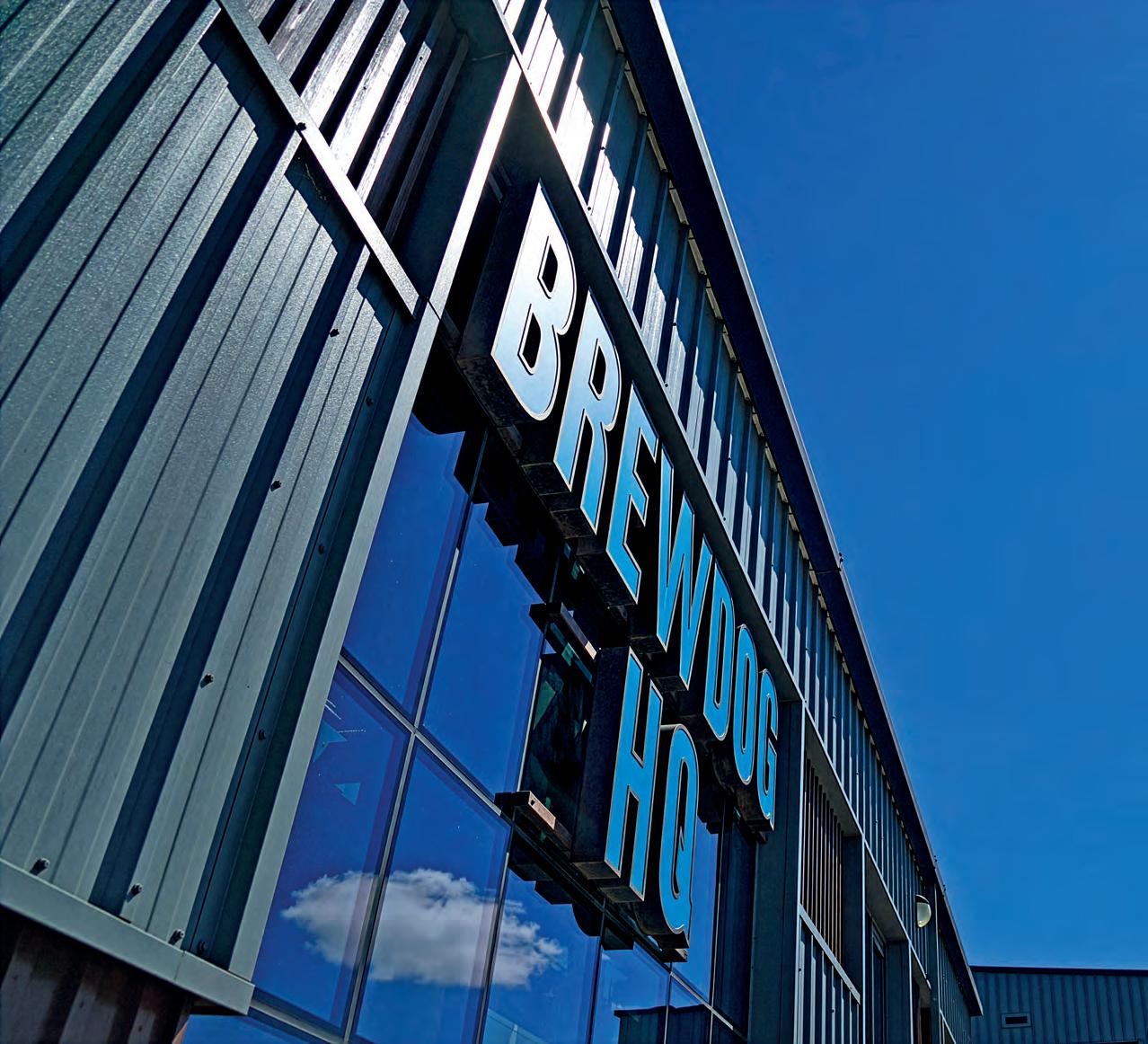
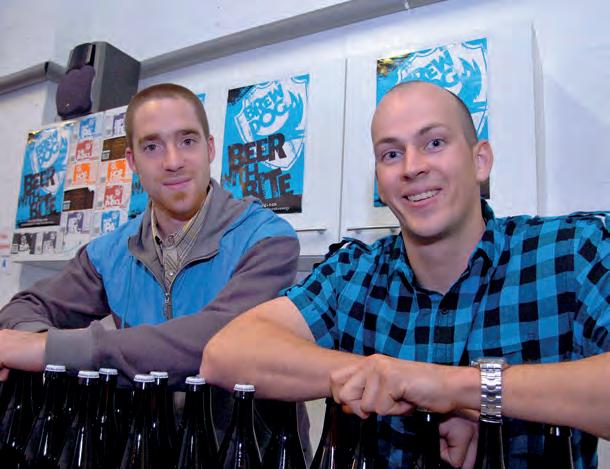
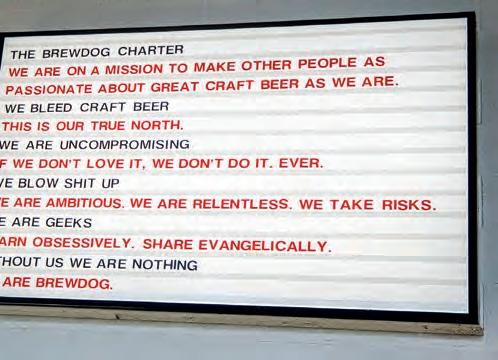
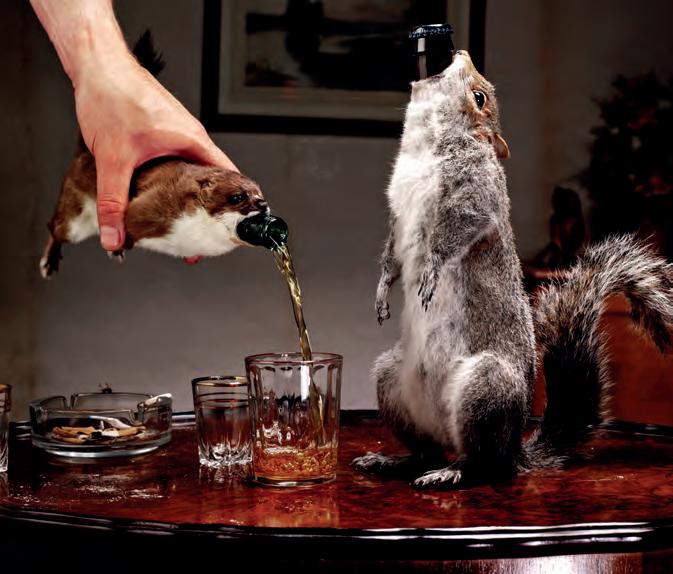
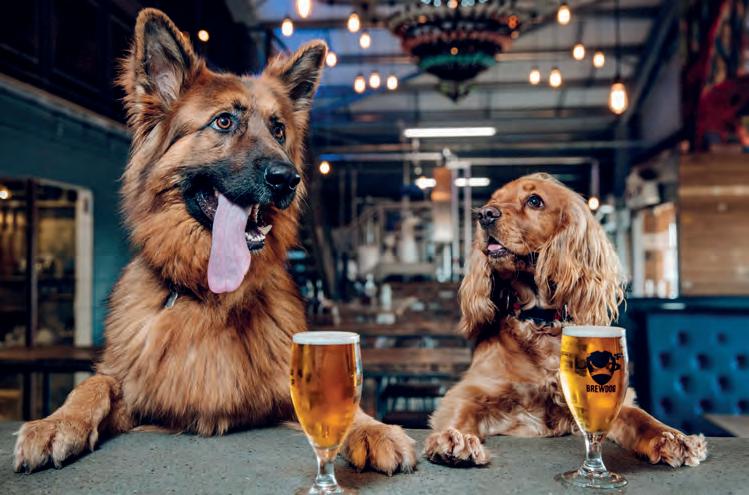
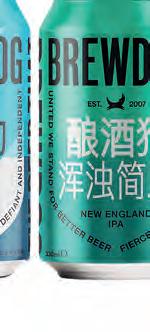
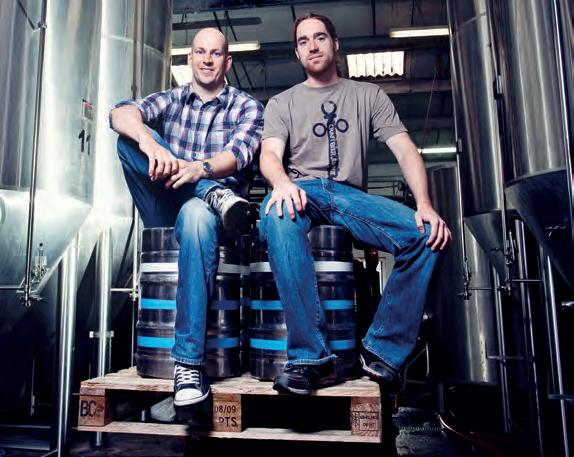
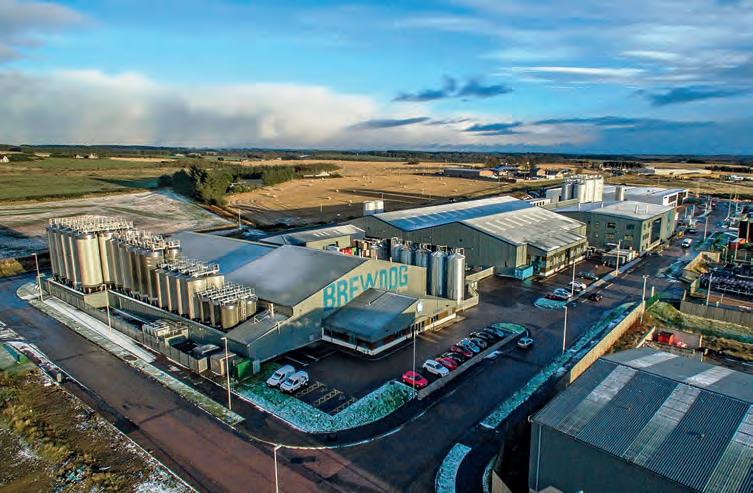
Taken from nearly 20 years of Brewer and Distiller International reporting, we revisit the dramatic rise and fall of BrewDog. Once a £2 billion craft beer rebel, the brand’s story has ended in a £33 million sell-off.
48 Craft Malt Awards 2026
The North American Craft Malt Guild has crowned a new champion at the (virtual) eighth annual Craft Malt Cup Awards.
Regulars
04
finally
Brewer and Distiller International
44A Curlew Street, London SE1 2ND, UK
T: +44 (0)207 499 8144
E: editor@cibd.org.uk www.cibd.org.uk
Editor:
Steve Curtis
T: +44 (0) 207 499 8144 editor@cibd.org.uk
Publisher:
Redactive Media Group
T: +44 (0)20 7880 6200 info@redactive.co.uk
Advertising sales:
T: +44 (0)20 7880 7636 cibdsales@redactive.co.uk
Subscriptions:
To receive a copy of Brewer and Distiller International contact CIBD Membership Enquiries at cibdmembers@cibd.org.uk or visit www.cibd.org.uk/cibd-membership
Subscription rate for 2026: £155 (£50 student rate)
The Brewer and Distiller International is published monthly by the Chartered Institute of Brewers and Distillers.
editorial
Evolution and survival in today’s market
Welcome to this April edition of Brewer and Distiller International. This month, our news and features highlight more than ever the trends currently reshaping the beverage landscape.
Our industry is currently navigating complex shifts in consumer habits. Most notably, the increase in ‘health consciousness’ and associated reduction in demand for alcoholic beverages. In response, brewers are accelerating their focus on low-calorie and zero-alcohol portfolios to capture this demographic. Concurrently, the broader trend of premiumisation remains a vital defence mechanism against these volume declines.
Operational strategies are also rapidly evolving. Businesses are pursuing extensive cost-savings programmes to fund innovation, and increasingly evaluating outsourcing and co-manufacturing opportunities to expand capacity without the need for new facility investments. Furthermore, sustainability is driving major operational overhauls. The big drinks companies are mapping out their decarbonisation journeys, transitioning to renewable energy at their major sites, and deepening their commitments to regenerative agriculture.
THE CHARTERED INSTITUTE OF BREWERS AND DISTILLERS:
44A Curlew Street, London SE1 2ND, UK
T: +44 207 499 8144
CHIEF EXECUTIVE OFFICER:
Tom Shelston
T: +44 207 499 8144 tom.shelston@cibd.org.uk
cIBD MEMBERSHIP ENQUIRIES:
Keval Shah
T: +44 207 499 8144 cibdmembers@cibd.org.uk
BDI_magazine CIBDHQ
Chartered Institute of Brewers and Distillers
For those unable to adapt, or for those unable to cut costs, the consequences are stark: a growing number of businesses are failing financially, forcing them to either close their doors for good or be sold to new owners.
As you read this April edition of Brewer and Distiller International, perhaps you are attending the Craft Brewers Conference & BrewExpo America in Philadelphia (20 – 23 April) in which case welcome to the CIBD’s membership magazine. Student membership of the CIBD is only £50, including a printed copy of this magazine delivered to your door. As you study to gain relevant knowledge and skills to advance in your career, CIBD membership will provide you with extra support.
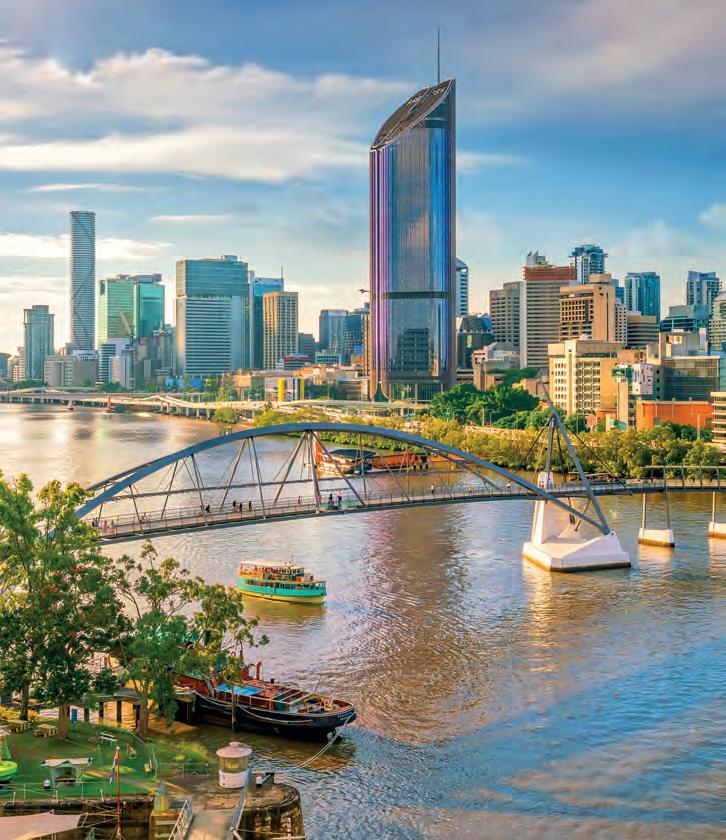
Finally, registration is still open for our World Distilled Spirits Conference (4 – 7 May) as well as our joint ASBC and CIBD Congress - Global Brewing and Distilling Innovation – Shaping the Future Together (17 – 19 Aug). This month we are also delighted to announce the date of our 39th Biennial Asia Pacific Convention, which will be held in Brisbane, Australia from 15–18 March 2027. Further details, including the official website and registration information, will be released soon. In the meantime, we encourage you to save the date.
steve curtis editor
Where Brewers and Distillers Shape the Future
Join global leaders in beverage science at the 2026 ASBC & CIBD Meeting, where the American Society of Brewing Chemists (ASBC) and the Chartered Institute of Brewers and Distillers (CIBD) come together for an all-new event focused on beverage science and industry advancement.
This Isn’t Just Another Brewing or Distilling Conference
Under the theme Global Brewing and Distilling Innovation: Shaping the Future Together, this meeting is a unified platform for beverage scientists, technologists, and industry leaders to exchange ideas, examine breakthrough research, and gain practical insights.
What Makes This Meeting Different
• Beer, distilled spirits, and wine topics presented in a unified program
• Scientific rigor and real-world application paired for maximum impact
• Global perspectives on emerging technologies and shared challenges
Registration is Open to Shape What’s Next
Experience a new level of collaboration—where innovation, global expertise, and scientific excellence converge. Register by June 24 to save with advance rates.
asbcnet.org/meeting
17–19 August 2026 | Seattle, Washington, U.S.A.
Global Brewing and Distilling Innovation: Shaping the Future Together
News: Global
Molson Coors reports 2025 volume decline as Horizon 2030 strategy is unveiled
Molson Coors Beverage Company has reported a downturn across its global operations for the 2025 financial year, with shipments falling by 8.6% and beer shipments declining by 5.4%. The company confirmed that net revenue also saw a reduction during the period, reflecting a challenging twelve months for the international brewer.
The results, which encompass both the fourth quarter and the full-year performance, were presented alongside the introduction of a new long-term strategic framework.
Speaking at the CAGNY Conference in Florida, senior executives outlined “Horizon 2030,” a business plan designed to navigate the shifting landscape of the global drinks industry over the next five years.
A central pillar of the strategy is a threeyear cost-savings programme aimed at
delivering $450 million in cumulative efficiencies by 2028. These funds are earmarked for reinvestment into marketing and innovation, particularly within the “Above Premium” and “Beyond Beer” segments, which now account for approximately 10% of total revenue. For the UK market, this includes a continued focus on the onshoring of Peroni Nastro Azzurro and the expansion of the group’s portfolio into spirit-based readyto-drink products and premium mixers.
The “Horizon 2030” plan also introduces an operational overhaul designed to move profit-and-loss accountability closer to regional markets, including a dedicated focus on the UK and Ireland. This “rewiring” of the business is intended to allow regional teams to respond to consumer trends and market shifts in days rather than quarters. Executives emphasised that the move will empower local management to tailor investments more precisely to specific retail channels and on-premise occasions.
Sustainability and supply chain modernisation remain integral to the brewer’s long-term objectives. The company confirmed its commitment to reaching net-zero emissions across its Western European direct operations by 2035.
Sir Dave Lewis outlines “intense” start to Diageo turnaround journey
Seven weeks into his tenure as Diageo chief executive, Sir Dave Lewis has provided a frank assessment of the challenges facing the drinks giant, following a disappointing set of interim results. Organic net sales fell by 2.8 per cent in the first half of fiscal year 2026, with the company forecasting that full-year net sales will continue on a similar trajectory. Sir Dave has undertaken an extensive global tour since assuming the role, visiting operations in North America, Latin America, Europe, the Middle East, and India, with Asia and Africa next on the itinerary. Despite the scale of the task, the group has deferred any major strategic announcements until a formal proposal is published in late summer. This measured approach has met with some impatience from City analysts eager for the swift, decisive action that defined Sir Dave’s previous leadership roles. The half-year results highlighted ongoing difficulties in key markets, specifically continued
Carlsberg Group revamps sustainability strategy to accommodate Britvic
Carlsberg Group has formally launched an updated environmental, social and governance programme, titled ‘Brewing Tomorrow’, designed to address the evolving operational landscape following its historic acquisition of the soft drinks manufacturer Britvic. Completed in 2025, the Britvic takeover represents the second largest acquisition in the brewer’s history, fundamentally altering the group’s geographic footprint and emissions profile. The newly expanded product portfolio, which now comprises 30% soft drinks, has added nearly one million tonnes of carbon dioxide equivalent to
the company’s value chain, representing a 16% overall increase in corporate emissions.
To credibly manage this heightened operational complexity and increased emissions baseline, Carlsberg has adjusted the target year for its new sustainability programme, pushing the deadline back by two years to 2032. Despite this extension for its interim targets,
the group has firmly maintained its overarching commitment to achieving a net-zero value chain by 2040. This extended timeline is detailed in the firm’s first-ever consolidated climate transition plan, which outlines exactly how the business intends to navigate its decarbonisation journey over the coming decades.
The ‘Brewing Tomorrow’ framework introduces a far more rigorous approach to emissions tracking, significantly raising the brewer’s climate ambitions by shifting from relative carbon reduction targets to absolute reduction targets across Scope 1, 2, and 3 emissions. These updated metrics have been
developed in strict alignment with the requirements set out by the Science Based Targets initiative, widely considered the leading global standard for corporate climate action. Furthermore, reflecting the newly acquired soft drinks portfolio, the strategy introduces fresh sugar reduction objectives alongside deepened commitments to regenerative agriculture and the use of recycled materials in circular packaging.
Jacob Aarup-Andersen, chief executive of Carlsberg Group, characterised the refreshed programme as an actionable roadmap built upon the strong performance of recent years. He
declines for spirits in the United States and a sharp downturn for baijiu in China. The 56 per cent slump in Chinese white spirits significantly impacted the bottom line; Chief Financial Officer Nik Jhangiani noted that Asia Pacific sales, which fell 11 per cent, would have remained essentially flat were it not for the baijiu performance. The repeated isolation of these figures has fuelled industry speculation regarding a potential disposal of the Chinese spirits business.
However, the report was not without highlights. Johnnie Walker recorded double-digit gains in Türkiye, while the flagship Scotch franchise also performed strongly in India alongside Royal Challenge and Smirnoff. Revenue gains were also noted across Europe, Latin America, and Africa. Furthermore, Diageo’s $625m efficiency programme remains on track, with half of the projected savings expected to be realised within this fiscal year. Sir Dave’s initial focus appears to be a forensic dissection of the company’s operational strengths and weaknesses as he prepares a long-term response to current market trends.
noted that as the company evolves with a broader portfolio, the clear aim is to drive tangible impact and ensure the business remains fully prepared for future market conditions. Simon Boas Hoffmeyer, vice president of group sustainability, echoed this sentiment, stating that the programme is deeply embedded across all facets of the business, from daily operations and supply chain engagement to product innovation and employee development.
The launch coincides with a raft of strong performance highlights from 2025 (BDI March 2025) underscoring the group’s recent momentum in executing its environmental strategy. In its efforts to cut carbon, Carlsberg achieved a 12% reduction in absolute emissions at its
AB InBev warns weight-loss drugs pose growing threat to beer demand
The world’s largest brewer, AB InBev, has acknowledged that changing consumer habits – most notably the surging popularity of weight-loss drugs – now pose a growing threat to global beer demand. The admission marks a significant shift in tone from the brewing giant, reflecting an evolving understanding of how these pharmaceutical treatments are reshaping long-term consumption patterns.
Originally developed to treat type-2 diabetes, GLP-1 receptor agonists such as Wegovy and Ozempic have seen widespread global adoption for weight management. The drugs function by mimicking hormones that regulate appetite, effectively making users feel fuller for longer. However, growing clinical and anecdotal evidence indicates that the appetite-suppressing effects of these medications also extend to alcohol, with a substantial number of patients reporting a significantly reduced desire to consume beer. Tablet-based drugs, specifically oral semaglutide are launching throughout 2026 with daily pills providing an alternative to injections.
Previously, AB InBev leadership had downplayed the potential financial impact of the medication on the beverage alcohol sector. During earnings calls in
production facilities and an 8% drop across its near-term value chain. Notably, a new biomass energy facility in Laos now supplies over 80% of the Vientiane Brewery’s steam requirements, replacing fossil fuels and reducing annual emissions by approximately 15,000 tonnes. Additionally, the group sourced 90% of its electricity from renewable channels, aided by new power purchase agreements in Norway, Finland, and Sweden. The company also surpassed its 2030 packaging goal by achieving 51% recycled content in bottles and cans five years ahead of schedule. Progress in protecting natural resources has also accelerated significantly. The brewer procured 27,600 tonnes of barley grown using regenerative
late 2023 and early 2024, the company’s executives likened investor anxieties surrounding weight-loss drugs to the short-lived concerns over cannabis legalisation, suggesting that the trend would not fundamentally disrupt longterm forecasts for volume growth.
However, as the prescription and adoption of GLP-1 treatments have accelerated rapidly across key markets – particularly in the US and Europe – the cumulative effect on the grocery and hospitality sectors has become harder to ignore. Market data analysts have consistently noted that households with individuals using these medications demonstrate a sharper decline in alcohol expenditure compared to the broader population.
In response to this complex landscape, industry experts expect AB InBev to accelerate its focus on low-calorie, low-carbohydrate, and zero-alcohol portfolios. Products offering a lighter profile, such as the expanding 0.0% ABV beers, appeal to a health-conscious demographic. Furthermore, the broader trend of premiumisation remains a vital defence mechanism, allowing brewers to maintain revenue even if absolute consumption volumes face sustained pressure from changing dietary and medical habits.
agricultural principles, doubling the amount sourced in the previous year. This includes a notable commitment from the company’s French division, Brasseries Kronenbourg, which guarantees that its 1664 Blonde beer will be produced using fully traceable barley malt from regenerative sources by 2026. Water stewardship initiatives similarly advanced, with the company replenishing 32% of water consumed at high-risk sites, representing a replenished volume of 1.46 million cubic metres across India, China, and Cambodia. This regional effort was further supported by a new partnership with Water. org to improve clean water access for over 112,000 people in the Ganges River Basin. Finally, the strategy heavily
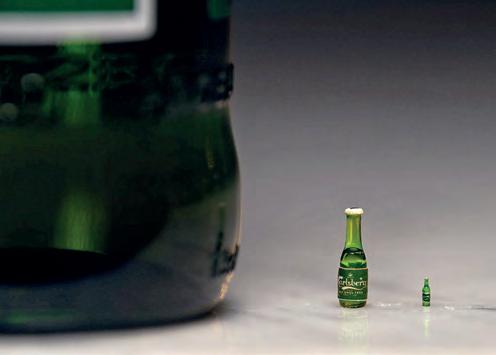
emphasises consumer choice and employee welfare. Reflecting shifting consumption habits, no- and low-alcohol beverages now account for 31% of the group’s global sales. This growth is supported by engaging moderation campaigns, such as a recent Swedish initiative featuring a functional beer the size of a rice grain to spark conversations around responsible drinking. Internally, the group continues to foster an inclusive, zero-accident culture, recording a 16% reduction in lost-time injuries since 2024 and increasing the proportion of women in senior leadership roles to 34%, alongside a new metric focused specifically on the employee experience of workplace inclusion.
News: Brewing
South African alcohol sector welcomes infl ationlinked excise increases
In the 2026/27 budget speech, Finance Minister Enoch Godongwana announced that South African “sin taxes” will rise in line with the current 3.5% inflation rate, despite a more optimistic national revenue forecast. The regulated alcohol industry broadly welcomed this measured approach, as predictable adjustments are absolutely essential for maintaining sector stability and curbing illicit trade. The inflation-linked adjustments result in precise price increases across different categories: an 8-cent hike for a 340ml can of beer or cider, a 15-cent increase for a 750ml bottle of wine, and an R3.20 adjustment for a 750ml bottle of spirits.
Heineken Beverages Corporate Affairs Director, Millicent Maroga, noted that
Nigerian Breweries pilot local barley cultivation to curb imports
Nigerian Breweries Plc has successfully harvested its first yields of locally grown barley, marking a significant milestone in the company’s strategy to bolster domestic supply chains and reduce its reliance on foreign raw materials. The results of the pilot phase of the Maltina Barley Programme were unveiled during a field day in Ringim, showcasing the progress made in establishing a sustainable barley value chain in Northern Nigeria.
The initiative aims to address Nigeria’s heavy dependence on imported malted barley, which currently stands at approximately 200,000 tonnes per annum. During the initial season, more than 1,000 smallholder farmers participated in the pilot, with total output expected to exceed 1,000 tonnes. To support the transition, the brewer partnered with OCP Africa and Hello Tractor to provide farmers with high-quality seeds, fertilisers, and mechanised services, whilst also guaranteeing the purchase of the harvested crop to ensure market stability.
The success of the programme
limiting excise duty hikes to inflationary levels reflects a fair, long-term balance amidst ongoing economic pressures. She highlighted that these predictable tax adjustments actively help narrow the price gap between legal and illegal products, thereby significantly strengthening both market compliance and broader law enforcement efforts. Furthermore, the alcohol industry has responded highly positively to the introduction of the new National Illicit Economy Disruption Programme. Heineken has expressed a firm commitment to partnering directly with the government on this crucial initiative to aggressively tackle the underground economy, which severely undermines the regulated beverage sector.
follows years of intensive research and development conducted in collaboration with the Lake Chad Research Institute and Secobra Research. This partnership focused on adapting specific barley varieties to the soil and climatic conditions of Northern Nigeria. In 2024, the National Agricultural Seed Council officially registered three climate-adapted varieties: Traveller, Explorer, and Prunella.
Thibaut Boidin, Managing Director and Chief Executive Officer of Nigerian Breweries, described the project as a long-term investment in the nation’s agricultural transformation. He emphasised that scaling production to a commercial level will require continued cooperation between the private sector and the government, particularly regarding irrigation infrastructure and extension services. A joint study has already identified over 400,000 hectares of suitable farmland across the states of Jigawa, Bauchi, Kano, Plateau, and Yobe. With international backing, the project secured £330,000 in climatesmart agricultural funding from the UK-funded Propcom+ initiative for the 2026 season. Looking ahead, Nigerian Breweries aims to integrate roughly 20,000 farmers into its barley value chain by 2030.
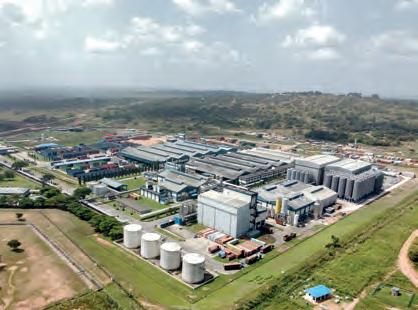
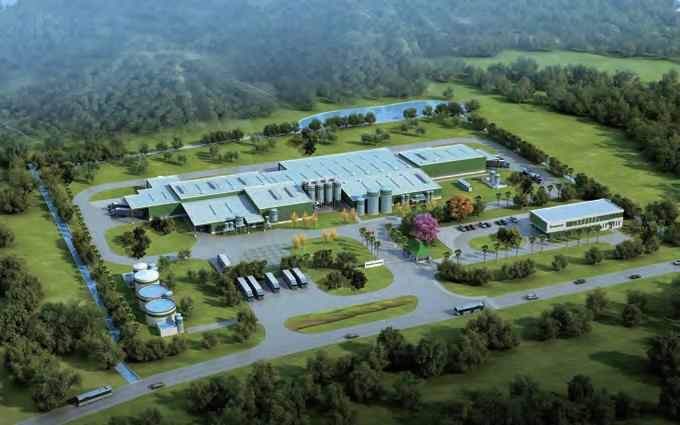
Nigerian Breweries’ Amaeke Ngwo site in Nigeria
Nigerian Breweries reports 194% surge in operating profit
Nigerian Breweries Plc, the country’s largest brewer, has announced a significant operational recovery in its audited financial results for 2025, posting a 194% increase in operating profit. The company reported that operating profit rose to ₦205.2 billion (GB£ 112.5 million) , up from ₦69.9 billion in the previous year, marking a robust turnaround following a period of macroeconomic volatility.
The surge in profitability was underpinned by a 35% growth in group revenue, which reached ₦1.5 trillion. According to the company, this top-line performance was driven by a combination of sustained product innovation, a focus on premiumisation, and strategic pricing adjustments. These measures helped the brewer navigate a challenging consumer environment characterised by high inflation and pressured household spending across Nigeria.
The results also revealed a 168% rebound in net profit, with the company returning to a positive position of ₦99.1 billion compared to the net loss recorded in 2024. A critical factor in this recovery was an 83% reduction in net finance costs. This improvement followed a successful rights issue in 2024, which allowed the business to significantly deleverage its balance sheet and eliminate much of its foreign currency exposure.
Operational efficiencies also played a vital role, with gross profit increasing by 77% to ₦565 billion. The brewer attributed these gains to rigorous cost discipline and supply chain optimisations implemented as part of its 2024 business recovery plan. Additionally, the year saw the full integration of Distell Wines and Spirits Nigeria Limited, a move intended to broaden the company’s “beyond beer” portfolio and support long-term growth.
Despite the positive performance, the board noted that retained earnings remain in negative territory due to substantial losses incurred over the preceding two years. However, directors expressed confidence that the business is on a clear path toward sustainable growth and long-term value creation for shareholders.
Asahi Breweries nears full recovery after major cyberattack
Asahi Breweries is set to resume full shipments of its product range in April, bringing an end to nearly six months of severe operational disruption.
The Japanese brewing giant confirmed that its logistics systems were largely restored in February and that it expects to achieve total shipment normality by 7 April. The announcement marks a significant milestone in the company’s recovery following a ransomware attack in September 2025 that crippled its domestic order processing and delivery infrastructure.
The cyberattack, attributed to the Qilin ransomware group, forced Asahi to suspend operations at 30 factories across Japan. While production
machinery remained largely unaffected, the inability to process digital orders or manage logistics meant that inventory could not be moved, leading to widespread stock shortages at major retailers. During the height of the crisis, employees were forced to revert to manual processes, including taking orders by telephone and using handwritten logs. The disruption significantly impacted the group’s performance, with beer shipments for 2025 falling by approximately 4% to their lowest level on record.
As the company transitions
back to full capacity, it is also addressing the secondary fallout of the breach.
Last month, Asahi confirmed that over 115,000 sets of personal data – primarily belonging to employees and business clients – had been leaked during the incident. In response, the group has implemented a series of rigorous cybersecurity measures, including the appointment of a dedicated information security executive and the introduction of advanced detection systems to prevent a recurrence.
To signal its return to the market, Asahi is preparing to launch a new premium lager, Asahi Gold, on 14 April. The new offering is designed to provide a distinct alternative to the company’s iconic Asahi Super Dry. While the latter is
renowned for its crispness, Asahi Gold is promoted as having a refreshing barley profile, utilised by incorporating approximately 150 per cent more malt than previous products. A 350-millilitre can is expected to retail at around ¥237, with the company targeting sales of 4 million cases (measured in the industry-standard 20 x 633-millilitre bottle equivalent) within the first year. The timing of this launch is significant because the Japanese beer industry is preparing for a major liquor tax law revision in October. This will significantly reduce the tax rate applied to genuine beer, sparking a strategic shift across the sector. Many brewers are now pivoting away from “third segment” substitutes, once developed to bypass higher tax brackets, and refocusing their efforts on traditional beer products to capitalize on favourable taxes.
Low
Carlsberg explores potential IPO for Indian business
Carlsberg A/S has reportedly appointed three investment banks to oversee a potential listing of its Indian subsidiary. According to sources familiar with the matter, the group has selected Kotak Mahindra Capital Co. alongside the local units of JPMorgan Chase & Co. and Citigroup Inc. to advise on a share sale that could raise as much as $700 million.
A draft prospectus for the offering could be filed as early as May, with the transaction
expected to consist primarily of a secondary share sale by the parent company later this year. While the size and structure of the deal are still being finalised, the move signals Carlsberg’s intent to capitalise on the high valuations currently offered by the Indian equity markets.
The move follows a broader trend of multinational corporations, including Hyundai Motor Co. and LG Electronics, seeking to unlock
Tilray Brands snaps up BrewDog’s Australian assets for APAC expansion
US-headquartered Tilray Brands has confirmed the acquisition of BrewDog’s Australian business for an undisclosed sum, marking its second major deal for the beleaguered craft brewer’s assets in as many weeks.
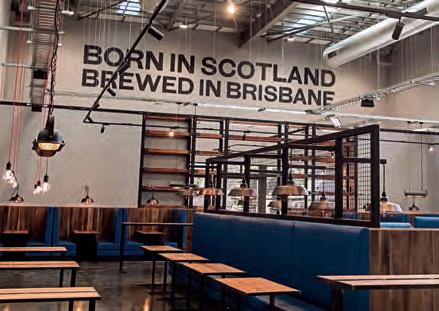
The transaction includes BrewDog’s primary production facility in Brisbane, Queensland, alongside two owned flagship bars – DogTap Brisbane and BrewDog Fortitude Valley. Tilray will also take over three franchised venues located in Victoria (Pentridge), New South Wales (South Eveleigh), and Western Australia (Perth).
Unlike the UK arm of the business, which was sold via a pre-pack administration that resulted in nearly 500 job losses, Tilray has described the Australian operations as “profitable.” No job cuts are expected as part of the deal.
Irwin Simon, CEO of Tilray Brands, highlighted the move as a cornerstone of the company’s international growth.
“Australia is a highly attractive craft beer market with a strong beer culture and serves as a strategic gateway to the rapidly growing Asia-Pacific region,” Simon said. The company plans to use the Brisbane facility as a regional hub to manufacture and distribute its wider US beverage portfolio into key markets including Japan, South Korea, and Southeast Asia.
value by listing their Indian operations. Local market valuations often significantly outstrip those of parent companies; for example, data suggests Indian units can trade at multiples nearly triple those of their global counterparts. Other major players in the drinks industry, including Pernod Ricard SA and Hindustan Coca-Cola Beverages, are also reportedly weighing similar listings.
Carlsberg India currently holds the position of the country’s second-largest brewer, accounting for
approximately 22% of the total beer market. The unit reported revenues of roughly 90 billion rupees for the fiscal year ending March 2025.
Kenni Leth, Carlsberg’s head of external communications, stated that the group is exploring various options to increase shareholder value, including a potential IPO, though he maintained that a final decision has yet to be reached. Representatives for the appointed banks have either declined to comment or have not yet responded to enquiries regarding the float.
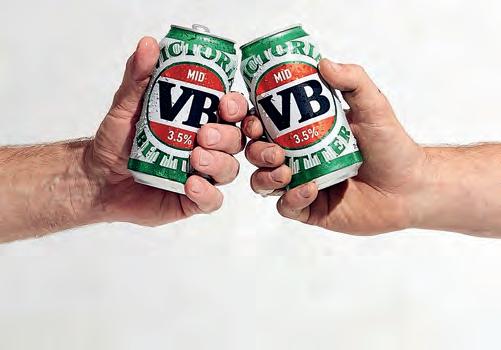
VB targets changing consumer habits with mid-strength beer launch
Australian brewing giant Carlton and United Breweries has announced the launch of a new 3.5 per cent alcohol-byvolume product, dubbed VB Mid, as the country’s drinking habits continue to evolve. The pivot comes in response to significant market shifts, with the brewer noting that more than 30 per cent of Australian beer sales now fall into the no-alcohol, low-alcohol, or mid-strength categories, representing a drastic change from two decades ago.
The new release is being positioned as a lifestyle choice, with the brand’s marketing manager describing VB Mid as being for occasions when “the day is done but the job isn’t”. An advertising campaign featuring a jingle voiced by actor and writer William McInnes supports the launch, highlighting the need to tackle the following day without the lingering effects of heavier consumption.
From a technical perspec-
tive, a 375ml can of VB Mid will represent exactly one standard drink. This provides a clear contrast to the traditional VB Classic, which sits at 4.9 per cent alcoholby-volume and equates to 1.4 standard drinks per can. This strategic move aligns with recent academic findings on shifting consumption patterns among younger Australian demographics. Research from Adelaide’s Flinders University indicates that Generation Z consumers are nearly 20 times more likely to abstain from alcohol compared to Baby Boomers, even when adjusting for sociodemographic factors. Study co-author Dr Kirrily Thompson noted that factors like digital socializing, rising living costs, and increased health awareness are fundamentally reshaping alcohol’s prominence in Australian social life. This shift represents a sustained behavioral change rather than a passing phase.
Brewers blown away by Luna ®
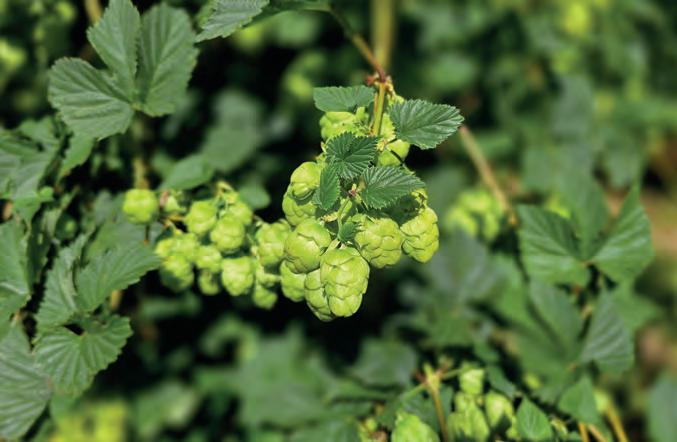
Hop Products Australia (HPA) is excited to introduce Luna®, a new variety from their innovative hop breeding program and the next chapter in beer flavour. Luna is distinguished by its lush mango, dark berry and spicy citrus characteristics, alongside a high polyphenol content that elevates the flavour profile and mouthfeel to round out the palate. It seamlessly complements other modern hops and lends itself to many popular beer styles. From Pilsners to IPAs, Luna offers brewers creative flexibility backed by agronomic reliability. Luna was created by HPA’s hop
breeding program in 2003, through a cross-pollination of high alpha Australian and Liberty hops. When Dr Simon Whittock, Head of Breeding and Research at HPA, took over the program in 2007, he began sorting through the experimental hops in search of lupulin gold. He selected Vic Secret, Eclipse and Luna for fi eld trials because they were born from a triploid breeding strategy that consistently delivers climate resistance, exceptional fl avour impact and cost-effective brewing performance. Luna was initially identifi ed for its early harvest
window, but has always performed exceptionally well in brewing trials.
“Luna’s seriously good in beer” says Ross Terlick, Head Brewer at Rocky Ridge. “It creates some beautifully complex notes of spicy citrus on the hot side, and juicy mango on the cold side. I can see Luna becoming a very popular hop. I honestly reckon it’s going to rival Galaxy.” Colin Lenfesty, Founder and Head Brewer at Holy Mountain agrees. “We were blown away by Luna! Using it in a West Coast Pilsner, we got big notes of tropical fruit and citrus. It has a lot of potential and we’re looking forward to brewing with it again soon.” Luna is currently available in limited quantities, but HPA has plenty of capacity to scale production in response to contracted demand. “This is a new beginning” says Dr Whittock.
“HPA is committed to bringing new Australian hops to market more frequently, selecting for agronomic performance in a changing climate, exceptional flavour impact, and innovative product opportunities. Our goal is to give brewers a competitive edge in the market, and beer lovers a great experience that keeps them coming back time and again.”
Mexican craft brewers project double-digit production growth ahead of 2026 World Cup
Mexico’s craft beer sector is preparing for a major surge in demand, with producers projecting double-digit production growth ahead of the 2026 FIFA World Cup. Anticipating significant consumption spikes across host cities such as Mexico City, Guadalajara, and Monterrey, the independent brewing industry expects output to increase by up to
12 per cent annually in the lead-up to the tournament.
Industry analysts forecast that craft beer sales could jump by as much as 300 per cent in on-trade venues, including taprooms and restaurants, during the event. Off-trade revenues across supermarkets and convenience stores are also expected to see a substantial boost of between 50 and 80 per
China Resources Beer issues profit
warning
as baijiu demand softens
China Resources Beer (CR Beer), the owner of the world’s best-selling beer brand, Snow, has warned investors to expect a significant drop in annual profits for 2025. In a filing to the Hong Kong stock exchange, the group projected a profit decrease of between 29.6 per cent and 38.6 per cent compared to the 4.76bn yuan recorded in 2024.
The anticipated decline to a range of 2.92bn yuan to 3.35bn yuan ($420m to $490m) is primarily due to a substantial non-cash impairment charge. The group expects to book a goodwill write-down of approximately 2.79bn yuan to 2.97bn yuan linked to its 55.19 per cent stake in Guizhou Jinsha Jiaojiu Winery Industry, a baijiu producer it acquired in early 2023.
CR Beer attributed the write-down to “softened demand” across the Chinese baijiu market and “contracted consumer demand scenarios” that have curtailed discretionary spending. This mirrors broader industry challenges previously noted by competitors like Diageo, suggesting a wider cooling of the premium spirits sector in China.
Despite the headwinds in spirits, the group’s core brewing operations remained resilient during the first half of the year. Unaudited figures for the first six months of 2025 showed a 0.8 per cent rise in turnover to 23.94bn yuan, with beer sales volumes up 2.2 per cent to 6.48 million kilolitres. As of mid-2025, the company operated 62 breweries with a combined annual capacity of roughly 19.2 million kilolitres.
cent. While craft beer currently accounts for a marginal share of the broader Mexican beer market, the tournament presents a critical short-term catalyst for the sector’s expansion. Despite the optimistic outlook, brewers face several structural and supply chain challenges. Matías Vera-Cruz, chief economist at the Unión Cervecera Independiente, highlighted that Mexico imports more than 90 per cent of its hops. He advised independent producers to secure advance contracts with suppliers in Europe and the United States
to safeguard against potential raw material shortages.
Furthermore, there are widespread concerns that massive production drives by multinational brewing giants could monopolise domestic bottling capacity, particularly for the amber glass bottles traditionally favoured by craft producers. Nevertheless, industry leaders maintain that the independent sector currently holds sufficient idle capacity to meet the anticipated World Cup demand, provided these logistical hurdles are successfully navigated.
Tilray Brands secures major US brewing agreement with Carlsberg
US-based cannabis and drinks producer Tilray Brands has agreed a significant partnership to brew, market, sell and distribute several Carlsberg beer brands across the United States. Commencing in January 2027, the deal will see Tilray handle the domestic production of prominent labels including Carlsberg and 1664, shifting the Danish brewing giant’s US strategy away from its current export model. The strategic agreement has been signed for an initial five-year term, featuring an automatic renewal for a further five years subject to specific performance criteria. For Carlsberg, the United States currently represents a minor market, accounting for less than 0.1 per cent of its global revenue. The Copenhagen-headquartered group noted that the partnership facilitates the local production of select brands through Tilray’s
existing brewing operations, providing a solid platform for mutual business growth. Irwin Simon, chairman and chief executive of Tilray, highlighted the complementary nature of the organisations. He stated that combining Carlsberg’s global brands and brewing heritage with Tilray Beverages’ operational scale, quality standards and national commercial team positions them perfectly to expand Carlsberg’s presence in the premium European segment. He added that the agreement reinforces their strategy of partnering with premium brands to maximise the value of their beverage operations.
With its established capability to brew at scale and commercialise effectively, Tilray Beverages becomes an ideal partner for Carlsberg, highlighting its rapid emergence as the fourth largest US brewer.
Drake’s Brewing and Figueroa Mountain Brewing
establish California JV
California-based Drake’s Brewing Company and Figueroa Mountain Brewing Company have entered into a 50-50 joint venture designed to bolster sales and achieve greater operational efficiencies. Trading as West Coast Craft, the partnership aims to support long-term brand sustainability and strengthen the
position of independent craft beer across the state.
The combined portfolio under the West Coast Craft umbrella includes the Drake’s Brewing, Bear Republic Brewing, Figueroa Mountain Brewing, and House Beer brands. The venture will be overseen by John Martin, co-owner and chief executive of Drake’s
Brewing, alongside Jaime Dietenhofer, chief executive of Figueroa Mountain Brewing. Integrating production and procurement allows the partners to optimize purchasing, distribution, and operations. John Martin highlights that combining Drake’s Northern California network with Figueroa Mountain’s Southern reach uniquely expands both brands beyond traditional strongholds.
Canadian microbreweries face rising aluminium costs
Independent brewers across Canada are struggling to navigate a surge in packaging costs driven by a combination of trade tariffs, supply chain vulnerabilities, and a lack of domestic manufacturing infrastructure. Despite Canada being a major global producer of primary aluminium, the country lacks the facilities to produce the specific can sheets required for the 473-millilitre ‘tall’ cans favoured by the craft sector. This has left the industry heavily reliant on US imports at a time of heightened trade friction.
The situation has been exacerbated by
the 25% duties on steel and aluminium imposed by the US administration in February 2025. According to Beer Canada, some breweries have seen their aluminium expenditure increase by as much as 60%. Josh McJannet, co-founder of Ottawa-based Dominion City Brewing, noted that the cost per unit for cans has more than doubled, rising from approximately 15 cents to 35 cents. The impact is particularly frustrated by the fact that while the raw aluminium is often smelted in Canada using local hydroelectric power, it must be sent across the
border to be rolled into sheets before returning to Canada for final assembly.
Establishing a fully domestic supply chain remains economically challenging. Industry experts suggest that the capital investment required for a Canadian can-sheet facility would be difficult to justify given the smaller size of the domestic market compared to the US. While glass bottles remain an alternative, they are less popular due to higher transport weights, increased breakage risks, and inferior light-blocking capabilities. Currently, approximately 80% of Canadian beer is packaged in aluminium, making the sector acutely sensitive to price volatility in the metal markets.
The timing of this ‘rupture’ in the supply chain is particularly difficult for a sector that has seen rapid expansion over the last decade. Statistics Canada data shows the number of small breweries has grown from fewer than 400 in 2010 to more than 1,200 by 2025. With trade relations remaining fluid and unpredictable, many independent brewers are now bracing for a period of prolonged economic uncertainty, with little expectation that pricing will return to pre-tariff levels in the near future.
Boston Beer forecasts potential volume decline for 2026
Boston Beer Co. has cautioned investors that its depletions and shipments could face a further downturn this year, following a contraction in 2025. The Samuel Adams brewer issued a guidance for 2026 ranging from flat year-on-year to a “mid-single digit” decline, a projection that fell short of Wall Street expectations and triggered disappointment among analysts.
The cautious outlook follows a challenging 2025, during which the group saw depletions fall by 4% and shipments drop by 4.7%. Despite these volume pres-
sures, net revenue for the 12 months to 27 December decreased by a relatively modest 2.4% to $1.97bn. The decline in shipments was largely attributed to softer performance from the Twisted Tea, Truly Hard Seltzer, and Samuel Adams brands, though these were partially offset by growth in Sun Cruiser, Angry Orchard, and Dogfish Head.
On a more positive note, the US drinks group reported a significant recovery in profitability.
Operating income rose to $144.9m from $76m in the previous financial year, aided
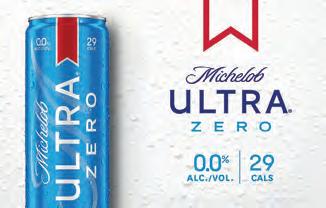
Michelob ULTRA Zero claims top spot in US alcohol-free beer market
Anheuser-Busch has announced that its Michelob ULTRA Zero brand has become the best-selling and fastest-growing alcohol-free beer in the United States. Launched in January 2025, the brand has rapidly overtaken competitors, mirroring the success of its full-strength counterpart, which became the leading US beer brand last year. The alcohol-free variant was also recognised as the top innovation across the total beer industry over the past twelve months. Circana, a leading data provider to fast-moving consumer goods companies, confirmed that Michelob ULTRA Zero secured the number one sales position for alcohol-free beer in retail channels over the latest 12-week period. The brewer attributes this rapid commercial growth to the product’s low-calorie profile; containing just 29 calories, it offers less than half the calories of major competing brands.
by lower costs of goods sold and the absence of the heavy impairment charges seen in 2024. Annual net income reached $108.5m, up from $59.7m the year prior. Chief Financial Officer Diego Reynoso highlighted that 2025 was a year of “meaningful gross margin improvement,” with the company planning to reinvest savings from supply chain initiatives back into brand support. Market analysts noted that while the sales guidance was underwhelming, the company’s margin projections offered a “positive surprise.” Boston Beer has forecasted gross margins of between 48% and 50% for 2026, even when accounting for potential tariff headwinds. This margin expansion is seen as a testament to the productivity initiatives led by founder Jim Koch, who returned to the role of chief executive in August 2025.
This milestone solidifies AnheuserBusch’s dominant position in the alcohol-free sector, with the company now producing three of the top five brands in the US market. Kyle Norrington, chief commercial officer at AnheuserBusch, said: “As a superior light beer brand that champions living an active, balanced lifestyle, Michelob ULTRA Zero is uniquely positioned to thrive by providing a superior alcohol-free option. Joining Michelob ULTRA in the number one spot is an amazing achievement for our teams and partners, and this is just the beginning for Michelob ULTRA Zero.”
The brand’s profile has been heavily supported by major marketing investments, including a broadcast debut during Super Bowl LIX in 2025 and a
Tilray Brands acquires BrewDog US assets to finalise global brand control
Tilray Brands has entered into an asset-purchase agreement to acquire strategic US assets from BrewDog, marking the latest step in the rapid consolidation of the Scottish craft brewer’s international operations. The deal follows Tilray’s recent acquisitions of BrewDog’s business units in the United Kingdom, Ireland, and Australia earlier in March.
While the financial details of the transaction remain undisclosed, the New York-headquartered group confirmed that the move is intended to strengthen its US drinks platform. The acquisition includes BrewDog’s primary manufacturing and brewing facility in Columbus, Ohio, as well as three company-owned pubs and a hotel within the state.
The agreement further extends Tilray’s reach into high-traffic hospitality locations, including the flagship BrewDog pub on the Las Vegas Strip in Nevada. Additionally, the deal encompasses a franchised site in Denver, Colorado, and a licensed venue at Columbus airport. These assets are expected to be fully integrated into Tilray’s craft beer portfolio, which the company is scaling across North America.
Irwin Simon, chairman and chief executive of Tilray, confirmed that Tilray now holds the BrewDog brand and its intellectual property on a global basis, enabling a unified international strategy.
The company expects the acquisition to drive operational efficiencies and foster innovation across its emerging beverage categories. The transaction is projected to close by the final quarter of Tilray’s 2026 fiscal year, which concludes in May.
recent appearance in the brand’s Super Bowl LX commercial this February. Anheuser-Busch plans to maintain this momentum with extensive trade programming and a dedicated marketing campaign for the upcoming FIFA World Cup 2026. The product line was expanded in January 2026 with the introduction of Michelob ULTRA Zero Lime, a 39-calorie variant featuring a citrus twist.
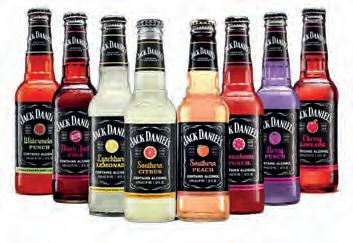
Brown-Forman and Pabst conclude ready-to-drink partnership
Brown-Forman and Pabst Brewing have announced the termination of their agreement regarding the production and distribution of flavoured malt beverages in the United States. Under the partnership, which has been in place since 2021, Pabst was responsible for the supply, sales, and distribution of several key brands, including Jack Daniel’s Country Cocktails, Jack Daniel’s Bolder, Jack Daniel’s Hard Tea, and El Jimador Spiked Bebidas. Both parties described the decision to end the arrangement as mutual.
The move marks a strategic shift for BrownForman as it brings the management of its readyto-drink (RTD) portfolio in-house. Robinson Brown IV, managing director for Brown-Forman’s US and Canada operations, noted that centralising these brands allows the company to take greater control of its strategy during a period of heightened consumer demand. He added that the transition is intended to accelerate the portfolio’s momentum and maximise its long-term impact. A spokesperson for the company confirmed that future production plans are currently being developed, with details regarding potential production partners to be shared in due course.
For Pabst, the conclusion of the contract aligns with a broader internal restructuring. Chief Executive Greig DeBow, who assumed his role last year, stated that the transition would enable the group to reallocate resources towards innovation and execution within its core portfolio of iconic brands, such as Pabst Blue Ribbon. This follows a recent overhaul of the company’s sales organisation designed to enhance efficiency and accountability, though Pabst has declined to comment on reports regarding associated job cuts.
The two companies are now collaborating on a transition plan to ensure continuity of supply for distributors, retailers, and consumers. The announcement comes just ahead of Brown-Forman’s fiscal third-quarter results. Recent data for the six months to 31 October showed a 5% increase in net sales for the group’s RTD segment, primarily driven by the New Mix range in Mexico. However, the Jack Daniel’s RTD and ready-to-pour portfolio saw a 4% decline, largely attributed to supply issues in Canada resulting from ongoing trade tensions. During that same period, the group’s total net sales reached $2bn, representing a 4% reported decrease, while operating income fell by 9% to $565m.
Shanghai New International Expo Centre (SNIEC)
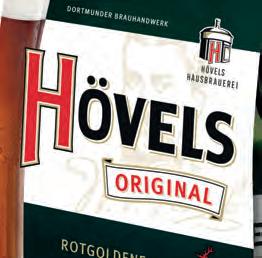
Radeberger Gruppe closes Hövels Hausbrauerei facility in Dortmund
The Radeberger Gruppe has ceased brewing operations at its traditional Hövels Hausbrauerei facility in Dortmund, moving production to the nearby Dortmunder Actien-Brauerei (DAB) brewery at Steigerstraße. The transition at the Hoher Wall location began in February 2026 and was expected to be fully completed by the end of March, marking the closure of the last external brewing site operated by the Dortmund group.
Uwe Helmich, managing director of the Dortmund breweries, stated that the decision was necessitated
by economic pressures. He described the micro-scale installation as having become “extremely cost-intensive” and no longer viable following significant rises in operational overheads in recent years. While the brewing equipment is being decommissioned, the Hövels restaurant, beer garden, and broader gastronomic offerings at the site will
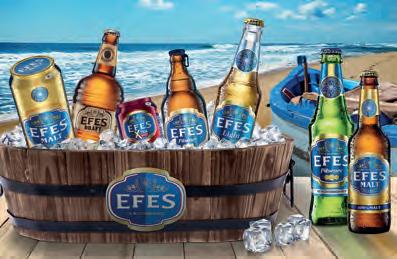
Anadolu Efes reports increase in consolidated sales volumes
Anadolu Efes has reported a 4.6 per cent increase in consolidated sales volumes on a pro-forma basis for the fourth quarter of 2025, reaching 18.9 million hectolitres. The Turkish brewing giant announced its financial results on 6 March 2026, revealing that full-year consolidated volumes rose by 7 per cent to 105.1 million hectolitres. While the figures indicate resilience in a complex operating environment, the growth was primarily driven by the company’s soft drinks segment, which offset a more challenging period for its core beer operations.
The beer group delivered a stable performance for the full year, with consolidated volumes finishing flat at 13 million
continue to trade as normal.
Despite the relocation to the larger DAB plant in Dortmund’s Nordstadt district, the company has assured trade partners and consumers that the beer itself will remain unchanged. The original recipes, production volumes, and packaging for the Hövels brand will be maintained, and the existing brewmaster from the house brewery
hectolitres on a pro-forma basis. Domestic volumes in Turkey declined by 1.1 per cent to 6.2 million hectolitres, a contraction attributed to persistent inflationary pressures, softening consumer sentiment, and a less supportive tourism season. This domestic dip was balanced by a 0.8 per cent rise in international beer volumes, supported by modest growth in Kazakhstan and continued momentum in Moldova. However, restructuring initiatives in Georgia continued to weigh on regional performance, a trend expected to persist into 2026.
Financially, the group recorded net revenue of TL 243.8 billion (GB£ 4.14 billion) for 2025, representing a modest 2.5 per cent increase on a pro-forma basis. In the fourth quarter specifically, revenue climbed by 18.6 per cent to TL 47 billion, though this fell slightly short of some analyst forecasts. Profitability remained under pressure throughout the year, with full-year EBITDA declining by 2.5 per cent to TL 40.5 billion and net income dropping 34.5 per cent to TL 8.96 billion. These figures reflect significant margin compression and the impact of inflation accounting adjustments.
Anadolu Efes CEO, Onur Altürk, noted that 2025 was defined by economic volatility and geopolitical sensitivities which influenced demand across various markets. Despite these headwinds, he emphasised that the company’s long-term strategy remains intact, with a focus on portfolio diversification and expansion into near-beer categories. The company maintained a manageable leverage profile with a net debt to EBITDA ratio of 1.4 times and has proposed a dividend of TL 0.34 per share, marking its 11th consecutive year of shareholder payouts.
is expected to transfer to the Steigerstraße facility to oversee production. This move also includes the house beers Urtrüb and Schwarzes, produced for the Wenkers am Markt restaurant, which will now also be brewed at the DAB brewery.
The future of the specialist brewing kit at the Hoher Wall remains undecided. The group is currently evaluating several options, including the potential dismantling and sale of the system or its repurposing for niche product lines. The Hövels brand has long enjoyed a high-profile status within the Radeberger portfolio; it was famously noted as a personal favourite of Dr Albert Christmann, the former head of both the Radeberger Gruppe and the Oetker Gruppe.
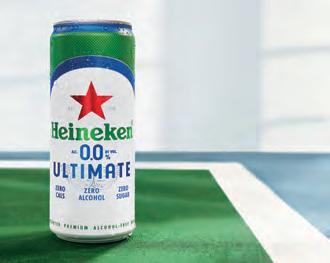
Heineken 0.0 unveils first zero alcohol, zero calorie, and zero sugar brew
Heineken is reinforcing its dominant position within the global non-alcoholic beer category with the strategic introduction of Heineken 0.0 Ultimate. This new premium brew boasts a unique proposition of zero alcohol, zero calories, and zero sugar. The product is currently rolling out across the United States and Poland, alongside pilot schemes in several other key markets, including the Netherlands. This ‘triple-zero’ release is designed to further cement the brewing giant’s authority in the rapidly expanding
Kaiser marks fifty years of brewing heritage in the Greek market
Olympic Brewery, part of the Carlsberg Group, is celebrating the fiftieth anniversary of its flagship pilsner, Kaiser. Described as a vital driver of long-term value and category leadership within the Greek beer market, the brand was first introduced to the region in 1976. It is widely credited with pioneering a brand new beer category and has steadily built a strong reputation as a firm consumer favourite.
Half a century later, Kaiser remains proudly brewed at the Olympic Brewery using its exact original recipe. Renowned for its premium quality, it continues to hold the position of the number one selling pilsner in Greece, retaining its status as a preferred choice among local beer lovers.
To commemorate this significant
and highly competitive low and no-alcohol sector.
The launch serves as a direct response to an increasing consumer refusal to compromise between their personal wellness goals and their social drinking occasions. Driven largely by younger, highly health-conscious demographics and the continuing momentum of the global ‘sober curious’ movement, demand for alcohol-free options that integrate seamlessly into active, everyday lifestyles is accelerating at a rapid pace. Consumers are increasingly seeking out sophisticated beverages for diverse social moments, ranging from postsporting events on the padel court to relaxed, sun-soaked afternoon gatherings.
Heineken 0.0, which is currently present in 117 countries worldwide, has already established a robust commercial foundation for this latest pipeline of innovation. The original alcohol-free variant has been a driving force in making the broader category both accessible and highly desirable. Heineken 0.0 Ultimate builds significantly upon this established success, specifically targeting
milestone, the brand unveiled a limited-edition packaging design. The striking new black-and-gold aesthetic pays tribute to Kaiser’s extensive brewing heritage while reinforcing its premium position within the wider beverage sector.
This packaging update is supported by a newly launched anniversary marketing campaign featuring two prominent Greek actors. Designed to celebrate authentic and relatable social occasions, the campaign reinforces the core anniversary message: “No matter how many years go by… what truly matters is living it authentically.”
Kaiser’s enduring fifty-year commercial journey serves as a strong testament to the immense value of consistent cultural relevance and overall brand consistency.
the modern, evolving need for zero and lower-calorie beverage offerings without sacrificing a premium drinking experience.
Maggie Timoney, chief executive of Heineken USA, highlighted the brand’s established history of pioneering innovation since the initial United States launch of Heineken 0.0 in 2019. The brand has now successfully sold over 13 million cases in that market alone. “Now, we’re raising the bar again,” Timoney stated. “Heineken 0.0 Ultimate is our answer for the consumer who wants even more choice: world-class taste, zero alcohol, zero sugar, and zero calories, so you never have to compromise.”
Produced using a specialised double-brewing process meticulously designed to remove the alcohol, Heineken 0.0 Ultimate aims to deliver a “fresh, perfectly balanced taste alongside a refined mouthfeel”. The resulting flavour profile features “soft, fruity notes harmonised with a delicate malty body, delivering a refreshing snap that is formulated specifically for daytime socialising and active moments”.
AB InBev strikes Dutch distribution deal with low-and-no brewer Lowlander
AB InBev has entered into a strategic partnership with Dutch brewer Lowlander to distribute its low- and no-alcohol beer portfolio exclusively within the Netherlands.
Announced in late February, the agreement grants AB InBev’s Dutch unit exclusive distribution rights for Lowlander’s complete range, which features botanically brewed alcohol-free and low-alcohol beers up to 3.5 per cent ABV. The collaboration aims to accelerate the growth of the low-and-no category, making the independent brand’s products accessible on a significantly larger scale across its domestic market.
Jasper Kessels, country director
for AB InBev in the Netherlands, noted that Dutch beer drinkers are making increasingly conscious choices and seeking unique, flavourful alternatives to traditional beer. He highlighted Lowlander’s strong position in the market and its in-depth knowledge of botanical innovation within the premium segment.
Kessels added that by combining AB InBev’s commercial strength with the expertise of the Lowlander team, the partnership will elevate the category and offer consumers the best possible choice. He stated that the move aligns perfectly with the wider group’s global ambitions for low/no alcohol.
Molson Coors to close Sharp’s Brewery in UK restructuring
US brewing giant Molson Coors Beverage Company has announced plans to close its Sharp’s Brewery in Cornwall, alongside a wider shake-up of its UK and Ireland operations that could result in approximately 200 redundancies. The closure of the Rock-based facility, which produces well-known brands such as Doom Bar and Offshore Pilsner, is proposed to take place by the end of 2026. Around 50 roles are specifically at risk at the Cornish site. Molson Coors stated that the proposal comes after exploring all alternative options to make the brewery financially sustainable within its long-term UK production network. The company, which acquired Sharp’s in 2011 for £20m, stressed it remains
committed to the portfolio and is currently assessing alternative production routes, including potential partnership brewing. Notably, the brewing of bottled Doom Bar was already relocated to the company’s central Burton brewery in 2015.
In addition to the brewery closure, Molson Coors plans to shut its national contact centre in Cardiff by the end of the year. The brewer noted that nearly 90 per cent of its on-trade customer orders are now processed through its e-commerce platform, My Molson Coors. Simon Kerry, managing director for the group’s UK and Ireland operations, described the proposals as a difficult but necessary response to market evolution, aimed at unlocking efficiencies and fuelling longterm, sustainable growth.
CAMRA Cornwall issue Cornish pasty warning to Molson Coors over Sharp’s closure
Beer drinkers and pub campaigners in Cornwall are calling for a Cornish pasty style protection for iconic local beers to prevent beers marketed as Cornish being brewed elsewhere in the UK. It comes after the news that Molson Coors are shutting the Sharp’s brewery at Rock and will move all production, including Cornish favourite Doom Bar, elsewhere.
CAMRA Cornwall have issued a stern warning to the global brewing giant, telling them that any attempts to market Doom Bar, and Sharp’s award-winning beer range, made outside the Duchy as a ‘Cornish’ product will be met with a robust and vocal campaign in response. CAMRA fears that the brewing giant could follow in the footsteps of Carlsberg, who market Wainwrights as a ‘Lake District
Original’ despite brewing it over 100 miles away in Wolverhampton.
Vince Curtis, CAMRA Cornwall Vice Chairman, said: “Although we were expecting this eventually, it doesn’t make the announcement any less devastating. Whether it’s the team that have lost their jobs, or Cornish locals losing more of our proud brewing heritage, this is just another blow during a tough time for brewers and publicans across the Duchy.
“Our message to Molson Coors is clear. If you’re shuttering the brewery, you can’t keep claiming that Doom Bar is a Cornish beer. It’s misleading for consumers and insulting to Cornwall’s brewing legacy. Molson Coors have chosen to sever ties with brewing in the Southwest, and shouldn’t try to suggest otherwise.
“We also want the Government to change the law to stop misleading practices from global brewing companies implying a beer is Cornish if it is brewed miles away. That’s already the case with our pasties; it should be the same for our beers too.”
Tilray
Brands confirms £33m acquisition of BrewDog UK assets
US-based Tilray Brands has agreed to pay £33m ($44.1m) to acquire key components of BrewDog, including the brand’s worldwide intellectual property, UK brewing assets, and 11 bars across London, Birmingham, Manchester, and Dublin. The deal follows the appointment of AlixPartners as administrators for the loss-making Scottish brewer’s UK entities as announced in February.
While the transaction preserves 733 jobs, AlixPartners confirmed that 38 BrewDog bars in the UK will close, resulting in 484 redundancies. Tilray also announced negotiations to acquire further undisclosed assets in the United States and Australia, with those deals also expected to close in March. The acquisition marks a significant pivot for Tilray, originally a cannabis-focused firm, which has rapidly expanded its beverage arm through previous deals with Anheuser-Busch InBev, Molson Coors, and a recent brewing partnership with Carlsberg.
Tilray chairman and CEO Irwin Simon stated that the priority is to “refocus BrewDog on the craft beer excellence that made it beloved in the first place” and to invest strategically to return the business to profitable growth. The acquired assets are expected to generate annual net revenue of around $200m, with Tilray projecting the operations to become cash-flow positive by its 2027 financial year.
BrewDog, established in 2007 by James Watt and Martin Dickie, recently reported a heavy £34.1m loss following its founders’ executive departures and the closure of its distilling division. Now, Tilray has officially acquired the company. Tilray will leverage BrewDog’s global brewing capacity and distribution network to scale its US beverage brands.
C&C
Group acquires
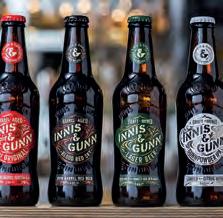
Innis & Gunn brand from administration for £4.5m
Dublin-based C&C Group has purchased the Innis & Gunn beer and lager brand out of administration in a £4.5m pre-packaged sale. The acquisition grants the Londonlisted producer of Tennent’s and Magners full ownership of the Edinburgh-based brand and its global intellectual property. C&C Group already held an 8 per cent stake in the Scottish brewer, acquired in 2021, and has served as its primary brewing partner for several years. The company anticipates a rapid transition with minimal business disruption, noting that the brand will be fully absorbed into its existing operational and supply chain infrastructure. Roger White, chief executive of C&C Group, described the move as a compelling
WSET gains Ofqual regulation for beer qualifications
WSET, the global leader in wine and spirits education, is delighted to announce that its Level 1 and Level 2 Awards in Beer are now regulated by Ofqual.
Ofqual regulation strengthens recognition of WSET beer qualifications in key markets and underlines WSET’s commitment to delivering globally trusted and relevant drinks education across all major drinks categories.
The announcement comes two years after WSET introduced beer as its fourth qualification category following wine, spirits and sake. The beer programme has since expanded to over 50 course providers worldwide, with courses taken by both industry professionals and enthusiasts. The UK and US are currently the leading markets for WSET’s beer qualifications, followed by Hong Kong, Canada and India.
Loch Lomond Brewery seeks £250,000 to scale distilling operations
Loch Lomond Brewery has announced a crowdfunding initiative to raise £250,000 via Crowdcube to expand its distilling capabilities. The Scotland-based company, which
Much of this growth is being driven by drinks businesses incorporating WSET beer qualifications into structured professional development programmes for commercial, marketing and hospitality teams. Recent participants include Asahi UK, Heineken UK, Molson Coors, the Guinness Storehouse and Open Gate Brewery, and alcohol-free beer brand Lucky Saint.
Alessandro D’Amico, Senior Brand Manager, Heineken UK, said: “We chose WSET’s beer qualification because it offered our team a globally recognised standard of training that goes beyond brand knowledge. It’s helped build real confidence in talking about beer, improved our team’s tasting skills, and created a stronger culture of beer appreciation within the business. The training has
launched the Levenbank Distillery last year, intends to use the capital to scale up spirit production, lay down whisky casks, and upgrade packaging facilities to improve overall efficiency.
Founded in 2011 by husbandand-wife team Euan and Fiona MacEachern, the business operates from a 12,000-squarefoot site near Dumbarton. Having established a robust brewing presence with an in-house
opportunity to save a well-loved brand, projecting a small positive financial contribution by the 2027 financial year.
FTI Consulting, appointed as joint administrators, executed the sale immediately. They cited a combination of declining consumer spending and rising cost pressures as the primary causes of Innis & Gunn’s collapse. While the exact number of job losses has not been specified, administrators confirmed redundancies will need to be made, with only a small number of staff retained to assist in closing the physical brewery and taproom operations.
had a noticeable impact already – our teams are engaging more deeply with customers and showcasing beer in a more premium, informed way.”
Paul Rudge, Beer and Cider Champion, Molson Coors, said: “WSET allows us to really focus on the properties of the beer. And it does so in a standardised, objective way with the Systematic Approach to Tasting.”
Doreen Colondres, Founder of Vitis House, US, said: “At Vitis House, we’re proud to be one of the first to offer WSET beer education. It’s been an incredible way to elevate appreciation for beer here in North Carolina, United States, a region known for its thriving craft beer scene. Our courses help students connect with beer through a structured, global perspective, giving them the confidence and tools to taste, recommend and pair beer in both personal and professional settings.”
canning line, the founders diversified into spirits in early 2025. Levenbank currently produces West Highland gin, vodka, Cú Mara rum, and new-make spirit, with plans to release single malt and grain whiskies.
Managing director Fiona MacEachern noted the investment is a pivotal step in transitioning from local brewery to national brand. The distillery aims to differentiate
in sales to €825.7m, alongside a 2 per cent rise in adjusted EBITDA to €58.1m.
Dougal Sharp, who founded Innis & Gunn in 2003, expressed deep regret for affected staff and shareholders, though he welcomed the brand finding a secure home with C&C Group. The acquisition follows C&C Group’s recent half-year results, which reported a 4 per cent dip
The administration and subsequent sale mark a sobering conclusion to a long history of ambitious external investment, fundraising, and expansion plans for the Scottish brewer. A timeline of Innis & Gunn’s key corporate milestones includes: 2003: Innis & Gunn is founded in Edinburgh by master brewer Dougal Sharp. 2015: The brewer raises £3.1m through a pioneering ‘BeerBond’ crowdfunding programme, enabling the purchase of the Inveralmond Brewery in Perth.
2016: An equity crowdfunding campaign on Crowdcube, dubbed ‘AdventureCapital’, raises £2.5m from the public after initially targeting just £1m.
2017: Private equity firm L Catterton invests heavily, acquiring a 27.9 per
its whisky profile by utilising speciality malts usually reserved for brewing, such as crystal and chocolate. Furthermore, the team plans to adapt traditional beer styles, including imperial stout, barley wine, and wee heavy, creating unique distillation washes.
The business, which employs seventeen people, forecasts revenue growth exceeding £7 million within the next decade.
cent stake in the business for £15m.
2019: The company announces ambitious plans to build a £20m, state-of-the-art brewery at Heriot-Watt University’s research park, which would have been Edinburgh’s first major new brewery in 150 years. A ‘Beer Money’ crowdfunding campaign on Seedrs secures £3m to help finance the project.
2021: C&C Group takes an 8 per cent minority interest in the business for an undisclosed sum, securing a long-term brewing partnership. In the same year, planning permission for the Heriot-Watt site is officially granted. However, the project is placed on an indefinite pause and ultimately abandoned due to the economic fallout and rising construction costs following the global pandemic. March 2026: Following mounting financial pressures, C&C Group purchases the Innis & Gunn brand and global intellectual property out of administration for £4.5m, absorbing production entirely into its Wellpark site.
News: Distilling
Cognac exports slide in 2025 amid US and China trade tensions
Global Cognac exports suffered a significant downturn in both value and volume throughout 2025, driven by a climate of geopolitical and economic uncertainty. According to figures released by the trade body Bureau National Interprofessionnel du Cognac (BNIC), the decline is largely attributable to tariff measures implemented in China and the US - the two most critical markets for the spirit by value and volume, respectively. Global shipments fell by 15.1% to 141 million bottles for the year, a sharp reversal from 2024 when volume had seen a marginal increase of 0.4%.
Uncle Nearest placed under receivership following loan default
The Tennessee-based Uncle Nearest Premium Whiskey has been placed into receivership following a judicial ruling triggered by a default on loans totalling nearly $108 million. This development follows a period of rapid expansion for the brand, which has become a significant player in the American whiskey category over recent years.
Founder Fawn Weaver is currently pursuing legal action to overturn the ruling and regain management of the company. Weaver, who has been instrumental in the brand’s rise and its focus on the historical legacy of Nathan ‘Nearest’ Green, remains at the centre of an ongoing courtroom battle to resolve the financial dispute and reclaim the distillery’s assets. The appointment of a receiver is intended to oversee the company’s financial interests and address the substantial outstanding debt. This process places the distillery’s future operations under scrutiny as the legal proceedings continue. The industry is monitoring the situation closely to see if Weaver can successfully reclaim the business or if the receivership will lead to a broader restructuring of the producer’s corporate framework.
The financial impact was even more pronounced, with revenue plummeting by 25.3% to €2.24bn. This decline was felt across all quality tiers; VS shipments dropped by 16.2%, VSOP by 11.5%, and the premium XO category and above saw a substantial 23.2% contraction. Regionally, the North American Free Trade Agreement (NAFTA) zone experienced a 19.4% fall in volume to 56.9 million bottles, while the corresponding value plunged by 34% to €737.3m. Similarly, in the Far East - a region dominated by China and Singapore - shipments fell by 20.5% in volume and 23.1% in value.
Europe was not immune to the trend, reporting a 10.9% drop in volume to 28.2 million bottles. Within this landscape, the UK maintained its position as the fifth-largest export market, ahead of France. Despite the overarching gloom, the BNIC highlighted “positive signals” from emerging markets, most notably South Africa, which has now risen to become the fourth-largest export destination for the category.
In response to the market contraction, French Cognac producers agreed earlier this year to finance a vine-pull scheme to manage oversupply. The Union Générale des Viticulteurs pour l’AOC Cognac (UGVC) confirmed that winegrowers would initially fund the interprofessional portion of the initiative themselves through a mandatory voluntary contribution of €6,000 per hectare. The trade body continues to call upon merchants to assist in co-funding the scheme to stabilise the industry’s future.
Rémy Cointreau establishes new Prestige division
Rémy Cointreau has announced the formation of a dedicated “Prestige” business unit as part of a strategic drive to accelerate the growth of its most exclusive luxury houses. The new division will centralise the global development, brand strategy, and international awareness for the group’s high-end portfolio, which includes the iconic Louis XIII Cognac, Champagne Telmont, and the luxury perfume house Maison Psyché. Ludovic du Plessis, an industry veteran who joined the group in 2014, has been appointed to lead the division.
Du Plessis previously served as the executive director of Louis XIII for six years before becoming the president of Champagne Telmont in 2020, where he spearheaded the house’s sustainability focused “In the Name of Mother Nature” initiative. Alongside his new role, du Plessis will also join the Rémy Cointreau executive committee.
The move follows a strategic review initiated by Group CEO Franck Marilly, who joined the company last June. Marilly stated that the new division aims to be at the “forefront of luxury trends” and will
focus on driving new business opportunities with “boldness and the highest standards of luxury knowledge”. The establishment of the unit comes as the group navigates a complex macroeconomic environment, having recently reported a 1.9% organic decline in sales for the first nine months of the 2025-26 financial year. By grouping these three “exceptional maisons” under a single leadership structure, Rémy Cointreau intendeds to sharpen its value-driven strategy and capture emerging opportunities within the premiumisation trend.
SWA comments on US tariff increase speculation
The Scotch Whisky Association (SWA) has voiced significant concerns over speculation that US tariffs on Scotch whisky may rise from 10% to 15%. A spokesperson for the organisation described the potential increase as “deeply worrying” for the industry, which continues to navigate a complex international trade environment.
The SWA, working in conjunction with industry counterparts in the United States, is urging negotiators on both sides of the Atlantic to redouble their efforts to secure a formal agreement. The association’s
primary objective remains a permanent return to zero-tariff trade, which it views as essential for the long-term health of the sector and its export capabilities. Beyond international trade pressures, the SWA also highlighted the domestic challenges currently facing distillers. The spokesperson emphasised that it is vital for the UK government to take action to reduce the “crushing cost burdens” on the sector. This includes a call to address the impact of the most recent rise in spirits duty, which the association argues is further straining an industry already dealing with significant economic headwinds.
Suntory to combine operational teams at Islay distilleries
Suntory Global Spirits is to merge its operational teams at the Bowmore and Laphroaig distilleries on Islay into a single unit as part of a long-term strategic production plan. The move is designed to ensure that production remains sustainable and efficient while remaining in line with projected long-term demand for the two iconic Scotch whisky brands.
The company stated that the change reflects updated
production requirements and follows traditional seasonal operating models used throughout the Scotch industry. By integrating the teams, the firm aims to better balance distillation output with maturing inventory levels, ensuring the continued prestige and health of both labels.
As part of the restructuring, a voluntary redundancy programme has been introduced for operational
employees who may find that the new structure does not suit their personal circumstances. However, Suntory has confirmed that no compulsory redundancies will take place.
Alistair Longwell, head of distilling and environment at Suntory Global Spirits, noted that Bowmore and Laphroaig are essential priorities for the group. He highlighted that while operational adjustments
are being made to align with demand, distillation continues at both sites. He reaffirmed the company’s commitment to its staff and the Islay communities that have supported the distilleries for generations.
The visitor centres at both locations will remain fully operational, and there are no plans to close either distillery. To further demonstrate its commitment to the sites, Suntory has outlined a capital investment programme for both facilities, which is set to be rolled out over the next three years.
Whisky overtakes beer as top-selling category at South Korea’s largest retailer
For the first time in the company’s history, whisky has surpassed domestic beer to become the best-selling alcoholic beverage category at South Korea’s leading supermarket chain, E-Mart. According to sales data spanning E-Mart and its warehouse subsidiary, Traders, throughout 2025, whisky captured a 24.2 percent share of total alcohol sales. This narrowly edged out domestic beer, which fell to second place at 23.8 percent. This historic milestone highlights a dramatic transformation in South Korean drinking habits. Just a few years prior in 2022, domestic beer held a comfortable lead with a 24.3 percent share compared to whisky’s 17.9 percent.
However, a massive 51.4 percent surge in whisky sales that year kicked off a sustained period of double-digit growth, culminating in a final 5 percent increase in 2025 that secured the market crown. Wine currently follows in third place at 19.7 percent, with soju and imported beer trailing behind.
Industry experts attribute this meteoric rise largely to a booming “highball” culture embraced by younger consumers. Global spirits brands have quickly pivoted their marketing strategies away from traditional neat serves to heavily promote these accessible cocktails. Diageo has aggressively pushed brands like Johnnie Walker through pop-up events and
Diageo unveils Johnnie Walker Red Soul to recruit new Scotch drinkers
Diageo has announced the global launch of Johnnie Walker Red Soul, a new permanent addition to its Scotch portfolio designed to offer a sweeter and smoother profile than the original Red Label. Rolling out from March, the expression is
specifically aimed at a younger generation of consumers and those currently outside the whisky category who may find traditional Scotch profiles a barrier to entry.
The innovation is informed by consumer data indi-
campaigns featuring K-pop stars like CL, while Pernod Ricard partnered with K-pop icon Lisa to elevate Chivas Regal among trendy urban drinkers. The demand for highballs has been so intense that Suntory Global Spirits reported Korean demand for Jim Beam recently outstripped available supply, with executives predicting consumption could double again this year.
Retailers are adapting swiftly to the craze; E-Mart now stocks approximately 1,000 different whiskies. With imports reaching a two-decade high and demand spanning from affordable mixing spirits to ultra-premium rarities, South Korea has firmly cemented itself as a critical hub in the global whisky trade.
cating that over a quarter of non-Scotch drinkers are open to the category but actively seek sweeter flavour profiles. Positioned at an entry-level price point - the fastest-growing segment in the blended Scotch market according to IWSR forecasts - Red Soul is intended to bolster Diageo’s recruitment strategy. John Williams, Global Whisky Director at Diageo, noted that while Red Label has been a “global growth engine” for over 35 years, this new variant provides a more “easy and social” option for female and younger audiences who may have previously found the category inaccessible.
Crafted by Master Blender Emma Walker and her team, Red Soul departs from the signature smoky and spicy notes associated with Red
Label. Instead, the liquid focuses on rich vanilla sweetness, caramel fudge, and gentle oak, resulting in a creamy finish. Walker stated that the goal was to “dial up the vibrant vanilla sweetness” while deliberately stepping away from smoke to create a brighter, more versatile spirit suited to relaxed, spontaneous social occasions.
To encourage trial among new drinkers, the brand is promoting a signature serve consisting of Red Soul and lemonade, garnished with a pinch of sea salt and a strawberry. This approach highlights the blend’s ability to maintain its character in longer, lighter serves. The product will initially launch across Europe and the Middle East and North Africa (MENA) regions, with a recommended retail price of £25.
Beyond oak and ABV
Inside the distillery experimenting with 200 tree species
BY ANTHONY GLADMAN
Having pioneered the clear non-alcoholic spirits movement with Seedlip, Ben Branson is now venturing into the woods. His latest project, Sylva, leverages ultrasonic maturation to extract complex flavours from non-traditional tree species – challenging conventional wisdom on wood ageing and redefining the dark non-alcoholic category.
Rows of small glass bottles line the shelves in Ben Branson’s lab, each with an aluminium cap numbered by hand in black marker pen. He pulls one down and unscrews it to nose the aroma then passes it to me. “Reindeer moss,” he says. “It’s a lichen from Scotland.”
A print-out taped to the nearby wall lists the bottles’ contents which range from deepest mahogany through chestnut and amber to pale gold. Torrefied wheat. Heavily peated malt (60ppm phenol). Chocolate malt. Amaranth. All manner of wood chips and grains and seeds and strips of bark – 10g of each carefully weighed out – sit suspended in 50ml of 40% ABV ethanol.
Branson is making non-alcoholic spirits. The ethanol is just a solvent – a way to extract flavour compounds that water alone can’t reach. It’s technical, methodical and utterly liberated from the regulations that bind producers in other spirits categories such as Scotch whisky. He passes me another bottle filled with a reddish web of decayed… something. “Dead leaves,” Branson says. From a tree called Sweet Gum. “Its leaves go very red as the chlorophyll goes. We distil them when they’re red and that’s what we get.” A distinctive impression of the forest floor, of bottled autumn.
Branson has a good claim to have created the modern non-alcoholic spirits category when he founded Seedlip in 2015. That began with an interest in herbs, a book from 1651 called The Art of Distillation, and a tiny tabletop copper still – the sort you’ll find at make-yourown-gin classes. He quickly secured backing from Distill Ventures, accounts in high-end bars and retailers, and eventually sold to Diageo in 2019.
His new venture, Sylva, has a similar feel to it yet differs in key ways. Its non-alcoholic spirits are dark rather than clear. The batches remain very small but are now made in a six-litre
rotary evaporator (rotovap) rather than a copper still. And its impetus flows from Branson’s deep fascination not with herbs this time – but with trees. Hence the name; sylvan means ‘of the woods’.
Beating the bounds
Sylva is based in the Colne Valley, the Essex one, not Yorkshire, on the site of a former Benedictine priory. The estate includes about 1.5 hectares (four acres) of woodland – not the ancient fragments like nearby Chalkney Wood, but younger trees about 40 years old.
“This would have been parkland. You’ve got clumps of trees like hawthorn that sheep can sit under,” Branson says. “We’ve probably got about 20 British native tree species here.”
Branson knows the trees’ ages just as he knows what type each one is, what its growing habits are, its likes and dislikes for water or soil type, and –increasingly – the flavours waiting to be unlocked from its wood. Or its bark. Or its leaves, or seeds, or roots.
His enthusiasm is evident even on a drizzly February morning. Dressed like a craft brewer (plaid overshirt, nose ring, greying curls spilling from a woollen docker cap), he leads me deeper into the woodland to show me two of his top-three favourite trees – by which he means individual specimens rather than species.
In at number three is a lightning-struck oak, 500 years old and still going strong despite the deep tear, scorched in places, that runs down one side of its twisting trunk. With its gnarled branches bare, it looms like a monster that might
come to life at any moment to snatch unwary children up into its boughs.
“England has the highest number of ancient oaks in Europe,” Branson says. “There are 600 types of oak. When you put this in whisky and barrel terms, there are half a billion barrels in the world. And in order to make those half a billion barrels we had to cut down a billion hundred-year-old oak trees. That’s pretty crazy, isn’t it?”
I concur. Pretty crazy.
“And then get this: 90% of those barrels are one species.”
We both know what he means: Quercus alba, American white oak. Just one among over 73,000 species of tree in the world. And a single tree like this can support more than 2,300 species of birds and bugs, moss and lichen. But just as we seem to be spinning into a dizzying micro-macro whirl of scale and possibility, Branson zooms in again on the lightning strike.
“So typically for barrels, you char the inside,” Branson says. “And this is obviously naturally charred, which is brilliant. It makes me wonder how you can engineer lightning to char trees. It would be amazing.”
That’s a solid third-favourite tree. His number one, grown from a cutting from Sir Isaac Newton’s Flower of Kent apple tree, is at the Botanic Gardens in Cambridge. It is a descendant of a tree
Ben Branson and his third-favourite tree, the five-hundredyear-old lightning-struck oak (Photo: Anthony Gladman)
which grew in Isaac Newton’s garden at Woolsthorpe Manor. Yes, the one that dropped that apple.
Branson hopes one day to make a limited release using this tree and his lightning-struck oak. But for now we move on to the runner up, holder of his number two spot, a bolshy black walnut that secretes a toxin called juglone to bully other trees and shrubs out of its growing space.
Sipping the orchard
Branson has experimented with over 200 different types of wood so far. About 50 of these he has gathered himself from the woodland outside Sylva’s back door, including elm, sweet chestnut, hazel, and silver birch. Others come from around the UK – particularly apple, plum and cherry wood from orchards that are being grubbed out. Some come from further afield: he has used West African padauk, olive wood, sequoia.
slightly hazy and its colour – amber with orange highlights – is reminiscent of a richly sherried whisky. Served over ice, it tastes like licking the inside of a wooden cigar box that until recently held an oozing banoffee pie with custard.
employees, does this by hand – five minutes stirring, ten minutes rest. You can hear him clonking away, banging the sides of the IBC’s hard plastic bladder. It marks the passage of time. I wonder how long this must go on before it’s time to send it all to the bottler. This single IBC of concentrate will become 3,500 bottles, many destined for Ocado.
Ultra sound
My visit comes shortly after the launch of Sylva’s first permanent stock keeping unit (SKU), called Sylva Orchard. This combines plum and apple wood with cherry wood. Some of this cherry wood was smoked over cherry wood coals. It also has distillates of cherry blossom and English regenerative pale malt barley.
As well as ethanol (diluted to roughly 20% ABV), Branson uses glycerin as a solvent while preparing these components. It also contributes to the texture of the finished drink. In the glass, it looks
Branson prepares the recipe in small batches, no more than a couple of dozen litres each. He uses the rotovap to distil grains and botanicals under a vacuum – this allows distillation at lower temperatures, preserving the more delicate volatiles that might not survive in a traditional pot still.
Once they’re ready, he combines them in an intermediate bulk container (IBC). Evidently, they need some encouragement to marry together as there is an awful lot of stirring going on during my visit. Fabio, one of Sylva’s handful of
One of the methods Branson employs at Sylva is sonic maturation, or to be precise a version of this that uses ultrasound, sometimes also called ultrasonication. Sonic maturation isn’t new – apparently it was first used in 2001 by the Tuthilltown Distillery in Hudson Valley, New York. And indeed, I have seen it used for myself at a sake brewery just outside Kyoto. When it pops up in articles like this, the focus is usually on what sort of music to use. Does bourbon prefer heavy metal? Will sake enjoy Chinese music? Branson’s approach is more science than whimsy. Rather than rely on sick beats he uses blasts of specific frequencies for defined durations. He takes the day’s distillates and puts them into a keg – these kegs range from the very small (two litres) to the merely small-ish (23 litres). He puts wood chips into the keg also, which may have been toasted or smoked or charred, or any combination of these. Then he finishes the keg off with food-grade oxygen, pressurising it to the equivalent of 20m underwater or about 1.98 bar if you prefer. Depending on what he is experimenting with that day, the pressure may go higher – perhaps as much as 3.4 bar or 35 m underwater. “We are consistently testing different pressure to understand what works best extraction-wise,” Branson says. “And what is also most efficient. We don’t want to use more oxygen than we need to.”
He pops his kegs into a water bath housed within an ultrasound generator. Three of these unassuming-looking steel boxes are about the same size and shape as a microwave oven. A third is closer to a domestic radiator: longer, taller and thinner. The water within these is heated to 80°C. So far so pleasant. Then the screaming begins. The inside of the machines may be ultrasonic, at 28 kilohertz, but the outside – and the rest of the large room in the barn where they are kept – is not. It is filled instead with a grating metallic
Sylva distillery and maturation lab, Colne Valley, Essex UK
shriek. It’s bad enough when just one is turned on for a few seconds to demonstrate. What it is like when all four are going for a 30-minute stretch I dread to think. No wonder Branson keeps them out here rather than in the main production room attached to the office.
The machines keep this up, 30 minutes on and 30 minutes off, for anything from three days up to a week – sometimes even longer. At one point this meant physically pressing buttons to cycle the machines on and off, but Branson has very sensibly delegated this task to some microelectronics. Imagine the sort of home-automation jiggery-pokery with Arduinos and such that you might find explained in the depths of YouTube.
This works fine as long as the 3V batteries on which it all depends are kept fresh. Branson tells me he discovered this the hard way; a machine stopped working, seemingly for no reason and he went through a week of baffled frustration before landing on this particular point of failure.
So why go through all this rigmarole? Branson says it allows him to rapidly extract flavour, colour and character from his ingredients. The oxygen creates a favourable environment for reactions to occur. The ultrasonic waves inside his kegs cause microscopic cavitations that push the liquid into the wood chips and out again thousands of times per second. This, Sylva claims, gets the same flavour from its ingredients in a matter of days or weeks that would take traditional processes years to accomplish.
The sceptic’s take Matt Burgess works at Speyside Cooperage. He has spent his career,
much of it with Diageo, researching casks and maturation. The man knows wood. He even worked closely with Branson on Seedlip and later with Sylva, looking at wood extracts under ultrasonication. “I had an entire bench in my lab allocated to it for months,” he says.
To a scientist, all maturation can be explained as a series of reactions. Reactions require energy, of which your typical cask in a warehouse has very little. They don’t move. They’re not hot. No one’s plugging them into anything. Low energy. Very low energy.
“What ultrasonic provides is a huge dump of energy,” Burgess explains. “Through acoustic cavitation, you can create high localised pressure and temperatures, accelerate reaction rates and stimulate chemical reactions.”
Crucially, with Sylva, the precursors and extractives are the same as you would expect with traditional maturation. Its use of ultrasonication adds nothing except speed, removes nothing except time. In that respect, Burgess says, traditional and ultrasonic maturation ultimately reach the same end point.
And yet… and yet… Burgess has seen a great many maturation experiments in his time, either alone or in combination: bell jar trials, ultrasound, electrolysis, catalytic ageing. “They all do a good job of creating a simulant but fall short of the full experience of, say, a 12-year-old single malt,” he says. He acknowledges it could be romantic bias – but that’s what we love about drinks, isn’t it? The romance? “It’s like Jimi Hendrix or Kurt Cobain being fed to an AI model to
Selection of different wood in various species, form and ages
Inspiration from Sylva: A Discourse of Forest Trees and the Propagation of Timber in His Majesties Dominions (second edition), 1670
Inside the maturation lab
A tree company that makes drinks: Woodchippers, desiccators, ultrasonics and 10g samples in 40% ethanol
produce new songs. It sounds like them, sometimes scarily so, but still just isn’t.”
Not ‘sober’ anything
Except Branson isn’t trying to make a non-alcoholic whisky. He’s not interested in the sort of product that positions itself as a straight swap for booze, virtue for vice. Branson sees that as a losing proposition.
“People’s expectations of dark non-alc, and their experience of it, are really bad,” he says. Branson collected 10,000 reviews of 10 dark non-alcoholic products on Amazon and found the average rating was just 2.3. “And the most common feeling in the reviews is anger. So many drinks brands expect everybody to come to them, and for the occasion to be about the brand. It’s not.”
Branson wants Sylva to slot into occasions that dark spirits drinkers will already recognise – the transition from work to leisure, or social connection at the end of an evening. He asks himself: how can we be where people are slowing down?
“If I go to an off-grid cabin, I’m probably not going to take a glass bottle with me,” Branson says. “But what am I taking? Do we need to do a Sylva hip flask?”
Ultimately, Branson is most interested in showcasing what wood can do –especially species other than oak. “We talk about being a tree company that makes drinks,” he says. “It so happens that we started with drinks. We could make chairs. It could be we make incense from the forest, or candles.”
Practicality gets a look-in
“The biggest impact on spirit will be down to wood quality and toasting temperatures,” says Stuart MacPherson. As a former Master of Wood for Macallan, he knows wood chemistry intimately.
MacPherson’s perspective isn’t just about the nitty-gritty of hemicellulose and lignin, maltol and furfural and lactones. He also understands what it is to work with wood at an industrial scale. He started in the industry in 1979 as a cooper and went on to manage cooperages for Edrington.
“Being able to play about with different toasting temperatures, different maturation periods, different wood types, that gives you an indication of what would work,” he says.
MacPherson’s assessment of Sylva? “I think it is great, to be quite honest with you.” He notes that many companies already use wood chips or toasted rods for spirit development where regulations allow. The limitation isn’t technical, it’s regulatory.
“I just wish the Scotch Whisky Association (SWA) would open up some of the boundaries,” MacPherson says. “I think we’re becoming quite restrictive. You’ll see other countries being more imaginative and creative about different wood types. Unfortunately, a lot of Scotch whisky companies are restricted in what they can do.”
When I mention that Branson suggested cherry wood might work well in whisky, MacPherson doesn’t dismiss it. The question isn’t whether cherry would work, it’s whether it would be commercially viable. Availability of the species, sawmill practicality, wastage levels. “Is it going to be feasible and practical and justifiable to use?” he asks.
Local roots, global reach
Branson is no slouch. Consider his pedigree: out of more than 35 companies that Diageo invested in via Distill Ventures, Seedlip was the first to be acquired – an achievement only five others could match. This experience informs his approach at Sylva. Despite starting production just over a year ago, he has already secured a place in high-end retailers such as Selfridges and Berry Brothers & Rudd. Sylva is stocked in eight of the ten restaurants in the UK that boast three Michelin stars. It is also carried by top bars in Copenhagen, London, New York, Chicago and Los Angeles. Sylva is already expanding production beyond the UK, too. Branson says he wants it to become a “global local brand”. In the USA, Sylva has taken a lease on a barn on a 500-acre farm, two hours north of Manhattan. This gives Branson access to 100 hectares
(250 acres) of woodland to work with. He has already begun fitting out the equipment and interviewing for staff. Production should begin later in 2026, and will enable Sylva to create US-specific releases using local species including sugar maple and apple wood from the state’s abundant orchards. He has his eye on Japan as well. “We are holding that tension of global brand, local footprint. And we can do that because we don’t have the same regulations,” he says.
Branson wants to bring new wood flavours to the world – and if they happen to be non-alcoholic, that’s almost unimportant. Certainly, he doesn’t consider it to be Sylva’s unique selling point. “Launching Seedlip, the number one most important thing about it was that it was non-alcoholic,” he says.
“Now I want to move beyond ABV.”
I ask Branson how he would define success for Sylva if he were to look beyond sales and profit. He says it would be inspiring in others a love of trees similar to his own. He tells me that fifty people have visited Sylva’s lab so far. The most common feedback: that they will never look at trees in the same way again.
As I’m preparing to leave, Branson hands me a small illustrated book entitled How to be more tree. That evening, I read it with a glass of Sylva Orchard over ice. Every other page shows a life lesson attributed to a different species of tree. These are set opposite drawings of the trees in their habitat, or of their leaves, or the birds and insects that frequent them. For the Japanese maple, the lesson is that beginnings are always small. For the hornbeam, it’s be authentic. For the London Plane, it’s dare to branch out.
Ben with a selection of plum wood
The home of lager
Flying the flag at Pillars Brewery
BY JOE BEVAN
We step inside the selfproclaimed ‘Home of Lager’ at Pillars Brewery in London to discover how a meticulous approach to hand-milled malt, cuttingedge centrifugation and community-centric brewing is reinvigorating the world’s most popular beer style.
Craft beer was built on a rejection of ubiquitous lager, but as identical IPAs flood the market the pendulum is swinging back. One mythology sacrosanct to the Craft Beer movement – is that it was and to a lesser extent still is a middle finger to an industry dominated by identikit lagers.
The unstoppable rise of corporate brewers throughout 70s and 80s led to a curtailing of beer styles, a dampening of beers expressiveness in pursuit of beers with universal appeal. The perfect vehicle for this happened to be the ever-popular, clean, easy-drinking lager. Thus, a creative, contrarian generation of brewers decided ale was best placed to challenge the orthodoxy and eventually, as the movement matured, one style became shorthand for craft beer: IPA.
The IPA is now a cliché, almost meaningless – and standing out amongst the thousands of well-executed IPAs flooding the market is increasingly challenging. So where do brewers go next to recapture the attention of the fatigued drinker? Yes, back to the ever-popular, clean, easy-drinking lager. This time with reverence, combining innovation with history to reinvigorate a drink enjoyed as far back as the 1400s.
One such brewery who is proudly flying the bottom-fermented flag is the Pillars Brewery based in Walthamstow, East London, UK. An outfit devoted to all things clean, crisp and subtle. Its razorsharp branding, impeccable lagers and uber cool taproom are remaking lager for the post-craft revolution generation. I visited the Head Brewer Marius Matulevicius to tour the self-proclaimed “Home of Lager”.
Wonderful wort
The steaming heart of Pillars Brewery are two identical mash vessels feeding mash to a squat lauter tun. Originally, back in 2016, only one 14.5hL mash vessel was required but as volumes incrementally grew and more recently spiked, an additional vessel was commissioned in 2021. Beside the brewhouse is a compact two-roller mill. A pallet of fragrant Crisp lager malt is waiting to be crushed. “Every malt we use is milled by hand,” explains Head Brewer Matulevicius, “lager is malt forward and to make the best lager you
subsidies by water companies due to the improvements in run-off, that to me says something is working.”
must retain the aromatic compounds from the malted barley. It’s like ground coffee. It is freshly ground to maximise the flavour.”
The bready sticky smell of boiling captures the brewery as the manway is lifted for the bittering charge. “We predominately source our malt from Crisp. For many reasons, including consistency, extract efficiency – and to champion British producers and ingredients. We are influenced by continental lagers such as Spaten but we’re not copying them, we have a British backbone to our beers. We can cultivate some of the best barley in the world while decreasing food miles significantly. It’s simple really.”
Pillars Brewing’s attention to sustainable sourcing has led to discussions with the pioneering Wild Farmed and potentially sourcing regenerative barley. “The benefits are obvious. What is important is we prevent greenwashing and the farm interventions can be reported transparently. Unlike organic, regenerative is not certified, or at least not yet,” adds Matulevicius cautiously. “I know of farmers awarded
Matulevicius’ educational background is a Masters in Chemical Engineering from University College London. He spent a couple of years rotating round the Beavertown sites in London including a stint at Beavertown Stadium, the brewpub servicing Tottenham Hotspur’s football stadium. He was selected to join the commissioning team for Beaverworld; Beavertown’s (now a part of Heineken) six-acre 500,000 hectolitre brewery in North London. All the while collecting Institute of Brewing & Distilling qualifications along the way, including a General Certificate and two Diploma modules. Eventually, Matulevicius joined Pillars Brewing as Head Brewer. His continued passion and expertise have been instrumental to Pillars burgeoning hype.
Temperature and time
To produce world-class lager you need to precisely control your mashing regime to ensure consistency of process. Malt and adjuncts are lager’s central ingredient or ‘soul’ of the style and therefore maximising its utility is vital.
“We operate a multi-step mash programme. We’ve experimented with the protein step. We’ve brewed sideby-side batches to really create the most prolific and stable foam we can,” says Matulevicius. He is “suspicious” of dextrin malt to bulk-up the terminal
The Malt Haus is part of the working brewery while also housing a bar and resident kitchen pop-up
gravity and prefers to rely on enzymes, mash consistency, temperature and time.
“We use caramelised malts in our Cold Porter and Icebock to add subtle depth and lift the EBC (colour). Our Pilsner contains Munich and Vienna speciality malts. Personally, I think Simpsons malt the best caramelised and crystalised malts in the world,” beams Matulevicius, “but we also use Weyermann malts for specials and seasonals. The objective is different here. When we make a Festbier we want to make an exact clone as “German” as possible, so we go to the source and use Weyermann.”
Light-coloured lagers are delicate styles and minor variations upstream can wreak considerable havoc in glass. The old brewing adage is “you can tell how good a brewer is by their lager.” What does it mean when a brewer makes multiple exceptional lagers like Pillars Brewery do? “We’re hyper-aware of DMS and dissipating volatiles,” explains Matulevicius, “there is a bittering charge to promote hot break for trub removal.”
Saccharomyces pastorianus
There are many cylindrical conical vessels in parallel rows encircling the brewery. Each of these is temperature-controlled by an internal cooling jacket linked to a
glycol chiller. “We have carefully dialled in our DMS control. We ferment with a lager strain that unfortunately is prone to DMS production from its pre-cursor DMSO. Therefore, we worked with external specialists to refine DMS control,” explains Matulevicius. “Gradually cooling the tanks is a manual task. So, this really takes lots of energy and focus from the team but the benefits to foam stability and yeast viability are worth the additional effort,” he smiles.
The freshly harvested yeast is stored in a dedicated yeast storage tank. “We typically go to 14 -16 generations and have very little issues with consistency, taste or flocculation,” says Matulevicius “we know our yeast slurry, its consistency, smell and colour and pitch according to volume.”
Bright spark
The brewery recently commissioned a new GEA centrifuge for polishing the beers ready for packaging. Matulevicius explains: “Before the centrifuge we were reliant on a lenticular filter. The centrifuge has accelerated our process times, improved consistency and elevated the quality of our beers. We had to increase the capacity of the chiller to ensure we had enough to service the fermentation cellar, wort cooler and centrifuge. The bonus from the additional chiller capacity is we now have perfect control of wort and fermentation temperature, even in the summer heatwaves.”
Once the diacetyl is in specification beer is chilled and yeast is harvested before being sent straight to the centrifuge and onwards to the bright beer tanks. They are mighty impressive tubes of stainless steel slotted nicely beside the main brewery building. Multiple batches are blended in the horizontal brights, which are fully manual, with a manifold for CIPs, transfers and packaging runs.
percentage of production. The rest is bottle. The direct delivery model is working well and we can comfortably grow,” explains Matulevicius. The bright orange vans are certainly eye-catching and mouth-watering in equal measure.
Pack it in!
Squeezed into the brewery is a compact bottling machine. The isobaric single-row filler was sourced from a Canadian brewery using a similar bottle shape. The stubby bottles are similar but different to the recognisable Coors Banquet bottle. Like everything with Pillars Brewery, the attention to detail is second to none. Alternatively, the annual Eisbock release is packaged by hand and is very much a labour of love…more on that later.
Matulevicius states, “I believe foam stability and formation are the greatest indicators of a beer’s quality. It shows a detailed, considered understanding of each step of the process from malt spec to glassware to maximise nucleation.”
There are multiple cold stores onsite for large pack and small pack storage, filled kegs, ingredients and auxiliary materials. “Keg remains our biggest
The kegging line is a single-head Comac keg filler. “We thoroughly clean the outside of every keg prior to filling. We want customers to take pride in our beers and providing a presentable, great looking keg is one way to get people to pay closer attention,” explains Matulevicius. The kegs themselves have a bespoke Pillars casing which elevates them and emphasises the quality of the beer within. The keg filler cleaning cycle includes a pre-rinse, caustic cycle, hot rinse, steam clean and finally sterile steam stage. “Some brewers steam kegs for 20 seconds. It’s not doing anything. Over 2 bars for over 60 seconds are needed. Otherwise, you are just warming the kegs and wasting steam. It’s another passion point of mine,” grins Matulevicius. In terms of quality control, the essential checks include monitoring gravity, temperature, dissolved oxygen, carbonation and pH. Forced diacetyl tests and gravity are measured frequently. The brewers are responsible for performing sensory analysis throughout the brewing process from fermentation to sign-off before final pack. Common off-flavours such as DMS, diacetyl and H₂S are the main taints to monitor and familiarity with these is essential.
Pillars of the community
Pillars Brewery was established in 2016 in Walthamstow, East London by brothers Samie, Omar and Eamonn, and their
A single-head Comac filler, for their kegs with bespoke Pillars casing
The 2023 release –and award winning – Pillars Icebock
long-time friend Gavin. They were the original dedicated craft lager brewery in London. Today, the team has expanded to ten members and three venues, The Malt Haus, Taproom and Untraditional Pub.
They are an essential hub in the East London community and champion key venues, producers and people in the community. For example, they are part of the Ravenswood Collective; a group of independent businesses situated in the Ravenwood industrial estate in Walthamstow. The Collective co-ordinates a broad range of events from charity fundraisers to street parties. This lively industrial estate in East London has become a must-visit place on the weekends for anybody seeking a great day out with superb beers.
The Eisbock cometh
Eisbock is a peculiar lager, originally from Germany the beer undergoes something called freeze distillation. The partially frozen beer, which has a similar consistency to a slushie is
concentrated by removing the ice crystals (the water) subsequently concentrating the alcohol, speciality malt flavours and dried fruit aromas.
It’s a heady concoction. This intricate and bizarre process yields a beautifully rich, full-bodied beer typically ranging from 9 to14 % ABV, with dark brown tones, mellow carbonation and complex malt-forward notes. Think caramel, sticky toffee, melted chocolate and fruit cake. The Brewery is championing this curious lager style and bringing it to a new audience with its annual Icebock release.
It is breaking new ground as the United Kingdom’s first Eisbock. The launch is becoming a highly anticipated moment in the beer calendar, like Celebration Ale, Verdant Putty or Bourbon County Stout. Its latest Icebock ‘25 (8 % ABV) is a real treat. It
The Pillars Brewery Tap, tucked inside the main brewery, is open on non-brewing days only
delivers a luxuriously rich, silky lager with deep caramelised, toasty character.
The Icebock is multi-award-winning seasonal, to date it has clocked up eight medals, including Country Award at the World Beer Awards in 2023 and 2024.
Another Round
As beer volumes tumble and headwinds continue to batter all levels of the brewing industry – from mega corporation to brewpub – it is heartening to see Pillars Brewery reinvent the spirit of craft beer into something new, thrilling and extremely tasty.
Its razor-sharp branding is hopefully recruiting the next generation of beer enthusiasts. The Pillars mantra to make craft beer approachable again by celebrating the best-selling beer style in the world clearly resonates. It obviously helps that Matulevicius and his talented team produce world-class lagers with precision and passion.
Welcome to the new home of lager – Walthamstow, East London.
The journey of Humulus lupulus from the trellis of the Hallertau or the Yakima Valley to the pint glass of the consumer is one of the most technologically intensive paths in the food and beverage industry. While the romanticism of the whole hop cone persists in marketing imagery, the modern brewing landscape is underpinned by a sophisticated suite of processed hop products.
These products are not merely ‘convenience’ items; they are precision-engineered tools designed to address the inherent variability of nature, the physical limitations of brewhouse geometry and the increasingly stringent demands for consistency and shelf-life in a globalised market.
Understanding the transition from the raw agricultural product to the concentrated extract requires a knowledge of hop chemistry, thermodynamics and fluid dynamics. So we are going to look at the breadth of the current hop product portfolio, examining the manufacturing processes, chemical transformations – and the strategic application of these products within the brewery.
Whole hops and their preservation
The starting point for every product in the brewer’s arsenal is the whole hop cone. At the point of harvest, hops are high-moisture agricultural products, containing approximately 80% water. To prevent immediate microbial spoilage and the degradation of delicate resins,
Beyond the cone
Maximising yield and stability through advanced hop products
BY STEVE CURTIS
Following last month’s exploration of fundamental hop chemistry, we examine how these complex compounds are harnessed for use through processing and how brewers can achieve unparalleled consistency and efficiency while minimising brewhouse losses.
they must be dried immediately in kilns to a moisture content of around 8-10%. Following drying and cooling, the hops are compressed into bales, typically weighing between 60 and 80 kg.
The physical handling of these bales is the first critical ‘engineering’ hurdle. The bulk density of a hop bale is a delicate balance; it must be high enough to facilitate efficient shipping and storage, but it must not exceed 150 kg/m³. Crossing this threshold risks the physical rupture of the lupulin glands – those microscopic yellow sacs containing
the alpha-acids and essential oils.
When these glands are compromised, the contents are exposed to oxygen, leading to the rapid oxidation of soft resins and the development of ‘cheesy’ or ‘sweaty’ off-flavours associated with isovaleric acid. Consequently, the industry standard is to store these bales in temperature-controlled environments, ideally below 5°C to decelerate the kinetics of staling.
While the industry has largely moved toward processing, the use of whole hops persists in two forms: fresh (or
Table 1: Average chemical composition of
‘green’) hops and dried whole cones. Fresh hops, processed within 36 hours of picking, offer a unique ‘harvest’ profile but they are notoriously difficult to manage. Their alpha-acid content is unknown at the point of use and their high weight – often five to eight times the mass of dried hops – leads to significant challenges in wort recovery. Dried whole cones offer a more stable alternative and are often utilised in hop backs or traditional cask ale production. They act as a natural filter bed during wort separation, which can assist in achieving wort clarity. However, from a technical efficiency standpoint, they are far from ideal. They are bulky to
The start of the hop processing journey. Freshly picked hop bines ready for picking and kiln drying. Northwood Hops, New Zealand 2013
milling of dried hops into a fine powder. This mechanical action is significant because it deliberately ruptures the lupulin glands, releasing the resins and oils and ensuring they are immediately available for extraction once they hit the hot wort.
To prevent the heat of the mill from volatilising the aromatic oils, the process must be carefully temperature controlled, often using inert atmospheres such as carbon dioxide or nitrogen to prevent oxidation during the powder phase. This powder is then pressed through a die to form the familiar cylindrical pellets.
batches with different alpha-acid levels, suppliers can provide a standardised product, allowing the brewer to calculate bitterness additions with mathematical precision rather than guesswork.
For brewers looking to further reduce trub volumes and beer losses, ‘Type 45’ (T45) pellets offer an even more concentrated solution. The production of T45 pellets is a triumph of temperature-controlled mechanical separation. By chilling the hops to -35°C, the lupulin glands become hard and lose their stickiness. In this state, they can be sieved away from a significant portion of the bract and other vegetative material.
The result is a pellet where the alphaacid and oil content is effectively doubled relative to the original bale. While this process is more energy-intensive, it provides a product that reduces transportation costs and, crucially, reduces the volume of solid waste in the whirlpool.
store, difficult to dose via automated systems, and suffer from poor utilisation rates – often as low as 10% to 30%.
Because the lupulin glands remain largely intact within the vegetative structure, the isomerisation of alphaacids in the kettle is hindered by limited surface area contact. Furthermore, the vegetative matter acts like a sponge, leading to substantial wort and beer losses that can impact the bottom line of high-gravity brewing operations.
Compressed plugs of whole cone hops are used by some breweries producing cask ale to add hops to the beer more easily and consistently than using lose hop cones. Their use today is relatively uncommon.
The rise of the pellet
To overcome the logistical and efficiency hurdles of whole cones, the industry turned to pelletisation. Today, hop pellets represent approximately 50% of the global hop market. The process begins with the
The ‘Type 90’ (T90) pellet is the standard-bearer for this category. The name refers to the fact that approximately 90% of the original bale mass is recovered in the final product (with some loss of moisture and heavy vegetative waste). T90 pellets offer a host of advantages: they are more stable, they take up significantly less cold-storage space and they can be easily integrated into automated dosing systems.
Perhaps most importantly for the technical brewer, pellets allow for the blending of different hop lots. By mixing
In recent years, the market has seen a surge in ‘next-generation’ pellets, such as BBC Pure Hop PelletsTM, Cryohops®, CGXTM, and LUPOMAX®. These products use advanced cryogenic milling techniques (often using liquid nitrogen) to preserve the most delicate aromatic fractions while providing even higher concentrations of resins.
By focusing on the sensory-active components and removing the ‘grassy’ or ‘vegetative’ fractions, these products allow brewers to achieve intense dry-hop aromas with a fraction of the liquid loss associated with traditional pellets.
The chemistry of extraction: Solvents and selectivity
While pellets improve efficiency, they still introduce vegetative matter into the brewery. To remove the plant material entirely, brewers turn to hop extracts.
Table 2: Average chemical composition of T90 hops
The industrial workflow for T90 pellet production, highlighting the transition from bale to powder and the critical role of inert gas blankets
The sub-zero enrichment process used to create T45 pellets, showing the mechanical separation of lupulin from vegetative matter
These products use solvents to ‘wash’ the resins and oils away from the cellulose and protein. In the modern era, the industry has settled on two primary solvents: Ethanol and CO2. Both are favoured because they are naturally present in beer, ensuring that no ‘foreign’ chemicals remain in the final product.
Ethanol extraction is a ‘whole-extract’ approach. Because ethanol is a polar solvent, it is relatively unselective. It extracts not only the alpha-acids and oils but also the hard resins and the watersoluble polyphenols (tannins). The resulting extract can be separated into a pure resin fraction and a tannin-rich water fraction.
While ethanol extracts provide excellent shelf stability and high alphaacid utilisation (often 35-40%), the high temperatures sometimes required for solvent recovery can lead to the loss of highly volatile ‘top-note’ aroma compounds, such as myrcene.
The gold standard for the industry is CO2 extraction. By manipulating pressure and temperature, CO2 can be
used in either a liquid or a ‘supercritical’ state. Liquid CO2 (typically at 50 bar and 10-15°C) is highly selective; it extracts the alpha-acids and oils while leaving behind the polyphenols and nitrates. Supercritical CO2 (at 250 – 300 bar and 40 – 45°C) is more aggressive and faster but it remains cleaner than ethanol.
CO2 extracts are typically standardised to a 30% alpha-acid concentration. For the brewer, they offer a ‘clean’ bitterness, zero beer loss and the removal of potential contaminants like pesticides or nitrates which could stay behind with the plant material. Because they are essentially a resinous paste, they are typically packaged in tins and must be added to the kettle early in the boil to ensure they are properly emulsified and isomerised.
Isomerisation: Maximising the bittering potential
The most energy-intensive chemical reaction in the brewhouse is the isomerisation of alpha-acids into iso-alpha-acids. This transformation requires heat and time. To increase efficiency, manufacturers have developed ‘pre-isomerised’ products that carry out this reaction before the hops ever reach the brewery.
Isomerised pellets are produced by adding a catalyst – typically magnesium
oxide – during the pelleting process. The pellets are then packed and held at a temperature of around 50°C for up to two weeks. This controlled environment results in nearly 99% of the alpha-acids being converted to iso-alpha-acids.
When these are added to the kettle, the utilisation rate jumps from the standard 30% to over 60%. While they are highly efficient for bittering, the heat treatment does tend to ‘cook’ the hop oils, meaning they are less suited for delicate aroma additions than standard pellets.
Even more advanced are the Isomerised Kettle Extracts (IKE or PIKE). These are produced by treating CO2 extract with alkali (like potassium hydroxide) and magnesium salts. This creates a product that can be added to the kettle or whirlpool with extremely high efficiency. However, the pinnacle of bittering control is reached with ‘PostFermentation Bittering’ (PFB) products, often simply called ‘Iso-extracts’ (e.g. Iso-30). These are pure aqueous solutions of potassium salts of iso-alpha-acids. Because they are added to the finished beer after fermentation, they avoid all the losses associated with the boil, trub separation, and yeast absorption. The utilisation of these products can exceed 90%, making them the most cost-effective way to adjust the final bitterness of a beer.
The ‘skunking’ solution: Reduced hop extracts
One of the greatest enemies of beer quality is light. When beer in clear or green glass is exposed to ultraviolet or visible light (at 350–500 nm), a photochemical reaction occurs. The light reacts with riboflavin (Vitamin B2) in the beer, which then interacts with the side chains of the iso-alpha-acid molecules. This reaction shears off a part of the
The ethanol extraction circuit, demonstrating the separation of resins from the water-soluble polyphenol fraction
Table 3: Average chemical composition of ethanol and CO2 hop extracts
The high-pressure CO2 extraction process, showing the transition of CO2 through liquid and supercritical phases to isolate hop resins.
molecule, which subsequently reacts with sulphur compounds to form 3-methyl-2butene-1-thiol (3-MBT). This compound has an incredibly low flavour threshold (in the parts per trillion) and is responsible for the ‘skunky’ or ‘light-struck’ aroma that can ruin a premium lager in minutes. To combat this, the industry developed reduced hop extracts. By chemically altering the iso-alpha-acid molecule, we can make it ‘immune’ to this lightdriven reaction. This is achieved through hydrogenation – adding hydrogen atoms to the molecule’s side chains
to saturate the weak double bonds. There are three primary reduced products:
• Rho iso-alpha-acids: Created by adding two hydrogen atoms (often using sodium borohydride). These provide light stability and a ‘clean’ bitterness, though they are only about 60–80% as bitter as standard iso-alpha-acids.
• Tetrahydro-iso-alpha-acids: Created by adding four hydrogen atoms using a palladium catalyst and hydrogen gas. These are the ‘gold
Table 4: Attributes of reduced hop extracts The photochemical mechanism of ‘skunking,’ showing the breakdown
standard’ for light stability. Beyond protection, ‘Tetra’ is highly prized for its ability to significantly enhance foam stability and ‘cling’ (lacing), and it is roughly 1.7 times more bitter than standard iso-alpha-acids.
• Hexahydro-iso-alpha-acids: A combination of the two processes, adding six hydrogen atoms. These offer the best of both worlds: extreme light stability and excellent foam enhancement.
For a brewer to successfully produce a lightstable beer in clear glass, they must ensure a ‘clean’ environment. Even a tiny amount of traditional hop material from a previous brew or a contaminated yeast strain will provide enough standard iso-alpha-acids to cause skunking, rendering the expensive reduced extracts useless.
Beyond bitterness: Essential oils and aroma specialisation
As the craft revolution has shifted focus from bitterness to ‘hop forward’ aromatics, the technology for extracting and fractionating hop oils has kept pace. Hop oils are typically isolated via steam distillation or more sophisticatedly, through CO2 fractionation. The essential oil of a hop is a complex mixture of hundreds of compounds which can be broadly categorised into three fractions. The hydrocarbon fraction (comprising compounds like myrcene, humulene, and caryophyllene) is responsible for the woody, spicy, and resinous notes. The oxygenated fraction (containing linalool and geraniol) provides the floral and citrus characters. Finally, the sulphur fraction
Hop powder being pressed through a die to form Type 90 pellets
(polyfunctional thiols) provides the intense tropical fruit, passionfruit and ‘dank’ aromas highly prized in modern IPAs.
Advanced fractionation allows suppliers to offer ‘varietal’ oils that are highly concentrated. Products such as Barth-Haas SPECTRUM represent a major leap forward; these are 100% hop-derived products designed to be added directly in the beer cellar. Unlike older ‘late hop essences’ which often required carriers like propylene glycol, modern oils are designed to be fully dispersible, offering the brewer a way to ‘dry hop’ without the massive beer losses associated with plant material.
The utility of the ‘base extract’
The efficiency of modern hop processing is perhaps best illustrated by what happens to the material that is not used for bittering. After the alpha-acids have been extracted and isomerised, the ‘base extract’ remains. Far from being waste, this material contains beta-acids and hop waxes.
Beta-acid extracts are increasingly used in the industry for their potent antimicrobial properties. They are particularly effective against Grampositive bacteria such as Lactobacillus and Pediococcus. When added to the kettle, they can help maintain a ‘clean’ fermentation, especially in environments where yeast is frequently repitched.
Additionally, the lipids and waxes found in the base extract can be processed into highly effective, natural anti-foaming agents for use
A comprehensive map of the hop processing tree, from the whole cone through to specialised isomerised and reduced extracts
The chemical structures of Rho, Tetra, and Hexa reduced extracts, illustrating the hydrogenation sites that provide photostability
during the boil, preventing boil-overs and allowing for higher kettle fills.
The precision brewhouse
The transition from the traditional hop bale to a suite of standardised, isomerised, and reduced products represents the maturation of brewing as a global science. By selecting the appropriate product – whether it is a T45 pellet for a cost-effective IPA, a Tetra-hydro extract for a foam-stable lager in a clear bottle, or a fractionated oil for a targeted citrus punch – the brewer gains unpar-
alleled control over the final product.
As we look to the future, the focus is shifting toward ‘biotransformation’ and the use of products that can interact with yeast to unlock hidden aromatic potential. However, the fundamentals remain the same: the goal is to harness the incredible chemistry of the hop cone while minimising the physical and economic waste of the plant’s vegetative structure.
For the modern brewer, the question is no longer ‘which hop?’ but rather ‘which hop product?’ will best deliver the desired experience to the consumer’s palate.
BY TIM O’ROURKE
Born from a municipal revolt against poor-quality ale in 1842, Pilsner Urquell revolutionised the global beer landscape. By marrying soft Bohemian water and local Saaz hops with British pale-malting technology and Bavarian bottom-fermenting yeast, a stubborn brewmaster created the world’s first pale lager. We explore how this golden recipe has remained steadfastly unchanged for nearly two centuries.
Early Czech beers were made using water drawn from local streams and wells, with locally grown cereal (usually barley) which was floor malted and directly dried (kilned) over wood or coal to produce a brown smoky flavoured malt.
Most early beers were bittered using local herbs and shrubs such as sweet gale, yarrow and wild rosemary, with the use of hops for bittering starting only in the 13th century. Fermentation was spontaneous using yeast found adjacent to the brewery or from the raw materials.
Most changes were incremental following improvements in agriculture and brewing equipment. What made the birth of the first pale lager (Pilsner Urquell) in 1842 so remarkable is that it simultaneously brought together a number of developments and innovations along with some happy coincidences to produce something completely new and exquisite taking the brewing world by storm.
Background
The city of Plzeň was founded in 1295 by King Wenceslaus II of Bohemia as a centre for trade, craft and manufacturing, strategically located at the crossroads of trade routes.
Birth of pale lager
Pilsner Urquell, then and now
By the beginning of the 19th
Josef Groll, 1813 - 1887
century there were over 1,000 Royal Licences to brew and sell beer which was either ‘red ale’ using smoky brown malt or ‘white’ wheat beer fermented with top cropping yeast at ambient temperature with short storage times.
Beer quality was variable at best, and citizens were unhappy with what they were given to drink. In 1838 the municipal authorities acknowledged the risks to health and welfare from drinking bad beer and decided to act.
Václav Mirwald formed a company along with 260 fellow city dignitaries and set up a brewery to use state-ofthe-art equipment and techniques in what must have been one of the first
‘crowd funded’ brewery ventures.
The directors appointed the town’s civil engineer Martin Stelzer to oversee the project and to travel around Europe to scout out best brewing practices to include in the new brewery. They also appointed a Bavarian Brewmaster, Josef Groll, who had grown up in his parents’ brewery in Vilshofen, Bavaria – and served his apprenticeship under Anton Dreher (from Klein-Schwechart Brewery,
Austria) and Gabriel Sedlmayr (Spaten Bräu, Munich) who had brought new ideas back after a study tour of the UK.
By all accounts Josef had a strong personality and was rather stubborn and rude. The citizens of Plzeň planned to rejuvenate the poor-quality ale, but Josef had other plans and wanted to produce bright bottom cropping lager beer which was a style sweeping Bavaria.
Water
The mineral composition of water has long been recognised as making an important contribution to the flavour of beer. Historically this played a key role in determining the location of breweries specialising in the production of styles of beers; for example, Burtonon-Trent became famous for Pale Ales, London for Porters, Dublin for Irish Stout and Plzeň for Light Lagers.
One of the most important properties of water is its temporary hardness due to the carbonates and bicarbonates of calcium and magnesium salts, which are alkaline and reduce the expected decrease in wort and beer pH. High alkalinity reduces the activity of malt enzymes as well as impacting the beer’s taste, mouthfeel and clarity.
The water used to brew Pilsner Urquell is very soft and is extracted from five artesian wells dug 100 metres into sandstone aquifers, part of the Bohemian Massif, and is surrounded by granite and metamorphic rock layers which naturally filter the water and contribute to its low mineral content.
As well as being low in carbonates
– which would adversely affect the pH of wort and beer – it is also low in other mineral ions. In the absence of salt additions such as gypsum or calcium chloride, the mash water retains low levels of calcium and magnesium. Consequently, the standard reaction between these minerals and malt compounds – which would drive down the pH of the wort –is minimised. Typical Plzeň wort pH is 5.4 and typical Plzeň beer pH is 4.5.
Barley and malt
Most breweries in the Czech Republic follow the German Purity Laws (Reinheitsgebot) of 1516 using only malted barley for regular beers and wheat exclusively in wheat beers. The soil in Bohemia, northwest of the Czech Republic, is moderately fertile and is ideal for growing landrace (ancient, genetically diverse and locally adapted) barleys to brew beer.
The brewery has its own maltings to control malt quality and following Martin Stelzer’s visit to England include indirect heating of the kiln (first used in 1818 to produce Pale Ale malt) allowing the production of pale delicately-flavoured malt.
The malt is sufficiently modified to avoid process problems in the brewhouse but will still require beta glucan and protein rests to recover the extract during mashing.
Using Czech hops
German lagers, particularly those brewed in Bavaria, would have used noble hops grown in the Hallertau. It
Jubilee Gate built in 1892 to celebrate the 50th anniversary of the Municipal Brewery (now the Pilsner Urquell Brewery) designed by Emanuel Klotz. (Photo: miwuj)
Wooden fermentation vats with time and temperature chalked on the side. (Photo: Fotokon)
was only sensible that Plzeň would use their local noble hop variety, Saaz which is known for its mild, spicy, and citrus aroma. The lighter malt notes allowed the hop character to shine through. Saaz hops became a preferred variety for many lagers giving crisp and clean bitterness to the beer.
The yeast
In the 15th century in central Europe, it is thought that a strain of Saccharomyces cerevisiae and Saccharomyces eubayanus hybridised in a cold fermentation cellar to produce a new bottom cropping lager yeast strain, Saccharomycespastorianus This new hybrid yeast allowed brewers
to ferment at lower temperatures (6 to 12°C) to produce a cleaner, crisper-tasting beer which is the character of modern lagers. The use of bottom cropping yeast quickly spread throughout Bavaria and was used to produce dark lagers.
Although the Plzeň city fathers originally planned to brew ales, Josef Groll brought his own lager yeast with him from Bavaria and proceeded to brew the bottom cropping pale lagers the style of beer which made Pilsner Urquell famous.
Brewing
All the fermentable sugars come from less well modified malt, which still requires some cell wall breakdown during mashing
to recover all the extract. Full conversion of starch to sugars is achieved using a treble decoction mash through selecting the optimum temperature stands for each group of malt enzymes. Temperature rises are made by transferring a portion of the mash into a mash cooker where it is heated to 100°C and then mixed with the bulk of the mash increasing the combined temperature.
The programme for a triple decoction mash is shown in figure 1.
As well as achieving the required temperature rise, there is gentle caramelisation of the sugars giving an increase in the final gravity and mouthfeel to the beer.
The mash stand can take two to three hours due to time required for heating, transfer and mixing. At the end of the mash stand, the contents are transferred to a lauter tun for mash filtration and then to the kettle for wort boiling. A later addition was the use of a whirlpool to produce a cleaner wort for fermentation.
Fermentation and maturation
Fermentation in open oak barrels was carried out in cellars below the brewery at a constant cool fermentation temperature of between 6 - 9°C. Cooler fermentation temperatures are ideal for bottom cropping Saccharomyces pastorianus to thrive and the cold conditions would have restricted the
Figure 1: The temperature profile for a triple decoction mash
One of the early conditioning cellars, with 40hL pitch-lined barrels. (Photo: Pilsner Urquell)
growth of competing micro-organisms. Pilsner Urquell installed refrigeration after the invention of the ammonia compressor by Carl Von Lund in 1848 to control temperatures.
The original yeast would have been a mixed culture since yeast propagation was not developed until 1888 by Emil Christian Hanson. Pilsner Urquell was an early adopter of this new technology to produce pure yeast cultures.
The brewery uses krausening, a traditional German technique for natural carbonation, where actively fermenting wort (the krausen stage) is added to a fully fermented beer, so after a ten-day primary fermentation the contents of the fermenter, less the settled yeast, was transferred to pitch-lined oak barrels along with a small proportion (about 10%) from a subsequent brew to introduce some fresh budding yeast and nutrients for an effective secondary fermentation. The beer is matured for at least six weeks before being released for packaging,
The brewery continued using open fermenters and large casks until the 1990s due to lack of investment following the second world war and subsequent nationalisation during the Russian occupation, trapping the brewery as a virtual museum. It was only after the fall of the Berlin Wall and the Velvet Revolution that investment became available.
My first visit to Plzeň was in 1993 when the brewery was still operating the old cellars but waiting to commission a conical tank farm which had to be flavour matched. I had great sympathy with the Commissioning Brewer as I had been part of a project to transfer fermentation of Draught Bass from the Burton Union system to conical. We found that as long as we looked after the yeast quality, we were able to produce a good flavour match.
We toured the fermentation and cellars which were in full production and teaming with operators. All the cellars were misted with lime to suppress mould and were rather chilly and we met the two tasters who were responsible for choosing the particular cask for blending to maintain product consistency.
The brewery has now successfully changed to conical fermentation and maturation with no compromise to quality. Imagine my delight in my latest visit this year I was able to see part of the original cellars which are still working and to taste Pilsner Urquell as it may have tasted in 1842 under Brewmaster Groll.
The cellars are kept going not only as part of history and as a living tourist
The transition in the 1990s and into the 2010s to a new, modern stainless-steel brewhouse at Pilsner Urquell was a significant modernisation effort designed to increase capacity and efficiency while preserving the historic taste of the world’s first pilsner-style lager. The brewery now utilises a combination of traditional methods and advanced technology, with new stainlesssteel vessels replacing older, less efficient equipment.
attraction but for quality control to remind the brewers of the taste of original Plzeň
Pils conquers the world
Even before the internet and social media the beer’s popularity grew quickly within the Austro-Hungarian Empire and neighbouring regions. Breweries in Bavaria, Austria and Bohemia began copying the Pilsner style, producing similar pale lagers. By the 1860s and 1870s, the style was firmly established in Central Europe.
A discussion with the brewers at U Fleků in Prague confirmed they changed from brewing a dark lager in 1843 (a year after the launch of Pale lager) to brewing Pils which is an amazingly quick development, although they subsequently reverted to making only dark lager for their taproom.
making pale lager today and their success may in part be due to the softness and high quality of their brewing water.
Industrialisation and improvements in transportation (steamships, railways) helped spread beer styles. German and Czech immigrants brought lager brewing techniques, including Pilsner, to the United States and Canada. By the 1880s, American breweries began producing their own versions of pale lagers inspired by Pilsner Urquell.
By the early 20th Century Pilsner became the standard for modern lagers worldwide.
Advances in brewing technology allowed largescale production and countries across Europe, the Americas and latterly Asia, produced pale Pils lager.
around Plzeň and its four rivers.
• The decision to produce pale malt, copied from indirect fired kilns in England, essential in producing pale lager.
• The selection of local hop variety Saaz to give a clean and slightly citrus flavour to the beer.
• The stubbornness of Josef Groll who insisted on using his bottom cropping Bavarian yeast with cold fermentation and long storage to produce a classical lager beer.
• The process of decoction mashing, which was prevalent at the time but has since been abandoned by many brewers, has been preserved including direct heating to give the beer enhanced body and mouthfeel.
• The strict adherence to fermentation and storage conditions required for the smooth mellow taste of a Pils lager.
The first lager brewed in the UK was in the Anglo-Bavarian Brewery established in Shepton Mallet in 1864 although this claim is disputed. It closed in 1921. Two other notable lager breweries were Wrexham Lager established in 1882 by German immigrants Ivan Levinstein and Otto Isler, and Tennent’s Lager established in 1885 following a tour of Bavaria by Hugh Tennent. Both of these breweries are still
Keeping the faith in beer
The fact that Pilsner Urquell today tastes similar to the first Pilsner brewed in 1842 is a remarkable testament to the founding fathers who must have had faith in their new unique beer, a happy blend of geology, tradition, innovation and determination, due to:
• The very soft (low mineral) water which is a feature of the geology
• The rigorous faithfulness to the original recipe and the careful integration of new technology without impacting flavour, have all contributed to the Pils quality beer which many try to imitate but none can match.
This article was only possible through the kindness and information provided by Vaclav Berka, who was the 13th Head Brewer at Pilsner Urquell and who now holds the venerated position as Emeritus Head Brewer.
Sampling from the maturation vat. All beers were blended to ensure consistency. (Photo: Fotokon)
Best practices for co-manufacturing
Evaluating the opportunity and defining a Brand Technical Document
BY SCOTT DURNIN AND KAYLA JOHNSON
Co-manufacturing provides a flexible, cost-effective route to growth. In part one of a new series from First Key Consulting, we explore how to evaluate outsourcing opportunities and why creating a rigorous Brand Technical Document is the crucial first step to protecting your product’s integrity.
In today’s beverage industry, growth requires creative strategies. For some companies, the path forward means building capacity by adding equipment, tanks, hiring more staff and expanding facilities. For others, it means something quite different: partnering with a co-manufacturer, or ‘co-packer’. There are a variety of circumstances where co-manufacturing should be considered: For breweries with capacity constraints, or when large volume brands are restricting the ability to experiment
and be creative with specialty and seasonal brand, a partnership can quickly grow capacity and flexibility.
By partnering with a co-manufacturing brewery in another part of the country or even other countries, outsourcing beverage production and packaging to a third-party producer can allow for expansion into new geographical regions to grow sales broadly or better manage shipping costs.
For breweries offering alternative beverages to beer (e.g. RTD, seltzers,
non-alcoholic, etc.), co-manufacturing can allow for market entrance and penetration prior to having capability to produce these products in-house.
Co-manufacturing can also be a great bridge plan to avoid or postpone capital investments, redirect capital to other projects, offset timing impacts of capital construction, or allow time for volume growth to help justify future capacity-increasing projects.
Satisfying increasing market demand typically also requires more footprint for warehousing finished goods. Co-manufacturing can aid in managing the need for expanded, in-brewery warehousing space by having it warehoused and shipped by the co-manufacturing brewery.
While co-manufacturing can be an attractive strategy, it is not without potential challenges.
Like any relationship, success depends on the groundwork laid at the beginning, the care taken in choosing a partner, and the ongoing attention given to nurturing
the partnership. Over and over, the lessons are clear: clarity, diligence and trust are the cornerstones of successful co-manufacturing relationships.
Co-manufacturing is a critical business and technical brewing decision that often is an emotional and psychological hurdle to jump over! Your brands and recipes are everything to your brewery and core to its image and your team’s years of effort. Rest assured that co-manufacturing is a very common strategy.
Based on First Key’s experience supporting clients, we share a roadmap of strategic considerations for evaluating co-manufacturing opportunities, followed by a set of best practices for implementation.
Evaluating co-manufacturing as an opportunity
Like most brewery operational decisions, there are a variety of aspects to consider prior to jumping into a co-manufacturing partnership.
First, what is the goal of co-manufacturing for your brewery?
As mentioned above, this decision can be driven by multiple reasons or goals but defining the objectives and what success looks like is important. Here are important questions to consider:
• What brand(s) will be co-manufactured?
• How much volume will be co-manufactured?
• How long are you anticipating a partnership lasting?
• What proven experience does the co-manufacturer have?
• What production capabilities does the co-manufacturer have available?
• When do we need co-manufacturing production to start/stop?
• What benefits are you looking to gain in your brewery from a partnership?
• How will the sales team benefit from this partnership?
• How will routes to market change?
Next, what are the risks to consider with co-manufacturing? Defining them up front helps in developing a co-manufacturing plan and partnership that manages around risks:
• What is the potential impact on the brand being co-manufactured?
• How will the brand’s image be protected?
• How will the co-manufacturer ensure its products are a flavour-match with products made at your brewery?
• What protocols do the co-manufacturer have to make joint decisions, such as for any recipe change or
any batch that may not be fully compliant with the specifications?
• If your products have traditionally been made in-house, what will co-manufacturing do for your brewery’s morale?
• Are there tax implications to co-manufacturing in your state or province? Or in the co-manufacture’s state or province?
• Are there legal or distribution implications of co-manufacturing in your state or province? Or in the co-manufacture’s state or province?
One of the largest aspects to consider is the feasibility of co-manufacturing. Will your brewery make money on this co-manufactured volume?
Critical for this financial evaluation is to understand your brewery’s operating costs associated with any brand you intend to co-manufacture so you can compare it with the contracted co-manufacturing cost to produce. Once the brand is produced, what other downstream costs (e.g. shipping, distribution, tax, sales) will change because of the co-manufacturing partnership?
Evaluating the current ‘in-brewery’ total operating cost compared to the ‘co-manufacturing’ total operating cost is important to make a fully informed decision. Does the savings in capital costs for equipment and infrastructure outweigh the increased operating costs driven by co-manufacturing? You don’t want to grow or shift volume and lose money doing it!
Once the brewery team considers the objectives, opportunities and risks of co-manufacturing, if it seems like the right direction, the best way to move forward in a very intentional and organised way is to develop a Brand Technical Document.
Brand Technical Document
Every strong partnership starts with clear and effective communication, and in co-manufacturing that communication is embodied in a Brand Technical Document (BTD). Think of it as your product’s playbook, the BTD captures everything essential about your beverage: recipe, process, quality standards and controls, packaging, and beyond. This will help your partner reliably and consistently reproduce your product.
The BTD has been referred to as the ‘brand’s passport’ as it tells the specific story of the brand while setting clear rules for how the product must travel through each stage of production, warehousing and distribution.
This document should be drafted
(Above) Some co-manufacturing partnerships will allow the original
(Right) Co-manufacturing can aid in managing the need for expanded, inbrewery warehousing space by having it warehoused and shipped by the comanufacturing brewery.
before engaging potential co-manufacturers, as it is invaluable during discussions and partner vetting. All the key stakeholders at your brewery need to be involved in the drafting and approval of this document.
Below is an outline of the essential components for a Brand Technical Document:
Recipe and ingredients
A well-defined recipe section ensures consistency in every batch. Documenting the precise percentages of each raw ingredient (e.g. Briess Caramel 60L), along with preferred suppliers, minimises variability and safeguards the unique characteristics of your product.
Define the specifications and tolerances for all ingredients and materials (e.g. hop variety, crop, year)
Highlight any unique or proprietary ingredients to ensure consistency in sourcing. Some co-manufacturing partnerships will allow the original brewery to ship in unique or proprietary ingredients, so they protect these recipe secrets.
Specific inspection and testing, if any, that should be conducted on these ingredients and materials.
brewery to ship in unique or proprietary ingredients. (Photo: zoranm)
(Photo: Parilov)
conditions. These can be refined later if needed but should provide a solid foundation during initial discussions.
Define for each of these their quality zones or ranges, as follows: Green Zone: Target specifications where the product meets all requirements. Yellow Zone: Acceptable but requires corrective action. Red Zone: Out-of-spec (OOS) product that must be isolated and blocked from sale without prior written approval. Corrective action to prevent re-occurrence is also needed.
Specify communication and approval protocols and reaction plans for handling OOS products to ensure swift resolution.
Process description and flow
Provide a detailed description of your production process, including specific steps such as mashing schemes, yeast handling, fermentation conditions, stabilisation method and clarification techniques. Clearly outline any special or non-standard procedures and ingredients that are critical to the product’s integrity.
Specifications
Specifications aren’t only about targets but also about defining the boundaries and ranges of acceptable quality. By clearly outlining the green, yellow, and red specification zones, you empower the co-manufacturer to make informed decisions, define clear and immediate proactive action when deviations occur and avoid reactionary communications. Include comprehensive specifications for the ingredients, in-process, finished goods, packaging materials and storage
Sensory and brand profile
Numbers and specifications don’t define a brand alone! That’s why sensory descriptors are essential.
Create and provide a sensory profile that describes how the product should look, smell, taste, and feel. This profile also includes physical, chemical, and microbiological attributes. Sensory details are vital for maintaining brand consistency and ensuring the co-manufacturer understands the desired consumer experience. Explore ways to ensure alignment between the co-manufacturer’s sensory panel and yours.
Breweries may want to consider having co-manufactured product shipped to the ‘home’ brewery for sensory analysis frequently as an additional check on brand consistency. Likewise, samples from the ‘home’ brewery might be sent to the co-manufacturer for use as reference samples.
Package types and formats
Outline the types and sizes of primary packaging (e.g. bottles, cans) as well as secondary packaging (e.g. trays, cartons, wraps).
Highlight packaging requirements when vetting co-manufacturers to ensure their equipment can handle your desired formats.
Explore opportunities for costsaving synergies by aligning with the co-manufacturer’s suppliers for packaging materials.
Sourcing packaging materials from the co-manufacturer’s suppliers can also provide benefit as these materials have
been more proven. This will promote best performance on the packaging line and sustained and consistent packaging quality and appearance across both production sites.
Forecasts and planning
Multi-year volume forecasts will help assess whether potential co-manufacturers have the current or planned capacity to meet your production needs. Information on seasonality will be important to include in order to ensure peak-season demand is met.
Volume forecasts are also useful for strategic planning and aligning expectations with your manufacturing partner by testing the partnership as a long-term commitment, not just a one-off transaction
Cost to produce
Define an acceptable range for the co-manufacturer’s cost to produce that will provide for your brewery’s feasibility (desired gross profit and/or profit margin)
A Brand Technical Document is not a bureaucratic exercise. It is the foundation for trust and consistency. Without it, you’re leaving critical details up to interpretation. With it, you’re building a roadmap for success. “Think of your Brand Technical Document as your product’s playbook; it’s what keeps everyone on the same page, from recipe to reality,” added Kayla Johnson, Senior Advisor, Engineering Services at First Key Consulting.
Co-manufacturing can be a highly effective strategy for emerging brands, aiding expansion into new markets, overcoming in-house capacity constraints or bridging capital investments. The success of this model hinges on thorough evaluation, consideration, and due diligence during partner selection, clear documentation, and ongoing relationship management.
This article is three-part series on co-manufacturing best practices by First Key Consulting. The next article will focus on The Right Fit: Qualification and Selection of a New Co-Manufacturing Partner.
By: Scott Durnin, Senior Advisor, Engineering Services and Kayla Johnson, Senior Advisor, Engineering Services – First Key Consulting
Rise and fall of BrewDog
The cautionary tale of punk empire
From almost 20 years of Brewer and Distiller International reporting, we revisit the dramatic rise and fall of BrewDog. Once a £2 billion craft beer rebel, the brand’s story has ended in a £33 million sell-off.
Now it is time to explore how massive debt and chaotic management hid behind loud ‘punk’ marketing –and what this means for the wider industry. In the annals of international brewing, few stories are as polarising or as meteoric as that of BrewDog.
Once the darling of the craft beer movement, the Scottish brewery came to represent a seismic shift in how beer was produced, marketed and funded. However, by March 2026, the ‘punk’ revolution concluded not with a bang, but with a quiet, cut-price rescue deal.
The acquisition of BrewDog by the US consumer goods firm Tilray Brands for a mere £33 million marks a staggering collapse for a company once valued at £2 billion. For readers of Brewer and
Distiller International, the BrewDog saga serves as a case study in the dangers of hyper-growth, the pitfalls of personalitydriven branding – and the eventual reckoning that comes when corporate reality clashes with “punk” rhetoric.
The Rise: Disruption and ‘Annual General Mayhem’
The BrewDog story began in 2007 in a small industrial unit in Fraserburgh, Aberdeenshire, where co-founders James Watt, a law graduate from the University of Edinburgh and Martin Dickie, B.Sc. Brewing and Distilling, Heriot-Watt, sought to challenge what they perceived as the stagnant UK beer market.
Their mission was clear: to save the British public from “cold, industrially brewed, fizzy nonsense”. The brewery’s
first major breakthrough came in 2008, when it won a home-brewing competition hosted by Tesco, leading to its flagship Punk IPA gaining national distribution.
Watt and Dickie were not merely brewers; they were master orchestrators of the “move fast and break things” philosophy that defined the early 2010s. They leveraged the power of social media – Twitter, Instagram, and the smartphone boom – to create a direct, unfiltered connection with their audience.
This connection was monetised through the innovative, if controversial, Equity for Punks crowdfunding scheme. This model allowed thousands of ‘beer snobs’ and ‘anti-capitalists’ to invest in the company in exchange for discounts and invitations to ‘Annual General Mayhem’ events.
The brand’s growth was fuelled by
Right: HSBC Start Up Stars, Fraserburgh, 2008.
Photo: Duncan Brown
Above: Our first visit, BDI – May 2008
Right: Building an empire, BDI – July 2015
high-octane marketing stunts designed to generate maximum notoriety. From launching a 55% ABV Belgian ale packaged inside taxidermy animals to driving a tank through the City of London to promote share sales, BrewDog became synonymous with industry disruption.
By 2016, Watt was at the height of his influence, publicly rebuffing potential corporate acquirers on social media by telling “silly big companies” that BrewDog was not for sale. At its peak, the company was the first British craft brewery to open a facility in the United States and was exporting its products to over 50 countries.
The
Turning Point: The TSG deal and the “poison pill”
The beginning of the end can be traced back to 2017, a year that marked a
fundamental shift in the company’s trajectory. Despite the “punk” anticorporate branding, BrewDog sold a 22% stake to the US private equity firm TSG Consumer Partners for approximately £213 million. This deal provided the capital for rapid global expansion, but it came with a significant caveat: a clause guaranteeing TSG a maximum 18% compounding rate of return.
This financial arrangement effectively set a timer on the company’s valuation. To satisfy the terms of the private equity backing, BrewDog essentially had to be sold or listed publicly for a value exceeding £1 billion to ensure the promised returns.
While Watt maintained that the company was “looking to go public,” the pressure to maintain an
astronomical valuation while servicing mounting debt began to distract the company’s operational focus.
Operational chaos and diversification
As the company scaled, its internal management appeared to fragment. Industry sources later described the headquarters as being run “chaotically,” with Watt allegedly overseeing a scattergun approach to business. This resulted in a ‘new idea every five minutes’, where failed projects were quickly abandoned for the next headline-grabbing venture.
BrewDog’s attempts to diversify away from its core brewing business were frequently costly and sometimes lacked strategic cohesion. These included a
gin and whisky distillery that met with limited success, a high-end bar rollout in some of the UK’s most expensive real estate – and a massive rewilding project in the Scottish Highlands.
While these projects served as potent marketing tools, they often failed to deliver the sustainable margins required to support the company’s burgeoning debt. By the time of its final collapse, BrewDog’s debts to TSG had ballooned to over £800 million.
The cultural unravelling
The external image of BrewDog as a progressive, employee-owned utopia began to crumble in 2021. More than 60 former employees signed an open letter alleging that Watt presided over a “culture of fear” and a misogynistic work environment. Watt’s initial response – dismissing the work place as “fastpaced and intense” – only exacerbated the backlash, forcing a later apology.
This reputational damage was catastrophic for a brand that relied so heavily on the moral high ground of being “punk” and “anti-establishment.” For the Equity for Punks investors, the pivot to private equity and the subsequent allegations of toxic corporate culture felt like a betrayal of the brand’s original
ethos. The “punk” mask had slipped, revealing a traditional corporate structure struggling with the same leadership flaws it once mocked in “big beer.”
The Fall: Five years of losses and the £33m exit
The financial reality of BrewDog’s position became undeniable after 2019, as the company posted five consecutive years of losses. The combination of the COVID-19 pandemic’s impact on the hospitality sector, rising energy costs and the weight of the TSG debt proved insurmountable. James Watt stepped down as CEO in 2024, transitioning into a role as a social media influencer and ‘investment club’ mentor.
The final act occurred on Monday 2 March 2026. After a failed attempt by Watt to buy back the business with a consortium including £10 million of his own capital, BrewDog was sold to Tilray Brands. The sale price of £33 million was a spectacular fall from grace from its £2 billion peak. Crucially, because of the compounding return guarantees and the sheer volume of debt, the Equity Punks and even the private equity backers at TSG walked away with nothing.
Watt, whose net worth (combined with his wife, Georgia Toffolo) is estimated
at £425 million due to prior share sales, expressed “heartbreak” for the investors and the staff who lost their jobs in the process. His career with BrewDog ended with a prescient warning he once gave regarding an earlier accounting error: “Pay attention to the details. Sometimes the tiniest mistakes can cost you the most”.
Lessons for the industry
The rise and fall of BrewDog is a sobering reminder that marketing cannot indefinitely outpace operational stability or financial reality. For the brewing and distilling industry, BrewDog’s legacy is complex. It undoubtedly brought craft beer to the mainstream and helped force multinational brewers to innovate. However, its collapse highlights the danger of “move fast and break things” when applied to capital-intensive manufacturing and hospitality industries.
In the end, BrewDog’s greatest stunt was its valuation – a bubble that burst when the punk rhetoric could no longer hide the chaotic management and unsustainable debt beneath the surface.
As the brand is integrated into the Tilray portfolio, the era of “Annual General Mayhem” has officially ended, leaving behind a cautionary tale of extreme self-confidence in the high-
Unfortunately, the human and cultural costs of the company’s financial reckoning have become glaringly apparent on the high street. In the immediate aftermath of the rescue deal, the UK hospitality landscape has seen a significant contraction with the permanent closure of 38 BrewDog bars across the UK.
This sweeping reduction of its retail estate has abruptly ended the brand’s once-ubiquitous presence in the major city centres, bringing with it the unfortunate loss of nearly 500 hospitality jobs and leaving a noticeable void in the local craft beer scenes.
International consequences
Meanwhile, as the dust settles on the acquisition, Tilray Brands is simultaneously working to absorb and restructure BrewDog’s international footprint. As part of the sweeping transition, it has been confirmed that Tilray has fully acquired the brand’s Australian operations for an undisclosed sum.
This strategic handover includes taking control of the primary production brewery located in Brisbane, alongside three associated franchised bars in the region. For Tilray, this acquisition not only salvages international assets from the
fallout but also establishes a ready-made springboard for their own expansion into the broader Asia-Pacific beverage market.
While the UK and Australian assets have officially transitioned, BrewDog’s United States operations remain in a temporary state of limbo. Tilray Brands did not bundle the international facilities into the initial £33 million rescue deal; instead, it is currently engaged in separate, ongoing negotiations to acquire the US portfolio.
Industry reports indicate that this distinct purchase agreement is expected to be finalised and closed within the next 30 days (March 2026). Until that contract is formally signed, the exact configuration of the US breweries and taprooms –and how they will be integrated into Tilray’s existing American craft beer operations – remains unconfirmed.
The outcome for BrewDog’s European outpost is unfortunately far more severe. The German arm of the business – most notably encompassing the sprawling Mariendorf production brewery in Berlin, which BrewDog originally acquired from Stone Brewing in 2019, and its associated taprooms – was entirely excluded from the Tilray rescue package.
Consequently, at the time of writing, it is believed that BrewDog Germany is filing for bankruptcy and the regional assets
are to be liquidated. The taprooms are closing, and the production hub that was meant to be the launchpad for the brand’s European mainland dominance has effectively reached the end of the road.
Ellon Brewery
As a postscript to this corporate saga, it is incredibly important to separate any boardroom errors from the sheer dedication found on the production floor. The wider brewing industry owes a resounding acclaim to the unwavering professionalism of the brewing staff, particularly the many who have rigorously studied and achieved their CIBD qualifications over the years.
These individuals have consistently provided the technical expertise and genuine commitment to quality that formed the true foundation of the beer itself. This is perhaps most evident at the Ellon Brewery which, despite the corporate turbulence that ultimately consumed the brand, continues to stand as a truly first-class, state-of-the-art brewing facility.
Finally, a thank you to all the brewers (and distiller) who have given their time and have hosted Brewer and Distiller International over the years. We wish you well, wherever you are!
James and Martin, BDI
The annual recognition goes to a malt that is selected from the gold-medal winners, and went to Parkland Pale malt that Red Shed crafted from CDC Churchill barley.
“Winning the Malt Cup means the world to us - we pour our heart and soul into this business and our products,” said Matt Hamill, maltster at Red Shed Malting. “I’m constantly touting premium products in the market, so this recognition helps us as a sales tool and an icebreaker to get us in the door.”
Quality trending upwards
The 2026 ceremony was conducted virtually, so Red Shed Malting will have the travelling Malt Cup trophy shipped to them from last year’s winners, Blue Ox Malthouse in Maine.
There were 117 competition entries across eight categories, which came from 29 malthouses in five countries, an increase in entries from 112 in 2025 coming from 34 malthouses. Entries included seven types of grain and 48 varieties, according to Hannah Uhlmann, director of the Barley, Malt and Brewing Lab at Montana State University and manager of the Malt Cup awards.
Red Shed is the seventh different malthouse to earn Best of Show, with only Root Shoot Malting in Colorado earning the honour twice.
“It’s been all over the place - east coast, west coast, up to Canada a couple times,” Uhlmann said, noting that barley growing has become concentrated in certain regions of North America, but the award is traveling well beyond those bounds. “With the growth of craft malt, we’ve seen brewers want to be local, but they are all over the place. And so, there’s definitely been challenges with producing local malts for some of the places that haven’t been traditionally growing a lot of barley. You might say, ‘Well the west has the best barley,’ and so you’d expect that trophy to always be in the west. It hasn’t been the case.
Full Malt Cup Winners:
Distillers Malt Gold: Maltese, Two Track Malting in Menoken, North Dakota
The North American Craft Malt Guild has crowned a new champion at the eighth annual Craft Malt Cup award, with the Best in Show trophy going to Red Shed Malting from Alberta, Canada.
People are making great malts all over the place, and so we see that with this trophy that’s traveling all over.”
Quality overall has been trending upward over the years, she said. The first round of the Malt Cup judging is based on analytical measurements, and she sees more competition submissions hitting their targets. A notable field is moisture content - Uhlmann said more than six percent moisture is disqualifying, but fewer and fewer entries are being knocked out for that.
It makes it challenging that we’re getting better and better malts every
Caramel Gold: Cara Rubie – C20, Root Shoot Malting in Loveland, Colorado
Vienna Gold: Super Pevec, Troubadour Maltings in Fort Collins, Colorado
year, which is a good thing,” she said. “I think we’re definitely seeing maturing or growth of the industry in areas like that.”
They followed the analytical round with sensory panels at 14 locations around the United States and Canada, then a final round of sensory - using the guild’s hot-steep method - at Montana State.
“We’re seeing malt come from all over, and so we try to have judges from all over,” Uhlmann said. “That incorporates brewers, distillers, Cicerones, universities, a really broad spectrum of folks that are experts and knowledgeable about the industry.”
Wheat Gold: Wheat Pale, 3D Malt in Camrose, Alberta Canada
Pale Malt
Gold: Parkland Pale, Red Shed Malting in Red Deer County, Alberta
Pilsen
Gold: Pilsner Lake, Loam
Malt Studio in Nomans Lake, WA Australia
Unique Malt
Gold: Finger Lakes Flaked Corn, New York Craft in Malt Batavia, New York
44A, Curlew Street, London SE1 2ND, UK
T: +44 207 499 8144 F: +44 207 499 1156
E: customer.support@cibd.org.uk
CHIEF EXECUTIVE OFFICER:
Tom Shelston
T: +44 207 499 8144
E: tom.shelston@cibd.org.uk
CIBD MEMBERSHIP ENQUIRIES:
T: +44 207 499 8144
E: cibdmembers@cibd.org.uk
EXAMINATIONS: examinationboard@cibd.org.uk
TRAINING: customer.support@cibd.org.uk
CIBD SECTION CONTACTS AFRICA
Alastair Kennedy
E: ajlkennedy@icon.co.za
ASIA PACIFIC
Jeff Potter
E: Jeff.Potter@IBDasiapac.com.au
GREAT NORTHERN
Jayne Hewitt
E: CIBDgns@cibd.org.uk
INTERNATIONAL
Stephen Wilkinson
E: CIBDinternational@cibd.org.uk
IRISH
Daragh Cuskelly
E: CIBDirish@cibd.org.uk
MIDLAND
Zane Barnes
E: zane.barnes@cibd.org.uk
SCOTTISH
Ken Duncan
E: CIBDscottish@cibd.org.uk
SOUTHERN
Oliver Kitson
E: CIBDsouthern@cibd.org.uk
TRUSTEES AND DIRECTORS OF THE cIBD
Raphaël Grisoni (President)
Jaideep Chandrasekharan (Deputy President)
Megan Sheehy (Immediate Past President)
Will Calvert (Honorary Treasurer)
David Cook
Vikram Damodaran
Bhavya Mandanna
Sandra Stelma
Georgina Young
Join us in Brisbane
The CIBD Asia Pacific Section is delighted to announce that the 39th Biennial Convention will be held in Brisbane, Australia from 15 - 18 March 2027. Bringing together brewers, distillers and industry professionals from across the region and beyond, the Convention will offer a dynamic program of technical sessions, networking opportunities and industry engagement. Further details, including the official website and registration information, will be released soon. In the meantime, we encourage you to save the date
Scottish Section research evening
On the evening of Thursday 5th March the Scottish Section held its annual PhD research ta lks from Heriot-Watt University. Live in Lecture Theatre 3 and online, we had over 70 attendees, welcomed by Prof. Dawn Maskell FCIBD, Director of the International Centre of Brewing & Distilling at HeriotWatt and by Ken Duncan, Scottish Section Secretary. The talks covered current research into a wide range of brewing and distilling fields:
• Robbie Teasdale (PhD Student, Heriot-Watt) – The valorisation of brewery derived CO2 and distillery derived pot ale in relation to more sustainable food production.
• Michael Bryan (PhD Student, Heriot-Watt) – Counterfeit spirits detection
• Maddie Dysart (PhD Student, Heriot-Watt) – Impact of (very) high gravity fermentations on the characteristics of distilled spirits and carbon footprints
• Ross Sanders (KTP Associate,
Heriot-Watt) – Data-driven assessments of spirit quality and cask health
• Matt Gordon (SWRI) –Exploring how Scotch malt whisky fermentation microbiota influence congener and sensory profile of spirit character.
There were plenty of interesting questions raised both from those in the lecture theatre and also from those online, which gave rise to the oft-quoted line that further research was needed!
An excellent evening of current science and dissemination of knowledge as a curtainraiser for the upcoming WDSC in Edinburgh.
Ken Duncan
Spirit Maturation
CIBD LAUNCHES ITS LATEST SHORT COURSE
The Chartered Institute of Brewers and Distillers (CIBD), the most widely recognised provider of technical education in the distilling industry, has launched a brand new self-assessed and on demand technical course – Spirit Maturation.
The Spirit Maturation course is the latest in a hugely popular series of Continuing Professional Development (CPD) short courses. It is aimed at distillers producing matured spirits in distilleries of all sizes, providing a practical understanding of all stages of the spirit maturation processes. The course provides essential knowledge and best practice for spirit maturation at a commercial scale.
The course covers raw materials, how to understand their specifications, how they’re used to produce wort, fermentation, batch and continuous still distillation, maturation and blending. It also explains how to assess and analyse whiskies using laboratory and sensory methods.
This course has been developed in collaboration with leading distillers and spirits experts. These include:
• Billy Mitchell – Consultant, Will and Spirit Limited
• Ian Thorn – Master Distiller and Operations Manager, The Gospel Distillery
• Maggie Campbell – CEO American Cane
The Spirit Maturation course provides the same technical excellence found in all CIBD qualifications, without needing to take a formal exam. The course includes a downloadable PDF with technical information such as:
• A summary of the key points of the course
• Details of the significance of the analyses carried out during production
• Key calculations for spirit blending
• An overview of all aspects of spirt maturation
The course features text, videos, animations, quizzes, and online games to help enhance learning. At the end of the course, learners receive a Certificate of Completion.
On this announcement, Ed Wray, Technical Development Manager, explains: “This course provides in-depth scientific and technical information specifically about spirit maturation. It is written in collaboration with experts in the field and with the technical rigour and accuracy that you expect from the CIBD. If you want to gain an understanding of all aspects of spirit maturation or you want to optimise your spirit maturation processes, then this is the course for you!”
Key features
• Learn at your own pace, when and where it is most convenient for you
• Have access to the course material for 90 days from the date of enrolment
• Learn with a rich blend of engaging text, quizzes, illustrations and videos
• Download a PDF with a summary of the course
• Check your understanding at
VCL Vintners extends partnership with the Drinks Trust to fund CIBD Foundation in Distilling Course
Whisky broker VCL Vintners has extended its partnership with The Drinks Trust, the UK’s drinks industry charity, by deploying a five-figure fund to enable students to undertake distilling education with the Chartered Institute of Brewers and Distillers (CIBD).
The new bursary, which sits within The Drinks Trust’s DEVELOP educational programme, follows VCL’s commitment last November to support an annual cohort of 30 to achieve the Certificate in Scotch Whisky in collaboration with the Edinburgh Whisky Academy.
Using funds from the VCL Foundation, the UK’s leading whisky broker will now facilitate the first step in a progressive four-tier training pathway towards Master Distiller qualification for upwards
of 15 students every year.
Benjamin Lancaster, Founder of VCL, says:
“At VCL, we believe in investing not only in whisky, but in the people who make the industry what it is. By supporting access to accredited distilling education, we’re helping to create meaningful career pathways for individuals who may otherwise be unable to pursue them. Partnering with The Drinks Trust on these two schemes allows us to give back to the industry in a practical and lasting way.”
The CIBD Foundation in Distilling offers an accessible introduction to the technical foundations of spirits production, guiding learners through every stage of the process, from raw material intake to final packaging, supported by
illustrations, animations and interactive tools.
Since its launch in 2022, The Drinks Trust’s educational service, DEVELOP, has trained more than 3,000 students across areas such as spirits, mixology, wine and beer. Today, DEVELOP has evolved into a specialist provider in spirits education, with whisky and distilling training now at the core of its curriculum. It has become a central resource for those pursuing professional pathways in the drinks industry, particularly within the fast growing spirits’ sector.
These bursaries will be made available to individuals who are unemployed, underemployed, or experiencing financial hardship, reinforcing The Drinks Trust’s mission to support those most affected by
current economic pressures. With one in five working age adults in the UK expected to face financial hardship in 2026, this support is more vital than ever.
Benjamin adds: “The distilling sector continues to evolve at pace and access to high-quality technical education is essential for maintaining standards and nurturing talent. We’re proud to be able to help open the door to formal qualifications that can support longterm careers in spirits.”
Nicola Burston, CEO of The Drinks Trust, comments: “We are pleased to continue our partnership with VCL Vintners through this new bursary initiative supporting access to the CIBD Foundation in Distilling course. Their commitment to investing in
the end of each lesson
• Receive a Certificate of Completion from the most recognised distilling learning provider in the world
With the course you will:
• Learn about wood types and their chemical composition
• Gain a detailed understanding of the processes involved in spirit maturation covering cask manufacture, maturation processes and reactions, cask types, warehousing, innovation, blending and environmental management.
• Lean how the different methods of laboratory analysis work
• Learn how sensory analysis is carried out and what we can learn from it
• Improve your understanding of how to maintain product quality
Who is this course for?
• Distillers wanting to understand how to optimise spirit maturation
• Distillers considering adding matured spirits to their portfolio
• Anyone interested in gaining an in-depth insight into spirit maturation
Upcoming dates for your diary
APRIL
MIDLAND SECTION EVENT
DATE: Wed 15 Apr
LOCATION:
Everards Brewery, Leicester LE19 2AN
The Midland Section invites candidates taking the Diploma in Brewing Module 2 (June 2026 exam) to an exam preparation session to review a selection of typical questions from across the syllabus and identify key points to be covered in answers.
MIDLAND
SECTION EVENT
DATE: Thu 23 Apr
LOCATION: Molson Coors Brewery, Burton on Trent DE14 1BT
spirits education demonstrates how the industry can collectively invest in its people, build resilience, and ensure a sustainable future.”
Tom Shelston, CEO of CIBD, says: “The Chartered Institute of Brewers and Distillers (CIBD) is delighted to be working with VCL Vintners and The Drinks Trust through this important initiative designed to support individuals to learn and develop their careers in spirits production. VCL Vintners’ commitment to lifelong learning through these bursaries will help many students to access CIBD qualifications that may not have been available to them otherwise. We’re very much looking forward to supporting these students through their learning journey.”
Visit drinkstrust.org. uk/get-help/develop/ our-courses for more information on the bursary programme or to apply.
The Midland Section invites candidates taking the Diploma in Brewing Module 1 (June 2026 exam) to an exam preparation session to review a selection of typical questions from across the syllabus and identify key points to be covered in answers.
GREAT NORTHERN
SECTION EVENT
DATE: Thu 23 Apr
LOCATION: Brew York brewery and taproom, York YO1 9TT
Join the Great Northern Section at Brew York’s Walmgate brewery and taproom for an afternoon of presentations, discussion and a brewery tour focused on beer quality and sensory. The evening will continue with the Great Northern Section AGM. The event will conclude with time to network, enjoy food and beer, and take a brief look at the brew kit on site.
SCOTTISH SECTION EVENT
DATE: Thu 23 Apr
LOCATION: Fierce Beer, Dyce, Aberdeen AB21 0GR
A close look at how Fierce Beer has raised its game in brewing.
MAY
WORLDWIDE DISTILLED SPIRITS CONFERENCE
DATE: Mon 04 – Thu 07 May
LOCATION: Edinburgh International Conference Centre, Scotland, UK
Join us in Edinburgh for the 9th Worldwide Distilled Spirits Conference, celebrating the pivotal role of science and technology in the success of the distilled spirits industry.
JUNE
SCOTTISH SECTION EVENT
DATE: Thu 04 Jun
LOCATION: Glen Ord Distillery, Muir of Ord, Rossshire, IV6 7UJ
A barley field walk followed by a tour of the Singleton of Glen Ord Distillery and Maltings.
SCOTTISH SECTION ANNUAL DINNER
SAVE THE DATE
DATE: Fri 02 Oct
LOCATION: DoubleTree by Hilton Hotel, Glasgow G2 3HN
The CIBD Scottish section are pleased to announce the 2026 annual dinner will take place at DoubleTree by Hilton Hotel, Glasgow.
Visit cibd.org.uk/events for further information and registration details.
In Memory
It is with great sadness that we inform you of the passing of the following members: Thomas Porter FCIBD Great Northern Section, life member since 1963
Michael Beech Great Northern Section, life member since 1968 George Knaggs Irish section, life member since 1978
2025 Examinations Awards
Congratulations from the Examination Board Team to all of the award winners from the 2025 examination cycle.
BREWING
John S Ford Award
Diploma in Brewing –
Best Overall Candidate
Taylor Saale
Crisp Award
Diploma in Brewing Module 1
James Herron
Brewing Engineers Association Award
Diploma in Brewing Module 3
Eloise Nicholson-Phillips
Worshipful Company of Brewers Award
General Certificate in Brewing (Livery)
Jessica Newman
Welcome to…
CIBD Award
General Certificate in Brewing (Global)
Addisu Setye
CIBD Award
Foundations of Brewing
Nina Bertels
DISTILLING
Worshipful Company of Distillers Award
Diploma in Distilling – Best Overall Candidate
Anna Mantheakis
Simpsons Malt Award
Diploma in Distilling Module 1
Rachelle Gent
The Institute welcomes the following new and returning Members, Associates and Students to their sections:
AFRICA
Yetayew Abebe Ethiopia
Artemisa Ali Mozambique
Kenneth Anyanwu Nigeria
Agmas Asrie Ethiopia
Maureen Unekwe Nigeria
Abel Asnake Birhanu Ethiopia
Kamsila Chettiar South Africa
Jean Tsitsi Chigova Zimbabwe
Snework Demsse Ethiopia
Stotaw Derbew Ethiopia
Obsa Deressa Ethiopia
Raymond Dolo South Africa
Tinotenda Dube Mozambique
Natinael Duri Ethiopia
Stephanie Erasmus South Africa
Adino Eric Kenya
Temesgen Fantahun Ethiopia
Adonias Fekadu Ethiopia
Eba Gebeyehu Ethiopia
Liyouwork Getu Ethiopia
Akeem Ibrahim Nigeria
Ninou Jean-Marie Cameroon
Salvatory Kalyembe Tanzania
Dominic Kambangu Zambia
Nebiyu Kifle Ethiopia
Cédric Kowa Sakock Cameroon
Meron Kuma Ethiopia
Cobus La Grange South Africa
Leanya Leanya Lesotho
Habtamu Lema Ethiopia
Peter M.Musyimi Kenya
Anthony Mafuse Zimbabwe
Patrick Mamabolo South Africa
Kundai Mashingaidze Zimbabwe
CIBD Award
Diploma in Distilling Module 2
Robert Poore
Briggs of Burton Award
Diploma in Distilling Module 3
Anna Mantheakis
Gabriella Botha
CIBD Award
General Certificate in Distilling
Tom Barber
CIBD Award
Foundations of Distilling
Charlotte Stoney
PACKAGING
CIBD Award
Diploma in Packaging Module 2
Ignacio Huarte
Brewing Engineers
Association Award
Diploma in Packaging Module 3
Kai Cheng Hii
Worshipful Company of Brewers Award
General Certificate in Packaging (Livery)
Ellen Butler
Adam Whent
CIBD Award
General Certificate in Packaging (Global)
Abel Ashebir Tefera
Mesfin Berhe
Sandaru Siyambalapitiya
INTERNATIONAL
Abebe Alemayehu Ethiopia
Lisamaria Barbuta Romania
Quentin Boasso USA
Hannelore Bonnaerens Netherlands
Mark Crouch USA
Georgios Dalianis Greece
IRISH
Catherine Derby Ireland
Sheila Kenny Ireland
Rachel Lomasney Ireland
Kerr Petrie Ireland
Estefania Tiburcio Fortes Ireland
Brianna Toland Ireland
Joel Mazula Tanzania
Redumetse Mpuru South Africa
Patrick Mwatati Kenya
Milford Mwazha Zimbabwe
Sandra Ncube Zimbabwe
Bryn Ndemela Zimbabwe
Adugna Negera Ethiopia
Grace Njoroge Kenya
Bonface Nzyoki Kenya
Charles Osborne South Africa
Bernard Owiny Kenya
Ramasela Papo-Reddy South Africa
Obasi Pascal Etta Cameroon
Teferi Paulos Ethiopia
Nigusu Regassa Ethiopia
Amina Sakulo Tanzania
Pride Ayanda Sibanda Zimbabwe
Johannes Steenkamp South Africa
Verane Tango Koko Cameroon
Joël Tchamtcheu Enga Cameroon
Fikru Teshome Ethiopia
Selamawit Tigabu Ethiopia
Judith Ugwoji Nigeria
Beruk Woldeyesus Ethiopia
Aschalew Wonde Ethiopia
Mebtu Wubalem Ethiopia
Abebe Yaregal Ethiopia
Souliana Zeleke Ethiopia
ASIA PACIFIC
Kylee Anderson Australia
Stuart Gray Australia
Jake Hicks Australia
Chayut Sudlamloet Thailand
Zee Khai Teong Malaysia
Amy Worsfold Australia
Katja Diepstraten Netherlands
Joseph DiFronzo USA
İltaç Ertan Cyprus
Mawusi Gbenou Zimbabwe
Dawit Getachew Ethiopia
Adrian Gonzalez USA
Guilherme Grossi Brazil
Tarun Kumar Gulipalli Australia
Alex Hoffman USA
Kingsley Ifiorah Nigeria
Flavius Iovan Romania
Nigel Jagdeo Trinidad & Tobago
Vegard Knustad Norway
Denies Kurgat Kenya
Gustaf Larsson Sweden
Yared Legesse Ethiopia
Thomas Lingenberg Germany
Filippo Liviero Denmark
Dalinhlanhla Mhlanga Zimbabwe
Nathaniel Morton USA
Thamsanqa Moyo Zimbabwe
Christopher Nash Canada
Katia Nsabimana Burundi
Osemare Okhueleigbe Nigeria
Jesus Pinto Australia
Alex Remzi Germany
Eric Riggs USA
Victor Roldan Argentina
Jim Schni USA
Megan Schwarz USA
Prachi Shivhare India
Ann Marie Tidman Canada
Karl Voigt Australia
Stuart Winkler USA
Derek Zuniga USA
UK GREAT NORTHERN
Gyozo Akamune USA
Kieran Ashton
Robin Baker
Rhys Bevan
Matthew Dawson
Paul Kain
Jack Parker
Henry Wannop
UK MIDLAND
Simon Kinsella
UK SCOTTISH
Jyoti Bhat
Carlos
Kieran Farren
Danny Kelly
Ben O’Gorman
Alasdair
UK
www.lallemanddistilling.com
ULTILITIES
5201
The Chartered Institute of Brewers and Distillers members’ monthly magazine ensures that your messages reach the key decision-makers and opinion leaders throughout the brewing, distilling and allied industries worldwide.
Brewer and Distiller International magazine (BDI) boasts a truly industrywide reach with a circulation to members and students of the Chartered Institute of Brewers and Distillers.
The CIBD membership reaches across the entire industry supply chain, from those involved in the selection of raw materials all the way through to the brewing, packaging, logistics, dispense and distribution process.
Readership includes senior company executives and professionals in production, packaging, logistics, quality/ technical, R&D, academia, engineering and procurement.
And Finally
Swedish students surpass Carlsberg with record-breaking fourmillimetre beer bottle
The record for the world’s smallest beer has been shattered by a group of five students from the KTH Royal Institute of Technology in Stockholm, just months after Carlsberg set the previous benchmark. In a display of extreme precision engineering, the Swedish team produced a bottle measuring a mere four millimetres in height, effectively reducing the previous record by two-thirds.
The project was initiated following a challenge issued by Carlsberg in October 2025, when the brewer unveiled its own 12-millimetre non-alcoholic bottle to promote innovation and responsible consumption.
The KTH students – Joel Bovin, Annie Nordström, Lucas Bergman, Linnea Isaksson, and Karin Hallgren – responded by utilising advanced 3D printing technology to push the boundaries of miniaturisation.
The resulting vessel is approximately the size of a sesame seed and holds a volume of 0.00001057 centilitres.
To put the scale into perspective for the trade, it would require roughly 5.37 million of these bottles to fill a single pint glass. Despite its microscopic appearance, the bottle is a
physical product of high-precision additive manufacturing rather than digital manipulation.
The technical process involved adapting a digital 3D model of the standard 33cl Carlsberg bottle to its absolute physical limit. After printing, the students used a microcannula to clean the interior before curing the structure under UV light. Specialist assistance was provided by miniature artist Åsa Strand, who managed the delicate task of labelling, capping, and filling the vessel with alcohol-free liquid.
Casper Danielsson, Head of Communications at Carlsberg Sweden, commended the students for creating what he described as the most moderate beer ever made, noting its value as a talking point for responsible drinking. Lydia Boij, President of the KTH Student Union, added that the achievement reflected the institution’s culture of curiosity and boundary-pushing.
As winners of the competition, the group has been awarded prize money and a trip to Copenhagen for a tour of the Carlsberg Research Laboratory. The record-breaking bottle will now be placed on public display at the Home of Carlsberg Museum.
Guinness preserves 267-year brewing heritage in Arctic World Archive
Guinness has become the first Irish brand and the first drinks producer to deposit its historical records into the Arctic World Archive (AWA) in Svalbard, Norway. The curated selection of archives, spanning from 1759 to the present day, is now stored in a decommissioned mine 600 miles from the North Pole, designed to protect global cultural treasures for at least 1,000 years.
The deposit was overseen by Guinness archivist Eibhlin Colgan and coincided with the World Legacy Summit. The collection is structured into three primary pillars: Beer, Brand, and People. It includes seminal technical documents such as the original patents for the nitrogen widget, Nitrosurge, and Microdraught technologies, alongside the evolution of the brand’s distinctive harp logo and early advertising materials.
Beyond technical innovation, the archive focuses heavily on the social impact of the St. James’s Gate brewery. Records detailing pioneering employee welfare benefits, community initiatives, and the “Pints of View” beer mat campaign were included to document the brand’s role in public life. During the official ceremony in Svalbard, attendees were served pints using the very Nitrosurge technology whose blueprints are now sealed within the permafrost vault. Stephen O’Kelly, Global Brand Director at Guinness, described the move as a landmark moment in safeguarding a piece of global cultural history. The brand joins an illustrious list of contributors to the 2026 deposit, including The Band Aid Trust and the works of Fryderyk Chopin. The AWA already houses manuscripts from the Vatican Library and masterpieces such as Edvard Munch’s The Scream.
Eibhlin Colgan noted that while the primary Guinness Archive remains at St. James’s Gate in Dublin, the Svalbard deposit serves as a complementary, long-term preservation step. The initiative mirrors the legendary foresight of Arthur Guinness, who famously signed a 9,000year lease on the Dublin brewery site in 1759.
Guinness archivist Eibhlin Colgan, with Rune Bjerkestrand of the Arctic World Archive
The Prince and Princess of Wales visit the Bermondsey Beer Mile
The Prince and Princess of Wales made an unexpected visit to London’s celebrated Bermondsey Beer Mile in March, engaging with the local independent brewing community. During the visit to Southwark Brewing Company, the Princess of Wales took a hands-on approach to the production process, assisting with the stirring of hops into a brewhouse kettle. Despite the practical challenges of navigating a brewing ladder in blockheeled boots, the Princess donned protective gloves to manage the steaming tank under the guidance of the production team.
Southwark Brewing Company, established by Peter Jackson in 2014, provided the backdrop for a discussion on the couple’s personal tastes in beverages. While the Prince of Wales confirmed his preference for cider – noting his fondness for the drink stems from his time spent in the West Country – the Princess spoke candidly about her own habits. She noted that since her cancer diagnosis in 2024, she has become significantly more conscious of her health and now consumes alcohol only rarely.
The royal itinerary also highlighted the diversity of the local industry with a stop at the Fabal Beerhall. This venue is the latest project from Hiver Beers, an independent, female-owned brewery known for its commitment to sourcing exclusively British ingredients. The visit underscored the importance of the capital’s craft brewing scene and its contribution to the local economy, particularly within the historic environs of Borough Market and the Southwark district.
Asahi UK debuts flavoured Peroni Nastro Azzurro 0.0% variants to capture premium non-alcoholic growth
Asahi UK has commenced the nationwide rollout of two citrus-flavoured extensions for its flagship non-alcoholic beer, Peroni Nastro Azzurro 0.0%. The new variants, Limone di Sicilia and Arancia Rossa, are being positioned as premium, stylish alternatives within the rapidly expanding alcohol-free sector.
The launch is supported by a marketing investment of approximately £1 million, which includes a high-profile partnership with Time Out and a presence at the British Summer Time outdoor concert series in London this summer. The rollout began this week in the off-trade, with 4x33cl can-packs launched via Tesco, and will extend to the on-trade through the Pizza Express restaurant group from the start of next month.
The introduction of these
variants follows a trend of diversification in the global non-alcoholic market, mirroring recent flavour extensions from competitors such as Heineken 0.0% in the United States. According to Nielsen IQ data cited by Asahi, flavoured beer value sales in the UK increased by £3.1 million year-on-year, representing a significant
volume opportunity for both retail and hospitality operators.
Rob Hobart, Marketing Director at Asahi UK, described the launch as a “step-change” for the category. He highlighted that Peroni Nastro Azzurro 0.0% currently generates a price premium of 29% compared to the wider alcohol-free segment, making it a lucrative option for pubs, bars, and restaurants looking to drive profitability from the fastest-growing area of the beer market.
The move reinforces Asahi’s broader strategy of international brand extension and premiumisation. Whilst the UK focus remains on its core Italian beer brand, the group also recently expanded its US presence with the introduction of its Japanese vodka-based ready-to-drink (RTD) brand, Zeitaku Shibori.
New platform curates academic beverage research into practical summaries
A new research intelligence platform launched in January 2026 aims to help brewers and distillers keep pace with the growing volume of academic research relevant to production, quality, and sustainability.
ResearchScan (researchscan.news) is a free weekly newsletter that reviews more than 50 academic journals and databases, screening between 400 and 600 papers each week. The most relevant studies are selected and summarised into 200-word, plain-language.
The platform covers 17 categories across brewing, distilling, wine, fermentation and microbiology, cereals and malting, hops, maturation, sustainability, engineering and technology, sensory science, and packaging. ResearchScan is positioned as a cross-beverage resource, reflecting the shared scientific challenges across alcohol-based industries.
Founder Jan Hodel-Keane, who holds a PhD in chemical engineering focused on gin distillation and an MSc in brewing and distilling from Heriot-Watt University, said the platform was developed in response to
the time burden faced by production and R&D teams. “Keeping up with research can easily take five to ten hours a week, and much of what appears in alerts or searches turns out to be irrelevant,” he said. “The intention here is to filter rigorously and present only what is likely to matter on a brewery or distillery floor.”
According to ResearchScan, subscribers are based across six continents. Topics covered in recent editions include fermentation performance, sustainable water management, and analytical methods relevant to quality control.
Subscription to the weekly newsletter is free, with no paywall. A premium option (€3.50 per month) provides access to a searchable archive of curated papers, allowing users to review historical research by topic.
As brewing and distilling operations face increasing pressure to innovate while controlling costs and improving sustainability, tools that reduce the effort required to stay informed are becoming more relevant. Further information and subscription details are available at researchscan.news